US10440763B2 - M2M node deletion and registration method, M2M node and storage medium - Google Patents
M2M node deletion and registration method, M2M node and storage medium Download PDFInfo
- Publication number
- US10440763B2 US10440763B2 US15/523,070 US201515523070A US10440763B2 US 10440763 B2 US10440763 B2 US 10440763B2 US 201515523070 A US201515523070 A US 201515523070A US 10440763 B2 US10440763 B2 US 10440763B2
- Authority
- US
- United States
- Prior art keywords
- node
- physical
- identifier
- resource
- physical resource
- Prior art date
- Legal status (The legal status is an assumption and is not a legal conclusion. Google has not performed a legal analysis and makes no representation as to the accuracy of the status listed.)
- Expired - Fee Related, expires
Links
- 238000000034 method Methods 0.000 title claims abstract description 73
- 238000012217 deletion Methods 0.000 title claims abstract description 22
- 230000037430 deletion Effects 0.000 title claims abstract description 22
- 230000004044 response Effects 0.000 claims abstract description 13
- 230000000977 initiatory effect Effects 0.000 claims description 3
- 238000004891 communication Methods 0.000 description 17
- 238000012544 monitoring process Methods 0.000 description 10
- 230000006870 function Effects 0.000 description 5
- 230000008569 process Effects 0.000 description 5
- 238000004325 capillary sieving electrophoresis Methods 0.000 description 4
- 238000010586 diagram Methods 0.000 description 4
- 238000012545 processing Methods 0.000 description 4
- 238000013500 data storage Methods 0.000 description 2
- 230000003993 interaction Effects 0.000 description 2
- 238000013507 mapping Methods 0.000 description 2
- 239000013307 optical fiber Substances 0.000 description 2
- 230000000717 retained effect Effects 0.000 description 2
- 230000008901 benefit Effects 0.000 description 1
- 238000009529 body temperature measurement Methods 0.000 description 1
- 238000007906 compression Methods 0.000 description 1
- 230000006835 compression Effects 0.000 description 1
- 238000013144 data compression Methods 0.000 description 1
- 230000006872 improvement Effects 0.000 description 1
- 238000009434 installation Methods 0.000 description 1
- 238000012423 maintenance Methods 0.000 description 1
- 238000007726 management method Methods 0.000 description 1
- 238000012986 modification Methods 0.000 description 1
- 230000004048 modification Effects 0.000 description 1
- 230000003287 optical effect Effects 0.000 description 1
- 239000002699 waste material Substances 0.000 description 1
Images




Classifications
-
- H—ELECTRICITY
- H04—ELECTRIC COMMUNICATION TECHNIQUE
- H04W—WIRELESS COMMUNICATION NETWORKS
- H04W76/00—Connection management
- H04W76/10—Connection setup
- H04W76/14—Direct-mode setup
-
- H—ELECTRICITY
- H04—ELECTRIC COMMUNICATION TECHNIQUE
- H04W—WIRELESS COMMUNICATION NETWORKS
- H04W4/00—Services specially adapted for wireless communication networks; Facilities therefor
- H04W4/70—Services for machine-to-machine communication [M2M] or machine type communication [MTC]
-
- H—ELECTRICITY
- H04—ELECTRIC COMMUNICATION TECHNIQUE
- H04W—WIRELESS COMMUNICATION NETWORKS
- H04W60/00—Affiliation to network, e.g. registration; Terminating affiliation with the network, e.g. de-registration
-
- H—ELECTRICITY
- H04—ELECTRIC COMMUNICATION TECHNIQUE
- H04W—WIRELESS COMMUNICATION NETWORKS
- H04W60/00—Affiliation to network, e.g. registration; Terminating affiliation with the network, e.g. de-registration
- H04W60/06—De-registration or detaching
-
- H—ELECTRICITY
- H04—ELECTRIC COMMUNICATION TECHNIQUE
- H04W—WIRELESS COMMUNICATION NETWORKS
- H04W8/00—Network data management
- H04W8/18—Processing of user or subscriber data, e.g. subscribed services, user preferences or user profiles; Transfer of user or subscriber data
Definitions
- the disclosure relates to a Machine Type Communication (MTC) terminal in communications, and in particular to a Machine to Machine (M2M) node deletion and registration method, an M2M node and a storage medium.
- MTC Machine Type Communication
- M2M Machine to Machine
- FIG. 1 shows an M2M communication system.
- the system includes a bearer network and M2M nodes communicating via the bearer network.
- the M2M nodes include an application node, an intermediate node and a base node.
- the M2M nodes communicate with each other via the bearer network, each M2M node including, at least, an Application Entity (AE) or a Common Service Entity (CSE).
- AE Application Entity
- CSE Common Service Entity
- the AE is a logic unit for executing an actual M2M application
- the CSE is a logic unit for managing and serving the application.
- the communication between M2M applications is information interaction via the CSEs.
- the M2M applications are registered onto the CSEs, the CSEs also need to be registered onto each other, and interaction between the M2M applications can be implemented via the communication between the CSEs.
- the application node is an executive node at a tail end such as a smart electric meter, a temperature measurement and control sensor, a fire alarm and a smart home appliance, etc.
- the intermediate node is middleware connecting the executive node at the tail end to a network-side server, such as a gateway.
- the base node is the network-side server.
- An application registered onto the base node may be a management platform of an M2M service provider.
- an AE on an application node is registered onto a CSE on an intermediate node, so the CSE on the intermediate node is called as a local CSE or a registering CSE of the AE on the application node.
- the CSE on the intermediate node is registered onto a CSE on a base node, and the CSE on the base node is called as a local CSE or a registering CSE of the CSE on the intermediate node.
- embodiments of the disclosure are intended to provide an M2M node deletion and registration method, an M2M node, and a storage medium, for avoiding the problem of loss of data stored on a local CSE of an M2M node after the M2M node is deleted.
- a method for deleting a M2M node may include: a receiving step: receiving a node deletion request for a first M2M node, and a responding step: in response to the node deletion request, deleting a node resource of the first M2M node, and reserving a physical resource corresponding to the first M2M node, the physical resource including at least one of an Application Entity (AE) resource and a Common Service Entity (CSE) resource.
- AE Application Entity
- CSE Common Service Entity
- the method may further include a timing step, the timing step includes: initiating a timer to time a reserving duration, stopping timing of the timer when a new node resource address is added into an attribute of the physical resource. Otherwise, continuing timing until the timer expires. After the timer expires, deleting the physical resource.
- a method for deleting a M2M node may include the following steps: a node deletion request for a first M2M node is received; a node resource of the first M2M node is deleted in response to the node deletion request, and data on a physical resource corresponding to the first M2M node is stored.
- the physical resource includes at least one of an AE resource and a CSE resource.
- the step that data on a physical resource corresponding to the first M2M node is stored may include that: the physical resource is reserved, so as to reserve data stored on the physical resource.
- the method may further include the following steps: a time duration within which the physical resource is not associated with the node resource is timed to form a storage duration; when the storage duration reaches a specified time duration, the physical resource is deleted.
- the step that data on a physical resource corresponding to the first M2M node is stored may include that: data on the physical resource is extracted; the data is stored; and the physical resource is deleted.
- a method for registering a M2M node may include the following steps: a registration request for a second M2M node is received, the registration request including a node identifier, the registration request further including a physical identifier, and the physical identifier including at least one of an AE identifier and a CSE identifier; a node resource is created for the second M2M node according to the node identifier; it is queried, according to the physical identifier, whether a physical resource associated with the physical identifier is stored; if a physical resource associated with the physical identifier is stored, an address of the node resource is stored as an attribute of the physical resource.
- the step that it is queried whether a physical resource associated with the physical identifier is stored according to the physical identifier may include at least one of the steps that: it is queried, according to the AE identifier in the registration request, whether a physical identifier of an AE resource is identical to the AE identifier; and it is queried, according to the CSE identifier in the registration request, whether a physical identifier of a CSE resource is identical to the CSE identifier.
- a method for registering a M2M node may include the following steps: a registration request for a second M2M node is received, the registration request including a node identifier, the registration request further including a physical identifier, and the physical identifier including at least one of an AE identifier and a CSE identifier; a node resource is allocated for the second M2M node according to the node identifier; it is queried, according to the physical identifier, whether data associated with the physical identifier is stored; if data associated with the physical identifier is stored, the data is stored in a first physical resource corresponding to the physical identifier.
- the step that the data is stored in a first physical resource corresponding to the physical identifier may include that: when the second physical resource is a physical resource which has been registered according to the physical identifier, the node resource is associated with the second physical resource; the second physical resource being the first physical resource which has been registered according to the physical identifier.
- the step that the data is stored in a first physical resource corresponding to the physical identifier may include that: a first physical resource is created according to the physical identifier; and the data is stored in the first physical resource.
- an M2M node may include: a receiving unit, arranged to receive a node deleting request for a first M2M node; and a responding unit, arranged to delete, in response to the node deleting request, a node resource of the first M2M node, reserve a physical resource corresponding to the first M2M node, and the physical resource includes at least one of an AE resource and a CSE resource.
- the M2M node may further include a timing unit, the timing unit is arranged to: initiate, after the node resource is deleted, a timer to time a reserving duration; stop timing of the timer when a new node resource address is added into an attribute of the physical resource; otherwise, continue timing until the timer expires.
- the responding unit may be further arranged to delete the physical resource after the timer expires.
- an M2M node may include: a receiving unit, arranged to receive a node deleting request for a first M2M node; and a responding unit, arranged to delete, in response to the node deleting request, a node resource of the first M2M node, and store data on a physical resource corresponding to the first M2M node, the physical resource comprising at least one of an Application Entity (AE) resource and a Common Service Entity (CSE) resource.
- AE Application Entity
- CSE Common Service Entity
- the responding unit may be arranged to reserve the physical resource, so as to reserve data stored on the physical resource.
- the M2M node may further include: a timing unit, arranged to time a time duration within which the physical resource is not associated with the node resource, so as to form a storage duration; and a deleting unit, arranged to delete, when the storage duration reaches a specified time duration, the physical resource.
- a timing unit arranged to time a time duration within which the physical resource is not associated with the node resource, so as to form a storage duration
- a deleting unit arranged to delete, when the storage duration reaches a specified time duration, the physical resource.
- the responding node may be arranged to extract data on the physical resource and store the data; and the M2M node may further include a deleting unit for deleting the physical resource.
- an M2M node may include: a receiving unit, arranged to receive a registration request for a second M2M node, the registration request including a node identifier, the registration request further including a physical identifier, and the physical identifier including at least one of an AE identifier and a CSE identifier; an allocating unit, arranged to allocate a node resource for the second M2M node according to the node identifier; a querying unit, arranged to query, according to the physical identifier, whether a physical resource associated with the physical identifier exists; and a control unit, arranged to store, when the physical resource associated with the physical identifier exists, an address of the node resource as an attribute of the physical resource.
- the querying unit may be arranged to: query, according to the AE identifier in the registration request, whether a physical identifier of an AE resource is identical to the AE identifier; and/or query, according to the CSE identifier in the registration request, whether a physical identifier of a CSE resource is identical to the CSE identifier.
- an M2M node may include: a receiving unit, arranged to receive a registration request for a second M2M node, the registration request including a node identifier, the registration request further including a physical identifier, and the physical identifier including at least one of an AE identifier and a CSE identifier; an allocating unit, arranged to allocate a node resource for the second M2M node according to the node identifier; a querying unit, arranged to query, according to the physical identifier, whether data associated with the physical identifier is stored; and a control unit, arranged to store, when the data associated with the physical identifier is stored, the data in a first physical resource corresponding to the physical identifier.
- control unit may be arranged to associate, when the data is stored in a second physical resource and a physical identifier of the second physical resource is identical to a physical identifier carried in the registration request, the node resource with the second physical resource, the second physical resource being identical to the first physical resource.
- control unit may be further arranged to control the allocating unit to create a first physical resource according to the physical identifier, and store the data in the first physical resource.
- the embodiments of the disclosure also provide a computer storage medium.
- a computer-executable instruction may be stored in the computer storage medium.
- the computer-executable instruction may be used for executing at least one of the abovementioned methods.
- the M2M node and the storage medium in the embodiments of the disclosure when a first M2M node is deleted, a node resource of the first M2M node is deleted, a physical resource of the first M2M node is reserved or data of an AE and/or a CSE of the first M2M node is stored.
- data generated before the first M2M node is replaced may be found again in case of keeping an original AE and CSE unchanged, thereby solving the problem of loss of data stored physically on a local CSE of a corresponding M2M node after the M2M node is deleted in the conventional art.
- FIG. 1 is a structural diagram of an M2M communication system.
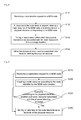
- FIG. 2 is a first flowchart of an M2M deleting method according to an embodiment of the disclosure.
- FIG. 3 is a second flowchart of an M2M deleting method according to an embodiment of the disclosure.
- FIG. 4 is a third flowchart of an M2M deleting method according to an embodiment of the disclosure.
- FIG. 5 is a first flowchart of an M2M registering method according to an embodiment of the disclosure.
- FIG. 6 is a second flowchart of an M2M registering method according to an embodiment of the disclosure.
- FIG. 7 is a third flowchart of an M2M registering method according to an embodiment of the disclosure.
- FIG. 8 is a first structural diagram of an M2M node according to an embodiment of the disclosure.
- FIG. 9 is a second structural diagram of an M2M node according to an embodiment of the disclosure.
- FIG. 10 is a third structural diagram of an M2M node according to an embodiment of the disclosure.
- the M2M node deleting method in the embodiments of the present application, when an M2M node is to be deleted, a physical resource of the M2M node to be deleted is reserved or data on the M2M node to be deleted is stored, so deletion of data stored on the M2M node can be avoided.
- the replaced M2M node can utilize data of the M2M node deleted previously, thereby reducing various problems resulted from data loss.
- an M2M node deleting method which includes:
- a receiving step S 110 receiving a node deleting request for a first M2M node
- a responding step S 120 in response to the node deleting request, deleting a node resource of the first M2M node, and reserving a physical resource corresponding to the first M2M node.
- the physical resource includes at least one of an AE resource and a CSE resource.
- the method further includes a timing step, the timing step includes: initiating a timer to time reserving time, stopping timing of the timer when a new node resource address is added into an attribute of the physical resource, otherwise, continuing timing until the timer expires; and after the timer expires, deleting the physical resource.
- the timer is a timer for timing a reserving duration.
- the timer is arranged to perform timing for a physical resource not associated with a node resource, when a specified time duration is reached (specifically, for example, the timer expires), it is regarded that the physical resource may be deleted, thus preventing a great number of physical resources from being in an idle state so as to improve the usage efficiency of the physical resources.
- a failure time duration of the timer is the specified time duration, and may be preset according to different physical resources and parameters such as importance of data of an AE or a CSE.
- the present embodiment provides an M2M node deleting method, which includes the following steps.
- step S 101 a node deleting request for a first M2M node is received.
- step S 102 in response to the node deleting request, a node resource of the first M2M node is deleted, and data on a physical resource corresponding to the first M2M node is stored.
- the physical resource includes at least one of an AE resource and a CSE resource.
- a monitoring application runs on a camera installed at a place A.
- the camera is the first M2M node, and the monitoring application is the AE.
- the camera is connected and registered, via a bearer network, to a storage server located at a place B.
- the storage server is a registering CSE of the camera.
- the storage server allocates a node resource for the camera, and stores information of the whole node.
- the storage server further allocates an application resource for the monitoring application on the camera.
- the application resource is used for storing monitoring data.
- a deleting process of the first M2M node will be carried out usually. It is observed that when the first M2M node is deleted in the conventional art, the node resource and the application resource are deleted and monitoring data stored on the application resource will be deleted apparently along with the deletion of the application resource. When the camera is re-connected to a registered node thereof after being repaired, the camera will not obtain the previous monitoring data, thus resulting in loss of the monitoring data. By adopting the method in the present embodiment, the above problem can be avoided.
- data on the physical resource will be stored, thus contributing to acquisition of data generated by running of the AE or CSE on the first M2M node or data submitted to the registering CSE when the first M2M node is re-connected to the registering CSE thereof next time.
- Step S 102 includes that: the physical resource is reserved, so as to reserve data stored on the physical resource.
- the method reserves the physical resource, and does not delete the physical resource.
- the data stored on the physical resource is saved apparently, and data loss can be avoided similarly.
- Step S 102 includes that: data on the physical resource is extracted, the data is compressed and stored, and the physical resource is deleted.
- the data on the physical resource is copied, compressed and stored, and meanwhile, in order to respond to a deleting request and improve the resource utilization rate of a registering CSE node, the physical resource will also be deleted.
- the data may be directly stored without being compressed.
- the data compression is intended to briefly describe the data volume, in order to reduce the volume of data stored on the registering CSE.
- an AE resource allocated for the AE by the registering CSE or a CSE resource allocated for the CSE will not be in a full-load state usually. So, even if the data is stored without being compressed, the aim of saving part of resources of the registering CSE can be achieved as well.
- the registering CSE does not need to allocate the physical resource. If the data formed by the AE or the CSE on the first M2M node is stored by using the second method, the registering CSE needs to re-allocate the physical resource.
- the present embodiment performs further improvement.
- the method further includes the following steps.
- a time duration within which the physical resource is not associated with the node resource is timed to form a storage duration.
- step S 104 when the storage duration reaches a specified time duration, the physical resource is deleted.
- a resource of a monitoring application A in the camera has been reserved in the registering CSE for a specified time duration, such as a month, there is no new camera node resource associated therewith yet. It is shown that the physical resource is still in an idle state, a time duration during which the M2M node is not used has reached a specified time duration. In order to improve the resource usage efficiency of the registering CSE, the physical resource may be deleted.
- deletion of the physical resource in the present embodiment does not refer to removal of this resource from the registering CSE, but refers to that the physical resource cannot be reused with respect to the first M2M node, which is equivalent to delete the physical resource for the first M2M.
- the registering CSE deletes the physical resource, i.e., uses the physical resource for other purposes.
- the node resource will be deleted whilst data on the physical resource is stored or the physical resource is directly stored.
- the data formed previously can be prevented from being utilized when an AE or a CSE is re-registered onto a corresponding registering CSE subsequently, so as to avoid data loss.
- the present embodiment provides an M2M node registering method, which may further include the following steps.
- a registration request for a second M2M node is received, the registration request including a node identifier, the registration request further including a physical identifier, and the physical identifier including at least one of an AE identifier and a CSE identifier.
- the second M2M node creates a node resource according to the node identifier.
- step S 230 it is queried whether a physical resource associated with the physical identifier is stored according to the physical identifier. If so, step S 240 is executed.
- an address of the node resource is stored as an attribute of the physical resource.
- the method of the present embodiment is correspondingly set on the basis of the M2M node deleting method in method embodiment 1. Since the deleted physical resource of the previous M2M node is reserved during alternation of M2M nodes and a new M2M node uses a physical resource identical to that of the previous M2M node, so only a node resource may be created when a new M2M node is registered, and the reserved physical resource is associated with the node resource.
- an address of the node resource is directly stored as an attribute of the physical resource, that is, the attribute of the physical resource is updated, thus facilitating subsequent usage.
- a mapping relationship table between the physical resource and the node resource may also be established, or the address of the physical resource is added into the attribute of the physical resource.
- Step S 230 may include at least one of the following:
- step S 220 and step S 230 are executed with no particular order, and it is only required that step S 220 and step S 230 are executed before step S 240 .
- the method also reserves the step of creating the physical resource for the second M2M node according to the physical resource.
- the physical resource is associated with the node resource.
- a mapping table including the physical resource and the node resource may also be established.
- the present embodiment provides an M2M node deleting method, which includes the following steps.
- step S 310 a node deleting request of a first M2M node is received.
- a node resource of the first M2M node is deleted according to the deleting request, specified data stored on a physical resource of the first M2M node is extracted, the specified data is stored at a specified storage position, and the physical resource is deleted after the specified data is stored at the specified storage position.
- the physical resource includes at least one of an AE resource and a CSE resource.
- specified data on the physical resource is extracted first.
- information such as a monitoring video for monitoring an M2M node is stored at a specified position such as a database for backing up deleted physical resource data.
- storing the specified data at the specified position includes: compressing the specified data; and storing the compressed specified data at the specified position. Sequentially executing compression and storage can effectively save storage resources.
- the present embodiment provides an M2M node registering method, which includes the following steps.
- a registration request for a second M2M node is received, the registration request includes a node identifier, the registration request further includes a physical identifier, and the physical identifier includes at least one of an AE identifier and a CSE identifier.
- a node resource is allocated for the second M2M node according to the node identifier.
- Step S 203 it is queried whether data associated with the physical identifier is stored according to the physical identifier. If so, Step S 203 is executed.
- the data is stored in a first physical resource corresponding to the physical identifier.
- the step of creating the physical resource according to the physical identifier may be directly executed.
- an AE resource is created according to the AE identifier
- a CSE resource is created according to the CSE identifier
- the M2M node registering method of the present embodiment adds the query step for the M2M node, therefore if an AE or a CSE is re-registered onto a corresponding registering CSE, responding historical data may be queried, thus facilitating the AE and the CSE to operate by using the historical data. Specifically, if the historical data includes control data of running the AE or the CSE, a user does not need to re-configure these data, thereby improving the usage satisfaction of the user.
- Step S 204 includes that: when the data is stored in a second physical resource and a physical identifier of the second physical resource is identical to a physical identifier carried in the registration request, the node resource is associated with the second physical resource, the second physical resource being identical to the first physical resource.
- the registered second physical resource may be directly allocated for the second M2M node by serving as the first physical resource currently allocated for the AE and/or the CSE without re-creation, and it is only necessary to associate the node resource of the second M2M node with the second physical resource. Not only the data having been registered onto the AE or the CSE on the second M2M node can be retained, but also a registering response speed of the second M2M node can be increased.
- the second M2M node of the present embodiment may be identical to the first M2M node in method embodiment 1, or may also be different from the first M2M node.
- Executive body of the M2M node deleting method in method embodiment 1 and the M2M node registering method in the present embodiment may be a registering CSE, the registering CSE being a registering CSE carried on the third M2M node.
- step S 204 may further include that: a first physical resource is created according to the physical identifier; and the data is stored in the first physical resource.
- the method of the present embodiment is applied to an M2M node registering method for deleting the physical resource during deletion of the M2M node but storing data in the previous physical resource.
- an M2M node for M2M registration and deletion is received, and a database may be specially created for storing data on the physical resource corresponding to the deleted M2M node, thus facilitating query and usage of data during re-registration.
- an M2M node which includes:
- a receiving unit 110 arranged to receive a node deleting request for a first M2M node
- a responding unit 120 arranged to delete, in response to the node deleting request, a node resource of the first M2M node, and reserve a physical resource corresponding to the first M2M node.
- the physical resource includes at least one of an AE resource and a CSE resource.
- the receiving unit 110 may include a communication interface, or may be a wired communication interface and a wireless communication interface.
- the wireless communication interface includes a transmitting antenna.
- the wired communication interface may be a cable interface of various types such as an optical fibre interface.
- a specific structure of the responding unit 120 may include processors of various types such as an Application Processor (AP), a Digital Signal Processor (DSP), a Programmable Logic Controller (PLC), a Central Processing Unit (CPU) or a Micro Control Unit (MCU).
- the processor is connected to the communication interface in the receiving unit via a bus.
- the M2M node of the present embodiment may be a third M2M node.
- the physical resource corresponding to the first M2M node is reserved, so data loss caused by deletion of the physical resource of the first M2M node may be avoided.
- the M2M node further includes a timing unit, the timing unit is arranged to: initiate a timer to time reserving time after the node resource is deleted; stop timing of the timer when a new node resource address is added into an attribute of the physical resource; otherwise, continue timing until the timer expires; and the responding unit 120 is further arranged to delete the physical resource after the timer expires.
- the timing unit at least includes a timer.
- the timer may be arranged to count down a reserving duration. That is, when the timer is initiated, the reserving duration is an upper limit for a specified time duration such as 15 days.
- the reserving duration is deducted by one day until an ending time for associating the physical resource with a new node resource expires or the timer expires.
- the present embodiment can reduce the idle rate of the physical resource on the third M2M node.
- the present embodiment provides an M2M node.
- the M2M node may be a third M2M node.
- the third M2M node includes: a receiving unit 110 , arranged to receive a node deleting request for a first M2M node; and a responding unit 120 , arranged to delete a node resource of the first M2M node in response to the node deleting request, and store data on a physical resource corresponding to the first M2M node.
- the physical resource includes at least one of an AE resource and a CSE resource.
- the M2M node of the present embodiment is a node including a CSE.
- the CSE node receives registration and deletion of other M2M nodes, and manages these nodes.
- the receiving unit may include a communication interface, or may be a wired communication interface and a wireless communication interface.
- the wireless communication interface includes a transmitting antenna.
- the wired communication interface may be a cable interface of various types such as an optical fibre interface.
- the responding unit 120 is arranged to reserve the physical resource, so as to reserve data stored on the physical resource.
- the data is stored by reserving the physical resource, the advantage of easy implementation is provided, and the response efficiency of re-registration can be improved.
- the M2M node further includes: a timing unit 130 , arranged to time a time duration within which the physical resource is not associated with the node resource, so as to form a storage duration; and a deleting unit 140 , arranged to delete the physical resource when the storage duration reaches a specified time duration.
- a specific structure of the timing unit 130 may include a timer for timing storage time.
- Specific structures of the deleting unit 140 and the responding unit 120 may be processors of various types.
- the processors achieve functions of the deleting unit 140 and the responding unit 120 by executing predetermined instructions.
- the deleting unit 140 and the responding unit 120 may correspond to the same processor or different processors.
- the processor processes functions of different units by means of time division multiplexing or thread concurrency.
- the processor may be an electronic component having a processing function such as an AP, a CPU, a DSP, an MCU or a PLC.
- the responding unit 120 is arranged to extract data on the physical resource, and compress and store the data.
- the M2M node further includes a deleting unit for deleting the physical resource.
- Specific structures of the responding unit 120 and the deleting unit may be subject to the abovementioned parts in the present embodiment, which will not be repeated.
- the present embodiment further limits that when deleting the M2M node, the physical resource will be deleted. But, before the physical resource is deleted, it is necessary to store data on the physical resource.
- the present embodiment also provides an M2M node, which includes:
- a receiving unit 210 arranged to receive a registration request for a second M2M node.
- the registration request includes a node identifier, the registration request further including a physical identifier, and the physical identifier includes at least one of an AE identifier and a CSE identifier;
- an allocating unit 220 arranged to allocate a node resource for the second M2M node according to the node identifier
- a querying unit 230 arranged to query whether a physical resource associated with the physical identifier exists according to the physical identifier
- control unit 240 arranged to store an address of the node resource as an attribute of the physical resource when the physical resource associated with the physical identifier exists.
- the M2M node of the present embodiment may be a third M2M node. Since the third M2M node reserves a physical resource corresponding to the first M2M node when the first M2M node is deleted.
- the physical resource may be a historical physical resource running on the second M2M node, so the querying unit for querying and the control unit for storing the address of the node resource as the attribute of the physical resource are also included.
- the allocating unit creates the physical resource according to the physical identifier.
- a specific structure of the receiving unit 210 may be subject to the receiving unit 110 in the previous device embodiment, which will not be repeated herein.
- Specific structures of the allocating unit 220 , the querying unit 230 and the control unit 240 may include processors of various types. Each processor may be an electronic component having a processing function such as an AP, an MCU, a CPU, a DSP, or a PLC.
- the querying unit 230 is arranged to: query whether a physical identifier of an AE resource is identical to the AE identifier according to the AE identifier in the registration request, and/or query whether a physical identifier of a CSE resource is identical to the CSE identifier according to the CSE identifier in the registration request.
- the present embodiment provides an M2M node.
- the M2M node may be a third M2M node.
- the third M2M node includes:
- a receiving unit 210 arranged to receive a registration request for a second M2M node, the registration request includes a node identifier, the registration request further includes a physical identifier, and the physical identifier includes at least one of an AE identifier and a CSE identifier;
- an allocating unit 220 arranged to allocate a node resource for the second M2M node according to the node identifier
- a querying unit 230 arranged to query whether data associated with the physical identifier is stored according to the physical identifier
- control unit 240 arranged to store the data in a first physical resource corresponding to the physical identifier when the data associated with the physical identifier is stored.
- the M2M node of the present embodiment is a node including a registering CSE.
- the querying unit may be used for learning of whether an AE on a currently registered second M2M node has ever been registered before and learning of formed data, thus facilitating usage of historical data.
- a specific structure of the receiving unit 210 may be subject to the receiving unit 110 in the previous device embodiment, which will not be repeated herein.
- Each processor may be an electronic component having a processing function such as an AP, an MCU, a CPU, a DSP, or a PLC.
- control unit 240 may be arranged to associate the node resource with the second physical resource when the data is stored in a second physical resource and a physical identifier of the second physical resource is identical to a physical identifier carried in the registration request, and the second physical resource is identical to the first physical resource.
- control unit 240 is further arranged to control the allocation unit to create a first physical resource according to the physical identifier, and store the data in the first physical resource.
- the control unit 240 may determine whether it is necessary to re-create a physical resource for an AE or a CSE requesting to be registered according to a current data storage position, and store data on the physical resource.
- the present embodiment provides an M2M node for implementing the method in method embodiment 2, in order to acquire historical data before deletion and use for subsequent running when the AE or the CSE is re-registered after being deleted, thereby avoiding data loss.
- the embodiments of the disclosure also provide a computer storage medium.
- a computer-executable instruction is stored in the computer storage medium.
- the computer-executable instruction is used for executing at least one of the abovementioned methods, specifically, at least one of the methods in FIG. 2 to FIG. 7 .
- the computer storage medium in the present embodiment may be various media capable of storing program codes such as a dynamic storage device, a Read-Only Memory (ROM), a Random Access Memory (RAM), a magnetic disk or an optical disk.
- the computer storage medium may be a non-instant storage medium, thus facilitating stable storage of the program codes.
- an AE or a CSE sends a resource creating request for an own registering CSE.
- a request message may include the following: identifier of AE or CSE;
- resource type a value being set as a ‘node’
- node identifier set as an identifier of the node.
- the registering CSE After receiving the resource creating request, the registering CSE creates a node resource of a node type, and identifies the node resource with the node identifier. If the request message includes an AE identifier of the AE and it is found, by query, that the AE is registered for the first time, an AE resource is allocated for the AE directly, and is identified with the AE identifier. If the request message contains a CSE identifier of the CSE and the CSE is registered for the first time, a CSE resource is allocated for the CSE directly, and is identified with the CSE identifier.
- the alternation request may be one of the abovementioned deleting requests
- the alternation request may include: replacement indicator: indicating that a current node is to be replaced and showing that a certain node needs to be re-registered after being deleted, address of node resource, and physical identifier (the physical identifier includes at least one of an AE identifier and a CSE identifier).
- the node resource is deleted according to the address of the node resource, but the AE resource and/or CSE resource of the attribute are/is not deleted.
- the registering CSE stores an attribute of a node resource to form a replacement request identifier, herein the attribute of the node resource includes a physical identifier, and the physical identifier is associated with the replacement request identifier.
- the registering CSE receives a registering request sent by a new M2M node, the registering request including: a replacement request identifier which may be acquired by a new M2M node from an old M2M node, a resource type, a value of which is set as a ‘node’, and a node identifier which is set as an identifier of the node.
- a ‘node’ type and a node resource are created, a node identifier of an attribute of the node resource is set, and an AE identifier or CSE identifier in the attribute of the node resource is set according to the replacement request identifier and associated information stored in the registering CSE, thus achieving the aim of associating a non-deleted physical resource with a node resource.
- Association between a physical resource and a node resource may be implemented by adding a corresponding attribute label into any one resource, or may be implemented by constructing an association table. There are many implementation modes, which will not be elaborated herein.
Landscapes
- Engineering & Computer Science (AREA)
- Computer Networks & Wireless Communication (AREA)
- Signal Processing (AREA)
- Databases & Information Systems (AREA)
- Mobile Radio Communication Systems (AREA)
Abstract
Description
Claims (14)
Applications Claiming Priority (4)
| Application Number | Priority Date | Filing Date | Title |
|---|---|---|---|
| CN201410613868.9 | 2014-11-04 | ||
| CN201410613868.9A CN105636241B (en) | 2014-11-04 | 2014-11-04 | Deletion and registration method of M2M node and M2M node |
| CN201410613868 | 2014-11-04 | ||
| PCT/CN2015/075907 WO2016070565A1 (en) | 2014-11-04 | 2015-04-03 | M2m node deletion and registration method, m2m node and storage medium |
Publications (2)
| Publication Number | Publication Date |
|---|---|
| US20170332426A1 US20170332426A1 (en) | 2017-11-16 |
| US10440763B2 true US10440763B2 (en) | 2019-10-08 |
Family
ID=55908477
Family Applications (1)
| Application Number | Title | Priority Date | Filing Date |
|---|---|---|---|
| US15/523,070 Expired - Fee Related US10440763B2 (en) | 2014-11-04 | 2015-04-03 | M2M node deletion and registration method, M2M node and storage medium |
Country Status (4)
| Country | Link |
|---|---|
| US (1) | US10440763B2 (en) |
| EP (1) | EP3217735B1 (en) |
| CN (1) | CN105636241B (en) |
| WO (1) | WO2016070565A1 (en) |
Families Citing this family (7)
| Publication number | Priority date | Publication date | Assignee | Title |
|---|---|---|---|---|
| WO2016109951A1 (en) * | 2015-01-07 | 2016-07-14 | 华为技术有限公司 | Response message processing method, device and system |
| CN107484211B (en) * | 2016-06-08 | 2020-06-26 | 华为技术有限公司 | Method and device for switching access point |
| WO2018058625A1 (en) * | 2016-09-30 | 2018-04-05 | 华为技术有限公司 | Method and device for detecting message backpressure |
| CN106506693B (en) * | 2016-12-09 | 2019-06-18 | 北京奇虎科技有限公司 | Method and apparatus for removing a server from a server cluster providing cloud services |
| CN109788011B (en) * | 2017-11-13 | 2021-11-26 | 京东方科技集团股份有限公司 | Method for associating resources, communication terminal and communication node equipment |
| CN110110003A (en) * | 2018-01-26 | 2019-08-09 | 广州中国科学院计算机网络信息中心 | The data storage control method and device of M2M platform |
| KR102701581B1 (en) * | 2022-10-13 | 2024-09-02 | 한국전자기술연구원 | Lossless data store and retrieval method in case of data platform failure |
Citations (9)
| Publication number | Priority date | Publication date | Assignee | Title |
|---|---|---|---|---|
| CN103220670A (en) | 2012-01-19 | 2013-07-24 | 华为技术有限公司 | Equipment switching method, machine to machine (M2M) platform and network system |
| US20130343231A1 (en) * | 2012-06-22 | 2013-12-26 | Telefonaktiebolaget L M Ericsson (Publ) | Method and Apparatus for Machine-to-Machine Event Data Recording |
| CN103796300A (en) | 2012-10-29 | 2014-05-14 | 中兴通讯股份有限公司 | Terminal peripheral logout method and device in machine type communication system and gateway |
| WO2014129802A1 (en) | 2013-02-19 | 2014-08-28 | 엘지전자 주식회사 | Method for modifying m2m service setting and apparatus therefor |
| US20140286284A1 (en) * | 2011-10-24 | 2014-09-25 | Lg Electronics Inc. | Method for allowing base station to support device-to-device (d2d) communication in wireless communication system, and method for allowing d2d device to efficiently transmit d2d communication request signal |
| WO2014169804A1 (en) | 2013-11-26 | 2014-10-23 | 中兴通讯股份有限公司 | Registration method and system for common service entity |
| US20160057795A1 (en) * | 2013-04-01 | 2016-02-25 | Samsung Electronics Co., Ltd. | Method and Apparatus for Performing State Transition for Device-to-Device Communication |
| US20160113060A1 (en) * | 2014-10-20 | 2016-04-21 | Electronics And Telecommunications Research Institute | Method and apparatus for managing device information for device-to-device communication |
| US20160302069A1 (en) * | 2013-11-29 | 2016-10-13 | Lg Electronics Inc. | Method for service subscription resource-based authentication in wireless communication system |
Family Cites Families (1)
| Publication number | Priority date | Publication date | Assignee | Title |
|---|---|---|---|---|
| CN104104713B (en) * | 2014-02-24 | 2018-03-23 | 中兴通讯股份有限公司 | Equipment triggering message treatment method, carrying network element, M2M nodes and system |
-
2014
- 2014-11-04 CN CN201410613868.9A patent/CN105636241B/en not_active Expired - Fee Related
-
2015
- 2015-04-03 WO PCT/CN2015/075907 patent/WO2016070565A1/en not_active Ceased
- 2015-04-03 EP EP15856893.1A patent/EP3217735B1/en not_active Not-in-force
- 2015-04-03 US US15/523,070 patent/US10440763B2/en not_active Expired - Fee Related
Patent Citations (14)
| Publication number | Priority date | Publication date | Assignee | Title |
|---|---|---|---|---|
| US20140286284A1 (en) * | 2011-10-24 | 2014-09-25 | Lg Electronics Inc. | Method for allowing base station to support device-to-device (d2d) communication in wireless communication system, and method for allowing d2d device to efficiently transmit d2d communication request signal |
| US20140351403A1 (en) | 2012-01-19 | 2014-11-27 | Huawei Tech Co Ltd | Method for switching of a device, m2m platform and network system |
| CN103220670A (en) | 2012-01-19 | 2013-07-24 | 华为技术有限公司 | Equipment switching method, machine to machine (M2M) platform and network system |
| US20130343231A1 (en) * | 2012-06-22 | 2013-12-26 | Telefonaktiebolaget L M Ericsson (Publ) | Method and Apparatus for Machine-to-Machine Event Data Recording |
| CN103796300A (en) | 2012-10-29 | 2014-05-14 | 中兴通讯股份有限公司 | Terminal peripheral logout method and device in machine type communication system and gateway |
| WO2014129802A1 (en) | 2013-02-19 | 2014-08-28 | 엘지전자 주식회사 | Method for modifying m2m service setting and apparatus therefor |
| EP2961122A1 (en) | 2013-02-19 | 2015-12-30 | LG Electronics Inc. | Method for modifying m2m service setting and apparatus therefor |
| US20160007137A1 (en) | 2013-02-19 | 2016-01-07 | Lg Electronics Inc. | Method for modifying m2m service setting and apparatus therefor |
| US20160057795A1 (en) * | 2013-04-01 | 2016-02-25 | Samsung Electronics Co., Ltd. | Method and Apparatus for Performing State Transition for Device-to-Device Communication |
| WO2014169804A1 (en) | 2013-11-26 | 2014-10-23 | 中兴通讯股份有限公司 | Registration method and system for common service entity |
| EP3060018A1 (en) | 2013-11-26 | 2016-08-24 | ZTE Corporation | Registration method and system for common service entity |
| US20160294886A1 (en) | 2013-11-26 | 2016-10-06 | Zte Corporation | Registration Method and System for Common Service Entity |
| US20160302069A1 (en) * | 2013-11-29 | 2016-10-13 | Lg Electronics Inc. | Method for service subscription resource-based authentication in wireless communication system |
| US20160113060A1 (en) * | 2014-10-20 | 2016-04-21 | Electronics And Telecommunications Research Institute | Method and apparatus for managing device information for device-to-device communication |
Non-Patent Citations (5)
| Title |
|---|
| "oneM2M Functional Architecture", Nov. 2013, Rajesh Bhalla et al., ONEM2M-TS-0001- FUNCTIONAL_ARCHITECTUR-V0_2_2.ZIP, ONEM2M, vol. Work Programme, Work Progr, No. version = v0.2.2 14, XP084003946, Retrieved from the Internet: URL:URL = http://member.onem2m.org/Application/ documentapp/downloadimmediate/default.aspx?docID=3904 [retrieved on Nov. 14, 2013], pp. 1-110. |
| English Translation of the Written Opinion of the International Search Authority in international application No. PCT/CN2015/075907, dated Jul. 30, 2015, 5 pgs. |
| International Search Report in international application No. PCT/CN2015/075907, dated Jul. 30, 2015, 2 pgs. |
| RAJESH BHALLA, ZTE CORPORATION (CCSA): "oneM2M Functional Architecture", ONEM2M-TS-0001-FUNCTIONAL_ARCHITECTURE-V0_2_2.ZIP, ONEM2M, vol. Work Programme, Work Progr, no. version = v0.2.2, oneM2M-TS-0001-Functional_Architecture-V0_2_2, 14 November 2013 (2013-11-14), pages 1 - 110, XP084003946 |
| Supplementary European Search Report in European application No. 15856893.1, dated Sep. 1, 2017, 8 pgs. |
Also Published As
| Publication number | Publication date |
|---|---|
| US20170332426A1 (en) | 2017-11-16 |
| CN105636241A (en) | 2016-06-01 |
| CN105636241B (en) | 2020-11-17 |
| WO2016070565A1 (en) | 2016-05-12 |
| EP3217735A4 (en) | 2017-10-04 |
| EP3217735B1 (en) | 2018-10-10 |
| EP3217735A1 (en) | 2017-09-13 |
Similar Documents
| Publication | Publication Date | Title |
|---|---|---|
| US10440763B2 (en) | M2M node deletion and registration method, M2M node and storage medium | |
| CN107451147B (en) | Method and device for dynamically switching kafka clusters | |
| CN109561128B (en) | Data transmission method and device | |
| CN109788027A (en) | Method of data synchronization, device, server and computer storage medium | |
| EP3291592B1 (en) | Monitoring management method and apparatus | |
| CN110647392A (en) | Intelligent elastic expansion method based on container cluster | |
| CN107562386A (en) | A kind of method for writing data and device of distributed storage cluster | |
| CN102711139A (en) | Data flow counting method and terminal | |
| EP3197183A1 (en) | Method for managing application resources and registered node in m2m | |
| EP3197207A1 (en) | Method for managing application resources and registered node in m2m | |
| CN101308467A (en) | Task processing method and device | |
| CN104967639A (en) | Information reporting method, information reporting apparatus and data node server | |
| CN104090792B (en) | The dynamic loading method of logical file in a kind of broadband access network | |
| US9661597B2 (en) | Method and device for deregistering terminal peripheral | |
| CN112732528B (en) | Index collection method, system, equipment and storage medium based on IT operation and maintenance monitoring | |
| WO2015184850A1 (en) | Method, apparatus and system for collecting stale data | |
| CN106535112B (en) | A method, device and system for realizing terminal access | |
| US20170142614A1 (en) | Load Control Method and Apparatus for Notification Messages | |
| CN109413598B (en) | Resource allocation and management method and device | |
| CN117435608A (en) | Multi-cluster data query methods, devices, equipment and storage media | |
| CN110891033A (en) | Network resource processing method, device, gateway, controller and storage medium | |
| CN108073453B (en) | Method and device for scheduling CPU (Central processing Unit) resources in distributed cluster | |
| CN106210095B (en) | Port processing method and device | |
| EP3550782A1 (en) | Resource management method and system | |
| CN106657424B (en) | Method, equipment and system for realizing domain name service in Internet of things |
Legal Events
| Date | Code | Title | Description |
|---|---|---|---|
| AS | Assignment |
Owner name: ZTE CORPORATION, CHINA Free format text: ASSIGNMENT OF ASSIGNORS INTEREST;ASSIGNOR:WU, HAO;REEL/FRAME:042992/0542 Effective date: 20170309 |
|
| STPP | Information on status: patent application and granting procedure in general |
Free format text: NON FINAL ACTION MAILED |
|
| STPP | Information on status: patent application and granting procedure in general |
Free format text: RESPONSE TO NON-FINAL OFFICE ACTION ENTERED AND FORWARDED TO EXAMINER |
|
| STPP | Information on status: patent application and granting procedure in general |
Free format text: NOTICE OF ALLOWANCE MAILED -- APPLICATION RECEIVED IN OFFICE OF PUBLICATIONS |
|
| STPP | Information on status: patent application and granting procedure in general |
Free format text: PUBLICATIONS -- ISSUE FEE PAYMENT VERIFIED |
|
| STCF | Information on status: patent grant |
Free format text: PATENTED CASE |
|
| FEPP | Fee payment procedure |
Free format text: MAINTENANCE FEE REMINDER MAILED (ORIGINAL EVENT CODE: REM.); ENTITY STATUS OF PATENT OWNER: LARGE ENTITY |
|
| LAPS | Lapse for failure to pay maintenance fees |
Free format text: PATENT EXPIRED FOR FAILURE TO PAY MAINTENANCE FEES (ORIGINAL EVENT CODE: EXP.); ENTITY STATUS OF PATENT OWNER: LARGE ENTITY |
|
| STCH | Information on status: patent discontinuation |
Free format text: PATENT EXPIRED DUE TO NONPAYMENT OF MAINTENANCE FEES UNDER 37 CFR 1.362 |
|
| FP | Lapsed due to failure to pay maintenance fee |
Effective date: 20231008 |