US10351557B2 - Compounds for electronic devices - Google Patents
Compounds for electronic devices Download PDFInfo
- Publication number
- US10351557B2 US10351557B2 US13/704,487 US201113704487A US10351557B2 US 10351557 B2 US10351557 B2 US 10351557B2 US 201113704487 A US201113704487 A US 201113704487A US 10351557 B2 US10351557 B2 US 10351557B2
- Authority
- US
- United States
- Prior art keywords
- group
- groups
- atoms
- compounds
- organic
- Prior art date
- Legal status (The legal status is an assumption and is not a legal conclusion. Google has not performed a legal analysis and makes no representation as to the accuracy of the status listed.)
- Active, expires
Links
- 0 *C.*C.*C.*C.*C.*C.*C.*C.*C.*C.*C.*C.*C.*C.*N1C2=CC=CC=C2C2=C1C=CC(C)=C2.*N1C2=CC=CC=C2C2=C1C=CC(NC1=CC=CC=C1OC=O)=C2.*N1C2=CC=CC=C2C2=C1C=CC1=C2C(=O)C2=CC=CC=C2N1.*N1C2=CC=CC=C2C2=C1C=CC1=C2C(=O)C2=CC=CC=C2N1[Ar].*N1C2=CC=CC=C2C2=C1C=CC1=C2C(Cl)=C2C=CC=CC2=N1.*N1C2=CC=CC=C2C2=C1C=CC1=C2C([Ar])=C2C=CC=CC2=N1.*N1C2=CC=CC=C2C2=C1C=CC1=C2C=C2C=CC=CC2=N1.C[Ar].NC1=CC=CC=C1OC=O Chemical compound *C.*C.*C.*C.*C.*C.*C.*C.*C.*C.*C.*C.*C.*C.*N1C2=CC=CC=C2C2=C1C=CC(C)=C2.*N1C2=CC=CC=C2C2=C1C=CC(NC1=CC=CC=C1OC=O)=C2.*N1C2=CC=CC=C2C2=C1C=CC1=C2C(=O)C2=CC=CC=C2N1.*N1C2=CC=CC=C2C2=C1C=CC1=C2C(=O)C2=CC=CC=C2N1[Ar].*N1C2=CC=CC=C2C2=C1C=CC1=C2C(Cl)=C2C=CC=CC2=N1.*N1C2=CC=CC=C2C2=C1C=CC1=C2C([Ar])=C2C=CC=CC2=N1.*N1C2=CC=CC=C2C2=C1C=CC1=C2C=C2C=CC=CC2=N1.C[Ar].NC1=CC=CC=C1OC=O 0.000 description 10
- VNWZDLZMDLABGP-UHFFFAOYSA-N *.c1cc2c(c3c1CCCC3)CCC2 Chemical compound *.c1cc2c(c3c1CCCC3)CCC2 VNWZDLZMDLABGP-UHFFFAOYSA-N 0.000 description 3
- SOBZSRJGULMBBK-UHFFFAOYSA-N CC1(C)C2=C(C=CC=C2)N(C2=CC=C(C3=CC=CC=C3)C=C2)C2=C1C1=C(C=C2)N(C2=CC=C(C3=CC=CC=C3)C=C2)C2=C1C=CC=C2 Chemical compound CC1(C)C2=C(C=CC=C2)N(C2=CC=C(C3=CC=CC=C3)C=C2)C2=C1C1=C(C=C2)N(C2=CC=C(C3=CC=CC=C3)C=C2)C2=C1C=CC=C2 SOBZSRJGULMBBK-UHFFFAOYSA-N 0.000 description 3
- XDTMQSROBMDMFD-UHFFFAOYSA-N *.C1CCCCC1 Chemical compound *.C1CCCCC1 XDTMQSROBMDMFD-UHFFFAOYSA-N 0.000 description 2
- IVZXBHIWLFPYTP-UHFFFAOYSA-N C1=CC=C(C2=C3C(=NC4=CC=CC=C42)C=CC2=C3C3=C(C=CC=C3)N2C2=CC=CC=C2)C=C1 Chemical compound C1=CC=C(C2=C3C(=NC4=CC=CC=C42)C=CC2=C3C3=C(C=CC=C3)N2C2=CC=CC=C2)C=C1 IVZXBHIWLFPYTP-UHFFFAOYSA-N 0.000 description 2
- OPNJNJHUXOERHJ-UHFFFAOYSA-N C1=CC=C(C2=C3C=CC=CC3=C(C3=C4C=CC5=CC6=CC=CC=C6C=C5C4=CC=C3)C3=CC=CC=C32)C=C1 Chemical compound C1=CC=C(C2=C3C=CC=CC3=C(C3=C4C=CC5=CC6=CC=CC=C6C=C5C4=CC=C3)C3=CC=CC=C32)C=C1 OPNJNJHUXOERHJ-UHFFFAOYSA-N 0.000 description 2
- FMBUNZQPAWEWOO-UHFFFAOYSA-N C1=CC=C(C2=C3C=CC=CC3=C(C3=C4C=CC=CC4=C4C(=C3)C=CC3=CC=CC=C34)C3=CC=CC=C32)C=C1 Chemical compound C1=CC=C(C2=C3C=CC=CC3=C(C3=C4C=CC=CC4=C4C(=C3)C=CC3=CC=CC=C34)C3=CC=CC=C32)C=C1 FMBUNZQPAWEWOO-UHFFFAOYSA-N 0.000 description 2
- XLFISAVJZGCFKC-UHFFFAOYSA-N C1=CC=C(C2=C3C=CC=CC3=C(C3=CC4=C5C=CC=CC5=CC=C4C=C3)C3=CC=CC=C32)C=C1 Chemical compound C1=CC=C(C2=C3C=CC=CC3=C(C3=CC4=C5C=CC=CC5=CC=C4C=C3)C3=CC=CC=C32)C=C1 XLFISAVJZGCFKC-UHFFFAOYSA-N 0.000 description 2
- ZCPAMIJSXSORQI-UHFFFAOYSA-N C1=CC=C(C2=C3C=CC=CC3=CC3=C4C=CC=C(C5=C6C=CC7=C(C8=CC=CC=C8)C8=CC=CC=C8C=C7C6=CC=C5)C4=CC=C32)C=C1 Chemical compound C1=CC=C(C2=C3C=CC=CC3=CC3=C4C=CC=C(C5=C6C=CC7=C(C8=CC=CC=C8)C8=CC=CC=C8C=C7C6=CC=C5)C4=CC=C32)C=C1 ZCPAMIJSXSORQI-UHFFFAOYSA-N 0.000 description 2
- YSTQURZIZVALLH-UHFFFAOYSA-N C1=CC=C(C2=CC=C(C3=C4C=CC=CC4=C(C4=C5C=CC6=CC7=CC=CC=C7C=C6C5=CC=C4)C4=CC=CC=C43)C=C2)C=C1 Chemical compound C1=CC=C(C2=CC=C(C3=C4C=CC=CC4=C(C4=C5C=CC6=CC7=CC=CC=C7C=C6C5=CC=C4)C4=CC=CC=C43)C=C2)C=C1 YSTQURZIZVALLH-UHFFFAOYSA-N 0.000 description 2
- VUVVZEKUAQIAHO-UHFFFAOYSA-N C1=CC=C(C2=NC(C3=CC=CC=C3)=NC(N3C4=C(C=CC=C4)C4=C3/C=C\C3=C4N(C4=CC=CC=C4)C4=C3C=CC=C4)=N2)C=C1 Chemical compound C1=CC=C(C2=NC(C3=CC=CC=C3)=NC(N3C4=C(C=CC=C4)C4=C3/C=C\C3=C4N(C4=CC=CC=C4)C4=C3C=CC=C4)=N2)C=C1 VUVVZEKUAQIAHO-UHFFFAOYSA-N 0.000 description 2
- JVMVYMVKBBAKCG-UHFFFAOYSA-N C1=CC=C2C(=C1)C=CC1=CC=CC=C12.C1=CC=C2C(=C1)[Y]C1=C2C=CC=C1.C1=CC=C2C=C3C=CC=CC3=CC2=C1.C1=CC=C2C=CC=CC2=C1.C1=CC=CC=C1 Chemical compound C1=CC=C2C(=C1)C=CC1=CC=CC=C12.C1=CC=C2C(=C1)[Y]C1=C2C=CC=C1.C1=CC=C2C=C3C=CC=CC3=CC2=C1.C1=CC=C2C=CC=CC2=C1.C1=CC=CC=C1 JVMVYMVKBBAKCG-UHFFFAOYSA-N 0.000 description 2
- JUYVOXYHHZSBQL-UHFFFAOYSA-N C1=CC=C2C=C(C3=C4C=CC=CC4=C(C4=CC=C(C5=C6/C=C\C=C7\C8=C(C=CC=C8)C(=C67)C=C5)C=C4)C4=CC=CC=C43)C=CC2=C1 Chemical compound C1=CC=C2C=C(C3=C4C=CC=CC4=C(C4=CC=C(C5=C6/C=C\C=C7\C8=C(C=CC=C8)C(=C67)C=C5)C=C4)C4=CC=CC=C43)C=CC2=C1 JUYVOXYHHZSBQL-UHFFFAOYSA-N 0.000 description 2
- MRSOWNOXHOZTPP-UHFFFAOYSA-N CC1(C)C2=C(C=CC=C2)N(C2=CC=C(C3=CC=CC4=CC=CC=C43)C3=CC=CC=C32)C2=C1C1=C(C=C2)N(C2=CC=C(C3=CC=CC4=CC=CC=C43)C3=CC=CC=C32)C2=C1C=CC=C2 Chemical compound CC1(C)C2=C(C=CC=C2)N(C2=CC=C(C3=CC=CC4=CC=CC=C43)C3=CC=CC=C32)C2=C1C1=C(C=C2)N(C2=CC=C(C3=CC=CC4=CC=CC=C43)C3=CC=CC=C32)C2=C1C=CC=C2 MRSOWNOXHOZTPP-UHFFFAOYSA-N 0.000 description 2
- ACQBAKTUZTXXQG-UHFFFAOYSA-N CC1(C)C2=C(C=CC=C2)N(C2=CC=C3/C=C\C4=CC=C(C5=C6C=CC=CC6=CC=C5)C5=CC=C2C3=C45)C2=C1C1=C(C=C2)N(C2=CC=C3/C=C\C4=CC=C(C5=C6C=CC=CC6=CC=C5)C5=CC=C2C3=C45)C2=C1C=CC=C2 Chemical compound CC1(C)C2=C(C=CC=C2)N(C2=CC=C3/C=C\C4=CC=C(C5=C6C=CC=CC6=CC=C5)C5=CC=C2C3=C45)C2=C1C1=C(C=C2)N(C2=CC=C3/C=C\C4=CC=C(C5=C6C=CC=CC6=CC=C5)C5=CC=C2C3=C45)C2=C1C=CC=C2 ACQBAKTUZTXXQG-UHFFFAOYSA-N 0.000 description 2
- MCJHLOZBEBFFIF-UHFFFAOYSA-N CC1(C)C2=C(C=CC=C2)N(C2=CC=CC=C2)C2=C1C1=C(C=N2)N(C2=CC=CC=C2)C2=C1C=CC=C2 Chemical compound CC1(C)C2=C(C=CC=C2)N(C2=CC=CC=C2)C2=C1C1=C(C=N2)N(C2=CC=CC=C2)C2=C1C=CC=C2 MCJHLOZBEBFFIF-UHFFFAOYSA-N 0.000 description 2
- KEBYHQZNRPBOTM-UHFFFAOYSA-N CC1(C)C2=C3C(=CC=C2F)[Ir]2(N4N=C(C(F)(F)F)C=C4C4=CC=CC=N42)N2=C3C3=C1/C=C\C=C\3C=C2 Chemical compound CC1(C)C2=C3C(=CC=C2F)[Ir]2(N4N=C(C(F)(F)F)C=C4C4=CC=CC=N42)N2=C3C3=C1/C=C\C=C\3C=C2 KEBYHQZNRPBOTM-UHFFFAOYSA-N 0.000 description 2
- VCNXLDYXMFDUAK-UHFFFAOYSA-N CC1(C)C2=CC3=C(C=C2C2=C1C=C1/C=C\C4=CC=CC5=CC=C2C1=C54)C(C)(C)C1=C3C2=CC=CC=C2/C2=C\C=C/C=C\12 Chemical compound CC1(C)C2=CC3=C(C=C2C2=C1C=C1/C=C\C4=CC=CC5=CC=C2C1=C54)C(C)(C)C1=C3C2=CC=CC=C2/C2=C\C=C/C=C\12 VCNXLDYXMFDUAK-UHFFFAOYSA-N 0.000 description 2
- JAHSCDUPLXDHRO-UHFFFAOYSA-N CC1(C)C2=CC=CC=C2C2=C1C=C1C(=C2)C(C)(C)C2=C1C1=CC=CC=C1C(N(C1=CC=CC=C1)C1=CC=CC=C1)=C2 Chemical compound CC1(C)C2=CC=CC=C2C2=C1C=C1C(=C2)C(C)(C)C2=C1C1=CC=CC=C1C(N(C1=CC=CC=C1)C1=CC=CC=C1)=C2 JAHSCDUPLXDHRO-UHFFFAOYSA-N 0.000 description 2
- WTAZVZFIFJUSCQ-LWFKIUJUSA-M CC1=CC(C)=O[Ir]2(O1)C1=C(C=CC=C1)C1=N2C2=CC=CC=C2/C=C\1C Chemical compound CC1=CC(C)=O[Ir]2(O1)C1=C(C=CC=C1)C1=N2C2=CC=CC=C2/C=C\1C WTAZVZFIFJUSCQ-LWFKIUJUSA-M 0.000 description 2
- FAIAEGOYFZPXNR-UHFFFAOYSA-N CC1=CC=C(N(C2=CC3=C(C4=CC=CC=C42)C2=C/C4=C(\C=C/2C3(C)C)C2=CC=CC=C2C4(C)C)C2=C(C)C=C(C)C=C2)C(C)=C1 Chemical compound CC1=CC=C(N(C2=CC3=C(C4=CC=CC=C42)C2=C/C4=C(\C=C/2C3(C)C)C2=CC=CC=C2C4(C)C)C2=C(C)C=C(C)C=C2)C(C)=C1 FAIAEGOYFZPXNR-UHFFFAOYSA-N 0.000 description 2
- RVICSUOIBUJDOX-UHFFFAOYSA-N CC1=CC=CN2=C1C1=C(C=CC=C1)[Ir]2 Chemical compound CC1=CC=CN2=C1C1=C(C=CC=C1)[Ir]2 RVICSUOIBUJDOX-UHFFFAOYSA-N 0.000 description 2
- PBPUBKICGLWZMS-UHFFFAOYSA-N FC1=CC(F)=C2C(=C1)[Ir]1(N3=CC=CC=C3C3N=C(C(F)(F)F)N=N31)N1=C2C=CC=C1 Chemical compound FC1=CC(F)=C2C(=C1)[Ir]1(N3=CC=CC=C3C3N=C(C(F)(F)F)N=N31)N1=C2C=CC=C1 PBPUBKICGLWZMS-UHFFFAOYSA-N 0.000 description 2
- FFWHEMGQGJULDY-UHFFFAOYSA-N FC1=CC(F)=C2C(=C1)[Ir]N1=C2C=CC=C1 Chemical compound FC1=CC(F)=C2C(=C1)[Ir]N1=C2C=CC=C1 FFWHEMGQGJULDY-UHFFFAOYSA-N 0.000 description 2
- ZSNWXACZXJEVNL-UHFFFAOYSA-N FC1=CC(F)=C2C(=C1)[Pt]13C4=C(C(F)=CC(F)=C4)C4=CC=CC(=N41)C1(C4=CC=CC2=N43)C2=C(C=CC=C2)C2=C1C=CC=C2 Chemical compound FC1=CC(F)=C2C(=C1)[Pt]13C4=C(C(F)=CC(F)=C4)C4=CC=CC(=N41)C1(C4=CC=CC2=N43)C2=C(C=CC=C2)C2=C1C=CC=C2 ZSNWXACZXJEVNL-UHFFFAOYSA-N 0.000 description 2
- NDIDTZATWHPEKO-UHFFFAOYSA-N [H]CC1=N2[Ir]C3=C(C=CC=C3)C2=CC=C1 Chemical compound [H]CC1=N2[Ir]C3=C(C=CC=C3)C2=CC=C1 NDIDTZATWHPEKO-UHFFFAOYSA-N 0.000 description 2
- QYANNNCXPMBSCO-UHFFFAOYSA-N *.*.*.*.C1=CCCC=C1.C1CCCCC1.C1CCCCC1.C1CCCCC1.CCCc1ccc2c(c1)CCC2.CCCc1ccc2c(c1)CCC2.c1cc2c(c3c1CCCC3)CCC2.c1cc2c(c3c1CCCC3)CCC2 Chemical compound *.*.*.*.C1=CCCC=C1.C1CCCCC1.C1CCCCC1.C1CCCCC1.CCCc1ccc2c(c1)CCC2.CCCc1ccc2c(c1)CCC2.c1cc2c(c3c1CCCC3)CCC2.c1cc2c(c3c1CCCC3)CCC2 QYANNNCXPMBSCO-UHFFFAOYSA-N 0.000 description 1
- ZFWMWEPXAIWVHX-UHFFFAOYSA-N B.C.CC1(C)C2=C(C=CC=C2)N(C2=C3C=CC=CC3=CC=C2)C2=CC=C3C(=C21)C1=C(C=CC=C1)N3C1=C2C=CC=CC2=CC=C1.CC1(C)C2=C(C=CC=C2)NC2=CC=C3CC4=C(C=CC=C4)C3=C21 Chemical compound B.C.CC1(C)C2=C(C=CC=C2)N(C2=C3C=CC=CC3=CC=C2)C2=CC=C3C(=C21)C1=C(C=CC=C1)N3C1=C2C=CC=CC2=CC=C1.CC1(C)C2=C(C=CC=C2)NC2=CC=C3CC4=C(C=CC=C4)C3=C21 ZFWMWEPXAIWVHX-UHFFFAOYSA-N 0.000 description 1
- IDCIHIOMGIOXTK-UHFFFAOYSA-N B.CC1(C)C2=C(C=CC=C2)N(C2=C3C=CC=CC3=CC=C2)C2=CC=C3C(=C21)C1=C(C=CC=C1)N3C1=C2C=CC=CC2=CC=C1 Chemical compound B.CC1(C)C2=C(C=CC=C2)N(C2=C3C=CC=CC3=CC=C2)C2=CC=C3C(=C21)C1=C(C=CC=C1)N3C1=C2C=CC=CC2=CC=C1 IDCIHIOMGIOXTK-UHFFFAOYSA-N 0.000 description 1
- SNCGAWCUZWGCPD-UHFFFAOYSA-N BN=P.C1=CC=C(N(C2=CC=C(C3=CC=C(N(C4=CC=CC=C4)C4=C5C=CC=CC5=CC=C4)C=C3)C=C2)C2=CC=CC3=CC=CC=C32)C=C1 Chemical compound BN=P.C1=CC=C(N(C2=CC=C(C3=CC=C(N(C4=CC=CC=C4)C4=C5C=CC=CC5=CC=C4)C=C3)C=C2)C2=CC=CC3=CC=CC=C32)C=C1 SNCGAWCUZWGCPD-UHFFFAOYSA-N 0.000 description 1
- QLHUBCXPQMFRBL-UHFFFAOYSA-N C.C1=CC=C(C2=C3C=CC=CC3=C(C3=C4C=CC5=CC6=CC=CC=C6C=C5C4=CC=C3)C3=CC=CC=C32)C=C1 Chemical compound C.C1=CC=C(C2=C3C=CC=CC3=C(C3=C4C=CC5=CC6=CC=CC=C6C=C5C4=CC=C3)C3=CC=CC=C32)C=C1 QLHUBCXPQMFRBL-UHFFFAOYSA-N 0.000 description 1
- SWYLHLDCXSDUEW-UHFFFAOYSA-N C/C1=C/C2=C3C4=C(C=CC=C41)C(C)(C)C1=CC(N(C4=CC=C(C(C)(C)C)C=C4)C4=CC=C(C(C)(C)C)C=C4)=CC(=C13)C2(C)C Chemical compound C/C1=C/C2=C3C4=C(C=CC=C41)C(C)(C)C1=CC(N(C4=CC=C(C(C)(C)C)C=C4)C4=CC=C(C(C)(C)C)C=C4)=CC(=C13)C2(C)C SWYLHLDCXSDUEW-UHFFFAOYSA-N 0.000 description 1
- KKMRONMCAHRQAG-UHFFFAOYSA-N C1=CC2=C(C=C1)C1=C(C=CC3=C1CC1=C(C3)C3=C(C=C1)C1=C(C=CC=C1)[Y]3)C2.C1=CC2=C(C=C1)C1=C(C=CC3=C1CC1=C(C3)C3=C(C=C1)[Y]C1=C3C=CC=C1)C2.C1=CC2=C(C=C1)C1=C(C=CC3=C1CC1=C(C=C4[Y]C5=C(C=CC=C5)C4=C1)C3)C2.C1=CC2=C(C=C1)CC1=C(C=CC3=C1C1=C(C=C4C(=C1)[Y]C1=C4C=CC=C1)C3)C2.C1=CC2=C(C=C1)CC1=C(C=CC3=C1C1=C(C=CC4=C1C1=C(C=CC=C1)[Y]4)C3)C2.C1=CC2=C(C=C1)CC1=C(C=CC3=C1C1=C(C=CC4=C1[Y]C1=C4C=CC=C1)C3)C2 Chemical compound C1=CC2=C(C=C1)C1=C(C=CC3=C1CC1=C(C3)C3=C(C=C1)C1=C(C=CC=C1)[Y]3)C2.C1=CC2=C(C=C1)C1=C(C=CC3=C1CC1=C(C3)C3=C(C=C1)[Y]C1=C3C=CC=C1)C2.C1=CC2=C(C=C1)C1=C(C=CC3=C1CC1=C(C=C4[Y]C5=C(C=CC=C5)C4=C1)C3)C2.C1=CC2=C(C=C1)CC1=C(C=CC3=C1C1=C(C=C4C(=C1)[Y]C1=C4C=CC=C1)C3)C2.C1=CC2=C(C=C1)CC1=C(C=CC3=C1C1=C(C=CC4=C1C1=C(C=CC=C1)[Y]4)C3)C2.C1=CC2=C(C=C1)CC1=C(C=CC3=C1C1=C(C=CC4=C1[Y]C1=C4C=CC=C1)C3)C2 KKMRONMCAHRQAG-UHFFFAOYSA-N 0.000 description 1
- YMTKKUOYNHNGEJ-UHFFFAOYSA-N C1=CC2=C(C=C1)C1=C(C=CC3=C1CC1=C(C=C4C(=C1)[Y]C1=C4C=CC=C1)C3)C2.C1=CC2=C(C=C1)C1=C(C=CC3=C1CC1=C(C=CC4=C1C1=C(C=CC=C1)[Y]4)C3)C2.C1=CC2=C(C=C1)C1=C(C=CC3=C1CC1=C(C=CC4=C1[Y]C1=C4C=CC=C1)C3)C2.C1=CC2=C(C=C1)C=C1C(=C2)C=CC2=C1C1=C(C2)C2=C(C=C1)C1=C(C=CC=C1)[Y]2.C1=CC2=C(C=C1)C=C1C(=C2)C=CC2=C1C1=C(C2)C2=C(C=C1)[Y]C1=C2C=CC=C1 Chemical compound C1=CC2=C(C=C1)C1=C(C=CC3=C1CC1=C(C=C4C(=C1)[Y]C1=C4C=CC=C1)C3)C2.C1=CC2=C(C=C1)C1=C(C=CC3=C1CC1=C(C=CC4=C1C1=C(C=CC=C1)[Y]4)C3)C2.C1=CC2=C(C=C1)C1=C(C=CC3=C1CC1=C(C=CC4=C1[Y]C1=C4C=CC=C1)C3)C2.C1=CC2=C(C=C1)C=C1C(=C2)C=CC2=C1C1=C(C2)C2=C(C=C1)C1=C(C=CC=C1)[Y]2.C1=CC2=C(C=C1)C=C1C(=C2)C=CC2=C1C1=C(C2)C2=C(C=C1)[Y]C1=C2C=CC=C1 YMTKKUOYNHNGEJ-UHFFFAOYSA-N 0.000 description 1
- DFTONAYLLHVPAD-UHFFFAOYSA-N C1=CC2=C(C=C1)C1=C(C=CC3=CC4=C(C=C31)C1=C(C=C4)C3=C(C=CC=C3)[Y]1)C2.C1=CC2=C(C=C1)C1=C(C=CC3=CC4=C(C=C31)C1=C(C=C4)[Y]C3=C1C=CC=C3)C2.C1=CC2=C(C=C1)C1=C(C=CC3=CC4=C(C=C5C(=C4)[Y]C4=C5C=CC=C4)C=C31)C2.C1=CC2=C(C=C1)C1=C(C=CC3=CC4=C(C=C5[Y]C6=C(C=CC=C6)C5=C4)C=C31)C2 Chemical compound C1=CC2=C(C=C1)C1=C(C=CC3=CC4=C(C=C31)C1=C(C=C4)C3=C(C=CC=C3)[Y]1)C2.C1=CC2=C(C=C1)C1=C(C=CC3=CC4=C(C=C31)C1=C(C=C4)[Y]C3=C1C=CC=C3)C2.C1=CC2=C(C=C1)C1=C(C=CC3=CC4=C(C=C5C(=C4)[Y]C4=C5C=CC=C4)C=C31)C2.C1=CC2=C(C=C1)C1=C(C=CC3=CC4=C(C=C5[Y]C6=C(C=CC=C6)C5=C4)C=C31)C2 DFTONAYLLHVPAD-UHFFFAOYSA-N 0.000 description 1
- CVRSRESFVCGDFM-UHFFFAOYSA-N C1=CC2=C(C=C1)C1=C(C=CC3=CC4=C(C=CC5=C4C4=C(C=CC=C4)[Y]5)C=C31)C2.C1=CC2=C(C=C1)C1=C(C=CC3=CC4=C(C=CC5=C4[Y]C4=C5C=CC=C4)C=C31)C2.C1=CC2=C(C=C1)C=C1C(=C2)C=CC2=C1C1=C(C=C3C(=C1)[Y]C1=C3C=CC=C1)C2.C1=CC2=C(C=C1)C=C1C(=C2)C=CC2=C1C1=C(C=C3[Y]C4=C(C=CC=C4)C3=C1)C2.C1=CC2=C(C=C1)C=C1C(=C2)C=CC2=C1C1=C(C=CC3=C1C1=C(C=CC=C1)[Y]3)C2.C1=CC2=C(C=C1)C=C1C(=C2)C=CC2=C1C1=C(C=CC3=C1[Y]C1=C3C=CC=C1)C2 Chemical compound C1=CC2=C(C=C1)C1=C(C=CC3=CC4=C(C=CC5=C4C4=C(C=CC=C4)[Y]5)C=C31)C2.C1=CC2=C(C=C1)C1=C(C=CC3=CC4=C(C=CC5=C4[Y]C4=C5C=CC=C4)C=C31)C2.C1=CC2=C(C=C1)C=C1C(=C2)C=CC2=C1C1=C(C=C3C(=C1)[Y]C1=C3C=CC=C1)C2.C1=CC2=C(C=C1)C=C1C(=C2)C=CC2=C1C1=C(C=C3[Y]C4=C(C=CC=C4)C3=C1)C2.C1=CC2=C(C=C1)C=C1C(=C2)C=CC2=C1C1=C(C=CC3=C1C1=C(C=CC=C1)[Y]3)C2.C1=CC2=C(C=C1)C=C1C(=C2)C=CC2=C1C1=C(C=CC3=C1[Y]C1=C3C=CC=C1)C2 CVRSRESFVCGDFM-UHFFFAOYSA-N 0.000 description 1
- GUOIMVQDGTYEHO-UHFFFAOYSA-N C1=CC2=C(C=C1)C1=C(S2)C2=CC=CC3=N2[Pt]12C1=C(SC4=C1C=CC=C4)C1=N2C(=CC=C1)C3 Chemical compound C1=CC2=C(C=C1)C1=C(S2)C2=CC=CC3=N2[Pt]12C1=C(SC4=C1C=CC=C4)C1=N2C(=CC=C1)C3 GUOIMVQDGTYEHO-UHFFFAOYSA-N 0.000 description 1
- SMZSYGAUGZNTDZ-UHFFFAOYSA-N C1=CC2=C(C=C1)C1=C(S2)C2=CC=CC3=N2[Pt]12C1=C(SC4=C1C=CC=C4)C1=N2C(=CC=C1)C31C2=C(C=CC=C2)C2=C1C=CC=C2 Chemical compound C1=CC2=C(C=C1)C1=C(S2)C2=CC=CC3=N2[Pt]12C1=C(SC4=C1C=CC=C4)C1=N2C(=CC=C1)C31C2=C(C=CC=C2)C2=C1C=CC=C2 SMZSYGAUGZNTDZ-UHFFFAOYSA-N 0.000 description 1
- ZIBMOMRUIPOUQK-UHFFFAOYSA-N C1=CC2=C(C=C1)C1=N(C=CC=C1)[Ir]2 Chemical compound C1=CC2=C(C=C1)C1=N(C=CC=C1)[Ir]2 ZIBMOMRUIPOUQK-UHFFFAOYSA-N 0.000 description 1
- PYOQITFMFNVCCI-UHFFFAOYSA-N C1=CC2=C(C=C1)C=C1C(=C2)C=CC2=C1C1=C(C=CC=C1)C2.C1=CC=C2C(=C1)C=CC1=C2C2=C(C=CC3=C2CC2=C(C=C4C=CC=CC4=C2)C3)C1.C1=CC=C2C(=C1)C=CC1=C2CC2=C(C1)C1=C(C=C2)CC2=C1C1=CC=CC=C1C=C2.C1=CC=C2C(=C1)C=CC1=C2CC2=C(C=CC3=C2C2=C(C=C4C=CC=CC4=C2)C3)C1.C1=CC=C2C(=C1)C=CC1=C2CC2=C(C=CC3=C2C2=C(C=CC4=CC=CC=C42)C3)C1.C1=CC=C2C(=C1)C=CC1=C2CC2=C1C1=CC3=C(C=CC=C3)C=C1C=C2 Chemical compound C1=CC2=C(C=C1)C=C1C(=C2)C=CC2=C1C1=C(C=CC=C1)C2.C1=CC=C2C(=C1)C=CC1=C2C2=C(C=CC3=C2CC2=C(C=C4C=CC=CC4=C2)C3)C1.C1=CC=C2C(=C1)C=CC1=C2CC2=C(C1)C1=C(C=C2)CC2=C1C1=CC=CC=C1C=C2.C1=CC=C2C(=C1)C=CC1=C2CC2=C(C=CC3=C2C2=C(C=C4C=CC=CC4=C2)C3)C1.C1=CC=C2C(=C1)C=CC1=C2CC2=C(C=CC3=C2C2=C(C=CC4=CC=CC=C42)C3)C1.C1=CC=C2C(=C1)C=CC1=C2CC2=C1C1=CC3=C(C=CC=C3)C=C1C=C2 PYOQITFMFNVCCI-UHFFFAOYSA-N 0.000 description 1
- RQDZROHXHHVJLO-UHFFFAOYSA-N C1=CC2=C(C=C1)CC1=C(C=CC3=C1C1=C(C3)C3=C(C=C1)C1=C(C=CC=C1)[Y]3)C2.C1=CC2=C(C=C1)CC1=C(C=CC3=C1C1=C(C3)C3=C(C=C1)[Y]C1=C3C=CC=C1)C2.C1=CC2=C(C=C1)CC1=C(C=CC3=C1C1=C(C=C4[Y]C5=C(C=CC=C5)C4=C1)C3)C2.C1=CC=C2C(=C1)C=CC1=C2C2=C(C=CC3=CC4=C(C=C5C=CC=CC5=C4)C=C32)C1.C1=CC=C2C(=C1)C=CC1=C2C=C2C(=C1)C=CC1=C2C2=C(C=CC3=CC=CC=C32)C1.C1=CC=C2C(=C1)C=CC1=C2C=C2C=CC3=C(C2=C1)C1=C(C=CC2=CC=CC=C21)C3 Chemical compound C1=CC2=C(C=C1)CC1=C(C=CC3=C1C1=C(C3)C3=C(C=C1)C1=C(C=CC=C1)[Y]3)C2.C1=CC2=C(C=C1)CC1=C(C=CC3=C1C1=C(C3)C3=C(C=C1)[Y]C1=C3C=CC=C1)C2.C1=CC2=C(C=C1)CC1=C(C=CC3=C1C1=C(C=C4[Y]C5=C(C=CC=C5)C4=C1)C3)C2.C1=CC=C2C(=C1)C=CC1=C2C2=C(C=CC3=CC4=C(C=C5C=CC=CC5=C4)C=C32)C1.C1=CC=C2C(=C1)C=CC1=C2C=C2C(=C1)C=CC1=C2C2=C(C=CC3=CC=CC=C32)C1.C1=CC=C2C(=C1)C=CC1=C2C=C2C=CC3=C(C2=C1)C1=C(C=CC2=CC=CC=C21)C3 RQDZROHXHHVJLO-UHFFFAOYSA-N 0.000 description 1
- URIFIAPUQRMPRS-UHFFFAOYSA-N C1=CC2=C(C=C1)CC1=C(C=CC3=C1C1=C(C=CC=C1)C3)C2.C1=CC2=CC3=C(C=C2C=C1)C1=C(C=CC2=C1CC1=C(C=CC=C1)C2)C3.C1=CC2=CC3=C(C=C2C=C1)CC1=C(C=CC2=C1C1=C(C=CC=C1)C2)C3.C1=CC=C2C(=C1)C=CC1=C2C2=C(C=CC3=C2CC2=C(C=CC=C2)C3)C1.C1=CC=C2C(=C1)C=CC1=C2CC2=C(C1)C1=C(C=C2)CC2=C1C=CC=C2.C1=CC=C2C(=C1)C=CC1=C2CC2=C1C1=C(C=C2)CC2=C(C=CC=C2)C1 Chemical compound C1=CC2=C(C=C1)CC1=C(C=CC3=C1C1=C(C=CC=C1)C3)C2.C1=CC2=CC3=C(C=C2C=C1)C1=C(C=CC2=C1CC1=C(C=CC=C1)C2)C3.C1=CC2=CC3=C(C=C2C=C1)CC1=C(C=CC2=C1C1=C(C=CC=C1)C2)C3.C1=CC=C2C(=C1)C=CC1=C2C2=C(C=CC3=C2CC2=C(C=CC=C2)C3)C1.C1=CC=C2C(=C1)C=CC1=C2CC2=C(C1)C1=C(C=C2)CC2=C1C=CC=C2.C1=CC=C2C(=C1)C=CC1=C2CC2=C1C1=C(C=C2)CC2=C(C=CC=C2)C1 URIFIAPUQRMPRS-UHFFFAOYSA-N 0.000 description 1
- VDNMESXRQQCHCR-UHFFFAOYSA-N C1=CC2=C(C=C1)N(C1=CC3=C(C=C1)[Ir]N1=C3C=CC=C1)C1=C2C=CC=C1 Chemical compound C1=CC2=C(C=C1)N(C1=CC3=C(C=C1)[Ir]N1=C3C=CC=C1)C1=C2C=CC=C1 VDNMESXRQQCHCR-UHFFFAOYSA-N 0.000 description 1
- ZIZNUIVXANPWIT-UHFFFAOYSA-N C1=CC2=C(C=C1)N1C3=C(C=CC=C3)[Ir]C1N2 Chemical compound C1=CC2=C(C=C1)N1C3=C(C=CC=C3)[Ir]C1N2 ZIZNUIVXANPWIT-UHFFFAOYSA-N 0.000 description 1
- DAQJMBWEZIZZBU-SVXKRPBISA-N C1=CC2=C3C(=C1)C1=N4C(=CC=C1)C1(C5=C(C=CC=C5)C5=C1C=CC=C5)C1=N5C(=CC=C1)C1=C(C(=CC=C1)/C=C\2)[Pt]345 Chemical compound C1=CC2=C3C(=C1)C1=N4C(=CC=C1)C1(C5=C(C=CC=C5)C5=C1C=CC=C5)C1=N5C(=CC=C1)C1=C(C(=CC=C1)/C=C\2)[Pt]345 DAQJMBWEZIZZBU-SVXKRPBISA-N 0.000 description 1
- PMEDTYMNOUDFLL-UHFFFAOYSA-N C1=CC2=C3C(=C1)C1=N4C(=CC=C1)C1(C5=C(C=CC=C5)C5=C1C=CC=C5)C1=N5C(=CC=C1)C1=C(C(=CC=C1)CC2)[Pt]345 Chemical compound C1=CC2=C3C(=C1)C1=N4C(=CC=C1)C1(C5=C(C=CC=C5)C5=C1C=CC=C5)C1=N5C(=CC=C1)C1=C(C(=CC=C1)CC2)[Pt]345 PMEDTYMNOUDFLL-UHFFFAOYSA-N 0.000 description 1
- BOMQPBFWVQUQAE-UHFFFAOYSA-N C1=CC2=C3C(=C1)N(C1=CC=NC=C1)C1=C4C(=CC=C1)C1=N(C=CN=C1)[Pt]34N1=CC=NC=C21 Chemical compound C1=CC2=C3C(=C1)N(C1=CC=NC=C1)C1=C4C(=CC=C1)C1=N(C=CN=C1)[Pt]34N1=CC=NC=C21 BOMQPBFWVQUQAE-UHFFFAOYSA-N 0.000 description 1
- PJUSPQWLIVOIJJ-UHFFFAOYSA-N C1=CC2=CC3=C(C=C2C=C1)C1=C(C=CC2=CC4=C(C=CC=C4)C=C21)C3.C1=CC2=CC3=C(C=C2C=C1)C=C1C(=C3)C=CC2=C1C1=C(C=CC=C1)C2.C1=CC=C2C(=C1)C=CC1=C2C2=C(C=CC3=CC4=C(C=CC=C4)C=C32)C1.C1=CC=C2C(=C1)C=CC1=C2C=C2C(=C1)C=CC1=C2C2=C(C=CC=C2)C1.C1=CC=C2C(=C1)C=CC1=C2C=C2C=CC3=C(C2=C1)C1=C(C3)C2=CC=CC=C2C=C1.C1=CC=C2C(=C1)C=CC1=C2C=C2C=CC3=C(C2=C1)C1=C(C=CC=C1)C3 Chemical compound C1=CC2=CC3=C(C=C2C=C1)C1=C(C=CC2=CC4=C(C=CC=C4)C=C21)C3.C1=CC2=CC3=C(C=C2C=C1)C=C1C(=C3)C=CC2=C1C1=C(C=CC=C1)C2.C1=CC=C2C(=C1)C=CC1=C2C2=C(C=CC3=CC4=C(C=CC=C4)C=C32)C1.C1=CC=C2C(=C1)C=CC1=C2C=C2C(=C1)C=CC1=C2C2=C(C=CC=C2)C1.C1=CC=C2C(=C1)C=CC1=C2C=C2C=CC3=C(C2=C1)C1=C(C3)C2=CC=CC=C2C=C1.C1=CC=C2C(=C1)C=CC1=C2C=C2C=CC3=C(C2=C1)C1=C(C=CC=C1)C3 PJUSPQWLIVOIJJ-UHFFFAOYSA-N 0.000 description 1
- ITSKOQZFMXDEOV-UHFFFAOYSA-N C1=CC2=CC3=C(C=C2C=C1)C=C1C(=C3)C=CC2=C1C1=C(C=C3C=CC=CC3=C1)C2.C1=CC=C2C(=C1)C=CC1=C2C=C2C(=C1)C=CC1=C2C2=C(C1)C1=CC=CC=C1C=C2.C1=CC=C2C(=C1)C=CC1=C2C=C2C(=C1)C=CC1=C2C2=C(C=C3C=CC=CC3=C2)C1.C1=CC=C2C(=C1)C=CC1=C2C=C2C=CC3=C(C2=C1)C1=C(C=C2C=CC=CC2=C1)C3.C1=CC=C2C(=C1)C=CC1=C2CC2=C1C1=CC3=C(C=C4C=CC=CC4=C3)C=C1C=C2 Chemical compound C1=CC2=CC3=C(C=C2C=C1)C=C1C(=C3)C=CC2=C1C1=C(C=C3C=CC=CC3=C1)C2.C1=CC=C2C(=C1)C=CC1=C2C=C2C(=C1)C=CC1=C2C2=C(C1)C1=CC=CC=C1C=C2.C1=CC=C2C(=C1)C=CC1=C2C=C2C(=C1)C=CC1=C2C2=C(C=C3C=CC=CC3=C2)C1.C1=CC=C2C(=C1)C=CC1=C2C=C2C=CC3=C(C2=C1)C1=C(C=C2C=CC=CC2=C1)C3.C1=CC=C2C(=C1)C=CC1=C2CC2=C1C1=CC3=C(C=C4C=CC=CC4=C3)C=C1C=C2 ITSKOQZFMXDEOV-UHFFFAOYSA-N 0.000 description 1
- RAPGEQLUSAAVLS-UHFFFAOYSA-N C1=CC2=CC3=C(C=C2C=C1)CC1=C(C=CC2=C1C1=C(C=C4C=CC=CC4=C1)C2)C3.C1=CC=C2C(=C1)C=CC1=C2CC2=C(C1)C1=C(C=C2)CC2=C1C=C1C=CC=CC1=C2.C1=CC=C2C(=C1)C=CC1=C2CC2=C(C1)C1=C(C=C2)CC2=C1C=CC1=CC=CC=C12.C1=CC=C2C(=C1)C=CC1=C2CC2=C(C=CC3=C2C2=C(C3)C3=CC=CC=C3C=C2)C1.C1=CC=C2C(=C1)C=CC1=C2CC2=C(C=CC3=C2C2=C(C=CC=C2)C3)C1.C1=CC=C2C(=C1)C=CC1=C2CC2=C1C1=C(C=C2)CC2=C(C=C3C=CC=CC3=C2)C1 Chemical compound C1=CC2=CC3=C(C=C2C=C1)CC1=C(C=CC2=C1C1=C(C=C4C=CC=CC4=C1)C2)C3.C1=CC=C2C(=C1)C=CC1=C2CC2=C(C1)C1=C(C=C2)CC2=C1C=C1C=CC=CC1=C2.C1=CC=C2C(=C1)C=CC1=C2CC2=C(C1)C1=C(C=C2)CC2=C1C=CC1=CC=CC=C12.C1=CC=C2C(=C1)C=CC1=C2CC2=C(C=CC3=C2C2=C(C3)C3=CC=CC=C3C=C2)C1.C1=CC=C2C(=C1)C=CC1=C2CC2=C(C=CC3=C2C2=C(C=CC=C2)C3)C1.C1=CC=C2C(=C1)C=CC1=C2CC2=C1C1=C(C=C2)CC2=C(C=C3C=CC=CC3=C2)C1 RAPGEQLUSAAVLS-UHFFFAOYSA-N 0.000 description 1
- RAJINZIPYUCEBP-UHFFFAOYSA-N C1=CC2=CC3=CC=C4[Ir]N5=C(C=CC=C5)C4=C3C=C2C=C1 Chemical compound C1=CC2=CC3=CC=C4[Ir]N5=C(C=CC=C5)C4=C3C=C2C=C1 RAJINZIPYUCEBP-UHFFFAOYSA-N 0.000 description 1
- NRVPNTLMZJECCO-UHFFFAOYSA-N C1=CC2=CC=C3[Ir]N4=C(C=CC=C4)C3=C2C=C1 Chemical compound C1=CC2=CC=C3[Ir]N4=C(C=CC=C4)C3=C2C=C1 NRVPNTLMZJECCO-UHFFFAOYSA-N 0.000 description 1
- SPGCXEMPUKYTBZ-UHFFFAOYSA-N C1=CC2=N3C(=C1)C1=C(N=CO1)[Pt]31C3=C(OC=N3)C3=N1C(=CC=C3)C2 Chemical compound C1=CC2=N3C(=C1)C1=C(N=CO1)[Pt]31C3=C(OC=N3)C3=N1C(=CC=C3)C2 SPGCXEMPUKYTBZ-UHFFFAOYSA-N 0.000 description 1
- NHYZLMSGHZCYTO-UHFFFAOYSA-N C1=CC2=N3C(=C1)C1=C(N=CS1)[Pt]31C3=C(SC=N3)C3=N1C(=CC=C3)C2 Chemical compound C1=CC2=N3C(=C1)C1=C(N=CS1)[Pt]31C3=C(SC=N3)C3=N1C(=CC=C3)C2 NHYZLMSGHZCYTO-UHFFFAOYSA-N 0.000 description 1
- WHGDFOXMCOSHGN-UHFFFAOYSA-N C1=CC=C(/C2=C3\C=CC(N(C4=CC=CC=C4)C4=CC=CC=C4)=C\C3=C(/C3=CC=CC=C3)C3=CC=C(N(C4=CC=CC=C4)C4=CC=CC=C4)C=C32)C=C1 Chemical compound C1=CC=C(/C2=C3\C=CC(N(C4=CC=CC=C4)C4=CC=CC=C4)=C\C3=C(/C3=CC=CC=C3)C3=CC=C(N(C4=CC=CC=C4)C4=CC=CC=C4)C=C32)C=C1 WHGDFOXMCOSHGN-UHFFFAOYSA-N 0.000 description 1
- XNUQXAQJKYFZSD-UHFFFAOYSA-N C1=CC=C(/C2=C3\C=CC=C\C3=C(/C3=CC(C4=CC=CC5=C6C=C7C=CC=CC7=CC6=CC=C45)=CC=C3)C3=CC=CC=C32)C=C1 Chemical compound C1=CC=C(/C2=C3\C=CC=C\C3=C(/C3=CC(C4=CC=CC5=C6C=C7C=CC=CC7=CC6=CC=C45)=CC=C3)C3=CC=CC=C32)C=C1 XNUQXAQJKYFZSD-UHFFFAOYSA-N 0.000 description 1
- GCXADMCYWNIEHP-MBALSZOMSA-N C1=CC=C(/C=C/C2=CC=C(N(C3=CC=CC=C3)C3=CC=C(C4=CC=C(N(C5=CC=CC=C5)C5=CC=C(/C=C/C6=CC=CC=C6)C=C5)C=C4)C=C3)C=C2)C=C1 Chemical compound C1=CC=C(/C=C/C2=CC=C(N(C3=CC=CC=C3)C3=CC=C(C4=CC=C(N(C5=CC=CC=C5)C5=CC=C(/C=C/C6=CC=CC=C6)C=C5)C=C4)C=C3)C=C2)C=C1 GCXADMCYWNIEHP-MBALSZOMSA-N 0.000 description 1
- VBQLWRHUFGBVBG-FRHYWYHZSA-N C1=CC=C(/C=C2\C3=C(C=CC=C3)C3=C4C(=C5C(=C32)C2=C(C=CC=C2)/C5=C\C2=CC=CC=C2)C2=C(C=CC=C2)/C4=C\C2=CC=CC=C2)C=C1 Chemical compound C1=CC=C(/C=C2\C3=C(C=CC=C3)C3=C4C(=C5C(=C32)C2=C(C=CC=C2)/C5=C\C2=CC=CC=C2)C2=C(C=CC=C2)/C4=C\C2=CC=CC=C2)C=C1 VBQLWRHUFGBVBG-FRHYWYHZSA-N 0.000 description 1
- RUJRIUJWINWXIG-UHFFFAOYSA-N C1=CC=C(C(=CC2=CC3=C(C=C2)C2=C(C=C(C=C(C4=CC=CC=C4)C4=CC=CC=C4)C=C2)C32C3=C(C=CC(C=C(C4=CC=CC=C4)C4=CC=CC=C4)=C3)C3=C2/C=C(C=C(C2=CC=CC=C2)C2=CC=CC=C2)\C=C/3)C2=CC=CC=C2)C=C1 Chemical compound C1=CC=C(C(=CC2=CC3=C(C=C2)C2=C(C=C(C=C(C4=CC=CC=C4)C4=CC=CC=C4)C=C2)C32C3=C(C=CC(C=C(C4=CC=CC=C4)C4=CC=CC=C4)=C3)C3=C2/C=C(C=C(C2=CC=CC=C2)C2=CC=CC=C2)\C=C/3)C2=CC=CC=C2)C=C1 RUJRIUJWINWXIG-UHFFFAOYSA-N 0.000 description 1
- CQOIEFVPPJYBQD-UHFFFAOYSA-N C1=CC=C(C2(C3=CC=CC=C3)C3=CC4=C(C=C3C3=C2C=CC2=CC=CC=C23)C(C2=CC=CC=C2)(C2=CC=CC=C2)/C2=C\C=C3\C=CC=C\C3=C\42)C=C1 Chemical compound C1=CC=C(C2(C3=CC=CC=C3)C3=CC4=C(C=C3C3=C2C=CC2=CC=CC=C23)C(C2=CC=CC=C2)(C2=CC=CC=C2)/C2=C\C=C3\C=CC=C\C3=C\42)C=C1 CQOIEFVPPJYBQD-UHFFFAOYSA-N 0.000 description 1
- YRXMEWVYLJUWFR-UHFFFAOYSA-N C1=CC=C(C2=C3C=CC4=C(C5=C6C=CC=CC6=C(C6=CC=CC=C6)C6=CC=CC=C65)C=CC=C4C3=CC3=CC=CC=C32)C=C1 Chemical compound C1=CC=C(C2=C3C=CC4=C(C5=C6C=CC=CC6=C(C6=CC=CC=C6)C6=CC=CC=C65)C=CC=C4C3=CC3=CC=CC=C32)C=C1 YRXMEWVYLJUWFR-UHFFFAOYSA-N 0.000 description 1
- OWYXXKSJQPKASN-UHFFFAOYSA-N C1=CC=C(C2=C3C=CC4=C(C5=CC=C(C6=C7C=CC8=C(C9=CC=CC=C9)C=CC=C8C7=CC7=CC=CC=C76)C=C5)C5=CC=CC=C5C=C4C3=CC=C2)C=C1 Chemical compound C1=CC=C(C2=C3C=CC4=C(C5=CC=C(C6=C7C=CC8=C(C9=CC=CC=C9)C=CC=C8C7=CC7=CC=CC=C76)C=C5)C5=CC=CC=C5C=C4C3=CC=C2)C=C1 OWYXXKSJQPKASN-UHFFFAOYSA-N 0.000 description 1
- ORDXYVVCCDUKMO-UHFFFAOYSA-N C1=CC=C(C2=C3C=CC=CC3=C(C3=C4C=CC5=C(C6=CC=CC=C6)C6=CC=CC=C6C(C6=CC=CC=C6)=C5C4=CC=C3)C3=CC=CC=C32)C=C1 Chemical compound C1=CC=C(C2=C3C=CC=CC3=C(C3=C4C=CC5=C(C6=CC=CC=C6)C6=CC=CC=C6C(C6=CC=CC=C6)=C5C4=CC=C3)C3=CC=CC=C32)C=C1 ORDXYVVCCDUKMO-UHFFFAOYSA-N 0.000 description 1
- LNNDIEOWWCLIMW-UHFFFAOYSA-N C1=CC=C(C2=C3C=CC=CC3=C(C3=CC4=CC5=CC=CC=C5C=C4C4=CC=CC=C43)C3=CC=CC=C32)C=C1 Chemical compound C1=CC=C(C2=C3C=CC=CC3=C(C3=CC4=CC5=CC=CC=C5C=C4C4=CC=CC=C43)C3=CC=CC=C32)C=C1 LNNDIEOWWCLIMW-UHFFFAOYSA-N 0.000 description 1
- BHPFDLWDNJSMOS-UHFFFAOYSA-N C1=CC=C(C2=C3C=CC=CC3=C(C3=CC=CC=C3)C3=CC(C4=CC5=C(C6=CC=CC=C6)C6=CC=CC=C6C(C6=CC=CC=C6)=C5C=C4)=CC=C32)C=C1 Chemical compound C1=CC=C(C2=C3C=CC=CC3=C(C3=CC=CC=C3)C3=CC(C4=CC5=C(C6=CC=CC=C6)C6=CC=CC=C6C(C6=CC=CC=C6)=C5C=C4)=CC=C32)C=C1 BHPFDLWDNJSMOS-UHFFFAOYSA-N 0.000 description 1
- FLABKCJLWDFSQK-UHFFFAOYSA-N C1=CC=C(C2=CC(C3=CC=CC=C3)=CC(C3=C4C=CC=CC4=C(C4=C5C=CC6=CC7=CC=CC=C7C=C6C5=CC=C4)C4=CC=CC=C43)=C2)C=C1 Chemical compound C1=CC=C(C2=CC(C3=CC=CC=C3)=CC(C3=C4C=CC=CC4=C(C4=C5C=CC6=CC7=CC=CC=C7C=C6C5=CC=C4)C4=CC=CC=C43)=C2)C=C1 FLABKCJLWDFSQK-UHFFFAOYSA-N 0.000 description 1
- CRSUDLBICHVDAM-UHFFFAOYSA-N C1=CC=C(C2=CC(C3=CC=CC=C3)=CC(C3=C4C=CC=CC4=C(C4=CC5=CC=CC=C5C=C4)C4=CC=CC=C43)=C2)C=C1 Chemical compound C1=CC=C(C2=CC(C3=CC=CC=C3)=CC(C3=C4C=CC=CC4=C(C4=CC5=CC=CC=C5C=C4)C4=CC=CC=C43)=C2)C=C1 CRSUDLBICHVDAM-UHFFFAOYSA-N 0.000 description 1
- OLROFNNNJLKDNB-UHFFFAOYSA-N C1=CC=C(C2=CC(C3=CC=CC=C3)=CC(C3=C4C=CC=CC4=C(C4=CC=CC5=CC=CC=C54)C4=CC=CC=C43)=C2)C=C1 Chemical compound C1=CC=C(C2=CC(C3=CC=CC=C3)=CC(C3=C4C=CC=CC4=C(C4=CC=CC5=CC=CC=C54)C4=CC=CC=C43)=C2)C=C1 OLROFNNNJLKDNB-UHFFFAOYSA-N 0.000 description 1
- YLLNLMSTXJWHKQ-UHFFFAOYSA-N C1=CC=C(C2=CC(C3=CC=CC=C3)=CC(C3=C4C=CC=CC4=C(C4=CC=CC=C4)C4=CC=CC=C43)=C2)C=C1 Chemical compound C1=CC=C(C2=CC(C3=CC=CC=C3)=CC(C3=C4C=CC=CC4=C(C4=CC=CC=C4)C4=CC=CC=C43)=C2)C=C1 YLLNLMSTXJWHKQ-UHFFFAOYSA-N 0.000 description 1
- YFPGHGDTLAHDTN-UHFFFAOYSA-N C1=CC=C(C2=CC=C(C3=C4C=CC=CC4=C(C4=CC5=CC=CC=C5C=C4)C4=CC=CC=C43)C=C2)C=C1 Chemical compound C1=CC=C(C2=CC=C(C3=C4C=CC=CC4=C(C4=CC5=CC=CC=C5C=C4)C4=CC=CC=C43)C=C2)C=C1 YFPGHGDTLAHDTN-UHFFFAOYSA-N 0.000 description 1
- LBGSTYYIGHJJLH-UHFFFAOYSA-N C1=CC=C(C2=CC=C(C3=CC=CC=C3C3=C4C=CC=CC4=C(/C4=C5\C=CC=C\C5=C(/C5=C(C6=CC=C(C7=CC=CC=C7)C=C6)C=CC=C5)C5=CC=CC=C54)C4=CC=CC=C43)C=C2)C=C1 Chemical compound C1=CC=C(C2=CC=C(C3=CC=CC=C3C3=C4C=CC=CC4=C(/C4=C5\C=CC=C\C5=C(/C5=C(C6=CC=C(C7=CC=CC=C7)C=C6)C=CC=C5)C5=CC=CC=C54)C4=CC=CC=C43)C=C2)C=C1 LBGSTYYIGHJJLH-UHFFFAOYSA-N 0.000 description 1
- WXAIEIRYBSKHDP-UHFFFAOYSA-N C1=CC=C(C2=CC=C(N(C3=CC=C(C4=CC=CC=C4)C=C3)C3=CC=C(C4=CC=C(N(C5=CC=C(C6=CC=CC=C6)C=C5)C5=CC=C(C6=CC=CC=C6)C=C5)C=C4)C=C3)C=C2)C=C1 Chemical compound C1=CC=C(C2=CC=C(N(C3=CC=C(C4=CC=CC=C4)C=C3)C3=CC=C(C4=CC=C(N(C5=CC=C(C6=CC=CC=C6)C=C5)C5=CC=C(C6=CC=CC=C6)C=C5)C=C4)C=C3)C=C2)C=C1 WXAIEIRYBSKHDP-UHFFFAOYSA-N 0.000 description 1
- XNYCMZIGPXONGH-UHFFFAOYSA-N C1=CC=C(C2=CC=C(N3C4=CC(C5=CC=CC=C5)=CC5=C4[Pt]4(C6=C3C=C(C3=CC=CC=C3)C=C6C3=N4C=CC=C3)N3=CC=CC=C53)C=C2)C=C1 Chemical compound C1=CC=C(C2=CC=C(N3C4=CC(C5=CC=CC=C5)=CC5=C4[Pt]4(C6=C3C=C(C3=CC=CC=C3)C=C6C3=N4C=CC=C3)N3=CC=CC=C53)C=C2)C=C1 XNYCMZIGPXONGH-UHFFFAOYSA-N 0.000 description 1
- USTJQMGYTCDHNJ-UHFFFAOYSA-N C1=CC=C(C2=CC=C(N3C4=CC=CC5=C4[Pt]4(C6=C3C=CC=C6C3=N4C=CC(C4=CC=CC=C4)=C3)N3=CC=C(C4=CC=CC=C4)C=C53)C=C2)C=C1 Chemical compound C1=CC=C(C2=CC=C(N3C4=CC=CC5=C4[Pt]4(C6=C3C=CC=C6C3=N4C=CC(C4=CC=CC=C4)=C3)N3=CC=C(C4=CC=CC=C4)C=C53)C=C2)C=C1 USTJQMGYTCDHNJ-UHFFFAOYSA-N 0.000 description 1
- YNJXFUHAGIEBAK-UHFFFAOYSA-N C1=CC=C(C2=CC=C(N3C4=CC=CC5=C4[Pt]4(C6=C3C=CC=C6C3=N4C=CC=C3)N3=CC=CC=C53)C=C2)C=C1 Chemical compound C1=CC=C(C2=CC=C(N3C4=CC=CC5=C4[Pt]4(C6=C3C=CC=C6C3=N4C=CC=C3)N3=CC=CC=C53)C=C2)C=C1 YNJXFUHAGIEBAK-UHFFFAOYSA-N 0.000 description 1
- RFVBBELSDAVRHM-UHFFFAOYSA-N C1=CC=C(C2=CC=C3C(=C2)C(C2=CC=C4C=CC=CC4=C2)=C2C=CC=CC2=C3C2=CC3=CC=CC=C3C=C2)C=C1 Chemical compound C1=CC=C(C2=CC=C3C(=C2)C(C2=CC=C4C=CC=CC4=C2)=C2C=CC=CC2=C3C2=CC3=CC=CC=C3C=C2)C=C1 RFVBBELSDAVRHM-UHFFFAOYSA-N 0.000 description 1
- MGGJYMDBCZTFPL-UHFFFAOYSA-N C1=CC=C(C2=CC=N3C(=C2)C2=C4C(=CC=C2)N(C2=CC=CC=C2)C2=C5C(=CC=C2)C2=N(C=CC(C6=CC=CC=C6)=C2)[Pt]453)C=C1 Chemical compound C1=CC=C(C2=CC=N3C(=C2)C2=C4C(=CC=C2)N(C2=CC=CC=C2)C2=C5C(=CC=C2)C2=N(C=CC(C6=CC=CC=C6)=C2)[Pt]453)C=C1 MGGJYMDBCZTFPL-UHFFFAOYSA-N 0.000 description 1
- UECFWWIWARONIO-UHFFFAOYSA-N C1=CC=C(C2=CN3=C(C4=CC=CC=C4[Ir]3)C3=C2C=CC=C3)C=C1 Chemical compound C1=CC=C(C2=CN3=C(C4=CC=CC=C4[Ir]3)C3=C2C=CC=C3)C=C1 UECFWWIWARONIO-UHFFFAOYSA-N 0.000 description 1
- UMCJDZCHWPZAAJ-MNYXATJNSA-N C1=CC=C(C2=NC(C3=CC=CC=C3)=NC(C3=CC4=C(C=C3)C3=C(/C=C\C=C/3)C43C4=C(C=CC=C4)C4=C3C=CC=C4)=N2)C=C1.[3H]S Chemical compound C1=CC=C(C2=NC(C3=CC=CC=C3)=NC(C3=CC4=C(C=C3)C3=C(/C=C\C=C/3)C43C4=C(C=CC=C4)C4=C3C=CC=C4)=N2)C=C1.[3H]S UMCJDZCHWPZAAJ-MNYXATJNSA-N 0.000 description 1
- VBJWDGGEJNGTET-UHFFFAOYSA-N C1=CC=C(C2=NC(C3=CC=CC=C3)=NC(N3C4=C(C=CC=C4)C4=C3C3=C(C=C4)C4=C(C=CC=C4)N3C3=CC=CC=C3)=N2)C=C1 Chemical compound C1=CC=C(C2=NC(C3=CC=CC=C3)=NC(N3C4=C(C=CC=C4)C4=C3C3=C(C=C4)C4=C(C=CC=C4)N3C3=CC=CC=C3)=N2)C=C1 VBJWDGGEJNGTET-UHFFFAOYSA-N 0.000 description 1
- ZDAWFMCVTXSZTC-UHFFFAOYSA-N C1=CC=C(N(C2=CC3=C(C=C2)C2=C(/C=C(N(C4=CC=CC=C4)C4=C5C=CC=CC5=CC=C4)\C=C/2)C32C3=C(C=CC=C3)C3=C2C=CC=C3)C2=CC=CC3=CC=CC=C32)C=C1 Chemical compound C1=CC=C(N(C2=CC3=C(C=C2)C2=C(/C=C(N(C4=CC=CC=C4)C4=C5C=CC=CC5=CC=C4)\C=C/2)C32C3=C(C=CC=C3)C3=C2C=CC=C3)C2=CC=CC3=CC=CC=C32)C=C1 ZDAWFMCVTXSZTC-UHFFFAOYSA-N 0.000 description 1
- OXLTYDLIYQVSOP-UHFFFAOYSA-N C1=CC=C(N(C2=CC=CC=C2)C2=C3C=CC4=C(\N(C5=CC=CC=C5)C5=CC=CC=C5)C5=CC=CC=C5/C=C\4C3=CC=C2)C=C1 Chemical compound C1=CC=C(N(C2=CC=CC=C2)C2=C3C=CC4=C(\N(C5=CC=CC=C5)C5=CC=CC=C5)C5=CC=CC=C5/C=C\4C3=CC=C2)C=C1 OXLTYDLIYQVSOP-UHFFFAOYSA-N 0.000 description 1
- SSBPBRYKYNKEPI-UHFFFAOYSA-N C1=CC=C(N(C2=CC=CC=C2)C2=C3C=CC=CC3=C(/C3=C4\C=CC=C\C4=C(/N(C4=CC=CC=C4)C4=CC=CC=C4)C4=CC=CC=C43)C3=CC=CC=C32)C=C1 Chemical compound C1=CC=C(N(C2=CC=CC=C2)C2=C3C=CC=CC3=C(/C3=C4\C=CC=C\C4=C(/N(C4=CC=CC=C4)C4=CC=CC=C4)C4=CC=CC=C43)C3=CC=CC=C32)C=C1 SSBPBRYKYNKEPI-UHFFFAOYSA-N 0.000 description 1
- WDPKUHODPWDLIT-UHFFFAOYSA-N C1=CC=C(N(C2=CC=CC=C2)C2=CC3=C(C=C2)[Ir]N2=CC=CC=C32)C=C1 Chemical compound C1=CC=C(N(C2=CC=CC=C2)C2=CC3=C(C=C2)[Ir]N2=CC=CC=C32)C=C1 WDPKUHODPWDLIT-UHFFFAOYSA-N 0.000 description 1
- MWHMEKUUAGBYCK-QURGRASLSA-N C1=CC=C(N(C2=CC=CC=C2)C2=CC3=CC=C(/C=C/C4=CC=C5C=C(N(C6=CC=CC=C6)C6=CC=CC=C6)C=CC5=C4)C=C3C=C2)C=C1 Chemical compound C1=CC=C(N(C2=CC=CC=C2)C2=CC3=CC=C(/C=C/C4=CC=C5C=C(N(C6=CC=CC=C6)C6=CC=CC=C6)C=CC5=C4)C=C3C=C2)C=C1 MWHMEKUUAGBYCK-QURGRASLSA-N 0.000 description 1
- RDDQBLIQCNSZHH-UHFFFAOYSA-N C1=CC=C(N(C2=CC=CC=C2)C2=CC=C(/C3=C4\C=CC=C\C4=C(C4=C5\C=CC=C\C5=C(N(C5=CC=CC=C5)C5=CC=CC=C5)\C=C\4)\C4=CC=CC=C43)C3=CC=CC=C32)C=C1 Chemical compound C1=CC=C(N(C2=CC=CC=C2)C2=CC=C(/C3=C4\C=CC=C\C4=C(C4=C5\C=CC=C\C5=C(N(C5=CC=CC=C5)C5=CC=CC=C5)\C=C\4)\C4=CC=CC=C43)C3=CC=CC=C32)C=C1 RDDQBLIQCNSZHH-UHFFFAOYSA-N 0.000 description 1
- QKSWSBRFGUFUIP-JWTBXLROSA-N C1=CC=C(N(C2=CC=CC=C2)C2=CC=C(/C=C/C3=CC4=C(C=C3)C3=C(C=CC=C3)C43C4=C(C=CC=C4)C4=C3C=C(/C=C/C3=CC=C(N(C5=CC=CC=C5)C5=CC=CC=C5)C=C3)C=C4)C=C2)C=C1 Chemical compound C1=CC=C(N(C2=CC=CC=C2)C2=CC=C(/C=C/C3=CC4=C(C=C3)C3=C(C=CC=C3)C43C4=C(C=CC=C4)C4=C3C=C(/C=C/C3=CC=C(N(C5=CC=CC=C5)C5=CC=CC=C5)C=C3)C=C4)C=C2)C=C1 QKSWSBRFGUFUIP-JWTBXLROSA-N 0.000 description 1
- UVCHCNIDWGSOFC-UHFFFAOYSA-N C1=CC=C(N(C2=CC=CC=C2)C2=CC=C(C3=CC4=C(C=C3)C3=C(/C=C(C5=CC=C(N(C6=CC=CC=C6)C6=CC=CC=C6)C=C5)\C=C/3)C43C4=C(C=CC=C4)C4=C3C=CC=C4)C=C2)C=C1 Chemical compound C1=CC=C(N(C2=CC=CC=C2)C2=CC=C(C3=CC4=C(C=C3)C3=C(/C=C(C5=CC=C(N(C6=CC=CC=C6)C6=CC=CC=C6)C=C5)\C=C/3)C43C4=C(C=CC=C4)C4=C3C=CC=C4)C=C2)C=C1 UVCHCNIDWGSOFC-UHFFFAOYSA-N 0.000 description 1
- LIVLEZPWGOHETM-UHFFFAOYSA-N C1=CC=C(N(C2=CC=CC=C2)C2=CC=C3C(=C2)C(C2=CC=C4C=CC=CC4=C2)=C2C=CC(N(C4=CC=CC=C4)C4=CC=CC=C4)=CC2=C3C2=CC3=CC=CC=C3C=C2)C=C1 Chemical compound C1=CC=C(N(C2=CC=CC=C2)C2=CC=C3C(=C2)C(C2=CC=C4C=CC=CC4=C2)=C2C=CC(N(C4=CC=CC=C4)C4=CC=CC=C4)=CC2=C3C2=CC3=CC=CC=C3C=C2)C=C1 LIVLEZPWGOHETM-UHFFFAOYSA-N 0.000 description 1
- YILAQQYCSGPNDU-UHFFFAOYSA-N C1=CC=C(N2C3=CC=CC4=C3[Pt]3(C5=C2C=CC=C5C2=N3C=C3C=CC=CC3=C2)N2=CC3=CC=CC=C3C=C42)C=C1 Chemical compound C1=CC=C(N2C3=CC=CC4=C3[Pt]3(C5=C2C=CC=C5C2=N3C=C3C=CC=CC3=C2)N2=CC3=CC=CC=C3C=C42)C=C1 YILAQQYCSGPNDU-UHFFFAOYSA-N 0.000 description 1
- LGWXPPOZCHTZKT-UHFFFAOYSA-N C1=CC=C(N2C3=CC=CC4=C3[Pt]3(C5=C2C=CC=C5C2=N3C=CC=C2)N2=CC=CC=C42)C=C1 Chemical compound C1=CC=C(N2C3=CC=CC4=C3[Pt]3(C5=C2C=CC=C5C2=N3C=CC=C2)N2=CC=CC=C42)C=C1 LGWXPPOZCHTZKT-UHFFFAOYSA-N 0.000 description 1
- NSIUZHZWQLKUCN-UHFFFAOYSA-N C1=CC=C(N2C3=CC=CC4=N3[Pt]3(C5=CC=CC=C54)C4=C(C=CC=C4)C4=CC=CC2=N43)C=C1 Chemical compound C1=CC=C(N2C3=CC=CC4=N3[Pt]3(C5=CC=CC=C54)C4=C(C=CC=C4)C4=CC=CC2=N43)C=C1 NSIUZHZWQLKUCN-UHFFFAOYSA-N 0.000 description 1
- PRJVRJDKQMGGQP-UHFFFAOYSA-N C1=CC=C2C(=C1)C(C1=CC3=C(C=C1)C1=C(C=CC=C1)C31C3=C(C=CC=C3)C3=C1C=CC=C3)=C1C=CC=CC1=C2C1=C2C=CC=CC2=CC=C1 Chemical compound C1=CC=C2C(=C1)C(C1=CC3=C(C=C1)C1=C(C=CC=C1)C31C3=C(C=CC=C3)C3=C1C=CC=C3)=C1C=CC=CC1=C2C1=C2C=CC=CC2=CC=C1 PRJVRJDKQMGGQP-UHFFFAOYSA-N 0.000 description 1
- RXYWBWMEUSWRRL-UHFFFAOYSA-N C1=CC=C2C(=C1)C1=N3C(=CC=C1)C1(C4=C(C=CC=C4)C4=C1C=CC=C4)C1=N4C(=CC=C1)C1=C(C=CC=C1)[Pt]234 Chemical compound C1=CC=C2C(=C1)C1=N3C(=CC=C1)C1(C4=C(C=CC=C4)C4=C1C=CC=C4)C1=N4C(=CC=C1)C1=C(C=CC=C1)[Pt]234 RXYWBWMEUSWRRL-UHFFFAOYSA-N 0.000 description 1
- WNZDWXFIVALFRP-UHFFFAOYSA-N C1=CC=C2C(=C1)C=C1CC3=C4C(=C5C=CC=CC5=C3)C3=N(C=CC=C3)[Pt]43C1=C2C1=CC=CC=N13 Chemical compound C1=CC=C2C(=C1)C=C1CC3=C4C(=C5C=CC=CC5=C3)C3=N(C=CC=C3)[Pt]43C1=C2C1=CC=CC=N13 WNZDWXFIVALFRP-UHFFFAOYSA-N 0.000 description 1
- KHZXHXQUBOLTAA-UHFFFAOYSA-N C1=CC=C2C(=C1)C=C1N3=C2C2=CC=CC=C2[Pt]32C3=C(C=CC=C3)C3=C4C=CC=CC4=CC(=N32)C12C1=C(C=CC=C1)C1=C2C=CC=C1 Chemical compound C1=CC=C2C(=C1)C=C1N3=C2C2=CC=CC=C2[Pt]32C3=C(C=CC=C3)C3=C4C=CC=CC4=CC(=N32)C12C1=C(C=CC=C1)C1=C2C=CC=C1 KHZXHXQUBOLTAA-UHFFFAOYSA-N 0.000 description 1
- BEEMACGOQKBNAZ-UHFFFAOYSA-N C1=CC=C2C(=C1)C=CC1=C2C2=CC=CC=N2[Ir]12C1=CC=CC=C1C1=N2C=CC2=CC=CC=C21 Chemical compound C1=CC=C2C(=C1)C=CC1=C2C2=CC=CC=N2[Ir]12C1=CC=CC=C1C1=N2C=CC2=CC=CC=C21 BEEMACGOQKBNAZ-UHFFFAOYSA-N 0.000 description 1
- IVYGYJYWFPPDPU-UHFFFAOYSA-N C1=CC=C2C(=C1)C=CC=C2N(C1=CC2=C(C=C1)[Ir]N1=CC=CC=C21)C1=CC=CC2=CC=CC=C21 Chemical compound C1=CC=C2C(=C1)C=CC=C2N(C1=CC2=C(C=C1)[Ir]N1=CC=CC=C21)C1=CC=CC2=CC=CC=C21 IVYGYJYWFPPDPU-UHFFFAOYSA-N 0.000 description 1
- FEDALDXWLJZPFW-UHFFFAOYSA-N C1=CC=C2C(=C1)C=CN1=C2C2=CC=CC3=C2[Pt]12C1=C(C=CC=C1C3)C1=C3C=CC=CC3=CC=N12 Chemical compound C1=CC=C2C(=C1)C=CN1=C2C2=CC=CC3=C2[Pt]12C1=C(C=CC=C1C3)C1=C3C=CC=CC3=CC=N12 FEDALDXWLJZPFW-UHFFFAOYSA-N 0.000 description 1
- XODPXIHFMJALPX-UHFFFAOYSA-N C1=CC=C2C(=C1)C=CN1=C2C2=CC=CC=C2[Ir]12C1=C(C=CC=C1)C1=CC=CC=N12 Chemical compound C1=CC=C2C(=C1)C=CN1=C2C2=CC=CC=C2[Ir]12C1=C(C=CC=C1)C1=CC=CC=N12 XODPXIHFMJALPX-UHFFFAOYSA-N 0.000 description 1
- WSRDOIYIJTVGRB-UHFFFAOYSA-N C1=CC=C2C(=C1)CCN1=C2C2=CC=CC=C2[Ir]1 Chemical compound C1=CC=C2C(=C1)CCN1=C2C2=CC=CC=C2[Ir]1 WSRDOIYIJTVGRB-UHFFFAOYSA-N 0.000 description 1
- STAYGHXRQRFSPY-UHFFFAOYSA-N C1=CC=C2C(=C1)OC1=C2C2=C(C=C1)OC1=C(C=C3OC4=C(C=CC=C4)C3=C1)C2.C1=CC=C2C(=C1)SC1=C2C2=C(C=C1)OC1=C(C=CC=C1)C21OCC2=C1C=CC=C2.C=C1C2=C(C=C3C(=C2)OC2=C3C=CC=C2)OC2=C1C1=C(C=C2)OC2=CC=CC=C21.CC1=CC2=C(C=C1)C1(OC(=O)C3=C1C=CC=C3)C1=C(O2)C(C(=O)O)=CC2=C1C1=CC=CC=C1S2.COC1=CC2=C(C(=O)C3=C(O2)C2=C(C=C3)OC3=CC=CC=C32)C(OC)=C1.OC1(C2=CC=CC=C2)C2=C(C=C3C(=C2)OC2=C3C=CC=C2)OC2=C1C1=C(C=C2)OC2=CC=CC=C21 Chemical compound C1=CC=C2C(=C1)OC1=C2C2=C(C=C1)OC1=C(C=C3OC4=C(C=CC=C4)C3=C1)C2.C1=CC=C2C(=C1)SC1=C2C2=C(C=C1)OC1=C(C=CC=C1)C21OCC2=C1C=CC=C2.C=C1C2=C(C=C3C(=C2)OC2=C3C=CC=C2)OC2=C1C1=C(C=C2)OC2=CC=CC=C21.CC1=CC2=C(C=C1)C1(OC(=O)C3=C1C=CC=C3)C1=C(O2)C(C(=O)O)=CC2=C1C1=CC=CC=C1S2.COC1=CC2=C(C(=O)C3=C(O2)C2=C(C=C3)OC3=CC=CC=C32)C(OC)=C1.OC1(C2=CC=CC=C2)C2=C(C=C3C(=C2)OC2=C3C=CC=C2)OC2=C1C1=C(C=C2)OC2=CC=CC=C21 STAYGHXRQRFSPY-UHFFFAOYSA-N 0.000 description 1
- SMIXLQKVVGNXBV-UHFFFAOYSA-N C1=CC=C2C(=C1)OC1=C2C=CC(C2=C3C=CC=CC3=C(C3=C4C=CC=CC4=CC=C3)C3=CC=CC=C32)=C1 Chemical compound C1=CC=C2C(=C1)OC1=C2C=CC(C2=C3C=CC=CC3=C(C3=C4C=CC=CC4=CC=C3)C3=CC=CC=C32)=C1 SMIXLQKVVGNXBV-UHFFFAOYSA-N 0.000 description 1
- HXWLCVYLRPMRDY-UHFFFAOYSA-N C1=CC=C2C(=C1)[Ir]N1=C2C2=C(C=CC=C2)C=C1 Chemical compound C1=CC=C2C(=C1)[Ir]N1=C2C2=C(C=CC=C2)C=C1 HXWLCVYLRPMRDY-UHFFFAOYSA-N 0.000 description 1
- AQEKVWUUJWDWLS-UHFFFAOYSA-N C1=CC=C2C=C(C3=C4C=CC=CC4=C(C4=C5C=CC6=CC7=CC=CC=C7C=C6C5=CC=C4)C4=CC=CC=C43)C=CC2=C1 Chemical compound C1=CC=C2C=C(C3=C4C=CC=CC4=C(C4=C5C=CC6=CC7=CC=CC=C7C=C6C5=CC=C4)C4=CC=CC=C43)C=CC2=C1 AQEKVWUUJWDWLS-UHFFFAOYSA-N 0.000 description 1
- RXQPIOQJJMGXOE-UHFFFAOYSA-N C1=CC=C2C=C(C3=C4C=CC=CC4=C(C4=CC5=C6C=CC=CC6=CC=C5C=C4)C4=CC=CC=C43)C=CC2=C1 Chemical compound C1=CC=C2C=C(C3=C4C=CC=CC4=C(C4=CC5=C6C=CC=CC6=CC=C5C=C4)C4=CC=CC=C43)C=CC2=C1 RXQPIOQJJMGXOE-UHFFFAOYSA-N 0.000 description 1
- LBGWAEUBSDELBL-UHFFFAOYSA-N C1=CC=C2C=C(C3=C4C=CC=CC4=C(C4=CC=C(C5=C6/C=C\C=C7\C=CC(=C67)C=C5)C=C4)C4=CC=CC=C43)C=CC2=C1 Chemical compound C1=CC=C2C=C(C3=C4C=CC=CC4=C(C4=CC=C(C5=C6/C=C\C=C7\C=CC(=C67)C=C5)C=C4)C4=CC=CC=C43)C=CC2=C1 LBGWAEUBSDELBL-UHFFFAOYSA-N 0.000 description 1
- RUQICFLRSLDXDP-UHFFFAOYSA-N C1=CC=C2C=C(C3=C4C=CC=CC4=C(C4=CC=C(C5=C6C=CC=CC6=CC=C5)C=C4)C4=CC=CC=C43)C=CC2=C1 Chemical compound C1=CC=C2C=C(C3=C4C=CC=CC4=C(C4=CC=C(C5=C6C=CC=CC6=CC=C5)C=C4)C4=CC=CC=C43)C=CC2=C1 RUQICFLRSLDXDP-UHFFFAOYSA-N 0.000 description 1
- VIZUPBYFLORCRA-UHFFFAOYSA-N C1=CC=C2C=C(C3=C4C=CC=CC4=C(C4=CC=C5C=CC=CC5=C4)C4=CC=CC=C43)C=CC2=C1 Chemical compound C1=CC=C2C=C(C3=C4C=CC=CC4=C(C4=CC=C5C=CC=CC5=C4)C4=CC=CC=C43)C=CC2=C1 VIZUPBYFLORCRA-UHFFFAOYSA-N 0.000 description 1
- MAIALRIWXGBQRP-UHFFFAOYSA-N C1=CC=C2C=C(C3=C4C=CC=CC4=C(C4=CC=CC5=CC=CC=C54)C4=CC=CC=C43)C=CC2=C1 Chemical compound C1=CC=C2C=C(C3=C4C=CC=CC4=C(C4=CC=CC5=CC=CC=C54)C4=CC=CC=C43)C=CC2=C1 MAIALRIWXGBQRP-UHFFFAOYSA-N 0.000 description 1
- GRZQCUPEOIVZBR-UHFFFAOYSA-N C1=CC=C2C=C(C3=CC4=C(\C5=CC6=CC=CC=C6C=C5)C5=CC=CC=C5/C(C5=CC=C6C=CC=CC6=C5)=C\4C=C3)C=CC2=C1 Chemical compound C1=CC=C2C=C(C3=CC4=C(\C5=CC6=CC=CC=C6C=C5)C5=CC=CC=C5/C(C5=CC=C6C=CC=CC6=C5)=C\4C=C3)C=CC2=C1 GRZQCUPEOIVZBR-UHFFFAOYSA-N 0.000 description 1
- RHQMPGSJRXCZBK-ISLYRVAYSA-N C1=CC=C2C=C(N(C3=CC=C(/C=C/C4=CC=C(N(C5=CC=C6C=CC=CC6=C5)C5=CC6=CC=CC=C6C=C5)C=C4)C=C3)C3=CC=C4C=CC=CC4=C3)C=CC2=C1 Chemical compound C1=CC=C2C=C(N(C3=CC=C(/C=C/C4=CC=C(N(C5=CC=C6C=CC=CC6=C5)C5=CC6=CC=CC=C6C=C5)C=C4)C=C3)C3=CC=C4C=CC=CC4=C3)C=CC2=C1 RHQMPGSJRXCZBK-ISLYRVAYSA-N 0.000 description 1
- JNCRHTWOZPKDIK-UHFFFAOYSA-N C1=CC=C2C=C3C(=CC2=C1)C=CC1=C(C2=CC=C(C4=CC=CC5=C6C=C7C=CC=CC7=CC6=CC=C45)C=C2)C=CC=C31 Chemical compound C1=CC=C2C=C3C(=CC2=C1)C=CC1=C(C2=CC=C(C4=CC=CC5=C6C=C7C=CC=CC7=CC6=CC=C45)C=C2)C=CC=C31 JNCRHTWOZPKDIK-UHFFFAOYSA-N 0.000 description 1
- KMLRATZSXCJOEK-UHFFFAOYSA-N C1=CC=C2C=C3C(=CC2=C1)[Ir]N1=C3C2=C(C=CC=C2)C=C1 Chemical compound C1=CC=C2C=C3C(=CC2=C1)[Ir]N1=C3C2=C(C=CC=C2)C=C1 KMLRATZSXCJOEK-UHFFFAOYSA-N 0.000 description 1
- XDLDASNSMGOEMX-UHFFFAOYSA-N C1=CC=CC=C1.c1ccccc1 Chemical compound C1=CC=CC=C1.c1ccccc1 XDLDASNSMGOEMX-UHFFFAOYSA-N 0.000 description 1
- NQGHGUBYOAFTLE-UHFFFAOYSA-N C1=CC=N2C(=C1)C1=C3C(=CC=C1)/C1=C/C=C\C4=CC=C5C(=C41)[Pt]32N1=C5C=CC=C1 Chemical compound C1=CC=N2C(=C1)C1=C3C(=CC=C1)/C1=C/C=C\C4=CC=C5C(=C41)[Pt]32N1=C5C=CC=C1 NQGHGUBYOAFTLE-UHFFFAOYSA-N 0.000 description 1
- QFVQEMJJLCLPPA-UHFFFAOYSA-N C1=CC=N2C(=C1)C1=C3C(=CC=C1)C1(C4=C(C=CC=C4)C4=C1C=CC=C4)C1=C4C(=CC=C1)C1=N(C=CC=C1)[Pt]342 Chemical compound C1=CC=N2C(=C1)C1=C3C(=CC=C1)C1(C4=C(C=CC=C4)C4=C1C=CC=C4)C1=C4C(=CC=C1)C1=N(C=CC=C1)[Pt]342 QFVQEMJJLCLPPA-UHFFFAOYSA-N 0.000 description 1
- QQDVRXDORGABBH-UHFFFAOYSA-N C1=CC=N2C(=C1)C1=C3C(=CC=C1)N(C1=CC=NC=C1)C1=C4C(=CC=C1)C1=N(C=CC=C1)[Pt]342 Chemical compound C1=CC=N2C(=C1)C1=C3C(=CC=C1)N(C1=CC=NC=C1)C1=C4C(=CC=C1)C1=N(C=CC=C1)[Pt]342 QQDVRXDORGABBH-UHFFFAOYSA-N 0.000 description 1
- CQFKBVYLHZYYAT-UHFFFAOYSA-N C1=CC=N2[Ir]C3=C(SC4=C3C=CC=C4)C2=C1 Chemical compound C1=CC=N2[Ir]C3=C(SC4=C3C=CC=C4)C2=C1 CQFKBVYLHZYYAT-UHFFFAOYSA-N 0.000 description 1
- ZSDOUNCKHCISAZ-HXIBTQJOSA-M CC(C)(C)C1=CC(C(C)(C)C)=O[Ir]2(O1)C1=CC=CC=C1C1=N2C=CC2=CC=CC=C21 Chemical compound CC(C)(C)C1=CC(C(C)(C)C)=O[Ir]2(O1)C1=CC=CC=C1C1=N2C=CC2=CC=CC=C21 ZSDOUNCKHCISAZ-HXIBTQJOSA-M 0.000 description 1
- VPPYFEYAQJGBKQ-UHFFFAOYSA-N CC(C)(C)C1=CC(N2C3=CC=CC4=C3[Pt]3(C5=C(C=CC=C5)C5=CC=CC2=N53)N2=CC=CC=C42)=CC(C(C)(C)C)=C1 Chemical compound CC(C)(C)C1=CC(N2C3=CC=CC4=C3[Pt]3(C5=C(C=CC=C5)C5=CC=CC2=N53)N2=CC=CC=C42)=CC(C(C)(C)C)=C1 VPPYFEYAQJGBKQ-UHFFFAOYSA-N 0.000 description 1
- OBCVKHKWJKOMBX-UHFFFAOYSA-N CC(C)(C)C1=CC(N2C3=CC=CC4=C3[Pt]3(C5=C2C=CC=C5C2=N3C=CC=C2)N2=CC=C(C3=CC=CC=C3)C=C42)=CC(C(C)(C)C)=C1 Chemical compound CC(C)(C)C1=CC(N2C3=CC=CC4=C3[Pt]3(C5=C2C=CC=C5C2=N3C=CC=C2)N2=CC=C(C3=CC=CC=C3)C=C42)=CC(C(C)(C)C)=C1 OBCVKHKWJKOMBX-UHFFFAOYSA-N 0.000 description 1
- JBFMONVTNKFUMX-UHFFFAOYSA-N CC(C)(C)C1=CC(N2C3=CC=CC4=C3[Pt]3(C5=C2C=CC=C5C2=N3C=CC=C2)N2=CC=CC=C42)=CC(C(C)(C)C)=C1 Chemical compound CC(C)(C)C1=CC(N2C3=CC=CC4=C3[Pt]3(C5=C2C=CC=C5C2=N3C=CC=C2)N2=CC=CC=C42)=CC(C(C)(C)C)=C1 JBFMONVTNKFUMX-UHFFFAOYSA-N 0.000 description 1
- UCAMQNFZDQQSID-UHFFFAOYSA-N CC(C)(C)C1=CC(N2C3=CC=CC4=N3[Pt]3(C5=CC=CC=C54)C4=C(C=CC=C4)C4=CC=CC2=N43)=CC(C(C)(C)C)=C1 Chemical compound CC(C)(C)C1=CC(N2C3=CC=CC4=N3[Pt]3(C5=CC=CC=C54)C4=C(C=CC=C4)C4=CC=CC2=N43)=CC(C(C)(C)C)=C1 UCAMQNFZDQQSID-UHFFFAOYSA-N 0.000 description 1
- DFQXXTFXLJMCDU-UHFFFAOYSA-N CC(C)(C)C1=CC2=C(C=C1)C1=C(C=C(C(C)(C)C)C=C1)C21C2=CC=CC3=N2[Pt]2(C4=CC=CC=C43)C3=C(C=CC=C3)C3=CC=CC1=N32 Chemical compound CC(C)(C)C1=CC2=C(C=C1)C1=C(C=C(C(C)(C)C)C=C1)C21C2=CC=CC3=N2[Pt]2(C4=CC=CC=C43)C3=C(C=CC=C3)C3=CC=CC1=N32 DFQXXTFXLJMCDU-UHFFFAOYSA-N 0.000 description 1
- OIJYKHKCXASKCO-UHFFFAOYSA-N CC(C)(C)C1=CC2=C(S1)C1=CC=CC3=N1[Pt]21C2=C(SC(C(C)(C)C)=C2)C2=N1C(=CC=C2)C3 Chemical compound CC(C)(C)C1=CC2=C(S1)C1=CC=CC3=N1[Pt]21C2=C(SC(C(C)(C)C)=C2)C2=N1C(=CC=C2)C3 OIJYKHKCXASKCO-UHFFFAOYSA-N 0.000 description 1
- YNJMWHMYQBNQKF-UHFFFAOYSA-N CC(C)(C)C1=CC=C(C2(C3=CC=C(C(C)(C)C)C=C3)C3=CC(N(C4=CC=CC=C4)C4=CC=CC=C4)=CC=C3C3=C4C5=C(C=C3)C3=C(C=C(N(C6=CC=CC=C6)C6=CC=CC=C6)C=C3)C(C3=CC=C(C(C)(C)C)C=C3)(C3=CC=C(C(C)(C)C)C=C3)/C5=C/C=C\42)C=C1 Chemical compound CC(C)(C)C1=CC=C(C2(C3=CC=C(C(C)(C)C)C=C3)C3=CC(N(C4=CC=CC=C4)C4=CC=CC=C4)=CC=C3C3=C4C5=C(C=C3)C3=C(C=C(N(C6=CC=CC=C6)C6=CC=CC=C6)C=C3)C(C3=CC=C(C(C)(C)C)C=C3)(C3=CC=C(C(C)(C)C)C=C3)/C5=C/C=C\42)C=C1 YNJMWHMYQBNQKF-UHFFFAOYSA-N 0.000 description 1
- CENULIGPXJURPE-UHFFFAOYSA-N CC(C)(C)C1=CC=C(C2=C3C=CC(C(C)(C)C)=CC3=C(C3=CC=C(C4=CC=CC=C4)C=C3)C3=C(C4=CC=C(C(C)(C)C)C=C4)C4=CC=C(C(C)(C)C)C=C4C(C4=CC=C(C5=CC=CC=C5)C=C4)=C23)C=C1 Chemical compound CC(C)(C)C1=CC=C(C2=C3C=CC(C(C)(C)C)=CC3=C(C3=CC=C(C4=CC=CC=C4)C=C3)C3=C(C4=CC=C(C(C)(C)C)C=C4)C4=CC=C(C(C)(C)C)C=C4C(C4=CC=C(C5=CC=CC=C5)C=C4)=C23)C=C1 CENULIGPXJURPE-UHFFFAOYSA-N 0.000 description 1
- HBNWFBQCTCQMNH-UHFFFAOYSA-N CC(C)(C)C1=CC=C(C2=NN=C(C3=CC=C4[Ir]N5=CC=CC=C5C4=C3)O2)C=C1 Chemical compound CC(C)(C)C1=CC=C(C2=NN=C(C3=CC=C4[Ir]N5=CC=CC=C5C4=C3)O2)C=C1 HBNWFBQCTCQMNH-UHFFFAOYSA-N 0.000 description 1
- NSWBTPWKOXTKLZ-UHFFFAOYSA-N CC(C)(C)C1=CC=C(N(C2=CC=C(C(C)(C)C)C=C2)C2=CC3=C(C4=CC=CC=C42)C2=CC4=C(C=C2C3(C)C)C2=C(C=CC=C2)C4(C)C)C=C1 Chemical compound CC(C)(C)C1=CC=C(N(C2=CC=C(C(C)(C)C)C=C2)C2=CC3=C(C4=CC=CC=C42)C2=CC4=C(C=C2C3(C)C)C2=C(C=CC=C2)C4(C)C)C=C1 NSWBTPWKOXTKLZ-UHFFFAOYSA-N 0.000 description 1
- SIWZNVLOYGAXRS-UHFFFAOYSA-N CC(C)(C)C1=CC=C(N2C3=C(C=CC=C3)C3=C2C=CC2=C3C(C)(C)C3=C(C=CC=C3)N2C2=CC=C(C(C)(C)C)C3=CC=CC=C32)C2=CC=CC=C21 Chemical compound CC(C)(C)C1=CC=C(N2C3=C(C=CC=C3)C3=C2C=CC2=C3C(C)(C)C3=C(C=CC=C3)N2C2=CC=C(C(C)(C)C)C3=CC=CC=C32)C2=CC=CC=C21 SIWZNVLOYGAXRS-UHFFFAOYSA-N 0.000 description 1
- JYWXOHOBSPSACZ-UHFFFAOYSA-N CC(C)(C)C1=CC=C(N2C3=CC=CC4=C3[Pt]3(C5=C2C=CC=C5C2=N3C=CC=C2)N2=CC=CC=C42)C=C1 Chemical compound CC(C)(C)C1=CC=C(N2C3=CC=CC4=C3[Pt]3(C5=C2C=CC=C5C2=N3C=CC=C2)N2=CC=CC=C42)C=C1 JYWXOHOBSPSACZ-UHFFFAOYSA-N 0.000 description 1
- ZIULTKFJSSSCRX-UHFFFAOYSA-N CC(C)(C)C1=CC=C(N2C3=CC=CC4=N3[Pt]3(C5=CC=CC=C54)C4=C(C=CC=C4)C4=CC=CC2=N43)C=C1 Chemical compound CC(C)(C)C1=CC=C(N2C3=CC=CC4=N3[Pt]3(C5=CC=CC=C54)C4=C(C=CC=C4)C4=CC=CC2=N43)C=C1 ZIULTKFJSSSCRX-UHFFFAOYSA-N 0.000 description 1
- FFPDNJJXSZRNAJ-UHFFFAOYSA-N CC(C)(C)C1=CC=C2C(=C1)C1=N3C(=CC=C1)C1(C4=C(C=CC=C4)C4=C1C=CC=C4)C1=N4C(=CC=C1)C1=C(C=CC(C(C)(C)C)=C1)[Pt]234 Chemical compound CC(C)(C)C1=CC=C2C(=C1)C1=N3C(=CC=C1)C1(C4=C(C=CC=C4)C4=C1C=CC=C4)C1=N4C(=CC=C1)C1=C(C=CC(C(C)(C)C)=C1)[Pt]234 FFPDNJJXSZRNAJ-UHFFFAOYSA-N 0.000 description 1
- WRLAMZFCZUJJNA-UHFFFAOYSA-N CC(C)(C)C1=CC=C2C(=C1)[Pt]13C4=C(C=CC(C(C)(C)C)=C4)C4=CC=CC(=N41)C1(C4=CC=CC2=N43)C2=C(C=CC=C2)C2=C1C=CC=C2 Chemical compound CC(C)(C)C1=CC=C2C(=C1)[Pt]13C4=C(C=CC(C(C)(C)C)=C4)C4=CC=CC(=N41)C1(C4=CC=CC2=N43)C2=C(C=CC=C2)C2=C1C=CC=C2 WRLAMZFCZUJJNA-UHFFFAOYSA-N 0.000 description 1
- ZFJYMCAFHZYKSY-UHFFFAOYSA-N CC(C)(C)C1=NN2C(=C1)C1=N(C=CC=C1)[Ir]21C2=CC=C(F)C3=C2C2=N1C=C/C1=C\C=C\C(=C/21)C3(C)C Chemical compound CC(C)(C)C1=NN2C(=C1)C1=N(C=CC=C1)[Ir]21C2=CC=C(F)C3=C2C2=N1C=C/C1=C\C=C\C(=C/21)C3(C)C ZFJYMCAFHZYKSY-UHFFFAOYSA-N 0.000 description 1
- LVEBESSDZHERFS-UHFFFAOYSA-N CC(C)(C)C1=NN2C(=C1)C1=N(C=CC=C1)[Ir]21C2=CC=CC=C2C2=N1C=NC1=CC=CC=C12 Chemical compound CC(C)(C)C1=NN2C(=C1)C1=N(C=CC=C1)[Ir]21C2=CC=CC=C2C2=N1C=NC1=CC=CC=C12 LVEBESSDZHERFS-UHFFFAOYSA-N 0.000 description 1
- KLZXRNUDFWYGGZ-UHFFFAOYSA-N CC(C)(C)OC(=O)N1C2=C(C=CC=C2)C2=C1C=CC(Br)=C2 Chemical compound CC(C)(C)OC(=O)N1C2=C(C=CC=C2)C2=C1C=CC(Br)=C2 KLZXRNUDFWYGGZ-UHFFFAOYSA-N 0.000 description 1
- UXNGUPXKLVNLDQ-UHFFFAOYSA-N CC(C)C1=CC=C(N(C2=CC=C(C3CCCCC3)C=C2)C2=C3C=CC(C(C)(C)C)=CC3=C(N(C3=CC=C(C(C)C)C=C3)C3=CC=C(C4CCCCC4)C=C3)C3=CC=C(C(C)(C)C)C=C32)C=C1 Chemical compound CC(C)C1=CC=C(N(C2=CC=C(C3CCCCC3)C=C2)C2=C3C=CC(C(C)(C)C)=CC3=C(N(C3=CC=C(C(C)C)C=C3)C3=CC=C(C4CCCCC4)C=C3)C3=CC=C(C(C)(C)C)C=C32)C=C1 UXNGUPXKLVNLDQ-UHFFFAOYSA-N 0.000 description 1
- KOWXKIHEBFTVRU-UHFFFAOYSA-N CC.CC Chemical compound CC.CC KOWXKIHEBFTVRU-UHFFFAOYSA-N 0.000 description 1
- WNLVODZCHQGNRC-UHFFFAOYSA-N CC1(C)C2=C(C3=C(C=CC=C3)C=C2)N(C2=CC=CC=C2)C2=C1C1=C(C=C2)N(C2=CC=CC=C2)C2=C1C=CC=C2 Chemical compound CC1(C)C2=C(C3=C(C=CC=C3)C=C2)N(C2=CC=CC=C2)C2=C1C1=C(C=C2)N(C2=CC=CC=C2)C2=C1C=CC=C2 WNLVODZCHQGNRC-UHFFFAOYSA-N 0.000 description 1
- YYIDHXPOCOFKMB-UHFFFAOYSA-N CC1(C)C2=C(C=C3C(=C2)C2=C4C=CC=CC4=C4C5=CC=CC=C5/C=C\C4=C2C3(C)C)C2=C1C=C1/C=C\C3=CC=CC4=CC=C2C1=C43 Chemical compound CC1(C)C2=C(C=C3C(=C2)C2=C4C=CC=CC4=C4C5=CC=CC=C5/C=C\C4=C2C3(C)C)C2=C1C=C1/C=C\C3=CC=CC4=CC=C2C1=C43 YYIDHXPOCOFKMB-UHFFFAOYSA-N 0.000 description 1
- DABGEOISGSWTTK-UHFFFAOYSA-N CC1(C)C2=C(C=CC=C2)C2=C1/C=C1/C3=C(C=C(C4=CC=C(N(C5=CC=CC=C5)C5=CC=CC=C5)C=C4)C4=CC=CC=C43)C(C)(C)/C1=C/2 Chemical compound CC1(C)C2=C(C=CC=C2)C2=C1/C=C1/C3=C(C=C(C4=CC=C(N(C5=CC=CC=C5)C5=CC=CC=C5)C=C4)C4=CC=CC=C43)C(C)(C)/C1=C/2 DABGEOISGSWTTK-UHFFFAOYSA-N 0.000 description 1
- YZYRTTANNYZXQJ-UHFFFAOYSA-N CC1(C)C2=C(C=CC=C2)C2=CC3=C(/C4=C/C=C\C1=C24)N(C1=CC=CC=C1)C1=C(C2=C(C=C1)N(C1=CC=CC=C1)C1=C2C=CC=C1)C3(C)C Chemical compound CC1(C)C2=C(C=CC=C2)C2=CC3=C(/C4=C/C=C\C1=C24)N(C1=CC=CC=C1)C1=C(C2=C(C=C1)N(C1=CC=CC=C1)C1=C2C=CC=C1)C3(C)C YZYRTTANNYZXQJ-UHFFFAOYSA-N 0.000 description 1
- ITUJJRCYPGRYRP-UHFFFAOYSA-N CC1(C)C2=C(C=CC=C2)N(C2=C3C=CC4=CC5=CC=CC=C5C=C4C3=CC=C2)C2=C1C1=C(C=C2)N(C2=C3C=CC4=CC5=CC=CC=C5C=C4C3=CC=C2)C2=C1C=CC=C2 Chemical compound CC1(C)C2=C(C=CC=C2)N(C2=C3C=CC4=CC5=CC=CC=C5C=C4C3=CC=C2)C2=C1C1=C(C=C2)N(C2=C3C=CC4=CC5=CC=CC=C5C=C4C3=CC=C2)C2=C1C=CC=C2 ITUJJRCYPGRYRP-UHFFFAOYSA-N 0.000 description 1
- UUWYOQOAOIDOFM-UHFFFAOYSA-N CC1(C)C2=C(C=CC=C2)N(C2=CC3=C(C4=CC=CC=C4)C4=CC=CC=C4C(C4=CC=CC=C4)=C3C=C2)C2=C1C1=C(C=C2)N(C2=CC3=C(C4=CC=CC=C4)C4=CC=CC=C4C(C4=CC=CC=C4)=C3C=C2)C2=C1C=CC=C2 Chemical compound CC1(C)C2=C(C=CC=C2)N(C2=CC3=C(C4=CC=CC=C4)C4=CC=CC=C4C(C4=CC=CC=C4)=C3C=C2)C2=C1C1=C(C=C2)N(C2=CC3=C(C4=CC=CC=C4)C4=CC=CC=C4C(C4=CC=CC=C4)=C3C=C2)C2=C1C=CC=C2 UUWYOQOAOIDOFM-UHFFFAOYSA-N 0.000 description 1
- GFZPOBHKPOCHJR-UHFFFAOYSA-N CC1(C)C2=C(C=CC=C2)N(C2=CC3=CC=C4C=CC=CC4=C3C3=CC=CC=C32)C2=C1C1=C(C=C2)N(C2=CC3=CC=C4C=CC=CC4=C3C3=CC=CC=C32)C2=C1C=CC=C2 Chemical compound CC1(C)C2=C(C=CC=C2)N(C2=CC3=CC=C4C=CC=CC4=C3C3=CC=CC=C32)C2=C1C1=C(C=C2)N(C2=CC3=CC=C4C=CC=CC4=C3C3=CC=CC=C32)C2=C1C=CC=C2 GFZPOBHKPOCHJR-UHFFFAOYSA-N 0.000 description 1
- YDJSBBYXBINGOT-UHFFFAOYSA-N CC1(C)C2=C(C=CC=C2)N(C2=CC3=CC=CC=C3C3=CC=CC=C32)C2=C1C1=C(C=C2)N(C2=CC3=CC=CC=C3C3=CC=CC=C32)C2=C1C=CC=C2 Chemical compound CC1(C)C2=C(C=CC=C2)N(C2=CC3=CC=CC=C3C3=CC=CC=C32)C2=C1C1=C(C=C2)N(C2=CC3=CC=CC=C3C3=CC=CC=C32)C2=C1C=CC=C2 YDJSBBYXBINGOT-UHFFFAOYSA-N 0.000 description 1
- BKBXBPIXIHYQFY-UHFFFAOYSA-N CC1(C)C2=C(C=CC=C2)N(C2=CC=C(C3=CC=CC=C3)C=C2)C2=C1C1=C(C=C2)N(C2=NC(C3=CC=CC=C3)=NC(C3=CC=CC=C3)=N2)C2=C1C=CC=C2 Chemical compound CC1(C)C2=C(C=CC=C2)N(C2=CC=C(C3=CC=CC=C3)C=C2)C2=C1C1=C(C=C2)N(C2=NC(C3=CC=CC=C3)=NC(C3=CC=CC=C3)=N2)C2=C1C=CC=C2 BKBXBPIXIHYQFY-UHFFFAOYSA-N 0.000 description 1
- GSAYCFZZMWWZPK-UHFFFAOYSA-N CC1(C)C2=C(C=CC=C2)N(C2=CC=C(C3=CC=CC=C3)C=C2)C2=C1C1=C(C=N2)N(C2=CC=C(C3=CC=CC=C3)C=C2)C2=C1C=CC=C2 Chemical compound CC1(C)C2=C(C=CC=C2)N(C2=CC=C(C3=CC=CC=C3)C=C2)C2=C1C1=C(C=N2)N(C2=CC=C(C3=CC=CC=C3)C=C2)C2=C1C=CC=C2 GSAYCFZZMWWZPK-UHFFFAOYSA-N 0.000 description 1
- XVFMYHPJRHDQTE-UHFFFAOYSA-N CC1(C)C2=C(C=CC=C2)N(C2=CC=C(C3=CC=CC=C3)C=C2)C2=C1C1=C(N=C2)N(C2=CC=C(C3=CC=CC=C3)C=C2)C2=C1C=CC=C2 Chemical compound CC1(C)C2=C(C=CC=C2)N(C2=CC=C(C3=CC=CC=C3)C=C2)C2=C1C1=C(N=C2)N(C2=CC=C(C3=CC=CC=C3)C=C2)C2=C1C=CC=C2 XVFMYHPJRHDQTE-UHFFFAOYSA-N 0.000 description 1
- MXBZKBKUTOSJOC-UHFFFAOYSA-N CC1(C)C2=C(C=CC=C2)N(C2=CC=C3/C=C\C4=CC=CC5=CC=C2C3=C54)C2=C1C1=C(C=C2)N(C2=CC=C3/C=C\C4=CC=CC5=CC=C2C3=C54)C2=C1C=CC=C2 Chemical compound CC1(C)C2=C(C=CC=C2)N(C2=CC=C3/C=C\C4=CC=CC5=CC=C2C3=C54)C2=C1C1=C(C=C2)N(C2=CC=C3/C=C\C4=CC=CC5=CC=C2C3=C54)C2=C1C=CC=C2 MXBZKBKUTOSJOC-UHFFFAOYSA-N 0.000 description 1
- PYBBFDNLEBZAIJ-UHFFFAOYSA-N CC1(C)C2=C(C=CC=C2)N(C2=CC=C3/C=C\C4=CC=CC5=CC=C2C3=C54)C2=C1C1=C(C=C2)N(C2=CC=CC3=CC=CC=C32)C2=C1C=CC=C2 Chemical compound CC1(C)C2=C(C=CC=C2)N(C2=CC=C3/C=C\C4=CC=CC5=CC=C2C3=C54)C2=C1C1=C(C=C2)N(C2=CC=CC3=CC=CC=C32)C2=C1C=CC=C2 PYBBFDNLEBZAIJ-UHFFFAOYSA-N 0.000 description 1
- FUFYALCDPKJKLB-UHFFFAOYSA-N CC1(C)C2=C(C=CC=C2)N(C2=CC=C3C4=C(C=CC=C4)C4=C3C2=CC=C4)C2=C1C1=C(C=C2)N(C2=CC=C3C4=C(C=CC=C4)C4=C3C2=CC=C4)C2=C1C=CC=C2 Chemical compound CC1(C)C2=C(C=CC=C2)N(C2=CC=C3C4=C(C=CC=C4)C4=C3C2=CC=C4)C2=C1C1=C(C=C2)N(C2=CC=C3C4=C(C=CC=C4)C4=C3C2=CC=C4)C2=C1C=CC=C2 FUFYALCDPKJKLB-UHFFFAOYSA-N 0.000 description 1
- PIZVBIJMHGSPFH-UHFFFAOYSA-N CC1(C)C2=C(C=CC=C2)N(C2=CC=CC3=CC=CC=C32)C2=C1C1=C(C=C2)N(C2=CC=C3/C=C\C4=CC=CC5=CC=C2C3=C54)C2=C1C=CC=C2 Chemical compound CC1(C)C2=C(C=CC=C2)N(C2=CC=CC3=CC=CC=C32)C2=C1C1=C(C=C2)N(C2=CC=C3/C=C\C4=CC=CC5=CC=C2C3=C54)C2=C1C=CC=C2 PIZVBIJMHGSPFH-UHFFFAOYSA-N 0.000 description 1
- IMMJHFZDBABZNN-UHFFFAOYSA-N CC1(C)C2=C(C=CC=C2)N(C2=CC=CC3=CC=CC=C32)C2=C1C1=C(C=C2)N(C2=CC=CC3=CC=CC=C32)C2=C1C=CC=C2 Chemical compound CC1(C)C2=C(C=CC=C2)N(C2=CC=CC3=CC=CC=C32)C2=C1C1=C(C=C2)N(C2=CC=CC3=CC=CC=C32)C2=C1C=CC=C2 IMMJHFZDBABZNN-UHFFFAOYSA-N 0.000 description 1
- YFZQGUKETXDROM-UHFFFAOYSA-N CC1(C)C2=C(C=CC=C2)N(C2=CC=CC=C2)C2=C1C1=C(C=C2)N(C2=CC=CC=C2)C2=C1C=CC=C2 Chemical compound CC1(C)C2=C(C=CC=C2)N(C2=CC=CC=C2)C2=C1C1=C(C=C2)N(C2=CC=CC=C2)C2=C1C=CC=C2 YFZQGUKETXDROM-UHFFFAOYSA-N 0.000 description 1
- HCABRENUWYPPIM-UHFFFAOYSA-N CC1(C)C2=C(C=CC=C2)N(C2=CC=CC=C2)C2=C1C1=C(C=C2)N(C2=NC(C3=CC=CC=C3)=NC(C3=CC=CC=C3)=N2)C2=C1C=CC=C2 Chemical compound CC1(C)C2=C(C=CC=C2)N(C2=CC=CC=C2)C2=C1C1=C(C=C2)N(C2=NC(C3=CC=CC=C3)=NC(C3=CC=CC=C3)=N2)C2=C1C=CC=C2 HCABRENUWYPPIM-UHFFFAOYSA-N 0.000 description 1
- SXYVXYDYGKMLBO-UHFFFAOYSA-N CC1(C)C2=C(C=CC=C2)N(C2=CC=CC=C2)C2=C1C1=C(N=C2)N(C2=CC=CC=C2)C2=C1C=CC=C2 Chemical compound CC1(C)C2=C(C=CC=C2)N(C2=CC=CC=C2)C2=C1C1=C(N=C2)N(C2=CC=CC=C2)C2=C1C=CC=C2 SXYVXYDYGKMLBO-UHFFFAOYSA-N 0.000 description 1
- PQLASGTZWFLECE-UHFFFAOYSA-N CC1(C)C2=C(C=CC=C2)N(C2=CC=CC=C2)C2=C1C1=C(N=C2)N(C2=NC(C3=CC=CC=C3)=NC(C3=CC=CC=C3)=N2)C2=C1C=CC=C2 Chemical compound CC1(C)C2=C(C=CC=C2)N(C2=CC=CC=C2)C2=C1C1=C(N=C2)N(C2=NC(C3=CC=CC=C3)=NC(C3=CC=CC=C3)=N2)C2=C1C=CC=C2 PQLASGTZWFLECE-UHFFFAOYSA-N 0.000 description 1
- GNCFTEOJMMOHAZ-UHFFFAOYSA-N CC1(C)C2=C(C=CC=C2)N(C2=CC=CC=C2)C2=C1C=CC1=C2C2=C(C=CC=C2)N1C1=CC=CC=C1 Chemical compound CC1(C)C2=C(C=CC=C2)N(C2=CC=CC=C2)C2=C1C=CC1=C2C2=C(C=CC=C2)N1C1=CC=CC=C1 GNCFTEOJMMOHAZ-UHFFFAOYSA-N 0.000 description 1
- ZDSPDBIHLUUZFS-UHFFFAOYSA-N CC1(C)C2=C(C=CC=C2)N(C2=NC(C3=CC=CC=C3)=NC(C3=CC=CC=C3)=N2)C2=C1C1=C(N=C2)N(C2=CC=CC=C2)C2=C1C=CC=C2 Chemical compound CC1(C)C2=C(C=CC=C2)N(C2=NC(C3=CC=CC=C3)=NC(C3=CC=CC=C3)=N2)C2=C1C1=C(N=C2)N(C2=CC=CC=C2)C2=C1C=CC=C2 ZDSPDBIHLUUZFS-UHFFFAOYSA-N 0.000 description 1
- UGPWHGDEYMKUIU-UHFFFAOYSA-N CC1(C)C2=C(C=CC=C2)OC2=C1C1=C(C=C2)N(C2=CC=CC=C2)C2=C1C=CC=C2 Chemical compound CC1(C)C2=C(C=CC=C2)OC2=C1C1=C(C=C2)N(C2=CC=CC=C2)C2=C1C=CC=C2 UGPWHGDEYMKUIU-UHFFFAOYSA-N 0.000 description 1
- BEONTFUGKOFGQE-IEOVAKBOSA-N CC1(C)C2=C/C3=C/C=C4/C=CC=C5C=CC(=C2C2=C1C=C1C(=C2)C(C)(C)C2=C1C1=CC=CC=C1C1=C6C=CC=CC6=CC=C12)C3=C54.[2HH] Chemical compound CC1(C)C2=C/C3=C/C=C4/C=CC=C5C=CC(=C2C2=C1C=C1C(=C2)C(C)(C)C2=C1C1=CC=CC=C1C1=C6C=CC=CC6=CC=C12)C3=C54.[2HH] BEONTFUGKOFGQE-IEOVAKBOSA-N 0.000 description 1
- XOBRJDKEVNRMDO-UHFFFAOYSA-N CC1(C)C2=C3C(=CC=C2)[Ir]N2=C3C3=C1/C=C\C=C\3C=C2 Chemical compound CC1(C)C2=C3C(=CC=C2)[Ir]N2=C3C3=C1/C=C\C=C\3C=C2 XOBRJDKEVNRMDO-UHFFFAOYSA-N 0.000 description 1
- BTWDIXWINNJCID-UHFFFAOYSA-N CC1(C)C2=C3C(=CC=C2F)[Ir]2(C4=C(C=CC=C4)C4=C5C=CC=CC5=CC=N42)N2=C3C3=C1/C=C\C=C\3C=C2 Chemical compound CC1(C)C2=C3C(=CC=C2F)[Ir]2(C4=C(C=CC=C4)C4=C5C=CC=CC5=CC=N42)N2=C3C3=C1/C=C\C=C\3C=C2 BTWDIXWINNJCID-UHFFFAOYSA-N 0.000 description 1
- VSCJXRFXZGCTCW-UHFFFAOYSA-N CC1(C)C2=C3C(=CC=C2F)[Ir]2(C4=C(C=CC=C4)C4=CC=CC=N42)N2=C3C3=C1/C=C\C=C\3C=C2 Chemical compound CC1(C)C2=C3C(=CC=C2F)[Ir]2(C4=C(C=CC=C4)C4=CC=CC=N42)N2=C3C3=C1/C=C\C=C\3C=C2 VSCJXRFXZGCTCW-UHFFFAOYSA-N 0.000 description 1
- BEMOSBULCOXURK-CKWHXWLXSA-M CC1(C)C2=C3C(=CC=C2F)[Ir]2(OC(C4=CC=CC=C4)=CC(C4=CC=CC=C4)=O2)N2=C3C3=C1/C=C\C=C\3C=C2 Chemical compound CC1(C)C2=C3C(=CC=C2F)[Ir]2(OC(C4=CC=CC=C4)=CC(C4=CC=CC=C4)=O2)N2=C3C3=C1/C=C\C=C\3C=C2 BEMOSBULCOXURK-CKWHXWLXSA-M 0.000 description 1
- DVLLTOKEULPSNO-UHFFFAOYSA-N CC1(C)C2=C3C(=CC=C2F)[Ir]N2=C3C3=C1/C=C\C=C\3C=C2 Chemical compound CC1(C)C2=C3C(=CC=C2F)[Ir]N2=C3C3=C1/C=C\C=C\3C=C2 DVLLTOKEULPSNO-UHFFFAOYSA-N 0.000 description 1
- NOROUBVXWLDDIG-UHFFFAOYSA-N CC1(C)C2=C3C4=N(C=C/C3=C/C=C\2)[Ir]2(C3=CC=C(F)C1=C34)C1=CC=C(F)C3=C1C1=N2C=C/C2=C\C=C\C(=C/12)C3(C)C Chemical compound CC1(C)C2=C3C4=N(C=C/C3=C/C=C\2)[Ir]2(C3=CC=C(F)C1=C34)C1=CC=C(F)C3=C1C1=N2C=C/C2=C\C=C\C(=C/12)C3(C)C NOROUBVXWLDDIG-UHFFFAOYSA-N 0.000 description 1
- NKVJINLMZIBPQR-UHFFFAOYSA-N CC1(C)C2=CC(N(C3=CC=CC=C3)C3=CC=CC4=CC=CC=C43)=CC=C2C2=C1C=C1C(=C2)C(C)(C)C2=C1C1=CC=CC=C1C(N(C1=CC=CC=C1)C1=CC=CC3=CC=CC=C31)=C2 Chemical compound CC1(C)C2=CC(N(C3=CC=CC=C3)C3=CC=CC4=CC=CC=C43)=CC=C2C2=C1C=C1C(=C2)C(C)(C)C2=C1C1=CC=CC=C1C(N(C1=CC=CC=C1)C1=CC=CC3=CC=CC=C31)=C2 NKVJINLMZIBPQR-UHFFFAOYSA-N 0.000 description 1
- FZRCFJRFBMOHIS-UHFFFAOYSA-N CC1(C)C2=CC(N3C4=CC=CC5=C4[Pt]4(C6=C3C=CC=C6C3=N4C=CC=C3)N3=CC=CC=C53)=CC=C2C2=C1C=CC=C2 Chemical compound CC1(C)C2=CC(N3C4=CC=CC5=C4[Pt]4(C6=C3C=CC=C6C3=N4C=CC=C3)N3=CC=CC=C53)=CC=C2C2=C1C=CC=C2 FZRCFJRFBMOHIS-UHFFFAOYSA-N 0.000 description 1
- GIUFUJHCOOEENY-UHFFFAOYSA-N CC1(C)C2=CC3=C(C=C2C2=C1C=C(N(C1=CC=C(C4=CC=CC=C4)C=C1)C1=CC=C(C4=CC=CC=C4)C=C1)C1=CC=CC=C12)C(C)(C)C1=C3C=CC=C1 Chemical compound CC1(C)C2=CC3=C(C=C2C2=C1C=C(N(C1=CC=C(C4=CC=CC=C4)C=C1)C1=CC=C(C4=CC=CC=C4)C=C1)C1=CC=CC=C12)C(C)(C)C1=C3C=CC=C1 GIUFUJHCOOEENY-UHFFFAOYSA-N 0.000 description 1
- GSHOYCJIIYGCLN-UHFFFAOYSA-N CC1(C)C2=CC3=C(C=C2C2=C1C=C(N(C1=CC=CC=C1)C1=CC=CC=C1)C1=CC=CC=C12)C(C)(C)C1=C3C2=CC=CC=C2C(N(C2=CC=CC=C2)C2=CC=CC=C2)=C1 Chemical compound CC1(C)C2=CC3=C(C=C2C2=C1C=C(N(C1=CC=CC=C1)C1=CC=CC=C1)C1=CC=CC=C12)C(C)(C)C1=C3C2=CC=CC=C2C(N(C2=CC=CC=C2)C2=CC=CC=C2)=C1 GSHOYCJIIYGCLN-UHFFFAOYSA-N 0.000 description 1
- XRAYOHJSKASQHR-UHFFFAOYSA-N CC1(C)C2=CC3=C(C=C2C2=C1C=C1C4=CC=CC=C4C4=C1C2=CC=C4)C(C)(C)C1=C3C2=CC=CC=C2C=C1 Chemical compound CC1(C)C2=CC3=C(C=C2C2=C1C=C1C4=CC=CC=C4C4=C1C2=CC=C4)C(C)(C)C1=C3C2=CC=CC=C2C=C1 XRAYOHJSKASQHR-UHFFFAOYSA-N 0.000 description 1
- NLJGUISXRJOXQA-UHFFFAOYSA-N CC1(C)C2=CC3=C(C=C2C2=C1C=CC=C2)C1=C(C=CC2=C1C(C)(C)C1=C(C=CC=C1)N2C1=CC=C(C2=CC=CC=C2)C=C1)N3C1=CC=C(C2=CC=CC=C2)C=C1 Chemical compound CC1(C)C2=CC3=C(C=C2C2=C1C=CC=C2)C1=C(C=CC2=C1C(C)(C)C1=C(C=CC=C1)N2C1=CC=C(C2=CC=CC=C2)C=C1)N3C1=CC=C(C2=CC=CC=C2)C=C1 NLJGUISXRJOXQA-UHFFFAOYSA-N 0.000 description 1
- ADVBFQHZQSAYPA-UHFFFAOYSA-N CC1(C)C2=CC3=C(C=C2C2=C1C=CC=C2)C1=C(C=CC2=C1C(C)(C)C1=C(C=CC=C1)N2C1=CC=CC=C1)N3C1=CC=CC=C1 Chemical compound CC1(C)C2=CC3=C(C=C2C2=C1C=CC=C2)C1=C(C=CC2=C1C(C)(C)C1=C(C=CC=C1)N2C1=CC=CC=C1)N3C1=CC=CC=C1 ADVBFQHZQSAYPA-UHFFFAOYSA-N 0.000 description 1
- IYKNXOCFARLEBY-UHFFFAOYSA-N CC1(C)C2=CC3=CC=C4C=CC=C5/C=C\C(=C2C2=C1C=C1C(=C2)C(C)(C)C2=C1/C=C\C=C/2)C3=C45 Chemical compound CC1(C)C2=CC3=CC=C4C=CC=C5/C=C\C(=C2C2=C1C=C1C(=C2)C(C)(C)C2=C1/C=C\C=C/2)C3=C45 IYKNXOCFARLEBY-UHFFFAOYSA-N 0.000 description 1
- VKIDYDUREMQAIP-UHFFFAOYSA-N CC1(C)C2=CC=CC3=CC=N4C(=C32)C2=C(C=CC=C21)[Ir]41C2=CC=C(F)C3=C2C2=N1C=C/C1=C\C=C\C(=C/21)C3(C)C Chemical compound CC1(C)C2=CC=CC3=CC=N4C(=C32)C2=C(C=CC=C21)[Ir]41C2=CC=C(F)C3=C2C2=N1C=C/C1=C\C=C\C(=C/21)C3(C)C VKIDYDUREMQAIP-UHFFFAOYSA-N 0.000 description 1
- IRQWVSHVEPSVCX-UHFFFAOYSA-N CC1(C)C2=CC=CC3=CC=N4C(=C32)C2=C3C(=CC=C21)N(C1=CC=CC=C1)C1=CC=C2C5=C1[Pt]34N1=CC=C3C=CC=C(C3=C51)C2(C)C Chemical compound CC1(C)C2=CC=CC3=CC=N4C(=C32)C2=C3C(=CC=C21)N(C1=CC=CC=C1)C1=CC=C2C5=C1[Pt]34N1=CC=C3C=CC=C(C3=C51)C2(C)C IRQWVSHVEPSVCX-UHFFFAOYSA-N 0.000 description 1
- RZODHKBHKPVTOG-UHFFFAOYSA-N CC1(C)C2=CC=CC=C2C2=C1C=C1C(=C2)C2=C(C=CC=C2)N1C1=NC(C2=CC=CC=C2)=NC(C2=CC=CC=C2)=N1.CI Chemical compound CC1(C)C2=CC=CC=C2C2=C1C=C1C(=C2)C2=C(C=CC=C2)N1C1=NC(C2=CC=CC=C2)=NC(C2=CC=CC=C2)=N1.CI RZODHKBHKPVTOG-UHFFFAOYSA-N 0.000 description 1
- AUJYVNOTFMFMEW-UHFFFAOYSA-N CC1(F)C2=CC=CC3=N2[Pt]2(C4=C(SC5=C4C=CC=C5)C4=CC=CC1=N42)C1=C3SC2=C1C=CC=C2 Chemical compound CC1(F)C2=CC=CC3=N2[Pt]2(C4=C(SC5=C4C=CC=C5)C4=CC=CC1=N42)C1=C3SC2=C1C=CC=C2 AUJYVNOTFMFMEW-UHFFFAOYSA-N 0.000 description 1
- UCKOKGJSGGWBAS-UHFFFAOYSA-N CC1=C(C)C2=N(C=C1)[Ir]C1=C2C=CC=C1 Chemical compound CC1=C(C)C2=N(C=C1)[Ir]C1=C2C=CC=C1 UCKOKGJSGGWBAS-UHFFFAOYSA-N 0.000 description 1
- SAOKWDRHECZPFM-UHFFFAOYSA-N CC1=C(C)C=C2C(=C1)[Ir]N1=C2C2=C(C=CC=C2)C=C1 Chemical compound CC1=C(C)C=C2C(=C1)[Ir]N1=C2C2=C(C=CC=C2)C=C1 SAOKWDRHECZPFM-UHFFFAOYSA-N 0.000 description 1
- YXNNKZFQVYXSCW-UHFFFAOYSA-N CC1=C(C2=C3C=CC(C4=C(C5=CC=CC=C5)C=CC=C4)=CC3=C(C3=C(C)C=CC=C3)C3=CC=C(C4=C(C5=CC=CC=C5)C=CC=C4)C=C32)C=CC=C1 Chemical compound CC1=C(C2=C3C=CC(C4=C(C5=CC=CC=C5)C=CC=C4)=CC3=C(C3=C(C)C=CC=C3)C3=CC=C(C4=C(C5=CC=CC=C5)C=CC=C4)C=C32)C=CC=C1 YXNNKZFQVYXSCW-UHFFFAOYSA-N 0.000 description 1
- QTUMGNOQZPNXNZ-UHFFFAOYSA-N CC1=C(F)C2=C3C(=C1)[Ir]N1=C3C3=C(/C=C/C=C/3C=C1)C2(C)C Chemical compound CC1=C(F)C2=C3C(=C1)[Ir]N1=C3C3=C(/C=C/C=C/3C=C1)C2(C)C QTUMGNOQZPNXNZ-UHFFFAOYSA-N 0.000 description 1
- SKUCRZGHRPVIEV-UHFFFAOYSA-N CC1=C(F)C=C2[Ir]N3=C(C2=C1)C1=C(C=CC=C1)C=C3 Chemical compound CC1=C(F)C=C2[Ir]N3=C(C2=C1)C1=C(C=CC=C1)C=C3 SKUCRZGHRPVIEV-UHFFFAOYSA-N 0.000 description 1
- HEJPTNSBORQNCO-UHFFFAOYSA-N CC1=C/C2=C3\C4=N(C=C/C3=C/1F)[Ir]C1=CC=C(F)C(=C14)C2(C)C Chemical compound CC1=C/C2=C3\C4=N(C=C/C3=C/1F)[Ir]C1=CC=C(F)C(=C14)C2(C)C HEJPTNSBORQNCO-UHFFFAOYSA-N 0.000 description 1
- DOYGEIBANSPTER-UHFFFAOYSA-N CC1=C2\C=CN3=C4C5=C(C(F)=CC=C5[Ir]3)C(C)(C)C(=C\42)\C=C\1 Chemical compound CC1=C2\C=CN3=C4C5=C(C(F)=CC=C5[Ir]3)C(C)(C)C(=C\42)\C=C\1 DOYGEIBANSPTER-UHFFFAOYSA-N 0.000 description 1
- LYGDUAMWKVWACR-UHFFFAOYSA-N CC1=CC(C(C)(C)C)=CC=C1N(C1=CC2=C(C3=CC=CC=C31)C1=CC3=C(C=C1C2(C)C)C1=CC=CC=C1C3(C)C)C1=C(C)C=C(C(C)(C)C)C=C1 Chemical compound CC1=CC(C(C)(C)C)=CC=C1N(C1=CC2=C(C3=CC=CC=C31)C1=CC3=C(C=C1C2(C)C)C1=CC=CC=C1C3(C)C)C1=C(C)C=C(C(C)(C)C)C=C1 LYGDUAMWKVWACR-UHFFFAOYSA-N 0.000 description 1
- AKPBYHYVICXWSD-UHFFFAOYSA-N CC1=CC(C)=C(B2C3=CC=CC4=N3[Pt]3(C5=CC=CC=C54)C4=C(C=CC=C4)C4=CC=CC2=N43)C(C)=C1 Chemical compound CC1=CC(C)=C(B2C3=CC=CC4=N3[Pt]3(C5=CC=CC=C54)C4=C(C=CC=C4)C4=CC=CC2=N43)C(C)=C1 AKPBYHYVICXWSD-UHFFFAOYSA-N 0.000 description 1
- OSFKOHJHTBDJBO-UHFFFAOYSA-N CC1=CC(C)=C(N(C2=CC=C(C#N)C=C2)C2=CC=C3C(=C2)C(C)(C)C2=C3C=C3C(=C2)C2=C(C=C(N(C4=CC=C(C#N)C=C4)C4=C(C)C=C(C)C=C4)C4=CC=CC=C42)C3(C)C)C=C1 Chemical compound CC1=CC(C)=C(N(C2=CC=C(C#N)C=C2)C2=CC=C3C(=C2)C(C)(C)C2=C3C=C3C(=C2)C2=C(C=C(N(C4=CC=C(C#N)C=C4)C4=C(C)C=C(C)C=C4)C4=CC=CC=C42)C3(C)C)C=C1 OSFKOHJHTBDJBO-UHFFFAOYSA-N 0.000 description 1
- UXFPXZSWJGDGMT-UHFFFAOYSA-N CC1=CC(C)=C(N2C3=CC=CC4=N3[Pt]3(C5=CC=CC=C54)C4=C(C=CC=C4)C4=CC=CC2=N43)C(C)=C1 Chemical compound CC1=CC(C)=C(N2C3=CC=CC4=N3[Pt]3(C5=CC=CC=C54)C4=C(C=CC=C4)C4=CC=CC2=N43)C(C)=C1 UXFPXZSWJGDGMT-UHFFFAOYSA-N 0.000 description 1
- OJNAZBGMXMCMIB-LWFKIUJUSA-M CC1=CC(C)=O[Ir]2(O1)C1=C(SC3=C1C=CC=C3)C1=N2C=CC=C1 Chemical compound CC1=CC(C)=O[Ir]2(O1)C1=C(SC3=C1C=CC=C3)C1=N2C=CC=C1 OJNAZBGMXMCMIB-LWFKIUJUSA-M 0.000 description 1
- IGOXVFMFJNPHLW-LWFKIUJUSA-M CC1=CC(C)=O[Ir]2(O1)C1=CC=C(F)C3=C1C1=N2C=C(C2=CC=CC=C2)/C2=C\C=C\C(=C/12)C3(C)C Chemical compound CC1=CC(C)=O[Ir]2(O1)C1=CC=C(F)C3=C1C1=N2C=C(C2=CC=CC=C2)/C2=C\C=C\C(=C/12)C3(C)C IGOXVFMFJNPHLW-LWFKIUJUSA-M 0.000 description 1
- IHPUBIGXYBHSQI-LWFKIUJUSA-M CC1=CC(C)=O[Ir]2(O1)C1=CC=C(F)C3=C1C1=N2C=C/C2=C\C=C\C(=C/12)C3(C)C Chemical compound CC1=CC(C)=O[Ir]2(O1)C1=CC=C(F)C3=C1C1=N2C=C/C2=C\C=C\C(=C/12)C3(C)C IHPUBIGXYBHSQI-LWFKIUJUSA-M 0.000 description 1
- BAOOYKZKLIMZCS-LWFKIUJUSA-M CC1=CC(C)=O[Ir]2(O1)C1=CC=C3C=CC=CC3=C1C1=N2C2=CC=CC=C2C(C)=C1 Chemical compound CC1=CC(C)=O[Ir]2(O1)C1=CC=C3C=CC=CC3=C1C1=N2C2=CC=CC=C2C(C)=C1 BAOOYKZKLIMZCS-LWFKIUJUSA-M 0.000 description 1
- WNKUNRNKLQAINB-LWFKIUJUSA-M CC1=CC(C)=O[Ir]2(O1)C1=CC=CC3=C1C1=C(N=C(C)C=N12)C1=C3C=CC=C1 Chemical compound CC1=CC(C)=O[Ir]2(O1)C1=CC=CC3=C1C1=C(N=C(C)C=N12)C1=C3C=CC=C1 WNKUNRNKLQAINB-LWFKIUJUSA-M 0.000 description 1
- JUAAPYSWFORFFK-LWFKIUJUSA-M CC1=CC(C)=O[Ir]2(O1)C1=CC=CC3=C1C1=N2C=C/C2=C/C4=C(OCCO4)\C(=C/12)C3(C)C Chemical compound CC1=CC(C)=O[Ir]2(O1)C1=CC=CC3=C1C1=N2C=C/C2=C/C4=C(OCCO4)\C(=C/12)C3(C)C JUAAPYSWFORFFK-LWFKIUJUSA-M 0.000 description 1
- UANWBLRWTGLOTP-LWFKIUJUSA-M CC1=CC(C)=O[Ir]2(O1)C1=CC=CC3=C1C1=N2C=C/C2=C\C=C\C(=C/12)C3(C)C Chemical compound CC1=CC(C)=O[Ir]2(O1)C1=CC=CC3=C1C1=N2C=C/C2=C\C=C\C(=C/12)C3(C)C UANWBLRWTGLOTP-LWFKIUJUSA-M 0.000 description 1
- DJBWHQDTDAZYJX-LWFKIUJUSA-M CC1=CC(C)=O[Ir]2(O1)C1=CC=CC=C1C1=N2C2=C(C=CC=C2)N1C1=CC=CC=C1 Chemical compound CC1=CC(C)=O[Ir]2(O1)C1=CC=CC=C1C1=N2C2=C(C=CC=C2)N1C1=CC=CC=C1 DJBWHQDTDAZYJX-LWFKIUJUSA-M 0.000 description 1
- XSOKHDJSQGWTCW-LWFKIUJUSA-M CC1=CC(C)=O[Ir]2(O1)C1=CC=CC=C1C1=N2C2=CC=CC=C2C2=CC=CC=C21 Chemical compound CC1=CC(C)=O[Ir]2(O1)C1=CC=CC=C1C1=N2C2=CC=CC=C2C2=CC=CC=C21 XSOKHDJSQGWTCW-LWFKIUJUSA-M 0.000 description 1
- SFBJXBVMTPPEAT-LWFKIUJUSA-M CC1=CC(C)=O[Ir]2(O1)C1=CC=CC=C1C1=N2C=CC2=CC=CC=C21 Chemical compound CC1=CC(C)=O[Ir]2(O1)C1=CC=CC=C1C1=N2C=CC2=CC=CC=C21 SFBJXBVMTPPEAT-LWFKIUJUSA-M 0.000 description 1
- QHXPCDYHIWBETG-UHFFFAOYSA-N CC1=CC(N(C2=CC=CC=C2)C2=CC3=C(C4=CC=CC=C42)C2=C/C4=C(\C=C/2C3(C)C)C2=C(C=CC=C2)C4(C)C)=CC=C1 Chemical compound CC1=CC(N(C2=CC=CC=C2)C2=CC3=C(C4=CC=CC=C42)C2=C/C4=C(\C=C/2C3(C)C)C2=C(C=CC=C2)C4(C)C)=CC=C1 QHXPCDYHIWBETG-UHFFFAOYSA-N 0.000 description 1
- LFLACNDMUUFGEX-UHFFFAOYSA-N CC1=CC2=C(C3=CC=CC=C13)C1=CC3=C(C=C1C2(C)C)C1=C2C=CC4=CC=C/C5=C/C=C(/C=C1C3(C)C)C2=C45 Chemical compound CC1=CC2=C(C3=CC=CC=C13)C1=CC3=C(C=C1C2(C)C)C1=C2C=CC4=CC=C/C5=C/C=C(/C=C1C3(C)C)C2=C45 LFLACNDMUUFGEX-UHFFFAOYSA-N 0.000 description 1
- TYDYLORRQPJCHF-UHFFFAOYSA-N CC1=CC2=C(C=C1)N1/C(C3=C(C)C=CC=C3C)=C\N3=C/1C1=C(C=CC=C21)[Ir]3 Chemical compound CC1=CC2=C(C=C1)N1/C(C3=C(C)C=CC=C3C)=C\N3=C/1C1=C(C=CC=C21)[Ir]3 TYDYLORRQPJCHF-UHFFFAOYSA-N 0.000 description 1
- COJYCTIQLDWXKY-UHFFFAOYSA-N CC1=CC2=C(C=C1)[Ir]1(C3=CC=C(F)C4=C3C3=N1C=C/C1=C\C=C\C(=C/31)C4(C)C)N1=CC=C3C=CC=CC3=C21 Chemical compound CC1=CC2=C(C=C1)[Ir]1(C3=CC=C(F)C4=C3C3=N1C=C/C1=C\C=C\C(=C/31)C4(C)C)N1=CC=C3C=CC=CC3=C21 COJYCTIQLDWXKY-UHFFFAOYSA-N 0.000 description 1
- WBGYHQBOACPNLJ-UHFFFAOYSA-N CC1=CC2=C(C=C1)[Ir]N1=C2C=C(C)C=C1 Chemical compound CC1=CC2=C(C=C1)[Ir]N1=C2C=C(C)C=C1 WBGYHQBOACPNLJ-UHFFFAOYSA-N 0.000 description 1
- QAWLLECFZUCVID-UHFFFAOYSA-N CC1=CC2=C(C=C1C)[Pt]13C4=CC(C)=C(C)C=C4C4=N1C(=CC=C4)C1(C4=C(C=CC=C4)C4=C1C=CC=C4)C1=N3C2=CC=C1 Chemical compound CC1=CC2=C(C=C1C)[Pt]13C4=CC(C)=C(C)C=C4C4=N1C(=CC=C4)C1(C4=C(C=CC=C4)C4=C1C=CC=C4)C1=N3C2=CC=C1 QAWLLECFZUCVID-UHFFFAOYSA-N 0.000 description 1
- BQULHNFTFVIKLT-UHFFFAOYSA-N CC1=CC2=C(S1)C1=CC=CC3=N1[Pt]21C2=C(SC(C)=C2)C2=N1C(=CC=C2)C3 Chemical compound CC1=CC2=C(S1)C1=CC=CC3=N1[Pt]21C2=C(SC(C)=C2)C2=N1C(=CC=C2)C3 BQULHNFTFVIKLT-UHFFFAOYSA-N 0.000 description 1
- VTVNPVDTYDJFRH-UHFFFAOYSA-N CC1=CC2=N(C=C1)[Ir]C1=C2C=CC=C1 Chemical compound CC1=CC2=N(C=C1)[Ir]C1=C2C=CC=C1 VTVNPVDTYDJFRH-UHFFFAOYSA-N 0.000 description 1
- GAGJFBRMZDBUGR-UHFFFAOYSA-N CC1=CC2=N(C=C1C)[Ir]C1=CC=C3C=CC=CC3=C12 Chemical compound CC1=CC2=N(C=C1C)[Ir]C1=CC=C3C=CC=CC3=C12 GAGJFBRMZDBUGR-UHFFFAOYSA-N 0.000 description 1
- RMBIASIERKSUAO-UHFFFAOYSA-N CC1=CC=C(C)C(C2=CC3=C(C=C2)[Ir]N2=CC=CC=C32)=C1 Chemical compound CC1=CC=C(C)C(C2=CC3=C(C=C2)[Ir]N2=CC=CC=C32)=C1 RMBIASIERKSUAO-UHFFFAOYSA-N 0.000 description 1
- UQIUTHUATSIAOL-UHFFFAOYSA-M CC1=CC=C(C2=CC3=N4C(=C2)C2=C(C=CC=C2)[Ir]425(OC3=O)C3=C(C=C(C4=CC=CC=C4)C=C3C3=CC=CC=N32)C2=N5C=CC3=C2C=CC=C3)C=C1 Chemical compound CC1=CC=C(C2=CC3=N4C(=C2)C2=C(C=CC=C2)[Ir]425(OC3=O)C3=C(C=C(C4=CC=CC=C4)C=C3C3=CC=CC=N32)C2=N5C=CC3=C2C=CC=C3)C=C1 UQIUTHUATSIAOL-UHFFFAOYSA-M 0.000 description 1
- UBWNKHCEEQAEPW-UHFFFAOYSA-M CC1=CC=C(C2=CC3=N4C(=C2)C2=C(C=CC=C2)[Ir]425(OC3=O)C3=C(C=CC=C3C3=CC=CC=N32)C2=N5C=CC3=CC=CC=C32)C=C1 Chemical compound CC1=CC=C(C2=CC3=N4C(=C2)C2=C(C=CC=C2)[Ir]425(OC3=O)C3=C(C=CC=C3C3=CC=CC=N32)C2=N5C=CC3=CC=CC=C32)C=C1 UBWNKHCEEQAEPW-UHFFFAOYSA-M 0.000 description 1
- MSAUKLFNSWRPBL-UHFFFAOYSA-N CC1=CC=C(N(C2=CC(C)=C(C)C=C2)C2=CC3=C(C=C2)C2=C(C4=C(C=C2)C2=CC=C(N(C5=CC(C)=C(C)C=C5)C5=CC(C)=C(C)C=C5)C=C2C4(C)C)C3(C)C)C=C1C Chemical compound CC1=CC=C(N(C2=CC(C)=C(C)C=C2)C2=CC3=C(C=C2)C2=C(C4=C(C=C2)C2=CC=C(N(C5=CC(C)=C(C)C=C5)C5=CC(C)=C(C)C=C5)C=C2C4(C)C)C3(C)C)C=C1C MSAUKLFNSWRPBL-UHFFFAOYSA-N 0.000 description 1
- SIEYGCOROKCHEO-UHFFFAOYSA-N CC1=CC=C(N(C2=CC(C)=C(C)C=C2)C2=CC3=C4C=CC=CC4=C(N(C4=CC=C(C)C(C)=C4)C4=CC(C)=C(C)C=C4)C=C3C3=CC=CC=C32)C=C1C Chemical compound CC1=CC=C(N(C2=CC(C)=C(C)C=C2)C2=CC3=C4C=CC=CC4=C(N(C4=CC=C(C)C(C)=C4)C4=CC(C)=C(C)C=C4)C=C3C3=CC=CC=C32)C=C1C SIEYGCOROKCHEO-UHFFFAOYSA-N 0.000 description 1
- VMPLMOXGWULJTH-UHFFFAOYSA-N CC1=CC=C(N(C2=CC=C(C)C=C2)C2=CC3=C(C=C2)C2=C(C=C(N(C4=CC=C(C)C=C4)C4=CC=C(C)C=C4)C=C2)C32C3=C(C=CC(N(C4=CC=C(C)C=C4)C4=CC=C(C)C=C4)=C3)C3=C2/C=C(N(C2=CC=C(C)C=C2)C2=CC=C(C)C=C2)\C=C/3)C=C1 Chemical compound CC1=CC=C(N(C2=CC=C(C)C=C2)C2=CC3=C(C=C2)C2=C(C=C(N(C4=CC=C(C)C=C4)C4=CC=C(C)C=C4)C=C2)C32C3=C(C=CC(N(C4=CC=C(C)C=C4)C4=CC=C(C)C=C4)=C3)C3=C2/C=C(N(C2=CC=C(C)C=C2)C2=CC=C(C)C=C2)\C=C/3)C=C1 VMPLMOXGWULJTH-UHFFFAOYSA-N 0.000 description 1
- SFIHJSXZPFTEMP-UHFFFAOYSA-N CC1=CC=C(N(C2=CC=C(C)C=C2)C2=CC3=C(C=C2)C2=CC4=C(C=C2C3(C)C)C2=C(C=C(N(C3=CC=C(C)C=C3)C3=CC=C(C)C=C3)C=C2)C4(C)C)C=C1 Chemical compound CC1=CC=C(N(C2=CC=C(C)C=C2)C2=CC3=C(C=C2)C2=CC4=C(C=C2C3(C)C)C2=C(C=C(N(C3=CC=C(C)C=C3)C3=CC=C(C)C=C3)C=C2)C4(C)C)C=C1 SFIHJSXZPFTEMP-UHFFFAOYSA-N 0.000 description 1
- DDIRZNISTVEPLD-UHFFFAOYSA-N CC1=CC=C(N(C2=CC=C(C)C=C2)C2=CC3=C(C=C2)[Ir]N2=CC=CC=C32)C=C1 Chemical compound CC1=CC=C(N(C2=CC=C(C)C=C2)C2=CC3=C(C=C2)[Ir]N2=CC=CC=C32)C=C1 DDIRZNISTVEPLD-UHFFFAOYSA-N 0.000 description 1
- FYDJNILQNQHCRY-UHFFFAOYSA-N CC1=CC=C(N(C2=CC=C(C)C=C2)C2=CC=C(N(C3=CC=C(C)C=C3)C3=CC4=C(C5=CC=CC=C53)C3=C/C5=C(\C=C/3C4(C)C)C3=C(C=CC=C3)C5(C)C)C=C2)C=C1 Chemical compound CC1=CC=C(N(C2=CC=C(C)C=C2)C2=CC=C(N(C3=CC=C(C)C=C3)C3=CC4=C(C5=CC=CC=C53)C3=C/C5=C(\C=C/3C4(C)C)C3=C(C=CC=C3)C5(C)C)C=C2)C=C1 FYDJNILQNQHCRY-UHFFFAOYSA-N 0.000 description 1
- GJJVNZXQNBOCTK-UHFFFAOYSA-N CC1=CC=C(N(C2=CC=C3C(=C2)C(C)(C)C2=C3C=C3C(=C2)C2=C(C=C(N(C4=C(C)C=C(C)C=C4)C4=C(C)C=C(C)C=C4)C4=CC=CC=C42)C3(C)C)C2=C(C)C=C(C)C=C2)C(C)=C1 Chemical compound CC1=CC=C(N(C2=CC=C3C(=C2)C(C)(C)C2=C3C=C3C(=C2)C2=C(C=C(N(C4=C(C)C=C(C)C=C4)C4=C(C)C=C(C)C=C4)C4=CC=CC=C42)C3(C)C)C2=C(C)C=C(C)C=C2)C(C)=C1 GJJVNZXQNBOCTK-UHFFFAOYSA-N 0.000 description 1
- WODZEJAAHSWTEU-UHFFFAOYSA-N CC1=CC=C(N2C3=C(C=CC=C3)C3=C2C=CC2=C3C(C)(C)C3=C(C=CC=C3)N2C2=CC=C(C)C3=CC=CC=C32)C2=CC=CC=C12 Chemical compound CC1=CC=C(N2C3=C(C=CC=C3)C3=C2C=CC2=C3C(C)(C)C3=C(C=CC=C3)N2C2=CC=C(C)C3=CC=CC=C32)C2=CC=CC=C12 WODZEJAAHSWTEU-UHFFFAOYSA-N 0.000 description 1
- CRGASUDBRWGPFF-UHFFFAOYSA-N CC1=CC=C(N2C3=CC=CC4=C3[Pt]3(C5=C2C=CC=C5C2=N3C=CC=C2)N2=CC=CC=C42)C=C1 Chemical compound CC1=CC=C(N2C3=CC=CC4=C3[Pt]3(C5=C2C=CC=C5C2=N3C=CC=C2)N2=CC=CC=C42)C=C1 CRGASUDBRWGPFF-UHFFFAOYSA-N 0.000 description 1
- HNWFFTUWRIGBNM-UHFFFAOYSA-N CC1=CC=C2C(=C1)C(C1=CC=C3C=CC=CC3=C1)=C1C=CC=CC1=C2C1=CC2=CC=CC=C2C=C1 Chemical compound CC1=CC=C2C(=C1)C(C1=CC=C3C=CC=CC3=C1)=C1C=CC=CC1=C2C1=CC2=CC=CC=C2C=C1 HNWFFTUWRIGBNM-UHFFFAOYSA-N 0.000 description 1
- LJZJUEZWVYHVQC-UHFFFAOYSA-N CC1=CC=C2C(=C1)C(C1=CC=CC=C1)=C1C(C3=CC=CC=C3)=C3C=CC(C)=CC3=C(C3=CC=CC=C3)C1=C2C1=CC=CC=C1 Chemical compound CC1=CC=C2C(=C1)C(C1=CC=CC=C1)=C1C(C3=CC=CC=C3)=C3C=CC(C)=CC3=C(C3=CC=CC=C3)C1=C2C1=CC=CC=C1 LJZJUEZWVYHVQC-UHFFFAOYSA-N 0.000 description 1
- QJTPVXRZWHULFT-LWFKIUJUSA-M CC1=CC=C2C(=C1)C1=N(C3=CC(C)=CC=C3C=C1)[Ir]21OC(C)=CC(C)=O1 Chemical compound CC1=CC=C2C(=C1)C1=N(C3=CC(C)=CC=C3C=C1)[Ir]21OC(C)=CC(C)=O1 QJTPVXRZWHULFT-LWFKIUJUSA-M 0.000 description 1
- DWSBGRMEGYTVPO-UHFFFAOYSA-N CC1=CC=C2C(=C1)C1=N(C=CC(C)=C1)[Ir]21C2=CC=C(F)C3=C2C2=N1C=C/C1=C\C=C\C(=C/21)C3(C)C Chemical compound CC1=CC=C2C(=C1)C1=N(C=CC(C)=C1)[Ir]21C2=CC=C(F)C3=C2C2=N1C=C/C1=C\C=C\C(=C/21)C3(C)C DWSBGRMEGYTVPO-UHFFFAOYSA-N 0.000 description 1
- NSLALZLNSQIAIG-UHFFFAOYSA-N CC1=CC=C2[Ir]N3=C(C2=C1)C1=C(C=CC=C1)C=C3 Chemical compound CC1=CC=C2[Ir]N3=C(C2=C1)C1=C(C=CC=C1)C=C3 NSLALZLNSQIAIG-UHFFFAOYSA-N 0.000 description 1
- GUDHMYXEELTKBZ-UHFFFAOYSA-N CC1=CC=CC(C)=C1/C1=C/N2=C3/C4=C(C=CC=C4C4=C(C=CC(CC(C)(C)C)=C4)N13)[Ir]2 Chemical compound CC1=CC=CC(C)=C1/C1=C/N2=C3/C4=C(C=CC=C4C4=C(C=CC(CC(C)(C)C)=C4)N13)[Ir]2 GUDHMYXEELTKBZ-UHFFFAOYSA-N 0.000 description 1
- GLXOHSHPIMRJFK-MBALSZOMSA-N CC1=CC=CC(N(C2=CC=C(/C=C/C3=CC=C(/C=C/C4=CC=C(N(C5=CC=CC(C)=C5)C5=CC(C)=CC=C5)C=C4)C=C3)C=C2)C2=CC=CC(C)=C2)=C1 Chemical compound CC1=CC=CC(N(C2=CC=C(/C=C/C3=CC=C(/C=C/C4=CC=C(N(C5=CC=CC(C)=C5)C5=CC(C)=CC=C5)C=C4)C=C3)C=C2)C2=CC=CC(C)=C2)=C1 GLXOHSHPIMRJFK-MBALSZOMSA-N 0.000 description 1
- HSLAUELEWGGCHR-UHFFFAOYSA-N CC1=CC=CC(N(C2=CC=CC=C2)C2=CC3=C(C4=CC=CC=C42)C2=C/C4=C(\C=C/2C3(C)C)C2=C3C=CC=CC3=C(N(C3=CC=CC=C3)C3=CC(C)=CC=C3)C=C2C4(C)C)=C1 Chemical compound CC1=CC=CC(N(C2=CC=CC=C2)C2=CC3=C(C4=CC=CC=C42)C2=C/C4=C(\C=C/2C3(C)C)C2=C3C=CC=CC3=C(N(C3=CC=CC=C3)C3=CC(C)=CC=C3)C=C2C4(C)C)=C1 HSLAUELEWGGCHR-UHFFFAOYSA-N 0.000 description 1
- YSYISJDZNXVDMX-UHFFFAOYSA-N CC1=CC=CC=C1C1=CC=C2C(=C1)/C(C1=CC=CC=C1C)=C1/C=CC(C3=CC=CC=C3C)=C/C1=C/2C1=CC=CC=C1C Chemical compound CC1=CC=CC=C1C1=CC=C2C(=C1)/C(C1=CC=CC=C1C)=C1/C=CC(C3=CC=CC=C3C)=C/C1=C/2C1=CC=CC=C1C YSYISJDZNXVDMX-UHFFFAOYSA-N 0.000 description 1
- PDQOSIPOXNAYIG-UHFFFAOYSA-N CC1=CC=CC=C1N(C1=CC=CC=C1C)C1=CC2=C(C3=CC=CC=C31)C1=CC3=C(C=C1C2(C)C)C1=C(C=CC=C1)C3(C)C Chemical compound CC1=CC=CC=C1N(C1=CC=CC=C1C)C1=CC2=C(C3=CC=CC=C31)C1=CC3=C(C=C1C2(C)C)C1=C(C=CC=C1)C3(C)C PDQOSIPOXNAYIG-UHFFFAOYSA-N 0.000 description 1
- WPGXIFNLJCYKPP-UHFFFAOYSA-N CC1=CC=CC=C1N(C1=CC=CC=C1C)C1=CC2=C(C3=CC=CC=C31)C1=CC3=C(C=C1C2(C)C)C1=CC=C(N(C2=CC=CC=C2C)C2=C(C)C=CC=C2)C=C1C3(C)C Chemical compound CC1=CC=CC=C1N(C1=CC=CC=C1C)C1=CC2=C(C3=CC=CC=C31)C1=CC3=C(C=C1C2(C)C)C1=CC=C(N(C2=CC=CC=C2C)C2=C(C)C=CC=C2)C=C1C3(C)C WPGXIFNLJCYKPP-UHFFFAOYSA-N 0.000 description 1
- DMBXGCUOVIGXOS-UHFFFAOYSA-N CC1=CC=CN2=C1C1=C(F)C=C(F)C=C1[Ir]2 Chemical compound CC1=CC=CN2=C1C1=C(F)C=C(F)C=C1[Ir]2 DMBXGCUOVIGXOS-UHFFFAOYSA-N 0.000 description 1
- RXCXVMPELGWTPR-UHFFFAOYSA-N CC1=CN2=C(C(C)=C1)C1=C(C=CC=C1)[Ir]2 Chemical compound CC1=CN2=C(C(C)=C1)C1=C(C=CC=C1)[Ir]2 RXCXVMPELGWTPR-UHFFFAOYSA-N 0.000 description 1
- CJOLJMZWKAUZIM-UHFFFAOYSA-P CC1=NN2C(=C1)C1=N(C=CC=C1)[Os]21([PH](C)(C)C2=CC=CC=C2)([PH](C)(C)C2=CC=CC=C2)N2N=C(C(F)(F)F)C=C2C2=N1C=CC=C2 Chemical compound CC1=NN2C(=C1)C1=N(C=CC=C1)[Os]21([PH](C)(C)C2=CC=CC=C2)([PH](C)(C)C2=CC=CC=C2)N2N=C(C(F)(F)F)C=C2C2=N1C=CC=C2 CJOLJMZWKAUZIM-UHFFFAOYSA-P 0.000 description 1
- KFQIYMSXOMMTIF-UHFFFAOYSA-N CCCCCCCCCCOC1=CC(C2=CC3=C(C=C2)[Ir]N2=CC=C4C=CC=CC4=C32)=CC=C1 Chemical compound CCCCCCCCCCOC1=CC(C2=CC3=C(C=C2)[Ir]N2=CC=C4C=CC=CC4=C32)=CC=C1 KFQIYMSXOMMTIF-UHFFFAOYSA-N 0.000 description 1
- IMGRTGWSEHWLLU-UHFFFAOYSA-N CCCCCOC1=CC2=C(C=C1OCCCCC)C1(C3=CC(C)=C(C)C=C32)C2=C(C=CC=C2)C2=C1/C=C\C(C1=CC3=C(C=C1)[Ir]N1=CC=C4C=CC=CC4=C31)=C/2 Chemical compound CCCCCOC1=CC2=C(C=C1OCCCCC)C1(C3=CC(C)=C(C)C=C32)C2=C(C=CC=C2)C2=C1/C=C\C(C1=CC3=C(C=C1)[Ir]N1=CC=C4C=CC=CC4=C31)=C/2 IMGRTGWSEHWLLU-UHFFFAOYSA-N 0.000 description 1
- HKJYGUVACJAFMJ-UHFFFAOYSA-N CCCCCOC1=CC2=C(C=C1OCCCCC)C1(C3=CC(C)=C(C)C=C32)C2=C(C=CC=C2)C2=C1/C=C\C(C1=CC3=C(C=C1)[Ir]N1=CC=CC=C31)=C/2 Chemical compound CCCCCOC1=CC2=C(C=C1OCCCCC)C1(C3=CC(C)=C(C)C=C32)C2=C(C=CC=C2)C2=C1/C=C\C(C1=CC3=C(C=C1)[Ir]N1=CC=CC=C31)=C/2 HKJYGUVACJAFMJ-UHFFFAOYSA-N 0.000 description 1
- MUYTVBBFOWUTCV-UHFFFAOYSA-N CCCCCOC1=CC=C(C2=CC3=C(C=C2)[Ir]N2=CC=C4C=CC=CC4=C32)C=C1OCCCCC Chemical compound CCCCCOC1=CC=C(C2=CC3=C(C=C2)[Ir]N2=CC=C4C=CC=CC4=C32)C=C1OCCCCC MUYTVBBFOWUTCV-UHFFFAOYSA-N 0.000 description 1
- ZBPNVSPEUWMLGS-UHFFFAOYSA-N CCCCOC1=CC=C(C2=CC3=C(C=C2)[Ir]N2=CC=CC=C32)C=C1OCCCC Chemical compound CCCCOC1=CC=C(C2=CC3=C(C=C2)[Ir]N2=CC=CC=C32)C=C1OCCCC ZBPNVSPEUWMLGS-UHFFFAOYSA-N 0.000 description 1
- IYPGUVKOXAFLCG-UHFFFAOYSA-N CN(C)C1=CC=C2C(=C1)C1=N(C=CC=C1)[Ir]21C2=CC=C(F)C3=C2C2=N1C=C/C1=C\C=C\C(=C/21)C3(C)C Chemical compound CN(C)C1=CC=C2C(=C1)C1=N(C=CC=C1)[Ir]21C2=CC=C(F)C3=C2C2=N1C=C/C1=C\C=C\C(=C/21)C3(C)C IYPGUVKOXAFLCG-UHFFFAOYSA-N 0.000 description 1
- QMCQUAZKJGMUDW-UHFFFAOYSA-N CN(C)C1=CC=C2C(=C1)C1=N(C=CC=C1)[Ir]21C2=CC=CC3=C2C2=N1C=C/C1=C\C=C\C(=C/21)C3(C)C Chemical compound CN(C)C1=CC=C2C(=C1)C1=N(C=CC=C1)[Ir]21C2=CC=CC3=C2C2=N1C=C/C1=C\C=C\C(=C/21)C3(C)C QMCQUAZKJGMUDW-UHFFFAOYSA-N 0.000 description 1
- SCDYCFCSTGGAQU-UHFFFAOYSA-N CN(C)C1=CN2=C(C=C1)C1=C(F)C=C(F)C=C1[Ir]2 Chemical compound CN(C)C1=CN2=C(C=C1)C1=C(F)C=C(F)C=C1[Ir]2 SCDYCFCSTGGAQU-UHFFFAOYSA-N 0.000 description 1
- NYBTXPJJNPWKJR-QGANLEANSA-N CN1=C(C2=CC=CC=C2)C2=CC=CC3=C2[Pt]12C1=C(C=CC=C1N3C1=CC=C(C3=CC=CC=C3)C=C1)/C(C1=CC=CC=C1)=N\2C Chemical compound CN1=C(C2=CC=CC=C2)C2=CC=CC3=C2[Pt]12C1=C(C=CC=C1N3C1=CC=C(C3=CC=CC=C3)C=C1)/C(C1=CC=CC=C1)=N\2C NYBTXPJJNPWKJR-QGANLEANSA-N 0.000 description 1
- OPPHKPBVAFITPP-NYARZROUSA-N CN1=CC2=CC=CC3=C2[Pt]12C1=C(C=CC=C1N3C1=CC=CC=C1)/C=N\2C Chemical compound CN1=CC2=CC=CC3=C2[Pt]12C1=C(C=CC=C1N3C1=CC=CC=C1)/C=N\2C OPPHKPBVAFITPP-NYARZROUSA-N 0.000 description 1
- BOLLFLMOGBWEIC-UHFFFAOYSA-N CN1C2=C(C=CC=C2)C2=C1C1=CC=CC3=N1[Pt]21C2=C(C4=N1C(=CC=C4)C3)N(C)C1=C2C=CC=C1 Chemical compound CN1C2=C(C=CC=C2)C2=C1C1=CC=CC3=N1[Pt]21C2=C(C4=N1C(=CC=C4)C3)N(C)C1=C2C=CC=C1 BOLLFLMOGBWEIC-UHFFFAOYSA-N 0.000 description 1
- BTGGALXDPFMLSB-UHFFFAOYSA-N CN1C=CN2C3=C(C=C(C#N)C=C3)[Ir]3(C4=C(C=CC(C#N)=C4)N4C=CN(C)C43)C12 Chemical compound CN1C=CN2C3=C(C=C(C#N)C=C3)[Ir]3(C4=C(C=CC(C#N)=C4)N4C=CN(C)C43)C12 BTGGALXDPFMLSB-UHFFFAOYSA-N 0.000 description 1
- BPBCGDAGVIKDDK-UHFFFAOYSA-N CN1C=CN2C3=C(C=CC=C3)[Ir]C12 Chemical compound CN1C=CN2C3=C(C=CC=C3)[Ir]C12 BPBCGDAGVIKDDK-UHFFFAOYSA-N 0.000 description 1
- KVJQWSDDTLSOMG-UHFFFAOYSA-N CN1C=NC2=C1C1=CC=CC3=N1[Pt]21C2=C(C4=N1C(=CC=C4)C3)N(C)C=N2 Chemical compound CN1C=NC2=C1C1=CC=CC3=N1[Pt]21C2=C(C4=N1C(=CC=C4)C3)N(C)C=N2 KVJQWSDDTLSOMG-UHFFFAOYSA-N 0.000 description 1
- UYBIKMBHAUHINW-UHFFFAOYSA-N COC1=CC=C(N(C2=CC=C(OC)C=C2)C2=CC3=C(C=C2)[Ir]N2=CC=CC=C32)C=C1 Chemical compound COC1=CC=C(N(C2=CC=C(OC)C=C2)C2=CC3=C(C=C2)[Ir]N2=CC=CC=C32)C=C1 UYBIKMBHAUHINW-UHFFFAOYSA-N 0.000 description 1
- CDSLSJYHNPDVAJ-UHFFFAOYSA-N COC1=CC=C2C(=C1)C1=N(C=CC=C1)[Ir]21C2=CC=C(F)C3=C2C2=N1C=C/C1=C\C=C\C(=C/21)C3(C)C Chemical compound COC1=CC=C2C(=C1)C1=N(C=CC=C1)[Ir]21C2=CC=C(F)C3=C2C2=N1C=C/C1=C\C=C\C(=C/21)C3(C)C CDSLSJYHNPDVAJ-UHFFFAOYSA-N 0.000 description 1
- OMVOYGBNGCUCIO-UHFFFAOYSA-N Cc1c(C(C(C)=N[N-]2)=N[NH+]2[NH+]2N=Nc3nc4nnnnc4nc3[N-]2)nnnn1 Chemical compound Cc1c(C(C(C)=N[N-]2)=N[NH+]2[NH+]2N=Nc3nc4nnnnc4nc3[N-]2)nnnn1 OMVOYGBNGCUCIO-UHFFFAOYSA-N 0.000 description 1
- PSMCIASTCFTZSY-UHFFFAOYSA-N FC(F)(F)C1=CC(C(F)(F)F)=C2[Ir]N3=C(C=CC=C3)C2=C1 Chemical compound FC(F)(F)C1=CC(C(F)(F)F)=C2[Ir]N3=C(C=CC=C3)C2=C1 PSMCIASTCFTZSY-UHFFFAOYSA-N 0.000 description 1
- IZQXKHMSSIOCIG-UHFFFAOYSA-N FC(F)(F)C1=CC=C(C2=NN=C(C3=CC=C4[Ir]N5=CC=CC=C5C4=C3)O2)C=C1 Chemical compound FC(F)(F)C1=CC=C(C2=NN=C(C3=CC=C4[Ir]N5=CC=CC=C5C4=C3)O2)C=C1 IZQXKHMSSIOCIG-UHFFFAOYSA-N 0.000 description 1
- NMPMRRPVXSCHMH-UHFFFAOYSA-N FC1=CC(F)=C2C(=C1)[Ir]1(N3=CC=CC=C3C3N=NN=N31)N1=C2C=CC=C1 Chemical compound FC1=CC(F)=C2C(=C1)[Ir]1(N3=CC=CC=C3C3N=NN=N31)N1=C2C=CC=C1 NMPMRRPVXSCHMH-UHFFFAOYSA-N 0.000 description 1
- XQIOXIMBHIJOSQ-UHFFFAOYSA-N FC1=CC2=C(C(F)=C1)C1=N(C=CC=C1)[Ir]213(C2=C(C(F)=CC(F)=C2)C2=N1C=CC=C2)N1=CCC=N1B(N1=CCC=N1)(N1=CCC=N1)N1=CCC=N13 Chemical compound FC1=CC2=C(C(F)=C1)C1=N(C=CC=C1)[Ir]213(C2=C(C(F)=CC(F)=C2)C2=N1C=CC=C2)N1=CCC=N1B(N1=CCC=N1)(N1=CCC=N1)N1=CCC=N13 XQIOXIMBHIJOSQ-UHFFFAOYSA-N 0.000 description 1
- ZHIWGIQMNCLGNY-UHFFFAOYSA-N FC1=CC=C(N2C3=CC=CC4=C3[Pt]3(C5=C2C=CC=C5C2=N3C=CC=C2)N2=CC=CC=C42)C=C1 Chemical compound FC1=CC=C(N2C3=CC=CC4=C3[Pt]3(C5=C2C=CC=C5C2=N3C=CC=C2)N2=CC=CC=C42)C=C1 ZHIWGIQMNCLGNY-UHFFFAOYSA-N 0.000 description 1
- PMXQTEICFQDYRP-UHFFFAOYSA-N FC1=CC=C(N2C3=CC=CC4=C3[Pt]3(C5=C2C=CC=C5C2=N3C=CN=C2)N2=CC=NC=C42)C=C1 Chemical compound FC1=CC=C(N2C3=CC=CC4=C3[Pt]3(C5=C2C=CC=C5C2=N3C=CN=C2)N2=CC=NC=C42)C=C1 PMXQTEICFQDYRP-UHFFFAOYSA-N 0.000 description 1
- GRKFQOSLOIGKEI-UHFFFAOYSA-N FC1=CN2=C(C=C1)C1=CC=CC=C1[Ir]2 Chemical compound FC1=CN2=C(C=C1)C1=CC=CC=C1[Ir]2 GRKFQOSLOIGKEI-UHFFFAOYSA-N 0.000 description 1
- MSGOXQRRDDTYMP-UHFFFAOYSA-N FCC1=N2[Ir]C3=C(C=CC=C3)C2=CC=C1 Chemical compound FCC1=N2[Ir]C3=C(C=CC=C3)C2=CC=C1 MSGOXQRRDDTYMP-UHFFFAOYSA-N 0.000 description 1
- XFCCOUBURZSGPY-UHFFFAOYSA-N O=C1C2=C(C=C3C(=C2)OC2=C3C=CC=C2)OC2=C1C1=C(C=C2)OC2=CC=CC=C21 Chemical compound O=C1C2=C(C=C3C(=C2)OC2=C3C=CC=C2)OC2=C1C1=C(C=C2)OC2=CC=CC=C21 XFCCOUBURZSGPY-UHFFFAOYSA-N 0.000 description 1
- ZSVWKMOTEXVJTF-UHFFFAOYSA-N O=C1C2=C(C=CC=C2)OC2=C1C1=C(C=C2)N(C2=CC=CC=C2)C2=C1C=CC=C2 Chemical compound O=C1C2=C(C=CC=C2)OC2=C1C1=C(C=C2)N(C2=CC=CC=C2)C2=C1C=CC=C2 ZSVWKMOTEXVJTF-UHFFFAOYSA-N 0.000 description 1
- HKHMXTFNINVDFI-UHFFFAOYSA-N O=C1C2=CC3=C(C=C2N(C2=CC=CC=C2)C2=C1C=CC=C2)C(=O)C1=CC=CC=C1N3C1=CC=CC=C1 Chemical compound O=C1C2=CC3=C(C=C2N(C2=CC=CC=C2)C2=C1C=CC=C2)C(=O)C1=CC=CC=C1N3C1=CC=CC=C1 HKHMXTFNINVDFI-UHFFFAOYSA-N 0.000 description 1
- LBWUIEMCUYSDTN-UHFFFAOYSA-M O=C1O[Ir]2(C3=CC(F)=CC(F)=C3C3=CC=CC=N32)N2=C1C=CC=C2 Chemical compound O=C1O[Ir]2(C3=CC(F)=CC(F)=C3C3=CC=CC=N32)N2=C1C=CC=C2 LBWUIEMCUYSDTN-UHFFFAOYSA-M 0.000 description 1
- STBDJOUFVPFHDZ-UHFFFAOYSA-M O=C1O[Ir]2(C3=CC=CC=C3C3=N2C=CC2=CC=CC=C23)N2=C1C=CC=C2 Chemical compound O=C1O[Ir]2(C3=CC=CC=C3C3=N2C=CC2=CC=CC=C23)N2=C1C=CC=C2 STBDJOUFVPFHDZ-UHFFFAOYSA-M 0.000 description 1
- AXGMKYRUJHXJKI-UHFFFAOYSA-N O=P1(C2=CC=CC=C2)C2=CC=CC3=C2[Pt]2(C4=C1C=CC=C4C1=N2C=CC=C1)N1=CC=CC=C31 Chemical compound O=P1(C2=CC=CC=C2)C2=CC=CC3=C2[Pt]2(C4=C1C=CC=C4C1=N2C=CC=C1)N1=CC=CC=C31 AXGMKYRUJHXJKI-UHFFFAOYSA-N 0.000 description 1
- NPJBXZIUMUJAMQ-UHFFFAOYSA-N O=PC1=N2[Ir]C3=C(C=CC=C3)C2=CC=C1 Chemical compound O=PC1=N2[Ir]C3=C(C=CC=C3)C2=CC=C1 NPJBXZIUMUJAMQ-UHFFFAOYSA-N 0.000 description 1
- SFIHJSXZPFTEMP-CDXXNTHSSA-N [2H]C([2H])([2H])C1(C([2H])([2H])[2H])C2=CC3=C(C=C2C2=C1C=C(N(C1=CC=C(C)C=C1)C1=CC=C(C)C=C1)C=C2)C(C([2H])([2H])[2H])(C([2H])([2H])[2H])C1=C3/C=C\C(N(C2=CC=C(C)C=C2)C2=CC=C(C)C=C2)=C/1 Chemical compound [2H]C([2H])([2H])C1(C([2H])([2H])[2H])C2=CC3=C(C=C2C2=C1C=C(N(C1=CC=C(C)C=C1)C1=CC=C(C)C=C1)C=C2)C(C([2H])([2H])[2H])(C([2H])([2H])[2H])C1=C3/C=C\C(N(C2=CC=C(C)C=C2)C2=CC=C(C)C=C2)=C/1 SFIHJSXZPFTEMP-CDXXNTHSSA-N 0.000 description 1
- GSHOYCJIIYGCLN-MGKWXGLJSA-N [2H]C([2H])([2H])C1(C([2H])([2H])[2H])C2=CC3=C(C=C2C2=C1C=C(N(C1=CC=CC=C1)C1=CC=CC=C1)C1=CC=CC=C12)C(C([2H])([2H])[2H])(C([2H])([2H])[2H])C1=C3C2=CC=CC=C2C(N(C2=CC=CC=C2)C2=CC=CC=C2)=C1 Chemical compound [2H]C([2H])([2H])C1(C([2H])([2H])[2H])C2=CC3=C(C=C2C2=C1C=C(N(C1=CC=CC=C1)C1=CC=CC=C1)C1=CC=CC=C12)C(C([2H])([2H])[2H])(C([2H])([2H])[2H])C1=C3C2=CC=CC=C2C(N(C2=CC=CC=C2)C2=CC=CC=C2)=C1 GSHOYCJIIYGCLN-MGKWXGLJSA-N 0.000 description 1
- SFIHJSXZPFTEMP-PSQJJHSQSA-N [2H]C1=C([2H])C(N(C2=CC=C(C)C=C2)C2=CC=C(C)C=C2)=C([2H])C2=C1C1=CC3=C(C=C1C2(C)C)C1=C(C([2H])=C(N(C2=CC=C(C)C=C2)C2=CC=C(C)C=C2)C([2H])=C1[2H])C3(C)C Chemical compound [2H]C1=C([2H])C(N(C2=CC=C(C)C=C2)C2=CC=C(C)C=C2)=C([2H])C2=C1C1=CC3=C(C=C1C2(C)C)C1=C(C([2H])=C(N(C2=CC=C(C)C=C2)C2=CC=C(C)C=C2)C([2H])=C1[2H])C3(C)C SFIHJSXZPFTEMP-PSQJJHSQSA-N 0.000 description 1
- OPNJNJHUXOERHJ-QJJXXHCMSA-N [2H]C1=C([2H])C([2H])=C(/C2=C3\C=CC=C\C3=C(/C3=C4C=CC5=C/C6=CC=CC=C6/C=C\5C4=CC=C3)C3=CC=CC=C32)C([2H])=C1[2H] Chemical compound [2H]C1=C([2H])C([2H])=C(/C2=C3\C=CC=C\C3=C(/C3=C4C=CC5=C/C6=CC=CC=C6/C=C\5C4=CC=C3)C3=CC=CC=C32)C([2H])=C1[2H] OPNJNJHUXOERHJ-QJJXXHCMSA-N 0.000 description 1
- BQFHCTCOPCCUMX-AYAICNHJSA-N [2H]C1=C([2H])C([2H])=C(C2=C3C=CC=CC3=C(C3=CC=C(C4=C5C=CC=CC5=CC=C4)C=C3)C3=CC=CC=C32)C([2H])=C1[2H] Chemical compound [2H]C1=C([2H])C([2H])=C(C2=C3C=CC=CC3=C(C3=CC=C(C4=C5C=CC=CC5=CC=C4)C=C3)C3=CC=CC=C32)C([2H])=C1[2H] BQFHCTCOPCCUMX-AYAICNHJSA-N 0.000 description 1
- ZPHVSXGHKIGKCI-IRWPBGCJSA-N [2H]C1=C([2H])C([2H])=C(C2=CC(C3=C([2H])C([2H])=C([2H])C([2H])=C3[2H])=C(N(C3=CC=C4C=CC5=C(N(C6=C([2H])C([2H])=C([2H])C([2H])=C6[2H])C6=C(C7=C([2H])C([2H])=C([2H])C([2H])=C7[2H])C=C(C7=C([2H])C([2H])=C([2H])C([2H])=C7[2H])C([2H])=C6F)C=C/C6=C/C=C/3C4=C56)C3=C([2H])C([2H])=C([2H])C([2H])=C3[2H])C(F)=C2)C([2H])=C1[2H] Chemical compound [2H]C1=C([2H])C([2H])=C(C2=CC(C3=C([2H])C([2H])=C([2H])C([2H])=C3[2H])=C(N(C3=CC=C4C=CC5=C(N(C6=C([2H])C([2H])=C([2H])C([2H])=C6[2H])C6=C(C7=C([2H])C([2H])=C([2H])C([2H])=C7[2H])C=C(C7=C([2H])C([2H])=C([2H])C([2H])=C7[2H])C([2H])=C6F)C=C/C6=C/C=C/3C4=C56)C3=C([2H])C([2H])=C([2H])C([2H])=C3[2H])C(F)=C2)C([2H])=C1[2H] ZPHVSXGHKIGKCI-IRWPBGCJSA-N 0.000 description 1
- JAHSCDUPLXDHRO-GFOJEWNTSA-N [2H]C1=C([2H])C([2H])=C(N(C2=CC3=C(C4=CC=CC=C42)C2=CC4=C(C=C2C3(C)C)C2=CC=CC=C2C4(C)C)C2=C([2H])C([2H])=C([2H])C([2H])=C2[2H])C([2H])=C1[2H] Chemical compound [2H]C1=C([2H])C([2H])=C(N(C2=CC3=C(C4=CC=CC=C42)C2=CC4=C(C=C2C3(C)C)C2=CC=CC=C2C4(C)C)C2=C([2H])C([2H])=C([2H])C([2H])=C2[2H])C([2H])=C1[2H] JAHSCDUPLXDHRO-GFOJEWNTSA-N 0.000 description 1
- AWRPZZQYSOJOIW-UHFFFAOYSA-N [Ar]N1C2=C(C3=C1C1=CC=CC=C1C=C3)C1=C(C=C2)CC2=C(C=CC=C2)C1.[Ar]N1C2=C(C3=CC=CC=C3C=C2)C2=C1C=CC1=C2CC2=C(C=CC=C2)C1.[Ar]N1C2=C(C=C3C=CC=CC3=C2)C2=C1C=CC1=C2CC2=C(C=CC=C2)C1.[Ar]N1C2=C(C=CC=C2)C2=C1C=CC1=C2CC2=C(C1)C1=CC=CC=C1C=C2.[Ar]N1C2=C(C=CC=C2)C2=C1C=CC1=C2CC2=C(C=C3C=CC=CC3=C2)C1.[Ar]N1C2=C(C=CC=C2)C2=C1C=CC1=C2CC2=C(C=CC=C2)C1 Chemical compound [Ar]N1C2=C(C3=C1C1=CC=CC=C1C=C3)C1=C(C=C2)CC2=C(C=CC=C2)C1.[Ar]N1C2=C(C3=CC=CC=C3C=C2)C2=C1C=CC1=C2CC2=C(C=CC=C2)C1.[Ar]N1C2=C(C=C3C=CC=CC3=C2)C2=C1C=CC1=C2CC2=C(C=CC=C2)C1.[Ar]N1C2=C(C=CC=C2)C2=C1C=CC1=C2CC2=C(C1)C1=CC=CC=C1C=C2.[Ar]N1C2=C(C=CC=C2)C2=C1C=CC1=C2CC2=C(C=C3C=CC=CC3=C2)C1.[Ar]N1C2=C(C=CC=C2)C2=C1C=CC1=C2CC2=C(C=CC=C2)C1 AWRPZZQYSOJOIW-UHFFFAOYSA-N 0.000 description 1
- KERKHEBVCBDTPT-UHFFFAOYSA-N [Ar]N1C2=C(C3=CC4=C(C=CC=C4)C=C3C=C2)C2=C1C1=CC=CC=C1C=C2.[Ar]N1C2=C(C3=CC=CC=C3C=C2)C2=C1C=CC1=CC3=C(C=CC=C3)C=C12.[Ar]N1C2=C(C=C3C=CC=CC3=C2)C2=C1C=CC1=CC3=C(C=CC=C3)C=C12.[Ar]N1C2=C(C=CC=C2)C2=C1C=CC1=C2CC2=C(C=CC3=CC=CC=C32)C1.[Ar]N1C2=C(C=CC=C2)C2=C1C=CC1=CC3=C(C=CC4=CC=CC=C43)C=C12.[Ar]N1C2=C(C=CC=C2)C2=C1C=CC1=CC3=C(C=CC=C3)C=C12 Chemical compound [Ar]N1C2=C(C3=CC4=C(C=CC=C4)C=C3C=C2)C2=C1C1=CC=CC=C1C=C2.[Ar]N1C2=C(C3=CC=CC=C3C=C2)C2=C1C=CC1=CC3=C(C=CC=C3)C=C12.[Ar]N1C2=C(C=C3C=CC=CC3=C2)C2=C1C=CC1=CC3=C(C=CC=C3)C=C12.[Ar]N1C2=C(C=CC=C2)C2=C1C=CC1=C2CC2=C(C=CC3=CC=CC=C32)C1.[Ar]N1C2=C(C=CC=C2)C2=C1C=CC1=CC3=C(C=CC4=CC=CC=C43)C=C12.[Ar]N1C2=C(C=CC=C2)C2=C1C=CC1=CC3=C(C=CC=C3)C=C12 KERKHEBVCBDTPT-UHFFFAOYSA-N 0.000 description 1
- WXVZVXFTEHINEY-UHFFFAOYSA-N [Ar]N1C2=C(C=CC=C2)C2=C1C=CC1=CC3=C(C=C12)C1=CC=CC=C1C=C3.[Ar]N1C2=C(C=CC=C2)C2=C1C=CC1=CC3=C(C=C4C=CC=CC4=C3)C=C12 Chemical compound [Ar]N1C2=C(C=CC=C2)C2=C1C=CC1=CC3=C(C=C12)C1=CC=CC=C1C=C3.[Ar]N1C2=C(C=CC=C2)C2=C1C=CC1=CC3=C(C=C4C=CC=CC4=C3)C=C12 WXVZVXFTEHINEY-UHFFFAOYSA-N 0.000 description 1
- LEICKXLPNOHEBZ-UHFFFAOYSA-N [C-]#[N+]C1=C(F)C=C2C(=C1)C1=N3C(=CC=C1)C1(C4=C(C=CC=C4)C4=C1C=CC=C4)C1=N4C(=CC=C1)C1=C(C=C(F)C(C#N)=C1)[Pt]234 Chemical compound [C-]#[N+]C1=C(F)C=C2C(=C1)C1=N3C(=CC=C1)C1(C4=C(C=CC=C4)C4=C1C=CC=C4)C1=N4C(=CC=C1)C1=C(C=C(F)C(C#N)=C1)[Pt]234 LEICKXLPNOHEBZ-UHFFFAOYSA-N 0.000 description 1
- KQFIAXISPKAKPX-UHFFFAOYSA-N [C-]#[N+]C1=C(F)C=C2C(=C1F)C1=N3C(=CC=C1)C1(C4=C(C=CC=C4)C4=C1C=CC=C4)C1=N4C(=CC=C1)C1=C(C=C(F)C(C#N)=C1F)[Pt]234 Chemical compound [C-]#[N+]C1=C(F)C=C2C(=C1F)C1=N3C(=CC=C1)C1(C4=C(C=CC=C4)C4=C1C=CC=C4)C1=N4C(=CC=C1)C1=C(C=C(F)C(C#N)=C1F)[Pt]234 KQFIAXISPKAKPX-UHFFFAOYSA-N 0.000 description 1
- ALLVWSJXTUONMB-UHFFFAOYSA-N [C-]#[N+]C1=C(F)C=C2[Ir]N3=C(C=C(N(C)C)C=C3)C2=C1F Chemical compound [C-]#[N+]C1=C(F)C=C2[Ir]N3=C(C=C(N(C)C)C=C3)C2=C1F ALLVWSJXTUONMB-UHFFFAOYSA-N 0.000 description 1
- SEIOKBVBVUWETB-UHFFFAOYSA-N [C-]#[N+]C1=C(F)C=C2[Ir]N3=C(C=CC=C3)C2=C1 Chemical compound [C-]#[N+]C1=C(F)C=C2[Ir]N3=C(C=CC=C3)C2=C1 SEIOKBVBVUWETB-UHFFFAOYSA-N 0.000 description 1
- IKPURDPIBFFSOZ-UHFFFAOYSA-N [C-]#[N+]C1=CC=C(N(C2=CC=CC=C2)C2=CC=C3C=CC4=C(N(C5=CC=CC=C5)C5=CC=C(C#N)C=C5)C=C/C5=C/C=C/2C3=C45)C=C1 Chemical compound [C-]#[N+]C1=CC=C(N(C2=CC=CC=C2)C2=CC=C3C=CC4=C(N(C5=CC=CC=C5)C5=CC=C(C#N)C=C5)C=C/C5=C/C=C/2C3=C45)C=C1 IKPURDPIBFFSOZ-UHFFFAOYSA-N 0.000 description 1
- CLTCZJJUGVGYAQ-UHFFFAOYSA-N [C-]#[N+]C1=CC=C2[Ir]N3=C(C=C(N(C)C)C=C3)C2=C1 Chemical compound [C-]#[N+]C1=CC=C2[Ir]N3=C(C=C(N(C)C)C=C3)C2=C1 CLTCZJJUGVGYAQ-UHFFFAOYSA-N 0.000 description 1
- QLIWNSIUZAKCGO-UHFFFAOYSA-N [C-]#[N+]C1=CC=C2[Ir]N3=C(C=CC=C3)C2=C1 Chemical compound [C-]#[N+]C1=CC=C2[Ir]N3=C(C=CC=C3)C2=C1 QLIWNSIUZAKCGO-UHFFFAOYSA-N 0.000 description 1
- GUTQFVKOFSMTSW-UHFFFAOYSA-N [H]N(C1=CC2=C(C=C1)N([H])C1=C2C=CC=C1)C1=CC=CC=C1C(=O)OC Chemical compound [H]N(C1=CC2=C(C=C1)N([H])C1=C2C=CC=C1)C1=CC=CC=C1C(=O)OC GUTQFVKOFSMTSW-UHFFFAOYSA-N 0.000 description 1
- OZYULCSTNCZPCK-UHFFFAOYSA-N [H]N(C1=CC2=C(C=C1)N([H])C1=C2C=CC=C1)C1=CC=CC=C1C(C)(C)O Chemical compound [H]N(C1=CC2=C(C=C1)N([H])C1=C2C=CC=C1)C1=CC=CC=C1C(C)(C)O OZYULCSTNCZPCK-UHFFFAOYSA-N 0.000 description 1
- FYJRXBKVIRDYIQ-UHFFFAOYSA-N [H]N1C2=C(C=CC=C2)C2=C1C=CC1=C2C(C)(C)C2=C(C=CC=C2)N1[H] Chemical compound [H]N1C2=C(C=CC=C2)C2=C1C=CC1=C2C(C)(C)C2=C(C=CC=C2)N1[H] FYJRXBKVIRDYIQ-UHFFFAOYSA-N 0.000 description 1
- QWEVCKUNTBKNAZ-UHFFFAOYSA-M [Li]1OC2=CC=CC3=CC=CN1=C32.[Li]C Chemical compound [Li]1OC2=CC=CC3=CC=CN1=C32.[Li]C QWEVCKUNTBKNAZ-UHFFFAOYSA-M 0.000 description 1
- GAXMZSPJGNRKHT-UHFFFAOYSA-N [N-]1[NH+]([NH+]2N=C(c(nnnn3)c3N=N3)C3=N[N-]2)N=NC2=N[N-][NH+]([NH+]3N=NN=N[N-]3)N=C12 Chemical compound [N-]1[NH+]([NH+]2N=C(c(nnnn3)c3N=N3)C3=N[N-]2)N=NC2=N[N-][NH+]([NH+]3N=NN=N[N-]3)N=C12 GAXMZSPJGNRKHT-UHFFFAOYSA-N 0.000 description 1
- WARZGPMTRCFUQP-UHFFFAOYSA-N c1cc2c(c3c1CCCC3)CCC2.c1cc2c(c3c1CCCC3)CCC2 Chemical compound c1cc2c(c3c1CCCC3)CCC2.c1cc2c(c3c1CCCC3)CCC2 WARZGPMTRCFUQP-UHFFFAOYSA-N 0.000 description 1
- UHOVQNZJYSORNB-UHFFFAOYSA-N c1ccccc1 Chemical compound c1ccccc1 UHOVQNZJYSORNB-UHFFFAOYSA-N 0.000 description 1
Classifications
-
- C—CHEMISTRY; METALLURGY
- C07—ORGANIC CHEMISTRY
- C07D—HETEROCYCLIC COMPOUNDS
- C07D471/00—Heterocyclic compounds containing nitrogen atoms as the only ring hetero atoms in the condensed system, at least one ring being a six-membered ring with one nitrogen atom, not provided for by groups C07D451/00 - C07D463/00
- C07D471/02—Heterocyclic compounds containing nitrogen atoms as the only ring hetero atoms in the condensed system, at least one ring being a six-membered ring with one nitrogen atom, not provided for by groups C07D451/00 - C07D463/00 in which the condensed system contains two hetero rings
- C07D471/04—Ortho-condensed systems
-
- C—CHEMISTRY; METALLURGY
- C07—ORGANIC CHEMISTRY
- C07D—HETEROCYCLIC COMPOUNDS
- C07D251/00—Heterocyclic compounds containing 1,3,5-triazine rings
- C07D251/02—Heterocyclic compounds containing 1,3,5-triazine rings not condensed with other rings
- C07D251/12—Heterocyclic compounds containing 1,3,5-triazine rings not condensed with other rings having three double bonds between ring members or between ring members and non-ring members
- C07D251/14—Heterocyclic compounds containing 1,3,5-triazine rings not condensed with other rings having three double bonds between ring members or between ring members and non-ring members with hydrogen or carbon atoms directly attached to at least one ring carbon atom
- C07D251/24—Heterocyclic compounds containing 1,3,5-triazine rings not condensed with other rings having three double bonds between ring members or between ring members and non-ring members with hydrogen or carbon atoms directly attached to at least one ring carbon atom to three ring carbon atoms
-
- C—CHEMISTRY; METALLURGY
- C07—ORGANIC CHEMISTRY
- C07D—HETEROCYCLIC COMPOUNDS
- C07D307/00—Heterocyclic compounds containing five-membered rings having one oxygen atom as the only ring hetero atom
- C07D307/77—Heterocyclic compounds containing five-membered rings having one oxygen atom as the only ring hetero atom ortho- or peri-condensed with carbocyclic rings or ring systems
- C07D307/78—Benzo [b] furans; Hydrogenated benzo [b] furans
-
- C—CHEMISTRY; METALLURGY
- C07—ORGANIC CHEMISTRY
- C07D—HETEROCYCLIC COMPOUNDS
- C07D403/00—Heterocyclic compounds containing two or more hetero rings, having nitrogen atoms as the only ring hetero atoms, not provided for by group C07D401/00
- C07D403/02—Heterocyclic compounds containing two or more hetero rings, having nitrogen atoms as the only ring hetero atoms, not provided for by group C07D401/00 containing two hetero rings
- C07D403/04—Heterocyclic compounds containing two or more hetero rings, having nitrogen atoms as the only ring hetero atoms, not provided for by group C07D401/00 containing two hetero rings directly linked by a ring-member-to-ring-member bond
-
- C—CHEMISTRY; METALLURGY
- C07—ORGANIC CHEMISTRY
- C07D—HETEROCYCLIC COMPOUNDS
- C07D471/00—Heterocyclic compounds containing nitrogen atoms as the only ring hetero atoms in the condensed system, at least one ring being a six-membered ring with one nitrogen atom, not provided for by groups C07D451/00 - C07D463/00
- C07D471/02—Heterocyclic compounds containing nitrogen atoms as the only ring hetero atoms in the condensed system, at least one ring being a six-membered ring with one nitrogen atom, not provided for by groups C07D451/00 - C07D463/00 in which the condensed system contains two hetero rings
-
- C—CHEMISTRY; METALLURGY
- C07—ORGANIC CHEMISTRY
- C07D—HETEROCYCLIC COMPOUNDS
- C07D471/00—Heterocyclic compounds containing nitrogen atoms as the only ring hetero atoms in the condensed system, at least one ring being a six-membered ring with one nitrogen atom, not provided for by groups C07D451/00 - C07D463/00
- C07D471/12—Heterocyclic compounds containing nitrogen atoms as the only ring hetero atoms in the condensed system, at least one ring being a six-membered ring with one nitrogen atom, not provided for by groups C07D451/00 - C07D463/00 in which the condensed system contains three hetero rings
- C07D471/14—Ortho-condensed systems
-
- C—CHEMISTRY; METALLURGY
- C07—ORGANIC CHEMISTRY
- C07D—HETEROCYCLIC COMPOUNDS
- C07D491/00—Heterocyclic compounds containing in the condensed ring system both one or more rings having oxygen atoms as the only ring hetero atoms and one or more rings having nitrogen atoms as the only ring hetero atoms, not provided for by groups C07D451/00 - C07D459/00, C07D463/00, C07D477/00 or C07D489/00
- C07D491/02—Heterocyclic compounds containing in the condensed ring system both one or more rings having oxygen atoms as the only ring hetero atoms and one or more rings having nitrogen atoms as the only ring hetero atoms, not provided for by groups C07D451/00 - C07D459/00, C07D463/00, C07D477/00 or C07D489/00 in which the condensed system contains two hetero rings
- C07D491/04—Ortho-condensed systems
- C07D491/044—Ortho-condensed systems with only one oxygen atom as ring hetero atom in the oxygen-containing ring
- C07D491/052—Ortho-condensed systems with only one oxygen atom as ring hetero atom in the oxygen-containing ring the oxygen-containing ring being six-membered
-
- C—CHEMISTRY; METALLURGY
- C09—DYES; PAINTS; POLISHES; NATURAL RESINS; ADHESIVES; COMPOSITIONS NOT OTHERWISE PROVIDED FOR; APPLICATIONS OF MATERIALS NOT OTHERWISE PROVIDED FOR
- C09K—MATERIALS FOR MISCELLANEOUS APPLICATIONS, NOT PROVIDED FOR ELSEWHERE
- C09K11/00—Luminescent materials, e.g. electroluminescent or chemiluminescent
- C09K11/06—Luminescent materials, e.g. electroluminescent or chemiluminescent containing organic luminescent materials
-
- H01L51/0032—
-
- H01L51/0035—
-
- H01L51/0072—
-
- H—ELECTRICITY
- H10—SEMICONDUCTOR DEVICES; ELECTRIC SOLID-STATE DEVICES NOT OTHERWISE PROVIDED FOR
- H10K—ORGANIC ELECTRIC SOLID-STATE DEVICES
- H10K85/00—Organic materials used in the body or electrodes of devices covered by this subclass
-
- H—ELECTRICITY
- H10—SEMICONDUCTOR DEVICES; ELECTRIC SOLID-STATE DEVICES NOT OTHERWISE PROVIDED FOR
- H10K—ORGANIC ELECTRIC SOLID-STATE DEVICES
- H10K85/00—Organic materials used in the body or electrodes of devices covered by this subclass
- H10K85/10—Organic polymers or oligomers
- H10K85/111—Organic polymers or oligomers comprising aromatic, heteroaromatic, or aryl chains, e.g. polyaniline, polyphenylene or polyphenylene vinylene
-
- H—ELECTRICITY
- H10—SEMICONDUCTOR DEVICES; ELECTRIC SOLID-STATE DEVICES NOT OTHERWISE PROVIDED FOR
- H10K—ORGANIC ELECTRIC SOLID-STATE DEVICES
- H10K85/00—Organic materials used in the body or electrodes of devices covered by this subclass
- H10K85/60—Organic compounds having low molecular weight
- H10K85/649—Aromatic compounds comprising a hetero atom
- H10K85/657—Polycyclic condensed heteroaromatic hydrocarbons
- H10K85/6572—Polycyclic condensed heteroaromatic hydrocarbons comprising only nitrogen in the heteroaromatic polycondensed ring system, e.g. phenanthroline or carbazole
-
- C—CHEMISTRY; METALLURGY
- C09—DYES; PAINTS; POLISHES; NATURAL RESINS; ADHESIVES; COMPOSITIONS NOT OTHERWISE PROVIDED FOR; APPLICATIONS OF MATERIALS NOT OTHERWISE PROVIDED FOR
- C09K—MATERIALS FOR MISCELLANEOUS APPLICATIONS, NOT PROVIDED FOR ELSEWHERE
- C09K2211/00—Chemical nature of organic luminescent or tenebrescent compounds
- C09K2211/10—Non-macromolecular compounds
- C09K2211/1003—Carbocyclic compounds
- C09K2211/1007—Non-condensed systems
-
- C—CHEMISTRY; METALLURGY
- C09—DYES; PAINTS; POLISHES; NATURAL RESINS; ADHESIVES; COMPOSITIONS NOT OTHERWISE PROVIDED FOR; APPLICATIONS OF MATERIALS NOT OTHERWISE PROVIDED FOR
- C09K—MATERIALS FOR MISCELLANEOUS APPLICATIONS, NOT PROVIDED FOR ELSEWHERE
- C09K2211/00—Chemical nature of organic luminescent or tenebrescent compounds
- C09K2211/10—Non-macromolecular compounds
- C09K2211/1003—Carbocyclic compounds
- C09K2211/1011—Condensed systems
-
- C—CHEMISTRY; METALLURGY
- C09—DYES; PAINTS; POLISHES; NATURAL RESINS; ADHESIVES; COMPOSITIONS NOT OTHERWISE PROVIDED FOR; APPLICATIONS OF MATERIALS NOT OTHERWISE PROVIDED FOR
- C09K—MATERIALS FOR MISCELLANEOUS APPLICATIONS, NOT PROVIDED FOR ELSEWHERE
- C09K2211/00—Chemical nature of organic luminescent or tenebrescent compounds
- C09K2211/10—Non-macromolecular compounds
- C09K2211/1018—Heterocyclic compounds
- C09K2211/1025—Heterocyclic compounds characterised by ligands
- C09K2211/1029—Heterocyclic compounds characterised by ligands containing one nitrogen atom as the heteroatom
-
- C—CHEMISTRY; METALLURGY
- C09—DYES; PAINTS; POLISHES; NATURAL RESINS; ADHESIVES; COMPOSITIONS NOT OTHERWISE PROVIDED FOR; APPLICATIONS OF MATERIALS NOT OTHERWISE PROVIDED FOR
- C09K—MATERIALS FOR MISCELLANEOUS APPLICATIONS, NOT PROVIDED FOR ELSEWHERE
- C09K2211/00—Chemical nature of organic luminescent or tenebrescent compounds
- C09K2211/10—Non-macromolecular compounds
- C09K2211/1018—Heterocyclic compounds
- C09K2211/1025—Heterocyclic compounds characterised by ligands
- C09K2211/1059—Heterocyclic compounds characterised by ligands containing three nitrogen atoms as heteroatoms
-
- C—CHEMISTRY; METALLURGY
- C09—DYES; PAINTS; POLISHES; NATURAL RESINS; ADHESIVES; COMPOSITIONS NOT OTHERWISE PROVIDED FOR; APPLICATIONS OF MATERIALS NOT OTHERWISE PROVIDED FOR
- C09K—MATERIALS FOR MISCELLANEOUS APPLICATIONS, NOT PROVIDED FOR ELSEWHERE
- C09K2211/00—Chemical nature of organic luminescent or tenebrescent compounds
- C09K2211/10—Non-macromolecular compounds
- C09K2211/1018—Heterocyclic compounds
- C09K2211/1025—Heterocyclic compounds characterised by ligands
- C09K2211/1088—Heterocyclic compounds characterised by ligands containing oxygen as the only heteroatom
-
- H01L51/0077—
-
- H01L51/0085—
-
- H01L51/5016—
-
- H01L51/5056—
-
- H01L51/5072—
-
- H—ELECTRICITY
- H10—SEMICONDUCTOR DEVICES; ELECTRIC SOLID-STATE DEVICES NOT OTHERWISE PROVIDED FOR
- H10K—ORGANIC ELECTRIC SOLID-STATE DEVICES
- H10K2101/00—Properties of the organic materials covered by group H10K85/00
- H10K2101/10—Triplet emission
-
- H—ELECTRICITY
- H10—SEMICONDUCTOR DEVICES; ELECTRIC SOLID-STATE DEVICES NOT OTHERWISE PROVIDED FOR
- H10K—ORGANIC ELECTRIC SOLID-STATE DEVICES
- H10K50/00—Organic light-emitting devices
- H10K50/10—OLEDs or polymer light-emitting diodes [PLED]
- H10K50/11—OLEDs or polymer light-emitting diodes [PLED] characterised by the electroluminescent [EL] layers
-
- H—ELECTRICITY
- H10—SEMICONDUCTOR DEVICES; ELECTRIC SOLID-STATE DEVICES NOT OTHERWISE PROVIDED FOR
- H10K—ORGANIC ELECTRIC SOLID-STATE DEVICES
- H10K50/00—Organic light-emitting devices
- H10K50/10—OLEDs or polymer light-emitting diodes [PLED]
- H10K50/14—Carrier transporting layers
- H10K50/15—Hole transporting layers
-
- H—ELECTRICITY
- H10—SEMICONDUCTOR DEVICES; ELECTRIC SOLID-STATE DEVICES NOT OTHERWISE PROVIDED FOR
- H10K—ORGANIC ELECTRIC SOLID-STATE DEVICES
- H10K50/00—Organic light-emitting devices
- H10K50/10—OLEDs or polymer light-emitting diodes [PLED]
- H10K50/14—Carrier transporting layers
- H10K50/16—Electron transporting layers
-
- H—ELECTRICITY
- H10—SEMICONDUCTOR DEVICES; ELECTRIC SOLID-STATE DEVICES NOT OTHERWISE PROVIDED FOR
- H10K—ORGANIC ELECTRIC SOLID-STATE DEVICES
- H10K85/00—Organic materials used in the body or electrodes of devices covered by this subclass
- H10K85/30—Coordination compounds
-
- H—ELECTRICITY
- H10—SEMICONDUCTOR DEVICES; ELECTRIC SOLID-STATE DEVICES NOT OTHERWISE PROVIDED FOR
- H10K—ORGANIC ELECTRIC SOLID-STATE DEVICES
- H10K85/00—Organic materials used in the body or electrodes of devices covered by this subclass
- H10K85/30—Coordination compounds
- H10K85/341—Transition metal complexes, e.g. Ru(II)polypyridine complexes
- H10K85/342—Transition metal complexes, e.g. Ru(II)polypyridine complexes comprising iridium
-
- Y—GENERAL TAGGING OF NEW TECHNOLOGICAL DEVELOPMENTS; GENERAL TAGGING OF CROSS-SECTIONAL TECHNOLOGIES SPANNING OVER SEVERAL SECTIONS OF THE IPC; TECHNICAL SUBJECTS COVERED BY FORMER USPC CROSS-REFERENCE ART COLLECTIONS [XRACs] AND DIGESTS
- Y02—TECHNOLOGIES OR APPLICATIONS FOR MITIGATION OR ADAPTATION AGAINST CLIMATE CHANGE
- Y02E—REDUCTION OF GREENHOUSE GAS [GHG] EMISSIONS, RELATED TO ENERGY GENERATION, TRANSMISSION OR DISTRIBUTION
- Y02E10/00—Energy generation through renewable energy sources
- Y02E10/50—Photovoltaic [PV] energy
- Y02E10/549—Organic PV cells
Definitions
- the present invention relates to compounds of the formula (I), to the use of compounds of the formula (I) in electronic devices, and to electronic devices comprising one or more compounds of the formula (I).
- the invention furthermore relates to preparation processes for compounds of the formula (I) and to formulations comprising one or more compounds of the formula (I).
- Organic semiconductor materials such as the compounds according to the invention, are being developed for a number of different applications in electronic devices.
- OLEDs organic electroluminescent devices
- the compounds for use as organic semiconductor materials it is desirable for the compounds for use as organic semiconductor materials to have high thermal stability and a high glass-transition temperature and to be sublimable without decomposition.
- Arylamine derivatives are known from the prior art as hole-transport and hole-injection materials.
- Materials of this type based on indenofluorenes are disclosed, for example, in WO 06/100896 and WO 06/122630.
- the indenofluorenamines described above have disadvantages in processability: during the vapour-deposition or coating process, premature deposition and thus complication of the industrial process may occur.
- the known hole-transporting materials frequently have low electron stability, which results in short lifetimes of the electronic devices comprising the compounds. There continues to be a need for improvement here.
- carbazole derivatives for example bis-(carbazolyl)biphenyl
- carbazole derivatives for example bis-(carbazolyl)biphenyl
- ketones WO 04/093207
- phosphine oxides phosphine oxides
- sulfones WO 05/003253
- triazine compounds such as triazinylspirobifluorene
- ketones low operating voltages and long lifetimes are achieved.
- improvement here in particular with respect to the efficiency and compatibility with metal complexes which contain ketoketonate ligands, for example acetylacetonate.
- Metal complexes for example BAlq or zinc(II) bis[2-(2-benzothiazolyl)-phenolate
- BAlq or zinc(II) bis[2-(2-benzothiazolyl)-phenolate are furthermore used as matrix materials for phosphorescent emitters.
- a mixed-matrix system in the sense of this application is taken to mean a system in which two or more different matrix compounds are used mixed together with one (or more) dopant compounds as the emitting layer.
- These systems are, in particular, of interest in the case of phosphorescent organic electroluminescent devices.
- the applications WO 10/136109 and WO 11/000455 disclose indenocarbazole and indolocarbazole derivatives having different linking geometry of the indene or indole and carbazole units.
- the compounds are very highly suitable for use as functional materials in organic electroluminescent devices, in particular as matrix materials for phosphorescent emitters and as electron-transport materials.
- alternative compounds in particular those by means of which a reduction in the operating voltage, an increase in the power efficiency and an increase in the lifetime can be achieved.
- EP 1860097, WO 2006/100896, WO 2007/140847, WO 2006/122630 and WO 2008/006449 disclose indenofluorenediamine derivatives for use in electronic devices, in particular as hole-transport materials.
- alternative compounds in particular those by means of which a reduction in the operating voltage, an increase in the power efficiency and an increase in the lifetime can be achieved.
- the present invention describes, as a novel class of materials, compounds of the formula (I) which exhibit advantageous properties on use in electronic devices, preferably organic electroluminescent devices.
- the compounds are preferably used as hole-transport or hole-injection materials, as matrix materials for fluorescent or phosphorescent emitters or as electron-transport materials.
- the invention thus relates to compounds of the formula (I)
- an aromatic or heteroaromatic ring may be represented by a central circle in the ring as an alternative to the classical Lewis notation.
- formula (I) furthermore denote a group Ar 1 or Ar 2 as defined above which is fused to the five-membered ring or six-membered ring in question, so that it forms with the five-membered ring or six-membered ring a joint condensed aryl or heteroaryl group or a joint aromatic or heteroaromatic ring system.
- An aryl group in the sense of this invention contains 6 to 60 C atoms; a heteroaryl group in the sense of this invention contains 1 to 60 C atoms and at least one heteroatom, with the proviso that the sum of C atoms and heteroatoms is at least 5.
- the heteroatoms are preferably selected from N, O and/or S.
- An aryl group or heteroaryl group here is taken to mean either a simple aromatic ring, i.e.
- benzene or a simple heteroaromatic ring, for example pyridine, pyrimidine, thiophene, etc., or a condensed (fused) aryl or heteroaryl group, for example naphthalene, anthracene, phenanthrene, quinoline, isoquinoline, carbazole, etc.
- An aryl or heteroaryl group which may in each case be substituted by the above-mentioned radicals R 1 or R 2 and which may be linked to the aromatic or heteroaromatic ring system via any desired positions, is taken to mean, in particular, groups derived from benzene, naphthalene, anthracene, phenanthrene, pyrene, dihydropyrene, chrysene, perylene, fluoranthene, benzanthracene, benzophenanthrene, tetracene, pentacene, benzopyrene, furan, benzofuran, isobenzofuran, dibenzofuran, thiophene, benzothiophene, isobenzothiophene, dibenzothiophene, pyrrole, indole, isoindole, carbazole, pyridine, quinoline, isoquinoline, acridine, phenanthridine, benzo-5,
- An aralkyl group in the sense of this invention is an alkyl group which is substituted by an aryl group, where the term aryl group is to be understood as defined above and the alkyl group has 1 to 20 C atoms, where individual H atoms and/or CH 2 groups in the alkyl group may also be replaced by the groups mentioned above under the definition of R 1 and R 2 and where the alkyl group represents the group which is bonded to the remainder of the compound.
- a heteroaralkyl group represents an alkyl group which is substituted by a heteroaryl group, where the term heteroaryl group is to be understood as defined above and the alkyl group has 1 to 20 C atoms, where individual H atoms and/or CH 2 groups in the alkyl group may also be replaced by the groups mentioned above under the definition of R 1 and R 2 and where the alkyl group represents the group which is bonded to the remainder of the compound.
- An aromatic ring system in the sense of this invention contains 6 to 60 C atoms in the ring system.
- a heteroaromatic ring system in the sense of this invention contains 5 to 60 aromatic ring atoms, at least one of which is a heteroatom.
- the heteroatoms are preferably selected from N, O and/or S.
- An aromatic or heteroaromatic ring system in the sense of this invention is intended to be taken to mean a system which does not necessarily contain only aryl or heteroaryl groups, but instead in which, in addition, a plurality of aryl or heteroaryl groups may be connected by a non-aromatic unit (preferably less than 10% of the atoms other than H), such as, for example, an sp 3 -hybridised C, Si, N or O atom, an sp 2 -hybridised C or N atom or an sp-hybridised C atom.
- systems such as 9,9′-spirobifluorene, 9,9′-diarylfluorene, triarylamine, diaryl ether, stilbene, etc., are also intended to be taken to be aromatic ring systems in the sense of this invention, as are systems in which two or more aryl groups are connected, for example, by a linear or cyclic alkyl, alkenyl or alkynyl group or by a silyl group.
- systems in which two or more aryl or heteroaryl groups are linked to one another via one or more single bonds are also taken to be aromatic or heteroaromatic ring systems in the sense of this invention.
- An aromatic or heteroaromatic ring system having 5-60 aromatic ring atoms, which may also in each case be substituted by radicals as defined above and which may be linked to the aromatic or heteroaromatic group via any desired positions, is taken to mean, in particular, groups derived from benzene, naphthalene, anthracene, benzanthracene, phenanthrene, benzophenanthrene, pyrene, chrysene, perylene, fluoranthene, naphthacene, pentacene, benzopyrene, biphenyl, biphenylene, terphenyl, terphenylene, fluorene, spirobifluorene, dihydrophenanthrene, dihydropyrene, tetrahydropyrene, cis- or trans-indenofluorene, truxene, isotruxene, spirotruxene, spiroisotruxene, fur
- a straight-chain alkyl group having 1 to 40 C atoms or a branched or cyclic alkyl group having 3 to 40 C atoms or an alkenyl or alkynyl group having 2 to 40 C atoms in which, in addition, individual H atoms or CH 2 groups may be substituted by the groups mentioned above under the definition of the radicals R 1 and R 2 , is preferably taken to mean the radicals methyl, ethyl, n-propyl, i-propyl, n-butyl, i-butyl, s-butyl, t-butyl, 2-methylbutyl, n-pentyl, s-pentyl, cyclopentyl, neopentyl, n-hexyl, cyclohexyl, neohexyl, n-heptyl, cycloheptyl, n-octyl,
- An alkoxy or thioalkyl group having 1 to 40 C atoms is preferably taken to mean methoxy, trifluoromethoxy, ethoxy, n-propoxy, i-propoxy, n-butoxy, i-butoxy, s-butoxy, t-butoxy, n-pentoxy, s-pentoxy, 2-methylbutoxy, n-hexoxy, cyclohexyloxy, n-heptoxy, cycloheptyloxy, n-octyloxy, cyclooctyloxy, 2-ethylhexyloxy, pentafluoroethoxy, 2,2,2-trifluoroethoxy, methylthio, ethylthio, n-propylthio, i-propylthio, n-butylthio, i-butylthio, s-butylthio, t-butylthio, n-penty
- X 1 , X 2 and X 3 are preferably selected on each occurrence, identically or differently, from C(R 1 ) 2 , C ⁇ O, NR 1 , O and S.
- X 1 , X 2 and X 3 are very particularly preferably selected on each occurrence, identically or differently, from C(R 1 ) 2 , NR 1 , O and S.
- Preferred combinations of the groups X 1 , X 2 and X 3 are furthermore shown in the following table.
- X 1 represents a group of the formula NR 1 , very particularly preferably a group NR 1 in which R 1 represents an aromatic or heteroaromatic ring system having 5 to 60 aromatic ring atoms, which may be substituted by one or more radicals R 3 .
- X 4 and X 5 are furthermore preferably selected on each occurrence, identically or differently, from CR 1 and N, where both groups X 4 and X 5 are not simultaneously equal to CR 1 .
- one of the two groups X 4 and X 5 is equal to CR 1 and the other is equal to N.
- X 4 is equal to CR 1 and X 5 is equal to N.
- the radical R 1 of the group NR 1 does not stand for H, D or an alkyl group if one or more of the groups X 1 , X 2 and X 3 represent a group of the formula NR 1 .
- R 1 in NR 1 represents a group of the formula C(O)R 3 , COOR 3 , CON(R 3 ) 2 , S( ⁇ O)R 3 , S( ⁇ O) 2 R 3 , or an aromatic or heteroaromatic ring system having 5 to 60 aromatic ring atoms, which may in each case be substituted by one or more radicals R 3 , or an aryloxy, heteroaryloxy, aralkyl or heteroaralkyl group having 5 to 60 aromatic ring atoms, which may be substituted by one or more radicals R 3 , or a combination of these systems, if one or more of the groups X 1 , X 2 and X 3 represent a group of the formula NR 1 .
- R 1 as constituent of the group NR 1 very particularly preferably represents an aromatic or heteroaromatic ring system having 5 to 60 aromatic ring atoms, which may be substituted by one or more radicals R 3 .
- R 1 in this case is still more preferably an aryl or heteroaryl group having 5 to 20 aromatic ring atoms, which may in each case be substituted by one or more radicals R 3 .
- R 1 in NR 1 which stands for X 1 , X 2 and/or X 3 is selected from phenyl, biphenyl, terphenyl, quaterphenyl, naphthyl, anthracenyl, pyrenyl, phenanthrenyl, benzanthracenyl, perylenyl, fluoranthenyl, benzimidazolyl, pyridyl, pyrimidyl, pyrazinyl, pyridazinyl and triazinyl, where the said groups may each be substituted by one or more radicals R 3 .
- Ar 1 and Ar 2 represent on each occurrence, independently of one another, an aryl or heteroaryl group having 5 to 40, particularly preferably having 5 to 20, aromatic ring atoms.
- R 1 and R 2 is on each occurrence, identically or differently, H, D, F, CN, Si(R 3 ) 3 , N(R 3 ) 2 or a straight-chain alkyl or alkoxy group having 1 to 20 C atoms or a branched or cyclic alkyl or alkoxy group having 3 to 20 C atoms, each of which may be substituted by one or more radicals R 3 , where one or more CH 2 groups may be replaced by —C ⁇ C—, —R 3 C ⁇ CR 3 —, Si(R 3 ) 2 , C ⁇ O, C ⁇ NR 3 , —NR 3 —, —O—, —S—, —COO— or —CONR 3 —, or an aryl or heteroaryl group having 5 to 20 aromatic ring atoms, which may in each case be substituted by one or more radicals R 3 , where two or more radicals R 1 or R 2 may be linked to one another and may form
- R 3 is on each occurrence, identically or differently, H, D, F, CN, Si(R 4 ) 3 , N(R 4 ) 2 or a straight-chain alkyl or alkoxy group having 1 to 20 C atoms or a branched or cyclic alkyl or alkoxy group having 3 to 20 C atoms, each of which may be substituted by one or more radicals R 4 , where one or more CH 2 groups may be replaced by —C ⁇ C—, —R 4 C ⁇ CR 4 —, Si(R 4 ) 2 , C ⁇ O, C ⁇ NR 4 , —NR 4 —, —O—, —S—, —COO— or —CONR 4 —, or an aryl or heteroaryl group having 5 to 20 aromatic ring atoms, which may in each case be substituted by one or more radicals R 4 , where two or more radicals R 3 may be linked to one another and may form an aliphatic or
- compounds of the formula (I) may conform to one of the two formulae (Ia) or (Ib)
- Particularly preferred embodiments of compounds of the formula (I) are compounds of the following formulae (I-1) to (I-56)
- the compounds according to the invention particularly preferably conform to one of the formulae (I-1) to (I-7) and (I-17) to (I-23) mentioned above.
- not more than two adjacent groups Z are equal to N. It is furthermore preferred that not more than three groups Z per aromatic ring are equal to N and the remaining groups Z are equal to CR 1 . It is particularly preferred that not more than one group Z per aromatic ring is equal to N and the remaining groups Z are equal to CR 1 . Very particularly preferably, all groups Z are equal to CR 1 .
- the compounds according to the invention can be prepared by synthetic steps known to the person skilled in the art, such as, for example, bromination, Suzuki coupling, Hartwig-Buchwald coupling, etc.
- Scheme 1 shows, inter alia, the synthesis of compounds of the formula (Ia) where X 2 is a group N—H or N—Ar and X 3 is a group C ⁇ O (compounds of type a).
- X 2 is a group N—H or N—Ar
- X 3 is a group C ⁇ O
- the synthesis starts from a halogen-substituted carbazole derivative, which is reacted with an anthranilic acid derivative in an Ullmann coupling.
- the resultant derivative is reacted with POCl 3 at about 60° C., where a ring-closure reaction occurs and the six-membered ring containing the bridging group C ⁇ O as X 3 is formed.
- the resultant compound can be N-arylated, for example, in a Hartwig-Buchwald reaction.
- a compound type b which conforms to the formula (Ib) according to the invention, where X 4 is a nitrogen atom and X 5 is a group C—Cl, is formed instead of a derivative of type a.
- the unfunctionalised compound where X 5 is CH can be prepared from these compounds by a defunctionalisation reaction, or an aryl group can be introduced instead of the chlorine atom via a coupling reaction, for example a Suzuki coupling (cf. Scheme 1).
- Diaryl ether or diaryl thioether intermediates can again furthermore be obtained, as shown in Scheme 3, starting from hydroxyl- or thiol-substituted carbazole derivatives by reaction with a halogen-substituted benzoic acid derivative.
- the invention thus relates to a process for the preparation of the compounds of the formula (I) according to the invention, characterised in that an intermediate of the following formula (Za) or (Zb) is employed
- E 2 represents a precursor of the divalent group X 2
- E 3 represents a precursor of the divalent group X 3
- E 4 represents a precursor of the group X 4
- E 5 represents a precursor of the group X 5 .
- the compounds according to the invention described above in particular compounds which are substituted by reactive leaving groups, such as bromine, iodine, boronic acid or boronic acid ester, can be used as monomers for the preparation of corresponding oligomers, dendrimers or polymers.
- the oligomerisation or polymerisation here is preferably carried out via the halogen functionality or the boronic acid functionality.
- the invention therefore furthermore relates to oligomers, polymers or dendrimers comprising one or more compounds of the formula (I), where the bond(s) to the polymer, oligomer or dendrimer may be localised at any desired positions in formula (I) substituted by R 1 or R 2 .
- the compound is part of a side chain of the oligomer or polymer or part of the main chain.
- An oligomer in the sense of this invention is taken to mean a compound which is built up from at least three monomer units.
- a polymer in the sense of the invention is taken to mean a compound which is built up from at least ten monomer units.
- the polymers, oligomers or dendrimers according to the invention may be conjugated, partially conjugated or non-conjugated.
- the oligomers or polymers according to the invention may be linear, branched or dendritic.
- the units of the formula (I) may be linked directly to one another or linked to one another via a divalent group, for example via a substituted or unsubstituted alkylene group, via a heteroatom or via a divalent aromatic or heteroaromatic group.
- three or more units of the formula (I) may, for example, be linked via a trivalent or polyvalent group, for example via a trivalent or polyvalent aromatic or heteroaromatic group, to give a branched or dendritic oligomer or polymer.
- the monomers according to the invention are homopolymerised or copolymerised with further monomers.
- Suitable and preferred comonomers are selected from fluorenes (for example in accordance with EP 842208 or WO 00/22026), spirobifluorenes (for example in accordance with EP 707020, EP 894107 or WO 06/061181), para-phenylenes (for example in accordance with WO 92/18552), carbazoles (for example in accordance with WO 04/070772 or WO 04/113468), thiophenes (for example in accordance with EP 1028136), dihydrophenanthrenes (for example in accordance with WO 05/014689 or WO 07/006383), cis- and trans-indenofluorenes (for example in accordance with WO 04/041901 or WO 04/113412), ketones (for example in accordance with WO 05/0403
- the polymers, oligomers and dendrimers usually also contain further units, for example emitting (fluorescent or phosphorescent) units, such as, for example, vinyltriarylamines (for example in accordance with WO 07/068325) or phosphorescent metal complexes (for example in accordance with WO 06/003000), and/or charge-transport units, in particular those based on triarylamines.
- emitting fluorescent or phosphorescent
- vinyltriarylamines for example in accordance with WO 07/068325
- phosphorescent metal complexes for example in accordance with WO 06/003000
- charge-transport units in particular those based on triarylamines.
- the polymers, oligomers and dendrimers according to the invention have advantageous properties, in particular long lifetimes, high efficiencies and good colour coordinates.
- the polymers and oligomers according to the invention are generally prepared by polymerisation of one or more types of monomer, at least one monomer of which results in recurring units of the formula (I) in the polymer.
- Suitable polymerisation reactions are known to the person skilled in the art and are described in the literature.
- Particularly suitable and preferred polymerisation reactions which result in C—C or C—N links are the following:
- the present invention thus also relates to a process for the preparation of the polymers, oligomers and dendrimers according to the invention, which is characterised in that they are prepared by SUZUKI polymerisation, YAMAMOTO polymerisation, STILLE polymerisation or HARTWIG-BUCHWALD polymerisation.
- the dendrimers according to the invention can be prepared by processes known to the person skilled in the art or analogously thereto. Suitable processes are described in the literature, such as, for example, in Frechet, Jean M.
- the compounds of the formula (I) according to the invention are suitable for use in electronic devices, in particular in organic electroluminescent devices (OLEDs). Depending on the substitution, the compounds are employed in various functions and layers. For example, compounds which contain electron-deficient groups, such as six-membered ring heteroaryl groups having one, preferably a plurality of nitrogen atoms or five-membered ring heteroaryl groups having two or more nitrogen atoms, are particularly suitable for use as matrix material for phosphorescent dopants or as electron-transport material.
- OLEDs organic electroluminescent devices
- the compounds according to the invention are preferably employed as matrix material in a hole-transport and/or hole-injection layer or in an emitting layer. However, they can also be employed in other layers and/or functions, for example as fluorescent dopants in an emitting layer or as electron-transport materials in an electron-transport layer.
- the invention therefore furthermore relates to the use of the compounds of the formula (I) according to the invention in electronic devices.
- the electronic devices here are preferably selected from the group consisting of organic integrated circuits (O-ICs), organic field-effect transistors (O-FETs), organic thin-film transistors (O-TFTs), organic light-emitting transistors (O-LETs), organic solar cells (O-SCs), organic optical detectors, organic photoreceptors, organic field-quench devices (O-FQDs), light-emitting electrochemical cells (LECs), organic laser diodes (O-lasers) and particularly preferably organic electroluminescent devices (OLEDs).
- O-ICs organic integrated circuits
- O-FETs organic field-effect transistors
- OF-TFTs organic thin-film transistors
- O-LETs organic light-emitting transistors
- O-SCs organic solar cells
- organic optical detectors organic photoreceptors
- O-FQDs organic field-quench devices
- the invention also relates to formulations comprising at least one compound of the formula (I) or at least one polymer, oligomer or dendrimer containing at least one unit of the formula (I), and at least one solvent, preferably an organic solvent.
- formulations according to the invention are used, for example, in the production of organic electroluminescent devices, which is described in greater detail in a following section.
- the invention again furthermore relates to electronic devices comprising at least one compound of the formula (I).
- the electronic devices here are preferably selected from the devices mentioned above.
- organic electroluminescent devices comprising an anode, a cathode and at least one emitting layer, characterised in that at least one organic layer, which may be an emitting layer, a hole-transport layer or another layer, comprises at least one compound of the formula (I).
- the organic electroluminescent device may also comprise further layers. These are selected, for example, from in each case one or more hole-injection layers, hole-transport layers, hole-blocking layers, electron-transport layers, electron-injection layers, electron-blocking layers, exciton-blocking layers, charge-generation layers (IDMC 2003, Taiwan; Session 21 OLED (5), T. Matsumoto, T. Nakada, J. Endo, K. Mori, N. Kawamura, A. Yokoi, J. Kido, Multiphoton Organic EL Device Having Charge Generation Layer ), coupling-out layers and/or organic or inorganic p/n junctions.
- each of these layers does not necessarily have to be present and the choice of layers is always dependent on the compounds used and in particular also on whether the electroluminescent device is fluorescent or phosphorescent.
- the organic electroluminescent device may also comprise a plurality of emitting layers. These emission layers in this case particularly preferably have in total a plurality of emission maxima between 380 nm and 750 nm, resulting overall in white emission, i.e. various emitting compounds which are able to fluoresce or phosphoresce and which emit blue and yellow, orange or red light are used in the emitting layers. Particular preference is given to three-layer systems, i.e. systems having three emitting layers, where at least one of these layers comprises at least one compound of the formula (I) and where the three layers exhibit blue, green and orange or red emission (for the basic structure see, for example, WO 05/011013).
- the compounds according to the invention may also be present in the hole-transport layer.
- Emitters which have broadband emission bands and thus exhibit white emission are likewise suitable for white emission.
- the compound of the formula (I) it is preferred in accordance with the invention for the compound of the formula (I) to be employed in an electronic device comprising one or more phosphorescent dopants.
- the compound here can be used in various layers, preferably in a hole-transport layer, a hole-injection layer or in the emitting layer.
- the compound of the formula (I) can also be employed in accordance with the invention in an electronic device comprising one or more fluorescent dopants.
- Suitable phosphorescent dopants are, in particular, compounds which emit light, preferably in the visible region, on suitable excitation and in addition contain at least one atom having an atomic number greater than 20, preferably greater than 38 and less than 84, particularly preferably greater than 56 and less than 80.
- the phosphorescent emitters used are preferably compounds which contain copper, molybdenum, tungsten, rhenium, ruthenium, osmium, rhodium, iridium, palladium, platinum, silver, gold or europium, in particular compounds which contain iridium, platinum or copper.
- luminescent iridium, platinum or copper complexes are regarded as phosphorescent compounds.
- Examples of the emitters described above are revealed by the applications WO 00/70655, WO 01/41512, WO 02/02714, WO 02/15645, EP 1191613, EP 1191612, EP 1191614, WO 05/033244, WO 05/019373 and US 2005/0258742.
- all phosphorescent complexes as used in accordance with the prior art for phosphorescent OLEDs and as are known to the person skilled in the art in the area of organic electroluminescent devices are suitable.
- the person skilled in the art will also be able to employ further phosphorescent complexes without inventive step in combination with the compounds of the formula (I) according to the invention in organic electroluminescent devices.
- the compounds of the formula (I) are employed as hole-transport material.
- the compounds are then preferably employed in a hole-transport layer and/or in a hole-injection layer.
- a hole-injection layer is a layer which is directly adjacent to the anode.
- a hole-transport layer is a layer which is located between the hole-injection layer and the emission layer. The hole-transport layer may be directly adjacent to the emission layer.
- the compounds of the formula (I) are used as hole-transport material or as hole-injection material, it may be preferred for them to be doped with electron-acceptor compounds, for example with F 4 -TCNQ or with compounds as described in EP 1476881 or EP 1596445.
- a compound of the formula (I) is used as hole-transport material in combination with a hexaazatriphenylene derivative as described in US 2007/0092755.
- the hexaazatriphenylene derivative is particularly preferably employed in its own layer here.
- anode-hexaazatriphenylene derivative-hole-transport layer where the hole-transport layer comprises one or more compounds of the formula (I). It is likewise possible to use a plurality of successive hole-transport layers in this structure, where at least one hole-transport layer comprises at least one compound of the formula (I).
- the following structure is likewise preferred: anode-hole-transport layer-hexaazatriphenylene derivative-hole-transport layer, where at least one of the two hole-transport layers comprises one or more compounds of the formula (I). It is likewise possible in this structure for a plurality of successive hole-transport layers to be used instead of one hole-transport layer, where at least one hole-transport layer comprises at least one compound of the formula (I).
- the compound of the formula (I) is employed as hole-transport material in a hole-transport layer
- the compound can be employed as pure material, i.e. in a proportion of 100% in the hole-transport layer, or it can be employed in combination with one or more further compounds in the hole-transport layer.
- the compounds of the formula (I) are employed as matrix material in combination with one or more dopants, preferably phosphorescent dopants.
- a dopant is taken to mean the component whose proportion in the mixture is the smaller in a system comprising a matrix material and a dopant.
- a matrix material is taken to mean the component whose proportion in the mixture is the greater in a system comprising a matrix material and a dopant.
- the proportion of the matrix material in the emitting layer is in this case between 50.0 and 99.9% by vol., preferably between 80.0 and 99.5% by vol. and particularly preferably between 92.0 and 99.5% by vol. for fluorescent emitting layers and between 85.0 and 97.0% by vol. for phosphorescent emitting layers.
- the proportion of the dopant is between 0.1 and 50.0% by vol., preferably between 0.5 and 20.0% by vol. and particularly preferably between 0.5 and 8.0% by vol. for fluorescent emitting layers and between 3.0 and 15.0% by vol. for phosphorescent emitting layers.
- Suitable phosphorescent dopants are the phosphorescent emitter compounds mentioned above.
- An emitting layer of an organic electroluminescent device may also comprise systems comprising a plurality of matrix materials (mixed-matrix systems) and/or a plurality of dopants.
- the dopants are generally the materials whose proportion in the system is the smaller and the matrix materials are the materials whose proportion in the system is the greater.
- the proportion of an individual matrix material in the system may be smaller than the proportion of an individual dopant.
- the compounds of the formula (I) are used as a component of mixed-matrix systems.
- the mixed-matrix systems preferably comprise two or three different matrix materials, particularly preferably two different matrix materials.
- the two different matrix materials here may be present in a ratio of 1:10 to 1:1, preferably in a ratio of 1:4 to 1:1.
- the mixed-matrix systems may comprise one or more dopants.
- the dopant compound or the dopant compounds together have, in accordance with the invention, a proportion of 0.1 to 50.0% by vol. in the mixture as a whole and preferably a proportion of 0.5 to 20.0% by vol. in the mixture as a whole.
- the matrix components together have a proportion of 50.0 to 99.9% by vol. in the mixture as a whole and preferably a proportion of 80.0 to 99.5% by vol. in the mixture as a whole.
- Mixed-matrix systems are preferably employed in phosphorescent organic electroluminescent devices.
- Particularly suitable matrix materials which can be employed in combination with the compounds according to the invention as matrix components of a mixed-matrix system, are aromatic ketones, aromatic phosphine oxides or aromatic sulfoxides or sulfones, for example in accordance with WO 04/013080, WO 04/093207, WO 06/005627 or WO 10/006680, triarylamines, carbazole derivatives, for example CBP (N,N-biscarbazolylbiphenyl) or the carbazole derivatives disclosed in WO 05/039246, US 2005/0069729, JP 2004/288381, EP 1205527 or WO 08/086851, indolocarbazole derivatives, for example in accordance with WO 07/063754 or WO 08/056746, azacarbazole derivatives, for example in accordance with EP 1617710, EP 1617711, EP 1731584, JP 2005/347160, bipolar matrix materials, for example in
- the invention thus furthermore relates to mixtures comprising one or more compounds of the formula (I) and one or more further compounds selected from phosphorescent dopants and/or further matrix materials, preferably aromatic ketones, aromatic phosphine oxides or aromatic sulfoxides or sulfones, triarylamines, carbazole derivatives, indolocarbazole derivatives, azacarbazole derivatives, bipolar matrix materials, silanes, azaboroles or boronic esters, triazine derivatives, zinc complexes, diazasilole or tetraazasilole derivatives, diazaphosphole derivatives and indenocarbazole derivatives.
- phosphorescent dopants and/or further matrix materials preferably aromatic ketones, aromatic phosphine oxides or aromatic sulfoxides or sulfones, triarylamines, carbazole derivatives, indolocarbazole derivatives, azacarbazole derivatives, bipolar matrix materials, silanes
- Preferred phosphorescent dopants for use in mixed-matrix systems comprising the compounds according to the invention are the phosphorescent dopants mentioned in the above table.
- the compounds of the formula (I) are employed as emitting materials in an emitting layer.
- the compounds are suitable, in particular, as emitting compounds If they contain at least one diarylamino group.
- the compounds according to the invention are particularly preferably used as green or blue emitters.
- the proportion of the compound of the formula (I) as dopant in the mixture of the emitting layer is in this case between 0.1 and 50.0% by vol., preferably between 0.5 and 20.0% by vol., particularly preferably between 0.5 and 8.0% by vol.
- the proportion of the matrix material is between 50.0 and 99.9% by vol., preferably between 80.0 and 99.5% by vol., particularly preferably between 92.0 and 99.5% by vol.
- Preferred matrix materials for use in combination with the compounds according to the invention as emitters are mentioned in one of the following sections. They correspond to the matrix materials for fluorescent emitters that are mentioned as preferred.
- Preferred fluorescent emitter materials are selected from the class of the monostyrylamines, the distyrylamines, the tristyrylamines, the tetrastyrylamines, the styrylphosphines, the styryl ethers and the arylamines.
- a monostyrylamine is taken to mean a compound which contains one substituted or unsubstituted styryl group and at least one, preferably aromatic, amine.
- a distyrylamine is taken to mean a compound which contains two substituted or unsubstituted styryl groups and at least one, preferably aromatic, amine.
- a tristyrylamine is taken to mean a compound which contains three substituted or unsubstituted styryl groups and at least one, preferably aromatic, amine.
- a tetrastyrylamine is taken to mean a compound which contains four substituted or unsubstituted styryl groups and at least one, preferably aromatic, amine.
- the styryl groups are particularly preferably stilbenes, which may also be further substituted.
- Corresponding phosphines and ethers are defined analogously to the amines.
- An arylamine or aromatic amine in the sense of this invention is taken to mean a compound which contains three substituted or unsubstituted aromatic or heteroaromatic ring systems bonded directly to the nitrogen.
- At least one of these aromatic or heteroaromatic ring systems is preferably a condensed ring system, particularly preferably having at least 14 aromatic ring atoms.
- Preferred examples thereof are aromatic anthracenamines, aromatic anthracenediamines, aromatic pyrenamines, aromatic pyrenediamines, aromatic chrysenamines or aromatic chrysenediamines.
- An aromatic anthracenamine is taken to mean a compound in which one diarylamino group is bonded directly to an anthracene group, preferably in the 9-position.
- An aromatic anthracenediamine is taken to mean a compound in which two diarylamino groups are bonded directly to an anthracene group, preferably in the 9,10-position.
- Aromatic pyrenamines, pyrenediamines, chrysenamines and chrysenediamines are defined analogously thereto, where the diarylamino groups are preferably bonded to the pyrene in the 1-position or in the 1,6-position.
- Further preferred emitter materials are selected from indenofluorenamines or indenofluorenediamines, for example in accordance with WO 06/122630, benzoindenofluorenamines or benzoindenofluorenediamines, for example in accordance with WO 08/006449, and dibenzoindenofluorenamines or dibenzoindenofluorenediamines, for example in accordance with WO 07/140847.
- emitter materials from the class of the styrylamines are substituted or unsubstituted tristilbenamines or the emitter materials described in WO 06/000388, WO 06/058737, WO 06/000389, WO 07/065549 and WO 07/115610. Preference is furthermore given to the condensed hydrocarbons disclosed in the application WO 10/012328.
- Preferred fluorescent emitter materials are furthermore the compounds of the formula (I) according to the invention.
- Suitable emitter materials are furthermore the structures depicted in the following table, and the derivatives of these structures disclosed in JP 06/001973, WO 04/047499, WO 06/098080, WO 07/065678, US 2005/0260442 and WO 04/092111.
- Matrix materials which can be used, preferably for fluorescent dopants are materials from various classes of substance.
- Preferred matrix materials are selected from the classes of the oligoarylenes (for example 2,2′,7,7′-tetraphenylspirobifluorene in accordance with EP 676461 or dinaphthylanthracene), in particular the oligoarylenes containing condensed aromatic groups, the oligoarylenevinylenes (for example DPVBi or spiro-DPVBi in accordance with EP 676461), the polypodal metal complexes (for example in accordance with WO 04/081017), the hole-conducting compounds (for example in accordance with WO 04/058911), the electron-conducting compounds, in particular ketones, phosphine oxides, sulfoxides, etc.
- the oligoarylenes for example 2,2′,7,7′-tetraphenylspirobifluorene in accordance with
- Suitable matrix materials are furthermore preferably the compounds according to the invention.
- particularly preferred matrix materials are selected from the classes of the oligoarylenes, comprising naphthalene, anthracene, benzanthracene and/or pyrene or atropisomers of these compounds, the oligoarylenevinylenes, the ketones, the phosphine oxides and the sulfoxides.
- Very particularly preferred matrix materials are selected from the classes of the oligoarylenes, comprising anthracene, benzanthracene, benzophenanthrene and/or pyrene or atropisomers of these compounds.
- An oligoarylene in the sense of this invention is intended to be taken to mean a compound in which at least three aryl or arylene groups are bonded to one another.
- Suitable matrix materials are, for example, the materials depicted in the following table, and derivatives of these materials, as disclosed in WO 04/018587, WO 08/006449, U.S. Pat. No. 5,935,721, US 2005/0181232, JP 2000/273056, EP 681019, US 2004/0247937 and US 2005/0211958.
- Preferred matrix materials for phosphorescent dopants are carbazole derivatives (for example CBP (N,N-biscarbazolylbiphenyl) or compounds in accordance with WO 2005/039246, US 2005/0069729, JP 2004/288381, EP 1205527 or WO 2008/086851), triarylamines, azacarbazoles (for example in accordance with EP 1617710, EP 1617711, EP 1731584, JP 2005/347160), indolocarbazole derivatives, for example in accordance with WO 2007/063754 or WO 2008/056746), ketones (for example in accordance with WO 2004/093207 or WO 2010/006680), phosphine oxides, sulfoxides and sulfones (for example in accordance with WO 2005/003253), oligophenylenes, aromatic amines (for example in accordance with US 2005/0069729), bipolar matrix materials (for example in accordance with
- suitable charge-transport materials are, for example, the compounds disclosed in Y. Shirota et al., Chem. Rev. 2007, 107(4), 953-1010, or other materials as are employed in these layers in accordance with the prior art.
- the cathode of the organic electroluminescent device preferably comprises metals having a low work function, metal alloys or multilayered structures comprising various metals, such as, for example, alkaline-earth metals, alkali metals, main-group metals or lanthanoids (for example Ca, Ba, Mg, Al, In, Mg, Yb, Sm, etc.). Also suitable are alloys comprising an alkali metal or alkaline-earth metal and silver, for example an alloy comprising magnesium and silver.
- further metals which have a relatively high work function such as, for example, Ag or Al
- lithium quinolinate (LiQ) can be used for this purpose.
- the layer thickness of this layer is preferably between 0.5 and 5 nm.
- the anode preferably comprises materials having a high work function.
- the anode preferably has a work function of greater than 4.5 eV vs. vacuum. Suitable for this purpose are on the one hand metals having a high redox potential, such as, for example, Ag, Pt or Au.
- metal/metal oxide electrodes for example Al/Ni/NiO x , Al/PtO x ) may also be preferred.
- at least one of the electrodes must be transparent or partially transparent in order to facilitate either irradiation of the organic material (organic solar cells) or the coupling-out of light (OLEDs, O-lasers).
- Preferred anode materials here are conductive mixed metal oxides. Particular preference is given to indium tin oxide (ITO) or indium zinc oxide (IZO). Preference is furthermore given to conductive, doped organic materials, in particular conductive, doped polymers.
- the device is appropriately (depending on the application) structured, provided with contacts and finally sealed, since the lifetime of the devices according to the invention is shortened in the presence of water and/or air.
- the organic electroluminescent device according to the invention is characterised in that one or more layers are applied by means of a sublimation process, in which the materials are applied by vapour deposition in vacuum sublimation units at an initial pressure of less than 10 ⁇ 5 mbar, preferably less than 10 ⁇ 6 mbar.
- the initial pressure it is also possible here for the initial pressure to be even lower, for example less than 10 ⁇ 7 mbar.
- an organic electroluminescent device characterised in that one or more layers are applied by means of the OVPD (organic vapour phase deposition) process or with the aid of carrier-gas sublimation, in which the materials are applied at a pressure of between 10 ⁇ 5 mbar and 1 bar.
- OVPD organic vapour phase deposition
- carrier-gas sublimation in which the materials are applied at a pressure of between 10 ⁇ 5 mbar and 1 bar.
- OVJP organic vapour jet printing
- an organic electroluminescent device characterised in that one or more layers are produced from solution, such as, for example, by spin coating, or by means of any desired printing process, such as, for example, screen printing, flexographic printing, nozzle printing or offset printing, but particularly preferably LITI (light induced thermal imaging, thermal transfer printing) or ink-jet printing.
- Soluble compounds of the formula (I) are necessary for this purpose. High solubility can be achieved through suitable substitution of the compounds.
- an organic electroluminescent device For the production of an organic electroluminescent device according to the invention, it is furthermore preferred to apply one or more layers from solution and one or more layers by a sublimation process.
- the electronic devices comprising one or more compounds of the formula (I) can be employed in displays, as light sources in lighting applications and as light sources in medical and/or cosmetic applications (for example in light therapy).
- the compounds according to the invention have excellent hole mobility and are therefore very highly suitable as hole-transport materials.
- the high hole mobility enables a reduction in the operating voltage and an improvement in the operating lifetime of the electronic devices comprising the compounds according to the invention.
- the compounds according to the invention on use in electronic devices, result in higher power efficiency of the devices.
- the compounds of the formula (I) are distinguished by high oxidation stability in solution, which has an advantageous effect during purification and handling of the compounds and on use thereof in electronic devices.
- the compounds are furthermore eminently suitable for use as matrix materials in mixed-matrix systems, where they preferably result in a reduction in the operating voltage and an increase in the lifetime of the electronic devices.
- the compounds of the formula (I) are temperature-stable and can thus be sublimed substantially without decomposition. Purification of the compounds is thus simplified, and the compounds can be obtained in higher purity, which has a positive effect on the performance data of the electronic devices comprising the materials. In particular, devices having longer operating lifetimes can thus be produced.
- Tri-tert-butylphosphine (2.4 ml of a 1 M solution in toluene), sodium tert-butoxide (9.7 g, 101 mmol) and palladium acetate (0.3 g, 1.3 mmol) are added to a solution of 13,13-dimethyl-8,13-dihydro-5H-5,8-diazaindeno-[1,2-a]anthracene A5 (10.0 g, 34 mmol) and 1-bromonaphthalene (17.4 g, 84 mmol) in degassed xylene (200 ml), and the mixture is heated under reflux for 2 h.
- the precipitated solid is filtered off and extracted with heptane in a Soxhlet extractor.
- OLEDs according to the invention and OLEDs in accordance with the prior art are produced by a general process in accordance with WO 04/058911, which is adapted to the circumstances described here (layer-thickness variation, materials).
- Examples C1 to I5 below see Tables 1 and 2), the data for various OLEDs are presented.
- Glass plates coated with structured ITO (indium tin oxide) in a thickness of 150 nm are coated with 20 nm of PEDOT (poly(3,4-ethylenedioxy-2,5-thiophene), applied by spin coating from water; purchased from H. C. Starck, Goslar, Germany) for improved processing. These coated glass plates form the substrates to which the OLEDs are applied.
- PEDOT poly(3,4-ethylenedioxy-2,5-thiophene
- the OLEDs basically have the following layer structure: substrate/optional hole-injection layer (HIL)/hole-transport layer (HTL)/optional interlayer (IL)/electron-blocking layer (EBL)/emission layer (EML)/optional hole-blocking layer (HBL)/electron-transport layer (ETL) and finally a cathode.
- the cathode is formed by an aluminium layer with a thickness of 100 nm.
- Table 1 The precise structure of the OLEDs is shown in Table 1.
- the materials required for the production of the OLEDs are shown in Table 3.
- the emission layer here always consists of at least one matrix material (host material) and an emitting dopant (emitter), to which the matrix material or materials is (are) admixed by co-evaporation in a certain proportion by volume.
- the electron-transport layer may also consist of a mixture of two materials.
- the OLEDs are characterised by standard methods. To this end, the electroluminescence spectra, the current efficiency (measured in cd/A), the power efficiency (measured in lm/W) and the external quantum efficiency (EQE, measured in percent) as a function of the luminous density, calculated from current/voltage/luminous density characteristic lines (IUL characteristic lines), and the lifetime are determined.
- the electroluminescence spectrum are determined at a luminous density of 1000 cd/m 2 , and the CIE 1931 x and y colour coordinates are calculated therefrom.
- the expression U1000 in Table 2 denotes the voltage required for a luminous density of 1000 cd/m 2 .
- CE1000 and PE1000 denote the current and power efficiency respectively which are achieved at 1000 cd/m 2 .
- EQE1000 is the external quantum efficiency at an operating luminous density of 1000 cd/m 2 .
- the lifetime LT is defined as the time after which the luminous density has dropped from the initial luminous density L0 to a certain proportion L1 on operation at constant current.
- the values for the lifetime can be converted into a value for other initial luminous densities with the aid of conversion formulae known to the person skilled in the art.
- the lifetime for an initial luminous density of 1000 cd/m 2 is the usual figure quoted here.
- Examples C1-C3 are comparative examples in accordance with the prior art, while Examples I1-I5 show data for OLEDs comprising materials according to the invention.
- OLEDs C1-C3 are comparative examples in accordance with the prior art in which hole-transport materials SpA1 and SpNPB are employed.
- Examples I1-I5 show data of OLEDs in which compounds A and B according to the invention are employed.
- Use of compound B in the emission layer of OLEDs gives rise to blue emission.
- the operating voltage is 4.5 V for a luminous density of 1000 cd/m 2 .
Landscapes
- Chemical & Material Sciences (AREA)
- Organic Chemistry (AREA)
- Engineering & Computer Science (AREA)
- Materials Engineering (AREA)
- Physics & Mathematics (AREA)
- Spectroscopy & Molecular Physics (AREA)
- Electroluminescent Light Sources (AREA)
- Plural Heterocyclic Compounds (AREA)
- Heterocyclic Carbon Compounds Containing A Hetero Ring Having Oxygen Or Sulfur (AREA)
- Nitrogen Condensed Heterocyclic Rings (AREA)
Abstract

to the use of compounds of the formula (I) in electronic devices, and to electronic devices containing one or more compounds of the formula (I). The invention furthermore relates to preparation processes for compounds of the formula (I) and to formulations comprising one or more compounds of the formula (I).
Description

where

represents a group of the formula

or a group of the formula

and where the symbols occurring are as defined below:
- X1, X2, X3 are on each occurrence a divalent group selected, identically or differently, from BR1, C(R1)2, Si(R1)2, C═O, C═NR1, C═C(R1)2, NR1, O, S, S═O, S(═O)2, PR1 and P(═O)R1;
- X4, X5 are on each occurrence selected, identically or differently, from CR1, N and P;
- Z is on each occurrence selected, identically or differently, from CR1 and N;
- Ar1, Ar2 are on each occurrence, identically or differently, an aryl group having 6 to 60 aromatic ring atoms or a heteroaryl group having 5 to 60 aromatic ring atoms, each of which may be substituted by one or more radicals R2;
- R1, R2 are on each occurrence, identically or differently, H, D, F, Cl, Br, I, B(OR3)2, CHO, C(O)R3, CR3═C(R3)2, CN, COOR3, CON(R3)2, Si(R3)3, N(R3)2, NO2, P(═O)(R3)2, OSO2R3, OH, S(═O)R3, S(═O)2R3, a straight-chain alkyl, alkoxy or thioalkyl group having 1 to 40 C atoms or a branched or cyclic alkyl, alkoxy or thioalkyl group having 3 to 40 C atoms or an alkenyl or alkynyl group having 2 to 40 C atoms, each of which may be substituted by one or more radicals R3, where one or more CH2 groups may be replaced by —R3C═CR3—, —C≡C—, Si(R3)2, Ge(R3)2, Sn(R3)2, C═O, C═S, C═Se, C═NR3, —COO—, —CONR3—, NR3, P(═O)(R3), —O—, —S—, SO or SO2 and where one or more H atoms may be replaced by D, F, Cl, Br, I, CN or NO2, or an aromatic or heteroaromatic ring system having 5 to 60 aromatic ring atoms, which may in each case be substituted by one or more radicals R3, or an aryloxy, heteroaryloxy, aralkyl or heteroaralkyl group having 5 to 60 aromatic ring atoms, which may be substituted by one or more radicals R3, or a combination of these systems, where two or more radicals R1 or R2 may be linked to one another and may form an aliphatic or aromatic ring system;
- R3 is on each occurrence, identically or differently, H, D, F, Cl, Br, I, B(OR4)2, CHO, C(O)R4, CR4═C(R4)2, CN, COOR4, CON(R4)2, Si(R4)3, N(R4)2, NO2, P(═O)(R4)2, OSO2R4, OH, S(═O)R4, S(═O)2R4, a straight-chain alkyl, alkoxy or thioalkyl group having 1 to 40 C atoms or a branched or cyclic alkyl, alkoxy or thioalkyl group having 3 to 40 C atoms or an alkenyl or alkynyl group having 2 to 40 C atoms, each of which may be substituted by one or more radicals R4, where one or more CH2 groups may be replaced by —R4C═CR4—, —C≡C—, Si(R4)2, Ge(R4)2, Sn(R4)2, C═O, C═S, C═Se, C═NR4, —COO—, —CONR4—, NR4, P(═O)(R4), —O—, —S—, SO or SO2 and where one or more H atoms may be replaced by D, F, Cl, Br, I, CN or NO2, or an aromatic or heteroaromatic ring system having 5 to 60 aromatic ring atoms, which may in each case be substituted by one or more radicals R4, or an aryloxy or heteroaryloxy group having 5 to 60 aromatic ring atoms, which may be substituted by one or more radicals R4, or a combination of these systems, where two or more radicals R3 may be linked to one another and may form an aliphatic or aromatic ring system;
- R4 is, identically or differently on each occurrence, H, D, F or an aliphatic, aromatic and/or heteroaromatic organic radical having 1 to 20 C atoms, in which, in addition, one or more H atoms may be replaced by D or F; two or more identical or different substituents R4 here may also be linked to one another and form an aliphatic or aromatic ring system;
- where it is excluded that X2 and X3 simultaneously represent a group of the formula C═O,
- and where it is furthermore excluded that X4 and X5 simultaneously represent a group of the formula CR1,
- and where the following compounds are furthermore excluded:


occurring in formula (I) furthermore denote a group Ar1 or Ar2 as defined above which is fused to the five-membered ring or six-membered ring in question, so that it forms with the five-membered ring or six-membered ring a joint condensed aryl or heteroaryl group or a joint aromatic or heteroaromatic ring system.
| X1 | X2 | X3 | ||
| 1 | C(R1)2 | C(R1)2 | C(R1)2 |
| 2 | C(R1)2 | C(R1)2 | C═O |
| 3 | C(R1)2 | C(R1)2 | NR1 |
| 4 | C(R1)2 | C(R1)2 | O |
| 5 | C(R1)2 | C(R1)2 | S |
| 6 | C(R1)2 | C═O | C(R1)2 |
| 7 | C(R1)2 | C═O | C═O |
| 8 | C(R1)2 | C═O | NR1 |
| 9 | C(R1)2 | C═O | O |
| 10 | C(R1)2 | C═O | S |
| 11 | C(R1)2 | NR1 | C(R1)2 |
| 12 | C(R1)2 | NR1 | C═O |
| 13 | C(R1)2 | NR1 | NR1 |
| 14 | C(R1)2 | NR1 | O |
| 15 | C(R1)2 | NR1 | S |
| 16 | C(R1)2 | O | C(R1)2 |
| 17 | C(R1)2 | O | C═O |
| 18 | C(R1)2 | O | NR1 |
| 19 | C(R1)2 | O | O |
| 20 | C(R1)2 | O | S |
| 21 | C(R1)2 | S | C(R1)2 |
| 22 | C(R1)2 | S | C═O |
| 23 | C(R1)2 | S | NR1 |
| 24 | C(R1)2 | S | O |
| 25 | C(R1)2 | S | S |
| 26 | C═O | C(R1)2 | C(R1)2 |
| 27 | C═O | C(R1)2 | C═O |
| 28 | C═O | C(R1)2 | NR1 |
| 29 | C═O | C(R1)2 | O |
| 30 | C═O | C(R1)2 | S |
| 31 | C═O | C═O | C(R1)2 |
| 32 | C═O | C═O | C═O |
| 33 | C═O | C═O | NR1 |
| 34 | C═O | C═O | O |
| 35 | C═O | C═O | S |
| 36 | C═O | NR1 | C(R1)2 |
| 37 | C═O | NR1 | C═O |
| 38 | C═O | NR1 | NR1 |
| 39 | C═O | NR1 | O |
| 40 | C═O | NR1 | S |
| 41 | C═O | O | C(R1)2 |
| 42 | C═O | O | C═O |
| 43 | C═O | O | NR1 |
| 44 | C═O | O | O |
| 45 | C═O | O | S |
| 46 | C═O | S | C(R1)2 |
| 47 | C═O | S | C═O |
| 48 | C═O | S | NR1 |
| 49 | C═O | S | O |
| 50 | C═O | S | S |
| 51 | NR1 | C(R1)2 | C(R1)2 |
| 52 | NR1 | C(R1)2 | C═O |
| 53 | NR1 | C(R1)2 | NR1 |
| 54 | NR1 | C(R1)2 | O |
| 55 | NR1 | C(R1)2 | S |
| 56 | NR1 | C═O | C(R1)2 |
| 57 | NR1 | C═O | C═O |
| 58 | NR1 | C═O | NR1 |
| 59 | NR1 | C═O | O |
| 60 | NR1 | C═O | S |
| 61 | NR1 | NR1 | C(R1)2 |
| 62 | NR1 | NR1 | C═O |
| 63 | NR1 | NR1 | NR1 |
| 64 | NR1 | NR1 | O |
| 65 | NR1 | NR1 | S |
| 66 | NR1 | O | C(R1)2 |
| 67 | NR1 | O | C═O |
| 68 | NR1 | O | NR1 |
| 69 | NR1 | O | O |
| 70 | NR1 | O | S |
| 71 | NR1 | S | C(R1)2 |
| 72 | NR1 | S | C═O |
| 73 | NR1 | S | NR1 |
| 74 | NR1 | S | O |
| 75 | NR1 | S | S |
| 76 | O | C(R1)2 | C(R1)2 |
| 77 | O | C(R1)2 | C═O |
| 78 | O | C(R1)2 | NR1 |
| 79 | O | C(R1)2 | O |
| 80 | O | C(R1)2 | S |
| 81 | O | C═O | C(R1)2 |
| 82 | O | C═O | C═O |
| 83 | O | C═O | NR1 |
| 84 | O | C═O | O |
| 85 | O | C═O | S |
| 86 | O | NR1 | C(R1)2 |
| 87 | O | NR1 | C═O |
| 88 | O | NR1 | NR1 |
| 89 | O | NR1 | O |
| 90 | O | NR1 | S |
| 91 | O | O | C(R1)2 |
| 92 | O | O | C═O |
| 93 | O | O | NR1 |
| 94 | O | O | O |
| 95 | O | O | S |
| 96 | O | S | C(R1)2 |
| 97 | O | S | C═O |
| 98 | O | S | NR1 |
| 99 | O | S | O |
| 100 | O | S | S |
| 101 | S | C(R1)2 | C(R1)2 |
| 102 | S | C(R1)2 | C═O |
| 103 | S | C(R1)2 | NR1 |
| 104 | S | C(R1)2 | O |
| 105 | S | C(R1)2 | S |
| 106 | S | C═O | C(R1)2 |
| 107 | S | C═O | C═O |
| 108 | S | C═O | NR1 |
| 109 | S | C═O | O |
| 110 | S | C═O | S |
| 111 | S | NR1 | C(R1)2 |
| 112 | S | NR1 | C═O |
| 113 | S | NR1 | NR1 |
| 114 | S | NR1 | O |
| 115 | S | NR1 | S |
| 116 | S | O | C(R1)2 |
| 117 | S | O | C═O |
| 118 | S | O | NR1 |
| 119 | S | O | O |
| 120 | S | O | S |
| 121 | S | S | C(R1)2 |
| 122 | S | S | C═O |
| 123 | S | S | NR1 |
| 124 | S | S | O |
| 125 | S | S | S |

where the symbols occurring are as defined above.

where the groups may be fused to the remainder of the compound via any desired bond Z—Z, where these Z cannot be equal to N, Z is otherwise as defined above, and furthermore
- Y is selected on each occurrence, identically or differently, from C(R2)2, C═O, NR2, O, S, S═O or S(═O)2.
- Y is preferably selected from C(R2)2, NR2, O and S.


where the groups X1, X2, X3, X4, X5, Z and Y are as defined above.


where Ar, X2, X3, X4 and X5 are as defined above, and furthermore the compounds of the formulae shown above may be substituted by one or more radicals R1 or R2.
 |
1 |
 |
2 |
 |
3 |
 |
4 |
 |
5 |
 |
6 |
 |
7 |
 |
8 |
 |
9 |
 |
10 |
 |
11 |
 |
12 |
 |
13 |
 |
14 |
 |
15 |
 |
16 |
 |
17 |
 |
18 |
 |
19 |
 |
20 |
 |
21 |
 |
22 |
 |
23 |
 |
24 |
 |
25 |
 |
26 |
 |
27 |
 |
28 |
 |
29 |
 |
30 |
 |
31 |
 |
32 |


where the symbols occurring are as defined above, and E2 represents a precursor of the divalent group X2, E3 represents a precursor of the divalent group X3, E4 represents a precursor of the group X4, and E5 represents a precursor of the group X5.
- (A) SUZUKI polymerisation;
- (B) YAMAMOTO polymerisation;
- (C) STILLE polymerisation; and
- (D) HARTWIG-BUCHWALD polymerisation.
 |
 |
 |
 |
 |
 |
 |
 |
 |
 |
 |
 |
 |
 |
 |
 |
 |
 |
 |
 |
 |
 |
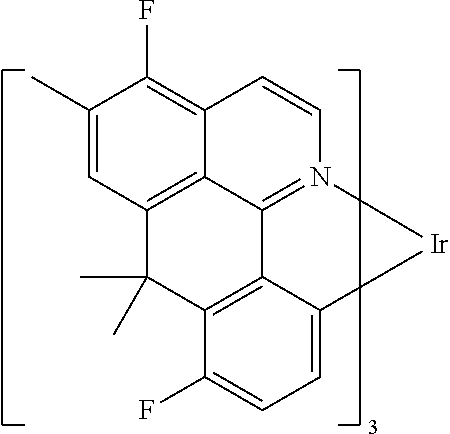 |
 |
 |
 |
 |
 |
 |
 |
 |
 |
 |
 |
 |
 |
 |
 |
 |
 |
 |
 |
 |
 |
 |
 |
 |
 |
 |
 |
 |
 |
 |
 |
 |
 |
 |
 |
 |
 |
 |
 |
 |
 |
 |
 |
 |
 |
 |
 |
 |
 |
 |
 |
 |
 |
 |
 |
 |
 |
 |
 |
 |
 |
 |
 |
 |
 |
 |
 |
 |
 |
 |
 |
 |
 |
 |
 |
 |
 |
 |
 |
 |
 |
 |
 |
 |
 |
 |
 |
 |
 |
 |
 |
 |
 |
 |
 |
 |
 |
 |
 |
 |
 |
 |
 |
 |
 |
 |
 |
 |
 |
 |
 |
 |
 |
 |
 |
 |
 |
 |
 |
 |
 |
 |
 |
 |
 |
 |
 |
 |
 |
 |
 |
 |
 |
 |
 |
 |
 |
 |
 |
 |
 |
 |
 |
 |
 |
 |
 |
 |
 |
 |
 |
 |
 |
 |
 |
 |
 |
 |
 |
 |
 |
 |
 |
 |
 |
 |
 |
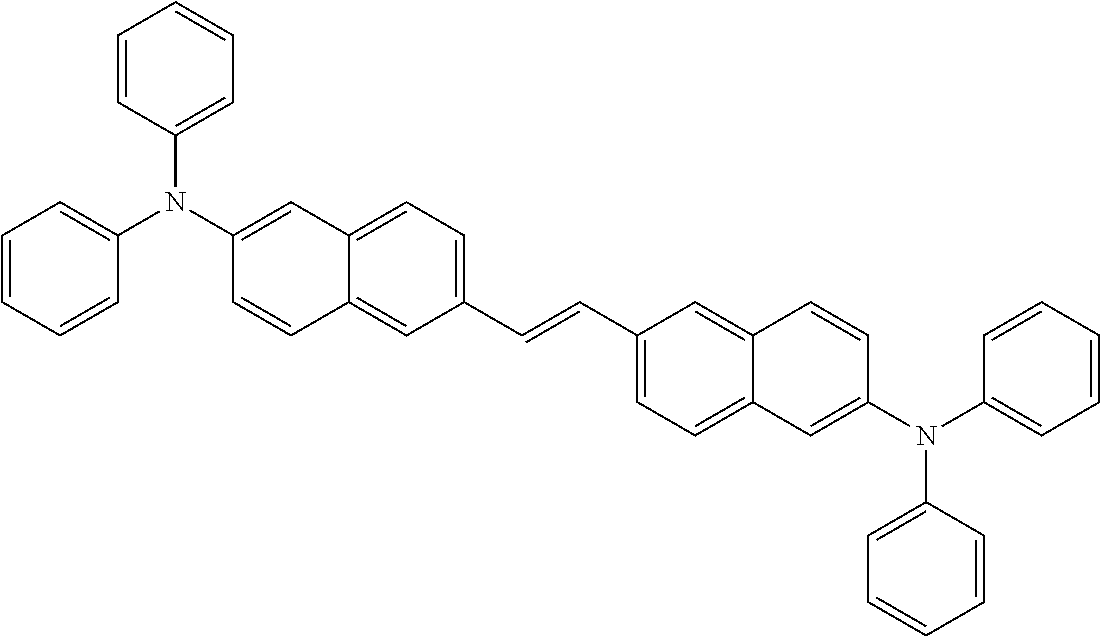 |
 |
 |
 |
 |
 |
 |
 |
 |
 |
 |
 |
 |
 |
 |
 |
 |
 |
 |
 |
 |
 |
 |
 |
 |
 |
 |
 |
 |
 |
 |
 |
 |
 |
 |
 |
 |
 |
 |
 |
 |


| TABLE 1 |
| Structure of the OLEDs |
| HIL | HTL | IL | EBL | EML | HBL | ETL | |
| Ex. | thickness | thickness | thickness | thickness | thickness | thickness | thickness |
| Cl | HATCN | SpNPB | — | NPB | M1:D1 (98.5%:1.5%) | — | ST2:LiQ (50%:50%) |
| 5 nm | 40 nm | 20 nm | 30 nm | 20 nm | |||
| C2 | — | SpA1 | HATCN | BPA1 | ST1:TEG1 (90%:10%) | ST1 | ST1:LiQ (50%:50%) |
| 70 nm | 5 nm | 20 nm | 30 nm | 10 nm | 30 nm | ||
| C3 | — | SpA1 | — | BPA1 | IC1:TEG1 (90%:10%) | — | ST1:LiQ (50%:50%) |
| 70 nm | 90 nm | 30 nm | 40 nm | ||||
| I1 | HATCN | A | — | NPB | M1:D1 (98.5%:1.5%) | — | ST2:LiQ (50%:50%) |
| 5 nm | 40 nm | 20 nm | 30 nm | 20 nm | |||
| I2 | HATCN | B | — | NPB | M1:D1 (98.5%:1.5%) | — | ST2:LiQ (50%:50%) |
| 5 nm | 40 nm | 20 nm | 30 nm | 20 nm | |||
| I3 | — | A 70 nm | HATCN | BPA1 | ST1:TEG1 (90%:10%) | ST1 | ST1:LiQ (50%:50%) |
| 5 nm | 20 nm | 30 nm | 10 nm | 30 nm | |||
| I4 | — | B 70 nm | HATCN | BPA1 | ST1:TEG1 (90%:10%) | ST1 | ST1:LiQ (50%:50%) |
| 5 nm | 20 nm | 30 nm | 10 nm | 30 nm | |||
| I5 | — | A | — | BPA1 | IC1:TEG1 (90%:10%) | — | ST1:LiQ (50%:50%) |
| 70 nm | 90 nm | 30 nm | 40 nm | ||||
| TABLE 2 |
| Data for the OLEDs |
| U1000 | CE1000 | PE1000 | EQE | CIE x/y at | L0 | L1 | LT | |
| Ex. | (V) | (cd/A) | (Im/W) | 1000 | 1000 cd/m2 | (cd/m2) | % | (h) |
| C1 | 4.3 | 9.8 | 7.1 | 7.6% | 0.14/0.16 | 6000 | 50 | 210 |
| C2 | 4.2 | 52 | 39 | 14.5% | 0.36/0.60 | 4000 | 80 | 330 |
| C3 | 3.8 | 54 | 45 | 14.9% | 0.36/0.60 | 4000 | 80 | 360 |
| I1 | 4.2 | 9.9 | 7.4 | 7.7% | 0.14/0.16 | 6000 | 50 | 200 |
| I2 | 4.0 | 9.5 | 7.5 | 7.4% | 0.14/0.16 | 6000 | 50 | 240 |
| I3 | 4.0 | 52 | 41 | 14.3% | 0.36/0.60 | 4000 | 80 | 340 |
| I4 | 3.9 | 53 | 43 | 14.6% | 0.36/0.60 | 4000 | 80 | 360 |
| I5 | 3.4 | 55 | 51 | 15.3% | 0.36/0.60 | 4000 | 80 | 410 |
| TABLE 3 |
| Structural formulae of the materials for the OLEDs |
 |
 |
 |
 |
 |
 |
 |
 |
 |
 |
 |
 |
 |
Claims (9)


Applications Claiming Priority (4)
| Application Number | Priority Date | Filing Date | Title |
|---|---|---|---|
| DE102010024335.3 | 2010-06-18 | ||
| DE102010024335 | 2010-06-18 | ||
| DE102010024335A DE102010024335A1 (en) | 2010-06-18 | 2010-06-18 | Connections for electronic devices |
| PCT/EP2011/002547 WO2011157346A1 (en) | 2010-06-18 | 2011-05-23 | Compounds for electronic devices |
Publications (2)
| Publication Number | Publication Date |
|---|---|
| US20130092879A1 US20130092879A1 (en) | 2013-04-18 |
| US10351557B2 true US10351557B2 (en) | 2019-07-16 |
Family
ID=44227854
Family Applications (1)
| Application Number | Title | Priority Date | Filing Date |
|---|---|---|---|
| US13/704,487 Active 2033-05-25 US10351557B2 (en) | 2010-06-18 | 2011-05-23 | Compounds for electronic devices |
Country Status (6)
| Country | Link |
|---|---|
| US (1) | US10351557B2 (en) |
| JP (1) | JP2013531653A (en) |
| KR (1) | KR101884034B1 (en) |
| CN (1) | CN102947304B (en) |
| DE (2) | DE102010024335A1 (en) |
| WO (1) | WO2011157346A1 (en) |
Cited By (1)
| Publication number | Priority date | Publication date | Assignee | Title |
|---|---|---|---|---|
| US11939328B2 (en) | 2021-10-14 | 2024-03-26 | Incyte Corporation | Quinoline compounds as inhibitors of KRAS |
Families Citing this family (9)
| Publication number | Priority date | Publication date | Assignee | Title |
|---|---|---|---|---|
| JP2012116784A (en) * | 2010-11-30 | 2012-06-21 | Idemitsu Kosan Co Ltd | Condensed polycyclic compound, material for organic electroluminescent element and organic electroluminescent element using the same |
| DE102011011539A1 (en) * | 2011-02-17 | 2012-08-23 | Merck Patent Gmbh | Connections for electronic devices |
| KR102013465B1 (en) | 2011-04-13 | 2019-08-22 | 메르크 파텐트 게엠베하 | Compounds for electronic devices |
| KR101897052B1 (en) * | 2012-04-13 | 2018-09-12 | 에스에프씨 주식회사 | Fused cyclic compound and organoelectroluminescent device comprising the compound |
| CN107922451B (en) * | 2015-08-25 | 2023-01-31 | 默克专利有限公司 | metal complex |
| US20180291028A1 (en) * | 2015-10-01 | 2018-10-11 | Idemitsu Kosan Co., Ltd. | Benzimidazolo[1,2-a]benzimidazole carrying benzimidazolo[1,2-a]benzimidazolyl groups, carbazolyl groups, benzofurane groups or benzothiophene groups for organic light emitting diodes |
| EP3150604B1 (en) * | 2015-10-01 | 2021-07-14 | Idemitsu Kosan Co., Ltd. | Benzimidazolo[1,2-a]benzimidazole carrying benzimidazolo[1,2-a]benzimidazolylyl groups, carbazolyl groups, benzofurane groups or benzothiophene groups for organic light emitting diodes |
| CN105713016B (en) * | 2016-03-16 | 2018-05-18 | 中节能万润股份有限公司 | A kind of new OLED material and its application |
| CN119684308B (en) * | 2025-02-25 | 2025-07-18 | 西安瑞联新材料股份有限公司 | A compound for organic luminescent material and its application |
Citations (10)
| Publication number | Priority date | Publication date | Assignee | Title |
|---|---|---|---|---|
| GB627519A (en) | 1945-12-22 | 1949-08-10 | Gen Aniline & Film Corp | Dyestuffs of the anthraquinone acridone series |
| US3106563A (en) | 1960-12-27 | 1963-10-08 | Gen Aniline & Film Corp | Thianthrene vat dyestuffs |
| US3167557A (en) | 1961-03-07 | 1965-01-26 | Bayer Ag | Process for the production of vat dyestuffs |
| US3244719A (en) | 1962-08-28 | 1966-04-05 | Basf Ag | Anthraquinone carbazole dyes |
| US3764690A (en) * | 1972-03-03 | 1973-10-09 | Bayer Ag | Substituted n-benzylimidazoles as antimycotic agents |
| JP2000315579A (en) | 1999-04-28 | 2000-11-14 | Asahi Glass Co Ltd | Organic electroluminescence device |
| US20050101660A1 (en) * | 2003-11-11 | 2005-05-12 | The Skinny Drink Company | Composition for prevention and treatment of obesity, cardiovascular and coronary artery disease |
| WO2008006449A1 (en) | 2006-07-11 | 2008-01-17 | Merck Patent Gmbh | Novel materials for organic electroluminescent devices |
| WO2010064871A1 (en) | 2008-12-05 | 2010-06-10 | Gracel Display Inc. | Novel organic electroluminescent compounds and organic electroluminescent device using the same |
| WO2011021803A2 (en) | 2009-08-18 | 2011-02-24 | 덕산하이메탈(주) | Compound having a thianthrene structure, organic light-emitting device using same, and terminal comprising the device |
Family Cites Families (95)
| Publication number | Priority date | Publication date | Assignee | Title |
|---|---|---|---|---|
| US4539507A (en) | 1983-03-25 | 1985-09-03 | Eastman Kodak Company | Organic electroluminescent devices having improved power conversion efficiencies |
| DE4111878A1 (en) | 1991-04-11 | 1992-10-15 | Wacker Chemie Gmbh | LADDER POLYMERS WITH CONJUGATED DOUBLE BINDINGS |
| US5151629A (en) | 1991-08-01 | 1992-09-29 | Eastman Kodak Company | Blue emitting internal junction organic electroluminescent device (I) |
| JPH061973A (en) | 1992-06-18 | 1994-01-11 | Konica Corp | Organic electroluminescent device |
| JPH07133483A (en) | 1993-11-09 | 1995-05-23 | Shinko Electric Ind Co Ltd | Organic light emitting material for EL device and EL device |
| EP0676461B1 (en) | 1994-04-07 | 2002-08-14 | Covion Organic Semiconductors GmbH | Spiro compounds and their application as electroluminescence materials |
| EP0681019B1 (en) | 1994-04-26 | 1999-09-01 | TDK Corporation | Phenylanthracene derivative and organic EL element |
| DE4436773A1 (en) | 1994-10-14 | 1996-04-18 | Hoechst Ag | Conjugated polymers with spirocenters and their use as electroluminescent materials |
| CN1229415C (en) | 1995-07-28 | 2005-11-30 | 陶氏环球技术公司 | 2,7-aryl-9-substituted fluorenes and oligomers and polymers of 9-substituted fluorenes |
| DE19614971A1 (en) | 1996-04-17 | 1997-10-23 | Hoechst Ag | Polymers with spiro atoms and their use as electroluminescent materials |
| DE19652261A1 (en) | 1996-12-16 | 1998-06-18 | Hoechst Ag | Aryl-substituted poly (p-arylenevinylenes), process for their preparation and their use in electroluminescent devices |
| US5935721A (en) | 1998-03-20 | 1999-08-10 | Eastman Kodak Company | Organic electroluminescent elements for stable electroluminescent |
| DE19846766A1 (en) | 1998-10-10 | 2000-04-20 | Aventis Res & Tech Gmbh & Co | A conjugated fluorene-based polymer useful as an organic semiconductor, electroluminescence material, and for display elements |
| JP4429438B2 (en) | 1999-01-19 | 2010-03-10 | 出光興産株式会社 | Amino compound and organic electroluminescence device using the same |
| US6166172A (en) | 1999-02-10 | 2000-12-26 | Carnegie Mellon University | Method of forming poly-(3-substituted) thiophenes |
| CN101312235B (en) | 1999-05-13 | 2010-06-09 | 普林斯顿大学理事会 | Ultra-efficient organic light-emitting devices based on electrophosphorescence |
| KR100794975B1 (en) | 1999-12-01 | 2008-01-16 | 더 트러스티즈 오브 프린스턴 유니버시티 | L2MV complex complex as phosphorescent dopant for organic LEDs |
| TW532048B (en) | 2000-03-27 | 2003-05-11 | Idemitsu Kosan Co | Organic electroluminescence element |
| US20020121638A1 (en) | 2000-06-30 | 2002-09-05 | Vladimir Grushin | Electroluminescent iridium compounds with fluorinated phenylpyridines, phenylpyrimidines, and phenylquinolines and devices made with such compounds |
| JP5241053B2 (en) | 2000-08-11 | 2013-07-17 | ザ、トラスティーズ オブ プリンストン ユニバーシティ | Organometallic compounds and radiation-transfer organic electrophosphors |
| JP4154139B2 (en) | 2000-09-26 | 2008-09-24 | キヤノン株式会社 | Light emitting element |
| JP4154138B2 (en) | 2000-09-26 | 2008-09-24 | キヤノン株式会社 | Light emitting element, display device and metal coordination compound |
| JP4154140B2 (en) | 2000-09-26 | 2008-09-24 | キヤノン株式会社 | Metal coordination compounds |
| GB0104177D0 (en) | 2001-02-20 | 2001-04-11 | Isis Innovation | Aryl-aryl dendrimers |
| DE10159946A1 (en) | 2001-12-06 | 2003-06-18 | Covion Organic Semiconductors | Process for the production of aryl-aryl coupled compounds |
| DE10207859A1 (en) | 2002-02-20 | 2003-09-04 | Univ Dresden Tech | Doped organic semiconductor material and process for its production |
| ITRM20020411A1 (en) | 2002-08-01 | 2004-02-02 | Univ Roma La Sapienza | SPIROBIFLUORENE DERIVATIVES, THEIR PREPARATION AND USE. |
| US7839074B2 (en) | 2002-08-23 | 2010-11-23 | Idemitsu Kosan Co., Ltd. | Organic electroluminescence device and anthracene derivative |
| DE10249723A1 (en) | 2002-10-25 | 2004-05-06 | Covion Organic Semiconductors Gmbh | Conjugated polymers containing arylamine units, their preparation and use |
| GB0226010D0 (en) | 2002-11-08 | 2002-12-18 | Cambridge Display Tech Ltd | Polymers for use in organic electroluminescent devices |
| JP4287198B2 (en) | 2002-11-18 | 2009-07-01 | 出光興産株式会社 | Organic electroluminescence device |
| EP1578885A2 (en) | 2002-12-23 | 2005-09-28 | Covion Organic Semiconductors GmbH | Organic electroluminescent element |
| DE10304819A1 (en) | 2003-02-06 | 2004-08-19 | Covion Organic Semiconductors Gmbh | Carbazole-containing conjugated polymers and blends, their preparation and use |
| DE10310887A1 (en) | 2003-03-11 | 2004-09-30 | Covion Organic Semiconductors Gmbh | Matallkomplexe |
| JP4411851B2 (en) | 2003-03-19 | 2010-02-10 | コニカミノルタホールディングス株式会社 | Organic electroluminescence device |
| KR101035795B1 (en) | 2003-04-10 | 2011-05-20 | 이데미쓰 고산 가부시키가이샤 | Aromatic Amine Derivatives and Organic Electroluminescent Devices Using The Same |
| KR101162933B1 (en) | 2003-04-15 | 2012-07-05 | 메르크 파텐트 게엠베하 | Mixtures of matrix materials and organic semiconductors capable of emission, use of the same and electronic components containing said mixtures |
| JP4635869B2 (en) | 2003-04-23 | 2011-02-23 | コニカミノルタホールディングス株式会社 | Organic electroluminescence element, lighting device, display device |
| TWI224473B (en) | 2003-06-03 | 2004-11-21 | Chin-Hsin Chen | Doped co-host emitter system in organic electroluminescent devices |
| EP1491568A1 (en) | 2003-06-23 | 2004-12-29 | Covion Organic Semiconductors GmbH | Semiconductive Polymers |
| DE10328627A1 (en) | 2003-06-26 | 2005-02-17 | Covion Organic Semiconductors Gmbh | New materials for electroluminescence |
| US8592614B2 (en) | 2003-07-07 | 2013-11-26 | Merck Patent Gmbh | Mixtures of organic emissive semiconductors and matrix materials, their use and electronic components comprising said materials |
| DE10333232A1 (en) | 2003-07-21 | 2007-10-11 | Merck Patent Gmbh | Organic electroluminescent element |
| DE10337346A1 (en) | 2003-08-12 | 2005-03-31 | Covion Organic Semiconductors Gmbh | Conjugated polymers containing dihydrophenanthrene units and their use |
| DE10338550A1 (en) | 2003-08-19 | 2005-03-31 | Basf Ag | Transition metal complexes with carbene ligands as emitters for organic light-emitting diodes (OLEDs) |
| US8728631B2 (en) | 2003-09-12 | 2014-05-20 | Sumitomo Chemical Company, Limited | Dendrimer compound and organic luminescent device employing the same |
| DE10345572A1 (en) | 2003-09-29 | 2005-05-19 | Covion Organic Semiconductors Gmbh | metal complexes |
| US7795801B2 (en) | 2003-09-30 | 2010-09-14 | Konica Minolta Holdings, Inc. | Organic electroluminescent element, illuminator, display and compound |
| WO2005040302A1 (en) | 2003-10-22 | 2005-05-06 | Merck Patent Gmbh | New materials for electroluminescence and the utilization thereof |
| DE10356099A1 (en) | 2003-11-27 | 2005-07-07 | Covion Organic Semiconductors Gmbh | Organic electroluminescent element |
| DE10357044A1 (en) | 2003-12-04 | 2005-07-14 | Novaled Gmbh | Process for doping organic semiconductors with quinonediimine derivatives |
| US7252893B2 (en) | 2004-02-17 | 2007-08-07 | Eastman Kodak Company | Anthracene derivative host having ranges of dopants |
| DE102004008304A1 (en) | 2004-02-20 | 2005-09-08 | Covion Organic Semiconductors Gmbh | Organic electronic devices |
| US7326371B2 (en) | 2004-03-25 | 2008-02-05 | Eastman Kodak Company | Electroluminescent device with anthracene derivative host |
| US7790890B2 (en) | 2004-03-31 | 2010-09-07 | Konica Minolta Holdings, Inc. | Organic electroluminescence element material, organic electroluminescence element, display device and illumination device |
| DE102004020298A1 (en) | 2004-04-26 | 2005-11-10 | Covion Organic Semiconductors Gmbh | Electroluminescent polymers and their use |
| DE102004023277A1 (en) | 2004-05-11 | 2005-12-01 | Covion Organic Semiconductors Gmbh | New material mixtures for electroluminescence |
| US7598388B2 (en) | 2004-05-18 | 2009-10-06 | The University Of Southern California | Carbene containing metal complexes as OLEDs |
| TWI327563B (en) | 2004-05-24 | 2010-07-21 | Au Optronics Corp | Anthracene compound and organic electroluminescent device including the anthracene compound |
| JP4862248B2 (en) | 2004-06-04 | 2012-01-25 | コニカミノルタホールディングス株式会社 | Organic electroluminescence element, lighting device and display device |
| DE102004031000A1 (en) | 2004-06-26 | 2006-01-12 | Covion Organic Semiconductors Gmbh | Organic electroluminescent devices |
| TW200613515A (en) | 2004-06-26 | 2006-05-01 | Merck Patent Gmbh | Compounds for organic electronic devices |
| DE102004032527A1 (en) | 2004-07-06 | 2006-02-02 | Covion Organic Semiconductors Gmbh | Electroluminescent polymers |
| ITRM20040352A1 (en) | 2004-07-15 | 2004-10-15 | Univ Roma La Sapienza | OLIGOMERIC DERIVATIVES OF SPIROBIFLUORENE, THEIR PREPARATION AND THEIR USE. |
| EP1655359A1 (en) | 2004-11-06 | 2006-05-10 | Covion Organic Semiconductors GmbH | Organic electroluminescent device |
| TW200639140A (en) | 2004-12-01 | 2006-11-16 | Merck Patent Gmbh | Compounds for organic electronic devices |
| EP1669386A1 (en) | 2004-12-06 | 2006-06-14 | Covion Organic Semiconductors GmbH | Conjugated polymers, representation thereof, and use |
| JP4263700B2 (en) | 2005-03-15 | 2009-05-13 | 出光興産株式会社 | Aromatic amine derivative and organic electroluminescence device using the same |
| US20090066225A1 (en) | 2005-03-18 | 2009-03-12 | Idemitsu Kosan Co., Ltd. | Aromatic amine derivative and organic electroluminescence device utilizing the same |
| KR101289923B1 (en) | 2005-05-03 | 2013-07-25 | 메르크 파텐트 게엠베하 | Organic electroluminescent device and boric acid and borinic acid derivatives used therein |
| DE102005023437A1 (en) | 2005-05-20 | 2006-11-30 | Merck Patent Gmbh | Connections for organic electronic devices |
| MX2007015691A (en) | 2005-07-08 | 2008-04-15 | Unilever Nv | Food product and process for preparing it. |
| DE102005037734B4 (en) | 2005-08-10 | 2018-02-08 | Merck Patent Gmbh | Electroluminescent polymers, their use and bifunctional monomeric compounds |
| US20070092755A1 (en) | 2005-10-26 | 2007-04-26 | Eastman Kodak Company | Organic element for low voltage electroluminescent devices |
| CN101321755B (en) | 2005-12-01 | 2012-04-18 | 新日铁化学株式会社 | Compound for organic electroluminescent element and organic electroluminescent element |
| DE102005058543A1 (en) | 2005-12-08 | 2007-06-14 | Merck Patent Gmbh | Organic electroluminescent devices |
| DE102005058557A1 (en) | 2005-12-08 | 2007-06-14 | Merck Patent Gmbh | Organic electroluminescent device |
| DE102005060473A1 (en) | 2005-12-17 | 2007-06-28 | Merck Patent Gmbh | Conjugated polymers, their preparation and use |
| DE102006015183A1 (en) | 2006-04-01 | 2007-10-04 | Merck Patent Gmbh | Materials for organic electroluminescent devices |
| DE102006025777A1 (en) | 2006-05-31 | 2007-12-06 | Merck Patent Gmbh | New materials for organic electroluminescent devices |
| DE102006025846A1 (en) | 2006-06-02 | 2007-12-06 | Merck Patent Gmbh | New materials for organic electroluminescent devices |
| CN101511834B (en) | 2006-11-09 | 2013-03-27 | 新日铁化学株式会社 | Compound for organic electroluminescence element and organic electroluminescence element |
| DE102007002714A1 (en) | 2007-01-18 | 2008-07-31 | Merck Patent Gmbh | New materials for organic electroluminescent devices |
| DE102007024850A1 (en) | 2007-05-29 | 2008-12-04 | Merck Patent Gmbh | New materials for organic electroluminescent devices |
| DE102007053771A1 (en) | 2007-11-12 | 2009-05-14 | Merck Patent Gmbh | Organic electroluminescent devices |
| DE102008033943A1 (en) | 2008-07-18 | 2010-01-21 | Merck Patent Gmbh | New materials for organic electroluminescent devices |
| DE102008035413A1 (en) | 2008-07-29 | 2010-02-04 | Merck Patent Gmbh | Connections for organic electronic devices |
| DE102008036982A1 (en) | 2008-08-08 | 2010-02-11 | Merck Patent Gmbh | Organic electroluminescent device |
| DE102008056688A1 (en) | 2008-11-11 | 2010-05-12 | Merck Patent Gmbh | Materials for organic electroluminescent devices |
| US8865321B2 (en) | 2008-11-11 | 2014-10-21 | Merck Patent Gmbh | Organic electroluminescent devices |
| DE102009022858A1 (en) | 2009-05-27 | 2011-12-15 | Merck Patent Gmbh | Organic electroluminescent devices |
| DE102009014513A1 (en) | 2009-03-23 | 2010-09-30 | Merck Patent Gmbh | Organic electroluminescent device |
| DE102009023155A1 (en) | 2009-05-29 | 2010-12-02 | Merck Patent Gmbh | Materials for organic electroluminescent devices |
| DE102009031021A1 (en) | 2009-06-30 | 2011-01-05 | Merck Patent Gmbh | Materials for organic electroluminescent devices |
| KR20110102055A (en) * | 2010-03-10 | 2011-09-16 | 제일모직주식회사 | Compound for organic photoelectric device and organic photoelectric device comprising same |
-
2010
- 2010-06-18 DE DE102010024335A patent/DE102010024335A1/en not_active Withdrawn
-
2011
- 2011-05-23 WO PCT/EP2011/002547 patent/WO2011157346A1/en not_active Ceased
- 2011-05-23 US US13/704,487 patent/US10351557B2/en active Active
- 2011-05-23 JP JP2013514567A patent/JP2013531653A/en active Pending
- 2011-05-23 CN CN201180030146.5A patent/CN102947304B/en active Active
- 2011-05-23 DE DE112011102056.2T patent/DE112011102056B4/en active Active
- 2011-05-23 KR KR1020137001317A patent/KR101884034B1/en active Active
Patent Citations (13)
| Publication number | Priority date | Publication date | Assignee | Title |
|---|---|---|---|---|
| GB627519A (en) | 1945-12-22 | 1949-08-10 | Gen Aniline & Film Corp | Dyestuffs of the anthraquinone acridone series |
| US3106563A (en) | 1960-12-27 | 1963-10-08 | Gen Aniline & Film Corp | Thianthrene vat dyestuffs |
| US3167557A (en) | 1961-03-07 | 1965-01-26 | Bayer Ag | Process for the production of vat dyestuffs |
| US3244719A (en) | 1962-08-28 | 1966-04-05 | Basf Ag | Anthraquinone carbazole dyes |
| US3764690A (en) * | 1972-03-03 | 1973-10-09 | Bayer Ag | Substituted n-benzylimidazoles as antimycotic agents |
| JP2000315579A (en) | 1999-04-28 | 2000-11-14 | Asahi Glass Co Ltd | Organic electroluminescence device |
| US20050101660A1 (en) * | 2003-11-11 | 2005-05-12 | The Skinny Drink Company | Composition for prevention and treatment of obesity, cardiovascular and coronary artery disease |
| JP2008500958A (en) | 2003-11-11 | 2008-01-17 | ザ スキニー ドリンク カンパニー | Composition for prevention and treatment of obesity, cardiovascular disease and coronary artery disease |
| WO2008006449A1 (en) | 2006-07-11 | 2008-01-17 | Merck Patent Gmbh | Novel materials for organic electroluminescent devices |
| US20090261717A1 (en) | 2006-07-11 | 2009-10-22 | Arne Buesing | Novel materials for organic electroluminescent devices |
| US8241763B2 (en) * | 2006-07-11 | 2012-08-14 | Merck Patent Gmbh | Materials for organic electroluminescent devices |
| WO2010064871A1 (en) | 2008-12-05 | 2010-06-10 | Gracel Display Inc. | Novel organic electroluminescent compounds and organic electroluminescent device using the same |
| WO2011021803A2 (en) | 2009-08-18 | 2011-02-24 | 덕산하이메탈(주) | Compound having a thianthrene structure, organic light-emitting device using same, and terminal comprising the device |
Non-Patent Citations (12)
| Title |
|---|
| Caplus Database; XP-002649598; 1989. |
| Caplus Database; XP-002649599; (1992). |
| CHEMICAL ABSTRACTS, 1 January 1988, Columbus, Ohio, US; SATO RYU, ET AL: "Chemistry of benzopentathiepin. Reactions of benzopentathiepin with aromatic compounds in the presence of Lewis acid" XP002649598 |
| CHEMICAL ABSTRACTS, 1 January 1992, Columbus, Ohio, US; KITAHARA KIYOSHI, ET AL: "Synthesis of indole rings fused quinacridones" XP002649599 |
| International Search Report for PCT/EP2011/002547 dated Oct. 28, 2011. |
| Kitahara et al., "Synthesis of Indole Rings Fused Quinacridones", Journal of the Chemical Society of Japan,vol. 1992, Issue 6 (1992) pp. 662-666 [Previously cited the Abstract only on Dec. 14, 2012-Caplus Database: XP-002649599: (1992)]. |
| Meesala et al, "A rapid and efficient entry to synthesis of quino and chromenocarbazoles," Tetrahedron, 65 (2009) 6050-6056. * |
| Meesala, Ramu, et al., "A Rapid and Efficient Entry to Synthesis of Quino and Chromenocarbazoles via Ullmann-Goldberg Condensation", Tetrahedron, vol. 65, (2009), pp. 6050-6056. |
| Sato, Ryu, et al, Heterocycles, 1988, 27(11), pp. 2563-2566. * |
| Sun, Lijun, et al., "The Regiospecific Synthesis of Angularly-Fused Xanthones via the Benzannulation of 1,2-Adducts Derived from 3-(o-Anisoyl)-4-Substituted Cyclobutenediones and their Dithianyl Derivatives", Tetrahedron Letters, vol. 38, No. 21, (1997), pp. 3663-3666. |
| Warner, Philip M., J. Am. Chem. Soc., 1994, 116, 11059-11066. * |
| Xu, Xiufang, et al., "Systematic Investigation of the Molecular Behaviors of Heterofullerenes C48X2 (X=B, N)", Chemical Physics, vol. 287, (2003), pp. 317-333. |
Cited By (2)
| Publication number | Priority date | Publication date | Assignee | Title |
|---|---|---|---|---|
| US11939328B2 (en) | 2021-10-14 | 2024-03-26 | Incyte Corporation | Quinoline compounds as inhibitors of KRAS |
| US12378243B2 (en) | 2021-10-14 | 2025-08-05 | Incyte Corporation | Quinoline compounds as inhibitors of KRAS |
Also Published As
| Publication number | Publication date |
|---|---|
| US20130092879A1 (en) | 2013-04-18 |
| KR101884034B1 (en) | 2018-07-31 |
| CN102947304B (en) | 2016-06-22 |
| CN102947304A (en) | 2013-02-27 |
| DE112011102056A5 (en) | 2013-03-28 |
| DE112011102056B4 (en) | 2025-02-13 |
| DE102010024335A1 (en) | 2011-12-22 |
| JP2013531653A (en) | 2013-08-08 |
| KR20130116069A (en) | 2013-10-22 |
| WO2011157346A1 (en) | 2011-12-22 |
Similar Documents
| Publication | Publication Date | Title |
|---|---|---|
| US11997922B2 (en) | Compounds and organic electronic devices | |
| US11258018B2 (en) | Compounds and organic electronic devices | |
| US10135003B2 (en) | Materials for electronic devices | |
| US11264575B2 (en) | Compounds for electronic devices | |
| US11121323B2 (en) | Materials for electronic devices | |
| US10749117B2 (en) | Materials for electronic devices | |
| US9422287B2 (en) | Bridged triarylamines and -phosphines as materials for electronic devices | |
| US9708262B2 (en) | Compounds for electronic devices | |
| US10056549B2 (en) | Compounds for electronic devices | |
| US10141518B2 (en) | Compounds for electronic devices | |
| US9090590B2 (en) | Organic compounds for electroluminescent devices | |
| US9812643B2 (en) | Materials for electronic devices | |
| US9425409B2 (en) | Materials for electronic devices | |
| US20130193382A1 (en) | Compounds for electronic devices | |
| US9876171B2 (en) | Materials for electronic devices | |
| US20130092879A1 (en) | Compounds for electronic devices | |
| US20150340627A1 (en) | Materials for electronic devices | |
| US9768385B2 (en) | Compounds for electronic devices |
Legal Events
| Date | Code | Title | Description |
|---|---|---|---|
| AS | Assignment |
Owner name: MERCK PATENT GMBH, GERMANY Free format text: ASSIGNMENT OF ASSIGNORS INTEREST;ASSIGNORS:FORTT, ROCCO;PFLUMM, CHRISTOF;BROCKE, CONSTANZE;AND OTHERS;REEL/FRAME:029491/0886 Effective date: 20121129 |
|
| STPP | Information on status: patent application and granting procedure in general |
Free format text: NOTICE OF ALLOWANCE MAILED -- APPLICATION RECEIVED IN OFFICE OF PUBLICATIONS |
|
| STPP | Information on status: patent application and granting procedure in general |
Free format text: PUBLICATIONS -- ISSUE FEE PAYMENT VERIFIED |
|
| STCF | Information on status: patent grant |
Free format text: PATENTED CASE |
|
| MAFP | Maintenance fee payment |
Free format text: PAYMENT OF MAINTENANCE FEE, 4TH YEAR, LARGE ENTITY (ORIGINAL EVENT CODE: M1551); ENTITY STATUS OF PATENT OWNER: LARGE ENTITY Year of fee payment: 4 |