US10249827B2 - Azadibenzofurans for electronic applications - Google Patents
Azadibenzofurans for electronic applications Download PDFInfo
- Publication number
- US10249827B2 US10249827B2 US14/427,134 US201314427134A US10249827B2 US 10249827 B2 US10249827 B2 US 10249827B2 US 201314427134 A US201314427134 A US 201314427134A US 10249827 B2 US10249827 B2 US 10249827B2
- Authority
- US
- United States
- Prior art keywords
- formula
- group
- xiiw
- xiiq
- xiiu
- Prior art date
- Legal status (The legal status is an assumption and is not a legal conclusion. Google has not performed a legal analysis and makes no representation as to the accuracy of the status listed.)
- Active, expires
Links
- UWDTYENJIOEORT-UHFFFAOYSA-N CN1C2=NC3=C(C=CC=C3)N2C2=C1/C=C\C=C/2 Chemical compound CN1C2=NC3=C(C=CC=C3)N2C2=C1/C=C\C=C/2 UWDTYENJIOEORT-UHFFFAOYSA-N 0.000 description 296
- DJMCPNHADSBYOA-UHFFFAOYSA-N CC1=CC(N2C3=NC4=C(C=CC=C4)N3C3=C2C=CC=C3)=CC=C1 Chemical compound CC1=CC(N2C3=NC4=C(C=CC=C4)N3C3=C2C=CC=C3)=CC=C1 DJMCPNHADSBYOA-UHFFFAOYSA-N 0.000 description 174
- SDFLTYHTFPTIGX-UHFFFAOYSA-N CN1C2=CC=CC=C2C2=C1C=CC=C2 Chemical compound CN1C2=CC=CC=C2C2=C1C=CC=C2 SDFLTYHTFPTIGX-UHFFFAOYSA-N 0.000 description 86
- GMTXXXJPVVMQOD-UHFFFAOYSA-N CC1=CC2=C(N=C1)OC1=C2/C=C(N2C3=NC4=C(C=CC=C4)N3C3=C2C=CC=C3)\C=C/1 Chemical compound CC1=CC2=C(N=C1)OC1=C2/C=C(N2C3=NC4=C(C=CC=C4)N3C3=C2C=CC=C3)\C=C/1 GMTXXXJPVVMQOD-UHFFFAOYSA-N 0.000 description 56
- AXOYDLPIOWRSQC-UHFFFAOYSA-N CC1=CC2=C(C=C1)OC1=C2/C=C(N2C3=NC4=C(C=CC=C4)N3C3=C2C=CC=C3)\C=C/1 Chemical compound CC1=CC2=C(C=C1)OC1=C2/C=C(N2C3=NC4=C(C=CC=C4)N3C3=C2C=CC=C3)\C=C/1 AXOYDLPIOWRSQC-UHFFFAOYSA-N 0.000 description 53
- GIGVICQLYWGMGW-UHFFFAOYSA-N C[Si](C1=CC=CC=C1)(C1=CC=CC=C1)C1=CC=CC=C1 Chemical compound C[Si](C1=CC=CC=C1)(C1=CC=CC=C1)C1=CC=CC=C1 GIGVICQLYWGMGW-UHFFFAOYSA-N 0.000 description 50
- 0 *N1C2=NC3=C(/C=C\C=C/3)N2C2=C1C=CC=C2 Chemical compound *N1C2=NC3=C(/C=C\C=C/3)N2C2=C1C=CC=C2 0.000 description 44
- SFJLMNUXBCIAJM-UHFFFAOYSA-N CC1=CC2=C(C=N1)OC1=C2/C=C(N2C3=NC4=C(C=CC=C4)N3C3=C2C=CC=C3)\C=C/1 Chemical compound CC1=CC2=C(C=N1)OC1=C2/C=C(N2C3=NC4=C(C=CC=C4)N3C3=C2C=CC=C3)\C=C/1 SFJLMNUXBCIAJM-UHFFFAOYSA-N 0.000 description 44
- QATXODAWDLTPRH-UHFFFAOYSA-N CC1=CC(N2C3=C(C=CC=C3)C3=C2/C=C\C=C/3)=CC=C1 Chemical compound CC1=CC(N2C3=C(C=CC=C3)C3=C2/C=C\C=C/3)=CC=C1 QATXODAWDLTPRH-UHFFFAOYSA-N 0.000 description 43
- XUEIFFULTNKKAF-UHFFFAOYSA-N Cc(cc1)cc2c1[o]c1cnccc21 Chemical compound Cc(cc1)cc2c1[o]c1cnccc21 XUEIFFULTNKKAF-UHFFFAOYSA-N 0.000 description 39
- VTKMFJSESAHMLR-UHFFFAOYSA-N CC1=CC2=C(C=C1)OC1=C2C=CC=C1 Chemical compound CC1=CC2=C(C=C1)OC1=C2C=CC=C1 VTKMFJSESAHMLR-UHFFFAOYSA-N 0.000 description 35
- XUIXGJIMXBUMLB-UHFFFAOYSA-N CC1=CC2=C(C=C1)OC1=C2C=CC=N1 Chemical compound CC1=CC2=C(C=C1)OC1=C2C=CC=N1 XUIXGJIMXBUMLB-UHFFFAOYSA-N 0.000 description 33
- QZISDCOTEYMTHI-UHFFFAOYSA-N Cc1cccc(-c2cccc(-[n]3c4ccccc4c4c3cccc4)c2)c1 Chemical compound Cc1cccc(-c2cccc(-[n]3c4ccccc4c4c3cccc4)c2)c1 QZISDCOTEYMTHI-UHFFFAOYSA-N 0.000 description 21
- YLHLZDMREUUBHO-UHFFFAOYSA-N CC1=CC2=C(N=C1)OC1=C2/C=C(N2C3=C(C=CC=C3)C3=C2C=CC=C3)\C=C/1 Chemical compound CC1=CC2=C(N=C1)OC1=C2/C=C(N2C3=C(C=CC=C3)C3=C2C=CC=C3)\C=C/1 YLHLZDMREUUBHO-UHFFFAOYSA-N 0.000 description 18
- PROXGADHJJVIIO-UHFFFAOYSA-N CC1=CC=CC(C2=CC=CC(N3C4=NC5=C(C=CC=C5)N4C4=C3C=CC=C4)=C2)=C1 Chemical compound CC1=CC=CC(C2=CC=CC(N3C4=NC5=C(C=CC=C5)N4C4=C3C=CC=C4)=C2)=C1 PROXGADHJJVIIO-UHFFFAOYSA-N 0.000 description 18
- SGBYSWUTSIVPBA-UHFFFAOYSA-N CC1=CC2=C(C=C1)OC1=C2/C=C(N2C3=C(C=CC=C3)C3=C2C=CC=C3)\C=C/1 Chemical compound CC1=CC2=C(C=C1)OC1=C2/C=C(N2C3=C(C=CC=C3)C3=C2C=CC=C3)\C=C/1 SGBYSWUTSIVPBA-UHFFFAOYSA-N 0.000 description 17
- PFAVIFREOHOHHC-UHFFFAOYSA-N CC1=CC2=C(C=N1)OC1=C2/C=C(N2C3=C(C=CC=C3)C3=C2C=CC=C3)\C=C/1 Chemical compound CC1=CC2=C(C=N1)OC1=C2/C=C(N2C3=C(C=CC=C3)C3=C2C=CC=C3)\C=C/1 PFAVIFREOHOHHC-UHFFFAOYSA-N 0.000 description 17
- HVTIOHAXYSBZLK-UHFFFAOYSA-N CN1C2=C(C=CC=C2)C2=C1C=CC(N1C3=NC4=C(C=CC=C4)N3C3=C1C=CC=C3)=C2 Chemical compound CN1C2=C(C=CC=C2)C2=C1C=CC(N1C3=NC4=C(C=CC=C4)N3C3=C1C=CC=C3)=C2 HVTIOHAXYSBZLK-UHFFFAOYSA-N 0.000 description 16
- GESFSNYMOVCHRH-UHFFFAOYSA-N CC1=CC2=C(C=C1)N(C)C1=NC3=C(C=CC=C3)N12 Chemical compound CC1=CC2=C(C=C1)N(C)C1=NC3=C(C=CC=C3)N12 GESFSNYMOVCHRH-UHFFFAOYSA-N 0.000 description 11
- GJUKWQZFUAOPAQ-UHFFFAOYSA-N CN1C2=NC3=C(C=CC=C3)N2C2=C1C=CC(C1=CC3=C(C=C1)OC1=C3C=CC=C1)=C2 Chemical compound CN1C2=NC3=C(C=CC=C3)N2C2=C1C=CC(C1=CC3=C(C=C1)OC1=C3C=CC=C1)=C2 GJUKWQZFUAOPAQ-UHFFFAOYSA-N 0.000 description 9
- DGCMWDJNHJUHHX-UHFFFAOYSA-N CN1C2=NC3=C(C=CC=C3)N2C2=C1C=CC(C1=CC3=C(C=C1)OC1=C3C=CC=N1)=C2 Chemical compound CN1C2=NC3=C(C=CC=C3)N2C2=C1C=CC(C1=CC3=C(C=C1)OC1=C3C=CC=N1)=C2 DGCMWDJNHJUHHX-UHFFFAOYSA-N 0.000 description 9
- LDTOAZMVWNUPCO-UHFFFAOYSA-N CN1C2=NC3=C(C=CC=C3)N2C2=C1C=CC(N1C3=C(C=CC=C3)C3=C1C=CC=C3)=C2 Chemical compound CN1C2=NC3=C(C=CC=C3)N2C2=C1C=CC(N1C3=C(C=CC=C3)C3=C1C=CC=C3)=C2 LDTOAZMVWNUPCO-UHFFFAOYSA-N 0.000 description 9
- JJENTOVWLOKKPA-UHFFFAOYSA-N CC1=CC(N2C3=NC4=C(C=CC=C4)N3C3=C2C=CC=C3)=CC(C2=C/C3=C(\C=C/2)OC2=C3C=CC=N2)=C1 Chemical compound CC1=CC(N2C3=NC4=C(C=CC=C4)N3C3=C2C=CC=C3)=CC(C2=C/C3=C(\C=C/2)OC2=C3C=CC=N2)=C1 JJENTOVWLOKKPA-UHFFFAOYSA-N 0.000 description 8
- MKKXPUUEGDBLTC-UHFFFAOYSA-N CN1C2=NC3=C(C=CC=C3)N2C2=C1C=CC(C1=CC3=C(C=C1)N(C1=CC=CC=C1)C1=C3C=CC=C1)=C2 Chemical compound CN1C2=NC3=C(C=CC=C3)N2C2=C1C=CC(C1=CC3=C(C=C1)N(C1=CC=CC=C1)C1=C3C=CC=C1)=C2 MKKXPUUEGDBLTC-UHFFFAOYSA-N 0.000 description 8
- QQZYSHJDTOHVDE-UHFFFAOYSA-N C1=CC=C(N2C3=C(C=CC=C3)C3=C2/C=C\C=C/3)C=C1.CC.CN1C2=C(C=CC=C2)C2=C1C=CC=C2.CN1C2=NC3=C(C=CC=C3)N2C2=C1C=CC=C2 Chemical compound C1=CC=C(N2C3=C(C=CC=C3)C3=C2/C=C\C=C/3)C=C1.CC.CN1C2=C(C=CC=C2)C2=C1C=CC=C2.CN1C2=NC3=C(C=CC=C3)N2C2=C1C=CC=C2 QQZYSHJDTOHVDE-UHFFFAOYSA-N 0.000 description 4
- VMGMVFDXVCZISJ-UHFFFAOYSA-N C/C1=C/C=C\C2=C1OC1=C2C=CC=C1.C/C1=C/C=C\C2=C1SC1=C2C=CC=C1.C/C1=N/C=C\C2=C1CC1=C2C=CC=C1.CC1=C/C2=C(CC3=C2C=CC=C3)/N=C\1.CC1=C/C2=C(\C=C/1)N(C1=CC=CC=C1)C1=C2C=CC=C1.CC1=C/C2=C(\C=C/1)OC1=C2C=CC=C1.CC1=C/C2=C(\C=C/1)SC1=C2C=CC=C1.CC1=CC2=C(C=C1)CC1=C2/C=C\C=N/1.CC1=CC2=C(C=C1)CC1=C2/C=C\N=C/1.CC1=CC=CC2=C1CC1=C2/C=C\C=N/1.CC1=CC=CC2=C1CC1=C2/C=C\N=C/1.CC1=CC=CC=C1.CC1=CC=NC2=C1CC1=C2/N=C\C=C/1.CC1=NC2=C(C=C1)CC1=C2/N=C\C=C/1.CN1C2=C(C=CC=C2)C2=C1/C=C\C=C/2.CN1C2=NC3=C(C=CC=C3)N2C2=C1C=CC=C2.C[Si](C1=CC=CC=C1)(C1=CC=CC=C1)C1=CC=CC=C1 Chemical compound C/C1=C/C=C\C2=C1OC1=C2C=CC=C1.C/C1=C/C=C\C2=C1SC1=C2C=CC=C1.C/C1=N/C=C\C2=C1CC1=C2C=CC=C1.CC1=C/C2=C(CC3=C2C=CC=C3)/N=C\1.CC1=C/C2=C(\C=C/1)N(C1=CC=CC=C1)C1=C2C=CC=C1.CC1=C/C2=C(\C=C/1)OC1=C2C=CC=C1.CC1=C/C2=C(\C=C/1)SC1=C2C=CC=C1.CC1=CC2=C(C=C1)CC1=C2/C=C\C=N/1.CC1=CC2=C(C=C1)CC1=C2/C=C\N=C/1.CC1=CC=CC2=C1CC1=C2/C=C\C=N/1.CC1=CC=CC2=C1CC1=C2/C=C\N=C/1.CC1=CC=CC=C1.CC1=CC=NC2=C1CC1=C2/N=C\C=C/1.CC1=NC2=C(C=C1)CC1=C2/N=C\C=C/1.CN1C2=C(C=CC=C2)C2=C1/C=C\C=C/2.CN1C2=NC3=C(C=CC=C3)N2C2=C1C=CC=C2.C[Si](C1=CC=CC=C1)(C1=CC=CC=C1)C1=CC=CC=C1 VMGMVFDXVCZISJ-UHFFFAOYSA-N 0.000 description 3
- TXCDCPKCNAJMEE-UHFFFAOYSA-N C1=CC2=C(C=C1)C1=C(/C=C\C=C/1)O2 Chemical compound C1=CC2=C(C=C1)C1=C(/C=C\C=C/1)O2 TXCDCPKCNAJMEE-UHFFFAOYSA-N 0.000 description 3
- TXCVALVFXRQIFY-UHFFFAOYSA-N C1=CC2=C(C=C1)N1C(=NC3=C1/C=C\C=C/3)C2 Chemical compound C1=CC2=C(C=C1)N1C(=NC3=C1/C=C\C=C/3)C2 TXCVALVFXRQIFY-UHFFFAOYSA-N 0.000 description 3
- GDYMLWFKEFBMHG-UHFFFAOYSA-N C1=CC=C(N2C3=C(N=CC=N3)N3C4=CC=CC=C4[Ir]C23)C=C1 Chemical compound C1=CC=C(N2C3=C(N=CC=N3)N3C4=CC=CC=C4[Ir]C23)C=C1 GDYMLWFKEFBMHG-UHFFFAOYSA-N 0.000 description 3
- KXCVHTWWGDLJRE-UHFFFAOYSA-N C1=CC=C([Si](C2=CC=CC=C2)(C2=CC=CC=C2)C2=C/C=C3/OC4=C(N=CC=C4N4C5=NC6=C(C=CC=C6)N5C5=C4C=CC=C5)/C3=C\2)C=C1 Chemical compound C1=CC=C([Si](C2=CC=CC=C2)(C2=CC=CC=C2)C2=C/C=C3/OC4=C(N=CC=C4N4C5=NC6=C(C=CC=C6)N5C5=C4C=CC=C5)/C3=C\2)C=C1 KXCVHTWWGDLJRE-UHFFFAOYSA-N 0.000 description 3
- JKZFJXGYLGJDLW-UHFFFAOYSA-N C1=CC=NC=C1.CC.CC1=CC=CC=C1 Chemical compound C1=CC=NC=C1.CC.CC1=CC=CC=C1 JKZFJXGYLGJDLW-UHFFFAOYSA-N 0.000 description 3
- FLIPDKDQWYACGC-UHFFFAOYSA-N CB1OC2=C(C=CC=C2)O1.CB1OCO1.CC.CC Chemical compound CB1OC2=C(C=CC=C2)O1.CB1OCO1.CC.CC FLIPDKDQWYACGC-UHFFFAOYSA-N 0.000 description 3
- MRWWWZLJWNIEEJ-UHFFFAOYSA-N CC(C)OB1OC(C)(C)C(C)(C)O1 Chemical compound CC(C)OB1OC(C)(C)C(C)(C)O1 MRWWWZLJWNIEEJ-UHFFFAOYSA-N 0.000 description 3
- YDXSBALIEGYOAE-UHFFFAOYSA-N CC1=CC2=C(C=C1)OC1=C2/C=C\C=N/1.CC1=CC2=C(C=C1)OC1=C2/C=C\N=C/1.CN1C2=C(C=CC=C2)C2=C1C=CC=C2.CN1C2=NC3=C(/C=C\C=C/3)N2C2=C1C=CC=C2 Chemical compound CC1=CC2=C(C=C1)OC1=C2/C=C\C=N/1.CC1=CC2=C(C=C1)OC1=C2/C=C\N=C/1.CN1C2=C(C=CC=C2)C2=C1C=CC=C2.CN1C2=NC3=C(/C=C\C=C/3)N2C2=C1C=CC=C2 YDXSBALIEGYOAE-UHFFFAOYSA-N 0.000 description 3
- OGZUSVSXBIKENJ-UHFFFAOYSA-N c(cc1[n]2c3nc4ccccc24)ccc1[n]3-c1cc(-c(cc2)cc3c2[o]c2cnccc32)cc(-c2ccc3[o]c4cnccc4c3c2)c1 Chemical compound c(cc1[n]2c3nc4ccccc24)ccc1[n]3-c1cc(-c(cc2)cc3c2[o]c2cnccc32)cc(-c2ccc3[o]c4cnccc4c3c2)c1 OGZUSVSXBIKENJ-UHFFFAOYSA-N 0.000 description 3
- ZTHQKPAFJHIZOJ-UHFFFAOYSA-N C.C1=CC=C2OB(B3OC4=C(C=CC=C4)O3)OC2=C1.C1OB(B2OCO2)O1.CC.CC.CC.CC Chemical compound C.C1=CC=C2OB(B3OC4=C(C=CC=C4)O3)OC2=C1.C1OB(B2OCO2)O1.CC.CC.CC.CC ZTHQKPAFJHIZOJ-UHFFFAOYSA-N 0.000 description 2
- KFQMAOMTVXLQOV-UHFFFAOYSA-N C/C1=C/C=C\C2=C1OC1=C2C=CC=C1.C1=CC2=C(C=C1)C1=C(/C=C\C=C/1)S2.CC.CC1=C/C2=C(\C=C/1)OC1=C2C=CC=C1 Chemical compound C/C1=C/C=C\C2=C1OC1=C2C=CC=C1.C1=CC2=C(C=C1)C1=C(/C=C\C=C/1)S2.CC.CC1=C/C2=C(\C=C/1)OC1=C2C=CC=C1 KFQMAOMTVXLQOV-UHFFFAOYSA-N 0.000 description 2
- OEURXPPJMIYCNK-UHFFFAOYSA-N C/C1=C/C=C\C2=C1SC1=C2C=CC=C1.C1=CC2=C(C=C1)C1=C(/C=N\C=C/1)O2.C1=CC2=C(C=C1)C1=C(/C=N\C=C/1)S2.CC.CC.CC1=C/C2=C(\C=C/1)SC1=C2C=CC=C1 Chemical compound C/C1=C/C=C\C2=C1SC1=C2C=CC=C1.C1=CC2=C(C=C1)C1=C(/C=N\C=C/1)O2.C1=CC2=C(C=C1)C1=C(/C=N\C=C/1)S2.CC.CC.CC1=C/C2=C(\C=C/1)SC1=C2C=CC=C1 OEURXPPJMIYCNK-UHFFFAOYSA-N 0.000 description 2
- ILPFAGREGDXNNM-UHFFFAOYSA-N C1=CC2=C(C=C1)C1=C(/C=C\C=C/1)O2.C1=CC2=C(C=C1)C1=C(/C=C\C=C/1)S2.C1=CC2=C(C=N1)OC1=C2/C=C\C=C/1.C1=CC2=C(C=N1)SC1=C2/C=C\C=C/1.C1=CC2=C(N=C1)C1=C(/C=C\C=N/1)O2.C1=CC2=C(N=C1)C1=C(/C=C\C=N/1)S2.C1=CC2=C(N=C1)OC1=C2/C=C\C=C/1.C1=CC2=C(N=C1)SC1=C2/C=C\C=C/1.CC.CC.CC.CC.CC.CC.CC.CC.CC1=CC=CC=C1.CN1C2=C(C=CC=C2)C2=C1C=CC=C2.CN1C2=NC3=C(/C=C\C=C/3)N2C2=C1C=CC=C2 Chemical compound C1=CC2=C(C=C1)C1=C(/C=C\C=C/1)O2.C1=CC2=C(C=C1)C1=C(/C=C\C=C/1)S2.C1=CC2=C(C=N1)OC1=C2/C=C\C=C/1.C1=CC2=C(C=N1)SC1=C2/C=C\C=C/1.C1=CC2=C(N=C1)C1=C(/C=C\C=N/1)O2.C1=CC2=C(N=C1)C1=C(/C=C\C=N/1)S2.C1=CC2=C(N=C1)OC1=C2/C=C\C=C/1.C1=CC2=C(N=C1)SC1=C2/C=C\C=C/1.CC.CC.CC.CC.CC.CC.CC.CC.CC1=CC=CC=C1.CN1C2=C(C=CC=C2)C2=C1C=CC=C2.CN1C2=NC3=C(/C=C\C=C/3)N2C2=C1C=CC=C2 ILPFAGREGDXNNM-UHFFFAOYSA-N 0.000 description 2
- BCGMHKZWDZQMIQ-UHFFFAOYSA-N C1=CC2=C(C=C1)C1=C(/C=C\C=C/1)O2.CC.CC1=CC=CC=C1 Chemical compound C1=CC2=C(C=C1)C1=C(/C=C\C=C/1)O2.CC.CC1=CC=CC=C1 BCGMHKZWDZQMIQ-UHFFFAOYSA-N 0.000 description 2
- RTOADMKGUNWICJ-UHFFFAOYSA-N C1=CC2=C(C=C1)C1=C(/C=N\C=C/1)C2.CC Chemical compound C1=CC2=C(C=C1)C1=C(/C=N\C=C/1)C2.CC RTOADMKGUNWICJ-UHFFFAOYSA-N 0.000 description 2
- NUDKHNVPIUHZIQ-UHFFFAOYSA-N C1=CC2=C(C=C1)N1C(=N2)N(C2=CC(C3=CC=C4OC5=C(C=CC=C5)C4=C3)=CC(C3=CC4=C(C=C3)OC3=C4C=CN=C3)=C2)C2=C1C=CC=C2 Chemical compound C1=CC2=C(C=C1)N1C(=N2)N(C2=CC(C3=CC=C4OC5=C(C=CC=C5)C4=C3)=CC(C3=CC4=C(C=C3)OC3=C4C=CN=C3)=C2)C2=C1C=CC=C2 NUDKHNVPIUHZIQ-UHFFFAOYSA-N 0.000 description 2
- WGCITCXJWDDYIR-UHFFFAOYSA-N C1=CC2=C(N=C1)C1=C(/C=C\C=N/1)C2.CC Chemical compound C1=CC2=C(N=C1)C1=C(/C=C\C=N/1)C2.CC WGCITCXJWDDYIR-UHFFFAOYSA-N 0.000 description 2
- JDGOXKQYPRYRLU-UHFFFAOYSA-N C1=CC2=C(N=C1)C1=C(/C=C\C=N/1)O2.C1=CC2=C(N=C1)C1=C(/C=C\C=N/1)S2.CC.CC.CC1=CC2=C(C=C1)OC1=C2/C=C\C=N/1.CN1C2=C(C=CC=C2)C2=C1/C=C\C=C/2.CN1C2=C(C=CC=C2)N2C3=C(C=CC=C3)/N=C/12 Chemical compound C1=CC2=C(N=C1)C1=C(/C=C\C=N/1)O2.C1=CC2=C(N=C1)C1=C(/C=C\C=N/1)S2.CC.CC.CC1=CC2=C(C=C1)OC1=C2/C=C\C=N/1.CN1C2=C(C=CC=C2)C2=C1/C=C\C=C/2.CN1C2=C(C=CC=C2)N2C3=C(C=CC=C3)/N=C/12 JDGOXKQYPRYRLU-UHFFFAOYSA-N 0.000 description 2
- LTEREIPNJSCEHH-UHFFFAOYSA-N C1=CC2=CC=C3C(C4=C/C5=C(\C=C/4)OC4=C5C=C(C5=C6/C=C\C7=CC=CC8=CC=C(C=C5)C6=C87)C=C4)=CC=C4/C=C\C(=C1)C2=C43 Chemical compound C1=CC2=CC=C3C(C4=C/C5=C(\C=C/4)OC4=C5C=C(C5=C6/C=C\C7=CC=CC8=CC=C(C=C5)C6=C87)C=C4)=CC=C4/C=C\C(=C1)C2=C43 LTEREIPNJSCEHH-UHFFFAOYSA-N 0.000 description 2
- IIBIMTHLGUGVJF-UHFFFAOYSA-N C1=CC=C(N2C3=C(C=CC=C3)N3C4=CC=CC=C4[Ir]C23)C=C1 Chemical compound C1=CC=C(N2C3=C(C=CC=C3)N3C4=CC=CC=C4[Ir]C23)C=C1 IIBIMTHLGUGVJF-UHFFFAOYSA-N 0.000 description 2
- JYVWUUCDRBZNQS-UHFFFAOYSA-N CC1=C/C2=C(\C=C/1)CC1=NC3=C(C=CC=C3)N12 Chemical compound CC1=C/C2=C(\C=C/1)CC1=NC3=C(C=CC=C3)N12 JYVWUUCDRBZNQS-UHFFFAOYSA-N 0.000 description 2
- KXJHVWBTYWKVCB-UHFFFAOYSA-N CC1=C/C2=C(\C=C/1)N(C1=C3OC4=C(C=CC=C4)C3=CC=C1)C1=C2C=CC=C1.CC1=C/C2=C(\C=C/1)N(C1=C3OC4=C(C=CC=N4)C3=CC=C1)C1=C2C=CC=C1.CC1=C/C2=C(\C=C/1)N(C1=C3OC4=C(C=CN=C4)C3=CC=C1)C1=C2C=CC=C1.CC1=C/C2=C(\C=C/1)N(C1=CC=C3OC4=C(C=CN=C4)C3=C1)C1=C2C=CC=C1.CC1=C/C2=C(\C=C/1)N(C1=CN=C3OC4=C(C=CC=C4)C3=C1)C1=C2C=CC=C1 Chemical compound CC1=C/C2=C(\C=C/1)N(C1=C3OC4=C(C=CC=C4)C3=CC=C1)C1=C2C=CC=C1.CC1=C/C2=C(\C=C/1)N(C1=C3OC4=C(C=CC=N4)C3=CC=C1)C1=C2C=CC=C1.CC1=C/C2=C(\C=C/1)N(C1=C3OC4=C(C=CN=C4)C3=CC=C1)C1=C2C=CC=C1.CC1=C/C2=C(\C=C/1)N(C1=CC=C3OC4=C(C=CN=C4)C3=C1)C1=C2C=CC=C1.CC1=C/C2=C(\C=C/1)N(C1=CN=C3OC4=C(C=CC=C4)C3=C1)C1=C2C=CC=C1 KXJHVWBTYWKVCB-UHFFFAOYSA-N 0.000 description 2
- FGVQEFPSDSQJLW-UHFFFAOYSA-N CC1=C/C2=C(\C=C/1)N(C1=C3OC4=C(N=CC=C4)C3=NC=C1)C1=C2C=CC=C1.CC1=CC=C2C(=C1)C1=C(C=CC=C1)N2C1=CC=C2C(=C1)C1=C(C=CC=C1)N2C1=C/C2=C(\C=C/1)OC1=C2C=CC=C1.CC1=CC=C2C(=C1)C1=C(C=CC=C1)N2C1=CC=C2C(=C1)C1=C(C=CC=C1)N2C1=C/C2=C(\C=C/1)OC1=C2C=CC=N1.CC1=CC=C2C(=C1)C1=C(C=CC=C1)N2C1=CC=C2C(=C1)C1=C(C=CC=C1)N2C1=CC=CC=C1 Chemical compound CC1=C/C2=C(\C=C/1)N(C1=C3OC4=C(N=CC=C4)C3=NC=C1)C1=C2C=CC=C1.CC1=CC=C2C(=C1)C1=C(C=CC=C1)N2C1=CC=C2C(=C1)C1=C(C=CC=C1)N2C1=C/C2=C(\C=C/1)OC1=C2C=CC=C1.CC1=CC=C2C(=C1)C1=C(C=CC=C1)N2C1=CC=C2C(=C1)C1=C(C=CC=C1)N2C1=C/C2=C(\C=C/1)OC1=C2C=CC=N1.CC1=CC=C2C(=C1)C1=C(C=CC=C1)N2C1=CC=C2C(=C1)C1=C(C=CC=C1)N2C1=CC=CC=C1 FGVQEFPSDSQJLW-UHFFFAOYSA-N 0.000 description 2
- NUFFSDGCOKUPLB-UHFFFAOYSA-N CC1=CC(C2=C/C3=C(\C=C/2)N(C2=CC=C4OC5=C(C=CC=C5)C4=C2)C2=C3C=CC=C2)=CC=C1.CC1=CC(C2=C/C3=C(\C=C/2)N(C2=CC=C4OC5=C(C=CC=N5)C4=C2)C2=C3C=CC=C2)=CC=C1.CC1=CC(C2=C/C3=C(\C=C/2)N(C2=CN=C4OC5=C(C=CC=C5)C4=C2)C2=C3C=CC=C2)=CC=C1.CC1=CC2=C(N=C1)OC1=C2/C=C(C2=CC(N3C4=C(C=CC=C4)C4=C3C=CC=C4)=CC=C2)\C=C/1 Chemical compound CC1=CC(C2=C/C3=C(\C=C/2)N(C2=CC=C4OC5=C(C=CC=C5)C4=C2)C2=C3C=CC=C2)=CC=C1.CC1=CC(C2=C/C3=C(\C=C/2)N(C2=CC=C4OC5=C(C=CC=N5)C4=C2)C2=C3C=CC=C2)=CC=C1.CC1=CC(C2=C/C3=C(\C=C/2)N(C2=CN=C4OC5=C(C=CC=C5)C4=C2)C2=C3C=CC=C2)=CC=C1.CC1=CC2=C(N=C1)OC1=C2/C=C(C2=CC(N3C4=C(C=CC=C4)C4=C3C=CC=C4)=CC=C2)\C=C/1 NUFFSDGCOKUPLB-UHFFFAOYSA-N 0.000 description 2
- BGGNUNFOLMOHLG-UHFFFAOYSA-N CC1=CC(N2C3=C(C=CC=C3)C3=C2C=CC=C3)=CC=C1.CC1=CC2=C(C=C1)OC1=C2/C=C(N2C3=C(C=CC=C3)C3=C2C=CC=C3)\C=C/1.CC1=CC=CC2=C1OC1=C2/C=C(N2C3=C(C=CC=C3)C3=C2C=CC=C3)\C=C/1.CC1=CC=CC2=C1OC1=C2/C=C(N2C3=C(C=CC=C3)C3=C2C=CC=C3)\C=C/1.CC1=CC=CC2=C1OC1=C2/C=C(N2C3=C(C=CC=C3)C3=C2C=CC=C3)\C=N/1 Chemical compound CC1=CC(N2C3=C(C=CC=C3)C3=C2C=CC=C3)=CC=C1.CC1=CC2=C(C=C1)OC1=C2/C=C(N2C3=C(C=CC=C3)C3=C2C=CC=C3)\C=C/1.CC1=CC=CC2=C1OC1=C2/C=C(N2C3=C(C=CC=C3)C3=C2C=CC=C3)\C=C/1.CC1=CC=CC2=C1OC1=C2/C=C(N2C3=C(C=CC=C3)C3=C2C=CC=C3)\C=C/1.CC1=CC=CC2=C1OC1=C2/C=C(N2C3=C(C=CC=C3)C3=C2C=CC=C3)\C=N/1 BGGNUNFOLMOHLG-UHFFFAOYSA-N 0.000 description 2
- SZPZBBVHSYAFQS-UHFFFAOYSA-N CC1=CC(N2C3=NC4=C(/C=C\C=C/4)N3C3=C2C=CC=C3)=CC=C1.CC1=CC2=C(C=C1)OC1=C2/C=C(N2C3=NC4=C(C=CC=C4)N3C3=C2C=CC=C3)\C=C/1.CC1=CC2=C(C=C1)OC1=C2/C=C(N2C3=NC4=C(C=CC=C4)N3C3=C2C=CC=C3)\C=N/1.CC1=CC2=C(N=C1)OC1=C2/C=C(N2C3=NC4=C(C=CC=C4)N3C3=C2C=CC=C3)\C=C/1.CN1C2=NC3=C(/C=C\C=C/3)N2C2=C1C=CC=C2 Chemical compound CC1=CC(N2C3=NC4=C(/C=C\C=C/4)N3C3=C2C=CC=C3)=CC=C1.CC1=CC2=C(C=C1)OC1=C2/C=C(N2C3=NC4=C(C=CC=C4)N3C3=C2C=CC=C3)\C=C/1.CC1=CC2=C(C=C1)OC1=C2/C=C(N2C3=NC4=C(C=CC=C4)N3C3=C2C=CC=C3)\C=N/1.CC1=CC2=C(N=C1)OC1=C2/C=C(N2C3=NC4=C(C=CC=C4)N3C3=C2C=CC=C3)\C=C/1.CN1C2=NC3=C(/C=C\C=C/3)N2C2=C1C=CC=C2 SZPZBBVHSYAFQS-UHFFFAOYSA-N 0.000 description 2
- PCZYPAHFYJDHGN-UHFFFAOYSA-N CC1=CC(N2C3=NC4=C(C=CC=C4)N3C3=C2C=CC=C3)=CC(C2=C/C3=C(\C=C/2)OC2=C3C=CN=C2)=C1 Chemical compound CC1=CC(N2C3=NC4=C(C=CC=C4)N3C3=C2C=CC=C3)=CC(C2=C/C3=C(\C=C/2)OC2=C3C=CN=C2)=C1 PCZYPAHFYJDHGN-UHFFFAOYSA-N 0.000 description 2
- AVPLCPIXXJOBHG-UHFFFAOYSA-N CC1=CC2=C(C=C1)N(C1=CC=CC=C1)C1=C2/C=C\C=C/1 Chemical compound CC1=CC2=C(C=C1)N(C1=CC=CC=C1)C1=C2/C=C\C=C/1 AVPLCPIXXJOBHG-UHFFFAOYSA-N 0.000 description 2
- VCBVCLKEEFKYKY-UHFFFAOYSA-N CC1=CC2=C(C=C1)OC1=C2/C=C(C2=CC(N3C4=C(C=CC=C4)C4=C3C=CC=C4)=CC=C2)\C=C/1.CC1=CC2=C(C=C1)OC1=C2/C=C(C2=CC(N3C4=C(C=CC=C4)C4=C3C=CC=C4)=CC=C2)\C=N/1.CC1=CC=CC(N2C3=CC=C(N4C5=CC=CC=C5C5=C4C=CC=C5)C=C3C3=C2C=CC=C3)=C1.CN1C2=C(C=C(N3C4=C(C=CC=C4)C4=C3C=CC=C4)C=C2)C2=C1/C=C\C(N1C3=C(C=CC=C3)C3=C1C=CC=C3)=C/2 Chemical compound CC1=CC2=C(C=C1)OC1=C2/C=C(C2=CC(N3C4=C(C=CC=C4)C4=C3C=CC=C4)=CC=C2)\C=C/1.CC1=CC2=C(C=C1)OC1=C2/C=C(C2=CC(N3C4=C(C=CC=C4)C4=C3C=CC=C4)=CC=C2)\C=N/1.CC1=CC=CC(N2C3=CC=C(N4C5=CC=CC=C5C5=C4C=CC=C5)C=C3C3=C2C=CC=C3)=C1.CN1C2=C(C=C(N3C4=C(C=CC=C4)C4=C3C=CC=C4)C=C2)C2=C1/C=C\C(N1C3=C(C=CC=C3)C3=C1C=CC=C3)=C/2 VCBVCLKEEFKYKY-UHFFFAOYSA-N 0.000 description 2
- KYHZZFATJZNXPC-UHFFFAOYSA-N CC1=CC2=C(C=C1)OC1=C2/C=C(C2=CC3=C(C=C2)OC2=C3C=CC=C2)\C=C/1.CC1=CC2=C(C=C1)OC1=C2/C=C\N=C/1.CC1=CC2=C(C=C1)OC1=C2C=CC=C1.CC1=CC2=C(C=C1)OC1=C2C=CC=N1.CC1=CC2=C(N=C1)OC1=C2C=CC=C1.CC1=CC=CC2=C1OC1=C2C=CC=C1.CC1=CC=CC2=C1OC1=C2C=CC=N1.CC1=CC=CC2=C1OC1=C2C=CN=C1.CC1=CC=CC=C1 Chemical compound CC1=CC2=C(C=C1)OC1=C2/C=C(C2=CC3=C(C=C2)OC2=C3C=CC=C2)\C=C/1.CC1=CC2=C(C=C1)OC1=C2/C=C\N=C/1.CC1=CC2=C(C=C1)OC1=C2C=CC=C1.CC1=CC2=C(C=C1)OC1=C2C=CC=N1.CC1=CC2=C(N=C1)OC1=C2C=CC=C1.CC1=CC=CC2=C1OC1=C2C=CC=C1.CC1=CC=CC2=C1OC1=C2C=CC=N1.CC1=CC=CC2=C1OC1=C2C=CN=C1.CC1=CC=CC=C1 KYHZZFATJZNXPC-UHFFFAOYSA-N 0.000 description 2
- OWXLTDFLYGKLSW-UHFFFAOYSA-N CC1=CC2=C(C=C1)OC1=C2/C=C(C2=CC3=C(C=C2)OC2=C3C=CC=C2)\C=N/1.CC1=CC2=C(C=C1)OC1=C2/C=C(C2=CC3=C(C=C2)OC2=C3C=CC=N2)\C=N/1.CC1=CC2=C(C=C1)OC1=C2/C=C(C2=CC3=C(C=C2)OC2=C3C=CN=C2)\C=C/1.CC1=CC2=C(C=C1)OC1=C2/C=C(C2=CC3=C(C=N2)OC2=C3C=CC=C2)\C=N/1.CC1=NC2=C(C=C1)OC1=C2/N=C(C2=CC3=C(C=C2)OC2=C3C=CC=C2)\C=C/1.CN1C2=C(C=CC=C2)C2=C1C=CC=C2 Chemical compound CC1=CC2=C(C=C1)OC1=C2/C=C(C2=CC3=C(C=C2)OC2=C3C=CC=C2)\C=N/1.CC1=CC2=C(C=C1)OC1=C2/C=C(C2=CC3=C(C=C2)OC2=C3C=CC=N2)\C=N/1.CC1=CC2=C(C=C1)OC1=C2/C=C(C2=CC3=C(C=C2)OC2=C3C=CN=C2)\C=C/1.CC1=CC2=C(C=C1)OC1=C2/C=C(C2=CC3=C(C=N2)OC2=C3C=CC=C2)\C=N/1.CC1=NC2=C(C=C1)OC1=C2/N=C(C2=CC3=C(C=C2)OC2=C3C=CC=C2)\C=C/1.CN1C2=C(C=CC=C2)C2=C1C=CC=C2 OWXLTDFLYGKLSW-UHFFFAOYSA-N 0.000 description 2
- QINOXIGNKQZBJJ-UHFFFAOYSA-N CC1=CC2=C(CC3=C2C=CC=C3C)N=C1.CC1=CC2=C(CC3=C2C=CC=N3)C(C)=C1.CC1=CC=NC2=C1CC1=C2N=C(C)C=C1.CC1=CC=NC2=C1CC1=C2N=CC=C1C.CC1=NC2=C(C=C1)CC1=C2N=C(C)C=C1 Chemical compound CC1=CC2=C(CC3=C2C=CC=C3C)N=C1.CC1=CC2=C(CC3=C2C=CC=N3)C(C)=C1.CC1=CC=NC2=C1CC1=C2N=C(C)C=C1.CC1=CC=NC2=C1CC1=C2N=CC=C1C.CC1=NC2=C(C=C1)CC1=C2N=C(C)C=C1 QINOXIGNKQZBJJ-UHFFFAOYSA-N 0.000 description 2
- VLSJTEWPFJXASZ-UHFFFAOYSA-N CC1=CC=CC(C2=CC=CC(N3C4=C(C=CC=C4)C4=C3C=CC(N3C5=NC6=C(/C=C\C=C/6)N5C5=C3C=CC=C5)=C4)=C2)=C1.CC1=CC=NC2=C1OC1=C2/N=C\C=C/1N1C2=NC3=C(C=CC=C3)N2C2=C1C=CC=C2.CC1=NC2=C(C=C1)OC1=C2/N=C(N2C3=NC4=C(C=CC=C4)N3C3=C2C=CC=C3)\C=C/1.CC1=NC2=C(C=C1)OC1=C2/N=C\C=C/1N1C2=NC3=C(C=CC=C3)N2C2=C1C=CC=C2.CN1C2=NC3=C(C=CC=C3)N2C2=C1C=CC(N1C3=C(C=CC=C3)C3=C1C=CC=C3)=C2 Chemical compound CC1=CC=CC(C2=CC=CC(N3C4=C(C=CC=C4)C4=C3C=CC(N3C5=NC6=C(/C=C\C=C/6)N5C5=C3C=CC=C5)=C4)=C2)=C1.CC1=CC=NC2=C1OC1=C2/N=C\C=C/1N1C2=NC3=C(C=CC=C3)N2C2=C1C=CC=C2.CC1=NC2=C(C=C1)OC1=C2/N=C(N2C3=NC4=C(C=CC=C4)N3C3=C2C=CC=C3)\C=C/1.CC1=NC2=C(C=C1)OC1=C2/N=C\C=C/1N1C2=NC3=C(C=CC=C3)N2C2=C1C=CC=C2.CN1C2=NC3=C(C=CC=C3)N2C2=C1C=CC(N1C3=C(C=CC=C3)C3=C1C=CC=C3)=C2 VLSJTEWPFJXASZ-UHFFFAOYSA-N 0.000 description 2
- RMRCVXUVKRVRHM-UHFFFAOYSA-N CC1=CC=CC(C2=CC=CC(N3C4=NC5=C(C=CC=C5)N4C4=C3C=CC=C4)=C2)=C1.CN1C2=C(C=C(N3C4=NC5=C(C=CC=C5)N4C4=C3C=CC=C4)C=C2)C2=C1/C=C\C(N1C3=C(C=CC=C3)C3=C1C=CC=C3)=C/2.CN1C2=NC3=C(C=CC=C3)N2C2=C1C=CC(C1=CC3=C(C=C1)N(C1=CC=CC=C1)C1=C3C=CC=C1)=C2.CN1C2=NC3=C(C=CC=C3)N2C2=C1C=CC(C1=CC3=C(C=C1)OC1=C3C=CC=C1)=C2.CN1C2=NC3=C(C=CC=C3)N2C2=C1C=CC(C1=CC3=C(C=C1)OC1=C3C=CC=N1)=C2 Chemical compound CC1=CC=CC(C2=CC=CC(N3C4=NC5=C(C=CC=C5)N4C4=C3C=CC=C4)=C2)=C1.CN1C2=C(C=C(N3C4=NC5=C(C=CC=C5)N4C4=C3C=CC=C4)C=C2)C2=C1/C=C\C(N1C3=C(C=CC=C3)C3=C1C=CC=C3)=C/2.CN1C2=NC3=C(C=CC=C3)N2C2=C1C=CC(C1=CC3=C(C=C1)N(C1=CC=CC=C1)C1=C3C=CC=C1)=C2.CN1C2=NC3=C(C=CC=C3)N2C2=C1C=CC(C1=CC3=C(C=C1)OC1=C3C=CC=C1)=C2.CN1C2=NC3=C(C=CC=C3)N2C2=C1C=CC(C1=CC3=C(C=C1)OC1=C3C=CC=N1)=C2 RMRCVXUVKRVRHM-UHFFFAOYSA-N 0.000 description 2
- YXFVVABEGXRONW-UHFFFAOYSA-N CC1=CC=CC=C1 Chemical compound CC1=CC=CC=C1 YXFVVABEGXRONW-UHFFFAOYSA-N 0.000 description 2
- QKUODNOZCHEXTN-UHFFFAOYSA-O c(cc1)ccc1[SH+](c1ccccc1)(c1ccccc1)c(cc12)ccc1[o]c1c2nccc1-[n]1c2nc3ccccc3[n]2c2ccccc12 Chemical compound c(cc1)ccc1[SH+](c1ccccc1)(c1ccccc1)c(cc12)ccc1[o]c1c2nccc1-[n]1c2nc3ccccc3[n]2c2ccccc12 QKUODNOZCHEXTN-UHFFFAOYSA-O 0.000 description 2
- SBVGUCDMFAYULH-UHFFFAOYSA-N *.BrC1=CC2=C(C=C1)OC1=C2/C=C(Br)\C=N/1.C1=CC(C2=CC3=C(N=C2)OC2=C3/C=C(C3=CC=CC(N4C5=NC6=C(C=CC=C6)N5C5=C4C=CC=C5)=C3)\C=C/2)=CC(N2C3=NC4=C(C=CC=C4)N3C3=C2C=CC=C3)=C1.CC1(C)OB(C2=CC=CC(N3C4=NC5=C(C=CC=C5)N4C4=C3C=CC=C4)=C2)OC1(C)C Chemical compound *.BrC1=CC2=C(C=C1)OC1=C2/C=C(Br)\C=N/1.C1=CC(C2=CC3=C(N=C2)OC2=C3/C=C(C3=CC=CC(N4C5=NC6=C(C=CC=C6)N5C5=C4C=CC=C5)=C3)\C=C/2)=CC(N2C3=NC4=C(C=CC=C4)N3C3=C2C=CC=C3)=C1.CC1(C)OB(C2=CC=CC(N3C4=NC5=C(C=CC=C5)N4C4=C3C=CC=C4)=C2)OC1(C)C SBVGUCDMFAYULH-UHFFFAOYSA-N 0.000 description 1
- UWJSGZSZPCYALX-UHFFFAOYSA-N *.BrC1=CC2=C(N=C1)OC1=C2/C=C(N2C3=NC4=C(C=CC=C4)N3C3=C2C=CC=C3)\C=C/1.C1=CC=C([Si](C2=CC=CC=C2)(C2=CC=CC=C2)C2=CC3=C(N=C2)OC2=C3/C=C(N3C4=NC5=C(C=CC=C5)N4C4=C3C=CC=C4)\C=C/2)C=C1 Chemical compound *.BrC1=CC2=C(N=C1)OC1=C2/C=C(N2C3=NC4=C(C=CC=C4)N3C3=C2C=CC=C3)\C=C/1.C1=CC=C([Si](C2=CC=CC=C2)(C2=CC=CC=C2)C2=CC3=C(N=C2)OC2=C3/C=C(N3C4=NC5=C(C=CC=C5)N4C4=C3C=CC=C4)\C=C/2)C=C1 UWJSGZSZPCYALX-UHFFFAOYSA-N 0.000 description 1
- GCLYWPLNQSLHLE-UHFFFAOYSA-N *.CC1=C([N+](=O)[O-])C=CC=C1.CC1=C/C2=C(\C=C/1C)N1C(=N2)NC2=C1C=CC=C2.CC1=CC(C)=CC(C)=C1.CC1=CC=C(C)C=C1.CC1=CC=C(Cl)C=C1.CC1=CC=CC(C)=C1.CC1=CC=CC=C1 Chemical compound *.CC1=C([N+](=O)[O-])C=CC=C1.CC1=C/C2=C(\C=C/1C)N1C(=N2)NC2=C1C=CC=C2.CC1=CC(C)=CC(C)=C1.CC1=CC=C(C)C=C1.CC1=CC=C(Cl)C=C1.CC1=CC=CC(C)=C1.CC1=CC=CC=C1 GCLYWPLNQSLHLE-UHFFFAOYSA-N 0.000 description 1
- NKIXKTZRKQVHLR-UHFFFAOYSA-N BrC1=C(Br)C=CC=C1.BrC1=CC(N2C3=CC=C(N4C5=NC6=C(C=CC=C6)N5C5=C4C=CC=C5)C=C3C3=C2C=CC=C3)=CC=C1.BrC1=CC=CC(I)=C1.C1=CC2=C(C=C1)N1C(=N2)N(C2=CC=C3NC4=C(C=CC=C4)C3=C2)C2=C1C=CC=C2.C1=CC2=C(C=C1)N1C(=NC3=C1C=CC=C3)C2.NC1=CC=C(N2C3=NC4=C(C=CC=C4)N3C3=C2C=CC=C3)C=C1.O=[N+]([O-])C1=CC=C(F)C=C1.O=[N+]([O-])C1=CC=C(N2C3=NC4=C(C=CC=C4)N3C3=C2C=CC=C3)C=C1 Chemical compound BrC1=C(Br)C=CC=C1.BrC1=CC(N2C3=CC=C(N4C5=NC6=C(C=CC=C6)N5C5=C4C=CC=C5)C=C3C3=C2C=CC=C3)=CC=C1.BrC1=CC=CC(I)=C1.C1=CC2=C(C=C1)N1C(=N2)N(C2=CC=C3NC4=C(C=CC=C4)C3=C2)C2=C1C=CC=C2.C1=CC2=C(C=C1)N1C(=NC3=C1C=CC=C3)C2.NC1=CC=C(N2C3=NC4=C(C=CC=C4)N3C3=C2C=CC=C3)C=C1.O=[N+]([O-])C1=CC=C(F)C=C1.O=[N+]([O-])C1=CC=C(N2C3=NC4=C(C=CC=C4)N3C3=C2C=CC=C3)C=C1 NKIXKTZRKQVHLR-UHFFFAOYSA-N 0.000 description 1
- VLQZFGKQLATQQF-DLWAKCFRSA-M BrC1=CC(Br)=CC(N2C3=NC4=C(C=CC=C4)N3C3=C2C=CC=C3)=C1.C1=CC2=C(C=C1)N1C(=N2)CC2=C1/C=C\C=C/2.FC1=CC(Br)=CC(Br)=C1.O=COO[K].[2H]CF.[KH] Chemical compound BrC1=CC(Br)=CC(N2C3=NC4=C(C=CC=C4)N3C3=C2C=CC=C3)=C1.C1=CC2=C(C=C1)N1C(=N2)CC2=C1/C=C\C=C/2.FC1=CC(Br)=CC(Br)=C1.O=COO[K].[2H]CF.[KH] VLQZFGKQLATQQF-DLWAKCFRSA-M 0.000 description 1
- KOQLLNSMFTZHML-UHFFFAOYSA-N BrC1=CC(Br)=CC(N2C3=NC4=C(C=CC=C4)N3C3=C2C=CC=C3)=C1.CC1(C)OB(B2OC(C)(C)C(C)(C)O2)OC1(C)C.CC1(C)OB(C2=CC(B3OC(C)(C)C(C)(C)O3)=CC(N3C4=NC5=C(C=CC=C5)N4C4=C3C=CC=C4)=C2)OC1(C)C Chemical compound BrC1=CC(Br)=CC(N2C3=NC4=C(C=CC=C4)N3C3=C2C=CC=C3)=C1.CC1(C)OB(B2OC(C)(C)C(C)(C)O2)OC1(C)C.CC1(C)OB(C2=CC(B3OC(C)(C)C(C)(C)O3)=CC(N3C4=NC5=C(C=CC=C5)N4C4=C3C=CC=C4)=C2)OC1(C)C KOQLLNSMFTZHML-UHFFFAOYSA-N 0.000 description 1
- GEJOQRIYFDKSDH-UHFFFAOYSA-N BrC1=CC(N2C3=CC=C(N4C5=NC6=C(C=CC=C6)N5C5=C4C=CC=C5)C=C3C3=C2C=CC=C3)=CC=C1 Chemical compound BrC1=CC(N2C3=CC=C(N4C5=NC6=C(C=CC=C6)N5C5=C4C=CC=C5)C=C3C3=C2C=CC=C3)=CC=C1 GEJOQRIYFDKSDH-UHFFFAOYSA-N 0.000 description 1
- GURGXUWCBKKDRE-UHFFFAOYSA-N BrC1=CC2=C(C=C1)OC1=C2/C=C(Br)\C=N/1.COC1=C(C2=C(N)N=CC(Br)=C2)C=C(Br)C=C1 Chemical compound BrC1=CC2=C(C=C1)OC1=C2/C=C(Br)\C=N/1.COC1=C(C2=C(N)N=CC(Br)=C2)C=C(Br)C=C1 GURGXUWCBKKDRE-UHFFFAOYSA-N 0.000 description 1
- QUAVESXWHBXRNJ-UHFFFAOYSA-N BrC1=CC2=C(C=C1)OC1=C2/N=C\C=C/1.BrC1=CC2=C(N=C1)C1=C(/C=C(Br)\C=N/1)O2.CC1=CC2=C(C=C1)OC1=C2/C=C(Cl)\C=N/1.CC1=CC2=C(C=C1)OC1=C2/C=C\C=N/1.Cl/C1=C(Cl)/C(Cl)=N\C2=C1C1=C(C=CC=C1)O2.Cl/C1=N/C=C\C2=C1C1=C(C=CC=C1)O2.Cl/C1=N/C=C\C2=C1OC1=C2C=CC=C1.ClC1=C(\Cl)C2=C(C3=C(C=CC=C3)O2)/C(Cl)=N\1.ClC1=C/C2=C(\C=N/1)C1=C(C=CC=C1)O2.ClC1=C/C2=C(\N=C/1)OC1=C2C=CC=C1.ClC1=N/C2=C(C3=C(C=CC=C3)O2)/C(C2=CC=CC=C2)=C\1C1=CC=CC=C1.ClC1=N/C2=C(\C=C/1)C1=C(C=CC=C1)O2 Chemical compound BrC1=CC2=C(C=C1)OC1=C2/N=C\C=C/1.BrC1=CC2=C(N=C1)C1=C(/C=C(Br)\C=N/1)O2.CC1=CC2=C(C=C1)OC1=C2/C=C(Cl)\C=N/1.CC1=CC2=C(C=C1)OC1=C2/C=C\C=N/1.Cl/C1=C(Cl)/C(Cl)=N\C2=C1C1=C(C=CC=C1)O2.Cl/C1=N/C=C\C2=C1C1=C(C=CC=C1)O2.Cl/C1=N/C=C\C2=C1OC1=C2C=CC=C1.ClC1=C(\Cl)C2=C(C3=C(C=CC=C3)O2)/C(Cl)=N\1.ClC1=C/C2=C(\C=N/1)C1=C(C=CC=C1)O2.ClC1=C/C2=C(\N=C/1)OC1=C2C=CC=C1.ClC1=N/C2=C(C3=C(C=CC=C3)O2)/C(C2=CC=CC=C2)=C\1C1=CC=CC=C1.ClC1=N/C2=C(\C=C/1)C1=C(C=CC=C1)O2 QUAVESXWHBXRNJ-UHFFFAOYSA-N 0.000 description 1
- VXRAMRQTYVGVQL-UHFFFAOYSA-N BrC1=CC2=C(C=C1)OC1=C2/N=C\C=C/1.C1=CC2=C(C=C1)C1=C(/C=C\C=N/1)O2.OB(O)C1=C(F)C=CC=C1.OC1=C(Br)N=CC=C1.OC1=C(C2=C(F)C=CC=C2)N=CC=C1 Chemical compound BrC1=CC2=C(C=C1)OC1=C2/N=C\C=C/1.C1=CC2=C(C=C1)C1=C(/C=C\C=N/1)O2.OB(O)C1=C(F)C=CC=C1.OC1=C(Br)N=CC=C1.OC1=C(C2=C(F)C=CC=C2)N=CC=C1 VXRAMRQTYVGVQL-UHFFFAOYSA-N 0.000 description 1
- HEXWOKVOBYESFO-UHFFFAOYSA-N BrC1=CC2=C(C=C1)OC1=C2C=CN=C1.C1=CC2=C(C=C1)N1C(=N2)N(C2=CC(C3=CC=C4OC5=C(C=CN=C5)C4=C3)=CC(C3=CC4=C(C=C3)OC3=C4C=CN=C3)=C2)C2=C1C=CC=C2.CC(C)(O)C(C)(C)OBC1=CC(N2C3=NC4=C(C=CC=C4)N3C3=C2C=CC=C3)=CC(B2OC(C)(C)C(C)(C)O2)=C1 Chemical compound BrC1=CC2=C(C=C1)OC1=C2C=CN=C1.C1=CC2=C(C=C1)N1C(=N2)N(C2=CC(C3=CC=C4OC5=C(C=CN=C5)C4=C3)=CC(C3=CC4=C(C=C3)OC3=C4C=CN=C3)=C2)C2=C1C=CC=C2.CC(C)(O)C(C)(C)OBC1=CC(N2C3=NC4=C(C=CC=C4)N3C3=C2C=CC=C3)=CC(B2OC(C)(C)C(C)(C)O2)=C1 HEXWOKVOBYESFO-UHFFFAOYSA-N 0.000 description 1
- IMSNQJCNNWJXIE-UHFFFAOYSA-N BrC1=CC2=C(C=C1)OC1=C2C=CN=C1.C1=CC2=C(C=C1)N1C(=N2)N(C2=CC(C3=CC=C4OC5=C(C=CN=C5)C4=C3)=CC(C3=CC4=C(C=C3)OC3=C4C=CN=C3)=C2)C2=C1C=CC=C2.CC1(C)OB(C2=CC(B3OC(C)(C)C(C)(C)O3)=CC(N3C4=NC5=C(C=CC=C5)N4C4=C3C=CC=C4)=C2)OC1(C)C Chemical compound BrC1=CC2=C(C=C1)OC1=C2C=CN=C1.C1=CC2=C(C=C1)N1C(=N2)N(C2=CC(C3=CC=C4OC5=C(C=CN=C5)C4=C3)=CC(C3=CC4=C(C=C3)OC3=C4C=CN=C3)=C2)C2=C1C=CC=C2.CC1(C)OB(C2=CC(B3OC(C)(C)C(C)(C)O3)=CC(N3C4=NC5=C(C=CC=C5)N4C4=C3C=CC=C4)=C2)OC1(C)C IMSNQJCNNWJXIE-UHFFFAOYSA-N 0.000 description 1
- NMQZXQZZXZGAIL-UHFFFAOYSA-N BrC1=CC2=C(N=C1)C1=C(/C=C(Br)\C=N/1)O2.NC1=C(C2=C(N)C=C(Br)C=N2)N=CC(Br)=C1.O=[N+]([O-])C1=C(C2=C([N+](=O)[O-])C=C(Br)C=N2)N=CC(Br)=C1 Chemical compound BrC1=CC2=C(N=C1)C1=C(/C=C(Br)\C=N/1)O2.NC1=C(C2=C(N)C=C(Br)C=N2)N=CC(Br)=C1.O=[N+]([O-])C1=C(C2=C([N+](=O)[O-])C=C(Br)C=N2)N=CC(Br)=C1 NMQZXQZZXZGAIL-UHFFFAOYSA-N 0.000 description 1
- FZUNMJYKRBTPHO-UHFFFAOYSA-N BrC1=CC2C(C=C1)OC1/C=N\C=C/C12.OC1=CC=C(Br)C=C1C1=C(Cl)C=NC=C1 Chemical compound BrC1=CC2C(C=C1)OC1/C=N\C=C/C12.OC1=CC=C(Br)C=C1C1=C(Cl)C=NC=C1 FZUNMJYKRBTPHO-UHFFFAOYSA-N 0.000 description 1
- ZFQNKTFRJBZNJE-UHFFFAOYSA-N BrC1=CC=CC(C2=CC3=C(C=C2)OC2=C3/N=C\C=C/2)=C1.CC1(C)OB(C2=CC3=C(C=C2)OC2=C3/N=C\C=C/2)OC1(C)C.CC1=CC2=C(C=C1)C1=C(/C=C\C=N/1)O2.CC1=CC2=C(C=C1)OC1=C2/N=C\C=C/1.ClC1=C/C2=C(\N=C/1)C1=C(C=CC=C1)O2.ClC1=CC(C2=CC=CC=C2)=CC2=C1OC1=C2/N=C\C=C/1 Chemical compound BrC1=CC=CC(C2=CC3=C(C=C2)OC2=C3/N=C\C=C/2)=C1.CC1(C)OB(C2=CC3=C(C=C2)OC2=C3/N=C\C=C/2)OC1(C)C.CC1=CC2=C(C=C1)C1=C(/C=C\C=N/1)O2.CC1=CC2=C(C=C1)OC1=C2/N=C\C=C/1.ClC1=C/C2=C(\N=C/1)C1=C(C=CC=C1)O2.ClC1=CC(C2=CC=CC=C2)=CC2=C1OC1=C2/N=C\C=C/1 ZFQNKTFRJBZNJE-UHFFFAOYSA-N 0.000 description 1
- FHXZNKKCNTYDDS-UHFFFAOYSA-N BrC1=CC=CC(C2=CC3=C(C=C2)OC2=C3/N=C\C=C/2)=C1.CC1(C)OB(C2=CC3=C(C=C2)OC2=C3/N=C\C=C/2)OC1(C)C.ClC1=C/C2=C(\N=C/1)C1=C(C=CC=C1)O2.ClC1=CC(C2=CC=CC=C2)=CC2=C1OC1=C2/N=C\C=C/1.ClC1=CC2=C(C=C1)C1=C(/C=C\C=N/1)O2 Chemical compound BrC1=CC=CC(C2=CC3=C(C=C2)OC2=C3/N=C\C=C/2)=C1.CC1(C)OB(C2=CC3=C(C=C2)OC2=C3/N=C\C=C/2)OC1(C)C.ClC1=C/C2=C(\N=C/1)C1=C(C=CC=C1)O2.ClC1=CC(C2=CC=CC=C2)=CC2=C1OC1=C2/N=C\C=C/1.ClC1=CC2=C(C=C1)C1=C(/C=C\C=N/1)O2 FHXZNKKCNTYDDS-UHFFFAOYSA-N 0.000 description 1
- KXHNESZIDQKMSF-UHFFFAOYSA-N BrC1=CC=CC(I)=C1.BrC1=CC=CC(N2C3=NC4=C(C=CC=C4)N3C3=C2C=CC=C3)=C1.C1=CC2=C(C=C1)N1C(=N2)CC2=C1/C=C\C=C/2 Chemical compound BrC1=CC=CC(I)=C1.BrC1=CC=CC(N2C3=NC4=C(C=CC=C4)N3C3=C2C=CC=C3)=C1.C1=CC2=C(C=C1)N1C(=N2)CC2=C1/C=C\C=C/2 KXHNESZIDQKMSF-UHFFFAOYSA-N 0.000 description 1
- VGGZCPFIWOFTLC-UHFFFAOYSA-N BrC1=CC=CC(N2C3=NC4=C(C=CC=C4)N3C3=C2C=CC=C3)=C1.CC1(C)OB(B2OC(C)(C)C(C)(C)O2)OC1(C)C.CC1(C)OB(C2=CC=CC(N3C4=NC5=C(C=CC=C5)N4C4=C3C=CC=C4)=C2)OC1(C)C Chemical compound BrC1=CC=CC(N2C3=NC4=C(C=CC=C4)N3C3=C2C=CC=C3)=C1.CC1(C)OB(B2OC(C)(C)C(C)(C)O2)OC1(C)C.CC1(C)OB(C2=CC=CC(N3C4=NC5=C(C=CC=C5)N4C4=C3C=CC=C4)=C2)OC1(C)C VGGZCPFIWOFTLC-UHFFFAOYSA-N 0.000 description 1
- NEUUYXMQRDPWQC-UHFFFAOYSA-N Brc(cc1)cc2c1[o]c1c2ccnc1 Chemical compound Brc(cc1)cc2c1[o]c1c2ccnc1 NEUUYXMQRDPWQC-UHFFFAOYSA-N 0.000 description 1
- NEEJDIMLOLIBTJ-UHFFFAOYSA-N Brc1cccc(-[n]2c3nc(cccc4)c4[n]3c3ccccc23)c1 Chemical compound Brc1cccc(-[n]2c3nc(cccc4)c4[n]3c3ccccc23)c1 NEEJDIMLOLIBTJ-UHFFFAOYSA-N 0.000 description 1
- BYTQDZHAXVJYBB-NWFYXTRJSA-M C.C1=CC2=C3C(=C1)CN1C=CN(/C=C\2)C31.C1=CC2=C3C(=C1)CN1N=CN(/C=C\2)C31.C1=CC=C(/C2=N/C3=C4C(=CC=C3)CN3C=CN2C43)C=C1.C1=CN2CC3=CC=NC4=C3C2N1/C=C\4.CC(C)(C)/C1=C/C2=C3C(=CC=C2)CN2C4=C(C=CC=C4)N1C32.CC(C)C1=CC=CC(C(C)C)=C1N1C=CN2=C1C1=C(C=C3SC4=C(C=CC=C4)C3=C1)C2.CC1=CC(C)=O[Ir]2(O1)C1=CC(C(C)(C)C)=NC3=C1C1N(C4=C(C=C(C)C(C)=C4)N12)/C(C(C)(C)C)=N\3 Chemical compound C.C1=CC2=C3C(=C1)CN1C=CN(/C=C\2)C31.C1=CC2=C3C(=C1)CN1N=CN(/C=C\2)C31.C1=CC=C(/C2=N/C3=C4C(=CC=C3)CN3C=CN2C43)C=C1.C1=CN2CC3=CC=NC4=C3C2N1/C=C\4.CC(C)(C)/C1=C/C2=C3C(=CC=C2)CN2C4=C(C=CC=C4)N1C32.CC(C)C1=CC=CC(C(C)C)=C1N1C=CN2=C1C1=C(C=C3SC4=C(C=CC=C4)C3=C1)C2.CC1=CC(C)=O[Ir]2(O1)C1=CC(C(C)(C)C)=NC3=C1C1N(C4=C(C=C(C)C(C)=C4)N12)/C(C(C)(C)C)=N\3 BYTQDZHAXVJYBB-NWFYXTRJSA-M 0.000 description 1
- XNSVYZCGJZYXAL-UHFFFAOYSA-N C.CB1OC2=C(C=CC=C2)O1.CC.CC.COB(C)O Chemical compound C.CB1OC2=C(C=CC=C2)O1.CC.CC.COB(C)O XNSVYZCGJZYXAL-UHFFFAOYSA-N 0.000 description 1
- AKXBWSZEBHPTBM-UHFFFAOYSA-N C.CC1=CC2=C(C=C1)OC1=C2/C=C(Br)\C=N/1.CC1=CC2C(C=C1)OC1/C=N\C=C/C12.CC1=CC2C(C=C1)OC1/N=C\C=C/C12.CC1=NC2=C(C=C1)OC1=C2/N=C(Cl)\C=C/1 Chemical compound C.CC1=CC2=C(C=C1)OC1=C2/C=C(Br)\C=N/1.CC1=CC2C(C=C1)OC1/C=N\C=C/C12.CC1=CC2C(C=C1)OC1/N=C\C=C/C12.CC1=NC2=C(C=C1)OC1=C2/N=C(Cl)\C=C/1 AKXBWSZEBHPTBM-UHFFFAOYSA-N 0.000 description 1
- RAEGLYWLPKDHOD-UHFFFAOYSA-N C/C1=C/C(C2C3=NC4=C(C=CC=C4)N3C3=C2C=CC=C3)=C\C2=C1OC1=C2C=CC=C1.CC1=CC2=C(C=C1)OC1=C2/C=C\C=C/1N1C2=NC3=C(C=CC=C3)N2C2=C1C=CC=C2.CC1=CC2=C(C=C1)OC1=C2/C=C\N=C/1N1C2=NC3=C(C=CC=C3)N2C2=C1C=CC=C2.CC1=CC2=C(C=N1)OC1=C2/C=C\C=C/1N1C2=NC3=C(C=CC=C3)N2C2=C1C=CC=C2.CC1=CC2=C(N=C1)OC1=C2/C=C\C=C/1N1C2=NC3=C(C=CC=C3)N2C2=C1C=CC=C2 Chemical compound C/C1=C/C(C2C3=NC4=C(C=CC=C4)N3C3=C2C=CC=C3)=C\C2=C1OC1=C2C=CC=C1.CC1=CC2=C(C=C1)OC1=C2/C=C\C=C/1N1C2=NC3=C(C=CC=C3)N2C2=C1C=CC=C2.CC1=CC2=C(C=C1)OC1=C2/C=C\N=C/1N1C2=NC3=C(C=CC=C3)N2C2=C1C=CC=C2.CC1=CC2=C(C=N1)OC1=C2/C=C\C=C/1N1C2=NC3=C(C=CC=C3)N2C2=C1C=CC=C2.CC1=CC2=C(N=C1)OC1=C2/C=C\C=C/1N1C2=NC3=C(C=CC=C3)N2C2=C1C=CC=C2 RAEGLYWLPKDHOD-UHFFFAOYSA-N 0.000 description 1
- SQGWRAPWTQPQKU-UHFFFAOYSA-N C/C1=C/C(N2C3=C(C=CC=C3)C3=C2C=CC=C3)=C\C2=C1OC1=C2C=CC=C1.C/C1=C/C(N2C3=C(C=CC=C3)C3=C2C=CC=C3)=C\C2=C1OC1=C2C=CC=C1.C/C1=C/C(N2C3=C(C=CC=C3)C3=C2C=CC=C3)=C\C2=C1OC1=C2C=CC=N1.CC1=CC2=C(C=C1)OC1=C2/C=C(N2C3=C(C=CC=C3)C3=C2C=CC=C3)\C=N/1.CC1=CC2=C(C=C1)OC1=C2/C=C\C=C/1N1C2=C(C=CC=C2)C2=C1C=CC=C2.CC1=CC2=C(N=C1)OC1=C2/C=C(N2C3=C(C=CC=C3)C3=C2C=CC=C3)\C=C/1 Chemical compound C/C1=C/C(N2C3=C(C=CC=C3)C3=C2C=CC=C3)=C\C2=C1OC1=C2C=CC=C1.C/C1=C/C(N2C3=C(C=CC=C3)C3=C2C=CC=C3)=C\C2=C1OC1=C2C=CC=C1.C/C1=C/C(N2C3=C(C=CC=C3)C3=C2C=CC=C3)=C\C2=C1OC1=C2C=CC=N1.CC1=CC2=C(C=C1)OC1=C2/C=C(N2C3=C(C=CC=C3)C3=C2C=CC=C3)\C=N/1.CC1=CC2=C(C=C1)OC1=C2/C=C\C=C/1N1C2=C(C=CC=C2)C2=C1C=CC=C2.CC1=CC2=C(N=C1)OC1=C2/C=C(N2C3=C(C=CC=C3)C3=C2C=CC=C3)\C=C/1 SQGWRAPWTQPQKU-UHFFFAOYSA-N 0.000 description 1
- OFNPZRXAUGCIQB-UHFFFAOYSA-N C/C1=C/C(N2C3=C(C=CC=C3)C3=C2C=CC=C3)=C\C2=C1OC1=C2C=CC=C1.C/C1=C/C(N2C3=C(C=CC=C3)C3=C2C=CC=C3)=C\C2=C1OC1=C2C=CC=C1.C/C1=C/C(N2C3=C(C=CC=C3)C3=C2C=CC=C3)=C\C2=C1OC1=C2C=CC=N1.CC1=CC2=C(C=C1)OC1=C2/C=C(N2C3=C(C=CC=C3)C3=C2C=CC=C3)\C=N/1.CC1=CC2=C(N=C1)OC1=C2/C=C(N2C3=C(C=CC=C3)C3=C2C=CC=C3)\C=C/1 Chemical compound C/C1=C/C(N2C3=C(C=CC=C3)C3=C2C=CC=C3)=C\C2=C1OC1=C2C=CC=C1.C/C1=C/C(N2C3=C(C=CC=C3)C3=C2C=CC=C3)=C\C2=C1OC1=C2C=CC=C1.C/C1=C/C(N2C3=C(C=CC=C3)C3=C2C=CC=C3)=C\C2=C1OC1=C2C=CC=N1.CC1=CC2=C(C=C1)OC1=C2/C=C(N2C3=C(C=CC=C3)C3=C2C=CC=C3)\C=N/1.CC1=CC2=C(N=C1)OC1=C2/C=C(N2C3=C(C=CC=C3)C3=C2C=CC=C3)\C=C/1 OFNPZRXAUGCIQB-UHFFFAOYSA-N 0.000 description 1
- WDXAKGKAZLFZHC-UHFFFAOYSA-N C/C1=C/C(N2C3=NC4=C(C=CC=C4)N3C3=C2C=CC=C3)=C\C2=C1OC1=C2C=CC=C1.C/C1=C/C(N2C3=NC4=C(C=CC=C4)N3C3=C2C=CC=C3)=C\C2=C1OC1=C2C=CC=N1.CC1=C/C2=C(OC3=C2C=CC=C3)/C(N2C3=NC4=C(C=CC=C4)N3C3=C2C=CC=C3)=C\1.CC1=C/C2=C(OC3=C2C=CC=C3)/C(N2C3=NC4=C(C=CC=C4)N3C3=C2C=CC=C3)=C\1.CC1=C/C2=C(OC3=C2C=CC=N3)/C(N2C3=NC4=C(C=CC=C4)N3C3=C2C=CC=C3)=C\1 Chemical compound C/C1=C/C(N2C3=NC4=C(C=CC=C4)N3C3=C2C=CC=C3)=C\C2=C1OC1=C2C=CC=C1.C/C1=C/C(N2C3=NC4=C(C=CC=C4)N3C3=C2C=CC=C3)=C\C2=C1OC1=C2C=CC=N1.CC1=C/C2=C(OC3=C2C=CC=C3)/C(N2C3=NC4=C(C=CC=C4)N3C3=C2C=CC=C3)=C\1.CC1=C/C2=C(OC3=C2C=CC=C3)/C(N2C3=NC4=C(C=CC=C4)N3C3=C2C=CC=C3)=C\1.CC1=C/C2=C(OC3=C2C=CC=N3)/C(N2C3=NC4=C(C=CC=C4)N3C3=C2C=CC=C3)=C\1 WDXAKGKAZLFZHC-UHFFFAOYSA-N 0.000 description 1
- FLVJYPIEFNGTAY-UHFFFAOYSA-N C/C1=C/C(N2C3=NC4=C(C=CC=C4)N3C3=C2C=CC=C3)=C\C2=C1OC1=C2C=CC=C1.C/C1=C/C(N2C3=NC4=C(C=CC=C4)N3C3=C2C=CC=C3)=C\C2=C1OC1=C2C=CC=N1.CC1=C/C2=C(OC3=C2C=CC=C3)/C(N2C3=NC4=C(C=CC=C4)N3C3=C2C=CC=C3)=C\1.CC1=C/C2=C(OC3=C2C=CC=N3)/C(N2C3=NC4=C(C=CC=C4)N3C3=C2C=CC=C3)=C\1 Chemical compound C/C1=C/C(N2C3=NC4=C(C=CC=C4)N3C3=C2C=CC=C3)=C\C2=C1OC1=C2C=CC=C1.C/C1=C/C(N2C3=NC4=C(C=CC=C4)N3C3=C2C=CC=C3)=C\C2=C1OC1=C2C=CC=N1.CC1=C/C2=C(OC3=C2C=CC=C3)/C(N2C3=NC4=C(C=CC=C4)N3C3=C2C=CC=C3)=C\1.CC1=C/C2=C(OC3=C2C=CC=N3)/C(N2C3=NC4=C(C=CC=C4)N3C3=C2C=CC=C3)=C\1 FLVJYPIEFNGTAY-UHFFFAOYSA-N 0.000 description 1
- JQUALIJJKRLVOF-UHFFFAOYSA-N C/C1=C/C(N2C3=NC4=C(C=CC=C4)N3C3=C2C=CC=C3)=C\C2=C1OC1=C2C=CC=C1.CC1=CC2=C(C=C1)OC1=C2C=CC=C1N1C2=NC3=C(C=CC=C3)N2C2=C1C=CC=C2.CC1=CC2=C(C=C1)OC1=C2C=CN=C1N1C2=NC3=C(C=CC=C3)N2C2=C1C=CC=C2.CC1=CC2=C(C=N1)OC1=C2C=CC=C1N1C2=NC3=C(C=CC=C3)N2C2=C1C=CC=C2.CC1=CC2=C(N=C1)OC1=C2C=CC=C1N1C2=NC3=C(C=CC=C3)N2C2=C1C=CC=C2 Chemical compound C/C1=C/C(N2C3=NC4=C(C=CC=C4)N3C3=C2C=CC=C3)=C\C2=C1OC1=C2C=CC=C1.CC1=CC2=C(C=C1)OC1=C2C=CC=C1N1C2=NC3=C(C=CC=C3)N2C2=C1C=CC=C2.CC1=CC2=C(C=C1)OC1=C2C=CN=C1N1C2=NC3=C(C=CC=C3)N2C2=C1C=CC=C2.CC1=CC2=C(C=N1)OC1=C2C=CC=C1N1C2=NC3=C(C=CC=C3)N2C2=C1C=CC=C2.CC1=CC2=C(N=C1)OC1=C2C=CC=C1N1C2=NC3=C(C=CC=C3)N2C2=C1C=CC=C2 JQUALIJJKRLVOF-UHFFFAOYSA-N 0.000 description 1
- BHDKGJHLCKRHAA-UHFFFAOYSA-N C1=CC(N2C3=C(C=CC=C3)C3=C2/C=C\C=C/3)=CC(C2=C/C=C3\OC4=C(C=C(N5C6=C(C=CC=C6)C6=C5C=CC=C6)C=C4)\C3=C\2)=C1 Chemical compound C1=CC(N2C3=C(C=CC=C3)C3=C2/C=C\C=C/3)=CC(C2=C/C=C3\OC4=C(C=C(N5C6=C(C=CC=C6)C6=C5C=CC=C6)C=C4)\C3=C\2)=C1 BHDKGJHLCKRHAA-UHFFFAOYSA-N 0.000 description 1
- DTNAPSKCQXMNNQ-UHFFFAOYSA-N C1=CC(N2C3=NC=NC=C3N3C4=C(C=CC=C4)[Ir]C23)=CN=C1.C1=CC2=C(C=C1)N1C3=CN=CN=C3N(C3=CC=NC=C3)C1[Ir]2.C1=CSC(N2C3=NC=NC=C3N3C4=C(C=CC=C4)[Ir]C23)=C1.CC(C)C1=CC=CC(C(C)C)=C1C1=NC=C2C(=N1)N1C3=C(C=CC=C3)[Ir]C1N2C.CC1=CC=CC=C1C1=NC=C2C(=N1)N1C3=C(C=CC=C3)[Ir]C1N2C.CN1C2=NC=NC=C2N2C3=C(C=CC=C3)[Ir]C12 Chemical compound C1=CC(N2C3=NC=NC=C3N3C4=C(C=CC=C4)[Ir]C23)=CN=C1.C1=CC2=C(C=C1)N1C3=CN=CN=C3N(C3=CC=NC=C3)C1[Ir]2.C1=CSC(N2C3=NC=NC=C3N3C4=C(C=CC=C4)[Ir]C23)=C1.CC(C)C1=CC=CC(C(C)C)=C1C1=NC=C2C(=N1)N1C3=C(C=CC=C3)[Ir]C1N2C.CC1=CC=CC=C1C1=NC=C2C(=N1)N1C3=C(C=CC=C3)[Ir]C1N2C.CN1C2=NC=NC=C2N2C3=C(C=CC=C3)[Ir]C12 DTNAPSKCQXMNNQ-UHFFFAOYSA-N 0.000 description 1
- NIHNNTQXNPWCJQ-UHFFFAOYSA-N C1=CC2=C(C=C1)C1=C(/C=C\C=C/1)C2 Chemical compound C1=CC2=C(C=C1)C1=C(/C=C\C=C/1)C2 NIHNNTQXNPWCJQ-UHFFFAOYSA-N 0.000 description 1
- FXQCQBQCWSRLBF-UHFFFAOYSA-N C1=CC2=C(C=C1)C1=C(/C=C\C=C/1)C2.CC.CC Chemical compound C1=CC2=C(C=C1)C1=C(/C=C\C=C/1)C2.CC.CC FXQCQBQCWSRLBF-UHFFFAOYSA-N 0.000 description 1
- XPFKPMKKCXUBGI-UHFFFAOYSA-N C1=CC2=C(C=C1)C1=C(/C=C\CC1)O2 Chemical compound C1=CC2=C(C=C1)C1=C(/C=C\CC1)O2 XPFKPMKKCXUBGI-UHFFFAOYSA-N 0.000 description 1
- WCFAAWQKOIIAMY-UHFFFAOYSA-N C1=CC2=C(C=C1)C1=C(/C=N\C=C/1)O2.ClC1=CC=NC=C1Cl.OB(O)C1=C(O)C=CC=C1.OC1=C(C2=C(Cl)C=NC=C2)C=CC=C1 Chemical compound C1=CC2=C(C=C1)C1=C(/C=N\C=C/1)O2.ClC1=CC=NC=C1Cl.OB(O)C1=C(O)C=CC=C1.OC1=C(C2=C(Cl)C=NC=C2)C=CC=C1 WCFAAWQKOIIAMY-UHFFFAOYSA-N 0.000 description 1
- NVPZDTLPPMVLFX-UHFFFAOYSA-N C1=CC2=C(C=C1)C1=C(/N=C\C=C/1)O2.C1=CC2=C(C=C1)C1=C(/N=C\C=C/1)S2.CC.CC.CC1=CC2=C(C=C1)OC1=C2/C=C\N=C/1 Chemical compound C1=CC2=C(C=C1)C1=C(/N=C\C=C/1)O2.C1=CC2=C(C=C1)C1=C(/N=C\C=C/1)S2.CC.CC.CC1=CC2=C(C=C1)OC1=C2/C=C\N=C/1 NVPZDTLPPMVLFX-UHFFFAOYSA-N 0.000 description 1
- WYHHAKFMGUUOIF-UHFFFAOYSA-N C1=CC2=C(C=C1)C1=C(/N=C\C=C/1)S2.CC.CC1=CC2=C(C=C1)OC1=C2/C=C\C=N/1.CC1=CC2=C(C=C1)OC1=C2/C=C\N=C/1 Chemical compound C1=CC2=C(C=C1)C1=C(/N=C\C=C/1)S2.CC.CC1=CC2=C(C=C1)OC1=C2/C=C\C=N/1.CC1=CC2=C(C=C1)OC1=C2/C=C\N=C/1 WYHHAKFMGUUOIF-UHFFFAOYSA-N 0.000 description 1
- RDSOGNZWBUCINB-UHFFFAOYSA-N C1=CC2=C(C=C1)C1=C(C=CC=C1)O2.CC.CC Chemical compound C1=CC2=C(C=C1)C1=C(C=CC=C1)O2.CC.CC RDSOGNZWBUCINB-UHFFFAOYSA-N 0.000 description 1
- BWHGLVRAUZTDCD-UHFFFAOYSA-N C1=CC2=C(C=C1)C1=C(C=CC=C1)S2.CC.CC Chemical compound C1=CC2=C(C=C1)C1=C(C=CC=C1)S2.CC.CC BWHGLVRAUZTDCD-UHFFFAOYSA-N 0.000 description 1
- DDHKMNYWGHGWMH-UHFFFAOYSA-N C1=CC2=C(C=C1)C1=C(C=NC=C1)O2.CC.CC Chemical compound C1=CC2=C(C=C1)C1=C(C=NC=C1)O2.CC.CC DDHKMNYWGHGWMH-UHFFFAOYSA-N 0.000 description 1
- LSRFYAAJFBVYDP-UHFFFAOYSA-N C1=CC2=C(C=C1)C1=C(C=NC=C1)S2.CC.CC Chemical compound C1=CC2=C(C=C1)C1=C(C=NC=C1)S2.CC.CC LSRFYAAJFBVYDP-UHFFFAOYSA-N 0.000 description 1
- OZWIZZXTONPUEG-UHFFFAOYSA-N C1=CC2=C(C=C1)C1=C(N=CC=C1)O2.CC.CC Chemical compound C1=CC2=C(C=C1)C1=C(N=CC=C1)O2.CC.CC OZWIZZXTONPUEG-UHFFFAOYSA-N 0.000 description 1
- RZICHZZXJONOCR-UHFFFAOYSA-N C1=CC2=C(C=C1)C1=C(N=CC=C1)S2.CC.CC Chemical compound C1=CC2=C(C=C1)C1=C(N=CC=C1)S2.CC.CC RZICHZZXJONOCR-UHFFFAOYSA-N 0.000 description 1
- IZWXULTVAMQCHY-GBDHOZCPSA-I C1=CC2=C(C=C1)C1=C(O2)C2=C(C=C1)CN1=C2/C=C\C=C\1.CC1=CC(C)=O[Ir]2(O1)C1=C(C=CC=C1)C1=N2/C=C(C)/N=C\1C.CC1=CC(C)=O[Ir]2(O1)C1=C(C=CC=C1)C1=N2/C=C/C(C)=N\1.CC1=CC(C)=O[Ir]2(O1)C1=C(C=CC=C1)C1=N2/C=N/C(C)=C\1.CC1=CC(C)=O[Ir]2(O1)C1=C(C=CC=C1)C1=N2/C=N/C(C2=CC=CC=C2)=C\1.CC1=CC(C)=O[Ir]2(O1)C1=C(C=CC=C1)C1=N2\C=N/C(C2=CC=CC=C2C)=C\1C Chemical compound C1=CC2=C(C=C1)C1=C(O2)C2=C(C=C1)CN1=C2/C=C\C=C\1.CC1=CC(C)=O[Ir]2(O1)C1=C(C=CC=C1)C1=N2/C=C(C)/N=C\1C.CC1=CC(C)=O[Ir]2(O1)C1=C(C=CC=C1)C1=N2/C=C/C(C)=N\1.CC1=CC(C)=O[Ir]2(O1)C1=C(C=CC=C1)C1=N2/C=N/C(C)=C\1.CC1=CC(C)=O[Ir]2(O1)C1=C(C=CC=C1)C1=N2/C=N/C(C2=CC=CC=C2)=C\1.CC1=CC(C)=O[Ir]2(O1)C1=C(C=CC=C1)C1=N2\C=N/C(C2=CC=CC=C2C)=C\1C IZWXULTVAMQCHY-GBDHOZCPSA-I 0.000 description 1
- SOXFAKOCMOIJNJ-UHFFFAOYSA-N C1=CC2=C(C=C1)C1=C(S2)C2=C(C=C1)CN1=C2/C=C\C=C\1.C1=CC2=C3/C4=C(\C=C\C=C4\C=C/2)CN3=C1.CC1=CC2=N(C=C1C1=CC=CC=C1)[Ir]1(C3=C2C=CC=C3)C2=C(C=CC=C2)C2=N1/C=C/C=C\2 Chemical compound C1=CC2=C(C=C1)C1=C(S2)C2=C(C=C1)CN1=C2/C=C\C=C\1.C1=CC2=C3/C4=C(\C=C\C=C4\C=C/2)CN3=C1.CC1=CC2=N(C=C1C1=CC=CC=C1)[Ir]1(C3=C2C=CC=C3)C2=C(C=CC=C2)C2=N1/C=C/C=C\2 SOXFAKOCMOIJNJ-UHFFFAOYSA-N 0.000 description 1
- CSHNUUBQIAOCKP-UHFFFAOYSA-N C1=CC2=C(C=C1)N1C(C3=C(C4CCCCC4)C=CC=C3C3CCCCC3)=CN3=C1C1=C(/C=C\C=C\21)C3.CC(C)C1=CC(C2=CC=CC=C2)=CC(C(C)C)=C1N1C=CN2=C1C1=C(C=CC=C1)C2.CC(C)CC1=CC=CC(CC(C)C)=C1C1=CN2=C3C4=C(/C=C\C=C/4C4=C(C=CC=C4)N13)C2.CC1=CC(C)=CC(C2=CC(C(C)C)=C(N3C=CN4=C3C3=C(C=CC=C3)C4)C(C(C)C)=C2)=C1.CC1=CC=CC(C)=C1C1=CN2=C3C4=C(/C=C\C=C/4C4=C(C=CC(CC(C)(C)C)=C4)N13)C2 Chemical compound C1=CC2=C(C=C1)N1C(C3=C(C4CCCCC4)C=CC=C3C3CCCCC3)=CN3=C1C1=C(/C=C\C=C\21)C3.CC(C)C1=CC(C2=CC=CC=C2)=CC(C(C)C)=C1N1C=CN2=C1C1=C(C=CC=C1)C2.CC(C)CC1=CC=CC(CC(C)C)=C1C1=CN2=C3C4=C(/C=C\C=C/4C4=C(C=CC=C4)N13)C2.CC1=CC(C)=CC(C2=CC(C(C)C)=C(N3C=CN4=C3C3=C(C=CC=C3)C4)C(C(C)C)=C2)=C1.CC1=CC=CC(C)=C1C1=CN2=C3C4=C(/C=C\C=C/4C4=C(C=CC(CC(C)(C)C)=C4)N13)C2 CSHNUUBQIAOCKP-UHFFFAOYSA-N 0.000 description 1
- WHCDFMSLJKRIOJ-UHFFFAOYSA-N C1=CC2=C(C=C1)N1C3=NC=CN=C3N(C3=CC=NC=C3)C1[Ir]2.C1=CC=C(C2=C(C3=CC=CC=C3)N=C3C(=N2)N(C2=CC=CC=C2)C2[Ir]C4=C(C=CC=C4)N32)C=C1.C1=CC=C(N2C3=NC(C4=CC=CN=C4)=C(C4=CN=CC=C4)N=C3N3C4=C(C=CC=C4)[Ir]C23)C=C1.CC(C)C1=C(C(C)C)N=C2C(=N1)N(C1=CC=CC=C1)C1[Ir]C3=C(C=CC=C3)N21.CC1(C)CCC(C)(C)C2=C1N=C1C(=N2)N2C3=C(C=CC=C3)[Ir]C2N1C1=CC=CC=C1 Chemical compound C1=CC2=C(C=C1)N1C3=NC=CN=C3N(C3=CC=NC=C3)C1[Ir]2.C1=CC=C(C2=C(C3=CC=CC=C3)N=C3C(=N2)N(C2=CC=CC=C2)C2[Ir]C4=C(C=CC=C4)N32)C=C1.C1=CC=C(N2C3=NC(C4=CC=CN=C4)=C(C4=CN=CC=C4)N=C3N3C4=C(C=CC=C4)[Ir]C23)C=C1.CC(C)C1=C(C(C)C)N=C2C(=N1)N(C1=CC=CC=C1)C1[Ir]C3=C(C=CC=C3)N21.CC1(C)CCC(C)(C)C2=C1N=C1C(=N2)N2C3=C(C=CC=C3)[Ir]C2N1C1=CC=CC=C1 WHCDFMSLJKRIOJ-UHFFFAOYSA-N 0.000 description 1
- GVBOXNJAKXSFIF-UHFFFAOYSA-N C1=CC2=C(C=C1)N1C3=NC=NC=C3N(C3=CC=NC=C3)C1[Ir]2.C1=CC=C(N2C3=CN=CN=C3N3C4=C(C=CC=C4)[Ir]C23)C=C1.CC(C)N1C2=CN=CN=C2N2C3=C(C=CC=C3)[Ir]C21.CC1=C(N2C3=CN=CN=C3N3C4=C(C=CC=C4)[Ir]C23)C=CC=C1.CN1C2=CN=CN=C2N2C3=C(C=CC=C3)[Ir]C12 Chemical compound C1=CC2=C(C=C1)N1C3=NC=NC=C3N(C3=CC=NC=C3)C1[Ir]2.C1=CC=C(N2C3=CN=CN=C3N3C4=C(C=CC=C4)[Ir]C23)C=C1.CC(C)N1C2=CN=CN=C2N2C3=C(C=CC=C3)[Ir]C21.CC1=C(N2C3=CN=CN=C3N3C4=C(C=CC=C4)[Ir]C23)C=CC=C1.CN1C2=CN=CN=C2N2C3=C(C=CC=C3)[Ir]C12 GVBOXNJAKXSFIF-UHFFFAOYSA-N 0.000 description 1
- BRRQPGJXNLVKCS-UHFFFAOYSA-N C1=CC2=C(C=C1)N1C=CN3=C1C1=C(/C=C\C=C\21)C3.CC(C)(C)C1=CC2=C(C=C1)N1C=CN3=C1C1=C(/C=C\C=C\21)C3.CC(C)C1=CC(C(C)C)=C(N2C=CN3=C2C2=C(C=CC=C2)C3)C(C(C)C)=C1.CC(C)C1=CC=CC(C(C)C)=C1N1C=CN2=C1C1=C(C=CC=C1)C2.CC1=CC(C)=C(N2C=CN3=C2C2=C(C=CC=C2)C3)C(C)=C1.CC1=CC=CC(C)=C1N1C=CN2=C1C1=C(C=CC=C1)C2 Chemical compound C1=CC2=C(C=C1)N1C=CN3=C1C1=C(/C=C\C=C\21)C3.CC(C)(C)C1=CC2=C(C=C1)N1C=CN3=C1C1=C(/C=C\C=C\21)C3.CC(C)C1=CC(C(C)C)=C(N2C=CN3=C2C2=C(C=CC=C2)C3)C(C(C)C)=C1.CC(C)C1=CC=CC(C(C)C)=C1N1C=CN2=C1C1=C(C=CC=C1)C2.CC1=CC(C)=C(N2C=CN3=C2C2=C(C=CC=C2)C3)C(C)=C1.CC1=CC=CC(C)=C1N1C=CN2=C1C1=C(C=CC=C1)C2 BRRQPGJXNLVKCS-UHFFFAOYSA-N 0.000 description 1
- BGVXIAPPWGEXHL-UHFFFAOYSA-N C1=CC2=C(N=C1)C1=C(/C=C\C=N/1)O2.NC1=C(C2=C(N)C=CC=N2)N=CC=C1.O=[N+]([O-])C1=C(C2=C([N+](=O)[O-])C=CC=N2)N=CC=C1.O=[N+]([O-])C1=C(Cl)N=CC=C1 Chemical compound C1=CC2=C(N=C1)C1=C(/C=C\C=N/1)O2.NC1=C(C2=C(N)C=CC=N2)N=CC=C1.O=[N+]([O-])C1=C(C2=C([N+](=O)[O-])C=CC=N2)N=CC=C1.O=[N+]([O-])C1=C(Cl)N=CC=C1 BGVXIAPPWGEXHL-UHFFFAOYSA-N 0.000 description 1
- WHMQQAPSIXEVAU-UHFFFAOYSA-N C1=CC2=C(N=C1)C1=C(C=CC=N1)O2.CC.CC Chemical compound C1=CC2=C(N=C1)C1=C(C=CC=N1)O2.CC.CC WHMQQAPSIXEVAU-UHFFFAOYSA-N 0.000 description 1
- PLSAKHJCKIQLLS-UHFFFAOYSA-N C1=CC2=C(N=C1)C1=C(C=CC=N1)S2.CC.CC Chemical compound C1=CC2=C(N=C1)C1=C(C=CC=N1)S2.CC.CC PLSAKHJCKIQLLS-UHFFFAOYSA-N 0.000 description 1
- IHTFGBKTMWGOBO-UHFFFAOYSA-N C1=CC2=C(N=C1)OC1=C2C=C(N2C3=C(C=CC=C3)C3=C2C=CC(N2C4=C(C=CC=C4)C4=C2C=CC=C4)=C3)C=C1 Chemical compound C1=CC2=C(N=C1)OC1=C2C=C(N2C3=C(C=CC=C3)C3=C2C=CC(N2C4=C(C=CC=C4)C4=C2C=CC=C4)=C3)C=C1 IHTFGBKTMWGOBO-UHFFFAOYSA-N 0.000 description 1
- QADNSJVHHMBCHB-XNHNZQJZSA-L C1=CC2=C3C(=C1)C1=C(C=CC=C1)N1C4=C(C=CC=C4)N(=C31)C2.C1=CC=C(N2C3=C(C=CC=C3)N3=C2C2=C(C=CC=C2)C3)C=C1.C1=CC=C(N2C=CN3=C2C2=C(C=CC=C2)C3)C=C1.CC1=CC(C)=O[Ir]2(O1)C1=C(C=CC=C1)C1=N2C2=C(C=CC=C2)N1C1=CC=CC=C1.CC1=CC(C)=O[Ir]2(O1)C1=C(C=CC=C1)C1=N2C=CN1C1=CC=CC=C1.CC1=CC2=N(C=C1C)[Ir]1(C3=C(C=CC=C3)C3=N1C(C)=CC=C3)C1=C2C2=C(C=C1)C1=C(C=CC=C1)O2 Chemical compound C1=CC2=C3C(=C1)C1=C(C=CC=C1)N1C4=C(C=CC=C4)N(=C31)C2.C1=CC=C(N2C3=C(C=CC=C3)N3=C2C2=C(C=CC=C2)C3)C=C1.C1=CC=C(N2C=CN3=C2C2=C(C=CC=C2)C3)C=C1.CC1=CC(C)=O[Ir]2(O1)C1=C(C=CC=C1)C1=N2C2=C(C=CC=C2)N1C1=CC=CC=C1.CC1=CC(C)=O[Ir]2(O1)C1=C(C=CC=C1)C1=N2C=CN1C1=CC=CC=C1.CC1=CC2=N(C=C1C)[Ir]1(C3=C(C=CC=C3)C3=N1C(C)=CC=C3)C1=C2C2=C(C=C1)C1=C(C=CC=C1)O2 QADNSJVHHMBCHB-XNHNZQJZSA-L 0.000 description 1
- VLGKFNRFBASBIG-UHFFFAOYSA-N C1=CC=C(C2=CC(C3=CC=CC=C3)=CC(C3=CC(N4C5=NC6=C(C=CC=C6)N5C5=C4C=CC=C5)=CC=C3)=C2)C=C1.C1=CC=C(C2=CC(C3=CC=CC=C3)=CC(N3C4=NC5=C(C=CC(C6=CC=CC=C6)=C5)N4C4=C3C=C(C3=CC=CC=C3)C=C4)=C2)C=C1.C1=CC=C(C2=CC(C3=CC=CC=C3)=CC(N3C4=NC5=C(C=CC=C5)N4C4=C3C=CC=C4)=C2)C=C1 Chemical compound C1=CC=C(C2=CC(C3=CC=CC=C3)=CC(C3=CC(N4C5=NC6=C(C=CC=C6)N5C5=C4C=CC=C5)=CC=C3)=C2)C=C1.C1=CC=C(C2=CC(C3=CC=CC=C3)=CC(N3C4=NC5=C(C=CC(C6=CC=CC=C6)=C5)N4C4=C3C=C(C3=CC=CC=C3)C=C4)=C2)C=C1.C1=CC=C(C2=CC(C3=CC=CC=C3)=CC(N3C4=NC5=C(C=CC=C5)N4C4=C3C=CC=C4)=C2)C=C1 VLGKFNRFBASBIG-UHFFFAOYSA-N 0.000 description 1
- LLQGLGPWIURZHN-UHFFFAOYSA-N C1=CC=C(C2=CC3=C(C=C2)C2=CC=CC=N2[Ir]32C3=CC=CC=C3C3=N2C=CC=C3)C=C1.C1=CC=C(C2=CC=C3C4=C(C=CC=C4)[Ir]4(C5=CC=CC=C5C5=N4C=CC=C5)N3=C2)C=C1.C1=CC=C(C2=CC=N3C(=C2)C2=C(C=CC=C2)[Ir]32C3=CC=CC=C3C3=N2C=CC=C3)C=C1.CC1=C(C2=CC=CC=C2)C=N2C(=C1)C1=C(C=CC=C1)[Ir]21C2=CC=CC=C2C2=N1C=CC=C2.CC1=CC=N2C(=C1)C1=C(C=C(C3=CC=CC=C3)C=C1)[Ir]21C2=CC=CC=C2C2=N1C=CC=C2 Chemical compound C1=CC=C(C2=CC3=C(C=C2)C2=CC=CC=N2[Ir]32C3=CC=CC=C3C3=N2C=CC=C3)C=C1.C1=CC=C(C2=CC=C3C4=C(C=CC=C4)[Ir]4(C5=CC=CC=C5C5=N4C=CC=C5)N3=C2)C=C1.C1=CC=C(C2=CC=N3C(=C2)C2=C(C=CC=C2)[Ir]32C3=CC=CC=C3C3=N2C=CC=C3)C=C1.CC1=C(C2=CC=CC=C2)C=N2C(=C1)C1=C(C=CC=C1)[Ir]21C2=CC=CC=C2C2=N1C=CC=C2.CC1=CC=N2C(=C1)C1=C(C=C(C3=CC=CC=C3)C=C1)[Ir]21C2=CC=CC=C2C2=N1C=CC=C2 LLQGLGPWIURZHN-UHFFFAOYSA-N 0.000 description 1
- XSXWNBGBWOURGP-UHFFFAOYSA-N C1=CC=C(C2=CC=CC=C2C2=CC3=C(C=C2)N(C2=C/C4=C(\C=C/2)OC2=C4C=C(N4C5=C(C=C(C6=C(C7=NC=CC=C7)C=CC=C6)C=C5)C5=C4C=CC(C4=C(C6=NC=CC=C6)C=CC=C4)=C5)C=C2)C2=C3C=C(C3=CC=CC=C3C3=CC=CC=N3)C=C2)N=C1 Chemical compound C1=CC=C(C2=CC=CC=C2C2=CC3=C(C=C2)N(C2=C/C4=C(\C=C/2)OC2=C4C=C(N4C5=C(C=C(C6=C(C7=NC=CC=C7)C=CC=C6)C=C5)C5=C4C=CC(C4=C(C6=NC=CC=C6)C=CC=C4)=C5)C=C2)C2=C3C=C(C3=CC=CC=C3C3=CC=CC=N3)C=C2)N=C1 XSXWNBGBWOURGP-UHFFFAOYSA-N 0.000 description 1
- LIABTNDKTKNVCF-UHFFFAOYSA-N C1=CC=C(C2=NC(C3=CC=CC=C3)=NC(N3C4=NC5=C(C=CC=C5)N4C4=C3C=CC=C4)=N2)C=C1 Chemical compound C1=CC=C(C2=NC(C3=CC=CC=C3)=NC(N3C4=NC5=C(C=CC=C5)N4C4=C3C=CC=C4)=N2)C=C1 LIABTNDKTKNVCF-UHFFFAOYSA-N 0.000 description 1
- UOOMJUSWJOCLFS-UHFFFAOYSA-N C1=CC=C(C2=NC(C3=CC=CC=C3)=NC(N3C4=NC5=C(C=CC=C5)N4C4=C3C=CC=C4)=N2)C=C1.C1=CC=C(C2C3=C(C=CC=C3)C3=C2C=CC(C2=CC4=C(C=C2)N2C(=N4)N(C4=CC=CC=C4)C4=C2C=CC=C4)=C3)C=C1.C1=CC=C(N(C2=CC=CC=C2)C2=CC3=C(C=C2)N2C(=N3)N(C3=CC=CC=C3)C3=C2C=CC=C3)C=C1.C1=CC=C(N2C3=NC4=C(C=C5C=CC=CC5=C4)N3C3=C2C=CC=C3)C=C1 Chemical compound C1=CC=C(C2=NC(C3=CC=CC=C3)=NC(N3C4=NC5=C(C=CC=C5)N4C4=C3C=CC=C4)=N2)C=C1.C1=CC=C(C2C3=C(C=CC=C3)C3=C2C=CC(C2=CC4=C(C=C2)N2C(=N4)N(C4=CC=CC=C4)C4=C2C=CC=C4)=C3)C=C1.C1=CC=C(N(C2=CC=CC=C2)C2=CC3=C(C=C2)N2C(=N3)N(C3=CC=CC=C3)C3=C2C=CC=C3)C=C1.C1=CC=C(N2C3=NC4=C(C=C5C=CC=CC5=C4)N3C3=C2C=CC=C3)C=C1 UOOMJUSWJOCLFS-UHFFFAOYSA-N 0.000 description 1
- SPWFPDBSJNILEF-UHFFFAOYSA-N C1=CC=C(C2=NN3C4=CC=CC=C4[Ir]4(C5=C(C=CC=C5)N5C6=NC=CN=C6N(C6=CC=CC=C6)C54)C3N2C2=CC=CC=C2)C=C1.CC1=C(C2=NC=C3C(=N2)N2C4=C(C=CC=C4)[Ir]4(C5=CC=CC=C5N5C6=C(C=CC=C6)N(C6=CC=CC=C6)C54)C2N3C)C=CC=C1.CN1C2=CN=CN=C2N2C3=C(C=CC=C3)[Ir]3(C4=CC=CC=C4N4N=C(C5=CC=CC=C5)N(C5=CC=CC=C5)C43)C12.CN1C2=NC=CN=C2N2C3=C(C=CC=C3)[Ir]3(C4=CC=CC=C4N4N=C(C5=CC=CC=C5)N(C5=CC=CC=C5)C43)C12.CN1C2=NC=NC=C2N2C3=C(C=CC=C3)[Ir]3(C4=CC=CC=C4N4N=C(C5=CC=CC=C5)N(C5=CC=CC=C5)C43)C12 Chemical compound C1=CC=C(C2=NN3C4=CC=CC=C4[Ir]4(C5=C(C=CC=C5)N5C6=NC=CN=C6N(C6=CC=CC=C6)C54)C3N2C2=CC=CC=C2)C=C1.CC1=C(C2=NC=C3C(=N2)N2C4=C(C=CC=C4)[Ir]4(C5=CC=CC=C5N5C6=C(C=CC=C6)N(C6=CC=CC=C6)C54)C2N3C)C=CC=C1.CN1C2=CN=CN=C2N2C3=C(C=CC=C3)[Ir]3(C4=CC=CC=C4N4N=C(C5=CC=CC=C5)N(C5=CC=CC=C5)C43)C12.CN1C2=NC=CN=C2N2C3=C(C=CC=C3)[Ir]3(C4=CC=CC=C4N4N=C(C5=CC=CC=C5)N(C5=CC=CC=C5)C43)C12.CN1C2=NC=NC=C2N2C3=C(C=CC=C3)[Ir]3(C4=CC=CC=C4N4N=C(C5=CC=CC=C5)N(C5=CC=CC=C5)C43)C12 SPWFPDBSJNILEF-UHFFFAOYSA-N 0.000 description 1
- GSZMQYJXGBNYGZ-UHFFFAOYSA-N C1=CC=C(C2=NN3C4=CC=CC=C4[Ir]4(C5=C(C=CC=C5)N5C6=NC=CN=C6N(C6=CC=CC=C6)C54)C3N2C2=CC=CC=C2)C=C1.CC1=C(C2=NC=C3C(=N2)N2C4=C(C=CC=C4)[Ir]4(C5=CC=CC=C5N5N=C(C6=CC=CC=C6)N(C6=CC=CC=C6)C54)C2N3C)C=CC=C1.CC1=CC=CC=C1C1=NC=C2C(=N1)N(C)C1N2C2=C(C=CC=C2)[Ir]12C1=CC=CC=C1N1N=C(C3=CC=CC=C3)N(C3=CC=CC=C3)C12.CN1C2=CN=CN=C2N2C3=C(C=CC=C3)[Ir]3(C4=CC=CC=C4N4N=C(C5=CC=CC=C5)N(C5=CC=CC=C5)C43)C12.CN1C2=NC=CN=C2N2C3=C(C=CC=C3)[Ir]3(C4=CC=CC=C4N4N=C(C5=CC=CC=C5)N(C5=CC=CC=C5)C43)C12 Chemical compound C1=CC=C(C2=NN3C4=CC=CC=C4[Ir]4(C5=C(C=CC=C5)N5C6=NC=CN=C6N(C6=CC=CC=C6)C54)C3N2C2=CC=CC=C2)C=C1.CC1=C(C2=NC=C3C(=N2)N2C4=C(C=CC=C4)[Ir]4(C5=CC=CC=C5N5N=C(C6=CC=CC=C6)N(C6=CC=CC=C6)C54)C2N3C)C=CC=C1.CC1=CC=CC=C1C1=NC=C2C(=N1)N(C)C1N2C2=C(C=CC=C2)[Ir]12C1=CC=CC=C1N1N=C(C3=CC=CC=C3)N(C3=CC=CC=C3)C12.CN1C2=CN=CN=C2N2C3=C(C=CC=C3)[Ir]3(C4=CC=CC=C4N4N=C(C5=CC=CC=C5)N(C5=CC=CC=C5)C43)C12.CN1C2=NC=CN=C2N2C3=C(C=CC=C3)[Ir]3(C4=CC=CC=C4N4N=C(C5=CC=CC=C5)N(C5=CC=CC=C5)C43)C12 GSZMQYJXGBNYGZ-UHFFFAOYSA-N 0.000 description 1
- CVDMOPFISWAQSM-UHFFFAOYSA-N C1=CC=C(N2C3=C(C=CC=C3)N3C4=CC=CC=C4[Ir]C23)C=C1.C1=CC=C(N2C3=C(N=CC=N3)N3C4=CC=CC=C4[Ir]C23)C=C1 Chemical compound C1=CC=C(N2C3=C(C=CC=C3)N3C4=CC=CC=C4[Ir]C23)C=C1.C1=CC=C(N2C3=C(N=CC=N3)N3C4=CC=CC=C4[Ir]C23)C=C1 CVDMOPFISWAQSM-UHFFFAOYSA-N 0.000 description 1
- NLFLHRRDMNQYKR-UHFFFAOYSA-N C1=CC=C(N2C3=C(N=CC=C3)C3=C2/C=C\C(C2=C\C4=C(/C=C\2)OC2=C4C=C(N4C5=C(C=C(C6=C(C7=NC=CC=C7)C=CC=C6)C=C5)C5=C4C=CC=N5)C=C2)=C/3)C=C1 Chemical compound C1=CC=C(N2C3=C(N=CC=C3)C3=C2/C=C\C(C2=C\C4=C(/C=C\2)OC2=C4C=C(N4C5=C(C=C(C6=C(C7=NC=CC=C7)C=CC=C6)C=C5)C5=C4C=CC=N5)C=C2)=C/3)C=C1 NLFLHRRDMNQYKR-UHFFFAOYSA-N 0.000 description 1
- OQMQSZVWFZBMTD-UHFFFAOYSA-N C1=CC=C(N2C3=CC=CN=C3N3C4=C(C=CC=C4)[Ir]4(C5=CC=CC=C5N5C6=C(N=CC=N6)N(C6=CC=CC=C6)C54)C23)C=C1.CC(C)C1=CC(C(C)C)=C(N2C=CN3=C2C2=CC=CC=C2[Ir]3)C(C(C)C)=C1.CC(C)C1=CC=CC(C(C)C)=C1N1C=CN2=C1C1=CC=CC=C1[Ir]2.CC1(C)CC(C)(C)C2=C1N=C1C(=N2)N2C3=C(C=CC=C3)[Ir]3(C4=CC=CC=C4N4C5=C(C=CC=C5)N(C5=CC=CC=C5)C43)C2N1C1=CC=CC=C1.CN1C2=CC=CN=C2N2C3=C(C=C(C#N)C=C3)[Ir]3(C4=CC=CC=C4N4C5=C(N=CC=N5)N(C5=CC=CC=C5)C43)C12 Chemical compound C1=CC=C(N2C3=CC=CN=C3N3C4=C(C=CC=C4)[Ir]4(C5=CC=CC=C5N5C6=C(N=CC=N6)N(C6=CC=CC=C6)C54)C23)C=C1.CC(C)C1=CC(C(C)C)=C(N2C=CN3=C2C2=CC=CC=C2[Ir]3)C(C(C)C)=C1.CC(C)C1=CC=CC(C(C)C)=C1N1C=CN2=C1C1=CC=CC=C1[Ir]2.CC1(C)CC(C)(C)C2=C1N=C1C(=N2)N2C3=C(C=CC=C3)[Ir]3(C4=CC=CC=C4N4C5=C(C=CC=C5)N(C5=CC=CC=C5)C43)C2N1C1=CC=CC=C1.CN1C2=CC=CN=C2N2C3=C(C=C(C#N)C=C3)[Ir]3(C4=CC=CC=C4N4C5=C(N=CC=N5)N(C5=CC=CC=C5)C43)C12 OQMQSZVWFZBMTD-UHFFFAOYSA-N 0.000 description 1
- CRVRWJFOABYWTA-UHFFFAOYSA-N C1=CC=C(N2C3=NC4=C(CCCC4)N=C3N3C4=C(C=CC=C4)CC23)C=C1.C1=CC=C(N2C3=NC=CN=C3N3C4=C(C=CC=C4)[Ir]C23)C=C1 Chemical compound C1=CC=C(N2C3=NC4=C(CCCC4)N=C3N3C4=C(C=CC=C4)CC23)C=C1.C1=CC=C(N2C3=NC=CN=C3N3C4=C(C=CC=C4)[Ir]C23)C=C1 CRVRWJFOABYWTA-UHFFFAOYSA-N 0.000 description 1
- QPRVEYVGAMEUFF-UHFFFAOYSA-N C1=CC=C(N2C3=NC=CN=C3N3C4=C(C=CC=C4)[Ir]4(C5=CC=CC=C5N5C6=C(C=CC=C6)N(C6=CC=CC=C6)C54)C23)C=C1.CC1=C(C2=NC=C3C(=N2)N2C4=C(C=CC=C4)[Ir]4(C5=C/C=C6\C7=C(C=CC=C7)O\C6=C\5N5C=CN(C)C54)C2N3C)C=CC=C1.CC1=CC=CC=C1C1=NC=C2C(=N1)N(C)C1N2C2=C(C=CC=C2)[Ir]12C1=C/C=C3\C4=C(C=CC=C4)O\C3=C\1N1C=CN(C)C12.CN1C2=NC=CN=C2N2C3=C(C=CC=C3)[Ir]3(C4=CC=CC=C4N4C5=C(C=CC=C5)N(C5=CC=CC=C5)C43)C12.CN1C2=NC=NC=C2N2C3=C(C=CC=C3)[Ir]3(C4=CC=CC=C4N4C5=C(C=CC=C5)N(C5=CC=CC=C5)C43)C12 Chemical compound C1=CC=C(N2C3=NC=CN=C3N3C4=C(C=CC=C4)[Ir]4(C5=CC=CC=C5N5C6=C(C=CC=C6)N(C6=CC=CC=C6)C54)C23)C=C1.CC1=C(C2=NC=C3C(=N2)N2C4=C(C=CC=C4)[Ir]4(C5=C/C=C6\C7=C(C=CC=C7)O\C6=C\5N5C=CN(C)C54)C2N3C)C=CC=C1.CC1=CC=CC=C1C1=NC=C2C(=N1)N(C)C1N2C2=C(C=CC=C2)[Ir]12C1=C/C=C3\C4=C(C=CC=C4)O\C3=C\1N1C=CN(C)C12.CN1C2=NC=CN=C2N2C3=C(C=CC=C3)[Ir]3(C4=CC=CC=C4N4C5=C(C=CC=C5)N(C5=CC=CC=C5)C43)C12.CN1C2=NC=NC=C2N2C3=C(C=CC=C3)[Ir]3(C4=CC=CC=C4N4C5=C(C=CC=C5)N(C5=CC=CC=C5)C43)C12 QPRVEYVGAMEUFF-UHFFFAOYSA-N 0.000 description 1
- NFZLHQNZTRQSRS-UHFFFAOYSA-N C1=CC=C(N2C3=NC=CN=C3N3C4=C(C=CC=C4)[Ir]4(C5=CC=CC=C5N5C6=C(C=CC=C6)N(C6=CC=CC=C6)C54)C23)C=C1.CC1=CC=CC=C1C1=NC=C2C(=N1)N(C)C1N2C2=C(C=CC=C2)[Ir]12C1=CC=CC=C1N1C3=C(C=CC=C3)N(C3=CC=CC=C3)C12.CC1=CC=CC=C1C1=NC=C2C(=N1)N(C)C1N2C2=C(C=CC=C2)[Ir]12C1=CC=CC=C1N1C3=C(C=CC=C3)N(C3=CC=CC=C3)C12.CC1=CC=CC=C1C1=NC=C2C(=N1)N1C3=C(C=CC=C3)[Ir]3(C4=CC=CC=C4N4C5=C(C=CC=C5)N(C5=CC=CC=C5)C43)C1N2C.CN1C2=CN=CN=C2N2C3=C(C=CC=C3)[Ir]3(C4=CC=CC=C4N4C5=C(C=CC=C5)N(C5=CC=CC=C5)C43)C12.CN1C2=CN=CN=C2N2C3=C(C=CC=C3)[Ir]3(C4=CC=CC=C4N4C5=C(C=CC=C5)N(C5=CC=CC=C5)C43)C12.CN1C2=NC=CN=C2N2C3=C(C=CC=C3)[Ir]3(C4=CC=CC=C4N4C5=C(C=CC=C5)N(C5=CC=CC=C5)C43)C12.CN1C2=NC=NC=C2N2C3=C(C=CC=C3)[Ir]3(C4=CC=CC=C4N4C5=C(C=CC=C5)N(C5=CC=CC=C5)C43)C12 Chemical compound C1=CC=C(N2C3=NC=CN=C3N3C4=C(C=CC=C4)[Ir]4(C5=CC=CC=C5N5C6=C(C=CC=C6)N(C6=CC=CC=C6)C54)C23)C=C1.CC1=CC=CC=C1C1=NC=C2C(=N1)N(C)C1N2C2=C(C=CC=C2)[Ir]12C1=CC=CC=C1N1C3=C(C=CC=C3)N(C3=CC=CC=C3)C12.CC1=CC=CC=C1C1=NC=C2C(=N1)N(C)C1N2C2=C(C=CC=C2)[Ir]12C1=CC=CC=C1N1C3=C(C=CC=C3)N(C3=CC=CC=C3)C12.CC1=CC=CC=C1C1=NC=C2C(=N1)N1C3=C(C=CC=C3)[Ir]3(C4=CC=CC=C4N4C5=C(C=CC=C5)N(C5=CC=CC=C5)C43)C1N2C.CN1C2=CN=CN=C2N2C3=C(C=CC=C3)[Ir]3(C4=CC=CC=C4N4C5=C(C=CC=C5)N(C5=CC=CC=C5)C43)C12.CN1C2=CN=CN=C2N2C3=C(C=CC=C3)[Ir]3(C4=CC=CC=C4N4C5=C(C=CC=C5)N(C5=CC=CC=C5)C43)C12.CN1C2=NC=CN=C2N2C3=C(C=CC=C3)[Ir]3(C4=CC=CC=C4N4C5=C(C=CC=C5)N(C5=CC=CC=C5)C43)C12.CN1C2=NC=NC=C2N2C3=C(C=CC=C3)[Ir]3(C4=CC=CC=C4N4C5=C(C=CC=C5)N(C5=CC=CC=C5)C43)C12 NFZLHQNZTRQSRS-UHFFFAOYSA-N 0.000 description 1
- IZEYHNZOPPLCNU-UHFFFAOYSA-N C1=CC=C(N2C3=NC=CN=C3N3C4=C(C=CC=C4)[Ir]C23)C=C1.C1=CSC(N2C3=NC=CN=C3N3C4=C(C=CC=C4)[Ir]C23)=C1.CC(C)N1C2=NC=CN=C2N2C3=C(C=CC=C3)[Ir]C21.CC1=C(N2C3=NC=CN=C3N3C4=C(C=CC=C4)[Ir]C23)C=CC=C1.CN1C2=NC=CN=C2N2C3=C(C=CC=C3)[Ir]C12 Chemical compound C1=CC=C(N2C3=NC=CN=C3N3C4=C(C=CC=C4)[Ir]C23)C=C1.C1=CSC(N2C3=NC=CN=C3N3C4=C(C=CC=C4)[Ir]C23)=C1.CC(C)N1C2=NC=CN=C2N2C3=C(C=CC=C3)[Ir]C21.CC1=C(N2C3=NC=CN=C3N3C4=C(C=CC=C4)[Ir]C23)C=CC=C1.CN1C2=NC=CN=C2N2C3=C(C=CC=C3)[Ir]C12 IZEYHNZOPPLCNU-UHFFFAOYSA-N 0.000 description 1
- WMIGJPAQPVLXRO-UHFFFAOYSA-N C1=CC=C(N2C3=NC=CN=C3N3C4=C(C=CC=C4)[Ir]C23)N=C1.C1=CN=CC(N2C3=NC=CN=C3N3C4=C(C=CC=C4)[Ir]C23)=C1.CC(C)(C)CC1=C(CC(C)(C)C)N=C2C(=N1)N(C1=CC=CC=C1)C1[Ir]C3=C(C=CC=C3)N21.CC1=C(C)N=C2C(=N1)N(C1=CC=CC=C1)C1[Ir]C3=C(C=CC=C3)N21 Chemical compound C1=CC=C(N2C3=NC=CN=C3N3C4=C(C=CC=C4)[Ir]C23)N=C1.C1=CN=CC(N2C3=NC=CN=C3N3C4=C(C=CC=C4)[Ir]C23)=C1.CC(C)(C)CC1=C(CC(C)(C)C)N=C2C(=N1)N(C1=CC=CC=C1)C1[Ir]C3=C(C=CC=C3)N21.CC1=C(C)N=C2C(=N1)N(C1=CC=CC=C1)C1[Ir]C3=C(C=CC=C3)N21 WMIGJPAQPVLXRO-UHFFFAOYSA-N 0.000 description 1
- WQGJLJPTXOQOPW-UHFFFAOYSA-N C1=CC=C(N2C3=NC=NC=C3N3C4=C(C=CC=C4)[Ir]C23)C=C1.C1=CC=C(N2C3=NC=NC=C3N3C4=C(C=CC=C4)[Ir]C23)N=C1.C1=CSC(N2C3=CN=CN=C3N3C4=C(C=CC=C4)[Ir]C23)=C1.CC(C)N1C2=NC=NC=C2N2C3=C(C=CC=C3)[Ir]C21.CC1=C(N2C3=NC=NC=C3N3C4=C(C=CC=C4)[Ir]C32)C=CC=C1 Chemical compound C1=CC=C(N2C3=NC=NC=C3N3C4=C(C=CC=C4)[Ir]C23)C=C1.C1=CC=C(N2C3=NC=NC=C3N3C4=C(C=CC=C4)[Ir]C23)N=C1.C1=CSC(N2C3=CN=CN=C3N3C4=C(C=CC=C4)[Ir]C23)=C1.CC(C)N1C2=NC=NC=C2N2C3=C(C=CC=C3)[Ir]C21.CC1=C(N2C3=NC=NC=C3N3C4=C(C=CC=C4)[Ir]C32)C=CC=C1 WQGJLJPTXOQOPW-UHFFFAOYSA-N 0.000 description 1
- UFIMWDZJMKBJDF-UHFFFAOYSA-N C1=CC=C2C(=C1)N(C1=CC(C3=CC4=C(N=C3)OC3=C4C=C(C4=CC(N5C6=CC=CCC6N6C5=NC5=C6/C=C\C=C/5)=CC=C4)C=C3)=CC=C1)C1=NC3=C(C=CC=C3)N21 Chemical compound C1=CC=C2C(=C1)N(C1=CC(C3=CC4=C(N=C3)OC3=C4C=C(C4=CC(N5C6=CC=CCC6N6C5=NC5=C6/C=C\C=C/5)=CC=C4)C=C3)=CC=C1)C1=NC3=C(C=CC=C3)N21 UFIMWDZJMKBJDF-UHFFFAOYSA-N 0.000 description 1
- SDFSSBFIXGMXMN-UHFFFAOYSA-N C1=CC=C2C(=C1)N1C(=NC3=C1C=CC=C3)N2C1=C/C2=C(\C=C/1)OC1=C2C=C(N2C3=NC4=C(C=CC=C4)N3C3=C2C=CC=C3)C=C1 Chemical compound C1=CC=C2C(=C1)N1C(=NC3=C1C=CC=C3)N2C1=C/C2=C(\C=C/1)OC1=C2C=C(N2C3=NC4=C(C=CC=C4)N3C3=C2C=CC=C3)C=C1 SDFSSBFIXGMXMN-UHFFFAOYSA-N 0.000 description 1
- WRYUVOXJOVRWBO-UHFFFAOYSA-N C1=CC=N2CC3=C(C=CC=C3)C2=C1.CC1=CC2=C(C=C1)C1=CC=CC=N1C2.CC1=CC=CC(C)=C1C1=CN2=C(C=C1)C1=C(C=CC=C1)C2.CC1=CC=CN2=C1C1=CC=CC=C1C2.CCC1=CC2=N(C=C1C1=CC=CC=C1)CC1=C2C=CC=C1 Chemical compound C1=CC=N2CC3=C(C=CC=C3)C2=C1.CC1=CC2=C(C=C1)C1=CC=CC=N1C2.CC1=CC=CC(C)=C1C1=CN2=C(C=C1)C1=C(C=CC=C1)C2.CC1=CC=CN2=C1C1=CC=CC=C1C2.CCC1=CC2=N(C=C1C1=CC=CC=C1)CC1=C2C=CC=C1 WRYUVOXJOVRWBO-UHFFFAOYSA-N 0.000 description 1
- WCXKTQVEKDHQIY-UHFFFAOYSA-N C1=CN=CC(C2=CC(C3=CC=CC(C4=CC(C5=CN=CC=C5)=CC(C5=CC=CN=C5)=C4)=C3)=CC(C3=CN=CC=C3)=C2)=C1 Chemical compound C1=CN=CC(C2=CC(C3=CC=CC(C4=CC(C5=CN=CC=C5)=CC(C5=CC=CN=C5)=C4)=C3)=CC(C3=CN=CC=C3)=C2)=C1 WCXKTQVEKDHQIY-UHFFFAOYSA-N 0.000 description 1
- RCFHJUPHEMXLDB-UHFFFAOYSA-N C=C(C1C23)C1c1ccccc1N2c1nccnc1N3c1ccccc1 Chemical compound C=C(C1C23)C1c1ccccc1N2c1nccnc1N3c1ccccc1 RCFHJUPHEMXLDB-UHFFFAOYSA-N 0.000 description 1
- DAMQQOXSLGUPSH-UHFFFAOYSA-N CC(C)C1=C(N2C=CN3=C2C2=CC=CC=C2C3)/C(C(C)C)=C2/OC3=C(C=CC=C3)/C2=C\1.CC(C)C1=C(N2C=CN3=C2C2=CC=CC=C2C3)/C(C(C)C)=C2/SC3=C(C=CC=C3)/C2=C\1.CC(C)C1=CC(C2=CC=CC=C2)=C(N2C=CN3=C2C2=C(C=C(F)C=C2)C3)C(C2=CC=CC=C2)=C1.CC(C)C1=CC(C2=CC=CC=C2)=C(N2C=CN3=C2C2=C(C=CC=C2)C3)C(C2=CC=CC=C2)=C1.CC(C)C1=CC=CC(C(C)C)=C1N1C=CN2=C1C1=C(C=C3OC4=C(C=CC=C4)C3=C1)C2 Chemical compound CC(C)C1=C(N2C=CN3=C2C2=CC=CC=C2C3)/C(C(C)C)=C2/OC3=C(C=CC=C3)/C2=C\1.CC(C)C1=C(N2C=CN3=C2C2=CC=CC=C2C3)/C(C(C)C)=C2/SC3=C(C=CC=C3)/C2=C\1.CC(C)C1=CC(C2=CC=CC=C2)=C(N2C=CN3=C2C2=C(C=C(F)C=C2)C3)C(C2=CC=CC=C2)=C1.CC(C)C1=CC(C2=CC=CC=C2)=C(N2C=CN3=C2C2=C(C=CC=C2)C3)C(C2=CC=CC=C2)=C1.CC(C)C1=CC=CC(C(C)C)=C1N1C=CN2=C1C1=C(C=C3OC4=C(C=CC=C4)C3=C1)C2 DAMQQOXSLGUPSH-UHFFFAOYSA-N 0.000 description 1
- BMOJQSGOIOBQAY-UHFFFAOYSA-N CC(C)C1=CC=CC(C(C)C)=C1C1=CN=C2C(=N1)N1C3=C(C=CC=C3)[Ir]C1N2C1=CC=CC=C1.CC1=CC=CC(C)=C1C1=C(C2=C(C)C=CC=C2C)N=C2C(=N1)N(C1=CC=CC=C1)C1[Ir]C3=C(C=CC=C3)N21.CC1=CC=CC=C1C1=C(C2=C(C)C=CC=C2)N=C2C(=N1)N(C1=CC=CC=C1)C1[Ir]C3=C(C=CC=C3)N21 Chemical compound CC(C)C1=CC=CC(C(C)C)=C1C1=CN=C2C(=N1)N1C3=C(C=CC=C3)[Ir]C1N2C1=CC=CC=C1.CC1=CC=CC(C)=C1C1=C(C2=C(C)C=CC=C2C)N=C2C(=N1)N(C1=CC=CC=C1)C1[Ir]C3=C(C=CC=C3)N21.CC1=CC=CC=C1C1=C(C2=C(C)C=CC=C2)N=C2C(=N1)N(C1=CC=CC=C1)C1[Ir]C3=C(C=CC=C3)N21 BMOJQSGOIOBQAY-UHFFFAOYSA-N 0.000 description 1
- CZCKDGRFNHNWJN-UHFFFAOYSA-N CC(C)C1=CC=CC(C(C)C)=C1C1=NC=C2C(=N1)N(C)C1[Ir]C3=C(C=CC=C3)N21.CC(C)C1=CN=CC(C(C)C)=C1C1=NC=C2C(=N1)N(C)C1[Ir]C3=C(C=CC=C3)N21.CC1=C(C2=NC=C3C(=N2)N(C)C2[Ir]C4=C(C=CC=C4)N32)C=CC=C1.CC1=C(C2=NC=C3C(=N2)N(C)C2[Ir]C4=C(C=CC=C4)N32)C=CN=C1.CC1=CC=CC(C)=C1C1=C2C(=NC=N1)N1C3=C(C=CC=C3)[Ir]C1N2C1=CC=CC=C1 Chemical compound CC(C)C1=CC=CC(C(C)C)=C1C1=NC=C2C(=N1)N(C)C1[Ir]C3=C(C=CC=C3)N21.CC(C)C1=CN=CC(C(C)C)=C1C1=NC=C2C(=N1)N(C)C1[Ir]C3=C(C=CC=C3)N21.CC1=C(C2=NC=C3C(=N2)N(C)C2[Ir]C4=C(C=CC=C4)N32)C=CC=C1.CC1=C(C2=NC=C3C(=N2)N(C)C2[Ir]C4=C(C=CC=C4)N32)C=CN=C1.CC1=CC=CC(C)=C1C1=C2C(=NC=N1)N1C3=C(C=CC=C3)[Ir]C1N2C1=CC=CC=C1 CZCKDGRFNHNWJN-UHFFFAOYSA-N 0.000 description 1
- KIELDKDGASBHCG-UHFFFAOYSA-N CC(C)C1=CC=CC(C(C)C)=C1N1C2=C(C=CC=C2)N2=C1C1=C(/C=C/C=C/1)[Ir]21C2=C(C=CC=C2)C2=N1C=CC(C1=CC=C3C=CC=CC3=C1)=C2.CC(C)C1=CC=CC(C(C)C)=C1N1C2=C(C=CC=C2)N2=C1C1=C(/C=C/C=C/1)[Ir]21C2=C(C=CC=C2)C2=N1C=CC(C1=CC=CC=C1)=C2.CC(C)C1=CN2=C(C=C1)C1=C(C=CC3=C1OC1=C3C=CC=C1)[Ir]21C2=C(C=CC=C2)C2=N1C=CC=C2.CC1=CC2=N(C=C1C)[Ir]1(C3=C(C=CC=C3)C3=N1C=CC=C3)C1=C2C2=C(C=C1)C1=C(C=CC=C1)O2.CC1=CN2=C(C=C1)C1=C(C=CC=C1)[Ir]21C2=C(C=CC=C2)C2=N1C=CC(C1=CC=CC=C1)=C2 Chemical compound CC(C)C1=CC=CC(C(C)C)=C1N1C2=C(C=CC=C2)N2=C1C1=C(/C=C/C=C/1)[Ir]21C2=C(C=CC=C2)C2=N1C=CC(C1=CC=C3C=CC=CC3=C1)=C2.CC(C)C1=CC=CC(C(C)C)=C1N1C2=C(C=CC=C2)N2=C1C1=C(/C=C/C=C/1)[Ir]21C2=C(C=CC=C2)C2=N1C=CC(C1=CC=CC=C1)=C2.CC(C)C1=CN2=C(C=C1)C1=C(C=CC3=C1OC1=C3C=CC=C1)[Ir]21C2=C(C=CC=C2)C2=N1C=CC=C2.CC1=CC2=N(C=C1C)[Ir]1(C3=C(C=CC=C3)C3=N1C=CC=C3)C1=C2C2=C(C=C1)C1=C(C=CC=C1)O2.CC1=CN2=C(C=C1)C1=C(C=CC=C1)[Ir]21C2=C(C=CC=C2)C2=N1C=CC(C1=CC=CC=C1)=C2 KIELDKDGASBHCG-UHFFFAOYSA-N 0.000 description 1
- IMYFKFVUOXWPQH-UHFFFAOYSA-N CC(C)C1=CC=CC(C(C)C)=C1N1C2=C(C=CC=C2)N2=C1C1=C(C=CC=C1)[Ir]21C2=C(C=CC=C2)C2=N1C=CC=C2.CC1=CC=CC2=N1[Ir]1(C3=C(C=C(C4=CC=CC=C4)C=C3)C3=N1C=CC=C3)C1=C2C=CC=C1.CC1=CC=CC2=N1[Ir]1(C3=CC=CC=C32)C2=C(C=CC=C2)C2=CC=C(C3=CC=CC=C3)C=N21.CC1=CC=N2C(=C1)C1=C(C=C(C3=CC=CC=C3)C=C1)[Ir]21C2=CC=CC=C2C2=N1C(C)=CC=C2.CC1=CN2=C(C=C1)C1=C(C=CC=C1)[Ir]21C2=C(C=CC=C2)C2=N1C=C(C1=CC=CC=C1)C(C)=C2 Chemical compound CC(C)C1=CC=CC(C(C)C)=C1N1C2=C(C=CC=C2)N2=C1C1=C(C=CC=C1)[Ir]21C2=C(C=CC=C2)C2=N1C=CC=C2.CC1=CC=CC2=N1[Ir]1(C3=C(C=C(C4=CC=CC=C4)C=C3)C3=N1C=CC=C3)C1=C2C=CC=C1.CC1=CC=CC2=N1[Ir]1(C3=CC=CC=C32)C2=C(C=CC=C2)C2=CC=C(C3=CC=CC=C3)C=N21.CC1=CC=N2C(=C1)C1=C(C=C(C3=CC=CC=C3)C=C1)[Ir]21C2=CC=CC=C2C2=N1C(C)=CC=C2.CC1=CN2=C(C=C1)C1=C(C=CC=C1)[Ir]21C2=C(C=CC=C2)C2=N1C=C(C1=CC=CC=C1)C(C)=C2 IMYFKFVUOXWPQH-UHFFFAOYSA-N 0.000 description 1
- UUDAAYSIYPCFDE-UHFFFAOYSA-N CC(C)C1=CC=CC(C(C)C)=C1N1C=CN2=C1C1=C(C=CC=C1)[Ir]21C2=C(C=CC=C2)N2C3=CN=CN=C3N(C)C21.CC(C)C1=CC=CC(C(C)C)=C1N1C=CN2=C1C1=C(C=CC=C1)[Ir]21C2=C(C=CC=C2)N2C3=NC=NC=C3N(C)C21.CC1=C(C2=NC=C3C(=N2)N2C4=C(C=CC=C4)[Ir]4(C5=C(C=CC=C5)C5=N4C=CN5C4=C(C(C)C)C=CC=C4C(C)C)C2N3C)C=CC=C1.CC1=CC(C)=C(N2C=CN3=C2C2=C(C=CC=C2)[Ir]32C3=C(C=CC=C3)N3C4=NC=CN=C4N(C)C32)C(C)=C1.CC1=CC=CC=C1C1=NC=C2C(=N1)N(C)C1N2C2=C(C=CC=C2)[Ir]12C1=C(C=CC=C1)C1=N2C=CN1C1=C(C(C)C)C=CC=C1C(C)C Chemical compound CC(C)C1=CC=CC(C(C)C)=C1N1C=CN2=C1C1=C(C=CC=C1)[Ir]21C2=C(C=CC=C2)N2C3=CN=CN=C3N(C)C21.CC(C)C1=CC=CC(C(C)C)=C1N1C=CN2=C1C1=C(C=CC=C1)[Ir]21C2=C(C=CC=C2)N2C3=NC=NC=C3N(C)C21.CC1=C(C2=NC=C3C(=N2)N2C4=C(C=CC=C4)[Ir]4(C5=C(C=CC=C5)C5=N4C=CN5C4=C(C(C)C)C=CC=C4C(C)C)C2N3C)C=CC=C1.CC1=CC(C)=C(N2C=CN3=C2C2=C(C=CC=C2)[Ir]32C3=C(C=CC=C3)N3C4=NC=CN=C4N(C)C32)C(C)=C1.CC1=CC=CC=C1C1=NC=C2C(=N1)N(C)C1N2C2=C(C=CC=C2)[Ir]12C1=C(C=CC=C1)C1=N2C=CN1C1=C(C(C)C)C=CC=C1C(C)C UUDAAYSIYPCFDE-UHFFFAOYSA-N 0.000 description 1
- ULSUZECRQQKGJI-UHFFFAOYSA-N CC(C)C1=CC=CC(C(C)C)=C1N1C=CN2=C1C1=C(C=CC=C1)[Ir]21C2=C(C=CC=C2)N2C3=NC=CN=C3N(C)C21.CC(C)C1=CC=CC(C(C)C)=C1N1C=CN2=C1C1=C(C=CC=C1)[Ir]21C2=C(C=CC=C2)N2C3=NC=CN=C3N(C3=CC=CC=C3)C21.CC1=C(C2=NC=C3C(=N2)N2C4=C(C=CC=C4)[Ir]4(C5=CC=CC=C5N5N=C(C6=CC=CC=C6)N(C6=CC=CC=C6)C54)C2N3C)C=CC=C1.CC1=CC=CC=C1C1=NC=C2C(=N1)N(C)C1N2C2=C(C=CC=C2)[Ir]12C1=CC=CC=C1N1N=C(C3=CC=CC=C3)N(C3=CC=CC=C3)C12.CN1C2=NC=NC=C2N2C3=C(C=CC=C3)[Ir]3(C4=CC=CC=C4N4N=C(C5=CC=CC=C5)N(C5=CC=CC=C5)C43)C12 Chemical compound CC(C)C1=CC=CC(C(C)C)=C1N1C=CN2=C1C1=C(C=CC=C1)[Ir]21C2=C(C=CC=C2)N2C3=NC=CN=C3N(C)C21.CC(C)C1=CC=CC(C(C)C)=C1N1C=CN2=C1C1=C(C=CC=C1)[Ir]21C2=C(C=CC=C2)N2C3=NC=CN=C3N(C3=CC=CC=C3)C21.CC1=C(C2=NC=C3C(=N2)N2C4=C(C=CC=C4)[Ir]4(C5=CC=CC=C5N5N=C(C6=CC=CC=C6)N(C6=CC=CC=C6)C54)C2N3C)C=CC=C1.CC1=CC=CC=C1C1=NC=C2C(=N1)N(C)C1N2C2=C(C=CC=C2)[Ir]12C1=CC=CC=C1N1N=C(C3=CC=CC=C3)N(C3=CC=CC=C3)C12.CN1C2=NC=NC=C2N2C3=C(C=CC=C3)[Ir]3(C4=CC=CC=C4N4N=C(C5=CC=CC=C5)N(C5=CC=CC=C5)C43)C12 ULSUZECRQQKGJI-UHFFFAOYSA-N 0.000 description 1
- NKHVUGXDKQITCV-UHFFFAOYSA-N CC(C)C1=CC=CC=C1N1C2=C(C=CC=C2)N2=C1C1=C(C=CC=C1)[Ir]21C2=C(C=CC=C2)C2=N1C=C(C1=CC=CC=C1)C=C2.CC(C)CC1=CC=C(C2=CC3=N(C=C2)[Ir]2(C4=C(C=CC=C4)C4=N2C=CC=C4)C2=C3C=CC=C2)C=C1.CC1=CC2=N(C=C1C1=CC=CC=C1)[Ir]1(C3=C2C=CC=C3)C2=C(C3=C(C=C2)C2=C(C=CC=C2)N3CC(C)C)C2=N1C=CC=C2.CC1=CC2=N(C=C1C1=CC=CC=C1)[Ir]1(C3=C2C=CC=C3)C2=C(C3=C(C=C2)C2=C(C=CC=C2)O3)C2=N1C=CC=C2 Chemical compound CC(C)C1=CC=CC=C1N1C2=C(C=CC=C2)N2=C1C1=C(C=CC=C1)[Ir]21C2=C(C=CC=C2)C2=N1C=C(C1=CC=CC=C1)C=C2.CC(C)CC1=CC=C(C2=CC3=N(C=C2)[Ir]2(C4=C(C=CC=C4)C4=N2C=CC=C4)C2=C3C=CC=C2)C=C1.CC1=CC2=N(C=C1C1=CC=CC=C1)[Ir]1(C3=C2C=CC=C3)C2=C(C3=C(C=C2)C2=C(C=CC=C2)N3CC(C)C)C2=N1C=CC=C2.CC1=CC2=N(C=C1C1=CC=CC=C1)[Ir]1(C3=C2C=CC=C3)C2=C(C3=C(C=C2)C2=C(C=CC=C2)O3)C2=N1C=CC=C2 NKHVUGXDKQITCV-UHFFFAOYSA-N 0.000 description 1
- VKGWEXOGVYIGBD-UHFFFAOYSA-N CC(C)N1C2=C(N=CC=C2)N2C3=CC=CC=C3[Ir]3(C4=C(C=CC=C4)N4C5=NC=CN=C5N(C)C43)C21.CC1=CC=C2C(=C1)C1=CC=CC3=C1C1=N(C=C(C4=C(C)C=CC=C4C)N21)[Ir]31C2=C(C=CC=C2)N2C3=CN=C(C4=C(C)C=CC=C4)N=C3N(C)C21.FC1=CC=C(N2C3=C(N=CC=N3)N3C4=CC=C(F)C=C4[Ir]4(C5=C(C=CC=C5)N5C6=NC=CN=C6N(C6=CC=CC=C6)C54)C23)C=C1.FC1=CC=C(N2C3=NC=CN=C3N3C4=C(C=C(F)C=C4)[Ir]4(C5=CC=CC=C5N5C6=C(N=CC=N6)N(C6=CC=CC=C6)C54)C23)C=C1 Chemical compound CC(C)N1C2=C(N=CC=C2)N2C3=CC=CC=C3[Ir]3(C4=C(C=CC=C4)N4C5=NC=CN=C5N(C)C43)C21.CC1=CC=C2C(=C1)C1=CC=CC3=C1C1=N(C=C(C4=C(C)C=CC=C4C)N21)[Ir]31C2=C(C=CC=C2)N2C3=CN=C(C4=C(C)C=CC=C4)N=C3N(C)C21.FC1=CC=C(N2C3=C(N=CC=N3)N3C4=CC=C(F)C=C4[Ir]4(C5=C(C=CC=C5)N5C6=NC=CN=C6N(C6=CC=CC=C6)C54)C23)C=C1.FC1=CC=C(N2C3=NC=CN=C3N3C4=C(C=C(F)C=C4)[Ir]4(C5=CC=CC=C5N5C6=C(N=CC=N6)N(C6=CC=CC=C6)C54)C23)C=C1 VKGWEXOGVYIGBD-UHFFFAOYSA-N 0.000 description 1
- XRIQKMOWVRGWKO-UHFFFAOYSA-N CC(C)OC1=CC=CC(OC(C)C)=C1C1=CC=CC=C1P(C1CCCCC1)C1CCCCC1.COC1=CC=CC(OC)=C1C1=CC=CC=C1P(C(C)(C)C)C(C)(C)C.COC1=CC=CC(OC)=C1C1=CC=CC=C1P(C1CCCCC1)C1CCCCC1 Chemical compound CC(C)OC1=CC=CC(OC(C)C)=C1C1=CC=CC=C1P(C1CCCCC1)C1CCCCC1.COC1=CC=CC(OC)=C1C1=CC=CC=C1P(C(C)(C)C)C(C)(C)C.COC1=CC=CC(OC)=C1C1=CC=CC=C1P(C1CCCCC1)C1CCCCC1 XRIQKMOWVRGWKO-UHFFFAOYSA-N 0.000 description 1
- DXTKTGVBLYISOE-UHFFFAOYSA-N CC1(C)OB(C2=C/C3=C(\C=C/2)OC2=C3C=C(N3C4=C(C=CC=C4)C4=C3C=CC=C4)C=C2)OC1(C)C Chemical compound CC1(C)OB(C2=C/C3=C(\C=C/2)OC2=C3C=C(N3C4=C(C=CC=C4)C4=C3C=CC=C4)C=C2)OC1(C)C DXTKTGVBLYISOE-UHFFFAOYSA-N 0.000 description 1
- GBWDLCRIKLQIRV-UHFFFAOYSA-N CC1(C)OB(c2cc(-[n]3c4nc(cccc5)c5[n]4c4c3cccc4)cc(B3OC(C)(C)C(C)(C)O3)c2)OC1(C)C Chemical compound CC1(C)OB(c2cc(-[n]3c4nc(cccc5)c5[n]4c4c3cccc4)cc(B3OC(C)(C)C(C)(C)O3)c2)OC1(C)C GBWDLCRIKLQIRV-UHFFFAOYSA-N 0.000 description 1
- JEBCYFMRXAQNFE-UHFFFAOYSA-N CC1=C(C2=CN=C3C(=N2)N2C4=C(C=CC=C4)[Ir]4(C5=CC=CC=C5N5C=CN(C)C54)C2N3C)C=CC=C1.CC1=CC=CC=C1C1=NC=C2C(=N1)N(C)C1N2C2=C(C=CC=C2)[Ir]12C1=CC=CC=C1N1C=CN(C)C12.CN1C=CN2C3=CC=CC=C3[Ir]3(C4=C(C=CC=C4)N4C5=CN=CN=C5N(C)C43)C12.CN1C=CN2C3=CC=CC=C3[Ir]3(C4=C(C=CC=C4)N4C5=NC=CN=C5N(C)C43)C12.CN1C=CN2C3=CC=CC=C3[Ir]3(C4=C(C=CC=C4)N4C5=NC=CN=C5N(C5=CC=CC=C5)C43)C12.CN1C=CN2C3=CC=CC=C3[Ir]3(C4=C(C=CC=C4)N4C5=NC=NC=C5N(C)C43)C12 Chemical compound CC1=C(C2=CN=C3C(=N2)N2C4=C(C=CC=C4)[Ir]4(C5=CC=CC=C5N5C=CN(C)C54)C2N3C)C=CC=C1.CC1=CC=CC=C1C1=NC=C2C(=N1)N(C)C1N2C2=C(C=CC=C2)[Ir]12C1=CC=CC=C1N1C=CN(C)C12.CN1C=CN2C3=CC=CC=C3[Ir]3(C4=C(C=CC=C4)N4C5=CN=CN=C5N(C)C43)C12.CN1C=CN2C3=CC=CC=C3[Ir]3(C4=C(C=CC=C4)N4C5=NC=CN=C5N(C)C43)C12.CN1C=CN2C3=CC=CC=C3[Ir]3(C4=C(C=CC=C4)N4C5=NC=CN=C5N(C5=CC=CC=C5)C43)C12.CN1C=CN2C3=CC=CC=C3[Ir]3(C4=C(C=CC=C4)N4C5=NC=NC=C5N(C)C43)C12 JEBCYFMRXAQNFE-UHFFFAOYSA-N 0.000 description 1
- OMYGFSAPUGCRSD-UHFFFAOYSA-N CC1=C(C2=NC=C3C(=N2)N2C4=C(C=CC=C4)[Ir]4(C5=C/C=C6\C7=C(C=CC=C7)O\C6=C\5N5C=CN(C)C54)C2N3C)C=CC=C1.CN1C=CN2C3=C4\OC5=C(C=CC=C5)\C4=C/C=C\3[Ir]3(C4=C(C=CC=C4)N4C5=CN=CN=C5N(C)C43)C12.CN1C=CN2C3=C4\OC5=C(C=CC=C5)\C4=C/C=C\3[Ir]3(C4=C(C=CC=C4)N4C5=NC=CN=C5N(C)C43)C12.CN1C=CN2C3=C4\OC5=C(C=CC=C5)\C4=C/C=C\3[Ir]3(C4=C(C=CC=C4)N4C5=NC=CN=C5N(C5=CC=CC=C5)C43)C12.CN1C=CN2C3=C4\OC5=C(C=CC=C5)\C4=C/C=C\3[Ir]3(C4=C(C=CC=C4)N4C5=NC=NC=C5N(C)C43)C12 Chemical compound CC1=C(C2=NC=C3C(=N2)N2C4=C(C=CC=C4)[Ir]4(C5=C/C=C6\C7=C(C=CC=C7)O\C6=C\5N5C=CN(C)C54)C2N3C)C=CC=C1.CN1C=CN2C3=C4\OC5=C(C=CC=C5)\C4=C/C=C\3[Ir]3(C4=C(C=CC=C4)N4C5=CN=CN=C5N(C)C43)C12.CN1C=CN2C3=C4\OC5=C(C=CC=C5)\C4=C/C=C\3[Ir]3(C4=C(C=CC=C4)N4C5=NC=CN=C5N(C)C43)C12.CN1C=CN2C3=C4\OC5=C(C=CC=C5)\C4=C/C=C\3[Ir]3(C4=C(C=CC=C4)N4C5=NC=CN=C5N(C5=CC=CC=C5)C43)C12.CN1C=CN2C3=C4\OC5=C(C=CC=C5)\C4=C/C=C\3[Ir]3(C4=C(C=CC=C4)N4C5=NC=NC=C5N(C)C43)C12 OMYGFSAPUGCRSD-UHFFFAOYSA-N 0.000 description 1
- ZGGWRECCPUAWOI-UHFFFAOYSA-N CC1=C(C2=NC=C3C(=N2)N2C4=C(C=CC=C4)[Ir]4(C5=CC=CC=C5N5C=CN(C)C54)C2N3C)C=CC=C1.CC1=CC=CC=C1C1=NC=C2C(=N1)N(C)C1N2C2=C(C=CC=C2)[Ir]12C1=CC=CC=C1N1C=CN(C)C12.CN1C=CN2C3=CC=CC=C3[Ir]3(C4=C(C=CC=C4)N4C5=CN=CN=C5N(C)C43)C12.CN1C=CN2C3=CC=CC=C3[Ir]3(C4=C(C=CC=C4)N4C5=NC=CN=C5N(C)C43)C12.CN1C=CN2C3=CC=CC=C3[Ir]3(C4=C(C=CC=C4)N4C5=NC=CN=C5N(C5=CC=CC=C5)C43)C12.CN1C=CN2C3=CC=CC=C3[Ir]3(C4=C(C=CC=C4)N4C5=NC=NC=C5N(C)C43)C12 Chemical compound CC1=C(C2=NC=C3C(=N2)N2C4=C(C=CC=C4)[Ir]4(C5=CC=CC=C5N5C=CN(C)C54)C2N3C)C=CC=C1.CC1=CC=CC=C1C1=NC=C2C(=N1)N(C)C1N2C2=C(C=CC=C2)[Ir]12C1=CC=CC=C1N1C=CN(C)C12.CN1C=CN2C3=CC=CC=C3[Ir]3(C4=C(C=CC=C4)N4C5=CN=CN=C5N(C)C43)C12.CN1C=CN2C3=CC=CC=C3[Ir]3(C4=C(C=CC=C4)N4C5=NC=CN=C5N(C)C43)C12.CN1C=CN2C3=CC=CC=C3[Ir]3(C4=C(C=CC=C4)N4C5=NC=CN=C5N(C5=CC=CC=C5)C43)C12.CN1C=CN2C3=CC=CC=C3[Ir]3(C4=C(C=CC=C4)N4C5=NC=NC=C5N(C)C43)C12 ZGGWRECCPUAWOI-UHFFFAOYSA-N 0.000 description 1
- QHGRLMCWFKYUQG-UHFFFAOYSA-N CC1=C/C2=C(\C=C/1)N(C1=CC=C3OC4=C(C=CC=C4)C3=C1)C1=C2C=CC=C1.CC1=C/C2=C(\C=C/1)N(C1=CC=C3OC4=C(C=CC=N4)C3=C1)C1=C2C=CC=C1.CC1=CC2=C(C=C1)OC1=C2C=CC=C1N1C2=C(C=CC=C2)C2=C1C=CC=C2.CC1=CC2=C(C=N1)OC1=C2C=CC=C1N1C2=C(C=CC=C2)C2=C1C=CC=C2.CC1=CC2=C(N=C1)OC1=C2C=CC=C1N1C2=C(C=CC=C2)C2=C1C=CC=C2.CN1C2=CC=C(N3C4=CC=CC=C4C4=C3C=CC=C4)C=C2C2=C1C=CC=C2 Chemical compound CC1=C/C2=C(\C=C/1)N(C1=CC=C3OC4=C(C=CC=C4)C3=C1)C1=C2C=CC=C1.CC1=C/C2=C(\C=C/1)N(C1=CC=C3OC4=C(C=CC=N4)C3=C1)C1=C2C=CC=C1.CC1=CC2=C(C=C1)OC1=C2C=CC=C1N1C2=C(C=CC=C2)C2=C1C=CC=C2.CC1=CC2=C(C=N1)OC1=C2C=CC=C1N1C2=C(C=CC=C2)C2=C1C=CC=C2.CC1=CC2=C(N=C1)OC1=C2C=CC=C1N1C2=C(C=CC=C2)C2=C1C=CC=C2.CN1C2=CC=C(N3C4=CC=CC=C4C4=C3C=CC=C4)C=C2C2=C1C=CC=C2 QHGRLMCWFKYUQG-UHFFFAOYSA-N 0.000 description 1
- YOXRJJJYDJUGEL-UHFFFAOYSA-N CC1=C/C2=C(\C=C/1)N(C1=CC=C3OC4=C(C=CC=C4)C3=C1)C1=C2C=CC=C1.CC1=C/C2=C(\C=C/1)N(C1=CC=C3OC4=C(C=CC=N4)C3=C1)C1=C2C=CC=C1.CC1=CC2=C(C=N1)OC1=C2/C=C\C=C/1N1C2=C(C=CC=C2)C2=C1C=CC=C2.CC1=CC2=C(N=C1)OC1=C2/C=C\C=C/1N1C2=C(C=CC=C2)C2=C1C=CC=C2.CN1C2=CC=C(N3C4=CC=CC=C4C4=C3C=CC=C4)C=C2C2=C1C=CC=C2 Chemical compound CC1=C/C2=C(\C=C/1)N(C1=CC=C3OC4=C(C=CC=C4)C3=C1)C1=C2C=CC=C1.CC1=C/C2=C(\C=C/1)N(C1=CC=C3OC4=C(C=CC=N4)C3=C1)C1=C2C=CC=C1.CC1=CC2=C(C=N1)OC1=C2/C=C\C=C/1N1C2=C(C=CC=C2)C2=C1C=CC=C2.CC1=CC2=C(N=C1)OC1=C2/C=C\C=C/1N1C2=C(C=CC=C2)C2=C1C=CC=C2.CN1C2=CC=C(N3C4=CC=CC=C4C4=C3C=CC=C4)C=C2C2=C1C=CC=C2 YOXRJJJYDJUGEL-UHFFFAOYSA-N 0.000 description 1
- LJAOUYNQVSTLNR-UHFFFAOYSA-N CC1=CC(C)=C(N2C=CN3=C2C2=C(C=CC=C2)[Ir]32C3=C(C=CC=C3)N3C4=CN=C(C5=CC=CC=C5C)N=C4N(C)C32)C(C)=C1.CC1=CC(C)=C(N2C=CN3=C2C2=C(C=CC=C2)[Ir]32C3=C(C=CC=C3)N3C4=CN=CN=C4N(C)C32)C(C)=C1.CC1=CC(C)=C(N2C=CN3=C2C2=C(C=CC=C2)[Ir]32C3=C(C=CC=C3)N3C4=NC(C5=C(C)C=CC=C5)=NC=C4N(C)C32)C(C)=C1.CC1=CC(C)=C(N2C=CN3=C2C2=C(C=CC=C2)[Ir]32C3=C(C=CC=C3)N3C4=NC=CN=C4N(C4=CC=CC=C4)C32)C(C)=C1.CC1=CC(C)=C(N2C=CN3=C2C2=C(C=CC=C2)[Ir]32C3=C(C=CC=C3)N3C4=NC=NC=C4N(C)C32)C(C)=C1 Chemical compound CC1=CC(C)=C(N2C=CN3=C2C2=C(C=CC=C2)[Ir]32C3=C(C=CC=C3)N3C4=CN=C(C5=CC=CC=C5C)N=C4N(C)C32)C(C)=C1.CC1=CC(C)=C(N2C=CN3=C2C2=C(C=CC=C2)[Ir]32C3=C(C=CC=C3)N3C4=CN=CN=C4N(C)C32)C(C)=C1.CC1=CC(C)=C(N2C=CN3=C2C2=C(C=CC=C2)[Ir]32C3=C(C=CC=C3)N3C4=NC(C5=C(C)C=CC=C5)=NC=C4N(C)C32)C(C)=C1.CC1=CC(C)=C(N2C=CN3=C2C2=C(C=CC=C2)[Ir]32C3=C(C=CC=C3)N3C4=NC=CN=C4N(C4=CC=CC=C4)C32)C(C)=C1.CC1=CC(C)=C(N2C=CN3=C2C2=C(C=CC=C2)[Ir]32C3=C(C=CC=C3)N3C4=NC=NC=C4N(C)C32)C(C)=C1 LJAOUYNQVSTLNR-UHFFFAOYSA-N 0.000 description 1
- UNPCTFWHNYNESD-UHFFFAOYSA-N CC1=CC(C)=C(N2C=CN3=C2C2=CC=CC=C2[Ir]3)C(C)=C1.CC1=CC=CC(C)=C1N1C=CN2=C1C1=CC=CC=C1[Ir]2 Chemical compound CC1=CC(C)=C(N2C=CN3=C2C2=CC=CC=C2[Ir]3)C(C)=C1.CC1=CC=CC(C)=C1N1C=CN2=C1C1=CC=CC=C1[Ir]2 UNPCTFWHNYNESD-UHFFFAOYSA-N 0.000 description 1
- AEZIXTFZUQALFS-UHFFFAOYSA-N CC1=CC(C2=C/C3=C(\C=C/2)N(C2=CC=C4OC5=C(C=CN=C5)C4=C2)C2=C3C=CC=C2)=CC=C1.CC1=CC=C2C(=C1)C1=C(C=CC=C1)N2C1=CC=CC=C1.CC1=CC=NC2=C1OC1=C2N=CC=C1.CC1=NC2=C(C=C1)OC1=C2N=CC=C1.CC1=NC=CC2=C1OC1=C2C=CC=C1.CN1C2=CC=C(C3=CC4=C(C=C3)N(C3=CC=CC=C3)C3=C4C=CC=C3)C=C2C2=C1C=CC=C2.C[Si](C1=CC=CC=C1)(C1=CC=CC=C1)C1=CC=CC=C1 Chemical compound CC1=CC(C2=C/C3=C(\C=C/2)N(C2=CC=C4OC5=C(C=CN=C5)C4=C2)C2=C3C=CC=C2)=CC=C1.CC1=CC=C2C(=C1)C1=C(C=CC=C1)N2C1=CC=CC=C1.CC1=CC=NC2=C1OC1=C2N=CC=C1.CC1=NC2=C(C=C1)OC1=C2N=CC=C1.CC1=NC=CC2=C1OC1=C2C=CC=C1.CN1C2=CC=C(C3=CC4=C(C=C3)N(C3=CC=CC=C3)C3=C4C=CC=C3)C=C2C2=C1C=CC=C2.C[Si](C1=CC=CC=C1)(C1=CC=CC=C1)C1=CC=CC=C1 AEZIXTFZUQALFS-UHFFFAOYSA-N 0.000 description 1
- WSZGBOBIYFEBPT-UHFFFAOYSA-N CC1=CC(C2=C/C3=C(\C=C/2)N(C2=CC=C4OC5=C(C=CN=C5)C4=C2)C2=C3C=CC=C2)=CC=C1.CC1=CC=C2C(=C1)C1=C(C=CC=C1)N2C1=CC=CC=C1.CC1=CC=NC2=C1OC1=C2N=CC=C1.CC1=NC2=C(C=C1)OC1=C2N=CC=C1.CC1=NC=CC2=C1OC1=C2C=CC=C1.C[Si](C1=CC=CC=C1)(C1=CC=CC=C1)C1=CC=CC=C1 Chemical compound CC1=CC(C2=C/C3=C(\C=C/2)N(C2=CC=C4OC5=C(C=CN=C5)C4=C2)C2=C3C=CC=C2)=CC=C1.CC1=CC=C2C(=C1)C1=C(C=CC=C1)N2C1=CC=CC=C1.CC1=CC=NC2=C1OC1=C2N=CC=C1.CC1=NC2=C(C=C1)OC1=C2N=CC=C1.CC1=NC=CC2=C1OC1=C2C=CC=C1.C[Si](C1=CC=CC=C1)(C1=CC=CC=C1)C1=CC=CC=C1 WSZGBOBIYFEBPT-UHFFFAOYSA-N 0.000 description 1
- VYHKBDVTDPZQKP-UHFFFAOYSA-N CC1=CC(N2C3=C(C=NC=C3)C3=C2C=CN=C3)=CC=C1C1=CC=C(N2C3=C(C=NC=C3)C3=C2C=CN=C3)C=C1C Chemical compound CC1=CC(N2C3=C(C=NC=C3)C3=C2C=CN=C3)=CC=C1C1=CC=C(N2C3=C(C=NC=C3)C3=C2C=CN=C3)C=C1C VYHKBDVTDPZQKP-UHFFFAOYSA-N 0.000 description 1
- LHKALHKCCGPMNN-UHFFFAOYSA-N CC1=CC(N2C3=NC4=C(C=CC=C4)N3C3=C2C=CC=C3)=CC(C2=C/C3=C(\C=C/2)OC2=C3C=CC=C2)=C1.CC1=CC(N2C3=NC4=C(C=CC=C4)N3C3=C2C=CC=C3)=CC(C2=C/C3=C(\C=C/2)OC2=C3C=CC=N2)=C1.CC1=CC2=C(OC3=C2C=CC=C3)C(N2C3=NC4=C(C=CC=C4)N3C3=C2C=CC=C3)=C1.CC1=CC=CC(N2C3=C(C=CC=C3)C3=C2C=CC(N2C4=NC5=C(/C=C\C=C/5)N4C4=C2C=CC=C4)=C3)=C1.CN1C2=C(C=CC=C2)C2=C1C=CC(N1C3=NC4=C(/C=C\C=C/4)N3C3=C1C=CC=C3)=C2 Chemical compound CC1=CC(N2C3=NC4=C(C=CC=C4)N3C3=C2C=CC=C3)=CC(C2=C/C3=C(\C=C/2)OC2=C3C=CC=C2)=C1.CC1=CC(N2C3=NC4=C(C=CC=C4)N3C3=C2C=CC=C3)=CC(C2=C/C3=C(\C=C/2)OC2=C3C=CC=N2)=C1.CC1=CC2=C(OC3=C2C=CC=C3)C(N2C3=NC4=C(C=CC=C4)N3C3=C2C=CC=C3)=C1.CC1=CC=CC(N2C3=C(C=CC=C3)C3=C2C=CC(N2C4=NC5=C(/C=C\C=C/5)N4C4=C2C=CC=C4)=C3)=C1.CN1C2=C(C=CC=C2)C2=C1C=CC(N1C3=NC4=C(/C=C\C=C/4)N3C3=C1C=CC=C3)=C2 LHKALHKCCGPMNN-UHFFFAOYSA-N 0.000 description 1
- VIPJKXDQQGIAOO-UHFFFAOYSA-N CC1=CC(N2C3=NC4=C(C=CC=C4)N3C3=C2C=CC=C3)=CC(C2=C/C3=C(\C=C/2)OC2=C3C=CC=C2)=C1.CC1=CC(N2C3=NC4=C(C=CC=C4)N3C3=C2C=CC=C3)=CC(C2=C/C3=C(\C=C/2)OC2=C3C=CC=N2)=C1.CC1=CC=CC(N2C3=C(C=CC=C3)C3=C2C=CC(N2C4=NC5=C(C=CC=C5)N4C4=C2C=CC=C4)=C3)=C1.CN1C2=C(C=CC=C2)C2=C1C=CC(N1C3=NC4=C(C=CC=C4)N3C3=C1C=CC=C3)=C2 Chemical compound CC1=CC(N2C3=NC4=C(C=CC=C4)N3C3=C2C=CC=C3)=CC(C2=C/C3=C(\C=C/2)OC2=C3C=CC=C2)=C1.CC1=CC(N2C3=NC4=C(C=CC=C4)N3C3=C2C=CC=C3)=CC(C2=C/C3=C(\C=C/2)OC2=C3C=CC=N2)=C1.CC1=CC=CC(N2C3=C(C=CC=C3)C3=C2C=CC(N2C4=NC5=C(C=CC=C5)N4C4=C2C=CC=C4)=C3)=C1.CN1C2=C(C=CC=C2)C2=C1C=CC(N1C3=NC4=C(C=CC=C4)N3C3=C1C=CC=C3)=C2 VIPJKXDQQGIAOO-UHFFFAOYSA-N 0.000 description 1
- YEZSZNYYKNEWLS-UHFFFAOYSA-N CC1=CC2=C(C=C1)N(C1=CC=CC=C1)C1=NC3=C(C=CC=C3)N12 Chemical compound CC1=CC2=C(C=C1)N(C1=CC=CC=C1)C1=NC3=C(C=CC=C3)N12 YEZSZNYYKNEWLS-UHFFFAOYSA-N 0.000 description 1
- VXXHGGCKGDFJTE-UHFFFAOYSA-N CC1=CC2=C(C=C1)OC1=C2/C=C(Br)\C=C/1 Chemical compound CC1=CC2=C(C=C1)OC1=C2/C=C(Br)\C=C/1 VXXHGGCKGDFJTE-UHFFFAOYSA-N 0.000 description 1
- QYBFILCAEICGRD-UHFFFAOYSA-N CC1=CC2=C(C=C1)OC1=C2/C=C(Br)\C=N/1 Chemical compound CC1=CC2=C(C=C1)OC1=C2/C=C(Br)\C=N/1 QYBFILCAEICGRD-UHFFFAOYSA-N 0.000 description 1
- KDTPMNZAADAOCZ-UHFFFAOYSA-N CC1=CC2=C(C=C1)OC1=C2/C=C(Cl)\C=N/1.CC1=CC2=C(C=C1)OC1=C2/C=C\C=N/1.CC1=CC2=C(C=C1)OC1=C2/N=C\C=C/1.CC1=CC2=C(C=C1)OC1=C2/N=C\C=C/1.CC1=CC2=C(N=C1)C1=C(/C=C(Br)\C=N/1)O2.Cl/C1=C(Cl)/C(Cl)=N\C2=C1C1=C(C=CC=C1)O2.Cl/C1=N/C=C\C2=C1C1=C(C=CC=C1)O2.Cl/C1=N/C=C\C2=C1OC1=C2C=CC=C1.ClC1=C(\Cl)C2=C(C3=C(C=CC=C3)O2)/C(Cl)=N\1.ClC1=C/C2=C(\C=N/1)C1=C(C=CC=C1)O2.ClC1=C/C2=C(\N=C/1)OC1=C2C=CC=C1.ClC1=N/C2=C(C3=C(C=CC=C3)O2)/C(C2=CC=CC=C2)=C\1C1=CC=CC=C1.ClC1=N/C2=C(\C=C/1)C1=C(C=CC=C1)O2 Chemical compound CC1=CC2=C(C=C1)OC1=C2/C=C(Cl)\C=N/1.CC1=CC2=C(C=C1)OC1=C2/C=C\C=N/1.CC1=CC2=C(C=C1)OC1=C2/N=C\C=C/1.CC1=CC2=C(C=C1)OC1=C2/N=C\C=C/1.CC1=CC2=C(N=C1)C1=C(/C=C(Br)\C=N/1)O2.Cl/C1=C(Cl)/C(Cl)=N\C2=C1C1=C(C=CC=C1)O2.Cl/C1=N/C=C\C2=C1C1=C(C=CC=C1)O2.Cl/C1=N/C=C\C2=C1OC1=C2C=CC=C1.ClC1=C(\Cl)C2=C(C3=C(C=CC=C3)O2)/C(Cl)=N\1.ClC1=C/C2=C(\C=N/1)C1=C(C=CC=C1)O2.ClC1=C/C2=C(\N=C/1)OC1=C2C=CC=C1.ClC1=N/C2=C(C3=C(C=CC=C3)O2)/C(C2=CC=CC=C2)=C\1C1=CC=CC=C1.ClC1=N/C2=C(\C=C/1)C1=C(C=CC=C1)O2 KDTPMNZAADAOCZ-UHFFFAOYSA-N 0.000 description 1
- POAMGXDVPUSGTK-UHFFFAOYSA-N CC1=CC2=C(C=N1)OC1=C2/C=C(N2C3=NC4=C(C=CC=C4)N3C3=C2C=CC=C3)\C=C/1.CC1=CC=CC2=C1OC1=C2/C=C(N2C3=NC4=C(C=CC=C4)N3C3=C2C=CC=C3)\C=C/1.CC1=CC=CC2=C1OC1=C2/C=C(N2C3=NC4=C(C=CC=C4)N3C3=C2C=CC=C3)\C=C/1.CC1=CC=CC2=C1OC1=C2/C=C(N2C3=NC4=C(C=CC=C4)N3C3=C2C=CC=C3)\C=N/1 Chemical compound CC1=CC2=C(C=N1)OC1=C2/C=C(N2C3=NC4=C(C=CC=C4)N3C3=C2C=CC=C3)\C=C/1.CC1=CC=CC2=C1OC1=C2/C=C(N2C3=NC4=C(C=CC=C4)N3C3=C2C=CC=C3)\C=C/1.CC1=CC=CC2=C1OC1=C2/C=C(N2C3=NC4=C(C=CC=C4)N3C3=C2C=CC=C3)\C=C/1.CC1=CC=CC2=C1OC1=C2/C=C(N2C3=NC4=C(C=CC=C4)N3C3=C2C=CC=C3)\C=N/1 POAMGXDVPUSGTK-UHFFFAOYSA-N 0.000 description 1
- WETOEVQUMFIQQN-UHFFFAOYSA-N CC1=CC2=C(C=N1)OC1=C2/C=C(N2C3=NC4=C(C=CC=C4)N3C3=C2C=CC=C3)\C=C/1.CC1=CC=CC2=C1OC1=C2/C=C(N2C3=NC4=C(C=CC=C4)N3C3=C2C=CC=C3)\C=C/1.CC1=CC=CC2=C1OC1=C2/C=C(N2C3=NC4=C(C=CC=C4)N3C3=C2C=CC=C3)\C=N/1.CC1=NC=CC2=C1OC1=C2/C=C(N2C3=NC4=C(C=CC=C4)N3C3=C2C=CC=C3)\C=C/1 Chemical compound CC1=CC2=C(C=N1)OC1=C2/C=C(N2C3=NC4=C(C=CC=C4)N3C3=C2C=CC=C3)\C=C/1.CC1=CC=CC2=C1OC1=C2/C=C(N2C3=NC4=C(C=CC=C4)N3C3=C2C=CC=C3)\C=C/1.CC1=CC=CC2=C1OC1=C2/C=C(N2C3=NC4=C(C=CC=C4)N3C3=C2C=CC=C3)\C=N/1.CC1=NC=CC2=C1OC1=C2/C=C(N2C3=NC4=C(C=CC=C4)N3C3=C2C=CC=C3)\C=C/1 WETOEVQUMFIQQN-UHFFFAOYSA-N 0.000 description 1
- BMQGBXRELSBNSX-UHFFFAOYSA-N CC1=CC2=C(N=C1)OC1=C2C=C(N2C3=C(C=CC=C3)N3C4=C(C=CC=C4)NC23)C=C1 Chemical compound CC1=CC2=C(N=C1)OC1=C2C=C(N2C3=C(C=CC=C3)N3C4=C(C=CC=C4)NC23)C=C1 BMQGBXRELSBNSX-UHFFFAOYSA-N 0.000 description 1
- PHCNORQASLXREQ-UHFFFAOYSA-N CC1=CC=C2C(=C1)C1=CC=CC3=C1C1=N(C=C(C4=C(C)C=CC=C4C)N21)[Ir]31C2=C(C=CC=C2)N2C3=CN=CN=C3N(C)C21.CC1=CC=C2C(=C1)C1=CC=CC3=C1C1=N(C=C(C4=C(C)C=CC=C4C)N21)[Ir]31C2=C(C=CC=C2)N2C3=NC(C4=C(C)C=CC=C4)=NC=C3N(C)C21.CC1=CC=C2C(=C1)C1=CC=CC3=C1C1=N(C=C(C4=C(C)C=CC=C4C)N21)[Ir]31C2=C(C=CC=C2)N2C3=NC=CN=C3N(C)C21.CC1=CC=C2C(=C1)C1=CC=CC3=C1C1=N(C=C(C4=C(C)C=CC=C4C)N21)[Ir]31C2=C(C=CC=C2)N2C3=NC=CN=C3N(C3=CC=CC=C3)C21.CC1=CC=C2C(=C1)C1=CC=CC3=C1C1=N(C=C(C4=C(C)C=CC=C4C)N21)[Ir]31C2=C(C=CC=C2)N2C3=NC=NC=C3N(C)C21 Chemical compound CC1=CC=C2C(=C1)C1=CC=CC3=C1C1=N(C=C(C4=C(C)C=CC=C4C)N21)[Ir]31C2=C(C=CC=C2)N2C3=CN=CN=C3N(C)C21.CC1=CC=C2C(=C1)C1=CC=CC3=C1C1=N(C=C(C4=C(C)C=CC=C4C)N21)[Ir]31C2=C(C=CC=C2)N2C3=NC(C4=C(C)C=CC=C4)=NC=C3N(C)C21.CC1=CC=C2C(=C1)C1=CC=CC3=C1C1=N(C=C(C4=C(C)C=CC=C4C)N21)[Ir]31C2=C(C=CC=C2)N2C3=NC=CN=C3N(C)C21.CC1=CC=C2C(=C1)C1=CC=CC3=C1C1=N(C=C(C4=C(C)C=CC=C4C)N21)[Ir]31C2=C(C=CC=C2)N2C3=NC=CN=C3N(C3=CC=CC=C3)C21.CC1=CC=C2C(=C1)C1=CC=CC3=C1C1=N(C=C(C4=C(C)C=CC=C4C)N21)[Ir]31C2=C(C=CC=C2)N2C3=NC=NC=C3N(C)C21 PHCNORQASLXREQ-UHFFFAOYSA-N 0.000 description 1
- FOSKEXRCHFHHLG-UHFFFAOYSA-N CC1=CC=CC(C2=CC=CC(N3C4=C(C=CC=C4)C4=C3C=CC=C4)=C2)=C1.CN1C2=CC=C(C3=CC4=C(C=C3)N(C3=CC=CC=C3)C3=C4C=CC=C3)C=C2C2=C1C=CC=C2 Chemical compound CC1=CC=CC(C2=CC=CC(N3C4=C(C=CC=C4)C4=C3C=CC=C4)=C2)=C1.CN1C2=CC=C(C3=CC4=C(C=C3)N(C3=CC=CC=C3)C3=C4C=CC=C3)C=C2C2=C1C=CC=C2 FOSKEXRCHFHHLG-UHFFFAOYSA-N 0.000 description 1
- WRYYCIYOTMZVSE-UHFFFAOYSA-N CC1=CC=CC=C1C1=NC=C2C(=N1)N(C)C1N2C2=C(C=CC=C2)[Ir]12C1=C/C=C3\C4=C(C=CC=C4)O\C3=C\1N1C=CN(C)C12.CN1C=CN2C3=C4\OC5=C(C=CC=C5)\C4=C/C=C\3[Ir]3(C4=C(C=CC=C4)N4C5=CN=CN=C5N(C)C43)C12.CN1C=CN2C3=C4\OC5=C(C=CC=C5)\C4=C/C=C\3[Ir]3(C4=C(C=CC=C4)N4C5=NC=CN=C5N(C)C43)C12.CN1C=CN2C3=C4\OC5=C(C=CC=C5)\C4=C/C=C\3[Ir]3(C4=C(C=CC=C4)N4C5=NC=CN=C5N(C5=CC=CC=C5)C43)C12.CN1C=CN2C3=C4\OC5=C(C=CC=C5)\C4=C/C=C\3[Ir]3(C4=C(C=CC=C4)N4C5=NC=NC=C5N(C)C43)C12 Chemical compound CC1=CC=CC=C1C1=NC=C2C(=N1)N(C)C1N2C2=C(C=CC=C2)[Ir]12C1=C/C=C3\C4=C(C=CC=C4)O\C3=C\1N1C=CN(C)C12.CN1C=CN2C3=C4\OC5=C(C=CC=C5)\C4=C/C=C\3[Ir]3(C4=C(C=CC=C4)N4C5=CN=CN=C5N(C)C43)C12.CN1C=CN2C3=C4\OC5=C(C=CC=C5)\C4=C/C=C\3[Ir]3(C4=C(C=CC=C4)N4C5=NC=CN=C5N(C)C43)C12.CN1C=CN2C3=C4\OC5=C(C=CC=C5)\C4=C/C=C\3[Ir]3(C4=C(C=CC=C4)N4C5=NC=CN=C5N(C5=CC=CC=C5)C43)C12.CN1C=CN2C3=C4\OC5=C(C=CC=C5)\C4=C/C=C\3[Ir]3(C4=C(C=CC=C4)N4C5=NC=NC=C5N(C)C43)C12 WRYYCIYOTMZVSE-UHFFFAOYSA-N 0.000 description 1
- ANJBVWDPTCKINZ-UHFFFAOYSA-N CC1=CC=NC2=C1CC1=C2N=C(C)C=C1.CC1=CC=NC2=C1CC1=C2N=CC=C1C.CC1=NC2=C(C=C1)CC1=C2N=C(C)C=C1 Chemical compound CC1=CC=NC2=C1CC1=C2N=C(C)C=C1.CC1=CC=NC2=C1CC1=C2N=CC=C1C.CC1=NC2=C(C=C1)CC1=C2N=C(C)C=C1 ANJBVWDPTCKINZ-UHFFFAOYSA-N 0.000 description 1
- UAEPNZWRGJTJPN-UHFFFAOYSA-N CC1CCCCC1 Chemical compound CC1CCCCC1 UAEPNZWRGJTJPN-UHFFFAOYSA-N 0.000 description 1
- YNQLUTRBYVCPMQ-UHFFFAOYSA-N CCC1=CC=CC=C1 Chemical compound CCC1=CC=CC=C1 YNQLUTRBYVCPMQ-UHFFFAOYSA-N 0.000 description 1
- XXMXMKSWWZFQNV-UHFFFAOYSA-N COC1=C(B(O)O)C=C(Cl)C=C1.COC1=C(C2=C(N)N=CC(Cl)=C2)C=C(Cl)C=C1.ClC1=CC2=C(C=C1)OC1=C2/C=C(Cl)\C=N/1.NC1=C(I)C=C(Cl)C=N1.NC1=CC=C(Cl)C=N1 Chemical compound COC1=C(B(O)O)C=C(Cl)C=C1.COC1=C(C2=C(N)N=CC(Cl)=C2)C=C(Cl)C=C1.ClC1=CC2=C(C=C1)OC1=C2/C=C(Cl)\C=N/1.NC1=C(I)C=C(Cl)C=N1.NC1=CC=C(Cl)C=N1 XXMXMKSWWZFQNV-UHFFFAOYSA-N 0.000 description 1
- YTDFNGCMCOBRJP-UHFFFAOYSA-N COC1=C(C2=C(N)N=CC(Br)=C2)C=C(Br)C=C1.COC1=CC=C(Br)C=C1B(O)O.NC1=C(I)C=C(Br)C=N1 Chemical compound COC1=C(C2=C(N)N=CC(Br)=C2)C=C(Br)C=C1.COC1=CC=C(Br)C=C1B(O)O.NC1=C(I)C=C(Br)C=N1 YTDFNGCMCOBRJP-UHFFFAOYSA-N 0.000 description 1
- FCNYOXWHEFLEEL-UHFFFAOYSA-N COC1=CC=C(Br)C=C1B(O)O.COC1=CC=C(Br)C=C1C1=C(Cl)C=NC=C1.ClC1=CN=CC=C1I Chemical compound COC1=CC=C(Br)C=C1B(O)O.COC1=CC=C(Br)C=C1C1=C(Cl)C=NC=C1.ClC1=CN=CC=C1I FCNYOXWHEFLEEL-UHFFFAOYSA-N 0.000 description 1
- BAFHNDPZPNCIMX-UHFFFAOYSA-N COC1=CC=C(Br)C=C1C1=C(Cl)C=NC=C1.OC1=CC=C(Br)C=C1C1=C(Cl)C=NC=C1 Chemical compound COC1=CC=C(Br)C=C1C1=C(Cl)C=NC=C1.OC1=CC=C(Br)C=C1C1=C(Cl)C=NC=C1 BAFHNDPZPNCIMX-UHFFFAOYSA-N 0.000 description 1
- AAGFMSLXCUOWHN-UHFFFAOYSA-N C[n](c1ccccc1c1c2)c1ccc2-c(cc1)cc(c2ccccc22)c1[n]2-c1ccccc1 Chemical compound C[n](c1ccccc1c1c2)c1ccc2-c(cc1)cc(c2ccccc22)c1[n]2-c1ccccc1 AAGFMSLXCUOWHN-UHFFFAOYSA-N 0.000 description 1
- QCVHAVKHBBPRKH-UHFFFAOYSA-N ClC1=CN=CC=C1.ClC1=CN=CC=C1I Chemical compound ClC1=CN=CC=C1.ClC1=CN=CC=C1I QCVHAVKHBBPRKH-UHFFFAOYSA-N 0.000 description 1
- VAGCYQHLKUFCTP-UHFFFAOYSA-N FC1=C(F)C(F)=C(N2C3=NC4=C(/C(F)=C(F)\C(F)=C/4F)N3C3=C2C(F)=C(F)C(F)=C3F)C(F)=C1F Chemical compound FC1=C(F)C(F)=C(N2C3=NC4=C(/C(F)=C(F)\C(F)=C/4F)N3C3=C2C(F)=C(F)C(F)=C3F)C(F)=C1F VAGCYQHLKUFCTP-UHFFFAOYSA-N 0.000 description 1
- YTMBUMMHAQNLEQ-UHFFFAOYSA-N Ic(cc1)cc2c1[o]c1c2cccn1 Chemical compound Ic(cc1)cc2c1[o]c1c2cccn1 YTMBUMMHAQNLEQ-UHFFFAOYSA-N 0.000 description 1
- JXKGUMAGTOSJMA-UHFFFAOYSA-N Ic(cc1)cc2c1[o]c1cnccc21 Chemical compound Ic(cc1)cc2c1[o]c1cnccc21 JXKGUMAGTOSJMA-UHFFFAOYSA-N 0.000 description 1
- FQHFBFXXYOQXMN-UHFFFAOYSA-M [Li]1OC2=CC=CC3=CC=CN1=C32 Chemical compound [Li]1OC2=CC=CC3=CC=CN1=C32 FQHFBFXXYOQXMN-UHFFFAOYSA-M 0.000 description 1
- KLACMEYLRXQSMN-UHFFFAOYSA-N c(cc1[nH]2)ccc1[n]1c2nc2c1cccc2 Chemical compound c(cc1[nH]2)ccc1[n]1c2nc2c1cccc2 KLACMEYLRXQSMN-UHFFFAOYSA-N 0.000 description 1
- BLUQJCZJRDOPGV-UHFFFAOYSA-N c1ccc2[o]c(nccc3)c3c2c1 Chemical compound c1ccc2[o]c(nccc3)c3c2c1 BLUQJCZJRDOPGV-UHFFFAOYSA-N 0.000 description 1
Classifications
-
- H01L51/0072—
-
- C—CHEMISTRY; METALLURGY
- C07—ORGANIC CHEMISTRY
- C07D—HETEROCYCLIC COMPOUNDS
- C07D209/00—Heterocyclic compounds containing five-membered rings, condensed with other rings, with one nitrogen atom as the only ring hetero atom
- C07D209/56—Ring systems containing three or more rings
- C07D209/80—[b, c]- or [b, d]-condensed
- C07D209/82—Carbazoles; Hydrogenated carbazoles
- C07D209/86—Carbazoles; Hydrogenated carbazoles with only hydrogen atoms, hydrocarbon or substituted hydrocarbon radicals, directly attached to carbon atoms of the ring system
-
- C—CHEMISTRY; METALLURGY
- C07—ORGANIC CHEMISTRY
- C07D—HETEROCYCLIC COMPOUNDS
- C07D405/00—Heterocyclic compounds containing both one or more hetero rings having oxygen atoms as the only ring hetero atoms, and one or more rings having nitrogen as the only ring hetero atom
- C07D405/02—Heterocyclic compounds containing both one or more hetero rings having oxygen atoms as the only ring hetero atoms, and one or more rings having nitrogen as the only ring hetero atom containing two hetero rings
- C07D405/04—Heterocyclic compounds containing both one or more hetero rings having oxygen atoms as the only ring hetero atoms, and one or more rings having nitrogen as the only ring hetero atom containing two hetero rings directly linked by a ring-member-to-ring-member bond
-
- C—CHEMISTRY; METALLURGY
- C07—ORGANIC CHEMISTRY
- C07D—HETEROCYCLIC COMPOUNDS
- C07D405/00—Heterocyclic compounds containing both one or more hetero rings having oxygen atoms as the only ring hetero atoms, and one or more rings having nitrogen as the only ring hetero atom
- C07D405/14—Heterocyclic compounds containing both one or more hetero rings having oxygen atoms as the only ring hetero atoms, and one or more rings having nitrogen as the only ring hetero atom containing three or more hetero rings
-
- C—CHEMISTRY; METALLURGY
- C07—ORGANIC CHEMISTRY
- C07D—HETEROCYCLIC COMPOUNDS
- C07D487/00—Heterocyclic compounds containing nitrogen atoms as the only ring hetero atoms in the condensed system, not provided for by groups C07D451/00 - C07D477/00
- C07D487/02—Heterocyclic compounds containing nitrogen atoms as the only ring hetero atoms in the condensed system, not provided for by groups C07D451/00 - C07D477/00 in which the condensed system contains two hetero rings
- C07D487/04—Ortho-condensed systems
-
- C—CHEMISTRY; METALLURGY
- C07—ORGANIC CHEMISTRY
- C07D—HETEROCYCLIC COMPOUNDS
- C07D491/00—Heterocyclic compounds containing in the condensed ring system both one or more rings having oxygen atoms as the only ring hetero atoms and one or more rings having nitrogen atoms as the only ring hetero atoms, not provided for by groups C07D451/00 - C07D459/00, C07D463/00, C07D477/00 or C07D489/00
- C07D491/02—Heterocyclic compounds containing in the condensed ring system both one or more rings having oxygen atoms as the only ring hetero atoms and one or more rings having nitrogen atoms as the only ring hetero atoms, not provided for by groups C07D451/00 - C07D459/00, C07D463/00, C07D477/00 or C07D489/00 in which the condensed system contains two hetero rings
- C07D491/04—Ortho-condensed systems
- C07D491/044—Ortho-condensed systems with only one oxygen atom as ring hetero atom in the oxygen-containing ring
- C07D491/048—Ortho-condensed systems with only one oxygen atom as ring hetero atom in the oxygen-containing ring the oxygen-containing ring being five-membered
-
- C—CHEMISTRY; METALLURGY
- C07—ORGANIC CHEMISTRY
- C07D—HETEROCYCLIC COMPOUNDS
- C07D491/00—Heterocyclic compounds containing in the condensed ring system both one or more rings having oxygen atoms as the only ring hetero atoms and one or more rings having nitrogen atoms as the only ring hetero atoms, not provided for by groups C07D451/00 - C07D459/00, C07D463/00, C07D477/00 or C07D489/00
- C07D491/12—Heterocyclic compounds containing in the condensed ring system both one or more rings having oxygen atoms as the only ring hetero atoms and one or more rings having nitrogen atoms as the only ring hetero atoms, not provided for by groups C07D451/00 - C07D459/00, C07D463/00, C07D477/00 or C07D489/00 in which the condensed system contains three hetero rings
- C07D491/14—Ortho-condensed systems
- C07D491/147—Ortho-condensed systems the condensed system containing one ring with oxygen as ring hetero atom and two rings with nitrogen as ring hetero atom
-
- C—CHEMISTRY; METALLURGY
- C07—ORGANIC CHEMISTRY
- C07D—HETEROCYCLIC COMPOUNDS
- C07D519/00—Heterocyclic compounds containing more than one system of two or more relevant hetero rings condensed among themselves or condensed with a common carbocyclic ring system not provided for in groups C07D453/00 or C07D455/00
-
- C—CHEMISTRY; METALLURGY
- C07—ORGANIC CHEMISTRY
- C07F—ACYCLIC, CARBOCYCLIC OR HETEROCYCLIC COMPOUNDS CONTAINING ELEMENTS OTHER THAN CARBON, HYDROGEN, HALOGEN, OXYGEN, NITROGEN, SULFUR, SELENIUM OR TELLURIUM
- C07F7/00—Compounds containing elements of Groups 4 or 14 of the Periodic Table
- C07F7/02—Silicon compounds
- C07F7/08—Compounds having one or more C—Si linkages
- C07F7/0803—Compounds with Si-C or Si-Si linkages
- C07F7/081—Compounds with Si-C or Si-Si linkages comprising at least one atom selected from the elements N, O, halogen, S, Se or Te
- C07F7/0812—Compounds with Si-C or Si-Si linkages comprising at least one atom selected from the elements N, O, halogen, S, Se or Te comprising a heterocyclic ring
-
- C—CHEMISTRY; METALLURGY
- C07—ORGANIC CHEMISTRY
- C07F—ACYCLIC, CARBOCYCLIC OR HETEROCYCLIC COMPOUNDS CONTAINING ELEMENTS OTHER THAN CARBON, HYDROGEN, HALOGEN, OXYGEN, NITROGEN, SULFUR, SELENIUM OR TELLURIUM
- C07F7/00—Compounds containing elements of Groups 4 or 14 of the Periodic Table
- C07F7/02—Silicon compounds
- C07F7/08—Compounds having one or more C—Si linkages
- C07F7/0803—Compounds with Si-C or Si-Si linkages
- C07F7/081—Compounds with Si-C or Si-Si linkages comprising at least one atom selected from the elements N, O, halogen, S, Se or Te
- C07F7/0812—Compounds with Si-C or Si-Si linkages comprising at least one atom selected from the elements N, O, halogen, S, Se or Te comprising a heterocyclic ring
- C07F7/0814—Compounds with Si-C or Si-Si linkages comprising at least one atom selected from the elements N, O, halogen, S, Se or Te comprising a heterocyclic ring said ring is substituted at a C ring atom by Si
-
- C—CHEMISTRY; METALLURGY
- C09—DYES; PAINTS; POLISHES; NATURAL RESINS; ADHESIVES; COMPOSITIONS NOT OTHERWISE PROVIDED FOR; APPLICATIONS OF MATERIALS NOT OTHERWISE PROVIDED FOR
- C09B—ORGANIC DYES OR CLOSELY-RELATED COMPOUNDS FOR PRODUCING DYES, e.g. PIGMENTS; MORDANTS; LAKES
- C09B57/00—Other synthetic dyes of known constitution
-
- C—CHEMISTRY; METALLURGY
- C09—DYES; PAINTS; POLISHES; NATURAL RESINS; ADHESIVES; COMPOSITIONS NOT OTHERWISE PROVIDED FOR; APPLICATIONS OF MATERIALS NOT OTHERWISE PROVIDED FOR
- C09B—ORGANIC DYES OR CLOSELY-RELATED COMPOUNDS FOR PRODUCING DYES, e.g. PIGMENTS; MORDANTS; LAKES
- C09B57/00—Other synthetic dyes of known constitution
- C09B57/008—Triarylamine dyes containing no other chromophores
-
- C—CHEMISTRY; METALLURGY
- C09—DYES; PAINTS; POLISHES; NATURAL RESINS; ADHESIVES; COMPOSITIONS NOT OTHERWISE PROVIDED FOR; APPLICATIONS OF MATERIALS NOT OTHERWISE PROVIDED FOR
- C09K—MATERIALS FOR MISCELLANEOUS APPLICATIONS, NOT PROVIDED FOR ELSEWHERE
- C09K11/00—Luminescent materials, e.g. electroluminescent or chemiluminescent
- C09K11/02—Use of particular materials as binders, particle coatings or suspension media therefor
- C09K11/025—Use of particular materials as binders, particle coatings or suspension media therefor non-luminescent particle coatings or suspension media
-
- C—CHEMISTRY; METALLURGY
- C09—DYES; PAINTS; POLISHES; NATURAL RESINS; ADHESIVES; COMPOSITIONS NOT OTHERWISE PROVIDED FOR; APPLICATIONS OF MATERIALS NOT OTHERWISE PROVIDED FOR
- C09K—MATERIALS FOR MISCELLANEOUS APPLICATIONS, NOT PROVIDED FOR ELSEWHERE
- C09K11/00—Luminescent materials, e.g. electroluminescent or chemiluminescent
- C09K11/06—Luminescent materials, e.g. electroluminescent or chemiluminescent containing organic luminescent materials
-
- H01L51/0071—
-
- H01L51/0094—
-
- H—ELECTRICITY
- H10—SEMICONDUCTOR DEVICES; ELECTRIC SOLID-STATE DEVICES NOT OTHERWISE PROVIDED FOR
- H10K—ORGANIC ELECTRIC SOLID-STATE DEVICES
- H10K85/00—Organic materials used in the body or electrodes of devices covered by this subclass
- H10K85/40—Organosilicon compounds, e.g. TIPS pentacene
-
- H—ELECTRICITY
- H10—SEMICONDUCTOR DEVICES; ELECTRIC SOLID-STATE DEVICES NOT OTHERWISE PROVIDED FOR
- H10K—ORGANIC ELECTRIC SOLID-STATE DEVICES
- H10K85/00—Organic materials used in the body or electrodes of devices covered by this subclass
- H10K85/60—Organic compounds having low molecular weight
- H10K85/649—Aromatic compounds comprising a hetero atom
- H10K85/657—Polycyclic condensed heteroaromatic hydrocarbons
-
- H—ELECTRICITY
- H10—SEMICONDUCTOR DEVICES; ELECTRIC SOLID-STATE DEVICES NOT OTHERWISE PROVIDED FOR
- H10K—ORGANIC ELECTRIC SOLID-STATE DEVICES
- H10K85/00—Organic materials used in the body or electrodes of devices covered by this subclass
- H10K85/60—Organic compounds having low molecular weight
- H10K85/649—Aromatic compounds comprising a hetero atom
- H10K85/657—Polycyclic condensed heteroaromatic hydrocarbons
- H10K85/6572—Polycyclic condensed heteroaromatic hydrocarbons comprising only nitrogen in the heteroaromatic polycondensed ring system, e.g. phenanthroline or carbazole
-
- C—CHEMISTRY; METALLURGY
- C09—DYES; PAINTS; POLISHES; NATURAL RESINS; ADHESIVES; COMPOSITIONS NOT OTHERWISE PROVIDED FOR; APPLICATIONS OF MATERIALS NOT OTHERWISE PROVIDED FOR
- C09K—MATERIALS FOR MISCELLANEOUS APPLICATIONS, NOT PROVIDED FOR ELSEWHERE
- C09K2211/00—Chemical nature of organic luminescent or tenebrescent compounds
- C09K2211/10—Non-macromolecular compounds
- C09K2211/1003—Carbocyclic compounds
- C09K2211/1007—Non-condensed systems
-
- C—CHEMISTRY; METALLURGY
- C09—DYES; PAINTS; POLISHES; NATURAL RESINS; ADHESIVES; COMPOSITIONS NOT OTHERWISE PROVIDED FOR; APPLICATIONS OF MATERIALS NOT OTHERWISE PROVIDED FOR
- C09K—MATERIALS FOR MISCELLANEOUS APPLICATIONS, NOT PROVIDED FOR ELSEWHERE
- C09K2211/00—Chemical nature of organic luminescent or tenebrescent compounds
- C09K2211/10—Non-macromolecular compounds
- C09K2211/1003—Carbocyclic compounds
- C09K2211/1011—Condensed systems
-
- C—CHEMISTRY; METALLURGY
- C09—DYES; PAINTS; POLISHES; NATURAL RESINS; ADHESIVES; COMPOSITIONS NOT OTHERWISE PROVIDED FOR; APPLICATIONS OF MATERIALS NOT OTHERWISE PROVIDED FOR
- C09K—MATERIALS FOR MISCELLANEOUS APPLICATIONS, NOT PROVIDED FOR ELSEWHERE
- C09K2211/00—Chemical nature of organic luminescent or tenebrescent compounds
- C09K2211/10—Non-macromolecular compounds
- C09K2211/1018—Heterocyclic compounds
- C09K2211/1025—Heterocyclic compounds characterised by ligands
- C09K2211/1029—Heterocyclic compounds characterised by ligands containing one nitrogen atom as the heteroatom
-
- C—CHEMISTRY; METALLURGY
- C09—DYES; PAINTS; POLISHES; NATURAL RESINS; ADHESIVES; COMPOSITIONS NOT OTHERWISE PROVIDED FOR; APPLICATIONS OF MATERIALS NOT OTHERWISE PROVIDED FOR
- C09K—MATERIALS FOR MISCELLANEOUS APPLICATIONS, NOT PROVIDED FOR ELSEWHERE
- C09K2211/00—Chemical nature of organic luminescent or tenebrescent compounds
- C09K2211/10—Non-macromolecular compounds
- C09K2211/1018—Heterocyclic compounds
- C09K2211/1025—Heterocyclic compounds characterised by ligands
- C09K2211/1029—Heterocyclic compounds characterised by ligands containing one nitrogen atom as the heteroatom
- C09K2211/1033—Heterocyclic compounds characterised by ligands containing one nitrogen atom as the heteroatom with oxygen
-
- C—CHEMISTRY; METALLURGY
- C09—DYES; PAINTS; POLISHES; NATURAL RESINS; ADHESIVES; COMPOSITIONS NOT OTHERWISE PROVIDED FOR; APPLICATIONS OF MATERIALS NOT OTHERWISE PROVIDED FOR
- C09K—MATERIALS FOR MISCELLANEOUS APPLICATIONS, NOT PROVIDED FOR ELSEWHERE
- C09K2211/00—Chemical nature of organic luminescent or tenebrescent compounds
- C09K2211/10—Non-macromolecular compounds
- C09K2211/1018—Heterocyclic compounds
- C09K2211/1025—Heterocyclic compounds characterised by ligands
- C09K2211/1044—Heterocyclic compounds characterised by ligands containing two nitrogen atoms as heteroatoms
- C09K2211/1048—Heterocyclic compounds characterised by ligands containing two nitrogen atoms as heteroatoms with oxygen
-
- C—CHEMISTRY; METALLURGY
- C09—DYES; PAINTS; POLISHES; NATURAL RESINS; ADHESIVES; COMPOSITIONS NOT OTHERWISE PROVIDED FOR; APPLICATIONS OF MATERIALS NOT OTHERWISE PROVIDED FOR
- C09K—MATERIALS FOR MISCELLANEOUS APPLICATIONS, NOT PROVIDED FOR ELSEWHERE
- C09K2211/00—Chemical nature of organic luminescent or tenebrescent compounds
- C09K2211/10—Non-macromolecular compounds
- C09K2211/1018—Heterocyclic compounds
- C09K2211/1025—Heterocyclic compounds characterised by ligands
- C09K2211/1059—Heterocyclic compounds characterised by ligands containing three nitrogen atoms as heteroatoms
-
- C—CHEMISTRY; METALLURGY
- C09—DYES; PAINTS; POLISHES; NATURAL RESINS; ADHESIVES; COMPOSITIONS NOT OTHERWISE PROVIDED FOR; APPLICATIONS OF MATERIALS NOT OTHERWISE PROVIDED FOR
- C09K—MATERIALS FOR MISCELLANEOUS APPLICATIONS, NOT PROVIDED FOR ELSEWHERE
- C09K2211/00—Chemical nature of organic luminescent or tenebrescent compounds
- C09K2211/10—Non-macromolecular compounds
- C09K2211/1018—Heterocyclic compounds
- C09K2211/1025—Heterocyclic compounds characterised by ligands
- C09K2211/1074—Heterocyclic compounds characterised by ligands containing more than three nitrogen atoms as heteroatoms
-
- C—CHEMISTRY; METALLURGY
- C09—DYES; PAINTS; POLISHES; NATURAL RESINS; ADHESIVES; COMPOSITIONS NOT OTHERWISE PROVIDED FOR; APPLICATIONS OF MATERIALS NOT OTHERWISE PROVIDED FOR
- C09K—MATERIALS FOR MISCELLANEOUS APPLICATIONS, NOT PROVIDED FOR ELSEWHERE
- C09K2211/00—Chemical nature of organic luminescent or tenebrescent compounds
- C09K2211/10—Non-macromolecular compounds
- C09K2211/1018—Heterocyclic compounds
- C09K2211/1025—Heterocyclic compounds characterised by ligands
- C09K2211/1088—Heterocyclic compounds characterised by ligands containing oxygen as the only heteroatom
-
- C—CHEMISTRY; METALLURGY
- C09—DYES; PAINTS; POLISHES; NATURAL RESINS; ADHESIVES; COMPOSITIONS NOT OTHERWISE PROVIDED FOR; APPLICATIONS OF MATERIALS NOT OTHERWISE PROVIDED FOR
- C09K—MATERIALS FOR MISCELLANEOUS APPLICATIONS, NOT PROVIDED FOR ELSEWHERE
- C09K2211/00—Chemical nature of organic luminescent or tenebrescent compounds
- C09K2211/18—Metal complexes
- C09K2211/185—Metal complexes of the platinum group, i.e. Os, Ir, Pt, Ru, Rh or Pd
-
- H01L2251/308—
-
- H01L51/0054—
-
- H01L51/0058—
-
- H01L51/0073—
-
- H01L51/0085—
-
- H01L51/5012—
-
- H01L51/5016—
-
- H01L51/5056—
-
- H01L51/5088—
-
- H01L51/5092—
-
- H01L51/5206—
-
- H—ELECTRICITY
- H10—SEMICONDUCTOR DEVICES; ELECTRIC SOLID-STATE DEVICES NOT OTHERWISE PROVIDED FOR
- H10K—ORGANIC ELECTRIC SOLID-STATE DEVICES
- H10K2101/00—Properties of the organic materials covered by group H10K85/00
- H10K2101/10—Triplet emission
-
- H—ELECTRICITY
- H10—SEMICONDUCTOR DEVICES; ELECTRIC SOLID-STATE DEVICES NOT OTHERWISE PROVIDED FOR
- H10K—ORGANIC ELECTRIC SOLID-STATE DEVICES
- H10K2102/00—Constructional details relating to the organic devices covered by this subclass
- H10K2102/10—Transparent electrodes, e.g. using graphene
- H10K2102/101—Transparent electrodes, e.g. using graphene comprising transparent conductive oxides [TCO]
- H10K2102/103—Transparent electrodes, e.g. using graphene comprising transparent conductive oxides [TCO] comprising indium oxides, e.g. ITO
-
- H—ELECTRICITY
- H10—SEMICONDUCTOR DEVICES; ELECTRIC SOLID-STATE DEVICES NOT OTHERWISE PROVIDED FOR
- H10K—ORGANIC ELECTRIC SOLID-STATE DEVICES
- H10K50/00—Organic light-emitting devices
- H10K50/10—OLEDs or polymer light-emitting diodes [PLED]
- H10K50/11—OLEDs or polymer light-emitting diodes [PLED] characterised by the electroluminescent [EL] layers
-
- H—ELECTRICITY
- H10—SEMICONDUCTOR DEVICES; ELECTRIC SOLID-STATE DEVICES NOT OTHERWISE PROVIDED FOR
- H10K—ORGANIC ELECTRIC SOLID-STATE DEVICES
- H10K50/00—Organic light-emitting devices
- H10K50/10—OLEDs or polymer light-emitting diodes [PLED]
- H10K50/14—Carrier transporting layers
- H10K50/15—Hole transporting layers
-
- H—ELECTRICITY
- H10—SEMICONDUCTOR DEVICES; ELECTRIC SOLID-STATE DEVICES NOT OTHERWISE PROVIDED FOR
- H10K—ORGANIC ELECTRIC SOLID-STATE DEVICES
- H10K50/00—Organic light-emitting devices
- H10K50/10—OLEDs or polymer light-emitting diodes [PLED]
- H10K50/17—Carrier injection layers
-
- H—ELECTRICITY
- H10—SEMICONDUCTOR DEVICES; ELECTRIC SOLID-STATE DEVICES NOT OTHERWISE PROVIDED FOR
- H10K—ORGANIC ELECTRIC SOLID-STATE DEVICES
- H10K50/00—Organic light-emitting devices
- H10K50/10—OLEDs or polymer light-emitting diodes [PLED]
- H10K50/17—Carrier injection layers
- H10K50/171—Electron injection layers
-
- H—ELECTRICITY
- H10—SEMICONDUCTOR DEVICES; ELECTRIC SOLID-STATE DEVICES NOT OTHERWISE PROVIDED FOR
- H10K—ORGANIC ELECTRIC SOLID-STATE DEVICES
- H10K50/00—Organic light-emitting devices
- H10K50/80—Constructional details
- H10K50/805—Electrodes
- H10K50/81—Anodes
-
- H—ELECTRICITY
- H10—SEMICONDUCTOR DEVICES; ELECTRIC SOLID-STATE DEVICES NOT OTHERWISE PROVIDED FOR
- H10K—ORGANIC ELECTRIC SOLID-STATE DEVICES
- H10K85/00—Organic materials used in the body or electrodes of devices covered by this subclass
- H10K85/30—Coordination compounds
- H10K85/341—Transition metal complexes, e.g. Ru(II)polypyridine complexes
- H10K85/342—Transition metal complexes, e.g. Ru(II)polypyridine complexes comprising iridium
-
- H—ELECTRICITY
- H10—SEMICONDUCTOR DEVICES; ELECTRIC SOLID-STATE DEVICES NOT OTHERWISE PROVIDED FOR
- H10K—ORGANIC ELECTRIC SOLID-STATE DEVICES
- H10K85/00—Organic materials used in the body or electrodes of devices covered by this subclass
- H10K85/60—Organic compounds having low molecular weight
- H10K85/615—Polycyclic condensed aromatic hydrocarbons, e.g. anthracene
- H10K85/622—Polycyclic condensed aromatic hydrocarbons, e.g. anthracene containing four rings, e.g. pyrene
-
- H—ELECTRICITY
- H10—SEMICONDUCTOR DEVICES; ELECTRIC SOLID-STATE DEVICES NOT OTHERWISE PROVIDED FOR
- H10K—ORGANIC ELECTRIC SOLID-STATE DEVICES
- H10K85/00—Organic materials used in the body or electrodes of devices covered by this subclass
- H10K85/60—Organic compounds having low molecular weight
- H10K85/615—Polycyclic condensed aromatic hydrocarbons, e.g. anthracene
- H10K85/626—Polycyclic condensed aromatic hydrocarbons, e.g. anthracene containing more than one polycyclic condensed aromatic rings, e.g. bis-anthracene
-
- H—ELECTRICITY
- H10—SEMICONDUCTOR DEVICES; ELECTRIC SOLID-STATE DEVICES NOT OTHERWISE PROVIDED FOR
- H10K—ORGANIC ELECTRIC SOLID-STATE DEVICES
- H10K85/00—Organic materials used in the body or electrodes of devices covered by this subclass
- H10K85/60—Organic compounds having low molecular weight
- H10K85/649—Aromatic compounds comprising a hetero atom
- H10K85/657—Polycyclic condensed heteroaromatic hydrocarbons
- H10K85/6574—Polycyclic condensed heteroaromatic hydrocarbons comprising only oxygen in the heteroaromatic polycondensed ring system, e.g. cumarine dyes
-
- Y—GENERAL TAGGING OF NEW TECHNOLOGICAL DEVELOPMENTS; GENERAL TAGGING OF CROSS-SECTIONAL TECHNOLOGIES SPANNING OVER SEVERAL SECTIONS OF THE IPC; TECHNICAL SUBJECTS COVERED BY FORMER USPC CROSS-REFERENCE ART COLLECTIONS [XRACs] AND DIGESTS
- Y02—TECHNOLOGIES OR APPLICATIONS FOR MITIGATION OR ADAPTATION AGAINST CLIMATE CHANGE
- Y02E—REDUCTION OF GREENHOUSE GAS [GHG] EMISSIONS, RELATED TO ENERGY GENERATION, TRANSMISSION OR DISTRIBUTION
- Y02E10/00—Energy generation through renewable energy sources
- Y02E10/50—Photovoltaic [PV] energy
- Y02E10/549—Organic PV cells
-
- Y—GENERAL TAGGING OF NEW TECHNOLOGICAL DEVELOPMENTS; GENERAL TAGGING OF CROSS-SECTIONAL TECHNOLOGIES SPANNING OVER SEVERAL SECTIONS OF THE IPC; TECHNICAL SUBJECTS COVERED BY FORMER USPC CROSS-REFERENCE ART COLLECTIONS [XRACs] AND DIGESTS
- Y02—TECHNOLOGIES OR APPLICATIONS FOR MITIGATION OR ADAPTATION AGAINST CLIMATE CHANGE
- Y02P—CLIMATE CHANGE MITIGATION TECHNOLOGIES IN THE PRODUCTION OR PROCESSING OF GOODS
- Y02P70/00—Climate change mitigation technologies in the production process for final industrial or consumer products
- Y02P70/50—Manufacturing or production processes characterised by the final manufactured product
-
- Y02P70/521—
Definitions
- the present invention relates to compounds of formula I, a process for their production and their use in electronic devices, especially electroluminescent devices.
- the compounds of formula I may provide improved efficiency, stability, manufacturability, or spectral characteristics of electroluminescent devices.
- WO2011160757 relates to an electronic device comprising an anode, cathode and at least one organic layer which contains a compound of formulae
- WO2012/130709 relates to 4H-Imidazo[1,2-a]imidazoles
- WO2013/068376 describes 4H-imidazo[1,2-a]imidazoles of formula
- PCT/EP2013/064395 relates to compounds of formula
- the 2,5-disubstituted benzimidazo[1,2-a]benzimidazole derivatives are suitable hole transporting materials, or host materials for phosphorescent emitters.
- US20090134784 provides carbazole-containing compounds.
- the compounds are oligocarbazole-containing compounds having an unsymmetrical structure.
- the compounds may be substituted by azadibenzofuranyl and are useful as hosts in the emissive layer of organic light emitting devices.
- WO2010028262 relates to white phosphorescent organic light emitting devices.
- US20100187984 discloses a process for making an aza-dibenzothiophene compound or an aza-dibenzofuran compound, comprising:
- R 1 and R 2 may represent mono, di, tri, or tetra substitutions; wherein R 1 is selected from the group consisting of hydrogen, alkyl, aryl, heteroaryl and halide; and wherein R 2 is selected from the group consisting of hydrogen, alkyl, aryl and halide.
- the aza-dibenzothiophene and aza-dibenzofuran compounds disclosed in US20100187984 are used as hosts in OLEDs.
- organic light emitting devices comprising new hole transport materials to provide improved efficiency, stability, manufacturability, and/or spectral characteristics of electroluminescent devices.
- the present invention provides further materials suitable for use in OLEDs and further applications in organic electronics. More particularly, it should be possible to provide hole transport materials, electron/exciton blocker materials and matrix materials for use in OLEDs.
- the materials should be suitable especially for OLEDs which comprise at least one phosphorescence emitter, especially at least one green emitter or at least one blue emitter.
- the materials should be suitable for providing OLEDs which ensure good efficiencies, good operative lifetimes and a high stability to thermal stress, and a low use and operating voltage of the OLEDs.
- Certain aza-dibenzofuran derivatives substituted with a benzimidazo[1,2-a]benzimidazo-5-yl group and/or a benzimidazo[1,2-a]benzimidazo-2,5-ylene group are found to be suitable for use in organo-electroluminescent devices.
- said derivatives are suitable hole transporting materials, or host materials for phosphorescent emitters with good efficiency and durability.
- Certain compounds of the present invention have a LUMO-Level of 2.0-2.5 eV and show, when used as host in combination with phosphorescent emitters, excellent power efficiencies, in particular.
- electroluminescent (EL) devices comprising the compounds of the present invention exhibit reduced drive voltage while maintaining excellent luminance properties.
- the compounds of the present invention may be used for electrophotographic photoreceptors, photoelectric converters, organic solar cells (organic photovoltaics), switching elements, such as organic transistors, for example, organic FETs and organic TFTs, organic light emitting field effect transistors (OLEFETs), image sensors, dye lasers and electroluminescent devices, such as, for example, organic light-emitting diodes (OLEDs).
- organic photoreceptors organic solar cells
- organic photovoltaics organic solar cells
- switching elements such as organic transistors, for example, organic FETs and organic TFTs, organic light emitting field effect transistors (OLEFETs), image sensors, dye lasers and electroluminescent devices, such as, for example, organic light-emitting diodes (OLEDs).
- a further subject of the present invention is directed to an electronic device, comprising a compound according to the present invention.
- the electronic device is preferably an electroluminescent device.
- the compounds of formula I can in principal be used in any layer of an EL device, but are preferably used as host, hole transport and electron blocking material. Particularly, the compounds of formula I are used as host material for blue light emitting phosphorescent emitters.
- a further subject of the present invention is directed to an hole transport layer, comprising a compound of formula I according to the present invention.
- a further subject of the present invention is directed to an emitting layer, comprising a compound of formula I according to the present invention.
- a compound of formula I is preferably used as host material in combination with a phosphorescent emitter.
- the compounds of formula I have preferably a molecular weight below 1500 g/mol.
- a further subject of the present invention is directed to an electron blocking layer, comprising a compound of formula I according to the present invention.
- D is preferably —CO—, —COO—, —S—, —SO—, —SO 2 —, —O—, —NR 65 —, wherein R 65 is C 1 -C 18 alkyl, such as methyl, ethyl, n-propyl, iso-propyl, n-butyl, isobutyl, or sec-butyl, or C 6 -C 18 aryl, such as phenyl, tolyl, naphthyl, or biphenylyl, or C 2 -C 30 heteroaryl, such as, for example, benzimidazo[1,2-a]benzimidazo-5-yl
- carbazolyl dibenzofuranyl, which can be unsubstituted or substituted especially by C 6 -C 10 aryl, or C 6 -C 10 aryl, which is substituted by C 1 -C 4 alkyl; or C 2 -C 14 heteroaryl.
- E is preferably —OR 69 ; —SR 69 ; —NR 65 R 65 ; —COR 68 ; —COOR 67 ; —CONR 65 R 65 ; or —CN; wherein R 65 , R 67 , R 68 and R 69 are independently of each other C 1 -C 18 alkyl, such as methyl, ethyl, n-propyl, iso-propyl, n-butyl, isobutyl, sec-butyl, hexyl, octyl, or 2-ethyl-hexyl, or C 6 -C 14 aryl, such as phenyl, tolyl, naphthyl, or biphenylyl.
- C 1 -C 18 alkyl such as methyl, ethyl, n-propyl, iso-propyl, n-butyl, isobutyl, sec-butyl, hexyl,
- R 81 , R 82 , R 83 , R 85 , R 86 and R 87 have the (preferred) meanings given above and below, respectively.
- R 81 , R 82 , R 83 , R 85 , R 86 and R 87 are as defined above.
- Compounds of formula (Ia), (Ib), (Ic), (Id), (Ie), (If), (Ii), (Ij), (Il) and (In) are preferred.
- Compounds of formula (Ia), (Ib), (Ic), (Id), (Ie), (If), (Ij) and (In) are especially preferred.
- R 16′ may be a C 6 -C 24 aryl group, which can optionally be substituted by G, or a C 2 -C 30 heteroaryl group, which can optionally be substituted by G.
- the C 6 -C 24 aryl group which optionally can be substituted by G, is typically phenyl, 4-methylphenyl, 4-methoxyphenyl, naphthyl, especially 1-naphthyl, or 2-naphthyl, biphenylyl, terphenylyl, pyrenyl, 2- or 9-fluorenyl, phenanthryl, or anthryl, which may be unsubstituted or substituted.
- the C 2 -C 30 heteroaryl group R 16′ (R 16 ), which optionally can be substituted by G, represent a ring with five to seven ring atoms or a condensed ring system, wherein nitrogen, oxygen or sulfur are the possible hetero atoms, and is typically a heterocyclic group with five to 30 atoms having at least six conjugated m-electrons such as 9H-pyrido[2,3-b]indolyl, benzofuro[2,3-b]pyridyl, benzothiopheno[2,3-b]pyridyl, 9H-pyrido[2,3-c]indolyl, benzofuro[2,3-c]pyridyl, benzothiopheno[2,3-c]pyridyl, furo[3,2-b:4,5-b′]dipyridyl, pyrrolo[3,2-b:4,5-b′]dipyridyl, thieno[3,2-b:4,5-b
- the C 6 -C 24 aryl and C 2 -C 30 heteroaryl groups may be substituted by G.
- G has the same preferences as E, or is C 1 -C 18 alkyl, such as methyl, ethyl, n-propyl, iso-propyl, n-butyl, isobutyl, sec-butyl, hexyl, octyl, or 2-ethyl-hexyl, or is C 1 -C 18 perfluoroalkyl, such, for example, —CF 3 .
- Preferred C 2 -C 30 heteroaryl groups are pyridyl, triazinyl, pyrimidinyl, especially 9H-pyrido[2,3-b]indolyl, benzofuro[2,3-b]pyridyl, benzothiopheno[2,3-b]pyridyl, 9H-pyrido[2,3-c]indolyl, benzofuro[2,3-c]pyridyl, benzothiopheno[2,3-c]pyridyl, furo[3,2-b:4,5-b′]dipyridyl, pyrrolo[3,2-b:4,5-b′]dipyridyl, thieno[3,2-b:4,5-b′]dipyridyl, benzimidazo[1,2-a]benzimidazo-5-yl
- carbazolyl dibenzofuranyl, and dibenzothiophenyl, which can be unsubstituted or substituted especially by C 6 -C 10 aryl, or C 6 -C 10 aryl, which is substituted by C 1 -C 4 alkyl; or C 2 -C 14 heteroaryl.
- R 16 is a group of the formula
- R 16 has the meaning of R 16′ , if at least one of the groups A 1 , A 2 , A 3 and A 4 represent a group of formula
- R 16′ is preferably H, or a group of the formula —Si(R 12 )(R 13 )(R 14 ), especially
- a 1 , A 2 , A 3 and A 4 are independently of each other a C 6 -C 24 arylen group, which can optionally be substituted by G, or a C 2 -C 30 heteroarylen group, which can optionally be substituted by G.
- the C 6 -C 24 arylen groups A 1 , A 2 , A 3 and A 4 which optionally can be substituted by G, are typically phenylene, 4-methylphenylene, 4-methoxyphenylene, naphthylene, especially 1-naphthylene, or 2-naphthylene, biphenylylene, terphenylylene, pyrenylene, 2- or 9-fluorenylene, phenanthrylene, or anthrylene, which may be unsubstituted or substituted.
- the C 2 -C 30 heteroarylen groups A 1 , A 2 , A 3 and A 4 which optionally can be substituted by G, represent a ring with five to seven ring atoms or a condensed ring system, wherein nitrogen, oxygen or sulfur are the possible hetero atoms, and is typically a heterocyclic group with five to 30 atoms having at least six conjugated-electrons such as benzofuro[2,3-b]pyridylene
- thienylene benzothiophenylene, thianthrenylene, furylene, furfurylene, 2H-pyranylene, benzofuranylene, isobenzofuranylene, dibenzofuranylene
- C 6 -C 24 arylen groups are 1,3-phenylene, 3,3′-biphenylylene, 3,3′-m-terphenylene, 2- or 9-fluorenylene, phenanthrylene, which may be unsubstituted or substituted, especially by C 6 -C 10 aryl, C 6 -C 10 aryl which is substituted by C 1 -C 4 alkyl; or C 2 -C 14 heteroaryl.
- Preferred C 2 -C 30 heteroarylen groups are pyridylene, triazinylene, pyrimidinylene, especially benzofuro[2,3-b]pyridylene, benzothiopheno[2,3-b]pyridylene, pyrido[2,3-b]indolylene, benzofuro[2,3-c]pyridylene, benzothiopheno[2,3-c]pyridylene, pyrido[2,3-c]indolylene furo[3,2-b:4,5-b′]dipyridylene, thieno[3,2-b:4,5-b′]dipyridylene, pyrrolo[3,2-b:4,5-b′]dipyridylene, dibenzofuranylene, dibenzothiophenylene, carbazolylene and benzimidazo[1,2-a]benzimidazo-2,5-ylene, which can be unsubstituted or substituted, especially by C 6
- Benzimidazo[1,2-a]benzimidazo-5-yl, benzimidazo[1,2-a]benzimidazo-2-yl, carbazolyl and dibenzofuranyl are examples of a C 2 -C 14 heteroaryl group.
- Phenyl, 1-naphthyl and 2-naphthyl are examples of a C 6 -C 10 aryl group.
- the C 6 -C 24 arylen and C 2 -C 30 heteroarylen groups may be substituted by G.
- a 1 , A 2 , A 3 and A 4 are preferably a group of the formula
- R 89 and X are as defined below.
- X is preferably O.
- the aza-dibenzofuran derivatives of the present invention are characterized in that they are substituted with at least one benzimidazo[1,2-a]benzimidazo-5-yl group and/or at least one benzimidazo[1,2-a]benzimidazo-2,5-ylene group.
- the aza-dibenzofuran derivatives of the present invention are characterized in that at least one of the substituents R 81 , R 82 , R 83 , R 84 , R 85 , R 86 , R 87 and R 88 is a group of formula -(A 1 ) o -(A 2 ) p -(A 3 ) q -(A 4 ) r -R 16 , wherein R 16 is a group of the formula
- R 81 , R 82 , R 83 , R 84 , R 85 , R 86 , R 87 and R 88 is a group of formula -(A 1 ) o -(A 2 ) p -(A 3 ) q -(A 4 ) r -R 16′ , wherein at least one of the groups A 1 , A 2 , A 3 and A 4 represent a group of formula
- the present invention is directed to compounds of formula (Ia), (Ib), (Ic), (Id), (Ie), (If), (Ig), (Ih), (Ii), (Ij), (Ik), (Il), (Im), (In) and (Io), wherein
- a 1 , A 2 , A 3 and A 4 are independently of each other a group of the formula
- R 16 is a group of the formula
- R 16 has the meaning of R 16′ , if at least one of the groups A 1 , A 2 , A 3 and A 4 represent a group of formula
- R 16′ is H, or a group of the formula
- R 89 is H, a group of formula
- X is O, S, or NR 24 , wherein R 24 is
- R 24 is preferably
- X is preferably O.
- the group of the formula -(A 1 ) o -(A 2 ) p -(A 3 ) q -(A 4 ) r -R 16 is preferably a group of formula
- the group of the formula -(A 1 ) o -(A 2 ) p -(A 3 ) q -(A 4 ) r -R 16′ is preferably H, or a group of formula (XIIa), (XIIb), (XIIc), (XIId), (XIIe), (XIIf), (XIIg), (XIIh), (XIIi), (XIIj), (XIIk), ((XIIl)), (XIIm), (XIIn), (XIIo), (XIIp), (XIIq), (XIIr), (XIIs), (XIIt), (XIIu), (XIIv), (XIIw), (XIIx), (XIIy), (XIIz), (XIIIa), (XIIIb), (XIIIc), (XIIId), (XIIIe), (XIIIf), or (IIIg), as defined above; or
- the present invention is directed to compounds of formula (Ia), wherein R 83 is a group of formula (XIIa), (XIIb), (XIIc), (XIId), (XIIe), (XIIf), (XIIg), (XIIh), (XIIi), (XIIj), (XIIk), (XIIl), (XIIm), (XIIn), (XIIo), (XIIp), (XIIq), (XIIr), (XIIs), (XIIt), (XIIu), (XIIv), (XIIw), (XIIx), (XIIy), (XIIz), (XIIIa), (XIIIb), (XIIIc), (XIIId), (XIIIe), (XIIIf) or (XIIIg) as defined above, and
- R 83 is a group of formula (XIIa), (XIIb), (XIIc), (XIId), (XIIe), (XIIf), (XIIg), (XIIj), (XIIk), (XIIn), (XIIo), (XIIq), (XIIs), (XIIt), (XIIu), (XIIv), (XIIw), (XIIx), (XIIy), (XIIz), (XIIIa), (XIIIb), (XIIIc), (XIIId), (XIIIe), (XIIIf) or (XIIIg) as defined above, and
- the present invention is directed to compounds of formula (Ib), wherein R 82 is a group of formula (XIIa), (XIIb), (XIIc), (XIId), (XIIe), (XIIf), (XIIg), (XIIh), (XIIi), (XIIj), (XIIk), ((XIIl)), (XIIm), (XIIn), (XIIo), (XIIp), (XIIq), (XIIr), (XIIs), (XIIt), (XIIu), (XIIv), (XIIw), (XIIx), (XIIy), (XIIz), (XIIIa), (XIIIb), (XIIIc), (XIIId), (XIIIe), (XIIIf) or (XIIIg) as defined above, and
- R 82 is a group of formula (XIIa), (XIIb), (XIIc), (XIId), (XIIe), (XIIf), (XIIg), (XIIj), (XIIk), (XIIn), (XIIo), (XIIq), (XIIs), (XIIt), (XIIu), (XIIv), (XIIw), (XIIx), (XIIy), (XIIz), (XIIIa), (XIIIb), (XIIIc), (XIIId), (XIIIe), (XIIIf) or (XIIIg) as defined above, and
- the present invention is directed to compounds of formula (Ic), wherein R 85 is a group of formula (XIIa), (XIIb), (XIIc), (XIId), (XIIe), (XIIf), (XIIg), (XIIh), (XIIi), (XIIj), (XIIk), ((XIIl)), (XIIm), (XIIn), (XIIo), (XIIp), (XIIq), (XIIr), (XIIs), (XIIt), (XIIu), (XIIv), (XIIw), (XIIx), (XIIy), (XIIz), (XIIIa), (XIIIb), (XIIIc), (XIIId), (XIIIe), (XIIIf) or (XIIIg) as defined above, and
- R 85 is a group of formula (XIIa), (XIIb), (XIIc), (XIId), (XIIe), (XIIf), (XIIg), (XIIj), (XIIk), (XIIn), (XIIo), (XIIq), (XIIs), (XIIt), (XIIu), (XIIv), (XIIw), (XIIx), (XIIy), (XIIz), (XIIIa), (XIIIb), (XIIIc), (XIIId), (XIIIe), (XIIIf) or (XIIIg) as defined above, and
- the present invention is directed to compounds of formula (Id), wherein R 81 is a group of formula (XIIa), (XIIb), (XIIc), (XIId), (XIIe), (XIIf), (XIIg), (XIIh), (XIIi), (XIIj), (XIIk), ((XIIl)), (XIIm), (XIIn), (XIIo), (XIIp), (XIIq), (XIIr), (XIIs), (XIIt), (XIIu), (XIIv), (XIIw), (XIIx), (XIIy), (XIIz), (XIIIa), (XIIIb), (XIIIc), (XIIId), (XIIIe), (XIIIf) or (XIIIg) as defined above, and
- R 81 is a group of formula (XIIa), (XIIb), (XIIc), (XIId), (XIIe), (XIIf), (XIIg), (XIIj), (XIIk), (XIIn), (XIIo), (XIIq), (XIIs), (XIIt), (XIIu), (XIIv), (XIIw), (XIIx), (XIIy), (XIIz), (XIIIa), (XIIIb), (XIIIc), (XIIId), (XIIIe), (XIIIf) or (XIIIg) as defined above, and
- the present invention is directed to compounds of formula (Ie), wherein R 83 is a group of formula (XIIa), (XIIb), (XIIc), (XIId), (XIIe), (XIIf), (XIIg), (XIIh), (XIIi), (XIIj), (XIIk), ((XIIl)), (XIIm), (XIIn), (XIIo), (XIIp), (XIIq), (XIIr), (XIIs), (XIIt), (XIIu), (XIIv), (XIIw), (XIIx), (XIIy), (XIIz), (XIIIa), (XIIIb), (XIIIc), (XIIId), (XIIIe), (XIIIf) or (XIIIg) as defined above, and
- R 83 is a group of formula (XIIa), (XIIb), (XIIc), (XIId), (XIIe), (XIIf), (XIIg), (XIIj), (XIIk), (XIIn), (XIIo), (XIIq), (XIIs), (XIIt), (XIIu), (XIIv), (XIIw), (XIIx), (XIIy), (XIIz), (XIIIa), (XIIIb), (XIIIc), (XIIId), (XIIIe), (XIIIf) or (IIIg) as defined above, and
- the present invention is directed to compounds of formula (If), wherein R 83 is a group of formula (XIIa), (XIIb), (XIIc), (XIId), (XIIe), (XIIf), (XIIg), (XIIh), (XIIi), (XIIj), (XIIk), ((XIIl)), (XIIm), (XIIn), (XIIo), (XIIp), (XIIq), (XIIr), (XIIs), (XIIt), (XIIu), (XIIv), (XIIw), (XIIx), (XIIy), (XIIz), (XIIIa), (XIIIb), (XIIIc), (XIIId), (XIIIe), (XIIIf) or (XIIIg) as defined above, and
- R 83 is a group of formula (XIIa), (XIIb), (XIIc), (XIId), (XIIe), (XIIf), (XIIg), (XIIj), (XIIk), (XIIn), (XIIo), (XIIq), (XIIs), (XIIt), (XIIu), (XIIv), (XIIw), (XIIx), (XIIy), (XIIz), (XIIIa), (XIIIb), (XIIIc), (XIIId), (XIIIe), (XIIIf) or (IIIg) as defined above, and
- the present invention is directed to compounds of formula (Ij), wherein R 83 is a group of formula (XIIa), (XIIb), (XIIc), (XIId), (XIIe), (XIIf), (XIIg), (XIIh), (XIIi), (XIIj), (XIIk), ((XIIl)), (XIIm), (XIIn), (XIIo), (XIIp), (XIIq), (XIIr), (XIIs), (XIIt), (XIIu), (XIIv), (XIIw), (XIIx), (XIIy), (XIIz), (XIIIa), (XIIIb), (XIIIc), (XIIId), (XIIIe), (XIIIf) or (XIIIg) as defined above, and
- R 83 is a group of formula (XIIa), (XIIb), (XIIc), (XIId), (XIIe), (XIIf), (XIIg), (XIIj), (XIIk), (XIIn), (XIIo), (XIIq), (XIIs), (XIIt), (XIIu), (XIIv), (XIIw), (XIIx), (XIIy), (XIIz), (XIIIa), (XIIIb), (XIIIc), (XIIId), (XIIIe), (XIIIf) or (XIIIg) as defined above, and
- the present invention is directed to compounds of formula (Il), wherein R 85 is a group of formula (XIIa), (XIIb), (XIIc), (XIId), (XIIe), (XIIf), (XIIg), (XIIh), (XIIi), (XIIj), (XIIk), ((XIIl)), (XIIm), (XIIn), (XIIo), (XIIp), (XIIq), (XIIr), (XIIs), (XIIt), (XIIu), (XIIv), (XIIw), (XIIx), (XIIy), (XIIz), (XIIIa), (XIIIb), (XIIIc), (XIIId), (XIIIe), (XIIIf) or (XIIIg) as defined above, and
- the present invention is directed to compounds of formula (In), wherein R 83 is a group of formula (XIIa), (XIIb), (XIIc), (XIId), (XIIe), (XIIf), (XIIg), (XIIh), (XIIi), (XIIj), (XIIk), ((XIIl)), (XIIm), (XIIn), (XIIo), (XIIp), (XIIq), (XIIr), (XIIs), (XIIt), (XIIu), (XIIv), (XIIw), (XIIx), (XIIy), (XIIz), (XIIIa), (XIIIb), (XIIIc), (XIIId), (XIIIe), (XIIIf) or (XIIIg) as above, and
- R 83 is a group of formula (XIIa), (XIIb), (XIIc), (XIId), (XIIe), (XIIf), (XIIg), (XIIj), (XIIk), (XIIn), (XIIo), (XIIq), (XIIs), (XIIt), (XIIu), (XIIv), (XIIw), (XIIx), (XIIy), (XIIz), (XIIIa), (XIIIb), (XIIIc), (XIIId), (XIIIe), (XIIIf) or (IIIg) as defined above, and
- Examples of preferred compounds are compounds A-1 to A-65, B-1 to B-8, C-1 to C-65, D-1 to D-8, E-1 to E-65, F-1 to F-65 and G-1 shown in claim 9 .
- the present invention is directed to compounds of formula (Ia), wherein R 83 is a group of formula (XIIa), (XIIb), (XIIc), (XIId), (XIIe), (XIIf), (XIIg), (XIIj), (XIIk), (XIIn), (XIIo), (XIIq), (XIIs), (XIIt), (XIIu), (XIIv), (XIIw), (XIIx), (XIIy), (XIIz), (XIIIa), (XIIIb), (XIIIc), (XIIId), (XIIIe), (XIIIf) or (XIIIg) as defined above, and
- the present invention is directed to compounds of formula (Ie), wherein R 83 is a group of formula (XIIa), (XIIb), (XIIc), (XIId), (XIIe), (XIIf), (XIIg), (XIIj), (XIIk), (XIIn), (XIIo), (XIIq), (XIIs), (XIIt), (XIIu), (XIIv), (XIIw), (XIIx), (XIIy), (XIIz), (XIIIa), (XIIIb), (XIIIc), (XIIId), (XIIIe), (XIIIf) or (XIIIg) as defined above, and
- Compounds, such as, for example, (E-57) can advantageously be used as host and/or hole transport material.
- Halogen is fluorine, chlorine, bromine and iodine.
- C 1 -C 25 alkyl (C 1 -C 18 alkyl) is typically linear or branched, where possible. Examples are methyl, ethyl, n-propyl, isopropyl, n-butyl, sec.-butyl, isobutyl, tert.-butyl, n-pentyl, 2-pentyl, 3-pentyl, 2,2-dimethylpropyl, 1,1,3,3-tetramethylpentyl, n-hexyl, 1-methylhexyl, 1,1,3,3,5,5-hexamethylhexyl, n-heptyl, isoheptyl, 1,1,3,3-tetramethylbutyl, 1-methylheptyl, 3-methylheptyl, n-octyl, 1,1,3,3-tetramethylbutyl and 2-ethylhexyl, n-nonyl, decyl, undecyl, dodecy
- C 1 -C 8 alkyl is typically methyl, ethyl, n-propyl, isopropyl, n-butyl, sec.-butyl, isobutyl, tert.-butyl, n-pentyl, 2-pentyl, 3-pentyl, 2,2-dimethyl-propyl, n-hexyl, n-heptyl, n-octyl, 1,1,3,3-tetramethylbutyl and 2-ethylhexyl.
- C 1 -C 4 alkyl is typically methyl, ethyl, n-propyl, isopropyl, n-butyl, sec.-butyl, isobutyl, tert.-butyl.
- C 1 -C 25 alkoxy groups are straight-chain or branched alkoxy groups, e.g. methoxy, ethoxy, n-propoxy, isopropoxy, n-butoxy, sec-butoxy, tert-butoxy, amyloxy, isoamyloxy or tert-amyloxy, heptyloxy, octyloxy, isooctyloxy, nonyloxy, decyloxy, undecyloxy, dodecyloxy, tetradecyloxy, pentadecyloxy, hexadecyloxy, heptadecyloxy and octadecyloxy.
- C 1 -C 8 alkoxy examples are methoxy, ethoxy, n-propoxy, isopropoxy, n-butoxy, sec.-butoxy, isobutoxy, tert.-butoxy, n-pentyloxy, 2-pentyloxy, 3-pentyloxy, 2,2-dimethylpropoxy, n-hexyloxy, n-heptyloxy, n-octyloxy, 1,1,3,3-tetramethylbutoxy and 2-ethylhexyloxy, preferably C 1 -C 4 alkoxy such as typically methoxy, ethoxy, n-propoxy, isopropoxy, n-butoxy, sec.-butoxy, isobutoxy, tert.-butoxy.
- C 1 -C 18 perfluoroalkyl is a branched or unbranched radical such as for example —CF 3 , —CF 2 CF 3 , —CF 2 CF 2 CF 3 , —CF(CF 3 ) 2 , —(CF 2 ) 3 CF 3 , and —C(CF 3 ) 3 .
- cycloalkyl group is typically C 4 -C 18 cycloalkyl, especially C 5 -C 12 cycloalkyl, such as cyclopentyl, cyclohexyl, cycloheptyl, cyclooctyl, cyclononyl, cyclodecyl, cycloundecyl, cyclododecyl, preferably cyclopentyl, cyclohexyl, cycloheptyl, or cyclooctyl, which may be unsubstituted or substituted.
- C 6 -C 24 aryl (C 6 -C 18 aryl), which optionally can be substituted, is typically phenyl, 4-methylphenyl, 4-methoxyphenyl, naphthyl, especially 1-naphthyl, or 2-naphthyl, biphenylyl, terphenylyl, pyrenyl, 2- or 9-fluorenyl, phenanthryl, or anthryl, which may be unsubstituted or substituted.
- Phenyl, 1-naphthyl and 2-naphthyl are examples of a C 6 -C 10 aryl group.
- C 2 -C 30 heteroaryl represents a ring with five to seven ring atoms or a condensed ring system, wherein nitrogen, oxygen or sulfur are the possible hetero atoms, and is typically a heterocyclic group with five to 30 atoms having at least six conjugated ⁇ -electrons such as thienyl, benzothiophenyl, dibenzothiophenyl, thianthrenyl, furyl, furfuryl, 2H-pyranyl, benzofuranyl, isobenzofuranyl, dibenzofuranyl, phenoxythienyl, pyrrolyl, imidazolyl, pyrazolyl, pyridyl, bipyridyl, triazinyl, pyrimidinyl, pyrazinyl, pyridazinyl, indolizinyl, isoindolyl, indolyl, indazolyl, purinyl, quinolizinyl, chin
- Benzimidazo[1,2-a]benzimidazo-5-yl, benzimidazo[1,2-a]benzimidazo-2-yl, carbazolyl and dibenzofuranyl are examples of a C 2 -C 14 heteroaryl group.
- C 6 -C 24 arylen groups which optionally can be substituted by G, are typically phenylene, 4-methylphenylene, 4-methoxyphenylene, naphthylene, especially 1-naphthylene, or 2-naphthylene, biphenylylene, terphenylylene, pyrenylene, 2- or 9-fluorenylene, phenanthrylene, or anthrylene, which may be unsubstituted or substituted.
- Preferred C 6 -C 24 arylen groups are 1,3-phenylene, 3,3′-biphenylylene, 3,3′-m-terphenylene, 2- or 9-fluorenylene, phenanthrylene, which may be unsubstituted or substituted.
- C 2 -C 30 heteroarylen groups which optionally can be substituted by G, represent a ring with five to seven ring atoms or a condensed ring system, wherein nitrogen, oxygen or sulfur are the possible hetero atoms, and is typically a heterocyclic group with five to 30 atoms having at least six conjugated-electrons such as thienylene, benzothiophenylene, dibenzothiophenylene, thianthrenylene, furylene, furfurylene, 2H-pyranylene, benzofuranylene, isobenzofuranylene, dibenzofuranylene, phenoxythienylene, pyrrolylene, imidazolylene, pyrazolylene, pyridylene, bipyridylene, triazinylene, pyrimidinylene, pyrazinylene, pyridazinylene, indolizinylene, isoindolylene, indolylene, indazolylene, puriny
- Preferred C 2 -C 30 heteroarylen groups are pyridylene, triazinylene, pyrimidinylene, carbazolylene, dibenzofuranylene and benzimidazo[1,2-a]benzimidazo-2,5-ylene
- Possible substituents of the above-mentioned groups are C 1 -C 8 alkyl, a hydroxyl group, a mercapto group, C 1 -C 8 alkoxy, C 1 -C 8 alkylthio, halogen, halo-C 1 -C 8 alkyl, or a cyano group.
- the C 6 -C 24 aryl (C 6 -C 18 aryl) and C 2 -C 30 heteroaryl groups are preferably substituted by one, or more C 1 -C 8 alkyl groups.
- a substituent occurs more than one time in a group, it can be different in each occurrence.
- substituted by G means that one, or more, especially one to three substituents G might be present.
- the aforementioned groups may be substituted by E and/or, if desired, interrupted by D. Interruptions are of course possible only in the case of groups containing at least 2 carbon atoms connected to one another by single bonds; C 6 -C 18 aryl is not interrupted; interrupted arylalkyl contains the unit D in the alkyl moiety.
- C 1 -C 18 alkyl substituted by one or more E and/or interrupted by one or more units D is, for example, (CH 2 CH 2 O) 1-9 —R x , where R x is H or C 1 -C 10 alkyl or C 2 -C 10 alkanoyl (e.g.
- R y is C 5 -C 12 cycloalkyl, phenyl, C 7 -C 15 phenylalkyl, and R y′ embraces the same definitions as R y or is H;
- the halogenation can be performed by methods known to those skilled in the art. Preference is given to brominating or iodinating in the 3 and 6 positions (dibromination) or in the 3 or 6 positions (monobromination) of the base skeleton of the formula (II) 2,8 positions (dibenzofuran and dibenzothiophene) or 3,6 positions (carbazole).
- Optionally substituted dibenzofurans, dibenzothiophenes and carbazoles can be dibrominated in the 2,8 positions (dibenzofuran and dibenzothiophene) or 3,6 positions (carbazole) with bromine or NBS in glacial acetic acid or in chloroform.
- the bromination with Br 2 can be effected in glacial acetic acid or chloroform at low temperatures, e.g. 0° C.
- Suitable processes are described, for example, in M. Park, J. R. Buck, C. J. Rizzo, Tetrahedron, 54 (1998) 12707-12714 for X ⁇ NPh, and in W. Yang et al., J. Mater. Chem.
- Dibenzofuran (dibenzothiophene) can be monobrominated in the 3 position by a sequence known to those skilled in the art, comprising a nitration, reduction and subsequent Sandmeyer reaction.
- Suitable bases are known to those skilled in the art and are preferably selected from the group consisting of alkali metal and alkaline earth metal hydroxides such as NaOH, KOH, Ca(OH) 2 , alkali metal hydrides such as NaH, KH, alkali metal amides such as NaNH 2 , alkali metal or alkaline earth metal carbonates such as K 2 CO 3 or Cs 2 CO 3 , and alkali metal alkoxides such as NaOMe, NaOEt.
- alkali metal and alkaline earth metal hydroxides such as NaOH, KOH, Ca(OH) 2
- alkali metal hydrides such as NaH, KH
- alkali metal amides such as NaNH 2
- alkali metal or alkaline earth metal carbonates such as K 2 CO 3 or Cs 2 CO 3
- alkali metal alkoxides such as NaOMe, NaOEt.
- mixtures of the aforementioned bases are suitable. Particular preference is given to NaOH, KOH,
- Heteroarylation can be effected, for example, by copper-catalyzed coupling of
- the N-arylation was, for example, disclosed in H. Gilman and D. A. Shirley, J. Am. Chem. Soc. 66 (1944) 888; D. Li et al., Dyes and Pigments 49 (2001) 181-186 and Eur. J. Org. Chem. (2007) 2147-2151.
- the reaction can be performed in solvent or in a melt.
- Suitable solvents are, for example, (polar) aprotic solvents such as dimethyl sulfoxide, dimethylformamide, NMP, tridecane or alcohols.
- Diboronic acid or diboronate group containing dibenzofurans, dibenzothiophenes and carbazoles can be readily prepared by an increasing number of routes.
- An overview of the synthetic routes is, for example, given in Angew. Chem. Int. Ed. 48 (2009) 9240-9261.
- diboronic acid or diboronate group containing dibenzofurans, dibenzothiophenes, and carbazoles can be obtained by reacting halogenated dibenzofurans, dibenzothiophenes and carbazoles with (Y 1 O) 2 B—B(OY 1 ) 2 ,
- a catalyst such as, for example, [1,1′-bis(diphenylphosphino)ferrocene]dichloropalladium(II), complex (Pd(Cl) 2 (dppf)), and a base, such as, for example, potassium acetate, in a solvent, such as, for example, dimethyl formamide, dimethyl sulfoxide, dioxane and/or toluene (cf.
- a solvent such as, for example, dimethyl formamide, dimethyl sulfoxide, dioxane and/or toluene (cf.
- Y 1 is independently in each occurrence a C 1 -C 18 alkylgroup and Y 2 is independently in each occurrence a C 2 -C 10 alkylene group, such as —CY 3 Y 4 —CY 5 Y 6 —, or —CY 7 Y 8 —CY 9 Y 10 —CY 11 Y 12 —, wherein Y 3 , Y 4 , Y 5 , Y 6 , Y 7 , Y 8 , Y 9 , Y 10 , Y 11 and Y 12 are independently of each other hydrogen, or a C 1 -C 18 alkylgroup, especially —C(CH 3 ) 2 C(CH 3 ) 2 —, —C(CH 3 ) 2 CH 2 C(CH 3 ) 2 —, or —CH 2 C(CH 3 ) 2 CH 2 —, and Y 13 and Y 14 are independently of each
- Diboronic acid or diboronate group containing dibenzofurans, dibenzothiophenes and carbazoles can also be prepared by reacting halogenated dibenzofurans, dibenzothiophenes and carbazoles with alkyl lithium reagents, such as, for example, n-butyl lithium, or t-butyl lithium, followed by reaction with boronic esters, such as, for example, B(isopropoxy) 3 , B(methoxy) 3 , or
- Diboronic acid or diboronate group containing dibenzofurans, dibenzothiophenes and carbazoles can also be prepared by reacting dibenzofurans, dibenzothiophenes and carbazoles with lithium amides, such as, for example, lithium diisopropylamide (LDA) followed by reaction with boronic esters such as, for example, B(isopropoxy) 3 , B(methoxy) 3 , or
- Diboronic acid or diboronate group containing dibenzofurans, dibenzothiophenes and carbazoles such as, for example,
- the catalyst may be one of the ⁇ -halo(triisopropylphosphine)( ⁇ 3 -allyl)palladium(II) type (see for example WO99/47474).
- the Suzuki reaction is carried out in the presence of an organic solvent, such as an aromatic hydrocarbon or a usual polar organic solvent, such as benzene, toluene, xylene, tetrahydrofurane, or dioxane, or mixtures thereof, most preferred toluene.
- an organic solvent such as an aromatic hydrocarbon or a usual polar organic solvent, such as benzene, toluene, xylene, tetrahydrofurane, or dioxane, or mixtures thereof, most preferred toluene.
- the amount of the solvent is chosen in the range of from 1 to 10 l per mol of boronic acid derivative.
- the reaction is carried out under an inert atmosphere such as nitrogen, or argon.
- an aqueous base such as an alkali metal hydroxide or carbonate such as NaOH, KOH, Na 2 CO 3 , K 2 CO 3 , Cs 2 CO 3 and the like, preferably an aqueous K 2 CO 3 solution is chosen.
- the molar ratio of the base to boronic acid or boronic ester derivative is chosen in the range of from 0.5:1 to 50:1, very especially 1:1.
- the reaction temperature is chosen in the range of from 40 to 180° C., preferably under reflux conditions.
- the reaction time is chosen in the range of from 1 to 80 hours, more preferably from 20 to 72 hours.
- a usual catalyst for coupling reactions or for polycondensation reactions is used, preferably Pd-based, which is described in WO2007/101820.
- the palladium compound is added in a ratio of from 1:10000 to 1:50, preferably from 1:5000 to 1:200, based on the number of bonds to be closed. Preference is given, for example, to the use of palladium(II) salts such as PdAc 2 or Pd 2 dba 3 and to the addition of ligands selected from the group consisting of
- the ligand is added in a ratio of from 1:1 to 1:10, based on Pd.
- the catalyst is added as in solution or suspension.
- an appropriate organic solvent such as the ones described above, preferably benzene, toluene, xylene, THF, dioxane, more preferably toluene, or mixtures thereof, is used.
- the amount of solvent usually is chosen in the range of from 1 to 10 I per mol of boronic acid derivative.
- Organic bases such as, for example, tetraalkylammonium hydroxide, and phase transfer catalysts, such as, for example TBAB, can promote the activity of the boron (see, for example, Leadbeater & Marco; Angew. Chem. Int.
- JP2011084531 describes, for example, the synthesis of benzofuro[3,2-b]pyridine in two steps starting from 2-bromopyridin-3-ol using a base catalyzed cyclisation. The brominated compound is received by bromination with bromine in the presence of silver sulfate.
- US2010/0187984 describes, for example, the synthesis of 3,6-dichloro-benzofuro[2,3-b]pyridine in three steps starting from 2-amino-5-chloropyridine using a cyclisation of a diazoniumion salt.
- JP2002284862 describes the syntheses of 2,7-dibromo-furo[3,2-b:4,5-b]dipyridine starting from 2-(3-amino-5-bromo-2-pyridyl)-5-bromo-pyridin-3-amine using an acid catalyzed cyclisation of a diazoniumion salt.
- the synthesis of the starting material is described by Y. Fort, Tetrahedron 50 (41), 11893 (1994).
- halogen/metal exchange is done with nBuLi/THF at ⁇ 78° C., or tBuLi/THF at ⁇ 78° C.
- WO2010/079051 where the synthesis of such compounds is described.
- R 81 , R 82 , R 83 , R 84 , R 85 , R 86 , R 87 , R 88 A 1 , A 2 , A 3 , A 4 and R 16 are in principal the same as in case of the compounds of formula (I).
- X 1 is Cl, Br, or I
- p is 0, q is 0 and r is 0
- o in the at least one group of formula -(A 1 ) o -(A 2 ) p -(A 3 ) q -(A 4 ) r -X 1 is preferably 1.
- Compounds of formula (II) are preferred, wherein X 1 is —B(OH) 2 , —B(OY 1 ) 2 ,
- R 81 , R 82 , R 83 , R 85 , R 86 and R 87 have the meanings given above.
- one of the substituents R 81 , R 82 , R 83 , R 85 , R 86 and R 87 in the compounds of formula (II′), (II′′), (II′′′), (II′′′′) and (II′′′′′) is a group of formula -(A 1 ) o -(A 2 ) p -(A 3 ) q -(A 4 ) r -X 1 .
- two of the substituents R 81 , R 82 , R 83 , R 85 , R 86 and R 87 in the compounds of formula (II′), (II′′), (II′′′), (II′′′′) and (II′′′′′) are a group of formula -(A 1 ) o -(A 2 ) p -(A 3 ) q -(A 4 ) r X 1 .
- R 81 , R 82 , R 83 , R 85 , R 86 and R 87 are as defined above.
- one of the substituents R 81 , R 82 , R 83 , R 85 , R 86 and R 87 in the compounds of formula (IIa), (IIb), (IIc), (IId), (IIe), (IIf), (IIg), (IIh), (Ili), (IIj), (Ilk), (IIl), (IIm), (IIn) and (IIo) is a group of formula -(A 1 ) o -(A 2 ) p -(A 3 ) q -(A 4 ) r -X 1 .
- two of the substituents R 81 , R 82 , R 83 , R 85 , R 86 and R 87 in the compounds of formula (IIa), (IIb), (IIc), (IId), (IIe), (IIf), (IIg), (IIh), (IIi), (IIj), (Ilk), (IIl), (IIm), (IIn) and (IIo) are a group of formula -(A 1 ) o -(A 2 ) p -(A 3 ) q -(A 4 ) r -X 1 .
- Compounds of formula (IIa), (IIb), (IIc), (IId), (IIe), (IIf), (IIi), (IIj), (IIl) and (IIn) are preferred.
- Compounds of formula (IIa), (IIb), (IIc), (IId), (IIe), (IIf), (IIj) and (IIn) are especially preferred.
- the bromination of the azadibenzofurans can be carried out in analogy to the bromination of carbazole, which is, for example, described in J. Mater. Chem. 18 (2008) 1296-1301.
- bromination methods are, for example, described in Helvetica Chimica Acta 89 (2006) 1123 and SYNLETT 17 (2006) 2841-2845. 10.206
- Halogenation agents are, for example, N-chlorosuccinimide (NCS) (Synlett 18 (2005) 2837-2842); Br 2 (Synthesis 10 (2005) 1619-1624), N-bromosuccinimide (NBS)(Organic Letters 12 (2010) 2194-2197; Synlett (2006) 2841-2845), 1,3-dibromo-5,5-dimethylhydantoin (DBH) (Organic Process Research & Development 10 (2006) 822-828, US2002/0151456), CuBr 2 (Synthetic Communications 37 (2007) 1381-1388); R 4 NBr 3 (Can.
- solvents which can be used in the halogenation, are dimethylformamide (DMF), CH 2 Cl 2 , CHCl 3 , CCl 4 , ethanol (EtOH), acetic acid (AcOH), H 2 SO 4 , C 6 H 5 Cl and mixtures thereof.
- the halogenation can be done in the presence of acids and lewis acids, respectively, such as, for example, H 2 SO 4 , ZrCl 4 , TiCl 4 , AlCl 3 , HfCl 4 and AlCl 3 (Synlett 18 (2005) 2837-2842).
- halogenated intermediates (II), wherein X 3 is Cl, Br, or I can be transformed to the boronic ester intermediates (II) by reacting halogenated intermediates (II) with (Y 1 O) 2 B—B(OY 1 ) 2 ,
- a catalyst such as, for example, [1,1′-bis(diphenylphosphino)ferrocene]dichloropalladium(II), complex (Pd(Cl) 2 (dppf)), and a base, such as, for example, potassium acetate, in a solvent, such as, for example, dimethyl formamide, dimethyl sulfoxide, dioxane and/or toluene (cf. Prasad Appukkuttan et al., Synlett 8 (2003) 1204).
- a solvent such as, for example, dimethyl formamide, dimethyl sulfoxide, dioxane and/or toluene (cf. Prasad Appukkuttan et al., Synlett 8 (2003) 1204).
- Diboronic acid or diboronate intermediates (II) can also be prepared by reacting halogenated intermediates (II) with alkyl lithium reagents, such as, for example, n-butyl lithium, or t-butyl lithium, followed by reaction with boronic esters, such as, for example, B(isopropoxy) 3 , B(methoxy) 3 , or
- the compounds of formula (I) can be obtained starting from the intermediates and suitable co-reactants, for example, by Suzuki-, Stille-, or Negishi-coupling reactions.
- halogenated intermediates wherein X 1 is Cl, Br, or I, such as for example,
- a catalyst such as, for example, [1,1′-bis(diphenylphosphino)ferrocene]dichloropalladium(II), complex (Pd(Cl) 2 (dppf)), and a base, such as, for example, potassium acetate, in a solvent, such as, for example, dimethyl formamide, dimethyl sulfoxide, dioxane and/or toluene (cf. Prasad Appukkuttan et al., Synlett 8 (2003) 1204).
- a solvent such as, for example, dimethyl formamide, dimethyl sulfoxide, dioxane and/or toluene (cf. Prasad Appukkuttan et al., Synlett 8 (2003) 1204).
- the compounds of the formula I are particularly suitable for use in applications in which charge carrier conductivity is required, especially for use in organic electronics applications, for example selected from switching elements such as organic transistors, e.g. organic FETs and organic TFTs, organic solar cells and organic light-emitting diodes (OLEDs), the compounds of the formula I being particularly suitable in OLEDs for use as matrix material in a light-emitting layer and/or as hole and/or exciton blocker material and/or as electron and/or exciton blocker material, especially in combination with a phosphorescence emitter.
- switching elements such as organic transistors, e.g. organic FETs and organic TFTs, organic solar cells and organic light-emitting diodes (OLEDs)
- OLEDs organic light-emitting diodes
- inventive compounds of the formula I In the case of use of the inventive compounds of the formula I in OLEDs, OLEDs which have good efficiencies and a long lifetime and which can be operated especially at a low use and operating voltage are obtained.
- inventive compounds of the formula I are suitable especially for use as matrix and/or hole/exciton blocker materials for blue and green emitters, for example light blue or deep blue emitters, these being especially phosphorescence emitters.
- the compounds of the formula I can be used as conductor/complementary materials in organic electronics applications selected from switching elements and organic solar cells.
- the compounds of the formula I can be used as matrix material and/or hole/exciton blocker material and/or electron/exciton blocker material and/or hole injection material and/or electron injection material and/or hole conductor material (hole transport material) and/or electron conductor material (electron transport material), preferably as matrix material and/or electron/exciton blocker and/or hole transporting material in organic electronics applications, especially in OLEDs.
- the inventive compounds of the formula I are more preferably used as matrix materials in organic electronics applications, especially in OLEDs.
- an emitter material with a matrix material of the compound of the formula I and a further matrix material which has, for example, a good hole conductor (hole transport) property. This achieves a high quantum efficiency of this emission layer.
- Certain compounds of formula I such as, for example, G-1, have a ionisation potential of greater than 6 eV and, hence, suited as electron transport material.
- a compound of the formula I is used as matrix material in an emission layer and additionally as hole/exciton blocker material and/or electron/exciton blocker material, owing to the chemical identity or similarity of the materials, an improved interface between the emission layer and the adjacent hole/exciton blocker material and/or electron/exciton blocker material is obtained, which can lead to a decrease in the voltage with equal luminance and to an extension of the lifetime of the OLED.
- the use of the same material for hole/exciton blocker material and/or electron/exciton blocker material and for the matrix of an emission layer allows the production process of an OLED to be simplified, since the same source can be used for the vapor deposition process of the material of one of the compounds of the formula I.
- Suitable structures of organic electronic devices are known to those skilled in the art and are specified below.
- the organic transistor generally includes a semiconductor layer formed from an organic layer with hole transport capacity and/or electron transport capacity; a gate electrode formed from a conductive layer; and an insulating layer introduced between the semiconductor layer and the conductive layer.
- a source electrode and a drain electrode are mounted on this arrangement in order thus to produce the transistor element.
- further layers known to those skilled in the art may be present in the organic transistor.
- the organic solar cell generally comprises an organic layer present between two plate-type electrodes arranged in parallel.
- the organic layer may be configured on a comb-type electrode.
- at least one electrode is preferably formed from a transparent electrode, for example an ITO electrode or a fluorine-doped tin oxide electrode.
- the organic layer is formed from two sublayers, i.e. a layer with p-type semiconductor properties or hole transport capacity, and a layer formed with n-type semiconductor properties or electron transport capacity.
- the layer with hole transport capacity may comprise the compounds of formula I.
- the compounds of the formula I are present both in the light-emitting layer (preferably as matrix material) and in the blocking layer for electrons (as electron/exciton blockers).
- the present invention further provides an organic light-emitting diode comprising an anode An and a cathode Ka and a light-emitting layer E arranged between the anode An and the cathode Ka, and if appropriate at least one further layer selected from the group consisting of at least one blocking layer for holes/excitons, at least one blocking layer for electrons/excitons, at least one hole injection layer, at least one hole conductor layer, at least one electron injection layer and at least one electron conductor layer, wherein the at least one compound of the formula I is present in the light-emitting layer E and/or in at least one of the further layers.
- the at least one compound of the formula I is preferably present in the light-emitting layer and/or the blocking layer for holes.
- the present application further relates to a light-emitting layer comprising at least one compound of the formula I, especially a compound of formula (Ia), (Ib), (Ic), (Id), (Ie), (If), (Ii), (Ij), (Il), or (In), very especially a compound A-1 to A-65, B-1 to B-8, C-1 to C-65, D-1 to D-8, E-1 to E-65, or F-1 to F-65.
- the inventive organic light-emitting diode thus generally has the following structure:
- the inventive OLED may, for example—in a preferred embodiment—be formed from the following layers:
- Layer sequences different than the aforementioned structure are also possible, and are known to those skilled in the art.
- the OLED does not have all of the layers mentioned; for example, an OLED with layers (1) (anode), (3) (light-emitting layer) and (6) (cathode) is likewise suitable, in which case the functions of the layers (2) (hole conductor layer) and (4) (blocking layer for holes/excitons) and (5) (electron conductor layer) are assumed by the adjacent layers.
- OLEDs which have layers (1), (2), (3) and (6), or layers (1), (3), (4), (5) and (6), are likewise suitable.
- the OLEDs may have a blocking layer for electrons/excitons between the hole conductor layer (2) and the Light-emitting layer (3).
- a plurality of the aforementioned functions are combined in one layer and are assumed, for example, by a single material present in this layer.
- a material used in the hole conductor layer in one embodiment, may simultaneously block excitons and/or electrons.
- the individual layers of the OLED among those specified above may in turn be formed from two or more layers.
- the hole conductor layer may be formed from a layer into which holes are injected from the electrode, and a layer which transports the holes away from the hole-injecting layer into the light-emitting layer.
- the electron conduction layer may likewise consist of a plurality of layers, for example a layer in which electrons are injected by the electrode, and a layer which receives electrons from the electron injection layer and transports them into the light-emitting layer.
- These layers mentioned are each selected according to factors such as energy level, thermal resistance and charge carrier mobility, and also energy difference of the layers specified with the organic layers or the metal electrodes.
- the person skilled in the art is capable of selecting the structure of the OLEDs such that it is matched optimally to the organic compounds used as emitter substances in accordance with the invention.
- the HOMO (highest occupied molecular orbital) of the hole conductor layer should be matched to the work function of the anode
- the LUMO (lowest unoccupied molecular orbital) of the electron conductor layer should be matched to the work function of the cathode, provided that the aforementioned layers are present in the inventive OLEDs.
- the anode (1) is an electrode which provides positive charge carriers. It may be formed, for example, from materials which comprise a metal, a mixture of various metals, a metal alloy, a metal oxide or a mixture of various metal oxides. Alternatively, the anode may be a conductive polymer. Suitable metals comprise metals and alloys of the metals of the main groups, transition metals and of the lanthanoids, especially the metals of groups Ib, IVa, Va and VIa of the periodic table of the elements, and the transition metals of group Villa. When the anode is to be transparent, generally mixed metal oxides of groups IIb, IIIb and IVb of the periodic table of the elements (IUPAC version) are used, for example indium tin oxide (ITO).
- ITO indium tin oxide
- the anode (1) comprises an organic material, for example polyaniline, as described, for example, in Nature, Vol. 357, pages 477 to 479 (Jun. 11, 1992). At least either the anode or the cathode should be at least partly transparent in order to be able to emit the light formed.
- the material used for the anode (1) is preferably ITO.
- Suitable hole conductor materials for layer (2) of the inventive OLEDs are disclosed, for example, in Kirk-Othmer Encyclopedia of Chemical Technology, 4th edition, Vol. 18, pages 837 to 860, 1996. Both hole-transporting molecules and polymers can be used as the hole transport material.
- Hole-transporting molecules typically used are selected from the group consisting of tris[N-(1-naphthyl)-N-(phenylamino)]triphenylamine (1-NaphDATA), 4,4′-bis[N-(1-naphthyl)-N-phenylamino]biphenyl ( ⁇ -NPD), N,N′-diphenyl-N,N′-bis(3-methylphenyl)-[1,1′-biphenyl]-4,4′-diamine (TPD), 1,1-bis[(di-4-tolylamino)phenyl]cyclohexane (TAPC), N,N′-bis(4-methylphenyl)-N,N′-bis(4-ethylphenyl)-[1,1′-(3,3′-dimethyl)biphenyl]-4,4′-diamine (ETPD), tetrakis(3-methylphenyl)-N
- Hole-transporting polymers typically used are selected from the group consisting of polyvinylcarbazoles, (phenylmethyl)polysilanes and polyanilines. It is likewise possible to obtain hole-transporting polymers by doping hole-transporting molecules into polymers such as polystyrene and polycarbonate. Suitable hole-transporting molecules are the molecules already mentioned above. In addition—in one embodiment—it is possible to use carbene complexes as hole conductor materials, the band gap of the at least one hole conductor material generally being greater than the band gap of the emitter material used. In the context of the present application, “band gap” is understood to mean the triplet energy.
- Suitable carbene complexes are, for example, carbene complexes as described in WO 2005/019373 A2, WO 2006/056418 A2, WO 2005/113704, WO 2007/115970, WO 2007/115981 and WO 2008/000727.
- a suitable carbene complex is Ir(dpbic) 3 with the formula:
- the hole conductor layer comprises at least one compound of the formula I as hole conductor material, especially a compound of formula (Ia), (Ib), (Ic), (Id), (Ie), (If), (Ii), (Ij), (Il), or (In), very especially a compound A-1 to A-65, B-1 to B-8, C-1 to C-65, D-1 to D-8, E-1 to E-65, or F-1 to F-65.
- the hole-transporting layer may also be electronically doped in order to improve the transport properties of the materials used, in order firstly to make the layer thicknesses more generous (avoidance of pinholes/short circuits) and in order secondly to minimize the operating voltage of the device.
- Electronic doping is known to those skilled in the art and is disclosed, for example, in W. Gao, A. Kahn, J. Appl. Phys., Vol. 94, 2003, 359 (p-doped organic layers); A. G. Werner, F. Li, K. Harada, M. Pfeiffer, T. Fritz, K. Leo, Appl. Phys. Lett., Vol. 82, No.
- mixtures may, for example, be the following mixtures: mixtures of the abovementioned hole transport materials with at least one metal oxide, for example MoO 2 , MoO 3 , WO x , ReO 3 and/or V 2 O 5 , preferably MoO 3 and/or ReO 3 , more preferably MoO 3 , or mixtures comprising the aforementioned hole transport materials and one or more compounds selected from 7,7,8,8-tetracyanoquinodimethane (TCNQ), 2,3,5,6-tetrafluoro-7,7,8,8-tetracyanoquinodimethane (F4-TCNQ), 2,5-bis(2-hydroxyethoxy)-7,7,8,8-tetracyanoquinodimethane, bis(tetra-n-butylammonium)tetracyanodiphenoquinodimethane, 2,5-dimethyl-7,7,8,8-tetracyanoquinodimethane, tetracyanoethylene, 11,11,12,
- the hole transport layer comprises from 0.1 to 10 wt % of MoO 3 and 90 to 99.9 wt % carbene complex, especially of the carbene complex HTM-1, wherein the total amount of the MoO 3 and the carbene complex is 100 wt %.
- the light-emitting layer (3) comprises at least one emitter material.
- it may be a fluorescence or phosphorescence emitter, suitable emitter materials being known to those skilled in the art.
- the at least one emitter material is preferably a phosphorescence emitter.
- the phosphorescence emitter compounds used with preference are based on metal complexes, and especially the complexes of the metals Ru, Rh, Ir, Pd and Pt, in particular the complexes of Ir, have gained significance.
- the compounds of the formula I can be used as the matrix in the light-emitting layer.
- Suitable metal complexes for use in the inventive OLEDs are described, for example, in documents WO02/60910A1, US2001/0015432A1, US2001/0019782A1, US2002/0055014A1, US2002/0024293A1, US2002/0048689A1, EP1191612A2, EP1191613A2, EP1211257A2, US2002/0094453A1, WO02/02714A2, WO00/70655A2, WO01/41512A1, WO02/15645A1, WO2005/019373A2, WO2005/113704A2, WO2006/115301 A1, WO2006/067074A1, WO2006/056418, WO2006121811A1, WO2007095118A2, WO2007/115970, WO2007/115981, WO2008/000727, WO2010129323, WO2010056669, WO10086089, US2011/0057559, WO2011/106344, US2011/0233528
- metal complexes are the commercially available metal complexes tris(2-phenylpyridine)iridium(III), iridium(III) tris(2-(4-tolyl)pyridinato-N,C 2′ ), bis(2-phenylpyridine)(acetylacetonato)iridium(III), iridium(III) tris(1-phenylisoquinoline), iridium(III) bis(2,2′-benzothienyOpyridinato-N,C 3′ )(acetylacetonate), tris(2-phenylquinoline)iridium(III), iridium(III) bis(2-(4,6-difluorophenyl)pyridinato-N,C 2 )picolinate, iridium(III) bis(1-phenylisoquinoline)(acetylacetonate), bis(2-phenylquinoline)(acetylacetonato)iridium(III
- Preferred phosphorescence emitters are carbene complexes. Suitable phosphorescent blue emitters are specified in the following publications: WO2006/056418A2, WO2005/113704, WO2007/115970, WO2007/115981, WO2008/000727, WO2009050281, WO2009050290, WO2011051404, US2011/057559 WO2011/073149, WO2012/121936A2, US2012/0305894A1, WO2012/170571, WO2012/170461, WO2012/170463, WO2006/121811, WO2007/095118, WO2008/156879, WO2008/156879, WO2010/068876, US2011/0057559, WO2011/106344, US2011/0233528, WO2012/048266 and WO2012/172482.
- the light emitting layer comprises preferably a compound of the formula [L] m1 [K] o1 M[carbene] n1 (IX), which are described in WO 2005/019373A2, wherein the symbols have the following meanings:
- Carbene complexes which are suitable triplet emitters are described, for example, in WO 2006/056418 A2, WO 2005/113704, WO 2007/115970, WO 2007/115981 and WO 2008/000727, WO2009050281, WO2009050290, WO2011051404 and WO2011073149.
- the compound of formula IX is preferably a compound of the formula:
- the most preferred phosphorescent blue emitters are compounds of formula
- the homoleptic metal-carbene complexes may be present in the form of facial or meridional isomers, preference being given to the facial isomers.
- the light-emitting layer may comprise further components in addition to the emitter material.
- a fluorescent dye may be present in the light-emitting layer in order to alter the emission color of the emitter material.
- a matrix material can be used.
- This matrix material may be a polymer, for example poly(N-vinylcarbazole) or polysilane.
- TCTA tertiary aromatic amines
- at least one compound of the formula I is used as matrix material.
- the light-emitting layer is formed from 2 to 40% by weight, preferably 5 to 35% by weight, of at least one of the aforementioned emitter materials and 60 to 98% by weight, preferably 75 to 95% by weight, of at least one of the aforementioned matrix materials—in one embodiment at least one compound of the formula I—where the sum total of the emitter material and of the matrix material adds up to 100% by weight.
- the compound of the formula I is especially a compound of formula (Ia), (Ib), (Ic), (Id), (Ie), (If), (Ii), (Ij), (Il), or (In), very especially a compound A-1 to A-65, B-1 to B-8, C-1 to C-65, D-1 to D-8, E-1 to E-65, or F-1 to F-65.
- the light-emitting layer comprises a compound of formula I, such as, for example,
- the light-emitting layer is formed from 2 to 40% by weight, preferably 5 to 35% by weight, of
- Suitable metal complexes for use together with the compounds of the formula I as matrix material and/or hole/exciton blocker material and/or electron/exciton blocker material and/or hole injection material and/or electron injection material and/or hole conductor material and/or electron conductor material, preferably as matrix material and/or hole/exciton blocker material, in OLEDs are thus, for example, also carbene complexes as described in WO 2005/019373 A2, WO 2006/056418 A2, WO 2005/113704, WO 2007/115970, WO 2007/115981 and WO 2008/000727.
- Explicit reference is made here to the disclosure of the WO applications cited, and these disclosures shall be considered to be incorporated into the content of the present application.
- the compounds of the present invention can also be used as host for phosphorescent green emitters.
- Suitable phosphorescent green emitters are, for example, specified in the following publications: WO2006014599, WO20080220265, WO2009073245, WO2010027583, WO2010028151, US20110227049, WO2011090535, WO2012/08881, WO20100056669, WO20100118029, WO20100244004, WO2011109042, WO2012166608, US20120292600, EP2551933A1; U.S. Pat. No.
- hole blocker materials typically used in OLEDs are, for example, as 2,6-bis(N-carbazolyl)pyridine (mCPy), 2,9-dimethyl-4,7-diphenyl-1,10-phenanthroline (bathocuproin, (BCP)), bis(2-methyl-8-quinolinato)-4-phenylphenylato)aluminum(III) (BAlq), phenothiazine S,S-dioxide derivates and 1,3,5-tris(N-phenyl-2-benzylimidazolyl)benzene) (TPBI), TPBI also being suitable as electron-conducting material.
- mCPy 2,6-bis(N-carbazolyl)pyridine
- BCP 2,9-dimethyl-4,7-diphenyl-1,10-phenanthroline
- BAlq bis(2-methyl-8-quinolinato)-4-phenylphenylato)aluminum(III)
- TPBI 1,3,5-
- hole blockers and/or electron conductor materials are 2,2′,2′′-(1,3,5-benzenetriyl)tris(1-phenyl-1-H-benzimidazole), 2-(4-biphenylyl)-5-(4-tert-butylphenyl)-1,3,4-oxadiazole, 8-hydroxyquinolinolatolithium, 4-(naphthalen-1-yl)-3,5-diphenyl-4H-1,2,4-triazole, 1,3-bis[2-(2,2′-bipyridin-6-yl)-1,3,4-oxadiazo-5-yl]benzene, 4,7-diphenyl-1,10-phenanthroline, 3-(4-biphenylyl)-4-phenyl-5-tert-butylphenyl-1,2,4-triazole, 6,6′-bis[5-(biphenyl-4-yl)-1,3,4-oxadiazo-2-yl]
- disilyl compounds selected from the group consisting of disilylcarbazoles, disilylbenzofurans, disilylbenzothiophenes, disilylbenzophospholes, disilylbenzothiophene S-oxides and disilylbenzothiophene S,S-dioxides, as specified, for example, in WO2009/003919 and WO2009003898 and disilyl compounds as disclosed in WO2008/034758, as a blocking layer for holes/excitons (4) or as matrix materials in the light-emitting layer (3).
- the layer (5) may serve both to facilitate electron transport and as a buffer layer or barrier layer in order to prevent quenching of the exciton at the interfaces of the layers of the OLED.
- the layer (5) preferably improves the mobility of the electrons and reduces quenching of the exciton.
- TPBI is used as the electron conductor material.
- BCP is used as the electron conductor material.
- the electron conductor layer comprises at least one compound of the formula I as electron conductor material.
- the electron-transport layer may also be electronically doped in order to improve the transport properties of the materials used, in order firstly to make the layer thicknesses more generous (avoidance of pinholes/short circuits) and in order secondly to minimize the operating voltage of the device.
- Electronic doping is known to those skilled in the art and is disclosed, for example, in W. Gao, A. Kahn, J. Appl. Phys., Vol. 94, No. 1, 1 Jul. 2003 (p-doped organic layers); A. G. Werner, F. Li, K. Harada, M. Pfeiffer, T. Fritz, K. Leo, Appl. Phys. Lett., Vol. 82, No. 25, 23 Jun. 2003 and Pfeiffer et al., Organic Electronics 2003, 4, 89-103 and K. Walzer, B. Maennig, M. Pfeiffer, K. Leo, Chem. Soc. Rev. 2007, 107, 1233.
- n-Doping is achieved by the addition of reducing materials.
- These mixtures may, for example, be mixtures of the abovementioned electron transport materials with alkali/alkaline earth metals or alkali/alkaline earth metal salts, for example Li, Cs, Ca, Sr, Cs 2 CO 3 , with alkali metal complexes, for example 8-hydroxyquinolatolithium (Liq), and with Y, Ce, Sm, Gd, Tb, Er, Tm, Yb, Li 3 N, Rb 2 CO 3 , dipotassium phthalate, W(hpp) 4 from EP1786050, or with compounds described in EP1837926B1, EP1837927, EP2246862 and WO2010132236.
- the electron-transport layer comprises Liq in an amount of 99 to 1% by weight, preferably 75 to 25% by weight, more preferably about 50% by weight, where the amount of Liq and the amount of the dibenzofuran compound(s), especially ETM-1, adds up to a total of 100% by weight.
- the electron-transport layer comprises a compound described in WO2012/111462, WO2012/147397, WO2012014621, such as, for example, a compound of formula
- hole conductor materials and electron conductor materials some may fulfil several functions.
- some of the electron-conducting materials are simultaneously hole-blocking materials when they have a low-lying HOMO. These can be used, for example, in the blocking layer for holes/excitons (4).
- the function as a hole/exciton blocker is also adopted by the layer (5), such that the layer (4) can be dispensed with.
- the charge transport layers can also be electronically doped in order to improve the transport properties of the materials used, in order firstly to make the layer thicknesses more generous (avoidance of pinholes/short circuits) and in order secondly to minimize the operating voltage of the device.
- the hole conductor materials can be doped with electron acceptors; for example, phthalocyanines or arylamines such as TPD or TDTA can be doped with tetrafluorotetracyanquinodimethane (F4-TCNQ) or with MoO 3 or WO 3 .
- the electron conductor materials can be doped, for example, with alkali metals, for example Alq 3 with lithium.
- electron conductors can be doped with salts such as Cs 2 CO 3 , or 8-hydroxyquinolatolithium (Liq).
- Electronic doping is known to those skilled in the art and is disclosed, for example, in W. Gao, A. Kahn, J. Appl. Phys., Vol. 94, No. 1, 1 Jul. 2003 (p-doped organic layers); A. G. Werner, F. Li, K. Harada, M. Pfeiffer, T. Fritz, K. Leo. Appl. Phys. Lett., Vol. 82, No. 25, 23 Jun. 2003 and Pfeiffer et al., Organic Electronics 2003, 4, 89-103.
- the hole conductor layer may, in addition to a carbene complex, e.g. Ir(dpbic) 3 , be doped with MoO 3 or WO 3 .
- the electron conductor layer may comprise BCP doped with Cs 2 CO 3 .
- the cathode (6) is an electrode which serves to introduce electrons or negative charge carriers.
- Suitable materials for the cathode are selected from the group consisting of alkali metals of group Ia, for example Li, Cs, alkaline earth metals of group IIa, for example calcium, barium or magnesium, metals of group IIb of the periodic table of the elements (old IUPAC version), comprising the lanthanides and actinides, for example samarium.
- alkali metals of group Ia for example Li, Cs, alkaline earth metals of group IIa, for example calcium, barium or magnesium
- metals of group IIb of the periodic table of the elements old IUPAC version
- metals such as aluminum or indium, and combinations of all metals mentioned.
- alkali metal especially lithium-comprising organometallic compounds, or alkali metal fluorides, such as, for example, LiF, CsF, or KF can be applied between the organic layer and the cathode in order to reduce the operating voltage.
- alkali metal fluorides such as, for example, LiF, CsF, or KF
- the OLED according to the present invention may additionally comprise further layers which are known to those skilled in the art.
- a layer which facilitates the transport of the positive charge and/or matches the band gaps of the layers to one another may be applied between the layer (2) and the light-emitting layer (3).
- this further layer may serve as a protective layer.
- additional layers may be present between the light-emitting layer (3) and the layer (4) in order to facilitate the transport of negative charge and/or to match the band gaps between the layers to one another.
- this layer may serve as a protective layer.
- the inventive OLED in addition to layers (1) to (6), comprises at least one of the following layers mentioned below:
- Materials for a hole injection layer may be selected from copper phthalocyanine, 4,4′,4′′-tris(N-3-methylphenyl-N-phenylamino)triphenylamine (m-MTDATA), 4,4′,4′′-tris(N-(2-naphthyl)-N-phenylamino)triphenylamine (2T-NATA), 4,4′,4′′-tris(N-(1-naphthyl)-N-phenylamino)triphenylamine (1T-NATA), 4,4′,4′′-tris(N,N-diphenylamino)triphenylamine (NATA), titanium oxide phthalocyanine, 2,3,5,6-tetrafluoro-7,7,8,8-tetracyanoquinodimethane (F4-TCNQ), pyrazino[2,3-f][1,10]phenanthroline-2,3-dicarbonitrile (PPDN), N,N,N′,N
- the hole injection layer comprises at least one compound of the formula I as hole injection material.
- polymeric hole-injection materials can be used such as poly(N-vinylcarbazole) (PVK), polythiophenes, polypyrrole, polyaniline, self-doping polymers, such as, for example, sulfonated poly(thiophene-3-[2[(2-methoxyethoxy)ethoxy]-2,5-diyl) (Plexcore® OC Conducting Inks commercially available from Plextronics), and copolymers such as poly(3,4-ethylenedioxythiophene)/poly(4-styrenesulfonate) also called PEDOT/PSS.
- the compound of formula I especially the compound of formula (Ia), (Ib), (Ic), (Id), (Ie), (If), (Ii), (Ij), (Il), or (In), very especially a compound A-1 to A-65, B-1 to B-8, C-1 to C-65, D-1 to D-8, E-1 to E-65, or F-1 to F-65 can be used as electron/exciton blocker material.
- Suitable metal complexes for use as electron/exciton blocker material are, for example, carbene complexes as described in WO2005/019373A2, WO2006/056418A2, WO2005/113704, WO2007/115970, WO2007/115981 and WO2008/000727.
- a suitable carbene complex is compound HTM-1.
- the electron injection layer comprises at least one compound of the formula I as electron injection material.
- Suitable materials for the individual layers are known to those skilled in the art and are disclosed, for example, in WO 00/70655.
- the layers used in the inventive OLED have been surface-treated in order to increase the efficiency of charge carrier transport.
- the selection of the materials for each of the layers mentioned is preferably determined by obtaining an OLED with a high efficiency and lifetime.
- the inventive OLED can be produced by methods known to those skilled in the art.
- the inventive OLED is produced by successive vapor deposition of the individual layers onto a suitable substrate.
- Suitable substrates are, for example, glass, inorganic semiconductors or polymer films.
- vapor deposition it is possible to use customary techniques, such as thermal evaporation, chemical vapor deposition (CVD), physical vapor deposition (PVD) and others.
- the organic layers of the OLED can be applied from solutions or dispersions in suitable solvents, employing coating techniques known to those skilled in the art.
- the different layers have the following thicknesses: anode (1) 50 to 500 nm, preferably 100 to 200 nm; hole-conducting layer (2) 5 to 100 nm, preferably 20 to 80 nm, light-emitting layer (3) 1 to 100 nm, preferably 10 to 80 nm, blocking layer for holes/excitons (4) 2 to 100 nm, preferably 5 to 50 nm, electron-conducting layer (5) 5 to 100 nm, preferably 20 to 80 nm, cathode (6) 20 to 1000 nm, preferably 30 to 500 nm.
- the relative position of the recombination zone of holes and electrons in the inventive OLED in relation to the cathode and hence the emission spectrum of the OLED can be influenced, among other factors, by the relative thickness of each layer.
- the ratio of the layer thicknesses of the individual layers in the OLED depends on the materials used. The layer thicknesses of any additional layers used are known to those skilled in the art. It is possible that the electron-conducting layer and/or the hole-conducting layer have greater thicknesses than the layer thicknesses specified when they are electrically doped.
- the compounds of the formula I in at least one layer of the OLED preferably in the light-emitting layer (preferably as a matrix material) and/or in the blocking layer for holes/excitons makes it possible to obtain OLEDs with high efficiency and with low use and operating voltage.
- the OLEDs obtained by the use of the compounds of the formula I additionally have high lifetimes.
- the efficiency of the OLEDs can additionally be improved by optimizing the other layers of the OLEDs.
- high-efficiency cathodes such as Ca or Ba, if appropriate in combination with an intermediate layer of LiF, can be used.
- Shaped substrates and novel hole-transporting materials which bring about a reduction in the operating voltage or an increase in the quantum efficiency are likewise usable in the inventive OLEDs.
- additional layers may be present in the OLEDs in order to adjust the energy level of the different layers and to facilitate electroluminescence.
- the OLEDs may further comprise at least one second light-emitting layer.
- the overall emission of the OLEDs may be composed of the emission of the at least two light-emitting layers and may also comprise white light.
- the OLEDs can be used in all apparatus in which electroluminescence is useful. Suitable devices are preferably selected from stationary and mobile visual display units and illumination units. Stationary visual display units are, for example, visual display units of computers, televisions, visual display units in printers, kitchen appliances and advertising panels, illuminations and information panels. Mobile visual display units are, for example, visual display units in cellphones, tablet PCs, laptops, digital cameras, MP3 players, vehicles and destination displays on buses and trains. Further devices in which the inventive OLEDs can be used are, for example, keyboards; items of clothing; furniture; wallpaper.
- the present invention relates to a device selected from the group consisting of stationary visual display units such as visual display units of computers, televisions, visual display units in printers, kitchen appliances and advertising panels, illuminations, information panels, and mobile visual display units such as visual display units in cellphones, tablet PCs, laptops, digital cameras, MP3 players, vehicles and destination displays on buses and trains; illumination units; keyboards; items of clothing; furniture; wallpaper, comprising at least one inventive organic light-emitting diode or at least one inventive light-emitting layer.
- stationary visual display units such as visual display units of computers, televisions, visual display units in printers, kitchen appliances and advertising panels, illuminations, information panels
- mobile visual display units such as visual display units in cellphones, tablet PCs, laptops, digital cameras, MP3 players, vehicles and destination displays on buses and trains
- illumination units keyboards
- items of clothing furniture
- wallpaper comprising at least one inventive organic light-emitting diode or at least one inventive light-emitting layer.
- the reaction mixture is heated to 65° C. and stirred for 3.5 hours, then cooled to room temperature and the solvent is removed at reduced pressure.
- the residue is solved in 120 ml of water and 120 ml of tert-butyl methyl ether (TBME), stirred for a few minutes and filtered.
- the phases are separated and the H 2 O phase is extracted with TBME.
- the organic phases are dried and evaporated and then stirred with 50 ml of hot isopropanol for 15 minutes.
- the suspension is filtered, the residue washed with isopropanol and dried to yield 2.29 g.
- the filtrate is evaporated and crystallized in isopropanol to yield 319 mg. Total yield: 2.61 g (65%).
- the phases are separated and the aqueous phase extracted twice with toluene (200 ml each).
- the combined organic phases are washed three times with water (100 ml each), dried with magnesium sulfate, filtered and the solvent is evaporated on the rotavap.
- the crude product (16.07 g) is purified by flash chromatography using hexane/ethyl acetate as eluent yielding 10.94 g (83.2%) of 4-(4-bromo-2-methoxy-phenyl)-3-chloro-pyridine as a colorless oil that solidifies on standing.
- the phases are separated and the aqueous phase extracted twice with ethyl acetate (250 ml each).
- the combined organic phases are washed three times with water (100 ml each), dried with magnesium sulfate, filtered and the solvent is evaporated on the rotavap to a volume of 100 ml.
- the suspension is cooled to 0° C. with an ice bath, filtered and the residue is washed three times with ice cold ethyl acetate (5 ml each).
- the product is dried at 50° C./125 mbar overnight, yielding 8.99 g (86.2%) of 5-bromo-2-(3-chloro-4-pyridyl)phenol.
- the reaction mixture is stirred for 20 h at 60° C., cooled to room temperature and then evaporated at reduced pressure.
- 50 ml of water, 50 ml of TBME and 3 ml of a solution of 1% NaCN in water are added, the mixture stirred for 30 minutes, filtered and washed with 100 ml of ethyl acetate.
- the phases are separated, the water phase extracted with ethyl acetate and the organic phases are dried and evaporated. Yield: 0.8 g (72%)
- the phases are separated and the aqueous phase extracted twice with toluene (250 ml each).
- the combined organic phases are washed three times with water (100 ml each), dried with magnesium sulfate, filtered and the solvent is evaporated on the rotavap.
- the crude product (16.8 g) is purified by flash chromatography using heptane/ethyl acetate as eluent yielding 12.4 g (74%) of 5-bromo-3-(5-bromo-2-methoxyphenyl)pyridine-2-amine.
- the ITO substrate used as the anode is first cleaned with an acetone/isopropanol mixture in an ultrasound bath. To eliminate any possible organic residues, the substrate is exposed to a continuous ozone flow in an ozone oven for further 25 minutes. This treatment also improves the hole injection properties of the ITO. Then Plexcore® OC AJ20-1000 (commercially available from Plextronics Inc.) is spin-coated and dried to form a hole injection layer ( ⁇ 40 nm).
- the organic materials specified below are applied by vapor deposition to the clean substrate at a rate of approx. 0.5-5 nm/min at about 10 ⁇ 7 -10 ⁇ 9 mbar.
- a hole transport and exciton blocker As a hole transport and exciton blocker,
- the substrate is applied to the substrate with a thickness of 20 nm, wherein the first 10 nm are doped with MoO x ( ⁇ 10%) to improve the conductivity.
- electroluminescence spectra are recorded at various currents and voltages.
- the current-voltage characteristic is measured in combination with the light output emitted.
- the light output can be converted to photometric parameters by calibration with a photometer.
- the PL spectrum and the PL quantum efficiency are measured using an absolute quantum-yield measurement system “Quantaurus” (from Hamamatsu, Japan) at room temperature at an excitation wavelength of 370 nm.
Landscapes
- Chemical & Material Sciences (AREA)
- Organic Chemistry (AREA)
- Engineering & Computer Science (AREA)
- Materials Engineering (AREA)
- Physics & Mathematics (AREA)
- Spectroscopy & Molecular Physics (AREA)
- Pharmaceuticals Containing Other Organic And Inorganic Compounds (AREA)
- Nitrogen Condensed Heterocyclic Rings (AREA)
- Electroluminescent Light Sources (AREA)
- Nitrogen And Oxygen Or Sulfur-Condensed Heterocyclic Ring Systems (AREA)
Abstract

Description

(R=H, Me, Et) by trialkyl phosphite-induced deoxygenation and thermolysis of 1-(o-nitrophenyl)- and 1-(o-azidophenyl)benzimidazoles.

R=isopropyl and R′=ethyl)


(R=H, —CH(CH3)2) which were prepared from benzimidazolinone derivatives.

(R=H, CH3,
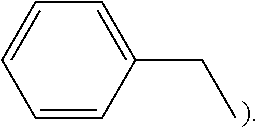

wherein X may be a single bond and L may be a divalent group. The following 4H-Imidazo[1,2-a]imidazole compounds are explicitly disclosed:


wherein compounds of formula

are reacted in the presence of copper acetate (Cu(OAc)2)/PPh3/1,10-phenathroline/sodium acetate and oxygen in m-xylene (1 atm) at elevated temperature [published on web: Dec. 29, 2011]. Among others the following compounds can be prepared by the described synthesis method:


such as, for example,

a process for their production and their use in electronic devices, especially electroluminescent devices.

wherein X6 is —N═ and X7 is —NR6—, or X7 is ═N— and X6 is —NR6—, R6 is a group of formula

such as, for example,

a process for their production and their use in electronic devices, especially electroluminescent devices.

a process for their production and their use in electronic devices, especially electroluminescent devices. The 2,5-disubstituted benzimidazo[1,2-a]benzimidazole derivatives are suitable hole transporting materials, or host materials for phosphorescent emitters.

is used as host and exciton blocking material.

wherein one of X1 and X2 is nitrogen and the other of X1 and X2 is carbon and wherein Y is S or O, with tBuONO to produce an aza complex having the formula

wherein R1 and R2 may represent mono, di, tri, or tetra substitutions; wherein R1 is selected from the group consisting of hydrogen, alkyl, aryl, heteroaryl and halide; and wherein R2 is selected from the group consisting of hydrogen, alkyl, aryl and halide. The aza-dibenzothiophene and aza-dibenzofuran compounds disclosed in US20100187984 are used as hosts in OLEDs.

wherein
- B1 is N, or CR81,
- B2 is N, or CR82,
- B3 is N, or CR83,
- B4 is N, or CR84,
- B5 is N, or CR86,
- B6 is N, or CR86,
- B7 is N, or CR87,
- B8 is N, or CR88,
- R81, R82, R83, R84, R85, R86, R87 and R88 are independently of each other H, a C1-C25alkyl group, which can optionally be substituted by E and or interrupted by D; a C6-C24aryl group, which can optionally be substituted by G, a C2-C30heteroaryl group, which can optionally be substituted by G; or a group of formula -(A1)o-(A2)p-(A3)q-(A4)r-R16,
- o is 0, or 1, p is 0, or 1, q is 0, or 1, r is 0, or 1,
- A1, A2, A3 and A4 are independently of each other a C6-C24arylen group, which can optionally be substituted by G, or a C2-C30heteroarylen group, which can optionally be substituted by G;
- R16 is —NR10R11, or —Si(R12)(R13)(R14), a C6-C24aryl group, which can optionally be substituted by G; or a C2-C30heteroaryl group, which can optionally be substituted by G;
- R10 and R11 are independently of each other a C6-C24aryl group, which can optionally be substituted by G; or a C2-C30heteroaryl group, which can optionally be substituted by G;
- R12, R13 and R14 are independently of each other a C1-C25alkyl group, which can optionally be substituted by E and or interrupted by D; C6-C24aryl group, which can optionally be substituted by G; or a C2-C30heteroaryl group, which can optionally be substituted by G;
- D is —CO—, —COO—, —S—, —SO—, —SO2—, —O—, —NR65—, —SiR70R71—, —POR72—, —CR63═CR64—, or —C≡C—,
- E is —OR69, —SR69, —NR65R66, —COR68, —COOR67, —CONR65R66, —CN, or F,
- G is E, or a C1-C18alkyl group, a C6-C24aryl group, a C6-C24aryl group, which is substituted by F, C1-C18alkyl, or C1-C18alkyl which is interrupted by O; a C2-C30heteroaryl group, or a C2-C30heteroaryl group, which is substituted by F, C1-C18alkyl, or C1-C18alkyl which is interrupted by O;
- R63 and R64 are independently of each other H, C6-C18aryl; C6-C18aryl which is substituted by C1-C18alkyl, or C1-C18alkoxy; C1-C18alkyl; or C1-C18alkyl which is interrupted by —O—;
- R65 and R66 are independently of each other a C6-C18aryl group; a C6-C18aryl which is substituted by C1-C18alkyl, or C1-C18alkoxy; a C1-C18alkyl group; or a C1-C18alkyl group, which is interrupted by —O—; or
- R65 and R66 together form a five or six membered ring,
- R67 is a C6-C18aryl group; a C6-C18aryl group, which is substituted by C1-C18alkyl, or C1-C18alkoxy; a C1-C18alkyl group; or a C1-C18alkyl group, which is interrupted by —O—,
- R68 is H; a C6-C18aryl group; a C6-C18aryl group, which is substituted by C1-C18alkyl, or C1-C18alkoxy; a C1-C18alkyl group; or a C1-C18alkyl group, which is interrupted by —O—,
- R69 is a C6-C18aryl; a C6-C18aryl, which is substituted by C1-C18alkyl, or C1-C18alkoxy; a C1-C18alkyl group; or a C1-C18alkyl group, which is interrupted by —O—,
- R70 and R71 are independently of each other a C1-C18alkyl group, a C6-C18aryl group, or a C6-C18aryl group, which is substituted by C1-C18alkyl, and
- R72 is a C1-C18alkyl group, a C6-C18aryl group, or a C6-C18aryl group, which is substituted by C1-C18alkyl, with the proviso that
- at least one of the substituents B1, B2, B3, B4, B5, B6, B7 and B8 represents N;
- not more than two of the groups B1, B2, B3 and B4 represent N; and
- not more than two of the groups B5, B6, B7 and B8 represent N; and
- with the further proviso that at least one of the substituents R81, R82, R83, R84, R85, R86, R87 and R88 represent a group of formula -(A1)o-(A2)p-(A3)q-(A4)r-R16, wherein R16 represents a benzimidazo[1,2-a]benzimidazo-5-yl group, which can optionally be substituted by G;
and/or at least one of the groups A1, A2, A3 and A4 represents a benzimidazo[1,2-a]benzimidazo-2,5-ylene group, which can optionally be substituted by G.

benzimidazo[1,2-a]benzimidazo-2-yl

carbazolyl, dibenzofuranyl, which can be unsubstituted or substituted especially by C6-C10aryl, or C6-C10aryl, which is substituted by C1-C4alkyl; or C2-C14heteroaryl.

are preferred, where R81, R82, R83, R85, R86 and R87 have the (preferred) meanings given above and below, respectively.


wherein R81, R82, R83, R85, R86 and R87 are as defined above.

benzimidazo[1,2-a]benzimidazo-2-yl

carbazolyl, dibenzofuranyl, and dibenzothiophenyl, which can be unsubstituted or substituted especially by C6-C10aryl, or C6-C10aryl, which is substituted by C1-C4alkyl; or C2-C14heteroaryl.

or R16 has the meaning of R16′, if at least one of the groups A1, A2, A3 and A4 represent a group of formula


especially

especially

very especially

especially

especially

especially

- R12, R13 and R14 are independently of each other a phenyl group, which can optionally be substituted by one, or more C1-C18alkyl groups;
- R21 and R21′ are independently of each other H, a phenyl group, or a C1-C18alkyl group;
- R22 and R23 are independently of each other H, or a group of the formula

- especially

- X is O, S, or NR24,
- R24 is a C6-C24aryl group, or a C2-C30heteroaryl group, which can optionally be substituted by G, wherein G is as defined in above; and
- R89 is H, a group of formula especially

- especially

- especially

- especially

- especially


benzothiopheno[2,3-b]pyridylene

pyrido[2,3-b]indolylene

benzofuro[2,3-c]pyridylene

benzothiopheno[2,3-c]pyridylene

pyrido[2,3-c]indolylene

furo[3,2-b:4,5-b′]dipyridylene

thieno[3,2-b:4,5-b′]dipyridylene

pyrrolo[3,2-b:4,5-b′]dipyridylene

thienylene, benzothiophenylene, thianthrenylene, furylene, furfurylene, 2H-pyranylene, benzofuranylene, isobenzofuranylene, dibenzofuranylene

dibenzothiophenylene

phenoxythienylene, pyrrolylene, imidazolylene, pyrazolylene, pyridylene, bipyridylene, triazinylene, pyrimidinylene, pyrazinylene, pyridazinylene, indolizinylene, isoindolylene, indolylene, indazolylene, purinylene, quinolizinylene, chinolylene, isochinolylene, phthalazinylene, naphthyridinylene, chinoxalinylene, chinazolinylene, cinnolinylene, pteridinylene, carbolinylene, benzotriazolylene, benzoxazolylene, phenanthridinylene, acridinylene, pyrimidinylene, phenanthrolinylene, phenazinylene, isothiazolylene, phenothiazinylene, isoxazolylene, furazanylene, carbazolylene

benzimidazo[1,2-a]benzimidazo-2,5-ylene

or phenoxazinylene, which can be unsubstituted or substituted.

wherein R89 and X are as defined below. X is preferably O.

and/or at least one of the substituents R81, R82, R83, R84, R85, R86, R87 and R88 is a group of formula -(A1)o-(A2)p-(A3)q-(A4)r-R16′, wherein at least one of the groups A1, A2, A3 and A4 represent a group of formula

- in the compounds of formula (Ia)
- R83 is a group of the formula -(A1)o-(A2)p-(A3)q-(A4)r-R16; and
- R87 is H, or a group of the formula -(A1)o-(A2)p-(A3)q-(A4)r-R16′; or
- R83 is H, or a group of the formula -(A1)o-(A2)p-(A3)q-(A4)r-R16′; and
- R87 is a group of the formula -(A1)o-(A2)p-(A3)q-(A4)r-R16;
- in the compounds of formula (Ib)
- R82 is a group of the formula -(A1)o-(A2)p-(A3)q-(A4)r-R16; and
- R87 is H, or a group of the formula -(A1)o-(A2)p-(A3)q-(A4)r-R16′; or
- R82 is H, or a group of the formula -(A1)o-(A2)p-(A3)q-(A4)r-R16′; and
- R87 is a group of the formula -(A1)o-(A2)p-(A3)q-(A4)r-R16;
- in the compounds of formula (Ic)
- R85 is a group of the formula -(A1)o-(A2)p-(A3)q-(A4)r-R16; and
- R87 is H, or a group of the formula -(A1)o-(A2)p-(A3)q-(A4)r-R16′; or
- R85 is H, or a group of the formula -(A1)o-(A2)p-(A3)q-(A4)r-R16′; and
- R87 is a group of the formula -(A1)o-(A2)p-(A3)q-(A4)r-R16;
- in the compounds of formula (Id)
- R81 is a group of the formula -(A1)o-(A2)p-(A3)q-(A4)r-R16; and
- R85 is H, or a group of the formula -(A1)o-(A2)p-(A3)q-(A4)r-R16′; or
- R81 is H, or a group of the formula -(A1)o-(A2)p-(A3)q-(A4)r-R16′; and
- R85 is a group of the formula -(A1)o-(A2)p-(A3)q-(A4)r-R16;
- in the compounds of formula (Ie)
- R83 is a group of the formula -(A1)o-(A2)p-(A3)q-(A4)r-R16; and
- R87 is H, or a group of the formula -(A1)o-(A2)p-(A3)q-(A4)r-R16′; or
- R83 is H, or a group of the formula -(A1)o-(A2)p-(A3)q-(A4)r-R16′; and
- R87 is a group of the formula -(A1)o-(A2)p-(A3)q-(A4)r-R16;
- in the compounds of formula (If)
- R83 is a group of the formula -(A1)o-(A2)p-(A3)q-(A4)r-R16; and
- R85 is H, or a group of the formula -(A1)o-(A2)p-(A3)q-(A4)r-R16′; or
- R83 is H, or a group of the formula -(A1)o-(A2)p-(A3)q-(A4)r-R16′; and
- R85 is a group of the formula -(A1)o-(A2)p-(A3)q-(A4)r-R16;
- in the compounds of formula (Ig)
- R82 is a group of the formula -(A1)o-(A2)p-(A3)q-(A4)r-R16; and
- R85 is H, or a group of the formula -(A1)o-(A2)p-(A3)q-(A4)r-R16′; or
- R82 is H, or a group of the formula -(A1)o-(A2)p-(A3)q-(A4)r-R16′; and
- R85 is a group of the formula -(A1)o-(A2)p-(A3)q-(A4)r-R16;
- in the compounds of formula (Ih)
- R81 is a group of the formula -(A1)o-(A2)p-(A3)q-(A4)r-R16; and
- R87 is H, or a group of the formula -(A1)o-(A2)p-(A3)q-(A4)r-R16′; or
- R81 is H, or a group of the formula -(A1)o-(A2)p-(A3)q-(A4)r-R16′; and
- R87 is a group of the formula -(A1)o-(A2)p-(A3)q-(A4)r-R16;
- in the compounds of formula (Ii)
- R83 is a group of the formula -(A1)o-(A2)p-(A3)q-(A4)r-R16; and
- R85 is H, or a group of the formula -(A1)o-(A2)p-(A3)q-(A4)r-R16′; or
- R83 is H, or a group of the formula -(A1)o-(A2)p-(A3)q-(A4)r-R16′; and
- R85 is a group of the formula -(A1)o-(A2)p-(A3)q-(A4)r-R16;
- in the compounds of formula (Ij)
- R83 is a group of the formula -(A1)o-(A2)p-(A3)q-(A4)r-R16; and
- R85 is H, or a group of the formula -(A1)o-(A2)p-(A3)q-(A4)r-R16′; or
- R83 is H, or a group of the formula -(A1)o-(A2)p-(A3)q-(A4)r-R16′; and
- R85 is a group of the formula -(A1)o-(A2)p-(A3)q-(A4)r-R16;
- in the compounds of formula (Ik)
- R81 is a group of the formula -(A1)o-(A2)p-(A3)q-(A4)r-R16; and
- R85 is H, or a group of the formula -(A1)o-(A2)p-(A3)q-(A4)r-R16′; or
- R81 is H, or a group of the formula -(A1)o-(A2)p-(A3)q-(A4)r-R16′; and
- R85 is a group of the formula -(A1)o-(A2)p-(A3)q-(A4)r-R16;
- in the compounds of formula (Il)
- R85 is a group of the formula -(A1)o-(A2)p-(A3)q-(A4)r-R16; and
- R87 is H, or a group of the formula -(A1)o-(A2)p-(A3)q-(A4)r-R16′; or
- R85 is H, or a group of the formula -(A1)o-(A2)p-(A3)q-(A4)r-R16′; and
- R87 is a group of the formula -(A1)o-(A2)p-(A3)q-(A4)r-R16;
- in the compounds of formula (Im)
- R83 is a group of the formula -(A1)o-(A2)p-(A3)q-(A4)r-R16; and
- R85 is H, or a group of the formula -(A1)o-(A2)p-(A3)q-(A4)r-R16′; or
- R83 is H, or a group of the formula -(A1)o-(A2)p-(A3)q-(A4)r-R16′; and
- R85 is a group of the formula -(A1)o-(A2)p-(A3)q-(A4)r-R16;
- in the compounds of formula (In)
- R83 is a group of the formula -(A1)o-(A2)p-(A3)q-(A4)r-R16; and
- R87 is H, or a group of the formula -(A1)o-(A2)p-(A3)q-(A4)r-R16′; or
- R83 is H, or a group of the formula -(A1)o-(A2)p-(A3)q-(A4)r-R16′; and
- R87 is a group of the formula -(A1)o-(A2)p-(A3)q-(A4)r-R16.
- o is 0, or 1, p is 0, or 1, q is 0, or 1, r is 0, or 1;
- in the compounds of formula (Io)
- R82 is a group of the formula -(A1)o-(A2)p-(A3)q-(A4)r-R16; and
- R86 is H, or a group of the formula -(A1)o-(A2)p-(A3)q-(A4)r-R16′; or
- R82 is H, or a group of the formula -(A1)o-(A2)p-(A3)q-(A4)r-R16′; and
- R86 is a group of the formula -(A1)o-(A2)p-(A3)q-(A4)r-R16;
- A1, A2, A3 and A4 are independently of each other a group of the formula

- R16 is a group of the formula

- or R16 has the meaning of R16′, if at least one of the groups A1, A2, A3 and A4 represent a group of formula

- R16′ is H, or a group of the formula —Si(R12)(R13)(R14),


- especially

- especially

- very especially

- especially

- especially

- especially

- R12, R13 and R14 are independently of each other a phenyl group, which can optionally be substituted by one, or more alkyl groups, especially C1-C18alkyl groups;
- R21 and R21′ are independently of each other H, a phenyl group, or a C1-C18alkyl group;
- R22 and R23 are independently of each other H, or a group of the formula

- especially

- X is O, S, or NR24,
- R24 is a C6-C24aryl group, or a C2-C30heteroaryl group, which can optionally be substituted by G, wherein G is as defined in above; and
- R89 is H, a group of formula especially

- especially

- especially

- especially

- especially


R16 is a group of the formula

or R16 has the meaning of R16′, if at least one of the groups A1, A2, A3 and A4 represent a group of formula

R16′ is H, or a group of the formula

and R89 is H, a group of formula

wherein X is O, S, or NR24,
wherein R24 is

R24 is preferably

X is preferably O.


- R87 is H, a group of formula (XIIa), (XIIb), (XIIc), (XIId), (XIIe), (XIIf), (XIIg), (XIIh), (XIIi), (XIIj), (XIIk), ((XIIl)), (XIIm), (XIIn), (XIIo), (XIIp), (XIIq), (XIIr), (XIIs), (XIIt), (XIIu), (XIIv) (XIIw), (XIIx), (XIIy), (XIIz), (XIIIa), (XIIIb), (XIIIc), (XIIId), (XIIIe), (XIIIf) or (XIIIg) as defined above, or a group of formula (XIVb), (XIVc), (XIVd), (XIVe), (XIVf), (XIVg), (XIVh), (XIVo), (XIVp), (XIVq), (XIVr), (XIVs), (XIVt), (XIVu), (XIVv), (XIVw), (XIVx), (XIVy), (XIVz), (XVa), (XVb), (XVc), (XVd), (XVe), (XVf), (XVg), (XVh), (XVi), (XVj), (XVk), (XVl), (XVm), (XVn), (XVo), (XVp), (XVq), (XVr), (XVs), (XVt), (XVu), (XVv), (XVw), (XVx), (XVy), (XVz), (XVIa), (XVIb), (XVIc) or (XVId) as defined above; or
- a compound of formula (Ia), wherein R87 is a group of formula (XIIa), (XIIb), (XIIc), (XIId), (XIIe), (XIIf), (XIIg), (XIIh), (XIIi), (XIIj), (XIIk), ((XIIl)), (XIIm), (XIIn), (XIIo), (XIIp), (XIIq), (XIIr), (XIIs), (XIIt), (XIIu), (XIIv), (XIIw), (XIIx), (XIIy), (XIIz), (XIIIa), (XIIIb), (XIIIc), (XIIId), (XIIIe), (XIIIf) or (XIIIg) as defined above, and
- R83 is H, a group of formula (XIIa), (XIIb), (XIIc), (XIId), (XIIe), (XIIf), (XIIg), (XIIh), (XIIi), (XIIj), (XIIk), ((XIIl)), (XIIm), (XIIn), (XIIo), (XIIp), (XIIq), (XIIr), (XIIs), (XIIt), (XIIu), (XIIv) (XIIw), (XIIx), (XIIy), (XIIz), (XIIIa), (XIIIb), (XIIIc), (XIIId), (XIIIe), (XIIIf) or (XIIIg) as defined above, or a group of formula (XIVb), (XIVc), (XIVd), (XIVe), (XIVf), (XIVg), (XIVh), (XIVo), (XIVp), (XIVq), (XIVr), (XIVs), (XIVt), (XIVu), (XIVv), (XIVw), (XIVx), (XIVy), (XIVz), (XVa), (XVb), (XVc), (XVd), (XVe), (XVf), (XVg), (XVh), (XVi), (XVj), (XVk), (XVl), (XVm), (XVn), (XVo), (XVp), (XVq), (XVr), (XVs), (XVt), (XVu), (XVv), (XVw), (XVx), (XVy), (XVz), (XVIa), (XVIb), (XVIc) or (XVId) as defined above.
- R87 is H, a group of formula (XIIa), (XIIb), (XIIc), (XIId), (XIIe), (XIIf), (XIIg), (XIIj), (XIIk), (XIIn), (XIIo), (XIIq), (XIIs), (XIIt), (XIIu), (XIIv) (XIIw), (XIIx), (XIIy), (XIIz), (XIIIa), (XIIIb), (XIIIc), (XIIId), (XIIIe), (XIIIf) or (XIIIg) as defined above, or a group of formula (XIVb), (XIVc), (XIVd), (XIVe), (XIVf), (XIVg), (XIVo), (XIVp), (XIVq), (XIVr), (XIVt), (XIVu), (XIVv), (XIVw), (XIVx), (XIVz), (XVa), (XVb), (XVc), (XVk), (XVl), (XVo), (XVp), (XVs), (XVw), (XVx), (XVy), (XVIa), (XVIb), (XVIc) or (XVId) as defined above; or
- compounds of formula (Ia), wherein R87 is a group of formula (XIIa), (XIIb), (XIIc), (XIId), (XIIe), (XIIf), (XIIg), (XIIj), (XIIk), (XIIn), (XIIo), (XIIq), (XIIs), (XIIt), (XIIu), (XIIv), (XIIw), (XIIx), (XIIy), (XIIz), (XIIIa), (XIIIb), (XIIIc), (XIIId), (XIIIe), (XIIIf) or (XIIIg) as defined above, and
- R83 is H, a group of formula (XIIa), (XIIb), (XIIc), (XIId), (XIIe), (XIIf), (XIIg), (XIIj), (XIIk), (XIIn), (XIIo), (XIIq), (XIIs), (XIIt), (XIIu), (XIIv) (XIIw), (XIIx), (XIIy), (XIIz), (XIIIa), (XIIIb), (XIIIc), (XIIId), (XIIIe), (XIIIf) or (XIIIg) as defined above, or a group of formula (XIVb), (XIVc), (XIVd), (XIVe), (XIVf), (XIVg), (XIVo), (XIVp), (XIVq), (XIVr), (XIVt), (XIVu), (XIVv), (XIVw), (XIVx), (XIVz), (XVa), (XVb), (XVc), (XVk), (XVl), (XVo), (XVp), (XVs), (XVw), (XVx), (XVy), (XVIa), (XVIb), (XVIc) or (XVId) as defined above; are more preferred.
- R87 is H, a group of formula (XIIa), (XIIb), (XIIc), (XIId), (XIIe), (XIIf), (XIIg), (XIIh), (XIIi), (XIIj), (XIIk), ((XIIl)), (XIIm), (XIIn), (XIIo), (XIIp), (XIIq), (XIIr), (XIIs), (XIIt), (XIIu), (XIIv) (XIIw), (XIIx), (XIIy), (XIIz), (XIIIa), (XIIIb), (XIIIc), (XIIId), (XIIIe), (XIIIf) or (XIIIg) as defined above, or a group of formula (XIVb), (XIVc), (XIVd), (XIVe), (XIVf), (XIVg), (XIVh), (XIVo), (XIVp), (XIVq), (XIVr), (XIVs), (XIVt), (XIVu), (XIVv), (XIVw), (XIVx), (XIVy), (XIVz), (XVa), (XVb), (XVc), (XVd), (XVe), (XVf), (XVg), (XVh), (XVi), (XVj), (XVk), (XVl), (XVm), (XVn), (XVo), (XVp), (XVq), (XVr), (XVs), (XVt), (XVu), (XVv), (XVw), (XVx), (XVy), (XVz), (XVIa), (XVIb), (XVIc) or (XVId) as defined above; or
- compounds of formula (Ib), wherein R87 is a group of formula (XIIa), (XIIb), (XIIc), (XIId), (XIIe), (XIIf), (XIIg), (XIIh), (XIIi), (XIIj), (XIIk), ((XIIl)), (XIIm), (XIIn), (XIIo), (XIIp), (XIIq), (XIIr), (XIIs), (XIIt), (XIIu), (XIIv), (XIIw), (XIIx), (XIIy), (XIIz), (XIIIa), (XIIIb), (XIIIc), (XIIId), (XIIIe), (XIIIf) or (XIIIg) as defined above, and
- R82 is H, a group of formula (XIIa), (XIIb), (XIIc), (XIId), (XIIe), (XIIf), (XIIg), (XIIh), (XIIi), (XIIj), (XIIk), ((XIIl)), (XIIm), (XIIn), (XIIo), (XIIp), (XIIq), (XIIr), (XIIs), (XIIt), (XIIu), (XIIv) (XIIw), (XIIx), (XIIy), (XIIz), (XIIIa), (XIIIb), (XIIIc), (XIIId), (XIIIe), (XIIIf) or (XIIIg) as defined above, or a group of formula (XIVb), (XIVc), (XIVd), (XIVe), (XIVf), (XIVg), (XIVh), (XIVo), (XIVp), (XIVq), (XIVr), (XIVs), (XIVt), (XIVu), (XIVv), (XIVw), (XIVx), (XIVy), (XIVz), (XVa), (XVb), (XVc), (XVd), (XVe), (XVf), (XVg), (XVh), (XVi), (XVj), (XVk), (XVl), (XVm), (XVn), (XVo), (XVp), (XVq), (XVr), (XVs), (XVt), (XVu), (XVv), (XVw), (XVx), (XVy), (XVz), (XVIa), (XVIb), (XVIc) or (XVId) as defined above.
- R87 is H, a group of formula (XIIa), (XIIb), (XIIc), (XIId), (XIIe), (XIIf), (XIIg), (XIIj), (XIIk), (XIIn), (XIIo), (XIIq), (XIIs), (XIIt), (XIIu), (XIIv) (XIIw), (XIIx), (XIIy), (XIIz), (XIIIa), (XIIIb), (XIIIc), (XIIId), (XIIIe), (XIIIf) or (XIIIg) as defined above, or a group of formula (XIVb), (XIVc), (XIVd), (XIVe), (XIVf), (XIVg), (XIVo), (XIVp), (XIVq), (XIVr), (XIVt), (XIVu), (XIVv), (XIVw), (XIVx), (XIVz), (XVa), (XVb), (XVc), (XVk), (XVl), (XVo), (XVp), (XVs), (XVw), (XVx), (XVy), (XVIa), (XVIb), (XVIc) or (XVId) as defined above; or
- compounds of formula (Ib), wherein R87 is a group of formula (XIIa), (XIIb), (XIIc), (XIId), (XIIe), (XIIf), (XIIg), (XIIj), (XIIk), (XIIn), (XIIo), (XIIq), (XIIs), (XIIt), (XIIu), (XIIv), (XIIw), (XIIx), (XIIy), (XIIz), (XIIIa), (XIIIb), (XIIIc), (XIIId), (XIIIe), (XIIIf) or (XIIIg) as defined above, and
- R82 is H, a group of formula (XIIa), (XIIb), (XIIc), (XIId), (XIIe), (XIIf), (XIIg), (XIIj), (XIIk), (XIIn), (XIIo), (XIIq), (XIIs), (XIIt), (XIIu), (XIIv) (XIIw), (XIIx), (XIIy), (XIIz), (XIIIa), (XIIIb), (XIIIc), (XIIId), (XIIIe), (XIIIf) or (XIIIg) as defined above, or a group of formula (XIVb), (XIVc), (XIVd), (XIVe), (XIVf), (XIVg), (XIVo), (XIVp), (XIVq), (XIVr), (XIVt), (XIVu), (XIVv), (XIVw), (XIVx), (XIVz), (XVa), (XVb), (XVc), (XVk), (XVl), (XVo), (XVp), (XVs), (XVw), (XVx), (XVy), (XVIa), (XVIb), (XVIc) or (XVId) as defined above; are more preferred.
- R87 is H, a group of formula (XIIa), (XIIb), (XIIc), (XIId), (XIIe), (XIIf), (XIIg), (XIIh), (XIIi), (XIIj), (XIIk), ((XIIl)), (XIIm), (XIIn), (XIIo), (XIIp), (XIIq), (XIIr), (XIIs), (XIIt), (XIIu), (XIIv) (XIIw), (XIIx), (XIIy), (XIIz), (XIIIa), (XIIIb), (XIIIc), (XIIId), (XIIIe), (XIIIf) or (XIIIg) as defined above, or a group of formula (XIVb), (XIVc), (XIVd), (XIVe), (XIVf), (XIVg), (XIVh), (XIVo), (XIVp), (XIVq), (XIVr), (XIVs), (XIVt), (XIVu), (XIVv), (XIVw), (XIVx), (XIVy), (XIVz), (XVa), (XVb), (XVc), (XVd), (XVe), (XVf), (XVg), (XVh), (XVi), (XVj), (XVk), (XVl), (XVm), (XVn), (XVo), (XVp), (XVq), (XVr), (XVs), (XVt), (XVu), (XVv), (XVw), (XVx), (XVy), (XVz), (XVIa), (XVIb), (XVIc) or (XVId) as defined above; or
- compounds of formula (Ic), wherein R87 is a group of formula (XIIa), (XIIb), (XIIc), (XIId), (XIIe), (XIIf), (XIIg), (XIIh), (XIIi), (XIIj), (XIIk), ((XIIl)), (XIIm), (XIIn), (XIIo), (XIIp), (XIIq), (XIIr), (XIIs), (XIIt), (XIIu), (XIIv), (XIIw), (XIIx), (XIIy), (XIIz), (XIIIa), (XIIIb), (XIIIc), (XIIId), (XIIIe), (XIIIf) or (XIIIg) as defined above; and
- R85 is H, a group of formula (XIIa), (XIIb), (XIIc), (XIId), (XIIe), (XIIf), (XIIg), (XIIh), (XIIi), (XIIj), (XIIk), ((XIIl)), (XIIm), (XIIn), (XIIo), (XIIp), (XIIq), (XIIr), (XIIs), (XIIt), (XIIu), (XIIv) (XIIw), (XIIx), (XIIy), (XIIz), (XIIIa), (XIIIb), (XIIIc), (XIIId), (XIIIe), (XIIIf) or (XIIIg) as defined above, or a group of formula (XIVb), (XIVc), (XIVd), (XIVe), (XIVf), (XIVg), (XIVh), (XIVo), (XIVp), (XIVq), (XIVr), (XIVs), (XIVt), (XIVu), (XIVv), (XIVw), (XIVx), (XIVy), (XIVz), (XVa), (XVb), (XVc), (XVd), (XVe), (XVf), (XVg), (XVh), (XVi), (XVj), (XVk), (XVl), (XVm), (XVn), (XVo), (XVp), (XVq), (XVr), (XVs), (XVt), (XVu), (XVv), (XVw), (XVx), (XVy), (XVz), (XVIa), (XVIb), (XVIc) or (XVId) as defined above.
- R87 is H, a group of formula (XIIa), (XIIb), (XIIc), (XIId), (XIIe), (XIIf), (XIIg), (XIIj), (XIIk), (XIIn), (XIIo), (XIIq), (XIIs), (XIIt), (XIIu), (XIIv) (XIIw), (XIIx), (XIIy), (XIIz), (XIIIa), (XIIIb), (XIIIc), (XIIId), (XIIIe), (XIIIf) or (XIIIg) as defined above, or a group of formula (XIVb), (XIVc), (XIVd), (XIVe), (XIVf), (XIVg), (XIVo), (XIVp), (XIVq), (XIVr), (XIVt), (XIVu), (XIVv), (XIVw), (XIVx), (XIVz), (XVa), (XVb), (XVc), (XVk), (XVl), (XVo), (XVp), (XVs), (XVw), (XVx), (XVy), (XVIa), (XVIb), (XVIc) or (XVId) as defined above; or
- compounds of formula (Ic), wherein R87 is a group of formula (XIIa), (XIIb), (XIIc), (XIId), (XIIe), (XIIf), (XIIg), (XIIj), (XIIk), (XIIn), (XIIo), (XIIq), (XIIs), (XIIt), (XIIu), (XIIv), (XIIw), (XIIx), (XIIy), (XIIz), (XIIIa), (XIIIb), (XIIIc), (XIIId), (XIIIe), (XIIIf) or (XIIIg) as defined above, and
- R85 is H, a group of formula (XIIa), (XIIb), (XIIc), (XIId), (XIIe), (XIIf), (XIIg), (XIIj), (XIIk), (XIIn), (XIIo), (XIIq), (XIIs), (XIIt), (XIIu), (XIIv) (XIIw), (XIIx), (XIIy), (XIIz), (XIIIa), (XIIIb), (XIIIc), (XIIId), (XIIIe), (XIIIf) or (XIIIg) as defined above, or a group of formula (XIVb), (XIVc), (XIVd), (XIVe), (XIVf), (XIVg), (XIVo), (XIVp), (XIVq), (XIVr), (XIVt), (XIVu), (XIVv), (XIVw), (XIVx), (XIVz), (XVa), (XVb), (XVc), (XVk), (XVl), (XVo), (XVp), (XVs), (XVw), (XVx), (XVy), (XVIa), (XVIb), (XVIc) or (XVId) as defined above; are more preferred.
- R85 is H, a group of formula (XIIa), (XIIb), (XIIc), (XIId), (XIIe), (XIIf), (XIIg), (XIIh), (XIIi), (XIIj), (XIIk), ((XIIl)), (XIIm), (XIIn), (XIIo), (XIIp), (XIIq), (XIIr), (XIIs), (XIIt), (XIIu), (XIIv) (XIIw), (XIIx), (XIIy), (XIIz), (XIIIa), (XIIIb), (XIIIc), (XIIId), (XIIIe), (XIIIf) or (XIIIg) as defined above; or a group of formula (XIVb), (XIVc), (XIVd), (XIVe), (XIVf), (XIVg), (XIVh), (XIVo), (XIVp), (XIVq), (XIVr), (XIVs), (XIVt), (XIVu), (XIVv), (XIVw), (XIVx), (XIVy), (XIVz), (XVa), (XVb), (XVc), (XVd), (XVe), (XVf), (XVg), (XVh), (XVi), (XVj), (XVk), (XVl), (XVm), (XVn), (XVo), (XVp), (XVq), (XVr), (XVs), (XVt), (XVu), (XVv), (XVw), (XVx), (XVy), (XVz), (XVIa), (XVIb), (XVIc) or (XVId) as defined above; or
- compounds of formula (Id), wherein R85 is a group of formula (XIIa), (XIIb), (XIIc), (XIId), (XIIe), (XIIf), (XIIg), (XIIh), (XIIi), (XIIj), (XIIk), ((XIIl)), (XIIm), (XIIn), (XIIo), (XIIp), (XIIq), (XIIr), (XIIs), (XIIt), (XIIu), (XIIv), (XIIw), (XIIx), (XIIy), (XIIz), (XIIIa), (XIIIb), (XIIIc), (XIIId), (XIIIe), (XIIIf) or (XIIIg) as defined above; and
- R81 is H, a group of formula (XIIa), (XIIb), (XIIc), (XIId), (XIIe), (XIIf), (XIIg), (XIIh), (XIIi), (XIIj), (XIIk), ((XIIl)), (XIIm), (XIIn), (XIIo), (XIIp), (XIIq), (XIIr), (XIIs), (XIIt), (XIIu), (XIIv) (XIIw), (XIIx), (XIIy), (XIIz), (XIIIa), (XIIIb), (XIIIc), (XIIId), (XIIIe), (XIIIf) or (XIIIg) as defined above, or a group of formula (XIVb), (XIVc), (XIVd), (XIVe), (XIVf), (XIVg), (XIVh), (XIVo), (XIVp), (XIVq), (XIVr), (XIVs), (XIVt), (XIVu), (XIVv), (XIVw), (XIVx), (XIVy), (XIVz), (XVa), (XVb), (XVc), (XVd), (XVe), (XVf), (XVg), (XVh), (XVi), (XVj), (XVk), (XVl), (XVm), (XVn), (XVo), (XVp), (XVq), (XVr), (XVs), (XVt), (XVu), (XVv), (XVw), (XVx), (XVy), (XVz), (XVIa), (XVIb), (XVIc) or (XVId) as defined above.
- R85 is H, a group of formula (XIIa), (XIIb), (XIIc), (XIId), (XIIe), (XIIf), (XIIg), (XIIj), (XIIk), (XIIn), (XIIo), (XIIq), (XIIs), (XIIt), (XIIu), (XIIv) (XIIw), (XIIx), (XIIy), (XIIz), (XIIIa), (XIIIb), (XIIIc), (XIIId), (XIIIe), (XIIIf) or (XIIIg) as defined above, or a group of formula (XIVb), (XIVc), (XIVd), (XIVe), (XIVf), (XIVg), (XIVo), (XIVp), (XIVq), (XIVr), (XIVt), (XIVu), (XIVv), (XIVw), (XIVx), (XIVz), (XVa), (XVb), (XVc), (XVk), (XVl), (XVo), (XVp), (XVs), (XVw), (XVx), (XVy), (XVIa), (XVIb), (XVIc) or (XVId) as defined above; or
- compounds of formula (Id), wherein R85 is a group of formula (XIIa), (XIIb), (XIIc), (XIId), (XIIe), (XIIf), (XIIg), (XIIj), (XIIk), (XIIn), (XIIo), (XIIq), (XIIs), (XIIt), (XIIu), (XIIv), (XIIw), (XIIx), (XIIy), (XIIz), (XIIIa), (XIIIb), (XIIIc), (XIIId), (XIIIe), (XIIIf) or (XIIIg) as defined above, and
- R81 is H, a group of formula (XIIa), (XIIb), (XIIc), (XIId), (XIIe), (XIIf), (XIIg), (XIIj), (XIIk), (XIIn), (XIIo), (XIIq), (XIIs), (XIIt), (XIIu), (XIIv) (XIIw), (XIIx), (XIIy), (XIIz), (XIIIa), (XIIIb), (XIIIc), (XIIId), (XIIIe), (XIIIf) or (XIIIg) as defined above, or a group of formula (XIVb), (XIVc), (XIVd), (XIVe), (XIVf), (XIVg), (XIVo), (XIVp), (XIVq), (XIVr), (XIVt), (XIVu), (XIVv), (XIVw), (XIVx), (XIVz), (XVa), (XVb), (XVc), (XVk), (XVl), (XVo), (XVp), (XVs), (XVw), (XVx), (XVy), (XVIa), (XVIb), (XVIc) or (XVId) as defined above; are more preferred.
- R87 is H, a group of formula (XIIa), (XIIb), (XIIc), (XIId), (XIIe), (XIIf), (XIIg), (XIIh), (XIIi), (XIIj), (XIIk), ((XIIl)), (XIIm), (XIIn), (XIIo), (XIIp), (XIIq), (XIIr), (XIIs), (XIIt), (XIIu), (XIIv) (XIIw), (XIIx), (XIIy), (XIIz), (XIIIa), (XIIIb), (XIIIc), (XIIId), (XIIIe), (XIIIf) or (XIIIg) as defined above, or a group of formula (XIVb), (XIVc), (XIVd), (XIVe), (XIVf), (XIVg), (XIVh), (XIVo), (XIVp), (XIVq), (XIVr), (XIVs), (XIVt), (XIVu), (XIVv), (XIVw), (XIVx), (XIVy), (XIVz), (XVa), (XVb), (XVc), (XVd), (XVe), (XVf), (XVg), (XVh), (XVi), (XVj), (XVk), (XVl), (XVm), (XVn), (XVo), (XVp), (XVq), (XVr), (XVs), (XVt), (XVu), (XVv), (XVw), (XVx), (XVy), (XVz), (XVIa), (XVIb), (XVIc) or (XVId) as defined above; or
- compounds of formula (Ie), wherein R87 is a group of formula (XIIa), (XIIb), (XIIc), (XIId), (XIIe), (XIIf), (XIIg), (XIIh), (XIIi), (XIIj), (XIIk), ((XIIl)), (XIIm), (XIIn), (XIIo), (XIIp), (XIIq), (XIIr), (XIIs), (XIIt), (XIIu), (XIIv), (XIIw), (XIIx), (XIIy), (XIIz), (XIIIa), (XIIIb), (XIIIc), (XIIId), (XIIIe), (XIIIf) or (XIIIg) as defined above, and
- R83 is H, a group of formula (XIIa), (XIIb), (XIIc), (XIId), (XIIe), (XIIf), (XIIg), (XIIh), (XIIi), (XIIj), (XIIk), ((XIIl)), (XIIm), (XIIn), (XIIo), (XIIp), (XIIq), (XIIr), (XIIs), (XIIt), (XIIu), (XIIv) (XIIw), (XIIx), (XIIy), (XIIz), (XIIIa), (XIIIb), (XIIIc), (XIIId), (XIIIe), (XIIIf) or (XIIIg) as defined above, or a group of formula (XIVb), (XIVc), (XIVd), (XIVe), (XIVf), (XIVg), (XIVh), (XIVo), (XIVp), (XIVq), (XIVr), (XIVs), (XIVt), (XIVu), (XIVv), (XIVw), (XIVx), (XIVy), (XIVz), (XVa), (XVb), (XVc), (XVd), (XVe), (XVf), (XVg), (XVh), (XVi), (XVj), (XVk), (XVl), (XVm), (XVn), (XVo), (XVp), (XVq), (XVr), (XVs), (XVt), (XVu), (XVv), (XVw), (XVx), (XVy), (XVz), (XVIa), (XVIb), (XVIc) or (XVId) as defined above.
- R87 is H, a group of formula (XIIa), (XIIb), (XIIc), (XIId), (XIIe), (XIIf), (XIIg), (XIIj), (XIIk), (XIIn), (XIIo), (XIIq), (XIIs), (XIIt), (XIIu), (XIIv) (XIIw), (XIIx), (XIIy), (XIIz), (XIIIa), (XIIIb), (XIIIc), (XIIId), (XIIIe), (XIIIf) or (XIIIg) as defined above, or a group of formula (XIVb), (XIVc), (XIVd), (XIVe), (XIVf), (XIVg), (XIVo), (XIVp), (XIVq), (XIVr), (XIVt), (XIVu), (XIVv), (XIVw), (XIVx), (XIVz), (XVa), (XVb), (XVc), (XVk), (XVl), (XVo), (XVp), (XVs), (XVw), (XVx), (XVy), (XVIa), (XVIb), (XVIc) or (XVId) as defined above; or compounds of formula (Ie), wherein R87 is a group of formula (XIIa), (XIIb), (XIIc), (XIId), (XIIe), (XIIf), (XIIg), (XIIj), (XIIk), (XIIn), (XIIo), (XIIq), (XIIs), (XIIt), (XIIu), (XIIv), (XIIw), (XIIx), (XIIy), (XIIz), (XIIIa), (XIIIb), (XIIIc), (XIIId), (XIIIe), (XIIIf) or (XIIIg) as defined above, and
- R83 is H, a group of formula (XIIa), (XIIb), (XIIc), (XIId), (XIIe), (XIIf), (XIIg), (XIIj), (XIIk), (XIIn), (XIIo), (XIIq), (XIIs), (XIIt), (XIIu), (XIIv) (XIIw), (XIIx), (XIIy), (XIIz), (XIIIa), (XIIIb), (XIIIc), (XIIId), (XIIIe), (XIIIf) or (XIIIg) as defined above, or a group of formula (XIVb), (XIVc), (XIVd), (XIVe), (XIVf), (XIVg), (XIVo), (XIVp), (XIVq), (XIVr), (XIVt), (XIVu), (XIVv), (XIVw), (XIVx), (XIVz), (XVa), (XVb), (XVc), (XVk), (XVl), (XVo), (XVp), (XVs), (XVw), (XVx), (XVy), (XVIa), (XVIb), (XVIc) or (XVId) as defined above; are more preferred.
- R85 is H, a group of formula (XIIa), (XIIb), (XIIc), (XIId), (XIIe), (XIIf), (XIIg), (XIIh), (XIIi), (XIIj), (XIIk), ((XIIl)), (XIIm), (XIIn), (XIIo), (XIIp), (XIIq), (XIIr), (XIIs), (XIIt), (XIIu), (XIIv) (XIIw), (XIIx), (XIIy), (XIIz), (XIIIa), (XIIIb), (XIIIc), (XIIId), (XIIIe), (XIIIf) or (XIIIg) as defined above, or a group of formula (XIVb), (XIVc), (XIVd), (XIVe), (XIVf), (XIVg), (XIVh), (XIVo), (XIVp), (XIVq), (XIVr), (XIVs), (XIVt), (XIVu), (XIVv), (XIVw), (XIVx), (XIVy), (XIVz), (XVa), (XVb), (XVc), (XVd), (XVe), (XVf), (XVg), (XVh), (XVi), (XVj), (XVk), (XVl), (XVm), (XVn), (XVo), (XVp), (XVq), (XVr), (XVs), (XVt), (XVu), (XVv), (XVw), (XVx), (XVy), (XVz), (XVIa), (XVIb), (XVIc) or (XVId) as defined above; or
- compounds of formula (If), wherein R85 is a group of formula (XIIa), (XIIb), (XIIc), (XIId), (XIIe), (XIIf), (XIIg), (XIIh), (XIIi), (XIIj), (XIIk), ((XIIl)), (XIIm), (XIIn), (XIIo), (XIIp), (XIIq), (XIIr), (XIIs), (XIIt), (XIIu), (XIIv), (XIIw), (XIIx), (XIIy), (XIIz), (XIIIa), (XIIIb), (XIIIc), (XIIId), (XIIIe), (XIIIf) or (XIIIg) as defined above, and
- R83 is H, a group of formula (XIIa), (XIIb), (XIIc), (XIId), (XIIe), (XIIf), (XIIg), (XIIh), (XIIi), (XIIj), (XIIk), ((XIIl)), (XIIm), (XIIn), (XIIo), (XIIp), (XIIq), (XIIr), (XIIs), (XIIt), (XIIu), (XIIv) (XIIw), (XIIx), (XIIy), (XIIz), (XIIIa), (XIIIb), (XIIIc), (XIIId), (XIIIe), (XIIIf) or (XIIIg) as defined above, or a group of formula (XIVb), (XIVc), (XIVd), (XIVe), (XIVf), (XIVg), (XIVh), (XIVo), (XIVp), (XIVq), (XIVr), (XIVs), (XIVt), (XIVu), (XIVv), (XIVw), (XIVx), (XIVy), (XIVz), (XVa), (XVb), (XVc), (XVd), (XVe), (XVf), (XVg), (XVh), (XVi), (XVj), (XVk), (XVl), (XVm), (XVn), (XVo), (XVp), (XVq), (XVr), (XVs), (XVt), (XVu), (XVv), (XVw), (XVx), (XVy), (XVz), (XVIa), (XVIb), (XVIc) or (XVId) as defined above.
- R85 is H, a group of formula (XIIa), (XIIb), (XIIc), (XIId), (XIIe), (XIIf), (XIIg), (XIIj), (XIIk), (XIIn), (XIIo), (XIIq), (XIIs), (XIIt), (XIIu), (XIIv) (XIIw), (XIIx), (XIIy), (XIIz), (XIIIa), (XIIIb), (XIIIc), (XIIId), (XIIIe), (XIIIf) or (IIIg) as defined above, or a group of formula (XIVb), (XIVc), (XIVd), (XIVe), (XIVf), (XIVg), (XIVo), (XIVp), (XIVq), (XIVr), (XIVt), (XIVu), (XIVv), (XIVw), (XIVx), (XIVz), (XVa), (XVb), (XVc), (XVk), (XVl), (XVo), (XVp), (XVs), (XVw), (XVx), (XVy), (XVIa), (XVIb), (XVIc) or (XVId) as defined above; or
- compounds of formula (If), wherein R85 is a group of formula (XIIa), (XIIb), (XIIc), (XIId), (XIIe), (XIIf), (XIIg), (XIIj), (XIIk), (XIIn), (XIIo), (XIIq), (XIIs), (XIIt), (XIIu), (XIIv), (XIIw), (XIIx), (XIIy), (XIIz), (XIIIa), (XIIIb), (XIIIc), (XIIId), (XIIIe), (XIIIf) or (XIIIg) as defined above, and
- R83 is H, a group of formula (XIIa), (XIIb), (XIIc), (XIId), (XIIe), (XIIf), (XIIg), (XIIj), (XIIk), (XIIn), (XIIo), (XIIq), (XIIs), (XIIt), (XIIu), (XIIv) (XIIw), (XIIx), (XIIy), (XIIz), (XIIIa), (XIIIb), (XIIIc), (XIIId), (XIIIe), (XIIIf) or (XIIIg) as defined above, or a group of formula (XIVb), (XIVc), (XIVd), (XIVe), (XIVf), (XIVg), (XIVo), (XIVp), (XIVq), (XIVr), (XIVt), (XIVu), (XIVv), (XIVw), (XIVx), (XIVz), (XVa), (XVb), (XVc), (XVk), (XVl), (XVo), (XVp), (XVs), (XVw), (XVx), (XVy), (XVIa), (XVIb), (XVIc) or (XVId) as defined above; are more preferred.
- R85 is H, a group of formula (XIIa), (XIIb), (XIIc), (XIId), (XIIe), (XIIf), (XIIg), (XIIh), (XIIi), (XIIj), (XIIk), ((XIIl)), (XIIm), (XIIn), (XIIo), (XIIp), (XIIq), (XIIr), (XIIs), (XIIt), (XIIu), (XIIv) (XIIw), (XIIx), (XIIy), (XIIz), (XIIIa), (XIIIb), (XIIIc), (XIIId), (XIIIe), (XIIIf) or (XIIIg) as defined above, or a group of formula (XIVb), (XIVc), (XIVd), (XIVe), (XIVf), (XIVg), (XIVh), (XIVo), (XIVp), (XIVq), (XIVr), (XIVs), (XIVt), (XIVu), (XIVv), (XIVw), (XIVx), (XIVy), (XIVz), (XVa), (XVb), (XVc), (XVd), (XVe), (XVf), (XVg), (XVh), (XVi), (XVj), (XVk), (XVl), (XVm), (XVn), (XVo), (XVp), (XVq), (XVr), (XVs), (XVt), (XVu), (XVv), (XVw), (XVx), (XVy), (XVz), (XVIa), (XVIb), (XVIc) or (XVId) as defined above; or
- compounds of formula (Ij), wherein R85 is a group of formula (XIIa), (XIIb), (XIIc), (XIId), (XIIe), (XIIf), (XIIg), (XIIh), (XIIi), (XIIj), (XIIk), ((XIIl)), (XIIm), (XIIn), (XIIo), (XIIp), (XIIq), (XIIr), (XIIs), (XIIt), (XIIu), (XIIv), (XIIw), (XIIx), (XIIy), (XIIz), (XIIIa), (XIIIb), (XIIIc), (XIIId), (XIIIe), (XIIIf) or (XIIIg) as defined above, and
- R83 is H, a group of formula (XIIa), (XIIb), (XIIc), (XIId), (XIIe), (XIIf), (XIIg), (XIIh), (XIIi), (XIIj), (XIIk), ((XIIl)), (XIIm), (XIIn), (XIIo), (XIIp), (XIIq), (XIIr), (XIIs), (XIIt), (XIIu), (XIIv) (XIIw), (XIIx), (XIIy), (XIIz), (XIIIa), (XIIIb), (XIIIc), (XIIId), (XIIIe), (XIIIf) or (XIIIg) as defined above, or a group of formula (XIVb), (XIVc), (XIVd), (XIVe), (XIVf), (XIVg), (XIVh), (XIVo), (XIVp), (XIVq), (XIVr), (XIVs), (XIVt), (XIVu), (XIVv), (XIVw), (XIVx), (XIVy), (XIVz), (XVa), (XVb), (XVc), (XVd), (XVe), (XVf), (XVg), (XVh), (XVi), (XVj), (XVk), (XVl), (XVm), (XVn), (XVo), (XVp), (XVq), (XVr), (XVs), (XVt), (XVu), (XVv), (XVw), (XVx), (XVy), (XVz), (XVIa), (XVIb), (XVIc) or (XVId) as defined above.
- R85 is H, a group of formula (XIIa), (XIIb), (XIIc), (XIId), (XIIe), (XIIf), (XIIg), (XIIj), (XIIk), (XIIn), (XIIo), (XIIq), (XIIs), (XIIt), (XIIu), (XIIv) (XIIw), (XIIx), (XIIy), (XIIz), (XIIIa), (XIIIb), (XIIIc), (XIIId), (XIIIe), (XIIIf) or (IIIg) as defined above, or a group of formula (XIVb), (XIVc), (XIVd), (XIVe), (XIVf), (XIVg), (XIVo), (XIVp), (XIVq), (XIVr), (XIVt), (XIVu), (XIVv), (XIVw), (XIVx), (XIVz), (XVa), (XVb), (XVc), (XVk), (XVl), (XVo), (XVp), (XVs), (XVw), (XVx), (XVy), (XVIa), (XVIb), (XVIc) or (XVId) as defined above; or
- compounds of formula (Ij), wherein R85 is a group of formula (XIIa), (XIIb), (XIIc), (XIId), (XIIe), (XIIf), (XIIg), (XIIj), (XIIk), (XIIn), (XIIo), (XIIq), (XIIs), (XIIt), (XIIu), (XIIv), (XIIw), (XIIx), (XIIy), (XIIz), (XIIIa), (XIIIb), (XIIIc), (XIIId), (XIIIe), (XIIIf) or (XIIIg) as defined above, and
- R83 is H, a group of formula (XIIa), (XIIb), (XIIc), (XIId), (XIIe), (XIIf), (XIIg), (XIIj), (XIIk), (XIIn), (XIIo), (XIIq), (XIIs), (XIIt), (XIIu), (XIIv) (XIIw), (XIIx), (XIIy), (XIIz), (XIIIa), (XIIIb), (XIIIc), (XIIId), (XIIIe), (XIIIf) or (XIIIg) as defined above, or a group of formula (XIVb), (XIVc), (XIVd), (XIVe), (XIVf), (XIVg), (XIVo), (XIVp), (XIVq), (XIVr), (XIVt), (XIVu), (XIVv), (XIVw), (XIVx), (XIVz), (XVa), (XVb), (XVc), (XVk), (XVl), (XVo), (XVp), (XVs), (XVw), (XVx), (XVy), (XVIa), (XVIb), (XVIc) or (XVId) as defined above; are more preferred.
- R87 is H, a group of formula (XIIa), (XIIb), (XIIc), (XIId), (XIIe), (XIIf), (XIIg), (XIIh), (XIIi), (XIIj), (XIIk), ((XIIl)), (XIIm), (XIIn), (XIIo), (XIIp), (XIIq), (XIIr), (XIIs), (XIIt), (XIIu), (XIIv) (XIIw), (XIIx), (XIIy), (XIIz), (XIIIa), (XIIIb), (XIIIc), (XIIId), (XIIIe), (XIIIf) or (XIIIg) as defined above, or a group of formula (XIVb), (XIVc), (XIVd), (XIVe), (XIVf), (XIVg), (XIVh), (XIVo), (XIVp), (XIVq), (XIVr), (XIVs), (XIVt), (XIVu), (XIVv), (XIVw), (XIVx), (XIVy), (XIVz), (XVa), (XVb), (XVc), (XVd), (XVe), (XVf), (XVg), (XVh), (XVi), (XVj), (XVk), (XVl), (XVm), (XVn), (XVo), (XVp), (XVq), (XVr), (XVs), (XVt), (XVu), (XVv), (XVw), (XVx), (XVy), (XVz), (XVIa), (XVIb), (XVIc) or (XVId) as defined above; or
- compounds of formula (Il), wherein R87 is a group of formula (XIIa), (XIIb), (XIIc), (XIId), (XIIe), (XIIf), (XIIg), (XIIh), (XIIi), (XIIj), (XIIk), ((XIIl)), (XIIm), (XIIn), (XIIo), (XIIp), (XIIq), (XIIr), (XIIs), (XIIt), (XIIu), (XIIv), (XIIw), (XIIx), (XIIy), (XIIz), (XIIIa), (XIIIb), (XIIIc), (XIIId), (XIIIe), (XIIIf) or (XIIIg) as defined above, and
- R85 is H, a group of formula (XIIa), (XIIb), (XIIc), (XIId), (XIIe), (XIIf), (XIIg), (XIIh), (XIIi), (XIIj), (XIIk), ((XIIl)), (XIIm), (XIIn), (XIIo), (XIIp), (XIIq), (XIIr), (XIIs), (XIIt), (XIIu), (XIIv) (XIIw), (XIIx), (XIIy), (XIIz), (XIIIa), (XIIIb), (XIIIc), (XIIId), (XIIIe), (XIIIf) or (XIIIg) as defined above, or a group of formula (XIVb), (XIVc), (XIVd), (XIVe), (XIVf), (XIVg), (XIVh), (XIVo), (XIVp), (XIVq), (XIVr), (XIVs), (XIVt), (XIVu), (XIVv), (XIVw), (XIVx), (XIVy), (XIVz), (XVa), (XVb), (XVc), (XVd), (XVe), (XVf), (XVg), (XVh), (XVi), (XVj), (XVk), (XVl), (XVm), (XVn), (XVo), (XVp), (XVq), (XVr), (XVs), (XVt), (XVu), (XVv), (XVw), (XVx), (XVy), (XVz), (XVIa), (XVIb), (XVIc) or (XVId) as defined above.
- R87 is H, a group of formula (XIIa), (XIIb), (XIIc), (XIId), (XIIe), (XIIf), (XIIg), (XIIh), (XIIi), (XIIj), (XIIk), ((XIIl)), (XIIm), (XIIn), (XIIo), (XIIp), (XIIq), (XIIr), (XIIs), (XIIt), (XIIu), (XIIv) (XIIw), (XIIx), (XIIy), (XIIz), (XIIIa), (XIIIb), (XIIIc), (XIIId), (XIIIe), (XIIIf) or (XIIIg) as defined above, or a group of formula (XIVb), (XIVc), (XIVd), (XIVe), (XIVf), (XIVg), (XIVh), (XIVo), (XIVp), (XIVq), (XIVr), (XIVs), (XIVt), (XIVu), (XIVv), (XIVw), (XIVx), (XIVy), (XIVz), (XVa), (XVb), (XVc), (XVd), (XVe), (XVf), (XVg), (XVh), (XVi), (XVj), (XVk), (XVl), (XVm), (XVn), (XVo), (XVp), (XVq), (XVr), (XVs), (XVt), (XVu), (XVv), (XVw), (XVx), (XVy), (XVz), (XVIa), (XVIb), (XVIc) or (XVId) as defined above; or
- compounds of formula (In), wherein R87 is a group of formula (XIIa), (XIIb), (XIIc), (XIId), (XIIe), (XIIf), (XIIg), (XIIh), (XIIi), (XIIj), (XIIk), ((XIIl)), (XIIm), (XIIn), (XIIo), (XIIp), (XIIq), (XIIr), (XIIs), (XIIt), (XIIu), (XIIv), (XIIw), (XIIx), (XIIy), (XIIz), (XIIIa), (XIIIb), (XIIIc), (XIIId), (XIIIe), (XIIIf) or (XIIIg) as defined above, and
- R83 is H, a group of formula (XIIa), (XIIb), (XIIc), (XIId), (XIIe), (XIIf), (XIIg), (XIIh), (XIIi), (XIIj), (XIIk), ((XIIl)), (XIIm), (XIIn), (XIIo), (XIIp), (XIIq), (XIIr), (XIIs), (XIIt), (XIIu), (XIIv) (XIIw), (XIIx), (XIIy), (XIIz), (XIIIa), (XIIIb), (XIIIc), (XIIId), (XIIIe), (XIIIf) or (XIIIg) as defined above, or a group of formula (XIVb), (XIVc), (XIVd), (XIVe), (XIVf), (XIVg), (XIVh), (XIVo), (XIVp), (XIVq), (XIVr), (XIVs), (XIVt), (XIVu), (XIVv), (XIVw), (XIVx), (XIVy), (XIVz), (XVa), (XVb), (XVc), (XVd), (XVe), (XVf), (XVg), (XVh), (XVi), (XVj), (XVk), (XVl), (XVm), (XVn), (XVo), (XVp), (XVq), (XVr), (XVs), (XVt), (XVu), (XVv), (XVw), (XVx), (XVy), (XVz), (XVIa), (XVIb), (XVIc) or (XVId) as defined above.
- R87 is H, a group of formula (XIIa), (XIIb), (XIIc), (XIId), (XIIe), (XIIf), (XIIg), (XIIj), (XIIk), (XIIn), (XIIo), (XIIq), (XIIs), (XIIt), (XIIu), (XIIv) (XIIw), (XIIx), (XIIy), (XIIz), (XIIIa), (XIIIb), (XIIIc), (XIIId), (XIIIe), (XIIIf) or (IIIg) as defined above, or a group of formula (XIVb), (XIVc), (XIVd), (XIVe), (XIVf), (XIVg), (XIVo), (XIVp), (XIVq), (XIVr), (XIVt), (XIVu), (XIVv), (XIVw), (XIVx), (XIVz), (XVa), (XVb), (XVc), (XVk), (XVl), (XVo), (XVp), (XVs), (XVw), (XVx), (XVy), (XVIa), (XVIb), (XVIc) or (XVId) as defined above; or
- compounds of formula (In), wherein R87 is a group of formula (XIIa), (XIIb), (XIIc), (XIId), (XIIe), (XIIf), (XIIg), (XIIj), (XIIk), (XIIn), (XIIo), (XIIq), (XIIs), (XIIt), (XIIu), (XIIv), (XIIw), (XIIx), (XIIy), (XIIz), (XIIIa), (XIIIb), (XIIIc), (XIIId), (XIIIe), (XIIIf) or (XIIIg) as defined above, and
- R83 is H, a group of formula (XIIa), (XIIb), (XIIc), (XIId), (XIIe), (XIIf), (XIIg), (XIIj), (XIIk), (XIIn), (XIIo), (XIIq), (XIIs), (XIIt), (XIIu), (XIIv) (XIIw), (XIIx), (XIIy), (XIIz), (XIIIa), (XIIIb), (XIIIc), (XIIId), (XIIIe), (XIIIf) or (XIIIg) as defined above, or a group of formula (XIVb), (XIVc), (XIVd), (XIVe), (XIVf), (XIVg), (XIVo), (XIVp), (XIVq), (XIVr), (XIVt), (XIVu), (XIVv), (XIVw), (XIVx), (XIVz), (XVa), (XVb), (XVc), (XVk), (XVl), (XVo), (XVp), (XVs), (XVw), (XVx), (XVy), (XVIa), (XVIb), (XVIc) or (XVId) as defined above; are more preferred.
- R87 is H, a group of formula (XIIa), (XIIb), (XIIc), (XIId), (XIIe), (XIIf), (XIIg), (XIIj), (XIIk), (XIIn), (XIIo), (XIIq), (XIIs), (XIIt), (XIIu), (XIIv) (XIIw), (XIIx), (XIIy), (XIIz), (XIIIa), (XIIIb), (XIIIc), (XIIId), (XIIIe), (XIIIf) or (XIIIg) as defined above, or a group of formula (XIVb), (XIVc), (XIVd), (XIVe), (XIVf), (XIVg), (XIVo), (XIVp), (XIVq), (XIVr), (XIVt), (XIVu), (XIVv), (XIVw), (XIVx), (XIVz), (XVa), (XVb), (XVc), (XVk), (XVl), (XVo), (XVp), (XVs), (XVw), (XVx), (XVy), (XVIa), (XVIb), (XVIc) or (XVId) as defined above; or
- to compounds of formula (Ia), wherein R87 is a group of formula (XIIa), (XIIb), (XIIc), (XIId), (XIIe), (XIIf), (XIIg), (XIIj), (XIIk), (XIIn), (XIIo), (XIIq), (XIIs), (XIIt), (XIIu), (XIIv), (XIIw), (XIIx), (XIIy), (XIIz), (XIIIa), (XIIIb), (XIIIc), (XIIId), (XIIIe), (XIIIf) or (XIIIg) as defined above, and
- R83 is H, a group of formula (XIIa), (XIIb), (XIIc), (XIId), (XIIe), (XIIf), (XIIg), (XIIj), (XIIk), (XIIn), (XIIo), (XIIq), (XIIs), (XIIt), (XIIu), (XIIv) (XIIw), (XIIx), (XIIy), (XIIz), (XIIIa), (XIIIb), (XIIIc), (XIIId), (XIIIe), (XIIIf) or (XIIIg) as defined above, or a group of formula (XIVb), (XIVc), (XIVd), (XIVe), (XIVf), (XIVg), (XIVo), (XIVp), (XIVq), (XIVr), (XIVt), (XIVu), (XIVv), (XIVw), (XIVx), (XIVz), (XVa), (XVb), (XVc), (XVk), (XVl), (XVo), (XVp), (XVs), (XVw), (XVx), (XVy), (XVIa), (XVIb), (XVIc) or (XVId) as defined above; such as, for example, compound (A-4).
- R87 is H, a group of formula (XIIa), (XIIb), (XIIc), (XIId), (XIIe), (XIIf), (XIIg), (XIIj), (XIIk), (XIIn), (XIIo), (XIIq), (XIIs), (XIIt), (XIIu), (XIIv) (XIIw), (XIIx), (XIIy), (XIIz), (XIIIa), (XIIIb), (XIIIc), (XIIId), (XIIIe), (XIIIf) or (XIIIg) as defined above, or a group of formula (XIVb), (XIVc), (XIVd), (XIVe), (XIVf), (XIVg), (XIVo), (XIVp), (XIVq), (XIVr), (XIVt), (XIVu), (XIVv), (XIVw), (XIVx), (XIVz), (XVa), (XVb), (XVc), (XVk), (XVl), (XVo), (XVp), (XVs), (XVw), (XVx), (XVy), (XVIa), (XVIb), (XVIc) or (XVId) as defined above; or
- to compounds of formula (Ie), wherein R87 is a group of formula (XIIa), (XIIb), (XIIc), (XIId), (XIIe), (XIIf), (XIIg), (XIIj), (XIIk), (XIIn), (XIIo), (XIIq), (XIIs), (XIIt), (XIIu), (XIIv), (XIIw), (XIIx), (XIIy), (XIIz), (XIIIa), (XIIIb), (XIIIc), (XIIId), (XIIIe), (XIIIf) or (XIIIg) as defined above, and
- R83 is H, a group of formula (XIIa), (XIIb), (XIIc), (XIId), (XIIe), (XIIf), (XIIg), (XIIj), (XIIk), (XIIn), (XIIo), (XIIq), (XIIs), (XIIt), (XIIu), (XIIv) (XIIw), (XIIx), (XIIy), (XIIz), (XIIIa), (XIIIb), (XIIIc), (XIIId), (XIIIe), (XIIIf) or (XIIIg) as defined above, or a group of formula (XIVb), (XIVc), (XIVd), (XIVe), (XIVf), (XIVg), (XIVo), (XIVp), (XIVq), (XIVr), (XIVt), (XIVu), (XIVv), (XIVw), (XIVx), (XIVz), (XVa), (XVb), (XVc), (XVk), (XVl), (XVo), (XVp), (XVs), (XVw), (XVx), (XVy), (XVIa), (XVIb), (XVIc) or (XVId) as defined above; such as, for example, compound


are particularly suitable as electron transport material.

which can be unsubstituted or substituted, especially by C6-C18aryl, C6-C18aryl which is substituted by C1-C4alkyl; or C2-C14heteroaryl.
- C1-C8alkylene-COO—Rz, e.g. CH2COORz, CH(CH3)COORz, C(CH3)2COORz, where Rz is H, C1-C18alkyl, (CH2CH2O)1-9—Rx, and Rx embraces the definitions indicated above;
- CH2CH2—O—CO—CH═CH2; CH2CH(OH)CH2—O—CO—C(CH3)═CH2.

is described, for example, in Achour, Reddouane; Zniber, Rachid, Bulletin des Societes Chimiques Belges 96 (1987) 787-92.


are either commercially available (especially in the cases when X is S, O, NH), or can be obtained by processes known to those skilled in the art. Reference is made to WO2010079051 and EP1885818.

is performed in the presence of a base. Suitable bases are known to those skilled in the art and are preferably selected from the group consisting of alkali metal and alkaline earth metal hydroxides such as NaOH, KOH, Ca(OH)2, alkali metal hydrides such as NaH, KH, alkali metal amides such as NaNH2, alkali metal or alkaline earth metal carbonates such as K2CO3 or Cs2CO3, and alkali metal alkoxides such as NaOMe, NaOEt. In addition, mixtures of the aforementioned bases are suitable. Particular preference is given to NaOH, KOH, NaH or K2CO3.

to a halogenated compound of the formula

(Ullmann reaction).

is described in WO2010079051. The synthesis of 2-bromo-8-iodo-dibenzofurane,

is described in EP1885818.

is shown in the following scheme:


in the presence of a catalyst, such as, for example, [1,1′-bis(diphenylphosphino)ferrocene]dichloropalladium(II), complex (Pd(Cl)2(dppf)), and a base, such as, for example, potassium acetate, in a solvent, such as, for example, dimethyl formamide, dimethyl sulfoxide, dioxane and/or toluene (cf. Prasad Appukkuttan et al., Synlett 8 (2003) 1204), wherein Y1 is independently in each occurrence a C1-C18alkylgroup and Y2 is independently in each occurrence a C2-C10alkylene group, such as —CY3Y4—CY5Y6—, or —CY7Y8—CY9Y10—CY11Y12—, wherein Y3, Y4, Y5, Y6, Y7, Y8, Y9, Y10, Y11 and Y12 are independently of each other hydrogen, or a C1-C18alkylgroup, especially —C(CH3)2C(CH3)2—, —C(CH3)2CH2C(CH3)2—, or —CH2C(CH3)2CH2—, and Y13 and Y14 are independently of each other hydrogen, or a C1-C18alkylgroup.

(cf. Synthesis (2000) 442-446).

(J. Org. Chem. 73 (2008) 2176-2181).

can be reacted with equimolar amounts of halogenated dibenzofurans, dibenzothiophenes, carbazoles and 4H-imidazo[1,2-a]imidazoles, such as, for example,

in a solvent and in the presence of a catalyst. The catalyst may be one of the μ-halo(triisopropylphosphine)(η3-allyl)palladium(II) type (see for example WO99/47474).

wherein

The ligand is added in a ratio of from 1:1 to 1:10, based on Pd. Also preferred, the catalyst is added as in solution or suspension. Preferably, an appropriate organic solvent such as the ones described above, preferably benzene, toluene, xylene, THF, dioxane, more preferably toluene, or mixtures thereof, is used. The amount of solvent usually is chosen in the range of from 1 to 10 I per mol of boronic acid derivative. Organic bases, such as, for example, tetraalkylammonium hydroxide, and phase transfer catalysts, such as, for example TBAB, can promote the activity of the boron (see, for example, Leadbeater & Marco; Angew. Chem. Int. Ed. Eng. 42 (2003) 1407 and references cited therein). Other variations of reaction conditions are given by T. I. Wallow and B. M. Novak in J. Org. Chem. 59 (1994) 5034-5037; and M. Remmers, M. Schulze, G. Wegner in Macromol. Rapid Commun. 17 (1996) 239-252 and G. A. Molander and B. Canturk, Angew. Chem., 121 (2009) 9404-9425.


are new, intermediates in the production of compounds of formula (I) and form a further subject of the present invention.
- B1 is N, or CR81,
- B2 is N, or CR82,
- B3 is N, or CR83,
- B4 is N, or CR84,
- B5 is N, or CR86,
- B6 is N, or CR86,
- B7 is N, or CR87,
- B8 is N, or CR88, wherein R81, R82, R83, R84, R85, R86, R87 and R88 are independently of each other H, a C1-C25alkyl group, which can optionally be substituted by E and or interrupted by D; a C6-C24aryl group, which can optionally be substituted by G, a C2-C30heteroaryl group, which can optionally be substituted by G; a group of formula -(A1)o-(A2)p-(A3)q-(A4)r-R16, or -(A1)o-(A2)p-(A3)q-(A4)r-X1,
- o is 0, or 1, p is 0, or 1, q is 0, or 1, r is 0, or 1,
- at least one of the substituents R81, R82, R83, R84, R85, R86, R87 and R88 represents a group of formula -(A1)o-(A2)p-(A3)q-(A4)r-X1; wherein
- X1 is Cl, Br, or I, ZnX12, X12 is a halogen atom; —SnR207R208R209, wherein R207, R208 and R209 are identical or different and are H or C1-C8alkyl, wherein two radicals optionally form a common ring and these radicals are optionally branched or unbranched; —B(OH)2, —B(OY1)2,

- —BF4Na, or —BF4K, wherein Y1 is independently in each occurrence a C1-C18alkyl group and Y2 is independently in each occurrence a C2-C10alkylene group, and Y13 and Y14 are independently of each other hydrogen, or a C1-C18alkyl group, and o, p, q, r, G, A1, A2, A3, A4, R81, R82, R83, R84, R85, R86, R87 and R88 are as defined above. The following compounds are known from the prior art and are excluded:


are excluded.


are preferred, where R81, R82, R83, R85, R86 and R87 have the meanings given above.


wherein R81, R82, R83, R85, R86 and R87 are as defined above.


in the presence of a catalyst, such as, for example, [1,1′-bis(diphenylphosphino)ferrocene]dichloropalladium(II), complex (Pd(Cl)2(dppf)), and a base, such as, for example, potassium acetate, in a solvent, such as, for example, dimethyl formamide, dimethyl sulfoxide, dioxane and/or toluene (cf. Prasad Appukkuttan et al., Synlett 8 (2003) 1204).

(cf. Synthesis (2000) 442-446).

can, for example, be transformed to a compound of formula (I) by reacting intermediate (N-2) with X2-(A1)o-(A2)p-(A3)q-(A4)r-R16, wherein X2 is (Y1O)2B—,

in the presence of a catalyst, such as, for example, [1,1′-bis(diphenylphosphino)ferrocene]dichloropalladium(II), complex (Pd(Cl)2(dppf)), and a base, such as, for example, potassium acetate, in a solvent, such as, for example, dimethyl formamide, dimethyl sulfoxide, dioxane and/or toluene (cf. Prasad Appukkuttan et al., Synlett 8 (2003) 1204).
- an anode (An) and a cathode (Ka) and a light-emitting layer E arranged between the anode (An) and the cathode (Ka).
- 1. Anode
- 2. Hole conductor layer
- 3. Light-emitting layer
- 4. Blocking layer for holes/excitons
- 5. Electron conductor layer
- 6. Cathode

which is disclosed, for example, in WO2005/019373. In principle, it is possible that the hole conductor layer comprises at least one compound of the formula I as hole conductor material, especially a compound of formula (Ia), (Ib), (Ic), (Id), (Ie), (If), (Ii), (Ij), (Il), or (In), very especially a compound A-1 to A-65, B-1 to B-8, C-1 to C-65, D-1 to D-8, E-1 to E-65, or F-1 to F-65.
- M is a metal atom selected from the group consisting of Co, Rh, Ir, Nb, Pd, Pt, Fe, Ru, Os, Cr, Mo, W, Mn, Tc, Re, Cu, Ag and Au in any oxidation state possible for the respective metal atom;
- Carbene is a carbene ligand which may be uncharged or monoanionic and monodentate, bidentate or tridentate, with the carbene ligand also being able to be a biscarbene or triscarbene ligand;
- L is a monoanionic or dianionic ligand, which may be monodentate or bidentate;
- K is an uncharged monodentate or bidentate ligand selected from the group consisting of phosphines; phosphonates and derivatives thereof, arsenates and derivatives thereof; phosphites; CO; pyridines; nitriles and conjugated dienes which form a π complex with M1;
- n1 is the number of carbene ligands, where n1 is at least 1 and when n1>1 the carbene ligands in the complex of the formula (IX) can be identical or different;
- m1 is the number of ligands L, where m1 can be 0 or ≥1 and when m1>1 the ligands L can be identical or different;
- o1 is the number of ligands K, where o1 can be 0 or ≥1 and when o1>1 the ligands K can be identical or different;
- where the sum n1+m1+o1 is dependent on the oxidation state and coordination number of the metal atom and on the denticity of the ligands carbene, L and K and also on the charge on the ligands, carbene and L, with the proviso that n1 is at least 1.

which are described in U.S. patent applications No. 61/286,046, 61/323,885 and European patent application 10187176.2 (PCT/EP2010/069541), where M, n1, Y, A2′, A3′, A4′, A5′, R51, R52, R53, R54, R55, R56, R57, R58, R59, K, L, m1 and o1 are each defined as follows:
- M is Ir, or Pt,
- n1 is an integer selected from 1, 2 and 3,
- Y is NR51, O, S or C(R25)2,
- A2′, A3′, A4′, and A5′ are each independently N or C, where 2 A=nitrogen atoms and at least one carbon atom is present between two nitrogen atoms in the ring,
- R51 is a linear or branched alkyl radical optionally interrupted by at least one heteroatom, optionally bearing at least one functional group and having 1 to 20 carbon atoms, cycloalkyl radical optionally interrupted by at least one heteroatom, optionally bearing at least one functional group and having 3 to 20 carbon atoms, substituted or unsubstituted aryl radical optionally interrupted by at least one heteroatom, optionally bearing at least one functional group and having 6 to 30 carbon atoms, substituted or unsubstituted heteroaryl radical optionally interrupted by at least one heteroatom, optionally bearing at least one functional group and having a total of 5 to 18 carbon atoms and/or heteroatoms,
- R52, R53, R54 and R55 are each, if A2′, A3′, A4′ and/or A5′ is N, a free electron pair, or, if A2′, A3′, A4′ and/or A5′ is C, each independently hydrogen, linear or branched alkyl radical optionally interrupted by at least one heteroatom, optionally bearing at least one functional group and having 1 to 20 carbon atoms, cycloalkyl radical optionally interrupted by at least one heteroatom, optionally bearing at least one functional group and having 3 to 20 carbon atoms, substituted or unsubstituted aryl radical optionally interrupted by at least one heteroatom, optionally bearing at least one functional group and having 6 to 30 carbon atoms, substituted or unsubstituted heteroaryl radical optionally interrupted by at least one heteroatom, optionally bearing at least one functional group and having a total of 5 to 18 carbon atoms and/or heteroatoms, group with donor or acceptor action, or
- R53 and R54 together with A3′ and A4′ form an optionally substituted, unsaturated ring optionally interrupted by at least one further heteroatom and having a total of 5 to 18 carbon atoms and/or heteroatoms,
- R56, R57, R58 and R59 are each independently hydrogen, linear or branched alkyl radical optionally interrupted by at least one heteroatom, optionally bearing at least one functional group and having 1 to 20 carbon atoms, cycloalkyl radical optionally interrupted by at least one heteroatom, optionally bearing at least one functional group and having 3 to 20 carbon atoms, cycloheteroalkyl radical optionally interrupted by at least one heteroatom, optionally bearing at least one functional group and having 3 to 20 carbon atoms, substituted or unsubstituted aryl radical optionally interrupted by at least one heteroatom, optionally bearing at least one functional group and having 6 to 30 carbon atoms, substituted or unsubstituted heteroaryl radical optionally interrupted by at least one heteroatom, optionally bearing at least one functional group and having a total of 5 to 18 carbon atoms and/or heteroatoms, group with donor or acceptor action, or
- R56 and R57, R57 and R58 or R58 and R59, together with the carbon atoms to which they are bonded, form a saturated, unsaturated or aromatic, optionally substituted ring optionally interrupted by at least one heteroatom and having a total of 5 to 18 carbon atoms and/or heteroatoms, and/or
- if A5′ is C, R55 and R56 together form a saturated or unsaturated, linear or branched bridge optionally comprising heteroatoms, an aromatic unit, heteroaromatic unit and/or functional groups and having a total of 1 to 30 carbon atoms and/or heteroatoms, to which is optionally fused a substituted or unsubstituted, five- to eight-membered ring comprising carbon atoms and/or heteroatoms,
- R25 is independently a linear or branched alkyl radical optionally interrupted by at least one heteroatom, optionally bearing at least one functional group and having 1 to 20 carbon atoms, cycloalkyl radical optionally interrupted by at least one heteroatom, optionally bearing at least one functional group and having 3 to 20 carbon atoms, substituted or unsubstituted aryl radical optionally interrupted by at least one heteroatom, optionally bearing at least one functional group and having 6 to 30 carbon atoms, substituted or unsubstituted heteroaryl radical optionally interrupted by at least one heteroatom, optionally bearing at least one functional group and having a total of 5 to 18 carbon atoms and/or heteroatoms,
- K is an uncharged mono- or bidentate ligand,
- L is a mono- or dianionic ligand, preferably monoanionic ligand, which may be mono- or bidentate,
- m1 is 0, 1 or 2, where, when m1 is 2, the K ligands may be the same or different,
- o1 is 0, 1 or 2, where, when o1 is 2, the L ligands may be the same or different.


The most preferred phosphorescent blue emitters are compounds of formula


and two carbene complexes, preferably of formula

In said embodiment, the light-emitting layer is formed from 2 to 40% by weight, preferably 5 to 35% by weight, of

and 60 to 98% by weight, preferably 65 to 95% by weight, of a compound of the formula I and

where the sum total of the carbon complexes and of the compound of formula I adds up to 100% by weight.


is most preferred.


US2012/0261654, such as, for example, a compound of formula

and WO2012/115034, such as for example, such as, for example, a compound of formula

-
- a hole injection layer between the anode (1) and the hole-transporting layer (2) having a thickness of 2 to 100 nm, preferably 5 to 50 nm;
- a blocking layer for electrons between the hole-transporting layer (2) and the light-emitting layer (3);
- an electron injection layer between the electron-transporting layer (5) and the cathode (6).


is applied to the substrate with a thickness of 20 nm, wherein the first 10 nm are doped with MoOx (˜10%) to improve the conductivity.

and 90% by weight compound

is applied by vapor deposition in a thickness of 40 nm. Compound (E-57) is deposited then with 5 nm thickness as the blocker. Thereafter, a 20 nm thick electron transport layer is deposited consisting of 50% by weight of

and of 50% of

(Liq). Finally a 2 nm KF layer serves as an electron injection layer and a 100 nm-thick Al electrode completes the device.
| Voltage @ | EQE1) @ | ||||
| 300 nits [V] | 300 nits [%] | CIE | |||
| Appl. Ex. 1 | 3.66 V | 10.99% | 0.18/0.35 | ||
| 1)External quantum efficiency (EQE) is # of generated photons escaped from a substance or a device/# of electrons flowing through it. | |||||

and 8% by weight of compound

are applied by vapor deposition to a quartz substrate at a rate of approx. 0.5-5 nm/min at about 10−7-10−9 mbar with a thickness of 80 nm.
| PLQE [%] | CIE | |
| Appl. Ex. 2 | 54.0% | 0.17/0.37 |
Claims (20)


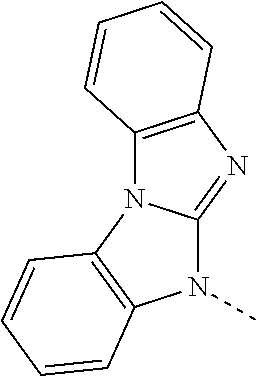


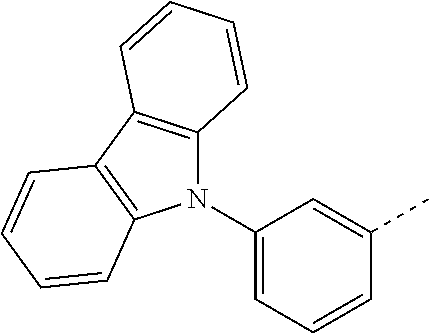


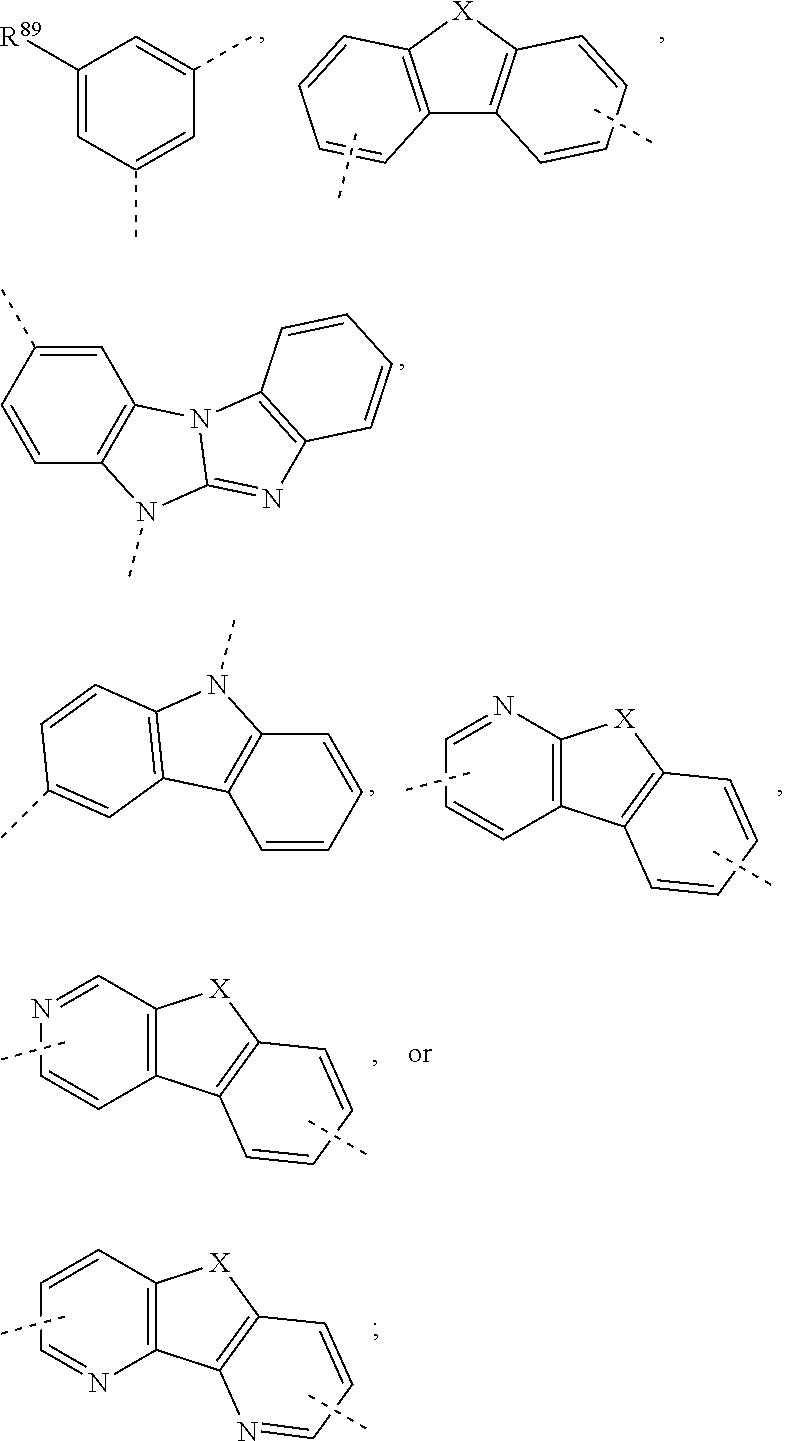


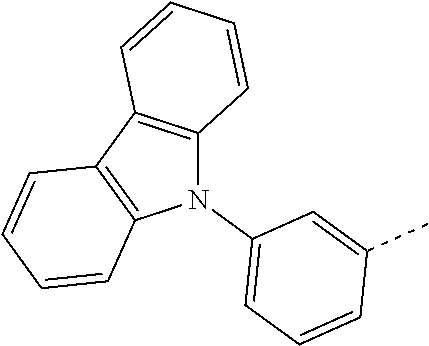


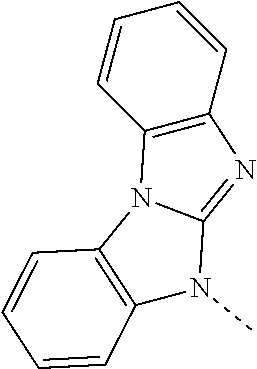


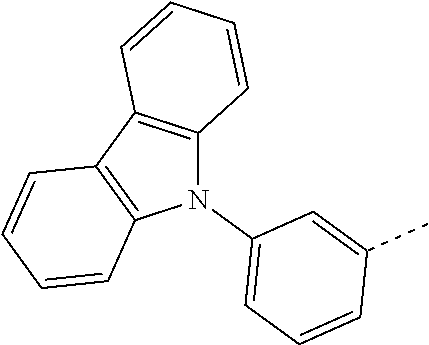


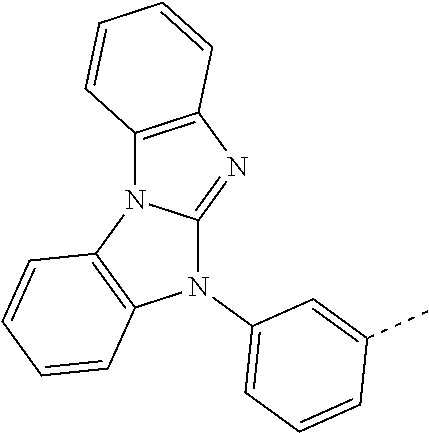


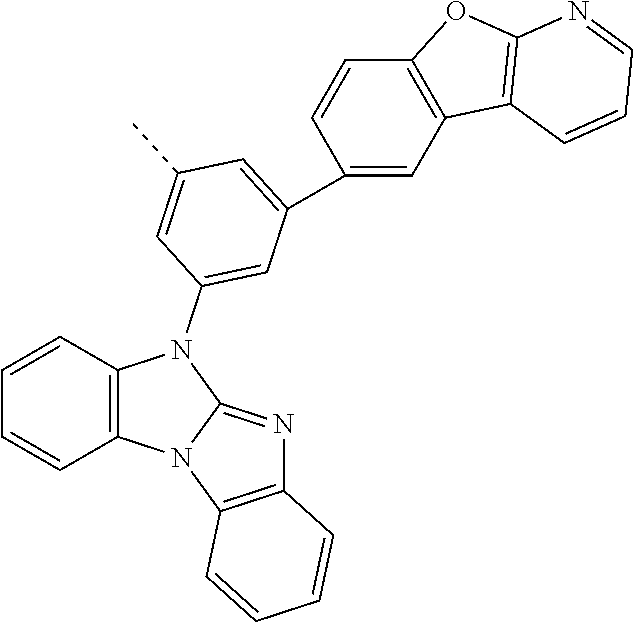


Priority Applications (1)
| Application Number | Priority Date | Filing Date | Title |
|---|---|---|---|
| US14/427,134 US10249827B2 (en) | 2012-09-20 | 2013-09-18 | Azadibenzofurans for electronic applications |
Applications Claiming Priority (6)
| Application Number | Priority Date | Filing Date | Title |
|---|---|---|---|
| US201261703289P | 2012-09-20 | 2012-09-20 | |
| EP12185230 | 2012-09-20 | ||
| EP12185230.5 | 2012-09-20 | ||
| EP12185230 | 2012-09-20 | ||
| PCT/EP2013/069403 WO2014044722A1 (en) | 2012-09-20 | 2013-09-18 | Azadibenzofurans for electronic applications |
| US14/427,134 US10249827B2 (en) | 2012-09-20 | 2013-09-18 | Azadibenzofurans for electronic applications |
Related Parent Applications (1)
| Application Number | Title | Priority Date | Filing Date |
|---|---|---|---|
| PCT/EP2013/069403 A-371-Of-International WO2014044722A1 (en) | 2012-09-20 | 2013-09-18 | Azadibenzofurans for electronic applications |
Related Child Applications (1)
| Application Number | Title | Priority Date | Filing Date |
|---|---|---|---|
| US16/227,006 Continuation US20190131547A1 (en) | 2012-09-20 | 2018-12-20 | Azadibenzofurans for electronic applications |
Publications (2)
| Publication Number | Publication Date |
|---|---|
| US20150243907A1 US20150243907A1 (en) | 2015-08-27 |
| US10249827B2 true US10249827B2 (en) | 2019-04-02 |
Family
ID=46963525
Family Applications (2)
| Application Number | Title | Priority Date | Filing Date |
|---|---|---|---|
| US14/427,134 Active 2035-02-20 US10249827B2 (en) | 2012-09-20 | 2013-09-18 | Azadibenzofurans for electronic applications |
| US16/227,006 Abandoned US20190131547A1 (en) | 2012-09-20 | 2018-12-20 | Azadibenzofurans for electronic applications |
Family Applications After (1)
| Application Number | Title | Priority Date | Filing Date |
|---|---|---|---|
| US16/227,006 Abandoned US20190131547A1 (en) | 2012-09-20 | 2018-12-20 | Azadibenzofurans for electronic applications |
Country Status (7)
| Country | Link |
|---|---|
| US (2) | US10249827B2 (en) |
| EP (2) | EP2897959B1 (en) |
| JP (2) | JP6333262B2 (en) |
| KR (1) | KR102127406B1 (en) |
| CN (3) | CN104662023B (en) |
| TW (1) | TWI623539B (en) |
| WO (1) | WO2014044722A1 (en) |
Cited By (1)
| Publication number | Priority date | Publication date | Assignee | Title |
|---|---|---|---|---|
| US20190181355A1 (en) * | 2012-07-10 | 2019-06-13 | Udc Ireland Limited | Benzimidazo[1,2-a]Benzimidazole Derivatives for Electronic Applications |
Families Citing this family (56)
| Publication number | Priority date | Publication date | Assignee | Title |
|---|---|---|---|---|
| US9806270B2 (en) | 2011-03-25 | 2017-10-31 | Udc Ireland Limited | 4H-imidazo[1,2-a]imidazoles for electronic applications |
| CN108440531B (en) | 2011-11-10 | 2021-11-02 | Udc 爱尔兰有限责任公司 | 4H-imidazo [1,2-a ] imidazoles for electronic applications |
| RU2670218C2 (en) | 2013-08-05 | 2018-10-19 | Басф Се | Cyanated naphthalenebenzimidazole compounds |
| EP3063153B1 (en) | 2013-10-31 | 2018-03-07 | Idemitsu Kosan Co., Ltd. | Azadibenzothiophenes for electronic applications |
| WO2015114102A1 (en) * | 2014-02-03 | 2015-08-06 | Basf Se | Silyl substituted azadibenzofurans and azadibenzothiophenes |
| WO2015150234A1 (en) * | 2014-03-31 | 2015-10-08 | Idemitsu Kosan Co., Ltd. | Silyl-benzimidazolo[1,2-a]benzimidazole as host for organic light emitting diodes |
| CN115160373A (en) | 2014-03-31 | 2022-10-11 | Udc 爱尔兰有限责任公司 | Metal complexes and their use in organic light-emitting diodes |
| WO2015176981A1 (en) * | 2014-05-19 | 2015-11-26 | Basf Se | Fluorescent organic light emitting elements having high efficiency |
| WO2016016791A1 (en) | 2014-07-28 | 2016-02-04 | Idemitsu Kosan Co., Ltd (Ikc) | 2,9-functionalized benzimidazolo[1,2-a]benzimidazoles as hosts for organic light emitting diodes (oleds) |
| EP2982676B1 (en) | 2014-08-07 | 2018-04-11 | Idemitsu Kosan Co., Ltd. | Benzimidazo[2,1-B]benzoxazoles for electronic applications |
| TWI663173B (en) | 2014-08-08 | 2019-06-21 | 愛爾蘭商Udc愛爾蘭責任有限公司 | Electroluminescent imidazo-quinoxaline carbene metal complexes |
| EP2993215B1 (en) | 2014-09-04 | 2019-06-19 | Idemitsu Kosan Co., Ltd. | Azabenzimidazo[2,1-a]benzimidazoles for electronic applications |
| JP6538504B2 (en) * | 2014-09-30 | 2019-07-03 | 株式会社半導体エネルギー研究所 | Organometallic complex, light emitting element, light emitting device, electronic device, and lighting device |
| EP3015469B1 (en) | 2014-10-30 | 2018-12-19 | Idemitsu Kosan Co., Ltd. | 5-(benzimidazol-2-yl)benzimidazo[1,2-a]benzimidazoles for electronic applications |
| WO2016079667A1 (en) * | 2014-11-17 | 2016-05-26 | Idemitsu Kosan Co., Ltd. | Indole derivatives for electronic applications |
| WO2016079169A1 (en) | 2014-11-18 | 2016-05-26 | Basf Se | Pt- or pd-carbene complexes for use in organic light emitting diodes |
| EP3034507A1 (en) | 2014-12-15 | 2016-06-22 | Idemitsu Kosan Co., Ltd | 1-functionalized dibenzofurans and dibenzothiophenes for organic light emitting diodes (OLEDs) |
| EP3034506A1 (en) | 2014-12-15 | 2016-06-22 | Idemitsu Kosan Co., Ltd | 4-functionalized carbazole derivatives for electronic applications |
| EP3061759B1 (en) | 2015-02-24 | 2019-12-25 | Idemitsu Kosan Co., Ltd | Nitrile substituted dibenzofurans |
| EP3070144B1 (en) * | 2015-03-17 | 2018-02-28 | Idemitsu Kosan Co., Ltd. | Seven-membered ring compounds |
| EP3072943B1 (en) | 2015-03-26 | 2018-05-02 | Idemitsu Kosan Co., Ltd. | Dibenzofuran/carbazole-substituted benzonitriles |
| EP3075737B1 (en) | 2015-03-31 | 2019-12-04 | Idemitsu Kosan Co., Ltd | Benzimidazolo[1,2-a]benzimidazole carrying aryl- or heteroarylnitril groups for organic light emitting diodes |
| US11495749B2 (en) | 2015-04-06 | 2022-11-08 | Universal Display Corporation | Organic electroluminescent materials and devices |
| US20160293855A1 (en) | 2015-04-06 | 2016-10-06 | Universal Display Corporation | Organic Electroluminescent Materials and Devices |
| US11818949B2 (en) | 2015-04-06 | 2023-11-14 | Universal Display Corporation | Organic electroluminescent materials and devices |
| US10777749B2 (en) * | 2015-05-07 | 2020-09-15 | Universal Display Corporation | Organic electroluminescent materials and devices |
| JP6846876B2 (en) * | 2015-05-12 | 2021-03-24 | 株式会社半導体エネルギー研究所 | Compounds, light emitting elements, display modules, lighting modules, light emitting devices, display devices, lighting devices, and electronic devices |
| EP3328860B2 (en) | 2015-07-28 | 2022-11-02 | UDC Ireland Limited | Process for the preparation of benzimidazo[1,2-a]benzimidazoles |
| KR102806395B1 (en) * | 2015-08-21 | 2025-05-16 | 삼성디스플레이 주식회사 | Organic light emitting device |
| EP3133666B1 (en) * | 2015-08-21 | 2020-03-11 | Samsung Display Co., Ltd. | Organic light-emitting device |
| EP3356369B1 (en) * | 2015-10-01 | 2022-05-04 | Idemitsu Kosan Co., Ltd | Benzimidazolo[1,2-a]benzimidazole carrying triazine groups for organic light emitting diodes |
| EP3150606B1 (en) | 2015-10-01 | 2019-08-14 | Idemitsu Kosan Co., Ltd. | Benzimidazolo[1,2-a]benzimidazoles carrying benzofurane or benzothiophene groups for organic light emitting diodes |
| EP3150604B1 (en) | 2015-10-01 | 2021-07-14 | Idemitsu Kosan Co., Ltd. | Benzimidazolo[1,2-a]benzimidazole carrying benzimidazolo[1,2-a]benzimidazolylyl groups, carbazolyl groups, benzofurane groups or benzothiophene groups for organic light emitting diodes |
| US10593892B2 (en) * | 2015-10-01 | 2020-03-17 | Universal Display Corporation | Organic electroluminescent materials and devices |
| WO2017056053A1 (en) | 2015-10-01 | 2017-04-06 | Idemitsu Kosan Co., Ltd. | Benzimidazolo[1,2-a]benzimidazole carrying benzimidazolo[1,2-a]benzimidazolyl groups, carbazolyl groups, benzofurane groups or benzothiophene groups for organic light emitting diodes |
| WO2017093958A1 (en) | 2015-12-04 | 2017-06-08 | Idemitsu Kosan Co., Ltd. | Benzimidazolo[1,2-a]benzimidazole derivatives for organic light emitting diodes |
| KR102684614B1 (en) | 2015-12-21 | 2024-07-15 | 유디씨 아일랜드 리미티드 | Transition metal complexes with tripodal ligands and the use thereof in oleds |
| US9938309B2 (en) * | 2015-12-28 | 2018-04-10 | Semiconductor Energy Laboratory Co., Ltd. | Organometallic complex, light-emitting element, light-emitting device, electronic device, and lighting device |
| JP6788314B2 (en) * | 2016-01-06 | 2020-11-25 | コニカミノルタ株式会社 | Organic electroluminescence element, manufacturing method of organic electroluminescence element, display device and lighting device |
| KR20180133376A (en) * | 2016-04-11 | 2018-12-14 | 메르크 파텐트 게엠베하 | A heterocyclic compound comprising a dibenzofuran and / or a dibenzothiophene structure |
| US10968229B2 (en) | 2016-04-12 | 2021-04-06 | Idemitsu Kosan Co., Ltd. | Seven-membered ring compounds |
| JP2019521995A (en) * | 2016-06-22 | 2019-08-08 | 出光興産株式会社 | Benzofuro- or benzothienoquinoline substituted at specific positions for organic light-emitting diodes |
| US11279709B2 (en) | 2016-09-05 | 2022-03-22 | Idemitsu Kosan Co., Ltd. | Specifically substituted aza-dibenzofurans and aza-dibenzothiophenes for organic electronic devices |
| KR102688056B1 (en) | 2016-09-22 | 2024-07-25 | 삼성전자주식회사 | Condensed cyclic compound and organic light emitting device including the same |
| CN106543205B (en) * | 2016-11-08 | 2019-01-08 | 江苏三月光电科技有限公司 | A kind of compound containing benzimidazole and its application on OLED |
| US10934293B2 (en) | 2017-05-18 | 2021-03-02 | Universal Display Corporation | Organic electroluminescent materials and devices |
| WO2018234917A1 (en) * | 2017-06-23 | 2018-12-27 | 株式会社半導体エネルギー研究所 | Organic compound, light emitting element, light emitting device, electronic device, and lighting device |
| US10608188B2 (en) * | 2017-09-11 | 2020-03-31 | Universal Display Corporation | Organic electroluminescent materials and devices |
| JP2019099537A (en) * | 2017-12-07 | 2019-06-24 | コニカミノルタ株式会社 | Method for producing nitrogen-containing heterocyclic compound |
| CN109928961B (en) * | 2017-12-15 | 2021-06-15 | 广东阿格蕾雅光电材料有限公司 | Photoelectric materials and applications containing 4-thiosulfone aryldibenzofuran |
| US11706980B2 (en) * | 2018-11-28 | 2023-07-18 | Universal Display Corporation | Host materials for electroluminescent devices |
| US11834459B2 (en) | 2018-12-12 | 2023-12-05 | Universal Display Corporation | Host materials for electroluminescent devices |
| CN113455104A (en) * | 2019-02-20 | 2021-09-28 | 株式会社半导体能源研究所 | Light-emitting device, light-emitting apparatus, electronic apparatus, and lighting apparatus |
| US11758807B2 (en) | 2019-02-22 | 2023-09-12 | Universal Display Corporation | Organic electroluminescent materials and devices |
| KR102919536B1 (en) | 2019-09-26 | 2026-01-29 | 삼성디스플레이 주식회사 | Heterocyclic compound and organic light emitting device including the same |
| CN117143108B (en) * | 2023-08-31 | 2024-03-19 | 蒲城欧得新材料有限公司 | 8-bromo-2-methylbenzofuran [2,3-b ] pyridine and synthetic method |
Citations (123)
| Publication number | Priority date | Publication date | Assignee | Title |
|---|---|---|---|---|
| US3663559A (en) | 1969-12-03 | 1972-05-16 | Union Carbide Corp | Preparation of oxo-furo-pyridines from furylvinyl isocyanates |
| US3669969A (en) * | 1969-11-24 | 1972-06-13 | Lilly Co Eli | BENZIMIDAZO {8 2,1-b{9 {0 QUINALOZIN-12-(6H)ONES |
| US3706747A (en) | 1970-06-05 | 1972-12-19 | Pfizer | Benzothieno(3,2-d)- and benzofuro(3,2-d)pyrimidines |
| GB1300928A (en) | 1969-05-09 | 1972-12-29 | Glaxo Lab Ltd | 0-aza-9-oxafluorenes |
| JPH01203387A (en) | 1987-12-24 | 1989-08-16 | Sanofi Sa | Novel tricyclic derivative being agonist of choline active acceptor and drug containing the same |
| WO1999047474A1 (en) | 1998-03-18 | 1999-09-23 | Ciba Specialty Chemicals Holding Inc. | Coupling reactions with palladium catalysts |
| WO2000070655A2 (en) | 1999-05-13 | 2000-11-23 | The Trustees Of Princeton University | Very high efficiency organic light emitting devices based on electrophosphorescence |
| WO2001041512A1 (en) | 1999-12-01 | 2001-06-07 | The Trustees Of Princeton University | Complexes of form l2mx as phosphorescent dopants for organic leds |
| US20010015432A1 (en) | 2000-02-10 | 2001-08-23 | Tatsuya Igarashi | Light emitting device material comprising iridium complex and light emitting device using same material |
| US20010019782A1 (en) | 1999-12-27 | 2001-09-06 | Tatsuya Igarashi | Light-emitting material comprising orthometalated iridium complex, light-emitting device, high efficiency red light-emitting device, and novel iridium complex |
| WO2002002714A2 (en) | 2000-06-30 | 2002-01-10 | E.I. Du Pont De Nemours And Company | Electroluminescent iridium compounds with fluorinated phenylpyridines, phenylpyrimidines, and phenylquinolines and devices made with such compounds |
| WO2002015645A1 (en) | 2000-08-11 | 2002-02-21 | The Trustees Of Princeton University | Organometallic compounds and emission-shifting organic electrophosphorescence |
| US20020024293A1 (en) | 2000-07-17 | 2002-02-28 | Fuji Photo Film Co., Ltd. | Light-emitting element and iridium complex |
| EP1191613A2 (en) | 2000-09-26 | 2002-03-27 | Canon Kabushiki Kaisha | Luminescence device, display apparatus and metal coordination compound |
| EP1191612A2 (en) | 2000-09-26 | 2002-03-27 | Canon Kabushiki Kaisha | Luminescence device, display apparatus and metal coordination compound |
| US20020048689A1 (en) | 2000-09-21 | 2002-04-25 | Fuji Photo Film Co., Ltd. | Light-emitting device and iridium complex |
| US20020055014A1 (en) | 2000-08-24 | 2002-05-09 | Fuji Photo Film Co., Ltd. | Light-emitting device and material therefor |
| EP1211257A2 (en) | 2000-12-01 | 2002-06-05 | Canon Kabushiki Kaisha | Metal coordination compound, luminescence device and display apparatus |
| US20020094453A1 (en) | 2000-11-29 | 2002-07-18 | Takao Takiguchi | Metal coordination compound, luminescence device and display apparatus |
| WO2002060910A1 (en) | 2001-02-01 | 2002-08-08 | Covion Organic Semiconductors Gmbh | Method for the production of highly pure, tris-ortho-metalated organo-iridium compounds |
| JP2002284862A (en) | 2001-03-23 | 2002-10-03 | Tdk Corp | Polymer compounds and methods for their production and use |
| US6551723B1 (en) * | 1998-08-18 | 2003-04-22 | Fuji Photo Film Co., Ltd. | Organic electroluminescence element material and organic electroluminescence element comprising same |
| US6687266B1 (en) | 2002-11-08 | 2004-02-03 | Universal Display Corporation | Organic light emitting materials and devices |
| WO2005019373A2 (en) | 2003-08-19 | 2005-03-03 | Basf Aktiengesellschaft | Transition metal complexes comprising carbene ligands serving as emitters for organic light-emitting diodes (oled's) |
| US20050064576A1 (en) | 2003-04-22 | 2005-03-24 | Fennell Donna E. | Methods for remediating materials contaminated with halogenated aromatic compounds |
| US6921915B2 (en) | 2001-03-08 | 2005-07-26 | Canon Kabushiki Kaisha | Metal coordination compound, luminescence device and display apparatus |
| WO2005113704A2 (en) | 2004-05-18 | 2005-12-01 | The University Of Southern California | Luminescent compounds with carbene ligands |
| US20060008670A1 (en) | 2004-07-06 | 2006-01-12 | Chun Lin | Organic light emitting materials and devices |
| WO2006014599A2 (en) | 2004-07-07 | 2006-02-09 | Universal Display Corporation | Stable and efficient electroluminescent materials |
| WO2006056418A2 (en) | 2004-11-25 | 2006-06-01 | Basf Aktiengesellschaft | Use of transition metal carbene complexes in organic light-emitting diodes (oleds) |
| WO2006067074A1 (en) | 2004-12-23 | 2006-06-29 | Ciba Specialty Chemicals Holding Inc. | Electroluminescent metal complexes with nucleophilic carbene ligands |
| WO2006098460A1 (en) | 2005-03-17 | 2006-09-21 | Semiconductor Energy Laboratory Co., Ltd. | Organometallic complex, and light-emitting element, light-emitting device and electronic device using the organometallic complex |
| WO2006100298A1 (en) | 2005-03-24 | 2006-09-28 | Basf Aktiengesellschaft | Use of compounds containing aromatic or heteroaromatic rings linked via carbonyl group-containing groups, for use as matrix materials in organic light-emitting diodes |
| WO2006115301A1 (en) | 2005-04-25 | 2006-11-02 | Fujifilm Corporation | Organic electroluminescent device |
| WO2006121811A1 (en) | 2005-05-06 | 2006-11-16 | Universal Display Corporation | Stability oled materials and devices with improved stability |
| WO2006128800A1 (en) | 2005-05-30 | 2006-12-07 | Ciba Specialty Chemicals Holding Inc. | Electroluminescent device |
| EP1786050A1 (en) | 2005-11-10 | 2007-05-16 | Novaled AG | Doped organic semiconductor material |
| JP2007123392A (en) | 2005-10-26 | 2007-05-17 | Konica Minolta Holdings Inc | Organic electroluminescence element, display device and lighting device |
| US20070190359A1 (en) | 2006-02-10 | 2007-08-16 | Knowles David B | Metal complexes of cyclometallated imidazo[1,2-ƒ]phenanthridine and diimidazo[1,2-a:1',2'-c]quinazoline ligands and isoelectronic and benzannulated analogs thereof |
| WO2007101820A1 (en) | 2006-03-08 | 2007-09-13 | Ciba Holding Inc. | Palladium catalyzed polymerization reaction |
| EP1837927A1 (en) | 2006-03-22 | 2007-09-26 | Novaled AG | Use of heterocyclic radicals for doping of organic semiconductors |
| WO2007115981A1 (en) | 2006-04-04 | 2007-10-18 | Basf Se | Transition metal complexes comprising one noncarbene ligand and one or two carbene ligands and their use in oleds |
| WO2007115970A1 (en) | 2006-04-05 | 2007-10-18 | Basf Se | Heteroleptic transition metal-carbene complexes and their use in organic light-emitting diodes (oleds) |
| WO2008000727A1 (en) | 2006-06-26 | 2008-01-03 | Basf Se | Use in oleds of transition metal carbene complexes that contain no cyclometallation via non-carbenes |
| WO2008034758A2 (en) | 2006-09-21 | 2008-03-27 | Basf Se | Oled display with extended lifetime |
| JP2008074939A (en) | 2006-09-21 | 2008-04-03 | Konica Minolta Holdings Inc | ORGANIC ELECTROLUMINESCENT ELEMENT MATERIAL, ORGANIC ELECTROLUMINESCENT ELEMENT, DISPLAY DEVICE AND LIGHTING DEVICE |
| EP1837926B1 (en) | 2006-03-21 | 2008-05-07 | Novaled AG | Heterocyclic radicals or diradicals and their dimers, oligomers, polymers, di-spiro and polycyclic derivatives as well as their use in organic semiconductor materials and electronic devices. |
| US20080220265A1 (en) | 2006-12-08 | 2008-09-11 | Universal Display Corporation | Cross-linkable Iridium Complexes and Organic Light-Emitting Devices Using the Same |
| US20080265216A1 (en) | 2007-04-30 | 2008-10-30 | Novaled Ag | Oxocarbon-, pseudooxocarbon- and radialene compounds and their use |
| WO2008156879A1 (en) | 2007-06-20 | 2008-12-24 | Universal Display Corporation | Blue phosphorescent imidazophenanthridine materials |
| WO2009003898A1 (en) | 2007-07-05 | 2009-01-08 | Basf Se | Organic light-emitting diodes containing carbene transition metal complex emitters and at least one compound selected from disilylcarbazoles, disilyldibenzofurans, disilyldibenzothiophenes, disilyldibenzophospholes, disilyldibenzothiophene s-oxides and disilyldibenzothiophene s,s-dioxides |
| WO2009003919A1 (en) | 2007-07-05 | 2009-01-08 | Basf Se | Organic light-emitting diodes comprising at least one disilyl compound selected from disilylcarbazoles, disilyldibenzofurans, disilyldibenzothiophenes, disilyldibenzophospholes, disilyldibenzothiophene s-oxides and disilyldibenzothiophene s,s-dioxides |
| US20090039776A1 (en) | 2007-08-09 | 2009-02-12 | Canon Kabushiki Kaisha | Organometallic complex and organic light-emitting element using same |
| WO2009035668A1 (en) | 2007-09-14 | 2009-03-19 | Janssen Pharmaceutica N.V. | Facile assembly of fused benzofuro-heterocycles |
| WO2009050290A1 (en) | 2007-10-17 | 2009-04-23 | Basf Se | Transition metal complexes having bridged carbene ligands and the use thereof in oleds |
| WO2009050281A1 (en) | 2007-10-17 | 2009-04-23 | Basf Se | Transition metal complexes with bridged carbene ligands and use thereof in oleds |
| WO2009060780A1 (en) | 2007-11-08 | 2009-05-14 | Konica Minolta Holdings, Inc. | Organic electroluminescence element, display device, and lighting system |
| WO2009060757A1 (en) | 2007-11-08 | 2009-05-14 | Konica Minolta Holdings, Inc. | Organic electroluminescent device, display device and illuminating device |
| US20090134784A1 (en) | 2004-10-21 | 2009-05-28 | Universal Display Corporation | Carbazole-containing materials in phosphorescent light emitting diodes |
| WO2009073245A1 (en) | 2007-12-06 | 2009-06-11 | Universal Display Corporation | Light-emitting organometallic complexes |
| US20090153034A1 (en) | 2007-12-13 | 2009-06-18 | Universal Display Corporation | Carbazole-containing materials in phosphorescent light emittinig diodes |
| WO2010028262A1 (en) | 2008-09-04 | 2010-03-11 | Universal Display Corporation | White phosphorescent organic light emitting devices |
| WO2010027583A1 (en) | 2008-09-03 | 2010-03-11 | Universal Display Corporation | Phosphorescent materials |
| EP2180029A1 (en) | 2008-10-23 | 2010-04-28 | Novaled AG | Radialene compounds and their use |
| US20100102709A1 (en) | 2008-04-29 | 2010-04-29 | Olaf Zeika | Radialene compounds and their use |
| WO2010056669A1 (en) | 2008-11-11 | 2010-05-20 | Universal Display Corporation | Phosphorescent emitters |
| WO2010068876A1 (en) | 2008-12-12 | 2010-06-17 | Universal Display Corporation | BLUE EMITTER WITH HIGH EFFICIENCY BASED ON IMIDAZO [1,2-f] PHENANTHRIDINE IRIDIUM COMPLEXES |
| WO2010079051A1 (en) | 2009-01-07 | 2010-07-15 | Basf Se | Silyl and heteroatom substituted compounds selected from carbazoles, dibenzofurans, dibenzothiophenes and dibenzo phospholes and the application thereof in organic electronics |
| WO2010083359A2 (en) | 2009-01-16 | 2010-07-22 | Universal Display Corporation | New materials with aza-dibenzothiophene or aza-dibenzofuran core for pholed |
| WO2010086089A1 (en) | 2009-02-02 | 2010-08-05 | Merck Patent Gmbh | Metal complexes |
| WO2010090077A1 (en) | 2009-02-06 | 2010-08-12 | コニカミノルタホールディングス株式会社 | Organic electroluminescent element, and illumination device and display device each comprising the element |
| WO2010097433A1 (en) | 2009-02-26 | 2010-09-02 | Basf Se | Quinone compounds as dopants in organic electronics |
| US20100244004A1 (en) | 2009-03-23 | 2010-09-30 | Universal Display Corporation | Heteroleptic iridium complex |
| US20100244006A1 (en) * | 2009-03-25 | 2010-09-30 | Fujifilm Corporation | Organic electroluminescent device |
| WO2010118029A1 (en) | 2009-04-06 | 2010-10-14 | Universal Display Corporation | Metal complex comprising novel ligand structures |
| EP2246862A1 (en) | 2009-04-27 | 2010-11-03 | Novaled AG | Organic electronic device comprising an organic semiconducting material |
| WO2010129323A1 (en) | 2009-04-28 | 2010-11-11 | Universal Display Corporation | Iridium complex with methyl-d3 substitution |
| WO2010132236A1 (en) | 2009-05-13 | 2010-11-18 | Global Oled Technology Llc. | Internal connector for organic electronic devices |
| WO2011021038A1 (en) | 2009-08-20 | 2011-02-24 | Karus Therapeutics Limited | Tricyclic heterocyclic compounds as phosphoinositide 3-kinase inhibitors |
| US20110057559A1 (en) | 2007-12-28 | 2011-03-10 | Universal Display Corporation | Phosphorescent emitters and host materials with improved stability |
| WO2011034518A1 (en) | 2009-09-15 | 2011-03-24 | Taigen Biotechnology Co., Ltd. | Hcv protease inhibitors |
| JP2011084531A (en) | 2009-10-19 | 2011-04-28 | Konica Minolta Holdings Inc | Material for organic electroluminescent element, organic electroluminescent element, illumination device and display device |
| WO2011051404A1 (en) | 2009-10-28 | 2011-05-05 | Basf Se | Heteroleptic carbene complexes and use thereof in organic electronics |
| WO2011073149A1 (en) | 2009-12-14 | 2011-06-23 | Basf Se | Metal complexes comprising diazabenzimidazol carbene-ligands and the use thereof in oleds |
| WO2011090535A1 (en) | 2010-01-20 | 2011-07-28 | Universal Display Corporation | Electroluminescent devices for lighting applications |
| US20110189127A1 (en) | 2008-06-13 | 2011-08-04 | Srikanth Venkatraman | Tricyclic indole derivatives and methods of use thereof |
| US20110210316A1 (en) | 2010-03-01 | 2011-09-01 | Semiconductor Energy Laboratory Co., Ltd. | Heterocyclic compound, light-emitting element, light-emitting device, electronic device, and lighting device |
| WO2011106344A1 (en) | 2010-02-25 | 2011-09-01 | Universal Display Corporation | Phosphorescent emitters |
| WO2011109042A1 (en) | 2010-03-03 | 2011-09-09 | Universal Display Corporation | Phosphorescent materials |
| JP2011184362A (en) | 2010-03-09 | 2011-09-22 | Canon Inc | Pyrene compound and organic el element using the same |
| US20110233528A1 (en) | 2010-03-24 | 2011-09-29 | Universal Display Corporation | Novel oled display architecture |
| US20110248246A1 (en) | 2010-04-09 | 2011-10-13 | Semiconductor Energy Laboratory Co., Ltd. | Aromatic amine derivative, light-emitting element, light-emitting device, electronic device, and lighting device |
| WO2011137072A1 (en) | 2010-04-26 | 2011-11-03 | Universal Display Corporation | Bicarbazole containing compounds for oleds |
| CN102234286A (en) | 2010-04-23 | 2011-11-09 | 上海艾力斯医药科技有限公司 | Condensed heteroaryl derivatives |
| US20110275762A1 (en) | 2008-11-10 | 2011-11-10 | University Of Basel | Triazine, pyrimidine and pyridine analogs and their use as therapeutic agents and diagnostic probes |
| WO2011157779A1 (en) | 2010-06-18 | 2011-12-22 | Basf Se | Organic electronic devices comprising a layer of a pyridine compound and a 8-hydroxyquinolinolato earth alkaline metal, or alkali metal complex |
| WO2011157790A1 (en) | 2010-06-18 | 2011-12-22 | Basf Se | Organic electronic devices comprising a layer of a dibenzofurane compound and a 8-hydroxyquinolinolato earth alkaline metal, or alkali metal complex |
| DE102010024542A1 (en) | 2010-06-22 | 2011-12-22 | Merck Patent Gmbh | Materials for electronic devices |
| WO2012008881A1 (en) | 2010-07-15 | 2012-01-19 | Kuznetsov Andrey Leionidovich | Piezoelectric pump |
| WO2012014621A1 (en) | 2010-07-29 | 2012-02-02 | コニカミノルタホールディングス株式会社 | Transparent conductive film and organic electroluminescent element |
| WO2012048266A1 (en) | 2010-10-08 | 2012-04-12 | Universal Display Corporation | Novel 3, 9-linked oligocarbazole-based hosts, containing dbt and dbr fragments, separated by aromatic spacers |
| WO2012053627A1 (en) | 2010-10-22 | 2012-04-26 | Semiconductor Energy Laboratory Co., Ltd. | Organometallic complex, light-emitting element, light-emitting device, electronic device and lighting device |
| WO2012090967A1 (en) | 2010-12-28 | 2012-07-05 | 出光興産株式会社 | Material for organic electroluminescent elements, and organic electroluminescent element using same |
| WO2012102967A1 (en) | 2011-01-24 | 2012-08-02 | Universal Display Corporation | Aza - dibenzothiophene, aza - dibenzofuran and aza - dibenzoselenophene derivatives for use in oled ' s |
| WO2012111462A1 (en) | 2011-02-15 | 2012-08-23 | コニカミノルタホールディングス株式会社 | Organic electroluminescence element and illumination device |
| WO2012115034A1 (en) | 2011-02-22 | 2012-08-30 | コニカミノルタホールディングス株式会社 | Organic electroluminescent element, illumination device, and display device |
| WO2012121936A2 (en) | 2011-03-08 | 2012-09-13 | Universal Display Corporation | Pyridyl carbene phosphorescent emitters |
| US20120241681A1 (en) * | 2011-03-25 | 2012-09-27 | Basf Se | 4H-Imidazo[1,2-a]imidazoles for Electronic Applications |
| WO2012130709A1 (en) | 2011-03-25 | 2012-10-04 | Basf Se | 4h-imidazo[1,2-a]imidazoles for electronic applications |
| US20120261654A1 (en) | 2008-05-13 | 2012-10-18 | Konica Minolta Holdings, Inc. | Organic electroluminescent element, display device and lighting device |
| WO2012147397A1 (en) | 2011-04-26 | 2012-11-01 | コニカミノルタホールディングス株式会社 | Organic electroluminescent element and illuminating apparatus |
| US20120292600A1 (en) | 2011-05-19 | 2012-11-22 | Universal Display Corporation | Phosphorescent heteroleptic phenylbenzimidazole dopants |
| EP2527334A1 (en) | 2010-01-21 | 2012-11-28 | Idemitsu Kosan Co., Ltd. | Aromatic amine derivative, and organic electroluminescent element comprising same |
| WO2012166608A1 (en) | 2011-05-27 | 2012-12-06 | Universal Display Corporation | High efficiency yellow light emitters for oled devices |
| US20120305894A1 (en) | 2011-06-01 | 2012-12-06 | Do-Han Kim | Blue phosphorescent compound and organic electroluminescent device using the same |
| WO2012170571A1 (en) | 2011-06-08 | 2012-12-13 | Universal Display Corporation | Heteroleptic iridium carbene complexes and light emitting device using them |
| WO2012172482A1 (en) | 2011-06-14 | 2012-12-20 | Basf Se | Metal complexes comprising azabenzimidazole carbene ligands and the use thereof in oleds |
| EP2551933A1 (en) | 2011-07-28 | 2013-01-30 | Universal Display Corporation | Heteroleptic iridium complexes as dopants |
| WO2013068376A1 (en) | 2011-11-10 | 2013-05-16 | Basf Se | 4h-imidazo[1,2-a]imidazoles for electronic applications |
| WO2014009317A1 (en) | 2012-07-10 | 2014-01-16 | Basf Se | Benzimidazo[1,2-a]benzimidazole derivatives for electronic applications |
| JP2014501544A (en) | 2010-10-13 | 2014-01-23 | コビデイエン・リミテツド・パートナーシツプ | Prompt initiated by ventilator in response to planned adjustment |
| EP2711363A1 (en) | 2011-05-11 | 2014-03-26 | Idemitsu Kosan Co., Ltd | Novel compound, material for organic electroluminescence device, and organic electroluminescence device |
| JP2015520944A (en) | 2012-05-02 | 2015-07-23 | セラムテック ゲゼルシャフト ミット ベシュレンクテル ハフツングCeramTec GmbH | Method for manufacturing a ceramic printed circuit board comprising a ceramic substrate having vias filled with metal |
Family Cites Families (10)
| Publication number | Priority date | Publication date | Assignee | Title |
|---|---|---|---|---|
| US6924291B2 (en) | 2001-01-23 | 2005-08-02 | Merck & Co., Inc. | Process for making spiro isobenzofuranone compounds |
| DE102004007358B4 (en) * | 2004-02-16 | 2017-10-12 | Chiron As | Congeners, chlorinated, brominated and / or iodinated fluorinated aromatic compounds containing two benzene rings in their basic structure, process for their preparation and their use |
| WO2006010567A1 (en) * | 2004-07-23 | 2006-02-02 | Curacyte Discovery Gmbh | Substituted pyrido[3', 2': 4, 5]thieno[3,2-d]pyrimidines and pyrido[3', 2': 4, 5]furo[3, 2, d]pyrimidines used as inhibitors of the pde-4 and/or the release of tnf$g(a) |
| JP5476660B2 (en) * | 2006-09-26 | 2014-04-23 | 住友化学株式会社 | Organic photoelectric conversion device and polymer useful for production thereof |
| EP2085371B1 (en) * | 2006-11-15 | 2015-10-07 | Idemitsu Kosan Co., Ltd. | Fluoranthene compound, organic electroluminescent device using the fluoranthene compound, and organic electroluminescent material-containing solution |
| US8049411B2 (en) * | 2008-06-05 | 2011-11-01 | Idemitsu Kosan Co., Ltd. | Material for organic electroluminescence device and organic electroluminescence device using the same |
| WO2011004639A1 (en) * | 2009-07-07 | 2011-01-13 | コニカミノルタホールディングス株式会社 | Organic electroluminescent element, novel compound, lighting device and display device |
| JP5573066B2 (en) * | 2009-09-24 | 2014-08-20 | コニカミノルタ株式会社 | Organic photoelectric conversion element, solar cell and optical sensor array using the same |
| JP6007467B2 (en) * | 2010-07-27 | 2016-10-12 | コニカミノルタ株式会社 | Organic electroluminescence element material, organic electroluminescence element, |
| JP2012146968A (en) * | 2010-12-21 | 2012-08-02 | Sumitomo Chemical Co Ltd | Organic light-emitting element and conjugated polymer compound |
-
2013
- 2013-09-18 WO PCT/EP2013/069403 patent/WO2014044722A1/en not_active Ceased
- 2013-09-18 TW TW102133988A patent/TWI623539B/en active
- 2013-09-18 JP JP2015532398A patent/JP6333262B2/en active Active
- 2013-09-18 CN CN201380048768.XA patent/CN104662023B/en active Active
- 2013-09-18 CN CN201710678256.1A patent/CN107573363A/en active Pending
- 2013-09-18 US US14/427,134 patent/US10249827B2/en active Active
- 2013-09-18 EP EP13765708.6A patent/EP2897959B1/en active Active
- 2013-09-18 EP EP17207679.6A patent/EP3318566B1/en active Active
- 2013-09-18 KR KR1020157009777A patent/KR102127406B1/en active Active
- 2013-09-18 CN CN202111231843.9A patent/CN113943306A/en active Pending
-
2018
- 2018-04-20 JP JP2018081247A patent/JP2018135362A/en active Pending
- 2018-12-20 US US16/227,006 patent/US20190131547A1/en not_active Abandoned
Patent Citations (152)
| Publication number | Priority date | Publication date | Assignee | Title |
|---|---|---|---|---|
| GB1300928A (en) | 1969-05-09 | 1972-12-29 | Glaxo Lab Ltd | 0-aza-9-oxafluorenes |
| US3669969A (en) * | 1969-11-24 | 1972-06-13 | Lilly Co Eli | BENZIMIDAZO {8 2,1-b{9 {0 QUINALOZIN-12-(6H)ONES |
| US3663559A (en) | 1969-12-03 | 1972-05-16 | Union Carbide Corp | Preparation of oxo-furo-pyridines from furylvinyl isocyanates |
| US3706747A (en) | 1970-06-05 | 1972-12-19 | Pfizer | Benzothieno(3,2-d)- and benzofuro(3,2-d)pyrimidines |
| JPH01203387A (en) | 1987-12-24 | 1989-08-16 | Sanofi Sa | Novel tricyclic derivative being agonist of choline active acceptor and drug containing the same |
| WO1999047474A1 (en) | 1998-03-18 | 1999-09-23 | Ciba Specialty Chemicals Holding Inc. | Coupling reactions with palladium catalysts |
| US6551723B1 (en) * | 1998-08-18 | 2003-04-22 | Fuji Photo Film Co., Ltd. | Organic electroluminescence element material and organic electroluminescence element comprising same |
| WO2000070655A2 (en) | 1999-05-13 | 2000-11-23 | The Trustees Of Princeton University | Very high efficiency organic light emitting devices based on electrophosphorescence |
| WO2001041512A1 (en) | 1999-12-01 | 2001-06-07 | The Trustees Of Princeton University | Complexes of form l2mx as phosphorescent dopants for organic leds |
| US20010019782A1 (en) | 1999-12-27 | 2001-09-06 | Tatsuya Igarashi | Light-emitting material comprising orthometalated iridium complex, light-emitting device, high efficiency red light-emitting device, and novel iridium complex |
| US20010015432A1 (en) | 2000-02-10 | 2001-08-23 | Tatsuya Igarashi | Light emitting device material comprising iridium complex and light emitting device using same material |
| WO2002002714A2 (en) | 2000-06-30 | 2002-01-10 | E.I. Du Pont De Nemours And Company | Electroluminescent iridium compounds with fluorinated phenylpyridines, phenylpyrimidines, and phenylquinolines and devices made with such compounds |
| US20020024293A1 (en) | 2000-07-17 | 2002-02-28 | Fuji Photo Film Co., Ltd. | Light-emitting element and iridium complex |
| WO2002015645A1 (en) | 2000-08-11 | 2002-02-21 | The Trustees Of Princeton University | Organometallic compounds and emission-shifting organic electrophosphorescence |
| US20020055014A1 (en) | 2000-08-24 | 2002-05-09 | Fuji Photo Film Co., Ltd. | Light-emitting device and material therefor |
| US20020048689A1 (en) | 2000-09-21 | 2002-04-25 | Fuji Photo Film Co., Ltd. | Light-emitting device and iridium complex |
| EP1191613A2 (en) | 2000-09-26 | 2002-03-27 | Canon Kabushiki Kaisha | Luminescence device, display apparatus and metal coordination compound |
| EP1191612A2 (en) | 2000-09-26 | 2002-03-27 | Canon Kabushiki Kaisha | Luminescence device, display apparatus and metal coordination compound |
| US20020094453A1 (en) | 2000-11-29 | 2002-07-18 | Takao Takiguchi | Metal coordination compound, luminescence device and display apparatus |
| EP1211257A2 (en) | 2000-12-01 | 2002-06-05 | Canon Kabushiki Kaisha | Metal coordination compound, luminescence device and display apparatus |
| WO2002060910A1 (en) | 2001-02-01 | 2002-08-08 | Covion Organic Semiconductors Gmbh | Method for the production of highly pure, tris-ortho-metalated organo-iridium compounds |
| US6921915B2 (en) | 2001-03-08 | 2005-07-26 | Canon Kabushiki Kaisha | Metal coordination compound, luminescence device and display apparatus |
| JP2002284862A (en) | 2001-03-23 | 2002-10-03 | Tdk Corp | Polymer compounds and methods for their production and use |
| US6687266B1 (en) | 2002-11-08 | 2004-02-03 | Universal Display Corporation | Organic light emitting materials and devices |
| US20050064576A1 (en) | 2003-04-22 | 2005-03-24 | Fennell Donna E. | Methods for remediating materials contaminated with halogenated aromatic compounds |
| WO2005019373A2 (en) | 2003-08-19 | 2005-03-03 | Basf Aktiengesellschaft | Transition metal complexes comprising carbene ligands serving as emitters for organic light-emitting diodes (oled's) |
| WO2005113704A2 (en) | 2004-05-18 | 2005-12-01 | The University Of Southern California | Luminescent compounds with carbene ligands |
| US20060008670A1 (en) | 2004-07-06 | 2006-01-12 | Chun Lin | Organic light emitting materials and devices |
| WO2006014599A2 (en) | 2004-07-07 | 2006-02-09 | Universal Display Corporation | Stable and efficient electroluminescent materials |
| US20090134784A1 (en) | 2004-10-21 | 2009-05-28 | Universal Display Corporation | Carbazole-containing materials in phosphorescent light emitting diodes |
| WO2006056418A2 (en) | 2004-11-25 | 2006-06-01 | Basf Aktiengesellschaft | Use of transition metal carbene complexes in organic light-emitting diodes (oleds) |
| WO2006067074A1 (en) | 2004-12-23 | 2006-06-29 | Ciba Specialty Chemicals Holding Inc. | Electroluminescent metal complexes with nucleophilic carbene ligands |
| WO2006098460A1 (en) | 2005-03-17 | 2006-09-21 | Semiconductor Energy Laboratory Co., Ltd. | Organometallic complex, and light-emitting element, light-emitting device and electronic device using the organometallic complex |
| WO2006100298A1 (en) | 2005-03-24 | 2006-09-28 | Basf Aktiengesellschaft | Use of compounds containing aromatic or heteroaromatic rings linked via carbonyl group-containing groups, for use as matrix materials in organic light-emitting diodes |
| WO2006115301A1 (en) | 2005-04-25 | 2006-11-02 | Fujifilm Corporation | Organic electroluminescent device |
| WO2006121811A1 (en) | 2005-05-06 | 2006-11-16 | Universal Display Corporation | Stability oled materials and devices with improved stability |
| WO2006128800A1 (en) | 2005-05-30 | 2006-12-07 | Ciba Specialty Chemicals Holding Inc. | Electroluminescent device |
| EP1885818A1 (en) | 2005-05-30 | 2008-02-13 | Ciba Specialty Chemicals Holding Inc. | Electroluminescent device |
| JP2007123392A (en) | 2005-10-26 | 2007-05-17 | Konica Minolta Holdings Inc | Organic electroluminescence element, display device and lighting device |
| EP1786050A1 (en) | 2005-11-10 | 2007-05-16 | Novaled AG | Doped organic semiconductor material |
| US20070190359A1 (en) | 2006-02-10 | 2007-08-16 | Knowles David B | Metal complexes of cyclometallated imidazo[1,2-ƒ]phenanthridine and diimidazo[1,2-a:1',2'-c]quinazoline ligands and isoelectronic and benzannulated analogs thereof |
| WO2007095118A2 (en) | 2006-02-10 | 2007-08-23 | Universal Display Corporation | METAL COMPLEXES OF CYCLOMETALLATED IMIDAZO[1,2-f]PHENANTHRIDINE AND DIIMIDAZO[1,2-A:1',2'-C]QUINAZOLINE LIGANDS AND ISOELECTRONIC AND BENZANNULATED ANALOGS THEREOF |
| WO2007101820A1 (en) | 2006-03-08 | 2007-09-13 | Ciba Holding Inc. | Palladium catalyzed polymerization reaction |
| EP1837926B1 (en) | 2006-03-21 | 2008-05-07 | Novaled AG | Heterocyclic radicals or diradicals and their dimers, oligomers, polymers, di-spiro and polycyclic derivatives as well as their use in organic semiconductor materials and electronic devices. |
| EP1837927A1 (en) | 2006-03-22 | 2007-09-26 | Novaled AG | Use of heterocyclic radicals for doping of organic semiconductors |
| WO2007115981A1 (en) | 2006-04-04 | 2007-10-18 | Basf Se | Transition metal complexes comprising one noncarbene ligand and one or two carbene ligands and their use in oleds |
| WO2007115970A1 (en) | 2006-04-05 | 2007-10-18 | Basf Se | Heteroleptic transition metal-carbene complexes and their use in organic light-emitting diodes (oleds) |
| WO2008000727A1 (en) | 2006-06-26 | 2008-01-03 | Basf Se | Use in oleds of transition metal carbene complexes that contain no cyclometallation via non-carbenes |
| WO2008034758A2 (en) | 2006-09-21 | 2008-03-27 | Basf Se | Oled display with extended lifetime |
| JP2008074939A (en) | 2006-09-21 | 2008-04-03 | Konica Minolta Holdings Inc | ORGANIC ELECTROLUMINESCENT ELEMENT MATERIAL, ORGANIC ELECTROLUMINESCENT ELEMENT, DISPLAY DEVICE AND LIGHTING DEVICE |
| US20080220265A1 (en) | 2006-12-08 | 2008-09-11 | Universal Display Corporation | Cross-linkable Iridium Complexes and Organic Light-Emitting Devices Using the Same |
| US20080265216A1 (en) | 2007-04-30 | 2008-10-30 | Novaled Ag | Oxocarbon-, pseudooxocarbon- and radialene compounds and their use |
| EP1988587A1 (en) | 2007-04-30 | 2008-11-05 | Novaled AG | Oxocarbon, pseudo oxocarbon and radialene compounds and their use |
| WO2008156879A1 (en) | 2007-06-20 | 2008-12-24 | Universal Display Corporation | Blue phosphorescent imidazophenanthridine materials |
| WO2009003898A1 (en) | 2007-07-05 | 2009-01-08 | Basf Se | Organic light-emitting diodes containing carbene transition metal complex emitters and at least one compound selected from disilylcarbazoles, disilyldibenzofurans, disilyldibenzothiophenes, disilyldibenzophospholes, disilyldibenzothiophene s-oxides and disilyldibenzothiophene s,s-dioxides |
| WO2009003919A1 (en) | 2007-07-05 | 2009-01-08 | Basf Se | Organic light-emitting diodes comprising at least one disilyl compound selected from disilylcarbazoles, disilyldibenzofurans, disilyldibenzothiophenes, disilyldibenzophospholes, disilyldibenzothiophene s-oxides and disilyldibenzothiophene s,s-dioxides |
| US20090039776A1 (en) | 2007-08-09 | 2009-02-12 | Canon Kabushiki Kaisha | Organometallic complex and organic light-emitting element using same |
| WO2009035668A1 (en) | 2007-09-14 | 2009-03-19 | Janssen Pharmaceutica N.V. | Facile assembly of fused benzofuro-heterocycles |
| WO2009050290A1 (en) | 2007-10-17 | 2009-04-23 | Basf Se | Transition metal complexes having bridged carbene ligands and the use thereof in oleds |
| WO2009050281A1 (en) | 2007-10-17 | 2009-04-23 | Basf Se | Transition metal complexes with bridged carbene ligands and use thereof in oleds |
| WO2009060780A1 (en) | 2007-11-08 | 2009-05-14 | Konica Minolta Holdings, Inc. | Organic electroluminescence element, display device, and lighting system |
| WO2009060757A1 (en) | 2007-11-08 | 2009-05-14 | Konica Minolta Holdings, Inc. | Organic electroluminescent device, display device and illuminating device |
| WO2009073245A1 (en) | 2007-12-06 | 2009-06-11 | Universal Display Corporation | Light-emitting organometallic complexes |
| US20090153034A1 (en) | 2007-12-13 | 2009-06-18 | Universal Display Corporation | Carbazole-containing materials in phosphorescent light emittinig diodes |
| US20110057559A1 (en) | 2007-12-28 | 2011-03-10 | Universal Display Corporation | Phosphorescent emitters and host materials with improved stability |
| US20100102709A1 (en) | 2008-04-29 | 2010-04-29 | Olaf Zeika | Radialene compounds and their use |
| US20120261654A1 (en) | 2008-05-13 | 2012-10-18 | Konica Minolta Holdings, Inc. | Organic electroluminescent element, display device and lighting device |
| JP2011524359A (en) | 2008-06-13 | 2011-09-01 | シェーリング コーポレイション | Tricyclic indole derivatives and methods of use thereof |
| US20110189127A1 (en) | 2008-06-13 | 2011-08-04 | Srikanth Venkatraman | Tricyclic indole derivatives and methods of use thereof |
| WO2010027583A1 (en) | 2008-09-03 | 2010-03-11 | Universal Display Corporation | Phosphorescent materials |
| WO2010028151A1 (en) | 2008-09-03 | 2010-03-11 | Universal Display Corporation | Phosphorescent materials |
| US20110227049A1 (en) | 2008-09-03 | 2011-09-22 | Universal Display Corporation | Phosphorescent materials |
| US20110215309A1 (en) | 2008-09-04 | 2011-09-08 | Universal Display Corporation | White phosphorescent organic light emitting devices |
| WO2010028262A1 (en) | 2008-09-04 | 2010-03-11 | Universal Display Corporation | White phosphorescent organic light emitting devices |
| CN102203977A (en) | 2008-09-04 | 2011-09-28 | 通用显示公司 | White Phosphorescent Organic Light Emitting Devices |
| JP2012502485A (en) | 2008-09-04 | 2012-01-26 | ユニバーサル ディスプレイ コーポレイション | White phosphorescent organic light emitting device |
| EP2180029A1 (en) | 2008-10-23 | 2010-04-28 | Novaled AG | Radialene compounds and their use |
| US20110275762A1 (en) | 2008-11-10 | 2011-11-10 | University Of Basel | Triazine, pyrimidine and pyridine analogs and their use as therapeutic agents and diagnostic probes |
| JP2012508223A (en) | 2008-11-10 | 2012-04-05 | ユニバーシティ オブ バーゼル | Triazines, pyrimidines, and pyridine analogs, and their use as therapeutics and diagnostic probes |
| WO2010056669A1 (en) | 2008-11-11 | 2010-05-20 | Universal Display Corporation | Phosphorescent emitters |
| WO2010068876A1 (en) | 2008-12-12 | 2010-06-17 | Universal Display Corporation | BLUE EMITTER WITH HIGH EFFICIENCY BASED ON IMIDAZO [1,2-f] PHENANTHRIDINE IRIDIUM COMPLEXES |
| WO2010079051A1 (en) | 2009-01-07 | 2010-07-15 | Basf Se | Silyl and heteroatom substituted compounds selected from carbazoles, dibenzofurans, dibenzothiophenes and dibenzo phospholes and the application thereof in organic electronics |
| JP2012515216A (en) | 2009-01-16 | 2012-07-05 | ユニバーサル ディスプレイ コーポレイション | New materials with aza-dibenzothiophene or aza-dibenzofuran nuclei for PHOLED |
| CN102341401A (en) | 2009-01-16 | 2012-02-01 | 通用显示公司 | New materials with aza-dibenzothiophene or aza-dibenzofuran cores for PHOLEDs |
| US20100187984A1 (en) | 2009-01-16 | 2010-07-29 | Universal Display Corporation | Materials with aza-dibenzothiophene or aza-dibenzofuran core for pholed |
| WO2010083359A2 (en) | 2009-01-16 | 2010-07-22 | Universal Display Corporation | New materials with aza-dibenzothiophene or aza-dibenzofuran core for pholed |
| WO2010086089A1 (en) | 2009-02-02 | 2010-08-05 | Merck Patent Gmbh | Metal complexes |
| WO2010090077A1 (en) | 2009-02-06 | 2010-08-12 | コニカミノルタホールディングス株式会社 | Organic electroluminescent element, and illumination device and display device each comprising the element |
| WO2010097433A1 (en) | 2009-02-26 | 2010-09-02 | Basf Se | Quinone compounds as dopants in organic electronics |
| EP2401254A1 (en) | 2009-02-26 | 2012-01-04 | Novaled AG | Quinone compounds as dopants in organic electronics |
| US20100244004A1 (en) | 2009-03-23 | 2010-09-30 | Universal Display Corporation | Heteroleptic iridium complex |
| US20100244006A1 (en) * | 2009-03-25 | 2010-09-30 | Fujifilm Corporation | Organic electroluminescent device |
| WO2010118029A1 (en) | 2009-04-06 | 2010-10-14 | Universal Display Corporation | Metal complex comprising novel ligand structures |
| EP2246862A1 (en) | 2009-04-27 | 2010-11-03 | Novaled AG | Organic electronic device comprising an organic semiconducting material |
| WO2010129323A1 (en) | 2009-04-28 | 2010-11-11 | Universal Display Corporation | Iridium complex with methyl-d3 substitution |
| WO2010132236A1 (en) | 2009-05-13 | 2010-11-18 | Global Oled Technology Llc. | Internal connector for organic electronic devices |
| WO2011021038A1 (en) | 2009-08-20 | 2011-02-24 | Karus Therapeutics Limited | Tricyclic heterocyclic compounds as phosphoinositide 3-kinase inhibitors |
| WO2011034518A1 (en) | 2009-09-15 | 2011-03-24 | Taigen Biotechnology Co., Ltd. | Hcv protease inhibitors |
| JP2011084531A (en) | 2009-10-19 | 2011-04-28 | Konica Minolta Holdings Inc | Material for organic electroluminescent element, organic electroluminescent element, illumination device and display device |
| WO2011051404A1 (en) | 2009-10-28 | 2011-05-05 | Basf Se | Heteroleptic carbene complexes and use thereof in organic electronics |
| WO2011073149A1 (en) | 2009-12-14 | 2011-06-23 | Basf Se | Metal complexes comprising diazabenzimidazol carbene-ligands and the use thereof in oleds |
| WO2011090535A1 (en) | 2010-01-20 | 2011-07-28 | Universal Display Corporation | Electroluminescent devices for lighting applications |
| EP2527334A1 (en) | 2010-01-21 | 2012-11-28 | Idemitsu Kosan Co., Ltd. | Aromatic amine derivative, and organic electroluminescent element comprising same |
| WO2011106344A1 (en) | 2010-02-25 | 2011-09-01 | Universal Display Corporation | Phosphorescent emitters |
| US20110210316A1 (en) | 2010-03-01 | 2011-09-01 | Semiconductor Energy Laboratory Co., Ltd. | Heterocyclic compound, light-emitting element, light-emitting device, electronic device, and lighting device |
| WO2011109042A1 (en) | 2010-03-03 | 2011-09-09 | Universal Display Corporation | Phosphorescent materials |
| JP2011184362A (en) | 2010-03-09 | 2011-09-22 | Canon Inc | Pyrene compound and organic el element using the same |
| US20110233528A1 (en) | 2010-03-24 | 2011-09-29 | Universal Display Corporation | Novel oled display architecture |
| US20110248246A1 (en) | 2010-04-09 | 2011-10-13 | Semiconductor Energy Laboratory Co., Ltd. | Aromatic amine derivative, light-emitting element, light-emitting device, electronic device, and lighting device |
| CN102234286A (en) | 2010-04-23 | 2011-11-09 | 上海艾力斯医药科技有限公司 | Condensed heteroaryl derivatives |
| WO2011137072A1 (en) | 2010-04-26 | 2011-11-03 | Universal Display Corporation | Bicarbazole containing compounds for oleds |
| WO2011157779A1 (en) | 2010-06-18 | 2011-12-22 | Basf Se | Organic electronic devices comprising a layer of a pyridine compound and a 8-hydroxyquinolinolato earth alkaline metal, or alkali metal complex |
| WO2011157790A1 (en) | 2010-06-18 | 2011-12-22 | Basf Se | Organic electronic devices comprising a layer of a dibenzofurane compound and a 8-hydroxyquinolinolato earth alkaline metal, or alkali metal complex |
| WO2011160757A1 (en) | 2010-06-22 | 2011-12-29 | Merck Patent Gmbh | Materials for electronic devices |
| US20130092922A1 (en) * | 2010-06-22 | 2013-04-18 | Merck Patent Gmbh | Materials for electronic devices |
| DE102010024542A1 (en) | 2010-06-22 | 2011-12-22 | Merck Patent Gmbh | Materials for electronic devices |
| WO2012008881A1 (en) | 2010-07-15 | 2012-01-19 | Kuznetsov Andrey Leionidovich | Piezoelectric pump |
| WO2012014621A1 (en) | 2010-07-29 | 2012-02-02 | コニカミノルタホールディングス株式会社 | Transparent conductive film and organic electroluminescent element |
| WO2012048266A1 (en) | 2010-10-08 | 2012-04-12 | Universal Display Corporation | Novel 3, 9-linked oligocarbazole-based hosts, containing dbt and dbr fragments, separated by aromatic spacers |
| JP2014501544A (en) | 2010-10-13 | 2014-01-23 | コビデイエン・リミテツド・パートナーシツプ | Prompt initiated by ventilator in response to planned adjustment |
| WO2012053627A1 (en) | 2010-10-22 | 2012-04-26 | Semiconductor Energy Laboratory Co., Ltd. | Organometallic complex, light-emitting element, light-emitting device, electronic device and lighting device |
| WO2012090967A1 (en) | 2010-12-28 | 2012-07-05 | 出光興産株式会社 | Material for organic electroluminescent elements, and organic electroluminescent element using same |
| JP6034196B2 (en) | 2010-12-28 | 2016-11-30 | 出光興産株式会社 | Material for organic electroluminescence device and organic electroluminescence device using the same |
| WO2012102967A1 (en) | 2011-01-24 | 2012-08-02 | Universal Display Corporation | Aza - dibenzothiophene, aza - dibenzofuran and aza - dibenzoselenophene derivatives for use in oled ' s |
| WO2012111462A1 (en) | 2011-02-15 | 2012-08-23 | コニカミノルタホールディングス株式会社 | Organic electroluminescence element and illumination device |
| WO2012115034A1 (en) | 2011-02-22 | 2012-08-30 | コニカミノルタホールディングス株式会社 | Organic electroluminescent element, illumination device, and display device |
| WO2012121936A2 (en) | 2011-03-08 | 2012-09-13 | Universal Display Corporation | Pyridyl carbene phosphorescent emitters |
| CN103517906A (en) | 2011-03-25 | 2014-01-15 | 巴斯夫欧洲公司 | 4H-Imidazolo[1,2-a]imidazole for Electronic Applications |
| WO2012130709A1 (en) | 2011-03-25 | 2012-10-04 | Basf Se | 4h-imidazo[1,2-a]imidazoles for electronic applications |
| TW201247839A (en) | 2011-03-25 | 2012-12-01 | Basf Se | 4H-imidazo[1,2-a]imidazoles for electronic applications |
| JP2014515014A (en) | 2011-03-25 | 2014-06-26 | ビーエーエスエフ ソシエタス・ヨーロピア | 4H-imidazo [1,2-a] imidazole for electronics applications |
| US20120241681A1 (en) * | 2011-03-25 | 2012-09-27 | Basf Se | 4H-Imidazo[1,2-a]imidazoles for Electronic Applications |
| WO2012147397A1 (en) | 2011-04-26 | 2012-11-01 | コニカミノルタホールディングス株式会社 | Organic electroluminescent element and illuminating apparatus |
| EP2711363A1 (en) | 2011-05-11 | 2014-03-26 | Idemitsu Kosan Co., Ltd | Novel compound, material for organic electroluminescence device, and organic electroluminescence device |
| US20120292600A1 (en) | 2011-05-19 | 2012-11-22 | Universal Display Corporation | Phosphorescent heteroleptic phenylbenzimidazole dopants |
| WO2012166608A1 (en) | 2011-05-27 | 2012-12-06 | Universal Display Corporation | High efficiency yellow light emitters for oled devices |
| US20120305894A1 (en) | 2011-06-01 | 2012-12-06 | Do-Han Kim | Blue phosphorescent compound and organic electroluminescent device using the same |
| WO2012170571A1 (en) | 2011-06-08 | 2012-12-13 | Universal Display Corporation | Heteroleptic iridium carbene complexes and light emitting device using them |
| WO2012170463A1 (en) | 2011-06-08 | 2012-12-13 | Universal Display Corporation | Heteroleptic iridium carbene complexes and light emitting device using them |
| WO2012170461A1 (en) | 2011-06-08 | 2012-12-13 | Universal Display Corporation | Heteroleptic iridium carbene complexes and light emitting device using them |
| WO2012172482A1 (en) | 2011-06-14 | 2012-12-20 | Basf Se | Metal complexes comprising azabenzimidazole carbene ligands and the use thereof in oleds |
| EP2551933A1 (en) | 2011-07-28 | 2013-01-30 | Universal Display Corporation | Heteroleptic iridium complexes as dopants |
| CN103917542A (en) | 2011-11-10 | 2014-07-09 | 巴斯夫欧洲公司 | 4H-Imidazolo[1,2-a]imidazole for Electronic Applications |
| TW201336846A (en) | 2011-11-10 | 2013-09-16 | Basf Se | 4H-imidazo[1,2-a]imidazoles for electronic applications |
| JP2015504422A (en) | 2011-11-10 | 2015-02-12 | ビーエーエスエフ ソシエタス・ヨーロピアBasf Se | 4H-imidazo [1,2-a] imidazole for electronics applications |
| US9502664B2 (en) * | 2011-11-10 | 2016-11-22 | Udc Ireland Limited | 4H-imidazo[1,2-a]imidazoles for electronic applications |
| WO2013068376A1 (en) | 2011-11-10 | 2013-05-16 | Basf Se | 4h-imidazo[1,2-a]imidazoles for electronic applications |
| JP2015520944A (en) | 2012-05-02 | 2015-07-23 | セラムテック ゲゼルシャフト ミット ベシュレンクテル ハフツングCeramTec GmbH | Method for manufacturing a ceramic printed circuit board comprising a ceramic substrate having vias filled with metal |
| WO2014009317A1 (en) | 2012-07-10 | 2014-01-16 | Basf Se | Benzimidazo[1,2-a]benzimidazole derivatives for electronic applications |
| CN104395316A (en) | 2012-07-10 | 2015-03-04 | 巴斯夫欧洲公司 | Benzimidazo[1,2-A]benzimidazole derivatives for electronic applications |
| JP2015529639A (en) | 2012-07-10 | 2015-10-08 | ビーエーエスエフ ソシエタス・ヨーロピアBasf Se | Benzimidazo [1,2-a] benzimidazole derivatives for electronic applications |
| US9620724B2 (en) * | 2012-07-10 | 2017-04-11 | Udc Ireland Limited | Benzimidazo[1,2-A]benzimidazole derivatives for electronic applications |
Non-Patent Citations (12)
| Title |
|---|
| Bratt et al., 1980, "Polyhalogenoaromatic compounds. Part 41. Photochemical dehalogenation and arylation reactions of polyhalogenoaromatic and polyhalogenoheteroaromatic compounds," Journal of the Chemical Society, Perkin Transactions 1:648-656. |
| Examination Report dated Jul. 14, 2017; Notification of Reasons for Refusal for Japanese Patent Application No. 2015-532398; 5 pages. |
| International Search Report dated Feb. 4, 2014 in PCT/EP2013/069403 (3 pages). |
| International Search Report dated Feb. 4, 2014 in PCT/EP2013/069403. |
| Krug et al. "Discovery of 4-Benzylamino-Substituted alpha-Carbolines as a Novel Class of Receptor Tyrosine Kinase Inhibitors" ChemMedChem 2011, 6, 63-72. * |
| Martin Krug, et al., "Discovery and selectivity-profiling of 4-benzylamino 1-aza-9-oxafluorene derivatives as lead structures for IGF-1R inhibitors" Bioorganic & Medicinal Chemistry Letters, vol. 20, 2010, pp. 6915-6919. |
| Patent Search for Chinese Patent Application No. 201380048768X dated Jan. 18, 2016; 1 page. |
| S. SHIOTANI, H. MORITA: "Furopyridines. X. Synthesis of tricyclic heterocycles, furo[2,3-b:4,5-c']-, furo[3,2-b:4,5-c']-, furo[2,3-c:4,5-c']- and furo[3,2-c:4,5-c']dipyridine", JOURNAL OF HETEROCYCLIC CHEMISTRY, WILEY-BLACKWELL PUBLISHING, INC., US, vol. 27, no. 3, 1 March 1990 (1990-03-01), US, pages 637 - 642, XP002716145, ISSN: 0022-152X, DOI: 10.1002/jhet.5570270330 |
| Search Report by Registered Searching Organization dated Jun. 22, 2017; Japanese Patent Application No. 2015-532398; 16 pages. |
| Shunsaku Shiotani, et al., "Furopyridines. X [1]. Synthesis of Tricyclic Heterocycles, Furo [2,3-b:4,5-c′], Furo [2,3-b:4,5-c′]-, Furo [2,3-c:4,5-c′]- and Furo [3,2-c:4,5-c′]dipyridine" J. Heterocyclic Chem., vol. 27, XP002716145, 1990, pp. 637-642. |
| Supplemental Search Report for Chinese Patent Application No. 201380048768X dated Aug. 30, 2016; 1 page. |
| The First Office Action for Chinese Patent Application No. 201380048768.X; Title: Azadibenzofurans for electronic applications; Patentee: UDC Ireland Co., Ltd.; 7 pages. |
Cited By (3)
| Publication number | Priority date | Publication date | Assignee | Title |
|---|---|---|---|---|
| US20190181355A1 (en) * | 2012-07-10 | 2019-06-13 | Udc Ireland Limited | Benzimidazo[1,2-a]Benzimidazole Derivatives for Electronic Applications |
| US10862051B2 (en) * | 2012-07-10 | 2020-12-08 | Udc Ireland Limited | Benzimidazo[1,2-a]benzimidazole derivatives for electronic applications |
| US11744152B2 (en) | 2012-07-10 | 2023-08-29 | Udc Ireland Limited | Benzimidazo[1,2-a]benzimidazole derivatives for electronic applications |
Also Published As
| Publication number | Publication date |
|---|---|
| EP2897959B1 (en) | 2017-12-20 |
| EP3318566A1 (en) | 2018-05-09 |
| US20190131547A1 (en) | 2019-05-02 |
| JP6333262B2 (en) | 2018-05-30 |
| KR102127406B1 (en) | 2020-06-29 |
| KR20150056829A (en) | 2015-05-27 |
| TWI623539B (en) | 2018-05-11 |
| EP2897959A1 (en) | 2015-07-29 |
| CN107573363A (en) | 2018-01-12 |
| CN104662023B (en) | 2017-08-18 |
| JP2015530396A (en) | 2015-10-15 |
| EP3318566B1 (en) | 2020-06-24 |
| US20150243907A1 (en) | 2015-08-27 |
| CN113943306A (en) | 2022-01-18 |
| TW201412747A (en) | 2014-04-01 |
| WO2014044722A1 (en) | 2014-03-27 |
| JP2018135362A (en) | 2018-08-30 |
| CN104662023A (en) | 2015-05-27 |
Similar Documents
| Publication | Publication Date | Title |
|---|---|---|
| EP2897959B1 (en) | Azadibenzofurans for electronic applications | |
| US11744152B2 (en) | Benzimidazo[1,2-a]benzimidazole derivatives for electronic applications | |
| US9502664B2 (en) | 4H-imidazo[1,2-a]imidazoles for electronic applications | |
| KR102116313B1 (en) | 4h-imidazo[1,2-a]imidazoles for electronic applications | |
| EP3063153B1 (en) | Azadibenzothiophenes for electronic applications | |
| KR102164639B1 (en) | Azadibenzofurans for electronic applications | |
| KR20210011515A (en) | Benzimidazo[1,2-a]benzimidazole derivatives for electronic applications | |
| KR102188522B1 (en) | 4h-imidazo[1,2-a]imidazoles for electronic applications |
Legal Events
| Date | Code | Title | Description |
|---|---|---|---|
| AS | Assignment |
Owner name: BASF SE, GERMANY Free format text: ASSIGNMENT OF ASSIGNORS INTEREST;ASSIGNORS:WOLLEB, ANNEMARIE;SCHAEFER, THOMAS;WOLLEB, HEINZ;AND OTHERS;SIGNING DATES FROM 20140903 TO 20141105;REEL/FRAME:035127/0179 |
|
| AS | Assignment |
Owner name: UDC IRELAND LIMITED, IRELAND Free format text: ASSIGNMENT OF ASSIGNORS INTEREST;ASSIGNOR:BASF SE;REEL/FRAME:039460/0615 Effective date: 20160628 |
|
| AS | Assignment |
Owner name: UDC IRELAND LIMITED, IRELAND Free format text: CORRECTIVE ASSIGNMENT TO CORRECT THE INCORRECT APPL. NO. 14/901,736 PREVIOUSLY RECORDED AT REEL: 039460 FRAME: 0615. ASSIGNOR(S) HEREBY CONFIRMS THE ASSIGNMENT;ASSIGNOR:BASF SE;REEL/FRAME:042740/0222 Effective date: 20160628 |
|
| STCF | Information on status: patent grant |
Free format text: PATENTED CASE |
|
| CC | Certificate of correction | ||
| MAFP | Maintenance fee payment |
Free format text: PAYMENT OF MAINTENANCE FEE, 4TH YEAR, LARGE ENTITY (ORIGINAL EVENT CODE: M1551); ENTITY STATUS OF PATENT OWNER: LARGE ENTITY Year of fee payment: 4 |