US10147888B2 - Biscarbazole derivative and organic electroluminescent element using same - Google Patents
Biscarbazole derivative and organic electroluminescent element using same Download PDFInfo
- Publication number
- US10147888B2 US10147888B2 US13/983,687 US201213983687A US10147888B2 US 10147888 B2 US10147888 B2 US 10147888B2 US 201213983687 A US201213983687 A US 201213983687A US 10147888 B2 US10147888 B2 US 10147888B2
- Authority
- US
- United States
- Prior art keywords
- group
- unsubstituted
- substituted
- carbon atoms
- light emitting
- Prior art date
- Legal status (The legal status is an assumption and is not a legal conclusion. Google has not performed a legal analysis and makes no representation as to the accuracy of the status listed.)
- Active, expires
Links
- 0 *c(cc1)ccc1-[n](c(cccc1)c1c1c2)c1ccc2-c(cc1)cc(c2ccccc22)c1[n]2-c1ccc-2c3c1cccc3-c1ccccc-21 Chemical compound *c(cc1)ccc1-[n](c(cccc1)c1c1c2)c1ccc2-c(cc1)cc(c2ccccc22)c1[n]2-c1ccc-2c3c1cccc3-c1ccccc-21 0.000 description 21
- VVLNYFCLMDYRQN-DDUQGMKCSA-N C/C=C\C1=C(C)C2=C(/C=C\C=C/2)N1CC.CC.CCN1C2=C(C=CC=C2)C2=C\C=C/C=C\21 Chemical compound C/C=C\C1=C(C)C2=C(/C=C\C=C/2)N1CC.CC.CCN1C2=C(C=CC=C2)C2=C\C=C/C=C\21 VVLNYFCLMDYRQN-DDUQGMKCSA-N 0.000 description 4
- IUBWKGWSAFHCJI-UHFFFAOYSA-N CC.CCN1C2=C(C3=C1/[Y]([Y][Y][Y][Y][Y][Y][Y][Y])=[Y]([Y][Y][Y][Y][Y][Y][Y][Y][Y])\[Y]([Y][Y][Y][Y][Y][Y][Y][Y][Y][Y])=[Y]/3[Y][Y][Y][Y][Y][Y][Y][Y][Y][Y][Y])[Y]([Y][Y][Y][Y][Y][Y][Y][Y][Y][Y][Y][Y])=[Y]([Y][Y][Y][Y][Y][Y][Y][Y][Y][Y][Y][Y][Y])[Y]([Y][Y][Y][Y][Y][Y][Y][Y][Y][Y][Y][Y][Y][Y])=[Y]2[Y][Y][Y][Y][Y][Y][Y][Y][Y][Y][Y][Y][Y][Y][Y].CCN1C2=C(C3=[Y]([Y][Y][Y])/[Y]([Y][Y])=[Y]([Y])\[Y]=C\31)[Y]([Y][Y][Y][Y])=[Y]([Y][Y][Y][Y][Y])[Y]([Y][Y][Y][Y][Y][Y])=[Y]2[Y][Y][Y][Y][Y][Y][Y] Chemical compound CC.CCN1C2=C(C3=C1/[Y]([Y][Y][Y][Y][Y][Y][Y][Y])=[Y]([Y][Y][Y][Y][Y][Y][Y][Y][Y])\[Y]([Y][Y][Y][Y][Y][Y][Y][Y][Y][Y])=[Y]/3[Y][Y][Y][Y][Y][Y][Y][Y][Y][Y][Y])[Y]([Y][Y][Y][Y][Y][Y][Y][Y][Y][Y][Y][Y])=[Y]([Y][Y][Y][Y][Y][Y][Y][Y][Y][Y][Y][Y][Y])[Y]([Y][Y][Y][Y][Y][Y][Y][Y][Y][Y][Y][Y][Y][Y])=[Y]2[Y][Y][Y][Y][Y][Y][Y][Y][Y][Y][Y][Y][Y][Y][Y].CCN1C2=C(C3=[Y]([Y][Y][Y])/[Y]([Y][Y])=[Y]([Y])\[Y]=C\31)[Y]([Y][Y][Y][Y])=[Y]([Y][Y][Y][Y][Y])[Y]([Y][Y][Y][Y][Y][Y])=[Y]2[Y][Y][Y][Y][Y][Y][Y] IUBWKGWSAFHCJI-UHFFFAOYSA-N 0.000 description 4
- USVRKKJPAVWEQZ-UHFFFAOYSA-N BrC1=C2/C=C\C=C3\C4=C(C=CC=C4)C(=C23)C=C1.C1=CC=C(N2C3=CC=C(C4=C/C5=C(\C=C/4)CC4=CC=CC=C45)C=C3C3=C2C=CC=C3)C=C1.C1=CC=C(N2C3=CC=C(C4=C/C5=C(\C=C/4)N(C4=C6C=CC=C7C8=C(C=CC=C8)C(=C76)C=C4)C4=CC=CC=C45)C=C3C3=C2C=CC=C3)C=C1 Chemical compound BrC1=C2/C=C\C=C3\C4=C(C=CC=C4)C(=C23)C=C1.C1=CC=C(N2C3=CC=C(C4=C/C5=C(\C=C/4)CC4=CC=CC=C45)C=C3C3=C2C=CC=C3)C=C1.C1=CC=C(N2C3=CC=C(C4=C/C5=C(\C=C/4)N(C4=C6C=CC=C7C8=C(C=CC=C8)C(=C76)C=C4)C4=CC=CC=C45)C=C3C3=C2C=CC=C3)C=C1 USVRKKJPAVWEQZ-UHFFFAOYSA-N 0.000 description 2
- BTBZCUYRYHQKAV-UHFFFAOYSA-N C1=CC(/C2=C/C=C3/C4=C(C=CC=C4)C4=CC=CC2=C43)=CC(N2C3=CC=C(C4=CC5=C(C=C4)N(C4=CC6=C(C7=C4C=CC=C7)C4=C(C=CC=C4)C4=C6C=CC=C4)C4=C5C=CC=C4)C=C3C3=C2C=CC=C3)=C1.C1=CC2=C(C=C1)C1=C(C=C(N3C4=C(C=CC=C4)C4=C3C=CC(C3=CC=C5C(=C3)C3=C(C=CC=C3)N5C3=CC=C(C5=CC=C6C7=C(C=CC=C7)/C7=C/C=C\C5=C67)C=C3)=C4)C=C1)C1=C2C=CC=C1.C1=CC2=C(C=C1)C1=C3C=CC=CC3=C(N3C4=C(C=CC=C4)C4=C3C=CC(C3=CC=C5C(=C3)C3=C(C=CC=C3)N5C3=CC=C(C5=CC=C6C7=C(C=CC=C7)/C7=C/C=C\C5=C67)C=C3)=C4)C=C1C=C2.C1=CC=C(N2C3=CC=C(C4=CC5=C(C=C4)N(C4=CC=C(C6=CC(/C7=C/C=C8/C9=C(C=CC=C9)C9=CC=CC7=C98)=CC=C6)C=C4)C4=C5C=CC=C4)C=C3C3=C2C=CC=C3)C=C1.C1=CC=C(N2C3=CC=C(C4=CC5=C(C=C4)N(C4=CC=C(C6=CC=C(C7=C8/C=C\C=C9\C%10=C(C=CC=C%10)C(=C89)C=C7)C=C6)C=C4)C4=C5C=CC=C4)C=C3C3=C2C=CC=C3)C=C1 Chemical compound C1=CC(/C2=C/C=C3/C4=C(C=CC=C4)C4=CC=CC2=C43)=CC(N2C3=CC=C(C4=CC5=C(C=C4)N(C4=CC6=C(C7=C4C=CC=C7)C4=C(C=CC=C4)C4=C6C=CC=C4)C4=C5C=CC=C4)C=C3C3=C2C=CC=C3)=C1.C1=CC2=C(C=C1)C1=C(C=C(N3C4=C(C=CC=C4)C4=C3C=CC(C3=CC=C5C(=C3)C3=C(C=CC=C3)N5C3=CC=C(C5=CC=C6C7=C(C=CC=C7)/C7=C/C=C\C5=C67)C=C3)=C4)C=C1)C1=C2C=CC=C1.C1=CC2=C(C=C1)C1=C3C=CC=CC3=C(N3C4=C(C=CC=C4)C4=C3C=CC(C3=CC=C5C(=C3)C3=C(C=CC=C3)N5C3=CC=C(C5=CC=C6C7=C(C=CC=C7)/C7=C/C=C\C5=C67)C=C3)=C4)C=C1C=C2.C1=CC=C(N2C3=CC=C(C4=CC5=C(C=C4)N(C4=CC=C(C6=CC(/C7=C/C=C8/C9=C(C=CC=C9)C9=CC=CC7=C98)=CC=C6)C=C4)C4=C5C=CC=C4)C=C3C3=C2C=CC=C3)C=C1.C1=CC=C(N2C3=CC=C(C4=CC5=C(C=C4)N(C4=CC=C(C6=CC=C(C7=C8/C=C\C=C9\C%10=C(C=CC=C%10)C(=C89)C=C7)C=C6)C=C4)C4=C5C=CC=C4)C=C3C3=C2C=CC=C3)C=C1 BTBZCUYRYHQKAV-UHFFFAOYSA-N 0.000 description 2
- RJDXBDPNCVRJAT-UHFFFAOYSA-N C1=CC(N2C3=C(C=CC=C3)C3=C2C=CC(C2=CC=C4C(=C2)C2=C(C=CC=C2)N4C2=CC=CC4=C2C=CC=C4)=C3)=CC(/C2=C/C=C3/C4=C(C=CC=C4)C4=CC=CC2=C43)=C1.C1=CC(N2C3=C(C=CC=C3)C3=C2C=CC(C2=CC=C4C(=C2)C2=C(C=CC=C2)N4C2=CC=CC4=C2C=CC=C4)=C3)=CC(C2=CC=C3C(=C2)C2=C(C=CC=C2)C2=C3C=CC=C2)=C1.C1=CC2=C(C=C1)C(N1C3=CC=C(C4=CC5=C(C=C4)N(C4=CC=C(C6=C7/C=CC=C8C9=C(C=CC=C9)C(=C/87)/C=C\6)C=C4)C4=C5C=CC=C4)C=C3C3=C1C=CC=C3)=CC=C2.C1=CC2=C(C=C1)C(N1C3=CC=C(C4=CC5=C(C=C4)N(C4=CC=C(C6=CC7=C(C=C6)C6=C(C=CC=C6)C6=C7C=CC=C6)C=C4)C4=C5C=CC=C4)C=C3C3=C1C=CC=C3)=CC=C2 Chemical compound C1=CC(N2C3=C(C=CC=C3)C3=C2C=CC(C2=CC=C4C(=C2)C2=C(C=CC=C2)N4C2=CC=CC4=C2C=CC=C4)=C3)=CC(/C2=C/C=C3/C4=C(C=CC=C4)C4=CC=CC2=C43)=C1.C1=CC(N2C3=C(C=CC=C3)C3=C2C=CC(C2=CC=C4C(=C2)C2=C(C=CC=C2)N4C2=CC=CC4=C2C=CC=C4)=C3)=CC(C2=CC=C3C(=C2)C2=C(C=CC=C2)C2=C3C=CC=C2)=C1.C1=CC2=C(C=C1)C(N1C3=CC=C(C4=CC5=C(C=C4)N(C4=CC=C(C6=C7/C=CC=C8C9=C(C=CC=C9)C(=C/87)/C=C\6)C=C4)C4=C5C=CC=C4)C=C3C3=C1C=CC=C3)=CC=C2.C1=CC2=C(C=C1)C(N1C3=CC=C(C4=CC5=C(C=C4)N(C4=CC=C(C6=CC7=C(C=C6)C6=C(C=CC=C6)C6=C7C=CC=C6)C=C4)C4=C5C=CC=C4)C=C3C3=C1C=CC=C3)=CC=C2 RJDXBDPNCVRJAT-UHFFFAOYSA-N 0.000 description 2
- OXFLLOKOKZKLFI-UHFFFAOYSA-N C1=CC(N2C3=C(C=CC=C3)C3=C2C=CC(C2=CC=C4C(=C2)C2=C(C=CC=C2)N4C2=CC=CC4=C2C=CC=C4)=C3)=CC(C2=C3C=CC4=C(C=CC=C4)C3=C3C(=C2)C2=C(C=CC=C2)C2=C3C=CC=C2)=C1.C1=CC(N2C3=C(C=CC=C3)C3=C2C=CC(C2=CC=C4C(=C2)C2=C(C=CC=C2)N4C2=CC=CC4=C2C=CC=C4)=C3)=CC(C2=C3C=CC=CC3=C3C=CC4=C(C=CC=C4)C3=C2)=C1.C1=CC(N2C3=C(C=CC=C3)C3=C2C=CC(C2=CC=C4C(=C2)C2=C(C=CC=C2)N4C2=CC=CC4=C2C=CC=C4)=C3)=CC(C2=CC=C3C(=C2)C=CC2=C3C=CC3=C2C=CC=C3)=C1.C1=CC2=C(C=C1)C(N1C3=CC=C(C4=CC5=C(C=C4)N(C4=CC=C(C6=CC7=C(C8=C(C=CC=C8)C8=C7C=CC=C8)C7=C6C=CC6=C7C=CC=C6)C=C4)C4=C5C=CC=C4)C=C3C3=C1C=CC=C3)=CC=C2.C1=CC2=C(C=C1)C(N1C3=CC=C(C4=CC5=C(C=C4)N(C4=CC=C(C6=CC7=C(C=CC8=C7C=CC=C8)C7=C6C=CC=C7)C=C4)C4=C5C=CC=C4)C=C3C3=C1C=CC=C3)=CC=C2.C1=CC2=C(C=C1)C(N1C3=CC=C(C4=CC5=C(C=C4)N(C4=CC=C(C6=CC=C7C(=C6)C=CC6=C7C=CC7=C6C=CC=C7)C=C4)C4=C5C=CC=C4)C=C3C3=C1C=CC=C3)=CC=C2 Chemical compound C1=CC(N2C3=C(C=CC=C3)C3=C2C=CC(C2=CC=C4C(=C2)C2=C(C=CC=C2)N4C2=CC=CC4=C2C=CC=C4)=C3)=CC(C2=C3C=CC4=C(C=CC=C4)C3=C3C(=C2)C2=C(C=CC=C2)C2=C3C=CC=C2)=C1.C1=CC(N2C3=C(C=CC=C3)C3=C2C=CC(C2=CC=C4C(=C2)C2=C(C=CC=C2)N4C2=CC=CC4=C2C=CC=C4)=C3)=CC(C2=C3C=CC=CC3=C3C=CC4=C(C=CC=C4)C3=C2)=C1.C1=CC(N2C3=C(C=CC=C3)C3=C2C=CC(C2=CC=C4C(=C2)C2=C(C=CC=C2)N4C2=CC=CC4=C2C=CC=C4)=C3)=CC(C2=CC=C3C(=C2)C=CC2=C3C=CC3=C2C=CC=C3)=C1.C1=CC2=C(C=C1)C(N1C3=CC=C(C4=CC5=C(C=C4)N(C4=CC=C(C6=CC7=C(C8=C(C=CC=C8)C8=C7C=CC=C8)C7=C6C=CC6=C7C=CC=C6)C=C4)C4=C5C=CC=C4)C=C3C3=C1C=CC=C3)=CC=C2.C1=CC2=C(C=C1)C(N1C3=CC=C(C4=CC5=C(C=C4)N(C4=CC=C(C6=CC7=C(C=CC8=C7C=CC=C8)C7=C6C=CC=C7)C=C4)C4=C5C=CC=C4)C=C3C3=C1C=CC=C3)=CC=C2.C1=CC2=C(C=C1)C(N1C3=CC=C(C4=CC5=C(C=C4)N(C4=CC=C(C6=CC=C7C(=C6)C=CC6=C7C=CC7=C6C=CC=C7)C=C4)C4=C5C=CC=C4)C=C3C3=C1C=CC=C3)=CC=C2 OXFLLOKOKZKLFI-UHFFFAOYSA-N 0.000 description 2
- DOFOPTKFEXFDMF-UHFFFAOYSA-N C1=CC(N2C3=C(C=CC=C3)C3=C2C=CC(C2=CC=C4C(=C2)C2=C(C=CC=C2)N4C2=CC=CC4=C2C=CC=C4)=C3)=CC(C2=C3C=CC=CC3=C3C(=C2)C2=C(C=CC=C2)C2=C3C=CC=C2)=C1.C1=CC(N2C3=C(C=CC=C3)C3=C2C=CC(C2=CC=C4C(=C2)C2=C(C=CC=C2)N4C2=CC=CC4=C2C=CC=C4)=C3)=CC(C2=C3C=CC=CC3=C3C(=C2)C=CC2=C3C=CC=C2)=C1.C1=CC2=C(C=C1)C(N1C3=CC=C(C4=CC5=C(C=C4)N(C4=CC=C(C6=C7C=CC=CC7=C7C(=C6)C=CC6=C7C=CC=C6)C=C4)C4=C5C=CC=C4)C=C3C3=C1C=CC=C3)=CC=C2.C1=CC2=C(C=C1)C(N1C3=CC=C(C4=CC5=C(C=C4)N(C4=CC=C(C6=CC7=C(C8=C6C=CC=C8)C6=C(C=CC=C6)C6=C7C=CC=C6)C=C4)C4=C5C=CC=C4)C=C3C3=C1C=CC=C3)=CC=C2 Chemical compound C1=CC(N2C3=C(C=CC=C3)C3=C2C=CC(C2=CC=C4C(=C2)C2=C(C=CC=C2)N4C2=CC=CC4=C2C=CC=C4)=C3)=CC(C2=C3C=CC=CC3=C3C(=C2)C2=C(C=CC=C2)C2=C3C=CC=C2)=C1.C1=CC(N2C3=C(C=CC=C3)C3=C2C=CC(C2=CC=C4C(=C2)C2=C(C=CC=C2)N4C2=CC=CC4=C2C=CC=C4)=C3)=CC(C2=C3C=CC=CC3=C3C(=C2)C=CC2=C3C=CC=C2)=C1.C1=CC2=C(C=C1)C(N1C3=CC=C(C4=CC5=C(C=C4)N(C4=CC=C(C6=C7C=CC=CC7=C7C(=C6)C=CC6=C7C=CC=C6)C=C4)C4=C5C=CC=C4)C=C3C3=C1C=CC=C3)=CC=C2.C1=CC2=C(C=C1)C(N1C3=CC=C(C4=CC5=C(C=C4)N(C4=CC=C(C6=CC7=C(C8=C6C=CC=C8)C6=C(C=CC=C6)C6=C7C=CC=C6)C=C4)C4=C5C=CC=C4)C=C3C3=C1C=CC=C3)=CC=C2 DOFOPTKFEXFDMF-UHFFFAOYSA-N 0.000 description 2
- CISPEHWQMDKIIH-UHFFFAOYSA-N C1=CC(N2C3=C(C=CC=C3)C3=C2C=CC(C2=CC=C4C(=C2)C2=C(C=CC=C2)N4C2=CC=CC4=C2C=CC=C4)=C3)=CC(C2=CC3=C(C=C2)C2=CC=C/C4=C5\C=CC=C\C5=C\C3=C24)=C1.C1=CC2=CC3=C4C(=CC=CC4=C2C=C1)C1=C3C=C(C2=CC=C(N3C4=C(C=CC=C4)C4=C3C=CC(C3=CC=C5C(=C3)C3=C(C=CC=C3)N5C3=CC=CC5=C3C=CC=C5)=C4)C=C2)C=C1.C1=CC2=CC=C(N3C4=CC=C(C5=CC6=C(C=C5)N(C5=CC(/C7=C/C=C8/C9=C(C=CC=C9)C9=CC=CC7=C98)=CC=C5)C5=C6C=CC=C5)C=C4C4=C3C=CC=C4)C=C2C=C1.C1=CC2=CC=C(N3C4=CC=C(C5=CC6=C(C=C5)N(C5=CC=C(C7=C8/C=CC=C9C%10=C(C=CC=C%10)C(=C/98)/C=C\7)C=C5)C5=C6C=CC=C5)C=C4C4=C3C=CC=C4)C=C2C=C1 Chemical compound C1=CC(N2C3=C(C=CC=C3)C3=C2C=CC(C2=CC=C4C(=C2)C2=C(C=CC=C2)N4C2=CC=CC4=C2C=CC=C4)=C3)=CC(C2=CC3=C(C=C2)C2=CC=C/C4=C5\C=CC=C\C5=C\C3=C24)=C1.C1=CC2=CC3=C4C(=CC=CC4=C2C=C1)C1=C3C=C(C2=CC=C(N3C4=C(C=CC=C4)C4=C3C=CC(C3=CC=C5C(=C3)C3=C(C=CC=C3)N5C3=CC=CC5=C3C=CC=C5)=C4)C=C2)C=C1.C1=CC2=CC=C(N3C4=CC=C(C5=CC6=C(C=C5)N(C5=CC(/C7=C/C=C8/C9=C(C=CC=C9)C9=CC=CC7=C98)=CC=C5)C5=C6C=CC=C5)C=C4C4=C3C=CC=C4)C=C2C=C1.C1=CC2=CC=C(N3C4=CC=C(C5=CC6=C(C=C5)N(C5=CC=C(C7=C8/C=CC=C9C%10=C(C=CC=C%10)C(=C/98)/C=C\7)C=C5)C5=C6C=CC=C5)C=C4C4=C3C=CC=C4)C=C2C=C1 CISPEHWQMDKIIH-UHFFFAOYSA-N 0.000 description 2
- TYLGCKBLDBHTOL-UHFFFAOYSA-N C1=CC(N2C3=CC=C(C4=CC5=C(C=C4)N(C4=C6/C=C\C=C7\C8=C(C=CC=C8)C(=C67)C=C4)C4=C5C=CC=C4)C=C3C3=C2C=CC=C3)=CC(C2=CC=C3C4=C(C=CC=C4)/C4=C/C=C\C2=C34)=C1.C1=CC2=C(C=C1)C1=C(C=C2)C2=CC=C(N3C4=CC=C(C5=CC6=C(C=C5)N(C5=CC7=C(C=C5)C5=C(C=CC=C5)C5=C7C=CC=C5)C5=C6C=CC=C5)C=C4C4=C3C=CC=C4)C=C2C=C1.C1=CC2=C(C=C1)C1=C3C2=CC=C/C3=C(N2C3=CC=C(C4=CC5=C(C=C4)N(C4=CC6=C(C7=C4C=CC=C7)C4=C(C=CC=C4)C4=C6C=CC=C4)C4=C5C=CC=C4)C=C3C3=C2C=CC=C3)/C=C\1.C1=CC2=CC(N3C4=CC=C(C5=CC6=C(C=C5)N(C5=C7C=CC=CC7=C7C(=C5)C=CC5=C7C=CC=C5)C5=C6C=CC=C5)C=C4C4=C3C=CC=C4)=C3C=CC=CC3=C2C=C1 Chemical compound C1=CC(N2C3=CC=C(C4=CC5=C(C=C4)N(C4=C6/C=C\C=C7\C8=C(C=CC=C8)C(=C67)C=C4)C4=C5C=CC=C4)C=C3C3=C2C=CC=C3)=CC(C2=CC=C3C4=C(C=CC=C4)/C4=C/C=C\C2=C34)=C1.C1=CC2=C(C=C1)C1=C(C=C2)C2=CC=C(N3C4=CC=C(C5=CC6=C(C=C5)N(C5=CC7=C(C=C5)C5=C(C=CC=C5)C5=C7C=CC=C5)C5=C6C=CC=C5)C=C4C4=C3C=CC=C4)C=C2C=C1.C1=CC2=C(C=C1)C1=C3C2=CC=C/C3=C(N2C3=CC=C(C4=CC5=C(C=C4)N(C4=CC6=C(C7=C4C=CC=C7)C4=C(C=CC=C4)C4=C6C=CC=C4)C4=C5C=CC=C4)C=C3C3=C2C=CC=C3)/C=C\1.C1=CC2=CC(N3C4=CC=C(C5=CC6=C(C=C5)N(C5=C7C=CC=CC7=C7C(=C5)C=CC5=C7C=CC=C5)C5=C6C=CC=C5)C=C4C4=C3C=CC=C4)=C3C=CC=CC3=C2C=C1 TYLGCKBLDBHTOL-UHFFFAOYSA-N 0.000 description 2
- UHNUCMANCUJBDP-UHFFFAOYSA-N C1=CC2=C(C=C1)/C1=C/C=C\C3=C(N4C5=CC=C(C6=CC7=C(C=C6)N(C6=C8/C=C\C=C9\C%10=C(C=CC=C%10)C(=C89)C=C6)C6=C7C=CC=C6)C=C5C5=C4C=CC=C5)C=CC2=C31.C1=CC2=C(C=C1)C1=C(C=C(N3C4=CC=C(C5=CC6=C(C=C5)N(C5=CC7=C(C=C5)C5=C(C=CC=C5)C5=C7C=CC=C5)C5=C6C=CC=C5)C=C4C4=C3C=CC=C4)C=C1)C1=C2C=CC=C1.C1=CC2=C(C=C1)C1=C(C=C2)C=C(N2C3=CC=C(C4=CC5=C(C=C4)N(C4=C6C=CC=CC6=C6C(=C4)C=CC4=C6C=CC=C4)C4=C5C=CC=C4)C=C3C3=C2C=CC=C3)C2=C1C=CC=C2.C1=CC2=C(C=C1)C1=C(C=CC=C1)C1=C3C=CC=CC3=C(N3C4=CC=C(C5=CC6=C(C=C5)N(C5=CC7=C(C8=C5C=CC=C8)C5=C(C=CC=C5)C5=C7C=CC=C5)C5=C6C=CC=C5)C=C4C4=C3C=CC=C4)C=C21 Chemical compound C1=CC2=C(C=C1)/C1=C/C=C\C3=C(N4C5=CC=C(C6=CC7=C(C=C6)N(C6=C8/C=C\C=C9\C%10=C(C=CC=C%10)C(=C89)C=C6)C6=C7C=CC=C6)C=C5C5=C4C=CC=C5)C=CC2=C31.C1=CC2=C(C=C1)C1=C(C=C(N3C4=CC=C(C5=CC6=C(C=C5)N(C5=CC7=C(C=C5)C5=C(C=CC=C5)C5=C7C=CC=C5)C5=C6C=CC=C5)C=C4C4=C3C=CC=C4)C=C1)C1=C2C=CC=C1.C1=CC2=C(C=C1)C1=C(C=C2)C=C(N2C3=CC=C(C4=CC5=C(C=C4)N(C4=C6C=CC=CC6=C6C(=C4)C=CC4=C6C=CC=C4)C4=C5C=CC=C4)C=C3C3=C2C=CC=C3)C2=C1C=CC=C2.C1=CC2=C(C=C1)C1=C(C=CC=C1)C1=C3C=CC=CC3=C(N3C4=CC=C(C5=CC6=C(C=C5)N(C5=CC7=C(C8=C5C=CC=C8)C5=C(C=CC=C5)C5=C7C=CC=C5)C5=C6C=CC=C5)C=C4C4=C3C=CC=C4)C=C21 UHNUCMANCUJBDP-UHFFFAOYSA-N 0.000 description 2
- PLYIIPDUBVQISQ-UHFFFAOYSA-N C1=CC2=C(C=C1)C(N1C3=CC=C(C4=CC5=C(C=C4)N(/C4=C6\C=CC=C\C6=C6/C=CC=C7C8=C(C=CC=C8)C4=C76)C4=C5C=CC=C4)C=C3C3=C1C=CC=C3)=CC=C2.C1=CC2=C(C=C1)C(N1C3=CC=C(C4=CC5=C(C=C4)N(C4=CC6=C(C7=C(C=CC=C7)C7=C6C=CC=C7)C6=C4C=CC4=C6C=CC=C4)C4=C5C=CC=C4)C=C3C3=C1C=CC=C3)=CC=C2.C1=CC2=C(C=C1)C(N1C3=CC=C(C4=CC5=C(C=C4)N(C4=CC6=C(C=C4)C4=C(C=CC=C4)C4=C6C6=C(C=CC=C6)C6=C4C=CC=C6)C4=C5C=CC=C4)C=C3C3=C1C=CC=C3)=CC=C2.C1=CC2=CC3=C4C(=CC=CC4=C2C=C1)C1=C3C=C(N2C3=C(C=CC=C3)C3=C2C=CC(C2=CC=C4C(=C2)C2=C(C=CC=C2)N4C2=CC=CC4=C2C=CC=C4)=C3)C=C1.C1=CC2=CC=C(N3C4=CC=C(C5=CC6=C(C=C5)N(C5=CC7=C(C8=C(C=CC=C8)C8=C7C=CC=C8)C7=C5C=CC5=C7C=CC=C5)C5=C6C=CC=C5)C=C4C4=C3C=CC=C4)C=C2C=C1.C1=CC2=CC=C(N3C4=CC=C(C5=CC6=C(C=C5)N(C5=CC7=C(C=C5)C5=C(C=CC=C5)C5=C7C7=C(C=CC=C7)C7=C5C=CC=C7)C5=C6C=CC=C5)C=C4C4=C3C=CC=C4)C=C2C=C1 Chemical compound C1=CC2=C(C=C1)C(N1C3=CC=C(C4=CC5=C(C=C4)N(/C4=C6\C=CC=C\C6=C6/C=CC=C7C8=C(C=CC=C8)C4=C76)C4=C5C=CC=C4)C=C3C3=C1C=CC=C3)=CC=C2.C1=CC2=C(C=C1)C(N1C3=CC=C(C4=CC5=C(C=C4)N(C4=CC6=C(C7=C(C=CC=C7)C7=C6C=CC=C7)C6=C4C=CC4=C6C=CC=C4)C4=C5C=CC=C4)C=C3C3=C1C=CC=C3)=CC=C2.C1=CC2=C(C=C1)C(N1C3=CC=C(C4=CC5=C(C=C4)N(C4=CC6=C(C=C4)C4=C(C=CC=C4)C4=C6C6=C(C=CC=C6)C6=C4C=CC=C6)C4=C5C=CC=C4)C=C3C3=C1C=CC=C3)=CC=C2.C1=CC2=CC3=C4C(=CC=CC4=C2C=C1)C1=C3C=C(N2C3=C(C=CC=C3)C3=C2C=CC(C2=CC=C4C(=C2)C2=C(C=CC=C2)N4C2=CC=CC4=C2C=CC=C4)=C3)C=C1.C1=CC2=CC=C(N3C4=CC=C(C5=CC6=C(C=C5)N(C5=CC7=C(C8=C(C=CC=C8)C8=C7C=CC=C8)C7=C5C=CC5=C7C=CC=C5)C5=C6C=CC=C5)C=C4C4=C3C=CC=C4)C=C2C=C1.C1=CC2=CC=C(N3C4=CC=C(C5=CC6=C(C=C5)N(C5=CC7=C(C=C5)C5=C(C=CC=C5)C5=C7C7=C(C=CC=C7)C7=C5C=CC=C7)C5=C6C=CC=C5)C=C4C4=C3C=CC=C4)C=C2C=C1 PLYIIPDUBVQISQ-UHFFFAOYSA-N 0.000 description 2
- IPVCCUBSXDUPRK-UHFFFAOYSA-N C1=CC2=C(C=C1)C1=C(C=C2)C(N2C3=CC=C(C4=CC5=C(C=C4)N(C4=C6/C=C\C=C7\C8=C(C=CC=C8)C(=C67)C=C4)C4=C5C=CC=C4)C=C3C3=C2C=CC=C3)=CC2=C1C=CC=C2.C1=CC2=C(C=C1)C1=C(C=CC=C1)C(N1C3=CC=C(C4=CC5=C(C=C4)N(C4=C6/C=C\C=C7\C8=C(C=CC=C8)C(=C67)C=C4)C4=C5C=CC=C4)C=C3C3=C1C=CC=C3)=C2.C1=CC2=C(C=C1)C1=CC(N3C4=CC=C(C5=CC6=C(C=C5)N(C5=C7/C=C\C=C8\C9=C(C=CC=C9)C(=C78)C=C5)C5=C6C=CC=C5)C=C4C4=C3C=CC=C4)=C3C=CC=CC3=C1C=C2.C1=CC=C(C2=CC(C3=CC=C(N4C5=C(C=CC=C5)C5=C4C=CC(C4=CC=C6C(=C4)C4=C(C=CC=C4)N6C4=CC=CC6=C4C=CC=C6)=C5)C=C3)=C(C3=CC=CC=C3)C3=C2C2=C(C=CC=C2)C2=C3C=CC=C2)C=C1.C1=CC=C(C2=CC3=C(C=C2)N(C2=C4/C=C\C=C5\C6=C(C=CC=C6)C(=C45)C=C2)C2=C3C=C(C3=CC=C4C(=C3)C3=C(C=CC=C3)N4C3=CC=CC=C3)C=C2)C=C1.C1=CC=C(N2C3=CC=C(C4=CC5=C(C=C4)N(C4=C6/C=C\C=C7\C8=C(C=CC=C8)C(=C67)C=C4)C4=C5C=C(C5=CC=CC6=C5C=CC=C6)C=C4)C=C3C3=C2C=CC=C3)C=C1 Chemical compound C1=CC2=C(C=C1)C1=C(C=C2)C(N2C3=CC=C(C4=CC5=C(C=C4)N(C4=C6/C=C\C=C7\C8=C(C=CC=C8)C(=C67)C=C4)C4=C5C=CC=C4)C=C3C3=C2C=CC=C3)=CC2=C1C=CC=C2.C1=CC2=C(C=C1)C1=C(C=CC=C1)C(N1C3=CC=C(C4=CC5=C(C=C4)N(C4=C6/C=C\C=C7\C8=C(C=CC=C8)C(=C67)C=C4)C4=C5C=CC=C4)C=C3C3=C1C=CC=C3)=C2.C1=CC2=C(C=C1)C1=CC(N3C4=CC=C(C5=CC6=C(C=C5)N(C5=C7/C=C\C=C8\C9=C(C=CC=C9)C(=C78)C=C5)C5=C6C=CC=C5)C=C4C4=C3C=CC=C4)=C3C=CC=CC3=C1C=C2.C1=CC=C(C2=CC(C3=CC=C(N4C5=C(C=CC=C5)C5=C4C=CC(C4=CC=C6C(=C4)C4=C(C=CC=C4)N6C4=CC=CC6=C4C=CC=C6)=C5)C=C3)=C(C3=CC=CC=C3)C3=C2C2=C(C=CC=C2)C2=C3C=CC=C2)C=C1.C1=CC=C(C2=CC3=C(C=C2)N(C2=C4/C=C\C=C5\C6=C(C=CC=C6)C(=C45)C=C2)C2=C3C=C(C3=CC=C4C(=C3)C3=C(C=CC=C3)N4C3=CC=CC=C3)C=C2)C=C1.C1=CC=C(N2C3=CC=C(C4=CC5=C(C=C4)N(C4=C6/C=C\C=C7\C8=C(C=CC=C8)C(=C67)C=C4)C4=C5C=C(C5=CC=CC6=C5C=CC=C6)C=C4)C=C3C3=C2C=CC=C3)C=C1 IPVCCUBSXDUPRK-UHFFFAOYSA-N 0.000 description 2
- ZDHATATUSJAOKR-UHFFFAOYSA-N C1=CC2=C(C=C1)C1=C3C2=CC=C/C3=C2\C=CC=C\C2=C\1N1C2=C(C=CC=C2)C2=C1C=CC(C1=C/C=C3\C4=C(C=CC=C4)N(/C4=C5\C=CC=C\C5=C5/C=CC=C6C7=C(C=CC=C7)C4=C65)\C3=C\1)=C2.C1=CC2=CC3=C4C(=CC=CC4=C2C=C1)C1=C3C=C(N2C3=C(C=CC=C3)C3=C2C=CC(C2=C/C=C4/C5=C(C=CC=C5)N(C5=C/C=C6/C7=CC8=C(C=CC=C8)C8=CC=CC(=C87)/C6=C\5)/C4=C\2)=C3)C=C1.C1=CC=C(N2C3=CC=C(C4=CC5=C(C=C4)N(C4=CC(/C6=C/C=C7/C8=C(C=CC=C8)C8=CC=CC6=C87)=CC=C4)C4=C5C=CC=C4)C=C3C3=C2C=CC=C3)C=C1.C1=CC=C(N2C3=CC=C(C4=CC5=C(C=C4)N(C4=CC=C(C6=C7C=CC=C8C7=C(C=C6)C6=C8/C=C\C=C\6)C=C4)C4=C5C=CC=C4)C=C3C3=C2C=CC=C3)C=C1 Chemical compound C1=CC2=C(C=C1)C1=C3C2=CC=C/C3=C2\C=CC=C\C2=C\1N1C2=C(C=CC=C2)C2=C1C=CC(C1=C/C=C3\C4=C(C=CC=C4)N(/C4=C5\C=CC=C\C5=C5/C=CC=C6C7=C(C=CC=C7)C4=C65)\C3=C\1)=C2.C1=CC2=CC3=C4C(=CC=CC4=C2C=C1)C1=C3C=C(N2C3=C(C=CC=C3)C3=C2C=CC(C2=C/C=C4/C5=C(C=CC=C5)N(C5=C/C=C6/C7=CC8=C(C=CC=C8)C8=CC=CC(=C87)/C6=C\5)/C4=C\2)=C3)C=C1.C1=CC=C(N2C3=CC=C(C4=CC5=C(C=C4)N(C4=CC(/C6=C/C=C7/C8=C(C=CC=C8)C8=CC=CC6=C87)=CC=C4)C4=C5C=CC=C4)C=C3C3=C2C=CC=C3)C=C1.C1=CC=C(N2C3=CC=C(C4=CC5=C(C=C4)N(C4=CC=C(C6=C7C=CC=C8C7=C(C=C6)C6=C8/C=C\C=C\6)C=C4)C4=C5C=CC=C4)C=C3C3=C2C=CC=C3)C=C1 ZDHATATUSJAOKR-UHFFFAOYSA-N 0.000 description 2
- VZMOACUKUBWOES-UHFFFAOYSA-N C1=CC2=CC=C(N3C4=CC=C(C5=CC6=C(C=C5)N(C5=CC(C7=C8C=CC9=C(C=CC=C9)C8=C8C(=C7)C7=C(C=CC=C7)C7=C8C=CC=C7)=CC=C5)C5=C6C=CC=C5)C=C4C4=C3C=CC=C4)C=C2C=C1.C1=CC2=CC=C(N3C4=CC=C(C5=CC6=C(C=C5)N(C5=CC(C7=C8C=CC=CC8=C8C=CC9=C(C=CC=C9)C8=C7)=CC=C5)C5=C6C=CC=C5)C=C4C4=C3C=CC=C4)C=C2C=C1.C1=CC2=CC=C(N3C4=CC=C(C5=CC6=C(C=C5)N(C5=CC=C(C7=CC8=C(C9=C(C=CC=C9)C9=C8C=CC=C9)C8=C7C=CC7=C8C=CC=C7)C=C5)C5=C6C=CC=C5)C=C4C4=C3C=CC=C4)C=C2C=C1.C1=CC2=CC=C(N3C4=CC=C(C5=CC6=C(C=C5)N(C5=CC=C(C7=CC8=C(C=CC9=C8C=CC=C9)C8=C7C=CC=C8)C=C5)C5=C6C=CC=C5)C=C4C4=C3C=CC=C4)C=C2C=C1 Chemical compound C1=CC2=CC=C(N3C4=CC=C(C5=CC6=C(C=C5)N(C5=CC(C7=C8C=CC9=C(C=CC=C9)C8=C8C(=C7)C7=C(C=CC=C7)C7=C8C=CC=C7)=CC=C5)C5=C6C=CC=C5)C=C4C4=C3C=CC=C4)C=C2C=C1.C1=CC2=CC=C(N3C4=CC=C(C5=CC6=C(C=C5)N(C5=CC(C7=C8C=CC=CC8=C8C=CC9=C(C=CC=C9)C8=C7)=CC=C5)C5=C6C=CC=C5)C=C4C4=C3C=CC=C4)C=C2C=C1.C1=CC2=CC=C(N3C4=CC=C(C5=CC6=C(C=C5)N(C5=CC=C(C7=CC8=C(C9=C(C=CC=C9)C9=C8C=CC=C9)C8=C7C=CC7=C8C=CC=C7)C=C5)C5=C6C=CC=C5)C=C4C4=C3C=CC=C4)C=C2C=C1.C1=CC2=CC=C(N3C4=CC=C(C5=CC6=C(C=C5)N(C5=CC=C(C7=CC8=C(C=CC9=C8C=CC=C9)C8=C7C=CC=C8)C=C5)C5=C6C=CC=C5)C=C4C4=C3C=CC=C4)C=C2C=C1 VZMOACUKUBWOES-UHFFFAOYSA-N 0.000 description 2
- UFXVJCZTRVHEFU-UHFFFAOYSA-N C1=CC2=CC=C(N3C4=CC=C(C5=CC6=C(C=C5)N(C5=CC(C7=C8C=CC=CC8=C8C(=C7)C7=C(C=CC=C7)C7=C8C=CC=C7)=CC=C5)C5=C6C=CC=C5)C=C4C4=C3C=CC=C4)C=C2C=C1.C1=CC2=CC=C(N3C4=CC=C(C5=CC6=C(C=C5)N(C5=CC(C7=CC=C8C(=C7)C=CC7=C8C=CC8=C7C=CC=C8)=CC=C5)C5=C6C=CC=C5)C=C4C4=C3C=CC=C4)C=C2C=C1.C1=CC2=CC=C(N3C4=CC=C(C5=CC6=C(C=C5)N(C5=CC=C(C7=CC8=C(C9=C7C=CC=C9)C7=C(C=CC=C7)C7=C8C=CC=C7)C=C5)C5=C6C=CC=C5)C=C4C4=C3C=CC=C4)C=C2C=C1.C1=CC2=CC=C(N3C4=CC=C(C5=CC6=C(C=C5)N(C5=CC=C(C7=CC=C8C(=C7)C=CC7=C8C=CC8=C7C=CC=C8)C=C5)C5=C6C=CC=C5)C=C4C4=C3C=CC=C4)C=C2C=C1 Chemical compound C1=CC2=CC=C(N3C4=CC=C(C5=CC6=C(C=C5)N(C5=CC(C7=C8C=CC=CC8=C8C(=C7)C7=C(C=CC=C7)C7=C8C=CC=C7)=CC=C5)C5=C6C=CC=C5)C=C4C4=C3C=CC=C4)C=C2C=C1.C1=CC2=CC=C(N3C4=CC=C(C5=CC6=C(C=C5)N(C5=CC(C7=CC=C8C(=C7)C=CC7=C8C=CC8=C7C=CC=C8)=CC=C5)C5=C6C=CC=C5)C=C4C4=C3C=CC=C4)C=C2C=C1.C1=CC2=CC=C(N3C4=CC=C(C5=CC6=C(C=C5)N(C5=CC=C(C7=CC8=C(C9=C7C=CC=C9)C7=C(C=CC=C7)C7=C8C=CC=C7)C=C5)C5=C6C=CC=C5)C=C4C4=C3C=CC=C4)C=C2C=C1.C1=CC2=CC=C(N3C4=CC=C(C5=CC6=C(C=C5)N(C5=CC=C(C7=CC=C8C(=C7)C=CC7=C8C=CC8=C7C=CC=C8)C=C5)C5=C6C=CC=C5)C=C4C4=C3C=CC=C4)C=C2C=C1 UFXVJCZTRVHEFU-UHFFFAOYSA-N 0.000 description 2
- GFDRTNUHODHNOJ-UHFFFAOYSA-N C1=CC2=CC=C(N3C4=CC=C(C5=CC6=C(C=C5)N(C5=CC(C7=C8C=CC=CC8=C8C(=C7)C=CC7=C8C=CC=C7)=CC=C5)C5=C6C=CC=C5)C=C4C4=C3C=CC=C4)C=C2C=C1.C1=CC2=CC=C(N3C4=CC=C(C5=CC6=C(C=C5)N(C5=CC(C7=CC=C8C(=C7)C7=C(C=CC=C7)C7=C8C=CC=C7)=CC=C5)C5=C6C=CC=C5)C=C4C4=C3C=CC=C4)C=C2C=C1.C1=CC2=CC=C(N3C4=CC=C(C5=CC6=C(C=C5)N(C5=CC=C(C7=C8C=CC=CC8=C8C(=C7)C=CC7=C8C=CC=C7)C=C5)C5=C6C=CC=C5)C=C4C4=C3C=CC=C4)C=C2C=C1.C1=CC2=CC=C(N3C4=CC=C(C5=CC6=C(C=C5)N(C5=CC=C(C7=CC8=C(C=C7)C7=C(C=CC=C7)C7=C8C=CC=C7)C=C5)C5=C6C=CC=C5)C=C4C4=C3C=CC=C4)C=C2C=C1 Chemical compound C1=CC2=CC=C(N3C4=CC=C(C5=CC6=C(C=C5)N(C5=CC(C7=C8C=CC=CC8=C8C(=C7)C=CC7=C8C=CC=C7)=CC=C5)C5=C6C=CC=C5)C=C4C4=C3C=CC=C4)C=C2C=C1.C1=CC2=CC=C(N3C4=CC=C(C5=CC6=C(C=C5)N(C5=CC(C7=CC=C8C(=C7)C7=C(C=CC=C7)C7=C8C=CC=C7)=CC=C5)C5=C6C=CC=C5)C=C4C4=C3C=CC=C4)C=C2C=C1.C1=CC2=CC=C(N3C4=CC=C(C5=CC6=C(C=C5)N(C5=CC=C(C7=C8C=CC=CC8=C8C(=C7)C=CC7=C8C=CC=C7)C=C5)C5=C6C=CC=C5)C=C4C4=C3C=CC=C4)C=C2C=C1.C1=CC2=CC=C(N3C4=CC=C(C5=CC6=C(C=C5)N(C5=CC=C(C7=CC8=C(C=C7)C7=C(C=CC=C7)C7=C8C=CC=C7)C=C5)C5=C6C=CC=C5)C=C4C4=C3C=CC=C4)C=C2C=C1 GFDRTNUHODHNOJ-UHFFFAOYSA-N 0.000 description 2
- KULMPRCRGDVPNU-UHFFFAOYSA-N C1=CC2=CC=C(N3C4=CC=C(C5=CC6=C(C=C5)N(C5=CC(C7=CC8=C(C=C7)C7=CC=C/C9=C%10\C=CC=C\C%10=C\C8=C79)=CC=C5)C5=C6C=CC=C5)C=C4C4=C3C=CC=C4)C=C2C=C1.C1=CC2=CC=C(N3C4=CC=C(C5=CC6=C(C=C5)N(C5=CC=C(C7=CC8=C(C=C7)C7=CC=CC9=C%10C=CC=CC%10=CC8=C79)C=C5)C5=C6C=CC=C5)C=C4C4=C3C=CC=C4)C=C2C=C1.C1=CC=C(C2=CC=C(N3C4=CC=C(C5=CC6=C(C=C5)N(C5=CC(/C7=C/C=C8/C9=C(C=CC=C9)C9=CC=CC7=C98)=CC=C5)C5=C6C=CC=C5)C=C4C4=C3C=CC=C4)C=C2)C=C1.C1=CC=C(C2=CC=C(N3C4=CC=C(C5=CC6=C(C=C5)N(C5=CC=C(C7=C8/C=CC=C9C%10=C(C=CC=C%10)C(=C/98)/C=C\7)C=C5)C5=C6C=CC=C5)C=C4C4=C3C=CC=C4)C=C2)C=C1 Chemical compound C1=CC2=CC=C(N3C4=CC=C(C5=CC6=C(C=C5)N(C5=CC(C7=CC8=C(C=C7)C7=CC=C/C9=C%10\C=CC=C\C%10=C\C8=C79)=CC=C5)C5=C6C=CC=C5)C=C4C4=C3C=CC=C4)C=C2C=C1.C1=CC2=CC=C(N3C4=CC=C(C5=CC6=C(C=C5)N(C5=CC=C(C7=CC8=C(C=C7)C7=CC=CC9=C%10C=CC=CC%10=CC8=C79)C=C5)C5=C6C=CC=C5)C=C4C4=C3C=CC=C4)C=C2C=C1.C1=CC=C(C2=CC=C(N3C4=CC=C(C5=CC6=C(C=C5)N(C5=CC(/C7=C/C=C8/C9=C(C=CC=C9)C9=CC=CC7=C98)=CC=C5)C5=C6C=CC=C5)C=C4C4=C3C=CC=C4)C=C2)C=C1.C1=CC=C(C2=CC=C(N3C4=CC=C(C5=CC6=C(C=C5)N(C5=CC=C(C7=C8/C=CC=C9C%10=C(C=CC=C%10)C(=C/98)/C=C\7)C=C5)C5=C6C=CC=C5)C=C4C4=C3C=CC=C4)C=C2)C=C1 KULMPRCRGDVPNU-UHFFFAOYSA-N 0.000 description 2
- BQIOZQZBIDBZHV-UHFFFAOYSA-N C1=CC=C(C2=CC(C3=CC=C(N4C5=C(C=CC=C5)C5=C4C=CC(C4=CC=C6C(=C4)C4=C(C=CC=C4)N6C4=CC=CC=C4)=C5)C=C3)=C(C3=CC=CC=C3)C3=C2C2=CC=CC4=CC=CC3=C42)C=C1.C1=CC=C(C2=CC=C(C3=CC=CC=C3)C3=C2C2=CC=CC4=C(N5C6=C(C=CC=C6)C6=C5C=CC(C5=CC=C7C(=C5)C5=C(C=CC=C5)N7C5=CC=CC=C5)=C6)C=CC3=C24)C=C1.C1=CC=C(N2C3=C(C=CC=C3)C3=C\C=C(C4=CC5=C(C=C4)N(C4=CC(C6=CC7=C(C=C6)C6=C(C=CC=C6)C=C7)=CC=C4)C4=C5C=CC=C4)/C=C\32)C=C1.C1=CC=C(N2C3=C(C=CC=C3)C3=C\C=C(C4=CC5=C(C=C4)N(C4=CC(C6=CC7=C(C=CC=C7)C7=C6C=CC=C7)=CC=C4)C4=C5C=CC=C4)/C=C\32)C=C1.C1=CC=C(N2C3=CC=C(C4=CC5=C(C=C4)N(C4=CC=C(C6=C(C7=CC=C8C=CC=CC8=C7)C7=C(C(C8=CC=C9/C=C\C=C/C9=C8)=C6)C6=CC=CC8=CC=CC7=C86)C=C4)C4=C5C=CC=C4)C=C3C3=C2C=CC=C3)C=C1.CC1(C)C2=CC(C3=CC=CC(N4C5=C(C=CC=C5)C5=C4C=CC(C4=C/C=C6\C7=C(C=CC=C7)N(C7=CC=CC=C7)\C6=C\4)=C5)=C3)=CC=C2C2=C1C=CC=C2 Chemical compound C1=CC=C(C2=CC(C3=CC=C(N4C5=C(C=CC=C5)C5=C4C=CC(C4=CC=C6C(=C4)C4=C(C=CC=C4)N6C4=CC=CC=C4)=C5)C=C3)=C(C3=CC=CC=C3)C3=C2C2=CC=CC4=CC=CC3=C42)C=C1.C1=CC=C(C2=CC=C(C3=CC=CC=C3)C3=C2C2=CC=CC4=C(N5C6=C(C=CC=C6)C6=C5C=CC(C5=CC=C7C(=C5)C5=C(C=CC=C5)N7C5=CC=CC=C5)=C6)C=CC3=C24)C=C1.C1=CC=C(N2C3=C(C=CC=C3)C3=C\C=C(C4=CC5=C(C=C4)N(C4=CC(C6=CC7=C(C=C6)C6=C(C=CC=C6)C=C7)=CC=C4)C4=C5C=CC=C4)/C=C\32)C=C1.C1=CC=C(N2C3=C(C=CC=C3)C3=C\C=C(C4=CC5=C(C=C4)N(C4=CC(C6=CC7=C(C=CC=C7)C7=C6C=CC=C7)=CC=C4)C4=C5C=CC=C4)/C=C\32)C=C1.C1=CC=C(N2C3=CC=C(C4=CC5=C(C=C4)N(C4=CC=C(C6=C(C7=CC=C8C=CC=CC8=C7)C7=C(C(C8=CC=C9/C=C\C=C/C9=C8)=C6)C6=CC=CC8=CC=CC7=C86)C=C4)C4=C5C=CC=C4)C=C3C3=C2C=CC=C3)C=C1.CC1(C)C2=CC(C3=CC=CC(N4C5=C(C=CC=C5)C5=C4C=CC(C4=C/C=C6\C7=C(C=CC=C7)N(C7=CC=CC=C7)\C6=C\4)=C5)=C3)=CC=C2C2=C1C=CC=C2 BQIOZQZBIDBZHV-UHFFFAOYSA-N 0.000 description 2
- QWIQAIUHLAVCIU-UHFFFAOYSA-N C1=CC=C(C2=CC(N3C4=CC=C(C5=CC6=C(C=C5)N(C5=CC(C7=C8C=CC9=C(C=CC=C9)C8=C8C(=C7)C7=C(C=CC=C7)C7=C8C=CC=C7)=CC=C5)C5=C6C=CC=C5)C=C4C4=C3C=CC=C4)=CC=C2)C=C1.C1=CC=C(C2=CC(N3C4=CC=C(C5=CC6=C(C=C5)N(C5=CC(C7=C8C=CC=CC8=C8C=CC9=C(C=CC=C9)C8=C7)=CC=C5)C5=C6C=CC=C5)C=C4C4=C3C=CC=C4)=CC=C2)C=C1.C1=CC=C(C2=CC(N3C4=CC=C(C5=CC6=C(C=C5)N(C5=CC=C(C7=CC8=C(C9=C(C=CC=C9)C9=C8C=CC=C9)C8=C7C=CC7=C8C=CC=C7)C=C5)C5=C6C=CC=C5)C=C4C4=C3C=CC=C4)=CC=C2)C=C1.C1=CC=C(C2=CC(N3C4=CC=C(C5=CC6=C(C=C5)N(C5=CC=C(C7=CC8=C(C=C7)C7=CC=CC9=C%10C=CC=CC%10=CC8=C79)C=C5)C5=C6C=CC=C5)C=C4C4=C3C=CC=C4)=CC=C2)C=C1 Chemical compound C1=CC=C(C2=CC(N3C4=CC=C(C5=CC6=C(C=C5)N(C5=CC(C7=C8C=CC9=C(C=CC=C9)C8=C8C(=C7)C7=C(C=CC=C7)C7=C8C=CC=C7)=CC=C5)C5=C6C=CC=C5)C=C4C4=C3C=CC=C4)=CC=C2)C=C1.C1=CC=C(C2=CC(N3C4=CC=C(C5=CC6=C(C=C5)N(C5=CC(C7=C8C=CC=CC8=C8C=CC9=C(C=CC=C9)C8=C7)=CC=C5)C5=C6C=CC=C5)C=C4C4=C3C=CC=C4)=CC=C2)C=C1.C1=CC=C(C2=CC(N3C4=CC=C(C5=CC6=C(C=C5)N(C5=CC=C(C7=CC8=C(C9=C(C=CC=C9)C9=C8C=CC=C9)C8=C7C=CC7=C8C=CC=C7)C=C5)C5=C6C=CC=C5)C=C4C4=C3C=CC=C4)=CC=C2)C=C1.C1=CC=C(C2=CC(N3C4=CC=C(C5=CC6=C(C=C5)N(C5=CC=C(C7=CC8=C(C=C7)C7=CC=CC9=C%10C=CC=CC%10=CC8=C79)C=C5)C5=C6C=CC=C5)C=C4C4=C3C=CC=C4)=CC=C2)C=C1 QWIQAIUHLAVCIU-UHFFFAOYSA-N 0.000 description 2
- MTJATNJAJDTDPI-UHFFFAOYSA-N C1=CC=C(C2=CC(N3C4=CC=C(C5=CC6=C(C=C5)N(C5=CC(C7=C8C=CC=CC8=C8C(=C7)C7=C(C=CC=C7)C7=C8C=CC=C7)=CC=C5)C5=C6C=CC=C5)C=C4C4=C3C=CC=C4)=CC=C2)C=C1.C1=CC=C(C2=CC(N3C4=CC=C(C5=CC6=C(C=C5)N(C5=CC(C7=CC=C8C(=C7)C=CC7=C8C=CC8=C7C=CC=C8)=CC=C5)C5=C6C=CC=C5)C=C4C4=C3C=CC=C4)=CC=C2)C=C1.C1=CC=C(C2=CC(N3C4=CC=C(C5=CC6=C(C=C5)N(C5=CC=C(C7=CC8=C(C=CC9=C8C=CC=C9)C8=C7C=CC=C8)C=C5)C5=C6C=CC=C5)C=C4C4=C3C=CC=C4)=CC=C2)C=C1.C1=CC=C(C2=CC(N3C4=CC=C(C5=CC6=C(C=C5)N(C5=CC=C(C7=CC=C8C(=C7)C=CC7=C8C=CC8=C7C=CC=C8)C=C5)C5=C6C=CC=C5)C=C4C4=C3C=CC=C4)=CC=C2)C=C1 Chemical compound C1=CC=C(C2=CC(N3C4=CC=C(C5=CC6=C(C=C5)N(C5=CC(C7=C8C=CC=CC8=C8C(=C7)C7=C(C=CC=C7)C7=C8C=CC=C7)=CC=C5)C5=C6C=CC=C5)C=C4C4=C3C=CC=C4)=CC=C2)C=C1.C1=CC=C(C2=CC(N3C4=CC=C(C5=CC6=C(C=C5)N(C5=CC(C7=CC=C8C(=C7)C=CC7=C8C=CC8=C7C=CC=C8)=CC=C5)C5=C6C=CC=C5)C=C4C4=C3C=CC=C4)=CC=C2)C=C1.C1=CC=C(C2=CC(N3C4=CC=C(C5=CC6=C(C=C5)N(C5=CC=C(C7=CC8=C(C=CC9=C8C=CC=C9)C8=C7C=CC=C8)C=C5)C5=C6C=CC=C5)C=C4C4=C3C=CC=C4)=CC=C2)C=C1.C1=CC=C(C2=CC(N3C4=CC=C(C5=CC6=C(C=C5)N(C5=CC=C(C7=CC=C8C(=C7)C=CC7=C8C=CC8=C7C=CC=C8)C=C5)C5=C6C=CC=C5)C=C4C4=C3C=CC=C4)=CC=C2)C=C1 MTJATNJAJDTDPI-UHFFFAOYSA-N 0.000 description 2
- IVAFAAFYFVVSOH-UHFFFAOYSA-N C1=CC=C(C2=CC(N3C4=CC=C(C5=CC6=C(C=C5)N(C5=CC(C7=CC8=C(C=C7)C7=CC=C/C9=C%10\C=CC=C\C%10=C\C8=C79)=CC=C5)C5=C6C=CC=C5)C=C4C4=C3C=CC=C4)=CC=C2)C=C1.C1=CC=C(C2=CC=C(C3=CC=C(N4C5=CC=C(C6=CC7=C(C=C6)N(C6=CC=C(C8=C9/C=CC=C%10C%11=C(C=CC=C%11)C(=C/%109)/C=C\8)C=C6)C6=C7C=CC=C6)C=C5C5=C4C=CC=C5)C=C3)C=C2)C=C1 Chemical compound C1=CC=C(C2=CC(N3C4=CC=C(C5=CC6=C(C=C5)N(C5=CC(C7=CC8=C(C=C7)C7=CC=C/C9=C%10\C=CC=C\C%10=C\C8=C79)=CC=C5)C5=C6C=CC=C5)C=C4C4=C3C=CC=C4)=CC=C2)C=C1.C1=CC=C(C2=CC=C(C3=CC=C(N4C5=CC=C(C6=CC7=C(C=C6)N(C6=CC=C(C8=C9/C=CC=C%10C%11=C(C=CC=C%11)C(=C/%109)/C=C\8)C=C6)C6=C7C=CC=C6)C=C5C5=C4C=CC=C5)C=C3)C=C2)C=C1 IVAFAAFYFVVSOH-UHFFFAOYSA-N 0.000 description 2
- QXHROVHRCQVTPP-UHFFFAOYSA-N C1=CC=C(C2=CC=C(C3=CC=C(N4C5=CC=C(C6=CC7=C(C=C6)N(C6=CC(/C8=C/C=C9/C%10=C(C=CC=C%10)C%10=CC=CC8=C%109)=CC=C6)C6=C7C=CC=C6)C=C5C5=C4C=CC=C5)C=C3)C=C2)C=C1.C1=CC=C(C2=CC=C(C3=CC=C(N4C5=CC=C(C6=CC7=C(C=C6)N(C6=CC=C(C8=CC9=C(C=C8)C8=C(C=CC=C8)C8=C9C=CC=C8)C=C6)C6=C7C=CC=C6)C=C5C5=C4C=CC=C5)C=C3)C=C2)C=C1 Chemical compound C1=CC=C(C2=CC=C(C3=CC=C(N4C5=CC=C(C6=CC7=C(C=C6)N(C6=CC(/C8=C/C=C9/C%10=C(C=CC=C%10)C%10=CC=CC8=C%109)=CC=C6)C6=C7C=CC=C6)C=C5C5=C4C=CC=C5)C=C3)C=C2)C=C1.C1=CC=C(C2=CC=C(C3=CC=C(N4C5=CC=C(C6=CC7=C(C=C6)N(C6=CC=C(C8=CC9=C(C=C8)C8=C(C=CC=C8)C8=C9C=CC=C8)C=C6)C6=C7C=CC=C6)C=C5C5=C4C=CC=C5)C=C3)C=C2)C=C1 QXHROVHRCQVTPP-UHFFFAOYSA-N 0.000 description 2
- NYFSQRGEBUJVGO-UHFFFAOYSA-N C1=CC=C(C2=CC=C(C3=CC=C(N4C5=CC=C(C6=CC7=C(C=C6)N(C6=CC(C8=C9C=CC%10=C(C=CC=C%10)C9=C9C(=C8)C8=C(C=CC=C8)C8=C9C=CC=C8)=CC=C6)C6=C7C=CC=C6)C=C5C5=C4C=CC=C5)C=C3)C=C2)C=C1.C1=CC=C(C2=CC=C(C3=CC=C(N4C5=CC=C(C6=CC7=C(C=C6)N(C6=CC=C(C8=CC9=C(C%10=C(C=CC=C%10)C%10=C9C=CC=C%10)C9=C8C=CC8=C9C=CC=C8)C=C6)C6=C7C=CC=C6)C=C5C5=C4C=CC=C5)C=C3)C=C2)C=C1 Chemical compound C1=CC=C(C2=CC=C(C3=CC=C(N4C5=CC=C(C6=CC7=C(C=C6)N(C6=CC(C8=C9C=CC%10=C(C=CC=C%10)C9=C9C(=C8)C8=C(C=CC=C8)C8=C9C=CC=C8)=CC=C6)C6=C7C=CC=C6)C=C5C5=C4C=CC=C5)C=C3)C=C2)C=C1.C1=CC=C(C2=CC=C(C3=CC=C(N4C5=CC=C(C6=CC7=C(C=C6)N(C6=CC=C(C8=CC9=C(C%10=C(C=CC=C%10)C%10=C9C=CC=C%10)C9=C8C=CC8=C9C=CC=C8)C=C6)C6=C7C=CC=C6)C=C5C5=C4C=CC=C5)C=C3)C=C2)C=C1 NYFSQRGEBUJVGO-UHFFFAOYSA-N 0.000 description 2
- VPKPFCXZOKMHLJ-UHFFFAOYSA-N C1=CC=C(C2=CC=C(C3=CC=C(N4C5=CC=C(C6=CC7=C(C=C6)N(C6=CC(C8=C9C=CC=CC9=C9C(=C8)C8=C(C=CC=C8)C8=C9C=CC=C8)=CC=C6)C6=C7C=CC=C6)C=C5C5=C4C=CC=C5)C=C3)C=C2)C=C1.C1=CC=C(C2=CC=C(C3=CC=C(N4C5=CC=C(C6=CC7=C(C=C6)N(C6=CC=C(C8=CC=C9C(=C8)C=CC8=C9C=CC9=C8C=CC=C9)C=C6)C6=C7C=CC=C6)C=C5C5=C4C=CC=C5)C=C3)C=C2)C=C1 Chemical compound C1=CC=C(C2=CC=C(C3=CC=C(N4C5=CC=C(C6=CC7=C(C=C6)N(C6=CC(C8=C9C=CC=CC9=C9C(=C8)C8=C(C=CC=C8)C8=C9C=CC=C8)=CC=C6)C6=C7C=CC=C6)C=C5C5=C4C=CC=C5)C=C3)C=C2)C=C1.C1=CC=C(C2=CC=C(C3=CC=C(N4C5=CC=C(C6=CC7=C(C=C6)N(C6=CC=C(C8=CC=C9C(=C8)C=CC8=C9C=CC9=C8C=CC=C9)C=C6)C6=C7C=CC=C6)C=C5C5=C4C=CC=C5)C=C3)C=C2)C=C1 VPKPFCXZOKMHLJ-UHFFFAOYSA-N 0.000 description 2
- CGHKAQRQZPDUMJ-UHFFFAOYSA-N C1=CC=C(C2=CC=C(C3=CC=C(N4C5=CC=C(C6=CC7=C(C=C6)N(C6=CC(C8=C9C=CC=CC9=C9C(=C8)C=CC8=C9C=CC=C8)=CC=C6)C6=C7C=CC=C6)C=C5C5=C4C=CC=C5)C=C3)C=C2)C=C1.C1=CC=C(C2=CC=C(C3=CC=C(N4C5=CC=C(C6=CC7=C(C=C6)N(C6=CC=C(C8=CC9=C(C%10=C8C=CC=C%10)C8=C(C=CC=C8)C8=C9C=CC=C8)C=C6)C6=C7C=CC=C6)C=C5C5=C4C=CC=C5)C=C3)C=C2)C=C1 Chemical compound C1=CC=C(C2=CC=C(C3=CC=C(N4C5=CC=C(C6=CC7=C(C=C6)N(C6=CC(C8=C9C=CC=CC9=C9C(=C8)C=CC8=C9C=CC=C8)=CC=C6)C6=C7C=CC=C6)C=C5C5=C4C=CC=C5)C=C3)C=C2)C=C1.C1=CC=C(C2=CC=C(C3=CC=C(N4C5=CC=C(C6=CC7=C(C=C6)N(C6=CC=C(C8=CC9=C(C%10=C8C=CC=C%10)C8=C(C=CC=C8)C8=C9C=CC=C8)C=C6)C6=C7C=CC=C6)C=C5C5=C4C=CC=C5)C=C3)C=C2)C=C1 CGHKAQRQZPDUMJ-UHFFFAOYSA-N 0.000 description 2
- CTOIWGXECORZCP-UHFFFAOYSA-N C1=CC=C(C2=CC=C(C3=CC=C(N4C5=CC=C(C6=CC7=C(C=C6)N(C6=CC(C8=C9C=CC=CC9=C9C=CC%10=C(C=CC=C%10)C9=C8)=CC=C6)C6=C7C=CC=C6)C=C5C5=C4C=CC=C5)C=C3)C=C2)C=C1.C1=CC=C(C2=CC=C(C3=CC=C(N4C5=CC=C(C6=CC7=C(C=C6)N(C6=CC(C8=CC=C9C(=C8)C=CC8=C9C=CC9=C8C=CC=C9)=CC=C6)C6=C7C=CC=C6)C=C5C5=C4C=CC=C5)C=C3)C=C2)C=C1.C1=CC=C(C2=CC=C(C3=CC=C(N4C5=CC=C(C6=CC7=C(C=C6)N(C6=CC=C(C8=CC9=C(C=CC%10=C9C=CC=C%10)C9=C8C=CC=C9)C=C6)C6=C7C=CC=C6)C=C5C5=C4C=CC=C5)C=C3)C=C2)C=C1 Chemical compound C1=CC=C(C2=CC=C(C3=CC=C(N4C5=CC=C(C6=CC7=C(C=C6)N(C6=CC(C8=C9C=CC=CC9=C9C=CC%10=C(C=CC=C%10)C9=C8)=CC=C6)C6=C7C=CC=C6)C=C5C5=C4C=CC=C5)C=C3)C=C2)C=C1.C1=CC=C(C2=CC=C(C3=CC=C(N4C5=CC=C(C6=CC7=C(C=C6)N(C6=CC(C8=CC=C9C(=C8)C=CC8=C9C=CC9=C8C=CC=C9)=CC=C6)C6=C7C=CC=C6)C=C5C5=C4C=CC=C5)C=C3)C=C2)C=C1.C1=CC=C(C2=CC=C(C3=CC=C(N4C5=CC=C(C6=CC7=C(C=C6)N(C6=CC=C(C8=CC9=C(C=CC%10=C9C=CC=C%10)C9=C8C=CC=C9)C=C6)C6=C7C=CC=C6)C=C5C5=C4C=CC=C5)C=C3)C=C2)C=C1 CTOIWGXECORZCP-UHFFFAOYSA-N 0.000 description 2
- LMEGVZHAFGZBGQ-UHFFFAOYSA-N C1=CC=C(C2=CC=C(C3=CC=C(N4C5=CC=C(C6=CC7=C(C=C6)N(C6=CC(C8=CC9=C(C=C8)C8=CC=C/C%10=C%11\C=CC=C\C%11=C\C9=C8%10)=CC=C6)C6=C7C=CC=C6)C=C5C5=C4C=CC=C5)C=C3)C=C2)C=C1.C1=CC=C(C2=CC=C(C3=CC=C(N4C5=CC=C(C6=CC7=C(C=C6)N(C6=CC=C(C8=CC9=C(C=C8)C8=CC=CC%10=C%11C=CC=CC%11=CC9=C8%10)C=C6)C6=C7C=CC=C6)C=C5C5=C4C=CC=C5)C=C3)C=C2)C=C1.C1=CC=C(N2C3=CC=C(C4=CC5=C(C=C4)N(C4=C6C=CC=CC6=C(C6=C7/C=CC=C8C9=C(C=CC=C9)C(=C/87)/C=C\6)C=C4)C4=C5C=CC=C4)C=C3C3=C2C=CC=C3)C=C1 Chemical compound C1=CC=C(C2=CC=C(C3=CC=C(N4C5=CC=C(C6=CC7=C(C=C6)N(C6=CC(C8=CC9=C(C=C8)C8=CC=C/C%10=C%11\C=CC=C\C%11=C\C9=C8%10)=CC=C6)C6=C7C=CC=C6)C=C5C5=C4C=CC=C5)C=C3)C=C2)C=C1.C1=CC=C(C2=CC=C(C3=CC=C(N4C5=CC=C(C6=CC7=C(C=C6)N(C6=CC=C(C8=CC9=C(C=C8)C8=CC=CC%10=C%11C=CC=CC%11=CC9=C8%10)C=C6)C6=C7C=CC=C6)C=C5C5=C4C=CC=C5)C=C3)C=C2)C=C1.C1=CC=C(N2C3=CC=C(C4=CC5=C(C=C4)N(C4=C6C=CC=CC6=C(C6=C7/C=CC=C8C9=C(C=CC=C9)C(=C/87)/C=C\6)C=C4)C4=C5C=CC=C4)C=C3C3=C2C=CC=C3)C=C1 LMEGVZHAFGZBGQ-UHFFFAOYSA-N 0.000 description 2
- KMCHFFNTPFVMTI-UHFFFAOYSA-N C1=CC=C(C2=CC=C(C3=CC=C(N4C5=CC=C(C6=CC7=C(C=C6)N(C6=CC(C8=CC=C9C(=C8)C8=C(C=CC=C8)C8=C9C=CC=C8)=CC=C6)C6=C7C=CC=C6)C=C5C5=C4C=CC=C5)C=C3)C=C2)C=C1.C1=CC=C(C2=CC=C(C3=CC=C(N4C5=CC=C(C6=CC7=C(C=C6)N(C6=CC=C(C8=C9C=CC=CC9=C9C(=C8)C=CC8=C9C=CC=C8)C=C6)C6=C7C=CC=C6)C=C5C5=C4C=CC=C5)C=C3)C=C2)C=C1 Chemical compound C1=CC=C(C2=CC=C(C3=CC=C(N4C5=CC=C(C6=CC7=C(C=C6)N(C6=CC(C8=CC=C9C(=C8)C8=C(C=CC=C8)C8=C9C=CC=C8)=CC=C6)C6=C7C=CC=C6)C=C5C5=C4C=CC=C5)C=C3)C=C2)C=C1.C1=CC=C(C2=CC=C(C3=CC=C(N4C5=CC=C(C6=CC7=C(C=C6)N(C6=CC=C(C8=C9C=CC=CC9=C9C(=C8)C=CC8=C9C=CC=C8)C=C6)C6=C7C=CC=C6)C=C5C5=C4C=CC=C5)C=C3)C=C2)C=C1 KMCHFFNTPFVMTI-UHFFFAOYSA-N 0.000 description 2
- SLTDCHGZHDODTP-UHFFFAOYSA-N C1=CC=C(C2=CC=C(N(C3=CC=C(C4=CC=CC=C4)C=C3)C3=CC=C(C4=CC=C(C5=CC=C6C(=C5)C5=C(C=CC=C5)N6C5=CC=CC=C5)C=C4)C=C3)C=C2)C=C1.C1=CC=C(N(C2=CC=CC=C2)C2=CC=C(C3=CC=C(N(C4=CC=CC=C4)C4=CC=C(C5=CC=C(N(C6=CC=CC=C6)C6=CC=C(C7=CC=C(N(C8=CC=CC=C8)C8=CC=CC=C8)C=C7)C=C6)C=C5)C=C4)C=C3)C=C2)C=C1.C1=CC=C2C(=C1)[Ir-][N+]1=C2C2=C(C=CC=C2)C=C1.[C-]#[N+]C1=NC2=C3/N=C([N+]#[C-])\C(C#N)=N/C3=C3N=C(C#N)C(C#N)=NC3=C2N=C1C#N Chemical compound C1=CC=C(C2=CC=C(N(C3=CC=C(C4=CC=CC=C4)C=C3)C3=CC=C(C4=CC=C(C5=CC=C6C(=C5)C5=C(C=CC=C5)N6C5=CC=CC=C5)C=C4)C=C3)C=C2)C=C1.C1=CC=C(N(C2=CC=CC=C2)C2=CC=C(C3=CC=C(N(C4=CC=CC=C4)C4=CC=C(C5=CC=C(N(C6=CC=CC=C6)C6=CC=C(C7=CC=C(N(C8=CC=CC=C8)C8=CC=CC=C8)C=C7)C=C6)C=C5)C=C4)C=C3)C=C2)C=C1.C1=CC=C2C(=C1)[Ir-][N+]1=C2C2=C(C=CC=C2)C=C1.[C-]#[N+]C1=NC2=C3/N=C([N+]#[C-])\C(C#N)=N/C3=C3N=C(C#N)C(C#N)=NC3=C2N=C1C#N SLTDCHGZHDODTP-UHFFFAOYSA-N 0.000 description 2
- CVQLGTNIGCKTED-UHFFFAOYSA-N C1=CC=C(C2=CC=C(N3C4=CC=C(C5=CC6=C(C=C5)N(C5=C7C=CC8=C(C=CC=C8)C7=C7C(=C5)C=CC5=C7C=CC=C5)C5=C6C=CC=C5)C=C4C4=C3C=CC=C4)C=C2)C=C1.C1=CC=C(C2=CC=C(N3C4=CC=C(C5=CC6=C(C=C5)N(C5=CC=C7C(=C5)C=CC5=C7C=CC7=C5C=CC=C7)C5=C6C=CC=C5)C=C4C4=C3C=CC=C4)C=C2)C=C1.C1=CC=C(C2=CC=CC(N3C4=CC=C(C5=CC6=C(C=C5)N(C5=CC7=C(C=CC8=C7C=CC=C8)C7=C5C=CC=C7)C5=C6C=CC=C5)C=C4C4=C3C=CC=C4)=C2)C=C1.C1=CC=C(C2=CC=CC(N3C4=CC=C(C5=CC6=C(C=C5)N(C5=CC=C7C(=C5)C=CC5=C7C=CC=C5)C5=C6C=CC=C5)C=C4C4=C3C=CC=C4)=C2)C=C1 Chemical compound C1=CC=C(C2=CC=C(N3C4=CC=C(C5=CC6=C(C=C5)N(C5=C7C=CC8=C(C=CC=C8)C7=C7C(=C5)C=CC5=C7C=CC=C5)C5=C6C=CC=C5)C=C4C4=C3C=CC=C4)C=C2)C=C1.C1=CC=C(C2=CC=C(N3C4=CC=C(C5=CC6=C(C=C5)N(C5=CC=C7C(=C5)C=CC5=C7C=CC7=C5C=CC=C7)C5=C6C=CC=C5)C=C4C4=C3C=CC=C4)C=C2)C=C1.C1=CC=C(C2=CC=CC(N3C4=CC=C(C5=CC6=C(C=C5)N(C5=CC7=C(C=CC8=C7C=CC=C8)C7=C5C=CC=C7)C5=C6C=CC=C5)C=C4C4=C3C=CC=C4)=C2)C=C1.C1=CC=C(C2=CC=CC(N3C4=CC=C(C5=CC6=C(C=C5)N(C5=CC=C7C(=C5)C=CC5=C7C=CC=C5)C5=C6C=CC=C5)C=C4C4=C3C=CC=C4)=C2)C=C1 CVQLGTNIGCKTED-UHFFFAOYSA-N 0.000 description 2
- CBGZUYKSKVGNSL-UHFFFAOYSA-N C1=CC=C(C2=CC=C(N3C4=CC=C(C5=CC6=C(C=C5)N(C5=C7C=CC=CC7=C(C7=CC=C8C(=C7)C=CC7=C8C=CC8=C7C=CC=C8)C=C5)C5=C6C=CC=C5)C=C4C4=C3C=CC=C4)C=C2)C=C1.C1=CC=C(N2C3=CC=C(C4=CC5=C(C=C4)N(C4=CC6=C(C=C4)C4=C(C=C6)C=C(C6=CC7=C(C8=C(C=CC=C8)C=C7)C7=C6C=CC=C7)C=C4)C4=C5C=CC=C4)C=C3C3=C2C=CC=C3)C=C1.C1=CC=C(N2C3=CC=C(C4=CC5=C(C=C4)N(C4=CC6=C(C=C4)C=C(C4=CC7=C(C8=C(C=CC=C8)C=C7)C7=C4C=CC=C7)C=C6)C4=C5C=CC=C4)C=C3C3=C2C=CC=C3)C=C1.C1=CC=C(N2C3=CC=C(C4=CC5=C(C=C4)N(C4=CC6=C(C=CC(C7=C8C=CC=CC8=C8C(=C7)C=CC7=C8C=CC=C7)=C6)C=C4)C4=C5C=CC=C4)C=C3C3=C2C=CC=C3)C=C1 Chemical compound C1=CC=C(C2=CC=C(N3C4=CC=C(C5=CC6=C(C=C5)N(C5=C7C=CC=CC7=C(C7=CC=C8C(=C7)C=CC7=C8C=CC8=C7C=CC=C8)C=C5)C5=C6C=CC=C5)C=C4C4=C3C=CC=C4)C=C2)C=C1.C1=CC=C(N2C3=CC=C(C4=CC5=C(C=C4)N(C4=CC6=C(C=C4)C4=C(C=C6)C=C(C6=CC7=C(C8=C(C=CC=C8)C=C7)C7=C6C=CC=C7)C=C4)C4=C5C=CC=C4)C=C3C3=C2C=CC=C3)C=C1.C1=CC=C(N2C3=CC=C(C4=CC5=C(C=C4)N(C4=CC6=C(C=C4)C=C(C4=CC7=C(C8=C(C=CC=C8)C=C7)C7=C4C=CC=C7)C=C6)C4=C5C=CC=C4)C=C3C3=C2C=CC=C3)C=C1.C1=CC=C(N2C3=CC=C(C4=CC5=C(C=C4)N(C4=CC6=C(C=CC(C7=C8C=CC=CC8=C8C(=C7)C=CC7=C8C=CC=C7)=C6)C=C4)C4=C5C=CC=C4)C=C3C3=C2C=CC=C3)C=C1 CBGZUYKSKVGNSL-UHFFFAOYSA-N 0.000 description 2
- VJWJBENWUGEGOM-UHFFFAOYSA-N C1=CC=C(C2=CC=C(N3C4=CC=C(C5=CC6=C(C=C5)N(C5=CC(C7=C8C=CC9=C(C=CC=C9)C8=C8C(=C7)C7=C(C=CC=C7)C7=C8C=CC=C7)=CC=C5)C5=C6C=CC=C5)C=C4C4=C3C=CC=C4)C=C2)C=C1.C1=CC=C(C2=CC=C(N3C4=CC=C(C5=CC6=C(C=C5)N(C5=CC(C7=C8C=CC=CC8=C8C=CC9=C(C=CC=C9)C8=C7)=CC=C5)C5=C6C=CC=C5)C=C4C4=C3C=CC=C4)C=C2)C=C1.C1=CC=C(C2=CC=C(N3C4=CC=C(C5=CC6=C(C=C5)N(C5=CC=C(C7=CC8=C(C9=C(C=CC=C9)C9=C8C=CC=C9)C8=C7C=CC7=C8C=CC=C7)C=C5)C5=C6C=CC=C5)C=C4C4=C3C=CC=C4)C=C2)C=C1.C1=CC=C(C2=CC=C(N3C4=CC=C(C5=CC6=C(C=C5)N(C5=CC=C(C7=CC8=C(C=CC9=C8C=CC=C9)C8=C7C=CC=C8)C=C5)C5=C6C=CC=C5)C=C4C4=C3C=CC=C4)C=C2)C=C1 Chemical compound C1=CC=C(C2=CC=C(N3C4=CC=C(C5=CC6=C(C=C5)N(C5=CC(C7=C8C=CC9=C(C=CC=C9)C8=C8C(=C7)C7=C(C=CC=C7)C7=C8C=CC=C7)=CC=C5)C5=C6C=CC=C5)C=C4C4=C3C=CC=C4)C=C2)C=C1.C1=CC=C(C2=CC=C(N3C4=CC=C(C5=CC6=C(C=C5)N(C5=CC(C7=C8C=CC=CC8=C8C=CC9=C(C=CC=C9)C8=C7)=CC=C5)C5=C6C=CC=C5)C=C4C4=C3C=CC=C4)C=C2)C=C1.C1=CC=C(C2=CC=C(N3C4=CC=C(C5=CC6=C(C=C5)N(C5=CC=C(C7=CC8=C(C9=C(C=CC=C9)C9=C8C=CC=C9)C8=C7C=CC7=C8C=CC=C7)C=C5)C5=C6C=CC=C5)C=C4C4=C3C=CC=C4)C=C2)C=C1.C1=CC=C(C2=CC=C(N3C4=CC=C(C5=CC6=C(C=C5)N(C5=CC=C(C7=CC8=C(C=CC9=C8C=CC=C9)C8=C7C=CC=C8)C=C5)C5=C6C=CC=C5)C=C4C4=C3C=CC=C4)C=C2)C=C1 VJWJBENWUGEGOM-UHFFFAOYSA-N 0.000 description 2
- NGCLVKHIPGNIEP-UHFFFAOYSA-N C1=CC=C(C2=CC=C(N3C4=CC=C(C5=CC6=C(C=C5)N(C5=CC(C7=C8C=CC=CC8=C8C(=C7)C7=C(C=CC=C7)C7=C8C=CC=C7)=CC=C5)C5=C6C=CC=C5)C=C4C4=C3C=CC=C4)C=C2)C=C1.C1=CC=C(C2=CC=C(N3C4=CC=C(C5=CC6=C(C=C5)N(C5=CC(C7=CC=C8C(=C7)C=CC7=C8C=CC8=C7C=CC=C8)=CC=C5)C5=C6C=CC=C5)C=C4C4=C3C=CC=C4)C=C2)C=C1.C1=CC=C(C2=CC=C(N3C4=CC=C(C5=CC6=C(C=C5)N(C5=CC=C(C7=CC8=C(C9=C7C=CC=C9)C7=C(C=CC=C7)C7=C8C=CC=C7)C=C5)C5=C6C=CC=C5)C=C4C4=C3C=CC=C4)C=C2)C=C1.C1=CC=C(C2=CC=C(N3C4=CC=C(C5=CC6=C(C=C5)N(C5=CC=C(C7=CC=C8C(=C7)C=CC7=C8C=CC8=C7C=CC=C8)C=C5)C5=C6C=CC=C5)C=C4C4=C3C=CC=C4)C=C2)C=C1 Chemical compound C1=CC=C(C2=CC=C(N3C4=CC=C(C5=CC6=C(C=C5)N(C5=CC(C7=C8C=CC=CC8=C8C(=C7)C7=C(C=CC=C7)C7=C8C=CC=C7)=CC=C5)C5=C6C=CC=C5)C=C4C4=C3C=CC=C4)C=C2)C=C1.C1=CC=C(C2=CC=C(N3C4=CC=C(C5=CC6=C(C=C5)N(C5=CC(C7=CC=C8C(=C7)C=CC7=C8C=CC8=C7C=CC=C8)=CC=C5)C5=C6C=CC=C5)C=C4C4=C3C=CC=C4)C=C2)C=C1.C1=CC=C(C2=CC=C(N3C4=CC=C(C5=CC6=C(C=C5)N(C5=CC=C(C7=CC8=C(C9=C7C=CC=C9)C7=C(C=CC=C7)C7=C8C=CC=C7)C=C5)C5=C6C=CC=C5)C=C4C4=C3C=CC=C4)C=C2)C=C1.C1=CC=C(C2=CC=C(N3C4=CC=C(C5=CC6=C(C=C5)N(C5=CC=C(C7=CC=C8C(=C7)C=CC7=C8C=CC8=C7C=CC=C8)C=C5)C5=C6C=CC=C5)C=C4C4=C3C=CC=C4)C=C2)C=C1 NGCLVKHIPGNIEP-UHFFFAOYSA-N 0.000 description 2
- UEAXDRULVGPXRQ-UHFFFAOYSA-N C1=CC=C(C2=CC=C(N3C4=CC=C(C5=CC6=C(C=C5)N(C5=CC(C7=C8C=CC=CC8=C8C(=C7)C=CC7=C8C=CC=C7)=CC=C5)C5=C6C=CC=C5)C=C4C4=C3C=CC=C4)C=C2)C=C1.C1=CC=C(C2=CC=C(N3C4=CC=C(C5=CC6=C(C=C5)N(C5=CC(C7=CC8=C(C=C7)C7=C(C=CC=C7)C7=C8C=CC=C7)=CC=C5)C5=C6C=CC=C5)C=C4C4=C3C=CC=C4)C=C2)C=C1.C1=CC=C(C2=CC=C(N3C4=CC=C(C5=CC6=C(C=C5)N(C5=CC=C(C7=C8C=CC=CC8=C8C(=C7)C=CC7=C8C=CC=C7)C=C5)C5=C6C=CC=C5)C=C4C4=C3C=CC=C4)C=C2)C=C1.C1=CC=C(C2=CC=C(N3C4=CC=C(C5=CC6=C(C=C5)N(C5=CC=C(C7=CC8=C(C=C7)C7=C(C=CC=C7)C7=C8C=CC=C7)C=C5)C5=C6C=CC=C5)C=C4C4=C3C=CC=C4)C=C2)C=C1 Chemical compound C1=CC=C(C2=CC=C(N3C4=CC=C(C5=CC6=C(C=C5)N(C5=CC(C7=C8C=CC=CC8=C8C(=C7)C=CC7=C8C=CC=C7)=CC=C5)C5=C6C=CC=C5)C=C4C4=C3C=CC=C4)C=C2)C=C1.C1=CC=C(C2=CC=C(N3C4=CC=C(C5=CC6=C(C=C5)N(C5=CC(C7=CC8=C(C=C7)C7=C(C=CC=C7)C7=C8C=CC=C7)=CC=C5)C5=C6C=CC=C5)C=C4C4=C3C=CC=C4)C=C2)C=C1.C1=CC=C(C2=CC=C(N3C4=CC=C(C5=CC6=C(C=C5)N(C5=CC=C(C7=C8C=CC=CC8=C8C(=C7)C=CC7=C8C=CC=C7)C=C5)C5=C6C=CC=C5)C=C4C4=C3C=CC=C4)C=C2)C=C1.C1=CC=C(C2=CC=C(N3C4=CC=C(C5=CC6=C(C=C5)N(C5=CC=C(C7=CC8=C(C=C7)C7=C(C=CC=C7)C7=C8C=CC=C7)C=C5)C5=C6C=CC=C5)C=C4C4=C3C=CC=C4)C=C2)C=C1 UEAXDRULVGPXRQ-UHFFFAOYSA-N 0.000 description 2
- HZFDKHZKMQSBLO-UHFFFAOYSA-N C1=CC=C(C2=CC=CC(N3C4=CC=C(C5=CC6=C(C=C5)N(C5=C7C=CC8=C(C=CC=C8)C7=C7C(=C5)C=CC5=C7C=CC=C5)C5=C6C=CC=C5)C=C4C4=C3C=CC=C4)=C2)C=C1.C1=CC=C(C2=CC=CC(N3C4=CC=C(C5=CC6=C(C=C5)N(C5=CC=C7C(=C5)C=CC5=C7C=CC7=C5C=CC=C7)C5=C6C=CC=C5)C=C4C4=C3C=CC=C4)=C2)C=C1.C1=CC=C(N2C3=CC=C(C4=CC5=C(C=C4)N(/C4=C6\C=CC=C\C6=C6/C=CC=C7C8=C(C=CC=C8)C4=C76)C4=C5C=CC=C4)C=C3C3=C2C=CC=C3)C=C1.C1=CC=C(N2C3=CC=C(C4=CC5=C(C=C4)N(C4=CC6=C(C7=C(C=CC=C7)C7=C6C=CC=C7)C6=C4C=CC4=C6C=CC=C4)C4=C5C=CC=C4)C=C3C3=C2C=CC=C3)C=C1.C1=CC=C(N2C3=CC=C(C4=CC5=C(C=C4)N(C4=CC6=C(C=C4)C4=C(C=CC=C4)C4=C6C6=C(C=CC=C6)C6=C4C=CC=C6)C4=C5C=CC=C4)C=C3C3=C2C=CC=C3)C=C1.C1=CC=C(N2C3=CC=C(C4=CC5=C(C=C4)N(C4=CC6=C(C=C4)C4=CC=CC7=C8C=CC=CC8=CC6=C47)C4=C5C=CC=C4)C=C3C3=C2C=CC=C3)C=C1 Chemical compound C1=CC=C(C2=CC=CC(N3C4=CC=C(C5=CC6=C(C=C5)N(C5=C7C=CC8=C(C=CC=C8)C7=C7C(=C5)C=CC5=C7C=CC=C5)C5=C6C=CC=C5)C=C4C4=C3C=CC=C4)=C2)C=C1.C1=CC=C(C2=CC=CC(N3C4=CC=C(C5=CC6=C(C=C5)N(C5=CC=C7C(=C5)C=CC5=C7C=CC7=C5C=CC=C7)C5=C6C=CC=C5)C=C4C4=C3C=CC=C4)=C2)C=C1.C1=CC=C(N2C3=CC=C(C4=CC5=C(C=C4)N(/C4=C6\C=CC=C\C6=C6/C=CC=C7C8=C(C=CC=C8)C4=C76)C4=C5C=CC=C4)C=C3C3=C2C=CC=C3)C=C1.C1=CC=C(N2C3=CC=C(C4=CC5=C(C=C4)N(C4=CC6=C(C7=C(C=CC=C7)C7=C6C=CC=C7)C6=C4C=CC4=C6C=CC=C4)C4=C5C=CC=C4)C=C3C3=C2C=CC=C3)C=C1.C1=CC=C(N2C3=CC=C(C4=CC5=C(C=C4)N(C4=CC6=C(C=C4)C4=C(C=CC=C4)C4=C6C6=C(C=CC=C6)C6=C4C=CC=C6)C4=C5C=CC=C4)C=C3C3=C2C=CC=C3)C=C1.C1=CC=C(N2C3=CC=C(C4=CC5=C(C=C4)N(C4=CC6=C(C=C4)C4=CC=CC7=C8C=CC=CC8=CC6=C47)C4=C5C=CC=C4)C=C3C3=C2C=CC=C3)C=C1 HZFDKHZKMQSBLO-UHFFFAOYSA-N 0.000 description 2
- HAZJOPZYWQYBCB-UHFFFAOYSA-N C1=CC=C(N2C3=C(C=CC=C3)C3=C/C(C4=CC5=C(C=C4)C4=C(C=CC=C4)N5C4=C5C=CC=C6C7=C(C=CC=C7)C(=C65)C=C4)=C\C=C\32)C=C1.C1=CC=C(N2C3=C(C=CC=C3)C3=C/C(C4=CC5=C(C=C4)C4=C(C=CC=C4)N5C4=CC5=C(C6=C4C=CC=C6)C4=C(C=CC=C4)C4=C5C=CC=C4)=C\C=C\32)C=C1.C1=CC=C(N2C3=C(C=CC=C3)C3=C/C(C4=CC5=C(C=C4)C4=C(C=CC=C4)N5C4=CC5=C(C=C4)C4=C(C=CC=C4)C4=C5C=CC=C4)=C\C=C\32)C=C1.CC1(C)C2=C(C3=C(C=CC=C3)C=C2)C2=C/C=C(C3=C4C=CC=CC4=C(N4C5=C(C=CC=C5)C5=C4C=CC(C4=CC=C6C(=C4)C4=C(C=CC=C4)N6C4=CC=CC=C4)=C5)C=C3)\C=C\21.CC1(C)C2=C(C3=C(C=CC=C3)C=C2)C2=C1/C=C(C1=CC3=C(C=C1)C=CC(N1C4=C(C=CC=C4)C4=C1C=CC(C1=CC=C5C(=C1)C1=C(C=CC=C1)N5C1=CC=CC=C1)=C4)=C3)\C=C/2.CC1(C)C2=C(C3=C(C=CC=C3)C=C2)C2=C\C=C(C3=CC4=C(C=C3)C=C(N3C5=C(C=CC=C5)C5=C3C=CC(C3=CC=C6C(=C3)C3=C(C=CC=C3)N6C3=CC=CC=C3)=C5)C=C4)/C=C\21 Chemical compound C1=CC=C(N2C3=C(C=CC=C3)C3=C/C(C4=CC5=C(C=C4)C4=C(C=CC=C4)N5C4=C5C=CC=C6C7=C(C=CC=C7)C(=C65)C=C4)=C\C=C\32)C=C1.C1=CC=C(N2C3=C(C=CC=C3)C3=C/C(C4=CC5=C(C=C4)C4=C(C=CC=C4)N5C4=CC5=C(C6=C4C=CC=C6)C4=C(C=CC=C4)C4=C5C=CC=C4)=C\C=C\32)C=C1.C1=CC=C(N2C3=C(C=CC=C3)C3=C/C(C4=CC5=C(C=C4)C4=C(C=CC=C4)N5C4=CC5=C(C=C4)C4=C(C=CC=C4)C4=C5C=CC=C4)=C\C=C\32)C=C1.CC1(C)C2=C(C3=C(C=CC=C3)C=C2)C2=C/C=C(C3=C4C=CC=CC4=C(N4C5=C(C=CC=C5)C5=C4C=CC(C4=CC=C6C(=C4)C4=C(C=CC=C4)N6C4=CC=CC=C4)=C5)C=C3)\C=C\21.CC1(C)C2=C(C3=C(C=CC=C3)C=C2)C2=C1/C=C(C1=CC3=C(C=C1)C=CC(N1C4=C(C=CC=C4)C4=C1C=CC(C1=CC=C5C(=C1)C1=C(C=CC=C1)N5C1=CC=CC=C1)=C4)=C3)\C=C/2.CC1(C)C2=C(C3=C(C=CC=C3)C=C2)C2=C\C=C(C3=CC4=C(C=C3)C=C(N3C5=C(C=CC=C5)C5=C3C=CC(C3=CC=C6C(=C3)C3=C(C=CC=C3)N6C3=CC=CC=C3)=C5)C=C4)/C=C\21 HAZJOPZYWQYBCB-UHFFFAOYSA-N 0.000 description 2
- OLOFHRLGLCPOFM-UHFFFAOYSA-N C1=CC=C(N2C3=C(C=CC=C3)C3=C/C(C4=CC5=C(C=C4)C4=C(C=CC=C4)N5C4=CC(/C5=C/C=C6/C7=C(C=CC=C7)C7=CC=CC5=C76)=CC=C4)=C\C=C\32)C=C1.C1=CC=C(N2C3=C(C=CC=C3)C3=C/C(C4=CC5=C(C=C4)C4=C(C=CC=C4)N5C4=CC=C(C5=CC6=C(C7=C(C=CC=C7)C7=C6C=CC=C7)C6=C5C=CC5=C6C=CC=C5)C=C4)=C\C=C\32)C=C1.C1=CC=C(N2C3=C(C=CC=C3)C3=C/C(C4=CC5=C(C=C4)C4=C(C=CC=C4)N5C4=CC=C(C5=CC6=C(C7=C(C=CC=C7)C=C6)C6=C5C=CC5=C6C=CC=C5)C=C4)=C\C=C\32)C=C1.C1=CC=C(N2C3=C(C=CC=C3)C3=C/C(C4=CC5=C(C=C4)C4=C(C=CC=C4)N5C4=CC=C(C5=CC6=C(C7=C(C=CC=C7)C=C6)C6=C5C=CC=C6)C=C4)=C\C=C\32)C=C1.C1=CC=C(N2C3=C(C=CC=C3)C3=C/C(C4=CC5=C(C=C4)C4=C(C=CC=C4)N5C4=CC=C(C5=CC6=C(C=C5)C5=C(C=C6)C6=C(C=CC=C6)C=C5)C=C4)=C\C=C\32)C=C1.C1=CC=C(N2C3=C(C=CC=C3)C3=C/C(C4=CC5=C(C=C4)C4=C(C=CC=C4)N5C4=CC=C(C5=CC6=C(C=CC7=C6C=CC=C7)C6=C5C=CC=C6)C=C4)=C\C=C\32)C=C1 Chemical compound C1=CC=C(N2C3=C(C=CC=C3)C3=C/C(C4=CC5=C(C=C4)C4=C(C=CC=C4)N5C4=CC(/C5=C/C=C6/C7=C(C=CC=C7)C7=CC=CC5=C76)=CC=C4)=C\C=C\32)C=C1.C1=CC=C(N2C3=C(C=CC=C3)C3=C/C(C4=CC5=C(C=C4)C4=C(C=CC=C4)N5C4=CC=C(C5=CC6=C(C7=C(C=CC=C7)C7=C6C=CC=C7)C6=C5C=CC5=C6C=CC=C5)C=C4)=C\C=C\32)C=C1.C1=CC=C(N2C3=C(C=CC=C3)C3=C/C(C4=CC5=C(C=C4)C4=C(C=CC=C4)N5C4=CC=C(C5=CC6=C(C7=C(C=CC=C7)C=C6)C6=C5C=CC5=C6C=CC=C5)C=C4)=C\C=C\32)C=C1.C1=CC=C(N2C3=C(C=CC=C3)C3=C/C(C4=CC5=C(C=C4)C4=C(C=CC=C4)N5C4=CC=C(C5=CC6=C(C7=C(C=CC=C7)C=C6)C6=C5C=CC=C6)C=C4)=C\C=C\32)C=C1.C1=CC=C(N2C3=C(C=CC=C3)C3=C/C(C4=CC5=C(C=C4)C4=C(C=CC=C4)N5C4=CC=C(C5=CC6=C(C=C5)C5=C(C=C6)C6=C(C=CC=C6)C=C5)C=C4)=C\C=C\32)C=C1.C1=CC=C(N2C3=C(C=CC=C3)C3=C/C(C4=CC5=C(C=C4)C4=C(C=CC=C4)N5C4=CC=C(C5=CC6=C(C=CC7=C6C=CC=C7)C6=C5C=CC=C6)C=C4)=C\C=C\32)C=C1 OLOFHRLGLCPOFM-UHFFFAOYSA-N 0.000 description 2
- CLKWOAHJGIHOBP-UHFFFAOYSA-N C1=CC=C(N2C3=C(C=CC=C3)C3=C/C(C4=CC5=C(C=C4)C4=C(C=CC=C4)N5C4=CC(C5=C6C=CC=CC6=C6C=CC7=C(C=CC=C7)C6=C5)=CC=C4)=C\C=C\32)C=C1.C1=CC=C(N2C3=C(C=CC=C3)C3=C/C(C4=CC5=C(C=C4)C4=C(C=CC=C4)N5C4=CC(C5=CC6=C(C7=C(C=CC=C7)C7=C6C=CC=C7)C6=C5C=CC5=C6C=CC=C5)=CC=C4)=C\C=C\32)C=C1.C1=CC=C(N2C3=C(C=CC=C3)C3=C/C(C4=CC5=C(C=C4)C4=C(C=CC=C4)N5C4=CC(C5=CC6=C(C7=C(C=CC=C7)C=C6)C6=C5C=CC5=C6C=CC=C5)=CC=C4)=C\C=C\32)C=C1.C1=CC=C(N2C3=C(C=CC=C3)C3=C/C(C4=CC5=C(C=C4)C4=C(C=CC=C4)N5C4=CC(C5=CC6=C(C7=C(C=CC=C7)C=C6)C6=C5C=CC=C6)=CC=C4)=C\C=C\32)C=C1.C1=CC=C(N2C3=C(C=CC=C3)C3=C/C(C4=CC5=C(C=C4)C4=C(C=CC=C4)N5C4=CC(C5=CC6=C(C7=C5C=CC=C7)C5=C(C=CC=C5)C5=C6C=CC=C5)=CC=C4)=C\C=C\32)C=C1.C1=CC=C(N2C3=C(C=CC=C3)C3=C/C(C4=CC5=C(C=C4)C4=C(C=CC=C4)N5C4=CC(C5=CC6=C(C=C5)C5=C(C=C6)C6=C(C=CC=C6)C=C5)=CC=C4)=C\C=C\32)C=C1.C1=CC=C(N2C3=C(C=CC=C3)C3=C/C(C4=CC5=C(C=C4)C4=C(C=CC=C4)N5C4=CC(C5=CC=C6C(=C5)C5=C(C=CC=C5)C5=C6C=CC=C5)=CC=C4)=C\C=C\32)C=C1.CC1(C)C2=C(C=CC=C2)C2=C1/C=C(N1C3=C(C=CC=C3)C3=C1C=C(C1=C/C=C4C(=C/1)/C1=C(C=CC=C1)N/4C1=CC=CC=C1)C=C3)\C=C/2 Chemical compound C1=CC=C(N2C3=C(C=CC=C3)C3=C/C(C4=CC5=C(C=C4)C4=C(C=CC=C4)N5C4=CC(C5=C6C=CC=CC6=C6C=CC7=C(C=CC=C7)C6=C5)=CC=C4)=C\C=C\32)C=C1.C1=CC=C(N2C3=C(C=CC=C3)C3=C/C(C4=CC5=C(C=C4)C4=C(C=CC=C4)N5C4=CC(C5=CC6=C(C7=C(C=CC=C7)C7=C6C=CC=C7)C6=C5C=CC5=C6C=CC=C5)=CC=C4)=C\C=C\32)C=C1.C1=CC=C(N2C3=C(C=CC=C3)C3=C/C(C4=CC5=C(C=C4)C4=C(C=CC=C4)N5C4=CC(C5=CC6=C(C7=C(C=CC=C7)C=C6)C6=C5C=CC5=C6C=CC=C5)=CC=C4)=C\C=C\32)C=C1.C1=CC=C(N2C3=C(C=CC=C3)C3=C/C(C4=CC5=C(C=C4)C4=C(C=CC=C4)N5C4=CC(C5=CC6=C(C7=C(C=CC=C7)C=C6)C6=C5C=CC=C6)=CC=C4)=C\C=C\32)C=C1.C1=CC=C(N2C3=C(C=CC=C3)C3=C/C(C4=CC5=C(C=C4)C4=C(C=CC=C4)N5C4=CC(C5=CC6=C(C7=C5C=CC=C7)C5=C(C=CC=C5)C5=C6C=CC=C5)=CC=C4)=C\C=C\32)C=C1.C1=CC=C(N2C3=C(C=CC=C3)C3=C/C(C4=CC5=C(C=C4)C4=C(C=CC=C4)N5C4=CC(C5=CC6=C(C=C5)C5=C(C=C6)C6=C(C=CC=C6)C=C5)=CC=C4)=C\C=C\32)C=C1.C1=CC=C(N2C3=C(C=CC=C3)C3=C/C(C4=CC5=C(C=C4)C4=C(C=CC=C4)N5C4=CC(C5=CC=C6C(=C5)C5=C(C=CC=C5)C5=C6C=CC=C5)=CC=C4)=C\C=C\32)C=C1.CC1(C)C2=C(C=CC=C2)C2=C1/C=C(N1C3=C(C=CC=C3)C3=C1C=C(C1=C/C=C4C(=C/1)/C1=C(C=CC=C1)N/4C1=CC=CC=C1)C=C3)\C=C/2 CLKWOAHJGIHOBP-UHFFFAOYSA-N 0.000 description 2
- FJKMUHCCBHEVSE-UHFFFAOYSA-N C1=CC=C(N2C3=C(C=CC=C3)C3=C/C(C4=CC5=C(C=C4)C4=C(C=CC=C4)N5C4=CC(C5=CC6=C(C=C5)C5=C(C=CC=C5)C=C6)=CC=C4)=C\C=C\32)C=C1.C1=CC=C(N2C3=C(C=CC=C3)C3=C/C(C4=CC5=C(C=C4)C4=C(C=CC=C4)N5C4=CC(C5=CC6=C(C=CC=C6)C6=C5C=CC=C6)=CC=C4)=C\C=C\32)C=C1.C1=CC=C(N2C3=C(C=CC=C3)C3=C/C(C4=CC5=C(C=C4)C4=C(C=CC=C4)N5C4=CC5=C(C=C4)C4=C(C=CC=C4)C=C5)=C\C=C\32)C=C1.C1=CC=C(N2C3=C(C=CC=C3)C3=C/C(C4=CC5=C(C=C4)C4=C(C=CC=C4)N5C4=CC5=C(C=CC=C5)C5=C4C=CC=C5)=C\C=C\32)C=C1.C1=CC=C(N2C3=C(C=CC=C3)C3=C/C(C4=CC5=C(C=C4)C4=C(C=CC=C4)N5C4=CC=C(C5=CC6=C(C=C5)C5=C(C=CC=C5)C=C6)C=C4)=C\C=C\32)C=C1.C1=CC=C(N2C3=C(C=CC=C3)C3=C/C(C4=CC5=C(C=C4)C4=C(C=CC=C4)N5C4=CC=C(C5=CC6=C(C=CC=C6)C6=C5C=CC=C6)C=C4)=C\C=C\32)C=C1.CC1(C)C2=C(C=CC=C2)C2=C1/C=C(C1=CC=C(N3C4=C(C=CC=C4)C4=C3C=C(C3=C/C=C5C(=C/3)/C3=C(C=CC=C3)N/5C3=CC=CC=C3)C=C4)C=C1)\C=C/2.CC1(C)C2=C(C=CC=C2)C2=C\C=C(C3=CC=CC(N4C5=C(C=CC=C5)C5=C4C=C(C4=C/C=C6C(=C/4)/C4=C(C=CC=C4)N/6C4=CC=CC=C4)C=C5)=C3)/C=C\21 Chemical compound C1=CC=C(N2C3=C(C=CC=C3)C3=C/C(C4=CC5=C(C=C4)C4=C(C=CC=C4)N5C4=CC(C5=CC6=C(C=C5)C5=C(C=CC=C5)C=C6)=CC=C4)=C\C=C\32)C=C1.C1=CC=C(N2C3=C(C=CC=C3)C3=C/C(C4=CC5=C(C=C4)C4=C(C=CC=C4)N5C4=CC(C5=CC6=C(C=CC=C6)C6=C5C=CC=C6)=CC=C4)=C\C=C\32)C=C1.C1=CC=C(N2C3=C(C=CC=C3)C3=C/C(C4=CC5=C(C=C4)C4=C(C=CC=C4)N5C4=CC5=C(C=C4)C4=C(C=CC=C4)C=C5)=C\C=C\32)C=C1.C1=CC=C(N2C3=C(C=CC=C3)C3=C/C(C4=CC5=C(C=C4)C4=C(C=CC=C4)N5C4=CC5=C(C=CC=C5)C5=C4C=CC=C5)=C\C=C\32)C=C1.C1=CC=C(N2C3=C(C=CC=C3)C3=C/C(C4=CC5=C(C=C4)C4=C(C=CC=C4)N5C4=CC=C(C5=CC6=C(C=C5)C5=C(C=CC=C5)C=C6)C=C4)=C\C=C\32)C=C1.C1=CC=C(N2C3=C(C=CC=C3)C3=C/C(C4=CC5=C(C=C4)C4=C(C=CC=C4)N5C4=CC=C(C5=CC6=C(C=CC=C6)C6=C5C=CC=C6)C=C4)=C\C=C\32)C=C1.CC1(C)C2=C(C=CC=C2)C2=C1/C=C(C1=CC=C(N3C4=C(C=CC=C4)C4=C3C=C(C3=C/C=C5C(=C/3)/C3=C(C=CC=C3)N/5C3=CC=CC=C3)C=C4)C=C1)\C=C/2.CC1(C)C2=C(C=CC=C2)C2=C\C=C(C3=CC=CC(N4C5=C(C=CC=C5)C5=C4C=C(C4=C/C=C6C(=C/4)/C4=C(C=CC=C4)N/6C4=CC=CC=C4)C=C5)=C3)/C=C\21 FJKMUHCCBHEVSE-UHFFFAOYSA-N 0.000 description 2
- DXZVPXWQDCVHAX-UHFFFAOYSA-N C1=CC=C(N2C3=C(C=CC=C3)C3=C/C(C4=CC5=C(C=C4)C4=C(C=CC=C4)N5C4=CC5=C(C6=C(C=CC=C6)C6=C5C=CC=C6)C5=C4C=CC4=C5C=CC=C4)=C\C=C\32)C=C1.C1=CC=C(N2C3=C(C=CC=C3)C3=C/C(C4=CC5=C(C=C4)C4=C(C=CC=C4)N5C4=CC5=C(C6=C(C=CC=C6)C=C5)C5=C4C=CC4=C5C=CC=C4)=C\C=C\32)C=C1.C1=CC=C(N2C3=C(C=CC=C3)C3=C/C(C4=CC5=C(C=C4)C4=C(C=CC=C4)N5C4=CC5=C(C6=C(C=CC=C6)C=C5)C5=C4C=CC=C5)=C\C=C\32)C=C1.C1=CC=C(N2C3=C(C=CC=C3)C3=C/C(C4=CC5=C(C=C4)C4=C(C=CC=C4)N5C4=CC5=C(C=C4)C4=C(C=C5)C5=C(C=CC=C5)C=C4)=C\C=C\32)C=C1.C1=CC=C(N2C3=C(C=CC=C3)C3=C/C(C4=CC5=C(C=C4)C4=C(C=CC=C4)N5C4=CC5=C(C=CC6=C5C=CC=C6)C5=C4C=CC=C5)=C\C=C\32)C=C1.C1=CC=C(N2C3=C(C=CC=C3)C3=C/C(C4=CC5=C(C=C4)C4=C(C=CC=C4)N5C4=CC=C(C5=C6C=CC=C7C8=C(C=CC=C8)C(=C76)C=C5)C=C4)=C\C=C\32)C=C1.C1=CC=C(N2C3=C(C=CC=C3)C3=C/C(C4=CC5=C(C=C4)C4=C(C=CC=C4)N5C4=CC=C(C5=CC6=C(C7=C5C=CC=C7)C5=C(C=CC=C5)C5=C6C=CC=C5)C=C4)=C\C=C\32)C=C1.C1=CC=C(N2C3=C(C=CC=C3)C3=C/C(C4=CC5=C(C=C4)C4=C(C=CC=C4)N5C4=CC=C(C5=CC6=C(C=C5)C5=C(C=CC=C5)C5=C6C=CC=C5)C=C4)=C\C=C\32)C=C1 Chemical compound C1=CC=C(N2C3=C(C=CC=C3)C3=C/C(C4=CC5=C(C=C4)C4=C(C=CC=C4)N5C4=CC5=C(C6=C(C=CC=C6)C6=C5C=CC=C6)C5=C4C=CC4=C5C=CC=C4)=C\C=C\32)C=C1.C1=CC=C(N2C3=C(C=CC=C3)C3=C/C(C4=CC5=C(C=C4)C4=C(C=CC=C4)N5C4=CC5=C(C6=C(C=CC=C6)C=C5)C5=C4C=CC4=C5C=CC=C4)=C\C=C\32)C=C1.C1=CC=C(N2C3=C(C=CC=C3)C3=C/C(C4=CC5=C(C=C4)C4=C(C=CC=C4)N5C4=CC5=C(C6=C(C=CC=C6)C=C5)C5=C4C=CC=C5)=C\C=C\32)C=C1.C1=CC=C(N2C3=C(C=CC=C3)C3=C/C(C4=CC5=C(C=C4)C4=C(C=CC=C4)N5C4=CC5=C(C=C4)C4=C(C=C5)C5=C(C=CC=C5)C=C4)=C\C=C\32)C=C1.C1=CC=C(N2C3=C(C=CC=C3)C3=C/C(C4=CC5=C(C=C4)C4=C(C=CC=C4)N5C4=CC5=C(C=CC6=C5C=CC=C6)C5=C4C=CC=C5)=C\C=C\32)C=C1.C1=CC=C(N2C3=C(C=CC=C3)C3=C/C(C4=CC5=C(C=C4)C4=C(C=CC=C4)N5C4=CC=C(C5=C6C=CC=C7C8=C(C=CC=C8)C(=C76)C=C5)C=C4)=C\C=C\32)C=C1.C1=CC=C(N2C3=C(C=CC=C3)C3=C/C(C4=CC5=C(C=C4)C4=C(C=CC=C4)N5C4=CC=C(C5=CC6=C(C7=C5C=CC=C7)C5=C(C=CC=C5)C5=C6C=CC=C5)C=C4)=C\C=C\32)C=C1.C1=CC=C(N2C3=C(C=CC=C3)C3=C/C(C4=CC5=C(C=C4)C4=C(C=CC=C4)N5C4=CC=C(C5=CC6=C(C=C5)C5=C(C=CC=C5)C5=C6C=CC=C5)C=C4)=C\C=C\32)C=C1 DXZVPXWQDCVHAX-UHFFFAOYSA-N 0.000 description 2
- USDFRJQUZKALFP-UHFFFAOYSA-N C1=CC=C(N2C3=C(C=CC=C3)C3=C/C=C(C4=CC5=C(C=C4)N(C4=C6/C=C\C=C7\C8=C(C=CC=C8)C(=C67)C=C4)C4=C5C=CC=C4)\C=C\32)C=C1.C1=CC=C(N2C3=C(C=CC=C3)C3=C/C=C(C4=CC5=C(C=C4)N(C4=CC6=C(C7=C(C=CC=C7)C7=C6C=CC=C7)C6=C4C=CC4=C6C=CC=C4)C4=C5C=CC=C4)\C=C\32)C=C1.C1=CC=C(N2C3=C(C=CC=C3)C3=C/C=C(C4=CC5=C(C=C4)N(C4=CC6=C(C7=C(C=CC=C7)C=C6)C6=C4C=CC=C6)C4=C5C=CC=C4)\C=C\32)C=C1.C1=CC=C(N2C3=C(C=CC=C3)C3=C/C=C(C4=CC5=C(C=C4)N(C4=CC6=C(C7=C4C=CC=C7)C4=C(C=CC=C4)C4=C6C=CC=C4)C4=C5C=CC=C4)\C=C\32)C=C1.C1=CC=C(N2C3=C(C=CC=C3)C3=C/C=C(C4=CC5=C(C=C4)N(C4=CC6=C(C=C4)C4=C(C=CC=C4)C4=C6C=CC=C4)C4=C5C=CC=C4)\C=C\32)C=C1.C1=CC=C(N2C3=C(C=CC=C3)C3=C/C=C(C4=CC5=C(C=C4)N(C4=CC6=C(C=CC7=C6C=CC=C7)C6=C4C=CC=C6)C4=C5C=CC=C4)\C=C\32)C=C1 Chemical compound C1=CC=C(N2C3=C(C=CC=C3)C3=C/C=C(C4=CC5=C(C=C4)N(C4=C6/C=C\C=C7\C8=C(C=CC=C8)C(=C67)C=C4)C4=C5C=CC=C4)\C=C\32)C=C1.C1=CC=C(N2C3=C(C=CC=C3)C3=C/C=C(C4=CC5=C(C=C4)N(C4=CC6=C(C7=C(C=CC=C7)C7=C6C=CC=C7)C6=C4C=CC4=C6C=CC=C4)C4=C5C=CC=C4)\C=C\32)C=C1.C1=CC=C(N2C3=C(C=CC=C3)C3=C/C=C(C4=CC5=C(C=C4)N(C4=CC6=C(C7=C(C=CC=C7)C=C6)C6=C4C=CC=C6)C4=C5C=CC=C4)\C=C\32)C=C1.C1=CC=C(N2C3=C(C=CC=C3)C3=C/C=C(C4=CC5=C(C=C4)N(C4=CC6=C(C7=C4C=CC=C7)C4=C(C=CC=C4)C4=C6C=CC=C4)C4=C5C=CC=C4)\C=C\32)C=C1.C1=CC=C(N2C3=C(C=CC=C3)C3=C/C=C(C4=CC5=C(C=C4)N(C4=CC6=C(C=C4)C4=C(C=CC=C4)C4=C6C=CC=C4)C4=C5C=CC=C4)\C=C\32)C=C1.C1=CC=C(N2C3=C(C=CC=C3)C3=C/C=C(C4=CC5=C(C=C4)N(C4=CC6=C(C=CC7=C6C=CC=C7)C6=C4C=CC=C6)C4=C5C=CC=C4)\C=C\32)C=C1 USDFRJQUZKALFP-UHFFFAOYSA-N 0.000 description 2
- WESMAJFIVCUFLZ-UHFFFAOYSA-N C1=CC=C(N2C3=C(C=CC=C3)C3=C/C=C(C4=CC5=C(C=C4)N(C4=CC(C6=CC7=C(C8=C(C=CC=C8)C8=C7C=CC=C8)C7=C6C=CC6=C7C=CC=C6)=CC=C4)C4=C5C=CC=C4)/C=C\32)C=C1.C1=CC=C(N2C3=C(C=CC=C3)C3=C/C=C(C4=CC5=C(C=C4)N(C4=CC(C6=CC7=C(C8=C(C=CC=C8)C=C7)C7=C6C=CC6=C7C=CC=C6)=CC=C4)C4=C5C=CC=C4)/C=C\32)C=C1.C1=CC=C(N2C3=C(C=CC=C3)C3=C\C=C(C4=CC5=C(C=C4)N(C4=CC(C6=C7C=CC=CC7=C7C=CC8=C(C=CC=C8)C7=C6)=CC=C4)C4=C5C=CC=C4)/C=C\32)C=C1.C1=CC=C(N2C3=C(C=CC=C3)C3=C\C=C(C4=CC5=C(C=C4)N(C4=CC(C6=CC7=C(C8=C(C=CC=C8)C=C7)C7=C6C=CC=C7)=CC=C4)C4=C5C=CC=C4)/C=C\32)C=C1.C1=CC=C(N2C3=CC(C4=CC5=C(C=C4)N(C4=CC(C6=CC7=C(C8=C6C=CC=C8)C6=C(C=CC=C6)C6=C7C=CC=C6)=CC=C4)C4=C5C=CC=C4)=CC=C3C3=C2C=CC=C3)C=C1.C1=CC=C(N2C3=CC(C4=CC5=C(C=C4)N(C4=CC(C6=CC7=C(C=C6)C6=C(C=C7)C7=C(C=CC=C7)C=C6)=CC=C4)C4=C5C=CC=C4)=CC=C3C3=C2C=CC=C3)C=C1 Chemical compound C1=CC=C(N2C3=C(C=CC=C3)C3=C/C=C(C4=CC5=C(C=C4)N(C4=CC(C6=CC7=C(C8=C(C=CC=C8)C8=C7C=CC=C8)C7=C6C=CC6=C7C=CC=C6)=CC=C4)C4=C5C=CC=C4)/C=C\32)C=C1.C1=CC=C(N2C3=C(C=CC=C3)C3=C/C=C(C4=CC5=C(C=C4)N(C4=CC(C6=CC7=C(C8=C(C=CC=C8)C=C7)C7=C6C=CC6=C7C=CC=C6)=CC=C4)C4=C5C=CC=C4)/C=C\32)C=C1.C1=CC=C(N2C3=C(C=CC=C3)C3=C\C=C(C4=CC5=C(C=C4)N(C4=CC(C6=C7C=CC=CC7=C7C=CC8=C(C=CC=C8)C7=C6)=CC=C4)C4=C5C=CC=C4)/C=C\32)C=C1.C1=CC=C(N2C3=C(C=CC=C3)C3=C\C=C(C4=CC5=C(C=C4)N(C4=CC(C6=CC7=C(C8=C(C=CC=C8)C=C7)C7=C6C=CC=C7)=CC=C4)C4=C5C=CC=C4)/C=C\32)C=C1.C1=CC=C(N2C3=CC(C4=CC5=C(C=C4)N(C4=CC(C6=CC7=C(C8=C6C=CC=C8)C6=C(C=CC=C6)C6=C7C=CC=C6)=CC=C4)C4=C5C=CC=C4)=CC=C3C3=C2C=CC=C3)C=C1.C1=CC=C(N2C3=CC(C4=CC5=C(C=C4)N(C4=CC(C6=CC7=C(C=C6)C6=C(C=C7)C7=C(C=CC=C7)C=C6)=CC=C4)C4=C5C=CC=C4)=CC=C3C3=C2C=CC=C3)C=C1 WESMAJFIVCUFLZ-UHFFFAOYSA-N 0.000 description 2
- NKNRDCLAAIWNGK-UHFFFAOYSA-N C1=CC=C(N2C3=C(C=CC=C3)C3=C/C=C(C4=CC5=C(C=C4)N(C4=CC6=C(C7=C(C=CC=C7)C=C6)C6=C4C=CC4=C6C=CC=C4)C4=C5C=CC=C4)\C=C\32)C=C1.C1=CC=C(N2C3=C(C=CC=C3)C3=C/C=C(C4=CC5=C(C=C4)N(C4=CC6=C(C=C4)C4=C(C=C6)C6=C(C=CC=C6)C=C4)C4=C5C=CC=C4)\C=C\32)C=C1.C1=CC=C(N2C3=C(C=CC=C3)C3=C/C=C(C4=CC5=C(C=C4)N(C4=CC=C(C6=C7/C=C\C=C8\C9=C(C=CC=C9)C(=C78)C=C6)C=C4)C4=C5C=CC=C4)\C=C\32)C=C1.C1=CC=C(N2C3=C(C=CC=C3)C3=C/C=C(C4=CC5=C(C=C4)N(C4=CC=C(C6=CC7=C(C=C6)C6=C(C=CC=C6)C6=C7C=CC=C6)C=C4)C4=C5C=CC=C4)\C=C\32)C=C1 Chemical compound C1=CC=C(N2C3=C(C=CC=C3)C3=C/C=C(C4=CC5=C(C=C4)N(C4=CC6=C(C7=C(C=CC=C7)C=C6)C6=C4C=CC4=C6C=CC=C4)C4=C5C=CC=C4)\C=C\32)C=C1.C1=CC=C(N2C3=C(C=CC=C3)C3=C/C=C(C4=CC5=C(C=C4)N(C4=CC6=C(C=C4)C4=C(C=C6)C6=C(C=CC=C6)C=C4)C4=C5C=CC=C4)\C=C\32)C=C1.C1=CC=C(N2C3=C(C=CC=C3)C3=C/C=C(C4=CC5=C(C=C4)N(C4=CC=C(C6=C7/C=C\C=C8\C9=C(C=CC=C9)C(=C78)C=C6)C=C4)C4=C5C=CC=C4)\C=C\32)C=C1.C1=CC=C(N2C3=C(C=CC=C3)C3=C/C=C(C4=CC5=C(C=C4)N(C4=CC=C(C6=CC7=C(C=C6)C6=C(C=CC=C6)C6=C7C=CC=C6)C=C4)C4=C5C=CC=C4)\C=C\32)C=C1 NKNRDCLAAIWNGK-UHFFFAOYSA-N 0.000 description 2
- LZMWKBOTNQRKHX-UHFFFAOYSA-N C1=CC=C(N2C3=C(C=CC=C3)C3=C/C=C(C4=CC5=C(C=C4)N(C4=CC6=C(C=C4)C4=C(C=CC=C4)C=C6)C4=C5C=CC=C4)\C=C\32)C=C1.C1=CC=C(N2C3=C(C=CC=C3)C3=C/C=C(C4=CC5=C(C=C4)N(C4=CC6=C(C=CC=C6)C6=C4C=CC=C6)C4=C5C=CC=C4)\C=C\32)C=C1.C1=CC=C(N2C3=C(C=CC=C3)C3=C/C=C(C4=CC5=C(C=C4)N(C4=CC=C(C6=CC7=C(C=CC=C7)C7=C6C=CC=C7)C=C4)C4=C5C=CC=C4)\C=C\32)C=C1.C1=CC=C(N2C3=CC(C4=CC5=C(C=C4)N(C4=CC=C(C6=CC7=C(C=C6)C6=C(C=CC=C6)C=C7)C=C4)C4=C5C=CC=C4)=CC=C3C3=C2C=CC=C3)C=C1.CC1(C)C2=C(C=CC(C3=CC=C(N4C5=C(C=CC=C5)C5=C4C=CC(C4=CC=C6C(=C4)N(C4=CC=CC=C4)C4=C6C=CC=C4)=C5)C=C3)=C2)C2=C1/C=C\C=C/2.CC1(C)C2=C(C=CC(N3C4=C(C=CC=C4)C4=C3C=CC(C3=C/C=C5\C6=C(C=CC=C6)N(C6=CC=CC=C6)\C5=C\3)=C4)=C2)C2=C1/C=C\C=C/2 Chemical compound C1=CC=C(N2C3=C(C=CC=C3)C3=C/C=C(C4=CC5=C(C=C4)N(C4=CC6=C(C=C4)C4=C(C=CC=C4)C=C6)C4=C5C=CC=C4)\C=C\32)C=C1.C1=CC=C(N2C3=C(C=CC=C3)C3=C/C=C(C4=CC5=C(C=C4)N(C4=CC6=C(C=CC=C6)C6=C4C=CC=C6)C4=C5C=CC=C4)\C=C\32)C=C1.C1=CC=C(N2C3=C(C=CC=C3)C3=C/C=C(C4=CC5=C(C=C4)N(C4=CC=C(C6=CC7=C(C=CC=C7)C7=C6C=CC=C7)C=C4)C4=C5C=CC=C4)\C=C\32)C=C1.C1=CC=C(N2C3=CC(C4=CC5=C(C=C4)N(C4=CC=C(C6=CC7=C(C=C6)C6=C(C=CC=C6)C=C7)C=C4)C4=C5C=CC=C4)=CC=C3C3=C2C=CC=C3)C=C1.CC1(C)C2=C(C=CC(C3=CC=C(N4C5=C(C=CC=C5)C5=C4C=CC(C4=CC=C6C(=C4)N(C4=CC=CC=C4)C4=C6C=CC=C4)=C5)C=C3)=C2)C2=C1/C=C\C=C/2.CC1(C)C2=C(C=CC(N3C4=C(C=CC=C4)C4=C3C=CC(C3=C/C=C5\C6=C(C=CC=C6)N(C6=CC=CC=C6)\C5=C\3)=C4)=C2)C2=C1/C=C\C=C/2 LZMWKBOTNQRKHX-UHFFFAOYSA-N 0.000 description 2
- WKXZONLLYWVSQL-UHFFFAOYSA-N C1=CC=C(N2C3=C(C=CC=C3)C3=C/C=C(C4=CC5=C(C=C4)N(C4=CC=C(C6=CC7=C(C8=C(C=CC=C8)C=C7)C7=C6C=CC=C7)C=C4)C4=C5C=CC=C4)\C=C\32)C=C1.C1=CC=C(N2C3=C(C=CC=C3)C3=C/C=C(C4=CC5=C(C=C4)N(C4=CC=C(C6=CC7=C(C=CC8=C7C=CC=C8)C7=C6C=CC=C7)C=C4)C4=C5C=CC=C4)\C=C\32)C=C1.C1=CC=C(N2C3=C(C=CC=C3)C3=C\C=C(C4=CC5=C(C=C4)N(C4=CC=C(C6=CC7=C(C8=C6C=CC=C8)C6=C(C=CC=C6)C6=C7C=CC=C6)C=C4)C4=C5C=CC=C4)/C=C\32)C=C1.C1=CC=C(N2C3=CC(C4=CC5=C(C=C4)N(C4=CC=C(C6=CC7=C(C8=C(C=CC=C8)C8=C7C=CC=C8)C7=C6C=CC6=C7C=CC=C6)C=C4)C4=C5C=CC=C4)=CC=C3C3=C2C=CC=C3)C=C1 Chemical compound C1=CC=C(N2C3=C(C=CC=C3)C3=C/C=C(C4=CC5=C(C=C4)N(C4=CC=C(C6=CC7=C(C8=C(C=CC=C8)C=C7)C7=C6C=CC=C7)C=C4)C4=C5C=CC=C4)\C=C\32)C=C1.C1=CC=C(N2C3=C(C=CC=C3)C3=C/C=C(C4=CC5=C(C=C4)N(C4=CC=C(C6=CC7=C(C=CC8=C7C=CC=C8)C7=C6C=CC=C7)C=C4)C4=C5C=CC=C4)\C=C\32)C=C1.C1=CC=C(N2C3=C(C=CC=C3)C3=C\C=C(C4=CC5=C(C=C4)N(C4=CC=C(C6=CC7=C(C8=C6C=CC=C8)C6=C(C=CC=C6)C6=C7C=CC=C6)C=C4)C4=C5C=CC=C4)/C=C\32)C=C1.C1=CC=C(N2C3=CC(C4=CC5=C(C=C4)N(C4=CC=C(C6=CC7=C(C8=C(C=CC=C8)C8=C7C=CC=C8)C7=C6C=CC6=C7C=CC=C6)C=C4)C4=C5C=CC=C4)=CC=C3C3=C2C=CC=C3)C=C1 WKXZONLLYWVSQL-UHFFFAOYSA-N 0.000 description 2
- FMRKRRFZLVHBSU-UHFFFAOYSA-N C1=CC=C(N2C3=C(C=CC=C3)C3=C\C=C(C4=CC5=C(C=C4)N(C4=CC(/C6=C/C=C7/C8=C(C=CC=C8)C8=CC=CC6=C87)=CC=C4)C4=C5C=CC=C4)/C=C\32)C=C1.C1=CC=C(N2C3=C(C=CC=C3)C3=C\C=C(C4=CC5=C(C=C4)N(C4=CC=C(C6=CC7=C(C8=C(C=CC=C8)C=C7)C7=C6C=CC6=C7C=CC=C6)C=C4)C4=C5C=CC=C4)/C=C\32)C=C1.C1=CC=C(N2C3=C(C=CC=C3)C3=C\C=C(C4=CC5=C(C=C4)N(C4=CC=C(C6=CC7=C(C=C6)C6=C(C=C7)C7=C(C=CC=C7)C=C6)C=C4)C4=C5C=CC=C4)/C=C\32)C=C1.C1=CC=C(N2C3=CC(C4=CC5=C(C=C4)N(C4=CC(C6=CC=C7C(=C6)C6=C(C=CC=C6)C6=C7C=CC=C6)=CC=C4)C4=C5C=CC=C4)=CC=C3C3=C2C=CC=C3)C=C1 Chemical compound C1=CC=C(N2C3=C(C=CC=C3)C3=C\C=C(C4=CC5=C(C=C4)N(C4=CC(/C6=C/C=C7/C8=C(C=CC=C8)C8=CC=CC6=C87)=CC=C4)C4=C5C=CC=C4)/C=C\32)C=C1.C1=CC=C(N2C3=C(C=CC=C3)C3=C\C=C(C4=CC5=C(C=C4)N(C4=CC=C(C6=CC7=C(C8=C(C=CC=C8)C=C7)C7=C6C=CC6=C7C=CC=C6)C=C4)C4=C5C=CC=C4)/C=C\32)C=C1.C1=CC=C(N2C3=C(C=CC=C3)C3=C\C=C(C4=CC5=C(C=C4)N(C4=CC=C(C6=CC7=C(C=C6)C6=C(C=C7)C7=C(C=CC=C7)C=C6)C=C4)C4=C5C=CC=C4)/C=C\32)C=C1.C1=CC=C(N2C3=CC(C4=CC5=C(C=C4)N(C4=CC(C6=CC=C7C(=C6)C6=C(C=CC=C6)C6=C7C=CC=C6)=CC=C4)C4=C5C=CC=C4)=CC=C3C3=C2C=CC=C3)C=C1 FMRKRRFZLVHBSU-UHFFFAOYSA-N 0.000 description 2
- YXKSKEPLULCYNG-UHFFFAOYSA-N C1=CC=C(N2C3=CC=C(C4=CC5=C(C=C4)N(C4=C/C6=C(C=CC(C7=C8/C=C\C=C9\C%10=C(C=CC=C%10)C(=C89)C=C7)=C6)/C=C\4)C4=C5C=CC=C4)C=C3C3=C2C=CC=C3)C=C1.C1=CC=C(N2C3=CC=C(C4=CC5=C(C=C4)N(C4=C6C=CC=CC6=C(C6=CC7=C(C=C6)C6=C(C=CC=C6)C6=C7C=CC=C6)C=C4)C4=C5C=CC=C4)C=C3C3=C2C=CC=C3)C=C1.C1=CC=C(N2C3=CC=C(C4=CC5=C(C=C4)N(C4=CC6=C(C=C4)C4=C(C=C6)C=C(C6=C7C=CC=C8C7=C(C=C6)C6=C8/C=C\C=C\6)C=C4)C4=C5C=CC=C4)C=C3C3=C2C=CC=C3)C=C1.C1=CC=C(N2C3=CC=C(C4=CC5=C(C=C4)N(C4=CC6=C(C=C4)C=C(C4=C7C=CC=C8C7=C(C=C4)C4=C8/C=C\C=C\4)C=C6)C4=C5C=CC=C4)C=C3C3=C2C=CC=C3)C=C1 Chemical compound C1=CC=C(N2C3=CC=C(C4=CC5=C(C=C4)N(C4=C/C6=C(C=CC(C7=C8/C=C\C=C9\C%10=C(C=CC=C%10)C(=C89)C=C7)=C6)/C=C\4)C4=C5C=CC=C4)C=C3C3=C2C=CC=C3)C=C1.C1=CC=C(N2C3=CC=C(C4=CC5=C(C=C4)N(C4=C6C=CC=CC6=C(C6=CC7=C(C=C6)C6=C(C=CC=C6)C6=C7C=CC=C6)C=C4)C4=C5C=CC=C4)C=C3C3=C2C=CC=C3)C=C1.C1=CC=C(N2C3=CC=C(C4=CC5=C(C=C4)N(C4=CC6=C(C=C4)C4=C(C=C6)C=C(C6=C7C=CC=C8C7=C(C=C6)C6=C8/C=C\C=C\6)C=C4)C4=C5C=CC=C4)C=C3C3=C2C=CC=C3)C=C1.C1=CC=C(N2C3=CC=C(C4=CC5=C(C=C4)N(C4=CC6=C(C=C4)C=C(C4=C7C=CC=C8C7=C(C=C4)C4=C8/C=C\C=C\4)C=C6)C4=C5C=CC=C4)C=C3C3=C2C=CC=C3)C=C1 YXKSKEPLULCYNG-UHFFFAOYSA-N 0.000 description 2
- OWQFBCUNAVZFGP-UHFFFAOYSA-N C1=CC=C(N2C3=CC=C(C4=CC5=C(C=C4)N(C4=C/C6=C(\C=C/4)C4=C(C=C6)C=C(C6=CC7=C(C=C6)C6=CC=CC8=C9C=CC=CC9=CC7=C68)C=C4)C4=C5C=CC=C4)C=C3C3=C2C=CC=C3)C=C1.C1=CC=C(N2C3=CC=C(C4=CC5=C(C=C4)N(C4=C6C=CC=CC6=C(C6=C7C=CC=CC7=CC=C6)C=C4)C4=C5C=CC=C4)C=C3C3=C2C=CC=C3)C=C1.C1=CC=C(N2C3=CC=C(C4=CC5=C(C=C4)N(C4=C6C=CC=CC6=C(C6=CC7=C(C=CC=C7)C=C6)C=C4)C4=C5C=CC=C4)C=C3C3=C2C=CC=C3)C=C1.C1=CC=C(N2C3=CC=C(C4=CC5=C(C=C4)N(C4=CC6=C(C=C4)C=C(C4=C7C=CC=CC7=CC=C4)C=C6)C4=C5C=CC=C4)C=C3C3=C2C=CC=C3)C=C1.C1=CC=C(N2C3=CC=C(C4=CC5=C(C=C4)N(C4=CC6=C(C=C4)C=C(C4=CC7=C(C=C4)C4=CC=CC8=C9C=CC=CC9=CC7=C48)C=C6)C4=C5C=CC=C4)C=C3C3=C2C=CC=C3)C=C1.C1=CC=C(N2C3=CC=C(C4=CC5=C(C=C4)N(C4=CC6=C(C=CC(C7=C\C8=C(\C=C/7)C7=CC=CC9=C%10C=CC=CC%10=CC8=C79)=C6)C=C4)C4=C5C=CC=C4)C=C3C3=C2C=CC=C3)C=C1 Chemical compound C1=CC=C(N2C3=CC=C(C4=CC5=C(C=C4)N(C4=C/C6=C(\C=C/4)C4=C(C=C6)C=C(C6=CC7=C(C=C6)C6=CC=CC8=C9C=CC=CC9=CC7=C68)C=C4)C4=C5C=CC=C4)C=C3C3=C2C=CC=C3)C=C1.C1=CC=C(N2C3=CC=C(C4=CC5=C(C=C4)N(C4=C6C=CC=CC6=C(C6=C7C=CC=CC7=CC=C6)C=C4)C4=C5C=CC=C4)C=C3C3=C2C=CC=C3)C=C1.C1=CC=C(N2C3=CC=C(C4=CC5=C(C=C4)N(C4=C6C=CC=CC6=C(C6=CC7=C(C=CC=C7)C=C6)C=C4)C4=C5C=CC=C4)C=C3C3=C2C=CC=C3)C=C1.C1=CC=C(N2C3=CC=C(C4=CC5=C(C=C4)N(C4=CC6=C(C=C4)C=C(C4=C7C=CC=CC7=CC=C4)C=C6)C4=C5C=CC=C4)C=C3C3=C2C=CC=C3)C=C1.C1=CC=C(N2C3=CC=C(C4=CC5=C(C=C4)N(C4=CC6=C(C=C4)C=C(C4=CC7=C(C=C4)C4=CC=CC8=C9C=CC=CC9=CC7=C48)C=C6)C4=C5C=CC=C4)C=C3C3=C2C=CC=C3)C=C1.C1=CC=C(N2C3=CC=C(C4=CC5=C(C=C4)N(C4=CC6=C(C=CC(C7=C\C8=C(\C=C/7)C7=CC=CC9=C%10C=CC=CC%10=CC8=C79)=C6)C=C4)C4=C5C=CC=C4)C=C3C3=C2C=CC=C3)C=C1 OWQFBCUNAVZFGP-UHFFFAOYSA-N 0.000 description 2
- FMZYQTBTSJYASO-UHFFFAOYSA-N C1=CC=C(N2C3=CC=C(C4=CC5=C(C=C4)N(C4=C6C=CC=CC6=C(C6=C7C=CC=CC7=C7C=CC=CC7=C6)C=C4)C4=C5C=CC=C4)C=C3C3=C2C=CC=C3)C=C1.C1=CC=C(N2C3=CC=C(C4=CC5=C(C=C4)N(C4=CC6=C(C=C4)C=C(C4=CC7=C(C=CC=C7)C=C4)C=C6)C4=C5C=CC=C4)C=C3C3=C2C=CC=C3)C=C1.C1=CC=C(N2C3=CC=C(C4=CC5=C(C=C4)N(C4=CC6=C(C=CC(C7=C8C=CC=CC8=CC=C7)=C6)C=C4)C4=C5C=CC=C4)C=C3C3=C2C=CC=C3)C=C1.C1=CC=C(N2C3=CC=C(C4=CC5=C(C=C4)N(C4=CC6=C(C=CC(C7=CC=C8C=CC=CC8=C7)=C6)C=C4)C4=C5C=CC=C4)C=C3C3=C2C=CC=C3)C=C1 Chemical compound C1=CC=C(N2C3=CC=C(C4=CC5=C(C=C4)N(C4=C6C=CC=CC6=C(C6=C7C=CC=CC7=C7C=CC=CC7=C6)C=C4)C4=C5C=CC=C4)C=C3C3=C2C=CC=C3)C=C1.C1=CC=C(N2C3=CC=C(C4=CC5=C(C=C4)N(C4=CC6=C(C=C4)C=C(C4=CC7=C(C=CC=C7)C=C4)C=C6)C4=C5C=CC=C4)C=C3C3=C2C=CC=C3)C=C1.C1=CC=C(N2C3=CC=C(C4=CC5=C(C=C4)N(C4=CC6=C(C=CC(C7=C8C=CC=CC8=CC=C7)=C6)C=C4)C4=C5C=CC=C4)C=C3C3=C2C=CC=C3)C=C1.C1=CC=C(N2C3=CC=C(C4=CC5=C(C=C4)N(C4=CC6=C(C=CC(C7=CC=C8C=CC=CC8=C7)=C6)C=C4)C4=C5C=CC=C4)C=C3C3=C2C=CC=C3)C=C1 FMZYQTBTSJYASO-UHFFFAOYSA-N 0.000 description 2
- IQVYISURDCVMCT-UHFFFAOYSA-N C1=CC=C(N2C3=CC=C(C4=CC5=C(C=C4)N(C4=C6C=CC=CC6=C(C6=CC7=C(C8=C(C=CC=C8)C8=C7C=CC=C8)C7=C6C=CC6=C7C=CC=C6)C=C4)C4=C5C=CC=C4)C=C3C3=C2C=CC=C3)C=C1.C1=CC=C(N2C3=CC=C(C4=CC5=C(C=C4)N(C4=CC6=C(C=C4)C4=C(C=C6)C=C(C6=C7C=CC=CC7=C7C=CC8=C(C=CC=C8)C7=C6)C=C4)C4=C5C=CC=C4)C=C3C3=C2C=CC=C3)C=C1.C1=CC=C(N2C3=CC=C(C4=CC5=C(C=C4)N(C4=CC6=C(C=C4)C=C(C4=C7C=CC=CC7=C7C=CC8=C(C=CC=C8)C7=C4)C=C6)C4=C5C=CC=C4)C=C3C3=C2C=CC=C3)C=C1.C1=CC=C(N2C3=CC=C(C4=CC5=C(C=C4)N(C4=CC6=C(C=CC(C7=C8C=CC=CC8=C8C=CC9=C(C=CC=C9)C8=C7)=C6)C=C4)C4=C5C=CC=C4)C=C3C3=C2C=CC=C3)C=C1 Chemical compound C1=CC=C(N2C3=CC=C(C4=CC5=C(C=C4)N(C4=C6C=CC=CC6=C(C6=CC7=C(C8=C(C=CC=C8)C8=C7C=CC=C8)C7=C6C=CC6=C7C=CC=C6)C=C4)C4=C5C=CC=C4)C=C3C3=C2C=CC=C3)C=C1.C1=CC=C(N2C3=CC=C(C4=CC5=C(C=C4)N(C4=CC6=C(C=C4)C4=C(C=C6)C=C(C6=C7C=CC=CC7=C7C=CC8=C(C=CC=C8)C7=C6)C=C4)C4=C5C=CC=C4)C=C3C3=C2C=CC=C3)C=C1.C1=CC=C(N2C3=CC=C(C4=CC5=C(C=C4)N(C4=CC6=C(C=C4)C=C(C4=C7C=CC=CC7=C7C=CC8=C(C=CC=C8)C7=C4)C=C6)C4=C5C=CC=C4)C=C3C3=C2C=CC=C3)C=C1.C1=CC=C(N2C3=CC=C(C4=CC5=C(C=C4)N(C4=CC6=C(C=CC(C7=C8C=CC=CC8=C8C=CC9=C(C=CC=C9)C8=C7)=C6)C=C4)C4=C5C=CC=C4)C=C3C3=C2C=CC=C3)C=C1 IQVYISURDCVMCT-UHFFFAOYSA-N 0.000 description 2
- KRXRQYHEXLSKKT-UHFFFAOYSA-N C1=CC=C(N2C3=CC=C(C4=CC5=C(C=C4)N(C4=C6C=CC=CC6=C(C6=CC7=C(C8=C(C=CC=C8)C=C7)C7=C6C=CC=C7)C=C4)C4=C5C=CC=C4)C=C3C3=C2C=CC=C3)C=C1.C1=CC=C(N2C3=CC=C(C4=CC5=C(C=C4)N(C4=CC6=C(C=C4)C4=C(C=C6)C=C(C6=CC7=C(C8=C6C=CC=C8)C6=C(C=CC=C6)C6=C7C=CC=C6)C=C4)C4=C5C=CC=C4)C=C3C3=C2C=CC=C3)C=C1.C1=CC=C(N2C3=CC=C(C4=CC5=C(C=C4)N(C4=CC6=C(C=C4)C=C(C4=CC7=C(C8=C4C=CC=C8)C4=C(C=CC=C4)C4=C7C=CC=C4)C=C6)C4=C5C=CC=C4)C=C3C3=C2C=CC=C3)C=C1.C1=CC=C(N2C3=CC=C(C4=CC5=C(C=C4)N(C4=CC6=C(C=CC(C7=C8C=CC=CC8=C8C(=C7)C7=C(C=CC=C7)C7=C8C=CC=C7)=C6)C=C4)C4=C5C=CC=C4)C=C3C3=C2C=CC=C3)C=C1 Chemical compound C1=CC=C(N2C3=CC=C(C4=CC5=C(C=C4)N(C4=C6C=CC=CC6=C(C6=CC7=C(C8=C(C=CC=C8)C=C7)C7=C6C=CC=C7)C=C4)C4=C5C=CC=C4)C=C3C3=C2C=CC=C3)C=C1.C1=CC=C(N2C3=CC=C(C4=CC5=C(C=C4)N(C4=CC6=C(C=C4)C4=C(C=C6)C=C(C6=CC7=C(C8=C6C=CC=C8)C6=C(C=CC=C6)C6=C7C=CC=C6)C=C4)C4=C5C=CC=C4)C=C3C3=C2C=CC=C3)C=C1.C1=CC=C(N2C3=CC=C(C4=CC5=C(C=C4)N(C4=CC6=C(C=C4)C=C(C4=CC7=C(C8=C4C=CC=C8)C4=C(C=CC=C4)C4=C7C=CC=C4)C=C6)C4=C5C=CC=C4)C=C3C3=C2C=CC=C3)C=C1.C1=CC=C(N2C3=CC=C(C4=CC5=C(C=C4)N(C4=CC6=C(C=CC(C7=C8C=CC=CC8=C8C(=C7)C7=C(C=CC=C7)C7=C8C=CC=C7)=C6)C=C4)C4=C5C=CC=C4)C=C3C3=C2C=CC=C3)C=C1 KRXRQYHEXLSKKT-UHFFFAOYSA-N 0.000 description 2
- STIZNPNLCUVSEU-UHFFFAOYSA-N C1=CC=C(N2C3=CC=C(C4=CC5=C(C=C4)N(C4=C6C=CC=CC6=C(C6=CC7=C(C8=C6C=CC=C8)C6=C(C=CC=C6)C6=C7C=CC=C6)C=C4)C4=C5C=CC=C4)C=C3C3=C2C=CC=C3)C=C1.C1=CC=C(N2C3=CC=C(C4=CC5=C(C=C4)N(C4=CC6=C(C=C4)C4=C(C=C6)C=C(C6=CC7=C(C=C6)C6=C(C=CC=C6)C6=C7C=CC=C6)C=C4)C4=C5C=CC=C4)C=C3C3=C2C=CC=C3)C=C1.C1=CC=C(N2C3=CC=C(C4=CC5=C(C=C4)N(C4=CC6=C(C=C4)C=C(C4=CC7=C(C=C4)C4=C(C=CC=C4)C4=C7C=CC=C4)C=C6)C4=C5C=CC=C4)C=C3C3=C2C=CC=C3)C=C1.C1=CC=C(N2C3=CC=C(C4=CC5=C(C=C4)N(C4=CC6=C(C=CC(C7=CC=C8C(=C7)C7=C(C=CC=C7)C7=C8C=CC=C7)=C6)C=C4)C4=C5C=CC=C4)C=C3C3=C2C=CC=C3)C=C1 Chemical compound C1=CC=C(N2C3=CC=C(C4=CC5=C(C=C4)N(C4=C6C=CC=CC6=C(C6=CC7=C(C8=C6C=CC=C8)C6=C(C=CC=C6)C6=C7C=CC=C6)C=C4)C4=C5C=CC=C4)C=C3C3=C2C=CC=C3)C=C1.C1=CC=C(N2C3=CC=C(C4=CC5=C(C=C4)N(C4=CC6=C(C=C4)C4=C(C=C6)C=C(C6=CC7=C(C=C6)C6=C(C=CC=C6)C6=C7C=CC=C6)C=C4)C4=C5C=CC=C4)C=C3C3=C2C=CC=C3)C=C1.C1=CC=C(N2C3=CC=C(C4=CC5=C(C=C4)N(C4=CC6=C(C=C4)C=C(C4=CC7=C(C=C4)C4=C(C=CC=C4)C4=C7C=CC=C4)C=C6)C4=C5C=CC=C4)C=C3C3=C2C=CC=C3)C=C1.C1=CC=C(N2C3=CC=C(C4=CC5=C(C=C4)N(C4=CC6=C(C=CC(C7=CC=C8C(=C7)C7=C(C=CC=C7)C7=C8C=CC=C7)=C6)C=C4)C4=C5C=CC=C4)C=C3C3=C2C=CC=C3)C=C1 STIZNPNLCUVSEU-UHFFFAOYSA-N 0.000 description 2
- JUDNWXMFOPGBSH-UHFFFAOYSA-N C1=CC=C(N2C3=CC=C(C4=CC5=C(C=C4)N(C4=C6C=CC=CC6=C(C6=CC7=C(C=C6)C6=CC=CC8=C9C=CC=CC9=CC7=C68)C=C4)C4=C5C=CC=C4)C=C3C3=C2C=CC=C3)C=C1.C1=CC=C(N2C3=CC=C(C4=CC5=C(C=C4)N(C4=CC6=C(C=C4)C4=C(C=C6)C=C(C6=C7C=CC8=C(C=CC=C8)C7=C7C(=C6)C6=C(C=CC=C6)C6=C7C=CC=C6)C=C4)C4=C5C=CC=C4)C=C3C3=C2C=CC=C3)C=C1.C1=CC=C(N2C3=CC=C(C4=CC5=C(C=C4)N(C4=CC6=C(C=C4)C=C(C4=C7C=CC8=C(C=CC=C8)C7=C7C(=C4)C4=C(C=CC=C4)C4=C7C=CC=C4)C=C6)C4=C5C=CC=C4)C=C3C3=C2C=CC=C3)C=C1.C1=CC=C(N2C3=CC=C(C4=CC5=C(C=C4)N(C4=CC6=C(C=CC(C7=C8C=CC9=C(C=CC=C9)C8=C8C(=C7)C7=C(C=CC=C7)C7=C8C=CC=C7)=C6)C=C4)C4=C5C=CC=C4)C=C3C3=C2C=CC=C3)C=C1 Chemical compound C1=CC=C(N2C3=CC=C(C4=CC5=C(C=C4)N(C4=C6C=CC=CC6=C(C6=CC7=C(C=C6)C6=CC=CC8=C9C=CC=CC9=CC7=C68)C=C4)C4=C5C=CC=C4)C=C3C3=C2C=CC=C3)C=C1.C1=CC=C(N2C3=CC=C(C4=CC5=C(C=C4)N(C4=CC6=C(C=C4)C4=C(C=C6)C=C(C6=C7C=CC8=C(C=CC=C8)C7=C7C(=C6)C6=C(C=CC=C6)C6=C7C=CC=C6)C=C4)C4=C5C=CC=C4)C=C3C3=C2C=CC=C3)C=C1.C1=CC=C(N2C3=CC=C(C4=CC5=C(C=C4)N(C4=CC6=C(C=C4)C=C(C4=C7C=CC8=C(C=CC=C8)C7=C7C(=C4)C4=C(C=CC=C4)C4=C7C=CC=C4)C=C6)C4=C5C=CC=C4)C=C3C3=C2C=CC=C3)C=C1.C1=CC=C(N2C3=CC=C(C4=CC5=C(C=C4)N(C4=CC6=C(C=CC(C7=C8C=CC9=C(C=CC=C9)C8=C8C(=C7)C7=C(C=CC=C7)C7=C8C=CC=C7)=C6)C=C4)C4=C5C=CC=C4)C=C3C3=C2C=CC=C3)C=C1 JUDNWXMFOPGBSH-UHFFFAOYSA-N 0.000 description 2
- FUEXHVAKQCQYAH-UHFFFAOYSA-N C1=CC=C(N2C3=CC=C(C4=CC5=C(C=C4)N(C4=C6C=CC=CC6=C(C6=CC7=C(C=CC8=C7C=CC=C8)C7=C6C=CC=C7)C=C4)C4=C5C=CC=C4)C=C3C3=C2C=CC=C3)C=C1.C1=CC=C(N2C3=CC=C(C4=CC5=C(C=C4)N(C4=CC6=C(C=C4)C4=C(C=C6)C=C(C6=CC7=C(C=C6)C6=C(C=C7)C7=C(C=CC=C7)C=C6)C=C4)C4=C5C=CC=C4)C=C3C3=C2C=CC=C3)C=C1.C1=CC=C(N2C3=CC=C(C4=CC5=C(C=C4)N(C4=CC6=C(C=C4)C=C(C4=CC7=C(C=C4)C4=C(C=C7)C7=C(C=CC=C7)C=C4)C=C6)C4=C5C=CC=C4)C=C3C3=C2C=CC=C3)C=C1.C1=CC=C(N2C3=CC=C(C4=CC5=C(C=C4)N(C4=CC6=C(C=CC(C7=CC=C8C(=C7)C=CC7=C8C=CC8=C7C=CC=C8)=C6)C=C4)C4=C5C=CC=C4)C=C3C3=C2C=CC=C3)C=C1 Chemical compound C1=CC=C(N2C3=CC=C(C4=CC5=C(C=C4)N(C4=C6C=CC=CC6=C(C6=CC7=C(C=CC8=C7C=CC=C8)C7=C6C=CC=C7)C=C4)C4=C5C=CC=C4)C=C3C3=C2C=CC=C3)C=C1.C1=CC=C(N2C3=CC=C(C4=CC5=C(C=C4)N(C4=CC6=C(C=C4)C4=C(C=C6)C=C(C6=CC7=C(C=C6)C6=C(C=C7)C7=C(C=CC=C7)C=C6)C=C4)C4=C5C=CC=C4)C=C3C3=C2C=CC=C3)C=C1.C1=CC=C(N2C3=CC=C(C4=CC5=C(C=C4)N(C4=CC6=C(C=C4)C=C(C4=CC7=C(C=C4)C4=C(C=C7)C7=C(C=CC=C7)C=C4)C=C6)C4=C5C=CC=C4)C=C3C3=C2C=CC=C3)C=C1.C1=CC=C(N2C3=CC=C(C4=CC5=C(C=C4)N(C4=CC6=C(C=CC(C7=CC=C8C(=C7)C=CC7=C8C=CC8=C7C=CC=C8)=C6)C=C4)C4=C5C=CC=C4)C=C3C3=C2C=CC=C3)C=C1 FUEXHVAKQCQYAH-UHFFFAOYSA-N 0.000 description 2
- GSXVMUBBOPZOJU-UHFFFAOYSA-N C1=CC=C(N2C3=CC=C(C4=CC5=C(C=C4)N(C4=C6C=CC=CC6=C(C6=CC=C7C(=C6)C=CC6=C7C=CC=C6)C=C4)C4=C5C=CC=C4)C=C3C3=C2C=CC=C3)C=C1.C1=CC=C(N2C3=CC=C(C4=CC5=C(C=C4)N(C4=CC6=C(C=C4)C=C(C4=C7C=CC=CC7=C7C=CC=CC7=C4)C=C6)C4=C5C=CC=C4)C=C3C3=C2C=CC=C3)C=C1.C1=CC=C(N2C3=CC=C(C4=CC5=C(C=C4)N(C4=CC6=C(C=C4)C=C(C4=CC=C7C(=C4)C=CC4=C7C=CC=C4)C=C6)C4=C5C=CC=C4)C=C3C3=C2C=CC=C3)C=C1.C1=CC=C(N2C3=CC=C(C4=CC5=C(C=C4)N(C4=CC6=C(C=CC(C7=C8C=CC=CC8=C8C=CC=CC8=C7)=C6)C=C4)C4=C5C=CC=C4)C=C3C3=C2C=CC=C3)C=C1 Chemical compound C1=CC=C(N2C3=CC=C(C4=CC5=C(C=C4)N(C4=C6C=CC=CC6=C(C6=CC=C7C(=C6)C=CC6=C7C=CC=C6)C=C4)C4=C5C=CC=C4)C=C3C3=C2C=CC=C3)C=C1.C1=CC=C(N2C3=CC=C(C4=CC5=C(C=C4)N(C4=CC6=C(C=C4)C=C(C4=C7C=CC=CC7=C7C=CC=CC7=C4)C=C6)C4=C5C=CC=C4)C=C3C3=C2C=CC=C3)C=C1.C1=CC=C(N2C3=CC=C(C4=CC5=C(C=C4)N(C4=CC6=C(C=C4)C=C(C4=CC=C7C(=C4)C=CC4=C7C=CC=C4)C=C6)C4=C5C=CC=C4)C=C3C3=C2C=CC=C3)C=C1.C1=CC=C(N2C3=CC=C(C4=CC5=C(C=C4)N(C4=CC6=C(C=CC(C7=C8C=CC=CC8=C8C=CC=CC8=C7)=C6)C=C4)C4=C5C=CC=C4)C=C3C3=C2C=CC=C3)C=C1 GSXVMUBBOPZOJU-UHFFFAOYSA-N 0.000 description 2
- OFOYLBKGOMPODV-UHFFFAOYSA-N C1=CC=C(N2C3=CC=C(C4=CC5=C(C=C4)N(C4=CC(C6=C7C=CC8=C(C=CC=C8)C7=C7C(=C6)C6=C(C=CC=C6)C6=C7C=CC=C6)=CC=C4)C4=C5C=CC=C4)C=C3C3=C2C=CC=C3)C=C1.C1=CC=C(N2C3=CC=C(C4=CC5=C(C=C4)N(C4=CC(C6=CC7=C(C=C6)C6=CC=C/C8=C9\C=CC=C\C9=C\C7=C68)=CC=C4)C4=C5C=CC=C4)C=C3C3=C2C=CC=C3)C=C1.C1=CC=C(N2C3=CC=C(C4=CC5=C(C=C4)N(C4=CC=C(C6=CC7=C(C8=C(C=CC=C8)C8=C7C=CC=C8)C7=C6C=CC6=C7C=CC=C6)C=C4)C4=C5C=CC=C4)C=C3C3=C2C=CC=C3)C=C1.C1=CC=C(N2C3=CC=C(C4=CC5=C(C=C4)N(C4=CC=C(C6=CC7=C(C=C6)C6=CC=CC8=C9C=CC=CC9=CC7=C68)C=C4)C4=C5C=CC=C4)C=C3C3=C2C=CC=C3)C=C1 Chemical compound C1=CC=C(N2C3=CC=C(C4=CC5=C(C=C4)N(C4=CC(C6=C7C=CC8=C(C=CC=C8)C7=C7C(=C6)C6=C(C=CC=C6)C6=C7C=CC=C6)=CC=C4)C4=C5C=CC=C4)C=C3C3=C2C=CC=C3)C=C1.C1=CC=C(N2C3=CC=C(C4=CC5=C(C=C4)N(C4=CC(C6=CC7=C(C=C6)C6=CC=C/C8=C9\C=CC=C\C9=C\C7=C68)=CC=C4)C4=C5C=CC=C4)C=C3C3=C2C=CC=C3)C=C1.C1=CC=C(N2C3=CC=C(C4=CC5=C(C=C4)N(C4=CC=C(C6=CC7=C(C8=C(C=CC=C8)C8=C7C=CC=C8)C7=C6C=CC6=C7C=CC=C6)C=C4)C4=C5C=CC=C4)C=C3C3=C2C=CC=C3)C=C1.C1=CC=C(N2C3=CC=C(C4=CC5=C(C=C4)N(C4=CC=C(C6=CC7=C(C=C6)C6=CC=CC8=C9C=CC=CC9=CC7=C68)C=C4)C4=C5C=CC=C4)C=C3C3=C2C=CC=C3)C=C1 OFOYLBKGOMPODV-UHFFFAOYSA-N 0.000 description 2
- SCOQVQDDWZMIFX-UHFFFAOYSA-N C1=CC=C(N2C3=CC=C(C4=CC5=C(C=C4)N(C4=CC(C6=C7C=CC=CC7=C7C(=C6)C6=C(C=CC=C6)C6=C7C=CC=C6)=CC=C4)C4=C5C=CC=C4)C=C3C3=C2C=CC=C3)C=C1.C1=CC=C(N2C3=CC=C(C4=CC5=C(C=C4)N(C4=CC(C6=C7C=CC=CC7=C7C=CC8=C(C=CC=C8)C7=C6)=CC=C4)C4=C5C=CC=C4)C=C3C3=C2C=CC=C3)C=C1.C1=CC=C(N2C3=CC=C(C4=CC5=C(C=C4)N(C4=CC(C6=CC=C7C(=C6)C=CC6=C7C=CC7=C6C=CC=C7)=CC=C4)C4=C5C=CC=C4)C=C3C3=C2C=CC=C3)C=C1.C1=CC=C(N2C3=CC=C(C4=CC5=C(C=C4)N(C4=CC=C(C6=CC7=C(C8=C6C=CC=C8)C6=C(C=CC=C6)C6=C7C=CC=C6)C=C4)C4=C5C=CC=C4)C=C3C3=C2C=CC=C3)C=C1.C1=CC=C(N2C3=CC=C(C4=CC5=C(C=C4)N(C4=CC=C(C6=CC7=C(C=CC8=C7C=CC=C8)C7=C6C=CC=C7)C=C4)C4=C5C=CC=C4)C=C3C3=C2C=CC=C3)C=C1.C1=CC=C(N2C3=CC=C(C4=CC5=C(C=C4)N(C4=CC=C(C6=CC=C7C(=C6)C=CC6=C7C=CC7=C6C=CC=C7)C=C4)C4=C5C=CC=C4)C=C3C3=C2C=CC=C3)C=C1 Chemical compound C1=CC=C(N2C3=CC=C(C4=CC5=C(C=C4)N(C4=CC(C6=C7C=CC=CC7=C7C(=C6)C6=C(C=CC=C6)C6=C7C=CC=C6)=CC=C4)C4=C5C=CC=C4)C=C3C3=C2C=CC=C3)C=C1.C1=CC=C(N2C3=CC=C(C4=CC5=C(C=C4)N(C4=CC(C6=C7C=CC=CC7=C7C=CC8=C(C=CC=C8)C7=C6)=CC=C4)C4=C5C=CC=C4)C=C3C3=C2C=CC=C3)C=C1.C1=CC=C(N2C3=CC=C(C4=CC5=C(C=C4)N(C4=CC(C6=CC=C7C(=C6)C=CC6=C7C=CC7=C6C=CC=C7)=CC=C4)C4=C5C=CC=C4)C=C3C3=C2C=CC=C3)C=C1.C1=CC=C(N2C3=CC=C(C4=CC5=C(C=C4)N(C4=CC=C(C6=CC7=C(C8=C6C=CC=C8)C6=C(C=CC=C6)C6=C7C=CC=C6)C=C4)C4=C5C=CC=C4)C=C3C3=C2C=CC=C3)C=C1.C1=CC=C(N2C3=CC=C(C4=CC5=C(C=C4)N(C4=CC=C(C6=CC7=C(C=CC8=C7C=CC=C8)C7=C6C=CC=C7)C=C4)C4=C5C=CC=C4)C=C3C3=C2C=CC=C3)C=C1.C1=CC=C(N2C3=CC=C(C4=CC5=C(C=C4)N(C4=CC=C(C6=CC=C7C(=C6)C=CC6=C7C=CC7=C6C=CC=C7)C=C4)C4=C5C=CC=C4)C=C3C3=C2C=CC=C3)C=C1 SCOQVQDDWZMIFX-UHFFFAOYSA-N 0.000 description 2
- AHAYHHLRVSZHLG-UHFFFAOYSA-N C1=CC=C(N2C3=CC=C(C4=CC5=C(C=C4)N(C4=CC(C6=C7C=CC=CC7=C7C(=C6)C=CC6=C7C=CC=C6)=CC=C4)C4=C5C=CC=C4)C=C3C3=C2C=CC=C3)C=C1.C1=CC=C(N2C3=CC=C(C4=CC5=C(C=C4)N(C4=CC(C6=CC=C7C(=C6)C6=C(C=CC=C6)C6=C7C=CC=C6)=CC=C4)C4=C5C=CC=C4)C=C3C3=C2C=CC=C3)C=C1.C1=CC=C(N2C3=CC=C(C4=CC5=C(C=C4)N(C4=CC=C(C6=C7C=CC=CC7=C7C(=C6)C=CC6=C7C=CC=C6)C=C4)C4=C5C=CC=C4)C=C3C3=C2C=CC=C3)C=C1.C1=CC=C(N2C3=CC=C(C4=CC5=C(C=C4)N(C4=CC=C(C6=CC7=C(C=C6)C6=C(C=CC=C6)C6=C7C=CC=C6)C=C4)C4=C5C=CC=C4)C=C3C3=C2C=CC=C3)C=C1 Chemical compound C1=CC=C(N2C3=CC=C(C4=CC5=C(C=C4)N(C4=CC(C6=C7C=CC=CC7=C7C(=C6)C=CC6=C7C=CC=C6)=CC=C4)C4=C5C=CC=C4)C=C3C3=C2C=CC=C3)C=C1.C1=CC=C(N2C3=CC=C(C4=CC5=C(C=C4)N(C4=CC(C6=CC=C7C(=C6)C6=C(C=CC=C6)C6=C7C=CC=C6)=CC=C4)C4=C5C=CC=C4)C=C3C3=C2C=CC=C3)C=C1.C1=CC=C(N2C3=CC=C(C4=CC5=C(C=C4)N(C4=CC=C(C6=C7C=CC=CC7=C7C(=C6)C=CC6=C7C=CC=C6)C=C4)C4=C5C=CC=C4)C=C3C3=C2C=CC=C3)C=C1.C1=CC=C(N2C3=CC=C(C4=CC5=C(C=C4)N(C4=CC=C(C6=CC7=C(C=C6)C6=C(C=CC=C6)C6=C7C=CC=C6)C=C4)C4=C5C=CC=C4)C=C3C3=C2C=CC=C3)C=C1 AHAYHHLRVSZHLG-UHFFFAOYSA-N 0.000 description 2
- KEAIISPLAZTUAA-UHFFFAOYSA-N C1=CC=C(N2C3=CC=C(C4=CC5=C(C=C4)N(C4=CC6=C(C=CC(C7=CC=C8C(=C7)C=CC7=C8C=CC=C7)=C6)C=C4)C4=C5C=CC=C4)C=C3C3=C2C=CC=C3)C=C1.CC1(C)C2=C(C=CC=C2)C2=C/C=C(C3=C4C=CC=CC4=C(N4C5=C(C=CC=C5)C5=C4C=CC(C4=CC=C6C(=C4)C4=C(C=CC=C4)N6C4=CC=CC=C4)=C5)C=C3)\C=C\21.CC1(C)C2=C(C=CC=C2)C2=C1/C=C(C1=CC3=C(C=C1)C=CC(N1C4=C(C=CC=C4)C4=C1C=CC(C1=CC=C5C(=C1)C1=C(C=CC=C1)N5C1=CC=CC=C1)=C4)=C3)\C=C/2.CC1(C)C2=C(C=CC=C2)C2=C\C=C(C3=CC4=C(C=C3)C=C(N3C5=C(C=CC=C5)C5=C3C=CC(C3=CC=C6C(=C3)C3=C(C=CC=C3)N6C3=CC=CC=C3)=C5)C=C4)/C=C\21 Chemical compound C1=CC=C(N2C3=CC=C(C4=CC5=C(C=C4)N(C4=CC6=C(C=CC(C7=CC=C8C(=C7)C=CC7=C8C=CC=C7)=C6)C=C4)C4=C5C=CC=C4)C=C3C3=C2C=CC=C3)C=C1.CC1(C)C2=C(C=CC=C2)C2=C/C=C(C3=C4C=CC=CC4=C(N4C5=C(C=CC=C5)C5=C4C=CC(C4=CC=C6C(=C4)C4=C(C=CC=C4)N6C4=CC=CC=C4)=C5)C=C3)\C=C\21.CC1(C)C2=C(C=CC=C2)C2=C1/C=C(C1=CC3=C(C=C1)C=CC(N1C4=C(C=CC=C4)C4=C1C=CC(C1=CC=C5C(=C1)C1=C(C=CC=C1)N5C1=CC=CC=C1)=C4)=C3)\C=C/2.CC1(C)C2=C(C=CC=C2)C2=C\C=C(C3=CC4=C(C=C3)C=C(N3C5=C(C=CC=C5)C5=C3C=CC(C3=CC=C6C(=C3)C3=C(C=CC=C3)N6C3=CC=CC=C3)=C5)C=C4)/C=C\21 KEAIISPLAZTUAA-UHFFFAOYSA-N 0.000 description 2
- QXONWYMADBQGOS-UHFFFAOYSA-N C1=CC=C(N2C3=CC=C(C4=CC5=C(C=C4)N(C4=CC=C(C6=CC(C7=CC8=C(C=C7)C7=C(C=CC=C7)C7=C8C=CC=C7)=CC=C6)C=C4)C4=C5C=CC=C4)C=C3C3=C2C=CC=C3)C=C1.C1=CC=C(N2C3=CC=C(C4=CC5=C(C=C4)N(C4=CC=C(C6=CC=C(C7=CC8=C(C=C7)C7=C(C=CC=C7)C7=C8C=CC=C7)C=C6)C=C4)C4=C5C=CC=C4)C=C3C3=C2C=CC=C3)C=C1.C1=CC=C(N2C3=CC=C(C4=CC5=C(C=C4)N(C4=CC=C(C6=CC=C(C7=CC=C(C8=C9/C=C\C=C%10\C%11=C(C=CC=C%11)C(=C9%10)C=C8)C=C7)C=C6)C=C4)C4=C5C=CC=C4)C=C3C3=C2C=CC=C3)C=C1 Chemical compound C1=CC=C(N2C3=CC=C(C4=CC5=C(C=C4)N(C4=CC=C(C6=CC(C7=CC8=C(C=C7)C7=C(C=CC=C7)C7=C8C=CC=C7)=CC=C6)C=C4)C4=C5C=CC=C4)C=C3C3=C2C=CC=C3)C=C1.C1=CC=C(N2C3=CC=C(C4=CC5=C(C=C4)N(C4=CC=C(C6=CC=C(C7=CC8=C(C=C7)C7=C(C=CC=C7)C7=C8C=CC=C7)C=C6)C=C4)C4=C5C=CC=C4)C=C3C3=C2C=CC=C3)C=C1.C1=CC=C(N2C3=CC=C(C4=CC5=C(C=C4)N(C4=CC=C(C6=CC=C(C7=CC=C(C8=C9/C=C\C=C%10\C%11=C(C=CC=C%11)C(=C9%10)C=C8)C=C7)C=C6)C=C4)C4=C5C=CC=C4)C=C3C3=C2C=CC=C3)C=C1 QXONWYMADBQGOS-UHFFFAOYSA-N 0.000 description 2
- XDRBBDVDANCSIW-UHFFFAOYSA-N CC(C)C1=[Y]([Y][Y][Y][Y][Y][Y][Y][Y][Y][Y][Y][Y][Y][Y][Y][Y][Y][Y][Y][Y][Y][Y][Y][Y])[Y]([Y][Y][Y][Y][Y][Y][Y][Y][Y][Y][Y][Y][Y][Y][Y][Y][Y][Y][Y][Y][Y][Y][Y])=[Y]([Y][Y][Y][Y][Y][Y][Y][Y][Y][Y][Y][Y][Y][Y][Y][Y][Y][Y][Y][Y][Y][Y])[Y]([Y][Y][Y][Y][Y][Y][Y][Y][Y][Y][Y][Y][Y][Y][Y][Y][Y][Y][Y][Y][Y])=[Y]1[Y][Y][Y][Y][Y][Y][Y][Y][Y][Y][Y][Y][Y][Y][Y][Y][Y][Y][Y][Y] Chemical compound CC(C)C1=[Y]([Y][Y][Y][Y][Y][Y][Y][Y][Y][Y][Y][Y][Y][Y][Y][Y][Y][Y][Y][Y][Y][Y][Y][Y])[Y]([Y][Y][Y][Y][Y][Y][Y][Y][Y][Y][Y][Y][Y][Y][Y][Y][Y][Y][Y][Y][Y][Y][Y])=[Y]([Y][Y][Y][Y][Y][Y][Y][Y][Y][Y][Y][Y][Y][Y][Y][Y][Y][Y][Y][Y][Y][Y])[Y]([Y][Y][Y][Y][Y][Y][Y][Y][Y][Y][Y][Y][Y][Y][Y][Y][Y][Y][Y][Y][Y])=[Y]1[Y][Y][Y][Y][Y][Y][Y][Y][Y][Y][Y][Y][Y][Y][Y][Y][Y][Y][Y][Y] XDRBBDVDANCSIW-UHFFFAOYSA-N 0.000 description 2
- IZISZWHPOISZCQ-UHFFFAOYSA-N CC1(C)c2cc(-[n]3c(ccc(-c(cc4c5c6cccc5)ccc4[n]6-c4ccccc4)c4)c4c4ccccc34)ccc2-c2ccccc12 Chemical compound CC1(C)c2cc(-[n]3c(ccc(-c(cc4c5c6cccc5)ccc4[n]6-c4ccccc4)c4)c4c4ccccc34)ccc2-c2ccccc12 IZISZWHPOISZCQ-UHFFFAOYSA-N 0.000 description 2
- GETQZCLCWQTVFV-UHFFFAOYSA-N CN(C)C Chemical compound CN(C)C GETQZCLCWQTVFV-UHFFFAOYSA-N 0.000 description 2
- KGNQLVOVHUDCNO-UHFFFAOYSA-N Cc([o]1)nnc1[AlH2] Chemical compound Cc([o]1)nnc1[AlH2] KGNQLVOVHUDCNO-UHFFFAOYSA-N 0.000 description 2
- GKJRQYVKAKNMSM-UHFFFAOYSA-N c(cc1)cc(c2c3ccc(-c(cc4)cc(c5ccccc55)c4[n]5-c4cc5ccccc5cc4)c2)c1[n]3-c1cccc(-c2cc(ccc3ccccc33)c3c3c2cccc3)c1 Chemical compound c(cc1)cc(c2c3ccc(-c(cc4)cc(c5ccccc55)c4[n]5-c4cc5ccccc5cc4)c2)c1[n]3-c1cccc(-c2cc(ccc3ccccc33)c3c3c2cccc3)c1 GKJRQYVKAKNMSM-UHFFFAOYSA-N 0.000 description 2
- HJKRGLXQOWHMPD-UHFFFAOYSA-N c(cc1)cc(c2cc(-c(cc3c4c5cccc4)ccc3[n]5-c3ccc(cccc4)c4c3)ccc22)c1[n]2-c(cc1)ccc1-c1cc(ccc2ccccc22)c2c2c1cccc2 Chemical compound c(cc1)cc(c2cc(-c(cc3c4c5cccc4)ccc3[n]5-c3ccc(cccc4)c4c3)ccc22)c1[n]2-c(cc1)ccc1-c1cc(ccc2ccccc22)c2c2c1cccc2 HJKRGLXQOWHMPD-UHFFFAOYSA-N 0.000 description 2
- FLMVIBNHTRRBAG-UHFFFAOYSA-N c(cc1c2c3ccc(-c(cc4)cc(c5c6cccc5)c4[n]6-c4ccc(cccc5)c5c4)c2)ccc1[n]3-c1cccc(-c(cc2)cc3c2c2ccccc2c2ccccc32)c1 Chemical compound c(cc1c2c3ccc(-c(cc4)cc(c5c6cccc5)c4[n]6-c4ccc(cccc5)c5c4)c2)ccc1[n]3-c1cccc(-c(cc2)cc3c2c2ccccc2c2ccccc32)c1 FLMVIBNHTRRBAG-UHFFFAOYSA-N 0.000 description 2
- SLDFXXZYGJJERY-UHFFFAOYSA-N c(cc1c2c3ccc(-c(cc4c5c6cccc5)ccc4[n]6-c4cc5ccccc5cc4)c2)ccc1[n]3-c(cc1)ccc1-c1cc2c(cccc3)c3c(cccc3)c3c2cc1 Chemical compound c(cc1c2c3ccc(-c(cc4c5c6cccc5)ccc4[n]6-c4cc5ccccc5cc4)c2)ccc1[n]3-c(cc1)ccc1-c1cc2c(cccc3)c3c(cccc3)c3c2cc1 SLDFXXZYGJJERY-UHFFFAOYSA-N 0.000 description 2
- TVTPZYOEWCMBMT-UHFFFAOYSA-N Br/C1=C/C2=C(/C3=C(C=CC=C3)C3=C2C=CC=C3)C2=C1C=CC=C2.C1=CC=C(N2C3=CC=C(C4=C/C5=C(\C=C/4)CC4=CC=CC=C45)C=C3C3=C2C=CC=C3)C=C1.C1=CC=C(N2C3=CC=C(C4=C/C5=C(\C=C/4)N(C4=CC6=C(C7=C4C=CC=C7)C4=C(C=CC=C4)C4=C6C=CC=C4)C4=CC=CC=C45)C=C3C3=C2C=CC=C3)C=C1 Chemical compound Br/C1=C/C2=C(/C3=C(C=CC=C3)C3=C2C=CC=C3)C2=C1C=CC=C2.C1=CC=C(N2C3=CC=C(C4=C/C5=C(\C=C/4)CC4=CC=CC=C45)C=C3C3=C2C=CC=C3)C=C1.C1=CC=C(N2C3=CC=C(C4=C/C5=C(\C=C/4)N(C4=CC6=C(C7=C4C=CC=C7)C4=C(C=CC=C4)C4=C6C=CC=C4)C4=CC=CC=C45)C=C3C3=C2C=CC=C3)C=C1 TVTPZYOEWCMBMT-UHFFFAOYSA-N 0.000 description 1
- KXDYXFBLYNXTDS-UHFFFAOYSA-N Br/C1=C/C=C2/C3=C(C=CC=C3)C3=C2C1=CC=C3.BrC1=CC2=C(C=C1)N(C1=C3\C=CC=C4C5=C(C=CC=C5)C(=C\43)/C=C\1)C1=CC=CC=C12.BrC1=NC(C2=CC=CC=C2)=NC(C2=CC=CC=C2)=N1.C1=CC=C2C(=C1)C1=C(C=CC(C3=CC=C4C(=C3)NC3=C4C=CC=C3)=C1)N2C1=C2\C=CC=C3C4=C(C=CC=C4)C(=C\32)/C=C\1.I/C1=C/C=C2/C3=C(C=CC=C3)C3=C2C1=CC=C3.OB(O)C1=CC2=C(C=C1)N(C1=C3\C=CC=C4C5=C(C=CC=C5)C(=C\43)/C=C\1)C1=CC=CC=C12 Chemical compound Br/C1=C/C=C2/C3=C(C=CC=C3)C3=C2C1=CC=C3.BrC1=CC2=C(C=C1)N(C1=C3\C=CC=C4C5=C(C=CC=C5)C(=C\43)/C=C\1)C1=CC=CC=C12.BrC1=NC(C2=CC=CC=C2)=NC(C2=CC=CC=C2)=N1.C1=CC=C2C(=C1)C1=C(C=CC(C3=CC=C4C(=C3)NC3=C4C=CC=C3)=C1)N2C1=C2\C=CC=C3C4=C(C=CC=C4)C(=C\32)/C=C\1.I/C1=C/C=C2/C3=C(C=CC=C3)C3=C2C1=CC=C3.OB(O)C1=CC2=C(C=C1)N(C1=C3\C=CC=C4C5=C(C=CC=C5)C(=C\43)/C=C\1)C1=CC=CC=C12 KXDYXFBLYNXTDS-UHFFFAOYSA-N 0.000 description 1
- VCSJIDCOZKDAMP-UHFFFAOYSA-N BrC1=C2C=CC=CC2=C2C(=C1)C=CC1=C2C=CC=C1.C1=CC=C(N2C3=CC=C(C4=C/C5=C(\C=C/4)CC4=CC=CC=C45)C=C3C3=C2C=CC=C3)C=C1.C1=CC=C(N2C3=CC=C(C4=C/C5=C(\C=C/4)N(C4=C6C=CC=CC6=C6C(=C4)C=CC4=C6C=CC=C4)C4=CC=CC=C45)C=C3C3=C2C=CC=C3)C=C1 Chemical compound BrC1=C2C=CC=CC2=C2C(=C1)C=CC1=C2C=CC=C1.C1=CC=C(N2C3=CC=C(C4=C/C5=C(\C=C/4)CC4=CC=CC=C45)C=C3C3=C2C=CC=C3)C=C1.C1=CC=C(N2C3=CC=C(C4=C/C5=C(\C=C/4)N(C4=C6C=CC=CC6=C6C(=C4)C=CC4=C6C=CC=C4)C4=CC=CC=C45)C=C3C3=C2C=CC=C3)C=C1 VCSJIDCOZKDAMP-UHFFFAOYSA-N 0.000 description 1
- URLUDTUWUZUVSH-UHFFFAOYSA-N BrC1=CC(/C2=C/C=C3/C4=C(C=CC=C4)C4=CC=CC2=C43)=CC=C1.BrC1=CC(I)=CC=C1.BrC1=CC=CC(/C2=C/C=C3/C4=C(C=CC=C4)C4=C3C2=CC=C4)=C1.C1=CC=C(N2C3=CC=C(C4=C/C5=C(\C=C/4)CC4=CC=CC=C45)C=C3C3=C2C=CC=C3)C=C1.C1=CC=C(N2C3=CC=C(C4=C/C5=C(\C=C/4)N(C4=CC(/C6=C/C=C7/C8=C(C=CC=C8)C8=CC=CC6=C87)=CC=C4)C4=CC=CC=C45)C=C3C3=C2C=CC=C3)C=C1.OB(O)/C1=C/C=C2/C3=C(C=CC=C3)C3=C2C1=CC=C3 Chemical compound BrC1=CC(/C2=C/C=C3/C4=C(C=CC=C4)C4=CC=CC2=C43)=CC=C1.BrC1=CC(I)=CC=C1.BrC1=CC=CC(/C2=C/C=C3/C4=C(C=CC=C4)C4=C3C2=CC=C4)=C1.C1=CC=C(N2C3=CC=C(C4=C/C5=C(\C=C/4)CC4=CC=CC=C45)C=C3C3=C2C=CC=C3)C=C1.C1=CC=C(N2C3=CC=C(C4=C/C5=C(\C=C/4)N(C4=CC(/C6=C/C=C7/C8=C(C=CC=C8)C8=CC=CC6=C87)=CC=C4)C4=CC=CC=C45)C=C3C3=C2C=CC=C3)C=C1.OB(O)/C1=C/C=C2/C3=C(C=CC=C3)C3=C2C1=CC=C3 URLUDTUWUZUVSH-UHFFFAOYSA-N 0.000 description 1
- WFRYLULGNQZCGO-UHFFFAOYSA-N BrC1=CC(C2=C3/C=C\C=C4\C5=C(C=CC=C5)C(=C34)C=C2)=CC=C1.C1=CC=C(N2C3=C(C=CC=C3)C3=C/C(C4=CC5=C(C=C4)C/C4=C/C=C/C=C\54)=C\C=C\32)C=C1.C1=CC=C(N2C3=C(C=CC=C3)C3=C/C(C4=CC5=C(C=C4)N(C4=CC(C6=CC=C7C8=C(C=CC=C8)C8=CC=CC6=C87)=CC=C4)/C4=C/C=C\C=C\54)=C\C=C\32)C=C1 Chemical compound BrC1=CC(C2=C3/C=C\C=C4\C5=C(C=CC=C5)C(=C34)C=C2)=CC=C1.C1=CC=C(N2C3=C(C=CC=C3)C3=C/C(C4=CC5=C(C=C4)C/C4=C/C=C/C=C\54)=C\C=C\32)C=C1.C1=CC=C(N2C3=C(C=CC=C3)C3=C/C(C4=CC5=C(C=C4)N(C4=CC(C6=CC=C7C8=C(C=CC=C8)C8=CC=CC6=C87)=CC=C4)/C4=C/C=C\C=C\54)=C\C=C\32)C=C1 WFRYLULGNQZCGO-UHFFFAOYSA-N 0.000 description 1
- BOSHLNAXAAWUNT-UHFFFAOYSA-N BrC1=CC(C2=C3C=CC=CC3=C3/C=C\C=C/C3=C2)=CC=C1.C1=CC=C(N2C3=CC(C4=CC5=C(C=C4)C4=C/C=C/C=C\4C5)=CC=C3C3=C2C=CC=C3)C=C1.C1=CC=C(N2C3=CC(C4=CC5=C(C=C4)C4=C\C=C/C=C\4N5C4=CC=CC(C5=C6C=CC=CC6=C6C=CC=CC6=C5)=C4)=CC=C3C3=C2C=CC=C3)C=C1 Chemical compound BrC1=CC(C2=C3C=CC=CC3=C3/C=C\C=C/C3=C2)=CC=C1.C1=CC=C(N2C3=CC(C4=CC5=C(C=C4)C4=C/C=C/C=C\4C5)=CC=C3C3=C2C=CC=C3)C=C1.C1=CC=C(N2C3=CC(C4=CC5=C(C=C4)C4=C\C=C/C=C\4N5C4=CC=CC(C5=C6C=CC=CC6=C6C=CC=CC6=C5)=C4)=CC=C3C3=C2C=CC=C3)C=C1 BOSHLNAXAAWUNT-UHFFFAOYSA-N 0.000 description 1
- WBFGDTPGFOFMCH-UHFFFAOYSA-N BrC1=CC(C2=C3C=CC=CC3=C3C=CC=CC3=C2)=CC=C1.BrC1=CC(C2=C3C=CC=CC3=C3C=CC=CC3=C2)=CC=C1.BrC1=CC(I)=CC=C1.C1=CC=C(N2C3=C(C=CC=C3)C3=C2/C=C\C(C2=CC4=C(C=C2)C2=C/C=C/C=C\2C4)=C/3)C=C1.C1=CC=C(N2C3=C(C=CC=C3)C3=C2/C=C\C(C2=CC4=C(C=C2)C2=C\C=C/C=C\2N4C2=CC(C4=CC5=C(C=CC=C5)C5=C4C=CC=C5)=CC=C2)=C/3)C=C1.OB(O)C1=C2C=CC=CC2=C2C=CC=CC2=C1 Chemical compound BrC1=CC(C2=C3C=CC=CC3=C3C=CC=CC3=C2)=CC=C1.BrC1=CC(C2=C3C=CC=CC3=C3C=CC=CC3=C2)=CC=C1.BrC1=CC(I)=CC=C1.C1=CC=C(N2C3=C(C=CC=C3)C3=C2/C=C\C(C2=CC4=C(C=C2)C2=C/C=C/C=C\2C4)=C/3)C=C1.C1=CC=C(N2C3=C(C=CC=C3)C3=C2/C=C\C(C2=CC4=C(C=C2)C2=C\C=C/C=C\2N4C2=CC(C4=CC5=C(C=CC=C5)C5=C4C=CC=C5)=CC=C2)=C/3)C=C1.OB(O)C1=C2C=CC=CC2=C2C=CC=CC2=C1 WBFGDTPGFOFMCH-UHFFFAOYSA-N 0.000 description 1
- HBCPGRQXZHPCQB-UHFFFAOYSA-N BrC1=CC(C2=CC=C3C(=C2)C2=C(C=CC=C2)C2=C3C=CC=C2)=CC=C1.BrC1=CC(C2=CC=C3C(=C2)C2=C(C=CC=C2)C2=C3C=CC=C2)=CC=C1.BrC1=CC(I)=CC=C1.C1=CC=C(N2C3=C(C=CC=C3)C3=C2/C=C\C(C2=CC4=C(C=C2)C2=C/C=C/C=C\2C4)=C/3)C=C1.C1=CC=C(N2C3=C(C=CC=C3)C3=C2/C=C\C(C2=CC4=C(C=C2)C2=C\C=C/C=C\2N4C2=CC(C4=CC=C5C(=C4)C4=C(C=CC=C4)C4=C5C=CC=C4)=CC=C2)=C/3)C=C1.OB(O)C1=CC=C2C(=C1)C1=C(C=CC=C1)C1=C2C=CC=C1 Chemical compound BrC1=CC(C2=CC=C3C(=C2)C2=C(C=CC=C2)C2=C3C=CC=C2)=CC=C1.BrC1=CC(C2=CC=C3C(=C2)C2=C(C=CC=C2)C2=C3C=CC=C2)=CC=C1.BrC1=CC(I)=CC=C1.C1=CC=C(N2C3=C(C=CC=C3)C3=C2/C=C\C(C2=CC4=C(C=C2)C2=C/C=C/C=C\2C4)=C/3)C=C1.C1=CC=C(N2C3=C(C=CC=C3)C3=C2/C=C\C(C2=CC4=C(C=C2)C2=C\C=C/C=C\2N4C2=CC(C4=CC=C5C(=C4)C4=C(C=CC=C4)C4=C5C=CC=C4)=CC=C2)=C/3)C=C1.OB(O)C1=CC=C2C(=C1)C1=C(C=CC=C1)C1=C2C=CC=C1 HBCPGRQXZHPCQB-UHFFFAOYSA-N 0.000 description 1
- RMBBVANZPPMIAL-UHFFFAOYSA-N BrC1=CC(C2=CC=C3C(=C2)C2=C(C=CC=C2)C2=C3C=CC=C2)=CC=C1.C1=CC=C(N2C3=C(C=CC=C3)C3=C\C=C(C4=CC5=C(C=C4)C/C4=C/C=C/C=C\54)/C=C\32)C=C1.C1=CC=C(N2C3=C(C=CC=C3)C3=C\C=C(C4=CC5=C(C=C4)N(C4=CC(C6=CC7=C(C=C6)C6=C(C=CC=C6)C6=C7C=CC=C6)=CC=C4)/C4=C/C=C\C=C\54)/C=C\32)C=C1 Chemical compound BrC1=CC(C2=CC=C3C(=C2)C2=C(C=CC=C2)C2=C3C=CC=C2)=CC=C1.C1=CC=C(N2C3=C(C=CC=C3)C3=C\C=C(C4=CC5=C(C=C4)C/C4=C/C=C/C=C\54)/C=C\32)C=C1.C1=CC=C(N2C3=C(C=CC=C3)C3=C\C=C(C4=CC5=C(C=C4)N(C4=CC(C6=CC7=C(C=C6)C6=C(C=CC=C6)C6=C7C=CC=C6)=CC=C4)/C4=C/C=C\C=C\54)/C=C\32)C=C1 RMBBVANZPPMIAL-UHFFFAOYSA-N 0.000 description 1
- KRXSSORTYZNPKX-UHFFFAOYSA-N BrC1=CC2=C(C=C1)C1=C(C=CC=C1)C1=C2C=CC=C1.C1=CC=C(N2C3=C(C=CC=C3)C3=C2/C=C\C(C2=CC4=C(C=C2)C2=C/C=C/C=C\2C4)=C/3)C=C1.C1=CC=C(N2C3=C(C=CC=C3)C3=C2/C=C\C(C2=CC4=C(C=C2)C2=C\C=C/C=C\2N4C2=CC4=C(C=C2)C2=C(C=CC=C2)C2=C4C=CC=C2)=C/3)C=C1 Chemical compound BrC1=CC2=C(C=C1)C1=C(C=CC=C1)C1=C2C=CC=C1.C1=CC=C(N2C3=C(C=CC=C3)C3=C2/C=C\C(C2=CC4=C(C=C2)C2=C/C=C/C=C\2C4)=C/3)C=C1.C1=CC=C(N2C3=C(C=CC=C3)C3=C2/C=C\C(C2=CC4=C(C=C2)C2=C\C=C/C=C\2N4C2=CC4=C(C=C2)C2=C(C=CC=C2)C2=C4C=CC=C2)=C/3)C=C1 KRXSSORTYZNPKX-UHFFFAOYSA-N 0.000 description 1
- XDMIKBXCWOBSSP-UHFFFAOYSA-N BrC1=CC=C2C3=C(C=CC=C3)/C3=C/C=C\C1=C23.C1=CC=C(N2C3=CC(C4=CC5=C(C=C4)C4=C/C=C/C=C\4C5)=CC=C3C3=C2C=CC=C3)C=C1.C1=CC=C(N2C3=CC(C4=CC5=C(C=C4)C4=C\C=C/C=C\4N5C4=C5\C=CC=C6C7=C(C=CC=C7)C(=C\65)/C=C\4)=CC=C3C3=C2C=CC=C3)C=C1 Chemical compound BrC1=CC=C2C3=C(C=CC=C3)/C3=C/C=C\C1=C23.C1=CC=C(N2C3=CC(C4=CC5=C(C=C4)C4=C/C=C/C=C\4C5)=CC=C3C3=C2C=CC=C3)C=C1.C1=CC=C(N2C3=CC(C4=CC5=C(C=C4)C4=C\C=C/C=C\4N5C4=C5\C=CC=C6C7=C(C=CC=C7)C(=C\65)/C=C\4)=CC=C3C3=C2C=CC=C3)C=C1 XDMIKBXCWOBSSP-UHFFFAOYSA-N 0.000 description 1
- DCMBVSIRRQHOSQ-UHFFFAOYSA-N BrC1=CC=C2C3=C(C=CC=C3)C3=CC=CC1=C32.C1=CC=C(N2C3=C(C=CC=C3)C3=C2/C=C\C(C2=CC4=C(C=C2)C2=C/C=C/C=C\2C4)=C/3)C=C1.C1=CC=C(N2C3=C(C=CC=C3)C3=C2/C=C\C(C2=CC4=C(C=C2)C2=C\C=C/C=C\2N4C2=C4/C=C\C=C5\C6=C(C=CC=C6)C(=C45)C=C2)=C/3)C=C1 Chemical compound BrC1=CC=C2C3=C(C=CC=C3)C3=CC=CC1=C32.C1=CC=C(N2C3=C(C=CC=C3)C3=C2/C=C\C(C2=CC4=C(C=C2)C2=C/C=C/C=C\2C4)=C/3)C=C1.C1=CC=C(N2C3=C(C=CC=C3)C3=C2/C=C\C(C2=CC4=C(C=C2)C2=C\C=C/C=C\2N4C2=C4/C=C\C=C5\C6=C(C=CC=C6)C(=C45)C=C2)=C/3)C=C1 DCMBVSIRRQHOSQ-UHFFFAOYSA-N 0.000 description 1
- IKWKKLYHFGVHSP-UHFFFAOYSA-N BrC1=CC=CC(/C2=C/C=C3/C4=C(C=CC=C4)C4=CC=CC2=C43)=C1.C1=CC=C(N2C3=C(C=CC=C3)C3=C2/C=C\C(C2=CC4=C(C=C2)C2=C/C=C/C=C\2N4C2=CC(/C4=C/C=C5/C6=C(C=CC=C6)C6=CC=CC4=C65)=CC=C2)=C/3)C=C1.C1=CC=C(N2C3=C(C=CC=C3)C3=C2C=CC(C2=C/C4=C(\C=C/2)C2=CC=CC=C2C4)=C3)C=C1 Chemical compound BrC1=CC=CC(/C2=C/C=C3/C4=C(C=CC=C4)C4=CC=CC2=C43)=C1.C1=CC=C(N2C3=C(C=CC=C3)C3=C2/C=C\C(C2=CC4=C(C=C2)C2=C/C=C/C=C\2N4C2=CC(/C4=C/C=C5/C6=C(C=CC=C6)C6=CC=CC4=C65)=CC=C2)=C/3)C=C1.C1=CC=C(N2C3=C(C=CC=C3)C3=C2C=CC(C2=C/C4=C(\C=C/2)C2=CC=CC=C2C4)=C3)C=C1 IKWKKLYHFGVHSP-UHFFFAOYSA-N 0.000 description 1
- FJCVMULLTXMTNQ-UHFFFAOYSA-N BrC1=CC=CC(C2=CC=C3C4=C(C=CC=C4)C4=CC=CC2=C43)=C1.C1=CC=C(N2C3=C(C=CC=C3)C3=C\C=C(C4=CC5=C(C=C4)C/C4=C/C=C/C=C\54)/C=C\32)C=C1.C1=CC=C(N2C3=C(C=CC=C3)C3=C\C=C(C4=CC5=C(C=C4)N(C4=CC(C6=CC=C7C8=C(C=CC=C8)/C8=C/C=C\C6=C78)=CC=C4)/C4=C/C=C\C=C\54)/C=C\32)C=C1 Chemical compound BrC1=CC=CC(C2=CC=C3C4=C(C=CC=C4)C4=CC=CC2=C43)=C1.C1=CC=C(N2C3=C(C=CC=C3)C3=C\C=C(C4=CC5=C(C=C4)C/C4=C/C=C/C=C\54)/C=C\32)C=C1.C1=CC=C(N2C3=C(C=CC=C3)C3=C\C=C(C4=CC5=C(C=C4)N(C4=CC(C6=CC=C7C8=C(C=CC=C8)/C8=C/C=C\C6=C78)=CC=C4)/C4=C/C=C\C=C\54)/C=C\32)C=C1 FJCVMULLTXMTNQ-UHFFFAOYSA-N 0.000 description 1
- YUQXPWZZTQLPHV-UHFFFAOYSA-N BrC1=C\C2=C(\C=C/1)C1=C(C=CC=C1)C1=C2C=CC=C1.C1=CC=C(N2C3=CC=C(C4=C/C5=C(\C=C/4)CC4=CC=CC=C45)C=C3C3=C2C=CC=C3)C=C1.C1=CC=C(N2C3=CC=C(C4=C/C5=C(\C=C/4)N(C4=CC6=C(C=C4)C4=C(C=CC=C4)C4=C6C=CC=C4)C4=CC=CC=C45)C=C3C3=C2C=CC=C3)C=C1 Chemical compound BrC1=C\C2=C(\C=C/1)C1=C(C=CC=C1)C1=C2C=CC=C1.C1=CC=C(N2C3=CC=C(C4=C/C5=C(\C=C/4)CC4=CC=CC=C45)C=C3C3=C2C=CC=C3)C=C1.C1=CC=C(N2C3=CC=C(C4=C/C5=C(\C=C/4)N(C4=CC6=C(C=C4)C4=C(C=CC=C4)C4=C6C=CC=C4)C4=CC=CC=C45)C=C3C3=C2C=CC=C3)C=C1 YUQXPWZZTQLPHV-UHFFFAOYSA-N 0.000 description 1
- JJYBFMVYFAAGKU-UHFFFAOYSA-N C1=CC2=C(C=C1)/C1=C/C=C\C3=C(N4C5=C(C=CC=C5)C5=C4C=CC(C4=CC=C6C(=C4)N(C4=C7/C=CC=C8C9=C(C=CC=C9)C(=C/87)/C=C\4)C4=C6C=CC=C4)=C5)C=CC2=C31.C1=CC2=C(C=C1)C1=C(C3=CC(N4C5=CC=C(C6=CC7=C(C=C6)N(C6=CC8=C(C=C6)C6=C(C=CC=C6)C6=C8C8=C(C=CC=C8)C8=C6C=CC=C8)C6=C7C=CC=C6)C=C5C5=C4C=CC=C5)=CC=C32)C2=C(C=CC=C2)C2=C1C=CC=C2.C1=CC2=C(C=C1)C1=C3C2=CC=C/C3=C2\C=CC=C\C2=C\1N1C2=C(C=CC=C2)C2=C1C=CC(C1=CC=C3C(=C1)C1=C(C=CC=C1)N3/C1=C3/C=CC=C/C3=C3\C=CC=C4C5=C(C=CC=C5)\C1=C\43)=C2.C1=CC2=CC3=C4C(=CC=CC4=C2C=C1)C1=C3C=C(N2C3=C(C=CC=C3)C3=C2C=CC(C2=CC=C4C(=C2)C2=C(C=CC=C2)N4C2=C/C=C4/C5=CC6=C(C=CC=C6)C6=CC=CC(=C65)/C4=C\2)=C3)C=C1 Chemical compound C1=CC2=C(C=C1)/C1=C/C=C\C3=C(N4C5=C(C=CC=C5)C5=C4C=CC(C4=CC=C6C(=C4)N(C4=C7/C=CC=C8C9=C(C=CC=C9)C(=C/87)/C=C\4)C4=C6C=CC=C4)=C5)C=CC2=C31.C1=CC2=C(C=C1)C1=C(C3=CC(N4C5=CC=C(C6=CC7=C(C=C6)N(C6=CC8=C(C=C6)C6=C(C=CC=C6)C6=C8C8=C(C=CC=C8)C8=C6C=CC=C8)C6=C7C=CC=C6)C=C5C5=C4C=CC=C5)=CC=C32)C2=C(C=CC=C2)C2=C1C=CC=C2.C1=CC2=C(C=C1)C1=C3C2=CC=C/C3=C2\C=CC=C\C2=C\1N1C2=C(C=CC=C2)C2=C1C=CC(C1=CC=C3C(=C1)C1=C(C=CC=C1)N3/C1=C3/C=CC=C/C3=C3\C=CC=C4C5=C(C=CC=C5)\C1=C\43)=C2.C1=CC2=CC3=C4C(=CC=CC4=C2C=C1)C1=C3C=C(N2C3=C(C=CC=C3)C3=C2C=CC(C2=CC=C4C(=C2)C2=C(C=CC=C2)N4C2=C/C=C4/C5=CC6=C(C=CC=C6)C6=CC=CC(=C65)/C4=C\2)=C3)C=C1 JJYBFMVYFAAGKU-UHFFFAOYSA-N 0.000 description 1
- PNIJDTSFBOWDCV-UHFFFAOYSA-N C1=CC2=C(C=C1)/C1=C/C=C\C3=C(N4C5=C(C=CC=C5)C5=C4C=CC(C4=CC=C6C(=C4)N(C4=C7/C=CC=C8C9=C(C=CC=C9)C(=C/87)/C=C\4)C4=C6C=CC=C4)=C5)C=CC2=C31.C1=CC2=C(C=C1)C1=C(C=C(N3C4=CC(C5=CC6=C(C=C5)N(C5=CC7=C(C=C5)C5=C(C=CC=C5)C5=C7C=CC=C5)C5=C6C=CC=C5)=CC=C4C4=C3C=CC=C4)C=C1)C1=C2C=CC=C1.C1=CC2=C(C=C1)C1=C(C=C2)C=C(N2C3=C(C=CC=C3)C3=C/C=C(C4=CC5=C(C=C4)N(C4=C6C=CC=CC6=C6C(=C4)C=CC4=C6C=CC=C4)C4=C5C=CC=C4)\C=C\32)C2=C1C=CC=C2.C1=CC2=CC3=C4C(=CC=CC4=C2C=C1)C1=C3C=C(N2C3=C(C=CC=C3)C3=C2C=CC(C2=CC=C4C(=C2)C2=C(C=CC=C2)N4C2=C/C=C4/C5=CC6=C(C=CC=C6)C6=CC=CC(=C65)/C4=C\2)=C3)C=C1 Chemical compound C1=CC2=C(C=C1)/C1=C/C=C\C3=C(N4C5=C(C=CC=C5)C5=C4C=CC(C4=CC=C6C(=C4)N(C4=C7/C=CC=C8C9=C(C=CC=C9)C(=C/87)/C=C\4)C4=C6C=CC=C4)=C5)C=CC2=C31.C1=CC2=C(C=C1)C1=C(C=C(N3C4=CC(C5=CC6=C(C=C5)N(C5=CC7=C(C=C5)C5=C(C=CC=C5)C5=C7C=CC=C5)C5=C6C=CC=C5)=CC=C4C4=C3C=CC=C4)C=C1)C1=C2C=CC=C1.C1=CC2=C(C=C1)C1=C(C=C2)C=C(N2C3=C(C=CC=C3)C3=C/C=C(C4=CC5=C(C=C4)N(C4=C6C=CC=CC6=C6C(=C4)C=CC4=C6C=CC=C4)C4=C5C=CC=C4)\C=C\32)C2=C1C=CC=C2.C1=CC2=CC3=C4C(=CC=CC4=C2C=C1)C1=C3C=C(N2C3=C(C=CC=C3)C3=C2C=CC(C2=CC=C4C(=C2)C2=C(C=CC=C2)N4C2=C/C=C4/C5=CC6=C(C=CC=C6)C6=CC=CC(=C65)/C4=C\2)=C3)C=C1 PNIJDTSFBOWDCV-UHFFFAOYSA-N 0.000 description 1
- AUCSAKIXOVYNQJ-UHFFFAOYSA-N C1=CC2=C(C=C1)/C1=C/C=C\C3=C(N4C5=CC=C(C6=CC7=C(C=C6)N(C6=C8/C=C\C=C9\C%10=C(C=CC=C%10)C(=C89)C=C6)C6=C7C=CC=C6)C=C5C5=C4C=CC=C5)C=CC2=C31.C1=CC2=C(C=C1)C1=C(C=C(N3C4=CC=C(C5=CC6=C(C=C5)N(C5=CC7=C(C=C5)C5=C(C=CC=C5)C5=C7C=CC=C5)C5=C6C=CC=C5)C=C4C4=C3C=CC=C4)C=C1)C1=C2C=CC=C1.C1=CC=C(C2=CC(N3C4=CC=C(C5=CC6=C(C=C5)N(C5=C7C=CC=CC7=C7C=CC=CC7=C5)C5=C6C=CC=C5)C=C4C4=C3C=CC=C4)=CC=C2)C=C1.C1=CC=C(C2=CC=C(C3=CC(N4C5=CC=C(C6=CC7=C(C=C6)N(C6=C8C=CC=CC8=C8C=CC=CC8=C6)C6=C7C=CC=C6)C=C5C5=C4C=CC=C5)=CC=C3)C=C2)C=C1.C1=CC=C(C2=CC=C(C3=CC=C(N4C5=CC=C(C6=CC7=C(C=C6)N(C6=C8C=CC=CC8=C8C=CC=CC8=C6)C6=C7C=CC=C6)C=C5C5=C4C=CC=C5)C=C3)C=C2)C=C1 Chemical compound C1=CC2=C(C=C1)/C1=C/C=C\C3=C(N4C5=CC=C(C6=CC7=C(C=C6)N(C6=C8/C=C\C=C9\C%10=C(C=CC=C%10)C(=C89)C=C6)C6=C7C=CC=C6)C=C5C5=C4C=CC=C5)C=CC2=C31.C1=CC2=C(C=C1)C1=C(C=C(N3C4=CC=C(C5=CC6=C(C=C5)N(C5=CC7=C(C=C5)C5=C(C=CC=C5)C5=C7C=CC=C5)C5=C6C=CC=C5)C=C4C4=C3C=CC=C4)C=C1)C1=C2C=CC=C1.C1=CC=C(C2=CC(N3C4=CC=C(C5=CC6=C(C=C5)N(C5=C7C=CC=CC7=C7C=CC=CC7=C5)C5=C6C=CC=C5)C=C4C4=C3C=CC=C4)=CC=C2)C=C1.C1=CC=C(C2=CC=C(C3=CC(N4C5=CC=C(C6=CC7=C(C=C6)N(C6=C8C=CC=CC8=C8C=CC=CC8=C6)C6=C7C=CC=C6)C=C5C5=C4C=CC=C5)=CC=C3)C=C2)C=C1.C1=CC=C(C2=CC=C(C3=CC=C(N4C5=CC=C(C6=CC7=C(C=C6)N(C6=C8C=CC=CC8=C8C=CC=CC8=C6)C6=C7C=CC=C6)C=C5C5=C4C=CC=C5)C=C3)C=C2)C=C1 AUCSAKIXOVYNQJ-UHFFFAOYSA-N 0.000 description 1
- SGOYVRHTVQTINK-UHFFFAOYSA-N C1=CC2=C(C=C1)C(N1C3=CC=C(C4=CC5=C(C=C4)N(C4=C6/C=C\C=C7\C8=C(C=CC=C8)C(=C67)C=C4)C4=C5C=CC=C4)C=C3C3=C1C=CC=C3)=CC=C2.C1=CC2=C(C=C1)C(N1C3=CC=C(C4=CC5=C(C=C4)N(C4=C6C=CC=CC6=C6C(=C4)C=CC4=C6C=CC=C4)C4=C5C=CC=C4)C=C3C3=C1C=CC=C3)=CC=C2.C1=CC2=C(C=C1)C(N1C3=CC=C(C4=CC5=C(C=C4)N(C4=CC6=C(C7=C4C=CC=C7)C4=C(C=CC=C4)C4=C6C=CC=C4)C4=C5C=CC=C4)C=C3C3=C1C=CC=C3)=CC=C2.C1=CC2=C(C=C1)C(N1C3=CC=C(C4=CC5=C(C=C4)N(C4=CC6=C(C=C4)C4=C(C=CC=C4)C4=C6C=CC=C4)C4=C5C=CC=C4)C=C3C3=C1C=CC=C3)=CC=C2.C1=CC2=CC=C(N3C4=CC=C(C5=CC6=C(C=C5)N(C5=C7/C=C\C=C8\C9=C(C=CC=C9)C(=C78)C=C5)C5=C6C=CC=C5)C=C4C4=C3C=CC=C4)C=C2C=C1.C1=CC=C(N2C3=CC=C(C4=CC5=C(C=C4)N(C4=CC6=C(C7=C4C=CC=C7)C4=C(C=CC=C4)C4=C6C=CC=C4)C4=C5C=CC=C4)C=C3C3=C2C=CC=C3)C=C1 Chemical compound C1=CC2=C(C=C1)C(N1C3=CC=C(C4=CC5=C(C=C4)N(C4=C6/C=C\C=C7\C8=C(C=CC=C8)C(=C67)C=C4)C4=C5C=CC=C4)C=C3C3=C1C=CC=C3)=CC=C2.C1=CC2=C(C=C1)C(N1C3=CC=C(C4=CC5=C(C=C4)N(C4=C6C=CC=CC6=C6C(=C4)C=CC4=C6C=CC=C4)C4=C5C=CC=C4)C=C3C3=C1C=CC=C3)=CC=C2.C1=CC2=C(C=C1)C(N1C3=CC=C(C4=CC5=C(C=C4)N(C4=CC6=C(C7=C4C=CC=C7)C4=C(C=CC=C4)C4=C6C=CC=C4)C4=C5C=CC=C4)C=C3C3=C1C=CC=C3)=CC=C2.C1=CC2=C(C=C1)C(N1C3=CC=C(C4=CC5=C(C=C4)N(C4=CC6=C(C=C4)C4=C(C=CC=C4)C4=C6C=CC=C4)C4=C5C=CC=C4)C=C3C3=C1C=CC=C3)=CC=C2.C1=CC2=CC=C(N3C4=CC=C(C5=CC6=C(C=C5)N(C5=C7/C=C\C=C8\C9=C(C=CC=C9)C(=C78)C=C5)C5=C6C=CC=C5)C=C4C4=C3C=CC=C4)C=C2C=C1.C1=CC=C(N2C3=CC=C(C4=CC5=C(C=C4)N(C4=CC6=C(C7=C4C=CC=C7)C4=C(C=CC=C4)C4=C6C=CC=C4)C4=C5C=CC=C4)C=C3C3=C2C=CC=C3)C=C1 SGOYVRHTVQTINK-UHFFFAOYSA-N 0.000 description 1
- OEYSRDYWFIOOMW-UHFFFAOYSA-N C1=CC2=C(C=C1)C(N1C3=CC=C(C4=CC5=C(C=C4)N(C4=C6C=CC7=C(C=CC=C7)C6=C6C(=C4)C=CC4=C6C=CC=C4)C4=C5C=CC=C4)C=C3C3=C1C=CC=C3)=CC=C2.C1=CC2=C(C=C1)C(N1C3=CC=C(C4=CC5=C(C=C4)N(C4=CC6=C(C=CC7=C6C=CC=C7)C6=C4C=CC=C6)C4=C5C=CC=C4)C=C3C3=C1C=CC=C3)=CC=C2.C1=CC2=C(C=C1)C(N1C3=CC=C(C4=CC5=C(C=C4)N(C4=CC=C6C(=C4)C=CC4=C6C=CC6=C4C=CC=C6)C4=C5C=CC=C4)C=C3C3=C1C=CC=C3)=CC=C2.C1=CC2=C(C=C1)C1=CC=C(N3C4=C(C=CC=C4)C4=C3C=CC(C3=CC=C5C(=C3)C3=C(C=CC=C3)N5C3=CC=CC5=C3C=CC=C5)=C4)C=C1C=C2.C1=CC2=CC=C(N3C4=CC=C(C5=CC6=C(C=C5)N(C5=CC7=C(C=CC8=C7C=CC=C8)C7=C5C=CC=C7)C5=C6C=CC=C5)C=C4C4=C3C=CC=C4)C=C2C=C1.C1=CC2=CC=C(N3C4=CC=C(C5=CC6=C(C=C5)N(C5=CC=C7C(=C5)C=CC5=C7C=CC=C5)C5=C6C=CC=C5)C=C4C4=C3C=CC=C4)C=C2C=C1 Chemical compound C1=CC2=C(C=C1)C(N1C3=CC=C(C4=CC5=C(C=C4)N(C4=C6C=CC7=C(C=CC=C7)C6=C6C(=C4)C=CC4=C6C=CC=C4)C4=C5C=CC=C4)C=C3C3=C1C=CC=C3)=CC=C2.C1=CC2=C(C=C1)C(N1C3=CC=C(C4=CC5=C(C=C4)N(C4=CC6=C(C=CC7=C6C=CC=C7)C6=C4C=CC=C6)C4=C5C=CC=C4)C=C3C3=C1C=CC=C3)=CC=C2.C1=CC2=C(C=C1)C(N1C3=CC=C(C4=CC5=C(C=C4)N(C4=CC=C6C(=C4)C=CC4=C6C=CC6=C4C=CC=C6)C4=C5C=CC=C4)C=C3C3=C1C=CC=C3)=CC=C2.C1=CC2=C(C=C1)C1=CC=C(N3C4=C(C=CC=C4)C4=C3C=CC(C3=CC=C5C(=C3)C3=C(C=CC=C3)N5C3=CC=CC5=C3C=CC=C5)=C4)C=C1C=C2.C1=CC2=CC=C(N3C4=CC=C(C5=CC6=C(C=C5)N(C5=CC7=C(C=CC8=C7C=CC=C8)C7=C5C=CC=C7)C5=C6C=CC=C5)C=C4C4=C3C=CC=C4)C=C2C=C1.C1=CC2=CC=C(N3C4=CC=C(C5=CC6=C(C=C5)N(C5=CC=C7C(=C5)C=CC5=C7C=CC=C5)C5=C6C=CC=C5)C=C4C4=C3C=CC=C4)C=C2C=C1 OEYSRDYWFIOOMW-UHFFFAOYSA-N 0.000 description 1
- HRNJXHWEBRBBTA-UHFFFAOYSA-N C1=CC2=C(C=C1)C(N1C3=CC=C(C4=CC5=C(C=C4)N(C4=C6C=CC7=C(C=CC=C7)C6=C6C(=C4)C=CC4=C6C=CC=C4)C4=C5C=CC=C4)C=C3C3=C1C=CC=C3)=CC=C2.C1=CC2=C(C=C1)C(N1C3=CC=C(C4=CC5=C(C=C4)N(C4=CC6=C(C=CC7=C6C=CC=C7)C6=C4C=CC=C6)C4=C5C=CC=C4)C=C3C3=C1C=CC=C3)=CC=C2.C1=CC2=C(C=C1)C(N1C3=CC=C(C4=CC5=C(C=C4)N(C4=CC=C6C(=C4)C=CC4=C6C=CC6=C4C=CC=C6)C4=C5C=CC=C4)C=C3C3=C1C=CC=C3)=CC=C2.C1=CC2=C(C=C1)C1=CC=C(N3C4=C(C=CC=C4)C4=C3C=CC(C3=CC=C5C(=C3)C3=C(C=CC=C3)N5C3=CC=CC5=C3C=CC=C5)=C4)C=C1C=C2.C1=CC=C(N2C3=CC=C(C4=CC5=C(C=C4)N(C4=C6C=CC7=C(C=CC=C7)C6=C6C(=C4)C=CC4=C6C=CC=C4)C4=C5C=CC=C4)C=C3C3=C2C=CC=C3)C=C1.C1=CC=C(N2C3=CC=C(C4=CC5=C(C=C4)N(C4=CC=C6C(=C4)C=CC4=C6C=CC6=C4C=CC=C6)C4=C5C=CC=C4)C=C3C3=C2C=CC=C3)C=C1 Chemical compound C1=CC2=C(C=C1)C(N1C3=CC=C(C4=CC5=C(C=C4)N(C4=C6C=CC7=C(C=CC=C7)C6=C6C(=C4)C=CC4=C6C=CC=C4)C4=C5C=CC=C4)C=C3C3=C1C=CC=C3)=CC=C2.C1=CC2=C(C=C1)C(N1C3=CC=C(C4=CC5=C(C=C4)N(C4=CC6=C(C=CC7=C6C=CC=C7)C6=C4C=CC=C6)C4=C5C=CC=C4)C=C3C3=C1C=CC=C3)=CC=C2.C1=CC2=C(C=C1)C(N1C3=CC=C(C4=CC5=C(C=C4)N(C4=CC=C6C(=C4)C=CC4=C6C=CC6=C4C=CC=C6)C4=C5C=CC=C4)C=C3C3=C1C=CC=C3)=CC=C2.C1=CC2=C(C=C1)C1=CC=C(N3C4=C(C=CC=C4)C4=C3C=CC(C3=CC=C5C(=C3)C3=C(C=CC=C3)N5C3=CC=CC5=C3C=CC=C5)=C4)C=C1C=C2.C1=CC=C(N2C3=CC=C(C4=CC5=C(C=C4)N(C4=C6C=CC7=C(C=CC=C7)C6=C6C(=C4)C=CC4=C6C=CC=C4)C4=C5C=CC=C4)C=C3C3=C2C=CC=C3)C=C1.C1=CC=C(N2C3=CC=C(C4=CC5=C(C=C4)N(C4=CC=C6C(=C4)C=CC4=C6C=CC6=C4C=CC=C6)C4=C5C=CC=C4)C=C3C3=C2C=CC=C3)C=C1 HRNJXHWEBRBBTA-UHFFFAOYSA-N 0.000 description 1
- OJFQTURYOPUYPF-UHFFFAOYSA-N C1=CC2=C(C=C1)C(N1C3=CC=C(C4=CC5=C(C=C4)N(C4=C6C=CC=C7C8=C(C=CC=C8)C(=C76)C=C4)C4=C5C=CC=C4)C=C3C3=C1C=CC=C3)=CC=C2.C1=CC2=C(C=C1)C(N1C3=CC=C(C4=CC5=C(C=C4)N(C4=CC6=C(C=C4)C4=C(C=CC=C4)C4=C6C=CC=C4)C4=C5C=CC=C4)C=C3C3=C1C=CC=C3)=CC=C2.C1=CC=C(N2C3=CC=C(C4=CC5=C(C=C4)N(C4=C6C=CC=C7C8=C(C=CC=C8)C(=C76)C=C4)C4=C5C=CC=C4)C=C3C3=C2C=CC=C3)C=C1.C1=CC=C(N2C3=CC=C(C4=CC5=C(C=C4)N(C4=C6C=CC=CC6=C6C(=C4)C=CC4=C6C=CC=C4)C4=C5C=CC=C4)C=C3C3=C2C=CC=C3)C=C1.C1=CC=C(N2C3=CC=C(C4=CC5=C(C=C4)N(C4=CC6=C(C7=C4C=CC=C7)C4=C(C=CC=C4)C4=C6C=CC=C4)C4=C5C=CC=C4)C=C3C3=C2C=CC=C3)C=C1.C1=CC=C(N2C3=CC=C(C4=CC5=C(C=C4)N(C4=CC6=C(C=C4)C4=C(C=CC=C4)C4=C6C=CC=C4)C4=C5C=CC=C4)C=C3C3=C2C=CC=C3)C=C1 Chemical compound C1=CC2=C(C=C1)C(N1C3=CC=C(C4=CC5=C(C=C4)N(C4=C6C=CC=C7C8=C(C=CC=C8)C(=C76)C=C4)C4=C5C=CC=C4)C=C3C3=C1C=CC=C3)=CC=C2.C1=CC2=C(C=C1)C(N1C3=CC=C(C4=CC5=C(C=C4)N(C4=CC6=C(C=C4)C4=C(C=CC=C4)C4=C6C=CC=C4)C4=C5C=CC=C4)C=C3C3=C1C=CC=C3)=CC=C2.C1=CC=C(N2C3=CC=C(C4=CC5=C(C=C4)N(C4=C6C=CC=C7C8=C(C=CC=C8)C(=C76)C=C4)C4=C5C=CC=C4)C=C3C3=C2C=CC=C3)C=C1.C1=CC=C(N2C3=CC=C(C4=CC5=C(C=C4)N(C4=C6C=CC=CC6=C6C(=C4)C=CC4=C6C=CC=C4)C4=C5C=CC=C4)C=C3C3=C2C=CC=C3)C=C1.C1=CC=C(N2C3=CC=C(C4=CC5=C(C=C4)N(C4=CC6=C(C7=C4C=CC=C7)C4=C(C=CC=C4)C4=C6C=CC=C4)C4=C5C=CC=C4)C=C3C3=C2C=CC=C3)C=C1.C1=CC=C(N2C3=CC=C(C4=CC5=C(C=C4)N(C4=CC6=C(C=C4)C4=C(C=CC=C4)C4=C6C=CC=C4)C4=C5C=CC=C4)C=C3C3=C2C=CC=C3)C=C1 OJFQTURYOPUYPF-UHFFFAOYSA-N 0.000 description 1
- RWOVFODIHYQMQV-UHFFFAOYSA-N C1=CC2=C(C=C1)C(N1C3=CC=C(C4=CC5=C(C=C4)N(C4=C6C=CC=CC6=C6C(=C4)C=CC4=C6C=CC=C4)C4=C5C=CC=C4)C=C3C3=C1C=CC=C3)=CC=C2.C1=CC2=C(C=C1)C(N1C3=CC=C(C4=CC5=C(C=C4)N(C4=CC6=C(C7=C4C=CC=C7)C4=C(C=CC=C4)C4=C6C=CC=C4)C4=C5C=CC=C4)C=C3C3=C1C=CC=C3)=CC=C2.C1=CC2=CC=C(N3C4=CC=C(C5=CC6=C(C=C5)N(C5=C7C=CC=C8C9=C(C=CC=C9)C(=C87)C=C5)C5=C6C=CC=C5)C=C4C4=C3C=CC=C4)C=C2C=C1.C1=CC2=CC=C(N3C4=CC=C(C5=CC6=C(C=C5)N(C5=C7C=CC=CC7=C7C(=C5)C=CC5=C7C=CC=C5)C5=C6C=CC=C5)C=C4C4=C3C=CC=C4)C=C2C=C1.C1=CC2=CC=C(N3C4=CC=C(C5=CC6=C(C=C5)N(C5=CC7=C(C8=C5C=CC=C8)C5=C(C=CC=C5)C5=C7C=CC=C5)C5=C6C=CC=C5)C=C4C4=C3C=CC=C4)C=C2C=C1.C1=CC2=CC=C(N3C4=CC=C(C5=CC6=C(C=C5)N(C5=CC7=C(C=C5)C5=C(C=CC=C5)C5=C7C=CC=C5)C5=C6C=CC=C5)C=C4C4=C3C=CC=C4)C=C2C=C1 Chemical compound C1=CC2=C(C=C1)C(N1C3=CC=C(C4=CC5=C(C=C4)N(C4=C6C=CC=CC6=C6C(=C4)C=CC4=C6C=CC=C4)C4=C5C=CC=C4)C=C3C3=C1C=CC=C3)=CC=C2.C1=CC2=C(C=C1)C(N1C3=CC=C(C4=CC5=C(C=C4)N(C4=CC6=C(C7=C4C=CC=C7)C4=C(C=CC=C4)C4=C6C=CC=C4)C4=C5C=CC=C4)C=C3C3=C1C=CC=C3)=CC=C2.C1=CC2=CC=C(N3C4=CC=C(C5=CC6=C(C=C5)N(C5=C7C=CC=C8C9=C(C=CC=C9)C(=C87)C=C5)C5=C6C=CC=C5)C=C4C4=C3C=CC=C4)C=C2C=C1.C1=CC2=CC=C(N3C4=CC=C(C5=CC6=C(C=C5)N(C5=C7C=CC=CC7=C7C(=C5)C=CC5=C7C=CC=C5)C5=C6C=CC=C5)C=C4C4=C3C=CC=C4)C=C2C=C1.C1=CC2=CC=C(N3C4=CC=C(C5=CC6=C(C=C5)N(C5=CC7=C(C8=C5C=CC=C8)C5=C(C=CC=C5)C5=C7C=CC=C5)C5=C6C=CC=C5)C=C4C4=C3C=CC=C4)C=C2C=C1.C1=CC2=CC=C(N3C4=CC=C(C5=CC6=C(C=C5)N(C5=CC7=C(C=C5)C5=C(C=CC=C5)C5=C7C=CC=C5)C5=C6C=CC=C5)C=C4C4=C3C=CC=C4)C=C2C=C1 RWOVFODIHYQMQV-UHFFFAOYSA-N 0.000 description 1
- VORYPLJRAZMBCQ-UHFFFAOYSA-N C1=CC2=C(C=C1)C1=C(C3=CC(N4C5=C(C=CC=C5)C5=C/C=C(C6=CC7=C(C=C6)N(C6=CC8=C(C=C6)C6=C(C=CC=C6)C6=C8C8=C(C=CC=C8)C8=C6C=CC=C8)C6=C7C=CC=C6)\C=C\54)=CC=C32)C2=C(C=CC=C2)C2=C1C=CC=C2.C1=CC2=C(C=C1)C1=C(C=C2)C2=C(C=C1N1C3=C(C=CC=C3)C3=C/C=C(C4=CC5=C(C=C4)N(C4=CC6=C(C7=C(C=CC=C7)C7=C6C=CC=C7)C6=C4C=CC4=C6C=CC=C4)C4=C5C=CC=C4)/C=C\31)C1=C(C=CC=C1)C1=C2C=CC=C1.C1=CC2=C(C=C1)C1=C(C=C2)C2=CC=C(N3C4=C(C=CC=C4)C4=C3C=CC(C3=C/C=C5/C6=C(C=CC=C6)N(C6=CC=C7C(=C6)C=CC6=C7C=CC7=C6C=CC=C7)/C5=C\3)=C4)C=C2C=C1.C1=CC2=C(C=C1)C1=C(C=C2)C=C(N2C3=C(C=CC=C3)C3=C/C=C(C4=CC5=C(C=C4)N(C4=C6C=CC7=C(C=CC=C7)C6=C6C(=C4)C=CC4=C6C=CC=C4)C4=C5C=CC=C4)/C=C\32)C2=C1C1=C(C=CC=C1)C=C2 Chemical compound C1=CC2=C(C=C1)C1=C(C3=CC(N4C5=C(C=CC=C5)C5=C/C=C(C6=CC7=C(C=C6)N(C6=CC8=C(C=C6)C6=C(C=CC=C6)C6=C8C8=C(C=CC=C8)C8=C6C=CC=C8)C6=C7C=CC=C6)\C=C\54)=CC=C32)C2=C(C=CC=C2)C2=C1C=CC=C2.C1=CC2=C(C=C1)C1=C(C=C2)C2=C(C=C1N1C3=C(C=CC=C3)C3=C/C=C(C4=CC5=C(C=C4)N(C4=CC6=C(C7=C(C=CC=C7)C7=C6C=CC=C7)C6=C4C=CC4=C6C=CC=C4)C4=C5C=CC=C4)/C=C\31)C1=C(C=CC=C1)C1=C2C=CC=C1.C1=CC2=C(C=C1)C1=C(C=C2)C2=CC=C(N3C4=C(C=CC=C4)C4=C3C=CC(C3=C/C=C5/C6=C(C=CC=C6)N(C6=CC=C7C(=C6)C=CC6=C7C=CC7=C6C=CC=C7)/C5=C\3)=C4)C=C2C=C1.C1=CC2=C(C=C1)C1=C(C=C2)C=C(N2C3=C(C=CC=C3)C3=C/C=C(C4=CC5=C(C=C4)N(C4=C6C=CC7=C(C=CC=C7)C6=C6C(=C4)C=CC4=C6C=CC=C4)C4=C5C=CC=C4)/C=C\32)C2=C1C1=C(C=CC=C1)C=C2 VORYPLJRAZMBCQ-UHFFFAOYSA-N 0.000 description 1
- YGOPXGBOKXRUBR-UHFFFAOYSA-N C1=CC2=C(C=C1)C1=C(C3=CC(N4C5=C(C=CC=C5)C5=C/C=C(C6=CC7=C(C=C6)N(C6=CC8=C(C=C6)C6=C(C=CC=C6)C6=C8C8=C(C=CC=C8)C8=C6C=CC=C8)C6=C7C=CC=C6)\C=C\54)=CC=C32)C2=C(C=CC=C2)C2=C1C=CC=C2.C1=CC2=C(C=C1)C1=C(C=C2)C2=C(C=C1N1C3=C(C=CC=C3)C3=C/C=C(C4=CC5=C(C=C4)N(C4=CC6=C(C7=C(C=CC=C7)C7=C6C=CC=C7)C6=C4C=CC4=C6C=CC=C4)C4=C5C=CC=C4)\C=C\31)C1=C(C=CC=C1)C1=C2C=CC=C1.C1=CC2=C(C=C1)C1=C(C=C2)C2=C(C=CC=C2)C(N2C3=C(C=CC=C3)C3=C2C=CC(C2=C/C=C4/C5=C(C=CC=C5)N(C5=CC6=C(C=CC7=C6C=CC=C7)C6=C5C=CC=C6)/C4=C\2)=C3)=C1.C1=CC2=C(C=C1)C1=C(C=C2)C2=CC=C(N3C4=C(C=CC=C4)C4=C3C=CC(C3=C/C=C5/C6=C(C=CC=C6)N(C6=CC=C7C(=C6)C=CC6=C7C=CC7=C6C=CC=C7)/C5=C\3)=C4)C=C2C=C1.C1=CC2=C(C=C1)C1=C(C=C2)C=C(N2C3=C(C=CC=C3)C3=C/C=C(C4=CC5=C(C=C4)N(C4=C6C=CC7=C(C=CC=C7)C6=C6C(=C4)C=CC4=C6C=CC=C4)C4=C5C=CC=C4)/C=C\32)C2=C1C1=C(C=CC=C1)C=C2.C1=CC2=C(C=C1)C1=C(C=CC=C1)C1=C3C=CC=CC3=C(N3C4=C(C=CC=C4)C4=C/C=C(C5=CC6=C(C=C5)N(C5=CC7=C(C8=C5C=CC=C8)C5=C(C=CC=C5)C5=C7C=CC=C5)C5=C6C=CC=C5)\C=C\43)C=C21 Chemical compound C1=CC2=C(C=C1)C1=C(C3=CC(N4C5=C(C=CC=C5)C5=C/C=C(C6=CC7=C(C=C6)N(C6=CC8=C(C=C6)C6=C(C=CC=C6)C6=C8C8=C(C=CC=C8)C8=C6C=CC=C8)C6=C7C=CC=C6)\C=C\54)=CC=C32)C2=C(C=CC=C2)C2=C1C=CC=C2.C1=CC2=C(C=C1)C1=C(C=C2)C2=C(C=C1N1C3=C(C=CC=C3)C3=C/C=C(C4=CC5=C(C=C4)N(C4=CC6=C(C7=C(C=CC=C7)C7=C6C=CC=C7)C6=C4C=CC4=C6C=CC=C4)C4=C5C=CC=C4)\C=C\31)C1=C(C=CC=C1)C1=C2C=CC=C1.C1=CC2=C(C=C1)C1=C(C=C2)C2=C(C=CC=C2)C(N2C3=C(C=CC=C3)C3=C2C=CC(C2=C/C=C4/C5=C(C=CC=C5)N(C5=CC6=C(C=CC7=C6C=CC=C7)C6=C5C=CC=C6)/C4=C\2)=C3)=C1.C1=CC2=C(C=C1)C1=C(C=C2)C2=CC=C(N3C4=C(C=CC=C4)C4=C3C=CC(C3=C/C=C5/C6=C(C=CC=C6)N(C6=CC=C7C(=C6)C=CC6=C7C=CC7=C6C=CC=C7)/C5=C\3)=C4)C=C2C=C1.C1=CC2=C(C=C1)C1=C(C=C2)C=C(N2C3=C(C=CC=C3)C3=C/C=C(C4=CC5=C(C=C4)N(C4=C6C=CC7=C(C=CC=C7)C6=C6C(=C4)C=CC4=C6C=CC=C4)C4=C5C=CC=C4)/C=C\32)C2=C1C1=C(C=CC=C1)C=C2.C1=CC2=C(C=C1)C1=C(C=CC=C1)C1=C3C=CC=CC3=C(N3C4=C(C=CC=C4)C4=C/C=C(C5=CC6=C(C=C5)N(C5=CC7=C(C8=C5C=CC=C8)C5=C(C=CC=C5)C5=C7C=CC=C5)C5=C6C=CC=C5)\C=C\43)C=C21 YGOPXGBOKXRUBR-UHFFFAOYSA-N 0.000 description 1
- HSIHUJGQZUJLLR-UHFFFAOYSA-N C1=CC2=C(C=C1)C1=C(C3=CC(N4C5=CC=C(C6=CC7=C(C=C6)N(C6=CC8=C(C=C6)C6=C(C=CC=C6)C6=C8C8=C(C=CC=C8)C8=C6C=CC=C8)C6=C7C=CC=C6)C=C5C5=C4C=CC=C5)=CC=C32)C2=C(C=CC=C2)C2=C1C=CC=C2.C1=CC2=C(C=C1)C1=C(C=C2)C2=C(C=C1N1C3=CC=C(C4=CC5=C(C=C4)N(C4=CC6=C(C7=C(C=CC=C7)C7=C6C=CC=C7)C6=C4C=CC4=C6C=CC=C4)C4=C5C=CC=C4)C=C3C3=C1C=CC=C3)C1=C(C=CC=C1)C1=C2C=CC=C1.C1=CC2=C(C=C1)C1=C3C2=CC=C/C3=C2\C=CC=C\C2=C\1N1C2=C(C=CC=C2)C2=C1C=CC(C1=CC=C3C(=C1)C1=C(C=CC=C1)N3/C1=C3/C=CC=C/C3=C3\C=CC=C4C5=C(C=CC=C5)\C1=C\43)=C2 Chemical compound C1=CC2=C(C=C1)C1=C(C3=CC(N4C5=CC=C(C6=CC7=C(C=C6)N(C6=CC8=C(C=C6)C6=C(C=CC=C6)C6=C8C8=C(C=CC=C8)C8=C6C=CC=C8)C6=C7C=CC=C6)C=C5C5=C4C=CC=C5)=CC=C32)C2=C(C=CC=C2)C2=C1C=CC=C2.C1=CC2=C(C=C1)C1=C(C=C2)C2=C(C=C1N1C3=CC=C(C4=CC5=C(C=C4)N(C4=CC6=C(C7=C(C=CC=C7)C7=C6C=CC=C7)C6=C4C=CC4=C6C=CC=C4)C4=C5C=CC=C4)C=C3C3=C1C=CC=C3)C1=C(C=CC=C1)C1=C2C=CC=C1.C1=CC2=C(C=C1)C1=C3C2=CC=C/C3=C2\C=CC=C\C2=C\1N1C2=C(C=CC=C2)C2=C1C=CC(C1=CC=C3C(=C1)C1=C(C=CC=C1)N3/C1=C3/C=CC=C/C3=C3\C=CC=C4C5=C(C=CC=C5)\C1=C\43)=C2 HSIHUJGQZUJLLR-UHFFFAOYSA-N 0.000 description 1
- XCLVUULSLDIXCR-UHFFFAOYSA-N C1=CC2=C(C=C1)C1=C(C=C(N3C4=CC(C5=CC6=C(C=C5)N(C5=CC7=C(C=C5)C5=C(C=CC=C5)C5=C7C=CC=C5)C5=C6C=CC=C5)=CC=C4C4=C3C=CC=C4)C=C1)C1=C2C=CC=C1.C1=CC2=C(C=C1)C1=C(C=C2)C2=C(C=CC=C2)C(N2C3=C(C=CC=C3)C3=C2C=CC(C2=C/C=C4/C5=C(C=CC=C5)N(C5=CC6=C(C=CC7=C6C=CC=C7)C6=C5C=CC=C6)/C4=C\2)=C3)=C1.C1=CC2=C(C=C1)C1=C(C=C2)C=C(N2C3=C(C=CC=C3)C3=C/C=C(C4=CC5=C(C=C4)N(C4=C6C=CC=CC6=C6C(=C4)C=CC4=C6C=CC=C4)C4=C5C=CC=C4)\C=C\32)C2=C1C=CC=C2.C1=CC2=C(C=C1)C1=C(C=CC=C1)C1=C3C=CC=CC3=C(N3C4=C(C=CC=C4)C4=C/C=C(C5=CC6=C(C=C5)N(C5=CC7=C(C8=C5C=CC=C8)C5=C(C=CC=C5)C5=C7C=CC=C5)C5=C6C=CC=C5)\C=C\43)C=C21 Chemical compound C1=CC2=C(C=C1)C1=C(C=C(N3C4=CC(C5=CC6=C(C=C5)N(C5=CC7=C(C=C5)C5=C(C=CC=C5)C5=C7C=CC=C5)C5=C6C=CC=C5)=CC=C4C4=C3C=CC=C4)C=C1)C1=C2C=CC=C1.C1=CC2=C(C=C1)C1=C(C=C2)C2=C(C=CC=C2)C(N2C3=C(C=CC=C3)C3=C2C=CC(C2=C/C=C4/C5=C(C=CC=C5)N(C5=CC6=C(C=CC7=C6C=CC=C7)C6=C5C=CC=C6)/C4=C\2)=C3)=C1.C1=CC2=C(C=C1)C1=C(C=C2)C=C(N2C3=C(C=CC=C3)C3=C/C=C(C4=CC5=C(C=C4)N(C4=C6C=CC=CC6=C6C(=C4)C=CC4=C6C=CC=C4)C4=C5C=CC=C4)\C=C\32)C2=C1C=CC=C2.C1=CC2=C(C=C1)C1=C(C=CC=C1)C1=C3C=CC=CC3=C(N3C4=C(C=CC=C4)C4=C/C=C(C5=CC6=C(C=C5)N(C5=CC7=C(C8=C5C=CC=C8)C5=C(C=CC=C5)C5=C7C=CC=C5)C5=C6C=CC=C5)\C=C\43)C=C21 XCLVUULSLDIXCR-UHFFFAOYSA-N 0.000 description 1
- VKMMCNYDXCZDOP-UHFFFAOYSA-N C1=CC2=C(C=C1)C1=C(C=C2)C2=C(C=C1N1C3=CC=C(C4=CC5=C(C=C4)N(C4=CC6=C(C7=C(C=CC=C7)C7=C6C=CC=C7)C6=C4C=CC4=C6C=CC=C4)C4=C5C=CC=C4)C=C3C3=C1C=CC=C3)C1=C(C=CC=C1)C1=C2C=CC=C1.C1=CC2=C(C=C1)C1=C(C=C2)C=C(N2C3=CC=C(C4=CC5=C(C=C4)N(C4=C6C=CC7=C(C=CC=C7)C6=C6C(=C4)C=CC4=C6C=CC=C4)C4=C5C=CC=C4)C=C3C3=C2C=CC=C3)C2=C1C1=C(C=CC=C1)C=C2 Chemical compound C1=CC2=C(C=C1)C1=C(C=C2)C2=C(C=C1N1C3=CC=C(C4=CC5=C(C=C4)N(C4=CC6=C(C7=C(C=CC=C7)C7=C6C=CC=C7)C6=C4C=CC4=C6C=CC=C4)C4=C5C=CC=C4)C=C3C3=C1C=CC=C3)C1=C(C=CC=C1)C1=C2C=CC=C1.C1=CC2=C(C=C1)C1=C(C=C2)C=C(N2C3=CC=C(C4=CC5=C(C=C4)N(C4=C6C=CC7=C(C=CC=C7)C6=C6C(=C4)C=CC4=C6C=CC=C4)C4=C5C=CC=C4)C=C3C3=C2C=CC=C3)C2=C1C1=C(C=CC=C1)C=C2 VKMMCNYDXCZDOP-UHFFFAOYSA-N 0.000 description 1
- MYKVDGOAMNLCEA-UHFFFAOYSA-N C1=CC2=C(C=C1)C1=C(C=C2)C2=C(C=CC=C2)C(N2C3=CC=C(C4=CC5=C(C=C4)N(C4=CC6=C(C=CC7=C6C=CC=C7)C6=C4C=CC=C6)C4=C5C=CC=C4)C=C3C3=C2C=CC=C3)=C1.C1=CC2=C(C=C1)C1=C(C=C2)C2=CC=C(N3C4=CC=C(C5=CC6=C(C=C5)N(C5=CC=C7C(=C5)C=CC5=C7C=CC7=C5C=CC=C7)C5=C6C=CC=C5)C=C4C4=C3C=CC=C4)C=C2C=C1.C1=CC2=C(C=C1)C1=C(C=C2)C=C(N2C3=CC=C(C4=CC5=C(C=C4)N(C4=C6C=CC7=C(C=CC=C7)C6=C6C(=C4)C=CC4=C6C=CC=C4)C4=C5C=CC=C4)C=C3C3=C2C=CC=C3)C2=C1C1=C(C=CC=C1)C=C2 Chemical compound C1=CC2=C(C=C1)C1=C(C=C2)C2=C(C=CC=C2)C(N2C3=CC=C(C4=CC5=C(C=C4)N(C4=CC6=C(C=CC7=C6C=CC=C7)C6=C4C=CC=C6)C4=C5C=CC=C4)C=C3C3=C2C=CC=C3)=C1.C1=CC2=C(C=C1)C1=C(C=C2)C2=CC=C(N3C4=CC=C(C5=CC6=C(C=C5)N(C5=CC=C7C(=C5)C=CC5=C7C=CC7=C5C=CC=C7)C5=C6C=CC=C5)C=C4C4=C3C=CC=C4)C=C2C=C1.C1=CC2=C(C=C1)C1=C(C=C2)C=C(N2C3=CC=C(C4=CC5=C(C=C4)N(C4=C6C=CC7=C(C=CC=C7)C6=C6C(=C4)C=CC4=C6C=CC=C4)C4=C5C=CC=C4)C=C3C3=C2C=CC=C3)C2=C1C1=C(C=CC=C1)C=C2 MYKVDGOAMNLCEA-UHFFFAOYSA-N 0.000 description 1
- XZWWENKLDPDEOM-UHFFFAOYSA-N C1=CC2=C(C=C1)C1=C(C=C2)C2=C(C=CC=C2)C(N2C3=CC=C(C4=CC5=C(C=C4)N(C4=CC6=C(C=CC7=C6C=CC=C7)C6=C4C=CC=C6)C4=C5C=CC=C4)C=C3C3=C2C=CC=C3)=C1.C1=CC2=C(C=C1)C1=C(C=C2)C2=CC=C(N3C4=CC=C(C5=CC6=C(C=C5)N(C5=CC=C7C(=C5)C=CC5=C7C=CC7=C5C=CC=C7)C5=C6C=CC=C5)C=C4C4=C3C=CC=C4)C=C2C=C1.C1=CC2=C(C=C1)C1=C(C=C2)C=C(N2C3=CC=C(C4=CC5=C(C=C4)N(C4=C6C=CC=CC6=C6C(=C4)C=CC4=C6C=CC=C4)C4=C5C=CC=C4)C=C3C3=C2C=CC=C3)C2=C1C=CC=C2.C1=CC2=C(C=C1)C1=C(C=CC=C1)C1=C3C=CC=CC3=C(N3C4=CC=C(C5=CC6=C(C=C5)N(C5=CC7=C(C8=C5C=CC=C8)C5=C(C=CC=C5)C5=C7C=CC=C5)C5=C6C=CC=C5)C=C4C4=C3C=CC=C4)C=C21 Chemical compound C1=CC2=C(C=C1)C1=C(C=C2)C2=C(C=CC=C2)C(N2C3=CC=C(C4=CC5=C(C=C4)N(C4=CC6=C(C=CC7=C6C=CC=C7)C6=C4C=CC=C6)C4=C5C=CC=C4)C=C3C3=C2C=CC=C3)=C1.C1=CC2=C(C=C1)C1=C(C=C2)C2=CC=C(N3C4=CC=C(C5=CC6=C(C=C5)N(C5=CC=C7C(=C5)C=CC5=C7C=CC7=C5C=CC=C7)C5=C6C=CC=C5)C=C4C4=C3C=CC=C4)C=C2C=C1.C1=CC2=C(C=C1)C1=C(C=C2)C=C(N2C3=CC=C(C4=CC5=C(C=C4)N(C4=C6C=CC=CC6=C6C(=C4)C=CC4=C6C=CC=C4)C4=C5C=CC=C4)C=C3C3=C2C=CC=C3)C2=C1C=CC=C2.C1=CC2=C(C=C1)C1=C(C=CC=C1)C1=C3C=CC=CC3=C(N3C4=CC=C(C5=CC6=C(C=C5)N(C5=CC7=C(C8=C5C=CC=C8)C5=C(C=CC=C5)C5=C7C=CC=C5)C5=C6C=CC=C5)C=C4C4=C3C=CC=C4)C=C21 XZWWENKLDPDEOM-UHFFFAOYSA-N 0.000 description 1
- NBEHJDYOQCCUBP-UHFFFAOYSA-N C1=CC2=C(C=C1)C1=C/C(C3=CC4=C(C=C3)C/C3=C/C=C/C=C\43)=C\C=C\1N2.CC1(C)C2=C(C=CC(Br)=C2)C2=C/C=C/C=C\21.CC1(C)C2=CC(N3C4=C(C=CC=C4)C4=C/C(C5=CC6=C(C=C5)N(C5=CC7=C(C=C5)C5=C(C=CC=C5)C7(C)C)/C5=C/C=C\C=C\65)=C\C=C\43)=CC=C2C2=C1C=CC=C2 Chemical compound C1=CC2=C(C=C1)C1=C/C(C3=CC4=C(C=C3)C/C3=C/C=C/C=C\43)=C\C=C\1N2.CC1(C)C2=C(C=CC(Br)=C2)C2=C/C=C/C=C\21.CC1(C)C2=CC(N3C4=C(C=CC=C4)C4=C/C(C5=CC6=C(C=C5)N(C5=CC7=C(C=C5)C5=C(C=CC=C5)C7(C)C)/C5=C/C=C\C=C\65)=C\C=C\43)=CC=C2C2=C1C=CC=C2 NBEHJDYOQCCUBP-UHFFFAOYSA-N 0.000 description 1
- FCEMJEQBBGOGNQ-UHFFFAOYSA-N C1=CC2=C(C=C1)C1=NC=CN1C=C2.C1=CC2=C(C=C1)N1C=CN=C1C=C2.C1=CC2=C(C=C1)N=CC=C2.C1=CC2=C(C=C1)N=CC=N2.C1=CC2=C(C=N1)N=CC=N2.C1=CC2=C(N=C1)N=CC=N2.C1=CC2=CC3=C(C=CC=C3)N=C2C=C1.C1=CC2=CC3=NC=CN3C=C2C=C1.C1=CC2=NC=CN2C=C1.C1=CC2=NC=CN2C=N1.C1=CC2=NC=CN2N=C1.C1=CC=NC=C1.C1=CC=NN=C1.C1=CN2C=CN=C2C=N1.C1=CN2C=CN=C2N=C1.C1=CN2C=CN=C2N=N1.C1=CN2N=CC=NC2=N1.C1=CN2N=CC=NC2=N1.C1=CN2N=CN=CC2=N1.C1=CN=CC=N1.C1=CN=CN=C1.C1=NC=NC=N1.C1=NC=NN=C1.CC.CC.CC.CC.CC.CC.CC.CC.CC.CC.CC.CC.CC.CC.CC.CC.CC.CC.CC.CC.CC.CC.C[Rn].C[Rn].C[Rn].C[Rn].C[Rn].C[Rn].C[Rn].C[Rn].C[Rn].C[Rn].C[Rn].C[Rn].C[Rn].C[Rn].C[Rn].C[Rn].C[Rn].C[Rn].C[Rn].C[Rn].C[Rn].C[Rn].C[Rn] Chemical compound C1=CC2=C(C=C1)C1=NC=CN1C=C2.C1=CC2=C(C=C1)N1C=CN=C1C=C2.C1=CC2=C(C=C1)N=CC=C2.C1=CC2=C(C=C1)N=CC=N2.C1=CC2=C(C=N1)N=CC=N2.C1=CC2=C(N=C1)N=CC=N2.C1=CC2=CC3=C(C=CC=C3)N=C2C=C1.C1=CC2=CC3=NC=CN3C=C2C=C1.C1=CC2=NC=CN2C=C1.C1=CC2=NC=CN2C=N1.C1=CC2=NC=CN2N=C1.C1=CC=NC=C1.C1=CC=NN=C1.C1=CN2C=CN=C2C=N1.C1=CN2C=CN=C2N=C1.C1=CN2C=CN=C2N=N1.C1=CN2N=CC=NC2=N1.C1=CN2N=CC=NC2=N1.C1=CN2N=CN=CC2=N1.C1=CN=CC=N1.C1=CN=CN=C1.C1=NC=NC=N1.C1=NC=NN=C1.CC.CC.CC.CC.CC.CC.CC.CC.CC.CC.CC.CC.CC.CC.CC.CC.CC.CC.CC.CC.CC.CC.C[Rn].C[Rn].C[Rn].C[Rn].C[Rn].C[Rn].C[Rn].C[Rn].C[Rn].C[Rn].C[Rn].C[Rn].C[Rn].C[Rn].C[Rn].C[Rn].C[Rn].C[Rn].C[Rn].C[Rn].C[Rn].C[Rn].C[Rn] FCEMJEQBBGOGNQ-UHFFFAOYSA-N 0.000 description 1
- YMHHCDGHJMZXBL-UHFFFAOYSA-N C1=CC2=C(C=C1)N(C1=CC=C(N(C3=CC=C(N4C5=C(C=CC=C5)C5=C4C=CC=C5)C=C3)C3=CC=C(N4C5=C(C=CC=C5)C5=C4C=CC=C5)C=C3)C=C1)C1=C2C=CC=C1.C1=CC=C(C2=CC=C(N(C3=CC=C(C4=CC=CC=C4)C=C3)C3=CC=C(C4=CC=C5OC6=C(C=C(C7=CC=CC=C7)C=C6)C5=C4)C=C3)C=C2)C=C1.C1=CC=C(C2=CC=C(N(C3=CC=C(C4=CC=CC=C4)C=C3)C3=CC=C(C4=CC=CC=C4)C=C3)C=C2)C=C1 Chemical compound C1=CC2=C(C=C1)N(C1=CC=C(N(C3=CC=C(N4C5=C(C=CC=C5)C5=C4C=CC=C5)C=C3)C3=CC=C(N4C5=C(C=CC=C5)C5=C4C=CC=C5)C=C3)C=C1)C1=C2C=CC=C1.C1=CC=C(C2=CC=C(N(C3=CC=C(C4=CC=CC=C4)C=C3)C3=CC=C(C4=CC=C5OC6=C(C=C(C7=CC=CC=C7)C=C6)C5=C4)C=C3)C=C2)C=C1.C1=CC=C(C2=CC=C(N(C3=CC=C(C4=CC=CC=C4)C=C3)C3=CC=C(C4=CC=CC=C4)C=C3)C=C2)C=C1 YMHHCDGHJMZXBL-UHFFFAOYSA-N 0.000 description 1
- SASOJMYEJDXHSH-DPDCUOCVSA-N C1=CC2=C(S1)C1=N(/C=C/C=C/1)[Pt]2.C1=CC=C2C(=C1)C1=N(C=CC=C1)[Ir@]21N2=CC=CC=C2C2=N1C=CC=C2.CC1=CC(C)=O[Ir@@]2(O1)C1=C(SC3=C1C=CC=C3)C1=C\C=C/C=N\12.CC1=CC(C)=O[Ir@]2(O1)C1=C/C=C\C=C\1C1=N2C2=C(C=CC=C2)S1.CC1=NN2C(=N1)C1=N(/C=C/C(C)=C/1)[Os]2([PH](C)(C1=CC=CC=C1)C1=CC=CC=C1)[PH](C)(C1=CC=CC=C1)C1=CC=CC=C1 Chemical compound C1=CC2=C(S1)C1=N(/C=C/C=C/1)[Pt]2.C1=CC=C2C(=C1)C1=N(C=CC=C1)[Ir@]21N2=CC=CC=C2C2=N1C=CC=C2.CC1=CC(C)=O[Ir@@]2(O1)C1=C(SC3=C1C=CC=C3)C1=C\C=C/C=N\12.CC1=CC(C)=O[Ir@]2(O1)C1=C/C=C\C=C\1C1=N2C2=C(C=CC=C2)S1.CC1=NN2C(=N1)C1=N(/C=C/C(C)=C/1)[Os]2([PH](C)(C1=CC=CC=C1)C1=CC=CC=C1)[PH](C)(C1=CC=CC=C1)C1=CC=CC=C1 SASOJMYEJDXHSH-DPDCUOCVSA-N 0.000 description 1
- IUPPWNVYXUMHCZ-UHFFFAOYSA-N C1=CC2=CC(C3=CC=C(N(C4=CC=C(C5=CC6=C(C=CC=C6)C6=C5C=CC=C6)C=C4)C4=C5C=CC=CC5=CC5=C4C=CC=C5)C=C3)=C3C=CC=CC3=C2C=C1.C1=CC=C(C2=CC=C(C3=CC=C(N(C4=CC=C(C5=CC=C(C6=CC=CC=C6)S5)C=C4)C4=C5C=CC=CC5=C5C=CC=CC5=C4)C=C3)S2)C=C1.C1=CC=C(C2=CC=C(N(C3=CC=C(C4=CC=C(C5=CC=CC=C5)S4)C=C3)C3=CC=C(C4=CC=C(C5=CC=CC=C5)S4)C=C3)C=C2)C=C1 Chemical compound C1=CC2=CC(C3=CC=C(N(C4=CC=C(C5=CC6=C(C=CC=C6)C6=C5C=CC=C6)C=C4)C4=C5C=CC=CC5=CC5=C4C=CC=C5)C=C3)=C3C=CC=CC3=C2C=C1.C1=CC=C(C2=CC=C(C3=CC=C(N(C4=CC=C(C5=CC=C(C6=CC=CC=C6)S5)C=C4)C4=C5C=CC=CC5=C5C=CC=CC5=C4)C=C3)S2)C=C1.C1=CC=C(C2=CC=C(N(C3=CC=C(C4=CC=C(C5=CC=CC=C5)S4)C=C3)C3=CC=C(C4=CC=C(C5=CC=CC=C5)S4)C=C3)C=C2)C=C1 IUPPWNVYXUMHCZ-UHFFFAOYSA-N 0.000 description 1
- REGPBVKZVATHAQ-UHFFFAOYSA-N C1=CC2=CC(C3=CC=C(N(C4=CC=C(C5=CC6=C(C=CC=C6)C6=C5C=CC=C6)C=C4)C4=C5C=CC=CC5=CC=C4)C=C3)=C3C=CC=CC3=C2C=C1.C1=CC2=CC3=C(C=CC=C3)C(C3=CC=C(N(C4=CC=C(C5=C6C=CC=CC6=CC6=C5C=CC=C6)C=C4)C4=CC5=C(C=CC=C5)C5=C4C=CC=C5)C=C3)=C2C=C1.C1=CC=C(C2=C3C=CC=CC3=C(C3=CC=C(N(C4=CC=C(C5=C6C=CC=CC6=C(C6=CC=CC=C6)C6=C5C=CC=C6)C=C4)C4=C5C=CC=CC5=CC=C4)C=C3)C3=C2C=CC=C3)C=C1 Chemical compound C1=CC2=CC(C3=CC=C(N(C4=CC=C(C5=CC6=C(C=CC=C6)C6=C5C=CC=C6)C=C4)C4=C5C=CC=CC5=CC=C4)C=C3)=C3C=CC=CC3=C2C=C1.C1=CC2=CC3=C(C=CC=C3)C(C3=CC=C(N(C4=CC=C(C5=C6C=CC=CC6=CC6=C5C=CC=C6)C=C4)C4=CC5=C(C=CC=C5)C5=C4C=CC=C5)C=C3)=C2C=C1.C1=CC=C(C2=C3C=CC=CC3=C(C3=CC=C(N(C4=CC=C(C5=C6C=CC=CC6=C(C6=CC=CC=C6)C6=C5C=CC=C6)C=C4)C4=C5C=CC=CC5=CC=C4)C=C3)C3=C2C=CC=C3)C=C1 REGPBVKZVATHAQ-UHFFFAOYSA-N 0.000 description 1
- HWXFZONQKLRYER-UHFFFAOYSA-N C1=CC2=CC(C3=CC=C(N(C4=CC=C(C5=CC6=C(C=CC=C6)C6=C5C=CC=C6)C=C4)C4=CC5=C(C=CC=C5)C=C4)C=C3)=C3C=CC=CC3=C2C=C1.C1=CC2=CC=C(C3=CC=C(N(C4=CC=C(C5=CC6=C(C=CC=C6)C=C5)C=C4)C4=C5C=CC=CC5=C5C=CC=CC5=C4)C=C3)C=C2C=C1.C1=CC=C(C2=C3C=CC=CC3=C(C3=CC=C(N(C4=CC=C(C5=C6C=CC=CC6=C(C6=CC=CC=C6)C6=C5C=CC=C6)C=C4)C4=C5C=CC=CC5=C5C=CC=CC5=C4)C=C3)C3=C2C=CC=C3)C=C1 Chemical compound C1=CC2=CC(C3=CC=C(N(C4=CC=C(C5=CC6=C(C=CC=C6)C6=C5C=CC=C6)C=C4)C4=CC5=C(C=CC=C5)C=C4)C=C3)=C3C=CC=CC3=C2C=C1.C1=CC2=CC=C(C3=CC=C(N(C4=CC=C(C5=CC6=C(C=CC=C6)C=C5)C=C4)C4=C5C=CC=CC5=C5C=CC=CC5=C4)C=C3)C=C2C=C1.C1=CC=C(C2=C3C=CC=CC3=C(C3=CC=C(N(C4=CC=C(C5=C6C=CC=CC6=C(C6=CC=CC=C6)C6=C5C=CC=C6)C=C4)C4=C5C=CC=CC5=C5C=CC=CC5=C4)C=C3)C3=C2C=CC=C3)C=C1 HWXFZONQKLRYER-UHFFFAOYSA-N 0.000 description 1
- LQZTVQNBQNXDTA-UHFFFAOYSA-N C1=CC2=CC(N3C4=C(C=CC=C4)C4=C3C=CC(C3=CC=C5C(=C3)C3=C(C=CC=C3)N5C3=CC=CC5=C3C=CC=C5)=C4)=C3C=CC=CC3=C2C=C1.C1=CC2=CC=C(N3C4=CC=C(C5=CC6=C(C=C5)N(C5=C7C=CC=CC7=C7C=CC=CC7=C5)C5=C6C=CC=C5)C=C4C4=C3C=CC=C4)C=C2C=C1.C1=CC=C(C2=CC=C(N3C4=CC=C(C5=CC6=C(C=C5)N(C5=C7C=CC=CC7=C7C=CC=CC7=C5)C5=C6C=CC=C5)C=C4C4=C3C=CC=C4)C=C2)C=C1.C1=CC=C(C2=CC=CC(N3C4=CC=C(C5=CC6=C(C=C5)N(/C5=C7\C=CC=C\C7=C7/C=CC=C8C9=C(C=CC=C9)C5=C87)C5=C6C=CC=C5)C=C4C4=C3C=CC=C4)=C2)C=C1.C1=CC=C(C2=CC=CC(N3C4=CC=C(C5=CC6=C(C=C5)N(C5=CC7=C(C=C5)C5=CC=CC8=C9C=CC=CC9=CC7=C58)C5=C6C=CC=C5)C=C4C4=C3C=CC=C4)=C2)C=C1.C1=CC=C(N2C3=CC=C(C4=CC5=C(C=C4)N(C4=C6C=CC=CC6=C6C=CC=CC6=C4)C4=C5C=CC=C4)C=C3C3=C2C=CC=C3)C=C1 Chemical compound C1=CC2=CC(N3C4=C(C=CC=C4)C4=C3C=CC(C3=CC=C5C(=C3)C3=C(C=CC=C3)N5C3=CC=CC5=C3C=CC=C5)=C4)=C3C=CC=CC3=C2C=C1.C1=CC2=CC=C(N3C4=CC=C(C5=CC6=C(C=C5)N(C5=C7C=CC=CC7=C7C=CC=CC7=C5)C5=C6C=CC=C5)C=C4C4=C3C=CC=C4)C=C2C=C1.C1=CC=C(C2=CC=C(N3C4=CC=C(C5=CC6=C(C=C5)N(C5=C7C=CC=CC7=C7C=CC=CC7=C5)C5=C6C=CC=C5)C=C4C4=C3C=CC=C4)C=C2)C=C1.C1=CC=C(C2=CC=CC(N3C4=CC=C(C5=CC6=C(C=C5)N(/C5=C7\C=CC=C\C7=C7/C=CC=C8C9=C(C=CC=C9)C5=C87)C5=C6C=CC=C5)C=C4C4=C3C=CC=C4)=C2)C=C1.C1=CC=C(C2=CC=CC(N3C4=CC=C(C5=CC6=C(C=C5)N(C5=CC7=C(C=C5)C5=CC=CC8=C9C=CC=CC9=CC7=C58)C5=C6C=CC=C5)C=C4C4=C3C=CC=C4)=C2)C=C1.C1=CC=C(N2C3=CC=C(C4=CC5=C(C=C4)N(C4=C6C=CC=CC6=C6C=CC=CC6=C4)C4=C5C=CC=C4)C=C3C3=C2C=CC=C3)C=C1 LQZTVQNBQNXDTA-UHFFFAOYSA-N 0.000 description 1
- MXSSLJRXBSRTTR-UHFFFAOYSA-N C1=CC2=CC(N3C4=C(C=CC=C4)C4=C3C=CC(C3=CC=C5C(=C3)C3=C(C=CC=C3)N5C3=CC=CC5=C3C=CC=C5)=C4)=C3C=CC=CC3=C2C=C1.C1=CC=C(C2=CC=CC(N3C4=CC=C(C5=CC6=C(C=C5)N(/C5=C7\C=CC=C\C7=C7/C=CC=C8C9=C(C=CC=C9)C5=C87)C5=C6C=CC=C5)C=C4C4=C3C=CC=C4)=C2)C=C1.C1=CC=C(C2=CC=CC(N3C4=CC=C(C5=CC6=C(C=C5)N(C5=CC7=C(C8=C(C=CC=C8)C8=C7C=CC=C8)C7=C5C=CC5=C7C=CC=C5)C5=C6C=CC=C5)C=C4C4=C3C=CC=C4)=C2)C=C1.C1=CC=C(C2=CC=CC(N3C4=CC=C(C5=CC6=C(C=C5)N(C5=CC7=C(C=C5)C5=C(C=CC=C5)C5=C7C7=C(C=CC=C7)C7=C5C=CC=C7)C5=C6C=CC=C5)C=C4C4=C3C=CC=C4)=C2)C=C1.C1=CC=C(C2=CC=CC(N3C4=CC=C(C5=CC6=C(C=C5)N(C5=CC7=C(C=C5)C5=CC=CC8=C9C=CC=CC9=CC7=C58)C5=C6C=CC=C5)C=C4C4=C3C=CC=C4)=C2)C=C1.C1=CC=C(N2C3=CC=C(C4=CC5=C(C=C4)N(C4=C6C=CC=CC6=C6C=CC=CC6=C4)C4=C5C=CC=C4)C=C3C3=C2C=CC=C3)C=C1 Chemical compound C1=CC2=CC(N3C4=C(C=CC=C4)C4=C3C=CC(C3=CC=C5C(=C3)C3=C(C=CC=C3)N5C3=CC=CC5=C3C=CC=C5)=C4)=C3C=CC=CC3=C2C=C1.C1=CC=C(C2=CC=CC(N3C4=CC=C(C5=CC6=C(C=C5)N(/C5=C7\C=CC=C\C7=C7/C=CC=C8C9=C(C=CC=C9)C5=C87)C5=C6C=CC=C5)C=C4C4=C3C=CC=C4)=C2)C=C1.C1=CC=C(C2=CC=CC(N3C4=CC=C(C5=CC6=C(C=C5)N(C5=CC7=C(C8=C(C=CC=C8)C8=C7C=CC=C8)C7=C5C=CC5=C7C=CC=C5)C5=C6C=CC=C5)C=C4C4=C3C=CC=C4)=C2)C=C1.C1=CC=C(C2=CC=CC(N3C4=CC=C(C5=CC6=C(C=C5)N(C5=CC7=C(C=C5)C5=C(C=CC=C5)C5=C7C7=C(C=CC=C7)C7=C5C=CC=C7)C5=C6C=CC=C5)C=C4C4=C3C=CC=C4)=C2)C=C1.C1=CC=C(C2=CC=CC(N3C4=CC=C(C5=CC6=C(C=C5)N(C5=CC7=C(C=C5)C5=CC=CC8=C9C=CC=CC9=CC7=C58)C5=C6C=CC=C5)C=C4C4=C3C=CC=C4)=C2)C=C1.C1=CC=C(N2C3=CC=C(C4=CC5=C(C=C4)N(C4=C6C=CC=CC6=C6C=CC=CC6=C4)C4=C5C=CC=C4)C=C3C3=C2C=CC=C3)C=C1 MXSSLJRXBSRTTR-UHFFFAOYSA-N 0.000 description 1
- PYSUEJLGCWEOQH-UHFFFAOYSA-N C1=CC2=CC3=C(C=CC=C3)C(C3=CC=C(N(C4=CC=C(C5=C6C=CC=CC6=CC6=C5C=CC=C6)C=C4)C4=CC5=C(C=CC=C5)C=C4)C=C3)=C2C=C1.C1=CC2=CC=CC(C3=CC=C(N(C4=CC=C(C5=CC=CC6=C5C=CC=C6)C=C4)C4=C5C=CC=CC5=C5C=CC=CC5=C4)C=C3)=C2C=C1.C1=CC2=CC=CC(C3=CC=C(N(C4=CC=C(C5=CC=CC6=C5C=CC=C6)C=C4)C4=C5C=CC=CC5=CC=C4)C=C3)=C2C=C1 Chemical compound C1=CC2=CC3=C(C=CC=C3)C(C3=CC=C(N(C4=CC=C(C5=C6C=CC=CC6=CC6=C5C=CC=C6)C=C4)C4=CC5=C(C=CC=C5)C=C4)C=C3)=C2C=C1.C1=CC2=CC=CC(C3=CC=C(N(C4=CC=C(C5=CC=CC6=C5C=CC=C6)C=C4)C4=C5C=CC=CC5=C5C=CC=CC5=C4)C=C3)=C2C=C1.C1=CC2=CC=CC(C3=CC=C(N(C4=CC=C(C5=CC=CC6=C5C=CC=C6)C=C4)C4=C5C=CC=CC5=CC=C4)C=C3)=C2C=C1 PYSUEJLGCWEOQH-UHFFFAOYSA-N 0.000 description 1
- LJWWWGGVRQIDAI-UHFFFAOYSA-N C1=CC2=CC3=C(C=CC=C3)C(N3C4=C(C=C(C5=C/C=C6C(=C/5)\C5=C(C=CC=C5)N\6C5=C6C=CC=CC6=CC6=C5C=CC=C6)C=C4)C4=C/C=C/C=C\43)=C2C=C1.C1=CC2=CC=CC(N3C4=C(C=C(C5=C/C=C6C(=C/5)\C5=C(C=CC=C5)N\6C5=C6C=CC=CC6=CC=C5)C=C4)C4=C/C=C/C=C\43)=C2C=C1.C1=CC=C(C2=NC3=C(C=CC=C3)N2C2=CC=C(C3=C4C=CC=CC4=C(C4=CC=C5C=CC=CC5=C4)C4=C3C=CC=C4)C=C2)C=C1.C1=CC=C(N(C2=CC=CC=C2)C2=CC=C(N3C4=C(C=C(C5=C/C=C6C(=C/5)\C5=C(C=CC=C5)N\6C5=CC=C(N(C6=CC=CC=C6)C6=CC=CC=C6)C=C5)C=C4)C4=C/C=C/C=C\43)C=C2)C=C1.C1=CC=C(N2C3=C(C=CC=C3)C3=C2/C=C\C(C2=CC4=C(C=C2)N(C2=CC=CC=C2)/C2=C/C=C(C5=CC6=C(C=C5)N(C5=CC=CC=C5)/C5=C/C=C/C=C\65)\C=C\42)=C/3)C=C1 Chemical compound C1=CC2=CC3=C(C=CC=C3)C(N3C4=C(C=C(C5=C/C=C6C(=C/5)\C5=C(C=CC=C5)N\6C5=C6C=CC=CC6=CC6=C5C=CC=C6)C=C4)C4=C/C=C/C=C\43)=C2C=C1.C1=CC2=CC=CC(N3C4=C(C=C(C5=C/C=C6C(=C/5)\C5=C(C=CC=C5)N\6C5=C6C=CC=CC6=CC=C5)C=C4)C4=C/C=C/C=C\43)=C2C=C1.C1=CC=C(C2=NC3=C(C=CC=C3)N2C2=CC=C(C3=C4C=CC=CC4=C(C4=CC=C5C=CC=CC5=C4)C4=C3C=CC=C4)C=C2)C=C1.C1=CC=C(N(C2=CC=CC=C2)C2=CC=C(N3C4=C(C=C(C5=C/C=C6C(=C/5)\C5=C(C=CC=C5)N\6C5=CC=C(N(C6=CC=CC=C6)C6=CC=CC=C6)C=C5)C=C4)C4=C/C=C/C=C\43)C=C2)C=C1.C1=CC=C(N2C3=C(C=CC=C3)C3=C2/C=C\C(C2=CC4=C(C=C2)N(C2=CC=CC=C2)/C2=C/C=C(C5=CC6=C(C=C5)N(C5=CC=CC=C5)/C5=C/C=C/C=C\65)\C=C\42)=C/3)C=C1 LJWWWGGVRQIDAI-UHFFFAOYSA-N 0.000 description 1
- VPAWMKRSDUJCMZ-UHFFFAOYSA-N C1=CC2=CC=C(N3C4=CC=C(C5=CC6=C(C=C5)N(/C5=C7\C=CC=C\C7=C7/C=CC=C8C9=C(C=CC=C9)C5=C87)C5=C6C=CC=C5)C=C4C4=C3C=CC=C4)C=C2C=C1.C1=CC2=CC=C(N3C4=CC=C(C5=CC6=C(C=C5)N(C5=CC7=C(C=C5)C5=CC=CC8=C9C=CC=CC9=CC7=C58)C5=C6C=CC=C5)C=C4C4=C3C=CC=C4)C=C2C=C1.C1=CC=C(C2=CC=C(N3C4=CC=C(C5=CC6=C(C=C5)N(/C5=C7\C=CC=C\C7=C7/C=CC=C8C9=C(C=CC=C9)C5=C87)C5=C6C=CC=C5)C=C4C4=C3C=CC=C4)C=C2)C=C1.C1=CC=C(C2=CC=C(N3C4=CC=C(C5=CC6=C(C=C5)N(C5=CC7=C(C8=C(C=CC=C8)C8=C7C=CC=C8)C7=C5C=CC5=C7C=CC=C5)C5=C6C=CC=C5)C=C4C4=C3C=CC=C4)C=C2)C=C1.C1=CC=C(C2=CC=C(N3C4=CC=C(C5=CC6=C(C=C5)N(C5=CC7=C(C=C5)C5=C(C=CC=C5)C5=C7C7=C(C=CC=C7)C7=C5C=CC=C7)C5=C6C=CC=C5)C=C4C4=C3C=CC=C4)C=C2)C=C1.C1=CC=C(C2=CC=C(N3C4=CC=C(C5=CC6=C(C=C5)N(C5=CC7=C(C=C5)C5=CC=CC8=C9C=CC=CC9=CC7=C58)C5=C6C=CC=C5)C=C4C4=C3C=CC=C4)C=C2)C=C1 Chemical compound C1=CC2=CC=C(N3C4=CC=C(C5=CC6=C(C=C5)N(/C5=C7\C=CC=C\C7=C7/C=CC=C8C9=C(C=CC=C9)C5=C87)C5=C6C=CC=C5)C=C4C4=C3C=CC=C4)C=C2C=C1.C1=CC2=CC=C(N3C4=CC=C(C5=CC6=C(C=C5)N(C5=CC7=C(C=C5)C5=CC=CC8=C9C=CC=CC9=CC7=C58)C5=C6C=CC=C5)C=C4C4=C3C=CC=C4)C=C2C=C1.C1=CC=C(C2=CC=C(N3C4=CC=C(C5=CC6=C(C=C5)N(/C5=C7\C=CC=C\C7=C7/C=CC=C8C9=C(C=CC=C9)C5=C87)C5=C6C=CC=C5)C=C4C4=C3C=CC=C4)C=C2)C=C1.C1=CC=C(C2=CC=C(N3C4=CC=C(C5=CC6=C(C=C5)N(C5=CC7=C(C8=C(C=CC=C8)C8=C7C=CC=C8)C7=C5C=CC5=C7C=CC=C5)C5=C6C=CC=C5)C=C4C4=C3C=CC=C4)C=C2)C=C1.C1=CC=C(C2=CC=C(N3C4=CC=C(C5=CC6=C(C=C5)N(C5=CC7=C(C=C5)C5=C(C=CC=C5)C5=C7C7=C(C=CC=C7)C7=C5C=CC=C7)C5=C6C=CC=C5)C=C4C4=C3C=CC=C4)C=C2)C=C1.C1=CC=C(C2=CC=C(N3C4=CC=C(C5=CC6=C(C=C5)N(C5=CC7=C(C=C5)C5=CC=CC8=C9C=CC=CC9=CC7=C58)C5=C6C=CC=C5)C=C4C4=C3C=CC=C4)C=C2)C=C1 VPAWMKRSDUJCMZ-UHFFFAOYSA-N 0.000 description 1
- CSKWUBOFCIEQQR-UHFFFAOYSA-N C1=CC2=CC=C(N3C4=CC=C(C5=CC6=C(C=C5)N(/C5=C7\C=CC=C\C7=C7/C=CC=C8C9=C(C=CC=C9)C5=C87)C5=C6C=CC=C5)C=C4C4=C3C=CC=C4)C=C2C=C1.C1=CC2=CC=C(N3C4=CC=C(C5=CC6=C(C=C5)N(C5=CC7=C(C=C5)C5=CC=CC8=C9C=CC=CC9=CC7=C58)C5=C6C=CC=C5)C=C4C4=C3C=CC=C4)C=C2C=C1.C1=CC=C(C2=CC=C(N3C4=CC=C(C5=CC6=C(C=C5)N(C5=CC7=C(C8=C(C=CC=C8)C8=C7C=CC=C8)C7=C5C=CC5=C7C=CC=C5)C5=C6C=CC=C5)C=C4C4=C3C=CC=C4)C=C2)C=C1.C1=CC=C(C2=CC=C(N3C4=CC=C(C5=CC6=C(C=C5)N(C5=CC7=C(C=C5)C5=C(C=CC=C5)C5=C7C7=C(C=CC=C7)C7=C5C=CC=C7)C5=C6C=CC=C5)C=C4C4=C3C=CC=C4)C=C2)C=C1 Chemical compound C1=CC2=CC=C(N3C4=CC=C(C5=CC6=C(C=C5)N(/C5=C7\C=CC=C\C7=C7/C=CC=C8C9=C(C=CC=C9)C5=C87)C5=C6C=CC=C5)C=C4C4=C3C=CC=C4)C=C2C=C1.C1=CC2=CC=C(N3C4=CC=C(C5=CC6=C(C=C5)N(C5=CC7=C(C=C5)C5=CC=CC8=C9C=CC=CC9=CC7=C58)C5=C6C=CC=C5)C=C4C4=C3C=CC=C4)C=C2C=C1.C1=CC=C(C2=CC=C(N3C4=CC=C(C5=CC6=C(C=C5)N(C5=CC7=C(C8=C(C=CC=C8)C8=C7C=CC=C8)C7=C5C=CC5=C7C=CC=C5)C5=C6C=CC=C5)C=C4C4=C3C=CC=C4)C=C2)C=C1.C1=CC=C(C2=CC=C(N3C4=CC=C(C5=CC6=C(C=C5)N(C5=CC7=C(C=C5)C5=C(C=CC=C5)C5=C7C7=C(C=CC=C7)C7=C5C=CC=C7)C5=C6C=CC=C5)C=C4C4=C3C=CC=C4)C=C2)C=C1 CSKWUBOFCIEQQR-UHFFFAOYSA-N 0.000 description 1
- XCKHKIZBOKZWME-UHFFFAOYSA-N C1=CC2=CC=C(N3C4=CC=C(C5=CC6=C(C=C5)N(C5=C7C=CC8=C(C=CC=C8)C7=C7C(=C5)C=CC5=C7C=CC=C5)C5=C6C=CC=C5)C=C4C4=C3C=CC=C4)C=C2C=C1.C1=CC2=CC=C(N3C4=CC=C(C5=CC6=C(C=C5)N(C5=CC7=C(C=CC8=C7C=CC=C8)C7=C5C=CC=C7)C5=C6C=CC=C5)C=C4C4=C3C=CC=C4)C=C2C=C1.C1=CC2=CC=C(N3C4=CC=C(C5=CC6=C(C=C5)N(C5=CC=C7C(=C5)C=CC5=C7C=CC7=C5C=CC=C7)C5=C6C=CC=C5)C=C4C4=C3C=CC=C4)C=C2C=C1.C1=CC2=CC=C(N3C4=CC=C(C5=CC6=C(C=C5)N(C5=CC=C7C(=C5)C=CC5=C7C=CC=C5)C5=C6C=CC=C5)C=C4C4=C3C=CC=C4)C=C2C=C1.C1=CC=C(C2=CC=C(N3C4=CC=C(C5=CC6=C(C=C5)N(C5=CC7=C(C=CC8=C7C=CC=C8)C7=C5C=CC=C7)C5=C6C=CC=C5)C=C4C4=C3C=CC=C4)C=C2)C=C1.C1=CC=C(C2=CC=C(N3C4=CC=C(C5=CC6=C(C=C5)N(C5=CC=C7C(=C5)C=CC5=C7C=CC=C5)C5=C6C=CC=C5)C=C4C4=C3C=CC=C4)C=C2)C=C1 Chemical compound C1=CC2=CC=C(N3C4=CC=C(C5=CC6=C(C=C5)N(C5=C7C=CC8=C(C=CC=C8)C7=C7C(=C5)C=CC5=C7C=CC=C5)C5=C6C=CC=C5)C=C4C4=C3C=CC=C4)C=C2C=C1.C1=CC2=CC=C(N3C4=CC=C(C5=CC6=C(C=C5)N(C5=CC7=C(C=CC8=C7C=CC=C8)C7=C5C=CC=C7)C5=C6C=CC=C5)C=C4C4=C3C=CC=C4)C=C2C=C1.C1=CC2=CC=C(N3C4=CC=C(C5=CC6=C(C=C5)N(C5=CC=C7C(=C5)C=CC5=C7C=CC7=C5C=CC=C7)C5=C6C=CC=C5)C=C4C4=C3C=CC=C4)C=C2C=C1.C1=CC2=CC=C(N3C4=CC=C(C5=CC6=C(C=C5)N(C5=CC=C7C(=C5)C=CC5=C7C=CC=C5)C5=C6C=CC=C5)C=C4C4=C3C=CC=C4)C=C2C=C1.C1=CC=C(C2=CC=C(N3C4=CC=C(C5=CC6=C(C=C5)N(C5=CC7=C(C=CC8=C7C=CC=C8)C7=C5C=CC=C7)C5=C6C=CC=C5)C=C4C4=C3C=CC=C4)C=C2)C=C1.C1=CC=C(C2=CC=C(N3C4=CC=C(C5=CC6=C(C=C5)N(C5=CC=C7C(=C5)C=CC5=C7C=CC=C5)C5=C6C=CC=C5)C=C4C4=C3C=CC=C4)C=C2)C=C1 XCKHKIZBOKZWME-UHFFFAOYSA-N 0.000 description 1
- JVVLFWZYFYQLEV-UHFFFAOYSA-N C1=CC2=CC=C(N3C4=CC=C(C5=CC6=C(C=C5)N(C5=C7C=CC8=C(C=CC=C8)C7=C7C(=C5)C=CC5=C7C=CC=C5)C5=C6C=CC=C5)C=C4C4=C3C=CC=C4)C=C2C=C1.C1=CC2=CC=C(N3C4=CC=C(C5=CC6=C(C=C5)N(C5=CC=C7C(=C5)C=CC5=C7C=CC7=C5C=CC=C7)C5=C6C=CC=C5)C=C4C4=C3C=CC=C4)C=C2C=C1.C1=CC=C(C2=CC=C(N3C4=CC=C(C5=CC6=C(C=C5)N(C5=CC7=C(C=CC8=C7C=CC=C8)C7=C5C=CC=C7)C5=C6C=CC=C5)C=C4C4=C3C=CC=C4)C=C2)C=C1.C1=CC=C(C2=CC=C(N3C4=CC=C(C5=CC6=C(C=C5)N(C5=CC=C7C(=C5)C=CC5=C7C=CC=C5)C5=C6C=CC=C5)C=C4C4=C3C=CC=C4)C=C2)C=C1 Chemical compound C1=CC2=CC=C(N3C4=CC=C(C5=CC6=C(C=C5)N(C5=C7C=CC8=C(C=CC=C8)C7=C7C(=C5)C=CC5=C7C=CC=C5)C5=C6C=CC=C5)C=C4C4=C3C=CC=C4)C=C2C=C1.C1=CC2=CC=C(N3C4=CC=C(C5=CC6=C(C=C5)N(C5=CC=C7C(=C5)C=CC5=C7C=CC7=C5C=CC=C7)C5=C6C=CC=C5)C=C4C4=C3C=CC=C4)C=C2C=C1.C1=CC=C(C2=CC=C(N3C4=CC=C(C5=CC6=C(C=C5)N(C5=CC7=C(C=CC8=C7C=CC=C8)C7=C5C=CC=C7)C5=C6C=CC=C5)C=C4C4=C3C=CC=C4)C=C2)C=C1.C1=CC=C(C2=CC=C(N3C4=CC=C(C5=CC6=C(C=C5)N(C5=CC=C7C(=C5)C=CC5=C7C=CC=C5)C5=C6C=CC=C5)C=C4C4=C3C=CC=C4)C=C2)C=C1 JVVLFWZYFYQLEV-UHFFFAOYSA-N 0.000 description 1
- BCHYPDOSLFLPKY-UHFFFAOYSA-N C1=CC2=CC=C(N3C4=CC=C(C5=CC6=C(C=C5)N(C5=C7C=CC=CC7=C7C(=C5)C=CC5=C7C=CC=C5)C5=C6C=CC=C5)C=C4C4=C3C=CC=C4)C=C2C=C1.C1=CC2=CC=C(N3C4=CC=C(C5=CC6=C(C=C5)N(C5=CC7=C(C8=C5C=CC=C8)C5=C(C=CC=C5)C5=C7C=CC=C5)C5=C6C=CC=C5)C=C4C4=C3C=CC=C4)C=C2C=C1.C1=CC2=CC=C(N3C4=CC=C(C5=CC6=C(C=C5)N(C5=CC7=C(C=C5)C5=C(C=CC=C5)C5=C7C=CC=C5)C5=C6C=CC=C5)C=C4C4=C3C=CC=C4)C=C2C=C1.C1=CC=C(C2=CC=C(N3C4=CC=C(C5=CC6=C(C=C5)N(C5=C7/C=C\C=C8\C9=C(C=CC=C9)C(=C78)C=C5)C5=C6C=CC=C5)C=C4C4=C3C=CC=C4)C=C2)C=C1.C1=CC=C(C2=CC=C(N3C4=CC=C(C5=CC6=C(C=C5)N(C5=C7C=CC=CC7=C7C(=C5)C=CC5=C7C=CC=C5)C5=C6C=CC=C5)C=C4C4=C3C=CC=C4)C=C2)C=C1.C1=CC=C(C2=CC=C(N3C4=CC=C(C5=CC6=C(C=C5)N(C5=CC7=C(C=C5)C5=C(C=CC=C5)C5=C7C=CC=C5)C5=C6C=CC=C5)C=C4C4=C3C=CC=C4)C=C2)C=C1 Chemical compound C1=CC2=CC=C(N3C4=CC=C(C5=CC6=C(C=C5)N(C5=C7C=CC=CC7=C7C(=C5)C=CC5=C7C=CC=C5)C5=C6C=CC=C5)C=C4C4=C3C=CC=C4)C=C2C=C1.C1=CC2=CC=C(N3C4=CC=C(C5=CC6=C(C=C5)N(C5=CC7=C(C8=C5C=CC=C8)C5=C(C=CC=C5)C5=C7C=CC=C5)C5=C6C=CC=C5)C=C4C4=C3C=CC=C4)C=C2C=C1.C1=CC2=CC=C(N3C4=CC=C(C5=CC6=C(C=C5)N(C5=CC7=C(C=C5)C5=C(C=CC=C5)C5=C7C=CC=C5)C5=C6C=CC=C5)C=C4C4=C3C=CC=C4)C=C2C=C1.C1=CC=C(C2=CC=C(N3C4=CC=C(C5=CC6=C(C=C5)N(C5=C7/C=C\C=C8\C9=C(C=CC=C9)C(=C78)C=C5)C5=C6C=CC=C5)C=C4C4=C3C=CC=C4)C=C2)C=C1.C1=CC=C(C2=CC=C(N3C4=CC=C(C5=CC6=C(C=C5)N(C5=C7C=CC=CC7=C7C(=C5)C=CC5=C7C=CC=C5)C5=C6C=CC=C5)C=C4C4=C3C=CC=C4)C=C2)C=C1.C1=CC=C(C2=CC=C(N3C4=CC=C(C5=CC6=C(C=C5)N(C5=CC7=C(C=C5)C5=C(C=CC=C5)C5=C7C=CC=C5)C5=C6C=CC=C5)C=C4C4=C3C=CC=C4)C=C2)C=C1 BCHYPDOSLFLPKY-UHFFFAOYSA-N 0.000 description 1
- KOBHVMCMAGJEAO-UHFFFAOYSA-N C1=CC2=CC=C(N3C4=CC=C(C5=CC6=C(C=C5)N(C5=C7C=CC=CC7=C7C=CC=CC7=C5)C5=C6C=CC=C5)C=C4C4=C3C=CC=C4)C=C2C=C1.C1=CC=C(C2=CC(N3C4=CC=C(C5=CC6=C(C=C5)N(C5=C7C=CC=CC7=C7C=CC=CC7=C5)C5=C6C=CC=C5)C=C4C4=C3C=CC=C4)=CC=C2)C=C1.C1=CC=C(C2=CC=C(C3=CC(N4C5=CC=C(C6=CC7=C(C=C6)N(C6=C8C=CC=CC8=C8C=CC=CC8=C6)C6=C7C=CC=C6)C=C5C5=C4C=CC=C5)=CC=C3)C=C2)C=C1.C1=CC=C(C2=CC=C(C3=CC=C(N4C5=CC=C(C6=CC7=C(C=C6)N(C6=C8C=CC=CC8=C8C=CC=CC8=C6)C6=C7C=CC=C6)C=C5C5=C4C=CC=C5)C=C3)C=C2)C=C1.C1=CC=C(C2=CC=C(N3C4=CC=C(C5=CC6=C(C=C5)N(C5=C7C=CC=CC7=C7C=CC=CC7=C5)C5=C6C=CC=C5)C=C4C4=C3C=CC=C4)C=C2)C=C1 Chemical compound C1=CC2=CC=C(N3C4=CC=C(C5=CC6=C(C=C5)N(C5=C7C=CC=CC7=C7C=CC=CC7=C5)C5=C6C=CC=C5)C=C4C4=C3C=CC=C4)C=C2C=C1.C1=CC=C(C2=CC(N3C4=CC=C(C5=CC6=C(C=C5)N(C5=C7C=CC=CC7=C7C=CC=CC7=C5)C5=C6C=CC=C5)C=C4C4=C3C=CC=C4)=CC=C2)C=C1.C1=CC=C(C2=CC=C(C3=CC(N4C5=CC=C(C6=CC7=C(C=C6)N(C6=C8C=CC=CC8=C8C=CC=CC8=C6)C6=C7C=CC=C6)C=C5C5=C4C=CC=C5)=CC=C3)C=C2)C=C1.C1=CC=C(C2=CC=C(C3=CC=C(N4C5=CC=C(C6=CC7=C(C=C6)N(C6=C8C=CC=CC8=C8C=CC=CC8=C6)C6=C7C=CC=C6)C=C5C5=C4C=CC=C5)C=C3)C=C2)C=C1.C1=CC=C(C2=CC=C(N3C4=CC=C(C5=CC6=C(C=C5)N(C5=C7C=CC=CC7=C7C=CC=CC7=C5)C5=C6C=CC=C5)C=C4C4=C3C=CC=C4)C=C2)C=C1 KOBHVMCMAGJEAO-UHFFFAOYSA-N 0.000 description 1
- JRRXPFHLBIAGRE-UHFFFAOYSA-N C1=CC2=CC=N3[Ir]C4=C(/S\C=C/4)C3=C2C=C1.C1=CC=C2C(=C1)C1=CC=CC=N1[Ir@]21C2=C(C=CC=C2)C2=C3C=CC=CC3=CC=N21 Chemical compound C1=CC2=CC=N3[Ir]C4=C(/S\C=C/4)C3=C2C=C1.C1=CC=C2C(=C1)C1=CC=CC=N1[Ir@]21C2=C(C=CC=C2)C2=C3C=CC=CC3=CC=N21 JRRXPFHLBIAGRE-UHFFFAOYSA-N 0.000 description 1
- WBCFNFAZPUPCPK-PMJWHUJKSA-I C1=CC2=CC=N3[Ir]C4=C(C=CC=C4)C3=C2C=C1.CC1=CC(C)=O[Ir@@]2(O1)C1=C(C=CC(C(C)(C)C)=C1)C1=C3C=CC=CC3=CC=N12.CC1=CC(C)=O[Ir@@]2(O1)C1=C(C=CC=C1)C1=CC=C3C=CC=CC3=N12.CC1=CC(C)=O[Ir@@]2(O1)C1=C(C=CC=C1)C1=N2C2=C(C=CC=C2)N=C1C1=CC=CC=C1.CC1=CC(C)=O[Ir@@]2(O1)C1=C(C=CC=C1)C1=N2C2=C(CCCC2)N=C1C1=CC=CC=C1.CC1=CC(C)=O[Ir@@]2(O1)C1=C(C=CC=C1)C1=N2C=CN=C1C1=CC=CC=C1 Chemical compound C1=CC2=CC=N3[Ir]C4=C(C=CC=C4)C3=C2C=C1.CC1=CC(C)=O[Ir@@]2(O1)C1=C(C=CC(C(C)(C)C)=C1)C1=C3C=CC=CC3=CC=N12.CC1=CC(C)=O[Ir@@]2(O1)C1=C(C=CC=C1)C1=CC=C3C=CC=CC3=N12.CC1=CC(C)=O[Ir@@]2(O1)C1=C(C=CC=C1)C1=N2C2=C(C=CC=C2)N=C1C1=CC=CC=C1.CC1=CC(C)=O[Ir@@]2(O1)C1=C(C=CC=C1)C1=N2C2=C(CCCC2)N=C1C1=CC=CC=C1.CC1=CC(C)=O[Ir@@]2(O1)C1=C(C=CC=C1)C1=N2C=CN=C1C1=CC=CC=C1 WBCFNFAZPUPCPK-PMJWHUJKSA-I 0.000 description 1
- JDZPHPLNTMONHZ-UHFFFAOYSA-N C1=CC=C(C2(C3=CC=CC=C3)C3=C(C=CC=C3)C3=C2C=C(N2C4=C(C=C(C5=C/C=C6C(=C/5)/C5=C(C=CC=C5)N/6C5=CC=C6C=CC=CC6=C5)C=C4)C4=C\C=C/C=C\42)C=C3)C=C1.CC1(C)C2=C(C=CC=C2)C2=C1C=C(N1C3=C(C=C(C4=C/C=C5C(=C/4)/C4=C(C=CC=C4)N/5C4=CC=C5C=CC=CC5=C4)C=C3)C3=C/C=C/C=C\31)C=C2.CC1(C)C2=C(C=CC=C2)C2=C1C=C(N1C3=C(C=C(C4=C/C=C5C(=C/4)/C4=C(C=CC=C4)N/5C4=CC=CC5=C4C=CC=C5)C=C3)C3=C/C=C/C=C\31)C=C2.CC1(C)C2=CC(N3C4=C(C=CC=C4)C4=C/C(C5=CC6=C(C=C5)N(C5=CC7=C(C=C5)C5=C(C=CC=C5)C7(C)C)/C5=C/C=C/C=C\65)=C\C=C\43)=CC=C2C2=C1C=CC=C2 Chemical compound C1=CC=C(C2(C3=CC=CC=C3)C3=C(C=CC=C3)C3=C2C=C(N2C4=C(C=C(C5=C/C=C6C(=C/5)/C5=C(C=CC=C5)N/6C5=CC=C6C=CC=CC6=C5)C=C4)C4=C\C=C/C=C\42)C=C3)C=C1.CC1(C)C2=C(C=CC=C2)C2=C1C=C(N1C3=C(C=C(C4=C/C=C5C(=C/4)/C4=C(C=CC=C4)N/5C4=CC=C5C=CC=CC5=C4)C=C3)C3=C/C=C/C=C\31)C=C2.CC1(C)C2=C(C=CC=C2)C2=C1C=C(N1C3=C(C=C(C4=C/C=C5C(=C/4)/C4=C(C=CC=C4)N/5C4=CC=CC5=C4C=CC=C5)C=C3)C3=C/C=C/C=C\31)C=C2.CC1(C)C2=CC(N3C4=C(C=CC=C4)C4=C/C(C5=CC6=C(C=C5)N(C5=CC7=C(C=C5)C5=C(C=CC=C5)C7(C)C)/C5=C/C=C/C=C\65)=C\C=C\43)=CC=C2C2=C1C=CC=C2 JDZPHPLNTMONHZ-UHFFFAOYSA-N 0.000 description 1
- HVFAEMUBPFQALX-UHFFFAOYSA-N C1=CC=C(C2=C/C=C3C(=C/2)\C2=C(C=CC(C4=C/C=C5C(=C/4)/C4=C(C=CC=C4)N/5C4=CC=C5C=CC=CC5=C4)=C2)N\3C2=CC3=C(C=C2)C2=C(C=CC=C2)C3(C2=CC=CC=C2)C2=CC=CC=C2)C=C1.CC1(C)C2=CC(N3C4=C(C=C(C5=CC=CC=C5)C=C4)C4=C/C(C5=CC6=C(C=C5)N(C5=CC7=C(C=C5)C5=C(C=CC=C5)C7(C)C)/C5=C/C=C(C7=CC=CC=C7)\C=C\65)=C\C=C\43)=CC=C2C2=C1C=CC=C2.CC1(C)C2=CC(N3C4=C(C=CC=C4)C4=C/C(C5=CC6=C(C=C5)N(C5=CC7=C(C=C5)C5=C(C=CC=C5)C7(C)C)/C5=C/C=C(C7=CC=CC=C7)\C=C\65)=C\C=C\43)=CC=C2C2=C1C=CC=C2.CC1(C)C2=CC(N3C4=C(C=CC=C4)C4=C/C(C5=CC6=C(C=C5)N(C5=CC=C(C7=CC=CC=C7)C=C5)/C5=C/C=C(C7=C/C8=C(\C=C/7)C7=C(C=CC=C7)C8(C)C)\C=C\65)=C\C=C\43)=CC=C2C2=C1C=CC=C2 Chemical compound C1=CC=C(C2=C/C=C3C(=C/2)\C2=C(C=CC(C4=C/C=C5C(=C/4)/C4=C(C=CC=C4)N/5C4=CC=C5C=CC=CC5=C4)=C2)N\3C2=CC3=C(C=C2)C2=C(C=CC=C2)C3(C2=CC=CC=C2)C2=CC=CC=C2)C=C1.CC1(C)C2=CC(N3C4=C(C=C(C5=CC=CC=C5)C=C4)C4=C/C(C5=CC6=C(C=C5)N(C5=CC7=C(C=C5)C5=C(C=CC=C5)C7(C)C)/C5=C/C=C(C7=CC=CC=C7)\C=C\65)=C\C=C\43)=CC=C2C2=C1C=CC=C2.CC1(C)C2=CC(N3C4=C(C=CC=C4)C4=C/C(C5=CC6=C(C=C5)N(C5=CC7=C(C=C5)C5=C(C=CC=C5)C7(C)C)/C5=C/C=C(C7=CC=CC=C7)\C=C\65)=C\C=C\43)=CC=C2C2=C1C=CC=C2.CC1(C)C2=CC(N3C4=C(C=CC=C4)C4=C/C(C5=CC6=C(C=C5)N(C5=CC=C(C7=CC=CC=C7)C=C5)/C5=C/C=C(C7=C/C8=C(\C=C/7)C7=C(C=CC=C7)C8(C)C)\C=C\65)=C\C=C\43)=CC=C2C2=C1C=CC=C2 HVFAEMUBPFQALX-UHFFFAOYSA-N 0.000 description 1
- RYBUEILPRQXBRA-UHFFFAOYSA-N C1=CC=C(C2=CC(N3C4=CC=C(C5=CC6=C(C=C5)N(C5=CC(/C7=C/C=C8/C9=C(C=CC=C9)C9=CC=CC7=C98)=CC=C5)C5=C6C=CC=C5)C=C4C4=C3C=CC=C4)=CC=C2)C=C1.C1=CC=C(C2=CC(N3C4=CC=C(C5=CC6=C(C=C5)N(C5=CC=C(C7=C8/C=CC=C9C%10=C(C=CC=C%10)C(=C/98)/C=C\7)C=C5)C5=C6C=CC=C5)C=C4C4=C3C=CC=C4)=CC=C2)C=C1.C1=CC=C(C2=CC(N3C4=CC=C(C5=CC6=C(C=C5)N(C5=CC=C(C7=CC8=C(C=C7)C7=C(C=CC=C7)C7=C8C=CC=C7)C=C5)C5=C6C=CC=C5)C=C4C4=C3C=CC=C4)=CC=C2)C=C1.C1=CC=C(C2=CC=C(N3C4=CC=C(C5=CC6=C(C=C5)N(C5=CC(C7=CC8=C(C=C7)C7=CC=C/C9=C%10\C=CC=C\C%10=C\C8=C79)=CC=C5)C5=C6C=CC=C5)C=C4C4=C3C=CC=C4)C=C2)C=C1.C1=CC=C(C2=CC=C(N3C4=CC=C(C5=CC6=C(C=C5)N(C5=CC=C(C7=CC8=C(C=C7)C7=CC=CC9=C%10C=CC=CC%10=CC8=C79)C=C5)C5=C6C=CC=C5)C=C4C4=C3C=CC=C4)C=C2)C=C1 Chemical compound C1=CC=C(C2=CC(N3C4=CC=C(C5=CC6=C(C=C5)N(C5=CC(/C7=C/C=C8/C9=C(C=CC=C9)C9=CC=CC7=C98)=CC=C5)C5=C6C=CC=C5)C=C4C4=C3C=CC=C4)=CC=C2)C=C1.C1=CC=C(C2=CC(N3C4=CC=C(C5=CC6=C(C=C5)N(C5=CC=C(C7=C8/C=CC=C9C%10=C(C=CC=C%10)C(=C/98)/C=C\7)C=C5)C5=C6C=CC=C5)C=C4C4=C3C=CC=C4)=CC=C2)C=C1.C1=CC=C(C2=CC(N3C4=CC=C(C5=CC6=C(C=C5)N(C5=CC=C(C7=CC8=C(C=C7)C7=C(C=CC=C7)C7=C8C=CC=C7)C=C5)C5=C6C=CC=C5)C=C4C4=C3C=CC=C4)=CC=C2)C=C1.C1=CC=C(C2=CC=C(N3C4=CC=C(C5=CC6=C(C=C5)N(C5=CC(C7=CC8=C(C=C7)C7=CC=C/C9=C%10\C=CC=C\C%10=C\C8=C79)=CC=C5)C5=C6C=CC=C5)C=C4C4=C3C=CC=C4)C=C2)C=C1.C1=CC=C(C2=CC=C(N3C4=CC=C(C5=CC6=C(C=C5)N(C5=CC=C(C7=CC8=C(C=C7)C7=CC=CC9=C%10C=CC=CC%10=CC8=C79)C=C5)C5=C6C=CC=C5)C=C4C4=C3C=CC=C4)C=C2)C=C1 RYBUEILPRQXBRA-UHFFFAOYSA-N 0.000 description 1
- PYFJGCXCCYEHPH-UHFFFAOYSA-N C1=CC=C(C2=CC(N3C4=CC=C(C5=CC6=C(C=C5)N(C5=CC(/C7=C/C=C8/C9=C(C=CC=C9)C9=CC=CC7=C98)=CC=C5)C5=C6C=CC=C5)C=C4C4=C3C=CC=C4)=CC=C2)C=C1.C1=CC=C(C2=CC(N3C4=CC=C(C5=CC6=C(C=C5)N(C5=CC=C(C7=C8/C=CC=C9C%10=C(C=CC=C%10)C(=C/98)/C=C\7)C=C5)C5=C6C=CC=C5)C=C4C4=C3C=CC=C4)=CC=C2)C=C1.C1=CC=C(C2=CC=C(N3C4=CC=C(C5=CC6=C(C=C5)N(C5=CC(C7=CC8=C(C=C7)C7=CC=C/C9=C%10\C=CC=C\C%10=C\C8=C79)=CC=C5)C5=C6C=CC=C5)C=C4C4=C3C=CC=C4)C=C2)C=C1.C1=CC=C(C2=CC=C(N3C4=CC=C(C5=CC6=C(C=C5)N(C5=CC=C(C7=CC8=C(C=C7)C7=CC=CC9=C%10C=CC=CC%10=CC8=C79)C=C5)C5=C6C=CC=C5)C=C4C4=C3C=CC=C4)C=C2)C=C1 Chemical compound C1=CC=C(C2=CC(N3C4=CC=C(C5=CC6=C(C=C5)N(C5=CC(/C7=C/C=C8/C9=C(C=CC=C9)C9=CC=CC7=C98)=CC=C5)C5=C6C=CC=C5)C=C4C4=C3C=CC=C4)=CC=C2)C=C1.C1=CC=C(C2=CC(N3C4=CC=C(C5=CC6=C(C=C5)N(C5=CC=C(C7=C8/C=CC=C9C%10=C(C=CC=C%10)C(=C/98)/C=C\7)C=C5)C5=C6C=CC=C5)C=C4C4=C3C=CC=C4)=CC=C2)C=C1.C1=CC=C(C2=CC=C(N3C4=CC=C(C5=CC6=C(C=C5)N(C5=CC(C7=CC8=C(C=C7)C7=CC=C/C9=C%10\C=CC=C\C%10=C\C8=C79)=CC=C5)C5=C6C=CC=C5)C=C4C4=C3C=CC=C4)C=C2)C=C1.C1=CC=C(C2=CC=C(N3C4=CC=C(C5=CC6=C(C=C5)N(C5=CC=C(C7=CC8=C(C=C7)C7=CC=CC9=C%10C=CC=CC%10=CC8=C79)C=C5)C5=C6C=CC=C5)C=C4C4=C3C=CC=C4)C=C2)C=C1 PYFJGCXCCYEHPH-UHFFFAOYSA-N 0.000 description 1
- XVKVYBGKMGHIEU-UHFFFAOYSA-N C1=CC=C(C2=CC(N3C4=CC=C(C5=CC6=C(C=C5)N(C5=CC(C7=C8C=CC=CC8=C8C(=C7)C=CC7=C8C=CC=C7)=CC=C5)C5=C6C=CC=C5)C=C4C4=C3C=CC=C4)=CC=C2)C=C1.C1=CC=C(C2=CC(N3C4=CC=C(C5=CC6=C(C=C5)N(C5=CC(C7=CC=C8C(=C7)C7=C(C=CC=C7)C7=C8C=CC=C7)=CC=C5)C5=C6C=CC=C5)C=C4C4=C3C=CC=C4)=CC=C2)C=C1.C1=CC=C(C2=CC(N3C4=CC=C(C5=CC6=C(C=C5)N(C5=CC=C(C7=C8C=CC=CC8=C8C(=C7)C=CC7=C8C=CC=C7)C=C5)C5=C6C=CC=C5)C=C4C4=C3C=CC=C4)=CC=C2)C=C1.C1=CC=C(C2=CC(N3C4=CC=C(C5=CC6=C(C=C5)N(C5=CC=C(C7=CC8=C(C9=C7C=CC=C9)C7=C(C=CC=C7)C7=C8C=CC=C7)C=C5)C5=C6C=CC=C5)C=C4C4=C3C=CC=C4)=CC=C2)C=C1 Chemical compound C1=CC=C(C2=CC(N3C4=CC=C(C5=CC6=C(C=C5)N(C5=CC(C7=C8C=CC=CC8=C8C(=C7)C=CC7=C8C=CC=C7)=CC=C5)C5=C6C=CC=C5)C=C4C4=C3C=CC=C4)=CC=C2)C=C1.C1=CC=C(C2=CC(N3C4=CC=C(C5=CC6=C(C=C5)N(C5=CC(C7=CC=C8C(=C7)C7=C(C=CC=C7)C7=C8C=CC=C7)=CC=C5)C5=C6C=CC=C5)C=C4C4=C3C=CC=C4)=CC=C2)C=C1.C1=CC=C(C2=CC(N3C4=CC=C(C5=CC6=C(C=C5)N(C5=CC=C(C7=C8C=CC=CC8=C8C(=C7)C=CC7=C8C=CC=C7)C=C5)C5=C6C=CC=C5)C=C4C4=C3C=CC=C4)=CC=C2)C=C1.C1=CC=C(C2=CC(N3C4=CC=C(C5=CC6=C(C=C5)N(C5=CC=C(C7=CC8=C(C9=C7C=CC=C9)C7=C(C=CC=C7)C7=C8C=CC=C7)C=C5)C5=C6C=CC=C5)C=C4C4=C3C=CC=C4)=CC=C2)C=C1 XVKVYBGKMGHIEU-UHFFFAOYSA-N 0.000 description 1
- PYIYMDYKOPXHSB-UHFFFAOYSA-N C1=CC=C(C2=CC(N3C4=CC=C(C5=CC6=C(C=C5)N(C5=CC(C7=C8C=CC=CC8=C8C(=C7)C=CC7=C8C=CC=C7)=CC=C5)C5=C6C=CC=C5)C=C4C4=C3C=CC=C4)=CC=C2)C=C1.C1=CC=C(C2=CC(N3C4=CC=C(C5=CC6=C(C=C5)N(C5=CC(C7=CC=C8C(=C7)C7=C(C=CC=C7)C7=C8C=CC=C7)=CC=C5)C5=C6C=CC=C5)C=C4C4=C3C=CC=C4)=CC=C2)C=C1.C1=CC=C(C2=CC(N3C4=CC=C(C5=CC6=C(C=C5)N(C5=CC=C(C7=C8C=CC=CC8=C8C(=C7)C=CC7=C8C=CC=C7)C=C5)C5=C6C=CC=C5)C=C4C4=C3C=CC=C4)=CC=C2)C=C1.C1=CC=C(C2=CC(N3C4=CC=C(C5=CC6=C(C=C5)N(C5=CC=C(C7=CC8=C(C9=C7C=CC=C9)C7=C(C=CC=C7)C7=C8C=CC=C7)C=C5)C5=C6C=CC=C5)C=C4C4=C3C=CC=C4)=CC=C2)C=C1.C1=CC=C(C2=CC(N3C4=CC=C(C5=CC6=C(C=C5)N(C5=CC=C(C7=CC8=C(C=C7)C7=C(C=CC=C7)C7=C8C=CC=C7)C=C5)C5=C6C=CC=C5)C=C4C4=C3C=CC=C4)=CC=C2)C=C1 Chemical compound C1=CC=C(C2=CC(N3C4=CC=C(C5=CC6=C(C=C5)N(C5=CC(C7=C8C=CC=CC8=C8C(=C7)C=CC7=C8C=CC=C7)=CC=C5)C5=C6C=CC=C5)C=C4C4=C3C=CC=C4)=CC=C2)C=C1.C1=CC=C(C2=CC(N3C4=CC=C(C5=CC6=C(C=C5)N(C5=CC(C7=CC=C8C(=C7)C7=C(C=CC=C7)C7=C8C=CC=C7)=CC=C5)C5=C6C=CC=C5)C=C4C4=C3C=CC=C4)=CC=C2)C=C1.C1=CC=C(C2=CC(N3C4=CC=C(C5=CC6=C(C=C5)N(C5=CC=C(C7=C8C=CC=CC8=C8C(=C7)C=CC7=C8C=CC=C7)C=C5)C5=C6C=CC=C5)C=C4C4=C3C=CC=C4)=CC=C2)C=C1.C1=CC=C(C2=CC(N3C4=CC=C(C5=CC6=C(C=C5)N(C5=CC=C(C7=CC8=C(C9=C7C=CC=C9)C7=C(C=CC=C7)C7=C8C=CC=C7)C=C5)C5=C6C=CC=C5)C=C4C4=C3C=CC=C4)=CC=C2)C=C1.C1=CC=C(C2=CC(N3C4=CC=C(C5=CC6=C(C=C5)N(C5=CC=C(C7=CC8=C(C=C7)C7=C(C=CC=C7)C7=C8C=CC=C7)C=C5)C5=C6C=CC=C5)C=C4C4=C3C=CC=C4)=CC=C2)C=C1 PYIYMDYKOPXHSB-UHFFFAOYSA-N 0.000 description 1
- JFZOPWVUQGOVSM-DWXAKWDBSA-L C1=CC=C(C2=CC3=C(C=C2)[Ir]N2=CC=CC=C32)C=C1.C1=CC=N2C(=C1)C1=C(C=CC=C1)[Ir@@]21C2=C(C=CC=C2)C2=N1C=CC1=C2C=CC=C1.C1=CC=N2C(=C1)C1=C(C=CC=C1)[Ir@@]21C2=C(C=CC=C2)C2=N1C=CC1=C2C=CC=C1.C1=CC=N2[Pt]C3=C(C=CC=C3)C2=C1.CC1=CC(C)=O[Ir@@]2(O1)C1=C(/S\C=C/1)C1=N2C=CC=C1.CC1=CC(C)=O[Ir]2(O1)C1=C(C=CC=C1)/C1=N\2C2=C(C=CC=C2)O1.FC(F)(F)C1=CC2=C(C=C1)C1=CC=CC=N1[Ir]2 Chemical compound C1=CC=C(C2=CC3=C(C=C2)[Ir]N2=CC=CC=C32)C=C1.C1=CC=N2C(=C1)C1=C(C=CC=C1)[Ir@@]21C2=C(C=CC=C2)C2=N1C=CC1=C2C=CC=C1.C1=CC=N2C(=C1)C1=C(C=CC=C1)[Ir@@]21C2=C(C=CC=C2)C2=N1C=CC1=C2C=CC=C1.C1=CC=N2[Pt]C3=C(C=CC=C3)C2=C1.CC1=CC(C)=O[Ir@@]2(O1)C1=C(/S\C=C/1)C1=N2C=CC=C1.CC1=CC(C)=O[Ir]2(O1)C1=C(C=CC=C1)/C1=N\2C2=C(C=CC=C2)O1.FC(F)(F)C1=CC2=C(C=C1)C1=CC=CC=N1[Ir]2 JFZOPWVUQGOVSM-DWXAKWDBSA-L 0.000 description 1
- ROYWKGSQIYSYEY-UHFFFAOYSA-N C1=CC=C(C2=CC=C(C3=CC=C(N(C4=CC=C(C5=CC=CC=C5)C=C4)C4=CC=C(N(C5=CC=CC=C5)C5=CC=CC6=C5C=CC=C6)C=C4)C=C3)C=C2)C=C1.C1=CC=C(C2=CC=C(N(C3=CC=C(C4=CC=CC=C4)C=C3)C3=CC=C(N(C4=CC=C5C=CC=CC5=C4)C4=CC5=C(C=CC=C5)C=C4)C=C3)C=C2)C=C1.C1=CC=C(C2=CC=C(N(C3=CC=CC=C3)C3=C4C=CC=CC4=C(N(C4=CC=CC=C4)C4=CC=C(C5=CC=CC=C5)C=C4)C4=C3C=CC=C4)C=C2)C=C1 Chemical compound C1=CC=C(C2=CC=C(C3=CC=C(N(C4=CC=C(C5=CC=CC=C5)C=C4)C4=CC=C(N(C5=CC=CC=C5)C5=CC=CC6=C5C=CC=C6)C=C4)C=C3)C=C2)C=C1.C1=CC=C(C2=CC=C(N(C3=CC=C(C4=CC=CC=C4)C=C3)C3=CC=C(N(C4=CC=C5C=CC=CC5=C4)C4=CC5=C(C=CC=C5)C=C4)C=C3)C=C2)C=C1.C1=CC=C(C2=CC=C(N(C3=CC=CC=C3)C3=C4C=CC=CC4=C(N(C4=CC=CC=C4)C4=CC=C(C5=CC=CC=C5)C=C4)C4=C3C=CC=C4)C=C2)C=C1 ROYWKGSQIYSYEY-UHFFFAOYSA-N 0.000 description 1
- QTHREDLLSGJKHA-UHFFFAOYSA-N C1=CC=C(C2=CC=C(C3=CC=C(N(C4=CC=CC=C4)C4=CC=C(C5=CC=C(N(C6=CC=C(C7=CC=CC=C7)C=C6)C6=CC=C(C7=CC=CC=C7)C=C6)C=C5)C=C4)C=C3)C=C2)C=C1.C1=CC=C(C2=CC=C(N(C3=CC=C(C4=CC=CC=C4)C=C3)C3=CC4=C(C=C3)C3=C(C=C(N(C5=CC=CC=C5)C5=CC=CC6=C5C=CC=C6)C=C3)C4(C3=CC=CC=C3)C3=CC=CC=C3)C=C2)C=C1.C1=CC=C(C2=CC=C(N(C3=CC=C(C4=CC=CC=C4)C=C3)C3=CC4=C(C=C3)C3=C(C=C(N(C5=CC=CC=C5)C5=CC=CC6=C5C=CC=C6)C=C3)C4)C=C2)C=C1 Chemical compound C1=CC=C(C2=CC=C(C3=CC=C(N(C4=CC=CC=C4)C4=CC=C(C5=CC=C(N(C6=CC=C(C7=CC=CC=C7)C=C6)C6=CC=C(C7=CC=CC=C7)C=C6)C=C5)C=C4)C=C3)C=C2)C=C1.C1=CC=C(C2=CC=C(N(C3=CC=C(C4=CC=CC=C4)C=C3)C3=CC4=C(C=C3)C3=C(C=C(N(C5=CC=CC=C5)C5=CC=CC6=C5C=CC=C6)C=C3)C4(C3=CC=CC=C3)C3=CC=CC=C3)C=C2)C=C1.C1=CC=C(C2=CC=C(N(C3=CC=C(C4=CC=CC=C4)C=C3)C3=CC4=C(C=C3)C3=C(C=C(N(C5=CC=CC=C5)C5=CC=CC6=C5C=CC=C6)C=C3)C4)C=C2)C=C1 QTHREDLLSGJKHA-UHFFFAOYSA-N 0.000 description 1
- OPXUIRSRYGWYRB-UHFFFAOYSA-N C1=CC=C(C2=CC=C(C3=CC=C(N(C4=CC=CC=C4)C4=CC=C(C5=CC=C(N(C6=CC=CC=C6)C6=CC=C(C7=CC=CC=C7)C=C6)C=C5)C=C4)C=C3)C=C2)C=C1.C1=CC=C(C2=CC=C(N(C3=CC=C(C4=CC=CC=C4)C=C3)C3=CC=C(N(C4=CC=CC=C4)C4=CC=C5C=CC=CC5=C4)C=C3)C=C2)C=C1.C1=CC=C(C2=CC=C(N(C3=CC=C(C4=CC=CC=C4)C=C3)C3=CC=C(N(C4=CC=CC=C4)C4=CC=CC5=C4C=CC=C5)C=C3)C=C2)C=C1 Chemical compound C1=CC=C(C2=CC=C(C3=CC=C(N(C4=CC=CC=C4)C4=CC=C(C5=CC=C(N(C6=CC=CC=C6)C6=CC=C(C7=CC=CC=C7)C=C6)C=C5)C=C4)C=C3)C=C2)C=C1.C1=CC=C(C2=CC=C(N(C3=CC=C(C4=CC=CC=C4)C=C3)C3=CC=C(N(C4=CC=CC=C4)C4=CC=C5C=CC=CC5=C4)C=C3)C=C2)C=C1.C1=CC=C(C2=CC=C(N(C3=CC=C(C4=CC=CC=C4)C=C3)C3=CC=C(N(C4=CC=CC=C4)C4=CC=CC5=C4C=CC=C5)C=C3)C=C2)C=C1 OPXUIRSRYGWYRB-UHFFFAOYSA-N 0.000 description 1
- KDMQNJNHMFKOJM-UHFFFAOYSA-N C1=CC=C(C2=CC=C(C3=NN=C(C4=CC=C(C5=CC=C(C6=NN=C(C7=CC=C(C8=CC=CC=C8)C=C7)O6)C=C5)C=C4)O3)C=C2)C=C1.C1=CC=C(C2=CC=C(C3=NN=C(C4=CC=C(OC5=CC=C(C6=NN=C(C7=CC=C(C8=CC=CC=C8)C=C7)O6)C=C5)C=C4)O3)C=C2)C=C1.CC(C)(C)C1=CC=C(C2=CC=C(C3=NN=C(C4=CC=C(C5=CC=C(C6=NN=C(C7=CC=C(C8=CC=C(C(C)(C)C)C=C8)C=C7)O6)C=C5)C=C4)O3)C=C2)C=C1.CC(C)(C)C1=CC=C(C2=CC=C(C3=NN=C(C4=CC=CC=C4)O3)C=C2)C=C1.CC(C)(C)C1=CC=C(C2=NN=C(C3=CC=C(C4=CC=CC=C4)C=C3)O2)C=C1.CC1=CC(C2=CC(C)=C(C3=NN=C(C4=C5C=CC=CC5=CC=C4)O3)C=C2)=CC=C1C1=NN=C(C2=CC=CC3=C2C=CC=C3)O1 Chemical compound C1=CC=C(C2=CC=C(C3=NN=C(C4=CC=C(C5=CC=C(C6=NN=C(C7=CC=C(C8=CC=CC=C8)C=C7)O6)C=C5)C=C4)O3)C=C2)C=C1.C1=CC=C(C2=CC=C(C3=NN=C(C4=CC=C(OC5=CC=C(C6=NN=C(C7=CC=C(C8=CC=CC=C8)C=C7)O6)C=C5)C=C4)O3)C=C2)C=C1.CC(C)(C)C1=CC=C(C2=CC=C(C3=NN=C(C4=CC=C(C5=CC=C(C6=NN=C(C7=CC=C(C8=CC=C(C(C)(C)C)C=C8)C=C7)O6)C=C5)C=C4)O3)C=C2)C=C1.CC(C)(C)C1=CC=C(C2=CC=C(C3=NN=C(C4=CC=CC=C4)O3)C=C2)C=C1.CC(C)(C)C1=CC=C(C2=NN=C(C3=CC=C(C4=CC=CC=C4)C=C3)O2)C=C1.CC1=CC(C2=CC(C)=C(C3=NN=C(C4=C5C=CC=CC5=CC=C4)O3)C=C2)=CC=C1C1=NN=C(C2=CC=CC3=C2C=CC=C3)O1 KDMQNJNHMFKOJM-UHFFFAOYSA-N 0.000 description 1
- TWCSCOKAPVZRAM-UHFFFAOYSA-N C1=CC=C(C2=CC=C(N(C3=CC=C(C4=CC=CC=C4)C=C3)C3=CC=C(C4=CC=C(C5=CC=C(N(C6=CC=CC=C6)C6=CC=CC=C6)C=C5)C=C4)C=C3)C=C2)C=C1.C1=CC=C(C2=CC=C(N(C3=CC=C(C4=CC=CC=C4)C=C3)C3=CC=C(C4=CC=C(N(C5=CC=CC=C5)C5=CC=C6C=CC=CC6=C5)C=C4)C=C3)C=C2)C=C1.C1=CC=C(C2=CC=C(N(C3=CC=C(C4=CC=CC=C4)C=C3)C3=CC=C(C4=CC=C(N(C5=CC=CC=C5)C5=CC=CC6=C5C=CC=C6)C=C4)C=C3)C=C2)C=C1 Chemical compound C1=CC=C(C2=CC=C(N(C3=CC=C(C4=CC=CC=C4)C=C3)C3=CC=C(C4=CC=C(C5=CC=C(N(C6=CC=CC=C6)C6=CC=CC=C6)C=C5)C=C4)C=C3)C=C2)C=C1.C1=CC=C(C2=CC=C(N(C3=CC=C(C4=CC=CC=C4)C=C3)C3=CC=C(C4=CC=C(N(C5=CC=CC=C5)C5=CC=C6C=CC=CC6=C5)C=C4)C=C3)C=C2)C=C1.C1=CC=C(C2=CC=C(N(C3=CC=C(C4=CC=CC=C4)C=C3)C3=CC=C(C4=CC=C(N(C5=CC=CC=C5)C5=CC=CC6=C5C=CC=C6)C=C4)C=C3)C=C2)C=C1 TWCSCOKAPVZRAM-UHFFFAOYSA-N 0.000 description 1
- CPQRVUNQSFKZOH-UHFFFAOYSA-N C1=CC=C(C2=CC=C(N(C3=CC=C(C4=CC=CC=C4)C=C3)C3=CC=C(C4=CC=C(C5=CC=C6C(=C5)C5=C(C=CC=C5)N6C5=CC=CC=C5)C=C4)C=C3)C=C2)C=C1.C1=CC=C(C2=CC=C(N(C3=CC=CC=C3)C3=CC=C(C4=CC=C(C5=CC=C6C(=C5)C5=C(C=CC=C5)N6C5=CC=CC=C5)C=C4)C=C3)C=C2)C=C1.C1=CC=C(C2=CC=C(N(C3=CC=CC=C3)C3=CC=C4C(=C3)OC3=CC(C5=CC=C6C(=C5)C5=C(C=CC=C5)N6C5=CC=CC=C5)=CC=C34)C=C2)C=C1 Chemical compound C1=CC=C(C2=CC=C(N(C3=CC=C(C4=CC=CC=C4)C=C3)C3=CC=C(C4=CC=C(C5=CC=C6C(=C5)C5=C(C=CC=C5)N6C5=CC=CC=C5)C=C4)C=C3)C=C2)C=C1.C1=CC=C(C2=CC=C(N(C3=CC=CC=C3)C3=CC=C(C4=CC=C(C5=CC=C6C(=C5)C5=C(C=CC=C5)N6C5=CC=CC=C5)C=C4)C=C3)C=C2)C=C1.C1=CC=C(C2=CC=C(N(C3=CC=CC=C3)C3=CC=C4C(=C3)OC3=CC(C5=CC=C6C(=C5)C5=C(C=CC=C5)N6C5=CC=CC=C5)=CC=C34)C=C2)C=C1 CPQRVUNQSFKZOH-UHFFFAOYSA-N 0.000 description 1
- NRDWVZIQVHVMHW-UHFFFAOYSA-N C1=CC=C(C2=CC=C(N(C3=CC=C(C4=CC=CC=C4)C=C3)C3=CC=C(C4=CC=C(C5=CC=C6OC7=C(C=C(C8=CC=CC=C8)C=C7)C6=C5)C=C4)C=C3)C=C2)C=C1.C1=CC=C(C2=CC=C(N(C3=CC=CC=C3)C3=CC=C(C4=CC=C(C5=CC=C6OC7=C(C=C(C8=CC=CC=C8)C=C7)C6=C5)C=C4)C=C3)C=C2)C=C1 Chemical compound C1=CC=C(C2=CC=C(N(C3=CC=C(C4=CC=CC=C4)C=C3)C3=CC=C(C4=CC=C(C5=CC=C6OC7=C(C=C(C8=CC=CC=C8)C=C7)C6=C5)C=C4)C=C3)C=C2)C=C1.C1=CC=C(C2=CC=C(N(C3=CC=CC=C3)C3=CC=C(C4=CC=C(C5=CC=C6OC7=C(C=C(C8=CC=CC=C8)C=C7)C6=C5)C=C4)C=C3)C=C2)C=C1 NRDWVZIQVHVMHW-UHFFFAOYSA-N 0.000 description 1
- VZGISWPJRHZRJX-UHFFFAOYSA-N C1=CC=C(C2=CC=C(N(C3=CC=C(C4=CC=CC=C4)C=C3)C3=CC=C(C4=CC=C(N(C5=CC=C(C6=CC=CC=C6)C=C5)C5=CC=C(C6=CC=CC=C6)C=C5)C=C4)C=C3)C=C2)C=C1.C1=CC=C(C2=CC=C(N(C3=CC=C(C4=CC=CC=C4)C=C3)C3=CC=C(C4=CC=C(N(C5=CC=C6C(=C5)CC5=C6C=CC=C5)C5=CC6=C(C=C5)C5=C(C=CC=C5)C6)C=C4)C=C3)C=C2)C=C1.C1=CC=C(C2=CC=C(N(C3=CC=C(C4=CC=CC=C4)C=C3)C3=CC=C(N(C4=CC=CC=C4)C4=CC=C(N(C5=CC=CC=C5)C5=CC=CC=C5)C=C4)C=C3)C=C2)C=C1 Chemical compound C1=CC=C(C2=CC=C(N(C3=CC=C(C4=CC=CC=C4)C=C3)C3=CC=C(C4=CC=C(N(C5=CC=C(C6=CC=CC=C6)C=C5)C5=CC=C(C6=CC=CC=C6)C=C5)C=C4)C=C3)C=C2)C=C1.C1=CC=C(C2=CC=C(N(C3=CC=C(C4=CC=CC=C4)C=C3)C3=CC=C(C4=CC=C(N(C5=CC=C6C(=C5)CC5=C6C=CC=C5)C5=CC6=C(C=C5)C5=C(C=CC=C5)C6)C=C4)C=C3)C=C2)C=C1.C1=CC=C(C2=CC=C(N(C3=CC=C(C4=CC=CC=C4)C=C3)C3=CC=C(N(C4=CC=CC=C4)C4=CC=C(N(C5=CC=CC=C5)C5=CC=CC=C5)C=C4)C=C3)C=C2)C=C1 VZGISWPJRHZRJX-UHFFFAOYSA-N 0.000 description 1
- YUNIHQKRRZSLON-UHFFFAOYSA-N C1=CC=C(C2=CC=C(N(C3=CC=C(C4=CC=CC=C4)C=C3)C3=CC=C(C4=CC=C(N(C5=CC=C6C=CC=CC6=C5)C5=CC6=C(C=CC=C6)C=C5)C=C4)C=C3)C=C2)C=C1.C1=CC=C(C2=CC=C(N(C3=CC=C(C4=CC=CC=C4)C=C3)C3=CC=C(C4=CC=C(N(C5=CC=CC(C6=CC=CC=C6)=C5)C5=CC(C6=CC=CC=C6)=CC=C5)C=C4)C=C3)C=C2)C=C1.C1=CC=C(C2=CC=C(N(C3=CC=C(C4=CC=CC=C4)C=C3)C3=CC=C(N(C4=CC=CC=C4)C4=CC=CC=C4)C=C3)C=C2)C=C1 Chemical compound C1=CC=C(C2=CC=C(N(C3=CC=C(C4=CC=CC=C4)C=C3)C3=CC=C(C4=CC=C(N(C5=CC=C6C=CC=CC6=C5)C5=CC6=C(C=CC=C6)C=C5)C=C4)C=C3)C=C2)C=C1.C1=CC=C(C2=CC=C(N(C3=CC=C(C4=CC=CC=C4)C=C3)C3=CC=C(C4=CC=C(N(C5=CC=CC(C6=CC=CC=C6)=C5)C5=CC(C6=CC=CC=C6)=CC=C5)C=C4)C=C3)C=C2)C=C1.C1=CC=C(C2=CC=C(N(C3=CC=C(C4=CC=CC=C4)C=C3)C3=CC=C(N(C4=CC=CC=C4)C4=CC=CC=C4)C=C3)C=C2)C=C1 YUNIHQKRRZSLON-UHFFFAOYSA-N 0.000 description 1
- SMUYJPXNRNQPAA-UHFFFAOYSA-N C1=CC=C(C2=CC=C(N(C3=CC=C(C4=CC=CC=C4)C=C3)C3=CC=C(C4=CC=C(N(C5=CC=CC=C5)C5=CC=CC=C5)C=C4)C=C3)C=C2)C=C1.C1=CC=C(C2=CC=C(N(C3=CC=C(OC4=CC=C(N(C5=CC=CC=C5)C5=CC=CC=C5)C=C4)C=C3)C3=CC=C(C4=CC=CC=C4)C=C3)C=C2)C=C1.CC(C)C1=CC=C(C2=CC=C(N(C3=CC=C(C4=CC=C(C(C)C)C=C4)C=C3)C3=CC=C(C4=CC=C(N(C5=CC=C(C6=CC=CC=C6)C=C5)C5=CC=C(C6=CC=CC=C6)C=C5)C=C4)C=C3)C=C2)C=C1 Chemical compound C1=CC=C(C2=CC=C(N(C3=CC=C(C4=CC=CC=C4)C=C3)C3=CC=C(C4=CC=C(N(C5=CC=CC=C5)C5=CC=CC=C5)C=C4)C=C3)C=C2)C=C1.C1=CC=C(C2=CC=C(N(C3=CC=C(OC4=CC=C(N(C5=CC=CC=C5)C5=CC=CC=C5)C=C4)C=C3)C3=CC=C(C4=CC=CC=C4)C=C3)C=C2)C=C1.CC(C)C1=CC=C(C2=CC=C(N(C3=CC=C(C4=CC=C(C(C)C)C=C4)C=C3)C3=CC=C(C4=CC=C(N(C5=CC=C(C6=CC=CC=C6)C=C5)C5=CC=C(C6=CC=CC=C6)C=C5)C=C4)C=C3)C=C2)C=C1 SMUYJPXNRNQPAA-UHFFFAOYSA-N 0.000 description 1
- RPVLOEVEPINLHC-UHFFFAOYSA-N C1=CC=C(C2=CC=C(N(C3=CC=CC=C3)C3=CC=C(C4=CC=C(C5=CC=C6C(=C5)C5=C(C=CC(C7=CC=CC=C7)=C5)N6C5=CC=CC=C5)C=C4)C=C3)C=C2)C=C1.C1=CC=C(C2=CC=C(N(C3=CC=CC=C3)C3=CC=C(C4=CC=C(N5C6=C(C=CC=C6)C6=C5C=CC=C6)C=C4)C=C3)C=C2)C=C1.CC1(C)C2=CC(C3=CC=C4C(=C3)C3=C(C=CC=C3)N4C3=CC=CC=C3)=CC=C2C2=C1C=C(N(C1=CC=C(C3=CC=CC=C3)C=C1)C1=CC=C(C3=CC=CC=C3)C=C1)C=C2 Chemical compound C1=CC=C(C2=CC=C(N(C3=CC=CC=C3)C3=CC=C(C4=CC=C(C5=CC=C6C(=C5)C5=C(C=CC(C7=CC=CC=C7)=C5)N6C5=CC=CC=C5)C=C4)C=C3)C=C2)C=C1.C1=CC=C(C2=CC=C(N(C3=CC=CC=C3)C3=CC=C(C4=CC=C(N5C6=C(C=CC=C6)C6=C5C=CC=C6)C=C4)C=C3)C=C2)C=C1.CC1(C)C2=CC(C3=CC=C4C(=C3)C3=C(C=CC=C3)N4C3=CC=CC=C3)=CC=C2C2=C1C=C(N(C1=CC=C(C3=CC=CC=C3)C=C1)C1=CC=C(C3=CC=CC=C3)C=C1)C=C2 RPVLOEVEPINLHC-UHFFFAOYSA-N 0.000 description 1
- ONLWHJVPCPPBGI-UHFFFAOYSA-N C1=CC=C(C2=CC=C(N(C3=CC=CC=C3)C3=CC=C(C4=CC=C(N(C5=CC=C(C6=CC=CC7=C6C=CC=C7)C=C5)C5=CC=C(C6=CC=CC7=C6C=CC=C7)C=C5)C=C4)C=C3)C=C2)C=C1.CC(C)C1=CC=C(N(C2=CC=C(C(C)C)C=C2)C2=C3C=CC=CC3=C(N(C3=CC=CC=C3)C3=CC=CC=C3)C3=C2C=CC=C3)C=C1.CC1(C)C2=CC(N3C4=CC=CC=C4C4=C3C=CC=C4)=CC=C2C2=C1C=C(N(C1=CC=C(C3=CC=CC=C3)C=C1)C1=CC=C(C3=CC=CC=C3)C=C1)C=C2 Chemical compound C1=CC=C(C2=CC=C(N(C3=CC=CC=C3)C3=CC=C(C4=CC=C(N(C5=CC=C(C6=CC=CC7=C6C=CC=C7)C=C5)C5=CC=C(C6=CC=CC7=C6C=CC=C7)C=C5)C=C4)C=C3)C=C2)C=C1.CC(C)C1=CC=C(N(C2=CC=C(C(C)C)C=C2)C2=C3C=CC=CC3=C(N(C3=CC=CC=C3)C3=CC=CC=C3)C3=C2C=CC=C3)C=C1.CC1(C)C2=CC(N3C4=CC=CC=C4C4=C3C=CC=C4)=CC=C2C2=C1C=C(N(C1=CC=C(C3=CC=CC=C3)C=C1)C1=CC=C(C3=CC=CC=C3)C=C1)C=C2 ONLWHJVPCPPBGI-UHFFFAOYSA-N 0.000 description 1
- HGXVLNPZPKUTHO-UHFFFAOYSA-N C1=CC=C(C2=CC=C(N(C3=CC=CC=C3)C3=CC=C(C4=CC=C(N5C6=C(C=C(C7=CC=CC=C7)C=C6)C6=C5C=CC(C5=CC=CC=C5)=C6)C=C4)C=C3)C=C2)C=C1.CC1(C)C2=CC(C3=CC=C4C(=C3)C3=C(C=CC=C3)N4C3=CC=CC=C3)=CC=C2C2=CC=C(N(C3=CC=CC=C3)C3=CC=C(C4=CC=CC=C4)C=C3)C=C21 Chemical compound C1=CC=C(C2=CC=C(N(C3=CC=CC=C3)C3=CC=C(C4=CC=C(N5C6=C(C=C(C7=CC=CC=C7)C=C6)C6=C5C=CC(C5=CC=CC=C5)=C6)C=C4)C=C3)C=C2)C=C1.CC1(C)C2=CC(C3=CC=C4C(=C3)C3=C(C=CC=C3)N4C3=CC=CC=C3)=CC=C2C2=CC=C(N(C3=CC=CC=C3)C3=CC=C(C4=CC=CC=C4)C=C3)C=C21 HGXVLNPZPKUTHO-UHFFFAOYSA-N 0.000 description 1
- CZNJYAAFHGSMFO-UHFFFAOYSA-N C1=CC=C(C2=CC=C(N3C4=CC=C(C5=CC6=C(C=C5)N(/C5=C7\C=CC=C\C7=C7/C=CC=C8C9=C(C=CC=C9)C5=C87)C5=C6C=CC=C5)C=C4C4=C3C=CC=C4)C=C2)C=C1.C1=CC=C(C2=CC=C(N3C4=CC=C(C5=CC6=C(C=C5)N(C5=CC7=C(C=C5)C5=CC=CC8=C9C=CC=CC9=CC7=C58)C5=C6C=CC=C5)C=C4C4=C3C=CC=C4)C=C2)C=C1.C1=CC=C(C2=CC=CC(N3C4=CC=C(C5=CC6=C(C=C5)N(C5=CC7=C(C8=C(C=CC=C8)C8=C7C=CC=C8)C7=C5C=CC5=C7C=CC=C5)C5=C6C=CC=C5)C=C4C4=C3C=CC=C4)=C2)C=C1.C1=CC=C(C2=CC=CC(N3C4=CC=C(C5=CC6=C(C=C5)N(C5=CC7=C(C=C5)C5=C(C=CC=C5)C5=C7C7=C(C=CC=C7)C7=C5C=CC=C7)C5=C6C=CC=C5)C=C4C4=C3C=CC=C4)=C2)C=C1 Chemical compound C1=CC=C(C2=CC=C(N3C4=CC=C(C5=CC6=C(C=C5)N(/C5=C7\C=CC=C\C7=C7/C=CC=C8C9=C(C=CC=C9)C5=C87)C5=C6C=CC=C5)C=C4C4=C3C=CC=C4)C=C2)C=C1.C1=CC=C(C2=CC=C(N3C4=CC=C(C5=CC6=C(C=C5)N(C5=CC7=C(C=C5)C5=CC=CC8=C9C=CC=CC9=CC7=C58)C5=C6C=CC=C5)C=C4C4=C3C=CC=C4)C=C2)C=C1.C1=CC=C(C2=CC=CC(N3C4=CC=C(C5=CC6=C(C=C5)N(C5=CC7=C(C8=C(C=CC=C8)C8=C7C=CC=C8)C7=C5C=CC5=C7C=CC=C5)C5=C6C=CC=C5)C=C4C4=C3C=CC=C4)=C2)C=C1.C1=CC=C(C2=CC=CC(N3C4=CC=C(C5=CC6=C(C=C5)N(C5=CC7=C(C=C5)C5=C(C=CC=C5)C5=C7C7=C(C=CC=C7)C7=C5C=CC=C7)C5=C6C=CC=C5)C=C4C4=C3C=CC=C4)=C2)C=C1 CZNJYAAFHGSMFO-UHFFFAOYSA-N 0.000 description 1
- SGHIIFXJXDYUHD-UHFFFAOYSA-N C1=CC=C(C2=CC=C(N3C4=CC=C(C5=CC6=C(C=C5)N(C5=C7C=CC=C8C9=C(C=CC=C9)C(=C87)C=C5)C5=C6C=CC=C5)C=C4C4=C3C=CC=C4)C=C2)C=C1.C1=CC=C(C2=CC=C(N3C4=CC=C(C5=CC6=C(C=C5)N(C5=C7C=CC=CC7=C7C(=C5)C=CC5=C7C=CC=C5)C5=C6C=CC=C5)C=C4C4=C3C=CC=C4)C=C2)C=C1.C1=CC=C(C2=CC=C(N3C4=CC=C(C5=CC6=C(C=C5)N(C5=CC7=C(C8=C5C=CC=C8)C5=C(C=CC=C5)C5=C7C=CC=C5)C5=C6C=CC=C5)C=C4C4=C3C=CC=C4)C=C2)C=C1.C1=CC=C(C2=CC=C(N3C4=CC=C(C5=CC6=C(C=C5)N(C5=CC7=C(C=C5)C5=C(C=CC=C5)C5=C7C=CC=C5)C5=C6C=CC=C5)C=C4C4=C3C=CC=C4)C=C2)C=C1 Chemical compound C1=CC=C(C2=CC=C(N3C4=CC=C(C5=CC6=C(C=C5)N(C5=C7C=CC=C8C9=C(C=CC=C9)C(=C87)C=C5)C5=C6C=CC=C5)C=C4C4=C3C=CC=C4)C=C2)C=C1.C1=CC=C(C2=CC=C(N3C4=CC=C(C5=CC6=C(C=C5)N(C5=C7C=CC=CC7=C7C(=C5)C=CC5=C7C=CC=C5)C5=C6C=CC=C5)C=C4C4=C3C=CC=C4)C=C2)C=C1.C1=CC=C(C2=CC=C(N3C4=CC=C(C5=CC6=C(C=C5)N(C5=CC7=C(C8=C5C=CC=C8)C5=C(C=CC=C5)C5=C7C=CC=C5)C5=C6C=CC=C5)C=C4C4=C3C=CC=C4)C=C2)C=C1.C1=CC=C(C2=CC=C(N3C4=CC=C(C5=CC6=C(C=C5)N(C5=CC7=C(C=C5)C5=C(C=CC=C5)C5=C7C=CC=C5)C5=C6C=CC=C5)C=C4C4=C3C=CC=C4)C=C2)C=C1 SGHIIFXJXDYUHD-UHFFFAOYSA-N 0.000 description 1
- RSSSDXBKIANPSI-UHFFFAOYSA-N C1=CC=C(C2=CC=C(N3C4=CC=C(C5=CC6=C(C=C5)N(C5=CC7=C(C8=C5C=CC=C8)C5=C(C=CC=C5)C5=C7C=CC=C5)C5=C6C=CC=C5)C=C4C4=C3C=CC=C4)C=C2)C=C1.C1=CC=C(C2=CC=CC(N3C4=CC=C(C5=CC6=C(C=C5)N(C5=C7C=CC=C8C9=C(C=CC=C9)C(=C87)C=C5)C5=C6C=CC=C5)C=C4C4=C3C=CC=C4)=C2)C=C1.C1=CC=C(C2=CC=CC(N3C4=CC=C(C5=CC6=C(C=C5)N(C5=C7C=CC=CC7=C7C(=C5)C=CC5=C7C=CC=C5)C5=C6C=CC=C5)C=C4C4=C3C=CC=C4)=C2)C=C1.C1=CC=C(C2=CC=CC(N3C4=CC=C(C5=CC6=C(C=C5)N(C5=CC7=C(C8=C5C=CC=C8)C5=C(C=CC=C5)C5=C7C=CC=C5)C5=C6C=CC=C5)C=C4C4=C3C=CC=C4)=C2)C=C1.C1=CC=C(C2=CC=CC(N3C4=CC=C(C5=CC6=C(C=C5)N(C5=CC7=C(C=C5)C5=C(C=CC=C5)C5=C7C=CC=C5)C5=C6C=CC=C5)C=C4C4=C3C=CC=C4)=C2)C=C1 Chemical compound C1=CC=C(C2=CC=C(N3C4=CC=C(C5=CC6=C(C=C5)N(C5=CC7=C(C8=C5C=CC=C8)C5=C(C=CC=C5)C5=C7C=CC=C5)C5=C6C=CC=C5)C=C4C4=C3C=CC=C4)C=C2)C=C1.C1=CC=C(C2=CC=CC(N3C4=CC=C(C5=CC6=C(C=C5)N(C5=C7C=CC=C8C9=C(C=CC=C9)C(=C87)C=C5)C5=C6C=CC=C5)C=C4C4=C3C=CC=C4)=C2)C=C1.C1=CC=C(C2=CC=CC(N3C4=CC=C(C5=CC6=C(C=C5)N(C5=C7C=CC=CC7=C7C(=C5)C=CC5=C7C=CC=C5)C5=C6C=CC=C5)C=C4C4=C3C=CC=C4)=C2)C=C1.C1=CC=C(C2=CC=CC(N3C4=CC=C(C5=CC6=C(C=C5)N(C5=CC7=C(C8=C5C=CC=C8)C5=C(C=CC=C5)C5=C7C=CC=C5)C5=C6C=CC=C5)C=C4C4=C3C=CC=C4)=C2)C=C1.C1=CC=C(C2=CC=CC(N3C4=CC=C(C5=CC6=C(C=C5)N(C5=CC7=C(C=C5)C5=C(C=CC=C5)C5=C7C=CC=C5)C5=C6C=CC=C5)C=C4C4=C3C=CC=C4)=C2)C=C1 RSSSDXBKIANPSI-UHFFFAOYSA-N 0.000 description 1
- MEXDPUAXPHHWSL-UHFFFAOYSA-N C1=CC=C(C2=CC=CC(N3C4=CC=C(C5=CC6=C(C=C5)N(C5=C7C=CC=C8C9=C(C=CC=C9)C(=C87)C=C5)C5=C6C=CC=C5)C=C4C4=C3C=CC=C4)=C2)C=C1.C1=CC=C(C2=CC=CC(N3C4=CC=C(C5=CC6=C(C=C5)N(C5=C7C=CC=CC7=C7C(=C5)C=CC5=C7C=CC=C5)C5=C6C=CC=C5)C=C4C4=C3C=CC=C4)=C2)C=C1.C1=CC=C(C2=CC=CC(N3C4=CC=C(C5=CC6=C(C=C5)N(C5=CC7=C(C8=C5C=CC=C8)C5=C(C=CC=C5)C5=C7C=CC=C5)C5=C6C=CC=C5)C=C4C4=C3C=CC=C4)=C2)C=C1.C1=CC=C(C2=CC=CC(N3C4=CC=C(C5=CC6=C(C=C5)N(C5=CC7=C(C=C5)C5=C(C=CC=C5)C5=C7C=CC=C5)C5=C6C=CC=C5)C=C4C4=C3C=CC=C4)=C2)C=C1.C1=CC=C(N2C3=CC=C(C4=CC5=C(C=C4)N(C4=CC6=C(C=CC7=C6C=CC=C7)C6=C4C=CC=C6)C4=C5C=CC=C4)C=C3C3=C2C=CC=C3)C=C1.C1=CC=C(N2C3=CC=C(C4=CC5=C(C=C4)N(C4=CC=C6C(=C4)C=CC4=C6C=CC=C4)C4=C5C=CC=C4)C=C3C3=C2C=CC=C3)C=C1 Chemical compound C1=CC=C(C2=CC=CC(N3C4=CC=C(C5=CC6=C(C=C5)N(C5=C7C=CC=C8C9=C(C=CC=C9)C(=C87)C=C5)C5=C6C=CC=C5)C=C4C4=C3C=CC=C4)=C2)C=C1.C1=CC=C(C2=CC=CC(N3C4=CC=C(C5=CC6=C(C=C5)N(C5=C7C=CC=CC7=C7C(=C5)C=CC5=C7C=CC=C5)C5=C6C=CC=C5)C=C4C4=C3C=CC=C4)=C2)C=C1.C1=CC=C(C2=CC=CC(N3C4=CC=C(C5=CC6=C(C=C5)N(C5=CC7=C(C8=C5C=CC=C8)C5=C(C=CC=C5)C5=C7C=CC=C5)C5=C6C=CC=C5)C=C4C4=C3C=CC=C4)=C2)C=C1.C1=CC=C(C2=CC=CC(N3C4=CC=C(C5=CC6=C(C=C5)N(C5=CC7=C(C=C5)C5=C(C=CC=C5)C5=C7C=CC=C5)C5=C6C=CC=C5)C=C4C4=C3C=CC=C4)=C2)C=C1.C1=CC=C(N2C3=CC=C(C4=CC5=C(C=C4)N(C4=CC6=C(C=CC7=C6C=CC=C7)C6=C4C=CC=C6)C4=C5C=CC=C4)C=C3C3=C2C=CC=C3)C=C1.C1=CC=C(N2C3=CC=C(C4=CC5=C(C=C4)N(C4=CC=C6C(=C4)C=CC4=C6C=CC=C4)C4=C5C=CC=C4)C=C3C3=C2C=CC=C3)C=C1 MEXDPUAXPHHWSL-UHFFFAOYSA-N 0.000 description 1
- VCBQENYKEFSXTM-LEMDDYFSSA-L C1=CC=C(C2=CC=CC=C2O[Pt@@]23C4=C(C=CC=C4C4=N2C=CC=C4)C2=CC=CC=N23)C=C1.CC1=CC(C)=O[Ir]2(O1)C1=C(/C=C/C(F)=C/1)C1=CC(N(C)C)=CC=N12.CC1=CC2=C(C=C1)C1=CC=CC=N1[Ir]2.CC1=CC2=C(C=C1)[Ir]N1=CC=CC=C21.CC1=CC=N2[Ir]C3=C(C2=C1)/C(F)=C\C(F)=C\3.FC1=C\C2=C(\C=C/1)C1=CC(N(C3=CC=CC=C3)C3=CC=CC=C3)=CC=N1[Ir]2 Chemical compound C1=CC=C(C2=CC=CC=C2O[Pt@@]23C4=C(C=CC=C4C4=N2C=CC=C4)C2=CC=CC=N23)C=C1.CC1=CC(C)=O[Ir]2(O1)C1=C(/C=C/C(F)=C/1)C1=CC(N(C)C)=CC=N12.CC1=CC2=C(C=C1)C1=CC=CC=N1[Ir]2.CC1=CC2=C(C=C1)[Ir]N1=CC=CC=C21.CC1=CC=N2[Ir]C3=C(C2=C1)/C(F)=C\C(F)=C\3.FC1=C\C2=C(\C=C/1)C1=CC(N(C3=CC=CC=C3)C3=CC=CC=C3)=CC=N1[Ir]2 VCBQENYKEFSXTM-LEMDDYFSSA-L 0.000 description 1
- FWADWOADQKFWQO-UHFFFAOYSA-N C1=CC=C(C2=NC(C3=CC=CC=C3)=NC(N3C4=C(C=CC=C4)C4=C3C=C(C3=CC5=C(C=C3)N(C3=C6C=CC=C7C8=C(C=CC=C8)C(=C76)C=C3)C3=CC=CC=C35)C=C4)=N2)C=C1 Chemical compound C1=CC=C(C2=NC(C3=CC=CC=C3)=NC(N3C4=C(C=CC=C4)C4=C3C=C(C3=CC5=C(C=C3)N(C3=C6C=CC=C7C8=C(C=CC=C8)C(=C76)C=C3)C3=CC=CC=C35)C=C4)=N2)C=C1 FWADWOADQKFWQO-UHFFFAOYSA-N 0.000 description 1
- ZOUKDHYHONNTNP-UHFFFAOYSA-N C1=CC=C(C2=NC3=C(C=CC=C3)N2C2=CC=C(C3=C4C=CC=CC4=C(C4=CC=C5C=CC=CC5=C4)C4=C3C=CC=C4)C=C2)C=C1.C1=CC=C(N(C2=CC=CC=C2)C2=CC=C(N3C4=CC=CC=C4C4=C3C=CC(C3=C/C=C5C(=C/3)\C3=C(C=CC=C3)N\5C3=CC=C(N(C5=CC=CC=C5)C5=CC=CC=C5)C=C3)=C4)C=C2)C=C1.C1=CC=C2C(=C1)C1=C(C=CC(C3=C/C=C4C(=C/3)\C3=C(C=CC=C3)N\4C3=CC4=C(C=CC=C4)C=C3)=C1)N2C1=CC2=C(C=CC=C2)C=C1.C1=CC=C2C(=C1)C1=C(C=CC(C3=C/C=C4C(=C/3)\C3=C(C=CC=C3)N\4C3=CC=C4C(=C3)CC3=C4C=CC=C3)=C1)N2C1=CC2=C(C=C1)C1=C(C=CC=C1)C2 Chemical compound C1=CC=C(C2=NC3=C(C=CC=C3)N2C2=CC=C(C3=C4C=CC=CC4=C(C4=CC=C5C=CC=CC5=C4)C4=C3C=CC=C4)C=C2)C=C1.C1=CC=C(N(C2=CC=CC=C2)C2=CC=C(N3C4=CC=CC=C4C4=C3C=CC(C3=C/C=C5C(=C/3)\C3=C(C=CC=C3)N\5C3=CC=C(N(C5=CC=CC=C5)C5=CC=CC=C5)C=C3)=C4)C=C2)C=C1.C1=CC=C2C(=C1)C1=C(C=CC(C3=C/C=C4C(=C/3)\C3=C(C=CC=C3)N\4C3=CC4=C(C=CC=C4)C=C3)=C1)N2C1=CC2=C(C=CC=C2)C=C1.C1=CC=C2C(=C1)C1=C(C=CC(C3=C/C=C4C(=C/3)\C3=C(C=CC=C3)N\4C3=CC=C4C(=C3)CC3=C4C=CC=C3)=C1)N2C1=CC2=C(C=C1)C1=C(C=CC=C1)C2 ZOUKDHYHONNTNP-UHFFFAOYSA-N 0.000 description 1
- LAOBOXVROSRCEH-YUWBGLEISA-K C1=CC=C(C2=NC3=C(C=CC=C3)N3=C2C2=C(C=CC=C2)[Ir]3)C=C1.CC1=CC(C)=O[Ir@@]2(O1)C1=C(C=C(C3=CC=CC=C3)C=C1)C1=CC=CC=N12.CC1=CC(C)=O[Ir@@]2(O1)C1=C(C=CC=C1)C1=C3C=CC=CC3=C3C=CC=CC3=N12.CC1=O[Ir@]2(OC3=C1C(=O)CCC3)C1=C(C=CC=C1)C1=C3C=CC=CC3=CC=N12.CCC1=C(CC)/C2=C/C3=C(CC)C(CC)=C4/C=C5/C(CC)=C(CC)C6=N5[Pt]5(N34)N3/C(=C\C1=N25)C(CC)=C(CC)/C3=C/6 Chemical compound C1=CC=C(C2=NC3=C(C=CC=C3)N3=C2C2=C(C=CC=C2)[Ir]3)C=C1.CC1=CC(C)=O[Ir@@]2(O1)C1=C(C=C(C3=CC=CC=C3)C=C1)C1=CC=CC=N12.CC1=CC(C)=O[Ir@@]2(O1)C1=C(C=CC=C1)C1=C3C=CC=CC3=C3C=CC=CC3=N12.CC1=O[Ir@]2(OC3=C1C(=O)CCC3)C1=C(C=CC=C1)C1=C3C=CC=CC3=CC=N12.CCC1=C(CC)/C2=C/C3=C(CC)C(CC)=C4/C=C5/C(CC)=C(CC)C6=N5[Pt]5(N34)N3/C(=C\C1=N25)C(CC)=C(CC)/C3=C/6 LAOBOXVROSRCEH-YUWBGLEISA-K 0.000 description 1
- OXUFYUNKPFGQRW-UHFFFAOYSA-N C1=CC=C(N2C3=C(C=CC=C3)C3=C/C(C4=CC5=C(C=C4)C/C4=C/C=C/C=C\54)=C\C=C\32)C=C1.C1=CC=C(N2C3=C(C=CC=C3)C3=C/C(C4=CC5=C(C=C4)N(C4=CC6=C(C=C4)C4=C(C=CC=C4)C=C6)/C4=C/C=C\C=C\54)=C\C=C\32)C=C1.IC1=CC2=C(C=C1)C1=C(C=CC=C1)C=C2 Chemical compound C1=CC=C(N2C3=C(C=CC=C3)C3=C/C(C4=CC5=C(C=C4)C/C4=C/C=C/C=C\54)=C\C=C\32)C=C1.C1=CC=C(N2C3=C(C=CC=C3)C3=C/C(C4=CC5=C(C=C4)N(C4=CC6=C(C=C4)C4=C(C=CC=C4)C=C6)/C4=C/C=C\C=C\54)=C\C=C\32)C=C1.IC1=CC2=C(C=C1)C1=C(C=CC=C1)C=C2 OXUFYUNKPFGQRW-UHFFFAOYSA-N 0.000 description 1
- XHZXDVCXCFALDR-UHFFFAOYSA-N C1=CC=C(N2C3=C(C=CC=C3)C3=C/C(C4=CC5=C(C=C4)C/C4=C/C=C\C=C\54)=C\C=C\32)C=C1.CC1(C)C2=C(C=CC(Br)=C2)C2=C/C=C/C=C\21.CC1(C)C2=C(C=CC=C2)C2=C1C=C(N1C3=C(C=C(C4=C/C=C5C(=C/4)/C4=C(C=CC=C4)N/5C4=CC=CC=C4)C=C3)C3=C/C=C/C=C\31)C=C2 Chemical compound C1=CC=C(N2C3=C(C=CC=C3)C3=C/C(C4=CC5=C(C=C4)C/C4=C/C=C\C=C\54)=C\C=C\32)C=C1.CC1(C)C2=C(C=CC(Br)=C2)C2=C/C=C/C=C\21.CC1(C)C2=C(C=CC=C2)C2=C1C=C(N1C3=C(C=C(C4=C/C=C5C(=C/4)/C4=C(C=CC=C4)N/5C4=CC=CC=C4)C=C3)C3=C/C=C/C=C\31)C=C2 XHZXDVCXCFALDR-UHFFFAOYSA-N 0.000 description 1
- QFGHSCQHGHEUBS-UHFFFAOYSA-N C1=CC=C(N2C3=C(C=CC=C3)C3=C/C(C4=CC5=C(C=C4)N(C4=CC6=C(C=C4)C4=C(C=CC=C4)C=C6)C4=CC=CC=C45)=C\C=C\32)C=C1.C1=CC=C(N2C3=C(C=CC=C3)C3=C/C(C4=CC5=C(C=C4)N(C4=CC6=C(C=CC=C6)C6=C4C=CC=C6)/C4=C/C=C\C=C\54)=C\C=C\32)C=C1.C1=CC=C(N2C3=C(C=CC=C3)C3=C2/C=C(C2=CC4=C(C=C2)N(C2=CC=C(C5=C6C=CC=CC6=CC=C5)C=C2)C2=C4/C=C\C=C/2)\C=C/3)C=C1.C1=CC=C(N2C3=C(C=CC=C3)C3=C2/C=C(C2=CC4=C(C=C2)N(C2=CC=C(C5=CC6=C(C=CC=C6)C=C5)C=C2)C2=C4/C=C\C=C/2)\C=C/3)C=C1.C1=CC=C2C(=C1)C1=C(C=CC(C3=C/C=C4C(=C/3)/C3=C(C=CC=C3)N/4C3=CC4=C(C=C3)C3=C(C=CC=C3)C=C4)=C1)N2C1=CC2=C(C=C1)C1=C(C=CC=C1)C=C2.CC1(C)C2=C(C=CC=C2)C2=C1C=C(N1C3=C(C=C(C4=C/C=C5C(=C/4)/C4=C(C=CC=C4)N/5C4=CC=CC=C4)C=C3)C3=C/C=C/C=C\31)C=C2 Chemical compound C1=CC=C(N2C3=C(C=CC=C3)C3=C/C(C4=CC5=C(C=C4)N(C4=CC6=C(C=C4)C4=C(C=CC=C4)C=C6)C4=CC=CC=C45)=C\C=C\32)C=C1.C1=CC=C(N2C3=C(C=CC=C3)C3=C/C(C4=CC5=C(C=C4)N(C4=CC6=C(C=CC=C6)C6=C4C=CC=C6)/C4=C/C=C\C=C\54)=C\C=C\32)C=C1.C1=CC=C(N2C3=C(C=CC=C3)C3=C2/C=C(C2=CC4=C(C=C2)N(C2=CC=C(C5=C6C=CC=CC6=CC=C5)C=C2)C2=C4/C=C\C=C/2)\C=C/3)C=C1.C1=CC=C(N2C3=C(C=CC=C3)C3=C2/C=C(C2=CC4=C(C=C2)N(C2=CC=C(C5=CC6=C(C=CC=C6)C=C5)C=C2)C2=C4/C=C\C=C/2)\C=C/3)C=C1.C1=CC=C2C(=C1)C1=C(C=CC(C3=C/C=C4C(=C/3)/C3=C(C=CC=C3)N/4C3=CC4=C(C=C3)C3=C(C=CC=C3)C=C4)=C1)N2C1=CC2=C(C=C1)C1=C(C=CC=C1)C=C2.CC1(C)C2=C(C=CC=C2)C2=C1C=C(N1C3=C(C=C(C4=C/C=C5C(=C/4)/C4=C(C=CC=C4)N/5C4=CC=CC=C4)C=C3)C3=C/C=C/C=C\31)C=C2 QFGHSCQHGHEUBS-UHFFFAOYSA-N 0.000 description 1
- ADHWGKRHPXAHTL-UHFFFAOYSA-N C1=CC=C(N2C3=C(C=CC=C3)C3=C2/C=C(C2=CC4=C(C=C2)N(C2=CC(C5=CC=C6C=CC=CC6=C5)=CC=C2)C2=C4/C=C\C=C/2)\C=C/3)C=C1.C1=CC=C(N2C3=C(C=CC=C3)C3=C2/C=C(C2=CC4=C(C=C2)N(C2=CC(C5=CC=CC6=C5C=CC=C6)=CC=C2)C2=C4/C=C\C=C/2)\C=C/3)C=C1.C1=CC=C(N2C3=C(C=CC=C3)C3=C2/C=C\C(C2=CC4=C(C=C2)C2=C(/C=C\C=C/2)N4C2=CC(C4=CC=C5C=CC=CC5=C4)=CC=C2)=C/3)C=C1.C1=CC=C(N2C3=C(C=CC=C3)C3=C2/C=C\C(C2=CC4=C(C=C2)C2=C(/C=C\C=C/2)N4C2=CC(C4=CC=CC5=C4C=CC=C5)=CC=C2)=C/3)C=C1.C1=CC=C(N2C3=C(C=CC=C3)C3=C2/C=C\C(C2=CC4=C(C=C2)C2=C(/C=C\C=C/2)N4C2=CC=C(C4=C5C=CC=CC5=CC=C4)C=C2)=C/3)C=C1.C1=CC=C(N2C3=C(C=CC=C3)C3=C2/C=C\C(C2=CC4=C(C=C2)C2=C(/C=C\C=C/2)N4C2=CC=C(C4=CC5=C(C=CC=C5)C=C4)C=C2)=C/3)C=C1 Chemical compound C1=CC=C(N2C3=C(C=CC=C3)C3=C2/C=C(C2=CC4=C(C=C2)N(C2=CC(C5=CC=C6C=CC=CC6=C5)=CC=C2)C2=C4/C=C\C=C/2)\C=C/3)C=C1.C1=CC=C(N2C3=C(C=CC=C3)C3=C2/C=C(C2=CC4=C(C=C2)N(C2=CC(C5=CC=CC6=C5C=CC=C6)=CC=C2)C2=C4/C=C\C=C/2)\C=C/3)C=C1.C1=CC=C(N2C3=C(C=CC=C3)C3=C2/C=C\C(C2=CC4=C(C=C2)C2=C(/C=C\C=C/2)N4C2=CC(C4=CC=C5C=CC=CC5=C4)=CC=C2)=C/3)C=C1.C1=CC=C(N2C3=C(C=CC=C3)C3=C2/C=C\C(C2=CC4=C(C=C2)C2=C(/C=C\C=C/2)N4C2=CC(C4=CC=CC5=C4C=CC=C5)=CC=C2)=C/3)C=C1.C1=CC=C(N2C3=C(C=CC=C3)C3=C2/C=C\C(C2=CC4=C(C=C2)C2=C(/C=C\C=C/2)N4C2=CC=C(C4=C5C=CC=CC5=CC=C4)C=C2)=C/3)C=C1.C1=CC=C(N2C3=C(C=CC=C3)C3=C2/C=C\C(C2=CC4=C(C=C2)C2=C(/C=C\C=C/2)N4C2=CC=C(C4=CC5=C(C=CC=C5)C=C4)C=C2)=C/3)C=C1 ADHWGKRHPXAHTL-UHFFFAOYSA-N 0.000 description 1
- LTQZLURQXCJTTR-NBPMZTIMSA-N C1=CC=C(N2C3=C(C=CC=C3)C3=C2C=CC(C2=CC=C4C(=C2)C2=C(C=CC(C5=C6/C=C\C=C7\C8=C(C=CC=C8)C(=C67)C=C5)=C2)N4C2=CC4=C(C=CC=C4)C=C2)=C3)C=C1.C1=CC=C(N2C3=C(C=CC=C3)C3=C2C=CC(C2=CC=C4C(=C2)C2=C(C=CC(C5=C6/C=C\C=C7\C8=C(C=CC=C8)C(=C67)C=C5)=C2)N4C2=CC=CC4=C2C=CC=C4)=C3)C=C1.C1=CC=C(N2C3=CC=C(C4=CC5=C(C=C4)N(C4=C6C=CC=CC6=CC=C4)C4=C5C=CC=C4)C=C3C3=C2C=CC(C2=C4/C=C\C=C5\C6=C(C=CC=C6)C(=C45)C=C2)=C3)C=C1.C1=CC=C(N2C3=CC=C(C4=CC5=C(C=C4)N(C4=CC6=C(C=C4)/C=C\C=C/6)C4=C5C=CC=C4)C=C3C3=C2C=CC(C2=C4/C=C\C=C5\C6=C(C=CC=C6)C(=C45)C=C2)=C3)C=C1.C1=CC=C(N2C3=CC=C(C4=CC5=C(C=C4)N(C4=CC=CC=C4)C4=C5C=CC=C4)C=C3C3=C2C=CC(C2=C4/C=C\C=C5\C6=C(C=CC=C6)C(=C45)C=C2)=C3)C=C1.[2H]C([2H])([2H])C1=CC=C(N2C3=CC=C(C4=C/C5=C(\C=C/4)N(C4=CC(C6=CC=C7C8=C(C=CC=C8)C8=C7C6=CC=C8)=CC=C4)C4=CC=CC=C45)C=C3C3=C2/C=C\C=C/3)C=C1 Chemical compound C1=CC=C(N2C3=C(C=CC=C3)C3=C2C=CC(C2=CC=C4C(=C2)C2=C(C=CC(C5=C6/C=C\C=C7\C8=C(C=CC=C8)C(=C67)C=C5)=C2)N4C2=CC4=C(C=CC=C4)C=C2)=C3)C=C1.C1=CC=C(N2C3=C(C=CC=C3)C3=C2C=CC(C2=CC=C4C(=C2)C2=C(C=CC(C5=C6/C=C\C=C7\C8=C(C=CC=C8)C(=C67)C=C5)=C2)N4C2=CC=CC4=C2C=CC=C4)=C3)C=C1.C1=CC=C(N2C3=CC=C(C4=CC5=C(C=C4)N(C4=C6C=CC=CC6=CC=C4)C4=C5C=CC=C4)C=C3C3=C2C=CC(C2=C4/C=C\C=C5\C6=C(C=CC=C6)C(=C45)C=C2)=C3)C=C1.C1=CC=C(N2C3=CC=C(C4=CC5=C(C=C4)N(C4=CC6=C(C=C4)/C=C\C=C/6)C4=C5C=CC=C4)C=C3C3=C2C=CC(C2=C4/C=C\C=C5\C6=C(C=CC=C6)C(=C45)C=C2)=C3)C=C1.C1=CC=C(N2C3=CC=C(C4=CC5=C(C=C4)N(C4=CC=CC=C4)C4=C5C=CC=C4)C=C3C3=C2C=CC(C2=C4/C=C\C=C5\C6=C(C=CC=C6)C(=C45)C=C2)=C3)C=C1.[2H]C([2H])([2H])C1=CC=C(N2C3=CC=C(C4=C/C5=C(\C=C/4)N(C4=CC(C6=CC=C7C8=C(C=CC=C8)C8=C7C6=CC=C8)=CC=C4)C4=CC=CC=C45)C=C3C3=C2/C=C\C=C/3)C=C1 LTQZLURQXCJTTR-NBPMZTIMSA-N 0.000 description 1
- HACCGVPGWBFALZ-LSNGNTRCSA-N C1=CC=C(N2C3=C(C=CC=C3)C3=C2C=CC(C2=CC=C4C(=C2)C2=C(C=CC(C5=C6/C=C\C=C7\C8=C(C=CC=C8)C(=C67)C=C5)=C2)N4C2=CC4=C(C=CC=C4)C=C2)=C3)C=C1.C1=CC=C(N2C3=C(C=CC=C3)C3=C2C=CC(C2=CC=C4C(=C2)C2=C(C=CC(C5=C6/C=C\C=C7\C8=C(C=CC=C8)C(=C67)C=C5)=C2)N4C2=CC=CC4=C2C=CC=C4)=C3)C=C1.C1=CC=C(N2C3=CC=C(C4=CC5=C(C=C4)N(C4=CC6=C(C=CC=C6)C=C4)C4=C5C=CC=C4)C=C3C3=C2C=CC(C2=C4/C=C\C=C5\C6=C(C=CC=C6)C(=C45)C=C2)=C3)C=C1.C1=CC=C(N2C3=CC=C(C4=CC5=C(C=C4)N(C4=CC=CC=C4)C4=C5C=CC=C4)C=C3C3=C2C=CC(C2=C4/C=C\C=C5\C6=C(C=CC=C6)C(=C45)C=C2)=C3)C=C1.[2H]C([2H])([2H])C1=CC=C(N2C3=CC=C(C4=C/C5=C(\C=C/4)N(C4=CC(C6=CC=C7C8=C(C=CC=C8)C8=C7C6=CC=C8)=CC=C4)C4=CC=CC=C45)C=C3C3=C2/C=C\C=C/3)C=C1.[2H]C1=C([2H])C([2H])=C(N2C3=CC=C(C4=C/C5=C(\C=C/4)N(C4=CC(C6=CC=C7C8=C(C=CC=C8)C8=C7C6=CC=C8)=CC=C4)C4=CC=CC=C45)C=C3C3=C2/C=C\C=C/3)C([2H])=C1[2H] Chemical compound C1=CC=C(N2C3=C(C=CC=C3)C3=C2C=CC(C2=CC=C4C(=C2)C2=C(C=CC(C5=C6/C=C\C=C7\C8=C(C=CC=C8)C(=C67)C=C5)=C2)N4C2=CC4=C(C=CC=C4)C=C2)=C3)C=C1.C1=CC=C(N2C3=C(C=CC=C3)C3=C2C=CC(C2=CC=C4C(=C2)C2=C(C=CC(C5=C6/C=C\C=C7\C8=C(C=CC=C8)C(=C67)C=C5)=C2)N4C2=CC=CC4=C2C=CC=C4)=C3)C=C1.C1=CC=C(N2C3=CC=C(C4=CC5=C(C=C4)N(C4=CC6=C(C=CC=C6)C=C4)C4=C5C=CC=C4)C=C3C3=C2C=CC(C2=C4/C=C\C=C5\C6=C(C=CC=C6)C(=C45)C=C2)=C3)C=C1.C1=CC=C(N2C3=CC=C(C4=CC5=C(C=C4)N(C4=CC=CC=C4)C4=C5C=CC=C4)C=C3C3=C2C=CC(C2=C4/C=C\C=C5\C6=C(C=CC=C6)C(=C45)C=C2)=C3)C=C1.[2H]C([2H])([2H])C1=CC=C(N2C3=CC=C(C4=C/C5=C(\C=C/4)N(C4=CC(C6=CC=C7C8=C(C=CC=C8)C8=C7C6=CC=C8)=CC=C4)C4=CC=CC=C45)C=C3C3=C2/C=C\C=C/3)C=C1.[2H]C1=C([2H])C([2H])=C(N2C3=CC=C(C4=C/C5=C(\C=C/4)N(C4=CC(C6=CC=C7C8=C(C=CC=C8)C8=C7C6=CC=C8)=CC=C4)C4=CC=CC=C45)C=C3C3=C2/C=C\C=C/3)C([2H])=C1[2H] HACCGVPGWBFALZ-LSNGNTRCSA-N 0.000 description 1
- OKWTYNQOBUMNBE-UHFFFAOYSA-N C1=CC=C(N2C3=C(C=CC=C3)C3=C2C=CC(C2=CC=C4C(=C2)C2=C(C=CC(C5=CC(C6=CC=C7C8=C(C=CC=C8)C8=CC=CC6=C87)=CC=C5)=C2)N4C2=CC4=C(C=CC=C4)C=C2)=C3)C=C1.C1=CC=C(N2C3=C(C=CC=C3)C3=C2C=CC(C2=CC=C4C(=C2)C2=C(C=CC(C5=CC=C(C6=C7/C=C\C=C8\C9=C(C=CC=C9)C(=C78)C=C6)C=C5)=C2)N4C2=CC4=C(C=CC=C4)C=C2)=C3)C=C1.C1=CC=C(N2C3=CC=C(C4=CC5=C(C=C4)N(C4=CC=CC=C4)C4=C5C=CC=C4)C=C3C3=C2C=CC(C2=CC(C4=CC=C5C6=C(C=CC=C6)C6=CC=CC4=C65)=CC=C2)=C3)C=C1 Chemical compound C1=CC=C(N2C3=C(C=CC=C3)C3=C2C=CC(C2=CC=C4C(=C2)C2=C(C=CC(C5=CC(C6=CC=C7C8=C(C=CC=C8)C8=CC=CC6=C87)=CC=C5)=C2)N4C2=CC4=C(C=CC=C4)C=C2)=C3)C=C1.C1=CC=C(N2C3=C(C=CC=C3)C3=C2C=CC(C2=CC=C4C(=C2)C2=C(C=CC(C5=CC=C(C6=C7/C=C\C=C8\C9=C(C=CC=C9)C(=C78)C=C6)C=C5)=C2)N4C2=CC4=C(C=CC=C4)C=C2)=C3)C=C1.C1=CC=C(N2C3=CC=C(C4=CC5=C(C=C4)N(C4=CC=CC=C4)C4=C5C=CC=C4)C=C3C3=C2C=CC(C2=CC(C4=CC=C5C6=C(C=CC=C6)C6=CC=CC4=C65)=CC=C2)=C3)C=C1 OKWTYNQOBUMNBE-UHFFFAOYSA-N 0.000 description 1
- WEBBPUWJEULOCF-UHFFFAOYSA-N C1=CC=C(N2C3=C(C=CC=C3)C3=C2C=CC(C2=CC=C4C(=C2)C2=C(C=CC(C5=CC(C6=CC=C7C8=C(C=CC=C8)C8=CC=CC6=C87)=CC=C5)=C2)N4C2=CC4=C(C=CC=C4)C=C2)=C3)C=C1.C1=CC=C(N2C3=C(C=CC=C3)C3=C2C=CC(C2=CC=C4C(=C2)C2=C(C=CC(C5=CC=C(C6=C7\C=CC=C8C9=C(C=CC=C9)C(=C87)/C=C\6)C=C5)=C2)N4C2=CC4=C(C=CC=C4)C=C2)=C3)C=C1.C1=CC=C(N2C3=CC=C(C4=CC5=C(C=C4)N(C4=C6C=CC=CC6=CC=C4)C4=C5C=CC=C4)C=C3C3=C2C=CC(C2=C4/C=C\C=C5\C6=C(C=CC=C6)C(=C45)C=C2)=C3)C=C1 Chemical compound C1=CC=C(N2C3=C(C=CC=C3)C3=C2C=CC(C2=CC=C4C(=C2)C2=C(C=CC(C5=CC(C6=CC=C7C8=C(C=CC=C8)C8=CC=CC6=C87)=CC=C5)=C2)N4C2=CC4=C(C=CC=C4)C=C2)=C3)C=C1.C1=CC=C(N2C3=C(C=CC=C3)C3=C2C=CC(C2=CC=C4C(=C2)C2=C(C=CC(C5=CC=C(C6=C7\C=CC=C8C9=C(C=CC=C9)C(=C87)/C=C\6)C=C5)=C2)N4C2=CC4=C(C=CC=C4)C=C2)=C3)C=C1.C1=CC=C(N2C3=CC=C(C4=CC5=C(C=C4)N(C4=C6C=CC=CC6=CC=C4)C4=C5C=CC=C4)C=C3C3=C2C=CC(C2=C4/C=C\C=C5\C6=C(C=CC=C6)C(=C45)C=C2)=C3)C=C1 WEBBPUWJEULOCF-UHFFFAOYSA-N 0.000 description 1
- YBGVJBKFDDFHCS-UHFFFAOYSA-N C1=CC=C(N2C3=CC(C4=CC5=C(C=C4)C4=C(C=CC=C4)N5C4=C5/C=C\C=C6\C7=C(C=CC=C7)C(=C56)C=C4)=CC=C3C3=C2C=CC=C3)C=C1.C1=CC=C(N2C3=CC(C4=CC5=C(C=C4)C4=C(C=CC=C4)N5C4=CC(C5=CC=C6C7=C(C=CC=C7)C7=CC=CC5=C76)=CC=C4)=CC=C3C3=C2C=CC=C3)C=C1.C1=CC=C(N2C3=CC(C4=CC5=C(C=C4)C4=C(C=CC=C4)N5C4=CC5=C(C=C4)C4=C(C=CC=C4)C4=C5C=CC=C4)=CC=C3C3=C2C=CC=C3)C=C1.C1=CC=C(N2C3=CC(C4=CC5=C(C=C4)C4=C(C=CC=C4)N5C4=CC=C(C5=C6/C=C\C=C7\C8=C(C=CC=C8)C(=C67)C=C5)C=C4)=CC=C3C3=C2C=CC=C3)C=C1.C1=CC=C(N2C3=CC=C(C4=CC5=C(C=C4)N(C4=CC=C(C6=CC(C7=CC8=C(C9=C(C=CC=C9)C=C8)C8=C7C=CC=C8)=CC=C6)C=C4)C4=C5C=CC=C4)C=C3C3=C2C=CC=C3)C=C1.C1=CC=C(N2C3=CC=C(C4=CC5=C(C=C4)N(C4=CC=C(C6=CC=C(C7=C8C=CC=CC8=C8C(=C7)C=CC7=C8C=CC=C7)C=C6)C=C4)C4=C5C=CC=C4)C=C3C3=C2C=CC=C3)C=C1 Chemical compound C1=CC=C(N2C3=CC(C4=CC5=C(C=C4)C4=C(C=CC=C4)N5C4=C5/C=C\C=C6\C7=C(C=CC=C7)C(=C56)C=C4)=CC=C3C3=C2C=CC=C3)C=C1.C1=CC=C(N2C3=CC(C4=CC5=C(C=C4)C4=C(C=CC=C4)N5C4=CC(C5=CC=C6C7=C(C=CC=C7)C7=CC=CC5=C76)=CC=C4)=CC=C3C3=C2C=CC=C3)C=C1.C1=CC=C(N2C3=CC(C4=CC5=C(C=C4)C4=C(C=CC=C4)N5C4=CC5=C(C=C4)C4=C(C=CC=C4)C4=C5C=CC=C4)=CC=C3C3=C2C=CC=C3)C=C1.C1=CC=C(N2C3=CC(C4=CC5=C(C=C4)C4=C(C=CC=C4)N5C4=CC=C(C5=C6/C=C\C=C7\C8=C(C=CC=C8)C(=C67)C=C5)C=C4)=CC=C3C3=C2C=CC=C3)C=C1.C1=CC=C(N2C3=CC=C(C4=CC5=C(C=C4)N(C4=CC=C(C6=CC(C7=CC8=C(C9=C(C=CC=C9)C=C8)C8=C7C=CC=C8)=CC=C6)C=C4)C4=C5C=CC=C4)C=C3C3=C2C=CC=C3)C=C1.C1=CC=C(N2C3=CC=C(C4=CC5=C(C=C4)N(C4=CC=C(C6=CC=C(C7=C8C=CC=CC8=C8C(=C7)C=CC7=C8C=CC=C7)C=C6)C=C4)C4=C5C=CC=C4)C=C3C3=C2C=CC=C3)C=C1 YBGVJBKFDDFHCS-UHFFFAOYSA-N 0.000 description 1
- NKHLTQAHUYOWFR-UHFFFAOYSA-N C1=CC=C(N2C3=CC(C4=CC5=C(C=C4)C4=C(C=CC=C4)N5C4=C5/C=C\C=C6\C7=C(C=CC=C7)C(=C56)C=C4)=CC=C3C3=C2C=CC=C3)C=C1.C1=CC=C(N2C3=CC(C4=CC5=C(C=C4)C4=C(C=CC=C4)N5C4=CC(C5=CC=C6C7=C(C=CC=C7)C7=CC=CC5=C76)=CC=C4)=CC=C3C3=C2C=CC=C3)C=C1.C1=CC=C(N2C3=CC(C4=CC5=C(C=C4)C4=C(C=CC=C4)N5C4=CC=C(C5=C6/C=C\C=C7\C8=C(C=CC=C8)C(=C67)C=C5)C=C4)=CC=C3C3=C2C=CC=C3)C=C1.C1=CC=C(N2C3=CC=C(C4=CC5=C(C=C4)N(C4=CC(C6=CC=C7C8=C(C=CC=C8)C8=CC=CC6=C87)=CC=C4)C4=C5C=C5C=CC=CC5=C4)C=C3C3=C2C=CC=C3)C=C1.C1=CC=C(N2C3=CC=C(C4=CC5=C(C=C4)N(C4=CC(C6=CC=C7C8=C(C=CC=C8)C8=CC=CC6=C87)=CC=C4)C4=C5C=CC=C4)C=C3C3=C2C=C2C=CC=CC2=C3)C=C1.C1=CC=C(N2C3=CC=C(C4=CC5=C(C=C4)N(C4=CC(C6=CC=C7C8=C(C=CC=C8)C8=CC=CC6=C87)=CC=C4)C4=C5C=CC=C4)C=C3C3=C2C=CC2=C3C=CC=C2)C=C1 Chemical compound C1=CC=C(N2C3=CC(C4=CC5=C(C=C4)C4=C(C=CC=C4)N5C4=C5/C=C\C=C6\C7=C(C=CC=C7)C(=C56)C=C4)=CC=C3C3=C2C=CC=C3)C=C1.C1=CC=C(N2C3=CC(C4=CC5=C(C=C4)C4=C(C=CC=C4)N5C4=CC(C5=CC=C6C7=C(C=CC=C7)C7=CC=CC5=C76)=CC=C4)=CC=C3C3=C2C=CC=C3)C=C1.C1=CC=C(N2C3=CC(C4=CC5=C(C=C4)C4=C(C=CC=C4)N5C4=CC=C(C5=C6/C=C\C=C7\C8=C(C=CC=C8)C(=C67)C=C5)C=C4)=CC=C3C3=C2C=CC=C3)C=C1.C1=CC=C(N2C3=CC=C(C4=CC5=C(C=C4)N(C4=CC(C6=CC=C7C8=C(C=CC=C8)C8=CC=CC6=C87)=CC=C4)C4=C5C=C5C=CC=CC5=C4)C=C3C3=C2C=CC=C3)C=C1.C1=CC=C(N2C3=CC=C(C4=CC5=C(C=C4)N(C4=CC(C6=CC=C7C8=C(C=CC=C8)C8=CC=CC6=C87)=CC=C4)C4=C5C=CC=C4)C=C3C3=C2C=C2C=CC=CC2=C3)C=C1.C1=CC=C(N2C3=CC=C(C4=CC5=C(C=C4)N(C4=CC(C6=CC=C7C8=C(C=CC=C8)C8=CC=CC6=C87)=CC=C4)C4=C5C=CC=C4)C=C3C3=C2C=CC2=C3C=CC=C2)C=C1 NKHLTQAHUYOWFR-UHFFFAOYSA-N 0.000 description 1
- YJINDBWYVBJECL-UHFFFAOYSA-N C1=CC=C(N2C3=CC(C4=CC5=C(C=C4)C4=C(C=CC=C4)N5C4=CC(C5=C6C=CC=CC6=C6C(=C5)C5=C(C=CC=C5)C5=C6C=CC=C5)=CC=C4)=CC=C3C3=C2C=CC=C3)C=C1.C1=CC=C(N2C3=CC(C4=CC5=C(C=C4)C4=C(C=CC=C4)N5C4=CC(C5=CC=C6C(=C5)C5=C(C=CC=C5)C5=C6C=CC=C5)=CC=C4)=CC=C3C3=C2C=CC=C3)C=C1.C1=CC=C(N2C3=CC(C4=CC5=C(C=C4)C4=C(C=CC=C4)N5C4=CC5=C(C6=C4C=CC=C6)C4=C(C=CC=C4)C4=C5C=CC=C4)=CC=C3C3=C2C=CC=C3)C=C1.C1=CC=C(N2C3=CC(C4=CC5=C(C=C4)C4=C(C=CC=C4)N5C4=CC5=C(C=C4)C4=C(C=CC=C4)C4=C5C=CC=C4)=CC=C3C3=C2C=CC=C3)C=C1.C1=CC=C(N2C3=CC(C4=CC5=C(C=C4)C4=C(C=CC=C4)N5C4=CC=C(C5=CC6=C(C7=C5C=CC=C7)C5=C(C=CC=C5)C5=C6C=CC=C5)C=C4)=CC=C3C3=C2C=CC=C3)C=C1.C1=CC=C(N2C3=CC(C4=CC5=C(C=C4)C4=C(C=CC=C4)N5C4=CC=C(C5=CC6=C(C=C5)C5=C(C=CC=C5)C5=C6C=CC=C5)C=C4)=CC=C3C3=C2C=CC=C3)C=C1 Chemical compound C1=CC=C(N2C3=CC(C4=CC5=C(C=C4)C4=C(C=CC=C4)N5C4=CC(C5=C6C=CC=CC6=C6C(=C5)C5=C(C=CC=C5)C5=C6C=CC=C5)=CC=C4)=CC=C3C3=C2C=CC=C3)C=C1.C1=CC=C(N2C3=CC(C4=CC5=C(C=C4)C4=C(C=CC=C4)N5C4=CC(C5=CC=C6C(=C5)C5=C(C=CC=C5)C5=C6C=CC=C5)=CC=C4)=CC=C3C3=C2C=CC=C3)C=C1.C1=CC=C(N2C3=CC(C4=CC5=C(C=C4)C4=C(C=CC=C4)N5C4=CC5=C(C6=C4C=CC=C6)C4=C(C=CC=C4)C4=C5C=CC=C4)=CC=C3C3=C2C=CC=C3)C=C1.C1=CC=C(N2C3=CC(C4=CC5=C(C=C4)C4=C(C=CC=C4)N5C4=CC5=C(C=C4)C4=C(C=CC=C4)C4=C5C=CC=C4)=CC=C3C3=C2C=CC=C3)C=C1.C1=CC=C(N2C3=CC(C4=CC5=C(C=C4)C4=C(C=CC=C4)N5C4=CC=C(C5=CC6=C(C7=C5C=CC=C7)C5=C(C=CC=C5)C5=C6C=CC=C5)C=C4)=CC=C3C3=C2C=CC=C3)C=C1.C1=CC=C(N2C3=CC(C4=CC5=C(C=C4)C4=C(C=CC=C4)N5C4=CC=C(C5=CC6=C(C=C5)C5=C(C=CC=C5)C5=C6C=CC=C5)C=C4)=CC=C3C3=C2C=CC=C3)C=C1 YJINDBWYVBJECL-UHFFFAOYSA-N 0.000 description 1
- CGAALFDUCCEMHR-UHFFFAOYSA-N C1=CC=C(N2C3=CC(C4=CC5=C(C=C4)C4=C(C=CC=C4)N5C4=CC(C5=C6C=CC=CC6=C6C(=C5)C5=C(C=CC=C5)C5=C6C=CC=C5)=CC=C4)=CC=C3C3=C2C=CC=C3)C=C1.C1=CC=C(N2C3=CC(C4=CC5=C(C=C4)C4=C(C=CC=C4)N5C4=CC(C5=CC=C6C(=C5)C5=C(C=CC=C5)C5=C6C=CC=C5)=CC=C4)=CC=C3C3=C2C=CC=C3)C=C1.C1=CC=C(N2C3=CC(C4=CC5=C(C=C4)C4=C(C=CC=C4)N5C4=CC5=C(C6=C4C=CC=C6)C4=C(C=CC=C4)C4=C5C=CC=C4)=CC=C3C3=C2C=CC=C3)C=C1.C1=CC=C(N2C3=CC(C4=CC5=C(C=C4)C4=C(C=CC=C4)N5C4=CC=C(C5=CC6=C(C7=C5C=CC=C7)C5=C(C=CC=C5)C5=C6C=CC=C5)C=C4)=CC=C3C3=C2C=CC=C3)C=C1.C1=CC=C(N2C3=CC(C4=CC5=C(C=C4)C4=C(C=CC=C4)N5C4=CC=C(C5=CC6=C(C=C5)C5=C(C=CC=C5)C5=C6C=CC=C5)C=C4)=CC=C3C3=C2C=CC=C3)C=C1.C1=CC=C(N2C3=CC=C(C4=CC5=C(C=C4)N(C4=C6/C=C\C=C7\C8=C(C=CC=C8)C(=C67)C=C4)C4=C5C5=C(C=CC=C5)C=C4)C=C3C3=C2C=CC=C3)C=C1 Chemical compound C1=CC=C(N2C3=CC(C4=CC5=C(C=C4)C4=C(C=CC=C4)N5C4=CC(C5=C6C=CC=CC6=C6C(=C5)C5=C(C=CC=C5)C5=C6C=CC=C5)=CC=C4)=CC=C3C3=C2C=CC=C3)C=C1.C1=CC=C(N2C3=CC(C4=CC5=C(C=C4)C4=C(C=CC=C4)N5C4=CC(C5=CC=C6C(=C5)C5=C(C=CC=C5)C5=C6C=CC=C5)=CC=C4)=CC=C3C3=C2C=CC=C3)C=C1.C1=CC=C(N2C3=CC(C4=CC5=C(C=C4)C4=C(C=CC=C4)N5C4=CC5=C(C6=C4C=CC=C6)C4=C(C=CC=C4)C4=C5C=CC=C4)=CC=C3C3=C2C=CC=C3)C=C1.C1=CC=C(N2C3=CC(C4=CC5=C(C=C4)C4=C(C=CC=C4)N5C4=CC=C(C5=CC6=C(C7=C5C=CC=C7)C5=C(C=CC=C5)C5=C6C=CC=C5)C=C4)=CC=C3C3=C2C=CC=C3)C=C1.C1=CC=C(N2C3=CC(C4=CC5=C(C=C4)C4=C(C=CC=C4)N5C4=CC=C(C5=CC6=C(C=C5)C5=C(C=CC=C5)C5=C6C=CC=C5)C=C4)=CC=C3C3=C2C=CC=C3)C=C1.C1=CC=C(N2C3=CC=C(C4=CC5=C(C=C4)N(C4=C6/C=C\C=C7\C8=C(C=CC=C8)C(=C67)C=C4)C4=C5C5=C(C=CC=C5)C=C4)C=C3C3=C2C=CC=C3)C=C1 CGAALFDUCCEMHR-UHFFFAOYSA-N 0.000 description 1
- SKZUIWKZZVYIKN-UHFFFAOYSA-N C1=CC=C(N2C3=CC=C(C4=CC5=C(C=C4)N(C4=C6/C=C\C=C7\C8=C(C=CC=C8)C(=C67)C=C4)C4=C5C5=C(C=CC=C5)C=C4)C=C3C3=C2C=CC=C3)C=C1.C1=CC=C(N2C3=CC=C(C4=CC5=C(C=C4)N(C4=C6/C=C\C=C7\C8=C(C=CC=C8)C(=C67)C=C4)C4=C5C=C5C=CC=CC5=C4)C=C3C3=C2C=CC=C3)C=C1.C1=CC=C(N2C3=CC=C(C4=CC5=C(C=C4)N(C4=C6/C=C\C=C7\C8=C(C=CC=C8)C(=C67)C=C4)C4=C5C=CC=C4)C=C3C3=C2C=C2C=CC=CC2=C3)C=C1.C1=CC=C(N2C3=CC=C(C4=CC5=C(C=C4)N(C4=C6/C=C\C=C7\C8=C(C=CC=C8)C(=C67)C=C4)C4=C5C=CC=C4)C=C3C3=C2C=CC2=C3C=CC=C2)C=C1.C1=CC=C(N2C3=CC=C(C4=CC5=C(C=C4)N(C4=CC(C6=CC=C7C8=C(C=CC=C8)C8=CC=CC6=C87)=CC=C4)C4=C5C5=C(C=CC=C5)C=C4)C=C3C3=C2C=CC=C3)C=C1.C1=CC=C(N2C3=CC=C(C4=CC5=C(C=C4)N(C4=CC(C6=CC=C7C8=C(C=CC=C8)C8=CC=CC6=C87)=CC=C4)C4=C5C=CC=C4)C=C3C3=C2C=CN=C3)C=C1 Chemical compound C1=CC=C(N2C3=CC=C(C4=CC5=C(C=C4)N(C4=C6/C=C\C=C7\C8=C(C=CC=C8)C(=C67)C=C4)C4=C5C5=C(C=CC=C5)C=C4)C=C3C3=C2C=CC=C3)C=C1.C1=CC=C(N2C3=CC=C(C4=CC5=C(C=C4)N(C4=C6/C=C\C=C7\C8=C(C=CC=C8)C(=C67)C=C4)C4=C5C=C5C=CC=CC5=C4)C=C3C3=C2C=CC=C3)C=C1.C1=CC=C(N2C3=CC=C(C4=CC5=C(C=C4)N(C4=C6/C=C\C=C7\C8=C(C=CC=C8)C(=C67)C=C4)C4=C5C=CC=C4)C=C3C3=C2C=C2C=CC=CC2=C3)C=C1.C1=CC=C(N2C3=CC=C(C4=CC5=C(C=C4)N(C4=C6/C=C\C=C7\C8=C(C=CC=C8)C(=C67)C=C4)C4=C5C=CC=C4)C=C3C3=C2C=CC2=C3C=CC=C2)C=C1.C1=CC=C(N2C3=CC=C(C4=CC5=C(C=C4)N(C4=CC(C6=CC=C7C8=C(C=CC=C8)C8=CC=CC6=C87)=CC=C4)C4=C5C5=C(C=CC=C5)C=C4)C=C3C3=C2C=CC=C3)C=C1.C1=CC=C(N2C3=CC=C(C4=CC5=C(C=C4)N(C4=CC(C6=CC=C7C8=C(C=CC=C8)C8=CC=CC6=C87)=CC=C4)C4=C5C=CC=C4)C=C3C3=C2C=CN=C3)C=C1 SKZUIWKZZVYIKN-UHFFFAOYSA-N 0.000 description 1
- CHTYNCINQHBOFM-UHFFFAOYSA-N C1=CC=C(N2C3=CC=C(C4=CC5=C(C=C4)N(C4=C6/C=C\C=C7\C8=C(C=CC=C8)C(=C67)C=C4)C4=C5C=C5C=CC=CC5=C4)C=C3C3=C2C=CC=C3)C=C1.C1=CC=C(N2C3=CC=C(C4=CC5=C(C=C4)N(C4=C6/C=C\C=C7\C8=C(C=CC=C8)C(=C67)C=C4)C4=C5C=CC=C4)C=C3C3=C2C=C2C=CC=CC2=C3)C=C1.C1=CC=C(N2C3=CC=C(C4=CC5=C(C=C4)N(C4=C6/C=C\C=C7\C8=C(C=CC=C8)C(=C67)C=C4)C4=C5C=CC=C4)C=C3C3=C2C=CC2=C3C=CC=C2)C=C1.C1=CC=C(N2C3=CC=C(C4=CC5=C(C=C4)N(C4=CC(C6=CC=C7C8=C(C=CC=C8)C8=CC=CC6=C87)=CC=C4)C4=C5C5=C(C=CC=C5)C=C4)C=C3C3=C2C=CC=C3)C=C1.C1=CC=C(N2C3=CC=C(C4=CC5=C(C=C4)N(C4=CC(C6=CC=C7C8=C(C=CC=C8)C8=CC=CC6=C87)=CC=C4)C4=C5C=C5C=CC=CC5=C4)C=C3C3=C2C=CC=C3)C=C1.C1=CC=C(N2C3=CC=C(C4=CC5=C(C=C4)N(C4=CC(C6=CC=C7C8=C(C=CC=C8)C8=CC=CC6=C87)=CC=C4)C4=C5C=CC=C4)C=C3C3=C2C=CC2=C3C=CC=C2)C=C1 Chemical compound C1=CC=C(N2C3=CC=C(C4=CC5=C(C=C4)N(C4=C6/C=C\C=C7\C8=C(C=CC=C8)C(=C67)C=C4)C4=C5C=C5C=CC=CC5=C4)C=C3C3=C2C=CC=C3)C=C1.C1=CC=C(N2C3=CC=C(C4=CC5=C(C=C4)N(C4=C6/C=C\C=C7\C8=C(C=CC=C8)C(=C67)C=C4)C4=C5C=CC=C4)C=C3C3=C2C=C2C=CC=CC2=C3)C=C1.C1=CC=C(N2C3=CC=C(C4=CC5=C(C=C4)N(C4=C6/C=C\C=C7\C8=C(C=CC=C8)C(=C67)C=C4)C4=C5C=CC=C4)C=C3C3=C2C=CC2=C3C=CC=C2)C=C1.C1=CC=C(N2C3=CC=C(C4=CC5=C(C=C4)N(C4=CC(C6=CC=C7C8=C(C=CC=C8)C8=CC=CC6=C87)=CC=C4)C4=C5C5=C(C=CC=C5)C=C4)C=C3C3=C2C=CC=C3)C=C1.C1=CC=C(N2C3=CC=C(C4=CC5=C(C=C4)N(C4=CC(C6=CC=C7C8=C(C=CC=C8)C8=CC=CC6=C87)=CC=C4)C4=C5C=C5C=CC=CC5=C4)C=C3C3=C2C=CC=C3)C=C1.C1=CC=C(N2C3=CC=C(C4=CC5=C(C=C4)N(C4=CC(C6=CC=C7C8=C(C=CC=C8)C8=CC=CC6=C87)=CC=C4)C4=C5C=CC=C4)C=C3C3=C2C=CC2=C3C=CC=C2)C=C1 CHTYNCINQHBOFM-UHFFFAOYSA-N 0.000 description 1
- JWAWVROZIQIPAY-UHFFFAOYSA-N C1=CC=C(N2C3=CC=C(C4=CC5=C(C=C4)N(C4=C6/C=C\C=C7\C8=C(C=CC=C8)C(=C67)C=C4)C4=C5C=CC=C4)C=C3C3=C2C=CC=C3)C=C1.C1=CC=C(N2C3=CC=C(C4=CC5=C(C=C4)N(C4=C6C=CC=CC6=C6C(=C4)C=CC4=C6C=CC=C4)C4=C5C=CC=C4)C=C3C3=C2C=CC=C3)C=C1.C1=CC=C(N2C3=CC=C(C4=CC5=C(C=C4)N(C4=CC6=C(C=C4)C4=C(C=CC=C4)C4=C6C=CC=C4)C4=C5C=CC=C4)C=C3C3=C2C=CC=C3)C=C1.CC1(C)C2=C(C=CC=C2)C2=C1C=C(N1C3=C(C=C(C4=C/C=C5C(=C/4)/C4=C(C=CC=C4)N/5C4=CC=C(C5=CC=C(C6=CC=CC=C6)C=C5)C=C4)C=C3)C3=C\C=C/C=C\31)C=C2.CC1(C)C2=C(C=CC=C2)C2=C1C=C(N1C3=C(C=C(C4=C/C=C5C(=C/4)/C4=C(C=CC=C4)N/5C4=CC=C(C5=CC=CC=C5)C=C4)C=C3)C3=C/C=C/C=C\31)C=C2.CC1(C)C2=C(C=CC=C2)C2=C1C=C(N1C3=C(C=C(C4=C/C=C5C(=C/4)/C4=C(C=CC=C4)N/5C4=CC=CC(C5=CC=CC=C5)=C4)C=C3)C3=C/C=C/C=C\31)C=C2 Chemical compound C1=CC=C(N2C3=CC=C(C4=CC5=C(C=C4)N(C4=C6/C=C\C=C7\C8=C(C=CC=C8)C(=C67)C=C4)C4=C5C=CC=C4)C=C3C3=C2C=CC=C3)C=C1.C1=CC=C(N2C3=CC=C(C4=CC5=C(C=C4)N(C4=C6C=CC=CC6=C6C(=C4)C=CC4=C6C=CC=C4)C4=C5C=CC=C4)C=C3C3=C2C=CC=C3)C=C1.C1=CC=C(N2C3=CC=C(C4=CC5=C(C=C4)N(C4=CC6=C(C=C4)C4=C(C=CC=C4)C4=C6C=CC=C4)C4=C5C=CC=C4)C=C3C3=C2C=CC=C3)C=C1.CC1(C)C2=C(C=CC=C2)C2=C1C=C(N1C3=C(C=C(C4=C/C=C5C(=C/4)/C4=C(C=CC=C4)N/5C4=CC=C(C5=CC=C(C6=CC=CC=C6)C=C5)C=C4)C=C3)C3=C\C=C/C=C\31)C=C2.CC1(C)C2=C(C=CC=C2)C2=C1C=C(N1C3=C(C=C(C4=C/C=C5C(=C/4)/C4=C(C=CC=C4)N/5C4=CC=C(C5=CC=CC=C5)C=C4)C=C3)C3=C/C=C/C=C\31)C=C2.CC1(C)C2=C(C=CC=C2)C2=C1C=C(N1C3=C(C=C(C4=C/C=C5C(=C/4)/C4=C(C=CC=C4)N/5C4=CC=CC(C5=CC=CC=C5)=C4)C=C3)C3=C/C=C/C=C\31)C=C2 JWAWVROZIQIPAY-UHFFFAOYSA-N 0.000 description 1
- SLBAXFXRKJVHSK-UHFFFAOYSA-N C1=CC=C(N2C3=CC=C(C4=CC5=C(C=C4)N(C4=C6/C=C\C=C7\C8=C(C=CC=C8)C(=C67)C=C4)C4=C5C=CC=C4)C=C3C3=C2C=CN=C3)C=C1.C1=CC=C(N2C3=CC=C(C4=CC5=C(C=C4)N(C4=C6/C=C\C=C7\C8=C(C=CC=C8)C(=C67)C=C4)C4=C5C=CC=C4)C=C3C3=C2C=NC=C3)C=C1.C1=CC=C(N2C3=CC=C(C4=CC5=C(C=C4)N(C4=C6/C=C\C=C7\C8=C(C=CC=C8)C(=C67)C=C4)C4=C5C=CN=C4)C=C3C3=C2C=CC=C3)C=C1.C1=CC=C(N2C3=CC=C(C4=CC5=C(C=C4)N(C4=C6/C=C\C=C7\C8=C(C=CC=C8)C(=C67)C=C4)C4=C5C=NC=C4)C=C3C3=C2C=CC=C3)C=C1.C1=CC=C(N2C3=CC=C(C4=CC5=C(C=C4)N(C4=CC=C(C6=CC(C7=CC8=C(C9=C(C=CC=C9)C=C8)C8=C7C=CC=C8)=CC=C6)C=C4)C4=C5C=CC=C4)C=C3C3=C2C=CC=C3)C=C1.C1=CC=C(N2C3=CC=C(C4=CC5=C(C=C4)N(C4=CC=C(C6=CC=C(C7=C8C=CC=CC8=C8C(=C7)C=CC7=C8C=CC=C7)C=C6)C=C4)C4=C5C=CC=C4)C=C3C3=C2C=CC=C3)C=C1 Chemical compound C1=CC=C(N2C3=CC=C(C4=CC5=C(C=C4)N(C4=C6/C=C\C=C7\C8=C(C=CC=C8)C(=C67)C=C4)C4=C5C=CC=C4)C=C3C3=C2C=CN=C3)C=C1.C1=CC=C(N2C3=CC=C(C4=CC5=C(C=C4)N(C4=C6/C=C\C=C7\C8=C(C=CC=C8)C(=C67)C=C4)C4=C5C=CC=C4)C=C3C3=C2C=NC=C3)C=C1.C1=CC=C(N2C3=CC=C(C4=CC5=C(C=C4)N(C4=C6/C=C\C=C7\C8=C(C=CC=C8)C(=C67)C=C4)C4=C5C=CN=C4)C=C3C3=C2C=CC=C3)C=C1.C1=CC=C(N2C3=CC=C(C4=CC5=C(C=C4)N(C4=C6/C=C\C=C7\C8=C(C=CC=C8)C(=C67)C=C4)C4=C5C=NC=C4)C=C3C3=C2C=CC=C3)C=C1.C1=CC=C(N2C3=CC=C(C4=CC5=C(C=C4)N(C4=CC=C(C6=CC(C7=CC8=C(C9=C(C=CC=C9)C=C8)C8=C7C=CC=C8)=CC=C6)C=C4)C4=C5C=CC=C4)C=C3C3=C2C=CC=C3)C=C1.C1=CC=C(N2C3=CC=C(C4=CC5=C(C=C4)N(C4=CC=C(C6=CC=C(C7=C8C=CC=CC8=C8C(=C7)C=CC7=C8C=CC=C7)C=C6)C=C4)C4=C5C=CC=C4)C=C3C3=C2C=CC=C3)C=C1 SLBAXFXRKJVHSK-UHFFFAOYSA-N 0.000 description 1
- MLMMLZHJUSGHEZ-UHFFFAOYSA-N C1=CC=C(N2C3=CC=C(C4=CC5=C(C=C4)N(C4=C6C=CC7=C(C=CC=C7)C6=C6C(=C4)C=CC4=C6C=CC=C4)C4=C5C=CC=C4)C=C3C3=C2C=CC=C3)C=C1.C1=CC=C(N2C3=CC=C(C4=CC5=C(C=C4)N(C4=CC6=C(C=CC7=C6C=CC=C7)C6=C4C=CC=C6)C4=C5C=CC=C4)C=C3C3=C2C=CC=C3)C=C1.C1=CC=C(N2C3=CC=C(C4=CC5=C(C=C4)N(C4=CC=C6C(=C4)C=CC4=C6C=CC6=C4C=CC=C6)C4=C5C=CC=C4)C=C3C3=C2C=CC=C3)C=C1.C1=CC=C2C(=C1)C1=C(C=CC(C3=C/C=C4C(=C/3)/C3=C(C=C5C=CC=CC5=C3)N/4C3=CC4=C(C=C3)C3=C(C=CC=C3)C3=C4C=CC=C3)=C1)N2C1=C2/C=C\C=C3\C4=C(C=CC=C4)C(=C23)C=C1.C1=CC=C2C(=C1)C1=C(C=CC(C3=C/C=C4C(=C/3)/C3=C(C=CC=C3)N/4C3=CC4=C(C5=C(C=CC=C5)C=C4)C4=C3C=CC=C4)=C1)N2C1=C2/C=C\C=C3\C4=C(C=CC=C4)C(=C23)C=C1.C1=CC=C2C(=C1)C1=C(C=CC(C3=C/C=C4C(=C/3)/C3=C(C=CC=C3)N/4C3=CC4=C(C=C3)C3=C(C=CC=C3)C3=C4C=CC=C3)=C1)N2C1=C2/C=C\C=C3\C4=C(C=CC=C4)C(=C23)C=C1 Chemical compound C1=CC=C(N2C3=CC=C(C4=CC5=C(C=C4)N(C4=C6C=CC7=C(C=CC=C7)C6=C6C(=C4)C=CC4=C6C=CC=C4)C4=C5C=CC=C4)C=C3C3=C2C=CC=C3)C=C1.C1=CC=C(N2C3=CC=C(C4=CC5=C(C=C4)N(C4=CC6=C(C=CC7=C6C=CC=C7)C6=C4C=CC=C6)C4=C5C=CC=C4)C=C3C3=C2C=CC=C3)C=C1.C1=CC=C(N2C3=CC=C(C4=CC5=C(C=C4)N(C4=CC=C6C(=C4)C=CC4=C6C=CC6=C4C=CC=C6)C4=C5C=CC=C4)C=C3C3=C2C=CC=C3)C=C1.C1=CC=C2C(=C1)C1=C(C=CC(C3=C/C=C4C(=C/3)/C3=C(C=C5C=CC=CC5=C3)N/4C3=CC4=C(C=C3)C3=C(C=CC=C3)C3=C4C=CC=C3)=C1)N2C1=C2/C=C\C=C3\C4=C(C=CC=C4)C(=C23)C=C1.C1=CC=C2C(=C1)C1=C(C=CC(C3=C/C=C4C(=C/3)/C3=C(C=CC=C3)N/4C3=CC4=C(C5=C(C=CC=C5)C=C4)C4=C3C=CC=C4)=C1)N2C1=C2/C=C\C=C3\C4=C(C=CC=C4)C(=C23)C=C1.C1=CC=C2C(=C1)C1=C(C=CC(C3=C/C=C4C(=C/3)/C3=C(C=CC=C3)N/4C3=CC4=C(C=C3)C3=C(C=CC=C3)C3=C4C=CC=C3)=C1)N2C1=C2/C=C\C=C3\C4=C(C=CC=C4)C(=C23)C=C1 MLMMLZHJUSGHEZ-UHFFFAOYSA-N 0.000 description 1
- NHKXVKHGUOLBQS-UHFFFAOYSA-N C1=CC=C(N2C3=CC=C(C4=CC5=C(C=C4)N(C4=CC(C6=CC=C7C8=C(C=CC=C8)C8=CC=CC6=C87)=CC=C4)C4=C5C=CC=C4)C=C3C3=C2C=C2C=CC=CC2=C3)C=C1.CCC(C)C1=CC=C(N2C3=CC=C(C4=CC5=C(C=C4)N(C4=C6C=CC=C7C8=C(C=CC=C8)C(=C76)C=C4)C4=C5C=CC=C4)C=C3C3=C2C=CC=C3)C=C1.CCCCCCC1=CC=C(N2C3=CC=C(C4=CC5=C(C=C4)N(C4=C6C=CC=C7C8=C(C=CC=C8)C(=C76)C=C4)C4=C5C=CC=C4)C=C3C3=C2C=CC=C3)C=C1.FC(F)(F)C1=CC=C(N2C3=CC=C(C4=CC5=C(C=C4)N(C4=C6C=CC=C7C8=C(C=CC=C8)C(=C76)C=C4)C4=C5C=CC=C4)C=C3C3=C2C=CC=C3)C=C1.FC1=CC=C(N2C3=CC=C(C4=CC5=C(C=C4)N(C4=C6C=CC=C7C8=C(C=CC=C8)C(=C76)C=C4)C4=C5C=CC=C4)C=C3C3=C2C=CC=C3)C=C1.FC1=CC=C(N2C3=CC=C(C4=CC5=C(C=C4)N(C4=CC(C6=CC=C7C8=C(C=CC=C8)C8=CC=CC6=C87)=CC=C4)C4=C5C=CC=C4)C=C3C3=C2C=CC=C3)C=C1 Chemical compound C1=CC=C(N2C3=CC=C(C4=CC5=C(C=C4)N(C4=CC(C6=CC=C7C8=C(C=CC=C8)C8=CC=CC6=C87)=CC=C4)C4=C5C=CC=C4)C=C3C3=C2C=C2C=CC=CC2=C3)C=C1.CCC(C)C1=CC=C(N2C3=CC=C(C4=CC5=C(C=C4)N(C4=C6C=CC=C7C8=C(C=CC=C8)C(=C76)C=C4)C4=C5C=CC=C4)C=C3C3=C2C=CC=C3)C=C1.CCCCCCC1=CC=C(N2C3=CC=C(C4=CC5=C(C=C4)N(C4=C6C=CC=C7C8=C(C=CC=C8)C(=C76)C=C4)C4=C5C=CC=C4)C=C3C3=C2C=CC=C3)C=C1.FC(F)(F)C1=CC=C(N2C3=CC=C(C4=CC5=C(C=C4)N(C4=C6C=CC=C7C8=C(C=CC=C8)C(=C76)C=C4)C4=C5C=CC=C4)C=C3C3=C2C=CC=C3)C=C1.FC1=CC=C(N2C3=CC=C(C4=CC5=C(C=C4)N(C4=C6C=CC=C7C8=C(C=CC=C8)C(=C76)C=C4)C4=C5C=CC=C4)C=C3C3=C2C=CC=C3)C=C1.FC1=CC=C(N2C3=CC=C(C4=CC5=C(C=C4)N(C4=CC(C6=CC=C7C8=C(C=CC=C8)C8=CC=CC6=C87)=CC=C4)C4=C5C=CC=C4)C=C3C3=C2C=CC=C3)C=C1 NHKXVKHGUOLBQS-UHFFFAOYSA-N 0.000 description 1
- AXIOMYKZZNAJET-UHFFFAOYSA-N C1=CC=C(N2C3=CC=C(C4=CC5=C(C=C4)N(C4=CC(C6=CC=C7C8=C(C=CC=C8)C8=CC=CC6=C87)=CC=C4)C4=C5C=CC=C4)C=C3C3=C2C=NC=C3)C=C1.C1=CC=C(N2C3=CC=C(C4=CC5=C(C=C4)N(C4=CC(C6=CC=C7C8=C(C=CC=C8)C8=CC=CC6=C87)=CC=C4)C4=C5C=CN=C4)C=C3C3=C2C=CC=C3)C=C1.C1=CC=C(N2C3=CC=C(C4=CC5=C(C=C4)N(C4=CC(C6=CC=C7C8=C(C=CC=C8)C8=CC=CC6=C87)=CC=C4)C4=C5C=NC=C4)C=C3C3=C2C=CC=C3)C=C1.C1=CC=C(N2C3=CC=C(C4=CC5=C(C=C4)N(C4=CC=C(C6=C7/C=C\C=C8\C9=C(C=CC=C9)C(=C78)C=C6)C=C4)C4=C5C=CC=C4)C=C3C3=C2C=CN=C3)C=C1 Chemical compound C1=CC=C(N2C3=CC=C(C4=CC5=C(C=C4)N(C4=CC(C6=CC=C7C8=C(C=CC=C8)C8=CC=CC6=C87)=CC=C4)C4=C5C=CC=C4)C=C3C3=C2C=NC=C3)C=C1.C1=CC=C(N2C3=CC=C(C4=CC5=C(C=C4)N(C4=CC(C6=CC=C7C8=C(C=CC=C8)C8=CC=CC6=C87)=CC=C4)C4=C5C=CN=C4)C=C3C3=C2C=CC=C3)C=C1.C1=CC=C(N2C3=CC=C(C4=CC5=C(C=C4)N(C4=CC(C6=CC=C7C8=C(C=CC=C8)C8=CC=CC6=C87)=CC=C4)C4=C5C=NC=C4)C=C3C3=C2C=CC=C3)C=C1.C1=CC=C(N2C3=CC=C(C4=CC5=C(C=C4)N(C4=CC=C(C6=C7/C=C\C=C8\C9=C(C=CC=C9)C(=C78)C=C6)C=C4)C4=C5C=CC=C4)C=C3C3=C2C=CN=C3)C=C1 AXIOMYKZZNAJET-UHFFFAOYSA-N 0.000 description 1
- DANMULIZGZQTGA-UHFFFAOYSA-N C1=CC=C(N2C3=CC=C(C4=CC5=C(C=C4)N(C4=CC=C(C6=C7/C=C\C=C8\C9=C(C=CC=C9)C(=C78)C=C6)C=C4)C4=C5C=CC=C4)C=C3C3=C2C=NC=C3)C=C1.C1=CC=C(N2C3=CC=C(C4=CC5=C(C=C4)N(C4=CC=C(C6=C7/C=C\C=C8\C9=C(C=CC=C9)C(=C78)C=C6)C=C4)C4=C5C=CN=C4)C=C3C3=C2C=CC=C3)C=C1.C1=CC=C(N2C3=CC=C(C4=CC5=C(C=C4)N(C4=CC=C(C6=C7/C=C\C=C8\C9=C(C=CC=C9)C(=C78)C=C6)C=C4)C4=C5C=NC=C4)C=C3C3=C2C=CC=C3)C=C1.C1=CC=C(N2C3=CC=C(C4=CC5=C(C=N4)N(C4=C6/C=C\C=C7\C8=C(C=CC=C8)C(=C67)C=C4)C4=C5C=CC=C4)C=C3C3=C2C=CC=C3)C=C1 Chemical compound C1=CC=C(N2C3=CC=C(C4=CC5=C(C=C4)N(C4=CC=C(C6=C7/C=C\C=C8\C9=C(C=CC=C9)C(=C78)C=C6)C=C4)C4=C5C=CC=C4)C=C3C3=C2C=NC=C3)C=C1.C1=CC=C(N2C3=CC=C(C4=CC5=C(C=C4)N(C4=CC=C(C6=C7/C=C\C=C8\C9=C(C=CC=C9)C(=C78)C=C6)C=C4)C4=C5C=CN=C4)C=C3C3=C2C=CC=C3)C=C1.C1=CC=C(N2C3=CC=C(C4=CC5=C(C=C4)N(C4=CC=C(C6=C7/C=C\C=C8\C9=C(C=CC=C9)C(=C78)C=C6)C=C4)C4=C5C=NC=C4)C=C3C3=C2C=CC=C3)C=C1.C1=CC=C(N2C3=CC=C(C4=CC5=C(C=N4)N(C4=C6/C=C\C=C7\C8=C(C=CC=C8)C(=C67)C=C4)C4=C5C=CC=C4)C=C3C3=C2C=CC=C3)C=C1 DANMULIZGZQTGA-UHFFFAOYSA-N 0.000 description 1
- XMGALDXPRLXHJJ-LEMDDYFSSA-M C1=CC=N2[Ir]C3=C(C=CC=C3)C2=C1.CC1(C)C2=CC3=C(C=C2C2=C1C=CC=C2)[Ir]N1=CC=CN31.CC1=CC(C)=O[Ir@@]2(O1)C1=C(C=CC=C1)C1=CC3=C(C=CC=C3)C=N12.CN1C2=C(C=CC=C2)N2C3=C(C=CC=C3)[Ir][C@H]12.CN1C=CN2C3=C(C=CC4=C3OC3=C4C=CC=C3)[Ir][C@H]12.FC1=CC2=C(C(F)=C1)C1=CC=CC=N1[Ir]21N2=CC=CN2B(N2C=CC=N2)(N2C=CC=N2)N2C=CC=N21 Chemical compound C1=CC=N2[Ir]C3=C(C=CC=C3)C2=C1.CC1(C)C2=CC3=C(C=C2C2=C1C=CC=C2)[Ir]N1=CC=CN31.CC1=CC(C)=O[Ir@@]2(O1)C1=C(C=CC=C1)C1=CC3=C(C=CC=C3)C=N12.CN1C2=C(C=CC=C2)N2C3=C(C=CC=C3)[Ir][C@H]12.CN1C=CN2C3=C(C=CC4=C3OC3=C4C=CC=C3)[Ir][C@H]12.FC1=CC2=C(C(F)=C1)C1=CC=CC=N1[Ir]21N2=CC=CN2B(N2C=CC=N2)(N2C=CC=N2)N2C=CC=N21 XMGALDXPRLXHJJ-LEMDDYFSSA-M 0.000 description 1
- IXPQJOYYVZGTLN-UHFFFAOYSA-N C=NC.CN Chemical compound C=NC.CN IXPQJOYYVZGTLN-UHFFFAOYSA-N 0.000 description 1
- BQXQTWQGSANVRP-DKKLSJDLSA-K CC(C)(C)C1=CC2=C(O[Pt]34OC5=C(C(C)(C)C)C=C(C(C)(C)C)C=C5/C=N\3C3=C(C=CC=C3)/N4=C/2)C(C(C)(C)C)=C1.CC1=CC(C)=O[Ir@@]2(O1)C1=C(/C=C/C(F)=C/1)C1=CC=CC=N12.FC1(F)C2=CC=CC3=C2C2=C4C(=CC=N2[Ir]3)C=CC=C41.FC1=CC2=C(C(F)=C1)C1=CC=CC=N1[Ir]21C2=C(/C=C/C(F)=C/2)C2=CC=CC=N21.FC1=C\C2=C(C3=CC=CC=N3[Ir]2)/C(F)=C\1.FC1=C\C2=C(\C=C/1)C1=CC=CC=N1[Ir]2.OCC1=CC=N2[Ir]C3=C(/C=C/C(F)=C/3)C2=C1.OCC1=CC=N2[Ir]C3=C(C2=C1)/C(F)=C\C(F)=C\3 Chemical compound CC(C)(C)C1=CC2=C(O[Pt]34OC5=C(C(C)(C)C)C=C(C(C)(C)C)C=C5/C=N\3C3=C(C=CC=C3)/N4=C/2)C(C(C)(C)C)=C1.CC1=CC(C)=O[Ir@@]2(O1)C1=C(/C=C/C(F)=C/1)C1=CC=CC=N12.FC1(F)C2=CC=CC3=C2C2=C4C(=CC=N2[Ir]3)C=CC=C41.FC1=CC2=C(C(F)=C1)C1=CC=CC=N1[Ir]21C2=C(/C=C/C(F)=C/2)C2=CC=CC=N21.FC1=C\C2=C(C3=CC=CC=N3[Ir]2)/C(F)=C\1.FC1=C\C2=C(\C=C/1)C1=CC=CC=N1[Ir]2.OCC1=CC=N2[Ir]C3=C(/C=C/C(F)=C/3)C2=C1.OCC1=CC=N2[Ir]C3=C(C2=C1)/C(F)=C\C(F)=C\3 BQXQTWQGSANVRP-DKKLSJDLSA-K 0.000 description 1
- KYTXEHNFHVYCOA-POUSBKIOSA-N CC(C)([C@H]1Nc2ccccc2C1)/C(/Nc1ccccc1)=C\C=C Chemical compound CC(C)([C@H]1Nc2ccccc2C1)/C(/Nc1ccccc1)=C\C=C KYTXEHNFHVYCOA-POUSBKIOSA-N 0.000 description 1
- QLFITYRWLYDORK-UHFFFAOYSA-N CC(C1)(C=Cc2c1c1ccccc1[n]2-c1cc2c(cccc3)c3c(cccc3)c3c2cc1)c(cc1c2c3cccc2)ccc1[n]3-c1ccc(c2ccccc2c2ccccc22)c2c1 Chemical compound CC(C1)(C=Cc2c1c1ccccc1[n]2-c1cc2c(cccc3)c3c(cccc3)c3c2cc1)c(cc1c2c3cccc2)ccc1[n]3-c1ccc(c2ccccc2c2ccccc22)c2c1 QLFITYRWLYDORK-UHFFFAOYSA-N 0.000 description 1
- PRBBCXJWFJLMLY-UHFFFAOYSA-N CC(C1)C=C2c3c1c(-[n](c(cccc1)c1c1c4)c1ccc4-c(cc1)cc(c4ccccc44)c1[n]4-c1ccc-4c5c1cccc5-c1ccccc-41)ccc3-c1c2cccc1 Chemical compound CC(C1)C=C2c3c1c(-[n](c(cccc1)c1c1c4)c1ccc4-c(cc1)cc(c4ccccc44)c1[n]4-c1ccc-4c5c1cccc5-c1ccccc-41)ccc3-c1c2cccc1 PRBBCXJWFJLMLY-UHFFFAOYSA-N 0.000 description 1
- IPDIAANOPSBFGX-UHFFFAOYSA-N CC1(C)C2=CC(N3C4=C(C=CC=C4)C4=C/C(C5=CC6=C(C=C5)N(C5=CC7=C(C=CC=C7)C=C5)/C5=C/C=C(C7=C/C8=C(\C=C/7)C7=C(C=CC=C7)C8(C)C)\C=C\65)=C\C=C\43)=CC=C2C2=C1C=CC=C2.CC1(C)C2=CC(N3C4=C(C=CC=C4)C4=C/C(C5=CC6=C(C=C5)N(C5=CC=CC=C5)/C5=C/C=C(C7=C/C8=C(\C=C/7)C7=C(C=CC=C7)C8(C)C)\C=C\65)=C\C=C\43)=CC=C2C2=C1C=CC=C2 Chemical compound CC1(C)C2=CC(N3C4=C(C=CC=C4)C4=C/C(C5=CC6=C(C=C5)N(C5=CC7=C(C=CC=C7)C=C5)/C5=C/C=C(C7=C/C8=C(\C=C/7)C7=C(C=CC=C7)C8(C)C)\C=C\65)=C\C=C\43)=CC=C2C2=C1C=CC=C2.CC1(C)C2=CC(N3C4=C(C=CC=C4)C4=C/C(C5=CC6=C(C=C5)N(C5=CC=CC=C5)/C5=C/C=C(C7=C/C8=C(\C=C/7)C7=C(C=CC=C7)C8(C)C)\C=C\65)=C\C=C\43)=CC=C2C2=C1C=CC=C2 IPDIAANOPSBFGX-UHFFFAOYSA-N 0.000 description 1
- BGTXHUUREXRNRN-UHFFFAOYSA-N CC1(C)c(cc(cc2)-c(c3c4cccc3)ccc4-[n]3c(ccc(-c(cc4c5c6cccc5)ccc4[n]6-c4ccccc4)c4)c4c4c3cccc4)c2-c2ccccc12 Chemical compound CC1(C)c(cc(cc2)-c(c3c4cccc3)ccc4-[n]3c(ccc(-c(cc4c5c6cccc5)ccc4[n]6-c4ccccc4)c4)c4c4c3cccc4)c2-c2ccccc12 BGTXHUUREXRNRN-UHFFFAOYSA-N 0.000 description 1
- JMUOOGLBOWPBOZ-UHFFFAOYSA-N CC1(C)c(cc(cc2)-c(cc3c4cc(-c(cc5c6c7cccc6)ccc5[n]7-c(cc5)cc(C6(C)C)c5-c5c6cccc5)ccc44)ccc3[n]4-c3cc4ccccc4cc3)c2-c2ccccc12 Chemical compound CC1(C)c(cc(cc2)-c(cc3c4cc(-c(cc5c6c7cccc6)ccc5[n]7-c(cc5)cc(C6(C)C)c5-c5c6cccc5)ccc44)ccc3[n]4-c3cc4ccccc4cc3)c2-c2ccccc12 JMUOOGLBOWPBOZ-UHFFFAOYSA-N 0.000 description 1
- PPVAYTKLAWUALM-UHFFFAOYSA-N CC1(C)c(cc(cc2)-c(cc3c4cc(-c(cc5c6c7cccc6)ccc5[n]7-c(cc5C6(C)C)ccc5-c5c6cccc5)ccc44)ccc3[n]4-c3ccccc3)c2-c2ccccc12 Chemical compound CC1(C)c(cc(cc2)-c(cc3c4cc(-c(cc5c6c7cccc6)ccc5[n]7-c(cc5C6(C)C)ccc5-c5c6cccc5)ccc44)ccc3[n]4-c3ccccc3)c2-c2ccccc12 PPVAYTKLAWUALM-UHFFFAOYSA-N 0.000 description 1
- IOVBMRWCQITWDC-UHFFFAOYSA-N CC1(C)c(cc(cc2)-c(ccc3c4)cc3ccc4-[n]3c(ccc(-c(cc4c5c6cccc5)ccc4[n]6-c4ccccc4)c4)c4c4ccccc34)c2-c2ccccc12 Chemical compound CC1(C)c(cc(cc2)-c(ccc3c4)cc3ccc4-[n]3c(ccc(-c(cc4c5c6cccc5)ccc4[n]6-c4ccccc4)c4)c4c4ccccc34)c2-c2ccccc12 IOVBMRWCQITWDC-UHFFFAOYSA-N 0.000 description 1
- MBHPOBSZPYEADG-UHFFFAOYSA-N CC1(C)c(cc(cc2)Br)c2-c2ccccc12 Chemical compound CC1(C)c(cc(cc2)Br)c2-c2ccccc12 MBHPOBSZPYEADG-UHFFFAOYSA-N 0.000 description 1
- ZKHNFTDVOYZZGF-UHFFFAOYSA-N CC1(C)c2cc(-[n](c(cccc3)c3c3c4)c3ccc4-c(cc3)cc(c4ccccc44)c3[n]4-c3ccc4-c5ccccc5C(C)(C)c4c3)ccc2-c2c1cccc2 Chemical compound CC1(C)c2cc(-[n](c(cccc3)c3c3c4)c3ccc4-c(cc3)cc(c4ccccc44)c3[n]4-c3ccc4-c5ccccc5C(C)(C)c4c3)ccc2-c2c1cccc2 ZKHNFTDVOYZZGF-UHFFFAOYSA-N 0.000 description 1
- MWJKUAMGACPLSW-UHFFFAOYSA-N CC1(C)c2cc(-[n]3c(ccc(-c(cc4c5ccccc55)ccc4[n]5-c4c(cccc5)c5ccc4)c4)c4c4ccccc34)ccc2-c2c1cccc2 Chemical compound CC1(C)c2cc(-[n]3c(ccc(-c(cc4c5ccccc55)ccc4[n]5-c4c(cccc5)c5ccc4)c4)c4c4ccccc34)ccc2-c2c1cccc2 MWJKUAMGACPLSW-UHFFFAOYSA-N 0.000 description 1
- RHGBMZDNNDDEFC-UHFFFAOYSA-N CC1(C)c2cc(-[n]3c(ccc(-c(cc4c5ccccc55)ccc4[n]5-c4ccc(cccc5)c5c4)c4)c4c4ccccc34)ccc2-c2ccccc12 Chemical compound CC1(C)c2cc(-[n]3c(ccc(-c(cc4c5ccccc55)ccc4[n]5-c4ccc(cccc5)c5c4)c4)c4c4ccccc34)ccc2-c2ccccc12 RHGBMZDNNDDEFC-UHFFFAOYSA-N 0.000 description 1
- PIVQOAWCCSLCOO-UHFFFAOYSA-N CC1(C)c2cc(-c3ccc(ccc(-[n]4c(ccc(-c(cc5)cc(c6c7cccc6)c5[n]7-c5ccccc5)c5)c5c5c4cccc5)c4)c4c3)ccc2-c2ccccc12 Chemical compound CC1(C)c2cc(-c3ccc(ccc(-[n]4c(ccc(-c(cc5)cc(c6c7cccc6)c5[n]7-c5ccccc5)c5)c5c5c4cccc5)c4)c4c3)ccc2-c2ccccc12 PIVQOAWCCSLCOO-UHFFFAOYSA-N 0.000 description 1
- YZQAFLLSORKTKM-UHFFFAOYSA-N CC1=C2C=CC=CC2=NC2=C1C=CC=C2.CC1=CC(C2=CC=CC=N2)=NC(C2=CC=CC=C2)=C1.CC1=CC2=C(C=C1)N=C(C1=CC=CC=C1)C(C1=CC=CC=C1)=N2.CC1=CC2=C(C=C1)N=C(C1=CC=CC=N1)C(C1=NC=CC=C1)=N2.CC1=CC=CC2=NC(C3=CC=CC=C3)=CN12.CC1=CC=CC2=NC(C3=CC=CC=C3)=CN12.CC1=CN2C=CC=CC2=N1.CC1=CN=C(C2=CC=CC=C2)N=N1.CC1=NC2=C(C=CC=C2)C(C2=CC=CC=C2)=C1.CC1=NC2=C(C=CC=C2)N=C1.CC1=NC2=C(C=CC=N2)N=C1.CC1=NC2=C(C=CN=C2)N=C1 Chemical compound CC1=C2C=CC=CC2=NC2=C1C=CC=C2.CC1=CC(C2=CC=CC=N2)=NC(C2=CC=CC=C2)=C1.CC1=CC2=C(C=C1)N=C(C1=CC=CC=C1)C(C1=CC=CC=C1)=N2.CC1=CC2=C(C=C1)N=C(C1=CC=CC=N1)C(C1=NC=CC=C1)=N2.CC1=CC=CC2=NC(C3=CC=CC=C3)=CN12.CC1=CC=CC2=NC(C3=CC=CC=C3)=CN12.CC1=CN2C=CC=CC2=N1.CC1=CN=C(C2=CC=CC=C2)N=N1.CC1=NC2=C(C=CC=C2)C(C2=CC=CC=C2)=C1.CC1=NC2=C(C=CC=C2)N=C1.CC1=NC2=C(C=CC=N2)N=C1.CC1=NC2=C(C=CN=C2)N=C1 YZQAFLLSORKTKM-UHFFFAOYSA-N 0.000 description 1
- GSFGQNPMLBASJR-NJJUSXBSSA-I CC1=CC(C)=O[Ir@@]2(O1)C1=C(C3=CC4=C(C=CC=C4)C=N32)C2=C(C=CC=C2)C=C1.CC1=CC(C)=O[Ir@@]2(O1)C1=C(C=C3/C=C\C=C/C3=C1)C1=C3C=CC=CC3=CC=N12.CC1=CC(C)=O[Ir@@]2(O1)C1=C(C=CN=C1)C1=N2C=CC2=C1C=CC=C2.CC1=CC(C)=O[Ir@]2(O1)C1=C(C(=O)OC3=C1C=CC(N(C)C)=C3)/C1=N\2C2=CC=CC=C2S1.CC1=CC(C)=O[Ir@]2(O1)C1=C(C3=C(C=CC=C3)C=C1)/C1=N\2C2=C(C=CC=C2)S1 Chemical compound CC1=CC(C)=O[Ir@@]2(O1)C1=C(C3=CC4=C(C=CC=C4)C=N32)C2=C(C=CC=C2)C=C1.CC1=CC(C)=O[Ir@@]2(O1)C1=C(C=C3/C=C\C=C/C3=C1)C1=C3C=CC=CC3=CC=N12.CC1=CC(C)=O[Ir@@]2(O1)C1=C(C=CN=C1)C1=N2C=CC2=C1C=CC=C2.CC1=CC(C)=O[Ir@]2(O1)C1=C(C(=O)OC3=C1C=CC(N(C)C)=C3)/C1=N\2C2=CC=CC=C2S1.CC1=CC(C)=O[Ir@]2(O1)C1=C(C3=C(C=CC=C3)C=C1)/C1=N\2C2=C(C=CC=C2)S1 GSFGQNPMLBASJR-NJJUSXBSSA-I 0.000 description 1
- KLVQWZWWGYRALQ-XAQBZWGFSA-I CC1=CC(C)=O[Ir@@]2(O1)C1=C(C=CC=C1)C1=C(C3=CC=CC=C3)N=C(C3=CC=CC=C3)C=N12.CC1=CC(C)=O[Ir@@]2(O1)C1=C(C=CC=C1)C1=C3C=CC=CC3=CC=N12.CC1=CC(C)=O[Ir@@]2(O1)C1=C(C=CC=C1)C1=CC=CC=N12.CC1=CC2=C(C(C(F)(F)F)=C1)[Ir@@]1(OC(=O)C3=CC=CC=N31)N1=CC=CC=C21.FC1=CC2=C(C(F)=C1)C1=CC=CC=N1[Ir@]21N2N=C(C(F)(F)F)N=C2C2=CC=CC=N21.O=C1O[Ir@@]2(C3=C(C(F)=CC(F)=C3)C3=CC=CC=N32)N2=CC=CC=C12 Chemical compound CC1=CC(C)=O[Ir@@]2(O1)C1=C(C=CC=C1)C1=C(C3=CC=CC=C3)N=C(C3=CC=CC=C3)C=N12.CC1=CC(C)=O[Ir@@]2(O1)C1=C(C=CC=C1)C1=C3C=CC=CC3=CC=N12.CC1=CC(C)=O[Ir@@]2(O1)C1=C(C=CC=C1)C1=CC=CC=N12.CC1=CC2=C(C(C(F)(F)F)=C1)[Ir@@]1(OC(=O)C3=CC=CC=N31)N1=CC=CC=C21.FC1=CC2=C(C(F)=C1)C1=CC=CC=N1[Ir@]21N2N=C(C(F)(F)F)N=C2C2=CC=CC=N21.O=C1O[Ir@@]2(C3=C(C(F)=CC(F)=C3)C3=CC=CC=N32)N2=CC=CC=C12 KLVQWZWWGYRALQ-XAQBZWGFSA-I 0.000 description 1
- OLAHQJPGDCDOSU-UHFFFAOYSA-N CC1=CC(C2=C3C=CC=CC3=CC=C2)=NC(C2=CC=CC=C2)=N1.CC1=CC(C2=C3C=CC=CC3=NC=C2)=NC(C2=CC=CC=C2)=N1.CC1=CC(C2=CC3=C(C=CC=C3)C=C2)=NC(C2=CC=CC=C2)=N1.CC1=CC(C2=CC=CC=C2)=NC(C2=CC=CC=C2)=N1.CC1=CC(C2=CC=CC=N2)=NC(C2=NC=CC=C2)=C1.CC1=CC(C2=CC=NC=C2)=NC(C2=CC=CC=C2)=N1.CC1=CC(C2=NC=CC=C2)=NC(C2=CC=CC=C2)=N1.CC1=NC(C2=CC=CC=C2)=NC(C2=CC=CC=C2)=N1 Chemical compound CC1=CC(C2=C3C=CC=CC3=CC=C2)=NC(C2=CC=CC=C2)=N1.CC1=CC(C2=C3C=CC=CC3=NC=C2)=NC(C2=CC=CC=C2)=N1.CC1=CC(C2=CC3=C(C=CC=C3)C=C2)=NC(C2=CC=CC=C2)=N1.CC1=CC(C2=CC=CC=C2)=NC(C2=CC=CC=C2)=N1.CC1=CC(C2=CC=CC=N2)=NC(C2=NC=CC=C2)=C1.CC1=CC(C2=CC=NC=C2)=NC(C2=CC=CC=C2)=N1.CC1=CC(C2=NC=CC=C2)=NC(C2=CC=CC=C2)=N1.CC1=NC(C2=CC=CC=C2)=NC(C2=CC=CC=C2)=N1 OLAHQJPGDCDOSU-UHFFFAOYSA-N 0.000 description 1
- MWMYVXFMYYOKML-UHFFFAOYSA-N CC1=CC2=C(C=C1)C1=C(C=CC=C1)C2(C)C.CC1=CC2=C(C=CC=C2)C=C1.CC1=CC=C(C2=CC=CC=C2)C=C1.CC1=CC=C2C3=C(C=CC=C3)/C3=C/C=C\C1=C23.CC1=CC=C2C=CC3=CC=CC4=C3C2=C1/C=C\4.CC1=CC=CC2=C1C=CC=C2.CC1=CC=CC=C1 Chemical compound CC1=CC2=C(C=C1)C1=C(C=CC=C1)C2(C)C.CC1=CC2=C(C=CC=C2)C=C1.CC1=CC=C(C2=CC=CC=C2)C=C1.CC1=CC=C2C3=C(C=CC=C3)/C3=C/C=C\C1=C23.CC1=CC=C2C=CC3=CC=CC4=C3C2=C1/C=C\4.CC1=CC=CC2=C1C=CC=C2.CC1=CC=CC=C1 MWMYVXFMYYOKML-UHFFFAOYSA-N 0.000 description 1
- XVGCIZXSPFINQP-UHFFFAOYSA-N CC1=CC=C(C)C=C1.CC1=CN=C(C)C=C1 Chemical compound CC1=CC=C(C)C=C1.CC1=CN=C(C)C=C1 XVGCIZXSPFINQP-UHFFFAOYSA-N 0.000 description 1
- YVSMRTOGMKSFCA-UHFFFAOYSA-N CC1=NN=C(C)O1.CC1=NN=C(CC2=NN=C(C)O2)O1.CC1=NN=C(COCC2=NN=C(C)O2)O1 Chemical compound CC1=NN=C(C)O1.CC1=NN=C(CC2=NN=C(C)O2)O1.CC1=NN=C(COCC2=NN=C(C)O2)O1 YVSMRTOGMKSFCA-UHFFFAOYSA-N 0.000 description 1
- FWLNYDOBRVEKBA-UHFFFAOYSA-N CCC(C)C1=CC=C(N2C3=CC=C(C4=CC5=C(C=C4)N(C4=C6C=CC=C7C8=C(C=CC=C8)C(=C76)C=C4)C4=C5C=CC=C4)C=C3C3=C2C=CC=C3)C=C1.CCCCCCC1=CC=C(N2C3=CC=C(C4=CC5=C(C=C4)N(C4=C6C=CC=C7C8=C(C=CC=C8)C(=C76)C=C4)C4=C5C=CC=C4)C=C3C3=C2C=CC=C3)C=C1.FC(F)(F)C1=CC=C(N2C3=CC=C(C4=CC5=C(C=C4)N(C4=C6C=CC=C7C8=C(C=CC=C8)C(=C76)C=C4)C4=C5C=CC=C4)C=C3C3=C2C=CC=C3)C=C1.FC(F)(F)C1=CC=C(N2C3=CC=C(C4=CC5=C(C=C4)N(C4=CC(C6=CC=C7C8=C(C=CC=C8)C8=CC=CC6=C87)=CC=C4)C4=C5C=CC=C4)C=C3C3=C2C=CC=C3)C=C1.FC1=CC=C(N2C3=CC=C(C4=CC5=C(C=C4)N(C4=C6C=CC=C7C8=C(C=CC=C8)C(=C76)C=C4)C4=C5C=CC=C4)C=C3C3=C2C=CC=C3)C=C1.FC1=CC=C(N2C3=CC=C(C4=CC5=C(C=C4)N(C4=CC(C6=CC=C7C8=C(C=CC=C8)C8=CC=CC6=C87)=CC=C4)C4=C5C=CC=C4)C=C3C3=C2C=CC=C3)C=C1 Chemical compound CCC(C)C1=CC=C(N2C3=CC=C(C4=CC5=C(C=C4)N(C4=C6C=CC=C7C8=C(C=CC=C8)C(=C76)C=C4)C4=C5C=CC=C4)C=C3C3=C2C=CC=C3)C=C1.CCCCCCC1=CC=C(N2C3=CC=C(C4=CC5=C(C=C4)N(C4=C6C=CC=C7C8=C(C=CC=C8)C(=C76)C=C4)C4=C5C=CC=C4)C=C3C3=C2C=CC=C3)C=C1.FC(F)(F)C1=CC=C(N2C3=CC=C(C4=CC5=C(C=C4)N(C4=C6C=CC=C7C8=C(C=CC=C8)C(=C76)C=C4)C4=C5C=CC=C4)C=C3C3=C2C=CC=C3)C=C1.FC(F)(F)C1=CC=C(N2C3=CC=C(C4=CC5=C(C=C4)N(C4=CC(C6=CC=C7C8=C(C=CC=C8)C8=CC=CC6=C87)=CC=C4)C4=C5C=CC=C4)C=C3C3=C2C=CC=C3)C=C1.FC1=CC=C(N2C3=CC=C(C4=CC5=C(C=C4)N(C4=C6C=CC=C7C8=C(C=CC=C8)C(=C76)C=C4)C4=C5C=CC=C4)C=C3C3=C2C=CC=C3)C=C1.FC1=CC=C(N2C3=CC=C(C4=CC5=C(C=C4)N(C4=CC(C6=CC=C7C8=C(C=CC=C8)C8=CC=CC6=C87)=CC=C4)C4=C5C=CC=C4)C=C3C3=C2C=CC=C3)C=C1 FWLNYDOBRVEKBA-UHFFFAOYSA-N 0.000 description 1
- XBIDLAZMEXKROY-KHVJGFSOSA-N CCC(C)C1=CC=C(N2C3=CC=C(C4=CC5=C(C=C4)N(C4=CC(C6=CC=C7C8=C(C=CC=C8)C8=CC=CC6=C87)=CC=C4)C4=C5C=CC=C4)C=C3C3=C2C=CC=C3)C=C1.CCCCCCC1=CC=C(N2C3=CC=C(C4=CC5=C(C=C4)N(C4=CC(C6=CC=C7C8=C(C=CC=C8)C8=CC=CC6=C87)=CC=C4)C4=C5C=CC=C4)C=C3C3=C2C=CC=C3)C=C1.C[Si](C)(C)C1=CC=C(N2C3=CC=C(C4=CC5=C(C=C4)N(C4=C6C=CC=C7C8=C(C=CC=C8)C(=C76)C=C4)C4=C5C=CC=C4)C=C3C3=C2C=CC=C3)C=C1.C[Si](C)(C)C1=CC=C(N2C3=CC=C(C4=CC5=C(C=C4)N(C4=CC(C6=CC=C7C8=C(C=CC=C8)C8=CC=CC6=C87)=CC=C4)C4=C5C=CC=C4)C=C3C3=C2C=CC=C3)C=C1.[2H]C([2H])([2H])C1=CC=C(N2C3=CC=C(C4=C/C5=C(\C=C/4)N(C4=C6C=CC=C7C8=C(C=CC=C8)C(=C76)C=C4)C4=CC=CC=C45)C=C3C3=C2/C=C\C=C/3)C=C1.[2H]C1=C([2H])C([2H])=C(N2C3=CC=C(C4=C/C5=C(\C=C/4)N(C4=C6C=CC=C7C8=C(C=CC=C8)C(=C76)C=C4)C4=CC=CC=C45)C=C3C3=C2/C=C\C=C/3)C([2H])=C1[2H] Chemical compound CCC(C)C1=CC=C(N2C3=CC=C(C4=CC5=C(C=C4)N(C4=CC(C6=CC=C7C8=C(C=CC=C8)C8=CC=CC6=C87)=CC=C4)C4=C5C=CC=C4)C=C3C3=C2C=CC=C3)C=C1.CCCCCCC1=CC=C(N2C3=CC=C(C4=CC5=C(C=C4)N(C4=CC(C6=CC=C7C8=C(C=CC=C8)C8=CC=CC6=C87)=CC=C4)C4=C5C=CC=C4)C=C3C3=C2C=CC=C3)C=C1.C[Si](C)(C)C1=CC=C(N2C3=CC=C(C4=CC5=C(C=C4)N(C4=C6C=CC=C7C8=C(C=CC=C8)C(=C76)C=C4)C4=C5C=CC=C4)C=C3C3=C2C=CC=C3)C=C1.C[Si](C)(C)C1=CC=C(N2C3=CC=C(C4=CC5=C(C=C4)N(C4=CC(C6=CC=C7C8=C(C=CC=C8)C8=CC=CC6=C87)=CC=C4)C4=C5C=CC=C4)C=C3C3=C2C=CC=C3)C=C1.[2H]C([2H])([2H])C1=CC=C(N2C3=CC=C(C4=C/C5=C(\C=C/4)N(C4=C6C=CC=C7C8=C(C=CC=C8)C(=C76)C=C4)C4=CC=CC=C45)C=C3C3=C2/C=C\C=C/3)C=C1.[2H]C1=C([2H])C([2H])=C(N2C3=CC=C(C4=C/C5=C(\C=C/4)N(C4=C6C=CC=C7C8=C(C=CC=C8)C(=C76)C=C4)C4=CC=CC=C45)C=C3C3=C2/C=C\C=C/3)C([2H])=C1[2H] XBIDLAZMEXKROY-KHVJGFSOSA-N 0.000 description 1
- IZEKXAKFZUBGIX-UHFFFAOYSA-N CCC(C)C1=CC=C(N2C3=CC=C(C4=CC5=C(C=C4)N(C4=CC(C6=CC=C7C8=C(C=CC=C8)C8=CC=CC6=C87)=CC=C4)C4=C5C=CC=C4)C=C3C3=C2C=CC=C3)C=C1.CCCCCCC1=CC=C(N2C3=CC=C(C4=CC5=C(C=C4)N(C4=CC(C6=CC=C7C8=C(C=CC=C8)C8=CC=CC6=C87)=CC=C4)C4=C5C=CC=C4)C=C3C3=C2C=CC=C3)C=C1.C[Si](C)(C)C1=CC=C(N2C3=CC=C(C4=CC5=C(C=C4)N(C4=C6C=CC=C7C8=C(C=CC=C8)C(=C76)C=C4)C4=C5C=CC=C4)C=C3C3=C2C=CC=C3)C=C1.FC(F)(F)C1=CC=C(N2C3=CC=C(C4=CC5=C(C=C4)N(C4=CC(C6=CC=C7C8=C(C=CC=C8)C8=CC=CC6=C87)=CC=C4)C4=C5C=CC=C4)C=C3C3=C2C=CC=C3)C=C1 Chemical compound CCC(C)C1=CC=C(N2C3=CC=C(C4=CC5=C(C=C4)N(C4=CC(C6=CC=C7C8=C(C=CC=C8)C8=CC=CC6=C87)=CC=C4)C4=C5C=CC=C4)C=C3C3=C2C=CC=C3)C=C1.CCCCCCC1=CC=C(N2C3=CC=C(C4=CC5=C(C=C4)N(C4=CC(C6=CC=C7C8=C(C=CC=C8)C8=CC=CC6=C87)=CC=C4)C4=C5C=CC=C4)C=C3C3=C2C=CC=C3)C=C1.C[Si](C)(C)C1=CC=C(N2C3=CC=C(C4=CC5=C(C=C4)N(C4=C6C=CC=C7C8=C(C=CC=C8)C(=C76)C=C4)C4=C5C=CC=C4)C=C3C3=C2C=CC=C3)C=C1.FC(F)(F)C1=CC=C(N2C3=CC=C(C4=CC5=C(C=C4)N(C4=CC(C6=CC=C7C8=C(C=CC=C8)C8=CC=CC6=C87)=CC=C4)C4=C5C=CC=C4)C=C3C3=C2C=CC=C3)C=C1 IZEKXAKFZUBGIX-UHFFFAOYSA-N 0.000 description 1
- QHZOPXBNRHXWPZ-UHFFFAOYSA-N CCN1C([Y]([Y][Y][Y][Y][Y][Y][Y][Y][Y][Y][Y][Y][Y][Y][Y])=[Y]([Y][Y][Y][Y][Y][Y][Y][Y][Y][Y][Y][Y][Y][Y])[Y][Y][Y][Y][Y][Y][Y][Y][Y][Y][Y][Y][Y][Y])=C([Y][Y][Y][Y][Y][Y][Y][Y][Y][Y][Y][Y][Y])C2=C1/[Y]([Y][Y][Y][Y][Y][Y][Y][Y])=[Y](/[Y][Y][Y][Y][Y][Y][Y][Y][Y])[Y]([Y][Y][Y][Y][Y][Y][Y][Y][Y][Y])([Y]1([Y][Y][Y][Y][Y])=[Y]([Y][Y][Y][Y])C3=C(N(CC)/C4=[Y]\[Y]([Y])=[Y]([Y][Y])/[Y]([Y][Y][Y])=C\34)[Y]([Y][Y][Y][Y][Y][Y][Y])=[Y]1[Y][Y][Y][Y][Y][Y])=[Y]2[Y][Y][Y][Y][Y][Y][Y][Y][Y][Y][Y] Chemical compound CCN1C([Y]([Y][Y][Y][Y][Y][Y][Y][Y][Y][Y][Y][Y][Y][Y][Y])=[Y]([Y][Y][Y][Y][Y][Y][Y][Y][Y][Y][Y][Y][Y][Y])[Y][Y][Y][Y][Y][Y][Y][Y][Y][Y][Y][Y][Y][Y])=C([Y][Y][Y][Y][Y][Y][Y][Y][Y][Y][Y][Y][Y])C2=C1/[Y]([Y][Y][Y][Y][Y][Y][Y][Y])=[Y](/[Y][Y][Y][Y][Y][Y][Y][Y][Y])[Y]([Y][Y][Y][Y][Y][Y][Y][Y][Y][Y])([Y]1([Y][Y][Y][Y][Y])=[Y]([Y][Y][Y][Y])C3=C(N(CC)/C4=[Y]\[Y]([Y])=[Y]([Y][Y])/[Y]([Y][Y][Y])=C\34)[Y]([Y][Y][Y][Y][Y][Y][Y])=[Y]1[Y][Y][Y][Y][Y][Y])=[Y]2[Y][Y][Y][Y][Y][Y][Y][Y][Y][Y][Y] QHZOPXBNRHXWPZ-UHFFFAOYSA-N 0.000 description 1
- GDKJIZZMECNCOC-UHFFFAOYSA-N CCN1C([Y]([Y][Y][Y][Y][Y][Y][Y][Y][Y][Y][Y][Y][Y][Y][Y])=[Y]([Y][Y][Y][Y][Y][Y][Y][Y][Y][Y][Y][Y][Y][Y])[Y][Y][Y][Y][Y][Y][Y][Y][Y][Y][Y][Y][Y][Y])=C([Y][Y][Y][Y][Y][Y][Y][Y][Y][Y][Y][Y][Y])C2=C1/[Y]([Y][Y][Y][Y][Y][Y][Y][Y])=[Y](/[Y][Y][Y][Y][Y][Y][Y][Y][Y])[Y]([Y][Y][Y][Y][Y][Y][Y][Y][Y][Y])([Y]1([Y][Y][Y][Y][Y][Y])=[Y]([Y][Y][Y][Y][Y][Y][Y])C3=C(C4=[Y]([Y][Y][Y])/[Y]([Y][Y])=[Y]([Y])\[Y]=C\4N3CC)[Y]([Y][Y][Y][Y])=[Y]1[Y][Y][Y][Y][Y])=[Y]2[Y][Y][Y][Y][Y][Y][Y][Y][Y][Y][Y].CCN1C([Y]([Y][Y][Y][Y][Y][Y][Y][Y][Y][Y][Y][Y][Y][Y][Y])=[Y]([Y][Y][Y][Y][Y][Y][Y][Y][Y][Y][Y][Y][Y][Y])[Y][Y][Y][Y][Y][Y][Y][Y][Y][Y][Y][Y][Y][Y])=C([Y][Y][Y][Y][Y][Y][Y][Y][Y][Y][Y][Y][Y])C2=C1[Y]([Y][Y][Y][Y][Y][Y][Y][Y])=[Y]([Y][Y][Y][Y][Y][Y][Y][Y][Y])([Y]1([Y][Y][Y][Y][Y][Y])=[Y]([Y][Y][Y][Y][Y][Y][Y])C3=C(C4=[Y]([Y][Y][Y])/[Y]([Y][Y])=[Y]([Y])\[Y]=C\4N3CC)[Y]([Y][Y][Y][Y])=[Y]1[Y][Y][Y][Y][Y])/[Y]([Y][Y][Y][Y][Y][Y][Y][Y][Y][Y])=[Y]\2[Y][Y][Y][Y][Y][Y][Y][Y][Y][Y][Y] Chemical compound CCN1C([Y]([Y][Y][Y][Y][Y][Y][Y][Y][Y][Y][Y][Y][Y][Y][Y])=[Y]([Y][Y][Y][Y][Y][Y][Y][Y][Y][Y][Y][Y][Y][Y])[Y][Y][Y][Y][Y][Y][Y][Y][Y][Y][Y][Y][Y][Y])=C([Y][Y][Y][Y][Y][Y][Y][Y][Y][Y][Y][Y][Y])C2=C1/[Y]([Y][Y][Y][Y][Y][Y][Y][Y])=[Y](/[Y][Y][Y][Y][Y][Y][Y][Y][Y])[Y]([Y][Y][Y][Y][Y][Y][Y][Y][Y][Y])([Y]1([Y][Y][Y][Y][Y][Y])=[Y]([Y][Y][Y][Y][Y][Y][Y])C3=C(C4=[Y]([Y][Y][Y])/[Y]([Y][Y])=[Y]([Y])\[Y]=C\4N3CC)[Y]([Y][Y][Y][Y])=[Y]1[Y][Y][Y][Y][Y])=[Y]2[Y][Y][Y][Y][Y][Y][Y][Y][Y][Y][Y].CCN1C([Y]([Y][Y][Y][Y][Y][Y][Y][Y][Y][Y][Y][Y][Y][Y][Y])=[Y]([Y][Y][Y][Y][Y][Y][Y][Y][Y][Y][Y][Y][Y][Y])[Y][Y][Y][Y][Y][Y][Y][Y][Y][Y][Y][Y][Y][Y])=C([Y][Y][Y][Y][Y][Y][Y][Y][Y][Y][Y][Y][Y])C2=C1[Y]([Y][Y][Y][Y][Y][Y][Y][Y])=[Y]([Y][Y][Y][Y][Y][Y][Y][Y][Y])([Y]1([Y][Y][Y][Y][Y][Y])=[Y]([Y][Y][Y][Y][Y][Y][Y])C3=C(C4=[Y]([Y][Y][Y])/[Y]([Y][Y])=[Y]([Y])\[Y]=C\4N3CC)[Y]([Y][Y][Y][Y])=[Y]1[Y][Y][Y][Y][Y])/[Y]([Y][Y][Y][Y][Y][Y][Y][Y][Y][Y])=[Y]\2[Y][Y][Y][Y][Y][Y][Y][Y][Y][Y][Y] GDKJIZZMECNCOC-UHFFFAOYSA-N 0.000 description 1
- HVRSUSGUWCKEIY-CAXKAENSSA-N C[Si](C)(C)C1=CC=C(N2C3=CC=C(C4=CC5=C(C=C4)N(C4=CC(C6=CC=C7C8=C(C=CC=C8)C8=CC=CC6=C87)=CC=C4)C4=C5C=CC=C4)C=C3C3=C2C=CC=C3)C=C1.[2H]C([2H])([2H])C1=CC=C(N2C3=CC=C(C4=C/C5=C(\C=C/4)N(C4=C6C=CC=C7C8=C(C=CC=C8)C(=C76)C=C4)C4=CC=CC=C45)C=C3C3=C2/C=C\C=C/3)C=C1.[2H]C1=C([2H])C([2H])=C(N2C3=CC=C(C4=C/C5=C(\C=C/4)N(C4=C6C=CC=C7C8=C(C=CC=C8)C(=C76)C=C4)C4=CC=CC=C45)C=C3C3=C2/C=C\C=C/3)C([2H])=C1[2H].[2H]C1=C([2H])C([2H])=C(N2C3=CC=C(C4=C/C5=C(\C=C/4)N(C4=CC(C6=CC=C7C8=C(C=CC=C8)C8=C7C6=CC=C8)=CC=C4)C4=CC=CC=C45)C=C3C3=C2/C=C\C=C/3)C([2H])=C1[2H] Chemical compound C[Si](C)(C)C1=CC=C(N2C3=CC=C(C4=CC5=C(C=C4)N(C4=CC(C6=CC=C7C8=C(C=CC=C8)C8=CC=CC6=C87)=CC=C4)C4=C5C=CC=C4)C=C3C3=C2C=CC=C3)C=C1.[2H]C([2H])([2H])C1=CC=C(N2C3=CC=C(C4=C/C5=C(\C=C/4)N(C4=C6C=CC=C7C8=C(C=CC=C8)C(=C76)C=C4)C4=CC=CC=C45)C=C3C3=C2/C=C\C=C/3)C=C1.[2H]C1=C([2H])C([2H])=C(N2C3=CC=C(C4=C/C5=C(\C=C/4)N(C4=C6C=CC=C7C8=C(C=CC=C8)C(=C76)C=C4)C4=CC=CC=C45)C=C3C3=C2/C=C\C=C/3)C([2H])=C1[2H].[2H]C1=C([2H])C([2H])=C(N2C3=CC=C(C4=C/C5=C(\C=C/4)N(C4=CC(C6=CC=C7C8=C(C=CC=C8)C8=C7C6=CC=C8)=CC=C4)C4=CC=CC=C45)C=C3C3=C2/C=C\C=C/3)C([2H])=C1[2H] HVRSUSGUWCKEIY-CAXKAENSSA-N 0.000 description 1
- VTHFECKTDABRLH-UHFFFAOYSA-N C[n](c(cccc1)c1c1c2)c1ccc2-c(cc1)cc(c2ccccc22)c1[n]2-c1cccc(-c(cc2)cc3c2c2ccc(cccc4)c4c2cc3)c1 Chemical compound C[n](c(cccc1)c1c1c2)c1ccc2-c(cc1)cc(c2ccccc22)c1[n]2-c1cccc(-c(cc2)cc3c2c2ccc(cccc4)c4c2cc3)c1 VTHFECKTDABRLH-UHFFFAOYSA-N 0.000 description 1
- ATJQIHNUECXBEM-UHFFFAOYSA-N c(cc1)cc(c2cc(-c(cc3)cc(c4ccccc44)c3[n]4-c(cc3)cc4c3c(cccc3)c3c3c4cccc3)ccc22)c1[n]2-c(cc1)cc2c1c1ccccc1c1c2cccc1 Chemical compound c(cc1)cc(c2cc(-c(cc3)cc(c4ccccc44)c3[n]4-c(cc3)cc4c3c(cccc3)c3c3c4cccc3)ccc22)c1[n]2-c(cc1)cc2c1c1ccccc1c1c2cccc1 ATJQIHNUECXBEM-UHFFFAOYSA-N 0.000 description 1
- RTANODFMPTYXBL-UHFFFAOYSA-N c(cc1)cc(c2cc(-c(cc3)cc(c4ccccc44)c3[n]4-c(cc3)cc4c3c3ccc(cccc5)c5c3cc4)ccc22)c1[n]2-c1cc2ccccc2cc1 Chemical compound c(cc1)cc(c2cc(-c(cc3)cc(c4ccccc44)c3[n]4-c(cc3)cc4c3c3ccc(cccc5)c5c3cc4)ccc22)c1[n]2-c1cc2ccccc2cc1 RTANODFMPTYXBL-UHFFFAOYSA-N 0.000 description 1
- DTZBHJLCNUOYGN-UHFFFAOYSA-N c(cc1)cc(c2cc(-c(cc3)cc(c4ccccc44)c3[n]4-c(cc3)cc4c3c3ccccc3cc4)ccc22)c1[n]2-c1cc2ccccc2cc1 Chemical compound c(cc1)cc(c2cc(-c(cc3)cc(c4ccccc44)c3[n]4-c(cc3)cc4c3c3ccccc3cc4)ccc22)c1[n]2-c1cc2ccccc2cc1 DTZBHJLCNUOYGN-UHFFFAOYSA-N 0.000 description 1
- ANQOYCNEZYBDOJ-UHFFFAOYSA-N c(cc1)cc(c2cc(-c(cc3)cc(c4ccccc44)c3[n]4-c3cc(ccc4ccccc44)c4c4c3ccc3ccccc43)ccc22)c1[n]2-c1cc2ccccc2cc1 Chemical compound c(cc1)cc(c2cc(-c(cc3)cc(c4ccccc44)c3[n]4-c3cc(ccc4ccccc44)c4c4c3ccc3ccccc43)ccc22)c1[n]2-c1cc2ccccc2cc1 ANQOYCNEZYBDOJ-UHFFFAOYSA-N 0.000 description 1
- KXHYRGBELISJFN-UHFFFAOYSA-N c(cc1)cc(c2cc(-c(cc3)cc(c4ccccc44)c3[n]4-c3cc4c(cccc5)c5c(cccc5)c5c4c4ccccc34)ccc22)c1[n]2-c1cc(c(cccc2)c2c2ccccc22)c2c2c1cccc2 Chemical compound c(cc1)cc(c2cc(-c(cc3)cc(c4ccccc44)c3[n]4-c3cc4c(cccc5)c5c(cccc5)c5c4c4ccccc34)ccc22)c1[n]2-c1cc(c(cccc2)c2c2ccccc22)c2c2c1cccc2 KXHYRGBELISJFN-UHFFFAOYSA-N 0.000 description 1
- WYMQJVQDZPDBSH-UHFFFAOYSA-N c(cc1)cc(c2cc(-c(cc3)cc(c4ccccc44)c3[n]4-c3cc4c(cccc5)c5ccc4c4ccccc34)ccc22)c1[n]2-c1c(cccc2)c2ccc1 Chemical compound c(cc1)cc(c2cc(-c(cc3)cc(c4ccccc44)c3[n]4-c3cc4c(cccc5)c5ccc4c4ccccc34)ccc22)c1[n]2-c1c(cccc2)c2ccc1 WYMQJVQDZPDBSH-UHFFFAOYSA-N 0.000 description 1
- ZEKRQXVFRBJZAI-UHFFFAOYSA-N c(cc1)cc(c2cc(-c(cc3)cc(c4ccccc44)c3[n]4-c3cccc4c3cccc4)ccc22)c1[n]2-c1cccc2c1cccc2 Chemical compound c(cc1)cc(c2cc(-c(cc3)cc(c4ccccc44)c3[n]4-c3cccc4c3cccc4)ccc22)c1[n]2-c1cccc2c1cccc2 ZEKRQXVFRBJZAI-UHFFFAOYSA-N 0.000 description 1
- GFWIWJQWFDJBCP-UHFFFAOYSA-N c(cc1)cc(c2cc(-c(cc3c4c5cccc4)ccc3[n]5-c3cc4c(cccc5)c5c(cccc5)c5c4c4ccccc34)ccc22)c1[n]2-c1ccc(cccc2)c2c1 Chemical compound c(cc1)cc(c2cc(-c(cc3c4c5cccc4)ccc3[n]5-c3cc4c(cccc5)c5c(cccc5)c5c4c4ccccc34)ccc22)c1[n]2-c1ccc(cccc2)c2c1 GFWIWJQWFDJBCP-UHFFFAOYSA-N 0.000 description 1
- IFXQUMZLALRKJE-UHFFFAOYSA-N c(cc1)ccc1-[n](c(cccc1)c1c1c2)c1ccc2-c(cc1)cc(c2ccccc22)c1[n]2-c(ccc1c2)cc1ccc2-c1ccc(-c2cccc3c2c-2cc4ccccc34)c-2c1 Chemical compound c(cc1)ccc1-[n](c(cccc1)c1c1c2)c1ccc2-c(cc1)cc(c2ccccc22)c1[n]2-c(ccc1c2)cc1ccc2-c1ccc(-c2cccc3c2c-2cc4ccccc34)c-2c1 IFXQUMZLALRKJE-UHFFFAOYSA-N 0.000 description 1
- DNPZMSNJSBLFPT-UHFFFAOYSA-N c(cc1)ccc1-[n](c(cccc1)c1c1c2)c1ccc2-c(cc1)cc(c2ccccc22)c1[n]2-c1cc2cc(-c3ccc(-c4cccc5c4c-4cc6ccccc56)c-4c3)ccc2cc1 Chemical compound c(cc1)ccc1-[n](c(cccc1)c1c1c2)c1ccc2-c(cc1)cc(c2ccccc22)c1[n]2-c1cc2cc(-c3ccc(-c4cccc5c4c-4cc6ccccc56)c-4c3)ccc2cc1 DNPZMSNJSBLFPT-UHFFFAOYSA-N 0.000 description 1
- RJAVSJVYCBJOIN-UHFFFAOYSA-N c(cc1)ccc1-[n](c(cccc1)c1c1c2)c1ccc2-c(cc1)cc(c2ccccc22)c1[n]2-c1cc2cc(-c3cccc4c3cccc4)ccc2cc1 Chemical compound c(cc1)ccc1-[n](c(cccc1)c1c1c2)c1ccc2-c(cc1)cc(c2ccccc22)c1[n]2-c1cc2cc(-c3cccc4c3cccc4)ccc2cc1 RJAVSJVYCBJOIN-UHFFFAOYSA-N 0.000 description 1
- ACIRZKSDFUOZNR-UHFFFAOYSA-N c(cc1)ccc1-[n](c(cccc1)c1c1c2)c1ccc2-c(cc1)cc(c2ccccc22)c1[n]2-c1ccc(-c(cc2)cc(-c3cc4c5cccc4)c2-c2c3c5ccc2)c2c1cccc2 Chemical compound c(cc1)ccc1-[n](c(cccc1)c1c1c2)c1ccc2-c(cc1)cc(c2ccccc22)c1[n]2-c1ccc(-c(cc2)cc(-c3cc4c5cccc4)c2-c2c3c5ccc2)c2c1cccc2 ACIRZKSDFUOZNR-UHFFFAOYSA-N 0.000 description 1
- QUAYNGMYKUHDNL-UHFFFAOYSA-N c(cc1)ccc1-[n](c(cccc1)c1c1c2)c1ccc2-c(cc1c2ccccc22)ccc1[n]2-c(ccc1c2)cc1ccc2-c1cc(cccc2)c2cc1 Chemical compound c(cc1)ccc1-[n](c(cccc1)c1c1c2)c1ccc2-c(cc1c2ccccc22)ccc1[n]2-c(ccc1c2)cc1ccc2-c1cc(cccc2)c2cc1 QUAYNGMYKUHDNL-UHFFFAOYSA-N 0.000 description 1
- LMPVHIAUYCNHEL-UHFFFAOYSA-N c(cc1)ccc1-[n](c(cccc1)c1c1c2)c1ccc2-c(cc1c2ccccc22)ccc1[n]2-c1cc2cc(-c(cc3)cc4c3c3ccccc3cc4)ccc2cc1 Chemical compound c(cc1)ccc1-[n](c(cccc1)c1c1c2)c1ccc2-c(cc1c2ccccc22)ccc1[n]2-c1cc2cc(-c(cc3)cc4c3c3ccccc3cc4)ccc2cc1 LMPVHIAUYCNHEL-UHFFFAOYSA-N 0.000 description 1
- IJUNPCCODDBGPS-UHFFFAOYSA-N c(cc1)ccc1-[n](c1ccccc1c1c2)c1ccc2-c(cc1)cc(c2ccccc22)c1[n]2-c(cc1)cc2c1c1ccccc1cc2 Chemical compound c(cc1)ccc1-[n](c1ccccc1c1c2)c1ccc2-c(cc1)cc(c2ccccc22)c1[n]2-c(cc1)cc2c1c1ccccc1cc2 IJUNPCCODDBGPS-UHFFFAOYSA-N 0.000 description 1
- IJNBOIHCAOALEK-UHFFFAOYSA-N c(cc1)ccc1-[n](c1ccccc1c1c2)c1ccc2-c(cc1)cc(c2ccccc22)c1[n]2-c1cc2ccccc2c2ccccc12 Chemical compound c(cc1)ccc1-[n](c1ccccc1c1c2)c1ccc2-c(cc1)cc(c2ccccc22)c1[n]2-c1cc2ccccc2c2ccccc12 IJNBOIHCAOALEK-UHFFFAOYSA-N 0.000 description 1
- FXKMXDQBHDTQII-UHFFFAOYSA-N c(cc1)ccc1-[n](c1ccccc1c1c2)c1ccc2-c(cc1c2cc(-c(cc3)cc(c4ccccc44)c3[n]4-c3ccccc3)ccc22)ccc1[n]2-c1ccccc1 Chemical compound c(cc1)ccc1-[n](c1ccccc1c1c2)c1ccc2-c(cc1c2cc(-c(cc3)cc(c4ccccc44)c3[n]4-c3ccccc3)ccc22)ccc1[n]2-c1ccccc1 FXKMXDQBHDTQII-UHFFFAOYSA-N 0.000 description 1
- FNXMEHQYFFTPSL-UHFFFAOYSA-N c(cc1)ccc1-[n]1c(cc(cc2)-c(cc3)cc4c3c3ccccc3[n]4-c3c(cccc4)c4c(cccc4)c4c3)c2c2c1cccc2 Chemical compound c(cc1)ccc1-[n]1c(cc(cc2)-c(cc3)cc4c3c3ccccc3[n]4-c3c(cccc4)c4c(cccc4)c4c3)c2c2c1cccc2 FNXMEHQYFFTPSL-UHFFFAOYSA-N 0.000 description 1
- FAQDDEIKHHYLOK-UHFFFAOYSA-N c(cc1)ccc1-[n]1c(ccc(-c(cc2)cc(c3c4ccc(-c5cccc(-c(cc6)c7c8c6-c6ccccc6-c8ccc7)c5)c3)c2[n]4-c2cc3ccccc3cc2)c2)c2c2c1cccc2 Chemical compound c(cc1)ccc1-[n]1c(ccc(-c(cc2)cc(c3c4ccc(-c5cccc(-c(cc6)c7c8c6-c6ccccc6-c8ccc7)c5)c3)c2[n]4-c2cc3ccccc3cc2)c2)c2c2c1cccc2 FAQDDEIKHHYLOK-UHFFFAOYSA-N 0.000 description 1
- VQGPVUQABQWNJX-UHFFFAOYSA-N c(cc1)ccc1-[n]1c(ccc(-c(cc2)cc(c3c4cccc3)c2[n]4-c(c2c3cccc2)ccc3-c2cc(cccc3)c3c3c2cccc3)c2)c2c2c1cccc2 Chemical compound c(cc1)ccc1-[n]1c(ccc(-c(cc2)cc(c3c4cccc3)c2[n]4-c(c2c3cccc2)ccc3-c2cc(cccc3)c3c3c2cccc3)c2)c2c2c1cccc2 VQGPVUQABQWNJX-UHFFFAOYSA-N 0.000 description 1
- KXBLUIGKASZHPC-UHFFFAOYSA-N c(cc1)ccc1-[n]1c(ccc(-c(cc2)cc(c3c4cccc3)c2[n]4-c(cc2)cc(cc3)c2c(cc2)c3cc2-c2cc(c3ccccc3c3ccccc33)c3c3c2ccc2ccccc32)c2)c2c2c1cccc2 Chemical compound c(cc1)ccc1-[n]1c(ccc(-c(cc2)cc(c3c4cccc3)c2[n]4-c(cc2)cc(cc3)c2c(cc2)c3cc2-c2cc(c3ccccc3c3ccccc33)c3c3c2ccc2ccccc32)c2)c2c2c1cccc2 KXBLUIGKASZHPC-UHFFFAOYSA-N 0.000 description 1
- PWGCBYLWXKVBFE-UHFFFAOYSA-N c(cc1)ccc1-[n]1c(ccc(-c(cc2c3c4ccc(-c5ccc-6c7c5cccc7-c5ccccc-65)c3)ccc2[n]4-c2ccccc2)c2)c2c2c1cccc2 Chemical compound c(cc1)ccc1-[n]1c(ccc(-c(cc2c3c4ccc(-c5ccc-6c7c5cccc7-c5ccccc-65)c3)ccc2[n]4-c2ccccc2)c2)c2c2c1cccc2 PWGCBYLWXKVBFE-UHFFFAOYSA-N 0.000 description 1
- CADWRWGWVISRBJ-UHFFFAOYSA-N c(cc1)ccc1-[n]1c(ccc(-c(cc2c3c4cccc3)ccc2[n]4-c2cc3cc(-c4cc(cccc5)c5cc4)ccc3cc2)c2)c2c2c1cccc2 Chemical compound c(cc1)ccc1-[n]1c(ccc(-c(cc2c3c4cccc3)ccc2[n]4-c2cc3cc(-c4cc(cccc5)c5cc4)ccc3cc2)c2)c2c2c1cccc2 CADWRWGWVISRBJ-UHFFFAOYSA-N 0.000 description 1
- IPJOTLCOTKYPBT-UHFFFAOYSA-N c(cc1)ccc1-[n]1c(ccc(-c(cc2c3cc(-c(cc4)ccc4-c(cc4)c5c6c4-c(cccc4)c4-c6ccc5)ccc33)ccc2[n]3-c2cc(cccc3)c3cc2)c2)c2c2c1cccc2 Chemical compound c(cc1)ccc1-[n]1c(ccc(-c(cc2c3cc(-c(cc4)ccc4-c(cc4)c5c6c4-c(cccc4)c4-c6ccc5)ccc33)ccc2[n]3-c2cc(cccc3)c3cc2)c2)c2c2c1cccc2 IPJOTLCOTKYPBT-UHFFFAOYSA-N 0.000 description 1
- PRCUCOVRQPFDDO-UHFFFAOYSA-N c(cc1)ccc1-[n]1c2cc(-c(cc3)cc4c3c(cccc3)c3[n]4-c(cc3)ccc3-c3cc(cccc4)c4c4c3cccc4)ccc2c2ccccc12 Chemical compound c(cc1)ccc1-[n]1c2cc(-c(cc3)cc4c3c(cccc3)c3[n]4-c(cc3)ccc3-c3cc(cccc4)c4c4c3cccc4)ccc2c2ccccc12 PRCUCOVRQPFDDO-UHFFFAOYSA-N 0.000 description 1
- ZKCOHCPDOYYOJW-UHFFFAOYSA-N c(cc1)ccc1-c(cc1)ccc1-[n](c(cccc1)c1c1c2)c1ccc2-c(cc1)cc(c2c3cccc2)c1[n]3-c1cc(ccc2c3cccc2)c3c2c1cccc2 Chemical compound c(cc1)ccc1-c(cc1)ccc1-[n](c(cccc1)c1c1c2)c1ccc2-c(cc1)cc(c2c3cccc2)c1[n]3-c1cc(ccc2c3cccc2)c3c2c1cccc2 ZKCOHCPDOYYOJW-UHFFFAOYSA-N 0.000 description 1
- BQPVJRBXQXWQTR-UHFFFAOYSA-N c(cc1)ccc1-c(cc1)ccc1-[n](c(cccc1)c1c1c2)c1ccc2-c(cc1)cc(c2c3cccc2)c1[n]3-c1cc2c(cccc3)c3c(cccc3)c3c2cc1 Chemical compound c(cc1)ccc1-c(cc1)ccc1-[n](c(cccc1)c1c1c2)c1ccc2-c(cc1)cc(c2c3cccc2)c1[n]3-c1cc2c(cccc3)c3c(cccc3)c3c2cc1 BQPVJRBXQXWQTR-UHFFFAOYSA-N 0.000 description 1
- GAJCPVJRIRRSAO-UHFFFAOYSA-N c(cc1)ccc1-c(cc1)ccc1-[n](c(cccc1)c1c1c2)c1ccc2-c(cc1)cc(c2c3cccc2)c1[n]3-c1ccc-2c3c1cccc3-c1ccccc-21 Chemical compound c(cc1)ccc1-c(cc1)ccc1-[n](c(cccc1)c1c1c2)c1ccc2-c(cc1)cc(c2c3cccc2)c1[n]3-c1ccc-2c3c1cccc3-c1ccccc-21 GAJCPVJRIRRSAO-UHFFFAOYSA-N 0.000 description 1
- XZTYHPSNAGAFEI-UHFFFAOYSA-N c(cc1)ccc1-c(cc1)ccc1-[n](c(cccc1)c1c1c2)c1ccc2-c(cc1)cc(c2ccccc22)c1[n]2-c(cc1)cc2c1c1ccccc1cc2 Chemical compound c(cc1)ccc1-c(cc1)ccc1-[n](c(cccc1)c1c1c2)c1ccc2-c(cc1)cc(c2ccccc22)c1[n]2-c(cc1)cc2c1c1ccccc1cc2 XZTYHPSNAGAFEI-UHFFFAOYSA-N 0.000 description 1
- UETYTZGNCOKJLO-UHFFFAOYSA-N c(cc1)ccc1-c(cc1)ccc1-[n](c(cccc1)c1c1c2)c1ccc2-c(cc1c2c3cccc2)ccc1[n]3-c(cc1)ccc1-c1ccc-2c3c1cccc3-c1ccccc-21 Chemical compound c(cc1)ccc1-c(cc1)ccc1-[n](c(cccc1)c1c1c2)c1ccc2-c(cc1c2c3cccc2)ccc1[n]3-c(cc1)ccc1-c1ccc-2c3c1cccc3-c1ccccc-21 UETYTZGNCOKJLO-UHFFFAOYSA-N 0.000 description 1
- DYALAQUKTDAZAF-UHFFFAOYSA-N c(cc1)ccc1-c(cc1)ccc1-[n]1c(ccc(-c(cc2)cc(c3ccccc33)c2[n]3-c2cc3c(cccc4)c4ccc3c3ccccc23)c2)c2c2c1cccc2 Chemical compound c(cc1)ccc1-c(cc1)ccc1-[n]1c(ccc(-c(cc2)cc(c3ccccc33)c2[n]3-c2cc3c(cccc4)c4ccc3c3ccccc23)c2)c2c2c1cccc2 DYALAQUKTDAZAF-UHFFFAOYSA-N 0.000 description 1
- CFZFKOPDNWVIJQ-UHFFFAOYSA-N c(cc1)ccc1-c(cc1)ccc1-[n]1c(ccc(-c(cc2)cc(c3ccccc33)c2[n]3-c2cccc(-c(cc3)c4c5c3-c3ccccc3-c5ccc4)c2)c2)c2c2c1cccc2 Chemical compound c(cc1)ccc1-c(cc1)ccc1-[n]1c(ccc(-c(cc2)cc(c3ccccc33)c2[n]3-c2cccc(-c(cc3)c4c5c3-c3ccccc3-c5ccc4)c2)c2)c2c2c1cccc2 CFZFKOPDNWVIJQ-UHFFFAOYSA-N 0.000 description 1
- SJIIIFSPXJZFPZ-UHFFFAOYSA-N c(cc1)ccc1-c(cc1)ccc1-c(cc1)ccc1-[n](c(cccc1)c1c1c2)c1ccc2-c(cc1)cc(c2ccccc22)c1[n]2-c1cccc(-c2cc(ccc3ccccc33)c3c3c2cccc3)c1 Chemical compound c(cc1)ccc1-c(cc1)ccc1-c(cc1)ccc1-[n](c(cccc1)c1c1c2)c1ccc2-c(cc1)cc(c2ccccc22)c1[n]2-c1cccc(-c2cc(ccc3ccccc33)c3c3c2cccc3)c1 SJIIIFSPXJZFPZ-UHFFFAOYSA-N 0.000 description 1
- WMLFXJZGUAKRFA-UHFFFAOYSA-N c(cc1)ccc1-c(cc1)ccc1-c(cc1)ccc1-[n]1c(ccc(-c(cc2)cc(c3c4cccc3)c2[n]4-c(cc2)ccc2-c2cc(ccc3ccccc33)c3c3c2cccc3)c2)c2c2c1cccc2 Chemical compound c(cc1)ccc1-c(cc1)ccc1-c(cc1)ccc1-[n]1c(ccc(-c(cc2)cc(c3c4cccc3)c2[n]4-c(cc2)ccc2-c2cc(ccc3ccccc33)c3c3c2cccc3)c2)c2c2c1cccc2 WMLFXJZGUAKRFA-UHFFFAOYSA-N 0.000 description 1
- NAWGNWLRBGFEFB-UHFFFAOYSA-N c(cc1)ccc1-c(cc1)ccc1-c(cc1)ccc1-[n]1c(ccc(-c(cc2)cc(c3ccccc33)c2[n]3-c(cc2)ccc2-c(cc2)cc3c2c2ccc(cccc4)c4c2cc3)c2)c2c2c1cccc2 Chemical compound c(cc1)ccc1-c(cc1)ccc1-c(cc1)ccc1-[n]1c(ccc(-c(cc2)cc(c3ccccc33)c2[n]3-c(cc2)ccc2-c(cc2)cc3c2c2ccc(cccc4)c4c2cc3)c2)c2c2c1cccc2 NAWGNWLRBGFEFB-UHFFFAOYSA-N 0.000 description 1
- PHBJYIUTTPNUBD-UHFFFAOYSA-N c(cc1)ccc1-c1nc(cccc2)c2[n]1-c(cc1)ccc1-c1c(cccc2)c2c(-c2cc(cccc3)c3cc2)c2c1cccc2 Chemical compound c(cc1)ccc1-c1nc(cccc2)c2[n]1-c(cc1)ccc1-c1c(cccc2)c2c(-c2cc(cccc3)c3cc2)c2c1cccc2 PHBJYIUTTPNUBD-UHFFFAOYSA-N 0.000 description 1
- ILVOXYIIGGYMCI-UHFFFAOYSA-N c(cc1)ccc1N(c1ccccc1)c(cc1)ccc1-[n]1c(ccc(-c(cc2c3c4cccc3)ccc2[n]4-c(cc2)ccc2N(c2ccccc2)c2ccccc2)c2)c2c2ccccc12 Chemical compound c(cc1)ccc1N(c1ccccc1)c(cc1)ccc1-[n]1c(ccc(-c(cc2c3c4cccc3)ccc2[n]4-c(cc2)ccc2N(c2ccccc2)c2ccccc2)c2)c2c2ccccc12 ILVOXYIIGGYMCI-UHFFFAOYSA-N 0.000 description 1
- DMBWRQPNRWDXMQ-UHFFFAOYSA-N c(cc1-c2c3c4ccc2)ccc1-c3ccc4-[n]1c(ccc(-c(cc2)cc(c3ccccc33)c2[n]3-c2ccc-3c4c2cccc4-c2ccccc-32)c2)c2c2ccccc12 Chemical compound c(cc1-c2c3c4ccc2)ccc1-c3ccc4-[n]1c(ccc(-c(cc2)cc(c3ccccc33)c2[n]3-c2ccc-3c4c2cccc4-c2ccccc-32)c2)c2c2ccccc12 DMBWRQPNRWDXMQ-UHFFFAOYSA-N 0.000 description 1
- QJUVZOFQEKBLEM-UHFFFAOYSA-N c(cc1c2c3ccc(-c(cc4)cc(c5ccccc55)c4[n]5-c4c(cccc5)c5c5c(cccc6)c6ccc5c4)c2)ccc1[n]3-c1cc(ccc2ccccc22)c2c2c1cccc2 Chemical compound c(cc1c2c3ccc(-c(cc4)cc(c5ccccc55)c4[n]5-c4c(cccc5)c5c5c(cccc6)c6ccc5c4)c2)ccc1[n]3-c1cc(ccc2ccccc22)c2c2c1cccc2 QJUVZOFQEKBLEM-UHFFFAOYSA-N 0.000 description 1
- FUFURIUNKLLRDY-UHFFFAOYSA-N c(cc1c2c3ccc(-c(cc4c5c6cccc5)ccc4[n]6-c4c(cccc5)c5ccc4)c2)ccc1[n]3-c(cc1)cc2c1c1ccc(cccc3)c3c1cc2 Chemical compound c(cc1c2c3ccc(-c(cc4c5c6cccc5)ccc4[n]6-c4c(cccc5)c5ccc4)c2)ccc1[n]3-c(cc1)cc2c1c1ccc(cccc3)c3c1cc2 FUFURIUNKLLRDY-UHFFFAOYSA-N 0.000 description 1
- FCEBCINTVDXJKK-UHFFFAOYSA-N c(cc1c2c3ccc(-c(cc4c5c6cccc5)ccc4[n]6-c4cc(ccc5ccccc55)c5c5c4ccc4ccccc54)c2)ccc1[n]3-c1c(cccc2)c2ccc1 Chemical compound c(cc1c2c3ccc(-c(cc4c5c6cccc5)ccc4[n]6-c4cc(ccc5ccccc55)c5c5c4ccc4ccccc54)c2)ccc1[n]3-c1c(cccc2)c2ccc1 FCEBCINTVDXJKK-UHFFFAOYSA-N 0.000 description 1
- NYAMNUXTSLUDFX-UHFFFAOYSA-N c(cc1c2c3ccc(-c(cc4c5c6cccc5)ccc4[n]6-c4cc5ccccc5cc4)c2)ccc1[n]3-c1cccc(-c2ccc(-c3cccc4c3c-3cc5ccccc45)c-3c2)c1 Chemical compound c(cc1c2c3ccc(-c(cc4c5c6cccc5)ccc4[n]6-c4cc5ccccc5cc4)c2)ccc1[n]3-c1cccc(-c2ccc(-c3cccc4c3c-3cc5ccccc45)c-3c2)c1 NYAMNUXTSLUDFX-UHFFFAOYSA-N 0.000 description 1
- ZDGFZIKEQBVHBT-UHFFFAOYSA-N c(cc1c2c3ccc(-c(cc4c5c6cccc5)ccc4[n]6-c4cccc5c4cccc5)c2)ccc1[n]3-c(cc1)cc2c1c(cccc1)c1cc2 Chemical compound c(cc1c2c3ccc(-c(cc4c5c6cccc5)ccc4[n]6-c4cccc5c4cccc5)c2)ccc1[n]3-c(cc1)cc2c1c(cccc1)c1cc2 ZDGFZIKEQBVHBT-UHFFFAOYSA-N 0.000 description 1
- RVANJGPVJDOOEQ-UHFFFAOYSA-N c(cc1c2c3ccc(-c(cc4c5ccccc55)ccc4[n]5-c4ccc(cccc5)c5c4)c2)ccc1[n]3-c(cc1)ccc1-c1ccc(-c2cccc3c2c-2cc4c3cccc4)c-2c1 Chemical compound c(cc1c2c3ccc(-c(cc4c5ccccc55)ccc4[n]5-c4ccc(cccc5)c5c4)c2)ccc1[n]3-c(cc1)ccc1-c1ccc(-c2cccc3c2c-2cc4c3cccc4)c-2c1 RVANJGPVJDOOEQ-UHFFFAOYSA-N 0.000 description 1
- PKGKAJWFBYINMK-UHFFFAOYSA-N c(cc1c2cc(-c(cc3)cc(c4ccccc44)c3[n]4-c3c(cccc4)c4cc4c3cccc4)ccc22)ccc1[n]2-c1c(cccc2)c2cc2ccccc12 Chemical compound c(cc1c2cc(-c(cc3)cc(c4ccccc44)c3[n]4-c3c(cccc4)c4cc4c3cccc4)ccc22)ccc1[n]2-c1c(cccc2)c2cc2ccccc12 PKGKAJWFBYINMK-UHFFFAOYSA-N 0.000 description 1
- XSOVTIPOCSYIHM-UHFFFAOYSA-N c(cc1c2cc(-c(cc3)cc(c4ccccc44)c3[n]4-c3cc4c(cccc5)c5ccc4c4ccccc34)ccc22)ccc1[n]2-c1ccc(cccc2)c2c1 Chemical compound c(cc1c2cc(-c(cc3)cc(c4ccccc44)c3[n]4-c3cc4c(cccc5)c5ccc4c4ccccc34)ccc22)ccc1[n]2-c1ccc(cccc2)c2c1 XSOVTIPOCSYIHM-UHFFFAOYSA-N 0.000 description 1
- DVKSLSIXBPIHER-UHFFFAOYSA-N c(cc1c2cc(-c(cc3)cc(c4ccccc44)c3[n]4-c3cc4ccc(cccc5)c5c4cc3)ccc22)ccc1[n]2-c1ccc2c3ccccc3ccc2c1 Chemical compound c(cc1c2cc(-c(cc3)cc(c4ccccc44)c3[n]4-c3cc4ccc(cccc5)c5c4cc3)ccc22)ccc1[n]2-c1ccc2c3ccccc3ccc2c1 DVKSLSIXBPIHER-UHFFFAOYSA-N 0.000 description 1
- IAGLUAHCWZQJBB-UHFFFAOYSA-N c1cc(-c2ccc3c4c(cccc24)-c2ccccc2-3)cc(-n2c3ccccc3c3ccc(-c4ccc5c(c4)c4ccccc4n5-c4ccc5c6ccccc6c6ccccc6c5c4)cc32)c1.c1ccc(-c2cc(-c3ccccc3)nc(-n3c4ccccc4c4ccc(-c5ccc6c(c5)c5ccccc5n6-c5ccc6c7c(cccc57)-c5ccccc5-6)cc43)n2)cc1.c1ccc(-c2nc(-c3ccccc3)nc(-n3c4ccccc4c4ccc(-c5ccc6c(c5)c5ccccc5n6-c5ccc6c7c(cccc57)-c5ccccc5-6)cc43)n2)cc1.c1ccc2c(c1)-c1cccc3c(-c4ccc(-n5c6ccccc6c6ccc(-c7ccc8c(c7)c7ccccc7n8-c7ccc8c9ccccc9c9ccccc9c8c7)cc65)cc4)ccc-2c13 Chemical compound c1cc(-c2ccc3c4c(cccc24)-c2ccccc2-3)cc(-n2c3ccccc3c3ccc(-c4ccc5c(c4)c4ccccc4n5-c4ccc5c6ccccc6c6ccccc6c5c4)cc32)c1.c1ccc(-c2cc(-c3ccccc3)nc(-n3c4ccccc4c4ccc(-c5ccc6c(c5)c5ccccc5n6-c5ccc6c7c(cccc57)-c5ccccc5-6)cc43)n2)cc1.c1ccc(-c2nc(-c3ccccc3)nc(-n3c4ccccc4c4ccc(-c5ccc6c(c5)c5ccccc5n6-c5ccc6c7c(cccc57)-c5ccccc5-6)cc43)n2)cc1.c1ccc2c(c1)-c1cccc3c(-c4ccc(-n5c6ccccc6c6ccc(-c7ccc8c(c7)c7ccccc7n8-c7ccc8c9ccccc9c9ccccc9c8c7)cc65)cc4)ccc-2c13 IAGLUAHCWZQJBB-UHFFFAOYSA-N 0.000 description 1
- BDBGHWPRPXRHRN-UHFFFAOYSA-N c1cc(-c2ccc3c4ccccc4c4ccccc4c3c2)cc(-n2c3ccccc3c3ccc(-c4ccc5c(c4)c4ccccc4n5-c4ccc5c6c(cccc46)-c4ccccc4-5)cc32)c1.c1ccc(-n2c3ccccc3c3ccc(-c4ccc5c6ccccc6n(-c6cc7ccccc7c7ccccc67)c5c4)cc32)cc1.c1ccc(-n2c3ccccc3c3ccc(-c4ccc5c6ccccc6n(-c6ccc(-c7cc8ccccc8c8ccccc78)cc6)c5c4)cc32)cc1.c1ccc(-n2c3ccccc3c3ccc(-c4ccc5c6ccccc6n(-c6cccc(-c7cc8ccccc8c8ccccc78)c6)c5c4)cc32)cc1.c1ccc2c(c1)-c1cccc3c(-n4c5ccccc5c5cc(-c6ccc7c8ccccc8n(-c8ccc9c%10ccccc%10c%10ccccc%10c9c8)c7c6)ccc54)ccc-2c13.c1ccc2c(c1)-c1cccc3c(-n4c5ccccc5c5ccc(-c6ccc7c(c6)c6ccccc6n7-c6ccc7c8ccccc8c8ccccc8c7c6)cc54)ccc-2c13 Chemical compound c1cc(-c2ccc3c4ccccc4c4ccccc4c3c2)cc(-n2c3ccccc3c3ccc(-c4ccc5c(c4)c4ccccc4n5-c4ccc5c6c(cccc46)-c4ccccc4-5)cc32)c1.c1ccc(-n2c3ccccc3c3ccc(-c4ccc5c6ccccc6n(-c6cc7ccccc7c7ccccc67)c5c4)cc32)cc1.c1ccc(-n2c3ccccc3c3ccc(-c4ccc5c6ccccc6n(-c6ccc(-c7cc8ccccc8c8ccccc78)cc6)c5c4)cc32)cc1.c1ccc(-n2c3ccccc3c3ccc(-c4ccc5c6ccccc6n(-c6cccc(-c7cc8ccccc8c8ccccc78)c6)c5c4)cc32)cc1.c1ccc2c(c1)-c1cccc3c(-n4c5ccccc5c5cc(-c6ccc7c8ccccc8n(-c8ccc9c%10ccccc%10c%10ccccc%10c9c8)c7c6)ccc54)ccc-2c13.c1ccc2c(c1)-c1cccc3c(-n4c5ccccc5c5ccc(-c6ccc7c(c6)c6ccccc6n7-c6ccc7c8ccccc8c8ccccc8c7c6)cc54)ccc-2c13 BDBGHWPRPXRHRN-UHFFFAOYSA-N 0.000 description 1
- ZFASMBLXIGADOT-UHFFFAOYSA-N c1ccc(C2(c(cc(cc3)-[n]4c(ccc(-c(cc5c6ccccc66)ccc5[n]6-c5cc6ccccc6cc5)c5)c5c5ccccc45)c3-c3ccccc23)c2ccccc2)cc1 Chemical compound c1ccc(C2(c(cc(cc3)-[n]4c(ccc(-c(cc5c6ccccc66)ccc5[n]6-c5cc6ccccc6cc5)c5)c5c5ccccc45)c3-c3ccccc23)c2ccccc2)cc1 ZFASMBLXIGADOT-UHFFFAOYSA-N 0.000 description 1
Images


Classifications
-
- H01L51/0072—
-
- C—CHEMISTRY; METALLURGY
- C07—ORGANIC CHEMISTRY
- C07D—HETEROCYCLIC COMPOUNDS
- C07D209/00—Heterocyclic compounds containing five-membered rings, condensed with other rings, with one nitrogen atom as the only ring hetero atom
- C07D209/56—Ring systems containing three or more rings
- C07D209/58—[b]- or [c]-condensed
- C07D209/60—Naphtho [b] pyrroles; Hydrogenated naphtho [b] pyrroles
-
- C—CHEMISTRY; METALLURGY
- C07—ORGANIC CHEMISTRY
- C07D—HETEROCYCLIC COMPOUNDS
- C07D209/00—Heterocyclic compounds containing five-membered rings, condensed with other rings, with one nitrogen atom as the only ring hetero atom
- C07D209/56—Ring systems containing three or more rings
- C07D209/80—[b, c]- or [b, d]-condensed
- C07D209/82—Carbazoles; Hydrogenated carbazoles
- C07D209/86—Carbazoles; Hydrogenated carbazoles with only hydrogen atoms, hydrocarbon or substituted hydrocarbon radicals, directly attached to carbon atoms of the ring system
-
- C—CHEMISTRY; METALLURGY
- C07—ORGANIC CHEMISTRY
- C07D—HETEROCYCLIC COMPOUNDS
- C07D403/00—Heterocyclic compounds containing two or more hetero rings, having nitrogen atoms as the only ring hetero atoms, not provided for by group C07D401/00
- C07D403/02—Heterocyclic compounds containing two or more hetero rings, having nitrogen atoms as the only ring hetero atoms, not provided for by group C07D401/00 containing two hetero rings
- C07D403/04—Heterocyclic compounds containing two or more hetero rings, having nitrogen atoms as the only ring hetero atoms, not provided for by group C07D401/00 containing two hetero rings directly linked by a ring-member-to-ring-member bond
-
- C—CHEMISTRY; METALLURGY
- C07—ORGANIC CHEMISTRY
- C07D—HETEROCYCLIC COMPOUNDS
- C07D403/00—Heterocyclic compounds containing two or more hetero rings, having nitrogen atoms as the only ring hetero atoms, not provided for by group C07D401/00
- C07D403/14—Heterocyclic compounds containing two or more hetero rings, having nitrogen atoms as the only ring hetero atoms, not provided for by group C07D401/00 containing three or more hetero rings
-
- C—CHEMISTRY; METALLURGY
- C07—ORGANIC CHEMISTRY
- C07D—HETEROCYCLIC COMPOUNDS
- C07D471/00—Heterocyclic compounds containing nitrogen atoms as the only ring hetero atoms in the condensed system, at least one ring being a six-membered ring with one nitrogen atom, not provided for by groups C07D451/00 - C07D463/00
- C07D471/02—Heterocyclic compounds containing nitrogen atoms as the only ring hetero atoms in the condensed system, at least one ring being a six-membered ring with one nitrogen atom, not provided for by groups C07D451/00 - C07D463/00 in which the condensed system contains two hetero rings
- C07D471/04—Ortho-condensed systems
-
- C—CHEMISTRY; METALLURGY
- C09—DYES; PAINTS; POLISHES; NATURAL RESINS; ADHESIVES; COMPOSITIONS NOT OTHERWISE PROVIDED FOR; APPLICATIONS OF MATERIALS NOT OTHERWISE PROVIDED FOR
- C09K—MATERIALS FOR MISCELLANEOUS APPLICATIONS, NOT PROVIDED FOR ELSEWHERE
- C09K11/00—Luminescent materials, e.g. electroluminescent or chemiluminescent
- C09K11/02—Use of particular materials as binders, particle coatings or suspension media therefor
- C09K11/025—Use of particular materials as binders, particle coatings or suspension media therefor non-luminescent particle coatings or suspension media
-
- C—CHEMISTRY; METALLURGY
- C09—DYES; PAINTS; POLISHES; NATURAL RESINS; ADHESIVES; COMPOSITIONS NOT OTHERWISE PROVIDED FOR; APPLICATIONS OF MATERIALS NOT OTHERWISE PROVIDED FOR
- C09K—MATERIALS FOR MISCELLANEOUS APPLICATIONS, NOT PROVIDED FOR ELSEWHERE
- C09K11/00—Luminescent materials, e.g. electroluminescent or chemiluminescent
- C09K11/06—Luminescent materials, e.g. electroluminescent or chemiluminescent containing organic luminescent materials
-
- H01L51/0052—
-
- H01L51/0054—
-
- H01L51/0055—
-
- H01L51/0058—
-
- H01L51/0067—
-
- H01L51/0085—
-
- H—ELECTRICITY
- H05—ELECTRIC TECHNIQUES NOT OTHERWISE PROVIDED FOR
- H05B—ELECTRIC HEATING; ELECTRIC LIGHT SOURCES NOT OTHERWISE PROVIDED FOR; CIRCUIT ARRANGEMENTS FOR ELECTRIC LIGHT SOURCES, IN GENERAL
- H05B33/00—Electroluminescent light sources
- H05B33/12—Light sources with substantially two-dimensional [2D] radiating surfaces
- H05B33/14—Light sources with substantially two-dimensional [2D] radiating surfaces characterised by the chemical or physical composition or the arrangement of the electroluminescent material, or by the simultaneous addition of the electroluminescent material in or onto the light source
-
- H—ELECTRICITY
- H10—SEMICONDUCTOR DEVICES; ELECTRIC SOLID-STATE DEVICES NOT OTHERWISE PROVIDED FOR
- H10K—ORGANIC ELECTRIC SOLID-STATE DEVICES
- H10K50/00—Organic light-emitting devices
- H10K50/10—OLEDs or polymer light-emitting diodes [PLED]
- H10K50/11—OLEDs or polymer light-emitting diodes [PLED] characterised by the electroluminescent [EL] layers
-
- H—ELECTRICITY
- H10—SEMICONDUCTOR DEVICES; ELECTRIC SOLID-STATE DEVICES NOT OTHERWISE PROVIDED FOR
- H10K—ORGANIC ELECTRIC SOLID-STATE DEVICES
- H10K50/00—Organic light-emitting devices
- H10K50/10—OLEDs or polymer light-emitting diodes [PLED]
- H10K50/14—Carrier transporting layers
- H10K50/15—Hole transporting layers
-
- H—ELECTRICITY
- H10—SEMICONDUCTOR DEVICES; ELECTRIC SOLID-STATE DEVICES NOT OTHERWISE PROVIDED FOR
- H10K—ORGANIC ELECTRIC SOLID-STATE DEVICES
- H10K50/00—Organic light-emitting devices
- H10K50/10—OLEDs or polymer light-emitting diodes [PLED]
- H10K50/14—Carrier transporting layers
- H10K50/16—Electron transporting layers
-
- H—ELECTRICITY
- H10—SEMICONDUCTOR DEVICES; ELECTRIC SOLID-STATE DEVICES NOT OTHERWISE PROVIDED FOR
- H10K—ORGANIC ELECTRIC SOLID-STATE DEVICES
- H10K50/00—Organic light-emitting devices
- H10K50/10—OLEDs or polymer light-emitting diodes [PLED]
- H10K50/17—Carrier injection layers
- H10K50/171—Electron injection layers
-
- H—ELECTRICITY
- H10—SEMICONDUCTOR DEVICES; ELECTRIC SOLID-STATE DEVICES NOT OTHERWISE PROVIDED FOR
- H10K—ORGANIC ELECTRIC SOLID-STATE DEVICES
- H10K85/00—Organic materials used in the body or electrodes of devices covered by this subclass
- H10K85/30—Coordination compounds
- H10K85/341—Transition metal complexes, e.g. Ru(II)polypyridine complexes
- H10K85/342—Transition metal complexes, e.g. Ru(II)polypyridine complexes comprising iridium
-
- H—ELECTRICITY
- H10—SEMICONDUCTOR DEVICES; ELECTRIC SOLID-STATE DEVICES NOT OTHERWISE PROVIDED FOR
- H10K—ORGANIC ELECTRIC SOLID-STATE DEVICES
- H10K85/00—Organic materials used in the body or electrodes of devices covered by this subclass
- H10K85/60—Organic compounds having low molecular weight
- H10K85/615—Polycyclic condensed aromatic hydrocarbons, e.g. anthracene
-
- H—ELECTRICITY
- H10—SEMICONDUCTOR DEVICES; ELECTRIC SOLID-STATE DEVICES NOT OTHERWISE PROVIDED FOR
- H10K—ORGANIC ELECTRIC SOLID-STATE DEVICES
- H10K85/00—Organic materials used in the body or electrodes of devices covered by this subclass
- H10K85/60—Organic compounds having low molecular weight
- H10K85/615—Polycyclic condensed aromatic hydrocarbons, e.g. anthracene
- H10K85/622—Polycyclic condensed aromatic hydrocarbons, e.g. anthracene containing four rings, e.g. pyrene
-
- H—ELECTRICITY
- H10—SEMICONDUCTOR DEVICES; ELECTRIC SOLID-STATE DEVICES NOT OTHERWISE PROVIDED FOR
- H10K—ORGANIC ELECTRIC SOLID-STATE DEVICES
- H10K85/00—Organic materials used in the body or electrodes of devices covered by this subclass
- H10K85/60—Organic compounds having low molecular weight
- H10K85/615—Polycyclic condensed aromatic hydrocarbons, e.g. anthracene
- H10K85/623—Polycyclic condensed aromatic hydrocarbons, e.g. anthracene containing five rings, e.g. pentacene
-
- H—ELECTRICITY
- H10—SEMICONDUCTOR DEVICES; ELECTRIC SOLID-STATE DEVICES NOT OTHERWISE PROVIDED FOR
- H10K—ORGANIC ELECTRIC SOLID-STATE DEVICES
- H10K85/00—Organic materials used in the body or electrodes of devices covered by this subclass
- H10K85/60—Organic compounds having low molecular weight
- H10K85/615—Polycyclic condensed aromatic hydrocarbons, e.g. anthracene
- H10K85/626—Polycyclic condensed aromatic hydrocarbons, e.g. anthracene containing more than one polycyclic condensed aromatic rings, e.g. bis-anthracene
-
- H—ELECTRICITY
- H10—SEMICONDUCTOR DEVICES; ELECTRIC SOLID-STATE DEVICES NOT OTHERWISE PROVIDED FOR
- H10K—ORGANIC ELECTRIC SOLID-STATE DEVICES
- H10K85/00—Organic materials used in the body or electrodes of devices covered by this subclass
- H10K85/60—Organic compounds having low molecular weight
- H10K85/649—Aromatic compounds comprising a hetero atom
- H10K85/654—Aromatic compounds comprising a hetero atom comprising only nitrogen as heteroatom
-
- H—ELECTRICITY
- H10—SEMICONDUCTOR DEVICES; ELECTRIC SOLID-STATE DEVICES NOT OTHERWISE PROVIDED FOR
- H10K—ORGANIC ELECTRIC SOLID-STATE DEVICES
- H10K85/00—Organic materials used in the body or electrodes of devices covered by this subclass
- H10K85/60—Organic compounds having low molecular weight
- H10K85/649—Aromatic compounds comprising a hetero atom
- H10K85/657—Polycyclic condensed heteroaromatic hydrocarbons
- H10K85/6572—Polycyclic condensed heteroaromatic hydrocarbons comprising only nitrogen in the heteroaromatic polycondensed ring system, e.g. phenanthroline or carbazole
-
- C—CHEMISTRY; METALLURGY
- C09—DYES; PAINTS; POLISHES; NATURAL RESINS; ADHESIVES; COMPOSITIONS NOT OTHERWISE PROVIDED FOR; APPLICATIONS OF MATERIALS NOT OTHERWISE PROVIDED FOR
- C09K—MATERIALS FOR MISCELLANEOUS APPLICATIONS, NOT PROVIDED FOR ELSEWHERE
- C09K2211/00—Chemical nature of organic luminescent or tenebrescent compounds
- C09K2211/10—Non-macromolecular compounds
- C09K2211/1003—Carbocyclic compounds
- C09K2211/1007—Non-condensed systems
-
- C—CHEMISTRY; METALLURGY
- C09—DYES; PAINTS; POLISHES; NATURAL RESINS; ADHESIVES; COMPOSITIONS NOT OTHERWISE PROVIDED FOR; APPLICATIONS OF MATERIALS NOT OTHERWISE PROVIDED FOR
- C09K—MATERIALS FOR MISCELLANEOUS APPLICATIONS, NOT PROVIDED FOR ELSEWHERE
- C09K2211/00—Chemical nature of organic luminescent or tenebrescent compounds
- C09K2211/10—Non-macromolecular compounds
- C09K2211/1003—Carbocyclic compounds
- C09K2211/1011—Condensed systems
-
- C—CHEMISTRY; METALLURGY
- C09—DYES; PAINTS; POLISHES; NATURAL RESINS; ADHESIVES; COMPOSITIONS NOT OTHERWISE PROVIDED FOR; APPLICATIONS OF MATERIALS NOT OTHERWISE PROVIDED FOR
- C09K—MATERIALS FOR MISCELLANEOUS APPLICATIONS, NOT PROVIDED FOR ELSEWHERE
- C09K2211/00—Chemical nature of organic luminescent or tenebrescent compounds
- C09K2211/10—Non-macromolecular compounds
- C09K2211/1018—Heterocyclic compounds
- C09K2211/1025—Heterocyclic compounds characterised by ligands
- C09K2211/1029—Heterocyclic compounds characterised by ligands containing one nitrogen atom as the heteroatom
-
- C—CHEMISTRY; METALLURGY
- C09—DYES; PAINTS; POLISHES; NATURAL RESINS; ADHESIVES; COMPOSITIONS NOT OTHERWISE PROVIDED FOR; APPLICATIONS OF MATERIALS NOT OTHERWISE PROVIDED FOR
- C09K—MATERIALS FOR MISCELLANEOUS APPLICATIONS, NOT PROVIDED FOR ELSEWHERE
- C09K2211/00—Chemical nature of organic luminescent or tenebrescent compounds
- C09K2211/10—Non-macromolecular compounds
- C09K2211/1018—Heterocyclic compounds
- C09K2211/1025—Heterocyclic compounds characterised by ligands
- C09K2211/1059—Heterocyclic compounds characterised by ligands containing three nitrogen atoms as heteroatoms
-
- C—CHEMISTRY; METALLURGY
- C09—DYES; PAINTS; POLISHES; NATURAL RESINS; ADHESIVES; COMPOSITIONS NOT OTHERWISE PROVIDED FOR; APPLICATIONS OF MATERIALS NOT OTHERWISE PROVIDED FOR
- C09K—MATERIALS FOR MISCELLANEOUS APPLICATIONS, NOT PROVIDED FOR ELSEWHERE
- C09K2211/00—Chemical nature of organic luminescent or tenebrescent compounds
- C09K2211/18—Metal complexes
- C09K2211/185—Metal complexes of the platinum group, i.e. Os, Ir, Pt, Ru, Rh or Pd
-
- H01L2251/301—
-
- H01L2251/308—
-
- H01L2251/5361—
-
- H01L51/5016—
-
- H01L51/5056—
-
- H01L51/5072—
-
- H01L51/5092—
-
- H01L51/5206—
-
- H01L51/5221—
-
- H01L51/5231—
-
- H—ELECTRICITY
- H10—SEMICONDUCTOR DEVICES; ELECTRIC SOLID-STATE DEVICES NOT OTHERWISE PROVIDED FOR
- H10K—ORGANIC ELECTRIC SOLID-STATE DEVICES
- H10K2101/00—Properties of the organic materials covered by group H10K85/00
- H10K2101/10—Triplet emission
-
- H—ELECTRICITY
- H10—SEMICONDUCTOR DEVICES; ELECTRIC SOLID-STATE DEVICES NOT OTHERWISE PROVIDED FOR
- H10K—ORGANIC ELECTRIC SOLID-STATE DEVICES
- H10K2102/00—Constructional details relating to the organic devices covered by this subclass
-
- H—ELECTRICITY
- H10—SEMICONDUCTOR DEVICES; ELECTRIC SOLID-STATE DEVICES NOT OTHERWISE PROVIDED FOR
- H10K—ORGANIC ELECTRIC SOLID-STATE DEVICES
- H10K2102/00—Constructional details relating to the organic devices covered by this subclass
- H10K2102/10—Transparent electrodes, e.g. using graphene
- H10K2102/101—Transparent electrodes, e.g. using graphene comprising transparent conductive oxides [TCO]
- H10K2102/103—Transparent electrodes, e.g. using graphene comprising transparent conductive oxides [TCO] comprising indium oxides, e.g. ITO
-
- H—ELECTRICITY
- H10—SEMICONDUCTOR DEVICES; ELECTRIC SOLID-STATE DEVICES NOT OTHERWISE PROVIDED FOR
- H10K—ORGANIC ELECTRIC SOLID-STATE DEVICES
- H10K50/00—Organic light-emitting devices
- H10K50/80—Constructional details
- H10K50/805—Electrodes
- H10K50/81—Anodes
-
- H—ELECTRICITY
- H10—SEMICONDUCTOR DEVICES; ELECTRIC SOLID-STATE DEVICES NOT OTHERWISE PROVIDED FOR
- H10K—ORGANIC ELECTRIC SOLID-STATE DEVICES
- H10K50/00—Organic light-emitting devices
- H10K50/80—Constructional details
- H10K50/805—Electrodes
- H10K50/82—Cathodes
-
- H—ELECTRICITY
- H10—SEMICONDUCTOR DEVICES; ELECTRIC SOLID-STATE DEVICES NOT OTHERWISE PROVIDED FOR
- H10K—ORGANIC ELECTRIC SOLID-STATE DEVICES
- H10K50/00—Organic light-emitting devices
- H10K50/80—Constructional details
- H10K50/805—Electrodes
- H10K50/82—Cathodes
- H10K50/826—Multilayers, e.g. opaque multilayers
Definitions
- the present invention relates to a biscarbazole derivative and an organic electroluminescence device using the derivative, in particular, relates to an organic electroluminescence device having high emission efficiency and a long lifetime, and a biscarbazole derivative for realizing the device.
- organic electroluminescence device When a voltage is applied to an organic electroluminescence device (hereinafter referred to as “organic EL device”), holes and electrons are injected into a light emitting layer from an anode and a cathode, respectively. Then, the holes and the electrons thus injected recombine in the light emitting layer to form excitons. At this time, singlet excitons and triplet excitons are produced at a ratio of 25%:75% according to the statistics theorem of electron spins.
- the organic EL devices are classified by their light emission principles, the internal quantum efficiency of a fluorescent organic EL device is said to be at most 25% because the device uses light emission based on a singlet exciton.
- a phosphorescent organic EL device uses light emission based on a triplet exciton, its internal quantum efficiency reaches 100% when the intersystem crossing from a singlet exciton is efficiently performed.
- the device design of organic EL devices has been optimized according to the emission mechanisms of fluorescent devices and phosphorescent devices.
- a high-performance phosphorescent EL device is not obtained by merely applying the fluorescent device technology because of the difference in their emission properties. The reason for this is generally considered to be as described below.
- the phosphorescent emission is light emission from a triplet exciton and therefore a compound to be used in the light emitting layer must have a large energy gap. This is because that the energy gap of a certain compound (hereinafter also referred to as “singlet energy”) is generally larger than the triplet energy of the compound (energy difference between the lowest excited triplet state and the ground state).
- a host material having a larger triplet energy than the triplet energy of the phosphorescent emitting dopant material must be used in the light emitting layer.
- an electron transporting layer and a hole transporting layer must be provided adjacent to the light emitting layer, and a compound having a larger triplet energy than that of the phosphorescent emitting dopant material must be used in each of the electron transporting layer and the hole transporting layer.
- a hydrocarbon compound having high oxidation resistance or high reduction resistance that has been useful in a fluorescent device has a small energy gap because of its wide distribution of ⁇ -electron cloud. Therefore, such a hydrocarbon compound is hardly selected in the phosphorescent organic EL device and an organic compound containing a heteroatom such as oxygen or nitrogen is selected instead. However, the organic compound containing a heteroatom shortens the lifetime of phosphorescent organic EL device as compared with that of fluorescent organic EL device.
- the device performance is largely affected by the fact that the exciton relaxation rate of a triplet exciton of the phosphorescent emitting dopant material is extremely longer than that of a singlet exciton. Since the relaxation of a singlet exciton which causes emission is fast, the diffusion of the exciton into layers adjacent to the light emitting layer (such as a hole transporting layer and an electron transporting layer) hardly occurs and the efficient light emission is expected.
- One of the most important problems to be solved in the organic thin-film light emitting device is the compatibility between high emission efficiency and a low driving voltage.
- To obtain a high-efficiency light emitting device it has been known to form a light emitting layer by doping a host material with a several percent of a dopant material (Patent Document 1).
- the host material is required to have a high carrier mobility, a uniform film formability, etc. and the dopant material is required to have a high fluorescent quantum yield, a uniform dispersibility, etc.
- a fluorescent (singlet light emission) material has been generally used as the dopant material.
- a phosphorescent (triplet light emission) material has been attempted, and a group of Princeton University has reported that the phosphorescent material provides much higher emission efficiency than obtained by the fluorescent material (Non-Patent Document 1).
- Many techniques for using a metal complex containing a central metal such as iridium, osmium, rhodium, palladium, and platinum as the phosphorescent dopant material have been disclosed (Patent Documents 2 to 4).
- Patent Documents 2 to 6 the techniques of using a carbazole derivative, an aromatic amine derivative, a quinolinol metal complex, etc. have been disclosed (Patent Documents 2 to 6)
- Patent Documents 2 to 6 a sufficient emission efficiency and a low driving voltage has not been obtained by none of the proposed materials.
- Patent Document 7 A technique of using a biscarbazole derivative as a hole transporting material of a fluorescent device has been disclosed (Patent Document 7).
- Some patent documents disclose a technique of using a biscarbazole derivative as a host material of phosphorescent device.
- Patent Document 8 describes a biscarbazole derivative as a host material to be combinedly used with a specific metal complex dopant.
- a high light emission is not obtained by the disclosed biscarbazole derivatives.
- Patent Document 9 describes the use of a biscarbazole derivative as a host material, in which a substituent for improving the carrier transporting ability of the host material, such as an amino-substituted phenyl group, a naphthyl group, or a fluorenyl group, is introduced into the N-position of a carbazole structure.
- a substituent for improving the carrier transporting ability of the host material such as an amino-substituted phenyl group, a naphthyl group, or a fluorenyl group
- the present invention has been made under such circumstances, and an object of the present invention is to provide an organic electroluminescence device having high emission efficiency and a long lifetime, and a biscarbazole derivative for realizing the device.
- the present invention provides the following biscarbazole derivatives, materials for organic electroluminescence devices, and organic electroluminescence devices.
- the definition of “hydrogen” referred herein includes a deuterium.
- each of A 1 and A 2 independently represents a substituted or unsubstituted aromatic hydrocarbon group having 6 to 30 ring carbon atoms;
- each of Y 1 to Y 16 independently represents C(R) or a nitrogen atom, and each of R groups independently represents a hydrogen atom, a substituent, or a valence bonded to a carbazole skeleton;
- each of L 1 and L 2 independently represents a single bond, a substituted or unsubstituted, divalent aromatic hydrocarbon group having 6 to 30 ring carbon atoms, or a substituted or unsubstituted, divalent aromatic heterocyclic group having 2 to 30 ring carbon atoms,
- a 1 , A 2 and R represents a substituted or unsubstituted fluoranthenyl group, a substituted or unsubstituted triphenylenyl group, a substituted or unsubstituted benzophenanthrenyl group, a substituted or unsubstituted benzotriphenylenyl group, a substituted or unsubstituted dibenzotriphenylenyl group, a substituted or unsubstituted chrysenyl group, a substituted or unsubstituted benzochrysenyl group, a substituted or unsubstituted picenyl group, a substituted or unsubstituted benzo[b]fluoranthenyl group, a substituted or unsubstituted phenanthrenyl group, a substituted or unsubstituted binaphthyl group, a substituted or unsubstituted dibenzophenanthren
- each of L 1 and L 2 represents a single bond
- a 1 represents a phenanthrenyl group
- a 2 represents a phenyl group, a biphenylyl group, or a naphthyl group
- Y 1 to Y 16 all represent C(R) wherein R is a hydrogen atom, Y 6 and Y 11 are bonded to each other via a single bond, each of L 1 and L 2 represents a single bond, and A 1 represents a naphthyl group, A 1 and A 2 are different from each other;
- a 1 and A 2 of formula (1) represents a substituted or unsubstituted fluoranthenyl group, a substituted or unsubstituted triphenylenyl group, a substituted or unsubstituted benzophenanthrenyl group, a substituted or unsubstituted benzotriphenylenyl group, a substituted or unsubstituted dibenzotriphenylenyl group, a substituted or unsubstituted chrysenyl group, a substituted or unsubstituted benzochrysenyl group, a substituted or unsubstituted picenyl group, a substituted or unsubstituted benzo[b]fluoranthenyl group, a substituted or unsubstituted phenanthrenyl group, a substituted or unsubstituted binaphthyl group, a substituted benzo[b]fluoranthenyl group, a substitute
- each of A 1 , A 2 , Y 1 to Y 16 , L 1 , and L 2 is as defined in formula (1);
- each of A 1 , A 2 , Y 1 to Y 16 , L 1 , and L 2 is as defined in formula (1);
- a 1 represents a substituted or unsubstituted fluoranthenyl group, a substituted or unsubstituted triphenylenyl group, a substituted or unsubstituted benzophenanthrenyl group, a substituted or unsubstituted benzotriphenylenyl group, a substituted or unsubstituted dibenzotriphenylenyl group, a substituted or unsubstituted chrysenyl group, a substituted or unsubstituted benzochrysenyl group, a substituted or unsubstituted picenyl group, a substituted or unsubstituted benzo[b]fluoranthenyl group, a substituted or unsubstituted phenanthrenyl group, a substituted or unsubstituted binaphthyl group, a substituted or unsubstituted fluoranthenyl group, a substituted or unsub
- a 1a and A 2a represents a group represented by formula (a) and the other represents a substituted or unsubstituted fluoranthenyl group, a substituted or unsubstituted benzophenanthrenyl group, a substituted or unsubstituted picenyl group, a substituted or unsubstituted benzo[b]fluoranthenyl group, a substituted or unsubstituted phenanthrenyl group, a substituted or unsubstituted binaphthyl group, a substituted or unsubstituted dibenzophenanthrenyl group, a substituted or unsubstituted naphthotriphenylenyl group, or a substituted or unsubstituted benzofluorenyl group;
- each of Y 1a to Y 16a independently represents C(R) or a nitrogen atom, and each of R groups independently represents a hydrogen atom, a substituent, or a valence bonded to a carbazole skeleton;
- each of L 1a and L 2a independently represents a single bond, a substituted or unsubstituted, divalent aromatic hydrocarbon group having 6 to 30 ring carbon atoms, or a substituted or unsubstituted, divalent aromatic heterocyclic group having 2 to 30 ring carbon atoms:
- each of Y 21 and Y 25 independently represents C(R a ) or a nitrogen atom, and each of R a groups independently represents a hydrogen atom or a substituent;
- a material for an organic electroluminescence device comprising the biscarbazole derivative according to any one of items 1 to 8;
- An organic electroluminescence device comprising a plurality of organic thin-film layers between a cathode and an anode, wherein the organic thin-film layers comprises a light emitting layer and at least one layer of the organic thin-film layers comprises the biscarbazole derivative according to any one of items 1 to 9;
- An organic electroluminescence device comprising a plurality of organic thin-film layers between a cathode and an anode, wherein the organic thin-film layers comprises a light emitting layer and at least one layer of the organic thin-film layers comprises a biscarbazole derivative represented by formula (10):
- a 1′ and A 2′ represents a substituted or unsubstituted fluorenyl group and the other represents a substituted or unsubstituted aromatic hydrocarbon group having 6 to 30 ring carbon atoms;
- each of Y 1′ to Y 16′ independently represents C(R′) or a nitrogen atom, and each of R′ groups independently represents a hydrogen atom, a substituent, or a valence bonded to a carbazole skeleton;
- each of L 1′ and L 2′ independently represents a single bond, a substituted or unsubstituted, divalent aromatic hydrocarbon group having 6 to 30 ring carbon atoms, or a substituted or unsubstituted, divalent aromatic heterocyclic group having 2 to 30 ring carbon atoms;
- the light emitting layer comprises the host material and the phosphorescent material which is an ortho-metallated complex of a metal atom selected from iridium (Ir), osmium (Os), and platinum (Pt);
- the organic electroluminescence device according to item 14, wherein the device further comprises an electron injecting layer between the cathode and the light emitting layer, and the electron injecting layer comprises a nitrogen-containing ring derivative;
- the organic electroluminescence device according to item 16, wherein the device further comprises a hole transporting layer between the anode and the light emitting layer, and the hole transporting layer comprises the biscarbazole derivative;
- a lighting device comprising the organic electroluminescence device according to any one of items 10 to 18;
- a display device comprising the organic electroluminescence device according to any one of items 10 to 19.
- the present invention provides the organic electroluminescence device having high emission efficiency and a long lifetime, and the biscarbazole derivative for realizing the device.
- the FIGURE is a schematic view illustrating the construction of an example of the organic electroluminescence device (also referred to as “organic EL device”) according to the present invention.
- the device structure of the organic EL device is first described.
- Typical examples of the device structure of organic EL device include:
- the structure (8) is preferably used, although not limited thereto.
- a space layer may be provided between the light emitting layers to prevent excitons generated in a phosphorescent light emitting layer from diffusing into a fluorescent light emitting layer.
- FIGURE An example of the device structure of the organic EL device of the invention is schematically shown in the FIGURE.
- the organic EL device 1 includes a transparent substrate 2 , an anode 3 , a cathode 4 , and an organic thin-film layer 10 disposed between the anode 3 and the cathode 4 .
- the organic thin-film layer 10 includes a phosphorescent light emitting layer 5 including a phosphorescent host as a host material and a phosphorescent dopant as a phosphorescent material.
- a layer, such as a hole injecting/transporting layer 6 may be provided between the phosphorescent light emitting layer 5 and the anode 3 while a layer, such as an electron injecting/transporting layer 7 , may be provided between the phosphorescent light emitting layer 5 and the cathode 4 .
- An electron blocking layer may be provided on the anode 3 side of the phosphorescent light emitting layer 5 while a hole blocking layer may be provided on the cathode 4 side of the phosphorescent light emitting layer 5 .
- the organic EL device of the invention may be any of a single color emitting device of fluorescent or phosphorescent type, a white-emitting device of fluorescent-phosphorescent hybrid type, an emitting device of a simple type having a single emission unit, and an emitting device of a tandem type having two or more emission units.
- the “emission unit” referred to herein is the smallest unit for emitting light by the recombination of injected holes and injected electrons, which comprises one or more organic layers wherein at least one layer is a light emitting layer. Representative layered structures of the emission unit are shown below.
- the layered structure of the first emission unit and the second emission unit may be selected from those described above with respect to the emission unit.
- the intermediate layer is also called an intermediate electrode, an intermediate conductive layer, a charge generation layer, an electron withdrawing layer, a connecting layer, or an intermediate insulating layer.
- the intermediate layer may be formed by known materials so as to supply electrons to the first emission unit and holes to the second emission unit.
- a host is referred to as a fluorescent host when combinedly used with a fluorescent dopant and as a phosphorescent host when combinedly used with a phosphorescent dopant. Therefore, the fluorescent host and the phosphorescent host are not distinguished from each other merely by the difference in their molecular structures.
- fluorescent host means a material for constituting a fluorescent emitting layer containing a fluorescent dopant and does not mean a material that can be utilized only as a host for a fluorescent material.
- phosphorescent host means a material for constituting a phosphorescent emitting layer containing a phosphorescent dopant and does not mean a material that can be utilized only as a host for a phosphorescent material.
- hole injecting/transporting layer refers to at least one of a hole injecting layer and a hole transporting layer
- electron injecting/transporting layer refers to at least one of an electron injecting layer and an electron transporting layer
- the organic EL device of the invention is formed on a light-transmissive substrate.
- the light-transmissive substrate serves as a support for the organic EL device and preferably a flat substrate having a transmittance of 50% or more to 400 to 700 nm visible light.
- Examples of the substrate include a glass plate and a polymer plate.
- the glass plate may include a plate made of soda-lime glass, barium-strontium-containing glass, lead glass, aluminosilicate glass, borosilicate glass, barium borosilicate glass, or quartz.
- the polymer plate may include a plate made of polycarbonate, acryl, polyethylene terephthalate, polyether sulfide, or polysulfone.
- the anode of the organic EL device injects holes to the hole injecting layer, the hole transporting layer or the light emitting layer, and an anode having a work function of 4.5 eV or more is effective.
- Examples of the material for anode include indium tin oxide alloy (ITO), tin oxide (NESA), indium zinc oxide alloy, gold, silver, platinum, and cupper.
- ITO indium tin oxide alloy
- NESA tin oxide
- indium zinc oxide alloy gold, silver, platinum, and cupper.
- the anode is formed by making the electrode material into a thin film by a method, such as a vapor deposition method or a sputtering method.
- the transmittance of anode to visible light is preferably 10% or more.
- the sheet resistance of anode is preferably several hundreds ⁇ / ⁇ or less.
- the film thickness of anode depends upon the kind of material and generally 10 nm to 1 ⁇ m, preferably 10 to 200 nm.
- the cathode is formed preferably from a material having a small work function in view of injecting electrons to the electron injecting layer, the electron transporting layer or the light emitting layer.
- Examples of the material for cathode include, but not limited to, indium, aluminum, magnesium, magnesium-indium alloy, magnesium-aluminum alloy, aluminum-lithium alloy, aluminum-scandium-lithium alloy, and magnesium-silver alloy.
- the cathode is formed by making the material into a thin film by a method, such as the vapor deposition method and the sputtering method.
- the emitted light may be taken through the cathode.
- the light emitting layer of the organic EL device combines the following functions:
- the injecting function the function of allowing the injection of holes from the anode or the hole injecting layer and allowing the injection of electrons from the cathode or the electron injecting layer when an electric field is applied;
- the transporting function the function of transporting injected charges (i.e., electrons and holes) by the force of the electric field;
- the light emitting function the function of providing the area for recombination of electrons and holes and leading the recombination to the emission of light.
- the light emitting layer may be different in its easiness of hole injection and its easiness of electron injection, and also in the hole transporting ability and the electron transporting ability each being expressed by mobility.
- the light emitting layer is formed, for example, by a known method, such as a vapor deposition method, a spin coating method, and LB method.
- the light emitting layer is preferably a molecular deposit film.
- the molecular deposit film is a thin film formed by depositing a vaporized material or a film formed by solidifying a material in the state of solution or liquid.
- the molecular deposit film can be distinguished from a thin film formed by LB method (molecular build-up film) by the differences in the assembly structures and higher order structures and the functional difference due to the structural differences.
- the light emitting layer can be formed also by making a solution of a binder, such as resin, and the material for the light emitting layer in a solvent into a thin film by a method such as spin coating.
- a binder such as resin
- the organic EL device of the invention comprises an organic thin film layer.
- the organic thin film layer comprises one or more layers at least one of which is a light emitting layer.
- At least one layer of the organic thin film layer comprises at least one kind of phosphorescent material and at least one kind of material for organic electroluminescence devices of the invention to be described later.
- at least one light emitting layer comprises the material for organic electroluminescence devices of the invention and at least one kind of phosphorescent material.
- the organic EL device of the present invention has a plurality of organic thin-film layers including a light emitting layer between the cathode and the anode, and at least one layer of the organic thin-film layers comprises the biscarbazole derivative.
- the definition of “hydrogen” includes a heavy hydrogen.
- the biscarbazole derivative of the present invention preferably has only two carbazole structures in a molecule thereof.
- the biscarbazole derivative of the present invention has, at a specific position, a substituted or unsubstituted fluoranthenyl group, a substituted or unsubstituted triphenylenyl group, a substituted or unsubstituted benzophenanthrenyl group, a substituted or unsubstituted benzotriphenylenyl group, a substituted or unsubstituted dibenzotriphenylenyl group, a substituted or unsubstituted chrysenyl group, a substituted or unsubstituted benzochrysenyl group, a substituted or unsubstituted picenyl group, a substituted or unsubstituted benzo[b]fluoranthenyl group, a substituted or unsubstituted benzofuranyl group, a substituted or unsubstituted dibenzofuranyl group, a substituted or unsubstituted be
- each of A 1 and A 2 independently represents a substituted or unsubstituted aromatic hydrocarbon group having 6 to 30 ring carbon atoms;
- each of Y 1 to Y 16 independently represents C(R) or a nitrogen atom, and each of R groups independently represents a hydrogen atom, a substituent, or a valence bonded to a carbazole skeleton;
- each of L 1 and L 2 independently represents a single bond, a substituted or unsubstituted, divalent aromatic hydrocarbon group having 6 to 30 ring carbon atoms, or a substituted or unsubstituted, divalent aromatic heterocyclic group having 2 to 30 ring carbon atoms,
- a 1 , A 2 and R represents a substituted or unsubstituted fluoranthenyl group, a substituted or unsubstituted triphenylenyl group, a substituted or unsubstituted benzophenanthrenyl group, a substituted or unsubstituted benzotriphenylenyl group, a substituted or unsubstituted dibenzotriphenylenyl group, a substituted or unsubstituted chrysenyl group, a substituted or unsubstituted benzochrysenyl group, a substituted or unsubstituted picenyl group, a substituted or unsubstituted benzo[b]fluoranthenyl group, a substituted or unsubstituted phenanthrenyl group, a substituted or unsubstituted binaphthyl group, a substituted or unsubstituted dibenzophenanthren
- each of L 1 and L 2 represents a single bond
- a 1 represents a phenanthrenyl group
- a 2 represents a phenyl group, a biphenylyl group, or a naphthyl group
- At least one of Y 1 to Y 4 represents C(R), at least one of Y 5 to Y 8 represents C(R), at least one of Y 9 to Y 12 represents C(R), and at least one of Y 13 to Y 16 represent C(R).
- At least one of Y 5 to Y 8 represents C(R) and at least one of Y 9 to Y 12 represents C(R), wherein two R groups represent valences which are bonded to each other.
- R groups in formulae (1) and (1′) may be the same or different.
- At least one of Y 1a to Y 4a represents C(R)
- at least one of Y 5a to Y 8a represents C(R)
- at least one of Y 9a Y 12a represents C(R)
- at least one of Y 13a to Y 16a represents C(R).
- At least one of Y 5a to Y 8a represents C(R) and at least one of Y 9a to Y 12a represents C(R), wherein two R groups represent valences which are bonded to each other.
- the R groups in formula (1a) may be the same or different.
- At least one of Y 1′ to Y 4′ represents C(R′)
- at least one of Y 5′ to Y 8′ represents C(R′)
- at least one of Y 9′ to Y 12′ represents C(R′)
- at least one of Y 13′ to Y 16′ represents C(R′).
- At least one of Y 5′ to Y 8′ represents C(R′) and at least one of Y 9′ to Y 12′ represents C(R′), wherein two R′ groups represent valences which are bonded to each other.
- R′ groups in formula (10) may be the same or different.
- each of A 1 and A 2 independently represents a substituted or unsubstituted aromatic hydrocarbon group having 6 to 30 ring carbon atoms or a substituted or unsubstituted aromatic heterocyclic group having 2 to 30 ring carbon atoms;
- each of Y 1 to Y 16 independently represents C(R) or a nitrogen atom, and each of R groups independently represents a hydrogen atom, a substituent, or a valence bonded to a carbazole skeleton;
- each of L 1 and L 2 independently represents a single bond, a substituted or unsubstituted, divalent aromatic hydrocarbon group having 6 to 30 ring carbon atoms, or a substituted or unsubstituted, divalent aromatic heterocyclic group having 2 to 30 ring carbon atoms,
- a 1 , A 2 and R represents a substituted or unsubstituted fluoranthenyl group, a substituted or unsubstituted triphenylenyl group, a substituted or unsubstituted benzophenanthrenyl group, a substituted or unsubstituted benzotriphenylenyl group, a substituted or unsubstituted dibenzotriphenylenyl group, a substituted or unsubstituted chrysenyl group, a substituted or unsubstituted benzochrysenyl group, a substituted or unsubstituted picenyl group, a substituted or unsubstituted benzo[b]fluoranthenyl group, a substituted or unsubstituted benzofuranyl group, a substituted or unsubstituted dibenzofuranyl group, a substituted or unsubstituted benzothiophenyl group
- Y 1 to Y 16 all represent C(R) wherein R is a hydrogen atom, Y 6 and Y 11 are bonded to each other via a single bond, each of L 1 and L 2 represents a single bond, and A 1 represents a phenanthrenyl group, A 2 does not represent a phenanthrenyl group;
- a 1 represents a fluorenyl group
- a 2 does not represent a phenyl group, a naphthyl group, or a fluorenyl group.
- a 1a and A 2a represents a group represented by formula (a) and the other represents a substituted or unsubstituted fluoranthenyl group, a substituted or unsubstituted benzophenanthrenyl group, a substituted or unsubstituted picenyl group, a substituted or unsubstituted benzo[b]fluoranthenyl group, a substituted or unsubstituted phenanthrenyl group, a substituted or unsubstituted binaphthyl group, a substituted or unsubstituted dibenzophenanthrenyl group, a substituted or unsubstituted naphthotriphenylenyl group, or a substituted or unsubstituted benzofluorenyl group;
- each of Y 1a to Y 16a independently represents C(R) or a nitrogen atom, and each of R groups independently represents a hydrogen atom, a substituent, or a valence bonded to a carbazole skeleton;
- each of L 1a and L 2a independently represents a single bond, a substituted or unsubstituted, divalent aromatic hydrocarbon group having 6 to 30 ring carbon atoms, or a substituted or unsubstituted, divalent aromatic heterocyclic group having 2 to 30 ring carbon atoms:
- each of Y 21 and Y 25 independently represents C(R a ) or a nitrogen atom, and each of R a groups independently represents a hydrogen atom or a substituent.
- a 1a , A 2a , Y 1a to Y 16a , L 1a , L 2a , and R a in formulae (1a) and (a) are the same as those of A 1 , A 2 , Y 1 to Y 16 , L 1 , L 2 , and R in formula (1).
- a 1a and A 2a represents a group represented by formula (a) and the other represents a group including a large molecular weight fused ring, such as a triphenylenyl group and a chrysenyl group
- the compound represented by formula (1a) has an excessively large molecular weight, increasing the vapor deposition temperature and therefore likely to increase the amount of thermally decomposed components. Therefore, when one of A 1a and A 2a represents a group represented by formula (a), the other preferably represents a substituted or unsubstituted fluoranthenyl group or a substituted or unsubstituted phenanthrenyl group.
- a 1′ and A 2′ represents a substituted or unsubstituted naphthyl group or a substituted or unsubstituted fluorenyl group and the other represents a substituted or unsubstituted aromatic hydrocarbon group having 6 to 30 ring carbon atoms;
- each of Y 1′ to Y 16′ independently represents C(R′) or a nitrogen atom, and each of R′ groups independently represents a hydrogen atom, a substituent, or a valence bonded to a carbazole skeleton;
- each of L 1′ and L 2′ independently represents a single bond, a substituted or unsubstituted, divalent aromatic hydrocarbon group having 6 to 30 ring carbon atoms, or a substituted or unsubstituted, divalent aromatic heterocyclic group having 2 to 30 ring carbon atoms.
- a 1′ , A 2′ , L 1′ , L 2′ , Y 1′ to Y 16′ , and R′ in formula (10) are the same as those of A 1 , A 2 , L 1 , L 2 , Y 1 to Y 16 , and R in formula (1).
- At least one of A 1 , A 2 and R preferably represents a substituted or unsubstituted fluoranthenyl group, a substituted or unsubstituted triphenylenyl group, a substituted or unsubstituted benzophenanthrenyl group, a substituted or unsubstituted benzotriphenylenyl group, a substituted or unsubstituted dibenzotriphenylenyl group, a substituted or unsubstituted chrysenyl group, a substituted or unsubstituted benzochrysenyl group, a substituted or unsubstituted picenyl group, a substituted or unsubstituted benzo[b]fluoranthenyl group, a substituted or unsubstituted benzofuranyl group, a substituted or unsubstituted dibenzofuranyl group, a substituted or un
- At least one of A 1 and A 2 represents a substituted or unsubstituted fluoranthenyl group, a substituted or unsubstituted triphenylenyl group, a substituted or unsubstituted benzophenanthrenyl group, a substituted or unsubstituted benzotriphenylenyl group, a substituted or unsubstituted dibenzotriphenylenyl group, a substituted or unsubstituted chrysenyl group, a substituted or unsubstituted benzochrysenyl group, a substituted or unsubstituted picenyl group, a substituted or unsubstituted benzo[b]fluoranthenyl group, a substituted or unsubstituted benzofuranyl group, a substituted or unsubstituted dibenzofuranyl group, a substituted or unsubstituted benzothiophenyl
- each of A 1 and A 2 in formulae (1) to (4) and (1′) independently represents a substituted or unsubstituted fluoranthenyl group, a substituted or unsubstituted triphenylenyl group, a substituted or unsubstituted benzotriphenylenyl group, a substituted or unsubstituted benzophenanthrenyl group, a substituted or unsubstituted dibenzofuranyl group, or a substituted or unsubstituted dibenzothiophenyl group.
- -L 1 -A 1 and -L 2 -A 2 in formulae (1) to (4) and (1′) are preferably different from each other.
- the substituted or unsubstituted phenyl group for any of A 1 , A 2 and R is preferably a phenyl group substituted by an aromatic hydrocarbon group having 10 to 30 ring carbon atoms and particularly preferably a naphthylphenyl group.
- the biscarbazole derivative is particularly preferred as a host material to be used in combination with a green emitting dopant.
- Y 21 and/or Y 25 preferably represents a nitrogen atom, and each of Y 22 and Y 24 more preferably represents C(R a ).
- substituents represented by R and R a include a fluorine atom; a cyano group; a substituted or unsubstituted, linear, branched, or cyclic alkyl group having 1 to 20 carbon atoms; a linear, branched, or cyclic alkylene group having 1 to 20 carbon atoms; a linear, branched, or cyclic, divalent, unsaturated hydrocarbon group having 1 to 20 carbon atoms; a substituted or unsubstituted, linear, branched, or cyclic alkoxy group having 1 to 20 carbon atoms; a substituted or unsubstituted, linear, branched, or cyclic haloalkyl group having 1 to 20 carbon atoms; a substituted or unsubstituted, linear, branched, or cyclic haloalkoxy group having 1 to 20 carbon atoms;
- the R groups on adjacent ring carbon atoms may be bonded to each other to form a ring structure together with the ring carbon atoms.
- Examples of the linear, branched, or cyclic alkyl group having 1 to 20 carbon atoms include a methyl group, an ethyl group, a propyl group, an isopropyl group, a n-butyl group, a s-butyl group, an isobutyl group, a t-butyl group, a n-pentyl group, a n-hexyl group, a n-heptyl group, a n-octyl group, a n-nonyl group, a n-decyl group, a n-undecyl group, a n-dodecyl group, a n-tridecyl group, a n-tetradecyl group, a n-pentadecyl group, a n-hexadecyl group, a n-heptadecyl group, a
- Examples of the linear, branched, or cyclic alkylene group having 1 to 20 carbon atoms include an ethylene group, a propylene group, and a butylene group.
- Examples of the linear, branched, or cyclic, divalent unsaturated hydrocarbon group having 1 to 20 carbon atoms include a 1,3-butadiene-1,4-diyl group.
- Examples of the linear, branched, or cyclic alkylsilyl group having 1 to 10 carbon atoms include a trimethylsilyl group, a triethylsilyl group, a tributylsilyl group, a dimethylethylsilyl group, a dimethylisopropylsilyl group, a dimethylpropylsilyl group, a dimethylbutylsilyl group, a dimethyl-t-butylsilyl group, and a diethylisopropylsilyl group.
- Examples of the arylsilyl group having 6 to 30 carbon atoms include a phenyldimethylsilyl group, a diphenylmethylsilyl group, a diphenyl-t-butylsilyl group, and a triphenylsilyl group.
- halogen atom examples include a fluorine atom.
- aromatic heterocyclic group having 2 to 30 ring carbon atoms examples include non-fused aromatic heterocyclic and fused aromatic heterocyclic groups, more specifically, a pyrrolyl group, a pyrazinyl group, a pyridinyl group, an indolyl group, an isoindolyl group, a furyl group, a benzofuranyl group, an isobenzofuranyl group, a dibenzofuranyl group, a dibenzothiophenyl group, a quinolyl group, an isoquinolyl group, a quinoxalinyl group, a carbazolyl group, a phenanthridinyl group, an acridinyl group, a phenanthrolinyl group, a thienyl group, and residues of a pyridine ring, a pyrazine ring, a pyrimidine ring, a pyridazine ring, a tri
- aromatic hydrocarbon group having 6 to 30 ring carbon atoms examples include non-fused aromatic hydrocarbon groups and fused aromatic hydrocarbon groups, more specifically, a phenyl group, a naphthyl group, a phenanthryl group, a biphenyl group, a terphenyl group, a quaterphenyl group, a fluoranthenyl group, a triphenylenyl group, a phenanthrenyl group, a 9,9-dimethylfluorenyl group, a benzo[c]phenanthrenyl group, a benzo[ ⁇ ]triphenylenyl group, a naphtho[1,2-c]phenanthrenyl group, a naphtho[1,2-a]triphenylenyl group, a dibenzo[a,c]triphenylenyl group, and a benzo[b]fluoranthenyl group.
- Examples of the divalent linking group represented by L 1 and L 2 in formulae (1) to (4) and (1′) include a substituted or unsubstituted, divalent aromatic hydrocarbon group having 6 to 30 ring carbon atoms and a substituted or unsubstituted, divalent aromatic heterocyclic group having 2 to 30 ring carbon atoms.
- Examples of the divalent aromatic hydrocarbon group having 6 to 30 ring carbon atoms include groups obtained by making the examples of the aromatic hydrocarbon group having 6 to 30 ring carbon atoms mentioned above into divalent groups.
- divalent aromatic heterocyclic group having 2 to 30 ring carbon atoms include groups obtained by making the examples of the aromatic heterocyclic group having 2 to 30 ring carbon atoms mentioned above into divalent groups.
- Y 1 to Y 16 all preferably represent C(R).
- the number of substituents represented by R in Y 1 to Y 8 or in Y 9 to Y 16 is preferably 0 to 2, more preferably 0 or 1.
- biscarbazole derivative of the present invention represented by any one of formulae (1) to (4), (1′), and (10) include the following compounds.
- D represents a heavy hydrogen (deuterium).
- the organic EL device of the invention contains the biscarbazole derivative of the invention preferably in the light emitting layer.
- the organic EL device of the invention comprises a hole transporting layer (hole injecting layer) and the hole transporting layer (hole injecting layer) comprises the biscarbazole derivative of the invention.
- the phosphorescent material comprises a metal complex.
- the metal complex preferably comprises a metal atom selected from Ir, Pt, Os, Au, Cu, Re, and Ru, and a ligand.
- a ligand having an ortho metal bond is preferred.
- a metal complex comprising a metal selected from Ir, Os, and Pt is preferred.
- a metal complex such as iridium complex, osmium complex, and platinum complex, is more preferred, with iridium complex and platinum complex being still more preferred, and an ortho metallated iridium complex being most preferred.
- At least one of the phosphorescent materials used in the light emitting layer emit light having a maximum emission wavelength of preferably 450 nm or longer and 750 nm or shorter.
- the maximum emission wavelength is 450 nm or longer and 495 nm or shorter, 495 nm or longer and 590 nm or shorter, or 590 nm or longer and 750 nm or shorter.
- a high-efficiency organic EL device By doping a specific host material used in the invention in the light emitting layer with the phosphorescent material (phosphorescent dopant) having a maximum emission wavelength within the above rages, a high-efficiency organic EL device can be obtained.
- the organic EL device of the present invention preferably comprises a reducing dopant at an interfacial region between the cathode and the organic thin film layer.
- the organic EL device has an improved luminance and an elongated lifetime.
- Examples of the reducing dopant include at least one compound selected from alkali metal, alkali metal complex, alkali metal compound, alkaline earth metal, alkaline earth metal complex, alkaline earth metal compound, rare earth metal, rare earth metal complex, and rare earth metal compound.
- alkali metal examples include Na (work function: 2.36 eV), K (work function: 2.28 eV), Rb (work function: 2.16 eV), and Cs (work function: 1.95 eV), with those having a work function of 2.9 eV or less being particularly preferred.
- K, Rb, and Cs more preferred are Rb and Cs, and most preferred is Cs.
- alkaline earth metal examples include Ca (work function: 2.9 eV), Sr (work function: 2.0 to 2.5 eV), and Ba (work function: 2.52 eV), with those having a work function of 2.9 eV or less being particularly preferred.
- rare earth metal examples include Sc, Y, Ce, Tb, and Yb, with those having a work function of 2.9 eV or less being particularly preferred.
- the preferred metals described above have a particularly high reducing ability. Therefore, the emission luminance and life time of an organic EL device can be improved by adding a relatively small amount of the metal to an electron injecting region.
- alkali metal compound examples include alkali oxide, such as Li 2 O, Cs 2 O, K 2 O, and alkali halide, such as LiF, NaF, CsF, and KF, with LiF, Li 2 O, and NaF being preferred.
- alkali oxide such as Li 2 O, Cs 2 O, K 2 O
- alkali halide such as LiF, NaF, CsF, and KF, with LiF, Li 2 O, and NaF being preferred.
- alkaline earth metal compound examples include BaO, SrO, CaO, and mixture thereof, such as Ba x Sr 1 ⁇ x O (0 ⁇ x ⁇ 1) and Ba x CA 1 ⁇ x O (0 ⁇ x ⁇ 1), with BaO, SrO, and CaO being preferred.
- rare earth metal compound examples include YbF 3 , ScF 3 , ScO 3 , Y 2 O 3 , Ce 2 O 3 , GdF 3 , and TbF 3 , with YbF 3 , ScF 3 , and TbF 3 being preferred.
- alkali metal complex examples are not particularly limited as long as containing at least one metal ion selected from alkali metal ions, alkaline earth metal ions, rare earth metal ions, respectively.
- the ligand is preferably, but not limited to, quinolinol, benzoquinolinol, acridinol, phenanthridinol, hydroxyphenyloxazole, hydroxyphenylthiazole, hydroxydiaryloxadiazole, hydroxydiarylthiadiazole, hydroxyphenylpyridine, hydroxyphenylbenzimidazole, hydroxybenzotriazole, hydroxyfulborane, bipyridyl, phenanthroline, phthalocyanine, porphyrin, cyclopentadiene, ⁇ -diketones, azomethines, and derivative thereof.
- the reducing dopant is added to the interfacial region preferably into a form of layer or island.
- the reducing dopant is added preferably by co-depositing the reducing dopant with the organic compound (light emitting material, electron injecting material) for forming the interfacial region by a resistance heating deposition method, thereby dispersing the reducing dopant into the organic material.
- the disperse concentration expressed by the molar ratio of the organic material and the reducing dopant is 100:1 to 1:100 and preferably 5:1 to 1:5.
- a light emitting material or an electron injecting material is made into a layer which serves as an organic layer in the interface, and then, the reducing dopant alone is deposited by a resistance heating deposition method into a layer having a thickness preferably 0.1 to 15 nm.
- a light emitting material or an electron injecting material is made into a form of island which serves as an organic layer in the interface, and then, the reducing dopant alone is deposited by a resistance heating deposition method into a form of island having a thickness preferably 0.05 to 1 nm.
- the molar ratio of the main component and the reducing dopant in the organic electroluminescence device of the invention is preferably 5:1 to 1:5 and more preferably 2:1 to 1:2.
- the electron injecting layer or the electron transporting layer is a layer that aids the injection of electrons into the light emitting layer, and has a large electron mobility.
- the electron injecting layer is provided for adjusting an energy level, for example, for reducing an abrupt change in energy level.
- the organic EL device of the present invention comprises an electron injecting layer between the light emitting layer and the cathode, and the electron injecting layer comprises a nitrogen-containing ring derivative as a main component.
- the electron injecting layer may function as the electron transporting layer.
- the phrase “as a main component” used herein means that the content of the nitrogen-containing ring derivative in the electron injecting layer is 50 mass % or more.
- An aromatic heterocyclic compound having one or more heteroatoms in a molecule thereof is preferably used as an electron transporting material used in the electron injecting layer, and a nitrogen-containing ring derivative is particularly preferred.
- the nitrogen-containing ring derivative is preferably an aromatic ring compound having a nitrogen-containing, 6- or 5-membered ring, or a fused aromatic ring compound having a nitrogen-containing, 6- or 5-membered ring.
- the nitrogen-containing ring derivative is preferably, for example, a metal chelate complex of a nitrogen-containing ring represented by formula (A):
- each of R 2 to R 7 independently represents a hydrogen atom, a deuterium atom, a halogen atom, a hydroxyl group, an amino group, a hydrocarbon group having 1 to 40 carbon atoms, an alkoxy group, an aryloxy group, an alkoxycarbonyl group, or an aromatic heterocyclic group, each being optionally substituted.
- the halogen atom may include fluorine, chlorine, bromine, and iodine.
- the substituted amino group may include an alkylamino group, an arylamino group, and an aralkylamino group.
- the alkoxycarbonyl group is represented by —COOY′, wherein Y′ is selected from the alkyl groups mentioned above.
- the alkylamino group and the aralkylamino group are represented by —NQ 1 Q 2 .
- Examples and preferred examples of Q 1 and Q 2 are independently selected from the alkyl groups and aralkyl groups mentioned above.
- One of Q 1 and Q 2 may be a hydrogen atom or a deuterium atom.
- the arylamino group is represented by —NAr 1 Ar 2 , wherein Ar 1 and Ar 2 are independently selected from the non-fused aromatic hydrocarbon groups or the fused aromatic hydrocarbon groups mentioned above.
- Ar 1 and Ar 2 may be a hydrogen atom or a deuterium atom.
- M is aluminum (Al), gallium (Ga), or indium (In), with In being preferred.
- L in formula (A) is a group represented by formula (A′) or (A′′):
- each R 8 to R 12 independently represents a hydrogen atom, a deuterium atom, or a substituted or unsubstituted hydrocarbon group having 1 to 40 carbon atoms.
- the adjacent two groups may form a ring structure.
- Each of R 13 to R 27 independently represents a hydrogen atom, a deuterium atom, or a substituted or unsubstituted hydrocarbon group having 1 to 40 carbon atoms.
- the adjacent two groups may form a ring structure.
- Examples of the divalent group formed by the adjacent two groups of R 8 to R 12 and R 13 to R 27 which completes the ring structure include tetramethylene group, pentamethylene group, hexamethylene group, diphenylmethane-2,2′-diyl group, diphenylethane-3,3′-diyl group, and diphenylpropane-4,4′-diyl group.
- the electron transporting compound for the electron injecting layer or the electron transporting layer is preferably a metal complex including 8-hydroxyquinoline or its derivative, an oxadiazole derivative, and a nitrogen-containing heterocyclic derivative.
- the metal complex including 8-hydroxyquinoline or its derivative include a metal chelate oxinoid including a chelated oxine (generally, 8-quinolinol or 8-hydroxyquinoline), for example, tris(8-quinolinol)aluminum.
- Examples of the oxadiazole derivative are shown below:
- each of Ar 17 , Ar 18 , Ar 19 , Ar 21 , Ar 22 , and Ar 25 is a substituted or unsubstituted aromatic hydrocarbon group or a substituted or unsubstituted fused aromatic hydrocarbon group
- Ar 17 and Ar 18 , Ar 19 and Ar 21 , and Ar 22 and Ar 25 may be the same or different.
- the aromatic hydrocarbon group and the fused aromatic hydrocarbon group include phenyl group, naphthyl group, biphenyl group, anthranyl group, perylenyl group, and pyrenyl group.
- the optional substituent may be an alkyl group having 1 to 10 carbon atoms, an alkoxyl group having 1 to 10 carbon atoms or a cyano group.
- Each of Ar 20 , Ar 23 , and Ar 24 is a substituted or unsubstituted bivalent aromatic hydrocarbon group or a substituted or unsubstituted bivalent fused aromatic hydrocarbon group, and Ar 23 and Ar 24 may be the same or different.
- bivalent aromatic hydrocarbon group or the bivalent fused aromatic hydrocarbon group examples include phenylene group, naphthylene group, biphenylene group, anthranylene group, perylenylene group, and pyrenylene group.
- the optional substituent may be an alkyl group having 1 to 10 carbon atoms, an alkoxyl group having 1 to 10 carbon atoms or a cyano group.
- Electron transporting compounds which have a good thin film-forming property are preferably used. Examples of the electron transporting compound are shown below.
- X is a carbon atom or a nitrogen atom and each of Z 1 and Z 2 independently represents a group of atoms for completing the nitrogen-containing heteroring.
- the nitrogen-containing heterocyclic derivative is more preferably an organic compound which has a nitrogen-containing aromatic polycyclic ring comprising a 5-membered ring or a 6-membered ring. If two or more nitrogen atoms are included, the nitrogen-containing aromatic polycyclic compound preferably has a skeleton of a combination of (B) and (C) or a combination of (B) and (D):
- the nitrogen-containing group of the nitrogen-containing aromatic polycyclic compound is selected, for example, from the nitrogen-containing heterocyclic groups shown below:
- R is an aromatic hydrocarbon group or a fused aromatic hydrocarbon group each having 6 to 40 carbon atoms, an aromatic heterocyclic group or a fused aromatic heterocyclic group each having 3 to 40 carbon atoms, an alkyl group having 1 to 20 carbon atoms, or an alkoxy group having 1 to 20 carbon atoms; and n is an integer of 0 to 5. If n is an integer of 2 or more, R groups may be the same or different.
- HAr-L 1 -Ar 1 -Ar 2 wherein HAr is a substitute or unsubstituted nitrogen-containing heterocyclic group having 3 to 40 carbon atoms;
- L 1 is a single bond, a substituted or unsubstituted aromatic hydrocarbon group or fused aromatic hydrocarbon group each having 6 to 40 carbon atoms, or a substituted or unsubstituted aromatic heterocyclic group or fused aromatic heterocyclic group each having 3 to 40 carbon atoms;
- Ar 1 is a substitute or unsubstituted divalent aromatic hydrocarbon group having 6 to 40 carbon atoms; and
- Ar 2 is a substitute or unsubstituted aromatic hydrocarbon group or fused aromatic hydrocarbon group each having 6 to 40 carbon atoms or a substituted or unsubstituted aromatic heterocyclic group or fused aromatic heterocyclic group each having 3 to 40 carbon atoms.
- HAr is selected, for example, from the following groups:
- L 1 is selected, for example, from the following groups:
- Ar 1 is selected, for example, from the following arylanthranyl groups:
- R 1 to R 14 are each independently a hydrogen atom, a deuterium atom, a halogen atom, an alkyl group having 1 to 20 carbon atoms, an alkoxy group having 1 to 20 carbon atoms, an aryloxy group having 6 to 40 carbon atoms, a substituted or unsubstituted aromatic hydrocarbon group or fused aromatic hydrocarbon group each having 6 to 40 carbon atoms, or a substituted or unsubstituted aromatic heterocyclic group or fused aromatic heterocyclic group each having 3 to 40 carbon atoms; and Ar 3 is a substituted or unsubstituted aromatic hydrocarbon group or fused aromatic hydrocarbon group each having 6 to 40 carbon atoms or a substituted or unsubstituted aromatic heterocyclic group or fused aromatic heterocyclic group each having 3 to 40 carbon atoms.
- R 1 to R 8 may be all selected from a hydrogen atom and a deuterium atom.
- Ar 2 is selected, for example, from the following groups:
- the following compound (refer to JP 9-3448A) is preferably used as the nitrogen-containing aromatic polycyclic compound for use as the electron transporting compound:
- R 1 to R 4 each independently represent a hydrogen atom, a deuterium atom, a substituted or unsubstituted aliphatic group, a substituted or unsubstituted alicyclic group, a substituted or unsubstituted aromatic hydrocarbon group, or a substituted or unsubstituted heterocyclic group; and X 1 and X 2 each independently represent an oxygen atom, a sulfur atom, or dicyanomethylene group.
- R 1 , R 2 , R 3 , and R 4 may be the same or different and each represents an aromatic hydrocarbon group or a fused aromatic hydrocarbon group each represented by the following formula:
- R 5 , R 6 , R 7 , R 8 , and R 9 may be the same or different and each represents a hydrogen atom or a deuterium atom, and at least one of R 5 , R 6 , R 7 , R 8 , and R 9 represents a saturated or unsaturated alkoxyl group, alkyl group, amino group, or alkylamino group.
- a polymer having the nitrogen-containing heterocyclic group or the nitrogen-containing heterocyclic derivative is also usable as the electron transporting compound.
- the electron transporting layer preferably comprises at least one compound selected from the nitrogen-containing heterocyclic derivatives represented by formulae (201) to (203):
- R is a hydrogen atom, a heavy hydrogen atom, a substituted or unsubstituted aromatic hydrocarbon group or fused aromatic hydrocarbon group having 6 to 60 carbon atoms, a substituted or unsubstituted pyridyl group, a substituted or unsubstituted quinolyl group, a substituted or unsubstituted alkyl group having 1 to 20 carbon atoms, or a substituted or unsubstituted alkoxy group having 1 to 20 carbon atoms;
- n is an integer of 0 to 4.
- R 1 is a substituted or unsubstituted aromatic hydrocarbon group or fused aromatic hydrocarbon group having 6 to 60 carbon atoms, a substituted or unsubstituted pyridyl group, a substituted or unsubstituted quinolyl group, a substituted or unsubstituted alkyl group having 1 to 20 carbon atoms, or an alkoxy group having 1 to 20 carbon atoms;
- R 2 and R 3 are each independently a hydrogen atom, a heavy hydrogen atom, a substituted or unsubstituted aromatic hydrocarbon group or fused aromatic hydrocarbon group having 6 to 60 carbon atoms, a substituted or unsubstituted pyridyl group, a substituted or unsubstituted quinolyl group, a substituted or unsubstituted alkyl group having 1 to 20 carbon atoms, or a substituted or unsubstituted alkoxy group having 1 to 20 carbon atoms;
- L is a substituted or unsubstituted aromatic hydrocarbon group or fused aromatic hydrocarbon group having 6 to 60 carbon atoms, a substituted or unsubstituted pyridinylene group, a substituted or unsubstituted quinolinylene group, or a substituted or unsubstituted fluorenylene group;
- Ar 1 is a substituted or unsubstituted aromatic hydrocarbon group or fused aromatic hydrocarbon group having 6 to 60 carbon atoms, a substituted or unsubstituted pyridinylene group, or a substituted or unsubstituted quinolinylene group;
- Ar 2 is a substituted or unsubstituted aromatic hydrocarbon group or fused aromatic hydrocarbon group having 6 to 60 carbon atoms, a substituted or unsubstituted pyridyl group, a substituted or unsubstituted quinolyl group, a substituted or unsubstituted alkyl group having 1 to 20 carbon atoms, a substituted or unsubstituted alkoxy group having 1 to 20 carbon atoms; and
- Ar 3 is a substituted or unsubstituted aromatic hydrocarbon group or fused aromatic hydrocarbon group having 6 to 60 carbon atoms, a substituted or unsubstituted pyridyl group, a substituted or unsubstituted quinolyl group, a substituted or unsubstituted alkyl group having 1 to 20 carbon atoms, a substituted or unsubstituted alkoxy group having 1 to 20 carbon atoms, or a group represented by —Ar 1 -Ar 2 wherein Ar 1 and Ar 2 are as defined above.
- R is hydrogen atom, a heavy hydrogen atom, a substituted or unsubstituted aromatic hydrocarbon group or fused aromatic hydrocarbon group having 6 to 60 carbon atoms, a substituted or unsubstituted pyridyl group, a substituted or unsubstituted quinolyl group, a substituted or unsubstituted alkyl group having 1 to 20 carbon atoms, or a substituted or unsubstituted alkoxy group having 1 to 20 carbon atoms.
- the thickness of the electron injecting layer and the electron transporting layer is preferably, but not particularly limited to, 1 to 100 nm.
- the electron injecting layer comprises an inorganic compound, such as an insulating material and a semiconductor, in addition to the nitrogen-containing ring derivative.
- the electron injecting layer containing the insulating material or the semiconductor effectively prevents the leak of electric current to enhance the electron injecting properties.
- the insulating material is preferably at least one metal compound selected from the group consisting of alkali metal chalcogenides, alkaline earth metal chalcogenides, alkali metal halides and alkaline earth metal halides.
- the alkali metal chalcogenide, etc. mentioned above are preferred because the electron injecting properties of the electron injecting layer are further enhanced.
- Examples of preferred alkali metal chalcogenide include Li 2 O, K 2 O, Na 2 S, Na 2 Se and Na 2 O
- examples of preferred alkaline earth metal chalcogenide include CaO, BaO, SrO, BeO, BaS and CaSe.
- preferred alkali metal halide include LiF, NaF, KF, LiCl, KCl and NaCl.
- the alkaline earth metal halide include fluorides, such as CaF 2 , BaF 2 , SrF 2 , MgF 2 and BeF 2 , and halides other than fluorides.
- the semiconductor examples include oxides, nitrides or oxynitrides of at least one element selected from the group consisting of Ba, Ca, Sr, Yb, Al, Ga, In, Li, Na, Cd, Mg, Si, Ta, Sb and Zn.
- the semiconductor may be used alone or in combination of two or more.
- the inorganic compound included in the electron injecting layer preferably forms a microcrystalline or amorphous insulating thin film. If the electron injecting layer is formed from such an insulating thin film, the pixel defects, such as dark spots, can be decreased because a more uniform thin film is formed.
- examples of such inorganic compound include the alkali metal chalcogenide, the alkaline earth metal chalcogenide, the alkali metal halide and the alkaline earth metal halide.
- the thickness of its layer is preferably about 0.1 to 15 nm.
- the electron injecting layer in the invention may contain the reducing dopant mentioned above.
- the hole injecting layer or the hole transporting layer preferably comprises an aromatic amine compound, for example, an aromatic amine derivative represented by formula (I):
- each of Ar 1 to Ar 4 is a substituted or unsubstituted aromatic hydrocarbon group or fused aromatic hydrocarbon group having 6 to 50 ring carbon atoms, a substituted or unsubstituted aromatic heteroaryl group or fused aromatic heteroaryl group having 5 to 50 ring atoms, or a group wherein the aromatic hydrocarbon group or fused aromatic hydrocarbon group is bonded to the aromatic heteroaryl group or fused aromatic heteroaryl group.
- An aromatic amine represented by formula (II) is also preferably used to form the hole injecting layer or the hole transporting layer:
- the light emitting layer preferably comprises a charge injection aid.
- the difference between the ionization potential (Ip) of the host material and Ip of the hole injecting/transporting layer, etc. becomes large, this making the hole injection into the light emitting layer difficult to likely to increase the driving voltage for obtaining a sufficient luminance.
- the hole injection into the light emitting layer is facilitated and the driving voltage can be reduced.
- a hole injecting/transporting material generally known can be use as the charge injection aid.
- Examples thereof include a triazole derivative, an oxadiazole derivative, an imidazole derivative, a polyarylalkane derivative, a pyrazoline derivative, a pyrazolone derivative, a phenylenediamine derivative, an arylamine derivative, an amino-substituted chalcone derivative, an oxazole derivative, a fluorenone derivative, a hydrazone derivative, a stilbene derivative, a silazane derivative, a polysilane-based copolymer, an aniline-based copolymer, and an electroconductive high-molecular oligomer (particularly, thiophene oligomer).
- a porphyrin compound, an aromatic tertiary amine compound, and a styryl amine compound are also preferably used, with an aromatic tertiary amine compound being particularly preferred.
- NPD 4,4′-bis(N-(1-naphthyl)-N-phenylamino)biphenyl
- MTDATA 4,4′,4′′-tris (N-(3-methylphenyl)-N-phenylamino)triphenylamine
- a hexaazatriphenylene derivative is preferably used as the hole injecting material.
- An inorganic compound such as p-type Si and p-type SiC, is also usable as the hole injecting material.
- Each layer of the organic EL device of the invention may be formed by any one of known methods such as a vacuum vapor deposition method and a spin coating method, although not particularly limited.
- the organic thin-film layer containing the compound represented by formulae (1) to (4) and (1′) in the organic EL device is formed by a known method such as a vacuum vapor deposition method, a molecular beam epitaxy method (MBE method) and a coating method, for example, a dipping method, a spin coating method, a casting method, a bar coating method and a roll coating method each using a solution of the compound in a solvent.
- MBE method molecular beam epitaxy method
- each organic thin film layer in the organic EL device of the invention is not particularly limited and preferably several nanometers to 1 ⁇ m because an excessively small thickness may cause defects such as pin holes and an excessively large thickness may require a high driving voltage.
- Example 1-1 (Production of Organic EL Device)
- a glass substrate with an ITO transparent electrode having a size of 25 mm ⁇ 75 mm long ⁇ 1.1 mm thick (manufactured by GEOMATEC Co., Ltd.) was ultrasonically cleaned in isopropyl alcohol for 5 min and then UV/ozone cleaned for 30 min.
- the cleaned glass substrate with the transparent electrode line was mounted on the substrate holder of a vacuum deposition apparatus.
- the following electron-accepting compound C-1 was vapor-deposited onto the surface on the side where the transparent electrode line was formed so as to cover the transparent electrode, thereby forming a C-1 film having a thickness of 5 nm.
- the following aromatic amine derivative X1 was vapor-deposited to form a first hole transporting layer having a thickness of 50 nm.
- the following aromatic amine derivative X2 was vapor-deposited to form a second hole transporting layer having a thickness of 60 nm.
- Compound 1-1 obtained in Synthesis Example 1-1 was vapor-deposited on the second hole transporting layer to form a light emitting layer having a thickness of 45 nm.
- the following compound D3 as a phosphorescent emitting material was co-deposited.
- the concentration of the compound D3 was 8.0% by mass.
- the co-deposited film functions as a light emitting layer.
- the compound ET2 was formed into a film having a thickness of 30 nm.
- the ET2 film functions as an electron transporting layer.
- LiF was formed into a film having a thickness of 1 nm at a film forming rate of 0.1 ⁇ /min to form an electron injecting electrode (cathode).
- cathode an electron injecting electrode
- metal Al was vapor-deposited to form a metal cathode having a thickness of 80 nm.
- an organic EL device was produced.
- the obtained organic EL device was measured for the emission efficiency while driving the device by constant DC at room temperature at an initial luminance of 2000 cd/m 2 .
- the result is shown in Table 1.
- the half lifetime of the emission was measured while driving the device by constant DC at room temperature at an initial luminance of 5000 cd/m 2 .
- the result is also shown in Table 1.
- Each organic EL device was produced in the same manner as in Example 1-1 except for forming the light emitting layer from the compound listed in Table 1 in place of Compound 1-1.
- the measured results of the emission efficiency and the half lifetime are shown in Table 1.
- An organic EL device was produced in the same manner as in Example 1-1 except for forming the light emitting layer from Compound 1-D in place of Compound 1-1. No emission from the phosphorescent emitting material (Compound D3) was observed in the obtained organic EL device.
- the light emitting layer contains excess holes, failing to balance electrons and holes.
- the problem of excess holes cannot be completely solved, because the electron transporting ability of Compound 1-C is poor as compared with that of the biscarbazole derivative of the invention.
- the compounds of the invention are superior to the comparative compounds in the emission efficiency and the lifetime. Namely, the above results show that the specific fused ring bonded to the biscarbazole derivative is important for improving the performance of a host material, and that the aromatic fused ring selected from a fluoranthene, a benzophenanthrene, etc. is suitable as such a fused ring.
- a glass substrate with an ITO transparent electrode having a size of 25 mm ⁇ 75 mm long ⁇ 1.1 mm thick (manufactured by GEOMATEC Co., Ltd.) was ultrasonically cleaned in isopropyl alcohol for 5 min and then UV/ozone cleaned for 30 min.
- the cleaned glass substrate with the transparent electrode line was mounted on the substrate holder of a vacuum deposition apparatus.
- the following electron-accepting compound C-1 was vapor-deposited onto the surface on the side where the transparent electrode line was formed so as to cover the transparent electrode, thereby forming a C-1 film having a thickness of 5 nm.
- the following aromatic amine derivative X1 was vapor-deposited to form a first hole transporting layer having a thickness of 50 nm.
- the following aromatic amine derivative X2 was vapor-deposited to form a second hole transporting layer having a thickness of 60 nm.
- Compound 2-1 obtained in Synthesis Example 2-1 was vapor-deposited on the second hole transporting layer to form a light emitting layer having a thickness of 45 nm.
- the following compound D3 as a phosphorescent emitting material was co-deposited.
- the concentration of the compound D3 was 8.0% by mass.
- the co-deposited film functions as a light emitting layer.
- the compound ET2 was formed into a film having a thickness of 30 nm.
- the ET2 film functions as an electron transporting layer.
- LiF was formed into a film having a thickness of 1 nm at a film forming rate of 0.1 ⁇ /min to form an electron injecting electrode (cathode).
- cathode an electron injecting electrode
- metal Al was vapor-deposited to form a metal cathode having a thickness of 80 nm.
- an organic EL device was produced.
- the obtained organic EL device was measured for the emission efficiency while driving the device by constant DC at room temperature at an initial luminance of 2000 cd/m 2 .
- the result is shown in Table 2.
- the half lifetime of the emission was measured while driving the device by constant DC at room temperature at an initial luminance of 5000 cd/m 2 .
- the result is also shown in Table 2.
- Each organic EL device was produced in the same manner as in Example 2-1 except for forming the light emitting layer from the compound listed in Table 2 in place of Compound 2-1.
- the organic EL devices of the invention employing the compounds 2-1 to 2-5 exhibit good emission efficiencies and good lifetimes.
- the devices employing the compounds 2-A and 2-B which are disclosed in prior art have shorter device lifetimes. This may be attributable to the presence of an amino substituent which is poor in the electron resistance or the presence of a fluorenyl group wherein its active site is not protected.
- the device employing the compound 2-C requires a higher voltage and has a low efficiency.
- the results show that sufficient properties cannot be obtained if the group bonded to 9-position of carbazole is an amino group, a fluorenyl group, or a naphthyl group, and further show that it is important to select an aryl substituent or a fused ring in place such groups.
- the material for organic EL devices of the invention is useful for the production of an organic EL device which has a long lifetime and a high emission efficiency and can be driven at low voltage, thereby reducing a power consumption.
Landscapes
- Chemical & Material Sciences (AREA)
- Organic Chemistry (AREA)
- Engineering & Computer Science (AREA)
- Materials Engineering (AREA)
- Physics & Mathematics (AREA)
- Spectroscopy & Molecular Physics (AREA)
- Optics & Photonics (AREA)
- Crystallography & Structural Chemistry (AREA)
- Inorganic Chemistry (AREA)
- Electroluminescent Light Sources (AREA)
- Plural Heterocyclic Compounds (AREA)
- Indole Compounds (AREA)
Abstract
A biscarbazole derivative having a specific group, which is represented by formula (1):

and an organic electroluminescence device in which a plurality of organic thin-film layers including a light emitting layer are disposed between a cathode and an anode, and at least one of the organic thin-film layers include the biscarbazole derivative. The organic electroluminescence device exhibits high emission efficiency and has a long lifetime. In formula (1), each of A1 and A2 independently represents a substituted or unsubstituted aromatic hydrocarbon group having 6 to 30 ring carbon atoms; each of Y1 to Y16 independently represents C(R) or a nitrogen atom; each of R groups independently represents a hydrogen atom, etc.; and each of L1 and L2 independently represents a single bond, etc.; provided that at least one of A1, A2 and R represents a substituted or unsubstituted fluoranthenyl group, etc.
Description
The present invention relates to a biscarbazole derivative and an organic electroluminescence device using the derivative, in particular, relates to an organic electroluminescence device having high emission efficiency and a long lifetime, and a biscarbazole derivative for realizing the device.
In recent years, many studies have been actively made on an organic thin-film light emitting device that emits light upon recombination of electrons injected from a cathode and holes injected from an anode in an organic light emitting body interposed between both the electrodes. The light emitting device has been attracting attention because the device is thin and emits light with high luminance under a low driving voltage, and multi-color emission can be obtained by selecting light emitting materials.
When a voltage is applied to an organic electroluminescence device (hereinafter referred to as “organic EL device”), holes and electrons are injected into a light emitting layer from an anode and a cathode, respectively. Then, the holes and the electrons thus injected recombine in the light emitting layer to form excitons. At this time, singlet excitons and triplet excitons are produced at a ratio of 25%:75% according to the statistics theorem of electron spins. When the organic EL devices are classified by their light emission principles, the internal quantum efficiency of a fluorescent organic EL device is said to be at most 25% because the device uses light emission based on a singlet exciton. On the other hand, it has been known that as a phosphorescent organic EL device uses light emission based on a triplet exciton, its internal quantum efficiency reaches 100% when the intersystem crossing from a singlet exciton is efficiently performed.
The device design of organic EL devices has been optimized according to the emission mechanisms of fluorescent devices and phosphorescent devices. In particular, it has been known that a high-performance phosphorescent EL device is not obtained by merely applying the fluorescent device technology because of the difference in their emission properties. The reason for this is generally considered to be as described below.
First, the phosphorescent emission is light emission from a triplet exciton and therefore a compound to be used in the light emitting layer must have a large energy gap. This is because that the energy gap of a certain compound (hereinafter also referred to as “singlet energy”) is generally larger than the triplet energy of the compound (energy difference between the lowest excited triplet state and the ground state).
Therefore, to confine the triplet energy of a phosphorescent emitting dopant material efficiently in the device, first, a host material having a larger triplet energy than the triplet energy of the phosphorescent emitting dopant material must be used in the light emitting layer. Further, an electron transporting layer and a hole transporting layer must be provided adjacent to the light emitting layer, and a compound having a larger triplet energy than that of the phosphorescent emitting dopant material must be used in each of the electron transporting layer and the hole transporting layer. Therefore, according to the organic EL device design conventionally employed, a phosphorescent organic EL device using a compound having a larger energy gap than that of a compound used in fluorescent organic EL devices is resulted, this increasing the driving voltage of entire organic EL device.
In addition, a hydrocarbon compound having high oxidation resistance or high reduction resistance that has been useful in a fluorescent device has a small energy gap because of its wide distribution of π-electron cloud. Therefore, such a hydrocarbon compound is hardly selected in the phosphorescent organic EL device and an organic compound containing a heteroatom such as oxygen or nitrogen is selected instead. However, the organic compound containing a heteroatom shortens the lifetime of phosphorescent organic EL device as compared with that of fluorescent organic EL device.
Further, the device performance is largely affected by the fact that the exciton relaxation rate of a triplet exciton of the phosphorescent emitting dopant material is extremely longer than that of a singlet exciton. Since the relaxation of a singlet exciton which causes emission is fast, the diffusion of the exciton into layers adjacent to the light emitting layer (such as a hole transporting layer and an electron transporting layer) hardly occurs and the efficient light emission is expected. On the other hand, since the emission from a triplet exciton is a spin-forbidden process, and therefore, the relaxation causing the emission is slow, the exciton is apt to diffuse into the adjacent layers, thereby causing the thermal energy deactivation of the exciton, although some specific phosphorescent emitting compounds lead to different results. Therefore, the control of the recombination zone of electrons and holes is more important, as compared with fluorescent organic EL devices.
For the reasons described above, the development of a high-performance phosphorescent organic EL device needs the material selection and device design which are different from those for the fluorescent organic EL devices.
One of the most important problems to be solved in the organic thin-film light emitting device is the compatibility between high emission efficiency and a low driving voltage. To obtain a high-efficiency light emitting device, it has been known to form a light emitting layer by doping a host material with a several percent of a dopant material (Patent Document 1). The host material is required to have a high carrier mobility, a uniform film formability, etc. and the dopant material is required to have a high fluorescent quantum yield, a uniform dispersibility, etc.
A fluorescent (singlet light emission) material has been generally used as the dopant material. To improve the emission efficiency, the use of a phosphorescent (triplet light emission) material has been attempted, and a group of Princeton University has reported that the phosphorescent material provides much higher emission efficiency than obtained by the fluorescent material (Non-Patent Document 1). Many techniques for using a metal complex containing a central metal such as iridium, osmium, rhodium, palladium, and platinum as the phosphorescent dopant material have been disclosed (Patent Documents 2 to 4). As to the host material to be combinedly used with the phosphorescent dopant material, the techniques of using a carbazole derivative, an aromatic amine derivative, a quinolinol metal complex, etc. have been disclosed (Patent Documents 2 to 6). However, a sufficient emission efficiency and a low driving voltage has not been obtained by none of the proposed materials.
A technique of using a biscarbazole derivative as a hole transporting material of a fluorescent device has been disclosed (Patent Document 7). Some patent documents disclose a technique of using a biscarbazole derivative as a host material of phosphorescent device. For example, Patent Document 8 describes a biscarbazole derivative as a host material to be combinedly used with a specific metal complex dopant. However, a high light emission is not obtained by the disclosed biscarbazole derivatives. Patent Document 9 describes the use of a biscarbazole derivative as a host material, in which a substituent for improving the carrier transporting ability of the host material, such as an amino-substituted phenyl group, a naphthyl group, or a fluorenyl group, is introduced into the N-position of a carbazole structure. Although the driving voltage of a light emitting device is reduced by the proposed biscarbazole derivative, its effect on the lifetime is unclear.
- Patent Document 1: JP 2814435
- Patent Document 2: JP 2003-526876A
- Patent Document 3: JP 2003-515897A
- Patent Document 4: JP 2003-81988A
- Patent Document 5: JP 2003-133075A
- Patent Document 6: JP 2002-540572A
- Patent Document 7: JP 3139321
- Patent Document 8: JP 4357781
- Patent Document 9: JP 2008-135498A
- Non-Patent Document 1: Applied Physics Letters, 1999, vol. 75, No. 1, p. 4
The present invention has been made under such circumstances, and an object of the present invention is to provide an organic electroluminescence device having high emission efficiency and a long lifetime, and a biscarbazole derivative for realizing the device.
As a result of extensive studies, the inventors have found that the object is achieved by a biscarbazole derivative having a specific substituent. The present invention is based on this finding.
Namely, the present invention provides the following biscarbazole derivatives, materials for organic electroluminescence devices, and organic electroluminescence devices. The definition of “hydrogen” referred herein includes a deuterium.
1. A biscarbazole derivative represented by formula (1):

wherein:
each of A1 and A2 independently represents a substituted or unsubstituted aromatic hydrocarbon group having 6 to 30 ring carbon atoms;
each of Y1 to Y16 independently represents C(R) or a nitrogen atom, and each of R groups independently represents a hydrogen atom, a substituent, or a valence bonded to a carbazole skeleton; and
each of L1 and L2 independently represents a single bond, a substituted or unsubstituted, divalent aromatic hydrocarbon group having 6 to 30 ring carbon atoms, or a substituted or unsubstituted, divalent aromatic heterocyclic group having 2 to 30 ring carbon atoms,
provided that:
at least one of A1, A2 and R represents a substituted or unsubstituted fluoranthenyl group, a substituted or unsubstituted triphenylenyl group, a substituted or unsubstituted benzophenanthrenyl group, a substituted or unsubstituted benzotriphenylenyl group, a substituted or unsubstituted dibenzotriphenylenyl group, a substituted or unsubstituted chrysenyl group, a substituted or unsubstituted benzochrysenyl group, a substituted or unsubstituted picenyl group, a substituted or unsubstituted benzo[b]fluoranthenyl group, a substituted or unsubstituted phenanthrenyl group, a substituted or unsubstituted binaphthyl group, a substituted or unsubstituted dibenzophenanthrenyl group, a substituted or unsubstituted naphthotriphenylenyl group, a substituted or unsubstituted benzofluorenyl group, or a naphthyl group;
when Y1 to Y16 all represent C(R) wherein R is a hydrogen atom, Y6 and Y11 are bonded to each other via a single bond, each of L1 and L2 represents a single bond, and A1 represents a phenanthrenyl group, A2 represents a phenyl group, a biphenylyl group, or a naphthyl group; and
when Y1 to Y16 all represent C(R) wherein R is a hydrogen atom, Y6 and Y11 are bonded to each other via a single bond, each of L1 and L2 represents a single bond, and A1 represents a naphthyl group, A1 and A2 are different from each other;
2. The biscarbazole derivative according to item 1, wherein at least one of A1 and A2 of formula (1) represents a substituted or unsubstituted fluoranthenyl group, a substituted or unsubstituted triphenylenyl group, a substituted or unsubstituted benzophenanthrenyl group, a substituted or unsubstituted benzotriphenylenyl group, a substituted or unsubstituted dibenzotriphenylenyl group, a substituted or unsubstituted chrysenyl group, a substituted or unsubstituted benzochrysenyl group, a substituted or unsubstituted picenyl group, a substituted or unsubstituted benzo[b]fluoranthenyl group, a substituted or unsubstituted phenanthrenyl group, a substituted or unsubstituted binaphthyl group, a substituted or unsubstituted dibenzophenanthrenyl group, a substituted or unsubstituted naphthotriphenylenyl group, or a substituted or unsubstituted benzofluorenyl group;
3. The biscarbazole derivative according to item 1 or 2, which is represented by formula (2):

wherein each of A1, A2, Y1 to Y16, L1, and L2 is as defined in formula (1);
4. The biscarbazole derivative according to item 1 or 2, which is represented by formula (3) or (4):

wherein each of A1, A2, Y1 to Y16, L1, and L2 is as defined in formula (1);
5. The biscarbazole derivative according to any one of items 1 to 4, wherein -L1-A1 and -L2-A2 are different from each other;
6. The biscarbazole derivative according to any one of items 1 to 5, wherein each of L1 and L2 represents a divalent linking group;
7. The biscarbazole derivative according to any one of items 1 to 6, wherein A1 represents a substituted or unsubstituted fluoranthenyl group, a substituted or unsubstituted triphenylenyl group, a substituted or unsubstituted benzophenanthrenyl group, a substituted or unsubstituted benzotriphenylenyl group, a substituted or unsubstituted dibenzotriphenylenyl group, a substituted or unsubstituted chrysenyl group, a substituted or unsubstituted benzochrysenyl group, a substituted or unsubstituted picenyl group, a substituted or unsubstituted benzo[b]fluoranthenyl group, a substituted or unsubstituted phenanthrenyl group, a substituted or unsubstituted binaphthyl group, a substituted or unsubstituted dibenzophenanthrenyl group, a substituted or unsubstituted naphthotriphenylenyl group, or a substituted or unsubstituted benzofluorenyl group, and A2 represents a substituted or unsubstituted aromatic hydrocarbon group having 6 to 30 ring carbon atoms;
8. A biscarbazole derivative represented by formula (1a):

wherein:
one of A1a and A2a represents a group represented by formula (a) and the other represents a substituted or unsubstituted fluoranthenyl group, a substituted or unsubstituted benzophenanthrenyl group, a substituted or unsubstituted picenyl group, a substituted or unsubstituted benzo[b]fluoranthenyl group, a substituted or unsubstituted phenanthrenyl group, a substituted or unsubstituted binaphthyl group, a substituted or unsubstituted dibenzophenanthrenyl group, a substituted or unsubstituted naphthotriphenylenyl group, or a substituted or unsubstituted benzofluorenyl group;
each of Y1a to Y16a independently represents C(R) or a nitrogen atom, and each of R groups independently represents a hydrogen atom, a substituent, or a valence bonded to a carbazole skeleton;
each of L1a and L2a independently represents a single bond, a substituted or unsubstituted, divalent aromatic hydrocarbon group having 6 to 30 ring carbon atoms, or a substituted or unsubstituted, divalent aromatic heterocyclic group having 2 to 30 ring carbon atoms:

wherein each of Y21 and Y25 independently represents C(Ra) or a nitrogen atom, and each of Ra groups independently represents a hydrogen atom or a substituent;
9. A material for an organic electroluminescence device comprising the biscarbazole derivative according to any one of items 1 to 8;
10. An organic electroluminescence device comprising a plurality of organic thin-film layers between a cathode and an anode, wherein the organic thin-film layers comprises a light emitting layer and at least one layer of the organic thin-film layers comprises the biscarbazole derivative according to any one of items 1 to 9;
11. An organic electroluminescence device comprising a plurality of organic thin-film layers between a cathode and an anode, wherein the organic thin-film layers comprises a light emitting layer and at least one layer of the organic thin-film layers comprises a biscarbazole derivative represented by formula (10):

wherein:
one of A1′ and A2′ represents a substituted or unsubstituted fluorenyl group and the other represents a substituted or unsubstituted aromatic hydrocarbon group having 6 to 30 ring carbon atoms;
each of Y1′ to Y16′ independently represents C(R′) or a nitrogen atom, and each of R′ groups independently represents a hydrogen atom, a substituent, or a valence bonded to a carbazole skeleton; and
each of L1′ and L2′ independently represents a single bond, a substituted or unsubstituted, divalent aromatic hydrocarbon group having 6 to 30 ring carbon atoms, or a substituted or unsubstituted, divalent aromatic heterocyclic group having 2 to 30 ring carbon atoms;
12. The organic electroluminescence device according to item 10 or 11, wherein the light emitting layer comprises the biscarbazole derivative as a host material;
13. The organic electroluminescence device according to item 12, wherein the light emitting layer comprises a phosphorescent material;
14. The organic electroluminescence device according to item 13, wherein the light emitting layer comprises the host material and the phosphorescent material which is an ortho-metallated complex of a metal atom selected from iridium (Ir), osmium (Os), and platinum (Pt);
15. The organic electroluminescence device according to item 14, wherein the device further comprises an electron injecting layer between the cathode and the light emitting layer, and the electron injecting layer comprises a nitrogen-containing ring derivative;
16. The organic electroluminescence device according to item 15, wherein the device further comprises an electron transporting layer between the cathode and the light emitting layer, and the electron transporting layer comprises the biscarbazole derivative;
17. The organic electroluminescence device according to item 16, wherein the device further comprises a hole transporting layer between the anode and the light emitting layer, and the hole transporting layer comprises the biscarbazole derivative;
18. The organic electroluminescence device according to item 17, wherein the device further comprises a reducing dopant on an interface between the cathode and the organic thin-film layer;
19. A lighting device comprising the organic electroluminescence device according to any one of items 10 to 18; and
20. A display device comprising the organic electroluminescence device according to any one of items 10 to 19.
The present invention provides the organic electroluminescence device having high emission efficiency and a long lifetime, and the biscarbazole derivative for realizing the device.
The FIGURE is a schematic view illustrating the construction of an example of the organic electroluminescence device (also referred to as “organic EL device”) according to the present invention.
The present invention will be described below in detail.
Structure of Organic El Device
The device structure of the organic EL device is first described.
Typical examples of the device structure of organic EL device include:
(1) anode/light emitting layer/cathode;
(2) anode/hole injecting layer/light emitting layer/cathode;
(3) anode/light emitting layer/electron injecting/transporting layer/cathode;
(4) anode/hole injecting layer/light emitting layer/electron injecting/transporting layer/cathode;
(5) anode/organic semiconductor layer/light emitting layer/cathode;
(6) anode/organic semiconductor layer/electron blocking layer/light emitting layer/cathode;
(7) anode/organic semiconductor layer/light emitting layer/adhesion improving layer/cathode;
(8) anode/hole injecting/transporting layer/light emitting layer/electron injecting/transporting layer/cathode;
(9) anode/insulating layer/light emitting layer/insulating layer/cathode;
(10) anode/inorganic semiconductor layer/insulating layer/light emitting layer/insulating layer/cathode;
(11) anode/organic semiconductor layer/insulating layer/light emitting layer/insulating layer/cathode;
(12) anode/insulating layer/hole injecting/transporting layer/light emitting layer/insulating layer/cathode; and
(13) anode/insulating layer/hole injecting/transporting layer/light emitting layer/electron injecting/transporting layer/cathode.
Of the above, the structure (8) is preferably used, although not limited thereto.
A space layer may be provided between the light emitting layers to prevent excitons generated in a phosphorescent light emitting layer from diffusing into a fluorescent light emitting layer.
An example of the device structure of the organic EL device of the invention is schematically shown in the FIGURE.
The organic EL device 1 includes a transparent substrate 2, an anode 3, a cathode 4, and an organic thin-film layer 10 disposed between the anode 3 and the cathode 4.
The organic thin-film layer 10 includes a phosphorescent light emitting layer 5 including a phosphorescent host as a host material and a phosphorescent dopant as a phosphorescent material. A layer, such as a hole injecting/transporting layer 6, may be provided between the phosphorescent light emitting layer 5 and the anode 3 while a layer, such as an electron injecting/transporting layer 7, may be provided between the phosphorescent light emitting layer 5 and the cathode 4.
An electron blocking layer may be provided on the anode 3 side of the phosphorescent light emitting layer 5 while a hole blocking layer may be provided on the cathode 4 side of the phosphorescent light emitting layer 5.
With these blocking layers, electrons and holes can be confined in the phosphorescent light emitting layer 5, thereby enhancing the exciton generation in the phosphorescent light emitting layer 5.
The organic EL device of the invention may be any of a single color emitting device of fluorescent or phosphorescent type, a white-emitting device of fluorescent-phosphorescent hybrid type, an emitting device of a simple type having a single emission unit, and an emitting device of a tandem type having two or more emission units. The “emission unit” referred to herein is the smallest unit for emitting light by the recombination of injected holes and injected electrons, which comprises one or more organic layers wherein at least one layer is a light emitting layer. Representative layered structures of the emission unit are shown below.
(a) Hole transporting layer/light emitting layer(/electron transporting layer);
(b) Hole transporting layer/first phosphorescent light emitting layer/second phosphorescent light emitting layer(/electron transporting layer);
(c) Hole transporting layer/phosphorescent light emitting layer/space layer/fluorescent light emitting layer(/electron transporting layer);
(d) Hole transporting layer/first phosphorescent light emitting layer/second phosphorescent light emitting layer/space layer/fluorescent light emitting layer(/electron transporting layer);
(e) Hole transporting layer/first phosphorescent light emitting layer/space layer/second phosphorescent light emitting layer/space layer/fluorescent light emitting layer(/electron transporting layer); and
(f) Hole transporting layer/phosphorescent light emitting layer/space layer/first fluorescent light emitting layer/second fluorescent light emitting layer(/electron transporting layer).
Representative device structure of the tandem-type organic EL device is shown below:
anode/first emission unit/intermediate layer/second emission unit/cathode.
The layered structure of the first emission unit and the second emission unit may be selected from those described above with respect to the emission unit.
Generally, the intermediate layer is also called an intermediate electrode, an intermediate conductive layer, a charge generation layer, an electron withdrawing layer, a connecting layer, or an intermediate insulating layer. The intermediate layer may be formed by known materials so as to supply electrons to the first emission unit and holes to the second emission unit.
In the present invention, a host is referred to as a fluorescent host when combinedly used with a fluorescent dopant and as a phosphorescent host when combinedly used with a phosphorescent dopant. Therefore, the fluorescent host and the phosphorescent host are not distinguished from each other merely by the difference in their molecular structures.
Namely, in the present invention, the term “fluorescent host” means a material for constituting a fluorescent emitting layer containing a fluorescent dopant and does not mean a material that can be utilized only as a host for a fluorescent material.
Similarly, the term “phosphorescent host” means a material for constituting a phosphorescent emitting layer containing a phosphorescent dopant and does not mean a material that can be utilized only as a host for a phosphorescent material.
The term “hole injecting/transporting layer” as used herein refers to at least one of a hole injecting layer and a hole transporting layer, and the term “electron injecting/transporting layer” as used herein refers to at least one of an electron injecting layer and an electron transporting layer.
Transparent Substrate
The organic EL device of the invention is formed on a light-transmissive substrate. The light-transmissive substrate serves as a support for the organic EL device and preferably a flat substrate having a transmittance of 50% or more to 400 to 700 nm visible light.
Examples of the substrate include a glass plate and a polymer plate.
The glass plate may include a plate made of soda-lime glass, barium-strontium-containing glass, lead glass, aluminosilicate glass, borosilicate glass, barium borosilicate glass, or quartz.
The polymer plate may include a plate made of polycarbonate, acryl, polyethylene terephthalate, polyether sulfide, or polysulfone.
Anode and Cathode
The anode of the organic EL device injects holes to the hole injecting layer, the hole transporting layer or the light emitting layer, and an anode having a work function of 4.5 eV or more is effective.
Examples of the material for anode include indium tin oxide alloy (ITO), tin oxide (NESA), indium zinc oxide alloy, gold, silver, platinum, and cupper.
The anode is formed by making the electrode material into a thin film by a method, such as a vapor deposition method or a sputtering method.
When getting the light emitted from the light emitting layer through the anode as in the embodiment of the invention, the transmittance of anode to visible light is preferably 10% or more. The sheet resistance of anode is preferably several hundreds Ω/□ or less. The film thickness of anode depends upon the kind of material and generally 10 nm to 1 μm, preferably 10 to 200 nm.
The cathode is formed preferably from a material having a small work function in view of injecting electrons to the electron injecting layer, the electron transporting layer or the light emitting layer.
Examples of the material for cathode include, but not limited to, indium, aluminum, magnesium, magnesium-indium alloy, magnesium-aluminum alloy, aluminum-lithium alloy, aluminum-scandium-lithium alloy, and magnesium-silver alloy.
Like the anode, the cathode is formed by making the material into a thin film by a method, such as the vapor deposition method and the sputtering method. The emitted light may be taken through the cathode.
Light Emitting Layer
The light emitting layer of the organic EL device combines the following functions:
(i) The injecting function: the function of allowing the injection of holes from the anode or the hole injecting layer and allowing the injection of electrons from the cathode or the electron injecting layer when an electric field is applied;
(ii) The transporting function: the function of transporting injected charges (i.e., electrons and holes) by the force of the electric field; and
(iii) The light emitting function: the function of providing the area for recombination of electrons and holes and leading the recombination to the emission of light.
The light emitting layer may be different in its easiness of hole injection and its easiness of electron injection, and also in the hole transporting ability and the electron transporting ability each being expressed by mobility.
The light emitting layer is formed, for example, by a known method, such as a vapor deposition method, a spin coating method, and LB method.
The light emitting layer is preferably a molecular deposit film.
The molecular deposit film is a thin film formed by depositing a vaporized material or a film formed by solidifying a material in the state of solution or liquid. The molecular deposit film can be distinguished from a thin film formed by LB method (molecular build-up film) by the differences in the assembly structures and higher order structures and the functional difference due to the structural differences.
The light emitting layer can be formed also by making a solution of a binder, such as resin, and the material for the light emitting layer in a solvent into a thin film by a method such as spin coating.
The organic EL device of the invention comprises an organic thin film layer. The organic thin film layer comprises one or more layers at least one of which is a light emitting layer. At least one layer of the organic thin film layer comprises at least one kind of phosphorescent material and at least one kind of material for organic electroluminescence devices of the invention to be described later. Preferably, at least one light emitting layer comprises the material for organic electroluminescence devices of the invention and at least one kind of phosphorescent material.
Biscarbazole Derivative
The organic EL device of the present invention has a plurality of organic thin-film layers including a light emitting layer between the cathode and the anode, and at least one layer of the organic thin-film layers comprises the biscarbazole derivative. In the present invention, the definition of “hydrogen” includes a heavy hydrogen. In addition, the biscarbazole derivative of the present invention preferably has only two carbazole structures in a molecule thereof.
The biscarbazole derivative of the present invention has, at a specific position, a substituted or unsubstituted fluoranthenyl group, a substituted or unsubstituted triphenylenyl group, a substituted or unsubstituted benzophenanthrenyl group, a substituted or unsubstituted benzotriphenylenyl group, a substituted or unsubstituted dibenzotriphenylenyl group, a substituted or unsubstituted chrysenyl group, a substituted or unsubstituted benzochrysenyl group, a substituted or unsubstituted picenyl group, a substituted or unsubstituted benzo[b]fluoranthenyl group, a substituted or unsubstituted benzofuranyl group, a substituted or unsubstituted dibenzofuranyl group, a substituted or unsubstituted benzothiophenyl group, a substituted or unsubstituted dibenzothiophenyl group, a substituted or unsubstituted phenanthrenyl group, a substituted or unsubstituted fluorenyl group, a substituted or unsubstituted binaphthyl group, a substituted or unsubstituted benzonaphthofuranyl group, a substituted or unsubstituted benzonaphthothiophenyl group, a substituted or unsubstituted dibenzophenanthrenyl group, a substituted or unsubstituted naphthotriphenylenyl group, a substituted or unsubstituted benzofluoranthenyl group, a substituted or unsubstituted benzofluorenyl group, or a substituted or unsubstituted phenyl group. Examples thereof include compounds represented by any of formulae (1) to (4), (1′), (1a), and (10).

wherein;
each of A1 and A2 independently represents a substituted or unsubstituted aromatic hydrocarbon group having 6 to 30 ring carbon atoms;
each of Y1 to Y16 independently represents C(R) or a nitrogen atom, and each of R groups independently represents a hydrogen atom, a substituent, or a valence bonded to a carbazole skeleton; and
each of L1 and L2 independently represents a single bond, a substituted or unsubstituted, divalent aromatic hydrocarbon group having 6 to 30 ring carbon atoms, or a substituted or unsubstituted, divalent aromatic heterocyclic group having 2 to 30 ring carbon atoms,
provided that;
at least one of A1, A2 and R represents a substituted or unsubstituted fluoranthenyl group, a substituted or unsubstituted triphenylenyl group, a substituted or unsubstituted benzophenanthrenyl group, a substituted or unsubstituted benzotriphenylenyl group, a substituted or unsubstituted dibenzotriphenylenyl group, a substituted or unsubstituted chrysenyl group, a substituted or unsubstituted benzochrysenyl group, a substituted or unsubstituted picenyl group, a substituted or unsubstituted benzo[b]fluoranthenyl group, a substituted or unsubstituted phenanthrenyl group, a substituted or unsubstituted binaphthyl group, a substituted or unsubstituted dibenzophenanthrenyl group, a substituted or unsubstituted naphthotriphenylenyl group, a substituted or unsubstituted benzofluorenyl group, or a naphthyl group;
when Y1 to Y16 all represent C(R) wherein R is a hydrogen atom, Y6 and Y11 are bonded to each other via a single bond, each of L1 and L2 represents a single bond, and A1 represents a phenanthrenyl group, A2 represents a phenyl group, a biphenylyl group, or a naphthyl group; and
when Y1 to Y16 all represent C(R) wherein R is a hydrogen atom, Y6 and Y11 are bonded to each other via a single bond, each of L1 and L2 represents a single bond, and A1 represents a naphthyl group, A1 and A2 are different from each other
In formulae (1) and (1′), at least one of Y1 to Y4 represents C(R), at least one of Y5 to Y8 represents C(R), at least one of Y9 to Y12 represents C(R), and at least one of Y13 to Y16 represent C(R).
In addition, at least one of Y5 to Y8 represents C(R) and at least one of Y9 to Y12 represents C(R), wherein two R groups represent valences which are bonded to each other.
The R groups in formulae (1) and (1′) may be the same or different.
In formula (1a), at least one of Y1a to Y4a represents C(R), at least one of Y5a to Y8a represents C(R), at least one of Y9a Y12a represents C(R), and at least one of Y13a to Y16a represents C(R).
In addition, at least one of Y5a to Y8a represents C(R) and at least one of Y9a to Y12a represents C(R), wherein two R groups represent valences which are bonded to each other.
The R groups in formula (1a) may be the same or different.
In formula (10), at least one of Y1′ to Y4′ represents C(R′), at least one of Y5′ to Y8′ represents C(R′), at least one of Y9′ to Y12′ represents C(R′), and at least one of Y13′ to Y16′ represents C(R′).
In addition, at least one of Y5′ to Y8′ represents C(R′) and at least one of Y9′ to Y12′ represents C(R′), wherein two R′ groups represent valences which are bonded to each other.
The R′ groups in formula (10) may be the same or different.

wherein each of A1, A2, Y1 to Y16, L1, and L2 in formulae (2) to (4) is as defined in formula (1).

wherein:
each of A1 and A2 independently represents a substituted or unsubstituted aromatic hydrocarbon group having 6 to 30 ring carbon atoms or a substituted or unsubstituted aromatic heterocyclic group having 2 to 30 ring carbon atoms;
each of Y1 to Y16 independently represents C(R) or a nitrogen atom, and each of R groups independently represents a hydrogen atom, a substituent, or a valence bonded to a carbazole skeleton; and
each of L1 and L2 independently represents a single bond, a substituted or unsubstituted, divalent aromatic hydrocarbon group having 6 to 30 ring carbon atoms, or a substituted or unsubstituted, divalent aromatic heterocyclic group having 2 to 30 ring carbon atoms,
provided that:
at least one of A1, A2 and R represents a substituted or unsubstituted fluoranthenyl group, a substituted or unsubstituted triphenylenyl group, a substituted or unsubstituted benzophenanthrenyl group, a substituted or unsubstituted benzotriphenylenyl group, a substituted or unsubstituted dibenzotriphenylenyl group, a substituted or unsubstituted chrysenyl group, a substituted or unsubstituted benzochrysenyl group, a substituted or unsubstituted picenyl group, a substituted or unsubstituted benzo[b]fluoranthenyl group, a substituted or unsubstituted benzofuranyl group, a substituted or unsubstituted dibenzofuranyl group, a substituted or unsubstituted benzothiophenyl group, a substituted or unsubstituted dibenzothiophenyl group, a substituted or unsubstituted phenanthrenyl group, a substituted or unsubstituted fluorenyl group, a substituted or unsubstituted binaphthyl group, a substituted or unsubstituted benzonaphthofuranyl group, a substituted or unsubstituted benzonaphthothiophenyl group, a substituted or unsubstituted dibenzophenanthrenyl group, a substituted or unsubstituted naphthotriphenylenyl group, a substituted or unsubstituted benzofluorenyl group, or a substituted or unsubstituted phenyl group;
when Y1 to Y16 all represent C(R) wherein R is a hydrogen atom, Y6 and Y11 are bonded to each other via a single bond, each of L1 and L2 represents a single bond, and A1 represents a phenanthrenyl group, A2 does not represent a phenanthrenyl group;
when Y1 to Y16 all represent C(R), Y6 and Y11 are bonded to each other via a single bond, and each of L1 and L2 represents a single bond, each of R groups does not represent a fluorenyl group; and
when A1 represents a fluorenyl group, A2 does not represent a phenyl group, a naphthyl group, or a fluorenyl group.

wherein:
one of A1a and A2a represents a group represented by formula (a) and the other represents a substituted or unsubstituted fluoranthenyl group, a substituted or unsubstituted benzophenanthrenyl group, a substituted or unsubstituted picenyl group, a substituted or unsubstituted benzo[b]fluoranthenyl group, a substituted or unsubstituted phenanthrenyl group, a substituted or unsubstituted binaphthyl group, a substituted or unsubstituted dibenzophenanthrenyl group, a substituted or unsubstituted naphthotriphenylenyl group, or a substituted or unsubstituted benzofluorenyl group;
each of Y1a to Y16a independently represents C(R) or a nitrogen atom, and each of R groups independently represents a hydrogen atom, a substituent, or a valence bonded to a carbazole skeleton;
each of L1a and L2a independently represents a single bond, a substituted or unsubstituted, divalent aromatic hydrocarbon group having 6 to 30 ring carbon atoms, or a substituted or unsubstituted, divalent aromatic heterocyclic group having 2 to 30 ring carbon atoms:

wherein each of Y21 and Y25 independently represents C(Ra) or a nitrogen atom, and each of Ra groups independently represents a hydrogen atom or a substituent.
The details of A1a, A2a, Y1a to Y16a, L1a, L2a, and Ra in formulae (1a) and (a) are the same as those of A1, A2, Y1 to Y16, L1, L2, and R in formula (1).
When one of A1a and A2a represents a group represented by formula (a) and the other represents a group including a large molecular weight fused ring, such as a triphenylenyl group and a chrysenyl group, the compound represented by formula (1a) has an excessively large molecular weight, increasing the vapor deposition temperature and therefore likely to increase the amount of thermally decomposed components. Therefore, when one of A1a and A2a represents a group represented by formula (a), the other preferably represents a substituted or unsubstituted fluoranthenyl group or a substituted or unsubstituted phenanthrenyl group.

wherein:
one of A1′ and A2′ represents a substituted or unsubstituted naphthyl group or a substituted or unsubstituted fluorenyl group and the other represents a substituted or unsubstituted aromatic hydrocarbon group having 6 to 30 ring carbon atoms;
each of Y1′ to Y16′ independently represents C(R′) or a nitrogen atom, and each of R′ groups independently represents a hydrogen atom, a substituent, or a valence bonded to a carbazole skeleton; and
each of L1′ and L2′ independently represents a single bond, a substituted or unsubstituted, divalent aromatic hydrocarbon group having 6 to 30 ring carbon atoms, or a substituted or unsubstituted, divalent aromatic heterocyclic group having 2 to 30 ring carbon atoms.
The details of A1′, A2′, L1′, L2′, Y1′ to Y16′, and R′ in formula (10) are the same as those of A1, A2, L1, L2, Y1 to Y16, and R in formula (1).
In formulae (1) to (4) and (1′), at least one of A1, A2 and R preferably represents a substituted or unsubstituted fluoranthenyl group, a substituted or unsubstituted triphenylenyl group, a substituted or unsubstituted benzophenanthrenyl group, a substituted or unsubstituted benzotriphenylenyl group, a substituted or unsubstituted dibenzotriphenylenyl group, a substituted or unsubstituted chrysenyl group, a substituted or unsubstituted benzochrysenyl group, a substituted or unsubstituted picenyl group, a substituted or unsubstituted benzo[b]fluoranthenyl group, a substituted or unsubstituted benzofuranyl group, a substituted or unsubstituted dibenzofuranyl group, a substituted or unsubstituted benzothiophenyl group, a substituted or unsubstituted dibenzothiophenyl group, a substituted or unsubstituted phenanthrenyl group, a substituted or unsubstituted fluorenyl group, or a substituted or unsubstituted binaphthyl group, because these groups are moderately bulky. More preferably, at least one of A1 and A2 represents a substituted or unsubstituted fluoranthenyl group, a substituted or unsubstituted triphenylenyl group, a substituted or unsubstituted benzophenanthrenyl group, a substituted or unsubstituted benzotriphenylenyl group, a substituted or unsubstituted dibenzotriphenylenyl group, a substituted or unsubstituted chrysenyl group, a substituted or unsubstituted benzochrysenyl group, a substituted or unsubstituted picenyl group, a substituted or unsubstituted benzo[b]fluoranthenyl group, a substituted or unsubstituted benzofuranyl group, a substituted or unsubstituted dibenzofuranyl group, a substituted or unsubstituted benzothiophenyl group, a substituted or unsubstituted dibenzothiophenyl group, or a substituted or unsubstituted binaphthyl group.
Also preferably, each of A1 and A2 in formulae (1) to (4) and (1′) independently represents a substituted or unsubstituted fluoranthenyl group, a substituted or unsubstituted triphenylenyl group, a substituted or unsubstituted benzotriphenylenyl group, a substituted or unsubstituted benzophenanthrenyl group, a substituted or unsubstituted dibenzofuranyl group, or a substituted or unsubstituted dibenzothiophenyl group.
In addition, -L1-A1 and -L2-A2 in formulae (1) to (4) and (1′) are preferably different from each other.
The substituted or unsubstituted phenyl group for any of A1, A2 and R is preferably a phenyl group substituted by an aromatic hydrocarbon group having 10 to 30 ring carbon atoms and particularly preferably a naphthylphenyl group.
When at least one of A1 and A2 in formulae (1) to (4) and (1′) represents a group represented by formula (a), the biscarbazole derivative is particularly preferred as a host material to be used in combination with a green emitting dopant.
In formula (a), Y21 and/or Y25 preferably represents a nitrogen atom, and each of Y22 and Y24 more preferably represents C(Ra).
Specific examples of the substituent which A1 and A2 in formulae (1) to (4) and (1′) may have and the substituents represented by R and Ra include a fluorine atom; a cyano group; a substituted or unsubstituted, linear, branched, or cyclic alkyl group having 1 to 20 carbon atoms; a linear, branched, or cyclic alkylene group having 1 to 20 carbon atoms; a linear, branched, or cyclic, divalent, unsaturated hydrocarbon group having 1 to 20 carbon atoms; a substituted or unsubstituted, linear, branched, or cyclic alkoxy group having 1 to 20 carbon atoms; a substituted or unsubstituted, linear, branched, or cyclic haloalkyl group having 1 to 20 carbon atoms; a substituted or unsubstituted, linear, branched, or cyclic haloalkoxy group having 1 to 20 carbon atoms; a substituted or unsubstituted, linear, branched, or cyclic alkylsilyl group having 1 to 10 carbon atoms; a substituted or unsubstituted arylsilyl group having 6 to 30 carbon atoms; a substituted or unsubstituted aromatic hydrocarbon group having 6 to 30 ring carbon atoms; and a substituted or unsubstituted aromatic heterocyclic group having 2 to 30 ring carbon atoms. In addition, a plurality of substituents of any such kind may exist, and when the plurality of substituents exist, the substituents may be the same or different from each other.
The R groups on adjacent ring carbon atoms may be bonded to each other to form a ring structure together with the ring carbon atoms.
Examples of the linear, branched, or cyclic alkyl group having 1 to 20 carbon atoms include a methyl group, an ethyl group, a propyl group, an isopropyl group, a n-butyl group, a s-butyl group, an isobutyl group, a t-butyl group, a n-pentyl group, a n-hexyl group, a n-heptyl group, a n-octyl group, a n-nonyl group, a n-decyl group, a n-undecyl group, a n-dodecyl group, a n-tridecyl group, a n-tetradecyl group, a n-pentadecyl group, a n-hexadecyl group, a n-heptadecyl group, a n-octadecyl group, a neopentyl group, a 1-methylpentyl group, a 2-methylpentyl group, a 1-pentylhexyl group, a 1-butylpentyl group, a 1-heptyloctyl group, a 3-methylpentyl group, a cyclopentyl group, a cyclohexyl group, a cyclooctyl group, a 3,5-tetramethylcyclohexyl group, a trifluoromethyl group, a 2,2,2-trifluoroethyl group, and a 1,1,1,3,3,3-hexafluoro-2-propyl group.
Examples of the linear, branched, or cyclic alkylene group having 1 to 20 carbon atoms include an ethylene group, a propylene group, and a butylene group.
Examples of the linear, branched, or cyclic, divalent unsaturated hydrocarbon group having 1 to 20 carbon atoms include a 1,3-butadiene-1,4-diyl group.
Examples of the linear, branched, or cyclic alkylsilyl group having 1 to 10 carbon atoms include a trimethylsilyl group, a triethylsilyl group, a tributylsilyl group, a dimethylethylsilyl group, a dimethylisopropylsilyl group, a dimethylpropylsilyl group, a dimethylbutylsilyl group, a dimethyl-t-butylsilyl group, and a diethylisopropylsilyl group.
Examples of the arylsilyl group having 6 to 30 carbon atoms include a phenyldimethylsilyl group, a diphenylmethylsilyl group, a diphenyl-t-butylsilyl group, and a triphenylsilyl group.
Examples of the halogen atom include a fluorine atom.
Examples of the aromatic heterocyclic group having 2 to 30 ring carbon atoms include non-fused aromatic heterocyclic and fused aromatic heterocyclic groups, more specifically, a pyrrolyl group, a pyrazinyl group, a pyridinyl group, an indolyl group, an isoindolyl group, a furyl group, a benzofuranyl group, an isobenzofuranyl group, a dibenzofuranyl group, a dibenzothiophenyl group, a quinolyl group, an isoquinolyl group, a quinoxalinyl group, a carbazolyl group, a phenanthridinyl group, an acridinyl group, a phenanthrolinyl group, a thienyl group, and residues of a pyridine ring, a pyrazine ring, a pyrimidine ring, a pyridazine ring, a triazine ring, an indole ring, a quinoline ring, an acridine ring, a pyrrolidine ring, a dioxane ring, a piperidine ring, a morpholine ring, a piperazine ring, a carbazole ring, a furan ring, a thiophene ring, an oxazole ring, an oxadiazole ring, a benzoxazole ring, a thiazole ring, a thiadiazole ring, a benzothiazole ring, a triazole ring, an imidazole ring, a benzimidazole ring, a pyran ring, a dibenzofuran ring, and a benzo[c]dibenzofuran ring.
Examples of the aromatic hydrocarbon group having 6 to 30 ring carbon atoms include non-fused aromatic hydrocarbon groups and fused aromatic hydrocarbon groups, more specifically, a phenyl group, a naphthyl group, a phenanthryl group, a biphenyl group, a terphenyl group, a quaterphenyl group, a fluoranthenyl group, a triphenylenyl group, a phenanthrenyl group, a 9,9-dimethylfluorenyl group, a benzo[c]phenanthrenyl group, a benzo[α]triphenylenyl group, a naphtho[1,2-c]phenanthrenyl group, a naphtho[1,2-a]triphenylenyl group, a dibenzo[a,c]triphenylenyl group, and a benzo[b]fluoranthenyl group.
Examples of the divalent linking group represented by L1 and L2 in formulae (1) to (4) and (1′) include a substituted or unsubstituted, divalent aromatic hydrocarbon group having 6 to 30 ring carbon atoms and a substituted or unsubstituted, divalent aromatic heterocyclic group having 2 to 30 ring carbon atoms.
Examples of the divalent aromatic hydrocarbon group having 6 to 30 ring carbon atoms include groups obtained by making the examples of the aromatic hydrocarbon group having 6 to 30 ring carbon atoms mentioned above into divalent groups.
In addition, specific examples of the divalent aromatic heterocyclic group having 2 to 30 ring carbon atoms include groups obtained by making the examples of the aromatic heterocyclic group having 2 to 30 ring carbon atoms mentioned above into divalent groups.
In each of formulae (1) to (4) and (1′), Y1 to Y16 all preferably represent C(R).
In each of formulae (1) to (4) and (1′), the number of substituents represented by R in Y1 to Y8 or in Y9 to Y16 is preferably 0 to 2, more preferably 0 or 1.
Specific examples of the biscarbazole derivative of the present invention represented by any one of formulae (1) to (4), (1′), and (10) include the following compounds. In the following structural formulae, D represents a heavy hydrogen (deuterium).


The organic EL device of the invention contains the biscarbazole derivative of the invention preferably in the light emitting layer.
It is also preferred that the organic EL device of the invention comprises a hole transporting layer (hole injecting layer) and the hole transporting layer (hole injecting layer) comprises the biscarbazole derivative of the invention.
Phosphorescent Material
In the present invention, the phosphorescent material comprises a metal complex. The metal complex preferably comprises a metal atom selected from Ir, Pt, Os, Au, Cu, Re, and Ru, and a ligand. In particular, a ligand having an ortho metal bond is preferred.
In view of obtaining a high phosphorescent quantum yield and further improving the external quantum efficiency of electroluminescence device, a metal complex comprising a metal selected from Ir, Os, and Pt is preferred. A metal complex, such as iridium complex, osmium complex, and platinum complex, is more preferred, with iridium complex and platinum complex being still more preferred, and an ortho metallated iridium complex being most preferred.
Specific examples of the preferred metal complex are shown below.


In a preferred embodiment of the invention, at least one of the phosphorescent materials used in the light emitting layer emit light having a maximum emission wavelength of preferably 450 nm or longer and 750 nm or shorter. In another preferred embodiment, the maximum emission wavelength is 450 nm or longer and 495 nm or shorter, 495 nm or longer and 590 nm or shorter, or 590 nm or longer and 750 nm or shorter.
By doping a specific host material used in the invention in the light emitting layer with the phosphorescent material (phosphorescent dopant) having a maximum emission wavelength within the above rages, a high-efficiency organic EL device can be obtained.
Reducing Dopant
The organic EL device of the present invention preferably comprises a reducing dopant at an interfacial region between the cathode and the organic thin film layer.
With such a construction, the organic EL device has an improved luminance and an elongated lifetime.
Examples of the reducing dopant include at least one compound selected from alkali metal, alkali metal complex, alkali metal compound, alkaline earth metal, alkaline earth metal complex, alkaline earth metal compound, rare earth metal, rare earth metal complex, and rare earth metal compound.
Examples of the alkali metal include Na (work function: 2.36 eV), K (work function: 2.28 eV), Rb (work function: 2.16 eV), and Cs (work function: 1.95 eV), with those having a work function of 2.9 eV or less being particularly preferred. Of the above, preferred are K, Rb, and Cs, more preferred are Rb and Cs, and most preferred is Cs.
Examples of the alkaline earth metal include Ca (work function: 2.9 eV), Sr (work function: 2.0 to 2.5 eV), and Ba (work function: 2.52 eV), with those having a work function of 2.9 eV or less being particularly preferred.
Examples of the rare earth metal include Sc, Y, Ce, Tb, and Yb, with those having a work function of 2.9 eV or less being particularly preferred.
The preferred metals described above have a particularly high reducing ability. Therefore, the emission luminance and life time of an organic EL device can be improved by adding a relatively small amount of the metal to an electron injecting region.
Examples of the alkali metal compound include alkali oxide, such as Li2O, Cs2O, K2O, and alkali halide, such as LiF, NaF, CsF, and KF, with LiF, Li2O, and NaF being preferred.
Examples of the alkaline earth metal compound include BaO, SrO, CaO, and mixture thereof, such as BaxSr1−xO (0<x<1) and BaxCA1 −xO (0<x<1), with BaO, SrO, and CaO being preferred.
Examples of the rare earth metal compound include YbF3, ScF3, ScO3, Y2O3, Ce2O3, GdF3, and TbF3, with YbF3, ScF3, and TbF3 being preferred.
Examples of the alkali metal complex, alkaline earth metal complex, and rare earth metal are not particularly limited as long as containing at least one metal ion selected from alkali metal ions, alkaline earth metal ions, rare earth metal ions, respectively. The ligand is preferably, but not limited to, quinolinol, benzoquinolinol, acridinol, phenanthridinol, hydroxyphenyloxazole, hydroxyphenylthiazole, hydroxydiaryloxadiazole, hydroxydiarylthiadiazole, hydroxyphenylpyridine, hydroxyphenylbenzimidazole, hydroxybenzotriazole, hydroxyfulborane, bipyridyl, phenanthroline, phthalocyanine, porphyrin, cyclopentadiene, β-diketones, azomethines, and derivative thereof.
The reducing dopant is added to the interfacial region preferably into a form of layer or island. The reducing dopant is added preferably by co-depositing the reducing dopant with the organic compound (light emitting material, electron injecting material) for forming the interfacial region by a resistance heating deposition method, thereby dispersing the reducing dopant into the organic material. The disperse concentration expressed by the molar ratio of the organic material and the reducing dopant is 100:1 to 1:100 and preferably 5:1 to 1:5.
When the reducing dopant is formed into a form of layer, a light emitting material or an electron injecting material is made into a layer which serves as an organic layer in the interface, and then, the reducing dopant alone is deposited by a resistance heating deposition method into a layer having a thickness preferably 0.1 to 15 nm.
When the reducing dopant is formed into a form of island, a light emitting material or an electron injecting material is made into a form of island which serves as an organic layer in the interface, and then, the reducing dopant alone is deposited by a resistance heating deposition method into a form of island having a thickness preferably 0.05 to 1 nm.
The molar ratio of the main component and the reducing dopant in the organic electroluminescence device of the invention is preferably 5:1 to 1:5 and more preferably 2:1 to 1:2.
Electron Injecting Layer and Electron Transporting Layer
The electron injecting layer or the electron transporting layer is a layer that aids the injection of electrons into the light emitting layer, and has a large electron mobility. The electron injecting layer is provided for adjusting an energy level, for example, for reducing an abrupt change in energy level.
It is preferred that the organic EL device of the present invention comprises an electron injecting layer between the light emitting layer and the cathode, and the electron injecting layer comprises a nitrogen-containing ring derivative as a main component. The electron injecting layer may function as the electron transporting layer.
The phrase “as a main component” used herein means that the content of the nitrogen-containing ring derivative in the electron injecting layer is 50 mass % or more.
An aromatic heterocyclic compound having one or more heteroatoms in a molecule thereof is preferably used as an electron transporting material used in the electron injecting layer, and a nitrogen-containing ring derivative is particularly preferred. In addition, the nitrogen-containing ring derivative is preferably an aromatic ring compound having a nitrogen-containing, 6- or 5-membered ring, or a fused aromatic ring compound having a nitrogen-containing, 6- or 5-membered ring.
The nitrogen-containing ring derivative is preferably, for example, a metal chelate complex of a nitrogen-containing ring represented by formula (A):

wherein each of R2 to R7 independently represents a hydrogen atom, a deuterium atom, a halogen atom, a hydroxyl group, an amino group, a hydrocarbon group having 1 to 40 carbon atoms, an alkoxy group, an aryloxy group, an alkoxycarbonyl group, or an aromatic heterocyclic group, each being optionally substituted.
The halogen atom may include fluorine, chlorine, bromine, and iodine. The substituted amino group may include an alkylamino group, an arylamino group, and an aralkylamino group.
The alkoxycarbonyl group is represented by —COOY′, wherein Y′ is selected from the alkyl groups mentioned above. The alkylamino group and the aralkylamino group are represented by —NQ1Q2. Examples and preferred examples of Q1 and Q2 are independently selected from the alkyl groups and aralkyl groups mentioned above. One of Q1 and Q2 may be a hydrogen atom or a deuterium atom.
The arylamino group is represented by —NAr1Ar2, wherein Ar1 and Ar2 are independently selected from the non-fused aromatic hydrocarbon groups or the fused aromatic hydrocarbon groups mentioned above. One of Ar1 and Ar2 may be a hydrogen atom or a deuterium atom.
M is aluminum (Al), gallium (Ga), or indium (In), with In being preferred.
L in formula (A) is a group represented by formula (A′) or (A″):

wherein each R8 to R12 independently represents a hydrogen atom, a deuterium atom, or a substituted or unsubstituted hydrocarbon group having 1 to 40 carbon atoms. The adjacent two groups may form a ring structure. Each of R13 to R27 independently represents a hydrogen atom, a deuterium atom, or a substituted or unsubstituted hydrocarbon group having 1 to 40 carbon atoms. The adjacent two groups may form a ring structure.
Examples of the hydrocarbon group having 1 to 40 carbon atoms for R8 to R12 and R13 to R27 in formulae (A′) and (A″) are the same as those described above with respect to R2 to R7 of formula (A).
Examples of the divalent group formed by the adjacent two groups of R8 to R12 and R13 to R27 which completes the ring structure include tetramethylene group, pentamethylene group, hexamethylene group, diphenylmethane-2,2′-diyl group, diphenylethane-3,3′-diyl group, and diphenylpropane-4,4′-diyl group.
The electron transporting compound for the electron injecting layer or the electron transporting layer is preferably a metal complex including 8-hydroxyquinoline or its derivative, an oxadiazole derivative, and a nitrogen-containing heterocyclic derivative. Examples of the metal complex including 8-hydroxyquinoline or its derivative include a metal chelate oxinoid including a chelated oxine (generally, 8-quinolinol or 8-hydroxyquinoline), for example, tris(8-quinolinol)aluminum. Examples of the oxadiazole derivative are shown below:

wherein each of Ar17, Ar18, Ar19, Ar21, Ar22, and Ar25 is a substituted or unsubstituted aromatic hydrocarbon group or a substituted or unsubstituted fused aromatic hydrocarbon group, and Ar17 and Ar18, Ar19 and Ar21, and Ar22 and Ar25 may be the same or different. Examples of the aromatic hydrocarbon group and the fused aromatic hydrocarbon group include phenyl group, naphthyl group, biphenyl group, anthranyl group, perylenyl group, and pyrenyl group. The optional substituent may be an alkyl group having 1 to 10 carbon atoms, an alkoxyl group having 1 to 10 carbon atoms or a cyano group.
Each of Ar20, Ar23, and Ar24 is a substituted or unsubstituted bivalent aromatic hydrocarbon group or a substituted or unsubstituted bivalent fused aromatic hydrocarbon group, and Ar23 and Ar24 may be the same or different.
Examples of the bivalent aromatic hydrocarbon group or the bivalent fused aromatic hydrocarbon group include phenylene group, naphthylene group, biphenylene group, anthranylene group, perylenylene group, and pyrenylene group. The optional substituent may be an alkyl group having 1 to 10 carbon atoms, an alkoxyl group having 1 to 10 carbon atoms or a cyano group.
Electron transporting compounds which have a good thin film-forming property are preferably used. Examples of the electron transporting compound are shown below.

Examples of the nitrogen-containing heterocyclic derivative for use as the electron transporting compound include a nitrogen-containing heterocyclic derivative having the following formulae but exclusive of metal complex, for example, a compound having a 5- or 6-membered ring which has the skeleton represented by formula (B) or having the structure represented by formula (C):

wherein X is a carbon atom or a nitrogen atom and each of Z1 and Z2 independently represents a group of atoms for completing the nitrogen-containing heteroring.
The nitrogen-containing heterocyclic derivative is more preferably an organic compound which has a nitrogen-containing aromatic polycyclic ring comprising a 5-membered ring or a 6-membered ring. If two or more nitrogen atoms are included, the nitrogen-containing aromatic polycyclic compound preferably has a skeleton of a combination of (B) and (C) or a combination of (B) and (D):

The nitrogen-containing group of the nitrogen-containing aromatic polycyclic compound is selected, for example, from the nitrogen-containing heterocyclic groups shown below:

wherein R is an aromatic hydrocarbon group or a fused aromatic hydrocarbon group each having 6 to 40 carbon atoms, an aromatic heterocyclic group or a fused aromatic heterocyclic group each having 3 to 40 carbon atoms, an alkyl group having 1 to 20 carbon atoms, or an alkoxy group having 1 to 20 carbon atoms; and n is an integer of 0 to 5. If n is an integer of 2 or more, R groups may be the same or different.
More preferred is a nitrogen-containing heterocyclic derivative represented by the following formula:
HAr-L1-Ar1-Ar2
wherein HAr is a substitute or unsubstituted nitrogen-containing heterocyclic group having 3 to 40 carbon atoms; L1 is a single bond, a substituted or unsubstituted aromatic hydrocarbon group or fused aromatic hydrocarbon group each having 6 to 40 carbon atoms, or a substituted or unsubstituted aromatic heterocyclic group or fused aromatic heterocyclic group each having 3 to 40 carbon atoms; Ar1 is a substitute or unsubstituted divalent aromatic hydrocarbon group having 6 to 40 carbon atoms; and Ar2 is a substitute or unsubstituted aromatic hydrocarbon group or fused aromatic hydrocarbon group each having 6 to 40 carbon atoms or a substituted or unsubstituted aromatic heterocyclic group or fused aromatic heterocyclic group each having 3 to 40 carbon atoms.
HAr-L1-Ar1-Ar2
wherein HAr is a substitute or unsubstituted nitrogen-containing heterocyclic group having 3 to 40 carbon atoms; L1 is a single bond, a substituted or unsubstituted aromatic hydrocarbon group or fused aromatic hydrocarbon group each having 6 to 40 carbon atoms, or a substituted or unsubstituted aromatic heterocyclic group or fused aromatic heterocyclic group each having 3 to 40 carbon atoms; Ar1 is a substitute or unsubstituted divalent aromatic hydrocarbon group having 6 to 40 carbon atoms; and Ar2 is a substitute or unsubstituted aromatic hydrocarbon group or fused aromatic hydrocarbon group each having 6 to 40 carbon atoms or a substituted or unsubstituted aromatic heterocyclic group or fused aromatic heterocyclic group each having 3 to 40 carbon atoms.
HAr is selected, for example, from the following groups:


L1 is selected, for example, from the following groups:

Ar1 is selected, for example, from the following arylanthranyl groups:

wherein R1 to R14 are each independently a hydrogen atom, a deuterium atom, a halogen atom, an alkyl group having 1 to 20 carbon atoms, an alkoxy group having 1 to 20 carbon atoms, an aryloxy group having 6 to 40 carbon atoms, a substituted or unsubstituted aromatic hydrocarbon group or fused aromatic hydrocarbon group each having 6 to 40 carbon atoms, or a substituted or unsubstituted aromatic heterocyclic group or fused aromatic heterocyclic group each having 3 to 40 carbon atoms; and Ar3 is a substituted or unsubstituted aromatic hydrocarbon group or fused aromatic hydrocarbon group each having 6 to 40 carbon atoms or a substituted or unsubstituted aromatic heterocyclic group or fused aromatic heterocyclic group each having 3 to 40 carbon atoms.
R1 to R8 may be all selected from a hydrogen atom and a deuterium atom.
Ar2 is selected, for example, from the following groups:

In addition, the following compound (refer to JP 9-3448A) is preferably used as the nitrogen-containing aromatic polycyclic compound for use as the electron transporting compound:

wherein R1 to R4 each independently represent a hydrogen atom, a deuterium atom, a substituted or unsubstituted aliphatic group, a substituted or unsubstituted alicyclic group, a substituted or unsubstituted aromatic hydrocarbon group, or a substituted or unsubstituted heterocyclic group; and X1 and X2 each independently represent an oxygen atom, a sulfur atom, or dicyanomethylene group.
Further, the following compound (refer to JP 2000-173774A) is also suitable as the electron transporting compound:

wherein R1, R2, R3, and R4 may be the same or different and each represents an aromatic hydrocarbon group or a fused aromatic hydrocarbon group each represented by the following formula:

wherein R5, R6, R7, R8, and R9 may be the same or different and each represents a hydrogen atom or a deuterium atom, and at least one of R5, R6, R7, R8, and R9 represents a saturated or unsaturated alkoxyl group, alkyl group, amino group, or alkylamino group.
Further, a polymer having the nitrogen-containing heterocyclic group or the nitrogen-containing heterocyclic derivative is also usable as the electron transporting compound.
The electron transporting layer preferably comprises at least one compound selected from the nitrogen-containing heterocyclic derivatives represented by formulae (201) to (203):

wherein R is a hydrogen atom, a heavy hydrogen atom, a substituted or unsubstituted aromatic hydrocarbon group or fused aromatic hydrocarbon group having 6 to 60 carbon atoms, a substituted or unsubstituted pyridyl group, a substituted or unsubstituted quinolyl group, a substituted or unsubstituted alkyl group having 1 to 20 carbon atoms, or a substituted or unsubstituted alkoxy group having 1 to 20 carbon atoms;
n is an integer of 0 to 4;
R1 is a substituted or unsubstituted aromatic hydrocarbon group or fused aromatic hydrocarbon group having 6 to 60 carbon atoms, a substituted or unsubstituted pyridyl group, a substituted or unsubstituted quinolyl group, a substituted or unsubstituted alkyl group having 1 to 20 carbon atoms, or an alkoxy group having 1 to 20 carbon atoms;
R2 and R3 are each independently a hydrogen atom, a heavy hydrogen atom, a substituted or unsubstituted aromatic hydrocarbon group or fused aromatic hydrocarbon group having 6 to 60 carbon atoms, a substituted or unsubstituted pyridyl group, a substituted or unsubstituted quinolyl group, a substituted or unsubstituted alkyl group having 1 to 20 carbon atoms, or a substituted or unsubstituted alkoxy group having 1 to 20 carbon atoms;
L is a substituted or unsubstituted aromatic hydrocarbon group or fused aromatic hydrocarbon group having 6 to 60 carbon atoms, a substituted or unsubstituted pyridinylene group, a substituted or unsubstituted quinolinylene group, or a substituted or unsubstituted fluorenylene group;
Ar1 is a substituted or unsubstituted aromatic hydrocarbon group or fused aromatic hydrocarbon group having 6 to 60 carbon atoms, a substituted or unsubstituted pyridinylene group, or a substituted or unsubstituted quinolinylene group;
Ar2 is a substituted or unsubstituted aromatic hydrocarbon group or fused aromatic hydrocarbon group having 6 to 60 carbon atoms, a substituted or unsubstituted pyridyl group, a substituted or unsubstituted quinolyl group, a substituted or unsubstituted alkyl group having 1 to 20 carbon atoms, a substituted or unsubstituted alkoxy group having 1 to 20 carbon atoms; and
Ar3 is a substituted or unsubstituted aromatic hydrocarbon group or fused aromatic hydrocarbon group having 6 to 60 carbon atoms, a substituted or unsubstituted pyridyl group, a substituted or unsubstituted quinolyl group, a substituted or unsubstituted alkyl group having 1 to 20 carbon atoms, a substituted or unsubstituted alkoxy group having 1 to 20 carbon atoms, or a group represented by —Ar1-Ar2 wherein Ar1 and Ar2 are as defined above.
In formulae (201) to (203), R is hydrogen atom, a heavy hydrogen atom, a substituted or unsubstituted aromatic hydrocarbon group or fused aromatic hydrocarbon group having 6 to 60 carbon atoms, a substituted or unsubstituted pyridyl group, a substituted or unsubstituted quinolyl group, a substituted or unsubstituted alkyl group having 1 to 20 carbon atoms, or a substituted or unsubstituted alkoxy group having 1 to 20 carbon atoms.
The thickness of the electron injecting layer and the electron transporting layer is preferably, but not particularly limited to, 1 to 100 nm.
It is preferred that the electron injecting layer comprises an inorganic compound, such as an insulating material and a semiconductor, in addition to the nitrogen-containing ring derivative. The electron injecting layer containing the insulating material or the semiconductor effectively prevents the leak of electric current to enhance the electron injecting properties.
The insulating material is preferably at least one metal compound selected from the group consisting of alkali metal chalcogenides, alkaline earth metal chalcogenides, alkali metal halides and alkaline earth metal halides. The alkali metal chalcogenide, etc. mentioned above are preferred because the electron injecting properties of the electron injecting layer are further enhanced. Examples of preferred alkali metal chalcogenide include Li2O, K2O, Na2S, Na2Se and Na2O, and examples of preferred alkaline earth metal chalcogenide include CaO, BaO, SrO, BeO, BaS and CaSe. Examples of preferred alkali metal halide include LiF, NaF, KF, LiCl, KCl and NaCl. Examples of the alkaline earth metal halide include fluorides, such as CaF2, BaF2, SrF2, MgF2 and BeF2, and halides other than fluorides.
Examples of the semiconductor include oxides, nitrides or oxynitrides of at least one element selected from the group consisting of Ba, Ca, Sr, Yb, Al, Ga, In, Li, Na, Cd, Mg, Si, Ta, Sb and Zn. The semiconductor may be used alone or in combination of two or more. The inorganic compound included in the electron injecting layer preferably forms a microcrystalline or amorphous insulating thin film. If the electron injecting layer is formed from such an insulating thin film, the pixel defects, such as dark spots, can be decreased because a more uniform thin film is formed. Examples of such inorganic compound include the alkali metal chalcogenide, the alkaline earth metal chalcogenide, the alkali metal halide and the alkaline earth metal halide.
When using the insulating material or the semiconductor, the thickness of its layer is preferably about 0.1 to 15 nm. The electron injecting layer in the invention may contain the reducing dopant mentioned above.
Hole Injecting Layer and Hole Transporting Layer
The hole injecting layer or the hole transporting layer (inclusive of a hole injecting/transporting layer) preferably comprises an aromatic amine compound, for example, an aromatic amine derivative represented by formula (I):

wherein each of Ar1 to Ar4 is a substituted or unsubstituted aromatic hydrocarbon group or fused aromatic hydrocarbon group having 6 to 50 ring carbon atoms, a substituted or unsubstituted aromatic heteroaryl group or fused aromatic heteroaryl group having 5 to 50 ring atoms, or a group wherein the aromatic hydrocarbon group or fused aromatic hydrocarbon group is bonded to the aromatic heteroaryl group or fused aromatic heteroaryl group.
Examples of the compound represented by formula (I) are shown below, although not limited thereto.


An aromatic amine represented by formula (II) is also preferably used to form the hole injecting layer or the hole transporting layer:

wherein Ar1 to Ar3 are the same as defined with respect to Ar1 to Ar4 of formula (I). Examples of the compound represented by formula (II) are shown below, although not limited thereto.


It should be noted that the present invention is not limited to those described above and it will be understood that variations and modifications can be effected within the spirit and scope of the invention.
For example, the following embodiment is one of preferred modifications of the invention.
In the present invention, the light emitting layer preferably comprises a charge injection aid.
When a host material having a wide energy gap is used in the light emitting layer, the difference between the ionization potential (Ip) of the host material and Ip of the hole injecting/transporting layer, etc. becomes large, this making the hole injection into the light emitting layer difficult to likely to increase the driving voltage for obtaining a sufficient luminance.
By adding a hole injecting/transporting charge injection aid into the light emitting layer, the hole injection into the light emitting layer is facilitated and the driving voltage can be reduced.
For example, a hole injecting/transporting material generally known can be use as the charge injection aid.
Examples thereof include a triazole derivative, an oxadiazole derivative, an imidazole derivative, a polyarylalkane derivative, a pyrazoline derivative, a pyrazolone derivative, a phenylenediamine derivative, an arylamine derivative, an amino-substituted chalcone derivative, an oxazole derivative, a fluorenone derivative, a hydrazone derivative, a stilbene derivative, a silazane derivative, a polysilane-based copolymer, an aniline-based copolymer, and an electroconductive high-molecular oligomer (particularly, thiophene oligomer).
In addition to the above hole injecting materials, a porphyrin compound, an aromatic tertiary amine compound, and a styryl amine compound are also preferably used, with an aromatic tertiary amine compound being particularly preferred.
Also usable are a compound having two fused aromatic rings in its molecule, for example, 4,4′-bis(N-(1-naphthyl)-N-phenylamino)biphenyl (NPD), and a compound having three triphenylamine units connected in star burst configuration, for example, 4,4′,4″-tris (N-(3-methylphenyl)-N-phenylamino)triphenylamine (MTDATA).
Further, a hexaazatriphenylene derivative is preferably used as the hole injecting material.
An inorganic compound, such as p-type Si and p-type SiC, is also usable as the hole injecting material.
Each layer of the organic EL device of the invention may be formed by any one of known methods such as a vacuum vapor deposition method and a spin coating method, although not particularly limited. The organic thin-film layer containing the compound represented by formulae (1) to (4) and (1′) in the organic EL device is formed by a known method such as a vacuum vapor deposition method, a molecular beam epitaxy method (MBE method) and a coating method, for example, a dipping method, a spin coating method, a casting method, a bar coating method and a roll coating method each using a solution of the compound in a solvent.
The thickness of each organic thin film layer in the organic EL device of the invention is not particularly limited and preferably several nanometers to 1 μm because an excessively small thickness may cause defects such as pin holes and an excessively large thickness may require a high driving voltage.
The present invention will be described in more detail with reference to the examples and comparative examples. However, it should be noted that the scope of the invention is not limited to the following examples.

In an argon atmosphere, 3-bromofluoranthene (2.3 g, 8.1 mmol), Intermediate 1-1 (3 g, 7.3 mmol), Pd2(dba)3 (0.14 g, 0.15 mmol), P(tBu)3HBF4 (0.17 g, 0.6 mmol), sodium t-butoxide (1.1 g, 11 mmol), and dry xylene (30 mL) were charged in a three-necked flask in this order, and the resultant mixture was refluxed under heating for 8 h.
The solid generated by adding water to the reaction liquid was successively washed with hexane and methanol and then purified by silica gel column chromatography, to obtain Compound 1-1 (2.9 g, yield: 65%).
FD-MS analysis: m/e=608 for molecular weight of 608.

The procedure of Synthesis Example 1-1 was repeated except for using Intermediate 1-2 (2.5 g, 8.1 mmol) in place of 3-bromofluoranthene and toluene (30 mL) in place of xylene, to obtain Compound 1-2 (3.3 g, yield: 71%).
FD-MS analysis: m/e=634 for molecular weight of 634.

The procedure of Synthesis Example 1-2 was repeated except for using Intermediate 1-3 (2.5 g, 8.1 mmol) in place of Intermediate 1-2, to obtain Compound 1-3 (3.7 g, yield: 80%).
FD-MS analysis: m/e=634 for molecular weight of 634.

The procedure of Synthesis Example 1-2 was repeated except for using Intermediate 1-4 (2.89 g, 8.1 mmol) in place of Intermediate 1-2, to obtain Compound 1-4 (3.1 g, yield: 63%).
FD-MS analysis: m/e=684 for molecular weight of 684.
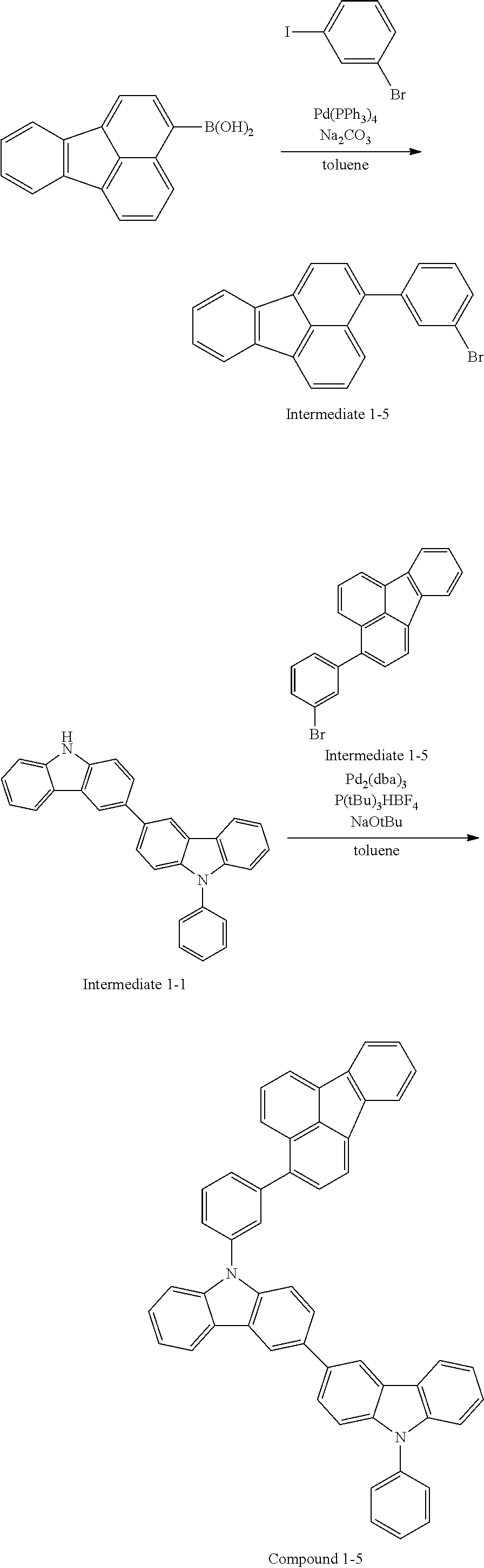
In an argon atmosphere, into a mixture of 3-iodobromobenzene (28.3 g, 100.0 mmol), fluoranthene-3-boronic acid (25.8 g, 105 mmol), and tetrakis(triphenylphosphine)palladium(0) (2.31 g, 2.00 mmol), toluene (300 mL) and a 2 M aqueous sodium carbonate solution (150 mL) were added. The resultant mixture was refluxed under heating for 10 h.
Immediately after the reaction, the reaction liquid was filtered and the water layer was removed from the filtrate. The organic layer was dried over sodium sulfate and then concentrated. The residue was purified by silica gel column chromatography to obtain Intermediate 1-5 (31.8 g, yield: 89%).
FD-MS analysis: m/e=356 for molecular weight of 356.
Then, the procedure of Synthesis Example 1-2 was repeated except for using Intermediate 1-5 (2.9 g, 8.1 mmol) in place of Intermediate 1-2, to obtain Compound 1-5 (2.8 g, yield: 56%).
FD-MS analysis: m/e=684 for molecular weight of 684.

In an argon atmosphere, Intermediate 1-5 (2.9 g, 8.1 mmol), Intermediate 1-6 (3 g, 7.3 mmol), Pd2(dba)3 (0.14 g, 0.15 mmol), P(tBu)3HBF4 (0.17 g, 0.6 mmol), sodium t-butoxide (1.1 g, 11 mmol), and dry xylene (30 mL) were charged in a three-necked flask in this order, and the resultant mixture was refluxed under heating for 8 h.
The solid generated by adding water to the reaction liquid was successively washed with hexane and methanol and then purified by silica gel column chromatography, to obtain Compound 1-6 (3.6 g, yield: 73%).
FD-MS analysis: m/e=684 for molecular weight of 684.

The procedure of synthesizing Intermediate 1-5 was repeated except for using triphenylene-2-boronic acid (28.6 g, 105 mmol) in place of fluoranthene-3-boronic acid, to obtain Intermediate 1-7 (30.6 g, yield: 80%).
Then, the procedure of Synthesis Example 1-6 was repeated except for using Intermediate 1-7 (3.1 g, 8.1 mmol) in place of Intermediate 1-5, to obtain Compound 1-7 (4.4 g, yield: 85%).
FD-MS analysis: m/e=710 for molecular weight of 710.

The procedure of synthesizing Intermediate 1-5 was repeated except for using phenanthrene-9-boronic acid (23.3 g, 105 mmol) in place of fluoranthene-3-boronic acid, to obtain Intermediate 1-8 (28 g, yield: 84%).
Then, The procedure of Synthesis Example 1-6 was repeated except for using Intermediate 1-8 (2.7 g, 8.1 mmol) in place of Intermediate 1-5, to obtain Compound 1-8 (3.7 g, yield: 77%).
FD-MS analysis: m/e=660 for molecular weight of 660.

The procedure of Synthesis Example 1-1 was repeated except for using Intermediate 1-6 (3 g, 7.3 mmol) in place of Intermediate 1-1, to obtain Compound 1-9 (3.2 g, yield: 72%).
FD-MS analysis: m/e=608 for molecular weight of 608.

The procedure of Synthesis Example 1-3 was repeated except for using Intermediate 1-6 (3 g, 7.3 mmol) in place of Intermediate 1-1, to obtain Compound 1-10 (3.0 g, yield: 65%).
FD-MS analysis: m/e=634 for molecular weight of 634.

The procedure of Synthesis Example 1-6 was repeated except for using Intermediate 1-9 (3 g, 7.3 mmol) in place of Intermediate 1-6, to obtain Compound 1-11 (3.1 g, yield: 62%).
FD-MS analysis: m/e=684 for molecular weight of 684.

The procedure of Synthesis Example 1-7 was repeated except for using Intermediate 1-9 (3 g, 7.3 mmol) in place of Intermediate 1-6, to obtain Compound 1-12 (3.5 g, yield: 68%).
FD-MS analysis: m/e=710 for molecular weight of 710.

The procedure of Synthesis Example 1-1 was repeated except for using Intermediate 1-10 (3 g, 7.3 mmol) in place of Intermediate 1-1, to obtain Compound 1-13 (2.9 g, yield: 65%).
FD-MS analysis: m/e=608 for molecular weight of 608.

The procedure of Synthesis Example 1-13 was repeated except for using Intermediate 1-8 (2.7 g, 8.1 mmol) in place of 3-bromofluoranthene, to obtain Compound 1-14 (3.6 g, yield: 75%)
FD-MS analysis: m/e=660 for molecular weight of 660.


In an argon atmosphere, a solution of 3-bromofluoranthene (28.1 g, 100 mmol) in THF (1 L) was cooled to −20° C. and then added with a 1.6 M hexane solution of butyl lithium (69 mL, 110 mmol) dropwise. After 30 min, a solution of iodine (28 g, 110 mmol) in THF (500 mL) was added, the temperature was raised to room temperature, and then the solution was stirred for 3 h. After adding water to the reaction liquid, the organic layer was separated and the solvent was evaporated off. The obtained residue was purified by silica gel column chromatography, to obtain Intermediate 1-11 (23 g, yield: 70%).
Then, into a solution of copper iodide (5.8 g, 30 mmol) in dimethylformamide (300 mL), trans-1,2-cyclohexanediamine (6.9 g, 61 mmol) was added and then 3-bromocarbazole (15 g, 61 mmol), Intermediate 1-11 (20 g, 61 mmol), and tripotassium phosphate (39 g, 183 mmol) were further added. The resultant mixture was stirred at 70° C. for 8 h. The reaction liquid was filtered and the filtrate was concentrated. The obtained residue was purified by silica gel column chromatography, to obtain Intermediate 1-12 (14.9 g, yield: 55%).
Then, a solution of Intermediate 1-12 (14 g, 31 mmol) in THF (500 mL) was cooled to 20° C. and then added with a 1.6 M hexane solution of butyl lithium (23 mL, 37 mmol) dropwise. After stirring for 2 h, a solution of triisopropyl borate (11.7 g, 62 mmol) in THF (50 mL) was added dropwise and the resultant mixture was stirred at room temperature for 6 h. After adding a 2 N hydrochloric acid, the reaction liquid was stirred for 30 min and then the organic layer was separated. The solvent was evaporated off and the obtained residue was purified by silica gel column chromatography, to obtain Intermediate 1-13 (7.9 g, yield: 62%).
Then, Intermediate 1-13 (7 g, 17 mmol), 2-bromocarbazole (4.2 g, 17 mmol), tetrakis(triphenylphosphine)palladium (0.4 g, 0.3 mmol), toluene (25 mL), dimethoxyethane (25 mL), a 2 M aqueous sodium carbonate solution (25 mL) were mixed in this order. The resultant mixture was stirred at 80° C. for 8 h under heating. The organic layer was separated from the reaction liquid and the solvent was evaporated off. The obtained residue was purified by silica gel column chromatography, to obtain Intermediate 1-14 (4.8 g, yield: 53%).
In an argon atmosphere, Intermediate 1-15 (2.5 g, 8.1 mmol), Intermediate 1-16 (3.9 g, 7.3 mmol), Pd2(dba)3 (0.14 g, 0.15 mmol), P(tBu)3HBF4 (0.17 g, 0.6 mmol), sodium t-butoxide (1.1 g, 11 mmol), and dry xylene (30 mL) were mixed in this order. The resultant mixture was refluxed for 8 h under heating.
The solid generated by adding water to the reaction liquid was successively washed with hexane and methanol. The obtained solid was purified by silica gel column chromatography, to obtain Compound 1-15 (4.0 g, yield: 72%).
FD-MS analysis: m/e=763 for molecular weight of 763.
A glass substrate with an ITO transparent electrode having a size of 25 mm×75 mm long×1.1 mm thick (manufactured by GEOMATEC Co., Ltd.) was ultrasonically cleaned in isopropyl alcohol for 5 min and then UV/ozone cleaned for 30 min.
The cleaned glass substrate with the transparent electrode line was mounted on the substrate holder of a vacuum deposition apparatus. First, the following electron-accepting compound C-1 was vapor-deposited onto the surface on the side where the transparent electrode line was formed so as to cover the transparent electrode, thereby forming a C-1 film having a thickness of 5 nm. On the C-1 film, the following aromatic amine derivative X1 was vapor-deposited to form a first hole transporting layer having a thickness of 50 nm. Successively after the formation of the first hole transporting layer, the following aromatic amine derivative X2 was vapor-deposited to form a second hole transporting layer having a thickness of 60 nm.
Then, Compound 1-1 obtained in Synthesis Example 1-1 was vapor-deposited on the second hole transporting layer to form a light emitting layer having a thickness of 45 nm. At the same time, the following compound D3 as a phosphorescent emitting material was co-deposited. The concentration of the compound D3 was 8.0% by mass. The co-deposited film functions as a light emitting layer.
Successively after the formation of the light emitting layer, the compound ET2 was formed into a film having a thickness of 30 nm. The ET2 film functions as an electron transporting layer.
Next, LiF was formed into a film having a thickness of 1 nm at a film forming rate of 0.1 Å/min to form an electron injecting electrode (cathode). On the LiF film, metal Al was vapor-deposited to form a metal cathode having a thickness of 80 nm. Thus, an organic EL device was produced.
The obtained organic EL device was measured for the emission efficiency while driving the device by constant DC at room temperature at an initial luminance of 2000 cd/m2. The result is shown in Table 1. The half lifetime of the emission was measured while driving the device by constant DC at room temperature at an initial luminance of 5000 cd/m2. The result is also shown in Table 1.
Each organic EL device was produced in the same manner as in Example 1-1 except for forming the light emitting layer from the compound listed in Table 1 in place of Compound 1-1. The measured results of the emission efficiency and the half lifetime are shown in Table 1.


| TABLE 1 | |||||
| Emission | Half lifetime | ||||
| Voltage | efficiency | of luminance | |||
| Host material | (V) | (cd/A) | (h) | ||
| Examples | ||||
| 1-1 | compound 1-1 | 4.1 | 11 | 550 |
| 1-2 | compound 1-2 | 4.3 | 10 | 450 |
| 1-3 | compound 1-3 | 4.2 | 12 | 440 |
| 1-4 | compound 1-4 | 4.4 | 12 | 400 |
| 1-5 | compound 1-5 | 4.3 | 11 | 600 |
| 1-6 | compound 1-6 | 4.2 | 12 | 500 |
| 1-7 | compound 1-7 | 4.4 | 10 | 600 |
| 1-8 | compound 1-8 | 4.3 | 11 | 560 |
| 1-9 | compound 1-9 | 4.1 | 12 | 500 |
| 1-10 | compound 1-10 | 4.3 | 11 | 600 |
| 1-11 | compound 1-11 | 4.0 | 12 | 580 |
| 1-12 | compound 1-12 | 4.3 | 11 | 600 |
| 1-13 | compound 1-13 | 4.2 | 13 | 490 |
| 1-14 | compound 1-14 | 4.3 | 10 | 600 |
| 1-15 | compound 1-15 | 4.0 | 12 | 600 |
| Comparative | ||||
| Examples | ||||
| 1-1 | compound 1-A | 5.1 | 9 | 100 |
| 1-2 | compound 1-B | 5.6 | 6.5 | 220 |
| 1-3 | compound 1-C | 5.4 | 8.7 | 180 |
An organic EL device was produced in the same manner as in Example 1-1 except for forming the light emitting layer from Compound 1-D in place of Compound 1-1. No emission from the phosphorescent emitting material (Compound D3) was observed in the obtained organic EL device.
Compounds 1-A and 1-B are disclosed in Patent Document 9, and Compounds 1-C and 1-D are disclosed in Patent Document 7.
In the devices using Compounds 1-A and 1-C, the light emitting layer contains excess holes, failing to balance electrons and holes. In the device using Compound 1-C, the problem of excess holes cannot be completely solved, because the electron transporting ability of Compound 1-C is poor as compared with that of the biscarbazole derivative of the invention.
From the above results, it would appear that the compounds of the invention are superior to the comparative compounds in the emission efficiency and the lifetime. Namely, the above results show that the specific fused ring bonded to the biscarbazole derivative is important for improving the performance of a host material, and that the aromatic fused ring selected from a fluoranthene, a benzophenanthrene, etc. is suitable as such a fused ring.

In an argon atmosphere, 2-bromo-9,9-dimethylfluorene (2.2 g, 8.1 mmol), Intermediate 2-1 (3 g, 7.3 mmol), Pd2(dba)3 (0.14 g, 0.1 5 mmol), P(tBu)3HBF4 (0.17 g, 0.6 mmol), sodium t-butoxide (1.1 g, 11 mmol), and dry toluene (30 mL) were charged in a three-necked flask in this order. The resultant mixture was refluxed for 8 h under heating.
The solid generated by adding water to the reaction liquid was successively washed with hexane and methanol and then purified by silica gel column chromatography, to obtain Compound 2-1 (2.7 g, yield: 62%).
FD-MS analysis: m/e=600 for molecular weight of 600.

In an argon atmosphere, 2-bromo-9,9-dimethylfluorene (4.4 g, 16.2 mmol), Intermediate 2-2 (3 g, 7.3 mmol), Pd2(dba)3 (0.28 g, 0.3 mmol), P(tBu)3HBF4 (0.34 g, 1.2 mmol), sodium t-butoxide (2.2 g, 22 mmol), and dry toluene (30 mL) were charged in a three-necked flask in this order. The resultant mixture was refluxed for 8 h under heating.
The solid generated by adding water to the reaction liquid was successively washed with hexane and methanol and then purified by silica gel column chromatography, to obtain Compound 2-2 (3.7 g, yield: 70%).
FD-MS analysis: m/e=716 for molecular weight of 716.

In an argon atmosphere, 2-iodophenanthrene (2.46 g, 8.1 mmol), Intermediate 2-1 (3 g, 7.3 mmol), Pd2(dba)3 (0.14 g, 0.15 mmol), P(tBu)3HBF4 (0.17 g, 0.6 mmol), sodium t-butoxide (1.1 g, 11 mmol), and dry toluene (30 mL) were charged in a three-necked flask in this order. The resultant mixture was refluxed for 8 h under heating.
The solid generated by adding water to the reaction liquid was successively washed with hexane and methanol and then purified by silica gel column chromatography, to obtain Compound 2-3 (3.15 g, yield: 74%).
FD-MS analysis: m/e=584 for molecular weight of 584.

In an argon atmosphere, 3-bromofluoranthene (2.3 g, 8.1 mmol), Intermediate 2-1 (3 g, 7.3 mmol), Pd2(dba)3 (0.14 g, 0.15 mmol), P(tBu)3HBF4 (0.17 g, 0.6 mmol), sodium t-butoxide (1.1 g, 11 mmol), and dry xylene (30 mL) were charged in a three-necked flask in this order. The resultant mixture was refluxed for 8 h under heating.
The solid generated by adding water to the reaction liquid was successively washed with hexane and methanol and then purified by silica gel column chromatography, to obtain Compound 2-4 (2.9 g, yield: 65%).
FD-MS analysis:  m/e=608 for molecular weight of 608.

The procedure of Synthesis Example 2-1 was repeated except for using 3-(fluoranthene-3′-yl)bromobenzene (2.9 g, 8.1 mmol) in place of 2-bromo-9,9-dimethylfluorene, to obtain Compound 2-5 (2.8 g, yield: 56%).
FD-MS analysis: m/e=684 for molecular weight of 684.
A glass substrate with an ITO transparent electrode having a size of 25 mm×75 mm long×1.1 mm thick (manufactured by GEOMATEC Co., Ltd.) was ultrasonically cleaned in isopropyl alcohol for 5 min and then UV/ozone cleaned for 30 min.
The cleaned glass substrate with the transparent electrode line was mounted on the substrate holder of a vacuum deposition apparatus. First, the following electron-accepting compound C-1 was vapor-deposited onto the surface on the side where the transparent electrode line was formed so as to cover the transparent electrode, thereby forming a C-1 film having a thickness of 5 nm. On the C-1 film, the following aromatic amine derivative X1 was vapor-deposited to form a first hole transporting layer having a thickness of 50 nm. Successively after the formation of the first hole transporting layer, the following aromatic amine derivative X2 was vapor-deposited to form a second hole transporting layer having a thickness of 60 nm.
Then, Compound 2-1 obtained in Synthesis Example 2-1 was vapor-deposited on the second hole transporting layer to form a light emitting layer having a thickness of 45 nm. At the same time, the following compound D3 as a phosphorescent emitting material was co-deposited. The concentration of the compound D3 was 8.0% by mass. The co-deposited film functions as a light emitting layer.
Successively after the formation of the light emitting layer, the compound ET2 was formed into a film having a thickness of 30 nm. The ET2 film functions as an electron transporting layer.
Next, LiF was formed into a film having a thickness of 1 nm at a film forming rate of 0.1 Å/min to form an electron injecting electrode (cathode). On the LiF film, metal Al was vapor-deposited to form a metal cathode having a thickness of 80 nm. Thus, an organic EL device was produced.
The obtained organic EL device was measured for the emission efficiency while driving the device by constant DC at room temperature at an initial luminance of 2000 cd/m2. The result is shown in Table 2. The half lifetime of the emission was measured while driving the device by constant DC at room temperature at an initial luminance of 5000 cd/m2. The result is also shown in Table 2.
Each organic EL device was produced in the same manner as in Example 2-1 except for forming the light emitting layer from the compound listed in Table 2 in place of Compound 2-1.


| TABLE 2 | |||||
| Emission | Half lifetime | ||||
| Voltage | efficiency | of luminance | |||
| Host material | (V) | (cd/A) | (h) | ||
| Examples | ||||
| 2-1 | compound 2-1 | 4.1 | 11 | 400 |
| 2-2 | compound 2-2 | 4.0 | 10 | 350 |
| 2-3 | compound 2-3 | 4.2 | 12 | 420 |
| 2-4 | compound 2-4 | 4.1 | 11 | 550 |
| 2-5 | compound 2-5 | 4.3 | 11 | 600 |
| Comparative | ||||
| Examples | ||||
| 2-1 | compound 2-A | 4.1 | 12 | 150 |
| 2-2 | compound 2-B | 4.2 | 12 | 120 |
| 2-3 | compound 2-C | 4.9 | 9 | 280 |
The organic EL devices of the invention employing the compounds 2-1 to 2-5 exhibit good emission efficiencies and good lifetimes. In contrast, the devices employing the compounds 2-A and 2-B which are disclosed in prior art (Patent Document 9) have shorter device lifetimes. This may be attributable to the presence of an amino substituent which is poor in the electron resistance or the presence of a fluorenyl group wherein its active site is not protected. As compared with the devices of the invention, the device employing the compound 2-C requires a higher voltage and has a low efficiency. Namely, the results show that sufficient properties cannot be obtained if the group bonded to 9-position of carbazole is an amino group, a fluorenyl group, or a naphthyl group, and further show that it is important to select an aryl substituent or a fused ring in place such groups.
The material for organic EL devices of the invention is useful for the production of an organic EL device which has a long lifetime and a high emission efficiency and can be driven at low voltage, thereby reducing a power consumption.
- 1: Organic electroluminescence device
- 2: Substrate
- 3: Anode
- 4: Cathode
- 5: Phosphorescent light emitting layer
- 6: Hole injecting/transporting layer
- 7: Electron injecting/transporting layer
- 10: Organic thin film layer
Claims (21)
1. A biscarbazole derivative represented by formula (2), (3), or (4):

wherein:
-L1-A1 and -L2-A2 are different from each other
A2 represents a substituted or unsubstituted aromatic hydrocarbon group having 6 to 30 ring carbon atoms;
A1 represents a substituted or unsubstituted fluoranthenyl group, a substituted or unsubstituted benzophenanthrenyl group, a substituted or unsubstituted benzotriphenylenyl group, a substituted or unsubstituted dibenzotriphenylenyl group, a substituted or unsubstituted chrysenyl group, a substituted or unsubstituted benzochrysenyl group, a substituted or unsubstituted picenyl group, a substituted or unsubstituted benzo[b]fluoranthenyl group, a substituted or unsubstituted binaphthyl group, a substituted or unsubstituted dibenzophenanthrenyl group, a substituted or unsubstituted naphthotriphenylenyl group, or a substituted or unsubstituted benzofluorenyl group;
each of Y1 to Y16 independently represents C(R) and each of R groups independently represents a hydrogen atom, a substituent, or a valence bonded to a carbazole skeleton; and
each of L1 and L2 independently represents a single bond or a substituted or unsubstituted, divalent aromatic hydrocarbon group having 6 to 30 ring carbon atoms.
2. A material for an organic electroluminescence device, comprising:
the biscarbazole derivative according to claim 1 .
3. An organic electroluminescence device, comprising:
a plurality of organic thin-film layers between a cathode and an anode,
wherein the plurality of organic thin-film layers comprise a light emitting layer and at least one layer of the organic thin-film layers comprises the biscarbazole derivative according to claim 1 .
4. The organic electroluminescence device according to claim 3 ,
wherein the light emitting layer comprises the biscarbazole derivative as a host material.
5. The organic electroluminescence device according to claim 4 ,
wherein the light emitting layer comprises a phosphorescent material.
6. The organic electroluminescence device according to claim 5 ,
wherein the light emitting layer comprises the host material and the phosphorescent material which is an ortho-metallated complex of a metal atom selected from the group consisting of iridium (Ir), osmium (Os), and platinum (Pt).
7. The organic electroluminescence device according to claim 3 , further comprising:
a hole transporting layer between the anode and the light emitting layer,
wherein the hole transporting layer comprises the biscarbazole derivative.
8. A lighting device, comprising:
the organic electroluminescence device according to claim 3 .
9. A display device, comprising:
the organic electroluminescence device according to claim 3 .
10. The biscarbazole derivative according to claim 1 ,
wherein A1 represents a substituted or unsubstituted fluoranthenyl group, a substituted or unsubstituted benzophenanthrenyl group, or a substituted or unsubstituted benzotriphenylenyl group.
11. The biscarbazole derivative according to claim 10 ,
wherein A1 represents an unsubstituted fluoranthenyl group, an unsubstituted benzophenanthrenyl group, or an unsubstituted benzotriphenylenyl group;
A2 represents an unsubstituted phenyl group, an unsubstituted biphenyl group, an unsubstituted terphenyl group, or an unsubstituted naphthyl group;
at least one of L1 and L2 represents an unsubstituted, divalent phenyl group, an unsubstituted, divalent naphthyl group, or an unsubstituted, divalent phenanthrenyl group; and
each of Y1 to Y16 represents C(R) wherein each of R groups independently represents a hydrogen atom, or a valence bonded to a carbazole skeleton.
12. The biscarbazole derivative according to claim 10 ,
wherein A1 represents an unsubstituted fluoranthenyl group, an unsubstituted benzophenanthrenyl group, or an unsubstituted benzotriphenylenyl group;
A2 represents an unsubstituted phenyl group, an unsubstituted biphenyl group, an unsubstituted terphenyl group, or an unsubstituted naphthyl group;
L1 and L2 represent a single bond; and
each of Y1 to Y16 represents C(R) wherein each of R groups independently represents a hydrogen atom, or a valence bonded to a carbazole skeleton.
13. The biscarbazole derivative according to claim 1 ,
wherein A2 represents a substituted or unsubstituted phenyl group, a substituted or unsubstituted biphenyl group, a substituted or unsubstituted terphenyl group, or a substituted or unsubstituted naphthyl group.
14. The biscarbazole derivative according to claim 1 ,
wherein at least one of L1 and L2 represents a substituted or unsubstituted, divalent aromatic hydrocarbon group having 6 to 30 ring carbon atoms.
15. The biscarbazole derivative according to claim 1 ,
wherein at least one of L1 and L2 represents a single bond.
16. The biscarbazole derivative according to claim 14 ,
wherein at least one of L1 and L2 represents a substituted or unsubstituted, divalent phenyl group, a substituted or unsubstituted, divalent naphthyl group, or a substituted or unsubstituted, divalent phenanthrenyl group.
17. The biscarbazole derivative according to claim 1 ,
wherein each of Y1 to Y16 represents C(R) wherein each of R groups independently represents a hydrogen atom, or a valence bonded to a carbazole skeleton.
18. The biscarbazole derivative according to claim 1 ,
wherein at least one of R groups represents a substituent and the substituent represents a substituted or unsubstituted, linear, branched, or cyclic alkyl group having 1 to 20 carbon atoms, and when a plurality of R groups represents the substituents, the plurality of R groups may be the same or different from each other.
19. The biscarbazole derivative according to claim 18 ,
wherein the substituent represents a methyl group, an ethyl group, a propyl group, or an isopropyl group, each being a substituted or unsubstituted.
20. The biscarbazole derivative according to claim 1 ,
wherein
when A1 and A2 have a substituent, the substituent represents a fluorine atom, a substituted or unsubstituted, linear, branched, or cyclic alkyl group having 1 to 20 carbon atoms, or a substituted or unsubstituted, linear, branched, or cyclic alkylsilyl group having 1 to 10 carbon atoms.
21. The biscarbazole derivative according to claim 20 ,
wherein the substituent represents a fluorine atom, an unsubstituted alkyl groups selected from methyl group, ethyl group, propyl group, isopropyl group, n-butyl group, s-butyl group, isobutyl group, t-butyl group, n-pentyl group, n-hexyl group, n-heptyl group, and n-octyl group, or an unsubstituted trimethylsilyl group.
Applications Claiming Priority (7)
| Application Number | Priority Date | Filing Date | Title |
|---|---|---|---|
| JP2011024453 | 2011-02-07 | ||
| JP2011-024453 | 2011-02-07 | ||
| JP2011-024452 | 2011-02-07 | ||
| JP2011024452 | 2011-02-07 | ||
| JP2011229117 | 2011-10-18 | ||
| JP2011-229117 | 2011-10-18 | ||
| PCT/JP2012/052639 WO2012108388A1 (en) | 2011-02-07 | 2012-02-06 | Biscarbazole derivative and organic electroluminescent element using same |
Related Parent Applications (1)
| Application Number | Title | Priority Date | Filing Date |
|---|---|---|---|
| PCT/JP2012/052639 A-371-Of-International WO2012108388A1 (en) | 2011-02-07 | 2012-02-06 | Biscarbazole derivative and organic electroluminescent element using same |
Related Child Applications (2)
| Application Number | Title | Priority Date | Filing Date |
|---|---|---|---|
| US14/707,514 Continuation US11271171B2 (en) | 2011-02-07 | 2015-05-08 | Biscarbazole derivative and organic electroluminescent element using same |
| US15/165,142 Continuation US10147889B2 (en) | 2011-02-07 | 2016-05-26 | Biscarbazole derivative and organic electroluminescent element using same |
Publications (2)
| Publication Number | Publication Date |
|---|---|
| US20140048784A1 US20140048784A1 (en) | 2014-02-20 |
| US10147888B2 true US10147888B2 (en) | 2018-12-04 |
Family
ID=46638603
Family Applications (3)
| Application Number | Title | Priority Date | Filing Date |
|---|---|---|---|
| US13/983,687 Active 2032-12-04 US10147888B2 (en) | 2011-02-07 | 2012-02-06 | Biscarbazole derivative and organic electroluminescent element using same |
| US14/707,514 Active 2033-05-27 US11271171B2 (en) | 2011-02-07 | 2015-05-08 | Biscarbazole derivative and organic electroluminescent element using same |
| US15/165,142 Active 2032-03-26 US10147889B2 (en) | 2011-02-07 | 2016-05-26 | Biscarbazole derivative and organic electroluminescent element using same |
Family Applications After (2)
| Application Number | Title | Priority Date | Filing Date |
|---|---|---|---|
| US14/707,514 Active 2033-05-27 US11271171B2 (en) | 2011-02-07 | 2015-05-08 | Biscarbazole derivative and organic electroluminescent element using same |
| US15/165,142 Active 2032-03-26 US10147889B2 (en) | 2011-02-07 | 2016-05-26 | Biscarbazole derivative and organic electroluminescent element using same |
Country Status (7)
| Country | Link |
|---|---|
| US (3) | US10147888B2 (en) |
| EP (1) | EP2674418B1 (en) |
| JP (3) | JP5745549B2 (en) |
| KR (2) | KR101588941B1 (en) |
| CN (2) | CN106117114A (en) |
| TW (2) | TWI550059B (en) |
| WO (1) | WO2012108388A1 (en) |
Families Citing this family (72)
| Publication number | Priority date | Publication date | Assignee | Title |
|---|---|---|---|---|
| US7723722B2 (en) * | 2007-03-23 | 2010-05-25 | Semiconductor Energy Laboratory Co., Ltd. | Organic compound, anthracene derivative, and light-emitting element, light-emitting device, and electronic device using anthracene derivative |
| EP2674429B1 (en) | 2011-02-07 | 2020-12-23 | Idemitsu Kosan Co., Ltd. | Biscarbazole derivative and organic electroluminescent element using same |
| KR20130025087A (en) * | 2011-09-01 | 2013-03-11 | 롬엔드하스전자재료코리아유한회사 | Novel organic electroluminescent compounds and organic electroluminescent device using the same |
| CN103380508B (en) | 2011-11-22 | 2017-09-08 | 出光兴产株式会社 | Aromatic heterocyclic derivative, material for organic electroluminescent element, and organic electroluminescent element |
| KR20130062583A (en) * | 2011-12-05 | 2013-06-13 | 롬엔드하스전자재료코리아유한회사 | Novel organic electroluminescence compounds and organic electroluminescence device using the same |
| CN103959503B (en) | 2011-12-05 | 2016-08-24 | 出光兴产株式会社 | Material for organic electroluminescent element and organic electroluminescent element |
| CN104205393B (en) | 2012-03-26 | 2016-11-09 | 东丽株式会社 | Light emitting element material and light-emitting component |
| KR101946891B1 (en) * | 2012-07-05 | 2019-02-12 | 도레이 카부시키가이샤 | Light emitting elment material and light emitting element |
| CN104488105B (en) * | 2012-07-25 | 2017-03-22 | 东丽株式会社 | Light emitting element material and light emitting element |
| KR101497138B1 (en) * | 2012-08-21 | 2015-02-27 | 제일모직 주식회사 | Organic optoelectronic device and display including the same |
| US9935273B2 (en) | 2012-10-12 | 2018-04-03 | Toray Industries, Inc. | Fluoranthene derivative, light-emitting device material containing same, and light-emitting device |
| KR20160002675A (en) | 2013-05-02 | 2016-01-08 | 이데미쓰 고산 가부시키가이샤 | Compound, material for organic electroluminescent elements, organic electroluminescent element, and electronic device |
| US9508939B2 (en) | 2013-07-23 | 2016-11-29 | Idemitsu Kosan Co., Ltd. | Compound and organic electroluminescent element produced using same |
| KR101649683B1 (en) * | 2013-09-06 | 2016-08-19 | 제일모직 주식회사 | Composition for organic optoelectric device and organic optoelectric device and display device |
| KR102180085B1 (en) * | 2013-09-12 | 2020-11-17 | 덕산네오룩스 주식회사 | Organic electronic element using a compound for organic electronic element, and an electronic device thereof |
| US10217945B2 (en) | 2013-10-03 | 2019-02-26 | Idemitsu Kosan Co., Ltd. | Compound, organic electroluminescent element material using same, organic electroluminescent element using this material, and electronic device |
| JP6298608B2 (en) * | 2013-10-03 | 2018-03-20 | 出光興産株式会社 | Fluoranthene derivative, organic electroluminescence element and electronic device |
| KR102140006B1 (en) * | 2013-10-11 | 2020-07-31 | 에스에프씨 주식회사 | An electroluminescent compound and an electroluminescent device comprising the same |
| GB201405771D0 (en) * | 2014-03-31 | 2014-05-14 | Cambridge Display Tech Ltd | Iodination process, monomer and polymer |
| KR102192001B1 (en) * | 2014-03-31 | 2020-12-16 | 엘지디스플레이 주식회사 | Carbazole compound and organic light emitting diode including the same |
| KR101754715B1 (en) * | 2014-04-08 | 2017-07-10 | 롬엔드하스전자재료코리아유한회사 | Multi-component host material and organic electroluminescence device comprising the same |
| KR101734459B1 (en) * | 2014-05-20 | 2017-05-11 | 제일모직 주식회사 | Organic compound and composition and organic optoelectric device and display device |
| KR101558495B1 (en) * | 2014-06-27 | 2015-10-12 | 희성소재 (주) | Polycyclic compound and organic light emitting device using the same |
| KR102430648B1 (en) * | 2014-09-05 | 2022-08-09 | 롬엔드하스전자재료코리아유한회사 | A Hole Transport Material and an Organic Electroluminescent Device Comprising the Same |
| KR101818581B1 (en) * | 2014-10-31 | 2018-01-15 | 삼성에스디아이 주식회사 | Organic optoelectric device and display device |
| KR102384649B1 (en) | 2014-11-10 | 2022-04-11 | 삼성디스플레이 주식회사 | Organic light-emitting device |
| KR102385230B1 (en) | 2014-11-19 | 2022-04-12 | 삼성디스플레이 주식회사 | Organic light emitting device |
| KR102363259B1 (en) | 2014-12-02 | 2022-02-16 | 삼성디스플레이 주식회사 | Organic light emitting device |
| KR102363260B1 (en) * | 2014-12-19 | 2022-02-16 | 삼성디스플레이 주식회사 | Organic light emitting device |
| KR102398064B1 (en) | 2014-12-26 | 2022-05-16 | 삼성디스플레이 주식회사 | An organic light emitting device |
| EP3051604B1 (en) * | 2015-01-30 | 2017-10-11 | Samsung Display Co., Ltd. | Organic light-emitting device |
| KR102338908B1 (en) * | 2015-03-03 | 2021-12-14 | 삼성디스플레이 주식회사 | An organic light emitting device |
| TWI814143B (en) | 2015-03-09 | 2023-09-01 | 日商半導體能源研究所股份有限公司 | Light-emitting element, display device, electronic device, and lighting device |
| US10629821B2 (en) | 2015-04-08 | 2020-04-21 | Idemitsu Kosan Co., Ltd. | Compound, material for organic electroluminescent elements using same, and organic electroluminescent element and electronic device each using same |
| US20170229661A1 (en) | 2015-06-16 | 2017-08-10 | Idemitsu Kosan Co., Ltd. | Compound, material for organic electroluminescence element, organic electroluminescence element, and electronic device |
| JPWO2016204150A1 (en) * | 2015-06-16 | 2018-04-05 | 出光興産株式会社 | COMPOUND, MATERIAL FOR ORGANIC ELECTROLUMINESCENT ELEMENT, ORGANIC ELECTROLUMINESCENT ELEMENT AND ELECTRONIC DEVICE |
| US10367151B2 (en) * | 2015-06-23 | 2019-07-30 | Samsung Electronics Co., Ltd. | Condensed cyclic compound and organic light-emitting device including the same |
| CN106316925A (en) * | 2015-06-26 | 2017-01-11 | 上海和辉光电有限公司 | Organic electroluminescence compound and application thereof |
| CN107851726A (en) * | 2015-09-11 | 2018-03-27 | 出光兴产株式会社 | Organic electroluminescent elements, lighting devices, display devices and hybrid materials |
| EP3150604B1 (en) | 2015-10-01 | 2021-07-14 | Idemitsu Kosan Co., Ltd. | Benzimidazolo[1,2-a]benzimidazole carrying benzimidazolo[1,2-a]benzimidazolylyl groups, carbazolyl groups, benzofurane groups or benzothiophene groups for organic light emitting diodes |
| EP3150606B1 (en) | 2015-10-01 | 2019-08-14 | Idemitsu Kosan Co., Ltd. | Benzimidazolo[1,2-a]benzimidazoles carrying benzofurane or benzothiophene groups for organic light emitting diodes |
| EP3356369B1 (en) | 2015-10-01 | 2022-05-04 | Idemitsu Kosan Co., Ltd | Benzimidazolo[1,2-a]benzimidazole carrying triazine groups for organic light emitting diodes |
| WO2017056053A1 (en) | 2015-10-01 | 2017-04-06 | Idemitsu Kosan Co., Ltd. | Benzimidazolo[1,2-a]benzimidazole carrying benzimidazolo[1,2-a]benzimidazolyl groups, carbazolyl groups, benzofurane groups or benzothiophene groups for organic light emitting diodes |
| KR102591635B1 (en) | 2015-10-27 | 2023-10-20 | 삼성디스플레이 주식회사 | An organic light emitting device |
| KR20180079328A (en) | 2015-11-04 | 2018-07-10 | 이데미쓰 고산 가부시키가이샤 | Benzimidazole condensed heteroaryl |
| KR102399570B1 (en) | 2015-11-26 | 2022-05-19 | 삼성디스플레이 주식회사 | Organic light emitting device |
| WO2017093958A1 (en) | 2015-12-04 | 2017-06-08 | Idemitsu Kosan Co., Ltd. | Benzimidazolo[1,2-a]benzimidazole derivatives for organic light emitting diodes |
| CN106410054B (en) * | 2015-12-09 | 2019-03-12 | 广东阿格蕾雅光电材料有限公司 | Hole-Only Organic Semiconductor Diode Devices |
| US20180370981A1 (en) | 2015-12-21 | 2018-12-27 | Idemitsu Kosan Co., Ltd. | Hetero-condensed phenylquinazolines and their use in electronic devices |
| EP3184522B1 (en) | 2015-12-22 | 2023-01-11 | Samsung Electronics Co., Ltd. | Condensed cyclic compound, composition including the condensed cyclic compound, organic light-emitting device including the condensed cyclic compound, and method of manufacturing the organic light-emitting device |
| US11910707B2 (en) | 2015-12-23 | 2024-02-20 | Samsung Display Co., Ltd. | Organic light-emitting device |
| KR20170127101A (en) | 2016-05-10 | 2017-11-21 | 삼성디스플레이 주식회사 | Organic light emitting device |
| JP2019521995A (en) | 2016-06-22 | 2019-08-08 | 出光興産株式会社 | Benzofuro- or benzothienoquinoline substituted at specific positions for organic light-emitting diodes |
| CN106601922B (en) * | 2016-12-15 | 2020-05-26 | Tcl科技集团股份有限公司 | Quantum dot display panel and manufacturing method thereof |
| WO2018116152A1 (en) * | 2016-12-19 | 2018-06-28 | Idemitsu Kosan Co., Ltd. | Specifically substituted ladder type compounds for organic light emitting devices |
| CN106848060B (en) * | 2016-12-26 | 2019-05-14 | 广东阿格蕾雅光电材料有限公司 | Only P-type semiconductor diode component based on asymmetric organic hole mobile material |
| JP6846256B2 (en) * | 2017-03-29 | 2021-03-24 | 日鉄ケミカル&マテリアル株式会社 | Materials for organic electroluminescent devices and organic electroluminescent devices using them |
| EP3466954A1 (en) | 2017-10-04 | 2019-04-10 | Idemitsu Kosan Co., Ltd. | Fused phenylquinazolines bridged with a heteroatom |
| CN111954939A (en) | 2018-03-07 | 2020-11-17 | 株式会社半导体能源研究所 | Light-emitting element, display device, electronic device, organic compound, and lighting device |
| EP3569605A1 (en) | 2018-05-18 | 2019-11-20 | Idemitsu Kosan Co., Ltd. | Novel electroluminescent metal complexes and an organic electroluminescence device comprising the same |
| KR102322698B1 (en) | 2018-06-22 | 2021-11-09 | 엘티소재주식회사 | Heterocyclic compound, organic light emitting device comprising the same, composition for organic layer of organic light emitting device and method for manufacturing organic light emitting device |
| KR102833740B1 (en) | 2018-07-11 | 2025-07-15 | 가부시키가이샤 한도오따이 에네루기 켄큐쇼 | Light-emitting devices, display devices, electronic devices, organic compounds, and lighting devices |
| EP3604477A1 (en) | 2018-07-30 | 2020-02-05 | Idemitsu Kosan Co., Ltd. | Polycyclic compound, organic electroluminescence device, and electronic device |
| EP3608319A1 (en) | 2018-08-07 | 2020-02-12 | Idemitsu Kosan Co., Ltd. | Condensed aza cycles as organic light emitting device and materials for use in same |
| KR102711310B1 (en) * | 2018-10-02 | 2024-09-26 | 엘지디스플레이 주식회사 | Organic light emitting diode device |
| KR20250163995A (en) | 2019-02-06 | 2025-11-21 | 가부시키가이샤 한도오따이 에네루기 켄큐쇼 | Light-emitting device, light-emitting apparatus, display device, electronic apparatus, and lighting device |
| WO2021044262A1 (en) | 2019-09-06 | 2021-03-11 | 株式会社半導体エネルギー研究所 | Light-emitting device, display device, electronic appliance, organic compound, and illuminator |
| DE102021100597A1 (en) * | 2020-01-31 | 2021-08-05 | Rohm And Haas Electronic Materials Korea Ltd. | ORGANIC ELECTROLUMINESCENT COMPOUND, MULTIPLE HOST MATERIALS, AND THIS COMPREHENSIVE ORGANIC ELECTROLUMINESCENT DEVICE |
| KR102306966B1 (en) * | 2020-01-31 | 2021-10-01 | 롬엔드하스전자재료코리아유한회사 | Organic electroluminescent compound, a plurality of host materials, and organic electroluminescent device comprising the same |
| CN113896734A (en) | 2020-07-06 | 2022-01-07 | 罗门哈斯电子材料韩国有限公司 | Organic electroluminescent compounds, various host materials and organic electroluminescent device comprising the same |
| WO2022149493A1 (en) | 2021-01-08 | 2022-07-14 | 日鉄ケミカル&マテリアル株式会社 | Organic electroluminescent element and method for producing same |
| KR20240130082A (en) | 2021-12-30 | 2024-08-28 | 도레이 카부시키가이샤 | Fluoranthene derivatives, light-emitting devices and photoelectric conversion devices |
Citations (113)
| Publication number | Priority date | Publication date | Assignee | Title |
|---|---|---|---|---|
| JPH01174084A (en) | 1987-12-28 | 1989-07-10 | Stanley Electric Co Ltd | Transfer system for picture data |
| JPH03139321A (en) | 1989-10-24 | 1991-06-13 | Taiyo Sanso Co Ltd | Dish-washing machine |
| JPH04357781A (en) | 1991-06-03 | 1992-12-10 | Mitsubishi Electric Corp | Magnetic recording and reproducing device |
| JPH083547A (en) | 1994-03-31 | 1996-01-09 | Toray Ind Inc | Light emitting element |
| JP2814435B2 (en) | 1987-03-02 | 1998-10-22 | イーストマン・コダック・カンパニー | Electroluminescent device with improved thin film emission band |
| JPH1174084A (en) | 1997-08-29 | 1999-03-16 | Toray Ind Inc | Light emitting device and manufacturing method thereof |
| JPH11135260A (en) | 1997-10-28 | 1999-05-21 | Toray Ind Inc | Light emitting element |
| JPH11144873A (en) | 1997-11-11 | 1999-05-28 | Mitsui Chem Inc | Organic electroluminescence element |
| JPH11149987A (en) | 1997-11-18 | 1999-06-02 | Mitsui Chem Inc | Organic electroluminescent element |
| JPH11329737A (en) | 1998-03-13 | 1999-11-30 | Taiho Ind Co Ltd | Organic multilayer electroluminescence device and method for synthesizing structure for organic multilayer electroluminescence device |
| JP2002069044A (en) | 2000-08-25 | 2002-03-08 | Idemitsu Kosan Co Ltd | Organic electroluminescence device |
| JP2002540572A (en) | 1999-03-23 | 2002-11-26 | ザ ユニバーシティー オブ サザン カリフォルニア | Cyclometallated metal complexes as phosphorescent dopants in organic LEDs |
| JP2003081988A (en) | 2000-09-26 | 2003-03-19 | Canon Inc | Light emitting device, display device and metal coordination compound for light emitting device |
| JP2003515897A (en) | 1999-12-01 | 2003-05-07 | ザ、トラスティーズ オブ プリンストン ユニバーシティ | Complexes of Formula L2MX as phosphorescent dopants for organic LEDs |
| JP2003133075A (en) | 2001-07-25 | 2003-05-09 | Toray Ind Inc | Light emitting element |
| JP2003151774A (en) | 2001-11-14 | 2003-05-23 | Toray Ind Inc | Light emitting element |
| US20030118866A1 (en) | 2001-10-30 | 2003-06-26 | Lg Electronics Inc. | Organic electroluminescent device |
| JP2003238534A (en) | 2002-02-22 | 2003-08-27 | Idemitsu Kosan Co Ltd | Novel anthracene compound and organic electroluminescent device using the same |
| JP2003526876A (en) | 1999-05-13 | 2003-09-09 | ザ、トラスティーズ オブ プリンストン ユニバーシティ | High efficiency organic light emitting device based on electrophosphorescence |
| JP2004071380A (en) | 2002-08-07 | 2004-03-04 | Konica Minolta Holdings Inc | Organic electroluminescence element and display device |
| WO2004055129A1 (en) | 2002-12-13 | 2004-07-01 | Koninklijke Philips Electronics N.V. | Electroluminescent device |
| WO2004066685A1 (en) | 2003-01-24 | 2004-08-05 | Idemitsu Kosan Co., Ltd. | Organic electroluminescence device |
| WO2004072205A2 (en) | 2003-02-12 | 2004-08-26 | Koninklijke Philips Electronics N.V. | Carbazole compounds and use of such compounds in organic electroluminescent devices |
| JP2004342391A (en) | 2003-05-14 | 2004-12-02 | Konica Minolta Holdings Inc | Organic electroluminescence element, lighting device and display device |
| US20050067955A1 (en) | 2003-09-27 | 2005-03-31 | Korea Institute Of Science And Technology | Compound derived from cyclopentadienone, preparation method thereof and EL element using the same |
| JP2005289914A (en) | 2004-04-01 | 2005-10-20 | Canon Inc | Compound for organic EL element, light emitting element and display device |
| US20060046172A1 (en) | 2004-08-30 | 2006-03-02 | Violeta Vaitkeviciene | Polymeric charge transport materials having carbazolyl repeating units |
| US20060088728A1 (en) * | 2004-10-22 | 2006-04-27 | Raymond Kwong | Arylcarbazoles as hosts in PHOLEDs |
| JP2006143845A (en) | 2004-11-18 | 2006-06-08 | Konica Minolta Holdings Inc | ORGANIC ELECTROLUMINESCENT ELEMENT MATERIAL, ORGANIC ELECTROLUMINESCENT ELEMENT, LIGHTING DEVICE AND DISPLAY DEVICE |
| JP2007194241A (en) | 2006-01-17 | 2007-08-02 | Toray Ind Inc | Light emitting element |
| JP2007201193A (en) | 2006-01-26 | 2007-08-09 | Fuji Xerox Co Ltd | Organic electroluminescence device |
| JP2007201194A (en) | 2006-01-26 | 2007-08-09 | Fuji Xerox Co Ltd | Organic electroluminescence device |
| JP2007201189A (en) | 2006-01-26 | 2007-08-09 | Fuji Xerox Co Ltd | Organic electroluminescence device |
| WO2007119816A1 (en) | 2006-04-19 | 2007-10-25 | Konica Minolta Holdings, Inc. | Organic electroluminescence element material, organic electroluminescence element, display device and lighting apparatus |
| CN101126020A (en) | 2007-08-03 | 2008-02-20 | 深圳大学 | A class of 1,3,6,8-tetraaryl-9-alkyl substituted carbazole derivatives and their application in light-emitting diodes |
| US20080131731A1 (en) | 2006-12-05 | 2008-06-05 | Canon Kabushiki Kaisha | Carbazole derivative and organic light emitting device using the same |
| JP2008135498A (en) | 2006-11-28 | 2008-06-12 | Toray Ind Inc | Light emitting element |
| EP1972619A1 (en) | 2007-03-23 | 2008-09-24 | Semiconductor Energy Laboratory Co., Ltd. | Organic compound, anthracene derivative, and light-emitting element, light-emitting device, and electronic device using anthracene derivative |
| JP2008294161A (en) | 2007-05-23 | 2008-12-04 | Toray Ind Inc | Light emitting element |
| US20090015144A1 (en) | 2006-11-15 | 2009-01-15 | Idemitsu Kosan Co., Ltd. | Fluoranthene compound, organic electroluminescence device using the same, and solution containing organic electroluminescence material |
| WO2009008100A1 (en) | 2007-07-10 | 2009-01-15 | Idemitsu Kosan Co., Ltd. | Material for organic electroluminescence element, and organic electroluminescence element prepared by using the material |
| US20090066235A1 (en) * | 2007-08-06 | 2009-03-12 | Idemitsu Kosan Co., Ltd. | Aromatic amine derivative and organic electroluminescence device using the same |
| KR20090028943A (en) | 2007-09-17 | 2009-03-20 | (주)루디스 | Hole injection layer / hole transport layer material and organic light emitting device comprising the same |
| US20090085479A1 (en) | 2007-09-27 | 2009-04-02 | Semiconductor Energy Laboratory Co., Ltd. | Light-emitting element, lighting device, light-emitting device, and electronic device |
| EP2051310A1 (en) | 2007-10-19 | 2009-04-22 | Semiconductor Energy Laboratory Co., Ltd. | Light-emitting device |
| WO2009060779A1 (en) | 2007-11-08 | 2009-05-14 | Konica Minolta Holdings, Inc. | Organic electroluminescent device material, organic electroluminescent device, display device and illuminating device |
| WO2009116605A1 (en) | 2008-03-18 | 2009-09-24 | Semiconductor Energy Laboratory Co., Ltd. | Light-emitting element, light-emitting device and electronic device |
| WO2009130991A1 (en) | 2008-04-23 | 2009-10-29 | 出光興産株式会社 | Material for organic thin film solar cell, and organic thin film solar cell comprising the material |
| EP2120275A2 (en) | 2008-05-16 | 2009-11-18 | Semiconductor Energy Laboratory Co, Ltd. | Light-Emitting Element, Lighting Apparatus, Light-Emitting Device, Electronic Appliance, and Display |
| EP2141214A2 (en) | 2008-06-25 | 2010-01-06 | Gracel Display Inc. | Novel organic electroluminescent compounds and organic electroluminescent device using the same |
| WO2010004877A1 (en) | 2008-07-10 | 2010-01-14 | コニカミノルタホールディングス株式会社 | Organic electroluminescent element, display device and illuminating device |
| WO2010044342A1 (en) | 2008-10-15 | 2010-04-22 | コニカミノルタホールディングス株式会社 | Organic el element, organic el element manufacturing method, white organic el element, display device, and illumination device |
| EP2182039A2 (en) | 2008-10-30 | 2010-05-05 | Gracel Display Inc. | Aromatic electroluminescent compounds and organic electroluminescent device using the same |
| US20100148166A1 (en) | 2008-12-17 | 2010-06-17 | Semiconductor Energy Laboratory Co., Ltd. | Light-Emitting Element, Lighting Device, Light-Emitting Device, and Electronic Apparatus |
| JP2010135467A (en) | 2008-12-03 | 2010-06-17 | Konica Minolta Holdings Inc | Organic electroluminescent element, lighting system equipped with the element, and display device |
| US20100148165A1 (en) | 2008-12-17 | 2010-06-17 | Semiconductor Energy Laboratory Co., Ltd. | Light-Emitting Element, Light-Emitting Device, and Electronic Device |
| KR20100079458A (en) | 2008-12-31 | 2010-07-08 | 덕산하이메탈(주) | Bis-carbazole compound and organic electric element using same, terminal thereof |
| WO2010095621A1 (en) | 2009-02-18 | 2010-08-26 | 出光興産株式会社 | Aromatic amine derivative and organic electroluminescent element |
| KR20100099460A (en) | 2009-03-03 | 2010-09-13 | 덕산하이메탈(주) | Bis-carbazole chemiclal and organic electroric element using the same, terminal thererof |
| CN101838262A (en) | 2009-03-20 | 2010-09-22 | 株式会社半导体能源研究所 | Carbazole derivative having heteroaromatic ring, light-emitting element and light-emitting device using same |
| US20100253211A1 (en) * | 2009-04-06 | 2010-10-07 | Idemitsu Kosan Co., Ltd. | Organic electroluminescence device and material for organic electroluminescence device |
| WO2010114264A2 (en) | 2009-03-31 | 2010-10-07 | Dow Advanced Display Materials,Ltd. | Novel organic electroluminescent compounds and organic electroluminescent device using the same |
| US20110031482A1 (en) | 2009-08-05 | 2011-02-10 | Konica Minolta Holdings, Inc. | Organic electroluminescent element and method of manufacturing the same |
| WO2011024451A1 (en) | 2009-08-28 | 2011-03-03 | 保土谷化学工業株式会社 | Organic electroluminescent element and compound having carbazole ring structure |
| US20110063485A1 (en) | 2009-09-11 | 2011-03-17 | Fujifilm Corporation | Photoelectric conversion device, production method thereof, photosensor, imaging device and their drive methods |
| KR20110041727A (en) | 2009-10-16 | 2011-04-22 | 에스에프씨 주식회사 | Carbazole derivatives and organic electroluminescent devices using the same |
| KR20110043270A (en) | 2009-10-21 | 2011-04-27 | (주)씨에스엘쏠라 | Organic light emitting compound and organic light emitting device having same |
| WO2011048822A1 (en) | 2009-10-23 | 2011-04-28 | 保土谷化学工業株式会社 | Organic electroluminescent element |
| WO2011048821A1 (en) | 2009-10-23 | 2011-04-28 | 保土谷化学工業株式会社 | Organic electroluminescent element |
| WO2011055934A2 (en) | 2009-11-03 | 2011-05-12 | 제일모직 주식회사 | Compound for an organic photoelectric device, and organic photoelectric device comprising same |
| WO2011081423A2 (en) | 2009-12-30 | 2011-07-07 | 주식회사 두산 | Triphenylene compound and organic electroluminescence device including the same |
| KR20110088898A (en) | 2010-01-29 | 2011-08-04 | 주식회사 이엘엠 | Organic electroluminescent composition and organic electroluminescent device comprising same |
| TW201132739A (en) | 2010-03-31 | 2011-10-01 | Idemitsu Kosan Co | Material for organic electroluminescence element and organic electroluminescence element using the same |
| US20110260138A1 (en) | 2010-04-26 | 2011-10-27 | Universal Display Corporation | Bicarbzole containing compounds for oleds |
| WO2011132683A1 (en) | 2010-04-20 | 2011-10-27 | 出光興産株式会社 | Bis-carbazole derivative, material for organic electroluminescent element and organic electroluminescent element using same |
| WO2011139055A2 (en) | 2010-05-03 | 2011-11-10 | 제일모직 주식회사 | Compound for organic optoelectronic device, organic light emitting diode including same, and display device including organic light emitting diode |
| WO2011149240A2 (en) | 2010-05-28 | 2011-12-01 | 주식회사 두산 | Bipolar triphenylene-based compound and an organic electroluminescent element comprising the same |
| WO2011155508A1 (en) | 2010-06-08 | 2011-12-15 | 出光興産株式会社 | Organic electroluminescent element |
| WO2011155507A1 (en) | 2010-06-08 | 2011-12-15 | 出光興産株式会社 | Organic electroluminescence element |
| KR20110138596A (en) | 2010-06-21 | 2011-12-28 | 주식회사 이엘엠 | Organic electroluminescent composition and organic electroluminescent device comprising same |
| WO2012001986A1 (en) | 2010-06-30 | 2012-01-05 | 保土谷化学工業株式会社 | Compound with carbazole ring structure and organic electroluminescent element |
| WO2012011756A1 (en) | 2010-07-21 | 2012-01-26 | Rohm And Haas Electronic Materials Korea Ltd. | Novel organic electroluminescent compounds and organic electroluminescent devices including the same |
| WO2012023947A1 (en) | 2010-08-20 | 2012-02-23 | Universal Display Corporation | Bicarbazole compounds for oleds |
| WO2012029253A1 (en) | 2010-08-31 | 2012-03-08 | 出光興産株式会社 | Nitrogen-containing aromatic heterocyclic derivative and organic electroluminescence device using same |
| TW201211003A (en) | 2010-06-24 | 2012-03-16 | Toray Industries | Light-emitting device material and light-emitting device |
| WO2012036482A1 (en) | 2010-09-17 | 2012-03-22 | Rohm And Haas Electronic Materials Korea Ltd. | Novel organic electroluminescent compounds and organic electroluminescent device using the same |
| US20120126205A1 (en) | 2010-11-22 | 2012-05-24 | Idemitsu Kosan Co., Ltd. | Organic electroluminescence device |
| US20120126208A1 (en) | 2010-11-22 | 2012-05-24 | Idemitsu Kosan Co., Ltd. | Organic electroluminescence device |
| WO2012087007A1 (en) | 2010-12-21 | 2012-06-28 | Rohm And Haas Electronic Materials Korea Ltd. | Novel organic electroluminescent compounds and organic electroluminescent device using the same |
| WO2012086170A1 (en) | 2010-12-20 | 2012-06-28 | 出光興産株式会社 | Aromatic heterocycle derivative and organic electroluminescent element using same |
| WO2012108389A1 (en) | 2011-02-07 | 2012-08-16 | 出光興産株式会社 | Biscarbazole derivative and organic electroluminescent element using same |
| US20120235123A1 (en) | 2009-08-10 | 2012-09-20 | Rohm And Haas Electronic Materials Korea Ltd. | Novel organic electroluminescent compounds and organic electroluminescent device using the same |
| US20120305900A1 (en) | 2009-11-03 | 2012-12-06 | Hyung-Sun Kim | Compound for organic photoelectric device and organic photoelectric device including the same |
| CN102918677A (en) | 2010-07-13 | 2013-02-06 | 东丽株式会社 | Light emitting element |
| US20130087776A1 (en) | 2010-06-01 | 2013-04-11 | Kyoung-Mi LEE | Compound for organic photoelectric device and organic photoelectric device including the same |
| US20130214258A1 (en) | 2012-02-03 | 2013-08-22 | Idemitsu Kosan Co., Ltd. | Carbazole compound, material for organic electroluminescence device and organic electroluminescence device |
| US20130256644A1 (en) | 2010-12-01 | 2013-10-03 | Hyung-Sun Kim | Compound for organic optoelectronic device, organic light emitting diode including the same and display including the organic light emitting diode |
| US20130270540A1 (en) | 2010-12-28 | 2013-10-17 | Idemitsu Kosan Co., Ltd. | Material for organic electroluminescent elements, and organic electroluminescent element using same |
| US20140054564A1 (en) | 2010-07-30 | 2014-02-27 | Rohm And Haas Electronic Materials Korea Ltd. | Electroluminescent device using electroluminescent compound as luminescent material |
| KR20140141951A (en) | 2013-06-03 | 2014-12-11 | 덕산하이메탈(주) | An organic electronic element using compound for organic electronic element, and an electronic device thereof |
| KR20150001101A (en) | 2013-06-26 | 2015-01-06 | 덕산하이메탈(주) | An organic electronic element using compound for organic electronic element, and an electronic device thereof |
| KR20150006199A (en) | 2013-07-08 | 2015-01-16 | 덕산하이메탈(주) | An organic electronic element using compound for organic electronic element, and an electronic device thereof |
| KR20150006722A (en) | 2013-07-09 | 2015-01-19 | 덕산하이메탈(주) | An organic electronic element using compound for organic electronic element, and an electronic device thereof |
| KR20150007476A (en) | 2013-07-11 | 2015-01-21 | 덕산하이메탈(주) | Organic electronic element using a compound for organic electronic element, and an electronic device thereof |
| US20150021585A1 (en) | 2012-07-04 | 2015-01-22 | Samsung Sdi Co., Ltd. | Composition for organic light-emitting diode, organic light-emitting layer including same, and organic light-emitting diode |
| US20150021574A1 (en) | 2013-07-18 | 2015-01-22 | Samsung Display Co., Ltd. | Material for an organic electroluminescence device and organic electroluminescence device using the same |
| US20150053933A1 (en) | 2013-08-26 | 2015-02-26 | Samsung Display Co., Ltd. | Organic light-emitting device |
| WO2015029354A1 (en) | 2013-08-27 | 2015-03-05 | 保土谷化学工業株式会社 | Compound having triphenylene ring structure and organic electroluminescent element |
| KR20150030511A (en) | 2013-09-12 | 2015-03-20 | 덕산네오룩스 주식회사 | Organic electronic element using a compound for organic electronic element, and an electronic device thereof |
| JP2015065248A (en) | 2013-09-24 | 2015-04-09 | 出光興産株式会社 | Organic electroluminescent element, and electronic device |
| WO2015050173A1 (en) | 2013-10-03 | 2015-04-09 | 出光興産株式会社 | Compound, organic electroluminescent element, and electronic device |
| US9082986B2 (en) * | 2011-05-27 | 2015-07-14 | Idemitsu Kosan Co., Ltd. | Organic electroluminescent element |
| US20150228915A1 (en) | 2013-06-14 | 2015-08-13 | Samsung Display Co., Ltd. | Organic light-emitting devices |
Family Cites Families (18)
| Publication number | Priority date | Publication date | Assignee | Title |
|---|---|---|---|---|
| JP3704748B2 (en) | 1995-06-23 | 2005-10-12 | 東洋インキ製造株式会社 | Electron transport material for organic electroluminescence device and organic electroluminescence device using the same |
| JP3924868B2 (en) * | 1997-11-05 | 2007-06-06 | 東レ株式会社 | Organic thin film light emitting device |
| JP2000173774A (en) | 1998-12-09 | 2000-06-23 | Sony Corp | Organic electroluminescent device |
| JP4067259B2 (en) * | 2000-01-12 | 2008-03-26 | 富士フイルム株式会社 | Fused ring polycyclic hydrocarbon compound, light emitting device material, and light emitting device using the same |
| US6939624B2 (en) * | 2000-08-11 | 2005-09-06 | Universal Display Corporation | Organometallic compounds and emission-shifting organic electrophosphorescence |
| WO2002030159A1 (en) * | 2000-10-05 | 2002-04-11 | Nippon Steel Chemical Co., Ltd. | Organic electroluminescent devices |
| TW545080B (en) * | 2000-12-28 | 2003-08-01 | Semiconductor Energy Lab | Light emitting device and method of manufacturing the same |
| US7745988B2 (en) * | 2003-09-05 | 2010-06-29 | Ricoh Company, Limited | 3, 6-diphenylcarbazole compound and organic electroluminescent device |
| US7540978B2 (en) * | 2004-08-05 | 2009-06-02 | Novaled Ag | Use of an organic matrix material for producing an organic semiconductor material, organic semiconductor material and electronic component |
| WO2006025186A1 (en) * | 2004-09-01 | 2006-03-09 | Hirose Engineering Co., Ltd. | Dicarbazyl compound, process for producing the same, dicarbazyl polymer, and luminescent element |
| WO2007046246A1 (en) * | 2005-10-17 | 2007-04-26 | Hirose Engineering Co., Ltd. | Luminescent composition and light-emitting device |
| JP5018138B2 (en) * | 2007-03-02 | 2012-09-05 | Jnc株式会社 | Luminescent material and organic electroluminescent device using the same |
| CN103772268B (en) * | 2008-08-22 | 2017-01-04 | 株式会社Lg化学 | Material for organic electronic device and organic electronic device using same |
| KR101675596B1 (en) * | 2009-06-03 | 2016-11-11 | 후지필름 가부시키가이샤 | Photoelectric conversion device and imaging device |
| TWI471309B (en) * | 2009-06-03 | 2015-02-01 | Fujifilm Corp | Photoelectric conversion element and manufacturing method thereof, photosensor and imaging element, and driving method thereof |
| CN106977448A (en) * | 2010-07-30 | 2017-07-25 | 保土谷化学工业株式会社 | Compound and organic electroluminescence device with indeno carbazole ring structure |
| JP6129075B2 (en) | 2011-08-18 | 2017-05-17 | 出光興産株式会社 | Biscarbazole derivative and organic electroluminescence device using the same |
| US20170229661A1 (en) * | 2015-06-16 | 2017-08-10 | Idemitsu Kosan Co., Ltd. | Compound, material for organic electroluminescence element, organic electroluminescence element, and electronic device |
-
2012
- 2012-02-06 KR KR1020137020749A patent/KR101588941B1/en active Active
- 2012-02-06 TW TW105108583A patent/TWI550059B/en active
- 2012-02-06 KR KR1020157012743A patent/KR101720444B1/en active Active
- 2012-02-06 TW TW101103835A patent/TWI538977B/en active
- 2012-02-06 CN CN201610520189.6A patent/CN106117114A/en active Pending
- 2012-02-06 US US13/983,687 patent/US10147888B2/en active Active
- 2012-02-06 WO PCT/JP2012/052639 patent/WO2012108388A1/en not_active Ceased
- 2012-02-06 CN CN201280008015.1A patent/CN103347857B/en active Active
- 2012-02-06 JP JP2012556879A patent/JP5745549B2/en active Active
- 2012-02-06 EP EP12744512.0A patent/EP2674418B1/en active Active
-
2015
- 2015-05-01 JP JP2015094019A patent/JP5926421B2/en active Active
- 2015-05-08 US US14/707,514 patent/US11271171B2/en active Active
-
2016
- 2016-04-20 JP JP2016084843A patent/JP2016138132A/en active Pending
- 2016-05-26 US US15/165,142 patent/US10147889B2/en active Active
Patent Citations (183)
| Publication number | Priority date | Publication date | Assignee | Title |
|---|---|---|---|---|
| JP2814435B2 (en) | 1987-03-02 | 1998-10-22 | イーストマン・コダック・カンパニー | Electroluminescent device with improved thin film emission band |
| JPH01174084A (en) | 1987-12-28 | 1989-07-10 | Stanley Electric Co Ltd | Transfer system for picture data |
| JPH03139321A (en) | 1989-10-24 | 1991-06-13 | Taiyo Sanso Co Ltd | Dish-washing machine |
| JPH04357781A (en) | 1991-06-03 | 1992-12-10 | Mitsubishi Electric Corp | Magnetic recording and reproducing device |
| JPH083547A (en) | 1994-03-31 | 1996-01-09 | Toray Ind Inc | Light emitting element |
| JPH1174084A (en) | 1997-08-29 | 1999-03-16 | Toray Ind Inc | Light emitting device and manufacturing method thereof |
| JPH11135260A (en) | 1997-10-28 | 1999-05-21 | Toray Ind Inc | Light emitting element |
| JPH11144873A (en) | 1997-11-11 | 1999-05-28 | Mitsui Chem Inc | Organic electroluminescence element |
| JPH11149987A (en) | 1997-11-18 | 1999-06-02 | Mitsui Chem Inc | Organic electroluminescent element |
| JPH11329737A (en) | 1998-03-13 | 1999-11-30 | Taiho Ind Co Ltd | Organic multilayer electroluminescence device and method for synthesizing structure for organic multilayer electroluminescence device |
| JP2002540572A (en) | 1999-03-23 | 2002-11-26 | ザ ユニバーシティー オブ サザン カリフォルニア | Cyclometallated metal complexes as phosphorescent dopants in organic LEDs |
| JP2003526876A (en) | 1999-05-13 | 2003-09-09 | ザ、トラスティーズ オブ プリンストン ユニバーシティ | High efficiency organic light emitting device based on electrophosphorescence |
| JP2003515897A (en) | 1999-12-01 | 2003-05-07 | ザ、トラスティーズ オブ プリンストン ユニバーシティ | Complexes of Formula L2MX as phosphorescent dopants for organic LEDs |
| JP2002069044A (en) | 2000-08-25 | 2002-03-08 | Idemitsu Kosan Co Ltd | Organic electroluminescence device |
| JP2003081988A (en) | 2000-09-26 | 2003-03-19 | Canon Inc | Light emitting device, display device and metal coordination compound for light emitting device |
| JP2003133075A (en) | 2001-07-25 | 2003-05-09 | Toray Ind Inc | Light emitting element |
| US20030118866A1 (en) | 2001-10-30 | 2003-06-26 | Lg Electronics Inc. | Organic electroluminescent device |
| JP2003151774A (en) | 2001-11-14 | 2003-05-23 | Toray Ind Inc | Light emitting element |
| JP2003238534A (en) | 2002-02-22 | 2003-08-27 | Idemitsu Kosan Co Ltd | Novel anthracene compound and organic electroluminescent device using the same |
| JP2004071380A (en) | 2002-08-07 | 2004-03-04 | Konica Minolta Holdings Inc | Organic electroluminescence element and display device |
| WO2004055129A1 (en) | 2002-12-13 | 2004-07-01 | Koninklijke Philips Electronics N.V. | Electroluminescent device |
| US20060051611A1 (en) | 2002-12-13 | 2006-03-09 | Koninklijke Philips Electronics N.V. | Electroluminescent device |
| US20090072732A1 (en) | 2003-01-24 | 2009-03-19 | Idemitsu Kosan Co., Ltd. | Organic electroluminescence device |
| US20060180806A1 (en) | 2003-01-24 | 2006-08-17 | Takashi Arakane | Organic electroluminescence device |
| WO2004066685A1 (en) | 2003-01-24 | 2004-08-05 | Idemitsu Kosan Co., Ltd. | Organic electroluminescence device |
| WO2004072205A2 (en) | 2003-02-12 | 2004-08-26 | Koninklijke Philips Electronics N.V. | Carbazole compounds and use of such compounds in organic electroluminescent devices |
| US20060073357A1 (en) | 2003-02-12 | 2006-04-06 | Klemens Brunner | Carbazole compounds and use of such compounds in organic electroluminiscent devices |
| JP2004342391A (en) | 2003-05-14 | 2004-12-02 | Konica Minolta Holdings Inc | Organic electroluminescence element, lighting device and display device |
| US20050067955A1 (en) | 2003-09-27 | 2005-03-31 | Korea Institute Of Science And Technology | Compound derived from cyclopentadienone, preparation method thereof and EL element using the same |
| JP2005289914A (en) | 2004-04-01 | 2005-10-20 | Canon Inc | Compound for organic EL element, light emitting element and display device |
| US7329722B2 (en) | 2004-08-30 | 2008-02-12 | Samsung Electronics Co., Ltd | Polymeric charge transport materials having carbazolyl repeating units |
| US20060046172A1 (en) | 2004-08-30 | 2006-03-02 | Violeta Vaitkeviciene | Polymeric charge transport materials having carbazolyl repeating units |
| US20060088728A1 (en) * | 2004-10-22 | 2006-04-27 | Raymond Kwong | Arylcarbazoles as hosts in PHOLEDs |
| JP2006143845A (en) | 2004-11-18 | 2006-06-08 | Konica Minolta Holdings Inc | ORGANIC ELECTROLUMINESCENT ELEMENT MATERIAL, ORGANIC ELECTROLUMINESCENT ELEMENT, LIGHTING DEVICE AND DISPLAY DEVICE |
| JP2007194241A (en) | 2006-01-17 | 2007-08-02 | Toray Ind Inc | Light emitting element |
| JP2007201193A (en) | 2006-01-26 | 2007-08-09 | Fuji Xerox Co Ltd | Organic electroluminescence device |
| JP2007201194A (en) | 2006-01-26 | 2007-08-09 | Fuji Xerox Co Ltd | Organic electroluminescence device |
| JP2007201189A (en) | 2006-01-26 | 2007-08-09 | Fuji Xerox Co Ltd | Organic electroluminescence device |
| WO2007119816A1 (en) | 2006-04-19 | 2007-10-25 | Konica Minolta Holdings, Inc. | Organic electroluminescence element material, organic electroluminescence element, display device and lighting apparatus |
| US20090302745A1 (en) | 2006-04-19 | 2009-12-10 | Konica Minolta Holdings, Inc. | Organic Electroluminescence Element Material, Organic Electroluminescence Element, Display Device and Lighting Apparatus |
| JP2007288035A (en) | 2006-04-19 | 2007-11-01 | Konica Minolta Holdings Inc | ORGANIC ELECTROLUMINESCENT ELEMENT MATERIAL, ORGANIC ELECTROLUMINESCENT ELEMENT, DISPLAY DEVICE AND LIGHTING DEVICE |
| US20090015144A1 (en) | 2006-11-15 | 2009-01-15 | Idemitsu Kosan Co., Ltd. | Fluoranthene compound, organic electroluminescence device using the same, and solution containing organic electroluminescence material |
| JP2008135498A (en) | 2006-11-28 | 2008-06-12 | Toray Ind Inc | Light emitting element |
| US20080131731A1 (en) | 2006-12-05 | 2008-06-05 | Canon Kabushiki Kaisha | Carbazole derivative and organic light emitting device using the same |
| US20080242871A1 (en) | 2007-03-23 | 2008-10-02 | Semiconductor Energy Laboratory Co., Ltd. | Organic compound, anthracene derivative, and light-emitting element, light-emitting device, and electronic device using anthracene derivative |
| JP2008266309A (en) | 2007-03-23 | 2008-11-06 | Semiconductor Energy Lab Co Ltd | Organic compound, anthracene derivative, and light-emitting element, light-emitting device, and electronic device using the anthracene derivative |
| CN101270075A (en) | 2007-03-23 | 2008-09-24 | 株式会社半导体能源研究所 | Organic compound, anthracene derivative, and light-emitting element, light-emitting device, and electronic device using the above-mentioned anthracene derivative |
| EP1972619A1 (en) | 2007-03-23 | 2008-09-24 | Semiconductor Energy Laboratory Co., Ltd. | Organic compound, anthracene derivative, and light-emitting element, light-emitting device, and electronic device using anthracene derivative |
| US20120309984A1 (en) | 2007-03-23 | 2012-12-06 | Semiconductor Energy Laboratory Co., Ltd. | Organic compound, anthracene derivative, and light-emitting element, light-emitting device, and electronic device using anthracene derivative |
| US20120104379A1 (en) | 2007-03-23 | 2012-05-03 | Semiconductor Energy Laboratory Co., Ltd. | Organic compound, anthracene derivative, and light-emitting element, light-emitting device, and electronic device using anthracene derivative |
| US20130323870A1 (en) | 2007-03-23 | 2013-12-05 | Semiconductor Energy Laboratory Co., Ltd. | Organic compound, anthracene derivative, and light-emitting element, light-emitting device, and electronic device using the anthracene derivative |
| US20100200847A1 (en) | 2007-03-23 | 2010-08-12 | Semiconductor Energy Laboratory Co., Ltd. | Organic compound, anthracene derivative, and light-emitting element, light-emitting device, and electronic device using anthracene derivative |
| JP2008294161A (en) | 2007-05-23 | 2008-12-04 | Toray Ind Inc | Light emitting element |
| WO2009008100A1 (en) | 2007-07-10 | 2009-01-15 | Idemitsu Kosan Co., Ltd. | Material for organic electroluminescence element, and organic electroluminescence element prepared by using the material |
| CN101126020A (en) | 2007-08-03 | 2008-02-20 | 深圳大学 | A class of 1,3,6,8-tetraaryl-9-alkyl substituted carbazole derivatives and their application in light-emitting diodes |
| US20090066235A1 (en) * | 2007-08-06 | 2009-03-12 | Idemitsu Kosan Co., Ltd. | Aromatic amine derivative and organic electroluminescence device using the same |
| KR20090028943A (en) | 2007-09-17 | 2009-03-20 | (주)루디스 | Hole injection layer / hole transport layer material and organic light emitting device comprising the same |
| US20090085479A1 (en) | 2007-09-27 | 2009-04-02 | Semiconductor Energy Laboratory Co., Ltd. | Light-emitting element, lighting device, light-emitting device, and electronic device |
| US20130009140A1 (en) | 2007-09-27 | 2013-01-10 | Semiconductor Energy Laboratory Co., Ltd. | Light-Emitting Element, Lighting Device, Light-Emitting Device, and Electronic Device |
| US8283856B2 (en) | 2007-09-27 | 2012-10-09 | Semiconductor Energy Laboratory Co., Ltd. | Light-emitting element, lighting device, light-emitting device, and electronic device |
| EP2051310A1 (en) | 2007-10-19 | 2009-04-22 | Semiconductor Energy Laboratory Co., Ltd. | Light-emitting device |
| US8040047B2 (en) | 2007-10-19 | 2011-10-18 | Semiconductor Energy Laboratory Co., Ltd. | Light-emitting device |
| US20090102366A1 (en) | 2007-10-19 | 2009-04-23 | Semiconductor Energy Laboratory Co., Ltd. | Light-Emitting Device |
| US8251765B2 (en) | 2007-10-19 | 2012-08-28 | Semiconductor Energy Laboratory Co., Ltd. | Light-emitting device |
| US20120040482A1 (en) | 2007-10-19 | 2012-02-16 | Semiconductor Energy Laboratory Co., Ltd. | Light-Emitting Device |
| WO2009060779A1 (en) | 2007-11-08 | 2009-05-14 | Konica Minolta Holdings, Inc. | Organic electroluminescent device material, organic electroluminescent device, display device and illuminating device |
| US20090236980A1 (en) | 2008-03-18 | 2009-09-24 | Semiconductor Energy Laboratory Co., Ltd. | Light-Emitting Element, Light-Emitting Device and Electronic Device |
| WO2009116605A1 (en) | 2008-03-18 | 2009-09-24 | Semiconductor Energy Laboratory Co., Ltd. | Light-emitting element, light-emitting device and electronic device |
| WO2009130991A1 (en) | 2008-04-23 | 2009-10-29 | 出光興産株式会社 | Material for organic thin film solar cell, and organic thin film solar cell comprising the material |
| EP2120275A2 (en) | 2008-05-16 | 2009-11-18 | Semiconductor Energy Laboratory Co, Ltd. | Light-Emitting Element, Lighting Apparatus, Light-Emitting Device, Electronic Appliance, and Display |
| US20090284139A1 (en) | 2008-05-16 | 2009-11-19 | Semiconductor Energy Laboratory Co., Ltd. | Light-Emitting Element, Lighting Apparatus, Light-Emitting Device, Electronic Appliance, and Display |
| US20100051106A1 (en) | 2008-06-25 | 2010-03-04 | Gracel Display Inc. | Novel organic electroluminescent compounds and organic electroluminescent device using the same |
| EP2141214A2 (en) | 2008-06-25 | 2010-01-06 | Gracel Display Inc. | Novel organic electroluminescent compounds and organic electroluminescent device using the same |
| WO2010004877A1 (en) | 2008-07-10 | 2010-01-14 | コニカミノルタホールディングス株式会社 | Organic electroluminescent element, display device and illuminating device |
| WO2010044342A1 (en) | 2008-10-15 | 2010-04-22 | コニカミノルタホールディングス株式会社 | Organic el element, organic el element manufacturing method, white organic el element, display device, and illumination device |
| EP2182039A2 (en) | 2008-10-30 | 2010-05-05 | Gracel Display Inc. | Aromatic electroluminescent compounds and organic electroluminescent device using the same |
| JP2010135467A (en) | 2008-12-03 | 2010-06-17 | Konica Minolta Holdings Inc | Organic electroluminescent element, lighting system equipped with the element, and display device |
| US20130134406A1 (en) | 2008-12-17 | 2013-05-30 | Semiconductor Energy Laboratory Co., Ltd. | Light-Emitting Element, Light Emitting Device, and Electronic Device |
| US20100148166A1 (en) | 2008-12-17 | 2010-06-17 | Semiconductor Energy Laboratory Co., Ltd. | Light-Emitting Element, Lighting Device, Light-Emitting Device, and Electronic Apparatus |
| US20100148165A1 (en) | 2008-12-17 | 2010-06-17 | Semiconductor Energy Laboratory Co., Ltd. | Light-Emitting Element, Light-Emitting Device, and Electronic Device |
| US8362466B2 (en) | 2008-12-17 | 2013-01-29 | Semiconductor Energy Laboratory Co., Ltd. | Light-emitting element, light-emitting device, and electronic device |
| KR20100079458A (en) | 2008-12-31 | 2010-07-08 | 덕산하이메탈(주) | Bis-carbazole compound and organic electric element using same, terminal thereof |
| WO2010095621A1 (en) | 2009-02-18 | 2010-08-26 | 出光興産株式会社 | Aromatic amine derivative and organic electroluminescent element |
| KR20100099460A (en) | 2009-03-03 | 2010-09-13 | 덕산하이메탈(주) | Bis-carbazole chemiclal and organic electroric element using the same, terminal thererof |
| US20120302751A1 (en) | 2009-03-20 | 2012-11-29 | Semiconductor Energy Laboratory Co., Ltd. | Carbazole Derivative with Heteroaromatic Ring, and Light-Emitting Element, Light-Emitting Device, and Electronic Device Using Carbazole Derivative with Heteroaromatic Ring |
| US20100237339A1 (en) | 2009-03-20 | 2010-09-23 | Semiconductor Energy Laboratory Co., Ltd. | Carbazole Derivative with Heteroaromatic Ring, and Light-Emitting Element, Light-Emitting Device, and Electronic Device Using Carbazole Derivative with Heteroaromatic Ring |
| CN101838262A (en) | 2009-03-20 | 2010-09-22 | 株式会社半导体能源研究所 | Carbazole derivative having heteroaromatic ring, light-emitting element and light-emitting device using same |
| US20100237773A1 (en) | 2009-03-20 | 2010-09-23 | Semiconductor Energy Laboratory Co., Ltd. | Carbazole Derivative with Heteroaromatic Ring, and Light-Emitting Element, Light-Emitting Device, and Electronic Device Using Carbazole Derivative with Heteroaromatic Ring |
| WO2010114264A2 (en) | 2009-03-31 | 2010-10-07 | Dow Advanced Display Materials,Ltd. | Novel organic electroluminescent compounds and organic electroluminescent device using the same |
| US20100253211A1 (en) * | 2009-04-06 | 2010-10-07 | Idemitsu Kosan Co., Ltd. | Organic electroluminescence device and material for organic electroluminescence device |
| US20110031482A1 (en) | 2009-08-05 | 2011-02-10 | Konica Minolta Holdings, Inc. | Organic electroluminescent element and method of manufacturing the same |
| US20120235123A1 (en) | 2009-08-10 | 2012-09-20 | Rohm And Haas Electronic Materials Korea Ltd. | Novel organic electroluminescent compounds and organic electroluminescent device using the same |
| WO2011024451A1 (en) | 2009-08-28 | 2011-03-03 | 保土谷化学工業株式会社 | Organic electroluminescent element and compound having carbazole ring structure |
| US20120175599A1 (en) | 2009-08-28 | 2012-07-12 | Hodogaya Chemical Co., Ltd. | Compound having carbazole ring structure, and organic electroluminescent device |
| EP2471771A1 (en) | 2009-08-28 | 2012-07-04 | Hodogaya Chemical Co., Ltd. | Organic electroluminescent element and compound having carbazole ring structure |
| CN102482216A (en) | 2009-08-28 | 2012-05-30 | 保土谷化学工业株式会社 | Organic electroluminescent element and compound having carbazole ring structure |
| US20110063485A1 (en) | 2009-09-11 | 2011-03-17 | Fujifilm Corporation | Photoelectric conversion device, production method thereof, photosensor, imaging device and their drive methods |
| KR20110041727A (en) | 2009-10-16 | 2011-04-22 | 에스에프씨 주식회사 | Carbazole derivatives and organic electroluminescent devices using the same |
| KR20110043270A (en) | 2009-10-21 | 2011-04-27 | (주)씨에스엘쏠라 | Organic light emitting compound and organic light emitting device having same |
| EP2492985A1 (en) | 2009-10-23 | 2012-08-29 | Hodogaya Chemical Co., Ltd. | Organic electroluminescent element |
| US20120273767A1 (en) | 2009-10-23 | 2012-11-01 | Hodogaya Chemical Co., Ltd. | Organic electroluminescent device |
| WO2011048822A1 (en) | 2009-10-23 | 2011-04-28 | 保土谷化学工業株式会社 | Organic electroluminescent element |
| WO2011048821A1 (en) | 2009-10-23 | 2011-04-28 | 保土谷化学工業株式会社 | Organic electroluminescent element |
| CN102576813A (en) | 2009-10-23 | 2012-07-11 | 保土谷化学工业株式会社 | Organic electroluminescent element |
| CN102598343A (en) | 2009-10-23 | 2012-07-18 | 保土谷化学工业株式会社 | Organic electroluminescent element |
| US20120205642A1 (en) | 2009-10-23 | 2012-08-16 | Hodogaya Chemical Co., Ltd | Organic electroluminescent device |
| EP2492986A1 (en) | 2009-10-23 | 2012-08-29 | Hodogaya Chemical Co., Ltd. | Organic electroluminescent element |
| US20120211736A1 (en) | 2009-11-03 | 2012-08-23 | Cheil Industries, Inc. | Compound for organic photoelectric device and organic photoelectric device including the same |
| US20120305900A1 (en) | 2009-11-03 | 2012-12-06 | Hyung-Sun Kim | Compound for organic photoelectric device and organic photoelectric device including the same |
| EP2497811A2 (en) | 2009-11-03 | 2012-09-12 | Cheil Industries Inc. | Compound for an organic photoelectric device, and organic photoelectric device comprising same |
| WO2011055934A2 (en) | 2009-11-03 | 2011-05-12 | 제일모직 주식회사 | Compound for an organic photoelectric device, and organic photoelectric device comprising same |
| WO2011081423A2 (en) | 2009-12-30 | 2011-07-07 | 주식회사 두산 | Triphenylene compound and organic electroluminescence device including the same |
| KR20110088898A (en) | 2010-01-29 | 2011-08-04 | 주식회사 이엘엠 | Organic electroluminescent composition and organic electroluminescent device comprising same |
| TW201132739A (en) | 2010-03-31 | 2011-10-01 | Idemitsu Kosan Co | Material for organic electroluminescence element and organic electroluminescence element using the same |
| WO2011122132A1 (en) | 2010-03-31 | 2011-10-06 | 出光興産株式会社 | Material for organic electroluminescence element, and organic electroluminescence element using same |
| WO2011125680A1 (en) | 2010-03-31 | 2011-10-13 | 出光興産株式会社 | Material for organic electroluminescent element, and organic electroluminescent element using same |
| US20110278552A1 (en) | 2010-03-31 | 2011-11-17 | Idemitsu Kosan Co., Ltd. | Material for organic electroluminescent device and organic electroluminescent device using same |
| US20130020565A1 (en) | 2010-03-31 | 2013-01-24 | Idemitsu Kosan Co., Ltd. | Material for organic electroluminescent element, and organic electroluminescent element using same |
| EP2555272A1 (en) | 2010-03-31 | 2013-02-06 | Idemitsu Kosan Co., Ltd. | Material for organic electroluminescent element, and organic electroluminescent element using same |
| TW201136921A (en) | 2010-03-31 | 2011-11-01 | Idemitsu Kosan Co | Material for organic electroluminescent element, and organic electroluminescent element using same |
| US20120138911A1 (en) | 2010-04-20 | 2012-06-07 | Idemitsu Kosan Co., Ltd. | Biscarbazole derivative, material for organic electroluminescence device and organic electroluminescence device using the same |
| CN102439004A (en) | 2010-04-20 | 2012-05-02 | 出光兴产株式会社 | Biscarbazole derivative, material for organic electroluminescent device, and organic electroluminescent device using same |
| JP5562970B2 (en) | 2010-04-20 | 2014-07-30 | 出光興産株式会社 | Biscarbazole derivative, material for organic electroluminescence device, and organic electroluminescence device using the same |
| US20120138912A1 (en) | 2010-04-20 | 2012-06-07 | Idemitsu Kosan Co., Ltd. | Biscarbazole derivative, material for organic electroluminescence device and organic electroluminescence device using the same |
| US20110278555A1 (en) | 2010-04-20 | 2011-11-17 | Idemitsu Kosan Co., Ltd. | Biscarbazole derivative, material for organic electroluminescence device and organic electroluminescence device using the same |
| EP2423209A1 (en) | 2010-04-20 | 2012-02-29 | Idemitsu Kosan Co., Ltd. | Bis-carbazole derivative, material for organic electroluminescent element and organic electroluminescent element using same |
| WO2011132684A1 (en) | 2010-04-20 | 2011-10-27 | 出光興産株式会社 | Bis-carbazole derivative, material for organic electroluminescent element and organic electroluminescent element using same |
| CN102421772A (en) | 2010-04-20 | 2012-04-18 | 出光兴产株式会社 | Biscarbazole derivative, material for organic electroluminescent device, and organic electroluminescent device using same |
| US20110279020A1 (en) | 2010-04-20 | 2011-11-17 | Idemitsu Kosan Co., Ltd. | Biscarbazole Derivative, Material for Organic Electroluminescence Device and Organic Electroluminescence Device Using The Same |
| WO2011132683A1 (en) | 2010-04-20 | 2011-10-27 | 出光興産株式会社 | Bis-carbazole derivative, material for organic electroluminescent element and organic electroluminescent element using same |
| TW201211034A (en) | 2010-04-26 | 2012-03-16 | Universal Display Corp | Bicarbazole containing compounds for OLEDs |
| US20110260138A1 (en) | 2010-04-26 | 2011-10-27 | Universal Display Corporation | Bicarbzole containing compounds for oleds |
| US8227801B2 (en) | 2010-04-26 | 2012-07-24 | Universal Display Corporation | Bicarbzole containing compounds for OLEDs |
| CN102971395A (en) | 2010-05-03 | 2013-03-13 | 第一毛织株式会社 | Compound for organic optoelectronic device, organic light emitting diode comprising same, and display comprising same |
| WO2011139055A2 (en) | 2010-05-03 | 2011-11-10 | 제일모직 주식회사 | Compound for organic optoelectronic device, organic light emitting diode including same, and display device including organic light emitting diode |
| US20130056720A1 (en) | 2010-05-03 | 2013-03-07 | Hyung-Sun Kim | Compound for organic optoelectronic device, organic light emitting diode including the same and display including the organic light emitting diode |
| EP2568030A2 (en) | 2010-05-03 | 2013-03-13 | Cheil Industries Inc. | Compound for organic optoelectronic device, organic light emitting diode including same, and display device including organic light emitting diode |
| WO2011149240A2 (en) | 2010-05-28 | 2011-12-01 | 주식회사 두산 | Bipolar triphenylene-based compound and an organic electroluminescent element comprising the same |
| US20130087776A1 (en) | 2010-06-01 | 2013-04-11 | Kyoung-Mi LEE | Compound for organic photoelectric device and organic photoelectric device including the same |
| US20130075716A1 (en) | 2010-06-08 | 2013-03-28 | Idemitsu Losan Co Ltd | Organic electroluminescence element |
| US20130092913A1 (en) | 2010-06-08 | 2013-04-18 | Idemitsu Kosan Co.,Ltd. | Organic electroluminescent element |
| WO2011155508A1 (en) | 2010-06-08 | 2011-12-15 | 出光興産株式会社 | Organic electroluminescent element |
| WO2011155507A1 (en) | 2010-06-08 | 2011-12-15 | 出光興産株式会社 | Organic electroluminescence element |
| KR20110138596A (en) | 2010-06-21 | 2011-12-28 | 주식회사 이엘엠 | Organic electroluminescent composition and organic electroluminescent device comprising same |
| TW201211003A (en) | 2010-06-24 | 2012-03-16 | Toray Industries | Light-emitting device material and light-emitting device |
| US20130112950A1 (en) | 2010-06-30 | 2013-05-09 | Hodogaya Chemical Co., Ltd. | Compound having carbazole ring structure, and organic electroluminescent device |
| WO2012001986A1 (en) | 2010-06-30 | 2012-01-05 | 保土谷化学工業株式会社 | Compound with carbazole ring structure and organic electroluminescent element |
| EP2595208A1 (en) | 2010-07-13 | 2013-05-22 | Toray Industries, Inc. | Light emitting element |
| CN102918677A (en) | 2010-07-13 | 2013-02-06 | 东丽株式会社 | Light emitting element |
| US20130105787A1 (en) | 2010-07-13 | 2013-05-02 | Toray Industries, Inc. | Light emitting element |
| WO2012011756A1 (en) | 2010-07-21 | 2012-01-26 | Rohm And Haas Electronic Materials Korea Ltd. | Novel organic electroluminescent compounds and organic electroluminescent devices including the same |
| US20140054564A1 (en) | 2010-07-30 | 2014-02-27 | Rohm And Haas Electronic Materials Korea Ltd. | Electroluminescent device using electroluminescent compound as luminescent material |
| WO2012023947A1 (en) | 2010-08-20 | 2012-02-23 | Universal Display Corporation | Bicarbazole compounds for oleds |
| TW201226407A (en) | 2010-08-20 | 2012-07-01 | Universal Display Corp | Bicarbazole compounds for oleds |
| WO2012029253A1 (en) | 2010-08-31 | 2012-03-08 | 出光興産株式会社 | Nitrogen-containing aromatic heterocyclic derivative and organic electroluminescence device using same |
| EP2617712A1 (en) | 2010-08-31 | 2013-07-24 | Idemitsu Kosan Co., Ltd. | Nitrogen-containing aromatic heterocyclic derivative and organic electroluminescence device using same |
| US20120181524A1 (en) | 2010-08-31 | 2012-07-19 | Idemitsu Kosan Co., Ltd. | Nitrogen-containing aromatic heterocyclic derivative and organic electroluminescence device using the same |
| WO2012036482A1 (en) | 2010-09-17 | 2012-03-22 | Rohm And Haas Electronic Materials Korea Ltd. | Novel organic electroluminescent compounds and organic electroluminescent device using the same |
| US20120126208A1 (en) | 2010-11-22 | 2012-05-24 | Idemitsu Kosan Co., Ltd. | Organic electroluminescence device |
| US20120126205A1 (en) | 2010-11-22 | 2012-05-24 | Idemitsu Kosan Co., Ltd. | Organic electroluminescence device |
| US20130256644A1 (en) | 2010-12-01 | 2013-10-03 | Hyung-Sun Kim | Compound for organic optoelectronic device, organic light emitting diode including the same and display including the organic light emitting diode |
| WO2012086170A1 (en) | 2010-12-20 | 2012-06-28 | 出光興産株式会社 | Aromatic heterocycle derivative and organic electroluminescent element using same |
| WO2012087007A1 (en) | 2010-12-21 | 2012-06-28 | Rohm And Haas Electronic Materials Korea Ltd. | Novel organic electroluminescent compounds and organic electroluminescent device using the same |
| US20140084271A1 (en) | 2010-12-21 | 2014-03-27 | Rohm And Haas Electronic Materials Korea Ltd. | Novel organic electroluminescent compounds and organic electroluminescent device using the same |
| EP2660890A1 (en) | 2010-12-28 | 2013-11-06 | Idemitsu Kosan Co., Ltd. | Material for organic electroluminescent elements, and organic electroluminescent element using same |
| US20130270540A1 (en) | 2010-12-28 | 2013-10-17 | Idemitsu Kosan Co., Ltd. | Material for organic electroluminescent elements, and organic electroluminescent element using same |
| WO2012108389A1 (en) | 2011-02-07 | 2012-08-16 | 出光興産株式会社 | Biscarbazole derivative and organic electroluminescent element using same |
| US20120223295A1 (en) | 2011-02-07 | 2012-09-06 | Idemitsu Kosan Co., Ltd. | Biscarbazole derivatives and organic electroluminescence |
| US9082986B2 (en) * | 2011-05-27 | 2015-07-14 | Idemitsu Kosan Co., Ltd. | Organic electroluminescent element |
| US20130214258A1 (en) | 2012-02-03 | 2013-08-22 | Idemitsu Kosan Co., Ltd. | Carbazole compound, material for organic electroluminescence device and organic electroluminescence device |
| US20150021585A1 (en) | 2012-07-04 | 2015-01-22 | Samsung Sdi Co., Ltd. | Composition for organic light-emitting diode, organic light-emitting layer including same, and organic light-emitting diode |
| KR20140141951A (en) | 2013-06-03 | 2014-12-11 | 덕산하이메탈(주) | An organic electronic element using compound for organic electronic element, and an electronic device thereof |
| US20150228915A1 (en) | 2013-06-14 | 2015-08-13 | Samsung Display Co., Ltd. | Organic light-emitting devices |
| KR20150001101A (en) | 2013-06-26 | 2015-01-06 | 덕산하이메탈(주) | An organic electronic element using compound for organic electronic element, and an electronic device thereof |
| KR20150006199A (en) | 2013-07-08 | 2015-01-16 | 덕산하이메탈(주) | An organic electronic element using compound for organic electronic element, and an electronic device thereof |
| KR20150006722A (en) | 2013-07-09 | 2015-01-19 | 덕산하이메탈(주) | An organic electronic element using compound for organic electronic element, and an electronic device thereof |
| KR20150007476A (en) | 2013-07-11 | 2015-01-21 | 덕산하이메탈(주) | Organic electronic element using a compound for organic electronic element, and an electronic device thereof |
| US20150021574A1 (en) | 2013-07-18 | 2015-01-22 | Samsung Display Co., Ltd. | Material for an organic electroluminescence device and organic electroluminescence device using the same |
| US20150053933A1 (en) | 2013-08-26 | 2015-02-26 | Samsung Display Co., Ltd. | Organic light-emitting device |
| WO2015029354A1 (en) | 2013-08-27 | 2015-03-05 | 保土谷化学工業株式会社 | Compound having triphenylene ring structure and organic electroluminescent element |
| KR20150030511A (en) | 2013-09-12 | 2015-03-20 | 덕산네오룩스 주식회사 | Organic electronic element using a compound for organic electronic element, and an electronic device thereof |
| JP2015065248A (en) | 2013-09-24 | 2015-04-09 | 出光興産株式会社 | Organic electroluminescent element, and electronic device |
| WO2015050173A1 (en) | 2013-10-03 | 2015-04-09 | 出光興産株式会社 | Compound, organic electroluminescent element, and electronic device |
Non-Patent Citations (12)
| Title |
|---|
| Combined Chinese Office Action and Search Report dated Sep. 9, 2014 in Patent Application No. 201280008015.1 (with English translation of categories of cited documents). |
| Combined Office Action and Search Report dated Oct. 14, 2015 in Taiwanese Patent Application No. 101103834 (with English translation of Category of Cited Documents). |
| Extended European Search Report dated Jun. 27, 2014 in Patent Application No. 12744512.0. |
| Extended European Search Report dated Jun. 30, 2014 in Patent Application No. 12744393.5. |
| International Search Report dated Mar. 27, 2012 in PCT/JP2012/052639. |
| Japanese Office Action dated Apr. 21, 2015 in corresponding Japanese patent application No. 2012-556880, 7 pp. |
| M.A. Baldo, et al. "Very high-efficiency green organic light-emitting devices based on electrophospherescence" Applied Physics Letters, vol. 75 No. 4, 1999, 4 Pages. |
| Min-Gi Shin, et al., "A new N-fluorenyl carbazole host material: Synthesis, physical properties and applications for highly efficient phosphorescent organic light emitting diodes" Organic Electronics, vol. 12, No. 5, Feb. 2011, pp. 785-793. |
| Office Action dated Nov. 1, 2016 in Japanese Patent Application No. 2016-084843. |
| U.S. Appl. No. 13/366,891, filed Feb. 6, 2012, US2012/0223295 A1, Inoue, et al. |
| U.S. Appl. No. 13/756,917, filed Feb. 1, 2013, US2013/0214258 A1, Mizuki, et al. |
| Yu Tao, et al., "Research progress of carbazole derivatives as organic electroluminescent materials" New Chemical Materials, vol. 37, No. 5, May 2009, pp. 6-8. |
Also Published As
| Publication number | Publication date |
|---|---|
| JP5926421B2 (en) | 2016-05-25 |
| US20140048784A1 (en) | 2014-02-20 |
| CN103347857A (en) | 2013-10-09 |
| US20160268517A1 (en) | 2016-09-15 |
| JP2016138132A (en) | 2016-08-04 |
| EP2674418B1 (en) | 2021-01-06 |
| WO2012108388A1 (en) | 2012-08-16 |
| TWI550059B (en) | 2016-09-21 |
| KR20140037814A (en) | 2014-03-27 |
| US20150249219A1 (en) | 2015-09-03 |
| KR101588941B1 (en) | 2016-01-26 |
| US11271171B2 (en) | 2022-03-08 |
| KR20150061022A (en) | 2015-06-03 |
| JPWO2012108388A1 (en) | 2014-07-03 |
| JP2015180642A (en) | 2015-10-15 |
| US10147889B2 (en) | 2018-12-04 |
| KR101720444B1 (en) | 2017-03-27 |
| CN106117114A (en) | 2016-11-16 |
| TWI538977B (en) | 2016-06-21 |
| TW201235441A (en) | 2012-09-01 |
| CN103347857B (en) | 2016-08-10 |
| JP5745549B2 (en) | 2015-07-08 |
| EP2674418A1 (en) | 2013-12-18 |
| EP2674418A4 (en) | 2014-07-30 |
| TW201623576A (en) | 2016-07-01 |
Similar Documents
| Publication | Publication Date | Title |
|---|---|---|
| US10147889B2 (en) | Biscarbazole derivative and organic electroluminescent element using same | |
| US10230057B2 (en) | Biscarbazole derivatives and organic electroluminescence device employing the same | |
| US12063851B2 (en) | Nitrogenated aromatic heterocyclic derivative and organic electroluminescent element using same | |
| US9537111B2 (en) | Compound, material for organic electroluminescence device, and organic electroluminescence device | |
| US9266851B2 (en) | Fluorene-containing aromatic compound, material for organic electroluminescent element, and organic electroluminescent element using same | |
| US9564595B2 (en) | Bis-carbazole derivative and organic electroluminescent element using same | |
| US9196842B2 (en) | Aromatic amine derivative and organic electroluminescent element | |
| US9318709B2 (en) | Material for organic electroluminescence device, and organic electroluminescence device using the same | |
| US9966541B2 (en) | Biscarbazole derivative host materials and green emitter for OLED emissive region | |
| US9954178B2 (en) | Aromatic amine derivative and organic electroluminescent element | |
| US8785003B2 (en) | Material for organic electroluminescence device and organic electroluminescence device using the same | |
| US20160141515A1 (en) | Material for organic electroluminescent elements, organic electroluminescent element using same, and electronic device | |
| US20160104845A1 (en) | Material for organic electroluminescence device and organic electroluminescence device |
Legal Events
| Date | Code | Title | Description |
|---|---|---|---|
| AS | Assignment |
Owner name: IDEMITSU KOSAN CO., LTD., JAPAN Free format text: ASSIGNMENT OF ASSIGNORS INTEREST;ASSIGNORS:INOUE, TETSUYA;ITO, MITSUNORI;HIBINO, KUMIKO;AND OTHERS;REEL/FRAME:031348/0874 Effective date: 20130903 |
|
| STCF | Information on status: patent grant |
Free format text: PATENTED CASE |
|
| MAFP | Maintenance fee payment |
Free format text: PAYMENT OF MAINTENANCE FEE, 4TH YEAR, LARGE ENTITY (ORIGINAL EVENT CODE: M1551); ENTITY STATUS OF PATENT OWNER: LARGE ENTITY Year of fee payment: 4 |