US10068965B1 - Lateral high-voltage device - Google Patents

Lateral high-voltage device Download PDF

Info

Publication number
US10068965B1
US10068965B1 US15/718,001 US201715718001A US10068965B1 US 10068965 B1 US10068965 B1 US 10068965B1 US 201715718001 A US201715718001 A US 201715718001A US 10068965 B1 US10068965 B1 US 10068965B1
Authority
US
United States
Prior art keywords
doping
type
pillar
region
type doping
Prior art date
Legal status (The legal status is an assumption and is not a legal conclusion. Google has not performed a legal analysis and makes no representation as to the accuracy of the status listed.)
Expired - Fee Related
Application number
US15/718,001
Inventor
Ming Qiao
Yang Yu
Wentong Zhang
Zhengkang Wang
Zhenya Zhan
Bo Zhang
Current Assignee (The listed assignees may be inaccurate. Google has not performed a legal analysis and makes no representation or warranty as to the accuracy of the list.)
University of Electronic Science and Technology of China
Original Assignee
University of Electronic Science and Technology of China
Priority date (The priority date is an assumption and is not a legal conclusion. Google has not performed a legal analysis and makes no representation as to the accuracy of the date listed.)
Filing date
Publication date
Priority claimed from CN201710495848.XA external-priority patent/CN107195683A/en
Priority claimed from CN201710496712.0A external-priority patent/CN107275388B/en
Application filed by University of Electronic Science and Technology of China filed Critical University of Electronic Science and Technology of China
Assigned to UNIVERSITY OF ELECTRONIC SCIENCE AND TECHNOLOGY OF CHINA reassignment UNIVERSITY OF ELECTRONIC SCIENCE AND TECHNOLOGY OF CHINA ASSIGNMENT OF ASSIGNORS INTEREST (SEE DOCUMENT FOR DETAILS). Assignors: ZHANG, BO, QIAO, MING, WANG, ZHENGKANG, YU, YANG, ZHAN, ZHENYA, ZHANG, WENTONG
Application granted granted Critical
Publication of US10068965B1 publication Critical patent/US10068965B1/en
Expired - Fee Related legal-status Critical Current
Anticipated expiration legal-status Critical

Links

Images

Classifications

    • H01L29/063
    • HELECTRICITY
    • H10SEMICONDUCTOR DEVICES; ELECTRIC SOLID-STATE DEVICES NOT OTHERWISE PROVIDED FOR
    • H10DINORGANIC ELECTRIC SEMICONDUCTOR DEVICES
    • H10D62/00Semiconductor bodies, or regions thereof, of devices having potential barriers
    • H10D62/10Shapes, relative sizes or dispositions of the regions of the semiconductor bodies; Shapes of the semiconductor bodies
    • H10D62/102Constructional design considerations for preventing surface leakage or controlling electric field concentration
    • H10D62/103Constructional design considerations for preventing surface leakage or controlling electric field concentration for increasing or controlling the breakdown voltage of reverse-biased devices
    • H10D62/105Constructional design considerations for preventing surface leakage or controlling electric field concentration for increasing or controlling the breakdown voltage of reverse-biased devices by having particular doping profiles, shapes or arrangements of PN junctions; by having supplementary regions, e.g. junction termination extension [JTE] 
    • H10D62/109Reduced surface field [RESURF] PN junction structures
    • H01L27/0266
    • H01L29/402
    • H01L29/408
    • H01L29/735
    • H01L29/739
    • H01L29/7816
    • HELECTRICITY
    • H10SEMICONDUCTOR DEVICES; ELECTRIC SOLID-STATE DEVICES NOT OTHERWISE PROVIDED FOR
    • H10DINORGANIC ELECTRIC SEMICONDUCTOR DEVICES
    • H10D10/00Bipolar junction transistors [BJT]
    • H10D10/60Lateral BJTs
    • HELECTRICITY
    • H10SEMICONDUCTOR DEVICES; ELECTRIC SOLID-STATE DEVICES NOT OTHERWISE PROVIDED FOR
    • H10DINORGANIC ELECTRIC SEMICONDUCTOR DEVICES
    • H10D12/00Bipolar devices controlled by the field effect, e.g. insulated-gate bipolar transistors [IGBT]
    • HELECTRICITY
    • H10SEMICONDUCTOR DEVICES; ELECTRIC SOLID-STATE DEVICES NOT OTHERWISE PROVIDED FOR
    • H10DINORGANIC ELECTRIC SEMICONDUCTOR DEVICES
    • H10D12/00Bipolar devices controlled by the field effect, e.g. insulated-gate bipolar transistors [IGBT]
    • H10D12/411Insulated-gate bipolar transistors [IGBT]
    • H10D12/421Insulated-gate bipolar transistors [IGBT] on insulating layers or insulating substrates, e.g. thin-film IGBTs
    • HELECTRICITY
    • H10SEMICONDUCTOR DEVICES; ELECTRIC SOLID-STATE DEVICES NOT OTHERWISE PROVIDED FOR
    • H10DINORGANIC ELECTRIC SEMICONDUCTOR DEVICES
    • H10D30/00Field-effect transistors [FET]
    • H10D30/60Insulated-gate field-effect transistors [IGFET]
    • H10D30/64Double-diffused metal-oxide semiconductor [DMOS] FETs
    • H10D30/65Lateral DMOS [LDMOS] FETs
    • HELECTRICITY
    • H10SEMICONDUCTOR DEVICES; ELECTRIC SOLID-STATE DEVICES NOT OTHERWISE PROVIDED FOR
    • H10DINORGANIC ELECTRIC SEMICONDUCTOR DEVICES
    • H10D30/00Field-effect transistors [FET]
    • H10D30/60Insulated-gate field-effect transistors [IGFET]
    • H10D30/64Double-diffused metal-oxide semiconductor [DMOS] FETs
    • H10D30/65Lateral DMOS [LDMOS] FETs
    • H10D30/657Lateral DMOS [LDMOS] FETs having substrates comprising insulating layers, e.g. SOI-LDMOS transistors
    • HELECTRICITY
    • H10SEMICONDUCTOR DEVICES; ELECTRIC SOLID-STATE DEVICES NOT OTHERWISE PROVIDED FOR
    • H10DINORGANIC ELECTRIC SEMICONDUCTOR DEVICES
    • H10D30/00Field-effect transistors [FET]
    • H10D30/60Insulated-gate field-effect transistors [IGFET]
    • H10D30/64Double-diffused metal-oxide semiconductor [DMOS] FETs
    • H10D30/65Lateral DMOS [LDMOS] FETs
    • H10D30/658Lateral DMOS [LDMOS] FETs having trench gate electrodes
    • HELECTRICITY
    • H10SEMICONDUCTOR DEVICES; ELECTRIC SOLID-STATE DEVICES NOT OTHERWISE PROVIDED FOR
    • H10DINORGANIC ELECTRIC SEMICONDUCTOR DEVICES
    • H10D62/00Semiconductor bodies, or regions thereof, of devices having potential barriers
    • H10D62/10Shapes, relative sizes or dispositions of the regions of the semiconductor bodies; Shapes of the semiconductor bodies
    • H10D62/102Constructional design considerations for preventing surface leakage or controlling electric field concentration
    • H10D62/103Constructional design considerations for preventing surface leakage or controlling electric field concentration for increasing or controlling the breakdown voltage of reverse-biased devices
    • H10D62/105Constructional design considerations for preventing surface leakage or controlling electric field concentration for increasing or controlling the breakdown voltage of reverse-biased devices by having particular doping profiles, shapes or arrangements of PN junctions; by having supplementary regions, e.g. junction termination extension [JTE] 
    • H10D62/109Reduced surface field [RESURF] PN junction structures
    • H10D62/111Multiple RESURF structures, e.g. double RESURF or 3D-RESURF structures
    • HELECTRICITY
    • H10SEMICONDUCTOR DEVICES; ELECTRIC SOLID-STATE DEVICES NOT OTHERWISE PROVIDED FOR
    • H10DINORGANIC ELECTRIC SEMICONDUCTOR DEVICES
    • H10D62/00Semiconductor bodies, or regions thereof, of devices having potential barriers
    • H10D62/10Shapes, relative sizes or dispositions of the regions of the semiconductor bodies; Shapes of the semiconductor bodies
    • H10D62/113Isolations within a component, i.e. internal isolations
    • H10D62/115Dielectric isolations, e.g. air gaps
    • H10D62/116Dielectric isolations, e.g. air gaps adjoining the input or output regions of field-effect devices, e.g. adjoining source or drain regions
    • HELECTRICITY
    • H10SEMICONDUCTOR DEVICES; ELECTRIC SOLID-STATE DEVICES NOT OTHERWISE PROVIDED FOR
    • H10DINORGANIC ELECTRIC SEMICONDUCTOR DEVICES
    • H10D62/00Semiconductor bodies, or regions thereof, of devices having potential barriers
    • H10D62/10Shapes, relative sizes or dispositions of the regions of the semiconductor bodies; Shapes of the semiconductor bodies
    • H10D62/13Semiconductor regions connected to electrodes carrying current to be rectified, amplified or switched, e.g. source or drain regions
    • H10D62/149Source or drain regions of field-effect devices
    • H10D62/151Source or drain regions of field-effect devices of IGFETs 
    • H10D62/156Drain regions of DMOS transistors
    • H10D62/158Dispositions
    • HELECTRICITY
    • H10SEMICONDUCTOR DEVICES; ELECTRIC SOLID-STATE DEVICES NOT OTHERWISE PROVIDED FOR
    • H10DINORGANIC ELECTRIC SEMICONDUCTOR DEVICES
    • H10D62/00Semiconductor bodies, or regions thereof, of devices having potential barriers
    • H10D62/10Shapes, relative sizes or dispositions of the regions of the semiconductor bodies; Shapes of the semiconductor bodies
    • H10D62/13Semiconductor regions connected to electrodes carrying current to be rectified, amplified or switched, e.g. source or drain regions
    • H10D62/149Source or drain regions of field-effect devices
    • H10D62/151Source or drain regions of field-effect devices of IGFETs 
    • H10D62/156Drain regions of DMOS transistors
    • H10D62/159Shapes
    • HELECTRICITY
    • H10SEMICONDUCTOR DEVICES; ELECTRIC SOLID-STATE DEVICES NOT OTHERWISE PROVIDED FOR
    • H10DINORGANIC ELECTRIC SEMICONDUCTOR DEVICES
    • H10D64/00Electrodes of devices having potential barriers
    • H10D64/111Field plates
    • HELECTRICITY
    • H10SEMICONDUCTOR DEVICES; ELECTRIC SOLID-STATE DEVICES NOT OTHERWISE PROVIDED FOR
    • H10DINORGANIC ELECTRIC SEMICONDUCTOR DEVICES
    • H10D64/00Electrodes of devices having potential barriers
    • H10D64/111Field plates
    • H10D64/117Recessed field plates, e.g. trench field plates or buried field plates
    • HELECTRICITY
    • H10SEMICONDUCTOR DEVICES; ELECTRIC SOLID-STATE DEVICES NOT OTHERWISE PROVIDED FOR
    • H10DINORGANIC ELECTRIC SEMICONDUCTOR DEVICES
    • H10D64/00Electrodes of devices having potential barriers
    • H10D64/118Electrodes comprising insulating layers having particular dielectric or electrostatic properties, e.g. having static charges
    • HELECTRICITY
    • H10SEMICONDUCTOR DEVICES; ELECTRIC SOLID-STATE DEVICES NOT OTHERWISE PROVIDED FOR
    • H10DINORGANIC ELECTRIC SEMICONDUCTOR DEVICES
    • H10D89/00Aspects of integrated devices not covered by groups H10D84/00 - H10D88/00
    • H10D89/60Integrated devices comprising arrangements for electrical or thermal protection, e.g. protection circuits against electrostatic discharge [ESD]
    • H10D89/601Integrated devices comprising arrangements for electrical or thermal protection, e.g. protection circuits against electrostatic discharge [ESD] for devices having insulated gate electrodes, e.g. for IGFETs or IGBTs
    • H10D89/811Integrated devices comprising arrangements for electrical or thermal protection, e.g. protection circuits against electrostatic discharge [ESD] for devices having insulated gate electrodes, e.g. for IGFETs or IGBTs using FETs as protective elements
    • HELECTRICITY
    • H10SEMICONDUCTOR DEVICES; ELECTRIC SOLID-STATE DEVICES NOT OTHERWISE PROVIDED FOR
    • H10DINORGANIC ELECTRIC SEMICONDUCTOR DEVICES
    • H10D62/00Semiconductor bodies, or regions thereof, of devices having potential barriers
    • H10D62/10Shapes, relative sizes or dispositions of the regions of the semiconductor bodies; Shapes of the semiconductor bodies
    • H10D62/13Semiconductor regions connected to electrodes carrying current to be rectified, amplified or switched, e.g. source or drain regions
    • H10D62/149Source or drain regions of field-effect devices
    • H10D62/151Source or drain regions of field-effect devices of IGFETs 
    • H10D62/156Drain regions of DMOS transistors
    • H10D62/157Impurity concentrations or distributions

Definitions

  • the present invention relates to semiconductor power devices, particularly relates to a lateral high-voltage device.
  • a power LDMOSFET Lateral Double-diffused Metal-Oxide-Semiconductor Field Effect Transistor
  • BV breakdown Voltage
  • R ON,sp On-Resistance
  • the higher breakdown Voltage BV requires that the device has a longer drift region length and a lower drift region doping concentration, which leads to a higher specific On-Resistance R ON,sp .
  • the researcher introduces the dielectric trench in the LDMOS lateral drift region.
  • the dielectric trench can withstand most lateral pressure and shorten the lateral dimension of the device, and greatly reduce the area of the chip.
  • the traditional dielectric trench LDMOS still has a large specific On-Resistance R ON,sp , which could not further relieve the contradiction between the breakdown Voltage BV and the specific On-Resistance R ON,sp .
  • the present invention aims to solve one or more of the above problems, and the present invention proposes a lateral high-voltage device, aiming to keep the high breakdown Voltage BV of the device while reduce the device's specific On-Resistance R ON,sp .
  • a lateral high-voltage device comprising a dielectric trench region 2 , a doping-overlapping structure with different doping types alternating mode is provided at at least one position i.e. below, on the left side, or on the right side of the dielectric trench region 2 .
  • the upper surface of the dielectric trench region 2 is a dielectric layer 22 , and a body field plate 53 extends from the upper surface of the device to the interior of the dielectric trench region 2 .
  • the body field plate 53 adjacently connects a polysilicon gate 52 .
  • a gate oxide layer 21 is below polysilicon gate 52 .
  • a source contacting terminal 51 and the polysilicon gate 52 are isolated through the dielectric layer 22 .
  • the body field plate 53 and a drain contacting terminal 54 are isolated through the dielectric layer 22 .
  • a second N-type heavy doping region 35 is below the drain contacting terminal 54 .
  • An adjacent P-type heavy doping region 41 and a first n-type heavy doping region 31 are below the source contacting terminal 51 .
  • the P-type heavy doping region 41 and the first N-type heavy doping region 31 are positioned in the P well region 42 and at the top of the P well region 42 .
  • the gate oxide layer 21 is positioned above the P-well region 42 .
  • a conductive pathway consisting of a first N-type doping pillar 32 , a second N-type doping pillar 33 and a third N-type doping pillar are respectively provided on two sides and below the dielectric trench region 2 .
  • a first P-type doping pillar 43 and a second P-type doping pillar 44 are provided on the two sides of the conductive pathway.
  • a P-type substrate 1 is below the conductive pathway. If the doping-overlapping structure is below the dielectric trench region 2 , then the doping-overlapping structure sequentially includes the third N-type doping pillar 34 , a third P-type doping pillar 45 and a sixth N-type doping pillar 38 .
  • the doping-overlapping structure sequentially includes the second N-type doping pillar 33 , the second P-type doping pillar 44 and a seventh N-Type doping pillar 39 , and the upper surfaces of the N-type doping pillar 33 , the P-type doping pillar 44 and the N-type doping pillar 39 contact with the second N-type heavy doping region 35 .
  • the doping-overlapping structure sequentially includes the first N-type doping pillar 32 , the first P-type doping pillar 43 and a fifth N-type doping pillar 37 , and there is a fourth N-type doping pillar 36 between the doping-overlapping structure and the P-well region 42 .
  • the dielectric trench region 2 is divided into a plurality of dielectric regions with different dielectric constants from top to bottom, and the dielectric constant in each dielectric area is raised in turn from top to bottom.
  • a pair of adjacent N-type doping pillar and P-type doping pillar constitute one group.
  • the doping-overlapping structures includes a plurality of groups with multiple N-type doped pillars and P-type doped pillars in an alternating mode, wherein a group number is greater than 2.
  • the device is a SOI device.
  • the substrate 1 is N-type silicon or P-type silicon for the SOI device.
  • the epitaxial layer 46 there is an epitaxial layer 46 between the P-type substrate 1 and the conductive pathway, or the epitaxial layer 46 is arranged between a SOI buried oxygen layer 23 and the conductive pathway.
  • the polysilicon gate 52 and the gate oxide layer 21 constitute a trench gate, at this time, the source contacting terminals 51 and the body field plate 53 are adjacent.
  • the trench gate consisting of the polysilicon gate 52 and the gate oxide layer 21 extends to the interior of the P-type substrate 1 , at this time, the source contacting terminal 51 and the body field plate 53 are adjacent.
  • the trench gate consisting of the polysilicon gate 52 and the gate oxide layer 21 is arranged inside the dielectric trench region 2 .
  • the second N-type heavy doping region 35 is replaced by a collector P-type heavy doping region 47 , so the device is changed from a LDMOS device to a LIGBT device.
  • the left side of the drain contacting terminal 54 contacts with an electrode field plate 58 , and the electrode field plate 58 extends from the surface of the device to the interior of the dielectric trench region.
  • the N-type doping pillars have different widths as the P-type doping pillars.
  • the doping type of the device structure is correspondingly changed to the opposite doping type, that is, the P-type doping becomes N-type doping, and the N-type doping becomes P-type doping.
  • the device by introducing the dielectric trench region in the drift region, the device can keep the character of withstanding voltage, reduce the surface area and reduce the specific On-Resistance R ON,sp ; in the device drift region, a cascade of P-type heavy doping pillars and N-type heavy doping pillars are introduced to provide a low resistance conductive pathway for the on state of the device, which can further reduce the specific On-Resistance R ON,sp of the device, and finally achieve the purposes of effectively reducing the device area and reducing the specific On-Resistance R ON,sp .
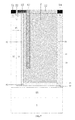
  • FIG. 1 is a schematic diagram of a conventional lateral dielectric trench high-voltage device
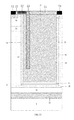
  • FIG. 2 is a schematic diagram of a device structure of the embodiment 1 of the invention, wherein the doping-overlapping structure is located on the left side of the dielectric trench region
  • FIG. 3 is a schematic diagram of a device structure of the embodiment 2 of the invention, wherein the doping-overlapping structure is located on the right side of the dielectric trench region;
  • FIG. 4 is a schematic diagram of a device structure of the embodiment 3 of the invention, wherein the doping-overlapping structure is located blow the dielectric trench region;
  • FIG. 5 is a schematic diagram of a device structure of the embodiment 4 of the invention, wherein the doping-overlapping structures are located on the right side and left side of the dielectric trench region;
  • FIG. 6 is a schematic diagram of a device structure of the embodiment 5 of the invention, wherein the doping-overlapping structures are located on the right side of, on the left side of, and below the dielectric trench region;
  • FIG. 7 is a schematic diagram of a device structure of the embodiment 6 of the invention, wherein an epitaxial layer is located between the P-type substrate and the conductive path;
  • FIG. 8 is a schematic diagram of a device structure with a shallow trench gate in the embodiment 7 of the invention.
  • FIG. 9 is a schematic diagram of a device structure with a trench gate in the embodiment 8 of the invention.
  • FIG. 10 is a schematic diagram of a device structure of the embodiment 9 of the invention, wherein a trench gate is located in the dielectric trench region;
  • FIG. 11 is a schematic diagram of a LIGBT device of the embodiment 10 of the invention.
  • FIG. 12 is a schematic diagram of a SOI device without epitaxial layer of the embodiment 11 of the invention.
  • FIG. 13 is a schematic diagram of a SOI device with an epitaxial layer of the embodiment 12 of the invention.
  • FIG. 14 is a schematic diagram of a device of the embodiment 13 of the invention, wherein the dielectric trench region is composed of two dielectric media having different dielectric constants;
  • FIG. 15 is a schematic diagram of a device of the embodiment 14 of the invention, wherein the dielectric trench region is composed of three dielectric media having different dielectric constants;
  • FIG. 16 is a schematic diagram of a device of the embodiment 15 of the invention, wherein the drain terminal introduces the drain terminal field;
  • FIG. 17 is a schematic diagram of a device simulation structure of the embodiment 13 of the invention.
  • FIG. 18 is the on state current distribution diagram of the device simulation of the embodiment 13 of the invention:
  • FIG. 19 is the on state linear region current diagram of the device simulation of the embodiment 13 of the invention.
  • FIG. 20 is the off state BV diagram of the device simulation of the embodiment 13 of the invention.
  • 1 is the P-type substrate
  • 2 is the dielectric trench region
  • 21 is the gate oxide layer
  • 22 is the dielectric layer
  • 23 is the SOI oxygen layer
  • 31 is the first N-type heavy doping region
  • 32 is the first N-type doping pillar
  • 33 is the second N-type doping pillar
  • 34 is the third N-type doping pillar
  • 35 is the second N-type heavy doping region
  • 36 is the fourth N-type doping pillar
  • 37 is the fifth N-type doping pillar.
  • 38 is the sixth N-type doping pillar
  • 39 is the seventh N-type doping pillar
  • 41 is the P-type heavy doping region
  • 42 is P-well region
  • 43 is the first P-type doping pillar
  • 44 is the second P-type doping pillar
  • 45 is the third P-type doping pillar
  • 46 is the epitaxial layer
  • 47 is the collector terminal P-type heavy doping region
  • 51 is the source contacting terminal
  • 52 is the polysilicon gate
  • 53 is the body field plate
  • 54 is the drain contacting terminal
  • 55 is the low-K dielectric trench
  • 56 is the dielectric trench
  • 57 is the second dielectric trench
  • 58 is the electrode field plate.
  • the dielectric trench region By adding the dielectric trench region into the drift region, the dielectric trench region is subjected to lateral pressure while reducing device size, and thus the specific On-Resistance R ON,sp of the device is also reduced.
  • the heavy doping N-type doping pillars are introduced into the drift region, providing low resistance conductive pathway for the on-state electronic current of the device, and further reducing the specific On-Resistance R ON,sp of the device.
  • the body field plate 53 is introduced into the dielectric trench region for the auxiliary depletion of the heavy doping N-type doping pillars to improve the breakdown Voltage BV of the device.
  • the heavy doping P-type doping pillars are also introduced into the drift region, so that while the N-type doping pillars are depleted when the state is off, an additional electric field is formed to improve the breakdown Voltage BV of the device.
  • FIG. 18 is an on state current distribution diagram of the trench type lateral high-voltage device of the invention. As the diagram shows, when the device is in on state, the current is distributed in two low resistance conductive pathways provided by the N-type heavy doping pillars, so that the current capacity is enhanced when the surface area is unchanged, i.e., the specific On-Resistance R ON,sp of the device is reduced when the surface area is unchanged.
  • FIG. 19 is the current diagram of the on state linear region of the structural device of the invention. By MEDICI device simulation, a sample structure of the present invention has a 27% reduction in its linear resistance compared with the traditional structure.
  • FIG. 20 is the off state BV diagram of the structure device simulation of the invention. As to an exemplary structure of the present invention, the breakdown Voltage BV has an increase of about 140V compared with the traditional structure. The invention can greatly reduce the specific On-Resistance R ON,sp while obtaining a high breakdown Voltage BV.
  • a lateral high-voltage device comprising: a dielectric trench region 2 , a doping-overlapping structure with different doping types in an alternating mode is provided on the left side of the dielectric trench region 2 .
  • the doping-overlapping structure includes the first N-type doping pillar 32 , the first P-type doping pillar 43 and a fifth N-type doping pillar 37 , and there is a fourth N-type doping pillar 36 between the doping-overlapping structure and the P-well region 42 .
  • the upper surface of the dielectric trench region 2 is a dielectric layer 22 , and a body field plate 53 extends from the surface of the device to the interior of the dielectric trench region 2 .
  • the body field plate 53 is adjacently connected to a polysilicon gate 52 , the gate oxide layer 21 is located below the polysilicon gate 52 .
  • a source contacting terminal 51 and the polysilicon gate 52 are isolated through the dielectric layer 22 .
  • the body field plate 53 and a drain contacting terminal 54 are isolated through the dielectric layer 22 .
  • a second N-type heavy doping region 35 is below the drain contacting terminal 54 .
  • An adjacent P-type heavy doping region 41 and a first n-type heavy doping region 31 are below the source contacting terminal 51 .
  • the P-type heavy doping region 41 and the first N-type heavy doping region 31 are positioned in the P well region 42 and at the top of the P well region 42 .
  • the gate oxide layer 21 is positioned above the P-well region 42 .
  • a conductive pathway consisting of a first N-type doping pillar 32 , a second N-type doping pillar 33 and a third N-type doping pillar 34 are respectively provided on two sides of and below the dielectric trench region 2 .
  • a first P-type doping pillar 43 and a second P-type doping pillar 44 are respectively provided on two sides of the conductive pathway.
  • a P-type substrate 1 is below the conductive pathway.
  • a pair of adjacent N-type doping pillar and P-type doping pillar constitutes one group.
  • the doping-overlapping structure includes a plurality of groups with N-type doping pillars and P-type doping pillars in an alternating mode, wherein the number of groups are more than 2.
  • the N-type doping pillars can have different widths as the P-type doping pillars.
  • the embodiment 2 and embodiment 1 are essentially the same, except that: the doping-overlapping structure is on the right side of the dielectric trench region 2 .
  • the doping-overlapping structure sequentially includes the second N-type doping pillar 33 , the second P-type doping pillar 44 and the seventh N-Type doping pillar 39 .
  • the upper surfaces of N-type doping pillar 33 , P-type doping pillar 44 and N-type doping pillar 39 contact with the second N-type heavy doping region 35 .
  • the embodiment 3 and embodiment 1 are essentially the same, except that: the doping-overlapping structure is below the dielectric trench region 2 .
  • the doping-overlapping structure sequentially includes the third N-type doping pillar 34 , the third P-type doping pillar 45 and the sixth N-type doping pillar 38 .
  • the embodiment 4 and embodiment 1 are essentially the same, except that: the doping-overlapping structures are on the right side and left side of the dielectric trench region 2 .
  • the doping-overlapping structure on the right side of the dielectric trench region 2 sequentially includes the second N-type doping pillar 33 , the second P-type doping pillar 44 and the seventh N-Type doping pillar 39 .
  • the upper surfaces of N-type doping pillar 33 , P-type doping pillar 44 and N-type doping pillar 39 contact with the second N-type heavy doping region 35 .
  • the doping-overlapping structure on the left side of the dielectric trench region 2 sequentially includes the first N-type doping pillar 32 , the first P-type doping pillar 43 and the fifth N-type doping pillar 37 , and there is a fourth N-type doping pillar 36 between the doping-overlapping structure and the P-well region 42 .
  • the embodiment 5 and embodiment 1 are essentially the same, except that: the doping-overlapping structures are on the right side of, on the left side of and below the dielectric trench region 2 .
  • the doping-overlapping structure below the dielectric trench region 2 sequentially includes the third N-type doping pillar 34 , the third P-type doping pillar 45 and the sixth N-type doping pillar 38 .
  • the doping-overlapping structure on the right side of the dielectric trench region 2 sequentially includes the second N-type doping pillar 33 , the second P-type doping pillar 44 and the seventh N-Type doping pillar 39 , and the upper surfaces of the N-type doping pillar 33 , P-type doping pillar 44 and N-type doping pillar 39 contact with the second N-type heavy doping region 35 .
  • the doping-overlapping structure on the left side of the dielectric trench region 2 sequentially includes the first N-type doping pillar 32 , the first P-type doping pillar 43 and the fifth N-type doping pillar 37 , and there is a fourth N-type doping pillar 36 between the doping-overlapping structure and the P-well region 42 .
  • the embodiment 6 and embodiment 5 are essentially the same (there are doping-overlapping structures on the right side of, on the left side of and below the dielectric trench region 2 ), except that: there is an epitaxial layer 46 between the P-type substrate 1 and the conductive pathway.
  • the embodiment 7 and embodiment 5 are essentially the same (there are doping-overlapping structures on the right side of, on the left side of and below the dielectric trench region 2 ), except that: the polysilicon gate 52 and the gate oxide layer 21 constitute a trench gate, and the source contacting terminal 51 and the body field plate 53 are adjacent.
  • the embodiment 8 and embodiment 7 are essentially the same, except that: the trench gate consisting of the polysilicon gate 52 and the gate oxide layer 21 extends to the interior of the P-type substrate 1 , and the source contacting terminal 51 and the body field plate 53 are adjacent.
  • the embodiment 9 and embodiment 7 are essentially the same, except that: the trench gate consisting of the polysilicon gate 52 and the gate oxide layer 21 is arranged inside the dielectric trench region 2 .
  • the embodiment 10 and embodiment 5 are essentially the same, except that: the second N-type heavy doping region 35 is replaced by the collector P-type heavy doping region 47 , so the device is changed from a LDMOS device to a LIGBT device.
  • the embodiment 11 and embodiment 5 are essentially the same, except that: the device is a SOI device.
  • the SOI buried oxygen layer 23 is below the doping-overlapping structure, which is below the dielectric trench region 2 .
  • the substrate 1 is N-type silicon or P-type silicon for SOI devices.
  • the embodiment 12 and embodiment 11 are essentially the same, except that: the device is a SOI device.
  • the epitaxial layer 46 is below the doping-overlapping structure, which is below the dielectric trench region 2 .
  • the epitaxial layer 46 is arranged between the SOI buried oxygen layer 23 and the conductive pathway.
  • the embodiment 13 and embodiment 5 are essentially the same (there are doping-overlapping structures on the right side of, on the left side of and below the dielectric trench region 2 ), except that: the dielectric trench region 2 comprises a low-K dielectric trench 55 in the upper portion and the dielectric trench 56 in the lower portion.
  • the low-k dielectric refers to the dielectric having a dielectric constant lower than the that of SiO 2 .
  • the embodiment 14 and embodiment 13 are essentially the same (there are doping-overlapping structures on the right side of, on the left side of and below the dielectric trench region 2 ), except that: the dielectric trench region 2 is divided into a plurality of dielectric regions with different dielectric constants, and the dielectric constant in each dielectric area is raised in turn from top to bottom. This will introduce a plurality of electric field peaks, further enhancing the breakdown voltage BV of the device.
  • Dielectric trench 57 is below the dielectric trench 55 , and the dielectric constant of the dielectric trench 57 is higher than that of the low-K dielectric trench 55 .
  • the dielectric constant of the dielectric trench 56 is higher than that of the second dielectric trench 57 .
  • a new electric field peak is introduced due to the intersection of dielectric media having different dielectric constants, greatly improving the breakdown voltage BV of the device.
  • the embodiment 15 and embodiment 13 are essentially the same, except that: the left side of drain contacting terminal 54 contacts with the electrode field plate 58 , and the electrode field plate 58 extends from the surface of the device to the interior of the dielectric trench region.

Landscapes

  • Insulated Gate Type Field-Effect Transistor (AREA)
  • Thin Film Transistor (AREA)

Abstract

The present invention relates to a lateral high-voltage device. The device includes a dielectric trench region. A doping-overlapping structure with different doping types alternating mode is provided at least below, on a left side of, or on a right side of the dielectric trench region. The device also includes a dielectric layer, a body field plate, a polysilicon gate, a gate oxide layer, a first N-type heavy doping region, a second N-type heavy doping region, a P-type heavy doping region, a P-well region, the first N-type doping pillar, the second N-type doping pillar, the third N-type doping pillar, the first P-type doping pillar, and the second P-type doping pillar. The invention adopts a dielectric trench region in the drift region to keep the breakdown voltage BV of the device while reducing the surface area of the device, and effectively reducing the device's specific On-Resistance RON,sp.

Description

CROSS REFERENCE
The present application is based on, and claims priority to Chinese application numbers CN201710495848.X and CN2017104967120, both filed on Jun. 26, 2017, the disclosures of which are hereby incorporated by reference in their entirety.
TECHNICAL FIELD
The present invention relates to semiconductor power devices, particularly relates to a lateral high-voltage device.
BACKGROUND
As a core device in PIC (Power Integrated Circuit), a power LDMOSFET (Lateral Double-diffused Metal-Oxide-Semiconductor Field Effect Transistor) has the advantages of easy integration, low drive power and negative temperature coefficient, and has been developing for many years in the direction of high breakdown Voltage (BV) and lower specific On-Resistance (RON,sp). The higher breakdown Voltage BV requires that the device has a longer drift region length and a lower drift region doping concentration, which leads to a higher specific On-Resistance RON,sp. The contradiction between the breakdown Voltage BV and the specific On-Resistance Ro N, is the problem of “Silicon Limit” in the industry.
In order to alleviate this contradiction, and ensure the device has high breakdown Voltage BV and low specific On-Resistance RON,sp, the researcher introduces the dielectric trench in the LDMOS lateral drift region. The dielectric trench can withstand most lateral pressure and shorten the lateral dimension of the device, and greatly reduce the area of the chip. However, the traditional dielectric trench LDMOS still has a large specific On-Resistance RON,sp, which could not further relieve the contradiction between the breakdown Voltage BV and the specific On-Resistance RON,sp.
SUMMARY OF INVENTION
The present invention aims to solve one or more of the above problems, and the present invention proposes a lateral high-voltage device, aiming to keep the high breakdown Voltage BV of the device while reduce the device's specific On-Resistance RON,sp.
For realizing the invention, the technical schemes of the invention are as follows:
A lateral high-voltage device, comprising a dielectric trench region 2, a doping-overlapping structure with different doping types alternating mode is provided at at least one position i.e. below, on the left side, or on the right side of the dielectric trench region 2. The upper surface of the dielectric trench region 2 is a dielectric layer 22, and a body field plate 53 extends from the upper surface of the device to the interior of the dielectric trench region 2. The body field plate 53 adjacently connects a polysilicon gate 52. A gate oxide layer 21 is below polysilicon gate 52. A source contacting terminal 51 and the polysilicon gate 52 are isolated through the dielectric layer 22. The body field plate 53 and a drain contacting terminal 54 are isolated through the dielectric layer 22. A second N-type heavy doping region 35 is below the drain contacting terminal 54. An adjacent P-type heavy doping region 41 and a first n-type heavy doping region 31 are below the source contacting terminal 51. The P-type heavy doping region 41 and the first N-type heavy doping region 31 are positioned in the P well region 42 and at the top of the P well region 42. The gate oxide layer 21 is positioned above the P-well region 42. A conductive pathway consisting of a first N-type doping pillar 32, a second N-type doping pillar 33 and a third N-type doping pillar are respectively provided on two sides and below the dielectric trench region 2. A first P-type doping pillar 43 and a second P-type doping pillar 44 are provided on the two sides of the conductive pathway. A P-type substrate 1 is below the conductive pathway. If the doping-overlapping structure is below the dielectric trench region 2, then the doping-overlapping structure sequentially includes the third N-type doping pillar 34, a third P-type doping pillar 45 and a sixth N-type doping pillar 38. If the doping-overlapping structure is on the right side of the dielectric trench region 2, then the doping-overlapping structure sequentially includes the second N-type doping pillar 33, the second P-type doping pillar 44 and a seventh N-Type doping pillar 39, and the upper surfaces of the N-type doping pillar 33, the P-type doping pillar 44 and the N-type doping pillar 39 contact with the second N-type heavy doping region 35. If the doping-overlapping structure is on the left side of the dielectric trench region 2, then the doping-overlapping structure sequentially includes the first N-type doping pillar 32, the first P-type doping pillar 43 and a fifth N-type doping pillar 37, and there is a fourth N-type doping pillar 36 between the doping-overlapping structure and the P-well region 42.
Preferably, the dielectric trench region 2 is divided into a plurality of dielectric regions with different dielectric constants from top to bottom, and the dielectric constant in each dielectric area is raised in turn from top to bottom.
Preferably, a pair of adjacent N-type doping pillar and P-type doping pillar constitute one group. The doping-overlapping structures includes a plurality of groups with multiple N-type doped pillars and P-type doped pillars in an alternating mode, wherein a group number is greater than 2.
Preferably, the device is a SOI device. The substrate 1 is N-type silicon or P-type silicon for the SOI device.
Preferably, there is an epitaxial layer 46 between the P-type substrate 1 and the conductive pathway, or the epitaxial layer 46 is arranged between a SOI buried oxygen layer 23 and the conductive pathway.
Preferably, the polysilicon gate 52 and the gate oxide layer 21 constitute a trench gate, at this time, the source contacting terminals 51 and the body field plate 53 are adjacent.
Preferably, the trench gate consisting of the polysilicon gate 52 and the gate oxide layer 21 extends to the interior of the P-type substrate 1, at this time, the source contacting terminal 51 and the body field plate 53 are adjacent.
Preferably, the trench gate consisting of the polysilicon gate 52 and the gate oxide layer 21 is arranged inside the dielectric trench region 2.
Preferably, the second N-type heavy doping region 35 is replaced by a collector P-type heavy doping region 47, so the device is changed from a LDMOS device to a LIGBT device.
Preferably, the left side of the drain contacting terminal 54 contacts with an electrode field plate 58, and the electrode field plate 58 extends from the surface of the device to the interior of the dielectric trench region.
Preferably, the N-type doping pillars have different widths as the P-type doping pillars.
Preferably, the doping type of the device structure is correspondingly changed to the opposite doping type, that is, the P-type doping becomes N-type doping, and the N-type doping becomes P-type doping.
The advantages of the present embodiments: by introducing the dielectric trench region in the drift region, the device can keep the character of withstanding voltage, reduce the surface area and reduce the specific On-Resistance RON,sp; in the device drift region, a cascade of P-type heavy doping pillars and N-type heavy doping pillars are introduced to provide a low resistance conductive pathway for the on state of the device, which can further reduce the specific On-Resistance RON,sp of the device, and finally achieve the purposes of effectively reducing the device area and reducing the specific On-Resistance RON,sp.
BRIEF DESCRIPTION OF THE DRAWINGS
FIG. 1 is a schematic diagram of a conventional lateral dielectric trench high-voltage device;
FIG. 2 is a schematic diagram of a device structure of the embodiment 1 of the invention, wherein the doping-overlapping structure is located on the left side of the dielectric trench region FIG. 3 is a schematic diagram of a device structure of the embodiment 2 of the invention, wherein the doping-overlapping structure is located on the right side of the dielectric trench region;
FIG. 4 is a schematic diagram of a device structure of the embodiment 3 of the invention, wherein the doping-overlapping structure is located blow the dielectric trench region;
FIG. 5 is a schematic diagram of a device structure of the embodiment 4 of the invention, wherein the doping-overlapping structures are located on the right side and left side of the dielectric trench region;
FIG. 6 is a schematic diagram of a device structure of the embodiment 5 of the invention, wherein the doping-overlapping structures are located on the right side of, on the left side of, and below the dielectric trench region;
FIG. 7 is a schematic diagram of a device structure of the embodiment 6 of the invention, wherein an epitaxial layer is located between the P-type substrate and the conductive path;
FIG. 8 is a schematic diagram of a device structure with a shallow trench gate in the embodiment 7 of the invention;
FIG. 9 is a schematic diagram of a device structure with a trench gate in the embodiment 8 of the invention;
FIG. 10 is a schematic diagram of a device structure of the embodiment 9 of the invention, wherein a trench gate is located in the dielectric trench region;
FIG. 11 is a schematic diagram of a LIGBT device of the embodiment 10 of the invention;
FIG. 12 is a schematic diagram of a SOI device without epitaxial layer of the embodiment 11 of the invention;
FIG. 13 is a schematic diagram of a SOI device with an epitaxial layer of the embodiment 12 of the invention;
FIG. 14 is a schematic diagram of a device of the embodiment 13 of the invention, wherein the dielectric trench region is composed of two dielectric media having different dielectric constants;
FIG. 15 is a schematic diagram of a device of the embodiment 14 of the invention, wherein the dielectric trench region is composed of three dielectric media having different dielectric constants;
FIG. 16 is a schematic diagram of a device of the embodiment 15 of the invention, wherein the drain terminal introduces the drain terminal field;
FIG. 17 is a schematic diagram of a device simulation structure of the embodiment 13 of the invention;
FIG. 18 is the on state current distribution diagram of the device simulation of the embodiment 13 of the invention:
FIG. 19 is the on state linear region current diagram of the device simulation of the embodiment 13 of the invention;
FIG. 20 is the off state BV diagram of the device simulation of the embodiment 13 of the invention;
Wherein, 1 is the P-type substrate, 2 is the dielectric trench region, 21 is the gate oxide layer, 22 is the dielectric layer, 23 is the SOI oxygen layer, 31 is the first N-type heavy doping region, 32 is the first N-type doping pillar, 33 is the second N-type doping pillar, 34 is the third N-type doping pillar, 35 is the second N-type heavy doping region, 36 is the fourth N-type doping pillar, 37 is the fifth N-type doping pillar. 38 is the sixth N-type doping pillar, 39 is the seventh N-type doping pillar, 41 is the P-type heavy doping region, 42 is P-well region, 43 is the first P-type doping pillar, 44 is the second P-type doping pillar, 45 is the third P-type doping pillar, 46 is the epitaxial layer, 47 is the collector terminal P-type heavy doping region, 51 is the source contacting terminal, 52 is the polysilicon gate, 53 is the body field plate, 54 is the drain contacting terminal, 55 is the low-K dielectric trench, 56 is the dielectric trench, 57 is the second dielectric trench, 58 is the electrode field plate.
DETAILED DESCRIPTION OF THE INVENTION
The following specific examples illustrate the embodiments of the invention, and the skilled personnel in this field can easily understand the other advantages and effects of the invention by the contents disclosed in this specification. The invention can also be implemented or applied by different embodiments, the details can be modified and altered based on different viewpoints and applications, without departing from the spirit of the invention.
By adding the dielectric trench region into the drift region, the dielectric trench region is subjected to lateral pressure while reducing device size, and thus the specific On-Resistance RON,sp of the device is also reduced. On the other hand, the heavy doping N-type doping pillars are introduced into the drift region, providing low resistance conductive pathway for the on-state electronic current of the device, and further reducing the specific On-Resistance RON,sp of the device. The body field plate 53 is introduced into the dielectric trench region for the auxiliary depletion of the heavy doping N-type doping pillars to improve the breakdown Voltage BV of the device. The heavy doping P-type doping pillars are also introduced into the drift region, so that while the N-type doping pillars are depleted when the state is off, an additional electric field is formed to improve the breakdown Voltage BV of the device.
FIG. 18 is an on state current distribution diagram of the trench type lateral high-voltage device of the invention. As the diagram shows, when the device is in on state, the current is distributed in two low resistance conductive pathways provided by the N-type heavy doping pillars, so that the current capacity is enhanced when the surface area is unchanged, i.e., the specific On-Resistance RON,sp of the device is reduced when the surface area is unchanged. FIG. 19 is the current diagram of the on state linear region of the structural device of the invention. By MEDICI device simulation, a sample structure of the present invention has a 27% reduction in its linear resistance compared with the traditional structure. FIG. 20 is the off state BV diagram of the structure device simulation of the invention. As to an exemplary structure of the present invention, the breakdown Voltage BV has an increase of about 140V compared with the traditional structure. The invention can greatly reduce the specific On-Resistance RON,sp while obtaining a high breakdown Voltage BV.
Embodiment 1
As shown in FIG. 2, a lateral high-voltage device, comprising: a dielectric trench region 2, a doping-overlapping structure with different doping types in an alternating mode is provided on the left side of the dielectric trench region 2. The doping-overlapping structure includes the first N-type doping pillar 32, the first P-type doping pillar 43 and a fifth N-type doping pillar 37, and there is a fourth N-type doping pillar 36 between the doping-overlapping structure and the P-well region 42. The upper surface of the dielectric trench region 2 is a dielectric layer 22, and a body field plate 53 extends from the surface of the device to the interior of the dielectric trench region 2. The body field plate 53 is adjacently connected to a polysilicon gate 52, the gate oxide layer 21 is located below the polysilicon gate 52. A source contacting terminal 51 and the polysilicon gate 52 are isolated through the dielectric layer 22. The body field plate 53 and a drain contacting terminal 54 are isolated through the dielectric layer 22. A second N-type heavy doping region 35 is below the drain contacting terminal 54. An adjacent P-type heavy doping region 41 and a first n-type heavy doping region 31 are below the source contacting terminal 51. The P-type heavy doping region 41 and the first N-type heavy doping region 31 are positioned in the P well region 42 and at the top of the P well region 42. The gate oxide layer 21 is positioned above the P-well region 42. A conductive pathway consisting of a first N-type doping pillar 32, a second N-type doping pillar 33 and a third N-type doping pillar 34 are respectively provided on two sides of and below the dielectric trench region 2. A first P-type doping pillar 43 and a second P-type doping pillar 44 are respectively provided on two sides of the conductive pathway. A P-type substrate 1 is below the conductive pathway.
A pair of adjacent N-type doping pillar and P-type doping pillar constitutes one group. The doping-overlapping structure includes a plurality of groups with N-type doping pillars and P-type doping pillars in an alternating mode, wherein the number of groups are more than 2.
Particularly, the order and position of the arrangement of the P-type doping pillars and the N-type doping pillars can be interchanged. For example, the arrangement can be N-P-N-P . . . or P-N-P-N . . . .
Particularly, the N-type doping pillars can have different widths as the P-type doping pillars.
Particularly, the doping type of the device structure can be correspondingly changed to the opposite doping type, that is, the P-type doping becomes N-type doping, while the N-type doping becomes P-type doping.
Embodiment 2
As shown in FIG. 3, the embodiment 2 and embodiment 1 are essentially the same, except that: the doping-overlapping structure is on the right side of the dielectric trench region 2. When the doping-overlapping structure is on the right side of the dielectric trench region 2, the doping-overlapping structure sequentially includes the second N-type doping pillar 33, the second P-type doping pillar 44 and the seventh N-Type doping pillar 39. The upper surfaces of N-type doping pillar 33, P-type doping pillar 44 and N-type doping pillar 39 contact with the second N-type heavy doping region 35.
Embodiment 3
As shown in FIG. 4, the embodiment 3 and embodiment 1 are essentially the same, except that: the doping-overlapping structure is below the dielectric trench region 2. When the doping-overlapping structure is below the dielectric trench region 2, the doping-overlapping structure sequentially includes the third N-type doping pillar 34, the third P-type doping pillar 45 and the sixth N-type doping pillar 38.
Embodiment 4
As shown in FIG. 5, the embodiment 4 and embodiment 1 are essentially the same, except that: the doping-overlapping structures are on the right side and left side of the dielectric trench region 2.
The doping-overlapping structure on the right side of the dielectric trench region 2 sequentially includes the second N-type doping pillar 33, the second P-type doping pillar 44 and the seventh N-Type doping pillar 39. The upper surfaces of N-type doping pillar 33, P-type doping pillar 44 and N-type doping pillar 39 contact with the second N-type heavy doping region 35. The doping-overlapping structure on the left side of the dielectric trench region 2 sequentially includes the first N-type doping pillar 32, the first P-type doping pillar 43 and the fifth N-type doping pillar 37, and there is a fourth N-type doping pillar 36 between the doping-overlapping structure and the P-well region 42.
Embodiment 5
As shown in FIG. 6, the embodiment 5 and embodiment 1 are essentially the same, except that: the doping-overlapping structures are on the right side of, on the left side of and below the dielectric trench region 2.
The doping-overlapping structure below the dielectric trench region 2 sequentially includes the third N-type doping pillar 34, the third P-type doping pillar 45 and the sixth N-type doping pillar 38.
The doping-overlapping structure on the right side of the dielectric trench region 2 sequentially includes the second N-type doping pillar 33, the second P-type doping pillar 44 and the seventh N-Type doping pillar 39, and the upper surfaces of the N-type doping pillar 33, P-type doping pillar 44 and N-type doping pillar 39 contact with the second N-type heavy doping region 35.
The doping-overlapping structure on the left side of the dielectric trench region 2 sequentially includes the first N-type doping pillar 32, the first P-type doping pillar 43 and the fifth N-type doping pillar 37, and there is a fourth N-type doping pillar 36 between the doping-overlapping structure and the P-well region 42.
Embodiment 6
As shown in FIG. 7, the embodiment 6 and embodiment 5 are essentially the same (there are doping-overlapping structures on the right side of, on the left side of and below the dielectric trench region 2), except that: there is an epitaxial layer 46 between the P-type substrate 1 and the conductive pathway.
Embodiment 7
As shown in FIG. 8, the embodiment 7 and embodiment 5 are essentially the same (there are doping-overlapping structures on the right side of, on the left side of and below the dielectric trench region 2), except that: the polysilicon gate 52 and the gate oxide layer 21 constitute a trench gate, and the source contacting terminal 51 and the body field plate 53 are adjacent.
Embodiment 8
As shown in FIG. 9, the embodiment 8 and embodiment 7 are essentially the same, except that: the trench gate consisting of the polysilicon gate 52 and the gate oxide layer 21 extends to the interior of the P-type substrate 1, and the source contacting terminal 51 and the body field plate 53 are adjacent.
Embodiment 9
As shown in FIG. 10, the embodiment 9 and embodiment 7 are essentially the same, except that: the trench gate consisting of the polysilicon gate 52 and the gate oxide layer 21 is arranged inside the dielectric trench region 2.
Embodiment 10
As shown in FIG. 11, the embodiment 10 and embodiment 5 are essentially the same, except that: the second N-type heavy doping region 35 is replaced by the collector P-type heavy doping region 47, so the device is changed from a LDMOS device to a LIGBT device.
Embodiment 11
As shown in FIG. 12, the embodiment 11 and embodiment 5 are essentially the same, except that: the device is a SOI device. The SOI buried oxygen layer 23 is below the doping-overlapping structure, which is below the dielectric trench region 2. The substrate 1 is N-type silicon or P-type silicon for SOI devices.
Embodiment 12
As shown in FIG. 13, the embodiment 12 and embodiment 11 are essentially the same, except that: the device is a SOI device. The epitaxial layer 46 is below the doping-overlapping structure, which is below the dielectric trench region 2. The epitaxial layer 46 is arranged between the SOI buried oxygen layer 23 and the conductive pathway.
Embodiment 13
As shown in FIG. 14, the embodiment 13 and embodiment 5 are essentially the same (there are doping-overlapping structures on the right side of, on the left side of and below the dielectric trench region 2), except that: the dielectric trench region 2 comprises a low-K dielectric trench 55 in the upper portion and the dielectric trench 56 in the lower portion. The low-k dielectric refers to the dielectric having a dielectric constant lower than the that of SiO2. By setting the low-K dielectric trench in the dielectric trench region, a new electric field peak is introduced due to the intersection of dielectric media having different dielectric constants, and the breakdown voltage BV of the device is further improved, and finally the aim of obtaining a high breakdown voltage BV voltage while keeping a low specific On-Resistance RON,sp of the device is achieved.
Embodiment 14
As shown in FIG. 15, the embodiment 14 and embodiment 13 are essentially the same (there are doping-overlapping structures on the right side of, on the left side of and below the dielectric trench region 2), except that: the dielectric trench region 2 is divided into a plurality of dielectric regions with different dielectric constants, and the dielectric constant in each dielectric area is raised in turn from top to bottom. This will introduce a plurality of electric field peaks, further enhancing the breakdown voltage BV of the device.
Dielectric trench 57 is below the dielectric trench 55, and the dielectric constant of the dielectric trench 57 is higher than that of the low-K dielectric trench 55. The dielectric constant of the dielectric trench 56 is higher than that of the second dielectric trench 57. A new electric field peak is introduced due to the intersection of dielectric media having different dielectric constants, greatly improving the breakdown voltage BV of the device.
Embodiment 15
As shown in FIG. 16, the embodiment 15 and embodiment 13 are essentially the same, except that: the left side of drain contacting terminal 54 contacts with the electrode field plate 58, and the electrode field plate 58 extends from the surface of the device to the interior of the dielectric trench region.
The above-mentioned embodiments are only illustrative of the principle and effect of the invention, and are not intended to limit the invention. Any person familiar with the technology may modify or alter the embodiments without violating the spirit and scope of the invention. Therefore, any equivalent modifications or alterations made by the person skilled in the art without departing from the spirit and technical concepts disclosed by the invention, shall fall into the scope of the claims of the invention.

Claims (12)

What is claimed is:
1. A lateral high-voltage device, comprising:
a dielectric trench region, a doping-overlapping structure with different doping types alternating mode is provided at least below, on a left side of, or on a right side of the dielectric trench region, an upper surface of the dielectric trench region is a dielectric layer, and a body field plate extends from an upper surface of the device to an interior of the dielectric trench region, the body field plate adjacently connects a polysilicon gate, a gate oxide layer is provided below the polysilicon gate,
a source contacting terminal and the polysilicon gate are isolated through the dielectric layer, the body field plate and a drain contacting terminal are isolated through the dielectric layer, a second N-type heavy doping region is below the drain contacting terminal, an adjacent P-type heavy doping region and a first N-type heavy doping region are below the source contacting terminal, the P-type heavy doping region and the first N-type heavy doping region are positioned in a P well region and at the top of the P well region, the gate oxide layer is positioned above the P-well region,
a first N-type doping pillar, a second N-type doping pillar and a third N-type doping pillar are respectively provided on two sides and below the dielectric trench region, the first N-type doping pillar, the second N-type doping pillar and the third N-type doping pillar form a conductive pathway, a first P-type doping pillar and a second P-type doping pillar are provided on two sides of the conductive pathway, a P-type substrate is below the conductive pathway;
if the doping-overlapping structure is below the dielectric trench region, then the doping-overlapping structure sequentially includes the third N-type doping pillar, a third P-type doping pillar and a sixth N-type doping pillar; if the doping-overlapping structure is on the right side of the dielectric trench region, then the doping-overlapping structure sequentially includes the second N-type doping pillar, the second P-type doping pillar and a seventh N-Type doping pillar, and upper surfaces of the N-type doping pillar, the P-type doping pillar and the N-type doping pillar contact with the second N-type heavy doping region; if the doping-overlapping structure is on the left side of the dielectric trench region, then the doping-overlapping structure sequentially includes the first N-type doping pillar, the first P-type doping pillar and a fifth N-type doping pillar, and there is a fourth N-type doping pillar between the doping-overlapping structure and the P-well region.
2. The lateral high-voltage device according to claim 1, wherein the dielectric trench region is divided into a plurality of dielectric regions with different dielectric constants from top to bottom, and a dielectric constant in each dielectric area is raised in turn from top to bottom.
3. The lateral high-voltage device according to claim 1, wherein a pair of adjacent N-type doping pillar and P-type doping pillar constitutes one group, the doping-overlapping structures includes more than two groups with multiple N-type doped pillars and P-type doped pillars in an alternating mode.
4. The lateral high-voltage device according to claim 1, wherein the device is a SOI device, and the substrate is N-type silicon or P-type silicon for the SOI device.
5. The lateral high-voltage device according to claim 1, wherein there is an epitaxial layer between the P-type substrate and the conductive pathway, or the epitaxial layer is arranged between a SOI buried oxygen layer and the conductive pathway.
6. The lateral high-voltage device according to claim 1, wherein the polysilicon gate and the gate oxide layer constitute a trench gate, the source contacting terminal and the body field plate are adjacent.
7. The lateral high-voltage device according to claim 6, wherein a trench gate consisting of the polysilicon gate and the gate oxide layer extends to an interior of the P-type substrate, and the source contacting terminal and the body field plate are adjacent.
8. The lateral high-voltage device according to claim 6, wherein the trench gate consisting of the polysilicon gate and the gate oxide layer is arranged inside the dielectric trench region.
9. The lateral high-voltage device according to claim 1, wherein the second N-type heavy doping region is replaced by a collector P-type heavy doping region, and the device is changed from a LDMOS device to a LIGBT device.
10. The lateral high-voltage device according to claim 1, wherein a left side of the drain contacting terminal contacts with an electrode field plate, and the electrode field plate extends from a surface of the device to the interior of the dielectric trench region.
11. The lateral high-voltage device according to claim 1, wherein the N-type doping pillars have different widths as the P-type doping pillars.
12. The lateral high-voltage device according to claim 1, wherein the doping type of the device structure is correspondingly changed to an opposite doping type, that is, the P-type doping becomes the N-type doping, while the N-type doping becomes the P-type doping.
US15/718,001 2017-06-26 2017-09-28 Lateral high-voltage device Expired - Fee Related US10068965B1 (en)

Applications Claiming Priority (4)

Application Number Priority Date Filing Date Title
CN201710495848.XA CN107195683A (en) 2017-06-26 2017-06-26 A kind of lateral high-voltage device
CN201710496712.0A CN107275388B (en) 2017-06-26 2017-06-26 A lateral high voltage device
CN201710495848 2017-06-26
CN201710496712 2017-06-26

Publications (1)

Publication Number Publication Date
US10068965B1 true US10068965B1 (en) 2018-09-04

Family

ID=63295394

Family Applications (1)

Application Number Title Priority Date Filing Date
US15/718,001 Expired - Fee Related US10068965B1 (en) 2017-06-26 2017-09-28 Lateral high-voltage device

Country Status (1)

Country Link
US (1) US10068965B1 (en)

Cited By (6)

* Cited by examiner, † Cited by third party
Publication number Priority date Publication date Assignee Title
CN110504321A (en) * 2019-08-27 2019-11-26 杭州电子科技大学温州研究院有限公司 A silicon-on-insulator LDMOS transistor with PN pillars
US20200020573A1 (en) * 2018-07-11 2020-01-16 Vanguard International Semiconductor Corporation Semiconductor substrate structure and semiconductor device and methods for forming the same
CN112885889A (en) * 2021-01-14 2021-06-01 电子科技大学 Transverse pressure-resistant area containing combined medium deep groove
CN113206145A (en) * 2021-04-22 2021-08-03 电子科技大学 Power semiconductor device with improved hot carrier injection
CN113517354A (en) * 2021-04-29 2021-10-19 电子科技大学 A high voltage JFET device
CN114899103A (en) * 2022-07-13 2022-08-12 北京芯可鉴科技有限公司 Silicon carbide LDMOSFET device manufacturing method and silicon carbide LDMOSFET device

Citations (7)

* Cited by examiner, † Cited by third party
Publication number Priority date Publication date Assignee Title
US20060038224A1 (en) * 2004-08-18 2006-02-23 Shibib Muhammed A Metal-oxide-semiconductor device having an enhanced shielding structure
US20070102773A1 (en) * 2005-11-09 2007-05-10 Kabushiki Kaisha Toshiba Semiconductor device and method of manufacturing same
US20080135930A1 (en) * 2006-11-14 2008-06-12 Kabushiki Kaisha Toshiba Power semiconductor device
US20090032865A1 (en) * 2007-07-18 2009-02-05 Infineon Technologies Austria Ag Semiconductor component and method for producing it
US20130334601A1 (en) * 2011-09-21 2013-12-19 Globalfoundries Singapore Pte. Ltd. High voltage trench transistor
US20170148871A1 (en) * 2014-05-30 2017-05-25 Texas Instruments Incorporated Mosfet having dual-gate cells with an integrated channel diode
US20170263727A1 (en) * 2011-09-23 2017-09-14 Alpha And Omega Semiconductor Incorporated Lateral pnp bipolar transistor with narrow trench emitter

Patent Citations (8)

* Cited by examiner, † Cited by third party
Publication number Priority date Publication date Assignee Title
US20060038224A1 (en) * 2004-08-18 2006-02-23 Shibib Muhammed A Metal-oxide-semiconductor device having an enhanced shielding structure
US20070102773A1 (en) * 2005-11-09 2007-05-10 Kabushiki Kaisha Toshiba Semiconductor device and method of manufacturing same
US20080135930A1 (en) * 2006-11-14 2008-06-12 Kabushiki Kaisha Toshiba Power semiconductor device
US20090032865A1 (en) * 2007-07-18 2009-02-05 Infineon Technologies Austria Ag Semiconductor component and method for producing it
US20130334601A1 (en) * 2011-09-21 2013-12-19 Globalfoundries Singapore Pte. Ltd. High voltage trench transistor
US20150236085A1 (en) * 2011-09-21 2015-08-20 Globalfoundries Singapore Pte. Ltd. High voltage trench transistor
US20170263727A1 (en) * 2011-09-23 2017-09-14 Alpha And Omega Semiconductor Incorporated Lateral pnp bipolar transistor with narrow trench emitter
US20170148871A1 (en) * 2014-05-30 2017-05-25 Texas Instruments Incorporated Mosfet having dual-gate cells with an integrated channel diode

Cited By (12)

* Cited by examiner, † Cited by third party
Publication number Priority date Publication date Assignee Title
US20200020573A1 (en) * 2018-07-11 2020-01-16 Vanguard International Semiconductor Corporation Semiconductor substrate structure and semiconductor device and methods for forming the same
US10658228B2 (en) * 2018-07-11 2020-05-19 Vanguard International Semiconductor Corporation Semiconductor substrate structure and semiconductor device and methods for forming the same
CN110504321A (en) * 2019-08-27 2019-11-26 杭州电子科技大学温州研究院有限公司 A silicon-on-insulator LDMOS transistor with PN pillars
CN110504321B (en) * 2019-08-27 2022-03-01 杭州电子科技大学温州研究院有限公司 Silicon-on-insulator LDMOS transistor with PN column
CN112885889A (en) * 2021-01-14 2021-06-01 电子科技大学 Transverse pressure-resistant area containing combined medium deep groove
CN112885889B (en) * 2021-01-14 2022-06-03 电子科技大学 A lateral pressure-resistant zone with deep grooves for combined media
CN113206145A (en) * 2021-04-22 2021-08-03 电子科技大学 Power semiconductor device with improved hot carrier injection
CN113206145B (en) * 2021-04-22 2022-08-05 电子科技大学 Power semiconductor device with improved hot carrier injection
CN113517354A (en) * 2021-04-29 2021-10-19 电子科技大学 A high voltage JFET device
CN113517354B (en) * 2021-04-29 2023-04-28 电子科技大学 High-voltage JFET device
CN114899103A (en) * 2022-07-13 2022-08-12 北京芯可鉴科技有限公司 Silicon carbide LDMOSFET device manufacturing method and silicon carbide LDMOSFET device
CN114899103B (en) * 2022-07-13 2022-09-13 北京芯可鉴科技有限公司 Silicon carbide LDMOSFET device manufacturing method and silicon carbide LDMOSFET device

Similar Documents

Publication Publication Date Title
US10068965B1 (en) Lateral high-voltage device
US7535057B2 (en) DMOS transistor with a poly-filled deep trench for improved performance
US8716794B2 (en) SOI lateral MOSFET devices
US20210074853A1 (en) Semiconductor Device and Manufacturing Method
US9362351B2 (en) Field effect transistor, termination structure and associated method for manufacturing
EP1530240A2 (en) Lateral power MOSFET
US9496382B2 (en) Field effect transistor, termination structure and associated method for manufacturing
US11316021B2 (en) High density power device with selectively shielded recessed field plate
CN1661812A (en) High Voltage LDMOS Transistor with Isolation Structure
KR20130085751A (en) Lateral dmos transistor and method of fabricating the same
CN102306659B (en) LDMOS (laterally double-diffused metal-oxide-semiconductor field effect transistor) device based on internal electric field modulation
CN107275388B (en) A lateral high voltage device
TW201810691A (en) Diode, junction field effect transistor and semiconductor component
US20130056824A1 (en) Semiconductor device and manufacturing method for the same
CN104752512B (en) A kind of lateral high-voltage device with multiple electrode structure
CN104218088A (en) SOI pressure-resistant structure based on folded drift region and power component
CN105097936A (en) Silicon-on-insulator lateral double-diffused metal-oxide-semiconductor (LDMOS) power device
TWI447912B (en) Semiconductor device and manufacturing method for the same
CN106298901A (en) A kind of landscape insulation bar double-pole-type transistor of high hot carrier reliability
TWI473267B (en) Gold oxygen half field effect transistor
CN112909082B (en) A high-voltage low-resistance power LDMOS
CN112186028B (en) A shielded gate MOSFET device with integrated NPN punch-through transistor
CN108666365A (en) A variable K-slot LDMOS with double gates
CN109616522B (en) Transverse high-voltage device
CN203941904U (en) Based on SOI pressure-resistance structure and the power device of folding drift region

Legal Events

Date Code Title Description
FEPP Fee payment procedure

Free format text: ENTITY STATUS SET TO UNDISCOUNTED (ORIGINAL EVENT CODE: BIG.); ENTITY STATUS OF PATENT OWNER: SMALL ENTITY

FEPP Fee payment procedure

Free format text: ENTITY STATUS SET TO SMALL (ORIGINAL EVENT CODE: SMAL); ENTITY STATUS OF PATENT OWNER: SMALL ENTITY

STCF Information on status: patent grant

Free format text: PATENTED CASE

FEPP Fee payment procedure

Free format text: MAINTENANCE FEE REMINDER MAILED (ORIGINAL EVENT CODE: REM.); ENTITY STATUS OF PATENT OWNER: SMALL ENTITY

LAPS Lapse for failure to pay maintenance fees

Free format text: PATENT EXPIRED FOR FAILURE TO PAY MAINTENANCE FEES (ORIGINAL EVENT CODE: EXP.); ENTITY STATUS OF PATENT OWNER: SMALL ENTITY

STCH Information on status: patent discontinuation

Free format text: PATENT EXPIRED DUE TO NONPAYMENT OF MAINTENANCE FEES UNDER 37 CFR 1.362

FP Lapsed due to failure to pay maintenance fee

Effective date: 20220904