US10032756B2 - Semiconductor package assembly with facing active surfaces of first and second semiconductor die and method for forming the same - Google Patents
Semiconductor package assembly with facing active surfaces of first and second semiconductor die and method for forming the same Download PDFInfo
- Publication number
- US10032756B2 US10032756B2 US15/071,573 US201615071573A US10032756B2 US 10032756 B2 US10032756 B2 US 10032756B2 US 201615071573 A US201615071573 A US 201615071573A US 10032756 B2 US10032756 B2 US 10032756B2
- Authority
- US
- United States
- Prior art keywords
- semiconductor package
- semiconductor
- component
- package assembly
- components
- Prior art date
- Legal status (The legal status is an assumption and is not a legal conclusion. Google has not performed a legal analysis and makes no representation as to the accuracy of the status listed.)
- Active
Links
Images




Classifications
-
- H01L25/16—
-
- H01L21/563—
-
- H01L21/565—
-
- H01L21/6835—
-
- H01L21/76802—
-
- H01L21/76879—
-
- H01L21/78—
-
- H01L23/3114—
-
- H01L23/5226—
-
- H01L23/528—
-
- H01L23/53228—
-
- H01L23/5385—
-
- H01L23/5389—
-
- H01L24/03—
-
- H01L24/09—
-
- H01L24/11—
-
- H01L24/17—
-
- H01L24/19—
-
- H01L24/20—
-
- H01L24/73—
-
- H01L24/80—
-
- H01L24/89—
-
- H01L24/92—
-
- H01L24/96—
-
- H01L25/105—
-
- H01L25/50—
-
- H—ELECTRICITY
- H10—SEMICONDUCTOR DEVICES; ELECTRIC SOLID-STATE DEVICES NOT OTHERWISE PROVIDED FOR
- H10P—GENERIC PROCESSES OR APPARATUS FOR THE MANUFACTURE OR TREATMENT OF DEVICES COVERED BY CLASS H10
- H10P54/00—Cutting or separating of wafers, substrates or parts of devices
-
- H—ELECTRICITY
- H10—SEMICONDUCTOR DEVICES; ELECTRIC SOLID-STATE DEVICES NOT OTHERWISE PROVIDED FOR
- H10P—GENERIC PROCESSES OR APPARATUS FOR THE MANUFACTURE OR TREATMENT OF DEVICES COVERED BY CLASS H10
- H10P72/00—Handling or holding of wafers, substrates or devices during manufacture or treatment thereof
- H10P72/70—Handling or holding of wafers, substrates or devices during manufacture or treatment thereof for supporting or gripping
- H10P72/74—Handling or holding of wafers, substrates or devices during manufacture or treatment thereof for supporting or gripping using temporarily an auxiliary support
-
- H—ELECTRICITY
- H10—SEMICONDUCTOR DEVICES; ELECTRIC SOLID-STATE DEVICES NOT OTHERWISE PROVIDED FOR
- H10W—GENERIC PACKAGES, INTERCONNECTIONS, CONNECTORS OR OTHER CONSTRUCTIONAL DETAILS OF DEVICES COVERED BY CLASS H10
- H10W20/00—Interconnections in chips, wafers or substrates
- H10W20/01—Manufacture or treatment
- H10W20/031—Manufacture or treatment of conductive parts of the interconnections
- H10W20/056—Manufacture or treatment of conductive parts of the interconnections by filling conductive material into holes, grooves or trenches
- H10W20/057—Manufacture or treatment of conductive parts of the interconnections by filling conductive material into holes, grooves or trenches by selectively depositing, e.g. by using selective CVD or plating
-
- H—ELECTRICITY
- H10—SEMICONDUCTOR DEVICES; ELECTRIC SOLID-STATE DEVICES NOT OTHERWISE PROVIDED FOR
- H10W—GENERIC PACKAGES, INTERCONNECTIONS, CONNECTORS OR OTHER CONSTRUCTIONAL DETAILS OF DEVICES COVERED BY CLASS H10
- H10W20/00—Interconnections in chips, wafers or substrates
- H10W20/01—Manufacture or treatment
- H10W20/071—Manufacture or treatment of dielectric parts thereof
- H10W20/081—Manufacture or treatment of dielectric parts thereof by forming openings in the dielectric parts
-
- H—ELECTRICITY
- H10—SEMICONDUCTOR DEVICES; ELECTRIC SOLID-STATE DEVICES NOT OTHERWISE PROVIDED FOR
- H10W—GENERIC PACKAGES, INTERCONNECTIONS, CONNECTORS OR OTHER CONSTRUCTIONAL DETAILS OF DEVICES COVERED BY CLASS H10
- H10W20/00—Interconnections in chips, wafers or substrates
- H10W20/40—Interconnections external to wafers or substrates, e.g. back-end-of-line [BEOL] metallisations or vias connecting to gate electrodes
- H10W20/41—Interconnections external to wafers or substrates, e.g. back-end-of-line [BEOL] metallisations or vias connecting to gate electrodes characterised by their conductive parts
- H10W20/42—Vias, e.g. via plugs
-
- H—ELECTRICITY
- H10—SEMICONDUCTOR DEVICES; ELECTRIC SOLID-STATE DEVICES NOT OTHERWISE PROVIDED FOR
- H10W—GENERIC PACKAGES, INTERCONNECTIONS, CONNECTORS OR OTHER CONSTRUCTIONAL DETAILS OF DEVICES COVERED BY CLASS H10
- H10W20/00—Interconnections in chips, wafers or substrates
- H10W20/40—Interconnections external to wafers or substrates, e.g. back-end-of-line [BEOL] metallisations or vias connecting to gate electrodes
- H10W20/41—Interconnections external to wafers or substrates, e.g. back-end-of-line [BEOL] metallisations or vias connecting to gate electrodes characterised by their conductive parts
- H10W20/43—Layouts of interconnections
-
- H—ELECTRICITY
- H10—SEMICONDUCTOR DEVICES; ELECTRIC SOLID-STATE DEVICES NOT OTHERWISE PROVIDED FOR
- H10W—GENERIC PACKAGES, INTERCONNECTIONS, CONNECTORS OR OTHER CONSTRUCTIONAL DETAILS OF DEVICES COVERED BY CLASS H10
- H10W20/00—Interconnections in chips, wafers or substrates
- H10W20/40—Interconnections external to wafers or substrates, e.g. back-end-of-line [BEOL] metallisations or vias connecting to gate electrodes
- H10W20/41—Interconnections external to wafers or substrates, e.g. back-end-of-line [BEOL] metallisations or vias connecting to gate electrodes characterised by their conductive parts
- H10W20/44—Conductive materials thereof
- H10W20/4403—Conductive materials thereof based on metals, e.g. alloys, metal silicides
- H10W20/4421—Conductive materials thereof based on metals, e.g. alloys, metal silicides the principal metal being copper
-
- H—ELECTRICITY
- H10—SEMICONDUCTOR DEVICES; ELECTRIC SOLID-STATE DEVICES NOT OTHERWISE PROVIDED FOR
- H10W—GENERIC PACKAGES, INTERCONNECTIONS, CONNECTORS OR OTHER CONSTRUCTIONAL DETAILS OF DEVICES COVERED BY CLASS H10
- H10W70/00—Package substrates; Interposers; Redistribution layers [RDL]
- H10W70/01—Manufacture or treatment
- H10W70/05—Manufacture or treatment of insulating or insulated package substrates, or of interposers, or of redistribution layers
- H10W70/08—Manufacture or treatment of insulating or insulated package substrates, or of interposers, or of redistribution layers by depositing layers on the chip or wafer, e.g. "chip-first" RDLs
- H10W70/09—Manufacture or treatment of insulating or insulated package substrates, or of interposers, or of redistribution layers by depositing layers on the chip or wafer, e.g. "chip-first" RDLs extending onto an encapsulation that laterally surrounds the chip or wafer, e.g. fan-out wafer level package [FOWLP] RDLs
-
- H—ELECTRICITY
- H10—SEMICONDUCTOR DEVICES; ELECTRIC SOLID-STATE DEVICES NOT OTHERWISE PROVIDED FOR
- H10W—GENERIC PACKAGES, INTERCONNECTIONS, CONNECTORS OR OTHER CONSTRUCTIONAL DETAILS OF DEVICES COVERED BY CLASS H10
- H10W70/00—Package substrates; Interposers; Redistribution layers [RDL]
- H10W70/60—Insulating or insulated package substrates; Interposers; Redistribution layers
-
- H—ELECTRICITY
- H10—SEMICONDUCTOR DEVICES; ELECTRIC SOLID-STATE DEVICES NOT OTHERWISE PROVIDED FOR
- H10W—GENERIC PACKAGES, INTERCONNECTIONS, CONNECTORS OR OTHER CONSTRUCTIONAL DETAILS OF DEVICES COVERED BY CLASS H10
- H10W70/00—Package substrates; Interposers; Redistribution layers [RDL]
- H10W70/60—Insulating or insulated package substrates; Interposers; Redistribution layers
- H10W70/611—Insulating or insulated package substrates; Interposers; Redistribution layers for connecting multiple chips together
-
- H—ELECTRICITY
- H10—SEMICONDUCTOR DEVICES; ELECTRIC SOLID-STATE DEVICES NOT OTHERWISE PROVIDED FOR
- H10W—GENERIC PACKAGES, INTERCONNECTIONS, CONNECTORS OR OTHER CONSTRUCTIONAL DETAILS OF DEVICES COVERED BY CLASS H10
- H10W70/00—Package substrates; Interposers; Redistribution layers [RDL]
- H10W70/60—Insulating or insulated package substrates; Interposers; Redistribution layers
- H10W70/611—Insulating or insulated package substrates; Interposers; Redistribution layers for connecting multiple chips together
- H10W70/614—Insulating or insulated package substrates; Interposers; Redistribution layers for connecting multiple chips together the multiple chips being integrally enclosed
-
- H—ELECTRICITY
- H10—SEMICONDUCTOR DEVICES; ELECTRIC SOLID-STATE DEVICES NOT OTHERWISE PROVIDED FOR
- H10W—GENERIC PACKAGES, INTERCONNECTIONS, CONNECTORS OR OTHER CONSTRUCTIONAL DETAILS OF DEVICES COVERED BY CLASS H10
- H10W72/00—Interconnections or connectors in packages
-
- H—ELECTRICITY
- H10—SEMICONDUCTOR DEVICES; ELECTRIC SOLID-STATE DEVICES NOT OTHERWISE PROVIDED FOR
- H10W—GENERIC PACKAGES, INTERCONNECTIONS, CONNECTORS OR OTHER CONSTRUCTIONAL DETAILS OF DEVICES COVERED BY CLASS H10
- H10W72/00—Interconnections or connectors in packages
- H10W72/01—Manufacture or treatment
- H10W72/012—Manufacture or treatment of bump connectors, dummy bumps or thermal bumps
-
- H—ELECTRICITY
- H10—SEMICONDUCTOR DEVICES; ELECTRIC SOLID-STATE DEVICES NOT OTHERWISE PROVIDED FOR
- H10W—GENERIC PACKAGES, INTERCONNECTIONS, CONNECTORS OR OTHER CONSTRUCTIONAL DETAILS OF DEVICES COVERED BY CLASS H10
- H10W72/00—Interconnections or connectors in packages
- H10W72/20—Bump connectors, e.g. solder bumps or copper pillars; Dummy bumps; Thermal bumps
-
- H—ELECTRICITY
- H10—SEMICONDUCTOR DEVICES; ELECTRIC SOLID-STATE DEVICES NOT OTHERWISE PROVIDED FOR
- H10W—GENERIC PACKAGES, INTERCONNECTIONS, CONNECTORS OR OTHER CONSTRUCTIONAL DETAILS OF DEVICES COVERED BY CLASS H10
- H10W72/00—Interconnections or connectors in packages
- H10W72/90—Bond pads, in general
-
- H—ELECTRICITY
- H10—SEMICONDUCTOR DEVICES; ELECTRIC SOLID-STATE DEVICES NOT OTHERWISE PROVIDED FOR
- H10W—GENERIC PACKAGES, INTERCONNECTIONS, CONNECTORS OR OTHER CONSTRUCTIONAL DETAILS OF DEVICES COVERED BY CLASS H10
- H10W74/00—Encapsulations, e.g. protective coatings
- H10W74/01—Manufacture or treatment
- H10W74/012—Manufacture or treatment of encapsulations on active surfaces of flip-chip devices, e.g. forming underfills
-
- H—ELECTRICITY
- H10—SEMICONDUCTOR DEVICES; ELECTRIC SOLID-STATE DEVICES NOT OTHERWISE PROVIDED FOR
- H10W—GENERIC PACKAGES, INTERCONNECTIONS, CONNECTORS OR OTHER CONSTRUCTIONAL DETAILS OF DEVICES COVERED BY CLASS H10
- H10W74/00—Encapsulations, e.g. protective coatings
- H10W74/01—Manufacture or treatment
- H10W74/016—Manufacture or treatment using moulds
-
- H—ELECTRICITY
- H10—SEMICONDUCTOR DEVICES; ELECTRIC SOLID-STATE DEVICES NOT OTHERWISE PROVIDED FOR
- H10W—GENERIC PACKAGES, INTERCONNECTIONS, CONNECTORS OR OTHER CONSTRUCTIONAL DETAILS OF DEVICES COVERED BY CLASS H10
- H10W74/00—Encapsulations, e.g. protective coatings
- H10W74/10—Encapsulations, e.g. protective coatings characterised by their shape or disposition
- H10W74/111—Encapsulations, e.g. protective coatings characterised by their shape or disposition the semiconductor body being completely enclosed
- H10W74/129—Encapsulations, e.g. protective coatings characterised by their shape or disposition the semiconductor body being completely enclosed forming a chip-scale package [CSP]
-
- H—ELECTRICITY
- H10—SEMICONDUCTOR DEVICES; ELECTRIC SOLID-STATE DEVICES NOT OTHERWISE PROVIDED FOR
- H10W—GENERIC PACKAGES, INTERCONNECTIONS, CONNECTORS OR OTHER CONSTRUCTIONAL DETAILS OF DEVICES COVERED BY CLASS H10
- H10W74/00—Encapsulations, e.g. protective coatings
- H10W74/10—Encapsulations, e.g. protective coatings characterised by their shape or disposition
- H10W74/15—Encapsulations, e.g. protective coatings characterised by their shape or disposition on active surfaces of flip-chip devices, e.g. underfills
-
- H—ELECTRICITY
- H10—SEMICONDUCTOR DEVICES; ELECTRIC SOLID-STATE DEVICES NOT OTHERWISE PROVIDED FOR
- H10W—GENERIC PACKAGES, INTERCONNECTIONS, CONNECTORS OR OTHER CONSTRUCTIONAL DETAILS OF DEVICES COVERED BY CLASS H10
- H10W90/00—Package configurations
-
- H—ELECTRICITY
- H10—SEMICONDUCTOR DEVICES; ELECTRIC SOLID-STATE DEVICES NOT OTHERWISE PROVIDED FOR
- H10W—GENERIC PACKAGES, INTERCONNECTIONS, CONNECTORS OR OTHER CONSTRUCTIONAL DETAILS OF DEVICES COVERED BY CLASS H10
- H10W90/00—Package configurations
- H10W90/401—Package configurations characterised by multiple insulating or insulated package substrates, interposers or RDLs
-
- H01L21/561—
-
- H01L21/568—
-
- H01L2224/02317—
-
- H01L2224/02319—
-
- H01L2224/02331—
-
- H01L2224/02371—
-
- H01L2224/02372—
-
- H01L2224/02379—
-
- H01L2224/03—
-
- H01L2224/03002—
-
- H01L2224/04105—
-
- H01L2224/05548—
-
- H01L2224/05567—
-
- H01L2224/05571—
-
- H01L2224/05647—
-
- H01L2224/08147—
-
- H01L2224/11—
-
- H01L2224/12105—
-
- H01L2224/13022—
-
- H01L2224/13024—
-
- H01L2224/131—
-
- H01L2224/73259—
-
- H01L2224/80001—
-
- H01L2224/80003—
-
- H01L2224/80006—
-
- H01L2224/802—
-
- H01L2224/8083—
-
- H01L2224/80895—
-
- H01L2224/80896—
-
- H01L2224/9202—
-
- H01L2224/96—
-
- H01L23/49811—
-
- H01L24/05—
-
- H01L24/13—
-
- H01L2924/00014—
-
- H01L2924/014—
-
- H01L2924/1205—
-
- H01L2924/1206—
-
- H01L2924/1207—
-
- H01L2924/1431—
-
- H01L2924/1432—
-
- H01L2924/1436—
-
- H01L2924/18162—
-
- H01L2924/19011—
-
- H01L2924/19041—
-
- H01L2924/19042—
-
- H01L2924/19043—
-
- H01L2924/19105—
-
- H01L2924/37001—
-
- H—ELECTRICITY
- H10—SEMICONDUCTOR DEVICES; ELECTRIC SOLID-STATE DEVICES NOT OTHERWISE PROVIDED FOR
- H10W—GENERIC PACKAGES, INTERCONNECTIONS, CONNECTORS OR OTHER CONSTRUCTIONAL DETAILS OF DEVICES COVERED BY CLASS H10
- H10W70/00—Package substrates; Interposers; Redistribution layers [RDL]
- H10W70/01—Manufacture or treatment
- H10W70/05—Manufacture or treatment of insulating or insulated package substrates, or of interposers, or of redistribution layers
-
- H—ELECTRICITY
- H10—SEMICONDUCTOR DEVICES; ELECTRIC SOLID-STATE DEVICES NOT OTHERWISE PROVIDED FOR
- H10W—GENERIC PACKAGES, INTERCONNECTIONS, CONNECTORS OR OTHER CONSTRUCTIONAL DETAILS OF DEVICES COVERED BY CLASS H10
- H10W70/00—Package substrates; Interposers; Redistribution layers [RDL]
- H10W70/60—Insulating or insulated package substrates; Interposers; Redistribution layers
- H10W70/62—Insulating or insulated package substrates; Interposers; Redistribution layers characterised by their interconnections
- H10W70/65—Shapes or dispositions of interconnections
-
- H—ELECTRICITY
- H10—SEMICONDUCTOR DEVICES; ELECTRIC SOLID-STATE DEVICES NOT OTHERWISE PROVIDED FOR
- H10W—GENERIC PACKAGES, INTERCONNECTIONS, CONNECTORS OR OTHER CONSTRUCTIONAL DETAILS OF DEVICES COVERED BY CLASS H10
- H10W70/00—Package substrates; Interposers; Redistribution layers [RDL]
- H10W70/60—Insulating or insulated package substrates; Interposers; Redistribution layers
- H10W70/62—Insulating or insulated package substrates; Interposers; Redistribution layers characterised by their interconnections
- H10W70/65—Shapes or dispositions of interconnections
- H10W70/654—Top-view layouts
- H10W70/655—Fan-out layouts
-
- H—ELECTRICITY
- H10—SEMICONDUCTOR DEVICES; ELECTRIC SOLID-STATE DEVICES NOT OTHERWISE PROVIDED FOR
- H10W—GENERIC PACKAGES, INTERCONNECTIONS, CONNECTORS OR OTHER CONSTRUCTIONAL DETAILS OF DEVICES COVERED BY CLASS H10
- H10W72/00—Interconnections or connectors in packages
- H10W72/01—Manufacture or treatment
- H10W72/019—Manufacture or treatment of bond pads
- H10W72/01904—Manufacture or treatment of bond pads using temporary auxiliary members, e.g. using sacrificial coatings or handle substrates
-
- H—ELECTRICITY
- H10—SEMICONDUCTOR DEVICES; ELECTRIC SOLID-STATE DEVICES NOT OTHERWISE PROVIDED FOR
- H10W—GENERIC PACKAGES, INTERCONNECTIONS, CONNECTORS OR OTHER CONSTRUCTIONAL DETAILS OF DEVICES COVERED BY CLASS H10
- H10W72/00—Interconnections or connectors in packages
- H10W72/01—Manufacture or treatment
- H10W72/0198—Manufacture or treatment batch processes
-
- H—ELECTRICITY
- H10—SEMICONDUCTOR DEVICES; ELECTRIC SOLID-STATE DEVICES NOT OTHERWISE PROVIDED FOR
- H10W—GENERIC PACKAGES, INTERCONNECTIONS, CONNECTORS OR OTHER CONSTRUCTIONAL DETAILS OF DEVICES COVERED BY CLASS H10
- H10W72/00—Interconnections or connectors in packages
- H10W72/071—Connecting or disconnecting
- H10W72/072—Connecting or disconnecting of bump connectors
- H10W72/07231—Techniques
- H10W72/07236—Soldering or alloying
-
- H—ELECTRICITY
- H10—SEMICONDUCTOR DEVICES; ELECTRIC SOLID-STATE DEVICES NOT OTHERWISE PROVIDED FOR
- H10W—GENERIC PACKAGES, INTERCONNECTIONS, CONNECTORS OR OTHER CONSTRUCTIONAL DETAILS OF DEVICES COVERED BY CLASS H10
- H10W72/00—Interconnections or connectors in packages
- H10W72/071—Connecting or disconnecting
- H10W72/073—Connecting or disconnecting of die-attach connectors
- H10W72/07331—Connecting techniques
-
- H—ELECTRICITY
- H10—SEMICONDUCTOR DEVICES; ELECTRIC SOLID-STATE DEVICES NOT OTHERWISE PROVIDED FOR
- H10W—GENERIC PACKAGES, INTERCONNECTIONS, CONNECTORS OR OTHER CONSTRUCTIONAL DETAILS OF DEVICES COVERED BY CLASS H10
- H10W72/00—Interconnections or connectors in packages
- H10W72/20—Bump connectors, e.g. solder bumps or copper pillars; Dummy bumps; Thermal bumps
- H10W72/241—Dispositions, e.g. layouts
-
- H—ELECTRICITY
- H10—SEMICONDUCTOR DEVICES; ELECTRIC SOLID-STATE DEVICES NOT OTHERWISE PROVIDED FOR
- H10W—GENERIC PACKAGES, INTERCONNECTIONS, CONNECTORS OR OTHER CONSTRUCTIONAL DETAILS OF DEVICES COVERED BY CLASS H10
- H10W72/00—Interconnections or connectors in packages
- H10W72/20—Bump connectors, e.g. solder bumps or copper pillars; Dummy bumps; Thermal bumps
- H10W72/241—Dispositions, e.g. layouts
- H10W72/242—Dispositions, e.g. layouts relative to the surface, e.g. recessed, protruding
-
- H—ELECTRICITY
- H10—SEMICONDUCTOR DEVICES; ELECTRIC SOLID-STATE DEVICES NOT OTHERWISE PROVIDED FOR
- H10W—GENERIC PACKAGES, INTERCONNECTIONS, CONNECTORS OR OTHER CONSTRUCTIONAL DETAILS OF DEVICES COVERED BY CLASS H10
- H10W72/00—Interconnections or connectors in packages
- H10W72/20—Bump connectors, e.g. solder bumps or copper pillars; Dummy bumps; Thermal bumps
- H10W72/241—Dispositions, e.g. layouts
- H10W72/244—Dispositions, e.g. layouts relative to underlying supporting features, e.g. bond pads, RDLs or vias
-
- H—ELECTRICITY
- H10—SEMICONDUCTOR DEVICES; ELECTRIC SOLID-STATE DEVICES NOT OTHERWISE PROVIDED FOR
- H10W—GENERIC PACKAGES, INTERCONNECTIONS, CONNECTORS OR OTHER CONSTRUCTIONAL DETAILS OF DEVICES COVERED BY CLASS H10
- H10W72/00—Interconnections or connectors in packages
- H10W72/20—Bump connectors, e.g. solder bumps or copper pillars; Dummy bumps; Thermal bumps
- H10W72/251—Materials
- H10W72/252—Materials comprising solid metals or solid metalloids, e.g. PbSn, Ag or Cu
-
- H—ELECTRICITY
- H10—SEMICONDUCTOR DEVICES; ELECTRIC SOLID-STATE DEVICES NOT OTHERWISE PROVIDED FOR
- H10W—GENERIC PACKAGES, INTERCONNECTIONS, CONNECTORS OR OTHER CONSTRUCTIONAL DETAILS OF DEVICES COVERED BY CLASS H10
- H10W72/00—Interconnections or connectors in packages
- H10W72/851—Dispositions of multiple connectors or interconnections
- H10W72/874—On different surfaces
-
- H—ELECTRICITY
- H10—SEMICONDUCTOR DEVICES; ELECTRIC SOLID-STATE DEVICES NOT OTHERWISE PROVIDED FOR
- H10W—GENERIC PACKAGES, INTERCONNECTIONS, CONNECTORS OR OTHER CONSTRUCTIONAL DETAILS OF DEVICES COVERED BY CLASS H10
- H10W72/00—Interconnections or connectors in packages
- H10W72/90—Bond pads, in general
- H10W72/921—Structures or relative sizes of bond pads
- H10W72/922—Bond pads being integral with underlying chip-level interconnections
-
- H—ELECTRICITY
- H10—SEMICONDUCTOR DEVICES; ELECTRIC SOLID-STATE DEVICES NOT OTHERWISE PROVIDED FOR
- H10W—GENERIC PACKAGES, INTERCONNECTIONS, CONNECTORS OR OTHER CONSTRUCTIONAL DETAILS OF DEVICES COVERED BY CLASS H10
- H10W72/00—Interconnections or connectors in packages
- H10W72/90—Bond pads, in general
- H10W72/941—Dispositions of bond pads
-
- H—ELECTRICITY
- H10—SEMICONDUCTOR DEVICES; ELECTRIC SOLID-STATE DEVICES NOT OTHERWISE PROVIDED FOR
- H10W—GENERIC PACKAGES, INTERCONNECTIONS, CONNECTORS OR OTHER CONSTRUCTIONAL DETAILS OF DEVICES COVERED BY CLASS H10
- H10W72/00—Interconnections or connectors in packages
- H10W72/90—Bond pads, in general
- H10W72/941—Dispositions of bond pads
- H10W72/9413—Dispositions of bond pads on encapsulations
-
- H—ELECTRICITY
- H10—SEMICONDUCTOR DEVICES; ELECTRIC SOLID-STATE DEVICES NOT OTHERWISE PROVIDED FOR
- H10W—GENERIC PACKAGES, INTERCONNECTIONS, CONNECTORS OR OTHER CONSTRUCTIONAL DETAILS OF DEVICES COVERED BY CLASS H10
- H10W72/00—Interconnections or connectors in packages
- H10W72/90—Bond pads, in general
- H10W72/941—Dispositions of bond pads
- H10W72/9415—Dispositions of bond pads relative to the surface, e.g. recessed, protruding
-
- H—ELECTRICITY
- H10—SEMICONDUCTOR DEVICES; ELECTRIC SOLID-STATE DEVICES NOT OTHERWISE PROVIDED FOR
- H10W—GENERIC PACKAGES, INTERCONNECTIONS, CONNECTORS OR OTHER CONSTRUCTIONAL DETAILS OF DEVICES COVERED BY CLASS H10
- H10W72/00—Interconnections or connectors in packages
- H10W72/90—Bond pads, in general
- H10W72/951—Materials of bond pads
- H10W72/952—Materials of bond pads comprising metals or metalloids, e.g. PbSn, Ag or Cu
-
- H—ELECTRICITY
- H10—SEMICONDUCTOR DEVICES; ELECTRIC SOLID-STATE DEVICES NOT OTHERWISE PROVIDED FOR
- H10W—GENERIC PACKAGES, INTERCONNECTIONS, CONNECTORS OR OTHER CONSTRUCTIONAL DETAILS OF DEVICES COVERED BY CLASS H10
- H10W74/00—Encapsulations, e.g. protective coatings
- H10W74/01—Manufacture or treatment
- H10W74/014—Manufacture or treatment using batch processing
-
- H—ELECTRICITY
- H10—SEMICONDUCTOR DEVICES; ELECTRIC SOLID-STATE DEVICES NOT OTHERWISE PROVIDED FOR
- H10W—GENERIC PACKAGES, INTERCONNECTIONS, CONNECTORS OR OTHER CONSTRUCTIONAL DETAILS OF DEVICES COVERED BY CLASS H10
- H10W74/00—Encapsulations, e.g. protective coatings
- H10W74/01—Manufacture or treatment
- H10W74/019—Manufacture or treatment using temporary auxiliary substrates
-
- H—ELECTRICITY
- H10—SEMICONDUCTOR DEVICES; ELECTRIC SOLID-STATE DEVICES NOT OTHERWISE PROVIDED FOR
- H10W—GENERIC PACKAGES, INTERCONNECTIONS, CONNECTORS OR OTHER CONSTRUCTIONAL DETAILS OF DEVICES COVERED BY CLASS H10
- H10W74/00—Encapsulations, e.g. protective coatings
- H10W74/10—Encapsulations, e.g. protective coatings characterised by their shape or disposition
- H10W74/131—Encapsulations, e.g. protective coatings characterised by their shape or disposition the semiconductor body being only partially enclosed
- H10W74/142—Encapsulations, e.g. protective coatings characterised by their shape or disposition the semiconductor body being only partially enclosed the encapsulations exposing the passive side of the semiconductor body
-
- H—ELECTRICITY
- H10—SEMICONDUCTOR DEVICES; ELECTRIC SOLID-STATE DEVICES NOT OTHERWISE PROVIDED FOR
- H10W—GENERIC PACKAGES, INTERCONNECTIONS, CONNECTORS OR OTHER CONSTRUCTIONAL DETAILS OF DEVICES COVERED BY CLASS H10
- H10W80/00—Direct bonding of chips, wafers or substrates
- H10W80/211—Direct bonding of chips, wafers or substrates using auxiliary members, e.g. aids for protecting the bonding area
-
- H—ELECTRICITY
- H10—SEMICONDUCTOR DEVICES; ELECTRIC SOLID-STATE DEVICES NOT OTHERWISE PROVIDED FOR
- H10W—GENERIC PACKAGES, INTERCONNECTIONS, CONNECTORS OR OTHER CONSTRUCTIONAL DETAILS OF DEVICES COVERED BY CLASS H10
- H10W80/00—Direct bonding of chips, wafers or substrates
- H10W80/301—Bonding techniques, e.g. hybrid bonding
- H10W80/312—Bonding techniques, e.g. hybrid bonding characterised by the direct bonding of electrically conductive pads
-
- H—ELECTRICITY
- H10—SEMICONDUCTOR DEVICES; ELECTRIC SOLID-STATE DEVICES NOT OTHERWISE PROVIDED FOR
- H10W—GENERIC PACKAGES, INTERCONNECTIONS, CONNECTORS OR OTHER CONSTRUCTIONAL DETAILS OF DEVICES COVERED BY CLASS H10
- H10W80/00—Direct bonding of chips, wafers or substrates
- H10W80/301—Bonding techniques, e.g. hybrid bonding
- H10W80/327—Bonding techniques, e.g. hybrid bonding characterised by the direct bonding of insulating parts, e.g. of silicon oxide layers
-
- H—ELECTRICITY
- H10—SEMICONDUCTOR DEVICES; ELECTRIC SOLID-STATE DEVICES NOT OTHERWISE PROVIDED FOR
- H10W—GENERIC PACKAGES, INTERCONNECTIONS, CONNECTORS OR OTHER CONSTRUCTIONAL DETAILS OF DEVICES COVERED BY CLASS H10
- H10W80/00—Direct bonding of chips, wafers or substrates
- H10W80/301—Bonding techniques, e.g. hybrid bonding
- H10W80/331—Bonding techniques, e.g. hybrid bonding characterised by the application of energy for connecting
-
- H—ELECTRICITY
- H10—SEMICONDUCTOR DEVICES; ELECTRIC SOLID-STATE DEVICES NOT OTHERWISE PROVIDED FOR
- H10W—GENERIC PACKAGES, INTERCONNECTIONS, CONNECTORS OR OTHER CONSTRUCTIONAL DETAILS OF DEVICES COVERED BY CLASS H10
- H10W90/00—Package configurations
- H10W90/701—Package configurations characterised by the relative positions of pads or connectors relative to package parts
-
- H—ELECTRICITY
- H10—SEMICONDUCTOR DEVICES; ELECTRIC SOLID-STATE DEVICES NOT OTHERWISE PROVIDED FOR
- H10W—GENERIC PACKAGES, INTERCONNECTIONS, CONNECTORS OR OTHER CONSTRUCTIONAL DETAILS OF DEVICES COVERED BY CLASS H10
- H10W90/00—Package configurations
- H10W90/701—Package configurations characterised by the relative positions of pads or connectors relative to package parts
- H10W90/791—Package configurations characterised by the relative positions of pads or connectors relative to package parts of direct-bonded pads
- H10W90/792—Package configurations characterised by the relative positions of pads or connectors relative to package parts of direct-bonded pads between multiple chips
-
- H—ELECTRICITY
- H10—SEMICONDUCTOR DEVICES; ELECTRIC SOLID-STATE DEVICES NOT OTHERWISE PROVIDED FOR
- H10W—GENERIC PACKAGES, INTERCONNECTIONS, CONNECTORS OR OTHER CONSTRUCTIONAL DETAILS OF DEVICES COVERED BY CLASS H10
- H10W99/00—Subject matter not provided for in other groups of this subclass
Definitions
- the present invention relates to a semiconductor package assembly, and in particular to a three-dimensional (3D) semiconductor package assembly and methods for forming the same.
- 3D integrated circuits and stacked dies have been developed and are commonly used, the dies integrated into a conventional 3D semiconductor package are limited to be the same size. Furthermore, 3D semiconductor packaging technology suffers from various problems that may cause a reduction of the manufacturing yield.
- a semiconductor package assembly and a method for forming a semiconductor package assembly are provided.
- An exemplary embodiment of a semiconductor package assembly includes a first semiconductor package.
- the first semiconductor package includes a first semiconductor die.
- a first redistribution layer (RDL) structure is coupled to the first semiconductor die and includes a first conductive trace.
- the semiconductor package assembly also includes a second semiconductor package bonded to the first semiconductor package.
- the second semiconductor package includes a second semiconductor die.
- An active surface of the second semiconductor die faces an active surface of the first semiconductor die.
- a second RDL structure is coupled to the second semiconductor die and includes a second conductive trace. The first conductive trace is in direct contact with the second conductive trace.
- a semiconductor package assembly includes a first package.
- the first package includes a first component.
- a first RDL structure is coupled to the first component and includes a first conductive trace.
- the semiconductor package assembly also includes a second package bonded to the first package.
- the second package includes a second component.
- a second RDL structure is coupled to the second component and includes a second conductive trace. The first conductive trace is in direct contact with the second conductive trace.
- An exemplary embodiment of a method for forming a semiconductor package assembly includes forming a first semiconductor package.
- the first semiconductor package includes a first semiconductor die.
- a first RDL structure is coupled to the first semiconductor die and includes a first conductive trace.
- the method also includes forming a second semiconductor package.
- the second semiconductor package includes a second semiconductor die.
- An active surface of the second semiconductor die faces an active surface of the first semiconductor die.
- a second RDL structure is coupled to the second semiconductor die and includes a second conductive trace.
- the method further includes bonding the second semiconductor package to the first semiconductor package.
- the first conductive trace is in direct contact with the second conductive trace.
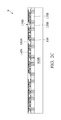
- FIGS. 1A-1C are cross-sectional views of various stages of a method for forming a semiconductor package, in accordance with some embodiments of the disclosure.
- FIGS. 2A-2C are cross-sectional views of various stages of a method for forming a semiconductor package, in accordance with some embodiments of the disclosure.
- FIGS. 3A-3E are cross-sectional views of various stages of a method for forming a semiconductor package assembly, in accordance with some embodiments of the disclosure.
- FIG. 4 is a cross-sectional view of a semiconductor package assembly, in accordance with some embodiments of the disclosure.
- FIG. 5 is a cross-sectional view of a semiconductor package assembly, in accordance with some embodiments of the disclosure.
- Embodiments of the disclosure provide a 3D system-in-package (SIP) semiconductor package assembly.
- the semiconductor package assembly is integrated with more than two components or dies so that the size of electronic products made using the semiconductor package assembly can be reduced.
- These components or dies are separately fabricated and are subsequently integrated into the semiconductor package assembly. As a result, their sizes and/or functions are not limited to be the same.
- the design flexibility of the semiconductor package assembly is greatly improved.
- these components or dies are tested in advance to make sure that the semiconductor package assembly only includes good components or dies. As a result, the yield loss resulted from multiple defective components or dies is significantly mitigated or eliminated. Therefore, the manufacturing cost of the semiconductor package assembly is reduced.
- FIGS. 1A-1C are cross-sectional views of various stages of a method for forming a semiconductor package, in accordance with some embodiments of the disclosure. Additional operations can be provided before, during, and/or after the stages described in FIGS. 1A-1C . Some of the stages that are described can be replaced or eliminated for different embodiments. Additional features can be added to the semiconductor package. Some of the features described below can be replaced or eliminated for different embodiments.
- a first carrier substrate 100 A is provided.
- the first carrier substrate 100 A is a wafer or a panel.
- the first carrier substrate 100 A may include glass or another suitable supporting material.
- first components 110 A are bonded onto the first carrier substrate 100 A.
- the first components 110 A are known-good components. In other words, no defective components are bonded onto the first carrier substrate 100 A.
- the first components 110 A and the first carrier substrate 100 A are attached together through an adhesive layer such as glue or another suitable adhesive material.
- the first components 110 A are active devices and can be referred to as first semiconductor dies (or chips) 110 A.
- the first semiconductor dies 110 A may include transistors or another suitable active element.
- the first semiconductor dies 110 A may be a logic die including a central processing unit (CPU), a graphics processing unit (GPU), a dynamic random access memory (DRAM) controller or any combination thereof.
- the first components 110 A are passive devices such as integrated passive devices (IPDs).
- the first components 110 A may include capacitors, resistors, inductors, varactor diodes or another suitable passive element.
- a first molding compound 120 A is formed on the first carrier substrate 100 A.
- the first molding compound 120 A surrounds the sidewalls of the first components 110 A without covering the top and bottom surfaces of the first components 110 A.
- the first molding compound 120 A is formed of a nonconductive material such as an epoxy, a resin, a moldable polymer, or another suitable molding material.
- the first molding compound 120 A is applied as a substantial liquid, and then is cured through a chemical reaction.
- the first molding compound 120 A is an ultraviolet (UV) or thermally cured polymer applied as a gel or malleable solid, and then is cured through a UV or thermal curing process. The first molding compound 120 A may be cured with a mold.
- the deposited first molding compound 120 A covers the top surfaces of the first components 110 A, and then a grinding process is performed to thin the deposited first molding compound 120 A. As a result, the thinned first molding compound 120 A exposes the top surfaces of the first components 110 A. In some embodiments, the top and bottom surfaces of the first molding compound 120 A are coplanar with the top and bottom surfaces of the first components 110 A, respectively.
- a first redistribution layer (RDL) structure 130 A which is also referred to as a fan-out structure, is formed on the first molding compound 120 A and is coupled to the first components 110 A.
- RDL redistribution layer
- a first (semiconductor) package A is formed.
- the first (semiconductor) package A is a wafer-level fan-out package.
- the first RDL structure 130 A covers the first molding compound 120 A and may be in direct contact with the first molding compound 120 A.
- the first RDL structure 130 A includes one or more conductive traces 140 A disposed in and surrounded by an inter-metal dielectric (IMD) layer 150 A.
- the first components 110 A are electrically connected to the conductive traces 140 A of the first RDL structure 130 A.
- the IMD layer 150 A may include multiple sub-dielectric layers successively stacked on the first molding compound 120 A and the first components 110 A. For example, a first layer-level of the conductive traces 140 A is positioned on a first layer-level of the sub-dielectric layers and covered by a second layer-level of the sub-dielectric layers. A second layer-level of the conductive traces 140 A is positioned on the second layer-level of the sub-dielectric layers and covered by a third layer-level of the sub-dielectric layers.
- the IMD layer 150 A may be formed of organic materials, which include a polymer base material, non-organic materials, which include silicon nitride (SiN X ), silicon oxide (SiO X ), graphene, or the like.
- the IMD layer 150 A is a high-k dielectric layer (k is the dielectric constant of the dielectric layer).
- the IMD layer 150 A may be formed of a photosensitive material, which includes a dry film photoresist, or a taping film.
- Pad portions of the conductive traces 140 A are exposed from the top surface of the first RDL structure 130 A.
- the pad portions of the conductive traces 140 A are exposed from openings of the IMD layer 150 A and connected to subsequently formed conductive components.
- the number and configuration of the conductive trace 140 A and the IMD layer 150 A shown in figures are only examples and are not limitations to the present invention.
- the conductive traces 140 A include copper, or another suitable conductive material with good diffusibility.
- FIGS. 2A-2C are cross-sectional views of various stages of a method for forming a semiconductor package, in accordance with some embodiments of the disclosure. Additional operations can be provided before, during, and/or after the stages described in FIGS. 2A-2C . Some of the stages that are described can be replaced or eliminated for different embodiments. Additional features can be added to the semiconductor package. Some of the features described below can be replaced or eliminated for different embodiments.
- a second carrier substrate 100 B is provided.
- the second carrier substrate 100 B is a wafer or a panel.
- the second carrier substrate 100 B may include glass, or another suitable supporting material.
- multiple vias 160 are formed on the second carrier substrate 100 B.
- the vias 160 may be through interposer vias (TIV).
- the vias 160 are copper pillars or other suitable conductive structures.
- the vias 160 are formed by an electroplating process or another suitable process.
- each of the second components 110 B is positioned between two of the vias 160 . In some embodiments, one or more vias 160 are positioned between two of the second components 110 B.
- the second components 110 B are active devices and can be referred to as second semiconductor dies (or chips) 110 B.
- the second semiconductor dies 110 B may include transistors or other suitable active elements.
- the second semiconductor dies 110 B may be a logic die including a CPU, a GPU, a DRAM controller or any combination thereof.
- the second components 110 B are passive devices such as IPDs.
- the second components 110 B may include capacitors, resistors, inductors, varactor diodes, and other suitable passive elements.
- a second molding compound 120 B is formed on the second carrier substrate 100 B.
- the second molding compound 120 B surrounds the vias 160 and the sidewalls of the second components 110 B without covering the top and bottom surfaces of the second components 110 B and the vias 160 . Namely, the vias 160 penetrate or pass through the second molding compound 120 B.
- the second molding compound 120 B is formed of a nonconductive material such as an epoxy, a resin, a moldable polymer, or another suitable molding material.
- the second molding compound 120 B is applied as a substantial liquid, and then is cured through a chemical reaction.
- the second molding compound 120 B is an UV or thermally cured polymer applied as a gel or malleable solid, and then is cured through a UV or thermal curing process. The second molding compound 120 B may be cured with a mold.
- the deposited second molding compound 120 B covers the top surfaces of the second components 110 B and the vias 160 , and then a grinding process is performed to thin the deposited second molding compound 120 B. As a result, the thinned second molding compound 120 B exposes the top surfaces of the second components 110 B and the vias 160 .
- the top and bottom surfaces of the second molding compound 120 B are coplanar with the top and bottom surfaces of the second components 110 B, respectively.
- the top and bottom surfaces of the second molding compound 120 B are coplanar with the top and bottom surfaces of the vias 160 , respectively.
- the second components 110 B are previously thinned before being bonded onto the second carrier substrate 100 B.
- the second components 110 B and the vias 160 substantially have the same thickness and thereby facilitating the exposure of the second components 110 B and the vias 160 .
- a semiconductor wafer is thinned and is subsequently diced into semiconductor dies (or chips) to form the second components 110 B.
- the second components 110 B may be thinned by a mechanical grinding process, a chemical mechanical polishing process, a milling process or another suitable process.
- a second RDL structure 130 B is formed on the second molding compound 120 B and is coupled to the second components 110 B and the vias 160 .
- a second (semiconductor) package B is formed.
- the second (semiconductor) package B is a wafer-level fan-out package.
- the second RDL structure 130 B covers the second molding compound 120 B and may be in direct contact with the second molding compound 120 B.
- the second RDL structure 130 B includes one or more conductive traces 140 B disposed in and surrounded by an IMD layer 150 B.
- the second components 110 B are electrically connected to the conductive traces 140 B of the second RDL structure 130 B.
- Pad portions of the conductive traces 140 B are exposed from the top surface of the second RDL structure 130 B.
- the structure of the second RDL structure 130 B may be similar to or the same as the structure of the first RDL structure 130 A, as aforementioned in detail. It should be noted that the number and configuration of the conductive trace 140 B and the IMD layer 150 B shown in figures are only examples and are not limitations to the present invention.
- the conductive traces 140 B include copper, or another suitable conductive material with good diffusibility.
- FIGS. 3A-3E are cross-sectional views of various stages of a method for forming a semiconductor package assembly, in accordance with some embodiments of the disclosure. Additional operations can be provided before, during, and/or after the stages described in FIGS. 3A-3E . Some of the stages that are described can be replaced or eliminated for different embodiments. Additional features can be added to the semiconductor package assembly. Some of the features described below can be replaced or eliminated for different embodiments.
- the second package B is bonded to the first package A so that the first RDL structure 130 A is sandwiched between the first components 110 A and the second RDL structure 130 B.
- the conductive traces 140 A of the first RDL structure 130 A are directly electrically connected to the conductive traces 140 B of the second RDL structure 130 B.
- the pad portions of the conductive traces 140 A and 140 B are in direct contact with each other.
- the IMD layer 150 A of the first RDL structure 130 A and the IMD layer 150 B of the second RDL structure 130 B are also in direct contact with each other.
- an active surface of the first component 110 A faces an active surface of the second component 110 B.
- the first package A and the second package B are bonded together using a fusion bonding method.
- the first package A and the second package B are bonded together using a copper fusion bonding method.
- the conductive traces 140 A and 140 B include copper so that the first package A and the second package B are bonded together through copper joints. The joints between the first package A and the second package B do not include solder.
- the second package B is placed on the first package A.
- the conductive traces 140 A directly adjoin the conductive traces 140 B.
- the conductive traces 140 A substantially align to the conductive traces 140 B.
- the conductive traces 140 A and the conductive traces 140 B have the same layout.
- the conductive traces 140 A substantially completely overlap the conductive traces 140 B.
- the conductive traces 140 A and the conductive traces 140 B have different layouts.
- the conductive traces 140 A at least partially overlap the conductive traces 140 B so as to build electrical connection paths between the first package A and the second package B.
- a thermal treatment is performed over the first package A and the second package B.
- the fusion of metal (copper) in the conductive traces 140 A and the conductive traces 140 B makes the second package B connect with the first package A.
- the conductive traces 140 A directly connect to the conductive traces 140 B without a bonding structure (such as a conductive pillar, a conductive bump, or a conductive paste structure).
- the thermal treatment is performed at a temperature that is in a range from about 150 degrees C. to about 250 degrees C., but it is not so limited.
- ultrasonic energy is applied to the first package A and the second package B.
- the ultrasonic energy facilitates metal diffusion between the conductive traces 140 A and the conductive traces 140 B. Therefore, the joints between the first package A and the second package B are strengthened so that the first package A and the second package B are tightly bonded together.
- a planarization process is performed over the first package A and/or the second package B.
- the planarization process is used to reduce surface roughness and provide the first package A and/or the second package B with a flat and even bonding surface.
- the surface of the first RDL structure 130 A and/or the second RDL structure 130 B has previously been planarized before placing the second package B on the first package A. Therefore, the second package B can be bonded to the first package A intimately.
- the second carrier substrate 100 B is removed from the second package B. As a result, the second components 110 B and the vias 160 are exposed. The sidewalls of the second components 110 B and the vias 160 are still surrounded by the second molding compound 120 B.
- the adhesive property of the adhesive layer which is used to bond the second components 110 B and the second carrier substrate 100 B, is eliminated to debond the second carrier substrate 100 B.
- a conductive component 190 is formed on the second package B away from the first package A.
- the conductive component 190 and the first package A are positioned on two opposite sides of the second package B.
- the second components 110 B are positioned between the second RDL structure 130 B and the conductive component 190 .
- the conductive component 190 is electrically connected or coupled to the second components 110 B through the vias 160 and the second RDL structure 130 B. In some embodiments, the conductive component 190 is further electrically connected to the first components 110 A through the vias 160 , the second RDL structure 130 B, and the first RDL structure 130 A.
- the conductive component 190 is formed of a RDL structure 200 and conductive structures 210 over the RDL structure 200 .
- the RDL structure 200 includes one or more conductive traces 220 disposed in and surrounded by an IMD layer 230 . Pad portions of the conductive traces 220 are exposed from the top surface of the RDL structure 200 .
- the structure of the RDL structure 200 may be similar to or the same as the structure of the first RDL structure 130 A, as aforementioned in detail.
- the conductive structures 210 are electrically connected to the exposed pad portions of the conductive traces 220 .
- the vias 160 are electrically connected or coupled to the conductive structures 210 through the conductive traces 220 .
- the conductive structures 210 are bonding balls (such as solder balls), or another suitable conductive structures. It should be noted that the number and configuration of the conductive structures 210 and the conductive traces 220 shown in figures are only examples and are not limitations to the present invention.
- the conductive component 190 is formed of the conductive structures 210 .
- the vias 160 are directly electrically connected to the conductive structures 210 .
- the vias 160 may be electrically connected to the conductive structures 210 through one or more conductive layers, such as under bump metallization (UBM) layers.
- UBM under bump metallization
- the first carrier substrate 100 A is removed from the first package A. As a result, the first components 110 A are exposed. The sidewalls of the first components 110 A are still surrounded by the first molding compound 120 A.
- the adhesive property of the adhesive layer which is used to bond the first components 110 A and the first carrier substrate 100 A, is eliminated to debond the first carrier substrate 100 A.
- the bonded packages A and B are cut or diced along scribe lines L to separate the bonded packages A and B into multiple semiconductor package assemblies 300 .
- the semiconductor package assemblies 300 are SIP semiconductor package assemblies and wafer-level fan-out packages are integrated in the semiconductor package assemblies 300 .
- each of the semiconductor package assemblies 300 includes one first component 110 A and two second components 110 B.
- the semiconductor package assembly 300 may include more than two second components 110 B.
- the size of the first component 110 A is different from that of the second components 110 B.
- the size of the first component 110 A is greater than that of the second components 110 B.
- the second components 110 B are the same size. In some other embodiments, the second components 110 B are different sizes.
- the first component 110 A and the second components 110 B have the same function. Therefore, the semiconductor package assembly 300 is homogeneous integration. In some other embodiments, the function of the first component 110 A is different from the function of one or more of the second components 110 B. Therefore, the semiconductor package assembly 300 is heterogeneous integration.
- one of the first component 110 A and the second components 110 B is a system-on-chip (SOC) and another of the first component 110 A and the second components 110 B is a passive device.
- one of the first component 110 A and the second components 110 B is an analog processor (AP) and another of the first component 110 A and the second components 110 B is a digital processor (DP).
- one of the first component 110 A and the second components 110 B is a baseband (BB) component and another of the first component 110 A and the second components 110 B is a radio-frequency (RF) component.
- SOC system-on-chip
- AP analog processor
- DP digital processor
- one of the first component 110 A and the second components 110 B is a baseband (BB) component and another of the first component 110 A and the second components 110 B is a radio-frequency (RF) component.
- BB baseband
- RF radio-frequency
- the first component 110 A is an active device while the second components 110 B are passive devices with the same or different functions.
- the first component 110 A and one of the second components 110 B are active devices with the same or different functions while another second component 110 B is a passive device.
- the first component 110 A and the second components 110 B are active devices with various different functions.
- the first component 110 A is a passive device while the second components 110 B are active devices with the same or different functions.
- the first component 110 A and one of the second components 110 B are passive devices with the same or different functions while another second component 110 B is an active device.
- FIGS. 4 and 5 are cross-sectional views of a semiconductor package assembly, in accordance with some embodiments of the disclosure. Elements in FIGS. 4 and 5 that are the same as those in FIG. 3E are labeled with the same reference numbers as in FIG. 3E and are not described again for brevity.
- a semiconductor package assembly 400 is shown.
- the semiconductor package assembly 400 is similar to the semiconductor package assembly 300 shown in FIG. 3E .
- the main difference between the semiconductor package assemblies 300 and 400 is that the semiconductor package assembly 300 includes one first component 110 A while the semiconductor package assembly 400 includes two first components 110 A.
- the semiconductor package assembly 400 may include more than two first components 110 A.
- the first components 110 A are the same size. In some other embodiments, the first components 110 A are different sizes. In some embodiments, the size of the first components 110 A is different from that of the second components 110 B. For example, the size of the first components 110 A is greater than that of the second components 110 B. In some embodiments, the first components 110 A have the same function. In some other embodiments, the first components 110 A have the different functions.
- a semiconductor package assembly 500 is shown.
- the semiconductor package assembly 500 is similar to the semiconductor package assembly 300 shown in FIG. 3E .
- the main difference between the semiconductor package assemblies 300 and 500 is that the vias 160 of the semiconductor package assembly 300 are formed in the second package B while the vias 160 of the semiconductor package assembly 500 are formed in the first package A.
- the conductive component 190 of the semiconductor package assembly 300 is formed on the second package B while the conductive component 190 of the semiconductor package assembly 500 is formed on the first package A.
- the vias 160 penetrate the first molding compound 120 A and are electrically connected or coupled to the first RDL structure 130 A.
- the conductive component 190 and the second package B are positioned on two opposite sides of the first package A.
- the first components 110 A are positioned between the first RDL structure 130 A and the conductive component 190 .
- the semiconductor package assembly and methods for forming the same in accordance with some embodiments of the disclosure provide various advantages. According to the aforementioned embodiments, more than two components or dies can be integrated in a semiconductor package assembly. These components or dies are fabricated in different processes and are known-good components or dies. Therefore, sizes and/or functions of the components or dies are not limited, thereby facilitating improvements to the flexibility of the design. The manufacturing yield of the semiconductor package assembly is significantly enhanced even further.
- two packages are bonded together using a fusion bonding method to form a semiconductor package assembly.
- additional bonding structures such as conductive pillars, conductive bumps, or conductive paste structures
- additional adhesive layer such as conductive pillars, conductive bumps, or conductive paste structures
- the signal transmitting path/distance between the two packages is greatly shortened. Also, the capability of electrical migration (EM) can be further enhanced. In addition, the thickness of the semiconductor package assembly is reduced. Therefore, the device performance of the semiconductor package assembly is significantly improved.
Landscapes
- Engineering & Computer Science (AREA)
- Manufacturing & Machinery (AREA)
- Structures Or Materials For Encapsulating Or Coating Semiconductor Devices Or Solid State Devices (AREA)
- Production Of Multi-Layered Print Wiring Board (AREA)
- Physics & Mathematics (AREA)
- Geometry (AREA)
- Microelectronics & Electronic Packaging (AREA)
Abstract
Description
Claims (22)
Priority Applications (4)
| Application Number | Priority Date | Filing Date | Title |
|---|---|---|---|
| US15/071,573 US10032756B2 (en) | 2015-05-21 | 2016-03-16 | Semiconductor package assembly with facing active surfaces of first and second semiconductor die and method for forming the same |
| EP16166762.1A EP3096350B1 (en) | 2015-05-21 | 2016-04-24 | Semiconductor package assembly and method for forming the same |
| TW105114086A TWI578460B (en) | 2015-05-21 | 2016-05-06 | Semiconductor package assembly and method of forming same |
| CN201610302315.0A CN106169459A (en) | 2015-05-21 | 2016-05-09 | Semiconductor packaging assembly and forming method thereof |
Applications Claiming Priority (3)
| Application Number | Priority Date | Filing Date | Title |
|---|---|---|---|
| US201562164725P | 2015-05-21 | 2015-05-21 | |
| US201562198865P | 2015-07-30 | 2015-07-30 | |
| US15/071,573 US10032756B2 (en) | 2015-05-21 | 2016-03-16 | Semiconductor package assembly with facing active surfaces of first and second semiconductor die and method for forming the same |
Publications (2)
| Publication Number | Publication Date |
|---|---|
| US20160343695A1 US20160343695A1 (en) | 2016-11-24 |
| US10032756B2 true US10032756B2 (en) | 2018-07-24 |
Family
ID=55809003
Family Applications (1)
| Application Number | Title | Priority Date | Filing Date |
|---|---|---|---|
| US15/071,573 Active US10032756B2 (en) | 2015-05-21 | 2016-03-16 | Semiconductor package assembly with facing active surfaces of first and second semiconductor die and method for forming the same |
Country Status (4)
| Country | Link |
|---|---|
| US (1) | US10032756B2 (en) |
| EP (1) | EP3096350B1 (en) |
| CN (1) | CN106169459A (en) |
| TW (1) | TWI578460B (en) |
Cited By (4)
| Publication number | Priority date | Publication date | Assignee | Title |
|---|---|---|---|---|
| US20200118940A1 (en) * | 2018-10-15 | 2020-04-16 | Intel Corporation | Die with bumper for solder joint reliability |
| US11244927B2 (en) | 2019-07-25 | 2022-02-08 | Samsung Electronics Co., Ltd. | Semiconductor package having stacked semiconductor chips |
| US11552033B2 (en) | 2020-05-18 | 2023-01-10 | Samsung Electronics Co., Ltd. | Packaged multi-chip semiconductor devices and methods of fabricating same |
| US11637070B2 (en) | 2018-02-06 | 2023-04-25 | Samsung Electronics Co., Ltd. | Method of fabricating a semiconductor package |
Families Citing this family (35)
| Publication number | Priority date | Publication date | Assignee | Title |
|---|---|---|---|---|
| KR101731700B1 (en) | 2015-03-18 | 2017-04-28 | 앰코 테크놀로지 코리아 주식회사 | Semiconductor device and manufacturing method thereof |
| US9881902B2 (en) * | 2015-08-05 | 2018-01-30 | Mediatek Inc. | Semiconductor package, semiconductor device using the same and manufacturing method thereof |
| TWI628757B (en) * | 2015-12-23 | 2018-07-01 | 力成科技股份有限公司 | Ultimate thin fan-out type chip package structure and manufacturing method thereof |
| US10204893B2 (en) | 2016-05-19 | 2019-02-12 | Invensas Bonding Technologies, Inc. | Stacked dies and methods for forming bonded structures |
| US10276403B2 (en) * | 2016-06-15 | 2019-04-30 | Avago Technologies International Sales Pe. Limited | High density redistribution layer (RDL) interconnect bridge using a reconstituted wafer |
| US10032702B2 (en) * | 2016-12-09 | 2018-07-24 | Dyi-chung Hu | Package structure and manufacturing method thereof |
| US10438931B2 (en) | 2017-01-16 | 2019-10-08 | Powertech Technology Inc. | Package structure and manufacturing method thereof |
| US10217720B2 (en) * | 2017-06-15 | 2019-02-26 | Invensas Corporation | Multi-chip modules formed using wafer-level processing of a reconstitute wafer |
| KR101922884B1 (en) * | 2017-10-26 | 2018-11-28 | 삼성전기 주식회사 | Fan-out semiconductor package |
| CN107818958B (en) * | 2017-11-20 | 2023-10-13 | 长鑫存储技术有限公司 | Bottom packaging structure and manufacturing method |
| US20210375814A1 (en) * | 2017-12-06 | 2021-12-02 | Anhui Yunta Electronic Technologies Co., Ltd. | Integrated circuit module structure and method for manufacturing same |
| CN107845614A (en) * | 2017-12-06 | 2018-03-27 | 安徽云塔电子科技有限公司 | A kind of integrated circuit module structure and preparation method thereof |
| US10665522B2 (en) * | 2017-12-22 | 2020-05-26 | Intel IP Corporation | Package including an integrated routing layer and a molded routing layer |
| CN110071073B (en) * | 2018-01-22 | 2022-03-22 | 江苏长电科技股份有限公司 | Package structure and preparation method thereof |
| US11735570B2 (en) | 2018-04-04 | 2023-08-22 | Intel Corporation | Fan out packaging pop mechanical attach method |
| US11276676B2 (en) * | 2018-05-15 | 2022-03-15 | Invensas Bonding Technologies, Inc. | Stacked devices and methods of fabrication |
| WO2020010265A1 (en) | 2018-07-06 | 2020-01-09 | Invensas Bonding Technologies, Inc. | Microelectronic assemblies |
| WO2020010136A1 (en) | 2018-07-06 | 2020-01-09 | Invensas Bonding Technologies, Inc. | Molded direct bonded and interconnected stack |
| KR20210104742A (en) | 2019-01-14 | 2021-08-25 | 인벤사스 본딩 테크놀로지스 인코포레이티드 | junction structure |
| US11239173B2 (en) * | 2019-03-28 | 2022-02-01 | Taiwan Semiconductor Manufacturing Co., Ltd. | Structure and formation method of chip package with fan-out feature |
| WO2020232678A1 (en) * | 2019-05-22 | 2020-11-26 | 华为技术有限公司 | Method for manufacturing 3dic chip and 3dic chip |
| US11296053B2 (en) | 2019-06-26 | 2022-04-05 | Invensas Bonding Technologies, Inc. | Direct bonded stack structures for increased reliability and improved yield in microelectronics |
| US11244879B2 (en) * | 2019-09-26 | 2022-02-08 | Taiwan Semiconductor Manufacturing Company, Ltd. | Semiconductor package |
| US11239203B2 (en) * | 2019-11-01 | 2022-02-01 | Xilinx, Inc. | Multi-chip stacked devices |
| TWI720847B (en) | 2020-03-17 | 2021-03-01 | 欣興電子股份有限公司 | Chip package structure and manufacturing method thereof |
| US11631647B2 (en) | 2020-06-30 | 2023-04-18 | Adeia Semiconductor Bonding Technologies Inc. | Integrated device packages with integrated device die and dummy element |
| US11417582B2 (en) * | 2020-08-30 | 2022-08-16 | Taiwan Semiconductor Manufacturing Company, Ltd. | Package structure and method of manufacturing the same |
| US11728273B2 (en) | 2020-09-04 | 2023-08-15 | Adeia Semiconductor Bonding Technologies Inc. | Bonded structure with interconnect structure |
| US11764177B2 (en) | 2020-09-04 | 2023-09-19 | Adeia Semiconductor Bonding Technologies Inc. | Bonded structure with interconnect structure |
| US12125775B2 (en) * | 2020-11-11 | 2024-10-22 | Nepes Co., Ltd. | Semiconductor package and method for manufacturing the same |
| US12588482B2 (en) * | 2022-02-14 | 2026-03-24 | Taiwan Semiconductor Manufacturing Co., Ltd. | Method for forming semiconductor redistribution structures |
| TWI807827B (en) * | 2022-05-13 | 2023-07-01 | 矽品精密工業股份有限公司 | Electronic packaging and manufacturing method thereof |
| US20240055343A1 (en) * | 2022-08-12 | 2024-02-15 | Ap Memory Technology Corporation | Semiconductor package structure |
| CN115312470B (en) * | 2022-09-06 | 2025-10-24 | 上海美维科技有限公司 | Stacked packaging structure based on organic carrier and RDL and its preparation method |
| CN115799086A (en) * | 2022-12-09 | 2023-03-14 | 成都海光集成电路设计有限公司 | Chip Packaging Method |
Citations (17)
| Publication number | Priority date | Publication date | Assignee | Title |
|---|---|---|---|---|
| US20050191770A1 (en) * | 2004-02-27 | 2005-09-01 | Schieck Brian S. | Flip chip semiconductor die internal signal access system and method |
| US20080237883A1 (en) | 2007-03-30 | 2008-10-02 | Nec Corporation | Semiconductor device and method of manufacturing the same |
| US20100044845A1 (en) | 2006-04-27 | 2010-02-25 | Nec Corporation | Circuit substrate, an electronic device arrangement and a manufacturing process for the circuit substrate |
| JP2010219477A (en) | 2009-03-19 | 2010-09-30 | Shinko Electric Ind Co Ltd | Method of wiring substrate with electronic component incorporated therein |
| JP2010238898A (en) | 2009-03-31 | 2010-10-21 | Toshiba Corp | Semiconductor device |
| US20110037169A1 (en) | 2009-08-12 | 2011-02-17 | Stats Chippac, Ltd. | Semiconductor Device and Method of Dual-Molding Die Formed on Opposite Sides of Build-Up Interconnect Structures |
| US20110133339A1 (en) * | 2009-12-03 | 2011-06-09 | Meng-Jen Wang | Semiconductor Structure and Method for Making the Same |
| US20110147911A1 (en) | 2009-12-22 | 2011-06-23 | Epic Technologies, Inc. | Stackable circuit structures and methods of fabrication thereof |
| US20110278732A1 (en) * | 2010-05-13 | 2011-11-17 | Taiwan Semiconductor Manufacturing Company, Ltd. | Interconnect Structures for Substrate |
| US20130037950A1 (en) | 2011-08-10 | 2013-02-14 | Taiwan Semiconductor Manufacturing Company, Ltd. | Multi-Chip Wafer Level Package |
| FR2980036A1 (en) | 2011-09-12 | 2013-03-15 | St Microelectronics Crolles 2 | Method for realizing three-dimensional integrated structure, involves realizing electrically conductive through-connection extending between non-assembled face and metal line of interconnection part of one of two integrated circuits |
| US8455936B2 (en) | 2010-02-25 | 2013-06-04 | Avago Technologies General Ip (Singapore) Pte. Ltd. | Configurable memory sheet and package assembly |
| TW201432871A (en) | 2013-02-04 | 2014-08-16 | 台灣積體電路製造股份有限公司 | Semiconductor device and method of manufacturing same |
| US20140252647A1 (en) | 2013-03-08 | 2014-09-11 | Taiwan Semiconductor Manufacturing Company, Ltd. | Warpage Reduction and Adhesion Improvement of Semiconductor Die Package |
| US20140339704A1 (en) * | 2013-05-16 | 2014-11-20 | Jin-chan Ahn | Semiconductor package |
| CN104505382A (en) | 2014-12-30 | 2015-04-08 | 华天科技(西安)有限公司 | Wafer-level fan-out PoP encapsulation structure and making method thereof |
| US20160322330A1 (en) * | 2015-04-30 | 2016-11-03 | Taiwan Semiconductor Manufacturing Company, Ltd. | Fan-out stacked system in package (sip) having dummy dies and methods of making the same |
-
2016
- 2016-03-16 US US15/071,573 patent/US10032756B2/en active Active
- 2016-04-24 EP EP16166762.1A patent/EP3096350B1/en active Active
- 2016-05-06 TW TW105114086A patent/TWI578460B/en not_active IP Right Cessation
- 2016-05-09 CN CN201610302315.0A patent/CN106169459A/en active Pending
Patent Citations (18)
| Publication number | Priority date | Publication date | Assignee | Title |
|---|---|---|---|---|
| US20050191770A1 (en) * | 2004-02-27 | 2005-09-01 | Schieck Brian S. | Flip chip semiconductor die internal signal access system and method |
| US20100044845A1 (en) | 2006-04-27 | 2010-02-25 | Nec Corporation | Circuit substrate, an electronic device arrangement and a manufacturing process for the circuit substrate |
| US20080237883A1 (en) | 2007-03-30 | 2008-10-02 | Nec Corporation | Semiconductor device and method of manufacturing the same |
| JP2010219477A (en) | 2009-03-19 | 2010-09-30 | Shinko Electric Ind Co Ltd | Method of wiring substrate with electronic component incorporated therein |
| JP2010238898A (en) | 2009-03-31 | 2010-10-21 | Toshiba Corp | Semiconductor device |
| US20110037169A1 (en) | 2009-08-12 | 2011-02-17 | Stats Chippac, Ltd. | Semiconductor Device and Method of Dual-Molding Die Formed on Opposite Sides of Build-Up Interconnect Structures |
| US20110133339A1 (en) * | 2009-12-03 | 2011-06-09 | Meng-Jen Wang | Semiconductor Structure and Method for Making the Same |
| US20110147911A1 (en) | 2009-12-22 | 2011-06-23 | Epic Technologies, Inc. | Stackable circuit structures and methods of fabrication thereof |
| US8455936B2 (en) | 2010-02-25 | 2013-06-04 | Avago Technologies General Ip (Singapore) Pte. Ltd. | Configurable memory sheet and package assembly |
| US20110278732A1 (en) * | 2010-05-13 | 2011-11-17 | Taiwan Semiconductor Manufacturing Company, Ltd. | Interconnect Structures for Substrate |
| US20130037950A1 (en) | 2011-08-10 | 2013-02-14 | Taiwan Semiconductor Manufacturing Company, Ltd. | Multi-Chip Wafer Level Package |
| FR2980036A1 (en) | 2011-09-12 | 2013-03-15 | St Microelectronics Crolles 2 | Method for realizing three-dimensional integrated structure, involves realizing electrically conductive through-connection extending between non-assembled face and metal line of interconnection part of one of two integrated circuits |
| TW201432871A (en) | 2013-02-04 | 2014-08-16 | 台灣積體電路製造股份有限公司 | Semiconductor device and method of manufacturing same |
| US20150162220A1 (en) | 2013-02-04 | 2015-06-11 | Taiwan Semiconductor Manufacturing Company, Ltd. | Package Structure and Methods of Forming Same |
| US20140252647A1 (en) | 2013-03-08 | 2014-09-11 | Taiwan Semiconductor Manufacturing Company, Ltd. | Warpage Reduction and Adhesion Improvement of Semiconductor Die Package |
| US20140339704A1 (en) * | 2013-05-16 | 2014-11-20 | Jin-chan Ahn | Semiconductor package |
| CN104505382A (en) | 2014-12-30 | 2015-04-08 | 华天科技(西安)有限公司 | Wafer-level fan-out PoP encapsulation structure and making method thereof |
| US20160322330A1 (en) * | 2015-04-30 | 2016-11-03 | Taiwan Semiconductor Manufacturing Company, Ltd. | Fan-out stacked system in package (sip) having dummy dies and methods of making the same |
Cited By (7)
| Publication number | Priority date | Publication date | Assignee | Title |
|---|---|---|---|---|
| US11637070B2 (en) | 2018-02-06 | 2023-04-25 | Samsung Electronics Co., Ltd. | Method of fabricating a semiconductor package |
| US12218070B2 (en) | 2018-02-06 | 2025-02-04 | Samsung Electronics Co., Ltd. | Semiconductor package and method of fabricating the same |
| US20200118940A1 (en) * | 2018-10-15 | 2020-04-16 | Intel Corporation | Die with bumper for solder joint reliability |
| US11244927B2 (en) | 2019-07-25 | 2022-02-08 | Samsung Electronics Co., Ltd. | Semiconductor package having stacked semiconductor chips |
| US11721673B2 (en) | 2019-07-25 | 2023-08-08 | Samsung Electronics Co., Ltd. | Semiconductor package having stacked semiconductor chips |
| US11552033B2 (en) | 2020-05-18 | 2023-01-10 | Samsung Electronics Co., Ltd. | Packaged multi-chip semiconductor devices and methods of fabricating same |
| US12132019B2 (en) | 2020-05-18 | 2024-10-29 | Samsung Electronics Co., Ltd. | Packaged multi-chip semiconductor devices and methods of fabricating same |
Also Published As
| Publication number | Publication date |
|---|---|
| TW201642406A (en) | 2016-12-01 |
| CN106169459A (en) | 2016-11-30 |
| US20160343695A1 (en) | 2016-11-24 |
| EP3096350B1 (en) | 2021-08-11 |
| TWI578460B (en) | 2017-04-11 |
| EP3096350A1 (en) | 2016-11-23 |
Similar Documents
| Publication | Publication Date | Title |
|---|---|---|
| US10032756B2 (en) | Semiconductor package assembly with facing active surfaces of first and second semiconductor die and method for forming the same | |
| US20160343685A1 (en) | Semiconductor package assembly and method for forming the same | |
| US11710693B2 (en) | Wafer level package utilizing molded interposer | |
| US11631611B2 (en) | Wafer level chip scale packaging intermediate structure apparatus and method | |
| US11488882B2 (en) | Die-on-interposer assembly with dam structure and method of manufacturing the same | |
| US10163853B2 (en) | Formation method of chip package | |
| US10515930B2 (en) | Three-layer package-on-package structure and method forming same | |
| US10636773B2 (en) | Semiconductor package structure and method for forming the same | |
| TWI590410B (en) | Chip package and method of forming same | |
| US20170098628A1 (en) | Semiconductor package structure and method for forming the same | |
| TW201919134A (en) | Chip package and methods of forming the same | |
| US10497689B2 (en) | Semiconductor package assembly and method for forming the same | |
| US20220310518A1 (en) | Embedded bridge architecture with thinned surface | |
| US20170062240A1 (en) | Method for manufacturing a wafer level package | |
| US9754898B2 (en) | Semiconductor package and fabrication method thereof | |
| US9418874B2 (en) | Method of fabricating semiconductor package | |
| TW201642428A (en) | 矽Intermediary layer and its making method | |
| TWI919295B (en) | Edge recess design for molded and fusion or hybrid bonded integrated circuit | |
| TW202501743A (en) | Edge recess design for molded and fusion or hybrid bonded integrated circuit | |
| KR20250116562A (en) | Semiconductor packages with reinforcement structures |
Legal Events
| Date | Code | Title | Description |
|---|---|---|---|
| AS | Assignment |
Owner name: MEDIATEK INC., TAIWAN Free format text: ASSIGNMENT OF ASSIGNORS INTEREST;ASSIGNORS:LIN, TZU-HUNG;HSIAO, CHING-WEN;PENG, I-HSUAN;REEL/FRAME:037998/0457 Effective date: 20160309 |
|
| STCF | Information on status: patent grant |
Free format text: PATENTED CASE |
|
| MAFP | Maintenance fee payment |
Free format text: PAYMENT OF MAINTENANCE FEE, 4TH YEAR, LARGE ENTITY (ORIGINAL EVENT CODE: M1551); ENTITY STATUS OF PATENT OWNER: LARGE ENTITY Year of fee payment: 4 |
|
| MAFP | Maintenance fee payment |
Free format text: PAYMENT OF MAINTENANCE FEE, 8TH YEAR, LARGE ENTITY (ORIGINAL EVENT CODE: M1552); ENTITY STATUS OF PATENT OWNER: LARGE ENTITY Year of fee payment: 8 |