RU2441663C2 - Medicinal product aphanzomenon flos aquae, extracts and purified components of extractions for treatment of neurologic, neurodegenerative and affective disorders - Google Patents
Medicinal product aphanzomenon flos aquae, extracts and purified components of extractions for treatment of neurologic, neurodegenerative and affective disorders Download PDFInfo
- Publication number
- RU2441663C2 RU2441663C2 RU2008151175/15A RU2008151175A RU2441663C2 RU 2441663 C2 RU2441663 C2 RU 2441663C2 RU 2008151175/15 A RU2008151175/15 A RU 2008151175/15A RU 2008151175 A RU2008151175 A RU 2008151175A RU 2441663 C2 RU2441663 C2 RU 2441663C2
- Authority
- RU
- Russia
- Prior art keywords
- afa
- extract
- mao
- phytochrome
- algae
- Prior art date
Links
- 0 CCC(C)CCCCCCCCCC=C(C)CCC*1*C*C*1 Chemical compound CCC(C)CCCCCCCCCC=C(C)CCC*1*C*C*1 0.000 description 1
Images



Classifications
-
- A—HUMAN NECESSITIES
- A61—MEDICAL OR VETERINARY SCIENCE; HYGIENE
- A61K—PREPARATIONS FOR MEDICAL, DENTAL OR TOILETRY PURPOSES
- A61K36/00—Medicinal preparations of undetermined constitution containing material from algae, lichens, fungi or plants, or derivatives thereof, e.g. traditional herbal medicines
- A61K36/02—Algae
-
- A—HUMAN NECESSITIES
- A61—MEDICAL OR VETERINARY SCIENCE; HYGIENE
- A61K—PREPARATIONS FOR MEDICAL, DENTAL OR TOILETRY PURPOSES
- A61K31/00—Medicinal preparations containing organic active ingredients
- A61K31/33—Heterocyclic compounds
- A61K31/395—Heterocyclic compounds having nitrogen as a ring hetero atom, e.g. guanethidine or rifamycins
- A61K31/40—Heterocyclic compounds having nitrogen as a ring hetero atom, e.g. guanethidine or rifamycins having five-membered rings with one nitrogen as the only ring hetero atom, e.g. sulpiride, succinimide, tolmetin, buflomedil
-
- A—HUMAN NECESSITIES
- A61—MEDICAL OR VETERINARY SCIENCE; HYGIENE
- A61P—SPECIFIC THERAPEUTIC ACTIVITY OF CHEMICAL COMPOUNDS OR MEDICINAL PREPARATIONS
- A61P25/00—Drugs for disorders of the nervous system
-
- A—HUMAN NECESSITIES
- A61—MEDICAL OR VETERINARY SCIENCE; HYGIENE
- A61P—SPECIFIC THERAPEUTIC ACTIVITY OF CHEMICAL COMPOUNDS OR MEDICINAL PREPARATIONS
- A61P25/00—Drugs for disorders of the nervous system
- A61P25/14—Drugs for disorders of the nervous system for treating abnormal movements, e.g. chorea, dyskinesia
-
- A—HUMAN NECESSITIES
- A61—MEDICAL OR VETERINARY SCIENCE; HYGIENE
- A61P—SPECIFIC THERAPEUTIC ACTIVITY OF CHEMICAL COMPOUNDS OR MEDICINAL PREPARATIONS
- A61P25/00—Drugs for disorders of the nervous system
- A61P25/14—Drugs for disorders of the nervous system for treating abnormal movements, e.g. chorea, dyskinesia
- A61P25/16—Anti-Parkinson drugs
-
- A—HUMAN NECESSITIES
- A61—MEDICAL OR VETERINARY SCIENCE; HYGIENE
- A61P—SPECIFIC THERAPEUTIC ACTIVITY OF CHEMICAL COMPOUNDS OR MEDICINAL PREPARATIONS
- A61P25/00—Drugs for disorders of the nervous system
- A61P25/22—Anxiolytics
-
- A—HUMAN NECESSITIES
- A61—MEDICAL OR VETERINARY SCIENCE; HYGIENE
- A61P—SPECIFIC THERAPEUTIC ACTIVITY OF CHEMICAL COMPOUNDS OR MEDICINAL PREPARATIONS
- A61P25/00—Drugs for disorders of the nervous system
- A61P25/24—Antidepressants
-
- A—HUMAN NECESSITIES
- A61—MEDICAL OR VETERINARY SCIENCE; HYGIENE
- A61P—SPECIFIC THERAPEUTIC ACTIVITY OF CHEMICAL COMPOUNDS OR MEDICINAL PREPARATIONS
- A61P25/00—Drugs for disorders of the nervous system
- A61P25/28—Drugs for disorders of the nervous system for treating neurodegenerative disorders of the central nervous system, e.g. nootropic agents, cognition enhancers, drugs for treating Alzheimer's disease or other forms of dementia
-
- A—HUMAN NECESSITIES
- A61—MEDICAL OR VETERINARY SCIENCE; HYGIENE
- A61P—SPECIFIC THERAPEUTIC ACTIVITY OF CHEMICAL COMPOUNDS OR MEDICINAL PREPARATIONS
- A61P43/00—Drugs for specific purposes, not provided for in groups A61P1/00-A61P41/00
Landscapes
- Health & Medical Sciences (AREA)
- Life Sciences & Earth Sciences (AREA)
- Engineering & Computer Science (AREA)
- Medicinal Chemistry (AREA)
- Veterinary Medicine (AREA)
- Chemical & Material Sciences (AREA)
- Pharmacology & Pharmacy (AREA)
- Animal Behavior & Ethology (AREA)
- General Health & Medical Sciences (AREA)
- Public Health (AREA)
- Bioinformatics & Cheminformatics (AREA)
- Neurosurgery (AREA)
- Neurology (AREA)
- Biomedical Technology (AREA)
- General Chemical & Material Sciences (AREA)
- Organic Chemistry (AREA)
- Nuclear Medicine, Radiotherapy & Molecular Imaging (AREA)
- Chemical Kinetics & Catalysis (AREA)
- Biotechnology (AREA)
- Natural Medicines & Medicinal Plants (AREA)
- Epidemiology (AREA)
- Alternative & Traditional Medicine (AREA)
- Botany (AREA)
- Medical Informatics (AREA)
- Microbiology (AREA)
- Mycology (AREA)
- Psychology (AREA)
- Psychiatry (AREA)
- Hospice & Palliative Care (AREA)
- Pain & Pain Management (AREA)
- Medicines Containing Plant Substances (AREA)
- Acyclic And Carbocyclic Compounds In Medicinal Compositions (AREA)
- Medicines That Contain Protein Lipid Enzymes And Other Medicines (AREA)
- Pharmaceuticals Containing Other Organic And Inorganic Compounds (AREA)
Abstract
Description
Настоящее изобретение относится к микроводоросли Aphanizomenon Flos Aquae Aquae Ralfs ex Born. & Flah. Var. flos aquae (Кламатская водоросль AFA). Более конкретно, изобретение обеспечивает экстракты Кламатской водоросли AFA и очищенные компоненты указанных экстрактов, которые могут применяться для профилактики или лечения неврологических, нейродегенеративных и аффективных расстройств или заболеваний.The present invention relates to microalgae Aphanizomenon Flos Aquae Aquae Ralfs ex Born. & Flah. Var. flos aquae (Klamath alga AFA). More specifically, the invention provides AFA Klamath algae extracts and purified components of said extracts that can be used to prevent or treat neurological, neurodegenerative and affective disorders or diseases.
УРОВЕНЬ ТЕХНИКИBACKGROUND
Фенилэтиламин (ФЭА) представляет собой эндогенный амин, синтезируемый при декарбоксилировании фенилаланина в допаминергических нейронах нигростриарной системы, который может также функционировать как нейромодулятор катехоламин-опосредованной нейротрансмиссии в мозге (1). Наиболее важной функцией ФЭА является способствование нейротрансмиссии катехоламинов. Известно, что ФЭА стимулирует высвобождение ацетилхолина, а также допамина (2). Кроме того, ФЭА усиливает нейротрансмиссию норэпинефрина (НЭ) (6), а также нейротрансмиссию серотонина.Phenylethylamine (PEA) is an endogenous amine synthesized by decarboxylation of phenylalanine in dopaminergic neurons of the nigrostriatal system, which can also function as a neuromodulator of catecholamine-mediated neurotransmission in the brain (1). The most important function of PEA is to promote neurotransmission of catecholamines. PEA is known to stimulate the release of acetylcholine, as well as dopamine (2). In addition, PEA enhances the neurotransmission of norepinephrine (NE) (6), as well as the neurotransmission of serotonin.
Недавно было продемонстрировано, что ФЭА может также функционировать как автономный нейромедиатор со своими специфичными нейронными рецепторами; и что ФЭА действует как истинный нейромодулятор со способностью подавлять нейротрансмиссию, если необходимо (8).It has recently been demonstrated that PEA can also function as an autonomous neurotransmitter with its specific neural receptors; and that PEA acts as a true neuromodulator with the ability to suppress neurotransmission, if necessary (8).
Это приводит к целому ряду эффектов: стимуляции внимания и памяти; улучшению настроения со значительной антидепрессивной активностью; стимуляции сочувствия и, таким образом, общительности, включая эмоциональное и половое поведение; подавлению чувства голода; снижению зависимости от сильнодействующих веществ и наркотической зависимости.This leads to a number of effects: stimulation of attention and memory; mood improvement with significant antidepressant activity; stimulation of empathy and thus sociability, including emotional and sexual behavior; suppressing feelings of hunger; reduce dependence on potent substances and drug addiction.
Связь между ФЭА и эмоциональным состоянием была подтверждена исследованиями, в соответствии с которыми значительно более низкие уровни чистого ФЭА или его метаболита ФУК (фенилуксусной кислоты) в плазме или моче были зарегистрированы у лиц с депрессивным состоянием (9).The relationship between PEA and emotional state has been confirmed by studies, according to which significantly lower levels of pure PEA or its metabolite FUK (phenylacetic acid) in plasma or urine were recorded in individuals with a depressed state (9).
Было отмечено, что лица, страдающие болезнью Паркинсона, имеют значительно более низкие уровни ФЭА при измерении непосредственно в плазме (12). Прогрессирующее снижение нейротрансмиссии, особенно допаминергической, у указанных пациентов связано с прогрессирующей дегенерацией допаминергических нейронов черного вещества. It was noted that individuals with Parkinson's disease have significantly lower levels of PEA when measured directly in plasma (12). A progressive decrease in neurotransmission, especially dopaminergic, in these patients is associated with progressive degeneration of dopaminergic neurons of the substantia nigra .
Указанное снижение уровней ФЭА происходит с параллельным повышением уровней MAO-B у лиц, страдающих болезнью Паркинсона, поэтому лекарственные средства, применяемые при лечении паркинсонизма, являются ингибиторами MAO-B, такими как селегилин (14). Кроме того, ФЭА при приеме может легко проходить через гематоэнцефалический барьер и стимулировать высвобождение допамина из нигростриарной ткани даже в низких дозах. Это является важным отличительным свойством, поскольку используемое в настоящее время лекарственное средство, селегилин, ингибируя MAO-B и обратный захват допамина, не оказывает никакого действия на его высвобождение из нигростриарной ткани и таким образом не способствует повышению выработки допамина, что является серьезным ограничением в такой патологии, как болезнь Паркинсона, при которой в значительной степени нарушается именно выработка допамина.The indicated decrease in the levels of PEA occurs with a parallel increase in the levels of MAO-B in individuals with Parkinson's disease; therefore, the drugs used to treat parkinsonism are MAO-B inhibitors, such as selegiline (14). In addition, PEA when taken can easily pass through the blood-brain barrier and stimulate the release of dopamine from nigrostriatal tissue even in low doses. This is an important distinguishing feature, since the currently used drug, selegiline, by inhibiting MAO-B and reuptake of dopamine, has no effect on its release from nigrostriatal tissue and thus does not increase the production of dopamine, which is a serious limitation in such pathology, like Parkinson's disease, in which dopamine production is largely impaired.
Болезнь Альцгеймера приводит к нарушению механизма выработки и обратного захвата допамина, а также к прогрессирующему разрушению нейронов стриарной области, которое со временем приводит к снижению числа допаминергических нейронов и, следовательно, ухудшению передачи допамина (15).Alzheimer's disease leads to a violation of the mechanism of production and reuptake of dopamine, as well as to progressive destruction of neurons in the striatal region, which over time leads to a decrease in the number of dopaminergic neurons and, consequently, to a decrease in dopamine transmission (15).
Хотя каких-либо четких данных относительно того факта, что СДВГ (синдром дефицита внимания с гиперактивностью) является нейродегенеративной патологией, не существует, некоторые исследования проводились в попытке доказать, что разрушение нейронов является основной причиной СДВГ как у детей, так и у взрослых (19).Although there is no clear evidence regarding the fact that ADHD (Attention Deficit Hyperactivity Disorder) is a neurodegenerative pathology, some studies have attempted to prove that neuronal destruction is the main cause of ADHD in both children and adults (19 )
Наиболее важными являются свидетельства, согласно которым дети, пораженные СДВГ и пониженной обучаемостью, имеют значительно более низкие уровни ФЭА (21) и, как следствие, страдают снижением нейромодуляции внимания (допамин) и успокоения (серотонин). Именно поэтому препаратом выбора при СДВГ является метилфенидат, синтетическое производное ФЭА, который также стимулирует повышенную выработку ФЭА (22) и таким образом допамина и норэпинефрина, двух нейромедиаторов, непосредственно вовлеченных в этиологию СДВГ.The most important evidence is that children with ADHD and learning disabilities have significantly lower levels of PEA (21) and, as a result, suffer from decreased attention neuromodulation (dopamine) and sedation (serotonin). That is why the drug of choice for ADHD is methylphenidate, a synthetic derivative of PEA, which also stimulates increased production of PEA (22) and thus dopamine and norepinephrine, two neurotransmitters directly involved in the etiology of ADHD.
Хорошо известно применение амфетаминов для контроля чувства голода и, следовательно, веса. Их применение в данной области постоянно находилось под вопросом из-за побочных эффектов, которые, при наличии их переносимости, имеют тенденцию потенциально становиться крайне тяжелыми с течением времени. Это подтверждается тем фактом, что основные лекарственные средства, используемые в настоящее время для контроля чувства голода и веса, представляют собой амфетамин-подобные допаминергические антидепрессанты, такие как венлафаксин и бупроприон. Указанные вещества, как и все амфетамины, являются синтетическими производными ФЭА. Последние действуют как мощные средства подавления аппетита, поскольку предотвращено их расщепление ферментами MAO-B.The use of amphetamines for controlling hunger and therefore weight is well known. Their use in this area has been constantly questioned due to side effects, which, if tolerated, tend to potentially become extremely severe over time. This is confirmed by the fact that the main drugs currently used to control hunger and weight are amphetamine-like dopaminergic antidepressants, such as venlafaxine and buproprion. These substances, like all amphetamines, are synthetic derivatives of PEA. The latter act as a powerful means of suppressing appetite, since they are prevented by the breakdown of MAO-B enzymes.
Моноаминоксидаза (MAO) A и В катализируют расщепление нейроактивных и вазоактивных аминов в ЦНС и в периферических тканях. MAO-B, в частности, с учетом ее прямого и косвенного участия в допаминергической передаче вовлечена в неврологические расстройства, в которых важную роль играет допамин, например депрессивные и аффективные расстройства, болезни Паркинсона и Альцгеймера. По этой причине ингибиторы MAO-B используются при лечении таких неврологических расстройств (26).Monoamine oxidase (MAO) A and B catalyze the cleavage of neuroactive and vasoactive amines in the central nervous system and in peripheral tissues. MAO-B, in particular, in view of its direct and indirect involvement in dopaminergic transmission, is involved in neurological disorders in which dopamine plays an important role, such as depressive and affective disorders, Parkinson's and Alzheimer's diseases. For this reason, MAO-B inhibitors are used in the treatment of such neurological disorders (26).
ОПИСАНИЕ ИЗОБРЕТЕНИЯDESCRIPTION OF THE INVENTION
Настоящее изобретение основано на выявлении в микроводоросли Aphanizomenon Flos Aquae Aquae Ralfs ex Born. & Flah. Var. flos aquae (Кламатской водоросли AFA) веществ, которые в чистом виде или в комбинации оказывают благоприятное воздействие при различных неврологических заболеваниях, состояниях, дисфункциях или расстройствах, включая нейродегенеративные заболевания, такие как болезни Альцгеймера и Паркинсона, рассеянный склероз, гиперактивность и синдром дефицита внимания (СДВГ), аутизм, депрессию, ухудшение памяти и аффективные расстройства. В частности, было установлено, что Кламатская микроводоросль AFA, помимо фенилэтиламина, который является нейромодулятором, обладающим допаминергической и норадренергической активностью, содержит особые вещества, которые, как совершенно неожиданно оказалось, являются очень эффективными ингибиторами моноаминоксидазы В (MAO-B), а именно: a) особый AFA-фитохром; b) AFA-фикобилипротеиновый комплекс, содержащий фикобилисому, образованную C-фикоцианином (C-PC) и фикоэритроцианином (PEC, включая соответствующий хромофор фиковиолобилин или PVB) ("AFA-фикоцианины"); c) микоспорин-подобные аминокислоты или МАК. Данное открытие является очень важным, так как ФЭА, содержащийся в морских водорослях, без защиты ингибиторов MAO-B очень быстро разрушался бы ферментом MAO-B при приеме.The present invention is based on the detection of Aphanizomenon Flos Aquae Aquae Ralfs ex Born in microalgae. & Flah. Var. flos aquae (Klamath algae AFA) substances that, when pure or in combination, have a beneficial effect on a variety of neurological diseases, conditions, dysfunctions or disorders, including neurodegenerative diseases such as Alzheimer's and Parkinson’s disease, multiple sclerosis, hyperactivity disorder and attention deficit disorder ( ADHD), autism, depression, memory impairment, and affective disorders. In particular, it was found that the Klamath AFA microalgae, in addition to phenylethylamine, which is a neuromodulator with dopaminergic and noradrenergic activity, contains special substances, which, quite unexpectedly, are very effective monoamine oxidase B (MAO-B) inhibitors, namely: a) special AFA phytochrome; b) an AFA-phycobiliprotein complex containing phycobilisoma formed by C-phycocyanin (C-PC) and phycoerythrocyanine (PEC, including the corresponding chromophore phycoviolobilin or PVB) ("AFA-phycocyanins"); c) mycosporin-like amino acids or MAC. This discovery is very important, since the PEA contained in seaweed, without the protection of MAO-B inhibitors, would very quickly be destroyed by the MAO-B enzyme when taken.
Те же соединения, которые действуют как избирательные ингибиторы MAO-B, также исполняют роль мощных нейропротекторов, значительно повышая, таким образом, способность экстракта содействовать неврологическому здоровью.The same compounds, which act as selective MAO-B inhibitors, also play the role of powerful neuroprotectors, thus significantly increasing the ability of the extract to promote neurological health.
Таким образом, изобретение обеспечивает способ профилактики, борьбы или лечения вышеуказанных неврологических заболеваний, состояний, дисфункций или расстройств посредством введения нуждающемуся в этом субъекту препарата Кламатской водоросли AFA, в частности экстракта, обогащенного такими активными компонентами, или выделенного и очищенного компонента, выбранного из: a) AFA фитохрома, b) комплекса c-фикоцианина/фикоэритроцианинов, присутствующего в AFA или в любых других микроводорослях; c) микоспорин-подобных аминокислот, порфиры и шинорина, присутствующих в AFA или из любого другого источника, относящегося к водорослям; d) или их смеси.Thus, the invention provides a method for the prevention, control, or treatment of the above neurological diseases, conditions, dysfunctions, or disorders by administering to a subject in need thereof a Klamath algae preparation AFA, in particular an extract enriched with such active components, or an isolated and purified component selected from: a A) AFA phytochrome, b) a complex of c-phycocyanin / phycoerythrocyanines present in AFA or in any other microalgae; c) mycosporin-like amino acids, porphyry and shinorin present in AFA or from any other algae source; d) or mixtures thereof.
Предпочтительно экстракт Кламатской водоросли AFA согласно изобретению получают посредством следующих стадий:Preferably, the Klamath algae extract AFA according to the invention is obtained through the following steps:
a) замораживание свежесобранной морской водоросли AFA и ее размораживание, или, если исходным материалом является порошок высушенной AFA, обработка ультразвуком разбавленного в воде порошка AFA для разрушения клеток;a) freezing and thawing freshly harvested AFA seaweed, or, if the starting material is dried AFA powder, sonication of AFA powder diluted in water to destroy cells;
b) центрифугирование продукта стадии a) для отделения супернатанта (содержащего в основном цитоплазматическую фракцию) от осадка (содержащего в основном фракцию обломков клеточных стенок);b) centrifuging the product of step a) to separate the supernatant (containing mainly the cytoplasmic fraction) from the precipitate (containing mainly the fragments of cell wall debris);
c) сбор супернатанта, содержащего растворимые в воде компоненты.c) collecting a supernatant containing water soluble components.
Конечный продукт представляет собой экстракт (обозначенный как "Основной Экстракт"), обогащенный ФЭА, а также другими синергическими веществами, такими как AFA-фитохром, AFA-фикоцианины и МАК. Например, тогда как обычное содержание ФЭА в Кламатской микроводоросли находится в диапазоне от 2 до 4 мг/г, в Основном Экстракте указанная концентрация находится на уровне 9 - 11 мг/г (по данным анализа ВЭЖХ).The final product is an extract (designated as "Basic Extract") enriched in PEA, as well as other synergistic substances such as AFA-phytochrome, AFA-phycocyanins and MAK. For example, while the usual PEA content in Klamath microalgae is in the range from 2 to 4 mg / g, in the Basic Extract the indicated concentration is at the level of 9 - 11 mg / g (according to the HPLC analysis).
Можно дополнительно очистить экстракт, пропуская его через систему ультрафильтрации, предпочтительно через мембрану с предельной проницаемостью по молекулярной массе 30000 дальтон. Ультрафильтрационный концентрат (Экстракт A) содержит в качестве основных активных компонентов как AFA-фикоцианины (мол. масса = 121000) и AFA-фитохром (мол. масса 480000). Интересно, что хотя МАК имеют молекулярную массу значительно ниже предельной проницаемости используемой мембраны, в концентрате также возрастает концентрация МАК.It is possible to further purify the extract by passing it through an ultrafiltration system, preferably through a membrane with a maximum permeability by molecular weight of 30,000 daltons. The ultrafiltration concentrate (Extract A) contains AFA-phycocyanins (mol. Mass = 121000) and AFA-phytochrome (mol. Mass 480000) as the main active components. Interestingly, although MAAs have a molecular weight well below the ultimate permeability of the membrane used, the concentration of MAAs also increases in the concentrate.
Основной Экстракт, полученный на стадиях a) - c), то есть без ультрафильтрации, в целом предпочтителен, поскольку содержит наиболее подходящие количества ФЭА, AFA-фитохрома, AFA-PC и МАК. Кроме того, указанный Основной Экстракт также включает вещества, такие как хлорофилл и каротины, хотя и в уменьшенной концентрации, что придает экстракту антиоксидантные и противовоспалительные свойства.The Basic Extract obtained in steps a) to c), i.e. without ultrafiltration, is generally preferred because it contains the most suitable amounts of PEA, AFA-phytochrome, AFA-PC and MAK. In addition, this Basic Extract also includes substances such as chlorophyll and carotenes, albeit at a reduced concentration, which gives the extract antioxidant and anti-inflammatory properties.
В альтернативном варианте активные компоненты Кламатской водоросли AFA, а именно комплекс C-фикоцианина/фикоэритроцианинов (C-PC/PEC), AFA-фитохром и МАК, могут быть выделены и очищены, как дополнительно описано ниже, и применены в способе согласно изобретению.Alternatively, the active components of the Klamath alga AFA, namely the complex of C-phycocyanin / phycoerythrocyanines (C-PC / PEC), AFA-phytochrome and MAK, can be isolated and purified, as further described below, and used in the method according to the invention.
В предпочтительном варианте осуществления C-PC/PEC комплекс Кламатской водоросли AFA, AFA-фитохром и микоспорин-подобные аминокислоты используются как комбинированный препарат для одновременного или раздельного введения субъекту, испытывающему в этом потребность; в еще одном предпочтительном варианте осуществления такой комбинированный препарат содержит фенилэтиламин в качестве дополнительного активного компонента. Из микоспорин-подобных аминокислот наиболее предпочтительными являются шинорин и порфира-334, поскольку они содержатся в относительно более высокой концентрации в Кламатской микроводоросли AFA.In a preferred embodiment, the C-PC / PEC Klamath algae complex AFA, AFA-phytochrome and mycosporin-like amino acids are used as a combined preparation for simultaneous or separate administration to a subject in need thereof; in another preferred embodiment, such a combination preparation contains phenylethylamine as an additional active component. Of the mycosporin-like amino acids, shinorin and porphyra-334 are most preferred since they are found in a relatively higher concentration in the Klamath AFA microalgae.
Наблюдаемое ингибирование моноаминоксидазы-B особенно актуально, поскольку позволяет усилить допаминергическую передачу и минимизировать катаболизм ФЭА. В значительной степени и фитохром, и AFA-фикоцианин ингибируют MAO-B обратимым и смешанным способом, тогда как ингибирование MAO-B под воздействием МАК является конкурентным и обратимым; таким образом, все три молекулы обеспечивают высокую эффективность в физиологических условиях при отсутствии побочных эффектов.The observed inhibition of monoamine oxidase-B is especially important because it allows you to enhance dopaminergic transmission and minimize the catabolism of PEA. To a large extent, both phytochrome and AFA-phycocyanin inhibit MAO-B in a reversible and mixed manner, whereas inhibition of MAO-B by MAA is competitive and reversible; Thus, all three molecules provide high efficiency under physiological conditions in the absence of side effects.
В дополнительном аспекте настоящее изобретение направлено на нутрицевтическую или фармацевтическую композицию, содержащую препарат Кламатской водоросли AFA, экстракт или выделенный компонент экстракта, который предпочтительно выбран из комплекса C-PC/PEC, присутствующего в AFA, или из любого другого источника, относящегося к микроводорослям, или из выделенных отдельных компонентов C-PC и PEC; AFA-фитохрома; микоспорин-подобных аминокислот, порфиры и шинорина, присутствующих в водорослях AFA, или из любого другого источника, относящегося к водорослям; или их смесей; с необязательным добавлением фенилэтиламина. В предпочтительном варианте осуществления пищевые композиции представляют собой биологически активные добавки в форме таблеток, капсул, напитков; в другом предпочтительном варианте осуществления фармацевтические композиции находятся в форме таблеток, капсул, пакетиков, сиропов, суппозиториев, драже и мазей и могут использоваться для профилактики или лечения неврологических или нейродегенеративных заболеваний или состояний, указанных выше. Жидкие экстракты Кламатской водоросли AFA согласно изобретению могут использоваться в первоначальном виде или могут быть высушены посредством таких способов, как лиофилизация, сушка распылением и т.п. Выделенные активные компоненты могут быть введены в композицию с использованием способов и последующих операций, известных любому специалисту, квалифицированному в данной области техники.In an additional aspect, the present invention is directed to a nutraceutical or pharmaceutical composition comprising a Klamath algae preparation AFA, an extract or an isolated extract component, which is preferably selected from the C-PC / PEC complex present in AFA, or from any other microalgae source, or from the selected individual components of C-PC and PEC; AFA phytochrome; mycosporin-like amino acids, porphyry and shinorin present in AFA algae, or from any other algae related source; or mixtures thereof; with optional phenylethylamine addition. In a preferred embodiment, the food compositions are dietary supplements in the form of tablets, capsules, drinks; in another preferred embodiment, the pharmaceutical compositions are in the form of tablets, capsules, sachets, syrups, suppositories, dragees and ointments and can be used to prevent or treat neurological or neurodegenerative diseases or conditions indicated above. The AFA Klamath Algae liquid extracts according to the invention can be used in their original form or can be dried by methods such as lyophilization, spray drying and the like. Isolated active components can be incorporated into the composition using methods and subsequent operations known to any person skilled in the art.
Доза активного компонента будет зависеть от предполагаемого применения композиций либо как биологически активных добавок, либо как фармацевтического препарата. Эффективное количество каждого компонента обычно находится в следующих диапазонах: ФЭА = 0,1-100 мг, предпочтительно 5-30 мг; фитохром = 0,1-1000 мг, предпочтительно 0,8-10 мг; МАК = 0,1-1000 мг, предпочтительно 10-100; фикоцианины = 1-2500 мг, предпочтительно 50-1000 мг.The dose of the active component will depend on the intended use of the compositions either as dietary supplements or as a pharmaceutical preparation. An effective amount of each component is usually in the following ranges: PEA = 0.1-100 mg, preferably 5-30 mg; phytochrome = 0.1-1000 mg, preferably 0.8-10 mg; MAK = 0.1-1000 mg, preferably 10-100; phycocyanins = 1-2500 mg, preferably 50-1000 mg.
ПОДРОБНОЕ ОПИСАНИЕ ИЗОБРЕТЕНИЯDETAILED DESCRIPTION OF THE INVENTION
Идентификация "AFA-фитохрома", уникального фитохрома, типичного для Кламатских водорослейIdentification of "AFA-phytochrome", a unique phytochrome typical of Klamath algae
Фитохромы являются фоторецепторами, пигментами, которые растения используют для обнаружения света и которые являются чувствительными к свету в красном и крайней красной области видимого спектра. В растениях они выполняют много различных функций, включая регулирование цветения (посредством циркадианных ритмов), образование почек и синтез хлорофилла. Последнее особенно актуально в отношении водорослей AFA, так как присутствие данного фитохрома уникального типа в AFA можно объяснить нехваткой другого фикобилипротеина, обычно используемого другими цианобактериями в дополнение к C-фикоцианину в процессе фотосинтеза, а именно алло-фикоцианина. Так как вместо алло-фикоцианина в Кламатских водорослях присутствует фикоэритроцианин или PEC (см. ниже), вероятно, что присутствия одного PEC не достаточно, особенно учитывая то, что Кламатские водоросли живут во внетропической среде, что требует высокой эффективности светоулавливания, и таким образом морские водоросли AFA, по-видимому, объединяют свои более высокие потребности с фитохромом.Phytochromes are photoreceptors, pigments that plants use to detect light and which are sensitive to light in the red and extreme red regions of the visible spectrum. In plants, they perform many different functions, including the regulation of flowering (through circadian rhythms), the formation of buds, and the synthesis of chlorophyll. The latter is especially relevant for AFA algae, since the presence of this unique phytochrome in AFA can be explained by the lack of another phycobiliprotein, commonly used by other cyanobacteria, in addition to C-phycocyanin during photosynthesis, namely allo-phycocyanin. Since phyloerythrocyanine or PEC is present in Klamath algae instead of alloficocyanin (see below), it is likely that the presence of PEC alone is not sufficient, especially since Klamath algae live in an extratropical environment, which requires high light capture efficiency, and thus marine AFA algae seem to combine their higher needs with phytochrome.
AFA-фитохром, который имеет специфическую структуру, впервые описан в настоящей заявке. За прошедшие годы в растениях были обнаружены различные типы фитохромов, которые не только кодируются различными фитохромовыми генами (3 в рисе и 6 в кукурузе, например), но в большинстве случаев они имеют различные белковые субъединицы и структуру. Фитохромами их всех делает то, что все они используют один и тот же билипротеин, называемый фитохромобилин, в качестве светоулавливающего хромофора. Указанный хромофор подобен хромофору фикоцианина, фикоцианобилину и характеризуется одной молекулой билина, состоящей из линейной цепи из четырех пиррольных колец (тетрапирролов). Более конкретно, в своем нормальном состоянии Pr указанный билипротеин поглощает свет при максимуме 650-670 нм, тогда как при активации красным светом он переходит в Pfr с максимумом поглощения 730 нм.AFA phytochrome, which has a specific structure, is first described in this application. Over the past years, various types of phytochromes have been discovered in plants that are not only encoded by different phytochrome genes (3 in rice and 6 in corn, for example), but in most cases they have different protein subunits and structure. It makes them all phytochromes that they all use the same biliprotein, called phytochromobilin, as a light-collecting chromophore. The specified chromophore is similar to the chromophore of phycocyanin, phycocyanobilin and is characterized by one biline molecule consisting of a linear chain of four pyrrole rings (tetrapyrroles). More specifically, in its normal state P r, the indicated biliprotein absorbs light at a maximum of 650-670 nm, while when activated with red light, it passes into P fr with a maximum absorption of 730 nm.
Первым из фитохромов цианобактерий был открыт фитохром из Synechocystis, обладающий слабым структурным подобием с фитохромами растений. Однако билипротеин Synechocystis в целом считают фитохромом, поскольку он является обратимым хромопротеином в красной/крайней красной области (48).The first phytochrome of cyanobacteria was discovered phytochrome from Synechocystis , which has a weak structural similarity with plant phytochromes. However, the Synechocystis biliprotein is generally considered a phytochrome, since it is a reversible chromoprotein in the red / extreme red region (48).
Очистка фитохрома AFA и определение его свойствPurification of phytochrome AFA and determination of its properties
AFA-фитохром в качестве хромофора несет билипротеин, который поглощает свет в красном/крайнем красном спектре. Для устанавления его структуры и функций фитохром очищали согласно следующей методике:AFA phytochrome carries a biliprotein as a chromophore, which absorbs light in the red / extreme red spectrum. To establish its structure and functions, the phytochrome was purified according to the following procedure:
- 1 г экстракта суспендировали в 10 мл 1 K-фосфатного буфера, pH 7,0;- 1 g of the extract was suspended in 10 ml of 1 K-phosphate buffer, pH 7.0;
- дважды встряхивали в течение 1 минуты с половиной их объема;- twice shaken for 1 minute and a half of their volume;
- клетки инкубировали в течение 35' с 2% Тритона X100;- cells were incubated for 35 'with 2% Triton X100;
- центрифугировали при 28000 об/мин в течение 16-18 ч;- centrifuged at 28,000 rpm for 16-18 hours;
- супернатант собирали в ступенчатом градиенте плотности сахарозы;- the supernatant was collected in a stepwise gradient of sucrose density;
- градиент центрифугировали, используя колебательные роторы при 150000 g в течение 12 ч;- the gradient was centrifuged using oscillatory rotors at 150,000 g for 12 hours;
- хранили на -20°C.- stored at -20 ° C.
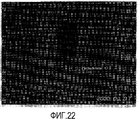
Фитохром соответствует полосе лизата с интенсивным оранжевым цветом, который виден приблизительно при 1M сахарозы, тогда как фикобилисома остается приблизительно при 0,75М. Данное соотношение указанных двух полос также дает достоверные данные молекулярной массы фитохрома, присутствующего в водорослях, которая приблизительно в 4 раза больше, чем молекулярная масса тримерного AFA-PC: так как последняя составляет 121 кДа, можно предварительно определить молекулярную массу AFA-фитохрома как приблизительно 480 кДа (Фигура 22).Phytochrome corresponds to a lysate band with an intense orange color, which is visible at approximately 1M sucrose, while phycobilisome remains at approximately 0.75M. This ratio of these two bands also gives reliable data on the molecular weight of phytochrome present in algae, which is approximately 4 times greater than the molecular weight of trimeric AFA-PC: since the latter is 121 kDa, the molecular weight of AFA-phytochrome can be preliminarily determined as approximately 480 kDa (Figure 22).
При анализе светопоглощающих свойств фитохром поглощал свет с двумя пиками при 672 нм и 694 нм, которые отвечают соответственно формам Pr (поглощению красного света) и Pfr (поглощению крайнего красного света) в состоянии равновесия (Фигура 23).When analyzing the light-absorbing properties, phytochrome absorbed light with two peaks at 672 nm and 694 nm, which correspond respectively to the forms of P r (absorption of red light) and P fr (absorption of extreme red light) in equilibrium (Figure 23).
Относительно количества фитохрома, содержащегося в AFA, первая оценка дала следующий предварительный результат: 2 мг/г (или 0,2% собственного веса). Относительно экстрактов, концентрация увеличивается приблизительно до 0,5% в Основном Экстракте, и приблизительно до 1% в Экстракте B. Это довольно низкие концентрации, однако антиоксидантные и противовоспалительные свойства данного соединения настолько сильны, что даже очень малое количество может производить весьма значительные эффекты.Regarding the amount of phytochrome contained in AFA, the first assessment gave the following preliminary result: 2 mg / g (or 0.2% of its own weight). Regarding extracts, the concentration increases to about 0.5% in Basic Extract, and to about 1% in Extract B. These are quite low concentrations, however, the antioxidant and anti-inflammatory properties of this compound are so strong that even a very small amount can produce very significant effects.
Антиоксидантная активностьAntioxidant activity
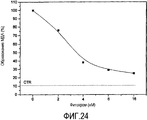
Очищенный AFA-фитохром, как было установлено, является очень мощным антиоксидантом. Более того, в абсолютных значениях самая мощная молекула на настоящий момент найдена в Кламатских водорослях. Инкубация в течение 2 ч образцов плазмы крови человека с окислителем CuCl2 при концентрации 100 мкМ приводит к образованию повышенных уровней малонового диальдегида (МДА), одного из конечных побочных продуктов перекисного окисления липидов, который определяют с помощью спектрофотометра при 535 нм после реакции с тиобарбитуровой кислотой (тест TBA). Когда плазму инкубируют в течение 2 часов при 37°C с 100 мкМ CuCl2 при повышении концентрации AFA-фитохрома (2-16 нМ), экстрагированного из водорослей AFA, наблюдается очень сильное дозозависимое снижение уровней MDA (Фигура 24). Более того, почти при полном ингибировании перекисного окисления липидов всего лишь при 16 нМ AFA-фитохрома уровни MDA были близки к контрольному значению. Что важно, значение IC50 3,6 нМ в 45 раз меньше, чем значение, полученное для PCB. Фитохром является основным соединением, ответственным за антиоксидантный и нейропротективный эффекты Основного Экстракта, которые сильнее, чем соответствующие эффекты AFA-PC.Purified AFA phytochrome has been found to be a very powerful antioxidant. Moreover, in absolute terms, the most powerful molecule is currently found in Klamath algae. Incubation for 2 hours of samples of human blood plasma with an oxidizing agent of CuCl 2 at a concentration of 100 μM leads to the formation of elevated levels of malondialdehyde (MDA), one of the final by-products of lipid peroxidation, which is determined using a spectrophotometer at 535 nm after reaction with thiobarbituric acid (TBA test). When the plasma was incubated for 2 hours at 37 ° C with 100 μM CuCl 2 with an increase in the concentration of AFA phytochrome (2-16 nM) extracted from AFA algae, a very strong dose-dependent decrease in MDA levels was observed (Figure 24). Moreover, with almost complete inhibition of lipid peroxidation with only 16 nM AFA phytochrome, MDA levels were close to the control value. What is important, the IC50 value of 3.6 nM is 45 times less than the value obtained for the PCB. Phytochrome is the main compound responsible for the antioxidant and neuroprotective effects of the Basic Extract, which are stronger than the corresponding effects of AFA-PC.
Экстракт, очистка и количественное определение MAKMAK Extract, Purification and Quantification
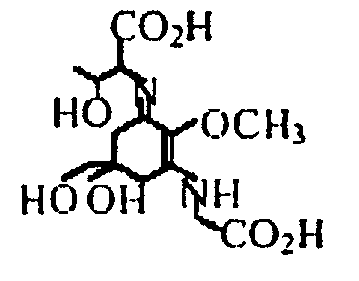
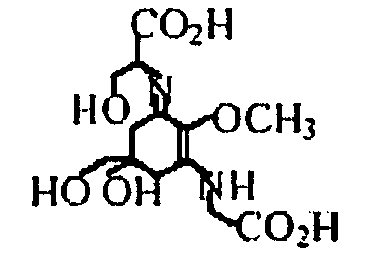
Было проанализировано присутствие МАК в цианофите Aphanizomenon flos-aquae из озера Кламат, общеизвестном как Кламатские водоросли. Насколько было известно, лишь в одной из последних статей сообщалось о присутствии МАК в некоторых видах Aphanizomenon (47); однако в указанном сообщении в качестве присутствующих МАК идентифицировали только порфиру, тогда как в настоящем исследовании показано присутствие двух МАК, и порфиры, и шинорина. С другой стороны, что касается всей литературы по водорослям, то тогда как большинство известных на сегодняшний день цианобактерий содержат шинорин в качестве основных МАК, авторы настоящего изобретения обнаружили необычное присутствие порфиры-334 в качестве основной МАК в Aphanizomenon flos-aquae в дополнение к шинорину.The presence of MAA in the cyanophyte of Aphanizomenon flos-aquae from Lake Klamath, commonly known as Klamath algae, was analyzed. As far as it was known, only one of the latest articles reported the presence of MAA in some species of Aphanizomenon (47); however, in the indicated message, only porphyry was identified as the MAK present, whereas in the present study the presence of two MAK, porphyry, and shinorin was shown. On the other hand, with regard to all algae literature, while most of the currently known cyanobacteria contain shinorin as the main MAKs, the inventors have discovered the unusual presence of porphyry-334 as the main MAK in Aphanizomenon flos-aquae in addition to shinorin.
МАК экстрагировали, как описано ранее (29). Кратко, 20 мг порошка AFA или 20 мг водного экстракта экстрагировали 2 мл 20% (об./об.) водного раствора метанола (для ВЭЖХ) при инкубировании в водяной бане при 45°C в течение 2,5 ч. После центрифугирования (5000 g; Центрифуга GS-15R, Beckman, Пало-Альто, США) супернатант выпаривали досуха и повторно растворяли в 2 мл 100%-го метанола, встряхивали на вортексе в течение 2-3 минут и центрифугировали при 10000 g в течение 10 мин. Супернатант выпаривали, а экстракт повторно растворяли в таком же объеме 0,2% уксусной кислоты для анализа с помощью ВЭЖХ или в 200 мкл фосфатного буфера (PBS) для оценки антиоксидантных свойств. Пробы фильтровали через шприцевые фильтры с размером пор 0,2 мкм (VWR International, Милан, Италия) перед анализом с помощью ВЭЖХ или анализом антиоксидантных свойств (см. ниже).MAK was extracted as previously described (29). Briefly, 20 mg of AFA powder or 20 mg of an aqueous extract was extracted with 2 ml of a 20% (v / v) aqueous methanol solution (for HPLC) by incubation in a water bath at 45 ° C for 2.5 hours. After centrifugation (5000 g; GS-15R Centrifuge, Beckman, Palo Alto, USA) the supernatant was evaporated to dryness and re-dissolved in 2 ml of 100% methanol, vortexed for 2-3 minutes and centrifuged at 10,000 g for 10 minutes. The supernatant was evaporated and the extract was redissolved in the same volume of 0.2% acetic acid for analysis by HPLC or in 200 μl phosphate buffer (PBS) to evaluate antioxidant properties. Samples were filtered through 0.2 μm syringe filters (VWR International, Milan, Italy) before analysis by HPLC or analysis of antioxidant properties (see below).
МАК из Кламатских водорослей имеют максимум поглощения при 334 нм. Последующую очистку МАК выполняли, используя систему ВЭЖХ (Jasco Corporation, Токио, Япония), оборудованную колонкой Alltima C18 и защитной колонкой (внутр. сеч. 4,6 × 250 мм, набивка 5 мкм, Alltech, Милан, Италия), в соответствии с литературными данными (30). Длина волны для детектирования составляла 330 нм; подвижной фазой являлась 0,2% уксусная кислота при расходе 1,0 мл*мин-1. Идентификацию МАК проводили, сравнивая спектры поглощения и время удержания со стандартами, такими как Porphyra и Pterocladia sp., главным образом содержащими порфиру-334, шинорин и палитин, любезно предоставленные доктором Манфредом Клишем, университет им. Фридриха-Александра, Эрланген, Германия. Спектры поглощения проб измеряли при 200 - 800 нм на однолучевом спектрофотометре (DU 640, Beckman, Пало-Альто, США). Нерасшифрованные спектры перенесли в компьютер и обработали математически с целью анализов пиков МАК.MAK from Klamath algae have a maximum absorption at 334 nm. Subsequent MAK purification was performed using an HPLC system (Jasco Corporation, Tokyo, Japan) equipped with an Alltima C18 column and a protective column (internal cross-section 4.6 × 250 mm, 5 μm packing, Alltech, Milan, Italy), in accordance with literature data (30). The wavelength for detection was 330 nm; the mobile phase was 0.2% acetic acid at a flow rate of 1.0 ml * min -1 . MAK was identified by comparing absorption spectra and retention times with standards such as Porphyra and Pterocladia sp. mainly containing porphyry-334, shinorin and palitin, kindly provided by Dr. Manfred Clich, University of. Friedrich-Alexander, Erlangen, Germany. The absorption spectra of the samples were measured at 200 - 800 nm on a single-beam spectrophotometer (DU 640, Beckman, Palo Alto, USA). Unencrypted spectra were transferred to a computer and mathematically processed for the analysis of MAC peaks.
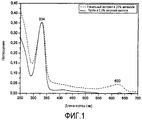
МАК частично очищали из образца AFA и из водного экстракта, как описано ранее. Экстракция образцов в 20%-ом метаноле при 45°C в течение 2,5 ч привела к заметному пику при 334 нм (МАК); даже если небольшие количества фотосинтетических пигментов (например, фикоцианина при 620 нм) были также экстрагированы в данной методике (см. Фигуру 1, пунктирная линия). Затем пробы МАА обрабатывали 100%-ым метанолом с целью удаления белков и солей, и в завершении 0,2% уксусной кислотой для удаления неполярных фотосинтетических пигментов. Полученные в результате частично очищенные МАК имели максимум поглощения при 334 нм (Фигура 1, сплошная линия).MAK was partially purified from an AFA sample and from an aqueous extract as previously described. Extraction of the samples in 20% methanol at 45 ° C for 2.5 h led to a noticeable peak at 334 nm (MAC); even if small amounts of photosynthetic pigments (e.g., phycocyanin at 620 nm) were also extracted in this technique (see Figure 1, dashed line). Then the MAA samples were treated with 100% methanol to remove proteins and salts, and finally 0.2% acetic acid to remove non-polar photosynthetic pigments. The resulting partially purified MAA had an absorption maximum at 334 nm (Figure 1, solid line).
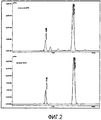
Последующий анализ и очистку МАК выполняли с помощью ВЭЖХ в целях подтверждения, соответствуют ли соединения с поглощением при 334 нм одной МАК или смеси более чем одной МАК. Хроматограмма пробы (Фигура 2) показала присутствие двух МАК с временем удержания 4,2 (пик 1) и 7,6 минут (пик 2), которые были идентифицированы как шинорин и порфира-334 соответственно. Порфира-334, по-видимому, является основной МАК в AFA, так как шинорин присутствовал лишь в небольших количествах (соотношение площади пиков 1:15).Subsequent analysis and purification of MAA was performed using HPLC to confirm whether compounds with absorbance at 334 nm corresponded to one MAA or a mixture of more than one MAA. The chromatogram of the sample (Figure 2) showed the presence of two MAAs with retention times of 4.2 (peak 1) and 7.6 minutes (peak 2), which were identified as shinorin and porphyry-334, respectively. Porfira-334, apparently, is the main MAK in AFA, since shinorin was present only in small quantities (peak area ratio 1:15).
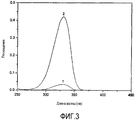
УФ-спектры очищенных МАК подтверждали соответствующий максимум поглощения при 334 нм (Фигура 3).The UV spectra of the purified MAKs confirmed the corresponding absorption maximum at 334 nm (Figure 3).
Принимая во внимание, что молярные коэффициенты экстинкции при 334 нм для шинорина и порфиры-334 составляют 44700 и 42300 M-1 см-1, соответственно, было вычислено:Taking into account that the molar extinction coefficients at 334 nm for shinorin and porphyry-334 are 44700 and 42300 M -1 cm -1 , respectively, it was calculated:
a) для водорослей AFA, концентрация шинорина 0,49 мг г-1 собственного веса и порфиры-334 7,09 мг г-1 собственного веса; общее содержание МАК, таким образом, составляет 0,76% собственного веса водорослей;a) for algae AFA, the concentration of shinorin 0.49 mg g -1 own weight and porphyry-334 7.09 mg g -1 own weight; the total MAA content is thus 0.76% of the algae's own weight;
b) для Основного Экстракта, концентрации МАК 17-21 мг (что составляет 1,7-2,1% собственного веса).b) for the Basic Extract, the concentration of MAC is 17-21 mg (which is 1.7-2.1% of its own weight).
Это важные данные, поскольку цельные AFA содержат высокие уровни МАК (0,76% собственного веса), близкие к максимальной концентрации, найденной при УФ-облучении, то есть 0,84% (31). Кроме того, было обнаружено, что экстракт имеет более высокую концентрацию, чем цельные водоросли, достигая намного более высоких уровней, чем максимальная потенциальная концентрация.This is important data, since whole AFAs contain high levels of MAA (0.76% of their own weight) close to the maximum concentration found by UV irradiation, i.e., 0.84% (31). In addition, it was found that the extract has a higher concentration than whole algae, reaching much higher levels than the maximum potential concentration.
МАК (шинорин и порфира-334) являются структурно простыми молекулами с молекулярной массой 300. Это позволяет указанным водорастворимым молекулам легко проходить через гематоэнцефалический барьер, что подтверждает их способность проявлять свой потенциал в ингибировании MAO-B в той области, где это наиболее необходимо, в мозге.MAK (shinorin and porphyra-334) are structurally simple molecules with a molecular weight of 300. This allows these water-soluble molecules to easily pass through the blood-brain barrier, which confirms their ability to show their potential in the inhibition of MAO-B in the area where it is most needed, in the brain.
ФикоцианиныPhycocyanins
Фикоцианины присутствуют в экстракте в концентрации 8-10% (количественный анализ см. ниже). Фикоцианины представляют собой синие пигменты, типичные для всех цианобактерий или сине-зеленых водорослей, хотя и со специфическими свойствами для каждого конкретного вида водорослей (32). Что касается функциональных и терапевтических свойств фикоцианинов, пока исследования главным образом сфокусированы на фикоцианинах из микроводоросли Spirulina. Очищенные фикоцианины из Spirulina, как установили, обладают антиоксидантными (33) и противовоспалительными (34, 35, 36) свойствами в различных физиологических системах, таких как печень (37), дыхательная система (38) и мозг (39, 40). Такие свойства очищенного PC из Spirulina в целом могут быть также приписаны фикоцианинам других водорослей, учитывая их существенное подобие. Однако между различными фикоцианинами из различных микроводорослей могут существовать видоспецифические различия, что может привести к различной активности при проявлении вышеописанных функциональных и терапевтических свойств.Phycocyanins are present in the extract at a concentration of 8-10% (quantitative analysis, see below). Phycocyanins are blue pigments that are typical of all cyanobacteria or blue-green algae, although with specific properties for each particular type of algae (32). As for the functional and therapeutic properties of phycocyanins, so far the studies have mainly focused on phycocyanins from the Spirulina microalgae. Purified Spirulina phycocyanins have been found to have antioxidant (33) and anti-inflammatory (34, 35, 36) properties in various physiological systems, such as the liver (37), the respiratory system (38), and the brain (39, 40). Such properties of the purified PC from Spirulina as a whole can also be attributed to the phycocyanins of other algae, given their significant similarity. However, species-specific differences may exist between different phycocyanins from different microalgae, which can lead to different activities in the manifestation of the above functional and therapeutic properties.
Структурное определение и специфические свойства фикобилисом Кламатских водорослейStructural determination and specific properties of phycobilisome Klamath algae
В общем, в интактной клетке цианобактерии фикоцианины (PC) присутствуют в фикобилисоме в функциональной форме (αβ)6 (41). После вскрытия клетки белок может быть обнаружен в различных агрегированных формах (мономеры, димеры, тримеры, гексамеры) в зависимости от исследуемого организма. В случае Кламатских водорослей электрофоретический анализ PC, непосредственно содержащегося в экстракте и очищенного из экстракта, показал, что белок главным образом присутствует в форме тримера (αβ)3, с общей молекулярной массой 121000. Мономер αβ имеет массу приблизительно 40000 (18500 α субъединица + 21900 β субъединица). Большинство исследований очищенного PC из Спирулины напротив указывает, что мономерная форма αβ белка, обнаруженного в Спирулине, обладает молекулярной массой приблизительно 37500, таким образом, демонстрируя другое агрегированное состояние в отличие от очищенного PC из AFA.In general, in an intact cyanobacterial cell, phycocyanins (PC) are present in phycobilisome in the functional form (αβ) 6 (41). After opening the cell, the protein can be detected in various aggregated forms (monomers, dimers, trimers, hexamers) depending on the organism under study. In the case of Klamath algae, an electrophoretic analysis of PC directly contained in the extract and purified from the extract showed that the protein is mainly present in the form of the trimer (αβ) 3 , with a total molecular weight of 121,000. The αβ monomer has a mass of approximately 40,000 (18,500 α subunit + 21900 β subunit). Most studies of purified Spirulina PC indicate, on the contrary, that the monomeric form of the αβ protein found in Spirulina has a molecular weight of approximately 37,500, thus showing a different aggregated state in contrast to purified AFA PC.
Хроматографический анализ фикобилисом AFA также показал, что, как в других видах цианобактерий α субъединица PC связывает простетическую группу, тогда как β субъединица связывает две. Простетическая группа или хромофор называется фикоцианобилином (PCB) и отвечает за синий цвет белка и его антиоксидантный потенциал (42).Chromatographic analysis by phycobilis AFA also showed that, as in other types of cyanobacteria, the α subunit of the PC binds the prosthetic group, while the β subunit binds the two. The prosthetic group or chromophore is called phycocyanobilin (PCB) and is responsible for the blue color of the protein and its antioxidant potential (42).
Фундаментальное различие между AFA и Спирулина основано на различной структуре фикобилисомы. В отличие от Спирулины, фикобилисома Кламатской водоросли AFA не содержит пигмент алло-фикоцианин, при этом только пигмент c-фикоцианин соединен со структурным компонентом, который отсутствует в Спирулине, а именно, фикоэритроцианином (PEC). PEC представляет собой фотосинтетический пигмент, который на сегодняшний день был идентифицирован лишь у ограниченного числа видов цианобактерий (43). Химическая структура PEC в значительной степени схожа со структурой PC и состоит из двух субъединиц α и β, которые соединяются с образованием мономеров и тримеров. Однако тогда как каждый мономер PC связывает 3 молекулы PCB, PEC обладает уникальной особенностью связывания двух молекул PCB с β субъединицей и одной молекулой фиковиолобилина (PVB) с α субъединицей, которая отвечает за пурпурный цвет пигмента.The fundamental difference between AFA and Spirulina is based on the different structure of phycobilisomes. Unlike Spirulina, the Klamath alga phycobilisome AFA does not contain allo-phycocyanin pigment, while only the c-phycocyanin pigment is connected to a structural component that is absent in Spirulina, namely phycoerythrocyanine (PEC). PEC is a photosynthetic pigment that has so far been identified only in a limited number of cyanobacterial species (43). The chemical structure of PEC is largely similar to the structure of PC and consists of two subunits α and β, which combine to form monomers and trimers. However, while each PC monomer binds 3 PCB molecules, PEC has the unique feature of binding two PCB molecules to the β subunit and one ficoviolobilin (PVB) molecule to the α subunit, which is responsible for the magenta color of the pigment.
Исключительно впервые фикобилисома Кламатских водорослей определена как совершенно точно состоящая из комплекса c-фикоцианина и фикоэритроцианина, причем данная различная характерная структура фикобилисомы Кламатской водоросли AFA добавляет дополнительный решающий фактор, отличающий AFA от Спирулины.For the first time, the phycobilisome of Klamath algae was defined as exactly consisting of a complex of c-phycocyanin and phycoerythrocyanine, and this different characteristic structure of the phycobilisome of Klamath algae AFA adds an additional decisive factor that distinguishes AFA from Spirulina.
Фигура 4 подтверждает вышесказанное, сравнивая компоненты клеточного лизата AFA с компонентами лизата другой известной цианобактерии, Synechocystis PCC 6803. У обоих цианобактерий можно увидеть синюю полосу, соответствующую фикобилисоме, но в водорослях AFA фикобилисома имеет более низкую молекулярную массу, что подтверждает, в противоположность обычным микроводорослям, таким как Спирулина, что в фикобилисоме AFA присутствуют только фикоцианины, а алло-фикоцианины не присутствуют. Кроме того, Фигура 4 показывает, что в AFA также присутствует светло-пурпурная полоса (показана стрелкой), которая типична для фикоэритроцианинов, что доказывает, таким образом, их присутствие в фикобилисоме Кламатских водорослей.Figure 4 confirms the above by comparing the components of the AFA cell lysate with the components of the lysate of another known cyanobacteria,
В целях более интенсивного определения каждую синюю полосу дополнительно проанализировали с помощью ВЭЖХ, связанной с масс-спектрометром (ОФ-ВЭЖХ-ИЭ-МС). Благодаря различному времени удержания белки фикобилисомы были разделены и идентифицированы на основании их молекулярной массы. Полученные результаты показаны в следующих таблицах. Вначале можно увидеть, что в Synechocystis (Таблица 1) присутствуют и фикоцианин (cpcA 28,2 мин и cpcB 28,9 мин), и алло-фикоцианин (apcA 30,7 мин и apcB 31,2 мин), а в AFA (Таблица 2) только фикоцианин (cpcA 28,8 мин и cpcB 30,0 мин). Во-вторых, в AFA был идентифицирован белок с молекулярной массой 19469, который не присутствует в Synechocystis и который соответствует бета-субъединице фикоэритроцианина с двумя присоединенными билинами (pecB 25,0 мин).For a more intensive determination, each blue band was further analyzed by HPLC coupled to a mass spectrometer (RP-HPLC-IE-MS). Due to the different retention times, phycobilisome proteins were separated and identified based on their molecular weight. The results are shown in the following tables. First, you can see that in Synechocystis (Table 1) there are both phycocyanin (cpcA 28.2 min and cpcB 28.9 min) and allo-phycocyanin (apcA 30.7 min and apcB 31.2 min), and in AFA ( Table 2) only phycocyanin (cpcA 28.8 min and cpcB 30.0 min). Secondly, a protein with a molecular weight of 19469 was identified in AFA that was not present in Synechocystis and which corresponds to the beta subunit of phycoerythrocyanine with two attached bilines (pecB 25.0 min).
Белки, присутствующие в фикобилисоме Synechocystis. TABLE 1 :
Proteins present in the phycobilisome Synechocystis .
(мин)Hold Time
(min)
[гомологичный организм]Protein
[homologous organism]
3238832505
32388
3079732520
30797
cpcCCpcc
cpcC
Белки, присутствующие в фикобилисоме Кламатской водоросли AFA TABLE 2 :
Proteins Present in Klamath Alga AFA Phycobilisome
(мин)Hold Time
(min)
[гомологичный организм]Protein
[homologous organism]
[Nostoc sp. PCC 7120]cpcD
[ Nostoc sp. PCC 7120]
бета цепь фикоэритроцианина
[Nostoc sp. PCC 7120]pecB:
phycoerythrocyanine beta chain
[ Nostoc sp. PCC 7120]
[Nostoc sp. PCC 7120]ssss
[ Nostoc sp. PCC 7120]
[Nostoc sp. PCC 7120]pecC
[ Nostoc sp. PCC 7120]
[Nostoc sp. PCC 7120]cpcA
[ Nostoc sp. PCC 7120]
[Nostoc sp. PCC 7120]cpcB
[ Nostoc sp. PCC 7120]
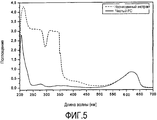
Подобная уникальная структура является важным элементом в объяснении более сильного антиоксидантного и противовоспалительного действия целого AFA-PC по отношению к его PCB. Антиоксидантные и противовоспалительные свойства становятся актуальными в данном контексте, поскольку они производят сильный нейропротективный эффект; также в отношении нейропротекции целый PC более эффективен, чем его PCB, что ясно указывает на то, что другой активный компонент помимо PCB в фикобилисоме, а именно, PEC и его специфический хромофор PVB, являются, по-видимому, наиболее активным действующим началом AFA-PC, улучшающим самочувствие. То, что очищенный AFA-PC действительно содержит не только C-PC и его хромофор PCB, но также PEC и его хромофор PVB, становится очевидным при изучении спектрометрии экстракта, полученного в результате очистки (Фигура 5). Фактически, максимум поглощения С-РС составляет 620 нм, что в спектрометрии на Фигуре 5 соответствует вершине пика. Но максимум поглощения PEC, как известно, составляет 566 нм для α-субъединицы (фиковиолобилин или PVB) и соответственно 593 нм и 639 нм для двух PCB β-субъединицы. Все три значения действительно включены в колоколообразный пик, составляющий спектральный профиль очищенного PC. Принимая во внимание сильную связь между С-РС и PEC в водорослях AFA, с большим трудом поддающуюся разрыву, это подтверждает, что помимо С-РС PEC также является обязательной частью очищенного экстракта PC. Это в свою очередь означает, что PC из AFA значительно отличен, как структурно, так и функционально, от PC из другой цианобактерии, включая PC из Спирулины, который был исследован более подробно, а также то, что указанное различие состоит в наличии лишь одной части в целом, а именно, C-PC, но не другой; с выводом, что тогда как свойства С-РС могут также быть приписаны С-РС компоненту AFA-PC, свойства всего PC из AFA, который находится в комплексе C-PC/PEC (включая его хромофоры PCB и PVB), связаны исключительно с ним (так же как и с любым комплексом C-PC/PEC, присутствующим в любых других микроводорослях).This unique structure is an important element in explaining the stronger antioxidant and anti-inflammatory effects of the whole AFA-PC in relation to its PCB. Antioxidant and anti-inflammatory properties become relevant in this context, since they produce a strong neuroprotective effect; also with regard to neuroprotection, the whole PC is more effective than its PCB, which clearly indicates that another active component besides PCB in phycobilisome, namely, PEC and its specific PVB chromophore, is probably the most active active principle of AFA- Wellness PC. The fact that purified AFA-PC really contains not only C-PC and its PCB chromophore, but also PEC and its PVB chromophore, becomes apparent when studying the spectrometry of the extract obtained by purification (Figure 5). In fact, the maximum absorption of C-RS is 620 nm, which in the spectrometry in Figure 5 corresponds to the peak peak. But the maximum absorption of PEC, as is known, is 566 nm for the α-subunit (ficoviolobilin or PVB) and, respectively, 593 nm and 639 nm for two PCB β-subunits. All three values are indeed included in the bell-shaped peak making up the spectral profile of the purified PC. Given the strong linkage between C-PC and PEC in AFA algae, which is difficult to break, it confirms that in addition to C-PC, PEC is also an essential part of purified PC extract. This, in turn, means that PC from AFA is significantly different, both structurally and functionally, from PC from another cyanobacteria, including PC from Spirulina, which has been studied in more detail, and that this difference consists in the presence of only one part in general, namely, C-PC, but not another; with the conclusion that while the properties of C-PC can also be attributed to the C-PC component of AFA-PC, the properties of the entire PC from AFA, which is in the C-PC / PEC complex (including its PCB and PVB chromophores), are exclusively associated with it (as with any C-PC / PEC complex present in any other microalgae).
Методики очистки (Фигура 5)Cleaning Methods (Figure 5)
PC очищали из высушенного экстракта AFA следующим образом:PC was purified from the dried AFA extract as follows:
- 500 мг экстракта суспендировали в 50 мл 100 мМ Na-фосфатного буфера, pH 7,4;- 500 mg of the extract was suspended in 50 ml of 100 mm Na-phosphate buffer, pH 7.4;
- центрифугировали при 2500 об/мин в течение 10' при 4°C;- centrifuged at 2500 rpm for 10 'at 4 ° C;
- супернатант собирали и добавляли твердый сульфат аммония до 50% насыщения;- the supernatant was collected and solid ammonium sulfate was added to 50% saturation;
- белки осаждали в течение 60 минут при 4°C, продолжая перемешивать пробу;- proteins were besieged for 60 minutes at 4 ° C, while continuing to mix the sample;
- центрифугировали при 10000 об/мин в течение 30 мин при 4°C;- centrifuged at 10,000 rpm for 30 min at 4 ° C;
- прозрачный бесцветный супернатант отбрасывали и ресуспендировали синий осадок в малом объеме 5 мМ Na-фосфатного буфера, pH 7,4;- the clear, colorless supernatant was discarded and the blue precipitate was resuspended in a small volume of 5 mM Na-phosphate buffer, pH 7.4;
- диализ проводили при 4°C в течение ночи против того же буфера;- dialysis was carried out at 4 ° C overnight against the same buffer;
- диализированный PC переносили в гидроксиапатитовую колонку, уравновешенную 5 мМ Na-фосфатным буфером, pH 7,4;- the dialyzed PC was transferred to a hydroxyapatite column equilibrated with 5 mM Na-phosphate buffer, pH 7.4;
- пробу элюировали Na-фосфатным буфером, pH 7,4 с повышением ионной силы (с 5 до 150 мМ);- the sample was suirable Na-phosphate buffer, pH 7.4 with increasing ionic strength (from 5 to 150 mm);
- фракции собирали и регистрировали поглощение при 620 нм и 280 нм с помощью спектрофотометра;- fractions were collected and absorbance was recorded at 620 nm and 280 nm using a spectrophotometer;
- фракции со значением Abs620/Abs280>4 (индекс чистого PC) объединяли;- fractions with a value of Abs 620 / Abs 280 > 4 (pure PC index) were combined;
- PC осаждали сульфатом аммония при 50% насыщения в течение 1 часа при 4°С;- PC was precipitated with ammonium sulfate at 50% saturation for 1 hour at 4 ° C;
- центрифугировали при 10000 об/мин в течение 30' при 4°C;- centrifuged at 10,000 rpm for 30 'at 4 ° C;
- супернатант отбрасывали, а PC ресуспендировали в 150 мМ Na-фосфатным буфере, рН 7,4;- the supernatant was discarded, and PCs were resuspended in 150 mM Na-phosphate buffer, pH 7.4;
- диализ проводили против того же буфера при 4°C;- dialysis was performed against the same buffer at 4 ° C;
- очищенный PC переносили в колбу и хранили в темноте на +4°C или -20°С.- purified PC was transferred to a flask and stored in the dark at + 4 ° C or -20 ° C.
Количественный анализ фикоцианинаQuantitative analysis of phycocyanin
Для измерения молярной концентрации чистого PC использовали его коэффициент молярной экстинкции при 620 нм, который для тримерной формы (αβ)3 равен 770000 M-1*см-1. Это означает, что 1М раствор PC при 620 нм имеет значение поглощения 770000.To measure the molar concentration of pure PC, its molar extinction coefficient at 620 nm was used, which for the trimeric form (αβ) 3 is 770000 M -1 * cm -1 . This means that a 1M PC solution at 620 nm has an absorption value of 770,000.
Для измерения концентрации PC в экстракте использовали коэффициент удельной экстинкции E1% при 620 нм 70 л г-1 см-1. Это означает, что раствор, содержащий 1% PC (то есть 1 г/100 мл), при 620 нм поглощает с интенсивностью 70. На основе данных вычислений среднее содержание PC в экстракте равно 80-100 мг/г собственного веса (8-10% собственного веса).To measure the concentration of PC in the extract, the specific extinction coefficient E 1% was used at 620
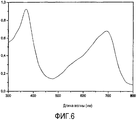
Очистка хромофора PCB (Фигура 6)Purification of the PCB chromophore (Figure 6)
• 500 мг экстракта суспендировали в 50 мл дистиллированной H2O.• 500 mg of the extract was suspended in 50 ml of distilled H 2 O.
• Центрифугировали при 2500 об/мин в течение 10' при 4°C.• Centrifuged at 2500 rpm for 10 'at 4 ° C.
• Ярко-синий супернатант сливали с осадка и осаждали PC 1% трихлоруксусной кислотой.• The bright blue supernatant was decanted and PC precipitated with 1% trichloroacetic acid.
• Инкубировали в течение 1 ч в темноте при 4°C с перемешиванием.• Incubated for 1 h in the dark at 4 ° C with stirring.
• Центрифугировали при 10000 об/мин в течение 30' при 4°C.• Centrifuged at 10,000 rpm for 30 'at 4 ° C.
• Осадок, содержащий PC, собирали и промывали 3 раза метанолом.• A precipitate containing PC was collected and washed 3 times with methanol.
• Осадок ресуспендировали в 10 мл метанола, содержащего 1 мг/мл HgCl2.• The precipitate was resuspended in 10 ml of methanol containing 1 mg / ml HgCl 2 .
• Инкубировали в течение 20 ч при 42°C в темноте для выделения PCB из PC.• Incubated for 20 hours at 42 ° C in the dark to isolate PCB from PC.
• Центрифугировали при 2500 об/мин в течение 10' для удаления белков.• Centrifuged at 2500 rpm for 10 'to remove proteins.
• К супернатанту, содержащему PCB, добавляли β-меркаптоэтанол (1 мкл/мл) для осаждения HgCl2.• β-mercaptoethanol (1 μl / ml) was added to the supernatant containing PCB to precipitate HgCl 2 .
• Инкубировали при -20°C в течение 24 ч.• Incubated at -20 ° C for 24 hours.
• Центрифугировали при 10000 об/мин в течение 30' при 4°C с целью удаления белого осадка.• Centrifuged at 10,000 rpm for 30 'at 4 ° C to remove white precipitate.
• К супернатанту добавляли 10 мл метиленхлорида/бутанола (2:1, об./об.).• 10 ml of methylene chloride / butanol (2: 1, v / v) was added to the supernatant.
• Промывали 20 мл дистиллированной H2O и центрифугировали при 3000 об/мин в течение 10'.• Washed with 20 ml of distilled H 2 O and centrifuged at 3000 rpm for 10 '.
• Верхнюю фазу удаляли, отбирали более низкую часть, содержащую PCB.• The upper phase was removed, the lower part containing the PCB was selected.
• PCB промывали 15 мл Н2О 3 раза.• PCBs were washed with 15 ml of H 2 O 3 times.
• Высушили под азотом и хранили при -20°C.• Dried under nitrogen and stored at -20 ° C.
ОЦЕНКА ИНГИБИРОВАНИЯ MAO-B ЭКСТРАКТОМ КЛАМАТСКОЙ ВОДОРОСЛИ AFA И ЕГО АКТИВНЫМИ КОМПОНЕНТАМИ ФОТОХРОМОМ, ФИКОЦИАНИНОМ И МАКASSESSMENT OF MAO-B INHIBITION BY KLAMAT ALGAE EXTRACT AND ITS ACTIVE COMPONENTS PHOTOCHROME, FICOCIANIN, AND IAC
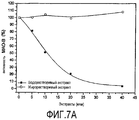
Была проанализирована ингибирующая активность Основного Экстракта в отношении MAO-B с использованием специфического субстрата бензиламина (1 мМ). Анализ проводили с использованием спектрофотометра при 30°C с длиной волны 250 нм, предварительно инкубируя MAO-B (2 мкг/мл) с водорастворимыми и жирорастворимыми компонентами основного экстракта при различных концентрациях, полученными на стадиях a) - c), описанных выше (начальная концентрация 10 мг/мл). Экстракт, обогащенный водорастворимыми компонентами, получали путем ресуспендирования водного экстракта в воде и сбора супернатанта после центрифугирования. Экстракт, обогащенный жирорастворимыми компонентами, получали путем ресуспендирования экстракта в ацетоне; впоследствии супернатант было высушен, а осадок ресуспендирован в ДМСО, растворителем, фармацевтически совместимым с MAO-B.The MAO-B inhibitory activity of the Basic Extract was analyzed using a specific benzylamine substrate (1 mM). The analysis was carried out using a spectrophotometer at 30 ° C with a wavelength of 250 nm, pre-incubating MAO-B (2 μg / ml) with water-soluble and fat-soluble components of the main extract at various concentrations obtained in stages a) - c) described above (initial concentration of 10 mg / ml). An extract enriched with water-soluble components was obtained by resuspending the aqueous extract in water and collecting the supernatant after centrifugation. An extract enriched with fat-soluble components was obtained by resuspending the extract in acetone; the supernatant was subsequently dried and the precipitate resuspended in DMSO, a solvent pharmaceutically compatible with MAO-B.
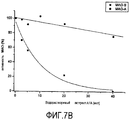
Как показано на Фигуре 7A, водорастворимая фракция ингибирует MAO-B дозозависимым образом, тогда как липофильная фракция не ингибирует фермент. Водорастворимая фракция Основного Экстракта AFA является мощным селективным ингибитором MAO-B с IC50 6,9 мкл. Селективность по отношению к MAO-B составляет 4 (IC50 MAO-B/IC50 MAO-A>4,05) (Фигура 7B).As shown in Figure 7A, the water-soluble fraction inhibits MAO-B in a dose-dependent manner, while the lipophilic fraction does not inhibit the enzyme. The water-soluble fraction of Basic AFA Extract is a potent selective MAO-B inhibitor with an IC50 of 6.9 μl. The selectivity for MAO-B is 4 (IC50 MAO-B / IC50 MAO-A> 4.05) (Figure 7B).
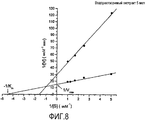
График в координатах Лайнуивера-Берка на Фигуре 8 показывает, что такое ингибирование является обратимым смешанного типа по отношению к конкуренции, с уменьшением Vmax и увеличением константы Км Михаэлиса-Ментен. Построив график зависимости наклона от концентрации водорарастворимой фракции экстракта AFA, получили Константу ингибирования Ki при 1 мкл. По сравнению с водорарастворимой фракцией Основного Экстракта данное низкое значение Ki указывает на высокую аффинность к ферменту MAO-B.The graph in the coordinates of Lineuiver-Burke in Figure 8 shows that such inhibition is reversible of a mixed type with respect to competition, with a decrease in V max and an increase in the constant K m of Michaelis-Menten. By plotting the slope versus the concentration of the water-soluble fraction of the AFA extract, we obtained the inhibition constant K i at 1 μl. Compared to the water-soluble fraction of the Basic Extract, this low K i value indicates a high affinity for the MAO-B enzyme.
Тот факт, что ингибирование под воздействием экстракта является обратимым, означает, что экстракт проявляет физиологическую активность без побочных эффектов. Что касается смешанной конкуренции, вероятно, это происходит из-за сложной природы экстракта, включающего молекулы с различной функциональностью, одни из которых являются конкурентными, а другие неконкурентными. Основными активными компонентами экстракта являются AFA-фитохром (0,5% собственного веса); фикоцианины (8-10% собственного веса); а также МАК или микоспорин-подобные аминокислоты (1,7-2,1% собственного веса), которые отдельно анализировали как ингибиторы MAO-B.The fact that inhibition by the extract is reversible means that the extract exhibits physiological activity without side effects. As for mixed competition, this is likely due to the complex nature of the extract, including molecules with different functionalities, some of which are competitive and others are non-competitive. The main active components of the extract are AFA-phytochrome (0.5% of its own weight); phycocyanins (8-10% of own weight); as well as MAK or mycosporin-like amino acids (1.7-2.1% of their own weight), which were separately analyzed as MAO-B inhibitors.
Ингибирование MAO-B под действием фикоцианиновInhibition of MAO-B by Phycocyanins
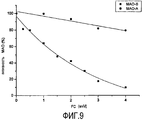
Тест проводили с использованием спектрофотометра при 30°C с длиной волны 250 нм, используя бензиламин в качестве субстрата, с предварительным инкубированием MAO-B с очищенным PC из AFA (0,5-4 мкМ) при различных концентрациях. Как показано на фигуре 9, AFA-PC вызывает дозозависимое снижение активности MAO-B, с IC50 1,44 мкМ. Селективность AFA-PC к MAO-B выше 3,5 (IC50 MAO-B/IC50 MAO-A > 3,5).The test was carried out using a spectrophotometer at 30 ° C with a wavelength of 250 nm, using benzylamine as a substrate, with preliminary incubation of MAO-B with purified AFA PC (0.5-4 μM) at various concentrations. As shown in FIG. 9, AFA-PC induces a dose-dependent decrease in MAO-B activity, with an IC50 of 1.44 μM. The selectivity of AFA-PC to MAO-B is higher than 3.5 (IC50 MAO-B / IC50 MAO-A> 3.5).
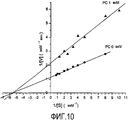
График в координатах Лайнуивера-Берка на Фигуре 10 показывает, что, как и в случае экстракта, ингибирование является обратимым смешанного типа (конкурентным и неконкурентным) с изменением Vmax и Км.The graph in the coordinates of Lineuiver-Burke in Figure 10 shows that, as in the case of the extract, the inhibition is reversible mixed type (competitive and non-competitive) with a change in V max and K m
Построив график зависимости наклона от концентрации PC, получили значение константы ингибирования Ki, которая в данном случае составило 1,06 мкМ. Константа ингибирования определяет аффинность ингибитора к ферменту: высокая Ki указывает на низкую аффинность к ферменту, и наоборот. В данном случае низкое значение Ki указывает на высокую аффинность PC AFA к MAO-B.By plotting the slope versus PC concentration, we obtained the inhibition constant K i , which in this case was 1.06 μM. The inhibition constant determines the affinity of the inhibitor for the enzyme: a high K i indicates a low affinity for the enzyme, and vice versa. In this case, a low K i indicates a high affinity of PC AFA for MAO-B.
Ингибирование MAO-B под действием МАКInhibition of MAO-B by MAC
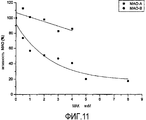
Активность MAO-B в отношении субстрата бензиламина оценивали относительно растущих концентраций МАК (0,5-8 мкМ), предварительно очищенных из Основного Экстракта с использованием 20% метанола. На Фигуре 11 показано дозозависимое ингибирование MAO-B под действием МАК с IC50 1,98 мкМ. Селективность МАК к MAO-B выше 2 (IC50 MAO-B/IC50 MAO-A > 2,02).The activity of MAO-B in relation to the benzylamine substrate was evaluated relative to increasing concentrations of MAA (0.5-8 μM), previously purified from the Basic Extract using 20% methanol. Figure 11 shows a dose-dependent inhibition of MAO-B by MAA with an IC50 of 1.98 μM. The selectivity of MAA to MAO-B is above 2 (IC50 MAO-B / IC50 MAO-A> 2.02).
График в координатах Лайнуивера-Берка (Фигура 12) показывает, что ингибирование является обратимым и конкурентным, с ростом Км, но без изменения Vmax. Это означает, что МАК, благодаря своей химической структуре, конкурируют с субстратом за связь с активным сайтом фермента. Построив график зависимости наклона от концентрации МАК (Фигура 13), получили значение константы ингибирования Ki, которое составило 0,585 мкМ, что демонстрирует очень высокую степень аффинности к ферменту.The graph in the coordinates of the Linuiver-Burke (Figure 12) shows that the inhibition is reversible and competitive, with an increase in K m , but without changing V max . This means that MAK, due to their chemical structure, compete with the substrate for binding to the active site of the enzyme. Having plotted the slope versus MAA concentration (Figure 13), we obtained the inhibition constant K i , which amounted to 0.585 μM, which demonstrates a very high degree of affinity for the enzyme.
Ингибирование MAO-B под действием AFA-фитохромаInhibition of MAO-B by AFA Phytochrome
Тест проводили с использованием спектрофотометра при 30°C с длиной волны 250 нм, используя бензиламин в качестве субстрата, с предварительным инкубированием MAO-B с очищенным AFA-фитохромом при различных концентрациях (8,3 - 66,4 нМ). Как показано на Фигуре 15, AFA-фитохром вызывает дозозависимое снижение активности MAO-B, с IC50 не более 20,2 нМ.The test was carried out using a spectrophotometer at 30 ° C with a wavelength of 250 nm, using benzylamine as a substrate, with preliminary incubation of MAO-B with purified AFA phytochrome at various concentrations (8.3 - 66.4 nM). As shown in Figure 15, AFA-phytochrome induces a dose-dependent decrease in MAO-B activity, with an IC50 of not more than 20.2 nM.
График в координатах Лайнуивера-Берка на Фигуре 16 показывает, что, как и в случае экстракта, ингибирование является обратимым смешанного типа (конкурентным и неконкурентным) с изменением Vmax и Км.The graph in the coordinates of Lineuiver-Burke in Figure 16 shows that, as in the case of the extract, the inhibition is reversible mixed type (competitive and non-competitive) with a change in V max and K m
Построив график зависимости наклона от концентрации AFA-фитохрома, получили значение константы ингибирования Ki, которое составило 10,48 нМ. Константа ингибирования определяет аффинность ингибитора к ферменту: высокая Ki указывает на низкую аффинность к ферменту, и наоборот. В данном случае, чрезвычайно низкое значение Ki указывает на очень высокую аффинность AFA-фитохрома к MAO-B.By plotting the slope versus the concentration of AFA-phytochrome, we obtained the inhibition constant K i , which amounted to 10.48 nM. The inhibition constant determines the affinity of the inhibitor for the enzyme: a high K i indicates a low affinity for the enzyme, and vice versa. In this case, an extremely low K i indicates a very high affinity of the AFA phytochrome for MAO-B.
Конкурентное и обратимое действие МАК делает указанные соединения очень мощными ингибиторами MAO-B. Фактически конкурентый и обратимый характер ингибирования MAO-B обеспечивает одновременно высокую эффективность, а также физиологическую активность без побочных эффектов. В данном смысле, МАК, содержащиеся в экстракте, также и из-за их молекулярной массы и, в результате, способности легко проходить через гематоэнцефалический барьер, составляют решающий компонент, даже in vivo, производящий терапевтические эффекты, полученные в результате ингибирования MAO-B.The competitive and reversible action of MAK makes these compounds very potent MAO-B inhibitors. In fact, the competitive and reversible nature of MAO-B inhibition provides both high efficacy and physiological activity without side effects. In this sense, the MAKs contained in the extract, also because of their molecular weight and, as a result, the ability to easily pass through the blood-brain barrier, constitute a crucial component, even in vivo , producing therapeutic effects resulting from the inhibition of MAO-B.
Даже в большей степени, чем МАК, фитохром, как оказалось, является наиболее мощным ингибитором МАО-В из всех известных на настоящий момент веществ. Его очень высокая аффинность к ферменту MAO-B, а также его эффективное ингибирование при концентрациях немного ниже наномолярных, делает это соединение само по себе не только прекрасным терапевтическим агентом, но и фактором, который, по всей вероятности, обеспечивает наиболее весомый вклад в высокую неврологическую эффективность экстракта (экстрактов) AFA.Even to a greater extent than MAK, phytochrome, as it turned out, is the most potent MAO-B inhibitor of all currently known substances. Its very high affinity for the MAO-B enzyme, as well as its effective inhibition at concentrations slightly lower than nanomolar, makes this compound in itself not only an excellent therapeutic agent, but also a factor that, in all probability, provides the most significant contribution to high neurological the effectiveness of the extract (s) AFA.
Следует добавить, что некоторые из факторов, касающиеся МАК и фитохрома, можно также отнести к поведению фикоцианинов in vivo. Известно, что PC оказывают нейропротективное действие на мозг in vivo, а также что они способны проходить через гематоэнцефалический барьер (44). Это означает, что они также способны проявлять in vivo свою ингибирующую активность в отношении MAO-B в мозге. Молекулярная масса хромофора действительно составляет лишь 700, что не намного больше, чем молекулярная масса МАК. То же справедливо для хромофора фитохрома - фитохромобилина - структурно подобного фикоцианобилину.It should be added that some of the factors related to MAA and phytochrome can also be attributed to the behavior of phycocyanins in vivo . PCs are known to have a neuroprotective effect on the brain in vivo , as well as being able to cross the blood-brain barrier (44). This means that they are also able to exhibit in vivo their inhibitory activity against MAO-B in the brain. The molecular weight of the chromophore is really only 700, which is not much more than the molecular weight of MAK. The same is true for the chromophore of phytochrome — phytochromobilin — structurally similar to phycocyanobilin.
В заключение активность ингибирования MAO-B со стороны экстракта и его активных компонентов, фитохрома AFA, AFA-PC и МАК, является чрезвычайно актуальной, поскольку как указанные соединения, так и экстракт обладают наиболее высоким уровнем активности, равной или выше активности фармакологических веществ, и существенно выше любой исследованной природной молекулы, как показано в следующей таблице (45):In conclusion, the MAO-B inhibitory activity on the part of the extract and its active components, phytochrome AFA, AFA-PC and MAK, is extremely relevant, since both these compounds and the extract have the highest level of activity equal to or higher than the activity of pharmacological substances, and significantly higher than any studied natural molecule, as shown in the following table (45):
Сравнительные кинетические параметры (IC50 и Ki) ингибирования МАО-В под действием известных синтетических и природных ингибиторов Table 3 :
Comparative kinetic parameters (IC 50 and K i ) of MAO-B inhibition by known synthetic and natural inhibitors
Как показано в таблице, только фикоцианины и МАК имеют IC50 немного выше 1 мкМ, что очень близко к IC50 Депренила (0,31 мкМ), и в десять раз ниже, чем IC50 других исследуемых соединений. AFA-фитохром, с другой стороны, имеет IC50 в 15 раз ниже, чем IC50 Депренила. То же справедливо для константы ингибирования Ki, которая определяет аффинность ингибитора к ферменту. AFA-фикоцианины имеют Ki порядка 1 мкМ, как ненаркотические (не харманового типа) алкалоиды кофе и табака (но конечно без какой-либо из проблем, связанных с двумя указанными веществами). С другой стороны, МАК и AFA-фитохром, наряду с Депренилом, являются единственными соединениями, обладающими Ki ниже 1 мкМ, и, таким образом, очень высокой аффинностью к MAO-B. Фактически, AFA-фитохром является единственной природной молекулой, помимо селегилина/Депренила, Ki которой имеет порядок нескольких наномолей. И все же существует существенное различие между селегилином/Депренилом и веществами экстракта AFA: первый является необратимым ингибитором, таким образом, отличающимися потенциальными побочными эффектами; тогда как все ингибирующие МАО-В вещества, содержащиеся в Кламатской водоросли AFA, являются обратимыми ингибиторами, отличающимися физиологической активностью, лишенной проблем, связанных с синтетическими молекулами.As shown in the table, only phycocyanins and MAA have an IC50 slightly higher than 1 μM, which is very close to the IC50 of Deprenyl (0.31 μM), and ten times lower than the IC50 of other test compounds. AFA phytochrome, on the other hand, has an
На Фигуре 14 графически показана ингибирующая активность по отношению к MAO-B трех молекул AFA в сравнении с Депренилом. Учитывая совместные действия всех трех молекул в Основном Экстракте (и других экстрактах AFA), полная ингибиторная активность Основного Экстракта в отношении MAO-B является в результате очень высокой. Также весьма существенным является высокое количество ФЭА, присутствующее в Основном Экстракте. Если сравнивать основной экстракт с Депренилом на основе содержания в нем PC, мы получим то, что Основной Экстракт достигает IC50 при концентрации PC не более 0,05 мкМ, при котором его эффективность в 7,5 раз выше, чем у Депренила (и в десятки раз выше, чем у природных веществ). Это становится понятным в свете эффективности фитохрома, содержащегося в Основном Экстракте: в среднем эффективность ингибирования PC и МАКА отличается фактически в 7,5 раз, что немного ниже по сравнению с Депренилом, а также фитохромом, который в 15 раз более эффективный (Фигура 17). Это также показывает, что более высокая эффективность экстракта по сравнению с очищенным AFA-PC главным образом обусловлена фитохромом.Figure 14 graphically shows the MAO-B inhibitory activity of three AFA molecules compared to Deprenyl. Given the combined effects of all three molecules in the Basic Extract (and other AFA extracts), the total inhibitory activity of the Basic Extract against MAO-B is, as a result, very high. Also very significant is the high amount of PEA present in the Basic Extract. If we compare the main extract with Deprenil on the basis of the PC content in it, we get that the Main Extract reaches an IC 50 at a PC concentration of not more than 0.05 μM, at which its effectiveness is 7.5 times higher than that of Deprenil (and ten times higher than that of natural substances). This becomes clear in the light of the effectiveness of phytochrome contained in the Basic Extract: on average, the inhibition efficiency of PC and MAKA is actually 7.5 times different, which is slightly lower compared to Deprenil, as well as phytochrome, which is 15 times more effective (Figure 17) . This also shows that the higher efficiency of the extract compared to purified AFA-PC is mainly due to phytochrome.
Кроме того, экстракт обладает еще одним преимуществом, так как является природным физиологически активным веществом, ингибирующим MAO-B обратимо и главным образом конкурентно, в результате чего экстракт лишен побочных эффектов, потенциально связанных с необратимыми ингибиторами, такими как Депренил и другие синтетические соединения (46).In addition, the extract has another advantage, since it is a natural physiologically active substance that inhibits MAO-B reversibly and mainly competitively, as a result of which the extract is free from side effects potentially associated with irreversible inhibitors such as Deprenyl and other synthetic compounds (46 )
Дополнительным преимуществом экстракта является высокое содержание в нем фенилэтиламина, мощного допаминергического нейромодулятора, который работает в полной синергии с другими молекулами, при этом можно выделить следующие синергические эффекты:An additional advantage of the extract is its high content of phenylethylamine, a powerful dopaminergic neuromodulator that works in full synergy with other molecules, and the following synergistic effects can be distinguished:
- Фенилэтиламин или ФЭА обладает удвоенной допаминергической активностью, поскольку он стимулирует высвобождение допамина из нигростриарной ткани, и поскольку он ингибирует постсинаптический обратный захват самого допамина;- Phenylethylamine or PEA has a doubled dopaminergic activity, since it stimulates the release of dopamine from nigrostriatal tissue, and since it inhibits the postsynaptic reuptake of dopamine itself;
- Фитохром, МАК и фикоцианины, как мощные ингибиторы MAO-B, также усиливают допаминергическую передачу, поскольку сниженная активность MAO-B приводит к увеличению жизни нейроаминов, включая допамин;- Phytochrome, MAK and phycocyanins, as potent MAO-B inhibitors, also enhance dopaminergic transmission, since reduced MAO-B activity leads to an increase in the life of neuroamines, including dopamine;
- Фитохром, МАК и фикоцианины, как ингибиторы MAO-B, также продлевают жизнь и активность фенилэтиламина, который сам по себе является объектом дезаминирующей активности фермента MAO-B, с последующим созданием эффективного цикла, дополнительно поддерживающего допаминергическую передачу и активность, а также общую нейромодуляцию, производимую ФЭА.- Phytochrome, MAA and phycocyanins, as MAO-B inhibitors, also prolong the life and activity of phenylethylamine, which itself is the object of the deaminating activity of the MAO-B enzyme, with the subsequent creation of an effective cycle that additionally supports dopaminergic transmission and activity, as well as general neuromodulation produced by PEA.
- Наконец, мощная антиоксидантная и противовоспалительная активность фикоцианинов, вместе с их способностью или способностью их хромофора проходить через гематоэнцефалический барьер, а также чрезвычайно высокая антиокислительная активность фитохрома и менее сильная, но все же существенная антиоксидантная активность МАК, обеспечивают нейропротекцию, которая ограждает различные активные молекулы и в целом неврологический эффективный цикл, который они создают, от любого окислительного и воспалительного повреждения.- Finally, the powerful antioxidant and anti-inflammatory activity of phycocyanins, together with their ability or the ability of their chromophore to pass through the blood-brain barrier, as well as the extremely high antioxidant activity of phytochrome and the less powerful, but still significant antioxidant activity of MAC, provide neuroprotection, which protects various active molecules and in general the neurological effective cycle that they create, from any oxidative and inflammatory damage.
НЕЙРОПРОТЕКЦИЯNEUROPROTECTION
Были исследованы нейропротективные свойства экстракта AFA, специфического AFA-PC и его хромофора PCB, а также МАК против нейротоксического эффекта глутамата.The neuroprotective properties of the AFA extract, specific AFA-PC and its PCB chromophore, as well as MAK against the neurotoxic effect of glutamate were investigated.
Глутамат является главным возбуждающим нейромедиатором в центральной нервной системе млекопитающих, однако сверхстимуляция его рецептора подтипа NMDA в нейронах вызывает массивное внутриклеточное накопление Ca2+, что приводит к гибели клеток. Кроме того, внутримитохондриальное накоплениеGlutamate is the main excitatory neurotransmitter in the central nervous system of mammals, however, overstimulation of its NMDA subtype receptor in neurons causes massive intracellular accumulation of Ca 2+ , which leads to cell death. In addition, intramitochondrial accumulation
Ca2+, после стимуляции рецептора NMDA, транзиентно повышает концентрацию свободных ионов Ca2+ в цитозоле, активирующих нейронную изоформу синтазы оксида азота (NOS) (49), фермента, который синтезирует оксид азота (NO) или, главным образом в первичных нейронах, продукт его реакции с супероксидом (О2-), пероксинитрит (ONOO-).Ca 2+ , after stimulation of the NMDA receptor, transiently increases the concentration of free Ca 2+ ions in the cytosol activating the neural isoform of nitric oxide synthase (NOS) (49), an enzyme that synthesizes nitric oxide (NO) or, mainly, in primary neurons, the product of its reaction with superoxide (O 2- ), peroxynitrite (ONOO - ).
Воздействие глутамата на нейроны проводили согласно несколько измененной методике (50): культуральную среду удаляли и однократно промывали нейроны предварительно нагретым до 37°C буфером Хэнкса (5,26 мМ KCl, 0,43 мМ KH2H2PO4, 132,4 мМ NaCl, 4,09 мМ NaHCO3, 0,33 мМ Na2HPO4, 20 мМ глюкозы, 2 мМ CaCl2, и 20 мМ HEPES, pH 7,4) и предварительно инкубировали в отсутствие или присутствии нескольких концентраций экстракта AFA (1-50 нМ), PC (10-1000 нМ), PCB (10-1000 нМ) и МАК (1-10 мкМ) в предварительно нагретом до 37°C буфере Хэнкса. Через 30 минут предварительной инкубации добавляли концентрированный раствор L-глутамата до конечной концентрации 100 мкМ плюс 10 мкМ глицина. Нейроны инкубировали при 37°C в течение 15 минут, удаляли буфер с помощью аспиратора, заменив его средой DMEM, после чего клетки инкубировали при 37°C в течение еще 24 ч в отсутствии эффекторов.The effect of glutamate on neurons was carried out according to a slightly modified method (50): the culture medium was removed and the neurons were washed once with Hanks buffer pre-heated to 37 ° C (5.26 mm KCl, 0.43 mm KH 2 H 2 PO 4 , 132.4 mm NaCl, 4.09 mm NaHCO 3 , 0.33 mm Na 2 HPO 4 , 20 mm glucose, 2 mm CaCl 2 , and 20 mm HEPES, pH 7.4) and pre-incubated in the absence or presence of several concentrations of AFA extract (1 -50 nM), PC (10-1000 nM), PCB (10-1000 nM) and MAK (1-10 μM) in a Hanks buffer pre-heated to 37 ° C. After 30 minutes of pre-incubation, a concentrated L-glutamate solution was added to a final concentration of 100 μM plus 10 μM glycine. Neurons were incubated at 37 ° C for 15 minutes, the buffer was removed using an aspirator, replacing it with DMEM, after which the cells were incubated at 37 ° C for another 24 hours in the absence of effectors.
Апоптоз оценивали, окрашивая ядра клеток ДАФИ (50), флуоресцентным красителем, проходящим через мембрану, который связывает ДНК и позволяет количественно определять апоптические нейроны, то есть нейроны с фрагментированными или сжатыми ядрами. Вкратце, через 24 ч после воздействия глутамата, культуры нейронов промывали теплым PBS (37°C) и фиксировали 4% (масс./об.) раствором параформальдегида в PBS в течение 30 минут при комнатной температуре. После промывки PBS клетки обрабатывали 3 мкМ ДАФИ в течение 10 минут при комнатной температуре в темноте, а затем дважды промывали PBS. Клетки исследовали на предмет конденсации хроматина с помощью люминесцентной микроскопии, используя флюоресцеиновый фильтр (330-380 возбуждение; 30X увеличение). Подсчитывали общее количество и количество апоптических ядер. Во всех случаях приблизительно 600-1000 клеток было подсчитано оператором, неосведомленным о схеме эксперимента. Измерения отдельных культур выполняли дважды, а результаты выражали как средние значения со стандартной ошибкой среднего для указанного количества культур. Статистический анализ результатов проводили с использованием теста Крускала-Уоллиса с последующим использованием множественного критерия размаха выборки с наименьшей значимой разностью. Во всех случаях p-0,05 считали значимым.Apoptosis was assessed by staining the nuclei of DAPI cells (50) with a fluorescent dye passing through a membrane that binds DNA and allows the quantification of apoptotic neurons, i.e. neurons with fragmented or compressed nuclei. Briefly, 24 hours after exposure to glutamate, neuron cultures were washed with warm PBS (37 ° C) and fixed with a 4% (w / v) solution of paraformaldehyde in PBS for 30 minutes at room temperature. After washing with PBS, the cells were treated with 3 μM DAPI for 10 minutes at room temperature in the dark, and then washed twice with PBS. Cells were examined for chromatin condensation by luminescence microscopy using a fluorescein filter (330-380 excitation; 30X magnification). Counted the total number and number of apoptotic nuclei. In all cases, approximately 600-1000 cells were counted by an operator who was unaware of the experimental design. The measurements of individual cultures were performed twice, and the results were expressed as average values with a standard error of the average for the specified number of crops. Statistical analysis of the results was carried out using the Kruskal-Wallis test, followed by the use of the multiple criterion for sample size with the smallest significant difference. In all cases, p-0.05 was considered significant.
С помощью данного теста повреждения глутаматом впервые показана нейропротективная способность Основного Экстракта AFA, AFA-PC, его PCB и МАК. Как показано на Фигуре 18, добавление глутамата к культуре нейронных клеток увеличивало уровень апоптоза до 22,9% ± 3 n = 4 (p<0,05), тогда как одновременное добавление Основного Экстракта AFA обеспечивало высокую защиту от токсичности глутамата, понижая уровень апоптоза ниже контрольного уровня (6,3% ± 1 p>0,05) уже при концентрации экстракта не более 1 нМ (приведены средние значения ± СОС от 3 до 8 различных культур клеток. # Значимо различный при сравнении с группой контроля (p<0,05); * Значимо различный при сравнении с глутаматом (контроль) (p<0,05). Что касается защиты, обеспечиваемой МАК, то МАК также понижают уровень апоптоза ниже уровня контроля, при более высокой концентрации 1 мкМ (Фигура 19), приведены средние значения ± СОС от 3 до 8 различных культур клеток. # Значимо различный при сравнении с группой контроля (p <0,05); * Значимо различный при сравнении с глутаматом (контроль) (p<0,05)). В отношении AFA-PC и PCB можно видеть, что уровень их ингибирования апоптоза довольно схож: их добавление к культуре клеток понижает степень апоптоза ниже контроля при концентрации приблизительно 10 нМ (Фигуры 20 и 21 - приведены средние значения ± СОС от 3 до 8 различных культур клеток. # Значимо различный при сравнении с контрольной группой (p<0,05); * Значимо различный при сравнении с глутаматом (контроль) (p<0,05)).Using this glutamate damage test, the neuroprotective ability of AFA Basic Extract, AFA-PC, its PCB and MAK was first shown. As shown in Figure 18, the addition of glutamate to a neural cell culture increased apoptosis to 22.9% ± 3 n = 4 (p <0.05), while the simultaneous addition of Basic AFA Extract provided high protection against glutamate toxicity, reducing apoptosis below the control level (6.3% ± 1 p> 0.05) already at an extract concentration of not more than 1 nM (average values ± SOS from 3 to 8 different cell cultures are given. # Significantly different when compared with the control group (p <0 , 05); * Significantly different when compared with glutamate (control) (p <0.05). The protection provided by MAK, then MAK also lowers the level of apoptosis below the control level, at a higher concentration of 1 μM (Figure 19), the average values ± SOC from 3 to 8 different cell cultures are given. # Significantly different when compared with the control group (p < 0.05); * Significantly different when compared with glutamate (control) (p <0.05)). With respect to AFA-PC and PCB, it can be seen that their level of inhibition of apoptosis is quite similar: their addition to the cell culture lowers the degree of apoptosis below the control at a concentration of approximately 10 nM (Figures 20 and 21 - average values ± SOS from 3 to 8 different cultures cells. # Significantly different when compared with the control group (p <0.05); * Significantly different when compared with glutamate (control) (p <0.05)).
Степень ингибирования AFA-PC приблизительно равна степени ингибирования PCB. Это несколько неожиданно, учитывая то, что PCB, возможно, является действующим началом AFA-PC и при очистке и, таким образом, при более высокой концентрации, должен быть значительно более эффективным, чем целая молекула, активным компонентом которой и является PCB. Тот факт, что PCB имеет фактически такую же эффективность, означает, что в целой молекуле PC присутствуют другие факторы, которые фактически могут быть еще более эффективными, чем сам PCB. Известно, что в составе молекулы PC, помимо С-РС и его хромофора PCB, присутствует PEC, который включает в качестве своих хромофоров и PCB, и PVB (фиковиолобилин). Поэтому можно предположить, что фактором, создающим существенное различие в эффективности между очищенным PCB и целым PC, является именно компонент PEC, в особенности его хромофор PVB, который, как предполагают, является очень сильным антиоксидантом.The degree of inhibition of AFA-PC is approximately equal to the degree of inhibition of PCB. This is somewhat unexpected, given that the PCB is probably the active principle of AFA-PC, and when cleaned and, therefore, at a higher concentration, should be significantly more effective than the whole molecule, the active component of which is the PCB. The fact that a PCB has virtually the same efficiency means that there are other factors in the whole PC molecule that can actually be even more effective than the PCB itself. It is known that in the PC molecule, in addition to C-PC and its PCB chromophore, there is PEC, which includes both PCB and PVB (ficoviolobilin) as its chromophores. Therefore, it can be assumed that the factor creating a significant difference in efficiency between the purified PCB and the whole PC is the PEC component, in particular its PVB chromophore, which is believed to be a very strong antioxidant.
В отношении нейропротекции, МАК, по-видимому, играют некоторую роль, однако значительно менее важную, чем PC и PCB. Впрочем, наиболее мощным нейропротектором очевидно является цельный экстракт AFA, который способен полностью ингибировать апоптоз клеток при концентрациях порядка всего лишь 1 нМ (наномоля). Это в 10 раз выше эффективности PC и PCB. Разумеется, это можно объяснить синергией многих различных антиоксидантных факторов, присутствующих в цельном экстракте AFA; и все же, так как из вышеизложенного можно видеть, что на настоящий момент AFA-фитохром возможно является наиболее мощным антиоксидантом, способным почти полностью ингибировать образование MDA (побочный продукт последних стадий перекисного окисления липидов) при концентрации всего лишь 16 наномолей, вероятно, что AFA-фитохром является наиболее важным фактором при объяснении более высокой эффективности Основного Экстракта. Таким образом, можно заключить, что AFA-фитохром, так же как и все и любые фитохромы, являются важными нейропротективными агентами.In relation to neuroprotection, MACs seem to play a role, but much less important than PC and PCB. However, the most powerful neuroprotective agent is obviously the whole AFA extract, which is able to completely inhibit cell apoptosis at concentrations of the order of only 1 nM (nanomole). This is 10 times higher than the efficiency of PC and PCB. Of course, this can be explained by the synergy of many different antioxidant factors present in the whole AFA extract; and yet, since from the foregoing it can be seen that, at the moment, AFA phytochrome is probably the most powerful antioxidant capable of almost completely inhibiting the formation of MDA (a by-product of the last stages of lipid peroxidation) at a concentration of only 16 nanomoles, it is likely that AFA -phytochrome is the most important factor in explaining the higher efficacy of the Basic Extract. Thus, we can conclude that AFA phytochrome, like all phytochromes, are important neuroprotective agents.
СПИСОК ИСПОЛЬЗОВАННОЙ ЛИТЕРАТУРЫLIST OF USED LITERATURE

Claims (4)
комплекс С-Фикоцианина/фикоэритроцианинов (С-РС/РЕС), и отдельных хромофоров фикоцианобилина (РСВ) и фиковиолобилина (PVB), AFA-фитохром и микоспорин-подобные аминокислоты (МАК), порфиры и шинорина, и фенилэтиламин (ФЭА)
получают посредством следующих стадий:
a) замораживания свежесобранной водоросли AFA и ее размораживания или, если исходный материал является высушенным порошком AFA, обработки ультразвуком разбавленного в воде порошка AFA для разрушения клеток;
b) центрифугирования продукта стадии а) для отделения супернатанта от осадка;
c) сбора супернатанта, содержащего водорастворимые компоненты, для производства композиции для профилактики, борьбы или лечения
неврологического заболевания, состояния дисфункции или расстройства, выбранного из: болезни Альцгеймера, болезни Паркинсона, рассеянного склероза, синдрома дефицита внимания с гиперактивностью (СДВГ), аутизма, депрессии, дефицита памяти и аффективных расстройств.1. The use of the microalgae extract Aphanizomenon Flos Aquae Aquae Ralfs ex Born. & Flah. Var. flos aquae (Klamath Alga AFA), where an extract containing the following components:
a complex of C-Phycocyanin / phycoerythrocyanines (C-PC / RES), and individual chromophores of phycocyanobilin (RSV) and ficoviolobilin (PVB), AFA phytochrome and mycosporin-like amino acids (MAC), porphyry and shinorin, and phenylethylamine (FEA)
obtained through the following steps:
a) freezing and thawing freshly harvested AFA algae or, if the starting material is dried AFA powder, sonication of AFA powder diluted in water to destroy cells;
b) centrifuging the product of step a) to separate the supernatant from the precipitate;
c) collecting a supernatant containing water-soluble components to produce a composition for prophylaxis, control or treatment
a neurological disease, a state of dysfunction or disorder selected from: Alzheimer's disease, Parkinson's disease, multiple sclerosis, attention deficit hyperactivity disorder (ADHD), autism, depression, memory deficiency and affective disorders.
Applications Claiming Priority (2)
| Application Number | Priority Date | Filing Date | Title |
|---|---|---|---|
| US81659306P | 2006-06-27 | 2006-06-27 | |
| US60/816,593 | 2006-06-27 |
Publications (2)
| Publication Number | Publication Date |
|---|---|
| RU2008151175A RU2008151175A (en) | 2010-06-27 |
| RU2441663C2 true RU2441663C2 (en) | 2012-02-10 |
Family
ID=38529410
Family Applications (1)
| Application Number | Title | Priority Date | Filing Date |
|---|---|---|---|
| RU2008151175/15A RU2441663C2 (en) | 2006-06-27 | 2007-06-26 | Medicinal product aphanzomenon flos aquae, extracts and purified components of extractions for treatment of neurologic, neurodegenerative and affective disorders |
Country Status (20)
| Country | Link |
|---|---|
| US (1) | US9522167B2 (en) |
| EP (1) | EP2046354B1 (en) |
| JP (1) | JP5259585B2 (en) |
| KR (1) | KR20090035490A (en) |
| CN (1) | CN101478980B (en) |
| AT (1) | ATE519491T1 (en) |
| AU (1) | AU2007264042B2 (en) |
| CA (1) | CA2656154C (en) |
| DK (1) | DK2046354T3 (en) |
| ES (1) | ES2370533T3 (en) |
| HR (1) | HRP20110771T1 (en) |
| IL (1) | IL196132A (en) |
| MY (1) | MY146594A (en) |
| PL (1) | PL2046354T3 (en) |
| PT (1) | PT2046354E (en) |
| RS (1) | RS52072B (en) |
| RU (1) | RU2441663C2 (en) |
| SI (1) | SI2046354T1 (en) |
| WO (1) | WO2008000430A2 (en) |
| ZA (1) | ZA200900747B (en) |
Cited By (1)
| Publication number | Priority date | Publication date | Assignee | Title |
|---|---|---|---|---|
| RU2757424C1 (en) * | 2018-02-23 | 2021-10-15 | СиДжей ЧеилДжеданг Корпорейшн | Microorganism producing mycosporine-like amino acid and method for producing mycosporine-like amino acid using said microorganism |
Families Citing this family (17)
| Publication number | Priority date | Publication date | Assignee | Title |
|---|---|---|---|---|
| ITTO20070391A1 (en) * | 2007-06-05 | 2008-12-06 | Medestea Res & Production S P | COMPOSITION OF FOOD SUPPLEMENT, DRUG OR MEDICAL DEVICE AND ITS USE TO SUPPRESS THE APPETITE, IMPROVING TONE AND HUMOR, WITH NATURAL ANTIDEPRESSIVE ACTIVITY AND ANTI-STASTENIC EFFECT |
| KR100969325B1 (en) * | 2010-02-08 | 2010-07-09 | 인천대학교 산학협력단 | Manufacturing method of non-toxic extracts with uv ray protective function from red algae and non-toxic sunscreen utilizing the same |
| US20140199380A1 (en) * | 2010-05-11 | 2014-07-17 | Benzion Geshuri | Pharmaceutical composition comprising an algae adapted to increase the efficacy of an enzymatic inhibitor |
| US8906361B2 (en) * | 2011-03-28 | 2014-12-09 | John V. Cappello | Anti-aging formulations |
| CU23963B1 (en) * | 2011-07-01 | 2013-12-11 | Ct De Ingeniería Genética Y Biotecnología | PHARMACEUTICAL COMPOSITIONS FROM C-FICOCIANINE DERIVATIVES AND COMBINATIONS WITH INTERFERONS OF TYPE I FOR THE TREATMENT OF ISCHEMICAL AND NEURODEGENERATIVE BRAIN DISEASES |
| US20180250351A1 (en) * | 2015-09-03 | 2018-09-06 | Stefano Scoglio | Cyanobacterial microalgae phycocyanin and phycocyanobilin to beneficially inhibit the activity of the UDP-GDH enzyme while significantly increasing the absorption and circulation of curcumin |
| JP7257479B2 (en) * | 2016-04-27 | 2023-04-13 | 長瀬産業株式会社 | SOLUTION CONTAINING STABILIZED MYCOSPORIN-LIKE AMINO ACID, AND METHOD FOR PRODUCING SAME |
| JP6964707B2 (en) * | 2016-04-27 | 2021-11-10 | 長瀬産業株式会社 | A solution containing a stabilized mycosporin-like amino acid, and a method for producing the same. |
| JP6719267B2 (en) * | 2016-04-27 | 2020-07-08 | 長瀬産業株式会社 | Solution containing stabilized mycosporine-like amino acid and method for producing the same |
| CA3023169A1 (en) * | 2016-05-02 | 2017-11-09 | Stefano Scoglio | The use of phycocyanins, purified or as present in cyanobacterial microalgae or extracts thereof, as prebiotics, to enhance the viability, gastrointestinal survival, pathogen-fighting ability, and the overall health-enhancing properties of probiotic cultures and products |
| AU2018328692A1 (en) | 2017-09-06 | 2019-08-22 | Stefano Scoglio | The transdermal use of cyanobacterial algae, and/or extracts thereof, via low or high intensity transporation devices for beauty and health enhancing purposes |
| CN108484438A (en) * | 2018-03-06 | 2018-09-04 | 佛山科学技术学院 | A method of extracting class mycetocyte element amino acid from seaweed |
| CN108421031A (en) * | 2018-04-13 | 2018-08-21 | 桂林医学院 | Phycocyanin is preparing the application in preventing anti-parkinson drug |
| CN108752445B (en) * | 2018-06-20 | 2021-04-30 | 广东药科大学 | Preparation process of spirulina protein and nerve protection application thereof |
| FR3103106B1 (en) * | 2019-11-19 | 2022-05-27 | Algosource | Aqueous liquid extract of Spirulina for the prevention and/or treatment of chemo-induced peripheral neuropathies and their corresponding symptoms, composition and use. |
| CN111700903B (en) * | 2020-08-07 | 2022-03-11 | 华侨大学 | Application of a kind of laver polysaccharide and preparation method of laver polysaccharide |
| KR102694496B1 (en) * | 2021-08-18 | 2024-08-13 | 전남대학교산학협력단 | Composition for preventing or treating obesity including microsporine-like amino acid as an effective ingredient |
Citations (1)
| Publication number | Priority date | Publication date | Assignee | Title |
|---|---|---|---|---|
| US20050129709A1 (en) * | 2001-05-14 | 2005-06-16 | Jensen Gitte S. | Method for enhancing stem cell trafficking |
Family Cites Families (3)
| Publication number | Priority date | Publication date | Assignee | Title |
|---|---|---|---|---|
| JPS5865216A (en) * | 1981-09-16 | 1983-04-18 | Dainippon Ink & Chem Inc | Antitumor agent |
| US5455276A (en) * | 1993-05-20 | 1995-10-03 | Sabelli; Hector C. | Method for treating depression |
| RU2417093C2 (en) * | 2005-06-24 | 2011-04-27 | Дезерт Лейк Текнолоджиз | Purified cyanobacteriae component and method of application |
-
2007
- 2007-06-26 DK DK07764849.1T patent/DK2046354T3/en active
- 2007-06-26 US US12/306,483 patent/US9522167B2/en not_active Expired - Fee Related
- 2007-06-26 CN CN2007800234854A patent/CN101478980B/en active Active
- 2007-06-26 EP EP07764849A patent/EP2046354B1/en active Active
- 2007-06-26 MY MYPI20085257A patent/MY146594A/en unknown
- 2007-06-26 KR KR1020087031246A patent/KR20090035490A/en not_active Ceased
- 2007-06-26 AU AU2007264042A patent/AU2007264042B2/en not_active Ceased
- 2007-06-26 PT PT07764849T patent/PT2046354E/en unknown
- 2007-06-26 ZA ZA200900747A patent/ZA200900747B/en unknown
- 2007-06-26 RU RU2008151175/15A patent/RU2441663C2/en active IP Right Revival
- 2007-06-26 SI SI200730753T patent/SI2046354T1/en unknown
- 2007-06-26 JP JP2009516969A patent/JP5259585B2/en not_active Expired - Fee Related
- 2007-06-26 PL PL07764849T patent/PL2046354T3/en unknown
- 2007-06-26 CA CA2656154A patent/CA2656154C/en active Active
- 2007-06-26 AT AT07764849T patent/ATE519491T1/en active
- 2007-06-26 RS RS20110480A patent/RS52072B/en unknown
- 2007-06-26 HR HR20110771T patent/HRP20110771T1/en unknown
- 2007-06-26 ES ES07764849T patent/ES2370533T3/en active Active
- 2007-06-26 WO PCT/EP2007/005622 patent/WO2008000430A2/en not_active Ceased
-
2008
- 2008-12-23 IL IL196132A patent/IL196132A/en active IP Right Grant
Patent Citations (1)
| Publication number | Priority date | Publication date | Assignee | Title |
|---|---|---|---|---|
| US20050129709A1 (en) * | 2001-05-14 | 2005-06-16 | Jensen Gitte S. | Method for enhancing stem cell trafficking |
Non-Patent Citations (1)
| Title |
|---|
| Pugh N. et al. Isolation of three high molecular weight polysaccharide preparations with potent immunostimulatory activity from Spirulina platensis, aphanizomenon flos-aquae and Chlorella pyrenoidosa. // Planta Med. 2001, 67(8):737-42. Torres A. et al. Porphyra-334, a potential natural source for UVA protective sunscreens. // Photochem Photobiol. Sci. 2006, 5(4): 432-5. * |
Cited By (1)
| Publication number | Priority date | Publication date | Assignee | Title |
|---|---|---|---|---|
| RU2757424C1 (en) * | 2018-02-23 | 2021-10-15 | СиДжей ЧеилДжеданг Корпорейшн | Microorganism producing mycosporine-like amino acid and method for producing mycosporine-like amino acid using said microorganism |
Also Published As
| Publication number | Publication date |
|---|---|
| PL2046354T3 (en) | 2012-01-31 |
| IL196132A0 (en) | 2009-09-22 |
| CN101478980B (en) | 2013-03-20 |
| CN101478980A (en) | 2009-07-08 |
| DK2046354T3 (en) | 2011-10-31 |
| SI2046354T1 (en) | 2011-11-30 |
| KR20090035490A (en) | 2009-04-09 |
| JP2009541388A (en) | 2009-11-26 |
| HRP20110771T1 (en) | 2011-11-30 |
| AU2007264042B2 (en) | 2012-01-12 |
| US20090311286A1 (en) | 2009-12-17 |
| ATE519491T1 (en) | 2011-08-15 |
| RU2008151175A (en) | 2010-06-27 |
| CA2656154C (en) | 2017-02-28 |
| AU2007264042A1 (en) | 2008-01-03 |
| RS52072B (en) | 2012-06-30 |
| MY146594A (en) | 2012-08-30 |
| JP5259585B2 (en) | 2013-08-07 |
| US9522167B2 (en) | 2016-12-20 |
| ES2370533T3 (en) | 2011-12-19 |
| WO2008000430A3 (en) | 2008-03-27 |
| WO2008000430A2 (en) | 2008-01-03 |
| PT2046354E (en) | 2011-11-09 |
| ZA200900747B (en) | 2010-05-26 |
| CA2656154A1 (en) | 2008-01-03 |
| EP2046354B1 (en) | 2011-08-10 |
| EP2046354A2 (en) | 2009-04-15 |
| IL196132A (en) | 2014-06-30 |
Similar Documents
| Publication | Publication Date | Title |
|---|---|---|
| JP5259585B2 (en) | Aphanizomenon FlosAquae, preparations, extracts thereof and purified components thereof for the treatment of nervous system, neurodegeneration and mood disorders | |
| US6210681B1 (en) | Plant proanthocyanidin extracts | |
| ES2618952T3 (en) | Compositions that include anthocyanidins and methods of use | |
| KR101366187B1 (en) | Method of producing proanthocyanid in oligomer | |
| JP2006516019A (en) | Antifungal effect of Morinda citrifolia | |
| JP2010155840A (en) | Pharmaceutical composition for treating hepatitis b and health food having hepatitis b virus inhibiting effects | |
| WO2013172586A1 (en) | Composition for improving or promoting hair growth containing, as active ingredients, photosensitizer irradiated with light and peptide, and method using same | |
| JP2021519304A (en) | Bioactive Perna viridis extract and its use | |
| US20130109640A1 (en) | Composition for treating or preventing neurodegenerative brain diseases comprising black bean extract | |
| AU2006219286B2 (en) | Antiallergic composition | |
| KR20140045688A (en) | Novel antioxidative peptide purified from a marine chlorella ellipsoidea. | |
| Akhlaghi et al. | Improving the therapeutic performance of glycyrrhiza glabra hydroalcoholic extract using liposomal nano-carriers and their characterization | |
| US20170128503A1 (en) | Neuro-modulating preparations for treatment of neurological and mood disorders | |
| KR100446089B1 (en) | Saururus chinensis extract for prevention and treatment of neurodegenerative disease and pharmaceutical preparations containing the same | |
| JP2006104088A (en) | Composition for oral administration and bleaching agent | |
| JP6831049B2 (en) | Method for producing a grunge fluorolic acid derivative exhibiting an NF-κB inhibitory effect | |
| KR101667873B1 (en) | Pharmaceutical composition for prevention or treatment of Parkinson's disease comprising herbal extract or fraction thereof | |
| AQUAE et al. | THEREOF FOR THE TREATMENT OF NEUROLOGICAL, NEURODEGENERATIVE AND MOOD DISORDERS | |
| KR102926617B1 (en) | A method for producing onion extract with increased quercetin content using micro- and nanobubble mediated ultrasound-assisted extraction | |
| JP2005068081A (en) | Cancer prevention agent | |
| HK1135315A (en) | Alphanizomenon flos aquae preparation, extracts and purified components thereof for the treatment of neurological, neurodegenerative and mood disorders | |
| TWI797279B (en) | Flower extract of zingiber zerumbet and use thereof | |
| JP2007186431A (en) | Antioxidation composition, cerebral nerve cell-protecting pharmaceutical composition, antioxidation agent, cerebral nerve cell-protecting agent and use thereof | |
| CN104744420B (en) | The preparation method and application of procyanidin tetramers is extracted in a kind of exosper from sorghum | |
| WO2024256768A1 (en) | Extract of the cybele variety of punica granatum, and uses thereof in cosmetics |
Legal Events
| Date | Code | Title | Description |
|---|---|---|---|
| MM4A | The patent is invalid due to non-payment of fees |
Effective date: 20150627 |
|
| NF4A | Reinstatement of patent |
Effective date: 20170714 |