RU2178103C1 - Method of producing antifriction metal-based polymeric articles - Google Patents
Method of producing antifriction metal-based polymeric articles Download PDFInfo
- Publication number
- RU2178103C1 RU2178103C1 RU2000121310A RU2000121310A RU2178103C1 RU 2178103 C1 RU2178103 C1 RU 2178103C1 RU 2000121310 A RU2000121310 A RU 2000121310A RU 2000121310 A RU2000121310 A RU 2000121310A RU 2178103 C1 RU2178103 C1 RU 2178103C1
- Authority
- RU
- Russia
- Prior art keywords
- metal
- woven
- weight
- resin
- antifriction
- Prior art date
Links
- 239000002184 metal Substances 0.000 title claims abstract description 11
- 229910052751 metal Inorganic materials 0.000 title claims abstract description 11
- 238000000034 method Methods 0.000 title claims abstract description 9
- 229920000642 polymer Polymers 0.000 claims abstract description 8
- 239000004593 Epoxy Substances 0.000 claims abstract description 5
- 239000011230 binding agent Substances 0.000 claims abstract description 5
- -1 polytetrafluoroethylene Polymers 0.000 claims abstract description 5
- 239000000835 fiber Substances 0.000 claims abstract description 4
- 229920003986 novolac Polymers 0.000 claims abstract description 4
- 229920001343 polytetrafluoroethylene Polymers 0.000 claims abstract description 4
- 239000004810 polytetrafluoroethylene Substances 0.000 claims abstract description 4
- 150000004982 aromatic amines Chemical class 0.000 claims abstract description 3
- 229920001568 phenolic resin Polymers 0.000 claims abstract description 3
- 229920005989 resin Polymers 0.000 claims abstract 5
- 239000011347 resin Substances 0.000 claims abstract 5
- JBKVHLHDHHXQEQ-UHFFFAOYSA-N epsilon-caprolactam Chemical compound O=C1CCCCCN1 JBKVHLHDHHXQEQ-UHFFFAOYSA-N 0.000 claims abstract 4
- 230000003993 interaction Effects 0.000 claims abstract 2
- 239000004848 polyfunctional curative Substances 0.000 claims description 3
- 239000004952 Polyamide Substances 0.000 claims description 2
- SLGWESQGEUXWJQ-UHFFFAOYSA-N formaldehyde;phenol Chemical compound O=C.OC1=CC=CC=C1 SLGWESQGEUXWJQ-UHFFFAOYSA-N 0.000 claims description 2
- 229920002647 polyamide Polymers 0.000 claims description 2
- RWYFURDDADFSHT-RBBHPAOJSA-N diane Chemical compound OC1=CC=C2[C@H]3CC[C@](C)([C@](CC4)(O)C#C)[C@@H]4[C@@H]3CCC2=C1.C1=C(Cl)C2=CC(=O)[C@@H]3CC3[C@]2(C)[C@@H]2[C@@H]1[C@@H]1CC[C@@](C(C)=O)(OC(=O)C)[C@@]1(C)CC2 RWYFURDDADFSHT-RBBHPAOJSA-N 0.000 claims 1
- 229920001187 thermosetting polymer Polymers 0.000 claims 1
- 239000000126 substance Substances 0.000 abstract description 2
- IISBACLAFKSPIT-UHFFFAOYSA-N bisphenol A Chemical compound C=1C=C(O)C=CC=1C(C)(C)C1=CC=C(O)C=C1 IISBACLAFKSPIT-UHFFFAOYSA-N 0.000 abstract 1
- 239000000047 product Substances 0.000 description 10
- CSCPPACGZOOCGX-UHFFFAOYSA-N Acetone Chemical compound CC(C)=O CSCPPACGZOOCGX-UHFFFAOYSA-N 0.000 description 4
- 238000005470 impregnation Methods 0.000 description 3
- 238000004519 manufacturing process Methods 0.000 description 3
- 229920001169 thermoplastic Polymers 0.000 description 3
- 239000004416 thermosoftening plastic Substances 0.000 description 3
- 239000003831 antifriction material Substances 0.000 description 2
- 125000003700 epoxy group Chemical group 0.000 description 2
- MQJKPEGWNLWLTK-UHFFFAOYSA-N Dapsone Chemical compound C1=CC(N)=CC=C1S(=O)(=O)C1=CC=C(N)C=C1 MQJKPEGWNLWLTK-UHFFFAOYSA-N 0.000 description 1
- 230000015572 biosynthetic process Effects 0.000 description 1
- 238000001816 cooling Methods 0.000 description 1
- 238000004090 dissolution Methods 0.000 description 1
- 239000004744 fabric Substances 0.000 description 1
- 238000010438 heat treatment Methods 0.000 description 1
- 239000004033 plastic Substances 0.000 description 1
- 238000005096 rolling process Methods 0.000 description 1
- 239000012265 solid product Substances 0.000 description 1
- 238000003756 stirring Methods 0.000 description 1
- BFKJFAAPBSQJPD-UHFFFAOYSA-N tetrafluoroethene Chemical compound FC(F)=C(F)F BFKJFAAPBSQJPD-UHFFFAOYSA-N 0.000 description 1
Images
Landscapes
- Reinforced Plastic Materials (AREA)
Abstract
Description
Изобретение относится к области производства металлополимерных антифрикционных материалов и изделий и может быть использовано при создании высоконагруженных подшипниковых опор скольжения и др. целей. The invention relates to the production of metal-polymer antifriction materials and products and can be used to create highly loaded sliding bearings and other purposes.
Известен способ получения поверхности скольжения пары трения путем нанесения на нагретую металлическую оплетку термопластичного антифрикционного материала и получения металлополимерных изделий [1] . Недостатком этого способа является низкая прочность и теплостойкость термопластичного антифрикционного слоя и невысокие эксплуатационные характеристики изделия. A known method of obtaining a sliding surface of a friction pair by applying a thermoplastic antifriction material to a heated metal braid and producing metal-polymer products [1]. The disadvantage of this method is the low strength and heat resistance of the thermoplastic antifriction layer and low performance characteristics of the product.
Ближайшим прототипом заявляемого технического решения является антифрикционное изделие и способ его получения, включающий нанесения тканого каркаса, состоящего из наружного (рабочего) слоя из политетрафторэтиленовых нитей и внутреннего из органических волокон [2] . Недостатком этого способа получения является то, что тканый каркас находится на основании из литьевого высокопрочного пластика (т. е. термопласта), который по прочности и термостойкости несомненно уступает металлической опоре. The closest prototype of the proposed technical solution is an antifriction product and a method for its production, including applying a woven frame, consisting of an outer (working) layer of polytetrafluoroethylene threads and an inner one of organic fibers [2]. The disadvantage of this production method is that the woven frame is located on the base of injection-molded high-strength plastic (i.e., thermoplastic), which is undoubtedly inferior to the metal support in terms of strength and heat resistance.
Кроме того, сам тканый каркас без полимерной пропитки также имеет ограниченную прочность. In addition, the woven frame itself without polymer impregnation also has limited strength.
Целью настоящего изобретения является получение антифрикционного металлополимерного изделия с высокой теплостойкостью антифрикционного слоя, обладающего высокими прочностными показателями (на уровне цветных металлов), антифрикционными свойствами, характерными для политетрафторэтилена (фторопласта-4) с использованием механизированных процессов. Указанная цель достигается тем, что тканый каркас предварительно пропитывают эпоксидным связующим на стандартной пропиточной машине, причем наработанный пропитанный каркас может храниться в обычных условиях сроком до 1 года, а затем на нагретую металлическую поверхность при температуре от 60 до 180oС (в зависимости от вида ароматического амина - отвердителя в применяемом связующем) в течение 3-15 мин его наформовывают. При этом происходит образование высокопрочного органопластика и одновременное приклеивание его к металлу с высокой величиной адгезии, характерной для эпоксидных систем.The aim of the present invention is to obtain an antifriction metal-polymer product with high heat resistance of the antifriction layer having high strength characteristics (at the level of non-ferrous metals), antifriction properties characteristic of polytetrafluoroethylene (fluoroplast-4) using mechanized processes. This goal is achieved by the fact that the woven frame is pre-impregnated with an epoxy binder on a standard impregnation machine, and the accumulated impregnated frame can be stored under normal conditions for up to 1 year, and then on a heated metal surface at a temperature of from 60 to 180 o C (depending on type aromatic amine - hardener in the used binder) for 3-15 minutes it is molded. In this case, the formation of high-strength organoplastics and its simultaneous bonding to a metal with a high adhesion value characteristic of epoxy systems occur.
Пример 1
А. Получение пропитанного тканого каркаса (препрега)
В реактор, снабженный обогревом, охлаждением и мешалкой, загружают 63 вес. ч. эпоксидной диановой смолы марки ЭД-16 (А) с М. М. = 550 и содержанием эпоксидных групп 17% и подогревают ее до температуры 110oС, затем постепенно при перемешивании добавляют измельченный фенолоформальдегидный новолак марки СФ-010 (Г) в количестве 21 вес. ч. и через 25 минут после полного растворения новолака добавляют 6 вес. ч. бензгуанамина (хим. название - 2,4диамино-6фенил-1,3,5триазин) (Б) и 10 вес. ч. ε-капролактана (В) (т. е. среднее соотношение А: Б: В: Г 63: 6: 10: 21 и снижаем температуру массы до 80oС.Example 1
A. Obtaining an impregnated woven frame (prepreg)
In a reactor equipped with heating, cooling and stirrer, load 63 weight. including epoxy Dianovy brand ED-16 (A) with M. M. = 550 and the content of epoxy groups of 17% and heat it to a temperature of 110 o C, then gradually chopped phenol-formaldehyde novolak brand SF-010 (G) is added with stirring the amount of 21 weight. hours and after 25 minutes after complete dissolution of novolak add 6 weight. including benzguanamine (chemical name - 2,4 diamino-6-phenyl-1,3,5triazine) (B) and 10 wt. including ε-caprolactan (C) (i.e., the average ratio A: B: C: D 63: 6: 10: 21 and reduce the temperature of the mass to 80 o C.
Получают твердый продукт со следующими характеристиками:
Температура каплепадения Уббелоде, oС - 60
Содержание эпоксидных групп, % - 9
Молекулярная масса (М. М. ) - 900
Полученный продукт (предконденсат) измельчают, растворяют в ацетоне, добавляют к нему растворенный в ацетоне отвердитель - 4,4'диаминодифенилсульфон в количестве 25 вес. ч. на 100 вес. ч. предконденсата в пересчете на сухие продукты. Затем раствором связующего на пропиточной машине пропитывают 455 вес. ч. полиамидной ткани, полученной на основе высокомодульного волокна марки СВМ. Высушенный в прокатмашине препрег сворачивают в рулоны.A solid product is obtained with the following characteristics:
Ubbelode drop point, o С - 60
The content of epoxy groups,% - 9
Molecular Weight (M.M.) - 900
The resulting product (precondensate) is crushed, dissolved in acetone, and a hardener, dissolved in acetone, of 4,4'-diaminodiphenylsulfone in an amount of 25 weight is added to it. hours per 100 weight. including precondensate in terms of dry products. Then a binder solution on an impregnation machine is impregnated with 455 weight. including polyamide fabric obtained on the basis of high-modulus fiber brand CBM. The prepreg dried in a rolling machine is rolled up.
В. Получение металлополимерных изделий
Препрег, разрезанный на листы заданного размера, прикладывают к разогретому листу металла и прижимают плитой пресса или грузом, создавая удельное давление 3 кг/см2. Через 5 мин металлический лист с наформованным препрегом может подвергаться штамповке в изделие заданной формы.B. Obtaining metal-polymer products
The prepreg, cut into sheets of a given size, is applied to a heated sheet of metal and pressed by a press plate or load, creating a specific pressure of 3 kg / cm 2 . After 5 minutes, a metal sheet with a molded prepreg can be stamped into a product of a given shape.
Примеры 2-7
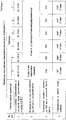
Осуществляют аналогично примеру 1, но по параметрам таблицы 1.Examples 2-7
Carried out analogously to example 1, but according to the parameters of table 1.
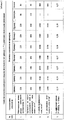
Свойства металлополимерных изделий приведены в таблице 2. The properties of metal-polymer products are shown in table 2.
Источники информации
1. Авторское свидетельство СССР 271951, БИ 13, 1970.Sources of information
1. USSR copyright certificate 271951, BI 13, 1970.
2. Патент SU 1808051 А3, БИ 13, 1993. 2. Patent SU 1808051 A3, BI 13, 1993.
Claims (3)
Priority Applications (1)
| Application Number | Priority Date | Filing Date | Title |
|---|---|---|---|
| RU2000121310A RU2178103C1 (en) | 2000-08-08 | 2000-08-08 | Method of producing antifriction metal-based polymeric articles |
Applications Claiming Priority (1)
| Application Number | Priority Date | Filing Date | Title |
|---|---|---|---|
| RU2000121310A RU2178103C1 (en) | 2000-08-08 | 2000-08-08 | Method of producing antifriction metal-based polymeric articles |
Publications (1)
| Publication Number | Publication Date |
|---|---|
| RU2178103C1 true RU2178103C1 (en) | 2002-01-10 |
Family
ID=20239030
Family Applications (1)
| Application Number | Title | Priority Date | Filing Date |
|---|---|---|---|
| RU2000121310A RU2178103C1 (en) | 2000-08-08 | 2000-08-08 | Method of producing antifriction metal-based polymeric articles |
Country Status (1)
| Country | Link |
|---|---|
| RU (1) | RU2178103C1 (en) |
Cited By (4)
| Publication number | Priority date | Publication date | Assignee | Title |
|---|---|---|---|---|
| RU2224147C1 (en) * | 2002-10-17 | 2004-02-20 | Лапицкий Валентин Александрович | Method of production of high-strength antifriction articles |
| RU2252345C1 (en) * | 2003-10-01 | 2005-05-20 | Общество с ограниченной ответственностью Научно-производственное предприятие "Полидор" | Method of manufacturing plain bearing |
| RU2313010C1 (en) * | 2006-06-26 | 2007-12-20 | Федеральное государственное унитарное предприятие "Всероссийский научно-исследовательский институт авиационных материалов" (ФГУП "ВИАМ") | Binding agent for antifriction articles, prepreg, and articles made therefrom |
| RU2404202C1 (en) * | 2009-03-31 | 2010-11-20 | Российская Федерация в лице Министерства промышленности и торговли Российской Федерации (Минпромторг России) | Antifriction organoplastic prepreg and article made from said prepreg |
Citations (2)
| Publication number | Priority date | Publication date | Assignee | Title |
|---|---|---|---|---|
| GB996764A (en) * | 1961-08-18 | 1965-06-30 | British Belting & Asbestos Ltd | A new or improved bearing material |
| RU2153107C1 (en) * | 1999-07-15 | 2000-07-20 | Центральный научно-исследовательский институт конструкционных материалов "Прометей" | Antifriction composition |
-
2000
- 2000-08-08 RU RU2000121310A patent/RU2178103C1/en active
Patent Citations (2)
| Publication number | Priority date | Publication date | Assignee | Title |
|---|---|---|---|---|
| GB996764A (en) * | 1961-08-18 | 1965-06-30 | British Belting & Asbestos Ltd | A new or improved bearing material |
| RU2153107C1 (en) * | 1999-07-15 | 2000-07-20 | Центральный научно-исследовательский институт конструкционных материалов "Прометей" | Antifriction composition |
Non-Patent Citations (1)
| Title |
|---|
| СЕМЕНОВ А.П., САВИНСКИЙ Ю.Э. Металлофторопластовые подшипники. - М.: Машиностроение, 1976, с.192. * |
Cited By (4)
| Publication number | Priority date | Publication date | Assignee | Title |
|---|---|---|---|---|
| RU2224147C1 (en) * | 2002-10-17 | 2004-02-20 | Лапицкий Валентин Александрович | Method of production of high-strength antifriction articles |
| RU2252345C1 (en) * | 2003-10-01 | 2005-05-20 | Общество с ограниченной ответственностью Научно-производственное предприятие "Полидор" | Method of manufacturing plain bearing |
| RU2313010C1 (en) * | 2006-06-26 | 2007-12-20 | Федеральное государственное унитарное предприятие "Всероссийский научно-исследовательский институт авиационных материалов" (ФГУП "ВИАМ") | Binding agent for antifriction articles, prepreg, and articles made therefrom |
| RU2404202C1 (en) * | 2009-03-31 | 2010-11-20 | Российская Федерация в лице Министерства промышленности и торговли Российской Федерации (Минпромторг России) | Antifriction organoplastic prepreg and article made from said prepreg |
Similar Documents
| Publication | Publication Date | Title |
|---|---|---|
| Singha et al. | Synthesis and characterization of short Grewia optiva fiber‐based polymer composites | |
| Bigg et al. | Stamping of thermoplastic matrix composites | |
| EP2637840B1 (en) | Compatible carrier for secondary toughening | |
| CN107548339B (en) | Preparation method of fiber-reinforced component or semi-finished product | |
| WO2000058083A1 (en) | Composite comprising structural and non structural fibers | |
| CN109071855A (en) | For the composite strengthening silk of 3D printing, preimpregnation material, band and its preparation facilities | |
| CA3014638C (en) | Thermoplastic bonded preforms and thermoset matrices formed therewith | |
| US20130115836A1 (en) | Composite polyamide article | |
| HUT61901A (en) | Ski containing planelike plate reinforced by fibre or band structural material | |
| CN102498162A (en) | Composite polyamide products | |
| CN109228408A (en) | Manufacturing method of fiber-reinforced resin base material or resin molded body, and plasticizing and discharging machine used in the manufacturing method | |
| FI112877B (en) | Schaberbett | |
| KR920001561B1 (en) | High density composite products of discontinuous inorganic fibers | |
| RU2178103C1 (en) | Method of producing antifriction metal-based polymeric articles | |
| CA1173200A (en) | Resin-impregnated fibre composite materials and a method for their manufacture | |
| US3515702A (en) | Laurolactam copolyamide shaped articles having highly adhesive surfaces | |
| JP2014062336A (en) | Method for producing semifinished product for fiber-reinforced plastic | |
| US2344733A (en) | Molding composition | |
| US20160115300A1 (en) | Thermoplastic composite material comprising a reinforcing component and a poly(phenylene) polymer and process to make said thermoplastic composite material | |
| JPH05508591A (en) | Composite product manufacturing method and composite product | |
| RU2175335C2 (en) | Method of preparing friction polymeric materials | |
| Reck et al. | Thermally curable aqueous acrylic resins–a new class of duroplastic binders for wood and natural fibers | |
| RU2179984C1 (en) | Prepreg | |
| CA1041263A (en) | Reinforced formaldehyde-based molding materials | |
| KR100360363B1 (en) | Friction materials containing blends of fibrous particulate organic components |