KR20180098625A - Formulation with reduced degradation of polysorbate - Google Patents
Formulation with reduced degradation of polysorbate Download PDFInfo
- Publication number
- KR20180098625A KR20180098625A KR1020187021584A KR20187021584A KR20180098625A KR 20180098625 A KR20180098625 A KR 20180098625A KR 1020187021584 A KR1020187021584 A KR 1020187021584A KR 20187021584 A KR20187021584 A KR 20187021584A KR 20180098625 A KR20180098625 A KR 20180098625A
- Authority
- KR
- South Korea
- Prior art keywords
- formulation
- polysorbate
- antibody
- months
- cyclodextrin
- Prior art date
- Legal status (The legal status is an assumption and is not a legal conclusion. Google has not performed a legal analysis and makes no representation as to the accuracy of the status listed.)
- Granted
Links
Images













Classifications
-
- A—HUMAN NECESSITIES
- A61—MEDICAL OR VETERINARY SCIENCE; HYGIENE
- A61K—PREPARATIONS FOR MEDICAL, DENTAL OR TOILETRY PURPOSES
- A61K47/00—Medicinal preparations characterised by the non-active ingredients used, e.g. carriers or inert additives; Targeting or modifying agents chemically bound to the active ingredient
- A61K47/30—Macromolecular organic or inorganic compounds, e.g. inorganic polyphosphates
- A61K47/36—Polysaccharides; Derivatives thereof, e.g. gums, starch, alginate, dextrin, hyaluronic acid, chitosan, inulin, agar or pectin
- A61K47/40—Cyclodextrins; Derivatives thereof
-
- A—HUMAN NECESSITIES
- A61—MEDICAL OR VETERINARY SCIENCE; HYGIENE
- A61K—PREPARATIONS FOR MEDICAL, DENTAL OR TOILETRY PURPOSES
- A61K39/00—Medicinal preparations containing antigens or antibodies
- A61K39/395—Antibodies; Immunoglobulins; Immune serum, e.g. antilymphocytic serum
-
- A—HUMAN NECESSITIES
- A61—MEDICAL OR VETERINARY SCIENCE; HYGIENE
- A61K—PREPARATIONS FOR MEDICAL, DENTAL OR TOILETRY PURPOSES
- A61K39/00—Medicinal preparations containing antigens or antibodies
- A61K39/395—Antibodies; Immunoglobulins; Immune serum, e.g. antilymphocytic serum
- A61K39/39591—Stabilisation, fragmentation
-
- A—HUMAN NECESSITIES
- A61—MEDICAL OR VETERINARY SCIENCE; HYGIENE
- A61K—PREPARATIONS FOR MEDICAL, DENTAL OR TOILETRY PURPOSES
- A61K47/00—Medicinal preparations characterised by the non-active ingredients used, e.g. carriers or inert additives; Targeting or modifying agents chemically bound to the active ingredient
- A61K47/06—Organic compounds, e.g. natural or synthetic hydrocarbons, polyolefins, mineral oil, petrolatum or ozokerite
- A61K47/26—Carbohydrates, e.g. sugar alcohols, amino sugars, nucleic acids, mono-, di- or oligo-saccharides; Derivatives thereof, e.g. polysorbates, sorbitan fatty acid esters or glycyrrhizin
-
- A—HUMAN NECESSITIES
- A61—MEDICAL OR VETERINARY SCIENCE; HYGIENE
- A61K—PREPARATIONS FOR MEDICAL, DENTAL OR TOILETRY PURPOSES
- A61K47/00—Medicinal preparations characterised by the non-active ingredients used, e.g. carriers or inert additives; Targeting or modifying agents chemically bound to the active ingredient
- A61K47/30—Macromolecular organic or inorganic compounds, e.g. inorganic polyphosphates
- A61K47/42—Proteins; Polypeptides; Degradation products thereof; Derivatives thereof, e.g. albumin, gelatin or zein
-
- A—HUMAN NECESSITIES
- A61—MEDICAL OR VETERINARY SCIENCE; HYGIENE
- A61K—PREPARATIONS FOR MEDICAL, DENTAL OR TOILETRY PURPOSES
- A61K9/00—Medicinal preparations characterised by special physical form
- A61K9/0012—Galenical forms characterised by the site of application
- A61K9/0019—Injectable compositions; Intramuscular, intravenous, arterial, subcutaneous administration; Compositions to be administered through the skin in an invasive manner
-
- A—HUMAN NECESSITIES
- A61—MEDICAL OR VETERINARY SCIENCE; HYGIENE
- A61K—PREPARATIONS FOR MEDICAL, DENTAL OR TOILETRY PURPOSES
- A61K9/00—Medicinal preparations characterised by special physical form
- A61K9/08—Solutions
-
- A—HUMAN NECESSITIES
- A61—MEDICAL OR VETERINARY SCIENCE; HYGIENE
- A61K—PREPARATIONS FOR MEDICAL, DENTAL OR TOILETRY PURPOSES
- A61K9/00—Medicinal preparations characterised by special physical form
- A61K9/10—Dispersions; Emulsions
-
- C—CHEMISTRY; METALLURGY
- C07—ORGANIC CHEMISTRY
- C07K—PEPTIDES
- C07K2317/00—Immunoglobulins specific features
- C07K2317/30—Immunoglobulins specific features characterized by aspects of specificity or valency
- C07K2317/31—Immunoglobulins specific features characterized by aspects of specificity or valency multispecific
-
- C—CHEMISTRY; METALLURGY
- C07—ORGANIC CHEMISTRY
- C07K—PEPTIDES
- C07K2317/00—Immunoglobulins specific features
- C07K2317/50—Immunoglobulins specific features characterized by immunoglobulin fragments
- C07K2317/55—Fab or Fab'
Landscapes
- Health & Medical Sciences (AREA)
- Chemical & Material Sciences (AREA)
- Life Sciences & Earth Sciences (AREA)
- Medicinal Chemistry (AREA)
- Pharmacology & Pharmacy (AREA)
- Epidemiology (AREA)
- Animal Behavior & Ethology (AREA)
- General Health & Medical Sciences (AREA)
- Public Health (AREA)
- Veterinary Medicine (AREA)
- Engineering & Computer Science (AREA)
- Mycology (AREA)
- Bioinformatics & Cheminformatics (AREA)
- Microbiology (AREA)
- Immunology (AREA)
- Inorganic Chemistry (AREA)
- Oil, Petroleum & Natural Gas (AREA)
- Molecular Biology (AREA)
- General Chemical & Material Sciences (AREA)
- Chemical Kinetics & Catalysis (AREA)
- Biochemistry (AREA)
- Dermatology (AREA)
- Proteomics, Peptides & Aminoacids (AREA)
- Dispersion Chemistry (AREA)
- Medicinal Preparation (AREA)
- Medicines Containing Antibodies Or Antigens For Use As Internal Diagnostic Agents (AREA)
- Medicines That Contain Protein Lipid Enzymes And Other Medicines (AREA)
- Pharmaceuticals Containing Other Organic And Inorganic Compounds (AREA)
Abstract
본 발명은 이러한 제형의 제조 방법 및 이러한 제형의 사용 방법을 제공한다. 본 발명은 폴리소르베이트 분해를 감소시키는 방법, 수성 제형에서의 가시적 및 비가시적 입자의 양을 감소시키는 방법, 및 폴리소르베이트 분해 생성물을 분해하는 방법을 추가로 제공하며, 이는 폴리소르베이트 및 폴리펩티드를 포함하는 제형에 사이클로덱스트린에 첨가하는 단계를 포함한다. 본 발명은 또한 분해가 감소된 폴리소르베이트를 갖는 폴리펩티드, 폴리소르베이트, 및 사이클로덱스트린을 포함하는 수성 제형을 제공한다.The present invention provides methods of making such formulations and methods of using such formulations. The present invention further provides a method of reducing polysorbate degradation, a method of reducing the amount of visible and invisible particles in an aqueous formulation, and a method of degrading the polysorbate degradation product, comprising contacting the polysorbate and the polypeptide ≪ / RTI > to the cyclodextrin. The present invention also provides aqueous formulations comprising a polypeptide having degraded polysorbate, polysorbate, and cyclodextrin.
Description
관련 출원의 상호 참조Cross reference of related application
본 출원은 2015년 12월 30일에 출원된 미국 가출원 제62/272,965호에 대한 이익을 주장하며, 이의 내용은 본원에 그 전문이 참조로 포함되어 있다.This application claims the benefit of U.S. Provisional Application No. 62 / 272,965, filed December 30, 2015, the content of which is incorporated herein by reference in its entirety.
본 발명의 분야Field of the Invention
본 발명은 사이클로덱스트린 및 폴리소르베이트를 포함하는 수성의 약제학적 제형, 폴리소르베이트 분해를 감소시키고, 폴리소르베이트 분해 생성물을 분해하여 가용화시키기 위한 방법에 관한 것이다.The present invention relates to aqueous pharmaceutical formulations comprising cyclodextrin and polysorbate, a process for reducing polysorbate degradation and for degrading and solubilizing polysorbate degradation products.
약제학적 제형은 일반적으로 폴리소르베이트 20 및 80 (PS20 및 PS80), 친수성 폴리옥시에틸렌 헤드기 및 소수성 지방산 테일로 이루어진 비이온성 계면활성제를 포함한다. 계면활성제의 제형에의 첨가는 단백질을 표면 유도 변성 및 응집으로부터 보호한다(Geisen, Diabetologia 27:212-218 (1984); Wang, Int. J. Pharm. 289:1-30 (2005)). 단백질 응집은 약물 (DS) 및 의약품(DP) 처리 과정, 장기 저장, 선적, 및 투여 과정에서 일어날 수 있다 (Cromwell 등, AAPS J. 8:E572-E579 (2006)). 계면활성제 (예를 들면, PS20)의 첨가는 여과 (Maa 등, J. Pharm. Sci. 87:808-812 (1998); Maa 등, Biotechnol. Bioeng.50:319-328 (1996)), 진탕 (Liu 등, J. Pharm. Sci. 102:2460-2470 (2013)), 동결 융해 (Kreilgaard 등, J. Pharm. Sci. 87:1597-1603 (1998); Hillgren 등, Int. J. Pharm. 237:57-69 (2002)), 동결건조 (Carpenter, Protein Sci. 13:54-54 (2004); Carpenter 등, Pharm. Res. 14:969-975 (1997)), 재구성 (Webb 등, J. Pharm. Sci. 91:543-558 (2002)), 투여 (Kumru 등, J. Pharm. Sci. 101:3636-3650 (2012)), 및 저장 과정에서 단백질을 압박할 수 있는 계면 상호작용을 최소화할 수 있다는 것을 보여준다. The pharmaceutical formulations generally comprise a nonionic surfactant consisting of
처리, 장기 저장 과정, 및 투여 과정에서 활성 약학 성분 (API)의 안정화를 위해, 폴리소르베이트 분해를 방지하는 것이 중요하다. 그러나, PS20은 가수 분해 및 산화 경로를 통한 분해에 민감성이다 (Kumru, 등, J. Pharm. Sci. 101:3636-3650 (2012); Mahler 등, Abstr Pap Am Chem S. 239: (2010)).In order to stabilize the active pharmaceutical ingredient (API) during treatment, long-term storage, and administration, it is important to prevent polysorbate degradation. However, PS20 is sensitive to degradation through hydrolysis and oxidation pathways (Kumru, et al . , J. Pharm. Sci. 101: 3636-3650 (2012); Mahler et al ., Abstr . .
폴리소르베이트의 산화적 분해는 잘 특성화되어 있고, 광범위하게 연구되고 있다 (Kerwin, J. Pharm. Sci. 97:2924-2935 (2008); Kishore 등, J. Pharm. Sci. 100:721-731 (2011)). 산화는 전형적으로 2개의 메커니즘의 맥락으로 일어난다: (1) 산화에틸렌기의 자동 산화 및 (2) 불포화 부위에서의 라디칼 산화 (Kishore 등, J. Pharm. Sci. 100:721-731 (2011)). 폴리소르베이트의 산화적 분해가 관찰되지만, PS20 산화는 산화제 (예를 들면, 메티오닌)와 공동제형화됨으로써 단백질 제형으로 완화될 수 있음을 나타낸다. 트립토판을 포함하는 제형은 또한 아미노산 잔기의 산화를 방지하기 위해 개발되었다 (US2014/0322203; US2014/0314). 산화적 및 가수분해적 폴리소르베이트 분해 경로는 독특한 분해 생성물 프로파일에 의해 구분가능하다. 가수분해적 폴리소르베이트 분해는 주로 지방산을 생성하고, 산화적 폴리소르베이트 분해는 과산화물, 알데히드, 산, 키톤, n-알칸, 지방산 에스테르, 및 다른 분해 생성물을 포함하는 보다 다양한 분해 생성물을 생성한다 (Ravuri 등, Pharm. Res. 28:1194-1210 (2011)). Oxidative degradation of polysorbates is well characterized and has been extensively studied (Kerwin, J. Pharm. Sci. 97: 2924-2935 (2008); Kishore et al . , J. Pharm. Sci. 100: 721-731 (2011)). Oxidation typically takes place in the context of two mechanisms: (1) automatic oxidation of ethylene oxide groups and (2) radical oxidation at the unsaturated sites (Kishore et al . , J. Pharm. Sci. 100: 721-731 (2011) . Oxidative degradation of polysorbate is observed, but PS20 oxidation indicates that it can be relaxed into a protein formulation by co-formulation with an oxidizing agent (e.g., methionine). Formulations containing tryptophan have also been developed to prevent oxidation of amino acid residues (US2014 / 0322203; US2014 / 0314). Oxidative and hydrolytic polysorbate degradation pathways can be distinguished by a unique degradation product profile. Hydrolytic polysorbate degradation produces predominantly fatty acids and oxidative polysorbate decomposition produces more diverse degradation products including peroxides, aldehydes, acids, ketones, n-alkanes, fatty acid esters, and other degradation products (Ravuri et al., Pharm. Res . 28: 1194-1210 (2011)).
PS20를 분해하는 2,2'-아조비스이소부틸아미디늄 (AAPH)을 사용하는 산화적 폴리소르베이트 분해의 스트레스 모델은 종래에 기재된 바 있다 (Borisov 등, J. Pharm. Sci. 104:1005-1018 (2015)). 유사한 방법을 사용하여, 대표적인 스트레스 모델이 사용되어 유관 조건 하에 산화적 폴리소르베이트 분해를 감소시키는 제형을 개발할 수 있다. A stress model of oxidative polysorbate degradation using 2,2'-azobisisobutylamidinium (AAPH) that degrades PS20 has been previously described (Borisov et al., J. Pharm. Sci. 104: 1005 -1018 (2015)). Using similar methods, representative stress models can be used to develop formulations that reduce oxidative polysorbate degradation under aerobic conditions.
정제된 에스테라아제 (예를 들면, 돼지 간 에스터라아제 등) 및 리파아제 (예를 들면, 트윈나아제)를 사용하는 가수분해에 대한 스트레스 모델은 종래에 기재된 바 있다 (Labrenz, J. Pharm.. Sci. 103L2268-2277 (2014)). 유사한 방법을 사용하여, 대표적인 스트레스 모델이 사용되어 유관 조건 하에 촉매적 폴리소르베이트 분해를 감소시키는 제형을 개발할 수 있다. Stress models for hydrolysis using purified esterases (e.g., porcine estrase, etc.) and lipases (e.g., twinneases) have been described previously (Labrenz, J. Pharm .. Sci 103L2268-2277 (2014)). Using similar methods, representative stress models can be used to develop formulations that reduce catalytic polysorbate degradation under inert conditions.
최근, 단클론성 항체에서의 폴리소르베이트의 효소적 분해의 기록이 존재한다. 예를 들어, 라브렌즈(Labrenz)에 기인한 폴리소르베이트 80 (PS80) 분해는 PS20 분해 프로파일에 기초한 일반 생물학적 가수분해 메커니즘이라기 보다는 특정 효소적 메커니즘에 대해 CHO-유도 mAb 제형에서 관찰되었다 (Labrenz 등, J. Pharm. Sci. 103:2268-2277 (2014)). CHO 세포 게놈의 시퀀싱은 폴리소르베이트를 분해할 수 있는 다양한 호스트 세포 단백질 (HCP) (예를 들면, 리파아제)를 확인한다 (S. Hammond 등, Biotech. Bioeng. 109:1353-1356 (2012)). 이후 Lee 등은 특정 HCP의 발현을 감소시키는 것이 실질적으로 대조군 샘플에 비해 PS80의 가수분해를 감소시켰음을 나타내었다. 이러한 최근 발견은 생물의약품 제조와 관련된 리파아제가 업스트림 공정에서 발현되었음을 확립하였다. 다운스트림 정제 공정 (예를 들면, 단백질 A)는 HCP의 제거를 가능하게 하고; 그러나, 일부 HCP는 유사한 특성을 가지고, 이에 따라 약물 및 의약품에서 미량을 보유하는 API 분자와 공동 정제될 수 있음을 나타낸다 (K. Lee, 등, Chinese Hamster Ovary Cell Host Cell Protein That Impacts PS-80 Degradation. AccBio Conference (2015)). 아마도, 높은 활성을 갖는 리파아제는 심지어 미검출 수준에서도 상당한 폴리소르베이트 분해를 야기할 수 있다. 다운스트림 처리 단계(예를 들면, 크로마토그래피)를 통해 감소된 리파아제 발현을 갖는 세포를 조작함으로써 단백질 약물로부터 리파아제를 확인하여 제거하기 위한 수많은 노력이 진행되고 있다. 그러나, PS20 및 PS80의 효소적 분해는 생물 약제학상 개발에 있어서 상당한 극복과제가 남아 있고, 가수분해적 또는 촉매적 PS20 분해를 감소시키기 위한 최적 제형을 확인하는 것으로 보고된 유의미한 노력은 존재하지 않았다. Recently, there is a record of enzymatic degradation of polysorbate in monoclonal antibodies. For example, polysorbate 80 (PS80) degradation due to Labrenz has been observed in CHO-induced mAb formulations for certain enzymatic mechanisms rather than a general biological hydrolysis mechanism based on the PS20 degradation profile (Labrenz et al. , J. Pharm. Sci. 103: 2268-2277 (2014)). Sequencing of the CHO cell genome identifies various host cell proteins (HCP) (e.g., lipases) capable of degrading polysorbates (S. Hammond et al. , Biotech. Bioeng. 109: 1353-1356 . Lee et al. Showed that reducing the expression of certain HCPs substantially reduced hydrolysis of PS80 relative to control samples. This recent discovery has established that lipase related to biopharmaceutical production has been expressed in upstream processes. The downstream purification process (e. G., Protein A) allows removal of HCP; However, some HCPs have similar properties and thus can be co-purified with API molecules that retain traces in drug and drug products (K. Lee, et al., Chinese Hamster Ovary Cell Host Cell Protein That Impacts PS-80 Degradation AccBio Conference (2015)). Perhaps, lipases with high activity can cause significant polysorbate degradation even at undetectable levels. Numerous efforts are underway to identify and remove lipases from protein drugs by manipulating cells with reduced lipase expression through downstream processing steps (e.g., chromatography). However, enzymatic degradation of PS20 and PS80 remains a significant overcoming in biopharmaceutical development and there is no significant effort reported to identify optimal formulations to reduce hydrolytic or catalytic PS20 degradation.
폴리소르베이트 분해는 단백질 약물 제형의 안정성 및 반감기에 영향을 줄 수 있는 수많은 영향을 가진다. 폴리소르베이트 분해는 용액에서 가시적 및 비가시적인 입자의 형성을 야기할 수 있는 난용성인 지방산을 포함한다. PS20의 손실은 또한 단백질 제형에 대한 PS20의 보호 효과를 감소시킬 수 있다. 추가적으로, 스파이킹 연구(spiking study)는 일부의 PS20-관련 분해물은 단백질 약물의 안정성에 영향을 줄 수 있고; 그러나 약제학적 유관 조건 하에 관찰되는 영향은 없었다(Kishore 등, Pharm. Res. 28:1194-1210 (2011).Polysorbate degradation has a number of effects that can affect the stability and half-life of protein drug formulations. Polysorbate degradation involves hardly soluble fatty acids that can cause the formation of visible and invisible particles in the solution. Loss of PS20 may also reduce the protective effect of PS20 on protein formulations. Additionally, spiking studies have shown that some PS20-related degradants can affect the stability of protein drugs; However, there was no observed effect under pharmacological conditions (Kishore et al . , Pharm. Res. 28: 1194-1210 (2011).
제형에 대한 폴리소르베이트의 보호 효과가 시간에 걸쳐 유지되도록 폴리소르베이트 분해를 감소시키는 방법이 필요로 된다. 이는 처리, 장기 저장 과정 및 투여 과정에서 더 안정한 폴리펩티드를 야기할 것이고, 이는 결국 폴리펩티드 제형의 반감기를 늘리고, 분해되고, 기간만료된 제형에 의해 야기되는 폐기물을 감소시킬 것이다.There is a need for a method of reducing polysorbate degradation so that the protective effect of the polysorbate on the formulation is retained over time. This will result in more stable polypeptides in the treatment, long-term storage and administration steps, which will eventually increase the half-life of the polypeptide formulation and reduce the waste caused by the degraded, expired formulation.
특허 출원 및 공보를 포함하는 본원에 인용된 모든 참조문헌은 그 전문이 본원에 참조로 포함된다. All references cited herein, including patent applications and publications, are incorporated herein by reference in their entirety.
요약summary
본 발명은 폴리소르베이트를 포함하는 수성 제형에서의 폴리소르베이트 분해를 감소시키기 위한 방법을 제공하며, 상기 방법은 사이클로덱스트린을 제형에 첨가하는 단계를 포함하고, 여기서 사이클로덱스트린 대 폴리소르베이트의 생성된 w/w 비는 약 37.5:1보다 더 크다. 일부 양태에서, 본 발명은 폴리소르베이트를 포함하는 수성 제형에서 폴리소르베이트 분해를 감소시키는 방법을 제공하며, 상기 방법은 사이클로덱스트린을 제형에 첨가하는 단계를 포함하며, 여기서 사이클로덱스트린 대 폴리소르베이트의 생성된 w/w 비는 약 37.5:1보다 더 크고, 제형은 약 0.005%-0.4%의 폴리소르베이트를 포함한다. 일부 양태에서, 본 발명은 폴리소르베이트를 포함하는 수성 제형에서 폴리소르베이트 분해를 감소시키기 위한 방법을 제공하며, 본 방법은 약 0.01%-30%의 농도로 사이클로덱스트린을 제형에 첨가하는 단계를 포함하며, 사이클로덱스트린 대 폴리소르베이트의 생성된 w/w 비는 약 37.5:1보다 더 크고, 여기서 제형은 약 0.005%-0.4%의 폴리소르베이트를 포함한다. 일부 양태에서, 본 발명은 폴리소르베이트를 포함하는 수성 제형에서 비가시적인 및 가시적인 입자의 양을 감소시키는 방법을 제공하고, 이는 사이클로덱스트린을 제형에 첨가하는 단계를 포함하고, 여기서 사이클로덱스트린 대 폴리소르베이트의 생성된 w/w 비는 약 37.5:1보다 크고, 여기서 제형은 폴리소르베이트 및 폴리펩티드를 포함한다. 일부 양태에서, 본 발명은 수성 제형에서 리소르베이트 분해 생성물을 분해하고, 가용화하기 위한 방법을 제공하며, 이는 제형에 사이클로덱스트린을 첨가하는 단계를 포함하며, 여기서 사이클로덱스트린 대 폴리소르베이트의 생성된 w/w 비는 약 37.5:1보다 크고, 여기서 제형은 폴리소르베이트 및 폴리펩티드를 포함한다.The present invention provides a method for reducing polysorbate degradation in an aqueous formulation comprising polysorbate comprising adding cyclodextrin to the formulation wherein the production of the cyclodextrin versus the polysorbate W / w ratio is greater than about 37.5: 1. In certain embodiments, the present invention provides a method of reducing polysorbate degradation in an aqueous formulation comprising polysorbate, the method comprising adding cyclodextrin to the formulation, wherein the cyclodextrin to polysorbate Produced w / w ratio is greater than about 37.5: 1, and the formulation comprises about 0.005% -0.4% polysorbate. In some embodiments, the invention provides a method for reducing polysorbate degradation in an aqueous formulation comprising polysorbate, the method comprising the step of adding the cyclodextrin to the formulation at a concentration of about 0.01% -30% Wherein the resulting w / w ratio of cyclodextrin to polysorbate is greater than about 37.5: 1, wherein the formulation comprises about 0.005% -0.4% polysorbate. In some embodiments, the present invention provides a method of reducing the amount of invisible and visible particles in an aqueous formulation comprising polysorbate comprising adding cyclodextrin to the formulation, wherein the cyclodextrin to poly The resulting w / w ratio of sorbate is greater than about 37.5: 1, wherein the formulation comprises polysorbate and a polypeptide. In some embodiments, the present invention provides a method for degrading and solubilizing lysorbate degradation products in an aqueous formulation, comprising adding a cyclodextrin to the formulation, wherein the resulting cyclodextrin to polysorbate w / w ratio greater than about 37.5: 1, wherein the formulation comprises polysorbate and a polypeptide.
상기 양태의 일부 구현예에서, 폴리소르베이트는 폴리소르베이트 20 또는 폴리소르베이트 80이다. 일부 구현예에서, 사이클로덱스트린은 HP-β사이클로덱스트린, HP-γ사이클로덱스트린, 또는 설포부틸 에테르 β-사이클로덱스트린이다. 일부 구현예에서, 제형에서의 폴리소르베이트의 농도는 약 0.01% 내지 0.4%의 범위이다. 일부 구현예에서, 제형에서의 폴리소르베이트의 농도는 약 0.01% 내지 0.1%의 범위이다. 일부 구현예에서, 제형에서의 폴리소르베이트의 농도는 약 0.02%이다. 일부 구현예에서, 제형에서의 사이클로덱스트린의 농도는 약 0.5-30%의 범위이다. 일부 구현예에서, 제형에서의 사이클로덱스트린의 농도는 약 15%이다.In some embodiments of this aspect, the polysorbate is
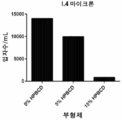
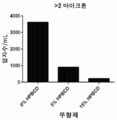
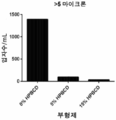
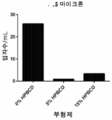
상기 양태 및 구현예의 일부 구현예에서, 폴리소르베이트 분해는 약 50%, 약 75%, 약 80%, 약 85%, 약 90%, 약 95% 또는 약 99%까지 감소된다. 일부 구현예에서, 1mL당 약 1,000, 약 750, 약 500, 약 250, 약 150, 약 100, 약 50, 또는 약 25개 미만의 폴리소르베이트 입자 (직경에 있어서 약 2 마이크론 초과)가 형성된다. In some embodiments of such embodiments and embodiments, the polysorbate degradation is reduced by about 50%, about 75%, about 80%, about 85%, about 90%, about 95%, or about 99%. In some embodiments, less than about 1,000, about 750, about 500, about 250, about 150, about 100, about 50, or about 25 polysorbate particles (greater than about 2 microns in diameter) are formed per mL .
상기 양태 및 구현예의 일부 구현예에서, 제형은 폴리펩티드를 포함한다. 일부 구현예에서, 폴리펩티드는 항체이다. 일부 구현예에서, 항체는 다클론성 항체, 단클론성 항체, 인간화된 항체, 인간 항체, 키메라성 항체, 다중특이적 항체 또는 항체 단편이다. 일부 구현예에서, 제형에서 폴리펩티드 농도는 약 1 mg/mL 내지 약 250 mg/mL이다.In some embodiments of the above embodiments and embodiments, the formulation comprises a polypeptide. In some embodiments, the polypeptide is an antibody. In some embodiments, the antibody is a polyclonal antibody, a monoclonal antibody, a humanized antibody, a human antibody, a chimeric antibody, a multispecific antibody, or an antibody fragment. In some embodiments, the polypeptide concentration in the formulation is from about 1 mg / mL to about 250 mg / mL.
상기 양태 및 구현예의 일부 구현예에서, 제형은 약 6개월 이상, 약 12개월 이상, 약 18개월 이상, 또는 약 24개월 이상 동안 약 2℃ 내지 약 8℃에서 안정하다. 일부 구현예에서, 제형은 약 48개월 이상 동안 약 1℃ 내지 약 10℃에서 안정하다. 일부 구현예에서, 제형은 약 48개월 이상 동안 약 2℃ 내지 약 8℃에서 안정하다. In some embodiments of such embodiments and embodiments, the formulation is stable at about 2 DEG C to about 8 DEG C for at least about 6 months, at least about 12 months, at least about 18 months, or at least about 24 months. In some embodiments, the formulation is stable at about 1 DEG C to about 10 DEG C for at least about 48 months. In some embodiments, the formulation is stable at about 2 캜 to about 8 캜 for about 48 months or more.
일부 구현예에서, 제형은 약 4.5 내지 약 7.0의 pH를 가진다. 일부 구현예에서, 제형은 약 4.5 내지 약 6.0의 pH를 가진다. 일부 구현예에서, 제형은 약 6.0의 pH를 가진다.In some embodiments, the formulation has a pH of about 4.5 to about 7.0. In some embodiments, the formulation has a pH of about 4.5 to about 6.0. In some embodiments, the formulation has a pH of about 6.0.
상기 양태 및 구현예의 일부 구현예에서, 제형은 추가로 안정화제, 완충액, 계면활성제, 및 등장화제로 이루어진 군으로부터 선택된 하나 이상의 부형제를 포함한다. 일부 구현예에서, 제형은 대상체에의 투여에 대해 적합한 약제학적 제형이다. 일부 구현예에서, 제형은 대상체에 대한 정맥내, 피하, 근육내, 또는 초자체내 투여를 위해 적합한 약제학적 제형이다. In some embodiments of such embodiments and embodiments, the formulation further comprises one or more excipients selected from the group consisting of stabilizers, buffers, surfactants, and isotonic agents. In some embodiments, the formulation is a pharmaceutical formulation suitable for administration to a subject. In some embodiments, the formulation is a pharmaceutical formulation suitable for intravenous, subcutaneous, intramuscular, or intracisternal administration to a subject.
일부 양태에서, 본 발명은 폴리펩티드, 폴리소르베이트 및 사이클로덱스트린을 포함하는 수성 제형을 제공하고, 여기서 제형은 적어도 약 6개월 동안 약 1℃ 내지 약 10℃에서 저장되며, 여기서 제형에서의 사이클로덱스트린 대 폴리소르베이트의 초기 w/w 비는 적어도 약 37.5:1이고, 여기서 제형에서의 폴리소르베이트의 양은 제형에서의 폴리소르베이트의 초기 양의 적어도 약 80%이다. 일부 양태에서, 본 발명은 폴리펩티드, 폴리소르베이트 및 사이클로덱스트린을 포함하는 수성 제형을 제공하며, 제형은 적어도 약 6개월 동안 약 1℃ 내지 약 10℃에서 저장되며, 제형에서의 사이클로덱스트린 대 폴리소르베이트의 w/w 비는 적어도 약 37.5:1이고, 약 1% 미만의 폴리소르베이트가 분해된다. In some embodiments, the invention provides an aqueous formulation comprising a polypeptide, polysorbate and cyclodextrin, wherein the formulation is stored at about 1 ° C to about 10 ° C for at least about 6 months, wherein the cyclodextrin in the formulation The initial w / w ratio of polysorbate is at least about 37.5: 1, wherein the amount of polysorbate in the formulation is at least about 80% of the initial amount of polysorbate in the formulation. In some embodiments, the invention provides aqueous formulations comprising a polypeptide, polysorbate and cyclodextrin, wherein the formulation is stored at about 1 DEG C to about 10 DEG C for at least about 6 months, and wherein the cyclodextrin to polysorbate The bait w / w ratio is at least about 37.5: 1, and less than about 1% of the polysorbate is degraded.
상기 양태의 일부 구현예에서, 사이클로덱스트린은 HP-β사이클로덱스트린, HP-γ사이클로덱스트린, 또는 설포부틸 에테르 β-사이클로덱스트린이다. 일부 구현예에서, 제형에서의 폴리소르베이트의 농도는 약 0.01% 내지 0.4%의 범위이다. 일부 구현예에서, 제형에서의 폴리소르베이트의 농도는 약 0.01% 내지 0.1%의 범위이다. 일부 구현예에서, 제형에서의 폴리소르베이트의 농도는 약 0.02%이다. 일부 구현예에서, 제형에서의 폴리소르베이트의 농도는 약 0.5-30%의 범위이다. 일부 구현예에서, 제형에서의 폴리소르베이트의 농도는 약 15%이다. In some embodiments of this aspect, the cyclodextrin is HP-beta cyclodextrin, HP-y cyclodextrin, or sulfobutyl ether beta -cyclodextrin. In some embodiments, the concentration of polysorbate in the formulation ranges from about 0.01% to 0.4%. In some embodiments, the concentration of polysorbate in the formulation ranges from about 0.01% to 0.1%. In some embodiments, the concentration of polysorbate in the formulation is about 0.02%. In some embodiments, the concentration of polysorbate in the formulation ranges from about 0.5% to 30%. In some embodiments, the concentration of polysorbate in the formulation is about 15%.
상기 양태 및 구현예의 일부 구현예에서, 폴리소르베이트 분해는 약 50%, 약 75%, 약 80%, 약 85%, 약 90%, 약 95% 또는 약 99%까지 감소된다. 일부 구현예에서, 1mL당 약 1,000, 약 750, 약 500, 약 250, 약 150, 약 100, 약 50, 또는 약 25개 미만의 폴리소르베이트 입자 (직경에 있어서 약 2 마이크론 초과)가 형성된다. In some embodiments of such embodiments and embodiments, the polysorbate degradation is reduced by about 50%, about 75%, about 80%, about 85%, about 90%, about 95%, or about 99%. In some embodiments, less than about 1,000, about 750, about 500, about 250, about 150, about 100, about 50, or about 25 polysorbate particles (greater than about 2 microns in diameter) are formed per mL .
상기 양태 및 구현예의 일부 구현예에서, 제형은 적어도 약 6개월 동안 약 2℃ 내지 약 8℃에서 안정하다. 일부 구현예에서, 제형은 적어도 약 48개월 동안 약 1℃ 내지 약 10℃에서 안정하다. 일부 구현예에서, 제형은 적어도 약 48개월 동안 약 2℃ 내지 약 8℃에서 안정하다. In some embodiments of such embodiments and embodiments, the formulation is stable at about 2 째 C to about 8 째 C for at least about 6 months. In some embodiments, the formulation is stable at about 1 캜 to about 10 캜 for at least about 48 months. In some embodiments, the formulation is stable at about 2 캜 to about 8 캜 for at least about 48 months.
상기 양태 및 구현예의 일부 구현예에서, 제형은 추가로 폴리펩티드를 포함한다. 일부 구현예에서, 폴리펩티드는 항체이다. 일부 구현예에서, 항체는 다클론성 항체, 단클론성 항체, 인간화된 항체, 인간 항체, 키메라성 항체, 다중특이적 항체 또는 항체 단편이다. 일부 구현예에서, 제형에서 폴리펩티드 농도는 약 1 mg/mL 내지 약 250 mg/mL이다. In some embodiments of such embodiments and embodiments, the formulation further comprises a polypeptide. In some embodiments, the polypeptide is an antibody. In some embodiments, the antibody is a polyclonal antibody, a monoclonal antibody, a humanized antibody, a human antibody, a chimeric antibody, a multispecific antibody, or an antibody fragment. In some embodiments, the polypeptide concentration in the formulation is from about 1 mg / mL to about 250 mg / mL.
상기 양태 및 구현예의 일부 구현예에서, 제형은 약 4.5 내지 약 7.0의 pH를 가진다. 일부 구현예에서, 제형은 약 4.5 내지 약 6.0의 pH를 가진다. 일부 구현예에서, 제형은 약 6.0의 pH를 가진다. In some embodiments of such embodiments and embodiments, the formulation has a pH of from about 4.5 to about 7.0. In some embodiments, the formulation has a pH of about 4.5 to about 6.0. In some embodiments, the formulation has a pH of about 6.0.
상기 양태 및 구현예의 일부 구현예에서, 제형은 추가로 안정화제, 완충액, 계면활성제, 및 등장화제로 이루어진 군으로부터 선택된 하나 이상의 부형제를 포함한다. 일부 구현예에서, 제형은 대상체에의 투여에 대해 적합한 약제학적 제형이다. 일부 구현예에서, 제형은 대상체에 대한 정맥내, 피하, 근육내, 또는 초자체내 투여를 위해 적합한 약제학적 제형이다. In some embodiments of such embodiments and embodiments, the formulation further comprises one or more excipients selected from the group consisting of stabilizers, buffers, surfactants, and isotonic agents. In some embodiments, the formulation is a pharmaceutical formulation suitable for administration to a subject. In some embodiments, the formulation is a pharmaceutical formulation suitable for intravenous, subcutaneous, intramuscular, or intracisternal administration to a subject.
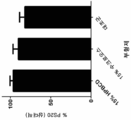
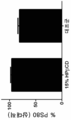
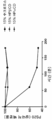
도 1은 부형제 없음 (대조군), 15% (w/v) 수크로오스, 및 15% (w/v) HP-β-CD를 함유하는 24시간 동안 40℃에서 5 mM AAPH로 산화된 샘플에 대해 RP-ELSD에 의해 결정된 PS20의 평균 (n=3) 상대적 백분율을 나타낸다.
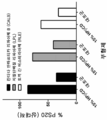
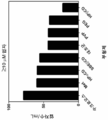
도 2는 0 및 15 % (w/v) HP-β-CD와 함께 0.02% (w/v) PS20 모두를 함유하는 단백지 무함유 샘플에서 칸디다 안타르티카 리파아제 B (검정), 지질단백질 리파아제 (회색), 및 토끼 간 에스테라아제 (백색) 효소를 사용하여 증해된 샘플에 대해 RP-ELSD에 의해 결정된 PS20의 평균 (n=3) 상대적 백분율을 나타낸다.
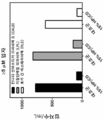
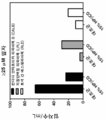
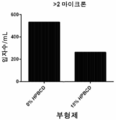
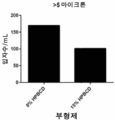
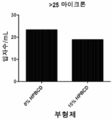
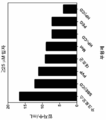
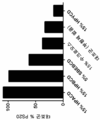
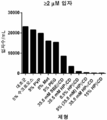
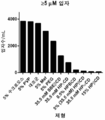
도 3a-3d는 0 및 15 % (w/v) HP-β-CD와 함께 0.02% (w/v) PS20 모두를 함유하는 단백지 무함유 샘플에서 칸디다 안타르티카 리파아제 B (검정), 지질단백질 리파아제 (회색), 및 토끼 간 에스테라아제 (백색) 효소를 사용하여 증해된 샘플에 대해 HIAC에 의해 결정된 평균 (n=3) ≥2 μM (도 3a), ≥5 μM (도 3b), ≥10 μM (도 3c), 및 ≥25 μM (도 3d)의 밀리리터당 입자 수를 나타낸다.
도 4는 실온에서의 5시간 동안 0 및 15 % (w/v) HP-β-CD를 함유하는 15 μg/mL의 PPL을 사용하여 증해된 0.02% (w/v) PS80을 함유하는 단백질 무함유 샘플에 대해 RP-ELSD에 의해 결정된 PS80의 평균 (n=3) 상대적 백분율을 나타낸다.
도 5a-5f는 0.02% (w/v) PS80 및 0 및 15 % (w/v) HP-β-CD를 함유하는 단백질 무함유 샘플에서 실온에서 5시간 동안 15 μg/mL의 PPL을 사용하여 증해된 샘플에 대해 평균 (n=3)(도 5a) ≥1.4 μM, (도 5b) ≥2 μM, (도 5c) ≥5 μM, (도 5d) ≥10 μM, (도 5e) ≥15 μM, 및 (도 5f) ≥25 μM의 밀리리터당 비가시적 입자수를 나타낸다.
도 6은 시간의 함수로서 15% (w/v)의 수크로오스 (원), HP-α-CD (다이아몬드), 및 HP-β-CD (삼각형)을 포함하는 단백질 무함유 샘플에서 실온에서 15 μg/mL의 PPL 효소로 증해된 샘플에 대해 RP-ELSD에 의해 결정된 PS20의 평균 (n=3) 상대적 백분율을 나타낸다.
도 7은 부형제 없음 (대조군), 15% (w/v) 수크로오스, 1% (w/v) 메티오닌, 15% (w/v) PEG 1500, 15% (w/v) PVP, 15% (w/v) HP-α-CD, 15% (w/v) HP-β-CD, 15% (w/v) SBE-β-CD, 및 15% (w/v) HP-γ-CD와 함께 0.02% (w/v) PS20을 함유하는 단백질 무함유 샘플에서 실온에서 4.5시간 동안 15 μg/mL의 PPL 효소를 사용하여 증해된 샘플에 대해 RP-ELSD에 의해 결정된 PS20의 평균 (n=3) 상대적 백분율을 나타낸다.
도 8a-8d는 부형제 없음 (대조군), 15% (w/v) 수크로오스, 1% (w/v) 메티오닌, 15% (w/v) PEG 1500, 15% (w/v) PVP, 15% (w/v) HP-α-CD, 15% (w/v) HP-β-CD, 15% (w/v) SBE-β-CD, 및 15% (w/v) HP-γ-CD와 함께 0.02% (w/v) PS20을 함유하는 단백질 무함유 샘플에서 실온에서 4.5시간 동안 15 μg/mL의 PPL 효소를 사용하여 증해된 샘플에 대해 HIAC에 의해 결정된 평균 (n=3) ≥2 μM (도 8a), ≥5 μM (도 8b), ≥10 μM (도 8c), 및 ≥25 μM (도 8d)의 밀리리터당 입자 수를 나타낸다.
도 9는 부형제 없음 (대조군), SBE-β-CD, 15 % (w/v), 15% (w/v) HP-α-CD, 15% (w/v) HP-β-CD, 15% (w/v) HP-γ-CD 및 15% (w/v) 수크로오스와 함께 0.02% (w/v) PS20을 함유하는 단백질 무함유 샘플에서 칸디다 안타르티카 리파아제 B를 사용하여 증해된 샘플에 대해 RP-ELSD에 의해 결정된 PS20의 평균 (n=3) 상대적 백분율을 나타낸다.
도 10a 및 10b는 효소적 PS-20 분해의 결과로 제조된 현재 입자의 재가용화를 평가하기 위해 다양한 부형제 (HP-α-CD, HP-β-CD, HP-γ-CD, SBE-β-CD, PVP, PEG 1500, 수크로오스, 및 메티오닌)의 첨가 이후 샘플에 대해 HIAC에 의해 결정된 평균 (n=3) (도 10a) ≥2 μM, 및 (도 10b) ≥5 μM의 밀리미터당 입자의 수를 나타낸다.
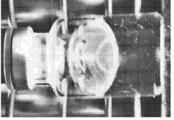
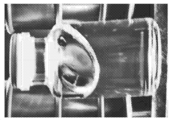
도 11a 및 11b는 15.0% (w/v) HP-β-CD에서의 스파이킹 이전 (도 11a) 및 이후 (도 11b) 실온에서 4.5 시간 동안 15 μg/mL의 PPL 효소를 사용하여 효소적 증해에 의해 생성된 PS20-관련 입자를 함유하는 바이알을 나타낸다. 15% (w/v) HP-β-CD의 첨가 이후, 가시적인 입자는 없었다.
도 12a-12f는 5℃에서 27개월 동안 저장된 0.02% (w/v) PS20을 함유하는 단백질 무함유 샘플에서 HIAC에 의해 결정된 평균 (n=3) (도 12a) ≥1.4 μM, (도 12b) ≥2 μM, (도 12c) ≥5 μM, (도 12d) ≥10 μM, (도 12e) ≥15 μM, 및 (도 12f) ≥25 μM의 밀리리터당 비가시적 입자수를 나타낸다.
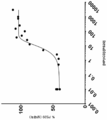
도 13은 0.02% (w/v) PS20 및 상이한 양의 HP-β-CD를 포함하는 단백질 무함유 샘플에서 실온에서 4.5 시간 동안 15 μg/mL의 PPL 효소를 사용하여 증해된 샘플에 대해 RP-ELSD에 의해 결정된 PS20의 평균 (n=3) 상대적 백분율을 나타낸다. 데이터는 에스자형 모델을 사용하여 핏팅된다.
도 14a-14d는 부형제 없음 (대조군), 0, 0.5, 5, 및 15% (w/v) HP-β-CD를 함유하는 단백질 함유 샘플에서 실온에서 4.5시간 동안 15 μg/mL의 PPL 효소를 사용하여 증해된 (도 14a) 0.005%, (도 14b) 0.02%, (도 14c) 0.1%, 및 (도 14d) 0.4% PS20을 함유하는 샘플에 대해 RP-ELSD에 의해 결정된 평균 (n=3) 상대적 백분율을 나타낸다.
도 15a-15c는 0.02% PS20 및 0, 0.1, 0.5, 5, 및 15% (w/v) HP-β-CD를 함유하는 단백질 무함유 샘플에서 실온에서 4.5 시간 동안 15 μg/mL의 PPL 효소를 사용하여 증해된 샘플에 대해 HIAC에 의해 결정된 평균 (n=3) (도 15a) ≥2 μM, (도 15b) ≥5 μM, (도 15c) ≥10 μM의 밀리리터당 입자수를 보여주는 패널 바 플롯을 나타낸다.
도 16은 상이한 HP-β-CD 내지 PS20 몰비를 가지는 단백질 무함유 샘플에서 실온에서 4.5 시간 동안 15 μg/mL의 PPL 효소를 사용하여 증해된 샘플에 대해 RP-ELSD에 의해 결정된 PS20의 평균 (n=3) 상대적 백분율을 나타낸다. 데이터는 에스자형 모델을 사용하여 핏팅된다.
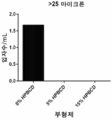
도 17a-17d는 0, 5, 및 15 % (w/v) HP-β-CD를 함유하는 실온에서 4.5시간 동안 15 μg/mL의 PPL 효소를 사용하여 증해된 (도 17a) 대조군, (도 17b) 단클론성 항체 (mAb), (도 17c) 이중특이성 항체 (BsAb), 및 (도 17D) 단일 Fab 항체 (sFAb)에 대해 RP-ELSD에 의해 결정된 PS20의 상대적 백분율을 나타낸다.Figure 1 is a graph showing the results of a comparison of RP with respect to samples oxidized to 5 mM AAPH at 40 < 0 > C for 24 hours containing excipients (control), 15% (w / v) sucrose, and 15% (N = 3) relative percent of PS20 determined by -ELSD.
Figure 2 shows the effect of Candida anthracycline lipase B (black), lipid protein lipase < RTI ID = 0.0 > (PEG) < / RTI > in a single sample containing both 0 and 15% (w / v) HP- (N = 3) relative percentages of PS20 as determined by RP-ELSD for the samples digested using the rabbit liver (gray), and the rabbit interesterified (white) enzyme.
Figures 3a-3d show the effect of Candida anthracycline lipase B (black), lipid < RTI ID = 0.0 > (Fig. 3a), ≥5 μM (Fig. 3b), ≥10 (Fig. 3b) determined by HIAC for samples diluted using protein lipase (gray), and rabbit liver Esterase (Fig. 3C), and? 25 μM (Fig. 3D).
Figure 4 is a graph showing the effect of a protein solution containing 0.02% (w / v) PS80 digested using 15 μg / ml PPL containing 0 and 15% (w / v) HP- (N = 3) relative percent of PS80 as determined by RP-ELSD for the sample containing the sample.
Figures 5a-5f illustrate the use of 15 μg / ml PPL for 5 hours at room temperature in a protein-free sample containing 0.02% (w / v) PS80 and 0 and 15% (w / v) HP- (Fig. 5A) ≥1.4 μM, (Fig. 5B) ≥2 μM, (Fig. 5C) ≥5 μM, , And (Fig. 5f) ≥25 μM of invisible particles per milliliter.
Figure 6 is a graph showing the effect of 15 μg (g / v) at room temperature in a protein-free sample containing 15% (w / v) sucrose (circles), HP-α-CD (n = 3) relative percent of PS20 determined by RP-ELSD for samples digested with PPL enzyme / mL.
FIG. 7 shows the results of a comparison of the results of the experiments with no excipients (control), 15% (w / v) sucrose, 1% (w / v) methionine, 15% (w / v)
Figures 8a-8d show the results of the experiments with no excipients (control), 15% (w / v) sucrose, 1% (w / v) methionine, 15% (w / v)
FIG. 9 is a graph showing the results of a comparison between 15 (w / v) 15% (w / v) HP-a-CD, 15% (w / v) HP- samples digested with Candida antarctica lipase B in a protein-free sample containing 0.02% (w / v) PS20 with% (w / v) HP-y-CD and 15% (w / v) (N = 3) relative percentages of PS20 determined by RP-ELSD for the corresponding PS20.
Figures 10a and 10b show various excipients (HP-α-CD, HP-β-CD, HP-γ-CD, and SBE-β- (Fig. 10A) ≥2 μM, and (Fig. 10b) ≥ 5 μM of particles per millimeter as determined by HIAC for the sample after addition of the substrate (CD, PVP,
11a and 11b show the results of enzymatic digestion using 15 μg / ml PPL enzyme for 15 hours at 15.0% (w / v) HP-β-CD before spiking (FIG. 11a) Lt; RTI ID = 0.0 > PS20-related < / RTI > After addition of 15% (w / v) HP-β-CD, there were no visible particles.
Figures 12a-12f show the mean (n = 3) (Fig. 12a) ≥1.4 [mu] M (Fig. 12b) determined by HIAC in protein free samples containing 0.02% (w / v) PS20 stored for 27 months at 5 [ (Fig. 12C) ≥ 5 μM, (Fig. 12C) ≥ 5 μM, (Fig. 12D) ≥10 μM, (Fig. 12E) ≥15 μM and (Fig. 12F) ≥25 μM.
Figure 13 shows the effect of RP-HPLC on a sample digested using 15 μg / mL PPL enzyme for 4.5 hours at room temperature in a protein-free sample containing 0.02% (w / v) PS20 and different amounts of HP- (N = 3) relative percent of PS20 determined by ELSD. The data is fitted using an S-shaped model.
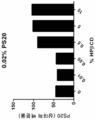
Figures 14a-14d show the effect of 15 μg / ml PPL enzyme for 4.5 hours at room temperature in protein-containing samples containing no excipients (control), 0, 0.5, 5, and 15% (w / v) HP- (N = 3) determined by RP-ELSD on samples containing 0.005%, (Fig. 14b) 0.02%, (Fig. 14c) 0.1% and ) Relative percentage.
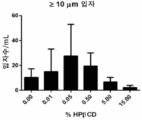
Figures 15a-15c show the effect of 15 μg / ml PPL enzyme (0.1 μg / ml) in a protein-free sample containing 0.02% PS20 and 0, 0.1, 0.5, 5 and 15% (w / v) HP- (Fig. 15A) ≥ 2 μM, (Fig. 15B) ≥ 5 μM, (Fig. 15C) ≥ 10 μM, determined by HIAC for the samples incubated with HIAC Plots.
Figure 16 shows the mean (n) of PS20 determined by RP-ELSD for samples digested using 15 μg / mL of PPL enzyme for 4.5 hours at room temperature in protein-free samples with different HP-β-CD to PS20 molar ratios = 3) Relative percentage. The data is fitted using an S-shaped model.
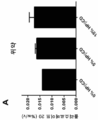
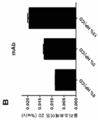
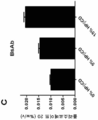
Figures 17a-17d show the control (Fig. 17a) (Fig. 17a) digested with 15 μg / ml PPL enzyme for 4.5 hours at room temperature containing 0, 5, and 15% (w / v) HP- 17 shows the relative percentage of PS20 determined by RP-ELSD for monoclonal antibody (mAb), (Figure 17c) bispecific antibody (BsAb) and (Figure 17D) single Fab antibody (sFAb).
본원에서의 본 발명은 사이클로덱스트린을 제형에 첨가함으로써 폴리소르베이트를 포함하는 수성 제형에서 폴리소르베이트 분해를 감소시키는 방법에 관한 것이고, 여기서 사이클로덱스트린 대 폴리소르베이트의 생성된 w/w 비는 약 37.5:1 초과이다. 또한, 본 발명은 수성 용액에서 비가시적 및 가시적 입자의 양을 감소시키기 위한 방법 및 폴리소르베이트를 포함하는 폴리소르베이트 분해 생성물을 분해하고 가용화시키는 방법을 제공하고, 본 방법은 사이클로덱스트린을 용액에 첨가하고, 사이클로덱스트린 대 폴리소르베이트의 비는 약 37.5:1 초과이다. 본 발명은 추가로 폴리소르베이트, 및 사이클로덱스트린을 포함하는 안정한 수성 제형을 제공하고, 여기서 제형에서의 사이클로덱스트린 대 폴리소르베이트의 w/w 비는 적어도 약 37.5:1이다. 일부 구현예에서, 제형은 추가로 폴리펩티드를 포함한다.The present invention herein relates to a method for reducing polysorbate degradation in an aqueous formulation comprising polysorbate by adding cyclodextrin to the formulation wherein the resulting w / w ratio of cyclodextrin to polysorbate is about < RTI ID = 0.0 > about < 37.5: 1. The present invention also provides a method for reducing the amount of non-visible and visible particles in an aqueous solution and a method for degrading and solubilizing the polysorbate degradation product comprising polysorbate, the method comprising contacting the cyclodextrin in solution And the ratio of cyclodextrin to polysorbate is greater than about 37.5: 1. The present invention further provides stable aqueous formulations comprising polysorbate, and cyclodextrin, wherein the w / w ratio of cyclodextrin to polysorbate in the formulation is at least about 37.5: 1. In some embodiments, the formulation further comprises a polypeptide.
I. 정의I. Definition
용어 “약제학적 제제”는 활성 성분의 생물학적 활성을 효과적으로 만드는 형태이고, 제가 투여될 대상체에게 허용되지 않을 정도로 독성인 추가의 성분을 함유하지 않는 조제물을 지칭한다. 이러한 제제는 멸균이다. The term " pharmaceutical formulation " refers to a formulation which effectively forms the biological activity of the active ingredient, and which does not contain additional ingredients that are toxic to an extent that is unacceptable to the subject to which it is administered. These preparations are sterile.
“멸균” 제제는 무균이거나 또는 모든 살아있는 미생물 및 이들의 포자가 없거나 본질적으로 없다. A " sterile " formulation is sterile or free or essentially free of all living microorganisms and their spores.
“안정한” 제제는 내부의 단백질의 보관시 그의 물리적 안정성 및/또는 화학적 안정성 및/또는 생물학적 활성을 본질적으로 유지하는 제제이다. 바람직하게는, 제제는 보관시 그의 물리적 및 화학적 안정성, 뿐만 아니라 그의 생물학적 활성을 본질적으로 유지한다. 안정한 제형은 또한 보관시 폴리소르베이트의 수준을 유지할 수 있다. 보관 기간은 일반적으로 제제의 의도된 유효 기간에 기초하여 선택된다. 단백질 안정성을 측정하기 위한 다양한 분석 기술이 당업계에서 이용가능하며, 예를 들어 하기에서 논의된다: Peptide and Protein Drug Delivery, 247-301, Vincent Lee Ed., Marcel Dekker, Inc., New York, N.Y., Pubs. (1991) 및 Jones, Adv.Drug Delivery Rev.10:29-90 (1993). 안정성은 선택된 시간 동안 선택된 양의 빛 노출량 및/또는 온도에서 측정될 수 있다. 안정성은 응집물 형성의 평가 (예를 들어 크기 배제 크로마토그래피를 사용하여, 혼탁도 측정에 의해, 및/또는 육안 검사에 의해); ROS 형성의 평가 (예를 들어 빛 스트레스 분석 또는 2,2’-아조비스(2-아미도프로판) 디하이드로클로라이드 (AAPH) 스트레스 분석을 사용하여); 단백질의 특정 아미노산 잔기의 산화 (예를 들어, 단클론 항체의 Trp 잔기 및/또는 Met 잔기); 양이온 교환 크로마토그래피, 영상 모세관 등전점 포커싱 (icIEF) 또는 모세관 구역 전기영동을 사용한 전하 이종성을 평가함으로써; 아미노-말단 또는 카복시-말단 서열 분석; 질량 분광 분석; 감소되고 온전한 항체와 비교하는 SDS-PAGE 분석; 펩타이드 맵 (예를 들어, 트립신 또는 LYS-C) 분석; 단백질의 생물학적 활성 또는 표적 결합 기능을 평가하는 것 (예컨대, 항체의 항원 결합 기능); 등을 포함하는 다양한 상이한 방식으로 정성적으로 및/또는 정량적으로 평가될 수 있다. 불안정성은 하기 중 어느 하나 이상을 포함할 수 있다: 응집, 탈아미드화 (예컨대 Asn 탈아미드화), 산화 (예컨대 Met 산화 및/또는 Trp 산화), 이성질체화 (예컨대 Asp 이성질체화), 클리핑/가수분해/단편화 (예컨대 힌지 영역 단편화), 석신이미드 형성, 쌍을 형성하지 않은 시스테인(들), N-말단 연장, C-말단 가공, 당화 차이 등.A " stable " agent is a formulation that inherently retains its physical and / or chemical stability and / or biological activity upon storage of the internal protein. Preferably, the formulation essentially retains its physical and chemical stability as well as its biological activity during storage. Stable formulations can also maintain the level of polysorbate during storage. The shelf life is generally selected based on the intended shelf life of the formulation. Various analytical techniques for measuring protein stability are available in the art and are discussed, for example, in the following: Peptide and Protein Drug Delivery, 247-301, Vincent Lee Ed., Marcel Dekker, Inc., New York, NY , Pubs. (1991) and Jones, Adv. Drug Delivery Rev. 10: 29-90 (1993). Stability can be measured at a selected amount of light exposure and / or temperature for a selected period of time. Stability can be assessed by evaluation of aggregate formation (e.g., by size exclusion chromatography, by turbidity measurement, and / or by visual inspection); Evaluation of ROS formation (using, for example, light stress assay or 2,2'-azobis (2-amidopropane) dihydrochloride (AAPH) stress assay); Oxidation of certain amino acid residues of the protein (e. G. Trp residues and / or Met residues of monoclonal antibodies); By evaluating charge heterogeneity using cation exchange chromatography, imaging capillary isoelectric focusing (icIEF) or capillary zone electrophoresis; Amino-terminal or carboxy-terminal sequence analysis; Mass spectrometry; SDS-PAGE analysis comparing with reduced and intact antibodies; Peptide map (e.g. trypsin or LYS-C) assays; Assessing the biological activity or target binding function of the protein (e. G., The antigen binding function of the antibody); And / or the like in a variety of different manners. Instability may include any one or more of: aggregation, deamidation (e.g., Asn deamidation), oxidation (such as Met oxidation and / or Trp oxidation), isomerization (such as Asp isomerization), clipping / Disassembly / fragmentation (e.g., hinge region fragmentation), succinimide formation, unpaired cysteine (s), N-terminal extension, C-terminal processing,
단백질은 색 및/또는 투명도의 육안 검사시, 또는 UV 빛 산란 또는 크기 배제 크로마토그래피에 의해 측정된 바와 같이, 응집, 침전, 및/또는 변성의 신호를 나타내지 않거나 이것이 거의 없는 경우 약제학적 제제에서 “그의 물리적 안정성을 유지한다”.The protein does not show signs of flocculation, precipitation, and / or denaturation, as measured by visual inspection of color and / or transparency, or as measured by UV light scattering or size exclusion chromatography, Maintain his physical stability ".
단백질은 주어진 시간에 화학적 안정성이 단백질이 하기에 정의된 바와 같이 그의 생물학적 활성을 여전히 유지하는 것으로 간주되면, 약제학적 제제에서 “그의 화학적 안정성을 유지한다”. 화학적 안정성은 단백질의 화학적으로 변형된 형태를 검출하고 정량함으로써 평가될 수 있다. 화학적 변형은 예를 들어 트립신 펩타이드 맵핑, 역상 고성능 액체 크로마토그래피 (HPLC) 및 액체 크로마토그래피-질량 분석법 (LC/MS)을 사용하여 평가될 수 있는 단백질 산화를 포함할 수 있다. 다른 유형의 화학적 변형은 예를 들어 이온 교환 크로마토그래피 또는 icIEF에 의해 평가될 수 있는 단백질의 전하 변화를 포함한다. A protein "retains its chemical stability" in a pharmaceutical formulation if the chemical stability at a given time is deemed to still retain its biological activity as defined below. Chemical stability can be assessed by detecting and quantifying the chemically modified form of the protein. Chemical modifications can include, for example, protein oxidation, which can be assessed using tryptic peptide mapping, reverse phase high performance liquid chromatography (HPLC) and liquid chromatography-mass spectrometry (LC / MS). Other types of chemical modifications include, for example, ion exchange chromatography or charge changes of proteins that can be assessed by icIEF.
단백질은 주어진 시간에 단백질의 생물학적 활성이, 예를 들어 단클론 항체의 항원 결합 분석에서 결정된 바와 같이, 약제학적 제제가 제조된 시간에 나타낸 생물학적 활성의 약 10% 이내 (검정의 오차 내)인 경우, 약제학적 제제에서 “그의 생물학적 활성을 유지한다”. A protein is a protein whose biological activity is within about 10% (within the error of the assay) of the biological activity exhibited at the time the pharmaceutical preparation is prepared, as determined, for example, by antigen binding analysis of a monoclonal antibody, &Quot; Maintains its biological activity " in pharmaceutical preparations.
본원에 사용된 바와 같이, 단백질의 “생물학적 활성”은 단백질이 그의 표적에 결합하는 능력, 예를 들어 단클론 항체가 항원에 결합하는 능력을 지칭한다. 그것은 시험관내 또는 생체내에서 측정될 수 있는 생물학적 반응을 추가로 포함할 수 있다. 이러한 활성은 길항적 또는 작용적일 수 있다. As used herein, " biological activity " of a protein refers to the ability of a protein to bind its target, for example, the ability of a monoclonal antibody to bind an antigen. It may further comprise a biological response that can be measured in vitro or in vivo. Such activity may be antagonistic or functional.
“산화에 민감한” 단백질은 산화되기 쉬운 것으로 밝혀진 하나 이상의 잔기(들), 예컨대, 비제한적으로, 메티오닌 (Met), 시스테인 (Cys), 히스티딘 (His), 트립토판 (Trp), 및 티로신 (Tyr)을 포함하는 것이다. 예를 들어, 단클론 항체의 Fab 부분 내의 트립토판 아미노산 또는 단클론 항체의 Fc 부분 내의 메티오닌 아미노산은 산화에 민감할 수 있다. The "oxidation-sensitive" protein may comprise one or more residues (s) found to be oxidizable, such as, but not limited to, methionine (Met), cysteine (Cys), histidine (His), tryptophan (Trp), and tyrosine . For example, the tryptophan amino acid in the Fab portion of a monoclonal antibody or the methionine amino acid in the Fc portion of a monoclonal antibody may be sensitive to oxidation.
“등장성”은 본 발명의 제제가 인간 혈액과 본질적으로 동일한 삼투압을 갖는 것을 의미한다. 등장성 제제는 일반적으로 약 250 내지 350 mOsm의 삼투압을 가질 것이다. 등장성은 예를 들어 증기압 또는 얼음 동결식 삼투압계를 사용하여 측정될 수 있다. &Quot; Isotonic " means that the agent of the present invention has essentially the same osmotic pressure as the human blood. An isotonic formulation will generally have an osmotic pressure of about 250 to 350 mOsm. Isotonicity can be measured using, for example, vapor pressure or an ice freeze-type osmometer.
본원에 사용된 바와 같이, “완충제”는 그의 산-염기 접합체 성분의 작용에 의해 pH의 변화를 저항하는 완충된 용액을 지칭한다. 본 발명의 완충제는 바람직하게는 약 4.5 내지 약 8.0 범위의 pH를 갖는다. 예를 들어, 히스티딘 아세테이트는 pH를 이 범위로 조절하는 완충제의 예이다. As used herein, " buffer " refers to a buffered solution that resists changes in pH by the action of its acid-base conjugate component. The buffer of the present invention preferably has a pH in the range of about 4.5 to about 8.0. For example, histidine acetate is an example of a buffer that adjusts the pH to this range.
“보존제”는 내부의 박테리아 작용을 감소시켜, 예를 들어 다용도 제제의 생산을 용이하게 하기 위해 제제에 선택적으로 포함될 수 있는 화합물이다. 잠재적인 보존제의 예는 옥타데실디메틸벤질 암모늄 클로라이드, 헥사메토늄 클로라이드, 벤즈알코늄 클로라이드 (알킬 그룹이 장쇄 화합물인 알킬벤질디메틸암모늄 클로라이드의 혼합물), 및 벤제토늄 클로라이드를 포함한다. 다른 유형의 보존제는 방향족 알코올, 예컨대 페놀, 부틸 및 벤질 알콜, 알킬 파라벤, 예컨대 메틸 또는 프로필 파라벤, 카테콜, 레조르시놀 사이클로헥사놀, 3-펩타놀, 및 m-크레졸을 포함한다. 일 구현예에서, 본원에서 보존제는 벤질 알콜이다. &Quot; Preservative " is a compound that can be selectively included in a formulation to reduce internal bacterial effects, e. G., To facilitate production of a multipurpose formulation. Examples of potential preservatives include octadecyldimethylbenzylammonium chloride, hexamethonium chloride, benzalkonium chloride (a mixture of alkylbenzyldimethylammonium chloride in which the alkyl group is a long chain compound), and benzethonium chloride. Other types of preservatives include aromatic alcohols such as phenol, butyl and benzyl alcohol, alkyl parabens such as methyl or propyl paraben, catechol, resorcinol cyclohexanol, 3-peptanol, and m-cresol. In one embodiment, the preservative herein is benzyl alcohol.
본원에 사용된 바와 같이, “계면활성제”는 표면활성제, 바람직하게는 비이온성 계면활성제를 지칭한다. 본원에서 계면활성제의 예는 하기를 포함한다: 폴리소르베이트 (예를 들어, 폴리소르베이트 20 및, 폴리소르베이트 80); 폴록사머 (예컨대 폴록사머 188); 트리톤; 나트륨 도데실 설페이트 (SDS); 나트륨 라우릴 설페이트; 나트륨 옥틸 글리코시드; 라우릴-, 미리스틸-, 리놀레일-, 또는 스테아릴-설포베타인; 라우릴-, 미리스틸-, 리놀레일- 또는 스테아릴-사르코신; 리놀레일-, 미리스틸-, 또는 세틸-베타인; 라우로아미도프로필-, 코카미도프로필-, 리놀레아미도프로필-, 미리스타미도 프로필-, 팔미도프로필-, 또는 이소스테아라미도프로필-베타인 (예컨대 라우로아미도프로필); 미리스타미도프로필-, 팔미도프로필-, 또는 이소스테아라미도프로필-디메틸아민; 나트륨 메틸 코코일-, 또는 디나트륨 메틸 올레일-타우레이트; 및 MONAQUATTM 시리즈 (Mona Industries, Inc., Paterson, N.J.); 폴리에틸 글리콜, 폴리프로필 글리콜, 및 에틸렌 및 프로필렌 글리콜의 공중합체 (예컨대 Pluronics, PF68 등); 등. As used herein, " surfactant " refers to a surfactant, preferably a nonionic surfactant. Examples of surfactants herein include: polysorbates (e.g.,
본원에 사용된 바와 같이 “약제학적으로 허용가능한” 부형제 또는 담체는 당업계에 공지된 약제학적으로 허용가능한 담체, 안정화제, 완충제, 산, 염기, 당, 보존제, 계면활성제, 등장화제 등을 포함한다 (Remington: The Science and Practice of Pharmacy, 22nd Ed., Pharmaceutical Press, 2012). 약제학적으로 허용가능한 부형제의 예는 완충제, 예컨대 포스페이트, 시트레이트, 아세테이트, 및 다른 유기산; 아스코브산, L-트립토판 및 메티오닌을 포함하는 항산화제; 저분자량 (약 10개 미만의 잔기) 폴리펩타이드; 단백질, 예컨대 혈청 알부민, 젤라틴, 또는 면역글로불린; 친수성 중합체, 예컨대 폴리비닐피롤리돈(PVP); 아미노산, 예컨대 글리신, 글루타민, 아스파라긴, 아르기닌 또는 리신; 단당류, 이당류, 및 글루코스, 만노스, 또는 덱스트린을 포함하는 다른 탄수화물; 금속 착물, 예컨대 Zn-단백질 착물; 킬레이트제, 예컨대 EDTA; 당알콜, 예컨대 만니톨 또는 소르비톨; 염 형성 반대이온, 예컨대 나트륨; 및/또는 비이온성 계면활성제 예컨대 폴리소르베이트, 폴록사머, 폴리에틸렌 글리콜 (PEG), 및 PLURONICS™을 포함한다. “약제학적으로 허용가능한” 부형제 또는 담체는 사용된 활성 성분의 유효량을 제공하기 위해 대상체에게 합리적으로 투여될 수 있고 사용된 투여량 및 농도에서 이에 노출되는 대상체에게 비독성인 것이다. As used herein, " pharmaceutically acceptable " excipients or carriers include pharmaceutically acceptable carriers, stabilizers, buffers, acids, bases, sugars, preservatives, surfactants, isotonic agents and the like well known in the art and (Remington:. The Science and Practice of Pharmacy, 22 nd Ed, Pharmaceutical Press, 2012). Examples of pharmaceutically acceptable excipients include buffering agents such as phosphate, citrate, acetate, and other organic acids; Antioxidants including ascorbic acid, L-tryptophan and methionine; Low molecular weight (less than about 10 residues) polypeptides; Proteins, such as serum albumin, gelatin, or immunoglobulins; Hydrophilic polymers such as polyvinylpyrrolidone (PVP); Amino acids such as glycine, glutamine, asparagine, arginine or lysine; Monosaccharides, disaccharides, and other carbohydrates including glucose, mannose, or dextrin; Metal complexes such as Zn-protein complexes; Chelating agents such as EDTA; Sugar alcohols such as mannitol or sorbitol; Salt forming counter ions such as sodium; And / or non-ionic surfactants such as polysorbate, poloxamer, polyethylene glycol (PEG), and PLURONICS (TM). A " pharmaceutically acceptable " excipient or carrier is one that is reasonably administrable to a subject to provide an effective amount of the active ingredient employed and is non-toxic to the subject being exposed at the dose and concentration employed.
본원에 사용되는 용어 "폴리소르베이트" (또는 PS로 축약됨)는 지방산과 에스테르화된 페길화 소르비탄을 지칭하고, 폴리소르베이트 20 (폴리옥시에틸렌 (20) 소르비탄 모노라우레이트), 폴리소르베이트 40 (폴리옥시에틸렌 (20) 소르비탄 모노팔미테이트), 폴리소르베이트 60 (폴리옥시에틸렌 (20) 소르비탄 모노스테아레이트), 및 폴리소르베이트 80 (폴리옥시에틸렌 (20) 소르비탄 모노올레에이트)를 포함한다. As used herein, the term " polysorbate "(or abbreviated as PS) refers to a fatty acid and an esterified pegylated sorbitan and includes polysorbate 20 (polyoxyethylene (20) sorbitan monolaurate), poly Sorbitan monostearate), and polysorbate 80 (polyoxyethylene (20) sorbitan monopalmitate), polysorbate 60 (polyoxyethylene (20) sorbitan monostearate), and
용어 "사이클로덱스트린"은 알파-(1,4) 글리코시드 결합으로 연결된 d-글루코파이라노스 단위를 갖는 고리-유사 구조로 결합된 글루코스 분자를 포함하는 부류의 화합물을 지칭한다. 예시적인 사이클로덱스트린은 하이드록시프로필-β-사이클로덱스트린 (HP-β-CD 또는 HP-베타-사이클로덱스트린), 2-하이드록시프로필-α-사이클로덱스트린 (HP-α-CD 또는 HP-알파-사이클로덱스트린), 2-하이드록시프로필-γ-사이클로덱스트린 (HP-γ-CD 또는 HP-감마-사이클로덱스트린), β-사이클로덱스트린 (β-CD 또는 베타-사이클로덱스트린), 설포부틸 에테르 β-사이클로덱스트린 (SBE-β-CD 또는 SBE-베타-사이클로덱스트린), α-사이클로덱스트린 (α-CD 또는 알파-사이클로덱스트린), 및 γ-사이클로덱스트린 (γ-CD 또는 감마-사이클로덱스트린)을 포함한다. 사이클로덱스트린에 대한 동의어는 카비트론(Cavitron), 환형 올리고당, 사이클로아물로오스, 및 사이클로글루칸을 포함한다.The term "cyclodextrin" refers to a class of compounds comprising a glucose molecule linked by a ring-like structure with a d-glucopyranose unit linked by an alpha - (1,4) glycoside linkage. Exemplary cyclodextrins include, but are not limited to, hydroxypropyl-beta-cyclodextrin (HP-beta-CD or HP-beta-cyclodextrin), 2- hydroxypropyl- alpha -cyclodextrin Cyclodextrin), 2-hydroxypropyl- gamma -cyclodextrin (HP-gamma -CD or HP-gamma-cyclodextrin), beta -cyclodextrin (beta -CD or beta-cyclodextrin), sulfobutyl ether beta -cyclodextrin (? -CD or? -CD-cyclodextrin),? -Cyclodextrin (? -CD or alpha-cyclodextrin), and? -Cyclodextrin (? -CD or gamma-cyclodextrin). Synonyms for cyclodextrins include Cavitron, cyclic oligosaccharides, cycloaromatics, and cycloglucan.
용어 "등장화제"는 용액의 상대적인 농도를 조정하거나 또는 유지하기 위해 사용되는 제제를 지칭한다. 바람직한 등장화제는 다가 당 알코올, 바람직하게는 3가 또는 더 고도의 당 알코올, 예컨대 글리세린, 에리트리톨, 아라비톨, 자일리톨, 소르비톨 및 만니톨을 포함한다. The term " isotonic agent " refers to an agent used to adjust or maintain the relative concentration of a solution. Preferred isotonic agents include polyhydric alcohols, preferably trihydric or higher sugar alcohols such as glycerin, erythritol, arabitol, xylitol, sorbitol and mannitol.
용어 "안정화제"는 큰 하전된 생체분자, 예컨대 단백질 및 항체를 안정화시키기 위한 제제를 지칭한다. 등장화제는 또한 큰 하전된 생체분자와 함께 사용되는 경우 안정화제로서 역할을 할 수 있다. The term "stabilizer" refers to agents that stabilize large charged biomolecules, such as proteins and antibodies. Isotactic agents can also act as stabilizers when used with large charged biomolecules.
"감소된 폴리소르베이트 분해"는 일정 기간 이후 더 많은 폴리소르베이트가 유사한 저장 조건 하에 대조군과 비교하여 샘플에 잔류하는 조건을 지칭한다. 예를 들면, 일정 기간 이후 잔류된 95% 폴리소르베이트를 갖는 샘플은 동일한 기간 이후 잔류된 50%의 폴리소르베이트를 갖는 대조군 샘플과 비교하여 감소된 폴리소르베이트 분해를 나타낸다."Reduced polysorbate degradation" refers to conditions under which more polysorbate remains in the sample compared to the control under similar storage conditions after a period of time. For example, a sample with 95% polysorbate remaining after a period of time exhibits reduced polysorbate degradation compared to a control sample with 50% polysorbate remaining after the same period.
본원에 사용되는 용어 "분해하다"는 폴리소르베이트 분해에 의해 야기된 가시적 및/또는 비가시적 입자에서의 감소를 지칭한다. 예를 들면, 제제는 가시적 및/또는 비가시적인 입자의 양이 폴리소르베이트를 함유하는 용액에 첨가되는 경우에 감소되는 경우에 폴리소르베이트 분해 생성물을 분해하는데 유효한 것이다. As used herein, the term " decompose " refers to a decrease in visible and / or invisible particles caused by polysorbate decomposition. For example, formulations are effective in degrading polysorbate degradation products when the amount of visible and / or invisible particles is reduced when added to a solution containing polysorbate.
용어 "가용화하다"는 액체에 고체를 용해시키는 것을 지칭한다. 예를 들면, 제제는 화합물이 이 제제의 존재 하에 보다 용이하게 용해되는 경우에 화합물을 가용화시키는데 유효한 것이다. The term "solubilize" refers to dissolving a solid in a liquid. For example, the agent is effective to solubilize the compound when the compound is more readily dissolved in the presence of the agent.
용어 "w/w 비"는 질량 기준으로의 다른 용질의 양으로 나눈 질량 기준의 하나의 용질의 양을 지칭한다. 예를 들면, 100 mg의 사이클로덱스트린 및 1 mg의 폴리소르베이트를 함유하는 용액은 100:1의 사이클로덱스트린 대 폴리소르베이트의 w/w 비를 가진다. 일 구현예에 따라, 사이클로덱스트린 대 폴리소르베이트의 w/w 비는 약 37.5:1 초과이다.The term "w / w ratio" refers to the amount of one solute on a mass basis divided by the amount of another solute on a mass basis. For example, a solution containing 100 mg of cyclodextrin and 1 mg of polysorbate has a w / w ratio of cyclodextrin to polysorbate of 100: 1. According to one embodiment, the w / w ratio of cyclodextrin to polysorbate is greater than about 37.5: 1.
"수성 제형"은 투여에 대해 적합한 수계 액체 제형을 지칭한다. 제형은 치료제, 예컨대 항체 또는 소분자를 포함하고, 바람직하게는 멸균된 것이다. 수성 제형은 또한 완충액, 안정화제, 등장화제, 및 부형제를 포함할 수 있다."Aqueous formulations" refer to aqueous liquid formulations suitable for administration. The formulation includes a therapeutic agent, such as an antibody or small molecule, and is preferably sterile. Aqueous formulations may also include buffers, stabilizers, isotonic agents, and excipients.
제형화된 단백질은 바람직하게는 본질적으로 순수하고 바람직하게는 본질적으로 균질하다 (예컨대, 오염 단백질 등이 없음). “본질적으로 순수한” 단백질은 조성물의 총량을 기준으로, 적어도 약 90 중량%, 바람직하게는 적어도 약 95 중량%의 단백질 (예컨대, 단클론 항체)을 포함하는 조성물을 의미한다. “본질적으로 균질한” 단백질은 조성물의 총량을 기준으로, 적어도 약 99 중량%의 단백질 (예컨대, 단클론 항체)을 포함하는 조성물을 의미한다. The formulated protein is preferably essentially pure and preferably essentially homogeneous (e.g., free of contaminating proteins, etc.). By " essentially pure " protein is meant a composition comprising at least about 90% by weight, preferably at least about 95% by weight, of the protein (e.g., monoclonal antibody), based on the total amount of the composition. &Quot; Essentially homogeneous " protein refers to a composition comprising at least about 99 weight percent protein (e.g., monoclonal antibody), based on the total amount of the composition.
용어 “단백질” “폴리펩타이드” 및 “펩타이드”는 임의의 길이의 아미노산의 중합체를 지칭하기 위해 본원에서 상호교환적으로 사용된다. 중합체는 선형 또는 분지형일 수 있고, 그것은 변형된 아미노산을 포함할 수 있으며, 그것은 비-아미노산에 의해 중단될 수 있다. 용어는 또한 자연적으로또는 개입에 의해 변형된 아미노산 중합체를 포함하며; 예를 들어, 디설파이드 결합 형성, 당화, 지질화, 아세틸화, 인산화, 또는 임의의 다른 조작 또는 변형, 예컨대 라벨링 성분과의 접합을 포함한다. 또한, 예를 들어, 아미노산 (예를 들어, 비천연 아미노산 등을 포함)의 하나 이상의 유사체, 뿐만 아니라 당업계에 알려진 다른 변형을 함유하는 단백질이 정의 내에 포함된다. 본원의 정의에 포함되는 단백질의 예는 하기를 포함한다: 포유동물 단백질, 예컨대, 레닌; 성장 호르몬, 예컨대 인간 성장 호르몬 및 소 성장 호르몬; 성장 호르몬 방출 인자; 부갑상선 호르몬; 갑상선 자극 호르몬; 지질단백질; 알파-1-항트립신; 인슐린 A-사슬; 인슐린 B-사슬; 프로인슐린; 여포 자극 호르몬; 칼시토닌; 황체 형성 호르몬; 글루카곤; 렙틴; 응고 인자, 예컨대 인자 VIIIC, 인자 IX, 조직 인자, 및 폰 빌레브란트 인자; 항응고 인자, 예컨대 단백질 C; 심방 나트륨이뇨 인자; 폐 계면활성제; 플라스미노겐 활성자, 예컨대 우로키나제 또는 인간 소변 또는 조직-유형 플라스미노겐 활성자 (t-PA); 봄베신; 트롬빈; 조혈 성장 인자; 종양 괴사 인자-알파 및 -베타; 종양 괴사 인자 수용체, 예컨대 사멸 수용체 5 및 CD120; TNF-관련 세포자멸사 유도 리간드 (TRAIL); B-세포 성숙 항원 (BCMA); B-림프구 자극자 (BLyS); 증식 유도 리간드 (APRIL); 엔케팔리나아제; RANTES (regulated on activation normally T-cell expressed and secreted); 인간 대식세포 염증성 단백질 (MIP-1-알파); 혈청 알부민, 예컨대 인간 혈청 알부민; 뮬러관 억제 물질; 릴랙신 A-사슬; 릴랙신 B-사슬; 프로릴랙신; 마우스 성선자극호르몬 관련 펩타이드; 미생물 단백질, 예컨대 베타-락타마제; DNase; IgE; 세포독성 T-림프구 관련 항원 (CTLA), 예컨대 CTLA-4; 인히빈; 액티빈; 혈소판 유래 내피 세포 성장 인자 (PD-ECGF); 혈관 내피 성장 인자 패밀리 단백질 (예컨대, VEGF-A, VEGF-B, VEGF-C, VEGF-D, 및 P1GF); 혈소판 유래 성장 인자 (PDGF) 패밀리 단백질 (예컨대, PDGF-A, PDGF-B, PDGF-C, PDGF-D, 및 이의 이량체); 섬유아세포 성장 인자 (FGF) 패밀리, 예컨대 aFGF, bFGF, FGF4, 및 FGF9; 표피 성장 인자 (EGF); 호르몬 또는 성장 인자에 대한 수용체, 예컨대 VEGF 수용체(들) (예컨대, VEGFR1, VEGFR2, 및 VEGFR3), 표피 성장 인자 (EGF) 수용체(들) (예컨대, ErbB1, ErbB2, ErbB3, 및 ErbB4 수용체), 혈소판 유래 성장 인자 (PDGF) 수용체(들) (예컨대, PDGFR-α 및 PDGFR-β), 및 섬유아세포 성장 인자 수용체(들); TIE 리간드 (안지오포이에틴, ANGPT1, ANGPT2); 안지오포이에틴 수용체, 예컨대 TIE1 및 TIE2; 단백질 A 또는 D; 류마티스 인자; 신경영양성 인자, 예컨대 골 유래 신경영양성 인자 (BDNF), 신경영양인자-3, -4, -5, 또는 -6 (NT-3, NT-4, NT-5, 또는 NT-6), 또는 신경 성장 인자, 예컨대 NGF-b; 형질전환 성장 인자 (TGF), 예컨대 TGF-알파 및 TGF-베타, 예컨대 TGF-β1, TGF-β2, TGF-β3, TGF-β4, 또는 TGF-β5; 인슐린-유사 성장 인자-I 및 -II (IGF-I 및 IGF-II); des(1-3)-IGF-I (뇌 IGF-I), 인슐린-유사 성장 인자 결합 단백질 (IGFBP); CD 단백질, 예컨대 CD3, CD4, CD8, CD19 및 CD20; 에리트로포이에틴; 골유도 인자; 면역독소; 골 형성 단백질 (BMP); 케모카인, 예컨대 CXCL12 및 CXCR4; 인터페론, 예컨대 인터페론-알파, -베타, 및 -감마; 집락 자극 인자 (CSF), 예컨대, M-CSF, GM-CSF, 및 G-CSF; 사이토카인, 예컨대 인터루킨 (IL), 예컨대, IL-1 내지 IL-10; 미드카인; 수퍼옥사이드 디스뮤타아제; T-세포 수용체; 표면 막 단백질; 붕괴 촉진 인자; 바이러스 항원, 예를 들어, AIDS 외피의 일부; 수송 단백질; 귀소 수용체; 아드레신; 조절 단백질; 인테그린, 예컨대 CD11a, CD11b, CD11c, CD18, ICAM, VLA-4 및 VCAM; 에프린; Bv8; 델타-유사 리간드 4 (DLL4); Del-1; BMP9; BMP10; 폴리스타틴; 간세포 성장 인자 (HGF)/산란 인자 (SF); Alk1; Robo4; ESM1; 퍼레칸; EGF-유사 도메인, 다중 7 (EGFL7); CTGF 및 그의 패밀리의 구성원; 트롬보스폰딘, 예컨대 트롬보스폰딘1 및 트롬보스폰딘2; 콜라겐, 예컨대 콜라겐 IV 및 콜라겐 XVIII; 뉴로필린, 예컨대 NRP1 및 NRP2; 플레이오트로핀 (PTN); 프로그라눌린; 프로리페린; 노치 단백질, 예컨대 Notch1 및 Notch4; 세마포린, 예컨대 Sema3A, Sema3C, 및 Sema3F; 종양 관련 항원, 예컨대 CA125 (난소 암 항원); 면역부착소; 및 상기 열거된 단백질의 단편 및/또는 변이체뿐만 아니라, 예를 들어, 상기 열거된 단백질 중 어느 것을 포함하는, 하나 이상의 단백질에 결합하는 항체 단편을 포함하는 항체.The terms "protein", "polypeptide" and "peptide" are used interchangeably herein to refer to polymers of amino acids of any length. The polymer may be linear or branched and it may comprise a modified amino acid, which may be interrupted by a non-amino acid. The term also includes amino acid polymers that have been modified naturally or by intervention; For example, disulfide bond formation, glycosylation, lipidation, acetylation, phosphorylation, or any other manipulation or modification, such as conjugation with a labeling component. Also included within the definition are proteins containing, for example, one or more analogs of amino acids (including, for example, unnatural amino acids and the like), as well as other variants known in the art. Examples of proteins included in the definition of the present application include: mammalian proteins such as renin; Growth hormones such as human growth hormone and bovine growth hormone; Growth hormone releasing factor; Parathyroid hormone; Thyroid stimulating hormone; Lipid protein; Alpha-1-antitrypsin; Insulin A-chain; Insulin B-chain; Proinsulin; Follicle stimulating hormone; Calcitonin; Luteinizing hormone; Glucagon; Leptin; Coagulation factors such as factor VIIIC, factor IX, tissue factor, and von Willebrand factor; Anticoagulants such as protein C; Atrial sodium diuretics; Pulmonary surfactants; Plasminogen activators such as urokinase or human urine or tissue-type plasminogen activator (t-PA); Bombesh Shin; Thrombin; Hematopoietic growth factors; Tumor necrosis factor-alpha and -beta; Tumor necrosis factor receptors such as death receptor 5 and CD120; TNF-related apoptosis inducing ligand (TRAIL); B-cell matured antigen (BCMA); B-lymphocyte stimulator (BLyS); Proliferation inducing ligand (APRIL); Enkephalinae; RANTES (regulated on activation normally T-cell expressed and secreted); Human macrophage inflammatory protein (MIP-1-alpha); Serum albumin, such as human serum albumin; Muller tube inhibitor; Relaxacin A-chain; Rilacsin B-chain; Prolylaxin; Mouse gonadotropin-related peptide; Microbial proteins such as beta-lactamase; DNase; IgE; Cytotoxic T-lymphocyte associated antigen (CTLA) such as CTLA-4; Inhivin; Actibin; Platelet-derived endothelial cell growth factor (PD-ECGF); Vascular endothelial growth factor family proteins (e.g., VEGF-A, VEGF-B, VEGF-C, VEGF-D, and P1GF); Platelet derived growth factor (PDGF) family proteins (such as PDGF-A, PDGF-B, PDGF-C, PDGF-D, and dimers thereof); Fibroblast growth factor (FGF) family, such as aFGF, bFGF, FGF4, and FGF9; Epidermal growth factor (EGF); Receptors (s) (e.g., ErbBl, ErbB2, ErbB3, and ErbB4 receptors), receptors for platelets (e.g., VEGFR1, VEGFR2, and VEGFR3), epidermal growth factor (PDGF) receptor (s) (e.g., PDGFR-a and PDGFR-ss), and fibroblast growth factor receptor (s); TIE ligands (angiopoietin, ANGPT1, ANGPT2); Angiopoietin receptors such as TIEl and TIE2; Protein A or D; Rheumatic factor; Neurotrophic factors such as bone-derived neurotrophic factor (BDNF), neurotrophin-3, -4, -5, or -6 (NT-3, NT-4, NT-5, or NT- Factors such as NGF-b; Transforming growth factors (TGF) such as TGF-alpha and TGF-beta, such as TGF-beta1, TGF- beta 2, TGF- beta 3, TGF- beta 4, or TGF- beta 5; Insulin-like growth factors-I and -II (IGF-I and IGF-II); des (1-3) -IGF-I (brain IGF-I), insulin-like growth factor binding protein (IGFBP); CD proteins such as CD3, CD4, CD8, CD19 and CD20; Erythropoietin; Bone inducer; Immunotoxins; Osteogenic protein (BMP); Chemokines such as CXCL12 and CXCR4; Interferons such as interferon-alpha, -beta, and -gamma; Colony stimulating factor (CSF) such as M-CSF, GM-CSF, and G-CSF; Cytokines, such as interleukins (IL), such as IL-1 to IL-10; Midkine; Superoxide dismutase; T-cell receptors; Surface membrane protein; Collapse promoting factor; Viral antigen, e. G., A portion of the AIDS envelope; Transport protein; Otic receptor; Adrenaline; Regulatory proteins; Integrins such as CD11a, CD11b, CD11c, CD18, ICAM, VLA-4 and VCAM; Ephrin; Bv8; Delta-like ligand 4 (DLL4); Del-1; BMP9; BMP10; Polystatin; Hepatocyte growth factor (HGF) / scattering factor (SF); Alk1; Robo4; ESM1; Perlecan; EGF-like domain, multiple 7 (EGFL7); Members of CTGF and its families; Thrombospondin, such as
본원에서 용어 “항체”는 가장 넓은 의미로 사용되며, 특히 원하는 생물학적 활성을 나타내는 한 단클론 항체 (전장 단클론 항체 포함), 다클론 항체, 다중특이적 항체 (예컨대, 이중특이적 항체), 및 항체 단편을 포함한다. As used herein, the term " antibody " is used in its broadest sense and specifically covers monoclonal antibodies (including full length monoclonal antibodies), polyclonal antibodies, multispecific antibodies (e.g., bispecific antibodies) .
“단리된” 단백질 (예컨대, 단리된 항체)은 그의 천연 환경의 성분으로부터 확인되고 분리되고/되거나 회수된 것이다. 그의 천연 환경의 오염 성분은 단백질의 연구, 진단 또는 치료 용도를 방해할 물질이며, 효소, 호르몬, 및 다른 단백질성 또는 비단백질성 용질을 포함할 수 있다. 단리된 단백질은 재조합 세포 내의 그 위치에 있는 단백질을 포함하는데 단백질의 천연 환경의 적어도 하나의 성분이 존재하지 않을 것이기 때문이다. 그러나, 통상적으로, 단리된 단백질은 적어도 하나의 정제 단계에 의해 제조될 것이다. An " isolated " protein (e. G., An isolated antibody) is identified, isolated and / or recovered from a component of its natural environment. Contaminants in his natural environment are substances that interfere with the research, diagnostic or therapeutic uses of proteins, and may include enzymes, hormones, and other proteinaceous or nonproteinaceous solutes. The isolated protein comprises the protein at that position in the recombinant cell since at least one component of the natural environment of the protein will not be present. Typically, however, the isolated protein will be produced by at least one purification step.
“원상태 항체”는 일반적으로 2개의 동일한 경쇄 (L) 및 2개의 동일한 중쇄 (H)로 구성된 약 150,000 달톤의 이종사량체성 당단백질이다. 각 경쇄는 하나의 공유 디설파이드 결합에 의해 중쇄에 연결되는 반면, 디설파이드 연결의 수는 상이한 면역글로불린 아이소타입의 중쇄 사이에서 다양하다. 각 중쇄 및 경쇄는 또한 규칙적으로 이격된 사슬내 디설파이드 브리지를 갖는다. 각 중쇄는 하나의 말단에 가변 도메인 (VH) 후 다수의 불변 도메인을 갖는다. 각 경쇄는 하나의 말단에 가변 도메인 (VL) 및 그의 다른 말단에 불변 도메인을 가지며; 경쇄의 불변 도메인은 중쇄의 제1 불변 도메인과 정렬되고, 경쇄 가변 도메인은 중쇄의 가변 도메인과 정렬된다. 특정 아미노산 잔기는 경쇄 및 중쇄 가변 도메인 사이에서 계면을 형성한다고 여겨진다. A " native antibody " is a heterotetrameric glycoprotein of about 150,000 daltons, generally composed of two identical light chains (L) and two identical heavy chains (H). Each light chain is linked to the heavy chain by one covalent disulfide bond while the number of disulfide linkages varies between the heavy chains of the different immunoglobulin isotypes. Each heavy and light chain also has regularly spaced chain disulfide bridges. Each heavy chain has a variable domain (V H ) at one end and a number of constant domains. Each light chain has a variable domain (V L ) at one end and a constant domain at its other end; The constant domain of the light chain is aligned with the first constant domain of the heavy chain and the light chain variable domain is aligned with the variable domain of the heavy chain. Certain amino acid residues are believed to form an interface between the light and heavy chain variable domains.
용어 “불변 도메인”은 면역글로불린의 다른 부분인 항원 결합 부위를 함유하는 가변 도메인과 비교하여 보다 보존된 아미노산 서열을 갖는 면역글로불린 분자의 부분을 지칭한다. 불변 도메인은 중쇄의 CH1, CH2 및 CH3 도메인 (종합하여, CH) 및 경쇄의 CHL (또는 CL) 도메인을 함유한다. The term " constant domain " refers to a portion of an immunoglobulin molecule having a conserved amino acid sequence compared to a variable domain containing an antigen binding site, which is another part of the immunoglobulin. The constant domain contains the CH1, CH2 and CH3 domains of the heavy chain (collectively, CH) and the CHL (or CL) domain of the light chain.
항체의 “가변 영역” 또는 “가변 도메인”은 항체의 중쇄 또는 경쇄의 아미노-말단 도메인을 지칭한다. 중쇄의 가변 도메인은 “VH”로 지칭될 수 있다. 경쇄의 가변 도메인은 “VL”로 지칭될 수 있다. 이러한 도메인은 일반적으로 항체의 가장 가변적인 부분이며 항원-결합 부위를 함유한다. &Quot; Variable domain " or " variable domain " of an antibody refers to the amino-terminal domain of the heavy or light chain of the antibody. The variable domain of the heavy chain may be referred to as " VH ". The variable domain of the light chain may be referred to as " VL ". Such domains are generally the most variable part of the antibody and contain antigen-binding sites.
용어 “가변”은 가변 도메인의 특정 부분이 항체 사이에서 서열이 광범위하게 상이하고 그의 특정 항원에 대한 각 특정 항체의 결합 및 특이성에서 사용된다는 사실을 지칭한다. 그러나, 가변성은 항체의 가변 도메인 전체에 고르게 분포되어 있지 않다. 경쇄 및 중쇄 가변 도메인 모두에서 초가변 영역 (HVR)으로 불리는 3개의 분절에 집중되어 있다. 일부 구현예에서, HVR은 상보성 결정부(CDR)이다.The term " variable " refers to the fact that a particular portion of the variable domain differs widely in sequence between antibodies and is used in the binding and specificity of each particular antibody to its particular antigen. However, the variability is not evenly distributed throughout the variable domains of the antibody. It is concentrated in three segments called hypervariable regions (HVR) in both the light chain and heavy chain variable domains. In some embodiments, the HVR is a complementarity determining region (CDR).
가변 도메인의 보다 고도로 보존된 부분은 프레임워크 영역 (FR)으로 불린다. 원상태 중쇄 및 경쇄의 가변 도메인은 각각 베타-시트 구조를 연결하고 일부 경우 이의 부분을 형성하는, 3개의 HVR에 의해 연결된 주로 베타-시트 구조를 채택하는 4개의 FR 영역을 포함한다. 각 사슬의 HVR은 FR 영역에 의해 근접하여 함께 유지되고, 다른 사슬로부터의 HVR과 함께 항체의 항원-결합 부위의 형성에 기여한다 (Kabat 등, Sequences of Proteins of Immunological Interest, Fifth Edition, National Institute of Health, Bethesda, Md.(1991)). 불변 도메인은 항체가 항원에 결합하는 것에 직접 관여하지 않지만, 항체-의존적 세포 독성에서 항체의 참여와 같은 다양한 효과기 기능을 나타낸다. The more highly conserved part of the variable domain is called the framework area (FR). The variable domains of the intrinsic heavy and light chains each comprise four FR regions that adopt a predominantly beta-sheet structure connected by three HVRs, each of which joins and partially forms a beta-sheet structure. The HVR of each chain is held close together by the FR region and contributes to the formation of the antigen-binding site of the antibody along with the HVR from the other chain (Kabat et al., Sequences of Proteins of Immunological Interest, Fifth Edition, National Institute of Health, Bethesda, Md. (1991)). The constant domains do not directly participate in the binding of the antibody to the antigen, but exhibit various effector functions such as the participation of the antibody in antibody-dependent cytotoxicity.
임의의 포유동물 종으로부터의 항체 (면역글로불린)의 “경쇄”는, 이들의 불변 도메인의 아미노산 서열에 기초하여, 카파 (“κ”) 및 람다 (“λ”)로 불리는 2개의 명확하게 구별되는 유형 중 하나에 할당될 수 있다. Quot; light chain " of an antibody (immunoglobulin) from any mammalian species includes two clearly distinguishable light chains called kappa (" kappa ") and lambda Type. ≪ / RTI >
본원에 사용된 바와 같이 용어 IgG “아이소타입” 또는 “서브클래스”는 그들의 불변 영역의 화학적 및 항원성 특징에 의해 정의된 면역글로불린의 임의의 서브클래스를 의미한다. 그들의 중쇄의 불변 도메인의 아미노산 서열에 따라, 항체 (면역글로불린)는 상이한 클래스에 할당될 수 있다. 면역글로불린의 5개의 주요 클래스가 있다: IgA, IgD, IgE, IgG, 및 IgM, 및 이들 중 몇 개는 하기로 추가로 분류될 수 있다: 서브클래스 (아이소타입), 예컨대, IgG1, IgG2, IgG3, IgG4, IgA1, 및 IgA2. 면역글로불린의 상이한 클래스에 상응하는 중쇄 불변 도메인은 각각 α, δ, ε, γ, 및 μ로 불린다. 상이한 클래스의 면역글로불린의 하위단위 구조 및 3차원 구조는 널리 알려져 있으며 일반적으로, 예를 들어, 하기에 기재되어 있다: Abbas 등 Cellular and Mol. Immunology, 4th ed., W.B. Saunders, Co. (2000). 항체는 항체와 하나 이상의 다른 단백질 또는 펩타이드와의 공유 또는 비-공유 결합에 의해 형성된 더 큰 융합 분자의 일부일 수 있다. As used herein, the term IgG " isotype " or " subclass " refers to any subclass of immunoglobulins defined by the chemical and antigenic characteristics of their constant regions. Depending on the amino acid sequence of the constant domain of their heavy chain, antibodies (immunoglobulins) can be assigned to different classes. There are five main classes of immunoglobulins: IgA, IgD, IgE, IgG, and IgM, and some of them can be further classified as: Subclass (isotype), such as IgG1, IgG2, IgG3 , IgG4, IgAl, and IgA2. The heavy chain constant domains corresponding to the different classes of immunoglobulins are called alpha, delta, epsilon, gamma, and mu, respectively. The subunit structures and three-dimensional structures of different classes of immunoglobulins are well known and are generally described, for example, in Abbas et al., Cellular and Mol. Immunology, 4th ed., W.B. Saunders, Co. (2000). An antibody can be part of a larger fusion molecule formed by covalent or non-covalent association of the antibody with one or more other proteins or peptides.
용어 “전장 항체,” “온전한 항체” 및 “전체 항체”는 하기에 정의된 바와 같은 항체 단편이 아니라 그의 실질적으로 온전한 형태의 항체를 지칭하기 위해 본원에서 상호교환적으로 사용된다. 상기 용어는 특히 Fc 영역을 함유하는 중쇄를 갖는 항체를 지칭한다. The terms " full-length antibody, " " intact antibody " and " whole antibody " are used herein interchangeably to refer to antibodies in their substantially intact form, rather than antibody fragments as defined below. The term specifically refers to an antibody having a heavy chain containing an Fc region.
“항체 단편”은 온전한 항체의 부분을 포함하며, 바람직하게는 이의 항원 결합 영역을 포함한다. 항체 단편의 예는 Fab, Fab’, F(ab’)2, 및 Fv 단편; 디아바디; 선형 항체; 단일-사슬 항체 분자; 및 항체 단편으로부터 형성된 다중특이적 항체를 포함한다. An " antibody fragment " includes a portion of the intact antibody, preferably comprising an antigen binding region thereof. Examples of antibody fragments include Fab, Fab ', F (ab') 2 , and Fv fragments; Diabody; Linear antibodies; Single-chain antibody molecules; And multispecific antibodies formed from antibody fragments.
항체의 파파인 소화는 각각 단일 항원-결합 부위를 갖는 “Fab” 단편으로 불리는 2개의 동일한 항원-결합 단편, 및 이름이 쉽게 결정화하는 능력을 반영하는 잔류 “Fc” 단편을 생산한다. 펩신 처리는 2개의 항원-결합 부위를 가지며 여전히 항원과 교차 결합할 수 있는 F(ab’)2 단편을 생성한다. Fab 단편은 중쇄- 및 경쇄 가변 도메인을 함유하며, 또한 경쇄의 불변 도메인 및 중쇄의 제1 불변 도메인 (CH1)을 함유한다. Fab’ 단편은 항체 힌지 영역으로부터의 하나 이상의 시스테인을 포함하는 중쇄 CH1 도메인의 카복시 말단에 몇 개의 잔기를 부가함으로써 Fab 단편과 상이하다. Fab’-SH는 불변 도메인의 시스테인 잔기(들)가 유리 티올 그룹을 갖는 Fab’에 대한 본원의 명칭이다. F(ab’)2 항체 단편은 본래 그들 사이의 힌지 시스테인을 갖는 Fab’ 단편의 쌍으로서 생산되었다. 항체 단편의 다른 화학적 커플링 또한 알려져 있다. Papain digestion of antibodies produces two identical antigen-binding fragments, each referred to as a "Fab" fragment with a single antigen-binding site, and a residual "Fc" fragment, reflecting the ability of the name to crystallize readily. Pepsin treatment produces F (ab ') 2 fragments that have two antigen-binding sites and are still capable of cross-linking with the antigen. Fab fragments contain heavy- and light-chain variable domains and also contain a constant domain of the light chain and a first constant domain (CH1) of the heavy chain. Fab fragments differ from Fab fragments by the addition of several residues at the carboxy terminus of the heavy chain CH1 domain comprising at least one cysteine from the antibody hinge region. Fab'-SH is the designation for Fab 'in which the cysteine residue (s) of the constant domain have a free thiol group. The F (ab ') 2 antibody fragment was originally produced as a pair of Fab' fragments with a hinge cysteine between them. Other chemical couplings of antibody fragments are also known.
“Fv”는 완전한 항원-결합 부위를 함유하는 최소 항체 단편이다. 일 구현예에서, 2개의 사슬 Fv 종은 단단하게 비공유 결합된 하나의 중쇄 가변 도메인 및 하나의 경쇄 가변 도메인의 이합체로 구성된다. 단일-사슬 Fv (scFv) 종에서, 하나의 중쇄 가변 도메인 및 하나의 경쇄 가변 도메인은 가요성 펩타이드 링커에 의해 공유 결합될 수 있어서 경쇄 및 중쇄는 2개의 사슬 Fv 종에서의 것과 유사한 “이량체” 구조로 결합할 수 있다. 이 구조 내에서, 각 가변 도메인의 3개의 HVR은 상호작용하여 VH-VL 이량체의 표면 상의 항원-결합 부위를 정의한다. 종합적으로, 6개의 HVR이 항체에게 항원-결합 특이성을 부여한다그러나, 심지어 단일 가변 도메인 (또는 항원에 특이적인 3개의 HVR만을 포함하는 Fv의 절반)은 전체 결합 부위보다 낮은 친화성에도 불구하고 항원을 인식하고 결합하는 능력을 갖는다. &Quot; Fv " is a minimal antibody fragment containing a complete antigen-binding site. In one embodiment, the two chain Fv species consist of one heavy chain non-covalently bound heavy chain variable domain and one light chain variable domain duplex. In a single-chain Fv (scFv) species, one heavy chain variable domain and one light chain variable domain can be covalently bound by a flexible peptide linker such that the light and heavy chains are "dimers" analogous to those in the two chain Fv species, Structure. Within this structure, the three HVRs of each variable domain interact to define the antigen-binding site on the surface of the VH-VL dimer. Collectively, six HVRs confer antigen-binding specificity to the antibody. However, even a single variable domain (or half of the Fv comprising only three HVRs specific for the antigen), despite its lower affinity than the entire binding site, And the ability to recognize and combine.
“단일-사슬 Fv” 또는 “scFv” 항체 단편은 항체의 VH 및 VL 도메인을 포함하며, 이들 도메인은 단일 폴리펩타이드 사슬에 존재한다. 일반적으로, scFv 폴리펩타이드는 VH 및 VL 도메인 사이에 폴리펩타이드 링커를 추가로 포함하며, 이는 scFv가 항원 결합을 위한 원하는 구조를 형성할 수 있게 해준다. scFv의 검토를 위해, 하기를 참고한다: 예컨대, Pluckthun, in The Pharmacology of Monoclonal Antibodies, vol. 113, Rosenburg 및 Moore eds., Springer-Verlag, New York, pp. 269-315, 1994.&Quot; Single-chain Fv " or " scFv " antibody fragments comprise the VH and VL domains of the antibody, and these domains are present in a single polypeptide chain. Generally, scFv polypeptides further comprise a polypeptide linker between the VH and VL domains, which allows the scFv to form the desired structure for antigen binding. For a review of scFv, see, e.g., Pluckthun, in The Pharmacology of Monoclonal Antibodies, vol. 113, Rosenburg and Moore eds., Springer-Verlag, New York, pp. 269-315, 1994.
용어 “디아바디”는 동일한 폴리펩타이드 사슬 (VH-VL) 내에 경쇄 가변 도메인 (VL)에 연결된 중쇄 가변 도메인 (VH)을 포함하는 2개의 항원-결합 부위를 갖는 항체 단편을 지칭한다. 너무 짧아서 동일한 사슬 상의 2개의 도메인 사이에 쌍을 형성할 수 없는 링커를 사용함으로써, 도메인은 또 다른 사슬의 상보적 도메인과 쌍을 형성하여 2개의 항원-결합 부위를 생성한다. 디아바디는 2가 또는 이중특이적일 수 있다. 디아바디는 하기에 더 상세히 기재되어 있다: 예를 들어, EP 제404,097호; WO 제1993/01161호; Hudson 등, Nat. Med. 9:129-134 (2003); 및 Hollinger 등, Proc. Natl. Acad. Sci. USA 90:6444-6448 (1993). 트리아바디 및 테트라바디는 또한 하기에 기재되어 있다: Hudson 등, Nat. Med. 9:129-134 (2003). The term " diabody " refers to an antibody fragment having two antigen-binding sites comprising a heavy chain variable domain (VH) linked to a light chain variable domain (VL) in the same polypeptide chain (VH-VL). By using a linker that is too short and can not form a pair between two domains on the same chain, the domain will pair with the complementary domain of another chain to generate two antigen-binding sites. Diabodies may be bivalent or bispecific. Diabodies are described in more detail below: EP 404,097; WO 1993/01161; Hudson et al., Nat. Med. 9: 129-134 (2003); And Hollinger et al., Proc. Natl. Acad. Sci. USA 90: 6444-6448 (1993). Triabodies and tetrabodies are also described below: Hudson et al., Nat. Med. 9: 129-134 (2003).
본원에 사용된 바와 같이 용어 “단클론 항체”는 실질적으로 균질한 항체의 집단으로부터 수득된 항체를 지칭하며, 예컨대, 상기 집단을 구성하는 개별 항체는 가능한 돌연변이, 예컨대, 소량으로 존재할 수 있는 자연발생 돌연변이를 제외하고 동일하다. 따라서, 수식어 “단클론”은 개별 항체의 혼합물이 아닌 항체의 특징을 나타낸다. 특정 구현예에서, 이러한 단클론 항체는 전형적으로 표적에 결합하는 폴리펩타이드 서열을 포함하는 항체를 포함하며, 표적-결합 폴리펩타이드 서열은 복수의 폴리펩타이드 서열로부터 단일 표적 결합 폴리펩타이드 서열을 선택하는 것을 포함하는 과정에 의해 수득되었다. 예를 들어, 선택 과정은 하이브리도마 클론, 파아지 클론, 또는 재조합 DNA 클론의 풀 (pool)과 같은 복수의 클론으로부터 독특한 클론을 선택하는 것일 수 있다. 선택된 표적 결합 서열은, 예를 들어, 표적에 대한 친화성을 개선하기 위해, 표적 결합 서열을 인간화하기 위해, 세포 배양에서 그의 생산을 개선하기 위해, 생체내에서 그의 면역원성을 감소시키기 위해, 다중특이적 항체를 생성하기 위해, 더 변경될 수 있고, 변경된 표적 결합 서열을 포함하는 항체는 또한 본 발명의 단클론 항체인 것으로 이해되어야 한다. 전형적으로 상이한 결정기 (에피토프)에 대한 상이한 항체를 포함하는 다클론 항체 제제와 달리, 단클론 항체 제제의 각 단클론 항체는 항원 상의 단일 결정기에 대한 것이다. 이들의 특이성 외에도, 단클론 항체 제제는 전형적으로 다른 면역글로불린에 의해 오염되지 않는다는 점에서 유리하다. As used herein, the term " monoclonal antibody " refers to an antibody obtained from a population of substantially homogeneous antibodies, for example, individual antibodies that make up the population may contain possible mutations, such as naturally occurring mutations . Thus, the modifier " monoclonal " refers to the characteristics of an antibody that is not a mixture of individual antibodies. In certain embodiments, such monoclonal antibodies typically include an antibody comprising a polypeptide sequence that binds to a target, and the target-binding polypeptide sequence comprises selecting a single target binding polypeptide sequence from a plurality of polypeptide sequences ≪ / RTI > For example, the selection process may be to select a unique clone from a plurality of clones, such as a pool of hybridoma clones, phage clones, or recombinant DNA clones. The selected target binding sequence can be used to improve the affinity for the target, for example, to improve the affinity for the target, to humanize the target binding sequence, to improve its production in cell culture, to reduce its immunogenicity in vivo, To generate a specific antibody, an antibody that can be further modified and that contains a modified target binding sequence should also be understood to be a monoclonal antibody of the invention. Unlike polyclonal antibody preparations, which typically contain different antibodies to different determinants (epitopes), each monoclonal antibody of a monoclonal antibody preparation is directed against a single determinant on the antigen. In addition to their specificity, monoclonal antibody preparations are advantageous in that they are typically not contaminated by other immunoglobulins.
수식어 “단클론”은 실질적으로 균질한 항체의 집단으로부터 수득되는 항체의 특징을 나타내며 임의의 특정 방법에 의한 항체의 생산을 필요로 하는 것으로 해석되지 않아야 한다. 예를 들어, 본 발명에 따라 사용될 단클론 항체는 하기를 포함하는 다양한 기술에 의해 제조될 수 있다: 예를 들어, 하이브리도마 방법 (예컨대, Kohler and Milstein, Nature, 256:495-97 (1975); Hongo 등, Hybridoma, 14 (3): 253-260 (1995), Harlow 등, Antibodies: A Laboratory Manual, (Cold Spring Harbor Laboratory Press, 2nd ed. 1988); Hammerling 등, in:Monoclonal Antibodies and T-Cell Hybridomas pp. 563-681 Elsevier, N.Y. (1981)), 재조합 DNA 방법 (예컨대, 미국특허 제4,816,567호 참고), 파아지-디스플레이 기술 (예컨대, Clackson 등, Nature, 352:624-628 (1991); Marks 등, J. Mol. Biol. 222: 581-597 (1992); Sidhu 등, J. Mol. Biol. 338(2): 299-310 (2004); Lee 등, J. Mol. Biol.340(5): 1073-1093 (2004); Fellouse, Proc. Natl. Acad. Sci. USA 101(34): 12467-12472 (2004); 및 Lee 등, J. Immunol. Methods 284(1-2): 119-132 (2004), 및 인간 면역글로불린 유전자좌의 일부 또는 전부 또는 인간 면역글로불린 서열을 코딩하는 유전자를 갖는 동물에서 인간 또는 인간-유사 항체를 생산하는 기술 (예컨대, WO 제1998/24893호; WO 제1996/34096호; WO 제1996/33735호; WO 제1991/10741호; Jakobovits 등, Proc. Natl. Acad. Sci. USA 90:2551 (1993); Jakobovits 등, Nature 362:255-258 (1993); Bruggemann 등, Year in Immunol. 7:33 (1993); 미국특허 제5,545,807호; 제5,545,806호; 제5,569,825호; 제5,625,126호; 제5,633,425호; 및 제5,661,016호; Marks 등, Bio/Technology 10:779-783 (1992); Lonberg 등, Nature 368:856-859 (1994); Morrison, Nature 368:812-813 (1994); Fishwild 등, Nature Biotechnol. 14:845-851 (1996); Neuberger, Nature Biotechnol. 14:826 (1996); 및 Lonberg 및 Huszar, Intern. Rev. Immunol. 13:65-93 (1995)). The modifier " monoclonal " indicates the characteristics of an antibody obtained from a population of substantially homogeneous antibodies and should not be construed as requiring production of the antibody by any particular method. For example, monoclonal antibodies to be used in accordance with the present invention may be prepared by a variety of techniques including, for example, hybridoma methods (see, for example, Kohler and Milstein, Nature, 256: 495-97 (1975) ; Hammerling et al., Hybridoma, 14 (3): 253-260 (1995), Harlow et al., Antibodies: A Laboratory Manual, (Cold Spring Harbor Laboratory Press, 2nd ed. (See, e.g., Cell Hybridomas pp. 563-681 Elsevier, NY (1981)), recombinant DNA methods (see, for example, U.S. Patent No. 4,816,567), phage-display techniques (eg, Clackson et al., Nature, 352: 624-628 (1991); Lee, et al., J. Mol. Biol. 340 (2004), J. Mol. Biol., 222: 581-597 (1992), Sidhu et al., J. Mol. Biol. Lee, et al., J. Immunol. Methods 284 (1-2): 119 < RTI ID = 0.0 > -132 (2004), and some or all of human immunoglobulin loci or human immune globules Techniques for producing human or human-like antibodies in an animal having a gene encoding a labeled sequence (e.g., WO 1998/24893; WO 1996/34096; WO 1996/33735; WO 1991/10741 Jakobovits et al., Nature 362: 255-258 (1993); Bruggemann et al., Year in Immunol. 7: 33 (1993); U.S. Patent No. 5,545,807; 5,545,806; 5,569,825; 5,625,126; 5,633,425; And 5,661, 016; Marks et al., Bio / Technology 10: 779-783 (1992); Lonberg et al., Nature 368: 856-859 (1994); Morrison, Nature 368: 812-813 (1994); Fishwild et al., Nature Biotechnol. 14: 845-851 (1996); Neuberger, Nature Biotechnol. 14: 826 (1996); And Lonberg and Huszar, Intern. Rev. Immunol. 13: 65-93 (1995)).
본원에서 단클론 항체는 구체적으로 중쇄 및/또는 경쇄의 일부가 특정 종으로부터 유래되거나 특정 항체 클래스 또는 하위클래스에 속하는 항체 내의 상응하는 서열과 동일하거나 상동인 반면, 사슬(들)의 나머지는 또 다른 종으로부터 유래되거나 또 다른 항체 클래스 또는 하위클래스에 속하는 항체 내의 상응하는 서열과 동일하거나 상동인 “키메라성” 항체, 뿐만 아니라 원하는 생물학적 활성을 나타내는 한 이러한 항체의 단편을 포함한다 (예컨대, 미국특허 제4,816,567호; 및 Morrison 등, Proc. Natl. Acad. Sci. USA 81:6851-6855 (1984) 참고). 키메라성 항체는 항체의 항원-결합 영역이, 예컨대, 짧은꼬리 원숭이를 본 발명의 항원으로 면역화시킴으로써 생산된 항체로부터 유래된 PRIMATZED® 항체를 포함한다. The monoclonal antibody herein specifically means that the part of the heavy chain and / or light chain is identical or homologous to the corresponding sequence in the antibody from a particular species or belonging to a particular antibody class or subclass, while the remainder of the chain (s) Quot; chimeric " antibodies that are identical or homologous to corresponding sequences in antibodies derived from or belonging to another antibody class or subclass, as well as fragments of such antibodies as long as they exhibit the desired biological activity (see, for example, U.S. Patent No. 4,816,567 (Morrison et al., Proc. Natl. Acad. Sci. USA 81: 6851-6855 (1984)). Chimeric antibody is an antibody antigen-binding domain, for example, includes a PRIMATZED ® antibody derived from the antibody produced by immunization of macaques with the antigen of the present invention.
비-인간 (예컨대, 쥣과) 항체의 “인간화” 형태는 비-인간 면역글로불린으로부터 유래된 최소 서열을 함유하는 키메라성 항체이다. 일 구현예에서, 인간화 항체는 수여자의 HVR로부터의 잔기가 원하는 특이성, 친화성, 및/또는 능력을 갖는 마우스, 랫트, 토끼, 또는 비인간 영장류와 같은 비-인간 종 (공여자 항체)의 HVR로부터의 잔기에 의해 대체된 인간 면역글로불린 (수여자 항체)이다. 일부 경우, 인간 면역글로불린의 FR 잔기는 상응하는 비-인간 잔기에 의해 대체된다. 또한, 인간화 항체는 수여자 항체 또는 공여자 항체에서 발견되지 않는 잔기를 포함할 수 있다. 이러한 변형은 항체 성능을 더 향상시키기 위해 이뤄질 수 있다. 일반적으로, 인간화 항체는 적어도 하나, 및 전형적으로 2개의 가변 도메인의 실질적으로 전부를 포함할 것이고, 여기서 초가변 루프의 전부 또는 실질적으로 전부는 비-인간 면역글로불린의 것과 상응하고, FR의 전부 또는 실질적으로 전부는 인간 면역글로불린 서열의 것이다. 인간화 항체는 선택적으로 또한 면역글로불린 불변 영역 (Fc)의 적어도 일부, 전형적으로 인간 면역글로불린의 것을 포함할 것이다. 추가의 세부사항을 위해, 하기를 참고한다: 예컨대, Jones 등, Nature 321:522-525 (1986); Riechmann 등, Nature 332:323-329 (1988); 및 Presta, Curr. Op. Struct. Biol. 2:593-596 (1992). 또한, 하기를 참고한다: 예컨대, Vaswani and Hamilton, Ann. Allergy, Asthma & Immunol. 1:105-115 (1998); Harris, Biochem.Soc.Transactions 23:1035-1038 (1995); Hurle and Gross, Curr. Op. Biotech. 5:428-433 (1994); 및 미국특허 제6,982,321호 및 제7,087,409호.A "humanized" form of a non-human (eg, human) antibody is a chimeric antibody that contains a minimal sequence derived from a non-human immunoglobulin. In one embodiment, the humanized antibody is a humanized antibody that is derived from the HVR of a non-human species (donor antibody) such as a mouse, rat, rabbit, or non-human primate with the desired specificity, affinity, and / (Acceptor antibody) that is replaced by a residue of the human immunoglobulin (acceptor antibody). In some cases, FR residues of human immunoglobulin are replaced by corresponding non-human residues. In addition, the humanized antibody may comprise a donor antibody or a residue not found in the donor antibody. Such modifications can be made to further improve antibody performance. In general, a humanized antibody will comprise at least one, and typically, substantially all of the two variable domains, wherein all or substantially all of the hypervariable loops correspond to those of a non-human immunoglobulin, Substantially all are of the human immunoglobulin sequence. The humanized antibody will optionally also comprise at least a portion of an immunoglobulin constant region (Fc), typically of a human immunoglobulin. For further details, see, for example, Jones et al., Nature 321: 522-525 (1986); Riechmann et al., Nature 332: 323-329 (1988); And Presta, Curr. Op. Struct. Biol. 2: 593-596 (1992). See also, for example, Vaswani and Hamilton, Ann. Allergy, Asthma & Immunol. 1: 105-115 (1998); Harris, Biochem. Soc. Transactions 23: 1035-1038 (1995); Hurle and Gross, Curr. Op. Biotech. 5: 428-433 (1994); And U.S. Patent Nos. 6,982,321 and 7,087,409.
“인간 항체”는 인간에 의해 생산된 항체의 것과 상응하는 아미노산 서열을 갖고/갖거나 본원에 개시된 바와 같은 인간 항체를 제조하는 기술 중 어느 것을 사용하여 제조된 항체이다. 인간 항체의 이러한 정의는 구체적으로 비-인간 항원-결합 잔기를 포함하는 인간화 항체를 배제한다. 인간 항체는 파아지-디스플레이 라이브러리를 포함하는 당업계에 알려진 다양한 기술을 사용하여 생산될 수 있다. Hoogenboom 및 Winter, J. Mol. Biol., 227:381 (1991); Marks 등, J. Mol. Biol., 222:581 (1991). 또한 인간 단클론 항체의 제조에 이용가능한 것은 하기에 기재된 방법이다: Cole 등, Monoclonal Antibodies and Cancer Therapy, Alan R.Liss, p. 77 (1985); Boerner 등, J. Immunol., 147(1): 86-95 (1991). 또한 하기를 참고한다: van Dijk and 및 de Winkel, Curr. Opin. Pharmacol., 5:368-74 (2001). 인간 항체는 항원 투여에 반응하여 항체를 생산하도록 변형되었지만 내인성 유전자좌가 불능이 된 형질전환 동물, 예컨대, 면역화된 제노마우스에 항원을 투여함으로써 제조될 수 있다 (예컨대, 미국특허 제6,075,181호 및 제6,150,584호, XENOMOUSETM 기술에 관함). 또한, 하기를 참고한다: 예를 들어, Li 등, Proc. Natl. Acad. Sci. USA, 103:3557-3562 (2006) (인간 B-세포 하이브리도마 기술을 통해 생성된 인간 항체에 관함). A " human antibody " is an antibody produced using any of the techniques for producing human antibodies having / having amino acid sequences corresponding to those of human produced antibodies. This definition of human antibodies specifically excludes humanized antibodies that contain non-human antigen-binding moieties. Human antibodies can be produced using a variety of techniques known in the art including phage-display libraries. Hoogenboom and Winter, J. Mol. Biol., 227: 381 (1991); Marks et al., J. Mol. Biol., 222: 581 (1991). Also available for the production of human monoclonal antibodies are the methods described below: Cole et al., Monoclonal Antibodies and Cancer Therapy, Alan R. Liss, p. 77 (1985); Boerner et al., J. Immunol., 147 (1): 86-95 (1991). See also van Dijk and de Winkel, Curr. Opin. Pharmacol., 5: 368-74 (2001). Human antibodies can be produced by administering an antigen to a transgenic animal, for example, an immunized genomic mouse, which has been modified to produce antibodies in response to antigen administration, but which has been rendered endogenous locus disabling (see, for example, U.S. Patent Nos. 6,075,181 and 6,150,584 And XENOMOUSE TM technology). See also, for example: Li et al., Proc. Natl. Acad. Sci. USA, 103: 3557-3562 (2006) (with respect to human antibodies produced via human B-cell hybridoma technology).
본원에서 사용될 때 용어 “초가변 영역,” “HVR,” 또는 “HV”는 서열이 초가변이고/이거나 구조적으로 정의된 루프를 형성하는 항체 가변 도메인의 영역을 지칭한다. 일반적으로, 항체는 6개의 HVR; VH에서 3개 (H1, H2, H3), 및 VL에서 3개 (L1, L2, L3)를 포함한다. 원상태 항체에서, H3 및 L3은 6개의 HVR의 다양성을 가장 많이 나타내며, H3은 특히 항체에게 우수한 특이성을 부여하는 독특한 역할을 한다고 여겨진다. 하기를 참고한다: 예컨대, Xu 등, Immunity 13:37-45 (2000); Johnson and Wu, in Methods in Molecular Biology 248:1-25 (Lo, ed., Human Press, Totowa, N.J., 2003). 실제로, 중쇄만으로 구성된 자연발생 낙타과 항체는 경쇄의 부재하에 기능적이며 안정하다. 하기를 참고한다: 예컨대, Hamers-Casterman 등, Nature 363:446-448 (1993); Sheriff 등, Nature Struct. Biol. 3:733-736 (1996). The term " hypervariable region, " " HVR, " or " HV " as used herein refers to a region of an antibody variable domain in which the sequence is hypervariable and / or forms a structurally defined loop. Generally, the antibody comprises six HVRs; (H1, H2, H3) in VH and three (L1, L2, L3) in VL. In the native antibody, H3 and L3 are the most abundant of the six HVRs, and H3 is believed to play a unique role, particularly imparting excellent specificity to the antibody. See, e.g., Xu et al., Immunity 13: 37-45 (2000); Johnson and Wu, in Methods in Molecular Biology 248: 1-25 (Lo, ed., Human Press, Totowa, N. J., 2003). Indeed, naturally occurring camelids and antibodies composed of only heavy chains are functional and stable in the absence of light chains. See, for example, Hamers-Casterman et al., Nature 363: 446-448 (1993); Sheriff et al., Nature Struct. Biol. 3: 733-736 (1996).
많은 HVR 설명이 사용되고 있으며 이는 본원에 포함되어 있다. 카바트 상보성 결정 영역 (CDR)은 서열 가변성에 기초하며 가장 흔하게 사용되는 것이다 (Kabat 등, Sequences of Proteins of Immunological Interest, 5th Ed.Public Health Service, National Institutes of Health, Bethesda, Md.(1991)). 초티아는 대신 구조적 루프의 위치를 언급한다 (Chothia and Lesk J. Mol. Biol. 196:901-917 (1987)). AbM HVR은 카바트 HVR 및 초티아 구조적 루프 사이의 절충안이며, 옥스포드 분자 AbM 항체 모델링 소프트웨어에 의해 사용된다. “접촉” HVR은 이용가능한 복합 결정 구조의 분석에 기초한다. 이러한 HVR 각각으로부터의 잔기는 하기에 나타나 있다. Many HVR descriptions are used and are included herein. The Kabat complementarity determining region (CDR) is based on sequence variability and is most commonly used (Kabat et al., Sequences of Proteins of Immunological Interest, 5th Ed. Public Health Service, National Institutes of Health, Bethesda, Md. . Chothia mentions the location of the structural loop instead (Chothia and Lesk J. Mol. Biol. 196: 901-917 (1987)). AbM HVR is a compromise between Kabat HVR and Chrysanthemum structural loops and is used by Oxford molecule AbM antibody modeling software. &Quot; Contact " HVR is based on analysis of available complex crystal structures. The residues from each of these HVRs are shown below.

HVR은 하기와 같이 “연장된 HVR”을 포함할 수 있다: VL에서 24-36 또는 24-34 (L1), 46-56 또는 50-56 (L2) 및 89-97 또는 89-96 (L3) 및 VH에서 26-35 (H1), 50-65 또는 49-65 (H2) 및 93-102, 94-102, 또는 95-102 (H3). 가변 도메인 잔기는 이들 정의 각각에 대해 상기 카바트 등에 따라 넘버링된다. HVR may include " extended HVR " as follows: 24-36 or 24-34 (L1), 46-56 or 50-56 (L2) and 89-97 or 89-96 (L3) And 26-35 (H1), 50-65 or 49-65 (H2) and 93-102, 94-102, or 95-102 (H3) at VH. The variable domain residues are numbered according to Kabat et al. For each of these definitions.
“프레임워크” 또는 “FR” 잔기는 본원에 정의된 바와 같은 HVR 잔기 이외의 가변 도메인이다. A "framework" or "FR" residue is a variable domain other than an HVR residue as defined herein.
용어 “카바트에서와 같은 가변 도메인 잔기 넘버링” 또는 “카바트에서와 같은 아미노산 위치 넘버링,” 및 이의 변형은 상기 카바트 등에서 항체의 편집의 중쇄 가변 도메인 또는 경쇄 가변 도메인에 사용된 넘버링 시스템을 지칭한다. 이 넘버링 시스템을 사용하여, 실제 선형 아미노산 서열은 가변 도메인의 FR 또는 HVR의 단축 또는 가변 도메인의 FR 또는 HVR 내로의 삽입에 해당하는 더 적은 또는 추가의 아미노산을 함유할 수 있다. 예를 들어, 중쇄 가변 도메인은 H2의 잔기 52 이후에 단일 아미노산 삽입 (카바트에 따른 잔기 52a) 및 중쇄 FR 잔기 82 이후에 삽입된 잔기 (예컨대, 카바트에 따른 잔기 82a, 82b, 및 82c 등)를 포함할 수 있다. 잔기의 카바트 넘버링은 항체의 서열의 상동성 영역에서 “표준” 카바트 넘버링된 서열과 정렬함으로써 주어진 항체에 대해 결정될 수 있다. The term " variable domain residue numbering as in Kabat " or " amino acid position numbering, such as in Kabat, " and variations thereof refer to the numbering system used for the heavy chain variable domain or light chain variable domain of the editing of antibodies in Kabat et al. do. Using this numbering system, the actual linear amino acid sequence may contain fewer or additional amino acids corresponding to the shortening of a variable domain FR or HVR or insertion into a FR or HVR of a variable domain. For example, the heavy chain variable domain comprises a single amino acid insertion (residue 52a according to Kabat) after residue 52 of H2 and a residue inserted after heavy chain FR residue 82 (e.g. residues 82a, 82b, and 82c according to Kabat ). Kabat numbering of the residues can be determined for a given antibody by aligning it with the " standard " Kabat numbered sequence in the homologous region of the sequence of the antibody.
카바트 넘버링 시스템은 일반적으로 가변 도메인 내의 잔기를 지칭할 때 사용된다 (경쇄의 약 잔기 1-107 및 중쇄의 잔기 1-113) (예컨대, Kabat 등, Sequences of Immunological Interest. 5th Ed. Public Health Service, National Institutes of Health, Bethesda, Md.(1991)). “EU 넘버링 시스템” 또는 “EU 지수”는 일반적으로 면역글로불린 중쇄 불변 영역 내의 잔기를 지칭할 때 사용된다 (예컨대, 상기 카바트 등에서 보고된 EU 지수). “카바트에서와 같은 EU 지수”는 인간 IgG1 EU 항체의 잔기 넘버링을 지칭한다. Kabat numbering systems are generally used to refer to residues within the variable domains (weak residues 1-107 of the light chain and residues 1-113 of the heavy chain) (see, for example, Kabat et al., Sequences of Immunological Interest. 5th Ed. , National Institutes of Health, Bethesda, Md. (1991)). An " EU numbering system " or " EU index " is generally used to refer to residues in the immunoglobulin heavy chain constant region (e.g. EU index reported in Kabat et al. &Quot; EU index as in Kabat " refers to residue numbering of human IgG1 EU antibody.
표현 "선형 항체"는 문헌[Zapata 등 (Protein Eng., 8(10):1057-1062 (1995))]에 기재된 항체를 지칭한다. 간략하게는, 이러한 항체는 한 쌍의 탠덤 Fc 세그먼트 (VH-CH1-VH-CH1)를 포함하고, 이는 상보성 경쇄 폴리펩티드와 함께 한 쌍의 항원 결합부를 형성한다. 선형 항체는 이중특이성 또는 단일특이성일 수 있다.The expression "linear antibody" refers to an antibody described in Zapata et al . ( Protein Eng. , 8 (10): 1057-1062 (1995)). Briefly, such antibodies comprise a pair of tandem Fc segments (VH-CHl-VH-CHl), which together with a complementary light chain polypeptide form a pair of antigen binding sites. Linear antibodies may be bispecific or monospecific.
다클론성 항체는 바람직하게는 관련 항원 및 아쥬반트의 다중 피하 (sc) 또는 복강내 (ip) 주사에 의해 동물에서 증가된다. 면역화되는 종에서 면역성인 단백질에 대해 항원 (특히 합성 펩티드가 사용되는 경우)을 컨쥬게이션시키는 것이 유용할 수 있다. 예를 들면, 항원은 이중작용성 또는 유도화제 사용하여 키홀-림펫 헤모사이아닌 (KLH), 혈청 알부민, 소 티로글로불린, 또는 대두 트립신 억제제, 예를 들면 말레이미도벤조일 설포석신이미드 에스테르 (시스테인 잔기를 통한 컨주게이션), N-하이드록시석신이미드 (라이신 잔기를 통함), 글루타르알데하이드, 석신산 무수물, SOCl2, 또는 R1N=C=NR (여기서 R 및 R1은 상이한 알킬기임)에 컨쥬게이션될 수 있다.Polyclonal antibodies are preferably raised in animals by multiple subcutaneous (sc) or intraperitoneal (ip) injections of the relevant antigen and adjuvant. It may be useful to conjugate an antigen (especially when a synthetic peptide is used) to a protein that is immunogenic in the species being immunized. For example, the antigen may be conjugated to a keyhole-lipopetemosanil (KLH), serum albumin, sorbitol globulin, or a soybean trypsin inhibitor such as maleimido benzoyl sulfosuccinimide ester (a cysteine residue (Via lysine residues), glutaraldehyde, succinic anhydride, SOCl 2 , or R 1 N = C = NR (where R and R 1 are different alkyl groups), N-hydroxysuccinimide Lt; / RTI >
용어 “다중특이적 항체”는 가장 넓은 의미로 사용되며, 특히 폴리에피토프 특이성을 갖는 (즉 하나의 생물학적 분자 상의 2개 이상의 상이한 에피토프에 특이적으로 결합할 수 있거나 또는 2개 이상의 상이한 생물학적 분자 상의 에피토프에 특이적으로 결합할 수 있는) 항원-결합 도메인을 포함하는 항체를 포함한다. 일부 구현예에서, 다중특이적 항체 (예컨대 이중특이적 항체)의 항원-결합 도메인은 2개의 VH/VL 단위를 포함하며, 제1 VH/VL 단위는 제1 에피토프에 특이적으로 결합하고 제2 VH/VL 단위는 제2 에피토프에 특이적으로 결합하며, 각 VH/VL 단위는 중쇄 가변 도메인 (VH) 및 경쇄 가변 도메인 (VL)을 포함한다. 이러한 다중특이적 항체는, 비제한적으로, 전장 항체, 2개 이상의 VL 및 VH 도메인을 갖는 항체, 항체 단편, 예컨대 Fab, Fv, dsFv, scFv, 디아바디, 이중특이적 디아바디 및 트리아바디, 공유 또는 비-공유 결합된 항체 단편을 포함한다. 중쇄 불변 영역의 적어도 일부 및/또는 경쇄 불변 영역의 적어도 일부를 추가로 포함하는 VH/VL 단위는 “헤미머” 또는 “절반 항체”로 지칭될 수도 있다. 일부 구현예에서, 절반 항체는 단일 중쇄 가변 영역의 적어도 일부 및 단일 경쇄 가변 영역의 적어도 일부를 포함한다. 일부 이러한 구현예에서, 2개의 절반 항체를 포함하고 2개의 항원에 결합하는 이중특이적 항체는 제1 항원 또는 제1 에피토프에 결합하지만 제2 항원 또는 제2 에피토프에는 결합하지 않는 제1 절반 항체 및 제2 항원 또는 제2 에피토프에 결합하나 제1 항원 또는 제1 에피토프에 결합하지 않는 제2 절반 항체를 포함한다. 일부 구현예에 따르면, 다중특이적 항체는 5 M 내지 0.001 pM, 3 M 내지 0.001 pM, 1 M 내지 0.001 pM, 0.5 M 내지 0.001 pM, 또는 0.1 M 내지 0.001 pM의 친화성으로 각 항원 또는 에피토프에 결합하는 IgG 항체이다. 일부 구현예에서, 헤미머는 제2 헤미머와 분자내 디설파이드 결합이 형성되게 하는 중쇄 가변 영역의 충분한 부분을 포함한다. 일부 구현예에서, 헤미머는, 예를 들어, 상보적 홀 돌연변이 또는 노브 돌연변이를 포함하는 제2 헤미머 또는 절반 항체와 이종이량체화를 허용하는, 노브 돌연변이 또는 홀 돌연변이를 포함한다. 노브 돌연변이 및 홀 돌연변이는 하기에 추가로 논의된다. The term " multispecific antibody " is used in its broadest sense and specifically covers polypeptides having polyepitope specificity (i. E. Epitopes on two or more different biological molecules that are capable of specifically binding two or more different epitopes on one biological molecule, Lt; RTI ID = 0.0 > (e. ≪ / RTI > In some embodiments, the antigen-binding domain of a multispecific antibody (e. G. Bispecific antibody) comprises two VH / VL units, wherein the first VH / VL unit specifically binds to the first epitope and the second The VH / VL unit specifically binds to the second epitope, and each VH / VL unit comprises a heavy chain variable domain (VH) and a light chain variable domain (VL). Such multispecific antibodies include, but are not limited to, full-length antibodies, antibodies having two or more VL and VH domains, antibody fragments such as Fab, Fv, dsFv, scFv, diabodies, bispecific diabodies and triabodies, Or non-covalently bound antibody fragments. A VH / VL unit that additionally comprises at least a portion of the heavy chain constant region and / or at least a portion of the light chain constant region may be referred to as a " hemomer " In some embodiments, the half-antibody comprises at least a portion of a single heavy chain variable region and at least a portion of a single light chain variable region. In some such embodiments, a bispecific antibody comprising two half antibodies and binding to two antigens comprises a first half antibody that binds to the first antigen or first epitope but not second antigen or second epitope, and A second half antibody that binds to the second antigen or the second epitope but does not bind the first antigen or the first epitope. According to some embodiments, the multispecific antibody has an affinity of 5 M to 0.001 pM, 3 M to 0.001 pM, 1 M to 0.001 pM, 0.5 M to 0.001 pM, or 0.1 M to 0.001 pM to each antigen or epitope Binding IgG antibody. In some embodiments, the hemimer comprises a sufficient portion of the heavy chain variable region to allow for formation of an intramolecular disulfide bond with the second hemmer. In some embodiments, a hemimer includes a knob mutation or a hole mutation that allows heterodimerization with a second or semi-antibody comprising, for example, a complementary hole mutation or a knob mutation. The knob mutation and the hole mutation are further discussed below.
“이중특이적 항체”는 하나의 생물학적 분자 상의 2개의 상이한 에피토프에 특이적으로 결합하거나 또는 2개의 상이한 생물학적 분자 상의 에피토프에 특이적으로 결합하는 항원-결합 도메인을 포함하는 다중특이적 항체이다. 이중특이적 항체는 또한 “이중 특이성”을 갖거나 “이중 특이적”인 것으로 본원에 지칭될 수 있다. 달리 나타내지 않는 한, 이중특이적 항체 명칭에서 이중특이적 항체에 결합된 항원이 열거되는 순서는 임의적이다. 일부 구현예에서, 이중특이적 항체는 2개의 절반 항체를 포함하며, 각각의 절반 항체는 단일 중쇄 가변 영역 및 선택적으로 중쇄 불변 영역의 적어도 일부, 및 단일 경쇄 가변 영역 및 선택적으로 경쇄 불변 영역의 적어도 일부를 포함한다. 특정 구현예에서, 이중특이적 항체는 2개의 절반 항체를 포함하며, 각각의 절반 항체는 단일 중쇄 가변 영역 및 단일 경쇄 가변 영역을 포함하고 하나를 초과하는 단일 중쇄 가변 영역을 포함하지 않으며 하나를 초과하는 단일 경쇄 가변 영역을 포함하지 않는다. 일부 구현예에서, 이중특이적 항체는 2개의 절반 항체를 포함하며, 각각의 절반 항체는 단일 중쇄 가변 영역 및 단일 경쇄 가변 영역을 포함하고, 제1 절반 항체는 제1 항원에 결합하고 제2 항원에는 결합하지 않으며 제2 절반 항체는 제2 항원에 결합하고 제1 항원에는 결합하지 않는다. A " bispecific antibody " is a multispecific antibody comprising an antigen-binding domain that specifically binds two different epitopes on one biological molecule or specifically binds to an epitope on two different biological molecules. Bispecific antibodies may also be referred to herein as having " bispecific " or " bispecific ". Unless otherwise indicated, the order in which the antigens bound to bispecific antibodies in the bispecific antibody name are listed is arbitrary. In some embodiments, the bispecific antibody comprises two half antibodies, each half antibody comprising at least a portion of a single heavy chain variable region and optionally a heavy chain constant region, and at least a portion of a single light chain variable region and optionally a light chain constant region Partly. In certain embodiments, the bispecific antibody comprises two half antibodies, each half antibody comprises a single heavy chain variable region and a single light chain variable region, and does not comprise more than one single heavy chain variable region, and more than one Lt; RTI ID = 0.0 > variable region. ≪ / RTI > In some embodiments, the bispecific antibody comprises two half antibodies, each half antibody comprising a single heavy chain variable region and a single light chain variable region, wherein the first half antibody binds to the first antigen and the second antigen And the second half antibody binds to the second antigen and does not bind to the first antigen.
본원에 사용된 바와 같이 용어 “노브-인투-홀” 또는 “KnH” 기술은 하나의 폴리펩타이드 내에 돌기 (노브)를 도입하고 이들이 상호작용하는 계면에 있는 다른 폴리펩타이드 내에 공동 (홀)을 도입함으로써 시험관내 또는 생체내에서 2개의 폴리펩타이드가 함께 쌍을 형성하게 하는 기술을 지칭한다. 예를 들어, KnH는 항체의 Fc:Fc 결합 계면, CL:CH1 계면 또는 VH/VL 계면에 도입되었다 (참고: 예컨대, US 제2011/0287009호, US제2007/0178552호, WO 제96/027011호, WO 제98/050431호, 및 Zhu 등, 1997, Protein Science 6:781-788). 일부 구현예에서, KnH는 다중특이적 항체의 제조 동안 2개의 상이한 중쇄의 쌍 형성을 유도한다. 예를 들어, 그들의 Fc 영역 내에 KnH를 갖는 다중특이적 항체는 각 Fc 영역에 연결된 단일 가변 도메인을 추가로 포함할 수 있거나, 또는 유사한 또는 상이한 경쇄 가변 도메인과 쌍을 형성하는 상이한 중쇄 가변 도메인을 추가로 포함한다. KnH 기술은 또한 2개의 상이한 수용체 세포외 도메인 또는 상이한 표적 인식 서열 (예컨대, 아피바디, 펩티바디 및 다른 Fc 융합 포함)을 포함하는 임의의 다른 폴리펩타이드 서열을 쌍을 형성시키는데 사용될 수 있다. The term " knob-in-hole " or " KnH ", as used herein, refers to introducing a protrusion (knob) into one polypeptide and introducing a cavity (hole) into another polypeptide at the interface at which they interact Refers to a technique that allows two polypeptides to pair together in vitro or in vivo. For example, KnH was introduced at the Fc: Fc binding interface, the CL: CH1 interface or the VH / VL interface of the antibody (see, for example, US Patent Application Publication No. US 2011/0287009, US 2007/0178552, WO 96/027011 WO 98/050431, and Zhu et al., 1997, Protein Science 6: 781-788). In some embodiments, KnH induces a pairing of two different heavy chains during the production of the multispecific antibody. For example, a multispecific antibody with KnH in their Fc region may additionally comprise a single variable domain linked to each Fc region, or a different heavy chain variable domain that pairs with a similar or different light chain variable domain may be added . KnH technology can also be used to pair two different receptor extracellular domains or any other polypeptide sequence, including different target recognition sequences (including, for example, epitopes, peptibodies and other Fc fusion).
본원에 사용된 바와 같이 용어 “노브 돌연변이”는 폴리펩타이드가 또 다른 폴리펩타이드와 상호작용하는 계면에 있는 폴리펩타이드 내에 돌기 (노브)를 도입하는 돌연변이를 지칭한다. 일부 구현예에서, 다른 폴리펩타이드는 홀 돌연변이를 갖는다 (참고: 예컨대, US 제5,731,168호, US 제5,807,706호, US 제5,821,333호, US 제7,695,936호, US 제8,216,805호, 각각은 그 전체가 참고로 본원에 포함되어 있음). As used herein, the term " knob mutation " refers to a mutation that introduces a protrusion (knob) into a polypeptide at the interface at which the polypeptide interacts with another polypeptide. In some embodiments, other polypeptides have a hole mutation (see, for example, US 5,731,168, US 5,807,706, US 5,821,333, US 7,695,936, US 8,216,805, Incorporated herein by reference).
본원에 사용된 바와 같이 용어 “홀 돌연변이”는 폴리펩타이드가 또 다른 폴리펩타이드와 상호작용하는 계면에 있는 폴리펩타이드 내에 공동 (홀)을 도입하는 돌연변이를 지칭한다. 일부 구현예에서, 다른 폴리펩타이드는 노브 돌연변이를 갖는다 (참고: 예컨대, US 제5,731,168호, US 제5,807,706호, US 제5,821,333호, US 제7,695,936호, US 제8,216,805호, 각각은 그 전체가 참고로 본원에 포함되어 있음). As used herein, the term " hole mutation " refers to a mutation that introduces a cavity (hole) within a polypeptide at the interface at which the polypeptide interacts with another polypeptide. In some embodiments, the other polypeptides have a knob mutation (see, for example, US 5,731,168, US 5,807,706, US 5,821,333, US 7,695,936, US 8,216,805, Incorporated herein by reference).
본원에 사용된 바와 같이 용어 “약”은 당업자에 의해 결정된 바와 같이 각각의 값에 대한 허용가능한 오차 범위를 지칭하며, 이는 값이 측정되거나 결정되는 방법, 즉 측정 시스템의 한계에 일부 의존할 것이다. 예를 들어, “약”은 당업계의 관행에 따라 1 이내 또는 1 초과의 표준 편차를 의미할 수 있다. 본원에서 “약” 값 또는 매개변수에 대한 언급은 상기 값 또는 매개변수 자체에 관한 구현예를 포함하고 설명한다. 예를 들어, “약 X”에 관한 설명은 “X”의 설명을 포함한다. As used herein, the term " about " refers to an acceptable range of error for each value, as determined by one of ordinary skill in the art, which will depend in part on the manner in which the value is measured or determined, i. For example, " about " may mean a standard deviation of 1 or more, depending on the practice in the art. Reference herein to a " about " value or parameter includes and describes implementation of the value or parameter itself. For example, the description of " about X " includes a description of " X ".
본 명세서 및 첨부된 청구항에서 사용된 바와 같이, 단수형 “a”, “an” 및 “the”은 내용이 달리 지시하지 않는 한 복수 대상을 포함한다. 따라서, 예를 들어, “화합물”에 대한 언급은 선택적으로 2개 이상의 이러한 화합물의 조합 등을 포함한다. As used in this specification and the appended claims, the singular forms " a ", " an ", and " the " include plural referents unless the context clearly dictates otherwise. Thus, for example, reference to " compound " optionally includes combinations of two or more such compounds, and the like.
II. 제형 및 제조II. Formulation and Manufacturing
본원의 본 발명은 폴리소르베이트를 포함하는 수성 제형에서 폴리소르베이트 분해를 감소시키는 방법에 관한 것이고, 본 방법은 제형에 사이클로덱스트린을 첨가하는 단계를 포함하고, 사이클로덱스트린 대 폴리소르베이트의 생성된 w/w 비는 약 37.5:1 초과이다. 일부 구현예에서, 본 발명은 폴리소르베이트를 포함하는 수성 용액에서 비가시적 및 가시적 입자의 양을 감소시키기 위한 방법을 제공하며, 이는 사이클로덱스트린을 용액에 첨가하는 단계를 포함하고, 여기서 사이클로덱스트린 대 폴리소르베이트의 생성된 w/w 비는 약 37.5:1 초과이다. 일부 구현예에서, 사이클로덱스트린은 HP-β사이클로덱스트린, HP-γ 사이클로덱스트린 또는 설포부틸 에테르 베타-사이클로덱스트린이다. 일부 구현예에서, 사이클로덱스트린은 HP-α 사이클로덱스트린이다. 일부 구현예에서, 제형은 추가로 폴리렙티드를 포함한다.The present invention relates to a method of reducing polysorbate degradation in an aqueous formulation comprising polysorbate, the method comprising the step of adding a cyclodextrin to the formulation, wherein the resulting cyclodextrin to polysorbate The w / w ratio is greater than about 37.5: 1. In some embodiments, the present invention provides a method for reducing the amount of non-visible and visible particles in an aqueous solution comprising polysorbate, comprising adding cyclodextrin to the solution, wherein the cyclodextrin The resulting w / w ratio of polysorbate is greater than about 37.5: 1. In some embodiments, the cyclodextrin is HP-beta cyclodextrin, HP-y cyclodextrin or sulfobutyl ether beta-cyclodextrin. In some embodiments, the cyclodextrin is HP-alpha cyclodextrin. In some embodiments, the formulation further comprises polyrepeptide.
일부 구현예에서, 본 방법은 폴리비닐피롤리돈 (PVP)을 제형에 첨가하는 단계를 포함하고, 여기서 PVP 대 폴리소르베이트의 생성된 w/w 비는 약 37.5:1 초과이다. 일부 구현예에서, 본 발명은 폴리소르베이트를 포함하는 수성 용액에서의 비가시적 및 가시적 입자의 양을 감소시키는 방법을 제공하며, 이는 용액에 PVP를 첨가하는 단계를 포함하며, 여기서 PVP 대 폴리소르베이트의 생성된 w/w 비는 약 37.5:1 초과이다. 일부 구현예에서, 본 발명은 수성 제형에서 폴리소르베이트 분해 생성물을 분해하고 가용화시키는 방법을 제공하고, 여기서 PVP 대 폴리소르베이트의 생성된 w/w 비는 약 37.5:1 초과이다. In some embodiments, the method comprises adding polyvinylpyrrolidone (PVP) to the formulation wherein the resulting w / w ratio of PVP to polysorbate is greater than about 37.5: 1. In some embodiments, the present invention provides a method of reducing the amount of invisible and visible particles in an aqueous solution comprising polysorbate comprising adding PVP to the solution, wherein the PVP to polysorbate The resulting w / w ratio of bait is greater than about 37.5: 1. In some embodiments, the invention provides a method of degrading and solubilizing polysorbate degradation products in aqueous formulations wherein the resulting w / w ratio of PVP to polysorbate is greater than about 37.5: 1.
일부 구현예에서, 본 발명은 폴리소르베이트, 및 사이클로덱스트린을 포함하는 수성 제형을 제공하며, 여기서 1% 미만의 폴리소르베이트는 적어도 약 6개월 내지 적어도 약 48개월 동안 약 1℃ 내지 약 10℃에서의 저장 이후 분해되고, 제형에서의 사이클로덱스트린 대 폴리소르베이트의 w/w 비는 적어도 약 37.5:1이다. 일부 구현예에서, 본 발명은 폴리소르베이트 및 PVP를 포함하는 수성 제형을 제공하며, 1% 미만의 폴리소르베이트는 적어도 약 6개월 내지 적어도 약 48개월 동안 약 1℃ 내지 약 10℃에서의 저장 이후 분해되고, 제형에서의 PVP 대 폴리소르베이트의 w/w 비는 적어도 약 37.5:1이다. 일부 구현예에서, 제형은 적어도 약 6개월 내지 적어도 약 적어도 약 48개월, 적어도 약 12개월, 적어도 약 18개월, 적어도 약 24개월, 또는 적어도 약 48개월 동안 약 2℃ 내지 약 8℃에서 안정하다. 일부 구현예에서, 제형은 약 0.005%-0.4%의 폴리소르베이트를 포함한다. 일부 구현예에서, 제형은 약 0.005%-0.4%의 폴리소르베이트를 포함하고, 사이클로덱스트린은 약 0.01%-30%의 농도로 제형에 첨가된다. 일부 구현예에서, 사이클로덱스트린은 HP-β 사이클로덱스트린, HP-γ 사이클로덱스트린 또는 설포부틸 에테르 베타-사이클로덱스트린이다. 일부 구현예에서, 사이클로덱스트린은 HP-α 사이클로덱스트린이다. 일부 구현예에서, 폴리소르베이트 분해는 약 50%, 약 75%, 약 80%, 약 85%, 약 90%, 약 95%, 또는 약 99%까지 감소된다. 추가의 구현예에서, 1mL당 약 1,000, 약 750, 약 500, 약 250, 약 150, 약 100, 약 50, 또는 약 25개 미만의 폴리소르베이트 입자 (직경에 있어서 약 2 마이크론 초과)가 형성된다. 일부 구현예에서, 제형은 추가로 폴리펩티드를 포함한다. 일부 구현예에서, 단백질 농도는 약 1 mg/mL 내지 약 250 mg/mL이다. 일부 구현예에서, 단백질 농도는 약 250 mg/mL 초과이다. 일부 구현예에서, 제형은 약 4.5 내지 약 7.0 또는 약 4.5 내지 약 6.0, 또는 약 6.0의 pH를 가진다. 일부 구현예에서, 제형은 추가로 안정화제, 완충액, 계면활성제, 및 등장화제 중 하나 이상을 포함한다. 추가의 구현예에서, 제형은 대상체에의 정맥내, 피하 근육내, 또는 초자체내 투여를 위해 적합하다. 일부 구현예에서, 폴리펩티드는 다클론성 항체, 단클론성 항체, 인간화된 항체, 인간 항체, 키메라성 항체, 다중특이적 항체, 또는 항체 단편이다. 일부 구현예에서, 제형은 추가로 소분자, 핵산, 지질 및/또는 탄수화물을 포함한다.In some embodiments, the invention provides an aqueous formulation comprising polysorbate, and a cyclodextrin, wherein less than 1% of the polysorbate is maintained at a temperature of from about 1 캜 to about 10 캜 for at least about 6 months to at least about 48 months And the w / w ratio of cyclodextrin to polysorbate in the formulation is at least about 37.5: 1. In some embodiments, the invention provides an aqueous formulation comprising polysorbate and PVP, wherein less than 1% of the polysorbate is stored for at least about 6 months to at least about 48 months at about 1 < 0 > C to about 10 & And the w / w ratio of PVP to polysorbate in the formulation is at least about 37.5: 1. In some embodiments, the formulation is stable at about 2 ° C to about 8 ° C for at least about 6 months to at least about at least about 48 months, at least about 12 months, at least about 18 months, at least about 24 months, or at least about 48 months . In some embodiments, the formulation comprises from about 0.005% to about 0.4% polysorbate. In some embodiments, the formulation comprises about 0.005% -0.4% polysorbate and the cyclodextrin is added to the formulation at a concentration of about 0.01% -30%. In some embodiments, the cyclodextrin is HP-beta cyclodextrin, HP-y cyclodextrin or sulfobutyl ether beta-cyclodextrin. In some embodiments, the cyclodextrin is HP-alpha cyclodextrin. In some embodiments, the polysorbate degradation is reduced by about 50%, about 75%, about 80%, about 85%, about 90%, about 95%, or about 99%. In further embodiments, less than about 1,000, about 750, about 500, about 250, about 150, about 100, about 50, or about 25 polysorbate particles (greater than about 2 microns in diameter) are formed per mL do. In some embodiments, the formulation further comprises a polypeptide. In some embodiments, the protein concentration is from about 1 mg / mL to about 250 mg / mL. In some embodiments, the protein concentration is greater than about 250 mg / mL. In some embodiments, the formulation has a pH of about 4.5 to about 7.0, or about 4.5 to about 6.0, or about 6.0. In some embodiments, the formulation further comprises at least one of a stabilizer, a buffer, a surfactant, and an isotonic agent. In a further embodiment, the formulation is suitable for intravenous, subcutaneous, intramuscular, or intracisternal administration to a subject. In some embodiments, the polypeptide is a polyclonal antibody, a monoclonal antibody, a humanized antibody, a human antibody, a chimeric antibody, a multispecific antibody, or an antibody fragment. In some embodiments, the formulation further comprises small molecules, nucleic acids, lipids, and / or carbohydrates.
제형에서의 단백질 및 항체는 본 기술분야에 공지된 방법을 사용하여 제조될 수 있다. 항체(예를 들면, 전장 항체, 항체 절편 및 다중특이적 항체)를 제조하기 위한 비제한적인 예시적인 방법이 본원에 제공된다. 수성 제형에서의 항체는 항체를 생성하기 위한 본 기술분야에서 이용가능한 기술을 사용하여 제조되고, 예시적인 이의 방법은 하기 섹션에 보다 상세하게 기재되어 있다. 본원의 방법은 다른 단백질 예컨대 펩티드계 억제제를 포함하는 제형의 제조를 위해 본 기술분야의 당업자에 의해 적용될 수 있다. 일반적으로 잘 이해하고, 치료적 단백질의 제조를 위해 일반적으로 잘 이해하고 일반적으로 이용되는 기술 및 과정에 대해 문헌[am Sambrook 등, Molecular Cloning: Laboratory Manual, 4th ed., Cold Spring Harbor Laboratory Press, Cold Spring Harbor, N.Y. (2012); Current Protocols in Molecular Biology, F.M. Ausubel, 등 eds. (2003); Short Protocols in Molecular Biology, Ausubel 등, eds., J. Wiley 및 Sons (2002); Horswill 등, Current Protocols in Protein Science, (2006); Antibodies, Laboratory Manual, Harlow 및 Lane, eds. (1988); R.I. Freshney, Culture of Animal Cells: Manual of Basic Technique 및 Specialized Application, 6th ed., J. Wiley 및 Sons (2010)]을 참조하며, 이는 그 전문이 본원에 참조로 포함되어 있다.Proteins and antibodies in formulations can be prepared using methods known in the art. Non-limiting exemplary methods for producing antibodies (e. G., Full-length antibodies, antibody fragments and multispecific antibodies) are provided herein. Antibodies in aqueous formulations are prepared using techniques available in the art for generating antibodies, and exemplary methods thereof are described in more detail in the following sections. The methods herein can be applied by those skilled in the art for the preparation of formulations comprising other proteins such as peptide-based inhibitors. General techniques are well understood and generally understood and generally used for the preparation of therapeutic proteins, see Am Sambrook et al., Molecular Cloning: Laboratory Manual , 4th ed., Cold Spring Harbor Laboratory Press, Cold Spring Harbor, NY (2012); Current Protocols in Molecular Biology , FM Ausubel, et al. Eds. (2003); Short Protocols in Molecular Biology, Ausubel et al., Eds., J. Wiley and Sons (2002); Horswill et al., Current Protocols in Protein Science , (2006); Antibodies, Laboratory Manual , Harlow and Lane, eds. (1988); RI Freshney, Culture of Animal Cells: Manual of Basic Technique and Specialized Application , 6th ed., J. Wiley and Sons (2010), which is incorporated herein by reference in its entirety.
A. 항체 제조A. Antibody Production
본원에 제공된 수성 제제 내의 항체는 본 발명의 항원에 대한 것이다. 바람직하게는, 항원은 생물학적으로 중요한 폴리펩타이드이며, 항체를 장애를 겪고 있는 포유동물에게 투여하는 것은 상기 포유동물에서 치료 이점을 야기할 수 있다. 그러나, 비폴리펩타이드 항원에 대한 항체가 또한 고려된다. Antibodies in the aqueous formulations provided herein are directed to the antigens of the invention. Preferably, the antigen is a biologically important polypeptide, and administration of the antibody to a mammal suffering from the disorder may result in therapeutic benefit in the mammal. However, antibodies against nonpolypeptide antigens are also contemplated.
항원이 폴리펩타이드인 경우, 그것은 막투과 분자 (예컨대 수용체) 또는 리간드, 예컨대 성장 인자일 수 있다. 예시적인 항원은 하기를 포함한다: 분자, 예컨대 혈관 내피 성장 인자 (VEGF); CD20; ox-LDL; ox-ApoB100; 레닌; 성장 호르몬, 예컨대 인간 성장 호르몬 및 소 성장 호르몬; 성장 호르몬 방출 인자; 부갑상선 호르몬; 갑상선 자극 호르몬; 지질단백질; 알파-1-항트립신; 인슐린 A-사슬; 인슐린 B-사슬; 프로인슐린; 여포 자극 호르몬; 칼시토닌; 황체 형성 호르몬; 글루카곤; 응고 인자, 예컨대 인자 VIIIC, 인자 IX, 조직 인자, 및 폰 빌레브란트 인자; 항응고 인자, 예컨대 단백질 C; 심방 나트륨이뇨 인자; 폐 계면활성제; 플라스미노겐 활성자, 예컨대 우로키나제 또는 인간 소변 또는 조직-유형 플라스미노겐 활성자 (t-PA); 봄베신; 트롬빈; 조혈 성장 인자; 종양 괴사 인자-알파 및 -베타; 엔케팔리나아제; RANTES (regulated on activation normally T-cell expressed and secreted); 인간 대식세포 염증성 단백질 (MIP-1-알파); 혈청 알부민, 예컨대 인간 혈청 알부민; 뮬러관 억제 물질; 릴랙신 A-사슬; 릴랙신 B-사슬; 프로릴랙신; 마우스 성선자극호르몬 관련 펩타이드; 미생물 단백질, 예컨대 베타-락타마제; DNase; IgE; 세포독성 T-림프구 관련 항원 (CTLA), 예컨대 CTLA-4; 인히빈; 액티빈; 호르몬 또는 성장 인자에 대한 수용체; 단백질 A 또는 D; 류마티스 인자; 신경영양성 인자, 예컨대 골-유래 신경영양성 인자 (BDNF), 신경영양인자-3, -4, -5, 또는 -6 (NT-3, NT4, NT-5, 또는 NT-6), 또는 신경 성장 인자, 예컨대 NGF-β; 혈소판-유래 성장 인자 (PDGF); 섬유아세포 성장 인자, 예컨대 aFGF 및 bFGF; 표피 성장 인자 (EGF); 형질전환 성장 인자 (TGF), 예컨대 TGF-알파 및 TGF-베타, 예컨대 TGF-β1, TGF-β2, TGF-β3, TGF-β4, 또는 TGF-β5; 인슐린-유사 성장 인자-I 및 -II (IGF-I 및 IGF-II); des (1-3)-IGF-I (뇌 IGF-I), 인슐린-유사 성장 인자 결합 단백질; CD 단백질, 예컨대 CD3, CD4, CD8, CD19 및 CD20; 에리트로포이에틴; 골유도 인자; 면역독소; 골 형성 단백질 (BMP); 인터페론, 예컨대 인터페론-알파, -베타, 및 -감마; 집락 자극 인자 (CSF), 예컨대, M-CSF, GM-CSF, 및 G-CSF; 인터루킨 (IL), 예컨대, IL-1 내지 IL-10; 수퍼옥사이드 디스뮤타아제; T-세포 수용체; 표면 막 단백질; 붕괴 촉진 인자; 바이러스 항원, 예를 들어, AIDS 외피의 일부; 수송 단백질; 귀소 수용체; 아드레신; 조절 단백질; 인테그린, 예컨대 CD11a, CD11b, CD11c, CD18, ICAM, VLA-4 및 VCAM; 종양 관련 항원, 예컨대 HER2, HER3 또는 HER4 수용체; 및 상기 열거된 폴리펩타이드 중 어느 것의 단편.When the antigen is a polypeptide, it may be a transmembrane molecule (e.g., a receptor) or a ligand, such as a growth factor. Exemplary antigens include: molecules such as vascular endothelial growth factor (VEGF); CD20; ox-LDL; ox-ApoB100; Renin; Growth hormones such as human growth hormone and bovine growth hormone; Growth hormone releasing factor; Parathyroid hormone; Thyroid stimulating hormone; Lipid protein; Alpha-1-antitrypsin; Insulin A-chain; Insulin B-chain; Proinsulin; Follicle stimulating hormone; Calcitonin; Luteinizing hormone; Glucagon; Coagulation factors such as factor VIIIC, factor IX, tissue factor, and von Willebrand factor; Anticoagulants such as protein C; Atrial sodium diuretics; Pulmonary surfactants; Plasminogen activators such as urokinase or human urine or tissue-type plasminogen activator (t-PA); Bombesh Shin; Thrombin; Hematopoietic growth factors; Tumor necrosis factor-alpha and -beta; Enkephalinae; RANTES (regulated on activation normally T-cell expressed and secreted); Human macrophage inflammatory protein (MIP-1-alpha); Serum albumin, such as human serum albumin; Muller tube inhibitor; Relaxacin A-chain; Rilacsin B-chain; Prolylaxin; Mouse gonadotropin-related peptide; Microbial proteins such as beta-lactamase; DNase; IgE; Cytotoxic T-lymphocyte associated antigen (CTLA) such as CTLA-4; Inhivin; Actibin; Receptors for hormones or growth factors; Protein A or D; Rheumatic factor; Neurotrophic factors such as bone-derived neurotrophic factor (BDNF), neurotrophin-3, -4, -5, or -6 (NT-3, NT4, NT-5 or NT-6) , Such as NGF-β; Platelet-derived growth factor (PDGF); Fibroblast growth factors such as aFGF and bFGF; Epidermal growth factor (EGF); Transforming growth factors (TGF) such as TGF-alpha and TGF-beta, such as TGF-beta1, TGF- beta 2, TGF- beta 3, TGF- beta 4, or TGF- beta 5; Insulin-like growth factors-I and -II (IGF-I and IGF-II); des (1-3) -IGF-I (brain IGF-I), insulin-like growth factor binding protein; CD proteins such as CD3, CD4, CD8, CD19 and CD20; Erythropoietin; Bone inducer; Immunotoxins; Osteogenic protein (BMP); Interferons such as interferon-alpha, -beta, and -gamma; Colony stimulating factor (CSF) such as M-CSF, GM-CSF, and G-CSF; Interleukins (IL) such as IL-1 to IL-10; Superoxide dismutase; T-cell receptors; Surface membrane protein; Collapse promoting factor; Viral antigen, e. G., A portion of the AIDS envelope; Transport protein; Otic receptor; Adrenaline; Regulatory proteins; Integrins such as CD11a, CD11b, CD11c, CD18, ICAM, VLA-4 and VCAM; Tumor-associated antigens such as HER2, HER3 or HER4 receptors; And fragments of any of the above-listed polypeptides.
(i) 항원 제조(i) Antigen Production
선택적으로 다른 분자에 접합된 가용성 항원 또는 이의 단편은 항체를 생성하기 위한 면역원으로서 사용될 수 있다. 막투과 분자, 예컨대 수용체의 경우, 이들의 단편 (예컨대, 수용체의 세포외 도메인)이 면역원으로서 사용될 수 있다. 택일적으로, 막투과 분자를 발현하는 세포는 면역원으로서 사용될 수 있다. 이러한 세포는 천연 공급원 (예컨대 암 세포주)로부터 유래될 수 있거나 또는 막투과 분자를 발현하기 위한 재조합 기술에 의해 형질전환된 세포일 수 있다. 항체를 제조하는데 유용한 다른 항원 및 이의 형태는 당업자에게 명백할 것이다. Alternatively, soluble antigens or fragments thereof conjugated to other molecules can be used as immunogens to generate antibodies. In the case of transmembrane molecules, such as receptors, these fragments (e. G., The extracellular domain of the receptor) may be used as immunogens. Alternatively, cells expressing membrane permeable molecules can be used as immunogens. Such cells may be derived from natural sources (such as cancer cell lines) or may be cells transformed by recombinant techniques to express membrane permeable molecules. Other antigens useful for preparing antibodies and their forms will be apparent to those skilled in the art.
(ii) 특정 항체-기반 방법(ii) a specific antibody-based method
다클론 항체는 바람직하게는 관련 항원 및 보조제의 다중 피하 (sc) 또는 복강내 (ip) 주사에 의해 동물에서 생성된다. 이관능성 또는 유도체화제, 예를 들어, 말레이미도벤조일 설포석신이미드 에스테르 (시스테인 잔기를 통한 접합), N-하이드록시석신이미드 (리신 잔기를 통한), 글루타르알데하이드, 무수 석신산, SOCl2, 또는 R1N=C=NR (여기서, R 및 R1은 상이한 알킬 그룹임)을 사용하여 면역화될 종에서 면역원성인 단백질, 예컨대, 키홀 림펫 헤모시아닌, 혈청 알부민, 소 티로글로불린, 또는 대두 트립신 억제제에 관련 항원을 접합하는 것이 유용할 수 있다. Polyclonal antibodies are preferably produced in animals by multiple subcutaneous (sc) or intraperitoneal (ip) injections of the relevant antigen and adjuvant. (Through a cysteine residue), N-hydroxysuccinimide (via a lysine residue), glutaraldehyde, anhydrous succinic acid, SOCl 2 , Or R 1 N = C = NR, wherein R and R 1 are different alkyl groups, such as a protein which is immunogenic in the species to be immunized, such as Keyhole limpet hemocyanin, serum albumin, It may be useful to conjugate the relevant antigen to a trypsin inhibitor.
동물은 하기에 의해 항원, 면역원성 접합체, 또는 유도체에 대해 면역화된다: 예컨대, 100 μg 또는 5 μg의 단백질 또는 접합체 (각각 토끼 또는 마우스의 경우)를 3 부피의 프로인트 완전 보조제와 조합하고 상기 용액을 다수의 부위에 피내 주사함으로써. 1개월 후, 동물은 다수의 부위에서의 피하 주사에 의해 프로인트 완전 보조제 중의 펩타이드 또는 접합체의 원래 양의 1/5 내지 1/10를 사용하여 부스트된다. 7 내지 14일 후, 동물을 출혈시키고 혈청을 항체 역가에 대해 분석하였다. 동물은 역가가 정체될 때까지 부스트된다. 바람직하게는, 동물은 상이한 단백질에 접합되고/되거나 상이한 가교 시약을 통해 접합된 동일한 항원의 접합체로 부스트된다. 접합체는 또한 단백질 융합으로서 재조합 세포 배양에서 제조될 수 있다. 또한, 명반과 같은 응집제가 면역 반응을 향상시키기 위해 적합하게 사용된다. An animal is immunized against an antigen, immunogenic conjugate, or derivative by: for example, combining 100 μg or 5 μg of protein or conjugate (for rabbit or mouse, respectively) with 3 volumes of Freund's complete adjuvant, Into a plurality of sites by intradermal injection. One month later, the animal is boosted by subcutaneous injection at multiple sites using 1/5 to 1/10 of the original amount of peptide or conjugate in Freund's complete adjuvant. After 7 to 14 days, the animals were bleed and serum was assayed for antibody titer. The animal is boosted until the activity is stagnated. Preferably, the animal is boosted to a conjugate of the same antigen conjugated to different proteins and / or conjugated through different crosslinking reagents. The conjugates can also be prepared in recombinant cell culture as protein fusion. In addition, flocculants such as alum are suitably used to enhance the immune response.
본 발명의 단클론 항체는 Kohler 등, Nature, 256:495 (1975)에 최초로 기재되고, 하기에 추가로 기재된 하이브리도마 방법을 사용하여 제조될 수 있다: 예컨대, Hongo 등, Hybridoma, 14 (3): 253-260 (1995), Harlow 등, Antibodies: A Laboratory Manual, (Cold Spring Harbor Laboratory Press, 2nd ed. 1988); Hammerling 등, in: Monoclonal Antibodies and T-Cell Hybridomas 563-681 (Elsevier, N.Y., 1981), 및 Ni, Xiandai Mianyixue, 26(4): 265-268 (2006) (인간-인간 하이브리도마에 관함). 추가의 방법은 하기에 기재된 것을 포함한다: 예를 들어, 미국특허 제7,189,826호 (하이브리도마 세포주로부터 단클론 인간 천연 IgM 항체의 생산에 관함). 인간 하이브리도마 기술 (트리오마 기술)은 문헌[Vollmers and Brandlein, Histology and Histopathology, 20(3): 927-937 (2005) 및 Vollmers and Brandlein, Methods and Findings in Experimental and Clinical Pharmacology, 27(3): 185-91 (2005)]에 기재되어 있다. Monoclonal antibodies of the invention can be prepared using the hybridoma method first described in Kohler et al., Nature, 256: 495 (1975), and further described below: Hongo et al., Hybridoma, 14 (3) : 253-260 (1995), Harlow et al., Antibodies: A Laboratory Manual, (Cold Spring Harbor Laboratory Press, 2nd ed., 1988); (Related to human-human hybridomas), and the like, in: Monoclonal Antibodies and T-Cell Hybridomas 563-681 (Elsevier, NY, 1981) and Ni, Xiandai Mianyixue, 26 (4): 265-268 . Additional methods include those described in, for example, U.S. Pat. No. 7,189,826 (relating to the production of monoclonal human native IgM antibody from a hybridoma cell line). Human hybridoma technology (Trioma technology) is described in Vollmers and Brandlein, Histology and Histopathology, 20 (3): 927-937 (2005) and Vollmers and Brandlein, Methods and Findings in Experimental and Clinical Pharmacology, : 185-91 (2005).
다양한 다른 하이브리도마 기술의 경우, 하기를 참고한다: 예컨대, US 제2006/258841호; US 제2006/183887호 (완전 인간 항체), US 제2006/059575호; US 제2005/287149호; US 제2005/100546호; US 제2005/026229호; 및 미국특허 제7,078,492호 및 제7,153,507호. 하이브리도마 방법을 사용하여 단클론 항체를 생산하는 예시적인 프로토콜이 하기와 같이 기재되어 있다. 일 구현예에서, 마우스 또는 다른 적절한 숙주 동물, 예컨대 햄스터는 면역화를 위해 사용된 단백질에 특이적으로 결합할 항체를 생산하거나 생산할 수 있는 림프구를 유발하기 위해 면역화된다. 항체는 본 발명의 폴리펩타이드 또는 이의 단편, 및 보조제, 예컨대 모노포스포릴 지질 A (MPL)/트레할로스 디크리노미콜레이트 (TDM)의 다중 피하 (sc) 또는 복강내 (ip) 주사에 의해 동물에서 생성된다 (Ribi Immunochem. Research, Inc., Hamilton, Mont.). 본 발명의 폴리펩타이드 (예컨대, 항원) 또는 이의 단편은 재조합 방법과 같이 당업계에 널리 알려진 방법을 사용하여 제조될 수 있고, 이들 중 일부는 본원에 추가로 기재되어 있다. 면역화된 동물로부터의 혈청은 항-항원 항체에 대해 분석되고, 부스터 면역화가 선택적으로 투여된다. 항-항원 항체를 생산하는 동물로부터 림프구가 단리된다. 택일적으로, 림프구는 시험관내에서 면역화될 수 있다. For a variety of other hybridoma techniques, see for example: US 2006/258841; US 2006/183887 (fully human antibody), US 2006/059575; US 2005/287149; US 2005/100546; US 2005/026229; And U.S. Patent Nos. 7,078,492 and 7,153,507. Exemplary protocols for producing monoclonal antibodies using the hybridoma method are described as follows. In one embodiment, a mouse or other suitable host animal, such as a hamster, is immunized to induce a lymphocyte capable of producing or producing an antibody that will specifically bind to the protein used for immunization. Antibodies can be produced in animals by multiple subcutaneous (sc) or intraperitoneal (ip) injections of the polypeptides of the invention or fragments thereof and adjuvants such as monophosphoryl lipid A (MPL) / trehalose dicrinomicolate (TDM) (Ribi Immunochem. Research, Inc., Hamilton, Mont.). The polypeptides (e. G., Antigens) or fragments thereof of the invention can be prepared using methods well known in the art, such as recombinant methods, some of which are further described herein. Serum from the immunized animal is analyzed for anti-antigen antibodies, and booster immunization is optionally administered. Lymphocytes are isolated from an animal producing an anti-antigen antibody. Alternatively, lymphocytes can be immunized in vitro.
이후, 림프구는 폴리에틸렌 글리콜과 같은 적합한 융합제를 사용하여 골수종 세포와 융합되어 하이브리도마 세포를 형성한다. 하기를 참고한다: 예컨대, Goding, Monoclonal Antibodies: Principles and Practice, pp. 59-103 Academic Press, (1986). 효율적으로 융합하고, 선택된 항체-생산 세포에 의한 항체의 안정한 고수준 생산을 지원하며, HAT 배지와 같은 배지에 민감한 골수종 세포가 사용될 수 있다. 예시적인 골수종 세포는, 비제한적으로, 쥣과 골수종 주, 예컨대 하기로부터 이용가능한 MOPC-21 및 MPC-11 마우스 종양으로부터 유래된 것: Salk Institute Cell Distribution Center, San Diego, Calif. USA, 및 하기로부터 이용가능한 SP-2 또는 X63-Ag8-653 세포를 포함한다: American Type Culture Collection, Rockville, Md.USA.인간 골수종 및 마우스-인간 이종골수종 세포주가 또한 인간 단클론 항체의 생산을 위해 기술되었다 (Kozbor, J. Immunol., 133:3001 (1984); Brodeur 등, Monoclonal Antibody Production Techniques and Applications, pp. 51-63 (Marcel Dekker, Inc., New York, (1987). The lymphocytes are then fused with myeloma cells using a suitable fusion agent, such as polyethylene glycol, to form hybridoma cells. See, for example, Goding, Monoclonal Antibodies: Principles and Practice, pp. 59-103 Academic Press, (1986). Efficiently fuse, support stable high-level production of antibody by the selected antibody-producing cells, and can be used for sensitive myeloma cells in medium such as HAT medium. Exemplary myeloma cells include, but are not limited to, those derived from mucin and myeloma, such as MOPC-21 and MPC-11 mouse tumors available from: Salk Institute Cell Distribution Center, San Diego, Calif. USA, and SP-2 or X63-Ag8-653 cells available from: American Type Culture Collection, Rockville, Md. USA. Human myeloma and mouse-human xenogeneic myeloma cell lines are also used for the production of human monoclonal antibodies (Kozbor, J. Immunol., 133: 3001 (1984); Brodeur et al., Monoclonal Antibody Production Techniques and Applications, pp. 51-63 (Marcel Dekker, Inc., New York, (1987).
이렇게 제조된 하이브리도마 세포는 적합한 배양 배지, 예컨대, 융합되지 않은 모 골수종 세포의 성장 또는 생존을 억제하는 하나 이상의 물질을 함유하는 배지에 시딩되고 성장된다. 예를 들어, 모 골수종 세포가 효소 하이포잔틴 구아닌 포스포리보실 트랜스퍼라아제 (HGPRT 또는 HPRT)가 결여된 경우, 하이브리도마를 위한 배양 배지는 전형적으로 하이포잔틴, 아미노프테린, 및 티미딘 (HAT 배지)을 포함할 것이며, 이 물질은 HGPRT-결핍 세포의 성장을 방지한다. 바람직하게는, 무혈청 하이브리도마 세포 배양 방법은, 하기에 기재된 바와 같이 우태아 혈청과 같은 동물 유래 혈청의 사용을 감소시키기 위해 사용된다: 예를 들어, Even 등, Trends in Biotechnology, 24(3), 105-108 (2006). The hybridoma cells thus prepared are seeded and grown in a suitable culture medium, for example, a medium containing one or more substances that inhibit the growth or survival of unfused, unmyelinated cells. For example, if the myeloma cell lacks the enzyme hypoxanthine guanine phospholibosyl transferase (HGPRT or HPRT), the culture medium for the hybridoma typically contains hypoxanthine, aminopterin, and thymidine (HAT Medium), which prevents the growth of HGPRT-deficient cells. Preferably, the serum-free hybridoma cell culture method is used to reduce the use of animal-derived serum, such as fetal bovine serum, as described below, for example, Even et al., Trends in Biotechnology, 24 (3 ), 105-108 (2006).
하이브리도마 세포 배양의 생산성을 개선하기 위한 도구로서 올리고펩타이드는 문헌 [Franek, Trends in Monoclonal Antibody Research, 111-122 (2005)]에 기재되어 있다. 구체적으로, 표준 배양 배지는 특정 아미노산 (알라닌, 세린, 아스파라긴, 프롤린), 또는 단백질 가수분해물 분획으로 농축되고, 세포자멸사는 3개 내지 6개 아미노산 잔기로 구성된 합성 올리고뉴클레오타이드에 의해 유의하게 억제될 수 있다. 펩타이드는 밀리몰 이상의 농도로 존재한다. Oligopeptides as tools for improving the productivity of hybridoma cell cultures are described in Franek, Trends in Monoclonal Antibody Research, 111-122 (2005). Specifically, the standard culture medium is concentrated to a specific amino acid (alanine, serine, asparagine, proline), or a protein hydrolyzate fraction, and apoptosis is significantly inhibited by synthetic oligonucleotides composed of three to six amino acid residues have. The peptide is present at a concentration of at least millimolar.
하이브리도마 세포가 성장하는 배양 배지는 본 발명의 항체에 결합하는 단클론 항체의 생산에 대해 분석될 수 있다. 하이브리도마 세포에 의해 생산된 단클론 항체의 결합 특이성은 면역침전 또는 시험관내 결합 분석, 예컨대 방사선면역분석 (RIA) 또는 효소 결합 면역흡착 분석 (ELISA)에 의해 결정될 수 있다. 단클론 항체의 결합 친화성은, 예를 들어 Scatchard 분석에 의해 결정될 수 있다. 하기를 참고한다: 예컨대, Munson 등, Anal. Biochem., 107:220 (1980). The culture medium in which hybridoma cells are grown can be assayed for the production of monoclonal antibodies that bind to the antibodies of the present invention. The binding specificity of monoclonal antibodies produced by hybridoma cells can be determined by immunoprecipitation or in vitro binding assays such as radioimmunoassay (RIA) or enzyme linked immunosorbant assay (ELISA). The binding affinity of a monoclonal antibody can be determined, for example, by Scatchard analysis. See, e.g., Munson et al., Anal. Biochem., 107: 220 (1980).
원하는 특이성, 친화성, 및/또는 활성의 항체를 생산하는 하이브리도마 세포가 확인된 후, 클론은 한계 희석 절차에 의해 서브클로닝되고 표준 방법에 의해 성장될 수 있다. 하기를 참고한다: 예컨대, 상기 Goding. 이 목적에 적합한 배양 배지는, 예를 들어, D-MEM 또는 RPMI-1640 배지를 포함한다. 또한, 하이브리도마 세포는 동물에서 복수 (ascite) 종양으로서 생체내에서 성장할 수 있다. 아클론에 의해 분비된 단클론 항체는 종래의 면역글로불린 정제 절차, 예를 들어, 단백질 A-세파로스, 하이드록실아파타이트 크로마토그래피, 겔 전기영동, 투석, 또는 친화성 크로마토그래피에 의해 배양 배지, 복수액, 또는 혈청으로부터 적합하게 분리된다. 하이브리도마 세포로부터 단백질을 단리하기 위한 하나의 절차는 하기에 기재되어 있다: US 제2005/176122호 및 미국특허 제6,919,436호. 상기 방법은 결합 과정에서 친액성 (lyotropic) 염과 같은 최소 염을 사용하는 것 및 바람직하게는 또한 용출 과정에서 소량의 유기 용매를 사용하는 것을 포함한다. After hybridoma cells are identified that produce antibodies of the desired specificity, affinity, and / or activity, the clones can be subcloned by limiting dilution procedures and grown by standard methods. See for example: Goding. Suitable culture media for this purpose include, for example, D-MEM or RPMI-1640 medium. Hybridoma cells can also grow in vivo as ascite tumors in animals. The monoclonal antibody secreted by the clone may be purified by conventional immunoglobulin purification procedures, for example, protein A-Sepharose, hydroxyl apatite chromatography, gel electrophoresis, dialysis, or affinity chromatography, , Or serum. One procedure for isolating proteins from hybridoma cells is described below: US 2005/176122 and US 6,919,436. The method includes using a minimal salt such as a lyotropic salt in the coupling process and preferably also using a small amount of organic solvent in the elution process.
(iii) 특정 라이브러리 스크리닝 방법(iii) How to screen specific library
본 발명의 항체는 조합 라이브러리를 사용하여 원하는 활성 또는 활성들을 갖는 항체를 스크리닝함으로써 제조될 수 있다. 예를 들어, 파아지 디스플레이 라이브러리를 생성하고 이러한 라이브러리에 대해 원하는 결합 특징을 갖는 항체를 스크리닝하는 다양한 방법이 당업계에 알려져 있다. 이러한 방법은 일반적으로 하기에 기재되어 있다: Hoogenboom 등, Methods in Molecular Biology 178:1-37 O’Brien 등, ed., Human Press, Totowa, N.J., (2001). 예를 들어, 본 발명의 항체를 생성하는 한 가지 방법은 하기에 기재된 바와 같이 파아지 항체 라이브러리를 사용하는 것이다: Lee 등, J. Mol. Biol., 340(5): 1073-93 (2004).An antibody of the present invention can be prepared by screening an antibody having a desired activity or activities using a combinatorial library. For example, various methods of generating phage display libraries and screening antibodies with desired binding characteristics for such libraries are known in the art. Such methods are generally described below: Hoogenboom et al., Methods in Molecular Biology 178: 1-37 O'Brien et al., Ed., Human Press, Totowa, N. J., (2001). For example, one method of generating an antibody of the invention is to use a phage antibody library as described below: Lee et al., J. Mol. Biol., 340 (5): 1073-93 (2004).
원칙적으로, 합성 항체 클론은 파아지 코트 단백질에 융합된 항체 가변 영역 (Fv)의 다양한 단편을 나타내는 파아지를 함유하는 파아지 라이브러리를 스크리닝함으로써 선택된다. 이러한 파아지 라이브러리는 원하는 항원에 대해 친화성 크로마토그래피에 의해 패닝 (panning)된다. 원하는 항원에 결합할 수 있는 Fv 단편을 발현하는 클론은 항원에 흡착되어 라이브러리 내의 비-결합 클론으로부터 분리된다. 이후, 결합 클론은 항원으로부터 용리되고, 항원 흡착/용리의 추가의 사이클에 의해 추가로 농축될 수 있다. 본 발명의 임의의 항체는 본 발명의 파아지 클론을 선택하는 적합한 항원 스크리닝 절차를 설계한 후, 본 발명의 파아지 클론으로부터의 Fv 서열 및 하기에 기재된 적합한 불변 영역 (Fc) 서열을 사용하여 전장 항체 클론을 구축함으로써 수득될 수 있다: Kabat 등, Sequences of Proteins of Immunological Interest, Fifth Edition, NIH Publication 1-3: 91-3242, Bethesda Md.(1991).In principle, a synthetic antibody clone is selected by screening a phage library containing phage showing various fragments of the antibody variable region (Fv) fused to the phage coat protein. These phage libraries are panned by affinity chromatography for the desired antigen. Clones expressing Fv fragments capable of binding to the desired antigen are adsorbed to the antigen and separated from non-binding clones in the library. The binding clone is then eluted from the antigen and can be further concentrated by an additional cycle of antigen adsorption / elution. Any of the antibodies of the invention may be used to design a suitable antigen screening procedure to select the phage clones of the invention and then to use the Fv sequence from the phage clones of the invention and the appropriate constant region (Fc) : Kabat et al., Sequences of Proteins of Immunological Interest, Fifth Edition, NIH Publication 1-3: 91-3242, Bethesda Md. (1991).
특정 구현예에서, 항체의 항원-결합 도메인은 경쇄 (VL) 및 중쇄 (VH)로부터 각각 하나의 약 110개 아미노산의 2개의 가변 (V) 영역으로부터 형성되고, 둘 모두는 3개의 초가변 루프 (HVR) 또는 상보성-결정 영역 (CDR)을 제시한다. 하기에 기재된 바와 같이, 가변 도메인은 VH 및 VL이 짧은 가요성 펩타이드를 통해 공유 결합된 단일-사슬 Fv (scFv) 단편으로서, 또는 이들이 불변 도메인에 각각 융합되어 비공유적으로 상호작용하는 Fab 단편으로서 파아지 상에서 기능적으로 디스플레이될 수 있다: Winter 등, Ann. Rev. Immunol., 12:433-455 (1994). 본원에 사용된 바와 같이, scFv를 코딩하는 파아지 클론 및 Fab를 코딩하는 파아지 클론은 종합하여 “Fv 파아지 클론” 또는 “Fv 클론”으로 지칭된다In certain embodiments, the antigen-binding domain of an antibody is formed from two variable (V) regions of about one hundred and about 110 amino acids each from a light chain (VL) and a heavy chain (VH) HVR) or complementarity-determining regions (CDRs). As described below, a variable domain is defined as a single-chain Fv (scFv) fragment covalently linked via short flexible peptides of VH and VL, or as a fragment of Fab interacting non-covalently with each of the constant domains, Lt; / RTI >: Winter et al., Ann. Rev. Immunol., 12: 433-455 (1994). As used herein, phage clones encoding scFv and Fab are collectively referred to as " Fv phage clones " or " Fv clones "
VH 및 VL 유전자의 레퍼토리는 중합효소 연쇄 반응 (PCR)에 의해 별개로 클로닝되고 파아지 라이브러리에서 무작위로 재조합된 다음, 하기에 기재된 바와 같이 항원-결합 클론이 탐색될 수 있다: Winter 등, Ann. Rev. Immunol., 12:433-455 (1994). 면역화된 공급원으로부터의 라이브러리는 하이브리도마를 제조할 필요없이 면역원에 대한 고친화성 항체를 제공한다. 택일적으로, 순수한 레퍼토리는 하기에 기재된 바와 같이 임의의 면역화 없이 다양한 비-자기 및 또한 자기 항원에 인간 항체의 단일 공급원을 제공하도록 클로닝될 수 있다: Griffiths 등, EMBO J, 12:725-734 (1993). 마지막으로, 줄기 세포로부터 재배열되지 않은 V-유전자 분절을 클로닝하고, 무작위 서열을 함유하는 PCR 프라이머를 사용하여 고도의 가변적인 CDR3 영역을 코딩하고 하기에 기재된 바와 같이 시험관내 재배열을 달성함으로써 순수한 라이브러리가 또한 합성적으로 제조될 수 있다: Hoogenboom 및 Winter, J. Mol. Biol., 227:381-388 (1992). The repertoire of VH and VL genes can be cloned separately by polymerase chain reaction (PCR) and randomly recombined in phage libraries, followed by antigen-binding clones as described below. Winter et al., Ann. Rev. Immunol., 12: 433-455 (1994). Libraries from immunized sources provide high affinity antibodies to immunogens without the need to prepare hybridomas. Alternatively, a pure repertoire can be cloned to provide a single source of human antibodies to a variety of non-magnetic and also magnetic antigens without any immunization as described below: Griffiths et al., EMBO J, 12: 725-734 1993). Finally, V-gene segments that have not been rearranged from the stem cells are cloned, and a highly variable CDR3 region is encoded using a PCR primer containing a random sequence, and by performing in vitro rearrangement as described below, Libraries can also be synthetically prepared: Hoogenboom and Winter, J. Mol. Biol., 227: 381-388 (1992).
특정 구현예에서, 사상 (filamentous) 파아지는 마이너 코트 단백질 pIII에의 융합에 의해 항체 단편을 디스플레이하는데 사용된다. 상기 항체 단편은, 예컨대 하기에 기재된 바와 같이, VH 및 VL 도메인이 가요성 폴리펩타이드 스페이서에 의해 동일한 폴리펩타이드 사슬에 연결된 단일 사슬 Fv 단편으로서: Marks 등, J. Mol. Biol., 222:581-597 (1991), 또는 예컨대 하기에 기재된 바와 같이, 하나의 사슬은 pIII에 융합되고 다른 사슬은 박테리아 숙주 세포 주변세포질 내로 분비되는 (여기서, 야생형 코트 단백질의 일부를 대체함으로서 Fab-코트 단백질 구조의 조립이 파아지 표면 상에 디스플레이됨) Fab 단편으로서 디스플레이될 수 있다: Hoogenboom 등, Nucl. Acids Res., 19:4133-4137 (1991). In certain embodiments, a filamentous phage is used to display antibody fragments by fusion to a minor coat protein pIII. The antibody fragment may be a single chain Fv fragment to which the VH and VL domains are linked by the flexible polypeptide spacer to the same polypeptide chain, for example as described below: Marks et al., J. Mol. Biol., 222: 581-597 (1991), or the like, wherein one chain is fused to pIII and the other chain is secreted into the cytoplasm of the bacterial host cell, Coat protein structure is displayed on the phage surface) can be displayed as Fab fragments: Hoogenboom et al., Nucl. Acids Res., 19: 4133-4137 (1991).
일반적으로, 항체 유전자 단편을 코딩하는 핵산은 인간 또는 동물로부터 수확된 면역 세포로부터 수득된다. 항-항원 클론에 우호적인 편견을 가진 라이브러리를 원하는 경우, 대상체는 항체 반응을 생성하는 항원으로 면역화되고, 라이브러리 제작을 위해 비장 세포 및/또는 순환하는 B 세포 다른 말초 혈액 림프구 (PBL)가 회수된다. 일 구현예에서, 항-항원 클론에 우호적인 편견을 가진 인간 항체 유전자 단편 라이브러리는 기능적 인간 면역글로불린 유전자 집합체를 갖는 (그리고 기능적 내인성 항체 생산 시스템이 결여된) 형질전환 마우스에서 항-항원 항체 반응을 생성하여 항원 면역화가 항원에 대한 인간 항체를 생산하는 B 세포를 생성함으로써 수득된다. 인간 항체-생산 형질전환 마우스의 생성은 하기에 기재되어 있다. Generally, the nucleic acid encoding the antibody gene fragment is obtained from an immune cell harvested from a human or an animal. If a library with favorable prejudice against an anti-antigen clone is desired, the subject is immunized with an antigen producing an antibody response, and spleen cells and / or circulating B cells other peripheral blood lymphocytes (PBL) are recovered for library production . In one embodiment, a human antibody gene fragment library with favorable prejudice to anti-antigen clones can be used to generate an anti-antigen antibody response in a transgenic mouse having a functional human immunoglobulin gene cluster (and lacking a functional endogenous antibody production system) And antigen immunization is obtained by generating B cells that produce human antibodies to the antigen. Production of human antibody-producing transgenic mice is described below.
항-항원 반응성 세포 집단에 대한 추가 농축은 항원-특이적 막 결합된 항체를 발현하는 B 세포를 단리시키는 적합한 스크리닝 절차를 사용하여 수득될 수 있으며, 예컨대, 항원 친화성 크로마토그래피를 사용한 세포 분리 또는 세포의 형광색소 표지 항원에의 흡착 후 유세포 분리 (FACS)에 의해 수득될 수 있다. Additional concentration on an anti-antigen reactive cell population can be obtained using a suitable screening procedure to isolate B cells expressing an antigen-specific, membrane bound antibody, such as cell sorting using antigen affinity chromatography or Followed by adsorption of the cells to a fluorescent dye-labeled antigen, followed by flow cytometry (FACS).
택일적으로, 면역화되지 않은 공여자로부터의 비장 세포 및/또는 B 세포 또는 다른 PBL의 사용은 가능한 항체 레퍼토리를 더 잘 나타내고, 또한 항원이 항원성이 아닌 임의의 동물 (인간 또는 비-인간) 종을 사용한 항체 라이브러리의 구축을 허용한다. 시험관내 항체 유전자 제작을 포함하는 라이브러리의 경우, 재배열되지 않은 항체 유전자 분절을 코딩하는 핵산을 제공하기 위해 줄기 세포가 대상체로부터 수확된다. 본 발명의 면역 세포는 다양한 동물 종, 예컨대 인간, 마우스, 랫트, 토끼목, 루프린(luprine), 개, 고양이, 돼지, 소, 말, 및 조류 종 등으로부터 얻을 수 있다. Alternatively, the use of splenocytes and / or B cells or other PBLs from unimmunized donors may be used to better identify possible antibody repertoires and to identify any animal (human or non-human) species that is not antigenic Allowing the construction of used antibody libraries. For libraries containing in vitro antibody gene constructs, stem cells are harvested from the subject to provide a nucleic acid encoding an unrearranged antibody gene segment. The immune cells of the present invention can be obtained from various animal species such as human, mouse, rat, rabbit, luprine, dog, cat, pig, cattle, horse, and bird species.
항체 가변 유전자 분절 (VH 및 VL 분절 포함)을 코딩하는 핵산은 본 발명의 세포로부터 회수되고 증폭된다. 재배열된 VH 및 VL 유전자 라이브러리의 경우, 원하는 DNA는 하기에 기재된 바와 같이 림프구로부터 게놈 DNA 또는 mRNA를 단리한 후, 재배열된 VH 및 VL 유전자의 5’ 및 3’ 말단에 일치하는 프라이머를 사용하여 중합효소 연쇄 반응 (PCR)을 수행함으로써 얻을 수 있고: Orlandi 등, Proc. Natl. Acad. Sci. (USA), 86:3833-3837 (1989), 이로써 발현을 위한 다양한 V 유전자 레퍼토리를 만든다. V 유전자는 하기에 기재된 바와 같이 성숙한 V-도메인을 코딩하는 엑손의 5’ 말단에서 역방향 프라이머 및 J-분절 내에 기반한 전방향 프라이머를 사용하여 cDNA 및 게놈 DNA로부터 증폭될 수 있다: Orlandi 등 (1989) 및 in Ward 등, Nature, 341:544-546 (1989). 그러나, cDNA로부터의 증폭을 위해, 역방향 프라이머는 하기에 기재된 바와 같이 리더 엑손에 기반할 수 있고: Jones 등, Biotechnol. , 9:88-89 (1991), 전방향 프라이머는 하기에 기재된 바와 같이 불변 영역 내에 기반할 수 있다: Sastry 등, Proc. Natl. Acad. Sci. (USA), 86:5728-5732 (1989). 상보성을 최대화하기 위해, 하기에 기재된 바와 같이 프라이머 내에 축퇴성이 혼입될 수 있다: Orlandi 등 (1989) 또는 Sastry 등 (1989). 특정 구현예에서, 라이브러리 다양성은, 예컨대 하기의 방법에 기재된 바와 같이, 면역 세포 핵산 샘플에 존재하는 모든 이용가능한 VH 및 VL 배열을 증폭하기 위해 각 V-유전자 패밀리에 표적화된 PCR 프라이머를 사용함으로써 최대화된다: Marks 등, J. Mol. Biol., 222:581-597 (1991) 또는 Orum 등, Nucleic Acids Res., 21:4491-4498 (1993). 증폭된 DNA를 발현 벡터 내로 클로닝하기 위해, 하기에 기재된 바와 같이 드문 제한 부위가 하나의 말단에서 태그로서 PCR 프라이머 내에 도입될 수 있거나: Orlandi 등 (1989), 또는 하기에 기재된 바와 같이 태깅된 프라이머를 사용하여 추가의 PCR 증폭에 의해 도입될 수 있다: Clackson 등, Nature, 352:624-628 (1991). Nucleic acids encoding antibody variable gene segments (including VH and VL segments) are recovered and amplified from the cells of the invention. For rearranged VH and VL gene libraries, the desired DNA can be obtained by isolating genomic DNA or mRNA from lymphocytes as described below and then using primers matching the 5 ' and 3 ' ends of the rearranged VH and VL genes Followed by PCR (PCR): Orlandi et al., Proc. Natl. Acad. Sci. (USA), 86: 3833-3837 (1989), thereby creating a variety of V gene repertoires for expression. V gene can be amplified from cDNA and genomic DNA using reverse primers at the 5 'end of the exon coding for the mature V-domain and omni-directional primers based in the J-segment as described below: Orlandi et al. (1989) And in Ward et al., Nature, 341: 544-546 (1989). However, for amplification from cDNA, the reverse primer can be based on leader exons as described below: Jones et al., Biotechnol. , 9: 88-89 (1991), omni-directional primers can be based on constant regions as described below: Sastry et al., Proc. Natl. Acad. Sci. (USA), 86: 5728-5732 (1989). To maximize complementarity, axial degradation can be incorporated into the primer as described below: Orlandi et al. (1989) or Sastry et al. (1989). In certain embodiments, library diversity is maximized by using PCR primers targeted to each V-gene family to amplify all available VH and VL sequences present in immune cell nucleic acid samples, for example, as described in the methods below : Marks et al., J. Mol. Biol., 222: 581-597 (1991) or Orum et al., Nucleic Acids Res., 21: 4491-4498 (1993). To clone the amplified DNA into an expression vector, a rare restriction site can be introduced into the PCR primer as a tag at one end as described below: Orlandi et al. (1989), or a tagged primer as described below Can be introduced by further PCR amplification using: Clackson et al., Nature, 352: 624-628 (1991).
합성적으로 재배열된 V 유전자의 레퍼토리는 시험관내에서 V 유전자 분절로부터 유래될 수 있다. 인간 VH-유전자 분절 대부분은 클로닝되었고 시퀀싱되었으며 (하기에 보고됨: Tomlinson 등, J. Mol. Biol., 227:776-798 (1992)), 맵핑되었고 (하기에 보고됨: Matsuda 등, Nature Genet., 3:88-94 (1993); 이러한 클로닝된 분절 (H1 및 H2 루프의 모든 주요 형태를 포함함)은 하기에 기재된 바와 같이 다양한 서열 및 길이의 H3 루프를 코딩하는 PCR 프라이머를 사용하여 다양한 VH 유전자 레퍼토리를 생성하는데 사용될 수 있다: Hoogenboom 및 Winter, J. Mol. Biol., 227:381-388 (1992). VH 레퍼토리는 또한, 하기에 기재된 바와 같이, 단일 길이의 긴 H3 루프에 초점을 맞춘 모든 서열 다양성을 이용하여 제조될 수 있다: Barbas 등, Proc. Natl. Acad. Sci. USA, 89:4457-4461 (1992). 인간 Vκ 및 Vλ 분절은 클로닝 및 시퀀싱되었고 (하기에 보고됨: Williams and Winter, Eur. J. Immunol., 23:1456-1461 (1993)), 합성 경쇄 레퍼토리를 제조하는데 사용될 수 있다. 다양한 VH 및 VL 접힘, 및 L3 및 H3 길이에 기초한 합성 V 유전자 레퍼토리는 상당한 구조적 다양성의 항체를 코딩할 것이다. V-유전자를 코딩하는 DNA의 증폭 후, 생식계열 V-유전자 분절은 하기의 방법에 따라 시험관내에서 재배열될 수 있다: Hoogenboom 및 Winter, J. Mol. Biol., 227:381-388 (1992). The repertoire of synthetically rearranged V genes can be derived from the V gene segments in vitro. Most of the human VH-gene segments were cloned and sequenced (as reported in Tomlinson et al., J. Mol. Biol., 227: 776-798 (1992)) and mapped (reported below: Matsuda et al., Nature Genet These cloned fragments (including all major forms of the H1 and H2 loops) were amplified using PCR primers encoding H3 loops of various sequences and lengths as described below VH repertoire can also be used to generate a VH gene repertoire: Hoogenboom and Winter, J. Mol. Biol., 227: 381-388 (1992) Human V? And V? Segments were cloned and sequenced (reported below: < RTI ID = 0.0 > Williams and Winter, Eur. J. Immunol., 23: 1456-1461 (1993)), a synthetic light chain repertoire A variety of VH and VL folds and synthetic V gene repertoires based on L3 and H3 lengths will encode antibodies of considerable structural diversity. After amplification of the DNA encoding the V-gene, the germline V- Can be rearranged in vitro according to the following method: Hoogenboom and Winter, J. Mol. Biol., 227: 381-388 (1992).
항체 단편의 레퍼토리는 VH 및 VL 유전자 레퍼토리를 몇 가지 방법으로 함께 조합함으로써 제작될 수 있다. 각 레퍼토리는 상이한 벡터에서 생성될 수 있고, 상기 벡터는, 예컨대 하기에 기재된 바와 같이 시험관내에서 재조합되거나: Hogrefe 등, Gene, 128:119-126 (1993), 또는, 조합 감염, 예컨대 하기에 기재된 바와 같은 loxP 시스템에 의해 생체내에서 재조합된다: Waterhouse 등, Nucl. Acids Res., 21:2265-2266 (1993). 생체내 재조합 접근법은 E. 콜리 형질전환 효율에 의해 정해진 라이브러리 크기 한계를 극복하기 위해 Fab 단편의 2쇄 특성을 이용한다. 순수한 VH 및 VL 레퍼토리는 개별적으로, 하나는 파아지미지 내에 클로닝되고, 다른 하나는 파아지 벡터 내로 클로닝된다. 그후, 2개의 라이브러리는 파아지미드-함유 박테리아의 파아지 감염에 의해 조합되어, 각 세포는 상이한 조합을 함유하고 라이브러리 크기는 존재하는 세포의 수 (약 1012 클론)에 의해서만 제한된다. 두 벡터는 생체내 재조합 신호를 함유하고 있어서, VH 및 VL 유전자는 단일 레플리콘 상에서 재조합되고 파아지 비리온 내로 함께 패키징된다. 이러한 거대 라이브러리는 양호한 친화성 (약 10-8 M의 Kd -1)의 다수의 다양한 항체를 제공한다. The repertoire of antibody fragments can be produced by combining VH and VL gene repertoires in several ways together. Each repertoire may be generated in a different vector, which may be recombined in vitro, for example as described below: Hogrefe et al., Gene, 128: 119-126 (1993), or a combination infection, Lt; RTI ID = 0.0 > loxP < / RTI > system: Waterhouse et al., Nucl. Acids Res., 21: 2265-2266 (1993). The in vivo recombination approach utilizes the double-stranded nature of the Fab fragments to overcome library size limitations established by E. coli transformation efficiency. The pure VH and VL repertoires are cloned individually, one in the phage unknown and the other in the phage vector. The two libraries are then combined by phage infection of the phage-containing bacteria so that each cell contains a different combination and the library size is limited only by the number of cells present (about 10 12 clones). Both vectors contain in vivo recombination signals so that the VH and VL genes are recombined on a single replicon and packaged together into phage virions. These large libraries provide a large number of different antibodies with good affinity (K d -1 of about 10 -8 M).
택일적으로, 레퍼토리는, 예컨대 하기에 기재된 바와 같이, 동일한 벡터 내로 순차적으로 클로닝될 수 있거나: Barbas 등, Proc. Natl. Acad. Sci. USA, 88:7978-7982 (1991), 또는, 예컨대 하기에 기재된 바와 같이 PCR에 의해 함께 조립된 다음 클로닝될 수 있다: Clackson 등, Nature, 352:624-628 (1991). PCR 조립은 또한 VH 및 VL DNA를 가요성 펩타이드 스페이서를 코딩하는 DNA와 결합시켜 단일 사슬 Fv (scFv) 레퍼토리를 형성하는데 사용될 수 있다. 또 다른 기술에서, 하기에 기재된 바와 같이 “세포내 PCR 조립”이 PCR에 의해 림프구 내에서 VH 및 VL 유전자를 결합시킨 다음 연결된 유전자의 레퍼토리를 클로닝하는데 사용된다: Embleton 등, Nucl. Acids Res., 20:3831-3837 (1992). Alternatively, the repertoire can be sequentially cloned into the same vector, e.g., as described below: Barbas et al., Proc. Natl. Acad. Sci. USA, 88: 7978-7982 (1991), or may be assembled together by PCR, e.g., as described below, and then cloned: Clackson et al., Nature, 352: 624-628 (1991). PCR assembly can also be used to combine VH and VL DNA with DNA encoding a flexible peptide spacer to form a single chain Fv (scFv) repertoire. In another technique, " intracellular PCR assemble " as described below is used to bind VH and VL genes in lymphocytes by PCR and then clone a repertoire of linked genes: Embleton et al., Nucl. Acids Res., 20: 3831-3837 (1992).
순수한 라이브러리 (천연 또는 합성)에 의해 생산된 항체는 중간 친화성 (약 106 내지 107 M-1의 Kd -1)일 수 있지만, 친화성 성숙은 하기에 기재된 바와 같이 또한 2차 라이브러리를 제작하고 이로부터 재선택에 의해 시험관내에서 모방될 수 있다: Winter 등 (1994), 상기. 예를 들어, 돌연변이가 하기의 방법에서 오류 유발 중합효소를 사용하여 시험관내에서 무작위로 도입될 수 있다 (Leung 등, Technique 1:11-15 (1989)에 보고됨): Hawkins 등, J. Mol. Biol., 226:889-896 (1992) 또는 Gram 등, Proc. Natl. Acad. Sci USA, 89:3576-3580 (1992). 또한, 친화성 성숙은, 예컨대 선택된 개별 Fv 클론에서 관심있는 CDR에 걸쳐 있는 무작위 서열을 갖는 프라이머를 사용한 PCR을 사용하여 하나 이상의 CDR을 무작위로 돌연변이시키고, 더 높은 친화성 클론을 스크리닝함으로써 수행될 수 있다. WO 제9607754호 (하기에 공개됨: 1996년 3월 14일)는 면역글로불린 경쇄의 상보성 결정 영역에서 돌연변이를 유발하여 경쇄 유전자의 라이브러리를 생성하는 방법을 기술하였다. 또 다른 효과적인 접근법은, 하기에 기재된 바와 같이, 파아지 디스플레이에 의해 선택된 VH 또는 VL 도메인을 면역화되지 않은 공여자로부터 얻은 자연발생 V 도메인 변이체의 레퍼토리와 재조합하고 몇 회의 사슬 재셔플링에서 더 높은 친화성을 스크리닝하는 것이다: Marks 등, Biotechnol. , 10:779-783 (1992). 이 기술은 약 10-9 M 이하의 친화성을 갖는 항체 및 항체 단편의 생산을 가능하게 한다. Produced by a pure library (natural or synthetic) antibody is also a secondary libraries as described in, for the affinity maturation can be a medium affinity (about 10 6 to 10 7 K d -1 of M -1) And can be imitated in vitro by reselection from it: Winter et al. (1994), supra. For example, mutations can be randomly introduced in vitro using error-prone enzymes in the following method (Leung et al., Technique 1: 11-15 (1989)): Hawkins et al., J. Mol . Biol., 226: 889-896 (1992) or Gram et al., Proc. Natl. Acad. Sci USA, 89: 3576-3580 (1992). Affinity maturation can also be performed by randomly mutating one or more CDRs and screening for higher affinity clones using, for example, PCR using primers with random sequences ranging from the selected individual Fv clones of interest to the CDRs of interest have. WO 9607754 (published March 14, 1996) describes a method for generating a library of light chain genes by inducing mutations in the complementarity determining region of an immunoglobulin light chain. Another effective approach is to recombine the VH or VL domains selected by the phage display with a repertoire of naturally occurring V domain variants obtained from unimmunized donors and to achieve higher affinity in several chain re-shuffling Screening: Marks et al., Biotechnol. , ≪ / RTI > 10: 779-783 (1992). This technique allows the production of antibodies and antibody fragments with an affinity of about 10 < -9 > M or less.
라이브러리의 스크리닝은 당업계에 알려진 다양한 기술에 의해 달성될 수 있다. 예를 들어, 항원은 흡착 플레이트의 웰을 코딩하는데 사용되거나, 흡착 플레이트에 고정된 숙주 세포 상에서 발현되거나 또는 세포 분류에 사용되거나, 또는 스트렙타비딘-코팅된 비드로 포획하기 위해 바이오틴에 접합되거나, 또는 파아지 디스플레이 라이브러리를 패닝하는 임의의 다른 방법에서 사용될 수 있다. Screening of the library can be accomplished by a variety of techniques known in the art. For example, the antigen may be used to encode a well of an adsorption plate, expressed on a host cell immobilized on an adsorption plate, or used in cell sorting, or conjugated to biotin to capture with streptavidin- Or any other method of panning the phage display library.
파아지 라이브러리 샘플은 파아지 입자의 적어도 일부를 흡착제와 결합시키는데 적합한 조건하에 고정화된 항원과 접촉된다. 일반적으로, pH, 이온 강도, 온도 등을 포함하는 조건은 생리학적 조건을 모방하도록 선택된다. 고상에 결합된 파아지는 세척된 다음, 예컨대 하기에 기재된 바와 같이 산에 의해: Barbas 등, Proc. Natl. Acad. Sci USA, 88:7978-7982 (1991), 또는 하기에 기재된 바와 같이 알칼리에 의해: Marks 등, J. Mol. Biol., 222:581-597 (1991), 또는 항원 경쟁에 의해, 예컨대, 하기의 항원 경쟁 방법과 유사한 절차에서 용출된다: Clackson 등, Nature, 352:624-628 (1991). 파아지는 1회 선택으로 20-1,000배 농축될 수 있다. 또한, 농축된 파아지는 박테리아 배양에서 성장되고 추가 횟수의 선택을 거칠 수 있다. The phage library sample is contacted with the immobilized antigen under conditions suitable to bind at least a portion of the phage particle with the adsorbent. In general, conditions, including pH, ionic strength, temperature, and the like, are selected to mimic physiological conditions. The phage bound to the solid phase is washed and then purified by acid, for example as described in Barbas et al., Proc. Natl. Acad. Sci USA 88: 7978-7982 (1991), or by alkalis as described below: Marks et al., J. Mol. Biol., 222: 581-597 (1991), or by antigen competition, for example, in a procedure similar to the following antigen competition method: Clackson et al., Nature, 352: 624-628 (1991). The phage can be concentrated 20-1,000 times with a single selection. In addition, concentrated phages can grow in bacterial cultures and undergo an additional number of selections.
선택 효율은 세척 동안의 해리 동력학, 및 단일 파아지 상의 다중 항체 단편이 항원과 동시에 결합할 수 있는지 여부를 포함하는 많은 인자에 따라 달라진다. 빠른 해리 동력학 (및 약한 결합 친화성)을 갖는 항체는 짧은 세척, 다가 파아지 디스플레이 및 고상에서 항원의 높은 코팅 밀도의 사용에 의해 유지될 수 있다. 높은 밀도는 다가 상호작용을 통해 파아지를 안정화시킬 뿐만 아니라, 해리된 파아지의 재결합을 촉진한다. 느린 해리 동력학 (및 양호한 결합 친화성)을 갖는 항체의 선택은 하기에 기재된 바와 같이 긴 세척 및 1가 파아지 디스플레이: Bass 등, Proteins, 8:309-314 (1990) 및 WO 제92/09690호, 및 하기에 기재된 바와 같이 항원의 낮은 코팅 밀도의 사용에 의해 촉진될 수 있다: Marks 등, Biotechnol. , 10:779-783 (1992). Selection efficiency depends on a number of factors including dissociation kinetics during washing, and whether multiple antibody fragments on a single phage can bind antigen simultaneously. Antibodies with fast dissociation kinetics (and weak binding affinity) can be maintained by the use of short wash, multifag phage display and high coating density of antigen in the solid phase. The high density not only stabilizes the phage through multi-interaction, but also promotes recombination of the dissociated phage. The selection of antibodies with slow dissociation kinetics (and good binding affinity) is based on long wash and monophage phage display as described below: Bass et al., Proteins, 8: 309-314 (1990) and WO 92/09690, And by the use of low coating densities of antigens as described below: Marks et al., Biotechnol. , ≪ / RTI > 10: 779-783 (1992).
항원에 대해, 상이한 친화성의 파아지 항체, 심지어 약간 상이한 친화성을 갖는 파아지 항체 사이에서 선택할 수 있다. 그러나, 선택된 항체의 무작위 돌연변이 (예컨대 일부 친화성 성숙 기술에서 수행된 바와 같음)는, 대부분은 항원에 결합하고 몇 가지는 더 높은 친화성을 갖는, 많은 돌연변이체를 발생시킬 가능성이 높다. 제한 항원을 사용하여, 희귀한 고친화성 파아지가 경쟁될 수 있다. 모든 더 높은 친화성 돌연변이체를 유지시키기 위해, 파아지는 과량의 바이오티닐화된 항체이지만 항원에 대한 목표 몰 친화성 상수보다 낮은 몰 농도의 바이오티닐화된 항원과 인큐베이션될 수 있다. 이후, 고친화성-결합 파아지는 스트렙타비딘-코팅된 상자성 비드에 의해 포획될 수 있다. 이러한 “평형 포획”은 더 낮은 친화성을 가진 과량의 파아지로부터 2배 정도의 더 높은 친화성을 갖는 돌연변이체 클론을 단리하게 해 주는 민감도로 결합하는 친화성에 따라 항체를 선택할 수 있게 해준다. 고상에 결합된 파아지를 세척하는데 사용된 조건은 또한 해리 동력학에 기초하여 구별하도록 조작될 수 있다. For antigens, phage antibodies of different affinities, or even phage antibodies with slightly different affinities can be selected. However, random mutations of selected antibodies (such as those performed in some affinity maturation techniques) are likely to generate many mutants, most of which bind to the antigen and some have a higher affinity. Using restricted antigens, rare high-affinity phage can be competing. To maintain all higher affinity mutants, the phage can be incubated with a biotinylated antigen at a molar concentration lower than the target molar affinity constant for the antigen, although the phage is an excess of biotinylated antibody. The high affinity-binding phage can then be captured by streptavidin-coated paramagnetic beads. This " equilibrium capture " allows for the selection of antibodies according to their affinity binding affinities, which allows for isolation of mutant clones with about two times higher affinity than excess phage with lower affinity. The conditions used to clean the phage bound to the solid phase can also be manipulated to differentiate based on dissociation kinetics.
항-항원 클론은 활성에 기초하여 선택될 수 있다특정 구현예에서, 본 발명은 자연적으로 항원을 발현하는 살아있는 세포에 결합하거나 또는 자유 부유 항원 또는 다른 세포 구조에 부착된 항원에 결합하는 항-항원 항체를 제공한다. 이러한 항-항원 항체에 상응하는 Fv 클론은 (1) 상기 기재된 바와 같은 파아지 라이브러리로부터 항-항원 클론을 단리시키고, 선택적으로 상기 단리된 파아지 클론의 집단을 적합한 박테리아 숙주에서 성장시켜 상기 집단을 증폭시키는 단계; (2) 각각 차단 및 비-차단 활성이 요구되는 항원 및 제2 단백질을 선택하는 단계; (3) 항-항원 파아지 클론을 고정화된 항원에 흡착시키는 단계; (4) 과량의 제2 단백질을 사용하여 제2 단백질의 결합 결정기와 중첩되거나 공유되는 항원-결합 결정기를 인식하는 임의의 원하지 않는 클론을 용출시키는 단계; 및 (5) 단계 (4) 후에 흡착된 상태로 있는 클론을 용출시키는 단계에 의해 선택될 수 있다. 선택적으로, 원하는 차단/비-차단 특성을 갖는 클론은 본원에 기재된 선택 절차를 1회 이상 반복함으로써 더 농축될 수 있다. An anti-antigen clone can be selected based on its activity. In certain embodiments, the invention provides a method of treating an antigen-binding fragment of an antigen- Lt; / RTI > An Fv clone corresponding to such an anti-antigen antibody can be obtained by (1) isolating an anti-antigen clone from a phage library as described above, and optionally growing a population of said isolated phage clones in a suitable bacterial host, step; (2) selecting an antigen and a second protein, each of which requires blocking and non-blocking activity; (3) adsorbing the anti-antigen phage clone to the immobilized antigen; (4) eluting any unwanted clones that recognize an antigen-binding determinant overlapping or sharing with the binding determinants of the second protein using an excess of the second protein; And (5) eluting the clones that are in an adsorbed state after step (4). Alternatively, clones with desired blocking / non-blocking properties can be further enriched by repeating the selection procedure described herein one or more times.
본 발명의 하이브리도마-유래 단클론 항체 또는 파아지 디스플레이 Fv 클론을 코딩하는 DNA는 종래의 절차를 사용하여 (예컨대 하이브리도마 또는 파아지 DNA 주형으로부터 관심있는 중쇄 및 경쇄 코딩 영역을 특이적으로 증폭하도록 설계된 올리고뉴클레오타이드 프라이머를 사용하여) 쉽게 단리되고 시퀀싱된다. 단리되면, DNA는 발현 벡터에 위치할 수 있고, 이후 상기 벡터는 면역글로불린 단백질을 생산하지 않는 E. 콜리 세포, 시미안 COS 세포, 차이니즈 햄스터 난소 (CHO) 세포, 또는 골수종 세포와 같은 숙주 세포 내로 형질감염되어, 재조합 숙주 세포에서 원하는 단클론 항체를 합성한다. 항체-코딩 DNA의 박테리아 내 재조합 발현에 관한 검토 논문은 하기를 포함한다: Skerra 등, Curr. Opinion in Immunol., 5:256 (1993) 및 Pluckthun, Immunol. Revs, 130:151 (1992). DNA encoding the hybridoma-derived monoclonal antibodies or phage display Fv clones of the invention may be prepared using conventional procedures (e. G., From hybridomas or phage DNA templates, designed to specifically amplify the heavy and light chain coding regions of interest RTI ID = 0.0 > oligonucleotide < / RTI > primers). Once isolated, the DNA can be located in an expression vector, which is then transformed into host cells such as E. coli cells, simian COS cells, Chinese hamster ovary (CHO) cells, or myeloma cells that do not produce immunoglobulin proteins To synthesize the desired monoclonal antibody in the recombinant host cell. Review papers on bacterial recombinant expression of antibody-encoding DNA include: Skerra et al., Curr. Opinion in Immunol., 5: 256 (1993) and Pluckthun, Immunol. Revs, 130: 151 (1992).
본 발명의 Fv 클론을 코딩하는 DNA는 중쇄 및/또는 경쇄 불변 영역을 코딩하는 공지된 DNA 서열 (예컨대 적절한 DNA 서열은 상기 Kabat 등으로부터 수득될 수 있음)과 조합되어 전체 또는 부분 길이 중쇄 및/또는 경쇄를 형성할 수 있다. IgG, IgM, IgA, IgD, 및 IgE 불변 영역을 포함하는 임의의 아이소타입의 불변 영역이 이러한 목적을 위해 사용될 수 있으며, 이러한 불변 영역은 임의의 인간 또는 동물 종으로부터 수득될 수 있음이 이해될 것이다. 하나의 동물 (예컨대, 인간) 종의 가변 도메인 DNA로부터 유래된 다음 또 다른 동물 종의 불변 영역 DNA에 융합되어 “하이브리드” 전장 중쇄 및/또는 경쇄를 위한 코딩 서열(들)을 형성하는 Fv 클론은 본원에 사용된 바와 같은 “키메라성” 및 “하이브리드” 항체의 정의에 포함된다. 특정 구현예에서, 인간 가변 DNA로부터 유래된 Fv 클론은 인간 불변 영역 DNA에 융합되어 전체- 또는 부분-길이 인간 중쇄 및/또는 경쇄를 위한 코딩 서열(들)을 형성한다. DNA encoding the Fv clone of the present invention may be combined with known DNA sequences encoding a heavy chain and / or light chain constant region (such as a suitable DNA sequence may be obtained from Kabat et al., Supra) to form a full or partial length heavy chain and / Light chain can be formed. It will be appreciated that a constant region of any isotype, including IgG, IgM, IgA, IgD, and IgE constant regions may be used for this purpose, and such constant regions may be obtained from any human or animal species . Fv clones derived from the variable domain DNA of one animal (e.g., human) species and then fused to the constant region DNA of another animal species to form the coding sequence (s) for the " hybrid " full-length heavy chain and / Chimeric " and " hybrid " antibodies as used herein. In certain embodiments, Fv clones derived from human variable DNA are fused to human constant region DNA to form coding sequence (s) for full- or partial-length human heavy and / or light chains.
본 발명의 하이브리도마로부터 유래된 항-항원 항체를 코딩하는 DNA는 또한, 예를 들어, 하이브리도마 클론으로부터 유래된 상동성 쥣과 서열 대신에 인간 중쇄- 및 경쇄 불변 도메인에 대한 코딩 서열을 치환함으로써 변형될 수 있다 (예컨대 하기의 방법에서와 같음: Morrison 등, Proc. Natl. Acad. Sci. USA, 81:6851-6855 (1984)). 하이브리도마- 또는 Fv 클론-유래 항체 또는 단편을 코딩하는 DNA는 면역글로불린 코딩 서열을 비-면역글로불린 폴리펩타이드에 대한 코딩 서열의 전부 또는 일부와 공유결합함으로써 추가로 변형될 수 있다. 이러한 방식으로, Fv 클론 또는 본 발명의 하이브리도마 클론-유래 항체의 결합 특이성을 갖는 “키메라성” 또는 “하이브리드” 항체가 제조된다. DNA encoding an anti-antigen antibody derived from a hybridoma of the present invention may also contain a coding sequence for human heavy- and light chain constant domains instead of, for example, homologous proteins and sequences derived from a hybridoma clone (E.g., as in the following method: Morrison et al., Proc. Natl. Acad. Sci. USA, 81: 6851-6855 (1984)). DNA encoding hybridoma- or Fv clone-derived antibodies or fragments can be further modified by covalently linking the immunoglobulin coding sequence to all or part of the coding sequence for the non-immunoglobulin polypeptide. In this manner, " chimeric " or " hybrid " antibodies with binding specificity of an Fv clone or a hybridoma clone-derived antibody of the invention are produced.
(iv) 인간화 및 인간 항체(iv) humanization and human antibodies
비-인간 항체를 인간화하는 다양한 방법이 당업계에 알려져 있다. 예를 들어, 인간화 항체는 비-인간 공급원으로부터 인간화 항체 내로 도입된 하나 이상의 아미노산 잔기를 갖는다. 이러한 비-인간 아미노산 잔기는 종종 “수입” 잔기로 불리며, 이는 전형적으로 “수입” 가변 도메인으로부터 얻어진다. 인간화는 하기에 의해 하기의 방법에 따라 본질적으로 수행될 수 있다: Winter 및 동료 (Jones 등, Nature, 321:522-525 (1986); Riechmann 등, Nature, 332:323-327 (1988); Verhoeyen 등, Science, 239:1534-1536 (1988)), 설치류 CDR 또는 CDR 서열을 인간 항체의 상응하는 서열로 치환함으로써. 따라서, 이러한 “인간화” 항체는 키메라성 항체이며 (미국특허 제4,816,567호), 여기서 온전한 인간 가변 도메인보다 실질적으로 적은 부분이 비-인간 종으로부터의 상응하는 서열에 의해 치환되었다. 실제로, 인간화 항체는 전형적으로 일부 CDR 잔기 및 아마도 일부 FR 잔기가 설치류 항체의 유사 부위의 잔기에 의해 치환된 인간 항체이다. Various methods of humanizing non-human antibodies are known in the art. For example, a humanized antibody has one or more amino acid residues introduced into the humanized antibody from a non-human source. Such non-human amino acid residues are often referred to as "import" residues, which are typically obtained from the "import" variable domain. Humanization can be essentially performed according to the following method: Winter and colleagues (Jones et al., Nature, 321: 522-525 (1986); Riechmann et al., Nature, 332: 323-327 Science, 239: 1534-1536 (1988)), by substituting the rodent CDR or CDR sequences for the corresponding sequences of a human antibody. Thus, such " humanized " antibodies are chimeric antibodies (U. S. Patent No. 4,816, 567) wherein substantially less than the entire human variable domain is replaced by the corresponding sequence from a non-human species. Indeed, humanized antibodies are typically human antibodies in which some CDR residues and possibly some FR residues are replaced by residues of similar regions of rodent antibodies.
인간화 항체를 제조하는데 사용되는 인간 가변 도메인 (경쇄 및 중쇄 모두)의 선택은 항원성을 감소시키는데 매우 중요하다. 소위 “최적-적합” 방법에 따르면, 설치류 항체의 가변 도메인의 서열은 알려진 인간 가변-도메인 서열의 전체 라이브러리에 대해 스크리닝된다. 이후, 설치류의 것과 가장 가까운 인간 서열은 인간화 항체에 대한 인간 프레임워크 (FR)로서 받아들여진다 (Sims 등, J. Immunol., 151:2296 (1993); Chothia 등, J. Mol. Biol., 196:901 (1987)). 또 다른 방법은 경쇄 또는 중쇄의 특정 하위그룹의 모든 인간 항체의 공통 서열로부터 유래된 특정 프레임워크를 사용한다. 동일한 프레임워크가 몇 개의 상이한 인간화 항체에 사용될 수 있다 (Carter 등, Proc. Natl. Acad Sci. USA, 89:4285 (1992); Presta 등, J. Immunol., 151:2623 (1993)). The choice of human variable domains (both light and heavy chains) used to prepare humanized antibodies is critical for reducing antigenicity. According to the so-called " optimal-fit " method, the sequence of the variable domain of the rodent antibody is screened against the entire library of known human variable-domain sequences. The human sequence closest to that of the rodent is then accepted as a human framework (FR) for humanized antibodies (Sims et al., J. Immunol., 151: 2296 (1993); Chothia et al., J. Mol. Biol., 196 : 901 (1987)). Another method uses a specific framework derived from a common sequence of all human antibodies of a particular subgroup of light or heavy chains. The same framework can be used for several different humanized antibodies (Carter et al., Proc. Natl. Acad Sci. USA, 89: 4285 (1992); Presta et al., J. Immunol., 151: 2623 (1993)).
항체가 항원에 대해 높은 친화성 및 다른 유리한 생물학적 특성을 유지하면서 인간화되는 것이 더욱 중요하다. 이러한 목표를 달성하기 위해, 본 방법의 일 구현예에 따르면, 인간화 항체는 모 서열 및 인간화 서열의 3차원 모델을 사용하여 모 서열 및 다양한 개념적 인간화 생성물을 분석하는 과정에 의해 제조된다. 3차원 면역글로불린 모델이 일반적으로 이용가능하며, 이는 당업자에게 익숙하다. 선택된 후보 면역글로불린 서열의 가능한 3차원 형태 구조를 나타내고 표시하는 컴퓨터 프로그램이 이용가능하다. 이러한 표시의 검사는 후보 면역글로불린 서열의 기능에서 잔기들의 가능한 역할의 분석, 즉 후보 면역글로불린이 그의 항원에 결합하는 능력에 영향을 미치는 잔기들의 분석을 허용한다. 이러한 방식으로, FR 잔기는 수여자 및 수입 서열로부터 선택되고 조합되어, 원하는 항체 특징, 예컨대 표적 항원(들)에 대한 증가된 친화성이 달성될 수 있다. 일반적으로, 초가변 영역 잔기는 직접적으로 그리고 가장 실질적으로 항원 결합에 영향을 미치는데 관여한다. It is more important that the antibody is humanized while maintaining high affinity for the antigen and other favorable biological properties. To achieve this goal, according to one embodiment of the method, the humanized antibody is produced by a process of analyzing the parent sequence and various conceptual humanized products using a three-dimensional model of the parent and humanized sequences. Three dimensional immunoglobulin models are generally available, which are familiar to those skilled in the art. Computer programs are available that display and display possible three-dimensional morphological structures of the selected candidate immunoglobulin sequences. The examination of such markers allows the analysis of the possible roles of the residues in the function of the candidate immunoglobulin sequence, i.e. the analysis of the residues that influence the ability of the candidate immunoglobulin to bind its antigen. In this manner, the FR residues are selected and combined from the acceptor and import sequences so that the desired antibody characteristics, such as increased affinity for the target antigen (s), can be achieved. In general, hypervariable region residues are involved directly and most substantially in influencing antigen binding.
본 발명의 인간 항체는 인간-유래 파아지 디스플레이 라이브러리로부터 선택된 Fv 클론 가변 도메인 서열(들)을 상기 기재된 바와 같이 공지된 인간 불변 도메인 서열(들)과 조합함으로써 제작될 수 있다. 택일적으로, 본 발명의 인간 단클론 항체는 하이브리도마 방법에 의해 제조될 수 있다. 인간 단클론 항체의 생산을 위한 인간 골수종 및 마우스-인간 이종골수종 세포주는 하기에 기재되었다: 예를 들어, Kozbor J. Immunol., 133:3001 (1984); Brodeur 등, Monoclonal Antibody Production Techniques and Applications, (Marcel Dekker, Inc., New York, pp. 51-63 (1987); 및 Boerner 등, J. Immunol., 147:86 (1991). Human antibodies of the invention can be made by combining the Fv clone variable domain sequence (s) selected from the human-derived phage display library with known human constant domain sequence (s) as described above. Alternatively, human monoclonal antibodies of the invention can be prepared by hybridoma methods. Human myeloma and mouse-human xenogeneic myeloma cell lines for the production of human monoclonal antibodies are described below: Kozbor J. Immunol., 133: 3001 (1984); Brodeur et al., Monoclonal Antibody Production Techniques and Applications, (Marcel Dekker, Inc., New York, pp. 51-63 (1987) and Boerner et al., J. Immunol., 147: 86 (1991).
면역화시 내인성 면역글로불린 생산의 부재하에 인간 항체의 완전한 레퍼토리를 생산할 수 있는 형질전환 동물 (예컨대, 마우스)을 생산할 수 있다. 예를 들어, 키메라성 및 생식계열 돌연변이체 마우스에서 항체 중쇄 결합 영역 (JH) 유전자의 동형접합 결실은 내인성 항체 생산의 완전한 억제를 초래한다고 기술되었다. 이러한 생식계열 돌연변이체 마우스에서 인간 생식계열 면역글로불린 유전자 어레이의 전달은 항원 투여시 인간 항체를 생산할 것이다. 하기를 참고한다: 예컨대, Jakobovits 등, Proc. Natl. Acad. Sci. USA, 90:2551 (1993); Jakobovits 등, Nature, 362:255-258 (1993); Bruggermann 등, Year in Immuno., 7:33 (1993); 및 Duchosal 등 Nature 355:258 (1992). A transgenic animal (e. G., A mouse) capable of producing a complete repertoire of human antibodies in the absence of endogenous immunoglobulin production upon immunization can be produced. For example, homozygous deletion of the antibody heavy chain binding region (J H ) gene in chimeric and germline mutant mice has been described to result in complete inhibition of endogenous antibody production. Delivery of human germline immunoglobulin gene arrays in such germ-line mutant mice will produce human antibodies upon antigen challenge. See, e.g., Jakobovits et al., Proc. Natl. Acad. Sci. USA, 90: 2551 (1993); Jakobovits et al., Nature, 362: 255-258 (1993); Bruggermann et al., Year in Immuno., 7:33 (1993); And Duchosal et al., Nature 355: 258 (1992).
유전자 셔플링은 또한 비-인간, 예컨대 설치류 항체로부터 인간 항체를 유도하는데 사용될 수 있고, 여기서 인간 항체는 출발하는 비-인간 항체와 유사한 친화성 및 특이성을 갖는다. “에피토프 각인(imprinting)”으로도 불리는 이 방법에 따르면, 본원에 기재된 파아지 디스플레이 기술에 의해 수득된 비-인간 항체 단편의 중쇄 또는 경쇄 가변 영역은 인간 V 도메인 유전자의 레퍼토리로 대체되어, 비-인간 사슬/인간 사슬 scFv 또는 Fab 키메라의 집단을 생성한다. 항원을 이용한 선택은 비-인간 사슬/인간 사슬 키메라성 scFv 또는 Fab를 단리시키고, 여기서 인간 사슬은 일차 파아지 디스플레이 클론 내의 상응하는 비-인간 사슬의 제거시에 파괴된 항원 결합 부위를 회복시키며, 즉 에피토프는 인간 사슬 파트너의 선택을 지배 (각인)한다. 나머지 비-인간 사슬을 대체하기 위해 상기 과정이 반복되면, 인간 항체가 수득된다 (참고: PCT WO 제93/06213호, 1993년 4월1일에 공개됨). CDR 접목에 의한 비-인간 항체의 전통적인 인간화와 달리, 이 기술은 비-인간 기원의 FR 또는 CDR 잔기가 없는 완전 인간 항체를 제공한다. Gene shuffling can also be used to derive a human antibody from a non-human, e.g., rodent, antibody wherein the human antibody has affinity and specificity similar to the starting non-human antibody. According to this method, also referred to as " imprinting ", the heavy or light chain variable region of the non-human antibody fragment obtained by the phage display technology described herein is replaced by a repertoire of human V domain genes, Chain / human chain scFv or Fab chimera. Selection with the antigen will isolate the non-human chain / human chimeric chimeric scFv or Fab, wherein the human chain recovers the destroyed antigen binding site upon removal of the corresponding non-human chain in the primary phage display clone, Epitopes dominate the selection of human chain partners. If the process is repeated to replace the remaining non-human chain, a human antibody is obtained (see PCT WO 93/06213, published April 1, 1993). Unlike traditional humanization of non-human antibodies by CDR grafting, this technique provides fully human antibodies free of FR or CDR residues of non-human origin.
(v) 항체 단편(v) antibody fragments
항체 단편은 효소 소화와 같은 전통적인 수단에 의해, 또는 재조합 기술에 의해 생성될 수 있다. 특정한 경우, 전체 항체보다 항체 단편을 사용하는 것이 유리하다. 더 작은 크기의 단편은 빠르게 제거되며, 이는 고체 종양에 대한 개선된 접근으로 이어질 수 있다. 특정 항체 단편의 검토를 위해, 하기를 참고한다: Hudson 등 Nat. Med. 9:129-134 (2003).Antibody fragments can be produced by conventional means such as enzymatic digestion, or by recombinant techniques. In certain cases, it is advantageous to use antibody fragments rather than whole antibodies. Smaller fragments are rapidly removed, which can lead to improved access to solid tumors. For review of specific antibody fragments, see: Hudson et al. Nat. Med. 9: 129-134 (2003).
항체 단편을 생산하기 위한 다양한 기술이 개발되었다. 전통적으로, 이들 단편은 온전한 항체의 단백질분해 소화를 통해 유래되었다 (참고: 예컨대, Morimoto 등, Journal of Biochemical and Biophysical Methods 24:107-117 (1992); 및 Brennan 등, Science, 229:81 (1985)). 그러나, 이러한 단편은 현재 재조합 숙주 세포에 의해 직접 생산될 수 있다. Fab, Fv 및 ScFv 항체 단편은 모두 E. 콜리에서 발현되거나 이로부터 분비될 수 있어서, 이러한 단편을 다량으로 쉽게 생산할 수 있다. 항체 단편은 상기 논의된 항체 파아지 라이브러리로부터 단리될 수 있다. 택일적으로, Fab’-SH 단편은 E. 콜리로부터 직접 회수될 수 있고 화학적으로 커플링되어 F(ab’)2 단편을 형성할 수 있다 (Carter 등, Bio/Technology 10:163-167 (1992)). 또 다른 접근법에 따르면, F(ab’) 2 단편은 재조합 숙주 세포 배양으로부터 직접 단리될 수 있다. 구제 (salvage) 수용체 결합 에피토프 잔기를 포함하는 생체내 반감기가 증가된 Fab 및 F(ab’) 2 단편이 하기에 기재되어 있다: 미국특허 제5,869,046호. 항체 단편을 생산하기 위한 다른 기술은 당업자에게 명백할 것이다. 특정 구현예에서, 항체는 단일 사슬 Fv 단편 (scFv)이다. 하기를 참고한다: WO 제93/16185호; 미국특허 제5,571,894호; 및 제5,587,458호. Fv 및 scFv는 불변 영역이 없는 온전한 결합 부위를 갖는 유일한 종이므로; 이들은 생체내 사용 동안 감소된 비특이적 결합에 적합할 수 있다. scFv 융합 단백질은 scFv의 아미노 또는 카복시 말단에서 효과기 단백질의 융합을 생성하도록 제작될 수 있다. 하기를 참고한다: Antibody Engineering, ed. Borrebaeck, 상기. 항체 단편은 또한 하기에 기재된 바와 같은 “선형 항체”일 수 있다: 예컨대, 미국특허 제5,641,870호. 이러한 선형 항체는 단일특이적 또는 이중특이적일 수 있다. Various techniques for producing antibody fragments have been developed. Traditionally, these fragments have been derived through proteolytic digestion of intact antibodies (see, for example, Morimoto et al., Journal of Biochemical and Biophysical Methods 24: 107-117 (1992); and Brennan et al., Science, 229: 81 )). However, such fragments can now be produced directly by recombinant host cells. The Fab, Fv and ScFv antibody fragments can all be expressed or secreted in E. coli, and these fragments can be easily produced in large amounts. Antibody fragments can be isolated from the antibody phage library discussed above. Alternatively, Fab'-SH fragments can be directly recovered from E. coli and chemically coupled to form F (ab ') 2 fragments (Carter et al., Bio / Technology 10: 163-167 )). According to another approach, F (ab ') 2 fragments can be isolated directly from recombinant host cell cultures. Fab and F (ab ') 2 fragments with increased in vivo half life comprising salvage receptor binding epitope residues are described in: U.S. Pat. No. 5,869,046. Other techniques for producing antibody fragments will be apparent to those skilled in the art. In certain embodiments, the antibody is a single chain Fv fragment (scFv). See WO 93/16185; U.S. Patent No. 5,571,894; And 5,587,458. Fv and scFv are the only species with an intact binding site free of constant regions; They may be suitable for reduced non-specific binding during in vivo use. The scFv fusion protein can be engineered to produce a fusion of the effector protein at the amino or carboxy terminus of the scFv. See: Antibody Engineering, ed. Borrebaeck, supra. Antibody fragments can also be " linear antibodies " as described below: e.g., U.S. Pat. No. 5,641,870. Such linear antibodies may be monospecific or bispecific.
(vi) 다중특이적 항체(vi) Multispecific antibody
다중특이적 항체는 적어도 2개의 상이한 에피토프에 대한 결합 특이성을 가지며, 여기서 에피토프는 일반적으로 상이한 항원으로부터 유래된다. 이러한 분자는 통상 2개의 상이한 에피토프에만 결합할 것이지만 (즉, 이중특이적 항체, BsAb), 삼중특이적 항체와 같이 추가적인 특이성을 갖는 항체가 본원에 사용될 때 이 표현에 포함된다. 이중특이적 항체는 전장 항체 또는 항체 단편으로서 제조될 수 있다 (예컨대 F(ab’)2 이중특이적 항체). Multispecific antibodies have binding specificities for at least two different epitopes, wherein the epitopes are generally derived from different antigens. While such molecules will normally bind only two different epitopes (i.e., bispecific antibodies, BsAbs), antibodies with additional specificities, such as trispecific antibodies, are included in this expression when used herein. Bispecific antibodies can be prepared as full-length antibodies or antibody fragments (e. G., F (ab ') 2 bispecific antibodies).
이중특이적 항체를 제조하는 방법은 당업계에 알려져 있다. 전장 이중특이적 항체의 전통적인 생산은 2개의 면역글로불린 중쇄-경쇄 쌍의 공동발현에 기초하며, 여기서 2개의 사슬은 상이한 특이성을 갖는다 (Millstein 등, Nature, 305:537-539 (1983)). 면역글로불린 중쇄 및 경쇄의 무작위 배열 때문에, 이들 하이브리도마 (쿼드로마)는 10개의 상이한 항체 분자의 잠재적인 혼합물을 생성하며, 이들 중 오직 하나만 정확한 이중특이적 구조를 갖는다. 친화성 크로마토그래피 단계에 의해 일반적으로 수행되는 정확한 분자의 정제는 다소 번거로우며, 생성물 수율은 낮다. 유사한 절차가 하기에 기재되어 있다: WO 제93/08829호, 및 Traunecker 등, EMBO J., 10:3655-3659 (1991). Methods for producing bispecific antibodies are known in the art. Traditional production of full length bispecific antibodies is based on the coexpression of two immunoglobulin heavy chain-light chain pairs, where the two chains have different specificities (Millstein et al., Nature, 305: 537-539 (1983)). Because of the random arrangement of immunoglobulin heavy and light chains, these hybridomas (quadromas) produce a potential mixture of 10 different antibody molecules, only one of which has an exact bispecific structure. Purification of precise molecules, which is generally performed by an affinity chromatography step, is somewhat cumbersome and product yield is low. A similar procedure is described below: WO 93/08829, and Traunecker et al., EMBO J., 10: 3655-3659 (1991).
상이한 접근법에 따르면, 원하는 결합 특이성을 갖는 항체 가변 도메인 (항체-항원 결합 부위)은 면역글로불린 불변 도메인 서열에 융합된다. 융합은 바람직하게는 힌지, CH2, 및 CH3 영역 중 적어도 일부를 포함하는 면역글로불린 중쇄 불변 도메인과 함께 이루어진다. 적어도 하나의 융합물에 존재하는, 경쇄 결합에 필요한 부위를 함유하는 제1 중쇄 불변 영역 (CH1)을 갖는 것이 전형적이다. 면역글로불린 중쇄 융합 및, 원하는 경우, 면역글로불린 경쇄를 코딩하는 DNA는 별개의 발현 벡터에 삽입되고, 적합한 숙주 유기체에 공동 형질감염된다. 이것은 제작에 사용된 동일하지 않은 비율의 3개의 폴리펩타이드 사슬이 최적 수율을 제공할 때의 구현에서 3개의 폴리펩타이드 단편의 상호 비율을 조정하는데 큰 유연성을 제공한다. 그러나, 동일한 비율의 적어도 2개의 폴리펩타이드 사슬의 발현이 높은 수율을 초래하는 경우 또는 비율이 특별한 의미가 없는 경우, 하나의 발현 벡터에 2개 또는 모든 3개의 폴리펩타이드 사슬에 대한 코딩 서열을 삽입할 수 있다. According to a different approach, an antibody variable domain (antibody-antigen binding site) with the desired binding specificity is fused to an immunoglobulin constant domain sequence. The fusion preferably takes place with an immunoglobulin heavy chain constant domain comprising at least a portion of the hinge, CH2, and CH3 regions. It is typical to have a first heavy chain constant region (CH1), which is present in at least one fusion, and contains a site necessary for light chain binding. The immunoglobulin heavy chain fusion and, if desired, the DNA encoding the immunoglobulin light chain is inserted into a separate expression vector and co-transfected into a suitable host organism. This provides great flexibility in adjusting the mutual ratios of the three polypeptide fragments in the implementation when the unequal proportion of the three polypeptide chains used in the fabrication provide optimal yields. However, if the expression of at least two polypeptide chains of the same ratio results in a high yield, or if the ratio is not of particular significance, insert coding sequences for two or all three polypeptide chains into one expression vector .
이 접근법의 일 구현예에서, 이중특이적 항체는 하나의 아암 (arm)에서 제1 결합 특이성을 갖는 하이브리드 면역글로불린 중쇄, 및 다른 아암에서 하이브리드 면역글로불린 중쇄-경쇄 쌍 (제2 결합 특이성 제공)으로 구성된다. 이중특이적 분자 중 오직 하나의 절반 내에 면역글로불린 경쇄가 존재하는 것이 용이한 분리 방법을 제공하므로, 이러한 비대칭 구조는 원하지 않는 면역글로불린 사슬 조합으로부터 원하는 이중특이적 화합물의 분리를 용이하게 하는 것으로 밝혀졌다. 이러한 접근법은 WO 제94/04690호에 개시되어 있다. 이중특이적 항체를 생성하는 추가의 세부사항을 위해, 하기를 참고한다: 예를 들어, Suresh 등, Methods in Enzymology, 121:210 (1986). In one embodiment of this approach, the bispecific antibody is a hybrid immunoglobulin heavy chain having a first binding specificity in one arm and a hybrid immunoglobulin heavy chain-light chain pair (providing a second binding specificity) in another arm . It has been found that this asymmetric structure facilitates the separation of the desired bispecific compound from unwanted immunoglobulin chain combinations since the presence of the immunoglobulin light chain in only one half of the bispecific molecule provides an easy separation method . This approach is disclosed in WO 94/04690. For further details on generating bispecific antibodies, see: Suresh et al., Methods in Enzymology, 121: 210 (1986).
WO 제96/27011호에 기재된 또 다른 접근법에 따르면, 한 쌍의 항체 분자 사이의 계면은 재조합 세포 배양으로부터 회수된 이종이량체의 백분율을 최대화하도록 조작될 수 있다. 하나의 계면은 항체 불변 도메인의 CH 3 도메인 중 적어도 일부를 포함한다. 이 방법에서, 제1 항체 분자의 계면으로부터의 하나 이상의 작은 아미노산 측쇄는 더 큰 측쇄 (예컨대 티로신 또는 트립토판)로 대체된다. 큰 아미노산 측쇄를 더 작은 측쇄 (예컨대 알라닌 또는 트레오닌)로 대체함으로써 제2 항체 분자의 계면 상에 큰 측쇄(들)와 동일한 또는 유사한 크기의 보상성 “공동 (cavity)”이 생성된다. 이것은 동종이량체와 같은 다른 원하지 않는 최종 생성물에 비해 이종이량체의 수율을 증가시키는 기전을 제공한다. According to another approach described in WO 96/27011, the interface between a pair of antibody molecules can be engineered to maximize the percentage of the heterodimers recovered from the recombinant cell culture. One interface comprises at least a portion of the C H 3 domain of the antibody constant domain. In this method, one or more small amino acid side chains from the interface of the first antibody molecule are replaced with larger side chains (e.g., tyrosine or tryptophan). By replacing a large amino acid side chain with a smaller side chain (e.g., alanine or threonine), a compensating " cavity " of the same or similar size as the larger side chain (s) is created on the interface of the second antibody molecule. This provides a mechanism to increase the yield of heterodimers relative to other undesired end products such as homodimers.
이중특이적 항체는 교차결합 또는 “이종접합체” 항체를 포함한다. 예를 들어, 이종접합체 내의 항체 중 하나는 아비딘에 결합될 수 있고, 다른 하나는 바이오틴에 결합될 수 있다. 이러한 항체는, 예를 들어, 하기를 위해 제안되었다: 표적 면역 시스템 세포를 원하지 않는 세포에 표적화하기 위해 (미국특허 제4,676,980호), 그리고 HIV 감염을 치료하기 위해 (WO 제91/00360호, WO 제92/200373호, 및 EP 제03089호). 이종접합체 항체는 임의의 편리한 교차결합 방법을 사용하여 제조될 수 있다. 적합한 교차결합제는 당업계에 널리 알려져 있으며, 많은 교차결합 기술과 함께, 하기에 개시되어 있다: 미국특허 제4,676,980호.Bispecific antibodies include cross-linked or " heterozygous " antibodies. For example, one of the antibodies in a heterozygote can be bound to avidin and the other to biotin. Such antibodies have been proposed, for example, to: target the immune system to target cells to unwanted cells (US Pat. No. 4,676,980), and to treat HIV infection (WO 91/00360, WO 92/200373, and EP 03089). The heterologous conjugate antibodies can be prepared using any convenient cross-linking method. Suitable cross-linking agents are well known in the art and, together with many cross-linking techniques, are disclosed in U.S. Patent No. 4,676,980.
항체 단편으로부터 이중특이적 항체를 생성하기 위한 기술은 또한 문헌에 기재되었다. 예를 들어, 이중특이적 항체는 화학적 결합을 사용하여 제조될 수 있다. Brennan 등, Science, 229:81 (1985)은 온전한 항체가 단백질분해로 절단되어 F(ab’)2 단편을 생성하는 절차를 기술한다. 이러한 단편은 디티올 복합제 나트륨 아르세나이트의 존재하에 환원되어 인접한 디티올을 안정화시키고 분자간 디설파이드 형성을 방지한다. 이후, 생성된 Fab’ 단편은 티오니트로벤조에이트 (TNB) 유도체로 전환된다. 이후, Fab’-TNB 유도체 중 하나는 머캅토에틸아민을 이용한 환원에 의해 Fab’-티올로 재전환되고, 등몰량의 다른 Fab’-TNB 유도체와 혼합되어 이중특이적 항체를 형성한다. 생성된 이중특이적 항체는 효소의 선택적 고정화를 위한 제제로서 사용될 수 있다. Techniques for generating bispecific antibodies from antibody fragments have also been described in the literature. For example, bispecific antibodies can be prepared using chemical linkages. Brennan et al., Science, 229: 81 (1985) describe a procedure in which intact antibodies are cleaved by proteolysis to produce F (ab ') 2 fragments. These fragments are reduced in the presence of dithiol complex sodium arsenate to stabilize adjacent dithiols and prevent intermolecular disulfide formation. The resulting Fab 'fragments are then converted to thionitrobenzoate (TNB) derivatives. One of the Fab'-TNB derivatives is then converted back to the Fab'-thiol by reduction with mercaptoethylamine and mixed with an equimolar amount of another Fab'-TNB derivative to form a bispecific antibody. The resulting bispecific antibodies can be used as agents for the selective immobilization of enzymes.
최근의 진보는 E. 콜리로부터의 Fab’-SH 단편의 직접적인 회수를 용이하게 하였고, 이는 화학적으로 결합되어 이중특이적 항체를 형성할 수 있다. Shalaby 등, J. Exp. Med., 175:217-225 (1992)는 완전 인간화 이중특이적 항체 F(ab’)2 분자의 생산을 기술한다. 각 Fab’ 단편은 E. 콜리로부터 개별적으로 분비되고 시험관내에서 유도 화학적 결합되어 이중특이적 항체를 형성하였다. Recent advances have facilitated the direct recovery of Fab'-SH fragments from E. coli, which can be chemically coupled to form bispecific antibodies. Shalaby et al., J. Exp. Med., 175: 217-225 (1992) describe the production of a fully humanized bispecific antibody F (ab ') 2 molecule. Each Fab 'fragment was individually secreted from E. coli and inducibly chemically coupled in vitro to form bispecific antibodies.
재조합 세포 배양으로부터 직접 이중특이적 항체 단편을 제조하고 단리하기 위한 다양한 기술이 또한 기술되었다. 예를 들어, 이중특이적 항체는 류신 지퍼를 사용하여 생산되었다. Kostelny 등, J. Immunol., 148(5): 1547-1553 (1992). Fos 및 Jun 단백질로부터의 류신 지퍼 펩타이드는 유전자 융합에 의해 2개의 상이한 항체의 Fab’ 부분에 연결되었다. 항체 동종이량체는 힌지 영역에서 환원되어 단량체를 형성한 다음 재산화되어 항체 이종이량체를 형성한다. 이 방법은 또한 항체 동종이량체의 생산에 이용될 수 있다. 하기에 기재된 “디아바디” 기술: Hollinger 등, Proc. Natl. Acad. Sci. USA, 90:6444-6448 (1993)은 이중특이적 항체 단편을 제조하기 위한 대안적인 기전을 제공하였다. 단편은 동일한 사슬 상의 2개의 도메인 사이에 쌍을 형성하게 하기에 너무 짧은 링커에 의해 경쇄 가변 도메인 (VL)에 연결된 중쇄 가변 도메인 (VH)을 포함한다. 따라서, 하나의 단편의 VH 및 VL 도메인은 또 다른 단편의 상보적 VL 및 VH 도메인과 쌍을 형성하게 되어, 2개의 항원-결합 부위를 형성한다. 단일-사슬 Fv (sFv) 이량체를 사용하여 이중특이적 항체 단편을 제조하기 위한 또 다른 전략이 또한 보고되었다. 하기를 참고한다: Gruber 등, J. Immunol, 152:5368 (1994). Various techniques for producing and isolating bispecific antibody fragments directly from recombinant cell culture have also been described. For example, bispecific antibodies have been produced using leucine zippers. Kostelny et al., J. Immunol., 148 (5): 1547-1553 (1992). Leucine zipper peptides from the Fos and Jun proteins were linked to the Fab 'portion of two different antibodies by gene fusion. Antibody allodimers are reduced in the hinge region to form monomers and then re-oxidized to form antibody heterodimers. This method can also be used for the production of antibody homodimers. Quot; Diabody " technique described below: Hollinger et al., Proc. Natl. Acad. Sci. USA, 90: 6444-6448 (1993) provided an alternative mechanism for producing bispecific antibody fragments. The fragment comprises a heavy chain variable domain (V H ) linked to a light chain variable domain (V L ) by a linker that is too short to allow pairing between two domains on the same chain. Thus, the V H and V L domains of one fragment pair with the complementary V L and V H domains of another fragment, forming two antigen-binding sites. Another strategy for producing bispecific antibody fragments using single-chain Fv (sFv) dimers has also been reported. See: Gruber et al., J. Immunol., 152: 5368 (1994).
2개를 초과하는 원자가를 갖는 항체가 고려된다. 예를 들어, 삼중특이적 항체가 제조될 수 있다. Tuft 등 J. Immunol. 147:60 (1991). Antibodies with more than two valencies are contemplated. For example, triple specific antibodies can be produced. Tuft et al. J. Immunol. 147: 60 (1991).
(vii) 단일-도메인 항체(vii) single-domain antibody
일부 구현예에서, 본 발명의 항체는 단일-도메인 항체이다. 단일-도메인 항체는 항체의 중쇄 가변 도메인의 전부 또는 일부 또는 경쇄 가변 도메인의 전부 또는 일부를 포함하는 단일 폴리펩타이드 사슬이다. 특정 구현예에서, 단일-도메인 항체는 인간 단일-도메인 항체이다 (Domantis, Inc., Waltham, Mass.; 참고: 예컨대, 미국특허 제6,248,516호). 일 구현예에서, 단일-도메인 항체는 항체의 중쇄 가변 도메인의 전부 또는 일부로 구성된다. In some embodiments, the antibody of the invention is a single-domain antibody. A single-domain antibody is a single polypeptide chain comprising all or part of the heavy chain variable domain of an antibody, or all or part of a light chain variable domain. In certain embodiments, the single-domain antibody is a human single-domain antibody (Domantis, Inc., Waltham, Mass .; see, e.g., U.S. Patent No. 6,248,516). In one embodiment, the single-domain antibody is comprised of all or part of the heavy chain variable domain of the antibody.
(viii) 항체 변이체(viii) Antibody variants
일부 구현예에서, 본원에 기재된 항체의 아미노산 서열 변형(들)이 고려된다. 예를 들어, 항체의 결합 친화성 및/또는 다른 생물학적 특성을 개선시키는 것이 바람직할 수 있다. 항체의 아미노산 서열 변이체는 항체를 코딩하는 뉴클레오타이드 서열 내로 적절한 변화를 도입함으로써, 또는 펩타이드 합성에 의해 제조될 수 있다. 이러한 변형은, 예를 들어, 항체의 아미노산 서열 내의 잔기의 결실, 및/또는 삽입 및/또는 치환을 포함한다. 최종 제작물이 원하는 특징을 갖는 한, 최종 제작물에 도달하기 위해 결실, 삽입, 및 치환의 임의의 조합이 이뤄질 수 있다. 아미노산 변경은 서열이 만들어질 때 대상체 항체 아미노산 서열에 도입될 수 있다. In some embodiments, the amino acid sequence modification (s) of the antibodies described herein are contemplated. For example, it may be desirable to improve the binding affinity and / or other biological properties of the antibody. Amino acid sequence variants of the antibody may be produced by introducing appropriate changes into the nucleotide sequence encoding the antibody, or by peptide synthesis. Such modifications include, for example, deletion, and / or insertion and / or substitution of residues within the amino acid sequence of the antibody. As long as the final product has the desired characteristics, any combination of deletion, insertion, and substitution can be made to arrive at the final product. Amino acid alterations can be introduced into the antibody amino acid sequence of a subject when the sequence is made.
(ix) 항체 유도체(ix) Antibody derivatives
본 발명의 항체는 당업계에 알려지고 쉽게 이용가능한 추가의 비단백질성 모이어티를 함유하도록 추가로 변형될 수 있다. 특정 구현예에서, 항체의 유도체화에 적합한 모이어티는 수용성 중합체이다. 수용성 중합체의 비제한적인 예는, 비제한적으로, 폴리에틸렌 글리콜 (PEG), 에틸렌 글리콜/프로필렌 글리콜의 공중합체, 카복시메틸셀룰로오스, 덱스트란, 폴리비닐 알콜, 폴리비닐 피롤리돈, 폴리-1,3-디옥솔란, 폴리-1,3,6-트리옥산, 에틸렌/말레산 무수물 공중합체, 폴리아미노산 (동종중합체 또는 무작위 공중합체), 및 덱스트란 또는 폴리(n-비닐 피롤리돈)폴리에틸렌 글리콜, 프로프로필렌 글리콜 동종중합체, 프롤리프로필렌 옥사이드/에틸렌 옥사이드 공중합체, 폴리옥시에틸레이티드 폴리올 (예컨대, 글리세롤), 폴리비닐 알콜, 및 이의 혼합물을 포함한다. 폴리에틸렌 글리콜 프로피온알데하이드는 물에서의 그의 안정성으로 인해 제조시 장점을 가질 수 있다. 중합체는 임의의 분자량일 수 있고, 분지되거나 비분지될 수 있다. 항체에 부착된 중합체의 수는 다양할 수 있으며, 하나를 초과하는 중합체가 부착되는 경우, 이들은 동일하거나 상이한 분자일 수 있다. 일반적으로, 유도체화에 사용된 중합체의 수 및/또는 유형은, 비제한적으로, 개선될 항체의 특정 특성 또는 기능, 항체 유도체가 정의된 조건하에 요법에서 사용될지 여부 등을 포함한 고려 사항에 기초하여 결정될 수 있다. The antibodies of the present invention can be further modified to contain additional non-proteinaceous moieties known and readily available in the art. In certain embodiments, the moiety that is suitable for the derivatization of the antibody is a water soluble polymer. Non-limiting examples of water soluble polymers include, but are not limited to, polyethylene glycol (PEG), copolymers of ethylene glycol / propylene glycol, carboxymethylcellulose, dextran, polyvinyl alcohol, polyvinylpyrrolidone, (Dioxolane, dioxolane, poly-1,3,6-trioxane, ethylene / maleic anhydride copolymer, polyamino acid (homopolymer or random copolymer), and dextran or poly (n-vinylpyrrolidone) polyethylene glycol, Propylene glycol homopolymer, propylene oxide / ethylene oxide copolymer, polyoxyethylated polyol (e.g., glycerol), polyvinyl alcohol, and mixtures thereof. Polyethylene glycol propionaldehyde may have manufacturing advantages due to its stability in water. The polymer may be of any molecular weight and may be branched or unbranched. The number of polymers attached to the antibody may vary and, if more than one polymer is attached, they may be the same or different molecules. In general, the number and / or types of polymers used in the derivatization will depend on a number of factors including, but not limited to, the particular characteristics or functions of the antibody to be improved, whether the antibody derivative is to be used in therapy under defined conditions, Can be determined.
(x) 벡터, 숙주 세포, 및 재조합 방법(x) vector, a host cell, and a recombinant method
항체는 또한 재조합 방법을 사용하여 생산될 수 있다. 항-항원 항체의 재조합 생산을 위해, 항체를 코딩하는 핵산이 단리되고 추가 클로닝 (DNA의 증폭) 또는 발현을 위해 복제가능한 벡터 내로 삽입된다. 항체를 코딩하는 DNA는 종래의 절차를 사용하여 (예컨대, 항체의 중쇄 및 경쇄를 코딩하는 유전자에 특이적으로 결합할 수 있는 올리고뉴클레오타이드 프로브를 사용하여) 쉽게 단리되고 시퀀싱될 수 있다. 많은 벡터가 이용가능하다. 벡터 성분은 일반적으로, 비제한적으로, 하기 중 하나 이상을 포함한다: 신호 서열, 복제 원점, 하나 이상의 마커 유전자, 인핸서 요소, 프로모터, 및 전사 종결 서열.Antibodies can also be produced using recombinant methods. For recombinant production of the anti-antigen antibody, the nucleic acid encoding the antibody is isolated and inserted into a replicable vector for further cloning (amplification of DNA) or expression. DNA encoding the antibody can be readily isolated and sequenced using conventional procedures (e.g., using oligonucleotide probes that are capable of specifically binding to the genes encoding the heavy and light chains of the antibody). Many vectors are available. The vector component generally includes, but is not limited to, one or more of the following: a signal sequence, a replication origin, one or more marker genes, an enhancer element, a promoter, and a transcription termination sequence.
(a) 신호 서열 성분(a) a signal sequence component
본원에 기재된 제제 및 조성물 내의 항체는 직접적으로뿐만 아니라 바람직하게는 성숙한 단백질 또는 폴리펩타이드의 N-말단에 있는 특이적 절단 부위를 갖는 신호 서열 또는 다른 폴리펩타이드인 이종 폴리펩타이드와의 융합 폴리펩타이드로서 재조합적으로 생산될 수 있다. 선택된 이종 신호 서열은 바람직하게는 숙주 세포에 의해 인식되고 처리되는 (예컨대, 신호 펩티다아제에 의해 절단되는) 것이다. 천연 항체 신호 서열을 인식 및 처리하지 않는 원핵 숙주 세포의 경우, 신호 서열은, 예를 들어, 알칼리 포스파타아제, 페니실리나제, lpp, 또는 내열성 엔테로톡신 II 리더의 군으로부터 선택된 원핵 신호에 의해 치환된다. 효모 분비의 경우, 천연 신호 서열은 예컨대, 효모 인버타아제 리더, 인자 리더 (사카로마이세스 및 클루이베로마이세스 α-인자 리더 포함), 또는 산 포스파타아제 리더, C. 알비칸스 글루코아밀라아제 리더, 또는 WO 제90/13646호에 기재된 신호에 의해 치환될 수 있다. 포유동물 세포 발현에서, 포유동물 신호 서열뿐만 아니라 바이러스 분비 리더, 예를 들어, 단순 포진 gD 신호가 이용가능하다. Antibodies in the formulations and compositions described herein are not only directly, but also preferably fusion polypeptides with heterologous polypeptides that are signal sequences or other polypeptides with a specific cleavage site at the N-terminus of the mature protein or polypeptide, It can be produced as an enemy. The selected heterologous signal sequence is preferably recognized and processed (e. G., Cleaved by a signal peptidase) by the host cell. For prokaryotic host cells that do not recognize and process the native antibody signal sequence, the signal sequence is replaced by a prokaryotic signal selected from the group of, for example, alkaline phosphatase, penicillinase, lpp, or heat resistant enterotoxin II leader do. In the case of yeast secretion, the natural signal sequence may be, for example, a yeast strain such as a butyrase leader, a factor leader (including Saccharomyces and Kluyveromyces alpha-factor leader), or an acid phosphatase leader, a C. albicans glucoamylase leader , Or a signal described in WO 90/13646. In mammalian cell expression, a mammalian signal sequence as well as a viral secretory leader, e. G., The herpes simplex gD signal, are available.
(b) 복제 원점(b) Cloning origin
발현 및 클로닝 벡터 모두는 벡터가 하나 이상의 선택된 숙주 세포에서 복제할 수 있게 하는 핵산 서열을 함유한다. 일반적으로, 클로닝 벡터에서, 이 서열은 벡터가 숙주 염색체 DNA와 독립적으로 복제할 수 있게 하는 서열이며 복제 원점 또는 자율적으로 복제하는 서열을 포함한다. 이러한 서열은 다양한 박테리아, 효모, 및 바이러스에 대해 널리 알려져 있다. 플라스미드 pBR322로부터의 복제 원점은 대부분의 그램 음성 박테리아에 적합하며, 2μ 플라스미드 기원은 효모에 적합하고, 및 다양한 바이러스 복제 원점 (SV40, 폴리오마, 아데노바이러스, VSV 또는 BPV)은 포유동물 세포에서의 클로닝 벡터에 유용하다. 일반적으로, 복제 원점 성분은 포유동물 발현 벡터에 필요하지 않다 (SV40 원점은 전형적으로 단지 초기 프로모터를 함유하기 때문에 사용될 수 있다. Both expression and cloning vectors contain nucleic acid sequences that allow the vector to replicate in one or more selected host cells. Generally, in a cloning vector, this sequence is a sequence that allows the vector to replicate independently of the host chromosomal DNA, and includes the origin of replication or a sequence that autonomously replicates. Such sequences are widely known for a variety of bacteria, yeast, and viruses. The origin of replication from the plasmid pBR322 is suitable for most gram negative bacteria, the 2μ plasmid origin is suitable for yeast, and the various viral replication origin (SV40, polyoma, adenovirus, VSV or BPV) Useful for vectors. In general, the replication origin component is not required for mammalian expression vectors (the SV40 origin is typically used because it contains only the initial promoter.
(c) 선택 유전자 성분(c)
발현 및 클로닝 벡터는 선택 마커로도 불리는 선택 유전자를 함유할 수 있다. 전형적인 선택 유전자는 (a) 항생제 또는 다른 독소, 예컨대, 암피실린, 네오마이신, 메토트렉세이트, 또는 테트라사이클린에 내성을 부여하거나, (b) 영양요구성 결핍을 보충하거나, 또는 (c) 복합 배지로부터 이용할 수 없는 중요한 영양소를 공급하는 단백질을 코딩하며, 예컨대, D-알라닌 라세마아제를 코딩하는 유전자이다. Expression and cloning vectors may contain a selection gene, also called a selection marker. Typical selection genes are those that (a) confer resistance to antibiotics or other toxins such as ampicillin, neomycin, methotrexate, or tetracycline, (b) complement auxotrophy, or (c) It encodes a protein that supplies important nutrients that do not exist, and is, for example, a gene encoding D-alanine racemase.
선택 계획의 한 가지 예는 숙주 세포의 성장을 정지시키는 약물을 이용한다. 이종유전자로 성공적으로 형질전환된 세포는 약물 내성을 부여하는 단백질을 생산하여 선택 요법에서 살아남는다. 이러한 우성 선택은 네오마이신, 미코페놀산 및 히그로마이신 약물을 사용한다. One example of a selection strategy is to use drugs that stop the growth of host cells. Cells successfully transfected with a heterologous gene will survive selection therapy by producing a protein that confers drug resistance. This dominant selection uses neomycin, mycophenolic acid and hygromycin drugs.
포유동물 세포에 대한 적합한 선택 마커의 또 다른 예는 항체-코딩 핵산을 흡수하는 능력이 있는 세포를 확인할 수 있는 것, 예컨대 DHFR, 글루타민 합성효소 (GS), 티미딘 키나제, 메탈로티오네인-I 및 -II, 바람직하게는 영장류 메탈로티오네인 유전자, 아데노신 데아미나아제, 오르니틴 데카복실라제 등이다. Other examples of suitable selectable markers for mammalian cells include those capable of identifying cells capable of absorbing antibody-encoding nucleic acid, such as DHFR, glutamine synthetase (GS), thymidine kinase, metallothionein-l And-II, preferably a primate metallothionein gene, adenosine deaminase, ornithine decarboxylase, and the like.
예를 들어, DHFR 유전자로 형질전환된 세포는 DHFR의 경쟁적 길항제인 메토트렉세이트 (Mtx)를 함유하는 배양 배지에서 형질전환체를 배양함으로써 확인된다. 이러한 조건하에, DHFR 유전자는 임의의 다른 공동-형질전환된 핵산과 함께 증폭된다. 내인성 DHFR 활성이 결핍된 차이니즈 햄스터 난소 (CHO) 세포주 (예컨대, ATCC CRL-9096)가 사용될 수 있다. For example, cells transformed with the DHFR gene are identified by culturing the transformants in a culture medium containing methotrexate (Mtx), a competitive antagonist of DHFR. Under these conditions, the DHFR gene is amplified with any other co-transformed nucleic acid. A Chinese hamster ovary (CHO) cell line deficient in endogenous DHFR activity (e.g., ATCC CRL-9096) may be used.
택일적으로, GS 유전자로 형질전환된 세포는 GS의 억제제인 L-메티오닌 설폭시민 (Msx)을 함유하는 배양 배지에서 형질전환체를 배양함으로써 확인된다. 이러한 조건 하에, GS 유전자는 임의의 다른 공동-형질전환된 핵산과 함께 증폭된다. GS 선택/증폭 시스템은 상기 기재된 DHFR 선택/증폭 시스템과 조합하여 사용될 수 있다. Alternatively, cells transformed with the GS gene are identified by culturing the transformants in a culture medium containing L-methionine sulfoximine (Msx), an inhibitor of GS. Under these conditions, the GS gene is amplified with any other co-transformed nucleic acid. The GS selection / amplification system can be used in combination with the DHFR selection / amplification system described above.
택일적으로, 본 발명의 항체를 코딩하는 DNA 서열, 야생형 DHFR 유전자, 및 아미노글리코시드 3’-포스포트랜스퍼라아제 (APH)와 같은 또 다른 선택 마커로 형질전환된 또는 공동-형질전환된 숙주 세포 (특히 내인성 DHFR를 함유하는 야생형 숙주)는 아미노글리코시드 항생제, 예컨대, 카나마이신, 네오마이신, 또는 G418과 같은 선택 마커에 대한 선택제를 함유하는 배지에서 세포 성장에 의해 선택될 수 있다. 하기를 참고한다: 미국특허 제4,965,199호.Alternatively, a DNA sequence encoding an antibody of the invention, a wild-type DHFR gene, and another selectable marker such as aminoglycoside 3'-phosphotransferase (APH), or a co-transformed host Cells, particularly wild-type hosts containing endogenous DHFR, may be selected by cell growth in a medium containing a selection agent for an aminoglycoside antibiotic, such as kanamycin, neomycin, or a selectable marker such as G418. See U.S. Patent No. 4,965,199.
효모에서 사용하는데 적합한 선택 유전자는 효모 플라스미드 YRp7에 존재하는 trp1 유전자이다 (Stinchcomb 등, Nature, 282:39 (1979)). trp1 유전자는 트립토판에서 성장하는 능력이 결여된 효모의 돌연변이체 균주, 예를 들어 하기에 대한 선택 마커를 제공한다: ATCC 번호44076 또는 PEP4-1.Jones, Genetics, 85:12 (1977). 이후, 효모 숙주 세포 게놈에서 trp1 병변의 존재는 트립토판의 부재하에서의 성장에 의해 형질전환을 검출하기 위한 효과적인 환경을 제공한다. 유사하게, Leu2-결핍 효모 균주 (ATCC 20,622 또는 38,626)는 Leu2 유전자를 갖는 공지된 플라스미드에 의해 보완된다. A suitable selection gene for use in yeast is the trp1 gene present in the yeast plasmid YRp7 (Stinchcomb et al., Nature, 282: 39 (1979)). The trp1 gene provides mutant strains of yeast lacking the ability to grow in tryptophan, for example, selectable markers for: ATCC No. 44076 or PEP4-1.Jones, Genetics, 85:12 (1977). The presence of trp1 lesions in the yeast host cell genome then provides an effective environment for detecting transformation by growth in the absence of tryptophan. Similarly, Leu2-deficient yeast strains (ATCC 20,622 or 38,626) are complemented by known plasmids bearing the Leu2 gene.
또한, 1.6 μm 원형 플라스미드 pKD1로부터 유래된 벡터는 클루이베로마이세스 효모의 형질전환에 사용될 수 있다. 택일적으로, 재조합 송아지 카이모마이신의 대량 생산을 위한 발현 시스템이 K. lactis에 대해 보고되었다. Van den Berg, Bio/Technology, 8:135 (1990). 클루이베로마이세스의 산업 균주에 의해 성숙한 재조합 인간 혈청 알부민을 분비하기 위한 안정한 다중 복제 발현 벡터가 또한 개시되었다. Fleer 등, Bio/Technology, 9:968-975 (1991). In addition, a vector derived from the 1.6-μm circular plasmid pKD1 can be used for transformation of Kluyveromyces yeast. Alternatively, an expression system for the mass production of recombinant calf chymomycin has been reported for K. lactis. Van den Berg, Bio / Technology, 8: 135 (1990). A stable multiple replication expression vector for the secretion of mature recombinant human serum albumin by industrial strains of Cl. Beromycetes has also been disclosed. Fleer et al., Bio / Technology, 9: 968-975 (1991).
(d) 프로모터 성분 (d) Promoter component
발현 및 클로닝 벡터는 일반적으로 숙주 유기체에 의해 인식되고 항체를 코딩하는 핵산에 작동가능하게 연결된 프로모터를 함유한다. 원핵 숙주와 함께 사용하기에 적합한 프로모터는 phoA 프로모터, β-락타마제 및 락토오스 프로모터 시스템, 알칼리 포스파타아제 프로모터, 트립토판 (trp) 프로모터 시스템, 및 하이브리드 프로모터, 예컨대 tac 프로모터를 포함한다. 그러나, 다른 공지된 박테리아 프로모터가 적합하다. 박테리아 시스템에서 사용하기 위한 프로모터는 또한 항체를 코딩하는 DNA에 작동가능하게 연결된 샤인-달가노 (S.D.) 서열을 함유할 것이다. Expression and cloning vectors generally contain a promoter that is recognized by the host organism and is operably linked to a nucleic acid encoding the antibody. Promoters suitable for use with prokaryotic hosts include the phoA promoter, the? -Lactamase and lactose promoter systems, the alkaline phosphatase promoter, the tryptophan (trp) promoter system, and hybrid promoters such as the tac promoter. However, other known bacterial promoters are suitable. A promoter for use in a bacterial system will also contain a Shine-Dalgano (S.D.) sequence operably linked to the DNA encoding the antibody.
프로모터 서열은 진핵생물에 대해 알려져 있다. 실질적으로 모든 진핵 유전자는 전사가 시작되는 부위로부터 약 25 내지 30 염기 상류에 위치한 AT-풍부 영역을 갖는다. 많은 유전자의 전사 시작으로부터 70 내지 80 염기 상류에서 발견되는 또 다른 서열은 CNCAAT 영역이며, 여기서 N은 임의의 뉴클레오타이드이다. 대부분의 진핵 유전자의 3’ 말단에는 코딩 서열의 3’ 말단에 폴리 A 테일을 첨가하기 위한 신호일 수 있는 AATAAA 서열이 있다. 이러한 모든 서열은 진핵 발현 벡터에 적합하게 삽입된다. Promoter sequences are known for eukaryotes. Substantially all eukaryotic genes have an AT-rich region located about 25 to 30 bases upstream from the site where transcription begins. Another sequence found 70-80 bases upstream of the transcription start of many genes is the CNCAAT region, where N is any nucleotide. At the 3 'end of most eukaryotic genes is the AATAAA sequence, which can be a signal to add a poly A tail at the 3' end of the coding sequence. All these sequences are appropriately inserted into eukaryotic expression vectors.
효모 숙주와 함께 사용하기 위한 적합한 프로모터 서열의 예는 3-포스포글리세레이트 키나제 또는 다른 당분해 효소, 예컨대 에놀라제, 글리세르알데히드-3-포스페이트 탈수소효소, 헥소키나제, 피루베이트 데카복실라제, 포스포프럭토키나제, 글루코스-6-포스페이트 이소머라아제, 3-포스포글리세레이트 뮤타아제, 피루베이트 키나제, 트리오스포스페이트 이소머라아제, 포스포글루코스 이소머라아제, 및 글루코키나제에 대한 프로모터를 포함한다. Examples of suitable promoter sequences for use with a yeast host include 3-phosphoglycerate kinase or other sugar degrading enzymes such as enolase, glyceraldehyde-3-phosphate dehydrogenase, hexokinase, pyruvate decarboxylase, A promoter for phosphofructokinase, glucose-6-phosphate isomerase, 3-phosphoglycerate mutase, pyruvate kinase, triosulfate isomerase, phosphoglucose isomerase, and glucokinase do.
성장 조건에 의해 제어되는 전사의 추가의 이점을 갖는 유도성 프로모터인 다른 효모 프로모터는 알콜 탈수소효소 2, 이소사이토크롬 C, 산 포스파타아제, 질소 대사와 관련된 분해 효소, 메탈로티오네인, 글리세르알데히드-3-포스페이트 탈수소효소, 및 말토스 및 갈락토오스 이용을 담당하는 효소에 대한 프로모터 영역이다. 효모 발현에서 사용하기 위한 적합한 벡터 및 프로모터는 EP 제73,657호에 더 기재되어 있다. 효모 인핸서는 또한 효모 프로모터와 함께 유리하게 사용된다. Other yeast promoters, which are inducible promoters with the additional advantage of transcription controlled by growth conditions, include
포유동물 숙주 세포에서 벡터로부터의 항체 전사는, 이러한 프로모터가 숙주 세포 시스템과 양립가능한 한, 예를 들어, 폴리오마 바이러스, 계두 바이러스, 아데노바이러스 (예컨대 아데노바이러스 2), 소 파필로마 바이러스, 조류 육종 바이러스, 사이토메갈로바이러스, 레트로바이러스, B형 간염 바이러스, 시미안 바이러스 40 (SV40)와 같은 바이러스의 게놈으로부터 수득된 프로모터, 또는 이종 포유동물 프로모터, 예컨대, 액틴 프로모터 또는 면역글로불린 프로모터, 열충격 프로모터에 의해 제어될 수 있다. Antibody transcription from a vector in a mammalian host cell can be carried out in a host cell system such as, for example, a poliomavirus, a podo virus, an adenovirus (e.g., adenovirus 2), a papillomavirus, A promoter obtained from the genome of a virus such as a virus, cytomegalovirus, retrovirus, hepatitis B virus, simian virus 40 (SV40), or a heterologous mammalian promoter such as an actin promoter or immunoglobulin promoter, a heat shock promoter Lt; / RTI >
SV40 바이러스의 초기 및 후기 프로모터는 또한 SV40 바이러스 복제 원점을 함유하는 SV40 제한 단편으로서 편리하게 수득된다. 인간 사이토메갈로바이러스의 극초기 프로모터는 HindIII E 제한 단편으로서 편리하게 수득된다. 벡터로서 소 파필로마 바이러스를 사용하여 포유동물 숙주에서 DNA를 발현하기 위한 시스템은 하기에 개시되어 있다: 미국특허 제4,419,446호. 이 시스템의 변형은 하기에 기재되어 있다: 미국특허 제4,601,978호.또한 하기를 참고한다: Reyes 등, Nature 297:598-601 (1982) (단순 포진 바이러스로부터 티미딘 키나제 프로모터의 제어하에 마우스 세포에서 인간 β-인터페론 cDNA의 발현에 대함). 택일적으로, Rous 육종 바이러스 긴 말단 반복이 프로모터로서 사용될 수 있다. The early and late promoters of the SV40 virus are also conveniently obtained as SV40 restriction fragments containing the SV40 viral replication origin. The extreme early promoter of the human cytomegalovirus is conveniently obtained as a HindIII E restriction fragment. A system for expressing DNA in a mammalian host using a bovine papilloma virus as a vector is disclosed in U.S. Patent No. 4,419,446. Modifications of this system are described in: U.S. Patent No. 4,601, 978. See also Reyes et al., Nature 297: 598-601 (1982) (from herpes zoster virus under the control of the thymidine kinase promoter in mouse cells Against the expression of human [beta] -interferon cDNA). Alternatively, the Rous sarcoma virus long terminal repeat can be used as a promoter.
(e) 인핸서 요소 성분 (e) enhancer element component
고등 진핵생물에 의한 본 발명의 항체를 코딩하는 DNA의 전사는 종종 벡터 내로 인핸서 서열을 삽입함으로써 증가된다. 많은 인핸서 서열이 현재 포유동물 유전자로부터 알려져 있다(글로빈, 엘라스타제, 알부민, α-페토단백질, 및 인슐린). 그러나, 전형적으로, 진핵 세포 바이러스의 인핸서를 사용할 것이다. 예는 복제 원점의 후기 쪽의 SV40 인핸서 (bp 100-270), 사이토메갈로바이러스 초기 프로모터 인핸서, 복제 원점의 후기 쪽의 폴리오마 인핸서, 및 아데노바이러스 인핸서를 포함한다. 또한 하기를 참고한다: Yaniv, Nature 297:17-18 (1982) (진핵 프로모터의 활성화를 위한 인핸싱 요소에 관함). 인핸서는 항체-코딩 서열의 5’ 또는 3’ 위치에서 벡터에 접합될 수 있지만, 바람직하게는 프로모터로부터 5’ 부위에 위치한다. Transcription of DNA encoding the antibodies of the present invention by higher eukaryotes is often increased by inserting enhancer sequences into the vector. Many enhancer sequences are currently known from mammalian genes (globin, elastase, albumin, alpha-fetoprotein, and insulin). Typically, however, an enhancer of a eukaryotic virus will be used. Examples include the late SV40 enhancer (bp 100-270) of the origin of replication, the cytomegalovirus early promoter enhancer, the late promoter of the origin of replication, and the adenovirus enhancer. See also Yaniv, Nature 297: 17-18 (1982) (with regard to the enhancing factor for activating the eukaryotic promoter). The enhancer can be conjugated to the vector at the 5 'or 3' position of the antibody-coding sequence, but is preferably located at the 5 'site from the promoter.
(f) 전사 종결 성분(f) Transcription termination component
진핵 숙주 세포 (효모, 진균, 곤충, 식물, 동물, 인간, 또는 다른 다세포 유기체로부터의 유핵 세포)에서 사용된 발현 벡터는 또한 전사의 종결 및 mRNA의 안정화에 필요한 서열을 함유할 것이다. 이러한 서열은 일반적으로 진핵 또는 바이러스 DNA 또는 cDNA의 비번역 영역의 5’ 및 때로는 3’로부터 이용가능하다. 이러한 영역은 mRNA 코딩 항체의 비번역 부분에 폴리아데닐화된 단편으로서 전사된 뉴클레오타이드 분절을 함유한다. 한 가지 유용한 전사 종결 성분은 소 성장 호르몬 폴리아데닐화 영역이다. 하기를 참고한다: WO제94/11026호 및 그 안에 개시된 발현 벡터.Expression vectors used in eukaryotic host cells (eukaryotic cells from yeast, fungi, insects, plants, animals, humans, or other multicellular organisms) will also contain sequences necessary for the termination of transcription and stabilization of mRNA. Such sequences are generally available from 5 'and sometimes 3' of the non-translated region of eukaryotic or viral DNA or cDNA. This region contains the nucleotide segment transcribed as a polyadenylated fragment in the untranslated portion of the mRNA coding antibody. One useful transcription termination component is the bovine growth hormone polyadenylation region. See WO 94/11026 and the expression vectors disclosed therein.
(g) 숙주 세포의 선택 및 형질전환(g) Selection and transformation of host cells
본원의 벡터 내의 DNA를 클로닝하거나 발현하기 위한 적합한 숙주 세포는 원핵생물, 효모, 또는 상기 기재된 고등 진핵생물 세포이다. 이 목적을 위한 적합한 원핵생물은 하기를 포함한다: 진정세균, 예컨대 그램 음성 또는 그램 양성 유기체, 예를 들어, 엔테로박테리아세애, 예컨대 에스케리치아, 예컨대, E. 콜리, 엔테로박터, 에르위니아, 클렙시엘라, 프로테오스, 살모넬라, 예컨대, 살모넬라 티피무리움, 세라티아, 예컨대, 세라티아 마르세스칸스, 및 쉬겔라, 뿐만 아니라 바실러스, 예컨대 B. 서브틸리스 및 B. 리케니포르미스 (예컨대, 하기에 개시된 B. 리케니포르미스 41P: DD 266,710, 1989년 4월 12일에공개됨), 슈도모나스, 예컨대 P. 애루지노사, 및 스트렙토마이세스. 한 가지 바람직한 E. 콜리 클로닝 숙주는 E. 콜리 294 (ATCC 31,446)이지만, 다른 균주, 예컨대 E. 콜리 B, E. 콜리 X1776 (ATCC 31,537), 및 E. 콜리 W3110 (ATCC 27,325)이 적합하다. 이러한 예는 제한하는 것이 아니라 예시적이다. Suitable host cells for cloning or expressing DNA in the vectors herein are prokaryotes, yeast, or the higher eukaryotic cells described above. Suitable prokaryotes for this purpose include: true bacteria such as gram negative or gram positive organisms such as enterobacteriaceae such as Escherichia such as E. coli, Enterobacter, Erwinia, Kleb Such as Salmonella typhimurium, Serratia such as Serratia marcescans and Shigella, as well as Bacillus such as B. subtilis and B. licheniformis (e.g., , B. licheniformis 41P: DD 266,710, published April 12, 1989), Pseudomonas such as P. aeruginosa, and Streptomyces. One preferred E. coli cloning host is E. coli 294 (ATCC 31,446), but other strains such as E. coli B, E. coli X1776 (ATCC 31,537), and E. coli W3110 (ATCC 27,325) are suitable. These examples are illustrative rather than limiting.
전장 항체, 항체 융합 단백질, 및 항체 단편은 특히 당화 및 Fc 효과기 기능이 필요하지 않은 경우, 예컨대 치료 항체가 그 자체로 종양 세포 파괴에서 효과를 나타내는 세포독성제 (예컨대, 독소)에 접합되는 경우, 박테리아에서 생산될 수 있다. 전장 항체는 순환에서 더 큰 반감기를 갖는다. E. 콜리에서의 생산은 더 빠르고 더 비용 효율적이다. 박테리아에서 항체 단편 및 폴리펩타이드의 발현은, 하기를 참고하며: 예컨대, 미국특허 제5,648,237호 (Carter 등), 미국특허 제5,789,199호 (Joly 등), 미국특허 제5,840,523호 (Simmons 등), 이는 번역 개시 영역 (TIR) 및 발현 및 분비를 최적화하기 위한 신호 서열을 기술한다. 또한 하기를 참고한다: Charlton, Methods in Molecular Biology, Vol. 248 B.K.C.Lo, ed., Humana Press, Totowa, N.J., pp. 245-254 (2003) (E. 콜리에서 항체 단편의 발현을 기술함). 발현 후, 항체는 가용성 분획에서 E. 콜리 세포 페이스트로부터 단리될 수 있고, 예컨대, 아이소타입에 따라 단백질 A 또는 G 컬럼을 통해 정제될 수 있다. 최종 정제는 예컨대, CHO 세포에서 발현된 항체를 정제하는 과정과 유사하게 수행될 수 있다. The full-length antibodies, antibody fusion proteins, and antibody fragments are particularly useful when glycation and Fc effector function is not required, such as when a therapeutic antibody is conjugated to a cytotoxic agent (e.g., a toxin) It can be produced in bacteria. Full-length antibodies have a greater half-life in the circulation. Production in E. coli is faster and more cost effective. Expression of antibody fragments and polypeptides in bacteria refers to the following: U.S. Patent No. 5,648,237 (Carter et al.), U.S. Patent No. 5,789,199 (Joly et al.), U.S. Patent No. 5,840,523 (Simmons et al. The initiation region (TIR) and signal sequences for optimizing expression and secretion are described. See also: Charlton, Methods in Molecular Biology, Vol. 248 B. K. C. Ro, ed., Humana Press, Totowa, N. J., pp. 245-254 (2003) (describing the expression of antibody fragments in E. coli). After expression, the antibody may be isolated from the E. coli cell paste in a soluble fraction and purified, for example, via protein A or G columns, depending on the isotype. Final purification can be performed, for example, in a similar manner to the purification of antibody expressed in CHO cells.
원핵생물 이외에도, 진핵 미생물, 예컨대 사상 진균 또는 효모는 항체-코딩 벡터에 적합한 클로닝 또는 발현 숙주이다. 사카로마이세스 세레비지애, 또는 일반적인 빵 효모가 하등 진핵 숙주 미생물 중에서 가장 일반적으로 사용된다. 그러나, 많은 다른 속, 종, 및 균주, 예컨대 쉬조사카로마이세스 폼베; 클루이베로마이세스 숙주, 예컨대, K. 락티스, K. 프라질리스 (ATCC 12,424), K. 불가리쿠스 (ATCC 16,045), K. 윅케라미 (ATCC 24,178), K. 왈티 (ATCC 56,500), K. 드로소필라룸 (ATCC 36,906), K. 써모톨레란스, 및 K. 마르시아누스; 야로위아 (EP 402,226); 피키아 파스토리스 (EP 183,070); 칸디다; 트리코더마 레에시아 (EP 244,234); 뉴로스포라 크라사; 쉬완니오마이세스, 예컨대 쉬완니오마이세스 옥시덴탈리스; 및 사상 진균, 예컨대, 뉴로스포라, 페니실리움, 톨리포클라디움, 및 아스퍼질러스 숙주, 예컨대 A. 니둘란스 및 A. 니거가 본원에서 일반적으로 이용가능하며 유용하다. 치료 단백질의 생산을 위한 효모 및 사상 진균의 용도를 논의하는 검토를 위해, 하기를 참고한다: 예컨대, Gerngross, Nat. Biotech. 22: 1409-1414 (2004). In addition to prokaryotes, eukaryotic microorganisms such as filamentous fungi or yeast are suitable cloning or expression hosts for antibody-coding vectors. Saccharomyces cerevisiae, or the common baker's yeast, is most commonly used among the lower eukaryotic host microorganisms. However, many other genera, species, and strains, such as, for example, chrysoma cholomiasce pombe; (ATCC 12,424), K. bulgaricus (ATCC 16,045), K. wickeramy (ATCC 24,178), K. waliti (ATCC 56,500), K. pneumoniae strains Drosophila Room (ATCC 36,906), K. thermotolerance, and K. marcianus; Yarrowia (EP 402,226); Pichia pastoris (EP 183,070); Candida; Trichoderma reesei (EP 244,234); Neurosporacrasia; Schwanniomyces, such as Schwanniomyces oxydendellis; And filamentous fungi such as neurospora, penicillium, tolipocladium, and aspergillus hosts, such as A. nidulans and A. niger, are generally available and useful herein. For a discussion of the use of yeasts and filamentous fungi for the production of therapeutic proteins, see for example: Gerngross, Nat. Biotech. 22: 1409-1414 (2004).
당화 경로가 “인간화”되어 부분적 또는 완전한 인간 당화 패턴을 갖는 항체를 생산하는 특정 진균 및 효모 균주가 선택될 수 있다. 하기를 참고한다: 예컨대, Li 등, Nat. Biotech. 24: 210-215 (2006) (피키아 파스토리스에서 당화 경로의 인간화를 기술함); 및 Gerngross 등, 상기.Certain fungal and yeast strains may be selected that produce an antibody having a partial or complete human glycation pattern by " humanizing " the glycation pathway. See, e.g., Li et al., Nat. Biotech. 24: 210-215 (2006) (describing humanization of the glycation pathway in Pichia pastoris); And Gerngross et al., Supra.
당화된 항체의 발현을 위한 적합한 숙주 세포는 또한 다세포 유기체 (무척추동물 및 척추동물)로부터 유래된다. 무척추동물 세포의 예는 식물 및 곤충 세포를 포함한다. 많은 배큘로바이러스 균주 및 변이체 및 스포돕테라 프루지페르다 (애벌레), 애데스 애집티 (모기), 애데스 알보픽투스 (모기), 도로소필라 멜라노가스터 (초파리), 및 봄빅스 모리와 같은 숙주로부터의 상응하는 허용된 곤충 숙주 세포가 확인되었다. 형질감염을 위한 다양한 바이러스 균주, 예컨대, 아우토그라파 칼리포르니카 NPV의 L-1 변이체 및 봄빅스 모리 NPV의 Bm-5 균주가 공개적으로 이용가능하며, 이러한 바이러스는, 특히 스포돕테라 프루지페르다 세포의 형질감염을 위해, 본 발명에 따라 본원의 바이러스로서 사용될 수 있다. Suitable host cells for the expression of glycated antibodies are also derived from multicellular organisms (invertebrates and vertebrates). Examples of invertebrate cells include plant and insect cells. Many baculovirus strains and variants and strains of Spodoptera frugiperda (larvae), Aedes aegypti (mosquitoes), Aedes albaicidis (mosquitoes), Dorothypila melanogaster (fruit fly) ≪ / RTI > were identified. A variety of viral strains for transfection, such as the L-1 variant of Autographa pneumoniae NPV and the Bm-5 strain of Spring Vicomori NPV, are publicly available, and these viruses are particularly useful for the treatment of Spodoptera frugiperda For transfection of cells, they may be used as the virus of the present invention according to the present invention.
면화, 옥수수, 감자, 대두, 페투니아, 토마토, 좀개구리밥 (Leninaceae), 알팔파 (M. truncatula), 및 담배의 식물 세포 배양이 또한 숙주로서 이용될 수 있다. 하기를 참고한다: 예컨대, 미국특허 제5,959,177호, 제6,040,498호, 제6,420,548호, 제7,125,978호, 및 제6,417,429호 (형질전환 식물에서 항체를 생산하기 위한 PLANTIBODIESTM 기술을 기술함). Plant cell cultures of cotton, corn, potato, soybean, petunia, tomato, Leninaceae, M. truncatula, and tobacco can also be used as hosts. See, e.g., U.S. Patent Nos. 5,959,177, 6,040,498, 6,420,548, 7,125,978, and 6,417,429, which describe PLANTIBODIES TM technology for producing antibodies in transgenic plants.
척추동물 세포는 숙주로서 사용될 수 있고, 배양 (조직 배양)에서 척추동물 세포의 증식은 일상적인 절차가 되었다. 유용한 포유동물 숙주 세포주의 예는 하기이다: SV40에 의해 형질전환된 원숭이 신장 CV1 주 (COS-7, ATCC CRL 1651); 인간 배아 신장 주 (현탁 배양에서의 성장을 위해 서브클로닝된 293 또는 293 세포, Graham 등, J. Gen Virol. 36:59 (1977)); 아기 햄스터 신장 세포 (BHK, ATCC CCL 10); 마우스 세르톨리 세포 (TM4, Mather, Biol.Reprod.23:243-251 (1980)); 원숭이 신장 세포 (CV1 ATCC CCL 70); 아프리카 녹색 원숭이 신장 세포 (VERO-76, ATCC CRL-1587); 인간 자궁경부 암종 세포 (HELA, ATCC CCL 2); 개 신장 세포 (MDCK, ATCC CCL 34); 버팔로 쥐 간 세포 (BRL 3A, ATCC CRL 1442); 인간 폐 세포 (W138, ATCC CCL 75); 인간 간 세포 (Hep G2, HB 8065); 마우스 유선 종양 (MMT 060562, ATCC CCL51); TRI 세포 (Mather 등, Annals N.Y.Acad. Sci. 383:44-68 (1982)); MRC 5 세포; FS4 세포; 및 인간 간종양 주 (Hep G2). 다른 유용한 포유동물 숙주 세포주는 하기를 포함한다: 차이니즈 햄스터 난소 (CHO) 세포, 예컨대 DHFR- CHO 세포 (Urlaub 등, Proc. Natl. Acad. Sci. USA 77:4216 (1980)); 및 골수종 세포주, 예컨대 NS0 및 Sp2/0. 항체 생산에 적합한 특정 포유동물 숙주 세포주의 검토를 위해, 하기를 참고한다: 예컨대, Yazaki and Wu, Methods in Molecular Biology, 248:255-268 (2003).Vertebrate cells can be used as hosts, and proliferation of vertebrate cells in culture (tissue culture) has become a routine procedure. Examples of useful mammalian host cell lines are: monkey kidney CV1 strain (COS-7, ATCC CRL 1651) transformed by SV40; Human embryonic kidney (293 or 293 cells subcloned for growth in suspension culture, Graham et al., J. Gen Virol. 36:59 (1977)); Baby hamster kidney cells (BHK, ATCC CCL 10); Mouse Sertoli cells (TM4, Mather, Biol. Reprod. 23: 243-251 (1980)); Monkey kidney cells (CV1 ATCC CCL 70); African green monkey kidney cells (VERO-76, ATCC CRL-1587); Human cervical carcinoma cells (HELA, ATCC CCL 2); Canine kidney cells (MDCK, ATCC CCL 34); Buffalo rat liver cells (BRL 3A, ATCC CRL 1442); Human lung cells (W138, ATCC CCL 75); Human liver cells (Hep G2, HB 8065); Mouse mammary tumor (MMT 060562, ATCC CCL51); TRI cells (Mather et al., Annals NYAcad. Sci. 383: 44-68 (1982));
숙주 세포는 항체 생산을 위한 상기 기재된 발현 또는 클로닝 벡터로 형질전환되고 프로모터를 유도하거나, 형질전환체를 선택하거나, 또는 원하는 서열을 코딩하는 유전자를 증폭하는데 적절하게 변형된 종래의 영양 배지에서 배양된다. The host cell is transformed with the expression or cloning vector described above for antibody production and cultured in a conventional nutrient medium suitably modified to induce a promoter, select a transformant, or amplify a gene encoding the desired sequence .
(h) 숙주 세포 배양(h) Culture of host cells
본 발명의 항체를 생산하는데 사용되는 숙주 세포는 다양한 배지에서 배양될 수 있다. Ham’s F10 (Sigma), 최소 필수 배지 ((MEM), (Sigma), RPMI-1640 (Sigma), 및 둘베코 변형 이글스 배지 ((DMEM), Sigma)와 같은 상업적으로 이용가능한 배지가 숙주 세포를 배양하는데 적합하다. 또한, Ham 등, Meth. Enz. 58:44 (1979), Barnes 등, Anal. Biochem. 102:255 (1980), 미국특허 제4,767,704호; 제4,657,866호; 제4,927,762호; 제4,560,655호; 또는 제5,122,469호; WO 제90/03430호; WO 제87/00195호; 또는 미국특허Re.30,985호에 기재된 임의의 배지가 숙주 세포를 위한 배양 배지로서 사용될 수 있다. 임의의 이러한 배지는 필요에 따라 호르몬 및/또는 다른 성장 인자 (예컨대 인슐린, 트랜스페린, 또는 표피 성장 인자), 염 (예컨대 염화나트륨, 칼슘, 마그네슘, 및 인산염), 완충제 (예컨대, HEPES), 뉴클레오타이드 (예컨대, 아데노신 및 티미딘), 항생제 (예컨대, GENTAMYCINTM 약물), 미량 원소 (일반적으로 마이크로몰 범위의 최종 농도로 존재하는 무기 화합물로서 정의됨), 및 글루코스 또는 동등한 에너지원으로 보충될 수 있다. 임의의 다른 필요한 보충물이 또한 당업자에게 알려진 적절한 농도로 포함될 수 있다. 배양 조건, 예컨대 온도, pH 등은 이전에 발현을 위해 선택된 숙주 세포와 함께 사용된 것이며, 이는 당업자에게 명백할 것이다. The host cells used to produce the antibodies of the present invention can be cultured in a variety of media. Commercially available media such as Ham's F10 (Sigma), minimal essential medium ((MEM), (Sigma), RPMI-1640 (Sigma), and Dulbecco's modified Eagles's medium (DMEM), Sigma) Biochem. 102: 255 (1980), U.S. Pat. Nos. 4,767,704; 4,657,866; 4,927,762; 4,560,655; Any of the media described in U. S. Patent No. 5,122, 469, WO 90/03430, WO 87/00195, or U. S. Patent Re. 30,985 may be used as the culture medium for host cells. (E.g., HEPES), nucleotides (e. G., Adenosine and thymidine < / RTI > ), Antibiotics (e.g., GENTAMYCIN TM drugs), trace elements Any other necessary supplements may also be included at appropriate concentrations known to those of skill in the art. The culture conditions, such as temperature, < RTI ID = 0.0 > and / or & pH, etc., have been used with host cells previously selected for expression, which will be apparent to those skilled in the art.
(xi) 항체의 정제(xi) purification of the antibody
재조합 기술을 사용할 때, 항체는 세포내로, 주변세포질 공간에서 생산되거나, 또는 배지에 직접 분비될 수 있다. 항체가 세포내에서 생산되면, 제1 단계로서, 미립자 파편인 숙주 세포 또는 용균 단편이, 예를 들어, 원심분리 또는 한외여과에 의해 제거된다. Carter 등, Bio/Technology 10:163-167 (1992)은 E. 콜리의 주변세포질 공간으로 분비되는 항체르 단리하는 절차를 기술한다. 간략하게, 세포 페이스트는 약 30분 동안 아세트산 나트륨 (pH 3.5), EDTA, 및 페닐메틸설포닐플루오라이드 (PMSF)의 존재하에 해동된다. 세포 파편은 원심분리에 의해 제거될 수 있다. 항체가 배지 내로 분비되는 경우, 이러한 발현 시스템으로부터의 상층액은 일반적으로 상업적으로 이용가능한 단백질 농도 필터, 예를 들어, Amicon 또는 Millipore Pellicon 한외여과 단위를 사용하여 먼저 농축된다. PMSF와 같은 프로테아제 억제제는 단백질분해를 억제하기 위한 임의의 전술한 단계에서 포함될 수 있고, 항생제가 우발적인 오염물의 성장을 방지하기 위해 포함될 수 있다. When using recombinant techniques, the antibody can be produced intracellularly, in the surrounding cytoplasmic space, or secreted directly into the medium. Once the antibody is produced in the cell, as a first step, the host cell or lysate fragment, which is a particulate debris, is removed, for example, by centrifugation or ultrafiltration. Carter et al., Bio / Technology 10: 163-167 (1992) describe procedures for isolating antibodies secreted into the periplasmic space of E. coli. Briefly, the cell paste is thawed in the presence of sodium acetate (pH 3.5), EDTA, and phenylmethylsulfonyl fluoride (PMSF) for about 30 minutes. Cell debris can be removed by centrifugation. When the antibody is secreted into the medium, the supernatant from such an expression system is first concentrated using a commercially available protein concentration filter, for example Amicon or Millipore Pellicon ultrafiltration units. Protease inhibitors such as PMSF may be included in any of the aforementioned steps to inhibit proteolysis and antibiotics may be included to prevent the growth of contaminants that are contingent.
세포로부터 제조된 항체 조성물은, 예를 들어, 하이드록실아파타이트 크로마토그래피, 소수성 상호작용 크로마토그래피, 겔 전기영동, 투석, 및 친화성 크로마토그래피를 사용하여 정제될 수 있고, 친화성 크로마토그래피는 전형적으로 바람직한 정제 단계 중 하나이다. 친화성 리간드로서 단백질 A의 적합성은 항체에 존재하는 임의의 면역글로불린 Fc 도메인의 종 및 아이소타입에 의존한다. 단백질 A는 인간 γ1, γ2, 또는 γ4 중쇄에 기초하여 항체를 정제하는데 사용될 수 있다 (Lindmark 등, J. Immunol. Meth.62:1-13 (1983)). 단백질 G는 모든 마우스 아이소타입에 대해 그리고 인간 γ3에 대해 권고된다 (Guss 등, EMBO J. 5:15671575 (1986)). 친화성 리간드가 부착되는 매트릭스는 가장 흔하게는 아가로스이지만, 다른 매트릭스도 이용가능하다. 제어된 기공 유리 또는 폴리(스티렌디비닐)벤젠과 같은 기계적으로 안정한 매트릭스는 아가로스가 달성할 수 있는 것보다 더 빠른 유속 및 더 짧은 처리 시간을 가능하게 한다. 항체가 CH3 도메인을 포함하는 경우, Bakerbond ABXTM 수지 (J. T. Baker, Phillipsburg, N.J.)가 정제에 유용하다. 단백질 정제를 위한 다른 기술, 예컨대 이온 교환 컬럼 상에서의 분획화, 에탄올 침전, 역상 HPLC, 실리카 상의 크로마토그래피, 음이온 또는 양이온 교환 수지 (예컨대, 폴리아스파트산 컬럼) 상의 헤파린 SEPHAROSETM 크로마토그래피, 크로마토포커싱, SDS-PAGE, 및 암모늄 설페이트 침전이 회수될 항체에 따라 또한 이용가능하다. Antibody compositions prepared from cells can be purified using, for example, hydroxylapatite chromatography, hydrophobic interaction chromatography, gel electrophoresis, dialysis, and affinity chromatography, and affinity chromatography is typically Which is one of the preferred purification steps. The suitability of the protein A as an affinity ligand depends on the species and isotype of any immunoglobulin Fc domain present in the antibody. Protein A can be used to purify antibodies based on the human? 1,? 2, or? 4 heavy chain (Lindmark et al., J. Immunol. Meth. 62: 1-13 (1983)). Protein G is recommended for all mouse isotypes and for human gamma 3 (Guss et al., EMBO J. 5: 15671575 (1986)). The matrix to which the affinity ligand is attached is most commonly an agarose, but other matrices are also available. Mechanically stable matrices, such as controlled pore glass or poly (styrene divinyl) benzene, enable faster flow rates and shorter processing times than can be achieved by the agarose. Where the antibody comprises a C H 3 domain, Bakerbond ABX TM resin (JT Baker, Phillipsburg, NJ) is useful for purification. Fractionation, ethanol precipitation, reverse phase HPLC, heparin SEPHAROSE TM chromatography, chromatographic focusing on chromatography, anion or cation exchange resin on the silica (e.g., polyamic spot acid column) on other techniques, such as ion exchange column for protein purification, SDS-PAGE, and ammonium sulfate precipitation are also available depending on the antibody to be recovered.
일반적으로, 연구, 시험, 및 임상에서 사용하기 위한 항체를 제조하는 다양한 방법론은 당업계에 널리 확립되어 있고, 상기 기재된 방법론과 일치하고/하거나, 관심있는 특정 항체에 대해 당업자에게 적절한 것으로 간주된 바와 같다. In general, the various methodologies for preparing antibodies for use in research, testing, and clinical practice are well established in the art, and are consistent with the methodologies described above and / or are considered appropriate for the particular antibody of interest same.
B. 생물학적 활성 항체의 선택B. Selection of Biologically Active Antibodies
상기 기재된 바와 같이 생산된 항체는 치료 관점에서 유익한 특성을 갖는 항체를 선택하기 위한 하나 이상의 “생물학적 활성” 분석에 적용될 수 있다. 항체는 그것이 생육된 항원에 결합하는 능력에 대해 스크리닝될 수 있다. 예를 들어, 항-DR5 항체 (예컨대, 드로지투맙)의 경우, 항체의 항원 결합 특성은 사멸 수용체 5 (DR5)에 결합하는 능력을 검출하는 분석에서 평가될 수 있다. The antibodies produced as described above can be applied to one or more " biologically active " assays for selecting antibodies having properties that are beneficial from a therapeutic point of view. Antibodies can be screened for their ability to bind to the antigen on which they are grown. For example, in the case of an anti-DR5 antibody (e.g., droszoureth), the antigen binding properties of the antibody can be assessed in assays that detect the ability to bind death receptor 5 (DR5).
또 다른 구현예에서, 항체의 친화성은 하기에 의해 결정될 수 있다: 예를 들어, 포화 결합; ELISA; 및/또는 경쟁 분석 (예컨대 RIA). In another embodiment, the affinity of the antibody can be determined by: for example, a saturated binding; ELISA; And / or competitive analysis (e.g., RIA).
또한, 항체는, 예컨대, 치료제로서의 그의 효과를 평가하기 위해, 다른 생물학적 활성 분석에 적용될 수 있다. 이러한 분석은 당업계에 알려져 있으며, 표적 항원 및 항체에 대한 의도된 용도에 좌우된다. Antibodies can also be applied to other biological activity assays, for example, to assess their effectiveness as therapeutic agents. Such assays are known in the art and depend on the intended use of the target antigen and the antibody.
본 발명의 항원 상의 특정 에피토프에 결합하는 항체를 스크리닝하기 위해, 문헌[Antibodies, A Laboratory Manual, Cold Spring Harbor Laboratory, Ed Harlow 및 David Lane (1988)]에 기재된 것과 같은 일상적인 교차 차단 분석이 수행될 수 있다. 택일적으로, 예컨대 Champe 등, J. Biol.Chem.270:1388-1394 (1995)에 기재된 바와 같은 에피토프 맵핑이 항체가 관심있는 에피토프에 결합하는지 여부를 결정하는데 사용될 수 있다. Routine cross-blocking analysis as described in Antibodies, A Laboratory Manual, Cold Spring Harbor Laboratory, Ed Harlow and David Lane (1988) is performed to screen for antibodies that bind to a particular epitope on the antigen of the present invention . Alternatively, epitope mapping as described, for example, in Champe et al., J. Biol. Chem. 270: 1388-1394 (1995) can be used to determine whether the antibody binds to an epitope of interest.
C. 제형의 제조C. Preparation of formulations
감소된 폴리소르베이트 분해를 갖는 폴리소르베이트 및 사이클로덱스트린을 포함하는 제형이 본원에 제공되어 있다. 일부 구현예에서, 사이클로덱스트린은 2-하이드록시프로필-β-사이클로덱스트린 (HP-β-CD)이다. 일부 구현예에서, 사이클로덱스트린은 2-하이드록시프로필-α-사이클로덱스트린 (HP-α-CD), 2-하이드록시프로필-γ-사이클로덱스트린 (HP-γ-CD)이다. 일부 구현예에서, 사이클로덱스트린은 β-사이클로덱스트린 (β-CD)이다. 일부 구현예에서, 사이클로덱스트린은 설포부틸 에테르 β-사이클로덱스트린 (SBE-β-CD)이다. 일부 구현예에서, 사이클로덱스트린은 β-사이클로덱스트린 (β-CD)이다. 일부 구현예에서, 사이클로덱스트린은 α-사이클로덱스트린 (α-CD)이다. 일부 구현예에서, 사이클로덱스트린은 γ-사이클로덱스트린 (γ-CD)이다. 일부 구현예에서, 제형은 폴리소르베이트 및 폴리비닐피롤리돈 (PVP)을 포함하고, 감소된 폴리소르베이트 분해를 가진다. 일부 구현예에서, 제형은 추가로 폴리펩티드를 포함한다. 일부 구현예에서, 폴리소르베이트는 약 0.001% 내지 약 15%의 범위 또는 이 값 사이의 임의의 범위이다. 특정 구현예에서, 폴리소르베이트는 약 0.001% 내지 약 0.4%, 0.01% 내지 약 0.4%, 약 0.01% 내지 약 0.3%, 약 0.01% 내지 약 0.2%, 약 0.01% 내지 약 0.1%의 범위이다. 일부 구현예에서, 제형은 약 0.001%, 약 0.005% 약 0.01%, 약 0.02% 약 0.03%, 약 0.04%, 약 0.05%, 약 0.06%, 약 0.07%, 약 0.08%, 약 0.09%, 약 0.1%, 약 0.4%, 약 1%, 약 5%, 또는 약 15% 폴리소르베이트를 포함한다. 일부 구현예에서, 폴리소르베이트는 폴리소르베이트 20이다. 일부 구현예에서, 폴리소르베이트는 폴리소르베이트 40이다. 일부 구현예에서, 폴리소르베이트는 폴리소르베이트 60이다. 일부 구현예에서, 폴리소르베이트는 폴리소르베이트 80이다. Formulations comprising polysorbate and cyclodextrin with reduced polysorbate degradation are provided herein. In some embodiments, the cyclodextrin is 2-hydroxypropyl -? - cyclodextrin (HP-β-CD). In some embodiments, the cyclodextrin is 2-hydroxypropyl- alpha -cyclodextrin (HP-alpha-CD), 2-hydroxypropyl- gamma -cyclodextrin (HP-y-CD). In some embodiments, the cyclodextrin is? -Cyclodextrin (? -CD). In some embodiments, the cyclodextrin is sulfobutyl ether? -Cyclodextrin (SBE-? -CD). In some embodiments, the cyclodextrin is? -Cyclodextrin (? -CD). In some embodiments, the cyclodextrin is? -Cyclodextrin (? -CD). In some embodiments, the cyclodextrin is gamma-cyclodextrin (gamma -CD). In some embodiments, the formulation comprises polysorbate and polyvinylpyrrolidone (PVP) and has reduced polysorbate degradation. In some embodiments, the formulation further comprises a polypeptide. In some embodiments, the polysorbate ranges from about 0.001% to about 15%, or any range between these values. In certain embodiments, the polysorbate ranges from about 0.001% to about 0.4%, from 0.01% to about 0.4%, from about 0.01% to about 0.3%, from about 0.01% to about 0.2%, from about 0.01% to about 0.1% . In some embodiments, the formulations comprise about 0.001%, about 0.005% about 0.01%, about 0.02% about 0.03%, about 0.04%, about 0.05%, about 0.06%, about 0.07%, about 0.08% 0.1%, about 0.4%, about 1%, about 5%, or about 15% polysorbate. In some embodiments, the polysorbate is
일부 구현예에서, 폴리비날피롤리돈은 모노머 N-비닐피롤리돈으로부터 제조된 중합체 분자의 부류이다. 일부 구현예에서, 폴리비닐피롤리돈 (PVP)은 포비돈 (가용성 PVP)이다. 일부 구현예에서, PVP는 포비돈 K12 (대략 MW: 2.5 kDa)이다. 일부 구현예에서, PVP는 포비돈 K15 (대략 MW: 8 kDa)이다. 일부 구현예에서, PVP는 포비돈 K17 (대략 MW: 10 kDa)이다. 일부 구현예에서, PVP는 포비돈 K25 (대략 MW: 30 kDa)이다. 일부 구현예에서, PVP는 포비돈 K30 (대략 MW: 50 kDa)이다. 일부 구현예에서, PVP는 포비돈 K60 (대략 MW: 400 kDa)이다. 일부 구현예에서, PVP는 포비돈 K90 (대략 MW: 1,000 kDa)이다. 일부 구현예에서, PVP는 포비돈 K120 (3,000 kDa)이다. 일부 구현예에서, PVP는 크로스포비돈 (불용성 PVP)이다. 일부 구현예에서, PVP는 코포비돈이다.In some embodiments, the polyvinylpyrrolidone is a class of polymeric molecules made from the monomer N-vinylpyrrolidone. In some embodiments, the polyvinylpyrrolidone (PVP) is povidone (soluble PVP). In some embodiments, the PVP is povidone K12 (approximately MW: 2.5 kDa). In some embodiments, the PVP is povidone K15 (approximately MW: 8 kDa). In some embodiments, the PVP is povidone K17 (approximately MW: 10 kDa). In some embodiments, the PVP is povidone K25 (approximately MW: 30 kDa). In some embodiments, the PVP is povidone K30 (approximately MW: 50 kDa). In some embodiments, the PVP is povidone K60 (approximately MW: 400 kDa). In some embodiments, the PVP is povidone K90 (approximately MW: 1,000 kDa). In some embodiments, the PVP is povidone K120 (3,000 kDa). In some embodiments, the PVP is crospovidone (insoluble PVP). In some embodiments, the PVP is copovidone.
일부 구현예에서, 사이클로덱스트린은 약 0.5% 내지 약 30%의 범위이다. 일부 구현예에서, 사이클로덱스트린은 약 1% 내지 약 25%, 또는 약 5% 내지 약 20%, 또는 약 10% 내지 약 15%의 범위이다. 추가의 구현예에서, 사이클로덱스트린은 약 0.5%, 약 1%, 약 5%, 약 10%, 약 15%, 약 20%, 약 25%, 또는 약 30%의 농도이다. 일부 구현예에서, PVP는 약 0.5% 내지 약 30%의 범위이다.In some embodiments, the cyclodextrin ranges from about 0.5% to about 30%. In some embodiments, the cyclodextrin ranges from about 1% to about 25%, or from about 5% to about 20%, or from about 10% to about 15%. In a further embodiment, the cyclodextrin has a concentration of about 0.5%, about 1%, about 5%, about 10%, about 15%, about 20%, about 25%, or about 30%. In some embodiments, the PVP ranges from about 0.5% to about 30%.
일부 구현예에서, 제형에서의 사이클로덱스트린 대 폴리소르베이트의 w/w 비는 약 37.5:1 초과이다. 일부 구현예에서, 제형에서의 사이클로덱스트린 대 폴리소르베이트의 w/w 비는 약 50:1 초과, 약 100:1 초과, 약 150:1 초과, 약 250:1 초과, 약 750:1 초과, 약 1000:1 초과, 또는 약 3000:1 초과이다. 일부 구현예에서, 사이클로덱스트린 대 폴리소르베이트의 w/w 비는 67:1 내지 1000:1가 아니다. 일부 구현예에서, 제형에서의 PVP 대 폴리소르베이트의 w/w 비는 약 37.5:1 초과이다.In some embodiments, the w / w ratio of cyclodextrin to polysorbate in the formulation is greater than about 37.5: 1. In some embodiments, the w / w ratio of cyclodextrin to polysorbate in the formulation is greater than about 50: 1, greater than about 100: 1, greater than about 150: 1, greater than about 250: 1, Greater than about 1000: 1, or greater than about 3000: 1. In some embodiments, the w / w ratio of cyclodextrin to polysorbate is not between 67: 1 and 1000: 1. In some embodiments, the w / w ratio of PVP to polysorbate in the formulation is greater than about 37.5: 1.
일부 구현예에서, 수성 제형은 약 10 mg/mL 내지 약 250 mg/mL의 범위 또는 이 값 사이의 임의의 범위의 농도로 폴리펩티드를 포함한다. 일부 구현예에서, 폴리펩티드는 약 250 mg/mL 초과의 농도이다. 일부 구현예에서, 폴리펩티드는 약 10 mg/mL 내지 250 mg/mL, 50 mg/mL 내지 250 mg/mL, 100 mg/mL 내지 250 mg/mL, 150 mg/mL 내지 250 mg/mL, 200 mg/mL 내지 250 mg/mL, 10 mg/mL 내지 200 mg/mL, 50 mg/mL 내지 200 mg/mL, 100 mg/mL 내지 200 mg/mL, 150 mg/mL 내지 200 mg/mL, 10 mg/mL 내지 150 mg/mL, 50 mg/mL 내지 150 mg/mL, 100 mg/mL 내지 150 mg/mL, 10 mg/mL 내지 100 mg/mL, 50 mg/mL 내지 100 mg/mL, 10 mg/mL 내지 50 mg/mL의 범위 또는 이 범위 사이의 임의의 범위의 농도에서의 것이다.In some embodiments, aqueous formulations comprise polypeptides in a concentration in the range of about 10 mg / mL to about 250 mg / mL, or any range between these values. In some embodiments, the polypeptide has a concentration of greater than about 250 mg / mL. In some embodiments, the polypeptide is administered at a dose of about 10 mg / mL to 250 mg / mL, 50 mg / mL to 250 mg / mL, 100 mg / mL to 250 mg / mL, 150 mg / mL to 250 mg / / mL to 250 mg / mL, 10 mg / mL to 200 mg / mL, 50 mg / mL to 200 mg / mL, 100 mg / mL to 200 mg / mL, 150 mg / mL to 200 mg / 10 mg / mL to 100 mg / mL, 50 mg / mL to 100 mg / mL, 50 mg / mL to 150 mg / mL, 100 mg / mL to 150 mg / / mL to 50 mg / mL, or at any range of concentrations between these ranges.
일부 구현예에서, 수성 제형은 항체를 포함한다. 일부 구현예에서, 항체는 (VEGF); CD20; ox-LDL; ox-ApoB100; 수지; 인간 성장 호르몬 및 소 성장 호르몬을 포함하는 성장 호르몬; 성장 호르몬 방출 인자; 부갑상선 호르몬; 갑상선 자극 호르몬; 지질단백질; 알파-1-항트립신; 인슐린 A-사슬; 인슐린 B-사슬; 프로인슐린; 여포자극 호르몬; 칼시토닌; 황체형성 호르몬; 글루카곤; 응고 인자 예컨대 인자 VIIIC, 인자 IX, 조직 인자, 및 폰빌레브란트 인자; 항-응고 인자 예컨대 단백질 C; 심방나트륨 이뇨 인자; 폐 계면활성제; 플라스미노겐 활성제, 예컨대 우로키나제 또는 인간 소변 또는 조직-유형 플라스미노겐 활성제 (t-PA); 봄베신; 트롬빈; 조혈 성장 인자; 종양 괴사 인자-알파 및 -베타; 엔케팔리나제; RANTES (정상적으로 발현되고, 분비된 T-세포의 활성화 조절); 인간 대식세포 염증성 단백질 (MIP-1-알파); 혈청 알부민 예컨대 인간 혈청 알부민; 뮐러관 억제 물질; 릴렉신 A-사슬; 릴렉신 B-사슬; 프로릴락신; 마우스 성선자극 호르몬-관련된 펩타이드; 미생물 단백질, 예컨대 베타-락타마제; DNase; IgE; 세포독성 T-림프구 관련된 항원 (CTLA), 예컨대 CTLA-4; 인히빈; 액티빈; 호르몬 또는 성장 인자에 대한 수용체; 단백질 A 또는 D; 류마티스성 인자; 신경친화성 인자 예컨대 골-유래 신경친화성 인자 (BDNF), 뉴로트로핀-3, -4, -5, 또는 -6 (NT-3, NT4, NT-5, 또는 NT-6), 또는 신경 성장 인자 예컨대 NGF-β; 혈소판-유래된 성장 인자 (PDGF); 섬유아세포 성장 인자 예컨대 aFGF 및 bFGF; 표피 성장 인자 (EGF); 형질전환 성장 인자 (TGF) 예컨대 TGF-알파 및 TGF-베타 (TGF-β1, TGF-β2, TGF-β3, TGF-β4, 또는 TGF-β5 포함); 인슐린-유사 성장 인자-I 및 -II (IGF-I 및 IGF-II); des (1-3)-IGF-I (뇌 IGF-I), 인슐린-유사 성장 인자 결합 단백질; CD 단백질 예컨대 CD3, CD4, CD8, CD19 및 CD20; 에리트로포이에틴; 골유도성 인자; 면역독소; 골 형태형성 단백질 (BMP); 인터페론 예컨대 인터페론-알파, -베타, 및 -감마; 집락 자극 인자 (CSF), 예를 들어, M-CSF, GM-CSF, 및 G-CSF; 인터류킨 (IL), 예를 들어, IL-1 내지 IL-10; 초과산화물 디스무타제; T-세포 수용체; 표면 막 단백질; 붕괴 촉진 인자; 바이러스 항원 예컨대, 예를 들어, AIDS 엔빌로프의 일부; 수송 단백질; 귀소 수용체; 어드레신; 조절 단백질; 인테그린 예컨대 CD11a, CD11b, CD11c, CD18, ICAM, VLA-4 및 VCAM; 종양 관련된 항원 예컨대 HER2, HER3 또는 HER4 수용체; 및 상기-열거된 폴리펩타이드의 임의의 절편에 관한 것이다. 일부 구현예에서, 항체는 항-CD20 항체가 아니다. 일부 구현예에서, 제형은 항-CD20 항체 및 0.2% 폴리소르베이트(예를 들면, 폴리소르베이트 80)를 포함하지 않는다. 일부 구현예에서, 제형은 10% HP-γ 사이클로덱스트린 및 0.03%의 폴리소르베이트 20을 포함하지 않는다. 일부 구현예에서, 제형은 항-CD20 항체, 10% HP-γ 사이클로덱스트린 및 0.03%의 폴리소르베이트 20을 포함하지 않는다.In some embodiments, the aqueous formulation comprises an antibody. In some embodiments, the antibody is (VEGF); CD20; ox-LDL; ox-ApoB100; Suzy; Growth hormone including human growth hormone and bovine growth hormone; Growth hormone releasing factor; Parathyroid hormone; Thyroid stimulating hormone; Lipid protein; Alpha-1-antitrypsin; Insulin A-chain; Insulin B-chain; Proinsulin; Follicle stimulating hormone; Calcitonin; Luteinizing hormone; Glucagon; Coagulation factors such as factor VIIIC, factor IX, tissue factor, and von Willebrand factor; An anti-coagulation factor such as protein C; Atrial sodium diuretics; Pulmonary surfactants; Plasminogen activator such as urokinase or human urine or tissue-type plasminogen activator (t-PA); Bombesh Shin; Thrombin; Hematopoietic growth factors; Tumor necrosis factor-alpha and -beta; Enkephalinase; RANTES (regulation of activation of normally expressed, secreted T-cells); Human macrophage inflammatory protein (MIP-1-alpha); Serum albumin such as human serum albumin; Muller tube inhibitor; Ralexin A-chain; Ralexin B-chain; Prolylacrine; Mouse gonadotropin-related peptide; Microbial proteins such as beta-lactamase; DNase; IgE; Cytotoxic T-lymphocyte associated antigen (CTLA), such as CTLA-4; Inhivin; Actibin; Receptors for hormones or growth factors; Protein A or D; Rheumatic factor; (BDNF), neurotrophin-3, -4, -5, or -6 (NT-3, NT4, NT-5, or NT-6), or neurotrophic factors such as bone-derived neurotrophic factor Growth factors such as NGF-β; Platelet-derived growth factor (PDGF); Fibroblast growth factors such as aFGF and bFGF; Epidermal growth factor (EGF); Transforming growth factor (TGF) such as TGF-alpha and TGF-beta (including TGF-? 1, TGF-? 2, TGF-? 3, TGF-? 4, or TGF-? 5); Insulin-like growth factors-I and -II (IGF-I and IGF-II); des (1-3) -IGF-I (brain IGF-I), insulin-like growth factor binding protein; CD proteins such as CD3, CD4, CD8, CD19 and CD20; Erythropoietin; Osteoarthritis factor; Immunotoxins; Bone Morphogenetic Protein (BMP); Interferons such as interferon-alpha, -beta, and -gamma; Colony stimulating factor (CSF), such as M-CSF, GM-CSF, and G-CSF; Interleukins (IL), such as IL-1 to IL-10; Superoxide dismutase; T-cell receptors; Surface membrane protein; Collapse promoting factor; Viral antigens such as, for example, a portion of an AIDS envelope; Transport protein; Otic receptor; Addressin; Regulatory proteins; Integrins such as CD11a, CD11b, CD11c, CD18, ICAM, VLA-4 and VCAM; Tumor associated antigens such as HER2, HER3 or HER4 receptors; And any fragment of the above-listed polypeptides. In some embodiments, the antibody is not an anti-CD20 antibody. In some embodiments, the formulation does not comprise an anti-CD20 antibody and 0.2% polysorbate (e.g., polysorbate 80). In some embodiments, the formulation does not include 10% HP-y cyclodextrin and 0.03
일부 구현예에서, 수성 제형은 추가로 안정화제, 완충액, 계면활성제, 및 등장화제로 이루어진 군으로부터 선택된 하나 이상의 부형제를 포함한다. 본 발명의 수성 제형은 pH-완충된 용액에서 제조될 수 있다. 본 발명의 완충액은 약 pH 4.5 내지 약 9.0의 범위의 pH를 가진다. 특정 구현예에서, pH는 약 4.5 내지 약 7.0의 범위의 pH, 약 4.5 내지 약 6.6의 범위의 pH, 약 4.5 내지 약 6.0의 범위의 pH, 약 4.5 내지 약 5.5의 범위의 pH, 약 4.5 내지 약 5.0의 범위의 pH, 약 5.0 내지 약 7.0의 범위의 pH, 약 5.5 내지 약 7.0의 범위의 pH, 약 5.7 내지 약 6.8의 범위의 pH, 약 5.8 내지 약 6.5의 범위의 pH, 약 5.9 내지 약 6.5의 범위의 pH, 약 6.0 내지 약 6.5의 범위의 pH, 약 6.2 내지 약 6.5의 범위의 pH를 가진다. 특정 구현예에서, 액체 제형은 약 4.7 내지 약 5.2의 범위, 약 5.0 내지 6.0의 범위, 또는 약 5.2 내지 약 5.8의 범위의 pH를 가진다. 본 발명의 특정 구현예에서, 액체 제형은 6.2 또는 약 6.2의 범위의 pH를 가진다. 본 발명의 특정 구현예에서, 액체 제형은 6.0 또는 약 6.0의 pH를 가진다.In some embodiments, the aqueous formulation further comprises one or more excipients selected from the group consisting of stabilizers, buffers, surfactants, and isotonic agents. The aqueous formulations of the present invention may be prepared in a pH-buffered solution. The buffer of the present invention has a pH ranging from about pH 4.5 to about 9.0. In certain embodiments, the pH is adjusted to a pH in the range of about 4.5 to about 7.0, a pH in the range of about 4.5 to about 6.6, a pH in the range of about 4.5 to about 6.0, a pH in the range of about 4.5 to about 5.5, A pH in the range of about 5.0 to about 7.0; a pH in the range of about 5.5 to about 7.0; a pH in the range of about 5.7 to about 6.8; a pH in the range of about 5.8 to about 6.5; A pH in the range of about 6.5 to about 6.5, a pH in the range of about 6.0 to about 6.5, and a pH in the range of about 6.2 to about 6.5. In certain embodiments, the liquid formulation has a pH in the range of about 4.7 to about 5.2, in the range of about 5.0 to 6.0, or in the range of about 5.2 to about 5.8. In certain embodiments of the present invention, the liquid formulation has a pH in the range of 6.2 or about 6.2. In certain embodiments of the invention, the liquid formulation has a pH of about 6.0 or about 6.0.
이러한 범위 내로 pH를 조절하는 완충액의 예는 유기산 및 무기산 및 이의 염을 포함한다. 예를 들면, 아세테이트 (예를 들어, 히스티딘 아세테이트, 아르기닌 아세테이트, 아세트산나트륨), 석시네이트 (예를 들어, 히스티딘 석시네이트, 아르기닌 석시네이트, 나트륨 석시네이트), 글루코네이트, 포스페이트, 푸마레이트, 옥살레이트, 락테이트, 시트레이트, 및 이들의 조합. 완충액 농도는 예를 들면 완충액 및 원하는 제형의 등장성에 따라 약 1 mM 내지 약 600 mM일 수 있다. Examples of buffers for adjusting the pH within this range include organic acids and inorganic acids and salts thereof. For example, there may be mentioned, for example, acetate (e.g., histidine acetate, arginine acetate, sodium acetate), succinate (e.g., histidine succinate, arginine succinate, sodium succinate), gluconate, phosphate, fumarate, oxalate , Lactate, citrate, and combinations thereof. The buffer concentration may be, for example, from about 1 mM to about 600 mM, depending on the buffer and isotonicity of the desired formulation.
추가의 계면활성제는 임의로 수성 제형에 첨가될 수 있다. 예시적인 계면활성제는 비이온성 계면활성제 예컨대 폴록사머 (예를 들면 폴록사머 188 등)을 포함한다. 첨가되는 계면활성제의 양은 이것이 제형화된 항체의 응집을 감소시키고 및/또는 제형에서의 미립자의 형성을 최소화하고 및/또는 흡착을 감소시키게 되는 것이다. 예를 들면, 계면활성제는 약 0.001% 내지 약 0.5%, 약 0.005% 내지 약 0.2%, 약 0.01% 내지 약 0.1%, 또는 약 0.02% 내지 약 0.06%, 또는 약 0.03% 내지 약 0.05%의 양으로 제형에 존재할 수 있다. 특정 구현예에서, 계면활성제는 0.04% 또는 약 0.04%의 양으로 제형에 존재한다. 특정 구현예에서, 계면활성제는 0.02% 또는 약 0.02%의 양으로 제형에 존재한다. 일 구현예에서, 제형은 계면활성제를 포함하지 않는다.Additional surfactants may optionally be added to the aqueous formulation. Exemplary surfactants include nonionic surfactants such as poloxamer (e.g., Poloxamer 188 and the like). The amount of surfactant added is such that it reduces aggregation of the formulated antibody and / or minimizes the formation of particulates in the formulation and / or reduces adsorption. For example, the surfactant may be present in an amount of about 0.001% to about 0.5%, about 0.005% to about 0.2%, about 0.01% to about 0.1%, or about 0.02% to about 0.06%, or about 0.03% Lt; / RTI > In certain embodiments, the surfactant is present in the formulation in an amount of 0.04% or about 0.04%. In certain embodiments, the surfactant is present in the formulation in an amount of 0.02% or about 0.02%. In one embodiment, the formulation does not comprise a surfactant.
종종 "안정화제"로서 알려진 등장화제는 조성물에서 액체의 등장성을 조정하거나 또는 유지하기 위해 존재한다. 큰 하전된 생체분자 예컨대 단백질 및 항체가 사용되는 경우, 이는 대개 "안정화제"로 명명되며, 이는 아미노산 측쇄의 하전된 기와 상호작용할 수 있고, 이에 의해 분자간 및 분자내 상호작용에 대한 잠재성이 줄어들기 때문이다. 등장화제는 다른 성분의 상대적인 양을 고려하여 0.1 중량% 내지 25 중량%, 또는 바람직하게는 1 중량% 내지 5 중량%의 양으로 존재할 수 있다. 바람직한 등장화제는 다가 당 알코올, 바람직하게는 3가 또는 더 고도의 당 알코올, 예컨대 글리세린, 에리트리톨, 아라비톨, 자일리톨, 소르비톨 및 만니톨을 포함한다. Isotonic agents, sometimes known as "stabilizers ", exist to adjust or maintain the isotonicity of the liquid in the composition. When large charged biomolecules such as proteins and antibodies are used, they are usually referred to as "stabilizers ", which can interact with charged groups of amino acid side chains, thereby reducing the potential for intermolecular and intramolecular interactions . The isotonic agent may be present in an amount of from 0.1 wt% to 25 wt%, or preferably from 1 wt% to 5 wt%, taking into account the relative amount of the other components. Preferred isotonic agents include polyhydric alcohols, preferably trihydric or higher sugar alcohols such as glycerin, erythritol, arabitol, xylitol, sorbitol and mannitol.
일부 구현예에서, 제형은 생체내 투여를 위한 것이다. 일부 구현예에서, 제형은 멸균된 것이다. 제형은 멸균 여과막을 통한 여과에 의해 멸균될 수 있다. 본원에서의 치료적 제형은 일반적으로 멸균 접근 포트를 갖는 용기, 예를 들면 피하주사기 바늘에 의해 관통가능한 스토퍼를 갖는 정맥주사액 백 또는 바이알에 배치된다. 투여 경로는 공지되고 허가된 방법, 예컨대 피하, 정맥내, 복강내, 근육내, 동맥내, 병소내 또는 관절내 경로, 국소 투여, 흡입 또는 지속 방출 또는 연장-방출 수단에 의한 주사 또는 주입과 같은 적합한 방식으로 장기간에 걸쳐 단일 또는 복수의 볼러스 또는 주입에 의한 것이다. In some embodiments, the formulation is for in vivo administration. In some embodiments, the formulation is sterile. The formulation can be sterilized by filtration through a sterile filter membrane. The therapeutic formulations herein are generally placed in a container having a sterile access port, for example, an intravenous infusion bag or vial having a stopper pierceable by a hypodermic needle. The route of administration may be any known or accepted method, such as injection or infusion by subcutaneous, intravenous, intraperitoneal, intramuscular, intraarterial, intralesional or intraarticular route, topical administration, inhalation or sustained release or prolonged- By single or multiple bolus or infusion over a long period of time in a suitable manner.
본 발명에 의해 제공되는 수성 제형은 폴리펩티드, 폴리소르베이트, 및 사이클로덱스트린을 포함하고, 저장 기간 이후 향상된 폴리소르베이트 안정성을 나타낸다. 일 구현예에서, 폴리소르베이트 안정성은 저장 기간 이후 제형에 남아 있는 폴리소르베이트의 상대적 백분율로서 표현된다. 예를 들면, 제형이 0.1% 폴리소르베이트를 초기에 함유하고, 저장 기간 이후 0.09% 폴리소르베이트를 함유하는 경우, 10%의 폴리소르베이트가 분해된 것이다. 추가의 구현예에서, 용액에서의 폴리소르베이트의 양은 증기화 광산란 검출(RP-ELSD)을 사용하는 역상 고성능 액체 크로마토그래피에 의해 결정된다 (Kim, J & Qiu, J. 2014, Analytica Chimica Acta 806:144-151). 일부 구현예에서, 샘플에서의 폴리소르베이트의 농도는 상이한 폴리소르베이트 농도를 사용하여 생성된 표준 곡선에 대해 샘플 결과를 비교하여 결정된다. The aqueous formulations provided by the present invention include polypeptides, polysorbates, and cyclodextrins and exhibit improved polysorbate stability after the storage period. In one embodiment, the polysorbate stability is expressed as the relative percentage of polysorbate remaining in the formulation after the storage period. For example, if the formulation initially contains 0.1% polysorbate and contains 0.09% polysorbate after the storage period, 10% of the polysorbate is degraded. In a further embodiment, the amount of polysorbate in solution is determined by reversed phase high performance liquid chromatography using vaporized light scattering detection (RP-ELSD) (Kim, J & Qiu, J. 2014, Analytica Chimica Acta 806 : 144-151). In some embodiments, the concentration of polysorbate in the sample is determined by comparing the sample results against a standard curve generated using a different polysorbate concentration.
일부 구현예에서, 약 6개월, 적어도 약 12개월, 적어도 약 18개월, 적어도 약 24개월, 적어도 약 30개월, 적어도 약 36개월, 적어도 약 42개월, 또는 적어도 약 48개월 동안 약 1℃ 내지 약 10℃에서 제형이 저장된 이후, 5% 미만의 폴리소르베이트가 분해된다. 일부 구현예에서, 적어도 약 6개월, 적어도 약 12개월, 적어도 약 18개월, 적어도 약 24개월, 적어도 약 30개월, 적어도 약 36개월, 적어도 약 42개월, 또는 적어도 약 48개월 동안 약 2℃ 내지 약 8℃에서 제형이 저장된 이후, 5% 미만의 폴리소르베이트가 분해된다. 일부 구현예에서, 적어도 약 6개월, 적어도 약 12개월, 적어도 약 18개월, 적어도 약 24개월, 적어도 약 30개월, 적어도 약 36개월, 적어도 약 42개월, 또는 적어도 약 48개월 동안 약 4℃ 내지 약 6℃에서 제형이 저장된 이후, 5% 미만의 폴리소르베이트가 분해된다. At least about 12 months, at least about 18 months, at least about 24 months, at least about 30 months, at least about 36 months, at least about 42 months, or at least about 48 months, in some embodiments from about 1 [ After the formulation is stored at 10 캜, less than 5% of the polysorbate is degraded. In some embodiments, at least about 6 months, at least about 12 months, at least about 18 months, at least about 24 months, at least about 30 months, at least about 36 months, at least about 42 months, or at least about 48 months, After the formulation is stored at about 8 ° C, less than 5% of the polysorbate is degraded. At least about 6 months, at least about 12 months, at least about 18 months, at least about 24 months, at least about 30 months, at least about 36 months, at least about 42 months, or at least about 48 months, After the formulation is stored at about 6 ° C, less than 5% of the polysorbate is degraded.
일부 구현예에서, 적어도 약 6개월, 적어도 약 12개월, 적어도 약 18개월, 적어도 약 24개월, 적어도 약 30개월, 적어도 약 36개월, 적어도 약 42개월, 또는 적어도 약 48개월 동안 약 1℃ 내지 약 10℃에서 제형이 저장된 이후에 1% 미만의 폴리소르베이트가 분해되었다. 일부 구현예에서, 적어도 약 6개월, 적어도 약 12개월, 적어도 약 18개월, 적어도 약 24개월, 적어도 약 30개월, 적어도 약 36개월, 적어도 약 42개월, 또는 적어도 약 48개월 동안 약 2℃ 내지 약 8℃에서 제형이 저장된 이후, 1% 미만의 폴리소르베이트가 분해되었다. 일부 구현예에서, 적어도 약 6개월, 적어도 약 12개월, 적어도 약 18개월, 적어도 약 24개월, 적어도 약 30개월, 적어도 약 36개월, 적어도 약 42개월, 또는 적어도 약 48개월 동안 약 4℃ 내지 약 6℃에서 제형이 저장된 이후, 1% 미만의 폴리소르베이트가 분해되었다. In some embodiments, at least about 6 months, at least about 12 months, at least about 18 months, at least about 24 months, at least about 30 months, at least about 36 months, at least about 42 months, or at least about 48 months, Less than 1% of the polysorbate was degraded after the formulation was stored at about 10 ° C. In some embodiments, at least about 6 months, at least about 12 months, at least about 18 months, at least about 24 months, at least about 30 months, at least about 36 months, at least about 42 months, or at least about 48 months, After the formulation was stored at about 8 ° C, less than 1% of the polysorbate was degraded. At least about 6 months, at least about 12 months, at least about 18 months, at least about 24 months, at least about 30 months, at least about 36 months, at least about 42 months, or at least about 48 months, After the formulation was stored at about 6 ° C, less than 1% of the polysorbate was degraded.
일부 구현예에서, 적어도 약 6개월, 적어도 약 12개월, 적어도 약 18개월, 적어도 약 24개월, 적어도 약 30개월, 적어도 약 36개월, 적어도 약 42개월, 또는 적어도 약 48개월 동안 약 1℃ 내지 약 10℃에서 제형이 저장된 이후, 0.1% 미만의 폴리소르베이트가 분해되었다. 일부 구현예에서, 적어도 약 6개월, 적어도 약 12개월, 적어도 약 18개월, 적어도 약 24개월, 적어도 약 30개월, 적어도 약 36개월, 적어도 약 42개월, 또는 적어도 약 48개월 동안 약 2℃ 내지 약 8℃에서 제형이 저장된 이후, 0.1% 미만의 폴리소르베이트가 분해되었다. 일부 구현예에서, 적어도 약 6개월, 적어도 약 12개월, 적어도 약 18개월, 적어도 약 24개월, 적어도 약 30개월, 적어도 약 36개월, 적어도 약 42개월, 또는 적어도 약 48개월 동안 약 4℃ 내지 약 6℃에서 제형이 저장된 이후, 0.1% 미만의 폴리소르베이트가 분해되었다. In some embodiments, at least about 6 months, at least about 12 months, at least about 18 months, at least about 24 months, at least about 30 months, at least about 36 months, at least about 42 months, or at least about 48 months, After the formulation was stored at about 10 < 0 > C, less than 0.1% of the polysorbate was degraded. In some embodiments, at least about 6 months, at least about 12 months, at least about 18 months, at least about 24 months, at least about 30 months, at least about 36 months, at least about 42 months, or at least about 48 months, After the formulation was stored at about 8 < 0 > C, less than 0.1% of the polysorbate was degraded. At least about 6 months, at least about 12 months, at least about 18 months, at least about 24 months, at least about 30 months, at least about 36 months, at least about 42 months, or at least about 48 months, After the formulation was stored at about 6 ° C, less than 0.1% of the polysorbate was degraded.
일부 구현예에서, 적어도 약 1개월, 적어도 약 2개월, 적어도 약 3개월, 적어도 약 4개월, 적어도 약 5개월, 적어도 약 6개월, 적어도 약 7개월, 적어도 약 8개월, 적어도 약 9개월, 적어도 약 10개월, 적어도 약 11개월, 또는 적어도 약 12개월 동안 약 22℃ 내지 약 28℃에서 제형이 저장된 이후, 5% 미만의 폴리소르베이트가 분해되었다. 일부 구현예에서, 적어도 약 1개월, 적어도 약 2개월, 적어도 약 3개월, 적어도 약 4개월, 적어도 약 5개월, 적어도 약 6개월, 적어도 약 7개월, 적어도 약 8개월, 적어도 약 9개월, 적어도 약 10개월, 적어도 약 11개월, 또는 적어도 약 12개월 동안 약 22℃ 내지 약 28℃에서 제형이 저장된 이후, 1% 미만의 폴리소르베이트가 분해되었다. 일부 구현예에서, 적어도 약 1개월, 적어도 약 2개월, 적어도 약 3개월, 적어도 약 4개월, 적어도 약 5개월, 적어도 약 6개월, 적어도 약 7개월, 적어도 약 8개월, 적어도 약 9개월, 적어도 약 10개월, 적어도 약 11개월, 또는 적어도 약 12개월 동안 약 22℃ 내지 약 28℃에서 제형이 저장된 이후, 0.1% 미만의 폴리소르베이트가 분해되었다. At least about 1 month, at least about 2 months, at least about 3 months, at least about 4 months, at least about 5 months, at least about 6 months, at least about 7 months, at least about 8 months, at least about 9 months, At least about 10 months, at least about 11 months, or at least about 12 months, after the formulation was stored at about 22 ° C to about 28 ° C, less than 5% of the polysorbate was degraded. At least about 1 month, at least about 2 months, at least about 3 months, at least about 4 months, at least about 5 months, at least about 6 months, at least about 7 months, at least about 8 months, at least about 9 months, At least about 10 months, at least about 11 months, or at least about 12 months, at about 22 < 0 > C to about 28 < 0 > C, less than 1% of polysorbate has been degraded. At least about 1 month, at least about 2 months, at least about 3 months, at least about 4 months, at least about 5 months, at least about 6 months, at least about 7 months, at least about 8 months, at least about 9 months, At least about 10 months, at least about 11 months, or at least about 12 months, at about 22 < 0 > C to about 28 < 0 > C, degradation of less than 0.1% polysorbate.
일부 구현예에서, 적어도 약 12개월, 적어도 약 18개월, 적어도 약 24개월, 적어도 약 30개월, 적어도 약 36개월, 적어도 약 42개월, 적어도 약 48개월, 적어도 약 54개월, 적어도 약 60개월, 적어도 약 66개월, 또는 적어도 약 72개월 동안 약 -15℃ 내지 약 -25℃에서 제형이 저장되는 경우, 5% 미만의 폴리소르베이트가 분해되었다. 일부 구현예에서, 적어도 약 12개월, 적어도 약 18개월, 적어도 약 24개월, 적어도 약 30개월, 적어도 약 36개월, 적어도 약 42개월, 적어도 약 48개월, 적어도 약 54개월, 적어도 약 60개월, 적어도 약 66개월, 또는 적어도 약 72개월 동안 약 -15℃ 내지 약 -25℃에서 제형이 저장되는 경우, 1% 미만의 폴리소르베이트가 분해되었다. 일부 구현예에서, 적어도 약 12개월, 적어도 약 18개월, 적어도 약 24개월, 적어도 약 30개월, 적어도 약 36개월, 적어도 약 42개월, 또는 적어도 약 48개월, 적어도 약 54개월, 적어도 약 60개월, 적어도 약 66개월, 또는 적어도 약 72개월 약 -15℃ 내지 약 -25℃에서 제형이 저장되는 경우, 0.1% 미만의 폴리소르베이트가 분해되었다.At least about 12 months, at least about 18 months, at least about 24 months, at least about 30 months, at least about 36 months, at least about 42 months, at least about 48 months, at least about 54 months, at least about 60 months, At least about 66 months, or at least about 72 months, when the formulations were stored at about -15 ° C to about -25 ° C, less than 5% polysorbate was degraded. At least about 12 months, at least about 18 months, at least about 24 months, at least about 30 months, at least about 36 months, at least about 42 months, at least about 48 months, at least about 54 months, at least about 60 months, At least about 66 months, or at least about 72 months, when the formulation is stored at about-15 C to about -25 C, less than 1% polysorbate is degraded. At least about 12 months, at least about 18 months, at least about 24 months, at least about 30 months, at least about 36 months, at least about 42 months, or at least about 48 months, at least about 54 months, at least about 60 months , At least about 66 months, or at least about 72 months, at about-15 C to about -25 C, less than 0.1% of the polysorbate is degraded.
일부 구현예에서, 제형은 약 -8℃ 내지 약 -80℃에서 저장된다. 일부 구현예에서, 제형은 약 -20℃, -40℃, -70℃, 또는 -80℃에서 저장된다.In some embodiments, the formulation is stored at about-8 C to about -80 C. In some embodiments, the formulation is stored at about -20 占 폚, -40 占 폚, -70 占 폚, or -80 占 폚.
본원의 본 발명에 의해 제공되는 제형은 폴리소르베이트 분해 생성물 예컨대 가시적 및 비가시적 입자를 감소시키는데 유효하다. 일 구현예에서, 가시적 입자는 유리 바이알에 샘플을 배치시키고, 틴들 광의 존재 하에 샘플을 회전시킴으로써 관찰된다. 일 구현예에서, 비가시적 입자는 고정확성 (HIAC) 입자 계수기를 사용하여 분석된다. 일부 구현예에서, HRDL-150 검출기 및 1 mL 주사기가 구비된 HIAC 9703 입자 계수기가 사용될 수 있다. 일부 구현예에서, 기기의 성능은 각 측정 기간 이전에 3000 수/mL에서 NIST-추적가능한 2 μm 폴리스티렌 비드 표준으로 증명될 수 있다. 일부 구현예에서, HIAC 기기는 10 mL/min 유량, 0.1 mL 테어 체적, 및 0.4 mL 샘플 체적으로 구성될 수 있다. 특정 구현예에서, 샘플은 0.4 mL 분량의 4회 실시를 사용하여 분석될 수 있고, 샘플 캐리 오버로 인한 측정 오차를 방지하기 위해 각 샘플의 최초 실시는 폐기된다. 2, 5, 10, 15, 및 25 μm의 필터 크기는 분석을 위해 사용될 수 있다.The formulations provided by the present invention herein are effective in reducing polysorbate degradation products such as visible and invisible particles. In one embodiment, the visible particles are observed by placing the sample in a glass vial and rotating the sample in the presence of tindle light. In one embodiment, the non-visible particles are analyzed using a High Precision (HIAC) particle counter. In some embodiments, a HIAC 9703 particle counter with an HRDL-150 detector and a 1 mL syringe may be used. In some embodiments, the performance of the device can be demonstrated with a NIST-traceable 2 μm polystyrene bead standard at 3000 water / mL prior to each measurement period. In some embodiments, the HIAC instrument may be configured with a flow rate of 10 mL / min, a volume of 0.1 mL Tere-volume, and a volume of 0.4 mL. In certain embodiments, the samples may be analyzed using four runs of 0.4 mL portions and the first run of each sample is discarded to prevent measurement errors due to sample carryover. Filter sizes of 2, 5, 10, 15, and 25 μm can be used for analysis.
일부 구현예에서, 제형은 1mL당 약 10,000, 약 5,000, 약 1,000, 약 500, 약 250, 약 150, 약 100, 약 50, 또는 약 25개 미만의 입자 (1.4 μ 직경 초과임)를 가진다. 제형은 1mL당 약 10,000, 약 5,000, 약 1,000, 약 500, 약 250, 약 150, 약 100, 약 50, 또는 약 25개 미만의 입자 (2 μ 직경 초과임)를 가진다. 일부 구현예에서, 제형은 1mL당 약 1250, 약 150, 약 100, 약 50, 약 25, 약 20, 약 15, 약 10, 약 5, 약 4, 약 3, 약 2, 또는 약 1개 미만의 입자 (5 μ 직경 초과임)를 가진다. 일부 구현예에서, 제형은 1mL당 약 250, 약 150, 약 100, 약 50, 약 25, 약 20, 약 15, 약 10, 약 5, 약 4, 약 3, 약 2, 또는 약 1개 미만의 입자 (10 μ 직경 초과임)를 가진다. 일부 구현예에서, 제형은 1mL당 약 250, 약 150, 약 100, 약 50, 약 25, 약 20, 약 15, 약 10, 약 5, 약 4, 약 3, 약 2, 또는 약 1개 미만의 입자 (15 μ 직경 초과임)를 가진다. 일부 구현예에서, 제형은 1mL당 약 250, 약 150, 약 100, 약 50, 약 25, 약 20, 약 15, 약 10, 약 5, 약 4, 약 3, 약 2, 또는 약 1개 미만의 입자 (25 μ 직경 초과임)를 가진다.In some embodiments, the formulations have about 10,000, about 5,000, about 1,000, about 500, about 250, about 150, about 100, about 50, or about 25 particles per mL (greater than 1.4 mu diameter) per mL. The formulations have about 10,000, about 5,000, about 1,000, about 500, about 250, about 150, about 100, about 50, or about 25 particles per mL (greater than 2 mu diameter) per mL. In some embodiments, the formulations comprise about 1250, about 150, about 100, about 50, about 25, about 20, about 15, about 10, about 5, about 4, about 3, about 2, Of particles (greater than 5 mu diameter). In some embodiments, the formulations comprise about 250, about 150, about 100, about 50, about 25, about 20, about 15, about 10, about 5, about 4, about 3, about 2, Of particles (more than 10 mu diameter). In some embodiments, the formulations comprise about 250, about 150, about 100, about 50, about 25, about 20, about 15, about 10, about 5, about 4, about 3, about 2, Of particles (more than 15 mu diameter). In some embodiments, the formulations comprise about 250, about 150, about 100, about 50, about 25, about 20, about 15, about 10, about 5, about 4, about 3, about 2, Of particles (greater than 25 占 diameter).
III. 제형의 투여III. Administration of formulations
수성 제형은 예컨대 볼러스와 같은 정맥내 투여 또는 시간에 걸친 연속 주입, 근육내, 복강내, 뇌척수내, 피하, 초자체내, 관절내, 활막내, 척추강내, 안구, 경구, 국소, 또는 흡입 경로에 의한 것과 같은 공지된 방법에 따라 단백질 (예를 들면, 항체)로의 치료를 필요로 하는 포유동물, 바람직하게는 인간에게 투여된다. 일 구현예에서, 수성 제형은 정맥내 투여에 의해 포유동물에게 투여된다. 이러한 목적을 위해, 제형은 예를 들면 주사기를 사용하여 또는 IV 라인을 통해 주입될 수 있다. 일 구현예에서, 액체 제형은 피하 투여에 의해 포유동물에 투여된다.The aqueous formulations may be administered orally or parenterally, for example, by intravenous administration such as, for example, bolus or continuous infusion over time, intramuscularly, intraperitoneally, intracerebroventricularly, subcutaneously, intraperitoneally, intraarticularly, intrathecally, intraspinally, ocularly, Preferably a human, in need of treatment with a protein (e. G., An antibody) according to known methods such as by the methods known in the art. In one embodiment, the aqueous formulation is administered to the mammal by intravenous administration. For this purpose, the formulation may be injected, for example, using a syringe or through an IV line. In one embodiment, the liquid formulation is administered to the mammal by subcutaneous administration.
단백질의 적절한 복용량 ("치료적 유효량")은 예를 들면 치료되는 질병, 질병의 중증도 및 경과, 단백질이 예방적 또는 치료적 목적을 위해 투여된 것인지 여부, 이전의 요법, 환자의 병력 및 단백질에 대한 반응, 사용된 단백질의 유형, 및 주치의의 재량에 좌우될 것이다. 단백질은 한번에 또는 일련의 치료로 환자에게 적절하게 투여되며, 진단 이후의 임의의 시점에 환자에게 투여될 수 있다. 단백질은 단독 치료 또는 논의되는 질병의 치료에 유용한 다른 약물 또는 요법과 결합하여 투여될 수 있다. 본원에 사용되는 용어 "치료"는 치료목적 치료 및 예방 또는 방지적 조치 모두를 지칭한다. 치료를 필요로 하는 것은 이미 장애를 가진 것뿐만 아니라 장애가 예방되는 것을 포함한다. 본원에 사용되는 "장애"는 비제한적으로 논의되는 장애에 포유동물이 취약한 병리학적 질병을 포함하여 만성 및 급성 장애 또는 질환을 포함하는 치료로 유리할 것인 임의의 질병이다. The appropriate dose of the protein ("therapeutically effective amount") will depend upon, for example, the disease being treated, the severity and course of the disease, whether the protein has been administered for prophylactic or therapeutic purposes, previous therapies, The type of protein used, and the discretion of the primary care physician. The protein may be administered to the patient at one time or in a series of treatments as appropriate and may be administered to the patient at any time after the diagnosis. The protein may be administered alone or in combination with other drugs or therapies useful in the treatment of the diseases discussed. As used herein, the term "treatment" refers to both therapeutic treatment and prevention or cautions. Those in need of treatment include not only having the disorder already, but also preventing the disorder. As used herein, "disorder" is any disease that would benefit from treatment including chronic and acute disorders or diseases, including pathological disorders where mammals are susceptible to disorders that are not specifically discussed.
약리학적 의미에서, 본 발명의 맥락에서, 단백질 (예를 들면, 항체)의 "치료적 유효량"은 항체가 유효한 치료에 대한 장애의 예방 또는 치료에 있어서의 유효량을 지칭한다. 일반 명제로서, 치료적 유효량의 투여되는 단백질은 1회 이상의 투여와 무관하게 약 0.1 내지 약 50 mg/환자 체중 1 kg의 범위일 것이고, 사용되는 단백질의 전형적인 범위는 예를 들면 1일 투여되는 약 0.3 내지 약 20 mg/kg, 바람직하게는 약 0.3 내지 약 15 mg/kg이다. 예를 들면, 단백질은 매 1, 2, 3, 또는 4주 약 100 또는 400 mg의 용량으로 투여될 수 있거나 또는 매 1, 2, 3, 또는 4주 약 1.0, 1.5, 2.0, 2.5, 3.0, 3.5, 4.0, 4.5, 5.0, 5.5, 6.0, 6.5, 7.0, 7.5, 8.0, 8.5, 9.0, 9.5, 10.0, 15.0, 또는 20.0 mg/kg의 용량으로 투여된다. 용량은 단일 용량 또는 다중 용량 (예를 들면, 2 또는 3 용량), 예컨대 주입으로서 투여될 수 있다. 이러한 요법의 진행은 종래의 기술에 의해 용이하게 모니터링된다.In the pharmacological sense, in the context of the present invention, a "therapeutically effective amount " of a protein (e.g., an antibody) refers to an effective amount of the antibody in the prevention or treatment of a disorder for effective treatment. As a general guideline, the therapeutically effective amount of the protein to be administered will range from about 0.1 to about 50 mg / kg body weight, irrespective of one or more doses, and the typical range of proteins used is, for example, 0.3 to about 20 mg / kg, preferably about 0.3 to about 15 mg / kg. For example, the protein may be administered at a dose of about 100 or 400 mg every 1, 2, 3, or 4 weeks, or it may be administered at about 1, 1.5, 2.0, 2.5, 3.0, The dose is administered at a dose of 0.5, 3.5, 4.0, 4.5, 5.0, 5.5, 6.0, 6.5, 7.0, 7.5, 8.0, 8.5, 9.0, 9.5, 10.0, 15.0, or 20.0 mg / kg. The dose may be administered as a single dose or as multiple doses (e.g., 2 or 3 doses), such as an infusion. The progress of such therapy is easily monitored by conventional techniques.
IV. 폴리소르베이트의 분해의 감소 방법IV. Method for reducing decomposition of polysorbate
폴리소르베이트를 포함하는 수성 제형에서 폴리소르베이트 분해를 감소시키는 방법이 본원에 제공되며, 이는 사이클로덱스트린을 제형에 첨가하는 단계를 포함한다. 또한, 폴리소르베이트를 포함하는 수용액에서 가시적 및 비가시적 입자의 양을 감소시키는 방법이 본원에 제공되며, 이는 사이클로덱스트린을 제형에 첨가하는 단계를 포함한다. 또한, 본 발명은 수용액에서 폴리소르베이트 분해 생성물을 분해하고, 가용화시키는 방법을 포함하며, 이는 사이클로덱스트린을 제형에 첨가하는 단계를 포함한다. 일부 구현예에서, 제형은 추가로 폴리펩티드, 핵산, 지질 및/또는 탄수화물을 포함한다. Methods of reducing polysorbate degradation in aqueous formulations comprising polysorbate are provided herein, which include adding cyclodextrin to the formulation. Also provided herein is a method of reducing the amount of visible and invisible particles in an aqueous solution comprising polysorbate, which comprises adding the cyclodextrin to the formulation. The invention also includes a method of degrading and solubilizing the polysorbate degradation product in an aqueous solution, which comprises adding cyclodextrin to the formulation. In some embodiments, the formulation further comprises a polypeptide, nucleic acid, lipid and / or carbohydrate.
폴리비닐피롤리돈 (PVP) 및 폴리소르베이트를 포함하는 수성 제형에서 폴리소르베이트를 감소시키는 방법이 본원에 제공된다. 또한, 폴리소르베이트를 포함하는 수용액에서 가시적 및 비가시적 입자의 양을 감소시키는 방법이 본원에 제공되며, 이는 PVP를 제형에 첨가하는 단계를 포함한다. 또한, 본 발명은 수용액에서 폴리소르베이트 분해 생성물을 분해하고, 가용화시키는 방법이 제공되며, 이는 PVP를 제형에 첨가하는 단계를 포함한다. 일부 구현예에서, 제형은 추가로 폴리펩티드, 핵산, 지질 및/또는 탄수화물을 포함한다. Methods for reducing polysorbate in aqueous formulations comprising polyvinylpyrrolidone (PVP) and polysorbate are provided herein. Also provided herein is a method of reducing the amount of visible and invisible particles in an aqueous solution comprising polysorbate, which comprises adding PVP to the formulation. The present invention also provides a method for degrading and solubilizing a polysorbate degradation product in an aqueous solution, which comprises adding PVP to the formulation. In some embodiments, the formulation further comprises a polypeptide, nucleic acid, lipid and / or carbohydrate.
일부 구현예에서, 폴리소르베이트는 약 0.001% 내지 약 0.4%의 범위 또는 이 값들 사이의 임의의 범위이다. 특정 구현예에서, 폴리소르베이트는 약 0.001% 내지 약 0.4%, 약 0.01% 내지 약 0.4%, 약 0.01% 내지 약 0.3%, 약 0.01% 내지 약 0.2%, 또는 약 0.01% 내지 약 0.1%의 범위이다. 일부 구현예에서, 제형은 약 0.001%, 약 0.005%, 약 0.01%, 약 0.02% 약 0.03% 약 0.04%, 약 0.05%, 약 0.06%, 약 0.07%, 약 0.08%, 약 0.09%, 약 0.1%, 또는 약 0.4%의 폴리소르베이트를 포함한다. 일부 구현예에서, 폴리소르베이트는 폴리소르베이트 20이다. 일부 구현예에서, 폴리소르베이트는 폴리소르베이트 40이다. 일부 구현예에서, 폴리소르베이트는 폴리소르베이트 60이다. 일부 구현예에서, 폴리소르베이트는 폴리소르베이트 80이다. In some embodiments, the polysorbate ranges from about 0.001% to about 0.4%, or any range between these values. In certain embodiments, the polysorbate comprises from about 0.001% to about 0.4%, from about 0.01% to about 0.4%, from about 0.01% to about 0.3%, from about 0.01% to about 0.2%, or from about 0.01% to about 0.1% Range. In some embodiments, the formulations comprise about 0.001%, about 0.005%, about 0.01%, about 0.02%, about 0.03%, about 0.04%, about 0.05%, about 0.06%, about 0.07%, about 0.08% 0.1%, or about 0.4% polysorbate. In some embodiments, the polysorbate is
일부 구현예에서, 사이클로덱스트린은 약 0.5% 내지 약 30%의 농도로 첨가된다. 일부 구현예에서, 사이클로덱스트린은 약 1% 내지 약 25%, 약 5% 내지 약 20%, 또는 약 10% 내지 약 15%의 범위이다. 추가의 구현예에서, 사이클로덱스트린은 약 0.5%, 약 1%, 약 5%, 약 10%, 약 15%, 약 20%, 약 25%, 또는 약 30%의 농도로 첨가된다. 일부 구현예에서, PVP는 약 0.5% 내지 약 30%의 농도로 첨가된다.In some embodiments, the cyclodextrin is added at a concentration of about 0.5% to about 30%. In some embodiments, the cyclodextrin ranges from about 1% to about 25%, from about 5% to about 20%, or from about 10% to about 15%. In a further embodiment, the cyclodextrin is added at a concentration of about 0.5%, about 1%, about 5%, about 10%, about 15%, about 20%, about 25%, or about 30%. In some embodiments, the PVP is added at a concentration of about 0.5% to about 30%.
일부 구현예에서, 제형은 10%의 HP-γ 사이클로덱스트린 및 0.03%의 폴리소르베이트 20을 포함하지 않는다. 일부 구현예에서, 제형은 항-CD20 항체, 10%의 HP-γ 사이클로덱스트린 및 0.03%의 폴리소르베이트 20을 포함하지 않는다.In some embodiments, the formulation does not include 10% HP-y cyclodextrin and 0.03
일부 구현예에서, 제형에서의 사이클로덱스트린 대 폴리소르베이트의 생성된 w/w 비는 약 37.5:1 초과이다. 일부 구현예에서, 제형에서의 사이클로덱스트린 대 폴리소르베이트의 생성된 w/w 비는 약 50:1 초과, 약 100:1 초과, 약 150:1 초과, 약 250:1 초과, 약 750:1 초과, 약 1000:1 초과, 또는 약 3000:1 초과이다. 일부 구현예에서, 사이클로덱스트린 대 폴리소르베이트의 w/w 비는 67:1 내지 1000:1가 아니다. 일부 구현예에서, 제형에서의 PVP 대 폴리소르베이트의 w/w 비는 약 37.5:1 초과이다. 일부 구현예에서, 제형에서의 PVP 대 폴리소르베이트의 생성된 비는 250:1이다.In some embodiments, the resulting w / w ratio of cyclodextrin to polysorbate in the formulation is greater than about 37.5: 1. In some embodiments, the resulting w / w ratio of cyclodextrin to polysorbate in the formulation is greater than about 50: 1, greater than about 100: 1, greater than about 150: 1, greater than about 250: 1, , Greater than about 1000: 1, or greater than about 3000: 1. In some embodiments, the w / w ratio of cyclodextrin to polysorbate is not between 67: 1 and 1000: 1. In some embodiments, the w / w ratio of PVP to polysorbate in the formulation is greater than about 37.5: 1. In some embodiments, the resulting ratio of PVP to polysorbate in the formulation is 250: 1.
일부 구현예에서, 사이클로덱스트린은 2-하이드록시프로필-β-사이클로덱스트린 (HP-β-CD)이다. 일부 구현예에서, 사이클로덱스트린은 2-하이드록시프로필-α-사이클로덱스트린 (HP-α-CD), 2-하이드록시프로필-γ-사이클로덱스트린 (HP-γ-CD)이다. 일부 구현예에서, 사이클로덱스트린은 설포부틸 에테르 β-사이클로덱스트린 (SBE-β-CD)이다. 일부 구현예에서, 사이클로덱스트린은 β-사이클로덱스트린 (β-CD)이다. 일부 구현예에서, 사이클로덱스트린은 α-사이클로덱스트린 (α-CD)이다. 일부 구현예에서, 사이클로덱스트린은 γ-사이클로덱스트린 (γ-CD)이다.In some embodiments, the cyclodextrin is 2-hydroxypropyl -? - cyclodextrin (HP-β-CD). In some embodiments, the cyclodextrin is 2-hydroxypropyl- alpha -cyclodextrin (HP-alpha-CD), 2-hydroxypropyl- gamma -cyclodextrin (HP-y-CD). In some embodiments, the cyclodextrin is sulfobutyl ether? -Cyclodextrin (SBE-? -CD). In some embodiments, the cyclodextrin is? -Cyclodextrin (? -CD). In some embodiments, the cyclodextrin is? -Cyclodextrin (? -CD). In some embodiments, the cyclodextrin is gamma-cyclodextrin (gamma -CD).
일부 구현예에서, 수성 제형은 10 mg/mL 내지 250 mg/mL의 범위의 농도로 폴리펩티드를 포함한다. 일부 구현예에서, 폴리펩티드는 250 mg/mL 초과의 농도이다. 일부 구현예에서, 폴리펩티드는 30 mg/mL 내지 150 mg/mL, 50 mg/mL 내지 150 mg/mL, 또는 100 내지 150 mg/mL의 범위의 농도이다.In some embodiments, the aqueous formulation comprises the polypeptide at a concentration ranging from 10 mg / mL to 250 mg / mL. In some embodiments, the polypeptide has a concentration of greater than 250 mg / mL. In some embodiments, the polypeptide is at a concentration ranging from 30 mg / mL to 150 mg / mL, 50 mg / mL to 150 mg / mL, or 100 to 150 mg / mL.
일부 구현예에서, 수성 제형은 항체를 포함한다. 일부 구현예에서, 항체는 (VEGF); CD20; ox-LDL; ox-ApoB100; 수지; 인간 성장 호르몬 및 소 성장 호르몬을 포함하는 성장 호르몬; 성장 호르몬 방출 인자; 부갑상선 호르몬; 갑상선 자극 호르몬; 지질단백질; 알파-1-항트립신; 인슐린 A-사슬; 인슐린 B-사슬; 프로인슐린; 여포자극 호르몬; 칼시토닌; 황체형성 호르몬; 글루카곤; 응고 인자 예컨대 인자 VIIIC, 인자 IX, 조직 인자, 및 폰빌레브란트 인자; 항-응고 인자 예컨대 단백질 C; 심방나트륨 이뇨 인자; 폐 계면활성제; 플라스미노겐 활성제, 예컨대 우로키나제 또는 인간 소변 또는 조직-유형 플라스미노겐 활성제 (t-PA); 봄베신; 트롬빈; 조혈 성장 인자; 종양 괴사 인자-알파 및 -베타; 엔케팔리나제; RANTES (정상적으로 발현되고 분비된 T-세포의 활성화에 대한 조절); 인간 대식세포 염증성 단백질 (MIP-1-알파); 혈청 알부민 예컨대 인간 혈청 알부민; 뮐러관 억제 물질; 릴렉신 A-사슬; 릴렉신 B-사슬; 프로릴락신; 마우스 성선자극 호르몬-관련된 펩타이드; 미생물 단백질, 예컨대 베타-락타마제; DNase; IgE; 세포독성 T-림프구 관련된 항원 (CTLA), 예컨대 CTLA-4; 인히빈; 액티빈; 호르몬 또는 성장 인자에 대한 수용체; 단백질 A 또는 D; 류마티스성 인자; 신경친화성 인자 예컨대 골-유래 신경친화성 인자 (BDNF), 뉴로트로핀-3, -4, -5, 또는 -6 (NT-3, NT4, NT-5, 또는 NT-6), 또는 신경 성장 인자 예컨대 NGF-β; 혈소판-유래된 성장 인자 (PDGF); 섬유아세포 성장 인자 예컨대 aFGF 및 bFGF; 표피 성장 인자 (EGF); 형질전환 성장 인자 (TGF) 예컨대 TGF-알파 및 TGF-베타 (TGF-β1, TGF-β2, TGF-β3, TGF-β4, 또는 TGF-β5 포함); 인슐린-유사 성장 인자-I 및 -II (IGF-I 및 IGF-II); des (1-3)-IGF-I (뇌 IGF-I), 인슐린-유사 성장 인자 결합 단백질; CD 단백질 예컨대 CD3, CD4, CD8, CD19 및 CD20; 에리트로포이에틴; 골유도성 인자; 면역독소; 골 형태형성 단백질 (BMP); 인터페론 예컨대 인터페론-알파, -베타, 및 -감마; 집락 자극 인자 (CSF), 예를 들어, M-CSF, GM-CSF, 및 G-CSF; 인터류킨 (IL), 예를 들어, IL-1 내지 IL-10; 초과산화물 디스무타제; T-세포 수용체; 표면 막 단백질; 붕괴 촉진 인자; 바이러스 항원 예컨대, 예를 들어, AIDS 엔빌로프의 일부; 수송 단백질; 귀소 수용체; 어드레신; 조절 단백질; 인테그린 예컨대 CD11a, CD11b, CD11c, CD18, ICAM, VLA-4 및 VCAM; 종양 관련된 항원 예컨대 HER2, HER3 또는 HER4 수용체; 및 상기-열거된 폴리펩타이드의 임의의 절편에 관한 것이다. 일부 구현예에서, 항체는 항-CD20 항체가 아니다.In some embodiments, the aqueous formulation comprises an antibody. In some embodiments, the antibody is (VEGF); CD20; ox-LDL; ox-ApoB100; Suzy; Growth hormone including human growth hormone and bovine growth hormone; Growth hormone releasing factor; Parathyroid hormone; Thyroid stimulating hormone; Lipid protein; Alpha-1-antitrypsin; Insulin A-chain; Insulin B-chain; Proinsulin; Follicle stimulating hormone; Calcitonin; Luteinizing hormone; Glucagon; Coagulation factors such as factor VIIIC, factor IX, tissue factor, and von Willebrand factor; An anti-coagulation factor such as protein C; Atrial sodium diuretics; Pulmonary surfactants; Plasminogen activator such as urokinase or human urine or tissue-type plasminogen activator (t-PA); Bombesh Shin; Thrombin; Hematopoietic growth factors; Tumor necrosis factor-alpha and -beta; Enkephalinase; RANTES (regulation for the activation of normally expressed and secreted T-cells); Human macrophage inflammatory protein (MIP-1-alpha); Serum albumin such as human serum albumin; Muller tube inhibitor; Ralexin A-chain; Ralexin B-chain; Prolylacrine; Mouse gonadotropin-related peptide; Microbial proteins such as beta-lactamase; DNase; IgE; Cytotoxic T-lymphocyte associated antigen (CTLA), such as CTLA-4; Inhivin; Actibin; Receptors for hormones or growth factors; Protein A or D; Rheumatic factor; (BDNF), neurotrophin-3, -4, -5, or -6 (NT-3, NT4, NT-5, or NT-6), or neurotrophic factors such as bone-derived neurotrophic factor Growth factors such as NGF-β; Platelet-derived growth factor (PDGF); Fibroblast growth factors such as aFGF and bFGF; Epidermal growth factor (EGF); Transforming growth factor (TGF) such as TGF-alpha and TGF-beta (including TGF-? 1, TGF-? 2, TGF-? 3, TGF-? 4, or TGF-? 5); Insulin-like growth factors-I and -II (IGF-I and IGF-II); des (1-3) -IGF-I (brain IGF-I), insulin-like growth factor binding protein; CD proteins such as CD3, CD4, CD8, CD19 and CD20; Erythropoietin; Osteoarthritis factor; Immunotoxins; Bone Morphogenetic Protein (BMP); Interferons such as interferon-alpha, -beta, and -gamma; Colony stimulating factor (CSF), such as M-CSF, GM-CSF, and G-CSF; Interleukins (IL), such as IL-1 to IL-10; Superoxide dismutase; T-cell receptors; Surface membrane protein; Collapse promoting factor; Viral antigens such as, for example, a portion of an AIDS envelope; Transport protein; Otic receptor; Addressin; Regulatory proteins; Integrins such as CD11a, CD11b, CD11c, CD18, ICAM, VLA-4 and VCAM; Tumor associated antigens such as HER2, HER3 or HER4 receptors; And any fragment of the above-listed polypeptides. In some embodiments, the antibody is not an anti-CD20 antibody.
일부 구현예에서, 안정화제, 완충액, 계면활성제, 및 등장화제로 이루어진 군으로부터 선택되는 하나 이상의 부형제는 수성 제형에 포함된다. 본 발명의 방법은 pH-완충 용액에서 준비 실시된다. 본 발명의 완충액은 약 pH 4.5 내지 약 9.0의 범위의 pH를 가진다. 특정 구현예에서, pH는 약 4.5 내지 약 7.0의 범위의 pH, 약 4.5 내지 약 6.5의 범위의 pH, 약 4.5 내지 약 6.0의 범위의 pH, 약 4.5 내지 약 5.5의 범위의 pH, 약 4.5 내지 약 5.0의 범위의 pH, 약 5.0 내지 약 7.0의 범위의 pH, 약 5.5 내지 약 7.0의 범위의 pH, 약 5.7 내지 약 6.8의 범위의 pH, 약 5.8 내지 약 6.5의 범위의 pH, 약 5.9 내지 약 6.5의 범위의 pH, 약 6.0 내지 약 6.5의 범위의 pH, 약 6.2 내지 약 6.5의 범위의 pH를 가진다. 특정 구현예에서, 액체 제형은 약 4.7 내지 약 5.2의 범위, 약 5.0 내지 6.0의 범위, 또는 약 5.2 내지 약 5.8의 범위의 pH를 가진다. 본 발명의 특정 구현예에서, 액체 제형은 6.2 또는 약 6.2의 범위의 pH를 가진다. 본 발명의 특정 구현예에서, 액체 제형은 6.0 또는 약 6.0의 pH를 가진다.In some embodiments, one or more excipients selected from the group consisting of stabilizers, buffers, surfactants, and isotonic agents are included in the aqueous formulations. The method of the present invention is preformed in a pH-buffer solution. The buffer of the present invention has a pH ranging from about pH 4.5 to about 9.0. In certain embodiments, the pH is adjusted to a pH in the range of about 4.5 to about 7.0, a pH in the range of about 4.5 to about 6.5, a pH in the range of about 4.5 to about 6.0, a pH in the range of about 4.5 to about 5.5, A pH in the range of about 5.0 to about 7.0; a pH in the range of about 5.5 to about 7.0; a pH in the range of about 5.7 to about 6.8; a pH in the range of about 5.8 to about 6.5; A pH in the range of about 6.5 to about 6.5, a pH in the range of about 6.0 to about 6.5, and a pH in the range of about 6.2 to about 6.5. In certain embodiments, the liquid formulation has a pH in the range of about 4.7 to about 5.2, in the range of about 5.0 to 6.0, or in the range of about 5.2 to about 5.8. In certain embodiments of the present invention, the liquid formulation has a pH in the range of 6.2 or about 6.2. In certain embodiments of the invention, the liquid formulation has a pH of about 6.0 or about 6.0.
이러한 범위 내에서 pH를 조절하는 완충액의 예는 유기산 및 무기산 및 이의 염을 포함한다. 예를 들면, 아세테이트 (예를 들어, 히스티딘 아세테이트, 아르기닌 아세테이트, 아세트산나트륨), 석시네이트 (예를 들어, 히스티딘 석시네이트, 아르기닌 석시네이트, 나트륨 석시네이트), 글루코네이트, 포스페이트, 푸마레이트, 옥살레이트, 락테이트, 시트레이트, 및 이들의 조합. 완충액 농도는 예를 들면 완충액 및 원하는 제형의 등장성에 따라 약 1 mM 내지 약 600 mM일 수 있다. Examples of buffers for adjusting the pH within this range include organic acids and inorganic acids and salts thereof. For example, there may be mentioned, for example, acetate (e.g., histidine acetate, arginine acetate, sodium acetate), succinate (e.g., histidine succinate, arginine succinate, sodium succinate), gluconate, phosphate, fumarate, oxalate , Lactate, citrate, and combinations thereof. The buffer concentration may be, for example, from about 1 mM to about 600 mM, depending on the buffer and isotonicity of the desired formulation.
추가의 계면활성제는 임의로 수성 제형에 첨가될 수 있다. 예시적인 계면활성제는 비이온성 계면활성제 예컨대 폴록사머 (예를 들면 폴록사머 188 등)을 포함한다. 첨가되는 계면활성제의 양은 이것이 제형화된 항체의 응집을 감소시키고 및/또는 제형에서의 미립자의 형성을 최소화하고 및/또는 흡착을 감소시키게 되는 것이다. 예를 들면, 계면활성제는 약 0.001% 내지 약 0.5%, 약 0.005% 내지 약 0.2%, 약 0.01% 내지 약 0.1%, 또는 약 0.02% 내지 약 0.06%, 또는 약 0.03% 내지 약 0.05%의 양으로 제형에 존재할 수 있다. 특정 구현예에서, 계면활성제는 0.04% 또는 약 0.04%의 양으로 제형에 존재한다. 특정 구현예에서, 계면활성제는 0.02% 또는 약 0.02%의 양으로 제형에 존재한다. 일 구현예에서, 제형은 계면활성제를 포함하지 않는다.Additional surfactants may optionally be added to the aqueous formulation. Exemplary surfactants include nonionic surfactants such as poloxamer (e.g., Poloxamer 188 and the like). The amount of surfactant added is such that it reduces aggregation of the formulated antibody and / or minimizes the formation of particulates in the formulation and / or reduces adsorption. For example, the surfactant may be present in an amount of about 0.001% to about 0.5%, about 0.005% to about 0.2%, about 0.01% to about 0.1%, or about 0.02% to about 0.06%, or about 0.03% Lt; / RTI > In certain embodiments, the surfactant is present in the formulation in an amount of 0.04% or about 0.04%. In certain embodiments, the surfactant is present in the formulation in an amount of 0.02% or about 0.02%. In one embodiment, the formulation does not comprise a surfactant.
종종 "안정화제"로서 알려진 등장화제는 조성물에서 액체의 등장성을 조정하거나 또는 유지하기 위해 존재한다. 큰 하전된 생체분자 예컨대 단백질 및 항체가 사용되는 경우, 이는 대개 "안정화제"로 명명되며, 이는 아미노산 측쇄의 하전된 기와 상호작용할 수 있고, 이에 의해 분자간 및 분자내 상호작용에 대한 잠재성이 줄어들기 때문이다. 등장화제는 다른 성분의 상대적인 양을 고려하여 0.1 중량% 내지 25 중량%, 또는 바람직하게는 1 중량% 내지 5 중량%의 양으로 존재할 수 있다. 바람직한 등장화제는 다가 당 알코올, 바람직하게는 3가 또는 더 고도의 당 알코올, 예컨대 글리세린, 에리트리톨, 아라비톨, 자일리톨, 소르비톨 및 만니톨을 포함한다.Isotonic agents, sometimes known as "stabilizers ", exist to adjust or maintain the isotonicity of the liquid in the composition. When large charged biomolecules such as proteins and antibodies are used, they are usually referred to as "stabilizers ", which can interact with charged groups of amino acid side chains, thereby reducing the potential for intermolecular and intramolecular interactions . The isotonic agent may be present in an amount of from 0.1 wt% to 25 wt%, or preferably from 1 wt% to 5 wt%, taking into account the relative amount of the other components. Preferred isotonic agents include polyhydric alcohols, preferably trihydric or higher sugar alcohols such as glycerin, erythritol, arabitol, xylitol, sorbitol and mannitol.
일부 구현예에서, 본 방법은 적어도 약 6개월, 적어도 약 12개월, 적어도 약 18개월, 적어도 약 24개월, 적어도 약 30개월, 적어도 약 36개월, 적어도 약 42개월, 또는 적어도 약 48개월 동안 약 1℃ 내지 약 10℃에서 제형이 저장된 이후, 5% 미만의 폴리소르베이트가 분해되는 것을 야기한다. 일부 구현예에서, 적어도 약 6개월 적어도 약 12개월, 적어도 약 18개월, 적어도 약 24개월, 적어도 약 30개월, 적어도 약 36개월, 적어도 약 42개월, 또는 적어도 약 48개월 동안 약 2℃ 내지 약 8℃에서 제형이 저장된 이후, 5% 미만의 폴리소르베이트가 분해된다. 일부 구현예에서, 본 방법은 적어도 약 6개월, 적어도 약 12개월, 적어도 약 18개월, 적어도 약 24개월, 적어도 약 30개월, 적어도 약 36개월, 적어도 약 42개월, 또는 적어도 약 48개월 동안 약 4℃ 내지 약 6℃에서 제형이 저장된 이후, 5% 미만의 폴리소르베이트가 분해된다.In some embodiments, the method further comprises administering at least about 6 months, at least about 12 months, at least about 18 months, at least about 24 months, at least about 30 months, at least about 36 months, at least about 42 months, Deg.] C to about 10 < 0 > C, degrades less than 5% polysorbate. At least about 6 months, at least about 12 months, at least about 18 months, at least about 24 months, at least about 30 months, at least about 36 months, at least about 42 months, or at least about 48 months, After the formulation is stored at 8 占 폚, less than 5% of the polysorbate is degraded. In some embodiments, the method further comprises administering at least about 6 months, at least about 12 months, at least about 18 months, at least about 24 months, at least about 30 months, at least about 36 months, at least about 42 months, After the formulation is stored at 4 캜 to about 6 캜, less than 5% of the polysorbate is decomposed.
일부 구현예에서, 본 방법은 적어도 약 6개월, 적어도 약 12개월, 적어도 약 18개월, 적어도 약 24개월, 적어도 약 30개월, 적어도 약 36개월, 적어도 약 42개월, 또는 적어도 약 48개월 동안 약 1℃ 내지 약 10에서 제형이 저장된 이후, 1% 미만의 폴리소르베이트가 분해되는 것을 야기한다. 일부 구현예에서, 본 방법은 적어도 약 6개월, 적어도 약 12개월, 적어도 약 18개월, 적어도 약 24개월, 적어도 약 30개월, 적어도 약 36개월, 적어도 약 42개월, 또는 적어도 약 48개월 동안 약 2℃ 내지 약 8℃에서 제형이 저장된 이후, 1% 미만의 폴리소르베이가 분해되는 것을 야기한다. 일부 구현예에서, 본 방법은 적어도 약 6개월, 적어도 약 12개월, 적어도 약 18개월, 적어도 약 24개월, 적어도 약 30개월, 적어도 약 36개월, 적어도 약 42개월, 또는 적어도 약 48개월에 대한 약 4℃ 내지 약 6℃에서 제형이 저장된 이후 1% 미만의 폴리소르베이트가 분해되는 것을 야기한다.In some embodiments, the method further comprises administering at least about 6 months, at least about 12 months, at least about 18 months, at least about 24 months, at least about 30 months, at least about 36 months, at least about 42 months, Deg.] C to about 10, resulting in less than 1% of the polysorbate decomposing. In some embodiments, the method further comprises administering at least about 6 months, at least about 12 months, at least about 18 months, at least about 24 months, at least about 30 months, at least about 36 months, at least about 42 months, After the formulation is stored at 2 < 0 > C to about 8 < 0 > C, less than 1% of the polysorbate is decomposed. In some embodiments, the method comprises administering to the subject at least about 6 months, at least about 12 months, at least about 18 months, at least about 24 months, at least about 30 months, at least about 36 months, at least about 42 months, Resulting in degradation of less than 1% polysorbate after the formulation is stored at about 4 ° C to about 6 ° C.
일부 구현예에서, 본 방법은 적어도 약 6개월, 적어도 약 12개월, 적어도 약 18개월, 적어도 약 24개월, 적어도 약 30개월, 적어도 약 36개월, 적어도 약 42개월, 또는 적어도 약 48개월 동안 약 1℃ 내지 약 10℃에서 제형이 저장된 이후, 0.1% 미만의 폴리소르베이트가 분해되는 것을 야기한다. 일부 구현예에서, 본 방법은 적어도 약 6개월, 적어도 약 12개월, 적어도 약 18개월, 적어도 약 24개월, 적어도 약 30개월, 적어도 약 36개월, 적어도 약 42개월, 또는 적어도 약 48개월 동안 약 2℃ 내지 약 8℃에서 제형이 저장된 이후, 0.1% 미만의 폴리소르베이트가 분해되는 것을 야기한다. 일부 구현예에서, 본 방법은 적어도 약 6개월, 적어도 약 12개월, 적어도 약 18개월, 적어도 약 24개월, 적어도 약 30개월, 적어도 약 36개월, 적어도 약 42개월, 또는 적어도 약 48개월 동안 약 4℃ 내지 약 6℃에서 제형이 저장된 이후, 0.1% 미만의 폴리소르베이트가 분해되는 것을 야기한다. In some embodiments, the method further comprises administering at least about 6 months, at least about 12 months, at least about 18 months, at least about 24 months, at least about 30 months, at least about 36 months, at least about 42 months, After the formulation is stored at from 1 占 폚 to about 10 占 폚, less than 0.1% of the polysorbate is degraded. In some embodiments, the method further comprises administering at least about 6 months, at least about 12 months, at least about 18 months, at least about 24 months, at least about 30 months, at least about 36 months, at least about 42 months, After the formulation is stored at 2 < 0 > C to about 8 < 0 > C, less than 0.1% of the polysorbate is degraded. In some embodiments, the method further comprises administering at least about 6 months, at least about 12 months, at least about 18 months, at least about 24 months, at least about 30 months, at least about 36 months, at least about 42 months, After the formulation is stored at 4 캜 to about 6 캜, less than 0.1% of the polysorbate is degraded.
일부 구현예에서, 본 방법은 적어도 약 1개월, 적어도 약 2개월, 적어도 약 3개월, 적어도 약 4개월, 적어도 약 5개월, 적어도 약 6개월, 적어도 약 7개월, 적어도 약 8개월, 적어도 약 9개월, 적어도 약 10개월, 적어도 약 11개월, 또는 적어도 약 12개월 동안 약 22℃ 내지 약 28℃에서 제형이 저장된 이후, 5% 미만의 폴리소르베이트가 분해되는 것을 야기한다. 일부 구현예에서, 본 방법은 적어도 약 1개월, 적어도 약 2개월, 적어도 약 3개월, 적어도 약 4개월, 적어도 약 5개월, 적어도 약 6개월, 적어도 약 7개월, 적어도 약 8개월, 적어도 약 9개월, 적어도 약 10개월, 적어도 약 11개월, 또는 적어도 약 12개월 동안 약 22℃ 내지 약 28℃에서 제형이 저장된 이후, 1% 미만의 폴리소르베이트가 분해되는 것을 야기한다. 일부 구현예에서, 본 방법은 적어도 약 1개월, 적어도 약 2개월, 적어도 약 3개월, 적어도 약 4개월, 적어도 약 5개월, 적어도 약 6개월, 적어도 약 7개월, 적어도 약 8개월, 적어도 약 9개월, 적어도 약 10개월, 적어도 약 11개월, 또는 적어도 약 12개월 동안 약 22℃ 내지 약 28℃에서 제형이 저장된 이후, 0.1% 미만의 폴리소르베이트가 분해되는 것을 야기한다. At least about 4 months, at least about 5 months, at least about 6 months, at least about 7 months, at least about 8 months, at least about 5 months, at least about 6 months, at least about 7 months, at least about 8 months, 9 months, at least about 10 months, at least about 11 months, or at least about 12 months, at about 22 [deg.] C to about 28 [deg.] C, degradation of less than 5% polysorbate. At least about 4 months, at least about 5 months, at least about 6 months, at least about 7 months, at least about 8 months, at least about 5 months, at least about 6 months, at least about 7 months, at least about 8 months, 9 months, at least about 10 months, at least about 11 months, or at least about 12 months at about 22 < 0 > C to about 28 < 0 > C. At least about 4 months, at least about 5 months, at least about 6 months, at least about 7 months, at least about 8 months, at least about 5 months, at least about 6 months, at least about 7 months, at least about 8 months, 9 months, at least about 10 months, at least about 11 months, or at least about 12 months, at about 22 [deg.] C to about 28 [deg.] C, degradation of less than 0.1% polysorbate.
일부 구현예에서, 적어도 약 12개월, 적어도 약 18개월, 적어도 약 24개월, 적어도 약 30개월, 적어도 약 36개월, 적어도 약 42개월, 적어도 약 48개월, 적어도 약 54개월, 적어도 약 60개월, 적어도 약 66개월, 또는 적어도 약 72개월 동안 약 -15℃ 내지 약 -25℃에서 제형이 저장된 이후, 5% 미만의 폴리소르베이트가 분해된다. 일부 구현예에서, 본 방법은 적어도 약 12개월, 적어도 약 18개월, 적어도 약 24개월, 적어도 약 30개월, 적어도 약 36개월, 적어도 약 42개월, 적어도 약 48개월, 적어도 약 54개월, 적어도 약 60개월, 적어도 약 66개월, 또는 적어도 약 72개월 동안 약 -15℃ 내지 약 -25℃에서 제형이 저장된 이후, 1% 미만의 폴리소르베이트가 분해된다. 일부 구현예에서, 본 방법은 적어도 약 12개월, 적어도 약 18개월, 적어도 약 24개월, 적어도 약 30개월, 적어도 약 36개월, 적어도 약 42개월, 또는 적어도 약 48개월, 적어도 약 54개월, 적어도 약 60개월, 적어도 약 66개월, 또는 적어도 약 72개월 동안 약 -15℃ 내지 약 -25℃에서 제형이 저장된 이후, 0.1% 미만의 폴리소르베이트가 분해되는 것을 야기한다.At least about 12 months, at least about 18 months, at least about 24 months, at least about 30 months, at least about 36 months, at least about 42 months, at least about 48 months, at least about 54 months, at least about 60 months, At least about 66 months, or at least about 72 months, from about-15 C to about -25 C, less than 5% of the polysorbate is degraded. At least about 12 months, at least about 18 months, at least about 24 months, at least about 30 months, at least about 36 months, at least about 42 months, at least about 48 months, at least about 54 months, at least about Less than 1% polysorbate is degraded after the formulation is stored at about-15 C to about -25 C for at least about 60 months, at least about 66 months, or at least about 72 months. At least about 12 months, at least about 18 months, at least about 24 months, at least about 30 months, at least about 36 months, at least about 42 months, or at least about 48 months, at least about 54 months, Deg.] C to about -25 [deg.] C for about 60 months, at least about 66 months, or at least about 72 months after the formulation is stored.
본 방법은 비가시적 및 가시적 입자의 수를 감소시키는데 있어서 유효하다. 일부 구현예에서, 1mL당 약 10,000, 약 5,000, 약 1,000, 약 500, 약 250, 약 150, 약 100, 약 50, 또는 약 25개 미만의 입자 (1.4 μ 직경 초과)가 형성된다. 일부 구현예에서, 제형은 1mL당 약 10,000, 약 5,000, 약 1,000, 약 500, 약 250, 약 150, 약 100, 약 50, 또는 약 25개 미만의 입자 (2 μ 직경 초과)가 형성된다. 일부 구현예에서, 1mL당 약 1250, 약 150, 약 100, 약 50, 약 25, 약 20, 약 15, 약 10, 약 5, 약 4, 약 3, 약 2, 또는 약 1개 미만의 입자 (5 μ 직경 초과)가 형성된다. 일부 구현예에서, 1mL당 약 250, 약 150, 약 100, 약 50, 약 25, 약 20, 약 15, 약 10, 약 5, 약 4, 약 3, 약 2, 또는 약 1개 미만의 입자 (10 직경)가 형성된다. 일부 구현예에서, 1mL당 약 250, 약 150, 약 100, 약 50, 약 25, 약 20, 약 15, 약 10, 약 5, 약 4, 약 3, 약 2, 또는 약 1개 미만의 입자 (15 μ 직경 초과)가 형성된다. 일부 구현예에서, 1mL당 약 250, 약 150, 약 100, 약 50, 약 25, 약 20, 약 15, 약 10, 약 5, 약 4, 약 3, 약 2, 또는 약 1개의 입자 (25 μ 직경 초과)가 형성된다.The method is effective in reducing the number of invisible and visible particles. In some embodiments, about 10,000, about 5,000, about 1,000, about 500, about 250, about 150, about 100, about 50, or about 25 particles per mL (greater than 1.4 mu diameter) are formed per mL. In some embodiments, the formulations are formed with about 10,000, about 5,000, about 1,000, about 500, about 250, about 150, about 100, about 50, or about 25 particles per mL (greater than 2 microns in diameter). In some embodiments, less than about 1250, about 150, about 100, about 50, about 25, about 20, about 15, about 10, about 5, about 4, about 3, about 2, (More than 5 占 diameter) is formed. In some embodiments, about 250, about 150, about 100, about 50, about 25, about 20, about 15, about 10, about 5, about 4, about 3, about 2, (10 diameters) are formed. In some embodiments, about 250, about 150, about 100, about 50, about 25, about 20, about 15, about 10, about 5, about 4, about 3, about 2, (Greater than 15 占 diameter) is formed. In some embodiments, about 250, about 150, about 100, about 50, about 25, about 20, about 15, about 10, about 5, about 4, about 3, about 2, diameter) is formed.
제형에 있어서 폴리소르베이트 분해 생성물을 재가용화시키는 방법이 또한 본원에 제공된다. 일부 구현예에서, 제형에 존재하는 직경이 1.4 μ 초과하는 입자의 수는 폴리소르베이트를 첨가한 이후에 100, 1000, 2000, 5000, 또는 10000배까지 감소된다. 일부 구현예에서, 제형에 존재하는 직경이 2 μ 초과하는 입자의 수는 폴리소르베이트를 첨가한 이후에 100, 1000, 2000, 5000, 또는 10000배까지 감소된다. 일부 구현예에서, 제형에 존재하는 직경이 5 μ 초과하는 입자의 수는 폴리소르베이트를 첨가한 이후에 100, 1000, 2000, 5000, 또는 10000배까지 감소한다. 일부 구현예에서, 제형에 존재하는 직경이 10 μ 초과하는 입자의 수는 폴리소르베이트를 첨가한 이후에 100, 1000, 2000, 5000, 또는 10000배까지 감소된다. 일부 구현예에서, 제형에 존재하는 직경이 15 μ 초과하는 입자의 수는 폴리소르베이트를 첨가한 이후에 100, 1000, 2000, 5000, 또는 10000배까지 감소된다. 일부 구현예에서, 제형에 존재하는 직경이 25 μ 초과하는 입자의 수는 폴리소르베이트를 첨가한 이후에 100, 1000, 2000, 5000, 또는 10000배까지 감소된다. Methods of re-liberating polysorbate degradation products in formulations are also provided herein. In some embodiments, the number of particles present in the formulation greater than 1.4 microns in diameter is reduced to 100, 1000, 2000, 5000, or 10,000 times after the addition of the polysorbate. In some embodiments, the number of particles present in the formulation greater than 2 microns in diameter is reduced to 100, 1000, 2000, 5000, or 10,000 times after the addition of the polysorbate. In some embodiments, the number of particles present in the formulation greater than 5 microns in diameter decreases to 100, 1000, 2000, 5000, or 10,000 times after the addition of polysorbate. In some embodiments, the number of particles present in the formulation greater than 10 microns in diameter is reduced to 100, 1000, 2000, 5000, or 10,000 times after the addition of the polysorbate. In some embodiments, the number of particles present in the formulation greater than 15 microns in diameter is reduced to 100, 1000, 2000, 5000, or 10,000 times after the addition of the polysorbate. In some embodiments, the number of particles present in the formulation greater than 25 microns in diameter is reduced to 100, 1000, 2000, 5000, or 10,000 times after the addition of the polysorbate.
V. 제품V. Products
본 발명의 다른 구현예에서, 본 발명의 액체 제형을 유지하고, 임의로 이의 사용을 위한 지침을 제공하는 용기를 포함하는 제품이 제공된다. 적합한 용기는 예를 들면, 병, 바이알, 및 주사기를 포함한다. 용기는 다양한 물질 예컨대 유리 또는 플라스틱으로 형성될 수 있다. 예시적인 용기는 3-20 cc 일회용 유리 바이알이다. 대안적으로, 다중용량 제형의 경우, 용기는 3-100 cc 유리 바이알일 수 있다. 용기는 제형, 및 그 위에 또는 이와 결합된 라벨을 보유하고, 용기는 사용 방향을 나타낼 수 있다. 제품은 추가로 상업적 및 사용자 견지로부터 바람직한 다른 물질을 포함할 수 있고, 이는 다른 완충액, 희석액, 필터, 바늘, 주사기, 및 사용 지시를 갖는 패키지 삽입물을 포함한다.In another embodiment of the present invention, there is provided an article comprising a container holding a liquid formulation of the invention and optionally providing instructions for its use. Suitable containers include, for example, bottles, vials, and syringes. The container may be formed from a variety of materials such as glass or plastic. An exemplary container is a 3-20 cc disposable glass vial. Alternatively, for multi-dose formulations, the container may be a 3-100 cc glass vial. The container holds the formulation, and a label on or in combination with it, and the container can indicate the direction of use. The product may further comprise other materials desirable from a commercial and user standpoint, including package inserts with other buffers, diluents, filters, needles, syringes, and instructions for use.
VI. 키트VI. Kit
본 발명의 다른 구현예에서, 폴리소르베이트 분해를 감소시키기 위한 키트가 제공된다. 일부 구현예에서, 본 발명은 본원에 기재된 방법에 의해 폴리소르베이트 분해를 감소시키는데 사용하기 위한 키트를 제공한다. 일부 구현예에서, 본원에 제공된 임의의 제형을 포함하는 키트가 제공된다. 일 구현예에서, 이러한 키트는 치료적 펩티드 또는 항체의 수성 제형 및 수성 제형에 첨가될 수 있는 사이클로덱스트린의 용액의 용기를 포함하며, 여기서 사이클로덱스트린 대 폴리소르베이트의 비는 37.5:1 초과이다. 일 구현예에서, 이러한 키트는 치료적 펩티드 또는 항체의 수성 제형 및 수성 제형에 대해 첨가될 수 있는 폴리비닐피롤리돈 (PVP)의 용액의 용기를 포함하고, 여기서 PVP 대 폴리소르베이트의 비는 37.5:1 초과이다.In another embodiment of the present invention, a kit for reducing polysorbate degradation is provided. In some embodiments, the invention provides a kit for use in reducing polysorbate degradation by the methods described herein. In some embodiments, a kit comprising any of the formulations provided herein is provided. In one embodiment, the kit comprises an aqueous formulation of a therapeutic peptide or antibody and a container of a solution of cyclodextrin that may be added to the aqueous formulation, wherein the ratio of cyclodextrin to polysorbate is greater than 37.5: 1. In one embodiment, the kit comprises a container of a solution of polyvinylpyrrolidone (PVP), which may be added to an aqueous formulation and an aqueous formulation of a therapeutic peptide or antibody, wherein the ratio of PVP to polysorbate is 37.5: 1.
명세서는 당업자가 발명을 수행할 수 있기에 충분한 것으로 고려된다. 본원에 나타내고 기재된 것들뿐만 아니라 발명의 다양한 변형은 이전의 기재로부터 당업자에게 자명하게 되고 첨부된 청구범위 내에 속한다. 모든 공개물, 특허 및 특허 출원은 모든 목적을 위해 이의 전문이 참조로 본원에 인용된다. The specification is considered to be sufficient for a person skilled in the art to carry out the invention. Various modifications of the invention as well as those shown and described herein will become apparent to those skilled in the art from the foregoing description and fall within the scope of the appended claims. All publications, patents, and patent applications are herein incorporated by reference in their entirety for all purposes.
실시예Example
본 발명은 하기의 실시예를 참조로 보다 완전하게 이해된다. 이들은 그러나 본 발명의 범위를 제한하는 것으로서 해석되지 말아야 한다. 본원에 기재된 실시예 및 구현예가 단지 설명을 목적하는 것이고 이의 관점에서 다양한 변형 또는 변화가 당업자에게 제안되고 본원의 취지 및 이해의 범위 내 및 첨부된 청구범위 내에 포함되어야 하는 것으로 이해된다. The invention is more fully understood with reference to the following examples. They should however not be construed as limiting the scope of the invention. It is to be understood that the embodiments and implementations described herein are for illustrative purposes only and that various modifications or changes within the spirit and scope of the invention should be included within the spirit and scope of the appended claims and appended claims.
물질 및 방법Materials and methods
물질matter
하이드록시프로필-β-사이클로덱스트린 (HP-β-CD)을 Ashland Inc. (애슐랜드, 켄터키주 소재)로부터 Cavitron W7 HP5 Pharma로서 구입하였다. 설포부틸에테르-β-사이클로덱스트린 (SBE-β-CD)을 Ligand Pharmaceuticals (라호야, 캘리포니아주 소재)로부터 Captisol로서 구입하였다. 하이드록시프로필-알파-사이클로덱스트린 (HP-α-CD), 하이드록시프로필-γ-사이클로덱스트린 (HP-γ-CD), 폴리에틸렌 글리콜 (PEG 1500), 및 메티오닌을 Sigma Aldrich (세인트 루이스, 미주리주 소재)로부터 구입하였다. 폴리비닐피롤리돈 (PVP)을 Spectrum Chemical (가디너, 캘리포니아주 소재)로부터 KollidonPovidone K-157로부터 구입하였다. 폴리소르베이트 20 (PS20)을 Croda Inc. (뉴캐슬, 델라웨어주 소재)로부터 구입하였다. 돼지 췌장 리파아제 (PPL), Burkholderia sp.로부터의 지질단백질 리파아제 (LPL), 칸디다 안타르티카 리파제 B (CALB), 토끼 간 에스테라아제 (RLE), 및 2,2'-아조비스(2-메틸프로피온아미딘) 디하이드로클로라이드 (AAPH)를 Sigma Aldrich (세인트 루이스, 미주리주 소재)로부터 구입하였다.Hydroxypropyl -? - cyclodextrin (HP-β-CD) was purchased from Ashland Inc. (Ashland, KY) as Cavitron W7 HP5 Pharma. Sulfobutyl ether -? - cyclodextrin (SBE-β-CD) was purchased as Captisol from Ligand Pharmaceuticals (La Jolla, Calif.). (HP-a-CD), hydroxypropyl- gamma -cyclodextrin (HP-y-CD), polyethylene glycol Lt; / RTI > Polyvinylpyrrolidone (PVP) was purchased from Kollidon Povidone K-157 from Spectrum Chemical (Gardiner, Calif.). Polysorbate 20 (PS20) was purchased from Croda Inc. (Newcastle, Delaware). (LPL), Candida antarctica lipase B (CALB), rabbit liver esterase (RLE), and 2,2'-azobis (2-methylpropionaminyl) lipase from Pork pancreatic lipase (PPL), Burkholderia sp. (AAPH) was purchased from Sigma Aldrich (St. Louis, Mo.).
HIAC에 의한 비가시적 입자 수의 결정Determination of the number of invisible particles by HIAC
비가시적 입자를 HRDL-150 검출기 및 1 mL 주사기가 구비된 HIAC 9703 입자 계수기를 사용하여 측정하였다. 기기의 성능을 각 측정 기간 이전에 3000 수/mL에서 NIST-추적가능한 2 μm 폴리스티렌 비드 표준으로 증명하였다. HIAC 기기를 10 mL/min 유량, 0.1 mL 테어 체적, 및 0.4 mL 샘플 체적으로 구성하였다. 샘플은 0.4 mL 분량의 4회 실시를 사용하여 분석될 수 있고, 샘플 캐리 오버로 인한 측정 오차를 방지하기 위해 각 샘플의 최초 실시는 폐기하였다. 1.4, 2, 5, 10, 15, 및 25, 50 μm 분석 필터 크기에 대해 평균 값으로서 결과를 기록하였다.Invisible particles were measured using a HIAC 9703 particle counter equipped with an HRDL-150 detector and a 1 mL syringe. The performance of the instrument was verified with a NIST-traceable 2 μm polystyrene bead standard at 3000 water / mL prior to each measurement period. The HIAC instrument was composed of 10 mL / min flow rate, 0.1 mL Tere volume, and 0.4 mL sample volume. Samples can be analyzed using four runs of 0.4 mL aliquots and the first run of each sample discarded to prevent measurement errors due to sample carryover. Results were reported as mean values for 1.4, 2, 5, 10, 15, and 25, 50 μm analysis filter sizes.
폴리소르베이트 농도의 결정Determination of polysorbate concentration
폴리소르베이트 농도를 증기화 광산란 검출(RP-ELSD)을 사용하는 역상 고성능 액체 크로마토그래피를 사용하여 결정하였다. 샘플을 Waters Oasis MAX 카트리지 컬럼 (20 x 2.1 mm, 30 μm 입자크기)가 고정된 Agilent 1100 시리즈 고성능 액체 크로마토그래피 시스템 (HPLC)을 사용하여 분석하였다. HPLC 시스템은 컬럼 흐름을 100℃로 설정된 폐기물 또는 Varian 380-LC 증기화 광산란 검출기로 유도하는 스위칭 밸브를 사용하여 설정하였다. 이동상은 수중에서 2% 포름산 (펌프 A) 및 이소프로판올 중의 2% 포름산 (펌프 B)로 이루어져 있다. 펌프 구배는 평형화 과정에서 10% 펌프 B에서 등용매(isocratic), 1분 동안 20% 펌프 B에 대해 선형(linear), 2.4분 동안 20% 펌프 B에 대해 등용매, 0.1분 동안 100% 펌프 B에 대해 선형, 1.1분 동안 100% 펌프 B에 대해 등용매, 0.1분 동안 10% 펌프 B에 대해 선형, 최종적으로 1.9분 동안 10% 펌프 B에 대해 등용매이었다. 스위칭 밸브는 매 주입 초기마다 컬럼 흐름을 폐기물로 유도하였고, 이후 흐름을 구배의 종료시까지 2.4분 이후에 검출기로 유도하였다. PS20 농도를 정량화하기 위해, 표준 곡선을 0% w/v 내지 0.4% w/v PS20을 함유하는 20μL의 용액을 주입하여 생성하였다. 컬럼을 통한 PS20의 이동 시간에 영향을 주는 부형제의 경우, 관련 부형제를 포함하는 PS20 표준 곡선 용액은 정확한 정량화를 용이하게 위해 분석시 포함되었다.Polysorbate concentrations were determined using reverse phase high performance liquid chromatography using vapor light scattering detection (RP-ELSD). Samples were analyzed using a Waters Oasis MAX cartridge column (20 x 2.1 mm, 30 μm particle size) using an Agilent 1100 Series High Performance Liquid Chromatography System (HPLC) immobilized. The HPLC system was set up using a switching valve that led the column flow to waste set at 100 ° C or to a Varian 380-LC vaporization light scattering detector. The mobile phase consists of 2% formic acid in water (Pump A) and 2% formic acid in isopropanol (Pump B). The pump gradient is isocratic at 10% pump B during equilibration, 20% for 1 minute linear, 20% for pump B for 20 minutes, isotherm for pump B, 100% pump B for 0.1 min , Isocratic for 100% pump B for 1.1 minutes, linear for 10% pump B for 0.1 minutes, and isocratic for 10% pump B for 1.9 minutes. The switching valve led the column flow to the waste at the beginning of each injection and then the flow was directed to the detector after 2.4 minutes to the end of the gradient. To quantify the PS20 concentration, a standard curve was generated by injecting 20 μL of a solution containing 0% w / v to 0.4% w / v PS20. For excipients that affect the migration time of the PS20 through the column, the PS20 standard curve solution containing the relevant excipients was included in the assay to facilitate accurate quantitation.
Seidenader에 의한 가시적 입자 이미지화 Visible particle imaging by Seidenader
60도로 기울어진 바이알 캐리지가 구비된 Seidenader V90-T 육안 검사 유닛 (Markt Schwaben, 독일)을 사용하여 바이알을 가시적 미립자에 대해 조사하였다. 홀더에 유리 바이알을 배치하고, 바이알의 바닥을 통해 유도되는 틴들 광의 존재 하에 회전시켜 샘플의 가시적 입자 조사를 수행하였다. 예비 회전 (즉, 급속 회전)을 우선 수행하여 액체를 진탕시키고, 현탁시키고, 입자를 순환시켰다. 회전 및 광조사 이후, 입자는 움직이고, 광은 입자의 반사로 이들이 가시적이게 하였다 (즉, 틴들 효과). 가시적 입자는 이후 확대 렌즈를 사용하여 관찰되었다. 비디오 및 사진은 삼성 (서울, 한국 소재) 갤럭시 장치를 사용하여 얻었다.The vials were examined for visible particulates using a Seidenader V90-T visual inspection unit (Markt Schwaben, Germany) equipped with a 60 degree tilted vial carriage. A glass vial was placed in the holder and rotated in the presence of tinned light directed through the bottom of the vial to effect visual particle irradiation of the sample. Preliminary rotation (i.e., rapid rotation) was first performed to shake the liquid, suspend, and circulate the particles. After rotation and light irradiation, the particles moved and the light became visible through the reflection of the particles (i.e., the tinned effect). Visible particles were then observed using magnifying lenses. Video and photographs were obtained using a Samsung Galaxy device (Seoul, Korea).
혼탁도의 결정Determination of Turbidity
혼탁도를 UV 분광학을 사용하여 결정하였다. Chemstation 소프트웨어 (Agilent Technologies, 산타 클라라, CA 소재)를 사용하는 Agilent 8453 분광 광도계 상에서 1-cm 경로 길이를 갖는 석영 큐벳에서 279 nm 및 320 nm에서의 흡수도를 기록함으로써 각 샘플의 UV 흡수도를 측정하였다 .Turbidity was determined using UV spectroscopy. The UV absorbance of each sample was measured by recording the absorbance at 279 nm and 320 nm in a quartz cuvette with a 1-cm path length on an Agilent 8453 spectrophotometer using Chemstation software (Agilent Technologies, Santa Clara, CA) Respectively.
단백질 농도의 결정Determination of protein concentration
단백질 농도를 Chemstation 소프트웨어 (Agilent Technologies, 산타 클라라, CA 소재)를 사용하는 Agilent 8453 분광 광도계 상에서 1-cm 경로 길이를 갖는 석영 큐벳에서 340 nm 내지 360 nm의 평균 흡수도를 기록하여 측정되는 각 샘플의 UV 흡수도에 의해 측정하였다. UV 농도 결정값을 각 단백질에 대해 실험적으로 결정된 흡수율을 사용하여 계산하였다. 측정값을 적절한 완충액에 대해 참조하였다. Protein concentration was measured on an Agilent 8453 spectrophotometer using a Chemstation software (Agilent Technologies, Santa Clara, Calif.) By recording the average absorbance at 340 nm to 360 nm in a quartz cuvette with a 1-cm path length And measured by UV absorption. UV concentration determination values were calculated using experimentally determined absorption rates for each protein. Measurements were referred to the appropriate buffer.
실시예 1: 폴리소르베이트의 산화적 분해Example 1: Oxidative degradation of polysorbate
산화적 PS20 분해를 억제하는 사이클로덱스트린의 능력을 2,2'-아조비스이소부티르아미디늄 (AAPH)을 사용하여 평가하였고, 이는 PS20를 분해하는 것으로 종래에 알려져 있다 (Borisov 등, J. Pharm. Sci. 104:1005-1018 (2015)). PS20의 산화를 억제하는 사이클로덱스트린의 능력을 평가하기 위해, 15% (w/v) HP-β-CD 또는 15% (w/v) 수크로오스를 포함하는 샘플을 대조군 샘플 (임의의 추가적인 부형제 없음)과 비교하였다. 폴리소르베이트 20 분해를 24시간 동안 40℃에서 5 mM AAPH로 산화된 부형제 없음 (대조군), 15% (w/v) 수크로오스, 및 15% (w/v) HP-β-CD를 포함하는 샘플에 대해 RP-ELSD에 의해 결정하였다. The ability of cyclodextrin to inhibit oxidative PS20 degradation was assessed using 2,2'-azobisisobutyrimidinium (AAPH), which is conventionally known to degrade PS20 (Borisov et al., J. Pharm Sci., 104: 1005-1018 (2015)). Samples containing 15% (w / v) HP-β-CD or 15% (w / v) sucrose were added to a control sample (without any additional excipients) to evaluate the ability of cyclodextrin to inhibit PS20 oxidation. .
도 1에 나타난 바와 같이, 데이터는 HP-β-CD 및 수크로오스 모두가 PS20의 분해 양을 감소시키는 것을 입증한다. AAPH와의 인큐베이션 이후, PS20 분해의 상대적 백분율에 있어서의 17.9의 감소는 대조군 샘플에서 관측되었다. 반대로, PS20 분해 백분율에서의 9.8 및 3.6의 더 작은 감소가 각각 15% (w/v) 수크로오스 및 HP-β-CD를 포함하는 샘플에 대해 관측되었다.As shown in Figure 1, the data demonstrate that both HP-β-CD and sucrose reduce the amount of degradation of PS20. After incubation with AAPH, a decrease of 17.9 in the relative percentage of PS20 degradation was observed in the control samples. Conversely, a smaller decrease of 9.8 and 3.6 in the PS20 degradation percentage was observed for samples containing 15% (w / v) sucrose and HP- [beta] -CD, respectively.
실시예 2: 폴리소르베이트 20의 효소적 분해에 대한 HP-β-CD의 억제 효과Example 2: Inhibitory effect of HP-β-CD on enzymatic degradation of
PS20의 효소적 분해에 대한 15% HP-β-CD의 효과를 측정하였다. 추가의 부형제 없음, 15% 수크로오스, 또는 15% HP-β-CD를 포함하는 pH 5.5 완충액에서의 0.02% PS20의 샘플을 실온에서 효소 돼지 췌장 리파아제 (PPL), 지질단백질 리파아제 (LPL), 칸디다 안타르티카 리파제 B (CALB), 및 토끼 간 에스테라아제 (RLE) 각각으로 증해시켰다. PPL은 4.5 시간 동안 15 μg/mL 효소로 증해시켰다. LPL 샘플을 5 시간 동안 70 μg/mL 효소로 증해시켰다. CALB 샘플을 1시간 동안 0.1 mg/mL 고정화 효소로 증해시켰다. RLE 샘플을 5시간 동안 15 μg/mL 효소로 증해시켰다. 모든 증래를 실온에서 실시하였다.The effect of 15% HP-β-CD on the enzymatic degradation of PS20 was measured. A sample of 0.02% PS20 in pH 5.5 buffer containing no additional excipients, 15% sucrose, or 15% HP-β-CD was incubated at room temperature with enzyme pork pancreatic lipase (PPL), lipid protein lipase (LPL) Tartica lipase B (CALB), and rabbit interesterified (RLE), respectively. PPL was digested with 15 μg / mL enzyme for 4.5 hours. The LPL sample was digested with 70 [mu] g / mL enzyme for 5 hours. The CALB sample was digested with 0.1 mg / mL immobilized enzyme for 1 hour. RLE samples were digested with 15 μg / mL enzyme for 5 hours. All the evacuation was carried out at room temperature.
PPL 증해를 30분 동안 85℃ 수조에서 열 불활성화에 의해 중지하였다. LPL 및 RLE 증해는 샘플이 PS20 함량에 대해 즉각적으로 분석되도록 열 불활성화에 의해 중지할 수 없었다. CALB 증해를 고정화 효소 비드를 여과 제거함으로써 중지하였다. 입자 형성이 가능하도록, CALB 샘플을 5℃에서 밤새 정치하였다. RLE 및 LPL 샘플을 -20 ℃에서 밤새 냉동시켜 효소 활성을 지연시키고, 입자 분석 직전에 얼음을 해동시켰다.PPL digestion was stopped by thermal inactivation in an 85 < 0 > C water bath for 30 minutes. LPL and RLE digests could not be stopped by thermal inactivation such that the samples were immediately analyzed for PS20 content. CALB digestion was stopped by removing the immobilized enzyme beads by filtration. The CALB sample was allowed to stand overnight at < RTI ID = 0.0 > 5 C < / RTI > RLE and LPL samples were frozen overnight at -20 < 0 > C to delay enzyme activity and the ice was thawed immediately prior to particle analysis.
상기 논의된 바와 같이, 모든 샘플을 인라인 증기화 광산란 검출기 (Varian 380-LC 시리즈)를 갖는 고성능 액체 크로마토그래피 (Agilent 1100 시리즈)에 의해 PS20 함량에 대해 분석하였다. 시각적 입자 검사를 Seidenader 시각 검사 기기 상에서 실시하였다. 비가시적 입자 분석을 HIAC 9703 입자 계수기 상에서 실시하였다. As discussed above, all samples were analyzed for PS20 content by high performance liquid chromatography (Agilent 1100 series) with an inline vaporization light scattering detector (Varian 380-LC series). Visual particle testing was performed on a Seidenader visual inspection machine. Invisible particle analysis was performed on a HIAC 9703 particle counter.
CALB, RLE, 및 LPL로 처리된 샘플은 PS20에 있어서 59.2% - 68.3% 감소를 나타내었다 (도 2). 반면, 15%의 HP-β-CD를 함유하는 샘플은 PS20 분해의 상당한 억제를 나타내었다. 구체적으로, 이러한 샘플에 대해, PS20 농도는 14.3% - 37.4%까지 감소하였다 (도 2 및 표 1).The samples treated with CALB, RLE and LPL showed a decrease of 59.2% to 68.3% in PS20 (Fig. 2). On the other hand, samples containing 15% HP-s-CD showed significant inhibition of PS20 degradation. Specifically, for these samples, the PS20 concentration decreased to 14.3% - 37.4% (Figure 2 and Table 1).
표 1 - CALB, LPL, 및 RLE에 의한 폴리소르베이트 20의 효소적 분해Table 1 - Enzymatic degradation of
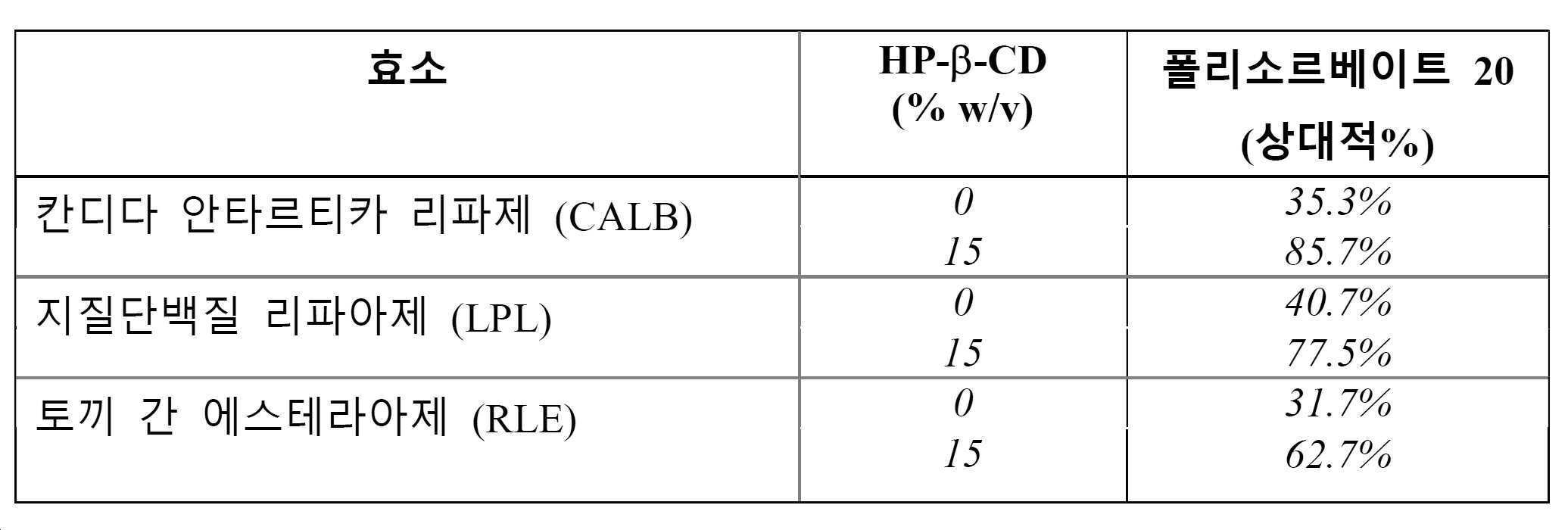
추가적으로, HIAC 데이터는 15% (w/v) HP-β-CD가 비가시적 미립자 (SVP)의 형성을 감소시켰음을 입증한다. 복수개의 효소 (CALB, LPL, 및 RLE)로의 효소적 분해 이후, 15% (w/v) HP-β-CD이 샘플에 포함되는 경우에, 소수의 SVP/mL이 모든 입자 크기 분류 (≥2, ≥5, ≥10, 및 ≥25 마이크론 입자)에 대해 관찰되었다. 유사한 결과가 LPL 및 RLE에 대해 얻어졌고; 그러나, 매우 소량의 ≥10 및 ≥25 마이크론 입자는 ≥10 및 ≥25 마이크론 입자수 측정값의 해석에서 배제된다 (도 3a-3d).Additionally, HIAC data demonstrates that 15% (w / v) HP-β-CD reduced the formation of invisible particulate (SVP). After enzymatic degradation to multiple enzymes (CALB, LPL, and RLE), when 15% (w / v) HP-β-CD is included in the sample, a small number of SVP / ,? 5,? 10, and? 25 micron particles). Similar results were obtained for LPL and RLE; However, very small amounts ≥ 10 and ≥ 25 micron particles are excluded from the interpretation of ≥10 and ≥ 25 micron particle count measurements (FIGS. 3a-3d).
이러한 발견은 HP-β-CD, 대표적인 사이클로덱스트린 복합체가 복수개의 효소에 의해 PS20의 효소적 분해를 억제할 수 있음을 입증한다. 이론에 구속됨 없이, 이는 사이클로덱스트린 분자에 의한 PS20의 보호의 주요 메커니즘이 사이클로덱스트린과 폴리소르베이트 분자들 사이의 직접 상호작용에 관련됨을 제시할 수 있다.This finding demonstrates that HP-β-CD, a representative cyclodextrin complex, can inhibit the enzymatic degradation of PS20 by multiple enzymes. Without being bound by theory, it can be suggested that the main mechanism of PS20 protection by cyclodextrin molecules is related to the direct interaction between cyclodextrin and polysorbate molecules.
실시예 3: 폴리소르베이트Example 3: Polysorbate 80의 효소적 분해에 대한 HP-β-CD의 억제 효과Inhibitory effect of HP-β-CD on the enzymatic degradation of 80
PS80의 효소적 분해에 대한 15% (w/v) HP-β-CD의 효과를 측정하였다. 0% 및 15% (w/v) HP-β-CD를 포함하는 pH 5.5 완충액에서의 0.02% (w/v) PS80의 샘플을 실온에서 5시간 동안 15 μg/mL의 돼지 췌장 리파아제(PPL)로 증해시켰다. PPL 증해를 30분 동안 85℃ 수조에서의 열 불활성화에 의해 중지시켰다. The effect of 15% (w / v) HP-β-CD on the enzymatic degradation of PS80 was measured. Samples of 0.02% (w / v) PS80 in pH 5.5 buffer containing 0% and 15% (w / v) HP-β- CD were incubated with 15 μg / mL porcine pancreatic lipase (PPL) ≪ / RTI > PPL digestion was stopped by heat inactivation in an 85 < 0 > C water bath for 30 minutes.
PPL 증해 이후, RP-ELSD는 PS80에서 대략 19의 상대적 백분율의 감소를 나타내었다 (도 4). 반면, 대략 4%의 PS80 분해의 감소가 15% (w/v)의 HP-β-CD를 포함하는 샘플에서 관찰되었다.After PPL digestion, RP-ELSD showed a relative percentage reduction of approximately 19 in PS80 (Figure 4). On the other hand, a decrease in PS80 degradation of approximately 4% was observed in samples containing 15% (w / v) of HP-β-CD.
추가적으로, HIAC 데이터는 15% (w/v)의 HP-β-CD가 비가시적 미립자 (SVP)의 평균 (n=3) 정량을 감소시켰음을 입증한다. PPL로의 효소적 분해 이후, 15% (w/v)의 HP-β-CD가 샘플에 포함된 경우에, 소수의 SVP/mL이 모든 입자 크기 분류 (≥1.4, ≥2, ≥5, ≥10 및 ≥25 마이크론 입자)에 대해 관찰되었다 (도 5a-5f).In addition, HIAC data demonstrates that 15% (w / v) of HP-β-CD reduced the mean (n = 3) quantification of invisible particulates (SVP). After the enzymatic degradation to PPL, a small number of SVP / mL was added to all the particle size classifications (≥1.4, ≥2, ≥5, ≥10) when 15% (w / v) of HP- And? 25 micron particles) (Figs. 5A-5F).
이러한 발견은 HP-β-CD, 대표적인 사이클로덱스트린 복합체는 PS80의 효소적 분해를 억제할 수 있음을 입증한다. 이러한 결과는 폴리소르베이트 분해를 감소시키고, 입자 형성을 감소시키고, 존재하는 입자를 가용화시키는 사이클로덱스트린의 능력이 일반적으로 폴리소르베이트 분자의 부류 (예를 들면, PS20, PS40, PS60, PS80 등)에 적용가능함을 제시한다. 이론에 구속됨 없이, 이는 사이클로덱스트린 분자에 의한 폴리소르베이트의 보호의 주요 메커니즘이 사이클로덱스트린과 모든 폴리소르베이트 분자를 포함하는 전환된 화학 구조 하위유닛 (예를 들면, 지방산)과의 직접적 상호작용을 수반한다는 것을 제시할 수 있다. This finding demonstrates that HP-β-CD, a representative cyclodextrin complex, can inhibit the enzymatic degradation of PS80. These results indicate that the ability of cyclodextrin to reduce polysorbate degradation, reduce particle formation, and solubilize existing particles is generally due to the class of polysorbate molecules (e.g., PS20, PS40, PS60, PS80, etc.) It is suggested that Without wishing to be bound by theory, it is believed that the primary mechanism of protection of the polysorbate by the cyclodextrin molecule is the direct interaction of the cyclodextrin with the converted chemical structural subunit (e. G., Fatty acid) comprising all polysorbate molecules And the like.
실시예 4: 폴리소르베이트 20의 효소적 분해의 키네틱Example 4: Kinetic of enzymatic degradation of
효소적 PS20 분해의 키네틱을 평가하기 위해, 샘플을 실온에서 15 μg/mL의 PPL으로 증해시켰고, 0.02% (w/v) PS20 및 15% 수크로오스, 15% HP-β-CD, 또는 15% HP-α-CD를 포함하는 단백질 무함유 샘플을 약 25 ℃에서 180시간 동안 인큐베이션시킨 PPL을 사용하여 증해시켰다. 상기에 기재된 바와 같이, 모든 샘플을 인라인 증기화 광산란 검출기 (Varian 380-LC 시리즈)를 갖는 고성능 액체 크로마토그래피 (Agilent 1100 시리즈)에 의해 PS20 함량에 대해 분석하였다. 비가시적 입자 분석을 HIAC 9703 입자 계수기 상에서 실시하였다.To evaluate the kinetic of enzymatic PS20 degradation, the sample was digested with 15 μg / mL PPL at room temperature and eluted with 0.02% (w / v) PS20 and 15% sucrose, 15% HP-β- -α-CD was digested with PPL incubated at about 25 ° C for 180 hours. As described above, all samples were analyzed for PS20 content by high performance liquid chromatography (Agilent 1100 series) with an inline vaporization light scattering detector (Varian 380-LC series). Invisible particle analysis was performed on a HIAC 9703 particle counter.
도 6에서의 15% 수크로오스 곡선은 PS20 분해는 일단계 지수함수형 붕괴(one phase exponential decay)로 기재될 수 있다. 반감기는 44%의 플래토(plateau)와 함께 32.91시간이다 (도 6). 이러한 분해 키네틱은 후속 연구를 위해 4.5 시간 동안 25℃에서 PPL을 사용하는 4.5 시간 증해 모델의 사용을 제시한다. The 15% sucrose curve in Figure 6 indicates that PS20 degradation can be described as one phase exponential decay. The half-life is 32.91 hours with 44% plateau (Fig. 6). This decomposition kinetic suggests the use of a 4.5 hour steaming model using PPL at 25 ° C for 4.5 hours for subsequent study.
실시예 5: 폴리소르베이트의 효소적 분해에 대한 사이클로덱스트린 및 다른 부형제의 억제 효과Example 5: Inhibitory effect of cyclodextrin and other excipients on enzymatic degradation of polysorbate
HP-α-CD, HP-β-CD, HP-γ-CD, SBE-β-CD, PVP, PEG 1500, 수크로오스, 및 메티오닌을 포함하는 효소적 가수분해에 대해 PS20을 보호하는 이의 능력에 대해 다수의 부형제가 시험되었다. 효소 첨가 이후 0.02%의 PS20의 최종 농도를 포함하는 pH 5.5 완충액 중의 각각의 부형제의 용액을 제조하였다. 부형제 용액에서의 HP-α-CD, HP-β-CD, HP-γ-CD, 및 SBE-β-CD의 농도는 106 mM이었다. 메티오닌 샘플은 용해도 제한으로 인해 10 mg/mL 메티오닌을 포함하였다. 나머지 부형제 (PVP, PEG 1500, 수크로오스)를 HP-β-CD의 %w/v를 일치시키기 위해 15% w/v로 첨가하였다. 샘플을 실온에서 4.5시간 동안 15 μg/mL의 PPL 효소로 증해시켰고, 이후 85℃에서 30분의 열 불활성화를 후속하였다. 각 샘플을 인라인 증기화 광산란 검출기가 구비된 고성능 액체 크로마토그래피를 사용하여 PS20 농도에 대해 분석하였다. 샘플을 이후 5℃에서 밤새 정치시켜 입자가 형성되게 하였고, 앞서 기재된 바와 같이 가시적 및 비가시적 입자에 대해 분석하였다.For its ability to protect PS20 against enzymatic hydrolysis including HP-α-CD, HP-β-CD, HP-γ-CD, SBE-β-CD, PVP,
RP-ELSD 결과는 부형제 부류가 효소적 PS20 분해의 정도를 결정하는데 중요함을 입증한다 (도 7). 효소 증해 이후, 대조군 샘플 (즉, 부형제 없음)은 PS20 분해에 있어서 58% 감소를 가졌다. 58%의 PS20의 동등한 감소가 15% (w/v) 수크로오스를 포함하는 샘플에 대해 관찰되었다. 이러한 발견은 수크로오스, 아크릴 이당 (즉, 수크로오스)가 효소적 PS20 분해에 대해 억제 효과를 가지지 않음을 입증한다. 사이클로덱스트린의 억제 효과는 단독으로 질량 희석 효과(mass dilution effect)에 기여할 수 없고, 이는 결과가 동등 질량의 다른 부형제 (예를 들면, 수크로오스)가 촉매적 폴리소르베이트 분해를 완화하지 못함을 입증하기 때문이다.The RP-ELSD results demonstrate that the excipient class is important in determining the extent of enzymatic PS20 degradation (FIG. 7). After enzyme digestion, control samples (i.e., no excipients) had a 58% reduction in PS20 degradation. An equivalent reduction of 58% PS20 was observed for samples containing 15% (w / v) sucrose. This finding demonstrates that sucrose, an acrylic disaccharide (i.e., sucrose), has no inhibitory effect on enzymatic PS20 degradation. The inhibitory effect of cyclodextrin alone can not contribute to the mass dilution effect, which results in demonstrating that other excipients of equivalent mass (e.g., sucrose) do not mitigate catalytic polysorbate decomposition Because.
마찬가지로, 메티오닌을 포함하는 샘플은 효소적 PS20 분해 또는 SVP 형성에 대해 억제 효과를 가지지 못하였다 (도 7 및 8a-8d). 아마도, 메티오닌은 산화적 PS20 분해를 방지할 것이나, 효소적 PS20 분해를 방지하지 못할 것이다. 이론에 구속됨 없이, 이러한 실험에서 재생성된 PS20 분해의 메커니즘은 가수분해와 유사하며, 산화적 PS20 분해와는 별개의 것이다.Similarly, samples containing methionine did not have an inhibitory effect on enzymatic PS20 degradation or SVP formation (FIGS. 7 and 8a-8d). Perhaps, methionine will prevent oxidative PS20 degradation, but will not prevent enzymatic PS20 degradation. Without being bound by theory, the mechanism of PS20 degradation regenerated in these experiments is similar to hydrolysis and is distinct from oxidative PS20 degradation.
그 결과는 PEG가 대조군 샘플에 대해 상대적으로 PS20 분해에 대해 작은 억제 효과를 가지는 것을 입증한다. 51% PS20의 감소는 5% (w/v)의 PEG 1500을 포함하는 샘플에 대해 관찰되었다.The results demonstrate that PEG has a small inhibitory effect on PS20 degradation relative to the control sample. The decrease in 51% PS20 was observed for samples containing 5% (w / v)
모든 평가된 사이클로덱스트린 분자 (HP-α-CD, HP-β-CD, 및 SBE-β-CD)는 효소적 PS20 분해 및 SVP 형성에 대해 상당한 억제 효과를 가졌다 (도 7 및 8a-8d). 흥미롭게도, 당 하위유닛의 수는 사이클로덱스트린에 의한 억제의 범위를 결정함에 있어 중요할 수 있다. 예를 들면, 1% 및 7%의 PS20의 감소는 각각 HP-α-CD 및 HP-β-CD에 대해 관찰되었다. All evaluated cyclodextrin molecules (HP-a-CD, HP-ss-CD, and SBE-ss-CD) had significant inhibitory effects on enzymatic PS20 degradation and SVP formation (Figs. 7 and 8a-8d). Interestingly, the number of sugar subunits may be important in determining the extent of inhibition by cyclodextrin. For example, reductions of 1% and 7% PS20 were observed for HP-α-CD and HP-β-CD, respectively.
추가의 연구는 사이클로덱스트린 고리 크기의 중요성을 추가로 이해하기 위해 HP-α-CD, HP-β-CD, 및 HP-γ-CD의 중요성을 평가하기 위해 수행되었다. 도 9에 나타난 데이터는 상당한 PS20 분해가 HP-α-CD 및 HP-β-CD를 함유하는 샘플에 대해 관찰되지 않았음을 나타내고; 반면, PS20 분해에서의 ~82%는 15%의 HP-γ-CD를 포함하는 샘플에서 관찰되었다. 마찬가지로, PS20 농도에서의 상당한 감소는 대조군 샘플에서 관찰되었다 (즉, 부형제 없음 및 15% 수크로오스) (도 9). 이러한 발견은 더 작은 사이클로덱스트린 HP-α-CD (공극 직경: 4.7-5.2 Å; 공극 체적: 174 Å3) 및 HP-β-CD (공극 직경: 6.0-6.5 Å; 공극 체적: 262 Å3)이 HP-γ-CD (공극 직경: 7.5-8.3 Å; 공극 체적: 472 Å3)보다 폴리소르베이트 20 분해에 있어서 더 효과적인 억제제임을 입증한다. Additional studies were conducted to assess the significance of HP-α-CD, HP-β-CD, and HP-γ-CD to further understand the importance of cyclodextrin ring size. The data shown in Figure 9 indicate that significant PS20 degradation was not observed for samples containing HP- [alpha] -CD and HP- [beta] -CD; In contrast, ~ 82% of PS20 degradation was observed in samples containing 15% HP-y-CD. Likewise, a significant reduction in PS20 concentration was observed in the control samples (i.e., no excipient and 15% sucrose) (FIG. 9). This finding has led to the discovery that smaller cyclodextrin HP-α-CD (pore diameter: 4.7-5.2 Å; pore volume: 174 Å 3 ) and HP-β-CD (pore diameter: 6.0-6.5 Å; pore volume: 262 Å 3 ) Is a more effective inhibitor of
각 사이클로덱스트린에 대한 공극의 치수 및 체적은 각 사이클로덱스트린의 물리 화학적 특성 이외에 효소적 PS20 분해의 분자 억제제로서의 이의 유효성을 결정할 수 있다. 이론에 구속됨 없이, 이러한 발견은 보호의 메커니즘은 사이클로덱스트린과 폴리소르베이트 20 반응 부위 사이에서 호스트-게스트 복합체형성(host-guest complexation)을 수반할 수 있음을 제시한다.The size and volume of pores for each cyclodextrin can determine its effectiveness as a molecular inhibitor of enzymatic PS20 degradation in addition to the physicochemical properties of each cyclodextrin. Without being bound by theory, this finding suggests that the mechanism of protection may involve host-guest complexation between the cyclodextrin and
실시예 6: 사이클로덱스트린 및 부형제에 의한 효소적 폴리소르베이트 20 분해와 관련된 가시적 및 비가시적 입자의 가용화Example 6: Solubilization of visible and invisible particles associated with
다수의 부형제를 효소적 PS20 분해의 결과로서 생성된 입자를 가용화하는 이의 능력에 대해 시험하였다. 농축된 HP-α-CD, HP-β-CD, HP-γ-CD, SBE-β-CD, PVP, PEG 1500, 수크로오스, 및 메티오닌의 용액을 pH 5.5 완충액에서 3회 제조하였다. 효소적 PS20 분해로부터의 입자를 제조하였다. pH 5.5 완충액에서의 0.05%의 PS20의 3개의 용액을 실온에서 4.5 시간 동안 37.5 μg/mL PPL을 사용하여 분해하였고, 이후 85℃에서 30분의 열 불활성화를 후속하였다. 분해된 PS20 용액을 5℃에서 정치시키고, 이후 입자를 결정화시켰다.A number of excipients were tested for their ability to solubilize the resulting particles as a result of enzymatic PS20 degradation. A solution of concentrated HP-α-CD, HP-β-CD, HP-γ-CD, SBE-β-CD, PVP,
분해된 PS20 용액에서의 입자의 형성 이후, 나머지 샘플 제조를 5℃ 냉각실에서 실시하여 PS20 유래 입자가 용해되는 것을 방지하였다. 각각의 분해된 PS20 용액을 11개의 앨리쿼트로 나누었고, 농축된 부형제를 각 앨리쿼트로 스파이킹시켰다. 각 샘플에서의 부형제의 최종 농도는 하기와 같았다: 5% 수크로오스, 10 mg/mL 메티오닌, 5% PVP, 5% PEG 1500, 15% HP-β-CD, 5% HP-β-CD, 0.5% HP-β-CD, 35.5 mM HP-α-CD, 35.5 mM HP-γ-CD, 및 35.5 mM SBE-CD. 각 부형제의 첨가 이후, 샘플을 5℃에 밤새 두었다. 다음날, 바이알을 Seidenader 시각 검사 기기 하에 가시적 입자에 대해 조사하였다. 비가시적 입자수를 HIAC 9703 입자 계수기를 사용하여 측정하였다.After formation of the particles in the degraded PS20 solution, the remaining samples were prepared in a 5 < 0 > C cooling chamber to prevent the PS20-derived particles from dissolving. Each of the digested PS20 solutions was divided into 11 aliquots and the concentrated excipients spiked with each aliquot. The final concentrations of excipients in each sample were as follows: 5% sucrose, 10 mg / mL methionine, 5% PVP, 5
결과는 사이클로덱스트린 (HP-α-CD, HP-β-CD, 및 HP-γ-CD)이 대조군 및 다른 부형제 샘플에 비해 SVP의 양을 상당하게 감소시킬 수 있음을 입증한다 (도 10a 및 10b). 이러한 결과는 효소적 폴리소르베이트 분해 이외에, 사이클로덱스트린은 또한 폴리소르베이트 20의 효소적 증해로부터 생성된 PS20 분해물을 가용화시킬 수 있다는 것을 확립하였다. The results demonstrate that cyclodextrins (HP-α-CD, HP-β-CD, and HP-γ-CD) can significantly reduce the amount of SVP compared to the control and other excipient samples (FIGS. 10 a and 10 b ). These results, in addition to enzymatic polysorbate degradation, have also established that cyclodextrin can also solubilize the PS20 degradate produced from the enzymatic degradation of
추가적으로, 사진을 15% (w/v)의 HP-β-CD의 첨가 직전 및 직후에 촬영하였다. 사진은 15% (w/v) HP-β-CD의 첨가 이전 (도 11a) 및 이후 (도 11b) PS20-관련된 가시적 입자의 가용화를 보여준다. 사진에 나타낸 가시적 입자의 직각적 가용화는 사이클로덱스트린이 PS20 분해와 관련된 가시적 및 비가시적 입자의 용해도를 증가시킬 수 있다는 강력한 증거를 제공한다.In addition, the photographs were taken immediately before and after the addition of 15% (w / v) HP-β-CD. The photograph shows the solubilization of PS20-related visible particles before (Fig. 11a) and after (Fig. 11b) addition of 15% (w / v) HP-? The intrinsic solubilization of the visible particles shown in the photograph provides strong evidence that the cyclodextrin can increase the solubility of visible and invisible particles associated with PS20 degradation.
실시예 7: 사이클로덱스트린에 의한 산화적 폴리소르베이트 20 분해와 관련된 가시적 및 비가시적 입자의 가용화Example 7: Solubilization of visible and invisible particles associated with
상이한 농도의 HP-β-CD를 산화적 PS20 분해의 결과로서 생성된 입자를 가용화시키는 이의 능력에 대해 시험하였다. 농축된 HP-β-CD의 용액을 pH 5.5 완충액에서 3회 제조하였다. 0.02% (w/v)의 PS20을 포함하는 단백질 무함유 샘플을 5℃에서 27개월 동안 저장하였고, 이는 산화적 PS20 분해 및 PS20 분해 생성물과 관련된 가시적 및 비가시적 입자의 형성을 야기한다. 각 분해된 PS20 용액을 3개의 앨리쿼트로 나누었고, 농축된 부형제는 각 앨리쿼트로 스파이킹시켰다. 각 샘플에서의 부형제의 최종 농도는 하기와 같았다: 0% (w/v) HP-β-CD (대조군), 5% (w/v) HP-β-CD, 및 15% (w/v) HP-β-CD. HP-β-CD 농도 조정 이후, 샘플을 밤새 5℃에서 두었다. 다음날, 비가시적 입자수를 HIAC 9703 입자 계수기를 사용하여 측정하였다. Different concentrations of HP-s-CD were tested for their ability to solubilize the resulting particles as a result of oxidative PS20 degradation. A solution of concentrated HP-ss-CD was prepared three times in pH 5.5 buffer. Protein-free samples containing 0.02% (w / v) PS20 were stored at 5 占 폚 for 27 months, resulting in the formation of visible and invisible particles associated with oxidative PS20 degradation and PS20 degradation products. Each degraded PS20 solution was divided into three aliquots and the concentrated excipients spiked with each aliquot. The final concentrations of excipients in each sample were as follows: 0% (w / v) HP-β-CD (control), 5% (w / v) HP- HP-β-CD. After HP-beta -CD concentration adjustment, samples were left overnight at 5 [deg.] C. The next day, the number of invisible particles was measured using a HIAC 9703 particle counter.
SVP의 재가용화에 대한 HP-β-CD의 0%, 5% 및 15% (w/v) 농도의 효과를 시험하였다. 그 결과는 대조군 샘플 (0% HP-β-CD)에 대한 HP-β-CD를 포함하는 샘플에서의 SVP에서의 상당한 감소가 존재하는 것을 입증한다. 도 12a-12f에 나타난 바와 같이, 15% HP-β-CD는 1.4 마이크론 이상의 입자를 효과적으로 재가용화시키고, 반면 5%의 HP-β-CD는 2 마이크론 이상의 입자를 효과적으로 재가용화시킨다. The effects of 0%, 5% and 15% (w / v) concentrations of HP-β-CD on the re-solubilization of SVP were tested. The results demonstrate that there is a significant reduction in SVP in samples containing HP-ss-CD for control samples (0% HP-ss-CD). As shown in FIGS. 12A-12F, 15% HP-β-CD effectively re-solubilize particles above 1.4 microns whereas 5% HP-β-CD effectively re-solubilize particles above 2 microns.
이러한 결과는 효소적 폴리소르베이트 분해를 방지하고, 폴리소르베이트 20의 효소적 분해로부터 생성된 PS20 분해물을 가용화시키는 것 이외에, 사이클로덱스트린은 폴리소르베이트 20의 산화적 증해로부터 야기된 PS20 분해 생성물을 가용화시킬 수 있음을 확립한다.These results, in addition to solubilizing the PS20 degradation product from the enzymatic degradation of
실시예 8: PS20 분해에 대한 HP-β-CD 농도 및 HP-β-CD:PS20 비의 효과Example 8 Effect of HP-β-CD Concentration and HP-β-CD: PS20 Ratio on PS20 Degradation
PS20 분해에 대한 HP-β-CD 농도의 효과를 결정하기 위해, 0.001, 0.01, 0.1, 1, 5, 또는 15%의 PS20을 포함하는 샘플을 4.5 시간 동안 15 μg/mL의 PPL을 사용하여 증해시켰다. 도 13에 나타낸 바와 같이, HP-β-CD의 양을 증가시키는 것은 PS20 분해를 감소시켰다.To determine the effect of HP-β-CD concentration on PS20 degradation, samples containing 0.001, 0.01, 0.1, 1, 5, or 15% PS20 were digested with 15 μg / mL PPL for 4.5 hours . As shown in Fig. 13, increasing the amount of HP-ss-CD reduced PS20 degradation.
PS20의 효소적 분해에 대한 상이한 PS20 농도에서의 HP-β-CD 농도의 효과를 효소적 PS20 분해의 억제에 대한 최적 농도를 확인하기 위해 평가하였다. HP-β-CD 농도에 대한 PS20 분해의 종속성을 평가하기 위해, PS20 함량을 다양한 PS20 농도에서 상이한 HP-β-CD 농도를 갖는 3개의 샘플에 대해 RP-ELSD를 사용하여 결정하였다. 0.005% (도 14a), 0.02% (도 14b), 0.1% (도 14c), 및 0.4% PS20 (도 14d)를 포함하는 샘플을 실온에서 4.5 시간 동안 15 μg/mL의 PPL 효소를 사용하여 부형제 없음 (대조군), 0, 0.5, 5, 및 15% (w/v) HP-β-CD를 함유하는 단백질 무함유 샘플에서 증해시켰다. PPL을 PS20의 mg당 75 mg의 PPL의 비로 처리 용액 각각에 첨가하였고, 동일 체적의 완충액을 대조군 용액 첨가하여 효소적 분해에 대한 HP-β-CD 대 폴리소르베이트 비의 효과를 결정하였다. 30분 동안의 85℃에서의 열 활성화에 의해 증해를 중지시켰다. 각 샘플을 상기 기재된 바와 같이 인라인 증기화 광산란 검출기를 갖는 고성능 액체 크로마토그래피를 사용하여 PS20 농도에 대해 분석하였다. 샘플을 이후 5℃에서 밤새 정치시켜 입자가 형성되게 하고, 상기 기재된 바와 같이 가시적 및 비가시적 입자에 대한 분석 과정에서 얼음 위에서 정치시켰다.The effect of HP-β-CD concentration at different PS20 concentrations on the enzymatic degradation of PS20 was evaluated to confirm optimal concentrations for inhibition of enzymatic PS20 degradation. To assess the dependence of PS20 degradation on HP-beta -CD concentration, the PS20 content was determined using RP-ELSD for three samples with different HP-beta -CD concentrations at various PS20 concentrations. A sample containing 0.005% (Figure 14a), 0.02% (Figure 14b), 0.1% (Figure 14c), and 0.4% PS20 (Figure 14d) was incubated with 15 μg / ml PPL enzyme for 4.5 hours at room temperature, (Control), 0, 0.5, 5, and 15% (w / v) HP- [beta] -CD. PPL was added to each of the treatment solutions at a ratio of 75 mg PPL per mg of PS20 and the same volume of buffer was added to the control solution to determine the effect of HP-β-CD versus polysorbate ratio on enzymatic degradation. The digestion was stopped by thermal activation at 85 DEG C for 30 minutes. Each sample was analyzed for PS20 concentration using high performance liquid chromatography with an inline vaporization light scattering detector as described above. The sample was then allowed to stand overnight at 5 DEG C to allow the particles to form and to stand on ice in the course of analysis for both visible and invisible particles as described above.
표 2 - HP-β-CD 대 PS20 비Table 2 - HP-β-CD to PS20 ratio
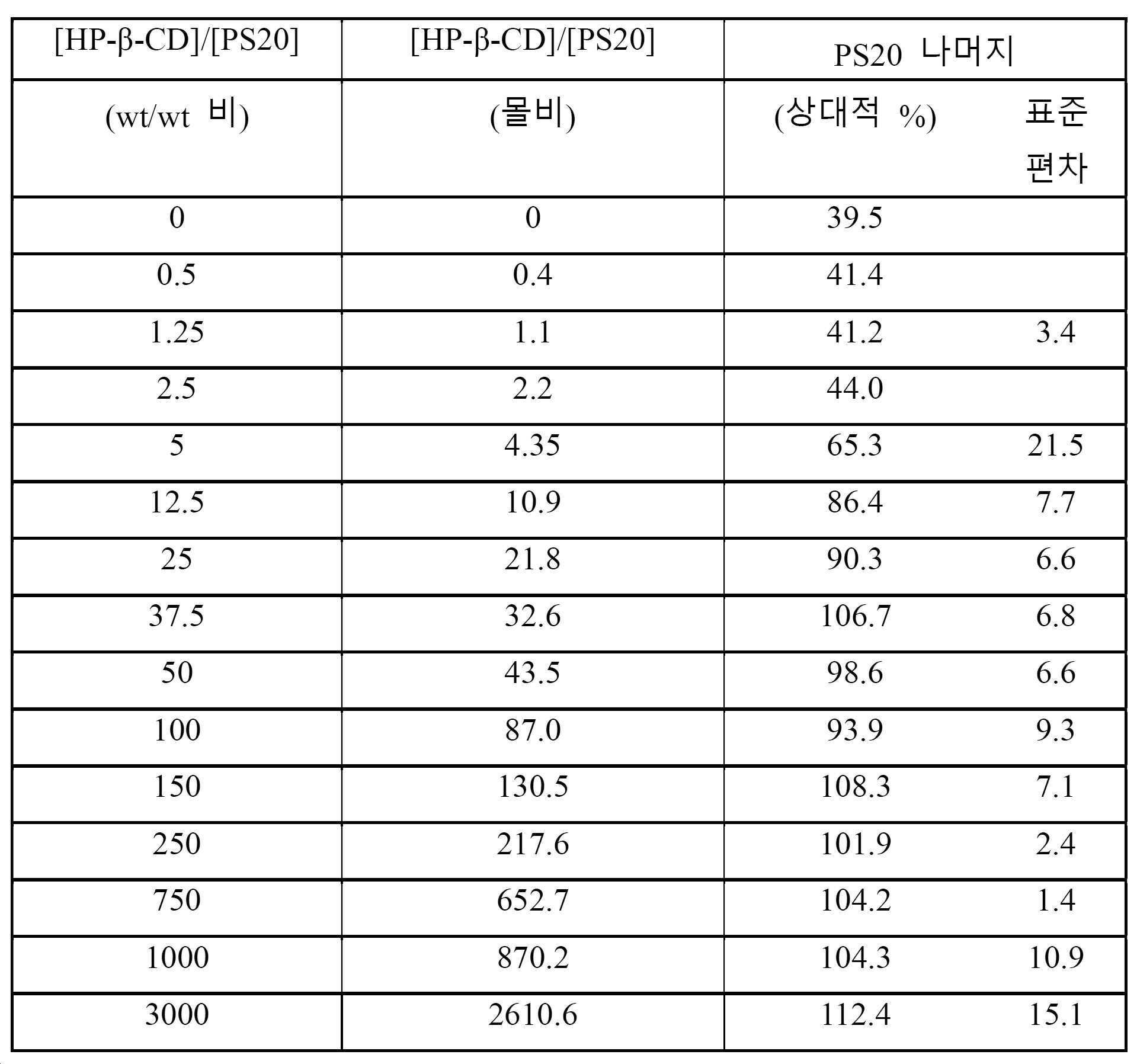
일정 양의 사이클로덱스트린이 PS20의 농도에 따라 효소적 PS20 분해의 완전한 억제에 대해 요구되었다 (도 13 및 14a-d). 더 낮은 PS20 농도 (예를 들면, 0.005% PS20 (도 14a)에서, 0.5% HP-β-CD만이 PS20 분해를 완전하게 억제하는데 요구되고, 반면 15% HP-β-CD는 0.1% PS20을 포함하는 샘플에 대해 요구된다 (도 14c). 마찬가지로, 직경이 2, 5, 또는 10 μ보다 큰 비가시적 입자의 형성은 사이클로덱스트린 대 폴리소르베이트의 비에 좌우된다. 0.02% PS20을 포함하는 샘플은 비가시적 입자 형을을 부분적으로 억제하는데 0.5% HP-β-CD을 요구하고, 비가시적 입자 형을을 완전하게 억제하는데 15% HP-β-CD를 요구한다 (도 15a-15c).Certain amounts of cyclodextrin were required for complete inhibition of enzymatic PS20 degradation according to the concentration of PS20 (Figures 13 and 14a-d). Only a 0.5% HP-β-CD is required to completely suppress PS20 degradation, whereas a 15% HP-β-CD contains 0.1% PS20 at a lower PS20 concentration (eg, 0.005% PS20 (Figure 14c) Similarly, the formation of invisible particles with diameters greater than 2, 5, or 10 占 depends on the ratio of cyclodextrin to polysorbate. Samples containing 0.02% PS20 Requiring 15% HP-β-CD to completely inhibit the invisible particle form (FIGS. 15a-15c), requiring 0.5% HP-β-CD to partially inhibit the invisible particle form.
이러한 결과는 HP-β-CD 대 PS20 비 (w/w)의 맥락에서 해석될 수 있다 (도 16 및 표 2). PS20 데이터는 충분한 HP-β-CD:PS20 (≥37.5 w/w)가 효소적 PS20 분해를 억제하는데 요구된다 (표 2). 결과는 HP-β-CD 대 PS20 비가 PS20 및 HP-β-CD에 대한 광범위한 농도 범위에 걸쳐 PS20 분해를 결정하는데 있어서 중요하다. These results can be interpreted in the context of the HP-beta-CD to PS20 ratio (w / w) (Figure 16 and Table 2). PS20 data require sufficient HP-β-CD: PS20 (≥37.5 w / w) to inhibit enzymatic PS20 degradation (Table 2). The results are important in determining PS20 degradation over a wide range of concentrations for HP-beta-CD versus PS20 ratios for PS20 and HP-beta-CD.
또한, 결과는 HP-β-CD에 의한 PS20 의 억제의 가능한 메커니즘을 설명한다. 이러한 경우, PS20 분해의 양은 억제제 (즉, HP-β-CD) 농도가 고정된 기재 (즉, PS20) 농도에서 증가됨에 따라 에스자형으로 변화된다 (도 13). 이에 따라, 이론에 구속됨 없이, 사이클로덱스트린 농도를 증가시키는 것은 용액에서의 자유 기재 농도를 효과적으로 감소시킬 수 있고, 이는 PS20 분해의 속도를 감소시킨다. 대안적으로, PS20 분해 속도는 기재-억제제 복합체에 의해 억제된다.In addition, the results demonstrate a possible mechanism of inhibition of PS20 by HP-β-CD. In this case, the amount of PS20 degradation changes as the inhibitor (i. E., HP-ss-CD) concentration increases in a fixed substrate (i.e., PS20) concentration (Fig. 13). Thus, without being bound by theory, increasing the cyclodextrin concentration can effectively reduce the free base concentration in the solution, which reduces the rate of PS20 degradation. Alternatively, the PS20 degradation rate is inhibited by the substrate-inhibitor complex.
실시예 9: 항체 저장 조건 하의Example 9: Antibody storage conditions 폴리소르베이트 분해Polysorbate decomposition
다양한 단백질 분자 부류 (예를 들면, 단클론성 항체 (mAb), 단일-Fab 항체 (sFAb), 및 이중특이적 항체(BsAb))의 영향을 효소적 PS20 분해를 감소시키는 사이클로덱스트린의 능력에 대해 평가하였다. mAb, sFAb, 및 BsAb 약물 기재 샘플을 이의 본래 제형에 제공하였다. 샘플을 투석하고, 20 mg/mL의 최종 단백질 농도로 0.02% PS20를 사용하여 pH 5.5에서 20 mM 히스티딘 아세테이트의 표적 제형으로 컨디셔닝시켰다. 대조군 샘플을 20 mM 히스티딘 아세테이트, pH 5.5, 0.02% PS20을 포함하도록 제조하였다. 각각의 mAb, sFAb, BsAb, 및 대조군 샘플을 하위-앨리쿼트로 나누고, 상이한 양의 (0%, 5%, 및 15%) HPCD를 포함하도록 컨디셔닝 완충액을 사용하여 조정하였다. 샘플을 실온에서 4.5 시간 동안 15 μg/mL의 PPL 효소를 사용하여 증해시켰고, 이후 30분의 85℃의 열 불활성화를 후속하였다. 각각의 샘플을 인라인 증기화 광산란 검출기를 갖는 고성능 액체 크로마토그래피를 사용하여 PS20 농도에 대해 분석하였다. 샘플을 이후 5℃에서 밤새 정치시켜 입자가 형성되게 하였고, 상기 기재된 바와 같이 가시적 및 비가시적 입자에 대해 분석하였다.The effect of various protein molecular classes (e.g., monoclonal antibody (mAb), single-Fab antibody (sFAb), and bispecific antibody (BsAb)) on the ability of cyclodextrin to reduce enzymatic PS20 degradation Respectively. The mAb, sFAb, and BsAb drug-based samples were provided in their native formulations. Samples were dialyzed and conditioned to a target formulation of 20 mM histidine acetate at pH 5.5 using 0.02% PS20 at a final protein concentration of 20 mg / mL. Control samples were prepared containing 20 mM histidine acetate, pH 5.5, 0.02% PS20. Each mAb, sFAb, BsAb, and control samples were sub-aliquot divided and adjusted using conditioning buffer to contain different amounts of (0%, 5%, and 15%) HPCD. Samples were digested with 15 μg / mL PPL enzyme for 4.5 hours at room temperature, followed by thermal inactivation at 85 ° C for 30 minutes. Each sample was analyzed for PS20 concentration using high performance liquid chromatography with an inline vaporization light scattering detector. The sample was then allowed to stand at 5 [deg.] C overnight to allow particles to form and analyzed for visible and invisible particles as described above.
결과는 0% HPβCD를 포함하는 각 샘플이 상이한 양의 PS20 분해를 가지는 것을 입증한다. 결과는 단백질을 포함하는 0% HPβCD 샘플 (도 17b-d)는 대조군 샘플에 비해 더 많은 양의 PS20 분해를 가지는 것을 나타낸다 (도 17a). 단백질이 중국 햄스터 난소 (CHO) 또는 E. 콜리 세포로 발현되기 때문에, 단백질 샘플은 다른 불순물 (즉, 리파아제 등)을 포함할 수 있고, 이는 PS20 분해의 전체 양에 기여한다.The results demonstrate that each sample containing 0% HPβCD has a different amount of PS20 degradation. The results show that the 0% HPβCD sample containing the protein (Figure 17b-d) has a greater amount of PS20 degradation compared to the control sample (Figure 17a). Since the protein is expressed in Chinese hamster ovary (CHO) or E. coli cells, the protein sample may contain other impurities (i.e., lipase etc.), which contributes to the total amount of PS20 degradation.
0% HPCD 단백질-포함 샘플이 더 많은 양의 PS20 분해를 가지는 것으로 관찰되었지만, 결과는 5% 및 15% HPCD를 포함하는 샘플에서 관찰되는 PS20 분해의 비슷한 양이 존재하는 것을 입증한다. 이러한 결과는 HPCD가 촉매적으로 PS20을 분해하는 불순물의 상이한 양을 가짐에도 불구하고, 평가되는 모든 분자 형태에 대해 촉매적 PS20 분해를 완화하는데 동등하게 유효한 것을 입증한다 (도 17a-d). 이는 단백질 분자의 존재 및 이의 본래 불순물 프로파일은 PS20 분해를 완화하는데 필수적인 사이클로덱스트린 대 단백질 비에 상당하게 영향을 미치지 않음을 확립한다. 이론에 구속됨 없이, 이러한 발견은 촉매적 억제의 메커니즘이 폴리소르베이트를 분해하고 있는 효소가 아닌, PS20와 직접적으로 상호작용하는 사이클로덱스트린 분자를 수반한다는 것을 제시한다. 그렇지 않으면, 폴리소르베이트를 분해하는 추가적인 효소를 갖는 단백질 함유 샘플은 대조군과 비교하여 PS20 분해를 완화하기 위해 더 많은 HPCD를 요구한다. 따라서, 본원에 기재된 사이클로덱스트린 대 PS20 비는 상이한 단백질 분자 및 불순물 프로파일을 포함하는 넓은 범위의 제형에 폭넓게 적용가능할 것이다.Although 0% HPCD protein-containing samples were observed to have greater amounts of PS20 degradation, the results demonstrate the presence of similar amounts of PS20 degradation observed in samples containing 5% and 15% HPCD. These results demonstrate that HPCD is equally effective at mitigating catalytic PS20 degradation for all molecular forms being evaluated, despite having a different amount of impurities that catalytically degrade PS20 (Figs. 17a-d). This establishes that the presence of protein molecules and their inherent impurity profile do not significantly affect the cyclodextrin to protein ratio required to mitigate PS20 degradation. Without being bound by theory, this finding suggests that the mechanism of catalytic suppression involves cyclodextrin molecules that interact directly with PS20, rather than enzymes that degrade polysorbates. Otherwise, protein containing samples with additional enzymes that degrade polysorbate require more HPCD to mitigate PS20 degradation compared to the control. Thus, the cyclodextrin to PS20 ratio described herein will be broadly applicable to a wide range of formulations including different protein molecules and impurity profiles.
결론conclusion
수행된 연구는 폴리소르베이트 (PS20 및 PS80)의 효소적 및 산화적 분해를 억제하는 사이클로덱스트린의 억제를 나타낸다. 결과는 PVP 및 사이클로덱스트린 (즉, HP-α-CD, HP-β-CD, HP-γ-CD, SBE-β-CD)이 PS20의 효소적 분해를 방지할 수 있었음을 증명한다. 추가의 실험은 HP-β-CD가 복수개의 효소 (즉, CALB, RLE, LPL, 및 PLL)의 존재 하에서 폴리소르베이트를 보호하는 것을 입증한다. 이론에 구속됨 없이, 억제 메커니즘은 억제제 (즉, 사이클로덱스트린)와 기재 (즉, 폴리소르베이트) 사이의 상호작용을 수반할 수 있다. 포접 복합체 형성은 자유 기재의 농도를 감소시키고, 또한 포접 복합체(inclusion complex)는 활성 부위와 기재와의 상호작용을 직접적으로 입체적으로 억제할 수 있다. 추가적으로, 농도 연구는 효소적 PS20 분해의 완전한 억제를 제공하는데 필요한 HP-β-CD 대 PS20 비 (≥37.5 w/w)의 최적 범위가 존재하는 것을 확립한다. The studies performed show inhibition of cyclodextrins that inhibit the enzymatic and oxidative degradation of polysorbates (PS20 and PS80). The results demonstrate that PVP and cyclodextrins (ie HP-α-CD, HP-β-CD, HP-γ-CD and SBE-β-CD) could prevent enzymatic degradation of PS20. Further experiments demonstrate that HP-β-CD protects polysorbates in the presence of multiple enzymes (ie, CALB, RLE, LPL, and PLL). Without being bound by theory, the inhibition mechanism can involve interaction between an inhibitor (i. E., Cyclodextrin) and a substrate (i.e., polysorbate). Formation of the inclusion complex reduces the concentration of the free base and the inclusion complex can also directly and sterically inhibit the interaction of the active site with the substrate. In addition, concentration studies establish that there is an optimal range of HP-β-CD to PS20 ratios (≥37.5 w / w) required to provide complete inhibition of enzymatic PS20 degradation.
효소적 PS20 분해를 억제하는 것 이외에, 결과는 사이클로덱스트린은 비가시적 및 가시적 입자의 양을 효과적으로 감소시키는 것을 입증한다. 이러한 방식으로, 사이클로덱스트린은 용액에서의 비가시적 및 가시적 입자를 분해하고 용해한다. 입자의 형성을 효과적으로 방지하는 것 이외에, 결과는 사이클로덱스트린은 또한 폴리소르베이트 분해와 관련된 존재하는 입자를 효과적으로 가용화시킬 수 있음을 입증한다. 아마도, 사이클로덱스트린은 또한 폴리소르베이트 분해의 생성물인 자유 지방산의 가용성을 증가시킨다.In addition to inhibiting enzymatic PS20 degradation, the results demonstrate that cyclodextrin effectively reduces the amount of invisible and visible particles. In this way, the cyclodextrin degrades and dissolves invisible and visible particles in the solution. In addition to effectively preventing the formation of particles, the results demonstrate that cyclodextrins can also effectively solubilize existing particles associated with polysorbate degradation. Perhaps, cyclodextrins also increase the availability of free fatty acids, the products of polysorbate degradation.
본 연구로부터의 발견은 확장적 실시 결과를 가진다. 결과는 사이클로덱스트린을 포함하는 제형이 효소적 폴리소르베이트 분해를 방지하기 위해 사용될 수 있다는 강력한 증거를 제공한다. 추가적으로, 사이클로덱스트린은 산화적 및 효소적 분해 모두로부터의 폴리소르베이트 분해와 관련된 자유 지방산을 가용화시키기 위해 사용될 수 있다. 이에 따라, 사이클로덱스트린은 또한 폴리소르베이트 분해와 관련된 분해물 및 입자를 용해하기 위한 의약품에 대한 희석제 또는 재구성 완충액으로서 유용할 수 있다.Discovery from this study has extensive conclusions. The results provide strong evidence that formulations containing cyclodextrins can be used to prevent degradation of the enzymatic polysorbate. Additionally, the cyclodextrin can be used to solubilize the free fatty acids associated with polysorbate degradation from both oxidative and enzymatic degradation. Thus, cyclodextrins may also be useful as diluents or reconstitution buffers for pharmaceuticals to dissolve degradation products and particles associated with polysorbate degradation.
Claims (50)
Priority Applications (1)
| Application Number | Priority Date | Filing Date | Title |
|---|---|---|---|
| KR1020257011776A KR20250052501A (en) | 2015-12-30 | 2016-12-28 | Formulations with reduced degradation of polysorbate |
Applications Claiming Priority (3)
| Application Number | Priority Date | Filing Date | Title |
|---|---|---|---|
| US201562272965P | 2015-12-30 | 2015-12-30 | |
| US62/272,965 | 2015-12-30 | ||
| PCT/US2016/069046 WO2017117311A1 (en) | 2015-12-30 | 2016-12-28 | Formulations with reduced degradation of polysorbate |
Related Child Applications (1)
| Application Number | Title | Priority Date | Filing Date |
|---|---|---|---|
| KR1020257011776A Division KR20250052501A (en) | 2015-12-30 | 2016-12-28 | Formulations with reduced degradation of polysorbate |
Publications (2)
| Publication Number | Publication Date |
|---|---|
| KR20180098625A true KR20180098625A (en) | 2018-09-04 |
| KR102796135B1 KR102796135B1 (en) | 2025-04-16 |
Family
ID=57868354
Family Applications (2)
| Application Number | Title | Priority Date | Filing Date |
|---|---|---|---|
| KR1020187021584A Active KR102796135B1 (en) | 2015-12-30 | 2016-12-28 | Formulations containing polysorbates with reduced degradation |
| KR1020257011776A Pending KR20250052501A (en) | 2015-12-30 | 2016-12-28 | Formulations with reduced degradation of polysorbate |
Family Applications After (1)
| Application Number | Title | Priority Date | Filing Date |
|---|---|---|---|
| KR1020257011776A Pending KR20250052501A (en) | 2015-12-30 | 2016-12-28 | Formulations with reduced degradation of polysorbate |
Country Status (15)
| Country | Link |
|---|---|
| US (4) | US10525137B2 (en) |
| EP (1) | EP3397287B8 (en) |
| JP (2) | JP7008023B2 (en) |
| KR (2) | KR102796135B1 (en) |
| CN (2) | CN108472379B (en) |
| AU (2) | AU2016380988B2 (en) |
| BR (1) | BR112018010945A2 (en) |
| CA (1) | CA3007419A1 (en) |
| ES (1) | ES3038408T3 (en) |
| HR (1) | HRP20250951T1 (en) |
| HU (1) | HUE072357T2 (en) |
| IL (2) | IL299759A (en) |
| PL (1) | PL3397287T3 (en) |
| SG (1) | SG11201804961UA (en) |
| WO (1) | WO2017117311A1 (en) |
Cited By (2)
| Publication number | Priority date | Publication date | Assignee | Title |
|---|---|---|---|---|
| US12503512B2 (en) | 2018-03-14 | 2025-12-23 | Boehringer Ingelheim International Gmbh | Use of anti-IL-36R antibodies for treatment of generalized pustular psoriasis |
| US12624397B2 (en) | 2021-03-12 | 2026-05-12 | Boehringer Ingelheim International Gmbh | Biomarkers associated with anti-IL-36R antibody treatment in generalized pustular psoriasis |
Families Citing this family (10)
| Publication number | Priority date | Publication date | Assignee | Title |
|---|---|---|---|---|
| US10525137B2 (en) | 2015-12-30 | 2020-01-07 | Genentech, Inc. | Formulations with reduced degradation of polysorbate |
| EP3560945A1 (en) | 2018-04-27 | 2019-10-30 | F. Hoffmann-La Roche AG | Methods for purification of polypeptides using polysorbates |
| EA202192422A1 (en) * | 2019-03-05 | 2021-12-09 | Ридженерон Фармасьютикалз, Инк. | HUMAN SERUM ALBUMIN IN COMPOSITIONS |
| AU2020268896B2 (en) * | 2019-05-03 | 2024-11-28 | F. Hoffmann-La Roche Ag | Methods of reducing the enzymatic hydrolysis activity rate in a composition obtained from a purification platform |
| US20220233631A1 (en) | 2019-06-17 | 2022-07-28 | Intas Pharmaceuticals Ltd. | Stable formulation of cetrorelix |
| IL289219B2 (en) * | 2019-06-28 | 2025-06-01 | Genentech Inc | Composition and methods for stabilizing liquid protein formulations |
| AU2021208515A1 (en) | 2020-01-15 | 2022-08-04 | F. Hoffmann-La Roche Ag | Methods to decrease impurities from recombinant protein manufacturing processes |
| US20230184750A1 (en) * | 2020-03-20 | 2023-06-15 | Glaxosmithkline Intellectual Property Development Limited | Method for detecting polysorbates |
| IL302333A (en) * | 2020-10-30 | 2023-06-01 | Genentech Inc | Purification platforms for obtaining pharmaceutical compositions having a reduced hydrolytic enzyme activity rate |
| KR20240125027A (en) | 2021-12-20 | 2024-08-19 | 베링거 인겔하임 인터내셔날 게엠베하 | Method for measuring the oxidative degradation of polysorbate 20 in aqueous formulations |
Citations (1)
| Publication number | Priority date | Publication date | Assignee | Title |
|---|---|---|---|---|
| JP3597239B2 (en) * | 1994-03-31 | 2004-12-02 | ライオン株式会社 | Stable eye drops |
Family Cites Families (129)
| Publication number | Priority date | Publication date | Assignee | Title |
|---|---|---|---|---|
| DE266710C (en) | ||||
| IL47062A (en) | 1975-04-10 | 1979-07-25 | Yeda Res & Dev | Process for diminishing antigenicity of tissues to be usedas transplants by treatment with glutaraldehyde |
| USRE30985E (en) | 1978-01-01 | 1982-06-29 | Serum-free cell culture media | |
| FR2413974A1 (en) | 1978-01-06 | 1979-08-03 | David Bernard | DRYER FOR SCREEN-PRINTED SHEETS |
| US4665077A (en) | 1979-03-19 | 1987-05-12 | The Upjohn Company | Method for treating rejection of organ or skin grafts with 6-aryl pyrimidine compounds |
| US4419446A (en) | 1980-12-31 | 1983-12-06 | The United States Of America As Represented By The Department Of Health And Human Services | Recombinant DNA process utilizing a papilloma virus DNA as a vector |
| NZ201705A (en) | 1981-08-31 | 1986-03-14 | Genentech Inc | Recombinant dna method for production of hepatitis b surface antigen in yeast |
| US4601978A (en) | 1982-11-24 | 1986-07-22 | The Regents Of The University Of California | Mammalian metallothionein promoter system |
| US4560655A (en) | 1982-12-16 | 1985-12-24 | Immunex Corporation | Serum-free cell culture medium and process for making same |
| US4657866A (en) | 1982-12-21 | 1987-04-14 | Sudhir Kumar | Serum-free, synthetic, completely chemically defined tissue culture media |
| US4816567A (en) | 1983-04-08 | 1989-03-28 | Genentech, Inc. | Recombinant immunoglobin preparations |
| DD266710A3 (en) | 1983-06-06 | 1989-04-12 | Ve Forschungszentrum Biotechnologie | Process for the biotechnical production of alkaline phosphatase |
| US4767704A (en) | 1983-10-07 | 1988-08-30 | Columbia University In The City Of New York | Protein-free culture medium |
| US4965199A (en) | 1984-04-20 | 1990-10-23 | Genentech, Inc. | Preparation of functional human factor VIII in mammalian cells using methotrexate based selection |
| US4879231A (en) | 1984-10-30 | 1989-11-07 | Phillips Petroleum Company | Transformation of yeasts of the genus pichia |
| GB8516415D0 (en) | 1985-06-28 | 1985-07-31 | Celltech Ltd | Culture of animal cells |
| US4676980A (en) | 1985-09-23 | 1987-06-30 | The United States Of America As Represented By The Secretary Of The Department Of Health And Human Services | Target specific cross-linked heteroantibodies |
| US6548640B1 (en) | 1986-03-27 | 2003-04-15 | Btg International Limited | Altered antibodies |
| US4927762A (en) | 1986-04-01 | 1990-05-22 | Cell Enterprises, Inc. | Cell culture medium with antioxidant |
| GB8610600D0 (en) | 1986-04-30 | 1986-06-04 | Novo Industri As | Transformation of trichoderma |
| IL85035A0 (en) | 1987-01-08 | 1988-06-30 | Int Genetic Eng | Polynucleotide molecule,a chimeric antibody with specificity for human b cell surface antigen,a process for the preparation and methods utilizing the same |
| CA1338518C (en) | 1987-09-23 | 1996-08-13 | Joyce M. Zarling | Antibody heteroconjugates for the killing of hiv-infected cells |
| IL85746A (en) | 1988-03-15 | 1994-05-30 | Yeda Res & Dev | Preparations comprising t-lymphocyte cells treated with 8-methoxypsoralen or cell membranes separated therefrom for preventing or treating autoimmune diseases |
| FI891226L (en) | 1988-04-28 | 1989-10-29 | Univ Leland Stanford Junior | RESEPTORDETERMINANTER I ANTI-T-CELL FOER BEHANDLING AV AUTOIMMUNSJUKDOM. |
| WO1990003430A1 (en) | 1988-09-23 | 1990-04-05 | Cetus Corporation | Cell culture medium for enhanced cell growth, culture longevity and product expression |
| US5997856A (en) | 1988-10-05 | 1999-12-07 | Chiron Corporation | Method and compositions for solubilization and stabilization of polypeptides, especially proteins |
| GB8823869D0 (en) | 1988-10-12 | 1988-11-16 | Medical Res Council | Production of antibodies |
| FI903489A7 (en) | 1988-11-11 | 1990-07-10 | Medical Res Council | Ligands containing one moiety, receptors containing these ligands, methods for their preparation and uses of the ligands and receptors |
| US5175384A (en) | 1988-12-05 | 1992-12-29 | Genpharm International | Transgenic mice depleted in mature t-cells and methods for making transgenic mice |
| WO1990008187A1 (en) | 1989-01-19 | 1990-07-26 | Dana Farber Cancer Institute | Soluble two domain cd2 protein |
| CA2046909A1 (en) | 1989-03-21 | 1990-09-22 | Mark D. Howell | Vaccination and methods against diseases resulting from pathogenic responses by specific t cell populations |
| FR2646437B1 (en) | 1989-04-28 | 1991-08-30 | Transgene Sa | NOVEL DNA SEQUENCES, THEIR APPLICATION AS A SEQUENCE ENCODING A SIGNAL PEPTIDE FOR THE SECRETION OF MATURE PROTEINS BY RECOMBINANT YEASTS, EXPRESSION CASSETTES, PROCESSED YEASTS AND PROCESS FOR PREPARING THE SAME |
| EP0402226A1 (en) | 1989-06-06 | 1990-12-12 | Institut National De La Recherche Agronomique | Transformation vectors for yeast yarrowia |
| DE3920358A1 (en) | 1989-06-22 | 1991-01-17 | Behringwerke Ag | BISPECIFIC AND OLIGO-SPECIFIC, MONO- AND OLIGOVALENT ANTI-BODY CONSTRUCTS, THEIR PRODUCTION AND USE |
| EP0739904A1 (en) | 1989-06-29 | 1996-10-30 | Medarex, Inc. | Bispecific reagents for aids therapy |
| JP3072330B2 (en) | 1989-07-19 | 2000-07-31 | ジ・イミューン・レスポンス・コーポレーション | T cell receptor peptides for the treatment of autoimmune and malignant diseases |
| US5959177A (en) | 1989-10-27 | 1999-09-28 | The Scripps Research Institute | Transgenic plants expressing assembled secretory antibodies |
| EP1690935A3 (en) | 1990-01-12 | 2008-07-30 | Abgenix, Inc. | Generation of xenogeneic antibodies |
| US6075181A (en) | 1990-01-12 | 2000-06-13 | Abgenix, Inc. | Human antibodies derived from immunized xenomice |
| US6150584A (en) | 1990-01-12 | 2000-11-21 | Abgenix, Inc. | Human antibodies derived from immunized xenomice |
| US5229275A (en) | 1990-04-26 | 1993-07-20 | Akzo N.V. | In-vitro method for producing antigen-specific human monoclonal antibodies |
| ES2246502T3 (en) | 1990-08-29 | 2006-02-16 | Genpharm International, Inc. | TRANSGENIC NON-HUMAN ANIMALS ABLE TO PRODUCE HETEROLOGICAL ANTIBODIES. |
| US5633425A (en) | 1990-08-29 | 1997-05-27 | Genpharm International, Inc. | Transgenic non-human animals capable of producing heterologous antibodies |
| US5661016A (en) | 1990-08-29 | 1997-08-26 | Genpharm International Inc. | Transgenic non-human animals capable of producing heterologous antibodies of various isotypes |
| US5545806A (en) | 1990-08-29 | 1996-08-13 | Genpharm International, Inc. | Ransgenic non-human animals for producing heterologous antibodies |
| US5625126A (en) | 1990-08-29 | 1997-04-29 | Genpharm International, Inc. | Transgenic non-human animals for producing heterologous antibodies |
| US5122469A (en) | 1990-10-03 | 1992-06-16 | Genentech, Inc. | Method for culturing Chinese hamster ovary cells to improve production of recombinant proteins |
| DE69129154T2 (en) | 1990-12-03 | 1998-08-20 | Genentech, Inc., South San Francisco, Calif. | METHOD FOR ENRICHING PROTEIN VARIANTS WITH CHANGED BINDING PROPERTIES |
| US5571894A (en) | 1991-02-05 | 1996-11-05 | Ciba-Geigy Corporation | Recombinant antibodies specific for a growth factor receptor |
| WO1992020373A1 (en) | 1991-05-14 | 1992-11-26 | Repligen Corporation | Heteroconjugate antibodies for treatment of hiv infection |
| GB9114948D0 (en) | 1991-07-11 | 1991-08-28 | Pfizer Ltd | Process for preparing sertraline intermediates |
| EP0604580A1 (en) | 1991-09-19 | 1994-07-06 | Genentech, Inc. | EXPRESSION IN E. COLI OF ANTIBODY FRAGMENTS HAVING AT LEAST A CYSTEINE PRESENT AS A FREE THIOL, USE FOR THE PRODUCTION OF BIFUNCTIONAL F(ab') 2? ANTIBODIES |
| ES2136092T3 (en) | 1991-09-23 | 1999-11-16 | Medical Res Council | PROCEDURES FOR THE PRODUCTION OF HUMANIZED ANTIBODIES. |
| JP3540315B2 (en) | 1991-09-23 | 2004-07-07 | メディカル リサーチ カウンシル | Production of Chimeric Antibodies-Combination Approach |
| FI941572L (en) | 1991-10-07 | 1994-05-27 | Oncologix Inc | Combination and method of use of anti-erbB-2 monoclonal antibodies |
| WO1993008829A1 (en) | 1991-11-04 | 1993-05-13 | The Regents Of The University Of California | Compositions that mediate killing of hiv-infected cells |
| US5667988A (en) | 1992-01-27 | 1997-09-16 | The Scripps Research Institute | Methods for producing antibody libraries using universal or randomized immunoglobulin light chains |
| CA2372813A1 (en) | 1992-02-06 | 1993-08-19 | L.L. Houston | Biosynthetic binding protein for cancer marker |
| DE69308573T2 (en) | 1992-08-17 | 1997-08-07 | Genentech Inc | SPECIFIC IMMUNOADHESINE |
| US5736137A (en) | 1992-11-13 | 1998-04-07 | Idec Pharmaceuticals Corporation | Therapeutic application of chimeric and radiolabeled antibodies to human B lymphocyte restricted differentiation antigen for treatment of B cell lymphoma |
| ATE139900T1 (en) | 1992-11-13 | 1996-07-15 | Idec Pharma Corp | THERAPEUTIC USE OF CHIMERIC AND LABELED ANTIBODIES AGAINST HUMAN B LYMPHOCYTE RESTRICTED DIFFERENTIATION ANTIGEN FOR THE TREATMENT OF B CELL LYMPHOMA |
| AU6818094A (en) | 1993-04-22 | 1994-11-08 | Depotech Corporation | Cyclodextrin liposomes encapsulating pharmacologic compounds and methods for their use |
| US5595721A (en) | 1993-09-16 | 1997-01-21 | Coulter Pharmaceutical, Inc. | Radioimmunotherapy of lymphoma using anti-CD20 |
| US5789199A (en) | 1994-11-03 | 1998-08-04 | Genentech, Inc. | Process for bacterial production of polypeptides |
| US5840523A (en) | 1995-03-01 | 1998-11-24 | Genetech, Inc. | Methods and compositions for secretion of heterologous polypeptides |
| US5731168A (en) | 1995-03-01 | 1998-03-24 | Genentech, Inc. | Method for making heteromultimeric polypeptides |
| US5641870A (en) | 1995-04-20 | 1997-06-24 | Genentech, Inc. | Low pH hydrophobic interaction chromatography for antibody purification |
| US5869046A (en) | 1995-04-14 | 1999-02-09 | Genentech, Inc. | Altered polypeptides with increased half-life |
| CA2219361C (en) | 1995-04-27 | 2012-02-28 | Abgenix, Inc. | Human antibodies derived from immunized xenomice |
| WO1996034096A1 (en) | 1995-04-28 | 1996-10-31 | Abgenix, Inc. | Human antibodies derived from immunized xenomice |
| CA2225378C (en) | 1995-06-29 | 2012-04-17 | Immunex Corporation | Cytokine that induces apoptosis |
| DE19544393A1 (en) | 1995-11-15 | 1997-05-22 | Hoechst Schering Agrevo Gmbh | Synergistic herbicidal mixtures |
| US6030945A (en) | 1996-01-09 | 2000-02-29 | Genentech, Inc. | Apo-2 ligand |
| EP1386660B1 (en) | 1996-08-30 | 2009-09-02 | Upfront Chromatography A/S | Isolation of immunoglobulins |
| EP1972194A1 (en) | 1996-12-03 | 2008-09-24 | Amgen Fremont Inc. | Transgenic mammals having human ig loci including plural vh and vk regions and antibodies produced therefrom |
| US20080318254A9 (en) | 1997-03-10 | 2008-12-25 | The Regents Of The University Of California | PSCA antibodies and hybridomas producing them |
| EP0979281B1 (en) | 1997-05-02 | 2005-07-20 | Genentech, Inc. | A method for making multispecific antibodies having heteromultimeric and common components |
| US20020173629A1 (en) | 1997-05-05 | 2002-11-21 | Aya Jakobovits | Human monoclonal antibodies to epidermal growth factor receptor |
| US6040498A (en) | 1998-08-11 | 2000-03-21 | North Caroline State University | Genetically engineered duckweed |
| US6610833B1 (en) | 1997-11-24 | 2003-08-26 | The Institute For Human Genetics And Biochemistry | Monoclonal human natural antibodies |
| WO1999029888A1 (en) | 1997-12-05 | 1999-06-17 | The Scripps Research Institute | Humanization of murine antibody |
| JP4334141B2 (en) | 1998-04-20 | 2009-09-30 | グリカート バイオテクノロジー アクチェンゲゼルシャフト | Engineering glycosylation of antibodies to improve antibody-dependent cytotoxicity |
| JP2000226336A (en) | 1998-11-30 | 2000-08-15 | Sankyo Co Ltd | Immunoglobulin preparation |
| AU754808B2 (en) | 1999-03-30 | 2002-11-28 | Amgen Fremont Inc. | Method for preparing Monoclonal Antibody |
| KR100797667B1 (en) | 1999-10-04 | 2008-01-23 | 메디카고 인코포레이티드 | How to regulate transcription of foreign genes |
| US7125978B1 (en) | 1999-10-04 | 2006-10-24 | Medicago Inc. | Promoter for regulating expression of foreign genes |
| CZ305123B6 (en) | 1999-10-04 | 2015-05-13 | Novartis Vaccines And Diagnostics, Inc. | Process for preparing liquid pharmaceutical composition |
| JP2005519580A (en) | 2001-05-16 | 2005-07-07 | アルバート アインシュタイン カレッジ オブ メディシン オブ イエシバ ユニバーシティ | Human anti-pneumococcal antibody derived from non-human animals |
| US7321026B2 (en) | 2001-06-27 | 2008-01-22 | Skytech Technology Limited | Framework-patched immunoglobulins |
| WO2003002152A2 (en) | 2001-06-29 | 2003-01-09 | Maxygen Aps | Stabilized formulations of interferons with sulfoalkyl ether cyclodextrins |
| EP1423510A4 (en) | 2001-08-03 | 2005-06-01 | Glycart Biotechnology Ag | ANTIBODY GLYCOSYLATION VARIANTS WITH INCREASED CELL CYTOTOXICITY DEPENDENT OF ANTIBODIES |
| KR100911951B1 (en) | 2001-08-23 | 2009-08-13 | 젠맵 에이/에스 | Human Antibodies Specific To Interleukin 15 (IL-15) |
| PL213948B1 (en) | 2001-10-25 | 2013-05-31 | Genentech Inc | Glycoprotein compositions |
| US20040093621A1 (en) | 2001-12-25 | 2004-05-13 | Kyowa Hakko Kogyo Co., Ltd | Antibody composition which specifically binds to CD20 |
| CA2476166C (en) | 2002-02-14 | 2011-11-15 | Immunomedics, Inc. | Anti-cd20 antibodies and fusion proteins thereof and methods of use |
| KR20050000380A (en) | 2002-04-09 | 2005-01-03 | 교와 핫꼬 고교 가부시끼가이샤 | Cells with modified genome |
| EP1498490A4 (en) | 2002-04-09 | 2006-11-29 | Kyowa Hakko Kogyo Kk | PROCESS FOR PRODUCING ANTIBODY COMPOSITION |
| DE10228049A1 (en) | 2002-06-24 | 2004-01-15 | Merck Patent Gmbh | Liquid preparation containing oligopeptides |
| KR100944575B1 (en) | 2002-10-17 | 2010-02-25 | 젠맵 에이/에스 | Human monoclonal antibodies against CD20 |
| HUE035898T2 (en) | 2002-12-16 | 2018-05-28 | Genentech Inc | Immunoglobulin variants and uses thereof |
| DK1594434T3 (en) | 2003-01-14 | 2017-01-02 | Yeda Res & Dev Company Ltd At The Weizmann Inst Of Science | Parenteral formulations of peptide for the treatment of systemic lupus erythematosus |
| CN1761482A (en) | 2003-01-17 | 2006-04-19 | 纽约州立大学研究基金会 | Antigens associated with pancreatic cancer, antibodies against it, and methods of diagnosis and treatment |
| PT1610820E (en) | 2003-04-04 | 2010-12-16 | Novartis Ag | High concentration antibody and protein formulations |
| US20050158303A1 (en) | 2003-04-04 | 2005-07-21 | Genentech, Inc. | Methods of treating IgE-mediated disorders comprising the administration of high concentration anti-IgE antibody formulations |
| ME00426B (en) | 2003-04-09 | 2011-10-10 | Genentech Inc | Therapy of autoimmune disease in a patient with an inadequate response to a tnf-alpha inhibitor |
| AR044388A1 (en) | 2003-05-20 | 2005-09-07 | Applied Molecular Evolution | CD20 UNION MOLECULES |
| EP1633785B1 (en) | 2003-05-21 | 2012-11-28 | Medarex, Inc. | Human monoclonal antibodies against bacillusanthracis protective antigen |
| DE10361599A1 (en) * | 2003-12-24 | 2005-07-28 | Boehringer Ingelheim Pharma Gmbh & Co. Kg | Liquid formulation of antibody conjugates |
| WO2005113592A2 (en) | 2004-05-19 | 2005-12-01 | Maxygen, Inc. | Interferon-alpha polypeptides and conjugates |
| ITMI20041245A1 (en) * | 2004-06-22 | 2004-09-22 | Ibsa Inst Biochimique Sa | INJECTABLE PHARMACEUTICAL COMPOSITIONS INCLUDING DICLOFENAC SODIUM AND B-CYCLODESTRINE |
| US20060128654A1 (en) | 2004-12-10 | 2006-06-15 | Chunlin Tang | Pharmaceutical formulation of cytidine analogs and derivatives |
| DOP2006000029A (en) | 2005-02-07 | 2006-08-15 | Genentech Inc | ANTIBODY VARIANTS AND USES THEREOF. (VARIATIONS OF AN ANTIBODY AND USES OF THE SAME) |
| KR20080032065A (en) | 2005-06-03 | 2008-04-14 | 제넨테크, 인크. | Methods for Producing Antibodies with Modulated Fucosylation Levels |
| WO2007019232A2 (en) | 2005-08-03 | 2007-02-15 | Immunogen, Inc. | Immunoconjugate formulations |
| CA2642577A1 (en) | 2006-02-15 | 2007-08-23 | Tika Lakemedel Ab | Methods of manufacturing corticosteroid solutions |
| CN101553504A (en) | 2006-12-11 | 2009-10-07 | 豪夫迈·罗氏有限公司 | Abeta antibody parenteral formulation |
| CA2682406A1 (en) | 2007-04-02 | 2008-10-09 | Genentech, Inc. | Biological markers predictive of rheumatoid arthritis response to b-cell antagonists |
| AU2008304111B2 (en) | 2007-09-27 | 2014-04-24 | Amgen Inc. | Pharmaceutical formulations |
| BRPI0916072A2 (en) | 2008-11-17 | 2015-11-10 | Genentech Inc | "Use of a formulation, pharmaceutical formulation, uses of a humanized 2h7 antibody, method, method for increasing the bioavailability of an antibody and in vitro dialysis method" |
| CN101757611A (en) * | 2008-12-23 | 2010-06-30 | 天津瑞普生物技术股份有限公司 | Gama-interferon dry-powder inhaler for chickens and preparation method thereof |
| US20120294866A1 (en) * | 2010-01-19 | 2012-11-22 | F. Hoffmann-La Roche Ag | Pharmaceutical formulation for proteins |
| PT2377830T (en) | 2010-04-16 | 2016-07-18 | Ivoclar Vivadent Ag | Lithium silicate glass ceramic and glass with transition metal oxide |
| WO2011133886A2 (en) | 2010-04-23 | 2011-10-27 | Genentech, Inc. | Production of heteromultimeric proteins |
| UY34054A (en) * | 2011-05-02 | 2012-11-30 | Millennium Pharm Inc | FORMULATION FOR ANTI-A ANTIBODY (alpha) 4B (Beta) 7 |
| KR20160105535A (en) * | 2012-03-07 | 2016-09-06 | 카딜라 핼쓰캐어 리미티드 | Pharmaceutical Formulations of TNF-Alpha Antibodies |
| US10653779B2 (en) | 2013-03-13 | 2020-05-19 | Genentech, Inc. | Formulations with reduced oxidation |
| US20140314778A1 (en) | 2013-03-13 | 2014-10-23 | Genentech, Inc. | Formulations with reduced oxidation |
| AU2014229282B2 (en) * | 2013-03-15 | 2017-02-02 | Glaxosmithkline Intellectual Property (No.2) Limited | Low concentration antibody formulations |
| US10525137B2 (en) | 2015-12-30 | 2020-01-07 | Genentech, Inc. | Formulations with reduced degradation of polysorbate |
-
2016
- 2016-12-28 US US15/393,147 patent/US10525137B2/en active Active
- 2016-12-28 CN CN201680076936.XA patent/CN108472379B/en active Active
- 2016-12-28 CN CN202210627963.9A patent/CN115400220A/en active Pending
- 2016-12-28 CA CA3007419A patent/CA3007419A1/en active Pending
- 2016-12-28 HR HRP20250951TT patent/HRP20250951T1/en unknown
- 2016-12-28 HU HUE16829373A patent/HUE072357T2/en unknown
- 2016-12-28 WO PCT/US2016/069046 patent/WO2017117311A1/en not_active Ceased
- 2016-12-28 SG SG11201804961UA patent/SG11201804961UA/en unknown
- 2016-12-28 KR KR1020187021584A patent/KR102796135B1/en active Active
- 2016-12-28 ES ES16829373T patent/ES3038408T3/en active Active
- 2016-12-28 BR BR112018010945A patent/BR112018010945A2/en not_active Application Discontinuation
- 2016-12-28 KR KR1020257011776A patent/KR20250052501A/en active Pending
- 2016-12-28 AU AU2016380988A patent/AU2016380988B2/en active Active
- 2016-12-28 PL PL16829373.6T patent/PL3397287T3/en unknown
- 2016-12-28 JP JP2018534668A patent/JP7008023B2/en active Active
- 2016-12-28 IL IL299759A patent/IL299759A/en unknown
- 2016-12-28 EP EP16829373.6A patent/EP3397287B8/en active Active
-
2018
- 2018-05-28 IL IL259646A patent/IL259646B2/en unknown
-
2019
- 2019-11-21 US US16/690,802 patent/US10933141B2/en active Active
-
2021
- 2021-01-22 US US17/156,125 patent/US20220040312A1/en not_active Abandoned
- 2021-11-19 JP JP2021188331A patent/JP2022036977A/en not_active Withdrawn
-
2022
- 2022-10-20 AU AU2022256163A patent/AU2022256163A1/en not_active Abandoned
-
2025
- 2025-12-18 US US19/425,966 patent/US20260108611A1/en active Pending
Patent Citations (1)
| Publication number | Priority date | Publication date | Assignee | Title |
|---|---|---|---|---|
| JP3597239B2 (en) * | 1994-03-31 | 2004-12-02 | ライオン株式会社 | Stable eye drops |
Cited By (2)
| Publication number | Priority date | Publication date | Assignee | Title |
|---|---|---|---|---|
| US12503512B2 (en) | 2018-03-14 | 2025-12-23 | Boehringer Ingelheim International Gmbh | Use of anti-IL-36R antibodies for treatment of generalized pustular psoriasis |
| US12624397B2 (en) | 2021-03-12 | 2026-05-12 | Boehringer Ingelheim International Gmbh | Biomarkers associated with anti-IL-36R antibody treatment in generalized pustular psoriasis |
Also Published As
| Publication number | Publication date |
|---|---|
| US10525137B2 (en) | 2020-01-07 |
| JP7008023B2 (en) | 2022-01-25 |
| CN115400220A (en) | 2022-11-29 |
| EP3397287C0 (en) | 2025-06-18 |
| CN108472379B (en) | 2022-06-21 |
| JP2022036977A (en) | 2022-03-08 |
| US20170189536A1 (en) | 2017-07-06 |
| AU2016380988A1 (en) | 2018-07-05 |
| US20260108611A1 (en) | 2026-04-23 |
| CN108472379A (en) | 2018-08-31 |
| KR102796135B1 (en) | 2025-04-16 |
| ES3038408T3 (en) | 2025-10-13 |
| CA3007419A1 (en) | 2017-07-06 |
| JP2019504056A (en) | 2019-02-14 |
| PL3397287T3 (en) | 2025-09-22 |
| IL259646B2 (en) | 2023-06-01 |
| BR112018010945A2 (en) | 2018-12-04 |
| WO2017117311A1 (en) | 2017-07-06 |
| EP3397287B1 (en) | 2025-06-18 |
| AU2016380988B2 (en) | 2022-07-21 |
| US20200215195A1 (en) | 2020-07-09 |
| SG11201804961UA (en) | 2018-07-30 |
| IL299759A (en) | 2023-03-01 |
| US20220040312A1 (en) | 2022-02-10 |
| HUE072357T2 (en) | 2025-11-28 |
| KR20250052501A (en) | 2025-04-18 |
| IL259646A (en) | 2018-07-31 |
| US10933141B2 (en) | 2021-03-02 |
| HRP20250951T1 (en) | 2025-10-10 |
| AU2022256163A1 (en) | 2022-11-24 |
| EP3397287A1 (en) | 2018-11-07 |
| EP3397287B8 (en) | 2025-07-23 |
Similar Documents
| Publication | Publication Date | Title |
|---|---|---|
| US20260108611A1 (en) | Formulations with reduced degradation of polysorbate | |
| JP2012519706A (en) | Antibody preparation | |
| US11596620B2 (en) | Formulations with reduced oxidation | |
| KR20180093078A (en) | Use of tryptophan derivatives for protein preparations | |
| JP6389236B2 (en) | Redox preparation | |
| JP2019167349A (en) | Formulations with reduced oxidation | |
| JP2016520521A5 (en) | ||
| HK40080539A (en) | Formulations to reduce degradation of polysorbate | |
| HK1260077A1 (en) | Formulations with reduced degradation of polysorbate | |
| HK1260077B (en) | Formulations with reduced degradation of polysorbate |
Legal Events
| Date | Code | Title | Description |
|---|---|---|---|
| PA0105 | International application |
Patent event date: 20180726 Patent event code: PA01051R01D Comment text: International Patent Application |
|
| PG1501 | Laying open of application | ||
| A201 | Request for examination | ||
| PA0201 | Request for examination |
Patent event code: PA02012R01D Patent event date: 20211227 Comment text: Request for Examination of Application |
|
| E902 | Notification of reason for refusal | ||
| PE0902 | Notice of grounds for rejection |
Comment text: Notification of reason for refusal Patent event date: 20240621 Patent event code: PE09021S01D |
|
| E701 | Decision to grant or registration of patent right | ||
| PE0701 | Decision of registration |
Patent event code: PE07011S01D Comment text: Decision to Grant Registration Patent event date: 20250109 |
|
| PG1601 | Publication of registration |