KR20180098150A - Heat exchanger, heat exchange method using heat exchanger, heat transport system using heat exchanger, and heat transport method using heat transport system - Google Patents
Heat exchanger, heat exchange method using heat exchanger, heat transport system using heat exchanger, and heat transport method using heat transport system Download PDFInfo
- Publication number
- KR20180098150A KR20180098150A KR1020180021028A KR20180021028A KR20180098150A KR 20180098150 A KR20180098150 A KR 20180098150A KR 1020180021028 A KR1020180021028 A KR 1020180021028A KR 20180021028 A KR20180021028 A KR 20180021028A KR 20180098150 A KR20180098150 A KR 20180098150A
- Authority
- KR
- South Korea
- Prior art keywords
- heat
- liquid
- heat exchanger
- boiling
- gas
- Prior art date
- Legal status (The legal status is an assumption and is not a legal conclusion. Google has not performed a legal analysis and makes no representation as to the accuracy of the status listed.)
- Granted
Links
Images



Classifications
-
- F—MECHANICAL ENGINEERING; LIGHTING; HEATING; WEAPONS; BLASTING
- F28—HEAT EXCHANGE IN GENERAL
- F28F—DETAILS OF HEAT-EXCHANGE AND HEAT-TRANSFER APPARATUS, OF GENERAL APPLICATION
- F28F13/00—Arrangements for modifying heat-transfer, e.g. increasing, decreasing
- F28F13/18—Arrangements for modifying heat-transfer, e.g. increasing, decreasing by applying coatings, e.g. radiation-absorbing, radiation-reflecting; by surface treatment, e.g. polishing
-
- F—MECHANICAL ENGINEERING; LIGHTING; HEATING; WEAPONS; BLASTING
- F28—HEAT EXCHANGE IN GENERAL
- F28F—DETAILS OF HEAT-EXCHANGE AND HEAT-TRANSFER APPARATUS, OF GENERAL APPLICATION
- F28F1/00—Tubular elements; Assemblies of tubular elements
- F28F1/10—Tubular elements and assemblies thereof with means for increasing heat-transfer area, e.g. with fins, with projections, with recesses
- F28F1/40—Tubular elements and assemblies thereof with means for increasing heat-transfer area, e.g. with fins, with projections, with recesses the means being only inside the tubular element
-
- F—MECHANICAL ENGINEERING; LIGHTING; HEATING; WEAPONS; BLASTING
- F28—HEAT EXCHANGE IN GENERAL
- F28F—DETAILS OF HEAT-EXCHANGE AND HEAT-TRANSFER APPARATUS, OF GENERAL APPLICATION
- F28F13/00—Arrangements for modifying heat-transfer, e.g. increasing, decreasing
- F28F13/06—Arrangements for modifying heat-transfer, e.g. increasing, decreasing by affecting the pattern of flow of the heat-exchange media
- F28F13/08—Arrangements for modifying heat-transfer, e.g. increasing, decreasing by affecting the pattern of flow of the heat-exchange media by varying the cross-section of the flow channels
-
- F—MECHANICAL ENGINEERING; LIGHTING; HEATING; WEAPONS; BLASTING
- F28—HEAT EXCHANGE IN GENERAL
- F28F—DETAILS OF HEAT-EXCHANGE AND HEAT-TRANSFER APPARATUS, OF GENERAL APPLICATION
- F28F3/00—Plate-like or laminated elements; Assemblies of plate-like or laminated elements
-
- F—MECHANICAL ENGINEERING; LIGHTING; HEATING; WEAPONS; BLASTING
- F25—REFRIGERATION OR COOLING; COMBINED HEATING AND REFRIGERATION SYSTEMS; HEAT PUMP SYSTEMS; MANUFACTURE OR STORAGE OF ICE; LIQUEFACTION SOLIDIFICATION OF GASES
- F25B—REFRIGERATION MACHINES, PLANTS OR SYSTEMS; COMBINED HEATING AND REFRIGERATION SYSTEMS; HEAT PUMP SYSTEMS
- F25B23/00—Machines, plants or systems, with a single mode of operation not covered by groups F25B1/00 - F25B21/00, e.g. using selective radiation effect
-
- F—MECHANICAL ENGINEERING; LIGHTING; HEATING; WEAPONS; BLASTING
- F28—HEAT EXCHANGE IN GENERAL
- F28D—HEAT-EXCHANGE APPARATUS, NOT PROVIDED FOR IN ANOTHER SUBCLASS, IN WHICH THE HEAT-EXCHANGE MEDIA DO NOT COME INTO DIRECT CONTACT
- F28D15/00—Heat-exchange apparatus with the intermediate heat-transfer medium in closed tubes passing into or through the conduit walls ; Heat-exchange apparatus employing intermediate heat-transfer medium or bodies
- F28D15/02—Heat-exchange apparatus with the intermediate heat-transfer medium in closed tubes passing into or through the conduit walls ; Heat-exchange apparatus employing intermediate heat-transfer medium or bodies in which the medium condenses and evaporates, e.g. heat pipes
-
- F—MECHANICAL ENGINEERING; LIGHTING; HEATING; WEAPONS; BLASTING
- F28—HEAT EXCHANGE IN GENERAL
- F28D—HEAT-EXCHANGE APPARATUS, NOT PROVIDED FOR IN ANOTHER SUBCLASS, IN WHICH THE HEAT-EXCHANGE MEDIA DO NOT COME INTO DIRECT CONTACT
- F28D21/00—Heat-exchange apparatus not covered by any of the groups F28D1/00 - F28D20/00
- F28D21/0001—Recuperative heat exchangers
-
- F—MECHANICAL ENGINEERING; LIGHTING; HEATING; WEAPONS; BLASTING
- F28—HEAT EXCHANGE IN GENERAL
- F28F—DETAILS OF HEAT-EXCHANGE AND HEAT-TRANSFER APPARATUS, OF GENERAL APPLICATION
- F28F13/00—Arrangements for modifying heat-transfer, e.g. increasing, decreasing
- F28F13/14—Arrangements for modifying heat-transfer, e.g. increasing, decreasing by endowing the walls of conduits with zones of different degrees of conduction of heat
-
- F—MECHANICAL ENGINEERING; LIGHTING; HEATING; WEAPONS; BLASTING
- F28—HEAT EXCHANGE IN GENERAL
- F28F—DETAILS OF HEAT-EXCHANGE AND HEAT-TRANSFER APPARATUS, OF GENERAL APPLICATION
- F28F13/00—Arrangements for modifying heat-transfer, e.g. increasing, decreasing
- F28F13/18—Arrangements for modifying heat-transfer, e.g. increasing, decreasing by applying coatings, e.g. radiation-absorbing, radiation-reflecting; by surface treatment, e.g. polishing
- F28F13/185—Heat-exchange surfaces provided with microstructures or with porous coatings
- F28F13/187—Heat-exchange surfaces provided with microstructures or with porous coatings especially adapted for evaporator surfaces or condenser surfaces, e.g. with nucleation sites
-
- F—MECHANICAL ENGINEERING; LIGHTING; HEATING; WEAPONS; BLASTING
- F28—HEAT EXCHANGE IN GENERAL
- F28F—DETAILS OF HEAT-EXCHANGE AND HEAT-TRANSFER APPARATUS, OF GENERAL APPLICATION
- F28F3/00—Plate-like or laminated elements; Assemblies of plate-like or laminated elements
- F28F3/02—Elements or assemblies thereof with means for increasing heat-transfer area, e.g. with fins, with recesses, with corrugations
- F28F3/025—Elements or assemblies thereof with means for increasing heat-transfer area, e.g. with fins, with recesses, with corrugations the means being corrugated, plate-like elements
- F28F3/027—Elements or assemblies thereof with means for increasing heat-transfer area, e.g. with fins, with recesses, with corrugations the means being corrugated, plate-like elements with openings, e.g. louvered corrugated fins; Assemblies of corrugated strips
-
- F—MECHANICAL ENGINEERING; LIGHTING; HEATING; WEAPONS; BLASTING
- F28—HEAT EXCHANGE IN GENERAL
- F28F—DETAILS OF HEAT-EXCHANGE AND HEAT-TRANSFER APPARATUS, OF GENERAL APPLICATION
- F28F3/00—Plate-like or laminated elements; Assemblies of plate-like or laminated elements
- F28F3/02—Elements or assemblies thereof with means for increasing heat-transfer area, e.g. with fins, with recesses, with corrugations
- F28F3/04—Elements or assemblies thereof with means for increasing heat-transfer area, e.g. with fins, with recesses, with corrugations the means being integral with the element
- F28F3/042—Elements or assemblies thereof with means for increasing heat-transfer area, e.g. with fins, with recesses, with corrugations the means being integral with the element in the form of local deformations of the element
- F28F3/046—Elements or assemblies thereof with means for increasing heat-transfer area, e.g. with fins, with recesses, with corrugations the means being integral with the element in the form of local deformations of the element the deformations being linear, e.g. corrugations
-
- F—MECHANICAL ENGINEERING; LIGHTING; HEATING; WEAPONS; BLASTING
- F28—HEAT EXCHANGE IN GENERAL
- F28F—DETAILS OF HEAT-EXCHANGE AND HEAT-TRANSFER APPARATUS, OF GENERAL APPLICATION
- F28F3/00—Plate-like or laminated elements; Assemblies of plate-like or laminated elements
- F28F3/02—Elements or assemblies thereof with means for increasing heat-transfer area, e.g. with fins, with recesses, with corrugations
- F28F3/04—Elements or assemblies thereof with means for increasing heat-transfer area, e.g. with fins, with recesses, with corrugations the means being integral with the element
- F28F3/048—Elements or assemblies thereof with means for increasing heat-transfer area, e.g. with fins, with recesses, with corrugations the means being integral with the element in the form of ribs integral with the element or local variations in thickness of the element, e.g. grooves, microchannels
-
- F—MECHANICAL ENGINEERING; LIGHTING; HEATING; WEAPONS; BLASTING
- F28—HEAT EXCHANGE IN GENERAL
- F28F—DETAILS OF HEAT-EXCHANGE AND HEAT-TRANSFER APPARATUS, OF GENERAL APPLICATION
- F28F1/00—Tubular elements; Assemblies of tubular elements
- F28F1/10—Tubular elements and assemblies thereof with means for increasing heat-transfer area, e.g. with fins, with projections, with recesses
- F28F1/42—Tubular elements and assemblies thereof with means for increasing heat-transfer area, e.g. with fins, with projections, with recesses the means being both outside and inside the tubular element
- F28F1/424—Means comprising outside portions integral with inside portions
- F28F1/426—Means comprising outside portions integral with inside portions the outside portions and the inside portions forming parts of complementary shape, e.g. concave and convex
-
- F—MECHANICAL ENGINEERING; LIGHTING; HEATING; WEAPONS; BLASTING
- F28—HEAT EXCHANGE IN GENERAL
- F28F—DETAILS OF HEAT-EXCHANGE AND HEAT-TRANSFER APPARATUS, OF GENERAL APPLICATION
- F28F2250/00—Arrangements for modifying the flow of the heat exchange media, e.g. flow guiding means; Particular flow patterns
- F28F2250/10—Particular pattern of flow of the heat exchange media
Landscapes
- Engineering & Computer Science (AREA)
- Physics & Mathematics (AREA)
- Thermal Sciences (AREA)
- Mechanical Engineering (AREA)
- General Engineering & Computer Science (AREA)
- Geometry (AREA)
- Chemical & Material Sciences (AREA)
- Crystallography & Structural Chemistry (AREA)
- Life Sciences & Earth Sciences (AREA)
- Sustainable Development (AREA)
- Heat-Exchange Devices With Radiators And Conduit Assemblies (AREA)
- Physical Or Chemical Processes And Apparatus (AREA)
Abstract
Description
본 발명은, 열교환기, 그 열교환기를 사용한 열교환 방법, 그 열교환기를 사용한 열수송 시스템, 및 그 열수송 시스템을 사용하는 열수송 방법에 관한 것이다.The present invention relates to a heat exchanger, a heat exchange method using the heat exchanger, a heat transfer system using the heat exchanger, and a heat transfer method using the heat transfer system.
열매체의 비등을 이용하여 열교환을 실시하는 열교환기에 있어서, 열원으로부터 열매체에 열을 전하는 전열 부재에 홈 등을 형성하여 전열 효율을 보다 높게 하고자 하는 시도가 이루어지고 있다.Attempts have been made to increase the heat transfer efficiency by forming a groove or the like in the heat transfer member for transferring heat from the heat source to the heat transfer medium in the heat exchanger that performs the heat exchange using the boiling of the heat transfer medium.
예를 들어, 일본 공개특허공보 2008-157589호에는, 내면에 복수의 홈부가 형성되어 있고, 관 내부를 흐르는 유체와 외부 사이에서 열교환을 실시하도록 구성된 관으로서, 상기 홈부의 측면 및 바닥면 중 적어도 일방의 면에는, 상기 유체의 비등을 촉진하기 위한 요철부가 형성되어 있는 관이 기재되어 있다.For example, Japanese Unexamined Patent Application Publication No. 2008-157589 discloses a tube having a plurality of grooves formed on its inner surface and configured to perform heat exchange between a fluid flowing inside a tube and the outside, wherein at least one of a side surface and a bottom surface On one side surface, a tube is provided in which a concavo-convex portion for promoting the boiling of the fluid is formed.
일본 공개특허공보 2008-157589호는, 전열 부재인 관의 내면에 홈 및 요철을 형성함으로써, 기포를 일으키기 쉽게 하여, 열매체인 유체의 비등을 촉진하는 기술에 관한 것이다.Japanese Patent Laid-Open Publication No. 2008-157589 relates to a technique for facilitating bubble generation by forming grooves and projections and depressions on the inner surface of a tube serving as a heat transfer member, thereby promoting boiling of fluid as a heat medium.
그러나, 이론 계산에 의하면, 열매체의 비등을 이용하는 열교환기에 있어서의 열원으로부터 열매체에 대한 열전달률의 향상에는, 비등의 촉진과 함께, 비등에 의해 발생하는 기포의 제어도 팩터인 것이 나타나 있다. 기포의 제어란, 예를 들어 기포의 발생 위치, 직경, 수, 발생 빈도 등을 제어하는 것을 의미한다.However, according to the theoretical calculation, it is shown that the improvement of the heat transfer coefficient from the heat source to the heat medium in the heat exchanger utilizing the boiling of the heat medium is a factor of controlling bubbles generated by boiling as well as promotion of boiling. The control of the bubbles means, for example, controlling the position, diameter, number and frequency of occurrence of bubbles.
예를 들어 일본 공개특허공보 2008-157589호와 같이 비등 촉진에 관한 보고예는 많지만, 기포의 제어는 곤란하다고 생각되고 있고, 기포를 제어하는 것을 포함하는 열전달률의 향상에 관해서는, 거의 검토되어 있지 않다.For example, Japanese Laid-Open Patent Publication No. 2008-157589 discloses a large number of reports on boiling promotion, but it is considered that control of bubbles is difficult, and improvement of the heat transfer rate including control of bubbles has been almost examined It is not.
본 발명은, 비등에 의해 발생하는 기포를 제어하고, 열원으로부터 열매체에 대한 열전달률이 향상된 열교환기, 그 열교환기를 사용한 열교환 방법, 그 열교환기를 사용한 열수송 시스템, 및 그 열수송 시스템을 사용하는 열수송 방법을 제공한다.BACKGROUND OF THE INVENTION 1. Field of the Invention The present invention relates to a heat exchanger in which bubbles generated by boiling are controlled and a heat transfer rate from a heat source to a heat medium is improved, a heat exchange method using the heat exchanger, a heat transfer system using the heat exchanger, Provide a transportation method.
본 발명은 이하와 같다.The present invention is as follows.
본 발명의 제 1 양태는, 액체를 비등시켜 열교환을 실시하는 열교환기에 관한 것이다. 본 발명의 제 1 양태는, 열원과 상기 액체 사이에 개재하여, 상기 열원으로부터 상기 액체로 전열하는 전열 부재를 갖는다. 상기 전열 부재는, 상기 액체와 접촉하여 상기 액체를 비등시키는 측의 표면에, 제 1 열전도 영역과 제 2 열전도 영역이 교대로 스트라이프상으로 존재한다. 상기 제 1 열전도 영역의 열전도율은, 상기 제 2 열전도 영역의 열전도율보다 높다. 상기 제 1 양태에 있어서, 상기 제 1 열전도 영역의 스트라이프의 폭이 2.5 ㎜ 이상 7.5 ㎜ 이하이어도 된다. 상기 제 1 양태에 있어서, 상기 제 2 열전도 영역의 스트라이프의 폭이 0.1 ㎜ 이상 1.0 ㎜ 이하이어도 된다. 상기 제 1 양태에 있어서, 상기 제 2 열전도 영역을 구성하는 제 2 열전도 재료의 열전도율이, 상기 제 1 열전도 영역을 구성하는 제 1 열전도 재료의 열전도율의 1/50 이하이어도 된다. 상기 제 1 양태에 있어서, 상기 제 2 열전도 영역을 구성하는 제 2 열전도 재료의 내열 온도가 120 ℃ 이상이어도 된다. 상기 내열 온도는 연화 온도 또는 유리 전이 온도를 나타낸다. 상기 제 1 양태에 있어서, 상기 전열 부재가 제 1 열전도 재료로 구성되어 있고, 상기 제 2 열전도 영역이, 상기 전열 부재 중, 상기 액체와 접촉하여 상기 액체를 비등시키는 측의 면 내에 매립된 제 2 열전도 재료이어도 된다. 상기 제 1 양태에 있어서, 상기 액체를, 상기 전열 부재 중 상기 액체와 접촉하여 상기 액체를 비등시키는 측의 표면 상에 공급하는 액체 공급구와, 상기 액체를 수용하여 비등시키기 위한 용기와, 상기 액체의 비등에 의해 발생한 기체를 상기 용기로부터 배출시키는 기체 배출구를 가져도 된다. 본 발명의 제 2 양태는, 상기 제 1 양태의 열교환기를 사용하여, 상기 열원과 상기 액체 사이의 열교환을 실시하는, 열교환 방법에 관한 것이다. 상기 제 2 양태에 있어서, 상기 열교환기에 있어서의 상기 제 1 열전도 영역의 온도가, 상기 열교환기 내의 압력에 있어서의 상기 액체의 비점보다 높고, 그 온도차가 10 ℃ 이상이어도 된다. 상기 제 2 양태에 있어서, 상기 열교환기에 있어서의 상기 제 1 열전도 영역의 온도와, 상기 열교환기 내의 압력에 있어서의 상기 액체의 비점의 온도차가 50 ℃ 이하이어도 된다. 상기 제 2 양태에 있어서, 상기 액체가 물 또는 불소계 용매이어도 된다. 상기 제 2 양태에 있어서, 상기 열원이 기체이어도 된다. 본 발명의 제 3 양태는, 상기 제 1 양태에 기재된 열교환기, 기체 응축 용기와, 기체를 상기 기체 응축 용기에 공급하는 기체 공급구와, 상기 기체가 응축된 액체를 상기 기체 응축 용기로부터 배출하는 액체 배출구를 구비하는, 응축기, 그리고 상기 응축기의 상기 액체 배출구와 상기 열교환기의 상기 액체 공급구를 연결하는 액체 유로, 및 상기 열교환기의 상기 기체 배출구와 상기 응축기의 상기 기체 공급구를 연결하는 기체 유로를 구비하는 열수송 시스템에 관한 것이다. 본 발명의 제 4 양태는, 상기 제 3 양태에 기재된 열수송 시스템을 사용하여 실시하는, 열수송 방법에 관한 것이다. 상기 제 4 양태는, 상기 열교환기에 있어서의 제 1 열전도 영역의 온도가, 상기 열교환기 내의 압력에 있어서의 상기 액체의 비점보다 높고, 그 온도차가 10 ℃ 이상이어도 된다. 상기 제 4 양태는, 상기 열교환기에 있어서의 상기 제 1 열전도 영역의 온도와, 상기 열교환기 내의 압력에 있어서의 상기 액체의 비점의 온도차가 50 ℃ 이하이어도 된다. 상기 제 4 양태는, 상기 액체가 물 또는 불소계 용매이어도 된다. 상기 제 4 양태는, 상기 열원이 기체이어도 된다.A first aspect of the present invention relates to a heat exchanger for boiling a liquid to effect heat exchange. The first aspect of the present invention has a heat transfer member interposed between a heat source and the liquid and transferring heat from the heat source to the liquid. The heat transfer member has a first heat conduction region and a second heat conduction region alternately in a stripe shape on the surface of the side which makes contact with the liquid and boils the liquid. The thermal conductivity of the first heat conductive region is higher than the thermal conductivity of the second heat conductive region. In the first aspect, the width of the stripe of the first heat conductive region may be 2.5 mm or more and 7.5 mm or less. In the first aspect, the width of the stripe of the second heat conductive region may be 0.1 mm or more and 1.0 mm or less. In the first aspect, the thermal conductivity of the second thermal conductive material constituting the second thermal conductive region may be equal to or less than 1/50 of the thermal conductivity of the first thermal conductive material constituting the first thermal conductive region. In the first aspect, the heat-resistant temperature of the second heat conductive material constituting the second heat conductive region may be 120 캜 or higher. The heat-resistant temperature represents a softening temperature or a glass transition temperature. In the first aspect, it is preferable that the heat transfer member is made of a first heat conduction material, and the second heat conduction region is a portion of the heat transfer member which is in contact with the liquid, It may be a heat conduction material. A liquid supply port for supplying the liquid to the surface of the heat transfer member which makes contact with the liquid and boil the liquid; a container for containing and boiling the liquid; And a gas discharge port through which gas generated by boiling is discharged from the vessel may be provided. A second aspect of the present invention relates to a heat exchange method for performing heat exchange between the heat source and the liquid using the heat exchanger of the first aspect. In the second aspect, the temperature of the first heat conduction region in the heat exchanger may be higher than the boiling point of the liquid in the pressure in the heat exchanger, and the temperature difference may be 10 ° C or higher. In the second aspect, the temperature difference between the temperature of the first heat conductive region in the heat exchanger and the boiling point of the liquid at the pressure in the heat exchanger may be 50 DEG C or less. In the second aspect, the liquid may be water or a fluorine-based solvent. In the second aspect, the heat source may be a gas. A third aspect of the present invention is a liquid processing apparatus comprising: the heat exchanger according to the first aspect, a gas condensing vessel, a gas supply port for supplying gas to the gas condensing vessel, and a liquid discharge port for discharging the condensed liquid from the gas condensing vessel A condenser having a discharge port and a liquid flow path connecting the liquid discharge port of the condenser to the liquid supply port of the heat exchanger and a gas flow path connecting the gas discharge port of the heat exchanger and the gas supply port of the condenser, To the heat transfer system. A fourth aspect of the present invention relates to a heat transport method carried out using the heat transport system described in the third aspect. In the fourth aspect, the temperature of the first heat conduction region in the heat exchanger may be higher than the boiling point of the liquid in the pressure in the heat exchanger, and the temperature difference may be 10 ° C or higher. In the fourth aspect, the temperature difference between the temperature of the first heat conductive region in the heat exchanger and the boiling point of the liquid at the pressure in the heat exchanger may be 50 DEG C or less. In the fourth aspect, the liquid may be water or a fluorine-based solvent. In the fourth aspect, the heat source may be a gas.
본 발명의 열교환기는, 비등에 의해 발생하는 기포를 제어할 수 있고, 특히 그것에 의해, 비등을 촉진하고, 열원으로부터 열매체에 대한 열전달률을 향상시킬 수 있다. 따라서, 본 발명의 열교환기의 열전달률은, 관련 기술에 비해 높다.The heat exchanger of the present invention is capable of controlling bubbles generated by boiling, and in particular, thereby promoting boiling and improving the heat transfer coefficient from the heat source to the heat medium. Therefore, the heat transfer coefficient of the heat exchanger of the present invention is higher than the related art.
상기와 같은 본 발명의 열교환기를 사용하는 열수송 시스템은, 높은 효율로 열매 (熱媒) 의 열을 다른 곳으로 수송할 수 있다.The heat transfer system using the heat exchanger of the present invention as described above can transfer heat of the heat medium to another place with high efficiency.
본 발명의 예시적인 실시형태들의 특징들, 장점들 및 기술적 그리고 산업적 중요성은 첨부된 도면을 참조하여 이하 설명되고, 동일한 도면부호는 동일한 요소를 나타낸다.
도 1A 는, 본 발명의 열교환기의 구성의 일례를 설명하기 위한 개략 단면도이다.
도 1B 는, 도 1A 의 Ⅰ-Ⅰ 선 단면도이다.
도 2 는, 본 발명의 열수송 시스템의 구성의 일례를 설명하기 위한 개략도이다.
도 3 은, 실시예 및 비교예에 있어서 사용한 실험 장치의 개요를 설명하기 위한 모식도이다.
도 4 는, 실시예에 있어서 얻어진, 스트라이프상 비등면에 있어서의 제 1 열전도 영역의 폭과, 열전달률 (h) (상대값) 의 관계를 나타내는 그래프이다.
도 5A 는, 실시예 3 에 있어서, 비등면 상에서 비등에 의해 기포가 성장하는 모습을 계시적 (繼時的) 으로 촬영한 사진이다.
도 5B 는, 실시예 3 에 있어서, 비등면 상에서 비등에 의해 기포가 성장하는 모습을 계시적으로 촬영한 사진이다.
도 5C 는, 실시예 3 에 있어서, 비등면 상에서 비등에 의해 기포가 성장하는 모습을 계시적으로 촬영한 사진이다.
도 5D 는, 실시예 3 에 있어서, 비등면 상에서 비등에 의해 기포가 성장하는 모습을 계시적으로 촬영한 사진이다.The features, advantages, and technical and industrial significance of the exemplary embodiments of the present invention are described below with reference to the accompanying drawings, in which like numerals represent like elements.
1A is a schematic cross-sectional view for explaining an example of the configuration of a heat exchanger of the present invention.
1B is a sectional view taken along line I-I of FIG. 1A.
2 is a schematic view for explaining an example of the configuration of the heat transport system of the present invention.
3 is a schematic diagram for explaining an outline of an experimental apparatus used in Examples and Comparative Examples.
4 is a graph showing the relationship between the width of the first heat conductive region and the heat transfer coefficient h (relative value) in the stripe-like uneven surface obtained in the embodiment.
Fig. 5A is a photograph of the growth of bubbles by boiling on a boiling surface in the third embodiment. Fig.
Fig. 5B is a photograph of the growth of bubbles due to boiling on the boiling surface in the third embodiment. Fig.
Fig. 5C is a photograph of the growth of bubbles due to boiling on the boiling surface in the third embodiment. Fig.
FIG. 5D is a photograph of a state in which bubbles grow due to boiling on a boiling surface, in Example 3, taken on an incremental basis. FIG.
본 발명의 열교환기는, 열원으로부터 액체에 대한 전열 부재를 통한 전열에 의해 액체를 비등시켜 열교환을 실시하는 열교환기로서, 전열 부재 중, 액체와 접촉하여 액체를 비등시키는 측의 표면에, 제 1 열전도 영역 (고열전도 영역) 과 제 2 열전도 영역 (저열전도 영역) 이 교대로 스트라이프상으로 존재한다.A heat exchanger according to the present invention is a heat exchanger that performs heat exchange by boiling a liquid by heat transfer from a heat source to a liquid through a heat transfer member. The heat exchanger includes a first heat transfer member Region (high heat conduction region) and the second heat conduction region (low heat conduction region) alternately exist in a stripe form.
이하, 본 발명의 열교환기에 대해, 그 바람직한 실시형태를 예로 하여 설명한다.BEST MODE FOR CARRYING OUT THE INVENTION Hereinafter, a heat exchanger according to the present invention will be described with reference to preferred embodiments thereof.
<열교환기><Heat exchanger>
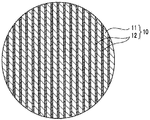
본 실시형태의 열교환기는, 열원으로부터, 열매체인 액체에 대한 전열 부재를 통한 전열에 의해, 액체를 비등시켜 열교환을 실시한다. 본 실시형태의 열교환기에 있어서의 전열 부재는, 액체와 접촉하여 액체를 비등시키는 측의 표면에, 제 1 열전도 영역과 제 2 열전도 영역이 교대로 스트라이프상으로 존재한다. 본 명세서에 있어서, 전열 부재 중 제 1 열전도 영역과 제 2 열전도 영역이 교대로 스트라이프상으로 존재하는 표면 영역을, 이하, 비등면으로서 참조한다.The heat exchanger of the present embodiment performs heat exchange by boiling the liquid by heat transfer from the heat source to the liquid as the heat medium through the heat transfer member. The heat transfer member in the heat exchanger of the present embodiment has the first heat conduction region and the second heat conduction region alternately in a stripe form on the surface of the side where the liquid comes into contact with the liquid and boils the liquid. In the present specification, a surface region in which the first heat conductive region and the second heat conductive region of the heat transfer member alternately exist in a stripe form will be referred to as a boiling surface hereinafter.
[전열 부재][Heat transfer member]
본 실시형태의 열교환기에 있어서의 전열 부재는, 열매체인 액체와 접촉하여 액체를 비등시키는 측의 표면에, 비등면을 갖는다. 전열 부재에 있어서, 액체와 접촉하는 측의 표면의 전체 면적에 대한 비등면의 면적이 차지하는 비율은, 열교환의 효율을 가능한 한 높게 유지하면서, 안정적인 비등을 실시한다는 관점에서, 가능한 한 높은 것이 요구된다. 전열 부재에 있어서의 액체와 접촉하는 측의 표면의 전체 면적에 대한 비등면의 면적이 차지하는 비율은, 예를 들어 80 % 이상, 90 % 이상, 또는 95 % 이상이어도 되고, 100 % 이어도 된다.The heat transfer member in the heat exchanger of this embodiment has a boiling surface on the surface of the liquid which is in contact with the liquid as the heat medium and boils the liquid. The ratio of the area of the boiling surface to the total area of the surface of the heat transfer member on the side in contact with the liquid is required to be as high as possible from the viewpoint of performing stable boiling while maintaining the heat exchange efficiency as high as possible . The ratio of the area of the uneven surface to the total area of the surface of the heat transfer member on the side in contact with the liquid may be, for example, 80% or more, 90% or more, 95% or 100%.
전열 부재는, 액체와 접촉하는 측의 표면에 상기 비등면을 갖는 것 외에, 그 크기 및 형상 등은, 열교환기의 규모, 사용하는 열원의 성상 등에 따라, 적절히 설정되면 된다. 전열 부재의 형상은, 예를 들어 원판상, 관상 등이어도 된다.The heat transfer member may be suitably set in accordance with the size and shape of the heat exchanger in addition to having the boiling surface on the surface in contact with the liquid in accordance with the scale of the heat exchanger and the characteristics of the heat source to be used. The shape of the heat transfer member may be, for example, a disk-like shape, a tubular shape, or the like.
전열 부재를 구성하는 재료는, 제 2 열전도 영역의 부분을 제외하고, 제 1 열전도 영역을 구성하는 재료와 동일해도 된다. 제 2 열전도 영역을 구성하는 재료, 및 제 1 열전도 영역을 구성하는 재료에 대해서는, 후술한다.The material constituting the heat transfer member may be the same as the material constituting the first heat conductive region except for the portion of the second heat conductive region. The material constituting the second heat conductive region and the material constituting the first heat conductive region will be described later.
[비등면][Boiling point]
본 실시형태의 열교환기에 있어서의 전열 부재의 비등면에는, 제 1 열전도 영역과 제 2 열전도 영역이 교대로 스트라이프상으로 존재한다.In the heat exchanger of the present embodiment, the first heat conduction region and the second heat conduction region alternately exist in a stripe pattern on the boiling surface of the heat transfer member.
(제 1 열전도 영역)(First heat conduction region)
제 1 열전도 영역은, 열전도율이 높은, 제 1 열전도 재료로 구성되어 있어도 된다. 제 1 열전도 재료의 열전도율은, 열전달률을 높게 해야 되는 요청에서, 예를 들어 100 W/mK 이상, 200 W/mK 이상, 250 W/mK 이상, 300 W/mK 이상, 또는 350 W/mK 이상이어도 된다. 한편, 이 열전도율을 과도하게 높게 할 필요는 없고, 열전도율이 매우 높은 재료는 고가이다. 이들을 고려하면, 제 1 열전도 재료의 열전도율은, 예를 들어 5,000 W/mK 이하, 3,000 W/mK 이하, 1,000 W/mK 이하, 500 W/mK 이하, 또는 400 W/mK 이하이어도 된다.The first heat conduction region may be made of a first heat conduction material having a high thermal conductivity. The thermal conductivity of the first thermally conductive material may be, for example, at least 100 W / mK, at least 200 W / mK, at least 250 W / mK, at least 300 W / mK, or at least 350 W / mK . On the other hand, it is not necessary to excessively increase the thermal conductivity, and a material having a very high thermal conductivity is expensive. Considering these, the thermal conductivity of the first heat conductive material may be, for example, 5,000 W / mK or less, 3,000 W / mK or less, 1,000 W / mK or less, 500 W / mK or less, or 400 W / mK or less.
이와 같은 제 1 열전도 재료는, 예를 들어 탄소계 재료, 금속, 반금속 등이어도 된다. 탄소계 재료는, 예를 들어 카본 나노 튜브, 다이아몬드, 인조 흑연 등이어도 된다. 금속은, 예를 들어 은, 구리, 금, 알루미늄 등이어도 되고, 예를 들어 놋쇠 등의 합금이어도 된다. 반금속은, 예를 들어 실리콘이어도 된다.The first heat conductive material may be, for example, a carbon-based material, a metal, a semi-metal, or the like. The carbon-based material may be, for example, carbon nanotubes, diamond, artificial graphite or the like. The metal may be, for example, silver, copper, gold, aluminum, or an alloy such as brass. The semimetal may be, for example, silicon.
본 실시형태의 열교환기에 있어서, 열매체인 액체의 비등에 의해 발생하는 기포의 직경은, 제 1 열전도 영역의 스트라이프의 폭에 의해 제어된다고 생각된다. 따라서, 제 1 열전도 영역의 스트라이프 폭으로는, 일정한 직경의 기포가 안정적으로 발생하는 폭을 선택하여 설정하는 것이 요구된다.In the heat exchanger of the present embodiment, it is considered that the diameter of the bubble generated by the boiling of the liquid as the heat medium is controlled by the width of the stripe of the first heat conductive region. Therefore, as the stripe width of the first heat conductive region, it is required to select and set the width at which bubbles of a constant diameter stably occur.
본 실시형태에서는, 고전열 영역의 폭의 최적값을, 표면 장력과 기포의 부력의 균형에 관한 Fritz 의 식으로부터 추정할 수 있다. 즉, 열매체로서 사용하는 액체의 표면 장력 (σ), 당해 액체의 비등면 상에 있어서의 접촉각 (θ), 그리고 당해 액체의 밀도 (ρl) 및 당해 액체가 비등했을 때의 기체의 밀도 (ρg) 의 값과, 중력 가속도 (g) 를 하기의 Fritz 의 식에 대입함으로써, 표면 장력과 균형이 잡힌 부력을 갖는 기포의 직경, 즉, 비등면으로부터의 이탈 기포 직경 (d) 을 추정할 수 있다.In the present embodiment, the optimum value of the width of the high-temperature region can be estimated from the Fritz equation concerning the balance between the surface tension and the buoyancy of the bubbles. That is, the surface tension (?) Of the liquid used as the heating medium, the contact angle (?) On the unequal surface of the liquid, the density (? L ) of the liquid and the density g ) and the gravitational acceleration g are substituted into the following equation of Fritz, the diameter of the bubble having the buoyancy balanced with the surface tension, that is, the deviation bubble diameter d from the boiling surface can be estimated have.
d = 0.209θ·[σ/{g(ρl - ρg)}]1/2 d = 0.209? [? / {g (? l -? g )}] 1/2
본 실시형태의 열교환기에서는, 비등면의 스트라이프에 있어서의 제 1 열전도 영역의 폭을, 상기 Fritz 의 식에 의해 산출되는 이탈 기포 직경 (d) 의 값과 동등한 값, 또는 이것에 가까운 값으로 함으로써, 열교환기의 열전달률을 높은 것으로 할 수 있다.In the heat exchanger of the present embodiment, by making the width of the first heat conductive region in the stripe of the unequal surface equal to or close to the value of the leaving bubble diameter (d) calculated by the formula of Fritz , The heat transfer coefficient of the heat exchanger can be made high.
Fritz 의 식에 의한 이탈 기포 직경 (d) 의 값은, 열매체로서 사용하는 액체의 종류, 비등면을 구성하는 제 1 열전도 재료의 종류, 열교환 조건 등에 따라 다르기 때문에, 모든 경우에 타당한 제 1 열전도 영역의 폭의 구체적인 추장 범위를 제시하는 것은 곤란하다.The value of the leaving bubble diameter d by the Fritz equation depends on the type of the liquid used as the heating medium, the kind of the first heat conductive material constituting the unbalanced surface, the heat exchange conditions, etc. Therefore, It is difficult to propose a specific recommended range of the width.
상압으로 열교환을 실시하는 경우, 제 1 열전도 영역의 스트라이프의 폭은, 예를 들어 1.0 ㎜ 이상, 1.2 ㎜ 이상, 1.4 ㎜ 이상, 1.6 ㎜ 이상, 또는 1.8 ㎜ 이상이어도 되고, 예를 들어 10.0 ㎜ 이하, 9.5 ㎜ 이하, 9.0 ㎜ 이하, 또는 8.5 ㎜ 이하이어도 된다.When heat exchange is performed at normal pressure, the width of the stripe of the first heat conductive region may be 1.0 mm or more, 1.2 mm or more, 1.4 mm or more, 1.6 mm or more, or 1.8 mm or more, for example, 10.0 mm or less , 9.5 mm or less, 9.0 mm or less, or 8.5 mm or less.
비등 잠열을 이용하는 열교환기에 있어서 일반적으로 사용되는 열매체, 예를 들어 물, 불소계 용매 등을 사용하는 경우, 제 1 열전도 영역의 스트라이프의 폭을 2.5 ㎜ 이상 7.5 ㎜ 이하로 하면, 높은 열전달률을 나타낸다. 제 1 열전도 영역의 스트라이프의 폭은, 예를 들어 2.6 ㎜ 이상, 2.7 ㎜ 이상, 2.8 ㎜ 이상, 2.9 ㎜ 이상, 또는 3.0 ㎜ 이상이어도 되고, 예를 들어 7.0 ㎜ 이하, 6.0 ㎜ 이하, 5.0 ㎜ 이하, 4.5 ㎜ 이하, 또는 4.0 ㎜ 이하이어도 된다.When a heating medium generally used in a heat exchanger using boiling latent heat, for example, water, a fluorinated solvent, or the like is used, when the width of the stripe of the first heat conductive region is 2.5 mm or more and 7.5 mm or less, a high heat transfer rate is exhibited. The width of the stripe of the first heat conductive region may be 2.6 mm or more, 2.7 mm or more, 2.8 mm or more, 2.9 mm or more, 3.0 mm or more, for example, 7.0 mm or less, 6.0 mm or less, , 4.5 mm or less, or 4.0 mm or less.
본 실시형태의 열교환기에 있어서의 비등면을 구성하는 제 1 열전도 영역의 스트라이프의 폭은, 높은 열전달률로 안정적인 비등을 실시하고, 이로써 열교환의 효율을 가능한 한 높게 한다는 관점에서, 비등면의 전부에 걸쳐 대략 동일해도 된다.The width of the stripe of the first heat conduction region constituting the boiling surface in the heat exchanger of the present embodiment is preferably set so that the heat transfer efficiency .
(제 2 열전도 영역)(Second heat conduction region)
제 2 열전도 영역은, 열전도율이 낮은 제 2 열전도 재료로 구성되어 있어도 된다. 제 2 열전도 재료의 열전도율은, 제 1 열전도 재료의 열전도율의 1/50 이하, 1/100 이하, 또는 1/200 이하이어도 된다.The second heat conduction region may be made of a second heat conduction material having a low thermal conductivity. The thermal conductivity of the second thermal conductive material may be 1/50 or less, 1/100 or less, or 1/200 or less of the thermal conductivity of the first thermal conductive material.
제 2 열전도 재료의 열전도율은, 구체적으로는, 예를 들어 10 W/mK 이하, 5 W/mK 이하, 3 W/mK 이하, 1 W/mK 이하, 0.5 W/mK 이하, 또는 0.3 W/mK 이하이어도 된다. 한편, 이 값을 과도하게 낮게 하면, 제 2 열전도 영역의 기계적 강도가 저해될 우려가 있으므로, 제 2 열전도 재료의 열전도율은, 예를 들어 0.025 W/mK 이상, 0.03 W/mK 이상, 0.04 W/mK 이상, 또는 0.05 W/mK 이상이어도 된다.Specifically, the thermal conductivity of the second heat conductive material is, for example, 10 W / mK or less, 5 W / mK or less, 3 W / mK or less, 1 W / mK or less, 0.5 W / Or less. On the other hand, if this value is excessively low, the mechanical strength of the second heat conductive region may be hindered. Therefore, the thermal conductivity of the second heat conductive material is preferably 0.025 W / mK or more, 0.03 W / mK or more, mK or more, or 0.05 W / mK or more.
제 2 열전도 재료는, 열교환기 내의 압력에 있어서의, 열매체로서 사용하는 액체의 비점 또는 이것을 초과하는 온도에 있어서 사용된다. 따라서, 이 온도에 있어서 충분한 내구성을 갖는 것이 요구된다. 이 관점에서, 제 2 열전도 재료의 내열 온도는, 120 ℃ 이상 또는 150 ℃ 이상인 것이 바람직하다. 이 값은, 열매체로서 물을 사용하고, 상압에 있어서, 과열도를 20 ℃ 로 설정하여 운전하는 경우를 상정하여 산출한 값이다.The second heat conductive material is used at a boiling point of the liquid used as a heating medium or at a temperature exceeding the boiling point thereof in the pressure in the heat exchanger. Therefore, it is required to have sufficient durability at this temperature. From this viewpoint, the heat-resistant temperature of the second heat conductive material is preferably 120 DEG C or more or 150 DEG C or more. This value is a value calculated on the assumption that water is used as the heating medium and the superheating degree is set at 20 캜 at normal pressure.
이와 같은 낮은 열전도율 및 고도의 내열성의 쌍방을 나타내는 제 2 열전도 재료는, 예를 들어 유리, 금속 또는 반금속의 산화물, 목재, 천연 수지, 합성 수지 등이어도 된다. 유리는, 예를 들어 소다 석회 유리, 붕규산 유리, 석영 유리 등이어도 된다. 금속 또는 반금속의 산화물은, 예를 들어 수정 등이어도 된다. 합성 수지는, 예를 들어 폴리에틸렌, 폴리프로필렌, 에폭시 수지, 실리콘 등이어도 된다.The second heat conductive material exhibiting both of such low thermal conductivity and high heat resistance may be, for example, an oxide of glass, metal or semimetal, wood, natural resin, synthetic resin, or the like. The glass may be, for example, soda lime glass, borosilicate glass, quartz glass, or the like. The oxide of the metal or semimetal may be, for example, crystal or the like. The synthetic resin may be, for example, polyethylene, polypropylene, epoxy resin, silicone, or the like.
본 실시형태의 열교환기에 있어서의 제 2 열전도 영역의 스트라이프의 폭은, 제 2 열전도 영역의 열전달성과 제 1 열전도 영역의 열전달성의 차이를 현저한 것으로 하고, 제 1 열전도 영역의 스트라이프에 의한 비등 기포 직경의 제어를 효율적으로 실시하기 위해서, 예를 들어 0.01 ㎜ 이상, 0.02 ㎜ 이상, 0.04 ㎜ 이상, 0.06 ㎜ 이상, 또는 0.08 ㎜ 이상이어도 된다. 한편, 제 2 열전도 영역의 스트라이프의 폭을 과도하게 크게 하면, 비등면 전체로서의 열전달률이 저해되고, 효율적인 열교환이 곤란해지는 경우가 있다. 이 관점에서, 제 2 열전도 영역의 스트라이프 폭은, 예를 들어 2.0 ㎜ 이하, 1.8 ㎜ 이하, 1.6 ㎜ 이하, 1.4 ㎜ 이하, 또는 1.2 ㎜ 이하이어도 된다.The width of the stripe of the second heat conductive region in the heat exchanger of the present embodiment is set so that the difference between the heat transfer of the second heat conductive region and the thermal conductivity of the first heat conductive region is remarkable, For example, 0.01 mm or more, 0.02 mm or more, 0.04 mm or more, 0.06 mm or more, or 0.08 mm or more. On the other hand, if the width of the stripe of the second heat conduction region is excessively increased, the heat transfer rate as a whole of the uneven surface is inhibited, and efficient heat exchange may become difficult. From this viewpoint, the stripe width of the second heat conductive region may be 2.0 mm or less, 1.8 mm or less, 1.6 mm or less, 1.4 mm or less, or 1.2 mm or less, for example.
일반적인 열매체, 예를 들어 물, 불소계 용매 등을 사용하는 경우, 제 2 열전도 영역의 스트라이프의 폭은, 예를 들어 0.1 ㎜ 이상, 0.2 ㎜ 이상, 또는 0.3 ㎜ 이상이어도 되고, 예를 들어 1.0 ㎜ 이하, 0.8 ㎜ 이하, 또는 0.6 ㎜ 이하이어도 된다.When a general heating medium such as water or a fluorine-based solvent is used, the width of the stripe of the second heat conductive region may be 0.1 mm or more, 0.2 mm or more, or 0.3 mm or more, for example, 1.0 mm or less , 0.8 mm or less, or 0.6 mm or less.
본 실시형태의 열교환기에 있어서의 비등면을 구성하는 제 2 열전도 영역의 스트라이프의 폭은, 열교환의 효율을 가능한 한 높게 유지하면서, 안정적인 비등을 실시한다는 관점에서, 비등면의 전부에 걸쳐 대략 동일해도 된다.The width of the stripe of the second heat conductive region constituting the boiling surface in the heat exchanger of the present embodiment is preferably equal to or less than the entire width of the entire boiling surface from the viewpoint of performing stable boiling while maintaining the heat exchange efficiency as high as possible do.
비등면에 있어서의 제 2 열전도 영역은, 제 2 열전도 영역의 열전달성과 제 1 열전도 영역의 열전달성의 차이를 현저한 것으로 하는 관점에서, 바람직하게는 제 1 열전도 재료로 구성되어 있는 전열 부재 중의 비등면에 매립된 제 2 열전도 재료인 것이 요구된다. 이 관점에서, 제 2 열전도 영역에 있어서의 매립 깊이는, 전열 부재에 있어서의 비등면으로부터의 거리로서, 예를 들어 0.1 ㎜ 이상, 0.2 ㎜ 이상, 또는 0.3 ㎜ 이상이어도 된다. 한편, 제 2 열전도 영역의 깊이를 과도하게 크게 하면, 비등면 전체로서의 열전달률이 저해되고, 효율적인 열교환이 곤란해지는 경우가 있다. 이 관점에서, 제 2 열전도 영역의 깊이는, 예를 들어 1.0 ㎜ 이하, 0.8 ㎜ 이하, 또는 0.6 ㎜ 이하이어도 된다.From the viewpoint of making the difference between the heat transfer of the second heat conduction region and the heat conduction attainment of the first heat conduction region remarkable, the second heat conduction region of the boiling surface preferably has a boiling surface It is required that the second heat conductive material is embedded in the second heat conductive material. From this viewpoint, the embedding depth in the second heat conductive region may be, for example, not less than 0.1 mm, not less than 0.2 mm, or not less than 0.3 mm as the distance from the boiling surface of the heat transfer member. On the other hand, if the depth of the second heat conduction region is excessively increased, the heat transfer rate as a whole of the uneven surface is inhibited and efficient heat exchange may become difficult. From this viewpoint, the depth of the second heat conduction region may be, for example, 1.0 mm or less, 0.8 mm or less, or 0.6 mm or less.
(비등면의 형상)(Shape of the boiling surface)
비등면은, 평활한 평면상이어도 되고, 표면에 홈 혹은 요철 또는 이들의 쌍방을 갖는 비평면이어도 된다. 비등면이, 상기에 설명한 제 1 열전도 영역 및 제 2 열전도 영역으로 이루어지는 스트라이프 구조와, 홈 혹은 요철 또는 이들의 쌍방에 의한 비평면 구조를 병유 (倂有) 하는 것인 경우, 양 구조의 효과가 중첩적으로 발휘되고, 최대한으로 높은 열전달률을 나타낼 수 있는 점에서 유리하다.The uneven surface may be a smooth flat surface, or may be a non-planar surface having grooves or recesses or both of them. In the case where the uneven surface is a stripe structure composed of the first heat conductive region and the second thermal conductive region described above and a non-planar structure formed by grooves or concavo-convex or both of them, It is advantageous in that it can be exhibited superimposedly and exhibits a maximum heat transfer rate as high as possible.
[열교환기의 그 밖의 구성 요소][Other components of the heat exchanger]
본 실시형태의 열교환기는, 상기와 같은 전열 부재를 구비하는 것인 한, 그 밖의 양태에 대해서는 공지된 열교환기와 동일해도 된다.The heat exchanger of the present embodiment may be the same as the known heat exchanger for other aspects as long as it includes the heat transfer member as described above.
본 실시형태의 열교환기는, 예를 들어 열매체인 액체를 비등면 상에 공급하는 액체 공급구와, 액체를 수용하여 비등시키기 위한 용기와, 액체의 비등에 의해 발생한 기체를 용기로부터 배출시키는 기체 배출구를 갖는 것이어도 된다.The heat exchanger of the present embodiment includes, for example, a liquid supply port for supplying a liquid as a heat medium on a boiling surface, a container for boiling the liquid to be received therein, and a gas outlet for discharging gas generated by boiling of the liquid from the container .
도 1A, B 에, 본 실시형태의 열교환기의 구성의 일례를 나타냈다. 도 1A 는 열교환기 (100) 를 연직면에서 절단한 단면도이고, 도 1B 는 도 1A 의 Ⅰ-Ⅰ 선 단면도이다.1A and 1B show an example of the structure of the heat exchanger of the present embodiment. 1A is a cross-sectional view of a
도 1A, B 의 열교환기 (100) 는, 전열 부재 (15) 와, 액체 공급구 (30) 와, 용기 (20) 와, 기체 배출구 (40) 를 갖는다. 본 명세서에 있어서, 「용기」란, 주위가 격벽에 의해 구획된 실이어도 되고, 또는 주위가 명확하게 구획되어 있지 않은 공간부이어도 된다.The
전열 부재 (15) 는, 제 1 열전도 영역 (11) 의 재료 중에 제 2 열전도 영역 (12) 이 매립되어 있는 구성을 갖는다. 이것에 의해, 전열 부재 (15) 의 액체 (50) 와 접촉하는 측은, 제 1 열전도 영역 (11) 과 제 2 열전도 영역 (12) 이 교대로 스트라이프상으로 존재하는 비등면 (10) 을 구성하고 있다.The heat transfer member (15) has a structure in which the second heat conductive region (12) is embedded in the material of the first heat conductive region (11). The side of the
액체 공급구 (30) 는, 열매체인 액체를 전열 부재 (15) 의 비등면 (10) 상에 공급한다. 액체는, 열원 (도시 생략) 으로부터의 전열 부재 (15) 를 통한 전열에 의해 비등면 (10) 상에서 비등하고, 비등면 (10) 의 스트라이프 구조에 의해 직경이 제어된 기포 (51) 를 발생시킨다. 기포 (51) 는, 액체 (50) 중을 상승하고, 용기 (20) 의 기상 중에서 증기 (52) 가 되고, 기체 배출구 (40) 로부터 배출된다.The
<열교환 방법><Heat exchange method>
본 실시형태의 열교환 방법은, 상기에 설명한 본 실시형태의 열교환기를 사용하여 실시되어도 된다. 열교환기에 있어서의 제 1 열전도 영역의 온도는, 열교환기 내의 압력에 있어서의, 열매체인 액체의 비점보다 높게 설정되어도 된다. 제 1 열전도 영역의 온도와, 열교환기 내의 압력에 있어서의 액체의 비점의 온도차는, 예를 들어 10 ℃ 이상, 15 ℃ 이상, 또는 20 ℃ 이상이어도 되고, 예를 들어 50 ℃ 이하, 45 ℃ 이하, 또는 40 ℃ 이하이어도 된다.The heat exchanging method of the present embodiment may be carried out using the heat exchanger of the present embodiment described above. The temperature of the first heat conduction region in the heat exchanger may be set to be higher than the boiling point of the liquid serving as the heat medium in the pressure in the heat exchanger. The temperature difference between the temperature of the first heat conductive region and the boiling point of the liquid in the pressure in the heat exchanger may be, for example, 10 ° C or more, 15 ° C or more, 20 ° C or more, , Or 40 DEG C or less.
열매체인 액체는, 예를 들어 물, 불소계 용매, 암모니아, 아세톤, 메탄올 등이어도 된다. 이들 중, 물 또는 불소계 용매가 바람직하다.The liquid as the heating medium may be, for example, water, a fluorine-based solvent, ammonia, acetone, methanol or the like. Of these, water or a fluorine-based solvent is preferable.
열원으로는, 기체, 액체, 혹은 고체, 또는 이들 중의 2 개 이상이어도 된다. 기체로는, 예를 들어 공기, 수증기, 암모니아, 프레온, 이산화탄소 등을 들 수 있다. 액체로는, 예를 들어 물, 브라인, 오일, 다우삼 A (등록 상표) 등을 들 수 있다. 고체로는, 예를 들어 히터 등을 들 수 있는 것 외에, 폐열 냉각을 위한 공랭기 등이어도 된다.The heat source may be a gas, a liquid, or a solid, or two or more of them. Examples of the gas include air, water vapor, ammonia, freon, carbon dioxide, and the like. Liquids include, for example, water, brine, oil, and DOWA A (registered trademark). The solid body may be, for example, a heater or the like, or an air cooling system for cooling waste heat.
본 실시형태의 열교환 방법에 있어서의 열원으로는, 기체를 사용해도 된다.As the heat source in the heat exchange method of the present embodiment, a gas may be used.
본 실시형태에 있어서의 열원으로는, 임의의 기체를 특별히 가열하여 사용해도 된다. 그러나, 지금까지 폐기되고 있던 열을 유효 이용한다는 관점에서, 열원으로서, 예를 들어 내연 기관으로부터 배출되는 배기 가스, 보일러로부터 배출되는 배기 가스, 공장 설비로부터 배출되는 온수 등을 사용하는 것이 바람직하다. 특히 내연 기관으로부터 배출되는 배기 가스는, 입수가 용이한 것, 배출량이 많은 것, 온도가 높은 것 등으로부터 바람직하다.As the heat source in the present embodiment, an arbitrary gas may be specifically heated. However, it is preferable to use exhaust gas discharged from an internal combustion engine, exhaust gas discharged from a boiler, hot water discharged from a factory facility, or the like as a heat source from the viewpoint of effectively utilizing waste heat so far. Particularly, the exhaust gas discharged from the internal combustion engine is preferable because it is easy to obtain, has a large discharge amount, and has a high temperature.
본 실시형태의 열교환 방법에 있어서, 열원은, 도 1A, B 의 열교환기 (100) 에 있어서, 전열 부재 (15) 의, 액체 (50) 와 접하지 않는 측의 면과 접촉하도록 유통시켜도 된다. 이로써, 열원의 열을, 전열 부재 (15) 를 통하여 액체 (50) 에 전달할 수 있다.In the heat exchanging method of the present embodiment, the heat source may be made to flow in the
<열수송 시스템><Heat Transfer System>
본 실시형태의 열수송 시스템은, 상기에 설명한 본 실시형태의 열교환기, 기체 응축 용기와, 기체를 기체 응축 용기에 공급하는 기체 공급구와, 기체가 응축된 액체를 기체 응축 용기로부터 배출하는 액체 배출구를 구비하는, 응축기, 그리고 응축기의 액체 배출구와 열교환기의 액체 공급구를 연결하는 액체 유로, 및 열교환기의 기체 배출구와 응축기의 기체 공급구를 연결하는 기체 유로를 구비한다.The heat transport system of the present embodiment includes the heat exchanger, the gas condensing container, the gas supply port for supplying the gas to the gas condensing container, the liquid discharge port for discharging the liquid in which the gas is condensed from the gas condensing container, And a liquid flow path connecting the liquid discharge port of the condenser and the liquid supply port of the heat exchanger and a gas flow path connecting the gas discharge port of the heat exchanger and the gas supply port of the condenser.
도 2 에, 본 실시형태의 열수송 시스템의 구성의 일례를 설명하기 위한 개략도를 나타냈다.Fig. 2 shows a schematic diagram for explaining an example of the configuration of the heat transport system of the present embodiment.
도 2 의 열수송 시스템 (500) 은, 본 실시형태의 열교환기 (100), 응축기 (200), 액체 유로 (32), 및 기체 유로 (42) 를 구비한다.2 includes a
응축기 (200) 는, 기체 응축 용기 (210) 와, 기체를 기체 응축 용기 (210) 에 공급하는 기체 공급구 (41) 와, 기체가 응축된 액체를 기체 응축 용기 (210) 로부터 배출하는 액체 배출구 (31) 를 구비한다. 액체 유로 (32) 는, 응축기 (200) 의 액체 배출구 (31) 와 열교환기 (100) 의 액체 공급구 (30) 를 연결한다. 기체 유로 (42) 는, 열교환기 (100) 의 기체 배출구 (40) 와 응축기 (200) 의 기체 공급구 (41) 를 연결한다.The
<열수송 방법>≪ Heat transport method >
본 실시형태의 열수송 방법은, 상기에 설명한 본 실시형태의 열수송 시스템을 사용하고, 열교환기에 있어서의 제 1 열전도 영역의 온도를, 열교환기 내의 압력에 있어서의, 열매체인 액체의 비점보다 10 ∼ 50 ℃ 높은 온도로 제어하여 실시되어도 된다. 열교환기에 있어서의 제 1 열전도 영역의 온도는, 열교환기 내의 압력에 있어서의, 열매체인 액체의 비점보다, 높은 온도로 설정되어도 된다. 제 1 열전도 영역의 온도와, 열교환기 내의 압력에 있어서의 액체의 비점의 온도차는, 예를 들어 10 ℃ 이상, 15 ℃ 이상, 또는 20 ℃ 이상이어도 되고, 예를 들어 50 ℃ 이하, 45 ℃ 이하, 또는 40 ℃ 이하이어도 된다.The heat transport method of the present embodiment uses the above-described heat transport system of the present embodiment so that the temperature of the first heat conduction region in the heat exchanger is set to be lower than the boiling point of the liquid serving as the heat medium in the heat exchanger The temperature may be controlled by increasing the temperature to about 50 ° C. The temperature of the first heat conduction region in the heat exchanger may be set to a temperature higher than the boiling point of the liquid serving as the heat medium in the pressure in the heat exchanger. The temperature difference between the temperature of the first heat conductive region and the boiling point of the liquid in the pressure in the heat exchanger may be, for example, 10 ° C or more, 15 ° C or more, 20 ° C or more, , Or 40 DEG C or less.
본 실시형태의 열수송 방법에 있어서 사용되는 열매체인 액체, 및 열원에 대해서는, 열교환 반응에 대해 상기 서술한 바와 동일해도 된다.The liquid and heat source used as the heat medium used in the heat transport method of the present embodiment may be the same as those described above for the heat exchange reaction.
본 실시형태의 열교환기의 효과를 검증하기 위해서, 열교환기의 비등면을 본뜬 플레이트를 갖는 실험 장치를 시작 (試作) 하여, 평가를 실시하였다.In order to verify the effect of the heat exchanger of the present embodiment, an experimental apparatus having a plate simulating a boiling surface of a heat exchanger was started (trial production) and evaluated.
실험 장치의 구성의 개요를 도 3 에 나타냈다. 도 3 의 실험 장치는, 바닥면 플레이트 (1) 및 덮개체 (2) 를 갖는 수조 (3) 와, 비등면 (10) 을 갖는다. 수조 (3) 의 내경은 100 ㎜ 이고, 비등면 (10) 의 직경은 40 ㎜ 이다. 비등면 (10) 은, 히터 (4) 에 접속되고, 바닥면 플레이트 (1) 의 수조 (3) 내부측 표면에 노출되어 있다. 히터 (4) 는 전원 (5) 에 의해 가동된다. 수조 (3) 의 내부에는 열매체인 액체로서의 물 (60) 이 충전되어 있고, 물 (60) 은 히터 (4) 에 의해 비등면 (10) 을 개재하여 가열되면, 비등면 (10) 상에서 비등하여 기포 (61) 를 발생시킨다.An outline of the configuration of the experimental apparatus is shown in Fig. The experimental apparatus of Fig. 3 has a water tank 3 having a bottom plate 1 and a
<비교예 1>≪ Comparative Example 1 &
비등면 (10) 을 구리의 경면으로 하여, 비등면 (10) 의 과열도 (ΔTsat) 를 30 ℃ 로 설정하고, 상압하에서 비등 실험을 실시하였다.The boiling
비등면 (10) 의 중심점으로부터 면에 수직인 가상 직선을 상정하고, 그 가상 직선 상에, 비등면 (10) 에 접하는 점으로부터의 거리 (x) 가 2 ㎜, 4 ㎜, 6 ㎜, 및 8 ㎜ 가 되는 4 점의 측정점을 설정하였다. 이들 4 점의 측정점의 온도 (T) 를 측정하여 온도 구배 (dT/dx) 의 직선을 구하였다. 얻어진 직선을 사용하여 외삽법에 의해 추정한 x = 0 인 점의 온도를, 비등면 (10) 의 표면 온도 (Tw) 로 하였다.Assuming a virtual straight line perpendicular to the plane from the center point of the
상기와는 별도로, 수조 (3) 내의 물 (60) 의 벌크 수온 (T∞) 을, 2 점의 측정점에 있어서의 실측 온도의 평균값으로서 구하였다.Apart from the above, the bulk water temperature (T?) Of the
상기 값을 사용하여, 하기 수식에 의해 계산에 의해 구한 열전달률 (h) 을, 상대 비교의 기준값 「1」로 하였다.Using the above value, the heat transfer coefficient h obtained by calculation according to the following formula was set as a reference value "1" of the relative comparison.
h = q/ΔTh = q /? T
q = -λdT/dxq = - lambda dT / dx
λ : 구리의 열전도율, 391 W/mKλ: Thermal conductivity of copper, 391 W / mK
ΔT = Tw - T∞ΔT = Tw - T∞
과열도 (ΔTsat) 는, 비등면 (10) 의 표면 온도 (Tw) 와 증기 온도 (Tsat) 의 차이고, 하기 수식에 의해 산출된다.The superheat degree? Tsat is a difference between the surface temperature Tw of the boiling
ΔTsat = Tw - TsatΔTsat = Tw - Tsat
<실시예 1>≪ Example 1 >
직경 40 ㎜ 의 구리판의 편측 표면에, 프라이스를 사용하여, 폭 0.5 ㎜, 깊이 0.5 ㎜, 단면의 형상이 사각형인 홈을, 피치 2.0 ㎜ 의 스트라이프상으로 형성하였다.On one side surface of a copper plate having a diameter of 40 mm, a groove having a width of 0.5 mm, a depth of 0.5 mm and a rectangular cross section was formed in a stripe shape with a pitch of 2.0 mm using a Price.
상기에서 형성한 홈 내에, 2 액계의 경화형 에폭시 수지를 충전하고, 상온 경화 및 포스트 큐어를 순차로 실시하여, 폭 1.5 ㎜ 의 구리 영역과 폭 0.5 ㎜ 의 에폭시 수지 영역이 교대로 스트라이프상으로 존재하는 비등면 (10) 을 형성하였다. 이 에폭시 수지 영역에 있어서의 에폭시 수지의 열전도율은 0.1 W/mK 였다.A two-liquid curable epoxy resin was charged into the above-mentioned groove, and curing at room temperature and post cure were carried out in that order. A copper area having a width of 1.5 mm and an epoxy resin area having a width of 0.5 mm alternately existed in a striped pattern Thereby forming a boiling
상기 비등면 (10) 을 사용한 것 이외에는, 비교예 1 과 동일하게, 비등면 (10) 의 과열도 (ΔTsat) 를 30 ℃ 로 설정하여 상압하에서 비등 실험을 실시하고, 열전달률 (h) 을 구하였다. 얻어진 열전달률 (h) 은, 비교예 1 에 있어서의 열전달률 (h) 에 대한 상대값으로서 0.65 였다.A boiling test was carried out under normal pressure by setting the superheat degree (? Tsat) of the boiling surface (10) at 30 占 폚, and the heat transfer coefficient (h) Respectively. The obtained heat transfer rate (h) was 0.65 as a relative value to the heat transfer rate (h) in Comparative Example 1.
<실시예 2 ∼ 7>≪ Examples 2 to 7 >
형성하는 스트라이프상의 홈의 피치를 각각 표 1 에 기재된 바와 같이 변경한 것 이외에는 실시예 1 과 동일하게 하여, 구리 영역의 폭이 상이한 스트라이프상의 비등면 (10) 을 형성하였다.Except that the pitches of the stripe-shaped grooves to be formed were changed as described in Table 1, respectively, thereby forming stripe-shaped
상기 비등면 (10) 을 사용한 것 이외에는, 비교예 1 과 동일하게, 비등면 (10) 의 과열도 (ΔTsat) 를 30 ℃ 로 설정하여 상압하에서 비등 실험을 실시하고, 열전달률 (h) 을 계산에 의해 구하였다. 얻어진 열전달률 (h) 의 계산 결과를, 비교예 1 에 있어서의 열전달률 (h) 에 대한 상대값으로서 표 1 및 도 4 에 나타냈다.As in Comparative Example 1, except that the boiling

도 4 에는, Fritz 의 식으로부터 추정된 이탈 기포 직경 (d) 의 값을 함께 나타냈다. Fritz 의 식으로부터 추정된 이탈 기포 직경 (d) 은, 매우 높은 열전달률을 나타낸 실시예 2 및 3 에 있어서의 제 1 열전도 영역의 폭과, 가까운 값인 것이 검증되었다.In Fig. 4, the value of the leaving cell diameter d estimated from the formula of Fritz is shown together. It was verified that the deviation bubble diameter d estimated from the formula of Fritz is close to the width of the first heat conductive region in Examples 2 and 3 which exhibited a very high heat transfer coefficient.
상기 실시예 3 에 있어서, 비등면 (10) 상에서 물의 비등에 의해 기포가 성장하는 모습을 계시적으로 촬영한 사진을 도 5A-D 에 나타냈다. 도 5A, B, C, 및 D 의 순서로 시간이 경과해 가고, 각 사진 사이의 시간 간격은 10 ∼ 30 밀리초 정도이다. 도 5A, B, C, 및 D 를 차례로 참조하면, 굵은 농색의 제 1 열전도 영역과 가는 담색의 제 2 열전도 영역이 교대로 스트라이프상으로 존재하는 비등면 (10) 상에서, 농담을 갖는 대략 원형으로 보이는 기포가 계시적으로 성장해 가는 모습을 이해할 수 있다.Figs. 5A to 5D are photographs of the growth of bubbles on the boiling
도 5A 에서는, 소직경의 기포가 다수 생성되고 있다. 도 5A 중에는, 직경이 큰 기포도 소수 보인다. 이들은, 소직경의 기포가 복수 합체한 것이라고 생각된다. 도 5B 및 도 5C 로 시간이 경과하면, 기포의 직경은 커지고 있다. 이들 사진에 있어서의 기포의 직경은, 모두 제 1 열전도 영역의 폭보다 작다. 이 시점까지는, 기포의 직경의 편차는 크다.In Fig. 5A, a large number of small-diameter bubbles are generated. In Fig. 5A, a large number of large-diameter bubbles also appear. These are considered to be a combination of plural small-diameter bubbles. 5B and Fig. 5C, the diameter of the bubbles increases. The diameters of the bubbles in these photographs are all smaller than the width of the first heat conductive region. Up to this point, the deviation of the diameter of the bubbles is large.
도 5D 에 이르면, 기포의 직경은 더욱 커지고 있다. 그러나, 직경이 제 1 열전도 영역의 폭을 초과하여 성장한 기포는 보이지 않고, 기포 직경의 최대값이 제어되어 있고, 기포 직경의 편차는 작은 것이 이해된다. 이 기포 직경의 제어는, 제 1 열전도 영역과 제 2 열전도 영역이 교대로 존재하는 스트라이프상의 비등면 구조에 의한 것이라고 생각된다.5D, the diameter of the bubble becomes larger. However, it is understood that the bubbles grown with the diameter exceeding the width of the first heat conductive region are not seen, the maximum value of the bubble diameter is controlled, and the deviation of the bubble diameter is small. This control of the bubble diameter is considered to be due to the uneven surface structure in the stripe form in which the first heat conduction region and the second heat conduction region alternate.
도 5D 에서는, 제 1 열전도 영역의 폭과 대략 동일한 직경을 갖는 큰 기포 외에, 매우 작은 직경의 기포도 복수 관찰된다. 이들은, 새롭게 생성된 미숙한 기포로서, 향후 성장해 가는 것이라고 생각된다.In Fig. 5D, in addition to large bubbles having substantially the same diameter as the width of the first heat conductive region, a plurality of bubbles having very small diameters are also observed. These are thought to be the newly-produced immature bubbles that will grow in the future.
도 5A-D 를 참조하면, 본 발명의 열교환기에 의해, 기포의 발생 위치, 직경, 수, 및 발생 빈도를 제어할 수 있는 것이 이해된다. 또한, 도 4 를 참조하면, 기포에 대해 이들의 파라미터를 적절히 제어함으로써, 열교환시의 열전달률을 향상시킬 수 있는 것이 이해된다.5A-D, it is understood that the position, diameter, number, and frequency of occurrence of bubbles can be controlled by the heat exchanger of the present invention. Further, referring to FIG. 4, it is understood that the heat transfer rate during heat exchange can be improved by appropriately controlling these parameters for bubbles.
Claims (18)
열원과 상기 액체 (50) 의 사이에 개재하여, 상기 열원으로부터 상기 액체 (50) 로 전열하는 전열 부재 (15) 를 구비하고,
상기 전열 부재 (15) 는, 상기 액체 (50) 와 접촉하여 상기 액체 (50) 를 비등시키는 측의 표면 (10) 에, 제 1 열전도 영역 (11) 과 제 2 열전도 영역 (12) 이 교대로 스트라이프상으로 존재하고, 상기 제 1 열전도 영역 (11) 의 열전도율은, 상기 제 2 열전도 영역 (12) 의 열전도율보다 높은, 열교환기 (100). A heat exchanger (100) for boiling a liquid (50) and performing heat exchange,
And a heat transfer member (15) interposed between the heat source and the liquid (50) for transferring heat from the heat source to the liquid (50)
The heat transfer member 15 has a first heat conduction region 11 and a second heat conduction region 12 alternately arranged on the surface 10 of the side where the liquid 50 is brought into contact with the liquid 50, And the thermal conductivity of the first heat conductive region (11) is higher than the thermal conductivity of the second heat conductive region (12).
상기 제 1 열전도 영역 (11) 의 스트라이프의 폭이 2.5 ㎜ 이상 7.5 ㎜ 이하인, 열교환기 (100). The method according to claim 1,
Wherein a width of the stripe of the first heat conductive region (11) is 2.5 mm or more and 7.5 mm or less.
상기 제 2 열전도 영역 (12) 의 스트라이프의 폭이 0.1 ㎜ 이상 1.0 ㎜ 이하인, 열교환기 (100). 3. The method according to claim 1 or 2,
And the width of the stripe of the second heat conduction region (12) is 0.1 mm or more and 1.0 mm or less.
상기 제 2 열전도 영역 (12) 을 구성하는 제 2 열전도 재료의 열전도율이, 상기 제 1 열전도 영역 (11) 을 구성하는 제 1 열전도 재료의 열전도율의 1/50 이하인, 열교환기 (100). 4. The method according to any one of claims 1 to 3,
Wherein the thermal conductivity of the second thermal conductive material constituting the second thermal conductive region (12) is not more than 1/50 of the thermal conductivity of the first thermal conductive material constituting the first thermal conductive region (11).
상기 제 2 열전도 영역 (12) 을 구성하는 제 2 열전도 재료의 내열 온도가 120 ℃ 이상인, 열교환기 (100). 5. The method according to any one of claims 1 to 4,
Wherein a heat-resistant temperature of the second heat conductive material constituting the second heat conductive region (12) is 120 DEG C or higher.
상기 전열 부재 (15) 가 제 1 열전도 재료로 구성되어 있고, 상기 제 2 열전도 영역 (12) 이, 상기 전열 부재 (15) 중, 상기 액체 (50) 와 접촉하여 상기 액체 (50) 를 비등시키는 측의 면내에 매립된 제 2 열전도 재료인, 열교환기 (100). 6. The method according to any one of claims 1 to 5,
The heat transfer member 15 is made of the first heat conductive material and the second heat conductive region 12 is in contact with the liquid 50 among the heat transfer members 15 to boil the liquid 50 Wherein the second heat conductive material is embedded in the surface of the heat exchanger.
상기 액체 (50) 를, 상기 전열 부재 (15) 중 상기 액체 (50) 와 접촉하여 상기 액체 (50) 를 비등시키는 측의 표면 상에 공급하는 액체 공급구 (30) 와,
상기 액체 (50) 를 수용하여 비등시키기 위한 용기 (20) 와,
상기 액체 (50) 의 비등에 의해 발생한 기체를 상기 용기로부터 배출시키는 기체 배출구 (40) 를 추가로 구비하는, 열교환기 (100). 7. The method according to any one of claims 1 to 6,
A liquid supply port 30 for supplying the liquid 50 to the surface of the heat transfer member 15 which makes contact with the liquid 50 and boils the liquid 50,
A container 20 for receiving and boiling the liquid 50,
Further comprising a gas outlet (40) for discharging the gas generated by the boiling of the liquid (50) from the vessel.
상기 열교환기 (100) 에 있어서의 상기 제 1 열전도 영역 (11) 의 온도가, 상기 열교환기 내의 압력에 있어서의 상기 액체 (50) 의 비점보다 높고, 그 온도차가 10 ℃ 이상인, 열교환 방법.9. The method of claim 8,
Wherein the temperature of the first heat conduction region (11) in the heat exchanger (100) is higher than the boiling point of the liquid (50) in the pressure in the heat exchanger, and the temperature difference is 10 ° C or higher.
상기 열교환기 (100) 에 있어서의 상기 제 1 열전도 영역 (11) 의 온도와, 상기 열교환기 내의 압력에 있어서의 상기 액체 (50) 의 비점과의 온도차가 50 ℃ 이하인, 열교환 방법.10. The method of claim 9,
Wherein the temperature difference between the temperature of the first heat conductive region (11) in the heat exchanger (100) and the boiling point of the liquid (50) in the pressure in the heat exchanger is 50 DEG C or lower.
상기 액체 (50) 가 물 또는 불소계 용매인, 열교환 방법.11. The method according to any one of claims 8 to 10,
Wherein the liquid (50) is water or a fluorine-based solvent.
상기 열원이 기체인, 열교환 방법.The method according to any one of claims 8 to 11,
Wherein the heat source is a gas.
제 7 항에 기재된 열교환기 (100) 와,
기체 응축 용기 (210) 와, 기체를 상기 기체 응축 용기 (210) 에 공급하는 기체 공급구 (41) 와, 상기 기체가 응축된 액체를 상기 기체 응축 용기 (210) 로부터 배출하는 액체 배출구 (31) 를 구비하는, 응축기 (200) 와,
상기 응축기 (200) 의 상기 액체 배출구 (31) 와 상기 열교환기 (100) 의 상기 액체 공급구 (30) 를 연결하는 액체 유로 (32) 와,
상기 열교환기 (100) 의 상기 기체 배출구 (40) 와 상기 응축기 (200) 의 상기 기체 공급구 (41) 를 연결하는 기체 유로 (42) 를 구비하는, 열수송 시스템 (500).As a heat transport system 500,
A heat exchanger (100) according to claim 7,
A gas supply port 41 for supplying a gas to the gas condensing vessel 210; a liquid discharge port 31 for discharging the condensed liquid from the gas condensing vessel 210; A condenser 200,
A liquid flow path 32 connecting the liquid discharge port 31 of the condenser 200 and the liquid supply port 30 of the heat exchanger 100,
And a gas flow path (42) connecting the gas exhaust port (40) of the heat exchanger (100) and the gas supply port (41) of the condenser (200).
상기 열교환기 (100) 에 있어서의 제 1 열전도 영역 (11) 의 온도가, 상기 열교환기 내의 압력에 있어서의 상기 액체 (50) 의 비점보다 높고, 그 온도차가 10 ℃ 이상인, 열수송 방법.15. The method of claim 14,
Wherein the temperature of the first heat conduction region (11) in the heat exchanger (100) is higher than the boiling point of the liquid (50) in the pressure in the heat exchanger, and the temperature difference is 10 占 폚 or higher.
상기 열교환기 (100) 에 있어서의 상기 제 1 열전도 영역 (11) 의 온도와, 상기 열교환기 내의 압력에 있어서의 상기 액체 (50) 의 비점과의 온도차가 50 ℃ 이하인, 열수송 방법.16. The method of claim 15,
Wherein the temperature difference between the temperature of the first heat conduction region (11) in the heat exchanger (100) and the boiling point of the liquid (50) in the pressure in the heat exchanger is 50 DEG C or lower.
상기 액체 (50) 가 물 또는 불소계 용매인, 열수송 방법.17. The method according to any one of claims 14 to 16,
Wherein the liquid (50) is water or a fluorine-based solvent.
상기 열원이 기체인, 열수송 방법.18. The method according to any one of claims 14 to 17,
Wherein the heat source is a gas.
Applications Claiming Priority (2)
| Application Number | Priority Date | Filing Date | Title |
|---|---|---|---|
| JP2017033753A JP6624119B2 (en) | 2017-02-24 | 2017-02-24 | Heat exchanger |
| JPJP-P-2017-033753 | 2017-02-24 |
Publications (2)
| Publication Number | Publication Date |
|---|---|
| KR20180098150A true KR20180098150A (en) | 2018-09-03 |
| KR102121718B1 KR102121718B1 (en) | 2020-06-11 |
Family
ID=61256845
Family Applications (1)
| Application Number | Title | Priority Date | Filing Date |
|---|---|---|---|
| KR1020180021028A Expired - Fee Related KR102121718B1 (en) | 2017-02-24 | 2018-02-22 | Heat exchanger, heat exchange method using heat exchanger, heat transport system using heat exchanger, and heat transport method using heat transport system |
Country Status (8)
| Country | Link |
|---|---|
| US (1) | US10816283B2 (en) |
| EP (1) | EP3367037B1 (en) |
| JP (1) | JP6624119B2 (en) |
| KR (1) | KR102121718B1 (en) |
| CN (1) | CN108507399B (en) |
| BR (1) | BR102018003501A2 (en) |
| MY (1) | MY193412A (en) |
| RU (1) | RU2677779C1 (en) |
Families Citing this family (8)
| Publication number | Priority date | Publication date | Assignee | Title |
|---|---|---|---|---|
| US12018893B2 (en) * | 2017-11-06 | 2024-06-25 | Zuta-Core Ltd. | Evaporator including a porous unit |
| CN109462964B (en) * | 2018-11-12 | 2023-12-26 | 中国船舶重工集团公司第七一九研究所 | boiling heat exchange structure |
| CN110274508B (en) * | 2019-06-13 | 2024-05-17 | 华南师范大学 | Active enhanced heat transfer device and active enhanced heat transfer method |
| JP7233336B2 (en) * | 2019-07-31 | 2023-03-06 | 古河電気工業株式会社 | Boiling heat transfer member, cooler with boiling heat transfer member, and cooling device with boiling heat transfer member |
| US12349313B2 (en) * | 2021-11-05 | 2025-07-01 | Rochester Institute Of Technology | Cooling device having a boiling chamber with submerged condensation and method |
| CN115435620B (en) * | 2022-10-08 | 2026-02-13 | 瀚能(苏州)节能科技有限公司 | A boiling cooling system |
| US11761719B1 (en) * | 2022-10-19 | 2023-09-19 | Amulaire Thermal Technology, Inc. | Two-phase immersion-type heat dissipation structure having fins with different thermal conductivities |
| WO2025150329A1 (en) * | 2024-01-10 | 2025-07-17 | 国立研究開発法人産業技術総合研究所 | Heat transfer structure |
Citations (2)
| Publication number | Priority date | Publication date | Assignee | Title |
|---|---|---|---|---|
| WO2011122332A1 (en) * | 2010-03-29 | 2011-10-06 | 日本電気株式会社 | Phase change cooler and electronic equipment provided with same |
| KR101164611B1 (en) * | 2008-09-22 | 2012-07-13 | 성균관대학교산학협력단 | Method for manufacturing evaporator for looped heat pipe system |
Family Cites Families (18)
| Publication number | Priority date | Publication date | Assignee | Title |
|---|---|---|---|---|
| GB1069535A (en) * | 1964-07-20 | 1967-05-17 | Richard Line Hummel | Improvements in and relating to heat transfer surfaces |
| US3613779A (en) * | 1969-10-06 | 1971-10-19 | Clinton E Brown | Apparatus for obtaining high transfer rates in falling water film evaporators and condensers |
| US4393663A (en) * | 1981-04-13 | 1983-07-19 | Gas Research Institute | Two-phase thermosyphon heater |
| JP3305720B2 (en) | 1993-07-06 | 2002-07-24 | 株式会社東芝 | Heat dissipation sheet |
| US6698500B2 (en) * | 2002-01-22 | 2004-03-02 | The Furukawa Electric Co., Ltd. | Heat sink with fins |
| US7677052B2 (en) * | 2005-03-28 | 2010-03-16 | Intel Corporation | Systems for improved passive liquid cooling |
| US20070267177A1 (en) * | 2006-05-16 | 2007-11-22 | Kuo-Len Lin | Juxtaposing Structure For Heated Ends Of Heat Pipes |
| JP2008157589A (en) * | 2006-12-26 | 2008-07-10 | Daikin Ind Ltd | Internal grooved tube, manufacturing method thereof, and heat exchanger using the internal grooved tube |
| US8051896B2 (en) * | 2007-07-31 | 2011-11-08 | Adc Telecommunications, Inc. | Apparatus for spreading heat over a finned surface |
| RU80648U1 (en) * | 2008-06-03 | 2009-02-10 | Юрий Михайлович Муров | RADIATOR UNIT (OPTIONS) |
| US9303928B2 (en) | 2008-07-23 | 2016-04-05 | Tai-Her Yang | Thermal conduction principle and device for intercrossed structure having different thermal characteristics |
| US20100132404A1 (en) | 2008-12-03 | 2010-06-03 | Progressive Cooling Solutions, Inc. | Bonds and method for forming bonds for a two-phase cooling apparatus |
| US20120213882A1 (en) | 2009-12-02 | 2012-08-23 | Toyota Jidosha Kabushiki Kaisha | Solar cell module manufacturing device |
| GB201111235D0 (en) * | 2011-06-30 | 2011-08-17 | Camfridge Ltd | Multi-Material-Blade for active regenerative magneto-caloric or electro-caloricheat engines |
| CN203704458U (en) | 2013-12-09 | 2014-07-09 | 上海德尔福汽车空调系统有限公司 | Water cooled condenser for automotive air conditioners |
| US20160238323A1 (en) * | 2015-02-12 | 2016-08-18 | Energyor Technologies Inc | Plate fin heat exchangers and methods for manufacturing same |
| TWI650522B (en) * | 2015-05-21 | 2019-02-11 | 萬在工業股份有限公司 | Refrigerant heat sink |
| US20180017344A1 (en) * | 2016-07-13 | 2018-01-18 | Drexel University | Increasing boiling heat transfer using low thermal conductivity materials |
-
2017
- 2017-02-24 JP JP2017033753A patent/JP6624119B2/en active Active
-
2018
- 2018-02-20 RU RU2018106252A patent/RU2677779C1/en active
- 2018-02-21 MY MYPI2018700661A patent/MY193412A/en unknown
- 2018-02-21 US US15/901,057 patent/US10816283B2/en active Active
- 2018-02-22 BR BR102018003501A patent/BR102018003501A2/en not_active Application Discontinuation
- 2018-02-22 KR KR1020180021028A patent/KR102121718B1/en not_active Expired - Fee Related
- 2018-02-22 EP EP18158185.1A patent/EP3367037B1/en not_active Not-in-force
- 2018-02-23 CN CN201810155156.5A patent/CN108507399B/en not_active Expired - Fee Related
Patent Citations (2)
| Publication number | Priority date | Publication date | Assignee | Title |
|---|---|---|---|---|
| KR101164611B1 (en) * | 2008-09-22 | 2012-07-13 | 성균관대학교산학협력단 | Method for manufacturing evaporator for looped heat pipe system |
| WO2011122332A1 (en) * | 2010-03-29 | 2011-10-06 | 日本電気株式会社 | Phase change cooler and electronic equipment provided with same |
Also Published As
| Publication number | Publication date |
|---|---|
| JP6624119B2 (en) | 2019-12-25 |
| EP3367037B1 (en) | 2020-07-15 |
| EP3367037A1 (en) | 2018-08-29 |
| CN108507399B (en) | 2019-11-01 |
| JP2018138853A (en) | 2018-09-06 |
| CN108507399A (en) | 2018-09-07 |
| US20180245863A1 (en) | 2018-08-30 |
| US10816283B2 (en) | 2020-10-27 |
| KR102121718B1 (en) | 2020-06-11 |
| BR102018003501A2 (en) | 2018-10-30 |
| RU2677779C1 (en) | 2019-01-21 |
| MY193412A (en) | 2022-10-12 |
Similar Documents
| Publication | Publication Date | Title |
|---|---|---|
| KR102121718B1 (en) | Heat exchanger, heat exchange method using heat exchanger, heat transport system using heat exchanger, and heat transport method using heat transport system | |
| Shi et al. | Marangoni convection instability in a sessile droplet with low volatility on heated substrate | |
| Huang et al. | Development of novel flexible heat pipe with multistage design inspired by structure of human spine | |
| EP0048021B1 (en) | Heat transfer device having an augmented wall surface | |
| Rong-Hua | An analytical study of the optimum dimensions of rectangular fins and cylindrical pin fins | |
| CN109891199A (en) | System and method for a reference volume for flow calibration | |
| CN106871676B (en) | The heat pipe of upper header sectional area variation | |
| CN110360865B (en) | Fin type combined phase-change material heat storage ball | |
| CN109373792B (en) | Heat pipe with optimally designed included angle of free end face | |
| CN107664450B (en) | A kind of electric heating coil heat pipe | |
| KR20180108944A (en) | An electric boiler using heating tube coated with transparent thin film heating element | |
| Patel et al. | The impact of variation in filling ratios, evacuation pressure, and heat input on thermal performance of pulsating heat pipe | |
| Petrik et al. | Heat exchange in condensation of R227 coolant on inclined tubes placed in a granular BED | |
| JP7772339B2 (en) | Self-regenerating bridge-type heat pipe | |
| Lahmer et al. | Evaluation of heat transfer rate of double-layered heat sink cooling system with high energy dissipation | |
| Pidaparti et al. | Thermal-hydraulic performance of discontinuous fin heat exchanger geometries using Supercritical CO2 as the working fluid | |
| Moshiri et al. | Effects of Different Shapes of the Porous Cavity on Natural Convective Heat Transfer of Hybrid Nanofluids: Experimental Study | |
| Al-Rahman et al. | Thermal performance study of plate-finned vapor chamber heat sink | |
| Yoon et al. | The effect of substrate conduction on the thermal performance of a flat plate pulsating heat pipe | |
| Demirci et al. | Transport mechanisms governing the evaporation of a sessile droplet in its pure vapor environment | |
| JP2021134952A (en) | Boiling type heat transfer pipe | |
| CN110017708A (en) | A kind of high efficiency heat exchanger | |
| Pavlenko et al. | Pool boiling of refrigerant on a flat modified surface | |
| Mohanty et al. | Influence of surface unevenness on enhancement of heat transfer during saturated pool boiling of acetone | |
| Shinde | Thermal Performance of Closed Loop Pulsating Heat Pipe with Titanium Oxide as Nanofluid |
Legal Events
| Date | Code | Title | Description |
|---|---|---|---|
| A201 | Request for examination | ||
| PA0109 | Patent application |
St.27 status event code: A-0-1-A10-A12-nap-PA0109 |
|
| PA0201 | Request for examination |
St.27 status event code: A-1-2-D10-D11-exm-PA0201 |
|
| PG1501 | Laying open of application |
St.27 status event code: A-1-1-Q10-Q12-nap-PG1501 |
|
| D13-X000 | Search requested |
St.27 status event code: A-1-2-D10-D13-srh-X000 |
|
| D14-X000 | Search report completed |
St.27 status event code: A-1-2-D10-D14-srh-X000 |
|
| E902 | Notification of reason for refusal | ||
| PE0902 | Notice of grounds for rejection |
St.27 status event code: A-1-2-D10-D21-exm-PE0902 |
|
| P11-X000 | Amendment of application requested |
St.27 status event code: A-2-2-P10-P11-nap-X000 |
|
| P13-X000 | Application amended |
St.27 status event code: A-2-2-P10-P13-nap-X000 |
|
| E902 | Notification of reason for refusal | ||
| PE0902 | Notice of grounds for rejection |
St.27 status event code: A-1-2-D10-D21-exm-PE0902 |
|
| P11-X000 | Amendment of application requested |
St.27 status event code: A-2-2-P10-P11-nap-X000 |
|
| P13-X000 | Application amended |
St.27 status event code: A-2-2-P10-P13-nap-X000 |
|
| E701 | Decision to grant or registration of patent right | ||
| PE0701 | Decision of registration |
St.27 status event code: A-1-2-D10-D22-exm-PE0701 |
|
| GRNT | Written decision to grant | ||
| PR0701 | Registration of establishment |
St.27 status event code: A-2-4-F10-F11-exm-PR0701 |
|
| PR1002 | Payment of registration fee |
St.27 status event code: A-2-2-U10-U11-oth-PR1002 Fee payment year number: 1 |
|
| PG1601 | Publication of registration |
St.27 status event code: A-4-4-Q10-Q13-nap-PG1601 |
|
| PC1903 | Unpaid annual fee |
St.27 status event code: A-4-4-U10-U13-oth-PC1903 Not in force date: 20230606 Payment event data comment text: Termination Category : DEFAULT_OF_REGISTRATION_FEE |
|
| PC1903 | Unpaid annual fee |
St.27 status event code: N-4-6-H10-H13-oth-PC1903 Ip right cessation event data comment text: Termination Category : DEFAULT_OF_REGISTRATION_FEE Not in force date: 20230606 |