JPWO2005077458A1 - Chemiluminescent makeup and beauty method, skin-irradiated cosmetics and cosmetics - Google Patents
Chemiluminescent makeup and beauty method, skin-irradiated cosmetics and cosmetics Download PDFInfo
- Publication number
- JPWO2005077458A1 JPWO2005077458A1 JP2005517984A JP2005517984A JPWO2005077458A1 JP WO2005077458 A1 JPWO2005077458 A1 JP WO2005077458A1 JP 2005517984 A JP2005517984 A JP 2005517984A JP 2005517984 A JP2005517984 A JP 2005517984A JP WO2005077458 A1 JPWO2005077458 A1 JP WO2005077458A1
- Authority
- JP
- Japan
- Prior art keywords
- skin
- fluorescence
- cosmetic
- light
- chemiluminescent
- Prior art date
- Legal status (The legal status is an assumption and is not a legal conclusion. Google has not performed a legal analysis and makes no representation as to the accuracy of the status listed.)
- Granted
Links
Images



Classifications
-
- A—HUMAN NECESSITIES
- A61—MEDICAL OR VETERINARY SCIENCE; HYGIENE
- A61Q—SPECIFIC USE OF COSMETICS OR SIMILAR TOILETRY PREPARATIONS
- A61Q19/00—Preparations for care of the skin
- A61Q19/08—Anti-ageing preparations
-
- A—HUMAN NECESSITIES
- A61—MEDICAL OR VETERINARY SCIENCE; HYGIENE
- A61K—PREPARATIONS FOR MEDICAL, DENTAL OR TOILETRY PURPOSES
- A61K8/00—Cosmetics or similar toiletry preparations
- A61K8/18—Cosmetics or similar toiletry preparations characterised by the composition
- A61K8/30—Cosmetics or similar toiletry preparations characterised by the composition containing organic compounds
- A61K8/64—Proteins; Peptides; Derivatives or degradation products thereof
- A61K8/66—Enzymes
-
- A—HUMAN NECESSITIES
- A61—MEDICAL OR VETERINARY SCIENCE; HYGIENE
- A61K—PREPARATIONS FOR MEDICAL, DENTAL OR TOILETRY PURPOSES
- A61K8/00—Cosmetics or similar toiletry preparations
- A61K8/18—Cosmetics or similar toiletry preparations characterised by the composition
- A61K8/30—Cosmetics or similar toiletry preparations characterised by the composition containing organic compounds
- A61K8/67—Vitamins
- A61K8/676—Ascorbic acid, i.e. vitamin C
-
- A—HUMAN NECESSITIES
- A61—MEDICAL OR VETERINARY SCIENCE; HYGIENE
- A61K—PREPARATIONS FOR MEDICAL, DENTAL OR TOILETRY PURPOSES
- A61K8/00—Cosmetics or similar toiletry preparations
- A61K8/18—Cosmetics or similar toiletry preparations characterised by the composition
- A61K8/96—Cosmetics or similar toiletry preparations characterised by the composition containing materials, or derivatives thereof of undetermined constitution
- A61K8/97—Cosmetics or similar toiletry preparations characterised by the composition containing materials, or derivatives thereof of undetermined constitution from algae, fungi, lichens or plants; from derivatives thereof
- A61K8/9783—Angiosperms [Magnoliophyta]
- A61K8/9789—Magnoliopsida [dicotyledons]
-
- A—HUMAN NECESSITIES
- A61—MEDICAL OR VETERINARY SCIENCE; HYGIENE
- A61Q—SPECIFIC USE OF COSMETICS OR SIMILAR TOILETRY PREPARATIONS
- A61Q17/00—Barrier preparations; Preparations brought into direct contact with the skin for affording protection against external influences, e.g. sunlight, X-rays or other harmful rays, corrosive materials, bacteria or insect stings
- A61Q17/04—Topical preparations for affording protection against sunlight or other radiation; Topical sun tanning preparations
-
- A—HUMAN NECESSITIES
- A61—MEDICAL OR VETERINARY SCIENCE; HYGIENE
- A61Q—SPECIFIC USE OF COSMETICS OR SIMILAR TOILETRY PREPARATIONS
- A61Q19/00—Preparations for care of the skin
- A61Q19/02—Preparations for care of the skin for chemically bleaching or whitening the skin
-
- A—HUMAN NECESSITIES
- A61—MEDICAL OR VETERINARY SCIENCE; HYGIENE
- A61N—ELECTROTHERAPY; MAGNETOTHERAPY; RADIATION THERAPY; ULTRASOUND THERAPY
- A61N5/00—Radiation therapy
- A61N5/06—Radiation therapy using light
Landscapes
- Health & Medical Sciences (AREA)
- Life Sciences & Earth Sciences (AREA)
- Veterinary Medicine (AREA)
- Animal Behavior & Ethology (AREA)
- General Health & Medical Sciences (AREA)
- Public Health (AREA)
- Epidemiology (AREA)
- Birds (AREA)
- Dermatology (AREA)
- Gerontology & Geriatric Medicine (AREA)
- Engineering & Computer Science (AREA)
- Biotechnology (AREA)
- Botany (AREA)
- Microbiology (AREA)
- Mycology (AREA)
- Cosmetics (AREA)
- Radiation-Therapy Devices (AREA)
Abstract
化学発光を用いた美容法、化粧法及び皮膚照射美容用発光体及び美容用具の提供。【選択図面】 図3Providing cosmetics, cosmetics and skin-irradiated cosmetics using chemiluminescence and cosmetics. [Selected Drawing] FIG.
Description
本発明は、低出力の発光である化学発光を用いた美容法、化粧法及び皮膚照射美容用発光体及び化粧用具、美容用具等に関する。 The present invention relates to a cosmetic method, a cosmetic method, a skin-irradiated cosmetic illuminant, a cosmetic tool, a cosmetic tool, and the like using chemiluminescence, which is low-output light emission.
スキンケアや皮膚の活性化等を目的として光を用いる技術思想は見あたらない。特に、化学発光は美容や化粧に活用されていない。
化粧の分野では、光は皮膚にダメージを与える原因の一つであって、避けるべきものとして扱われ、多くの光遮断用や防護用の化粧品が提案されている。例外的な使用としては、積極的に日焼け色を出すために日焼けサロンなどでの利用がされている。
また、治療的な使用として、レーザー光を局部的に使用する利用法も提供されている。
レーザー光のような強い光を利用する提案としては、次のようなものがある。
特許文献1(特開2004−733号公報)レーザー脱毛装置、特許文献2(特開2003−12487号公報)美容液を皮膚に塗布し、その上からレーザー光を照射して脱毛等のレーザートリートメントを行う、特許文献3(特開平11−342213号公報)肌、特に顔面の肌の気になる箇所にレーザー光の吸収率を高め且つ常に一定の吸収効果を得るように新陳代謝を促進して美容的処置効果に優れた美肌づくりを可能とするレーザー光吸収補助テ−プとそれを利用した美容処置法。There is no technical idea that uses light for the purpose of skin care or skin activation. In particular, chemiluminescence has not been utilized in beauty and makeup.
In the makeup field, light is one of the causes of damage to the skin and is treated as something to be avoided, and many light-blocking and protective cosmetics have been proposed. As an exceptional use, it is used in a tanning salon in order to positively produce a tan color.
Moreover, the utilization method which uses a laser beam locally as a therapeutic use is also provided.
Proposals for using strong light such as laser light include the following.
Patent Document 1 (Japanese Patent Laid-Open No. 2004-733) Laser hair removal device, Patent Document 2 (Japanese Patent Laid-Open No. 2003-12487) A cosmetic solution is applied to the skin, and laser treatment is performed by irradiating laser light thereon. Patent Document 3 (Japanese Patent Application Laid-Open No. 11-342213) promotes metabolism and promotes metabolism so as to increase the absorption rate of laser light and obtain a constant absorption effect on the skin, particularly on the skin where the skin is worrisome. Laser light absorption auxiliary tape that enables the creation of beautiful skin with excellent treatment effects and a cosmetic treatment method using the same.
日焼け増進目的外の光の利用は、治療的な利用が多く、日光のような強い光は、皮膚の炎症や日焼け後の色素沈着や皮膚の老化促進の原因となるものとされ、美容や化粧に積極的に利用されていない。
本発明者らは、新しい美容法、化粧法を研究開発する過程で、化学発光による光の皮膚に対する作用を見出し、本発明を完成するに至った。本発明は、化学発光を利用した新しい美容法及び化粧法さらに美容用具、化粧用具、化粧剤、美容剤を提供するものである。 In the course of researching and developing new cosmetic methods and cosmetic methods, the present inventors have found the effect of light on the skin by chemiluminescence and have completed the present invention. The present invention provides new cosmetic methods and cosmetic methods using chemiluminescence, as well as cosmetic tools, cosmetic tools, cosmetic agents, and cosmetic agents.
本発明は、2液成分を混合することにより数分から数時間の高温の発熱を伴わない光を発する化学発光体を皮膚に近接あるいは当接することを利用して、美容作用、化粧作用を施すものである。 The present invention applies a cosmetic effect and a cosmetic effect by using a chemiluminescent substance that emits light that does not generate high-temperature heat for several minutes to several hours by mixing two liquid components, in proximity to or in contact with the skin. It is.
(1) 化学発光によって得られた光を皮膚に照射することによる美容方法又は化粧方法。
(2) 光が300〜1200nmの波長域から選択されることを特徴とする(1)記載の美容方法又は化粧方法。
(3) 皮膚が、顔及び身体であることを特徴とする(1)又は(2)記載の美容方法又は化粧方法。
(4) 化学発光が2液の混合によって発光することを特徴とする(1)〜(3)のいずれかに記載の美容方法又は化粧方法。
(5) 皮膚外用剤を塗布後あるいはパック剤を施しつつ光を該塗布部に照射することを特徴とする(1)〜(4)のいずれかに記載の美容方法又は化粧方法。
(6) 皮膚外用剤あるいはパック剤が化粧組成物あるいは美容組成物であることを特徴とする(5)に記載の美容方法又は化粧方法。
(7) 化学発光剤を含有することを特徴とする皮膚照射美容用又は化粧用発光体。
(8) 化学発光剤が混合によって発光する2液性の化学発光剤を分離状態で、一つの容器に収納し、使用時に混合して皮膚に照射することを特徴とする(7)記載の皮膚照射美容用又は化粧用発光体。
(9) 皮膚に照射する光の波長域を300〜1200nmの波長域から選択されることを特徴とする(7)又は(8)記載の皮膚照射美容用又は化粧用発光体。
(10) 皮膚外用剤又は服用剤と請求項(7)〜(9)のいずれかに記載の皮膚照射美容用又は化粧用発光体とを組み合わせたことを特徴とする美容用具又は化粧用具。
(11) 化学発光による光を皮膚へ照射することによる美白化粧方法又は美白美容方法。
(12) 化学発光による光を皮膚へ照射してメラニン産生細胞増殖抑制及び/又はメラニン合成抑制することを特徴とする請求項(12)記載の美白化粧方法又は美白美容方法。
(13) 化学発光による光が、青蛍光、黄蛍光、緑蛍光、オレンジ蛍光、赤蛍光から選択される1種又は2種以上の組み合わせであることを特徴とする(11)又は(12)記載の美白化粧方法又は美白美容方法。
(14) 化学発光による光を皮膚へ照射する発光剤を含有する美白用発光体。
(15) 発光剤が、化学発光による光を皮膚へ照射してメラニン産生細胞の増殖を抑制及び/又はメラニンの合成を抑制する発光剤であることを特徴とする(14)記載の発光体。
(16) 発光剤が、青蛍光、黄蛍光、緑蛍光、オレンジ蛍光、赤蛍光から選択される1種又は2種以上の蛍光を発光する発光剤であることを特徴とする(14)又は(15)記載の発光体。
(17) オリーブ葉エキスを皮膚面へ塗布、あるいはパック剤として施しつつあるいは服用後に、化学発光として青色蛍光を皮膚へ照射することを特徴とする(11)〜(13)のいずれかに記載の美白化粧方法又は美白美容方法。
(18) 青色化学発光蛍光剤を含有する美白用発光体と、オリーブ葉エキスを含有する皮膚外用剤あるいはパック剤及び/又は服用剤との組み合せからなることを特徴とする美白化粧用具又は美白美容用具。
(19) オレンジ蛍光、赤蛍光、緑蛍光、黄蛍光の4種の内1種又は複数の化学発光による光を皮膚へ照射して線維芽細胞を増殖及び/又はコラーゲン合成を促進することを特徴とする化粧方法又は美容方法。
(20) アスコルビン酸又はその塩及び/又はアスコルビン酸誘導体を皮膚面へ塗布、あるいはパック剤として施しつつ、あるいは服用後にオレンジ蛍光、赤蛍光、緑蛍光、黄蛍光の4種の内1種又は複数の化学発光による光を皮膚へ照射することを特徴とする(19)記載の線維芽細胞を増殖及び/又はコラーゲン合成を促進することを特徴とする化粧方法又は美容方法。
(21) 皮膚へ照射して線維芽細胞を増殖及び/又はコラーゲン合成を促進する化学発光による光としてオレンジ蛍光、赤蛍光、緑蛍光、黄蛍光の4種の内1種又は複数の蛍光を発光する発光剤を含有することを特徴とする発光体。
(22) (21)記載の発光体と、アスコルビン酸又はその塩及び/又はアスコルビン酸誘導体を含有する皮膚外用剤あるいはパック剤及び/又は服用剤との組み合せからなることを特徴とする化粧用具又は美容用具。
(23) 青蛍光を皮膚へ照射することによる光老化抑制方法。
(24) 化学発光による青蛍光を皮膚へ照射することによりピリジンダイマーの生成を抑制することを特徴とする(23)記載の光老化抑制方法。
(25) 光回復酵素(フォトリアーゼ)を皮膚面へ塗布あるいはパック剤として施しつつ及び/又は服用後に青蛍光を皮膚へ照射することを特徴とする(23)又は(24)記載の光老化抑制方法。
(26) 青蛍光を皮膚へ照射する化学発光剤を含有することを特徴とする光老化抑制用発光体。
(27) 青蛍光を皮膚へ照射する化学発光剤と光回復酵素(フォトリアーゼ)を含有する皮膚外用剤あるいはパック剤及び/又は服用剤との組み合せからなることを特徴とする光老化抑制用化粧用具又は美容用具。
(28) 化学発光蛍光及び/又は化学発光近赤外線を皮膚へ照射することにより血流量を増加させる方法。
(29) 化学発光蛍光がオレンジ蛍光であることを特徴とする(28)記載の血流量増加方法。
(30) 蛍光及び/又は近赤外線を発光する化学発光剤を含有する血流量増加用発光体。
(31) 蛍光がオレンジ蛍光であることを特徴とする(30)記載の血流量増加用発光体。
(32) (30)又は(31)に記載された血流量増加用発光体と皮膚外用剤とを組み合わせることを特徴とする化粧用具又は美容用具。
(33) 皮膚外用剤がスキンケア化粧料、フェイスパック剤、湿布剤、貼付剤、経皮吸収剤のいずれかであることを特徴とする(10)、(18)、(22)、(27)、(32)のいずれかに記載の美容用具又は化粧用具。
(34) (7)、(8)、(9)、(10)、(14)、(15)、(16)、(18)、(21)、(22)、(26)、(27)、(30)、(31)、(32)に記載された発光体、美容用具又は化粧用具のいずれかは、フェイス被覆用、身体被覆用であることを特徴とする皮膚被覆材。(1) A cosmetic method or a cosmetic method by irradiating the skin with light obtained by chemiluminescence.
(2) The cosmetic method or cosmetic method according to (1), wherein the light is selected from a wavelength range of 300 to 1200 nm.
(3) The cosmetic method or cosmetic method according to (1) or (2), wherein the skin is a face and a body.
(4) The cosmetic method or the cosmetic method according to any one of (1) to (3), wherein chemiluminescence is emitted by mixing two liquids.
(5) The cosmetic method or the cosmetic method according to any one of (1) to (4), wherein the application part is irradiated with light after applying the external preparation for skin or while applying a pack.
(6) The cosmetic method or cosmetic method according to (5), wherein the external preparation for skin or pack is a cosmetic composition or a cosmetic composition.
(7) A skin-irradiated cosmetic or cosmetic luminescent material characterized by containing a chemiluminescent agent.
(8) The skin according to (7), wherein the two-component chemiluminescent agent that emits light by mixing the chemiluminescent agent is stored in a single container in a separated state, and mixed and irradiated to the skin at the time of use. Irradiation cosmetic or cosmetic light emitter.
(9) The skin-irradiated cosmetic or cosmetic illuminator according to (7) or (8), wherein the wavelength range of light applied to the skin is selected from a wavelength range of 300 to 1200 nm.
(10) A cosmetic or cosmetic device comprising a combination of a skin external preparation or medication and a skin-irradiated cosmetic or cosmetic light emitter according to any one of claims (7) to (9).
(11) A whitening makeup method or a whitening beauty method by irradiating the skin with light from chemiluminescence.
(12) The whitening cosmetic method or the whitening cosmetic method according to (12), wherein the skin is irradiated with light by chemiluminescence to inhibit proliferation of melanin-producing cells and / or melanin synthesis.
(13) The light emitted by chemiluminescence is one or a combination of two or more selected from blue fluorescence, yellow fluorescence, green fluorescence, orange fluorescence, and red fluorescence. (11) or (12) Whitening makeup method or whitening beauty method.
(14) A light-emitting body for whitening containing a luminescent agent that irradiates the skin with light from chemiluminescence.
(15) The luminescent material according to (14), wherein the luminescent agent is a luminescent agent that irradiates light by chemiluminescence to the skin to suppress proliferation of melanin-producing cells and / or suppress synthesis of melanin.
(16) The luminescent agent is a luminescent agent that emits one or more kinds of fluorescence selected from blue fluorescence, yellow fluorescence, green fluorescence, orange fluorescence, and red fluorescence (14) or ( 15) The light emitter according to the item.
(17) The application according to any one of (11) to (13), wherein the skin is irradiated with blue fluorescence as chemiluminescence while being applied to a skin surface or applied as a pack or after taking an olive leaf extract. Whitening makeup method or whitening beauty method.
(18) A whitening cosmetic device or a whitening beauty comprising a combination of a whitening phosphor containing a blue chemiluminescent fluorescent agent and an external skin preparation or pack and / or medication containing an olive leaf extract. Tools.
(19) It is characterized by irradiating the skin with light of one or more of four kinds of orange fluorescence, red fluorescence, green fluorescence, and yellow fluorescence to promote fibroblast proliferation and / or collagen synthesis. Makeup method or beauty method.
(20) Ascorbic acid or a salt thereof and / or an ascorbic acid derivative is applied to the skin surface or applied as a pack, or after taking one or more of four types of orange fluorescence, red fluorescence, green fluorescence and yellow fluorescence A cosmetic or cosmetic method characterized by accelerating the proliferation and / or collagen synthesis of fibroblasts according to (19), wherein the skin is irradiated with light of chemiluminescence.
(21) Emits one or more of four types of fluorescence of orange fluorescence, red fluorescence, green fluorescence, and yellow fluorescence as light by chemiluminescence that irradiates the skin and promotes fibroblast proliferation and / or collagen synthesis. A luminescent material containing a luminescent agent.
(22) A cosmetic device comprising a combination of the illuminant according to (21) and an external preparation for skin or a pack and / or a medication containing ascorbic acid or a salt thereof and / or an ascorbic acid derivative, or Beauty tool.
(23) A method for suppressing photoaging by irradiating the skin with blue fluorescence.
(24) The method for inhibiting photoaging according to (23), wherein production of pyridine dimer is suppressed by irradiating the skin with blue fluorescence by chemiluminescence.
(25) The photoaging inhibition according to (23) or (24), wherein the photoreactivation enzyme (photolyase) is applied to the skin surface or applied as a pack and / or irradiated with blue fluorescence after taking Method.
(26) A phosphor for suppressing photoaging, comprising a chemiluminescent agent that irradiates the skin with blue fluorescence.
(27) A cosmetic composition for inhibiting photoaging, comprising a combination of a chemiluminescent agent for irradiating the skin with blue fluorescence and an external preparation for skin or a pack and / or a medication containing a photorecovery enzyme (photolyase) Tool or beauty tool.
(28) A method for increasing blood flow by irradiating the skin with chemiluminescent fluorescence and / or chemiluminescent near infrared rays.
(29) The method for increasing blood flow according to (28), wherein the chemiluminescent fluorescence is orange fluorescence.
(30) A light-emitting body for increasing blood flow, comprising a chemiluminescent agent that emits fluorescence and / or near-infrared light.
(31) The illuminator for increasing blood flow according to (30), wherein the fluorescence is orange fluorescence.
(32) A cosmetic tool or a beauty tool characterized by combining the luminous body for increasing blood flow described in (30) or (31) and an external preparation for skin.
(33) The external skin preparation is any one of skin care cosmetics, face packs, poultices, patches, and transdermal absorbents (10), (18), (22), (27) The beauty tool or makeup tool according to any one of (32).
(34) (7), (8), (9), (10), (14), (15), (16), (18), (21), (22), (26), (27) (30), (31), (32), any one of the luminous body, the cosmetics, and the cosmetics is a skin coating material for face coating and body coating.
(1)化学発光による光を利用するため、皮膚や人体にダメージを与えない低エネルギーの光及び発熱を伴わない光を利用することができるので安全である。
(2)2液性の化学発光剤を用い、使用時に混合することにより発光させることができるので、携帯性に優れ、使用場所や使用時間に制限が少なく、利便性が高い。
(3)化学発光は、波長をコントロールでき、紫外から赤外までの幅広い波長域から特定の波長を利用することができる。また、高輝度発光も利用することができる。
(4)化学発光体は、点から広い面積までカバーできる大きさに設計することができるので、適用場所、面積に応じて利用可能である。
(5)発光時間が数分から10時間以上までコントロールできるので、応用性が広い。
(6)細胞賦活作用・効果がある。
(7)化粧品・医薬部外品や経皮吸収剤や服用剤(経口剤)等と組み合わせて使用することもできる。組み合わせによって、相乗作用・効果が期待できる。
(8)美容成分や化学成分を配合したものとの併用により相乗効果が得られる。
(9)美白効果を奏する。特に、メラニン産生細胞増殖抑制作用やメラニン合成抑制作用による美白作用を確認できた。特に、青蛍光、緑蛍光、黄蛍光、オレンジ蛍光、赤蛍光には美白効果が期待できる。
(10)皮膚を日光などの紫外線に暴露しても、その後、皮膚に蛍光を照射することによって、メラニンの合成を抑制し、皮膚の黒色化及びシミ、ソバカスの生成を抑制することが可能である。
(11)青色蛍光照射とオリーブ葉エキスを併用することによりヒトメラノサイト増殖率低減効果を相乗的に高めることができる。
(12)化学発光による光を皮膚に照射することにより抗老化をはかることができる。特に、オレンジ蛍光、赤蛍光、緑蛍光照射することによって線維芽細胞の増殖、コラーゲン合成を促進することができ、アスコルビン酸やその誘導体を併用することによってさらに線維芽細胞の増殖、コラーゲンの合成を促進することができ、相乗的改善効果を発揮することができる。
(13)化学発光による光を皮膚照射することにより、光老化抑制効果を奏することができる。特に、青色蛍光を照射することにより紫外線による皮膚細胞のDNA損傷を抑制し、光老化を抑制することができる。フォトリアーゼを併用することによりさらに作用効果を高めることができる。
(14)化学発光による光を皮膚照射することにより血流改善作用・効果がある。特に、近赤外線、オレンジ蛍光を皮膚に照射することにより、血流量を増加することができる。
(15)本発明の化学発光体は、軽量小型で形状、大きさ、厚さ、柔軟性等設計自由度が大きく、使用制限が少ない。本発明の化学発光照射体は、顔や身体の各部位の使用する箇所に合わせて、形状、大きさを構成することができる。軽量小型かつ柔軟性を付与することがきる。粘着剤を用いて皮膚へ貼着可能である。(1) Since light by chemiluminescence is used, it is safe because low energy light that does not damage the skin and the human body and light that does not generate heat can be used.
(2) Since it is possible to emit light by using a two-component chemiluminescent agent and mixing it at the time of use, it is excellent in portability, has few restrictions on use place and use time, and is highly convenient.
(3) The wavelength of chemiluminescence can be controlled, and a specific wavelength can be used from a wide wavelength range from ultraviolet to infrared. Moreover, high-intensity light emission can also be utilized.
(4) Since the chemiluminescent material can be designed in a size that can cover a wide area from the point, it can be used according to the application place and area.
(5) Since the light emission time can be controlled from several minutes to 10 hours or more, the applicability is wide.
(6) Cell activation and effect.
(7) It can also be used in combination with cosmetics, quasi drugs, transdermal absorbents, medications (oral), and the like. Depending on the combination, synergistic effects and effects can be expected.
(8) A synergistic effect can be obtained by combined use with a cosmetic component or a chemical component.
(9) A whitening effect is achieved. In particular, it was possible to confirm the whitening effect due to the inhibitory effect on proliferation of melanin-producing cells and the inhibitory action on melanin synthesis. In particular, a whitening effect can be expected for blue fluorescence, green fluorescence, yellow fluorescence, orange fluorescence, and red fluorescence.
(10) Even if the skin is exposed to ultraviolet rays such as sunlight, it is possible to suppress the synthesis of melanin and subsequently suppress the blackening of the skin and the generation of spots and freckles by irradiating the skin with fluorescence. is there.
(11) The combined use of blue fluorescent irradiation and olive leaf extract can synergistically enhance the effect of reducing human melanocyte growth rate.
(12) Anti-aging can be achieved by irradiating the skin with light from chemiluminescence. In particular, irradiation with orange fluorescence, red fluorescence, and green fluorescence can promote fibroblast proliferation and collagen synthesis, and in combination with ascorbic acid and its derivatives further fibroblast proliferation and collagen synthesis. It can be promoted and a synergistic improvement effect can be exhibited.
(13) By irradiating the skin with light from chemiluminescence, an effect of suppressing photoaging can be achieved. In particular, by irradiating blue fluorescence, DNA damage of skin cells due to ultraviolet rays can be suppressed, and photoaging can be suppressed. The combined use of photolyase can further enhance the action and effect.
(14) A blood flow improving action / effect is obtained by irradiating the skin with light of chemiluminescence. In particular, the blood flow rate can be increased by irradiating the skin with near infrared rays or orange fluorescence.
(15) The chemiluminescent material of the present invention is light and small, has a high degree of design freedom such as shape, size, thickness and flexibility, and has few restrictions on use. The chemiluminescent irradiation body of this invention can comprise a shape and a magnitude | size according to the location which each part of a face or a body uses. Lightweight, compact and flexible. Can be attached to the skin using an adhesive.
本発明は、化学発光による光を照射することにより、美白、抗老化、抗光老化、血流改善、照射部位及びその近縁の皮膚温の上昇、細胞の増殖に関する作用効果がある。これらの作用効果は、照射する波長や輝度によっても異なる。
これらの作用を美容や化粧あるいは医用に単独で利用することもできる。また、経皮吸収剤や経口吸収剤と組み合わせて、吸収促進をはかることができる。
この化学発光による光は、発熱を伴わない発光であり、形状、大きさ、凹凸のある皮膚面への追従性、使用時間、保存性などの特性を備えているので、安全性、利便性が非常に高い。利用できる化学発光は、発光剤の配合によって、波長や強度、時間を調整することにより、作用効果をコントロールすることができる。発光の種類としては、各種の蛍光色、赤外線等が挙げられる。The present invention has effects relating to whitening, anti-aging, anti-photoaging, improvement of blood flow, increase in skin temperature at and near the irradiated site, and cell proliferation by irradiation with chemiluminescence. These functions and effects vary depending on the wavelength and brightness of irradiation.
These actions can be used alone for beauty, makeup or medical use. In addition, absorption can be promoted in combination with a transdermal absorbent or oral absorbent.
This chemiluminescent light is emitted without heat generation, and has characteristics such as shape, size, followability to uneven skin surface, use time, storage stability, etc., so it is safe and convenient. Very expensive. The chemiluminescence that can be used can control the effect by adjusting the wavelength, intensity, and time by blending the luminescent agent. Examples of the type of light emission include various fluorescent colors and infrared rays.
具体的な美容分野としては、老化現象によって顕著になるしみ、そばかす、くすみ、くま、肌の明るさの減少、はり、小じわ、しわ、たるみ対策に有効である。
老化現象の原因として、血行不良による肌色の赤みの低下、び慢的なメラニンの沈着、皮膚の弾力などが低下することにより皮膚表面の凹凸による影、角層の肥厚などによる透明性の低下、皮膚表面での乱反射による艶の低下、加齢に伴う皮膚の黄色化などをあげることができる。これらの現象が端的には「肌のくすみ」として現れ、その境界は不明瞭であって、化粧によるカバーリングが難しいものである。
上記した化学発光による光の照射により、血流の促進による透明性及び明るさの向上、代謝活性の促進、細胞賦活によって、くすみの原因を始め老化現象の原因に対処できるものである。As a concrete beauty field, it is effective for anti-spots, freckles, dullness, bears, reduction of skin brightness, wrinkles, fine wrinkles, wrinkles and sagging due to the aging phenomenon.
As the cause of aging phenomenon, skin color redness due to poor blood circulation, melanin deposition, brutal melanin deposition, shadow due to unevenness of skin surface due to skin elasticity etc., transparency loss due to thickening of stratum corneum, For example, the gloss can be decreased by irregular reflection on the skin surface, and the skin can be yellowed with aging. These phenomena are manifested as “skin dullness”, the boundary is unclear, and it is difficult to cover with makeup.
By irradiation with light by chemiluminescence as described above, transparency and brightness are improved by promoting blood flow, metabolic activity is promoted, and cell activation is able to deal with the cause of dullness as well as the cause of aging.
この化学発光の皮膚への照射は、化粧分野、医薬部外品、化粧剤、美容剤、化粧用具、美容用具、医療用具、美容皮膚科、スポーツ障害治療用、筋肉疲労治療用などに応用可能である。
その他の応用性として、高輝度の発光体を利用して、日常リズムの微調整(サーカディアンリズム)、自律神経の調整を期待することができる。細胞増殖促進を利用することにより、傷口の快復促進用具に活用することができる。発光創傷帯やニキビ後の快復仕上化粧具等に応用が期待できる。皮膚温の上昇及び血流改善作用は、代謝を促進し、老廃物を除去する効果や、育毛促進効果が期待できる。この機能と経皮吸収剤とを組み合わせることにより、経皮吸収剤の作用効果を促進できる。例えば、フェイスマスクなどのスキンケアや湿布薬との組み合わせが有効である。
この化学発光剤は、薄く、柔軟性のある包装体に収容することができ、包装体の発光面を皮膚へ直接接触して用いることができる。発光面は、光透過性とすることが好ましい。化学発光剤を収容した包装体の大きさは、使用部位に合わせて作ることができる。また、発光体の担持体として不織布やスポンジなどを利用することもできる。全体を柔軟性にあるいは皮膚接触面側を柔軟にして皮膚接触なじみを良くすることができる。柔軟性材料の例として、シリコーン樹脂などの柔軟性と透明性のある合成樹脂フィルムを挙げることができる。This chemiluminescent skin irradiation can be applied in the cosmetic field, quasi-drugs, cosmetics, cosmetics, cosmetics, cosmetics, medical tools, cosmetic dermatology, sports disorders, muscle fatigue, etc. It is.
As other applications, it is possible to expect fine adjustment of daily rhythm (circadian rhythm) and adjustment of autonomic nerves using a high-luminance illuminant. By utilizing cell growth promotion, it can be used as a tool for promoting wound healing. It can be expected to be applied to luminous wounds and restorative cosmetics after acne. The effect of improving skin temperature and improving blood flow can be expected to promote metabolism, remove waste products, and promote hair growth. By combining this function with a transdermal absorbent, the effect of the transdermal absorbent can be promoted. For example, a combination with skin care such as a face mask or a poultice is effective.
This chemiluminescent agent can be accommodated in a thin and flexible package, and the light emitting surface of the package can be used by directly contacting the skin. The light emitting surface is preferably light transmissive. The size of the package containing the chemiluminescent agent can be made according to the use site. Moreover, a nonwoven fabric, sponge, etc. can also be utilized as a support body of a light-emitting body. Skin conformability can be improved by making the whole flexible or the skin contact surface side flexible. Examples of the flexible material include a synthetic resin film having flexibility and transparency such as a silicone resin.
化学発光による光を皮膚へ照射することにより、美白作用を奏することが認められた。化学発光は、紫外線と異なり、蛍光を照射することによりメラニン合成を促進することはなく、メラニン産生細胞の増殖を抑制し、細胞でのメラニンの合成を抑制する作用がある。青蛍光、黄蛍光、緑蛍光、オレンジ蛍光、赤蛍光の各化学発光において効果が確認できた。
青色蛍光と黄色蛍光においてメラニン合成抑制効果が認められ、特に青色蛍光照射だけで20%のメラニン合成抑制効果が認められた。
赤蛍光、高輝度タイフ゜の緑蛍光、高輝度タイフ゜のオレンジ蛍光では、メラノサイトの増殖の抑制が認められ、細胞数が減少することで全メラニン量は減少すると考えられる。
蛍光照射は、活性化したメラノサイトの増殖を選択的に抑制しメラニン産生細胞の増殖が抑制され、かつ、各細胞でのメラニン合成を抑制して、美白機能を果たす。化学発光照射を利用して、美白化粧や美白美容を行うことができる。It was confirmed that whitening effect was achieved by irradiating the skin with chemiluminescent light. Unlike ultraviolet rays, chemiluminescence does not promote melanin synthesis by irradiating fluorescence, and suppresses the growth of melanin-producing cells and suppresses the synthesis of melanin in cells. The effect was confirmed in each of chemiluminescence of blue fluorescence, yellow fluorescence, green fluorescence, orange fluorescence, and red fluorescence.
Inhibition of melanin synthesis was observed in blue fluorescence and yellow fluorescence, and in particular, 20% of melanin synthesis was suppressed by blue fluorescence alone.
In red fluorescence, green fluorescence of high brightness type, and orange fluorescence of high brightness type, suppression of melanocyte growth was observed, and the total melanin amount is considered to decrease as the number of cells decreases.
The fluorescence irradiation selectively suppresses the proliferation of activated melanocytes, suppresses the proliferation of melanin-producing cells, and suppresses the synthesis of melanin in each cell, thereby achieving a whitening function. Whitening and whitening beauty can be performed using chemiluminescence irradiation.
化学発光による光と経皮吸収剤の組み合わせ効果を、オリーブ葉エキスを用いて確認することができた。蛍光として青色蛍光を用いて確認した。
オリーブ葉エキス経皮吸収あるいは経口吸収させた状態で高輝度タイプ青色蛍光照射をすることによって、ヒトメラノサイト増殖率が低下することが認められ、オリーブ葉エキスの塗布あるいは服用と高輝度タイプ青色蛍光を皮膚に照射を併用することにより、ヒトメラノサイトの増殖が抑制され、美白効果が期待できる。
オリーブ葉エキスなどを経皮吸収剤として用いる具体的な手段としては、化粧料成分として液状にあるいはパック剤成分などとして用いることができる。The combined effect of chemiluminescent light and transdermal absorbent could be confirmed using olive leaf extract. It confirmed using blue fluorescence as fluorescence.
It is recognized that human melanocyte growth rate is reduced by irradiating high-intensity type blue fluorescent light after percutaneous absorption or oral absorption of olive leaf extract. By combining irradiation with the skin, the proliferation of human melanocytes is suppressed and a whitening effect can be expected.
As a specific means of using olive leaf extract or the like as a transdermal absorbent, it can be used as a cosmetic ingredient in liquid form or as a pack ingredient.
化学発光による光を皮膚に照射することにより、紫外線照射によるメラニン合成を抑制して、紫外線暴露による黒色化などを抑制する美白機能、美容機能を発揮する。
UVB照射によりメラニン合成が促進されるが、高輝度タイプ青色蛍光を照射することにより、UVB照射によるメラニン合成促進が抑制されることを確認できた。従って、皮膚を日光などの紫外線に暴露しても、その後、皮膚に高輝度タイプ青色蛍光などの化学発光蛍光を照射することによって、メラニンの合成を抑制し、皮膚の黒色化及びシミ、ソバカスの生成を抑制することが可能となる。By irradiating the skin with chemiluminescent light, it suppresses melanin synthesis by UV irradiation and exerts a whitening function and a beauty function to suppress blackening by UV exposure.
Melanin synthesis was promoted by UVB irradiation, but it was confirmed that irradiation of high-luminance blue fluorescence suppressed melanin synthesis promotion by UVB irradiation. Therefore, even if the skin is exposed to ultraviolet rays such as sunlight, the skin is then irradiated with chemiluminescent fluorescence such as high-intensity blue fluorescence, thereby suppressing the synthesis of melanin, blackening of the skin, spots and freckles. Generation can be suppressed.
化学発光による光を皮膚へ照射することにより、皮膚の老化抑制があることが認められた。皮膚の老化原因として、線維芽細胞の再生力が弱くなったり、コラーゲン合成力が弱くなることが挙げられる。化学発光を皮膚照射することにより、線維芽細胞増殖、コラーゲン合成促進機能があることが確認した。化学発光は、オレンジ蛍光、赤蛍光、緑蛍光、黄蛍光等を例示することができる。
例えば、オレンジ蛍光、赤蛍光、緑蛍光、黄蛍光、高輝度タイプのオレンジ蛍光、高輝度タイプの緑蛍光を照射することにより線維芽細胞を増殖し、線維芽細胞のコラーゲン合成を促進する。
化学発光と経皮吸収剤や経口吸収剤の組み合わせによる線維芽細胞増殖及びコラーゲン合成促進を確認することができた。組み合わせ剤として、アスコルビン酸誘導体を用いた。
化学発光による光を皮膚に照射することにより、皮膚中のコラーゲン量が増大し、ハリの向上、シワの改善、弾力性、柔軟性の改善等により老化防止効果をはかることができる。さらに、アスコルビン酸誘導体等を含有する剤と併用することにより相乗的な改善効果をはかることができる。併用剤としては、液体化粧料やパック剤、服用剤を利用することができる。It was confirmed that skin aging was suppressed by irradiating the skin with chemiluminescent light. The cause of skin aging is that the regenerative power of fibroblasts is weak and the ability to synthesize collagen is weak. It was confirmed that there was a function of promoting fibroblast proliferation and collagen synthesis by irradiating the skin with chemiluminescence. Examples of chemiluminescence include orange fluorescence, red fluorescence, green fluorescence, and yellow fluorescence.
For example, fibroblasts are proliferated by irradiating orange fluorescence, red fluorescence, green fluorescence, yellow fluorescence, high-luminance orange fluorescence, and high-luminance green fluorescence, and promote collagen synthesis of fibroblasts.
It was confirmed that the combination of chemiluminescence and percutaneous absorption agent or oral absorption agent promoted fibroblast proliferation and collagen synthesis. As a combination agent, an ascorbic acid derivative was used.
By irradiating the skin with chemiluminescent light, the amount of collagen in the skin increases, and an anti-aging effect can be achieved by improving elasticity, improving wrinkles, elasticity, and improving flexibility. Furthermore, a synergistic improvement effect can be achieved by using in combination with an agent containing an ascorbic acid derivative or the like. As the concomitant agent, liquid cosmetics, packs, and medications can be used.
化学発光による光を皮膚へ照射することにより、皮膚の光老化抑制があることが認められた。
細胞ではUVBの照射によりDNAが損傷し、ピリミジンダイマーが生成される。これを繰り返し蓄積することで、光老化が進行すると言われている。光合成能力を持つ原核生物にはこのDNA塩基の二量化を修復する「光回復酵素(フォトリアーゼ)」が存在しており、このフォトリアーゼの活性化を、化学発光による光を照射することにより実現できることを確認した。
例えば、高輝度タイプ青色蛍光を照射することによりピリミジンダイマーの含有率を低減した。さらに、ピリミジンダイマーの含有率の低減率を上げることができるフォトリアーゼと高輝度タイプ青色蛍光を併用することにより、相乗的にピリミジンダイマーの含有率を低減することができ光老化の抑制効果を増強できる。It was confirmed that there was suppression of skin photoaging by irradiating the skin with light from chemiluminescence.
In cells, UVB irradiation damages DNA and produces pyrimidine dimers. It is said that photoaging progresses by repeatedly accumulating this. Prokaryotic organisms with photosynthetic ability have a "photorecovery enzyme" that repairs the dimerization of this DNA base. Activation of this photolyase is achieved by irradiating it with chemiluminescence. I confirmed that I can do it.
For example, the pyrimidine dimer content was reduced by irradiating high-luminance blue fluorescence. Furthermore, by combining photolyase that can increase the reduction rate of pyrimidine dimer content and high-intensity type blue fluorescence, the content of pyrimidine dimer can be reduced synergistically and the effect of suppressing photoaging is enhanced. it can.
各種の蛍光を照射し、線維芽細胞増殖促進効果が認められた。
貧栄養状況下での化学発光照射によって繊維芽細胞の増殖促進が認められ、化学発光の機能を確認することができた。例えば、通常タイプの赤蛍光、緑蛍光、黄蛍光、高輝度タイプオレンジ蛍光、高輝度タイプ緑蛍光で細胞賦活効果が認められた。最も活性がある蛍光色は緑色である。Various types of fluorescence were irradiated, and the effect of promoting fibroblast proliferation was observed.
The chemiluminescence irradiation under oligotrophic conditions promoted the proliferation of fibroblasts, confirming the function of chemiluminescence. For example, the cell activation effect was recognized with normal type red fluorescence, green fluorescence, yellow fluorescence, high brightness type orange fluorescence, and high brightness type green fluorescence. The most active fluorescent color is green.
化学発光による光を照射することにより血流量を増加させることができた。
化学発光による光を皮膚へ照射することにより、血流量を増加させることができる。血流改善、皮膚温の上昇を直接的に計ることができ、代謝促進、経皮吸収促進、照射箇所への内服剤の作用増進を血流改善によって可能となる。
化学発光による光としては、例えば、近赤外線やオレンジ蛍光を使用することができる。Blood flow could be increased by irradiating with chemiluminescent light.
By irradiating the skin with light from chemiluminescence, the blood flow can be increased. Blood flow improvement and increase in skin temperature can be directly measured, and metabolism improvement, percutaneous absorption promotion, and action enhancement of internal use at the irradiated site can be achieved by improving blood flow.
As light by chemiluminescence, for example, near infrared rays or orange fluorescence can be used.
<化学発光体>
化学発光は、化学的に光を発生させる二成分システムを利用して行われ、通常、「オキサレート」(シュウ酸塩又はシュウ酸エステル)成分および「アクチベーター」成分と称される化学溶液状の二成分を化学反応させることにより化学ルミネセンス光を発生させる。
上記二成分は、種々の方法によって活性化前に物理的に分離される。多くの場合、一方の成分を含有する封止脆弱性ガラス容器を、他方の成分を含有する外側柔軟容器内に収容する。この外側容器は、第2成分および充填脆弱性ガラス容器の両方を内包するため封止される。内側バイアルとの密接、例えば、屈曲により生じる力によってガラス容器が破壊されて、第1成分が放出される結果、第1及び第2成分が混合されて発光する。化学ルミネセンス発光装置の目的は使用可能な光出力を得ることにあるので、外側容器は、通常、化学ルミネセンスシステムにより生じた光をその容器壁を透過させることが可能な、ポリエチレン、ポリプロピレン、シリコーン樹脂等の透明または半透明材料から構成される。化学ルミネセンス用組成物により、種々の色彩光を発生させることができる。この装置は、特に選択された部所からのみ光を透過させるように工夫することもできる。容器を構成する包装要素は、照射部位に馴染むように柔軟性フィルムなどを用いることができる。<Chemiluminescent>
Chemiluminescence is performed using a two-component system that generates light chemically and is usually in the form of a chemical solution called an “oxalate” (oxalate or oxalate) component and an “activator” component. Chemiluminescence light is generated by chemically reacting the two components.
The two components are physically separated prior to activation by various methods. Often, a frangible glass container containing one component is housed in an outer flexible container containing the other component. This outer container is sealed to enclose both the second component and the filled brittle glass container. The glass container is broken by a force generated by close contact with the inner vial, for example, bending, and the first component is released. As a result, the first and second components are mixed to emit light. Since the purpose of the chemiluminescent light emitting device is to obtain a usable light output, the outer container is usually polyethylene, polypropylene, capable of transmitting light generated by the chemiluminescent system through the container wall, It is composed of a transparent or translucent material such as silicone resin. Various color lights can be generated by the chemiluminescent composition. This device can also be devised to transmit light only from selected locations. As the packaging element constituting the container, a flexible film or the like can be used so as to adapt to the irradiation site.
化学発光は、種々提案されている。例えば、特開2003−238823号公報(化学ルミネッセンス用組成物)、特開2002−138278号公報( 化学発光システム)、特開平11−045602号公報( 化学発光体)、特表2003−532253号公報( 化学発光法による発光素子)等をあげることができる。 Various chemiluminescence has been proposed. For example, JP2003-238823A (chemiluminescence composition), JP2002-138278A (chemiluminescence system), JP11-045602A (chemiluminescence), JP2003-532253A (A light emitting element by a chemiluminescence method) and the like.
化学発光体の組成は、蛍光剤が配合されたA液と酸化剤が配合されたB液で構成される。A液は、エステル液と、蛍光物質、フタル酸ジブチル等から構成され、B液は、過酸化水素、触媒、フタル酸ブチル等から構成される。これらのA液とB液は分離された状態で一つの容器に収納され、使用時に混合して発光反応させて用いる。
2成分の例として、過酸化水素成分とオキサレートエステル−蛍光体成分が使用され、化学ルミネセンス触媒としてサリチル酸リチウム等のカルボン酸リチウム塩触媒などの二成分化学ルミネセンスシステム用触媒が使用される。二成分化学ルミネセンスシステム用触媒により、反応の活性エネルギーが低下でき、発光プロセスの温度依存性を減少させることができる。
一方の成分を、不織布やスポンジなどに含浸して用いることもでき、可撓性と体の凹凸への追従性を向上させることができる。The composition of the chemiluminescent body is composed of a liquid A containing a fluorescent agent and a liquid B containing an oxidizing agent. The liquid A is composed of an ester liquid, a fluorescent substance, dibutyl phthalate, and the like, and the liquid B is composed of hydrogen peroxide, a catalyst, butyl phthalate, and the like. These A liquid and B liquid are stored in a single container in a separated state, and are mixed and used for light emission reaction when used.
As an example of two components, a hydrogen peroxide component and an oxalate ester-phosphor component are used, and a catalyst for a two-component chemiluminescence system such as a lithium carboxylate catalyst such as lithium salicylate is used as a chemiluminescence catalyst. . With the catalyst for the two-component chemiluminescence system, the active energy of the reaction can be lowered, and the temperature dependence of the luminescence process can be reduced.
One component can also be used by impregnating a nonwoven fabric, sponge, or the like, so that flexibility and followability to unevenness of the body can be improved.
さらに具体的な成分として、特開2003−238823号公報に開示された次のような成分を使用することができる。化学ルミネセンス反応成分溶液としては、化学ルミネセンス反応成分であるオキサレート又はアクチベーターを含有する。オキサレート(シュウ酸塩またはシュウ酸エステル)としては、通常の化学ルミネセンス反応に使用されるものであれば特に制限は無く、ビス(2,6−ジクロロ−4−ニトロフェニル)オキサレート、ビス(2,4,6−トリクロロフェニル)オキサレート、ビス(3−トリフルオロメチル−4−ニトロフェニル)オキサレート、ビス(2−メチル−4,6−ジニトロフェニル)オキサレート、ビス(1,2−ジメチル−4,6−ジニトロフェニル)オキサレート、ビス(2,4−ジクロロフェニル)オキサレート、ビス(2,5−ジニトロフェニル)オキサレート、ビス(2−フォルミル−4−ニトロフェニル)オキサレート、ビス(ペンタクロロフェニル)オキサレート、ビス(1,2−ジヒドロ−2−オキソ−1−ピリジル)グリオキサール、ビス−N−フタルミジルオキサレート、ビス(2,4,5−トリクロロ−6−カルボペントキシフェニル)オキサレート、ビス(2,4,5−トリクロロ−6−カルボブトキシフェニル)オキサレート、ビス(2,4,6−トリクロロフェニル)オキサレート、ビス(2,4,5−トリクロロ−6−ペントキシフェニル)オキサレートが例示される。 Further, as specific components, the following components disclosed in JP-A-2003-238823 can be used. The chemiluminescence reaction component solution contains an oxalate or activator that is a chemiluminescence reaction component. The oxalate (oxalate or oxalate ester) is not particularly limited as long as it is used for ordinary chemiluminescence reaction, and bis (2,6-dichloro-4-nitrophenyl) oxalate, bis (2 , 4,6-trichlorophenyl) oxalate, bis (3-trifluoromethyl-4-nitrophenyl) oxalate, bis (2-methyl-4,6-dinitrophenyl) oxalate, bis (1,2-dimethyl-4, 6-dinitrophenyl) oxalate, bis (2,4-dichlorophenyl) oxalate, bis (2,5-dinitrophenyl) oxalate, bis (2-formyl-4-nitrophenyl) oxalate, bis (pentachlorophenyl) oxalate, bis ( 1,2-dihydro-2-oxo-1-pyridyl) glio Sar, bis-N-phthalmidyl oxalate, bis (2,4,5-trichloro-6-carbopentoxyphenyl) oxalate, bis (2,4,5-trichloro-6-carbobutoxyphenyl) oxalate, bis Examples include (2,4,6-trichlorophenyl) oxalate and bis (2,4,5-trichloro-6-pentoxyphenyl) oxalate.
アクチベーターとしては、通常過酸化物成分が使用される。過酸化物成分としては、過酸化水素化合物溶液、過酸化水素化合物、または希釈剤により希釈された過酸化化合物溶液を含む。上記過酸化水素化合物は、過酸化水素と過酸化水素を生成する化合物とを含む。過酸化物成分においては、過酸化水素が好ましく、過酸化水素と溶媒との溶液として、又は、過ホウ酸ナトリウム、過酸化ナトリウム、などの無水過酸化水素化合物として使用できる。また、過酸化水素を生成できるならば、如何なる化合物でも使用できる。アクチベーター溶液を形成する溶媒としては、特に制限されないが、クエン酸トリエチル及びフタル酸ジメチルが好ましく使用される。 As the activator, a peroxide component is usually used. The peroxide component includes a hydrogen peroxide compound solution, a hydrogen peroxide compound, or a peroxide compound solution diluted with a diluent. The hydrogen peroxide compound includes hydrogen peroxide and a compound that generates hydrogen peroxide. As the peroxide component, hydrogen peroxide is preferable, and it can be used as a solution of hydrogen peroxide and a solvent, or as an anhydrous hydrogen peroxide compound such as sodium perborate or sodium peroxide. Further, any compound can be used as long as it can generate hydrogen peroxide. The solvent for forming the activator solution is not particularly limited, but triethyl citrate and dimethyl phthalate are preferably used.
第1のポリマー樹脂粒子および第2のポリマー樹脂粒子は、種々のポリマーが使用され、具体例としては、これに限定されないが、ポリエチレン、ポリプロピレン、ポリ塩化ビニル、ポリメチルメタアクリレート、ポリビニルベンゾエート、ポリビニルアセテート、セルロースポリビニルピロリドン、ポリアクリルアミド、エポキシド類、シリコーン類、ポリビニルブチラール、ポリウレタン、ナイロン類、ポリアセタール、ポリカーボネート、ポリエステル類およびポリエーテル類が挙げられる。また、架橋ポリマーを使用することができ、例えば、ポリスチレン−ポリジビニルベンゼン、ポリアクリルアミド−ポリメチレンビスアクリルアミド、ポリブタジエン共重合体等が使用できる。中でも、ポリ塩化ビニル樹脂が好ましい。 As the first polymer resin particle and the second polymer resin particle, various polymers are used, and specific examples include, but are not limited to, polyethylene, polypropylene, polyvinyl chloride, polymethyl methacrylate, polyvinyl benzoate, polyvinyl Examples include acetate, cellulose polyvinylpyrrolidone, polyacrylamide, epoxides, silicones, polyvinyl butyral, polyurethane, nylons, polyacetals, polycarbonates, polyesters and polyethers. Moreover, a crosslinked polymer can be used, for example, polystyrene-polydivinylbenzene, polyacrylamide-polymethylenebisacrylamide, a polybutadiene copolymer, etc. can be used. Among these, polyvinyl chloride resin is preferable.
蛍光剤としては、特開2002−138278号公報に例示されている次のような成分を使用することができる。例えば、アントラセン、置換アントラセン、ベンゾアントラセン、フェナントレン、置換フェナントレン、ナフタセン、置換ナフタセン、ペンタセン、置換ペンタセン、ペリレン、置換ペリレン、ビオラントロン、置換ビオラントロン等の、少なくとも3つの縮合環を有する共役多環芳香族化合物が挙げられる。上記化合物の置換基としては、フェニル基、低級アルキル基(C1〜C16)、クロロ基、ブロモ基、シアノ基、アルコキシ基(C1〜C16)が例示される。好適な蛍光物質としては、9,10−ビス(フェニルエチニル)アントラセン、1−メトキシ−9,10−ビス(フェニルエチニル)アントラセン、ペリレン、1,5−ジクロロ−9,10−ビス(フェニルエチニル)アントラセン、1,8−ジクロロ−9,10−ビス(フェニルエチニル)アントラセン、ルブレン、モノクロロ及びジクロロ置換9,10−ビス(フェニルエチニル)アントラセン、5,12−ビス(フェニルエチニル)テトラセン、9,10−ジフェニルアントラセン、16,17−ジヘキシルオキシビオラントロン、2−メチル−9,10−ビス−(フェニルエチニル)アントラセン、9,10−ビス−(4−メトキシフェニル)−2−クロロアントラセン、9,10−ビス−(4−エトキシフェニル)−2−クロロアントラセン、16,17−ジデシクロキシビオラントロン、「ルモゲン・レッド」(「LUMOGEN RED」、赤色を発するペリレンジカルボキシイミド蛍光剤)、(「LUMOGEN YELLOW」、黄色を発するペリレンジカルボキシイミド蛍光剤)、(「LUMOGEN ORANGE」、オレンジ色を発するペリレンジカルボキシイミド蛍光剤)、5,12−ビス−(フェニルエチニル)ナフタセン、5,6,11,12−テトラフェニルナフタセン及びこれらの混合物が挙げられる。As the fluorescent agent, the following components exemplified in JP-A No. 2002-138278 can be used. For example, conjugated polycyclic aromatic compounds having at least three condensed rings such as anthracene, substituted anthracene, benzoanthracene, phenanthrene, substituted phenanthrene, naphthacene, substituted naphthacene, pentacene, substituted pentacene, perylene, substituted perylene, violanthrone, substituted violanthrone Is mentioned. Examples of the substituent of the above compound include a phenyl group, a lower alkyl group (C 1 to C 16 ), a chloro group, a bromo group, a cyano group, and an alkoxy group (C 1 to C 16 ). Suitable fluorescent materials include 9,10-bis (phenylethynyl) anthracene, 1-methoxy-9,10-bis (phenylethynyl) anthracene, perylene, 1,5-dichloro-9,10-bis (phenylethynyl) Anthracene, 1,8-dichloro-9,10-bis (phenylethynyl) anthracene, rubrene, monochloro and dichloro-substituted 9,10-bis (phenylethynyl) anthracene, 5,12-bis (phenylethynyl) tetracene, 9,10 -Diphenylanthracene, 16,17-dihexyloxyviolanthrone, 2-methyl-9,10-bis- (phenylethynyl) anthracene, 9,10-bis- (4-methoxyphenyl) -2-chloroanthracene, 9, 10-bis- (4-ethoxyphenyl) -2-chloroa Tracene, 16,17-didecycloxyviolanthrone, “Lumogen Red” (“LUMOGEN RED”, perylene dicarboxyimide fluorescent agent emitting red), (“LUMOGEN YELLOW”, perylene dicarboxyimide fluorescent agent emitting yellow ), ("LUMOGEN ORANGE", perylene dicarboxyimide fluorescent agent emitting orange), 5,12-bis- (phenylethynyl) naphthacene, 5,6,11,12-tetraphenylnaphthacene and mixtures thereof. It is done.
これらの組み合わせによって、300〜1200nmの波長の発光を得ることができ、さらに触媒等を配合することにより、発光反応速度の制御も可能である。発光波長や発光強度は剤や量を調整することにより工夫することができる。本発明の実施例では、強弱2種類の蛍光強度と近赤外線を用いて、実験を試みている。便宜上、強い方を高輝度タイプと称している。
現在治療などに用いられているレーザー波長は、560〜1200nmであるから、化学発光によって得られる光の波長はこれらを十分にカバーしている。IPL(Intense Pulsed Light):560〜1200nm、LLLT(低反応レベルレーザー:low reactivelevel laser therapy):830nm、スポーツ障害治療などに用いられるレーザー波長:630nm、780nm、800nm、830nm、904nmなどが実用されている。 With these combinations, light emission with a wavelength of 300 to 1200 nm can be obtained, and by adding a catalyst or the like, the light emission reaction rate can be controlled. The emission wavelength and emission intensity can be devised by adjusting the agent and amount. In the embodiment of the present invention, an experiment is attempted using two types of intensity of fluorescence, near-infrared light. For convenience, the stronger one is referred to as a high luminance type.
Since the laser wavelength currently used for treatment is 560 to 1200 nm, the wavelength of light obtained by chemiluminescence sufficiently covers these. IPL (Intense Pulsed Light): 560-1200 nm, LLLT (low reactive level laser therapy): 830 nm, laser wavelengths used for sports disorder treatment: 630 nm, 780 nm, 800 nm, 830 nm, 904 nm, etc. Yes.
<化学発光剤>
本実施例では、輝度の強弱の2種類の蛍光を用いており、輝度の高い方を「高輝度タイプ」と称し、低い方を「通常タイプ」という用語を便宜上使用している。蛍光の発光力は、発光剤の設計によって変更可能であるので、本実施例は、次の特性の発光を用いた。
本発明の実施例では、日本オムニグロー株式会社製CYALUME Light shape(サイアリウムライトシェープ)ブルー(以下「青蛍光」という)、ライトシェープグリーン(以下「緑蛍光」という)、ライトシェープイエロー(以下「黄蛍光」という)、ライトシェープオレンジ(以下「オレンジ蛍光」という)、ライトシェープレッド(以下「赤蛍光」という)の通常タイプ5種類と、高輝度タイプの蛍光体である「高輝度タイプ青蛍光」、「高輝度タイプ緑蛍光」、「高輝度タイプ黄蛍光」「高輝度タイプオレンジ蛍光」、「高輝度タイプ赤蛍光」の5種類を用いた。
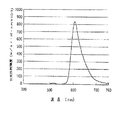
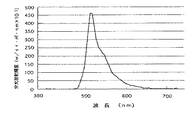
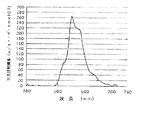
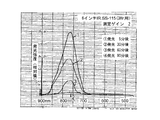
上記5種類の通常タイプ分光放射輝度は、赤蛍光が波長605nmで800×10−5W/(sr・m2・nm)超、黄蛍光が550nmで260×10−5W/(sr・m2・nm)超、緑蛍光が510nmで450×10−5W/(sr・m2・nm)超、青蛍光が450nmで260×10−5W/(sr・m2・nm)超のピークを示した。
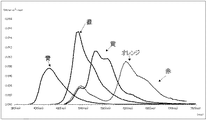
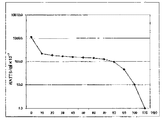
上記5種類の高輝度タイプ分光放射輝度は、高輝度タイプ赤蛍光が波長660nmで0.006W/(sr・m2・nm)超、高輝度タイプオレンジ蛍光が625nmで約0.009W/(sr・m2・nm)、525nmで約0.004W/(sr・m2・nm)、高輝度タイプ黄蛍光が555nmで0.011W/(sr・m2・nm)超、高輝度タイプ緑蛍光が520nmで0.015W/(sr・m2・nm)超、高輝度タイプ青蛍光が450nmで0.007W/(sr・m2・nm)超のピークを示した。
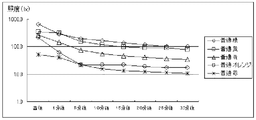
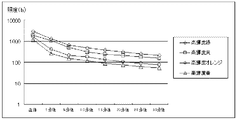
これらの蛍光の計測例をグラフとして、通常タイプの蛍光の例を図1(a)〜図1(d)に、高輝度タイプ例を図2に示す。<Chemiluminescent agent>
In this embodiment, two types of fluorescence with high and low luminance are used. The higher luminance is referred to as “high luminance type”, and the lower one is used for convenience as the term “normal type”. Since the luminescence power of fluorescence can be changed by the design of the luminescent agent, the present embodiment used luminescence having the following characteristics.
In an embodiment of the present invention, CYALUME Light shape (Sialium Light Shape) Blue (hereinafter referred to as “Blue Fluorescence”), Light Shape Green (hereinafter referred to as “Green Fluorescence”), Light Shape Yellow (hereinafter referred to as “Yellow”) manufactured by Japan Omni Glow Co., Ltd. Fluorescent ”), Light Shape Orange (hereinafter referred to as“ Orange Fluorescence ”), Light Shape Red (hereinafter referred to as“ Red Fluorescence ”), and 5 types of high-luminance phosphors,“ High Luminance Type Blue Fluorescence ” , “High luminance type green fluorescence”, “high luminance type yellow fluorescence”, “high luminance type orange fluorescence”, and “high luminance type red fluorescence” were used.
The above five types of normal type spectral radiances are: red fluorescence is more than 800 × 10 −5 W / (sr · m 2 · nm) at a wavelength of 605 nm, and yellow fluorescence is 260 × 10 −5 W / (sr · m at 550 nm. 2 · nm), green fluorescence is 510 nm and 450 × 10 −5 W / (sr · m 2 · nm), blue fluorescence is 450 nm and 260 × 10 −5 W / (sr · m 2 · nm) Showed a peak.
The above five types of high luminance type spectral radiance are over 0.006 W / (sr · m 2 · nm) at a wavelength of 660 nm for high luminance type red fluorescence and about 0.009 W / (sr at 625 nm for high luminance type orange fluorescence. · m 2 · nm), about 0.004W / (sr · m 2 · nm at 525nm), 0.011W / (sr ·
FIG. 1 (a) to FIG. 1 (d) show examples of normal type fluorescence, and FIG.
<照射蛍光特性>
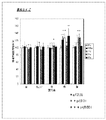
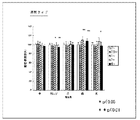
蛍光の照度の経時変化特性を表1、表2,図3、図4に示す。表1及び図3は通常タイプの緑蛍光、青蛍光、オレンジ蛍光、赤蛍光の値を示す。表2及び図4は高輝度タイプの緑蛍光、オレンジ蛍光、青蛍光、赤蛍光の値を示す。これらは実施例2から実施例7において使用する。<Irradiation fluorescence characteristics>
The temporal change characteristics of the illuminance of fluorescence are shown in Table 1, Table 2, FIG. 3 and FIG. Table 1 and FIG. 3 show values of normal type green fluorescence, blue fluorescence, orange fluorescence, and red fluorescence. Table 2 and FIG. 4 show values of high-luminance type green fluorescence, orange fluorescence, blue fluorescence, and red fluorescence. These are used in Examples 2-7.
<血流改善>
化学発光による光を皮膚に照射することによって、血管幅の拡張が確認でき、血流改善効果を確認することができた。
本実施例には、オレンジ蛍光の化学発光体を用いた。
観察実験は、血管幅の観察を15分から65分までの50分間オレンジ蛍光を照射、100分間おいて185分から205分までの20分間再度オレンジ発光を照射し、その前後も含めて235分間観察した血管幅経過グラフを図5に示した。これによって、照射開始15分後血管幅の拡幅が始まり、照射30分後の45分から照射停止した65分間で拡張した状態に保ち、照射停止後80分間以上かけて開始前の血管幅に戻り、再照射した185分から拡張に転じ停止するまでの40分間拡張し、停止(205分)後30分間かけてほぼ定常に戻ったことが観察できた。<Blood flow improvement>
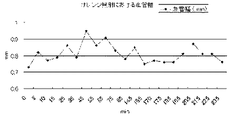
By irradiating the skin with chemiluminescent light, it was possible to confirm the expansion of the blood vessel width and the effect of improving blood flow.
In this example, an orange fluorescent chemiluminescent material was used.
In the observation experiment, the observation of blood vessel width was performed by irradiating orange fluorescence for 50 minutes from 15 minutes to 65 minutes, irradiating orange light again for 20 minutes from 185 minutes to 205 minutes at 100 minutes, and observed for 235 minutes including before and after that. The blood vessel width progress graph is shown in FIG. Thereby, the expansion of the blood vessel width starts 15 minutes after the start of irradiation, maintains the expanded state in 65 minutes after stopping irradiation from 45 minutes after irradiation, and returns to the blood vessel width before starting over 80 minutes after stopping irradiation, It was observed that the expansion was continued for 40 minutes from 185 minutes after re-irradiation to the expansion and stopped, and after 30 minutes (205 minutes), it returned to almost steady state.
血管幅の測定は次のとおりである。
測定方法
恒温恒湿の測定室にて、室温23℃、 湿度30%の条件下で測定をする。
1.定室にて 10分〜15分 安静に保ち、左手 中指の一定個所を測定する。
2.数回測定し、安定している部位にオレンジ蛍光の照射を10分間隔 50分間測定する。
3.その後、1時間ほどインターバルタイムをとり、再度 安定にしてから オレンジ蛍光の照射を行う。
4.10分間隔で20分間測定する。The measurement of the blood vessel width is as follows.
Measuring method
Measure in a constant temperature and humidity measurement room under conditions of
1. 10 to 15 minutes in a fixed room Keep calm and measure a certain point on the middle finger of the left hand.
2. Measure several times and measure the irradiation of orange fluorescence at a stable site for 50 minutes at intervals of 10 minutes.
3. Then, take an interval time of about 1 hour, stabilize it again, and then irradiate it with orange fluorescence.
4. Measure for 20 minutes at 10 minute intervals.
赤色蛍光の化学発光体を用い前腕内側部2箇所の皮膚に光を照射し、照射域の肘側A部と非照射域の手首側B部の皮膚温度の変化を観察したところ、皮膚温度の上昇が認められ、血流改善と皮膚外用剤と併用することによって、経皮吸収の促進が期待できる結果を得た。計測結果を表3に示す。
5回のモニターの平均では、被照射域B部では、赤色照射によって0.4℃、照射近縁の手首部位では、赤色蛍光の照射によって0.7℃の温度の上昇作用があることが確認できた。Using a red fluorescent chemiluminescent material, the skin on the inner forearm area was irradiated with light, and changes in the skin temperature at the elbow side A part of the irradiation area and the wrist side B part of the non-irradiation area were observed. An increase was observed, and by using in combination with an improvement in blood flow and an external preparation for skin, a result that can be expected to promote percutaneous absorption was obtained. Table 3 shows the measurement results.
The average of five monitors confirms that the irradiated area B has a temperature increase of 0.4 ° C due to red irradiation, and the wrist portion close to the irradiation has a temperature increase of 0.7 ° C due to irradiation with red fluorescence. did it.
従って、熱を発しない化学発光による光を皮膚に照射することにより、血管幅を拡張し、照射部位及びその近縁部位の皮膚温を上昇させることが分かった。 Therefore, it was found that irradiating the skin with chemiluminescent light that does not generate heat expands the blood vessel width and raises the skin temperature at the irradiated site and its related sites.
<細胞増殖>
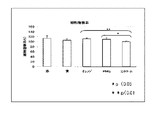
赤蛍光、青蛍光、オレンジ蛍光の3種類の化学発光による光を皮膚細胞に照射し、その後の細胞増殖を観察した。結果を図6に示す。
PMG(細胞増殖試験の指標として使用)と同等の増殖率をオレンジ蛍光と赤蛍光で観察できた。
なお、PMGは、「リン酸-L-アスコルビルマグネシウム」の略である。
コントロールと比較して、PMG添加系とオレンジ蛍光照射系において細胞増殖が有意に促進された。<Cell proliferation>
The skin cells were irradiated with light of three types of chemiluminescence of red fluorescence, blue fluorescence, and orange fluorescence, and the subsequent cell proliferation was observed. The results are shown in FIG.
A growth rate equivalent to that of PMG (used as an indicator of cell proliferation test) was observed with orange fluorescence and red fluorescence.
PMG is an abbreviation for “phosphate-L-ascorbyl magnesium”.
Compared with the control, cell proliferation was significantly promoted in the PMG addition system and the orange fluorescence irradiation system.
試験は次の方法により行った。
1.細胞:正常ヒト皮膚線維芽細胞(NHF)
2.化学発光体:CYALUME Light shape(サイアリウムライトシェープ)
ブルー(青蛍光)、オレンジ(オレンジ蛍光)、レッド(赤蛍光)
発売元:日本オムニグロー株式会社
3.アッセイ方法:
(1) NHFを2.0×10⁴cells/well、DMEM・10%S(+)で24well plateに播種。
(2) 5 日間培養しコンフルエントにした後、無色無血清DMEMへ交換した。
(3) 蛍光を照射(4hr)。ポジティブコントロールは100mM PMG添加系とした。
(4)細胞形態観察(×40)。
(5)細胞増殖をMTT Assayを用い、測定波長540nm、対照波長655nmの比色定量を行なった。細胞増殖率は無処置群のコントロールを100%として以下の式で計算した。
4.計算式:
細胞増殖率(%)=([サンプル添加OD(540nm)]−[サンプル添加OD(655nm)])/([コントロールOD(540nm)]−[コントロールOD(655nm)])×100The test was conducted by the following method.
1. Cells: Normal human skin fibroblasts (NHF)
2. Chemiluminescent body: CYALUME Light shape
Blue (blue fluorescence), orange (orange fluorescence), red (red fluorescence)
Publisher: Japan Omni Glow Co., Ltd. Assay method:
(1) NHF is seeded on a 24-well plate with 2.0 × 10 4 cells / well, DMEM and 10% S (+).
(2) After culturing for 5 days to confluence, it was replaced with colorless serum-free DMEM.
(3) Irradiation with fluorescence (4 hours). The positive control was a 100 mM PMG addition system.
(4) Cell morphology observation (× 40).
(5) Colorimetric determination of cell proliferation was performed using MTT Assay at a measurement wavelength of 540 nm and a control wavelength of 655 nm. The cell proliferation rate was calculated by the following formula with the control of the untreated group as 100%.
4). a formula:
Cell growth rate (%) = ([sample added OD (540 nm)] − [sample added OD (655 nm)]) / ([control OD (540 nm)] − [control OD (655 nm)]) × 100
<蛍光照射によるメラニン合成>
蛍光を細胞に照射することによりメラノーマ細胞の増殖抑制とメラニン合成抑制があることを確認した。メラノーマ細胞増殖に与える影響について表4及び図7に示し、細胞のメラニン合成に与える影響について表5及び図8に示した。
(試験方法)
細胞:マウス黒色細胞種(B16細胞)
化学発光体:(日本オムニク゛ロー株式会社製)
通常タイフ゜
フ゛ルー(青蛍光)、オレンシ゛(オレンシ゛蛍光)、レット゛(赤蛍光)、ク゛リーン(緑蛍光)、イエロー(黄蛍光)
高輝度タイフ゜
オレンシ゛(オレンシ゛蛍光)、レット゛(赤蛍光)、ク゛リーン(緑蛍光)
アッセイ方法: 1. B16細胞を3.6×10³cells/well、MEM・10%S(+)・ク゛ルコサミン培地で24well
plateに播種。n=8
2. 5 days培養した後、MEM・10%S(+)・テオフィリン培地へ培地交換。
3. 通常タイフ゜は4hr、高輝度タイフ゜は30min蛍光発光体をフ゜レートに接触させて蛍光を照射。コントロールは蛍光非照射系、ホ゜シ゛ティフ゛コントロールは1mM VC(アスコルヒ゛ン酸)添加系とした。
4. 照射開始3日後に細胞を回収し、0.1%SDS生理食塩水で細胞を溶解し、260nm(細胞量の指標)と475nm(メラニン量の指標)の吸光度を測定し、細胞増殖率と、単位細胞あたりのメラニン合成率を算出した。
B16細胞増殖率について表4及び図7に示し、単位細胞あたりのメラニン合成率について表5及び図8に示した。
計算式
B16細胞増殖率(%)=サンフ゜ルAbs(260nm)/コントロールAbs(260nm)×100
単位細胞あたりのメラニン合成率(%)=[サンフ゜ルAbs(475nm)/サンフ゜ルAbs(260nm)]/[コントロールAbs(475nm)/コントロールAbs(260nm)]×100 <Melanin synthesis by fluorescence irradiation>
It was confirmed that there was inhibition of melanoma cell proliferation and melanin synthesis by irradiating the cells with fluorescence. The effect on melanoma cell proliferation is shown in Table 4 and FIG. 7, and the effect on cell melanin synthesis is shown in Table 5 and FIG.
(Test method)
Cell: Mouse black cell type (B16 cell)
Chemiluminescent body: (made by Nippon Omni-Crows)
Normal type
Blue (blue fluorescence), orange (orange fluorescence), red (red fluorescence), green (green fluorescence), yellow (yellow fluorescence)
High brightness type
Orange (Orange fluorescence), Red (Red fluorescence), Green (Green fluorescence)
Assay method: 1. B16 cells in 3.6 × 10 3 cells / well, 24 wells in MEM, 10% S (+), glucosamine medium
Seeding on plate. n = 8
2. After 5 days of culture, replace the medium with MEM / 10% S (+) / theophylline medium.
3. Normal type is 4 hr, high brightness type is 30 min. The control was a non-fluorescence irradiation system, and the positive control was a 1 mM VC (ascorbic acid) addition system.
4. Three days after the start of irradiation, the cells are collected, lysed with 0.1% SDS physiological saline, and the absorbance at 260 nm (indicator of cell amount) and 475 nm (indicator of melanin amount) is measured. The melanin synthesis rate per unit cell was calculated.
The B16 cell growth rate is shown in Table 4 and FIG. 7, and the melanin synthesis rate per unit cell is shown in Table 5 and FIG.
a formula
B16 cell growth rate (%) = sample Abs (260 nm) / control Abs (260 nm) × 100
Melanin synthesis rate per unit cell (%) = [sample Abs (475 nm) / sample Abs (260 nm)] / [control Abs (475 nm) / control Abs (260 nm)] × 100
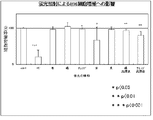
表4及び図7に示された結果から、通常タイプの赤蛍光、高輝度タイフ゜の緑蛍光、高輝度タイフ゜のオレンシ゛蛍光を照射することによりメラノーマ細胞の増殖を有意に抑制した。
赤蛍光、高輝度タイプの緑蛍光、オレンシ゛蛍光を皮膚に照射することにより、メラノーマ細胞の増殖が抑制され、メラノサイトの増殖が抑制されることが明らかとなった。以上から本発明の実施により美白効果が期待できる。From the results shown in Table 4 and FIG. 7, the proliferation of melanoma cells was significantly suppressed by irradiating normal type red fluorescence, high-intensity type green fluorescence, and high-intensity type orange fluorescence.
It was revealed that the proliferation of melanoma cells and the proliferation of melanocytes were suppressed by irradiating the skin with red fluorescence, high-luminance type green fluorescence, or orange fluorescence. From the above, a whitening effect can be expected by implementing the present invention.
表5及び図8に示された結果から、青蛍光、黄蛍光照射系で単位細胞あたりの有意なメラニン合成抑制が認められた。 From the results shown in Table 5 and FIG. 8, significant suppression of melanin synthesis per unit cell was observed in the blue fluorescence and yellow fluorescence irradiation systems.
紫外線と異なり、蛍光を照射することによりメラニン合成を促進することはなく、青と黄色蛍光において有意なメラニン合成抑制効果が認められた。特に青色蛍光照射では20%のメラニン合成抑制効果が認められた。
通常タイプの赤蛍光、高輝度タイフ゜の緑蛍光、高輝度タイフ゜のオレンシ゛蛍光では、メラノサイトの増殖の抑制が認められた。細胞数が減少することで全メラニン量は減少していると考えられる。
蛍光照射が線維芽細胞の増殖を抑制しなかったことからも、活性化したメラノサイトの増殖を選択的に抑制し、美白が期待できる。Unlike ultraviolet rays, irradiation with fluorescence did not promote melanin synthesis, and a significant melanin synthesis inhibitory effect was observed in blue and yellow fluorescence. In particular, a 20% melanin synthesis inhibitory effect was observed with blue fluorescent irradiation.
In the normal type of red fluorescence, high-intensity type green fluorescence, and high-intensity type orange fluorescence, suppression of melanocyte proliferation was observed. It is thought that the total amount of melanin is decreasing as the number of cells decreases.
Since fluorescence irradiation did not suppress the proliferation of fibroblasts, the proliferation of activated melanocytes was selectively suppressed and whitening could be expected.
<メラニン合成試験>
(試験方法)
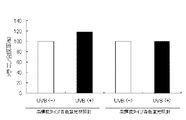
三次元皮膚モデル(メラノダーム(MEL-300A))(MatTeK社製)に1W/m2の強度における1J/m2のUVB照射及び/又は高輝度タイプ青色蛍光(日本オムニグロー株式会社製)1時間照射を紫外線照射後0、48、96時間後に行い、7日間培養した。
三次元皮膚モデルを1N水酸化ナトリウムで煮沸溶解し、メラニン量の指標となる350nmの吸光度を測定し、以下の式によりメラニン合成率を算出した。結果を図9に示した。
UVB、高輝度タイプ青色蛍光いずれも照射しない組織の溶解液をコントロールとした。
式:[メラニン合成率]=[各処置時組織溶解液の350nm吸光度]/[コントロール組織溶解液の350nm吸光度]×100<Melanin synthesis test>
(Test method)
Three-dimensional skin model (Melanoderm (MEL-300A)) (MatTeK) irradiated with 1 J / m 2 of UVB at 1 W / m 2 and / or high-intensity blue fluorescence (manufactured by Omniglow Japan) for 1 hour Was performed 0, 48, and 96 hours after UV irradiation, and cultured for 7 days.
The three-dimensional skin model was boiled and dissolved in 1N sodium hydroxide, the absorbance at 350 nm as an index of the amount of melanin was measured, and the melanin synthesis rate was calculated by the following formula. The results are shown in FIG.
A tissue lysate that was not irradiated with either UVB or high-luminance blue fluorescence was used as a control.
Formula: [Melanin synthesis rate] = [350 nm absorbance of tissue lysate at each treatment] / [350 nm absorbance of control tissue lysate] × 100
ヒト三次元皮膚モデルにおいて、UVB照射によりメラニン合成が促進されるが、高輝度タイプ青色蛍光を照射することにより、UVB照射によるメラニン合成促進が抑制されることが確認された。従って、皮膚を日光などの紫外線に暴露しても、その後、皮膚に青色蛍光などの蛍光を照射することによって、メラニンの合成を抑制し、皮膚の黒色化及びシミ、ソバカスの生成を抑制し、美白効果を期待できる。またあわせて、皮膚の抗光老化が期待できる。 In the human three-dimensional skin model, melanin synthesis was promoted by UVB irradiation, but it was confirmed that irradiation of high-luminance blue fluorescence suppressed melanin synthesis promotion by UVB irradiation. Therefore, even if the skin is exposed to ultraviolet rays such as sunlight, by subsequently irradiating the skin with fluorescence such as blue fluorescence, the synthesis of melanin is suppressed, the blackening of the skin and the generation of spots and freckles are suppressed, A whitening effect can be expected. In addition, anti-photoaging of the skin can be expected.
<ヒトメラノサイト増殖試験>
(実験方法)
ヒトメラノサイトを20000 cells/cm2でHMGS添加ヒト表皮メラニン細胞用基礎培地medium 154S(倉敷紡績株式会社製)を用いて24well プレートに播種した。
24時間インキュベート後、オリーブ葉エキス(下記製造例)またはブランクとして50%ブチレングリコール水溶液を添加した培地に置換し、高輝度タイプ青色蛍光(日本オムニグロー株式会社製)を1時間照射後、72時間培養した。
細胞をPBS(-)で洗浄後、1 W/W%ドデシル硫酸ナトリウム含有PBS(-)で溶解して得た細胞溶解液の260 nmの吸光度を測定し、以下の式で細胞増殖率を算出した。
ブランクを添加し、高輝度タイプ青色蛍光非照射の細胞溶解液をコントロールとした。
結果を図10にオリーブ葉エキスの添加濃度とメラノサイト増殖率の関係として示した。
オリーブ葉エキス
(オリーブ葉エキス製造例)
乾燥オリーブ葉1kgを90 W/W%エタノールに1週間浸漬後、濃縮・凍結乾燥後、50 W/W%ブチレングリコール水溶液に1 W/W%に溶解した。
式:[細胞増殖率]=[サンプル添加時吸光度(260 nm)]/[コントロール吸光度(260 nm)]×100<Human melanocyte proliferation test>
(experimental method)
Human melanocytes were seeded in a 24-well plate at 20000 cells / cm 2 using medium medium 154S (manufactured by Kurashiki Boseki Co., Ltd.) for human epidermal melanocytes added with HMGS.
After incubation for 24 hours, replace with olive leaf extract (preparation example below) or a medium supplemented with 50% butylene glycol aqueous solution as a blank, and irradiate with high-intensity blue fluorescent light (manufactured by Omni Glow Co., Ltd.) for 1 hour and then culture for 72 hours did.
Measure the absorbance at 260 nm of the cell lysate obtained by washing the cells with PBS (-) and lysing with PBS (-) containing 1 W / W% sodium dodecyl sulfate, and calculate the cell growth rate using the following formula. did.
A blank was added, and a cell lysate of high brightness type blue fluorescence non-irradiated was used as a control.
The results are shown in FIG. 10 as the relationship between the concentration of olive leaf extract added and the melanocyte growth rate.
Olive leaf extract (Example of olive leaf extract production)
1 kg of dried olive leaves was immersed in 90 W / W% ethanol for 1 week, concentrated and freeze-dried, and then dissolved in 50 W / W% butylene glycol aqueous solution at 1 W / W%.
Formula: [cell growth rate] = [absorbance at sample addition (260 nm)] / [control absorbance (260 nm)] × 100
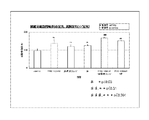
ヒトメラノサイト増殖は、高輝度タイプ青色蛍光の1時間照射による変化が認められなかったが、オリーブ葉エキスを添加した場合には高輝度タイプ青色蛍光照射によって、ヒトメラノサイト増殖率が有意に(オリーブ葉エキス0.5%添加時)低下した。
高輝度タイプ青色蛍光照射を併用することによりオリーブ葉エキスのヒトメラノサイト増殖率低減効果を相乗的に高めることができた。従って、青色蛍光を皮膚に照射することにより、ヒトメラノサイトの増殖が抑制される。したがって美白効果が期待できる。Human melanocyte growth did not change with 1-hour irradiation of high-intensity type blue fluorescence. However, when olive leaf extract was added, human melanocyte growth rate was significantly increased by the high-intensity type blue fluorescence irradiation (olive leaf When 0.5% of extract was added).
The combined use of high-intensity blue fluorescence irradiation synergistically enhanced the human melanocyte growth rate-reducing effect of olive leaf extract. Therefore, by irradiating the skin with blue fluorescence, the growth of human melanocytes is suppressed. Therefore, a whitening effect can be expected.
〈線維芽細胞増殖及びコラーゲン合成促進試験〉
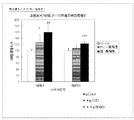
通常タイプの赤蛍光、高輝度タイプのオレンジ蛍光を用いて線維芽細胞に照射し、線維芽細胞の増殖及び線維芽細胞のコラーゲン合成促進を確認した。試験結果を繊維芽細胞については表6及び図11に、コラーゲン合成については表7及び図12に示した。
(試験方法)
細胞 :線維芽細胞(NHF)
化学発光体:(日本オムニグロー株式会社製)
通常タイプレッド(赤蛍光)
高輝度タイフ゜オレンジ(オレンシ゛蛍光)、
コラーゲン量測定キット:I型コラーケ゛ンC末端フ゜ロヘ゜フ゜チト゛(PIP)量をTakara PIP kitで測定。
アッセイ方法:
(1) NHFを2.0×10⁴cells/well、DMEM・10%S(+)で24well plateに播種。
(2) 5 日間培養しコンフルエントにした後、無色無血清DMEMへ交換した。
(3) 蛍光発光体を24well plateに接触させ、蛍光を照射(30min)。ポジティブコントロールは100mM PMG(リン酸-L-アスコルビルマグネシウム)添加系とした。
(4) 照射開始24時間後に培地上清を回収した。
I型コラーケ゛ンC末端フ゜ロヘ゜フ゜チト゛(PIP)量をTakara PIP kitで測定し、次いで細胞増殖をMTT Assayを用い、測定波長540nm、対照波長655nmの比色定量を行なった。細胞増殖率は無処置群のコントロールを100%として以下の式で計算した。
細胞増殖率(%)=([サンプル添加OD(540nm)]−[サンプル添加OD(655nm)])/([コントロールOD(540nm)]−[コントロールOD(655nm)])×100
コラーゲン合成率はPIP量とMTT Assayの結果を用いて以下の式で計算した。
コラーゲン合成率(%)={サンプルPIP量/([サンプル添加OD(540nm)]−[サンプル添加OD(655nm)])}/{コントロールPIP量/([コントロールOD(540nm)]−[コントロールOD(655nm)])}×100
<Fibroblast proliferation and collagen synthesis promotion test>
Fibroblasts were irradiated using normal type red fluorescence and high-luminance type orange fluorescence to confirm the proliferation of fibroblasts and the promotion of collagen synthesis in fibroblasts. The test results are shown in Table 6 and FIG. 11 for fibroblasts and in Table 7 and FIG. 12 for collagen synthesis.
(Test method)
Cell: Fibroblast (NHF)
Chemiluminescent body: (Nippon Omni Glow Co., Ltd.)
Normal type red (red fluorescence)
High brightness type orange (orange fluorescence),
Collagen content measurement kit: Measure the amount of collagen type C collagen C-terminal peptide (PIP) with Takara PIP kit.
Assay method:
(1) NHF is seeded on a 24-well plate with 2.0 × 10 4 cells / well, DMEM and 10% S (+).
(2) After culturing for 5 days to confluence, it was replaced with colorless serum-free DMEM.
(3) A fluorescent light emitter is brought into contact with a 24-well plate and irradiated with fluorescence (30 min). The positive control was a system containing 100 mM PMG (phosphate-L-ascorbyl magnesium).
(4) The culture supernatant was collected 24 hours after the start of irradiation.
The amount of type I collagen C-terminal peptide (PIP) was measured with Takara PIP kit, and then cell proliferation was measured colorimetrically using MTT Assay at a measurement wavelength of 540 nm and a control wavelength of 655 nm. The cell proliferation rate was calculated by the following formula with the control of the untreated group as 100%.
Cell growth rate (%) = ([sample added OD (540 nm)] − [sample added OD (655 nm)]) / ([control OD (540 nm)] − [control OD (655 nm)]) × 100
The collagen synthesis rate was calculated by the following formula using the PIP amount and the results of MTT Assay.
Collagen synthesis rate (%) = {sample PIP amount / ([sample added OD (540 nm)] − [sample added OD (655 nm)])} / {control PIP amount / ([control OD (540 nm)] − [control OD (655nm)])} × 100
表6及び図11に示した線維芽細胞の増殖試験結果から、通常タイプの赤蛍光、高輝度タイフ゜のオレンシ゛蛍光照射24時間後に細胞増殖率を測定するコラーケ゛ン合成促進試験系において、通常タイプの赤蛍光、高輝度タイフ゜のオレンシ゛蛍光照射ともに有意に線維芽細胞の増殖を促進した。PMG併用時においても、通常タイプの赤蛍光、高輝度タイフ゜のオレンシ゛蛍光照射で有意に線維芽細胞が増殖することを確認した。 From the results of the proliferation test of fibroblasts shown in Table 6 and FIG. 11, in the collagen synthesis promotion test system for measuring the cell proliferation rate 24 hours after irradiation of orange fluorescence of normal type and high intensity type orange fluorescence, Both fluorescence and high intensity type orange fluorescence irradiation significantly promoted the proliferation of fibroblasts. Even when combined with PMG, it was confirmed that fibroblasts proliferated significantly with normal type red fluorescence and high intensity type orange fluorescence irradiation.
表7及び図12に示した計測データから、単位細胞あたりのコラーケ゛ン合成率において、通常タイフ゜の赤蛍光、高輝度タイフ゜のオレンシ゛蛍光照射系で有意なPMGと同程度のコラーケ゛ン合成促進が認められた。 From the measurement data shown in Table 7 and FIG. 12, in the collagen synthesis rate per unit cell, the promotion of collagen synthesis similar to that of PMG was observed in the normal type of red fluorescence and the high intensity type of orange fluorescence irradiation system. .
通常タイフ゜の赤蛍光、高輝度タイプのオレンジ蛍光を線維芽細胞に照射することにより、線維芽細胞の増殖及びコラーゲン合成が促進される。また、PMGと併用することにより、さらに線維芽細胞が増殖し、コラーゲン合成が促進される。従って、皮膚に通常タイフ゜の赤蛍光、高輝度タイプのオレンジ蛍光等の化学発光蛍光を照射すると、皮膚中のコラーゲン量が増大し、ハリの向上、シワの改善、弾力性、柔軟性の改善、老化防止効果が期待できる。さらに、PMGを含有する皮膚外用剤と併用することにより相乗的な改善効果が期待できる。 By irradiating fibroblasts with normal-type red fluorescence and high-luminance orange fluorescence, fibroblast proliferation and collagen synthesis are promoted. Moreover, by using together with PMG, fibroblasts further proliferate and collagen synthesis is promoted. Therefore, when the skin is irradiated with chemiluminescence fluorescence such as normal type red fluorescence and high-luminance type orange fluorescence, the amount of collagen in the skin increases, the elasticity is improved, wrinkles are improved, elasticity and flexibility are improved. Antiaging effect can be expected. Furthermore, a synergistic improvement effect can be expected by using it together with an external preparation for skin containing PMG.
<蛍光照射による線維芽細胞増殖>
各種の蛍光を線維芽細胞に照射することにより線維芽細胞の増殖作用を確認した。次の試験を行い、測定結果を図13、14、15に示した。まとめの評価結果を表8に示した。(試験方法)
細胞:線維芽細胞(NHF)
蛍光発光体:(日本オムニク゛ロー株式会社製)
通常タイプの蛍光
フ゛ルー(青蛍光)、オレンシ゛(オレンシ゛蛍光)、レット゛(赤蛍光)、イエロー(黄蛍 光)、ク゛リーン(緑蛍光)、高輝度タイプの蛍光オレンシ゛高輝度タイフ゜(オレン シ゛蛍光)、ク゛リーン高輝度タイフ゜(緑蛍光)
アッセイ方法: 1. NHFを2.5×10⁴cells/ml、DMEM・10%S(+)で96well plateに播種。
2. 翌日に無色DMEM調製5%、1%FBS含有培地へ培地交換。
3. 化学発光体をプレートに接触させて蛍光を照射した。
蛍光を照射(0.5、1、2、4hr、高輝度タイフ゜は0.5hrのみ)。
5%CO2、37℃で5日間培養。
4.MTT Assayを用い、測定波長540nm、対照波長655nmの比色定量を行なった。細胞増殖率は無処置群のコントロールを100%として以下の式で計算した。
細胞増殖率(%)=([サンプル添加OD(540nm)]−[サンプル添加OD(655nm)])/([コントロールOD(540nm)]−[コントロールOD(655nm)])×100。<Fibroblast proliferation by fluorescence irradiation>
Fibroblast proliferation activity was confirmed by irradiating fibroblasts with various types of fluorescence. The following test was conducted and the measurement results are shown in FIGS. The summary evaluation results are shown in Table 8. (Test method)
Cell: Fibroblast (NHF)
Fluorescent light emitter: (manufactured by Omnicru Japan Co., Ltd.)
Normal type of fluorescence
Blue (blue fluorescent), orange (orange fluorescent), red (red fluorescent), yellow (yellow fluorescent), green (green fluorescent), high-intensity fluorescent orange high-intensity type (orange fluorescent), green high-intensity type (Green fluorescence)
Assay method: 1. Seed NHF in 96 well plate with 2.5 × 10 4 cells / ml, DMEM and 10% S (+).
2. On the next day, change the medium to a medium containing 5% colorless 1% FBS and 1% FBS.
3. A chemiluminescent material was brought into contact with the plate and irradiated with fluorescence.
Irradiate with fluorescence (0.5, 1, 2, 4hr, high brightness type only 0.5hr).
Incubate for 5 days at 37 ° C with 5% CO 2 .
4. Using MTT Assay, colorimetric determination was performed at a measurement wavelength of 540 nm and a control wavelength of 655 nm. The cell proliferation rate was calculated by the following formula with the control of the untreated group as 100%.
Cell growth rate (%) = ([sample added OD (540 nm)] − [sample added OD (655 nm)]) / ([control OD (540 nm)] − [control OD (655 nm)]) × 100.
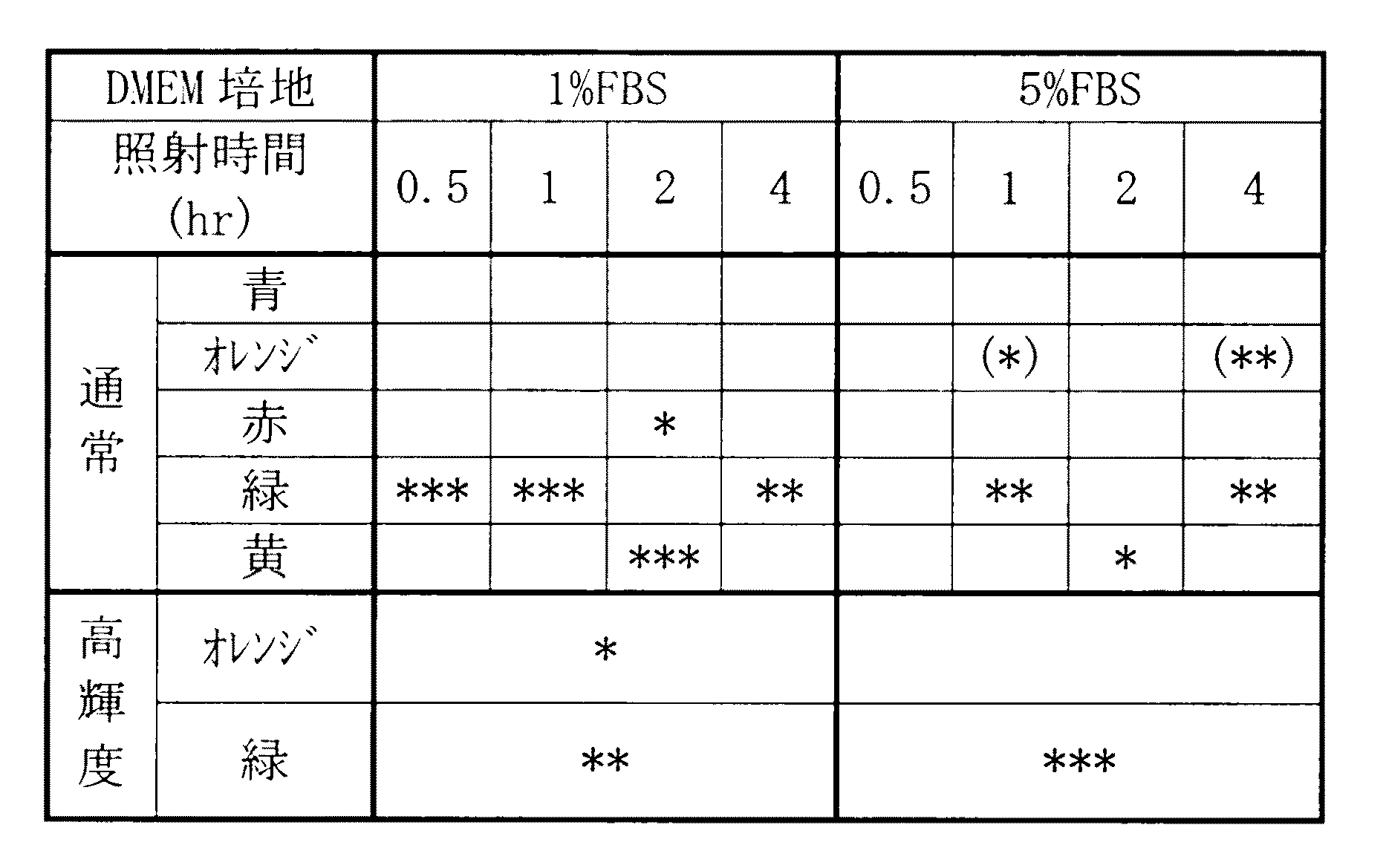
通常タイプの蛍光を照射した計測結果を示した図13、図14及び表8のデータから、5%FBS培地では緑蛍光照射1hr、4hr、黄蛍光照射2hrで有意な細胞増殖促進効果が認められた。
1%FBS培地では、赤蛍光照射2hr、緑蛍光照射0.5hr、1hr、4hr、黄蛍光照射2hrで有意な細胞増殖促進効果が認められた。
黄蛍光照射系では2hrまでは照射時間に依存して増加する傾向が観察された。From the data of FIGS. 13, 14 and Table 8 showing the measurement results of irradiation with normal type fluorescence, a significant cell growth promoting effect was observed in 5% FBS medium with
In the 1% FBS medium, a significant cell growth promoting effect was observed after 2 hours of red fluorescence irradiation, 0.5 hr, 1 hr, 4 hr of green fluorescence irradiation, and 2 hr of yellow fluorescence irradiation.
In the yellow fluorescent irradiation system, a tendency to increase depending on the irradiation time was observed up to 2 hr.
高輝度タイフ゜(0.5hr照射系)の蛍光を照射した計測結果を示した図15及び表8のデータから、高輝度タイフ゜では1%FBS・DMEM培地においてオレンシ゛蛍光と緑蛍光照射系で有意な細胞増殖促進効果が認められた。特に緑蛍光においては約1.5倍の増殖が認められた。
5%FBS添加培地においては緑蛍光照射のみにおいて有意な細胞増殖促進効果が認められた。From the data shown in FIG. 15 and Table 8 showing the measurement results of irradiation with high-intensity type (0.5 hr irradiation system), in the high-intensity type, significant cells were observed in the orange and green fluorescence irradiation systems in 1% FBS / DMEM medium. A growth promoting effect was observed. In particular, about 1.5-fold proliferation was observed in green fluorescence.
In the medium supplemented with 5% FBS, a significant cell growth promoting effect was observed only with green fluorescence irradiation.
本試験系において、FBS濃度が低いほど細胞増殖促進効果が現れ易い傾向が認められた。
通常タイプの赤蛍光、緑蛍光、黄蛍光において細胞賦活効果が認められ、FBS濃度が高いにもかかわらず、緑蛍光において細胞賦活活性が認められた。
また、高輝度タイプでは、オレンシ゛蛍光、緑蛍光で細胞賦活効果が認められ、同様にFBS濃度の高い系で緑蛍光に活性が認められた。以上より、最も活性が確実である蛍光色は緑色である可能性が示唆された。In this test system, it was observed that the cell growth promoting effect tends to appear as the FBS concentration decreases.
The cell activation effect was observed in the normal type of red fluorescence, green fluorescence, and yellow fluorescence, and the cell activation activity was observed in green fluorescence despite the high FBS concentration.
In the high-luminance type, the cell activation effect was observed in orange fluorescence and green fluorescence, and the activity was also observed in green fluorescence in the same system with a high FBS concentration. From the above, it was suggested that the fluorescent color with the most certain activity may be green.
<フォトリアーゼ活性増進試験>
細胞ではUVBの照射によりDNAが損傷し、ピリミジンダイマーが生成される。これを繰り返し蓄積することで、光老化が進行すると言われている。光合成能力を持つ原核生物にはこのDNA塩基の二量化を修復する「光回復酵素(フォトリアーゼ)」が存在しており、このフォトリアーゼは可視光により活性化されることが知られている(フレグランス ジャーナル 2002年6月号 49−53ページ)。本酵素は可視光で活性があがると報告されているが、蛍光発光体で活性があがることは報告されていない。
高輝度青色蛍光照射によるフォトリアーゼ活性に対する作用を検討し、蛍光発光体と化粧品有効成分の併用による効果を検討した。<Photolyase activity enhancement test>
In cells, UVB irradiation damages DNA and produces pyrimidine dimers. It is said that photoaging progresses by repeatedly accumulating this. Prokaryotes with photosynthetic ability have a "photorecovery enzyme" that repairs the dimerization of this DNA base, and this photolyase is known to be activated by visible light ( Fragrance Journal June 2002, pages 49-53). Although this enzyme has been reported to be active in visible light, it has not been reported to be active in fluorescent emitters.
The effect on photolyase activity by high-intensity blue fluorescence irradiation was examined, and the effect of the combined use of fluorescent emitters and cosmetic active ingredients was investigated.
(実験方法)
ヒトケラチノサイト7.0×10⁵ cellsをφ60 mm dish、へ播種した。一晩インキュベートした後Hanks(-)に置換し、UVBを0. 5 J/m2 (1 W/m2) 照射した。さらにHumedia-KG添加EpiLife(倉敷紡績株式会社製)へ置換し、サンプル(ブランクは50%ブチレングリコール、フォトリアーゼは0.04Units、0.4Units(ピリミジンダイマー修復活性)添加後、高輝度タイプ青色蛍光(オムニグロー株式会社製)を1時間照射した。フォトリアーゼ無添加、高輝度タイプ青色蛍光非照射をコントロールとした。
UVB照射6時間後にDNAzol reagent(インビトロジェン株式会社製)を用いて定法に従って細胞からDNAを回収した。
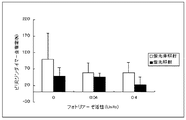
ピリミジンダイマー量を測定しその結果を図16に示した。(experimental method)
Human keratinocytes 7.0 × 10 5 cells were seeded in a φ60 mm dish. After overnight incubation, it was replaced with Hanks (−) and irradiated with UVB at 0.5 J / m 2 (1 W / m 2 ). Furthermore, HuLife-KG added EpiLife (manufactured by Kurashiki Boseki Co., Ltd.) was replaced, and after adding samples (blank 50% butylene glycol, photolyase 0.04Units, 0.4Units (pyrimidine dimer repair activity), high brightness type blue fluorescence (Omni Glow Co., Ltd.) was irradiated for 1 hour, with no photolyase added and high-luminance blue fluorescent non-irradiation as controls.
After 6 hours of UVB irradiation, DNA was recovered from the cells using DNAzol reagent (manufactured by Invitrogen Corporation) according to a conventional method.
The amount of pyrimidine dimer was measured and the result is shown in FIG.
(ピリミジンダイマー量を測定法)
本DNAを用い、以下に示す方法でピリミジンダイマー量を測定した。
1% 硫酸プロタミン液を96 well プレートに播種し、37℃で2時間インキュベートした。滅菌水でプレートを洗浄し、乾燥後、抽出DNAを2μgずつ各wellに播種し、37℃で20hrインキュベートした。0.05%Tween20含有PBS(PBS-T)で洗浄し、2% スキムミルク含有PBSを入れ、37℃1時間 インキュベートした。PBS-Tで洗浄し、2%スキムミルク含有PBSで調製したチミンダイマーモノクローナル抗体を入れ、37℃で1時間インキュベートした。PBS-Tで洗浄し、HRP結合ヤギ抗マウスIgG抗体を播種し、37℃で1時間インキュベートした。PBS(PBS-T)で洗浄後、さらにPBS(-)で洗浄した。3,3’,5,5’ tetramethylbenzidine溶液(1-StepTMTurbo TMB-ELISA(pierce社製))を添加し、室温でインキュベート後、2N硫酸で反応を止めた。450nmの吸光度を測定し、DNA2 μgあたりのピリミジンダイマー含有率を下の式で算出した。
フォトリアーゼはシアノバクテリア属のanacystis nidulans由来を使用し、フォトリアーゼを41Units/mL含有するAGI Dermatics社のPHOTOSOMES(R)を用いて添加した。
式:[ピリミジンダイマー含有率(%)]=[サンプル添加時吸光度(450 nm)]/[コントロール吸光度(450nm)]×100(Measurement method of pyrimidine dimer amount)
Using this DNA, the amount of pyrimidine dimer was measured by the following method.
A 1% protamine sulfate solution was seeded on a 96-well plate and incubated at 37 ° C. for 2 hours. The plate was washed with sterilized water and dried, and 2 μg of the extracted DNA was seeded in each well and incubated at 37 ° C. for 20 hours. After washing with PBS containing 0.05% Tween 20 (PBS-T), PBS containing 2% skim milk was added and incubated at 37 ° C for 1 hour. The plate was washed with PBS-T, and a thymine dimer monoclonal antibody prepared with PBS containing 2% skim milk was added and incubated at 37 ° C. for 1 hour. Washed with PBS-T, seeded with HRP-conjugated goat anti-mouse IgG antibody and incubated at 37 ° C. for 1 hour. After washing with PBS (PBS-T), it was further washed with PBS (−). 3,3 ′, 5,5 ′ tetramethylbenzidine solution (1-StepTM Turbo TMB-ELISA (manufactured by Pierce)) was added, and the reaction was stopped with 2N sulfuric acid after incubation at room temperature. Absorbance at 450 nm was measured, and the pyrimidine dimer content per 2 μg of DNA was calculated by the following formula.
The photolyase used was derived from the cyanobacterium anacystis nidulans, and was added using PHOTOSOMES® (AGI Dermatics) containing 41 Units / mL of photolyase.
Formula: [pyrimidine dimer content (%)] = [absorbance at sample addition (450 nm)] / [control absorbance (450 nm)] × 100
図16に測定されたピリミジンダイマーの含有率を示した。
フォトリアーゼ無添加系において、高輝度タイプ青色蛍光を照射することによりピリミジンダイマーの含有率がコントロールの約1/2に低減した。
フォトリアーゼを0.04Unit、0.4Unit添加するとピリミジンダイマーの含有率がコントロールと比べてともに約1/2に低減するが、フォトリアーゼの添加量を0.04Unitから10倍量の0.4Unitにしても、ピリミジンダイマー含有率の低減効果に差が無かった。しかし、高輝度タイプ青色蛍光とフォトリアーゼを併用するとピリミジンダイマーの含有率が低減し、特に、0.4Unitと高輝度タイプ青色蛍光を併用することにより、ピリミジンダイマー含有率をコントロールの約1/4に低減することができた。
コントロールと比べて、有意にピリミジンダイマー含有率を低減できたのは、高輝度タイプ青色蛍光照射、フォトリアーゼ0.04Unit・高輝度タイプ青色蛍光併用系、及びフォトリアーゼ0.4Unit・高輝度タイプ青色蛍光併用系であり、フォトリアーゼと高輝度タイプ青色蛍光を併用することにより、相乗的に光老化を抑制できる。
特に、化学発光の照射あるいはフォトリアーゼを作用することにより、光老化を抑制することが可能である。高輝度タイプ青色蛍光の照射あるいはフォトリアーゼを併用して高輝度タイプ青色蛍光を照射することにより紫外線による皮膚細胞のDNA損傷を抑制し、光老化を抑制することができる。FIG. 16 shows the measured pyrimidine dimer content.
In the photolyase-free system, irradiation with high-intensity blue fluorescence reduced the pyrimidine dimer content to about ½ of the control.
When 0.04 Unit and 0.4 Unit of photolyase are added, the content of pyrimidine dimer is reduced to about ½ compared to the control. However, the amount of photolyase added is changed from 0.04 Unit to 10 times 0.4 Unit. However, there was no difference in the effect of reducing the pyrimidine dimer content. However, the combined use of high-intensity type blue fluorescence and photolyase reduces the content of pyrimidine dimer. In particular, the combined use of 0.4 Unit and high-intensity type blue fluorescence reduces the pyrimidine dimer content to about 1/4 of the control. It was possible to reduce it.
Compared with the control, the pyrimidine dimer content was significantly reduced by high-intensity type blue fluorescence irradiation, photolyase 0.04Unit / high-intensity type blue fluorescent combination system, and photolyase 0.4Unit / high-intensity type blue. It is a fluorescence combination system, and photoaging can be suppressed synergistically by using photolyase and high-luminance blue fluorescence in combination.
In particular, it is possible to suppress photoaging by applying chemiluminescence irradiation or photolyase. Irradiation of high-intensity type blue fluorescence or photolyase in combination with irradiation of high-intensity type blue fluorescence can suppress DNA damage of skin cells due to ultraviolet rays and suppress photoaging.
<化学発光近赤外線照射による血流増加試験>
化学発光によって得られる近赤外線を皮膚に照射して、血流量の変化を観察した。
化学発光によって得られる近赤外線の計測例を図17、18に示す。
試験条件を表9に示し、画像例を図19に示し、各被験者の血流量変化状態を図20に示す。<Blood flow increase test by chemiluminescence near infrared irradiation>
The skin was irradiated with near infrared rays obtained by chemiluminescence, and changes in blood flow were observed.
Examples of near infrared measurement obtained by chemiluminescence are shown in FIGS.
Table 9 shows the test conditions, FIG. 19 shows an image example, and FIG. 20 shows the blood flow rate change state of each subject.
被験者の一人の画像を例示した測定前、15分照射直後、15分照射後10分経過時を示した図19(a)(b)(c)から、画像の明るい部分が増加していることが認められ、照射終了後10分経過しても血流量が増加している様子が把握できる。
画像を数値化して各被験者の血流量の変化を表したグラフ図20から、照射前より照射後で血流量が1.5倍から3倍増加していることが確認された。照射終了10分後も全員低下することなく、増加していることが把握され、短時間の照射で長時間の作用効果が認められた。From FIG. 19 (a) (b) (c) showing an image of one subject's image before measurement, immediately after irradiation for 15 minutes, and when 10 minutes have elapsed after irradiation for 15 minutes, the bright part of the image is increasing. It can be seen that the blood flow is increasing even after 10 minutes from the end of irradiation.
From the graph of FIG. 20 showing the change in blood flow of each subject by digitizing the images, it was confirmed that the blood flow increased from 1.5 times to 3 times after irradiation than before irradiation. Even after 10 minutes from the end of irradiation, it was confirmed that all the members were increasing without decreasing, and a long-term effect was observed with a short irradiation.
<使用体感試験>
短辺50mm、長辺70mmの楕円形で中央部厚8mmの光透過性フィルム製の緑蛍光パックを用いた。対象として非蛍光の同形状のパックを使用した。
被験者5人について、右の頬に発光しないもの(ブランク)を使用、左の頬に 緑発光する蛍光パックを使用した。1日 1回 夜 30分間、5日間左右の頬にあてたのちアンケートにより、肌の張りについて回答を得た。結果を表10に示した。
結果は、1日目から全員が肌の張りの改善が感じられ、3日目には3人が5日目には4人が張りの改善を感じている。感じない人は0人であり、化学発光蛍光の照射によって肌の張り改善効果があることが確認できた。
緑蛍光照射により違和感を感じるものはいなかった。<Use experience test>
A green fluorescent pack made of a light-transmitting film having an elliptical shape with a short side of 50 mm and a long side of 70 mm and a central thickness of 8 mm was used. A non-fluorescent, identically shaped pack was used as the target.
For 5 subjects, the one that did not emit light on the right cheek (blank) was used, and the fluorescent pack that emitted green light on the left cheek was used. Once a day, for 30 minutes, after 5 days on the left and right cheeks, a questionnaire was given to answer about skin tension. The results are shown in Table 10.
As a result, from the first day, all members felt an improvement in skin tension, three on the third day, and four on the fifth day. The number of people who did not feel was zero, and it was confirmed that there was an effect of improving skin tension by irradiation with chemiluminescence fluorescence.
None of them felt uncomfortable with green fluorescent irradiation.
Claims (34)
Any one of the luminous body, the beauty tool, and the cosmetic tool described in claim 7, 8, 9, 10, 14, 15, 16, 18, 21, 22, 26, 27, 30, 31, and 32 is a face coating. Skin covering material characterized by being used for skin and body covering.
Priority Applications (1)
| Application Number | Priority Date | Filing Date | Title |
|---|---|---|---|
| JP2005517984A JP5074691B2 (en) | 2004-02-13 | 2005-02-10 | Chemiluminescent makeup and beauty method, skin-irradiated cosmetics and cosmetics |
Applications Claiming Priority (4)
| Application Number | Priority Date | Filing Date | Title |
|---|---|---|---|
| JP2004037392 | 2004-02-13 | ||
| JP2004037392 | 2004-02-13 | ||
| JP2005517984A JP5074691B2 (en) | 2004-02-13 | 2005-02-10 | Chemiluminescent makeup and beauty method, skin-irradiated cosmetics and cosmetics |
| PCT/JP2005/002079 WO2005077458A1 (en) | 2004-02-13 | 2005-02-10 | Method of chemiluminescence-utilizing makeup and beautification, luminant for skin irradiation beautification and makeup/ beautification equipment |
Publications (2)
| Publication Number | Publication Date |
|---|---|
| JPWO2005077458A1 true JPWO2005077458A1 (en) | 2007-10-18 |
| JP5074691B2 JP5074691B2 (en) | 2012-11-14 |
Family
ID=34857763
Family Applications (1)
| Application Number | Title | Priority Date | Filing Date |
|---|---|---|---|
| JP2005517984A Expired - Fee Related JP5074691B2 (en) | 2004-02-13 | 2005-02-10 | Chemiluminescent makeup and beauty method, skin-irradiated cosmetics and cosmetics |
Country Status (6)
| Country | Link |
|---|---|
| US (1) | US20070172439A1 (en) |
| EP (1) | EP1721634A4 (en) |
| JP (1) | JP5074691B2 (en) |
| CN (1) | CN1917919A (en) |
| CA (1) | CA2556402A1 (en) |
| WO (1) | WO2005077458A1 (en) |
Families Citing this family (20)
| Publication number | Priority date | Publication date | Assignee | Title |
|---|---|---|---|---|
| JP2009209093A (en) * | 2008-03-04 | 2009-09-17 | Shiseido Co Ltd | Agent for promoting recovery of barrier function of skin and external preparation for skin |
| JP2011020965A (en) * | 2009-07-17 | 2011-02-03 | Maruzen Pharmaceut Co Ltd | Cosmetic kit, and method of makeup |
| WO2012002484A1 (en) * | 2010-07-02 | 2012-01-05 | パナソニック電工株式会社 | Hair growth-stimulating device using light |
| CN103212163A (en) * | 2012-01-19 | 2013-07-24 | 福华电子股份有限公司 | Photostimulation method combined with auxiliary agent and photostimulation kit |
| CN103212161A (en) * | 2012-01-19 | 2013-07-24 | 福华电子股份有限公司 | Photostimulation method and photostimulation device |
| US8840929B2 (en) * | 2012-12-11 | 2014-09-23 | Elc Management Llc | Cosmetic compositions with near infra-red (NIR) light-emitting material and methods therefor |
| US20140163651A1 (en) * | 2012-12-11 | 2014-06-12 | Elc Management Llc | Cosmetic Compositions With Near Infra-Red (NIR) Light - Emitting Material And Methods Therefor |
| US20140161849A1 (en) * | 2012-12-11 | 2014-06-12 | Elc Management Llc | Cosmetic Compositions With Near Infra-Red (NIR) Light - Emitting Material And Methods Therefor |
| US9408790B2 (en) * | 2012-12-11 | 2016-08-09 | Elc Management Llc | Cosmetic compositions with near infra-red (NIR) light-emitting material and methods therefor |
| US8852616B2 (en) | 2012-12-11 | 2014-10-07 | Elc Management Llc | Cosmetic compositions with near infra-red (NIR) light-emitting material and methods therefor |
| CN103160488B (en) * | 2013-04-09 | 2016-03-30 | 青岛恒生生物制药技术开发有限公司 | The application of a kind of Antarctic ice microalgae CPD light repair enzyme, its encoding gene and expression vector and this enzyme |
| JP5731678B1 (en) * | 2014-01-09 | 2015-06-10 | 株式会社ファンケル | Blood flow evaluation or indirect measurement method |
| WO2015149177A1 (en) | 2014-04-01 | 2015-10-08 | Klox Technologies Inc. | Tissue filler compositions and methods of use |
| TW201613750A (en) * | 2015-08-13 | 2016-04-16 | Zheng-Hong Shi | Pulsed color light dressing film product |
| JP6381076B2 (en) * | 2015-12-01 | 2018-08-29 | 小豆島ヘルシーランド株式会社 | UV blockers and cosmetics |
| US10383809B2 (en) * | 2017-01-13 | 2019-08-20 | Galactic Beauty, LLC | Skin treatment compositions, masks and related methods |
| JP7509542B2 (en) * | 2019-12-27 | 2024-07-02 | 株式会社 資生堂 | Composition containing ultraviolet wavelength conversion material |
| JP7509540B2 (en) * | 2019-12-27 | 2024-07-02 | 株式会社 資生堂 | Oil-in-water emulsion composition containing ultraviolet wavelength conversion material |
| WO2020202764A1 (en) * | 2019-04-05 | 2020-10-08 | 株式会社 資生堂 | Cell activator |
| JP2024031635A (en) * | 2022-08-26 | 2024-03-07 | 株式会社 資生堂 | A beauty method to enhance the physiological effects of flavonoids using visible light |
Citations (8)
| Publication number | Priority date | Publication date | Assignee | Title |
|---|---|---|---|---|
| JP2001212250A (en) * | 2000-02-01 | 2001-08-07 | Japan Science & Technology Corp | Biological light irradiation device |
| JP2002085575A (en) * | 2000-09-18 | 2002-03-26 | Otsuka Pharmaceut Factory Inc | Melanin production suppressor |
| JP2002138278A (en) * | 2000-11-06 | 2002-05-14 | Omniglow Japan Co Ltd | Chemical luminescent system |
| JP2003501169A (en) * | 1999-06-04 | 2003-01-14 | アイシーエヌ フォトニックス リミテッド | Tissue recovery by light emission |
| JP2003012487A (en) * | 2001-06-29 | 2003-01-15 | Ya Man Ltd | Beauty liquid for laser treatment and method for laser treatment |
| JP2003137807A (en) * | 2001-11-01 | 2003-05-14 | Miyagi Kagaku Kogyo Kk | Collagen production promoter, cosmetics, food and medicine containing the same, and external preparation for prevention or improvement of skin diseases |
| JP2003313106A (en) * | 2002-04-19 | 2003-11-06 | Santebeeru:Kk | Cosmetic |
| WO2004004673A1 (en) * | 2002-07-08 | 2004-01-15 | Coty B.V. | Anti-ageing skin cosmetic |
Family Cites Families (9)
| Publication number | Priority date | Publication date | Assignee | Title |
|---|---|---|---|---|
| US5845640A (en) * | 1997-01-24 | 1998-12-08 | Spectra Science Corporation | Chemiluminescent sources for photodynamic therapy and photomedicine |
| JPH10309323A (en) * | 1997-05-13 | 1998-11-24 | Onkyo Corp | Light health appliances |
| EP1341464A4 (en) * | 2000-07-21 | 2009-07-22 | Ceramoptec Gmbh | Treatment for epithelial diseases |
| WO2003020103A2 (en) * | 2001-09-04 | 2003-03-13 | Amit Technology Science & Medicine Ltd. | Method of and device for therapeutic illumination of internal organs and tissues |
| JP2003088527A (en) * | 2001-09-19 | 2003-03-25 | Aloka Co Ltd | Ultrasonic diagnostic device |
| JP2003261787A (en) * | 2002-03-08 | 2003-09-19 | Univ Nihon | Sensitizing dye for cancer photodynamic therapy |
| EP1490150A1 (en) * | 2002-03-15 | 2004-12-29 | ZELICKSON, Brian D. | A device and method for treatment of external surfaces of a body utilizing a light-emitting container |
| US6913615B2 (en) * | 2002-03-25 | 2005-07-05 | Lumerx, Inc. | Chemiluminescent treatment of acne |
| US7255691B2 (en) * | 2002-04-16 | 2007-08-14 | Lumerx Inc. | Chemiluminescent light source using visible light for biotherapy |
-
2005
- 2005-02-10 JP JP2005517984A patent/JP5074691B2/en not_active Expired - Fee Related
- 2005-02-10 CN CNA2005800047505A patent/CN1917919A/en active Pending
- 2005-02-10 EP EP05710131A patent/EP1721634A4/en not_active Withdrawn
- 2005-02-10 WO PCT/JP2005/002079 patent/WO2005077458A1/en not_active Ceased
- 2005-02-10 US US10/597,936 patent/US20070172439A1/en not_active Abandoned
- 2005-02-10 CA CA002556402A patent/CA2556402A1/en not_active Abandoned
Patent Citations (9)
| Publication number | Priority date | Publication date | Assignee | Title |
|---|---|---|---|---|
| JP2003501169A (en) * | 1999-06-04 | 2003-01-14 | アイシーエヌ フォトニックス リミテッド | Tissue recovery by light emission |
| JP2001212250A (en) * | 2000-02-01 | 2001-08-07 | Japan Science & Technology Corp | Biological light irradiation device |
| JP2002085575A (en) * | 2000-09-18 | 2002-03-26 | Otsuka Pharmaceut Factory Inc | Melanin production suppressor |
| JP2002138278A (en) * | 2000-11-06 | 2002-05-14 | Omniglow Japan Co Ltd | Chemical luminescent system |
| JP2003012487A (en) * | 2001-06-29 | 2003-01-15 | Ya Man Ltd | Beauty liquid for laser treatment and method for laser treatment |
| JP2003137807A (en) * | 2001-11-01 | 2003-05-14 | Miyagi Kagaku Kogyo Kk | Collagen production promoter, cosmetics, food and medicine containing the same, and external preparation for prevention or improvement of skin diseases |
| JP2003313106A (en) * | 2002-04-19 | 2003-11-06 | Santebeeru:Kk | Cosmetic |
| WO2004004673A1 (en) * | 2002-07-08 | 2004-01-15 | Coty B.V. | Anti-ageing skin cosmetic |
| JP2005532375A (en) * | 2002-07-08 | 2005-10-27 | コティ ビー.ヴィ. | Anti-aging skin cosmetics |
Also Published As
| Publication number | Publication date |
|---|---|
| US20070172439A1 (en) | 2007-07-26 |
| JP5074691B2 (en) | 2012-11-14 |
| CN1917919A (en) | 2007-02-21 |
| CA2556402A1 (en) | 2005-08-25 |
| WO2005077458A1 (en) | 2005-08-25 |
| EP1721634A4 (en) | 2008-03-26 |
| EP1721634A1 (en) | 2006-11-15 |
Similar Documents
| Publication | Publication Date | Title |
|---|---|---|
| JP5074691B2 (en) | Chemiluminescent makeup and beauty method, skin-irradiated cosmetics and cosmetics | |
| ES2743446T3 (en) | Devices to provide skin care through the use of phototherapy | |
| US8454991B2 (en) | Method and device for photodynamic therapy | |
| JP6158082B2 (en) | Enhanced penetration and action | |
| US9737728B2 (en) | Method for the treatment of mammalian skin tissues via pulse irradiation in the presence of a photoactive compound | |
| AU2013315303B2 (en) | Chromophore combinations for biophotonic uses | |
| US20050080465A1 (en) | Device and method for treatment of external surfaces of a body utilizing a light-emitting container | |
| JP2020143095A (en) | Bio-light compositions, kits and methods | |
| KR20150143457A (en) | Biophotonic materials and uses thereof | |
| CN106714837B (en) | Thermosetting biophotonic compositions and uses thereof | |
| CN106573055B (en) | Silicone-based biophotonic compositions and uses thereof | |
| CN106714843A (en) | Biophotonic compositions containing halogens and uses thereof | |
| Babilas et al. | Split‐face‐study using two different light sources for topical PDT of actinic keratoses: non‐inferiority of the LED system | |
| US20200405858A1 (en) | Modulation of biophotonic regimens | |
| Palm et al. | Aminolevulinic acid: actinic keratosis and photorejuvenation | |
| US20230038408A1 (en) | Biophotonic compositions, uses and methods for modulating mitochondrial dynamics and functionality in skin and soft tissue conditions | |
| TWM412861U (en) | Natural light whitening shield device | |
| Diogo | Antimicrobial Blue Light and Acne Vulgaris: Unraveling Therapeutic Insights | |
| HK1237253A1 (en) | Thermosetting biophotonic compositions and uses thereof | |
| HK1236423A1 (en) | Silicone-based biophotonic compositions and uses thereof | |
| HK1236423B (en) | Silicone-based biophotonic compositions and uses thereof | |
| HK1237253B (en) | Thermosetting biophotonic compositions and uses thereof |
Legal Events
| Date | Code | Title | Description |
|---|---|---|---|
| A621 | Written request for application examination |
Free format text: JAPANESE INTERMEDIATE CODE: A621 Effective date: 20080117 |
|
| A521 | Request for written amendment filed |
Free format text: JAPANESE INTERMEDIATE CODE: A821 Effective date: 20080527 |
|
| A711 | Notification of change in applicant |
Free format text: JAPANESE INTERMEDIATE CODE: A711 Effective date: 20080527 |
|
| A521 | Request for written amendment filed |
Free format text: JAPANESE INTERMEDIATE CODE: A821 Effective date: 20080527 |
|
| A131 | Notification of reasons for refusal |
Free format text: JAPANESE INTERMEDIATE CODE: A131 Effective date: 20100831 |
|
| A521 | Request for written amendment filed |
Free format text: JAPANESE INTERMEDIATE CODE: A523 Effective date: 20101027 |
|
| A02 | Decision of refusal |
Free format text: JAPANESE INTERMEDIATE CODE: A02 Effective date: 20110201 |
|
| A521 | Request for written amendment filed |
Free format text: JAPANESE INTERMEDIATE CODE: A821 Effective date: 20110427 |
|
| A521 | Request for written amendment filed |
Free format text: JAPANESE INTERMEDIATE CODE: A523 Effective date: 20110427 |
|
| A911 | Transfer to examiner for re-examination before appeal (zenchi) |
Free format text: JAPANESE INTERMEDIATE CODE: A911 Effective date: 20110606 |
|
| A912 | Re-examination (zenchi) completed and case transferred to appeal board |
Free format text: JAPANESE INTERMEDIATE CODE: A912 Effective date: 20110624 |
|
| A521 | Request for written amendment filed |
Free format text: JAPANESE INTERMEDIATE CODE: A523 Effective date: 20120615 |
|
| A521 | Request for written amendment filed |
Free format text: JAPANESE INTERMEDIATE CODE: A523 Effective date: 20120724 |
|
| A01 | Written decision to grant a patent or to grant a registration (utility model) |
Free format text: JAPANESE INTERMEDIATE CODE: A01 |
|
| A61 | First payment of annual fees (during grant procedure) |
Free format text: JAPANESE INTERMEDIATE CODE: A61 Effective date: 20120824 |
|
| R150 | Certificate of patent or registration of utility model |
Free format text: JAPANESE INTERMEDIATE CODE: R150 |
|
| FPAY | Renewal fee payment (event date is renewal date of database) |
Free format text: PAYMENT UNTIL: 20150831 Year of fee payment: 3 |
|
| LAPS | Cancellation because of no payment of annual fees |