JP7621675B2 - Trust environment-based artificial intelligence device - Google Patents
Trust environment-based artificial intelligence device Download PDFInfo
- Publication number
- JP7621675B2 JP7621675B2 JP2023129058A JP2023129058A JP7621675B2 JP 7621675 B2 JP7621675 B2 JP 7621675B2 JP 2023129058 A JP2023129058 A JP 2023129058A JP 2023129058 A JP2023129058 A JP 2023129058A JP 7621675 B2 JP7621675 B2 JP 7621675B2
- Authority
- JP
- Japan
- Prior art keywords
- data
- memory
- dnn
- artificial intelligence
- type
- Prior art date
- Legal status (The legal status is an assumption and is not a legal conclusion. Google has not performed a legal analysis and makes no representation as to the accuracy of the status listed.)
- Active
Links
Images
Classifications
-
- H—ELECTRICITY
- H04—ELECTRIC COMMUNICATION TECHNIQUE
- H04L—TRANSMISSION OF DIGITAL INFORMATION, e.g. TELEGRAPHIC COMMUNICATION
- H04L9/00—Cryptographic mechanisms or cryptographic arrangements for secret or secure communications; Network security protocols
-
- G—PHYSICS
- G06—COMPUTING OR CALCULATING; COUNTING
- G06F—ELECTRIC DIGITAL DATA PROCESSING
- G06F13/00—Interconnection of, or transfer of information or other signals between, memories, input/output devices or central processing units
- G06F13/14—Handling requests for interconnection or transfer
- G06F13/20—Handling requests for interconnection or transfer for access to input/output bus
- G06F13/28—Handling requests for interconnection or transfer for access to input/output bus using burst mode transfer, e.g. direct memory access DMA, cycle steal
-
- G—PHYSICS
- G06—COMPUTING OR CALCULATING; COUNTING
- G06F—ELECTRIC DIGITAL DATA PROCESSING
- G06F21/00—Security arrangements for protecting computers, components thereof, programs or data against unauthorised activity
- G06F21/50—Monitoring users, programs or devices to maintain the integrity of platforms, e.g. of processors, firmware or operating systems
- G06F21/57—Certifying or maintaining trusted computer platforms, e.g. secure boots or power-downs, version controls, system software checks, secure updates or assessing vulnerabilities
-
- G—PHYSICS
- G06—COMPUTING OR CALCULATING; COUNTING
- G06F—ELECTRIC DIGITAL DATA PROCESSING
- G06F21/00—Security arrangements for protecting computers, components thereof, programs or data against unauthorised activity
- G06F21/60—Protecting data
- G06F21/602—Providing cryptographic facilities or services
-
- G—PHYSICS
- G06—COMPUTING OR CALCULATING; COUNTING
- G06N—COMPUTING ARRANGEMENTS BASED ON SPECIFIC COMPUTATIONAL MODELS
- G06N3/00—Computing arrangements based on biological models
- G06N3/02—Neural networks
- G06N3/04—Architecture, e.g. interconnection topology
- G06N3/0464—Convolutional networks [CNN, ConvNet]
-
- G—PHYSICS
- G06—COMPUTING OR CALCULATING; COUNTING
- G06N—COMPUTING ARRANGEMENTS BASED ON SPECIFIC COMPUTATIONAL MODELS
- G06N3/00—Computing arrangements based on biological models
- G06N3/02—Neural networks
- G06N3/06—Physical realisation, i.e. hardware implementation of neural networks, neurons or parts of neurons
- G06N3/063—Physical realisation, i.e. hardware implementation of neural networks, neurons or parts of neurons using electronic means
-
- H—ELECTRICITY
- H04—ELECTRIC COMMUNICATION TECHNIQUE
- H04L—TRANSMISSION OF DIGITAL INFORMATION, e.g. TELEGRAPHIC COMMUNICATION
- H04L2209/00—Additional information or applications relating to cryptographic mechanisms or cryptographic arrangements for secret or secure communication H04L9/00
- H04L2209/12—Details relating to cryptographic hardware or logic circuitry
- H04L2209/125—Parallelization or pipelining, e.g. for accelerating processing of cryptographic operations
-
- H—ELECTRICITY
- H04—ELECTRIC COMMUNICATION TECHNIQUE
- H04L—TRANSMISSION OF DIGITAL INFORMATION, e.g. TELEGRAPHIC COMMUNICATION
- H04L2209/00—Additional information or applications relating to cryptographic mechanisms or cryptographic arrangements for secret or secure communication H04L9/00
- H04L2209/12—Details relating to cryptographic hardware or logic circuitry
- H04L2209/127—Trusted platform modules [TPM]
Landscapes
- Engineering & Computer Science (AREA)
- Theoretical Computer Science (AREA)
- Physics & Mathematics (AREA)
- General Engineering & Computer Science (AREA)
- Software Systems (AREA)
- General Physics & Mathematics (AREA)
- Computer Security & Cryptography (AREA)
- Computer Hardware Design (AREA)
- Health & Medical Sciences (AREA)
- General Health & Medical Sciences (AREA)
- Biophysics (AREA)
- Biomedical Technology (AREA)
- Life Sciences & Earth Sciences (AREA)
- Molecular Biology (AREA)
- Computing Systems (AREA)
- Evolutionary Computation (AREA)
- Mathematical Physics (AREA)
- Data Mining & Analysis (AREA)
- Computational Linguistics (AREA)
- Artificial Intelligence (AREA)
- Bioethics (AREA)
- Computer Networks & Wireless Communication (AREA)
- Signal Processing (AREA)
- Neurology (AREA)
- Storage Device Security (AREA)
Description
特許法第30条第2項適用 ウェブサイトの掲載日 2022年10月24日 ウェブサイトのアドレス https://dl.acm.org/doi/abs/10.1145/3528535.3531513Patent Act Article 30,
本発明は、人工知能ニューラルネットワークフレームワーク技術に関し、より詳細には、トラスト(Trust)環境で人工ニューラルネットワークの実行を安全に加速化することができるトラスト環境ベースの人工知能装置に関する。 The present invention relates to an artificial intelligence neural network framework technology, and more specifically, to a trust environment-based artificial intelligence device that can safely accelerate the execution of an artificial neural network in a trust environment.
DNN(Deep Neural Network)は、入力層及び出力層とその間のいくつかの隠れ層とからなる人工ニューラルネットワークである。DNNは、モバイル及び組み込みアプリケーションで広く使用されている。特に、DNNは、ユーザの身元を検証するためにユーザの生物学的特性(例えば、指紋、虹彩、顔など)を使用する生体認証実行のアプリケーションに有用である。 Deep Neural Network (DNN) is an artificial neural network that consists of an input layer, an output layer and several hidden layers in between. DNNs are widely used in mobile and embedded applications. In particular, DNNs are useful in applications that perform biometric authentication using a user's biological characteristics (e.g., fingerprint, iris, face, etc.) to verify the user's identity.
DNNには敏感なユーザデータが多く含まれているため、モバイル及び組み込み機器はセキュリティ攻撃からユーザ及びDNNデータを安全に保護することができる安全なDNNの実行環境を実現しなければならない。 Because DNNs contain a lot of sensitive user data, mobile and embedded devices must provide a secure DNN execution environment that can safely protect user and DNN data from security attacks.
従来は、ARM(Advanced RISC Machine)プロセッサで使用されるハードウェアベースのセキュリティ技術であるトラストゾーン(TrustZone)を介してトラスト実行環境(Trusted Execution Environment)でDNNを実行することが提案されていた。トラストゾーンは、プロセッサ(processor)内に独立したセキュリティ区域を別々に配置して重要な情報を保護するハードウェアベースのセキュリティ技術である。しかし、トラストゾーンでDNNを実行するだけではデータを完全に保護することはできない。トラストゾーンはメモリ保護機能が制限されているためである。トラストゾーンを使用すると、ハードウェア及びソフトウェアリソースを安全な一般区域に分割して、DNNの実行を他のプロセスから分離することができる。一般区域でセキュリティ区域のデータにアクセスすることは、ハードウェアによって防止される。しかし、トラストゾーンはデータを揮発性メモリに暗号化していない状態で維持するため、コールドブート攻撃(Cold Boot Attack)のような物理的なセキュリティ攻撃は、トラストゾーンでDNNの実行にも拘らず、敏感なユーザ及びDNNデータを取得することができる。 Previously, it was proposed to execute DNN in a trusted execution environment through TrustZone, a hardware-based security technology used in ARM (Advanced RISC Machine) processors. TrustZone is a hardware-based security technology that protects important information by placing independent security areas separately within a processor. However, data cannot be completely protected by simply executing DNN in the trust zone because the trust zone has limited memory protection capabilities. Using the trust zone, hardware and software resources can be divided into secure general areas to isolate the execution of DNN from other processes. Access to data in the security area from the general area is prevented by hardware. However, because the Trust Zone keeps data unencrypted in volatile memory, a physical security attack such as a cold boot attack can obtain sensitive user and DNN data despite the execution of the DNN in the Trust Zone.
物理的攻撃からデータを保護するために、データを暗号化して安全なオンチップメモリでのみを復号化するように選択することができる。このような方式は、トラストゾーンを使用してDNNの実行を他のプロセスから隔離することができるだけでなく、暗号化を介して物理的攻撃からユーザ及びDNNデータを保護することができる。しかし、メモリで暗号化されたデータを保護すると、遅いメモリアクセスが大きく増加し、プロセッサに課される高いデータ暗復号化のオーバーヘッドにより、DNNの実行時間が大きく増加するという問題が発生する。 To protect data from physical attacks, one can choose to encrypt the data and decrypt it only in secure on-chip memory. Such a scheme can not only isolate the execution of the DNN from other processes using a trust zone, but also protect user and DNN data from physical attacks through encryption. However, protecting encrypted data in memory causes problems in that slow memory accesses increase significantly and the high data encryption/decryption overhead imposed on the processor significantly increases the execution time of the DNN.
従って、敏感なユーザ及びDNNデータを物理的攻撃から保護するだけではなく、遅いメモリアクセス及び高いデータ暗復号化のオーバーヘッドを克服し、DNNの実行時間を減らす新しいセキュリティDNNフレームワークが必要になった。 Therefore, a new security DNN framework is needed that not only protects sensitive user and DNN data from physical attacks, but also overcomes the slow memory access and high data encryption/decryption overhead, and reduces the execution time of DNN.
本発明は、上記従来の問題点に鑑みてなされたものであって、本発明の目的は、トラスト(Trust)環境で人工ニューラルネットワークの実行を安全に加速化することができるトラスト環境ベースの人工知能装置を提供することにある。 The present invention has been made in consideration of the above-mentioned problems in the conventional technology, and an object of the present invention is to provide a trust environment-based artificial intelligence device that can safely accelerate the execution of an artificial neural network in a trust environment.
上記目的を達成するためになされた本発明の一態様によるトラスト環境ベースの人工知能装置は、暗号化入力データを送信し、暗号化出力データを受信する第1類型のメモリと、トラスト信頼空間で動作し、前記暗号化入力データ及び前記暗号化出力データの人工知能演算を行うトラスト人工知能処理部と、を備え、前記トラスト人工知能処理部は、前記暗号化入力データの復号化を介して復号化入力データを生成し、前記暗号化出力データを生成するために非暗号化出力データの暗号化を行う暗号処理フロント-エンドプロセッサと、前記復号化入力データ及び前記非暗号化出力データに対するバッファを提供する第2類型のメモリと、前記復号化入力データに基づいてニューラルネットワーク演算を行って前記非暗号化出力データを生成するプロセッサと、を含む。 A trust environment-based artificial intelligence device according to one aspect of the present invention, which has been made to achieve the above object, comprises a first type of memory that transmits encrypted input data and receives encrypted output data, and a trust artificial intelligence processing unit that operates in a trust trust space and performs artificial intelligence calculations on the encrypted input data and the encrypted output data, and the trust artificial intelligence processing unit includes a cryptographic processing front-end processor that generates decrypted input data by decrypting the encrypted input data and encrypts unencrypted output data to generate the encrypted output data, a second type of memory that provides a buffer for the decrypted input data and the unencrypted output data, and a processor that performs neural network calculations based on the decrypted input data to generate the unencrypted output data.
前記暗号処理フロント-エンドプロセッサは、前記第1類型のメモリから前記暗号化入力データとして暗号化入力アクティベーション及び暗号化フィルタの入力を受けて、前記第2類型のメモリに復号化入力アクティベーション及び復号化フィルタを格納することができる。
前記暗号処理フロント-エンドプロセッサは、前記人工知能演算の過程で前記プロセッサによるオン-デマンド要求を受信し、前記第1類型のメモリにアクセスして前記暗号化入力データを取り込むことができる。
前記第2類型のメモリは、前記第1類型のメモリよりも相対的に速い動作速度及び少ない格納容量を有することができる。
前記プロセッサは、直接畳み込みベースのニューラルネットワーク演算を行って前記第1類型のメモリのアクセス数を減らすことができる。
前記プロセッサは、前記第2類型のメモリに復号化入力アクティベーションを固定的に格納し、復号化フィルタ及び非暗号出力アクティベーションを循環キュー方式で格納することができる。
前記プロセッサは、前記暗号処理フロント-エンドプロセッサの割り込み駆動のオフロード(interrupt driven offloading)を介して、前記第1類型のメモリ及び前記第2類型のメモリとデータ送受信を行うことができる。
前記プロセッサは、DMA(Direct Memory Access)コントローラのDMA駆動のオフロードを介して、前記暗号処理フロント-エンドプロセッサと前記第1類型のメモリ及び前記第2類型のメモリとデータ送受信を行うことができる。
前記プロセッサは、前記暗号処理フロント-エンドプロセッサの暗号化及び復号化演算の実行にオーバーラップするように前記ニューラルネットワーク演算を実行してイントラ-レイヤパイプライニングを実現することができる。
前記プロセッサは、前記ニューラルネットワーク演算の実行中に前記暗号処理フロント-エンドプロセッサが前記暗号化入力データの復号化演算を行うようにして、前記ニューラルネットワーク演算を途切れることなく行うことができる。
前記プロセッサは、前記イントラ-レイヤパイプライニングのために、データ復号化ステップ、演算ステップ、及びデータ暗号化ステップに細分化して、前記ニューラルネットワーク演算を途切れることなく行うことができる。
The cryptographic processing front-end processor may receive encrypted input activations and encryption filters as the encrypted input data from the first type of memory, and store decryption input activations and decryption filters in the second type of memory.
The cryptographic front-end processor may receive an on-demand request by the processor during the artificial intelligence computation to access the first type of memory to retrieve the encrypted input data.
The second type of memory may have a relatively faster operating speed and a smaller storage capacity than the first type of memory.
The processor may perform direct convolution-based neural network operations to reduce the number of accesses to the first type of memory.
The processor may statically store decryption input activations in the second type of memory and store decryption filters and non-encrypted output activations in a circular queue manner.
The processor may transmit and receive data to and from the first type memory and the second type memory via interrupt driven offloading of the cryptographic front-end processor.
The processor may transmit and receive data between the cryptographic front-end processor and the first and second type memories via a DMA (Direct Memory Access) controller's DMA-driven offload.
The processor may perform the neural network operations to overlap with the performance of encryption and decryption operations of the cryptographic front-end processor to achieve intra-layer pipelining.
The processor is capable of performing the neural network operations uninterrupted by having the cryptographic front-end processor perform decryption operations on the encrypted input data while the neural network operations are being performed.
The processor can seamlessly perform the neural network operation by subdividing it into a data decoding step, an operation step, and a data encryption step for the intra-layer pipelining.
上記目的を達成するためになされた本発明の他の態様によるトラスト環境ベースの人工知能装置は、暗号化入力データを送信する第1類型のメモリと、トラスト信頼空間で動作し、前記暗号化入力データの人工知能演算を行うトラスト人工知能処理部と、を備え、前記トラスト人工知能処理部は、前記暗号化入力データの復号化を介して復号化入力データを生成する暗号処理フロント-エンドプロセッサと、前記復号化入力データ及び非暗号化出力データに対するバッファを提供する第2類型のメモリと、前記復号化入力データに基づいてニューラルネットワーク演算を行って前記非暗号化出力データを生成するプロセッサと、を含む。 A trust environment-based artificial intelligence device according to another aspect of the present invention, which has been made to achieve the above object, comprises a first type of memory that transmits encrypted input data, and a trust artificial intelligence processing unit that operates in a trust trust space and performs artificial intelligence calculations on the encrypted input data, and the trust artificial intelligence processing unit includes a cryptographic processing front-end processor that generates decrypted input data by decrypting the encrypted input data, a second type of memory that provides a buffer for the decrypted input data and unencrypted output data, and a processor that performs neural network calculations based on the decrypted input data to generate the unencrypted output data.
前記プロセッサは、直接畳み込みベースのニューラルネットワーク演算を行って前記第1類型のメモリのアクセス数を減らすことができる。
前記プロセッサは、前記第2類型のメモリに復号化入力アクティベーションを固定的に格納し、復号化フィルタ及び非暗号出力アクティベーションを循環キュー方式で格納することができる。
前記プロセッサは、前記暗号処理フロント-エンドプロセッサの暗号化及び復号化演算の実行にオーバーラップするように前記ニューラルネットワーク演算を実行してイントラ-レイヤパイプライニングを実現することができる。
The processor may perform direct convolution-based neural network operations to reduce the number of accesses to the first type of memory.
The processor may statically store decryption input activations in the second type of memory and store decryption filters and non-encrypted output activations in a circular queue manner.
The processor may perform the neural network operations to overlap with the performance of encryption and decryption operations of the cryptographic front-end processor to achieve intra-layer pipelining.
本明細書で開示する技術は、次の効果を有する。但し、特定の実施形態が次の効果を全て含まなければならないとか、又は次の効果のみを含まなければならないという意味ではないため、開示する技術の権利範囲はこれによって制限されるものと理解してはならない。 The technology disclosed in this specification has the following effects. However, this does not mean that a particular embodiment must include all of the following effects or that it must include only the following effects, and therefore the scope of the rights of the disclosed technology should not be understood as being limited by this.
本発明のトラスト環境ベースの人工知能装置によれば、トラスト(Trust)環境で人工ニューラルネットワークの実行を安全に加速化することができる。 The trust environment-based artificial intelligence device of the present invention makes it possible to safely accelerate the execution of an artificial neural network in a trust environment.
また、トラスト信頼空間でデータの暗号化を行って物理的攻撃からセキュリティを強化し、直接畳み込みベースのニューラルネットワーク演算を行ってメモリのアクセス数を減らすことができる。 In addition, data encryption can be performed in the trust space to enhance security against physical attacks, and convolution-based neural network operations can be performed directly to reduce the number of memory accesses.
更に、暗号ハードウェアでオフロードを行ってニューラルネットワークの実行作業が制限されたプロセッサリソースを活用することができ、イントラ-レイヤパイプライニングを介してデータの暗号化及び復号化にオーバーラップして人工ニューラルネットワークの実行時間を短縮することができる。 Furthermore, the execution of neural networks can be offloaded to cryptographic hardware to take advantage of limited processor resources, and the execution time of artificial neural networks can be reduced by overlapping data encryption and decryption via intra-layer pipelining.
本発明は、下記の研究課題をもって支援を受けて出願された。
[この発明を支援した国家研究開発事業]
[課題固有番号] 1711193986
[課題番号] 2020-0-01361-004
[省庁名] 科学技術情報通信部
[課題管理(専門)機関名] 情報通信企画評価院
[研究事業名] 情報通信放送革新人材養成
[研究課題名] 人工知能大学院支援(延世大学校)
[寄与率] 1/2
[課題実行機関名] 延世大学校産学協力団
[研究期間] 2023.01.01~2023.12.31
[この発明を支援した国家研究開発事業]
[課題固有番号] 1415177659
[課題番号] P0016150
[省庁名] 産業通商資源部
[課題管理(専門)機関名] 韓国産業技術振興院
[研究事業名] 産業技術国際協力(R&D)
[研究課題名] スマートIoTネットワークセキュリティのための攻撃探知及び防御技術開発
[寄与率] 1/2
[課題実行機関名] 韓国電子技術研究院
[研究期間] 2021.12.01~2022.11.30
The present invention was filed with the support of the following research project:
[National research and development project that supported this invention]
[Project specific number] 1711193986
[Project Number] 2020-0-01361-004
[Ministry name] Ministry of Science and ICT [Name of issue management (specialized) organization] Information and Communications Planning and Evaluation Agency [Research project name] Information and communications broadcasting innovation human resource development [Research project name] Artificial intelligence graduate school support (Yonsei University)
[Contribution rate] 1/2
[Name of project implementation organization] Yonsei University Industrial-Academic Cooperation Group [Research period] 2023.01.01-2023.12.31
[National research and development project that supported this invention]
[Project specific number] 1415177659
[Problem number] P0016150
[Ministry name] Ministry of Trade, Industry and Energy [Problem management (specialized) agency name] Korea Institute for Industrial Technology Advancement [Research project name] International Cooperation in Industrial Technology (R&D)
[Research Project Title] Development of attack detection and defense technology for smart IoT network security [Contribution Rate] 1/2
[Project implementation organization] Korea Electronics Research Institute [Research period] 2021.12.01-2022.11.30
本発明に関する説明は、構造的又は機能的説明のための実施形態に過ぎないため、本発明の権利範囲は、本明細書に説明している実施形態によって制限されるものと解釈してはならない。即ち、実施形態は、様々な変更が可能であり、種々の形態を有することができるため、本発明の権利範囲は、技術的思想を実現することができる均等物を含むものと理解しなければならない。また、本発明で提示している目的又は効果は、特定の実施形態がこれを全て含むべきであるとか、そのような効果だけを含むべきであるという意味ではないため、本発明の権利範囲は、これによって制限されるものと理解してはならない。 The description of the present invention is merely an embodiment for structural or functional description, and therefore the scope of the present invention should not be construed as being limited by the embodiment described in this specification. In other words, since the embodiment can be modified in various ways and can have various forms, the scope of the present invention should be understood to include equivalents that can realize the technical idea. In addition, the objectives or effects presented in the present invention do not mean that a particular embodiment should include all of them or should include only such effects, and therefore the scope of the present invention should not be understood as being limited thereby.
一方、本明細書で述べる用語の意味は、次のように理解されなければならない。 Meanwhile, the meanings of the terms used in this specification should be understood as follows:
「第1」、「第2」などの用語は、1つの構成要素を他の構成要素から区別するためのものであって、これらの用語によって権利範囲が限定されてはならない。例えば、第1構成要素は第2構成要素と名付けられてもよく、同様に第2構成要素も第1構成要素と名付けられてもよい。 Terms such as "first" and "second" are intended to distinguish one component from another, and should not be used to limit the scope of rights. For example, the first component may be named the second component, and similarly, the second component may be named the first component.
ある構成要素が他の構成要素に「連結されて」いると言及する場合には、その他の構成要素に直接連結されることもあるが、中間に他の構成要素が存在することもあると理解しなければならない。それに対し、ある構成要素が他の構成要素に「直接連結されて」いると言及する場合には、中間に他の構成要素が存在しないものと理解しなければならない。一方、構成要素間の関係を説明する他の表現、即ち「~間に」と「すぐ~間に」、又は「~に隣り合う」と「~に直接隣り合う」なども同様に解釈されなければならない。 When referring to an element being "connected" to another element, it should be understood that it may be directly connected to the other element, but there may also be other elements in between. In contrast, when referring to an element being "directly connected" to another element, it should be understood that there are no other elements in between. However, other expressions describing the relationship between elements, such as "between" and "immediately between," or "adjacent to" and "directly adjacent to," should be interpreted in the same way.
単数の表現は、文脈上明白に異なる意味ではない限り、複数の表現を含むものと理解しなければならず、「含む」又は「有する」などの用語は、実施される特徴、数字、ステップ、動作、構成要素、部分品、又はこれらを組み合わせたものが存在することを指定しようとするものであり、1つ又はそれ以上の他の特徴や数字、ステップ、動作、構成要素、部分品、又はこれらを組み合わせたものの存在又は付加可能性を予め排除しないものと理解しなければならない。 Singular expressions must be understood to include plural expressions unless the context clearly indicates otherwise, and terms such as "include" or "have" are intended to specify the presence of features, numbers, steps, operations, components, parts, or combinations thereof that are performed, and must be understood not to preclude the presence or additional possibility of one or more other features, numbers, steps, operations, components, parts, or combinations thereof.
各ステップにおいて、識別符号(例えば、a、b、cなど)は、説明の便宜のために使用されるものであって、識別符号は、各ステップの順序を説明するものではなく、各ステップは、文脈上明白に特定の順序を記載しない限り、明記された順序と異なって生じ得る。即ち、各ステップは、明記された順序と同一に生じることもあり、実質的に同時に行われることもあり、反対の順序で行われることもある。 In each step, the identification numbers (e.g., a, b, c, etc.) are used for convenience of explanation, and the identification numbers do not describe the order of each step, and each step may occur in a different order than specified unless the context clearly dictates a specific order. That is, each step may occur in the same order as specified, may occur substantially simultaneously, or may occur in the opposite order.
本発明は、コンピュータ読み取り可能な記録媒体にコンピュータ読み取り可能なコードとして実現され、コンピュータ読み取り可能な記録媒体は、コンピュータシステムによって読み取られるデータが格納される全ての種類の記録装置を含む。コンピュータ読み取り可能な記録媒体の例としては、ROM、RAM、CD-ROM、磁気テープ、フロッピー(登録商標)ディスク、光データ格納装置などがある。また、コンピュータ読み取り可能な記録媒体は、ネットワークで連結されたコンピュータシステムに分散されて、分散方式でコンピュータ読み取り可能なコードが格納され、実行され得る。 The present invention is embodied as computer readable code on a computer readable recording medium, which includes all types of recording devices in which data read by a computer system is stored. Examples of computer readable recording media include ROM, RAM, CD-ROM, magnetic tape, floppy disks, optical data storage devices, etc. Also, the computer readable recording media may be distributed among computer systems connected by a network, so that the computer readable code may be stored and executed in a distributed manner.
ここで使用する全ての用語は、異なって定義されない限り、本発明が属する分野における通常の知識を有する者により一般的に理解されるものと同じ意味を有する。一般的に使用される辞書に定義されている用語は、関連技術の文脈上有する意味と一致するものと解釈されなければならず、本明細書において明白に定義しない限り、理想的であるか又は過度に形式的な意味を有するものと解釈することはできない。 All terms used herein, unless defined differently, have the same meaning as commonly understood by a person of ordinary skill in the art to which this invention pertains. Terms defined in commonly used dictionaries must be interpreted to be consistent with the meaning they have in the context of the relevant art, and cannot be interpreted as having an ideal or overly formal meaning unless expressly defined herein.
以下、本発明を実施するための形態の具体例を、図面を参照しながら詳細に説明する。 Specific examples of embodiments of the present invention will be described in detail below with reference to the drawings.
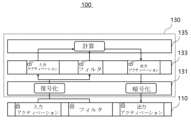
図1は、本発明によるトラスト環境ベースの人工知能装置を説明する図である。 Figure 1 is a diagram illustrating a trust environment-based artificial intelligence device according to the present invention.
図1を参照すると、トラスト環境ベースの人工知能装置100は、モバイル又は組み込み機器で人工ニューラルネットワークの実行に対してセキュリティ強化及び加速化のためのフレームワークであり、第1類型のメモリ110及びトラスト人工知能処理部130を含んで実現される。
Referring to FIG. 1, the trust environment-based
第1類型のメモリ110は、暗号化入力データを送信し、暗号化出力データを受信する。ここで、第1類型のメモリ110はDRAM(Dynamic Random Access Memory)で構成されるが、必ずしもこれに限定されるものではない。
The first type of
トラスト人工知能処理部130は、トラスト信頼空間で動作し、暗号化入力データ及び暗号化出力データの人工知能演算を行う。このために、トラスト人工知能処理部130は、暗号処理フロント-エンドプロセッサ131、第2類型のメモリ133、及びプロセッサ135を含む。
The trust artificial
暗号処理フロント-エンドプロセッサ131は、暗号ハードウェア(Crytographic Hardware)として暗号化入力データの復号化を介して復号化入力データを生成し、暗号化出力データを生成するために非暗号化出力データの暗号化を行う。暗号処理フロント-エンドプロセッサ131は、第1類型のメモリ110から、暗号化入力データである暗号化入力アクティベーション及び暗号化フィルタの入力を受けて、第2類型のメモリ133に復号化入力アクティベーション及び復号化フィルタを格納する。暗号処理フロント-エンドプロセッサ131は、人工知能演算の過程でプロセッサ135によるオン-デマンド(On-Demand)要求を受信し、第1類型のメモリ110にアクセスして暗号化入力データを取り込む。
The cryptographic front-
第2類型のメモリ133は、復号化入力データ及び非暗号化出力データに対するバッファを提供する。ここで、第2類型のメモリ133は、第1類型のメモリ110よりも相対的に速い動作速度及び少ない格納容量を有する。例えば、第1類型のメモリ110がDRAMで構成された場合、第2類型のメモリ133はSRAM(Static Random Access Memory)で構成される。第1類型のメモリ110と第2類型のメモリ133との間でデータを送受信するときに、暗号処理フロント-エンドプロセッサ131でデータを暗号化及び復号化して、正確性及びセキュリティ性を保証する。
The
プロセッサ135は復号化入力データに基づいてニューラルネットワーク演算を行って非暗号化出力データを生成する。プロセッサ135は直接畳み込みベースのニューラルネットワーク演算を行って第1類型のメモリ110のアクセス数を減らす。即ち、プロセッサ135は、直接畳み込みを使用してニューラルネットワーク演算の作業セットサイズを最小化し、減少した作業セットサイズにより、ニューラルネットワーク演算を行っている間、第2類型のメモリ133の動作速度よりも相対的に遅い第1類型のメモリ110に対するアクセス及びデータ暗号化及び復号化の呼び出しを減らす。
The
プロセッサ135は、第2類型のメモリ133に復号化入力アクティベーションを固定的に格納し、復号化フィルタ及び非暗号出力アクティベーションを循環キュー方式で格納する。プロセッサ135は、ニューラルネットワーク演算の実行で畳み込みレイヤの入力アクティベーション、フィルタ、及び出力アクティベーションのアクセスパターンに基づいて、第2類型のメモリ133を効率的に管理する。プロセッサ135は、入力アクティベーションの場合、データの再使用を増加させる傾向があるため固定的に格納し、フィルタの場合、出力チャンネルを生成するときに同じフィルタを複数回使用するが、サイズが入力アクティベーションよりもはるかに小さく、1つの出力チャンネルのみが生成するのに必要であるため、循環キュー(Circular Queue)方式で格納し、出力アクティベーションの場合、空間的集約性の高い1回の書き込みデータであるため、循環キュー方式で格納する。
The
プロセッサ135は暗号処理フロント-エンドプロセッサ131の割り込み駆動のオフロード(interrupt driven offloading)を介して第1類型のメモリ110及び第2類型のメモリ131とデータ送受信を行う。また、プロセッサ135は、DMA(Direct Memory Access)コントローラのDMA駆動のオフロードを介して、暗号処理フロント-エンドプロセッサ131並びに第1類型のメモ110リ及び第2類型のメモリ133とデータ送受信を行う。プロセッサ135は割り込み駆動のオフロード及びDMA駆動のオフロードの中から選択される。割り込み駆動のオフロードは待ち時間が重要な作業を行うのに適しており、DMA駆動のオフロードは一度により多くの量のデータを処理するのに適している。ここで、両オフロードのメカニズムは、ニューラルネットワーク演算を加速化する。
The
プロセッサ135は、暗号処理フロント-エンドプロセッサ131の暗号化及び復号化演算の実行にオーバーラップするようにニューラルネットワーク演算を実行して、イントラ-レイヤパイプライニングを実現する。プロセッサ135は、ニューラルネットワーク演算の実行中に暗号処理フロント-エンドプロセッサ131が暗号化入力データの復号化演算を行うようにして、ニューラルネットワーク演算を途切れることなく行う。プロセッサ135は、イントラ-レイヤパイプライニングのために、データ復号化ステップ、演算ステップ、及びデータ暗号化ステップに細分化して、ニューラルネットワーク演算を途切れることなく行う。プロセッサ135は、イントラ-レイヤパイプライニングを介して、データ復号化ステップ、演算ステップ、及びデータ暗号化ステップを並列化する。
The
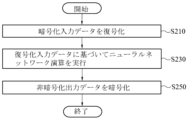
図2は、図1の人工知能装置でトラスト環境ベースの人工知能演算の実行方法を説明するフローチャートである。 Figure 2 is a flowchart illustrating a method for performing a trust environment-based artificial intelligence operation in the artificial intelligence device of Figure 1.
図2において、人工知能装置100は、第1類型のメモリ110から暗号化入力データの入力を受けて、復号化を介して復号化入力データを生成する(ステップS210)。人工知能装置100は暗号処理フロント-エンドプロセッサ131を介して暗号化入力データに対して復号化を行う。人工知能装置100は復号化入力データを第2類型のメモリ133に格納する。
In FIG. 2, the
人工知能装置100は、復号化入力データに基づいてニューラルネットワーク演算を行って非暗号化出力データを生成する(ステップS230)。ここで、人工知能装置100はプロセッサ135を介して直接畳み込みベースのニューラルネットワーク演算を行って暗号処理フロント-エンドプロセッサ131が第1類型のメモリ110にアクセスして暗号化入力データを取り込むアクセス数を減らす。人工知能装置100は、非暗号化出力データを第2類型のメモリ133に格納する。
The
人工知能装置100は、非暗号化出力データの暗号化を行って暗号化出力データを生成する(ステップS250)。人工知能装置100は、暗号処理フロント-エンドプロセッサ310を介して非暗号化出力データに対して暗号化を行う。人工知能装置100は暗号化出力データを第1類型のメモリ110に出力する。
The
人工知能装置100は、暗号処理フロント-エンドプロセッサ131の暗号化及び復号化演算の実行にオーバーラップするようにプロセッサ135のニューラルネットワーク演算を実行して、データ復号化ステップ、演算ステップ、及びデータ暗号化ステップでイントラ-レイヤパイプライニングを実現することによって、ニューラルネットワーク演算を加速化する。
The
以下、図3~17を参照して、本発明によるトラスト環境ベースの人工知能装置についてより詳しく説明する。 Below, the trust environment-based artificial intelligence device according to the present invention will be described in more detail with reference to Figures 3 to 17.
図3は、トラスト実行環境を説明する図である。 Figure 3 is a diagram explaining the trust execution environment.
図3を参照すると、トラスト実行環境(Trusted Execution Environment:以下、TEEという)は、処理、メモリ、及び格納機能を備えたセキュリティ処理環境であり、敏感な作業及びデータが当該環境を外れないように制限し、高いセキュリティを達成する。TEE内の作業及びデータは、OS(Operating System)及びアプリケーションが実行されるリッチ実行環境(Rich Execution Environment:以下、REEという)で隔離される。 Referring to Figure 3, a Trusted Execution Environment (TEE) is a security processing environment with processing, memory, and storage capabilities that restricts sensitive tasks and data from leaving the environment, achieving high security. Tasks and data within the TEE are isolated in a Rich Execution Environment (REE) in which the OS (Operating System) and applications are executed.
モバイル及び組み込み装置で使用されるトラストゾーンサポートのTEEを実現するために、トラストゾーンはCPUが指定された時点にTEE及びREEのうちの1つでのみ独占的に作動するようにするセキュリティプロセッサモードを実現する。TEEとREEとの間の切替え及び相互作用は、SMC(Secure Monitor Calls)で呼び出せるセキュリティモニターにより管理される。また、トラストゾーンは、DRAMをセキュリティ及び非セキュリティ領域に分割し、TEEの敏感なデータを保護するためにREEでセキュリティ領域にアクセスすることを許容しない。 To implement a Trust Zone supported TEE for use in mobile and embedded devices, the Trust Zone implements a security processor mode that allows the CPU to operate exclusively in only one of the TEE and REE at a given time. The switching and interaction between the TEE and REE is managed by a security monitor that can be invoked by SMC (Secure Monitor Calls). The Trust Zone also divides the DRAM into secure and non-secure areas and does not allow the REE to access the secure area to protect sensitive data in the TEE.
トラストゾーンサポートのTEEで実行される既存のDNNフレームワークは、1)周辺装置から入力データ(例えば、指紋センサの指紋イメージ)を受信してREEから開始される。2)REEでDNNのいくつかの初期レイヤを実行した後、3)出力アクティベーションを暗号化し、SMCを介してTEEに送信する。その次に、4)TEE内で送信されたアクティベーションを復号化し、5)復号化されたアクティベーション及び事前送信されたフィルタを使用して残りのレイヤを実行する。残りのレイヤの実行を完了すると、6)DNNが作った予測を、SMCを介してREEに返還する。 The existing DNN framework running in a TEE with trust zone support starts with the REE 1) receiving input data from a peripheral device (e.g., a fingerprint image from a fingerprint sensor). 2) After executing some initial layers of the DNN in the REE, 3) it encrypts the output activations and sends them to the TEE via the SMC. Then, 4) it decrypts the sent activations within the TEE, and 5) it runs the remaining layers using the decrypted activations and pre-sent filters. Once it has completed the execution of the remaining layers, 6) it returns the predictions made by the DNN to the REE via the SMC.
このような方式でDNNの実行を隔離して、いくつかのセキュリティ攻撃からDNNを保護する。 This approach isolates the execution of the DNN and protects it from several security attacks.
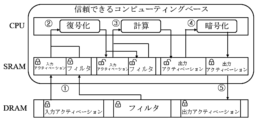
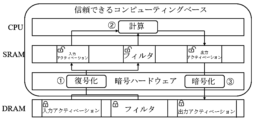
図4a及び4bは、従来と比べた発明によるDNNフレームワークの作業モデルを説明する図であって、図4aは従来のDNNフレームワークであり、図4bは、本発明で提案するDNNフレームワーク(以下、GuardianNNという)である。 Figures 4a and 4b are diagrams explaining the working model of the DNN framework of the present invention compared with the conventional one, where Figure 4a is the conventional DNN framework and Figure 4b is the DNN framework proposed in the present invention (hereinafter referred to as GuardianNN).
図4aの従来のDNNフレームワークの場合、最初にDNNの入力データ及びフィルタが全て暗号化されてDRAMに格納される。フレームワークがDNNのレイヤの実行を開始すると、1)暗号化された入力アクティベーション及びフィルタをSRAMにロードし、2)CPUを使用してデータを復号化する。その次に、フレームワークは、3)復号化されたデータを使用して各レイヤを実行し、出力アクティベーションをSRAMに格納する。その後、フレームワークは、4)出力アクティベーションを暗号化し、5)これをDRAMに格納する。入力アクティベーション及びフィルタは必要に応じてSRAMに置き換えられる。SRAMがレイヤの作業集合よりも小さい場合、データスワッピング及び暗復号化がよく発生する。暗号化されたDRAMを使用してTEE内でDNNを実行すると、従来のDNNフレームワークがセキュリティ攻撃から敏感なユーザ及びDNNデータを完全に保護できるが、遅いDNNの実行で困難をきたすことができる。 For the conventional DNN framework of FIG. 4a, first all input data and filters of the DNN are encrypted and stored in DRAM. When the framework starts executing a layer of the DNN, it 1) loads the encrypted input activations and filters into SRAM and 2) uses the CPU to decrypt the data. The framework then 3) executes each layer using the decrypted data and stores the output activations in SRAM. The framework then 4) encrypts the output activations and 5) stores them in DRAM. The input activations and filters are replaced in SRAM as needed. When the SRAM is smaller than the working set of the layer, data swapping and encryption/decryption are common. Using encrypted DRAM to execute the DNN in a TEE allows the conventional DNN framework to fully protect sensitive user and DNN data from security attacks, but can cause difficulties with slow DNN execution.
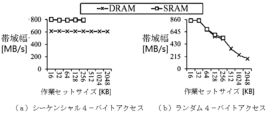
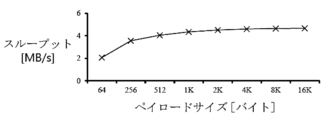
図5乃至図7は、従来のDNNフレームワークの実行速度、帯域幅、及び復号化のスループットをそれぞれ示す図である。 Figures 5 to 7 show the execution speed, bandwidth, and decoding throughput of the conventional DNN framework, respectively.
図5に示すように、図4aの従来のDNNフレームワーク(OP-TEE with Pager)とDRAMデータを暗号化しない安全ではないDarkneTZ作業モデルとのDNNの実行速度を比較した結果であって、従来のDNNフレームワークのDNNの実行速度がDarkneTZよりも顕著に遅いことが示された。従来のDNNフレームワークはDarkneTZよりもAlexNetを実行するのに3.42倍長くかかった。 As shown in Figure 5, which is a comparison of the execution speed of DNN between the conventional DNN framework (OP-TEE with Pager) in Figure 4a and the insecure DarkneTZ working model that does not encrypt DRAM data, the execution speed of DNN in the conventional DNN framework is significantly slower than DarkneTZ. The conventional DNN framework took 3.42 times longer to execute AlexNet than DarkneTZ.
従来のDNNフレームワークは、組み込みSRAMの制限された容量により遅いDRAMのアクセス数が増加し、CPUに課される高いデータの暗号化及び復号化のオーバーヘッドによる性能のボトルネック現象がDNNの実行速度に影響を与える。具体的に、従来のDNNフレームワークは、TEEが暗号化されたDRAMデータを安全にロードし、ロードされたデータを復号化する安全なオンチップメモリとして組み込みSRAMを活用する。しかし、SRAMの容量(数百KB)は、一般的にモバイル及び組み込み装置のオンチップCPUキャッシュ(数百KB)よりも小さいため、SRAMを安全なオンチップバッファとして使用するが、効果的なオンチップメモリのサイズを一桁に下げる。これにより、DNNを実行するときに、遅いDRAMのアクセス数が増加して、DNNの実行速度が遅くなる。 In conventional DNN frameworks, the limited capacity of the embedded SRAM increases the number of accesses to the slow DRAM, and the performance bottleneck phenomenon due to the high data encryption and decryption overhead imposed on the CPU affects the execution speed of DNN. Specifically, conventional DNN frameworks utilize the embedded SRAM as a secure on-chip memory where the TEE securely loads encrypted DRAM data and decrypts the loaded data. However, since the capacity of SRAM (hundreds of KB) is generally smaller than the on-chip CPU cache (hundreds of KB) in mobile and embedded devices, using SRAM as a secure on-chip buffer reduces the effective on-chip memory size by an order of magnitude. This increases the number of accesses to the slow DRAM when executing DNN, slowing down the execution speed of DNN.
図6に示すように、作業セットサイズが多様なセキュリティ内蔵型SRAMとオフチップDRAMとの帯域幅を比較した結果、SRAMが多様な作業セットサイズに対して持続的にDRAMよりも高い帯域幅を提供することが示された。これは、増加したDRAMアクセスがDNNの実行速度に否定的な影響を与えることを意味する。結果は、またより高い帯域幅を達成するためにシーケンシャルアクセスが任意のアクセスよりも好まれなければならないということを示唆する。結果として、遅いDRAMアクセスがDNNの実行速度に及ぼす否定的な影響を最小化するためには、速いSRAMデータの再使用を最大化して、DNNの実行のメモリアクセスをシーケンシャルアクセスで構成しなければならない。 As shown in Figure 6, the bandwidth comparison between the secure SRAM and the off-chip DRAM for various working set sizes shows that the SRAM provides a higher bandwidth than the DRAM for various working set sizes. This means that increased DRAM accesses have a negative impact on the execution speed of the DNN. The results also suggest that sequential accesses should be preferred over arbitrary accesses to achieve higher bandwidth. As a result, to minimize the negative impact of slow DRAM accesses on the execution speed of the DNN, the memory accesses of the DNN execution should be structured as sequential accesses, maximizing the reuse of fast SRAM data.
組み込みSRAMと暗号化されたDRAMとの間でデータを交換するときに、機能的正確性及び高いセキュリティ性を保証するために、CPUでデータを暗号化及び復号化しなければならない。しかし、CPUベースの暗復号化は速度が遅いだけでなく、制限されたCPU帯域幅のかなりの部分を消費するため、制限されたCPU帯域幅がコンピューティング集約的なDNNの実行と暗号化及び復号化とで全て共有され、DNNの実行速度が遅くなる。 When exchanging data between the embedded SRAM and the encrypted DRAM, the data must be encrypted and decrypted by the CPU to ensure functional correctness and high security. However, CPU-based encryption and decryption is not only slow, but also consumes a significant portion of the limited CPU bandwidth, which is then shared between the computationally intensive DNN execution and the encryption and decryption, slowing down the execution speed of the DNN.
図7に示すように、ペイロードサイズが多様なCPUベースのデータ復号化のスループットは、データの暗号化及び復号化が制限されたCPUリソースによりも困難をきたしており、2KBのペイロードで4.51MB/sのスループットを達成することを示す。2KBのDRAMデータにシーケンシャルアクセスするスループット(609.24MB/s、図6の(a))と比較した場合、CPUベースの2KBデータの暗号化及び復号化はシーケンシャルDRAMアクセスよりも135.09倍遅い。低いデータの暗号化及び復号化のスループットは、データの暗号化及び復号化のオーバーヘッドが相当であり、従来のDNNフレームワークが速いDNNの実行を達成することは難しいということを示す。結果として、従来のDNNフレームワークは制限されたCPUリソースに課される高いDRAMデータの暗号化及び復号化のオーバーヘッドによりかなりの困難をきたしており、速く安全なDNNの実行のためには、オーバーヘッドを解決しなければならない。 As shown in FIG. 7, the throughput of CPU-based data decryption with various payload sizes shows that data encryption and decryption are difficult due to limited CPU resources, achieving a throughput of 4.51 MB/s for a 2 KB payload. Compared with the throughput of sequential access to 2 KB DRAM data (609.24 MB/s, FIG. 6(a)), CPU-based encryption and decryption of 2 KB data is 135.09 times slower than sequential DRAM access. The low data encryption and decryption throughput indicates that the overhead of data encryption and decryption is considerable, making it difficult for conventional DNN frameworks to achieve fast DNN execution. As a result, conventional DNN frameworks have considerable difficulties due to the high overhead of DRAM data encryption and decryption imposed on limited CPU resources, and the overhead must be resolved for fast and secure DNN execution.
従って、本発明は、従来のDNNフレームワークの遅いDNNの実行問題を解決し、速く安全なモバイル及び組み込み装置用DNNフレームワークであるGuardiaNNを提案する。本発明で提案したGuardiaNNは、次のような特徴を有する。 Therefore, the present invention proposes GuardiaNN, a fast and secure DNN framework for mobile and embedded devices, solving the slow DNN execution problem of conventional DNN frameworks. GuardiaNN proposed in the present invention has the following features:
-直接畳み込みを介してDNN実行の作業セットサイズを最小化することができる。作業セットサイズを減少させて、DNNの実行中の、遅いDRAMアクセス及びデータの暗号化及び復号化要求を減らすことができる。 - The working set size of a DNN implementation can be minimized through direct convolution. Reducing the working set size reduces slow DRAM accesses and data encryption and decryption requirements during the execution of the DNN.
-DNNに優しいSRAM管理を使用し、畳み込みレイヤのデータの再使用を最大化することができる。入力アクティベーションをSRAMに固定し、フィルタ及び出力アクティベーションを循環キュー方式で格納して、SRAMを効率的に管理することができる。 - Uses DNN-friendly SRAM management to maximize data reuse in convolutional layers. Input activations can be pinned to SRAM, and filters and output activations can be stored in a circular queue fashion to efficiently manage SRAM.
-暗号ハードウェアでデータの暗号化及び復号化をオフロードすることができる。データの暗号化及び復号化をオフロードすると、制限されたCPUリソースをDNN専用に使用することができる。 - Data encryption and decryption can be offloaded to cryptographic hardware. Offloading data encryption and decryption allows limited CPU resources to be dedicated to DNN.
-DNNレイヤとデータの暗号化及び復号化作業とをオーバーラップして、DNNの実行を更に加速化することができる。これは、CPUと暗号ハードウェアとがそれぞれDNNとデータの暗号化及び復号化作業とを同時に行うことができるため可能である。 -The DNN layer can be overlapped with data encryption and decryption operations to further accelerate DNN execution. This is possible because the CPU and cryptographic hardware can simultaneously perform the DNN and data encryption and decryption operations, respectively.
図4bを見ると、本発明で提案したDNNフレームワークの作業モデルは、DNNレイヤを実行するときに、1)モバイル及び組み込み装置で使用される暗号ハードウェア(図1の暗号処理フロント-エンドプロセッサ)によりDRAMで暗号化された入力アクティベーション及びフィルタをロードしてデータを復号化し、復号化データをSRAMに格納する。その次に、2)CPU(図1のプロセッサ)は、SRAMデータを使用してDNNレイヤの作業を行い、出力アクティベーションをSRAM(図1の第2類型のメモリ)に格納する。その後、3)暗号ハードウェアは、SRAMに格納された出力アクティベーションを暗号化し、暗号化された出力アクティベーションをDRAM(図1の第1類型のメモリ)に格納する。 Looking at Figure 4b, the working model of the DNN framework proposed in this invention is that when executing the DNN layer, 1) the cryptographic hardware used in mobile and embedded devices (the cryptographic processing front-end processor in Figure 1) loads the encrypted input activations and filters in DRAM, decrypts the data, and stores the decrypted data in SRAM. Then, 2) the CPU (the processor in Figure 1) uses the SRAM data to perform the work of the DNN layer and stores the output activations in SRAM (the second type of memory in Figure 1). After that, 3) the cryptographic hardware encrypts the output activations stored in SRAM and stores the encrypted output activations in DRAM (the first type of memory in Figure 1).
図4aの従来のDNNフレームワークの作業モデルと比較すると、直接畳み込み及びDNNに優しいSRAM管理を使用し、遅いDRAMアクセス及び暗号ハードウェアを使用して、CPUに課される高いデータの暗号化及び復号化のオーバーヘッドを大幅に減らすことができる。本発明で提案した主要な特徴がDNNの実行に与える影響は下記表1にまとめることができる。 Compared to the working model of the conventional DNN framework in Figure 4a, the use of direct convolution and DNN-friendly SRAM management can significantly reduce the high data encryption and decryption overhead imposed on the CPU by using slow DRAM access and cryptographic hardware. The impact of the main features proposed in this invention on the execution of DNN can be summarized in Table 1 below.

本発明は、直接畳み込みを使用して畳み込みレイヤの作業セットサイズを減らし、DNNに優しいSRAM管理を使用してSRAMデータの再使用を最大化し、DNNの実行中の遅いDRAMのアクセスを大幅に減らすことができる。 The present invention uses direct convolution to reduce the working set size of convolutional layers, and uses DNN-friendly SRAM management to maximize SRAM data reuse, significantly reducing slow DRAM accesses during DNN execution.
図8a及び8bは、ニューラルネットワーク演算の実行に使用される畳み込みを説明する図であって、図8aはim2col(Image to Column)の畳み込みであり、図8bは直接畳み込みである。 Figures 8a and 8b are diagrams illustrating the convolutions used to perform neural network operations, where Figure 8a is an im2col (Image to Column) convolution and Figure 8b is a direct convolution.
従来のモバイル及び組み込みDNNフレームワーク(例えば、DarkneTZ、TensorFlow Lite)は、im2col(Image to Column)畳み込みを使用して、時間が多くかかる畳み込みレイヤを実行する。im2colは、多次元データを行列に変換して、行列演算を行うようにする関数をいう。多次元データの畳み込みは、im2colを介して行列に変換されたデータの内積と同じである。im2colの畳み込みは、図8aのように各パッチ(即ち、要素がフィルタの要素にマッピングされる入力アクティベーションの集合)を2次元行列に平面化し、平面化されたパッチとフィルタとの間の行列乗算を行って速い畳み込みレイヤの実行を達成する。しかし、パッチを併合すると、併合されたパッチを格納するための追加のバッファを割り当てなければならないため、割り込みレイヤの作業セットサイズが大幅に増加する。SRAMの制限された容量(最大数百KB)により作業セットサイズが増加すると、DNNの実行速度が大幅に遅くなる遅いDRAMのアクセスが多く発生する。従って、速いDNNの実行を達成するために、畳み込みレイヤの作業セットサイズを最小化しなければならない。 Conventional mobile and embedded DNN frameworks (e.g., DarkneTZ, TensorFlow Lite) use im2col (Image to Column) convolution to perform time-consuming convolution layers. im2col is a function that converts multidimensional data into a matrix to perform matrix operations. Convolution of multidimensional data is the same as the inner product of data converted into a matrix through im2col. im2col convolution flattens each patch (i.e., a set of input activations whose elements are mapped to elements of a filter) into a two-dimensional matrix as shown in FIG. 8a, and performs matrix multiplication between the flattened patch and the filter to achieve fast convolution layer execution. However, merging patches significantly increases the working set size of the interrupt layer because an additional buffer must be allocated to store the merged patch. Due to the limited capacity of SRAM (up to a few hundred KB), increasing the working set size results in many slow DRAM accesses that significantly slow down the execution speed of DNN. Therefore, to achieve fast DNN execution, the working set size of the convolutional layers must be minimized.
畳み込みレイヤの作業セットサイズを最小化するために、本発明ではim2col畳み込みの代わりに直接畳み込みを使用する。直接畳み込みは、入力に畳み込みレイヤのフィルタを相関演算して、フィルタをスライディングウィンドウ方式で全ての領域で相関値を計算した結果値が出力となる。直接畳み込みは、図8bのように必要な入力アクティベーションを要求する際に取り込むため、作業セットサイズを大きくしない。減少した作業セットサイズ以外にも、直接畳み込みは、入力アクティベーションの固有の時間及び空間的地域性により、SRAMデータの再使用を増加させる傾向がある。直接畳み込みが入力アクティベーションにかけてフィルタを空間的にスライドして出力アクティベーションのチャンネルを生成するため、最近アクセスした入力アクティベーションに隣接する入力アクティベーションが近い将来にアクセスする可能性が高い。フィルタの場合、出力チャンネルを生成するときに同じフィルタを複数回使用するため、フィルタは時間的地域性が高い。需要ページング内蔵のSRAMに結合された直接畳み込みの高い空間的及び時間的集約性は、遅いDRAMアクセスを大幅に減らすのに役立つ。 In order to minimize the working set size of the convolutional layer, we use direct convolution instead of im2col convolution. Direct convolution performs a correlation operation on the input with the filter of the convolutional layer, and the result of calculating the correlation value in all regions of the filter in a sliding window manner is the output. Direct convolution does not increase the working set size because it incorporates the necessary input activations when requesting them, as shown in Figure 8b. In addition to the reduced working set size, direct convolution tends to increase the reuse of SRAM data due to the inherent time and spatial locality of input activations. Since direct convolution spatially slides the filter over the input activations to generate channels of output activations, input activations adjacent to recently accessed input activations are more likely to be accessed in the near future. In the case of filters, filters have high temporal locality because the same filter is used multiple times when generating output channels. The high spatial and temporal aggregation of direct convolution combined with demand paging built-in SRAM helps to significantly reduce slow DRAM accesses.
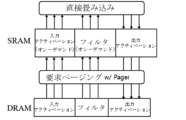
図9a及び9bは、DNNに優しいSRAM管理過程を説明する図である。 Figures 9a and 9b are diagrams illustrating the DNN-friendly SRAM management process.
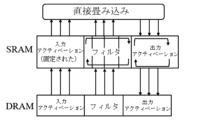
図9aに示すように、ARMトラストゾーン技術が適用された既存のオープンソースTEEのフレームワークであるPagerは、デマンドページング(Demand Paging)を使用してセキュリティ組み込みSRAMの制限された容量を管理する。デマンドページングは、必要に応じて暗号化されたDRAMからSRAMにデータをロードし、最も近くに使用されていないSRAMデータをDRAMにプッシュしてSRAM空間を回収する。デマンドページングはデータの時間的地域性を効率的に活用するが、畳み込みレイヤの入力アクティベーション、フィルタ、及び出力アクティベーションの様々なアクセスパターンを認識できない。また、SRAMのサイズは、モバイル及び組み込み装置で数百KBに過ぎないため、畳み込みレイヤに必要な全てのデータをSRAMに格納することはできない。このような非効率的なSRAM管理は、遅いDRAMのアクセス数を大幅に増加させ、速いDNNの実行を妨げる。従って、SRAMが多数の遅いDRAMアクセスを誘発しないように、畳み込みレイヤの様々なデータアクセスパターンを統合して、小さいSRAMを効率的に管理しなければならない。 As shown in FIG. 9a, Pager, an existing open source TEE framework that applies ARM Trust Zone technology, uses demand paging to manage the limited capacity of security embedded SRAM. Demand paging loads data from encrypted DRAM to SRAM as needed and pushes the most recently used SRAM data to DRAM to reclaim SRAM space. Demand paging efficiently exploits the temporal locality of data, but cannot recognize the various access patterns of input activations, filters, and output activations of convolutional layers. In addition, since the size of SRAM is only a few hundred KB in mobile and embedded devices, it is not possible to store all the data required for the convolutional layer in SRAM. Such inefficient SRAM management significantly increases the number of accesses to slow DRAM and hinders the execution of fast DNN. Therefore, in order to prevent the SRAM from inducing a large number of slow DRAM accesses, the small SRAM must be efficiently managed by integrating the various data access patterns of the convolutional layer.
図9bに示すように、本発明は、SRAMデータの再使用を最大化するために、DNNに優しいSRAM管理を実現する。ここで、DNNに優しいSRAM管理は、畳み込みレイヤの入力アクティベーション、フィルタ、及び出力アクティベーションの様々なアクセスパターンを活用する。本発明は、畳み込みレイヤの実行全体で繰り返しアクセスするときに、先ず全ての入力アクティベーションをSRAMに固定する。出力チャンネルを生成するためにアクセスされる入力アクティベーションは、他の全ての出力チャンネルに対して再度アクセスされなければならない。その次に、残りのSRAM空間を2つの循環キューで構成する。1つはフィルタ用であり、もう1つは出力アクティベーション用である。フィルタは入力アクティベーションのようによくアクセスするデータである。しかし、サイズが入力アクティベーションよりもはるかに小さく、1つの出力チャンネルのみを生成するのにフィルタが必要であるため、フィルタを循環キューに格納するだけでも高い時間的地域性を十分活用することができる。出力アクティベーションは、空間的集約性の高い1回の書き込みデータであるため、循環キューに適している。DNNに優しい方式でSRAMを管理することによって、SRAMデータの再使用を最大化して遅いDRAMアクセスを最小化し、DNNの実行を加速化することができる。 As shown in FIG. 9b, the present invention realizes DNN-friendly SRAM management to maximize SRAM data reuse. Here, the DNN-friendly SRAM management exploits the different access patterns of input activations, filters, and output activations of a convolutional layer. The present invention first fixes all input activations in SRAM when repeatedly accessed throughout the execution of a convolutional layer. An input activation accessed to generate an output channel must be accessed again for all other output channels. Then, the remaining SRAM space is organized into two circular queues, one for filters and one for output activations. Filters are highly accessed data like input activations. However, since their size is much smaller than input activations and filters are needed to generate only one output channel, storing filters in a circular queue alone can fully exploit the high temporal locality. Output activations are one-time write data with high spatial intensity, so they are suitable for a circular queue. By managing SRAM in a DNN-friendly manner, we can maximize SRAM data reuse and minimize slow DRAM accesses, accelerating DNN execution.
本発明は、暗号ハードウェアを使用してデータの暗号化及び復号化を行うようにして、制限されたCPUリソースをDNNの実行に完全に使用することができる。これにより、CPUリソースをDNNの実行に完全に専用するだけでなく、暗号ハードウェアの高性能を活用して速いDNNの実行を達成することができる。データの暗号化及び復号化は、SRAMが暗号化されたDRAMでデータをロード及び格納して、制限されたCPUリソースのかなりの量を消費する度に発生する。データの暗号化及び復号化の高いオーバーヘッドを克服するために、暗号ハードウェアを使用して暗号化及び復号化作業を行う。オーバーヘッドの高いデータの暗号化及び復号化を暗号ハードウェアにオフロードし、制限されたCPUリソースを完全に専用して、DNNの実行を加速化することができる(図10参照)。 The present invention uses cryptographic hardware to encrypt and decrypt data, allowing limited CPU resources to be fully used for running DNN. This not only fully dedicates CPU resources to running DNN, but also leverages the high performance of cryptographic hardware to achieve fast DNN execution. Data encryption and decryption occurs every time SRAM loads and stores data in encrypted DRAM, consuming a significant amount of limited CPU resources. To overcome the high overhead of data encryption and decryption, cryptographic hardware is used to perform encryption and decryption work. By offloading the high overhead data encryption and decryption to cryptographic hardware, limited CPU resources can be fully dedicated to accelerating the execution of DNN (see FIG. 10).
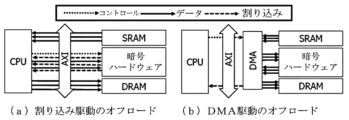
図11は、暗号ハードウェアのオフロードを説明する図であって、(a)は割り込みベースのオフロードであり、(b)はDMA(Direct Memory Access)駆動のオフロードである。 Figure 11 is a diagram explaining cryptographic hardware offloading, where (a) shows interrupt-based offloading and (b) shows DMA (Direct Memory Access)-driven offloading.
本発明は、図11の(a)割り込みベースのオフロード、及び(b)DMA駆動のオフロードの2つのハードウェアのオフロードメカニズムから選択される。2つのオフロードメカニズムは、互いに異なる周辺装置の使用シナリオで加速化される。割り込みベースのオフロードは、周辺装置が与えられた作業処理を完了するとすぐに割り込みを生成するため、待ち時間が重要な作業を周辺装置で行うのに適している。これに対し、DMA駆動のオフロードは、一度により多くの量のデータを処理するのに適している。DMAは、CPUが介入することなくデータを処理するための全てのデータ転送及び周辺の呼び出しを処理し、全てのデータが処理された後に割り込みを発生させる。DNNに優しいSRAM管理は、SRAMとDRAMとの間で大量のデータ転送(一般に数十KB)を要求するため、割り込みベースのオフロードよりも大きなペイロードサイズでより高いスループットを達成するDMAベースのオフロードが有利なことがある。 The present invention is selected from two hardware offload mechanisms, interrupt-based offload (a) and DMA-driven offload (b) in FIG. 11. The two offload mechanisms are accelerated in different peripheral usage scenarios. Interrupt-based offload is suitable for latency-sensitive work on peripherals, as it generates an interrupt as soon as the peripheral completes a given task. In contrast, DMA-driven offload is suitable for processing larger amounts of data at a time. DMA handles all data transfers and peripheral calls to process data without CPU intervention, and generates an interrupt after all data has been processed. Since DNN-friendly SRAM management requires large amounts of data transfers (typically tens of KB) between SRAM and DRAM, DMA-based offload can be advantageous, as it achieves higher throughput with larger payload sizes than interrupt-based offload.
暗号ハードウェアを使用すると、制限されたCPUリソースをDNNの実行に完全に専用し、DNNの実行を加速化することができ、更なる性能の最適化が可能である。CPU及び暗号ハードウェアでそれぞれ実行される重複DNNの実行及びデータの暗号化及び復号化である。畳み込みレイヤの1つの属性は、互いに異なる出力チャネルを生成する作業が互いに独立していることである。畳み込みレイヤは1つのフィルタを使用して1つの出力チャンネルを生成し、入力アクティベーションは全ての出力チャンネル間で読み取り専用データとして共有される。この属性はプーリングレイヤにも適用される。プーリングレイヤの各出力チャンネルは、当該入力チャンネルのみを要求するため、出力チャンネルの作業をデータ並列にする。これに基づいて、畳み込みレイヤの大量の出力チャンネルの実行をデータの復号化ステップ、演算ステップ、及びデータの暗号化ステップの3つのパイプラインステップに分割する。その次に、出力チャンネルの互いに異なるバルクの3つのステップをパイプラインして、より速いDNNの実行を達成する。これをイントラ-レイヤパイプライニングという。これは、畳み込みレイヤの様々な出力チャンネル作業をパイプラインで接続するためである。 The use of cryptographic hardware allows further performance optimization by fully dedicating limited CPU resources to the execution of DNN and accelerating the execution of DNN. The overlapping DNN execution and data encryption and decryption are performed on the CPU and cryptographic hardware, respectively. One attribute of the convolutional layer is that the work of generating different output channels is independent of each other. A convolutional layer uses one filter to generate one output channel, and the input activation is shared as read-only data between all output channels. This attribute also applies to the pooling layer. Each output channel of the pooling layer requires only its input channel, making the output channel work data parallel. Based on this, the execution of the bulk output channel of the convolutional layer is divided into three pipeline steps: a data decryption step, a calculation step, and a data encryption step. Then, the three steps of the different bulks of the output channel are pipelined to achieve faster DNN execution. This is called intra-layer pipelining. This is because the various output channel work of the convolutional layer is connected by a pipeline.
図12は、ニューラルネットワーク演算の実行過程でイントラ-レイヤパイプライニングの実現を説明する図であり、256個の出力チャンネル(SRAMの制限された容量により大量の32個の出力チャンネル含む)を生成し、AlexNetの実行待ち時間に最も大きく寄与するAlexNetの6番目のレイヤにイントラ-レイヤパイプライニングを適用する場合の利点を示す。 Figure 12 illustrates the implementation of intra-layer pipelining during the execution of neural network operations, showing the benefits of applying intra-layer pipelining to the sixth layer of AlexNet, which generates 256 output channels (including a large 32 output channels due to the limited capacity of SRAM) and contributes most to the execution latency of AlexNet.
図12において、データの復号化ステップは、先ず大量の出力チャンネルを生成するのに必要な入力アクティベーション及び/又はフィルタを復号化してSRAMにロードする。その次に、演算ステップでは入力アクティベーション及びフィルタを使用して大量の出力チャンネルを演算する。その後、データの暗号化ステップで大量の出力チャンネルを暗号化してDRAMに格納する。イントラ-レイヤパイプライニングがない場合、(a)のように3つのステップが直列化され、レイヤを実行するのに57msがかかる。これに対し、出力チャンネルの互いに異なるバルクの3つのステップをパイプラインするイントラ-レイヤパイプライニングは、(b)のように3つのステップが並列化されてレイヤを実行するのに(a)の場合よりも24.6%更に速い43msしかかからない。この例は、イントラ-レイヤパイプライニングがより速いDNNの実行を達成することができることを示す。図13は、畳み込みレイヤにイントラ-レイヤパイプライニングを適用するための擬似コードを示すアルゴリズムである。 In FIG. 12, the data decryption step first decrypts the input activations and/or filters required to generate a large number of output channels and loads them into SRAM. Then, the computation step computes a large number of output channels using the input activations and filters. Then, the data encryption step encrypts the large number of output channels and stores them in DRAM. Without intra-layer pipelining, the three steps are serialized as in (a), and it takes 57 ms to execute the layer. In contrast, the intra-layer pipelining, which pipelines three steps of different bulks of output channels, parallelizes the three steps as in (b), and it takes only 43 ms to execute the layer, which is 24.6% faster than the case of (a). This example shows that intra-layer pipelining can achieve faster DNN execution. FIG. 13 is an algorithm showing pseudocode for applying intra-layer pipelining to a convolutional layer.
しかし、畳み込みレイヤにイントラ-レイヤパイプライニングを適用すると、パイプラインを使用しないレイヤの実行よりもSRAMの容量がより多く消費される。イントラ-レイヤパイプライニングの機能的正確性を保証するためには、より大きな容量が必要である。大量の出力チャンネルの演算ステップと次の大量の出力チャンネルのデータ復号化ステップとをオーバーラップするためには、2つの大量に対するSRAMバッファが同時に割り当てられなければならない。より大きなSRAMバッファが必要な場合、レイヤの出力チャンネルはより多くのバルクにグループ化されるため、DNNの実行速度が遅くなる可能性がある。しかし、より大きなSRAMバッファが必要であるにも拘らず、イントラ-レイヤパイプライニングの性能の利点は、バルク当たりの出力チャンネル数が少なく、潜在的な性能低下を超えることにある。従って、基本的に畳み込み及びプーリングレイヤに対するイントラ-レイヤパイプライニングをアクティベーションする。しかし、非常に小さな組み込みSRAMが装着されたモバイル及び組み込み装置の場合、潜在的な性能低下を防止するために、イントラ-レイヤパイプライニングを非アクティベーションすることができる。 However, applying intra-layer pipelining to convolutional layers consumes more SRAM capacity than executing layers without pipelines. To guarantee the functional correctness of intra-layer pipelining, a larger capacity is required. To overlap the computation step of the output channel of a large amount with the data decoding step of the output channel of the next large amount, SRAM buffers for the two large amounts must be allocated simultaneously. If a larger SRAM buffer is required, the output channels of the layer are grouped into more bulks, which may slow down the execution speed of the DNN. However, despite the need for a larger SRAM buffer, the performance advantage of intra-layer pipelining is that there are fewer output channels per bulk, which outweighs the potential performance degradation. Therefore, we basically activate intra-layer pipelining for convolutional and pooling layers. However, for mobile and embedded devices equipped with very small embedded SRAM, intra-layer pipelining can be deactivated to prevent potential performance degradation.
図14は、セキュリティ組み込みSRAM及び暗号ハードウェアが装着されたモバイル及び組み込み装置上に本発明を実現するのに必要なソフトウェアの構成例を説明する図で ある。 Figure 14 is a diagram illustrating an example of the software configuration required to implement the present invention on a mobile or embedded device equipped with security embedded SRAM and cryptographic hardware.
図14において、最も広く使用されるTEE実現のうちの1つであるオープンソースTrustZoneベースの実現であるOP-TEE上に本発明を実現しているが、必ずしもこれに限定されるものではなく、全てのTrustZoneベースのTEE実現上に実現され得る。本発明の核心には、TEE内の与えられた入力に対する予測を生成するためにDNNのレイヤを実行する信頼できるアプリケーションであるGuardiaNNランタイムがある。DNNの実行はREEから開始される。先ず、REEは説明(例えば、レイヤ数、レイヤ当たりの入力及び出力アクティベーションサイズ)、暗号化入力データ、及びDNNのフィルタをTEEメモリに送信し、GuardiaNNランタイムを呼び出す。その次に、GuardiaNNランタイムはそれぞれ異なる類型のDNNのレイヤを実現するヘルパー関数を使用してDNNの各レイヤを実行する。その後、GuardiaNNランタイムはDNNを実行して作られた予測をREEに再度返還する。 In FIG. 14, the present invention is implemented on OP-TEE, an open source TrustZone-based implementation that is one of the most widely used TEE implementations, but is not limited thereto and may be implemented on any TrustZone-based TEE implementation. At the heart of the present invention is the GuardiaNN runtime, a trusted application that executes layers of a DNN to generate predictions for a given input in a TEE. Execution of the DNN begins with the REE. First, the REE sends the description (e.g., number of layers, input and output activation sizes per layer), encrypted input data, and filters of the DNN to the TEE memory and invokes the GuardiaNN runtime. The GuardiaNN runtime then executes each layer of the DNN using helper functions that implement different types of layers of the DNN. The GuardiaNN runtime then executes the DNN and returns the predictions made back to the REE.
直接畳み込みは、GuardiaNNランタイム内でのみ実現することができ、GuardiaNNランタイムが信頼できるOS(例えば、OP-TEE)と相互作用してSRAMを割り当てて、暗号ハードウェア及びDMAを使用しなければならない。DNNに優しいSRAM管理及びイントラ-レイヤパイプライニングを実現するためには、GuardiaNNランタイムがDRAMに置き換えられないバッファをSRAMに割り当てなければならない。このために、TEEメモリの割り当てのためのTEE Internal Core API関数であるTEE_Malloc()を拡張し、isSRAMという追加入力因数を使用する。isSRAMの値がtrueである場合、信頼できるOSはSRAMバッファを割り当てて、バッファがDRAMにスワップアウトされることを防止する。また、信頼できるOS(例えば、Pager)のメモリ管理を拡張し、isSRAMをDRAMにtrueに設定した状態でTEE_Malloc()を呼び出し、割り当てられたSRAMバッファを置き換えることを防止する。isSRAMの基本値はfalseに設定され、isSRAMを認識できない既存の信頼できるアプリケーションの機能的正確性を保証する。例えば、TEE_Malloc(1024、hint、true)を呼び出すと、DRAMに除去されない1KB SRAMバッファが割り当てられる。ここで、ヒントはバッファの特性に関するいくつかのヒントを提供する(例えば、0で満たされる)。 Direct convolution can only be achieved within the GuardiaNN runtime, which must interact with a trusted OS (e.g., OP-TEE) to allocate SRAM and use cryptographic hardware and DMA. To achieve DNN-friendly SRAM management and intra-layer pipelining, the GuardiaNN runtime must allocate buffers in SRAM that cannot be swapped out to DRAM. For this, the TEE Internal Core API function for TEE memory allocation, TEE_Malloc(), is extended to use an additional input argument, isSRAM. If the value of isSRAM is true, the trusted OS allocates SRAM buffers to prevent the buffers from being swapped out to DRAM. We also extend memory management in trusted OSes (e.g., Pager) to prevent calling TEE_Malloc() with isSRAM set to true in DRAM to replace allocated SRAM buffers. The default value of isSRAM is set to false to ensure functional correctness for existing trusted applications that are not aware of isSRAM. For example, calling TEE_Malloc(1024, hint, true) will allocate a 1KB SRAM buffer in DRAM that will not be removed, where hint provides some hint about the characteristics of the buffer (e.g., it will be filled with zeros).
DMA駆動のデータ暗号化及び復号化のオフロードの場合、GuardiaNNランタイムは信頼できるOSのDMA装置ドライバで定義されたユーザ指定システム呼び出しを呼び出す。GuardiaNNの実現は、信頼できるOSを拡張して、EncryptData()及びDecryptData()という2つのユーザ指定システム呼び出しを提供する。EncryptData()システム呼び出しは、暗号コンテキスト(暗号類型、キーサイズ等含む)、SRAM開始アドレス、DRAM開始アドレス、及びデータサイズを入力として使用する。それから、システム呼び出しは、CPUキャッシュをフラッシュしてダーティキャッシュラインをSRAMから除去し、SRAM開始アドレスで暗号化されていないSRAMデータを読み取り、暗号化コンテキスト及び暗号ハードウェアを使用してデータを暗号化し、暗号化されたデータをDRAM開始アドレスでDRAMに格納する。類似の方式で、DecryptData()システム呼び出しは、暗号コンテキスト、DRAM開始アドレス、SRAM開始アドレス、及びデータサイズの四つの因数を入力として使用する。その次に、EncryptData()システム呼び出しと類似する手順によって暗号化されたDRAMデータを読み取り、データを復号化し、復号化されたデータをSRAMに格納する。 For DMA-driven data encryption and decryption offload, the GuardiaNN runtime calls user-specified system calls defined in the DMA device driver of the trusted OS. The GuardiaNN implementation extends the trusted OS to provide two user-specified system calls, EncryptData() and DecryptData(). The EncryptData() system call takes as input the encryption context (including encryption type, key size, etc.), SRAM start address, DRAM start address, and data size. The system call then flushes the CPU cache to remove dirty cache lines from SRAM, reads the unencrypted SRAM data at the SRAM start address, encrypts the data using the encryption context and crypto hardware, and stores the encrypted data in DRAM at the DRAM start address. In a similar manner, the DecryptData() system call takes as input four factors: encryption context, DRAM start address, SRAM start address, and data size. It then reads the encrypted DRAM data using a procedure similar to the EncryptData() system call, decrypts the data, and stores the decrypted data in SRAM.
拡張されたTEE_Malloc()API機能及び既存のGlobalPlatform APIと共に2つのユーザ指定システム呼び出しを使用すると、本発明をモバイル及び組み込み装置上に充実に実現することができる。 The use of two user-specified system calls together with the extended TEE_Malloc() API functions and the existing GlobalPlatform API allows the invention to be fully implemented on mobile and embedded devices.
≪評価(EVALUATION)≫ ≪Evaluation≫
<実験セットアップ(Experimental Setup)> <Experimental Setup>
速く安全なDNNの実行に対するGuardiaNNの効果を評価するために、STM32MP157C-DK2開発ボード上にGuardiaNNをプロトタイプにして、DNNの実行速度及びエネルギー消費を基本セキュリティDNNフレームワークと比較した。開発ボードは、オープンソーストラストゾーン(TrustZone)ベースのTEE実現であるOP-TEEで公式的にサポートし、最新の組み込み装置の一般的なハードウェアの構成を反映した。デュアルコアARM Cortex-A7 CPU、256KBのセキュリティ組み込みSRAM、暗号ハードウェア、及び512MB DDR3L DRAMで構成される。信頼できるOSとしてGlobalPlatform TEE Client API v1.1及びInternal Core API v1.0をサポートするPagerと共にOP-TEE v3.11.0を使用する。GuardiaNN及び基本フレームワークの実現は、OP-TEEが現在単一のTEEインスタンス内でマルチスレッドをサポートしないため、1つのCPUコアのみ使用する。ARM NEON単一コマンドの多重データコマンドでDarkneTZのDNNレイヤの実現を拡張し、各DNNレイヤ作業間のデータ並列性を活用した。拡張DNNレイヤの実現はGuardiaNN及び基本フレームワークに全て適用される。信頼できるOSが全てのSRAM(TEEとREEとの間の共有メモリでOP-TEEが予約した4KBを除外)をGuardiaNN及び基本フレームワークに全て割り当てると仮定する。エネルギー消費の比較のために、Monsoon HVPM(High Voltage Power Monitor)を使用して、装置全体のエネルギー消費を測定する。 To evaluate the effect of GuardiaNN on fast and secure DNN execution, we prototyped GuardiaNN on the STM32MP157C-DK2 development board and compared the execution speed and energy consumption of DNN with the baseline secure DNN framework. The development board is officially supported by OP-TEE, an open source TrustZone-based TEE implementation, and reflects the typical hardware configuration of modern embedded devices. It consists of a dual-core ARM Cortex-A7 CPU, 256KB of security embedded SRAM, cryptographic hardware, and 512MB DDR3L DRAM. OP-TEE v3.11.0 is used as the trusted OS with Pager supporting GlobalPlatform TEE Client API v1.1 and Internal Core API v1.0. The implementation of GuardiaNN and the base framework uses only one CPU core since OP-TEE does not currently support multi-threading within a single TEE instance. We extend the implementation of the DNN layer in DarkneTZ with ARM NEON single command multiple data commands to exploit data parallelism between each DNN layer operation. The extended DNN layer implementation is fully applied to GuardiaNN and the base framework. We assume that a trusted OS allocates all SRAM (except for the 4KB reserved by OP-TEE in shared memory between TEE and REE) to GuardiaNN and the base framework. To compare energy consumption, we use Monsoon HVPM (High Voltage Power Monitor) to measure the energy consumption of the entire device.
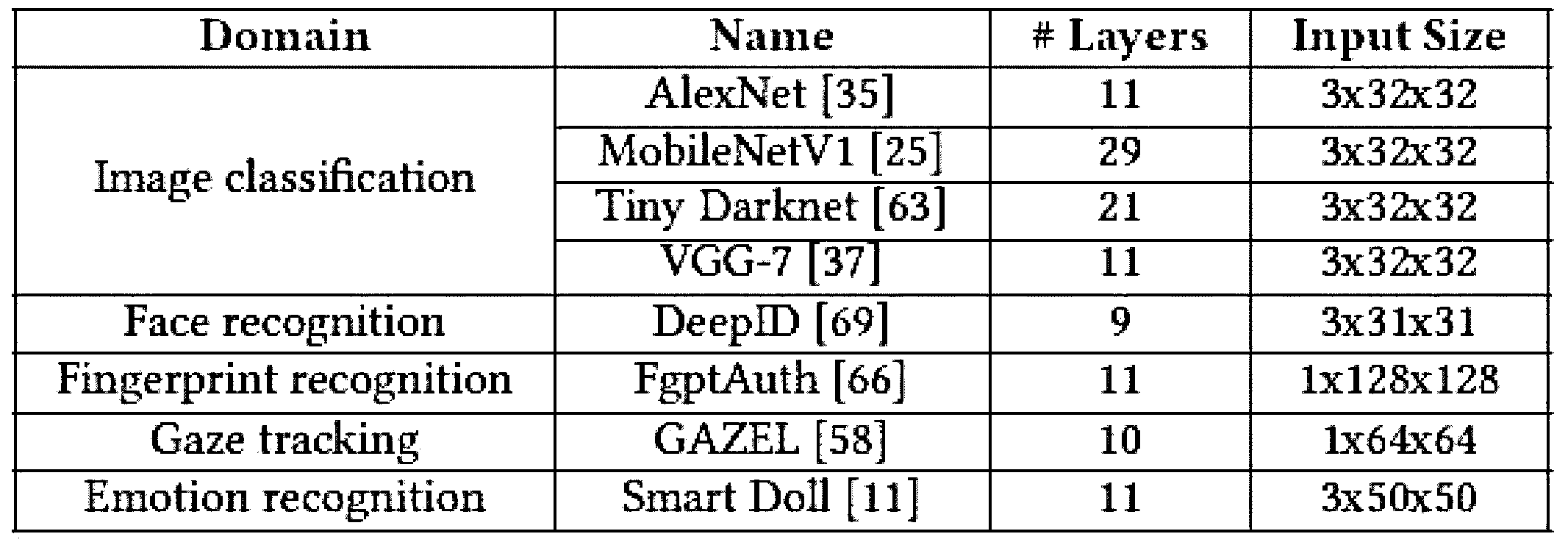
ベンチマークとして8ビットの整数量子化を使用して量子化された8個のDNNを選択し、敏感なユーザ及びDNNデータに関連する5個の代表的なモバイル及び組み込みアプリケーションのドメインを取り扱う。5個のドメインは、イメージ分類、顔認識、指紋認識、視線追跡、及び感情認識である。各ドメインに対して多様なDNNが存在する。しかし、ここで、実行するのに合理的に短い実行待ち時間を有する各ドメインで代表的な軽量のDNNを選択する。例えば、STM32MP157C-DK2開発ボードで基本フレームワークがDNNを実行するのに192秒がかかったため、イメージ分類のためのDNNであるResNet-18をベンチマークに含めない。下記の表2には8個のDNN及びその特性が並べられている。 We select eight DNNs quantized using 8-bit integer quantization as benchmarks to address five representative mobile and embedded application domains related to sensitive user and DNN data. The five domains are image classification, face recognition, fingerprint recognition, gaze tracking, and emotion recognition. There are a variety of DNNs for each domain. However, we select representative lightweight DNNs in each domain that have reasonably low execution latency to execute. For example, we do not include ResNet-18, a DNN for image classification, in the benchmarks because the base framework took 192 seconds to execute the DNN on the STM32MP157C-DK2 development board. Table 2 below lists the eight DNNs and their characteristics.
<速いDNNの実行(Fast DNN Execution)> <Fast DNN Execution>
先ず、選択された全てのDNNの実行待ち時間を測定し、GuardiaNNのDNNの実行速度を評価する。提案された技術の寄与度を分析するために、基本フレームワークから開始して、各提案された技術を漸進的に適用し、DNNの実行待ち時間を測定する。直接畳み込み及びDNNに優しいSRAM管理、暗号ハードウェア、及びイントラ-レイヤパイプラインに対する作業をすると、図15に5個の棒で表示された計5個の構成が提供される。実験でイントラ-レイヤパイプライニングのために8個の出力チャンネルのバルクサイズを使用する。 First, we measure the execution latency of all selected DNNs and evaluate the execution speed of GuardiaNN's DNN. To analyze the contribution of the proposed techniques, we start from the basic framework and apply each proposed technique incrementally to measure the execution latency of the DNN. Working on direct convolution and DNN-friendly SRAM management, cryptographic hardware, and intra-layer pipelining, we provide a total of five configurations, shown by five bars in Figure 15. We use a bulk size of eight output channels for intra-layer pipelining in the experiments.
図15の(a)は待ち時間の実験結果を示す。殆どのDNNの実行は、基本フレームワークで極めて遅く、最大11.4秒の待ち時間が発生する。GuardiaNNは全てのDNNで待ち時間を1秒未満に減らす。図15の(b)は、直接畳み込み及びDNNに優しいSRAM管理技術(三番目の棒)が適用された構成で正規化されたGuardiaNNが提供する相対的速度の向上を示す。それぞれの提案された技術が効果的であることを観察することができる。直接畳み込みを適用すると、im2colを使用する基本フレームワークに比べて幾何平均速度が2.58倍向上する。DNNに優しいSRAM管理は3.19倍の追加の幾何平均速度の向上をもたらす。暗号化及び復号化を暗号ハードウェアでオフロードすると、1.73倍の追加の幾何平均速度の向上が提供される。イントラ-レイヤパイプライニングを適用すると、これを更に改善し、幾何平均速度を1.07倍高めることができる。GuardiaNNはベースラインに比べて15.3倍の幾何平均速度の向上を達成する。ここで評価する8個のDNNのうち、GuardiaNNはSmart Dollを最も加速化し、ベースラインよりも31.4倍更に速くする。このような速度向上の殆どは、DNNに優しいSRAM管理を直接畳み込みと共に適用した結果、遅いDRAMのアクセス数が減少したためである。AlexNetはGuardiaNNの暗号ハードウェア及びイントラ-レイヤパイプラインの使用で最も大きい利点を得る。レイヤ演算に比べて、AlexNetの暗号化及び復号化のオーバーヘッドは、暗号ハードウェア及びイントラ-レイヤパイプラインを使用して、大幅に減った他のDNNよりも大きい。下記の表3は、GuardiaNNがDNNの実行速度に与える影響を示す。 Fig. 15(a) shows the experimental results of latency. Most DNNs are very slow in the basic framework, with a maximum latency of 11.4 seconds. GuardiaNN reduces the latency to less than 1 second for all DNNs. Fig. 15(b) shows the relative speedup provided by GuardiaNN, normalized for configurations where direct convolution and DNN-friendly SRAM management techniques (third bar) are applied. It can be observed that each proposed technique is effective. Applying direct convolution improves the geometric mean speedup by 2.58 times compared to the basic framework using im2col. DNN-friendly SRAM management provides an additional geometric mean speedup of 3.19 times. Offloading encryption and decryption to cryptographic hardware provides an additional geometric mean speedup of 1.73 times. Applying intra-layer pipelining can further improve this, increasing the geometric mean speedup by 1.07 times. GuardiaNN achieves a 15.3x geometric mean speedup over the baseline. Of the eight DNNs evaluated here, GuardiaNN accelerates Smart Doll the most, making it 31.4x faster than the baseline. Most of this speedup is due to the application of DNN-friendly SRAM management with direct convolution, resulting in fewer accesses to slow DRAM. AlexNet benefits most from GuardiaNN's use of cryptographic hardware and intra-layer pipelines. AlexNet's encryption and decryption overhead, relative to layer operations, is greater than the other DNNs, which is significantly reduced by using cryptographic hardware and intra-layer pipelines. Table 3 below shows the impact of GuardiaNN on the execution speed of DNNs.
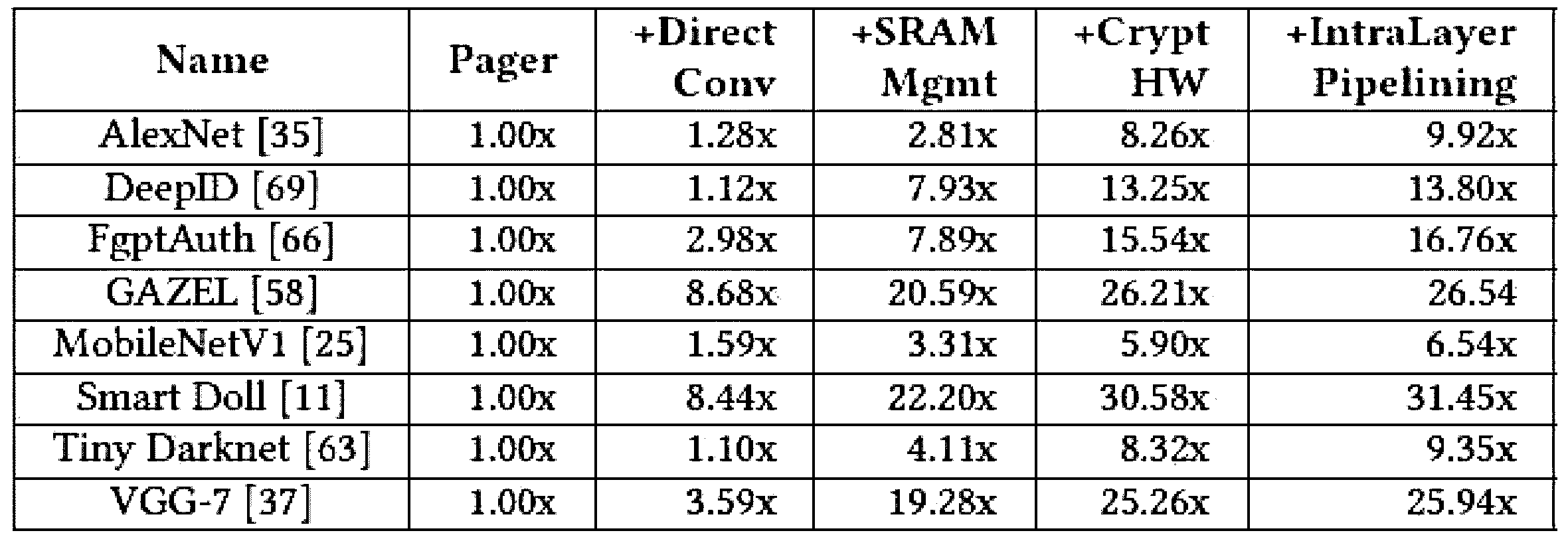
上記表3に示すように、本発明で提案したGuardiaNNはセキュリティ保証を損傷させることなく、広範囲なDNNの実行を加速化することができる。 As shown in Table 3 above, the GuardiaNN proposed in this invention can accelerate the execution of a wide range of DNNs without compromising security guarantees.
<高エネルギーの効率(High Energy Efficiency)> <High Energy Efficiency>
ここで、ベンチマークで各DNNに対する全ての構成でDNN実行のエネルギー消費を調査する。先ず、遊休状態及びDNNの実行中に装置全体の平均電力を測定し、DNNの実行による平均電力の増加を計算するために両値を引く。その次に、平均電力の増加と待ち時間とを掛けてDNN実行のエネルギー消費を計算する。正規化された結果は、図15の(b)に出ている。提案された各技法を適用することによってエネルギー消費が減少することを観察することができる。基本フレームワークと比較して、GuardiaNNのエネルギー消費は、幾何平均92.3%減少し、エネルギー効率性が15.2倍向上した。これは、GuardiaNNが提供するかなりの待ち時間の減少のためである。提案された技術を適用した後にも、DNNの実行中に装置の全体電力は同じレベルに維持される。減少した待ち時間と結合されたGuardiaNNは、基本フレームワークよりもはるかに高いエネルギー効率性を達成する。 Here, we investigate the energy consumption of DNN execution in all configurations for each DNN in the benchmark. First, we measure the average power of the whole device in the idle state and during DNN execution, and subtract both values to calculate the average power increase due to DNN execution. Then, we calculate the energy consumption of DNN execution by multiplying the average power increase by the latency. The normalized results are shown in Fig. 15(b). It can be observed that the energy consumption is reduced by applying each of the proposed techniques. Compared to the basic framework, the energy consumption of GuardiaNN is reduced by a geometric mean of 92.3%, and the energy efficiency is improved by a factor of 15.2. This is due to the significant latency reduction offered by GuardiaNN. After applying the proposed techniques, the overall power of the device is maintained at the same level during DNN execution. GuardiaNN combined with reduced latency achieves much higher energy efficiency than the basic framework.
<敏感度研究(Sensitivity Studies)> <Sensitivity Studies>
イントラ-レイヤパイプライニングのバルクサイズがDNNの実行速度に与える影響を研究するために、4個のバルクサイズ(4、8、16、及び32の出力チャンネル)でGuardiaNNのDNNの実行待ち時間を測定する。図16は、バルクサイズ4に正規化された測定値を示す。4個のバルクサイズ以外にも、各DNNを最低の待ち時間に導く最適なレイヤ別バルクサイズの集合を計算して、次のように待ち時間を測定した。イントラ-レイヤパイプライニングが最適なバルクサイズで待ち時間を最大14.24%向上させることを観察することができる(図16の5番目の棒)。待ち時間が最も高いバルクサイズと比較する。殆どのDNNの場合、バルクサイズが増加するにつれて、待ち時間が減少する傾向がある。バルクサイズが大きいほど暗号ハードウェアに対する暗号化及び復号化要求(及び割り込み)数が減少するためである。これは、パイプライン演算ステップの待ち時間を効果的に減らして、全体待ち時間を減らす。しかし、バルクサイズはSRAM容量に拘束される。例えば、FgptAuthに8よりも大きいバルクサイズを使用すると、必要なメモリサイズがSRAMサイズを超える。これが、バルクサイズが16及び32であるFgptAuthの実行待ち時間が図16で空いている理由である。 To study the effect of intra-layer pipelining bulk size on the execution speed of DNN, we measure the execution latency of GuardiaNN DNN with four bulk sizes (4, 8, 16, and 32 output channels). Figure 16 shows the measurements normalized to a bulk size of 4. In addition to the four bulk sizes, we calculated a set of optimal bulk sizes by layer that would lead to the lowest latency for each DNN, and measured the latency as follows. It can be observed that intra-layer pipelining improves latency by up to 14.24% at the optimal bulk size (fifth bar in Figure 16). Compared with the bulk size with the highest latency. For most DNNs, the latency tends to decrease as the bulk size increases. This is because a larger bulk size reduces the number of encryption and decryption requests (and interrupts) to the cryptographic hardware. This effectively reduces the latency of the pipeline operation steps, thereby reducing the overall latency. However, the bulk size is constrained by the SRAM capacity. For example, if you use a bulk size larger than 8 for FgptAuth, the required memory size exceeds the SRAM size. This is why the execution latency of FgptAuth with bulk sizes of 16 and 32 is empty in Figure 16.
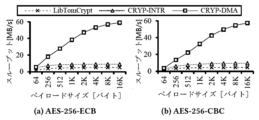
GuardiaNNで使用するDMA可能暗号ハードウェアは、複数のブロック暗号及び作業モードをサポートする。GuardiaNNはセキュリティ強化のためにAESを使用し、ここではAES-ECB及びAES-CBCの2つの作動モードを比較する。(a)暗号ハードウェア、及び(b)OP-TEEの基本CPUベースの暗号化ライブラリであるLibTomCryptのあるCPUで実行し、多様なキーサイズでAES-ECB及びAES-CBCの暗号化及び復号化のスループットを測定する。図17は測定されたスループットを示す。LibTomCryptを使用するCPUでよりも、暗号ハードウェアでAES-ECB及びAES-CBCがはるかに速く実行されることが観察された。また、キーサイズが長いほどAESの暗号化及び復号化でより多くのラウンドが発生するため、LibTom-Cryptを使用するCPUのスループットは、キーサイズが増加するにつれて減少する。動作モードを比較すると、AES-CBCはチェーンによってAES-ECBよりもスループットが少し少ない。逆に、暗号ハードウェアでは、キーサイズや作動モードがスループットに顕著な影響を与えない。これは、暗号化及び復号化性能が暗号ハードウェア及びDMAバッファ管理コストによって制限されるためである。それでも、GuardiaNNで使用される暗号ハードウェアは、全てのケースでCPUよりもはるかに高い暗号化及び復号化の効率性を提供する。 The DMA-capable cryptographic hardware used in GuardiaNN supports multiple block ciphers and working modes. GuardiaNN uses AES for enhanced security, and here we compare two working modes, AES-ECB and AES-CBC. We measure the encryption and decryption throughput of AES-ECB and AES-CBC with various key sizes, running on (a) the cryptographic hardware and (b) a CPU with LibTomCrypt, the basic CPU-based cryptographic library of OP-TEE. Figure 17 shows the measured throughput. It is observed that AES-ECB and AES-CBC run much faster on the cryptographic hardware than on the CPU with LibTomCrypt. Also, the throughput of the CPU with LibTom-Crypt decreases as the key size increases, since a longer key size requires more rounds for AES encryption and decryption. Comparing the operating modes, AES-CBC has slightly less throughput than AES-ECB depending on the chain. Conversely, in cryptographic hardware, key size and operating mode do not have a significant impact on throughput. This is because encryption and decryption performance is limited by cryptographic hardware and DMA buffer management costs. Nevertheless, the cryptographic hardware used in GuardiaNN provides much higher encryption and decryption efficiency than the CPU in all cases.
モバイル及び組み込み機器でDNNの実行に対する関心が高まるにつれて、当該機器でDNNの実行を加速化する様々な技術が登場している。しかし、連合学習のような装置内で処理されるデータは差分プライバシーに基づいているため、依然として多くのプライバシーの問題がある。従って、DNNにトラスト実行環境を活用することが合理的な方向である。例えば、SecureTFは、トラスト実行環境を活用するTensorFlowベースの分散セキュリティ機械学習フレームワークである。PPFLは、ローカル教育及び集計、多重パートMLにトラスト実行環境を活用して、安全な連合学習を加速化する。Chiron及びMyelinは、機械学習内でトラスト実行環境をサービスとして活性化する。 As interest in running DNN on mobile and embedded devices grows, various techniques have emerged to accelerate the execution of DNN on such devices. However, there are still many privacy issues as data processed within devices such as federated learning is based on differential privacy. Therefore, leveraging a trusted execution environment for DNN is a reasonable direction. For example, SecureTF is a TensorFlow-based distributed secure machine learning framework that leverages a trusted execution environment. PPFL leverages a trusted execution environment for local training and aggregation, multi-part ML to accelerate secure federated learning. Chiron and Myelin activate a trusted execution environment as a service within machine learning.
DarkneTZ、Infenclave、及びSlalomは、いずれもトラスト実行環境内でDNNの一部を実行するように提案する。しかし、残りのレイヤを攻撃にさらして素直にアクセス方式を適用すると、かなりの量の性能オーバーヘッドが発生する。このような問題を解決するために、HybridTEEはリモートサーバーのトラスト実行環境にDNNの実行を要求することを提案する。しかし、HybridTEEの加速効果は、ローカルトラスト実行環境のDNNの実行を最適化していないため、あまり重要ではない。 DarkneTZ, Infenclave, and Slalom all propose to execute part of the DNN in a trusted execution environment. However, applying the access method straightforwardly while exposing the remaining layers to attacks would result in a significant amount of performance overhead. To solve this problem, HybridTEE proposes to request the execution of the DNN in a trusted execution environment of a remote server. However, the acceleration effect of HybridTEE is not significant because it does not optimize the execution of the DNN in the local trusted execution environment.
本発明は、ローカルトラスト実行環境でDNNの完全な保護を提案するだけでなく、実際のモバイル及び組み込み環境で実行できるようにする驚くべき速度の向上を提供することができる。 The present invention not only offers complete protection of DNN in a local trusted execution environment, but also provides surprising speed improvements that allow it to run in real mobile and embedded environments.
<DNN暗号化(DNN Encryption)> <DNN Encryption>
DNNを保護するまた別の方向は、DNNデータを暗号化することである。例えば、SecureMLは、拡張可能な個人情報保護のDNNフレームワークを構築するために、安全なマルチパーティ計算を活用した。SoftMEは信頼できる環境を提供し、暗号化と復号化及び演算ステップとで構成された信頼できる作業を実行する。SoftMEでDNNを実行すると機密性が保証されるが、データの暗号化及び復号化にCPUを使用して、大きな性能オーバーヘッドが発生する。その中で、準同型暗号を適用すると、暗号化されたデータに対する演算が可能であるため有望である。CryptoNetsは、そのようなアイデアが実現可能であることを示し、アイデアをセキュリティ教育に拡張する。MiniONNは、事前訓練されたDNNを認識できないように変換する技術を提案する。また、準同型暗号化を活用して安全な連合遷移学習プロトコルを構築する。しかし、準同型暗号は演算スループットが低く、モバイル及び組み込み装置には実用的ではないと考えられることが多い。 Another direction to protect DNN is to encrypt DNN data. For example, SecureML leveraged secure multi-party computation to build a scalable privacy-preserving DNN framework. SoftME provides a trusted environment to execute trusted tasks consisting of encryption, decryption, and computation steps. Running DNN on SoftME guarantees confidentiality, but uses the CPU to encrypt and decrypt data, resulting in a large performance overhead. Among them, applying homomorphic encryption is promising because it allows computation on encrypted data. CryptoNets shows that such an idea is feasible and extends the idea to security education. MiniONN proposes a technique to convert a pre-trained DNN to be unrecognizable. It also leverages homomorphic encryption to build a secure federated transitive learning protocol. However, homomorphic encryption has low computational throughput and is often considered impractical for mobile and embedded devices.
TEEは、ARM TrustZone及びIntel SGXが広く使用される商用実装であって、高いセキュリティ保証のために注目を集めている。ソフトウェアベースのセキュリティソリューションが適用されるが、様々なアプリケーションを保護するために成功的に悪用された。しかし、キャッシュアーキテクチャ、二重インスタンスアプリ、又は重畳アプリのようなTEEシステムを対象とする多くの脅威がある。これにより、セキュリティ強化のために、最近いくつかの提案がある。また、TEEの活用の困難を緩和するための多くの作業が提案されている。最小カーネルは、TEEの制限されたメモリ問題を解決するために小さなカーネルを構築する。CoSMIXは、アプリケーションレベルのセキュリティページエラー処理器を許容する。TEEMonはTEEのための性能モニタリングフレームワークである。 TEE has attracted attention due to its high security assurance, with ARM TrustZone and Intel SGX being widely used commercial implementations. Software-based security solutions have been successfully exploited to protect various applications. However, there are many threats targeting TEE systems, such as cache architecture, dual instance apps, or overlapping apps. As a result, there have been several recent proposals to enhance security. Also, many works have been proposed to alleviate the difficulties of TEE utilization. Minimal kernel builds a small kernel to solve the limited memory problem of TEE. CoSMIX allows an application-level security page error handler. TEEMon is a performance monitoring framework for TEE.
本発明によるトラスト環境ベースの人工知能装置は、トラスト実行環境で人工ニューラルネットワークの実行を隔離して、動作速度の遅いDRAMに格納されたデータを暗号化してセキュリティを強化することができる。また、直接畳み込み及びSRAM管理を通じてDRAMのアクセス数を減らすことができ、暗号ハードウェアでデータの暗号化及び復号化をオフロードし、パイプライニングを実現してニューラルネットワーク演算の実行をデータの暗号化及び復号化演算にオーバーラップするように実行して人工ニューラルネットワークの実行を加速化することができる。 The trust environment-based artificial intelligence device according to the present invention can isolate the execution of an artificial neural network in a trust execution environment and can encrypt data stored in a slow-operating DRAM to enhance security. In addition, the number of DRAM accesses can be reduced through direct convolution and SRAM management, data encryption and decryption can be offloaded to cryptographic hardware, and pipelining can be implemented to overlap the execution of neural network operations with data encryption and decryption operations to accelerate the execution of the artificial neural network.
以上、本発明の実施形態について図面を参照しながら詳細に説明したが、本発明は、上述の実施形態に限定されるものではなく、本発明の技術思想から逸脱しない範囲内で多様に変更実施することが可能である。 The above describes in detail an embodiment of the present invention with reference to the drawings, but the present invention is not limited to the above-described embodiment, and various modifications can be made without departing from the technical concept of the present invention.
100 (トラスト環境ベースの)人工知能装置
110 第1類型のメモリ
130 トラスト人工知能処理部
131 暗号処理フロント-エンドプロセス
133 第2類型のメモリ
135 プロセッサ
100 (trusted environment-based)
Claims (6)
トラスト信頼空間で動作し、前記暗号化入力データ及び前記暗号化出力データの人工知能演算を行うトラスト人工知能処理部と、を備え、
前記トラスト人工知能処理部は、
前記暗号化入力データの復号化を介して復号化入力データを生成し、前記暗号化出力データを生成するために非暗号化出力データの暗号化を行う暗号処理フロント-エンドプロセッサと、
前記復号化入力データ及び前記非暗号化出力データに対するバッファを提供し、前記第1類型のメモリよりも相対的に速い動作速度及び少ない格納容量を有する第2類型のメモリと、
前記復号化入力データに基づいてニューラルネットワーク演算を行って前記非暗号化出力データを生成するプロセッサと、を含み、
前記プロセッサは、
直接畳み込みベースのニューラルネットワーク演算を行って前記第1類型のメモリのアクセス数を減らし、
前記第2類型のメモリを、畳み込みレイヤの入力アクティベーション、復号化フィルタ、及び非暗号出力アクティベーションのアクセス領域により管理し、
前記第2類型のメモリに畳み込みレイヤの実行全体で繰り返しアクセスするときに、全ての前記復号化入力データを前記入力アクティベーションの領域に固定的に格納し、残りの前記第2類型のメモリを、前記復号化フィルタ及び前記非暗号出力アクティベーションの領域の2つの循環キューで構成された循環キュー方式で格納し、
前記暗号処理フロント-エンドプロセッサの暗号化及び復号化演算の実行にオーバーラップするように前記ニューラルネットワーク演算を実行してイントラ-レイヤパイプライニングを実現し、
前記イントラ-レイヤパイプライニングのために、データ復号化ステップ、演算ステップ、及びデータ暗号化ステップに細分化して、前記ニューラルネットワーク演算を途切れることなく行うことを特徴とするトラスト環境ベースの人工知能装置。 a first type of memory for transmitting encrypted input data and receiving encrypted output data;
A trust artificial intelligence processing unit that operates in a trust trust space and performs artificial intelligence calculations on the encrypted input data and the encrypted output data,
The trust artificial intelligence processing unit includes:
a cryptographic front-end processor for decrypting the encrypted input data to generate decrypted input data and for encrypting unencrypted output data to generate the encrypted output data;
a second type of memory providing a buffer for the decrypted input data and the unencrypted output data, the second type of memory having a relatively faster operating speed and a smaller storage capacity than the first type of memory ;
a processor that performs a neural network operation based on the decrypted input data to generate the unencrypted output data ;
The processor,
performing direct convolution-based neural network operations to reduce the number of accesses to the first type of memory;
The second type of memory is managed by an access area of an input activation, a decryption filter, and a non-encrypted output activation of a convolutional layer;
When repeatedly accessing the second type memory throughout the execution of the convolutional layer, all of the decrypted input data is stored in a fixed manner in the input activation area, and the remaining second type memory is stored in a circular queue manner consisting of two circular queues in the decryption filter and the non-encrypted output activation areas;
performing the neural network operations to overlap with the execution of encryption and decryption operations of the cryptographic front-end processor to achieve intra-layer pipelining;
A trust environment-based artificial intelligence device, characterized in that for the intra-layer pipelining, the neural network operation is divided into a data decryption step, an operation step, and a data encryption step, and the neural network operation is performed without interruption .
The trust environment-based artificial intelligence device of claim 1, wherein the processor performs the neural network operations uninterruptedly by causing the cryptographic processing front-end processor to perform decryption operations on the encrypted input data while the neural network operations are being executed.
Applications Claiming Priority (2)
| Application Number | Priority Date | Filing Date | Title |
|---|---|---|---|
| KR10-2023-0058605 | 2023-05-04 | ||
| KR1020230058605A KR102946913B1 (en) | 2023-05-04 | 2023-05-04 | Ai device based on trust environment |
Publications (2)
| Publication Number | Publication Date |
|---|---|
| JP2024160912A JP2024160912A (en) | 2024-11-15 |
| JP7621675B2 true JP7621675B2 (en) | 2025-01-27 |
Family
ID=93292602
Family Applications (1)
| Application Number | Title | Priority Date | Filing Date |
|---|---|---|---|
| JP2023129058A Active JP7621675B2 (en) | 2023-05-04 | 2023-08-08 | Trust environment-based artificial intelligence device |
Country Status (3)
| Country | Link |
|---|---|
| US (1) | US20240370563A1 (en) |
| JP (1) | JP7621675B2 (en) |
| KR (1) | KR102946913B1 (en) |
Families Citing this family (1)
| Publication number | Priority date | Publication date | Assignee | Title |
|---|---|---|---|---|
| US20260127275A1 (en) * | 2024-11-04 | 2026-05-07 | International Business Machines Corporation | Digital in-memory computation with security against physical side-channel and memory bus probing attacks |
Citations (2)
| Publication number | Priority date | Publication date | Assignee | Title |
|---|---|---|---|---|
| JP2005018434A (en) | 2003-06-26 | 2005-01-20 | Toshiba Corp | Microprocessor |
| US10956584B1 (en) | 2018-09-25 | 2021-03-23 | Amazon Technologies, Inc. | Secure data processing |
Family Cites Families (7)
| Publication number | Priority date | Publication date | Assignee | Title |
|---|---|---|---|---|
| US10706349B2 (en) * | 2017-05-25 | 2020-07-07 | Texas Instruments Incorporated | Secure convolutional neural networks (CNN) accelerator |
| US11295205B2 (en) * | 2018-09-28 | 2022-04-05 | Qualcomm Incorporated | Neural processing unit (NPU) direct memory access (NDMA) memory bandwidth optimization |
| US11003606B2 (en) * | 2019-06-21 | 2021-05-11 | Microchip Technology Incorporated | DMA-scatter and gather operations for non-contiguous memory |
| US11341066B2 (en) * | 2019-12-12 | 2022-05-24 | Electronics And Telecommunications Research Institute | Cache for artificial intelligence processor |
| US11847507B1 (en) * | 2020-12-02 | 2023-12-19 | Amazon Technologies, Inc. | DMA synchronization using alternating semaphores |
| KR102474875B1 (en) | 2021-04-09 | 2022-12-06 | 충남대학교 산학협력단 | Stable volatile data acquisition method and system in ARM processor-based mobile devices |
| US12265492B2 (en) * | 2023-02-21 | 2025-04-01 | Meta Platforms, Inc. | Circular buffer for input and output of tensor computations |
-
2023
- 2023-05-04 KR KR1020230058605A patent/KR102946913B1/en active Active
- 2023-08-03 US US18/229,765 patent/US20240370563A1/en active Pending
- 2023-08-08 JP JP2023129058A patent/JP7621675B2/en active Active
Patent Citations (2)
| Publication number | Priority date | Publication date | Assignee | Title |
|---|---|---|---|---|
| JP2005018434A (en) | 2003-06-26 | 2005-01-20 | Toshiba Corp | Microprocessor |
| US10956584B1 (en) | 2018-09-25 | 2021-03-23 | Amazon Technologies, Inc. | Secure data processing |
Non-Patent Citations (3)
| Title |
|---|
| Meiyu Zhang et al.,SoftME: A Software-Based Memory Protection Approach for TEE System to Resist Physical Attacks,Security and Communication Networks,Hindawi [オンライン],2019年01月,Volume 2019, Issue 1,(2024.10.29 検索)、インターネット,URL: https://onlinelibrary.wiley.com/doi/epdf/10.1155/2019/8690853 |
| Yunjie Deng et al.,StrangBox: A GPU TEE on Arm Endpoints,CCS'22: Proceedings of the 2022 ACM SIGSAC Conference on Computer and Communications Security,2022年11月07日,pp. 769-783 |
| 中井 綱人,"ОP-TEEを用いた隔離AIハードウェアアクセラレーションの実装評価",2022年 暗号と情報セキュリティシンポジウム予稿集,2022年01月21日,pp.1-8 |
Also Published As
| Publication number | Publication date |
|---|---|
| KR102946913B1 (en) | 2026-04-02 |
| JP2024160912A (en) | 2024-11-15 |
| KR20240161452A (en) | 2024-11-12 |
| US20240370563A1 (en) | 2024-11-07 |
Similar Documents
| Publication | Publication Date | Title |
|---|---|---|
| US11088846B2 (en) | Key rotating trees with split counters for efficient hardware replay protection | |
| Lee et al. | Occlumency: Privacy-preserving remote deep-learning inference using SGX | |
| US9910793B2 (en) | Memory encryption engine integration | |
| US9893881B2 (en) | Efficient sharing of hardware encryption pipeline for multiple security solutions | |
| US8819455B2 (en) | Parallelized counter tree walk for low overhead memory replay protection | |
| US11531772B2 (en) | Support for increased number of concurrent keys within multi-key cryptographic engine | |
| US8756434B2 (en) | System and method for executing an encrypted binary from a memory pool | |
| US10956584B1 (en) | Secure data processing | |
| US9690704B2 (en) | Paging in secure enclaves | |
| JP2019191575A (en) | Commission of processing operation using homomorphism code | |
| Islam et al. | Confidential execution of deep learning inference at the untrusted edge with arm trustzone | |
| Huang et al. | ThinORAM: towards practical oblivious data access in fog computing environment | |
| EP4202748B1 (en) | Data oblivious cryptographic computing | |
| US10810137B2 (en) | Physical address randomization for secure encrypted memory | |
| JP2024160912A (en) | Trust environment-based artificial intelligence device | |
| Naghibijouybari et al. | Covert channels on gpgpus | |
| Choi et al. | GuardiaNN: Fast and Secure On-Device Inference in TrustZone Using Embedded SRAM and Cryptographic Hardware | |
| WO2017166206A1 (en) | Techniques for accelerated secure storage capabilities | |
| Omar et al. | Breaking the oblivious-ram bandwidth wall | |
| US20240089083A1 (en) | Secure multiparty compute using homomorphic encryption | |
| Haifeng et al. | Memory confidentiality and integrity protection method based on variable length counter | |
| Kurdziel et al. | Minimizing performance overhead in memory encryption | |
| Chugh et al. | Fast Implementation of AES Modes Based on Turing Architecture | |
| Jo et al. | Offloading data encryption to GPU in database systems | |
| Fan et al. | SECCEG: A secure and efficient cryptographic co-processor based on embedded GPU system |
Legal Events
| Date | Code | Title | Description |
|---|---|---|---|
| A621 | Written request for application examination |
Free format text: JAPANESE INTERMEDIATE CODE: A621 Effective date: 20230808 |
|
| A80 | Written request to apply exceptions to lack of novelty of invention |
Free format text: JAPANESE INTERMEDIATE CODE: A80 Effective date: 20230823 |
|
| A131 | Notification of reasons for refusal |
Free format text: JAPANESE INTERMEDIATE CODE: A131 Effective date: 20240618 |
|
| A521 | Request for written amendment filed |
Free format text: JAPANESE INTERMEDIATE CODE: A523 Effective date: 20240913 |
|
| TRDD | Decision of grant or rejection written | ||
| A01 | Written decision to grant a patent or to grant a registration (utility model) |
Free format text: JAPANESE INTERMEDIATE CODE: A01 Effective date: 20241217 |
|
| A61 | First payment of annual fees (during grant procedure) |
Free format text: JAPANESE INTERMEDIATE CODE: A61 Effective date: 20250107 |
|
| R150 | Certificate of patent or registration of utility model |
Ref document number: 7621675 Country of ref document: JP Free format text: JAPANESE INTERMEDIATE CODE: R150 |