JP7587472B2 - Machine learning system and machine learning model management method using machine learning system - Google Patents
Machine learning system and machine learning model management method using machine learning system Download PDFInfo
- Publication number
- JP7587472B2 JP7587472B2 JP2021082783A JP2021082783A JP7587472B2 JP 7587472 B2 JP7587472 B2 JP 7587472B2 JP 2021082783 A JP2021082783 A JP 2021082783A JP 2021082783 A JP2021082783 A JP 2021082783A JP 7587472 B2 JP7587472 B2 JP 7587472B2
- Authority
- JP
- Japan
- Prior art keywords
- sensor
- machine learning
- model
- identifier
- maintenance
- Prior art date
- Legal status (The legal status is an assumption and is not a legal conclusion. Google has not performed a legal analysis and makes no representation as to the accuracy of the status listed.)
- Active
Links
Images





Classifications
-
- G—PHYSICS
- G05—CONTROLLING; REGULATING
- G05B—CONTROL OR REGULATING SYSTEMS IN GENERAL; FUNCTIONAL ELEMENTS OF SUCH SYSTEMS; MONITORING OR TESTING ARRANGEMENTS FOR SUCH SYSTEMS OR ELEMENTS
- G05B23/00—Testing or monitoring of control systems or parts thereof
- G05B23/02—Electric testing or monitoring
- G05B23/0205—Electric testing or monitoring by means of a monitoring system capable of detecting and responding to faults
- G05B23/0218—Electric testing or monitoring by means of a monitoring system capable of detecting and responding to faults characterised by the fault detection method dealing with either existing or incipient faults
- G05B23/0224—Process history based detection method, e.g. whereby history implies the availability of large amounts of data
- G05B23/024—Quantitative history assessment, e.g. mathematical relationships between available data; Functions therefor; Principal component analysis [PCA]; Partial least square [PLS]; Statistical classifiers, e.g. Bayesian networks, linear regression or correlation analysis; Neural networks
-
- G—PHYSICS
- G05—CONTROLLING; REGULATING
- G05B—CONTROL OR REGULATING SYSTEMS IN GENERAL; FUNCTIONAL ELEMENTS OF SUCH SYSTEMS; MONITORING OR TESTING ARRANGEMENTS FOR SUCH SYSTEMS OR ELEMENTS
- G05B23/00—Testing or monitoring of control systems or parts thereof
- G05B23/02—Electric testing or monitoring
- G05B23/0205—Electric testing or monitoring by means of a monitoring system capable of detecting and responding to faults
- G05B23/0259—Electric testing or monitoring by means of a monitoring system capable of detecting and responding to faults characterized by the response to fault detection
- G05B23/0283—Predictive maintenance, e.g. involving the monitoring of a system and, based on the monitoring results, taking decisions on the maintenance schedule of the monitored system; Estimating remaining useful life [RUL]
-
- G—PHYSICS
- G05—CONTROLLING; REGULATING
- G05B—CONTROL OR REGULATING SYSTEMS IN GENERAL; FUNCTIONAL ELEMENTS OF SUCH SYSTEMS; MONITORING OR TESTING ARRANGEMENTS FOR SUCH SYSTEMS OR ELEMENTS
- G05B23/00—Testing or monitoring of control systems or parts thereof
- G05B23/02—Electric testing or monitoring
- G05B23/0205—Electric testing or monitoring by means of a monitoring system capable of detecting and responding to faults
- G05B23/0218—Electric testing or monitoring by means of a monitoring system capable of detecting and responding to faults characterised by the fault detection method dealing with either existing or incipient faults
- G05B23/0221—Preprocessing measurements, e.g. data collection rate adjustment; Standardization of measurements; Time series or signal analysis, e.g. frequency analysis or wavelets; Trustworthiness of measurements; Indexes therefor; Measurements using easily measured parameters to estimate parameters difficult to measure; Virtual sensor creation; De-noising; Sensor fusion; Unconventional preprocessing inherently present in specific fault detection methods like PCA-based methods
Landscapes
- Physics & Mathematics (AREA)
- Engineering & Computer Science (AREA)
- General Physics & Mathematics (AREA)
- Automation & Control Theory (AREA)
- Artificial Intelligence (AREA)
- Evolutionary Computation (AREA)
- Mathematical Physics (AREA)
- Testing And Monitoring For Control Systems (AREA)
Description
本発明は、機械学習システム及び機械学習システムによる機械学習モデル管理方法に関する。 The present invention relates to a machine learning system and a method for managing a machine learning model using the machine learning system.
本発明は、好ましくは、機械学習等を用いて作成した機械学習モデルを搭載し、機械学習等による推論を実行する機械学習システム及びこの機械学習システムによる機械学習モデル管理方法に関する(以後、機械学習モデルをモデルとも言う)。 The present invention relates to a machine learning system that is preferably equipped with a machine learning model created using machine learning or the like and executes inference using machine learning or the like, and a method for managing the machine learning model using this machine learning system (hereinafter, the machine learning model is also referred to as the model).
工場等の稼働状況をセンサで監視し、そのセンサデータを入力として作成した機械学習モデルを用い、故障等の異常を検知するといった機械学習システムがある。ただし、本発明で対象とする機械学習システムは、異常を検知する用途に用いられるだけではなく、例えば、機械学習モデルを用いて目的の画像を見つける等、機械学習モデルを搭載して推論を実行するシステムであればよい。 There are machine learning systems that use sensors to monitor the operating status of factories, etc., and use machine learning models created using the sensor data as input to detect abnormalities such as breakdowns. However, the machine learning systems covered by this invention are not limited to those used for detecting abnormalities; they may be systems that are equipped with machine learning models and perform inference, such as using a machine learning model to find a target image.
このような機械学習システムにおいて、ひとつの機械学習システムに、複数個の機械学習モデルを搭載し、推論もしくは診断を実行するという利用形態がある。 In such machine learning systems, one usage pattern is to load multiple machine learning models into one machine learning system and perform inference or diagnosis.
しかし、工場の設備の経年劣化等により、モデルが学習したセンサデータと、新しい入力となるセンサデータが乖離し、モルが適切に異常を検知できなくなる場合がある。そこでモデルが学習するセンサデータを定期的に更新し、劣化していく設備に対応するという手法をとる場合がある。しかし、計画保守等が実施され、データの傾向が変わった場合、一部の機械学習モデルが適切に異常を検知できなくなる可能性が発生する。 However, due to factors such as deterioration of factory equipment over time, the sensor data that the model has learned from may diverge from the new sensor data that is input, making it impossible for the mole to properly detect anomalies. As a result, one approach is to periodically update the sensor data that the model learns from in order to deal with deteriorating equipment. However, when planned maintenance is carried out and the trends in the data change, there is a possibility that some machine learning models will no longer be able to properly detect anomalies.
特許文献1では、機械学習モデルと、機械学習モデルが入力とする学習用データを紐づけて管理している。学習用データを用いて生成された新学習済みモデルがあることを示す情報を掲示する。
In
従来は、機械学習モデルを指定し、指定した機械学習モデルを再学習する。しかし、保守の場合は、保守種別毎にそれぞれ多種のデータが乖離を引き起こすため、保守がどのモデルに影響をあたえるのかわからず、保守に影響を受ける機械学習モデルを特定することができない。また、機械学習モデルが特定できたとしても、保守後の傾向が変わったデータが溜まるまで、モデルを再学習することができず、その間、モデルが適切に異常を検知できない。 Conventionally, a machine learning model is specified and then retrained. However, in the case of maintenance, various types of data for each maintenance type cause deviations, so it is not known which model the maintenance will affect, and it is not possible to identify the machine learning model that will be affected by the maintenance. Furthermore, even if the machine learning model can be identified, the model cannot be retrained until data showing changes in trends after maintenance is accumulated, and during that time the model cannot properly detect anomalies.
本発明は上記の課題に鑑みてなされたもので、その目的は、保守などのイベントが発生した際、保守に影響を受け入力データの傾向が変わり、再学習が必要となるモデルを特定することが可能な機械学習システム及び機械学習システムによる機械学習モデル管理方法を提供することにある。 The present invention has been made in consideration of the above problems, and its purpose is to provide a machine learning system and a machine learning model management method using a machine learning system that can identify models that are affected by maintenance or other events, change the trends in input data, and require re-learning when such events occur.
上記課題を解決すべく、本発明の一つの観点に従う機械学習システムは、機械学習のアルゴリズムが適用された1つ以上の機械学習モデルを有し、異常検知対象である機器の状態を検知する1つ以上のセンサが出力するセンサデータを入力データとして、この入力データに基づいて機械学習モデルが機器の異常等を検知する機械学習システムであって、機械学習システムはプロセッサを有し、プロセッサは、機械学習モデルを特定する機械学習モデルに固有のモデル識別子と、機械学習モデルの入力データとなるセンサデータを出力するセンサを特定するセンサに特有のセンサ識別子とを対応付けて管理し、機器に行われる保守作業を特定する保守作業に固有の保守イベント識別子毎に、保守作業が実施された時期の前後におけるセンサデータの傾向の変化を表す影響度を求め、この影響度をセンサ識別子毎に対応付けて管理し、影響度が予め定められた条件を満たすセンサが保守作業による影響を受けたとみなして、条件を満たすセンサのセンサ識別子に対応付けられたモデル識別子を提示することを特徴とする。 In order to solve the above problem, a machine learning system according to one aspect of the present invention has one or more machine learning models to which a machine learning algorithm is applied, and uses sensor data output by one or more sensors that detect the state of a device that is the target of anomaly detection as input data, and the machine learning model detects anomalies in the device based on this input data. The machine learning system has a processor, and the processor manages a model identifier unique to the machine learning model that identifies the machine learning model and a sensor identifier unique to the sensor that identifies the sensor that outputs the sensor data that is input data for the machine learning model, in association with each other, calculates an impact degree that represents a change in the trend of the sensor data before and after the maintenance work was performed for each maintenance event identifier unique to the maintenance work that identifies the maintenance work performed on the device, and manages this impact degree in association with each sensor identifier, and considers that a sensor whose impact degree satisfies a predetermined condition has been affected by the maintenance work, and presents a model identifier associated with the sensor identifier of the sensor that satisfies the condition.
本発明によれば、保守などのイベントが発生した際、保守に影響を受け入力データの傾向が変わり、再学習が必要となるモデルを特定することが可能な機械学習システム及び機械学習システムによる機械学習モデル管理方法を実現することができる。 The present invention provides a machine learning system and a machine learning model management method using a machine learning system that can identify models that are affected by an event such as maintenance and have changed the trend of input data, requiring re-learning, when the maintenance occurs.
以下、本発明の実施形態について、図面を参照して説明する。なお、以下に説明する実施形態は請求の範囲に係る発明を限定するものではなく、また実施形態の中で説明されている諸要素及びその組み合わせの全てが発明の解決手段に必須であるとは限らない。 The following describes an embodiment of the present invention with reference to the drawings. Note that the embodiment described below does not limit the invention as claimed, and not all of the elements and combinations thereof described in the embodiment are necessarily essential to the solution of the invention.
なお、実施例を説明する図において、同一の機能を有する箇所には同一の符号を付し、その繰り返しの説明は省略する。 In addition, in the figures explaining the embodiments, parts having the same functions are given the same reference numerals, and repeated explanations are omitted.
また、以下の説明では、情報の一例として「xxxデータ」といった表現を用いる場合があるが、情報のデータ構造はどのようなものでもよい。すなわち、情報がデータ構造に依存しないことを示すために、「xxxデータ」を「xxxテーブル」と言うことができる。さらに、「xxxデータ」を単に「xxx」と言うこともある。そして、以下の説明において、各情報の構成は一例であり、情報を分割して保持したり、結合して保持したりしても良い。 In the following explanation, expressions such as "xxx data" may be used as an example of information, but the information may have any data structure. That is, to show that the information does not depend on the data structure, "xxx data" may be referred to as a "xxx table." Furthermore, "xxx data" may simply be referred to as "xxx." In the following explanation, the structure of each piece of information is an example, and the information may be divided and stored, or combined and stored.
なお、以下の説明では、「プログラム」を主語として処理を説明する場合があるが、プログラムは、プロセッサ(例えばCPU(Central Processing Unit))によって実行されることで、定められた処理を、適宜に記憶資源(例えばメモリ)及び/又は通信インターフェースデバイス(例えばポート)を用いながら行うため、処理の主語がプログラムとされても良い。プログラムを主語として説明された処理は、プロセッサ或いはそのプロセッサを有する計算機が行う処理としても良い。 In the following explanation, the process may be described with a "program" as the subject, but since a program is executed by a processor (e.g., a CPU (Central Processing Unit)) to perform a defined process using storage resources (e.g., memory) and/or communication interface devices (e.g., ports) as appropriate, the subject of the process may also be the program. Processes described with a program as the subject may also be processes performed by a processor or a computer having that processor.
図1は、一実施例に係る機械学習システムの動作の概要を説明する図面である。本図を用いて一実施例の概要を説明し、その後、後続の図を用いて詳細を説明する。 Figure 1 is a diagram for explaining an overview of the operation of a machine learning system according to one embodiment. The overview of one embodiment will be explained using this diagram, and then the details will be explained using subsequent figures.
図中の11は、モデルと、モデルが学習対象とするセンサデータとの対応付けを示したものである。モデルAは、輝度センサと、温度センサと、水圧センサとを入力として、学習を実行する。モデルBは、水圧センサを入力として、学習を実行する。モデルCは、温度センサと、振動センサとを入力として学習を実行する。モデルDは、振動センサを入力として学習を実行する。モデルEは、温度センサと、水圧センサとを入力として学習を実行する。 In the figure, 11 indicates the correspondence between the models and the sensor data that the models are to learn from. Model A performs learning using the brightness sensor, temperature sensor, and water pressure sensor as input. Model B performs learning using the water pressure sensor as input. Model C performs learning using the temperature sensor and vibration sensor as input. Model D performs learning using the vibration sensor as input. Model E performs learning using the temperature sensor and water pressure sensor as input.
図中の12は、センサデータを基準に、保守イベント(保守作業)に影響を受けたセンサデータの対応付けを示したものである。121に示すように、保守ID:MaintenanceId1の錆止め塗布の保守が実施されたた場合、輝度センサが保守イベントの影響を受け、センサデータの傾向が変わったとする。その後、保守ID:MaintenanceId1で特定されるイベントにより傾向が変わった輝度センサデータ等が一定期間以上経過して蓄積された場合に、輝度センサデータを入力として学習されたモデルであるモデルAは、図中1211の範囲に示すセンサデータを入力とし、再学習する。このときの、再学習に利用されたセンサデータの種類とその期間を記録しておく。ただし、モデルAは、再学習の実施が完了するまでの間、誤検知を引き起こす可能性がある。
図中122に示すように、保守ID:MaintenanceID2のパーツ交換の保守が実施されたた場合、輝度センサと、温度センサと、水圧センサとが、保守イベントの影響を受け、センサデータの傾向が変わったとする。その後、保守ID:MaintenanceId2イベントにより傾向が変わった各センサデータ等が、一定期間以上経過し、蓄積された場合に、これらのセンサデータを入力として学習されたモデルであるモデルBとモデルDとが再学習をする。具体的には、モデルBは、図中1221に示す範囲のセンサデータ等を入力とし、再学習する。モデルDは、図中1222に示す範囲のセンサデータ等を入力とし、再学習する。このときの、再学習に利用されたセンサデータの種類とその期間を記録しておく。ただし、モデルBとモデルDは、再学習の実施が完了するまでの間、誤検知を引き起こす可能性がある。 As shown in 122 in the figure, when maintenance is performed to replace parts with Maintenance ID: MaintenanceID2, the brightness sensor, temperature sensor, and water pressure sensor are affected by the maintenance event, and the trend of the sensor data changes. After that, when the sensor data whose trend has changed due to the Maintenance ID: MaintenanceId2 event has been accumulated for a certain period of time, Models B and D, which are models trained using these sensor data as input, re-learn. Specifically, Model B inputs sensor data in the range shown in 1221 in the figure and re-learns. Model D inputs sensor data in the range shown in 1222 in the figure and re-learns. At this time, the type of sensor data used for re-learning and the period for which it was used are recorded. However, Models B and D may cause false detections until the re-learning is completed.
図中123に示すように、再度、保守ID:MaintenanceId1の錆止め塗布の保守が実施されたた場合について説明する。このときも、輝度センサが保守イベントの影響を受け、センサデータの傾向が変わったとする。保守ID:MaintenanceId1の保守イベントは、前述のとおり121で実施されており、その時、モデルの再学習に利用されたセンサデータの種類とその期間を記録していたため、モデルAは、1回目の保守ID:MaintenanceId1の保守イベントが実施された際、再学習に利用された図中1211のセンサデータを用いて、再学習する。このとき、モデルAは、一定期間以上経過し、センサデータが蓄積されることを待たずに、再学習を実施することができるため、モデルが誤検知を引き起こす期間を短縮できる可能性がある。 As shown in 123 in the figure, we will explain the case where maintenance to apply anti-rust coating is performed again with maintenance ID: MaintenanceId1. Assume that the brightness sensor is also affected by the maintenance event at this time, and the trend of the sensor data changes. As described above, the maintenance event with maintenance ID: MaintenanceId1 was performed at 121, and the type of sensor data used to re-learn the model at that time and its period were recorded. Therefore, when the first maintenance event with maintenance ID: MaintenanceId1 is performed, model A re-learns using the sensor data at 1211 in the figure that was used for re-learning. At this time, model A can perform re-learning without waiting for a certain period of time to pass and for sensor data to be accumulated, which may shorten the period during which the model causes false positives.
図中124に示すように、再度、保守ID:MaintenanceId2のパーツ交換の保守が実施された場合について説明する。このときも、輝度センサと、温度センサと、水圧センサとが、保守イベントの影響を受け、センサデータの傾向が変わったとする。保守ID:MaintenanceId2の保守イベントは、前述のとおり122で実施されており、その時、モデルの再学習に利用されたセンサデータの種類とその期間を記録していたため、モデルBは、1回目の保守ID:MaintenanceId2の保守イベントが実施された際、再学習に利用された図中1221のセンサデータを用いて、再学習する。モデルDは、1回目の保守ID:MaintenanceId2の保守イベントが実施された際、再学習に利用された図中1222のセンサデータを用いて、再学習する。このとき、モデルBとモデルDとは、一定期間以上経過し、センサデータが蓄積されることを待たずに、再学習を実施することができるため、モデルが誤検知を引き起こす期間を短縮できる可能性がある。 As shown in 124 in the figure, a case will be described where maintenance is performed again to replace parts with maintenance ID: MaintenanceId2. Assume that the brightness sensor, temperature sensor, and water pressure sensor are also affected by the maintenance event at this time, and the trend of the sensor data has changed. As described above, the maintenance event with maintenance ID: MaintenanceId2 was performed at 122, and the type of sensor data used for model re-learning at that time and its period were recorded. Therefore, when the first maintenance event with maintenance ID: MaintenanceId2 was performed, model B re-learns using the sensor data with 1221 in the figure that was used for re-learning. When the first maintenance event with maintenance ID: MaintenanceId2 was performed, model D re-learns using the sensor data with 1222 in the figure that was used for re-learning. At this time, models B and D can perform re-learning without waiting for a certain period of time to pass and for sensor data to be accumulated, so there is a possibility that the period during which the models cause false detections can be shortened.
図中125に示すモデルは、運用の途中で新規に作成されたモデルを示したものである。前述したように、モデルEは、温度センサと水圧センサを入力とする。これは、モデルA、モデルB、モデルC、モデルEのどのモデルとも、入力とするセンサが異なる。モデルEが作成された後、図中124に示す保守ID:MaintenanceId2のパーツ交換の保守を実施した場合、モデルEにとっては、この保守ははじめての保守にあたるが、過去に、保守ID:MaintenanceId2の保守は実施されており、かつ、モデルEが入力とする、水圧センサを入力とした再学習が実施されているため、モデルEが再学習に利用できるデータは、過去の保守ID:MaintenanceId2のパーツ交換の保守を実施した後のデータである、図中1251に示す範囲のセンサデータを用いて、再学習する。 The model shown in 125 in the figure is a model that was newly created during operation. As mentioned above, model E takes a temperature sensor and a water pressure sensor as input. This means that the input sensors are different from those of models A, B, C, and E. If, after model E is created, maintenance is performed to replace a part with maintenance ID: MaintenanceId2 shown in 124 in the figure, this maintenance will be the first maintenance for model E, but since maintenance with maintenance ID: MaintenanceId2 has been performed in the past and re-learning has been performed using the water pressure sensor that model E inputs, the data that model E can use for re-learning is the sensor data in the range shown in 1251 in the figure, which is the data after the past maintenance to replace a part with maintenance ID: MaintenanceId2 was performed, re-learning will be performed.
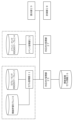
図2は、実施例1に係る機械学習システムのシステム構成の概略を示した図である。 Figure 2 is a diagram showing an outline of the system configuration of the machine learning system according to the first embodiment.
図2に示す本実施例の機械学習システムは、機械学習モデル20と、モデル管理部21と、モデル-センサ対応付けテーブル22と、イベント管理部23と、イベント-センサ対応付けテーブル24と、対応付け管理部25と、更新候補モデル情報26と、対応付け処理部27と、計算部28と、表示部29とを有する。
The machine learning system of this embodiment shown in FIG. 2 includes a machine learning model 20, a model management unit 21, a model-sensor correspondence table 22, an event management unit 23, an event-sensor correspondence table 24, a correspondence management unit 25, update candidate model information 26, a
本実施例の機械学習システムは、各種情報処理が可能な装置、一例としてコンピュータ等の情報処理装置である。機械学習システムは、CPUに代表されるプロセッサ及びメモリを有し、さらに、ストレージ及び入力装置を有する。 The machine learning system of this embodiment is a device capable of various information processing, for example an information processing device such as a computer. The machine learning system has a processor, such as a CPU, and a memory, and further has storage and an input device.
プロセッサは、例えばCPU(Central Processing Unit)、GPU(Graphics Processing Unit)、FPGA(Field-Programmable Gate Array)等である。メモリ及びストレージは、例えばHDD(Hard Disk Drive)などの磁気記憶媒体、RAM(Random Access Memory)、ROM(Read Only Memory)、SSD(Solid State Drive)などの半導体記憶媒体等を有する。また、DVD(Digital Versatile Disk)等の光ディスク及び光ディスクドライブの組み合わせもメモリ及びストレージとして用いられる。その他、磁気テープメディアなどの公知の記憶媒体もメモリ及びストレージとして用いられる。 The processor may be, for example, a CPU (Central Processing Unit), a GPU (Graphics Processing Unit), or an FPGA (Field-Programmable Gate Array). The memory and storage may be, for example, a magnetic storage medium such as a HDD (Hard Disk Drive), or a semiconductor storage medium such as a RAM (Random Access Memory), a ROM (Read Only Memory), or an SSD (Solid State Drive). In addition, a combination of an optical disk such as a DVD (Digital Versatile Disk) and an optical disk drive may also be used as memory and storage. Other well-known storage media such as magnetic tape media may also be used as memory and storage.
ストレージには、ファームウェアなどのプログラムが格納されている。機械学習システムの動作開始時(例えば電源投入時)にファームウェア等のプログラムをこのストレージから読み出してメモリで実行し、機械学習システムの全体制御を行う。また、ストレージには、プログラム以外にも、機械学習システムの各処理に必要なデータ等が格納されている。 The storage stores programs such as firmware. When the machine learning system starts to operate (for example, when the power is turned on), the programs such as firmware are read from this storage and executed in memory, thereby controlling the entire machine learning system. In addition to programs, the storage also stores data and other data necessary for each process of the machine learning system.
なお、本実施例の機械学習システムは、複数の情報処理装置が通信ネットワークを介して通信可能に構成された、いわゆるクラウドにより構成されてもよい。 The machine learning system of this embodiment may be configured as a so-called cloud, in which multiple information processing devices are configured to be able to communicate with each other via a communication network.
機械学習モデル20は、図2において図略の輝度センサ等の各種センサから出力されるセンサデータを入力データとし、この入力データに基づいて公知の機械学習アルゴリズムに従って学習を行ったものである。図1で詳述したように、本実施例の機械学習システムは複数の機械学習モデル20を有し、好ましくは、個々の機械学習モデル20の入力データであるセンサデータは異なりうる。ここに、センサデータが異なるとは、機械学習モデル20の入力データが1つ以上存在する場合、これら入力データの1つでも異なることを意味する。 The machine learning model 20 uses sensor data output from various sensors such as a brightness sensor not shown in FIG. 2 as input data, and learns based on this input data in accordance with a known machine learning algorithm. As described in detail in FIG. 1, the machine learning system of this embodiment has multiple machine learning models 20, and preferably, the sensor data that is the input data for each machine learning model 20 is different. Here, different sensor data means that when there is one or more input data for the machine learning model 20, even one of these input data is different.
モデル管理部21は、(機械学習)モデル20と、モデル20が入力として学習を実行するセンサデータとの対応付けが記述されたデル-センサ対応付けテーブル22を管理する。 The model management unit 21 manages a delta-sensor correspondence table 22 that describes the correspondence between the (machine learning) model 20 and the sensor data that the model 20 uses as input to perform learning.
モデル-センサ対応付けテーブル22は、モデル管理部21が管理する情報が記録される。これは、後述の図3のテーブルのように記録しても良い。 The model-sensor correspondence table 22 records information managed by the model management unit 21. This may be recorded as in the table shown in Figure 3, which will be described later.
イベント管理部23は、例えば、保守といったイベントと、イベントに影響を受けたセンサデータとの対応付けが記述されたイベント-センサ対応付けテーブル24を管理する。イベントは、本実施形態では、例えば、保守をあげて例示するが、保守でなくてもよく、例えば、台風や、積雪などでも良い。イベントとは、その事象が発生したことが原因となり、センサデータの傾向が通常と変わる事象を指す。 The event management unit 23 manages an event-sensor correspondence table 24 that describes the correspondence between an event, such as maintenance, and sensor data affected by the event. In this embodiment, the event is exemplified by maintenance, but it does not have to be maintenance and can be, for example, a typhoon or snowfall. An event refers to an occurrence that causes the trend of sensor data to change from normal.
イベント-センサ対応付けテーブル24は、イベント管理部23が管理する情報が記録される。これは、後述の図4のように記録しても良い。 The event-sensor correspondence table 24 records information managed by the event management unit 23. This may be recorded as shown in FIG. 4, which will be described later.
対応付け管理部25は、モデル管理部21が管理する情報と、イベント管理部23が管理する情報とを対応付け、保守イベントが発生した際、この保守イベントに影響を受けたモデルを特定する。 The correspondence management unit 25 associates the information managed by the model management unit 21 with the information managed by the event management unit 23, and when a maintenance event occurs, identifies the model affected by this maintenance event.
更新候補モデル情報26は、対応付け管理部25が管理する情報が記録される。これは、後述の図6のテーブルのように記録しても良い。 Information managed by the correspondence management unit 25 is recorded as the update candidate model information 26. This may be recorded as shown in the table of FIG. 6, which will be described later.
対応付け処理部27は、第2の実施形態にて示す、モデル20とセンサとの対応付け、及び、イベントとセンサの対応付けを参照し、モデル20の入力として使用されたセンサデータの期間を提示する。詳細は図9及び図10に示す。計算部28は、イベントにより影響を受けたセンサデータを特定するための、影響度合い等を計算する。
The
表示部29は、計算部28から送出される表示制御信号に基づいて所定の画面を表示する。入力装置は、機械学習システムのオペレータ(図略)からの入力指示動作に基づいて、入力指示信号を機械学習システムを構成する各部に送出する。
The display unit 29 displays a predetermined screen based on a display control signal sent from the
なお、図2において、モデル20、モデル-センサ対応付けテーブル22はデータサイエンティスト等により入力されるか、予め用意されているものとする。また、イベント-センサ対応付けテーブル24は機械学習システムの運用者が入力してもよい。 In FIG. 2, the model 20 and the model-sensor association table 22 are assumed to be input by a data scientist or the like, or to be prepared in advance. The event-sensor association table 24 may be input by the operator of the machine learning system.
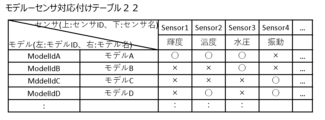
図3は、モデル20と、モデル20が入力として学習を実行するセンサデータとの対応付けを管理するモデル-センサ対応付けテーブル22を例示したものである。 Figure 3 shows an example of a model-sensor correspondence table 22 that manages the correspondence between the model 20 and the sensor data that the model 20 uses as input for learning.
モデル-センサ対応付けテーブル22では、モデル20を特定するためのモデルIDやモデル名などのモデル識別子と、そのモデル20が入力として学習を実行するセンサデータを出力するセンサIDやセンサ名などのセンサ識別子の対応付けが管理されている。 The model-sensor correspondence table 22 manages correspondence between model identifiers, such as a model ID or model name, for identifying the model 20, and sensor identifiers, such as a sensor ID or sensor name, that output sensor data that the model 20 uses as input to perform learning.
例えば、モデルAは輝度センサ、温度センサ、水圧センサを入力とし、振動センサは入力としない。モデルBは、水圧センサを入力とし、輝度センサと、温度センサと、振動センサは入力としない。このように、モデル識別子毎に、学習の入力として利用されているセンサ識別子が管理される。ただし、本実施形態が利用するモデルと、モデルが入力として学習を実行するセンサデータとの対応付けは、必ずしも図3と同一でなくても良い。つまり、モデルと、モデルの入力となる情報の関係性がわかればよい。 For example, model A takes the brightness sensor, temperature sensor, and water pressure sensor as inputs, but not the vibration sensor. Model B takes the water pressure sensor as input, but not the brightness sensor, temperature sensor, or vibration sensor. In this way, the sensor identifiers used as inputs for learning are managed for each model identifier. However, the correspondence between the model used in this embodiment and the sensor data that the model uses as input to perform learning does not necessarily have to be the same as that shown in Figure 3. In other words, it is sufficient to know the relationship between the model and the information that serves as input to the model.
図4は、保守などのイベントと、イベントに影響を受けたセンサデータとの対応付けを管理するイベント-センサ対応付けテーブル24を例示したものである。 Figure 4 shows an example of an event-sensor association table 24 that manages the association between events such as maintenance and sensor data affected by the events.
イベント-センサ対応付けテーブル24では、保守イベントを特定するための保守IDや保守名などの保守識別子と、センサを特定するためのセンサIDやセンサ名などのセンサ識別子毎の影響度の対応付けが管理されている。 The event-sensor correspondence table 24 manages the correspondence between maintenance identifiers, such as a maintenance ID or maintenance name, for identifying a maintenance event, and the impact level for each sensor identifier, such as a sensor ID or sensor name, for identifying a sensor.
計算部28は、保守IDがMaintenanceID1である保守イベント、すなわちパーツ1の錆止め塗布が実施された日時と、その保守イベントにより影響を受けたセンサを特定するために、センサ識別子毎に影響度を記録する。影響度とは、保守イベントが実施された時間の前後で、センサデータに変化があった度合いを示した値である。影響度は、例えば、以下の式で算出する。

上式において、寄与度は特許4832609号、異常度は特許5480440号に開示されたものを使用している。詳細は参照先の公報に譲るが、概略を説明すると、異常度は、センサデータを正規化して得られる特徴ベクトルを求め、この特徴ベクトルをクラスタリングしてクラスタ中心との距離が最も大きい特徴ベクトルの絶対値をクラスタ半径とし、異常度の計算対象となるセンサデータの特徴ベクトルのクラスタ中心までの距離dをクラスタ半径rで除した値として求められる。そして、異常度の差は、保守イベントが実施された時間の前後における異常度の差分として求められる。また、寄与度は、算出された異常度に対して、その異常度の算出に用いた複数のセンサデータを構成する各センサデータの寄与の程度を示すものであり、センサデータとクラスタを構成するセンサデータの代表値との差分を上述した距離dで除した値として求められる。 In the above formula, the contribution degree is that disclosed in Patent No. 4832609, and the anomaly degree is that disclosed in Patent No. 5480440. Details are given in the reference publication, but to give an outline, the anomaly degree is calculated by normalizing the sensor data to obtain a feature vector, clustering the feature vector, and taking the absolute value of the feature vector with the greatest distance from the cluster center as the cluster radius, and dividing the distance d to the cluster center of the feature vector of the sensor data to be calculated for the anomaly degree by the cluster radius r. The difference in the anomaly degree is calculated as the difference in the anomaly degree before and after the time when the maintenance event was carried out. The contribution degree indicates the degree of contribution of each sensor data constituting the multiple sensor data used to calculate the anomaly degree to the calculated anomaly degree, and is calculated as the difference between the sensor data and the representative value of the sensor data constituting the cluster, divided by the distance d described above.
当然、影響度は、必ずしも上記の式である必要はない。保守などのイベントの前と、後とで、センサデータに変化があった度合いがわかる値もしくは、高、中、低などの表現であっても良い。もし、モデルの入力となる情報が画像の場合は、画像の輝度などの変化が影響度に相当する。つまり、モデルの入力となる情報が、イベントの影響を受けたか否かがわかればよい。 Of course, the degree of impact does not necessarily have to be the above formula. It can be a value that indicates the degree of change in the sensor data before and after an event such as maintenance, or it can be expressed as high, medium, low, etc. If the information input to the model is an image, the change in the brightness of the image, etc. corresponds to the degree of impact. In other words, it is sufficient to know whether or not the information input to the model was affected by the event.
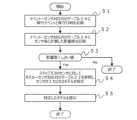
図5は、本実施例の機械学習システムの動作を説明するためのフローチャートであり、保守作業などのイベントの影響を受け、センサデータが変化したため、再学習すべきモデルを特定するための処理を図示したフロー図である。 Figure 5 is a flowchart for explaining the operation of the machine learning system of this embodiment, and is a flow diagram illustrating the process of identifying a model that should be re-learned because the sensor data has changed due to an event such as maintenance work.
保守などのイベントが発生した場合、イベント管理部23は、イベント-センサ対応付けテーブル24に、保守IDや保守名といった、保守イベント識別子と、日時を記録する(ステップ51)。 When an event such as maintenance occurs, the event management unit 23 records a maintenance event identifier, such as a maintenance ID or maintenance name, and the date and time in the event-sensor correspondence table 24 (step 51).
次に、イベント管理部23は、イベント-センサ対応付けテーブル24に、センサ識別子毎に、計算部28が計算した影響度を記録する(ステップ52)。
Next, the event management unit 23 records the impact degree calculated by the
そして、ステップS52で算出した影響度が、あらかじめ設定済のしきい値よりも高い場合(ステップ53においてYES)、その影響度を持つセンサ識別子に対して、対応付け管理部25が、モデル-センサ対応付けテーブル22を参照し、前記センサ識別子が入力に含まれるモデルを特定する(ステップ54)。なお、しきい値は、モデルの再学習が必要になるセンサデータの変化を、モデルを作成したデータサイエンティストなどに確認し、予め設定しておくことを推奨するが、この限りではない。 If the degree of influence calculated in step S52 is higher than a preset threshold value (YES in step S53), the correspondence management unit 25 refers to the model-sensor correspondence table 22 for the sensor identifier having that degree of influence, and identifies a model whose input includes the sensor identifier (step 54). Note that it is recommended that the threshold value be set in advance by confirming with the data scientist who created the model any changes in the sensor data that would require the model to be retrained, but this is not a limitation.
そして、対応付け管理部25は、ステップ54にて特定したモデルを、例えば、後述する図6や図10に示すように、GUIなどで表示部を介して提示する(ステップ55)。 Then, the correspondence management unit 25 presents the model identified in step 54 via a display unit, such as a GUI, as shown in, for example, Figures 6 and 10 described below (step 55).
図6は、イベント識別子と、イベントによって影響を受け再学習が必要になる可能性があるモデル識別子とを、対応付けたテーブルである。 Figure 6 shows a table that associates event identifiers with model identifiers that may be affected by the event and require re-learning.
例えば、例示するイベント―センサ対応付けテーブル24において、保守IDがMaintenanceId1のパーツ1錆止め塗布の保守が実施された際、センサIDがSensor1となる輝度センサの影響度が図4に示すように1.49であったとする。このとき、仮にしきい値を0.5とすると、輝度センサの影響度1.49はしきい値より大きいため、保守IDがMaintenanceId1の保守イベントは輝度センサに影響を与えたと判断することができる。
For example, in the illustrated event-sensor correspondence table 24, when maintenance was performed to apply anti-rust coating to
そこで、対応付け管理部25は、輝度センサが入力に含まれるモデル20を、モデル-センサ対応付けテーブル22を参照し、特定する。モデル-センサ対応付けテーブル22を参照すると、輝度センサが入力に含まれるモデル20は、モデルAということがわかる。 Then, the association management unit 25 refers to the model-sensor association table 22 to identify the model 20 whose input includes a luminance sensor. By referring to the model-sensor association table 22, it is found that the model 20 whose input includes a luminance sensor is model A.
従って、パーツ1錆止め塗布の保守イベントが実施された場合は、モデルAを再学習する可能性が高いため、モデルAが「更新要」、それ以外のモデルB、モデルC、モデルDは、「更新不要」となる。このようなことが、他のイベント、例えば、パーツ1の交換や、パーツ1の接続などによっても実施され、それぞれのイベント毎に、再学習が必要な可能性が高いモデルが特定される。
Therefore, when a maintenance event for applying anti-rust coating to
以上が、実施例1の機械学習システムにおける処理の流れとなる。このような情報の管理及び処理を行うことで、保守などのイベントが発生した際、そのイベントに影響を受け、再学習を実施した方が良い可能性が高いモデル20を特定できる。これにより、モデル20が誤検知を引き起こす可能性を低減することができる。 The above is the processing flow in the machine learning system of Example 1. By managing and processing information in this manner, when an event such as maintenance occurs, it is possible to identify models 20 that are likely to be affected by the event and require re-learning. This makes it possible to reduce the possibility that model 20 will cause a false positive.
次に、実施例2に係る機械学習システムについて説明する。 Next, we will explain the machine learning system related to Example 2.
図7は、図3に示した実施例1におけるモデル-センサ対応付けテーブル22と同様に、モデル20と、モデル20が入力として学習を実行するセンサデータとの対応付けを管理する、実施例2に係るモデル-センサ対応付けテーブル22テーブルを示す図である。そのため、本図は、図3との差分を中心に説明する。 Figure 7 is a diagram showing a model-sensor correspondence table 22 according to Example 2, which manages the correspondence between the model 20 and the sensor data that the model 20 uses as input for learning, similar to the model-sensor correspondence table 22 in Example 1 shown in Figure 3. Therefore, this figure will mainly explain the differences from Figure 3.
モデルIDやモデル名などのモデル識別子と、前記モデル識別子が作成された日時などと、モデル20毎に定められた許容度と、モデル20が入力として学習するセンサデータのおおよその目安期間が対応付けされる。さらに、図3にて示した、モデルが入力として学習を実行するセンサデータを出力するセンサIDやセンサ名などのセンサ識別子の対応付けが管理されている。 A model identifier such as a model ID or a model name is associated with the date and time when the model identifier was created, a tolerance determined for each model 20, and an approximate guide period for the sensor data that the model 20 learns as input. In addition, the association of sensor identifiers such as the sensor ID and the sensor name that output the sensor data that the model learns as input, as shown in FIG. 3, is managed.
モデル20毎に定められた許容度とは、モデルが再学習を実施すべき目安となる値となる。例えば、保守前後において、前述のモデルの異常度が、本テーブルの許容度を超えた場合、そのモデル識別子を有するモデルを再学習することを推奨する。この許容度は、モデル毎に異なる可能性があるため、本テーブルにてモデル毎に定めても良い。 The tolerance defined for each model 20 is a guideline value for when the model should be re-learned. For example, if the degree of abnormality of the aforementioned model before and after maintenance exceeds the tolerance in this table, it is recommended that the model having that model identifier be re-learned. This tolerance may differ for each model, so it may be defined for each model in this table.
モデル20が入力として学習するセンサデータのおおよその目安期間とは、モデル20が学習するために利用するセンサデータの期間である。例えば、モデルAは、約30日分の輝度センサデータ、約30日分の温度センサデータ、及び約30日分の水圧センサデータを入力として、モデル20を学習する。モデルBは、約15日分の水圧センサデータを入力として、モデル20を学習する。目安学習期間を示すことで、後述の図9、図10に示す処理フローにおける、過去のセンサデータを用いて再学習する際に参考にできる。 The approximate guide period of sensor data that model 20 learns as input is the period of sensor data that model 20 uses for learning. For example, model A learns model 20 using approximately 30 days' worth of luminance sensor data, approximately 30 days' worth of temperature sensor data, and approximately 30 days' worth of water pressure sensor data as input. Model B learns model 20 using approximately 15 days' worth of water pressure sensor data as input. By indicating the guide period of learning, it can be used as a reference when re-learning using past sensor data in the processing flows shown in Figures 9 and 10 described below.
図8は、図4に示した実施例1におけるイベント-センサ対応付けテーブル24と同様に、保守などのイベントと、イベントに影響を受けたセンサデータとの対応付けを管理する、実施例2に係るイベント-センサ対応付けテーブル24を示した図である。そのため、本図は、図4との差分を中心に説明する。 Figure 8 shows an event-sensor association table 24 according to Example 2, which manages associations between events such as maintenance and sensor data affected by the events, similar to the event-sensor association table 24 in Example 1 shown in Figure 4. Therefore, this figure will mainly explain the differences from Figure 4.
保守IDや保守名などの保守識別子と、センサIDやセンサ名などのセンサ識別子毎に、保守イベントの前後でモデル20の入力となるセンサデータに変化があり、モデル20の再学習が実施された場合、センサ識別子毎に、再学習の際に利用されたセンサデータであった場合、利用された期間が記録される。 For each maintenance identifier such as a maintenance ID or a maintenance name, and each sensor identifier such as a sensor ID or a sensor name, if there is a change in the sensor data that is input to the model 20 before and after a maintenance event, and re-learning of the model 20 is performed, the period during which the sensor data was used is recorded for each sensor identifier if it was sensor data used during re-learning.
例えば、MaintenanceId1により特定される、パーツ1への錆止め塗布の保守イベントが実施され、実施例1と同様に、保守イベントによる影響を受け、輝度センサデータの傾向が変わったとする。その後、データサイエンティスト等の判断により、実施例1に示した手法等により、輝度データを入力とするモデルAの再学習が実施されたものとする。
For example, assume that a maintenance event for applying anti-rust coating to
この時、輝度センサデータにおいて、再学習に利用された期間を記録しておく。つまり、図8の輝度センサデータの欄に、再学習に利用された期間として2017/08/29-2017/09/27と記録する。こうすることにより、MaintenanceId1により特定される保守イベントの影響にて、モデル20の再学習が実施され、その後、輝度センサデータの上記期間のデータを用い、再学習が実施されたことを把握できる。 At this time, the period used for re-learning is recorded in the luminance sensor data. That is, 2017/08/29-2017/09/27 is recorded as the period used for re-learning in the luminance sensor data column in FIG. 8. By doing this, it is possible to understand that re-learning of model 20 was performed due to the influence of the maintenance event identified by MaintenanceId1, and that re-learning was then performed using the data from the luminance sensor data for the above period.
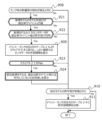
図9は、保守などのイベントの影響を受け、センサデータが変化したため、再学習すべきモデル20を特定し、さらに、再学習に利用すべきセンサデータを提示する、図7及び図8にて示した情報を管理する、処理を図示したフローチャートである。 Figure 9 is a flowchart illustrating the process of identifying the model 20 to be retrained because the sensor data has changed due to an event such as maintenance, and further presenting the sensor data to be used for retraining, and managing the information shown in Figures 7 and 8.
保守などのイベントが発生した場合、イベント管理部23は、イベント-センサ対応付けテーブル24に、保守IDや保守名といった、保守イベント識別子と、日時を記録する(ステップ901)。 When an event such as maintenance occurs, the event management unit 23 records a maintenance event identifier, such as a maintenance ID or maintenance name, and the date and time in the event-sensor correspondence table 24 (step 901).
次に、イベント管理部23は、イベント-センサ対応付けテーブル24に、センサ識別子毎に、計算部28が計算した影響度を記録する(ステップ902)。
Next, the event management unit 23 records the impact degree calculated by the
そして、ステップ902で記録された影響度が、あらかじめ設定済のしきい値よりも高い場合(ステップ903においてYES)、その影響度を持つセンサ識別子に対して、対応付け管理部25が、モデル-センサ対応付けテーブル22を参照し、前記センサ識別子が入力に含まれるモデルを特定する(ステップ904)。一方、影響度が、あらかじめ設定済のしきい値以下の場合(ステップ903においてNO)、処理を終了する。
If the impact level recorded in
なお、しきい値は、モデルの再学習が必要になるセンサデータの変化を、モデルを作成したデータサイエンティストなどに確認し、予め設定しておくことを推奨するが、この限りではない。 It is recommended that the threshold be set in advance after checking with the data scientist who created the model about any changes in the sensor data that would require the model to be retrained, but this is not a requirement.
次に、モデル管理部21は、ステップ904にて特定したモデルの許容度を取得し、さらにモデルが出力している異常度を比較し、異常度が、許容度よりも高い場合(ステップ905においてYES)、対応付け処理部27が、イベント-センサ対応付けテーブル24を参照し、ステップ901に示した保守イベントと同様の保守イベントを検索する(ステップ906)。一方、異常度が、許容度以下の場合(ステップ905においてNO)、処理を終了する。
Next, the model management unit 21 obtains the tolerance of the model identified in
ステップ905に示した異常度とは、実施例1と同様に、モデル20が、入力するセンサデータに対して、異常検知の診断した結果、異常として判定する度合いである。異常度は、特許5480440号を参照している。
The degree of anomaly shown in
対応付け処理部27は、ステップ906の結果を得て、過去に、例えば、同一保守IDを有する同様の保守イベントがあり(ステップ907)、かつ、イベント-センサ対応付けテーブル24にて管理する、センサ毎の影響が過去の影響と同様の傾向であった場合(ステップ908)、イベント-センサ対応付けテーブル24より、ステップ908に該当する、しきい値を超えているセンサデータの学習期間を提示する(ステップ909)。ここで、ステップ908に示した過去の影響と同様の傾向とは、例えば、過去の保守実施前から保守実施後のセンサデータの値の変化が、およそ20~30パーセントの間にて増減した、等、過去の値と全く同一の数値でなくても良く、大雑把な傾向が同様であればよい。
The
ステップ909の判断を元に、モデルが提示されたセンサデータを入力とする等して再学習が実施された場合(ステップ910)、イベント管理部23は、イベント-センサ対応付けテーブル24に、前記イベントIDに対して、センサ毎の再学習に利用された期間を記録し(ステップ911)、処理を終了する。なお、ステップ907とステップ908の分岐がNoの場合は、ステップ910へ移動し、ステップ910の分岐がNoの場合は、処理を終了する。
If re-learning is performed based on the judgment in
次に、実施例3に係る機械学習システムについて説明する。 Next, we will explain the machine learning system related to Example 3.
図10は、実施例2に係る図9と同様に、保守などのイベントの影響を受け、センサデータが変化したため、再学習すべきモデル20を特定し、さらに、再学習に利用すべきセンサデータを提示する、図7及び図8にて示した情報を管理する、処理を図示したフローチャートである。 FIG. 10 is a flowchart illustrating the process of identifying the model 20 to be retrained because the sensor data has changed due to an event such as maintenance, and further presenting the sensor data to be used for retraining, as well as managing the information shown in FIGS. 7 and 8, similar to FIG. 9 relating to the second embodiment.
図9との差分は、二重線にて示したステップ921、ステップ922、ステップ923、ステップ924にて示した処理である。本処理において、前述の図1の説明の最後にて述べた、運用の途中で新規モデル20を作成した場合においても、新規モデル20の再学習の入力となるセンサデータを提示することが可能となる。
The differences from FIG. 9 are the processes shown by double lines in
ステップ908までは、図9のステップ901~907に示す処理と同じであるためステップ908以降の処理を説明する。
The process up to step 908 is the same as
対応付け処理部27は、センサ毎の影響が過去の影響と同様の傾向であり(ステップ908においてYES)、かつ、新規モデル20のモデル作成日が過去の保守イベントより後であり(ステップ921においてYES)、さらに新規モデル20が入力とするセンサデータが過去の保守イベント後の再学習で利用されていた場合(ステップ922においてYES)、イベント―センサ対応付けテーブル24より、ステップ908に該当する、しきい値を超えているセンサデータの学習期間を提示する(ステップ909)。
If the impact of each sensor shows a similar tendency to the past impact (YES in step 908), and the model creation date of the new model 20 is after the past maintenance event (YES in step 921), and the sensor data input to the new model 20 was used for re-learning after the past maintenance event (YES in step 922), the
ステップ921の処理がYESである場合(ステップ923)、新規モデル20は過去の保守イベント時には存在していないため、イベント管理部23はモデル20の再学習等の見直しを提示しても良い(ステップ924)。また、ステップ910以降の処理も、図9と同様である。なお、ステップ921、ステップ922、ステップ924の分岐がNoの場合は、ステップ910へ移動する。
If the processing of
図11は、実施形態に係る機械学習システムにおけるGUI1001の例を図示した図である。
Figure 11 is a diagram illustrating an example of a
保守イベント一覧には、保守ID(MaintenanceId1)や保守名(パーツ1錆止め塗布)などの保守識別子毎に、保守が実施された日時(2017/08/27 XX:XX:XX -2017/8/28 XX:XX:XX)が表示される。 The maintenance event list displays the date and time when maintenance was performed (2017/08/27 XX:XX:XX - 2017/8/28 XX:XX:XX) for each maintenance identifier, such as the maintenance ID (MaintenanceId1) or maintenance name (Rust prevention coating for part 1).
例えば、利用者は、詳細を確認したい保守識別子を選択し、保守イベントの詳細表示ボタン1002を押下する。すると、保守イベントの詳細表示欄1003に、保守識別子の詳細情報が表示される。
For example, the user selects the maintenance identifier for which they wish to check details, and presses the maintenance event details
表示される情報は、保守IDや保守名といった保守識別子や、保守が実施された日時や、保守内容の説明(例えば、〇〇号機の〇〇部のパーツ1が、経年劣化により錆等が発生したため、パーツ1に錆止め塗料を塗布した。など)が書かれていても良い。
The information displayed may include a maintenance identifier such as a maintenance ID or maintenance name, the date and time the maintenance was performed, and a description of the maintenance content (for example,
また、その保守識別子において、影響を受けたモデル識別子(ModelIdA)が表示され、モデル識別子の詳細情報として、モデルIDやモデル名(モデルA)、モデルに入力として含まれるセンサ識別子(Sensor1など)、影響度の値、さらに、過去の同一保守IDにて再学習が実施された際の、再学習の入力センサデータとして利用された期間などが表示されていてもよい。また、GUIにて、本実施形態で示した、例えば、モデルが保守により影響を受けたと想定する影響度などの、しきい値の変更を行えても良い。 In addition, the affected model identifier (ModelIdA) is displayed in that maintenance identifier, and detailed information on the model identifier may include the model ID, model name (Model A), the sensor identifier included as an input in the model (Sensor1, etc.), the impact value, and the period used as input sensor data for re-learning when re-learning was performed in the past with the same maintenance ID. In addition, the GUI may be able to change threshold values such as the impact level at which a model is assumed to be affected by maintenance, as shown in this embodiment.
なお、上記した実施例は本発明を分かりやすく説明するために構成を詳細に説明したものであり、必ずしも説明した全ての構成を備えるものに限定されるものではない。また、各実施例の構成の一部について、他の構成に追加、削除、置換することが可能である。 The above-mentioned embodiments are detailed descriptions of the configurations in order to clearly explain the present invention, and are not necessarily limited to those having all of the configurations described. In addition, some of the configurations of each embodiment can be added to, deleted from, or replaced with other configurations.
一例として、本実施形態では、過去に実施された同一の保守識別子時のセンサデータを用いて再学習を行い、モデル20を作成する説明を行ったが、過去のセンサデータを用いた再学習ではなく、過去に利用されたモデル20をそのまま用いるとしても良い。 As an example, in this embodiment, re-learning is performed using sensor data from the same maintenance identifier performed in the past to create the model 20, but instead of re-learning using past sensor data, the model 20 used in the past may be used as is.
また、本実施形態では、保守に影響を受けたセンサデータが溜まる前に、過去のセンサデータを用いて再学習を実施する例を述べたが、その後、保守に影響を受けたセンサデータが蓄積された後、現在のセンサデータを用いて、モデル20を再学習するとしても良い。 In addition, in this embodiment, an example is described in which re-learning is performed using past sensor data before sensor data affected by maintenance is accumulated, but after that, after sensor data affected by maintenance is accumulated, model 20 may be re-learned using current sensor data.
さらに、本実施形態では、期間中、一種類の保守イベントが実施される例を示したが、実際の保守業務においては、複数種類の保守イベントを同時に実施する可能性もある。例えば、MaintenanceId1の保守イベントと、MaintenanceId2の保守イベントが同時期に実施される場合である。この場合、もし、過去にMaintenanceId1の保守イベントが実施された際の情報(例えば、イベント-センサ対応付けテーブル24のMaintenanceId1行に記載の情報)と、MaintenanceId2の保守イベントが実施された際の情報(例えば、イベント-センサ対応付けテーブル24のMaintenanceId2行に記載の情報)とが存在していれば、それらの影響度の加算から、MaintenanceId1とMaintenanceId2とが同時期に実施された際の影響度を推測することが可能となる。そのため、複数種類の保守イベントが同時期に実施された場合であっても、保守に影響を受けたモデル20を特定し、過去の再学習に利用されたセンサデータを提示することが可能となる場合がある。 In addition, in this embodiment, an example in which one type of maintenance event is performed during a period has been shown, but in actual maintenance work, multiple types of maintenance events may be performed simultaneously. For example, a maintenance event with MaintenanceId1 and a maintenance event with MaintenanceId2 may be performed at the same time. In this case, if there is information on the past maintenance event with MaintenanceId1 (for example, information written in the MaintenanceId1 row of the event-sensor correspondence table 24) and information on the past maintenance event with MaintenanceId2 (for example, information written in the MaintenanceId2 row of the event-sensor correspondence table 24), it is possible to estimate the impact of MaintenanceId1 and MaintenanceId2 being performed at the same time by adding up their impact levels. Therefore, even if multiple types of maintenance events are performed at the same time, it may be possible to identify the model 20 affected by the maintenance and present the sensor data used for past re-learning.
さらに、本実施形態の図5、図9、図10で示す処理フローの条件の分岐は、しきい値判定などで自動化しても良いし、人の判断が入っても良い。 Furthermore, the branching of the conditions in the process flows shown in Figures 5, 9, and 10 of this embodiment may be automated using threshold judgments, or human judgment may be involved.
さらに、本実施形態において、過去のセンサデータを用い、再学習を実施し、再学習したモデルをシステムで採用するか否かは、運用者が確認し、採用の要否を判断するとしても良い。 Furthermore, in this embodiment, past sensor data may be used to perform re-learning, and the operator may check and determine whether or not to adopt the re-learned model in the system.
本実施形態でモデル20が再学習の際の入力とするセンサデータの保存場所は特に限定しないが、保守イベントに影響を受けたセンサデータを、アクセスが容易な場所に別で保存しておくなどしても良い。 In this embodiment, the location where the sensor data that is input to the model 20 during re-learning is stored is not particularly limited, but the sensor data affected by the maintenance event may be stored separately in an easily accessible location.
本実施例にて示した、寄与度や異常度や、許容度の計算方法は、一例である。 The calculation methods for the contribution rate, anomaly rate, and tolerance shown in this example are just examples.
実施例1~3に示すテーブルおよび処理フローおよびGUIはあくまで一例であり、必ずしもこれと同じ内容を有する必要はなく、また、他の情報が入っていてもよい。 The tables, processing flows, and GUIs shown in Examples 1 to 3 are merely examples, and do not necessarily have to have the same contents, and other information may also be included.
また、上記の各構成、機能、処理部、処理手段等は、それらの一部または全部を、例えば集積回路で設計する等によりハードウェアで実現してもよい。また、本発明は、実施例の機能を実現するソフトウェアのプログラムコードによっても実現できる。この場合、プログラムコードを記録した記憶媒体をコンピュータに提供し、そのコンピュータが備えるプロセッサが記憶媒体に格納されたプログラムコードを読み出す。この場合、記憶媒体から読み出されたプログラムコード自体が前述した実施例の機能を実現することになり、そのプログラムコード自体、及びそれを記憶した記憶媒体は本発明を構成することになる。このようなプログラムコードを供給するための記憶媒体としては、例えば、フレキシブルディスク、CD-ROM、DVD-ROM、ハードディスク、SSD(Solid State Drive)、光ディスク、光磁気ディスク、CD-R、磁気テープ、不揮発性のメモリカード、ROMなどが用いられる。 The above-mentioned configurations, functions, processing units, processing means, etc. may be realized in part or in whole by hardware, for example by designing them as integrated circuits. The present invention can also be realized by software program code that realizes the functions of the embodiments. In this case, a storage medium on which the program code is recorded is provided to a computer, and a processor of the computer reads the program code stored in the storage medium. In this case, the program code itself read from the storage medium realizes the functions of the above-mentioned embodiments, and the program code itself and the storage medium on which it is stored constitute the present invention. Examples of storage media for supplying such program code include flexible disks, CD-ROMs, DVD-ROMs, hard disks, SSDs (Solid State Drives), optical disks, magneto-optical disks, CD-Rs, magnetic tapes, non-volatile memory cards, and ROMs.
また、本実施例に記載の機能を実現するプログラムコードは、例えば、アセンブラ、C/C++、perl、Shell、PHP、Java(登録商標)、Python等の広範囲のプログラムまたはスクリプト言語で実装できる。 In addition, the program code that realizes the functions described in this embodiment can be implemented in a wide range of program or script languages, such as assembler, C/C++, perl, Shell, PHP, Java (registered trademark), Python, etc.
さらに、各実施例の機能を実現するソフトウェアのプログラムコードのすべてまたは一部は、予め機械学習システムのストレージに格納されていてもよいし、必要に応じて、ネットワークに接続された他の装置の非一時的記憶装置から、または機械学習システムが備える図略の外部I/Fを介して、非一時的な記憶媒体からストレージに格納されてもよい。 Furthermore, all or part of the program code of the software that realizes the functions of each embodiment may be stored in advance in the storage of the machine learning system, or, if necessary, may be stored in the storage from a non-transitory storage device of another device connected to the network, or from a non-transitory storage medium via an external I/F (not shown) provided in the machine learning system.
さらに、実施例の機能を実現するソフトウェアのプログラムコードを、ネットワークを介して配信することによって、それをコンピュータのハードディスクやメモリ等の記憶手段またはCD-RW、CD-R等の記憶媒体に格納し、コンピュータが備えるプロセッサが当該記憶手段や当該記憶媒体に格納されたプログラムコードを読み出して実行するようにしてもよい。 Furthermore, the program code of the software that realizes the functions of the embodiment may be distributed over a network and stored in a storage means such as a computer's hard disk or memory, or in a storage medium such as a CD-RW or CD-R, and the processor of the computer may read and execute the program code stored in the storage means or storage medium.
上述の実施例において、制御線や情報線は、説明上必要と考えられるものを示しており、製品上必ずしも全ての制御線や情報線を示しているとは限らない。全ての構成が相互に接続されていてもよい。 In the above examples, the control lines and information lines are those that are considered necessary for the explanation, and not all control lines and information lines in the product are necessarily shown. All components may be interconnected.
20…機械学習モデル 21…モデル管理部 22…モデル-センサ対応付けテーブル 23…イベント管理部 24…イベント-センサ対応付けテーブル 25…対応付け管理部 26…更新候補モデル情報 27…対応付け処理部 28…計算部 29…表示部 1001…GUI
20 Machine learning model 21 Model management unit 22 Model-sensor correspondence table 23 Event management unit 24 Event-sensor correspondence table 25 Correspondence management unit 26 Update
Claims (8)
前記機械学習システムはプロセッサを有し、
前記プロセッサは、
前記機械学習モデルを特定する前記機械学習モデルに固有のモデル識別子と、前記機械学習モデルの前記入力データとなる前記センサデータを出力する前記センサを特定する前記センサに特有のセンサ識別子とを対応付けて管理し、
前記機器に行われる保守作業を特定する前記保守作業に固有の保守イベント識別子毎に、前記保守作業が実施された時期の前後における前記センサデータの傾向の変化を表す影響度を求め、この影響度を前記センサ識別子毎に対応付けて管理し、
前記影響度が予め定められた条件を満たす前記センサが前記保守作業による影響を受けたとみなして、前記条件を満たす前記センサの前記センサ識別子に対応付けられた前記モデル識別子を提示する
ことを特徴とする機械学習システム。 A machine learning system having one or more machine learning models to which a machine learning algorithm is applied, in which sensor data output from one or more sensors that detect the state of a device that is an anomaly detection target is used as input data, and the machine learning models detect an anomaly or the like of the device based on the input data,
The machine learning system includes a processor.
The processor,
managing a model identifier specific to the machine learning model that identifies the machine learning model and a sensor identifier specific to the sensor that identifies the sensor that outputs the sensor data that becomes the input data of the machine learning model in association with each other;
determining an impact degree representing a change in a trend of the sensor data before and after the time when the maintenance work was performed for each maintenance event identifier specific to the maintenance work to be performed on the device, and managing the impact degree in association with each sensor identifier;
A machine learning system characterized by assuming that the sensor whose impact degree satisfies a predetermined condition has been affected by the maintenance work, and presenting the model identifier associated with the sensor identifier of the sensor that satisfies the condition.
前記機械学習モデルが作成された時期と、前記機械学習モデルが異常であるか否かを判定する判定基準である許容度と、前記機械学習モデルの学習のために入力される前記センサデータの学習期間とを、前記モデル識別子毎に対応付けて管理し、
前記保守作業が発生した際、前記保守作業が発生した時期と、前記機械学習モデルの再学習が行われたらこの再学習に用いられた前記センサ識別子及び前記再学習の期間の組とを前記保守イベント識別子毎に対応付けて管理する
ことを特徴とする請求項1に記載の機械学習システム。 The processor,
managing, for each model identifier, a time when the machine learning model was created, a tolerance that is a judgment criterion for judging whether or not the machine learning model is abnormal, and a learning period of the sensor data input for learning the machine learning model;
The machine learning system described in claim 1, characterized in that when the maintenance work occurs, the time when the maintenance work occurred and, if the machine learning model is re-learned, the set of the sensor identifier used in the re-learning and the re-learning period are associated with each other and managed for each maintenance event identifier.
前記許容度を、この許容度に関連付けられた前記機械学習モデルの前記入力データである前記センサデータについて、このセンサデータをクラスタリングした結果として得られる前記センサデータの正常値の範囲と実際の前記センサデータとのずれである異常度が超えたとき、この異常度に関連付けられた前記保守作業の前記保守イベント識別子と同一の前記保守作業を検索し、
過去に同一の前記保守イベント識別子が存在し、かつ、前記センサ毎の前記影響度の傾向が、同一の前記保守作業時と同様である場合、同一の前記保守イベント識別子に対応する前記再学習の期間を読み込み、前記再学習の期間に対応する前記センサ識別子の前記センサデータを入力として、前記モデル識別子の前記機械学習モデルを再学習することを提示し、
一方、過去に同一の前記保守イベント識別子が存在せず、もしくは、前記センサ毎の前記影響度の傾向が、同一の前記保守イベント時と同様でなく、さらに前記機械学習モデルの前記再学習が実施された場合、前記モデル識別子に関連付けられた前記機械学習モデルの前記再学習の入力となる前記センサ識別子の前記センサデータの再学習期間を、前記保守イベント識別子に対応付けて記録する
請求項4に記載の機械学習システム。 The processor,
When an anomaly level, which is a deviation between a normal value range of the sensor data obtained as a result of clustering the sensor data that is the input data of the machine learning model associated with the tolerance, and the actual sensor data, exceeds the tolerance, searching for the maintenance work that is identical to the maintenance event identifier of the maintenance work associated with the anomaly level;
If the same maintenance event identifier exists in the past and the trend of the impact degree for each sensor is similar to that during the same maintenance work, a re-learning period corresponding to the same maintenance event identifier is read, and the sensor data of the sensor identifier corresponding to the re-learning period is input to re-learn the machine learning model of the model identifier;
On the other hand, when the same maintenance event identifier has not existed in the past or the trend of the impact degree for each sensor is not the same as that at the time of the same maintenance event, and further when the re-learning of the machine learning model is performed, the machine learning system of claim 4 records a re-learning period of the sensor data of the sensor identifier that is an input for the re-learning of the machine learning model associated with the model identifier in association with the maintenance event identifier.
前記プロセッサは、
新規な前記機械学習モデルの作成日が、過去の前記保守作業より後であり、新規な前記機械学習モデルの前記入力データである前記センサデータが、過去の前記保守作業における前記再学習で利用されているとき、
過去に同一の前記保守イベント識別子が存在し、かつ、前記センサ毎の前記影響度の傾向が、同一の前記保守イベント時と同様である場合、同一の前記保守イベント識別子に対応する前記再学習の期間を読み込み、前記再学習の期間に対応する前記センサ識別子の前記センサデータを入力として、新規な前記機械学習モデルを再学習することを提示する
請求項5に記載の機械学習システム。 When a new machine learning model is registered in the machine learning system during operation of the machine learning system,
The processor,
When the creation date of the new machine learning model is after the past maintenance work, and the sensor data that is the input data of the new machine learning model is used in the re-learning in the past maintenance work,
6. The machine learning system of claim 5, further comprising: if the same maintenance event identifier existed in the past and the trend of the impact degree for each sensor is similar to that at the time of the same maintenance event, the system reads the re-learning period corresponding to the same maintenance event identifier, and proposes re-learning a new machine learning model using the sensor data of the sensor identifier corresponding to the re-learning period as input.
前記プロセッサは、
前記影響度が予め定められた前記条件を満たす前記センサが前記保守作業による影響を受けたとみなしたとき、前記条件を満たす前記センサの前記センサ識別子に対応付けられた前記モデル識別子、前記モデル識別子に関連付けられた前記機械学習モデルの前記入力データを出力する前記センサ、前記センサに関連付けられた前記影響度を前記表示部に表示させる
ことを特徴とする請求項1に記載の機械学習システム。 The machine learning system has a display unit,
The processor,
The machine learning system of claim 1, characterized in that when the sensor whose impact degree satisfies the predetermined condition is deemed to have been affected by the maintenance work, the display unit displays the model identifier associated with the sensor identifier of the sensor that satisfies the condition, the sensor that outputs the input data of the machine learning model associated with the model identifier, and the impact degree associated with the sensor.
前記機械学習モデルを特定する前記機械学習モデルに固有のモデル識別子と、前記機械学習モデルの前記入力データとなる前記センサデータを出力する前記センサを特定する前記センサに特有のセンサ識別子とを対応付けて管理し、
前記機器に行われる保守作業を特定する前記保守作業に固有の保守イベント識別子毎に、前記保守作業が実施された時期の前後における前記センサデータの傾向の変化を表す影響度を求め、この影響度を前記センサ識別子毎に対応付けて管理し、
前記影響度が予め定められた条件を満たす前記センサが前記保守作業による影響を受けたとみなして、前記条件を満たす前記センサの前記センサ識別子に対応付けられた前記モデル識別子を提示する
ことを特徴とする機械学習システムによる機械学習モデル管理方法。 A machine learning model management method for a machine learning system having one or more machine learning models to which a machine learning algorithm is applied, in which sensor data output from one or more sensors that detect a state of a device that is an anomaly detection target is used as input data, and the machine learning models detect an anomaly or the like of the device based on the input data,
managing a model identifier specific to the machine learning model that identifies the machine learning model and a sensor identifier specific to the sensor that identifies the sensor that outputs the sensor data that becomes the input data of the machine learning model in association with each other;
determining an impact degree representing a change in a trend of the sensor data before and after the time when the maintenance work was performed for each maintenance event identifier specific to the maintenance work to be performed on the device, and managing the impact degree in association with each sensor identifier;
A machine learning model management method using a machine learning system, characterized in that the sensor whose impact degree satisfies a predetermined condition is considered to have been affected by the maintenance work, and the model identifier associated with the sensor identifier of the sensor that satisfies the condition is presented.
Priority Applications (2)
| Application Number | Priority Date | Filing Date | Title |
|---|---|---|---|
| JP2021082783A JP7587472B2 (en) | 2021-05-14 | 2021-05-14 | Machine learning system and machine learning model management method using machine learning system |
| US17/691,784 US20220365526A1 (en) | 2021-05-14 | 2022-03-10 | Machine learning system and machine learning model management method using machine learning system |
Applications Claiming Priority (1)
| Application Number | Priority Date | Filing Date | Title |
|---|---|---|---|
| JP2021082783A JP7587472B2 (en) | 2021-05-14 | 2021-05-14 | Machine learning system and machine learning model management method using machine learning system |
Publications (2)
| Publication Number | Publication Date |
|---|---|
| JP2022175959A JP2022175959A (en) | 2022-11-25 |
| JP7587472B2 true JP7587472B2 (en) | 2024-11-20 |
Family
ID=83997788
Family Applications (1)
| Application Number | Title | Priority Date | Filing Date |
|---|---|---|---|
| JP2021082783A Active JP7587472B2 (en) | 2021-05-14 | 2021-05-14 | Machine learning system and machine learning model management method using machine learning system |
Country Status (2)
| Country | Link |
|---|---|
| US (1) | US20220365526A1 (en) |
| JP (1) | JP7587472B2 (en) |
Families Citing this family (4)
| Publication number | Priority date | Publication date | Assignee | Title |
|---|---|---|---|---|
| JP7552643B2 (en) * | 2022-03-30 | 2024-09-18 | 横河電機株式会社 | DATA PROCESSING APPARATUS, DATA PROCESSING METHOD, AND PROGRAM |
| WO2024232093A1 (en) * | 2023-05-11 | 2024-11-14 | 日本電気株式会社 | Output device |
| JP2025009532A (en) * | 2023-07-07 | 2025-01-20 | オムロン株式会社 | MONITORING APPARATUS, MONITORING METHOD, AND PROGRAM |
| WO2025165133A1 (en) * | 2024-02-02 | 2025-08-07 | Samsung Electronics Co., Ltd. | System and method to discover models for transfer learning |
Citations (3)
| Publication number | Priority date | Publication date | Assignee | Title |
|---|---|---|---|---|
| JP4832609B1 (en) | 2011-06-22 | 2011-12-07 | 株式会社日立エンジニアリング・アンド・サービス | Abnormal sign diagnosis device and abnormality sign diagnosis method |
| JP5081999B1 (en) | 2011-06-22 | 2012-11-28 | 株式会社日立エンジニアリング・アンド・サービス | How to display abnormal sign diagnosis results |
| WO2021157676A1 (en) | 2020-02-07 | 2021-08-12 | ファナック株式会社 | Diagnosis apparatus |
Family Cites Families (6)
| Publication number | Priority date | Publication date | Assignee | Title |
|---|---|---|---|---|
| US7457674B2 (en) * | 2004-08-27 | 2008-11-25 | Siemens Corporate Research, Inc. | System, device, and methods for updating system-monitoring models |
| JP5975802B2 (en) * | 2012-09-03 | 2016-08-23 | アズビル株式会社 | Inspection and maintenance data verification device, inspection and maintenance data verification system, and inspection and maintenance data verification method |
| WO2016185323A1 (en) * | 2015-05-15 | 2016-11-24 | Bombardier Inc. | Apparatus and methods for assisting with aircraft maintenance using predetermined maintenance programs |
| CN117474104A (en) * | 2017-03-28 | 2024-01-30 | 甲骨文国际公司 | System and method for intelligently providing support information using machine learning |
| EP3561742A1 (en) * | 2018-04-25 | 2019-10-30 | Volume Limited | Test and training data |
| EP3667439A1 (en) * | 2018-12-13 | 2020-06-17 | ABB Schweiz AG | Predictions for a process in an industrial plant |
-
2021
- 2021-05-14 JP JP2021082783A patent/JP7587472B2/en active Active
-
2022
- 2022-03-10 US US17/691,784 patent/US20220365526A1/en not_active Abandoned
Patent Citations (3)
| Publication number | Priority date | Publication date | Assignee | Title |
|---|---|---|---|---|
| JP4832609B1 (en) | 2011-06-22 | 2011-12-07 | 株式会社日立エンジニアリング・アンド・サービス | Abnormal sign diagnosis device and abnormality sign diagnosis method |
| JP5081999B1 (en) | 2011-06-22 | 2012-11-28 | 株式会社日立エンジニアリング・アンド・サービス | How to display abnormal sign diagnosis results |
| WO2021157676A1 (en) | 2020-02-07 | 2021-08-12 | ファナック株式会社 | Diagnosis apparatus |
Also Published As
| Publication number | Publication date |
|---|---|
| US20220365526A1 (en) | 2022-11-17 |
| JP2022175959A (en) | 2022-11-25 |
Similar Documents
| Publication | Publication Date | Title |
|---|---|---|
| JP7587472B2 (en) | Machine learning system and machine learning model management method using machine learning system | |
| JP7036697B2 (en) | Monitoring system and monitoring method | |
| JP6956028B2 (en) | Failure diagnosis device and machine learning device | |
| US10769007B2 (en) | Computing node failure and health prediction for cloud-based data center | |
| JP6585482B2 (en) | Device diagnostic apparatus and system and method | |
| JP2020052714A5 (en) | ||
| US11580629B2 (en) | System and method for determining situation of facility by imaging sensing data of facility | |
| JP2019185422A (en) | Failure prediction method, failure prediction device, and failure prediction program | |
| US20210216386A1 (en) | Time-sequential data diagnosis device, additional learning method, and recording medium | |
| JP5277667B2 (en) | Failure analysis system, failure analysis method, failure analysis server, and failure analysis program | |
| KR20210079046A (en) | Method and system for condition based maintenance of motor operating transfer equipment using machine-learning | |
| JP2024543904A (en) | SYSTEM AND METHOD FOR IDENTIFYING ROOT CAUSE OF MACHINE ANOMALIES - Patent application | |
| JP6517991B1 (en) | Abnormality sign diagnosis system, management device, and abnormality sign diagnosis method | |
| CN111788042A (en) | Predictive Analysis of Robots | |
| CN119727468B (en) | Control method and system for direct-current brushless speed reduction motor | |
| US20220147039A1 (en) | Event analytics in modular industrial plants | |
| JP2019164762A (en) | Information processing device, machine learning device and system | |
| JP2016532221A (en) | Apparatus and method for model fitting | |
| US7814034B2 (en) | Method and system for automatically developing a fault classification system by segregation of kernels in time series data | |
| US20210397992A1 (en) | Inference apparatus, information processing apparatus, inference method, program and recording medium | |
| JP7708150B2 (en) | Abnormality monitoring method and abnormality monitoring device | |
| CN119866526A (en) | Medical device monitoring agent | |
| US11543804B2 (en) | System and method for remotely managing configuration of industrial machines | |
| CN118672810A (en) | Contextualized Fault Prediction System | |
| US20220206486A1 (en) | Method and system for predictive maintenance of a machinery asset |
Legal Events
| Date | Code | Title | Description |
|---|---|---|---|
| A621 | Written request for application examination |
Free format text: JAPANESE INTERMEDIATE CODE: A621 Effective date: 20240307 |
|
| TRDD | Decision of grant or rejection written | ||
| A01 | Written decision to grant a patent or to grant a registration (utility model) |
Free format text: JAPANESE INTERMEDIATE CODE: A01 Effective date: 20241022 |
|
| A977 | Report on retrieval |
Free format text: JAPANESE INTERMEDIATE CODE: A971007 Effective date: 20241023 |
|
| A61 | First payment of annual fees (during grant procedure) |
Free format text: JAPANESE INTERMEDIATE CODE: A61 Effective date: 20241108 |
|
| R150 | Certificate of patent or registration of utility model |
Ref document number: 7587472 Country of ref document: JP Free format text: JAPANESE INTERMEDIATE CODE: R150 |