JP7401351B2 - Components, optical equipment, coating fluids, manufacturing methods for components, porous membranes - Google Patents
Components, optical equipment, coating fluids, manufacturing methods for components, porous membranes Download PDFInfo
- Publication number
- JP7401351B2 JP7401351B2 JP2020038643A JP2020038643A JP7401351B2 JP 7401351 B2 JP7401351 B2 JP 7401351B2 JP 2020038643 A JP2020038643 A JP 2020038643A JP 2020038643 A JP2020038643 A JP 2020038643A JP 7401351 B2 JP7401351 B2 JP 7401351B2
- Authority
- JP
- Japan
- Prior art keywords
- silicon oxide
- fluorine
- oxide particles
- organic acid
- containing organic
- Prior art date
- Legal status (The legal status is an assumption and is not a legal conclusion. Google has not performed a legal analysis and makes no representation as to the accuracy of the status listed.)
- Active
Links
Images
Landscapes
- Camera Bodies And Camera Details Or Accessories (AREA)
- Surface Treatment Of Optical Elements (AREA)
- Laminated Bodies (AREA)
- Studio Devices (AREA)
Description
本発明は、低散乱かつ膜強度に優れた反射防止膜を有する光学部材、それを用いた光学機器および反射防止膜を形成するための塗工液に関する。 The present invention relates to an optical member having an antireflection film with low scattering and excellent film strength, an optical device using the same, and a coating liquid for forming the antireflection film.
従来、光学部材の光入出射界面での反射を抑えるために、屈折率の異なる光学膜を数十から数百nmの厚みで単層あるいは複数層を積層した反射防止層を形成することが知られている。これら反射防止層を形成するためには、蒸着、スパッタリング等の真空成膜法やディップコート、スピンコート等の湿式成膜法が用いられる。 Conventionally, in order to suppress reflection at the light input/output interface of optical members, it has been known to form an antireflection layer consisting of a single layer or multiple layers of optical films with different refractive indexes with a thickness of several tens to hundreds of nanometers. It is being In order to form these antireflection layers, vacuum film forming methods such as vapor deposition and sputtering, and wet film forming methods such as dip coating and spin coating are used.
反射防止層の最表層に用いられる材料には屈折率が低く、透明な材料である、シリカやフッ化マグネシウム、フッ化カルシウムなどの無機材料やシリコーン樹脂や非晶質のフッ素樹脂などの有機材料を用いることが知られている。 The materials used for the outermost layer of the anti-reflection layer include inorganic materials such as silica, magnesium fluoride, and calcium fluoride, which are transparent materials with a low refractive index, and organic materials such as silicone resin and amorphous fluororesin. is known to be used.
近年は、反射率をより低く抑えるため、シリカやフッ化マグネシウムなどの層内に空隙を形成して空気(屈折率1.0)の領域を含ませることによって、屈折率を1.3以下にまで低減した低屈折率層の開発が進んでいる。内部に空隙を含む低屈折率層の形成には、酸化ケイ素粒子の分散液を塗布/乾燥する手法が広く用いられている。 In recent years, in order to keep the reflectance lower, the refractive index has been reduced to 1.3 or less by forming voids in layers of silica, magnesium fluoride, etc. to include regions of air (refractive index 1.0). Progress is being made in developing low refractive index layers with lower refractive index. A method of applying and drying a dispersion of silicon oxide particles is widely used to form a low refractive index layer containing voids inside.
一方、光学部材にシリカ粒子を用いる場合、透明性や外観に問題が発生することが知られている。シリカ粒子は混合する有機溶剤や有機高分子との親和性が悪く、塗料化時に凝集し、散乱を発生するためである。特許文献1には、この課題を解決するために有機高分子を含まない塗料によって膜を形成し、凝集を抑制することによって散乱のない多孔質層を形成する方法が開示されている。 On the other hand, when using silica particles in optical members, it is known that problems occur in transparency and appearance. This is because silica particles have poor affinity with the organic solvents and organic polymers they are mixed with, and when they are made into paints, they aggregate and cause scattering. In order to solve this problem, Patent Document 1 discloses a method in which a film is formed using a paint that does not contain an organic polymer, and a porous layer without scattering is formed by suppressing aggregation.
しかしながら、特許文献1に記載の多孔質層は散乱を抑制するために、有機高分子に代表されるバインダーを含まない。反射防止膜として光学部材の表面に設けられる多孔質層は、低屈折率や透明性が求められる一方で膜としての強度も求められる。そのためバインダーを含まない膜では膜強度が不十分であり、低散乱と膜強度を両立できないという課題があった。 However, the porous layer described in Patent Document 1 does not contain a binder such as an organic polymer in order to suppress scattering. A porous layer provided on the surface of an optical member as an anti-reflection film is required to have a low refractive index and transparency, and is also required to have strength as a film. Therefore, a film that does not contain a binder has insufficient film strength, resulting in the problem that low scattering and film strength cannot be achieved at the same time.
本発明は、上記に鑑みてなされたものであり、例えば、低散乱かつ膜強度に優れた多孔質層を備える光学部材、それを用いた光学機器、および多孔質層を形成するための塗工液を提供するものである。 The present invention has been made in view of the above, and includes, for example, an optical member including a porous layer with low scattering and excellent film strength, an optical device using the same, and a coating for forming the porous layer. It provides liquid.
上記の課題を解決する光学部材は、基材上に多孔質層を有し、前記多孔質層は、酸化ケイ素粒子と無機バインダーとを有し、含フッ素有機酸を有することを特徴とする。
また、本発明に係る塗工液は、多孔質層を形成するための塗工液であって、酸化ケイ素粒子と無機バインダーと有機溶媒とを含み、前記酸化ケイ素粒子は、表面に含フッ素有機酸を有することを特徴とする。
An optical member that solves the above problems is characterized in that it has a porous layer on a base material, and the porous layer has silicon oxide particles, an inorganic binder, and a fluorine-containing organic acid.
Further, the coating liquid according to the present invention is a coating liquid for forming a porous layer, and includes silicon oxide particles, an inorganic binder, and an organic solvent, and the silicon oxide particles have fluorine-containing organic It is characterized by having an acid.
本発明によれば、低散乱かつ膜強度に優れた多孔質層、それを用いた光学機器、および多孔質層を形成するための塗工液を提供することができる。 According to the present invention, it is possible to provide a porous layer with low scattering and excellent film strength, an optical device using the same, and a coating liquid for forming the porous layer.
以下、本発明の好適な実施形態について詳細に説明する。
(多孔質層)
図1は、本発明の光学部材の一実施形態を示す模式図である。同図において、本発明に係る光学部材1は、基材2上に反射防止膜として多孔質層3が形成された光学部材1である。多孔質層3は、酸化ケイ素粒子4と無機バインダー5とを有する。酸化ケイ素粒子4は、表面に含フッ素有機酸7を有する。また、酸化ケイ素粒子4は、基材2表面に対して複数段積み重なって形成された層を構成していることが好ましい。
Hereinafter, preferred embodiments of the present invention will be described in detail.
(porous layer)
FIG. 1 is a schematic diagram showing one embodiment of the optical member of the present invention. In the figure, an optical member 1 according to the present invention is an optical member 1 in which a porous layer 3 is formed on a base material 2 as an antireflection film. Porous layer 3 includes silicon oxide particles 4 and an inorganic binder 5. The silicon oxide particles 4 have a fluorine-containing organic acid 7 on their surfaces. Moreover, it is preferable that the silicon oxide particles 4 constitute a layer formed by stacking a plurality of layers on the surface of the base material 2.
図2および図3は、本発明の光学部材の多孔質層3を部分的に拡大した様子を示す概略図である。図2は、酸化ケイ素粒子4が中空酸化ケイ素粒子である場合を示し、図3は、酸化ケイ素粒子4が鎖状酸化ケイ素粒子(酸化ケイ素粒子連結体)からなる場合を示す。図2および図3に示すように、多孔質層3を構成する酸化ケイ素粒子4同士は、無機バインダー5によって結着されており、多孔質層3は、複数の酸化ケイ素粒子4間に複数の空隙6を含んでいる。そして、多孔質層3は、1分子中のフッ素原子数が5以上11以下である含フッ素有機酸7を含んでいる。 FIGS. 2 and 3 are schematic diagrams partially enlarging the porous layer 3 of the optical member of the present invention. FIG. 2 shows a case where the silicon oxide particles 4 are hollow silicon oxide particles, and FIG. 3 shows a case where the silicon oxide particles 4 are composed of chain silicon oxide particles (silicon oxide particle linkages). As shown in FIGS. 2 and 3, the silicon oxide particles 4 constituting the porous layer 3 are bound together by an inorganic binder 5. It includes a void 6. The porous layer 3 contains a fluorine-containing organic acid 7 in which the number of fluorine atoms in one molecule is 5 or more and 11 or less.
酸化ケイ素粒子4によって構成される多孔質層3は、基材2表面に整列された酸化ケイ素粒子4が複数段積み重なって形成されている。 The porous layer 3 composed of silicon oxide particles 4 is formed by stacking a plurality of silicon oxide particles 4 aligned on the surface of the base material 2 in multiple stages.
低散乱かつ膜強度に優れた多孔質層3を得るためには、酸化ケイ素粒子4の配列性が整った状態が好ましい。酸化ケイ素粒子4の配列性の違いは主に、多孔質層3を形成する塗工液中の酸化ケイ素粒子4の分散状態および塗膜形成時の酸化ケイ素粒子4の分散状態によって変化する。 In order to obtain a porous layer 3 with low scattering and excellent film strength, it is preferable that the silicon oxide particles 4 are well aligned. Differences in the alignment of the silicon oxide particles 4 mainly vary depending on the dispersion state of the silicon oxide particles 4 in the coating liquid forming the porous layer 3 and the dispersion state of the silicon oxide particles 4 during coating film formation.
塗工液中の酸化ケイ素粒子4が分散媒や無機バインダー5の影響を受けず、十分に分散している場合は、酸化ケイ素粒子4が配列しやすい。ただし、分散媒や無機バインダー5の影響により酸化ケイ素粒子4が若干凝集した状態で分散していると配列性は悪化する。 When the silicon oxide particles 4 in the coating liquid are not affected by the dispersion medium or the inorganic binder 5 and are sufficiently dispersed, the silicon oxide particles 4 are easily arranged. However, if the silicon oxide particles 4 are dispersed in a slightly agglomerated state due to the influence of the dispersion medium or the inorganic binder 5, alignment will deteriorate.
また、塗工液を基材2上に塗布し、塗膜を形成する際の溶媒の揮発・乾燥や、濃縮による酸化ケイ素粒子4の流動も配列性に大きく影響する。塗工液中での酸化ケイ素粒子4の分散状態が良好でも、塗膜形成の乾燥時に酸化ケイ素粒子4が凝集したりすると酸化ケイ素粒子4の配列性が乱れてしまい、塗膜にした際に酸化ケイ素粒子4間の隙間が大きくなり、基材面方向のボイドが大きくなる。そのため、可視光において散乱が大きくなってしまう。また、酸化ケイ素粒子4が整列して堆積させた状態でなく、ずれた状態で形成されることで、塗膜の応力分布が不均一になり膜の強度が十分に保たれない。 Furthermore, the volatilization and drying of the solvent when the coating liquid is applied onto the substrate 2 to form a coating film, and the flow of the silicon oxide particles 4 due to concentration also greatly affect the alignment. Even if the dispersion state of the silicon oxide particles 4 in the coating liquid is good, if the silicon oxide particles 4 aggregate during drying of coating film formation, the alignment of the silicon oxide particles 4 will be disturbed, and when formed into a coating film, The gaps between the silicon oxide particles 4 become larger, and the voids in the direction of the substrate surface become larger. Therefore, scattering becomes large in visible light. Further, since the silicon oxide particles 4 are not deposited in an aligned manner but are deposited in a shifted manner, the stress distribution of the coating film becomes uneven and the strength of the film is not maintained sufficiently.
上述したように、表面に含フッ素有機酸7が付加された酸化ケイ素粒子4を用いることで、酸化ケイ素粒子4の配列性が乱れることなく整列して堆積させた状態で、本発明の多孔質層3となる塗膜を形成することができる。 As described above, by using the silicon oxide particles 4 to which the fluorine-containing organic acid 7 has been added to the surface, the porous structure of the present invention can be formed in a state in which the silicon oxide particles 4 are deposited in an aligned manner without disturbing the arrangement. A coating film serving as layer 3 can be formed.
上記含フッ素有機酸7は、塗工液中の酸化ケイ素粒子4の分散性を向上させるだけでなく、塗膜形成時の酸化ケイ素粒子4を整列して堆積させた状態を維持したままで塗膜化させることができ、低散乱かつ膜強度に優れた多孔質層3を実現することができる。 The fluorine-containing organic acid 7 not only improves the dispersibility of the silicon oxide particles 4 in the coating solution, but also maintains the aligned and deposited state of the silicon oxide particles 4 during coating film formation. The porous layer 3 can be formed into a film and has low scattering and excellent film strength.
塗工液中や多孔質層3に含まれる含フッ素有機酸7は、酸化ケイ素粒子や多孔質層中の元素分析や、イオン排除クロマトグラフィ等による有機酸の分離定量分析などにより求めることができる。 The fluorine-containing organic acid 7 contained in the coating liquid or the porous layer 3 can be determined by elemental analysis of the silicon oxide particles or the porous layer, separation and quantitative analysis of the organic acid by ion exclusion chromatography, or the like.
本発明に好適な含フッ素有機酸7としては、2,2,3,3-テトラフルオロプロピオン酸、ペンタフルオロプロピオン酸、ヘプタフルオロ酪酸、ノナフルオロ吉草酸、ウンデカフルオロヘキサン酸、ドデカフルオロスベリン酸、トリデカフルオロヘプタン酸などが挙げられる。 Examples of the fluorine-containing organic acid 7 suitable for the present invention include 2,2,3,3-tetrafluoropropionic acid, pentafluoropropionic acid, heptafluorobutyric acid, nonafluorovaleric acid, undecafluorohexanoic acid, dodecafluorosuberic acid, Examples include tridecafluoroheptanoic acid.
含フッ素有機酸7は、1分子中のフッ素原子数(以下、単にフッ素数と記述する場合がある)が5以上11以下である有機酸が好ましい。多孔質層3が、1分子中のフッ素原子数が5以上11以下である有機酸を含むことによって、低散乱かつ優れた膜強度を実現することができる。
フッ素数が5未満であると、塗工液中の酸化ケイ素粒子4の分散性は向上させることができても、Si-OH同士の反応促進が不十分であるため、塗膜形成時の酸化ケイ素粒子4を整列して堆積させた状態で塗膜化させることが困難であり、散乱が悪化する傾向にある。フッ素数が11を超えると、塗工液の塗布性や経時安定性が悪化することにより、得られた多孔質層3の外観品位が低下してしまう場合がある。また、フッ素数が11を超えると、CF基の反撥力が大きくなりすぎて、塗膜形成時の酸化ケイ素粒子4が均一に配列せず、散乱や膜強度が悪化する傾向にある。
The fluorine-containing organic acid 7 is preferably an organic acid in which the number of fluorine atoms in one molecule (hereinafter sometimes simply referred to as fluorine number) is 5 or more and 11 or less. When the porous layer 3 contains an organic acid in which the number of fluorine atoms in one molecule is 5 or more and 11 or less, low scattering and excellent film strength can be achieved.
If the number of fluorine atoms is less than 5, even if the dispersibility of the silicon oxide particles 4 in the coating liquid can be improved, the promotion of the reaction between Si-OH is insufficient, so oxidation during coating film formation is It is difficult to form a coating film with the silicon particles 4 aligned and deposited, and scattering tends to worsen. When the number of fluorine atoms exceeds 11, the coating properties and stability over time of the coating solution may deteriorate, and the appearance quality of the obtained porous layer 3 may deteriorate. Furthermore, when the number of fluorine atoms exceeds 11, the repulsive force of the CF group becomes too large, and the silicon oxide particles 4 are not arranged uniformly during coating film formation, which tends to cause scattering and deterioration of film strength.
酸化ケイ素粒子4の形状としては、真球、繭型、俵型、円盤、棒状、針状、角型、鎖状などの形状が挙げられる。中でも、図2に示すような内部に空孔を有し、空孔の外側の周囲にシェルを有する中空粒子である中空酸化ケイ素粒子や、図3に示すような親水性粒子連結体である鎖状酸化ケイ素粒子(鎖状粒子)からなることが好ましい。 Examples of the shape of the silicon oxide particles 4 include true spheres, cocoon shapes, bag shapes, disks, rods, needles, squares, and chains. Among these, hollow silicon oxide particles, which are hollow particles with holes inside and a shell around the outside of the holes, as shown in Figure 2, and chains, which are hydrophilic particle linkages, as shown in Figure 3. It is preferable to consist of silicon oxide particles (chain particles).
中空酸化ケイ素粒子は、空孔に含まれる空気(屈折率1.0)によって多孔質層3の屈折率を下げることができる。空孔は単孔、多孔どちらでも良く適宜選択することができる。中空酸化ケイ素粒子の製造方法としては、例えば、特開2001-233611号公報や、特開2008-139581号公報等に記載されている方法で作製することが可能である。中空酸化ケイ素粒子により、基材2表面に対して平行方向に整列された酸化ケイ素粒子4が複数段積み重なって形成された層の屈折率を下げることが可能となる。 The hollow silicon oxide particles can lower the refractive index of the porous layer 3 due to the air (refractive index 1.0) contained in the pores. The pores may be either single pores or multiple pores, and can be selected as appropriate. As a method for producing hollow silicon oxide particles, for example, it is possible to produce them by the methods described in JP-A No. 2001-233611, JP-A No. 2008-139581, and the like. The hollow silicon oxide particles make it possible to lower the refractive index of a layer formed by stacking a plurality of silicon oxide particles 4 aligned in a direction parallel to the surface of the base material 2.
本発明における無機バインダー5は、酸化ケイ素バインダーが好ましい。 The inorganic binder 5 in the present invention is preferably a silicon oxide binder.
(多孔質層を形成する塗工液)
本発明に係る塗工液は、多孔質層3を形成する塗工液であって、表面に含フッ素有機酸7を有する酸化ケイ素粒子4、無機バインダー5および有機溶媒を含んでいる。
(Coating liquid that forms a porous layer)
The coating liquid according to the present invention is a coating liquid for forming a porous layer 3, and contains silicon oxide particles 4 having a fluorine-containing organic acid 7 on the surface, an inorganic binder 5, and an organic solvent.
塗工液に用いることができる有機溶媒は、酸化ケイ素粒子が析出したり、塗工液が急激に増粘したりしない溶媒であれば良い。具体的には、例えば以下の溶媒が挙げられる。メタノール、エタノール、1-プロパノール、2-プロパノール、1-ブタノール、2-ブタノール、2-メチルプロパノール、1-ペンタノール、2-ペンタノール、シクロペンタノール、2-メチルブタノール、3-メチルブタノール、1-ヘキサノール、2-ヘキサノール、3-ヘキサノール、4-メチル-2-ペンタノール、2-メチル-1-ペンタノール、2-エチルブタノール、2,4-ジメチル-3-ペンタノール、3-エチルブタノール、1-ヘプタノール、2-ヘプタノール、1-オクタノール、2-オクタノールなどの1価のアルコール類。エチレングリコール、トリエチレングリコールなどの2価以上のアルコール類。メトキシエタノール、エトキシエタノール、プロポキシエタノール、イソプロポキシエタノール、ブトキシエタノール、1-メトキシ-2-プロパノール、1-エトキシ-2-プロパノール、1-プロポキシ-2-プロパノールなどのエーテルアルコール類、ジメトキシエタン、ジグライム(ジエチレングリコールジメチルエーテル)、テトラヒドロフラン、ジオキサン、ジイソプロピルエーテル、ジブチルエーテル、シクロペンチルメチルエーテルのようなエーテル類。ギ酸エチル、酢酸エチル、酢酸n-ブチル、乳酸メチル、乳酸エチル、エチレングリコールモノメチルエーテルアセテート、エチレングリコールモノエチルエーテルアセテート、エチレングリコールモノブチルエーテルアセテート、プロピレングリコールモノメチルエーテルアセテートなどのエステル類。n-ヘキサン、n-オクタン、シクロヘキサン、シクロペンタン、シクロオクタンのような各種の脂肪族系ないしは脂環族系の炭化水素類。トルエン、キシレン、エチルベンゼンなどの各種の芳香族炭化水素類。アセトン、メチルエチルケトン、メチルイソブチルケトン、シクロペンタノン、シクロヘキサノンなどの各種のケトン類。クロロホルム、メチレンクロライド、四塩化炭素、テトラクロロエタンのような、各種の塩素化炭化水素類。N-メチルピロリドン、N,N-ジメチルフォルムアミド、N,N-ジメチルアセトアミド、エチレンカーボネートのような、非プロトン性極性溶媒等。これらの溶媒のうち、2種類以上の溶媒を混ぜて使用することもできる。 The organic solvent that can be used in the coating liquid may be any solvent that does not cause precipitation of silicon oxide particles or rapid thickening of the coating liquid. Specifically, the following solvents may be mentioned, for example. Methanol, ethanol, 1-propanol, 2-propanol, 1-butanol, 2-butanol, 2-methylpropanol, 1-pentanol, 2-pentanol, cyclopentanol, 2-methylbutanol, 3-methylbutanol, 1 -Hexanol, 2-hexanol, 3-hexanol, 4-methyl-2-pentanol, 2-methyl-1-pentanol, 2-ethylbutanol, 2,4-dimethyl-3-pentanol, 3-ethylbutanol, Monohydric alcohols such as 1-heptanol, 2-heptanol, 1-octanol, and 2-octanol. Dihydric or higher alcohols such as ethylene glycol and triethylene glycol. Ether alcohols such as methoxyethanol, ethoxyethanol, propoxyethanol, isopropoxyethanol, butoxyethanol, 1-methoxy-2-propanol, 1-ethoxy-2-propanol, 1-propoxy-2-propanol, dimethoxyethane, diglyme ( ethers such as diethylene glycol dimethyl ether), tetrahydrofuran, dioxane, diisopropyl ether, dibutyl ether, and cyclopentyl methyl ether. Esters such as ethyl formate, ethyl acetate, n-butyl acetate, methyl lactate, ethyl lactate, ethylene glycol monomethyl ether acetate, ethylene glycol monoethyl ether acetate, ethylene glycol monobutyl ether acetate, propylene glycol monomethyl ether acetate. Various aliphatic or alicyclic hydrocarbons such as n-hexane, n-octane, cyclohexane, cyclopentane, and cyclooctane. Various aromatic hydrocarbons such as toluene, xylene, and ethylbenzene. Various ketones such as acetone, methyl ethyl ketone, methyl isobutyl ketone, cyclopentanone, and cyclohexanone. Various chlorinated hydrocarbons such as chloroform, methylene chloride, carbon tetrachloride, and tetrachloroethane. Aprotic polar solvents such as N-methylpyrrolidone, N,N-dimethylformamide, N,N-dimethylacetamide, ethylene carbonate, etc. Among these solvents, two or more kinds of solvents can also be used in combination.
酸化ケイ素粒子4の分散性、塗布性の観点から、塗工液に含まれる溶媒としては、30%以上が炭素数4以上6以下の水酸基を有する水溶性溶媒であることが好ましい。中でも、エトキシエタノール、プロポキシエタノール、イソプロポキシエタノール、ブトキシエタノール、1-メトキシ-2-プロパノール、1-エトキシ-2-プロパノール、1-プロポキシ-2-プロパノール、乳酸エチルから選択される1種以上を含む溶媒が特に好ましい。 From the viewpoint of dispersibility and coating properties of the silicon oxide particles 4, the solvent contained in the coating liquid is preferably a water-soluble solvent having 30% or more of hydroxyl groups having 4 or more and 6 or less carbon atoms. Among them, it contains one or more selected from ethoxyethanol, propoxyethanol, isopropoxyethanol, butoxyethanol, 1-methoxy-2-propanol, 1-ethoxy-2-propanol, 1-propoxy-2-propanol, and ethyl lactate. Solvents are particularly preferred.
酸化ケイ素粒子4の表面には1分子中のフッ素数が5以上11以下である含フッ素有機酸が付加されている。より具体的には、酸化ケイ素粒子4の表面に存在する一部のOH基に含フッ素有機酸が付加している。塗工液に含まれる酸化ケイ素粒子4は、それぞれの表面に付加した含フッ素有機酸7によって酸化ケイ素粒子4間の距離が保たれ、凝集が抑制され分散性が向上する。そして、塗膜形成時には、酸化ケイ素粒子4を整列して堆積させた状態が含フッ素有機酸によって維持されるため、低散乱かつ膜強度に優れた多孔質層3を得ることができる。 A fluorine-containing organic acid having a fluorine number of 5 or more and 11 or less in one molecule is added to the surface of the silicon oxide particles 4. More specifically, a fluorine-containing organic acid is added to some of the OH groups present on the surface of the silicon oxide particles 4. The distance between the silicon oxide particles 4 contained in the coating liquid is maintained by the fluorine-containing organic acid 7 added to each surface, suppressing aggregation and improving dispersibility. During coating film formation, the fluorine-containing organic acid maintains the state in which the silicon oxide particles 4 are aligned and deposited, so that a porous layer 3 with low scattering and excellent film strength can be obtained.
含フッ素有機酸7は酸化ケイ素に対して、0.1phr以上8phr以下の範囲で含まれることが好ましく、より好ましくは0.2phr以上2.0phr以下である。ここで、「phr」は、酸化ケイ素重量100に対する含フッ素有機酸の重量部を表す。含フッ素有機酸7が酸化ケイ素に対して、0.1phrよりも少ない範囲で含まれていると、塗膜形成時の酸化ケイ素粒子4を整列して堆積させた状態で塗膜化させることが十分にできず散乱が悪化する。また、分散媒やバインダーの影響により、塗工液中の酸化ケイ素粒子4の分散安定性が悪化し、経時による塗工液の増粘やゲル化を引き起こす場合がある。含フッ素有機酸7が酸化ケイ素に対して8phrよりも多い範囲で含まれると、酸化ケイ素粒子4が緻密に詰まった状態になり易く、空隙6が少なくなるため塗膜自体の屈折率が上がり易くなる。 The fluorine-containing organic acid 7 is preferably contained in an amount of 0.1 phr or more and 8 phr or less, more preferably 0.2 phr or more and 2.0 phr or less, based on silicon oxide. Here, "phr" represents parts by weight of the fluorine-containing organic acid based on 100 parts by weight of silicon oxide. If the fluorine-containing organic acid 7 is contained in an amount less than 0.1 phr relative to silicon oxide, the silicon oxide particles 4 may not be formed into a coating film while being aligned and deposited. If this is not done sufficiently, scattering will worsen. Moreover, the dispersion stability of the silicon oxide particles 4 in the coating liquid may deteriorate due to the influence of the dispersion medium and the binder, which may cause thickening or gelation of the coating liquid over time. If the fluorine-containing organic acid 7 is contained in an amount greater than 8 phr relative to silicon oxide, the silicon oxide particles 4 tend to become densely packed, and the number of voids 6 decreases, which tends to increase the refractive index of the coating film itself. Become.
また、含フッ素有機酸7の酸解離定数は0pKa以上0.5pKa以下であることが好ましく、より好ましくは0.1pKa以上0.3pKa以下である。酸解離定数が0pKaより小さい場合は、塗膜形成時の酸化ケイ素粒子4の配列が乱れ、散乱が悪化しやすい。酸解離定数が0.5pKaよりも大きい場合は、塗膜の強度が低下するため塗膜を拭き上げた際に線状のキズが入り易く、得られた多孔質層3の外観品位が若干悪くなる場合がある。 Further, the acid dissociation constant of the fluorine-containing organic acid 7 is preferably 0 pKa or more and 0.5 pKa or less, more preferably 0.1 pKa or more and 0.3 pKa or less. When the acid dissociation constant is smaller than 0 pKa, the arrangement of the silicon oxide particles 4 during coating film formation is disordered, and scattering is likely to deteriorate. When the acid dissociation constant is larger than 0.5 pKa, the strength of the coating film decreases, so that linear scratches are likely to occur when the coating film is wiped off, and the appearance quality of the obtained porous layer 3 is slightly deteriorated. It may happen.
また、含フッ素有機酸7の分子量は100以上360以下であることが好ましい。分子量が100よりも小さいと散乱が悪化し易くなる。分子量が360よりも大きくなると、塗工液の経時安定性が悪化する場合がある。 Further, the molecular weight of the fluorine-containing organic acid 7 is preferably 100 or more and 360 or less. If the molecular weight is less than 100, scattering tends to deteriorate. If the molecular weight is greater than 360, the stability of the coating liquid over time may deteriorate.
酸化ケイ素粒子4が中空酸化ケイ素粒子の場合、平均粒子径は15nm以上100nm以下、好ましくは15nm以上60nm以下が望ましい。中空酸化ケイ素粒子の平均粒子径が15nm未満の場合、中空粒子を作製するのに必要なコアとなる粒子を安定的に作ることが難しく、中空酸化ケイ素粒子自体の作製が難しい。また中空酸化ケイ素粒子の平均粒子径が100nmを超える場合、中空酸化ケイ素粒子間の空隙6のサイズが大きくなるため、大きなボイドが発生しやすく、また中空酸化ケイ素粒子の大きさに伴う散乱が発生するため好ましくない。 When the silicon oxide particles 4 are hollow silicon oxide particles, the average particle diameter is preferably 15 nm or more and 100 nm or less, preferably 15 nm or more and 60 nm or less. When the average particle diameter of the hollow silicon oxide particles is less than 15 nm, it is difficult to stably produce core particles necessary for producing the hollow particles, and it is difficult to produce the hollow silicon oxide particles themselves. Furthermore, when the average particle diameter of the hollow silicon oxide particles exceeds 100 nm, the size of the voids 6 between the hollow silicon oxide particles becomes large, so large voids are likely to occur, and scattering occurs due to the size of the hollow silicon oxide particles. It is not desirable because
ここで中空酸化ケイ素粒子の平均粒子径とは、平均フェレ径である。この平均フェレ径は、塗工液に含まれる複数の中空酸化ケイ素粒子を透過電子顕微鏡像によって観察したものを画像処理によって測定することができる。画像処理方法としては、image Pro PLUS(メディアサイバネティクス社製)など市販の画像処理を用いることができる。所定の画像領域において、必要であれば適宜コントラスト調整を行い、粒子測定によって各粒子の平均フェレ径を測定し、平均値を算出し求めることができる。 Here, the average particle diameter of the hollow silicon oxide particles is the average Feret diameter. This average Feret diameter can be measured by image processing of a transmission electron microscope image of a plurality of hollow silicon oxide particles contained in the coating liquid. As the image processing method, commercially available image processing such as image Pro PLUS (manufactured by Media Cybernetics) can be used. In a predetermined image area, contrast adjustment may be performed as necessary, the average Feret diameter of each particle can be measured by particle measurement, and the average value can be calculated and determined.
中空酸化ケイ素粒子のシェルの厚みは平均粒子径の10%以上50%以下、好ましくは20%以上35%以下が望ましい。シェルの厚みが10%未満であると粒子の強度が不足するため好ましくない。またシェルの厚みが50%を超えると中空の効果が屈折率に顕著には現れないため好ましくない。 The shell thickness of the hollow silicon oxide particles is desirably 10% or more and 50% or less, preferably 20% or more and 35% or less of the average particle diameter. If the shell thickness is less than 10%, the strength of the particles will be insufficient, which is not preferable. Moreover, if the thickness of the shell exceeds 50%, the hollow effect will not be noticeable in the refractive index, which is not preferable.
次に、酸化ケイ素粒子4が鎖状酸化ケイ素粒子である場合について説明する。鎖状酸化ケイ素粒子とは、一次粒子である中実酸化ケイ素粒子が、直線または屈曲しながら複数連なった二次粒子である。鎖状酸化ケイ素粒子のサイズは短径と長径で表すことができる。 Next, a case where the silicon oxide particles 4 are chain silicon oxide particles will be explained. Chain silicon oxide particles are secondary particles in which a plurality of solid silicon oxide particles, which are primary particles, are connected in a straight line or in a bent manner. The size of chain silicon oxide particles can be expressed by the short axis and long axis.
鎖状酸化ケイ素粒子の短径は、鎖状酸化ケイ素粒子の太さ、即ち鎖状酸化ケイ素粒子を構成する一次粒子1個の平均粒子径に相当しており、塗工液から抽出した鎖状酸化ケイ素粒子に対して窒素吸着法により求める比表面積から算出することができる。鎖状酸化ケイ素粒子の短径の平均は、8nm以上20nm以下が好ましい。短径が8nm未満であると、酸化ケイ素粒子4の表面積が増え過ぎてしまい、雰囲気中の水分や化学物質の取り込みによる信頼性低下の可能性が高まる。また、短径の平均が20nmを超えると、溶媒への分散が不安定になり塗工性が悪化する懸念がある。 The short axis of the chain silicon oxide particles corresponds to the thickness of the chain silicon oxide particles, that is, the average particle diameter of one primary particle constituting the chain silicon oxide particles. It can be calculated from the specific surface area determined by the nitrogen adsorption method for silicon oxide particles. The average short diameter of the chain silicon oxide particles is preferably 8 nm or more and 20 nm or less. If the short axis is less than 8 nm, the surface area of the silicon oxide particles 4 increases too much, increasing the possibility that reliability will decrease due to the incorporation of moisture or chemical substances in the atmosphere. Moreover, if the average short axis exceeds 20 nm, there is a concern that dispersion in a solvent will become unstable and coating properties will deteriorate.
一方、鎖状酸化ケイ素粒子の長径は、二次粒子の長さ、即ち連結体の平均粒子径に相当しており、動的光散乱法によって求めることができる。鎖状酸化ケイ素粒子の長径は、短径の4倍以上8倍以下が好ましい。長径が短径の4倍未満だと、膜にした時に屈折率が十分下がらない可能性があり、8倍を超えると増粘により塗工性やレベリング性が悪化し、膜の形成が困難となる。 On the other hand, the major axis of the chain silicon oxide particles corresponds to the length of the secondary particles, that is, the average particle diameter of the linked bodies, and can be determined by a dynamic light scattering method. The major axis of the chain silicon oxide particles is preferably 4 times or more and 8 times or less the minor axis. If the major axis is less than 4 times the minor axis, the refractive index may not be sufficiently lowered when formed into a film, and if it exceeds 8 times, coating properties and leveling properties will deteriorate due to thickening, making it difficult to form a film. Become.
鎖状酸化ケイ素粒子を構成する一次粒子の形状は、明確に観察できる状態でも、粒子同士が互いに融着などして形が崩れた状態であっても構わないが、各一次粒子の形状を明確に観察できる状態であることが好ましい。鎖状酸化ケイ素粒子を構成する一個一個の一次粒子は、真球状でも繭型や俵型であっても良い。好ましくは繭型や俵型であり、より好ましくは短径が8nm以上20nm以下で長径が短径の1.5倍以上3.0倍以下の粒子である。また、短径、および長径と短径との関係が上記範囲内であれば、塗工液の中に、鎖状酸化ケイ素粒子以外に真球、繭型、俵型、円盤、棒状、針状、角型などの形状の粒子が混ざっていても良い。 The shape of the primary particles that make up the chain silicon oxide particles may be clearly observable or the particles may be fused together and lose their shape, but it is important to clearly identify the shape of each primary particle. It is preferable to be in a state where it can be observed. Each primary particle constituting the chain silicon oxide particles may be perfectly spherical, cocoon-shaped, or bale-shaped. Preferably, the particles are cocoon-shaped or bag-shaped, and more preferably have a short axis of 8 nm or more and 20 nm or less, and a long axis of 1.5 times or more and 3.0 times or less of the short axis. In addition, if the short axis and the relationship between the long axis and the short axis are within the above ranges, the coating liquid may contain true spherical, cocoon-shaped, bale-shaped, disk-shaped, rod-shaped, needle-shaped particles other than chain silicon oxide particles. , particles having shapes such as square shapes may be mixed.
また、鎖状酸化ケイ素粒子は、互いに結着可能な表面状態を有していることが好ましい。鎖状酸化ケイ素粒子はもともと表面に多くのシラノール(Si-OH)基を有しているが、シリカゾルと混合する方法によって、表面のシラノール基の数をさらに増やすことで、鎖状酸化ケイ素粒子が互いに結着可能な表面状態とすることが可能となる。コーティング組成物を塗布および乾燥させて、複数の鎖状酸化ケイ素粒子4が互いに接した状態となった時に、鎖状酸化ケイ素粒子が互いに結着すると、耐擦傷性の高い層を実現することができる。 Moreover, it is preferable that the chain silicon oxide particles have a surface state that allows them to bind to each other. Chain silicon oxide particles originally have many silanol (Si-OH) groups on their surfaces, but by mixing them with silica sol, the number of silanol groups on the surface can be further increased. It becomes possible to create a surface state that allows them to bind to each other. When the coating composition is applied and dried so that a plurality of chain silicon oxide particles 4 are in contact with each other, when the chain silicon oxide particles bind to each other, a layer with high scratch resistance can be realized. can.
本発明における粒子同士を結合させる無機バインダー5は、ケイ酸エステルを加水分解・縮合することにより得られる酸化ケイ素オリゴマーが好ましい。 The inorganic binder 5 that binds particles together in the present invention is preferably a silicon oxide oligomer obtained by hydrolyzing and condensing a silicate ester.
本発明において、無機バインダー5の含有量は、酸化ケイ素粒子4に対して1.0phr以上20phr以下が好ましく、より好ましくは3.0phr以上15phr以下である。無機バインダー5の含有量が、酸化ケイ素粒子4に対して1.0phrより少ない場合は十分な膜強度が得られない。また、無機バインダー5の含有量が、酸化ケイ素粒子4に対して20phrより多い場合は可視光における散乱が悪化する場合や、屈折率が上がってしまう場合がある。 In the present invention, the content of the inorganic binder 5 is preferably 1.0 phr or more and 20 phr or less, more preferably 3.0 phr or more and 15 phr or less, based on the silicon oxide particles 4. If the content of the inorganic binder 5 is less than 1.0 phr based on the silicon oxide particles 4, sufficient film strength cannot be obtained. Furthermore, if the content of the inorganic binder 5 is more than 20 phr relative to the silicon oxide particles 4, scattering of visible light may deteriorate or the refractive index may increase.
(光学部材とその製造方法)
本発明の光学部材1の製造方法は、基材2の上に、多孔質層3を形成する塗工液を塗布して塗膜を形成する工程と、塗膜が形成された基材1を、乾燥および/または焼成して多孔質層を形成する工程と、を有している。
(Optical member and its manufacturing method)
The method for manufacturing the optical member 1 of the present invention includes a step of applying a coating liquid for forming the porous layer 3 onto the base material 2 to form a coating film, and a step of applying the coating solution for forming the porous layer 3 onto the base material 2, and removing the base material 1 on which the coating film has been formed. , drying and/or firing to form a porous layer.
塗工液を塗布する方法としては、スピンコート法、ブレードコート法、ロールコート法、スリットコート法、印刷法やディップコート法などが挙げられる。凹面などの立体的に複雑な形状を有する光学部材を製造する場合、膜厚の均一性の観点からスピンコート法が好ましい。 Examples of methods for applying the coating liquid include spin coating, blade coating, roll coating, slit coating, printing, and dip coating. When manufacturing an optical member having a three-dimensionally complex shape such as a concave surface, a spin coating method is preferable from the viewpoint of uniformity of film thickness.
本発明の多孔質層3を形成するため、塗工液を基材上に塗工し、乾燥および/または硬化を行う。乾燥および/または硬化は、溶媒を除去し、酸化ケイ素粒子同士を結着させながら配列性を乱さずに堆積させて、多孔質層3とするための工程である。乾燥および/または硬化の温度は、基材2の耐熱温度に依存するが、20℃以上200℃以下が好ましい。乾燥および/または硬化の時間は、基材に影響を与えず、且つ層内の有機溶媒を蒸発できる程度の時間であればよいが、好ましくは10分以上200時間以下、さらに好ましくは30分以上24時間以下である。 In order to form the porous layer 3 of the present invention, a coating liquid is applied onto a substrate and dried and/or cured. Drying and/or curing are steps for removing the solvent and depositing silicon oxide particles while bonding them together without disturbing their alignment to form the porous layer 3. The drying and/or curing temperature depends on the heat resistance temperature of the base material 2, but is preferably 20°C or more and 200°C or less. The drying and/or curing time may be long enough to evaporate the organic solvent in the layer without affecting the base material, but preferably 10 minutes or more and 200 hours or less, more preferably 30 minutes or more. 24 hours or less.
上記方法に得られる本発明の光学部材1は、少なくとも基材2と、基材2の上に多孔質層3とを有している。 The optical member 1 of the present invention obtained by the above method has at least a base material 2 and a porous layer 3 on the base material 2.
基材2は、ガラス、樹脂などを用いることが可能である。また、その形状は限定されることはなく、平面、曲面、凹面、凸面、フィルム状であっても良い。 The base material 2 can be made of glass, resin, or the like. Moreover, the shape is not limited, and may be a flat surface, a curved surface, a concave surface, a convex surface, or a film shape.
ガラスとしては、酸化ジルコニウム、酸化チタン、酸化タンタル、酸化ニオブ、酸化ハフニウム、酸化ランタン、酸化ガドリニウム、酸化ケイ素、酸化カルシウム、酸化バリウム、酸化ナトリウム、酸化カリウム、酸化ホウ素、酸化アルミニウムなどを含有する無機ガラスを用いることができる。ガラス基材としては研削研磨、モールド成形、フロート成形などで成形されたガラス基材を用いることができる。 Glasses include inorganic materials containing zirconium oxide, titanium oxide, tantalum oxide, niobium oxide, hafnium oxide, lanthanum oxide, gadolinium oxide, silicon oxide, calcium oxide, barium oxide, sodium oxide, potassium oxide, boron oxide, aluminum oxide, etc. Glass can be used. As the glass base material, a glass base material formed by grinding, polishing, molding, float molding, etc. can be used.
樹脂としては、ポリエチレンテレフタレート、ポリエチレンナフタレート、トリアセチルセルロース、アクリル樹脂、ポリカーボネート、シクロオレフィンポリマー、ポリビニルアルコールなどを用いることができる。 As the resin, polyethylene terephthalate, polyethylene naphthalate, triacetyl cellulose, acrylic resin, polycarbonate, cycloolefin polymer, polyvinyl alcohol, etc. can be used.
本発明の多孔質層3の屈折率は、1.20以上1.30以下が好ましく、1.20以上1.24以下がより好ましい。屈折率が1.20未満の場合は、膜中に含まれる空隙の割合が多いため、多孔質層の耐摩耗性が不足する場合がある。屈折率が1.30を超えると、空気と基材2との屈折率段差を十分に低減できず、反射防止効果が十分に得られない場合がある。 The refractive index of the porous layer 3 of the present invention is preferably 1.20 or more and 1.30 or less, more preferably 1.20 or more and 1.24 or less. If the refractive index is less than 1.20, the abrasion resistance of the porous layer may be insufficient due to the large proportion of voids contained in the film. If the refractive index exceeds 1.30, the difference in refractive index between air and the base material 2 may not be sufficiently reduced, and a sufficient antireflection effect may not be obtained.
さらに、本発明の多孔質層3に含まれるNaの量は、10ppm以下に抑制されている。これは、本発明の多孔質層3に用いる塗工液のNa含有量が、1ppm以下に抑制されていることによる。 Furthermore, the amount of Na contained in the porous layer 3 of the present invention is suppressed to 10 ppm or less. This is because the Na content of the coating liquid used for the porous layer 3 of the present invention is suppressed to 1 ppm or less.
また、本発明の多孔質層3の表面は親水性であることが好ましい。具体的には、室温23℃、湿度40~45%RHにおける純水の接触角が3°以上20°以下であることが好ましく、さらに好ましくは、5°以上10°以下である。純水の接触角が3°未満であると多孔質層3表面から膜中に水分などが入り易くなって環境安定性が損なわれるおそれがある。純水の接触角が20°を超えると、酸化ケイ素粒子同士の結着が弱く、多孔質層3の耐摩耗性が十分でない可能性がある。 Moreover, it is preferable that the surface of the porous layer 3 of the present invention is hydrophilic. Specifically, the contact angle of pure water at a room temperature of 23° C. and a humidity of 40 to 45% RH is preferably 3° or more and 20° or less, more preferably 5° or more and 10° or less. If the contact angle of pure water is less than 3°, moisture etc. will easily enter the membrane from the surface of the porous layer 3, which may impair environmental stability. When the contact angle of pure water exceeds 20°, the binding between silicon oxide particles is weak, and the wear resistance of the porous layer 3 may not be sufficient.
さらに、本発明の多孔質層3の表面には必要に応じて、防汚層などを設けても良い。防汚層の例としてはフッ素ポリマー層、フルオロシラン単分子層、酸化チタン粒子層などが挙げられる。 Furthermore, an antifouling layer or the like may be provided on the surface of the porous layer 3 of the present invention, if necessary. Examples of the antifouling layer include a fluoropolymer layer, a fluorosilane monolayer, a titanium oxide particle layer, and the like.
尚、本発明に係る光学部材1には、基材2と多孔質層3との間に中間層を設けても良い。中間層は、ガラス基材からの不純物の拡散を防いだり、多孔質層3の反射防止性能を高めたりする役割を担っている。中間層として好適な例として、酸化ジルコニウム、酸化チタン、酸化タンタル、酸化ニオブ、酸化ハフニウムを含有する高屈折率層や、酸化ケイ素、フッ化マグネシウムを含有する低屈折率層や、酸化アルミニウム、ポリマーなどが挙げられる。中間層は、単層でも複数の層が積層されていても良いが、高屈折率層と低屈折率層を交互に複数層積層したものが好ましい。 Note that an intermediate layer may be provided between the base material 2 and the porous layer 3 in the optical member 1 according to the present invention. The intermediate layer plays the role of preventing the diffusion of impurities from the glass substrate and improving the antireflection performance of the porous layer 3. Examples of suitable intermediate layers include high refractive index layers containing zirconium oxide, titanium oxide, tantalum oxide, niobium oxide, and hafnium oxide, low refractive index layers containing silicon oxide and magnesium fluoride, aluminum oxide, and polymers. Examples include. The intermediate layer may be a single layer or a plurality of laminated layers, but is preferably a plurality of alternately laminated high refractive index layers and low refractive index layers.
本発明の光学部材1は、光学レンズ、光学ミラー、フィルター、光学フィルムとして用いることができる。中でも、光学レンズとして用いることが特に好ましい。また、本発明に係る光学部材1は、高い純度が求められる半導体素子や液晶パネル(またはディスプレイ)を構成する部材に限定されず、種々の光学機器に用いることができる。特に、高い反射防止性能が求められる撮像装置が備える撮像光学系のレンズとして好適である。 The optical member 1 of the present invention can be used as an optical lens, an optical mirror, a filter, or an optical film. Among these, it is particularly preferable to use it as an optical lens. Further, the optical member 1 according to the present invention is not limited to members constituting semiconductor elements or liquid crystal panels (or displays) that require high purity, but can be used in various optical devices. In particular, it is suitable as a lens for an imaging optical system included in an imaging device that requires high antireflection performance.
本発明の光学部材1を撮像光学系に用いれば、外部からの光が撮像光学系を介して撮像素子に結像するまでの間に、光学部材1の表面での光の反射が抑制され、光の透過率が向上し、フレアやゴーストも大幅に低減するため、質の高い画像を取得することが可能となる。 When the optical member 1 of the present invention is used in an imaging optical system, reflection of light on the surface of the optical member 1 is suppressed until light from the outside is imaged on the image sensor via the imaging optical system. It improves light transmittance and significantly reduces flare and ghosting, making it possible to obtain high-quality images.
(光学機器)
本発明の光学部材は、各種光学レンズ、マイクロレンズ、液晶パネル用ガラスとして使用でき、本発明の光学部材を備える光学機器は、撮像機器や液晶プロジェクター、撮像センサー、液晶パネルなどに応用可能である。
(optical equipment)
The optical member of the present invention can be used as various optical lenses, microlenses, and glass for liquid crystal panels, and optical devices equipped with the optical member of the present invention can be applied to imaging devices, liquid crystal projectors, image sensors, liquid crystal panels, etc. .
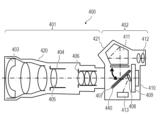
図4は、本発明の撮像装置の好適な実施形態の一例であり、本発明の光学機器の一例であるレンズ鏡筒(交換レンズ)が結合された一眼レフデジタルカメラの構成例を示している。
本発明の光学機器とは、筐体と、筐体内に複数のレンズからなる光学系とを備える光学機器であり、例えば、双眼鏡、顕微鏡、半導体露光装置、交換レンズ等、本発明の光学部材を含む光学系を備える機器のことをいう。あるいは、本発明の光学部材を通過した光によって像を生成する機器、いわゆるカメラの交換レンズのことをいう。
FIG. 4 is an example of a preferred embodiment of the imaging device of the present invention, and shows an example of the configuration of a single-lens reflex digital camera combined with a lens barrel (interchangeable lens), which is an example of the optical device of the present invention. .
The optical device of the present invention is an optical device that includes a housing and an optical system consisting of a plurality of lenses in the housing, and includes, for example, binoculars, a microscope, a semiconductor exposure device, an interchangeable lens, etc. Refers to equipment equipped with an optical system that includes Alternatively, it refers to a device that generates an image using light that has passed through the optical member of the present invention, a so-called interchangeable lens for a camera.
また、本発明の撮像装置とは、デジタルスチルカメラやデジタルビデオカメラ等のカメラシステムや、携帯電話機等の本発明の光学部材を通過した光を受光する撮像素子を備える電子機器のことをいう。なお、電子機器に搭載されるモジュール状の形態、例えばカメラモジュールを撮像装置とする場合もある。 Further, the imaging device of the present invention refers to a camera system such as a digital still camera or a digital video camera, or an electronic device including an image sensor that receives light that has passed through the optical member of the present invention, such as a mobile phone. Note that the image pickup device may be a module-like device mounted on an electronic device, for example, a camera module.
図4において、撮像装置400は、カメラ本体402と光学機器であるレンズ鏡筒401とが結合されているが、レンズ鏡筒401はカメラ本体402対して着脱可能ないわゆる交換レンズである。
被写体からの光は、レンズ鏡筒401の筐体420内の撮影光学系の光軸上に配置された複数のレンズ403、405などからなる光学系を通過し、撮像素子に受光される。本発明の光学部材は、例えばレンズ403など、光学系を構成するレンズとして配置される。
In FIG. 4, an
Light from the subject passes through an optical system including a plurality of
ここで、レンズ405は内筒404によって支持されて、フォーカシングやズーミングのためにレンズ鏡筒401の外筒に対して可動支持されている。
Here, the
撮影前の観察期間では、被写体からの光は、カメラ本体の筐体421内の主ミラー407により反射され、プリズム411を透過後、ファインダレンズ412を通して撮影者に撮影画像が映し出される。主ミラー407は例えばハーフミラーとなっており、主ミラーを透過した光はサブミラー408によりAF(オートフォーカス)ユニット413の方向に反射され、例えばこの反射光は測距に使用される。また、主ミラー407は主ミラーホルダ440に接着などによって装着、支持されている。不図示の駆動機構を介して、撮影時には主ミラー407とサブミラー408を光路外に移動させ、シャッタ409を開き、撮像素子410にレンズ鏡筒401から入射した撮影光像を結像させる。また、絞り406は、開口面積を変更することにより撮影時の明るさや焦点深度を変更できるよう構成される。
During the observation period before photographing, light from the subject is reflected by the
このように、本発明にかかる光学機器および撮像装置では、光学系を通過する光の反射が低減されるため、これらを用いて撮像を行うと、フレアやゴーストが低減されたシャープな画像を得ることができる。 In this way, the optical equipment and imaging device according to the present invention reduce the reflection of light passing through the optical system, so when imaging is performed using these, sharp images with reduced flare and ghosts can be obtained. be able to.
以下、実施例により本発明を具体的に説明する。本発明はその要旨を超えない範囲で適宜変更することが可能であり、以下で説明する実施例は、発明をこれらに限定するものではない。 Hereinafter, the present invention will be specifically explained with reference to Examples. The present invention can be modified as appropriate without departing from the gist thereof, and the embodiments described below are not intended to limit the invention.
<多孔質層成膜時の塗工性の評価>
多孔質層を形成するための塗工液の塗布性の評価は以下のように行った。ガラス基板(φ30mm、厚み1mmの片面が研磨された合成石英)上の研磨面側に多孔質層が約120nmの厚みになるように塗工液を滴下しスピンコーターにて成膜した際、多孔質層上に不良が発生していないか外観評価を行った。
<Evaluation of coatability during porous layer film formation>
The applicability of the coating liquid for forming the porous layer was evaluated as follows. When the coating liquid was dropped onto the polished side of a glass substrate (synthetic quartz polished on one side with a diameter of 30 mm and a thickness of 1 mm) so that the porous layer had a thickness of about 120 nm and was formed using a spin coater, the porous layer was formed using a spin coater. The appearance was evaluated to see if any defects had occurred on the quality layer.
外観上の不良が全く見られないもの(A)は、塗工性が非常に良好、外観上の不良は見られないが、滴下痕が若干発生しているもの(B)は、塗工性が良好、滴下痕の発生や異物が若干見られるものは(C)、塗工性が普通、ムラや異物などによりスジ状の不良などが発生し、明らかに見た目の悪いもの(D)は塗工性が悪い、として評価した。
A:塗工性が非常に良好
B:塗工性が良好
C:塗工性が普通
D:塗工性が悪い
本発明において、塗工性の評価がA、B、Cの場合は塗工性に問題の無いものとした。
Items (A) with no visible defects at all have very good coating properties, and items (B) with no visible defects but with some dripping marks, which have good coating properties. The coating quality is good, and the coating performance is fair if there are some drip marks or foreign matter (C), and the coating property is fair if there are streaks or other defects due to unevenness or foreign matter, and the appearance is clearly bad (D). It was rated as having poor workability.
A: Very good coating properties B: Good coating properties C: Fair coating properties D: Poor coating properties In the present invention, if the coating properties are evaluated as A, B, or C, coating is not possible. It was assumed that there was no problem with gender.
<多孔質層の散乱評価>
多孔質層の散乱の評価は以下のように行った。まず、多孔質層が形成されたガラス基板(φ30mm、厚み1mmの両面が研磨された合成石英)が常に同じ位置になるように基材ホルダーを設置した。次に基材ホルダーに照度計(T-10M コニカミノルタセンシング社製)を設置し、照度を計測しながら、基材面側に垂直方向からの照度が4000luxとなるように白色光を照射した。次に白色光照射側が多孔質層の成膜面となるように多孔質層が形成されたガラス基板を設置した。設置したガラス基板を45°に傾け、照射面の反対面の法線方向からカメラ(レンズ:EF50mm F2.5 コンパクトマクロ キヤノン株式会社製、カメラ:EOS-70D キヤノン株式会社製)で撮影を行った。カメラの撮影条件は、ISO400、ホワイトバランス晴れ、絞り10、シャッタースピード10秒で行った。撮影を行った画像におけるガラス基材面の700pix×700pixの任意4箇所について平均輝度値を算出したものを散乱値として、散乱の評価を行った。
本発明において、上述した方法にて算出した散乱の値が25以下の塗膜については、低散乱を実現した多孔質層とした。
<Scattering evaluation of porous layer>
The scattering of the porous layer was evaluated as follows. First, a substrate holder was installed so that the glass substrate (φ30 mm, thickness 1 mm, polished synthetic quartz on both sides) on which a porous layer was formed was always at the same position. Next, an illumination meter (T-10M manufactured by Konica Minolta Sensing, Inc.) was installed on the substrate holder, and while measuring the illuminance, white light was irradiated onto the substrate surface side so that the illuminance from the vertical direction was 4000 lux. Next, a glass substrate on which a porous layer was formed was placed so that the side irradiated with white light was the surface on which the porous layer was formed. The installed glass substrate was tilted at 45° and photographed with a camera (lens: EF50mm F2.5 compact macro manufactured by Canon Inc., camera: EOS-70D manufactured by Canon Inc.) from the normal direction of the surface opposite to the irradiation surface. . The camera shooting conditions were
In the present invention, coating films with a scattering value of 25 or less calculated by the method described above are made of porous layers that achieve low scattering.
<多孔質層の膜強度評価>
多孔質層の膜強度の評価は以下のように行った。まず、ガラス基板(φ30mm、厚み1mmの片面が研磨された合成石英)上の研磨面側に多孔質層を成膜し、エタノールを浸み込ませたポリエステルワイパー(テックスワイプ社製 アルファワイパーTX1009)で1000g/cm2の荷重をかけ、多孔質層上を10回往復させた後、多孔質層上に不良が発生していないか外観評価を行った。
<Membrane strength evaluation of porous layer>
The membrane strength of the porous layer was evaluated as follows. First, a porous layer was formed on the polished side of a glass substrate (synthetic quartz polished on one side with a diameter of 30 mm and a thickness of 1 mm), and a polyester wiper (Alpha Wiper TX1009 manufactured by Texwipe Co., Ltd.) impregnated with ethanol was formed on the polished side. After applying a load of 1000 g/cm 2 and reciprocating the porous layer 10 times, the appearance was evaluated to see if there were any defects on the porous layer.
外観上の変化がほとんど見られないもの(A)は、膜強度が非常に良好な膜、外観の見た目などが若干変化しているもの(B)は、膜強度が良好な膜、外観の見た目などが変化し、微少な線キズなどが生じているもの(C)は膜強度が普通の膜、外観の見た目などが著しく変化し、線キズや膜剥がれなどが生じているもの(D)は膜強度が悪い膜、として評価した。
A:膜強度が非常に良好な膜
B:膜強度が良好な膜
C:膜強度が普通な膜
D:膜強度が悪い膜
本発明において、膜強度の評価がA、B、Cの場合は膜強度に問題の無い膜とした。
A film with almost no change in appearance (A) is a film with very good film strength, and a film with slight changes in appearance (B) is a film with good film strength and appearance. (C) is a film with normal film strength, and (D) is a film with a significant change in appearance, etc., and has line scratches or peeling of the film. The film was evaluated as having poor film strength.
A: Membrane with very good membrane strength B: Membrane with good membrane strength C: Membrane with average membrane strength D: Membrane with poor membrane strength In the present invention, if the membrane strength is evaluated as A, B, or C, The film was made without any problems in film strength.
<多孔質層の屈折率の評価>
屈折率の評価は以下のように行った。まず、ガラス基板(φ30mm、厚み1mmの片面が研磨された合成石英)上の研磨面側に多孔質層を成膜し、分光エリプソメータ(VASE、ジェー・エー・ウーラム・ジャパン製)を用い、波長380nmから800nmまで測定した。屈折率は波長550nmにおける屈折率とした。屈折率は以下の基準で評価した。
A:1.24以下のもの
B:1.24超1.30以下のもの
C:1.30超のもの
本発明において、屈折率の評価がA、Bの場合は低屈折率な多孔質層として問題の無い膜とした。
実施例1から実施例9における多孔質層を形成する塗工液の作製、多孔質層の形成は下記の方法で行った。
<Evaluation of refractive index of porous layer>
The refractive index was evaluated as follows. First, a porous layer was formed on the polished side of a glass substrate (synthetic quartz with a diameter of 30 mm and a thickness of 1 mm, polished on one side), and using a spectroscopic ellipsometer (VASE, manufactured by JA Woollam Japan), the wavelength Measurements were made from 380 nm to 800 nm. The refractive index was the refractive index at a wavelength of 550 nm. The refractive index was evaluated based on the following criteria.
A: 1.24 or less B: More than 1.24 and 1.30 or less C: More than 1.30 In the present invention, if the refractive index is A or B, a porous layer with a low refractive index The film was created without any problems.
The preparation of the coating solution for forming the porous layer and the formation of the porous layer in Examples 1 to 9 were performed in the following manner.
<塗工液の作製、および多孔質層の形成>
[実施例1]
中空酸化ケイ素粒子のイソプロピルアルコール分散液(日揮触媒化成株式会社製 スルーリア1110、平均粒子径約50nm、シェル厚約10nm、固形分濃度20.5質量%)580gに、1-エトキシ-2-プロパノール(以下、1E2Pと略す)を加えながらイソプロピルアルコールを加熱留去した。固形分濃度19.5質量%となるまでイソプロピルアルコールを留去して、中空酸化ケイ素粒子の1E2P溶媒置換液(以下、溶媒置換液1と称する)610gを調製した。得られた溶媒置換液1に中空酸化ケイ素粒子:含フッ素有機酸(東京化成工業株式会社製 ペンタフルオロプロピオン酸 フッ素数5)成分の比が100/1となるように、含フッ素有機酸を添加し、分散液1を得た。
<Preparation of coating liquid and formation of porous layer>
[Example 1]
1-ethoxy-2-propanol (1-ethoxy-2-propanol The isopropyl alcohol was distilled off under heating while adding 1E2P (hereinafter abbreviated as 1E2P). Isopropyl alcohol was distilled off until the solid content concentration became 19.5% by mass to prepare 610 g of 1E2P solvent replacement solution for hollow silicon oxide particles (hereinafter referred to as solvent replacement solution 1). A fluorine-containing organic acid was added to the obtained solvent replacement solution 1 so that the ratio of hollow silicon oxide particles to fluorine-containing organic acid (manufactured by Tokyo Chemical Industry Co., Ltd., pentafluoropropionic acid, fluorine number 5) was 100/1. Dispersion 1 was obtained.
別の容器に、1-プロポキシ-2-プロパノール11.4gとメチルポリシリケート(コルコート株式会社製 メチルシリケート53A)4.5gをゆっくり加え室温で120分間攪拌し、シリカゾル(以下、シリカゾル1)を調整した。
固形分濃度が4.5質量%になるように、分散液1を乳酸エチルで希釈した後、中空酸化ケイ素粒子:シリカゾル成分の比が100/12となるように、シリカゾル1を添加した。さらに、室温で2時間混合攪拌することで中空酸化ケイ素粒子を含む塗工液1を得た。
In a separate container, 11.4 g of 1-propoxy-2-propanol and 4.5 g of methyl polysilicate (Methyl Silicate 53A, manufactured by Colcoat Co., Ltd.) were slowly added and stirred at room temperature for 120 minutes to prepare a silica sol (hereinafter referred to as silica sol 1). did.
After diluting Dispersion 1 with ethyl lactate so that the solid content concentration was 4.5% by mass, Silica Sol 1 was added so that the ratio of hollow silicon oxide particles to silica sol component was 100/12. Further, by mixing and stirring at room temperature for 2 hours, a coating liquid 1 containing hollow silicon oxide particles was obtained.
得られた塗工液1をガラス基板上に滴下し、約120nmの厚みになるようにスピンコーターにて成膜した後、恒温炉にて140℃で30分焼成を行い、多孔質層1を有する光学部材1を得た。多孔質層1における純水の接触角は10°である。 The obtained coating liquid 1 was dropped onto a glass substrate, and a film was formed using a spin coater to a thickness of about 120 nm, and then baked at 140°C for 30 minutes in a constant temperature oven to form a porous layer 1. An optical member 1 having the following properties was obtained. The contact angle of pure water on the porous layer 1 is 10°.
[実施例2]
溶媒置換液1に中空酸化ケイ素粒子:含フッ素有機酸(東京化成工業株式会社製 ヘプタフルオロ酪酸 フッ素数7)成分の比が100/1となるように、含フッ素有機酸を添加し、分散液2を得た。
[Example 2]
A fluorine-containing organic acid is added to the solvent replacement liquid 1 so that the ratio of hollow silicon oxide particles to fluorine-containing organic acid (heptafluorobutyric acid manufactured by Tokyo Chemical Industry Co., Ltd., fluorine number 7) is 100/1, and the dispersion is I got 2.
固形分濃度が4.5質量%になるように、分散液2を乳酸エチルで希釈した後、中空酸化ケイ素粒子:シリカゾル成分の比が100/12となるように、シリカゾル1を添加した。さらに、室温で2時間混合攪拌することで中空酸化ケイ素粒子を含む塗工液2を得た。 After dispersion 2 was diluted with ethyl lactate so that the solid content concentration was 4.5% by mass, silica sol 1 was added so that the ratio of hollow silicon oxide particles to silica sol component was 100/12. Further, by mixing and stirring at room temperature for 2 hours, a coating liquid 2 containing hollow silicon oxide particles was obtained.
得られた塗工液2をガラス基板上に滴下し、約120nmの厚みになるようにスピンコーターにて成膜した後、恒温炉にて140℃で30分焼成を行い、多孔質層2を有する光学部材2を得た。多孔質層2における純水の接触角は9°である。 The obtained coating liquid 2 was dropped onto a glass substrate, and a film was formed using a spin coater to a thickness of about 120 nm, and then baked at 140°C for 30 minutes in a constant temperature oven to form a porous layer 2. An optical member 2 having the following properties was obtained. The contact angle of pure water on the porous layer 2 is 9°.
[実施例3]
溶媒置換液1に中空酸化ケイ素粒子:含フッ素有機酸(東京化成工業株式会社製 ノナフルオロ吉草酸 フッ素数9)成分の比が100/1となるように、含フッ素有機酸を添加し、分散液3を得た。
[Example 3]
A fluorine-containing organic acid is added to the solvent replacement solution 1 so that the ratio of hollow silicon oxide particles to fluorine-containing organic acid (nonafluorovaleric acid, manufactured by Tokyo Chemical Industry Co., Ltd., fluorine number is 9) is 100/1, and a dispersion liquid is prepared. I got 3.
固形分濃度が4.5質量%になるように、分散液3を乳酸エチルで希釈した後、中空酸化ケイ素粒子:シリカゾル成分の比が100/12となるように、シリカゾル1を添加した。さらに、室温で2時間混合攪拌することで中空酸化ケイ素粒子を含む塗工液3を得た。 After diluting dispersion liquid 3 with ethyl lactate so that the solid content concentration was 4.5% by mass, silica sol 1 was added so that the ratio of hollow silicon oxide particles to silica sol component was 100/12. Further, by mixing and stirring at room temperature for 2 hours, a coating liquid 3 containing hollow silicon oxide particles was obtained.
得られた塗工液3をガラス基板上に滴下し、約120nmの厚みになるようにスピンコーターにて成膜した後、恒温炉にて140℃で30分焼成を行い、多孔質層3を有する光学部材3を得た。多孔質層3における純水の接触角は11°である。 The obtained coating liquid 3 was dropped onto a glass substrate, and a film was formed using a spin coater to a thickness of about 120 nm, and then baked at 140°C for 30 minutes in a constant temperature oven to form a porous layer 3. An optical member 3 having the following properties was obtained. The contact angle of pure water in the porous layer 3 is 11°.
[実施例4]
溶媒置換液1に中空酸化ケイ素粒子:含フッ素有機酸(東京化成工業株式会社製 ウンデカフルオロヘキサン酸 フッ素数11)成分の比が100/2となるように、含フッ素有機酸を添加し、分散液4を得た。
[Example 4]
A fluorine-containing organic acid is added to the solvent replacement liquid 1 so that the ratio of hollow silicon oxide particles to fluorine-containing organic acid (undecafluorohexanoic acid manufactured by Tokyo Chemical Industry Co., Ltd., fluorine number 11) is 100/2, Dispersion 4 was obtained.
固形分濃度が4.5質量%になるように、分散液4を乳酸エチルで希釈した後、中空酸化ケイ素粒子:シリカゾル成分の比が100/12となるように、シリカゾル1を添加した。さらに、室温で2時間混合攪拌することで中空酸化ケイ素粒子を含む塗工液4を得た。 After diluting dispersion liquid 4 with ethyl lactate so that the solid content concentration was 4.5% by mass, silica sol 1 was added so that the ratio of hollow silicon oxide particles to silica sol component was 100/12. Further, by mixing and stirring at room temperature for 2 hours, a coating liquid 4 containing hollow silicon oxide particles was obtained.
得られた塗工液4をガラス基板上に滴下し、約120nmの厚みになるようにスピンコーターにて成膜した後、恒温炉にて140℃で30分焼成を行い、多孔質層4を有する光学部材4を得た。多孔質層4における純水の接触角は10°である。 The obtained coating liquid 4 was dropped onto a glass substrate, and a film was formed using a spin coater to a thickness of about 120 nm, and then baked at 140°C for 30 minutes in a constant temperature oven to form a porous layer 4. An optical member 4 having the following properties was obtained. The contact angle of pure water on the porous layer 4 is 10°.
[実施例5]
親水性酸化ケイ素粒子の水分散液(扶桑化学工業株式会社製 PL-1、平均粒子径約15nm、長径/短径=2.6、固形分濃度12質量%)500gに、1-メトキシ-2-プロパノール(以下、PGMEと略す)を加えながら水を加熱留去した。固形分濃度17質量%となるまで水を留去して、親水性酸化ケイ素粒子のPGME溶媒置換液(以下、溶媒置換液2と称する)350gを調製した。得られた溶媒置換液2に親水性酸化ケイ素粒子:含フッ素有機酸(東京化成工業株式会社製 ウンデカフルオロヘキサン酸 フッ素数11)成分の比が100/3となるように、含フッ素有機酸を添加し、分散液5を得た。
[Example 5]
1-Methoxy-2 was added to 500 g of an aqueous dispersion of hydrophilic silicon oxide particles (manufactured by Fuso Chemical Co., Ltd., PL-1, average particle diameter of about 15 nm, major axis/minor axis = 2.6, solid content concentration 12% by mass). -Water was distilled off by heating while adding propanol (hereinafter abbreviated as PGME). Water was distilled off until the solid content concentration was 17% by mass to prepare 350 g of a PGME solvent replacement solution for hydrophilic silicon oxide particles (hereinafter referred to as solvent replacement solution 2). A fluorine-containing organic acid was added to the obtained solvent replacement liquid 2 so that the ratio of hydrophilic silicon oxide particles to fluorine-containing organic acid (undecafluorohexanoic acid, manufactured by Tokyo Chemical Industry Co., Ltd., fluorine number 11) was 100/3. was added to obtain Dispersion 5.
別の容器に、純水18.0gとケイ酸エチル20.0gをゆっくり加え室温で120分間攪拌し、シリカゾル(以下、シリカゾル2)を調製した。
固形分濃度が4.5質量%になるように、分散液5を1-プロポキシ-2-プロパノールで希釈した後、親水性酸化ケイ素粒子:シリカゾル成分の比が100/12となるように、シリカゾル2を添加した。さらに、室温で2時間混合攪拌することで親水性酸化ケイ素粒子連結体を含む塗工液5を得た。
In another container, 18.0 g of pure water and 20.0 g of ethyl silicate were slowly added and stirred at room temperature for 120 minutes to prepare a silica sol (hereinafter referred to as silica sol 2).
After diluting the dispersion liquid 5 with 1-propoxy-2-propanol so that the solid content concentration is 4.5% by mass, the silica sol is diluted so that the ratio of hydrophilic silicon oxide particles to silica sol component is 100/12. 2 was added. Further, by mixing and stirring at room temperature for 2 hours, a coating liquid 5 containing a hydrophilic silicon oxide particle linkage was obtained.
得られた塗工液5をガラス基板上に滴下し、約120nmの厚みになるようにスピンコーターにて成膜した後、恒温炉にて140℃で30分焼成を行い、多孔質層5を有する光学部材5を得た。多孔質層5における純水の接触角は10°である。 The obtained coating liquid 5 was dropped onto a glass substrate, and a film was formed using a spin coater to a thickness of about 120 nm, and then baked at 140°C for 30 minutes in a constant temperature oven to form a porous layer 5. An optical member 5 having the following properties was obtained. The contact angle of pure water on the porous layer 5 is 10°.
[実施例6]
溶媒置換液2に親水性酸化ケイ素粒子:含フッ素有機酸(東京化成工業株式会社製 ウンデカフルオロヘキサン酸 フッ素数11)成分の比が100/8となるように、含フッ素有機酸を添加し、分散液6を得た。
[Example 6]
A fluorine-containing organic acid was added to the solvent replacement liquid 2 so that the ratio of hydrophilic silicon oxide particles to fluorine-containing organic acid (undecafluorohexanoic acid, manufactured by Tokyo Chemical Industry Co., Ltd., fluorine number 11) was 100/8. , Dispersion 6 was obtained.
固形分濃度が4.5質量%になるように、分散液6を1-プロポキシ-2-プロパノールで希釈した後、親水性酸化ケイ素粒子:シリカゾル成分の比が100/12となるように、シリカゾル2を添加した。さらに、室温で2時間混合攪拌することで親水性酸化ケイ素粒子の連結体を含む塗工液6を得た。 After diluting the dispersion liquid 6 with 1-propoxy-2-propanol so that the solid content concentration is 4.5% by mass, the silica sol is diluted so that the ratio of hydrophilic silicon oxide particles to silica sol component is 100/12. 2 was added. Further, by mixing and stirring at room temperature for 2 hours, a coating liquid 6 containing a linked body of hydrophilic silicon oxide particles was obtained.
得られた塗工液6をガラス基板上に滴下し、約120nmの厚みになるようにスピンコーターにて成膜した後、恒温炉にて140℃で30分焼成を行い、多孔質層6を有する光学部材6を得た。多孔質層6における純水の接触角は11°である。 The obtained coating liquid 6 was dropped onto a glass substrate, and a film was formed using a spin coater to a thickness of about 120 nm, and then baked at 140°C for 30 minutes in a constant temperature oven to form a porous layer 6. An optical member 6 having the following properties was obtained. The contact angle of pure water on the porous layer 6 is 11°.
[実施例7]
溶媒置換液1に中空酸化ケイ素粒子:含フッ素有機酸(東京化成工業株式会社製 ヘプタフルオロ酪酸 フッ素数7)成分の比が100/0.2となるように、含フッ素有機酸を添加し、分散液7を得た。
[Example 7]
A fluorine-containing organic acid is added to the solvent replacement liquid 1 so that the ratio of hollow silicon oxide particles to fluorine-containing organic acid (heptafluorobutyric acid manufactured by Tokyo Chemical Industry Co., Ltd., fluorine number 7) is 100/0.2, Dispersion liquid 7 was obtained.
固形分濃度が4.5質量%になるように、分散液7を乳酸エチルで希釈した後、中空酸化ケイ素粒子:シリカゾル成分の比が100/12となるように、シリカゾル1を添加した。さらに、室温で2時間混合攪拌することで中空酸化ケイ素粒子を含む塗工液7を得た。 After diluting dispersion liquid 7 with ethyl lactate so that the solid content concentration was 4.5% by mass, silica sol 1 was added so that the ratio of hollow silicon oxide particles to silica sol component was 100/12. Further, by mixing and stirring at room temperature for 2 hours, a coating liquid 7 containing hollow silicon oxide particles was obtained.
得られた塗工液7をガラス基板上に滴下し、約120nmの厚みになるようにスピンコーターにて成膜した後、恒温炉にて140℃で30分焼成を行い、多孔質層7を有する光学部材7を得た。多孔質層7における純水の接触角は8°である。 The obtained coating liquid 7 was dropped onto a glass substrate, and a film was formed using a spin coater to a thickness of about 120 nm, and then baked at 140°C for 30 minutes in a constant temperature oven to form a porous layer 7. An optical member 7 having the following properties was obtained. The contact angle of pure water on the porous layer 7 is 8°.
[実施例8]
溶媒置換液1に中空酸化ケイ素粒子:含フッ素有機酸(東京化成工業株式会社製 ヘプタフルオロ酪酸 フッ素数7)成分の比が100/0.1となるように、含フッ素有機酸を添加し、分散液8を得た。
[Example 8]
A fluorine-containing organic acid is added to the solvent replacement liquid 1 so that the ratio of hollow silicon oxide particles to fluorine-containing organic acid (heptafluorobutyric acid manufactured by Tokyo Chemical Industry Co., Ltd., fluorine number 7) is 100/0.1, Dispersion liquid 8 was obtained.
固形分濃度が4.5質量%になるように、分散液8を乳酸エチルで希釈した後、中空酸化ケイ素粒子:シリカゾル成分の比が100/12となるように、シリカゾル1を添加した。さらに、室温で2時間混合攪拌することで中空酸化ケイ素粒子を含む塗工液8を得た。 After diluting dispersion liquid 8 with ethyl lactate so that the solid content concentration was 4.5% by mass, silica sol 1 was added so that the ratio of hollow silicon oxide particles to silica sol component was 100/12. Further, by mixing and stirring at room temperature for 2 hours, a coating liquid 8 containing hollow silicon oxide particles was obtained.
得られた塗工液8をガラス基板上に滴下し、約120nmの厚みになるようにスピンコーターにて成膜した後、恒温炉にて140℃で30分焼成を行い、多孔質層8を有する光学部材8を得た。多孔質層8における純水の接触角は9°である。 The obtained coating liquid 8 was dropped onto a glass substrate, and a film was formed using a spin coater to a thickness of about 120 nm, and then baked at 140°C for 30 minutes in a constant temperature oven to form a porous layer 8. An optical member 8 having the following properties was obtained. The contact angle of pure water on the porous layer 8 is 9°.
[実施例9]
溶媒置換液1に中空酸化ケイ素粒子:含フッ素有機酸(東京化成工業株式会社製 ヘプタフルオロ酪酸 フッ素数7)成分の比が100/0.05となるように、含フッ素有機酸を添加し、分散液9を得た。
[Example 9]
A fluorine-containing organic acid is added to the solvent replacement liquid 1 so that the ratio of hollow silicon oxide particles to fluorine-containing organic acid (heptafluorobutyric acid manufactured by Tokyo Chemical Industry Co., Ltd., fluorine number 7) is 100/0.05, Dispersion 9 was obtained.
固形分濃度が4.5質量%になるように、分散液9を乳酸エチルで希釈した後、中空酸化ケイ素粒子:シリカゾル成分の比が100/12となるように、シリカゾル1を添加した。さらに、室温で2時間混合攪拌することで中空酸化ケイ素粒子を含む塗工液9を得た。 After diluting dispersion liquid 9 with ethyl lactate so that the solid content concentration was 4.5% by mass, silica sol 1 was added so that the ratio of hollow silicon oxide particles to silica sol component was 100/12. Further, by mixing and stirring at room temperature for 2 hours, a coating liquid 9 containing hollow silicon oxide particles was obtained.
得られた塗工液9をガラス基板上に滴下し、約120nmの厚みになるようにスピンコーターにて成膜した後、恒温炉にて140℃で30分焼成を行い、多孔質層9を有する光学部材9を得た。多孔質層9における純水の接触角は10°である。 The obtained coating liquid 9 was dropped onto a glass substrate, and a film was formed using a spin coater to a thickness of about 120 nm, and then baked at 140°C for 30 minutes in a constant temperature oven to form a porous layer 9. An optical member 9 having the following properties was obtained. The contact angle of pure water in the porous layer 9 is 10°.
[比較例1]
溶媒置換液1に中空酸化ケイ素粒子:無機酸(東京化成工業株式会社製 塩酸フッ素数0)成分の比が100/1となるように、無機酸を添加し、分散液10を得た。
[Comparative example 1]
An inorganic acid was added to the solvent replacement liquid 1 so that the ratio of hollow silicon oxide particles to inorganic acid (manufactured by Tokyo Chemical Industry Co., Ltd., hydrochloric acid fluorine number: 0) was 100/1 to obtain a dispersion liquid 10.
固形分濃度が4.5質量%になるように、分散液10を乳酸エチルで希釈した後、中空酸化ケイ素粒子:シリカゾル成分の比が100/12となるように、シリカゾル1を添加した。さらに、室温で2時間混合攪拌することで中空酸化ケイ素粒子を含む塗工液10を得た。 After diluting dispersion 10 with ethyl lactate so that the solid content concentration was 4.5% by mass, silica sol 1 was added so that the ratio of hollow silicon oxide particles to silica sol component was 100/12. Further, by mixing and stirring at room temperature for 2 hours, a coating liquid 10 containing hollow silicon oxide particles was obtained.
得られた塗工液10をガラス基板上に滴下し、約120nmの厚みになるようにスピンコーターにて成膜した後、恒温炉にて140℃で30分焼成を行い、多孔質層10を有する光学部材10を得た。多孔質層10における純水の接触角は28°である。 The obtained coating liquid 10 was dropped onto a glass substrate, and a film was formed using a spin coater to a thickness of about 120 nm, and then baked at 140°C for 30 minutes in a constant temperature oven to form a porous layer 10. An optical member 10 having the following properties was obtained. The contact angle of pure water on the porous layer 10 is 28°.
[比較例2]
固形分濃度が4.5質量%になるように、溶媒置換液1を乳酸エチルで希釈し、分散液11を得た後、中空酸化ケイ素粒子:シリカゾル成分の比が100/12となるように、シリカゾル1を添加した。さらに、室温で2時間混合攪拌することで中空酸化ケイ素粒子を含む塗工液11を得た。
[Comparative example 2]
Solvent replacement liquid 1 was diluted with ethyl lactate so that the solid content concentration was 4.5% by mass to obtain dispersion liquid 11, and then the ratio of hollow silicon oxide particles to silica sol component was 100/12. , silica sol 1 was added. Further, by mixing and stirring at room temperature for 2 hours, a coating liquid 11 containing hollow silicon oxide particles was obtained.
得られた塗工液11をガラス基板上に滴下し、約120nmの厚みになるようにスピンコーターにて成膜した後、恒温炉にて140℃で30分焼成を行い、多孔質層11を有する光学部材11を得た。多孔質層11における純水の接触角は9°である。 The obtained coating liquid 11 was dropped onto a glass substrate, and a film was formed using a spin coater to a thickness of about 120 nm, and then baked at 140° C. for 30 minutes in a constant temperature oven to form a porous layer 11. An optical member 11 having the following properties was obtained. The contact angle of pure water on the porous layer 11 is 9°.
[比較例3]
溶媒置換液2に親水性酸化ケイ素粒子:含フッ素有機酸(東京化成工業株式会社製 ジフルオロ酢酸 フッ素数2)成分の比が100/0.05となるように、含フッ素有機酸を添加し、分散液12を得た。
固形分濃度が4.5質量%になるように、溶媒置換液2を1-プロポキシ-2-プロパノールで希釈した後、親水性酸化ケイ素粒子:シリカゾル成分の比が100/12となるように、シリカゾル2を添加した。さらに、室温で2時間混合攪拌することで親水性酸化ケイ素粒子の連結体を含む塗工液12を得た。
[Comparative example 3]
A fluorine-containing organic acid is added to the solvent replacement liquid 2 so that the ratio of hydrophilic silicon oxide particles to fluorine-containing organic acid (difluoroacetic acid manufactured by Tokyo Chemical Industry Co., Ltd., fluorine number 2) is 100/0.05, Dispersion liquid 12 was obtained.
After diluting the solvent replacement liquid 2 with 1-propoxy-2-propanol so that the solid content concentration is 4.5% by mass, the ratio of hydrophilic silicon oxide particles: silica sol component is 100/12. Silica sol 2 was added. Further, by mixing and stirring at room temperature for 2 hours, a coating liquid 12 containing a connected body of hydrophilic silicon oxide particles was obtained.
得られた塗工液12をガラス基板上に滴下し、約120nmの厚みになるようにスピンコーターにて成膜した後、恒温炉にて140℃で30分焼成を行い、多孔質層12を有する光学部材12を得た。多孔質層12における純水の接触角は17°である。 The obtained coating liquid 12 was dropped onto a glass substrate, and a film was formed using a spin coater to a thickness of about 120 nm, and then baked at 140°C for 30 minutes in a constant temperature oven to form a porous layer 12. An optical member 12 having the following properties was obtained. The contact angle of pure water on the porous layer 12 is 17°.
[比較例4]
溶媒置換液1に中空酸化ケイ素粒子:含フッ素有機酸(東京化成工業株式会社製 2,2,3,3-テトラフルオロプロピオン酸 フッ素数4)成分の比が100/0.1となるように、含フッ素有機酸を添加し、分散液13を得た。
[Comparative example 4]
The ratio of hollow silicon oxide particles to fluorine-containing organic acid (manufactured by Tokyo Chemical Industry Co., Ltd., 2,2,3,3-tetrafluoropropionic acid, fluorine number 4) was 100/0.1 in solvent replacement solution 1. , and a fluorine-containing organic acid were added to obtain a dispersion liquid 13.
固形分濃度が4.5質量%になるように、分散液13を乳酸エチルで希釈した後、中空酸化ケイ素粒子:シリカゾル成分の比が100/12となるように、シリカゾル1を添加した。さらに、室温で2時間混合攪拌することで中空酸化ケイ素粒子を含む塗工液13を得た。 After diluting dispersion liquid 13 with ethyl lactate so that the solid content concentration was 4.5% by mass, silica sol 1 was added so that the ratio of hollow silicon oxide particles to silica sol component was 100/12. Further, by mixing and stirring at room temperature for 2 hours, a coating liquid 13 containing hollow silicon oxide particles was obtained.
得られた塗工液13をガラス基板上に滴下し、約120nmの厚みになるようにスピンコーターにて成膜した後、恒温炉にて140℃で30分焼成を行い、多孔質層13を有する光学部材13を得た。多孔質層13における純水の接触角は14°である。 The obtained coating liquid 13 was dropped onto a glass substrate, and a film was formed using a spin coater to a thickness of about 120 nm, and then baked at 140°C for 30 minutes in a constant temperature oven to form a porous layer 13. An optical member 13 having the following properties was obtained. The contact angle of pure water on the porous layer 13 is 14°.
[比較例5]
溶媒置換液1に中空酸化ケイ素粒子:含フッ素有機酸(東京化成工業株式会社製 ドデカフルオロスベリン酸 フッ素数12)成分の比が100/1となるように、含フッ素有機酸を添加し、分散液14を得た。
[Comparative example 5]
A fluorine-containing organic acid is added to the solvent replacement solution 1 so that the ratio of hollow silicon oxide particles to fluorine-containing organic acid (dodecafluorosberic acid (manufactured by Tokyo Chemical Industry Co., Ltd., fluorine number 12) is 100/1) and dispersed. Liquid 14 was obtained.
固形分濃度が4.5質量%になるように、分散液14を乳酸エチルで希釈した後、中空酸化ケイ素粒子:シリカゾル成分の比が100/12となるように、シリカゾル1を添加した。さらに、室温で2時間混合攪拌することで中空酸化ケイ素粒子を含む塗工液14を得た。 After diluting dispersion liquid 14 with ethyl lactate so that the solid content concentration was 4.5% by mass, silica sol 1 was added so that the ratio of hollow silicon oxide particles to silica sol component was 100/12. Further, by mixing and stirring at room temperature for 2 hours, a coating liquid 14 containing hollow silicon oxide particles was obtained.
得られた塗工液14をガラス基板上に滴下し、約120nmの厚みになるようにスピンコーターにて成膜した後、恒温炉にて140℃で30分焼成を行い、多孔質層14を有する光学部材14を得た。多孔質層14における純水の接触角は10°である。 The obtained coating liquid 14 was dropped onto a glass substrate, and a film was formed using a spin coater to a thickness of about 120 nm, and then baked at 140° C. for 30 minutes in a constant temperature oven to form a porous layer 14. An optical member 14 having the following properties was obtained. The contact angle of pure water on the porous layer 14 is 10°.
[比較例6]
溶媒置換液1に中空酸化ケイ素粒子:含フッ素有機酸(東京化成工業株式会社製 トリデカフルオロヘプタン酸 フッ素数13)成分の比が100/9となるように、含フッ素有機酸を添加し、分散液15を得た。
[Comparative example 6]
A fluorine-containing organic acid is added to the solvent replacement liquid 1 so that the ratio of hollow silicon oxide particles to fluorine-containing organic acid (tridecafluoroheptanoic acid, fluorine number 13, manufactured by Tokyo Chemical Industry Co., Ltd.) is 100/9, Dispersion 15 was obtained.
固形分濃度が4.5質量%になるように、分散液15を乳酸エチルで希釈した後、中空酸化ケイ素粒子:シリカゾル成分の比が100/12となるように、シリカゾル1を添加した。さらに、室温で2時間混合攪拌することで中空酸化ケイ素粒子を含む塗工液15を得た。 After diluting dispersion liquid 15 with ethyl lactate so that the solid content concentration was 4.5% by mass, silica sol 1 was added so that the ratio of hollow silicon oxide particles to silica sol component was 100/12. Further, by mixing and stirring at room temperature for 2 hours, a coating liquid 15 containing hollow silicon oxide particles was obtained.
得られた塗工液15をガラス基板上に滴下し、約120nmの厚みになるようにスピンコーターにて成膜した後、恒温炉にて140℃で30分焼成を行い、多孔質層15を有する光学部材15を得た。多孔質層15における純水の接触角は13°である。 The obtained coating liquid 15 was dropped onto a glass substrate, and a film was formed using a spin coater to a thickness of about 120 nm, and then baked at 140° C. for 30 minutes in a constant temperature oven to form a porous layer 15. An optical member 15 having the following properties was obtained. The contact angle of pure water on the porous layer 15 is 13°.
実施例および比較例にて作製した塗工液1~15の評価結果を表1に示す。
表1の結果から、次のことが分かった。
比較例2の塗工液11は塗工時にリング状の不良や滴下痕が目立ち、スジ状の不良も放射状に多く発生したことから塗工性に問題があることが分かった。無機酸は塗工液中の酸化ケイ素粒子を分散させることはできても、塗膜形成時に酸化ケイ素粒子の分散状態を維持させることが難しく、成膜工程において粒子凝集が多く発生していることが推定される。また、比較例3、4の塗工液12、13も析出物や異物の混入が原因と想定されるスジ状の不良が多く発生しており、塗膜を拭き上げた際にその不良を起点として線状のキズが入り易いことがわかった。
From the results in Table 1, the following was found.
It was found that the coating liquid 11 of Comparative Example 2 had a problem in coatability because ring-shaped defects and drip marks were noticeable during coating, and many streak-shaped defects were also generated in a radial manner. Although inorganic acids can disperse silicon oxide particles in the coating solution, it is difficult to maintain the dispersion state of silicon oxide particles during coating film formation, and particle aggregation often occurs during the film forming process. is estimated. In addition, coating liquids 12 and 13 of Comparative Examples 3 and 4 also had many streak-like defects that were assumed to be caused by the inclusion of precipitates and foreign matter, and these defects were found when the coating was wiped off. It was found that linear scratches were easily formed.
次に、実施例および比較例にて作製した光学部材1~15それぞれが有する多孔質層を反射防止膜として評価した結果を表2に示す。

表2の結果から、光学部材1から9には、散乱が25以下と低散乱で、かつ膜強度の優れた膜が設けられていることが分かった。また、低屈折率な反射防止膜として十分な性能を実現できることも分かった。 From the results in Table 2, it was found that optical members 1 to 9 were provided with films that had low scattering of 25 or less and excellent film strength. It was also found that sufficient performance could be achieved as a low refractive index antireflection film.
比較例として作製した光学部材10から15の多孔質層は、散乱と膜強度の両方に優れた特性を兼ね備えることが難しく、反射防止膜としての性能が十分ではないことが確認された。 It was confirmed that the porous layers of optical members 10 to 15 prepared as comparative examples had difficulty in having excellent properties in both scattering and film strength, and did not have sufficient performance as an antireflection film.
1…光学部材
2…基材
3…多孔質層
4…酸化ケイ素粒子
5…無機バインダー
6…空隙
7…含フッ素有機酸
400…撮像装置
401…レンズ鏡筒
402…カメラ本体
403,405…レンズ
404…内筒
406…絞り
407…主ミラー
408…サブミラー
409…シャッタ
410…撮像素子
411…プリズム
412…ファインダレンズ
413…AFユニット
420…筐体
421…カメラ本体の筐体
440…主ミラーホルダ
1... Optical member 2... Base material 3... Porous layer 4... Silicon oxide particles 5... Inorganic binder 6... Voids 7... Fluorine-containing
Claims (26)
前記レンズが請求項1から6のいずれか一項に記載の部材であることを特徴とする光学機器。 An optical device comprising a casing and an optical system including a plurality of lenses within the casing,
An optical device characterized in that the lens is the member according to any one of claims 1 to 6.
基材の上に、表面に1分子中のフッ素原子数が5以上11以下である含フッ素有機酸が付加された酸化ケイ素粒子と無機バインダーと有機溶媒とを含む塗工液を塗布して塗膜を形成する工程と、
前記塗膜を乾燥および/または焼成して多孔質層を形成する工程と、
を有することを特徴とする部材の製造方法。 A method for producing a member having a porous layer in which a plurality of silicon oxide particles are bonded with an inorganic binder, the method comprising:
A coating liquid containing silicon oxide particles to which a fluorine-containing organic acid having a fluorine atom number of 5 or more and 11 or less in one molecule is added to the surface, an inorganic binder, and an organic solvent is applied onto the base material. A process of forming a coating film;
Drying and/or baking the coating film to form a porous layer;
A method for manufacturing a member, characterized in that it has the following.
Priority Applications (1)
| Application Number | Priority Date | Filing Date | Title |
|---|---|---|---|
| US16/823,824 US12006439B2 (en) | 2019-03-27 | 2020-03-19 | Optical member, optical device and coating liquid |
Applications Claiming Priority (2)
| Application Number | Priority Date | Filing Date | Title |
|---|---|---|---|
| JP2019061171 | 2019-03-27 | ||
| JP2019061171 | 2019-03-27 |
Publications (3)
| Publication Number | Publication Date |
|---|---|
| JP2020166245A JP2020166245A (en) | 2020-10-08 |
| JP2020166245A5 JP2020166245A5 (en) | 2023-03-14 |
| JP7401351B2 true JP7401351B2 (en) | 2023-12-19 |
Family
ID=72716079
Family Applications (1)
| Application Number | Title | Priority Date | Filing Date |
|---|---|---|---|
| JP2020038643A Active JP7401351B2 (en) | 2019-03-27 | 2020-03-06 | Components, optical equipment, coating fluids, manufacturing methods for components, porous membranes |
Country Status (1)
| Country | Link |
|---|---|
| JP (1) | JP7401351B2 (en) |
Families Citing this family (1)
| Publication number | Priority date | Publication date | Assignee | Title |
|---|---|---|---|---|
| JP7604208B2 (en) * | 2020-12-11 | 2024-12-23 | キヤノン株式会社 | Optical element and optical device including same |
Citations (3)
| Publication number | Priority date | Publication date | Assignee | Title |
|---|---|---|---|---|
| JP2016109999A (en) | 2014-12-10 | 2016-06-20 | キヤノン株式会社 | Optical member and production method of optical member |
| JP2018151484A (en) | 2017-03-10 | 2018-09-27 | キヤノン株式会社 | Optical member and optical member manufacturing method |
| JP2019035847A (en) | 2017-08-15 | 2019-03-07 | キヤノン株式会社 | Optical element, optical system, imaging device, and method for manufacturing optical element |
-
2020
- 2020-03-06 JP JP2020038643A patent/JP7401351B2/en active Active
Patent Citations (3)
| Publication number | Priority date | Publication date | Assignee | Title |
|---|---|---|---|---|
| JP2016109999A (en) | 2014-12-10 | 2016-06-20 | キヤノン株式会社 | Optical member and production method of optical member |
| JP2018151484A (en) | 2017-03-10 | 2018-09-27 | キヤノン株式会社 | Optical member and optical member manufacturing method |
| JP2019035847A (en) | 2017-08-15 | 2019-03-07 | キヤノン株式会社 | Optical element, optical system, imaging device, and method for manufacturing optical element |
Also Published As
| Publication number | Publication date |
|---|---|
| JP2020166245A (en) | 2020-10-08 |
Similar Documents
| Publication | Publication Date | Title |
|---|---|---|
| JP7118615B2 (en) | Optical element, optical system and imaging device | |
| US12006439B2 (en) | Optical member, optical device and coating liquid | |
| JP7187631B2 (en) | OPTICAL MEMBER AND OPTICAL MEMBER MANUFACTURING METHOD | |
| US20240417317A1 (en) | Member with porous layer and coating liquid for forming porous layer | |
| JP6903994B2 (en) | Optical element and its manufacturing method | |
| JP7471892B2 (en) | Optical member and method for manufacturing the same | |
| JP2013033124A (en) | Optical element, and optical system and optical equipment using the same | |
| US20230339817A1 (en) | Article including porous layer containing inorganic particles,and coating liquid for forming porous layer containinginorganic particles | |
| JP4760237B2 (en) | Optical component and projection-type image display device using the same | |
| US10234600B2 (en) | Optical member, method for manufacturing optical member, and optical device | |
| US10459123B2 (en) | Optical member, image pickup apparatus, and method for manufacturing optical member | |
| JP7401351B2 (en) | Components, optical equipment, coating fluids, manufacturing methods for components, porous membranes | |
| US11531142B2 (en) | Optical member and method for manufacturing optical member | |
| US20070053062A1 (en) | Optical part and projection type display apparatus using same | |
| JP2020007382A (en) | Coating composition and method for producing the same, and optical member, and imaging device | |
| JP7322107B2 (en) | Member having porous layer and coating liquid for forming porous layer | |
| JP4811081B2 (en) | Optical component and projection-type image display device using the same | |
| JP7638672B2 (en) | Optical member, optical device, imaging device, and method for manufacturing optical member | |
| JP2024066464A (en) | Component having optical interference layer and method for producing same | |
| JP7458734B2 (en) | Optical member and method for manufacturing optical member | |
| WO2024095908A1 (en) | Member having optical interference layer, and optical device | |
| JP2024065684A (en) | Component having optical interference layer and method for producing same | |
| JP2025182654A (en) | Coating liquid for forming porous membrane and porous membrane | |
| WO2025254027A1 (en) | Coating fluid for forming porous film, and porous film | |
| JP2015011163A (en) | Optical member and imaging apparatus |
Legal Events
| Date | Code | Title | Description |
|---|---|---|---|
| RD01 | Notification of change of attorney |
Free format text: JAPANESE INTERMEDIATE CODE: A7421 Effective date: 20220630 |
|
| A521 | Request for written amendment filed |
Free format text: JAPANESE INTERMEDIATE CODE: A523 Effective date: 20230303 |
|
| A621 | Written request for application examination |
Free format text: JAPANESE INTERMEDIATE CODE: A621 Effective date: 20230303 |
|
| A977 | Report on retrieval |
Free format text: JAPANESE INTERMEDIATE CODE: A971007 Effective date: 20230929 |
|
| A131 | Notification of reasons for refusal |
Free format text: JAPANESE INTERMEDIATE CODE: A131 Effective date: 20231003 |
|
| A521 | Request for written amendment filed |
Free format text: JAPANESE INTERMEDIATE CODE: A523 Effective date: 20231025 |
|
| TRDD | Decision of grant or rejection written | ||
| A01 | Written decision to grant a patent or to grant a registration (utility model) |
Free format text: JAPANESE INTERMEDIATE CODE: A01 Effective date: 20231107 |
|
| A61 | First payment of annual fees (during grant procedure) |
Free format text: JAPANESE INTERMEDIATE CODE: A61 Effective date: 20231207 |
|
| R151 | Written notification of patent or utility model registration |
Ref document number: 7401351 Country of ref document: JP Free format text: JAPANESE INTERMEDIATE CODE: R151 |