JP6861483B2 - Biological signal processing device and biological signal processing method - Google Patents
Biological signal processing device and biological signal processing method Download PDFInfo
- Publication number
- JP6861483B2 JP6861483B2 JP2016145099A JP2016145099A JP6861483B2 JP 6861483 B2 JP6861483 B2 JP 6861483B2 JP 2016145099 A JP2016145099 A JP 2016145099A JP 2016145099 A JP2016145099 A JP 2016145099A JP 6861483 B2 JP6861483 B2 JP 6861483B2
- Authority
- JP
- Japan
- Prior art keywords
- target
- quality metric
- biological signal
- signal
- biological
- Prior art date
- Legal status (The legal status is an assumption and is not a legal conclusion. Google has not performed a legal analysis and makes no representation as to the accuracy of the status listed.)
- Active
Links
Images






Classifications
-
- A—HUMAN NECESSITIES
- A61—MEDICAL OR VETERINARY SCIENCE; HYGIENE
- A61B—DIAGNOSIS; SURGERY; IDENTIFICATION
- A61B5/00—Measuring for diagnostic purposes; Identification of persons
- A61B5/72—Signal processing specially adapted for physiological signals or for diagnostic purposes
- A61B5/7221—Determining signal validity, reliability or quality
-
- A—HUMAN NECESSITIES
- A61—MEDICAL OR VETERINARY SCIENCE; HYGIENE
- A61B—DIAGNOSIS; SURGERY; IDENTIFICATION
- A61B5/00—Measuring for diagnostic purposes; Identification of persons
- A61B5/24—Detecting, measuring or recording bioelectric or biomagnetic signals of the body or parts thereof
- A61B5/30—Input circuits therefor
- A61B5/307—Input circuits therefor specially adapted for particular uses
-
- A—HUMAN NECESSITIES
- A61—MEDICAL OR VETERINARY SCIENCE; HYGIENE
- A61B—DIAGNOSIS; SURGERY; IDENTIFICATION
- A61B5/00—Measuring for diagnostic purposes; Identification of persons
- A61B5/72—Signal processing specially adapted for physiological signals or for diagnostic purposes
- A61B5/7235—Details of waveform analysis
- A61B5/7253—Details of waveform analysis characterised by using transforms
-
- G—PHYSICS
- G01—MEASURING; TESTING
- G01R—MEASURING ELECTRIC VARIABLES; MEASURING MAGNETIC VARIABLES
- G01R29/00—Arrangements for measuring or indicating electric quantities not covered by groups G01R19/00 - G01R27/00
- G01R29/26—Measuring noise figure; Measuring signal-to-noise ratio
-
- A—HUMAN NECESSITIES
- A61—MEDICAL OR VETERINARY SCIENCE; HYGIENE
- A61B—DIAGNOSIS; SURGERY; IDENTIFICATION
- A61B5/00—Measuring for diagnostic purposes; Identification of persons
- A61B5/24—Detecting, measuring or recording bioelectric or biomagnetic signals of the body or parts thereof
- A61B5/316—Modalities, i.e. specific diagnostic methods
- A61B5/369—Electroencephalography [EEG]
- A61B5/372—Analysis of electroencephalograms
- A61B5/374—Detecting the frequency distribution of signals, e.g. detecting delta, theta, alpha, beta or gamma waves
Landscapes
- Health & Medical Sciences (AREA)
- Life Sciences & Earth Sciences (AREA)
- Engineering & Computer Science (AREA)
- Physics & Mathematics (AREA)
- Surgery (AREA)
- Public Health (AREA)
- Biomedical Technology (AREA)
- Heart & Thoracic Surgery (AREA)
- Medical Informatics (AREA)
- Molecular Biology (AREA)
- Biophysics (AREA)
- Animal Behavior & Ethology (AREA)
- General Health & Medical Sciences (AREA)
- Pathology (AREA)
- Veterinary Medicine (AREA)
- Signal Processing (AREA)
- Artificial Intelligence (AREA)
- Computer Vision & Pattern Recognition (AREA)
- Physiology (AREA)
- Psychiatry (AREA)
- General Physics & Mathematics (AREA)
- Measurement And Recording Of Electrical Phenomena And Electrical Characteristics Of The Living Body (AREA)
- Measuring And Recording Apparatus For Diagnosis (AREA)
Description
本発明は、生体信号処理装置及び生体信号処理方法に関し、特に生体信号の品質を推定することのできる生体信号処理装置及び生体信号処理方法に関する。 The present invention relates to a biological signal processing device and a biological signal processing method, and more particularly to a biological signal processing device and a biological signal processing method capable of estimating the quality of a biological signal.
近年、高齢化による人口構造、急増する医療費、専門医療サービスを担う人材不足などによって、IT技術と医療技術が結合したIT医療融合技術(IT−healthcare convergence technology)に関する研究が活発に行われている。
特に、人体の健康状態に関するモニタリングは、家庭や職場などの日常生活において可能である。
例えば、モバイルヘルスケア(mobile healthcare)によってユーザの健康状態をモニタリングすることができる。
In recent years, due to the demographic structure due to aging, rapidly increasing medical expenses, shortage of human resources responsible for specialized medical services, etc., research on IT-healthcare technology technology, which combines IT technology and medical technology, has been actively conducted. There is.
In particular, monitoring of the health condition of the human body is possible in daily life such as at home and at work.
For example, mobile health care can be used to monitor a user's health status.
健康状態のモニタリングのために生体信号を用いることができる。
例えば、生体信号は、心電図(Electrocardiography:ECG)、フォトプレチスモグラフィ(Photoplethysmogram:PPG)、又は筋電図(Electromyography:EMG)信号などを含む。
生体信号測定装置の移動性及び使用便宜性が保障される場合、日常生活における健康状態のモニタリングがより容易になり得る。
Biological signals can be used to monitor health.
For example, the biological signal includes an electrocardiography (ECG), a photoplethysmogram (PPG), an electromyography (EMG) signal, and the like.
If the mobility and convenience of use of the biological signal measuring device are guaranteed, it may be easier to monitor the health condition in daily life.
しかしながら、生体信号測定装置の移動性が保障される場合、不安定な外部環境又はユーザの移動によるモーションアーチファクト(motion artifact)によって生体信号が正確に測定されない場合が出てくるという問題がある。 However, when the mobility of the biological signal measuring device is guaranteed, there is a problem that the biological signal may not be measured accurately due to an unstable external environment or a motion artifact due to the movement of the user.
本発明は、上記従来の問題点に鑑みてなされたものであって、本発明の目的は、生体信号の品質を推定することのできる生体信号処理装置を提供することにある。 The present invention has been made in view of the above-mentioned conventional problems, and an object of the present invention is to provide a biological signal processing device capable of estimating the quality of a biological signal.
上記目的を達成するためになされた本発明による生体信号処理装置は、生体信号を受信する通信インターフェースと、前記生体信号のターゲット区間を設定し、前記ターゲット区間内のターゲット成分及び非ターゲット成分に基づいて前記ターゲット区間に対応する品質メトリックを演算して、前記品質メトリックに基づいて前記生体信号の品質を推定するプロセッサと、を有し、前記ターゲット成分は、前記ターゲット区間内の複数の周波数成分の内の設定値の整数倍に対応する周波数成分であり、前記非ターゲット成分は、前記ターゲット区間内の前記複数の周波数成分の内の前記設定値の整数倍に対応しない周波数成分であり、前記設定値は、前記生体信号の波形繰り返し回数を設定する値であり、前記プロセッサは、前記ターゲット成分の信号の電力の合計と前記非ターゲット成分の信号の電力の合計との間の比率として定義される前記品質メトリックを演算することを特徴とする。 The biometric signal processing apparatus according to the present invention made to achieve the above object sets a communication interface for receiving a biometric signal and a target section of the biometric signal, and is based on a target component and a non-target component in the target section. The target component includes a processor that calculates a quality metric corresponding to the target section and estimates the quality of the biometric signal based on the quality metric, and the target component is a plurality of frequency components in the target section. a frequency component corresponding to an integral multiple of the set value of the inner, the non-target component is a frequency component that does not correspond to an integral multiple of the set value of the plurality of frequency components in said target zone, the setting The value is a value that sets the number of waveform repetitions of the biometric signal , and the processor is defined as a ratio between the total power of the signal of the target component and the total power of the signal of the non-target component. It is characterized in that the quality metric is calculated.
前記プロセッサは、前記ターゲット区間を周波数領域信号に変換し、前記周波数領域信号の周波数成分の内前記設定値の整数倍の周波数成分を前記ターゲット成分として定義することが好ましい。
前記プロセッサは、前記ターゲット成分に対応する信号を第1の数だけ前記ターゲット区間から抽出し、前記非ターゲット成分に対応する信号を前記第1の数と前記設定値に基づいて定義される第2の数だけ前記ターゲット区間から抽出し、前記第1の数をMとし前記設定値をRとするとき、前記第2の数は、M×(R−1)であることが好ましい。
前記プロセッサは、前記第1の数だけ抽出された信号の電力及び前記第2の数だけ抽出された信号の電力を用いて前記品質メトリックを演算することが好ましい。
前記プロセッサは、前記品質メトリックの演算に基づいて前記ターゲット区間及び前記設定値の内のいずれか1つ又は両方を変更し、前記変更されたターゲット区間及び設定値の内のいずれか1つ又は両方に基づいて前記品質メトリックと他の品質メトリックを演算して、前記品質メトリック及び前記他の品質メトリックの中から第1最大品質メトリック(first maximum quality metric)を決定することが好ましい。
前記プロセッサは、前記生体信号と他の生体信号の第2最大品質メトリック(second maximum quality metric)を決定して、前記第1最大品質メトリック及び前記第2最大品質メトリックの中から最大値を決定し、前記最大値に対応するターゲット区間をモニタリングされるターゲット生体信号として決定することが好ましい。
前記プロセッサは、前記第1最大品質メトリックが閾値以上であるか否かを判断し、前記判断の結果に基づいて、前記第1最大品質メトリックに対応するターゲット区間をモニタリングされるターゲット生体信号として決定することが好ましい。
It is preferable that the processor converts the target section into a frequency domain signal and defines a frequency component that is an integral multiple of the set value among the frequency components of the frequency domain signal as the target component.
The processor extracts a first number of signals corresponding to the target component from the target section, and defines a second number of signals corresponding to the non-target component based on the first number and the set value. When the first number is M and the set value is R, the second number is preferably M × (R-1).
The processor preferably calculates the quality metric using the power of the first number of extracted signals and the power of the second number of extracted signals.
The processor modifies either one or both of the target interval and the set value based on the calculation of the quality metric, and either one or both of the modified target interval and the set value. It is preferable to calculate the quality metric and other quality metrics based on the above to determine the first maximum quality metric from the quality metric and the other quality metric.
The processor determines a second maximum quality metric of the biological signal and other biological signals, and determines a maximum value from the first maximum quality metric and the second maximum quality metric. , It is preferable to determine the target section corresponding to the maximum value as the target biological signal to be monitored.
The processor determines whether or not the first maximum quality metric is equal to or greater than a threshold value, and based on the result of the determination, determines the target section corresponding to the first maximum quality metric as a monitored target biological signal. It is preferable to do so.
前記プロセッサは、少なくとも1つの第1変更ターゲット区間(first changed target interval)を取得するために第1ステップサイズだけ前記ターゲット区間を少なくとも一度変更し、前記少なくとも1つの第1変更ターゲット区間に対応する品質メトリックを算出して、前記ターゲット区間及び前記少なくとも1つの第1変更ターゲット区間の中から最大品質メトリックを有するターゲット区間を選択し、少なくとも1つの第2変更ターゲット区間(second changed target interval)を取得するために第2ステップサイズだけ前記選択されたターゲット区間を少なくとも一度変更し、前記少なくとも1つの第2変更ターゲット区間に対応する品質メトリックを算出して、前記選択されたターゲット区間及び前記少なくとも1つの第2変更ターゲット区間に対応する品質メトリックに基づいて第1最大品質メトリックを決定することが好ましい。
前記プロセッサは、前記ターゲット区間をモニタリングされるターゲット生体信号として決定し、前記ターゲット区間の前記非ターゲット成分に対応する信号の大きさを予め設定された値として定義することが好ましい。
前記プロセッサは、前記ターゲット生体信号の周期情報を取得し、前記周期情報を用いてユーザのヘルス情報を推定するか、前記周期情報を外部モニタリング装備に送信することが好ましい。
The processor modifies the target interval at least once by the first step size in order to acquire at least one first changed target interval, and the quality corresponding to the at least one first modified target interval. The metric is calculated, the target section having the maximum quality metric is selected from the target section and at least one first change target section, and at least one second changed target section (second changed target interval) is acquired. Therefore, the selected target interval is modified at least once by the second step size, a quality metric corresponding to the at least one second modified target interval is calculated, and the selected target interval and the at least one first are calculated. 2 It is preferable to determine the first maximum quality metric based on the quality metric corresponding to the modified target interval.
It is preferable that the processor determines the target section as a monitored target biological signal and defines the magnitude of the signal corresponding to the non-target component of the target section as a preset value.
It is preferable that the processor acquires the periodic information of the target biological signal and estimates the health information of the user using the periodic information, or transmits the periodic information to the external monitoring equipment .
また、上記目的を達成するためになされた本発明による生体信号処理装置は、複数の生体信号のそれぞれのターゲット区間のターゲット成分及び非ターゲット成分に基づいて品質メトリックを定義する品質メトリック定義部と、前記品質メトリックに基づいて前記複数の生体信号のそれぞれの品質を推定する品質推定部と、前記複数の生体信号のそれぞれの品質に基づいて前記複数の生体信号の中からモニタリングされるターゲット生体信号を決定する決定部と、を有し、前記ターゲット成分は、前記ターゲット区間内の複数の周波数成分の内の設定値の整数倍に対応する周波数成分であり、前記非ターゲット成分は、前記ターゲット区間内の前記複数の周波数成分の内の前記設定値の整数倍に対応しない周波数成分であり、前記設定値は、前記生体信号の波形繰り返し回数を設定する値であり、前記品質メトリック定義部は、前記ターゲット成分の信号の電力の合計と前記非ターゲット成分の信号の電力の合計との間の比率として前記品質メトリックを定義することを特徴とする。 Further, the biological signal processing apparatus according to the present invention made to achieve the above object includes a quality metric definition unit that defines a quality metric based on a target component and a non-target component of each target section of a plurality of biological signals. A quality estimation unit that estimates the quality of each of the plurality of biological signals based on the quality metric, and a target biological signal monitored from the plurality of biological signals based on the quality of each of the plurality of biological signals. The target component is a frequency component corresponding to an integral multiple of a set value among a plurality of frequency components in the target section, and the non-target component is in the target section. It is a frequency component that does not correspond to an integral multiple of the set value among the plurality of frequency components, the set value is a value for setting the number of times the waveform of the biological signal is repeated , and the quality metric definition unit is the same. It is characterized in that the quality metric is defined as a ratio between the total power of the signal of the target component and the total power of the signal of the non-target component.
前記品質推定部は、前記複数の生体信号のそれぞれの代表品質メトリック(representative quality metric)を取得し、前記代表品質メトリックは、前記ターゲット区間及び前記設定値の内のいずれか1つ又は両方の変更に基づいて取得された前記それぞれの生体信号の複数の品質メトリックの中で最大値であることが好ましい。
前記決定部は、前記取得された複数の代表品質メトリックの内から最大値に対応するターゲット区間を前記モニタリングされるターゲット生体信号として決定することが好ましい。
前記品質推定部は、前記ターゲット区間及び前記設定値の内のいずれか1つ又は両方を変更して前記それぞれの生体信号の複数の品質メトリックを取得し、前記決定部は、前記複数の品質メトリックの内の代表品質メトリックが閾値以上であるか否かを判断し、前記判断の結果に基づいて前記代表品質メトリックに対応するターゲット区間を前記モニタリングされるターゲット生体信号として決定し、前記代表品質メトリックは、前記ターゲット区間及び前記設定値の内のいずれか1つ又は両方の変更に基づいて取得された前記それぞれの生体信号の複数の品質メトリックの中で最大値であることが好ましい。
前記品質推定部は、少なくとも1つの第1変更ターゲット区間を取得するために第1ステップサイズだけ前記ターゲット区間を少なくとも一度変更し、前記少なくとも1つの第1変更ターゲット区間に対応する品質メトリックを算出して、前記ターゲット区間及び前記少なくとも1つの第1変更ターゲット区間の中から最大品質メトリックを有するターゲット区間を選択し、少なくとも1つの第2変更ターゲット区間を取得するために第2ステップサイズだけ前記選択されたターゲット区間を少なくとも一度変更し、前記少なくとも1つの第2変更ターゲット区間に対応する品質メトリックを算出して、前記選択されたターゲット区間及び前記少なくとも1つの第2変更ターゲット区間に対応する品質メトリックに基づいて前記それぞれの生体信号の最大品質メトリックを決定することが好ましい。
The quality estimation unit acquires a representative quality metric of each of the plurality of biological signals, and the representative quality metric is a modification of either one or both of the target interval and the set value. It is preferable that it is the maximum value among the plurality of quality metrics of each of the biological signals obtained based on.
It is preferable that the determination unit determines the target section corresponding to the maximum value from the plurality of acquired representative quality metrics as the monitored target biological signal.
The quality estimation unit acquires a plurality of quality metrics of each of the biological signals by changing either one or both of the target section and the set value, and the determination unit obtains the plurality of quality metrics. It is determined whether or not the representative quality metric in the above is equal to or higher than the threshold value, and based on the result of the determination, the target section corresponding to the representative quality metric is determined as the monitored target biological signal, and the representative quality metric is determined. Is preferably the maximum value among the plurality of quality metrics of each of the biological signals acquired based on the change of any one or both of the target interval and the set value.
The quality estimation unit changes the target section at least once by the first step size in order to acquire at least one first change target section, and calculates a quality metric corresponding to the at least one first change target section. Then, the target section having the maximum quality metric is selected from the target section and at least one first change target section, and only the second step size is selected in order to acquire at least one second change target section. The target section is changed at least once, and the quality metric corresponding to the at least one second changed target section is calculated to obtain the quality metric corresponding to the selected target section and the at least one second changed target section. It is preferred to determine the maximum quality metric for each of the biometric signals based on this.
前記決定部は、前記決定されたターゲット生体信号の非ターゲット成分に対応する信号の大きさを予め設定された値として定義することが好ましい。
前記決定部は、前記決定されたターゲット生体信号の周期情報を取得し、前記周期情報を用いてユーザのヘルス情報を推定するか、前記周期情報を外部モニタリング装備に送信することが好ましい。
前記品質メトリック定義部は、前記ターゲット区間を周波数領域信号に変換して、前記周波数領域信号の周波数成分の内の前記設定値の整数倍の周波数成分を前記ターゲット成分として定義することが好ましい。
前記品質メトリック定義部は、前記ターゲット成分に対応する信号を第1の数だけ前記ターゲット区間から抽出し、前記非ターゲット成分に対応する信号を前記第1の数と前記設定値に基づいて定義される第2の数だけ前記ターゲット区間から抽出し、前記第1の数をMとし前記設定値をRとするとき、前記第2の数は、M×(R−1)であることが好ましい。
前記品質メトリック定義部は、前記第1の数だけ抽出された信号の電力及び前記第2の数だけ抽出された信号の電力を用いて前記品質メトリックを定義することが好ましい。
The determination unit preferably defines the magnitude of the signal corresponding to the non-target component of the determined target biological signal as a preset value.
It is preferable that the determination unit acquires the periodic information of the determined target biological signal and estimates the health information of the user using the periodic information, or transmits the periodic information to the external monitoring equipment.
It is preferable that the quality metric definition unit converts the target section into a frequency domain signal and defines a frequency component that is an integral multiple of the set value among the frequency components of the frequency domain signal as the target component.
The quality metric definition unit extracts a first number of signals corresponding to the target component from the target section, and defines signals corresponding to the non-target component based on the first number and the set value. When the second number is extracted from the target section and the first number is M and the set value is R, the second number is preferably M × (R-1).
It is preferable that the quality metric definition unit defines the quality metric by using the power of the signal extracted by the first number and the power of the signal extracted by the second number.
上記目的を達成するためになされた本発明による生体信号処理方法は、生体信号処理装置の生体信号処理方法であって、生体信号を受信するステップと、前記生体信号のターゲット区間を設定するステップと、前記ターゲット区間内のターゲット成分及び非ターゲット成分に基づいて前記ターゲット区間に対応する品質メトリックを演算するステップと、前記品質メトリックに基づいて前記生体信号の品質を推定するステップと、を有し、前記ターゲット成分は、前記ターゲット区間内の複数の周波数成分の内の設定値の整数倍に対応する周波数成分であり、前記非ターゲット成分は、前記ターゲット区間内の前記複数の周波数成分の内の前記設定値の整数倍に対応しない周波数成分であり、前記設定値は、前記生体信号の波形繰り返し回数を設定する値であり、前記演算するステップは、プロセッサで、前記ターゲット成分の信号の電力の合計と前記非ターゲット成分の信号の電力の合計との間の比率として定義される前記品質メトリックを演算するステップを含むことを特徴とする。 The biometric signal processing method according to the present invention, which has been made to achieve the above object, is a biometric signal processing method of a biometric signal processing apparatus, which includes a step of receiving a biometric signal and a step of setting a target section of the biometric signal. , A step of calculating a quality metric corresponding to the target section based on the target component and a non-target component in the target section, and a step of estimating the quality of the biometric signal based on the quality metric. The target component is a frequency component corresponding to an integral multiple of a set value among the plurality of frequency components in the target section, and the non-target component is the said non-target component among the plurality of frequency components in the target section. a frequency component that does not correspond to an integral multiple of the set value, the set value is a value for setting the waveform number of repetitions of the biological signal, the step of calculating is a processor, the power of the signal of the target component characterized in that it comprises a step of calculating the quality metric is defined as the ratio between the sum of the total and the non-target components of the signal power.
また、上記目的を達成するためになされた本発明による生体信号処理方法は、生体信号処理装置の生体信号処理方法であって、複数の生体信号のそれぞれのターゲット区間のターゲット成分及び非ターゲット成分に基づいて前記ターゲット区間に対応する品質メトリックを定義するステップと、前記品質メトリックに基づいて複数の生体信号のそれぞれの品質を推定するステップと、前記複数の生体信号の品質に基づいて前記複数の生体信号の中からモニタリングされるターゲット生体信号を決定するステップと、を有し、前記ターゲット成分は、前記ターゲット区間内の複数の周波数成分の内の設定値の整数倍に対応する周波数成分であり、前記非ターゲット成分は、前記ターゲット区間内の前記複数の周波数成分の内の前記設定値の整数倍に対応しない周波数成分であり、前記設定値は、前記生体信号の波形繰り返し回数を設定する値であり、前記品質メトリックを定義するステップは、前記ターゲット成分の信号の電力の合計と前記非ターゲット成分の信号の電力の合計との間の比率として前記品質メトリックを定義するステップを含むことを特徴とする。 Further, the biological signal processing method according to the present invention, which has been made to achieve the above object, is a biological signal processing method of a biological signal processing device, and is used as a target component and a non-target component of each target section of a plurality of biological signals. A step of defining a quality metric corresponding to the target interval based on the step, a step of estimating the quality of each of a plurality of biological signals based on the quality metric, and a step of estimating the quality of each of the plurality of biological signals based on the quality of the plurality of biological signals. It has a step of determining a target biological signal to be monitored from among the signals, and the target component is a frequency component corresponding to an integral multiple of a set value among a plurality of frequency components in the target section. The non-target component is a frequency component that does not correspond to an integral multiple of the set value among the plurality of frequency components in the target section, and the set value is a value that sets the number of times the waveform of the biological signal is repeated. The step of defining the quality metric includes the step of defining the quality metric as a ratio between the total power of the signal of the target component and the total power of the signal of the non-target component. To do.
また、上記目的を達成するためになされた本発明による生体信号処理方法は、生体信号処理装置の生体信号処理方法であって、生体信号を受信するステップと、前記生体信号の複数のターゲット区間を設定するステップと、前記複数のターゲット区間に個別的に対応する品質メトリックを算出するステップと、前記品質メトリックの中から最大品質メトリックを決定するステップと、前記最大品質メトリックに対応するターゲット区間をモニタリングされる生体信号として決定するステップと、を有し、前記品質メトリックを算出するステップは、対応ターゲット区間の少なくとも1つのターゲット成分及び前記対応ターゲット区間の少なくとも1つの非ターゲット成分に基づいて、それぞれの品質メトリックを演算するステップを含み、前記ターゲット成分は、前記ターゲット区間内の複数の周波数成分の内の設定値の整数倍に対応する周波数成分であり、前記非ターゲット成分は、前記ターゲット区間内の前記複数の周波数成分の内の前記設定値の整数倍に対応しない周波数成分であり、前記設定値は、前記生体信号の波形繰り返し回数を設定する値であり、前記品質メトリックは、前記ターゲット成分の信号の電力の合計と前記非ターゲット成分の信号の電力の合計との間の比率として定義されることを特徴とする。
Further, the biometric signal processing method according to the present invention, which has been made to achieve the above object, is a biometric signal processing method of a biometric signal processing device, in which a step of receiving a biometric signal and a plurality of target sections of the biometric signal are set. The step of setting, the step of calculating the quality metric corresponding to the plurality of target sections individually, the step of determining the maximum quality metric from the quality metric, and the monitoring of the target section corresponding to the maximum quality metric. The step of determining the biometric signal to be performed and the step of calculating the quality metric are based on at least one target component of the corresponding target section and at least one non-target component of the corresponding target section, respectively. The target component includes a step of calculating a quality metric, the target component is a frequency component corresponding to an integral multiple of a set value among a plurality of frequency components in the target section, and the non-target component is a frequency component in the target section. It is a frequency component that does not correspond to an integral multiple of the set value among the plurality of frequency components, the set value is a value that sets the number of times the waveform of the biological signal is repeated, and the quality metric is the target component. It is characterized by being defined as a ratio between the total power of the signal and the total power of the signal of the non-target component.
前記複数のターゲット区間を設定するステップは、第1ターゲット区間を設定するステップと、少なくとも1つの第1変更ターゲット区間を取得するために第1ステップサイズだけ前記第1ターゲット区間を少なくとも一度変更するステップと、前記第1ターゲット区間及び前記少なくとも1つの第1変更ターゲット区間に対して算出された品質メトリックの中で最大品質メトリックを有する、前記第1ターゲット区間及び前記少なくとも1つの第1変更ターゲット区間の内のいずれか1つを選択するステップと、少なくとも1つの第2変更ターゲット区間を取得するために前記第1ステップサイズより小さい第2ステップサイズだけ前記選択されたターゲット区間を少なくとも一度変更するステップとを含むことが好ましい。
前記選択されたターゲット区間及び前記少なくとも1つの第2変更ターゲット区間に対して算出された品質メトリックの中から最大品質メトリックを決定するステップをさらに有することが好ましい。
前記設定値は整数R≧2であり、前記少なくとも1つのターゲット成分の数は、整数M≧1であり、前記少なくとも1つの非ターゲット成分の数はM*(R−1)であることが好ましい。
前記生体信号は、前記生体信号の基本波形のR回繰り返しによって構成されることが好ましい。
The step of setting the plurality of target sections includes a step of setting the first target section and a step of changing the first target section at least once by the size of the first step in order to acquire at least one first change target section. And the first target section and at least one first change target section having the highest quality metric among the quality metrics calculated for the first target section and at least one first change target section. A step of selecting any one of the above, and a step of changing the selected target section at least once by a second step size smaller than the first step size in order to acquire at least one second change target section. Is preferably included.
It is not preferable to further comprising the step of determining the maximum quality metric from the quality metrics computed for said selected target segment and the at least one second change target interval.
Before SL setpoint is an integer R ≧ 2, the number of the at least one target component is an integer M ≧ 1, that the number of said at least one non-target component is M * (R-1) preferable.
The biological signal is preferably composed of R repetitions of the basic waveform of the biological signal.
本発明に係る生体信号処理装置及び生体信号処理方法によれば、生体信号の品質を推定するために、R(生体信号の基本波形のR回繰り返し)の整数倍の周波数成分及びRの整数倍でない周波数成分に基づいて定義される品質メトリックを用いることができ、品質メトリックに基づいて生体信号の品質が推定されるという効果がある。 According to the biological signal processing apparatus and the biological signal processing method according to the present invention, in order to estimate the quality of the biological signal, a frequency component that is an integral multiple of R (R repetition of the basic waveform of the biological signal) and an integral multiple of R. It is possible to use a quality metric defined based on a frequency component that is not, and there is an effect that the quality of the biological signal is estimated based on the quality metric.
次に、本発明に係る生体信号処理装置及び生体信号処理方法を実施するための形態の具体例を図面を参照しながら説明する。 Next, a specific example of a mode for carrying out the biological signal processing apparatus and the biological signal processing method according to the present invention will be described with reference to the drawings.
本実施形態で用いる用語は、単に特定の実施形態を説明するために用いるものであって、実施形態を限定しようとする意図はない。
単数の表現は、文脈上、明白に異なる意味をもたない限り複数の表現を含む。
本明細書において、「含む」又は「有する」などの用語は明細書上に記載した特徴、数字、ステップ、動作、構成要素、部品、又はこれらを組み合わせたものが存在することを示すものであって、1つ又はそれ以上の他の特徴や数字、ステップ、動作、構成要素、部品、又はこれらを組み合わせたものなどの存在又は付加の可能性を予め排除しないものとして理解しなければならない
The terms used in this embodiment are used solely to describe a particular embodiment and are not intended to limit the embodiment.
A singular expression includes multiple expressions unless they have distinctly different meanings in the context.
In the present specification, terms such as "including" or "having" indicate that the features, numbers, steps, actions, components, parts, or a combination thereof described in the specification exist. It must be understood as not precluding the possibility of existence or addition of one or more other features or numbers, steps, actions, components, parts, or combinations thereof.
異なる定義がされない限り、技術的であるか又は科学的な用語を含むここで用いる全ての用語は、本実施形態が属する技術分野で通常の知識を有する者によって一般的に理解されるものと同じ意味を有する。一般的に用いられる予め定義された用語は、関連技術の文脈上で有する意味と一致する意味を有するものと解釈すべきであって、本明細書で明白に定義しない限り、理想的又は過度に形式的な意味として解釈されることはない。 Unless defined differently, all terms used herein, including technical or scientific terms, are the same as those generally understood by those with ordinary knowledge in the technical field to which this embodiment belongs. It has meaning. Commonly used predefined terms should be construed to have meanings consistent with those in the context of the relevant technology, ideally or excessively unless expressly defined herein. It is not interpreted as a formal meaning.
また、図面を参照して説明する際に、図面符号に関係なく同一の構成要素には同一の参照符号を付与し、それに対する重複説明を省略する。本実施形態の説明において関連する公知技術に対する具体的な説明が実施形態の要旨を不要に曖昧にすると判断される場合、その詳細な説明を省略する。 Further, when the description is made with reference to the drawings, the same reference reference numerals are given to the same components regardless of the drawing reference numerals, and duplicate description thereof will be omitted. If it is determined in the description of the present embodiment that the specific description of the related known art unnecessarily obscures the gist of the embodiment, the detailed description thereof will be omitted.
図1は、生体信号処理の一例を説明するためのグラフである。
ノイズ成分を含む生体信号がフーリェ変換によって周波数領域信号110に変換される場合、相対的に高い周波数成分はノイズ成分であり得、相対的に低い周波数成分は所望する信号(desired signal)であり得る。
FIG. 1 is a graph for explaining an example of biological signal processing.
When a biological signal containing a noise component is converted into a
図1には、所望する信号の周波数帯域に対応する信号ウィンドウ(signal window)120と、ノイズ成分に対応するノイズウィンドウ(noise window)130が示されている。
ここで、信号ウィンドウは、DC成分を含まない。
FIG. 1 shows a
Here, the signal window does not contain a DC component.
生体信号の品質を推定するために、周波数領域信号110のSN比(signal−to−noise ratio:SNR)を用いることができる。
SN比は、ノイズウィンドウ130に含まれた信号の電力と信号ウィンドウ120に含まれた信号の電力との間の比率に基づいて定義され得る。
SN比に基づいて生体信号の品質を推定する方法の場合、歪曲された生体信号がモニタリング対象になるターゲット生体信号として決定され得る。
以下、図2を参照しながら説明する。
In order to estimate the quality of the biological signal, the signal-to-noise ratio (SNR) of the
The signal-to-noise ratio can be defined based on the ratio between the power of the signal contained in the
In the case of the method of estimating the quality of the biological signal based on the signal-to-noise ratio, the distorted biological signal can be determined as the target biological signal to be monitored.
Hereinafter, description will be made with reference to FIG.
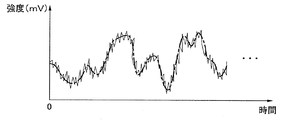
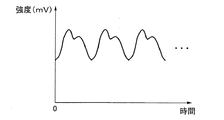
図2A、2Bは、生体信号の一例を説明するためのグラフである。
図2A、2Bを参照すると、図2A、2Bは互いに異なる生体信号を示す。
図2A、2Bにおいて、細い実線はノイズ成分を含む生体信号を示し、太い一点鎖線はノイズ成分が除去された生体信号を示す。
2A and 2B are graphs for explaining an example of a biological signal.
With reference to FIGS. 2A and 2B, FIGS. 2A and 2B show different biological signals.
In FIGS. 2A and 2B, the thin solid line shows the biological signal including the noise component, and the thick alternate long and short dash line shows the biological signal from which the noise component is removed.
図2A、2Bの場合、ノイズ成分を除いた生体信号の平均電力は近似しているが、高い周波数によって不規則に変わるノイズ成分の平均電力は、図2Aの場合が図2Bの場合よりさらに高い。
図1によって記述した方法を用いて生体信号の品質が推定される場合、ノイズ成分の平均電力が相対的に小さい図2Bの生体信号の品質が高く推定され得る。
そのため、図2Bの生体信号がモニタリング対象になるターゲット生体信号として決定される。
In the cases of FIGS. 2A and 2B, the average power of the biological signal excluding the noise component is similar, but the average power of the noise component which changes irregularly depending on the high frequency is higher in the case of FIG. 2A than in the case of FIG. 2B. ..
When the quality of the biological signal is estimated using the method described with reference to FIG. 1, the quality of the biological signal of FIG. 2B, in which the average power of the noise component is relatively small, can be estimated to be high.
Therefore, the biological signal of FIG. 2B is determined as the target biological signal to be monitored.
生体信号は、周期性(periodicity)を持つ。
安定した状況(例えば、ユーザが動かない場合)において検出された生体信号は、ノイズ成分を含むが、周期性を持つ。
生体信号測定装置がユーザと正確に接触しないなどの特定状況において検出された生体信号は、周期性を持たない場合がある。
図2Bの生体信号は、図2Aの生体信号の品質より高く推定されたとしても周期性を持たないため、図2Bの生体信号は、ターゲット生体信号として適合しない。
図2Aの生体信号は、品質が低く推定されるが、ターゲット生体信号として適合する。
そのため、図1によって記述した方法は、生体信号の品質を推定するのに困難が生じ得る。
Biological signals have periodicity.
The biological signal detected in a stable situation (for example, when the user does not move) contains a noise component but has periodicity.
The biological signal detected in a specific situation such as the biological signal measuring device not accurately contacting the user may not have periodicity.
Since the biological signal of FIG. 2B has no periodicity even if it is estimated to be higher than the quality of the biological signal of FIG. 2A, the biological signal of FIG. 2B is not suitable as the target biological signal.
The biological signal of FIG. 2A is estimated to be of low quality, but is suitable as a target biological signal.
Therefore, the method described with reference to FIG. 1 may cause difficulty in estimating the quality of the biological signal.
図3A、3Bは、生体信号処理の他の一例を説明するためのグラフである。
図3A、図3Bを参照すると、図3A、図3Bはノイズ成分が除去された生体信号を示す。
ノイズ成分は、相対的に高い周波数成分であるため、ローパスフィルタ(Low Pass Filter:LPF)を介して除去してもよい。
3A and 3B are graphs for explaining another example of biological signal processing.
With reference to FIGS. 3A and 3B, FIGS. 3A and 3B show biological signals from which noise components have been removed.
Since the noise component is a relatively high frequency component, it may be removed via a low-pass filter (LPF).
生体信号の品質を推定するために、ノイズ成分を除去した生体信号の変動幅を用いてもよい。
信号強度の変動幅が大きいほど品質が高いと推定され得る。この場合、図3Aの生体信号より、図3Bの生体信号の品質が高く推定され得る。
In order to estimate the quality of the biological signal, the fluctuation range of the biological signal from which the noise component has been removed may be used.
It can be estimated that the larger the fluctuation range of the signal strength, the higher the quality. In this case, the quality of the biological signal of FIG. 3B can be estimated to be higher than that of the biological signal of FIG. 3A.
しかしながら、上述したように、図3Bの生体信号は、モニタリング対象になるターゲット生体信号として適合しない(非周期性)。
よって、生体信号の変動幅を用いる方法は生体信号の品質を推定するのに困難が生じ得る。
However, as described above, the biological signal of FIG. 3B does not match as the target biological signal to be monitored (aperiodic).
Therefore, the method using the fluctuation range of the biological signal may cause difficulty in estimating the quality of the biological signal.
図4〜図10は、本発明の一実施形態に係る生体信号処理の一例を説明するための図である。
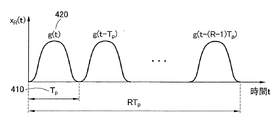
図4には、理想的な生体信号XR(t)を示す。
4 to 10 are diagrams for explaining an example of biological signal processing according to an embodiment of the present invention.
FIG. 4 shows an ideal biological signal X R (t).
周期Tp(410)に対応する基本波形g(t)(420)がR回繰り返されると仮定する。
そうすると、XR(t)は、下記の数式1で表すことができる。
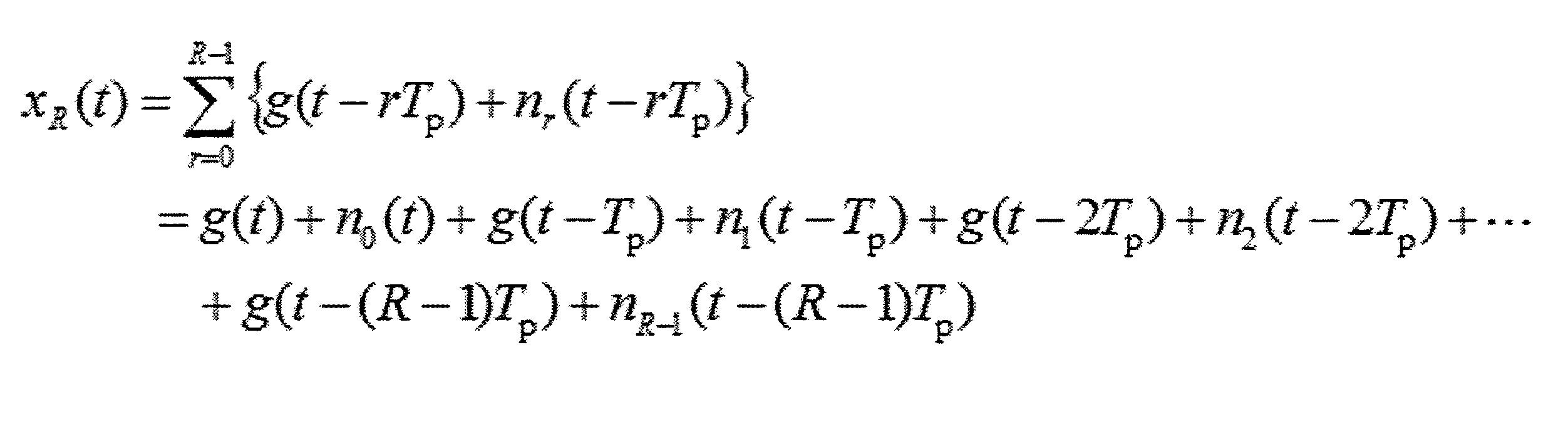
Then, X R (t) can be expressed by the following
フーリェ変換によってXR(t)が周波数領域信号に変換されれば、下記の数式2で表すことができる。
式2におけるG(f)は、
ここで、
here,
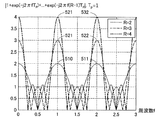
図5を参照すると、図5は、周波数による
Rが2の場合、ピーク値(510)とピーク値(511)との間における大きさが0である周波数成分は1個である。
Rが3の場合、ピーク値(521)とピーク値(522)との間における大きさが0である周波数成分は2個であり、Rが4の場合、ピーク値(531)とピーク値(532)との間における大きさが0である周波数成分は3個である。
When R is 2, there is one frequency component having a magnitude of 0 between the peak value (510) and the peak value (511).
When R is 3, there are two frequency components having a magnitude of 0 between the peak value (521) and the peak value (522), and when R is 4, the peak value (531) and the peak value (531) and the peak value (531). There are three frequency components having a magnitude of 0 between them and 532).
図5によって記述された内容に基づいてXR(f)は下記の数式3で表すことができる。
mが整数であり、周波数fが(m/Tp)の場合、XR(f)=G(f)・Rであり、fが(Rm+1)/(RTp),(Rm+2)/(RTp),・・・,(Rm+R−1)/(RTp)である場合、XR(f)=0である。
fが(m/Tp)と(m+1)/Tpとの間における周波数の場合、XR(f)=0である。
When m is an integer and the frequency f is (m / T p ), X R (f) = G (f) · R, and f is (Rm + 1) / (RT p ), (Rm + 2) / (RT). When p ), ..., (Rm + R-1) / (RT p ), X R (f) = 0.
If f is a frequency between (m / T p ) and (m + 1) / T p , then X R (f) = 0.
生体信号センサが検出する生体信号は、デジタル信号やデジタル信号に変換されるものであってもよいため、生体信号の周波数分析のためにDFT(Discrete Fourier Transform)を用いてもよい。
又は、生体信号の周波数分析のためにDFTの演算速度を増加させたFFT(Fast Fourier Transform)を用いてもよい。
生体信号にDFT又はFFTを適用してDFTの結果又はFFTの結果を取得してもよい。
Since the biological signal detected by the biological signal sensor may be a digital signal or a digital signal, DFT (Discrete Fourier Transform) may be used for frequency analysis of the biological signal.
Alternatively, an FFT (Fast Fourier Transform) in which the calculation speed of the DFT is increased may be used for frequency analysis of the biological signal.
The DFT or FFT may be applied to the biological signal to obtain the DFT result or the FFT result.
XR(f)からDFTの結果又はFFTの結果を取得してもよい。
より具体的には、CTFT(Continuous−Time Fourier Transform)における周波数領域サンプリング(frequency−domain sampling)値をサンプリング間隔(sampling interval)(サンプリング間隔は、時間領域サンプルの間の間隔を示す)に分けた値を用いて、XR(f)からDFTの結果又はFFTの結果を取得する。
DFTの結果又はFFTの結果XR[k]は下記の数式4で表すことができる。
More specifically, the frequency domain sampling (frequency-domin sampling) value in the CTRL (Continuous-Time Fourier Transform) is divided into sampling intervals (sampling interval indicates the interval between time domain samples). The value is used to obtain the DFT result or the FFT result from X R (f).
The result of DFT or the result of FFT X R [k] can be expressed by the following
数式4において、Tsはサンプリング間隔を示し、kは0以上であり、(N−1)以下の整数を示す。
ここで、サンプリング間隔は、サンプルとサンプルとの間の時間間隔又はサンプルとサンプルとの間の距離を示す。
Nは、全体サンプルの数を示し、FFTの大きさ又はFFTの長さを示す。
数式4において、kがRの整数倍でない場合、XR[k]は0になり、kがRの整数倍である場合、XR[k]は0にならない。
以下、数式4と関連する一例を図6Aと図6Bを参照しながら説明する。
In
Here, the sampling interval indicates the time interval between samples or the distance between samples.
N indicates the total number of samples and indicates the size of the FFT or the length of the FFT.
In
Hereinafter, an example related to
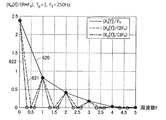
図6Aを参照すると、図6Aは時間領域信号のグラフを示し、図6Bを参照すると、図6Bは周波数領域信号を示す。信号610を基本波形とする。
信号(611)は、基本波形が2回繰り返された信号であって波形繰り返し回数は2であり、信号(612)は、基本波形が3回繰り返された信号であって波形繰り返し回数は3である。
With reference to FIG. 6A, FIG. 6A shows a graph of the time domain signal, and with reference to FIG. 6B, FIG. 6B shows the frequency domain signal. The
The signal (611) is a signal in which the basic waveform is repeated twice and the number of waveform repetitions is 2, and the signal (612) is a signal in which the basic waveform is repeated three times and the number of waveform repetitions is 3. is there.
DFT又はFFTによって、信号(610)〜信号(613)のそれぞれは、信号(620)〜信号(622)のそれぞれに変換され得る。
ここで、信号(620)〜信号(622)の正規化(normalization)のためにDFT又はFFTの結果にR*Fsが分れてもよい。
Fsは、Tsの逆数であり、サンプリングレート(sampling rate)を示す。
図6A〜図6Bに示した例において、Fsは250Hzである。図6Bのグラフの横軸は周波数である。
より詳細には、図6Bのグラフの横軸は、スケーリング(scaling)されたkのk/(N*Ts)である。
Each of the signals (610) to (613) can be transformed into each of the signals (620) to (622) by the DFT or FFT.
Here, R * F s may be divided into the DFT or FFT results for normalization of the signals (620) to (622).
F s is the reciprocal of T s and indicates the sampling rate.
In the examples shown in FIGS. 6A to 6B, F s is 250 Hz. The horizontal axis of the graph of FIG. 6B is frequency.
More specifically, the horizontal axis of the graph of FIG. 6B is k / (N * T s ) of scaled k.
信号(621)において、1番目の周波数成分に対応する信号の大きさは0であり、2番目の周波数成分に対応する信号の大きさは0ではなく、3番目の周波数成分に対応する信号の大きさは0であり、4番目の周波数成分に対応する信号の大きさは0ではない。
信号(611)は、基本波形が2回繰り返された信号であるため、信号(621)の2番目の周波数成分及び4番目の周波数成分に対応する信号が所望する信号である。
In the signal (621), the magnitude of the signal corresponding to the first frequency component is 0, the magnitude of the signal corresponding to the second frequency component is not 0, and the magnitude of the signal corresponding to the third frequency component is not 0. The magnitude is 0, and the magnitude of the signal corresponding to the fourth frequency component is not zero.
Since the signal (611) is a signal in which the basic waveform is repeated twice, the signal corresponding to the second frequency component and the fourth frequency component of the signal (621) is a desired signal.
信号(622)において、1番目及び2番目の周波数成分の信号の大きさは0であり、3番目及び6番目の周波数成分の信号の大きさは0ではない。
信号(612)は、基本波形が3回繰り返された信号であるため、信号(622)の3番目の周波数成分及び6番目の周波数成分に対応する信号が所望する信号である。
In the signal (622), the magnitude of the signal of the first and second frequency components is 0, and the magnitude of the signal of the third and sixth frequency components is not 0.
Since the signal (612) is a signal in which the basic waveform is repeated three times, the signal corresponding to the third frequency component and the sixth frequency component of the signal (622) is a desired signal.
基本波形がR回繰り返された生体信号が周波数領域信号に変換される場合、Rの整数倍である周波数成分に所望する信号が分布される。 When a biological signal in which the basic waveform is repeated R times is converted into a frequency domain signal, a desired signal is distributed in a frequency component that is an integral multiple of R.
以上、理想的な生体信号及び理想的な生体信号の周波数特性に関して説明した。
以下では、ノイズ成分、モーションアーチファクト、又はホワイトノイズ(white noise)などによって歪曲された生体信号及び歪曲された生体信号の周波数特性を説明する。
The frequency characteristics of the ideal biological signal and the ideal biological signal have been described above.
In the following, the frequency characteristics of the biological signal distorted by noise components, motion artifacts, white noise, etc. and the distorted biological signal will be described.
ノイズ成分などが含まれた生体信号は、下記の数式5で表すことができる。
数式5において、nr(t−rTp)は、非繰り返し成分であって、信号の歪曲を考慮した値である。
1番目に表れる波形と2番目に表れる波形は同一ではないが、波形の形は類似する。
数式5のXR(t)は、非繰り返し成分のため、理想的な周期信号ではないが、周期性を持つ。
数式5のXR(t)の波形繰り返し回数は、R回である。
1番目の波形と2番目の波形との間の相関度(correlation)又は類似度(similarity)は高くなり得る。
In
The first and second waveforms are not the same, but the waveforms are similar in shape.
Since X R (t) in
The number of waveform repetitions of X R (t) in Equation 5 is R times.
The correlation or similarity between the first waveform and the second waveform can be high.
数式5の生体信号がサンプリングされ、サンプリングされた信号にDFT又はFFTが適用されれば、周波数領域信号XR[k]が取得され得る。
XR[k]は、下記の数式6で表すことができる。
X R [k] can be expressed by the following
数式6において、Nr(f)は
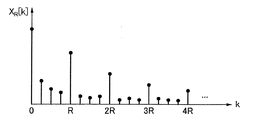
kによるXR[k]をグラフに示すと、図7のようになる。以下、図7を参照しながら説明する。
In
A graph showing X R [k] by k is as shown in FIG. Hereinafter, description will be made with reference to FIG. 7.
図7を参照すると、図7は、kによるXR[k]のグラフを示す。
理想的な生体信号の波形繰り返し回数がR回の場合、Rの整数倍である周波数成分に対応する信号の大きさは大きく、Rの整数倍でない周波数成分はない。
同様に、非繰り返し成分を含む生体信号の波形繰り返し回数がR回の場合、Rの整数倍の周波数成分に対応する信号の大きさは大きく、Rの整数倍でない周波数成分に対応する信号の大きさは小さい。
図7に示した例のように、非繰り返し成分を含む生体信号の波形繰り返し回数が4の場合、4の整数倍である周波数成分に対応する信号の大きさは、4の整数倍でない周波数成分に対応する信号の大きさより大きい。
With reference to FIG. 7, FIG. 7 shows a graph of X R [k] by k.
When the number of waveform repetitions of an ideal biological signal is R times, the magnitude of the signal corresponding to the frequency component that is an integral multiple of R is large, and there is no frequency component that is not an integral multiple of R.
Similarly, when the number of waveform repetitions of the biological signal including the non-repetitive component is R times, the magnitude of the signal corresponding to the frequency component that is an integral multiple of R is large, and the magnitude of the signal corresponding to the frequency component that is not an integral multiple of R is large. The size is small.
As in the example shown in FIG. 7, when the number of waveform repetitions of the biological signal including the non-repeating component is 4, the magnitude of the signal corresponding to the frequency component which is an integral multiple of 4 is not an integral multiple of 4. Greater than the magnitude of the signal corresponding to.
一実施形態によれば、生体信号の品質を推定するために、Rの整数倍の周波数成分及びRの整数倍でない周波数成分に基づいて定義される品質メトリックを用いることができる。
例えば、Rの整数倍の周波数成分に対応する信号の電力(又は信号強度)及びRの整数倍でない周波数成分に対応する信号の電力(又は信号強度)に基づいて品質メトリックが演算されてもよく、品質メトリックに基づいて生体信号の品質が推定されてもよい。
もし、非繰り返し成分を含む生体信号の波形繰り返し回数がR回の場合、Rの整数倍である周波数成分に対応する信号の大きさがRの整数倍でない周波数成分に対応する大きさより大きいため、生体信号の品質メトリックは大きくなる。
周期性を持つ生体信号の品質メトリックは大きくなり、周期性を持たない生体信号の品質メトリックは小さくなる。
According to one embodiment, quality metrics defined based on frequency components that are integral multiples of R and non-integer multiples of R can be used to estimate the quality of biological signals.
For example, a quality metric may be calculated based on the power (or signal strength) of a signal corresponding to a frequency component that is an integral multiple of R and the power (or signal strength) of a signal that corresponds to a frequency component that is not an integral multiple of R. , The quality of the biological signal may be estimated based on the quality metric.
If the number of waveform repetitions of the biological signal including the non-repeating component is R times, the magnitude of the signal corresponding to the frequency component that is an integral multiple of R is larger than the magnitude corresponding to the frequency component that is not an integral multiple of R. The quality metric of biological signals increases.
The quality metric of the biological signal having periodicity becomes large, and the quality metric of the biological signal having no periodicity becomes small.
Rの整数倍に対応する周波数成分をターゲット成分(target component)とし、Rの整数倍に対応しない周波数成分を非ターゲット成分(non−target component)とする。また、ターゲット成分に対応する信号をターゲット成分信号(target component signal)とし、非ターゲット成分に対応する信号を非ターゲット成分信号(non−target component signal)とする。
以下、図8を参照しながら、品質メトリックの一例を説明する。
A frequency component corresponding to an integral multiple of R is a target component, and a frequency component not corresponding to an integral multiple of R is a non-target component. Further, the signal corresponding to the target component is referred to as a target component signal, and the signal corresponding to the non-target component is referred to as a non-target component signal.
Hereinafter, an example of the quality metric will be described with reference to FIG.
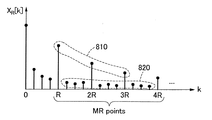
図8を参照すると、図8は、本発明の一実施形態に係る生体信号処理の一例を説明するためのグラフであり、品質メトリックの一例を説明するためのグラフを示す。 With reference to FIG. 8, FIG. 8 is a graph for explaining an example of biological signal processing according to an embodiment of the present invention, and shows a graph for explaining an example of quality metrics.
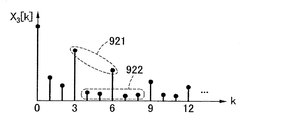
kがRの周波数成分とkが2Rの周波数成分との間には(R−1)個の非ターゲット成分が分布される。
品質メトリックSNRRS(M,R)は、M個のターゲット成分信号(810)の電力の合計とM*(R−1)個の非ターゲット成分信号(820)の電力の合計との間の比率として定義してもよい。
この場合、品質メトリックは、下記の数式7で表すことができる。
The quality metric SNR RS (M, R) is the ratio between the total power of M target component signals (810) and the total power of M * (R-1) non-target component signals (820). It may be defined as.
In this case, the quality metric can be expressed by the following
数式7によって品質メトリックを算出する場合をグラフに示すと、図9A〜図9Cと同一である。
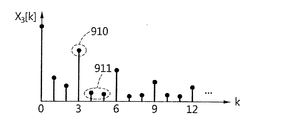
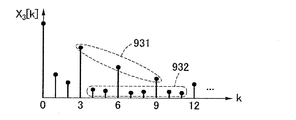
図9A〜図9Cは、Rが3の場合であって、図9AはMが1である品質メトリック(SNRRS(1,3))の場合、図9BはMが2である品質メトリック(SNRRS(2,3))の場合、及び図9CはMが3である品質メトリック(SNRRS(3,3))の場合を示す。Mはターゲット成分の数を示す。
The case where the quality metric is calculated by the
9A-9C show the case where R is 3, and FIG. 9A shows the quality metric where M is 1 (SNR RS (1,3)), and FIG. 9B shows the quality metric where M is 2 (SNR). The case of RS (2,3)) and FIG. 9C shows the case of the quality metric (SNR RS (3,3)) in which M is 3. M indicates the number of target components.
図9Aにおいて、品質メトリックを演算するために、ターゲット成分信号(910)の電力及び非ターゲット成分信号(911)の電力を用いる。
品質メトリックの演算のために用いられる非ターゲット成分は、ターゲット成分の右側に分布した周波数成分である。
In FIG. 9A, the power of the target component signal (910) and the power of the non-target component signal (911) are used to calculate the quality metric.
The non-target component used for the calculation of the quality metric is the frequency component distributed to the right of the target component.
図9Bにおいて、品質メトリックを演算するために、ターゲット成分信号(921)の電力及び非ターゲット成分信号(922)の電力を用いる。
ターゲット成分の数は2個であり、非ターゲット成分は2個のターゲット成分のそれぞれの右側に分布した周波数成分である。
より具体的には、k=3のターゲット成分を基準成分(reference component)とするとき、k=4及び5の周波数成分を基準成分に対応する非ターゲット成分とすることができ、k=6のターゲット成分を基準成分とするとき、k=7及び8の周波数成分を基準成分に対応する非ターゲット成分とすることができる。
In FIG. 9B, the power of the target component signal (921) and the power of the non-target component signal (922) are used to calculate the quality metric.
The number of target components is two, and the non-target component is a frequency component distributed on the right side of each of the two target components.
More specifically, when the target component of k = 3 is used as the reference component, the frequency components of k = 4 and 5 can be used as the non-target component corresponding to the reference component, and k = 6. When the target component is used as the reference component, the frequency components of k = 7 and 8 can be used as the non-target component corresponding to the reference component.
図9Cにおいて、品質メトリックを演算するために、ターゲット成分信号(931)の電力及び非ターゲット成分信号(932)の電力を用いる。
ターゲット成分の数は3個であり、非ターゲット成分は3個のターゲット成分のそれぞれの右側に分布した周波数成分である。
品質メトリックは、ターゲット成分信号の電力及びターゲット成分信号の右側に分布された非ターゲット成分信号の電力を用いて演算し得る。
In FIG. 9C, the power of the target component signal (931) and the power of the non-target component signal (932) are used to calculate the quality metric.
The number of target components is three, and the non-target components are frequency components distributed to the right of each of the three target components.
The quality metric can be calculated using the power of the target component signal and the power of the non-target component signal distributed to the right of the target component signal.
図9A〜図9Cに基づき記載された内容は、例示的な事項に過ぎず、品質メトリックは、図9A〜図9Cに基づき記載された内容に限定されない。
以下、図10を参照しながら、一実施形態に係る品質メトリックの他の一例を説明する。
図10を参照すると、図10は、本発明の一実施形態に係る品質メトリックの他の一例を説明するためのグラフを示す。
The contents described based on FIGS. 9A to 9C are merely exemplary items, and the quality metric is not limited to the contents described based on FIGS. 9A to 9C.
Hereinafter, another example of the quality metric according to the embodiment will be described with reference to FIG.
With reference to FIG. 10, FIG. 10 shows a graph for explaining another example of the quality metric according to one embodiment of the present invention.
図9A〜図9Cとは違って、品質メトリックの演算に用いられる非ターゲット成分は、ターゲット成分の左側に分布された周波数成分及びターゲット成分の右側に分布された周波数成分である。
図10に示した例において、kがRであるターゲット成分を基準成分とするとき、基準成分の左側に分布された1個の周波数成分及び右側に分布された2個の周波数成分が基準成分に対応する非ターゲット成分である。
同様に、kが2Rであるターゲット成分を基準成分とするとき、(2R−1)の周波数成分、(2R+1)の周波数成分、及び(2R+2)の周波数成分は、基準成分に対応する非ターゲット成分である。
Unlike FIGS. 9A-9C, the non-target components used in the calculation of the quality metric are the frequency components distributed on the left side of the target component and the frequency components distributed on the right side of the target component.
In the example shown in FIG. 10, when the target component in which k is R is used as the reference component, one frequency component distributed on the left side of the reference component and two frequency components distributed on the right side are used as the reference component. The corresponding non-target component.
Similarly, when the target component in which k is 2R is used as the reference component, the frequency component of (2R-1), the frequency component of (2R + 1), and the frequency component of (2R + 2) are non-target components corresponding to the reference component. Is.
図10に基づき記載された品質メトリックの他の一例は、下記の数式8で表すことができる。
ターゲット成分信号(1010)の電力及び非ターゲット成分信号(1020)の電力に基づいて品質メトリックが演算され得る。 Quality metrics can be calculated based on the power of the target component signal (1010) and the power of the non-target component signal (1020).
図10に示していないが、品質メトリックの演算のために、非ターゲット成分信号の電力内の最大電力を用いることができる。
また他の一例として、M個のターゲット成分信号の電力の合計及び非ターゲット成分信号の電力内の最大電力に基づいて品質メトリックを演算してもよい。
品質メトリックのまた他の一例は、下記の数式9で表すことができる。
As another example, the quality metric may be calculated based on the total power of the M target component signals and the maximum power within the power of the non-target component signals.
Another example of the quality metric can be expressed by
最大電力を有する非ターゲット成分が識別されて、M*(R−1)*最大電力に対しM個のターゲット成分信号の電力の合計が品質メトリックとして演算される。
また、数式9とは異なって、ターゲット成分信号の電力内の最大電力又は最小電力を用いて品質メトリックを演算してもよい。
例えば、非ターゲット成分信号の電力の合計に対しM*最大電力が品質メトリックとして演算されてもよい。
ここで、最大電力は、ターゲット成分信号の電力内の最大電力である。
また、M*(R−1)*最小電力に対しM個のターゲット成分信号の電力の合計が品質メトリックとして演算されてもよい。
ここで、最小電力は、非ターゲット成分信号の電力内の最小電力である。
The non-target component having the maximum power is identified, and the sum of the powers of the M target component signals with respect to the M * (R-1) * maximum power is calculated as a quality metric.
Also, unlike
For example, the M * maximum power may be calculated as a quality metric for the total power of the non-target component signals.
Here, the maximum power is the maximum power within the power of the target component signal.
Further, the sum of the powers of M target component signals with respect to the minimum power of M * (R-1) * may be calculated as a quality metric.
Here, the minimum power is the minimum power within the power of the non-target component signal.
図10に基づき記載された内容は、例示的な事項に過ぎず、品質メトリックは、図10に基づき記載された内容に限定されない。 The content described based on FIG. 10 is merely an example, and the quality metric is not limited to the content described based on FIG.
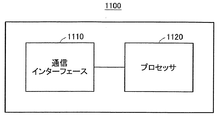
図11は、本発明の一実施形態に係る生体信号処理装置の概略構成を示すブロック図である。
図11を参照すると、本発明の一実施形態に係る生体信号処理装置1100は、通信インターフェース1110及びプロセッサ1120を含む。
FIG. 11 is a block diagram showing a schematic configuration of a biological signal processing device according to an embodiment of the present invention.
Referring to FIG. 11, the biological
通信インターフェース1110は生体信号を受信する。
例えば、通信インターフェース1110はプロセッサ1120の入出力ポートを含んでもよい。
通信インターフェース1110は、バス(図示せず)を介してセンサが検出した生体信号を受信し、プロセッサ1120は、生体信号を通信インターフェース1110から入力する。
The
For example, the
The
プロセッサ1120は、生体信号のターゲット区間(target interval)を設定する。
ターゲット区間は、生体信号の品質を推定するのに用いられる品質メトリックを演算するために設定される区間を示す。
また、後述するが、ターゲット区間は、モニタリング対象になるターゲット生体信号である。
プロセッサ1120は、第1時点〜第2時点の間に含まれた生体信号をターゲット区間として設定する。
The target interval indicates an interval set to calculate the quality metric used to estimate the quality of the biological signal.
Further, as will be described later, the target section is a target biological signal to be monitored.
The
また、生体信号の特性を考慮してターゲット区間を設定してもよい。
例えば、心拍数の正常範囲は60〜100回/1分であり、プロセッサ1120は心拍数の正常範囲を考慮してターゲット区間を設定してもよい。
また、プロセッサ1120は、心拍数の正常範囲だけでなく正常範囲から逸脱する正常でない範囲まで考慮してターゲット区間を設定してもよい。
ここで、正常ではない範囲は予め設定された範囲であってもよい。
Further, the target section may be set in consideration of the characteristics of the biological signal.
For example, the normal range of heart rate is 60 to 100 times / minute, and the
Further, the
Here, the range that is not normal may be a preset range.
プロセッサ1120は、ターゲット成分及び非ターゲット成分に基づいてターゲット区間に対応する品質メトリックを演算する。
ターゲット成分は、ターゲット区間の周波数成分の内の設定値に対応する周波数成分を示し、非ターゲット成分は、ターゲット区間の周波数成分の内の設定値に対応しない周波数成分を示す。
The target component indicates a frequency component corresponding to the set value in the frequency component of the target section, and the non-target component indicates a frequency component not corresponding to the set value in the frequency component of the target section.
ターゲット区間が設定される場合、プロセッサ1120はターゲット区間を周波数領域信号に変換する。
例えば、通信インターフェース1110から入力された生体信号は、サンプリングされた生体信号であってもよいため、プロセッサ1120は、通信インターフェース1110から入力された生体信号にDFT又はFFTを適用する。
When the target interval is set, the
For example, since the biological signal input from the
プロセッサ1120は、周波数領域信号の周波数成分の内の設定値の整数倍である周波数成分をターゲット成分として定義する。
また、プロセッサ1120は、設定値の整数倍でない周波数成分を非ターゲット成分として定義する。
プロセッサ1120は、ターゲット成分信号を第1の数だけ抽出してもよく、非ターゲット成分信号を第1の数と設定値に基づいて定義される第2の数だけ抽出してもよい。
ここで、第1の数をMとして、設定値をRとするとき、第2の数はM*(R−1)である。
The
Further, the
Here, when the first number is M and the set value is R, the second number is M * (R-1).
プロセッサ1120は、第1の数だけ抽出された信号の電力及び第2の数だけ抽出された信号の電力を用いて品質メトリックを演算し、品質メトリックは、下記の数式10又は数式11で表される。
数式11の分母において、
また、プロセッサ1120は、非ターゲット成分信号の電力内の最大電力及びターゲット成分信号の電力を用いて品質メトリックを演算することができ、品質メトリックは下記の数式12で表すことができる。
品質メトリックの演算に基づいてプロセッサ1120は、ターゲット区間及び設定値の内のいずれか1つ又は両方を変更する。
ターゲット区間を変更するために、プロセッサ1120は、ターゲット区間を拡張することができる。
ターゲット区間の拡張は、新しいターゲット区間の設定を示す。
プロセッサ1120は、ターゲット区間と時間的に区分される新しいターゲット区間を設定することができる。
また、設定値を変更するために、プロセッサ1120は、設定値を増加させるか、又は減少させることができる。
プロセッサ1120は、ターゲット区間を変更せずに、設定値Rを変更してもよい。
Based on the calculation of the quality metric, the
In order to change the target section, the
The extension of the target section indicates the setting of a new target section.
Also, in order to change the set value, the
The
プロセッサ1120は、ターゲット区間及び設定値の内のいずれか1つ又は両方の変更に基づいて品質メトリックと他の品質メトリックを演算することができる。
プロセッサ1120は、変更されたターゲット区間に対応する品質メトリックを演算してもよい。
また、プロセッサ1120は、変更された設定値を用いて他の品質メトリックを演算してもよい。
プロセッサ1120は、R=2である時のSNRRS(M,R)を演算することができ、R=3である時のSNRRS(M,R)を演算することができる。
また、プロセッサ1120は、M及びRを変更させて品質メトリックと他の品質メトリックを演算することができる。
また、プロセッサ1120は、設定値及びターゲット区間を変更させて品質メトリックと他の品質メトリックを演算してもよい。
前述した他の品質メトリックの演算は、例示的な事項に過ぎず、他の品質メトリックの演算は、前述した事項に限定されない。
The processor 1120 can calculate the SNR RS (M, R) when R = 2, and can calculate the SNR RS (M, R) when R = 3.
The
Further, the
The operations of the other quality metrics described above are merely exemplary items, and the operations of the other quality metrics are not limited to the items described above.
プロセッサ1120は、品質メトリックに基づいて生体信号の品質を推定する。
プロセッサ1120は、品質メトリック及び他の品質メトリックに基づいて第1最大品質メトリックを決定する。
第1最大品質メトリックは、品質メトリック及び他の品質メトリックの中で最大値を示す。
プロセッサ1120は、第1最大品質メトリックをメモリに格納する。
また、プロセッサ1120は、第1最大品質メトリックに対応するターゲット区間の識別情報、例えば、ターゲット区間の開始サンプルのインデックス及び終了サンプルのインデックスをメモリに格納する。
The first maximum quality metric indicates the maximum value among the quality metric and other quality metrics.
Further, the
一実施形態において、プロセッサ1120には、生体信号(以下、第1生体信号)と他の生体信号(以下、第2生体信号)が入力される。
第2生体信号は、第1生体信号と検出チャネルが異なる。
また、第2生体信号は、第1生体信号と異なる時間に検出された生体信号であってもよい。
第2生体信号の検出チャネル及び/又は第2生体信号が検出された時間区間は、第1生体信号の検出チャネル及び/又は第1生体信号が検出された時間区間と異なる。
プロセッサ1120は、第1生体信号の品質を推定する方式と同様に第2生体信号の品質を推定することができ、第1生体信号の品質及び第2生体信号の品質に基づいてモニタリング対象になるターゲット生体信号を決定することができる。
In one embodiment, a biological signal (hereinafter, first biological signal) and another biological signal (hereinafter, second biological signal) are input to the
The second biological signal has a different detection channel from the first biological signal.
Further, the second biological signal may be a biological signal detected at a time different from that of the first biological signal.
The detection channel of the second biological signal and / or the time interval in which the second biological signal is detected is different from the detection channel of the first biological signal and / or the time interval in which the first biological signal is detected.
The
例えば、プロセッサ1120は、第2生体信号の複数の品質メトリックを演算することができ、複数の品質メトリックの中から第2最大品質メトリックを決定することができる。
第2最大品質メトリックは、複数の品質メトリックの中で最大値を示す。
第2最大品質メトリックが決定された場合、プロセッサ1120は、第2最大品質メトリック及び第1最大品質メトリックの中から最大値を決定する。
プロセッサ1120は、最大値に対応するターゲット区間をモニタリング対象になるターゲット生体信号として決定することができる。
For example, the
The second maximum quality metric indicates the maximum value among a plurality of quality metrics.
When the second maximum quality metric is determined, the
The
他の一例として、プロセッサ1120は、第1最大品質メトリックが閾値以上か否かを判断することができる。
第1最大品質メトリックが閾値以上である場合、プロセッサ1120は、第1最大品質メトリックに対応するターゲット区間をモニタリング対象になるターゲット生体信号として決定する。
モニタリング対象になるターゲット生体信号が決定された場合、プロセッサ1120は、第2最大品質メトリックの取得過程を中断してもよい。
この場合、プロセッサ1120は、第2最大品質メトリックの取得過程の中断を指示(instruction)する制御信号を生成する。
As another example, the
When the first maximum quality metric is equal to or greater than the threshold value, the
When the target biological signal to be monitored is determined, the
In this case, the
第1最大品質メトリックが閾値未満の場合、プロセッサ1120は、第2最大品質メトリックが閾値以上か否かを判断することができる。
ここで、第2最大品質メトリックが閾値未満の場合、プロセッサ1120は、また他の生体信号の最大品質メトリックと閾値を比較してモニタリング対象になるターゲット生体信号を決定する。
検出された複数の生体信号のそれぞれの最大品質メトリックが閾値未満の場合、プロセッサ1120は、生体信号の検出を指示する制御信号を生成する。
制御信号に基づいて複数の生体信号が検出される。
If the first maximum quality metric is less than the threshold, the
Here, when the second maximum quality metric is less than the threshold value, the
If the maximum quality metric of each of the plurality of detected biosignals is less than the threshold value, the
A plurality of biological signals are detected based on the control signal.
また、一実施形態において、プロセッサ1120は、モニタリング対象として決定されたターゲット生体信号の非ターゲット成分信号の大きさを予め設定された値として定義してもよい。
例えば、プロセッサ1120は、決定された生体信号の非ターゲット成分を持たないように非ターゲット成分信号の大きさを0と定義することができる。
決定された生体信号は、周波数領域信号であるため、プロセッサ1120は、決定された生体信号を時間領域信号に変換する。
例えば、プロセッサ1120は、決定された生体信号にIFFTを適用して時間領域信号に変換する。非ターゲット成分信号の大きさが0と定義された場合、時間領域信号は、ノイズ成分などが除去された信号である。
Further, in one embodiment, the
For example, the
Since the determined biological signal is a frequency domain signal, the
For example, the
モニタリング対象に決定されたターゲット生体信号は、通信モジュールによって外部装置に送信される。
通信モジュールは、生体信号処理装置1100に含まれ得る。又は、通信モジュールは、生体信号処理装置1100と物理的に区別される装置として、生体信号処理装置1100の外部に位置してもよい。
生体信号処理装置1100は、モニタリング対象に決定された生体信号が外部装置に送信されるように通信モジュールを制御する。
The target biological signal determined to be monitored is transmitted to an external device by the communication module.
The communication module may be included in the biological
The biological
通信モジュールがサポートする通信方式は、例えば、WLAN(Wireless LAN)、WiFi(Wireless Fidelity)Direct、DLNA(登録商標)(Digital Living Network Alliance)、Wibro(Wireless broadband)、Wimax(登録商標)(World Interoperability for Microwave Access)、HSDPA(High Speed Downlink Packet Access)、Bluetooth(登録商標)、RFID(Radio Frequency Identification)、赤外線通信(Infrared Data Association;IrDA)、UWB(Ultra Wideband)、ZigBee(登録商標)、又はNFC(Near Field Communication)などであってもよい。
外部装置に送信された生体信号は、モニタリングされ、モニタリングによってユーザのヘルス情報が取得される。
The communication methods supported by the communication module are, for example, WLAN (Wireless LAN), WiFi (Wi-Filess Fieldy) Direct, DLNA (registered trademark) (Digital Living Network Alliance), Wibro (Wi-freeband), Wimax (trademark), Wimax (trademark). for Microwave Access, HSDPA (High Speed Downlink Packet Access), Bluetooth®, RFID (Radio WiFi Identity), Infrared Data Association (Infrared Data Association), Infrared Data Association It may be NFC (Near Field Communication) or the like.
The biological signal transmitted to the external device is monitored, and the health information of the user is acquired by the monitoring.
図1〜図10に基づき記載された事項は、図11に基づき記載された事項に適用される。 The matters described based on FIGS. 1 to 10 apply to the matters described based on FIG.
図12〜図14は、本発明の一実施形態に係る品質メトリックの演算過程を説明するための図である。
図12を参照すると、生体信号(1210)が示されている。生体信号(1210)が本発明の一実施形態に係る生体信号処理装置に入力される。
生体信号処理装置に入力された生体信号(1210)は、サンプリングレートに基づいてサンプリングされた信号であって、ADC(Analog Digital Converter)を通過する信号である。
12 to 14 are diagrams for explaining the calculation process of the quality metric according to the embodiment of the present invention.
With reference to FIG. 12, a biological signal (1210) is shown. The biological signal (1210) is input to the biological signal processing device according to the embodiment of the present invention.
The biological signal (1210) input to the biological signal processing device is a signal sampled based on the sampling rate and passes through an ADC (Analog Digital Converter).
生体信号処理装置は、ターゲット区間を設定する。
生体信号処理装置は、Nmin個のサンプルをターゲット区間(1220)に設定する。
Tsは、サンプリング間隔(sampling interval)であって、サンプリングレートの逆数である。
ターゲット区間(1220)の時間の長さは、Nmin *Tsである。
生体信号処理装置は、「Nmin−point FFT」によってターゲット区間(1220)を周波数領域信号に変換する。
The biological signal processing device sets a target section.
The biological signal processor sets N min samples in the target section (1220).
T s is the sampling interval, which is the reciprocal of the sampling rate.
The length of time in the target interval (1220) is N min * T s .
The biometric signal processor converts the target section (1220) into a frequency domain signal by the "N min-point FFT".
生体信号処理装置は、周波数領域信号の周波数成分の内のターゲット成分及び非ターゲット成分に基づいてターゲット区間(1220)に対応する品質メトリック(1221)を演算する。
品質メトリック(1221)が演算された場合、生体信号処理装置は、ターゲット区間(1220)を変更することができる。
生体信号処理装置は、ターゲット区間(1220)のサンプル数をNdelta分増加させてもよく、これによってターゲット区間(1230)が設定され得る。
ターゲット区間1230の時間の長さは(Nmin+Ndelta)*Tsである。
The biometric signal processor calculates a quality metric (1221) corresponding to the target interval (1220) based on the target and non-target components of the frequency components of the frequency domain signal.
When the quality metric (1221) is calculated, the biological signal processor can change the target interval (1220).
The biological signal processor may increase the number of samples in the target section (1220) by N delta , whereby the target section (1230) can be set.
The time length of the
ターゲット区間(1230)が設定された場合、生体信号処理装置は、ターゲット区間(1230)に対応する品質メトリック(1231)を演算する。
生体信号処理装置は、品質メトリック(1221)と品質メトリック(1231)とを比較する。
生体信号処理装置は、品質メトリック(1221)及び品質メトリック(1231)の中からより大きい品質メトリックを選択する。
ここで、品質メトリック(1231)が品質メトリック(1221)よりも大きいと仮定する。
When the target section (1230) is set, the biological signal processor calculates the quality metric (1231) corresponding to the target section (1230).
The biological signal processor compares the quality metric (1221) with the quality metric (1231).
The biological signal processor selects a larger quality metric from the quality metric (1221) and the quality metric (1231).
Here, it is assumed that the quality metric (1231) is larger than the quality metric (1221).
品質メトリック(1231)の選択に基づいて、生体信号処理装置は、ターゲット区間(1230)のサンプル数をNdelta分増加させてターゲット区間(1240)を設定し、ターゲット区間(1240)に対応する品質メトリック(1241)を演算する。
生体信号処理装置は、品質メトリック(1231)と品質メトリック(1241)を比較してもよく、品質メトリック1241及び品質メトリック1231の中からより大きい品質メトリックを選択してもよい。
ここで、品質メトリック(1241)が品質メトリック(1231)よりも大きいと仮定する。
Based on the selection of the quality metric (1231), the biological signal processor sets the target interval (1240) by increasing the number of samples in the target interval (1230) by N delta , and the quality corresponding to the target interval (1240). Calculate the metric (1241).
The biometric signal processor may compare the quality metric (1231) with the quality metric (1241) and may select a larger quality metric from the
Here, it is assumed that the quality metric (1241) is larger than the quality metric (1231).
品質メトリック1241の選択に基づいて、生体信号処理装置は、Nmax個のサンプルをターゲット区間(1250)に設定し、ターゲット区間(1250)に対応する品質メトリック(1251)を演算する。
生体信号処理装置は、品質メトリック(1241)と品質メトリック(1251)を比較してもよく、品質メトリック1241及び品質メトリック1251の中からより大きい品質メトリックを選択してもよい。
ここで、品質メトリック(1241)が品質メトリック(1251)よりも大きいと仮定する。
Based on the selection of the
The biometric signal processor may compare the quality metric (1241) with the quality metric (1251) and may select a larger quality metric from the
Here, it is assumed that the quality metric (1241) is larger than the quality metric (1251).
生体信号(1210)の処理によって、品質メトリック(1241)及びターゲット区間(1240)が取得される。
図12に基づき記載された方式を用いて、生体信号処理装置は、複数の生体信号を処理することができ、複数の生体信号のそれぞれの最大品質メトリックを取得することができる。
By processing the biological signal (1210), the quality metric (1241) and the target interval (1240) are acquired.
Using the method described based on FIG. 12, the biological signal processing device can process a plurality of biological signals, and can acquire the maximum quality metric of each of the plurality of biological signals.
Nmin及びNmaxは、生体信号の特性に基づいて予め設定される。
例えば、Nmin及びNmaxは、心拍数の正常範囲に基づいて設定される。
また、Nmin及びNmaxは、心拍数の正常範囲だけでなく正常範囲を逸脱する正常でない範囲まで考慮して設定された値であってもよい。ここで、正常でない範囲は、システムに与えられた値である。
N min and N max are preset based on the characteristics of the biological signal.
For example, N min and N max are set based on the normal range of heart rate.
Further, N min and N max may be values set in consideration of not only the normal range of the heart rate but also an abnormal range deviating from the normal range. Here, the range that is not normal is the value given to the system.
ターゲット区間(1220、1230、1240、1250)の波形に基づいて品質メトリック(1221、1231、1241、1251)の中から最大値が識別される。
品質メトリックの設定値をRとするとき、生体信号の波形繰り返し回数がR回であれば、生体信号の品質メトリックは大きい。
図12に示した例において、R=3とすると、品質メトリック(1241)が最大である。
ターゲット区間(1240)の波形繰り返し回数が3であるため、品質メトリック(1241)が最大である。
生体信号の波形繰り返し回数と品質メトリックとの間の関係は、以下の、図13で説明する。
The maximum value is identified from the quality metrics (1221, 1231, 1241, 1251) based on the waveform of the target interval (1220, 1230, 1240, 1250).
When the set value of the quality metric is R, if the number of times the waveform of the biological signal is repeated is R times, the quality metric of the biological signal is large.
In the example shown in FIG. 12, when R = 3, the quality metric (1241) is the maximum.
Since the number of waveform repetitions in the target interval (1240) is 3, the quality metric (1241) is the maximum.
The relationship between the number of repeated waveforms of the biological signal and the quality metric will be described below with reference to FIG.
周波数領域で分析する場合、ターゲット区間(1240)の周波数成分の内のRの整数倍である3番目の周波数成分及び6番目の周波数成分に対応する信号の大きさは大きく、Rの整数倍でない周波数成分に対応する信号の大きさが小さいため、品質メトリック(1241)が最も大きい。
これは、数式10〜数式12に係る品質メトリックの特性に基づいたものである。
以下、周波数領域信号を示した図13を参照しながら、説明する。
When analyzing in the frequency domain, the magnitude of the signal corresponding to the third frequency component and the sixth frequency component, which are integral multiples of R in the frequency components of the target interval (1240), is large and not an integral multiple of R. The quality metric (1241) is the largest because the magnitude of the signal corresponding to the frequency component is small.
This is based on the characteristics of the quality metrics according to Equations 10-10.
Hereinafter, description will be made with reference to FIG. 13, which shows a frequency domain signal.
図13を参照すると、図13にはターゲット区間(1310)〜ターゲット区間(1330)のそれぞれに対応する周波数領域信号(1311)〜周波数領域信号(1331)を示す。
図13に示した例において、M=2及びR=3と仮定する。
In the example shown in FIG. 13, it is assumed that M = 2 and R = 3.
数式13によって、ターゲット区間(1310)に対応する品質メトリックは、「−1.18dB」であり、ターゲット区間(1320)に対応する品質メトリックは、「20.41dB」であり、ターゲット区間(1330)に対応する品質メトリックは、「−2.88dB」である。 According to Equation 13, the quality metric corresponding to the target interval (1310) is "-1.18 dB", the quality metric corresponding to the target interval (1320) is "20.41 dB", and the target interval (1330). The quality metric corresponding to is "-2.88 dB".
周波数領域信号(1311)〜周波数領域信号(1331)において、グラフの折れるポイントに対応する周波数は、周波数成分を示す。
R=3であるため、周波数領域信号(1311)における3番目の周波数成分及び6番目の周波数成分は、ターゲット成分である。
周波数領域信号(1311)の場合、ターゲット成分信号(1312)は、非ターゲット成分信号(1313)と区別されない。
周波数領域で分析する場合、所望する信号は、周波数領域信号(1311)によって識別されない。
同様に、周波数領域信号(1331)の場合、ターゲット成分信号(1332)は、非ターゲット成分信号(1333)と区別されない。
In the frequency domain signal (1311) to the frequency domain signal (1331), the frequency corresponding to the breaking point of the graph indicates the frequency component.
Since R = 3, the third frequency component and the sixth frequency component in the frequency domain signal (1311) are target components.
In the case of the frequency domain signal (1311), the target component signal (1312) is indistinguishable from the non-target component signal (1313).
When analyzing in the frequency domain, the desired signal is not identified by the frequency domain signal (1311).
Similarly, in the case of the frequency domain signal (1331), the target component signal (1332) is indistinguishable from the non-target component signal (1333).
周波数領域信号(1321)の場合、ターゲット成分信号(1322)は、非ターゲット成分信号(1323)と区別される。
3番目の周波数成分信号及び6番目の周波数成分信号(1322)の大きさは、他の周波数成分信号(1323)の大きさより大きい。
そのため、ターゲット区間(1320)に対応する品質メトリックは、他の品質メトリックに比べて大きい。
所望する信号は、ターゲット成分によって識別され得る。
周波数領域で分析する場合、所望する信号は、周波数領域信号(1321)によって識別され得る。
In the case of the frequency domain signal (1321), the target component signal (1322) is distinguished from the non-target component signal (1323).
The magnitude of the third frequency component signal and the sixth frequency component signal (1322) is larger than that of the other frequency component signals (1323).
Therefore, the quality metric corresponding to the target interval (1320) is larger than other quality metrics.
The desired signal can be identified by the target component.
When analyzing in the frequency domain, the desired signal can be identified by the frequency domain signal (1321).
一実施形態において、ターゲット区間(1310)が拡張されてターゲット区間(1320)に近接するほど品質メトリックは増加し、ターゲット区間(1320)が拡張されてターゲット区間(1330)に近接するほど品質メトリックは減少する。
ターゲット区間(1310)とターゲット区間(1320)との間のターゲット区間の周波数領域信号は、周波数領域信号(1311)より周波数領域信号(1321)に近接することができるため、ターゲット区間(1310)とターゲット区間(1320)との間のターゲット区間に対応する品質メトリックは、ターゲット区間(1310)に対応する品質メトリックより大きい。
これと同様に、ターゲット区間(1320)とターゲット区間(1330)との間のターゲット区間に対応する品質メトリックは、ターゲット区間(1330)に対応する品質メトリックより大きい。
In one embodiment, the quality metric increases as the target section (1310) is extended and closer to the target section (1320), and the quality metric increases as the target section (1320) is extended and closer to the target section (1330). Decrease.
Since the frequency domain signal of the target section between the target section (1310) and the target section (1320) can be closer to the frequency domain signal (1321) than the frequency domain signal (1311), the frequency domain signal and the target section (1310) The quality metric corresponding to the target interval with and from the target interval (1320) is greater than the quality metric corresponding to the target interval (1310).
Similarly, the quality metric corresponding to the target interval between the target interval (1320) and the target interval (1330) is larger than the quality metric corresponding to the target interval (1330).
また、ターゲット区間(1310)〜ターゲット区間(1330)の波形発生回数は、品質メトリックに関連している。
図13に示した例において、ターゲット区間(1310)の波形繰り返し回数は3回未満であり、ターゲット区間(1320)の波形繰り返し回数は3回である。
また、ターゲット区間(1330)の波形繰り返し回数は3回を超過する。
ターゲット区間(1320)の拡張によってターゲット区間(1330)の波形繰り返し回数は3回を超過する。
ターゲット区間(1320)の波形繰り返し回数がRと一致する場合、ターゲット区間(1320)に対応する品質メトリックは、ターゲット区間(1310)及びターゲット区間(1330)に対応する品質メトリックより大きい。
波形繰り返し回数がRと一致する場合、ターゲット成分信号の強度が非ターゲット成分の信号より大きいため、品質メトリックが大きい。
Further, the number of waveform occurrences in the target section (1310) to the target section (1330) is related to the quality metric.
In the example shown in FIG. 13, the number of waveform repetitions in the target section (1310) is less than 3, and the number of waveform repetitions in the target section (1320) is 3.
Further, the number of waveform repetitions in the target section (1330) exceeds 3 times.
Due to the expansion of the target section (1320), the number of waveform repetitions in the target section (1330) exceeds three times.
When the number of waveform repetitions in the target interval (1320) matches R, the quality metric corresponding to the target interval (1320) is larger than the quality metric corresponding to the target interval (1310) and the target interval (1330).
When the number of waveform repetitions matches R, the intensity of the target component signal is greater than that of the non-target component signal, so that the quality metric is large.
同様に、図12に示した例において、品質メトリック(1241)に対応するターゲット区間(1240)の波形繰り返し回数は3回であり、他のターゲット区間の波形発生回数は3回未満であるか3回を超過する。
ターゲット区間(1240)の波形繰り返し回数とRは一致するため、品質メトリック(1241)が他の品質メトリックに比べて大きい。
Similarly, in the example shown in FIG. 12, the number of waveform repetitions in the target section (1240) corresponding to the quality metric (1241) is 3, and the number of waveform occurrences in the other target sections is less than 3 times. Exceeded times.
Since the number of waveform repetitions in the target interval (1240) and R match, the quality metric (1241) is larger than the other quality metrics.
従って、一実施形態において、波形が周期的に繰り返しながら設定値と一致する波形繰り返し回数を有するターゲット区間(1320)を探すためにターゲット区間(1310)を拡張してもよい。
図12〜図13に基づき記載された事項は、図10に基づき記載された事項に適用され得る。
Therefore, in one embodiment, the target section (1310) may be expanded in order to search for the target section (1320) having the number of waveform repetitions that matches the set value while the waveform repeats periodically.
The matters described based on FIGS. 12 to 13 may be applied to the matters described based on FIG.
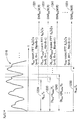
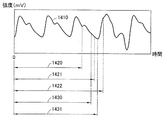
図14を参照すると、図14には生体信号(1410)のグラフを示す。
生体信号処理装置は、ターゲット区間(1420)を設定し、ターゲット区間(1420)に対応する第1品質メトリックを演算する。
With reference to FIG. 14, FIG. 14 shows a graph of the biological signal (1410).
The biological signal processor sets the target section (1420) and calculates the first quality metric corresponding to the target section (1420).
生体信号処理装置は、ターゲット区間(1420)を第1ステップサイズだけ拡張させる。
例えば、生体信号処理装置は、ターゲット区間(1420)のサンプル数を第1ステップサイズだけ増加させることができる。
ターゲット区間(1420)が拡張されてターゲット区間(1421)が設定され得る。
生体信号処理装置は、ターゲット区間(1421)に対応する第2品質メトリックを演算してもよく、第1品質メトリックを第2品質メトリックと比較してもよい。
生体信号処理装置は、ターゲット区間(1421)を第1ステップサイズだけ拡張してもよい。
ターゲット区間(1421)が拡張されてターゲット区間(1422)が設定され得る。
生体信号処理装置は、ターゲット区間(1422)に対応する第3品質メトリックを演算し得る。
第1品質メトリック、第2品質メトリック、及び第3品質メトリックの中で第2品質メトリックが最も大きいと仮定する。
The biological signal processor expands the target section (1420) by the size of the first step.
For example, the biological signal processor can increase the number of samples in the target section (1420) by the first step size.
The target section (1420) can be extended to set the target section (1421).
The biological signal processing device may calculate a second quality metric corresponding to the target interval (1421), or may compare the first quality metric with the second quality metric.
The biological signal processing device may extend the target section (1421) by the size of the first step.
The target section (1421) can be extended to set the target section (1422).
The biological signal processor can calculate a third quality metric corresponding to the target interval (1422).
It is assumed that the second quality metric is the largest among the first quality metric, the second quality metric, and the third quality metric.
一実施形態において、生体信号処理装置は、第1ステップサイズを用いてターゲット区間を変更し、第1ステップサイズが用いられた複数の第1変更ターゲット区間の内のいずれか1つを選択する。
生体信号処理装置は、選択するために品質メトリックを用いる。
図14に示した例において、生体信号処理装置は、ターゲット区間(1420、1421、1422)の中から最大値に対応するターゲット区間(1421)を選択する。
In one embodiment, the biological signal processor modifies the target section using the first step size and selects any one of the plurality of first modified target sections in which the first step size is used.
Biosignal processors use quality metrics to select.
In the example shown in FIG. 14, the biological signal processor selects the target section (1421) corresponding to the maximum value from the target sections (1420, 1421, 1422).
生体信号処理装置は、第2ステップサイズを用いて選択された変更ターゲット区間を変更する。
第2ステップサイズは、第1ステップサイズより小さくてもよい。
図14に示した例において、生体信号処理装置は、ターゲット区間(1421)を第2ステップサイズだけ拡張したり縮小たりする。
ターゲット区間(1421)が第2ステップサイズだけ縮小する場合、ターゲット区間(1430)が設定され、ターゲット区間(1421)が第2ステップサイズだけ拡張する場合、ターゲット区間(1431)が設定される。
ターゲット区間(1421、1430、1431)のそれぞれに対応する品質メトリックの中から最大値が最大品質メトリックと決定される。
The biological signal processor changes the change target section selected using the second step size.
The second step size may be smaller than the first step size.
In the example shown in FIG. 14, the biological signal processor expands or contracts the target section (1421) by the second step size.
When the target section (1421) is reduced by the second step size, the target section (1430) is set, and when the target section (1421) is expanded by the second step size, the target section (1431) is set.
The maximum value is determined as the maximum quality metric from the quality metrics corresponding to each of the target sections (1421, 1430, 1431).
一実施形態において、生体信号処理装置は、第1ステップサイズだけターゲット区間を変更させて生体信号を処理し、処理結果に基づいて演算された品質メトリックの方向性を確認する。
生体信号処理装置は、品質メトリックが増加するか、又は減少するかを判断する。
図14に示した例において、第1品質メトリックは、第2品質メトリックより小さく、第2品質メトリックは、第3品質メトリックより大きい。
ターゲット区間(1420)がターゲット区間(1421)に拡張するほど品質メトリックは大きくなり、ターゲット区間(1421)がターゲット区間(1422)に拡張するほど品質メトリックは小さくなる。
そのため、最大品質メトリックに対応するターゲット区間は、ターゲット区間(1421)より大きくなったり、ターゲット区間(1421)と同一になったり、ターゲット区間(1422)より小さくなったりする。
生体信号処理装置は、ターゲット区間(1421)を第2ステップサイズだけ拡張させ、拡張されたターゲット区間に対応する品質メトリックを演算することができる。
図1〜図13に基づき記載された事項は、図14に基づき記載された事項に適用することができるため、詳細な説明は省略する。
In one embodiment, the biological signal processing device processes the biological signal by changing the target section by the first step size, and confirms the directionality of the quality metric calculated based on the processing result.
The biological signal processor determines whether the quality metric increases or decreases.
In the example shown in FIG. 14, the first quality metric is smaller than the second quality metric and the second quality metric is larger than the third quality metric.
The quality metric becomes larger as the target section (1420) extends to the target section (1421), and becomes smaller as the target section (1421) extends to the target section (1422).
Therefore, the target section corresponding to the maximum quality metric may be larger than the target section (1421), be the same as the target section (1421), or be smaller than the target section (1422).
The biological signal processing device can extend the target section (1421) by the second step size and calculate the quality metric corresponding to the extended target section.
Since the matters described based on FIGS. 1 to 13 can be applied to the matters described based on FIG. 14, detailed description thereof will be omitted.
図15は、本発明の一実施形態に係る生体信号処理装置の他の一例の概略構成を示すブロック図である。
図15を参照すると、生体信号処理装置1500は、品質メトリック定義部(quality metric definer)1510、品質推定部1520、及び決定部1530を含む。
FIG. 15 is a block diagram showing a schematic configuration of another example of the biological signal processing device according to the embodiment of the present invention.
Referring to FIG. 15, the
品質メトリック定義部1510は、生体信号のターゲット区間のターゲット成分及び非ターゲット成分に基づいて品質メトリックを定義する。
ターゲット成分は、設定値に対応するターゲット区間の周波数成分を示し、非ターゲット成分は、設定値に対応しないターゲット区間の周波数成分を示す。
The quality
The target component indicates the frequency component of the target section corresponding to the set value, and the non-target component indicates the frequency component of the target section not corresponding to the set value.
品質メトリック定義部1510は、ターゲット区間を周波数領域信号に変換し、周波数領域信号の周波数成分の内の設定値の整数倍の周波数成分をターゲット成分として定義する。
また、品質メトリック定義部1510は、ターゲット成分信号を第1の数だけ抽出してもよく、非ターゲット成分信号を第2の数だけ抽出してもよい。
ここで、第2の数は、第1の数及び設定値に基づいて定義される。
また、品質メトリック定義部1510は、第1の数だけ抽出されたターゲット成分信号の電力及び第2の数だけ抽出された非ターゲット成分信号の電力を用いて品質メトリックを定義する。
The quality
Further, the quality
Here, the second number is defined based on the first number and the set value.
Further, the quality
品質推定部1520は、品質メトリックに基づいて複数の生体信号の品質を推定する。
例えば、品質推定部1520は、複数の生体信号のそれぞれの代表品質メトリックを取得して複数の生体信号の品質を推定する。
以下、複数の生体信号の内の個別生体信号(individual biosignal)の品質を推定することを説明する。
品質推定部1520は、個別生体信号のターゲット区間及び設定値の内のいずれか1つ又は両方を変更して複数の品質メトリックを取得することができる。
品質推定部1520は、複数の品質メトリックに基づいて最大品質メトリックを取得してもよく、最大品質メトリックを代表品質メトリックと決定してもよい。
また、品質推定部1520は、代表品質メトリックに対応するターゲット区間をメモリに格納する。
このような方式で、品質推定部1520は、他の生体信号の代表品質メトリックを決定し、代表品質メトリックに対応するターゲット区間をメモリに格納する。
The
For example, the
Hereinafter, it will be described to estimate the quality of an individual biological signal among a plurality of biological signals.
The
The
Further, the
In such a method, the
決定部1530は、複数の生体信号の品質に基づいてモニタリング対象になるターゲット生体信号を決定する。
例えば、決定部1530は、複数の代表品質メトリックの内の最大値に対応するターゲット区間をモニタリング対象になるターゲット生体信号と決定する。
他の一例として、決定部1530は、個別生体信号の代表品質メトリックが閾値以上であるか否かを判断し、判断結果に基づいて代表品質メトリックに対応するターゲット区間をモニタリング対象になるターゲット生体信号と決定する。
The
For example, the
As another example, the
決定部1530は、決定された生体信号の非ターゲット成分信号の大きさを予め設定された値として定義してもよい。
例えば、非ターゲット成分信号の大きさが0と設定され、それによって、決定された生体信号のノイズ成分などは除去され得る。
The
For example, the magnitude of the non-target component signal is set to 0, whereby the noise component of the determined biological signal and the like can be removed.
決定部1530は、決定された生体信号の周期情報を取得する。
以下、図16を参照しながら説明する。一方、図1〜図14に基づき記載された事項は、図15に基づき記載された事項に適用することができるため、詳細な説明は省略する。
The
Hereinafter, description will be made with reference to FIG. On the other hand, since the matters described based on FIGS. 1 to 14 can be applied to the matters described based on FIG. 15, detailed description thereof will be omitted.
図16は、本発明の一実施形態に係る複数の生体信号の中からモニタリング対象になるターゲット生体信号を決定することを説明するための図である。
Ntrial回検出された生体信号が、Nchannel個の検出チャネルを介して生体信号処理装置で伝達されると仮定する。
モニタリング対象になるターゲット生体信号を決定するために、生体信号処理装置は、Nchannel *Ntrialの生体信号を処理する。
FIG. 16 is a diagram for explaining that a target biological signal to be monitored is determined from a plurality of biological signals according to an embodiment of the present invention.
It is assumed that the biological signal detected N trial times is transmitted by the biological signal processor via N channels of detection channels.
In order to determine the target biological signal to be monitored, the biological signal processing device processes the biological signal of N channel * N trial .
図16を参照すると、図16には複数の生体信号(1611、1621、1631、1641、1651)を示す。
ここで、複数の生体信号(1611、1621、1631、1641、1651)の検出チャネルは同一であり、検出された時間区間は異なる。
生体信号処理装置は、互いに異なる時間区間(1610、1620、1630、1640、1650)において検出された生体信号を処理し、処理に基づいてモニタリング対象になるターゲット生体信号を決定する。
Referring to FIG. 16, FIG. 16 shows a plurality of biological signals (1611, 1621, 1631, 1641, 1651).
Here, the detection channels of the plurality of biological signals (1611, 1621, 1631, 1641, 1651) are the same, and the detected time intervals are different.
The biological signal processing device processes the biological signals detected in different time intervals (1610, 1620, 1630, 1640, 1650), and determines the target biological signal to be monitored based on the processing.
図16に示したSN比が最大品質メトリック(1613、1623、1633、1643、1653)であるとき、ターゲット区間(1612、1622、1632、1642、1652)は、最大品質メトリック(1613、1623、1633、1643、1653)に対応するターゲット区間である。
ここで、設定値を3として品質メトリックが演算されたと仮定する。
When the signal-to-noise ratio shown in FIG. 16 is the maximum quality metric (1613, 1623, 1633, 1643, 1653), the target interval (1612, 1622, 1632, 1642, 1652) is the maximum quality metric (1613, 1623, 1633). , 1643, 1653).
Here, it is assumed that the quality metric is calculated with the set value set to 3.
生体信号処理装置は、最大品質メトリック(1613、1623、1633、1643、1653)の中から最大値を選択する。
図16に示した例において、最大品質メトリック(1643)が最も大きいため、生体信号処理装置は、最大品質メトリック(1643)に対応するターゲット区間(1642)をモニタリング対象になるターゲット生体信号と決定する。
The biological signal processor selects the maximum value from the maximum quality metrics (1613, 1623, 1633, 1643, 1653).
In the example shown in FIG. 16, since the maximum quality metric (1643) is the largest, the biological signal processor determines the target section (1642) corresponding to the maximum quality metric (1643) as the target biological signal to be monitored. ..
上記にて説明したように、ターゲット区間(1642)の波形繰り返し回数は設定値と一致し、他のターゲット区間の波形繰り返し回数は設定値と一致しない。
複数の生体信号の中からモニタリング対象と決定された生体信号の波形繰り返し回数は設定値と一致する。
生体信号処理装置は、ターゲット区間(1642)の時間の長さを設定値に分けてターゲット区間(1642)の周期情報を取得する。
生体信号処理装置は、周期情報を用いてユーザのヘルス情報を推定するか、又は周期情報を外部モニタリング装置に送信する。
As described above, the number of waveform repetitions in the target section (1642) matches the set value, and the number of waveform repetitions in the other target sections does not match the set value.
The number of times the waveform of the biological signal determined to be monitored from among the plurality of biological signals is repeated matches the set value.
The biological signal processing device divides the time length of the target section (1642) into set values and acquires the period information of the target section (1642).
The biometric signal processor estimates the user's health information using the periodic information or transmits the periodic information to an external monitoring device.
一実施形態において、生体信号処理装置は、モニタリング対象と決定された生体信号の波形パターンに基づいてユーザを認証する。
例えば、生体信号処理装置は、ターゲット区間(1642)の波形パターンと予め格納された波形パターンとを比較し、比較した結果、波形パターンと予め格納された波形パターンが一致するか又は近似する場合、ユーザを認証する。
図1〜図15に基づき記載された事項は、図16に基づき記載された事項に適用することができるため、詳細な説明は省略する。
In one embodiment, the biological signal processor authenticates the user based on the waveform pattern of the biological signal determined to be monitored.
For example, when the biometric signal processor compares the waveform pattern of the target section (1642) with the pre-stored waveform pattern, and as a result of the comparison, the waveform pattern and the pre-stored waveform pattern match or approximate. Authenticate the user.
Since the matters described based on FIGS. 1 to 15 can be applied to the matters described based on FIG. 16, detailed description thereof will be omitted.
図17は、本発明の一実施形態に係る生体信号処理装置のさらに他の一例の概略構成を示すブロック図である。
図17を参照すると、生体信号処理装置1700は、検出部1710、品質推定部1720、品質比較部1730、及び生体信号選択部1740を含む。
FIG. 17 is a block diagram showing a schematic configuration of still another example of the biological signal processing device according to the embodiment of the present invention.
Referring to FIG. 17, the biological
検出部1710は生体信号を検出する。
例えば、検出部1710は、PPGセンサを含み、ユーザのPPG信号を検出する。
検出部1710は、複数の時間の間、複数の検出チャネルを介してユーザの生体信号を検出する。
Nchannel個の検出チャネルがユーザの身体と接触し、それぞれのチャネルを介して生体信号がNtrial回検出される。
この場合、検出部1710は、Nchannel *Ntrialの生体信号を検出する。
検出部1710は、Nchannel *Ntrialの生体信号の内の第1生体信号を品質推定部1720に伝達する。
The
For example, the
The
N channels of detection channels come into contact with the user's body, and biological signals are detected N trial times through each channel.
In this case, the
The
品質推定部1720は、第1生体信号の品質を推定する。
品質推定部1720は、ターゲット区間設定部(target interval setter)1721、周波数領域信号変換部1722、品質メトリック演算部(quality metric calculator)1723、及び最大品質メトリック更新部(maximum quality metric updater)1724を含む。
The
The
ターゲット区間設定部1721は、第1生体信号のターゲット区間を設定する。
例えば、ターゲット区間設定部1721は、第1生体信号の第1時点から第2時点の間に含まれた生体信号をターゲット区間に設定する。
簡潔に述べると、ターゲット区間設定部1721は、1番目のサンプルからNmin番目のサンプルまでをターゲット区間と設定する。
ここで、Nminは、予め設定された値である。また、ターゲット区間設定部1721は、n番目のサンプルからNmin番目のサンプルまでをターゲット区間と設定する。
ここで、nは、Nminより小さい。前述したターゲット区間の設定は、例示的な事項に過ぎず、ターゲット区間の設定は、前述した例に限定されない。
The target
For example, the target
Briefly, the target
Here, N min is a preset value. Further, the target
Here, n is smaller than N min. The setting of the target section described above is merely an example, and the setting of the target section is not limited to the above example.
周波数領域信号変換部1722は、ターゲット区間を周波数領域信号に変換する。
例えば、周波数領域信号変換部1722は、FFT又はDFTによってターゲット区間を周波数領域信号に変換する。
また、周波数領域信号変換部1722は、周波数領域信号の大きさ及び/又は周波数をスケーリングしてもよい。
The frequency domain
For example, the frequency domain
Further, the frequency domain
品質メトリック演算部1723は、周波数領域信号の品質メトリックを演算する。
周波数領域信号の内の設定値に対応する周波数成分をターゲット成分とし、周波数領域信号の内の設定値に対応しない周波数成分を非ターゲット成分とするとき、品質メトリック演算部1723は、ターゲット成分及び非ターゲット成分に基づいて周波数領域信号の品質メトリックを演算する。
The quality
When the frequency component corresponding to the set value in the frequency domain signal is set as the target component and the frequency component not corresponding to the set value in the frequency domain signal is set as the non-target component, the quality
最大品質メトリック更新部1724は、第1生体信号の最大品質メトリックを更新する。
現在、内側ループ(Inner−Loop)1725によって演算された品質メトリックを第1品質メトリックとする。
最大品質メトリック更新部1724は、内側ループ1725によって事前に演算された前の品質メトリック(previous quality metric)と第1品質メトリックとを比較して、前の品質メトリック及び第1品質メトリックの中からより大きい値を判定する。
ここで、第1品質メトリックがより大きいとする。
第1品質メトリックがより大きい値であると確認された場合、最大品質メトリック更新部1724は、ターゲット区間設定部1721にフィードバック信号を伝達する。
The maximum quality
Currently, the quality metric calculated by the Inner-
The maximum quality
Here, it is assumed that the first quality metric is larger.
When it is confirmed that the first quality metric is a larger value, the maximum quality
ターゲット区間設定部1721は、フィードバック信号に基づいて第1生体信号のターゲット区間を更新する。
前述した例において、ターゲット区間は、1番目のサンプルからNmin番目のサンプルであるため、ターゲット区間設定部1721は、ターゲット区間を1番目のサンプルからNmin+Ndelta番目のサンプルまでに更新する。
The target
In the above example, since the target section is the N minth sample from the first sample, the target
周波数領域信号変換部1722は、更新されたターゲット区間を周波数領域信号に変換し、品質メトリック演算部1723は、更新されたターゲット区間に対応する品質メトリックを演算する。
更新されたターゲット区間に対応する品質メトリックを第2品質メトリックとするとき、最大品質メトリック更新部1724は、第1品質メトリックと第2品質メトリックとを比較して、より大きい値を判定する。
第2品質メトリックが第1品質メトリックより大きい場合、第1生体信号の最大品質メトリックが更新される。
The frequency domain
When the quality metric corresponding to the updated target interval is set as the second quality metric, the maximum quality
If the second quality metric is greater than the first quality metric, the maximum quality metric of the first biosignal is updated.
フィードバック信号がターゲット区間設定部1721に伝達される場合、ターゲット区間の1番目のサンプルからNmax番目のサンプルまで更新され、1番目のサンプルからNmax番目のサンプルまでのターゲット区間に対応する品質メトリックが演算されて最大品質メトリックが更新される。
ここで、Nmaxは予め設定された値である。
If the feedback signal is transmitted to the target
Here, N max is a preset value.
内側ループ1725に基づいて、ターゲット区間設定部1721、周波数領域信号変換部1722、品質メトリック演算部1723、及び最大品質メトリック更新部1724の動作が繰り返される。
繰り返しに基づいて、品質推定部1720は、第1生体信号の最大品質メトリックを決定し、最大品質メトリックに対応するターゲット区間をメモリに格納する。
品質推定部1720は、第1生体信号の最大品質メトリックを品質比較部1730に伝達する。
ここで、第1生体信号の最大品質メトリックを第1最大品質メトリックとする。
Based on the
Based on the iteration, the
The
Here, the maximum quality metric of the first biological signal is defined as the first maximum quality metric.
例えば、品質比較部1730は、第1最大品質メトリックを外側ループ(Outer−Loop)1731によって事前に入力された前の最大品質メトリック(previous maximum quality metric)と比較してより大きい値を判断する。
ここで、第1最大品質メトリックが前の最大品質メトリックよりもさらに大きいと仮定する。
第1最大品質メトリックがより大きい値であると確認された場合、品質比較部1730は、フィードバック信号を生成し、フィードバック信号を生体信号検出部1710に伝達する。
For example, the
Here, it is assumed that the first maximum quality metric is even larger than the previous maximum quality metric.
When it is confirmed that the first maximum quality metric is a larger value, the
他の一例として、品質比較部1730は、第1最大品質メトリックを閾値と比較し、第1最大品質メトリックが閾値以上である場合、外側ループ1731を終了して、第1最大品質メトリックを生体信号選択部1740に伝達する。
第1最大品質メトリックが閾値より小さい場合、品質比較部1730は、フィードバック信号を生成して、フィードバック信号を生体信号検出部1710に伝達する。
As another example, the
When the first maximum quality metric is smaller than the threshold value, the
生体信号検出部1710は、検出されたNchannel *Ntrial個の生体信号の内の第2生体信号を品質推定部1720に伝達する。
内側ループ1725に基づいて、品質推定部1720は、第2生体信号の最大品質メトリックを決定し、最大品質メトリックに対応するターゲット区間をメモリに格納する。
品質推定部1720は、第2生体信号の最大品質メトリックを品質比較部1730に伝達する。
ここで、第2生体信号の最大品質メトリックを第2最大品質メトリック(the second maximum quality metric)とする。
品質比較部1730は、第1最大品質メトリックと第2最大品質メトリックとを比較してより大きい値を判定する。
第2最大品質メトリックが、より大きい値であると確認された場合、外側ループ1731が繰り返される。
The biological signal detection unit 1710 transmits the second biological signal among the detected N channels * N trial biological signals to the
Based on the
The
Here, the maximum quality metric of the second biological signal is referred to as the second maximum quality metric.
The
If the second maximum quality metric is confirmed to be greater,
外側ループ1731がNchannel *Ntrial回繰り返される場合、Nchannel *Ntrial個の生体信号のそれぞれの最大品質メトリックが決定され、それぞれの最大品質メトリックに対応するターゲット区間がメモリに格納される。
外側ループ1731の繰り返しが終了する場合、Nchannel *Ntrial個の最大品質メトリックの中から最大値が生体信号選択部1740に伝達される。
前述した他の一例において、Nchannel *Ntrial個の生体信号のそれぞれの最大品質メトリックが閾値より小さい場合、品質比較部1710は、生体信号の検出を指示するフィードバック信号を生成して検出部1710に伝達し、検出部1710は生体信号を検出する。
When the
When the repetition of the
In another example described above, when the maximum quality metric of each of the N channel * N trial biological signals is smaller than the threshold value, the
生体信号選択部1740は、最大値に対応するターゲット区間をモニタリング対象になるターゲット生体信号と決定する。
図1〜図16に基づき記載された事項は、図17に基づき記載された事項に適用することができるため、詳細な説明は省略する。
The biological
Since the matters described based on FIGS. 1 to 16 can be applied to the matters described based on FIG. 17, detailed description thereof will be omitted.
図18は、本発明の一実施形態に係る生体信号処理方法の一例を説明するためのフローチャートである。
図18に基づき記載、説明される生体信号処理方法は、生体信号処理装置によって行われる。
FIG. 18 is a flowchart for explaining an example of the biological signal processing method according to the embodiment of the present invention.
The biological signal processing method described and described based on FIG. 18 is performed by a biological signal processing device.
生体信号処理装置は、生体信号を受信する(ステップS1810)。
生体信号処理装置はセンサから生体信号を受信する。
生体信号処理装置は、生体信号のターゲット区間を設定する(ステップS1820)。
生体信号処理装置は、ターゲット成分及び非ターゲット成分に基づいてターゲット区間に対応する品質メトリックを演算する(ステップS1830)。
ここで、ターゲット成分は、設定値に対応するターゲット区間の周波数成分を示し、非ターゲット成分は、設定値に対応しないターゲット区間の周波数成分を示す。
生体信号処理装置は、品質メトリックに基づいて生体信号の品質を推定する(ステップS1840)。
図1〜図17に基づき記載された事項は、図18に基づき記載された事項に適用することができるため、詳細な説明は省略する。
The biological signal processing device receives the biological signal (step S1810).
The biological signal processor receives the biological signal from the sensor.
The biological signal processing device sets a target section of the biological signal (step S1820).
The biological signal processor calculates a quality metric corresponding to the target interval based on the target component and the non-target component (step S1830).
Here, the target component indicates the frequency component of the target section corresponding to the set value, and the non-target component indicates the frequency component of the target section not corresponding to the set value.
The biological signal processor estimates the quality of the biological signal based on the quality metric (step S1840).
Since the matters described based on FIGS. 1 to 17 can be applied to the matters described based on FIG. 18, detailed description thereof will be omitted.
図19は、本発明の一実施形態に係る生体信号処理方法の他の一例を説明するためのフローチャートである。
図19に基づき記載、説明される生体信号処理方法は、生体信号処理装置によって行われる。
FIG. 19 is a flowchart for explaining another example of the biological signal processing method according to the embodiment of the present invention.
The biological signal processing method described and described based on FIG. 19 is performed by a biological signal processing device.
生体信号処理装置は、個別生体信号のターゲット区間のターゲット成分及び非ターゲット成分に基づいてターゲット区間に対応する品質メトリックを定義する(ステップS1910)。
生体信号処理装置は、品質メトリックに基づいて複数の生体信号の品質を推定する(ステップS1920)。
生体信号処理装置は、複数の生体信号の品質に基づいてモニタリング対象になるターゲット生体信号を決定する(ステップS1930)。
図1〜図17に基づき記載された事項は、図19に基づき記載された事項に適用することができるため、詳細な説明は省略する。
The biological signal processor defines a quality metric corresponding to the target section based on the target component and the non-target component of the target section of the individual biological signal (step S1910).
The biological signal processing device estimates the quality of a plurality of biological signals based on the quality metric (step S1920).
The biological signal processing device determines a target biological signal to be monitored based on the qualities of the plurality of biological signals (step S1930).
Since the matters described based on FIGS. 1 to 17 can be applied to the matters described based on FIG. 19, detailed description thereof will be omitted.
図20は、本発明の一実施形態に係る生体信号処理装置を含む端末の概要を示す図である。
図20を参照すると、端末2000は、検出部2010を含む。
検出部2010は、複数のセンサを含み、ユーザの様々な生体信号を検出する。
FIG. 20 is a diagram showing an outline of a terminal including a biological signal processing device according to an embodiment of the present invention.
Referring to FIG. 20, the terminal 2000 includes a
The
例えば、検出部2010は、PPG信号、体温、生体インピーダンス(bio impedance)などの生体信号を検出し得る。
検出部2010は、複数の検出チャネルを用いて生体信号を検出することができる。
また、検出部2010は、複数の時間区間において生体信号を検出することができる。
例えば、検出チャネルがNであり、複数の時間区間がMであるとき、検出部2010が検出する生体信号の数はN*M個である。
For example, the
The
In addition, the
For example, when the detection channel is N and the plurality of time intervals are M, the number of biological signals detected by the
図20に示した例において、検出部は、ユーザの指先の生体信号を検出する。
これとは異なって、検出部は、端末2000の他の部分、例えば、端末2000の裏面、側面などに位置し、ユーザの指でない他の身体と接触して生体信号を検出することもできる。
In the example shown in FIG. 20, the detection unit detects the biological signal of the user's fingertip.
Unlike this, the detection unit may be located on another part of the terminal 2000, for example, the back surface or the side surface of the terminal 2000, and may come into contact with another body other than the user's finger to detect the biological signal.
検出部2010が検出する複数の生体信号は、端末2000に含まれた生体信号処理装置に伝達される。
生体信号処理装置に伝達される複数の生体信号は互いに異なる生体信号でない同一種類の生体信号である。
生体信号処理装置は、複数の生体信号のそれぞれを処理する。
より具体的には、生体信号処理装置は、第1生体信号の複数の品質メトリックの中から第1最大品質メトリックを選択し、生体信号処理装置は、第2生体信号の複数の品質メトリックの中から第2最大品質メトリックを選択する。
第1生体信号及び第2生体信号は、同一種類の生体信号である。
生体信号処理装置は、第1最大品質メトリック及び第2最大品質メトリックの中から最大値を選択し、最大値に対応するターゲット区間をモニタリング対象になるターゲット生体信号と決定する。
The plurality of biological signals detected by the
The plurality of biological signals transmitted to the biological signal processing device are the same type of biological signals that are not different biological signals from each other.
The biological signal processing device processes each of a plurality of biological signals.
More specifically, the biological signal processor selects the first maximum quality metric from the plurality of quality metrics of the first biological signal, and the biological signal processor selects the first maximum quality metric from the plurality of quality metrics of the second biological signal. Select the second highest quality metric from.
The first biological signal and the second biological signal are the same type of biological signal.
The biological signal processing device selects the maximum value from the first maximum quality metric and the second maximum quality metric, and determines the target section corresponding to the maximum value as the target biological signal to be monitored.
端末2000は、モニタリング対象になるターゲット生体信号を用いてユーザのヘルス情報を取得することもできる。
例えば、ユーザの心拍数などのヘルス情報を取得する。
また、端末2000は、モニタリング対象になるターゲット生体信号を外部モニタリング装置に送信することもできる。
本発明の一実施形態に係る生体信号処理によって、優れた品質を有する生体信号は、ユーザのヘルスモニタリングのために好適に用いられる。
図1〜図19に基づき記載された事項は、図20に基づき記載された事項に適用することができるため、詳細な説明は省略する。
The terminal 2000 can also acquire the health information of the user by using the target biological signal to be monitored.
For example, it acquires health information such as the user's heart rate.
In addition, the terminal 2000 can also transmit a target biological signal to be monitored to an external monitoring device.
By the biological signal processing according to the embodiment of the present invention, the biological signal having excellent quality is suitably used for the health monitoring of the user.
Since the matters described based on FIGS. 1 to 19 can be applied to the matters described based on FIG. 20, detailed description thereof will be omitted.
図21は、本発明の一実施形態に係る生体信号処理装置を含むウェアラブルデバイスの概要を示す図である。
図21を参照すると、ウェアラブルデバイス2100は、検出部(図示せず)を含む。
図21に示したウェアラブルデバイス2100は、腕時計型であるが、ウェアラブルデバイス2100は、図21に示した腕時計型に限定されない。
FIG. 21 is a diagram showing an outline of a wearable device including a biological signal processing device according to an embodiment of the present invention.
Referring to FIG. 21, the
The
ウェアラブルデバイス2100は、検出部を介してユーザの生体信号を検出する。
検出部は、ユーザの手首の互いに異なる物理的位置と接触して、互いに異なる物理的位置で生体信号を検出することができる。
例えば、検出部は、3個〜6個の互いに異なる物理的位置で生体信号を検出することができる。
ウェアラブルデバイス2100に含まれた生体信号処理装置は、生体信号を処理する。
The
The detection unit can come into contact with different physical positions on the user's wrist to detect biological signals at different physical positions.
For example, the detection unit can detect biological signals at 3 to 6 different physical positions.
The biological signal processing device included in the
ウェアラブルデバイス2100がユーザと不安定に接触するか、又はウェアラブルデバイス2100を着用したユーザの動きが多い場合でも、ウェアラブルデバイス2100は、歪曲された生体信号を検出して処理することができる。
例えば、ウェアラブルデバイス2100は、図2Bに示した生体信号を検出して処理することができる。
歪曲された生体信号がユーザのヘルスモニタリングのために用いられる場合、誤った結果が導き出す可能性があるのを本発明の生体信号処理装置は防ぐ。
The
For example, the
The biosignal processor of the present invention prevents erroneous results when distorted biosignals are used for user health monitoring.
図20の端末のように、ウェアラブルデバイス2100は、複数の生体信号を処理して複数の生体信号の中から優れた品質を有する生体信号を抽出する。
生体信号処理装置は、複数の検出チャネル及び/又は複数の時間帯で検出された生体信号を用いるため、不安定な環境などによって歪曲された生体信号は、ヘルスモニタリングに用いず、安定した環境で検出された生体信号がヘルスモニタリングに用いられる。
また、本発明に係る生体信号処理方法は、複数の生体信号から品質が良い生体信号を選択するため、不安定な環境又は移動環境に強靭である。
Like the terminal of FIG. 20, the
Since the biological signal processing device uses biological signals detected in a plurality of detection channels and / or a plurality of time zones, the biological signals distorted by an unstable environment or the like are not used for health monitoring and are used in a stable environment. The detected biological signal is used for health monitoring.
Further, the biological signal processing method according to the present invention is tough in an unstable environment or a mobile environment because a high quality biological signal is selected from a plurality of biological signals.
また、図21に示していないが、本発明の一実施形態に係る生体信号処理装置は、ユーザの身体に取り付けるセンサに含まれてもよい。
センサ、ウェアラブルデバイス2100、及びユーザの端末は、無線ボディエリアネットワーク(Wireless Body Area Network、WBAN)を形成してもよい。
Further, although not shown in FIG. 21, the biometric signal processing device according to the embodiment of the present invention may be included in a sensor attached to the user's body.
The sensor, the
センサ及び/又はウェアラブルデバイス2100は、複数の生体信号を検出し、複数の生体信号から品質が最も良い生体信号を選択する。
センサ及び/又はウェアラブルデバイス2100は、選択された生体信号を端末に送信する。
端末は、選択された生体信号をインターネット等を介して外部モニタリング装置に送信するか、又は選択された生体信号を分析してユーザのヘルス情報を取得する。
図1〜図19に基づき記載された事項は、図21に基づき記載された事項に適用することができるため、詳細な説明は省略する。
The sensor and / or the
The sensor and / or
The terminal transmits the selected biological signal to an external monitoring device via the Internet or the like, or analyzes the selected biological signal to acquire the health information of the user.
Since the matters described based on FIGS. 1 to 19 can be applied to the matters described based on FIG. 21, detailed description thereof will be omitted.
本実施形態による生体信号処理方法は、多様なコンピュータ手段を介して実施されるプログラム命令の形態で具現され、コンピュータ読み取り可能な記録媒体に記録される。
記録媒体は、プログラム命令、データファイル、データ構造などを単独又は組み合わせを含む。
記録媒体及びプログラム命令は、本発明の目的のために特別に設計して構成されたものでもよく、コンピュータソフトウェア分野の技術を有する当業者にとって公知のものであり使用可能なものであってもよい。
The biological signal processing method according to the present embodiment is embodied in the form of program instructions implemented via various computer means, and is recorded on a computer-readable recording medium.
The recording medium includes a program instruction, a data file, a data structure, and the like alone or in combination.
The recording medium and program instructions may be specially designed and configured for the purposes of the present invention, or may be known and usable by those skilled in the art of computer software. ..
コンピュータ読み取り可能な記録媒体の例としては、ハードディスク、フロッピー(登録商標)ディスク及び磁気テープのような磁気媒体、CD−ROM、DVDのような光記録媒体、フロプティカルディスクのような磁気−光媒体、及びROM、RAM、フラッシュメモリなどのようなプログラム命令を保存して実行するように特別に構成されたハードウェア装置を含む。
プログラム命令の例としては、コンパイラによって生成されるような機械語コードだけでなく、インタプリタなどを用いてコンピュータによって実行される高級言語コードを含む。
ハードウェア装置は、本発明の動作を実行するために1つ以上のソフトウェアモジュールとして作動するように構成してもよく、その逆も同様である。
Examples of computer-readable recording media include magnetic media such as hard disks, floppy (registered trademark) disks and magnetic tapes, optical recording media such as CD-ROMs and DVDs, and magnetic-optical such as floppy disks. Includes media and hardware devices specially configured to store and execute program instructions such as ROM, RAM, flash memory, and the like.
Examples of program instructions include not only machine language code generated by a compiler, but also high-level language code executed by a computer using an interpreter or the like.
Hardware devices may be configured to operate as one or more software modules to perform the operations of the present invention, and vice versa.
尚、本発明は、上述の実施形態に限られるものではない。本発明の技術的範囲から逸脱しない範囲内で多様に変更実施することが可能である。 The present invention is not limited to the above-described embodiment. Various changes can be made without departing from the technical scope of the present invention.
110 周波数領域信号(ノイズ成分を含む生体信号のフーリェ変換後)
120 信号ウィンドウ
130 ノイズウィンドウ
1100、1500、1700 生体信号処理装置
1110 通信インターフェース
1120 プロセッサ
1210 生体信号
1220〜1250、1310〜1330 ターゲット区間
1221、1231、1241、1251 品質メトリック
1311〜1331 周波数領域信号
1312〜1332 ターゲット成分信号
1313〜1333 非ターゲット成分信号
1510 品質メトリック定義部
1520、1720 品質推定部
1530 決定部
1710 検出部
1721 ターゲット区間設定部
1722 周波数領域信号変換部
1723 品質メトリック演算部
1724 最大品質メトリック更新部
1725 内側ループ
1730 品質比較部
1731 外側ループ
1740 生体信号選択部
110 frequency domain signal (after Fourier transform of biological signal including noise component)
120
Claims (27)
前記生体信号のターゲット区間を設定し、前記ターゲット区間内のターゲット成分及び非ターゲット成分に基づいて前記ターゲット区間に対応する品質メトリックを演算して、前記品質メトリックに基づいて前記生体信号の品質を推定するプロセッサと、を有し、
前記ターゲット成分は、前記ターゲット区間内の複数の周波数成分の内の設定値の整数倍に対応する周波数成分であり、
前記非ターゲット成分は、前記ターゲット区間内の前記複数の周波数成分の内の前記設定値の整数倍に対応しない周波数成分であり、
前記設定値は、前記生体信号の波形繰り返し回数を設定する値であり、
前記プロセッサは、前記ターゲット成分の信号の電力の合計と前記非ターゲット成分の信号の電力の合計との間の比率として定義される前記品質メトリックを演算することを特徴とする生体信号処理装置。 A communication interface that receives biological signals and
The target section of the biological signal is set, the quality metric corresponding to the target section is calculated based on the target component and the non-target component in the target section, and the quality of the biological signal is estimated based on the quality metric. Has a processor and
The target component is a frequency component corresponding to an integral multiple of a set value among a plurality of frequency components in the target section.
The non-target component is a frequency component that does not correspond to an integral multiple of the set value among the plurality of frequency components in the target section.
The set value is a value for setting the number of times the waveform of the biological signal is repeated .
Wherein the processor is the biological signal processing apparatus characterized by computing the quality metric is defined as the ratio between the sum of the power of the target component of the signal and the total power of the signals of the non-target components.
前記第1の数をMとし前記設定値をRとするとき、前記第2の数は、M×(R−1)であることを特徴とする請求項1に記載の生体信号処理装置。 The processor extracts a first number of signals corresponding to the target component from the target section, and defines a second number of signals corresponding to the non-target component based on the first number and the set value. the extracts from the target section just a few,
The biometric signal processing apparatus according to claim 1 , wherein when the first number is M and the set value is R, the second number is M × (R-1).
少なくとも1つの第2変更ターゲット区間を取得するために第2ステップサイズだけ前記選択されたターゲット区間を少なくとも一度変更し、前記少なくとも1つの第2変更ターゲット区間に対応する品質メトリックを算出して、前記選択されたターゲット区間及び前記少なくとも1つの第2変更ターゲット区間に対応する品質メトリックに基づいて第1最大品質メトリックを決定することを特徴とする請求項1に記載の生体信号処理装置。 The processor modifies the target interval of only the first step size at least once to obtain at least one first modified target interval and calculates a quality metric corresponding to the at least one modified target interval. , The target section having the highest quality metric is selected from the target section and at least one first modified target section.
The selected target interval is modified at least once by the second step size to obtain at least one second modified target interval, and the quality metric corresponding to the at least one second modified target interval is calculated to obtain the said. The biometric signal processor according to claim 1, wherein the first maximum quality metric is determined based on the selected target interval and the quality metric corresponding to the at least one second modified target interval.
前記周期情報を用いてユーザのヘルス情報を推定するか、前記周期情報を外部モニタリング装備に送信することを特徴とする請求項9に記載の生体信号処理装置。 The processor acquires the periodic information of the target biological signal, and obtains the periodic information.
The biometric signal processor according to claim 9, wherein the user's health information is estimated using the cycle information, or the cycle information is transmitted to an external monitoring device.
前記品質メトリックに基づいて前記複数の生体信号のそれぞれの品質を推定する品質推定部と、
前記複数の生体信号のそれぞれの品質に基づいて前記複数の生体信号の中からモニタリングされるターゲット生体信号を決定する決定部と、を有し、
前記ターゲット成分は、前記ターゲット区間内の複数の周波数成分の内の設定値の整数倍に対応する周波数成分であり、
前記非ターゲット成分は、前記ターゲット区間内の前記複数の周波数成分の内の前記設定値の整数倍に対応しない周波数成分であり、
前記設定値は、前記生体信号の波形繰り返し回数を設定する値であり、
前記品質メトリック定義部は、前記ターゲット成分の信号の電力の合計と前記非ターゲット成分の信号の電力の合計との間の比率として前記品質メトリックを定義することを特徴とする生体信号処理装置。 A quality metric definition unit that defines a quality metric based on the target component and non-target component of each target section of a plurality of biological signals.
A quality estimation unit that estimates the quality of each of the plurality of biological signals based on the quality metric,
It has a determination unit for determining a target biological signal to be monitored from the plurality of biological signals based on the quality of each of the plurality of biological signals.
The target component is a frequency component corresponding to an integral multiple of a set value among a plurality of frequency components in the target section.
The non-target component is a frequency component that does not correspond to an integral multiple of the set value among the plurality of frequency components in the target section.
The set value is a value for setting the number of times the waveform of the biological signal is repeated .
The quality metric definition unit is a biometric signal processing device that defines the quality metric as a ratio between the total power of the signal of the target component and the total power of the signal of the non-target component.
前記代表品質メトリックは、前記ターゲット区間及び前記設定値の内のいずれか1つ又は両方の変更に基づいて取得された前記それぞれの生体信号の複数の品質メトリックの中で最大値であることを特徴とする請求項11に記載の生体信号処理装置。 The quality estimation unit acquires a representative quality metric for each of the plurality of biological signals, and obtains a representative quality metric for each of the plurality of biological signals.
The representative quality metric is characterized by being the maximum value among a plurality of quality metrics of each of the biological signals acquired based on a change of any one or both of the target interval and the set value. The biological signal processing apparatus according to claim 11.
前記決定部は、前記複数の品質メトリックの内の代表品質メトリックが閾値以上であるか否かを判断し、前記判断の結果に基づいて前記代表品質メトリックに対応するターゲット区間を前記モニタリングされるターゲット生体信号として決定し、
前記代表品質メトリックは、前記ターゲット区間及び前記設定値の内のいずれか1つ又は両方の変更に基づいて取得された前記それぞれの生体信号の複数の品質メトリックの中で最大値であることを特徴とする請求項11に記載の生体信号処理装置。 The quality estimation unit changes either one or both of the target section and the set value to acquire a plurality of quality metrics of each of the biological signals.
The determination unit determines whether or not the representative quality metric among the plurality of quality metrics is equal to or higher than the threshold value, and based on the result of the determination, the target section corresponding to the representative quality metric is the monitored target. Determined as a biological signal,
The representative quality metric is characterized by being the maximum value among a plurality of quality metrics of each of the biological signals acquired based on a change of any one or both of the target interval and the set value. The biological signal processing apparatus according to claim 11.
少なくとも1つの第2変更ターゲット区間を取得するために第2ステップサイズだけ前記選択されたターゲット区間を少なくとも一度変更し、前記少なくとも1つの第2変更ターゲット区間に対応する品質メトリックを算出して、前記選択されたターゲット区間及び前記少なくとも1つの第2変更ターゲット区間に対応する品質メトリックに基づいて前記それぞれの生体信号の最大品質メトリックを決定することを特徴とする請求項11に記載の生体信号処理装置。 The quality estimation unit changes the target section at least once by the first step size in order to acquire at least one first change target section, and calculates a quality metric corresponding to the at least one first change target section. , The target section having the highest quality metric is selected from the target section and at least one first modified target section.
The selected target interval is modified at least once by the second step size to obtain at least one second modified target interval, and the quality metric corresponding to the at least one second modified target interval is calculated to obtain the said. The biosignal processing apparatus according to claim 11, wherein the maximum quality metric of each of the biomedical signals is determined based on the quality metric corresponding to the selected target section and the at least one second modified target section. ..
前記周期情報を用いてユーザのヘルス情報を推定するか、前記周期情報を外部モニタリング装備に送信することを特徴とする請求項16に記載の生体信号処理装置。 The determination unit acquires the periodic information of the determined target biological signal, and obtains the periodic information.
The biometric signal processing apparatus according to claim 16, further comprising estimating user health information using the periodic information or transmitting the periodic information to an external monitoring device.
前記第1の数をMとし前記設定値をRとするとき、前記第2の数は、M×(R−1)であることを特徴とする請求項11に記載の生体信号処理装置。 The quality metric definition unit extracts a first number of signals corresponding to the target component from the target section, and defines signals corresponding to the non-target component based on the first number and the set value. The second number is extracted from the target section .
The biometric signal processing apparatus according to claim 11 , wherein when the first number is M and the set value is R, the second number is M × (R-1).
生体信号を受信するステップと、
前記生体信号のターゲット区間を設定するステップと、
前記ターゲット区間内のターゲット成分及び非ターゲット成分に基づいて前記ターゲット区間に対応する品質メトリックを演算するステップと、
前記品質メトリックに基づいて前記生体信号の品質を推定するステップと、を有し、
前記ターゲット成分は、前記ターゲット区間内の複数の周波数成分の内の設定値の整数倍に対応する周波数成分であり、
前記非ターゲット成分は、前記ターゲット区間内の前記複数の周波数成分の内の前記設定値の整数倍に対応しない周波数成分であり、
前記設定値は、前記生体信号の波形繰り返し回数を設定する値であり、
前記演算するステップは、プロセッサで、前記ターゲット成分の信号の電力の合計と前記非ターゲット成分の信号の電力の合計との間の比率として定義される前記品質メトリックを演算するステップを含むことを特徴とする生体信号処理装置の生体信号処理方法。 It is a biological signal processing method of a biological signal processing device.
Steps to receive biological signals and
The step of setting the target section of the biological signal and
A step of calculating a quality metric corresponding to the target interval based on the target component and the non-target component in the target interval, and
It has a step of estimating the quality of the biological signal based on the quality metric.
The target component is a frequency component corresponding to an integral multiple of a set value among a plurality of frequency components in the target section.
The non-target component is a frequency component that does not correspond to an integral multiple of the set value among the plurality of frequency components in the target section.
The set value is a value for setting the number of times the waveform of the biological signal is repeated .
Wherein the step of calculating is a processor, including the step of calculating the quality metric is defined as the ratio between the total power of the signal of the sum and the non-target components of the power of the signal of the target component A biosignal processing method for a biometric signal processor as a feature.
複数の生体信号のそれぞれのターゲット区間のターゲット成分及び非ターゲット成分に基づいて前記ターゲット区間に対応する品質メトリックを定義するステップと、
前記品質メトリックに基づいて複数の生体信号のそれぞれの品質を推定するステップと、
前記複数の生体信号の品質に基づいて前記複数の生体信号の中からモニタリングされるターゲット生体信号を決定するステップと、を有し、
前記ターゲット成分は、前記ターゲット区間内の複数の周波数成分の内の設定値の整数倍に対応する周波数成分であり、
前記非ターゲット成分は、前記ターゲット区間内の前記複数の周波数成分の内の前記設定値の整数倍に対応しない周波数成分であり、
前記設定値は、前記生体信号の波形繰り返し回数を設定する値であり、
前記品質メトリックを定義するステップは、前記ターゲット成分の信号の電力の合計と前記非ターゲット成分の信号の電力の合計との間の比率として前記品質メトリックを定義するステップを含むことを特徴とする生体信号処理方法。 It is a biological signal processing method of a biological signal processing device.
A step of defining a quality metric corresponding to the target section based on the target component and the non-target component of each target section of a plurality of biological signals, and a step of defining the quality metric corresponding to the target section.
A step of estimating the quality of each of a plurality of biological signals based on the quality metric, and
It has a step of determining a target biological signal to be monitored from the plurality of biological signals based on the quality of the plurality of biological signals.
The target component is a frequency component corresponding to an integral multiple of a set value among a plurality of frequency components in the target section.
The non-target component is a frequency component that does not correspond to an integral multiple of the set value among the plurality of frequency components in the target section.
The set value is a value for setting the number of times the waveform of the biological signal is repeated .
The step of defining the quality metric includes a step of defining the quality metric as a ratio between the total power of the signal of the target component and the total power of the signal of the non-target component. Signal processing method.
生体信号を受信するステップと、
前記生体信号の複数のターゲット区間を設定するステップと、
前記複数のターゲット区間に個別的に対応する品質メトリックを算出するステップと、
前記品質メトリックの中から最大品質メトリックを決定するステップと、
前記最大品質メトリックに対応するターゲット区間をモニタリングされる生体信号として決定するステップと、を有し、
前記品質メトリックを算出するステップは、対応ターゲット区間の少なくとも1つのターゲット成分及び前記対応ターゲット区間の少なくとも1つの非ターゲット成分に基づいて、それぞれの品質メトリックを演算するステップを含み、
前記ターゲット成分は、前記ターゲット区間内の複数の周波数成分の内の設定値の整数倍に対応する周波数成分であり、
前記非ターゲット成分は、前記ターゲット区間内の前記複数の周波数成分の内の前記設定値の整数倍に対応しない周波数成分であり、
前記設定値は、前記生体信号の波形繰り返し回数を設定する値であり、
前記品質メトリックは、前記ターゲット成分の信号の電力の合計と前記非ターゲット成分の信号の電力の合計との間の比率として定義されることを特徴とする生体信号処理方法。 It is a biological signal processing method of a biological signal processing device.
Steps to receive biological signals and
A step of setting a plurality of target sections of the biological signal, and
The step of calculating the quality metric corresponding to each of the plurality of target intervals, and
Steps to determine the maximum quality metric from the above quality metrics,
It has a step of determining the target interval corresponding to the maximum quality metric as a monitored biological signal.
The step of calculating the quality metric includes calculating each quality metric based on at least one target component of the corresponding target interval and at least one non-target component of the corresponding target interval.
The target component is a frequency component corresponding to an integral multiple of a set value among a plurality of frequency components in the target section.
The non-target component is a frequency component that does not correspond to an integral multiple of the set value among the plurality of frequency components in the target section.
The set value is a value for setting the number of times the waveform of the biological signal is repeated.
The quality metric is defined as a ratio between the total power of the signal of the target component and the total power of the signal of the non-target component .
少なくとも1つの第1変更ターゲット区間を取得するために第1ステップサイズだけ前記第1ターゲット区間を少なくとも一度変更するステップと、
前記第1ターゲット区間及び前記少なくとも1つの第1変更ターゲット区間に対して算出された品質メトリックの中で最大品質メトリックを有する、前記第1ターゲット区間及び前記少なくとも1つの第1変更ターゲット区間の中からいずれか1つを選択するステップと、
少なくとも1つの第2変更ターゲット区間を取得するために前記第1ステップサイズより小さい第2ステップサイズだけ前記選択されたターゲット区間を少なくとも一度変更するステップと、を含むことを特徴とする請求項23に記載の生体信号処理方法。 The steps for setting the plurality of target sections include a step for setting the first target section and a step for setting the first target section.
A step of changing the first target section at least once by the first step size in order to acquire at least one first change target section.
From the first target section and at least one first change target section having the highest quality metric among the quality metrics calculated for the first target section and at least one first change target section. Steps to select one and
23. Claim 23 includes a step of changing the selected target section at least once by a second step size smaller than the first step size in order to acquire at least one second change target section. The biometric signal processing method described.
前記少なくとも1つのターゲット成分の数は、整数M≧1であり、
前記少なくとも1つの非ターゲット成分の数は、M*(R−1)であることを特徴とする請求項23に記載の生体信号処理方法。 The set value is an integer R ≧ 2.
The number of the at least one target component is an integer M ≧ 1.
The biological signal processing method according to claim 23, wherein the number of the at least one non-target component is M * (R-1).
Applications Claiming Priority (2)
| Application Number | Priority Date | Filing Date | Title |
|---|---|---|---|
| KR1020150105568A KR102436729B1 (en) | 2015-07-27 | 2015-07-27 | Bio-signal processing appartus and bio-signal processing method |
| KR10-2015-0105568 | 2015-07-27 |
Publications (2)
| Publication Number | Publication Date |
|---|---|
| JP2017023753A JP2017023753A (en) | 2017-02-02 |
| JP6861483B2 true JP6861483B2 (en) | 2021-04-21 |
Family
ID=56083875
Family Applications (1)
| Application Number | Title | Priority Date | Filing Date |
|---|---|---|---|
| JP2016145099A Active JP6861483B2 (en) | 2015-07-27 | 2016-07-25 | Biological signal processing device and biological signal processing method |
Country Status (5)
| Country | Link |
|---|---|
| US (1) | US10751002B2 (en) |
| EP (1) | EP3123932B1 (en) |
| JP (1) | JP6861483B2 (en) |
| KR (1) | KR102436729B1 (en) |
| CN (1) | CN106388769B (en) |
Families Citing this family (7)
| Publication number | Priority date | Publication date | Assignee | Title |
|---|---|---|---|---|
| US20160379038A1 (en) * | 2015-06-29 | 2016-12-29 | Qualcomm Incorporated | Valid finger area and quality estimation for fingerprint imaging |
| US20190000394A1 (en) * | 2017-07-03 | 2019-01-03 | Mediatek Inc. | Physiological monitoring devices and physiological monitoring method |
| KR102588906B1 (en) | 2017-12-01 | 2023-10-13 | 삼성전자주식회사 | Apparatus and method for assessment biological signal quality |
| US11457872B2 (en) | 2017-12-01 | 2022-10-04 | Samsung Electronics Co., Ltd. | Bio-signal quality assessment apparatus and bio-signal quality assessment method |
| USD962407S1 (en) | 2020-03-26 | 2022-08-30 | Samsung Electronics Co., Ltd. | Air purifier |
| KR102849394B1 (en) * | 2022-03-03 | 2025-08-25 | 영남대학교 산학협력단 | Method for determining optimal parameters for denoising based on features of bio-signal, and method and system for denoising using the same |
| KR102465943B1 (en) * | 2022-03-24 | 2022-11-11 | 라이트브라더스 주식회사 | Bicycle handle grip for measuring body composition and system for measuring body composition using the same |
Family Cites Families (36)
| Publication number | Priority date | Publication date | Assignee | Title |
|---|---|---|---|---|
| US4680708A (en) | 1984-03-20 | 1987-07-14 | Washington University | Method and apparatus for analyzing electrocardiographic signals |
| IL110973A (en) * | 1994-09-14 | 2001-12-23 | Univ Ramot | Apparatus and method for time dependent power spectrum analysis of physiological signals |
| WO1997017893A1 (en) * | 1995-11-13 | 1997-05-22 | Heart Rhythm Technologies, Inc. | System and method for analyzing electrogram waveforms |
| JP4495378B2 (en) * | 1999-06-10 | 2010-07-07 | コーニンクレッカ フィリップス エレクトロニクス エヌ ヴィ | Quality indicators for measurement signals, especially medical measurement signals from oxygen saturation measurements |
| US7123954B2 (en) * | 2002-09-19 | 2006-10-17 | Sanjiv Mathur Narayan | Method for classifying and localizing heart arrhythmias |
| KR20060078207A (en) | 2004-12-30 | 2006-07-05 | 학교법인 인제학원 | System and method for cardiovascular diagnostic monitoring |
| US7828740B2 (en) | 2005-08-03 | 2010-11-09 | Luca Longhini | Noninvasive apparatus and method for estimating blood pressure |
| US7496409B2 (en) * | 2006-03-29 | 2009-02-24 | Medtronic, Inc. | Implantable medical device system and method with signal quality monitoring and response |
| JP4357503B2 (en) * | 2006-06-28 | 2009-11-04 | 株式会社東芝 | Biological information measuring device, biological information measuring method, and biological information measuring program |
| CN101194826A (en) * | 2006-12-22 | 2008-06-11 | 四川川大智胜软件股份有限公司 | Portable intelligent fetal movement counter and processing method for collected signals |
| US20130085354A1 (en) * | 2007-01-10 | 2013-04-04 | Starr Life Sciences Corp. | Techniques for accurately deriving physiologic parameters of a subject from photoplethysmographic measurements |
| US8410951B2 (en) * | 2008-09-30 | 2013-04-02 | Covidien Lp | Detecting a signal quality decrease in a measurement system |
| EP2445395B1 (en) * | 2009-06-26 | 2017-01-11 | Gambro Lundia AB | Devices and method for data extraction |
| KR101048763B1 (en) | 2010-02-09 | 2011-07-15 | 고려대학교 산학협력단 | Signal detection device and method |
| CN102843966B (en) * | 2010-02-12 | 2016-01-20 | 皇家飞利浦电子股份有限公司 | Method and device for processing periodic physiological signals |
| MX340276B (en) * | 2010-04-08 | 2016-07-04 | Univ California | Methods, system and apparatus for the detection, diagnosis and treatment of biological rhythm disorders. |
| KR101307515B1 (en) | 2010-08-23 | 2013-09-12 | 인제대학교 산학협력단 | Apparatus for sensing bio-signal and method thereof |
| CN101933810B (en) * | 2010-09-03 | 2015-09-16 | 深圳市索莱瑞医疗技术有限公司 | A kind of method for detecting blood oxygen saturation |
| ES2396844B1 (en) * | 2010-12-01 | 2014-01-27 | Universitat Politècnica De Catalunya | System and method for simultaneous and non-invasive estimation of blood glucose, glucocorticoid level and blood pressure |
| US20120253140A1 (en) * | 2011-03-30 | 2012-10-04 | Nellcor Puritan Bennett Ireland | Systems And Methods For Autonomic Nervous System Monitoring |
| WO2013036718A1 (en) * | 2011-09-08 | 2013-03-14 | Isis Innovation Ltd. | Determining acceptability of physiological signals |
| US9597022B2 (en) * | 2011-09-09 | 2017-03-21 | Nellcor Puritan Bennett Ireland | Venous oxygen saturation systems and methods |
| WO2013038296A1 (en) * | 2011-09-16 | 2013-03-21 | Koninklijke Philips Electronics N.V. | Device and method for estimating the heart rate during motion |
| US9241672B2 (en) * | 2012-02-09 | 2016-01-26 | Sharp Laboratories Of America, Inc. | Determining usability of an acoustic signal for physiological monitoring using frequency analysis |
| US9275013B2 (en) * | 2012-03-16 | 2016-03-01 | Qualcomm Incorporated | System and method for analysis and reconstruction of variable pulse-width signals having low sampling rates |
| US8903498B2 (en) * | 2012-03-27 | 2014-12-02 | Physio-Control, Inc. | System and method for electrocardiogram analysis and optimization of cardiopulmonary resuscitation and therapy delivery |
| US9005129B2 (en) * | 2012-06-22 | 2015-04-14 | Fitbit, Inc. | Wearable heart rate monitor |
| US20140073959A1 (en) * | 2012-09-11 | 2014-03-13 | Nellcor Puritan Bennett Llc | Methods and systems for determining when to output previously calculated values |
| KR101446183B1 (en) | 2013-03-07 | 2014-10-01 | 인하대학교 산학협력단 | A Realtime EMG(Electromyograph) Pattern Recognition Method Employing Correlation Feature Analysis |
| KR20140146782A (en) | 2013-06-18 | 2014-12-29 | 썬메디텍 (주) | Animal wiress stethoscope diagnosis system |
| EP3043699B1 (en) * | 2013-09-09 | 2022-12-07 | Koninklijke Philips N.V. | Fetal heart rate extraction from maternal abdominal ecg recordings |
| KR101503604B1 (en) | 2013-09-30 | 2015-03-17 | 길영준 | Wearable type System for realtime monitoring blood pressure estimation and Method for controlling the same |
| CN105636506B (en) * | 2013-10-17 | 2018-11-27 | 皇家飞利浦有限公司 | Automatic camera for long-range photo-plethysmographic method is adjusted |
| US10512424B2 (en) * | 2013-12-23 | 2019-12-24 | Medtronic, Inc. | Method and apparatus for selecting activity response vector |
| US9814887B2 (en) * | 2014-02-06 | 2017-11-14 | Medtronic, Inc. | Selection of optimal accelerometer sensing axis for rate response in leadless pacemaker |
| CN104720788B (en) * | 2014-12-25 | 2017-05-17 | 北京联合大学 | Evaluation system and method for vital sign monitoring device |
-
2015
- 2015-07-27 KR KR1020150105568A patent/KR102436729B1/en active Active
-
2016
- 2016-03-23 EP EP16161801.2A patent/EP3123932B1/en active Active
- 2016-05-18 CN CN201610329407.8A patent/CN106388769B/en active Active
- 2016-07-18 US US15/212,556 patent/US10751002B2/en active Active
- 2016-07-25 JP JP2016145099A patent/JP6861483B2/en active Active
Also Published As
| Publication number | Publication date |
|---|---|
| EP3123932B1 (en) | 2023-10-11 |
| EP3123932A1 (en) | 2017-02-01 |
| KR102436729B1 (en) | 2022-08-26 |
| KR20170012924A (en) | 2017-02-06 |
| US10751002B2 (en) | 2020-08-25 |
| CN106388769A (en) | 2017-02-15 |
| CN106388769B (en) | 2021-01-26 |
| US20170027525A1 (en) | 2017-02-02 |
| JP2017023753A (en) | 2017-02-02 |
Similar Documents
| Publication | Publication Date | Title |
|---|---|---|
| JP2017023753A (en) | Biological signal processing apparatus and biological signal processing method | |
| KR102315871B1 (en) | Apparatus and method for processing bio-signal processing | |
| EP2730216B1 (en) | Biosignal transmitter, biosignal receiver, and biosignal transmitting method | |
| CN107837078B (en) | Device and method for detecting biological information and wearable device | |
| KR102626585B1 (en) | Apparatus and method for estimating blood pressure | |
| JP6170256B2 (en) | Heart rate detection method and heart rate detection device | |
| US9936889B2 (en) | Apparatus and method of controlling threshold for detecting peaks of physiological signals | |
| KR102390462B1 (en) | Method and apparatus of evaluating exercise capability based on heart rate variation | |
| KR101514151B1 (en) | Noise robust algorithm for ppg signal measurement | |
| US11660009B2 (en) | Apparatus and method for estimating bio-information | |
| KR101426591B1 (en) | Apparatus and method for removing noise from biosignals | |
| CN112107303A (en) | Apparatus and method for calibrating biological information estimation model, and biological information estimation apparatus | |
| US20240306967A1 (en) | Signal processing apparatus and method | |
| KR102169378B1 (en) | An electrocardiogram (ecg) sensor and a method of operating the same | |
| KR102655743B1 (en) | Apparatus and method for estimating blood pressure | |
| KR20160045438A (en) | Method and apparatus for extracting anaerobic threshold | |
| US11564609B2 (en) | Method, apparatus and computer program for synchronizing biopotential signals | |
| KR101941172B1 (en) | Apparatus and method for controlling threshold for detecting peaks of physiological signals. | |
| Augustyniak | A robust heartbeat detector not depending on ECG sampling rate | |
| US9338742B2 (en) | Method and apparatus for reducing power consumption of receiver | |
| KR101890546B1 (en) | Diagnostic device for low back pain -based electromyogram | |
| JP6149450B2 (en) | Respiratory information estimation apparatus and method, and program | |
| Sweeney et al. | A Review of the State of the Art in Artifact Removal Technologies as used in an Assisted Living Domain | |
| KR20170073091A (en) | Method and apparatus of processing bio-signal | |
| US20220160243A1 (en) | Pulse determination apparatus, stress determination apparatus, pulse determination method, and computer-readable recording medium |
Legal Events
| Date | Code | Title | Description |
|---|---|---|---|
| A621 | Written request for application examination |
Free format text: JAPANESE INTERMEDIATE CODE: A621 Effective date: 20190403 |
|
| A977 | Report on retrieval |
Free format text: JAPANESE INTERMEDIATE CODE: A971007 Effective date: 20200313 |
|
| A131 | Notification of reasons for refusal |
Free format text: JAPANESE INTERMEDIATE CODE: A131 Effective date: 20200324 |
|
| A521 | Request for written amendment filed |
Free format text: JAPANESE INTERMEDIATE CODE: A523 Effective date: 20200623 |
|
| A131 | Notification of reasons for refusal |
Free format text: JAPANESE INTERMEDIATE CODE: A131 Effective date: 20201110 |
|
| A521 | Request for written amendment filed |
Free format text: JAPANESE INTERMEDIATE CODE: A523 Effective date: 20210202 |
|
| TRDD | Decision of grant or rejection written | ||
| A01 | Written decision to grant a patent or to grant a registration (utility model) |
Free format text: JAPANESE INTERMEDIATE CODE: A01 Effective date: 20210323 |
|
| A61 | First payment of annual fees (during grant procedure) |
Free format text: JAPANESE INTERMEDIATE CODE: A61 Effective date: 20210330 |
|
| R150 | Certificate of patent or registration of utility model |
Ref document number: 6861483 Country of ref document: JP Free format text: JAPANESE INTERMEDIATE CODE: R150 |
|
| R250 | Receipt of annual fees |
Free format text: JAPANESE INTERMEDIATE CODE: R250 |
|
| R250 | Receipt of annual fees |
Free format text: JAPANESE INTERMEDIATE CODE: R250 |
|
| R250 | Receipt of annual fees |
Free format text: JAPANESE INTERMEDIATE CODE: R250 |