JP6852182B2 - Efficient manufacturing method of psicose - Google Patents
Efficient manufacturing method of psicose Download PDFInfo
- Publication number
- JP6852182B2 JP6852182B2 JP2019550531A JP2019550531A JP6852182B2 JP 6852182 B2 JP6852182 B2 JP 6852182B2 JP 2019550531 A JP2019550531 A JP 2019550531A JP 2019550531 A JP2019550531 A JP 2019550531A JP 6852182 B2 JP6852182 B2 JP 6852182B2
- Authority
- JP
- Japan
- Prior art keywords
- fructose
- psicose
- raffinate
- weight
- production
- Prior art date
- Legal status (The legal status is an assumption and is not a legal conclusion. Google has not performed a legal analysis and makes no representation as to the accuracy of the status listed.)
- Active
Links
Images

Classifications
-
- C—CHEMISTRY; METALLURGY
- C07—ORGANIC CHEMISTRY
- C07H—SUGARS; DERIVATIVES THEREOF; NUCLEOSIDES; NUCLEOTIDES; NUCLEIC ACIDS
- C07H3/00—Compounds containing only hydrogen atoms and saccharide radicals having only carbon, hydrogen, and oxygen atoms
- C07H3/02—Monosaccharides
-
- B—PERFORMING OPERATIONS; TRANSPORTING
- B01—PHYSICAL OR CHEMICAL PROCESSES OR APPARATUS IN GENERAL
- B01D—SEPARATION
- B01D15/00—Separating processes involving the treatment of liquids with solid sorbents; Apparatus therefor
- B01D15/08—Selective adsorption, e.g. chromatography
- B01D15/10—Selective adsorption, e.g. chromatography characterised by constructional or operational features
- B01D15/18—Selective adsorption, e.g. chromatography characterised by constructional or operational features relating to flow patterns
- B01D15/1814—Recycling of the fraction to be distributed
- B01D15/1821—Simulated moving beds
- B01D15/185—Simulated moving beds characterised by the components to be separated
-
- B—PERFORMING OPERATIONS; TRANSPORTING
- B01—PHYSICAL OR CHEMICAL PROCESSES OR APPARATUS IN GENERAL
- B01D—SEPARATION
- B01D15/00—Separating processes involving the treatment of liquids with solid sorbents; Apparatus therefor
- B01D15/08—Selective adsorption, e.g. chromatography
- B01D15/26—Selective adsorption, e.g. chromatography characterised by the separation mechanism
- B01D15/36—Selective adsorption, e.g. chromatography characterised by the separation mechanism involving ionic interaction, e.g. ion-exchange, ion-pair, ion-suppression or ion-exclusion
- B01D15/361—Ion-exchange
-
- C—CHEMISTRY; METALLURGY
- C07—ORGANIC CHEMISTRY
- C07H—SUGARS; DERIVATIVES THEREOF; NUCLEOSIDES; NUCLEOTIDES; NUCLEIC ACIDS
- C07H1/00—Processes for the preparation of sugar derivatives
- C07H1/06—Separation; Purification
-
- C—CHEMISTRY; METALLURGY
- C12—BIOCHEMISTRY; BEER; SPIRITS; WINE; VINEGAR; MICROBIOLOGY; ENZYMOLOGY; MUTATION OR GENETIC ENGINEERING
- C12P—FERMENTATION OR ENZYME-USING PROCESSES TO SYNTHESISE A DESIRED CHEMICAL COMPOUND OR COMPOSITION OR TO SEPARATE OPTICAL ISOMERS FROM A RACEMIC MIXTURE
- C12P19/00—Preparation of compounds containing saccharide radicals
- C12P19/02—Monosaccharides
Landscapes
- Chemical & Material Sciences (AREA)
- Organic Chemistry (AREA)
- Life Sciences & Earth Sciences (AREA)
- Engineering & Computer Science (AREA)
- Health & Medical Sciences (AREA)
- Biochemistry (AREA)
- Biotechnology (AREA)
- General Health & Medical Sciences (AREA)
- Genetics & Genomics (AREA)
- Chemical Kinetics & Catalysis (AREA)
- Analytical Chemistry (AREA)
- Molecular Biology (AREA)
- Wood Science & Technology (AREA)
- Zoology (AREA)
- Sustainable Development (AREA)
- General Chemical & Material Sciences (AREA)
- Microbiology (AREA)
- Bioinformatics & Cheminformatics (AREA)
- General Engineering & Computer Science (AREA)
- Preparation Of Compounds By Using Micro-Organisms (AREA)
- Saccharide Compounds (AREA)
- Treatment Of Liquids With Adsorbents In General (AREA)
- Apparatus Associated With Microorganisms And Enzymes (AREA)
Description
本発明は、プシコース製造工程で得られる果糖ラフィネートを効率的に利用する方法に関する。具体的には、プシコース製造工程で得られる果糖ラフィネートを果糖製造工程に投入して、プシコース製造のための果糖含有原料溶液製造に利用する方法に関する。 The present invention relates to a method for efficiently utilizing fructose raffinate obtained in the psicose manufacturing process. Specifically, the present invention relates to a method in which fructose raffinate obtained in the psicose production process is introduced into the fructose production process and used for producing a fructose-containing raw material solution for psicose production.
プシコース(Pscicose)は果糖(D−fructose)のエピマーであって希少糖として知られた機能性糖類の一種であり、砂糖の約60〜70%の高い甘味度を示しながらも熱量は殆どゼロカロリーに近くて、糖尿病の予防および改善に効能があることが知られている。また、プシコースは溶解性も優れていることが知られており、食品への利用が注目されている素材の一つである。 Psicose is an epimer of fructose (D-fructose) and is a type of functional sugar known as a rare sugar. It has a high sweetness of about 60 to 70% of that of sugar, but has almost zero calories. It is known to be effective in preventing and ameliorating diabetes. In addition, psicose is known to have excellent solubility, and is one of the materials that are attracting attention for its use in foods.
プシコースを製造する方法には化学的方法と生物学的方法がある。最近の生物学的方法でプシコースを製造する方法では、果糖含有基質溶液とプシコースエピマー化酵素または前記酵素を生産する菌体と接触してプシコース転換反応を行う。 There are chemical and biological methods for producing psicose. In the method of producing psicose by a recent biological method, a fructose-containing substrate solution is contacted with a psicose epimerizing enzyme or a cell producing the enzyme to carry out a psicose conversion reaction.
プシコース転換工程に使用される反応原料である果糖含有溶液は、デンプンなどの分解から得られるブドウ糖の異性化反応によって得られた果糖異性化反応物であり得る。 The fructose-containing solution, which is a reaction raw material used in the psicose conversion step, can be a fructose isomerization reaction product obtained by an isomerization reaction of glucose obtained by decomposition of starch or the like.
しかし、D−プシコースを含む反応液は低純度製品であるため、高純度にプシコースを分離することが要求される。実際に産業的に生産される素材では高純度に分離するために様々な方法が適用されており、糖の場合、主にクロマトグラフィーを使用して高純度液を作製した後、結晶化して製品を生産している。前記プシコース転換反応液から高純度プシコース製品を得るためには高純度分離工程を行い、またプシコース結晶を得るためには高純度のプシコースシロップを用いてプシコース結晶化工程を行うことができる。 However, since the reaction solution containing D-psicose is a low-purity product, it is required to separate psicose with high purity. Various methods are applied to the materials actually produced industrially in order to separate them with high purity. In the case of sugar, a high-purity liquid is prepared mainly by chromatography and then crystallized to produce a product. Is producing. A high-purity separation step can be performed to obtain a high-purity psicose product from the psicose conversion reaction solution, and a psicose crystallization step can be performed using high-purity psicose syrup to obtain psicose crystals.
前記プシコース分離工程では、プシコース分画だけでなく果糖を高濃度で含む果糖分画がラフィネートとして得られるので、この果糖ラフィネートを再利用して、プシコースの純度および収率を向上させて原料の利用率を高める方法が切望されているのが実情である。 In the psicose separation step, not only the psicose fraction but also the fructose fraction containing a high concentration of fructose is obtained as a raffinate. Therefore, this fructose raffinate is reused to improve the purity and yield of psicose and utilize the raw material. The reality is that there is a longing for ways to increase the rate.
本発明の一実施形態は、果糖ラフィネートを利用してプシコースの純度および収率を向上させて原料の利用率を高めるために、プシコース製造工程で得られた果糖ラフィネートを果糖製造の分離工程に投入して果糖含有原料を製造し、前記製造された果糖含有原料をプシコース製造工程の原料として投入してプシコースを製造する方法、およびこれに使用する装置を提供する。 In one embodiment of the present invention, in order to improve the purity and yield of psicose by utilizing fructose raffinate and increase the utilization rate of raw materials, the fructose raffinate obtained in the psicose production step is put into a separation step of fructose production. The present invention provides a method for producing a fructose-containing raw material, and the produced fructose-containing raw material as a raw material for a psicose manufacturing process to produce psicose, and an apparatus used for the method.
本発明の他の一実施形態は、果糖ラフィネートを再利用してプシコースの純度および収率を向上させて原料の利用率を高めるために、プシコース製造工程で得られた果糖ラフィネートを果糖製造の分離工程に投入して果糖含有原料を製造する方法、およびこれに使用する装置を提供する。 Another embodiment of the present invention separates fructose raffinate obtained in the psicose production process into fructose production in order to reuse fructose raffinate to improve the purity and yield of psicose and increase the utilization of raw materials. Provided are a method for producing a fructose-containing raw material by putting it into a process, and an apparatus used for the method.
本発明の一実施形態は、プシコース製造の分離工程で得られる果糖ラフィネートを果糖製造の分離工程に投入して果糖含有原料を製造し、製造された果糖含有原料をプシコース製造工程の原料として投入してプシコースを製造する方法および装置に関する。本発明によるプシコース製造のための果糖含有原料の製造方法および前記果糖ラフィネートを再利用してプシコースの純度および収率を向上させて原料の利用率を高める方法である。 In one embodiment of the present invention, fructose raffinate obtained in the separation step of psicose production is introduced into the separation step of fructose production to produce a fructose-containing raw material, and the produced fructose-containing raw material is introduced as a raw material of the psicose production process. The method and equipment for manufacturing fructose. A method for producing a fructose-containing raw material for producing psicose according to the present invention, and a method for reusing the fructose raffinate to improve the purity and yield of psicose to increase the utilization rate of the raw material.
本発明によるプシコース製造方法において、プシコース製造の分離工程では果糖を高濃度で含む果糖ラフィネートが得られるので、果糖ラフィネートを果糖製造の分離工程に投入して果糖含有原料を製造し、製造された果糖含有原料をプシコース製造工程の原料として投入してプシコースを製造する方法は、プシコース製造工程に果糖製造工程を利用する工程を含む。 In the method for producing psicose according to the present invention, fructose raffinate containing a high concentration of fructose can be obtained in the separation step of psicose production. Therefore, fructose raffinate is added to the separation step of fructose production to produce a fructose-containing raw material, and the produced fructose The method for producing psicose by adding the contained raw material as a raw material for the psicose production process includes a step of utilizing the fructose production process in the psicose production process.
本発明の一実施形態は、プシコース転換反応物を擬似移動層(simulated moving bed、SMB)クロマトグラフィーで分離してプシコース分画と果糖ラフィネートを得て、得られた果糖ラフィネートをプシコース転換反応の原料として再循環させる工程を含むプシコースの製造方法に関する。 In one embodiment of the present invention, the psicose conversion reaction product is separated by simulated moving bed (SMB) chromatography to obtain a psicose fraction and fructose raffinate, and the obtained fructose raffinate is used as a raw material for the psicose conversion reaction. The present invention relates to a method for producing psicose, which comprises a step of recirculating as.
本発明のさらなる一実施形態は、プシコース転換反応物を擬似移動層(simulated moving bed、SMB)クロマトグラフィーで分離してプシコース分画と果糖ラフィネートを得て、得られた果糖ラフィネートを果糖製造工程、例えば果糖分離工程に投入して、プシコース製造のための果糖含有原料を製造する方法に関する。 In a further embodiment of the present invention, the psicose conversion reaction product is separated by simulated moving bed (SMB) chromatography to obtain a psicose fraction and fructose raffinate, and the obtained fructose raffinate is used in a fructose production step. For example, the present invention relates to a method of producing a fructose-containing raw material for producing psicose by putting it into a fructose separation step.
本発明の他の一実施形態は、生物学的触媒を用いて果糖原料からプシコースへの転換反応を行うプシコース転換反応器、
活性基が付着された陽イオン交換樹脂充填カラムを含み、原料投入口、およびプシコース分画と果糖ラフィネートを排出する排出口を備えた擬似移動層(simulated moving bed、SMB)クロマトグラフィー分離器、並びに
前記分離器から排出された果糖ラフィネートの提供を受けて果糖を分離する果糖分離装置を含むプシコース製造装置に関する。
Another embodiment of the present invention is a psicose conversion reactor, which uses a biological catalyst to carry out a conversion reaction from a fructose raw material to psicose.
A simulated moving bed (SMB) chromatography separator containing a cation exchange resin-filled column to which an active group is attached and having a raw material input port and a discharge port for discharging psicose fraction and fructose raffinate, and The present invention relates to a psicose production apparatus including a fructose separator that separates fructose by receiving the fructose raffinate discharged from the separator.
前記プシコース製造装置はさらに、果糖分離装置から得られた果糖含有原料をプシコース転換反応器に投入する装置または排出された果糖含有原料をプシコース製造装置に提供するための果糖製造装置とプシコース製造装置を連結する連結部を含んでもよい。また、前記プシコース製造装置は、選択的に前記果糖含有原料を貯蔵する貯蔵槽を含むことによって、プシコース転換反応器に投入する原料量および投入速度を調節することができる。 The psicose production apparatus further includes an apparatus for charging the fructose-containing raw material obtained from the fructose separation apparatus into the psicose conversion reactor or a fructose production apparatus and a psicose production apparatus for providing the discharged fructose-containing raw material to the psicose production apparatus. It may include a connecting portion to be connected. In addition, the psicose production apparatus can selectively include a storage tank for storing the fructose-containing raw material, thereby adjusting the amount of raw material to be charged into the psicose conversion reactor and the charging speed.
以下、本発明をさらに詳しく説明する。 Hereinafter, the present invention will be described in more detail.
本発明によるプシコース転換反応に使用する果糖含有原料を製造する方法は、プシコース転換反応物を擬似移動層(simulated moving bed、SMB)クロマトグラフィーで分離してプシコース分画と果糖ラフィネートを得て、得られた果糖ラフィネートを果糖製造の分離工程に投入して果糖含有原料を製造する方法である。 The method for producing a fructose-containing raw material used for the psicose conversion reaction according to the present invention is obtained by separating the psicose conversion reaction product by simulated moving bed (SMB) chromatography to obtain a psicose fraction and fructose raffinate. This is a method of producing a fructose-containing raw material by putting the obtained fructose raffinate into a separation step of fructose production.
本発明の一具体例において、果糖含有原料を製造する方法は、(1)果糖含有原料からプシコース転換反応物を製造するプシコース転換工程;(2)前記転換反応物を、イオン精製および擬似移動層(simulated moving bed、SMB)クロマトグラフィーによる分離を行ってプシコース分画と果糖ラフィネートを得るプシコース分離工程;および(3)前記果糖ラフィネートを果糖製造の分離工程に投入して果糖含有原料を製造する工程を含む。 In one specific example of the present invention, the method for producing a fructose-containing raw material is (1) a psicose conversion step of producing a psicose conversion reaction product from a fructose-containing raw material; (Simulated moving bed, SMB) Psicose separation step of obtaining a psicose fraction and fructose raffinate by separation by chromatography; and (3) a step of putting the fructose raffinate into a separation step of fructose production to produce a fructose-containing raw material. including.
本発明によるプシコースを製造する方法は、プシコース転換反応物を擬似移動層(simulated moving bed、SMB)クロマトグラフィーで分離してプシコース分画と果糖ラフィネートを得て、得られた果糖ラフィネートを果糖製造の分離工程に投入して果糖含有原料を製造し、得られた果糖含有原料を用いてプシコース転換反応を行う工程を含むことができる。 In the method for producing psicose according to the present invention, the psicose conversion reaction product is separated by simulated moving bed (SMB) chromatography to obtain a psicose fraction and fructose raffinate, and the obtained fructose raffinate is used for fructose production. It can include a step of producing a fructose-containing raw material by putting it into a separation step and performing a psicose conversion reaction using the obtained fructose-containing raw material.
本発明の一具体例において、プシコース製造方法は、(1)果糖含有原料からプシコース転換反応物を製造するプシコース転換工程;(2)前記転換反応物を、イオン精製および擬似移動層(simulated moving bed、SMB)クロマトグラフィーによる分離を行ってプシコース分画と果糖ラフィネートを得るプシコース分離工程;(3)得られた果糖ラフィネートを果糖製造の分離工程に投入して果糖含有原料を製造する工程、および(4)得られた果糖含有原料をプシコース転換工程に投入する工程を含む。前記プシコース製造方法は、(5)プシコース製造の分離工程で得られるプシコース分画をイオン精製、濃縮および結晶化するプシコース結晶化工程をさらに含んでもよい。 In one specific example of the present invention, the method for producing psicose is (1) a psicose conversion step of producing a psicose conversion reaction product from a fructose-containing raw material; (2) the conversion reaction product is ion-purified and simulated moving bed. , SMB) Psicose separation step to obtain psicose fraction and fructose raffinate by separation by chromatography; (3) A step to put the obtained fructose raffinate into a separation step of fructose production to produce a fructose-containing raw material, and ( 4) The step of putting the obtained fructose-containing raw material into the psicose conversion step is included. The psicose production method may further include (5) a psicose crystallization step of ion purification, concentration and crystallization of the psicose fraction obtained in the separation step of psicose production.
本発明のプシコース製造工程は連続式と配置式の両方とも使用可能であり、好ましくは連続式工程である。 The psicose manufacturing process of the present invention can be used in both a continuous system and an arrangement system, and is preferably a continuous system.
本明細書において用語「ラフィネート(raffinate)」とは抽残液とも呼ばれ、分離工程に投入した原料が分離工程を通過して得られる生生産物には分離工程で含量を高めようとする目的物質を含む目的分画と、分離工程で除去または含量を減少しようとする物質などを含む残留液を含み、前記残留液をラフィネートという。本発明の一実施形態において、プシコース転換工程で得られる生生産物は原料基質である果糖と生生産物であるプシコースを含む混合物であり、高純度分離工程を経るにつれて目的物質であるプシコースの含量が増加したプシコース分画と残留液を得て、残留液にはプシコース転換反応の基質である果糖に含まれるので過剰の果糖ラフィネートを意味することができる。 In the present specification, the term "raffinate" is also referred to as a drawing residue, and the purpose of increasing the content of a raw product obtained by passing a raw material put into a separation step through the separation step is to increase the content in the separation step. A target fraction containing a substance and a residual liquid containing a substance whose content is to be removed or reduced in a separation step are included, and the residual liquid is referred to as raffinate. In one embodiment of the present invention, the raw product obtained in the psicose conversion step is a mixture containing fructose, which is a raw material substrate, and psicose, which is a raw product, and the content of psicose, which is the target substance, as it goes through the high-purity separation step. The increased psicose fraction and residual solution are obtained, and since the residual solution is contained in fructose, which is a substrate for the psicose conversion reaction, it can mean an excess fructose raffinate.
本発明は、果糖ラフィネートの利用を通じて効率的にプシコースを生産し、果糖ラフィネートを果糖製造工程に投入して果糖含有原料を得て、後続のプシコース転換工程に原料として使用することにより、果糖製造工程の収率を高めることができる。果糖製造工程を用いて果糖ラフィネートを処理するため、別途の処理装置が不要であり、工程設計および運営面で有利である。 According to the present invention, psicose is efficiently produced through the use of fructose raffinate, fructose raffinate is added to the fructose production process to obtain a fructose-containing raw material, and the psicose is used as a raw material in the subsequent psicose conversion process. The yield of fructose can be increased. Since the fructose raffinate is processed using the fructose production process, a separate processing device is not required, which is advantageous in terms of process design and operation.
以下、本発明によるプシコース転換反応生生産物の高純度分離工程で得られる果糖ラフィネートを再循環してプシコースを製造する工程を、各工程別に詳しく説明する。 Hereinafter, a step of recirculating the fructose raffinate obtained in the high-purity separation step of the psicose conversion reaction raw product according to the present invention to produce psicose will be described in detail for each step.
(1)プシコース転換工程
プシコース転換工程は、プシコース転換反応を行って果糖含有原料からプシコースを転換する工程であって、工程の生産物として果糖から転換されたプシコースを含有する反応液を得る。
(1) Psicose conversion step The psicose conversion step is a step of performing a psicose conversion reaction to convert psicose from a fructose-containing raw material, and obtains a reaction solution containing psicose converted from fructose as a product of the process.
本発明の一具体例において、生物学的方法によってプシコースを製造する方法としては、プシコースエピマー化酵素を生産する菌株、またはプシコースエピマー化酵素を暗号化する遺伝子が導入された組換え菌株を培養し、これから得られたプシコースエピマー化酵素を果糖含有原料と反応させて生産することができる。前記プシコースエピマー化酵素は、液相反応または固定化酵素を用いた固相反応で生産できる。 In one specific example of the present invention, as a method for producing psicose by a biological method, a strain that produces psicose epimerizing enzyme or a recombinant strain into which a gene that encodes psicose epimerizing enzyme is introduced is cultivated. , The psicose epimerizing enzyme obtained from this can be produced by reacting with a fructose-containing raw material. The psicose epimerizing enzyme can be produced by a liquid phase reaction or a solid phase reaction using an immobilized enzyme.
或は、プシコースエピマー化酵素を生産する菌株またはプシコースエピマー化酵素を暗号化する遺伝子が導入された組換え菌株を得て、菌株の菌体、前記菌株の培養物、前記菌株の破砕物、および前記破砕物または培養物の抽出物よりなる群から選択された1種以上を含むプシコース生産用組成物を、果糖含有原料と反応させて製造することができる。プシコースエピマー化酵素を生産する菌株の菌体を用いてプシコースを製造する場合、液相反応または固定化菌体を用いた固相反応により行うことができる。 Alternatively, a strain that produces psicose epimerization enzyme or a recombinant strain into which a gene encoding the psicose epimerization enzyme has been introduced is obtained, and the strain cells, the culture of the strain, the disrupted product of the strain, and the disrupted product of the strain are obtained. A composition for psicose production containing one or more selected from the group consisting of the crushed product or the extract of the culture can be produced by reacting with a fructose-containing raw material. When psicose is produced using cells of a strain that produces psicose epimerizing enzyme, it can be carried out by a liquid phase reaction or a solid phase reaction using immobilized cells.
本発明の一具体例において、プシコースエピマー化酵素を生産する菌株は、高い安定性を有しながらも高収率で果糖からプシコースを転換することができるか、プシコースエピマー化酵素を生産することができる菌株であってもよく、前記菌株は自然から分離した菌株またはその突然変異菌株であるnon−GMO菌株、またはプシコースエピマー化酵素を暗号化する遺伝子を宿主細胞に導入した組換え菌株であってもよい。本発明の一実施形態では、前記non−GMO菌株としては知られている様々な菌株を使用することができる。前記組換え菌株は様々な宿主細胞、例えば大腸菌、バシラス属菌株、サルモネラ属菌株、およびコリネバクテリウム属菌株などを使用することができるが、好ましくはGRAS菌株であるコリネバクテリウム属菌株であってもよく、コリネバクテリウムグルタミクムであってもよい。 In one specific example of the present invention, a strain producing psicose epimerization enzyme can convert psicose from fructose in high yield while having high stability, or can produce psicose epimerization enzyme. The strain may be a capable strain, and the strain is a strain isolated from nature or a mutant strain thereof, a non-GMO strain, or a recombinant strain in which a gene encoding a psicose epimerizing enzyme is introduced into a host cell. May be good. In one embodiment of the present invention, various strains known as the non-GMO strain can be used. As the recombinant strain, various host cells such as Escherichia coli, Bacillus strain, Salmonella strain, Corynebacterium strain and the like can be used, but the Corynebacterium strain which is a GRAS strain is preferable. It may be Corynebacterium glutamicum.
本発明の一実施形態によるプシコース転換工程は生物学的方法で行い、例えば固相反応の場合、前記プシコースエピマー化酵素または菌体を担体に固定化しカラムに充填させる工程、および前記充填されたカラムに果糖溶液を供給する工程をさらに含んでもよい。酵素や菌体が固定化された担体を充填させるカラムおよび前記カラムに充填させる方法は本発明に属する技術分野の当業者が使用可能な酵素や菌体、または固定化担体に応じて適するものを容易に選択して行うことができる。本発明の一具体例において、前記固定化された酵素または菌体をカラムに充填させて充填床カラム(packed−bed column)を製造することができる。充填床カラムに基質である果糖溶液を供給することによって酵素反応、即ち、果糖のプシコースへの転換が行われる。 The psicose conversion step according to one embodiment of the present invention is carried out by a biological method, for example, in the case of a solid phase reaction, a step of immobilizing the psicose epimerizing enzyme or cells on a carrier and filling the column, and the packed column. May further include the step of supplying the fructose solution to the enzyme. The column for filling the carrier on which the enzyme or bacterial cell is immobilized and the method for filling the column are suitable depending on the enzyme, bacterial cell, or immobilized carrier that can be used by those skilled in the art belonging to the present invention. It can be easily selected and performed. In one specific example of the present invention, a packed bed column (packed-bed volume) can be produced by filling a column with the immobilized enzyme or bacterial cells. By supplying a fructose solution as a substrate to the packed bed column, an enzymatic reaction, that is, conversion of fructose to psicose is carried out.
前記プシコースの転換反応において、前記反応はpH4.5〜7.5、例えば、pH4.7〜7.0、またはpH5.0〜6.0、またはpH5.0〜5.5の条件下で行ってもよい。また、前記反応は、30℃以上、例えば40℃以上の温度条件下で行ってもよい。前記果糖をプシコースに転換させる酵素(例えば、エピメラーゼ)は金属イオンによって活性化を調節できるので、前記プシコースの生産において、金属イオンを添加すると果糖からプシコースへの転換効率、即ち、プシコース生産率が向上する。したがって、前記プシコース生産用組成物は、銅イオン、マンガンイオン、カルシウムイオン、マグネシウムイオン、亜鉛イオン、ニッケルイオン、コバルトイオン、鉄イオン、アルミニウムイオンなどよりなる群から選択された1種以上の金属イオンをさらに含むものであってもよい。 In the conversion reaction of psicose, the reaction is carried out under the conditions of pH 4.5 to 7.5, for example, pH 4.7 to 7.0, or pH 5.0 to 6.0, or pH 5.0 to 5.5. You may. Further, the reaction may be carried out under temperature conditions of 30 ° C. or higher, for example, 40 ° C. or higher. Since the activation of the enzyme that converts fructose into psicose (for example, epimerase) can be regulated by metal ions, the addition of metal ions in the production of psicose improves the efficiency of conversion from fructose to psicose, that is, the psicose production rate. To do. Therefore, the composition for producing psicose is one or more metal ions selected from the group consisting of copper ion, manganese ion, calcium ion, magnesium ion, zinc ion, nickel ion, cobalt ion, iron ion, aluminum ion and the like. May further be included.
プシコースおよびその製造方法に関する詳しい技術内容は、韓国公開特許第2014−0021974号、韓国公開特許第2014−0054997号、韓国公開特許第2014−0080282号、または韓国登録特許第10−1318422号に記載されている。 Detailed technical contents regarding psicourse and its manufacturing method are described in Korean Published Patent No. 2014-0021974, Korean Published Patent No. 2014-0054997, Korean Published Patent No. 2014-0080282, or Korean Registered Patent No. 10-1388422. ing.
本発明によるプシコース転換工程に投入される果糖原料は生物学的方法または化学的方法により製造することができ、好ましくは生物学的方法である。前記果糖原料は果糖シロップのような液状原料、または果糖粉末のような粉末原料として提供してもよく、前記果糖シロップの場合、生物学的方法または化学的製造工程で得られた生産物であるか、果糖粉末を水のような溶媒に溶解して製造されたものであってもよい。 The fructose raw material introduced into the psicose conversion step according to the present invention can be produced by a biological method or a chemical method, and is preferably a biological method. The fructose raw material may be provided as a liquid raw material such as fructose syrup or a powder raw material such as fructose powder, and in the case of the fructose syrup, it is a product obtained by a biological method or a chemical production process. Alternatively, it may be produced by dissolving fructose powder in a solvent such as water.
前記果糖原料を生物学的方法で製造するための一実施形態によれば、ブドウ糖含有原料を果糖異性化酵素または前記酵素を生産する菌体を用いて異性化する果糖異性化工程を行い、前記果糖異性化工程の反応物を第1次イオン精製、高純度クロマトグラフィー分離工程、第2次イオン精製、および濃縮する工程を通じて分離して得ることができる。 According to one embodiment for producing the fructose raw material by a biological method, a fructose isomerization step of isomerizing a fructose-containing raw material using a fructose isomerase or a cell producing the enzyme is performed. The reaction product of the fructose isomerization step can be separated and obtained through a primary ion purification step, a high-purity chromatography separation step, a secondary ion purification step, and a concentration step.
前記プシコースの生産方法において、効率的なプシコース生産のために、基質として使用される果糖の濃度は、全反応物を基準にして、85w/v%以上、90w/v%以上、または95w/v%以上であってもよく、例えば85〜99w/v%、88〜99w/v%、85〜87%(w/v)、88〜90%(w/v)、91〜93%(w/v)、94〜99%(w/v)または97〜99%(w/v)であってもよい。果糖の濃度は工程の経済性および果糖の溶解性を考慮して決定することができ、前記果糖は緩衝溶液または水(例えば、蒸留水)に溶解した溶液状態で使用してもよい。 In the method for producing psicose, the concentration of fructose used as a substrate for efficient psicose production is 85 w / v% or more, 90 w / v% or more, or 95 w / v based on the whole reaction product. % Or more, for example, 85-99w / v%, 88-99w / v%, 85-87% (w / v), 88-90% (w / v), 91-93% (w /). v), 94-99% (w / v) or 97-99% (w / v). The concentration of fructose can be determined in consideration of the economic efficiency of the process and the solubility of fructose, and the fructose may be used in a buffer solution or in a solution state dissolved in water (for example, distilled water).
本発明の一実施形態による果糖製造工程を具体的に説明すると、果糖は砂糖またはブドウ糖から得ることができる。これによって、ブドウ糖、果糖、砂糖のように普遍化された低廉な原料を使用して高い収率のプシコースを製造する方法を提供できるため、プシコースの大量生産が可能になる。 Specifically explaining the fructose production process according to one embodiment of the present invention, fructose can be obtained from sugar or glucose. This allows mass production of psicose by providing a method for producing high yields of psicose using common and inexpensive raw materials such as glucose, fructose and sugar.
本発明の果糖製造工程の一実施形態を説明すると、とうもろこしデンプンを30〜35重量%になるように水と混合した後、酵素加水分解を行ってブドウ糖含量88重量%以上の糖化液を得る。その後、前記糖化液の不純物を除去する工程と果糖異性化工程を経て、果糖含量40〜44重量%の果糖シロップを得る。その後、擬似移動層吸着分離方法(simulated moving bed、SMB)を用いてブドウ糖ラフィネートと果糖分画を得て、前記果糖分画に第2次イオン精製工程および濃縮工程を行って、果糖含量が85重量%以上、例えば85〜99重量%の果糖含有溶液を得る。擬似移動層吸着分離方法は、下記(2)の項目で詳述したとおりである。前記不純物を除去する工程は、不溶性物質の除去工程、および活性炭を用いた脱色工程、有色成分とイオン成分などの不純物を除去するためにイオン交換樹脂が充填されたカラムに通液させて行うことができる。 Explaining one embodiment of the fructose production process of the present invention, corn starch is mixed with water so as to have a concentration of 30 to 35% by weight, and then enzymatic hydrolysis is performed to obtain a saccharified solution having a glucose content of 88% by weight or more. Then, a fructose syrup having a fructose content of 40 to 44% by weight is obtained through a step of removing impurities from the saccharified solution and a fructose isomerization step. Then, a glucose raffinate and a fructose fraction were obtained using a simulated moving layer adsorption separation method (simulated moving bed, SMB), and the fructose fraction was subjected to a secondary ion purification step and a concentration step to have a fructose content of 85. Obtain a fructose-containing solution in an amount of% by weight or more, for example, 85 to 99% by weight. The pseudo-moving layer adsorption / separation method is as described in detail in the item (2) below. The step of removing impurities is performed by passing a liquid through a column filled with an ion exchange resin in order to remove impurities such as an insoluble substance removal step, a decolorization step using activated carbon, and impurities such as colored components and ionic components. Can be done.
果糖分離工程の具体的な例は、第1次イオン精製工程、高純度クロマトグラフィー分離工程、第2次イオン精製工程、濃縮工程、および結晶化工程を含んでもよく、選択的に、プシコース転換反応物を脱塩工程、脱色工程、または脱色と脱塩工程を行うことができる。 Specific examples of the fructose separation step may include a primary ion purification step, a high purity chromatography separation step, a secondary ion purification step, a concentration step, and a crystallization step, and optionally include a psicose conversion reaction. The material can be desalted, decolorized, or decolorized and desalted.
本発明の果糖製造工程に含まれる濃縮工程は様々な方法で行うことができ、果糖含量を85重量%以上で含むようにする。例えば、擬似移動層吸着分離方法で得られた果糖分画(例えば、固形分濃度20〜30重量%)は、濃縮工程を通じて固形分濃度45〜55重量%に濃縮することができる。 The concentration step included in the fructose production step of the present invention can be carried out by various methods so that the fructose content is 85% by weight or more. For example, the fructose fraction obtained by the pseudo-moving layer adsorption / separation method (for example, solid content concentration of 20 to 30% by weight) can be concentrated to a solid content concentration of 45 to 55% by weight through a concentration step.
(2)プシコース転換反応物の分離工程
本発明によるプシコースの製造工程は、前記プシコース転換反応物をイオン精製および擬似移動層(SMB)クロマトグラフィー分離工程に付すプシコース転換反応物の分離工程を含むことができる。具体的な一例では、前記プシコース転換反応物にSMBクロマトグラフィー分離を行って、転換反応物よりプシコース含量の高いプシコース分画と果糖ラフィネートに分離し、分離したプシコース分画をプシコース濃縮工程または結晶化工程に投入して、果糖ラフィネートを果糖製造工程に投入して再循環させる。
(2) Separation Step of Psicose Conversion Reactant The manufacturing step of psicose according to the present invention includes a separation step of the psicose conversion reactant which is subjected to an ion purification and pseudo-moving layer (SMB) chromatography separation step. Can be done. In a specific example, the psicose conversion reaction product is subjected to SMB chromatography separation to separate the psicose fraction having a higher psicose content than the conversion reaction product into fructose raffinate, and the separated psicose fraction is subjected to a psicose concentration step or crystallization. Put into the process and psicose raffinate is put into the fructose production process and recirculated.
前記プシコース分画内のプシコースの含量は、85重量%以上、例えば85重量%〜95%(w/w)以上になるように分離/精製することができる。前記高純度分離工程で得られる果糖ラフィネート内の果糖含量は85重量%以上、例えば85重量%〜98重量%であってもよい。果糖ラフィネート中の果糖とブドウ糖を除いた他の二糖類以上の糖類の含量は、全糖類の総固形分含量を基準にして10重量%未満が好ましい。前記不純物中の二糖類以上の糖類はマルトースおよびイソマルトースなどを含み、マルトースまたはイソマルトース関連オリゴサッカリドを含むことができる。 The content of psicose in the psicose fraction can be separated / purified to be 85% by weight or more, for example 85% by weight to 95% (w / w) or more. The fructose content in the fructose raffinate obtained in the high-purity separation step may be 85% by weight or more, for example, 85% by weight to 98% by weight. The content of fructose and other disaccharides or more excluding glucose in the fructose raffinate is preferably less than 10% by weight based on the total solid content of all sugars. The disaccharides or more of the impurities include maltose, isomaltose and the like, and can include maltose or isomaltose-related oligosaccharides.
前記果糖ラフィネートを再使用する場合、再循環回数が増加する程、不純物の含量が増加する。前記果糖ラフィネートの不純物含量が特定数値範囲以下に維持できるように工程を行うことが好ましく、前記不純物含量が特定数値範囲を超える場合、プシコース製造工程で一部または全部を排出して除去することができる。例えば、果糖ラフィネート内の二糖類以上の糖類含量が、果糖ラフィネートの総糖類固形分100重量%基準にして10重量%未満、例えば8重量%未満、6重量%未満、または5重量%未満に維持することが好ましい。 When the fructose raffinate is reused, the content of impurities increases as the number of recirculations increases. It is preferable to carry out the step so that the impurity content of the fructose raffinate can be maintained below the specific numerical range, and when the impurity content exceeds the specific numerical range, part or all of it may be discharged and removed in the psicose manufacturing process. it can. For example, the sugar content of disaccharides or more in fructose raffinate is maintained at less than 10% by weight, for example, less than 8% by weight, less than 6% by weight, or less than 5% by weight based on 100% by weight of the total sugar solid content of fructose raffinate. It is preferable to do so.
前記プシコース製造工程におけるイオン精製工程は反応物内に含まれているイオンを除去する工程であって、SMBクロマトグラフィー分離工程の前および/または後に行うことができる。前記SMBクロマトグラフィー分離を行う前にイオン精製工程を行う第1次イオン精製は、下記プシコース分画の第2次イオン精製と同一または異なる方法で行うことができ、例えば同一種類または異なる種類のイオン交換樹脂が充填された分離塔を1つまたは2つ以上使用して行うことができる。前記イオン精製工程は、イオン精製に使用される樹脂の物性およびイオン精製効率を考慮して、35〜50℃の温度、例えば38〜58℃で行うことができる。 The ion purification step in the psicose production step is a step of removing ions contained in the reaction product, and can be performed before and / or after the SMB chromatography separation step. The primary ion purification in which the ion purification step is performed before the SMB chromatographic separation can be performed by the same or different method as the secondary ion purification of the following psicose fraction, for example, the same type or different types of ions. This can be done using one or more separation towers filled with exchange resins. The ion purification step can be performed at a temperature of 35 to 50 ° C., for example, 38 to 58 ° C., in consideration of the physical characteristics of the resin used for ion purification and the ion purification efficiency.
本発明の一実施形態において、前記プシコース転換反応物の第1次イオン精製工程を行う前に、選択的に、プシコース転換反応物を活性炭で処理する工程をさらに行ってもよい。 In one embodiment of the present invention, a step of selectively treating the psicose conversion reactant with activated carbon may be further performed before performing the primary ion purification step of the psicose conversion reactant.
本発明の一実施形態において、SMBクロマトグラフィーを用いた高純度分離工程は、分離過程で相変化がないため、物質の安定性確保に容易な分離方法である。このような吸着分離方法のうち液状吸着分離方法としては、クロマトグラフィー分離方法が多く使用されている。このうち、擬似移動層吸着分離方法(simulated moving bed、SMB)は、1961年米国特許第2,985,589号で提案された分離技術であって、多数のカラムを用いて連続的に分離することによって既存の回分式クロマトグラフィーに比べて純度および生産性に優れ、溶媒の使用を少なくできるという長所を有する。前記擬似移動層(SMB)吸着分離工程は、分離対象混合物の注入とラフィネートおよび抽出物の生産を連続的に行う工程である。 In one embodiment of the present invention, the high-purity separation step using SMB chromatography is a separation method that is easy to ensure the stability of a substance because there is no phase change in the separation process. Among such adsorption separation methods, a chromatographic separation method is often used as a liquid adsorption separation method. Of these, the simulated moving layer adsorption separation method (simulated moving bed, SMB) is a separation technique proposed in US Pat. No. 2,985,589, 1961, and continuously separates using a large number of columns. As a result, it has the advantages of being superior in purity and productivity as compared with existing batch chromatography and reducing the use of a solvent. The pseudo-moving layer (SMB) adsorption separation step is a step of continuously injecting the mixture to be separated and producing the raffinate and the extract.
SMBの基本原理は、カラムの間の位置を一定時間の間隔で動かすことによって固定床と移動床の向流の流れを模写して連続的な分離を可能にすることである。吸着剤との親和力が弱くて速く動く物質は、液状の流れ方向に動いて抽出物(extract)に集まり、吸着剤との親和力が強くて遅く動く物質は固定床の流れ方向に動いてラフィネート(raffinate)に集まる。カラムは連続的に連結されており、入口は混合物と移動床、出口は目的抽出物(extract)とラフィネートから構成される。 The basic principle of SMB is to replicate the countercurrent flow of fixed and moving floors by moving the positions between columns at regular time intervals to allow continuous separation. Substances that have a weak affinity for the adsorbent and move fast move in the liquid flow direction and gather in the extract, and substances that have a strong affinity for the adsorbent and move slowly move in the flow direction of the fixed bed and are raffinate ( Raffinate) gather. The columns are continuously connected, the inlet consisting of the mixture and moving bed, and the outlet consisting of the target extract and raffinate.
前記SMBでは、分離樹脂として単糖分離工程にも広く使用されている塩を添加した強酸の陽イオン交換樹脂を使用するので、分離工程を行った後に得られる生産物には金属イオンが含まれる。前記強酸の陽イオン交換樹脂は、例えばカルシウム活性基が付着された陽イオン交換樹脂であってもよい。 Since the SMB uses a salt-added strong acid cation exchange resin that is widely used in the monosaccharide separation step as the separation resin, the product obtained after the separation step contains metal ions. .. The strong acid cation exchange resin may be, for example, a cation exchange resin to which a calcium active group is attached.
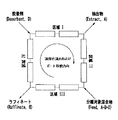
図1に、一般的な擬似移動層(SMB)吸着分離装置の工程図を示す。一般的な擬似移動層(SMB)吸着分離装置は、一つまたはそれ以上のカラムから構成された4個の区間と各区間の間に位置した脱着剤(desorbent)流入ポート、強吸着質である抽出物(extract)排出ポート、分離対象混合物(feed)流入ポート、および弱吸着質であるラフィネート(raffinate)排出ポートから構成される。擬似移動層(SMB)吸着分離装置を使用した混合物の分離方法は、芳香族炭化水素の混合物の分離工程、エチルベンゼンの分離工程、キラル化合物の分離工程などに適用でき、医薬品製造過程の中の最終生産物、或いは中間物質であるラセミ混合医薬品の分離工程などに適用できる。 FIG. 1 shows a process diagram of a general pseudo moving layer (SMB) adsorption separation device. A typical pseudo-moving layer (SMB) adsorption separator is a desorbent inflow port, a strong adsorbent, located between four sections composed of one or more columns and each section. It consists of an extract discharge port, a fed inflow port, and a raffinate discharge port, which is a weak adsorbent. The method for separating a mixture using a pseudo-moving layer (SMB) adsorption separation device can be applied to a step for separating a mixture of aromatic hydrocarbons, a step for separating ethylbenzene, a step for separating a chiral compound, and the like, and is the final step in the pharmaceutical manufacturing process. It can be applied to the separation process of a product or a racemic mixed drug which is an intermediate substance.
前記高純度分離工程は、45〜70℃の温度、例えば50〜65℃で行ってもよい。 The high-purity separation step may be performed at a temperature of 45 to 70 ° C., for example, 50 to 65 ° C.
(3)果糖ラフィネートの果糖製造工程への投入
本発明によるプシコース製造の高純度クロマトグラフィー分離工程で得られた果糖ラフィネートを果糖製造の分離工程に投入して果糖含有原料を製造し、製造された果糖含有原料をプシコース製造工程の原料として投入してプシコースを製造する。
(3) Input of fructose raffinate into the fructose production process The fructose raffinate obtained in the high-purity chromatography separation step of the psicose production according to the present invention was introduced into the fructose production separation process to produce a fructose-containing raw material. Fructose-containing raw material is used as a raw material in the psicose manufacturing process to produce psicose.
プシコース製造工程で得られる果糖ラフィネートを再循環させて反応原料として使用することによって、プシコースの生産収率を最大限まで高めてプシコースの製造原価を低減することができる。また、プシコース製造工程で得られる果糖ラフィネートは果糖製造工程を用いて処理するので、別途の処理装置が不要であり、工程設計および運営面で有利である。このようなプシコース製造工程を実行するにあたり、プシコースのような目的生産物を連続的に生産するために、生物反応器を初期活性に適した水準の生産性を維持しながら運転することができる。 By recirculating the fructose raffinate obtained in the psicose manufacturing process and using it as a reaction raw material, the production yield of psicose can be maximized and the manufacturing cost of psicose can be reduced. Further, since the fructose raffinate obtained in the psicose manufacturing process is processed by using the fructose manufacturing process, a separate processing device is not required, which is advantageous in terms of process design and operation. In carrying out such a psicose manufacturing process, the biological reactor can be operated while maintaining a level of productivity suitable for the initial activity in order to continuously produce a target product such as psicose.
本発明の一実施形態において、プシコース製造の高純度分離工程で得られる果糖ラフィネートは、プシコース転換反応の原料として使用するに適切な条件を有するように、イオン精製工程、高純度分離工程(例えばSMB分離)、および濃縮工程よりなる群から選択された1種以上の工程をさらに行うことができ、前記工程は果糖製造の分離工程に投入して果糖製造装置を用いて行うことができる。 In one embodiment of the present invention, the fructose raffinate obtained in the high-purity separation step for producing psicose has an ion purification step and a high-purity separation step (for example, SMB) so as to have suitable conditions for use as a raw material for the psicose conversion reaction. Separation) and one or more steps selected from the group consisting of the concentration step can be further carried out, and the step can be carried out by putting it into the separation step of fructose production and using a fructose production apparatus.
本発明の一実施形態において、プシコース製造工程で得られた果糖ラフィネートを果糖製造の分離工程に再循環させて果糖分離工程を行う場合、果糖製造工程で行われるSMBクロマトグラフィー分離工程では、果糖ラフィネートの再循環がない工程に比べて果糖ラフィネートの再循環がある工程の方が果糖分画の固形分分離収率は増加し、例えば果糖ラフィネートの再循環がある工程では、SMB分離工程に投入された原料の固形分100重量%を基準にして、果糖分画の固形分分離収率が50〜80重量%であり得る。 In one embodiment of the present invention, when the fructose raffinate obtained in the psicose production step is recirculated to the fructose production separation step to perform the fructose separation step, the fructose raffinate is performed in the SMB chromatography separation step performed in the fructose production step. The solid content separation yield of the fructose fraction is higher in the step with fructose raffinate recirculation than in the step without fructose recirculation. For example, in the step with fructose raffinate recirculation, it is put into the SMB separation step. The solid content separation yield of the fructose fraction can be 50 to 80% by weight based on 100% by weight of the solid content of the raw material.
具体的な例において、前記果糖ラフィネートは、果糖製造の分離工程である第1次イオン精製、SMBクロマトグラフィーを用いた分離、および第2次イオン精製よりなる群から選択された1種以上の工程に投入して再循環させることができる。好ましくは、前記果糖ラフィネートで果糖と共に得られるブドウ糖および二糖類以上の果糖以外の不純物の含量が特定含量以下に維持されるように、果糖ラフィネートがSMBクロマトグラフィーを用いた高純度分離工程を通過できるように、SMBクロマトグラフィーを用いた高純度分離工程またはそれ以前の工程に投入することができ、例えば、第1次イオン精製またはSMBクロマトグラフィーを用いた高純度分離工程に投入して行うことができる。第1次イオン精製または高純度分離工程に果糖ラフィネートを投入する場合、果糖製造の高純度分離工程で果糖を除くブドウ糖およびその他の二糖類を含む不純物は、ブドウ糖ラフィネートに含まれて除去され、果糖分画における前記不純物の濃度が減少するためである。 In a specific example, the fructose raffinate is one or more steps selected from the group consisting of primary ion purification, which is a separation step for fructose production, separation using SMB chromatography, and secondary ion purification. Can be thrown into and recirculated. Preferably, the fructose raffinate can go through a high-purity separation step using SMB chromatography so that the content of the fructose raffinate and the impurities other than the fructose obtained with the fructose and the disaccharide or more is maintained at a specific content or less. As described above, it can be put into a high-purity separation step using SMB chromatography or a step before that, for example, it can be put into a high-purity separation step using primary ion purification or SMB chromatography. it can. When fructose raffinate is added to the primary ion purification or high-purity separation step, impurities including glucose and other disaccharides other than fructose are contained in the fructose raffinate and removed in the high-purity separation step of fructose production, and fructose is removed. This is because the concentration of the impurities in the fraction is reduced.
前記果糖ラフィネート内の不純物含量が特定数値範囲を超える場合、プシコース製造工程で排出して除去され得る。例えば、果糖ラフィネート内の二糖類以上の糖類含量が、果糖ラフィネートの総糖類100重量%基準にして、10重量%未満、例えば8重量%未満、6重量%未満、または5重量%未満に維持されることが好ましい。前記不純物中の二糖類以上の糖類はマルトース、イソマルトースなどを含み、マルトース、またはイソマルトース関連オリゴサッカリドを含むことができる。 When the impurity content in the fructose raffinate exceeds a specific numerical range, it can be discharged and removed in the psicose manufacturing process. For example, the sugar content of disaccharides or more in fructose raffinate is maintained at less than 10% by weight, for example less than 8% by weight, less than 6% by weight, or less than 5% by weight, based on 100% by weight of total sugars in fructose raffinate. Is preferable. The disaccharide or higher saccharide in the impurities includes maltose, isomaltose and the like, and may include maltose or isomaltose-related oligosaccharides.
果糖ラフィネートはカルシウム含量が増加するようになり、このようなカルシウムはプシコース転換反応の活性を低下させることができるため、カルシウムイオン濃度を調節するための工程を別途使用するか、果糖製造の分離工程でSMB分離工程以降に第2次イオン精製工程を行うことができる。したがって、果糖製造の分離工程を経た果糖含有原料は、カルシウムイオン濃度が0.05mM以下の範囲、0.01mM以下、0.005mM、または0.001mM以下の濃度範囲にカルシウム濃度を調節することができる。 Fructose raffinate increases the calcium content, and such calcium can reduce the activity of the psicose conversion reaction, so a separate step for adjusting the calcium ion concentration can be used, or a separation step for fructose production can be used. The secondary ion purification step can be performed after the SMB separation step. Therefore, the fructose-containing raw material that has undergone the separation step of fructose production can be adjusted to have a calcium ion concentration in the range of 0.05 mM or less, 0.01 mM or less, 0.005 mM, or 0.001 mM or less. it can.
前記クロマトグラフィー分離工程で得られる果糖ラフィネートは、電気伝導度が20〜200μs/cmであり、前記果糖ラフィネートをイオン精製工程で処理することにより適切な電気伝導度範囲に到達でき、前記処理生産物である果糖含有原料は、電気伝導度が0〜15μs/cmであり得る。 The fructose raffinate obtained in the chromatographic separation step has an electric conductivity of 20 to 200 μs / cm, and can reach an appropriate electric conductivity range by treating the fructose raffinate in the ion purification step, and the treated product can be obtained. The fructose-containing raw material can have an electrical conductivity of 0 to 15 μs / cm.
プシコース製造工程のSMBクロマトグラフィー工程によって得られる果糖ラフィネートをプシコース転換反応の原料として再循環させる場合において、SMBクロマトグラフィー工程で混入されるカルシウム(Ca)イオンを精製しない場合、酵素または菌体の転換活性が低下することがあるので、プシコース生産量に悪影響を与えることがある。 When fructose raffinate obtained by the SMB chromatography step of the psicose production step is recirculated as a raw material for the psicose conversion reaction, if the calcium (Ca) ion mixed in the psicose chromatography step is not purified, the conversion of enzymes or cells It can adversely affect psicose production as it may reduce activity.
前記カルシウムのような転換反応に悪影響を及ぼす金属イオンは、イオン交換樹脂が充填されたクロマトグラフィーを用いて除去することができる。具体的には、金属イオンを結合することができるヒドロキシ基(OH-)で置換された強塩基性または弱塩基性の陰イオン樹脂を用いたイオン交換工程を行うことができる。 Metal ions that adversely affect the conversion reaction, such as calcium, can be removed by chromatography filled with an ion exchange resin. Specifically, an ion exchange step using a strongly basic or weakly basic anion resin substituted with a hydroxy group (OH − ) capable of binding a metal ion can be performed.
前記果糖製造の分離工程で行われるイオン精製は、前記(2)項のプシコース転換反応物の分離工程で行うイオン精製工程と同じ方法で行うことができる。 The ion purification performed in the separation step of fructose production can be performed by the same method as the ion purification step performed in the separation step of the psicose conversion reaction product according to the above item (2).
プシコース製造の高純度分離工程で得られる果糖ラフィネートは15〜25ブリックス(Brix)程度であるので、プシコース転換工程に供給される果糖含有原料が45〜55ブリックス、例えば約50ブリックスであることを考慮すると、濃縮工程を行って果糖含量を増加させることが好ましい。前記果糖製造工程において、濃縮する工程はプシコースより熱安定性が高いため、70〜85℃の温度で10〜15分間濃縮する工程を含むことができる。 Since the fructose raffinate obtained in the high-purity separation step of psicose production is about 15 to 25 Brix, it is considered that the fructose-containing raw material supplied to the psicose conversion step is 45 to 55 Brix, for example, about 50 Brix. Then, it is preferable to carry out a concentration step to increase the fructose content. In the fructose production step, since the concentration step has higher thermal stability than psicose, the step of concentrating at a temperature of 70 to 85 ° C. for 10 to 15 minutes can be included.
本発明の一実施形態において、プシコース製造の高純度分離工程で得られる果糖ラフィネートを果糖製造の分離工程に投入する場合、果糖ラフィネートの利用を最大化するために、既存の果糖製造工程で得られる果糖異性化反応物との混合比を適切に調節することができる。果糖ラフィネートの再利用という観点を考慮すれば、高純度分離工程で得られる果糖ラフィネートを最大限利用することができるように混合比を設定することが好ましい。例えば、果糖製造の分離工程に供給される果糖ラフィネートは、果糖製造工程の最終果糖含有原料の収率および濃度を特定値以上に維持可能な含量まで果糖ラフィネートの混合量を増加させることができる。必要な場合、果糖製造工程の果糖異性化反応物との混合比を考慮して果糖ラフィネートの投入量を適切に調節することができ、果糖ラフィネートの貯蔵槽を備えることができる。 In one embodiment of the present invention, when fructose raffinate obtained in the high-purity separation step of psicose production is introduced into the separation step of fructose production, it is obtained in the existing fructose production process in order to maximize the utilization of fructose raffinate. The mixing ratio with the fructose isomerization reaction product can be appropriately adjusted. From the viewpoint of reusing fructose raffinate, it is preferable to set the mixing ratio so that the fructose raffinate obtained in the high-purity separation step can be fully utilized. For example, the fructose raffinate supplied to the separation step of fructose production can increase the mixing amount of fructose raffinate to a content that can maintain the yield and concentration of the final fructose-containing raw material in the fructose production step to a specific value or more. If necessary, the amount of fructose raffinate input can be appropriately adjusted in consideration of the mixing ratio with the fructose isomerization reaction product in the fructose production step, and a storage tank for fructose raffinate can be provided.
例えば、果糖ラフィネートを果糖製造の第1次イオン精製工程に投入する場合、果糖異性化反応物と混合して処理し、SMB分離工程に投入する場合、第1次イオン精製物と混合して処理し、第2次イオン精製工程に投入する場合、SMB分離工程の果糖分画と混合して処理することができる。 For example, when fructose raffinate is put into the primary ion purification step of fructose production, it is mixed with a fructose isomerization reaction product and treated, and when it is put into an SMB separation step, it is mixed with a primary ion purified product and treated. Then, when it is put into the secondary ion purification step, it can be mixed with the fructose fraction in the SMB separation step for treatment.
本発明において、果糖製造工程内の異性化反応物である果糖液と果糖製造工程に投入される果糖ラフィネートの混合比(果糖液:果糖ラフィネート)は、果糖ラフィネートと果糖液の両方を同一に50ブリックスに調整した場合、果糖液と果糖ラフィネートの総含量100重量%を基準にして、果糖液65〜95重量%と果糖ラフィネート5〜35重量%であってもよく、好ましくは果糖液75〜92重量%と果糖ラフィネート8〜25重量%であってもよく、例えば果糖液80〜90重量%と果糖ラフィネート10〜20重量%であってもよい。 In the present invention, the mixing ratio of the fructose solution, which is an isomerization reaction product in the fructose production process, and the fructose raffinate added to the fructose production process (fructose solution: fructose raffinate) is 50 for both the fructose raffinate and the fructose solution. When adjusted to Brix, the total content of fructose solution and fructose raffinate may be 65 to 95% by weight and fructose raffinate to 5 to 35% by weight, preferably 75 to 92% by weight, based on 100% by weight of the total content of fructose solution and fructose raffinate. It may be% by weight and 8 to 25% by weight of fructose raffinate, for example, 80 to 90% by weight of fructose liquid and 10 to 20% by weight of fructose raffinate.
本発明の一実施形態において、砂糖またはブドウ糖から果糖を製造する工程を一例として挙げて説明すると、果糖製造工程は、(A)砂糖またはブドウ糖含有原料で果糖異性化反応を行って果糖異性化反応物を製造する果糖異性化工程;(B)得られた果糖異性化反応物を、第1次イオン精製および擬似移動層(simulated moving bed、SMB)クロマトグラフィーによる分離を行って果糖分画とブドウ糖ラフィネートを得る果糖分離工程;および(C)得られた果糖分画を、第2次イオン精製および濃縮する工程を含むことができる。 In one embodiment of the present invention, the step of producing fructose from sugar or glucose will be described as an example. In the fructose production step, (A) a fructose isomerization reaction is carried out with a sugar or a glucose-containing raw material to carry out a fructose isomerization reaction. Fructose isomerization step for producing a product; (B) The obtained fructose isomerization reaction product is separated by primary ion purification and simulated moving bed (SMB) chromatography to fractionate fructose and glucose. A fructose separation step to obtain a raffinate; and (C) a step of secondary ion purification and concentration of the obtained fructose fraction can be included.
本発明の果糖製造工程は連続式と配置式の両方とも使用可能であり、好ましくは連続式工程である。以下、本発明による果糖ラフィネート再循環を通じた果糖製造工程を、各工程別に詳しく説明する。 Both the continuous type and the arrangement type can be used in the fructose production process of the present invention, and it is preferably a continuous type process. Hereinafter, the fructose production process through the fructose raffinate recirculation according to the present invention will be described in detail for each process.
本発明の一実施形態において、ブドウ糖を異性化して果糖を製造する場合、ブドウ糖含有原料を異性化して果糖を得ることができる。果糖異性化工程は、果糖を製造する原料として砂糖を加水分解するか、ブドウ糖を異性化して果糖を得る工程である。 In one embodiment of the present invention, when fructose is produced by isomerizing glucose, fructose can be obtained by isomerizing a glucose-containing raw material. The fructose isomerization step is a step of hydrolyzing sugar as a raw material for producing fructose or isomerizing glucose to obtain fructose.
前記加水分解に使用される酵素は、β−フルクトフラノシダーゼ(fructofuranosidase)、インベルターゼ(invertase)、サッカラーゼなどを含むβ−D−フルクトシダーゼ(fructosidase)、スクラーゼ(sucrose(sucrase)、α−グルコシダーゼ(glucosidase)、およびα−D−グルコヒドロラーゼ(glucohydrolase)よりなる群から選択された1種以上であってもよいが、これに制限されない。前記ブドウ糖異性化酵素としては、グリコースイソメラーゼ(glucose isomerase)またはホスホグルコイソメラーゼ(phosphoglucoisomerase)であってもよいが、これに制限されない。 The enzymes used for the hydrolysis are β-D-fructosidase, including β-fructofuranosidedase, invertase, saccharase, etc., sucrase, sucrase, α-glucosidase. It may be, but is not limited to, one or more selected from the group consisting of (glucosidase) and α-D-glucohydrolase. The glucose isomerase is glucose isomerase. Alternatively, it may be, but is not limited to, phosphoglucoisomerase.
本発明の一実施形態において、果糖異性化反応物を分離および濃縮するために、工程(A)で得られた果糖異性化反応物を、第1次イオン精製およびSMBクロマトグラフィー分離工程に付すことができる。前記果糖製造の分離工程は通常の果糖製造工程と同様の方法、工程、および反応条件で行うことができる。前記第1次イオン精製およびSMBクロマトグラフィーは、前記(2)項のプシコース転換反応物の分離工程で説明したものと実質的に同一である。 In one embodiment of the present invention, the fructose isomerization reactant obtained in step (A) is subjected to a primary ion purification and SMB chromatography separation step in order to separate and concentrate the fructose isomerization reactant. Can be done. The separation step of fructose production can be carried out by the same method, process and reaction conditions as the usual fructose production step. The primary ion purification and SMB chromatography are substantially the same as those described in the step of separating the psicose conversion reaction product in item (2) above.
本発明の果糖製造の分離工程は、第1次イオン精製工程、SMBクロマトグラフィー分離、第2次イオン精製工程、および濃縮工程を含むことができ、選択的に、果糖異性化反応物の不純物を除去する工程は、脱塩工程、脱色工程、または脱色と脱塩工程を行うことができる。前記不純物を除去する工程は、ろ過を用いた不溶性物質の除去工程、および活性炭を用いた脱色工程、有色成分とイオン成分などの不純物を除去するためにイオン交換樹脂が充填されたカラムに通液させて行うことができる。前記果糖異性化反応物の不純物を除去する工程を経て、果糖含量40〜44重量%の果糖シロップを得る。 The separation step for producing fructose of the present invention can include a primary ion purification step, SMB chromatography separation, a secondary ion purification step, and a concentration step, and selectively removes impurities from the fructose isomerization reaction product. The removing step can be a desalting step, a decoloring step, or a decoloring and desalting step. The steps for removing impurities include a step of removing insoluble substances using filtration, a step of decoloring using activated carbon, and passing a liquid through a column filled with an ion exchange resin to remove impurities such as colored components and ionic components. Can be done. Through the step of removing impurities of the fructose isomerization reaction product, a fructose syrup having a fructose content of 40 to 44% by weight is obtained.
その後、擬似移動層吸着分離方法(simulated moving bed、SMB)を用いてブドウ糖ラフィネートと果糖分画を得て、前記果糖分画に、第2次イオン精製および濃縮工程を行って、全体固形分100重量%を基準にして、固形分濃度45〜55重量%の果糖溶液を得ることができる。 Then, a glucose raffinate and a fructose fraction were obtained using a simulated moving layer adsorption / separation method (simulated moving bed, SMB), and the fructose fraction was subjected to a secondary ion purification and concentration step to obtain a total solid content of 100. A fructose solution having a solid content concentration of 45 to 55% by weight can be obtained based on% by weight.
前記ブドウ糖と果糖の分離のため、前記(2)プシコース転換反応物の分離工程で使用したSMBクロマトグラフィー分離工程と実質的に同じ工程をことができ、例えば220〜320μmの粒度を有するカルシウム(Ca)型強酸性陽イオン樹脂を使用することができる。本発明の果糖製造工程、連続式と配置式の両方とも使用可能であり、好ましくは連続式工程である。以下、本発明による果糖ラフィネート再循環を通じた果糖製造工程を、各工程別に詳しく説明する。 For the separation of glucose and fructose, substantially the same step as the SMB chromatography separation step used in the step (2) Separation of psicose conversion reaction product can be performed, for example, calcium (Ca) having a particle size of 220 to 320 μm. ) Type strong acid cationic resin can be used. The fructose production process of the present invention, both continuous and disposition type can be used, and is preferably a continuous process. Hereinafter, the fructose production process through the fructose raffinate recirculation according to the present invention will be described in detail for each process.
前記ブドウ糖と果糖を分離するためには、前記(2)プシコース転換反応物の分離工程で使用したSMBクロマトグラフィー分離工程と実質的に同じ工程を行うことができ、例えば220〜320μmの粒度を有するカルシウム(Ca)型強酸性陽イオン樹脂を使用することができる。前記高純度分離工程は40〜60℃の温度、例えば60℃で行うことができる。 In order to separate the glucose and the fructose, substantially the same step as the SMB chromatography separation step used in the step (2) Separation of the psicose conversion reaction product can be performed, for example, having a particle size of 220 to 320 μm. A calcium (Ca) type strongly acidic cationic resin can be used. The high-purity separation step can be performed at a temperature of 40 to 60 ° C., for example, 60 ° C.
第1次イオン精製方法として、有色およびイオン成分などの不純物を除去するためにプシコース製造の第1次イオン精製と同一または異なる方法で行うことができ、同一種類または異なる種類のイオン交換樹脂が充填された分離塔を1つまたは2以上使用して行うことができる。前記イオン精製工程は、イオン精製に使用する樹脂の物性およびイオン精製効率を考慮して、工程条件を設定して行うことができる。 The primary ion purification method can be the same or different from the primary ion purification of psicose production in order to remove impurities such as colored and ionic components, and is filled with the same or different types of ion exchange resins. This can be done using one or more separated towers. The ion purification step can be performed by setting the process conditions in consideration of the physical characteristics of the resin used for ion purification and the ion purification efficiency.
前記不純物を除去する工程は、不溶性物質の除去工程、および活性炭を用いた脱色工程、有色成分とイオン成分などの不純物を除去するためにイオン交換樹脂が充填されたカラムに通液させて行うことができる。 The step of removing impurities is performed by passing a liquid through a column filled with an ion exchange resin in order to remove impurities such as an insoluble substance removal step, a decolorization step using activated carbon, and impurities such as colored components and ionic components. Can be done.
高純度分離工程で得られた果糖分画を、第2次イオン精製、および濃縮工程を行って目的とする果糖含量を有する果糖原料を製造することができる。 The fructose fraction obtained in the high-purity separation step can be subjected to secondary ion purification and concentration steps to produce a fructose raw material having a desired fructose content.
本発明の果糖製造工程に含まれる濃縮工程は、様々な方法で濃縮して果糖含量を85重量%以上に含むようにする。例えば、擬似移動層吸着分離方法で得られた果糖分画(例えば、固形分濃度20〜30重量%)を、濃縮工程を通じて固形分濃度45〜55重量%に濃縮することができる。前記果糖製造工程で濃縮する工程は、70〜85℃の温度で10〜15分間濃縮することを含むことができる。前記濃縮は、連続真空濃縮装置(Falling Film Evaporator)または薄膜真空濃縮器(Thin Film Evaporator)を用いて減圧または真空条件下で濃縮することができる。前記果糖製造工程で濃縮する工程は、70〜85℃の温度で10〜15分間濃縮する工程を含むことができる。 The concentration step included in the fructose production step of the present invention concentrates by various methods so that the fructose content is 85% by weight or more. For example, the fructose fraction obtained by the pseudo-moving layer adsorption / separation method (for example, solid content concentration of 20 to 30% by weight) can be concentrated to a solid content concentration of 45 to 55% by weight through a concentration step. The step of concentrating in the fructose production step can include concentrating at a temperature of 70 to 85 ° C. for 10 to 15 minutes. The concentration can be concentrated under reduced pressure or vacuum conditions using a Falling Film Evaporator or a Thin Film Evaporator. The step of concentrating in the fructose production step can include a step of concentrating at a temperature of 70 to 85 ° C. for 10 to 15 minutes.
(4)果糖含有原料のプシコース転換反応への投入
本発明による果糖製造工程で得られる最終生産物は、プシコース転換反応のための反応原料としてプシコース製造工程に投入する。
(4) Input of fructose-containing raw material into psicose conversion reaction The final product obtained in the fructose production process according to the present invention is input into the psicose production process as a reaction raw material for the psicose conversion reaction.
前記果糖製造工程において、果糖異性化反応物の果糖含量は40〜44重量%であり、高純度分離工程を経て得られた果糖分画の果糖含量は85重量%以上であり、濃縮工程を経て得られる最終生産物の果糖含量は85〜99重量%であり得る。前記プシコース転換反応に投入する果糖原料は、果糖含量が85重量%以上、例えば85重量%〜99重量%であり、ブドウ糖含量は10重量%以下、例えば1重量%〜10重量%であり得る。 In the fructose production step, the fructose content of the fructose isomerization reaction product is 40 to 44% by weight, and the fructose content of the fructose fraction obtained through the high-purity separation step is 85% by weight or more, and the fructose content is 85% by weight or more. The fructose content of the final product obtained can be 85-99% by weight. The fructose raw material to be added to the psicose conversion reaction may have a fructose content of 85% by weight or more, for example 85% by weight to 99% by weight, and a glucose content of 10% by weight or less, for example 1% by weight to 10% by weight.
本発明の一実施形態において、前記果糖含有原料溶液の果糖含量が88重量%の場合、プシコース転換反応物の果糖含量は64〜67重量%であり、プシコース含量は21〜24重量%であり、ブドウ糖含量は8〜10重量%であり得る。また、前記果糖含有原料溶液の果糖含量が95重量%の場合、プシコース転換反応物の果糖含量は68〜71重量%であり、プシコース含量は24〜27重量%であり、ブドウ糖含量は2〜5重量%であり得る。 In one embodiment of the present invention, when the fructose content of the fructose-containing raw material solution is 88% by weight, the fructose content of the psicose conversion reaction product is 64 to 67% by weight, and the psicose content is 21 to 24% by weight. The glucose content can be 8-10% by weight. When the fructose content of the fructose-containing raw material solution is 95% by weight, the fructose content of the psicose conversion reaction product is 68 to 71% by weight, the psicose content is 24 to 27% by weight, and the glucose content is 2 to 5%. Can be% by weight.
前記果糖ラフィネートに含まれている果糖含量は85重量%以上、例えば85重量%〜99重量%であり得る。プシコース製造工程の分離工程で得られる果糖ラフィネートを果糖製造工程に再循環させる場合、再循環させない場合に比べて果糖原料の生産負荷を効果的に減らすことができる。 The fructose content contained in the fructose raffinate can be 85% by weight or more, for example, 85% by weight to 99% by weight. When the fructose raffinate obtained in the separation step of the psicose manufacturing step is recirculated in the fructose manufacturing step, the production load of the fructose raw material can be effectively reduced as compared with the case where the fructose raffinate is not recirculated.
本発明のプシコース製造工程の分離工程で得られたプシコース分画は、プシコース濃縮工程を経て液状であるシロップとして製品化するか、プシコース結晶化工程を経てプシコース結晶として製品化することができる。 The psicose fraction obtained in the separation step of the psicose manufacturing step of the present invention can be commercialized as a liquid syrup through a psicose concentration step, or can be commercialized as a psicose crystal through a psicose crystallization step.
(5)プシコースの濃縮または結晶化工程
本発明のプシコース製造工程において、SMBクロマトグラフィーを用いた高純度分離工程で得られたプシコース分画は、プシコース濃縮工程を経て液状シロップとして製品化するか、プシコース結晶化工程を経てプシコース結晶として製品化することができる。
(5) Psicose Concentration or Crystallization Step In the psicose production step of the present invention, the psicose fraction obtained by the high-purity separation step using SMB chromatography is either commercialized as a liquid syrup through the psicose concentration step. It can be commercialized as psicose crystals through a psicose crystallization step.
前記工程(2)のSMBクロマトグラフィー分離工程で得られたプシコース分画をイオン精製し濃縮して得られた濃縮物を製造する工程である。前記濃縮物は、プシコースシロップ製品として使用するか、結晶化工程に投入してプシコース結晶として製造することができる。 This is a step of producing a concentrate obtained by ionizing and concentrating the psicose fraction obtained in the SMB chromatography separation step of the step (2). The concentrate can be used as a psicose syrup product or put into a crystallization step to produce psicose crystals.
本発明の一実施形態において、前記SMBクロマトグラフィーを用いた高純度分離工程で得られたプシコース分画を、第2次イオン精製工程に付すことができ、前記分離工程で行った第1次イオン精製と同一または異なる方法で行うことができる。 In one embodiment of the present invention, the psicose fraction obtained in the high-purity separation step using the SMB chromatography can be subjected to the secondary ion purification step, and the primary ion performed in the separation step can be applied. It can be done in the same or different way as purification.
プシコース結晶を得るためのプシコース溶液中のプシコースの含量は、過飽和状態で高い濃度で含まれなければならないが、プシコース転換反応物のプシコースの含量は低いため、直接結晶化を行うことができず、結晶化工程の前にプシコース含量を増加させるために精製して、所望の水準まで濃縮する工程を行わなければならない。 The content of psicose in the psicose solution to obtain psicose crystals must be contained in a high concentration in a supersaturated state, but the content of psicose in the psicose conversion reaction product is low, so that direct crystallization cannot be performed. Prior to the crystallization step, a step of purifying to increase the psicose content and concentrating to the desired level must be performed.
本発明の一具体例において、前記精製したプシコース溶液を濃縮させる工程は55〜75℃で行ってもよい。濃縮液の温度が75℃より高くなるとD−プシコースの熱変性が生じる場合があり、55℃より低くなると所望の水準の濃縮を達成し難い。濃縮が進むにつれて、蒸発熱によって反応物の温度が急激に高くなるため、濃縮液の温度を75℃以下に維持しながら、速やかに濃縮しなければならない。 In one specific example of the present invention, the step of concentrating the purified psicose solution may be performed at 55 to 75 ° C. If the temperature of the concentrate is higher than 75 ° C, thermal denaturation of D-psicose may occur, and if it is lower than 55 ° C, it is difficult to achieve the desired level of concentration. As the concentration progresses, the temperature of the reaction product rises sharply due to the heat of vaporization, so that the concentration must be rapidly concentrated while maintaining the temperature of the concentrate at 75 ° C. or lower.
本発明の一具体例において、プシコースの熱変性および所望の水準の濃縮を達成するために、55〜75℃の温度、好ましくは60〜70℃の範囲で濃縮することができる。前記濃縮工程は、所望の濃縮水準を達成するまで、1回または2回以上繰り返して行うことができる。 In one embodiment of the invention, psicose can be concentrated at a temperature of 55-75 ° C, preferably in the range of 60-70 ° C, in order to achieve thermal denaturation and desired levels of concentration. The concentration step can be repeated once or more than once until the desired concentration level is achieved.
具体的には、前記SMBクロマトグラフィー分離工程で得られたプシコース分画の濃縮工程は様々な方法で行うことができ、濃縮物の固形分含量が70ブリックス以上になるように濃縮することができる。例えば、擬似移動層吸着分離方法で得られたプシコース分画(例えば、固形分含量20〜30重量%)は、濃縮工程を通じて固形分含量70ブリックス以上に濃縮することができる。前記プシコース濃縮物の固形分含量は70ブリックス以上、例えば70ブリックス〜85ブリックスであってもよい。 Specifically, the concentration step of the psicose fraction obtained in the SMB chromatography separation step can be performed by various methods, and the concentrate can be concentrated so that the solid content content of the concentrate is 70 brix or more. .. For example, the psicose fraction obtained by the pseudo-moving layer adsorption separation method (for example, solid content content of 20 to 30% by weight) can be concentrated to a solid content content of 70 brix or more through a concentration step. The solid content of the psicose concentrate may be 70 brix or higher, for example 70 brix to 85 brix.
前記プシコース製造工程で濃縮する工程は、55〜75℃の温度で10〜15分間濃縮することを含むことができる。前記濃縮は、連続真空濃縮装置(Falling Film Evaporator)または薄膜真空濃縮器(Thin Film Evaporator)を用いて減圧または真空条件下で濃縮することができる。 The step of concentrating in the psicose manufacturing step can include concentrating at a temperature of 55 to 75 ° C. for 10 to 15 minutes. The concentration can be concentrated under reduced pressure or vacuum conditions using a Falling Film Evaporator or a Thin Film Evaporator.
前記プシコース濃縮物に含まれているプシコース含量は前記SMBクロマトグラフィー分離工程で得られたプシコース分画のプシコース含量と変動が殆どなく、固形分含量が増加して以後の結晶化工程を行うことができるようにする。前記プシコース濃縮物に含まれているプシコース含量は固形分総含量100重量%を基準にして、94重量%以上、95重量%以上、96重量%以上、97重量%以上、98重量%以上または99重量%以上であってもよい。 The psicose content contained in the psicose concentrate has almost no variation from the psicose content of the psicose fraction obtained in the SMB chromatography separation step, and the solid content increases and the subsequent crystallization step can be performed. It can be so. The psicose content contained in the psicose concentrate is 94% by weight or more, 95% by weight or more, 96% by weight or more, 97% by weight or more, 98% by weight or more, or 99, based on 100% by weight of the total solid content. It may be% by weight or more.
前記プシコース結晶化工程は、前記高純度分離工程で得られたプシコース分画を第2次イオン精製する工程、イオン精製されたプシコース分画を濃縮する工程、得られた濃縮物からプシコースを結晶化してプシコース結晶とプシコース結晶化母液を得る工程を含む。前記プシコース分離工程の具体的な例は、第1次イオン精製工程、高純度クロマトグラフィー分離工程、第2次イオン精製工程、濃縮工程、および結晶化工程を含むことができ、選択的に、プシコース転換反応物を、脱塩工程、脱色工程または脱色と脱塩工程に付すことができる。 The psicose crystallization step includes a step of secondary ion purification of the psicose fraction obtained in the high-purity separation step, a step of concentrating the ion-purified psicose fraction, and crystallization of psicose from the obtained concentrate. The step of obtaining a psicose crystal and a psicose crystallization mother liquor is included. Specific examples of the psicose separation step can include a primary ion purification step, a high purity chromatography separation step, a secondary ion purification step, a concentration step, and a crystallization step, and selectively psicose. The conversion reactants can be subjected to a desalting step, a decoloring step or a decoloring and desalting step.
前記プシコース分画内のプシコースの含量は、85重量%以上、90重量%以上、91重量%以上、92重量%以上、93重量%以上、94重量%以上、または95重量%以上、例えば85重量%〜99.9%(w/w)以上になるように分離/精製してもよい。 The content of psicose in the psicose fraction is 85% by weight or more, 90% by weight or more, 91% by weight or more, 92% by weight or more, 93% by weight or more, 94% by weight or more, or 95% by weight or more, for example, 85% by weight. Separation / purification may be performed so as to be% to 99.9% (w / w) or more.
前記プシコース結晶に含まれているプシコースは純度90重量%以上、95重量%以上、または99重量%以上であり、前記結晶化母液内のプシコース含量は85重量%以上、90重量%以上、93重量%以上、または95重量%以上、例えば85重量%〜95重量%であってもよい。 The psicose contained in the psicose crystal has a purity of 90% by weight or more, 95% by weight or more, or 99% by weight or more, and the psicose content in the crystallization mother liquor is 85% by weight or more, 90% by weight or more, 93% by weight. % Or more, or 95% by weight or more, for example, 85% by weight to 95% by weight.
本発明の方法によって得られたプシコースは、通常の方法によって精製および/または結晶化することができ、このような精製および結晶化は当業者の通常の技術範囲に属する。例えば、遠心分離、ろ過、結晶化、イオン交換クロマトグラフィー、およびこれらの組み合わせよりなる群から選択された一つ以上の方法によって行うことができる。 The psicose obtained by the method of the present invention can be purified and / or crystallized by conventional methods, and such purification and crystallization belong to the ordinary skill in the art. For example, it can be performed by one or more methods selected from the group consisting of centrifugation, filtration, crystallization, ion exchange chromatography, and combinations thereof.
本発明の一実施形態において、前記SMBクロマトグラフィーを用いた高純度分離工程で得られたプシコース分画を第2次イオン精製することができ、前記プシコースの分離工程で使用した第1次イオン精製と同一または異なる方法で行うことができる。 In one embodiment of the present invention, the psicose fraction obtained in the high-purity separation step using SMB chromatography can be purified by secondary ions, and the primary ion purification used in the separation step of psicose can be performed. Can be done in the same or different way as.
本発明によるD−プシコース結晶を製造する方法は、精製されたD−プシコース溶液を濃縮させる工程を含むことができる。プシコース結晶を得るためのプシコース溶液中のプシコースの含量は70重量%以上でなければならない。プシコースエピマー化酵素によって製造されたプシコース溶液中のプシコースの純度は20〜30%程度と低いため、直接結晶化を行うことができず、結晶化工程の前にプシコースを精製して、所望の水準まで濃縮しなければならない。本発明の一具体例において、プシコースの熱変性および所望の水準の濃縮を達成するために、55〜75℃の温度で濃縮することができる。前記濃縮工程は、所望の濃縮水準を達成するまで、1回または2回以上繰り返して行うことができる。 The method for producing D-psicose crystals according to the present invention can include a step of concentrating a purified D-psicose solution. The content of psicose in the psicose solution to obtain psicose crystals should be 70% by weight or more. Since the purity of psicose in the psicose solution produced by the psicose epimerizing enzyme is as low as about 20 to 30%, direct crystallization cannot be performed, and psicose is purified before the crystallization step to the desired level. Must be concentrated to. In one embodiment of the invention, psicose can be concentrated at a temperature of 55-75 ° C. to achieve thermal denaturation and desired levels of concentration. The concentration step can be repeated once or more than once until the desired concentration level is achieved.
前記冷却させて結晶化する工程は、熱交換器を通じて10〜25℃の温度で急速に冷却させた後、昇温と冷却を繰り返し結晶の成長を誘導させる工程を含むことができる。 The step of cooling and crystallization can include a step of rapidly cooling at a temperature of 10 to 25 ° C. through a heat exchanger, and then repeating raising and cooling to induce crystal growth.
本発明によるD−プシコース結晶を製造する方法は、前記結晶化工程で得られたプシコース結晶を遠心分離によって回収し、脱イオン水で洗浄した後、乾燥させる工程をさらに含むことができる。 The method for producing D-psicose crystals according to the present invention can further include a step of recovering the psicose crystals obtained in the crystallization step by centrifugation, washing with deionized water, and then drying.
本発明による一実施形態は、生物学的触媒を用いて果糖原料からプシコース転換反応を行うプシコース転換反応器、活性基が付着された陽イオン交換樹脂が充填されたカラムを含み、原料投入口、およびプシコース分画と果糖ラフィネートを排出する排出口を備えた擬似移動層(simulated moving bed、SMB)クロマトグラフィー分離器、並びに前記分離器から排出された果糖ラフィネートの提供により果糖を分離する果糖分離装置を含むプシコース製造装置に関する。 One embodiment according to the present invention includes a psicose conversion reactor that performs a psicose conversion reaction from a fructose raw material using a biological catalyst, a column filled with a cation exchange resin to which an active group is attached, and a raw material inlet. And a simulated moving bed (SMB) chromatography separator with a psicose fraction and an outlet for discharging fructose raffinate, and a fructose separator that separates fructose by providing fructose raffinate discharged from the separator. With respect to psicose manufacturing equipment including.
前記製造装置は果糖ラフィネートの冷却のための熱交換器をさらに備えることができ、プシコース転換反応器に投入する前に、前記果糖含有原料を貯蔵する貯蔵槽をさらに含むことができる。 The production apparatus may further include a heat exchanger for cooling the fructose raffinate and may further include a storage tank for storing the fructose-containing raw material prior to charging into the psicose conversion reactor.
前記果糖分離装置は、果糖異性化反応物をイオン精製するイオン交換樹脂が充填されたカラムを備えたイオン精製器、活性基が付着された陽イオン交換樹脂が充填されたカラムを含み、イオン精製器を通過した反応物を投入する投入口、プシコース分画と果糖ラフィネートを排出する排出口を備えた擬似移動層(simulated moving bed、SMB)クロマトグラフィー分離器、前記分離器から排出された果糖分画を濃縮する濃縮器、および前記濃縮器から排出された果糖含有原料をプシコース製造装置に提供するための果糖製造装置とプシコース製造装置を連結する連結部を含むことができる。 The fructose separator includes an ion purifier equipped with a column packed with an ion exchange resin for ion-purifying the fructose isomerization reaction product, and a column packed with a cation exchange resin to which an active group is attached. Simulated moving bed (SMB) chromatography separator equipped with an input port for charging the reactants that have passed through the vessel, a discharge port for discharging the psicose fraction and fructose raffinate, and the fructose content discharged from the separator. It can include a concentrator for concentrating the image and a connecting portion for connecting the fructose producing apparatus and the psicose producing apparatus for providing the fructose-containing raw material discharged from the concentrator to the psicose producing apparatus.
本発明のプシコース製造工程は、果糖製造工程で得られた果糖原料をプシコース転換工程に投入してプシコースを製造し、プシコース分離工程で得られた果糖ラフィネートを果糖製造工程に投入して果糖原料を製造する方法であり、プシコースの純度および収率を向上させて、原料の利用率を高める方法を提供する。 In the psicose manufacturing process of the present invention, the fructose raw material obtained in the fructose manufacturing step is put into the psicose conversion step to produce psicose, and the fructose raffinate obtained in the psicose separation step is put into the fructose manufacturing step to produce the fructose raw material. It is a method of manufacturing, and provides a method of improving the purity and yield of psicose to increase the utilization rate of raw materials.
以下、本発明を下記の実施例によってさらに詳しく説明する。しかし、これらの実施例は本発明を例示するためのものに過ぎず、本発明の範囲はこれらの実施例によって限定されない。 Hereinafter, the present invention will be described in more detail with reference to the following examples. However, these examples are merely for exemplifying the present invention, and the scope of the present invention is not limited by these examples.
製造例1.プシコースシロップの製造
韓国公開特許第2014−0054997に記載の製造方法と実質的に同一の生物学的方法により、果糖基質からプシコースシロップを製造した。
Production example 1. Production of psicose syrup Psicose syrup was produced from a fructose substrate by a biological method substantially the same as the production method described in Korean Patent No. 2014-0054997.
具体的には、クロストリジウムシンデンス(Clostridiuim scindens ATCC 35704)に由来したプシコースエピマー化酵素の暗号化遺伝子(DPE gene;Gene bank:EDS06411.1)を組換えベクター(pCES_sodCDPE)に導入して、前記製造された組換えベクター(pCES_sodCDPE)プラスミドを、電気穿孔法(electroporation)を使用してコリネバクテリウムグルタミクムに形質転換させた。形質転換したコリネバクテリウムグルタミクム細胞を含むビードを製造して固定化反応カラムに充填し、40ブリックスの88重量%果糖または95重量%果糖からプシコースシロップを製造した。即ち、88重量%果糖含有基質からブドウ糖:果糖:プシコース:オリゴ糖の固形分混合重量比が41:39:15:5である21〜23(w/w)%プシコースシロップを収得し(プシコースシロップA)、果糖含量95重量%を含む原料からブドウ糖:果糖:プシコース:オリゴ糖=6:67:25:2の24〜26(w/w)%プシコースシロップを得た(プシコースシロップB)。 Specifically, the plasmid gene (DPE gene; Gene bank: EDS06411.1) derived from the plasmid scindens ATCC 35704 is introduced into a recombinant vector (pCES_sodCDPE) to produce the above-mentioned product. The recombinant vector (pCES_sodCDPE) plasmid was transformed into corinebacterium glutamicum using electroporation. Beads containing transformed Corynebacterium glutamicum cells were prepared and loaded into immobilization reaction columns to produce psicose syrup from 40 brix 88% fructose or 95% fructose. That is, 21-23 (w / w)% psicose syrup having a solid content mixed weight ratio of glucose: fructose: psicose: oligosaccharide of 41: 39: 15: 5 was obtained from the 88% by weight fructose-containing substrate (psicose syrup). A), 24-26 (w / w)% psicose syrup of glucose: fructose: psicose: oligosaccharide = 6: 67: 25: 2 was obtained from a raw material containing 95% by weight of fructose (psicose syrup B).
製造例2.果糖ラフィネートの製造
上記製造例1で得られた2種類のプシコースシロップについて、有色およびイオン成分などの不純物を除去するために、陽イオン交換樹脂、陰イオン交換樹脂、および陽イオンと陰イオン交換樹脂の混合樹脂で充填した常温のカラムに、1時間当りイオン交換樹脂2倍体積の速度で通液させて脱塩させた。
Production example 2. Production of fructose raffinate With respect to the two types of psicos syrups obtained in Production Example 1 above, in order to remove impurities such as colored and ionic components, a cation exchange resin, an anion exchange resin, and a cation and anion exchange resin A column at room temperature filled with the mixed resin of the above was passed through a column at a rate of twice the volume of the ion exchange resin per hour to desalt.
その後、カルシウム(Ca2+)型イオン交換樹脂で充填したクロマトグラフィーを用いて高純度のプシコース分画を分離した後、残りをラフィネートとして得た。88重量%果糖含量の原料を用いて得られたプシコースシロップ(プシコースシロップA)から得られた果糖ラフィネートは、果糖85〜95重量%、ブドウ糖1〜10重量%、および還元糖1〜5重量%を含んでいた。 Then, a high-purity psicose fraction was separated by chromatography filled with a calcium (Ca 2+ ) type ion exchange resin, and the rest was obtained as a raffinate. Fructose raffinate obtained from psicose syrup (psicose syrup A) obtained using a raw material having a fructose content of 88% by weight contains 85 to 95% by weight of fructose, 1 to 10% by weight of glucose, and 1 to 5% by weight of reducing sugar. Included.
95重量%果糖含量の原料を用いて得られたプシコースシロップ(プシコースシロップB)から得られた果糖ラフィネートは、果糖88〜98重量%、ブドウ糖1〜8重量%、および還元糖1〜4重量%を含んでいた。 Fructose raffinate obtained from psicose syrup (psicose syrup B) obtained using a raw material having a fructose content of 95% by weight contains 88 to 98% by weight of fructose, 1 to 8% by weight of glucose, and 1 to 4% by weight of reducing sugar. Included.
実施例1.果糖ラフィネートを用いたプシコースの生産
上記製造例2で得られた果糖含量88重量%の果糖含有原料溶液を用いてプシコース含量95重量%の固形分10トンを生産するために、流量3.8m3/hrでプシコース転換工程と分離工程を行った。プシコース転換工程を経て得られた反応物のプシコース含量は20〜23重量%であり、イオン精製の後、45〜50重量%の濃度で分離工程を通過させた。Ca+タイプ分離(SMB)樹脂を用いて分離時に生成するラフィネートは、1時間当り3m3ずつ生成した。
Example 1. Production of psicose using fructose raffinate In order to produce 10 tons of solid content with a psicose content of 95% by weight using the fructose-containing raw material solution having a fructose content of 88% by weight obtained in Production Example 2 above, a flow rate of 3.8 m 3 A psicose conversion step and a separation step were performed at / hr. The reaction product obtained through the psicose conversion step had a psicose content of 20 to 23% by weight, and was subjected to the separation step at a concentration of 45 to 50% by weight after ion purification. Raffinates produced at the time of separation using Ca + type separation (SMB) resin were produced by 3 m 3 per hour.
具体的には、果糖製造工程で、とうもろこしデンプンを30〜35重量%になるように水と混合した後、酵素加水分解を行ってブドウ糖含量88重量%以上の糖化液を得た。その後、前記糖化液を真空ドラムろ過して不溶性物質を除去して、果糖異性化反応物(果糖含量42重量%シロップ)を得た。 Specifically, in the fructose production step, corn starch was mixed with water so as to have a concentration of 30 to 35% by weight, and then enzymatically hydrolyzed to obtain a saccharified solution having a glucose content of 88% by weight or more. Then, the saccharified solution was vacuum-drum filtered to remove insoluble substances to obtain a fructose isomerization reaction product (fructose content 42% by weight syrup).
上記製造例2で得られたプシコース製造工程の果糖ラフィネートを果糖含量88重量%および総固形分50重量%(50ブリックス)に濃縮して、前記果糖異性化工程を通過した反応物(果糖含量42重量%シロップ)と混合し、強酸性樹脂、弱塩基性樹脂、および強酸性樹脂と弱塩基性の混合樹脂から構成されたイオン精製工程に投入した。即ち、第1次イオン精製工程に投入された果糖異性化反応物と果糖ラフィネートの総固形分含量を50重量%(50ブリックス)に調節して、前記果糖異性化反応物と上記製造例2の果糖ラフィネートの混合比8:2〜9:1重量比で使用した。混合された果糖シロップは、1次イオン精製を経て再び総固形分50重量%に濃縮した後、SMBクロマトグラフィー工程を通過させた。SMB工程を行ってブドウ糖ラフィネートと果糖分画を得た後、前記果糖分画に第2次イオン精製および濃縮工程を行って40ブリックスの88重量%果糖含量の果糖含有溶液を得た。前記果糖含有溶液は、上記製造例1と実質的に同じ方法でプシコース転換反応と分離工程を行った。 The fructose raffinate in the psicose production process obtained in Production Example 2 was concentrated to a fructose content of 88% by weight and a total solid content of 50% by weight (50 brix), and the reaction product (fructose content 42) passed through the fructose isomerization step. It was mixed with (fructose% syrup) and put into an ion purification step composed of a strongly acidic resin, a weakly basic resin, and a mixed resin of a strongly acidic resin and a weakly basic resin. That is, the total solid content of the fructose isomerization reaction product and the fructose raffinate put into the first ion purification step was adjusted to 50% by weight (50 brix), and the fructose isomerization reaction product and the above-mentioned Production Example 2 were used. Fructose raffinate was used in a mixing ratio of 8: 2-9: 1 by weight. The mixed fructose syrup was subjected to primary ion purification, concentrated again to a total solid content of 50% by weight, and then passed through an SMB chromatography step. After the SMB step was performed to obtain a glucose raffinate and a fructose fraction, the fructose fraction was subjected to a secondary ion purification and concentration step to obtain a fructose-containing solution having a fructose content of 88% by weight of 40 brix. The fructose-containing solution was subjected to a psicose conversion reaction and a separation step in substantially the same manner as in Production Example 1.
前記工程を10回繰り返して行い、各再循環別の混合基質およびラフィネートの糖類組成を分析して下記表1に示した。下記表1に示す混合液は、プシコース製造の分離工程で得られた果糖ラフィネートを果糖製造の分離工程に投入した後に得られる果糖含有原料を意味する。 The above steps were repeated 10 times, and the sugar composition of the mixed substrate and raffinate for each recirculation was analyzed and shown in Table 1 below. The mixture shown in Table 1 below means a fructose-containing raw material obtained after the fructose raffinate obtained in the separation step of psicose production is put into the separation step of fructose production.
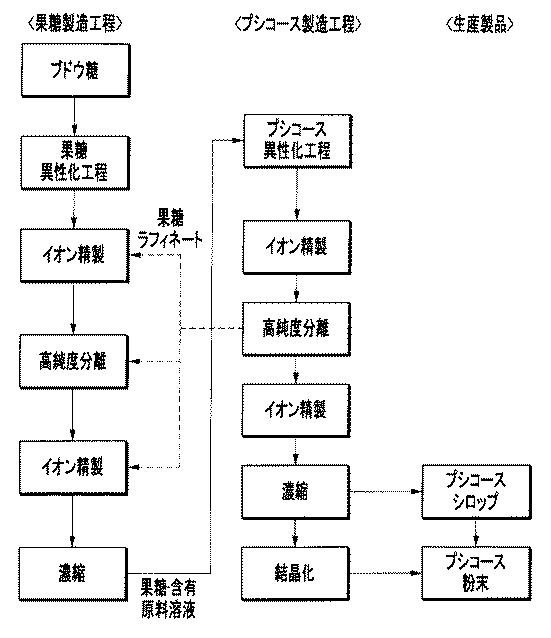
上記表1から確認できるように、プシコース製造工程で得られた果糖ラフィネートを果糖製造工程に投入することによって、再循環回数が増加してもプシコース転換工程に投入される原料の果糖純度が一定に維持されることを確認した。 As can be confirmed from Table 1 above, by adding the fructose raffinate obtained in the psicose production process to the fructose production process, the fructose purity of the raw material input to the psicose conversion process becomes constant even if the number of recirculations increases. Confirmed that it will be maintained.
実施例2.果糖ラフィネートを用いた果糖の生産
本実験は、果糖ラフィネートの再循環の有無による糖組成および収率の差を確認するために行った。
Example 2. Production of fructose using fructose raffinate This experiment was conducted to confirm the difference in sugar composition and yield depending on the presence or absence of recirculation of fructose raffinate.
具体的には、果糖製造工程において、とうもろこしデンプンを30〜35重量%になるように水と混合した後、酵素加水分解を行ってブドウ糖含量88重量%以上の糖化液を得た。その後、前記糖化液を真空ドラムろ過して不溶性物質を除去した後、果糖異性化反応物(果糖含量42重量%シロップ)を得た。 Specifically, in the fructose production step, corn starch was mixed with water so as to have a concentration of 30 to 35% by weight, and then enzymatically hydrolyzed to obtain a saccharified solution having a glucose content of 88% by weight or more. Then, the saccharified solution was vacuum-drum filtered to remove insoluble substances, and then a fructose isomerization reaction product (fructose content 42% by weight syrup) was obtained.
上記製造例2で得られたプシコース製造工程の果糖ラフィネートを果糖含量88重量%および総固形分50重量%(50ブリックス)に濃縮して、前記果糖異性化工程を通過した反応物(果糖含量42重量%シロップ)と混合し、強酸性樹脂、弱塩基性樹脂、および強酸性樹脂と弱塩基性の混合樹脂から構成されたイオン精製工程に投入した。即ち、第1次イオン精製工程に投入された果糖異性化反応物と果糖ラフィネートの総固形分含量を50重量%(50ブリックス)に調節して、前記果糖異性化反応物と製造例2の果糖ラフィネートの混合比8:2〜9:1重量比で使用した。混合された果糖シロップは、1次イオン精製を経て再び総固形分50重量%に濃縮した後、SMBクロマトグラフィー工程を通過させた。SMB工程を行ってブドウ糖ラフィネートと果糖分画を得た。各工程別の混合物およびラフィネートの糖類組成を分析して下記表2に示した。 The fructose raffinate in the psicose production process obtained in Production Example 2 was concentrated to a fructose content of 88% by weight and a total solid content of 50% by weight (50 brix), and the reaction product (fructose content 42) passed through the fructose isomerization step. It was mixed with (fructose% syrup) and put into an ion purification step composed of a strongly acidic resin, a weakly basic resin, and a mixed resin of a strongly acidic resin and a weakly basic resin. That is, the total solid content of the fructose isomerized reactant and fructose raffinate introduced in the first ion purification step was adjusted to 50% by weight (50 brix), and the fructose isomerized reactant and the fructose of Production Example 2 were adjusted. Raffinate was used in a mixing ratio of 8: 2-9: 1 by weight. The mixed fructose syrup was subjected to primary ion purification, concentrated again to a total solid content of 50% by weight, and then passed through an SMB chromatography step. The SMB process was performed to obtain glucose raffinate and fructose fraction. The sugar composition of the mixture and raffinate for each step was analyzed and shown in Table 2 below.
上記表2は、果糖異性化反応物、SMB分離後の果糖分画、SMB分離後のブドウ糖ラフィネート、および果糖異性化反応物と果糖ラフィネートの混合物の総固形分含量を100重量%基準にして、それぞれの構成成分の固形分含量を重量%で示したものである。前記分離収率は、SMB分離工程に提供された投入物の総固形分100重量%を基準にして、SMB分離後果糖分画の総固形分の含量(重量%)と、ブドウ糖ラフィネートの総固形分の含量(重量%)で示したものである。 Table 2 above shows the total solid content of the fructose isomerization reactant, the fructose fraction after SMB separation, the glucose raffinate after SMB separation, and the mixture of the fructose isomerization reactant and fructose raffinate based on 100% by weight. The solid content of each component is shown in% by weight. The separation yield is based on 100% by weight of the total solid content of the input provided in the SMB separation step, the total solid content (% by weight) of the fructose fraction after SMB separation, and the total solid content of glucose raffinate. It is shown by the content (% by weight) of.
前記表2から確認できるように、プシコース転換工程のラフィネート分画を果糖製造工程の果糖異性化反応物と混合して果糖分離工程を行った場合、SMB分離工程に提供された投入物の総固形分100重量%を基準にして、SMB分離後果糖分画の総固形分の含量48.1重量%とブドウ糖ラフィネート51.9重量%に分離された。本発明によって果糖ラフィネートを混合した場合、SMB分離後果糖分画の総固形分の55.4重量%とブドウ糖ラフィネート44.6重量%に分離された。 As can be confirmed from Table 2, when the fructose isomerization reaction product in the fructose production step was mixed with the raffinate fraction in the psicose conversion step and the fructose separation step was performed, the total solids of the input provided in the SMB separation step. After SMB separation, the fructose fraction was separated into 48.1% by weight and 51.9% by weight of glucose raffinate based on 100% by weight. When fructose raffinate was mixed according to the present invention, it was separated into 55.4% by weight of the total solid content of the fructose fraction after SMB separation and 44.6% by weight of glucose raffinate.
したがって、プシコース製造の果糖ラフィネートを果糖製造の分離工程に投入した場合、SMB工程で得られる果糖分画内の果糖含量が増加するだけでなく、固形分分離の収率も115%増加することを確認した。したがって、プシコース製造工程の高純度クロマトグラフィーで得られた果糖ラフィネート分画を、果糖異性化工程を通過した反応生産物と混合して分離しても、同様に果糖純度および収率増加の効果を確認することができた。 Therefore, when the fructose raffinate produced in psicose is added to the separation step of fructose production, not only the fructose content in the fructose fraction obtained in the SMB step is increased, but also the yield of solid content separation is increased by 115%. confirmed. Therefore, even if the fructose raffinate fraction obtained by high-purity chromatography in the psicose production step is mixed with the reaction product that has passed through the fructose isomerization step and separated, the effect of increasing fructose purity and yield is similarly obtained. I was able to confirm.
実施例3.ラフィネートを用いたプシコースの生産
上記実施例1と同じ方法で、果糖含量95重量%のシロップを用いたプシコース含量95重量%の固形分10トンを生産するために、流量3.8m3/hrでプシコース異性化工程と分離工程を行った。プシコース転換工程を経て得られた反応生産物のプシコース含量は21〜25重量%であり、イオン精製の後、45〜50重量%の濃度で分離工程を通過させた。Ca+タイプ分離樹脂を用いて分離時に生成するラフィネート(果糖分画)は、1時間当り3m3ずつ生成した。
Example 3. Production of psicose using raffinate In order to produce 10 tons of solids with a psicose content of 95% by weight using a syrup with a fructose content of 95% by weight by the same method as in Example 1 above, at a flow rate of 3.8 m 3 / hr. A psicose isomerization step and a separation step were performed. The psicose content of the reaction product obtained through the psicose conversion step was 21 to 25% by weight, and after ion purification, the reaction product was passed through the separation step at a concentration of 45 to 50% by weight. Raffinate (fructose fraction) produced at the time of separation using a Ca + type separation resin was produced by 3 m 3 per hour.
前記工程を10回繰り返して行い、各工程別の混合基質およびラフィネートの糖類組成を分析して下記表3に示した。 The above steps were repeated 10 times, and the sugar composition of the mixed substrate and raffinate for each step was analyzed and shown in Table 3 below.
上記表3から確認できるように、プシコース製造工程のラフィネート分画を果糖製造工程に投入することによって、再循環回数が増加してもプシコース転換工程に投入される原料の果糖含量が一定に維持されることを確認した。 As can be confirmed from Table 3 above, by inputting the raffinate fraction of the psicose production process into the fructose production process, the fructose content of the raw material input to the psicose conversion process is maintained constant even if the number of recirculations increases. I was sure that.
実施例4.ラフィネートを用いた果糖の生産
果糖ラフィネートの再循環の有無による糖組成および収率の差を確認するために、上記実施例2と実質的に同じ方法で実験を行った。但し、上記実施例2において果糖含量88重量%原料の代わりに、果糖含量95重量%の原料を用いてプシコース転換反応を行った。
Example 4. Production of fructose using raffinate In order to confirm the difference in sugar composition and yield depending on the presence or absence of recirculation of fructose raffinate, an experiment was carried out in substantially the same manner as in Example 2 above. However, in Example 2, the psicose conversion reaction was carried out using a raw material having a fructose content of 95% by weight instead of a raw material having a fructose content of 88% by weight.
SMB工程を行ってブドウ糖ラフィネートと果糖分画を得た。各工程別の混合物およびラフィネートの糖類組成を分析して下記表4に示した。 The SMB process was performed to obtain glucose raffinate and fructose fraction. The sugar composition of the mixture and raffinate for each step was analyzed and shown in Table 4 below.
上記表4から確認できるように、プシコース転換工程のラフィネート分画を果糖製造工程の果糖異性化反応物と混合して果糖分離工程を行った場合、SMB分離工程に提供された投入物の総固形分100重量%を基準にして、SMB分離後果糖分画の総固形分の含量44.3重量%とブドウ糖ラフィネート55.7重量%に分離された。本発明によって果糖ラフィネートを混合した場合、SMB分離後果糖分画の総固形分の54.6重量%とブドウ糖ラフィネート45.4重量%に分離された。したがって、プシコース製造の果糖ラフィネートを果糖製造の分離工程に投入した場合、SMB工程で得られる果糖分画内の果糖含量が増加するだけでなく、固形分分離収率も123%増加することを確認した。したがって、プシコース製造工程の高純度クロマトグラフィーで得られた果糖ラフィネート分画を、果糖異性化工程を通過した反応生産物と混合して分離しても、同様に果糖純度および収率増加効果を確認することができた。 As can be confirmed from Table 4 above, when the fructose isomerization reaction product in the fructose production step was mixed with the raffinate fraction in the psicose conversion step and the fructose separation step was performed, the total solids of the input provided in the SMB separation step were performed. After SMB separation, the fructose fraction was separated into 44.3% by weight and 55.7% by weight of glucose raffinate based on 100% by weight. When fructose raffinate was mixed according to the present invention, it was separated into 54.6% by weight of the total solid content of the fructose fraction after SMB separation and 45.4% by weight of glucose raffinate. Therefore, it was confirmed that when the fructose raffinate produced in psicose was added to the separation step of fructose production, not only the fructose content in the fructose fraction obtained in the SMB step increased, but also the solid content separation yield increased by 123%. did. Therefore, even if the fructose raffinate fraction obtained by high-purity chromatography in the psicose production step is mixed with the reaction product that has passed through the fructose isomerization step and separated, the fructose purity and the effect of increasing the yield are similarly confirmed. We were able to.
実施例5.混合金属イオンによるプシコース転換率の比較実験
プシコース製造過程で得られた果糖ラフィネートと類似の組成でプシコース転換率を評価した。即ち、果糖純度95重量%シロップを50重量%に希釈してCa2+イオンを0.005〜0.01mMで添加した後、1.0mMのMnをさらに添加してプシコース転換工程を確認し、その結果を表5に示した。
Example 5. Comparative experiment of psicose conversion rate by mixed metal ions The psicose conversion rate was evaluated with a composition similar to that of fructose raffinate obtained in the process of producing psicose. That is, after diluting a fructose purity 95% by weight syrup to 50% by weight and adding Ca 2+ ions at 0.005 to 0.01 mM, 1.0 mM Mn was further added to confirm the psicose conversion step. The results are shown in Table 5.
プシコース転換反応の活性を増加させるマンガンで処理した場合、相対活性は152%であった。カルシウムをさらに添加してカルシウムとマンガンの混合状態におけるプシコース転換反応の相対活性は、マンガンで単独処理したものより最大約16%まで減少したことから、カルシウムイオンの濃度が高くなる程、相対活性は次第に減少する傾向にあることを確認した。 When treated with manganese, which increases the activity of the psicose conversion reaction, the relative activity was 152%. Since the relative activity of the psicose conversion reaction in the mixed state of calcium and manganese with the addition of calcium was reduced by up to about 16% as compared with that treated alone with manganese, the higher the concentration of calcium ions, the lower the relative activity. It was confirmed that it tends to decrease gradually.
このような結果は、高純度分離クロマトグラフィー工程で生成する果糖ラフィネートを再使用することは、分離クロマトグラフィー工程で析出される0.01mM以下のCaイオンを精製しなければならない理由であると推察することができる。イオン精製を行わない場合、マンガンを単独で使用したものより活性が低下するため、プシコースの生産量に悪影響を与えることがある。 These results suggest that the reuse of fructose raffinate produced in the high-purity separation chromatography step is the reason why the Ca ions of 0.01 mM or less precipitated in the separation chromatography step must be purified. can do. If ion purification is not performed, the activity will be lower than that using manganese alone, which may adversely affect the production of psicose.
Claims (18)
得られた果糖ラフィネートを果糖異性化反応を用いる果糖製造の分離工程に投入して果糖含有原料を製造し、
得られた果糖含有原料を用いてプシコース転換反応を行う工程を含み、
前記擬似移動層クロマトグラフィー分離工程で得られた果糖ラフィネートは、糖類合計100重量%を基準にして、85〜99重量%の果糖および2.0重量%以下のプシコースを含み、
前記果糖製造の分離工程は、イオン精製工程および擬似移動層クロマトグラフィーを用いた分離工程を含み、
前記プシコース転換反応に投入される果糖含有原料の果糖含量は、全糖類含量100重量%を基準にして85重量%以上であり、
前記果糖含有原料の電気伝導度が0〜15μs/cmであるプシコースの製造方法。 The psicose conversion reactants were separated by simulated moving bed (SMB) chromatography to give the psicose fraction and fructose raffinate.
The obtained fructose raffinate was put into a separation step of fructose production using a fructose isomerization reaction to produce a fructose-containing raw material.
Look including the step of performing psicose conversion reaction using the obtained fructose-containing material,
The fructose raffinate obtained in the pseudo-moving layer chromatography separation step contains 85 to 99% by weight of fructose and 2.0% by weight or less of psicose based on 100% by weight of the total sugar.
The separation step of fructose production includes an ion purification step and a separation step using pseudo-moving layer chromatography.
The fructose content of the fructose-containing raw material added to the psicose conversion reaction is 85% by weight or more based on 100% by weight of the total sugar content.
A method for producing psicose, wherein the fructose-containing raw material has an electrical conductivity of 0 to 15 μs / cm.
活性基が付着された陽イオン交換樹脂充填カラムを含み、原料投入口、およびプシコース分画と果糖ラフィネートを排出する排出口を備えた擬似移動層(simulated moving bed、SMB)クロマトグラフィー分離器、
果糖異性化反応を用いる果糖製造装置、及び、
前記果糖製造装置と前記プシコース転換反応器とを連結する連結部を含み、
前記果糖製造装置は、果糖異性化反応を行う果糖異性化反応器、イオン交換樹脂が充填されたカラムを備えたイオン精製器、活性基が付着された陽イオン交換樹脂充填カラム、及び、原料投入口と果糖分画およびラフィネートを排出する排出口とを備えた擬似移動層(simulated moving bed、SMB)クロマトグラフィー分離器を含み、
前記擬似移動層クロマトグラフィー分離器から排出された果糖ラフィネートは、連結部を通じて前記果糖製造装置に投入されて果糖含量原料として製造され、前記プシコース製造装置のプシコース転換反応器に投入され、
前記擬似移動層クロマトグラフィー分離器から排出された果糖ラフィネートは、果糖ラフィネートの糖類合計100重量%を基準にして、85〜99重量%の果糖および2.0重量%以下のプシコースを含み、
前記プシコース転換反応器に投入される果糖含有原料は、果糖含量が85重量%以上であり、電気伝導度が0〜15μs/cmである、プシコース製造装置。 A psicose conversion reactor that performs a conversion reaction from fructose-containing raw materials to psicose,
A simulated moving bed, SMB chromatographic separator, comprising a cation exchange resin-filled column with active groups attached, and a raw material inlet and an outlet for discharging psicose fractions and fructose raffinates.
Fructose production equipment using fructose isomerization reaction, and
Includes a connecting portion that connects the fructose producing apparatus and the psicose conversion reactor.
The fructose production apparatus includes a fructose isomerization reactor that performs a fructose isomerization reaction, an ion refiner equipped with a column filled with an ion exchange resin, a cation exchange resin-filled column to which an active group is attached, and raw material input. Includes a simulated moving bed (SMB) chromatographic separator with a mouth and an outlet for discharging fructose fractions and raffinates.
The fructose raffinate discharged from the pseudo-moving layer chromatography separator is charged into the fructose production apparatus through the connecting portion to be produced as a fructose-containing raw material, and is charged into the psicose conversion reactor of the psicose production apparatus.
The fructose raffinate discharged from the pseudo-moving layer chromatography separator contains 85 to 99% by weight of fructose and 2.0% by weight or less of psicose based on 100% by weight of the total sugars of the fructose raffinate.
The fructose-containing raw material charged into the psicose conversion reactor is a psicose production apparatus having a fructose content of 85% by weight or more and an electric conductivity of 0 to 15 μs / cm.
前記果糖分離装置は、前記分離器から排出された果糖分画を濃縮する濃縮器、および、前記濃縮器から排出された果糖含有原料をプシコース製造装置に提供するための果糖製造装置とプシコース製造装置を連結する連結部を含む請求項13に記載のプシコース製造装置。 The psicose production apparatus further includes a fructose separator that separates fructose by providing fructose raffinate discharged from the separator.
The fructose separation device before Symbol concentrator for concentrating the discharged fructose fraction from the separator, and, fructose production apparatus and psicose production to provide a fructose-containing material discharged into the psicose production device from the concentrator The psicose manufacturing apparatus according to claim 13 , which includes a connecting portion for connecting the devices.
Applications Claiming Priority (3)
| Application Number | Priority Date | Filing Date | Title |
|---|---|---|---|
| KR1020160167048A KR102004941B1 (en) | 2016-12-08 | 2016-12-08 | Method of producing psicose efficiently |
| KR10-2016-0167048 | 2016-12-08 | ||
| PCT/KR2017/013542 WO2018105934A2 (en) | 2016-12-08 | 2017-11-24 | Method for efficient production of psicose |
Publications (2)
| Publication Number | Publication Date |
|---|---|
| JP2020500557A JP2020500557A (en) | 2020-01-16 |
| JP6852182B2 true JP6852182B2 (en) | 2021-03-31 |
Family
ID=62491280
Family Applications (1)
| Application Number | Title | Priority Date | Filing Date |
|---|---|---|---|
| JP2019550531A Active JP6852182B2 (en) | 2016-12-08 | 2017-11-24 | Efficient manufacturing method of psicose |
Country Status (7)
| Country | Link |
|---|---|
| US (1) | US11358980B2 (en) |
| EP (1) | EP3553070B1 (en) |
| JP (1) | JP6852182B2 (en) |
| KR (1) | KR102004941B1 (en) |
| CN (1) | CN110062762B (en) |
| TW (1) | TWI659108B (en) |
| WO (1) | WO2018105934A2 (en) |
Families Citing this family (14)
| Publication number | Priority date | Publication date | Assignee | Title |
|---|---|---|---|---|
| KR102065155B1 (en) * | 2016-12-08 | 2020-02-11 | 주식회사 삼양사 | Production of psciose |
| EP3561080B1 (en) * | 2018-04-23 | 2023-08-02 | Novasep Process Solutions | Method for producing fructose from glucose |
| CN109022521B (en) * | 2018-09-18 | 2023-05-05 | 上海立足生物科技有限公司 | Method for preparing D-psicose from starch |
| CN109022520B (en) * | 2018-09-18 | 2023-05-05 | 上海立足生物科技有限公司 | Production process of psicose |
| CN108866247A (en) * | 2018-09-18 | 2018-11-23 | 上海立足生物科技有限公司 | The method and apparatus that continuous large-scale separation prepares D-Psicose |
| KR102590473B1 (en) * | 2019-10-31 | 2023-10-17 | 주식회사 삼양사 | Improved method for production of allulose |
| AU2020375503B2 (en) * | 2019-10-31 | 2024-05-02 | Samyang Corporation | Improved method for manufacturing allulose |
| KR102389709B1 (en) * | 2019-11-29 | 2022-04-22 | 씨제이제일제당 주식회사 | Composition for producing allulose and method of producing allulose using thereof |
| CN113080357B (en) * | 2021-05-17 | 2023-09-15 | 江苏赛威分离科技有限公司 | Low-calorie compound sweetener and production process thereof |
| CN114032263A (en) * | 2021-07-21 | 2022-02-11 | 山东福洋生物科技股份有限公司 | Method for producing high-purity allulose crystals by biological fermentation method |
| CN114671919B (en) * | 2022-03-25 | 2023-05-12 | 山东兆光色谱分离技术有限公司 | Method for producing crystalline psicose based on chromatographic separation |
| CN116716365A (en) * | 2023-05-22 | 2023-09-08 | 山东奥博生物科技有限公司 | Method and system for continuous production of D-psicose based on hollow fibers and simulated moving bed |
| KR20250094878A (en) * | 2023-12-19 | 2025-06-26 | 대상 주식회사 | Method for refining allulose-containg solution using ion exchange |
| AU2025208978A1 (en) | 2024-01-16 | 2026-07-02 | Savanna Ingredients Gmbh & Co. Kg | Process for the synthesis and purification of allulose |
Family Cites Families (18)
| Publication number | Priority date | Publication date | Assignee | Title |
|---|---|---|---|---|
| US2985589A (en) | 1957-05-22 | 1961-05-23 | Universal Oil Prod Co | Continuous sorption process employing fixed bed of sorbent and moving inlets and outlets |
| JPS4627841Y1 (en) | 1967-08-03 | 1971-09-27 | ||
| JP4627841B2 (en) | 2000-06-08 | 2011-02-09 | 国立大学法人 香川大学 | Psicose separation method |
| KR100967093B1 (en) * | 2008-04-01 | 2010-07-01 | 주식회사 신동방씨피 | Method for producing high purity anhydrous fructose |
| KR101189640B1 (en) * | 2010-03-26 | 2012-10-12 | 씨제이제일제당 (주) | How to Make D-Pycosy Crystals |
| EA201290971A1 (en) | 2010-03-30 | 2013-07-30 | ДюПон НЬЮТРИШН БАЙОСАЙЕНСИЗ АпС | SEPARATION METHOD |
| US8802843B2 (en) | 2012-05-22 | 2014-08-12 | Orochem Technologies, Inc. | Tagatose production using simulated moving bed separation |
| KR101539096B1 (en) | 2012-08-10 | 2015-07-24 | 주식회사 삼양제넥스 | Composition for converting fructose into psicose, and method for producing psicose using the same |
| KR20140054997A (en) | 2012-10-30 | 2014-05-09 | 현대모비스 주식회사 | Apparatus for locking glove box of vehicle |
| KR20140080282A (en) | 2012-12-20 | 2014-06-30 | 주식회사 삼양제넥스 | Method for preparing psicose from fructose by using D-psicose 3-epimerase |
| US20140275518A1 (en) | 2013-03-14 | 2014-09-18 | Orochem Technologies, Inc. | L-glucose production from l-glusose/l-mannose mixtures using simulated moving bed separation |
| KR101318422B1 (en) | 2013-04-09 | 2013-10-15 | 주식회사 삼양제넥스 | D-psicose epimerase and method for producing psicose using the same |
| WO2014196811A1 (en) | 2013-06-05 | 2014-12-11 | 씨제이제일제당(주) | Production method for tagatose |
| KR101749527B1 (en) | 2014-10-20 | 2017-06-21 | 씨제이제일제당(주) | A method of manufacturing a d-psicose crystal |
| KR20160062349A (en) * | 2014-11-25 | 2016-06-02 | 씨제이제일제당 (주) | A method of manufacturing high purity d-psicose |
| KR102087396B1 (en) * | 2015-11-16 | 2020-03-10 | 주식회사 삼양사 | Method of preparing psicose from fructose-containing substrate |
| KR102072695B1 (en) | 2016-12-08 | 2020-03-02 | 주식회사 삼양사 | Method of preparing psicose with recycling |
| KR102065155B1 (en) | 2016-12-08 | 2020-02-11 | 주식회사 삼양사 | Production of psciose |
-
2016
- 2016-12-08 KR KR1020160167048A patent/KR102004941B1/en active Active
-
2017
- 2017-11-24 US US16/463,977 patent/US11358980B2/en active Active
- 2017-11-24 CN CN201780075573.2A patent/CN110062762B/en active Active
- 2017-11-24 EP EP17877905.4A patent/EP3553070B1/en active Active
- 2017-11-24 WO PCT/KR2017/013542 patent/WO2018105934A2/en not_active Ceased
- 2017-11-24 JP JP2019550531A patent/JP6852182B2/en active Active
- 2017-11-29 TW TW106141516A patent/TWI659108B/en active
Also Published As
| Publication number | Publication date |
|---|---|
| EP3553070A2 (en) | 2019-10-16 |
| KR20180065782A (en) | 2018-06-18 |
| US20200377540A1 (en) | 2020-12-03 |
| TWI659108B (en) | 2019-05-11 |
| US11358980B2 (en) | 2022-06-14 |
| WO2018105934A3 (en) | 2018-08-02 |
| EP3553070A4 (en) | 2020-07-29 |
| EP3553070B1 (en) | 2024-09-11 |
| CN110062762A (en) | 2019-07-26 |
| JP2020500557A (en) | 2020-01-16 |
| CN110062762B (en) | 2022-10-04 |
| TW201827606A (en) | 2018-08-01 |
| WO2018105934A2 (en) | 2018-06-14 |
| KR102004941B1 (en) | 2019-07-29 |
| EP3553070C0 (en) | 2024-09-11 |
Similar Documents
| Publication | Publication Date | Title |
|---|---|---|
| JP7148656B2 (en) | Method for producing psicose using recirculation | |
| JP6977054B2 (en) | How to make psicose | |
| CN110062762B (en) | Method for efficiently producing psicose | |
| US20110237790A1 (en) | Method of producing d-psicose crystals | |
| KR102857629B1 (en) | Improved method for production of allulose | |
| CA3156624C (en) | Improved method for manufacturing allulose | |
| KR20210052192A (en) | Improved method for production of allulose |
Legal Events
| Date | Code | Title | Description |
|---|---|---|---|
| A621 | Written request for application examination |
Free format text: JAPANESE INTERMEDIATE CODE: A621 Effective date: 20190605 |
|
| A131 | Notification of reasons for refusal |
Free format text: JAPANESE INTERMEDIATE CODE: A131 Effective date: 20200616 |
|
| A521 | Request for written amendment filed |
Free format text: JAPANESE INTERMEDIATE CODE: A523 Effective date: 20200910 |
|
| TRDD | Decision of grant or rejection written | ||
| A01 | Written decision to grant a patent or to grant a registration (utility model) |
Free format text: JAPANESE INTERMEDIATE CODE: A01 Effective date: 20210224 |
|
| A61 | First payment of annual fees (during grant procedure) |
Free format text: JAPANESE INTERMEDIATE CODE: A61 Effective date: 20210310 |
|
| R150 | Certificate of patent or registration of utility model |
Ref document number: 6852182 Country of ref document: JP Free format text: JAPANESE INTERMEDIATE CODE: R150 |
|
| R250 | Receipt of annual fees |
Free format text: JAPANESE INTERMEDIATE CODE: R250 |
|
| R250 | Receipt of annual fees |
Free format text: JAPANESE INTERMEDIATE CODE: R250 |
|
| R250 | Receipt of annual fees |
Free format text: JAPANESE INTERMEDIATE CODE: R250 |