JP6541576B2 - Method of regulating acid resistance of microorganism - Google Patents
Method of regulating acid resistance of microorganism Download PDFInfo
- Publication number
- JP6541576B2 JP6541576B2 JP2015551544A JP2015551544A JP6541576B2 JP 6541576 B2 JP6541576 B2 JP 6541576B2 JP 2015551544 A JP2015551544 A JP 2015551544A JP 2015551544 A JP2015551544 A JP 2015551544A JP 6541576 B2 JP6541576 B2 JP 6541576B2
- Authority
- JP
- Japan
- Prior art keywords
- microorganism
- acid resistance
- gene
- acid
- fadd gene
- Prior art date
- Legal status (The legal status is an assumption and is not a legal conclusion. Google has not performed a legal analysis and makes no representation as to the accuracy of the status listed.)
- Active
Links
Images

Classifications
-
- C—CHEMISTRY; METALLURGY
- C12—BIOCHEMISTRY; BEER; SPIRITS; WINE; VINEGAR; MICROBIOLOGY; ENZYMOLOGY; MUTATION OR GENETIC ENGINEERING
- C12N—MICROORGANISMS OR ENZYMES; COMPOSITIONS THEREOF; PROPAGATING, PRESERVING, OR MAINTAINING MICROORGANISMS; MUTATION OR GENETIC ENGINEERING; CULTURE MEDIA
- C12N15/00—Mutation or genetic engineering; DNA or RNA concerning genetic engineering, vectors, e.g. plasmids, or their isolation, preparation or purification; Use of hosts therefor
- C12N15/09—Recombinant DNA-technology
- C12N15/63—Introduction of foreign genetic material using vectors; Vectors; Use of hosts therefor; Regulation of expression
- C12N15/74—Vectors or expression systems specially adapted for prokaryotic hosts other than E. coli, e.g. Lactobacillus, Micromonospora
-
- A—HUMAN NECESSITIES
- A23—FOODS OR FOODSTUFFS; TREATMENT THEREOF, NOT COVERED BY OTHER CLASSES
- A23C—DAIRY PRODUCTS, e.g. MILK, BUTTER OR CHEESE; MILK OR CHEESE SUBSTITUTES; PREPARATION THEREOF
- A23C9/00—Milk preparations; Milk powder or milk powder preparations
- A23C9/12—Fermented milk preparations; Treatment using microorganisms or enzymes
-
- A—HUMAN NECESSITIES
- A23—FOODS OR FOODSTUFFS; TREATMENT THEREOF, NOT COVERED BY OTHER CLASSES
- A23L—FOODS, FOODSTUFFS OR NON-ALCOHOLIC BEVERAGES, NOT OTHERWISE PROVIDED FOR; PREPARATION OR TREATMENT THEREOF
- A23L29/00—Foods or foodstuffs containing additives; Preparation or treatment thereof
- A23L29/065—Microorganisms
-
- A—HUMAN NECESSITIES
- A23—FOODS OR FOODSTUFFS; TREATMENT THEREOF, NOT COVERED BY OTHER CLASSES
- A23L—FOODS, FOODSTUFFS OR NON-ALCOHOLIC BEVERAGES, NOT OTHERWISE PROVIDED FOR; PREPARATION OR TREATMENT THEREOF
- A23L33/00—Modifying nutritive qualities of foods; Dietetic products; Preparation or treatment thereof
- A23L33/10—Modifying nutritive qualities of foods; Dietetic products; Preparation or treatment thereof using additives
- A23L33/135—Bacteria or derivatives thereof, e.g. probiotics
-
- A—HUMAN NECESSITIES
- A61—MEDICAL OR VETERINARY SCIENCE; HYGIENE
- A61K—PREPARATIONS FOR MEDICAL, DENTAL OR TOILETRY PURPOSES
- A61K35/00—Medicinal preparations containing materials or reaction products thereof with undetermined constitution
- A61K35/66—Microorganisms or materials therefrom
- A61K35/74—Bacteria
-
- A—HUMAN NECESSITIES
- A61—MEDICAL OR VETERINARY SCIENCE; HYGIENE
- A61P—SPECIFIC THERAPEUTIC ACTIVITY OF CHEMICAL COMPOUNDS OR MEDICINAL PREPARATIONS
- A61P1/00—Drugs for disorders of the alimentary tract or the digestive system
-
- A—HUMAN NECESSITIES
- A61—MEDICAL OR VETERINARY SCIENCE; HYGIENE
- A61P—SPECIFIC THERAPEUTIC ACTIVITY OF CHEMICAL COMPOUNDS OR MEDICINAL PREPARATIONS
- A61P1/00—Drugs for disorders of the alimentary tract or the digestive system
- A61P1/04—Drugs for disorders of the alimentary tract or the digestive system for ulcers, gastritis or reflux esophagitis, e.g. antacids, inhibitors of acid secretion, mucosal protectants
-
- A—HUMAN NECESSITIES
- A61—MEDICAL OR VETERINARY SCIENCE; HYGIENE
- A61P—SPECIFIC THERAPEUTIC ACTIVITY OF CHEMICAL COMPOUNDS OR MEDICINAL PREPARATIONS
- A61P1/00—Drugs for disorders of the alimentary tract or the digestive system
- A61P1/14—Prodigestives, e.g. acids, enzymes, appetite stimulants, antidyspeptics, tonics, antiflatulents
-
- A—HUMAN NECESSITIES
- A61—MEDICAL OR VETERINARY SCIENCE; HYGIENE
- A61P—SPECIFIC THERAPEUTIC ACTIVITY OF CHEMICAL COMPOUNDS OR MEDICINAL PREPARATIONS
- A61P35/00—Antineoplastic agents
-
- C—CHEMISTRY; METALLURGY
- C12—BIOCHEMISTRY; BEER; SPIRITS; WINE; VINEGAR; MICROBIOLOGY; ENZYMOLOGY; MUTATION OR GENETIC ENGINEERING
- C12N—MICROORGANISMS OR ENZYMES; COMPOSITIONS THEREOF; PROPAGATING, PRESERVING, OR MAINTAINING MICROORGANISMS; MUTATION OR GENETIC ENGINEERING; CULTURE MEDIA
- C12N15/00—Mutation or genetic engineering; DNA or RNA concerning genetic engineering, vectors, e.g. plasmids, or their isolation, preparation or purification; Use of hosts therefor
- C12N15/09—Recombinant DNA-technology
- C12N15/63—Introduction of foreign genetic material using vectors; Vectors; Use of hosts therefor; Regulation of expression
- C12N15/74—Vectors or expression systems specially adapted for prokaryotic hosts other than E. coli, e.g. Lactobacillus, Micromonospora
- C12N15/746—Vectors or expression systems specially adapted for prokaryotic hosts other than E. coli, e.g. Lactobacillus, Micromonospora for lactic acid bacteria (Streptococcus; Lactococcus; Lactobacillus; Pediococcus; Enterococcus; Leuconostoc; Propionibacterium; Bifidobacterium; Sporolactobacillus)
-
- C—CHEMISTRY; METALLURGY
- C12—BIOCHEMISTRY; BEER; SPIRITS; WINE; VINEGAR; MICROBIOLOGY; ENZYMOLOGY; MUTATION OR GENETIC ENGINEERING
- C12N—MICROORGANISMS OR ENZYMES; COMPOSITIONS THEREOF; PROPAGATING, PRESERVING, OR MAINTAINING MICROORGANISMS; MUTATION OR GENETIC ENGINEERING; CULTURE MEDIA
- C12N9/00—Enzymes; Proenzymes; Compositions thereof; Processes for preparing, activating, inhibiting, separating or purifying enzymes
- C12N9/93—Ligases (6)
-
- C—CHEMISTRY; METALLURGY
- C12—BIOCHEMISTRY; BEER; SPIRITS; WINE; VINEGAR; MICROBIOLOGY; ENZYMOLOGY; MUTATION OR GENETIC ENGINEERING
- C12Q—MEASURING OR TESTING PROCESSES INVOLVING ENZYMES, NUCLEIC ACIDS OR MICROORGANISMS; COMPOSITIONS OR TEST PAPERS THEREFOR; PROCESSES OF PREPARING SUCH COMPOSITIONS; CONDITION-RESPONSIVE CONTROL IN MICROBIOLOGICAL OR ENZYMOLOGICAL PROCESSES
- C12Q1/00—Measuring or testing processes involving enzymes, nucleic acids or microorganisms; Compositions therefor; Processes of preparing such compositions
- C12Q1/02—Measuring or testing processes involving enzymes, nucleic acids or microorganisms; Compositions therefor; Processes of preparing such compositions involving viable microorganisms
-
- C—CHEMISTRY; METALLURGY
- C12—BIOCHEMISTRY; BEER; SPIRITS; WINE; VINEGAR; MICROBIOLOGY; ENZYMOLOGY; MUTATION OR GENETIC ENGINEERING
- C12Q—MEASURING OR TESTING PROCESSES INVOLVING ENZYMES, NUCLEIC ACIDS OR MICROORGANISMS; COMPOSITIONS OR TEST PAPERS THEREFOR; PROCESSES OF PREPARING SUCH COMPOSITIONS; CONDITION-RESPONSIVE CONTROL IN MICROBIOLOGICAL OR ENZYMOLOGICAL PROCESSES
- C12Q1/00—Measuring or testing processes involving enzymes, nucleic acids or microorganisms; Compositions therefor; Processes of preparing such compositions
- C12Q1/68—Measuring or testing processes involving enzymes, nucleic acids or microorganisms; Compositions therefor; Processes of preparing such compositions involving nucleic acids
- C12Q1/6876—Nucleic acid products used in the analysis of nucleic acids, e.g. primers or probes
- C12Q1/6888—Nucleic acid products used in the analysis of nucleic acids, e.g. primers or probes for detection or identification of organisms
- C12Q1/689—Nucleic acid products used in the analysis of nucleic acids, e.g. primers or probes for detection or identification of organisms for bacteria
-
- C—CHEMISTRY; METALLURGY
- C12—BIOCHEMISTRY; BEER; SPIRITS; WINE; VINEGAR; MICROBIOLOGY; ENZYMOLOGY; MUTATION OR GENETIC ENGINEERING
- C12Y—ENZYMES
- C12Y602/00—Ligases forming carbon-sulfur bonds (6.2)
- C12Y602/01—Acid-Thiol Ligases (6.2.1)
- C12Y602/01003—Long-chain-fatty-acid-CoA ligase (6.2.1.3)
-
- A—HUMAN NECESSITIES
- A23—FOODS OR FOODSTUFFS; TREATMENT THEREOF, NOT COVERED BY OTHER CLASSES
- A23V—INDEXING SCHEME RELATING TO FOODS, FOODSTUFFS OR NON-ALCOHOLIC BEVERAGES AND LACTIC OR PROPIONIC ACID BACTERIA USED IN FOODSTUFFS OR FOOD PREPARATION
- A23V2002/00—Food compositions, function of food ingredients or processes for food or foodstuffs
-
- C—CHEMISTRY; METALLURGY
- C12—BIOCHEMISTRY; BEER; SPIRITS; WINE; VINEGAR; MICROBIOLOGY; ENZYMOLOGY; MUTATION OR GENETIC ENGINEERING
- C12Q—MEASURING OR TESTING PROCESSES INVOLVING ENZYMES, NUCLEIC ACIDS OR MICROORGANISMS; COMPOSITIONS OR TEST PAPERS THEREFOR; PROCESSES OF PREPARING SUCH COMPOSITIONS; CONDITION-RESPONSIVE CONTROL IN MICROBIOLOGICAL OR ENZYMOLOGICAL PROCESSES
- C12Q2600/00—Oligonucleotides characterized by their use
- C12Q2600/156—Polymorphic or mutational markers
-
- C—CHEMISTRY; METALLURGY
- C12—BIOCHEMISTRY; BEER; SPIRITS; WINE; VINEGAR; MICROBIOLOGY; ENZYMOLOGY; MUTATION OR GENETIC ENGINEERING
- C12Q—MEASURING OR TESTING PROCESSES INVOLVING ENZYMES, NUCLEIC ACIDS OR MICROORGANISMS; COMPOSITIONS OR TEST PAPERS THEREFOR; PROCESSES OF PREPARING SUCH COMPOSITIONS; CONDITION-RESPONSIVE CONTROL IN MICROBIOLOGICAL OR ENZYMOLOGICAL PROCESSES
- C12Q2600/00—Oligonucleotides characterized by their use
- C12Q2600/158—Expression markers
-
- G—PHYSICS
- G01—MEASURING; TESTING
- G01N—INVESTIGATING OR ANALYSING MATERIALS BY DETERMINING THEIR CHEMICAL OR PHYSICAL PROPERTIES
- G01N2500/00—Screening for compounds of potential therapeutic value
- G01N2500/10—Screening for compounds of potential therapeutic value involving cells
Landscapes
- Life Sciences & Earth Sciences (AREA)
- Health & Medical Sciences (AREA)
- Chemical & Material Sciences (AREA)
- Engineering & Computer Science (AREA)
- Organic Chemistry (AREA)
- Genetics & Genomics (AREA)
- Zoology (AREA)
- Wood Science & Technology (AREA)
- Bioinformatics & Cheminformatics (AREA)
- General Health & Medical Sciences (AREA)
- Microbiology (AREA)
- General Engineering & Computer Science (AREA)
- Biotechnology (AREA)
- Molecular Biology (AREA)
- Biochemistry (AREA)
- Medicinal Chemistry (AREA)
- Biomedical Technology (AREA)
- Proteomics, Peptides & Aminoacids (AREA)
- Polymers & Plastics (AREA)
- Food Science & Technology (AREA)
- Biophysics (AREA)
- Physics & Mathematics (AREA)
- Nutrition Science (AREA)
- Veterinary Medicine (AREA)
- Public Health (AREA)
- Pharmacology & Pharmacy (AREA)
- Animal Behavior & Ethology (AREA)
- Analytical Chemistry (AREA)
- Mycology (AREA)
- Immunology (AREA)
- Chemical Kinetics & Catalysis (AREA)
- General Chemical & Material Sciences (AREA)
- Nuclear Medicine, Radiotherapy & Molecular Imaging (AREA)
- Plant Pathology (AREA)
- Epidemiology (AREA)
- Micro-Organisms Or Cultivation Processes Thereof (AREA)
- Measuring Or Testing Involving Enzymes Or Micro-Organisms (AREA)
- Medicines Containing Material From Animals Or Micro-Organisms (AREA)
- Coloring Foods And Improving Nutritive Qualities (AREA)
Description
本発明は、微生物の酸耐性調節方法及び酸耐性を有する微生物のスクリーニング方法に関する。 The present invention relates to a method of controlling acid resistance of a microorganism and a method of screening a microorganism having acid resistance.
近年、微生物の中でも、生きた状態で腸管に到達し、宿主に対して有効な保健効果を示す有用微生物が注目されている。これら有用微生物には、ある種のラクトバチルス属細菌やビフィドバクテリウム属細菌が含まれる。これまでに、ラクトバチルス属細菌では、便秘や下痢の改善等の整腸作用の他に、乳がんの発症リスクの軽減作用(特許文献1)やインターロイキン12産生誘導能(特許文献2)、ビフィドバクテリウム属細菌では、コレステロール吸収抑制作用(特許文献3)やエラスターゼ活性抑制作用(特許文献4)等といった多くの保健効果が報告されている。 In recent years, among microorganisms, useful microorganisms that reach the intestinal tract in a living state and show effective health effects for the host have attracted attention. These useful microorganisms include certain Lactobacillus bacteria and Bifidobacterium bacteria. So far, in Lactobacillus bacteria, in addition to the intestinal regulation action such as improvement of constipation and diarrhea, the action to reduce the risk of developing breast cancer (patent document 1), ability to induce interleukin 12 production (patent document 2), In the case of bacteria belonging to the genus Fidobacteria, many health effects such as cholesterol absorption inhibitory action (patent document 3) and elastase activity inhibitory action (patent document 4) have been reported.
これらの有用微生物が消化管内で有効に働き保健効果を発揮するには、生きたままの状態で消化管内に到達する必要があるが、消化管内に到達するまでには、温度、pH、酸素、浸透圧、酸など、有用微生物にとって様々な生育阻害環境や生育阻害物質が存在している。したがって、これらの微生物を利用するに際しては、その微生物が生育阻害環境や生育阻害物質に対して耐性を有しているか否かが重要である。特に、酸はこれらの菌が消化管内に到達できるか否かの大きな要因となる。よって、酸耐性を有することは、有用微生物にとって有利な性質の一つであるといえる。 It is necessary for these useful microorganisms to reach the digestive tract in a living state in order to effectively work in the digestive tract and to exert health effects, but it is necessary to reach temperature, pH, oxygen, and so on before reaching the digestive tract. There are various growth inhibition environments and growth inhibitors for useful microorganisms such as osmotic pressure and acid. Therefore, when utilizing these microorganisms, it is important whether or not the microorganism is resistant to the growth inhibition environment and the growth inhibition substance. In particular, the acid is a major factor in whether these bacteria can reach the digestive tract. Therefore, having acid resistance is one of advantageous properties for useful microorganisms.
有用微生物の中でも、特にビフィドバクテリウム属細菌は、偏性嫌気性菌であり、酸素や低pH、高酸度に弱く、発酵飲食品においては製造時の増殖や保存時の生残性等、取り扱いに困難な点が多い。ビフィドバクテリウム属細菌の保健効果を得るには、できるだけ多くの菌が生きたまま腸に到達する必要があると考えられており、特に飲食品中での菌の生残性、すなわち飲食後の腸への到達率を高めることが重要なファクターとされている。このため、酸耐性が増強され、腸への到達度を高めたビフィドバクテリウム属細菌の必要性は高いと言える。 Among useful microorganisms, especially Bifidobacterium bacteria are obligate anaerobes, which are weak against oxygen, low pH and high acidity, and in fermented food and drink, they are proliferated at the time of production and survival during storage, etc. There are many difficulties in handling. In order to obtain the health effects of Bifidobacterium bacteria, it is thought that as many bacteria as possible need to reach the intestine alive, and in particular the survival of the bacteria in food and drink, ie after eating and drinking It is considered to be an important factor to improve the rate of arrival at the intestines. For this reason, it can be said that the need for Bifidobacterium bacteria having enhanced acid resistance and increased intestinal accessibility is high.
酸耐性を有する有用微生物として、ラクトバチルス属細菌のラクトバチルス カゼイ YIT9029(特許文献5)、ビフィドバクテリウム属細菌のビフィドバクテリウム ブレーベ YIT12272(特許文献6)等が知られている。これら酸耐性を有する有用微生物は、各種発酵乳製品や生菌製剤等の形態で多数の市販品が販売されている。特に発酵乳飲食品は、優れた嗜好性を有していることから、継続的に飲用しやすく、これら有用微生物の投与に適したものである。
一方、微生物の酸耐性を弱くする必要性も存在し、微生物の酸耐性を所望の形で調節することは極めて重要である。As useful microorganisms having acid resistance, Lactobacillus casei YIT 9029 (patent document 5), Bifidobacterium breve Y. B 12 Ybe12 (patent document 6), etc. are known. A large number of commercial products in the form of various fermented milk products, viable bacterial preparations and the like are available as useful microorganisms having these acid resistance. In particular, fermented milk foods and drinks have excellent palatability, so they are easy to drink continuously and are suitable for administration of these useful microorganisms.
On the other hand, there is also a need to weaken the acid resistance of the microorganism, and it is extremely important to control the acid resistance of the microorganism in a desired manner.
微生物の酸耐性調節機構としては、ATP依存性のプロトンポンプによる菌体外へのプロトンの汲み出しが挙げられる。しかし、ATP依存による本機構は、微生物を低温保存した際に、微生物の細胞内ATPが涸渇し、機能しなくなると推測され、低温状態でも機能する酸耐性調節機構を利用して微生物の酸耐性を調節することが望まれている。 As a mechanism for regulating acid resistance of microorganisms, pumping out of protons from extracellular cells by an ATP-dependent proton pump can be mentioned. However, this mechanism by ATP dependence is presumed that the intracellular ATP of the microorganism is depleted and does not function when the microorganism is stored at low temperature, and the acid resistance of the microorganism is utilized utilizing the acid resistance regulatory mechanism that functions even at low temperature It is desirable to adjust the
fadD遺伝子は、幾つかの微生物においてその存在が確認され、脂肪酸をアシルCoAに変換する酵素であるlong−chain−fatty−acid CoA ligaseとしてその機能が推定されている遺伝子である。
しかしながら、fadD遺伝子と酸耐性との関係はこれまでに知られていない。The fadD gene is a gene which has been confirmed in the presence of several microorganisms and whose function is presumed as long-chain-fatty-acid CoA ligase which is an enzyme that converts fatty acid to acyl-CoA.
However, the relationship between the fadD gene and acid resistance has not been known so far.
本発明は、微生物においてfadD遺伝子の発現を制御することにより酸耐性を調節する方法、及びfadD遺伝子の発現量等を指標とする酸耐性を有する微生物のスクリーニング方法を提供することに関する。 The present invention relates to a method of controlling acid resistance by controlling the expression of fadD gene in a microorganism, and to a method of screening a microorganism having acid resistance using the expression level of fadD gene as an index.
本発明者らは、偏性嫌気性菌で通常酸耐性を有さないビフィドバクテリウム属細菌の中で、酸耐性を有する特定のビフィドバクテリウム ブレーベ株及びその系統株の遺伝子を網羅的に解析したところ、酸耐性を有する株ではfadD遺伝子の転写量が顕著に抑制されており、fadD遺伝子の発現を制御することによって微生物の酸耐性を調節できること、fadD遺伝子の発現量等を指標として酸耐性を有する微生物のスクリーニングが可能であることを見出した。 The present inventors comprehensively include genes of a specific Bifidobacterium breve strain and its strain having acid resistance among obligate bacteriobacteria belonging to the genus Bifidobacterium which are obligately anaerobic and not normally resistant to acid. According to the analysis, in the strain having acid resistance, the transcription amount of the fadD gene is significantly suppressed, and by controlling the expression of the fadD gene, the acid resistance of the microorganism can be regulated, the expression amount of the fadD gene, etc. is used as an index. It has been found that screening of acid tolerant microorganisms is possible.
すなわち、本発明は、以下の1)〜16)に係るものである。
1)fadD遺伝子を有する微生物において、fadD遺伝子の発現を制御することを特徴とする、微生物の酸耐性調節方法。
2)酸耐性が、低温状態で機能が維持される酸耐性である1)の酸耐性調節方法。
3)fadD遺伝子の発現を阻害又は抑制し、酸耐性を増強する、1)又は2)の酸耐性調節方法。
4)相対転写量が1%以下である、3)の酸耐性調節方法。
5)相対転写量が0.1%以下である、3)又は4)の酸耐性調節方法。
6)微生物がビフィドバクテリウム属細菌である1)〜5)の酸耐性調節方法。
7)微生物がビフィドバクテリウム・ブレーべである1)〜6)の酸耐性調節方法。
8)1)〜7)の方法により酸耐性が調節された改変微生物。
9)1×10⁸cell/mL以上の菌数に培養した後、低温保存した改変微生物を37℃で60分間、胃酸で処理した場合に、当該改変微生物の生存率が改変前の微生物の生存率に比べ5倍以上高い性質を有する、8)の改変微生物。
10)1×10⁸cell/mL以上の菌数に培養した後、低温保存した改変微生物を37℃で60分間、胃酸で処理した後、さらに37℃で60分間、胆汁酸で処理した場合に、当該改変微生物の生存率が改変前の微生物の生存率に比べ10倍以上高い性質を有する、9)の改変微生物。
11)fadD遺伝子の転写を制御するプロモーターの配列を改変することによる、8)〜10)の改変微生物。
12)fadD遺伝子の転写を制御するプロモーターにおいて、開始コドン塩基から68bp上流の塩基配列が、チミン(T)からシトシン(C)に変異している、8)〜11)の改変微生物。
13)8)〜12)の改変微生物を含有する飲食品。
14)8)〜12)の改変微生物を含有する医薬品。
15)fadD遺伝子及び/又はその発現産物の有無及び/又は発現量を測定することを特徴とする酸耐性を有する微生物のスクリーニング方法。
16)15)の方法により得られた酸耐性を有する微生物。That is, the present invention relates to the following 1) to 16).
1) A method for regulating acid resistance of a microorganism, comprising controlling expression of the fadD gene in a microorganism having the fadD gene.
2) The method for adjusting acid resistance of 1), wherein the acid resistance is acid resistance in which the function is maintained at low temperature.
3) A method for regulating acid resistance according to 1) or 2), which inhibits or suppresses the expression of fadD gene and enhances acid resistance.
4) The method for regulating acid resistance according to 3), wherein the relative transcription amount is 1% or less.
5) The method for adjusting acid resistance according to 3) or 4), wherein the relative transcription amount is 0.1% or less.
6) A method for regulating acid resistance of 1) to 5), wherein the microorganism is a Bifidobacterium bacterium.
7) A method for regulating acid resistance of 1) to 6), wherein the microorganism is Bifidobacterium breve.
8) A modified microorganism in which acid resistance is regulated by the method of 1) to 7).
9) When the modified microorganism which has been cryopreserved is treated with gastric acid for 60 minutes at 37 ° C. after being cultured to a cell count of 1 × 10 8 cells / mL or more, the survival rate of the modified microorganism is the survival of the microorganism before the modification. The modified microorganism according to 8), having a property 5 times or more higher than the rate.
10) When the modified microorganism which has been cryopreserved is treated with gastric acid for 60 minutes at 37 ° C. and then treated with bile acid for 60 minutes at 37 ° C. after culturing to a bacterial count of 1 × 10 8 cells / mL or more The modified microorganism according to 9), wherein the survival rate of the modified microorganism is 10 times or more higher than the survival rate of the microorganism before the modification.
11) A modified microorganism according to 8) to 10) by modifying the sequence of a promoter that controls transcription of the fadD gene.
12) The modified microorganism according to any one of 8) to 11), wherein the nucleotide sequence 68 bp upstream from the start codon base is mutated from thymine (T) to cytosine (C) in a promoter that controls transcription of the fadD gene.
13) Food and drink containing the modified microorganism of 8) to 12).
14) A pharmaceutical containing the modified microorganism of 8) to 12).
15) A method of screening a microorganism having acid resistance, which comprises measuring the presence / absence and / or the expression amount of fadD gene and / or its expression product.
16) A microorganism having acid resistance obtained by the method of 15).
本発明によれば、育種改良により酸耐性を有する変異株を取得することなく、酸耐性が増強された改変微生物を容易に作出することができる。ここで得られる酸耐性は、fadD遺伝子の発現調節によって獲得されるものであり、微生物の培養後のATPに依存する酸耐性とは異なることから、低温状態でもその機能が発揮されるものである。また、この改変微生物は、生体内での生残性が改善されていることから、微生物の持つ保健効果をより確実に発揮することができる。さらに、この改変微生物は、低温保存下での生残性が改善されることから、製品の保存期間を延長することができるようになる。さらに、製品の製造時に、より酸度の高い状態まで培養可能なため、初期培養の菌数を増加させることができ、1回の培養で多くの菌数を回収することができる。
また、本発明によれば、酸耐性が弱まった改変微生物を容易に作出することができる。このような改変微生物は、胃酸で多くが死滅することから、微生物の持つ保健効果を胃では発揮させない微生物として使用することができる。
また、本発明のスクリーニング方法によれば、酸耐性を有する微生物を簡易にスクリーニングすることができる。According to the present invention, a modified microorganism having enhanced acid resistance can be easily produced without obtaining a mutant having acid resistance by breeding improvement. The acid resistance obtained here is obtained by the regulation of expression of the fadD gene and is different from the acid resistance dependent on ATP after cultivation of the microorganism, so that the function is exhibited even at a low temperature state . In addition, since the modified microorganism is improved in survivability in the living body, the health effect of the microorganism can be more reliably exhibited. Furthermore, this modified microorganism is able to extend the shelf life of the product because its viability under cryopreservation is improved. Furthermore, since the culture can be performed to a state of higher acidity at the time of production of the product, the number of bacteria in the initial culture can be increased, and a large number of bacteria can be recovered in one culture.
Moreover, according to the present invention, it is possible to easily produce a modified microorganism with weakened acid resistance. Such modified microbes can be used as microbes that do not exert the health effects of the microbes in the stomach because many are killed by gastric acid.
Moreover, according to the screening method of the present invention, it is possible to easily screen for a microorganism having acid resistance.
本発明におけるfadD遺伝子のヌクレオチド配列(配列番号1)及びこれと高い類似性を有する複数のヌクレオチド配列が、NCBIデータベースにて登録されており、脂肪酸をアシルCoAに変換する酵素であるlong−chain−fatty−acid CoA ligaseとしてその機能が推定されている。 The nucleotide sequence of the fadD gene according to the present invention (SEQ ID NO: 1) and a plurality of nucleotide sequences having high similarity thereto are registered in the NCBI database, and are long-chain- which is an enzyme that converts fatty acid to acyl CoA. Its function is presumed as fatty-acid CoA ligase.
本発明において、fadD遺伝子の発現を制御するとは、fadD遺伝子の発現を阻害又は抑制すること、或いはfadD遺伝子の発現を増強又は新たに導入することが包含される。fadD遺伝子の発現を阻害又は抑制することにより、酸耐性を増強することができ、fadD遺伝子の発現を増強又は新たに導入することにより、酸耐性を弱くすることができる。
本発明において、fadD遺伝子の発現を制御する対象微生物としては、特に限定されないが、酸耐性の増強が求められる有用なグラム陽性細菌、グラム陰性細菌、酵母等が好適に挙げられる。中でもグラム陽性細菌が好ましく、特に生体への安全性が確認されているラクトバチルス属細菌、ビフィドバクテリウム属細菌が好ましい。
ラクトバチルス属細菌としては、ラクトバチルス・カゼイ、ラクトバチルス・パラカゼイ、ラクトバチルス・ゼアエ、ラクトバチルス・ラムノーサス等のラクトバチルス・カゼイグループに属する細菌の利用が好ましく、特にラクトバチルス・カゼイ、ラクトバチルス・ラムノーサスを好適に利用することができる。
また、ビフィドバクテリウム属細菌としては、ビフィドバクテリウム・ブレーべ、ビフィドバクテリウム・ロンガム、ビフィドバクテリウム・インファンティス、ビフィドバクテリウム・アドレセンティス、ビフィドバクテリウム・ビフィダム、ビフィドバクテリウム・カテヌラタム、ビフィドバクテリウム・シュードカテヌラタム、ビフィドバクテリウム・アンギュラタム等が挙げられ、特にビフィドバクテリウム・ブレーべを好適に利用することができる。
ヒトにとって有用な生理効果を示すビフィドバクテリウム属細菌は、偏性嫌気性菌であり、酸素や低pH、高酸度に弱く、製造時の増殖や保存時の生残性等、取扱いに困難な点が多いことから、本発明の適用対象となる微生物として好適である。In the present invention, controlling the expression of the fadD gene includes inhibiting or suppressing the expression of the fadD gene, or enhancing or newly introducing the expression of the fadD gene. Acid resistance can be enhanced by inhibiting or suppressing the expression of fadD gene, and acid resistance can be weakened by enhancing or newly introducing expression of fadD gene.
In the present invention, the target microorganism that controls the expression of the fadD gene is not particularly limited, but preferable examples thereof include useful gram-positive bacteria, gram-negative bacteria, yeast and the like which are required to enhance acid resistance. Among them, gram-positive bacteria are preferable, and in particular, Lactobacillus bacteria and Bifidobacterium bacteria, which have been confirmed to be safe for the living body, are preferable.
As Lactobacillus bacteria, utilization of bacteria belonging to the Lactobacillus casei group such as Lactobacillus casei, Lactobacillus paracasei, Lactobacillus zeae, Lactobacillus rhamnosus, etc. is preferable, and Lactobacillus casei, Lactobacillus casei, Lactobacillus casei is particularly preferable. Rhamnose can be suitably used.
Moreover, as Bifidobacterium bacteria, Bifidobacterium breve, Bifidobacterium longum, Bifidobacterium infantis, Bifidobacterium adensisis, Bifidobacterium bifidum, Examples thereof include Bifidobacterium catenuratam, Bifidobacterium pseudocatenuratam, Bifidobacterium angulatum and the like, and in particular Bifidobacterium breve can be suitably used.
Bifidobacterium bacteria that show useful physiological effects for humans are obligate anaerobes and are weak against oxygen, low pH, high acidity, and difficult to handle, such as growth during production, survival during storage, etc. Because of many points, it is suitable as a microorganism to which the present invention is applied.
本発明において、fadD遺伝子の発現を阻害又は抑制するとは、典型的には、(i)fadD mRNAへのfadD遺伝子の転写を阻害又は抑制する、(ii)fadDタンパク質へのfadD mRNAの翻訳を阻害又は抑制することが挙げられるが、これらに限定されない。 In the present invention, to inhibit or suppress expression of fadD gene typically (i) inhibit or suppress transcription of fadD gene to fadD mRNA, (ii) inhibit translation of fadD mRNA to fadD protein Or suppressing, but not limited thereto.
fadD遺伝子の発現を阻害するには、当該遺伝子を破壊、欠損すればよく、この方法としては、全く別のDNA断片を遺伝子の内部に挿入する挿入失活法や段階的な相同組換えによって標的遺伝子の一部又は全部を欠失する段階的二重交叉法が挙げられ、特に段階的二重交叉法が好ましい。
具体的には、fadD遺伝子の一部又は全部を欠失する場合には、欠失領域をはさむ両側の領域を染色体DNAから分離するか、あるいはPCR法によって増幅して分離し、例えばpYSSE3のような大腸菌では増殖するが対象とする微生物中では複製が出来ないプラスミドベクターにそれらDNA断片を本来の向きと同じ向きに並んだ状態でクローニングする。次に、得られる組換えプラスミドDNAを、欠失を起こさせようとする微生物にエレクトロポレーション法等を用いて導入し、生じる抗生物質耐性のクローンから、PCR法等によって目的の欠失領域の上流又は下流のクローニングした領域との相同領域で組換えを起こしてプラスミドが染色体上に挿入したクローンを選択する。こうして得たクローンを、抗生物質を含まない培地で継代培養を繰り返すことによって、プラスミドが再び近接して存在する相同領域間の組換えによって染色体から離脱し、菌の増殖に伴って消失することによって、抗生物質耐性をなくしたクローンを選択する。こうして得たクローンからPCR法等によってfadD遺伝子領域を欠失したクローンを分離することができる。In order to inhibit the expression of the fadD gene, it is sufficient to destroy or delete the gene, and this method is targeted by an insertion inactivation method in which a completely different DNA fragment is inserted inside the gene or stepwise homologous recombination. A stepwise double crossover method in which a part or all of a gene is deleted is mentioned, and a stepwise double crossover method is particularly preferable.
Specifically, when part or all of the fadD gene is to be deleted, the two flanking regions flanking the deletion region may be separated from chromosomal DNA, or amplified by PCR and separated, for example as in pYSSE3. These DNA fragments are cloned in the same orientation as the original orientation into a plasmid vector which can not be replicated in the target microorganism which can be propagated in E. coli. Next, the resulting recombinant plasmid DNA is introduced into a microorganism to be caused to be deleted using electroporation etc., and from the resulting antibiotic resistant clone, the target deletion region is obtained by PCR etc. Recombination occurs in the homologous region with the upstream or downstream cloned region to select a clone in which the plasmid is inserted on the chromosome. The thus obtained clone is detached from the chromosome by recombination between homologous regions in which the plasmid is present in close proximity again by repeating subculturing in a medium containing no antibiotics, and disappears as the bacteria grows. Select clones that have lost antibiotic resistance. A clone from which the fadD gene region has been deleted can be isolated from the thus obtained clone by PCR or the like.
fadD遺伝子の発現を抑制するには、当該遺伝子のmRNAの5’末端領域と相補的な短いRNAを合成することによる、いわゆるRNA干渉による方法や、該遺伝子の発現を制御する領域又は制御遺伝子を破壊若しくは欠損等して改変する方法を用いることができ、特に該遺伝子の発現を制御する領域の改変が好ましい。具体的には、fadD遺伝子の転写を制御するプロモーターの配列を改変することによって、該遺伝子のmRNAへの転写量を多くしたり、少なくしたりすることができる。ここで、fadD遺伝子のmRNAへの転写量を少なくするとは、相対転写量が1%以下、好ましくは0.1%以下になることをいう。相対転写量とは、同種の微生物の中でfadD遺伝子野生型である微生物のfadD遺伝子の発現量(例えば、mRNAの発現量)で、fadD遺伝子改変型である微生物のfadD遺伝子の発現量を除したものをいう。ここで、fadD遺伝子野生型である微生物とは、fadD遺伝子又はそのプロモーターの塩基配列が変異しておらず、fadD遺伝子の発現が増強若しくは導入又は阻害若しくは抑制されていない微生物をいい、fadD遺伝子改変型である微生物とは、fadD遺伝子又はそのプロモーターの塩基配列を改変する等により、fadD遺伝子の発現が増強若しくは導入又は阻害若しくは抑制された微生物をいう。
また、ここで、プロモーターの配列を改変とは、プロモーター領域において、DNA断片を構成する一部の塩基(例えば、1〜20個程度、好ましくは1〜10個、さらに好ましくは1〜5個の塩基)が置換、欠失される場合、又は1〜数個の塩基(例えば、1〜10個、好ましくは1〜5個の塩基)が付加若しくは挿入される場合をいい、例えば、fadD遺伝子のプロモーターにおいて、開始コドン塩基から68bp上流の塩基配列をチミン(T)からシトシン(C)に置換することをいう。In order to suppress the expression of the fadD gene, a method by so-called RNA interference by synthesizing a short RNA complementary to the 5 'end region of the mRNA of the gene, a region for controlling the expression of the gene, or a control gene A method of modification such as destruction or deletion can be used, and in particular, modification of a region that controls the expression of the gene is preferable. Specifically, the amount of transcription of the gene into mRNA can be increased or decreased by modifying the sequence of a promoter that controls transcription of the fadD gene. Here, reducing the amount of transcription of the fadD gene into mRNA means that the relative amount of transcription is 1% or less, preferably 0.1% or less. The relative transcription amount is the expression amount of fadD gene (for example, the expression amount of mRNA) of the microorganism which is wild type of fadD gene in the same kind of microorganism, and the expression amount of fadD gene of microorganism which is fadD gene modification type is excluded. Say what you Here, the microorganism which is wild type of fadD gene refers to a microorganism in which the base sequence of fadD gene or its promoter is not mutated and the expression of fadD gene is not enhanced, introduced, inhibited or suppressed, and fadD gene modified The microorganism of the type refers to a microorganism in which expression of the fadD gene is enhanced, introduced, inhibited or suppressed by modifying the base sequence of the fadD gene or its promoter.
Here, modifying the sequence of the promoter means that some of the bases constituting the DNA fragment (eg, about 1 to 20, preferably 1 to 10, more preferably 1 to 5) in the promoter region. When the base is substituted or deleted, or when 1 to several bases (for example, 1 to 10, preferably 1 to 5 bases) are added or inserted, for example, the fadD gene In the promoter, it refers to replacement of the nucleotide sequence 68 bp upstream from the start codon base from thymine (T) to cytosine (C).
一方、fadD遺伝子の発現を増強するには、該遺伝子を導入した組換えプラスミドを対象とする微生物に導入すること、該遺伝子を染色体の別の場所に部位特異的組換えによって組み込むことによって微生物内での該遺伝子のコピー数を増加させること、該遺伝子のプロモーター配列を改変し、mRNAへの転写量を多くすることによって発現を増加させること等の方法が挙げられ、特に該遺伝子のコピー数を増加させる方法が好ましい。 On the other hand, in order to enhance the expression of the fadD gene, the gene is introduced into the target microorganism by introducing the recombinant plasmid into which the gene has been introduced, or the gene is incorporated into another part of the chromosome by site-specific recombination. Methods such as increasing the copy number of the gene at the site, modifying the promoter sequence of the gene, and increasing expression by increasing the amount of transcription to mRNA, and in particular the copy number of the gene The method of increasing is preferred.
fadD遺伝子の他の微生物への導入方法としては、DNAの取り込み能を利用したコンピテンス法、プロトプラストを利用したプロトプラストPEG法及び高電圧パルスを利用したエレクトロポレーション法等を利用すればよい。また、fadD遺伝子を微生物染色体に組み込む場合には、相同組換えを利用した方法、部位特異的に組み込む方法を用いることができる。 As a method for introducing the fadD gene into other microorganisms, the competence method utilizing DNA uptake ability, the protoplast PEG method utilizing protoplast, the electroporation method utilizing high voltage pulse, etc. may be used. In addition, when the fadD gene is integrated into a microorganism chromosome, a method using homologous recombination or a method of site-specific integration can be used.
また、fadD遺伝子のコピー数を増加させる方法の具体例としては、1個の微生物細胞あたり複数個のコピー数を持つプラスミドに、fadD遺伝子をその遺伝子の本来のプロモーター配列とリボソーム結合部位を含めてクローニングするか、別の遺伝子から分離した、あるいは化学合成によって作成したプロモーターとリボソーム結合部位の下流に該遺伝子のポリペプチドをコードする領域だけをつなげてクローニングした組換えプラスミドを作成し、微生物細胞内にエレクトロポレーション法などによって導入することが挙げられる。これによって、微生物細胞内での該遺伝子のコピー数を上げることができる。 As a specific example of the method for increasing the copy number of the fadD gene, the fadD gene is contained in a plasmid having a plurality of copy numbers per one microbial cell, including the original promoter sequence and ribosome binding site of the gene. A recombinant plasmid is prepared by cloning a promoter isolated from another gene or generated by chemical synthesis and downstream of a ribosome binding site and linking only the region encoding the polypeptide of the gene, thereby producing a recombinant plasmid Can be introduced by electroporation or the like. This can increase the copy number of the gene in microbial cells.
本発明において、fadD遺伝子の発現が制御され、酸耐性が増強されるように調節された改変微生物は、酸耐性が増強されているため、当該微生物が元来有する種々の生理効果を効果的に発揮する飲食品や医薬品として利用することができる。また、酸耐性が弱まるように調節された改変微生物は、例えば当該微生物が元来有する種々の生理効果を胃に到達する前に発揮し、胃では作用しない微生物として利用することができる。
ここで、酸耐性とは、対象微生物が有するあらゆる酸、特に胃酸や胆汁酸に対する耐性を意味し、より具体的には低温状態でも機能する酸耐性を意味する。すなわち、低温状態では機能しなくなると推測されるATP依存による酸耐性とは明確に異なる。
ここで、低温状態とは、0〜10℃の状態にあることを云う。具体的には低温状態で保存(低温保存)することが挙げられ、例えば10℃以下で7日以上、5℃以下で14日以上、4℃で14日以上保存することが挙げられる。
酸耐性の増強とは、微生物のfadD遺伝子やそのプロモーターを改変等することでfadD遺伝子の発現が阻害又は抑制されることにより、改変前の微生物に対して改変微生物の酸耐性が増強していることを意味する。より具体的には、1×108cell/mL以上の菌数に培養した改変微生物を4℃、7日間の条件で低温保存した後、37℃で60分間、胃酸で処理した場合に、改変微生物の生存率(胃酸処理前の生菌数に対する胃酸処理後の生菌数の割合)が改変前の微生物に比べ5倍以上、好ましくは10倍以上高い性質が挙げられる。又は4℃、14日間の条件で保存した際には30倍以上、好ましくは50倍以上、4℃、19日間の条件で保存した際には100倍以上、好ましくは150倍以上高い性質が挙げられる。また、1×108cell/mL以上の菌数に培養した改変微生物を4℃、7日間の条件で低温保存した後、37℃で60分間、胃酸で処理した後、さらに37℃で60分間、胆汁酸で処理した場合に、改変微生物の生存率(胃酸及び胆汁酸の連続処理前の生菌数に対する胃酸及び胆汁酸連続処理後の生菌数の割合)が改変前の微生物に比べ10倍以上、好ましくは30倍以上高い性質が挙げられ、又は4℃、14日間の条件で保存した際には100倍以上、好ましくは200倍以上高い性質が挙げられる。ここで、胃酸及び胆汁酸としては、例えば国際公開第2011/105335号に記載の、人口胃液(pH3.3)、人工胆汁(1.0% 牛胆汁(Oxgall))を用いることができる。In the present invention, since the modified microorganism which is controlled so that expression of the fadD gene is controlled and acid resistance is enhanced is enhanced in acid resistance, various physiological effects inherent in the microorganism are effectively made effective. It can be used as food, drink and medicine to be exhibited. In addition, modified microorganisms that have been adjusted to weaken acid resistance can be used, for example, as microorganisms that do not work in the stomach, exerting various physiological effects that the microorganisms originally have before reaching the stomach.
Here, acid resistance means resistance to any acid possessed by the target microorganism, in particular, gastric acid and bile acid, and more specifically, acid resistance which functions even in a low temperature state. That is, it is distinctly different from ATP-dependent acid resistance which is presumed to be nonfunctional at low temperatures.
Here, a low temperature state means that it is in the state of 0-10 degreeC. Specifically, storage at low temperature (low temperature storage) may be mentioned, and for example, storage at 10 ° C. or less for 7 days or more, 5 ° C. or less for 14 days or more, or 4 ° C. for 14 days or more.
The acid resistance of the modified microorganism is enhanced with respect to the microorganism before modification by enhancing or suppressing the expression of the fadD gene by modifying the fadD gene of the microorganism or its promoter. It means that. More specifically, a modified microorganism cultured to a cell count of 1 × 10 8 cells / mL or more is cryopreserved under conditions of 4 ° C. for 7 days, and then treated with gastric acid at 37 ° C. for 60 minutes. The survival rate of the microorganism (the ratio of the number of viable bacteria after gastric acid treatment to the number of viable bacteria before gastric acid treatment) is five times or more, preferably 10 times or more higher than that of the microorganism before modification. Or when stored under conditions of 4 ° C and 14 days, properties of 30 times or more, preferably 50 times or more, and when stored under conditions of 4 ° C and 19 days, of 100 times or more, preferably 150 times or more are mentioned Be In addition, after stored at 4 ° C for 7 days, the modified microorganism cultured to a cell count of 1 × 10 8 cells / mL or lower is treated with gastric acid for 60 minutes at 37 ° C for 60 minutes, and then for 60 minutes at 37 ° C. When treated with bile acid, the survival rate of the modified microorganism (the ratio of the number of viable bacteria after continuous treatment with gastric acid and bile acid to the number of viable bacteria before continuous treatment with gastric acid and bile acid) is 10 compared to the microorganism before modification. The property is twice or more, preferably 30 times or more, or 100 times or more, preferably 200 times or more when stored at 4 ° C. for 14 days. Here, as gastric acid and bile acid, artificial gastric juice (pH 3.3) and artificial bile (1.0% bovine bile (Oxgall)) described in, for example, WO 2011/105335 can be used.
本発明の改変微生物を飲食品や医薬品とする場合、菌体は、生菌又は加熱菌体(死菌体)のいずれでもよく、又凍結乾燥したものであってもよく、あるいはこれら微生物を含む培養物、菌体処理物として利用することもできるが、生菌の状態で利用することが好ましい。 When the modified microorganism of the present invention is used as a food or drink product, the cells may be either living cells or heated cells (dead cells), or may be freeze-dried, or contain these microorganisms. Although it can also be used as a culture and a treated cell, it is preferable to use it in the state of viable cells.
医薬品として使用する場合は、本発明の改変微生物を固体又は液体の医薬用無毒性担体と混合して、慣用の医薬品製剤の形態で投与することができる。このような製剤としては、例えば、錠剤、顆粒剤、散在、カプセル剤等の固形剤、溶液剤、懸濁剤、乳剤等の液剤、凍結乾燥製剤等が挙げられる。これらの製剤は製剤上の常套手段により調製することができる。上記の医薬用無毒性担体としては、例えば、グルコース、乳糖、ショ糖、澱粉、マンニトール、デキストリン、脂肪酸グリセリド、ポリエチレングリコール、ヒドロキシエチルデンプン、エチレングリコール、ポリオキシエチレンソルビタン脂肪酸エステル、アミノ酸、ゼラチン、アルブミン、水、生理食塩水等が挙げられる。また、必要に応じて、安定化剤、湿潤剤、乳化剤、結合剤、等張化剤、賦形剤等の慣用の添加剤を適宜添加することもできる。 When used as a pharmaceutical, the modified microorganism of the present invention can be mixed with a solid or liquid pharmaceutical nontoxic carrier and administered in the form of a conventional pharmaceutical preparation. Examples of such a preparation include tablets, granules, dispersions, solid preparations such as capsules, solutions, suspensions, emulsions such as solutions, and freeze-dried preparations. These formulations can be prepared by conventional means on formulation. As the above-mentioned nontoxic carrier for pharmaceuticals, for example, glucose, lactose, sucrose, starch, mannitol, dextrin, fatty acid glyceride, polyethylene glycol, hydroxyethyl starch, ethylene glycol, polyoxyethylene sorbitan fatty acid ester, amino acid, gelatin, albumin Water, physiological saline and the like. In addition, conventional additives such as stabilizers, wetting agents, emulsifiers, binders, tonicity agents, excipients and the like can be added as appropriate.
また、本発明の改変微生物は、上記のような製剤とするだけでなく、飲食品に配合して使用することもできる。飲食品に配合する場合は、そのまま、または種々の栄養成分と共に含有せしめればよい。この飲食品は、微生物の酸耐性が所望の形で調節されているため、当該微生物が元来有する種々の生理作用を効果的に発揮する保健用食品又は食品素材として利用できる。具体的に本発明の方法により得られた改変微生物を飲食品に配合する場合は、飲食品として使用可能な添加剤を適宜使用し、慣用の手段を用いて食用に適した形態、すなわち、顆粒状、粒状、錠剤、カプセル、ペースト等に成形してもよく、また種々の食品、例えば、ハム、ソーセージ等の食肉加工食品、かまぼこ、ちくわ等の水産加工食品、パン、菓子、バター、粉乳に添加して使用したり、水、果汁、牛乳、清涼飲料、茶飲料等の飲料に添加して使用してもよい。なお、飲食品には、動物の飼料も含まれる。 Moreover, the modified microorganism of the present invention can be used not only in the above-mentioned formulation but also in food and drink. When it mix | blends with food-drinks, what is necessary is just to contain it with various nutrient components. The food and drink can be used as a health food or food material that effectively exerts various physiological functions originally possessed by the microorganism, since the acid resistance of the microorganism is regulated in a desired form. Specifically, when the modified microorganism obtained by the method of the present invention is incorporated into a food or drink, an additive usable as a food or drink is appropriately used, and a form suitable for food using conventional means, ie, granules May be formed into various shapes, for example, processed meat products such as ham and sausage, processed fish products such as kamabo and chikuwa, breads, sweets, butter and milk powder It may be added and used, or may be added to beverages such as water, fruit juice, milk, soft drinks, tea beverages and the like. Food and drink also include animal feed.
さらに飲食品としては、本発明の改変微生物を利用した発酵乳、乳酸菌飲料、発酵豆乳、発酵果汁、発酵植物液等の発酵飲食品の例が挙げられる。これら発酵飲食品の製造は常法に従えばよい。例えば発酵乳を製造する場合は、まず、殺菌した乳培地に本発明の改変微生物を単独又は他の微生物と同時に接種培養し、これを均質化処理して発酵乳ベースを得る。次いで、別途調製したシロップ溶液を添加混合し、ホモゲナイザー等で均質化し、更にフレーバーを添加して最終製品に仕上げればよい。このようにして得られる発酵乳は、シロップ(甘味料)を含有しないプレーンタイプ、ソフトタイプ、フルーツフレーバータイプ、固形状、液状等のいずれの形態の製品とすることもできる。 Furthermore, as food and drink, examples of fermented food and drink such as fermented milk, lactic acid bacteria drink, fermented soya milk, fermented fruit juice, fermented plant liquid and the like using the modified microorganism of the present invention can be mentioned. The production of these fermented foods and drinks may be performed according to a conventional method. For example, when producing fermented milk, first, the modified microorganism of the present invention is inoculated and cultured in a sterilized milk medium alone or simultaneously with other microorganisms, and this is homogenized to obtain a fermented milk base. Next, a separately prepared syrup solution may be added and mixed, homogenized with a homogenizer or the like, and flavor may be further added to finish the final product. The fermented milk thus obtained can be a product of any form such as plain type, soft type, fruit flavor type, solid form, liquid and the like which does not contain syrup (sweetener).
本発明の方法により得られた酸耐性が増強されるように調節された微生物は、低温状態でも高い酸耐性を有することから、酸が存在する製品中での菌の生残性が高い。そのため、低温保存中の生菌数の低下や死滅速度の増加が抑制され、製品規格の維持が容易となり、ラクトバチルス属細菌等の微生物が有する整腸作用等の一般的な生理効果を効果的に発揮させることができる。また、抗がん作用、ヘリコバクター・ピロリの除菌作用等の特異的な生理効果を元来有するラクトバチルス属細菌やビフィドバクテリウム属細菌に対して、本発明の方法により酸耐性を増強することで、該菌株を様々な飲食品に利用することが可能になると共に、該菌株の生残性が改善することで該菌株が有する生理効果を増強させることが可能となる。
また、本発明の方法により得られた酸耐性が弱まるように調節された微生物は、胃酸で多くが死滅することから、当該微生物が元来有する種々の生理効果を胃に到達する前に発揮し、胃では作用しない微生物として利用することができる。The microorganism controlled to enhance acid resistance obtained by the method of the present invention has high acid resistance even at low temperature conditions, and therefore, the survival of bacteria in a product in which an acid is present is high. Therefore, a decrease in viable count during low temperature storage and an increase in death rate are suppressed, and product specifications can be easily maintained, and general physiological effects such as an intestinal function of microorganisms such as Lactobacillus bacteria can be effectively achieved. Can be In addition, acid resistance is enhanced by the method of the present invention against Lactobacillus bacteria and Bifidobacterium bacteria, which inherently have specific physiological effects such as anticancer activity and Helicobacter pylori eradication activity. This makes it possible to use the strain for various foods and drinks, and to improve the survival of the strain to enhance the physiological effect of the strain.
In addition, since the microbes regulated to weaken the acid resistance obtained by the method of the present invention are largely killed by gastric acid, they exert various physiological effects inherently possessed by the microbes before reaching the stomach. It can be used as a non-working microorganism in the stomach.
上述したように、fadD遺伝子の発現が阻害又は抑制された場合に微生物の酸耐性が増強されることから、fadD遺伝子及び/又はその発現産物の発現量等を指標として酸耐性を有する微生物のスクリーニングが可能である。すなわち、fadD遺伝子及び/又はその発現産物の有無及び/又は発現量を測定することにより、当該酸耐性を有する微生物をスクリーニングすることができる。遺伝子の発現産物としては、mRNAやポリペプチド等が挙げられ、該ポリペプチドとしては、配列番号9に示されるアミノ酸配列からなるポリペプチドが挙げられる。
ここで、fadD遺伝子及び/又はその発現産物の測定は、fadD遺伝子や当該遺伝子由来のmRNAを検出し得るプローブやプライマーを用いて、微生物における標的とする遺伝子の有無、コピー数や発現量をサザーンハイブリダイゼーション法やノーザンハイブリダイゼーション法、DNAマイクロアレイやRT−PCR法により行うことができる。また、ポリペプチドの量を紫外吸収法、BCA法(ビシンコニン酸法)、ローリー法のような分光光度法や電気泳動法により行うことができる。そして、fadD遺伝子やその発現産物の有無、それらの発現量により、目的の微生物(酸耐性を有する微生物)を選択すればよい。As described above, since the acid resistance of the microorganism is enhanced when the expression of the fadD gene is inhibited or suppressed, screening of the microorganism having acid resistance using the expression level of the fadD gene and / or its expression product as an index Is possible. That is, a microorganism having the acid resistance can be screened by measuring the presence / absence and / or the expression amount of the fadD gene and / or its expression product. The expression product of the gene includes mRNA, polypeptide and the like, and the polypeptide includes a polypeptide consisting of the amino acid sequence shown in SEQ ID NO: 9.
Here, measurement of the fadD gene and / or its expression product may be carried out using a probe or primer capable of detecting the fadD gene or mRNA derived from the gene to detect the presence, copy number and expression amount of the target gene in the microorganism. It can be carried out by hybridization method, northern hybridization method, DNA microarray or RT-PCR method. In addition, the amount of the polypeptide can be determined by ultraviolet absorption method, BCA method (bicinchoninic acid method), spectrophotometry such as Lowry method or electrophoresis. Then, a target microorganism (a microorganism having acid resistance) may be selected according to the presence or absence of the fadD gene and its expression product, and the expression amount thereof.
尚、上述した遺伝子の改変や微生物のスクリーニングを効率よく行うためには、配列番号1に示すポリヌクレオチド又はその一部を含む組換えベクター、配列番号1に示すポリヌクレオチドの一部断片からなるPCR及びRT−PCR用プライマー、配列番号1に示すポリヌクレオチド又はその一部を増幅することができるPCR及びRT−PCR用プライマー、配列番号1に示すポリヌクレオチドに特異的にハイブリダイズするポリヌクレオチド又はその一部からなるハイブリダイゼーション用の核酸断片を用いることが好ましい。
ここで、使用されるプライマー等の核酸断片としては、本発明の遺伝子の塩基配列に関する情報をもとにして化学合成されたヌクレオチド等が一般的に使用できるが、当該ヌクレオチドとしては、配列番号1に示す塩基配列に対応する部分ヌクレオチド配列であって、10〜50個の連続した塩基、好ましくは15〜35個の連続した塩基が好ましい。
以下、実施例によって本発明の内容をさらに詳細に説明する。In order to efficiently carry out the above-mentioned gene modification or microorganism screening, PCR comprising a partial fragment of the polynucleotide shown in SEQ ID NO: 1 or a recombinant vector containing the polynucleotide shown in SEQ ID NO: 1, a part thereof And a primer for RT-PCR, a primer for PCR and RT-PCR capable of amplifying the polynucleotide shown in SEQ ID NO: 1 or a part thereof, a polynucleotide specifically hybridizing to the polynucleotide shown in SEQ ID NO: 1 or It is preferable to use a nucleic acid fragment for hybridization consisting of a part.
Here, as a nucleic acid fragment such as a primer to be used, a nucleotide chemically synthesized based on the information on the base sequence of the gene of the present invention can generally be used. A partial nucleotide sequence corresponding to the base sequence shown in and preferably 10 to 50 consecutive bases, preferably 15 to 35 consecutive bases.
Hereinafter, the contents of the present invention will be described in more detail by way of examples.
実施例1 fadD遺伝子のプロモーター領域の変異箇所の確認
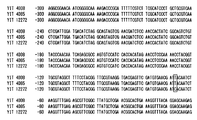
酸耐性を有するビフィドバクテリウム ブレーベ YIT 12272(FERM BP−11320)と、その系統株であるビフィドバクテリウム ブレーベ YIT 4008(FERM BP−4538)およびビフィドバクテリウム ブレーベ YIT 4065(FERM BP−6223)のfadD遺伝子の周辺の塩基配列を、定法に従ってダイターミネーター法により解読し、比較した。その結果、YIT 12272では、fadD遺伝子のプロモーターにおいて、開始コドン塩基から68bp上流の塩基配列が、チミン(T)からシトシン(C)に変異しており、その転写量が変化している可能性が考えられた。fadD遺伝子のプロモーターにおける変異箇所を図1に示す。Example 1 Identification of a Mutant Site of the Promoter Region of the fadD Gene Bifidobacterium breve YIT 12272 (FERM BP-11320) having acid resistance and its strain Bifidobacterium breve YIT 4008 (FERM BP-4538) The nucleotide sequences around the fadD gene of and Bifidobacterium breve YIT 4065 (FERM BP-6223) were decoded by the dye terminator method according to a conventional method and compared. As a result, in
実施例2 fadD遺伝子の転写量解析
酸耐性を有するビフィドバクテリウム ブレーベ YIT 12272、その系統株であるYIT 4008およびYIT 4065をMILS培地(Iwata and Morishita, Letter in Applied Microbiology, vol 9, 165−168, 1989)を用いて37℃で嫌気的に培養した。嫌気培養は気相を窒素置換してブチル栓をし、静置培養にて行った。
対数増殖期の各菌株よりRNeasy Mini Kit(QIAGEN社製)を用いてTotal RNAを調製した。さらに、本RNA1μgを用いてPrimeScript 1st strand cDNA Synthesis Kit(TaKaRa社製)により、cDNA溶液を調製した。各菌株から調製したcDNA溶液を鋳型とし、SYBR Premix Ex Taq(TaKaRa社製)と表1に示したプライマーを用いて、ABI PRISM 7500(Applied Biosystems社製)によりリアルタイムPCR(95℃・30秒の反応後、95℃・5秒および60℃・34秒の反応を40サイクル)を行い、fadD遺伝子および16SrRNA遺伝子の転写量を測定した。なお、16SrRNA遺伝子の転写量を内部標準としてサンプル間の補正を行った。Example 2 Analysis of transcript level of fadD gene
Total RNA was prepared from each strain in the logarithmic growth phase using RNeasy Mini Kit (manufactured by QIAGEN). Further, 1 μg of the present RNA was used to prepare a cDNA solution according to PrimeScript 1st strand cDNA Synthesis Kit (TaKaRa). Real-time PCR (95 ° C., 30 seconds) by ABI PRISM 7500 (Applied Biosystems) using cDNA solution prepared from each strain as a template and SYBR Premix Ex Taq (TaKaRa) and the primers shown in Table 1 After the reaction, 40 cycles of reactions at 95 ° C. for 5 seconds and 60 ° C. for 34 seconds were performed to measure the transcription amount of the fadD gene and the 16S rRNA gene. In addition, correction between samples was performed with the amount of transcription of 16S rRNA gene as an internal standard.

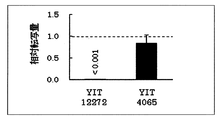
各菌株におけるfadD遺伝子の転写量を、fadD遺伝子が野生型であるYIT 4008に対する相対値として図2に示した。YIT 4065におけるfadD遺伝子の転写量はYIT 4008と同程度であったが、fadD遺伝子の上流に変異が生じたYIT 12272では転写量が大きく低下しており、YIT 4008と比較した相対転写量は、0.1%以下であり、YIT 4065と比較しても0.1%以下であった。
The amount of transcription of the fadD gene in each strain is shown in FIG. 2 as a relative value to
実施例3 野生型のfadD遺伝子を導入した形質転換体の取得および形質転換体のfadD遺伝子の相対転写量
fadD遺伝子の酸耐性に与える影響を調べるために、YIT 4008由来のfadD遺伝子プロモーターおよびfadD遺伝子をYIT 12272に導入した形質転換体HM0102株を作製した。
まず、YIT 4008のゲノムDNAを鋳型とし、KOD−Plus−(TOYOBO社製)と表2に示したプライマーを用いて、iCycler(Bio−Rad社製)によりPCR(96℃・15秒、60℃・30秒、72℃・150秒の反応を30サイクル)を行い、fadD遺伝子の全長とその上流300bpおよび下流100bpを含むDNA断片(配列番号6)を増幅した。Example 3 Acquisition of transformant in which wild type fadD gene has been introduced and relative transcript amount of fadD gene of transformant In order to examine the influence on acid resistance of fadD gene, fadD gene promoter and fadD gene derived from YIT 4008 A transformant HM0102 was prepared by introducing the strain into
First, using
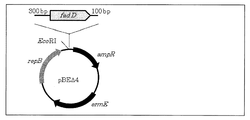
増幅したDNA断片と特開平10−262670号公報に記載されたpBE△4べクターを、同文献に記載の定法に従って制限酵素EcoRIにて消化した。両消化断片を用いて、DNA Ligation Kit Ver.2.1(TaKaRa社製)によりライゲーション反応を行い、オリジナルプロモーター支配下でのfadD遺伝子発現用プラスミドDNAを作製した。本プラスミドDNAの作製図を図3に示した。 The amplified DNA fragment and pBEΔ4 vector described in Japanese Patent Application Laid-Open No. 10-262670 were digested with restriction enzyme EcoRI according to a standard method described in the same document. Using both digested fragments, DNA Ligation Kit Ver. The ligation reaction was performed according to 2.1 (TaKaRa) to prepare plasmid DNA for fadD gene expression under the control of the original promoter. The preparation of this plasmid DNA is shown in FIG.
本プラスミドDNAをエレクトロポレーション法により、ビフィドバクテリウム ブレーベ YIT 12272に導入した。エレクトロポレーションは、GENE PULSER II(Bio−Rad社製)を用い、200Ω、25μF、18kV/cmの条件で行った。その後、3μg/mLのエリスロマイシンを添加したMILS寒天培地にエレクトロポレーション反応液を塗沫し、アネロパック(三菱ガス化学社製)を用いて37℃で72時間の嫌気培養を行った。生じたコロニーを形質転換体HM0102株として取得し、定法に従ってアルカリ法によりプラスミドDNAを抽出し、導入したプラスミドDNAが保持されていることを確認した。
This plasmid DNA was introduced into
一方、HM0102株の対照として、pBE△4ベクターのみをYIT 12272に導入したHM0101株も、同様の方法で作製した。
On the other hand, HM 0101 strain in which only pBEΔ4 vector was introduced into
YIT 12272、HM0101株およびHM0102株の3株について、実施例2に記載の方法でfadD遺伝子の発現量を測定した。なお、形質転換体であるHM0101株およびHM0102株の培養は、MILS培地の酵母エキス濃度を1.5%としたY−MILS培地を用い、終濃度が3μg/mLとなるようにエリスロマイシンを添加して行った。
The amount of expression of the fadD gene was measured by the method described in Example 2 for three
各株のfadD遺伝子の転写量を測定した結果、YIT 12272およびHM0101株と比較して、野生型のfadD遺伝子プロモーターおよびfadD遺伝子を導入したHM0102株では、fadDの転写量が高いことが判明した。各株におけるfadD遺伝子の転写量を、YIT 4008での転写量に対する相対値として図4に示した。
As a result of measuring the amount of transcription of the fadD gene of each strain, it was found that the amount of transcription of fadD was higher in the HM 0102 strain into which the wild type fadD gene promoter and the fadD gene were introduced compared to the
実施例4 形質転換体の酸耐性測定
形質転換体の酸耐性をより明らかに確認するために低温保存後の酸耐性を測定した。上記実施例3に記載の培地で、1×10⁸cell/mL以上の菌数となるよう一晩嫌気培養したHM0101株(培養後菌数:8.5×108cell/mL)およびHM0102株(培養後菌数:8.8×108cell/mL)の各培養液を4℃で嫌気静置保存した。保存0日目、7日目、14日目、19日目および29日目において、胃酸・胆汁酸連続処理を行い、両株の酸耐性を比較した。
胃酸・胆汁酸連続処理は、特許文献6に記載の人工胃液および人工胆汁を用いて以下のように行った。まず予め37℃で保温した人工胃液(pH3.3)10mLに、4℃で保存した培養液0.5mLを添加して撹拌し、37℃で60分間の胃酸処理を行った。さらに、胃酸処理後の溶液2mLに対して、人工胆汁(1.0% Oxgall)1mLと反応緩衝液(0.5%の塩化ナトリウム、0.1%の塩化カリウム、0.3%の炭酸水素ナトリウムを含有するpH8.0の緩衝液)5mLを添加して撹拌し、37℃で60分間の胆汁酸処理を連続的に行った。胃酸処理0分後、同60分後、胃酸・胆汁酸連続処理120分後の各処理液1mLを適宜希釈した後、TOSプロピオン酸寒天培地(ヤクルト薬品工業社製)に塗沫し、アネロパック(三菱ガス化学社製)を用いて37℃で72時間、嫌気的に培養した。出現したコロニー数に総希釈倍率を乗じて培養液1mL当たりの生菌数を求め、酸処理0分後の生菌数に対する、各処理後の生菌数の割合を生存率とした。
ここで、HM0102株は野生型のfadD遺伝子、HM0101株は変異型のfadD遺伝子を有し、それ以外の遺伝子は全く同一であることから、HM0102株はfadD遺伝子改変前微生物、HM0101株はfadD遺伝子改変微生物に相当する。Example 4 Measurement of Acid Tolerance of Transformants The acid tolerance after cryopreservation was measured to more clearly confirm the acid tolerance of transformants. The HM 0101 strain (the number of bacteria after culture: 8.5 x 10 8 cells / mL) and the HM 0102 strain which were anaerobically cultured overnight so that the number of bacteria was 1 x 10 8 cells / mL or more in the medium described in Example 3 above. Each culture solution (number of bacteria after culture: 8.8 × 10 8 cells / mL) was stored anaerobically at 4 ° C. On the
The gastric acid / bile acid continuous treatment was performed as follows using the artificial gastric fluid and artificial bile described in Patent Document 6. First, 0.5 mL of the culture solution stored at 4 ° C. was added to 10 mL of artificial gastric fluid (pH 3.3) previously kept at 37 ° C., stirred, and subjected to gastric acid treatment at 37 ° C. for 60 minutes. Furthermore, 1 mL of artificial bile (1.0% Oxgall) and reaction buffer (0.5% sodium chloride, 0.1% potassium chloride, 0.3% hydrogen carbonate) per 2 mL of solution after gastric acid treatment 5 mL of pH 8.0 buffer solution containing sodium was added and stirred, and bile acid treatment was continuously performed at 37 ° C. for 60 minutes. After 0 minutes of gastric acid treatment and 60 minutes after 1 minute of each treatment solution after 120 minutes of gastric acid / bile acid continuous treatment, the solution is appropriately diluted and then spread on TOS propionic acid agar medium (Yakult Pharmaceutical Co., Ltd.) and aneropack The cells were cultured anaerobically at 37 ° C. for 72 hours using Mitsubishi Gas Chemical Co., Ltd.). The number of colonies appeared was multiplied by the total dilution ratio to obtain the number of viable cells per mL of culture solution, and the ratio of the number of viable cells after each treatment to the number of viable cells after 0 minutes of acid treatment was taken as the survival rate.
Here, the HM0102 strain has a wild type fadD gene, the HM0101 strain has a mutant fadD gene, and the other genes are completely identical. Therefore, the HM0102 strain is a microorganism before fadD gene modification, and the HM0101 strain is a fadD gene. It corresponds to a modified microorganism.
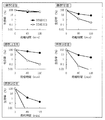
胃酸処理後および胃酸・胆汁酸連続処理後の両株の生菌数および生存率の測定結果を図5に、HM0102株に対するHM0101株の生存率の比を表3に示した。その結果、低温保存の日数が経過するにつれて、野生型のfadD遺伝子プロモーターを導入したHM0102株では、胃酸処理および胃酸・胆汁酸連続処理後の生存率が大幅に低下したが、HM0101株では、生存率の低下の幅が小さく、酸耐性がHM0102株と比較して増強されていた。HM0101株の酸耐性が増強されていることは、生存率の比においても示された。このように、酸耐性の増強は、低温状態に置いた場合により顕著に観察された。 The results of measurement of viable count and viability of both strains after gastric acid treatment and after gastric acid / bile acid sequential treatment are shown in FIG. 5, and the ratio of the survival rate of HM0101 strain to HM0102 strain is shown in Table 3. As a result, the survival rate of the HM 0102 strain into which the wild type fadD gene promoter had been introduced significantly decreased after treatment with gastric acid and continuous treatment with gastric acid and bile acid as the number of days of cryopreservation passed, but with the HM 0101 strain The rate of decline was small and acid resistance was enhanced compared to the HM0102 strain. The enhanced acid resistance of the HM0101 strain was also shown in the survival rate ratio. Thus, the increase in acid resistance was more significantly observed when placed at low temperature.
以上の結果からfadD遺伝子の転写増大は、微生物、特にビフィドバクテリウム ブレーベにおける酸耐性を低下させる方向へ働き、逆にfadD遺伝子の転写を阻害又は抑制することは、微生物、特にビフィドバクテリウム ブレーベにおける酸耐性を増強させる方向へ働くことが明らかになった。このため、fadD遺伝子の転写量を低下させることは、培養後の細胞内ATP量に依存することなく、微生物の酸耐性の増強に利用できると考えられる。 From the above results, increased transcription of the fadD gene works to reduce acid resistance in microorganisms, particularly Bifidobacterium breve, and conversely, inhibition or suppression of transcription of the fadD gene is a microorganism, particularly Bifidobacterium. It turned out that it works to increase the acid resistance in Breve. For this reason, it is considered that reducing the amount of transcription of the fadD gene can be used to enhance acid resistance of a microorganism without depending on the amount of intracellular ATP after culture.
Claims (8)
とする酸耐性を有する微生物のスクリーニング方法。 A method of screening a microorganism having acid resistance, comprising measuring the presence / absence and / or the expression amount of fadD gene and / or its expression product.
Applications Claiming Priority (3)
| Application Number | Priority Date | Filing Date | Title |
|---|---|---|---|
| JP2013251362 | 2013-12-04 | ||
| JP2013251362 | 2013-12-04 | ||
| PCT/JP2014/081987 WO2015083743A1 (en) | 2013-12-04 | 2014-12-03 | Method for regulating acid resistance of microbes |
Publications (2)
| Publication Number | Publication Date |
|---|---|
| JPWO2015083743A1 JPWO2015083743A1 (en) | 2017-03-16 |
| JP6541576B2 true JP6541576B2 (en) | 2019-07-10 |
Family
ID=53273504
Family Applications (1)
| Application Number | Title | Priority Date | Filing Date |
|---|---|---|---|
| JP2015551544A Active JP6541576B2 (en) | 2013-12-04 | 2014-12-03 | Method of regulating acid resistance of microorganism |
Country Status (7)
| Country | Link |
|---|---|
| US (1) | US9957496B2 (en) |
| EP (1) | EP3081643B1 (en) |
| JP (1) | JP6541576B2 (en) |
| KR (1) | KR102333252B1 (en) |
| CN (1) | CN105793412B (en) |
| ES (1) | ES2729099T3 (en) |
| WO (1) | WO2015083743A1 (en) |
Family Cites Families (12)
| Publication number | Priority date | Publication date | Assignee | Title |
|---|---|---|---|---|
| JP3946300B2 (en) | 1997-03-27 | 2007-07-18 | 株式会社ヤクルト本社 | Bifidobacteria shuttle vector and bifidobacteria plasmid replication protein gene |
| JP4076351B2 (en) | 2002-01-25 | 2008-04-16 | 株式会社ヤクルト本社 | Highly surviving Lactobacillus bacteria and their utilization |
| US7993903B2 (en) | 2005-09-08 | 2011-08-09 | Kabushiki Kaisha Yakult Honsha | Cholesterol absorption inhibitor |
| JP2007175016A (en) * | 2005-12-28 | 2007-07-12 | Ajinomoto Co Inc | L-glutamic acid producing bacterium and method for producing l-glutamic acid |
| JP5209294B2 (en) | 2007-12-25 | 2013-06-12 | 株式会社ヤクルト本社 | Interleukin 12 production promoter |
| EP2352824B1 (en) * | 2008-10-07 | 2015-09-02 | REG Life Sciences, LLC | Method and compositions for producing fatty aldehydes |
| JP2012506715A (en) | 2008-10-28 | 2012-03-22 | エルエス9・インコーポレイテッド | Methods and compositions for producing fatty alcohols |
| WO2011049154A1 (en) | 2009-10-22 | 2011-04-28 | 株式会社ヤクルト本社 | Agent for reducing risk of developing cancer |
| US20130004463A1 (en) | 2010-01-06 | 2013-01-03 | Kabushiki Kaisha Yakult Honsha | Dna damage repair promoter for oral application, and elastase activity inhibitor for oral application |
| KR101838762B1 (en) * | 2010-02-24 | 2018-03-14 | 가부시키가이샤 야쿠르트 혼샤 | Method for constructing novel bacterium belonging to the genus bifidobacterium |
| DK2803727T3 (en) * | 2012-01-11 | 2019-01-14 | Korea Advanced Inst Sci & Tech | SYNTHESIS REGULATORY SRNA AND METHOD OF PRODUCING THEREOF |
| DK2872641T3 (en) * | 2012-07-13 | 2018-06-14 | Calysta Inc | BIORAFFINADERY SYSTEM, PROCEDURES AND COMPOSITIONS THEREOF |
-
2014
- 2014-12-03 CN CN201480065304.4A patent/CN105793412B/en active Active
- 2014-12-03 ES ES14867867T patent/ES2729099T3/en active Active
- 2014-12-03 KR KR1020167014398A patent/KR102333252B1/en active Active
- 2014-12-03 WO PCT/JP2014/081987 patent/WO2015083743A1/en not_active Ceased
- 2014-12-03 EP EP14867867.5A patent/EP3081643B1/en active Active
- 2014-12-03 JP JP2015551544A patent/JP6541576B2/en active Active
- 2014-12-03 US US15/039,948 patent/US9957496B2/en active Active
Also Published As
| Publication number | Publication date |
|---|---|
| WO2015083743A1 (en) | 2015-06-11 |
| CN105793412B (en) | 2022-05-06 |
| ES2729099T3 (en) | 2019-10-30 |
| US9957496B2 (en) | 2018-05-01 |
| EP3081643B1 (en) | 2019-05-29 |
| EP3081643A4 (en) | 2017-07-05 |
| JPWO2015083743A1 (en) | 2017-03-16 |
| US20170022491A1 (en) | 2017-01-26 |
| KR102333252B1 (en) | 2021-11-30 |
| KR20160093006A (en) | 2016-08-05 |
| CN105793412A (en) | 2016-07-20 |
| EP3081643A1 (en) | 2016-10-19 |
Similar Documents
| Publication | Publication Date | Title |
|---|---|---|
| Bron et al. | Genetic characterization of the bile salt response in Lactobacillus plantarum and analysis of responsive promoters in vitro and in situ in the gastrointestinal tract | |
| Sheehan et al. | Improving gastric transit, gastrointestinal persistence and therapeutic efficacy of the probiotic strain Bifidobacterium breve UCC2003 | |
| US6242194B1 (en) | Acid-inducible promoters for gene expression | |
| US8741622B2 (en) | Stress tolerant Bifidobacteria | |
| CN115992177B (en) | Application of PDHB gene in fusaric acid resistance | |
| EP2287299A1 (en) | Gene that imparts oxygen resistance and application thereof | |
| JP6541576B2 (en) | Method of regulating acid resistance of microorganism | |
| JP5901609B2 (en) | Gene for imparting hydrogen peroxide resistance and use thereof | |
| JP6412865B2 (en) | Bifidobacterium breve strain specific gene | |
| EP1493808A1 (en) | Vectors based on novel plasmids derived from Lactobacillus plantarum | |
| US20250236838A1 (en) | E. coli nissle strain with improved transformation efficiency | |
| Paramithiotis et al. | Transcriptomic Response of L. monocytogenes to Co-Culture with S. cerevisiae. Beverages 2021, 7, 55 | |
| KR20250166255A (en) | Method for transforming Bifidobacterium bacteria | |
| Mullekom et al. | Genetic Characterization of the Bile Salt |
Legal Events
| Date | Code | Title | Description |
|---|---|---|---|
| A621 | Written request for application examination |
Free format text: JAPANESE INTERMEDIATE CODE: A621 Effective date: 20170620 |
|
| A131 | Notification of reasons for refusal |
Free format text: JAPANESE INTERMEDIATE CODE: A131 Effective date: 20180626 |
|
| A521 | Request for written amendment filed |
Free format text: JAPANESE INTERMEDIATE CODE: A523 Effective date: 20180827 |
|
| A02 | Decision of refusal |
Free format text: JAPANESE INTERMEDIATE CODE: A02 Effective date: 20190122 |
|
| A521 | Request for written amendment filed |
Free format text: JAPANESE INTERMEDIATE CODE: A523 Effective date: 20190415 |
|
| A911 | Transfer to examiner for re-examination before appeal (zenchi) |
Free format text: JAPANESE INTERMEDIATE CODE: A911 Effective date: 20190423 |
|
| TRDD | Decision of grant or rejection written | ||
| A01 | Written decision to grant a patent or to grant a registration (utility model) |
Free format text: JAPANESE INTERMEDIATE CODE: A01 Effective date: 20190521 |
|
| A61 | First payment of annual fees (during grant procedure) |
Free format text: JAPANESE INTERMEDIATE CODE: A61 Effective date: 20190611 |
|
| R151 | Written notification of patent or utility model registration |
Ref document number: 6541576 Country of ref document: JP Free format text: JAPANESE INTERMEDIATE CODE: R151 |