JP5991663B2 - Method for producing enzyme-treated bonito extract - Google Patents
Method for producing enzyme-treated bonito extract Download PDFInfo
- Publication number
- JP5991663B2 JP5991663B2 JP2012086416A JP2012086416A JP5991663B2 JP 5991663 B2 JP5991663 B2 JP 5991663B2 JP 2012086416 A JP2012086416 A JP 2012086416A JP 2012086416 A JP2012086416 A JP 2012086416A JP 5991663 B2 JP5991663 B2 JP 5991663B2
- Authority
- JP
- Japan
- Prior art keywords
- enzyme
- extract
- bonito
- bonito extract
- treated
- Prior art date
- Legal status (The legal status is an assumption and is not a legal conclusion. Google has not performed a legal analysis and makes no representation as to the accuracy of the status listed.)
- Active
Links
Landscapes
- Fodder In General (AREA)
- Seasonings (AREA)
Description
本発明は、酸味とコク味が増強され、原料由来の特有の生臭みやエグ味が低減され、さらに褐変・着色を抑制した風味良好な酵素処理カツオエキスの製造方法に関する。 The present invention relates to a method for producing an enzyme-processed skipjack extract having a good flavor that has enhanced sourness and richness, reduced raw odor and egg flavor derived from raw materials, and further suppressed browning and coloring.
カツオエキスは、アミノ酸や核酸等の呈味成分を有し、コクや深みのある独特の風味を有している。また、カツオに含まれるヒスチジンや乳酸等による酸味は、カツオエキスを特徴付ける重要な成分であることが知られている。
カツオエキスの代表的な製造方法としては、原料のカツオを熱水抽出した後、固液分離する方法が知られている。
Skipjack extract has taste ingredients such as amino acids and nucleic acids, and has a rich and unique flavor. Moreover, it is known that the acidity by histidine or lactic acid contained in bonito is an important component that characterizes bonito extract.
As a typical method for producing a bonito extract, a method of extracting a raw bonito from hot water and then performing solid-liquid separation is known.
しかしながら、このような製造方法で得られたカツオエキスは、カツオエキスにおいて重要な要素である酸味成分の付与及び原料特有の生臭みの低減に関して十分な配慮がなされていないため、カツオエキスの特徴的な酸味が不安定かつ不十分であるとともに、原料特有の生臭みが残っているという問題がある。そのため、原料特有の良好な風味を有し、かつ原料特有の生臭みを低減する目的で種々の試みがなされている。 However, the skipjack extract obtained by such a manufacturing method has not been given sufficient consideration regarding the provision of sour components and the reduction of the raw odor characteristic of the raw material, which are important elements in the skipjack extract. There is a problem that the sour taste is unstable and insufficient, and the raw smell peculiar to the raw material remains. Therefore, various attempts have been made for the purpose of having a good flavor unique to the raw material and reducing the raw odor unique to the raw material.
例えば、魚介類エキスに糖質を添加し、これに乳酸菌または酵母を生育せしめることからなる魚介類エキスの脱臭方法(特許文献1)が知られている。また、魚介類のエキスを主原料にして麹で処理し、さらに、乳酸菌および酵母を添加し、その後、もろみを発酵熟成させる醗酵調味料の製造方法(特許文献2)が知られている。
しかし、これらの乳酸菌発酵による方法では、発酵・熟成という目的は達成できるものの、発酵副産物である乳酸によって過剰な酸味が付与されることにより、エキスの風味バランスを損なうという問題がある。また、乳酸菌発酵や酵母発酵による独特の発酵臭が発生し、エキス本来の持ち得る風味を損なうという問題がある。さらに、このような一般的な乳酸菌発酵や酵母発酵では、通常、12時間以上の時間を必要とするため、これらの発酵を伴わないエキスの製造方法に比べて相当の手間と時間を要するという問題がある。また、これら発酵処理においては、加温により原料に由来する糖類やアミノ酸等が反応することで色調が褐変し着色が起こることで、得られたエキスの汎用性が低下するという問題がある。
また、発酵処理や酵素処理を行うことによりグルコン酸を生成せしめたカツオエキスについては、事例がない。
ヤーコン芋を破砕して得た搾汁に、グルコン酸生成能を有する微生物または酵素を添加してなることを特徴とするグルコン酸含有ヤーコン発酵飲料(特許文献3)が知られているが、カツオエキスの生臭さやコク味に関する記載はなく、発酵時間も3日以上を必要とするものである。さらに、色調については、褐変防止剤の添加をしなければ褐変を抑制できないものである。
For example, there is known a method for deodorizing a seafood extract comprising adding a saccharide to a seafood extract and growing lactic acid bacteria or yeast thereon (Patent Document 1). Also known is a method for producing a fermented seasoning (Patent Document 2) in which a seafood extract is used as a main raw material, treated with rice bran, lactic acid bacteria and yeast are added, and then moromi is fermented and matured.
However, although these lactic acid bacteria fermentation methods can achieve the purpose of fermentation and ripening, there is a problem that the flavor balance of the extract is impaired due to an excessive sourness imparted by lactic acid, which is a fermentation byproduct. In addition, there is a problem that a unique fermentation odor is generated by lactic acid bacteria fermentation or yeast fermentation, which impairs the inherent flavor of the extract. Furthermore, since such general lactic acid bacteria fermentation and yeast fermentation usually require a time of 12 hours or more, there is a problem that a considerable amount of labor and time are required as compared with the method for producing an extract without such fermentation. There is. Moreover, in these fermentation processes, there exists a problem that the versatility of the obtained extract falls because the color tone browns and coloring occurs when saccharides, amino acids, and the like derived from raw materials react by heating.
Moreover, there is no case about the bonito extract which produced gluconic acid by performing a fermentation process and an enzyme process.
A gluconic acid-containing yacon fermented beverage (patent document 3) characterized by adding a microorganism or an enzyme capable of producing gluconic acid to juice obtained by crushing yacon koji is known. There is no description about the raw odor and richness of the extract, and the fermentation time also requires 3 days or more. Furthermore, as for the color tone, browning cannot be suppressed without adding a browning inhibitor.
上記のごとく、従来の魚介類エキスについては、魚介類エキスにおいて重要な酸味が不十分であるか、又は、原料特有の生臭みが残るという問題があった。また、乳酸菌発酵を経て得られる魚介類エキスにおいても、乳酸菌発酵により産生される乳酸により必要以上の酸味が付与される又は乳酸菌発酵や酵母発酵特有の発酵臭が付与されてしまうことで魚介類エキス本来の風味を損ねるという問題があった。さらに、これらの発酵には長時間を要し、製造コストの観点からも問題があった。さらに、原料に由来する糖類やアミノ酸に由来する褐変・着色により、品質の低下を引き起こすという問題があった。 As described above, the conventional fish and shellfish extracts have a problem that the acidity that is important in the fish and shellfish extracts is insufficient, or a raw odor peculiar to raw materials remains. Also, in the fish and shellfish extract obtained through lactic acid bacteria fermentation, the fish and shellfish extract is imparted with an unpleasant sourness due to lactic acid produced by lactic acid bacteria fermentation or a fermentation odor peculiar to lactic acid bacteria fermentation and yeast fermentation. There was a problem of deteriorating the original flavor. Furthermore, these fermentations take a long time and have problems from the viewpoint of production costs. Furthermore, there has been a problem in that quality is deteriorated due to browning and coloring derived from saccharides derived from raw materials and amino acids.
上記課題を解決するために、本発明は、カツオから得られるエキスを用いて、酸味とコク味をバランスよく増強させ、原料特有の生臭みやエグ味を低減させ、グルコン酸を含有し、さらに褐変・着色を抑制した、風味良好な酵素処理カツオエキスを安定的に製造する方法を提供することを目的とする。さらに、該製造方法により得られる酵素処理カツオエキス及び該酵素処理カツオエキスを含有する飲食品又は飼料を提供することを目的とする。 In order to solve the above problems, the present invention uses an extract obtained from bonito to enhance the sourness and richness in a balanced manner, to reduce the raw odor and egg taste peculiar to raw materials, to contain gluconic acid, and further to browning An object of the present invention is to provide a method for stably producing an enzyme-treated bonito extract that suppresses coloring and has a good flavor. Furthermore, it aims at providing the food-drinks or feed containing the enzyme-treated bonito extract obtained by this manufacturing method and this enzyme-treated bonito extract.
本発明者らは、上記課題を解決するために鋭意研究を行った結果、カツオエキスを原料として、グリコーゲン分解活性能を有する酵素を用いて酵素処理を行い、かつ好気条件下でグルコース酸化酵素を用いて酵素処理を行うことにより、酸味とコク味をバランスよく増強し、原料特有の生臭みやエグ味を低減させ、グルコン酸を含有し、さらに褐変・着色を抑制した、風味良好なカツオエキスが得られることを見出し、本発明を完成させた。 As a result of diligent research to solve the above-mentioned problems, the inventors of the present invention have used bonito extract as a raw material, an enzyme treatment using an enzyme having a glycogenolytic activity, and glucose oxidase under aerobic conditions. The bonito extract has a good flavor that enhances the acidity and richness in a balanced manner by reducing the raw odor and taste of the raw material, contains gluconic acid, and further suppresses browning and coloring. And the present invention was completed.
すなわち、本発明は、カツオエキスを原料として、グリコーゲン分解活性能を有する酵素を用いて酵素処理を行い、かつ好気条件下でグルコース酸化酵素を用いて酵素処理を行うことで、酸味とコク味をバランスよく増強し、乳酸菌発酵や酵母発酵特有の発酵臭のようなエキスの風味を損なう臭いを付与することなく、原料特有の生臭みやエグ味を低減させ、グルコン酸を含有し、さらに褐変・着色を抑制した風味良好な酵素処理カツオエキスの製造方法を提供するものである。
また、本発明は、該製造方法により得られる酵素処理カツオエキス及び該エキスを含有する飲食品又は飼料を提供するものである。
That is, the present invention uses soy bonito extract as a raw material, performs an enzyme treatment using an enzyme having glycogenolytic activity, and performs an enzyme treatment using glucose oxidase under aerobic conditions. Without adding a smell that impairs the flavor of the extract, such as the fermentation odor unique to lactic acid bacteria fermentation and yeast fermentation, it reduces the raw odor and egg flavor unique to the raw material, contains gluconic acid, The present invention provides a method for producing an enzyme-treated bonito extract that suppresses coloring and has a good flavor.
The present invention also provides an enzyme-treated bonito extract obtained by the production method and a food or drink or feed containing the extract.
本発明には、下記の態様が含まれる。
項(1)
カツオエキスを原料として、グリコーゲン分解活性能を有する酵素を用いて酵素処理した後又は該酵素処理と同時に、好気条件下でグルコース酸化酵素を用いて酵素処理を行うことを特徴とする酵素処理カツオエキスの製造方法。
項(2)
グルコース酸化酵素が、Penicillium属、Aspergillus属、Gluconobacter属、Acetobacter属又はGluconacetobacter属に属する微生物から選ばれるいずれか1種以上に由来する酵素である項(1)に記載の製造方法。
項(3)
グリコーゲン分解活性能を有する酵素が、グルコアミラーゼである項(1)又は項(2)に記載の製造方法。
項(4)
項(1)乃至項(3)のいずれか1項に記載の製造方法により得られる酵素処理カツオエキス。
項(5)
項(4)に記載の酵素処理カツオエキスを含有する飲食品又は飼料。
The present invention includes the following aspects.
Item (1)
An enzyme-treated bonito, characterized in that after bonito extract is used as a raw material, the enzyme treatment is performed using an enzyme having glycogenolytic activity or simultaneously with the enzyme treatment using a glucose oxidase under aerobic conditions. Extract manufacturing method.
Item (2)
The production method according to item (1), wherein the glucose oxidase is an enzyme derived from any one or more of microorganisms belonging to the genus Penicillium, Aspergillus, Gluconobacter, Acetobacter or Gluconacetobacter.
Item (3)
Item 3. The production method according to Item (1) or Item (2), wherein the enzyme having glycogenolytic activity is glucoamylase.
Item (4)
An enzyme-treated bonito extract obtained by the production method according to any one of Items (1) to (3).
Item (5)
Food-drinks or feed containing the enzyme-treated bonito extract according to item (4).
本発明によれば、乳酸発酵や酵母発酵では得られない酸味とコク味をバランスよく増強され、原料特有の生臭みやエグ味が低減され、グルコン酸を含有し、さらに褐変・着色が抑制された風味良好な酵素処理カツオエキスを得ることができる。また、このような嗜好性に優れた酵素処理カツオエキスを、常に一定の品質で安定的に提供することができる。 According to the present invention, the acidity and richness that cannot be obtained by lactic acid fermentation or yeast fermentation are enhanced in a balanced manner, the raw odor and egg taste peculiar to raw materials are reduced, gluconic acid is contained, and browning and coloring are further suppressed. An enzyme-treated bonito extract with good flavor can be obtained. Moreover, such an enzyme-treated bonito extract excellent in palatability can always be stably provided with a constant quality.
本発明において用いるカツオエキスは、原料であるカツオを水、アルコール、又は水−アルコール混合溶液等で抽出した抽出物であれば良い。また、該抽出物の抽出条件は、常温抽出、加熱抽出、加圧抽出、撹拌抽出、超音波抽出等の公知の手段を単独又は組み合わせることにより得られるものであれば良く、特に限定されない。
カツオエキスの原料として用いるカツオは、その抽出の際に、そのままの形状で用いてもよいが、細切処理又は粉砕処理して用いてもよい。カツオエキスの原料として用いるカツオを細切処理又は粉砕処理する方法は、特に限定されず、食材の加工に一般に用いられる方法であればよい。例えば、切断、粉砕、摩擦、空気圧、水圧等を利用して加工する各種の裁断機、粉砕機等が挙げられ、具体的には、カッター、スライサー、ダイサー、チョッパー、グラインダー、ミキサー、ミル等を用いることができる。
The bonito extract used in the present invention may be an extract obtained by extracting bonito, which is a raw material, with water, alcohol, a water-alcohol mixed solution, or the like. Moreover, the extraction conditions of this extract should just be obtained by combining well-known means, such as normal temperature extraction, heat extraction, pressurization extraction, stirring extraction, and ultrasonic extraction, and are not specifically limited.
The bonito used as a raw material for the bonito extract may be used in its original form during extraction, or may be used after being chopped or crushed. The method for chopping or pulverizing the bonito used as the raw material for the bonito extract is not particularly limited as long as it is a method generally used for processing foods. For example, various cutting machines that use cutting, crushing, friction, air pressure, water pressure, etc., crushers, etc., specifically, cutters, slicers, dicers, choppers, grinders, mixers, mills, etc. Can be used.
カツオエキスの原料として用いるカツオは、一般に食用に供され、安全性に問題のないものであれば良く、未加熱のものでも、加熱処理したものでも良い。また、カツオエキスの原料として用いるカツオは、それから得られる節類(荒節、裸節、枯節等)であっても良い。このような原料から得られるカツオエキスは、単独又は組み合わせて用いてもよい。
これらカツオエキスは、抽出後、そのままの形態で用いることもできるが、固液分離した液部を用いることができる。固液分離の方法は特に限定されず、濾過、遠心分離等の公知の方法で行うことができる。また、該カツオエキスは、抽出後、そのままの形態又は固液分離した液部を常法により濃縮機等で処理して濃縮したものを用いることができる。
The bonito used as a raw material for the bonito extract may be any food that is generally edible and has no safety problem, and may be unheated or heat-treated. The bonito used as a raw material for the bonito extract may be a nodule obtained from the bonito (rough, bare, dead, etc.). Bonito extracts obtained from such raw materials may be used alone or in combination.
These bonito extracts can be used in the form as they are after extraction, but a liquid part that has been subjected to solid-liquid separation can be used. The method of solid-liquid separation is not particularly limited, and can be performed by a known method such as filtration or centrifugation. Further, the bonito extract can be used as it is or after being extracted and processed by a conventional method using a concentrator or the like as a solid-liquid separated liquid part.
本発明において、原料であるカツオエキスは、グリコーゲン分解活性能を有する酵素を用いた酵素処理が行われる。グリコーゲン分解活性能を有する酵素は、グリコーゲンを分解する活性能を有する酵素であれば特に限定されないが、例えば、グルコアミラーゼが挙げられる。具体的には、グルターゼAN(エイチビィアイ株式会社製)、コクラーゼ(登録商標)・G2(三菱化学フーズ株式会社製)、グルクザイム(登録商標)AF6(天野エンザイム株式会社製)等が挙げられる。 In the present invention, the bonito extract, which is a raw material, is subjected to an enzyme treatment using an enzyme having an activity of degrading glycogen. The enzyme having the ability to degrade glycogen is not particularly limited as long as it has the ability to degrade glycogen, and examples thereof include glucoamylase. Specific examples include Glutase AN (manufactured by HBI Corporation), Cochlase (registered trademark) / G2 (manufactured by Mitsubishi Chemical Foods Corporation), Gluczyme (registered trademark) AF6 (manufactured by Amano Enzyme Corporation), and the like.
本発明において、グリコーゲン分解活性能を有する酵素を用いた酵素処理の温度については、通常、15〜80℃で、好ましくは20〜70℃で、より好ましくは25〜60℃で処理され、また、グリコーゲン分解活性能を有する酵素を用いた酵素処理の時間については、通常、0.1〜48時間で、好ましくは0.1〜24時間で、より好ましくは0.1〜12時間で、特に好ましくは0.1〜6時間で処理される。また、本発明において、グリコーゲン分解活性能を有する酵素の添加量は、処理温度及び処理時間により適宜変更することができるが、通常、1〜5000U/100g程度、好ましくは1〜2500U/100g程度、より好ましくは1〜1000U/100g程度である。 In the present invention, the temperature of the enzyme treatment using an enzyme having glycogenolytic activity is usually 15 to 80 ° C, preferably 20 to 70 ° C, more preferably 25 to 60 ° C, The time for enzyme treatment using an enzyme having glycogenolytic activity is usually 0.1 to 48 hours, preferably 0.1 to 24 hours, more preferably 0.1 to 12 hours, and particularly preferably. Is processed in 0.1 to 6 hours. In the present invention, the amount of the enzyme having glycogenolytic activity can be appropriately changed depending on the treatment temperature and treatment time, but is usually about 1 to 5000 U / 100 g, preferably about 1 to 2500 U / 100 g. More preferably, it is about 1-1000 U / 100g.
本発明において、原料であるカツオエキスは、さらに好気条件下でグルコース酸化酵素を用いた酵素処理が行われる。本発明において、グルコース酸化酵素とは、グルコース酸化能を有する酵素である。
グルコース酸化酵素を用いた酵素処理は、グリコーゲン分解活性能を有する酵素を用いた酵素処理の後、又はグリコーゲン分解活性能を有する酵素を用いた酵素処理と同時に行われる。
また、本発明における好気条件下とは、該酵素処理において処理液中に酸素が供給されている状態を維持していればよいものであり、公知の手段を用いることができ、その手段は特に限定されないが、例えば、エアレーションの利用が挙げられる。エアレーションの方法は、特に限定されないが、例えば、該酵素処理液中への酸素を含有する気体の通気(バブリング)や、酸素を含有する気体との接触下での該酵素処理液の振盪(シェイキング)、シャワーリングによる該酵素処理液の循環、又は撹拌等の手段により行うことができ、好ましくは該酵素処理液中への酸素を含有する気体の通気処理である。
In the present invention, the bonito extract, which is a raw material, is further subjected to an enzyme treatment using glucose oxidase under aerobic conditions. In the present invention, the glucose oxidase is an enzyme having glucose oxidizing ability.
The enzymatic treatment using glucose oxidase is performed after the enzymatic treatment using an enzyme having glycogenolytic activity or simultaneously with the enzymatic treatment using an enzyme having glycogenolytic activity.
Further, the aerobic condition in the present invention is only required to maintain a state in which oxygen is supplied to the treatment liquid in the enzyme treatment, and a known means can be used. Although not particularly limited, for example, use of aeration can be mentioned. The method of aeration is not particularly limited. For example, aeration (gassing) of a gas containing oxygen into the enzyme treatment solution (shaking) or shaking of the enzyme treatment solution in contact with a gas containing oxygen (shaking) ), Circulation of the enzyme treatment liquid by showering, or stirring, etc., and preferably a gas-containing gas-containing treatment into the enzyme treatment liquid.
本発明において、グルコース酸化酵素を用いた酵素処理を行うことでグルコン酸が生成される。グルコン酸は酸味を付与するものであるが、該酵素処理を行うことなしに、グルコン酸を添加しただけでは、本発明により得られる酵素処理カツオエキスの全体の風味は増強されない。 In the present invention, gluconic acid is produced by performing an enzyme treatment using glucose oxidase. Gluconic acid imparts a sour taste, but the overall flavor of the enzyme-treated bonito extract obtained by the present invention is not enhanced only by adding gluconic acid without performing the enzyme treatment.
本発明において用いるグルコース酸化酵素の由来はいずれでもよいが、好ましくは、Penicillium camemberti、Penicillium chrysogenum等のPenicillium属に属する微生物、Aspergillus niger、Aspergillus oryzae、Aspergillus sojae等のAspergillus属に属する微生物、Gluconobacter oxydans、Gluconobacter frateurii等のGluconobacter属に属する微生物、Acetobacter pasteurianus、Acetobacter aceti等のAcetobacter属に属する微生物又はGluconacetobacter hansenii、Gluconacetobacter xylinus等のGluconacetobacter属に属する微生物から選ばれるいずれかに由来する酵素である。中でも、Penicillium属に属する微生物、Aspergillus属に属する微生物又はGluconobacter属に属する微生物から選ばれるいずれかに由来する酵素を用いることが好ましい。本発明において用いるグルコース酸化酵素は、少なくとも1種以上を用いればよく、1種のみ又は複数種を併せて用いてもよい。 The glucose oxidase used in the present invention may be derived from any of the above, but preferably, microorganisms belonging to the genus Penicillium such as Penicillium camemberti, Penicillium chrysogenum, Aspergillus niger, Aspergillus oryzae, Aspergillus oryzae, Aspergillus oryzae Microorganisms belonging to the genus Gluconobacter such as Gluconobacter frateurii, microorganisms belonging to the genus Acetobacter such as Acetobacter pasteurianus, Acetobacter acetici, or Gluconacetobacter ha Senii, an enzyme derived from any selected from microorganisms belonging to Gluconacetobacter genus such Gluconacetobacter xylinus. Among them, it is preferable to use an enzyme derived from any one selected from microorganisms belonging to the genus Penicillium, microorganisms belonging to the genus Aspergillus, or microorganisms belonging to the genus Gluconobacter. The glucose oxidase used in the present invention may be at least one or more, and may be used alone or in combination.
本発明において用いるグルコース酸化酵素は、精製酵素もしくは粗酵素又はそれらの製剤を用いてもよいが、好ましくは、食品添加物として使用可能な精製酵素又はその製剤であり、具体的には、スミチーム(登録商標)PGO、スミチームGOP(いずれも、新日本化学工業株式会社製)等を用いることができる。
さらに、本発明におけるグルコース酸化酵素を用いた酵素処理は、グルコース酸化酵素産生能を有する微生物菌体を用いた酵素処理を行ってもよく、この場合、当該微生物は休止菌体であってもよい。
The glucose oxidase used in the present invention may be a purified enzyme or a crude enzyme or a preparation thereof, but is preferably a purified enzyme that can be used as a food additive or a preparation thereof. (Registered trademark) PGO, Sumiteam GOP (both manufactured by Shin Nippon Chemical Industry Co., Ltd.) and the like can be used.
Furthermore, the enzyme treatment using glucose oxidase in the present invention may be performed using a microbial cell having glucose oxidase-producing ability. In this case, the microorganism may be a resting cell. .
本発明において、グルコース酸化酵素を用いた酵素処理の温度については、通常、10〜70℃で、好ましくは15〜60℃で、より好ましくは20〜50℃で処理され、また、グルコース酸化酵素を用いた酵素処理の時間については、通常、0.1〜48時間、好ましくは0.1〜24時間、より好ましくは0.1〜12時間、特に好ましくは0.1〜6時間で処理される。また、本発明において、グルコース酸化酵素の添加量は、処理温度及び処理時間により適宜変更することができるが、通常、1〜2000U/100g程度、好ましくは1〜1500U/100g程度、より好ましくは1〜1000U/100g程度である。グルコース酸化酵素産生能を有する微生物菌体を用いる場合でも、該菌体の産生するグルコース酸化酵素の酵素活性に基づいて添加量を決定すればよい。 In the present invention, the temperature of the enzyme treatment using glucose oxidase is usually 10 to 70 ° C., preferably 15 to 60 ° C., more preferably 20 to 50 ° C. The enzyme treatment time used is usually 0.1 to 48 hours, preferably 0.1 to 24 hours, more preferably 0.1 to 12 hours, and particularly preferably 0.1 to 6 hours. . Moreover, in this invention, although the addition amount of glucose oxidase can be changed suitably with process temperature and process time, Usually, about 1-2000 U / 100g, Preferably it is about 1-1500 U / 100g, More preferably, it is 1 It is about -1000U / 100g. Even when a microbial cell having glucose oxidase-producing ability is used, the addition amount may be determined based on the enzyme activity of glucose oxidase produced by the cell.
本発明によって得られる酵素処理カツオエキスは、風味が良好で嗜好性に優れていることから、そのままの形態でも利用することができるが、さらに、該酵素処理カツオエキスを固液分離した液部を用いることができる。また、該酵素処理カツオエキスをそのままもしくは固液分離した液部を常法により濃縮機等で処理して濃縮物として用いてもよく、乾燥して用いてもよい。乾燥は、いずれの方法を用いてもよいが、例えば、スプレードライヤー、ドラムドライヤー、フリーズドライヤー、エアードライヤー等の公知の手段を用いることができる。また、デキストリン等の賦形剤を添加して乾燥してもよい。さらに、該乾燥物を粉砕後、粉末等として用いてもよく、必要に応じて造粒機等を用いて顆粒品とすることができる。 The enzyme-treated bonito extract obtained by the present invention has a good flavor and excellent palatability, so that it can be used as it is, but further, a liquid part obtained by solid-liquid separation of the enzyme-treated bonito extract is used. Can be used. In addition, the enzyme-treated bonito extract may be used as a concentrate by treating it with a concentrator or the like as it is or by solid-liquid separation, or may be used after drying. Any method may be used for drying. For example, known means such as a spray dryer, a drum dryer, a freeze dryer, and an air dryer can be used. Further, an excipient such as dextrin may be added and dried. Further, the dried product may be pulverized and then used as a powder or the like, and if necessary, can be made into a granulated product using a granulator or the like.
本発明によって得られる酵素処理カツオエキスは、嗜好性が大変優れており、原料特有の臭いが低減されている等風味が改善され、その風味が良好であり、さらに、色度も抑えられていることから、種々の加工食品、例えば、穀物加工品、大豆加工品、油脂加工品、食肉加工品、水産加工品、野菜・果実加工品、即席食品、乳製品、菓子類、冷菓類、調味料、清涼飲料、茶飲料、嗜好飲料、乳飲料、アルコール飲料等の各種食品や飲料に適宜添加、配合して用いることができる。また、必要に応じて、糖類、アミノ酸類、油脂類、塩類、甘味料、有機酸、乳化剤、増粘剤、栄養強化剤、色素、香料、保存料等、通常の飲料及び食品の原料として使用されているものと併用することもできる。 The enzyme-treated bonito extract obtained by the present invention has very good palatability, improved flavor such as reduced odor peculiar to raw materials, good flavor, and chromaticity is also suppressed. Therefore, various processed foods such as processed grains, processed soybeans, processed fats and oils, processed meats, processed marine products, processed vegetables and fruits, instant foods, dairy products, confectionery, frozen desserts, seasonings It can be used by appropriately adding and blending it into various foods and beverages such as soft drinks, tea drinks, taste drinks, milk drinks and alcoholic drinks. In addition, sugar, amino acids, oils and fats, salts, sweeteners, organic acids, emulsifiers, thickeners, nutrient enhancers, pigments, fragrances, preservatives, etc. are used as usual beverages and food ingredients as necessary. Can also be used in combination with
以下、実施例を示して本発明を具体的に説明するが、本発明は以下の例によって限定されるものではない。なお、本実施例において、各原料及び素材の配合比率、含有比率、濃度はすべて、重量部基準である。 EXAMPLES Hereinafter, although an Example is shown and this invention is demonstrated concretely, this invention is not limited by the following examples. In addition, in a present Example, all the mixture ratios, content ratios, and concentrations of each raw material and material are based on parts by weight.
[実施例1]
カツオを熱水抽出した後、固液分離工程及び濃縮工程を経て得られたカツオエキス(Brix72°)56gに、水344gを加えてBrix10°に調整した後、グルコアミラーゼ製剤(グルターゼAN:エイチビィアイ株式会社製)を650U/100gとなるように添加して、50℃で1時間酵素処理を行った。40℃まで冷却した後、グルコース酸化酵素製剤(スミチームPGO:新日本化学工業株式会社製)400U/100gとなるように添加して、通気量20mL/分で通気及び撹拌を行いながら40℃で1時間酵素処理を行った。グルコース酸化酵素による酵素処理後、90℃で10分間酵素失活処理を行うことで、本発明の酵素処理カツオエキス(実施例1)380g(Brix10°)を得た。
[Example 1]
After extraction of bonito with hot water, 344 g of water was added to 56 g of bonito extract (Brix 72 °) obtained through the solid-liquid separation step and the concentration step, and adjusted to Brix 10 °, and then a glucoamylase preparation (Glutase AN: HI Stock) (Made by company) was added so that it might become 650U / 100g, and the enzyme treatment was performed at 50 degreeC for 1 hour. After cooling to 40 ° C., glucose oxidase preparation (Sumiteam PGO: manufactured by Shin Nippon Chemical Industry Co., Ltd.) was added to 400 U / 100 g, and the aeration was performed at 40 ° C. while aeration and agitation were performed at an aeration rate of 20 mL / min. Time enzyme treatment was performed. After enzyme treatment with glucose oxidase, enzyme deactivation treatment was performed at 90 ° C. for 10 minutes to obtain 380 g (Brix 10 °) of the enzyme-treated bonito extract of the present invention (Example 1).
[実施例2]
グルコース酸化酵素製剤をスミチームGOP(新日本化学工業株式会社製)とした以外は、実施例1と同様にして、本発明の酵素処理カツオエキス(実施例2)380g(Brix10°)を得た。
[Example 2]
380 g (Brix 10 °) of the enzyme-treated bonito extract of the present invention (Example 2) was obtained in the same manner as in Example 1, except that the glucose oxidase preparation was changed to Sumiteam GOP (manufactured by Shin Nippon Chemical Industry Co., Ltd.).
[比較例1]
グルコアミラーゼ製剤を用いた酵素処理を行わない以外は、実施例1と同様にして、グリコーゲン分解活性能を有する酵素未処理のカツオエキス(比較例1)380g(Brix10°)を得た。
[Comparative Example 1]
Except that the enzyme treatment using the glucoamylase preparation was not performed, in the same manner as in Example 1, 380 g (Brix 10 °) of an untreated bonito extract having glycogenolytic activity (Comparative Example 1) was obtained.
[比較例2]
グルコース酸化酵素製剤を用いた酵素処理を行わない以外は、実施例1と同様にして、グルコース酸化酵素未処理のカツオエキス(比較例2)380g(Brix10°)を得た。
[Comparative Example 2]
Except not performing the enzyme treatment using a glucose oxidase preparation, it carried out similarly to Example 1, and obtained 380 g (Brix10 degrees) of the skipjack extract untreated with glucose oxidase (Comparative Example 2).
[比較例3]
比較例2と同様にして得られたグルコース酸化酵素未処理カツオエキスに、グルコン酸濃度が固形物換算で2.8%となるように50%グルコン酸(扶桑化学工業株式会社製)を添加して、グルコース酸化酵素未処理のグルコン酸添加カツオエキス(比較例3)380g(Brix10°)を得た。
[Comparative Example 3]
50% gluconic acid (manufactured by Fuso Chemical Industry Co., Ltd.) was added to the glucose oxidase-untreated skipjack extract obtained in the same manner as Comparative Example 2 so that the gluconic acid concentration was 2.8% in terms of solid matter. As a result, 380 g (Brix 10 °) of gluconic acid-added bonito extract untreated with glucose oxidase was obtained.
[対比試験1]
実施例1及び実施例2の本発明により得られた酵素処理カツオエキス、比較例1のグリコーゲン分解活性能を有する酵素未処理のカツオエキス、比較例2のグルコース酸化酵素未処理のカツオエキス、比較例3のグルコース酸化酵素未処理のグルコン酸添加カツオエキス、及び、原料のカツオエキスについて、pH及びグルコン酸含量を測定した。グルコン酸含量は、食品分析用テストコンビネーションであるF−キットグルコン酸(ロシュ・ダイアグノスティクス社製)を用いて測定した。
さらに、各エキスを水で希釈してBrix5°に調整した試料を用いて、10人のパネラーにより官能試験を実施した。評価は、生臭さ、エグ味、コク味、酸味について、原料のカツオエキスの評点を0点としたときの評価を−2〜+2点の内から採点することで評価し、その平均点を算出した。各試料のpH及びグルコン酸含量の測定値と共に、結果を表1に示す。
[Contrast test 1]
Example 1 and Example 2 enzyme-treated bonito extract, Comparative Example 1 enzyme-untreated bonito extract, Comparative Example 2 glucose oxidase-untreated bonito extract, Comparison The pH and gluconic acid content of the bonito extract added with gluconic acid untreated in Example 3 and the bonito extract as a raw material were measured. The gluconic acid content was measured using F-kit gluconic acid (Roche Diagnostics), which is a food analysis test combination.
Furthermore, the sensory test was implemented by 10 panelists using the sample which diluted each extract with water and adjusted to Brix5 degree. Evaluation is made by scoring the evaluation of raw bonito extract with a score of 0 to -2 to +2 for raw odor, taste, richness and sourness, and calculating the average score did. The results are shown in Table 1 together with the measured values of pH and gluconic acid content of each sample.
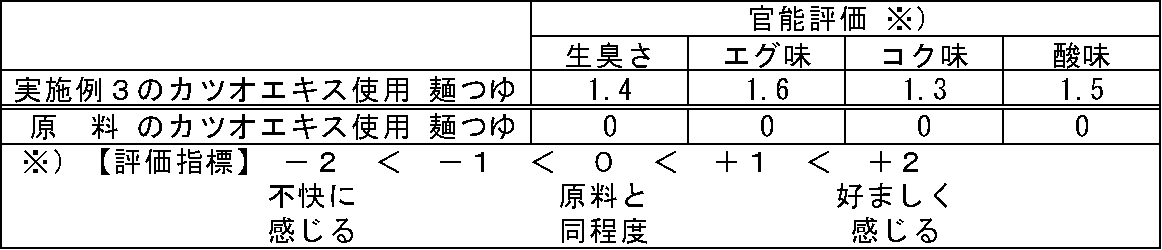
表1に示した通り、実施例1及び実施例2の本発明により得られた酵素処理カツオエキスは、それぞれグルコン酸を固形物換算で3.6%、2.8%含有していたが、原料のカツオエキス、比較例1のグリコーゲン分解活性能を有する酵素未処理のカツオエキス及び比較例2のグルコース酸化酵素未処理のカツオエキスでは、グルコン酸が検出されなかった。
官能試験において、実施例1及び実施例2の本発明により得られた酵素処理カツオエキスは、原料のカツオエキスと比較して、酸味やコク味が増強され、生臭さやエグ味が格段に抑制された、風味良好なエキスであった。しかし、比較例1のグリコーゲン分解活性能を有する酵素未処理のカツオエキス及び比較例2のグルコース酸化酵素未処理のカツオエキスについては、生臭さやエグ味は原料のカツオエキスと同程度であり低減されておらず、酸味やコク味についても原料のカツオエキスと大きな差がなかった。さらに、比較例3のグルコース酸化酵素未処理のグルコン酸添加カツオエキスは、実施例1及び実施例2の本発明により得られた酵素処理カツオエキスと同程度のグルコン酸を含有しているにもかかわらず、生臭さ、エグ味において、原料のカツオエキスと同程度か、それよりも増強されており、風味良好なものとはならなかった。
As shown in Table 1, the enzyme-treated bonito extract obtained in accordance with the present invention in Example 1 and Example 2 contained 3.6% and 2.8% gluconic acid in terms of solids, No gluconic acid was detected in the raw bonito extract, the untreated bonito extract having glycogenolytic activity of Comparative Example 1, and the oxidase untreated bonito extract of Comparative Example 2.
In the sensory test, the enzyme-treated bonito extract obtained in accordance with the present invention of Example 1 and Example 2 has enhanced sourness and richness compared with the raw bonito extract, and the raw odor and egg taste are remarkably suppressed. It was an extract with good flavor. However, the untreated bonito extract with glycogenolytic activity of Comparative Example 1 and the glucose oxidase untreated bonito extract of Comparative Example 2 have the same raw odor and taste as the raw bonito extract. In addition, the sourness and richness were not significantly different from those of the raw material skipjack extract. In addition, the glucose oxidase-untreated bonito extract of Comparative Example 3 contains gluconic acid in the same degree as the enzyme-treated bonito extract obtained in accordance with the present invention of Example 1 and Example 2. Regardless, the raw odor and taste were similar to or higher than the raw bonito extract, and did not have a good flavor.
[対比試験2]
実施例1の本発明により得られた酵素処理カツオエキス及び比較例2のグルコース酸化酵素未処理のカツオエキスについて、その色度を比較した。色度は、各エキスのBrixが1°のときの水溶液の吸光度(OD430〜570)を、分光光度計(UV−1200:株式会社島津製作所製)を用いて、光路長1cm、波長430nm、500nm及び570nmの条件で測定した。各波長の吸光度値をその合計値と共に表2に示す。
[Contrast test 2]
The chromaticity of the enzyme-treated bonito extract obtained by the present invention in Example 1 and the glucose oxidase-untreated bonito extract of Comparative Example 2 were compared. As for the chromaticity, the absorbance (OD 430 to 570) of the aqueous solution when the Brix of each extract is 1 ° is measured using a spectrophotometer (UV-1200: manufactured by Shimadzu Corporation), the optical path length is 1 cm, the wavelength is 430 nm, and 500 nm. And under the condition of 570 nm. Table 2 shows the absorbance values of the respective wavelengths together with the total values.
表2に示した通り、色度(OD430〜570及び合計値)については、実施例1の本発明により得られた酵素処理カツオエキスは、比較例2のグルコース酸化酵素未処理のカツオエキスと比較して、30%以上も低くなっており、本発明の製造方法を用いることにより、褐変・着色が抑制されたことが明らかに示された。 As shown in Table 2, for the chromaticity (OD 430 to 570 and total value), the enzyme-treated bonito extract obtained by the present invention in Example 1 was compared with the glucose oxidase-untreated bonito extract of Comparative Example 2. Thus, it was clearly shown that browning and coloring were suppressed by using the production method of the present invention.
[実施例3]
カツオを熱水抽出した後、固液分離工程及び濃縮工程を経て得られたカツオエキス(Brix60°)16gに、水184gを加えてBrix5°に調整した後、グルコアミラーゼ製剤(グルターゼAN:エイチビィアイ株式会社製)を260U/100gとなるように添加し、さらに、グルコース酸化酵素産生能を有する微生物であるGluconobacter frateurii NBRC3264株を、産生するグルコース酸化酵素が酵素単位で100U/100gとなるよう添加して、振盪(130rpm)を行いながら40℃で2時間酵素処理を行った。酵素処理後、90℃で10分間酵素失活処理を行うことで、本発明の酵素処理カツオエキス(実施例3)180g(Brix5°)を得た。グルコン酸含量は、固形物換算で2.5%であった。なお、グルコース酸化酵素活性の測定は、分光光度計を用いた活性測定法(Journal of Bacteriology 1986,166(1):269−274)により実施した。
[Example 3]
After extraction of bonito with hot water, 184 g of water was added to 16 g of bonito extract (Brix 60 °) obtained through the solid-liquid separation step and the concentration step to adjust to Brix 5 °, and then a glucoamylase preparation (Glutase AN: Gluconobacter freighturii NBRC 3264 strain, which is a microorganism capable of producing glucose oxidase, is added so that the glucose oxidase produced is 100 U / 100 g in enzyme units. The enzyme treatment was performed at 40 ° C. for 2 hours while shaking (130 rpm). After enzyme treatment, enzyme deactivation treatment was performed at 90 ° C. for 10 minutes to obtain 180 g (Brix 5 °) of the enzyme-treated bonito extract of the present invention (Example 3). The gluconic acid content was 2.5% in terms of solid matter. The glucose oxidase activity was measured by an activity measurement method using a spectrophotometer (Journal of Bacteriology 1986, 166 (1): 269-274).
[対比試験3]
実施例3の本発明により得られた酵素処理カツオエキス及び原料のカツオエキスを水でBrix5°に調整したものをそれぞれ用いて、下記表3の配合比で混合し、麺つゆ各300gを調製した。得られた各麺つゆについて、目視により外観色を比較した。さらに、得られた各麺つゆを用いて、10人のパネラーにより官能試験を実施した。評価は、生臭さ、エグ味、コク味、酸味について、原料のカツオエキスを水でBrix5°に調整したものを用いた麺つゆの評点を0点としたときの評価を−2〜+2点の内から採点することで評価し、その平均点を算出した。結果を表4に示す。
[Contrast test 3]
Using each of the enzyme-treated bonito extract obtained in accordance with the present invention in Example 3 and the raw bonito extract adjusted to Brix 5 ° with water, the mixture was mixed at the mixing ratio shown in Table 3 below to prepare 300 g of noodle soup. . The appearance color of each noodle soup obtained was compared visually. Furthermore, the sensory test was implemented by 10 panelists using each obtained noodle soup. Evaluation is -2 to +2 when the score of noodle soup using raw bonito extract adjusted to Brix5 ° with water is set to 0 for raw odor, taste, richness and sourness Evaluation was made by scoring from the inside, and the average score was calculated. The results are shown in Table 4.
実施例3の本発明により得られた酵素処理カツオエキスを用いた麺つゆ及び原料のカツオエキスを用いた麺つゆとも、外観色はほぼ同等であり、実施例3の本発明により得られた酵素処理カツオエキスを用いた麺つゆにおいて褐変・着色による影響は見られなかった。
また、表4に示した通り、実施例3の本発明により得られた酵素処理カツオエキスを用いた麺つゆは、原料のカツオエキスを用いた麺つゆと比較して、生臭さ、エグ味共に抑制されており、コク味が増強されており、風味良好な麺つゆであった。
The appearance color of the noodle soup using the enzyme-treated bonito extract obtained by the present invention in Example 3 and the noodle soup using the raw bonito extract are almost the same, and the enzyme obtained by the present invention in Example 3 Noodle soup using the treated bonito extract was not affected by browning or coloring.
Moreover, as shown in Table 4, the noodle soup using the enzyme-treated bonito extract obtained by the present invention in Example 3 has both a fresh odor and a delicious taste compared to the noodle soup using the bonito extract as a raw material. The noodle soup was suppressed, the body was enhanced, and the flavor was good.
[実施例4]
カツオを熱水抽出した後、固液分離工程及び濃縮工程を経て得られたカツオエキス(Brix60°)25gに、水75gを加えてBrix15°に調整した後、グルコアミラーゼ製剤(グルターゼAN:エイチビィアイ株式会社製)を390U/100gとなるように添加して、50℃で1時間酵素処理を行った。40℃まで冷却した後、グルコース酸化酵素製剤(スミチームGOP:新日本化学工業株式会社製)を75U/100gとなるように添加して、通気量20mL/分で通気及び撹拌を行いながら40℃で2時間酵素処理を行った。酵素処理後、90℃で10分間酵素失活処理した後、デキストリン(パインデックス(登録商標)#2:松谷化学工業株式会社製)15g、食塩10g、くん液(スモークEZ−A:レッドアロー社製)1gを添加して完全に溶解させ、フリーズドライにて乾燥させることで、本発明の酵素処理カツオエキス粉末(実施例4)35gを得た。グルコン酸含量は、固形物換算で1.1%であった。
さらに、得られた本発明の酵素処理カツオエキス粉末(実施例4)1gを、熱水100mlに溶解させて官能評価した結果、生臭さやエグ味を感じず、適度な酸味を有しており、コク味が強く、カツオだし特有の風味と同等の風味を有するものであった。
[Example 4]
After hot water extraction of bonito, 25 g of bonito extract (Brix 60 °) obtained through the solid-liquid separation step and the concentration step was adjusted to Brix 15 ° by adding 75 g of water, and then a glucoamylase preparation (Glutase AN: HTV I stock) Was added at 390 U / 100 g, and the enzyme treatment was carried out at 50 ° C. for 1 hour. After cooling to 40 ° C., a glucose oxidase preparation (Sumiteam GOP: Shin Nippon Chemical Industry Co., Ltd.) was added to 75 U / 100 g, and aeration and stirring were performed at 40 ° C. with an aeration rate of 20 mL / min. Enzyme treatment was performed for 2 hours. After enzyme treatment, after 10 minutes of enzyme inactivation treatment at 90 ° C., 15 g dextrin (Paindex (registered trademark) # 2: Matsutani Chemical Industry Co., Ltd.), 10 g sodium chloride, and smoke solution (smoked EZ-A: Red Arrow) 1 g) was added and completely dissolved, and freeze-dried to obtain 35 g of the enzyme-treated skipjack extract powder (Example 4) of the present invention. The gluconic acid content was 1.1% in terms of solid matter.
Furthermore, as a result of sensory evaluation by dissolving 1 g of the obtained enzyme-treated bonito extract powder (Example 4) of the present invention in 100 ml of hot water, it does not feel the raw odor or taste, and has an appropriate acidity, The body was strong and had the same flavor as the bonito soup stock.
Claims (2)
Priority Applications (1)
| Application Number | Priority Date | Filing Date | Title |
|---|---|---|---|
| JP2012086416A JP5991663B2 (en) | 2012-04-05 | 2012-04-05 | Method for producing enzyme-treated bonito extract |
Applications Claiming Priority (1)
| Application Number | Priority Date | Filing Date | Title |
|---|---|---|---|
| JP2012086416A JP5991663B2 (en) | 2012-04-05 | 2012-04-05 | Method for producing enzyme-treated bonito extract |
Publications (2)
| Publication Number | Publication Date |
|---|---|
| JP2013215108A JP2013215108A (en) | 2013-10-24 |
| JP5991663B2 true JP5991663B2 (en) | 2016-09-14 |
Family
ID=49588052
Family Applications (1)
| Application Number | Title | Priority Date | Filing Date |
|---|---|---|---|
| JP2012086416A Active JP5991663B2 (en) | 2012-04-05 | 2012-04-05 | Method for producing enzyme-treated bonito extract |
Country Status (1)
| Country | Link |
|---|---|
| JP (1) | JP5991663B2 (en) |
Families Citing this family (1)
| Publication number | Priority date | Publication date | Assignee | Title |
|---|---|---|---|---|
| JP6792245B2 (en) * | 2016-04-21 | 2020-11-25 | 株式会社エル・エスコーポレーション | Production method of processed fish composition and processed fish composition |
Family Cites Families (7)
| Publication number | Priority date | Publication date | Assignee | Title |
|---|---|---|---|---|
| JP2980507B2 (en) * | 1993-02-17 | 1999-11-22 | オルガノ株式会社 | Flour product with improved texture and method for producing the same |
| EP0862623B1 (en) * | 1995-10-06 | 2004-06-02 | Genencor International, Inc. | Microgranule for food/feed applications |
| JP3653154B2 (en) * | 1996-06-11 | 2005-05-25 | 株式会社中埜酢店 | Method for producing mild acid seasoning |
| JPH11169135A (en) * | 1997-12-10 | 1999-06-29 | Nagaoka Jitsugyo Kk | Medicinal ginseng processing sour liquid and its production |
| JP2001204405A (en) * | 2000-01-31 | 2001-07-31 | Gun Ei Chem Ind Co Ltd | Manufacturing method and use of cabbage syrup |
| JP3503885B2 (en) * | 2000-04-19 | 2004-03-08 | 日本水産株式会社 | Fermented seasonings made from seafood extract |
| JP2009207363A (en) * | 2008-02-29 | 2009-09-17 | Yamaki Co Ltd | Malted rice low in contamination of general contaminated bacteria and high in protease activity and method for producing the same, and fish condiment using the malted rice made by the method and method for producing the same |
-
2012
- 2012-04-05 JP JP2012086416A patent/JP5991663B2/en active Active
Also Published As
| Publication number | Publication date |
|---|---|
| JP2013215108A (en) | 2013-10-24 |
Similar Documents
| Publication | Publication Date | Title |
|---|---|---|
| US20240099348A1 (en) | Edible compositions including fungal mycelium protein | |
| JP5467433B2 (en) | Seaweed fermentation composition and method for producing the same | |
| CN102802440A (en) | Composition for salt-reducing diet | |
| JP6771037B2 (en) | Fermentation method | |
| KR20170097354A (en) | Kimchi sauce composition comprising fermented hot pepper and fermented soybean and method for preparing the same | |
| JP2001204405A (en) | Manufacturing method and use of cabbage syrup | |
| JP2013106607A (en) | Production method of imidazole dipeptide-containing extract | |
| JP6071168B2 (en) | Blended tomato juice and method for producing the same | |
| CN113303447A (en) | Formula and preparation method of salted yolk luncheon meat with reduced salt | |
| US20240041072A1 (en) | Non-alcoholic functional beverage with a malt base or based on non-alcoholic beer or a water-aroma base enriched with amino acids and dietary fibre as well as a method of manufacturing a non-alcoholic functional beverage with a malt base or based on non-alcoholic beer or a water-aroma base, enriched with amino acids and dietary fibre | |
| JP4041850B2 (en) | A novel lactic acid bacterium that shows good growth at low temperatures, high nisin production, excellent saccharide utilization, produces γ-aminobutyric acid, and uses γ-aminobutyric acid in high production methods and techniques for preventing alcohol from burning out. | |
| TWI605761B (en) | Liquid seasoning | |
| Awulachew | Food additives and food processing aids: The role, function and future research need of industrial food biotechnology | |
| JP6019527B2 (en) | Method for producing enzyme-treated seafood extract | |
| CN109287934A (en) | Method for preparing low-salt umami flavoring base material by enzymatic hydrolysis of fish and shrimp processing by-products | |
| JP4628978B2 (en) | Method for producing composition with high content of γ-aminobutyric acid | |
| JP2008017703A (en) | METHOD FOR PRODUCING FOOD COMPRISING gamma-AMINOBUTYRIC ACID AND ORNITHINE | |
| CN103596447B (en) | Hydrolysate of protein substrate and preparation method thereof | |
| JP2013215108A (en) | Method of producing enzyme-treated bonito extract | |
| JP5041276B2 (en) | Soy sauce, its production method, and processed soy sauce product. | |
| CN105077133B (en) | A kind of natural type roast pork flavor material and preparation method thereof | |
| JP4838628B2 (en) | Method for producing composition with high content of γ-aminobutyric acid | |
| JP4901235B2 (en) | Beverage vinegar | |
| CN114302653A (en) | Manufacturing method of yeast extract | |
| KR100913066B1 (en) | Method for preparing strawberry kochujang using syrup |
Legal Events
| Date | Code | Title | Description |
|---|---|---|---|
| A621 | Written request for application examination |
Free format text: JAPANESE INTERMEDIATE CODE: A621 Effective date: 20150327 |
|
| A977 | Report on retrieval |
Free format text: JAPANESE INTERMEDIATE CODE: A971007 Effective date: 20160113 |
|
| A131 | Notification of reasons for refusal |
Free format text: JAPANESE INTERMEDIATE CODE: A131 Effective date: 20160126 |
|
| A521 | Request for written amendment filed |
Free format text: JAPANESE INTERMEDIATE CODE: A523 Effective date: 20160315 |
|
| TRDD | Decision of grant or rejection written | ||
| A01 | Written decision to grant a patent or to grant a registration (utility model) |
Free format text: JAPANESE INTERMEDIATE CODE: A01 Effective date: 20160726 |
|
| A61 | First payment of annual fees (during grant procedure) |
Free format text: JAPANESE INTERMEDIATE CODE: A61 Effective date: 20160808 |
|
| R150 | Certificate of patent or registration of utility model |
Ref document number: 5991663 Country of ref document: JP Free format text: JAPANESE INTERMEDIATE CODE: R150 |
|
| R250 | Receipt of annual fees |
Free format text: JAPANESE INTERMEDIATE CODE: R250 |
|
| R250 | Receipt of annual fees |
Free format text: JAPANESE INTERMEDIATE CODE: R250 |