JP5779986B2 - Glass paste, method for manufacturing plasma display member, and plasma display member - Google Patents
Glass paste, method for manufacturing plasma display member, and plasma display member Download PDFInfo
- Publication number
- JP5779986B2 JP5779986B2 JP2011118914A JP2011118914A JP5779986B2 JP 5779986 B2 JP5779986 B2 JP 5779986B2 JP 2011118914 A JP2011118914 A JP 2011118914A JP 2011118914 A JP2011118914 A JP 2011118914A JP 5779986 B2 JP5779986 B2 JP 5779986B2
- Authority
- JP
- Japan
- Prior art keywords
- mass
- content
- glass paste
- paste
- forming
- Prior art date
- Legal status (The legal status is an assumption and is not a legal conclusion. Google has not performed a legal analysis and makes no representation as to the accuracy of the status listed.)
- Expired - Fee Related
Links
Landscapes
- Glass Compositions (AREA)
- Manufacture Of Electron Tubes, Discharge Lamp Vessels, Lead-In Wires, And The Like (AREA)
- Gas-Filled Discharge Tubes (AREA)
Description
本発明は、ガラスペースト、プラズマディスプレイ用部材の製造方法およびプラズマディスプレイ用部材に関する。 The present invention relates to a glass paste, a method for producing a plasma display member, and a plasma display member.
プラズマディスプレイパネル(PDP)は液晶パネルに比べて高速の表示が可能であり、かつ大型化が容易であることから、OA機器および広報表示装置等の分野に浸透している。また、高品位テレビジョンの分野等で活用されている。 A plasma display panel (PDP) can display at a higher speed than a liquid crystal panel and can be easily increased in size, and thus has penetrated into fields such as OA equipment and public information display devices. It is also used in the field of high-definition television.
PDPは、前面板と背面板の2枚のガラス基板の間に作られた僅かな隙間を放電空間とし、アノードおよびカソード電極間にプラズマ放電を生じさせ、放電空間内に封入されているガスから発生した紫外線を、放電空間内に設けた蛍光体にあてて発光させることにより表示を行うものである。この場合、電極は前面板と背面板にそれぞれストライプ状に配置され、複数本の電極が平行にあり、前面板の電極と背面板の電極は僅かの間隙を介して対向し、かつ互いに直交するように形成される。PDPの中で、蛍光体によるカラー表示に適した3電極構造の面放電型PDPは、互いに平行に隣接した一対の表示電極からなる複数の電極対と、各電極対と直交する複数のアドレス電極とを有する。また、背面板には光のクロストークを防ぎ、放電空間を確保するための隔壁が、電極間のスペースに形成される。さらに、その放電空間内に蛍光体が形成されている。 In the PDP, a slight gap formed between two glass substrates, a front plate and a back plate, is used as a discharge space, and plasma discharge is generated between the anode and the cathode electrode, and the gas enclosed in the discharge space is used. Display is performed by emitting the emitted ultraviolet light to a phosphor provided in the discharge space. In this case, the electrodes are arranged in stripes on the front plate and the back plate, respectively, a plurality of electrodes are parallel, the electrodes on the front plate and the electrodes on the back plate face each other with a slight gap and are orthogonal to each other. Formed as follows. Among the PDPs, a surface discharge type PDP having a three-electrode structure suitable for color display using a phosphor includes a plurality of electrode pairs each composed of a pair of display electrodes adjacent in parallel to each other, and a plurality of address electrodes orthogonal to each electrode pair. And have. In addition, a barrier rib for preventing crosstalk of light and securing a discharge space is formed in the space between the electrodes on the back plate. Further, a phosphor is formed in the discharge space.
前面板と背面板との封着は、パネルの周辺部分に封着用ガラスフリットを含むペーストを塗布後、封着用ガラスフリットが軟化する温度での熱処理によって行うのが通常の方法であるが、この場合、基板の反りや隔壁高さのバラツキにより、背面板の放電空間を仕切る隔壁と前面板との間にできる隙間の大きさにバラツキがあり、クロストークや振動によるノイズの原因となる場合があった。隔壁を精度良く形成する方法としては、感光性ペーストを用いる方法が提案されているが、この方法によれば高精細な隔壁を精度良く形成できるが、基板の反りが発生する場合など、高さ方向のバラツキに関しては、精度が十分に制御できない(例えば、特許文献1)。一方、こういった課題を解決するために、背面板に形成された隔壁と前面板の間に隔壁高さ調整層や封着層を設けるなどの方法が提案されている(例えば、特許文献2)。特許文献2に記載されている隔壁高さ調整層は、前記の課題には有効であるものの、大型・大面積に形成された隔壁頂部に精度良く形成する方法がなく、特に、昨今のハイビジョンやフルハイビジョンのように高精細化が進んだ状況では、特許文献2のような隔壁高さ調整層を隔壁頂部に精度よく形成することが困難となっていた。 Usually, the front plate and the back plate are sealed by applying a paste containing a sealing glass frit to the peripheral portion of the panel and then performing a heat treatment at a temperature at which the sealing glass frit softens. In this case, there is variation in the size of the gap between the partition wall that partitions the discharge space of the back plate and the front plate due to substrate warpage and partition wall height variation, which may cause noise due to crosstalk and vibration. there were. As a method for forming the partition walls with high accuracy, a method using a photosensitive paste has been proposed. According to this method, a high-definition partition wall can be formed with high accuracy, but when the substrate warps, the height is high. With respect to the variation in direction, the accuracy cannot be sufficiently controlled (for example, Patent Document 1). On the other hand, in order to solve these problems, a method of providing a partition wall height adjusting layer or a sealing layer between a partition wall formed on a back plate and a front plate has been proposed (for example, Patent Document 2). Although the partition wall height adjustment layer described in Patent Document 2 is effective for the above-described problem, there is no method for accurately forming the top of the partition wall formed in a large and large area. In a situation where high definition has progressed as in full high vision, it has been difficult to accurately form a partition wall height adjusting layer as in Patent Document 2 on the top of the partition wall.
本発明は、ペースト安定性、密着性に優れ、クロストークやノイズを防止し低消費電力のプラズマディスプレイを実現可能な封着層を高精度に形成することができる感光性ガラスペーストを提供することを目的とする。 The present invention provides a photosensitive glass paste that is excellent in paste stability and adhesiveness, can prevent crosstalk and noise, and can form a sealing layer capable of realizing a low power consumption plasma display with high accuracy. With the goal.
すなわち、本発明は、有機溶剤と重合性有機成分および重合開始剤を含む有機固形分とガラス転移点が380℃〜480℃の範囲内である低融点ガラスを含む無機固形分とを含有し、前記低融点ガラスのB2O3の含有量が20質量%〜50質量%であり、SiO2、ZnOおよびAl2O3の含有量の合計が25質量%〜55質量%の範囲内、LiO2、Na2 OおよびK2Oの含有量の合計が15質量%〜25質量%の範囲内であり、かつ、SiO 2 の含有量が4.6〜30.2質量%、ZnOの含有量が2.4〜21.1質量%、Al 2 O 3 の含有量が9.0〜24.2質量%、Li 2 Oの含有量が3.4〜7.2質量%、Na 2 Oの含有量が0〜10.2質量%、K 2 Oの含有量が5.3〜17.0質量%、MgOの含有量が0.3〜0.6質量%、CaOの含有量が0.4〜0.8質量%、および、BaOの含有量が1.1〜2.3質量%の範囲内であり、無機固形分として、前記低融点ガラス90〜95質量%とガラス転移点が600〜1000℃の範囲内である高融点ガラスを5〜10質量%とを含むことを特徴とした感光性ガラスペーストに関する。 That is, the present invention contains an organic solid containing an organic solvent, a polymerizable organic component and a polymerization initiator, and an inorganic solid containing a low melting point glass having a glass transition point in the range of 380 ° C. to 480 ° C. The content of B 2 O 3 in the low-melting glass is 20% by mass to 50% by mass, and the total content of SiO 2 , ZnO and Al 2 O 3 is in the range of 25% by mass to 55% by mass , L iO 2, Na 2 O Contact and K 2 O sum der range of 15 wt% to 25 wt% of the content of is, and, the content of SiO 2 is 4.6 to 30.2 wt%, ZnO the content of 2.4 to 21.1 wt%, Al 2 O 3 content is from 9.0 to 24.2 wt%, the content of Li 2 O 3.4 to 7.2 wt%, Na The content of 2 O is 0 to 10.2% by mass, the content of K 2 O is 5.3 to 17.0% by mass, MgO Is 0.3 to 0.6% by mass, CaO is 0.4 to 0.8% by mass, and BaO is 1.1 to 2.3% by mass. A photosensitive glass paste comprising, as an inorganic solid content, 90 to 95% by mass of the low-melting glass and 5 to 10% by mass of a high-melting glass having a glass transition point in the range of 600 to 1000 ° C. About.
本発明の感光性ガラスペーストにおいては、低融点ガラス中のLiO2、Na2 OおよびK2Oの含有量の合計をSiO2、ZnOおよびAl2O3の含有量の合計で除した値が0.4〜0.6の範囲内であることが好ましい。 In photosensitive glass paste of the present invention, LiO 2, Na 2 O Contact and K 2 O values the total content divided by the total content of SiO 2, ZnO and Al 2 O 3 of low melting glass Is preferably in the range of 0.4 to 0.6.
また、本発明の感光性ガラスペーストにおいては、無機固形分として、前記低融点ガラス90質量%〜95質量%とガラス転移点が600℃〜1000℃の範囲内である高融点ガラスを5質量%〜10質量%とを含むことが好ましい。 Moreover, in the photosensitive glass paste of this invention, 5 mass% of high melting glass whose glass transition point is in the range of 90 to 95 mass% and glass transition point of the said low melting glass as inorganic solid content. It is preferable that 10 mass% is included.
また、本発明は、基板上に、隔壁形成用感光性ガラスペーストを塗布する工程、前記隔壁形成用感光性ガラスペースト塗布層にフォトマスクを介して露光する工程、前記露光した感光性ガラスペースト塗布層上に封着層形成用感光性ガラスペーストを塗布する工程、前記露光した隔壁形成用感光性ガラスペースト塗布層および前記封着層形成用ガラスペースト塗布層の積層膜をフォトマスクを介して一括して露光する工程、現像する工程、焼成する工程を経て、放電空間を仕切るための隔壁および封着層を形成するプラズマディスプレイ用部材の製造方法であって、前記封着層形成用感光性ガラスペーストとして上述の感光性ガラスペーストを用いることを特徴とするプラズマディスプレイ用部材の製造方法に関する。 The present invention also includes a step of applying a barrier-forming photosensitive glass paste on a substrate, a step of exposing the barrier-forming photosensitive glass paste coating layer through a photomask, and a step of applying the exposed photosensitive glass paste. A step of applying a photosensitive glass paste for forming a sealing layer on the layer, a laminated film of the exposed photosensitive glass paste coating layer for forming a barrier rib and the glass paste coating layer for forming a sealing layer through a photomask. The method for producing a member for a plasma display that forms a partition wall and a sealing layer for partitioning a discharge space through an exposure step, a developing step, and a baking step, wherein the photosensitive glass for forming a sealing layer is formed. The present invention relates to a method for producing a member for a plasma display, wherein the above-mentioned photosensitive glass paste is used as a paste.
さらに、本発明は、前記製造方法により得られたプラズマディスプレイ用部材に関する。 Furthermore, this invention relates to the member for plasma displays obtained by the said manufacturing method.
本発明の感光性ガラスペーストは、ペースト安定性、加工性、密着性に優れ、封着層を精度よく形成することができる。また、これを用いることによって、高性能なプラズマディスプレイを低コストで製造することができる。 The photosensitive glass paste of the present invention is excellent in paste stability, processability and adhesion, and can form a sealing layer with high accuracy. Further, by using this, a high-performance plasma display can be manufactured at a low cost.
本発明のガラスペーストは、有機溶剤と重合性有機成分および重合開始剤を含む有機固形分とガラス転移点が380℃〜480℃の範囲内である低融点ガラスを含む無機固形分とを含有する。 The glass paste of the present invention contains an organic solid containing an organic solvent, a polymerizable organic component and a polymerization initiator, and an inorganic solid containing a low-melting glass having a glass transition point in the range of 380 ° C to 480 ° C. .
従来のプラズマディスプレイ用隔壁を形成するために用いる隔壁形成用感光性ガラスペーストにおいては、焼成時の隔壁形状保持のために、比較的軟化点が高いガラスフリットを使用し、また、ファインピッチで高アスペクト比のパターンを形成するために、ガラス粉末の屈折率を有機成分の屈折率と合わせる目的で、比較的屈折率の小さいガラスフリットを用いてきた。しかしながら、このような隔壁形成用感光性ガラスペーストを用いた方法では、基板の反りや隔壁の高さバラツキが発生した場合に、クロストークやノイズが発生するといった問題があった。これを解消するためには、隔壁頂部と前面板とを封着時の加熱工程で密着させることが有効である。そのためには、隔壁頂部に封着層を形成する必要があるが、その形成方法としては、隔壁パターンを焼成して形成した後、封着層形成用ペーストをスクリーン印刷やロールコーターを用いて塗布し、封着時に前面板と密着させる方法がある。この場合、封着層形成用ガラスペーストに含まれるガラスは、封着工程での加熱温度で前面板と密着する程度に軟化する必要があるため、ガラスの成分としてPbO、Bi2O3などの成分を多く含み、有機成分とガラスとの屈折率差が大きくなる傾向にあった。このことにより、従来の隔壁形成工程に加え封着層形成工程を別途必要とするためコスト的に問題があった。さらに高精細に形成された隔壁頂部のみに封着層形成用ガラスペーストを塗布するには精度面で課題があった。そこで、隔壁形成用感光性ガラスペーストを塗布した塗布膜上に、本発明の感光性ガラスペーストを塗布し、フォトマスクを介して一括して露光、現像した後に、焼成することにより、封着層を隔壁頂部に精度良く形成することが可能となる。 In the conventional photosensitive glass paste for forming barrier ribs used for forming barrier ribs for plasma displays, a glass frit having a relatively high softening point is used to maintain the barrier rib shape during firing, and a high pitch and high pitch are used. In order to form an aspect ratio pattern, a glass frit having a relatively low refractive index has been used for the purpose of matching the refractive index of the glass powder with the refractive index of the organic component. However, the method using the photosensitive glass paste for forming barrier ribs has a problem that crosstalk and noise occur when the substrate warps or the barrier ribs vary in height. In order to solve this problem, it is effective to bring the top of the partition wall and the front plate into close contact with each other in the heating process at the time of sealing. For this purpose, it is necessary to form a sealing layer on the top of the partition wall. As a method for forming the sealing layer, after baking and forming the partition pattern, the paste for forming the sealing layer is applied by screen printing or a roll coater. In addition, there is a method of closely contacting the front plate at the time of sealing. In this case, since the glass contained in the glass paste for forming the sealing layer needs to be softened to such an extent that it is in close contact with the front plate at the heating temperature in the sealing process, PbO, Bi 2 O 3 and the like are used as glass components. It contained many components, and the refractive index difference between the organic component and the glass tended to increase. As a result, a sealing layer forming step is separately required in addition to the conventional partition wall forming step, which causes a problem in cost. Furthermore, there is a problem in terms of accuracy in applying the sealing layer forming glass paste only to the top of the partition wall formed with high definition. Therefore, the photosensitive glass paste of the present invention is coated on the coating film coated with the barrier rib-forming photosensitive glass paste, exposed and developed in a batch through a photomask, and then fired to form a sealing layer. Can be accurately formed on the top of the partition wall.
本発明の感光性ガラスペーストは、封着工程での加熱温度で前面板と密着する程度に軟化する必要がある。そのため、含有する低融点ガラス粉末のガラス転移点は380〜480℃であることが必要である。380℃より低いと形状保持性が悪く、480℃を超えると前面板との密着性が不十分となる。同様に、ガラス粉末の屈伏点は、470〜510℃であることが好ましい。470℃より低いと焼成時の脱バインダー性が悪くなり、焼成後の封着層に空隙ができ、封着時に欠けなどの欠陥が生じる恐れがある。510℃を超えると前面板との密着性が不十分となる。さらに、ガラス粉末の軟化点は515〜550℃であると好ましい。515℃より低いと脱バインダー性が不十分になり、また焼成時の形状保持性が悪く、均一な封着層が得られない。550℃よりも高いと前面板との密着性が不十分となる。 The photosensitive glass paste of the present invention needs to be softened to the extent that it is in close contact with the front plate at the heating temperature in the sealing step. Therefore, the glass transition point of the low melting glass powder to be contained needs to be 380 to 480 ° C. When the temperature is lower than 380 ° C., the shape retention is poor, and when the temperature exceeds 480 ° C., the adhesion with the front plate becomes insufficient. Similarly, the yield point of the glass powder is preferably 470 to 510 ° C. When the temperature is lower than 470 ° C., the binder removal property at the time of firing is deteriorated, voids are formed in the sealing layer after firing, and defects such as chipping may occur at the time of sealing. If it exceeds 510 ° C, the adhesion with the front plate becomes insufficient. Furthermore, the softening point of the glass powder is preferably 515 to 550 ° C. When the temperature is lower than 515 ° C., the binder removal property is insufficient, the shape retention during firing is poor, and a uniform sealing layer cannot be obtained. When it is higher than 550 ° C., the adhesion to the front plate becomes insufficient.
本発明の感光性ガラスペーストに含まれる低融点ガラス粉末のB2O3の含有量は20〜50質量%の範囲内である必要がある。B2O3の含有量が20質量%未満であると、封着時に形状を保持できないという問題がある。50質量%を超えると、封着時に前面板との密着性が不十分である問題がある。また、SiO2、ZnOおよびAl2O3の含有量の合計は25〜55質量%の範囲内である必要がある。SiO2、ZnOおよびAl2O3の含有量の合計が25質量%未満だと焼成時の脱バインダー性が不十分となり、泡を発生し封着時に欠け、剥がれ等の欠陥が生じやすくなる問題がある。55質量%を超えるとガラス粉末の転移点、屈伏点、軟化点が高くなることで、封着時の前面板との密着性が不十分となる問題がある。 The content of B 2 O 3 of low melting point glass powder contained in the photosensitive glass paste of the present invention should be within the range of 20 to 50 wt%. If the B 2 O 3 content is less than 20 wt%, it is impossible to hold the shape during sealing. When it exceeds 50 mass%, there exists a problem that adhesiveness with a front board is inadequate at the time of sealing. Further, the total content of SiO 2, ZnO and Al 2 O 3 should be within the range of 25 to 55 wt%. When the total content of SiO 2 , ZnO and Al 2 O 3 is less than 25% by mass, the binder removal property at the time of firing becomes insufficient, bubbles are generated, and defects such as chipping and peeling are liable to occur during sealing. There is. When it exceeds 55% by mass, there is a problem that the transition point, yield point, and softening point of the glass powder become high, resulting in insufficient adhesion to the front plate during sealing.
本発明の感光性ガラスペーストに含まれる低融点ガラスのLiO2、Na2 OおよびK2Oの含有量の合計は15〜25質量%の範囲内である必要がある。LiO2、Na2 OおよびK2Oの含有量の合計が15質量%未満だと封着工程の加熱温度で十分に軟化できず、前面板との密着性が不十分という問題がある。25質量%を超えるとペーストの増粘やゲル化によって、塗布ができないか、塗布をしても封着時の加熱工程で形状を保持できないという問題を生じる。 Total LiO 2, Na 2 O Contact and K 2 O content of the low melting point glass contained in the photosensitive glass paste of the present invention should be within the range of 15 to 25 wt%. LiO 2, Na total content of 2 O Contact and K 2 O can not be sufficiently softened and less than 15 wt% at a heating temperature of the sealing step, there is adhesion between the front plate is a problem that insufficient. If it exceeds 25% by mass, there is a problem that the coating cannot be applied due to thickening or gelation of the paste, or the shape cannot be maintained in the heating process at the time of sealing even if it is applied.
さらにLiO2、Na2 OおよびK2Oの含有量の合計をSiO2、ZnOおよびAl2O3の含有量の合計で除した値が0.4〜0.6の範囲内であることが必要である。この値を0.4未満であれば、封着工程の加熱温度で十分に軟化することができず、前面板との密着性が不十分という問題がある。0.6より大きいと、ペーストの塗布ができないか、封着時に形状を保持できない問題がある。 Further LiO 2, the value obtained by dividing the total content of Na 2 O Contact and K 2 O SiO 2 to the total content of, ZnO and Al 2 O 3 is within the range of 0.4 to 0.6 is necessary. If this value is less than 0.4, it cannot be sufficiently softened at the heating temperature in the sealing step, and there is a problem that the adhesion to the front plate is insufficient. If it is larger than 0.6, there is a problem that the paste cannot be applied or the shape cannot be maintained at the time of sealing.
以下、本発明の感光性ガラスペーストに含まれる低融点ガラスについて説明する。 Hereinafter, the low melting glass contained in the photosensitive glass paste of the present invention will be described.
本発明のペーストに含まれる低融点ガラスは、SiO2、ZnOとAl2O3を1種以上含むのが好ましい。より好ましくはガラス中のSiO2、ZnOおよびAl2O3の含有量が合計で25質量% 〜55質量%である。この範囲であると、焼成時の脱バインダーが可能であり、封着工程の加熱温度で十分に形状を保持することができる。 The low melting point glass contained in the paste of the present invention preferably contains one or more of SiO 2 , ZnO and Al 2 O 3 . More preferably, the total content of SiO 2 , ZnO and Al 2 O 3 in the glass is 25% by mass to 55% by mass. Within this range, the binder can be removed during firing, and the shape can be sufficiently maintained at the heating temperature in the sealing step.
さらに本発明の感光性ガラスペーストに含まれる低融点ガラスは、B2O3を含み、B2O3の量は10質量%〜60質量%であるとよく、より好ましくは20質量%〜50質量%である。この範囲であると、焼成時の脱バインダーが可能となり、封着時に形状を保持することができる。またプラズマディスプレイパネルの電気特性を良好に発現することができる。 Further low-melting glass contained in the photosensitive glass paste of the present invention comprises a B 2 O 3, the amount of B 2 O 3 is often to be 10% to 60% by weight, more preferably 20% to 50 % By mass. Within this range, the binder can be removed during firing, and the shape can be maintained during sealing. In addition, the electrical characteristics of the plasma display panel can be expressed well.
また本発明の低融点ガラスは、LiO2、Na2 OおよびK2Oのうち、少なくとも1種類を15質量%〜35質量%含有することが好ましい。より好ましくは15〜25質量%である。この範囲であると、封着時の加熱温度で十分に軟化し、前面板と密着することのできる封着層を得ることができる。 The low melting point glass of the present invention, among the LiO 2, Na 2 O Contact and K 2 O, preferably contains at least one of 15 wt% to 35 wt%. More preferably, it is 15-25 mass%. Within this range, it is possible to obtain a sealing layer that is sufficiently softened at the heating temperature at the time of sealing and can be in close contact with the front plate.
さらに本発明の低融点ガラスは、LiO2、Na2 OおよびK2Oの含有量の合計をSiO2、ZnOおよびAl2O3の含有量の合計で除した値が0.3〜0.6の範囲内であると好ましく、より好ましくは0.4〜0.6の範囲内のときである。この範囲であると、焼成時の脱バインダーを促し、封着時に軟化し、前面板との密着性が良好である。 Further low-melting glass of the present invention, LiO 2, Na 2 O value obtained by dividing the total content of Contact and K 2 O in a total content of SiO 2, ZnO and Al 2 O 3 is from 0.3 to 0 Is preferably in the range of .6, more preferably in the range of 0.4 to 0.6. When it is in this range, the binder removal at the time of firing is promoted, the resin is softened at the time of sealing, and the adhesion to the front plate is good.
また前述のLiO2、Na2 OおよびK2Oのアルカリ金属以外に例えば、BaO、CaOなどアルカリ土類金属類、MgOを含んでもよい。またB2O3以外にはP2O3、SiO2、ZnOとAl2O3以外に、ZrO、TiO2を含んでもよい。
Also for example, other than the alkali metal of LiO 2, Na 2 O Contact and K 2 O of the foregoing, BaO, alkaline earth metals such as CaO, may comprise MgO. In addition to B 2 O 3 , ZrO and TiO 2 may be included in addition to P 2 O 3 , SiO 2 , ZnO and Al 2 O 3 .
また本発明の低融点ガラスは、Bi2O3を1質量%まで微量で含んでもよい。Bi2O3を微量含有すると、密着性を向上することができる。この範囲を超えて含有すると、有機固形成分とガラスの屈折率差が大きくなり、封着層と、隔壁層を形成するときに露光光が十分に透過せず、使用が難しい。また、焼成した後に泡を発生し、パターンに欠けなどを生じることで好ましくない。 The low melting point glass of the present invention may contain Bi 2 O 3 in a trace amount up to 1% by mass. When a small amount of Bi 2 O 3 is contained, the adhesion can be improved. When the content exceeds this range, the difference in refractive index between the organic solid component and the glass increases, and the exposure light does not sufficiently transmit when forming the sealing layer and the partition wall layer, making it difficult to use. Moreover, it is not preferable that bubbles are generated after firing and the pattern is chipped.
つぎに本発明の感光性ガラスペーストに含まれる無機固形分について説明する。 Next, the inorganic solid content contained in the photosensitive glass paste of the present invention will be described.
本発明の感光性ガラスペーストの無機固形分は上述の低融点ガラスに加え、封着層の形状保持性を確保するために、焼成温度で軟化しない高融点ガラスを少量含むことにより形状保持性と密着性を調整することも可能である。無機固形分として、低融点ガラスを90質量%〜95質量%とガラス転移点が600℃〜1000℃の高融点ガラスとを5質量%〜10質量%を含むとより好ましく使用できる。無機固形分中、低融点ガラスに対し、高融点ガラスが10質量%を越えて多く含むと、封着時の前面板との密着性が悪化する。
上述のガラス粉末の体積平均粒子径は、作製しようとする隔壁の線幅や高さを考慮して適宜選択すればよいが、1.5μmより大きく5.0μm未満であることが好ましく、1.7μmより大きく4.0μm未満であることがより好ましい。体積平均粒子径が1.5μm以下であるとペースト内でガラス粉末同士が凝集しやすく、均一な隔壁形状を妨げる傾向がある。5.0μm以上だとパターン形成時に良好な形状が得られない、また、隔壁に断線や欠けを発生させやすい問題を生じる。
In addition to the low melting point glass described above, the inorganic solid content of the photosensitive glass paste of the present invention includes a small amount of a high melting point glass that does not soften at the firing temperature in order to ensure the shape retention of the sealing layer. It is also possible to adjust the adhesion. As inorganic solid content, 90 mass%-95 mass% of low melting glass and high melting glass whose glass transition point is 600 degreeC-1000 degreeC contain 5 mass%-10 mass% more preferably. If the high melting point glass is contained more than 10% by mass relative to the low melting point glass in the inorganic solid content, the adhesion with the front plate during sealing deteriorates.
The volume average particle diameter of the glass powder described above may be appropriately selected in consideration of the line width and height of the partition to be produced, but is preferably greater than 1.5 μm and less than 5.0 μm. More preferably, it is larger than 7 μm and smaller than 4.0 μm. If the volume average particle size is 1.5 μm or less, the glass powders tend to aggregate in the paste, which tends to hinder a uniform partition wall shape. When the thickness is 5.0 μm or more, there is a problem that a good shape cannot be obtained at the time of pattern formation, and disconnection or chipping is likely to occur in the partition walls.
ここで、体積平均粒子径とは、レーザー回折散乱式の粒度分布計を用いて測定した粉末の体積平均径を指す。 Here, the volume average particle diameter refers to the volume average diameter of the powder measured using a laser diffraction / scattering particle size distribution meter.
また、ガラス粉末の最大粒子サイズは、20μm以下であることが好ましく、15μm以下であることがより好ましい。最大粒子サイズが20μmを超えるとパターン形成時に断線や欠けを発生させやすく、また、巨大粒子が異常突起として残り、パネル作製時に前面板と接触して断線や前面板不良を発生させ易い傾向がある。ガラス粉末の比表面積は、1.0〜4.0cm2/gであることが好ましく、1.5〜3cm2/gであることがより好ましい。ガラス粉末の比表面積がこの範囲を満たすことにより、ペースト内でガラス粉末同士が凝集することを抑制でき、ペースト中のガラス粉末を均一に分散することができる。このことにより、精度良いパターン形成が可能となる。
本発明の感光性ガラスペーストは上述の低融点ガラスを含む無機固形分の体積比率と有機溶剤を除く有機固形分の体積比率を30:70〜60:40に制御することが好ましい。無機固形分比率が30:70より小さくなると有機固形分が多くなりすぎ、焼成収縮の際にパターンの変形が見られる場合がある。無機固形分比率が60:40を超えると、パターン形成性が悪化し、高精細のパターンが得られないという問題が発生する。ペースト中のガラス粉末は、ガラス粉末の比重にあわせて前述の体積比率を満たすように添加量を変更する。
Further, the maximum particle size of the glass powder is preferably 20 μm or less, and more preferably 15 μm or less. If the maximum particle size exceeds 20 μm, disconnection or chipping is likely to occur during pattern formation, and giant particles remain as abnormal protrusions, and tend to contact the front plate during panel production and easily cause disconnection or front plate failure. . The specific surface area of the glass powder is preferably 1.0~4.0cm 2 / g, more preferably 1.5~3cm 2 / g. When the specific surface area of the glass powder satisfies this range, aggregation of the glass powders in the paste can be suppressed, and the glass powder in the paste can be uniformly dispersed. This makes it possible to form a pattern with high accuracy.
In the photosensitive glass paste of the present invention, it is preferable to control the volume ratio of the inorganic solid containing the above-described low-melting glass and the volume ratio of the organic solid excluding the organic solvent to 30:70 to 60:40. When the inorganic solid content ratio is smaller than 30:70, the organic solid content becomes too large, and pattern deformation may be observed during firing shrinkage. When the inorganic solid content ratio exceeds 60:40, the pattern formability deteriorates and a problem that a high-definition pattern cannot be obtained occurs. The addition amount of the glass powder in the paste is changed so as to satisfy the aforementioned volume ratio in accordance with the specific gravity of the glass powder.
本発明の感光性ガラスペーストは有機溶剤と重合性有機成分および光重合開始剤を含む有機固形分を含有する。 The photosensitive glass paste of the present invention contains an organic solid, an organic solvent, a polymerizable organic component, and a photopolymerization initiator.
有機溶剤は均一な塗布膜を得るために含ませる必要がある。有機溶剤の含有量は、ガラス粉末の比重によって変化するが、ペースト中に15質量%〜50質量%であることが好ましい。これ以外の範囲では、ペーストの塗布が上手くできず、均一な膜が得られない。また、このとき使用される有機溶剤としては、メチルセロソルブ、エチルセロソルブ、ブチルセロソルブ、メチルエチルケトン、ジオキサン、アセトン、シクロヘキサノン、シクロペンタノン、イソブチルアルコール、イソプロピルアルコール、ブタノール、テトラヒドロフラン、ジメチルスルフォキシド、γ−ブチロラクトン、ブロモベンゼン、クロロベンゼン、ジブロモベンゼン、ジクロロベンゼン、ブロモ安息香酸、クロロ安息香酸、テルピネオール、ジエチレングリコールモノブチルエーテル、ジエチレングリコールモノブチルエーテルアセテートなどやこれらのうちの1種以上を含有する有機溶剤混合物が好ましく用いられる。 An organic solvent needs to be included in order to obtain a uniform coating film. The content of the organic solvent varies depending on the specific gravity of the glass powder, but is preferably 15% by mass to 50% by mass in the paste. In other ranges, the paste cannot be applied well and a uniform film cannot be obtained. The organic solvent used at this time is methyl cellosolve, ethyl cellosolve, butyl cellosolve, methyl ethyl ketone, dioxane, acetone, cyclohexanone, cyclopentanone, isobutyl alcohol, isopropyl alcohol, butanol, tetrahydrofuran, dimethyl sulfoxide, γ-butyrolactone. Bromobenzene, chlorobenzene, dibromobenzene, dichlorobenzene, bromobenzoic acid, chlorobenzoic acid, terpineol, diethylene glycol monobutyl ether, diethylene glycol monobutyl ether acetate and the like, and organic solvent mixtures containing one or more of these are preferably used.
重合性有機成分はガラスペーストを安定に塗布し、封着層を加工形成するのに必要となる。重合性有機成分は、モノマー、オリゴマー、ポリマーのうち少なくとも1種類から選ばれ、感光性の機能を有していることが好ましい。開始剤は光重合開始剤を用いると好ましく、光架橋反応によって重合性有機成分が重合または架橋するなどして、ペーストの塗布膜を硬化し、封着層パターンを形成できる。光重合開始剤は露光パターンを制御するのに有用であり、高精細なパターンを得ることができる。また熱重合開始剤を補助的に使用することもできるが、限定的である。この他に本発明のガラスペーストの有機固形分としては、増感剤、増感助剤、重合禁止剤、可塑剤、増粘剤、酸化防止剤、分散剤、有機あるいは無機の沈殿防止剤などの添加剤成分を加えたものがあげられる。
以下、本発明の有機固形分について具体的に記載する。
The polymerizable organic component is necessary for stably applying the glass paste and processing and forming the sealing layer. The polymerizable organic component is selected from at least one of a monomer, an oligomer, and a polymer, and preferably has a photosensitive function. As the initiator, a photopolymerization initiator is preferably used, and a polymerizable organic component is polymerized or cross-linked by a photocrosslinking reaction, whereby the coating film of the paste can be cured and a sealing layer pattern can be formed. The photopolymerization initiator is useful for controlling the exposure pattern, and a high-definition pattern can be obtained. Moreover, although a thermal-polymerization initiator can be used auxiliary, it is limited. In addition, examples of the organic solid content of the glass paste of the present invention include sensitizers, sensitization aids, polymerization inhibitors, plasticizers, thickeners, antioxidants, dispersants, organic or inorganic precipitation inhibitors, and the like. The additive component is added.
Hereinafter, the organic solid content of the present invention will be specifically described.
モノマーとしては、炭素−炭素不飽和結合を含有する化合物であることが好ましく、その具体的な例としては、単官能および多官能の(メタ)アクリレート類、ビニル系化合物類、アリル系化合物類などを用いることができる。例えば、メチルアクリレート、エチルアクリレート、n−プロピルアクリレート、イソプロピルアクリレート、n−ブチルアクリレート、sec−ブチルアクリレート、イソ−ブチルアクリレート、tert−ブチルアクリレート、n−ペンチルアクリレート、アリルアクリレート、ベンジルアクリレート、ブトキシエチルアクリレート、ブトキシトリエチレングリコールアクリレート、シクロヘキシルアクリレート、ジシクロペンタニルアクリレート、ジシクロペンテニルアクリレート、2−エチルヘキシルアクリレート、グリセロールアクリレート、グリシジルアクリレート、ヘプタデカフロロデシルアクリレート、2−ヒドロキシエチルアクリレート、イソボニルアクリレート、2−ヒドロキシプロピルアクリレート、イソデシルアクリレート、イソオクチルアクリレート、ラウリルアクリレート、2−メトキシエチルアクリレート、メトキシエチレングリコールアクリレート、メトキシジエチレングリコールアクリレート、オクタフロロペンチルアクリレート、フェノキシエチルアクリレート、ステアリルアクリレート、トリフロロエチルアクリレート、アリル化シクロヘキシルジアクリレート、1,4−ブタンジオールジアクリレート、1,3−ブチレングリコールジアクリレート、エチレングリコールジアクリレート、ジエチレングリコールジアクリレート、トリエチレングリコールジアクリレート、ポリエチレングリコールジアクリレート、ジペンタエリスリトールヘキサアクリレート、ジペンタエリスリトールモノヒドロキシペンタアクリレート、ジトリメチロールプロパンテトラアクリレート、グリセロールジアクリレート、メトキシ化シクロヘキシルジアクリレート、ネオペンチルグリコールジアクリレート、プロピレングリコールジアクリレート、ポリプロピレングリコールジアクリレート、トリグリセロールジアクリレート、トリメチロールプロパントリアクリレート、アクリルアミド、アミノエチルアクリレート、フェニルアクリレート、フェノキシエチルアクリレート、ベンジルアクリレート、1−ナフチルアクリレート、2−ナフチルアクリレート、ビスフェノールAジアクリレート、ビスフェノールA−エチレンオキサイド付加物のジアクリレート、ビスフェノールA−プロピレンオキサイド付加物のジアクリレート、チオフェノールアクリレート、ベンジルメルカプタンアクリレート等のアクリレート、また、これらの芳香環の水素原子のうち、1〜5個を塩素原子または臭素原子に置換したモノマー、もしくは、スチレン、p−メチルスチレン、o−メチルスチレン、m−メチルスチレン、塩素化スチレン、臭素化スチレン、α−メチルスチレン、塩素化α−メチルスチレン、臭素化α−メチルスチレン、クロロメチルスチレン、ヒドロキシメチルスチレン、カルボキシメチルスチレン、ビニルナフタレン、ビニルアントラセン、ビニルカルバゾール、および、上記化合物の分子内のアクリレートを一部もしくはすべてをメタクリレートに変えたもの、γ−メタクリロキシプロピルトリメトキシシラン、1−ビニル−2−ピロリドンなどがあげられる。本発明ではこれらを1種または2種以上使用することができる。 The monomer is preferably a compound containing a carbon-carbon unsaturated bond, and specific examples thereof include monofunctional and polyfunctional (meth) acrylates, vinyl compounds, allyl compounds, and the like. Can be used. For example, methyl acrylate, ethyl acrylate, n-propyl acrylate, isopropyl acrylate, n-butyl acrylate, sec-butyl acrylate, iso-butyl acrylate, tert-butyl acrylate, n-pentyl acrylate, allyl acrylate, benzyl acrylate, butoxyethyl acrylate , Butoxytriethylene glycol acrylate, cyclohexyl acrylate, dicyclopentanyl acrylate, dicyclopentenyl acrylate, 2-ethylhexyl acrylate, glycerol acrylate, glycidyl acrylate, heptadecafluorodecyl acrylate, 2-hydroxyethyl acrylate, isobornyl acrylate, 2- Hydroxypropyl acrylate, isodecyl acrylate Rate, isooctyl acrylate, lauryl acrylate, 2-methoxyethyl acrylate, methoxyethylene glycol acrylate, methoxydiethylene glycol acrylate, octafluoropentyl acrylate, phenoxyethyl acrylate, stearyl acrylate, trifluoroethyl acrylate, allylated cyclohexyl diacrylate, 1,4 -Butanediol diacrylate, 1,3-butylene glycol diacrylate, ethylene glycol diacrylate, diethylene glycol diacrylate, triethylene glycol diacrylate, polyethylene glycol diacrylate, dipentaerythritol hexaacrylate, dipentaerythritol monohydroxypentaacrylate, ditrimethylo Propane tetraacrylate, glycerol diacrylate, methoxylated cyclohexyl diacrylate, neopentyl glycol diacrylate, propylene glycol diacrylate, polypropylene glycol diacrylate, triglycerol diacrylate, trimethylolpropane triacrylate, acrylamide, aminoethyl acrylate, phenyl acrylate, Phenoxyethyl acrylate, benzyl acrylate, 1-naphthyl acrylate, 2-naphthyl acrylate, bisphenol A diacrylate, diacrylate of bisphenol A-ethylene oxide adduct, diacrylate of bisphenol A-propylene oxide adduct, thiophenol acrylate, benzyl mercaptan Acrylate etc. Of these aromatic rings, or a monomer in which 1 to 5 of these aromatic ring hydrogen atoms are substituted with chlorine or bromine atoms, or styrene, p-methylstyrene, o-methylstyrene, m-methylstyrene, chlorine Styrene, brominated styrene, α-methyl styrene, chlorinated α-methyl styrene, brominated α-methyl styrene, chloromethyl styrene, hydroxymethyl styrene, carboxymethyl styrene, vinyl naphthalene, vinyl anthracene, vinyl carbazole, and the above Examples thereof include compounds in which some or all of acrylates in the molecule of the compound are changed to methacrylates, γ-methacryloxypropyltrimethoxysilane, 1-vinyl-2-pyrrolidone and the like. In the present invention, one or more of these can be used.
これら以外に、不飽和カルボン酸等の不飽和酸を加えることによって、感光後の現像性を向上させることができる。不飽和カルボン酸の具体的な例としては、アクリル酸、メタアクリル酸、イタコン酸、クロトン酸、マレイン酸、フマル酸、ビニル酢酸、またはこれらの酸無水物などがあげられる。 In addition to these, the development property after exposure can be improved by adding an unsaturated acid such as an unsaturated carboxylic acid. Specific examples of the unsaturated carboxylic acid include acrylic acid, methacrylic acid, itaconic acid, crotonic acid, maleic acid, fumaric acid, vinyl acetic acid, and acid anhydrides thereof.
これらモノマーの含有率は、ペースト中の3質量%〜15質量%の範囲内であることが好ましい。これ以外の範囲では、パターンの形成性の悪化、硬化後の硬度不足が発生するため好ましくない。 It is preferable that the content rate of these monomers exists in the range of 3 mass%-15 mass% in a paste. In other ranges, the pattern formability is deteriorated and the hardness after curing is not preferable.
また、オリゴマー、ポリマーとしては、前記炭素−炭素不飽和結合を含有する化合物のうちの少なくとも1種類を重合して得られるオリゴマーやポリマーを用いることができる。前記炭素−炭素不飽和結合を含有する化合物の含有率は、感光性オリゴマーおよび感光性ポリマーの合計量中、10質量%以上であることが好ましく、35質量%以上であることがより好ましい。 Moreover, as an oligomer and a polymer, the oligomer and polymer obtained by superposing | polymerizing at least 1 type of the compound containing the said carbon-carbon unsaturated bond can be used. The content of the compound containing a carbon-carbon unsaturated bond is preferably 10% by mass or more, and more preferably 35% by mass or more, in the total amount of the photosensitive oligomer and the photosensitive polymer.
さらに、オリゴマー、ポリマーに不飽和カルボン酸などの不飽和酸を共重合することによって、感光後の現像性を向上することができるため好ましい。不飽和カルボン酸の具体的な例として、アクリル酸、メタクリル酸、イタコン酸、クロトン酸、マレイン酸、フマル酸、ビニル酢酸またはこれらの酸無水物などがあげられる。こうして得られた側鎖にカルボキシル基等の酸性基を有するオリゴマーまたはポリマーの酸価(AV)は30〜150であることが好ましく、70〜120であることがより好ましい。酸価が30未満であると、未露光部の現像液に対する溶解性が低下するため現像液濃度を濃くすると露光部まで剥がれが発生し、高精細なパターンが得られにくい傾向がある。また、酸価が150を超えると現像許容幅が狭くなる傾向がある。 Furthermore, it is preferable to copolymerize an unsaturated acid such as an unsaturated carboxylic acid with an oligomer or polymer because the developability after exposure can be improved. Specific examples of the unsaturated carboxylic acid include acrylic acid, methacrylic acid, itaconic acid, crotonic acid, maleic acid, fumaric acid, vinyl acetic acid, and acid anhydrides thereof. The acid value (AV) of the oligomer or polymer having an acidic group such as a carboxyl group in the side chain thus obtained is preferably 30 to 150, more preferably 70 to 120. If the acid value is less than 30, the solubility of the unexposed area in the developing solution is lowered. Therefore, when the developing solution concentration is increased, the exposed area is peeled off, and a high-definition pattern tends to be difficult to obtain. Further, when the acid value exceeds 150, the development allowable width tends to be narrowed.
これらのオリゴマー、ポリマーに対して、光反応性基を側鎖または分子末端に付加させることによって、感光性を持つ感光性ポリマーや感光性オリゴマーとして用いることができる。好ましい光反応性基は、エチレン性不飽和基を有するものである。エチレン性不飽和基としては、ビニル基、アリル基、アクリル基、メタクリル基などがあげられる。 By adding a photoreactive group to the side chain or molecular end of these oligomers and polymers, they can be used as photosensitive polymers and photosensitive oligomers having photosensitivity. Preferred photoreactive groups are those having an ethylenically unsaturated group. Examples of the ethylenically unsaturated group include a vinyl group, an allyl group, an acrylic group, and a methacryl group.
このような側鎖をオリゴマーやポリマーに付加させる方法は、ポリマー中のメルカプト基、アミノ基、水酸基やカルボキシル基に対して、グリシジル基やイソシアネート基を有するエチレン性不飽和化合物やアクリル酸クロライド、メタクリル酸クロライドまたはアリルクロライドを付加反応させる方法がある。 Such a side chain can be added to an oligomer or polymer by using an ethylenically unsaturated compound having a glycidyl group or an isocyanate group relative to a mercapto group, amino group, hydroxyl group or carboxyl group in the polymer. There is a method of addition reaction of acid chloride or allyl chloride.
グリシジル基を有するエチレン性不飽和化合物としては、アクリル酸グリシジル、メタクリル酸グリシジル、アリルグリシジルエーテル、エチルアクリル酸グリシジル、クロトニルグリシジルエーテル、クロトン酸グリシジルエーテル、イソクロトン酸グリシジルエーテルなどがあげられる。 Examples of the ethylenically unsaturated compound having a glycidyl group include glycidyl acrylate, glycidyl methacrylate, allyl glycidyl ether, glycidyl ethyl acrylate, crotonyl glycidyl ether, glycidyl crotonic acid, glycidyl ether of isocrotonic acid, and the like.
イソシアネート基を有するエチレン性不飽和化合物としては、(メタ)アクリロイルイソシアネート、(メタ)アクリロイルエチルイソシアネート等がある。 Examples of the ethylenically unsaturated compound having an isocyanate group include (meth) acryloyl isocyanate and (meth) acryloylethyl isocyanate.
また、グリシジル基やイソシアネート基を有するエチレン性不飽和化合物やアクリル酸クロライド、メタクリル酸クロライドまたはアリルクロライドは、ポリマー中のメルカプト基、アミノ基、水酸基やカルボキシル基に対して0.05〜1モル当量付加させることが好ましい。 In addition, the ethylenically unsaturated compound having a glycidyl group or an isocyanate group, acrylic acid chloride, methacrylic acid chloride or allyl chloride is 0.05 to 1 molar equivalent with respect to a mercapto group, amino group, hydroxyl group or carboxyl group in the polymer. It is preferable to add.
本発明の感光性ガラスペースト中のオリゴマーおよび/またはポリマーの含有量は、パターン形成性、焼成後の収縮率の点から、ペースト中の7質量%〜25質量%の範囲内であることが好ましい。この範囲外では、パターン形成が不可能もしくは、パターンの太りがでるため好ましくない。 The content of the oligomer and / or polymer in the photosensitive glass paste of the present invention is preferably in the range of 7% by mass to 25% by mass in the paste from the viewpoint of pattern formability and shrinkage after baking. . Outside this range, it is not preferable because pattern formation is impossible or the pattern becomes thick.
光重合開始剤としての具体的な例として、ベンゾフェノン、o−ベンゾイル安息香酸メチル、4,4’−ビス(ジメチルアミノ)ベンゾフェノン、4,4’−ビス(ジエチルアミノ)ベンゾフェノン、4,4’−ジクロロベンゾフェノン、4−ベンゾイル−4−メチルジフェニルケトン、ジベンジルケトン、フルオレノン、2,2−ジエトキシアセトフェノン、2,2−ジメトキシ−2−フェニルアセトフェノン、2−ヒドロキシ−2−メチルプロピオフェノン、p−t−ブチルジクロロアセトフェノン、チオキサントン、2−メチルチオキサントン、2−クロロチオキサントン、2−イソプロピルチオキサントン、ジエチルチオキサントン、ベンジルジメチルケタノール、ベンジルメトキシエチルアセタール、ベンゾイン、ベンゾインメチルエーテル、ベンゾインブチルエーテル、アントラキノン、2−t−ブチルアントラキノン、2−アミルアントラキノン、β−クロルアントラキノン、アントロン、ベンズアントロン、ジベンゾスベロン、メチレンアントロン、4−アジドベンザルアセトフェノン、2,6−ビス(p−アジドベンジリデン)シクロヘキサノン、2,6−ビス(p−アジドベンジリデン)−4−メチルシクロヘキサノン、2−フェニル−1,2−ブタジオン−2−(o−メトキシカルボニル)オキシム、1−フェニル−プロパンジオン−2−(o−エトキシカルボニル)オキシム、1,3−ジフェニル−プロパントリオン−2−(o−エトキシカルボニル)オキシム、1−フェニル−3−エトキシ−プロパントリオン−2−(o−ベンゾイル)オキシム、ミヒラーケトン、2−メチル−[4−(メチルチオ)フェニル]−2−モルフォリノ−1−プロパノン、2−ベンジル−2−ジメチルアミノ−1−(4−モルフォリノフェニル)ブタノン−1、ナフタレンスルホニルクロライド、キノリンスルホニルクロライド、N−フェニルチオアクリドン、4,4’−アゾビスイソブチロニトリル、ジフェニルジスルフィド、ベンズチアゾールジスルフィド、トリフェニルホスフィン、カンファーキノン、四臭素化炭素、トリブロモフェニルスルホン、過酸化ベンゾインおよびエオシン、メチレンブルーなどの光還元性の色素とアスコルビン酸、トリエタノールアミンなどの還元剤などがあげられる。本発明ではこれらを1種または2種以上使用することができる。 Specific examples of the photopolymerization initiator include benzophenone, methyl o-benzoylbenzoate, 4,4′-bis (dimethylamino) benzophenone, 4,4′-bis (diethylamino) benzophenone, 4,4′-dichloro. Benzophenone, 4-benzoyl-4-methyldiphenyl ketone, dibenzyl ketone, fluorenone, 2,2-diethoxyacetophenone, 2,2-dimethoxy-2-phenylacetophenone, 2-hydroxy-2-methylpropiophenone, p- t-butyldichloroacetophenone, thioxanthone, 2-methylthioxanthone, 2-chlorothioxanthone, 2-isopropylthioxanthone, diethylthioxanthone, benzyldimethylketanol, benzylmethoxyethyl acetal, benzoin, benzoinmethi Ether, benzoin butyl ether, anthraquinone, 2-t-butylanthraquinone, 2-amylanthraquinone, β-chloroanthraquinone, anthrone, benzanthrone, dibenzosuberone, methyleneanthrone, 4-azidobenzalacetophenone, 2,6-bis (p -Azidobenzylidene) cyclohexanone, 2,6-bis (p-azidobenzylidene) -4-methylcyclohexanone, 2-phenyl-1,2-butadion-2- (o-methoxycarbonyl) oxime, 1-phenyl-propanedione- 2- (o-ethoxycarbonyl) oxime, 1,3-diphenyl-propanetrione-2- (o-ethoxycarbonyl) oxime, 1-phenyl-3-ethoxy-propanetrione-2- (o-benzoyl) oxime, Mihira -Ketone, 2-methyl- [4- (methylthio) phenyl] -2-morpholino-1-propanone, 2-benzyl-2-dimethylamino-1- (4-morpholinophenyl) butanone-1, naphthalenesulfonyl chloride, quinoline Sulfonyl chloride, N-phenylthioacridone, 4,4′-azobisisobutyronitrile, diphenyl disulfide, benzthiazole disulfide, triphenylphosphine, camphorquinone, carbon tetrabrominated, tribromophenyl sulfone, benzoin peroxide and Examples include photoreductive dyes such as eosin and methylene blue, and reducing agents such as ascorbic acid and triethanolamine. In the present invention, one or more of these can be used.
光重合開始剤は、重合性有機成分に対し、0.05質量%〜20質量%の範囲で添加されることが好ましく、より好ましくは0.1質量%〜15質量%である。開始剤が0.05質量%未満であると、感度が不良となる傾向があり、開始剤が20質量%を超えると、露光部の残存率が小さくなりすぎる傾向がある。 It is preferable that a photoinitiator is added in 0.05 mass%-20 mass% with respect to a polymerizable organic component, More preferably, it is 0.1 mass%-15 mass%. When the initiator is less than 0.05% by mass, the sensitivity tends to be poor, and when the initiator exceeds 20% by mass, the residual ratio of the exposed portion tends to be too small.
また、本発明の感光性ガラスペーストは、紫外線吸収剤を含むとよく、紫外線吸収剤としては有機染料が好ましい。具体的には、アゾ系染料、アミノケトン系染料、キサンテン系染料、キノリン系染料、アントラキノン系染料、ベンゾフェノン系染料、トリアジン系染料、p−アミノ安息香酸系染料シアノアクリレート系化合物、サリチル酸系化合物、ベンゾトリアゾール系化合物、インドール系化合物が挙げられる。これらの中でもアゾ系染料、ベンゾフェノン系化合物、シアノアクリレート系化合物、インドール系化合物が特に有効である。これらの具体例としては、2,4−ジヒドロキシベンゾフェノン、2−ヒドロキシ−4−メトキシベンゾフェノン、2,2’−ジヒドロキシ−4−メトキシベンゾフェノン、2,2’−ジヒドロキシ−4,4’−ジメトキシベンゾフェノン、2,2’−ジヒドロキシ−4,4’−ジメトキシ−5−スルホベンゾフェノン、2−ヒドロキシ−4−メトキシ−2’−カルボキシベンゾフェノン、2−ヒドロキシ−4−メトキシ−5−スルホベンゾフェノントリヒドレート、2−ヒドロキシ−4−n−オクトキシベンゾフェノン、2−ヒドロキシ−4−オクタデシロキシベンゾフェノン、2,2’,4,4’−テトラヒドロキシベンゾフェノン、4−ドデシロキシ−2−ヒドロキシベンゾフェノン、2−ヒドロキシ−4−(2−ヒドロキシ−3−メタクリロキシ)プロポキシベンゾフェノン、2−(2’−ヒドロキシ−5’−メチルフェニル)ベンゾトリアゾール、2−(2’−ヒドロキシ−3’,5’−ジ−t−ブチルフェニル)ベンゾトリアゾール、2−(2’−ヒドロキシ−3’−t−ブチル−5’−メチルフェニル)−5−クロロベンゾトリアゾール、2−(2’−ヒドロキシ−3’,5’−ジ−t−ブチルフェニル)−5−クロロベンゾトリアゾール、2−(2’−ヒドロキシ−4’−n−オクトキシフェニル)ベンゾトリアゾール、2−エチルヘキシル−2−シアノ−3,3−ジフェニルアクリレート、2−エチル−2−シアノ−3,3−ジフェニルアクリレート、2−(1−メチル−2−フェニル−1H−インドール−3−イルメチレン)−マロノニトリル等が挙げられるがこれらに限定されない。本発明の感光性ガラスペーストは主に隔壁の頂部に封着層を形成するために用いられ、その形成方法としては、例えば、基板上に、ガラスフリットを含む無機粉末の屈折率と有機成分の屈折率を整合させたガラスペーストを塗布し、フォトマスクを介して露光する工程を経た後に、本発明の感光性ガラスペーストを塗布し、フォトマスクを介して一括して露光、現像した後に、焼成工程を経て、放電空間を仕切るための隔壁、および、封着層を形成する。そのため、先に塗布した隔壁層に露光光が十分に行き渡るように、紫外線吸収剤の含有量は、封着層の厚みにもよるが、感光性ペースト中に0.01質量%〜2質量%含有することが好ましい。0.01質量%未満では、露光光の吸収が不十分で、所望の隔壁形状が得られない場合があり、2質量%を超えると、封着層形成用塗布膜の硬化が不十分となり、現像後に剥がれたり、変形してしまったりする恐れがある。 Moreover, the photosensitive glass paste of this invention should contain an ultraviolet absorber, and an organic dye is preferable as an ultraviolet absorber. Specifically, azo dyes, aminoketone dyes, xanthene dyes, quinoline dyes, anthraquinone dyes, benzophenone dyes, triazine dyes, p-aminobenzoic acid dyes cyanoacrylate compounds, salicylic acid compounds, benzoates Examples include triazole compounds and indole compounds. Among these, azo dyes, benzophenone compounds, cyanoacrylate compounds, and indole compounds are particularly effective. Specific examples thereof include 2,4-dihydroxybenzophenone, 2-hydroxy-4-methoxybenzophenone, 2,2′-dihydroxy-4-methoxybenzophenone, 2,2′-dihydroxy-4,4′-dimethoxybenzophenone, 2,2′-dihydroxy-4,4′-dimethoxy-5-sulfobenzophenone, 2-hydroxy-4-methoxy-2′-carboxybenzophenone, 2-hydroxy-4-methoxy-5-sulfobenzophenone trihydrate, 2 -Hydroxy-4-n-octoxybenzophenone, 2-hydroxy-4-octadecyloxybenzophenone, 2,2 ', 4,4'-tetrahydroxybenzophenone, 4-dodecyloxy-2-hydroxybenzophenone, 2-hydroxy-4 -(2-hydroxy-3-methyl (Chryloxy) propoxybenzophenone, 2- (2′-hydroxy-5′-methylphenyl) benzotriazole, 2- (2′-hydroxy-3 ′, 5′-di-t-butylphenyl) benzotriazole, 2- (2 '-Hydroxy-3'-t-butyl-5'-methylphenyl) -5-chlorobenzotriazole, 2- (2'-hydroxy-3', 5'-di-t-butylphenyl) -5-chlorobenzo Triazole, 2- (2′-hydroxy-4′-n-octoxyphenyl) benzotriazole, 2-ethylhexyl-2-cyano-3,3-diphenyl acrylate, 2-ethyl-2-cyano-3,3-diphenyl Acrylate, 2- (1-methyl-2-phenyl-1H-indol-3-ylmethylene) -malononitrile, and the like. But it is not limited to these. The photosensitive glass paste of the present invention is mainly used for forming a sealing layer on the top of the partition wall. For example, the photosensitive glass paste can be formed on a substrate with a refractive index of an inorganic powder containing glass frit and an organic component. After applying a glass paste having a matching refractive index and exposing through a photomask, the photosensitive glass paste of the present invention is applied, exposed and developed all at once through a photomask, and then fired. Through the steps, barrier ribs for partitioning the discharge space and a sealing layer are formed. Therefore, the content of the ultraviolet absorber is 0.01% by mass to 2% by mass in the photosensitive paste, although it depends on the thickness of the sealing layer so that the exposure light is sufficiently distributed to the previously applied partition wall layer. It is preferable to contain. If it is less than 0.01% by mass, the absorption of exposure light is insufficient, and the desired partition wall shape may not be obtained. If it exceeds 2% by mass, curing of the coating film for forming the sealing layer becomes insufficient. There is a risk of peeling or deformation after development.
増感剤は、感度を向上させるために必要に応じ添加される。増感剤の具体例としては、2,4−ジエチルチオキサントン、イソプロピルチオキサントン、2,3−ビス(4−ジエチルアミノベンザル)シクロペンタノン、2,6−ビス(4−ジメチルアミノベンザル)シクロヘキサノン、2,6−ビス(4−ジメチルアミノベンザル)−4−メチルシクロヘキサノン、ミヒラーケトン、4,4’−ビス(ジエチルアミノ)−ベンゾフェノン、4,4’−ビス(ジメチルアミノ)カルコン、4,4’−ビス(ジエチルアミノ)カルコン、p−ジメチルアミノシンナミリデンインダノン、p−ジメチルアミノベンジリデンインダノン、2−(p−ジメチルアミノフェニルビニレン)−イソナフトチアゾール、1,3−ビス(4−ジメチルアミノベンザル)アセトン、1,3−カルボニル−ビス(4−ジエチルアミノベンザル)アセトン、3,3’−カルボニル−ビス(7−ジエチルアミノクマリン)、N−フェニル−N−エチルエタノールアミン、N−フェニルエタノールアミン、N−トリルジエタノールアミン、N−フェニルエタノールアミン、ジメチルアミノ安息香酸イソアミル、ジエチルアミノ安息香酸イソアミル、3−フェニル−5−ベンゾイルチオテトラゾール、1−フェニル−5−エトキシカルボニルチオテトラゾールなどがあげられる。本発明ではこれらを1種または2種以上使用することができる。なお、増感剤の中には光重合開始剤としても使用できるものがある。増感剤を本発明のガラスペーストに添加する場合、その添加量は、感光性有機成分に対して通常0.05質量%〜30質量%であることが好ましく、より好ましくは0.1質量%〜20質量%である。0.05質量%未満では光感度を向上させる効果が発揮されにくい傾向があり、30質量%を超えると露光部の残存率が小さくなりすぎる傾向がある。 A sensitizer is added as necessary to improve sensitivity. Specific examples of the sensitizer include 2,4-diethylthioxanthone, isopropylthioxanthone, 2,3-bis (4-diethylaminobenzal) cyclopentanone, 2,6-bis (4-dimethylaminobenzal) cyclohexanone, 2,6-bis (4-dimethylaminobenzal) -4-methylcyclohexanone, Michler's ketone, 4,4'-bis (diethylamino) -benzophenone, 4,4'-bis (dimethylamino) chalcone, 4,4'- Bis (diethylamino) chalcone, p-dimethylaminocinnamylidene indanone, p-dimethylaminobenzylidene indanone, 2- (p-dimethylaminophenylvinylene) -isonaphthothiazole, 1,3-bis (4-dimethylaminoben) Colander) acetone, 1,3-carbonyl-bis (4-diethi) Aminobenzal) acetone, 3,3′-carbonyl-bis (7-diethylaminocoumarin), N-phenyl-N-ethylethanolamine, N-phenylethanolamine, N-tolyldiethanolamine, N-phenylethanolamine, dimethylaminobenzoic acid Examples thereof include isoamyl, isoamyl diethylaminobenzoate, 3-phenyl-5-benzoylthiotetrazole, and 1-phenyl-5-ethoxycarbonylthiotetrazole. In the present invention, one or more of these can be used. Some sensitizers can also be used as photopolymerization initiators. When adding a sensitizer to the glass paste of this invention, it is preferable that the addition amount is 0.05 mass%-30 mass% normally with respect to the photosensitive organic component, More preferably, it is 0.1 mass%. ˜20 mass%. If it is less than 0.05% by mass, the effect of improving the photosensitivity tends to be hardly exhibited, and if it exceeds 30% by mass, the residual ratio of the exposed portion tends to be too small.
重合禁止剤は、必要に応じ保存時の熱安定性を向上させるために添加される。重合禁止剤の具体的な例としては、ヒドロキノン、ヒドロキノンのモノエステル化物、N−ニトロソジフェニルアミン、フェノチアジン、p−t−ブチルカテコール、N−フェニルナフチルアミン、2,6−ジ−t−ブチル−p−メチルフェノール、クロラニール、ピロガロール、p−メトキシフェノールなどがあげられる。また添加することにより、光硬化反応のしきい値が大きくなり、パターン線幅の縮小化、ギャップに対するパターン上部の太りがなくなる。 A polymerization inhibitor is added as necessary to improve the thermal stability during storage. Specific examples of the polymerization inhibitor include hydroquinone, monoester of hydroquinone, N-nitrosodiphenylamine, phenothiazine, pt-butylcatechol, N-phenylnaphthylamine, 2,6-di-tert-butyl-p- Examples include methylphenol, chloranil, pyrogallol and p-methoxyphenol. Further, by adding, the threshold value of the photocuring reaction is increased, the pattern line width is reduced, and the pattern upper portion with respect to the gap is eliminated.
重合禁止剤の添加量は、ガラスペースト中に、0.01質量%〜1質量%であることが好ましい。0.01質量%未満であると添加効果がでにくい傾向があり、1質量%を超えると感度が低下するため、パターン形成するための露光量が多く必要になる傾向がある。 The addition amount of the polymerization inhibitor is preferably 0.01% by mass to 1% by mass in the glass paste. If it is less than 0.01% by mass, the effect of addition tends to be difficult, and if it exceeds 1% by mass, the sensitivity tends to decrease, so that a large amount of exposure for pattern formation tends to be required.
可塑剤の具体的な例としては、ジブチルフタレート、ジオクチルフタレート、ポリエチレングリコール、グリセリンなどがあげられる。 Specific examples of the plasticizer include dibutyl phthalate, dioctyl phthalate, polyethylene glycol, glycerin and the like.
酸化防止剤は、保存時におけるアクリル系共重合体の酸化を防ぐために、必要に応じ添加される。酸化防止剤の具体的な例としては、2,6−ジ−t−ブチル−p−クレゾール、ブチル化ヒドロキシアニソール、2,6−ジ−t−ブチル−4−エチルフェノール、2,2’−メチレン−ビス(4−メチル−6−t−ブチルフェノール)、2,2’−メチレン−ビス(4−エチル−6−t−ブチルフェノール)、4,4’−ビス(3−メチル−6−t−ブチルフェノール)、1,1,3−トリス(2−メチル−4−ヒドロキシ−6−t−ブチルフェニル)ブタン、ビス[3,3−ビス−(4−ヒドロキシ−3−t−ブチルフェニル)ブチリックアシッド]グリコールエステル、ジラウリルチオジプロピオナート、トリフェニルホスファイトなどがあげられる。酸化防止剤を添加する場合、その添加量は、ガラスペースト中に、0.01質量%〜1質量%であることが好ましい。 An antioxidant is added as necessary to prevent oxidation of the acrylic copolymer during storage. Specific examples of the antioxidant include 2,6-di-t-butyl-p-cresol, butylated hydroxyanisole, 2,6-di-t-butyl-4-ethylphenol, 2,2′- Methylene-bis (4-methyl-6-t-butylphenol), 2,2'-methylene-bis (4-ethyl-6-t-butylphenol), 4,4'-bis (3-methyl-6-t-) Butylphenol), 1,1,3-tris (2-methyl-4-hydroxy-6-tert-butylphenyl) butane, bis [3,3-bis- (4-hydroxy-3-tert-butylphenyl) butyric Acid] glycol ester, dilauryl thiodipropionate, triphenyl phosphite and the like. When adding antioxidant, it is preferable that the addition amount is 0.01 mass%-1 mass% in a glass paste.
本発明の感光性ガラスペーストは、通常、有機溶剤、重合性有機成分としてのモノマー、オリゴマー、ポリマーのうち少なくとも1種類と光重合開始剤、さらに必要に応じて、紫外線吸収剤、増感剤、増感助剤、重合禁止剤、可塑剤、増粘剤、酸化防止剤、分散剤、有機あるいは無機の沈殿防止剤などの添加剤成分を所定の組成となるように調合した後、3本ローラーや混練機を用いてガラス粉末を含む無機成分と均質に混合分散して作製する。 The photosensitive glass paste of the present invention is usually an organic solvent, at least one of monomers, oligomers and polymers as a polymerizable organic component and a photopolymerization initiator, and if necessary, an ultraviolet absorber, a sensitizer, Three rollers after blending additive components such as sensitization aids, polymerization inhibitors, plasticizers, thickeners, antioxidants, dispersants, organic or inorganic precipitation inhibitors to a predetermined composition Or by using a kneader and homogeneously mixing and dispersing with inorganic components including glass powder.
ガラスペーストの粘度は、適宜調整されるが、その範囲は0.2Pa・s〜200Pa・sであることが好ましい。たとえば、スクリーン印刷法で1回塗布して膜厚10μm〜20μmを得るには、10Pa・s〜100Pa・sがより好ましい。また、スリットダイコーターで1回塗布して同様の膜厚を得るには、10Pa・s〜50Pa・sがより好ましい。 The viscosity of the glass paste is appropriately adjusted, but the range is preferably 0.2 Pa · s to 200 Pa · s. For example, 10 Pa · s to 100 Pa · s is more preferable to obtain a film thickness of 10 μm to 20 μm by applying it once by screen printing. Moreover, in order to obtain the same film thickness by applying once with a slit die coater, 10 Pa · s to 50 Pa · s is more preferable.
また、本発明は、上記した感光性ガラスペーストを塗布・乾燥してペースト塗布膜を形成する工程、ペースト塗布膜にフォトマスクを介して露光する工程、露光したペースト塗布膜を現像する工程、および焼成によりパターンを形成する工程からなるプラズマディスプレイの製造方法に関する。 The present invention also includes a step of applying and drying the above-described photosensitive glass paste to form a paste coating film, a step of exposing the paste coating film through a photomask, a step of developing the exposed paste coating film, and The present invention relates to a method for manufacturing a plasma display including a step of forming a pattern by firing.
本発明の感光性ガラスペーストを用いて、プラズマディスプレイの放電空間を仕切る隔壁頂部に封着層を形成する方法としては、基板上に、隔壁形成用感光性ガラスペーストを塗布した塗布膜を、最終的な隔壁パターンを有するフォトマスクを介して露光した後に、本発明の感光性ガラスペーストを塗布した塗布膜を、封着層のパターンを有するフォトマスクを介して露光し、一括して現像した後で、焼成することにより、放電空間を仕切るための隔壁および封着層を形成する方法がある。この場合、隔壁パターンに封着層パターンをあらためて形成することになり、パターンの高精細制御で不利となり、工程での負荷が増える。また隔壁形成用感光性ガラスペーストを塗布した塗布膜に、さらに本発明の封着層形成用感光性ガラスペーストを塗布し、最終的な隔壁パターンで一括露光、現像した後で、焼成することにより放電空間を仕切るための隔壁および封着層を一度に形成する方法がある。この方法を用いる場合、隔壁形成用感光性ガラスペーストと封着層成用ガラスペーストの塗布膜厚みを考慮し、十分な透過性を維持し、双方の屈折率が整合する必要がある。すなわち、まずプラズマディスプレイの隔壁高さは焼成後で70μm〜150μm程度と厚いため、隔壁形成用感光性ガラスペーストは、含有する無機固形分の屈折率は、溶剤を除く有機固形分の屈折率差を小さくする必要がある。 Using the photosensitive glass paste of the present invention, as a method of forming a sealing layer on the top of the partition wall that partitions the discharge space of the plasma display, a coating film obtained by coating the photosensitive glass paste for partition wall formation on the substrate is used. After exposure through a photomask having a typical barrier rib pattern, the coating film coated with the photosensitive glass paste of the present invention is exposed through a photomask having a sealing layer pattern and developed in a lump. Then, there is a method of forming partition walls and a sealing layer for partitioning the discharge space by firing. In this case, the sealing layer pattern is newly formed on the partition wall pattern, which is disadvantageous in high-definition control of the pattern and increases the load on the process. In addition, by applying the sealing glass forming photosensitive glass paste of the present invention to the coating film coated with the barrier rib forming photosensitive glass paste, and performing the batch exposure and development with the final barrier rib pattern, followed by baking. There is a method of forming partition walls and a sealing layer for partitioning the discharge space at a time. In the case of using this method, it is necessary to consider the thickness of the coating film of the partition-forming photosensitive glass paste and the sealing layer forming glass paste, maintain sufficient transparency, and match the refractive indexes of both. That is, first, since the partition wall height of the plasma display is as thick as about 70 μm to 150 μm after firing, the refractive index of the inorganic solid content contained in the partition wall forming photosensitive glass paste is the difference in the refractive index of the organic solid content excluding the solvent. Need to be small.
また、隔壁頂部に形成する封着層パターンについては、隔壁パターンが単純なストライプ構造であれば、隔壁頂部全面に封着層を形成しても問題はないが、隔壁構造が井桁構造やワッフル構造などの場合には、封着層を隔壁パターンと全く同じように形成してしまうと、隔壁および封着層に囲まれたセル内が前面板との封着後には、完全に密閉されてしまうため、ガスの排気が十分に行われなくなってしまう。このため、井桁構造やワッフル構造などの隔壁パターンの場合には、アドレス電極に平行に形成される隔壁頂部にのみ封着層を形成するか、隔壁パターンの一部、例えば、パターンの交差部に封着層を形成することで、排気の問題を解決できる。この場合、封着層を形成する方法としては、基板上に、隔壁形成用感光性ガラスペーストを塗布した塗布膜を、最終的な隔壁パターンを有するフォトマスクを介して露光した後に、本発明の封着層形成用感光性ガラスペーストを塗布した塗布膜を、封着層のパターンとなる円形型、ひし形などのドットを有するフォトマスクを介して露光し、一括して現像した後で、焼成することにより、放電空間を仕切るための隔壁および封着層を形成する方法がある。 As for the sealing layer pattern formed on the top of the partition wall, if the partition pattern is a simple stripe structure, there is no problem even if the sealing layer is formed on the entire top surface of the partition wall. In such a case, if the sealing layer is formed in exactly the same manner as the barrier rib pattern, the cell surrounded by the barrier ribs and the sealing layer is completely sealed after sealing with the front plate. For this reason, gas cannot be exhausted sufficiently. For this reason, in the case of a partition pattern such as a cross-beam structure or a waffle structure, a sealing layer is formed only on the top of the partition formed in parallel to the address electrodes, or a part of the partition pattern, for example, at the intersection of the patterns By forming the sealing layer, the exhaust problem can be solved. In this case, as a method for forming the sealing layer, a coating film obtained by applying a photosensitive glass paste for barrier rib formation on a substrate is exposed through a photomask having a final barrier rib pattern, and then the present invention is applied. The coating film to which the photosensitive glass paste for forming the sealing layer is applied is exposed through a photomask having dots such as a circular shape and a rhombus that forms the pattern of the sealing layer, and is developed in a lump and then baked. Thus, there is a method of forming a partition wall and a sealing layer for partitioning the discharge space.
また、封着層は先述の通り、焼成後の厚みで2μm〜30μmと比較的薄く形成されることが好ましいため、封着層の厚みだけでは、封着後の排気が不十分となることがある。このため、アドレス電極に平行に形成される隔壁パターンをアドレス電極と垂直または交わるように形成される隔壁パターンの高さよりも高く形成し、高い隔壁パターン上にのみ封着層を形成することで、排気の問題を解決できる。この場合、基板上に、第1の隔壁形成用感光性ガラスペーストを塗布する工程、アドレス電極と垂直または交差するパターンを有するフォトマスクを介して露光する工程、前記弟1の隔壁形成用感光性ペースト塗布膜上に第2の隔壁形成用感光性ペーストを塗布する工程、次いで本発明の封着層形成用ガラスペーストを塗布し、アドレス電極と平行なパターンを有するフォトマスクを介して露光し、その後、現像工程、焼成工程を経ることにより、アドレス電極に平行に形成される隔壁パターンをアドレス電極と垂直または交わるように形成される隔壁パターンの高さよりも高く形成し、高い隔壁パターン上にのみ封着層を形成することができる。 Further, as described above, since the sealing layer is preferably formed to have a relatively thin thickness of 2 μm to 30 μm after firing, the thickness of the sealing layer alone may result in insufficient exhaust after sealing. is there. For this reason, the barrier rib pattern formed parallel to the address electrode is formed higher than the height of the barrier rib pattern formed to be perpendicular to or intersecting with the address electrode, and the sealing layer is formed only on the high barrier rib pattern, Can solve the problem of exhaust. In this case, a step of applying a first barrier rib-forming photosensitive glass paste on the substrate, a step of exposing through a photomask having a pattern perpendicular to or intersecting with the address electrodes, Applying the second barrier rib-forming photosensitive paste on the paste coating film, then applying the sealing layer-forming glass paste of the present invention, and exposing through a photomask having a pattern parallel to the address electrodes; Thereafter, through a development process and a baking process, a partition pattern formed in parallel to the address electrode is formed to be higher than a partition pattern formed so as to be perpendicular or intersecting with the address electrode, and only on the high partition pattern. A sealing layer can be formed.
また、第2の隔壁形成用感光性ガラスペーストは第1の隔壁形成用感光性ガラスペーストより高融点ガラスのようなフィラーを多く含有すると好ましく、上部の封着層形成用感光性ガラスペーストの脱バインダーを促進することもできる。 The second barrier rib-forming photosensitive glass paste preferably contains more filler such as high melting point glass than the first barrier rib-forming photosensitive glass paste, and the upper sealing layer-forming photosensitive glass paste is removed. The binder can also be promoted.
塗布方法としては、スクリーン印刷法、バーコーター、ロールコーター、ダイコーター、ブレードコーターなど一般的な方法を用いることができる。塗布膜厚は、焼成後に形成したい膜層に合わせて調整する。その後、隔壁頂部に形成する封着層パターンに合わせたフォトマスクを用いてマスク露光する。露光装置や光源は、隔壁形成時と同様のものを使用することができる。 As a coating method, a general method such as a screen printing method, a bar coater, a roll coater, a die coater, or a blade coater can be used. The coating film thickness is adjusted according to the film layer to be formed after firing. Thereafter, mask exposure is performed using a photomask that matches the sealing layer pattern formed on the top of the partition wall. As the exposure apparatus and the light source, the same ones as used for forming the partition walls can be used.
露光方法は、露光装置を用いて行うが、通常のフォトリソグラフィー法で行われるように、フォトマスクを用いてマスク露光する方法が一般的である。 The exposure method is performed using an exposure apparatus, and a mask exposure method using a photomask is generally used, as is performed by a normal photolithography method.
露光装置としては、ステッパー露光機、プロキシミティ露光機などを用いることができる。使用される活性光源としては、例えば、可視光線、近紫外線、紫外線、電子線、X線、レーザー光などが挙げられる。これらの中で紫外線が最も好ましく、その光源として、例えば、低圧水銀灯、高圧水銀灯、超高圧水銀灯、ハロゲンランプ、殺菌灯などが使用できる。これらのなかでも超高圧水銀灯が好適である。露光条件は、塗布厚みによって異なるが、通常、1〜100mW/cm2の出力の超高圧水銀灯を用いて0.1〜10分間露光を行う。 As the exposure apparatus, a stepper exposure machine, a proximity exposure machine, or the like can be used. Examples of the active light source used include visible light, near ultraviolet light, ultraviolet light, electron beam, X-ray, and laser light. Among these, ultraviolet rays are most preferable, and as the light source, for example, a low-pressure mercury lamp, a high-pressure mercury lamp, an ultrahigh-pressure mercury lamp, a halogen lamp, or a germicidal lamp can be used. Among these, an ultrahigh pressure mercury lamp is suitable. Although exposure conditions vary depending on the coating thickness, exposure is usually performed for 0.1 to 10 minutes using an ultrahigh pressure mercury lamp with an output of 1 to 100 mW / cm 2 .
露光方法に関しては、形成する隔壁の構造と封着層の構造により決定される。単純に隔壁の頂部全面に封着層を形成する場合には、隔壁パターン形成用フォトマスクと同じく、一括して使用する。封着層を隔壁パターンの一部のみに形成する場合、例えば、隔壁頂部の一部にのみ封着層を精度良く形成するためには、フォトマスクの開口幅は適宜調整するが、隔壁形成用フォトマスクの開口幅をW1、封着層形成用フォトマスクの開口幅W2とした場合には、以下の式を満たすことが好ましい。
W2<W1
現像方法としては、浸漬法、シャワー法、スプレー法、ブラシ法で行うことができる。
The exposure method is determined by the structure of the partition wall to be formed and the structure of the sealing layer. When the sealing layer is simply formed on the entire top surface of the partition wall, it is used in a lump like the partition pattern forming photomask. In the case where the sealing layer is formed only on a part of the partition wall pattern, for example, in order to accurately form the sealing layer only on a part of the partition wall top portion, the opening width of the photomask is appropriately adjusted. When the opening width of the photomask is W1 and the opening width W2 of the photomask for forming the sealing layer, it is preferable that the following expression is satisfied.
W2 <W1
As a developing method, an immersion method, a shower method, a spray method, or a brush method can be used.
現像液は、ガラスペースト中の溶解させたい有機固形成分が溶解可能である溶液を用いる。ガラスペースト中にカルボキシル基などの酸性基をもつ化合物が存在する場合、アルカリ水溶液で現像できる。アルカリ水溶液としては、水酸化ナトリウムや炭酸ナトリウム、炭酸ナトリウム水溶液、水酸化カルシウム水溶液などが使用できるが、有機アルカリ水溶液を用いた方が焼成時にアルカリ成分を除去しやすいので好ましい。有機アルカリとしては、一般的なアミン化合物を用いることができる。具体的には、テトラメチルアンモニウムヒドロキサイド、トリメチルベンジルアンモニウムヒドロキサイド、モノエタノールアミン、ジエタノールアミンなどが挙げられる。アルカリ水溶液の濃度は、0.01質量%〜10質量%であることが好ましく、0.1質量%〜5質量%であることがより好ましい。アルカリ水溶液の濃度が0.01質量%未満であると可溶部が除去されない傾向があり、10質量%を超えるとパターン部を剥離させ、また、非可溶部を腐食させる傾向がある。また、現像時の現像温度は、20℃〜50℃で行うことが工程管理上好ましい。 As the developer, a solution in which an organic solid component to be dissolved in the glass paste can be dissolved is used. When a compound having an acidic group such as a carboxyl group is present in the glass paste, development can be performed with an alkaline aqueous solution. As the alkaline aqueous solution, sodium hydroxide, sodium carbonate, sodium carbonate aqueous solution, calcium hydroxide aqueous solution or the like can be used. However, it is preferable to use an organic alkaline aqueous solution because an alkaline component can be easily removed during firing. As the organic alkali, a general amine compound can be used. Specific examples include tetramethylammonium hydroxide, trimethylbenzylammonium hydroxide, monoethanolamine, and diethanolamine. The concentration of the alkaline aqueous solution is preferably 0.01% by mass to 10% by mass, and more preferably 0.1% by mass to 5% by mass. If the concentration of the alkaline aqueous solution is less than 0.01% by mass, the soluble part tends not to be removed, and if it exceeds 10% by mass, the pattern part tends to peel off and the insoluble part tends to corrode. The development temperature during development is preferably 20 ° C. to 50 ° C. in terms of process management.
次に、焼成炉にて焼成を行う。焼成雰囲気や温度は、ペーストや基板の種類によって異なる。焼成炉としては、バッチ式の焼成炉やベルト式の連続型焼成炉を用いることができる。焼成温度は、通常500℃〜600℃で行う。なお焼成温度は用いるガラス粉末によって決まるが、パターン形成後の形が崩れず、かつガラス粉末の形状が残らない適正な温度で焼成するのが好ましい。適正温度より低いと、気孔率、隔壁上部の凹凸が大きくなり、放電寿命が短くなったり、誤放電を起こしやすくなったりするため好ましくない。また適正温度より高いとパターン形成時の形状が崩れたり、極端に高さが低くなったり、所望の高さが得られないため、好ましくない。 Next, baking is performed in a baking furnace. The firing atmosphere and temperature vary depending on the type of paste and substrate. As the firing furnace, a batch-type firing furnace or a belt-type continuous firing furnace can be used. The firing temperature is usually 500 ° C to 600 ° C. The firing temperature is determined by the glass powder to be used, but it is preferable to fire at an appropriate temperature that does not break the shape after pattern formation and does not leave the shape of the glass powder. When the temperature is lower than the appropriate temperature, the porosity and the unevenness at the upper part of the partition wall are increased, so that the discharge life is shortened and erroneous discharge is easily caused. On the other hand, if the temperature is higher than the appropriate temperature, the shape at the time of pattern formation collapses, the height becomes extremely low, or a desired height cannot be obtained, which is not preferable.
また、以上の塗布や露光、現像の各工程中や、塗布、露光、現像、焼成のいずれかの工程間に、乾燥、予備反応の目的で、50℃〜300℃加熱工程を導入しても良い。 Moreover, even if it introduce | transduces a 50 degreeC-300 degreeC heating process for the purpose of drying and a preliminary reaction during each process of the above application | coating, exposure, and image development, or between processes of application | coating, exposure, image development, and baking. good.
隔壁および付着層を形成した後に、RGB各色に発光する蛍光体層を形成する。蛍光体粉末、有機バインダーおよび有機溶媒を主成分とする蛍光体ペーストを所定の隔壁間に形成することにより、蛍光体層を形成することができる。蛍光体ペーストを所定の隔壁間に形成する方法としては、スクリーン印刷版を用いてパターン印刷するスクリーン印刷法、吐出ノズルの先端から蛍光体ペーストをパターン吐出するディスペンサー法、また、有機バインダーとして、前述の感光性を有する有機成分を用いることにより、感光性蛍光体ペーストを作製して、感光性ペースト法により各色蛍光体層を所定の場所に形成することができる。 After the barrier ribs and the adhesion layer are formed, phosphor layers that emit light of RGB colors are formed. A phosphor layer can be formed by forming a phosphor paste containing phosphor powder, an organic binder and an organic solvent as main components between predetermined partitions. As a method of forming the phosphor paste between the predetermined partition walls, a screen printing method for pattern printing using a screen printing plate, a dispenser method for pattern ejection of the phosphor paste from the tip of the ejection nozzle, and the organic binder described above By using an organic component having photosensitivity, a photosensitive phosphor paste can be prepared, and each color phosphor layer can be formed in a predetermined place by a photosensitive paste method.
蛍光体層を形成した該基板を必要に応じて、400℃〜550℃で焼成する事により、本発明のプラズマディスプレイ用基板を作製することができる。 The substrate for plasma display of the present invention can be produced by firing the substrate on which the phosphor layer is formed, if necessary, at 400 ° C. to 550 ° C.
該プラズマディスプレイ用基板を背面板として用いて、前面板との封着を行う。パネル周囲部に封着用ガラス粉末を含むペーストを塗布し、熱処理することにより、封着と同時に不純ガスの排気を行う。通常、封着用ペーストは背面板周囲部分に塗布し、熱処理温度は、蛍光体の劣化しない温度で実施するため、450℃〜520℃の範囲で行う。この際、先に形成した隔壁頂部の封着層も前面板と接着させることができる。前背面の基板間隔に形成された空間に、ヘリウム、ネオン、キセノンなどから構成される放電ガスを封入後、駆動回路を装着してプラズマディスプレイを作製できる。前面板は、基板上に所定のパターンで透明電極、バス電極、誘電体、保護膜(MgO)を形成した基板であり、背面基板上に形成されたRGB各色蛍光体層に一致する部分にカラーフィルター層を形成しても良い。また、コントラストを向上するために、ブラックストライプを形成しても良い。 Using the plasma display substrate as a back plate, sealing with the front plate is performed. By applying a paste containing glass powder for sealing around the panel and heat-treating it, the impure gas is exhausted simultaneously with sealing. Usually, the sealing paste is applied to the periphery of the back plate, and the heat treatment is performed at a temperature at which the phosphor does not deteriorate. Under the present circumstances, the sealing layer of the partition top part formed previously can also be adhere | attached with a front plate. After a discharge gas composed of helium, neon, xenon, or the like is sealed in the space formed between the front and rear substrates, a plasma display can be manufactured by mounting a drive circuit. The front plate is a substrate in which a transparent electrode, bus electrode, dielectric, and protective film (MgO) are formed in a predetermined pattern on the substrate, and the color corresponding to the RGB color phosphor layers formed on the back substrate is colored. A filter layer may be formed. Further, a black stripe may be formed in order to improve contrast.
前記製造方法により得られる本発明のディスプレイは、表面粗さやうねりを低減した各種パターンを有するため、従来の問題点であったプラズマ放電のリークによる誤放電(クロストーク)の発生や振動によるノイズの発生を解消することができるため、安定した表示を得ることができるものである。 Since the display of the present invention obtained by the above manufacturing method has various patterns with reduced surface roughness and waviness, generation of erroneous discharge (crosstalk) due to leakage of plasma discharge and vibration due to vibration, which are conventional problems, are present. Since generation | occurrence | production can be eliminated, the stable display can be obtained.
次に本発明を実施例により具体的に説明するが、本発明はかかる実施例のみに限定されるものではない。 EXAMPLES Next, the present invention will be specifically described with reference to examples, but the present invention is not limited to such examples.
(実施例1〜12、比較例1〜9)
表1に実施例に用いたガラス粉末を示す。
(Examples 1-12, Comparative Examples 1-9)
Table 1 shows the glass powder used in the examples.
なお、以下のガラス粉末、フィラーの平均粒子径(D50)および最大粒子径(Dmax)は日機装株式会社製マイクロトラック粒度分布測定装置(MT3000)を用いて測定した値である。また、ガラス粉末のガラス転移点は示差熱分析法を用いて、昇温速度10℃/分空気中で加熱し、横軸に温度、縦軸に熱量をプロットしてDTA曲線を描き、読み取った値である。 In addition, the following glass powder and the average particle diameter (D50) and maximum particle diameter (Dmax) of a filler are the values measured using the Nikkiso Co., Ltd Microtrac particle size distribution measuring apparatus (MT3000). The glass transition point of the glass powder was read by differential thermal analysis, heated in air at a heating rate of 10 ° C./min, plotted on the horizontal axis and the DTA curve by plotting the heat on the vertical axis. Value.
表1のガラス粉末、およびフィラーを含む原材料を表2、表3に示す組成、比率で計量後、混合し、3本ローラーで混練してガラスペーストを作製し、焼成後それぞれの高さになるように、隔壁形成用ペースト、封着層形成用ペーストを塗布後、露光を行った。 The raw materials containing the glass powder and filler of Table 1 are weighed in the compositions and ratios shown in Table 2 and Table 3, mixed, kneaded with three rollers to produce a glass paste, and each height after firing As described above, after applying the partition wall forming paste and the sealing layer forming paste, exposure was performed.
高融点ガラス(フィラー)a:SiO2 40質量%、B2O3 10質量%、ZnO 5質量%、Al2O3 30質量%、MgO 5質量%、BaO 5質量%、CaO 5質量%。ガラス転移点650℃の高融点ガラス
重合性有機成分(ポリマー):酸価=85、重量平均分子量(Mw)32,000のアクリルポリマー(東レ(株)製APX−716)
重合性有機成分(モノマー):トリメチロールプロパントリアクリレート
光重合開始剤:2−ベンジル−2−ジメチルアミノ−1−(4−モルフォリノフェニル)−ブタノン−1
増感剤:4,4−ビス(ジエチルアミノ)ベンゾフェノン
分散剤:ポリカルボン酸化合物の高分子活性剤(共栄社化学(株)製、“フローノン”G−700DMEA)
脂肪族アミド化合物:N,N’−12−ヒドロキシステアリン酸ブチレンジアミン
重合禁止剤:p−メトキシフェノール
紫外線吸収剤:ベーシックブルー26
有機溶剤:γ−ブチロラクトン
ガラス基板として、590×964×1.8mmの42インチサイズのPD−200(旭硝子(株)製)を使用した。この基板上に、アドレス電極として、平均粒径2.0μmの銀粉末を70重量部、Bi2O3/SiO2/Al2O3/B2O3/BaO=69/20/4/7(質量%)からなるガラス粉末(平均粒径2.2μm)を2重量部、アクリル酸、メチルメタクリレート、スチレンの共重合ポリマー8重量部、トリメチロールプロパントリアクリレート7重量部、ベンゾフェノン3重量部、ブチルカルビトールアクリレート7重量部、ベンジルアルコール3重量部からなる感光性銀ペーストを用いて、フォトリソグラフィー法により、ピッチ160μm、線幅60μm、焼成後厚み3μmのストライプ状電極を形成した。
High melting point glass (filler) a: SiO 2 40 mass%, B 2 O 3 10 mass%, ZnO 5 mass%, Al 2 O 3 30 mass%, MgO 5 mass%, BaO 5 mass%, CaO 5 mass%. High melting point glass polymerizable organic component (polymer) having a glass transition point of 650 ° C .: acrylic polymer having an acid value of 85 and a weight average molecular weight (Mw) of 32,000 (APX-716 manufactured by Toray Industries, Inc.)
Polymerizable organic component (monomer): trimethylolpropane triacrylate photopolymerization initiator: 2-benzyl-2-dimethylamino-1- (4-morpholinophenyl) -butanone-1
Sensitizer: 4,4-bis (diethylamino) benzophenone Dispersant: Polymer activator of polycarboxylic acid compound (“Kuroei” G-700DMEA, manufactured by Kyoeisha Chemical Co., Ltd.)
Aliphatic amide compound: N, N′-12-hydroxystearic acid butylene diamine polymerization inhibitor: p-methoxyphenol UV absorber: Basic Blue 26
Organic solvent: γ-butyrolactone As a glass substrate, PD-200 (manufactured by Asahi Glass Co., Ltd.) of 590 × 964 × 1.8 mm and 42 inch size was used. On this substrate, as an address electrode, 70 parts by weight of silver powder having an average particle diameter of 2.0 μm, Bi 2 O 3 / SiO 2 / Al 2 O 3 / B 2 O 3 / BaO = 69/20/4/7 2 parts by weight of glass powder (average particle size: 2.2 μm), 8 parts by weight of a copolymer of acrylic acid, methyl methacrylate and styrene, 7 parts by weight of trimethylolpropane triacrylate, 3 parts by weight of benzophenone, Using a photosensitive silver paste composed of 7 parts by weight of butyl carbitol acrylate and 3 parts by weight of benzyl alcohol, a striped electrode having a pitch of 160 μm, a line width of 60 μm, and a thickness of 3 μm after firing was formed by photolithography.
この基板に、Bi2O3/SiO2/Al2O3/ZnO/B2O3/BaO=60/20/5/10/2/3(質量%)からなるガラス粉末(平均粒径2μm)を60重量部、体積平均粒子径0.2μmの酸化チタン粉末を10重量部、エチルセルロース5重量部、テルピネオール20重量部の誘電体ペースト塗布した後、580℃で焼成して、厚み10μmの誘電体層を形成した。 On this substrate, glass powder composed of Bi 2 O 3 / SiO 2 / Al 2 O 3 / ZnO / B 2 O 3 / BaO = 60/20/5/10/2/3 (mass%) (average particle diameter 2 μm) ) 60 parts by weight, 10 parts by weight of titanium oxide powder having a volume average particle diameter of 0.2 μm, 5 parts by weight of ethyl cellulose, and 20 parts by weight of terpineol, and then baked at 580 ° C. to form a dielectric having a thickness of 10 μm. A body layer was formed.
隔壁形成用感光性ペーストとしては、Li2O/SiO2/Al2O3/ZnO/B2O3/BaO=8/21/15/7/39/10(質量%)からなるガラス粉末(平均粒径2μm、屈折率1.59)を40重量部、フィラーa を10重量部、ポリマー(酸価=85、重量平均分子量32,000の感光性アクリルポリマー(東レ(株)製APX−716))10重量部、モノマー(トリメチロールプロパントリアクリレート)7重量部、2−ベンジル−2−ジメチルアミノ−1−(4−モルフォリノフェニル)−ブタノン−1を3重量部、紫外線吸収剤としてベーシックブルー26を0.005重量部、γ−ブチロラクトン4重量部、ブチルカルビトールアセテート20重量部を加え、3本ローラーで混練することにより、隔壁形成用感光性ガラスペースト1を作製した。 As a photosensitive paste for partition formation, a glass powder composed of Li 2 O / SiO 2 / Al 2 O 3 / ZnO / B 2 O 3 / BaO = 8/21/15/7/39/10 (mass%) ( Photosensitive acrylic polymer (APX-716, manufactured by Toray Industries, Inc.) having an average particle size of 2 μm, a refractive index of 1.59) of 40 parts by weight, a filler a of 10 parts by weight, and a polymer (acid value = 85, weight average molecular weight of 32,000). )) 10 parts by weight, 7 parts by weight of monomer (trimethylolpropane triacrylate), 3 parts by weight of 2-benzyl-2-dimethylamino-1- (4-morpholinophenyl) -butanone-1, basic as UV absorber By adding 0.005 part by weight of Blue 26, 4 parts by weight of γ-butyrolactone and 20 parts by weight of butyl carbitol acetate, kneading with three rollers, The forming photosensitive glass paste 1 was prepared.
また、Li2O/SiO2/Al2O3/ZnO/B2O3/BaO=10/20/15/7/38/10(重量%)からなるガラス粉末(平均粒径2μm、屈折率1.57)を30重量部、フィラーaを20重量部、ポリマー(酸価=85、重量平均分子量32,000の感光性アクリルポリマー(東レ(株)製APX−716))12重量部、モノマー(トリメチロールプロパントリアクリレート)7重量部、2−ベンジル−2−ジメチルアミノ−1−(4−モルフォリノフェニル)−ブタノン−1を2重量部、紫外線吸収剤としてベーシックブルー26を0.001重量部、γ−ブチロラクトン4重量部、ブチルカルビトールアセテート20重量部を加え、3本ローラーで混練することにより、隔壁形成用感光性ペースト2を作製した。 Further, glass powder (average particle diameter 2 μm, refractive index) made of Li 2 O / SiO 2 / Al 2 O 3 / ZnO / B 2 O 3 / BaO = 10/20/15/7/38/10 (wt%) 1.57) 30 parts by weight, filler a 20 parts by weight, polymer (acid value = 85, weight-average molecular weight 32,000 photosensitive acrylic polymer (APX-716 manufactured by Toray Industries, Inc.)) 12 parts by weight, monomer 7 parts by weight of (trimethylolpropane triacrylate), 2 parts by weight of 2-benzyl-2-dimethylamino-1- (4-morpholinophenyl) -butanone-1, 0.001 by weight of basic blue 26 as an ultraviolet absorber 4 parts by weight of γ-butyrolactone and 20 parts by weight of butyl carbitol acetate were added and kneaded with three rollers to prepare a photosensitive paste 2 for forming partition walls. It was.
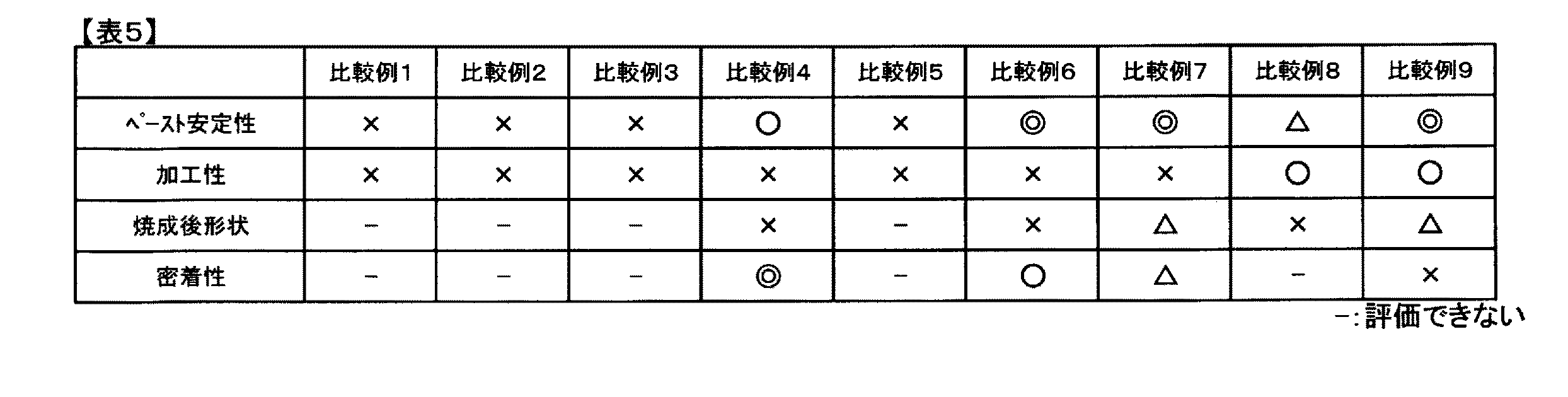
表2および表3に示す実施例1〜12および、比較例1〜3,5,7〜9は、それぞれ焼成後100μmの厚みになるように隔壁形成用感光性ガラスペースト1をダイコーターにより塗布した後、クリーンオーブンにて100℃、40分の乾燥することにより、隔壁形成用塗布膜を形成した。その後、フォトマスクAを介して露光を行い、さらに焼成後の膜厚が20μmとなるように各実施例および各比較例の封着層形成用感光性ガラスペースト、また隔壁形成用感光性ペースト2をダイコーターにより塗布した後、クリーンオーブンにて100℃、30分の乾燥することにより、塗布膜を形成し、フォトマスクBを介して露光を実施した。露光は積算露光量100mj/cm2〜1000mj/cm2で縦隔壁の底部幅が60μmになるように調整して実施した。それぞれのフォトマスクパターンを以下に示す。 In Examples 1 to 12 and Comparative Examples 1 to 3, 5 and 7 to 9 shown in Table 2 and Table 3, the photosensitive glass paste 1 for partition wall formation was applied by a die coater so as to have a thickness of 100 μm after firing. Then, a partition wall-forming coating film was formed by drying at 100 ° C. for 40 minutes in a clean oven. Thereafter, exposure is performed through a photomask A, and the photosensitive glass paste for forming a sealing layer and the partition-forming photosensitive paste 2 in each of Examples and Comparative Examples so that the film thickness after baking is 20 μm. After coating with a die coater, it was dried in a clean oven at 100 ° C. for 30 minutes to form a coating film and exposed through a photomask B. The exposure was carried out by adjusting the integrated exposure to 100 mj / cm 2 to 1000 mj / cm 2 so that the bottom width of the vertical partition wall was 60 μm. Each photomask pattern is shown below.
フォトマスクA:アドレス電極と垂直なストライプパターン、ピッチ480μm、開口40μm
フォトマスクB:アドレス電極と平行なストライプパターン、ピッチ160μm、開口20μm
フォトマスクC:格子状パターン、アドレス電極と垂直なパターンピッチ480μm、アドレス電極と平行なパターンピッチ160μm、開口はいずれも40μm
その後0.5質量%の炭酸ナトリウム水溶液で一括して現像し、さらに、590℃で15分間焼成することにより、隔壁パターンおよび、封着層パターンを形成した。
Photomask A: stripe pattern perpendicular to address electrodes, pitch 480 μm, opening 40 μm
Photomask B: stripe pattern parallel to address electrodes, pitch 160 μm, opening 20 μm
Photomask C: lattice pattern, pattern pitch 480 μm perpendicular to the address electrodes, pattern pitch parallel to the address electrodes 160 μm, and openings 40 μm in all.
Thereafter, development was performed with a 0.5% by mass aqueous sodium carbonate solution, followed by baking at 590 ° C. for 15 minutes to form a partition wall pattern and a sealing layer pattern.
一方、比較例4および6は、それぞれ焼成後115μmの厚みになるように隔壁形成用感光性ガラスペースト1をダイコーターにより塗布した後、クリーンオーブンにて100℃、40分の乾燥することにより、塗布膜を形成し、上記フォトマスクCを介して露光を行う。その後、焼成後の膜厚が20μmとなるように、各比較例の封着層形成用感光性ガラスペーストをダイコーターにより塗布した。その後、フォトマスクBを介して露光を実施した。その後0.5質量%の炭酸ナトリウム水溶液で一括して現像し、さらに、590℃で15分間焼成することにより、隔壁パターンおよび、封着層パターンを形成した。 On the other hand, in Comparative Examples 4 and 6, by applying the partition-forming photosensitive glass paste 1 with a die coater so as to have a thickness of 115 μm after firing, respectively, by drying at 100 ° C. for 40 minutes in a clean oven, A coating film is formed and exposed through the photomask C. Then, the photosensitive glass paste for sealing layer formation of each comparative example was apply | coated with the die-coater so that the film thickness after baking might be set to 20 micrometers. Thereafter, exposure was performed through a photomask B. Thereafter, development was performed with a 0.5% by mass aqueous sodium carbonate solution, followed by baking at 590 ° C. for 15 minutes to form a partition wall pattern and a sealing layer pattern.
このようにして形成された隔壁に各色蛍光体ペーストをスクリーン印刷法により塗布、焼成(500℃、30分)して隔壁の側面および底部に蛍光体層を形成した。 Each color phosphor paste was applied to the barrier ribs thus formed by screen printing and baked (500 ° C., 30 minutes) to form phosphor layers on the side and bottom portions of the barrier ribs.
前面板形成は、ガラス基板として、980×554×1.8mmの42インチサイズのPD−200(旭硝子(株)製)を使用した。ITOをスパッタ法で形成後、レジスト塗布し、露光・現像処理、エッチング処理によって厚み0.1μm、線幅200μmの透明電極を形成した。 The front plate was formed by using PD-200 (manufactured by Asahi Glass Co., Ltd.) having a size of 42 inches of 980 × 554 × 1.8 mm as a glass substrate. After forming ITO by sputtering, a resist was applied, and a transparent electrode having a thickness of 0.1 μm and a line width of 200 μm was formed by exposure / development processing and etching processing.
続いて、黒色顔料を含むガラスペーストを基板上にスクリーン印刷により塗布後、乾燥し、フォトマスクを介して露光を行った。 Subsequently, a glass paste containing a black pigment was applied onto the substrate by screen printing, dried, and exposed through a photomask.
この露光済み黒色ペースト塗布膜の上から、感光性銀ペーストをスクリーン印刷により塗布・乾燥し、所定のフォトマスクを介して、露光した後、現像を行って未焼成パターンを形成した。パターン形成後、570℃で15分間の焼成、または、190℃で10分間IR乾燥を行った。 A photosensitive silver paste was applied and dried by screen printing on the exposed black paste coating film, exposed through a predetermined photomask, and then developed to form an unfired pattern. After pattern formation, baking was performed at 570 ° C. for 15 minutes, or IR drying was performed at 190 ° C. for 10 minutes.
次に、Bi2O3を70質量%、SiO2を10質量%、Al2O3を5質量%、ZnOを5質量%、B2O3を10質量%含有するガラス粉末を70重量部、エチルセルロース10重量部、テルピネオール20重量部を混練して得られたガラスペーストをスクリーン印刷により、表示部分のバス電極が覆われるように50μmの厚みで塗布した後に、570℃15分間の焼成を行って透明誘電体を形成した。 Next, 70 parts by weight of glass powder containing 70% by mass of Bi 2 O 3 , 10% by mass of SiO 2 , 5% by mass of Al 2 O 3 , 5% by mass of ZnO and 10% by mass of B 2 O 3 The glass paste obtained by kneading 10 parts by weight of ethyl cellulose and 20 parts by weight of terpineol was applied by screen printing to a thickness of 50 μm so as to cover the bus electrode of the display part, and then baked at 570 ° C. for 15 minutes. A transparent dielectric was formed.
誘電体を形成した基板上に電子ビーム蒸着により保護膜として、厚み0.5μmの酸化マグネシウム層を形成して前面板を作製した。 A front plate was produced by forming a 0.5 μm thick magnesium oxide layer as a protective film by electron beam evaporation on the substrate on which the dielectric was formed.
得られた前面基板を、前記の背面基板と貼り合わせ、490℃20分間キープした後、400℃で3時間キープすることにより、封着、排気を行った。その後、放電用ガスを封入し、駆動回路を接合して解像度1920×1080のフルハイビジョンプラズマディスプレイパネルを作製した。 The obtained front substrate was bonded to the above-mentioned rear substrate, kept at 490 ° C. for 20 minutes, and then kept at 400 ° C. for 3 hours for sealing and exhausting. Thereafter, a discharge gas was sealed and a drive circuit was joined to produce a full high-definition plasma display panel with a resolution of 1920 × 1080.
上記実施例1〜12、比較例1〜9で得られたペースト特性について、評価し、さらに得られたペーストを使用して前述の方法で作製したプラズマディスプレイパネル用背面板を下記の方法で評価した。
<ペースト安定性>
前述の方法で作製したペーストについて、ゲル化したもの、有機溶剤を添加しても粘度が下がらないもの、作製時の初期粘度から1週間静置後の粘度上昇率が130%未満のものを◎、130%以上150%未満のものを○、150%以上130%未満のものを△、200%以上のものを×とした。
<加工性>
前述の背面板作製の塗布・露光、現像工程で、パターン加工が可能であったもののうち、加工の安定性に優れたものから◎、○、△とし、加工が困難なものを×とした。
また、前述の背面板作製の露光工程において、露光量100mj〜1000mj/cm2 のうち任意の露光量を5水準選び、各水準における縦パターンの底部幅を測定し、露光量と底部幅の関係性を比較した。すなわち積算露光量と縦パターン底部幅の数値をプロットし、累乗近似したときの直線の傾きを隔壁形成用感光性ペースト2で作製した基板と各サンプルと比較し、以下の評価基準により評価した。
◎:傾き10%未満の乖離
○:傾き10%以上30%未満乖離
△:傾き30%以上乖離
<焼成後形状>
前述の方法で作製した42インチ背面板の封着層断面の泡・断層の発生度を評価した。基板の封着層断面を走査型電子顕微鏡(SEM)にて画像化し、断面に占める泡および亀裂を2値化処理した後、空隙率として比較した。この評価を背面板10サンプルについて実施し、10サンプル中の泡・亀裂の発生度を以下の評価基準により評価した。
◎:空隙率0.1%以上1%未満
○:空隙率1%以上5%未満
△:空隙率5%以上10%未満
×:空隙率10%以上
<密着性>
作製した前面基板と背面基板を重ねた状態で(周辺部の封着フリット塗布せずに)封着条件にて温度をかけた後、前面板と背面板を剥がす方向に1.5kg重の力を加えた際の封着層の剥がれ状態をパネル10サンプルについて確認した。以下の評価基準により評価した。
◎:剥がれ箇所0箇所
○:剥がれ箇所1箇所
△:剥がれ箇所2箇所〜4箇所
×:剥がれ箇所5箇所以上
The paste characteristics obtained in Examples 1 to 12 and Comparative Examples 1 to 9 were evaluated, and the back plate for a plasma display panel produced by the above-described method using the obtained paste was evaluated by the following method. did.
<Paste stability>
The paste prepared by the above-mentioned method is gelled, does not decrease in viscosity even when an organic solvent is added, and has a viscosity increase rate of less than 130% after standing for one week from the initial viscosity at the time of preparation. , 130% or more and less than 150% were rated as ◯, 150% or more and less than 130% as Δ, and 200% or more as x.
<Processability>
Among those that can be patterned in the above-described back plate production coating / exposure / development steps, those having excellent processing stability were marked with ◎, 、, and Δ, and those that were difficult to machine were marked with ×.
Further, in the exposure process for manufacturing the back plate described above, an arbitrary exposure dose is selected from five exposure doses of 100 mj to 1000 mj / cm 2 , the bottom width of the vertical pattern at each level is measured, and the relationship between the exposure dose and the bottom width. Sex was compared. That is, the values of the integrated exposure amount and the bottom width of the vertical pattern were plotted, and the slope of the straight line when approximated to the power was compared with the substrate prepared with the photosensitive paste for partition wall formation 2 and each sample, and evaluated according to the following evaluation criteria.
A: Deviation with a slope of less than 10% B: Deviation with a slope of 10% or more but less than 30% Δ: Deviation with a slope of 30% or more <Shape after firing>
The degree of occurrence of bubbles / faults in the cross section of the sealing layer of the 42-inch back plate produced by the method described above was evaluated. The cross section of the sealing layer of the substrate was imaged with a scanning electron microscope (SEM), and the bubbles and cracks in the cross section were binarized and then compared as the porosity. This evaluation was performed on 10 samples of the back plate, and the degree of occurrence of bubbles and cracks in the 10 samples was evaluated according to the following evaluation criteria.
◎: Porosity 0.1% or more and less than 1% ○: Porosity 1% or more and less than 5% Δ: Porosity 5% or more and less than 10% ×: Porosity 10% or more <Adhesiveness>
After applying the temperature under the sealing conditions with the prepared front and back substrates overlapped (without applying the sealing frit around the periphery), the force of 1.5 kg in the direction to peel off the front and back plates The panel 10 sample was checked for the peeled state of the sealing layer when adding. Evaluation was performed according to the following evaluation criteria.
◎: Peeling place 0 place ○: Peeling place 1 place △: Peeling place 2 to 4 places ×: Peeling place 5 or more places
実施例1〜12で得られたプラズマディスプレイパネルは、良好な隔壁および封着層パターンを形成できた。比較例1〜9については、隔壁および封着層の加工性またはパターン形成で満足を得られるものがなかった。 The plasma display panels obtained in Examples 1 to 12 were able to form good partition walls and sealing layer patterns. About Comparative Examples 1-9, there was nothing which can be satisfied with the workability or pattern formation of a partition and a sealing layer.
Claims (4)
Priority Applications (1)
| Application Number | Priority Date | Filing Date | Title |
|---|---|---|---|
| JP2011118914A JP5779986B2 (en) | 2011-05-27 | 2011-05-27 | Glass paste, method for manufacturing plasma display member, and plasma display member |
Applications Claiming Priority (1)
| Application Number | Priority Date | Filing Date | Title |
|---|---|---|---|
| JP2011118914A JP5779986B2 (en) | 2011-05-27 | 2011-05-27 | Glass paste, method for manufacturing plasma display member, and plasma display member |
Publications (2)
| Publication Number | Publication Date |
|---|---|
| JP2012246175A JP2012246175A (en) | 2012-12-13 |
| JP5779986B2 true JP5779986B2 (en) | 2015-09-16 |
Family
ID=47467017
Family Applications (1)
| Application Number | Title | Priority Date | Filing Date |
|---|---|---|---|
| JP2011118914A Expired - Fee Related JP5779986B2 (en) | 2011-05-27 | 2011-05-27 | Glass paste, method for manufacturing plasma display member, and plasma display member |
Country Status (1)
| Country | Link |
|---|---|
| JP (1) | JP5779986B2 (en) |
Families Citing this family (1)
| Publication number | Priority date | Publication date | Assignee | Title |
|---|---|---|---|---|
| KR102065922B1 (en) * | 2012-05-25 | 2020-01-14 | 도레이 카부시키가이샤 | Partition paste, method for manufacturing member having partitions, and members having partition |
Family Cites Families (4)
| Publication number | Priority date | Publication date | Assignee | Title |
|---|---|---|---|---|
| JP4453161B2 (en) * | 1999-05-12 | 2010-04-21 | 東レ株式会社 | Photosensitive paste, display and plasma display member |
| JP2002023351A (en) * | 2000-07-05 | 2002-01-23 | Toray Ind Inc | Photosensitive paste and display components |
| KR20120069614A (en) * | 2009-07-01 | 2012-06-28 | 도레이 카부시키가이샤 | Glass paste for forming a photosensitive sealing layer, plasma display manufacturing method using the same, and plasma display |
| JP2011093790A (en) * | 2009-09-30 | 2011-05-12 | Nihon Yamamura Glass Co Ltd | Lead-free glass composition |
-
2011
- 2011-05-27 JP JP2011118914A patent/JP5779986B2/en not_active Expired - Fee Related
Also Published As
| Publication number | Publication date |
|---|---|
| JP2012246175A (en) | 2012-12-13 |
Similar Documents
| Publication | Publication Date | Title |
|---|---|---|
| KR100522067B1 (en) | Plasma Display and Method for Manufacturing The Same | |
| JP2012158484A (en) | Glass paste, and method for producing plasma display panel using the same | |
| JPWO2008035785A1 (en) | Inorganic particle-containing resin composition, transfer film, and method for producing display panel member | |
| JP5375827B2 (en) | Glass paste for forming photosensitive sealing layer, method for producing plasma display using the same, and plasma display | |
| TWI493572B (en) | Photosensitive conductive paste and method for using the same using the same, and display | |
| JPH10188825A (en) | Plasma display panel | |
| WO2012132652A1 (en) | Paste and method for manufacturing panel for flat display | |
| JP2012246175A (en) | Glass paste, method for manufacturing plasma display member, and plasma display member | |
| JPH11144623A (en) | Plasma display substrate and method of manufacturing the same | |
| JP2007119339A (en) | Glass paste, display manufacturing method using the same, and display | |
| JP2000048714A (en) | Method for producing member for plasma display and plasma display | |
| JPH10283941A (en) | Plasma display panel | |
| JP3806768B2 (en) | Method for manufacturing plasma display panel | |
| JP4062557B2 (en) | Plasma display substrate | |
| JP3873338B2 (en) | Photosensitive paste and method of manufacturing plasma display using the same | |
| JPH11176336A (en) | Plasma display substrate, plasma display and method of manufacturing the same | |
| JP5526923B2 (en) | Paste, conductive wiring manufacturing method and display panel manufacturing method | |
| JP4159002B2 (en) | Plasma display substrate and method of manufacturing plasma display | |
| JP2004327456A (en) | Plasma display substrate and method of manufacturing the same | |
| JP4193878B2 (en) | Method for manufacturing plasma display panel | |
| JP4578489B2 (en) | Method for manufacturing plasma display panel | |
| JP5417747B2 (en) | Negative photosensitive paste, pattern forming method and flat display panel member manufacturing method. | |
| JPH1186736A (en) | Plasma display substrate, plasma display and method of manufacturing the same | |
| JP3899565B2 (en) | Plasma display panel | |
| JP2013147400A (en) | Inorganic powder-containing paste |
Legal Events
| Date | Code | Title | Description |
|---|---|---|---|
| A621 | Written request for application examination |
Free format text: JAPANESE INTERMEDIATE CODE: A621 Effective date: 20140507 |
|
| A977 | Report on retrieval |
Free format text: JAPANESE INTERMEDIATE CODE: A971007 Effective date: 20140930 |
|
| A131 | Notification of reasons for refusal |
Free format text: JAPANESE INTERMEDIATE CODE: A131 Effective date: 20141021 |
|
| A521 | Written amendment |
Free format text: JAPANESE INTERMEDIATE CODE: A523 Effective date: 20141209 |
|
| TRDD | Decision of grant or rejection written | ||
| A01 | Written decision to grant a patent or to grant a registration (utility model) |
Free format text: JAPANESE INTERMEDIATE CODE: A01 Effective date: 20150616 |
|
| A61 | First payment of annual fees (during grant procedure) |
Free format text: JAPANESE INTERMEDIATE CODE: A61 Effective date: 20150629 |
|
| R151 | Written notification of patent or utility model registration |
Ref document number: 5779986 Country of ref document: JP Free format text: JAPANESE INTERMEDIATE CODE: R151 |
|
| LAPS | Cancellation because of no payment of annual fees |