JP5041663B2 - Fabrication method including diffusion-dominated dosage form and three-dimensional printing - Google Patents
Fabrication method including diffusion-dominated dosage form and three-dimensional printing Download PDFInfo
- Publication number
- JP5041663B2 JP5041663B2 JP2004500818A JP2004500818A JP5041663B2 JP 5041663 B2 JP5041663 B2 JP 5041663B2 JP 2004500818 A JP2004500818 A JP 2004500818A JP 2004500818 A JP2004500818 A JP 2004500818A JP 5041663 B2 JP5041663 B2 JP 5041663B2
- Authority
- JP
- Japan
- Prior art keywords
- release
- shell
- polymer
- dosage form
- core
- Prior art date
- Legal status (The legal status is an assumption and is not a legal conclusion. Google has not performed a legal analysis and makes no representation as to the accuracy of the status listed.)
- Expired - Lifetime
Links
Images
Classifications
-
- A—HUMAN NECESSITIES
- A61—MEDICAL OR VETERINARY SCIENCE; HYGIENE
- A61K—PREPARATIONS FOR MEDICAL, DENTAL OR TOILETRY PURPOSES
- A61K9/00—Medicinal preparations characterised by special physical form
-
- A—HUMAN NECESSITIES
- A61—MEDICAL OR VETERINARY SCIENCE; HYGIENE
- A61K—PREPARATIONS FOR MEDICAL, DENTAL OR TOILETRY PURPOSES
- A61K31/00—Medicinal preparations containing organic active ingredients
- A61K31/13—Amines
- A61K31/135—Amines having aromatic rings, e.g. ketamine, nortriptyline
- A61K31/137—Arylalkylamines, e.g. amphetamine, epinephrine, salbutamol, ephedrine or methadone
-
- A—HUMAN NECESSITIES
- A61—MEDICAL OR VETERINARY SCIENCE; HYGIENE
- A61K—PREPARATIONS FOR MEDICAL, DENTAL OR TOILETRY PURPOSES
- A61K9/00—Medicinal preparations characterised by special physical form
- A61K9/20—Pills, tablets, discs, rods
- A61K9/2004—Excipients; Inactive ingredients
- A61K9/2022—Organic macromolecular compounds
- A61K9/2027—Organic macromolecular compounds obtained by reactions only involving carbon-to-carbon unsaturated bonds, e.g. polyvinyl pyrrolidone, poly(meth)acrylates
-
- A—HUMAN NECESSITIES
- A61—MEDICAL OR VETERINARY SCIENCE; HYGIENE
- A61K—PREPARATIONS FOR MEDICAL, DENTAL OR TOILETRY PURPOSES
- A61K9/00—Medicinal preparations characterised by special physical form
- A61K9/20—Pills, tablets, discs, rods
- A61K9/2072—Pills, tablets, discs, rods characterised by shape, structure or size; Tablets with holes, special break lines or identification marks; Partially coated tablets; Disintegrating flat shaped forms
- A61K9/2077—Tablets comprising drug-containing microparticles in a substantial amount of supporting matrix; Multiparticulate tablets
-
- A—HUMAN NECESSITIES
- A61—MEDICAL OR VETERINARY SCIENCE; HYGIENE
- A61K—PREPARATIONS FOR MEDICAL, DENTAL OR TOILETRY PURPOSES
- A61K9/00—Medicinal preparations characterised by special physical form
- A61K9/20—Pills, tablets, discs, rods
- A61K9/2072—Pills, tablets, discs, rods characterised by shape, structure or size; Tablets with holes, special break lines or identification marks; Partially coated tablets; Disintegrating flat shaped forms
- A61K9/2086—Layered tablets, e.g. bilayer tablets; Tablets of the type inert core-active coat
-
- A—HUMAN NECESSITIES
- A61—MEDICAL OR VETERINARY SCIENCE; HYGIENE
- A61K—PREPARATIONS FOR MEDICAL, DENTAL OR TOILETRY PURPOSES
- A61K9/00—Medicinal preparations characterised by special physical form
- A61K9/20—Pills, tablets, discs, rods
- A61K9/2095—Tabletting processes
-
- A—HUMAN NECESSITIES
- A61—MEDICAL OR VETERINARY SCIENCE; HYGIENE
- A61P—SPECIFIC THERAPEUTIC ACTIVITY OF CHEMICAL COMPOUNDS OR MEDICINAL PREPARATIONS
- A61P11/00—Drugs for disorders of the respiratory system
- A61P11/08—Bronchodilators
-
- A—HUMAN NECESSITIES
- A61—MEDICAL OR VETERINARY SCIENCE; HYGIENE
- A61P—SPECIFIC THERAPEUTIC ACTIVITY OF CHEMICAL COMPOUNDS OR MEDICINAL PREPARATIONS
- A61P31/00—Antiinfectives, i.e. antibiotics, antiseptics, chemotherapeutics
- A61P31/04—Antibacterial agents
-
- B—PERFORMING OPERATIONS; TRANSPORTING
- B29—WORKING OF PLASTICS; WORKING OF SUBSTANCES IN A PLASTIC STATE IN GENERAL
- B29C—SHAPING OR JOINING OF PLASTICS; SHAPING OF MATERIAL IN A PLASTIC STATE, NOT OTHERWISE PROVIDED FOR; AFTER-TREATMENT OF THE SHAPED PRODUCTS, e.g. REPAIRING
- B29C64/00—Additive manufacturing, i.e. manufacturing of three-dimensional [3D] objects by additive deposition, additive agglomeration or additive layering, e.g. by 3D printing, stereolithography or selective laser sintering
- B29C64/10—Processes of additive manufacturing
- B29C64/141—Processes of additive manufacturing using only solid materials
- B29C64/153—Processes of additive manufacturing using only solid materials using layers of powder being selectively joined, e.g. by selective laser sintering or melting
-
- B—PERFORMING OPERATIONS; TRANSPORTING
- B33—ADDITIVE MANUFACTURING TECHNOLOGY
- B33Y—ADDITIVE MANUFACTURING, i.e. MANUFACTURING OF THREE-DIMENSIONAL [3D] OBJECTS BY ADDITIVE DEPOSITION, ADDITIVE AGGLOMERATION OR ADDITIVE LAYERING, e.g. BY 3D PRINTING, STEREOLITHOGRAPHY OR SELECTIVE LASER SINTERING
- B33Y70/00—Materials specially adapted for additive manufacturing
-
- B—PERFORMING OPERATIONS; TRANSPORTING
- B33—ADDITIVE MANUFACTURING TECHNOLOGY
- B33Y—ADDITIVE MANUFACTURING, i.e. MANUFACTURING OF THREE-DIMENSIONAL [3D] OBJECTS BY ADDITIVE DEPOSITION, ADDITIVE AGGLOMERATION OR ADDITIVE LAYERING, e.g. BY 3D PRINTING, STEREOLITHOGRAPHY OR SELECTIVE LASER SINTERING
- B33Y80/00—Products made by additive manufacturing
Landscapes
- Health & Medical Sciences (AREA)
- Chemical & Material Sciences (AREA)
- Life Sciences & Earth Sciences (AREA)
- Engineering & Computer Science (AREA)
- Veterinary Medicine (AREA)
- Public Health (AREA)
- General Health & Medical Sciences (AREA)
- Medicinal Chemistry (AREA)
- Animal Behavior & Ethology (AREA)
- Pharmacology & Pharmacy (AREA)
- Epidemiology (AREA)
- Materials Engineering (AREA)
- Manufacturing & Machinery (AREA)
- Bioinformatics & Cheminformatics (AREA)
- Physics & Mathematics (AREA)
- Optics & Photonics (AREA)
- Nuclear Medicine, Radiotherapy & Molecular Imaging (AREA)
- Organic Chemistry (AREA)
- General Chemical & Material Sciences (AREA)
- Chemical Kinetics & Catalysis (AREA)
- Emergency Medicine (AREA)
- Mechanical Engineering (AREA)
- Pulmonology (AREA)
- Oncology (AREA)
- Communicable Diseases (AREA)
- Medicinal Preparation (AREA)
- Pharmaceuticals Containing Other Organic And Inorganic Compounds (AREA)
- Acyclic And Carbocyclic Compounds In Medicinal Compositions (AREA)
Abstract
Description
(発明の背景)
(発明の技術分野)
本発明は、全体として拡散支配剤形に関し、さらに詳しくは活性製薬成分の拡散支配放出を可能とするシェル剤形を含む三次元印刷ポリマーに関する。
(Background of the Invention)
(Technical field of the invention)
The present invention relates generally to diffusion-dominated dosage forms, and more particularly to three-dimensional printed polymers comprising a shell dosage form that allows diffusion-controlled release of an active pharmaceutical ingredient.
(関連技術の説明)
徐放性製剤放出には少なくとも二つの重要な物理的機構、すなわち浸食および拡散がある。浸食では体液への溶解または体液による分解によるなど、活性製薬成分(Active Pharmaceutical Ingredient;API)および賦形剤の剤形からの物理的除去が関与する。浸食支配剤形では、放出終了時に剤形は無傷の固体単位として実質的にもはや存在しない。
(Description of related technology)
There are at least two important physical mechanisms in sustained release drug release: erosion and diffusion. Erosion involves the physical removal of active pharmaceutical ingredients (APIs) and excipients from the dosage form, such as by dissolution in body fluids or degradation by body fluids. In erosion-dominated dosage forms, the dosage form is virtually no longer present as an intact solid unit at the end of release.
徐放性薬物放出に時々使用される別の物理的機構は拡散である。拡散には剤形からのAPIの通過が関与し、剤形の非API物質は実質的に剤形中に残る。拡散は濃度勾配および拡散係数によって支配される。拡散支配剤形からのAPIの放出終了時に剤形は患者への投与時点と大体同じ全体的寸法を保持するが、APIは拡散によって剤形から外へ出てしまう。そのような剤形は、原寸法をほぼ保持したまま患者の消化管を完全に通過することがある。拡散支配剤形の例として、APIを含む内部および放出バリヤであるコーティングを有する経口剤形が作られた。放出バリヤは水および消化液に対しては透過性であったが、一方これらの液体に溶解性ではなかった。患者が剤形を経口服用すると、水が放出バリヤ中を拡散して剤形内のAPIを溶解し始める。溶解したAPIが次に放出バリヤ中を拡散して患者の消化器系に出て行った。放出バリヤは一般に水または対象水溶液に対して所望の透過性を有する単一の物質であり、一般に約50マイクロメートル未満の厚さを有していた。通常、拡散支配放出には放出バリヤが巨視的な欠陥を実質的にまったくもたないことが必要であった。あらかじめ製造した錠剤の表面上に不溶性物質および微粉化した砂糖を含む塗膜を堆積させることによって、微多孔性を有する放出バリヤであるこれの変化形が作られた。最終的には砂糖を溶出して微多孔膜を作製し、剤形内部の内容物の拡散を制御した。 Another physical mechanism that is sometimes used for sustained drug release is diffusion. Diffusion involves the passage of the API from the dosage form, and the non-API material of the dosage form remains substantially in the dosage form. Diffusion is governed by concentration gradients and diffusion coefficients. At the end of release of the API from the diffusion-dominated dosage form, the dosage form retains approximately the same overall dimensions as when administered to the patient, but the API exits the dosage form by diffusion. Such dosage forms may pass completely through the patient's gastrointestinal tract while maintaining approximately the original dimensions. As an example of a diffusion-dominated dosage form, an oral dosage form was made having a coating that is an internal and release barrier containing an API. The release barrier was permeable to water and digestive fluids, while not soluble in these liquids. When the patient takes the dosage form orally, water diffuses through the release barrier and begins to dissolve the API in the dosage form. The dissolved API then diffuses through the release barrier and exits into the patient's digestive system. The release barrier is generally a single material having the desired permeability to water or the aqueous solution of interest and generally has a thickness of less than about 50 micrometers. Usually, diffusion-controlled emission required that the emission barrier be substantially free of macroscopic defects. This variant, a release barrier with microporosity, was made by depositing a coating containing insoluble material and micronized sugar on the surface of a prefabricated tablet. Finally, sugar was eluted to prepare a microporous membrane, and the diffusion of the contents inside the dosage form was controlled.
剤形の表面のすべてではなくて部分的に被覆する拡散バリヤを含む剤形もあった。このような剤形ではバリヤは完全には拡散を制御しなかった。 Some dosage forms include a diffusion barrier that partially covers but not all of the surface of the dosage form. In such dosage forms, the barrier did not completely control diffusion.
拡散が関与する別の徐放性剤形は浸透圧ポンプとして知られる仕組みであった。APIを含むコア、定められた形の出口オリフィスを有する選択的非透過性塗膜、および湿ると膨潤してAPIをオリフィス経由で絞り出す吸湿性塩または他の物質からそのような仕組みを構築した。 Another sustained release dosage form involving diffusion was a mechanism known as an osmotic pump. Such a mechanism was constructed from a core containing API, a selectively impermeable coating with a defined shape of the exit orifice, and a hygroscopic salt or other material that swells when wetted to squeeze the API through the orifice. .
現在まで、拡散支配剤形の製造方法は複数の製造プロセス、内側部分を製造するプロセスのほか、放出を制御する塗膜または放出バリヤを塗布するプロセスを含んでいた。たとえばあらかじめ作製した剤形の外側に液体層を作り出し、液体を自然乾燥、流動床またはパンコーティングで乾燥することによって、放出バリヤの塗布を実施した。この方法には複数工程の製造シーケンスが関与し、製造シーケンスは二つの著しく異なる種類の製造プロセス、および一般にそれらの製造プロセスのそれぞれで異なる原料を使用することを含んでいた。多段階浸透圧ポンプの場合、この種の剤形は既に説明した複数工程の製造方法、および定められた形状の出口オリフィス以外に欠陥がまったくないフィルムを必要とするほか、正確なサイズのオリフィスを必要とすることが欠点であった。 To date, methods of manufacturing diffusion-dominated dosage forms have included multiple manufacturing processes, processes for manufacturing the inner part, as well as processes for applying a controlled release coating or release barrier. For example, the application of the release barrier was performed by creating a liquid layer on the outside of the pre-made dosage form and drying the liquid in air, fluidized bed or pan coating. This method involved a multi-step manufacturing sequence, which involved two significantly different types of manufacturing processes, and generally using different raw materials in each of those manufacturing processes. In the case of multistage osmotic pumps, this type of dosage form requires a multi-step manufacturing process as described above, and a film with no defects other than a defined-shaped exit orifice, as well as an accurately sized orifice. The need was a drawback.
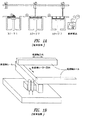
図1Aおよび1Bに三次元印刷法を例示する。三次元印刷(3DP)は剤形を作るために時として使用されてきた。特定の場所に特定の量および組成の物質を配分する3DPの能力によって、他の剤形製造技法では実現できなかった精密さで剤形を設計し製造することができるようになった。三次元印刷は、たとえば、「経口剤形において薬理学的に不活性な物質内に危険なコアを包み込むなどのドラッグデリバリーデバイスの方法および形(Method and form of a drug delivery device such as encasing a hazardous core within a pharmacologically inert substance in an oral dosage form)」と題する係属中の米国特許出願第09/861,480号明細書中に開示されているように、コア−シェル構造を有する剤形を作るために使用されてきた。コア−シェル剤形はまたAAPS、2000年10月号の「医薬品のCAD/CAM処理プロセスにおけるポリマーの利用(Application of Polymers in CAD/CAM Processing of Pharmaceutical Products)」中に記述されている。これらの開示は本発明の課題を解決しない。たとえばAAPSの開示は拡散を制御するためにシェルを使用したが、このシェルには孔がないわけではなく、放出プロフィルを厳密に再現性よく制御する能力がなかった。 A three-dimensional printing method is illustrated in FIGS. 1A and 1B. Three-dimensional printing (3DP) has sometimes been used to make dosage forms. The ability of 3DP to distribute a specific amount and composition of material to a specific location has made it possible to design and manufacture dosage forms with precision not possible with other dosage form manufacturing techniques. Three-dimensional printing is, for example, “Method and form of a drug delivery device as encasing a hazards such as enveloping a dangerous core in a pharmacologically inert substance in an oral dosage form. to make a dosage form having a core-shell structure, as disclosed in pending US patent application Ser. No. 09 / 861,480 entitled “core with a pharmacologically inert substance in an oral dosage form”. Has been used. Core-shell dosage forms are also described in AAPS, October 2000, “Application of Polymers in CAD / CAM Processing of Pharmaceutical Products”. These disclosures do not solve the problems of the present invention. For example, the AAPS disclosure used a shell to control diffusion, but this shell was not free of pores and did not have the ability to precisely control the release profile.
ほとんどの業界において多くの3DP印刷部品中に多孔性が存在したが、実は多くの用途では固体の部分が望まれる部分であったから、多くの場合多孔性が存在すると不利とみなされてきた。剤形の場合、多孔性が有用なことがある。しかし、拡散支配剤形の場合、厳密に制御できる場合だけ多孔性は有用となると考えられる。3DPを使用して拡散支配剤形を作製するための一つの方法は、所望の拡散係数を実現するために制御可能な多孔性を有するシェルを作製することと考えられるが、それは困難であった。もう一つの方法は基本的に巨視的な欠陥および多孔性のまったくないシェルを作製し、次に制御した量の多孔性または拡散係数を導入するかまたは創出することである。しかし、3DPによって欠陥のまったくないシェルを作製することも実現できなかった。本発明以前には、十分に連続的(固体)で、剤形からの拡散によって正確に放出を制御する部分となり得る剤形シェルを三次元印刷によって作製することはできなかった。さらに詳しく説明すると、製品の他の部分を多孔性に保ちながら、十分に固形のシェルを作製することは困難であった。したがって従来、一段製造法および剤形の精密設計は3DPによってともに実現可能であったかもしれないが、この二つを拡散支配剤形の作製に利用することは基本的にできなかった。 Although porosity has existed in many 3DP printed parts in most industries, in many cases it has been considered disadvantageous to be porous because in many applications a solid portion was the desired portion. For dosage forms, porosity may be useful. However, in the case of diffusion-dominated dosage forms, porosity is considered useful only if it can be strictly controlled. One way to make a diffusion-dominated dosage form using 3DP would be to make a shell with a controllable porosity to achieve the desired diffusion coefficient, which was difficult . Another method is to make a shell that is essentially free of macroscopic defects and porosity and then introduces or creates a controlled amount of porosity or diffusion coefficient. However, it has not been possible to produce a shell having no defects by 3DP. Prior to the present invention, it was not possible to make a dosage form shell by three-dimensional printing that was sufficiently continuous (solid) and could be part of precisely controlling release by diffusion from the dosage form. More specifically, it has been difficult to produce a sufficiently solid shell while keeping the other parts of the product porous. Thus, in the past, a one-step manufacturing method and a precise design of the dosage form might have been feasible together with 3DP, but the two could basically not be used to make a diffusion-dominated dosage form.
拡散によって支配される剤形の場合、自然な放出プロフィルは放出API合計量が放出開始からの時間の平方根に比例する、すなわち、Q=k*t0.5である。このような剤形の放出速度はこの関数の導関数、すなわちr=k’*t−0.5であり、時間とともに減少する放出関数である。しかし、多くのAPIの場合、望ましい放出プロフィルはほぼ一定の放出速度、すなわちゼロ次放出でAPIを放出することであろう。ほとんどの場合に、拡散支配剤形はゼロ次放出プロフィルに十分に近い放出プロフィルを提供することがなかった。 For a dosage form dominated by diffusion, the natural release profile is such that the total amount of released API is proportional to the square root of the time from the start of release, ie, Q = k * t 0.5 . The release rate of such a dosage form is the derivative of this function, ie r = k ′ * t −0.5, which is a release function that decreases with time. However, for many APIs, the desired release profile would be to release the API at a nearly constant release rate, ie zero order release. In most cases, the diffusion-dominated dosage form did not provide a release profile that was close enough to the zero order release profile.
したがって、一段製造方式で拡散支配剤形を作ること、すなわち一段法によってほぼ同時にコアもシェルも作製できることが望ましい。単一の粉体だけを使用するが、それでもコア特性と異なるシェル特性を実現できる粉体ベースの製造方法を提供することが望ましい。剤形の他の部分が多孔性を有するときでも、実質的に固形の非多孔性シェルを含む三次元印刷剤形を作製することが望ましい。シェル中の拡散によってAPIの放出を正確に制御できるようなシェルを含む三次元的に印刷された剤形を提供することが望ましい。製造方法で使用する粉体組成の単なる調整によって、剤形の放出プロフィルの時間尺度の調整を可能にするような製造方法が望ましい。拡散支配剤形からのほぼゼロ次の放出プロフィルを提供することも望ましい。説明する型の拡散支配剤形は、制御して放出することが難しかった高度に水溶性のAPIに対して特に有用である。これらの全てを達成するために適切な製法を提供することが望ましい。 Therefore, it is desirable to make a diffusion-dominated dosage form by a one-stage manufacturing method, that is, to produce a core and a shell almost simultaneously by a one-stage method. It would be desirable to provide a powder-based manufacturing method that uses only a single powder but can still achieve shell properties that differ from the core properties. It is desirable to produce a three-dimensional printing dosage form that includes a substantially solid non-porous shell, even when other portions of the dosage form are porous. It would be desirable to provide a three dimensional printed dosage form that includes a shell that allows precise control of API release by diffusion in the shell. A manufacturing method is desired that allows adjustment of the time scale of the release profile of the dosage form by simply adjusting the powder composition used in the manufacturing method. It is also desirable to provide a near zero order release profile from a diffusion-dominated dosage form. The type of diffusion-dominating dosage form described is particularly useful for highly water-soluble APIs that have been difficult to controlly release. It would be desirable to provide a suitable process to achieve all of these.
(発明の概要)
本発明は、コアがAPIを含み、たとえばシェル中のAPIの拡散制御によってシェルが実質的に放出を支配するコア−シェル単位または剤形を含む。シェルは放出抑制ポリマーおよび放出抑制ポリマー内に分散した放出調節ポリマーを含む。シェルはまた放出抑制ポリマーとともに混和された可塑剤を含むことがある。乾燥時にはシェルは実質的に連続的であり漏れ経路はないが、水性の液体で濡れると既知の拡散係数を有するようになる。コアは、シェルとAPI含有コア中心部との間にAPIが含まれない緩衝領域を備えることがある。望むなら、剤形は特定の条件下で互いに結合したり、互いに離れたりする複数の単位を含むことがある。本発明の剤形はほぼゼロ次の放出プロフィルを提供することができる。本発明は二種類のポリマーの比率の調整によって、放出プロフィルの時間的尺度の調整を可能にする。本発明は、たとえば一段法で剤形全体を作製することに適する三次元印刷によってそのような剤形を製造する方法をさらに含む。
(Summary of Invention)
The present invention includes a core-shell unit or dosage form in which the core comprises an API, for example the shell substantially governs release by controlled diffusion of the API in the shell. The shell includes a release inhibiting polymer and a release modifying polymer dispersed within the release inhibiting polymer. The shell may also include a plasticizer incorporated with the release inhibiting polymer. When dry, the shell is substantially continuous and has no leak path, but when wetted with an aqueous liquid, has a known diffusion coefficient. The core may include a buffer region that does not include an API between the shell and the API-containing core core. If desired, the dosage form may contain a plurality of units that bind to each other or leave one another under certain conditions. The dosage form of the present invention can provide a near zero order release profile. The present invention allows adjustment of the time scale of the release profile by adjusting the ratio of the two polymers. The present invention further includes a method of producing such a dosage form by three-dimensional printing, eg suitable for making an entire dosage form in a one-step process.
(発明の詳細な説明)
本発明は、拡散支配経口剤形のコアおよびシェル構成を含む。コアは活性製薬成分(API)を含み、シェルは実質的にAPIの放出を支配する。シェルは、放出抑制ポリマーと放出調節ポリマーとの組み合わせを含む。シェルは、放出抑制ポリマーと混合された可塑剤をさらに含むことがある。コアは、シェルとAPI含有コアとの間に緩衝領域をさらに含むことがある。本発明の別の様相は一段法、たとえば三次元印刷(3DP)によって剤形を製造できることである。本発明の別の実施形態によると、剤形は特定の状況下で結合しあったり離れたりする複数の個別の単位を含む。本発明のまた別の実施形態はゼロ次放出プロフィルを有する剤形である。
(Detailed description of the invention)
The present invention includes a core and shell configuration of a diffusion controlled oral dosage form. The core contains the active pharmaceutical ingredient (API) and the shell substantially governs the release of the API. The shell includes a combination of a release inhibiting polymer and a modified release polymer. The shell may further include a plasticizer mixed with the release inhibiting polymer. The core may further include a buffer region between the shell and the API-containing core. Another aspect of the present invention is that the dosage form can be produced by a one-step process, such as three-dimensional printing (3DP). According to another embodiment of the present invention, the dosage form comprises a plurality of individual units that bind or disengage under certain circumstances. Yet another embodiment of the present invention is a dosage form having a zero order release profile.
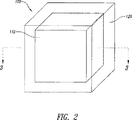
図2に示すように、本発明は少なくとも一つの単位100を備える剤形を含む。単位100はコア110およびシェル120を含み、シェル120はコア110を完全に囲む。図2に例示する剤形例はほぼ立方体の形状である。図3は、図2に示す剤形の断面である。
As shown in FIG. 2, the present invention includes a dosage form comprising at least one
コア110は粉体粒子を含み、活性製薬成分(API)を含む。コアに含まれるAPIの量は、特定のAPIの治療有効性によって選ばれるAPIの所望の服用量によって選ばれる。この量はAPIの性質に依存して広範に変化する。
本明細書中の他の部分で説明するように、粉体粒子はそれぞれ自体の組成を有する少なくとも二種類の異なる粒子を含み、これらの粒子は互いに混ぜ合わされている。コア中の粉体粒子は、放出抑制ポリマーの粒子230および放出調節ポリマーの粒子240を含む。コア110中の粒子230、240のいくらか、あるいはすべてが互いにまたは他のどの粒子にも結合していなくてもよい。
As described elsewhere herein, the powder particles include at least two different types of particles, each having its own composition, which are mixed together. The powder particles in the core include release inhibiting
あるいは、コア110中の粒子230および240は少なくとも部分的に少なくともある程度互いに結合していてもよい。結合部は粉体粒子230、240の間に堆積した物質の形をとってもよく、図3に示すように粒子の間の空間を少なくとも部分的に占め、くびれ部260を形成してどちらかの種類の粉体粒子230、240を一つ以上の隣接粒子230、240に連結する。これはオプションであるが、この物質は粒子を囲みまたは粒子に接着して部分的に粒子間の空間を占めることによって粒子を結びつけるコアバインダ物質であってよい。この物質は、APIであってもよい。この物質は、コアバインダ物質であって同時にAPIであってもよい。
Alternatively, the
コア中にはコア全体に分布する細孔があってもよく、あるいは実質的に固体であって5%未満などごくわずかな多孔性しかなくてもよい。放出調節ポリマー粒子など、粉体粒子が部分的にAPIを内部に吸収していてもよい。放出調節ポリマー粒子中に吸収されたAPIが、コア中に存在するAPIの主要な形である場合もある。本明細書中の他の部分で緩衝領域の可能な存在に関連して説明するように、APIおよびオプションのコアバインダ物質は、実質的にコア110全体に含まれていることもあり、またはコア110全体よりは少ない部分に含まれていることもある。
The core may have pores distributed throughout the core, or it may be substantially solid and have very little porosity, such as less than 5%. Powder particles, such as modified release polymer particles, may partially absorb the API. In some cases, the API absorbed in the modified release polymer particles is the major form of API present in the core. The API and optional core binder material may be substantially contained throughout the
APIは水溶性、すなわち消化液などの体液に溶解性であってもよい。たとえば、水溶性が非常に高いAPIは室温で500mg/ccより大きな溶解性をもつ。しかし、APIはその程度まで溶解性である必要はない。APIの水溶解性は広い範囲にわたってよい。コア、またはAPIを含むコア部分など任意の領域において、粉体粒子が占めていない凝集空間体積があり、この凝集体積をボイド体積(void volume)と呼ぶ。コアのこのボイド体積に対して、水中のAPIの溶解性の既知のデータを使用して、室温または体温のどちらか指定の温度でコアのボイド体積と等しい水の体積中に溶解できるAPIの量がある。本剤形において、コア中に含まれるAPIの量は水のボイド体積中に溶解できるAPIの量以下のことがある。 The API may be water soluble, ie soluble in body fluids such as digestive fluids. For example, a very water-soluble API has a solubility greater than 500 mg / cc at room temperature. However, the API need not be soluble to that extent. The water solubility of the API can be over a wide range. In an arbitrary region such as a core or a core portion including an API, there is an agglomerated space volume that is not occupied by powder particles, and this agglomerated volume is referred to as a void volume. For this void volume of the core, using known data of API solubility in water, the amount of API that can be dissolved in a volume of water equal to the void volume of the core at the specified temperature, either room temperature or body temperature. There is. In this dosage form, the amount of API contained in the core may be less than or equal to the amount of API that can be dissolved in the void volume of water.
あるいは、コア中に含まれるAPIの量はそのような量より大きいこともある。本明細書の他の部分で説明するように、この選択は剤形からのAPIの放出プロフィルおよび剤形の製造に使用する製造法の細部に影響を及ぼすことがある。剤形中のAPIの量は特定のAPIの治療用量によって決定され、広い範囲で変化する。実施例中で説明する剤形では比較的高用量のAPIを使用しているが、その他のAPIではコア体積単位あたりもっと少ない量を含有していてもよい。 Alternatively, the amount of API contained in the core may be greater than such amount. As explained elsewhere herein, this choice can affect the release profile of the API from the dosage form and the details of the manufacturing process used to make the dosage form. The amount of API in the dosage form is determined by the therapeutic dose of the particular API and varies over a wide range. Although the dosage forms described in the examples use relatively high doses of API, other APIs may contain lower amounts per core volume unit.
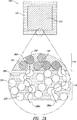
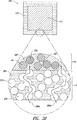
図3(a)および図3(b)に詳しく示すシェル120は、あらゆる方向でコア110を囲んでいる。シェルがAPIを含めて拡散によるシェル中の物質の通過を調節するようにシェル120を構築する。したがって、少なくとも患者への剤形投与の時点では、シェル120は実質的に連続的であり、ピンホールまたは巨視的な欠陥(2または3ミクロンのオーダーの)は実質的にまったくない。シェル120は水または水溶液で濡れると所望の拡散特性になる組成を含む。シェル120はAPIをまったく含まなくても、または実質的にまったく含まなくても、コアよりも多く含んでも、あるいはそれらの中間の任意の量を含んでもよい。
The
シェルは放出抑制ポリマーおよび放出調節ポリマーを含む。シェルを形成するこれらの物質の一つの可能な構成を図3(a)に示す。放出調節ポリマーはシェル120中に識別可能な粒子250として存在し、粒子間の連結によって280aのような通路を形成する。
The shell includes a release inhibiting polymer and a modified release polymer. One possible configuration of these materials forming the shell is shown in FIG. The modified release polymer is present in the
あるいは図3(b)に示すように、放出調節ポリマーは狭い部分と広い部分とを有する蛇行経路280bとしてシェル120中に存在する。放出調節ポリマーは三次元的に相互接続した網目として存在してもよく、その断面も図3(b)に示す。放出抑制ポリマーは実質的に連続的な放出抑制ポリマー相290として存在し、放出調節ポリマー粒子250または他の形の放出調節ポリマーを完全にまたは部分的に取り込む。放出抑制ポリマーは放出調節ポリマー粒子250または他の形の放出調節ポリマーの周りを囲み、接着し、または実質的に接触し、それによって放出調節ポリマーを取り込んで連続構造を作り、シェル120を形成する。
Alternatively, as shown in FIG. 3 (b), the modified release polymer is present in the
シェル中に識別可能な粒子として放出調節ポリマーが存在すると、シェル中の放出調節ポリマー粒子250は、シェル120の厚さより若干少ない全寸法を有し、それによってシェル120が放出調節ポリマー粒子250を部分的にまたは全体的に取り込むことを可能にする。放出調節ポリマー粒子250の最大外形寸法は、たとえばシェル120の厚さの3分の1より小さい。少なくともいくつかの例においては、放出調節ポリマー粒子250が互いに接触し、または互いに非常に近くまで接近して、少なくともいくつかの粒子250のつながりではシェル120の一方の側から反対側へさまざまな放出調節ポリマー粒子250中を通って、なんらかの連続的な経路280aができる。そのような経路280aを図3(a)に示す。
When the modified release polymer is present as an identifiable particle in the shell, the modified
あるいは図3(b)に示すように、放出調節ポリマーは狭い部分と広い部分とを含む蛇行経路280bとして存在する。経路280が三次元的に相互接続した網目を形成することがある。もちろんこれらの可能な幾何構造の経路のどれかまたは全てがシェル120中に同時に共存することがある。
Alternatively, as shown in FIG. 3 (b), the modified release polymer exists as a
放出調節ポリマーが水に接触すると、経路280に沿って水および水性API溶液がシェル120中を拡散できるような状態に経路が変化することがある。放出調節ポリマーは水に接触すると水和することがある。たとえば放出調節ポリマーは水または体液に接触すると、ジェルを形成して放出ポリマー中を水および水溶液が拡散することを可能にすることがある。放出調節ポリマーによる水の吸収が接触した水または水溶液のpHにほぼ依存しないことがある。放出調節ポリマーは親水性であってよい。
When the modified release polymer contacts water, the pathway may change to allow the water and aqueous API solution to diffuse through the
シェル120中に存在するその他のポリマーは放出抑制ポリマーである。放出抑制ポリマーは連続相290としてシェル中に存在する。放出抑制ポリマーは実質的に水および水溶液を透過せず、実質的に水に溶けない。しかし、放出抑制ポリマーは他の溶媒に溶けてもよい。本明細書の他の箇所で説明するように、放出抑制ポリマーは一定の製造方法を可能にするために十分な程度にエタノールおよびその他のアルコール類などの溶媒に溶けてもよい。放出抑制ポリマーは疎水性であってもよい。
Other polymers present in the
放出抑制ポリマーは単独で50℃未満のガラス転移点を有することがある。あるいは可塑剤が存在すると、放出調節ポリマーと可塑剤との組合せによってガラス転移点が50℃未満になるように放出抑制ポリマーを選んでもよい。そのような転移点を有することは巨視的な欠陥のないシェルを実現する上で有用である。クラックを生じることなく圧縮操作に対して変形できるように、単独または可塑剤存在下で十分に柔軟であるように放出抑制ポリマーを選ぶ。 The release inhibiting polymer alone may have a glass transition point of less than 50 ° C. Alternatively, in the presence of a plasticizer, the release inhibiting polymer may be selected such that the glass transition point is less than 50 ° C. by the combination of the release modifying polymer and the plasticizer. Having such a transition point is useful for realizing a shell without macroscopic defects. The release-suppressing polymer is chosen to be sufficiently flexible either alone or in the presence of a plasticizer so that it can be deformed for compression operations without cracking.
単位または剤形の所望の放出プロフィルの時間尺度を実現するために、シェル中の放出抑制ポリマーと放出調節ポリマーとの比率を選ぶ。たとえば放出調節ポリマーをより多く含むと、一般により速い全放出プロフィル時間スケールとなる。近似でしかないが、一般に放出抑制ポリマーはシェルの少なくとも40体積%を構成することがある。 In order to achieve the desired release profile time scale of the unit or dosage form, the ratio of the release inhibiting polymer to the release modifying polymer in the shell is chosen. For example, the inclusion of more modified release polymer generally results in a faster overall release profile time scale. Although only an approximation, generally the release inhibiting polymer may constitute at least 40% by volume of the shell.
シェル中の放出調節ポリマーに対する放出抑制ポリマーの比率は、コア中の放出調節ポリマーに対する放出抑制ポリマーの比率と実質的に同じこともあり、または与えられた放出プロフィルに適合するように設計された任意の比率のこともある。 The ratio of release inhibiting polymer to modified release polymer in the shell can be substantially the same as the ratio of controlled release polymer to modified release polymer in the core, or any designed to fit a given release profile. It may be the ratio.
シェル120はまた可塑剤を含むことがある。さらに詳しくは、シェル中の放出抑制ポリマーは可塑剤を含むことがある。可塑剤は、たとえばポリマー鎖の緩和の原因となって柔らかさおよび柔軟性を付与するためにポリマーに加えられる化合物である。可塑剤はポリマーに取り込まれて、ポリマー分子間の自由空間を増大させることによって、ポリマーの加工性、柔軟性または伸展性を増大させる。自由空間が増大すると放出抑制ポリマーの分子運動の自由度が増大し、したがって放出抑制ポリマー粒子間でより良好な溶解が起こり、放出抑制ポリマーを含む連続相290が生成する。
可塑剤は重合体物質のこともあり、低分子量または中分子量の液体または、時には低融点の固体のこともある。可塑剤は、ポリマーのガラス転移点を可塑剤がない場合より引き下げる。可塑剤はシェル中に任意の形態で存在する。可塑剤は明確な可塑剤領域中に存在しないことがあり、たとえ明確な領域中に存在したとしても、図に示すものよりはるかに小さい大きさの尺度なので、図3には可塑剤を特に示していない。可塑剤は放出抑制ポリマー中に散在するミセルまたは微小な滴の形態で存在することがある。可塑剤はエタノールまたはその他のアルコール類などの溶媒に溶けることがある。 The plasticizer may be a polymeric material, a low or medium molecular weight liquid, or sometimes a low melting point solid. The plasticizer lowers the glass transition point of the polymer than without the plasticizer. The plasticizer is present in any form in the shell. The plasticizer may not be present in the clear plasticizer region, and even if it is present in the clear region, it is a measure of much smaller size than that shown in the figure, so FIG. Not. The plasticizer may be present in the form of micelles or small droplets interspersed in the release inhibiting polymer. The plasticizer may be soluble in solvents such as ethanol or other alcohols.
可塑剤を含む材料はもろくなく、それゆえ脆性によってシェル中にクラックが生成する可能性を低くするので、放出抑制ポリマー中に可塑剤化合物が存在すると、クラック、巨視的な多孔性、巨視的な欠陥などのないシェルを実現するために有用である。可塑剤の必要性は、放出抑制ポリマーが可塑剤なしでどれくらい曲げやすいかに依存する。必要ないと思われる場合に可塑剤を使用することもあるが、可塑剤がない場合に高いガラス転移点を有する放出抑制ポリマーは可塑剤を必要とすることがある。低いガラス転移点を有する放出抑制ポリマーは可塑剤を必要としないこともある。 Materials containing plasticizers are not fragile and therefore reduce the likelihood of cracking in the shell due to brittleness, so the presence of a plasticizer compound in the release-inhibiting polymer can cause cracks, macroscopic porosity, macroscopicity. It is useful for realizing a shell without defects. The need for a plasticizer depends on how flexible the release inhibiting polymer is without the plasticizer. A plasticizer may be used when deemed unnecessary, but a release inhibiting polymer having a high glass transition point in the absence of a plasticizer may require a plasticizer. Release inhibiting polymers with low glass transition points may not require a plasticizer.
放出抑制ポリマーと可塑剤との組合せが所望のガラス転移点を有するように放出抑制ポリマーおよび可塑剤ならびに可塑剤濃度(存在する場合)を選ぶ。活性製薬成分(API)が劣化しない最高許容温度より低いガラス転移点となるように選ぶことがある。シェル中の放出抑制ポリマーと可塑剤との組合せのガラス転移点はコア中の放出抑制ポリマーのガラス転移点より低いことがある。起こり得る圧縮動作に対して放出抑制ポリマーと可塑剤とがクラックを生成することなく変形するように、十分に曲げやすいように放出抑制ポリマーおよび可塑剤、ならびに適切な可塑剤濃度を選ぶ。 The release inhibiting polymer and plasticizer and plasticizer concentration (if present) are selected so that the combination of release inhibiting polymer and plasticizer has the desired glass transition point. The active pharmaceutical ingredient (API) may be chosen to have a glass transition point below the maximum allowable temperature at which it does not degrade. The glass transition point of the combination of the release inhibiting polymer and the plasticizer in the shell may be lower than the glass transition point of the release inhibiting polymer in the core. The release-suppressing polymer and plasticizer and the appropriate plasticizer concentration are chosen to be sufficiently pliable so that the release-suppressing polymer and plasticizer are deformed without generating cracks for possible compression operations.
シェル領域は単位中の至る所で実質的に均一な壁の厚さ(その局所表面に垂直な厚さ)を有することがある。あるいは、単位中の至る所でシェルの壁の厚さが均一でないようにシェルを設計することがある。たとえば、直角プリズム形を有する単位中で三つの直交方向のそれぞれで個別のシェルの壁の厚さがあるかもしれない。任意の所定の壁の中でシェルの厚さは均一のこともあり、一定でないように設計することさえある。いずれにせよ依然として本発明を実施することができる。本明細書の他の部分で考察するように、たとえば厚さが製造工程に関連する特性距離(滴間距離、線間距離または層の厚さ)のほぼ小さな整数倍であるなど、実現できるシェルの壁の厚さが制約されることがある。さまざまな壁に対して小さな整数倍数は同じこともあり、互いに異なることもある。小さな整数は小さくてもよく、2または1のことさえある。一般に、本発明のシェルの厚さは小さく、100マイクロメートル以下のこともあり、あるいは大きく、1000マイクロメートル以上のこともある。 The shell region may have a substantially uniform wall thickness (thickness perpendicular to its local surface) throughout the unit. Alternatively, the shell may be designed so that the thickness of the shell wall is not uniform throughout the unit. For example, there may be individual shell wall thicknesses in each of three orthogonal directions in a unit having a right-angle prism shape. Within any given wall, the shell thickness may be uniform or even designed to be non-constant. In any case, the present invention can still be implemented. Shells that can be implemented, for example, where the thickness is approximately a small integer multiple of the characteristic distance (drop-to-drop distance, line-to-line distance, or layer thickness) associated with the manufacturing process, as discussed elsewhere herein. The wall thickness may be constrained. The small integer multiples for the various walls can be the same or different. Small integers can be small and can be 2 or even 1. In general, the thickness of the shell of the present invention is small and may be 100 micrometers or less, or may be as large as 1000 micrometers or more.
ポリマーの耐久性に関しては、シェルの材料および構築に関して少なくとも二つのオプションがある。一つのオプションは、患者への剤形の投与の時点でシェルには実質的に欠陥がなく、放出調節ポリマーが水性液体に接触してゲルになっても、放出期間中にシェルが実質的に無傷のままであるように、シェルの材料を選びシェルを製造することである。別のオプションは、剤形の投与の時点でシェルには実質的に欠陥がないが、少なくともシェルの一成分が体液に接触すると問題の徐放期間中に、若干劣化しやすいようにシェル材料を選びシェルを製造することである。たとえば、放出調節ポリマーを体液に接触すると劣化するようにする。どちらを選ぶかは所望の放出プロフィルの詳細に依る。 With respect to polymer durability, there are at least two options for shell material and construction. One option is that the shell is substantially free at the time of administration of the dosage form to the patient, and the shell is substantially free during the release period even if the modified release polymer contacts the aqueous liquid and gels. The shell is made by choosing the material of the shell so that it remains intact. Another option is to use a shell material that is substantially free of defects at the time of administration of the dosage form, but is subject to slight degradation during the sustained release period in question when at least one component of the shell comes into contact with body fluids. The choice is to make a shell. For example, the modified release polymer is allowed to deteriorate upon contact with body fluids. Which one to choose depends on the details of the desired release profile.
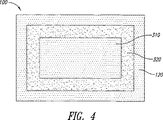
すでに触れたように、コアのAPI含有部分はコア全体より小さいことがある。単位または剤形の断面図である図4にこれを示す。たとえば、コア110の中心部310だけにAPIを含むことがある。本発明はコア中に緩衝領域320をさらに含むことがある。緩衝領域320はシェル120の内部にあり、全方向または少なくともいくつかの方向でコアのAPI含有部分310をシェル120から隔てている。緩衝領域320はAPI含有領域310を完全に囲むことがある。緩衝領域320は粉体粒子を含むこともあるが、APIをまったく含まないこともあり、またオプションとしてその他のいかなるバインダ物質も含まないことがある。緩衝領域の粉体粒子は互いに結合していないこともあり、またはたとえば非API含有物質によって少なくとも部分的に互いに結合していることもある。緩衝領域の粉体粒子は、コアの他の部分と実質的に同じ放出抑制ポリマーに対する放出調節ポリマーの比率を有してもよい。患者へのAPIの投与の時点とAPIの任意の相当量が剤形から放出され始める時点との間の所望の遅延時間を作り出すために有用であるように緩衝領域の寸法を選ぶ。あるいは、本明細書の他の部分で説明するように、溶出に関する考慮にもとづいて緩衝領域の寸法を選ぶこともある。
As already mentioned, the API-containing part of the core may be smaller than the entire core. This is shown in FIG. 4, which is a cross-sectional view of a unit or dosage form. For example, only the
緩衝領域またはコア全体またはコアの任意の部分に、粉体粒子の少なくとも一部の間にボイド空間が存在することがある。あるいは、緩衝領域またはコア全体またはコアの任意の部分に、粉体粒子およびその他の物質を一緒に充填して、5%未満のボイドを有する密度を実現することがある。 Void spaces may exist between at least a portion of the powder particles in the buffer region or the entire core or any portion of the core. Alternatively, the buffer region or the entire core or any portion of the core may be filled together with powder particles and other materials to achieve a density with less than 5% voids.
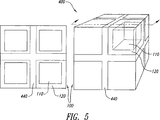
剤形は、コア110およびすでに説明したシェル120の構成だけを有する単一単位100だけからなることがある。あるいは図5に例示するように、剤形は単位間結合領域440によって一つ以上のその他の単位に結合して剤形400を形成する複数の単位100を含むことがある。単位間結合領域440は粉体粒子および単位間結合物質を含むことがある。単位間結合領域の粉体粒子は、コアまたはシェルの比率と実質的に同じ放出抑制ポリマーに対する放出調節ポリマーの比率を有することがある。単位間結合物質は、任意の水性液体との接触によって個別の単位100を互いに離れさせるため、または胃液のpHまたは腸内液のpHなどの特定のpHの液体との接触によって単位を互い離れさせるために適する物質である。
The dosage form may consist of only a
剤形が複数の単位100を含む場合、個別単位は互いに同一のこともあり、または互いに異なることもある。単位が互いに異なると、単位間の差異はたとえば単位中に含まれるAPIの大きさ、形状、組成、単位中に含まれるAPI量、単位からのAPIの放出特性など、任意の一つ以上の単位の特性中にある。単位がすべて説明したコア−シェル構造を有するわけではないということもあり得る。たとえばいくつかの単位がシェルをもたない構造を有し、APIをより早く放出することがある。少なくとも一つの単位がコア中に緩衝領域を有し、その他の少なくとも一つの単位が緩衝領域をもたないことがあり得る。もちろん、異なる単位が異なるAPIを含むこともあり得る。三つの直交方向にそれぞれ二単位かける二単位かける二単位の形で配置され、各単位が少なくともほぼ同一の大きさおよび形状を有する八つの単位100を含む剤形400を図5に例示する。
When the dosage form includes a plurality of
剤形全体または個々の単位または単位の集団は直角プリズム形状を有し、立方体のこともある。その他の可能な形状は円筒形およびその他の形状を含む。剤形の全体的な寸法および形状は、単一単位でも複数単位でも患者の嚥下しやすさによって選ぶ。 The entire dosage form or individual units or groups of units have a right-angle prism shape and can be cubic. Other possible shapes include cylindrical and other shapes. The overall size and shape of the dosage form, whether a single unit or multiple units, is selected depending on the patient's ease of swallowing.
一単位、複数の非結合単位または複数の単位を含む組み立てた剤形400のどれかをゼラチンカプセルなどのカプセルでさらに封じることができる。カプセルは、たとえば単位または剤形のまわりをゆるやかに包む。ゼラチンカプセルは、たとえば嚥下しやすさを改善する。複数の単位をカプセル内に封じることによって、互いに結合することなく単に一緒に包装してもよい。
Any of the assembled
(材料)
放出調節粉体粒子はヒドロキシプロピルメチルセルロースのこともあり、またはヒドロキシプロピルメチルセルロースを含むこともある。ヒドロキシプロピルメチルセルロース(HPMC)は医薬用添加剤であり、水と接触するとジェルを形成するが非常に緩慢にしか分解しない。HPMCは親水性である。可能な放出調節ポリマーのその他の例はヒドロキシプロピルセルロース(HPC)や、メチルセルロースまたはカルボキシメチルセルロースや、キサンタムガム、ローカストビーンガム、アルギン酸誘導体、ゲランガム、グアーガム、トラガントなどの天然ヒドロゲルや、ビニルピロリドン/酢酸ビニル共重合体、およびポリビニルピロリドンである。
(material)
The modified release powder particles may be hydroxypropyl methylcellulose or may contain hydroxypropylmethylcellulose. Hydroxypropyl methylcellulose (HPMC) is a pharmaceutical additive that forms a gel when contacted with water but decomposes only very slowly. HPMC is hydrophilic. Other examples of possible modified release polymers include hydroxypropylcellulose (HPC), methylcellulose or carboxymethylcellulose, xantham gum, locust bean gum, alginic acid derivatives, natural hydrogels such as gellan gum, guar gum, tragacanth, and vinylpyrrolidone / vinyl acetate A polymer, and polyvinylpyrrolidone.
放出抑制ポリマーはコリドン(Kollidon)のこともあり、またコリドンを含むこともある。コリドン(バスフ社(BASF Corporation)、シュリーブポート(Shreveport)、ルイジアナ(LA))は剤形に有用なポリマーであり、80%のポリビニルアセテートおよび19%のポリビニルピロリドンを含む(残りは界面活性剤、安定剤またはその他の物質である)。コリドンはエタノールに溶ける。この物質を放出抑制ポリマーとして使用すると、可塑剤は必要でないかもしれない。ただし、依然として可塑剤を使用してもよい。可能な放出抑制ポリマーの別の例は、商品名がユードラジット(Eudragit)RSPOおよびユードラジットRLPOであるポリ(アクリル酸エチル、メタクリル酸メチル)トリメチルアンモニオエチルメタクリレート塩化物である。ユードラジット(登録商標)RSPOは薬剤製剤に用いられる低透過pH非依存性ポリマーであり、ロームアメリカ(Rohm America)(デグッサ−ヒュルス(Degussa−Huls)社、ピスケタウェイ(Piscataway)、ニュージャージー(NJ))から入手できる。ユードラジットRSPOを放出抑制ポリマーとして使用すると、可塑剤を必要とすることがある。可能な放出抑制ポリマーのその他の例は、ポリビニルアセテートおよびエチルセルロースである。 The release inhibiting polymer may be Kollidon or may contain Kollidon. Kollidon (BASF Corporation, Shreveport, LA) is a useful polymer in the dosage form and contains 80% polyvinyl acetate and 19% polyvinyl pyrrolidone (the rest being a surfactant) , Stabilizers or other substances). Kollidon is soluble in ethanol. If this material is used as a release inhibiting polymer, a plasticizer may not be necessary. However, a plasticizer may still be used. Another example of a possible release-inhibiting polymer is poly (ethyl acrylate, methyl methacrylate) trimethylammonioethyl methacrylate chloride under the trade names Eudragit RSPO and Eudragit RLPO. Eudragit® RSPO is a low-permeability pH-independent polymer used in pharmaceutical formulations, Rohm America (Degussa-Huls, Piscataway, NJ) Available from When Eudragit RSPO is used as a release-inhibiting polymer, a plasticizer may be required. Other examples of possible release inhibiting polymers are polyvinyl acetate and ethyl cellulose.
ユードラジットRSPOおよびコリドンとの使用に適する可塑剤の例はクエン酸トリエチルである。適切な可塑剤のその他の例はトリアセチン、フタル酸ジエチル、クエン酸アセチルトリエチルおよびクエン酸アセチルトリブチルである。可能な可塑剤のさらにその他の例はカルボン酸エステル類およびリン酸エステル類であるが、これらには限定されない。放出抑制ポリマーの所望の可撓性またはガラス転移点降下を実現するに十分な量の可塑剤の堆積を可能とするため、エタノールまたは別のアルコールなどの選ばれた溶媒に十分に溶けるように可塑剤を選ぶ。 An example of a plasticizer suitable for use with Eudragit RSPO and Kollidon is triethyl citrate. Other examples of suitable plasticizers are triacetin, diethyl phthalate, acetyl triethyl citrate and acetyl tributyl citrate. Still other examples of possible plasticizers are, but are not limited to, carboxylic esters and phosphate esters. A plastic that is sufficiently soluble in a selected solvent, such as ethanol or another alcohol, to allow the deposition of a sufficient amount of plasticizer to achieve the desired flexibility or glass transition drop of the release inhibiting polymer. Choose an agent.
APIは少なくともやや水溶性である。水が拡散境界中を透過した後、APIが拡散境界中を外へ拡散するために水溶性は有用である。APIは、単位からの所望のAPI投与量に関連する溶解性を最小限の水溶解性として有する。水溶性の非常に高いAPIの例として、室温で500mg/ccを超える水溶解性を有するAPIを選ぶ。この水溶解度は非常に水溶性のAPIである塩酸プソイドエフェドリンの大体の溶解度である。しかし、このような溶解性の値は必要ではない。その他、可能な興味あるAPIにはメトプロロール、マレイン酸d−クロルフェニラミン、マレイン酸クロルフェニラミン、塩酸ジフェンヒドラミン、カフェイン、マレイン酸d−ブロムフェニラミン、マレイン酸ブロムフェニラミン、アミノフィリンおよびクエン酸オルフェナドリンがある。 The API is at least slightly water soluble. Water solubility is useful for the API to diffuse out through the diffusion boundary after the water has permeated through the diffusion boundary. The API has the solubility associated with the desired API dose from the unit as minimal water solubility. As an example of a very water-soluble API, an API having a water solubility exceeding 500 mg / cc at room temperature is selected. This water solubility is roughly the solubility of pseudoephedrine hydrochloride, a very water-soluble API. However, such solubility values are not necessary. Other possible APIs of interest include metoprolol, d-chlorpheniramine maleate, chlorpheniramine maleate, diphenhydramine hydrochloride, caffeine, d-bromopheniramine maleate, brompheniramine maleate, aminophylline and orphete citrate There is a nadrin.
液体用の粘度調整剤として使用することができる一つの物質は、ポリビニルピロリドン(アイエスピーテクノロジーズ(ISP Technologies)、ニューミルフォード(New Milford)、コネティカット(CT))である。 One substance that can be used as a viscosity modifier for liquids is polyvinylpyrrolidone (ISP Technologies, New Milford, Connecticut (CT)).
(製造方法)
説明した剤形を製造する一つの方法は三次元印刷(3DP)である。3DPは、大部分のその他の製造方法では不可能なほど正確に製品の局所構造的な特徴および組成を確定する能力を提供する。
(Production method)
One method of producing the described dosage form is three-dimensional printing (3DP). 3DP provides the ability to determine the local structural features and composition of a product as accurately as impossible with most other manufacturing methods.
図1に例示する三次元印刷は、製品を製造するために必要な回数反復する一組の工程を含む。工程の組の開始時に粉体を層の形に作製する。ローラー伸展またはスラリー堆積などのその他の方法によって粉体を堆積する。次に粉体層に液滴を堆積させて、粉体粒子を粉体粒子同士および他の結合粉体粒子と結合する。各粉体層で、たとえばソフトウェアによってプリントヘッドの二軸運動でプリントヘッドなどからの液滴堆積のタイミングを調整して、堆積する液滴の所望のパターンを製造する。 The three-dimensional printing illustrated in FIG. 1 includes a set of steps that are repeated as many times as necessary to produce the product. The powder is made in the form of a layer at the start of the process set. The powder is deposited by other methods such as roller stretching or slurry deposition. Next, droplets are deposited on the powder layer, and the powder particles are bonded to each other and other bonded powder particles. In each powder layer, the desired pattern of deposited droplets is produced by adjusting the timing of droplet deposition from the printhead or the like, for example, by software biaxial movement of the printhead.
本出願のような用途の場合、同じ粉体層上に第二の液体、望むならさらに第三の液体の滴を適切なパターンで堆積することがある。こうした状況では、さまざまな液体の相対的な配置を正確に決定するために位置決めまたは調整を実行することがある。滴という用語は球形の滴だけではなく、当業で知られている任意のさまざまな可能な堆積流体形状または構造を含むと理解される。一つの層上でこの液体堆積過程が完了した後、別の粉体層を伸展し、液体堆積を繰り返し、完全な三次元物体が構築され終わるまで反復する。 For applications such as this application, a second liquid, and if desired a third liquid drop, may be deposited in a suitable pattern on the same powder layer. In such situations, positioning or adjustment may be performed to accurately determine the relative placement of the various liquids. The term drop is understood to include not only spherical drops, but any of a variety of possible deposition fluid shapes or structures known in the art. After this liquid deposition process is completed on one layer, another powder layer is extended and the liquid deposition is repeated until the complete three-dimensional object has been constructed.
各印刷層の印刷パターンは、一般に他の層の印刷パターンとは異なり、各印刷パターンを適切に選択して所望の目的物の適正な部分を形成する。インクジェットプリントヘッドに似た少量液滴の堆積に適する堆積装置によって液体を堆積する。たとえば、堆積装置は微小バルブのこともあり、または当業で知られているように、圧電オンデマンド滴プリントヘッドまたは連続ジェットプリントヘッドまたはその他の種類のプリントヘッドのこともある。 The print pattern of each print layer is generally different from the print patterns of the other layers, and each print pattern is appropriately selected to form an appropriate portion of a desired object. The liquid is deposited by a deposition apparatus suitable for depositing small droplets similar to an inkjet printhead. For example, the deposition apparatus can be a microvalve, or it can be a piezoelectric on-demand drop printhead or a continuous jet printhead or other type of printhead, as is known in the art.
印刷中に非結合粉体は結合形状を支え、後では粉体堆積層を支える。印刷過程終了時に、非結合および非捕捉粉体を除去し、結合形状だけを残す。特定の目的のために必要なら、非結合粉体を除去する前または後で加熱することがある。 During printing, the unbound powder supports the bonded shape and later the powder deposit layer. At the end of the printing process, unbound and untrapped powder is removed, leaving only the bound shape. If necessary for a particular purpose, it may be heated before or after removing the unbound powder.
一般に、バルクの物質上に堆積する液体は純液体のこともあり、または懸濁液の形で固体粒子を含むこともあり、あるいは可溶化された活性製薬成分(API)を含むこともある。堆積される液体の一つの可能な目的は、製造する剤形にAPIを配布することであり、そのような液体をAPI含有液と呼ぶ。堆積される液体の別の可能な目的は、粉体粒子を互いに結合させることである。任意の堆積された液体がこれらの機能または部分的な機能のどちらかまたは両方の働きをする。 In general, the liquid deposited on the bulk material may be a pure liquid, may contain solid particles in the form of a suspension, or may contain solubilized active pharmaceutical ingredient (API). One possible purpose for the liquid to be deposited is to distribute the API to the dosage form to be produced, such liquid being referred to as an API-containing liquid. Another possible purpose of the deposited liquid is to bind the powder particles together. Any deposited liquid serves either or both of these functions or partial functions.
粒子の結合はいくつかの機構のどれかによって起こる。一つの機構は堆積された液体が少なくとも粉体のどれかの溶媒である場合である。この場合には堆積された液体は実際には粉体粒子または粉体粒子の一部を溶解する。堆積された液体中の溶媒が蒸発すると粒子は再固化して結合し合う。この結合機構では粉体粒子は完全に溶解しなくてよい。溶媒が実質的に蒸発するとき、溶解した物質が任意の未溶解の物質とともに実質的に固体の塊を形成するに十分な溶解が起こりさえすればよい。 Particle binding occurs by any of several mechanisms. One mechanism is when the deposited liquid is at least some solvent of the powder. In this case, the deposited liquid actually dissolves the powder particles or part of the powder particles. As the solvent in the deposited liquid evaporates, the particles resolidify and bond together. This bonding mechanism does not require the powder particles to be completely dissolved. When the solvent is substantially evaporated, it is sufficient that sufficient dissolution occurs so that the dissolved material forms a substantially solid mass with any undissolved material.
別の機構は、堆積された液体が単に固体粒子群のまわりで固化し、それによって固体粒子を結合することである。さらに別の機構は、堆積された液体が溶解した接着性の物質を含み、堆積された液体の揮発性の部分が蒸発するとき後に残される接着性物質がそれによって粒子を結合させることである。溶解した物質は結合物質のこともあり、または結合物質を含むこともある。溶解した物質がAPIのこともある。溶解した物質がポリマーのことも、またポリマーを含むこともある。溶解した物質は可塑剤のこともあり、または可塑剤を含むこともある。 Another mechanism is that the deposited liquid simply solidifies around the solid particles and thereby binds the solid particles. Yet another mechanism is that the deposited liquid contains a dissolved adhesive material, and the adhesive material left behind when the volatile portion of the deposited liquid evaporates thereby bonds the particles. The dissolved material may be a binding material or may contain a binding material. The dissolved material may be an API. The dissolved material may be a polymer or may contain a polymer. The dissolved material may be a plasticizer or may include a plasticizer.
製造方法は、単位または剤形の目的とするコア領域中へのAPI含有液の堆積を含むことがある。API含有液は単に剤形中にAPIを配置する手段として機能することもあり、または結合剤として機能することもある。API含有液は粉体粒子と相互作用すると、粉体粒子の少なくとも一部分に吸収される。 The manufacturing method may include the deposition of an API-containing liquid into the intended core region of the unit or dosage form. The API-containing liquid may simply function as a means of placing the API in the dosage form, or may function as a binder. When the API-containing liquid interacts with the powder particles, it is absorbed by at least a part of the powder particles.
製造方法は、単位または剤形の目的とするシェル領域中へのシェル結合剤液の堆積を含むことがある。シェルバインダ液はコア中に堆積されるAPIをまったく含まないこともある。本明細書中の他の部分で説明するように、シェルバインダ液は可塑剤を含むことがあり、また放出抑制ポリマーの溶媒のこともある。 The manufacturing method may include depositing a shell binder liquid into the intended shell region of the unit or dosage form. The shell binder liquid may not contain any API deposited in the core. As described elsewhere herein, the shell binder liquid may contain a plasticizer and may be a solvent for the release inhibiting polymer.
複数単位剤形を製造する場合、製造方法は単位または剤形の目的とする単位間結合領域への単位間バインダ液の堆積を含むことがあり、単位間バインダ液は単位間結合物質を含むことがある。 When manufacturing multiple unit dosage forms, the manufacturing method may include the deposition of an inter-unit binder liquid on the unit or inter-unit bonding area of the dosage form, and the inter-unit binder liquid contains an inter-unit binder material. There is.
一般的な3DP装置を図1に例示する。この装置は、第一の運動軸、第一の運動軸に対して垂直なこともある第二の運動軸および液体堆積装置を備えるプリンターを含む。堆積装置は粉体床に対して移動することができ、一つの液体または複数の液体の滴を粉体層上に堆積することができる。 A typical 3DP device is illustrated in FIG. The apparatus includes a printer having a first motion axis, a second motion axis that may be perpendicular to the first motion axis, and a liquid deposition apparatus. The deposition apparatus can be moved relative to the powder bed and a single liquid or a plurality of liquid drops can be deposited on the powder layer.
三次元印刷は、三つの異なる一般的には直交方向のそれぞれで空間記述子を有する。三次元印刷では、滴または滴に似た流体単位で流体を塗布する。連続して滴を塗布して、プリントヘッドの運動に対応する線を作製することがある。それらの滴の間の間隔が滴間間隔である。一つの線の完成後、先に塗布した線に隣接して、先に堆積した線からある距離だけ離して別の線を塗布することがあり、この距離が線間距離である。一つの粉体層上の印刷が終了した後、別の粉体層を堆積することがあり、各粉体層は層の厚さを有する。粉体層の厚さが第三の記述子である。 Three-dimensional printing has a spatial descriptor in each of three different, generally orthogonal directions. In three-dimensional printing, fluid is applied in drops or fluid units similar to drops. Drops may be applied continuously to create a line that corresponds to the movement of the print head. The distance between the drops is the distance between the drops. After completion of one line, another line may be applied adjacent to the previously applied line, separated from the previously deposited line by a certain distance, and this distance is the distance between lines. After printing on one powder layer, another powder layer may be deposited, each powder layer having a layer thickness. The thickness of the powder layer is the third descriptor.
三次元印刷では、高速軸方向の運動の一つの滴間間隔、低速軸方向の運動の一つの線間距離、および垂直方向の一つの層の厚さによってボクセルまたは単位体積を定義することがある。この単位体積のいくらかは粉体粒子によって占められ、単位体積の残りは空の空間であり、この空間の集まりがボイド体積である。 In 3D printing, a voxel or unit volume may be defined by one drop-to-drop spacing in the fast axis motion, one line distance in the slow axis motion, and one layer thickness in the vertical direction. . Some of this unit volume is occupied by powder particles, the remainder of the unit volume is an empty space, and the collection of this space is the void volume.
飽和度パラメータは、この単位体積のボイド体積のどれだけ多くが、その特定のボクセルに与えられた滴または流体単位中に配布された液体によって占められるかを記述する。飽和度パラメータはボクセル中の空の空間体積に対する分配された流体体積の比である。三次元印刷では、一般に1.0よりわずかに小さいか、またはほぼ等しい値であるように飽和度パラメータを選ぶ。極端に小さな飽和度パラメータは製造部品の構造完成度の低下をもたらす傾向がある。極端に大きな飽和剤パラメータは液体を塗布した場所以外への液体の過度の流出をもたらす傾向がある。本願においては、飽和パラメータはシェルの場合欠陥のないシェルをもたらすものにもとづいて選び、必要なら1.0を超えることがある。 The saturation parameter describes how much of this unit volume's void volume is occupied by the liquid delivered in a drop or fluid unit given to that particular voxel. The saturation parameter is the ratio of the dispensed fluid volume to the empty space volume in the voxel. In three-dimensional printing, the saturation parameter is typically chosen to be a value slightly less than or approximately equal to 1.0. Extremely small saturation parameters tend to reduce the structural integrity of the manufactured parts. Extremely large saturant parameters tend to result in excessive spillage of liquid outside the area where it was applied. In the present application, the saturation parameter is chosen based on what results in a shell in the case of a shell, and may exceed 1.0 if necessary.
本発明においては、3DPで使用する層を形成するために堆積する粉体は放出抑制ポリマー粒子および放出調節ポリマー粒子をともに含むことがある。粉体は、堆積層内の至る所で実質的に同一のことがある。粉体層中の至る所で、堆積される粉体は、たとえば、二つの種類のポリマー(放出抑制および放出調節)の間で実質的に同じ比率を有することがある。これは最終的にシェル部分になる局所領域でも、最終的にコア部分になる局所領域でも、および最終的に単位間結合領域(単位間結合領域が存在する場合)部分になる局所領域でも、伸展された粉体の組成は同じであることを意味する。 In the present invention, the powder deposited to form the layer used in 3DP may include both release-inhibiting polymer particles and release-modifying polymer particles. The powder may be substantially the same throughout the deposited layer. Everywhere in the powder layer, the deposited powder may have, for example, substantially the same ratio between the two types of polymers (release suppression and release control). This extends both in the local region that will eventually become the shell part, the local region that will eventually become the core part, and the local region that will eventually become part of the inter-unit coupling region (if there is an inter-unit coupling region). It means that the composition of the obtained powder is the same.
剤形からのAPIの放出プロフィルの全体的な時間尺度を決定するために、放出抑制粒子と放出調節粒子との比率を選ぶ。放出調節ポリマーの比率をより大きくすると、放出プロフィルの全体的な時間的尺度はより速くなる。種々の場所における種々の組成の粉体の堆積を含む粉体伸展のさらに詳細な種類が、米国特許第5,934,343号、同第6,213,168号および同第6,336,480号明細書中に説明されている。 In order to determine the overall time scale of the release profile of the API from the dosage form, the ratio of controlled release particles to controlled release particles is chosen. The larger the proportion of modified release polymer, the faster the overall time scale of the release profile. More detailed types of powder extension including deposition of powders of various compositions at various locations are described in US Pat. Nos. 5,934,343, 6,213,168 and 6,336,480. Is described in the specification.
説明してきたように、本発明の剤形のシェルは粉体層上にシェルバインダ液を堆積することによって作製される。放出抑制ポリマーの少なくとも部分的な溶解およびそれに続く再固化によってシェルを形成するために、放出抑制ポリマーがシェルバインダ液に十分に可溶性であるようにシェルバインダ液を選ぶ。シェルバインダ液に使用する一般的な溶媒はエタノール、その他のアルコール類、またはかなりの割合のエタノールを含む混合物である。 As has been described, the shell of the dosage form of the present invention is made by depositing a shell binder solution on the powder layer. In order to form a shell by at least partial dissolution of the release inhibiting polymer and subsequent resolidification, the shell binder liquid is selected such that the release inhibiting polymer is sufficiently soluble in the shell binder liquid. Common solvents used for shell binder liquids are ethanol, other alcohols, or mixtures containing a significant proportion of ethanol.
説明したように、あるポリマー物質の使用には可塑剤の使用を伴うことがある。可塑剤はシェルの目的とする位置の粉体上に堆積されるシェルバインダ液中に含まれる。シェルバインダ液中の溶媒が可塑剤の溶媒であるように、シェルバインダ液中の可塑剤および溶媒を選び、製造される剤形の特定の場所に可塑剤を配布する。シェルバインダ液中に含まれる溶媒中に可塑剤が十分に溶けるようにシェルバインダ液中の可塑剤および溶媒を選び、シェルバインダ液が堆積される場所で放出抑制ポリマーの所望の可撓性を実現するために十分な可塑剤を放出抑制ポリマーに配布する。三次元印刷過程中に、シェルバインダ液が放出抑制ポリマーの粒子の少なくとも一部分を溶解し、次いでシェルバインダ液中の溶媒が蒸発すると、放出抑制ポリマーおよび可塑剤がともに溶液から析出し、溶媒の蒸発後に一緒に残される。 As explained, the use of certain polymeric materials may involve the use of plasticizers. The plasticizer is contained in a shell binder liquid that is deposited on the powder at the intended location of the shell. The plasticizer and solvent in the shell binder liquid are chosen so that the solvent in the shell binder liquid is the plasticizer solvent, and the plasticizer is distributed to specific locations in the dosage form to be produced. Select the plasticizer and solvent in the shell binder solution so that the plasticizer is sufficiently dissolved in the solvent contained in the shell binder solution, and achieve the desired flexibility of the release inhibiting polymer where the shell binder solution is deposited Distribute enough plasticizer to the release-inhibiting polymer. During the three-dimensional printing process, when the shell binder liquid dissolves at least a portion of the particles of the release inhibitor polymer and then the solvent in the shell binder liquid evaporates, both the release inhibitor polymer and the plasticizer precipitate out of the solution and the solvent evaporates. Left together later.
シェルバインダ液はまた、シェルバインダ液中に溶解している剤によってシェルバインダ液の所望の粘度を作り出すために適する粘度調整剤を含むことがある。適当な増粘剤はポリビニルピロリドンを含む。 The shell binder liquid may also include a viscosity modifier that is suitable for creating the desired viscosity of the shell binder liquid with the agent dissolved in the shell binder liquid. Suitable thickeners include polyvinyl pyrrolidone.
一般的なシェルバインダ製剤は、それ自体、水−エタノールを25:75の比率(重量比)で含む溶媒85重量%中に15重量%のクエン酸トリエチル(可塑剤である)を溶解したものである。エタノールおよびその他の有機溶剤は約25ダイン/cm以下のような比較的低い表面張力を有することが知られ、もっと高い表面張力を有する液体と比べて正確に制御して堆積することが困難である。本発明の実施においては、堆積装置は微小バルブ、圧電性液滴オンデマンドプリントヘッド、連続ジェット偏向プリントヘッド、または当業で知られているその他の種類の堆積装置またはプリントヘッドである。液体の表面張力が低い場合でも、末端が平面状のオリフィスを有するミクロ弁を用いて、オリフィスの端面においてある程度連続的に液だまりが存在するようにすれば、長時間の中断なしで堆積を実行するかぎり、正確に液体を堆積することができることを見いだした。そのような堆積用技法が「三次元印刷用装置、システムおよび方法」と題する出願中の米国特許出願第10/189,799号明細書中に説明されている。 A typical shell binder formulation is itself a solution of 15 wt.% Triethyl citrate (which is a plasticizer) in 85 wt.% Solvent containing water-ethanol in a 25:75 ratio (weight ratio). is there. Ethanol and other organic solvents are known to have a relatively low surface tension, such as about 25 dynes / cm or less, and are difficult to deposit with precise control compared to liquids with higher surface tension. . In the practice of the present invention, the deposition apparatus is a microvalve, piezoelectric droplet on-demand printhead, continuous jet deflection printhead, or other type of deposition apparatus or printhead known in the art. Even if the surface tension of the liquid is low, deposition can be performed without interruption for a long time by using a microvalve with a flat orifice at the end so that there is a certain amount of liquid pool at the end face of the orifice. We found that as long as we could deposit the liquid accurately. Such deposition techniques are described in pending US patent application Ser. No. 10 / 189,799 entitled “Three-dimensional printing apparatus, system and method”.
3DP中に粉体層上に堆積する別の液体は剤形100のコア110中に堆積させようとするAPI含有液である。API含有液は、単位のコア中に配置させようとするAPIを含む。オプションとして、API含有液はバインダ物質をさらに含むことがある。オプションとして、API含有液は粘度調整剤および/または界面活性剤をさらに含むことがある。コア中の堆積のために使用できるAPI含有液の組成は、APIとして50重量%の塩酸プソイドエフェドリン、5%のポリビニルピロリドン、界面活性剤として0.01%のツイーン(Tween)20であり、残りは水である。API塩酸プソイドエフェドリンは非常に水溶性である。その他の非常に水溶性であるAPIを含むその他の使用できるAPIを、本明細書中の他の部分で説明する。
Another liquid that deposits on the powder layer during 3DP is the API-containing liquid that is to be deposited in the
ある場合には、一回の印刷パスでコア領域中に堆積できる量のAPI含有液中に含まれる量のAPIをコア領域に堆積することが望ましいことがある。このような場合、印刷は一回の印刷パスだけを含み、続いて次の粉体層を伸展する。その他の場合には、一回の印刷パスで堆積できる量より多い量のAPIをコア中に堆積することが望ましいことがある。この場合、コア領域をマルチパス印刷することがある。すなわち最初のパスで粉体層の適切な領域上にAPI含有液を堆積し、その領域を少なくとも部分的に乾燥させ、同じ領域に再びAPI含有液を堆積することを所望の回数反復し、それから次の粉体層を伸展する。これによって一回のパスで堆積することができるよりも多量のAPIを堆積できる。 In some cases, it may be desirable to deposit an amount of API in the core region that is contained in an amount of API-containing liquid that can be deposited in the core region in a single printing pass. In such a case, printing involves only one printing pass, followed by stretching the next powder layer. In other cases, it may be desirable to deposit more API in the core than can be deposited in a single printing pass. In this case, the core area may be multipass printed. That is, the API-containing liquid is deposited on the appropriate area of the powder layer in the first pass, the area is at least partially dried, and the API-containing liquid is deposited again in the same area, the desired number of times, and then Extend the next powder layer. This allows a larger amount of API to be deposited than can be deposited in a single pass.
粉体層上に堆積することがあるさらにもう一つの液体は単位間バインダ液である。単位間バインダ液は単位間結合物質を含む。単位間バインダ液にはAPIをまったく含まれないことがある。 Yet another liquid that may be deposited on the powder layer is an inter-unit binder liquid. The inter-unit binder liquid contains an inter-unit bonding substance. The inter-unit binder liquid may not contain any API at all.
シェルの壁の厚さ(剤形内のシェルの壁全体または個々の場所のシェルの壁について)の選択は、とくに三次元印刷特有のパラメータに関連することがある。三次元印刷によって印刷できる基本的な特性として、層(堆積した粉体層に対応する)、線(印刷の高速軸方向に沿ったパスなど)および滴がある。 The selection of the shell wall thickness (for the entire shell wall within the dosage form or for the shell wall at individual locations) may be particularly relevant to parameters specific to three-dimensional printing. The basic properties that can be printed by three-dimensional printing are layers (corresponding to the deposited powder layer), lines (such as paths along the fast axis of printing) and drops.
隣接する小さな整数の滴中にシェルバインダ液を堆積することによってシェルの一方向の厚みを作製し、隣接する小さな整数の線の中にシェルバインダ液を堆積することによってシェルの別方向の厚みを作製し、隣接する小さな整数の層を結合することによってシェルのさらに別の方向の厚さを作製するようにシェルを印刷することができる。一般に小さな整数は互いに異なってもよい。粉体層の厚さ、線間距離および滴間距離のすべてが必ずしも互いに等しくないことがあってもよく、この場合三つの異なるシェルの厚さもまた正確には互いに等しくないことを意味する。 One shell thickness is created by depositing shell binder liquid in adjacent small integer drops, and another shell thickness is deposited by depositing shell binder liquid in adjacent small integer lines. The shell can be printed to produce a thickness in yet another direction of the shell by making and bonding adjacent small integer layers. In general, small integers may differ from each other. The thickness of the powder layer, the distance between the lines and the distance between the drops may not necessarily be equal to each other, meaning that the thicknesses of the three different shells are also not exactly equal to each other.
あるいは、粉体層の厚さ、線間距離および滴間距離を互いに実質的に等しくなるように選んでもよい。一般に、小さな整数は単位内の場所によって異なってもよい。特定の方向の間隔を基本的特性寸法の倍数として記述する整数は、非常に小さくてよく、たとえば2である。整数の絶対的な最小値は1であり、ある条件下では値1でも欠陥やピンホールがない放出バリヤを製造するに十分なことがある。しかし値2を使えば信頼性をより高めることができる。もっと大きな整数を使えば信頼性はさらに高くなるが、シェル用に利用する空間はAPIの配置には利用できなくなるので、剤形内の空間の利用に影響する。 Alternatively, the thickness of the powder layer, the distance between lines, and the distance between drops may be selected to be substantially equal to each other. In general, small integers may vary depending on the location within the unit. The integer describing the spacing in a particular direction as a multiple of the basic characteristic dimension can be very small, for example two. The absolute minimum of the integer is 1, and under certain conditions a value of 1 may be sufficient to produce an emission barrier free of defects and pinholes. However, if the value 2 is used, the reliability can be further increased. The use of a larger integer increases the reliability, but the space used for the shell is not available for API placement, which affects the use of space in the dosage form.
説明した方法を使用すれば、コアなど剤形のその他の部分が多孔性を含んでいても、実質的に固体で連続的でピンホールがないシェルを三次元印刷によって製造できることが分かる。実質的に固体で連続的でピンホールがないシェルを製造するということは、シェル中の拡散、ひいては剤形からのAPIの放出がシェル中の放出調節ポリマー粒子の挙動および量によって決まることを意味する。 Using the described method, it can be seen that a substantially solid, continuous, pinhole-free shell can be produced by three-dimensional printing, even though other portions of the dosage form, such as the core, contain porosity. Producing a substantially solid, continuous, pinhole-free shell means that the diffusion in the shell, and thus the release of the API from the dosage form, depends on the behavior and amount of the modified release polymer particles in the shell. To do.
通常の3DPでは、3DP終了時の製品は大抵多孔性を含むが、本発明の剤形では、剤形のその他の部分(すなわちコア)が多孔性であっても、選ばれた場所(すなわちシェル)に実質的に多孔性がないようにできる。放出抑制ポリマーの溶媒である液体の堆積を使用することによって、放出抑制ポリマーの粒子の少なくとも部分的な溶解およびそれに続く再固化の過程が起り、実質的に連続的なシェルが部分的に実現され得る。 In normal 3DP, the product at the end of 3DP usually contains porosity, but in the dosage form of the present invention, the selected location (i.e., shell), even though other parts of the dosage form (i.e., the core) are porous. ) Substantially non-porous. By using the deposition of a liquid that is a solvent for the release inhibiting polymer, a process of at least partial dissolution and subsequent resolidification of the particles of the release inhibiting polymer occurs, and a substantially continuous shell is partially realized. obtain.
飽和パラメータはボクセルに割り当てられた堆積シェルバインダ液量をボクセル中の粉体粒子間の空の体積(ボイド空間)の総量で割った比である。実質的に連続的なシェルを実現するために有用な別の方策は、ほぼ1またはわずかに1を上回るようなかなり大きな飽和パラメータを有するシェルバインダ液を堆積することである。 The saturation parameter is the ratio of the amount of deposited shell binder liquid assigned to the voxel divided by the total amount of empty volume (void space) between the powder particles in the voxel. Another strategy useful for achieving a substantially continuous shell is to deposit a shell binder liquid having a fairly large saturation parameter such as approximately 1 or slightly above 1.
堆積するシェルバインダ液量を記述する類似のパラメータは、滴中のシェルバインダ液の体積と滴を分配するボクセルの全体積との比である。このパラメータを使えば粒子の実際の充填比率を知る必要はなく、三次元印刷機の運転条件により直接的に関係する。(粉体の一般的な状況は充填率約50%であり、ボイド率が100%−50%すなわち50%であることを意味するので、全ボクセル体積1ミリリットルあたりシェルバインダ液体積0.50ミリリットルでシェルバインダ液を堆積すると、粉体充填率50%の場合、飽和度パラメータは1である。同じ粉体充填率の場合、全ボクセル体積1ミリリットルあたり0.50ミリリットルよりわずかに多いシェルバインダ液を堆積すると、飽和度パラメータは1より若干大きくなる。)
実質的に連続的シェルを実現するために有用なさらに別の方策は、全方向にシェルが少なくとも二ボクセル単位の厚さをもつ、すなわち、少なくとも二滴間距離または二線間距離または二粉体層厚さをもつようにパターン中にシェルバインダ液を堆積することである。一ボクセル厚さのシェルの場合に欠陥のないシェルを確実に製造しようとすれば、二ボクセル厚さのシェルの場合に必要な飽和度パラメータより大きな飽和度パラメータが必要になる。
A similar parameter describing the amount of shell binder liquid that accumulates is the ratio of the volume of shell binder liquid in the drop to the total volume of voxels that dispense the drop. With this parameter, it is not necessary to know the actual filling ratio of the particles, which is directly related to the operating conditions of the 3D printing machine. (The general situation of the powder is that the filling rate is about 50%, meaning that the void rate is 100% -50% or 50%, so the volume of shell binder liquid is 0.50 ml per 1 ml of total voxel volume. When the shell binder liquid is deposited at a powder filling rate of 50%, the saturation parameter is 1. For the same powder filling rate, the shell binder liquid is slightly more than 0.50 ml per ml of total voxel volume. (The saturation parameter becomes slightly greater than 1).
Yet another strategy useful for achieving a substantially continuous shell is that the shell has a thickness of at least two voxels in all directions, i.e. at least the distance between two drops or the distance between two lines or two powders. Depositing a shell binder solution in the pattern to have a layer thickness. In order to reliably produce a defect-free shell in the case of a one voxel thick shell, a saturation parameter greater than that required for a two voxel thick shell is required.
これはオプションであるが、実質的に連続的なシェルを実現するために有用な別の方策は、シェルバインダ液中の溶媒が蒸発するとき放出抑制ポリマーと可塑剤とが一緒に固化して互いに緊密に混和するように、シェルバインダ液中に可塑剤を使用することである。可塑剤はポリマーの脆性を改善し欠陥を修復しやすくする。 Although this is optional, another strategy useful to achieve a substantially continuous shell is that when the solvent in the shell binder liquid evaporates, the release-inhibiting polymer and the plasticizer solidify together to form one another. The use of a plasticizer in the shell binder liquid so that it is intimately mixed. Plasticizers improve the brittleness of the polymer and make it easier to repair defects.
さらに単位を印刷した後、適当な時間の間にある温度まで加熱して、放出抑制ポリマーと可塑剤との硬化を促進してもよい。放出抑制ポリマーと可塑剤との組合せのガラス転移点より高いが、一方(望むなら)APIが熱的に劣化する温度より低く、可塑剤を含まない放出抑制ポリマーのガラス転移点より低い温度など、放出抑制ポリマーと可塑剤との混合物を硬化するために適する温度で加熱を実行する。 Further, after the unit is printed, it may be heated to a temperature for an appropriate time to promote curing of the release inhibiting polymer and the plasticizer. Higher than the glass transition point of the combination of the release inhibiting polymer and the plasticizer, but below the temperature at which the API is thermally degraded (if desired), lower than the glass transition point of the release inhibiting polymer without the plasticizer, etc. Heating is carried out at a temperature suitable for curing the mixture of release inhibiting polymer and plasticizer.
実質的に連続的であるシェルを実現するために、これらの技法をすべて一緒に使用することもあり、あるいはこれらの技法のすべてより少ないいくつかのサブセットを任意の組合せで使用することもある。 All of these techniques may be used together to achieve a shell that is substantially continuous, or some subset of fewer than all of these techniques may be used in any combination.
特定の空間にAPI含有液またはシェルバインダ液を堆積しないことによって作製される緩衝領域が存在するように剤形を印刷することができる。どのような個別の堆積液の流出が起こっても、たとえそれが堆積した液体の流出の結果としてであっても、コア中に堆積したAPI含有液がシェルバインダ液と出会わないようにこの緩衝領域を剤形中に設計することがある。 The dosage form can be printed so that there is a buffer area created by not depositing the API-containing liquid or shell binder liquid in a particular space. This buffer region prevents any API-containing liquid deposited in the core from encountering the shell binder liquid, regardless of what individual deposit liquid spills occur, even as a result of the spilled liquid spills. May be designed in the dosage form.
あるいは、緩衝領域を設計して、剤形からのAPIの放出プロフィルに所望の遅延特性をもたせることがある。適切なパターンで小さな整数の滴間距離、線間距離および粉体層の厚さの中にAPI含有液またはシェルバインダ液を堆積しないことによって、すべての方向でコアの中心領域を囲み、またすべての方向でシェルに囲まれるように緩衝領域を作製することがある。 Alternatively, a buffer region may be designed to give the desired release characteristics to the API release profile from the dosage form. Enclose the core core area in all directions by not depositing API-containing liquid or shell binder liquid in a small integer number of inter-drop distances, line-to-line distances and powder layer thicknesses in an appropriate pattern, and all The buffer region may be formed so as to be surrounded by the shell in this direction.
剤形の投与の時点では互いに結合しているが、剤形の投与後に互いに離れる複数の単位を剤形が含むことを望むと、本発明のさらに別の可能性が生じる。そのような剤形の製造にはこれまでに説明した作用がすべて関与し、粉体層上の適当な場所にさらに第三の液体を堆積することが関与する。この第三の液体を単位間結合液と呼ぶことがある。この液体の堆積は、シェルバインダ液およびAPI含有液の堆積と適切に調整され位置決めされる。本明細書中の他の部分で説明するように、単位間バインダ物質は水に可溶性のことも、または特定のpH範囲の水溶液だけに可溶性のこともある。 Yet another possibility of the present invention arises when the dosage form wishes to contain a plurality of units that are bound to each other at the time of administration of the dosage form but leave each other after administration of the dosage form. The manufacture of such dosage forms involves all of the actions described so far, and further involves depositing a third liquid at an appropriate location on the powder layer. This third liquid may be referred to as an inter-unit binding liquid. This liquid deposition is appropriately coordinated and positioned with the shell binder liquid and API containing liquid deposition. As described elsewhere herein, the inter-unit binder material may be soluble in water or only in an aqueous solution at a specific pH range.
三次元印刷による製造の後段の工程の一つは、製造中の品物を加熱することである。溶媒などの揮発性物質の蒸発を速めるために加熱を実行することがある。シェルが若干柔らかくなり、シェル中の欠陥が硬化過程によって修復されやすくなる温度に加熱することによってシェルをより欠陥のないものにするために、加熱を実行することがある。詳しくは、放出抑制ポリマー(可塑剤が存在するなら可塑剤と共に)が、活性製薬成分が劣化しない最高許容温度よりも低いガラス転移点を有する場合に加熱を実施することができ、放出抑制ポリマー(可塑剤が存在するなら可塑剤と共に)のガラス転移点よりは高いが、活性製薬成分の劣化温度よりは低い温度へ剤形を加熱することができる。 One of the subsequent steps in manufacturing by three-dimensional printing is to heat the item being manufactured. Heating may be performed to speed up evaporation of volatile substances such as solvents. Heating may be performed to make the shell more flawless by heating it to a temperature at which the shell becomes slightly softer and defects in the shell are more likely to be repaired by the curing process. Specifically, heating can be performed when the release inhibiting polymer (along with the plasticizer if present) has a glass transition point below the maximum allowable temperature at which the active pharmaceutical ingredient does not degrade, The dosage form can be heated to a temperature above the glass transition point of the active pharmaceutical ingredient (along with the plasticizer, if present).
可塑剤が存在する場合、可塑剤を含む放出抑制ポリマー、すなわちシェル中に存在する組合せのガラス転移点よりは高いが、コア中など剤形中の他の場所に存在する可塑剤を加えていない放出抑制ポリマーのガラス転移点よりは低い温度で加熱を実行することができる。このように、シェル中ではポリマーの硬化および存在する可能性のある欠陥の修復が起るが、コア中では起らない。乾燥を目的としてまたは欠陥の修復を目的として、あるいはこれら二つを同時に目的として加熱工程を用いることが可能である。単位の回収および塵埃除去の前または後のどちらかで、あるいは回収および塵埃除去の前後の両方で加熱を実行することがある。 In the presence of a plasticizer, the release inhibitor polymer containing the plasticizer, i.e., higher than the glass transition point of the combination present in the shell, but without the addition of a plasticizer present elsewhere in the dosage form, such as in the core Heating can be performed at a temperature below the glass transition point of the release inhibiting polymer. Thus, curing of the polymer and repair of possible defects in the shell occurs, but not in the core. It is possible to use a heating process for the purpose of drying or for the repair of defects or for the purpose of these two simultaneously. Heating may be performed either before or after unit recovery and dust removal, or both before and after recovery and dust removal.
さらに別のオプションとして、本発明の剤形の製造は、三次元印刷終了後に剤形の圧縮を含んでもよい。圧縮によって大部分の粒子間ボイド空間を取り除き最終的な剤形寸法内に含まれるより大きな量のAPIを堆積できるので、たとえば、嚥下の容易さなどの制約にもとづいて圧縮を選ぶことがある。圧縮は、たとえば米国特許出願番号第10/284,430号明細書中に説明されているように、三次元印刷した単位または剤形を金型中に置いてラムで圧縮することによって実行する。 As yet another option, the manufacture of the dosage form of the present invention may include compression of the dosage form after completion of three-dimensional printing. Compression may opt for compression based on constraints such as ease of swallowing, for example, because it can remove most of the interparticle void space and deposit a larger amount of API contained within the final dosage form size. Compression is performed by placing a three-dimensional printed unit or dosage form in a mold and compressing with a ram as described, for example, in US patent application Ser. No. 10 / 284,430.
たとえば、単位または剤形中の至る所でボイド率を5%未満にするなどのために圧縮を実施する。ポリマーまたはポリマーと可塑剤との適切な選択によって放出バリヤを圧縮過程中に生じる著しい変形に耐え、新しいクラック、ピンホールまたは欠陥をまったく生成しないよう十分に柔軟にすることができる。 For example, compression is performed to reduce the void fraction to less than 5% throughout the unit or dosage form. By appropriate selection of the polymer or polymer and plasticizer, the release barrier can be made sufficiently flexible to withstand the significant deformations that occur during the compression process and not create any new cracks, pinholes or defects.
(患者に投与されると剤形はどのように機能するか)
剤形が互いに結合した複数の単位を含む場合、患者に投与されると、剤形は投与時または投与後に個別の単位に分かれる。たとえば、剤形は任意の液体、あるいは詳しくは胃液、または詳しくは腸液あるいはその他の種類の液に接触すると、液体のpHなどによって決定付けられるように分かれる。
(How does the dosage form work when administered to a patient)
Where the dosage form includes multiple units linked together, when administered to a patient, the dosage form divides into individual units at or after administration. For example, dosage forms may be determined to be determined by the pH of the liquid, etc. upon contact with any liquid, specifically gastric fluid, or specifically intestinal fluid or other types of fluid.
水または体液に接触すると、シェル中の放出調節ポリマーは水または体液を吸収する。APIの存在しないシェルへの水または体液の吸収には一定期間の時間が必要である。これによって、単位または剤形は、APIの初期の爆発的な放出を回避することができる。爆発的な放出は時によっては好ましくない現象であり、他の種類の剤形では起こることが知られている。放出調節ポリマーは、たとえば、水または体液を吸収するとゲルになることができる。その結果、シェル中に一方向または両方向に液体の拡散を可能にする経路が形成される。消化液などの体液、またはそのような液体の成分がシェル中を単位の内部へ通過する。 Upon contact with water or body fluid, the modified release polymer in the shell absorbs water or body fluid. A certain period of time is required for the absorption of water or body fluids into the shell without API. This allows the unit or dosage form to avoid an early explosive release of the API. Explosive release is sometimes an undesirable phenomenon and is known to occur in other types of dosage forms. The modified release polymer can become a gel upon absorption of water or body fluids, for example. As a result, a path is formed in the shell that allows the liquid to diffuse in one or both directions. Body fluids, such as digestive fluid, or components of such fluids pass through the shell into the unit.
単位が緩衝領域を含む場合、そのような液体はまたシェルを通過した後、APIに行き当たる前に緩衝領域を通過しなければならない。剤形からのAPIの初期放出の遅延を提供するために役立つように緩衝領域を設計し大きさを設定する。(本明細書中の他の部分で説明するように、緩衝領域の大きさの設定に使用される別の因子は、特定の印刷条件下で起こる流出の程度である。)本明細書中の他の部分で説明するように、もし望むなら数時間の遅延時間を実現できる。遅延時間が存在すると特定のAPIにとってはそれだけで望ましい。さらに、剤形中の複数の単位の使用について説明したように、遅延時間が存在すると個々の剤形のさまざまな放出プロフィルの組合せとして、剤形全体に対して所望の全放出プロフィルを得るために有用である。 If the unit includes a buffer area, such liquid must also pass through the buffer area after passing through the shell and before reaching the API. The buffer area is designed and sized to help provide a delay in the initial release of the API from the dosage form. (As explained elsewhere in this specification, another factor used to set the size of the buffer area is the degree of spillage that occurs under certain printing conditions.) As described elsewhere, a delay time of several hours can be achieved if desired. The presence of a delay time is desirable by itself for a particular API. Further, as described for the use of multiple units in the dosage form, in order to obtain the desired overall release profile for the entire dosage form as a combination of the various release profiles of the individual dosage forms when there is a lag time. Useful.
コアにしみ込む液体がAPIに出会うと、液体はAPIを溶解して剤形のコア領域中にAPI含有水溶液を形成する。次にAPI含有水溶液はシェル中を外へ拡散し、それによって患者の消化器系に放出される。 When the liquid that penetrates the core encounters the API, the liquid dissolves the API to form an aqueous API-containing solution in the core region of the dosage form. The API-containing aqueous solution then diffuses out of the shell, thereby being released into the patient's digestive system.
本明細書中の他の部分で説明するように、APIを含むコアまたはコアの一部分などの任意の領域には、粉体粒子によって占められていない空間の合計体積があり、ボイド体積と呼ばれる。ボイド体積に対して、特定のAPIの既知の溶解度データと共に、室温または体温のどちらかなど特定の温度でボイド体積に等しい体積の水に溶解できるAPIの量がある。本剤形において、コアに含まれるAPI量は、ボイド体積の水に溶解できるAPIの量以下でよい。この場合コア中の液体のAPI濃度は、液体がコア中に拡散した直後の時間にその最大値で始まり、次いで時間が進みコアからのAPIの拡散が起こるにつれて減少する。 As described elsewhere herein, any region, such as a core containing API or a portion of a core, has a total volume of space not occupied by powder particles, and is referred to as a void volume. For void volume, along with known solubility data for a particular API, there is an amount of API that can be dissolved in a volume of water equal to the void volume at a particular temperature, such as either room temperature or body temperature. In this dosage form, the amount of API contained in the core may be less than or equal to the amount of API that can be dissolved in void volume of water. In this case, the API concentration of the liquid in the core begins at its maximum value just after the liquid has diffused into the core and then decreases as time progresses and API diffusion from the core occurs.
あるいは、コア中のAPIの量は、コア中のボイド体積を占めることができる量の水に溶解できる量より多くてもよい。この場合水または体液がコアに入ると、水または液体はシェル内でAPIの飽和濃度を有するAPI水溶液を作り出し、ある量の固体APIがコア中に残るということが可能である。次いで、コアからのAPIの拡散が起るにつれて未溶解のAPIの一部がさらに溶け、残る固体APIがすべて溶けるまで、ある期間コア領域中にはAPI飽和水溶液が存在し、その結果放出プロフィルの一部分の間で、この水溶液が基本的に拡散を推進する供給源として一定のAPI濃度を有する。この状況によって、少なくともコア中に未溶解の固体APIが残存するかぎり、ほぼゼロ次放出プロフィルを実現することができる。 Alternatively, the amount of API in the core may be greater than the amount that can be dissolved in an amount of water that can occupy the void volume in the core. In this case, when water or bodily fluid enters the core, it is possible that the water or liquid creates an aqueous API solution having a saturated concentration of API in the shell and that a certain amount of solid API remains in the core. A portion of the undissolved API then dissolves as the API diffuses from the core, and there is a saturated aqueous API in the core region for a period of time until all remaining solid API is dissolved, resulting in a release profile of Among the portions, this aqueous solution has a constant API concentration as a source that essentially drives diffusion. This situation allows a near zero order release profile to be achieved as long as at least undissolved solid API remains in the core.
本明細書中の他の部分で説明するように、時間の経過につれてシェル中の放出調節ポリマーのまたは溶解または劣化に変化があり、シェル中の拡散係数が大きくなることがある。そのような機構および設計によって、放出プロフィルの後段でおそらくAPI濃度の減少または拡散路長の増大により拡散放出が遅くなり始めるとき、APIの放出促進を助けることができる。これによってそうでない場合と比較してゼロ次により近い放出プロフィルの維持を助ける。拡散を駆動するAPI濃度がすでに減少した放出の後段で、このような増大した拡散係数が放出速度を高め、それによって次第に減少する放出の自然な傾向に対処することができる。 As described elsewhere herein, there may be a change in the modified release polymer or dissolution or degradation in the shell over time, and the diffusion coefficient in the shell may increase. Such a mechanism and design can help facilitate the release of API when diffusion release begins to slow later in the release profile, possibly due to a decrease in API concentration or an increase in diffusion path length. This helps maintain a release profile that is closer to the zero order compared to otherwise. At a later stage of the release when the API concentration driving diffusion has already been reduced, such an increased diffusion coefficient can increase the release rate, thereby addressing the natural tendency of the release to decrease gradually.
患者に投与された後、拡散支配剤形は一般にAPIだけが剤形から出て行くように設計されているので、単位はほぼ剤形の原寸法を保持して患者の消化器系中をすべて通過することができる。 Once administered to a patient, diffusion-dominated dosage forms are generally designed so that only the API exits the dosage form, so the unit retains the original dimensions of the dosage form throughout the patient's digestive system. Can pass through.
言及したように、剤形は互いに同一でない複数の単位を含むことがある。たとえば、さまざまな単位が同じAPIを有するが、たとえば壁の厚さが異なるために異なる放出プロフィルをもつ結果となる。または壁をもたないために急速放出型となることもあり、またはいくつかの単位が遅延時間を有することもある。この場合、剤形全体からの全放出プロフィルは個々の単位の放出プロフィルの合計または重ね合わせとして計算することができる。たとえば、全放出プロフィルは、ゼロ次以外の何かであってもよい。全放出プロフィルは、たとえばAPIの血中濃度の所望の時間履歴を与えるように選ばれる。 As mentioned, the dosage form may contain multiple units that are not identical to one another. For example, various units have the same API, but result in different release profiles due to, for example, different wall thicknesses. Or it may have a rapid release due to lack of walls, or some units may have a lag time. In this case, the total release profile from the entire dosage form can be calculated as the sum or superposition of the individual unit release profiles. For example, the total emission profile may be something other than zero order. The total release profile is chosen, for example, to give the desired time history of the blood concentration of the API.
本発明を以下の非限定的な実施例によってさらに説明するが、本発明は決してこれらの実施例に限定されない。これらの実施例は、物質評価、剤形の構築、剤形のインビトロ試験、および剤形のインビボ試験のさまざまな工程を説明する。 The invention is further illustrated by the following non-limiting examples, but the invention is in no way limited to these examples. These examples illustrate the various steps of substance evaluation, dosage form construction, in vitro testing of dosage forms, and in vivo testing of dosage forms.
(実施例1)
(滴下試験)
候補材料の迅速スクリーニングのために、滴下試験を用いてバインダ液候補と粉体候補との間の相互作用を理解した。この試験は粉体候補物質層上にバインダ液候補物質の液滴を落下させ、視覚的に相互作用を観測することを含んだ。この試験では主な観察は浸入速度など粉体中へのバインダの浸入の定性的な観察であった。液滴の落下は手動で行ない、落下する液滴は三次元印刷中に実際にプリントヘッドから堆積される液滴よりかなり大きかったが、観察はそれでも定性的に有用であった。コア−シェル構造の構築については、次の粉体堆積工程前にコアバインダおよびシェルバインダをともに粉体に吸収する必要がある。浸入速度が遅いと相互作用が起こるには時間が不足する。浸入速度が極端に速いと、液を堆積することを意図していない局所的な領域に好ましくない流出を引き起こし、やはりいくらか不利である。
Example 1
(Drip test)
For rapid screening of candidate materials, drop tests were used to understand the interaction between binder liquid candidates and powder candidates. This test included dropping a droplet of binder liquid candidate material on the powder candidate material layer and visually observing the interaction. In this test, the main observation was qualitative observation of the penetration of the binder into the powder, such as the penetration rate. Although the drop drop was done manually and the falling drop was much larger than the drop actually deposited from the print head during 3D printing, the observation was still qualitatively useful. For the construction of the core-shell structure, it is necessary to absorb both the core binder and the shell binder into the powder before the next powder deposition step. If the penetration rate is slow, there is not enough time for the interaction to occur. Extremely high penetration rates cause undesirable spillage in local areas that are not intended to deposit liquid, which is also somewhat disadvantageous.
さまざまな異なるグレードのエチルセルロース(EC)、ユードラジットRSPOおよびコリドンSRに対して滴下試験を実施した。滴下試験によって、塩酸プソイドエフェドリン(PEH)水溶液(API含有液)とコリドンSR以外の放出抑制ポリマーとの相互作用は、印刷の間に液体が粉体層に吸収されるためには遅すぎることが判明した。これはコリドンSR以外のポリマーが水性バインダとの相互作用を妨げる疎水性をある程度有するという事実に関係があるかもしれない。とくにECおよびユードラジットRSPOの場合には、粉体へのPEH水溶液の浸入は数時間経っても観測されなかった。ECおよびHPMCの滴下試験によると、同じカテゴリーの異なる等級のポリマーの間では浸入時間の差異が明らかではなかった。ポリマーの分子量の影響よりも粒径の影響が顕著であった。大径粒子では小径粒子より浸入時間が短かった。30%および50%の粉体床へ微結晶性セルロース(アビセル(Avicel)PH 301)またはスプレードライしたリン酸二カルシウム(フジカリン(Fujicalin)S)を添加すると、浸入が明らかにかなり改善されることも観測した。しかし、三つのカテゴリーの物質中の第三カテゴリー、コリドンSRは滴下試験において比較的短い(良い)浸入時間(分のオーダー)を示した。したがって、二成分ポリマー粉体混合物中の放出抑制ポリマー用材料としてコリドンを選んだ。 Drop tests were performed on a variety of different grades of ethyl cellulose (EC), Eudragit RSPO and Kollidon SR. A drop test reveals that the interaction between pseudoephedrine hydrochloride (PEH) aqueous solution (API-containing solution) and the release inhibiting polymer other than Kollidon SR is too slow for the liquid to be absorbed into the powder layer during printing. did. This may be related to the fact that polymers other than Kollidon SR have some hydrophobicity that interferes with the interaction with the aqueous binder. In particular, in the case of EC and Eudragit RSPO, the penetration of the PEH aqueous solution into the powder was not observed even after several hours. EC and HPMC drop tests revealed no difference in penetration time between different grades of the same category of polymer. The effect of particle size was more significant than the effect of polymer molecular weight. Larger particles had shorter penetration times than smaller particles. Addition of microcrystalline cellulose (Avicel PH 301) or spray-dried dicalcium phosphate (Fujicalin S) to 30% and 50% powder beds clearly improves infiltration significantly Also observed. However, the third category, Kollidon SR, in the three categories of materials showed a relatively short (good) infiltration time (in the order of minutes) in the drop test. Therefore, Kollidon was chosen as the material for the release inhibiting polymer in the binary polymer powder mixture.
最終的なシェルバインダ液に似ているエタノール性の液体についても滴下試験を実施した。観察によると、試験対象ポリマー中への高エタノール含量エタノール性バインダの浸入は、PEH含有液の浸入よりはるかに速く、確実に三次元印刷用に十分な浸入速度であった。これらのエタノール性液体の吸収は非常に速く、飽和度パラメータのようなパラメータをさらに若干変化させて流出を制御することも可能であったが、粉体を通しての液体の過度の流出をもたらすことがあった。シェルバインダ液に関しては、滴下試験によって少なくともいくつかのポリマー粒子用の溶媒であるシェルバインダ液を選んだ。 A drop test was also performed on an ethanolic liquid similar to the final shell binder liquid. According to observation, the penetration of the high ethanol content ethanolic binder into the polymer under test was much faster than the penetration of the PEH containing liquid, and was surely sufficient for 3D printing. Although the absorption of these ethanolic liquids was very fast and parameters such as the saturation parameter could be further altered to control spillage, this could lead to excessive spillage of liquid through the powder. there were. As for the shell binder solution, a shell binder solution, which is a solvent for at least some polymer particles, was selected by a drop test.
(実施例2)
(線およびリボンなどの基本的形状の印刷)
滴下試験による若干の物質スクリーニング後に、さまざまな組合せの物質、流速ならびに滴間距離および線間距離を使用して、単純な線およびリボンなどの基本的な形状を粉体床に印刷することによって、物質および工程特性評価をさらに実施した。基本的な形状の印刷を行うこの試験によって、滴下試験で観察したものよりもさらに詳しく粉体と液体との間の相互作用を示すことに加えて、幾何学的な変形(膨潤または歪み)をもっとも引き起こしにくいバインダ溶液を見分け、特定の液体について適切な構造完成度を得るために最適な滴間距離および線間距離ならびに層の厚さを識別することができた。これらの線およびリボン試験を実施した粉体はユードラジットRSPOまたはコリドンSRのそれぞれであった。たとえ粉体が最終的に剤形を作製するために使用された粉体そのものではなかったとしても、最終的に剤形作製用に使用した粉体に得られた一般的な知見を適用できると考えられる。<0.0075インチ(190マイクロメートル)のオリフィスを有するノズルを使用した。三つの異なる液体を使用した。
(Example 2)
(Printing basic shapes such as lines and ribbons)
After some substance screening by drop test, by printing basic shapes such as simple lines and ribbons on the powder bed using various combinations of substances, flow rates and inter-drop and inter-line distances, Further material and process characterization was performed. In addition to showing the interaction between the powder and the liquid in more detail than that observed in the drop test, this test with basic shape printing, in addition to the geometric deformation (swelling or distortion) We were able to identify the most difficult to cause binder solution and identify the optimum inter-drop and line-to-line distances and layer thicknesses to obtain the proper structural perfection for a particular liquid. The powders subjected to these line and ribbon tests were Eudragit RSPO or Kollidon SR, respectively. Even if the powder is not the powder itself that was ultimately used to make the dosage form, the general knowledge gained on the powder that was ultimately used to make the dosage form can be applied. Conceivable. A nozzle with <0.0075 inch (190 micrometer) orifice was used. Three different liquids were used.
さまざまな滴間距離を用いて、ユードラジットRSPO粉体に個別の線を印刷した。この試験によって、エタノール−水(75:25)溶液に15%TECを加えると線幅が減少し、エタノール−水−TECバインダへ6%RSPOを追加するとさらに減少することが示された。これらの組成の変化によって堆積される液体の粘度が増大したので、これらの結果は基本的に粘度のより高いバインダを使用すると流出が減少し、ひいては線幅が減少することを示した。600マイクロメートルの滴間距離で単一の線を印刷すると、0.75g/分および1.0g/分の流速に対して線の最終的な寸法は、それぞれほぼ0.4mmおよび0.5mmであった。これらの結果にもとづき、シェルの厚さを妥当な小さな値(嚥下しやすさと、API堆積用にかなりの体積を維持したいという願望に沿った単位の大きさと一致する)に保つために、シェルほとんどの単位または剤形中で、シェルの厚さを滴間距離二つ分、線間距離二つ分または層の厚さ二層分だけであるようにシェルを印刷すると決定した。この場合、流速を明記する本明細書の他のすべての説明中におけるように、1/800秒の時間間隔で液を堆積した。 Individual lines were printed on Eudragit RSPO powder using various interdrop distances. This test showed that adding 15% TEC to an ethanol-water (75:25) solution reduced the line width and adding 6% RSPO to the ethanol-water-TEC binder further reduced. Since the viscosity of the liquid deposited by these compositional changes increased, these results showed that using a higher viscosity binder essentially reduced spillage and thus line width. When printing a single line with a drop-to-drop distance of 600 micrometers, the final dimensions of the line are approximately 0.4 mm and 0.5 mm for flow rates of 0.75 g / min and 1.0 g / min, respectively. there were. Based on these results, in order to keep the shell thickness to a reasonably small value (equivalent to the ease of swallowing and the unit size in line with the desire to maintain a significant volume for API deposition) It was determined that the shells were printed so that the shell thickness was only two drop-to-drop distances, two line-to-line distances, or two layer thicknesses. In this case, the liquid was deposited at time intervals of 1/800 seconds as in all other descriptions herein specifying flow rates.
リボンは互いに隣接し、互いに結合した線の集まりである。リボン試験の目的は、線間距離を最適化することであった。300から600マイクロメートルの範囲の滴間距離(DDS)も評価した。乾燥後、リボンの寸法および重量を測定した。試料を目視で検査し、定性的に強度および完成度を評価した。 A ribbon is a collection of lines adjacent to each other and joined together. The purpose of the ribbon test was to optimize the line-to-line distance. Drop-to-drop distance (DDS) ranging from 300 to 600 micrometers was also evaluated. After drying, the ribbon dimensions and weight were measured. Samples were visually inspected to qualitatively evaluate strength and completeness.
線試験に使用したと同じ液体を使用し、ユードラジットRSPO粉体上に同じように印刷することによってリボン試験を実施した。リボン試験の結果は以下の通りであった。 Ribbon testing was performed by using the same liquid used for the wire test and printing on Eudragit RSPO powder in the same way. The results of the ribbon test were as follows.
・バインダ液が印刷領域の下に浸透したため、リボンはより接近した線間距離を有し、より厚くなった。線間距離が増大すると欠陥(クラックおよび孔)の数が増大した。 -The ribbon liquid penetrated underneath the printing area, so the ribbon had a closer line-to-line distance and became thicker. As the distance between the lines increased, the number of defects (cracks and holes) increased.
・PEH含有水溶液で印刷すると、この液で起るポリマー粒子間の限定された結合に起因して、もっとも弱いリボンが得られた。この液を使用するとまた、線間距離が小さいときに膨潤および変形が最も少なかった。これもまたおそらくポリマー粒子との最小限の相互作用によると考えられる。しかし、この液はコア用に意図されたものであり、コアでは粒子相互の結合はいずれにせよ重要でない。 When printing with PEH-containing aqueous solution, the weakest ribbon was obtained due to the limited bonding between the polymer particles that occurred in this liquid. When this liquid was used, swelling and deformation were also least when the distance between the lines was small. This is also probably due to minimal interaction with the polymer particles. However, this liquid is intended for the core, and in the core, the bonding between the particles is not important anyway.
・15%TECおよび6%ユードラジットRSPOを含むシェルバインダ液を使用すると、ユードラジットRSPOを含まないシェルバインダ液よりも顕著に多くのクラックおよびかたまりを有する強いリボンができた。ユードラジットRSPOを含むシェルバインダ液特有の増大した粘度によるポリマー粒子の不十分な溶解によって欠陥が生成した可能性がある。 Using a shell binder solution containing 15% TEC and 6% Eudragit RSPO resulted in a strong ribbon with significantly more cracks and clumps than a shell binder solution without Eudragit RSPO. Defects may have been generated by insufficient dissolution of the polymer particles due to the increased viscosity inherent in shell binder fluids containing Eudragit RSPO.
・さまざまな線間距離および滴間距離の組合せに対する結果を、図6中のパラメータマップに示す。図6に報告したデータの場合、粉体上に堆積したシェルバインダ液は溶解TEC含有エタノール−水混合溶媒であり、粘度増強剤を含まない。印刷される対象粉体はコリドンSPであった。リボンの品質を判定するための定性的基準には、欠陥の数、リボンの強度および粉体床からの印刷リボン回収の容易さがある。行間距離および滴間距離の適切な組合せの範囲は、試験した三つの異なる液体に対して同じ程度だった。このテストの結果、滴間距離として400マイクロメートル、線間距離としても400マイクロメートルを使用すると決定した。層の厚さもまた400マイクロメートルを選んだ。 The results for various combinations of line-to-line and drop-to-drop distances are shown in the parameter map in FIG. In the case of the data reported in FIG. 6, the shell binder liquid deposited on the powder is a dissolved TEC-containing ethanol-water mixed solvent and does not contain a viscosity enhancer. The target powder to be printed was Kollidon SP. Qualitative criteria for determining ribbon quality include the number of defects, the strength of the ribbon, and the ease of collecting the printed ribbon from the powder bed. The range of proper combinations of interline distance and interdrop distance was about the same for the three different liquids tested. As a result of this test, it was decided to use 400 micrometers as the inter-drop distance and 400 micrometers as the distance between lines. The layer thickness was also chosen to be 400 micrometers.
(実施例3)
(フィルム中の拡散または漏出試験)
候補組成物のフィルムまたは膜の拡散挙動、とくに剤形からのAPIの拡散に影響を及ぼすピンホールおよび類似の欠陥の有無の特性を把握するためにこの実験を実施した。眼に見えるピンホールの有無は目視によっても若干は評価できるかもしれないが、より直接的で最終的な用途により密接に関係するピンホールの検査には、フィルムを液に暴露してフィルム中の物質移動を測定することを行った。したがってこの試験では、選んだ物質、シェルバインダ液の指定の流速および粉体の一層または二層のどちらかを使用して、3DPによって先に説明したリボンと同じように平面フィルムを印刷した。粉体として使用する物質は単一物質、すなわち放出抑制ポリマーだけであり、本明細書の他の部分で実際の剤形を作るために説明する二つの異なる種類のポリマーの組合せではなかった。印刷および回収の後、漏れがないようにフィルムの周辺部を固定して、フィルムの一方の面をAPI含有液に、反対側の面を胃液のシミュレーション液に接触させた。図7に装置を示す。被験物質を固定してAPI含有液に接触した装置を、フィルムが装置の底にあり、装置内に含まれる気泡がすべて確実にフィルムから浮かび去るような配置で溶解セル内の液体(溶出溶媒)中に沈めた。この実験配置では、装置から外側の液体(溶出溶媒)へのAPIの唯一の放出経路は、フィルムそのものを通る拡散または漏れであった。フィルムの供給側の液体は単純な溶液であり、液体の他にはどのような固体の溶質も含んでいなかったことが明らかである。すなわち、溶液は飽和していなかった。
(Example 3)
(Diffusion or leakage test in film)
This experiment was conducted to characterize the diffusion behavior of films or membranes of candidate compositions, particularly the presence or absence of pinholes and similar defects that affect the diffusion of API from the dosage form. The presence or absence of visible pinholes may be slightly assessed visually, but for pinhole inspections that are more direct and more closely related to the final application, the film can be exposed to the liquid Mass transfer was measured. Thus, in this test, a flat film was printed in the same manner as the ribbon described above by 3DP, using the selected material, the specified flow rate of the shell binder liquid, and either one or two layers of powder. The only material used as a powder was a single material, i.e., a release-inhibiting polymer, and not a combination of two different types of polymers described elsewhere in this specification for making actual dosage forms. After printing and collection, the periphery of the film was fixed so that there was no leakage, and one side of the film was brought into contact with the API-containing solution and the other side was brought into contact with the gastric juice simulation solution. FIG. 7 shows the apparatus. A device in which the test substance is fixed and in contact with the API-containing liquid, the liquid in the dissolution cell is placed in such a way that the film is at the bottom of the device and all the bubbles contained in the device are surely lifted off the film. Sinked inside. In this experimental arrangement, the only release route of the API from the device to the outer liquid (elution solvent) was diffusion or leakage through the film itself. It is clear that the liquid on the supply side of the film was a simple solution and did not contain any solid solute besides the liquid. That is, the solution was not saturated.
この実験によって、比較的小さな流速で印刷した粉体一層フィルムは常に漏れるが、粉体二層フィルムまたはより大きな流速で印刷した粉体一層フィルムは完成度を維持すると判定した。実際に剤形を構築する場合に欠陥がないことを確実に信頼できるように、二層の厚さのフィルムを使用してシェルを造ると決定した。 This experiment determined that a powder monolayer film printed at a relatively low flow rate always leaks, but a powder bilayer film or a powder monolayer film printed at a higher flow rate maintains the perfection. It was decided to make the shell using a two layer thickness film to ensure that there was no defect when actually building the dosage form.
粉体としてのコリドンSRの使用に関しては、PVAcのエタノール中の溶解度が高いためシェル領域でコリドンSRのポリマー主成分、すなわちPVAcはエタノール性シェルバインダ液によって融着する。その後の50℃で12時間の乾燥過程によってPVAcを効果的に硬化させた。PVAcは可塑剤を加えていない状態でも低いガラス転移点(35℃)を有し、不浸透性の障壁を形成して、HPMCが粉体に含まれる場合に水和したHPMCを通って起る放出以外の放出を完全に妨害する。コリドンSRに関しては、コリドンSR中の水溶性の副成分、すなわち19%量存在するPVP K30(ポリビニルピロリドン、分子量30,000ダルトン)の存在によって、拡散または放出調節挙動を示す可能性を考慮した。そこで関連実験として、コリドンSR粉体だけを使用して、HPMCなどの放出調節ポリマーをまったく含まないいくつかの単位を製造した。これらの剤形では剤形からの放出は24時間以内にまったく観測されなかった。これによって、PVP K30は本発明の剤形中のAPIの放出の仕組みにまったく関与しないことが示唆された。コリドンおよびHPMCが関与する本発明の剤形においては、APIはHPMCの経路または網目だけを通って放出されると結論した。 Regarding the use of Kollidon SR as a powder, since the solubility of PVAc in ethanol is high, the polymer main component of Kollidon SR, that is, PVAc is fused by an ethanolic shell binder liquid in the shell region. The PVAc was effectively cured by a subsequent drying process at 50 ° C. for 12 hours. PVAc has a low glass transition point (35 ° C.) even without added plasticizer, forms an impermeable barrier and occurs through hydrated HPMC when HPMC is included in the powder Completely hinders non-release releases. With respect to Kollidon SR, the possibility of exhibiting diffusion or modified release behavior due to the presence of water-soluble subcomponents in Kollidon SR, ie PVP K30 (polyvinylpyrrolidone, molecular weight 30,000 Dalton) present in 19% amount was considered. Thus, as a related experiment, several units were produced that did not contain any modified release polymer such as HPMC, using only Kollidon SR powder. In these dosage forms, no release from the dosage form was observed within 24 hours. This suggested that PVP K30 was not involved at all in the mechanism of API release in the dosage form of the present invention. It was concluded that in the dosage forms of the invention involving Kollidon and HPMC, the API is released only through the HPMC pathway or network.
(実施例4)
(インビトロ溶解試験に関する試験手順)
剤形または単位を製造して液体溶解溶媒中に溶解することによって、インビボ条件にできるだけ近くシミュレーションしたインビトロ溶解データを得た。実際の患者の消化管中の正確な条件を予測することはできないので、溶出溶媒のpH、溶解セル中のパドル撹拌速度および(使用する場合には)溶解試験中に剤形を沈めておくために働くおもりの有無を変えることを含めて、さまざまな溶解条件下で製剤を試験した。任意の時点で試験される単位の数を溶解室の大きさによって変えた。
Example 4
(Test procedure for in vitro dissolution test)
By preparing dosage forms or units and dissolving them in a liquid dissolution medium, simulated in vitro dissolution data was obtained as close as possible to in vivo conditions. The exact conditions in the actual patient's gastrointestinal tract cannot be predicted, so the dosage form is submerged during dissolution testing, pH of the dissolution medium, paddle agitation rate in the dissolution cell, and dissolution test (if used) The formulations were tested under various dissolution conditions, including changing the presence or absence of a working weight. The number of units tested at any given time varied with the size of the dissolution chamber.
ユー・エス・ピー装置II(USP Apparatus II)法および水または水溶液を溶出溶媒として使用して、8室溶出試験装置(VK7000、ヴァンケルインダストリーズ社(VanKel Industries,Inc.)、ケアリー(Cary)、ノース・キャロライナ(NC))中で溶出試験を実施した。使用した溶出溶媒は、剤形のpH感作性を評価するためにpH1.2の0.1N HCl溶液およびpH6.0および7.4のリン酸緩衝液を含んでいた。溶出溶媒の温度は37±0.5℃に制御した。パドル速度は、この変数の影響を試験するために150rpmに変えた時以外は1分あたり50回転であった。インビボ−インビトロの相関を目的として、二つの#00ゼラチンカプセル(ジェルキャップス(Gelcaps))のそれぞれに4つの単位をカプセル化した8単位を使用していくつかの試験を実施したことを除けば、溶解試験には単一の単位を使用した。単一の単位および8つの単位での検討には、200mLおよび900mLの溶解槽をそれぞれ使用した。大部分の試験では、浮上しないように剤形を溶解槽中のステンレス鋼のかごに入れたが、その他の試験では剤形が浮上するに任せた。 Eight chamber dissolution test apparatus (VK7000, VanKel Industries, Inc., Cary, North) using the USP Apparatus II method and water or aqueous solution as the elution solvent. -The dissolution test was performed in Carolina (NC). The elution solvent used included a 0.1 N HCl solution at pH 1.2 and a phosphate buffer at pH 6.0 and 7.4 to assess the pH sensitization of the dosage form. The temperature of the elution solvent was controlled at 37 ± 0.5 ° C. The paddle speed was 50 revolutions per minute except when changed to 150 rpm to test the effect of this variable. For the purposes of in vivo-in vitro correlation, except that several tests were performed using 8 units encapsulating 4 units in each of two # 00 gelatin capsules (Gelcaps). A single unit was used for the dissolution test. 200 mL and 900 mL dissolution baths were used for single unit and 8 unit studies, respectively. In most tests, the dosage form was placed in a stainless steel basket in the dissolution vessel to prevent it from floating, but in other tests, the dosage form was left to float.
これらの変数のどの変化に対しても、溶解速度に大きな差異はなかった。1.2から7.4のpH範囲内でのpHに対する溶解の低感作性に関して、pH低感作性は製剤用に使用した活性成分および物質のpH低感作性から生じた。さまざまな溶解条件に対するこれらの製剤の低感作性は、本発明の剤形の放出プロフィルが患者の胃の内部の食物の有無に対して敏感ではないことを示唆する。 There was no significant difference in dissolution rate for any change in these variables. Regarding the low sensitization of dissolution to pH within the pH range of 1.2 to 7.4, the low pH sensitization resulted from the low pH sensitization of the active ingredients and substances used for the formulation. The low sensitization of these formulations to various dissolution conditions suggests that the release profile of the dosage form of the present invention is not sensitive to the presence or absence of food inside the patient's stomach.
パドル回転速度に対する放出プロフィルの低感作性は、製造した剤形からのAPIの放出が拡散によって支配されているという説明を支持すると考えられる。8時間製剤(公称(nominal))の場合に、パドル速度を1分あたり50回転から150rpmに増大させたとき、本質的に放出プロフィルにまったく変化がなかった。パドル回転速度に対する放出プロフィルの低感作性は、本条件ではAPI放出中のHPMCの浸食が非常に少ないかまたはまったくないことを示唆すると考えられる。 The low sensitization of the release profile to paddle rotation speed is believed to support the explanation that the release of API from the manufactured dosage form is dominated by diffusion. For the 8-hour formulation (nominal), there was essentially no change in the release profile when the paddle speed was increased from 50 revolutions per minute to 150 rpm. The low sensitization of the release profile with respect to paddle rotation speed is believed to suggest that under this condition there is very little or no erosion of HPMC during API release.
(実施例5)
(剤形の製造)
実施例の剤形の製造は3DP機で実施される。使用した粉体は、コリドンSR(バスフ社、シュリーブポート、ルイジアナ)およびヒドロキシプロピルメチルセルロース、置換型2910(ファルマコート603(Pharmacoat 603)、信越化学工業)の指定した比率の混合物であった。コリドンSRは分子量450,000ダルトンのポリビニルアセテート(PVAc)80%、分子量30,000ダルトンのポリビニルピロリドン19%、および界面活性剤として少量のラウリル硫酸ナトリウムおよび安定剤として二酸化ケイ素の混合物である。コリドンが放出抑制ポリマーであり、ヒドロキシプロピルメチルセルロースが放出調節ポリマーであった。作製作業の前にツインシェルブレンダを使用してこれらの二つの物質を15分間混和した。三つの異なる比率(重量比)、すなわちコリドンSR−HPMC比80:20、70:30および60:40を使用した。最も遅い放出を生むように比80:20、最も速い放出を生むように比60:40を製剤した。比40:60を用いても若干のデータを採取した。
(Example 5)
(Manufacture of dosage forms)
The preparation of the example dosage forms is carried out on a 3DP machine. The powder used was a mixture of Kollidon SR (Basff, Shreveport, Louisiana) and hydroxypropylmethylcellulose, substituted 2910 (Pharmacacoat 603, Shin-Etsu Chemical Co., Ltd.) in the specified ratio. Kollidon SR is a mixture of 80% polyvinyl acetate (PVAc) with a molecular weight of 450,000 daltons, 19% polyvinylpyrrolidone with a molecular weight of 30,000 daltons, and a small amount of sodium lauryl sulfate as a surfactant and silicon dioxide as a stabilizer. Kollidon was the release inhibiting polymer and hydroxypropyl methylcellulose was the release modifying polymer. These two materials were mixed for 15 minutes using a twin shell blender prior to the fabrication operation. Three different ratios (weight ratio) were used, namely the Kollidon SR-HPMC ratios 80:20, 70:30 and 60:40. A ratio of 80:20 was formulated to produce the slowest release, and a ratio of 60:40 was formulated to produce the fastest release. Some data was also collected using a 40:60 ratio.
層の厚さ400マイクロメートル、滴間距離400マイクロメートルおよび線間距離400マイクロメートルの基本寸法を使用して、三次元印刷を実施した。1/800秒間隔で液滴を堆積し、1/800秒ごとに400ミクロン、すなわち0.32m/秒の速度でプリントヘッドを動かした。 Three-dimensional printing was performed using basic dimensions of a layer thickness of 400 micrometers, a drop-to-drop distance of 400 micrometers, and a line-to-line distance of 400 micrometers. Droplets were deposited at 1/800 second intervals, and the print head was moved at a speed of 400 microns, or 0.32 m / second, every 1/800 second.
液滴の連続する堆積間隔ごとにまたは液滴堆積周波数800Hzの可能な液滴位置でバインダ液を堆積したとき、確実に欠陥のないシェルを生じるシェルバインダ液の流速は、遅くとも1.8g/分であった。シェルバインダ液の密度は1.07g/ミリリットルであり、これは個々の液滴の体積が3.5×10−11m3であることを意味する。ボクセルの全体積は6.4×10−11m3であった。これらの二つの量の比は、ボクセル全体積ミリリットルあたりシェルバインダ液0.55ミリリットルである。粉体の充填密度は必ずしも既知ではなかったが、充填密度が50%の一般的な値なら、飽和パラメータは1より若干大きくなる(すなわち、約1.1)。 When the binder liquid is deposited at every successive deposition interval of droplets or at a possible droplet position with a droplet deposition frequency of 800 Hz, the shell binder liquid flow rate that ensures a defect-free shell is at most 1.8 g / min. Met. The density of the shell binder liquid is 1.07 g / ml, which means that the volume of the individual droplets is 3.5 × 10 −11 m 3 . The total voxel volume was 6.4 × 10 −11 m 3 . The ratio of these two quantities is 0.55 milliliters of shell binder liquid per milliliter of voxel total volume. The packing density of the powder was not always known, but if the packing density is a typical value of 50%, the saturation parameter will be slightly greater than 1 (ie about 1.1).
シェルバインダ液は、クエン酸トリエチル(スペクトラムケミカルズ(Spectrum Chemicals))約15重量%、およびエタノール−水混合物85重量%であった。エタノール−水混合物は、エタノール約75重量%および水25重量%を含んでいた。クエン酸トリエチルは可塑剤として存在した。 The shell binder liquid was about 15% by weight triethyl citrate (Spectrum Chemicals) and 85% by weight ethanol-water mixture. The ethanol-water mixture contained about 75% by weight ethanol and 25% by weight water. Triethyl citrate was present as a plasticizer.
シェルバインダ流速1.8g/分でシェル領域を作製した。ミクロバルブを通し、次に内径0.003インチ(76マイクロメートル)または0.004インチ(102マイクロメートル)のノズルを通してシェルバインダ液を堆積した。その他のシェルバインダ液流速も試験したが、1.8g/分がピンホールのない連続的シェルを形成するために十分な飽和度を提供することを見いだした。 A shell region was prepared at a shell binder flow rate of 1.8 g / min. The shell binder liquid was deposited through a microvalve and then through a nozzle with an inner diameter of 0.003 inches (76 micrometers) or 0.004 inches (102 micrometers). Other shell binder liquid flow rates were also tested and found that 1.8 g / min provided sufficient saturation to form a continuous shell with no pinholes.
コアに堆積するAPI含有液は、塩酸プソイドエフェドリン約50重量%、ポリビニルピロリドン(分子量17,000ダルトン、バスフ社)約5重量%、界面活性剤約0.1重量%で、組成物の残りは水であった。界面活性剤はツイーン20(Tween 20)(スペクトルケミカルズ)であった。ミクロバルブおよびそれから内径0.0075インチ(190マイクロメートル)のノズルを通してAPI含有液を堆積した。指定された条件下ですべてのボクセルで滴を堆積したとき、API含有液の流速を2.1g/分で制御した。上記のような寸法で、この液体でコア中に印刷した単位は塩酸プソイドエフェドリン7.5mgを含むことができた。これは8個の単位の集合が60mgを含有することを意味する。このAPIは比較的高投与量APIである。印刷された単位はほぼ立方体で、4.6mmの外側全長を有する。単位はシェルの厚さ0.8mmを有するコア−シェル構造を有した。コアは側長2.8mmを有した。立方体の各辺が2.8mmのコア体積中に7.5mgのAPIを含有させるということは、コア領域のmm3あたりのAPIは0.34mgのAPI体積濃度である。 The API-containing liquid deposited on the core is about 50% by weight of pseudoephedrine hydrochloride, about 5% by weight of polyvinylpyrrolidone (molecular weight 17,000 Dalton, Basf), about 0.1% by weight of the surfactant, and the rest of the composition is water. Met. The surfactant was Tween 20 (Spectral Chemicals). The API-containing liquid was deposited through a microvalve and then a nozzle with an inner diameter of 0.0075 inches (190 micrometers). When drops were deposited with all voxels under the specified conditions, the flow rate of the API containing liquid was controlled at 2.1 g / min. Units printed in this core with the dimensions as described above could contain 7.5 mg pseudoephedrine hydrochloride. This means that a set of 8 units contains 60 mg. This API is a relatively high dose API. The printed unit is approximately cubic and has an outer overall length of 4.6 mm. The unit had a core-shell structure with a shell thickness of 0.8 mm. The core had a side length of 2.8 mm. The fact that each side of the cube contains 7.5 mg of API in a core volume of 2.8 mm means that the API per mm 3 of the core area is an API volume concentration of 0.34 mg.
作製した剤形を50℃で12時間オーブン乾燥し、ふるいを使用して手作業で塵埃除去して、過剰な非結合粉体粒子を除去した。 The prepared dosage form was oven dried at 50 ° C. for 12 hours, and dust was removed manually using a sieve to remove excess unbound powder particles.
(実施例6)
(剤形の物理安定性)
溶解特性に対する高温および湿気の影響を決定するために、12時間製剤に対して安定性試験を実施した。開放容器および閉鎖容器中で25℃、相対湿度60%、および40℃、相対湿度75%で剤型を保存した。1週間後、2週間後および4週間後に試料の溶出試験を実施した。4週間の貯蔵期間後に開放容器条件の試料のそれぞれについて、放出特性の有意な変化は観測されなかった。製剤の優れた物理安定性は、製造時に剤形がさらされた乾燥条件から生じる。製造方法の一部であるその死につつある工程は、50℃、12時間の暴露であり、コリドンSRのポリマー主成分、すなわち可塑剤を加えない状態でも低いガラス転移点(42から45℃)を有するポリビニルアセテートを効果的に硬化させた。ガスクロマトグラフ法を使用して12時間製剤(公称値)(乾燥工程後)中のエタノール残留量も評価し、1.2%未満であることを見いだした。
(Example 6)
(Physical stability of dosage form)
In order to determine the effect of high temperature and humidity on dissolution properties, a stability test was performed on the 12 hour formulation. The dosage forms were stored in open and closed containers at 25 ° C., 60% relative humidity, and 40 ° C., 75% relative humidity. The dissolution test of the sample was performed after 1 week, 2 weeks and 4 weeks. No significant change in release characteristics was observed for each of the open container condition samples after a 4 week storage period. The excellent physical stability of the formulation results from the drying conditions to which the dosage form was exposed during manufacture. The dying process that is part of the manufacturing process is exposure at 50 ° C. for 12 hours, and has a low glass transition point (42 to 45 ° C.) even without the addition of the main polymer component of Kollidon SR, ie, a plasticizer. The polyvinyl acetate having was effectively cured. The residual amount of ethanol in the 12 hour formulation (nominal value) (after the drying step) was also evaluated using a gas chromatographic method and found to be less than 1.2%.
(実施例7)
(二つのポリマーの比率の調整による放出プロフィルの全時間的尺度の調整を含むインビトロ溶解)
本明細書中の他の部分で説明するように単位を製造して、本明細書中の他の部分で説明するインビトロ溶出試験手順を使用して試験した。三つの異なる比の粉体成分を使用した。8時間(公称値)の期間にわたってほぼゼロ次で放出される放出プロフィルを提供することを目的として、コリドン:HPMC比60:40を考えた。12時間(公称値)放出プロフィルを提供するために比70:30を考えた。16時間(公称値)放出プロフィルを提供するために比80:20を考えた。コリドン:HPMC比40:60によって、さらに速い約4時間の放出プロフィルも実現した。図8はこれらの所望の時間範囲が実現されたことを示す。図には示していないが、異なる時間に製造された剤形の間の再現性は良好であった。
(Example 7)
(In vitro dissolution including adjustment of the overall time scale of the release profile by adjusting the ratio of the two polymers)
Units were prepared as described elsewhere in this specification and tested using the in vitro dissolution test procedure described elsewhere in this specification. Three different ratios of powder components were used. In order to provide a release profile that is released in approximately zero order over a period of 8 hours (nominal), a Kollidon: HPMC ratio of 60:40 was considered. A ratio of 70:30 was considered to provide a 12 hour (nominal) release profile. A ratio of 80:20 was considered to provide a 16 hour (nominal) release profile. An even faster release profile of about 4 hours was realized with a Kollidon: HPMC ratio of 40:60. FIG. 8 shows that these desired time ranges have been realized. Although not shown in the figure, the reproducibility between dosage forms produced at different times was good.
さまざまな製剤のインビトロ放出プロフィルを図8に示す。三つの製剤の全体的なインビトロ放出速度はそれぞれの対応する標的放出速度に近かった。観測された放出プロフィルを標的プロフィルと比較するために使用するF2統計は、三つの製剤のすべてに対して50%より高く、観測プロフィルと標的ゼロ次放出プロフィルとの間の相似性を示した。さらに、三つの製剤の溶出プロフィル中のあらゆるデータポイントが、16時間(公称値)製剤の16時間のデータポイントを除けば、対応する標的放出から10%未満の逸脱しか示さなかった。16時間(公称値)製剤を除くと、その他の二つの製剤は標的時間内にほとんど100%近い薬剤を放出することができた。16時間(公称値)の製剤の場合、薬剤が12時間後の最大75%までほぼゼロ次速度論に従って放出されることが分かる。12時間と16時間との間の放出速度は、この期間の間には検体を採取しなかったのでわからない。
In vitro release profiles for various formulations are shown in FIG. The overall in vitro release rates of the three formulations were close to their corresponding target release rates. The F2 statistic used to compare the observed release profile with the target profile was higher than 50% for all three formulations, indicating a similarity between the observed profile and the target zero order release profile. Further, every data point in the dissolution profile of the three formulations showed less than 10% deviation from the corresponding target release, except for the 16 hour (nominal)
説明したばかりのデータを得るための別の実験として、説明した単位または剤形中のコアと本質的に同一なAPI含有コアだけを含み、コアのまわりのシェルがないいくつかの剤形を製造した。この実験の目的は、コア自体は迅速な放出体であることを確認して、得られた放出プロフィルはとにかく完全にまたはほとんど完全にシェルの特性および挙動によって本当に得られることを確認することであった。予想したように、コアだけの剤形はAPIを非常に速く放出した。したがってシェルが放出プロフィルを決定する支配因子である。 As another experiment to obtain the data just described, several dosage forms were produced that contained only API-containing cores that were essentially identical to the cores in the units or dosage forms described, with no shells around the cores. did. The purpose of this experiment was to confirm that the core itself is a rapid emitter, and to confirm that the resulting release profile is indeed obtained entirely or almost entirely by the properties and behavior of the shell. It was. As expected, the core-only dosage form released the API very quickly. Thus, the shell is the governing factor that determines the release profile.
図8に放出プロフィルを示す剤形は、剤形のその他の設計ではしばしば起こる時には好ましくない特徴である初期の爆発的な放出を示さなかったことが明らかである。この説明に限定する意図はないが、シェルがAPIを含まないという事実が、シェル中のHPMCが水和して拡散を支援する経路を形成するにはある程度の時間がかかるという事実とともに、他の剤形の設計ではしばしば起こる初期の爆発的な放出特性を回避するために役立つと考えられる。図8に放出プロフィルを示す剤形は緩衝領域(緩衝領域を含む剤形に対する結果は次の実施例に示す)を含まなかったが、緩衝領域がなくても、それでも初期の爆発的な放出をまったく示さなかった。この検討における剤形のシェルは0.8mmの厚さで、従来のフィルムコーティング法によって得られるシェルよりはるかに厚かった。その結果、シェル中のHPMCが水和過程を完了して、ガラス状態からゴム状態に転移し、APIが剤形から外へ拡散できるようになるにはかなりの時間がかかった。この説明に限定する意図はないが、シェル中のこの時間依存性水和過程が、従来の貯蔵型徐放剤形で見られる初期の爆発的な放出を除くために役立ったと考えられる。 It is clear that the dosage form showing the release profile in FIG. 8 did not show the initial explosive release, which is an undesirable feature that often occurs with other designs of the dosage form. While not intending to be limited to this description, the fact that the shell does not contain an API, along with the fact that it takes some time for HPMC in the shell to hydrate and form a pathway to support diffusion, The dosage form design may help to avoid the early explosive release characteristics that often occur. The dosage form showing the release profile in FIG. 8 did not include a buffer region (results for dosage forms containing a buffer region are shown in the following example), but without the buffer region, it still gave an initial explosive release. Not shown at all. The dosage form shell in this study was 0.8 mm thick, much thicker than the shell obtained by conventional film coating methods. As a result, it took considerable time for HPMC in the shell to complete the hydration process, transition from the glassy state to the rubbery state, and allow the API to diffuse out of the dosage form. While not intending to be limited to this explanation, it is believed that this time-dependent hydration process in the shell helped to eliminate the initial explosive release seen in conventional storage sustained release dosage forms.
(実施例8)
(緩衝領域が存在するときの放出開始の遅延を例示するインビトロ溶出)
本明細書中の他の部分で説明するように、緩衝領域を有する単位および緩衝領域のない単位の両方を製造した。剤形中に緩衝領域を含むとき、緩衝領域はシェル自体と同じくすべての方向に二ボクセル単位(二滴間距離、二線間距離、二粉体層厚さ)または約800マイクロメートルの厚さを有した。緩衝領域を有する単位および緩衝領域のない単位の両方の放出プロフィルを溶出装置中で測定して、図9に示す。緩衝領域のない単位からの放出と比較すると、厚さ800マイクロメートルの緩衝領域を使用することによって、放出開始に数時間の遅延が生じたことが分かる。緩衝領域が遅延の原因となる理由の一部は、緩衝領域が水和するために必要とする時間である。コリドンSR:HPMC比60:40を有する製剤でこのデータを採取した。この剤形からの薬物放出は少なくとも3時間の間完全に止められた。
(Example 8)
(In vitro elution illustrating delay of release onset when buffer region is present)
As described elsewhere herein, both units with and without buffer regions were produced. When including a buffer area in the dosage form, the buffer area is in the same direction as the shell itself in two voxel units (distance between two drops, distance between two lines, thickness of two powder layers) or about 800 micrometers thick. Had. The release profiles of both units with and without buffer area were measured in the elution apparatus and are shown in FIG. Compared to the release from a unit without a buffer region, it can be seen that the use of a buffer region with a thickness of 800 micrometers resulted in a delay of several hours in the onset of release. Part of the reason that the buffer region causes delay is the time it takes for the buffer region to hydrate. This data was collected with a formulation having a Kollidon SR: HPMC ratio of 60:40. Drug release from this dosage form was completely stopped for at least 3 hours.
(実施例9)
(インビボ研究)
先に説明したように作製した塩酸プソイドエフェドリンを含む剤形を被験者に投与した。剤形の投与に続き、指定時間に被験者の血中API濃度を測定した。
Example 9
(In vivo study)
A dosage form containing pseudoephedrine hydrochloride prepared as described above was administered to a subject. Following administration of the dosage form, the blood API concentration of the subjects was measured at designated times.
インビボ研究は、一用量、ランダム、オープンレーベル、四方向クロスオーバー試験であった。21から28才の間で1983年のメトロポリタン身長および体重表の理想体重±15%の範囲に入る健康な成人男子10名を医療検査後、この研究に登録した。被検者は投薬前の少なくとも12時間、各相の診察場所に収容され、投与36時間後の血液試料採取後に帰宅させた。 The in vivo study was a single dose, random, open label, four-way crossover study. Ten healthy adult males who were between 21 and 28 years old and within the 1983 metropolitan height and weight table ideal body weight ± 15% were enrolled in this study after medical examination. Subjects were housed at each phase of examination for at least 12 hours prior to dosing and returned home after blood samples were collected 36 hours after dosing.
本発明の剤形を服用する被検者に対しては、#00ゼラチンカプセルに製剤4単位を手で挿入し、二カプセルを各被験者に投与した。参照製剤として、被検者に同じ活性製薬成分60mgを含むスーダフェッド(Sudafed)直接放出錠(Immediate Release Tablet)(グラクソウェルカム(GlaxoWellcome)、南アフリカ)も投与した。対照標準として使用した剤形は、患者に投与された後、短時間内に含有するAPIを全て放出した。 For subjects taking the dosage form of the present invention, 4 units of the formulation were manually inserted into # 00 gelatin capsules and 2 capsules were administered to each subject. As a reference formulation, the subject also received Sudafed Direct Release Tablet (GlaxoWellcome, South Africa) containing 60 mg of the same active pharmaceutical ingredient. The dosage form used as a reference released all contained API within a short time after being administered to the patient.
乱数表を使用して4つの製剤の投薬計画を策定した。各被検者を10時間の絶食後PEH60mgの一用量を受け取る4つのシーケンスの一つにランダムに割り当てた。被検者は投薬後4時間まで絶食を続け、それから標準昼食を供された。研究の各相の間、薬剤投与直前(0h)および投与後0.25、0.5、1.0、1.5、2.0,3.0、4.0、6.0、8.0、10、12、16、20、24、30および36時間後に各被検者から静脈血試料7mlを採取した。試料はあらかじめ冷却したLi−ヘパリンを入れた試験管に移した。2000rpm、15分間の遠心分離後に血漿試料を集め、分析時まで−80℃で貯蔵した。バリデーション済みのLOQ1.55ng/mLのLC/MS/MS法を使用してプソイドエフェドリン血漿濃度を分析した。 A random number table was used to formulate the dosage regime for the four formulations. Each subject was randomly assigned to one of four sequences that received a dose of 60 mg PEH after 10 hours of fasting. Subjects continued to fast for up to 4 hours after dosing and then served a standard lunch. During each phase of the study, immediately before drug administration (0 h) and after administration 0.25, 0.5, 1.0, 1.5, 2.0, 3.0, 4.0, 6.0, 8. Seven ml venous blood samples were taken from each subject after 0, 10, 12, 16, 20, 24, 30 and 36 hours. The sample was transferred to a test tube containing pre-cooled Li-heparin. Plasma samples were collected after centrifugation at 2000 rpm for 15 minutes and stored at −80 ° C. until analysis. Pseudoephedrine plasma concentrations were analyzed using a validated LOQ 1.55 ng / mL LC / MS / MS method.
表1Table 1
三つの試験製剤および参照製剤の薬物動態学的パラメータの平均値(%RSD)Average pharmacokinetic parameters (% RSD) of three test and reference formulations
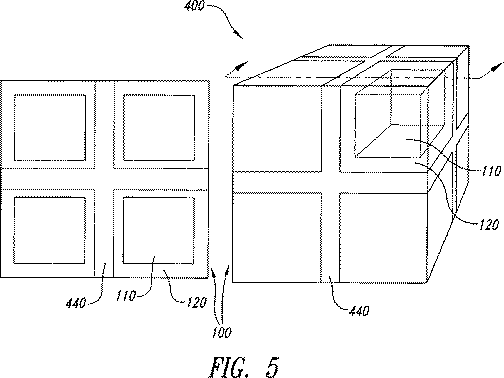
* 全ての製剤のCmaxは互いにかなり異なった。全ての製剤のTmaxは12時間および16時間製剤を除いて互いにかなり異なった。データは両側T検定を使用して95%CIで解析した。
** 基準製剤のAUCに対する試験製剤のAUC(∞)の比から求められる相対的バイオアベイラビリティ
三つの試験製剤および参照製剤に対する血漿濃度−時間曲線を図10に示す。血漿プロフィルは、インビトロ溶出プロフィルに一致する製剤間の明らかな差異を示した。同じ製剤の血漿レベルデータの変動は小さく、剤形の再現性のよいインビボ性能を示唆した。血漿濃度−時間曲線から計算した薬物動態学的パラメータを表1に示した。薬物放出の持続時間が延びると試験製剤のCmax値は予想通り減少した。異なる製剤のCmax値はまた互いにかなり異なった。12時間および16時間製剤に対するTmax値には有意差がなかったが、それでも両方とも8時間製剤および直接放出参照製品より有意に長かった。放出持続時間が8時間(公称値)放出から12時間(公称値)放出、さらに16時間(公称値)放出に延びると、相対的バイオアベイラビリティはわずかに減少した。
* C max of all formulations were quite different from each other. The T max for all formulations was quite different from each other except for the 12 and 16 hour formulations. Data were analyzed at 95% CI using a two-sided T test.
** Relative bioavailability determined from the ratio of AUC (∞) of the test formulation to the AUC of the reference formulation. Plasma concentration-time curves for the three test formulations and the reference formulation are shown in FIG. Plasma profiles showed a clear difference between the formulations consistent with the in vitro dissolution profile. The variation in plasma level data for the same formulation was small, suggesting a reproducible in vivo performance of the dosage form. The pharmacokinetic parameters calculated from the plasma concentration-time curve are shown in Table 1. As the duration of drug release increased, the Cmax value of the test formulation decreased as expected. The C max values for the different formulations were also quite different from each other. There was no significant difference in T max values for the 12 and 16 hour formulations, but both were significantly longer than the 8 hour formulation and the direct release reference product. Relative bioavailability decreased slightly when the release duration was extended from 8 hours (nominal) release to 12 hours (nominal) release and then 16 hours (nominal) release.
薬物動態学的解析にはLOQを上回る血漿プソイドエフェドリン濃度を使用した。SASシステム統計学プログラム(SAS研究所、ケアリー(Cary)、ノースカロライナ(NC)、米国(USA))と、TPD(カナダ治療薬管理局(Therapeutic Products Directorate of Canada))のPKVARM SASマクロとを使用して、薬物動態学的パラメータを計算した。SASとTPD(カナダ治療薬管理局)のANOVSM.SASマクロとを使用して、全ての製剤の間のCmaxの分散分析比較に対する90パーセント信頼区間、時間0からtおよび時間0から無限の間の血漿濃度−時間曲線の下の面積AUC(0−t)およびAUC(0−∞)を計算した。台形法を使用してAUC(0−t)を計算した。以下の式によってAUC(0−t)を時間無限大に外挿することによって、AUC(0−∞)を求めた。
Plasma pseudoephedrine concentrations above LOQ were used for pharmacokinetic analysis. Using the SAS System Statistics Program (SAS Laboratories, Cary, North Carolina (NC), USA (USA)) and the PKVARM SAS macro from TPD (Therapeutic Products Directorate of Canada) The pharmacokinetic parameters were calculated. SAS and TPD (Canada Drug Administration) ANOVSM. Using the SAS macro, a 90 percent confidence interval for the C max ANOVA comparison between all formulations, the area under the plasma concentration-time curve between
AUC(0−∞)=AUC(0−t)+C(t)/Ke
上式中C(t)は時間tにおけるプソイドエフェドリンHClの血漿濃度、Keは半対数血漿薬物濃度−時間プロフィルの終了相の直線回帰による勾配の負の値として計算した除去速度定数である。試験製剤の相対的バイオアベイラビリティ(Frel)は、基準製剤のAUC(0−∞)に対する試験製剤のAUC(0−∞)値の比であった。各被検者に対してFrel値を計算し、10人の被検者の算術平均を使用して各試験製剤のFrelを表した。
AUC (0−∞) = AUC (0−t) + C (t) / K e
Plasma concentrations of pseudoephedrine HCl in the above formula C (t) is the time t, K e is semilogarithmic plasma drug concentration - is calculated removal rate constant as a negative value of the slope by linear regression of the time profile of the termination phase. The relative bioavailability of the test formulation (F rel) was the ratio of AUC (0-∞) values of test formulation for the reference formulation AUC (0-∞). F rel values were calculated for each subject and the arithmetic mean of 10 subjects was used to represent the F rel for each test formulation.
各被検者個人に対する吸収プロフィルを、ワグナー−ネルソン(Wagner&Nelson、1964年)法を使用してデコンボルーションした: The absorption profile for each subject individual was deconvoluted using the Wagner & Nelson (Wagner & Nelson, 1964) method:
平均吸収用量および平均累積溶解薬量データを使用してインビボ−インビトロ相関を決定した。直線回帰を使用して相関の程度を吟味した。回帰分析後、切片値とゼロとの間の差を決定し、t検定を使用して勾配と1との間の差異を決定した。 In vivo-in vitro correlations were determined using average absorbed dose and average cumulative dissolved dose data. The degree of correlation was examined using linear regression. After regression analysis, the difference between the intercept value and zero was determined, and the difference between the slope and 1 was determined using a t-test.
図11に示すように、三つの製剤の累積インビトロ放出プロフィルは、ワグナー−ネルソン法を使用して求めた対応するインビボ吸収プロフィルと良好な一致を示した。三つの試験製剤のインビトロ放出プロットとインビボ吸収プロットとはほとんど重ね合わせ可能であり、活性成分の吸収が主に剤形の放出速度に依存することを示した。インビボおよびインビトロデータの線形回帰分析によって、有意な線形インビボ−インビトロ相関が示唆された。三つの試験製剤の勾配はすべて1に近く、インビボおよびインビトロ放出速度が同程度であることを示唆した。あるいは、参照製剤からの活性成分の放出は小さな勾配値が示すように吸収速度を上回るくらい迅速だった。さらに、三つの試験製剤の切片はすべて原点に近く、活性成分が投与後すぐに吸収されることを物語った。 As shown in FIG. 11, the cumulative in vitro release profiles of the three formulations showed good agreement with the corresponding in vivo absorption profiles determined using the Wagner-Nelson method. The in vitro release plots and in vivo absorption plots of the three test formulations are almost superimposable, indicating that the absorption of the active ingredient depends mainly on the release rate of the dosage form. Linear regression analysis of in vivo and in vitro data suggested a significant linear in vivo-in vitro correlation. The gradients of all three test formulations were close to 1, suggesting comparable in vivo and in vitro release rates. Alternatively, the release of the active ingredient from the reference formulation was rapid enough to exceed the absorption rate as indicated by the small slope value. Furthermore, the sections of the three test formulations were all close to the origin, demonstrating that the active ingredient is absorbed immediately after administration.
(その他の考察ならびに要約および特長)
三次元印刷によって作製することができるコア−シェル構造を使用して拡散支配剤形を開発することに成功した。剤形はほぼゼロ次放出プロフィルを有する。粉体全体の作製に使用する二種類のポリマー粉体の比率を調節することによって、放出プロフィルの時間的尺度を簡単に変えることができる。放出持続期間(公称値)8時間、12時間および16時間、および4時間、の製剤を実証した。ポリマー粉体ブレンド中のHPMCの割合とともに、薬物放出用の拡散経路の増大により、製剤の放出速度は増大した。剤形のシェル以外の部分が多孔性のときでも欠陥のないシェルを作製した。説明した製造方法は確実で再現性高く剤形を製造し、インビトロおよびインビボ試験において予測どおりの放出プロフィルを示した。説明した製造方法は、剤形の一部分を一段階操作で作製し、別の操作で別の部分を作るのではなく、一つの粉体原料だけを使用して実質的に一工程で剤形全体を製造した。
(Other considerations and summary and features)
We have successfully developed a diffusion-dominated dosage form using a core-shell structure that can be made by three-dimensional printing. The dosage form has a near zero order release profile. By adjusting the ratio of the two polymer powders used to make the entire powder, the time scale of the release profile can be easily changed. Formulations with release duration (nominal) 8 hours, 12 hours and 16 hours, and 4 hours were demonstrated. With the percentage of HPMC in the polymer powder blend, the release rate of the formulation increased due to the increased diffusion pathway for drug release. A shell having no defects was produced even when the portion other than the shell of the dosage form was porous. The described manufacturing method produced a dosage form that was reliable and reproducible and showed an expected release profile in in vitro and in vivo studies. The described manufacturing method does not create a part of the dosage form in one step and another part in another operation, but uses only one powder raw material in substantially one step. Manufactured.
望むなら、放出抑制ポリマーの粒子および水溶性物質の粒子を含む粉体床上に三次元印刷を実施することも可能である。たとえば、ラクトースまたはマンニトールを使用してもよいだろう。これによってミクロ多孔質膜(キム(Kim)の「徐放性剤形設計(Controlled Release Dosage Form Design)」中に説明されているものに似ている)ができるが、一工程製造技法である別の方法を用いる。また、そのような膜は堆積法によって作られたキムの膜より実質的に厚くなる。 If desired, three-dimensional printing can be carried out on a powder bed comprising particles of release-inhibiting polymer and water-soluble material. For example, lactose or mannitol could be used. This allows for a microporous membrane (similar to that described in Kim's “Controlled Release Dosage Form Design”), but is a one-step manufacturing technique. The method is used. Also, such films are substantially thicker than Kim films made by deposition.
別の可能性は、開示した三次元印刷法以外の方法によって、放出抑制ポリマーおよび放出調節ポリマーの組合せをシェルの形で塗布することである。そのような代替法にはより多くの個別製造工程が含まれるが、確かに可能である。たとえば、二つの粉体の組み合わせをおそらくキャリヤ液体または溶媒とともにコーティングまたは複数のコーティング層として塗布することができると考えられる。加熱および/または溶媒の使用によってコーティング、とくに放出抑制ポリマーを硬化することができると考えられる。 Another possibility is to apply the combination of release-inhibiting polymer and release-modifying polymer in the form of a shell by methods other than the disclosed three-dimensional printing method. Such alternatives involve more individual manufacturing steps, but are certainly possible. For example, a combination of two powders could possibly be applied as a coating or multiple coating layers with a carrier liquid or solvent. It is believed that the coating, particularly the release inhibiting polymer, can be cured by heating and / or use of a solvent.
本明細書中に引用した全ての特許および特許出願ならびに出版物は、参照としてそれらの全体が援用される。本発明の例示された実施形態の上記の説明は、すべてを説明することも開示した形そのものに本発明を限定することも意図しない。本明細書においては、説明を目的として本発明の特定の実施形態および実施例を説明したが、当業者が認識するように、さまざまな等価な変更が可能である。必要なら本発明の諸様相を変更して、上記で説明したさまざまな特許および出願の方法、装置および概念を使用して、本発明のさらに別の実施形態を提供することができる。上記の詳細な説明を考慮して、本発明に対してこれらおよびその他の変更を施すことができる。一般に以下の請求項において、使用する用語は本発明を本明細書中で開示した特定の実施形態および請求項に限定すると解釈するべきではなく、請求項のもとで機能するすべての剤形を含むと解釈するべきである。したがって本発明は本開示によって限定されず、本発明の範囲は以下の請求項によってのみ定められる。 All patents and patent applications and publications cited herein are incorporated by reference in their entirety. The above description of illustrated embodiments of the invention is not intended to be exhaustive or to limit the invention to the precise form disclosed. Although specific embodiments and examples of the invention have been described herein for purposes of illustration, various equivalent modifications will be apparent to those skilled in the art. If desired, various aspects of the present invention can be modified to provide further embodiments of the present invention using the methods, apparatus and concepts of the various patents and applications described above. These and other changes can be made to the invention in light of the above detailed description. In general, in the following claims, the terms used should not be construed to limit the invention to the specific embodiments and claims disclosed herein, but all dosage forms that function under the claims. Should be interpreted as including. Accordingly, the invention is not limited by the disclosure, but the scope of the invention is defined only by the following claims.
本明細書中では説明を目的として本発明の特定の実施形態を説明してきたが、前述の文言によって、本発明の精神および範囲から逸脱することなくさまざまな変更を施すことができることが理解されよう。したがって、本発明は添付する請求項によってのみ限定される。 Although specific embodiments of the present invention have been described herein for purposes of illustration, it will be understood that various changes can be made in the foregoing language without departing from the spirit and scope of the invention. . Accordingly, the invention is limited only by the accompanying claims.
Claims (21)
a)放出抑制ポリマーの粒子および放出調節ポリマーの粒子を含む粉体であって、該放出抑制ポリマーは、ポリビニルアセテート80%、ポリビニルピロリドン19%、ラウリル硫酸ナトリウムおよびシリカ1%未満の混合物からなる群より選択され;そして、該放出調節ポリマーは、ヒドロキシプロピルメチルセルロース、ヒドロキシプロピルセルロース、メチルセルロース、カルボキシメチルセルロース、ポリビニルアルコール、ポリビニルピロリドン、アクリレート−メタクリレート共重合体、ポリエチレングリコール、キサンタンガム、ゲランガム、ローカストビーンガム、グアーガム、トラガントおよびアルギン酸ナトリウムからなる群より選択される、粉体;
b)該粉体と少なくとも一つの活性製薬成分とを含む印刷されたコアであって、該粉体の粒子は、活性製薬成分によって互いに結合している、コア、および
c)該コアを囲む印刷されたシェルであって、該シェルは該粉体を含み、該粉体の粒子は、互いに結合している、シェル
を含み、
該単位が、水または体液と接触すると、活性製薬成分の拡散制御放出を提供し;
該コアが、該コア中の放出調節ポリマーに対する放出抑制ポリマーのコア比を有し、該シェルが、該シェル中の放出調節ポリマーに対する放出抑制ポリマーのシェル比を有し、そして、該コア比は該シェル比と同じであり;
該コアが、該シェル中に含まれるのと同じ放出抑制ポリマーおよび放出調節ポリマーを含む、剤形。A diffusion control dosage form having at least one unit that provides controlled release of the active pharmaceutical ingredient, the unit comprising:
a) a powder comprising particles of release inhibiting polymer and particles of controlled release polymer, wherein the release inhibiting polymer comprises a mixture of 80% polyvinyl acetate , 19% polyvinyl pyrrolidone, sodium lauryl sulfate and less than 1% silica. It is more selective; and, modified release polymer, hydroxypropyl methyl cellulose, hydroxypropyl cellulose, methyl cellulose, carboxymethyl cellulose, polyvinyl alcohol, polyvinyl pyrrolidone, acrylate - methacrylate copolymers, polyethylene glycol, xanthan gum, gellan gum, locust bean gum, guar gum , A powder selected from the group consisting of tragacanth and sodium alginate;
b) a printed core comprising the powder and at least one active pharmaceutical ingredient, wherein the particles of the powder are bound to each other by the active pharmaceutical ingredient; and c) the printing surrounding the core. A shell, the shell comprising the powder, the particles of the powder comprising shells bonded together,
Providing diffusion controlled release of the active pharmaceutical ingredient when the unit is in contact with water or bodily fluids;
The core has a core ratio of the release inhibiting polymer to the release modifying polymer in the core, the shell has a shell ratio of the release inhibiting polymer to the release modifying polymer in the shell, and the core ratio is Same as the shell ratio;
A dosage form wherein the core comprises the same release-inhibiting polymer and modified-release polymer as contained in the shell.
前記シェルが800ミクロンの厚さを有する、請求項1に記載の剤形。The shell has a thickness of at least 100 microns, or
The dosage form of claim 1, wherein the shell has a thickness of 800 microns.
ポリビニルアセテート80%、ポリビニルピロリドン19%、ラウリル硫酸ナトリウムおよびシリカ1%未満の混合物からなる群より選択される放出抑制ポリマーの粒子と、ヒドロキシプロピルメチルセルロース、ヒドロキシプロピルセルロース、メチルセルロース、カルボキシルメチルセルロース、ポリビニルアルコール、ポリビニルピロリドン、アクリレート−メタクリレート共重合体、ポリエチレングリコール、キサンタンガム、ゲランガム、ローカストビーンガム、グアーガム、トラガントおよびアルギン酸ナトリウムからなる群より選択される放出調節ポリマーの粒子とを含む粉体の層を堆積させる工程;
選ばれた場所の粉体上に該放出抑制ポリマー用の溶媒を含むシェルバインダ液のパターンを堆積させる工程;
選ばれた場所の粉体上に活性製薬成分含有液のパターンを堆積させる工程;
所望の形状を製造するのに上記の工程を十分な回数反復する工程であって、該シェルバインダ液および該活性製薬成分含有液が層によって異なる工程、
該剤形を乾燥させる工程、および
該剤形から非結合粉体を分離する工程
を包含し、
該単位が、水または体液と接触すると、活性製薬成分の拡散制御放出を提供し;
該コアが、該コア中の放出調節ポリマーに対する放出抑制ポリマーのコア比を有し、該シェルが、該シェル中の放出調節ポリマーに対する放出抑制ポリマーのシェル比を有し、そして、該コア比は該シェル比と同じであり;
該コアが、該シェル中に含まれるのと同じ放出抑制ポリマーおよび放出調節ポリマーを含む、方法。A method for producing the dosage form of any one of claims 1-5,
Particles of a release-inhibiting polymer selected from the group consisting of a mixture of 80% polyvinyl acetate , 19% polyvinyl pyrrolidone, sodium lauryl sulfate and less than 1% silica , and hydroxypropylmethylcellulose, hydroxypropylcellulose, methylcellulose, carboxymethylcellulose, polyvinyl alcohol, Depositing a layer of powder comprising polyvinylpyrrolidone, an acrylate-methacrylate copolymer, polyethylene glycol, xanthan gum, gellan gum, locust bean gum, guar gum, tragacanth and particles of a modified release polymer selected from the group consisting of sodium alginate ;
Depositing a pattern of shell binder liquid containing a solvent for the release inhibiting polymer on the powder at a selected location;
Depositing a pattern of active pharmaceutical ingredient-containing liquid on a powder at a selected location;
Repeating the above steps a sufficient number of times to produce the desired shape, wherein the shell binder solution and the active pharmaceutical ingredient-containing solution vary from layer to layer,
Drying the dosage form, and separating unbound powder from the dosage form,
Providing diffusion controlled release of the active pharmaceutical ingredient when the unit is in contact with water or bodily fluids;
The core has a core ratio of the release inhibiting polymer to the release modifying polymer in the core, the shell has a shell ratio of the release inhibiting polymer to the release modifying polymer in the shell, and the core ratio is Same as the shell ratio;
The method wherein the core comprises the same release-inhibiting polymer and modified-release polymer as included in the shell.
b)前記シェル中の放出調節ポリマーのうち少なくともいくつかは、蛇行する連続的な経路の形態で存在し、該経路がより広い部分およびより狭い部分を含むか;または
c)前記シェル中の放出調節ポリマーのうち少なくともいくつかは、三次元的に相互接続した網目状の形態で存在する、
請求項1に記載の剤形。a) at least some of the modified release polymer in the shell is present in the form of discrete particles, are the particles in contact with other particles;
b) at least some of the modified release polymer in the shell is present in the form of a meandering continuous path, the path comprising a wider part and a narrower part; or c) release in the shell At least some of the conditioning polymers exist in a three-dimensionally interconnected network form,
The dosage form of claim 1.
b)前記シェルが変化するシェル壁厚さを有するか;
c)前記シェルが非薬剤物質を含むか;または
d)前記シェルが可塑剤をさらに含む、
請求項1に記載の剤形。a) whether the shell has a uniform shell wall thickness;
b) whether the shell has a varying shell wall thickness;
c) the shell comprises a non-drug substance; or d) the shell further comprises a plasticizer;
The dosage form of claim 1.
b)前記可塑剤がエタノールに可溶性であるか;
c)前記放出抑制ポリマー中に分散したミセルの形で前記可塑剤がシェル中に存在するか;または
d)前記可塑剤がクエン酸トリエチル、トリアセチン、フタル酸ジエチル、クエン酸アセチルトリエチル、クエン酸アセチルトリブチル、カルボン酸エステル類およびリン酸エステル類からなる群より選択される、
請求項14に記載の剤形。a) whether the plasticizer and the release inhibiting polymer are soluble in the same solvent;
b) whether the plasticizer is soluble in ethanol;
c) the plasticizer is present in the shell in the form of micelles dispersed in the release inhibiting polymer; or d) the plasticizer is triethyl citrate, triacetin, diethyl phthalate, acetyl triethyl citrate, acetyl citrate Selected from the group consisting of tributyl, carboxylic acid esters and phosphoric acid esters,
The dosage form according to claim 14.
b)前記放出抑制ポリマーが水に対して不浸透性であるか;
c)前記放出抑制ポリマーが疎水性であるか;
d)前記放出抑制ポリマーが、少なくとも一つの非水溶媒に可溶性である少なくとも一つの成分を有するか;
e)前記放出抑制ポリマーがエタノールに可溶性である少なくとも一つの成分を有するか;
f)前記放出抑制ポリマーは、活性製薬成分が熱損傷を被る温度よりも低いガラス転移点を可塑剤無添加状態で有する少なくとも一つの成分を有するか;または
g)前記放出抑制ポリマーは、活性製薬成分が熱損傷を被る温度よりも低いガラス転移点を可塑剤添加状態で有する少なくとも一つの成分を有する、
請求項1に記載の剤形。a) whether the release inhibiting polymer is not affected by body fluids;
b) whether the release inhibiting polymer is impermeable to water;
c) whether the release inhibiting polymer is hydrophobic;
d) the release inhibiting polymer has at least one component that is soluble in at least one non-aqueous solvent;
e) whether the release inhibiting polymer has at least one component that is soluble in ethanol;
f) the release-inhibiting polymer has at least one component having a glass transition point below the temperature at which the active pharmaceutical ingredient suffers thermal damage in the absence of plasticizer; or g) the release-inhibiting polymer is active pharmaceutical Having at least one component with a plasticizer added state that has a glass transition point lower than the temperature at which the component undergoes thermal damage;
The dosage form of claim 1.
b)水と接触すると前記放出調節ポリマーがゲルを形成することができるか;
c)水のpHによってほとんど影響されずに前記放出調節ポリマーが水を吸収するか;
d)前記放出調節ポリマーが親水性であるか;または
e)体液と接触すると前記放出調節ポリマーが少なくともわずかに分解または溶解する、
請求項1に記載の剤形。a) Will it allow diffusion of the aqueous solution in the modified release polymer upon contact with water;
b) whether the modified release polymer can form a gel upon contact with water;
c) whether the modified release polymer absorbs water almost unaffected by the pH of the water;
d) the modified release polymer is hydrophilic; or e) the modified release polymer is at least slightly degraded or dissolved upon contact with body fluids;
The dosage form of claim 1.
b)少なくとも前記コアの一部がコアバインダ物質をさらに含むか;
c)前記コア中において、前記放出調節ポリマー粒子が粒子内に吸収された活性製薬成分を含むか;
d)前記コアが、該コア中のボイド体積に等しい水の体積中に、体温で溶液中に含まれ得るより多くの活性薬剤成分を含むか;
e)前記コアが、該コア中のボイド体積に等しい水の体積中に、体温で溶液中に含まれ得る量以下の活性製薬成分を含むか;または
f)前記コアが、コア領域の立方ミリメートルあたり0.34ミリグラム以下の活性製薬成分を含む、
請求項1に記載の剤形。a) whether the core comprises unbound powder particles;
b) at least a portion of the core further comprises a core binder material;
c) In the core, the modified release polymer particle comprises an active pharmaceutical ingredient absorbed within the particle;
d) whether the core contains more active drug ingredient that can be included in the solution at body temperature in a volume of water equal to the void volume in the core;
e) the core contains an active pharmaceutical ingredient in an amount of water equal to the void volume in the core in an amount less than or equal to that which can be included in the solution at body temperature; or f) the core is in cubic millimeters of the core area Containing no more than 0.34 milligrams of active pharmaceutical ingredient per
The dosage form of claim 1.
b)前記放出抑制ポリマーおよび放出調節ポリマーが、前記剤形からの活性製薬成分の放出プロフィルの所望の時間的尺度によって決定される比率で前記シェル中に存在するか;
c)前記シェル中の放出調節ポリマーが、該シェル中の放出調節ポリマーおよび放出抑制ポリマーを合わせた合計の20体積%から60体積%の範囲にあるか;または
d)前記剤形が三次元印刷された剤形であり、該三次元印刷された剤形が、滴間距離、線間距離および粉体層厚さの寸法増分を有し、前記シェルが少なくとも滴間距離二つ、線間距離二つまたは粉体層厚さ二つ分の厚さを有する、
請求項1に記載の剤形。a) at least some of the modified release polymer in the shell is present in the form of discrete particles having an average particle size, and the shell has a thickness of at least 3 times the average particle size;
b) whether the release inhibiting polymer and the modified release polymer are present in the shell in a ratio determined by the desired time scale of the release profile of the active pharmaceutical ingredient from the dosage form;
c) the modified release polymer in the shell is in the range of 20% to 60% by volume of the combined combined modified release polymer and controlled release polymer in the shell; or d) the dosage form is three-dimensional printed The three-dimensional printed dosage form has dimensional increments of inter-drop distance, inter-line distance and powder layer thickness, wherein the shell has at least two inter-drop distances and a inter-line distance Having two or two powder layer thicknesses,
The dosage form of claim 1.
b)初期の爆発的な活性製薬成分放出を防ぐために緩衝領域の大きさが設定されるか;
c)前記緩衝領域が少なくとも200マイクロメートルの厚さを有するか;または、
d)前記緩衝領域が前記シェル中に含まれるのと同じ放出調節ポリマーおよび同じ放出抑制ポリマーを含み、前記緩衝領域が該緩衝領域中の放出調節ポリマーに対する放出抑制ポリマーの緩衝領域比を有し、該シェルが該シェル中の放出調節ポリマーに対する放出抑制ポリマーのシェル比を有し、該緩衝領域比が該シェル比と同じである、
請求項5に記載の剤形。a) the size of the buffer region is set to provide the desired lag time in the release of the active pharmaceutical ingredient from the dosage form;
b) Is the size of the buffer area set to prevent initial explosive active pharmaceutical ingredient release;
c) the buffer region has a thickness of at least 200 micrometers; or
d) the buffer region comprises the same modified release polymer and the same controlled release polymer as are contained in the shell, the buffer region having a buffered region ratio of the controlled release polymer to the modified release polymer in the buffer region; The shell has a shell ratio of the release inhibiting polymer to the release modifying polymer in the shell, and the buffer area ratio is the same as the shell ratio;
The dosage form according to claim 5.
a)放出抑制ポリマーの粒子および放出調節ポリマーの粒子を含む粉体であって、該放出抑制ポリマーは、ポリビニルアセテート80%、ポリビニルピロリドン19%、ラウリル硫酸ナトリウムおよびシリカ1%未満の混合物からなる群より選択され;そして、該放出調節ポリマーは、ヒドロキシプロピルメチルセルロース、ヒドロキシプロピルセルロース、メチルセルロース、カルボキシメチルセルロース、ポリビニルアルコール、ポリビニルピロリドン、アクリレート−メタクリレート共重合体、ポリエチレングリコール、キサンタンガム、ゲランガム、ローカストビーンガム、グアーガム、トラガントおよびアルギン酸ナトリウムからなる群より選択される、粉体;
b)該粉体と少なくとも一つの活性製薬成分とを含む印刷されたコアであって、該粉体の粒子は、活性製薬成分によって互いに結合している、コア、および
c)該コアを囲む印刷されたシェルであって、該シェルは該粉体を含み、該粉体の粒子は、互いに結合している、シェル
を含み、
該単位が、水または体液と接触すると、活性製薬成分の拡散制御放出を提供し;
該コアが、該コア中の放出調節ポリマーに対する放出抑制ポリマーのコア比を有し、該シェルが、該シェル中の放出調節ポリマーに対する放出抑制ポリマーのシェル比を有し、そして、該コア比は該シェル比と同じであり;
該コアが、該シェル中に含まれるのと同じ放出抑制ポリマーおよび放出調節ポリマーを含む、剤形。A diffusion control dosage form having at least one unit that provides controlled release of the active pharmaceutical ingredient, the unit comprising:
a) a powder comprising particles of release inhibiting polymer and particles of controlled release polymer, wherein the release inhibiting polymer comprises a mixture of 80% polyvinyl acetate, 19% polyvinyl pyrrolidone, sodium lauryl sulfate and less than 1% silica. And the modified release polymer is hydroxypropylmethylcellulose, hydroxypropylcellulose, methylcellulose, carboxymethylcellulose, polyvinyl alcohol, polyvinylpyrrolidone, acrylate-methacrylate copolymer, polyethylene glycol, xanthan gum, gellan gum, locust bean gum, guar gum , A powder selected from the group consisting of tragacanth and sodium alginate;
b) a printed core comprising the powder and at least one active pharmaceutical ingredient, wherein the particles of the powder are bound to each other by the active pharmaceutical ingredient; and c) the printing surrounding the core. A shell, the shell comprising the powder, the particles of the powder comprising shells bonded together,
Providing diffusion controlled release of the active pharmaceutical ingredient when the unit is in contact with water or bodily fluids;
The core has a core ratio of the release inhibiting polymer to the release modifying polymer in the core, the shell has a shell ratio of the release inhibiting polymer to the release modifying polymer in the shell, and the core ratio is Same as the shell ratio;
A dosage form wherein the core comprises the same release-inhibiting polymer and modified-release polymer as contained in the shell.
Applications Claiming Priority (5)
| Application Number | Priority Date | Filing Date | Title |
|---|---|---|---|
| US37844902P | 2002-05-06 | 2002-05-06 | |
| US60/378,449 | 2002-05-06 | ||
| US42509402P | 2002-11-08 | 2002-11-08 | |
| US60/425,094 | 2002-11-08 | ||
| PCT/US2003/014376 WO2003092633A2 (en) | 2002-05-06 | 2003-05-06 | Diffusion-controlled dosage form and method of fabrication including three dimensional printing |
Publications (3)
| Publication Number | Publication Date |
|---|---|
| JP2005524702A JP2005524702A (en) | 2005-08-18 |
| JP2005524702A5 JP2005524702A5 (en) | 2006-06-08 |
| JP5041663B2 true JP5041663B2 (en) | 2012-10-03 |
Family
ID=29406838
Family Applications (1)
| Application Number | Title | Priority Date | Filing Date |
|---|---|---|---|
| JP2004500818A Expired - Lifetime JP5041663B2 (en) | 2002-05-06 | 2003-05-06 | Fabrication method including diffusion-dominated dosage form and three-dimensional printing |
Country Status (9)
| Country | Link |
|---|---|
| US (2) | US8088415B2 (en) |
| EP (1) | EP1503741B1 (en) |
| JP (1) | JP5041663B2 (en) |
| AT (1) | ATE407665T1 (en) |
| AU (1) | AU2003232078A1 (en) |
| CA (1) | CA2483028C (en) |
| DE (1) | DE60323482D1 (en) |
| ES (1) | ES2316791T3 (en) |
| WO (1) | WO2003092633A2 (en) |
Families Citing this family (68)
| Publication number | Priority date | Publication date | Assignee | Title |
|---|---|---|---|---|
| ES2316791T3 (en) | 2002-05-06 | 2009-04-16 | Massachusetts Institute Of Technology | DOSAGE FORM CONTROLLED BY DIFFUSION AND MANUFACTURING METHOD INCLUSIVE THREE-DIMENSIONAL PRINTING. |
| KR20060092255A (en) * | 2003-09-26 | 2006-08-22 | 알자 코포레이션 | Drug coating agent providing a high drug load and a method of manufacturing the same |
| TWI547431B (en) * | 2004-06-09 | 2016-09-01 | 史密斯克萊美占公司 | Apparatus and method for pharmaceutical production |
| US20060002594A1 (en) * | 2004-06-09 | 2006-01-05 | Clarke Allan J | Method for producing a pharmaceutical product |
| US8101244B2 (en) * | 2004-06-09 | 2012-01-24 | Smithkline Beecham Corporation | Apparatus and method for producing or processing a product or sample |
| JPWO2006004069A1 (en) * | 2004-07-01 | 2008-04-24 | 日本碍子株式会社 | Microcapsule and method for producing the same |
| EP2131817A2 (en) * | 2007-03-09 | 2009-12-16 | Synthon B.V. | Pharmaceutical composition of quetiapine fumarate |
| EP2227226B1 (en) * | 2007-12-21 | 2016-10-26 | Johnson & Johnson Consumer Inc. | Manufacture of a tablet |
| CN101716162B (en) * | 2009-11-26 | 2012-11-14 | 扬州中宝制药有限公司 | Aminophylline slow-release capsules and preparation method thereof |
| US8251837B2 (en) * | 2010-08-11 | 2012-08-28 | Nike, Inc. | Floating golf ball |
| EP2651399A2 (en) | 2010-12-13 | 2013-10-23 | Purdue Pharma LP | Controlled release dosage forms |
| US9381154B2 (en) * | 2011-06-09 | 2016-07-05 | Xerox Corporation | Direct inkjet fabrication of drug delivery devices |
| RU2620807C2 (en) | 2012-09-05 | 2017-05-29 | Апреция Фармасьютикалз Компани | System and equipment for three-dimensional printing |
| US20140099351A1 (en) * | 2012-10-04 | 2014-04-10 | Axxia Pharmaceuticals, Llc | Process for making controlled release medical implant products |
| WO2014144512A1 (en) | 2013-03-15 | 2014-09-18 | Aprecia Pharmaceuticals Company | Rapid disperse dosage form containing levetiracetam |
| CN105579161A (en) | 2013-08-16 | 2016-05-11 | 艾克斯温有限责任公司 | Three-dimensional printed metal-casting molds and methods for making the same |
| US20160243621A1 (en) | 2013-10-17 | 2016-08-25 | The Exone Company | Three-Dimensional Printed Hot Isostatic Pressing Containers and Processes for Making Same |
| EP2875933B1 (en) * | 2013-11-25 | 2019-04-03 | MTU Aero Engines GmbH | Documentation of generative production methods |
| CN106061292B (en) | 2013-12-16 | 2020-01-21 | 麻省理工学院 | Fortified Micronutrient Salt Formulation |
| JP2017507165A (en) | 2013-12-16 | 2017-03-16 | マサチューセッツ インスティテュート オブ テクノロジー | Micromolded or three-dimensional printed pulsed release vaccine formulation |
| WO2015100084A1 (en) | 2013-12-23 | 2015-07-02 | The Exone Company | Method of three-dimensional printing using a multi-component build powder |
| US20160332373A1 (en) | 2013-12-23 | 2016-11-17 | The Exone Company | Methods and Systems for Three-Dimensional Printing Utilizing Multiple Binder Fluids |
| IL232696B (en) | 2014-05-19 | 2018-08-30 | Technion Res & Dev Foundation | Composition and method for detection of molecules of interest |
| EP3148730A1 (en) | 2014-05-29 | 2017-04-05 | The Exone Company | Process for making nickel-based superalloy articles by three-dimensional printing |
| WO2016011098A2 (en) | 2014-07-17 | 2016-01-21 | The Exone Company | Methods and apparatuses for curing three-dimensional printed articles |
| CN107107463B (en) * | 2014-09-08 | 2019-10-25 | 中央兰开夏大学 | Production of solid dosage forms |
| US9844930B2 (en) | 2014-11-05 | 2017-12-19 | Xerox Corporation | 3D printing of digestible shells for medicaments |
| EP3227109B1 (en) | 2014-12-03 | 2020-08-19 | The Exone Company | Process for making densified carbon articles by three dimensional printing |
| EP3302442B1 (en) | 2015-06-03 | 2024-10-16 | Triastek, Inc. | Dosage forms and use thereof |
| CN109432039B (en) * | 2015-06-03 | 2021-06-22 | 南京三迭纪医药科技有限公司 | Pharmaceutical dosage forms and uses thereof |
| WO2017010938A1 (en) * | 2015-07-16 | 2017-01-19 | National University Of Singapore | Printing drug tablets with fully customizable release profiles for personalized medicine |
| CN116423825A (en) | 2015-08-21 | 2023-07-14 | 阿普雷奇亚制药有限责任公司 | 3D printing system and device components |
| GB201519128D0 (en) | 2015-10-29 | 2015-12-16 | Univ Central Lancashire | Solid forms and methods of preparing the same |
| AU2017261372B2 (en) | 2016-05-05 | 2019-02-14 | Triastek, Inc. | Controlled release dosage form |
| US12303603B2 (en) * | 2016-06-20 | 2025-05-20 | Sciperio, Inc | Real-time compounding 3D printer |
| US10765658B2 (en) | 2016-06-22 | 2020-09-08 | Mastix LLC | Oral compositions delivering therapeutically effective amounts of cannabinoids |
| GB201612853D0 (en) | 2016-07-25 | 2016-09-07 | Univ Central Lancashire | Solid dosage form production |
| EP3321002A1 (en) * | 2016-11-15 | 2018-05-16 | Höganäs AB | Feedstock for an additive manufacturing method, additive manufacturing method using the same, and article obtained therefrom |
| DE102017200773A1 (en) * | 2017-01-18 | 2018-07-19 | Eos Gmbh Electro Optical Systems | Process for aftertreatment and aftertreatment system |
| AU2018212273B2 (en) | 2017-01-26 | 2023-12-21 | Triastek, Inc. | Dosage forms of controlled release at specific gastrointestinal sites |
| US10369557B2 (en) | 2017-04-12 | 2019-08-06 | International Business Machines Corporation | Three-dimensional printed objects for chemical reaction control |
| US20210213678A1 (en) * | 2017-04-28 | 2021-07-15 | Hewlett-Packard Development Company, L.P. | Producing diffusion-controlled release devices |
| WO2019025869A1 (en) * | 2017-07-31 | 2019-02-07 | Teva Pharmaceutical Industries Limited | Additively manufactured controlled release dosage forms |
| US11642841B2 (en) | 2017-10-13 | 2023-05-09 | Ut-Battelle, Llc | Indirect additive manufacturing process |
| CN111698983B (en) | 2018-01-09 | 2022-10-18 | 南京三迭纪医药科技有限公司 | Compound oral pharmaceutical dosage form comprising fixed doses of an ADHD non-stimulant and an ADHD stimulant |
| US10350822B1 (en) * | 2018-01-09 | 2019-07-16 | Triastek Inc. | Dosage forms with desired release profiles and methods of designing and making thereof |
| US10744087B2 (en) | 2018-03-22 | 2020-08-18 | Incarda Therapeutics, Inc. | Method to slow ventricular rate |
| DE102018107585B3 (en) * | 2018-03-29 | 2019-03-28 | Universität Rostock | Device for producing 3D printed drug delivery systems with drug depots, and methods for manufacturing 3D printed drug delivery systems |
| WO2019199328A1 (en) * | 2018-04-13 | 2019-10-17 | Hewlett-Packard Development Company, L.P. | Three-dimensional printing |
| CN108939162B (en) * | 2018-07-10 | 2021-11-19 | 上海理工大学 | Preparation method of mesoporous bioglass/sodium alginate-sodium alginate layered bone tissue engineering scaffold |
| GB201813186D0 (en) | 2018-08-13 | 2018-09-26 | Univ Central Lancashire | Solid dosage from production |
| JP2022500282A (en) * | 2018-09-14 | 2022-01-04 | メルク パテント ゲゼルシャフト ミット ベシュレンクテル ハフツングMerck Patent Gesellschaft mit beschraenkter Haftung | Process for the preparation of coated solid pharmaceutical dosage forms |
| KR20250034520A (en) | 2018-10-15 | 2025-03-11 | 아프레시아 파마슈티칼즈 엘엘씨 | Method and system for forming a dosage form within a packaging |
| US11254617B2 (en) | 2019-01-09 | 2022-02-22 | Ut-Battelle, Llc | Indirect additive manufacturing process using amine-containing adhesive polymers |
| US12103229B2 (en) * | 2019-03-15 | 2024-10-01 | Ricoh Company, Ltd. | Jettable temporary binders to create removable support materials |
| US11724486B2 (en) | 2019-07-09 | 2023-08-15 | Kyndryl, Inc. | Printing customized medication based on current user data and medical records of the user |
| WO2021028355A1 (en) * | 2019-08-14 | 2021-02-18 | Merck Patent Gmbh | Method for additive manufacture of a product, manufacturing device and solid pharmaceutical dosage form |
| GB201913972D0 (en) | 2019-09-27 | 2019-11-13 | Univ Ulster | Pharmaceutical Delivery Device and method of manufacture |
| ES2828509B2 (en) | 2019-11-26 | 2022-03-09 | Fund Idonial | COMPOSITION FOR 3D PRINTING OF SEMI-SOLID DRUGS |
| EP3871859A1 (en) * | 2020-02-26 | 2021-09-01 | Hewlett-Packard Development Company, L.P. | Three-dimensional printing |
| WO2021176361A1 (en) * | 2020-03-02 | 2021-09-10 | Craft Health Pte Ltd | Method of manufacturing oral dosage forms for extended drug release |
| IL298019A (en) | 2020-05-13 | 2023-01-01 | Massachusetts Inst Technology | Compositions of polymeric microdevices and their use in cancer immunotherapy |
| AU2021296908A1 (en) | 2020-06-26 | 2023-02-16 | Aprecia Pharmaceuticals LLC | Rapidly-orodispersible tablets having an interior cavity |
| TW202224672A (en) | 2020-10-30 | 2022-07-01 | 大陸商南京三迭紀醫藥科技有限公司 | Gastroretentive pharmaceutical dosage form |
| US12251208B2 (en) | 2020-11-30 | 2025-03-18 | International Business Machines Corporation | Time controlled medication |
| KR102723494B1 (en) * | 2020-12-24 | 2024-10-31 | 동아제약 주식회사 | A pharmaceutical composition for release control, prepared by additive manufacturing |
| CN112940690B (en) * | 2021-02-05 | 2021-11-02 | 中国科学院苏州纳米技术与纳米仿生研究所南昌研究院 | A kind of phase change energy storage material with pod structure and preparation method and application thereof |
| EP4618958A1 (en) * | 2022-11-18 | 2025-09-24 | Aprecia Pharmaceuticals LLC | Functionally-dividable orodispersive dosage form |
Family Cites Families (24)
| Publication number | Priority date | Publication date | Assignee | Title |
|---|---|---|---|---|
| US948297A (en) * | 1909-07-24 | 1910-02-01 | John A Stone | Corn-husker. |
| US986148A (en) * | 1910-05-09 | 1911-03-07 | Hoechst Ag | Derivative of oxyarylarsinic acids and process of making same. |
| ZA822995B (en) * | 1981-05-21 | 1983-12-28 | Wyeth John & Brother Ltd | Slow release pharmaceutical composition |
| IE59287B1 (en) * | 1984-02-10 | 1994-02-09 | Benzon Pharma As | Diffusion coated multiple-units dosage form |
| US4810502A (en) * | 1987-02-27 | 1989-03-07 | Alza Corporation | Pseudoephedrine brompheniramine therapy |
| US5133974A (en) * | 1989-05-05 | 1992-07-28 | Kv Pharmaceutical Company | Extended release pharmaceutical formulations |
| US5204055A (en) * | 1989-12-08 | 1993-04-20 | Massachusetts Institute Of Technology | Three-dimensional printing techniques |
| NZ286242A (en) * | 1991-03-26 | 1997-11-24 | Csl Ltd | Use of veterinary implant as a single dose vaccination system: rupturable polymer film coating around core of active agent and water soluble excipient |
| US5775402A (en) * | 1995-10-31 | 1998-07-07 | Massachusetts Institute Of Technology | Enhancement of thermal properties of tooling made by solid free form fabrication techniques |
| US5490882A (en) * | 1992-11-30 | 1996-02-13 | Massachusetts Institute Of Technology | Process for removing loose powder particles from interior passages of a body |
| US5490962A (en) * | 1993-10-18 | 1996-02-13 | Massachusetts Institute Of Technology | Preparation of medical devices by solid free-form fabrication methods |
| US6280771B1 (en) * | 1997-02-20 | 2001-08-28 | Therics, Inc. | Dosage forms exhibiting multi-phasic release kinetics and methods of manufacture thereof |
| AU4219497A (en) * | 1996-09-13 | 1998-04-02 | Shionogi & Co., Ltd. | Sustained-release preparation utilizing thermal change and process for the production thereof |
| ES2318869T3 (en) * | 1997-02-20 | 2009-05-01 | Massachusetts Institute Of Technology | DOSAGE FORM PRESENTING PROPERTIES OF QUICK DISPERSION, METHODS OF USE AND PROCEDURE FOR MANUFACTURING. |
| US6213168B1 (en) * | 1997-03-31 | 2001-04-10 | Therics, Inc. | Apparatus and method for dispensing of powders |
| EP1015153A4 (en) * | 1997-03-31 | 2004-09-01 | Therics Inc | Method for dispensing of powders |
| US6547994B1 (en) * | 1998-11-13 | 2003-04-15 | Therics, Inc. | Rapid prototyping and manufacturing process |
| US6485746B1 (en) * | 2000-08-25 | 2002-11-26 | Neurocrine Biosciences, Inc. | Controlled-release sedative-hypnotic compositions and methods related thereto |
| DE19961897A1 (en) * | 1999-12-20 | 2001-06-28 | Basf Ag | Use of a film coating as a taste masking coating of pharmaceutical dosage forms |
| DE10015479A1 (en) * | 2000-03-29 | 2001-10-11 | Basf Ag | Solid oral dosage forms with delayed release of active ingredient and high mechanical stability |
| JP5178982B2 (en) | 2000-05-18 | 2013-04-10 | セリックス, インコーポレイテッド | Encapsulation of the toxic core in a non-toxic region in an oral dosage form |
| WO2002038280A2 (en) * | 2000-11-10 | 2002-05-16 | Therics, Inc. | A wetting-resistant nozzle for dispensing small volumes of liquid and a method for manufacturing a wetting-resistant nozzle |
| ES2316791T3 (en) | 2002-05-06 | 2009-04-16 | Massachusetts Institute Of Technology | DOSAGE FORM CONTROLLED BY DIFFUSION AND MANUFACTURING METHOD INCLUSIVE THREE-DIMENSIONAL PRINTING. |
| US20050015728A1 (en) * | 2003-07-17 | 2005-01-20 | International Business Machines Corporation | Method, system, and program product for customizing a user interface |
-
2003
- 2003-05-06 ES ES03747680T patent/ES2316791T3/en not_active Expired - Lifetime
- 2003-05-06 US US10/431,353 patent/US8088415B2/en active Active
- 2003-05-06 WO PCT/US2003/014376 patent/WO2003092633A2/en not_active Ceased
- 2003-05-06 AT AT03747680T patent/ATE407665T1/en not_active IP Right Cessation
- 2003-05-06 EP EP03747680A patent/EP1503741B1/en not_active Expired - Lifetime
- 2003-05-06 AU AU2003232078A patent/AU2003232078A1/en not_active Abandoned
- 2003-05-06 CA CA2483028A patent/CA2483028C/en not_active Expired - Lifetime
- 2003-05-06 JP JP2004500818A patent/JP5041663B2/en not_active Expired - Lifetime
- 2003-05-06 DE DE60323482T patent/DE60323482D1/en not_active Expired - Lifetime
-
2011
- 2011-11-29 US US13/306,393 patent/US8465777B2/en not_active Expired - Fee Related
Also Published As
| Publication number | Publication date |
|---|---|
| WO2003092633A2 (en) | 2003-11-13 |
| WO2003092633A3 (en) | 2004-04-08 |
| US8088415B2 (en) | 2012-01-03 |
| ES2316791T3 (en) | 2009-04-16 |
| DE60323482D1 (en) | 2008-10-23 |
| EP1503741B1 (en) | 2008-09-10 |
| US20040005360A1 (en) | 2004-01-08 |
| US8465777B2 (en) | 2013-06-18 |
| AU2003232078A1 (en) | 2003-11-17 |
| EP1503741A2 (en) | 2005-02-09 |
| JP2005524702A (en) | 2005-08-18 |
| ATE407665T1 (en) | 2008-09-15 |
| US20120177696A1 (en) | 2012-07-12 |
| CA2483028C (en) | 2011-04-05 |
| CA2483028A1 (en) | 2003-11-13 |
Similar Documents
| Publication | Publication Date | Title |
|---|---|---|
| JP2005524702A (en) | Fabrication method including diffusion-dominated dosage form and three-dimensional printing | |
| JP4533531B2 (en) | Controlled release composition | |
| JP2701977B2 (en) | Dosage form containing hydrophobic medium | |
| AU2001297011B2 (en) | Methylphenidate modified release formulations | |
| JP6457458B2 (en) | Timed pulse emission system | |
| Verma et al. | Development and evaluation of osmotically controlled oral drug delivery system of glipizide | |
| JP2637981B2 (en) | Absorption control drug composition | |
| US7195778B2 (en) | Drug delivery system for zero order, zero order-biphasic, ascending or descending drug delivery | |
| EP1267842B1 (en) | Method for producing a controlled-release tablet using a pore forming agent in the coating | |
| JP2842944B2 (en) | Dosage form with encapsulated excipients | |
| HRP960554A2 (en) | Pharmaceutical formulations | |
| US7875290B2 (en) | Method and form of a drug delivery device, such as encapsulating a toxic core within a non-toxic region in an oral dosage form | |
| AU2001297011A1 (en) | Methylphenidate modified release formulations | |
| EP2910243A1 (en) | Pharmaceutic osmotic pump preparation | |
| KR20110025654A (en) | Preparation of Controlled Release Skeletal Muscle Relaxant Dosage Form | |
| US7858119B1 (en) | Extended release pharmaceuticals | |
| EP0365947A1 (en) | Novel dosage form | |
| WO2007117110A2 (en) | Sustained-release pellets containing tamsulosin hydrochloride and processes for preparing the same | |
| CA2433915C (en) | Improved controlled release oral dosage form | |
| JP2005533084A (en) | Oral dosage form comprising a liquid active ingredient formulation and controlled release by an swellable osmotic composition | |
| JPH06190267A (en) | Microcapsule | |
| JP2007500558A (en) | Permeation resistant osmotic engine and dosage form for controlled release of liquid active formulations | |
| KR20060016382A (en) | Drug Delivery System Using Roxatidine Acetate Multi-layer Coating Granule | |
| Ramadan | Using Ethylcellulose for the Development of 3D Printed Single Layer and Multilayer Controlled-Release Tablets | |
| AU2024319536A1 (en) | A method of producing an oral osmotic pharmaceutical delivery system and a pharmaceutical batch produced using the same |
Legal Events
| Date | Code | Title | Description |
|---|---|---|---|
| A521 | Request for written amendment filed |
Free format text: JAPANESE INTERMEDIATE CODE: A523 Effective date: 20060417 |
|
| A621 | Written request for application examination |
Free format text: JAPANESE INTERMEDIATE CODE: A621 Effective date: 20060417 |
|
| A131 | Notification of reasons for refusal |
Free format text: JAPANESE INTERMEDIATE CODE: A131 Effective date: 20091112 |
|
| A601 | Written request for extension of time |
Free format text: JAPANESE INTERMEDIATE CODE: A601 Effective date: 20091218 |
|
| A602 | Written permission of extension of time |
Free format text: JAPANESE INTERMEDIATE CODE: A602 Effective date: 20091228 |
|
| A521 | Request for written amendment filed |
Free format text: JAPANESE INTERMEDIATE CODE: A523 Effective date: 20100512 |
|
| A131 | Notification of reasons for refusal |
Free format text: JAPANESE INTERMEDIATE CODE: A131 Effective date: 20110322 |
|
| A601 | Written request for extension of time |
Free format text: JAPANESE INTERMEDIATE CODE: A601 Effective date: 20110621 |
|
| A602 | Written permission of extension of time |
Free format text: JAPANESE INTERMEDIATE CODE: A602 Effective date: 20110628 |
|
| A601 | Written request for extension of time |
Free format text: JAPANESE INTERMEDIATE CODE: A601 Effective date: 20110721 |
|
| A602 | Written permission of extension of time |
Free format text: JAPANESE INTERMEDIATE CODE: A602 Effective date: 20110728 |
|
| A601 | Written request for extension of time |
Free format text: JAPANESE INTERMEDIATE CODE: A601 Effective date: 20110819 |
|
| A602 | Written permission of extension of time |
Free format text: JAPANESE INTERMEDIATE CODE: A602 Effective date: 20110826 |
|
| A521 | Request for written amendment filed |
Free format text: JAPANESE INTERMEDIATE CODE: A523 Effective date: 20110921 |
|
| A02 | Decision of refusal |
Free format text: JAPANESE INTERMEDIATE CODE: A02 Effective date: 20120210 |
|
| A521 | Request for written amendment filed |
Free format text: JAPANESE INTERMEDIATE CODE: A523 Effective date: 20120528 |
|
| A911 | Transfer to examiner for re-examination before appeal (zenchi) |
Free format text: JAPANESE INTERMEDIATE CODE: A911 Effective date: 20120618 |
|
| TRDD | Decision of grant or rejection written | ||
| A01 | Written decision to grant a patent or to grant a registration (utility model) |
Free format text: JAPANESE INTERMEDIATE CODE: A01 Effective date: 20120705 |
|
| A01 | Written decision to grant a patent or to grant a registration (utility model) |
Free format text: JAPANESE INTERMEDIATE CODE: A01 |
|
| A61 | First payment of annual fees (during grant procedure) |
Free format text: JAPANESE INTERMEDIATE CODE: A61 Effective date: 20120710 |
|
| R150 | Certificate of patent or registration of utility model |
Ref document number: 5041663 Country of ref document: JP Free format text: JAPANESE INTERMEDIATE CODE: R150 Free format text: JAPANESE INTERMEDIATE CODE: R150 |
|
| FPAY | Renewal fee payment (event date is renewal date of database) |
Free format text: PAYMENT UNTIL: 20150720 Year of fee payment: 3 |
|
| R250 | Receipt of annual fees |
Free format text: JAPANESE INTERMEDIATE CODE: R250 |
|
| R250 | Receipt of annual fees |
Free format text: JAPANESE INTERMEDIATE CODE: R250 |
|
| R250 | Receipt of annual fees |
Free format text: JAPANESE INTERMEDIATE CODE: R250 |
|
| R250 | Receipt of annual fees |
Free format text: JAPANESE INTERMEDIATE CODE: R250 |
|
| R250 | Receipt of annual fees |
Free format text: JAPANESE INTERMEDIATE CODE: R250 |
|
| R250 | Receipt of annual fees |
Free format text: JAPANESE INTERMEDIATE CODE: R250 |
|
| R250 | Receipt of annual fees |
Free format text: JAPANESE INTERMEDIATE CODE: R250 |
|
| R250 | Receipt of annual fees |
Free format text: JAPANESE INTERMEDIATE CODE: R250 |
|
| EXPY | Cancellation because of completion of term |