JP4731985B2 - Manufacturing method for curtain fabric - Google Patents
Manufacturing method for curtain fabric Download PDFInfo
- Publication number
- JP4731985B2 JP4731985B2 JP2005137059A JP2005137059A JP4731985B2 JP 4731985 B2 JP4731985 B2 JP 4731985B2 JP 2005137059 A JP2005137059 A JP 2005137059A JP 2005137059 A JP2005137059 A JP 2005137059A JP 4731985 B2 JP4731985 B2 JP 4731985B2
- Authority
- JP
- Japan
- Prior art keywords
- kimono
- fabric
- curtain
- manufacturing
- curtain fabric
- Prior art date
- Legal status (The legal status is an assumption and is not a legal conclusion. Google has not performed a legal analysis and makes no representation as to the accuracy of the status listed.)
- Expired - Fee Related
Links
Images





Landscapes
- Curtains And Furnishings For Windows Or Doors (AREA)
Description
本発明は、着物地を利用したカーテン用布地の製造方法に関する。 The present invention relates to a method for manufacturing a curtain fabric using a kimono.
ロールカーテンに使用されるカーテン布地としては、適度な張り腰を与えて巻き取りを容易とするためのロールカーテン専用の生地を用いるのが一般的であった。また、生地(表地)の表面に透明フィルムなどで被覆処理を施すことにより、ロールカーテン用のカーテン布地を製造するものなどが知られている。 As curtain fabrics used for roll curtains, it has been common to use fabrics dedicated to roll curtains to provide appropriate tension and ease winding. Moreover, what manufactures the curtain fabric for roll curtains by performing the coating process with the transparent film etc. on the surface of cloth | dough (surface material), etc. are known.
近年は生地本来が持つ独自の風合いを活かすために、表面の被覆処理に代えて、熱融着性の芯地(裏芯地)を貼り付けるものが知られている(例えば、特許文献1参照。)。この方法によれば、織物や染め物などの着物地(着物地の材料はシルク、ポリエステルなどが一般的である。)をロールカーテン用の生地として利用することが可能となる。 In recent years, in order to make use of the original texture of the fabric itself, a material that is bonded with a heat-fusible interlining (back interlining) in place of the surface coating treatment is known (for example, see Patent Document 1). .) According to this method, it is possible to use kimono fabrics such as woven fabrics and dyed products (materials for kimono fabrics are generally silk, polyester, etc.) as fabrics for roll curtains.
しかし、着物地は反物とよばれる一定の幅の巻物単位で流通することが一般的であり、ロールカーテンその他のインテリア用品として用いる場合には、窓ガラス等必要な幅に満たないため、反物の着物地をそのままカーテン用生地として利用することができない。 However, it is common for kimono fabrics to be distributed in units of scrolls of a certain width called fabric, and when used as roll curtains or other interior goods, it is less than the necessary width such as window glass, so The kimono fabric cannot be used as it is as a curtain fabric.
また、ロールカーテンは室内の装飾を彩るインテリア用品であるため、意匠性に富んだ様々なデザイン・風合いのものを用意できることが望まれるところ、現状では、カーテン用布地専用に着物地を製造しなければならないので選択の幅が狭められ、広く流通している着物の反物を利用することができない。 In addition, since roll curtains are interior goods that decorate the interior decoration, it is desirable to be able to prepare various designs and textures that are rich in design, but currently, kimono fabrics must be manufactured exclusively for curtain fabrics. Therefore, the range of selection is narrowed, and it is not possible to use the widely distributed kimono fabric.
本発明は、上記に鑑みてなされたものであり、広く流通している着物の反物を利用してロールカーテン用の布地を提供することを技術的課題とし、複数の着物地の反物を利用してロールカーテンなどのカーテン用布地を製造する方法を提供することを目的とする。 The present invention has been made in view of the above, and has a technical problem to provide a fabric for a roll curtain using a widely distributed kimono fabric, and uses a plurality of fabric fabrics. An object of the present invention is to provide a method for producing curtain fabric such as a roll curtain.
本発明に係るカーテン用布地の製造方法は、絹製の着物地の裏地に熱融着フィルムからなる第1の裏芯地を加熱圧着して取り付けた後、これを他の同種又は異種の着物地と表合わせに重ねるステップと、前記表合わせに重ねた着物地の一端を超音波ミシン、レーザーその他熱エネルギーを付与しつつ着物地を切断することができる装置により、その切断部分同士を高温で融着させて仮接着するステップと、前記仮接着により1枚につながった着物地の裏地に熱融着フィルムからなる第2の裏芯地を重ね合わせ、その後フラットプレスにより前記仮接着した着物地に前記第2の裏芯地を加熱圧着するステップとを含むことを特徴とする。 In the method for producing a curtain fabric according to the present invention, after attaching a first liner made of a heat-sealing film to a lining of a silk kimono, it is attached to another same or different kind of kimono. The step of superimposing the ground and the surface together, and the device that can cut the kimono ground while applying one end of the kimono ground superimposed on the surface to the ultrasonic sewing machine , laser, or other thermal energy , a step of temporarily bonded by fusion, the temporarily bonded by superposing the second back interlining consisting heat-sealing film kimono lining that led to one, then the by flat pressing provisionally adhered kimono characterized in that it comprises a step of heating and pressing said second back interlining.
以上のようにして得られたカーテン用布地は、共通の裏芯地の上に、同種又は異種のポリエステル製着物地が殆ど継ぎ目なくつながった状態で加熱圧着してなるため、一般に流通している着物の反物を必要な数だけ横につなげることができ、装飾により一層の変化を与えることができる。 The curtain fabric obtained as described above is generally circulated on the common lining because it is heat-pressed in a state where the same or different polyester kimono fabrics are almost seamlessly connected. You can connect as many kimono fabrics to the side as you need, and the decoration can give you more changes.
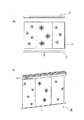
図1(a)は、本発明に係るロールカーテンに用いられるカーテン用布地を示す全体斜視図であり、図1(b)は(a)のA−A線断面図である。 Fig.1 (a) is a whole perspective view which shows the fabric for curtains used for the roll curtain which concerns on this invention, FIG.1 (b) is the sectional view on the AA line of (a).
図1に示すカーテン用布地10は、両側に設けられた第1の着物地1(1a,1b)と中央に設けられた第2の着物地2とが、共通の裏芯地5の上に貼り付けられた構造である。裏芯地とは、裏側に貼り付ける熱融着フィルムを意味する。なお、本発明でいう熱融着フィルムとは、フィルム状又はシート状の熱融着性材料であればよく、その厚みはロール状、パネル状などカーテンの形状に合わせて適宜選択することが好ましい。また、デザイン性を考慮して、両側の着物地1(1a,1b)は、同一の色柄の生地を用いた例を示しているが、異なる色柄の生地を用いてもよい。
The
図1(b)に示すように、このカーテン用布地10の生地の境目は肉眼では殆ど継ぎ目が目立たず、隙間なくぴったりと連続した1枚の生地のように見える。裏芯地5は熱融着フィルムが高温で加熱圧着された連続した1枚のシートからなる。
As shown in FIG. 1B, the boundary of the fabric of the
次に、このカーテン用布地10及びこれを利用したロールカーテンの製造方法について、図2乃至図5を参照して説明する。
Next, the
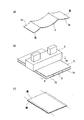
図2(a)乃至(c)及び図3(d)乃至(f)は、カーテン用布地10を製造する工程を、図5(a)及び(b)は、そこからロールカーテンを製造するまでの工程を夫々示している。
2 (a) to 2 (c) and FIGS. 3 (d) to 3 (f) show the process for manufacturing the
ここで、出発材料である着物地について説明する。着物地には、絹製、ポリエステル製等の化学繊維製のものがあり、本発明では、いずれの着物地も用いることができる。ただし、後述するように、絹100%の着物地の場合、超音波ミシン等による仮接着ができないため、ここではポリエステル製の着物地を出発材料として説明するものとする。 Here, the kimono that is the starting material will be described. There are kimono fabrics made of chemical fibers such as silk and polyester, and any kimono fabric can be used in the present invention. However, as will be described later, in the case of a kimono fabric made of 100% silk, temporary bonding with an ultrasonic sewing machine or the like cannot be performed, and therefore, a polyester kimono fabric will be described as a starting material.
まず、図2(a)に示すように、ポリエステル100%の着物地を必要な長さだけ切り取り、表合わせに(表同士が向き合うようにして)重ねる。
次に、図2(b)に示すように、重ね合わせた着物地の端部を、超音波ミシンで切断する。こうすると、ポリエステル製の着物地は超音波ミシンの切断部で融着する。ただし、この融着の接着力は弱く、図2(c)のように、広げても外れないが強い力で引っ張ると容易に外れる程度の、いわば仮接着というべきものである。なお、ここでいう超音波ミシンとは、レーザーなど一定の熱エネルギーを付与しつつ、着物地を切断できるものであればよい。
ここで、必要により図2(a)の工程を繰り返すことにより、さらに同種又は異種の着物地を表合わせに貼り合わせて超音波ミシンで切断し、仮接着しておいてもよい。
First, as shown in FIG. 2 (a), a kimono fabric made of 100% polyester is cut out by a necessary length and overlapped on the surface (with the surfaces facing each other).
Next, as shown in FIG.2 (b), the edge part of the piled kimono place is cut | disconnected with an ultrasonic sewing machine. If it carries out like this, the kimono place made from polyester will melt | fuse at the cutting part of an ultrasonic sewing machine. However, the adhesive force of this fusion is weak, and as shown in FIG. 2 (c), it cannot be removed even if it is spread, but it can be easily detached when pulled with a strong force. In addition, the ultrasonic sewing machine here should just be a thing which can cut | disconnect a kimono place, providing a fixed thermal energy, such as a laser.
Here, by repeating the process of FIG. 2A as necessary, the same or different kinds of kimonos may be further bonded to each other, cut with an ultrasonic sewing machine, and temporarily bonded.
次に、図3(d)に示すように、必要な仮接着が終了した後、裏面側が上になるようにして全体を広げる。必要により、図4(a)及び(b)の工程図に示すように、フラットローラー7により、仮接着部の突起部を押しつぶして平坦にしておく。
次に、裏面に裏芯地5を貼付け、フラットプレス6で加熱圧着する。加熱温度は表地及び裏芯地の種類や厚さなどにより異なるが、例えば140℃程度である。
次に、全体の幅を調整するため、用途に応じて両サイドを必要な幅に切断する。この際、超音波ミシンを用いて切断すると端部の処理が簡便であり好ましい。
以上の工程により、着物地を利用したカーテン用布地10が完成する。
Next, as shown in FIG. 3D, after the necessary temporary bonding is completed, the entire surface is widened so that the back side is up. If necessary, as shown in the process diagrams of FIGS. 4A and 4B, the protrusion of the temporary bonding portion is crushed and flattened by the flat roller 7.
Next, the backing interlining 5 is pasted on the back surface and heat-pressed with a
Next, in order to adjust the overall width, both sides are cut to a required width according to the application. In this case, cutting with an ultrasonic sewing machine is preferable because the processing of the end is simple.
Through the above steps, the
なお、上記のようにポリエステル製の着物地の場合、超音波ミシンによって切断すると切断部同士が高温で融着するため、自動的に仮接着が行われるが、絹100%のように、超音波ミシンで切断しただけでは、仮接着が行われないものもある。この場合、予め絹製の着物地に裏芯地を加熱圧着して取り付けておくと、よい。
このようにすると、ポリエステル製の着物地でなくてもポリエステル製の着物地と同様に超音波ミシンで切断するだけで容易に切断面が仮接着される。
In addition, in the case of a kimono fabric made of polyester as described above, when cut by an ultrasonic sewing machine, the cut portions are fused at a high temperature, and thus temporary bonding is automatically performed. There are some that are not temporarily bonded only by cutting with a sewing machine. In this case, it is preferable to attach a backing interlining to a silk kimono beforehand.
If it does in this way, even if it is not a polyester kimono, the cut surface will be temporarily bonded easily only by cut | disconnecting with an ultrasonic sewing machine similarly to the polyester kimono.
ロールカーテンにする場合、さらに、図5(a)に示すように、カーテン用布地10に巻芯11とウエイトバー12とを取付け、これをロールカーテンの巻き取りスプリング部13に取り付けて完成する。図7は、この方法により試作したロールカーテンの一例を示す参考写真である。
When a roll curtain is used, as shown in FIG. 5A, a winding
また、図5では、ロールカーテンに適用した場合を説明したが、ロールカーテンに代えて、ロールスクリーンのような巻き取り装置のない、いわゆるパネルカーテンとして利用しても良い。 Further, although FIG. 5 illustrates a case where the present invention is applied to a roll curtain, the roll curtain may be used as a so-called panel curtain without a winding device such as a roll screen.
或いは、図6(a)に示すように、図3(f)で得られたカーテン用布地10を超音波ミシンにより短冊状に切断し、バーチカルブラインド30のルーバー15に貼り付けることにより、バーチカルブラインドとして利用してもよい。
Alternatively, as shown in FIG. 6 (a), the
本発明に係るカーテン用生地の製造方法は、同種又は異種の着物地を連続した1枚の生地のようにできるため、任意のカーテン用布地に応用することができ、インテリアの選択の余地が大幅に拡大する。従って、本発明の産業上の利用可能性は極めて大きい。 The curtain fabric manufacturing method according to the present invention can be applied to any curtain fabric since the same or different kimono fabrics can be made into a continuous fabric, and there is a large room for selection of interiors. Expand to. Therefore, the industrial applicability of the present invention is extremely large.
1a、1b 第1の着物地
2 第2の着物地
5 裏芯地
6 フラットプレス
10 カーテン用布地
11 巻芯
12 ウエイトバー
15 ルーバー
30 バーチカルブラインド
DESCRIPTION OF
Claims (1)
前記表合わせに重ねた着物地の一端を超音波ミシン、レーザーその他熱エネルギーを付与しつつ着物地を切断することができる装置により、その切断部分同士を高温で融着させて仮接着するステップと、
前記仮接着により1枚につながった着物地の裏地に熱融着フィルムからなる第2の裏芯地を重ね合わせ、その後フラットプレスにより前記仮接着した着物地に前記第2の裏芯地を加熱圧着するステップとを含むカーテン用布地の製造方法。 A method for manufacturing a curtain fabric, comprising: attaching a first backing made of a heat-sealing film to a lining of a silk kimono by thermocompression bonding; Steps to overlay the table,
Temporarily bonding the cut parts to each other at a high temperature by using an ultrasonic sewing machine , a laser, or other device capable of cutting the kimono while applying thermal energy to one end of the kimono stacked on the surface ; ,
A second lining material made of a heat-sealing film is superimposed on the lining material of the kimono fabric that has been connected to one piece by temporary bonding, and then the second lining material is heated to the temporarily bonded kimono material by a flat press. A method of manufacturing a curtain fabric, comprising the step of crimping.
Priority Applications (1)
| Application Number | Priority Date | Filing Date | Title |
|---|---|---|---|
| JP2005137059A JP4731985B2 (en) | 2005-05-10 | 2005-05-10 | Manufacturing method for curtain fabric |
Applications Claiming Priority (1)
| Application Number | Priority Date | Filing Date | Title |
|---|---|---|---|
| JP2005137059A JP4731985B2 (en) | 2005-05-10 | 2005-05-10 | Manufacturing method for curtain fabric |
Publications (2)
| Publication Number | Publication Date |
|---|---|
| JP2006314360A JP2006314360A (en) | 2006-11-24 |
| JP4731985B2 true JP4731985B2 (en) | 2011-07-27 |
Family
ID=37535585
Family Applications (1)
| Application Number | Title | Priority Date | Filing Date |
|---|---|---|---|
| JP2005137059A Expired - Fee Related JP4731985B2 (en) | 2005-05-10 | 2005-05-10 | Manufacturing method for curtain fabric |
Country Status (1)
| Country | Link |
|---|---|
| JP (1) | JP4731985B2 (en) |
Family Cites Families (6)
| Publication number | Priority date | Publication date | Assignee | Title |
|---|---|---|---|---|
| JP2674152B2 (en) * | 1988-11-08 | 1997-11-12 | 東レ株式会社 | Special fabric and manufacturing method thereof |
| JPH0353006U (en) * | 1989-09-27 | 1991-05-22 | ||
| JPH05247784A (en) * | 1991-04-02 | 1993-09-24 | Okuwaki Kenshiyoku:Kk | Multidesign yarn-dyed jacquard cloth having transparent feeling |
| JP2522274Y2 (en) * | 1991-10-14 | 1997-01-08 | 株式会社田村屋 | Decorative fiber fabric |
| JP3487579B2 (en) * | 1999-04-28 | 2004-01-19 | ユニテックパロマ株式会社 | Curtain fabric for roll curtain or shade curtain, roll curtain and shade curtain |
| JP2002119146A (en) * | 2000-10-18 | 2002-04-23 | Aion Kk | Shade material for photoperiod reaction control |
-
2005
- 2005-05-10 JP JP2005137059A patent/JP4731985B2/en not_active Expired - Fee Related
Also Published As
| Publication number | Publication date |
|---|---|
| JP2006314360A (en) | 2006-11-24 |
Similar Documents
| Publication | Publication Date | Title |
|---|---|---|
| KR101403419B1 (en) | A method of producing perforated retroreflective trim | |
| US20110053450A1 (en) | Textile embellishments that permanently bond to waterproof and/or waterproof-breathable fabrics | |
| KR101408857B1 (en) | A manufacturing method of velcro transfer label and velcro transfer label using the same | |
| JP6170567B2 (en) | Slide fastener stringer and manufacturing method thereof | |
| KR101511989B1 (en) | Textiles formed pattern by using peeling technique and manufaturing method thereof | |
| CN103478915B (en) | Manufacture method of composite cutting piece with locally hollow-out image/text and cutting piece | |
| JP4731985B2 (en) | Manufacturing method for curtain fabric | |
| JP3112389U (en) | Curtain fabric | |
| CN109068767B (en) | Badge adhesive removal assembly and related method | |
| KR101805025B1 (en) | Manufacturing method of pair glass | |
| KR101228132B1 (en) | Ribbon of fabric and ribbon of fabric manufacturing | |
| US9586435B2 (en) | Performance fabric appliqués | |
| KR101392434B1 (en) | Manufacturing process of wrinkles textile | |
| JP6261350B2 (en) | Fabric container manufacturing method | |
| AU2013101656A4 (en) | Perforated retroreflective trim and a method of producing perforated retroreflective trim | |
| AU2011203099A1 (en) | Perforated retroreflective trim and a method of producing perforated retroreflective trim | |
| KR101850219B1 (en) | Method for manufacturing fabric | |
| TWI276733B (en) | Blind blade of horizontal Venetian blind and manufacturing method thereof | |
| CN222917092U (en) | Foamed composite fabric and shoe upper | |
| KR200401627Y1 (en) | Prism-reflective cloth | |
| JP2020176349A (en) | Decoration method of fabric | |
| KR101547254B1 (en) | Decorated woven fabrics having decorated patch and arrangement method of decorated patch for decorated woven fabrics | |
| JP2008038289A (en) | Pleat machine and pleat fabric | |
| JP2000274159A (en) | Roll screen with mark and manufacturing method thereof | |
| KR101365749B1 (en) | A fluorescent foil cloth and the manufacturing method thereof |
Legal Events
| Date | Code | Title | Description |
|---|---|---|---|
| A621 | Written request for application examination |
Free format text: JAPANESE INTERMEDIATE CODE: A621 Effective date: 20080508 |
|
| A977 | Report on retrieval |
Free format text: JAPANESE INTERMEDIATE CODE: A971007 Effective date: 20101014 |
|
| A131 | Notification of reasons for refusal |
Free format text: JAPANESE INTERMEDIATE CODE: A131 Effective date: 20101026 |
|
| A521 | Request for written amendment filed |
Free format text: JAPANESE INTERMEDIATE CODE: A523 Effective date: 20101223 |
|
| TRDD | Decision of grant or rejection written | ||
| A01 | Written decision to grant a patent or to grant a registration (utility model) |
Free format text: JAPANESE INTERMEDIATE CODE: A01 Effective date: 20110329 |
|
| A61 | First payment of annual fees (during grant procedure) |
Free format text: JAPANESE INTERMEDIATE CODE: A61 Effective date: 20110420 |
|
| FPAY | Renewal fee payment (event date is renewal date of database) |
Free format text: PAYMENT UNTIL: 20140428 Year of fee payment: 3 |
|
| R150 | Certificate of patent or registration of utility model |
Ref document number: 4731985 Country of ref document: JP Free format text: JAPANESE INTERMEDIATE CODE: R150 Free format text: JAPANESE INTERMEDIATE CODE: R150 |
|
| R250 | Receipt of annual fees |
Free format text: JAPANESE INTERMEDIATE CODE: R250 |
|
| R250 | Receipt of annual fees |
Free format text: JAPANESE INTERMEDIATE CODE: R250 |
|
| R250 | Receipt of annual fees |
Free format text: JAPANESE INTERMEDIATE CODE: R250 |
|
| R250 | Receipt of annual fees |
Free format text: JAPANESE INTERMEDIATE CODE: R250 |
|
| R250 | Receipt of annual fees |
Free format text: JAPANESE INTERMEDIATE CODE: R250 |
|
| R250 | Receipt of annual fees |
Free format text: JAPANESE INTERMEDIATE CODE: R250 |
|
| LAPS | Cancellation because of no payment of annual fees |