JP4366299B2 - Railway vehicle door - Google Patents
Railway vehicle door Download PDFInfo
- Publication number
- JP4366299B2 JP4366299B2 JP2004350672A JP2004350672A JP4366299B2 JP 4366299 B2 JP4366299 B2 JP 4366299B2 JP 2004350672 A JP2004350672 A JP 2004350672A JP 2004350672 A JP2004350672 A JP 2004350672A JP 4366299 B2 JP4366299 B2 JP 4366299B2
- Authority
- JP
- Japan
- Prior art keywords
- door
- aluminum
- core material
- honeycomb
- window
- Prior art date
- Legal status (The legal status is an assumption and is not a legal conclusion. Google has not performed a legal analysis and makes no representation as to the accuracy of the status listed.)
- Expired - Fee Related
Links
- 229910052782 aluminium Inorganic materials 0.000 claims description 76
- XAGFODPZIPBFFR-UHFFFAOYSA-N aluminium Chemical compound [Al] XAGFODPZIPBFFR-UHFFFAOYSA-N 0.000 claims description 76
- 239000011162 core material Substances 0.000 claims description 42
- 230000002093 peripheral effect Effects 0.000 claims description 20
- 230000003014 reinforcing effect Effects 0.000 claims description 16
- 229910000831 Steel Inorganic materials 0.000 claims description 15
- 210000000988 bone and bone Anatomy 0.000 claims description 15
- 239000010959 steel Substances 0.000 claims description 15
- 239000000853 adhesive Substances 0.000 claims description 13
- 230000001070 adhesive effect Effects 0.000 claims description 13
- 229910052751 metal Inorganic materials 0.000 claims description 11
- 239000002184 metal Substances 0.000 claims description 11
- 239000006260 foam Substances 0.000 claims description 10
- 239000000463 material Substances 0.000 claims description 9
- 229920002635 polyurethane Polymers 0.000 claims description 6
- 239000004814 polyurethane Substances 0.000 claims description 6
- 239000004593 Epoxy Substances 0.000 claims description 2
- 239000000123 paper Substances 0.000 description 13
- 230000005540 biological transmission Effects 0.000 description 10
- 230000000694 effects Effects 0.000 description 9
- 230000000052 comparative effect Effects 0.000 description 5
- 229910000838 Al alloy Inorganic materials 0.000 description 4
- 239000005340 laminated glass Substances 0.000 description 4
- 229920001971 elastomer Polymers 0.000 description 3
- 239000010410 layer Substances 0.000 description 3
- 230000002787 reinforcement Effects 0.000 description 2
- 239000013585 weight reducing agent Substances 0.000 description 2
- 238000010521 absorption reaction Methods 0.000 description 1
- 239000012790 adhesive layer Substances 0.000 description 1
- AZDRQVAHHNSJOQ-UHFFFAOYSA-N alumane Chemical group [AlH3] AZDRQVAHHNSJOQ-UHFFFAOYSA-N 0.000 description 1
- 238000010586 diagram Methods 0.000 description 1
- 229920006332 epoxy adhesive Polymers 0.000 description 1
- 238000001125 extrusion Methods 0.000 description 1
- 238000009413 insulation Methods 0.000 description 1
- 239000002655 kraft paper Substances 0.000 description 1
- 238000005259 measurement Methods 0.000 description 1
- 239000007769 metal material Substances 0.000 description 1
- 239000006262 metallic foam Substances 0.000 description 1
- 238000000034 method Methods 0.000 description 1
- 238000012856 packing Methods 0.000 description 1
Images




Landscapes
- Securing Of Glass Panes Or The Like (AREA)
Description
本発明は、鉄道車両の側部乗降口における引戸式扉等として好適な遮音性の良い鉄道車両用扉に関する。 The present invention relates to a railcar door with good sound insulation suitable as a sliding door type door or the like at a side entrance of a railcar.
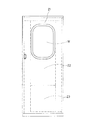
従来より、鉄道車両の乗降口に設けられる引戸式扉として、車内外両側のアルミ製面板間に、ペーパーハニカムやアルミニウムハニカムからなる芯材を挟んだハニカムサンドイッチ構造のものが汎用されている。そして、特に新幹線車両や旅客用特急車両等の側部乗降口に採用されている図1に示すような細型の引戸式扉では、窓部Wの上側Z1と中間部Z2及び扉下部Z3の芯材全体をペーパーハニカムとしたものと、窓部Wの上側Z1と扉下部Z3の芯材にペーパーハニカムを用いて、中間部Z2の芯材にアルミニウムハニカムを用いたものが一般的である。 2. Description of the Related Art Conventionally, as a sliding door type door provided at the entrance of a railway vehicle, a honeycomb sandwich structure in which a core material made of paper honeycomb or aluminum honeycomb is sandwiched between aluminum face plates on both the inside and outside of the vehicle has been widely used. In particular, in a narrow sliding door type door as shown in FIG. 1 adopted at a side entrance of a Shinkansen vehicle or a passenger express vehicle, the cores of the upper side Z1 of the window portion W, the intermediate portion Z2 and the lower portion of the door Z3. Generally, a paper honeycomb is used as the whole material, and a paper honeycomb is used as the core material of the upper side Z1 of the window portion W and the door lower portion Z3, and an aluminum honeycomb is used as the core material of the intermediate portion Z2.
ところで、近年の鉄道車両においては、高速化による利便性と共に乗り心地の良さが強く求められており、とりわけ新幹線を含む長距離旅客列車では、乗客が長い時間を快適に過ごせるように車内をできるだけ静かに保つことが要望されている。しかしながら、前記のようなハニカムサンドイッチ構造の引戸式扉は、軽量で高剛性であるという特徴を持つが、その反面で該特徴のために音を伝播し易い性質がある。一方、車両の走行速度が速くなるほど発生する騒音は大きくなるから、近年の高速化に伴って扉部分を通して車内に伝わる騒音がより耳障りに感じられるようになっている。 By the way, in recent railway vehicles, there is a strong demand for high-speed convenience as well as good ride comfort. Especially in long-distance passenger trains including the Shinkansen, the interior of the train is as quiet as possible so that passengers can spend a long time comfortably. It is demanded to keep it. However, the sliding door type door having the honeycomb sandwich structure as described above has a feature of being lightweight and highly rigid, but on the other hand, it has a property of easily transmitting sound due to the feature. On the other hand, since the generated noise increases as the traveling speed of the vehicle increases, the noise transmitted to the interior of the vehicle through the door portion becomes more disturbing as the speed increases in recent years.
本発明は、上述の状況に鑑み、鉄道車両の側部乗降口の引戸式扉等に用いる鉄道車両用扉として、軽量で高剛性であるというハニカムサンドイッチ構造の特徴を活かしながら、車両の高速走行に伴う耳障りな騒音が扉部分を通して車内へ伝播するのを効果的に抑制できるものを提供することを目的としている。 In view of the above-mentioned situation, the present invention is a railway vehicle door used for a sliding door at a side entrance of a railway vehicle, etc., while utilizing the feature of a honeycomb sandwich structure that is lightweight and highly rigid, It is an object of the present invention to provide a device capable of effectively suppressing the unpleasant noise accompanying the propagation through the door portion into the vehicle.
上記目的を達成するために、本発明の請求項1に係る鉄道車両用扉は、図面の参照符号を付して示せば、内外両側のアルミ製面板1,2間に、窓部Wを挟んでその左右の戸先側周枠5及び戸尻側周枠5に沿って上下方向に内部にペーパーハニカム芯材6bを挟着した補強骨6が配置され、両補強骨6,6間にあって窓部Wを挟んでその上側Z1と下側(扉下部Z3及び中間部Z2)の領域に芯材3全体が六角セル31aの平行面間寸法5〜13mmのアルミニウムハニカム31が介装され、このアルミニウムハニカム31の芯材3と内外両側のアルミ製面板1,2とが相互に接着され接合一体化されてなる構成としている。
In order to achieve the above-mentioned object, a railcar door according to
また、本発明の請求項2に係る鉄道車両用扉は、内外両側のアルミ製面板1,2間に、窓部Wを挟んでその左右の戸先側周枠5及び戸尻側周枠5に沿って上下方向に内部にペーパーハニカム芯材6bを挟着した補強骨6が配置され、両補強骨6,6間にあって窓部Wを挟んでその上側Z1と下側(扉下部Z3及び中間部Z2)の領域に芯材3全体が六角セル31aの平行面間寸法5〜13mmのアルミニウムハニカム31からなると共に、このアルミニウムハニカムの芯材3と少なくとも片側のアルミ製面板1,2との間に鋼板4が介装され、内外両側のアルミ製面板1,2及びアルミニウムハニカム31の芯材3と前記鋼板4とが相互に接着され接合一体化されてなる構成としている。
Further, the railcar door according to
更に、本発明の請求項3に係る鉄道車両用扉は、内外両側のアルミ製面板1,2間に、窓部Wを挟んでその左右の戸先側周枠5及び戸尻側周枠5に沿って上下方向に内部にペーパーハニカム芯材6bを挟着した補強骨6が配置され、両補強骨6,6間にあって窓部Wを挟んでその上側Z1と下側(扉下部Z3及び中間部Z2)の領域に芯材3全体が六角セル31aの平行面間寸法5〜13mmのアルミニウムハニカム31と発泡金属32との二層構造をなし、これらアルミニウムハニカム31及び発泡金属32と内外両側のアルミ製面板1,2とが相互に接着され接合一体化されてなる構成としている。
Further, the railcar door according to
そして、これら請求項1〜3の鉄道車両用扉において、接着部にポリウレタン系又はエポキシ系の接着剤が用いられてなる請求項4の構成、アルミニウムハニカム31の密度が30〜60Kg/m3 である請求項5の構成を、それぞれ好適態様としている。
In the railcar door according to any one of
請求項1〜3の発明に係る鉄道車両用扉は、扉本体の大部分を占めるアルミニウムハニカム又はこれと発泡アルミニウムを芯材とするサンドイッチ構造により、いずれも軽量で高剛性であることに加え、このサンドイッチ構造が特定の材質及び寸法と接合構成に設定されていることから、人にとって耳障りに感じられる1KHz〜3.15KHzの音域で特に大きな音響透過損失を示すため、これを用いた鉄道車両の高速走行によって車外で大きな騒音が発生しても、扉部分を通して車内に伝わる音から耳障りな騒音部分が効果的に削減され、もって快適な車内環境を付与できる。
また、窓部Wを挟んでその左右の戸先側周枠5及び戸尻側周枠5に沿って上下方向に内部にペーパーハニカム芯材6bを挟着した補強骨6が配置されてなるため、ペーパーハニカム芯材6bによる軽量化と補強骨6による扉補強作用及び騒音低減作用を同時に発揮させることができる。
結局、本発明によれば、扉本体の大部分を占めるアルミニウムハニカムと戸先側及び戸尻側周枠に沿うペーパーハニカム芯材を挟着した補強枠とによって、扉本体の全域にわたって騒音低減作用と軽量化と高剛性と扉補強作用を有効に発揮することができる。
In addition to being lightweight and highly rigid, the railcar door according to the inventions of
In addition, the reinforcing
Ultimately, according to the present invention, the aluminum honeycomb occupying most of the door body and the reinforcing frame sandwiching the paper honeycomb core material along the door end side and door bottom side peripheral frames, the noise reduction effect over the entire area of the door body. It is possible to effectively exhibit the weight reduction, high rigidity and door reinforcement.
しかして、これら請求項1〜3の鉄道車両用扉において、接着部に特定の接着剤を用いる請求項4の構成、アルミニウムハニカムを特定の密度範囲とする請求項5の構成を、それぞれ採用すれば、車両用扉としての強度を確保して且つ良好な騒音低減作用を発揮させることができる。
Therefore, in the railway vehicle doors according to
以下、本発明に係る鉄道車両用扉の実施形態について、図面を参照して具体的に説明する。図3は第一実施形態の鉄道車両用扉D1-1,D1-2,D1-3を示し、図4は第二実施形態の鉄道車両用扉D2を示し、図5は第三実施形態の鉄道車両用扉D3を示す。なお、これら第一〜第三実施形態の鉄道車両用扉D1-1〜D1-3,D2,D3は、いずれも既述の図1で示す外観を備えた細型の引戸式扉であり、その窓部Wの位置では共通の横断面構造を持つ。 Hereinafter, an embodiment of a railcar door according to the present invention will be specifically described with reference to the drawings. FIG. 3 shows the railcar doors D1 −1 , D1 −2 , D1 -3 of the first embodiment, FIG. 4 shows the railcar door D2 of the second embodiment, and FIG. 5 shows the third embodiment. The door D3 for rail vehicles is shown. The railcar doors D1 -1 to D1 -3 , D2 and D3 of the first to third embodiments are all thin sliding door type doors having the appearance shown in FIG. The window portion W has a common cross-sectional structure.
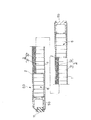
すなわち、これら鉄道車両用扉D1-1〜D1-3,D2,D3は、図2に示すように、車内外両側のアルミ製面板1,2間に、その四周に沿う矩形周枠5と、該矩形周枠5の内側における戸先側及び戸尻側で上下方向に沿って配置した補強骨6と、合わせガラス窓7の窓枠8とが、それぞれ接着剤を介して接合一体化されている。そして、戸先側では、矩形周枠5の縦枠5aが凹部を戸先側に向けた断面コ字形をなし、車内外両側のアルミ製面板1,2の内向きに曲折した側縁部1a,2aの間で戸先ゴム11を係着している。また、戸尻側では、矩形周枠5の縦枠5bが凹部を戸先側に向けた断面略コ字形のアルミニウム押出型材よりなり、この縦枠5bの屋内外両面の溝部に車内外両側のアルミ製面板1,2の内向きに曲折した側縁部1b,2bが係嵌されている。
That is, these railcar doors D1 -1 to D1 -3 , D2 and D3 are, as shown in FIG. 2, between the
なお、補強骨6は、両側縁を折曲して断面コ字形とした車内外両側のアルミニウム板6a,6a間に、ペーパーハニカムの芯材6bを挟着した構造になっている。また、窓枠8は、アルミニウム押出型材からなり、基部8aと、この基部8aから窓中央側及び窓外側へ張出する車外側接合片8b,8cと、該基部8aより窓外側へ張出する断面L字形の車内側接合片8dとを備えている。そして、該窓枠8の基部8aと車内側接合片8dとの間で構成される段部8eに、アルミニウム押出型材からなる断面略L字形の押さえ枠14がねじ止めされると共に、該窓枠8の車外側接合片8bと押さえ枠14との間で合わせガラス窓7の周縁部が挟持されている。なお、15は押さえ枠14に嵌着されたゴムパッキン、16は合わせガラス窓7の周縁部に介在させた帯状の緩衝ゴムである。
The reinforcing
しかして、第一実施形態の鉄道車両用扉D1-1〜D1-3では、図1における窓部Wの上側Z1と下側(扉下部Z3及び中間部Z2)の領域は、いずれも図3に示すように、車内外両側のアルミ製面板1,2間に、芯材3として全体がセル軸方向を車内外方向としたアルミニウムハニカム31が介装され、この芯材3と両側のアルミ製面板1,2とが接着剤を介して相互に接合一体化された構造になっている。
Thus, in the railway vehicle doors D1 -1 to D1 -3 of the first embodiment, the regions of the upper side Z1 and the lower side (the lower door portion Z3 and the intermediate portion Z2) of the window portion W in FIG. As shown in FIG. 2, between the
また、第二実施形態の鉄道車両用扉D2では、図1における窓部Wの上側Z1と下側の領域は、いずれも図4に示すように、車外側のアルミ製面板2の内面側に鋼板4が重ね合わされ、この鋼板4と車内側のアルミ製面板1との間に、芯材3として全体がセル軸方向を車内外方向としたアルミニウムハニカム31が介装され、この芯材3と鋼板4及び両側のアルミ製面板1,2とが接着剤を介して相互に接合一体化された構造になっている。
Further, in the railway vehicle door D2 of the second embodiment, the upper side Z1 and the lower side region of the window W in FIG. 1 are both on the inner side of the
更に、第三実施形態の鉄道車両用扉D3では、図1における窓部Wの上側Z1と下側の領域は、いずれも図5に示すように、車内外両側のアルミ製面板1,2間に、車外側のアルミニウムハニカム31と車内側の発泡金属32との二層構造の芯材3が介装され、この芯材3の層間ならびに該芯材3と両側のアルミ製面板1,2とが接着剤を介して相互に接合一体化された構造になっている。
Further, in the railway vehicle door D3 of the third embodiment, the upper side Z1 and the lower side region of the window portion W in FIG. 1 are both between the
しかして、これら第一〜第三実施形態の鉄道車両用扉D1-1〜D1-3,D2,D3の芯材3に用いたアルミニウムハニカム31は、いずれも六角セル31aのセルサイズつまり図6に示す平行面間寸法Sが5〜13mmの範囲のものである。
Therefore, the
これら第一〜第三実施形態の鉄道車両用扉D1-1〜D1-3,D2,D3は、アルミニウムハニカム又はこれと発泡アルミニウムを芯材とするサンドイッチ構造により、いずれも軽量で高剛性であることに加え、このサンドイッチ構造の材質及び寸法と接合構成に基づき、後記実施例でも実証されるように1KHz〜3.15KHzといった人にとって耳障りに感じられる音域で特に大きな音響透過損失を示すことが判明している。従って、これら鉄道車両用扉D1-1〜D1-3,D2,D3を用いた鉄道車両では、高速走行によって車外で大きな騒音が発生しても、扉部分を通して車内に伝わる音から耳障りな騒音部分が効果的に削減されるから、乗客は高速運行による利便性と静かで快適な車内環境を共に享受できる。 The railway vehicle doors D1 -1 to D1 -3 , D2 and D3 of the first to third embodiments are both lightweight and highly rigid due to an aluminum honeycomb or a sandwich structure using foamed aluminum as a core material. In addition, based on the material and dimensions of this sandwich structure and the joining configuration, it was found that a particularly large sound transmission loss is exhibited in the sound range that is annoying to humans, such as 1 KHz to 3.15 KHz, as will be demonstrated in Examples below. is doing. Therefore, in the railway vehicle using these railway vehicle doors D1 -1 to D1 -3 , D2 and D3, even if a large noise is generated outside the vehicle due to high speed traveling, the noise part which is annoying from the sound transmitted to the inside of the vehicle through the door part. As a result, passengers can enjoy both the convenience of high-speed operation and the quiet and comfortable interior environment.
しかるに、芯材3A〜3Cのアルミニウムハニカム31として、六角セル31aの平行面間寸法Sが5mm未満のものを用いた場合、ならびに同平行面間寸法Sが13mmを越えるものを用いた場合は、いずれも音響透過損失が小さくなり、高速走行に伴う騒音の扉部分を通した車内への伝播を充分に低減できなくなる。また、従来のように芯材の一部にペーパーハニカムを用いたり、芯材全体をペーパーハニカムとした場合も、扉部分を通した騒音の伝播が顕著になる。
However, as the
アルミニウムハニカム31の密度は、前記第一〜第三実施形態のいずれにおいても30〜60Kg/m3 の範囲が好適であり、この密度が高過ぎても低過ぎても騒音低減効果は低下すると共に、高過ぎる場合は扉の重量が重くなり、逆に低過ぎる場合は扉の剛性及び強度が不充分になる。
The density of the
前記第一〜第三実施形態の比較では、鋼板4を用いる第二実施形態の鉄道車両用扉D2が最も優れた騒音低減作用を示す。しかして、このような鋼板4は、例示とは逆に車内側のアルミ製面板1の内面側に配置したり、その2枚を両面板1,2の内面側に配置することも可能である。しかして、鋼板4の厚さ(2枚の場合は合計厚さ)は、0.5〜1.6mm程度が好適であり、厚過ぎては扉が重くなり、逆に薄過ぎる場合は充分な使用効果が得られない。
In the comparison of the first to third embodiments, the railcar door D2 of the second embodiment using the
前記第三実施形態の鉄道車両用扉D3の芯材3に用いる発泡金属32としては、特に金属種の制約はないが、特に発泡アルミニウムが軽量で且つ安価に入手できる点から好適である。しかして、このような発泡金属32の密度は、200〜300Kg/m3 の範囲が好適であり、アルミニウムハニカム31の場合と同様に該密度が高過ぎても低過ぎても騒音低減効果は低下する。また、発泡金属32の厚みは、芯材3の全厚の30%以下とするのがよく、厚過ぎては扉重量が重くなる。
As the
一方、鉄道車両用扉の各部材を接合一体化するのに用いる接着剤としては、特に制約はないが、金属材質同士の接着強度と、接着剤層での音響吸収効果の面より、ポリウレタン系接着剤及びエポキシ系接着剤が好適なものとして推奨される。 On the other hand, the adhesive used for joining and integrating the members of the railcar door is not particularly limited, but it is polyurethane based on the adhesive strength between metal materials and the sound absorption effect in the adhesive layer. Adhesives and epoxy adhesives are recommended as suitable.
芯材3の厚さは、適用する鉄道車両の種類によって定まる扉厚に対応するが、前記第一〜第三実施形態のいずれにおいても一般的に20〜50mm程度である。また、アルミ製面板1,2の厚さは1.2 〜2.0mm程度である。しかして、鉄道車両用扉の車内側面については、アルミ製面板1の外側に化粧板を接合した形態としてもよい。
The thickness of the
図3で示す鉄道車両用扉D1-1〜D1-3の構成においては、何れの扉D1-1〜D1-3もアルミ製面板1,2として各々厚さ1.4mmのA5052P材(JIS H4000のアルミニウム合金板)を使用し、しかして芯材3のアルミニウムハニカム31としては、扉D1-1にあっては厚さ30mm,密度50〜56Kg/m3 で六角セル31aの平行面間寸法Sが8mmのA3003P材(JIS H4000のアルミニウム合金板)を使用し、扉D1-2にあっては厚さ30mm,密度50〜56Kg/m3 で六角セル31aの平行面間寸法Sが6.3mmのA5052P材(JIS H4000のアルミニウム合金板)を使用し、扉D1-3にあっては厚さ30mm,密度30〜56Kg/m3 で六角セル31aの平行面間寸法Sが12.5mmのA3003P材(JIS H4000のアルミニウム合金板)を使用し、そしてアルミ製面板1,2と芯材3とをポリウレタン系接着剤(ダイヤボンド工業社製AL111)にて接合一体化し、次世代新幹線N700側引戸仕様(なお、「新幹線」は登録商標)として夫々高さ2000mm、幅786mm、総厚32.8mmで窓部の縦横が600×400mmの鉄道車両用扉D1-1,D1-2,D1-3を製作した。
In the configuration of the railcar doors D1 -1 to D1 -3 shown in FIG. 3, each of the doors D1 -1 to D1 -3 is an A5052P material (JIS H4000) having a thickness of 1.4 mm as the
図4で示す構成において、アルミ製面板1,2及び芯材3のアルミニウムハニカム31として実施例1の鉄道車両用扉D1-1と同様のものを使用すると共に、鋼板4として厚さ1.2mmのJIS G3313電気亜鉛メッキ鋼板を使用し、これらアルミ製面板1,2及び鋼板4と芯材3を実施例1と同様のポリウレタン系接着剤にて接合一体化し、総厚34.0mmで他の寸法が実施例1と同じ鉄道車両用扉D2を製作した。
In the configuration shown in Figure 4, the use of the same as the
図5で示す構成において、アルミ製面板1,2として実施例1の鉄道車両用扉D1-1と同様のものを用いると共に、芯材3のアルミニウムハニカム31として厚さ21mmのA5052P材(前出)、発泡金属32として厚さ9mm,密度250Kg/m3 の発泡アルミニウム(神鋼鋼線工業社製アルポラス)を使用し、これらアルミ製面板1,2と芯材3のアルミニウムハニカム31及び発泡金属32を実施例1と同様のポリウレタン系接着剤にて接合一体化し、全体寸法が実施例1と同じ鉄道車両用扉D3を製作した。
In the configuration shown in FIG. 5, the use of the same as the
芯材として実施例1におけるアルミニウムハニカム31に代えて、厚さ30mm,密度22〜26Kg/m3 で六角セルの平行面間寸法が12mmのクラフト紙からなるペーパーハニカムを用いた以外は、実施例1と同様にし、全体寸法が実施例1と同じ鉄道車両用扉Cを製作した。
Example except that instead of the
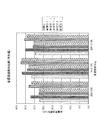
前記実施例1〜3及び比較例の鉄道車両用扉D1-1〜D1-3,D2,D3,Cの各々につき、窓部に厚さ8.3mmの合わせガラスを嵌装した状態で、JIS A1416に基づく残響室法により、100Hz〜5KHzの範囲の各周波数毎の音響透過損失(dB)を測定した。その結果を、図7の周波数(Hz)−音響透過損失(dB)相関特性図として示すと共に、500Hz〜3.15KHz、1KHz〜3.15KHz、250Hz〜2.5KHzの各周波数域における平均音響透過損失(dB)を図8及び次の表1に示している Each of the doors D1 -1 to D1 -3 , D2, D3, and C of the railcars of Examples 1 to 3 and Comparative Example was fitted with 8.3 mm thick laminated glass in the window portion, and JIS The sound transmission loss (dB) for each frequency in the range of 100 Hz to 5 KHz was measured by the reverberation chamber method based on A1416. The results are shown as a frequency (Hz) -sound transmission loss (dB) correlation characteristic diagram of FIG. 7 and average sound transmission in each frequency range of 500 Hz to 3.15 KHz, 1 KHz to 3.15 KHz, and 250 Hz to 2.5 KHz. The loss (dB) is shown in FIG. 8 and the following Table 1.
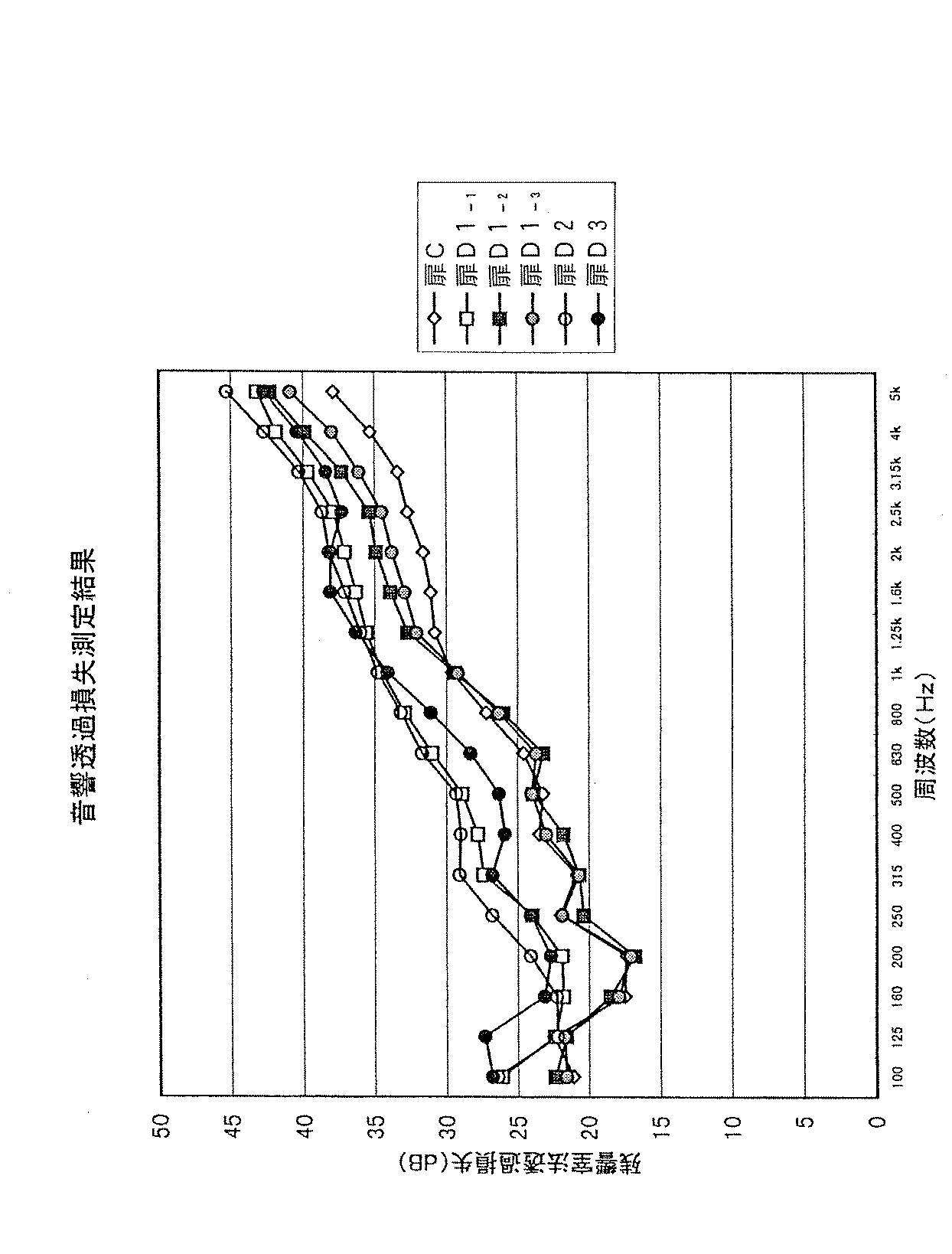
図8及び表1で区分した3つの周波数域は次の意味合いがある。すなわち、500Hz〜3.15KHzの周波数域は人が通常の生活環境で聞く一般的な音域、1KHz〜3.15KHzの周波数域は高速運行する鉄道車両等の車内で乗客が外部騒音として耳障りに感じる音域、250Hz〜2.5KHzの周波数域は日本工業規格(JIS)の計測データとして用いる音域である。しかして、本発明に係る鉄道車両用扉D1-1〜D1-3,D2,D3は、従来構成である比較例の鉄道車両用扉Cに比べ、上記3つの周波数域のいずれにおいても音響透過損失が大きくなっているが、特に高速車両等の車内で乗客が耳障りに感じる1KHz〜3.15KHzの周波数域で大きな音響透過損失を示すことが明らかである。なお、本発明に係る同一形態の鉄道車両用扉D1-1,D1-2,D1-3のうちでは、扉D1-1(アルミニウムハニカムの六角セル平行面間寸法が8mmのもの)が最も大きい音響透過損失を示している。 The three frequency regions divided in FIG. 8 and Table 1 have the following implications. That is, the frequency range of 500 Hz to 3.15 KHz is a general sound range that a person hears in a normal living environment, and the frequency range of 1 KHz to 3.15 KHz is annoying to the passengers as external noise in a vehicle such as a railway vehicle that operates at high speed. The sound range, the frequency range of 250 Hz to 2.5 KHz, is a sound range used as measurement data of Japanese Industrial Standards (JIS). Thus, the railcar doors D1 -1 to D1 -3 , D2 and D3 according to the present invention are acoustically transmissive in any of the above three frequency ranges as compared to the railcar door C of the comparative example which is a conventional configuration. Although the loss has increased, it is clear that a large sound transmission loss is exhibited in the frequency range of 1 KHz to 3.15 KHz, which makes passengers particularly disturbing in a vehicle such as a high-speed vehicle. Of the rail vehicle doors D1 -1 , D1 -2 , D1 -3 of the same form according to the present invention, the door D1 -1 (with an aluminum honeycomb having a dimension between parallel planes of hexagonal cells of 8 mm) is the largest. Sound transmission loss is shown.
1 車内側のアルミ製面板
2 車外側のアルミ製面板
3 芯材
31 アルミニウムハニカム
31a 六角セル
32 発泡金属
4 鋼板
D1-1 鉄道車両用扉
D1-2 鉄道車両用扉
D1-3 鉄道車両用扉
S 対向面間寸法
DESCRIPTION OF
Claims (5)
Priority Applications (1)
| Application Number | Priority Date | Filing Date | Title |
|---|---|---|---|
| JP2004350672A JP4366299B2 (en) | 2004-07-27 | 2004-12-03 | Railway vehicle door |
Applications Claiming Priority (2)
| Application Number | Priority Date | Filing Date | Title |
|---|---|---|---|
| JP2004219025 | 2004-07-27 | ||
| JP2004350672A JP4366299B2 (en) | 2004-07-27 | 2004-12-03 | Railway vehicle door |
Publications (2)
| Publication Number | Publication Date |
|---|---|
| JP2006062634A JP2006062634A (en) | 2006-03-09 |
| JP4366299B2 true JP4366299B2 (en) | 2009-11-18 |
Family
ID=36109466
Family Applications (1)
| Application Number | Title | Priority Date | Filing Date |
|---|---|---|---|
| JP2004350672A Expired - Fee Related JP4366299B2 (en) | 2004-07-27 | 2004-12-03 | Railway vehicle door |
Country Status (1)
| Country | Link |
|---|---|
| JP (1) | JP4366299B2 (en) |
Cited By (1)
| Publication number | Priority date | Publication date | Assignee | Title |
|---|---|---|---|---|
| KR20180034099A (en) * | 2016-09-27 | 2018-04-04 | (주)이에스다산 | Protection door with composition of steel and aluminum |
Families Citing this family (10)
| Publication number | Priority date | Publication date | Assignee | Title |
|---|---|---|---|---|
| JP2007307720A (en) * | 2006-05-16 | 2007-11-29 | Yokohama Rubber Co Ltd:The | Honeycomb sandwich panel |
| JP5932741B2 (en) * | 2013-09-10 | 2016-06-08 | アルナ輸送機用品株式会社 | Manufacturing method of door for vehicle |
| JP5932740B2 (en) * | 2013-09-10 | 2016-06-08 | アルナ輸送機用品株式会社 | Manufacturing method of door for vehicle |
| KR101591186B1 (en) * | 2014-06-25 | 2016-02-03 | (주)소명 | Door system for high-speed freight train |
| FR3072333B1 (en) * | 2017-10-16 | 2021-10-22 | Faiveley Transp Tours | DOOR LEAF FOR TRANSPORT VEHICLE, ITS SIZING PROCESS, DOOR AND VEHICLE THUS EQUIPPED |
| DE102019004311A1 (en) * | 2019-06-19 | 2021-01-07 | Knorr-Bremse Gesellschaft Mit Beschränkter Haftung | Door leaf of a door device of a vehicle |
| FR3110927B1 (en) | 2020-05-27 | 2022-06-24 | Faiveley Transp Tours | Leaf for a transport vehicle comprising improved thermal properties, and transport vehicle equipped therewith |
| JP7236517B1 (en) * | 2021-10-25 | 2023-03-09 | アルナ輸送機用品株式会社 | Folding door for vehicle |
| JP7500651B2 (en) * | 2022-05-20 | 2024-06-17 | 文化シヤッター株式会社 | Building panels and fittings |
| JP2025058415A (en) * | 2023-09-28 | 2025-04-09 | コイト電工株式会社 | Lighting system, control device, luminaire, and vehicle |
-
2004
- 2004-12-03 JP JP2004350672A patent/JP4366299B2/en not_active Expired - Fee Related
Cited By (2)
| Publication number | Priority date | Publication date | Assignee | Title |
|---|---|---|---|---|
| KR20180034099A (en) * | 2016-09-27 | 2018-04-04 | (주)이에스다산 | Protection door with composition of steel and aluminum |
| KR101886709B1 (en) * | 2016-09-27 | 2018-08-09 | (주)이에스다산 | Protection door with composition of steel and aluminum |
Also Published As
| Publication number | Publication date |
|---|---|
| JP2006062634A (en) | 2006-03-09 |
Similar Documents
| Publication | Publication Date | Title |
|---|---|---|
| JP3234647U (en) | Viscoelastic inserts for vibration and acoustic damping and glass panels containing the inserts | |
| US11712875B2 (en) | Viscoelastic plastic interlayer for vibroacoustic damping and glazing comprising such an interlayer | |
| KR101598640B1 (en) | Glazing having improved vibro-acoustic damping behaviour, method of manufacturing such glazing, and method of acoustic protection in a vehicle passenger compartment | |
| US7249654B2 (en) | Heat insulating acoustical structure and carbody shell structure using the same | |
| JP5860924B2 (en) | Grazing unit with improved vibration sound attenuation characteristics, method of manufacturing such a glazing unit, and soundproofing method in a passenger compartment of a vehicle | |
| JP6546171B2 (en) | Laminated glass panel for use as a screen in a head-up display system | |
| JP2006062634A (en) | Railway vehicle door | |
| CN111619599A (en) | Sound insulation method for railway vehicle cab floor, floor structure and installation method thereof | |
| JP2001146163A (en) | Door for rolling stock | |
| KR20120005462A (en) | Glass panels with improved acoustic vibration damping characteristics, methods of manufacturing such glass panels, and sound isolation methods in vehicle cabins | |
| JP2007223340A (en) | Adiabatic sound absorbing structure and vehicle structure using the same | |
| JP3615215B1 (en) | Railcar floorboard | |
| ES2973421T3 (en) | Door leaf for transport vehicle, its sizing procedure, door and vehicle thus equipped | |
| JP3615216B1 (en) | Rail vehicle wall or ceiling panels | |
| JP2003252064A (en) | Grass run | |
| JP2007303112A (en) | Sliding door for rolling stock | |
| CN113928356A (en) | High sound insulation laminate flooring of lightweight for railcar | |
| CN220053793U (en) | Door leaf applied to railway vehicle door | |
| JP4234923B2 (en) | Railcar floor structure | |
| JP2025022213A (en) | Railroad car panels | |
| JPH09175389A (en) | Railcar structure |
Legal Events
| Date | Code | Title | Description |
|---|---|---|---|
| A621 | Written request for application examination |
Free format text: JAPANESE INTERMEDIATE CODE: A621 Effective date: 20060327 |
|
| A131 | Notification of reasons for refusal |
Free format text: JAPANESE INTERMEDIATE CODE: A131 Effective date: 20081126 |
|
| A977 | Report on retrieval |
Free format text: JAPANESE INTERMEDIATE CODE: A971007 Effective date: 20081127 |
|
| A521 | Request for written amendment filed |
Free format text: JAPANESE INTERMEDIATE CODE: A523 Effective date: 20090126 |
|
| A02 | Decision of refusal |
Free format text: JAPANESE INTERMEDIATE CODE: A02 Effective date: 20090306 |
|
| A521 | Request for written amendment filed |
Free format text: JAPANESE INTERMEDIATE CODE: A523 Effective date: 20090420 |
|
| A911 | Transfer to examiner for re-examination before appeal (zenchi) |
Free format text: JAPANESE INTERMEDIATE CODE: A911 Effective date: 20090518 |
|
| TRDD | Decision of grant or rejection written | ||
| A01 | Written decision to grant a patent or to grant a registration (utility model) |
Free format text: JAPANESE INTERMEDIATE CODE: A01 Effective date: 20090729 |
|
| A01 | Written decision to grant a patent or to grant a registration (utility model) |
Free format text: JAPANESE INTERMEDIATE CODE: A01 |
|
| A61 | First payment of annual fees (during grant procedure) |
Free format text: JAPANESE INTERMEDIATE CODE: A61 Effective date: 20090824 |
|
| FPAY | Renewal fee payment (event date is renewal date of database) |
Free format text: PAYMENT UNTIL: 20120828 Year of fee payment: 3 |
|
| R150 | Certificate of patent or registration of utility model |
Ref document number: 4366299 Country of ref document: JP Free format text: JAPANESE INTERMEDIATE CODE: R150 Free format text: JAPANESE INTERMEDIATE CODE: R150 |
|
| FPAY | Renewal fee payment (event date is renewal date of database) |
Free format text: PAYMENT UNTIL: 20120828 Year of fee payment: 3 |
|
| FPAY | Renewal fee payment (event date is renewal date of database) |
Free format text: PAYMENT UNTIL: 20130828 Year of fee payment: 4 |
|
| R250 | Receipt of annual fees |
Free format text: JAPANESE INTERMEDIATE CODE: R250 |
|
| R250 | Receipt of annual fees |
Free format text: JAPANESE INTERMEDIATE CODE: R250 |
|
| R250 | Receipt of annual fees |
Free format text: JAPANESE INTERMEDIATE CODE: R250 |
|
| R250 | Receipt of annual fees |
Free format text: JAPANESE INTERMEDIATE CODE: R250 |
|
| R250 | Receipt of annual fees |
Free format text: JAPANESE INTERMEDIATE CODE: R250 |
|
| R250 | Receipt of annual fees |
Free format text: JAPANESE INTERMEDIATE CODE: R250 |
|
| R250 | Receipt of annual fees |
Free format text: JAPANESE INTERMEDIATE CODE: R250 |
|
| R250 | Receipt of annual fees |
Free format text: JAPANESE INTERMEDIATE CODE: R250 |
|
| R250 | Receipt of annual fees |
Free format text: JAPANESE INTERMEDIATE CODE: R250 |
|
| R250 | Receipt of annual fees |
Free format text: JAPANESE INTERMEDIATE CODE: R250 |
|
| R250 | Receipt of annual fees |
Free format text: JAPANESE INTERMEDIATE CODE: R250 |
|
| R250 | Receipt of annual fees |
Free format text: JAPANESE INTERMEDIATE CODE: R250 |
|
| LAPS | Cancellation because of no payment of annual fees |