JP4284635B2 - Production method of polycarbonate - Google Patents
Production method of polycarbonate Download PDFInfo
- Publication number
- JP4284635B2 JP4284635B2 JP2000602698A JP2000602698A JP4284635B2 JP 4284635 B2 JP4284635 B2 JP 4284635B2 JP 2000602698 A JP2000602698 A JP 2000602698A JP 2000602698 A JP2000602698 A JP 2000602698A JP 4284635 B2 JP4284635 B2 JP 4284635B2
- Authority
- JP
- Japan
- Prior art keywords
- reaction
- oxalate
- compound
- phenol
- polycarbonate
- Prior art date
- Legal status (The legal status is an assumption and is not a legal conclusion. Google has not performed a legal analysis and makes no representation as to the accuracy of the status listed.)
- Expired - Lifetime
Links
Images
Classifications
-
- C—CHEMISTRY; METALLURGY
- C08—ORGANIC MACROMOLECULAR COMPOUNDS; THEIR PREPARATION OR CHEMICAL WORKING-UP; COMPOSITIONS BASED THEREON
- C08G—MACROMOLECULAR COMPOUNDS OBTAINED OTHERWISE THAN BY REACTIONS ONLY INVOLVING UNSATURATED CARBON-TO-CARBON BONDS
- C08G64/00—Macromolecular compounds obtained by reactions forming a carbonic ester link in the main chain of the macromolecule
- C08G64/20—General preparatory processes
-
- C—CHEMISTRY; METALLURGY
- C08—ORGANIC MACROMOLECULAR COMPOUNDS; THEIR PREPARATION OR CHEMICAL WORKING-UP; COMPOSITIONS BASED THEREON
- C08G—MACROMOLECULAR COMPOUNDS OBTAINED OTHERWISE THAN BY REACTIONS ONLY INVOLVING UNSATURATED CARBON-TO-CARBON BONDS
- C08G64/00—Macromolecular compounds obtained by reactions forming a carbonic ester link in the main chain of the macromolecule
- C08G64/20—General preparatory processes
- C08G64/30—General preparatory processes using carbonates
- C08G64/307—General preparatory processes using carbonates and phenols
-
- C—CHEMISTRY; METALLURGY
- C07—ORGANIC CHEMISTRY
- C07C—ACYCLIC OR CARBOCYCLIC COMPOUNDS
- C07C68/00—Preparation of esters of carbonic or haloformic acids
Landscapes
- Chemical & Material Sciences (AREA)
- Organic Chemistry (AREA)
- Health & Medical Sciences (AREA)
- Chemical Kinetics & Catalysis (AREA)
- Medicinal Chemistry (AREA)
- Polymers & Plastics (AREA)
- Polyesters Or Polycarbonates (AREA)
- Organic Low-Molecular-Weight Compounds And Preparation Thereof (AREA)
Abstract
Description
【0001】
【発明の属する技術分野】
本願の第1の発明は、概略、出発原料としてシュウ酸ジアルキルとフェノール化合物とを使用して、第1工程のエステル交換反応(本発明では、後述のように通常のエステル交換反応及び不均化反応を含む。)によりシュウ酸ジアリールを合成し、第2工程のシュウ酸ジアリールの脱CO反応により炭酸ジアリールを合成し、第3工程での炭酸ジアリールと多価ヒドロキシ化合物との縮重合反応によりポリカーボネートを製造し、そして、第4工程で縮重合反応で得られる回収フェノール化合物を精製して、縮重合反応に由来する特定の不純物が低い含有率となっている精製フェノール化合物を得て、第1工程のエステル交換反応に循環・使用するというポリカーボネートの製造法に係わる。
【0002】
即ち、第1の発明は、シュウ酸ジアルキルとフェノール化合物とを、エステル交換反応させてシュウ酸ジアリールを合成し、この反応で得られたシュウ酸ジアリールを脱CO反応させて炭酸ジアリールを合成し、更に、縮重合反応で副生するフェノール化合物を他の不純物と共に分離・除去し回収しながら、その脱CO反応で得られたジフェニルカーボネートなどの炭酸ジアリールとビスフェノールAなどの多価ヒドロキシ化合物とを特定の縮重合触媒の存在下に縮重合反応させてポリカーボネートを製造し、一方、前記の回収フェノール化合物を充分に精製して、特定の不純物(沸点がフェノール化合物よりも低いアミン化合物)が特定の低い含有率となった精製フェノール化合物を得て、前述のエステル交換反応の原料として循環・使用するという工業的に優れたポリカーボネートの製造法に係わる。
【0003】
また、本願の第2の発明は、概略、出発原料として、ポリカーボネート製造の縮重合反応における回収フェノール化合物を精製して得られた、縮重合反応に由来する不純物(沸点がフェノール化合物よりも低いアミン化合物)が特定の低い含有率である精製フェノール化合物と、シュウ酸ジアルキルとを使用して、第1工程のエステル交換反応によりシュウ酸ジアリールを合成し、第2工程のシュウ酸ジアリールの脱CO反応により炭酸ジアリールを合成して、最後に、第3工程での炭酸ジアリールと多価ヒドロキシ化合物との縮重合反応によりポリカーボネートを製造する方法に係わる。
【0004】
【従来の技術】
出発原料としてシュウ酸ジアルキルとフェノール化合物とを使用して、第1工程のエステル交換反応によりシュウ酸ジアリールを合成し、第2工程のシュウ酸ジアリールの脱CO反応により炭酸ジアリールを合成して、更に、第3工程での炭酸ジアリールと多価ヒドロキシ化合物との縮重合反応によりポリカーボネートを製造する方法、及び、その縮重合反応で得られる回収フェノール化合物を、第1工程のエステル交換反応において循環・使用することについては、既に、特開平10−152552号公報などにおいて開示されている。
【0005】
前記の公知のポリカーボネートの製造法は、炭酸ジアリールがホスゲンを全く使用しない製法で得られるものであり、高い純度を有するものであるので、この炭酸ジアリールを用いて、縮重合反応させて、重合度、透明性などにおける高い品質を示すポリカーボネートを容易に得ることができる極めて優れた新しいポリカーボネートの製法として注目されている。
【0006】
また、ジフェニルカーボネートなどの炭酸ジアリールとビスフェノールAなどの多価ヒドロキシ化合物とを縮重合反応させてポリカーボネートを製造する際に縮重合触媒としてテトラメチルアンモニウムヒドロキシド、テトラブチルアンモニウムヒドロキシド、トリブチルアミンなどを含む触媒が用いられることは、よく知られていた。これらの縮重合触媒は高温下での縮重合条件では一部分解し、トリメチルアミンやトリブチルアミンなどのアミン化合物を生じて、縮重合反応で得られる回収フェノール化合物中に含まれることがある。
【0007】
前述の縮重合反応において副生した前記不純物を含有するフェノール化合物を使用して、シュウ酸ジアルキルとエステル交換反応させてシュウ酸ジアリールを製造するための反応を行う場合、回収フェノール化合物中に含まれる上記アミン化合物などの不純物が、第1工程のエステル交換反応でシュウ酸ジアリールを製造する工程及び/又は第2工程の脱CO反応によって炭酸ジアリールを製造する工程にどのような影響があるかの点については、実質的に知られていなかった。ポリカーボネート製造の縮重合反応で得られる回収フェノール化合物が前述の第1工程の原料として使用することができるかどうかは、前述の公知のポリカーボネートの製造法において極めて重要な問題である。
【0008】
【発明が解決しようとする課題】
本発明者らは、特定の縮重合触媒を用いてポリカーボネートを製造する際に得られた回収フェノール化合物(特に回収フェノール化合物中の沸点がフェノール化合物よりも低いアミン化合物)がシュウ酸ジアリールの製造などに多大な悪影響を及ぼすことを見出した。
【0009】
すなわち、ポリカーボネート製造の縮重合反応に由来する不純物であるトリメチルアミン、トリエチルアミンなどの沸点がフェノール化合物よりも低いアミン化合物がその縮重合反応からの回収フェノール化合物と共にシュウ酸ジアリール製造のエステル交換反応に持ち込まれると、エステル交換反応に用いる触媒を著しく活性低下させるため、この問題を回避するために何らかの手段が必要となる。
【0010】
【課題を解決するための手段】
本発明の発明者らは、特定の縮重合触媒を用いてポリカーボネートを製造する際に得られる回収フェノール化合物を原料として用い、シュウ酸ジアルキルとエステル交換反応させてシュウ酸ジアリールを製造する際に、前述の種々の問題を生じないようにすることを鋭意研究した結果、前述のエステル交換反応に使用する前に、沸点がフェノール化合物よりも低いアミン化合物などの不純物を回収フェノール化合物から充分に除去した精製フェノール化合物を、エステル交換反応に原料として使用することによって、前述のエステル交換反応などが支障なく行われることを見出し、本発明を完成したのである。
【0011】
本願の第1の発明は、第1工程で、シュウ酸ジアルキル(ジアルキルオキサレート)とフェノール化合物とをエステル交換反応させてシュウ酸ジアリール(ジアリールオキサレート)を合成し、次いで、第2工程で、エステル交換反応で得られたシュウ酸ジアリールを脱CO反応させて炭酸ジアリール(ジアリールカーボネート)を合成し、更に、第3工程で、前記脱CO反応で得られた炭酸ジアリールと多価ヒドロキシ化合物とを、メチルアミンもしくはエチルアミンである一級アミン、ジメチルアミンもしくはジエチルアミンである二級アミン、あるいは炭素原子数が1〜3のアルキル基を有する三級アミン又はアンモニウム化合物を含む縮重合触媒を使用して、副生するフェノール化合物を不純物と共に除去し回収しながら縮重合反応させてポリカーボネートを製造し、一方、第4工程で、前記縮重合反応における回収フェノール化合物を充分に精製して、前記縮重合反応に由来する不純物のフェノール化合物より低沸点であるアミンの含有率が100ppm以下である精製フェノール化合物を得て、第1工程のエステル交換反応で循環・使用することを特徴とするポリカーボネートの製造法にある。
【0012】
本願の第2の発明は、第1工程で、ポリカーボネート製造の縮重合反応において副生したフェノール化合物を回収し精製して得られた、縮重合反応に由来する不純物のフェノール化合物より低沸点であるメチルアミンもしくはエチルアミンである一級アミン、ジメチルアミンもしくはジエチルアミンである二級アミン、あるいは炭素原子数が1〜3のアルキル基を有する三級アミンの含有率が100ppm以下である精製フェノール化合物と、シュウ酸ジアルキルとをエステル交換反応させてシュウ酸ジアリールを合成し、次いで、第2工程で、エステル交換反応で得られたシュウ酸ジアリールを脱CO反応させて炭酸ジアリールを合成し、さらに、第3工程で、前記の脱CO反応で得られた炭酸ジアリールを多価ヒドロキシ化合物と縮重合反応させてポリカーボネートを製造することを特徴とするポリカーボネートの製造法にある。
【0013】
【発明の実施の形態】
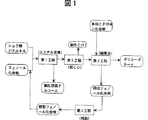
以下、本発明について更に詳しく説明する。本願の第1の発明では、図1に各工程の概略を示すように、例えば、シュウ酸ジアルキルとフェノール化合物とのエステル交換反応によるシュウ酸ジアリール合成の第1工程、シュウ酸ジアリールの脱CO反応による炭酸ジアリール合成の第2工程、炭酸ジアリールと多価ヒドロキシ化合物との縮重合反応によるポリカーボネート製造の第3工程、及び、前記の縮重合反応で副生するフェノール化合物を回収し精製して精製フェノール化合物を得る第4工程が、それぞれ図1に示すラインで連結している連続的なプロセスに従って行われる。
【0014】
本発明において、前記のエステル交換反応とは、エステル化合物のエステルを形成しているヒドロキシ化合物の残基が他のヒドロキシ化合物の残基と入れ替る全ての反応を含む。即ち本発明では、エステル交換反応とは、例えば、シュウ酸ジアルキルがシュウ酸アルキルアリールとなる通常のエステル交換反応、及び、シュウ酸アルキルアリールがシュウ酸ジアリールとシュウ酸ジアルキルに不均化する不均化反応のいずれをも含むのである。
【0015】
第1の発明は、例えば、第1工程でシュウ酸ジアルキル(特にシュウ酸ジメチル)とフェノール化合物(特にフェノール)とをエステル交換反応用の触媒の存在下に液相でエステル交換反応及び不均化反応させて、シュウ酸ジアリール(特にシュウ酸ジアリール)と副生物の低級アルコール(特にメタノール)とを生成させ、そのシュウ酸ジアリールを分離・精製して回収すると共に、低級アルコールを分離・回収し、そして、第2工程で、そのシュウ酸ジアリールを脱CO触媒の存在下に液相で脱CO反応させて炭酸ジアリール(特にジフェニルカーボネート:DPC)と副生物の一酸化炭素を生成させ、一酸化炭素ガスを反応系外へ排出させながら、反応混合物から炭酸ジアリールを分離・精製し回収し、次いで、第3工程で、炭酸ジアリールと多価ヒドロキシ化合物とを、アミン化合物又はアンモニウム化合物などの適当な縮重合触媒の存在下に、副生するフェノール化合物を分離・除去し回収しながら、縮重合反応させてポリカーボネートを製造し、更に、第4工程で、前記の縮重合反応から得られた回収フェノール化合物を精製して精製フェノール化合物を得て、その精製フェノールを第1工程のエステル交換反応に再利用する方法を好適に挙げることができる。
【0016】
前記の第1工程で用いるシュウ酸ジアルキルとしては、例えば、シュウ酸ジメチル、シュウ酸ジエチル、シュウ酸ジプロピル、シュウ酸ジブチル、シュウ酸ジペンチル、シュウ酸ジヘキシル等のシュウ酸のジ−低級アルキルエステルを挙げることができる。シュウ酸ジ(低級アルキル)は、二つの低級アルキル基が異なっていても全く同じであってもよく、炭素原子数1〜6の直鎖状又は分岐状アルキル基を有するものが好ましく、特に、炭素原子数1〜4の直鎖状アルキル基を有するものが好ましい。
【0017】
前記のシュウ酸ジアルキルは、一酸化炭素(CO)と亜硝酸アルキル(一般式:RONOで示される。この一般式で、Rは低級アルキル基である)とを、白金金属、パラジウム金属などの白金族金属、もしくはそれらの金属の塩類又は錯体からなる白金族金属系触媒、或いは、その白金族金属系触媒成分が活性炭、アルミナ、スピネル、シリカ、珪藻土、ゼオライト等の担体に0.01〜5重量%担持された触媒の存在下に、2〜200気圧(特に2〜100気圧)及び10〜200℃(特に20〜150℃)の反応条件で気相又は液相で反応させ、副生する一酸化窒素(NO)と共にシュウ酸ジアルキル(例えばシュウ酸ジメチル)を生成させるという公知の製法などにより得ることができる。上記亜硝酸アルキルの一般式中のRは、メチル基、エチル基、n−プロピル基、イソプロピル基、n−ブチル基、イソブチル基などの炭素原子数1〜4の低級アルキル基であることが好ましいが、特にメチル基が好ましい。
【0018】
前記の一酸化窒素は、必要であれば、分子状酸素の存在下に低級アルコールと反応させて亜硝酸アルキルを再生し、前記のシュウ酸ジアルキルの合成反応に再利用することができる。また、シュウ酸ジアルキル製造において使用される一酸化炭素(CO)は、本発明の第2工程の脱CO反応において副生する一酸化炭素(ガス)を、その一部として使用することもできる。
【0019】
第1工程で用いるフェノール化合物は、1個のヒドロキシル基が置換基を有していてもよいベンゼン環を形成している炭素原子に直接に結合しており、フェノールを除く他のフェノール化合物のヒドロキシル基がフェノールのヒドロキシル基と同様の性質を有するものであればよい。前記の置換基としては、炭素原子数1〜6(特に1〜4)の低級アルキル基、炭素原子1〜6(特に1〜4)のアルコキシ基、ハロゲンのような種々の置換基を挙げることができる。本発明において、フェノール化合物としては、フェノール、低級アルキルフェノール(特に、4−メチルフェノール、4−エチルフェノール、3,4−ジメチルフェノールなど)が好適であり、フェノールが最も好ましい。
【0020】
第1の発明における第1工程は、概略、シュウ酸ジアルキルとフェノール化合物とを、エステル交換触媒の存在下、反応温度約50〜300℃(特に100〜250℃)で、生成する低級アルコールを反応系外へ除去しながら液相で反応させて、シュウ酸ジアリールを生成させ、分離・精製し、回収する工程により実施されることが好ましい。
【0021】
更に詳しくは、第1工程は、例えば、シュウ酸ジアルキルとフェノール化合物とを使用して、エステル交換触媒の存在下、反応温度約50〜300℃(特に100〜250℃)で、生成する低級アルコールを反応系外へ除去しながら液相で通常のエステル交換反応をさせて、シュウ酸アルキルアリールを生成させ、次いで、該シュウ酸アルキルアリールを、前記触媒の存在下、上記と同様の反応温度で、生成するシュウ酸ジアルキルを除去しながら液相で不均化反応させて、シュウ酸ジアリールを生成させて分離・精製し回収するのである。なお、第1工程のエステル交換反応に際しては、反応速度を高くするため、常圧乃至は加圧で行なうことが望ましく、一方、不均化反応に際しては、副生物の生成を防ぐため、減圧とすることが望ましい。ただし、これらのエステル交換反応及び不均化反応における反応圧については特に限定はない。
【0022】
第1工程では、例えば、第1反応蒸留塔及び第2反応蒸留塔を連結させて用いて、前述の通常のエステル交換反応及び不均化反応を順次行う方法により、目的物のシュウ酸ジアリールを連続的に製造することが好ましい。前記の反応蒸留塔としては、多数の棚段を有する蒸留塔からなる反応蒸留塔、又は充填材が内部に充填されている反応蒸留塔であることが好ましく、例えば、理論段数が2段以上、特に5〜100段、更には7〜50段である多段蒸留塔型の反応蒸留塔であることが好ましい。前記の多段蒸留塔型の反応蒸留塔としては、例えば、泡鐘トレイ、多孔板トレイ、バルブトレイなどを用いた棚段式蒸留塔形式のもの、或いは、ラシヒリング、レッシングリング、ポールリングなどの各種の充填材を充填した充填式蒸留塔形式のものを使用することができ、更に、棚段式及び充填式を併せ持つ形式の反応蒸留塔であってもよい。
【0023】
即ち、第1工程における具体例としては、シュウ酸ジアルキル、フェノール化合物及びエステル交換触媒を第1反応蒸留塔へ供給し、副生する低級アルコール(蒸気)を蒸留操作により蒸留してその塔頂部から抜き出して反応系外へ除去しながら、エステル交換触媒の存在下にシュウ酸ジアルキルとフェノール化合物との通常のエステル交換反応を主体とする反応を行わせてシュウ酸アルキルアリールを主に生成させ、次いで、第1反応蒸留塔の底部の反応液(缶液:シュウ酸アルキルアリールを含有する)を抜き出して第2反応蒸留塔へ供給して、副生するシュウ酸ジアルキルやフェノール化合物(蒸気)を蒸留操作によって蒸留してその塔頂部から抜き出して除去しながら、同様の触媒の存在下にシュウ酸アルキルアリールの不均化反応を主体とする反応を行わせて、シュウ酸ジアリールを生成させ、最後に、第2反応蒸留塔の底部からその反応液(缶液:シュウ酸ジアリールを含有する)を抜き出して、エステル交換触媒を分離した後に、或いは、該触媒を含有したままで、その反応液を蒸留操作などして第1工程の目的物であるシュウ酸ジアリールを得ることが好ましい。
【0024】
第1工程で使用するエステル交換反応用の触媒としては、例えば、カドミウム化合物、ジルコニウム化合物、鉛化合物、鉄化合物、銅族金属の化合物、亜鉛化合物、有機スズ化合物、アルミニウムのルイス酸化合物、チタンのルイス酸化合物、及び、バナジウムのルイス酸化合物から選ばれた少なくとも一種の可溶性のエステル交換触媒であることが好ましい。本発明では、前記のエステル交換反応用の触媒としては、特に、ジルコニウム化合物、有機スズ化合物、チタンのルイス酸化合物が好ましく、なかでも、有機スズ化合物、或いはチタンのルイス酸化合物が最適である。
【0025】
第1工程で使用されるシュウ酸ジアルキルとフェノール化合物との使用量の割合は、触媒の種類や反応条件によって異なるが、例えば、フェノール化合物が、供給原料中のシュウ酸ジアルキルに対して0.01〜1000倍モル、特に0.1〜100倍モル、更には0.5〜20倍モル程度であることが好ましい。また、第1工程で使用されるエステル交換反応用の触媒の使用量は、特に限定されるものではなく、種々の反応条件によって異なるけれども、シュウ酸ジアルキルとフェノール化合物の合計量に対する割合で表して、約0.0001〜50重量%、特に約0.001〜30重量%程度であることが好ましい。
【0026】
第1の発明における第2工程は、概略、第1工程で得られたシュウ酸ジアリールを、有機リン系化合物などからなるリン化合物系触媒の存在下に、脱CO反応させて、炭酸ジアリールと副生物の一酸化炭素を生成させ、その反応混合液から炭酸ジアリールを分離・精製し回収すると共に、副生した一酸化炭素の気体を反応系外へ排出することによって実施されるのである。
【0027】
リン化合物系触媒としてはホスフィン系化合物〔P(R1)(R2)(R3)〕、ホスフィンオキシド系化合物〔O=P(R4)(R5)(R6)〕、ホスフィンジハライド系化合物〔(Y1)(Y2)P(R7)(R8)(R9)〕およびホスホニウム塩系化合物[(R10)(R11)(R12)P R13・X - 〕から選択された少なくとも一種の有機リン系化合物を好適に挙げることができる。
なお、上記の化学式において、R1〜R13は、水素原子、炭素原子数1〜16のアルキル基、炭素原子数6〜20のアリール基、および炭素原子数7〜25のアラルキル基から選ばれた少なくとも一種の置換基を示し、Xは対イオンを形成しうる原子又は原子団を示し、Y1およびY2は独立して、塩素原子、臭素原子、ヨウ素原子などのハロゲン原子をそれぞれ示す。上記の化学式で示される有機リン化合物は、少なくとも一つが水素原子以外の前述の置換基を有している。この有機リン系化合物では、それぞれが有する各置換基(R1〜R13)の全てがアリール基(特にフェニル基)であることが好ましいが、前記の有機リン系化合物の置換基の1〜2個がアリール基(特にフェニル基)であって、残部の置換基がアルキル基又はアラルキル基であってもよい。
【0028】
第2工程における脱CO反応を実施するための具体例としては、シュウ酸ジアリールを、必要であれば有機リン系化合物を主成分とする触媒と共に脱CO反応装置に供給して、反応温度100〜450℃(特に160〜400℃、更には180〜350℃)および反応圧10mmHg〜10kg/cm2の反応条件で、副生する一酸化炭素ガスを除去しながら、シュウ酸ジアリールを脱CO反応させることによって、炭酸ジアリールを生成させることが好ましい。
【0029】
第2工程における脱CO反応装置は、シュウ酸ジアリールを、必要であれば脱CO触媒の存在下に、脱CO反応させて、COガスと共に炭酸ジアリールを生成させることができれば、どのような形式の反応装置であっても使用することができる。その第2工程の反応装置(反応器)としては、例えば、一槽又は多槽式の完全混合型反応器(攪拌槽)、多管式熱交換式の管型反応器、塔型反応器などを挙げることができる。
【0030】
第2工程における脱CO反応で得られる反応液には、第2工程の目的物である炭酸ジアリールと共に未反応のシュウ酸ジアリールや脱CO触媒が含有されているので、この反応液から炭酸ジアリールを分離し精製して回収するには、濃縮缶、薄膜蒸発器などの蒸発装置で触媒をまず分離し、充填式蒸留塔、棚段式蒸留塔などの蒸留装置を用いて蒸留する一般的な方法を用いることが好ましく、そのような蒸留精製によって純度の高い炭酸ジアリールを得ることができる。
【0031】
第2工程における脱CO反応において使用される触媒は、有機リン系化合物単独であっても、また、二種以上の混合物であってもよい。また、その触媒はこの反応液中に均一に溶解および/または懸濁されていてもよい。第2工程において使用される触媒の使用量は、シュウ酸ジアリールに対して0.001〜50モル%(特に0.01〜20モル%)であることが好ましい。
【0032】
第3工程では、第1工程および第2工程によって得られた炭酸ジアリールと多価ヒドロキシ化合物を縮重合反応させて、副生物であるフェノール化合物を分離し除去して回収しながら、ポリカーボネートを生成させるのである。この多価ヒドロキシ化合物は、芳香族系化合物の芳香環に複数(特に2個)のヒドロキシル基が直接に結合している芳香族系多価ヒドロキシ化合物を主成分とするものである。多価ヒドロキシ化合物は、全て2価の芳香族系ヒドロキシ化合物であるか、或いは、2価の芳香族系ヒドロキシ化合物を60モル%以上(特に80モル%以上)の割合で含有しているものであってもよい。
【0033】
前記の多価ヒドロキシ化合物としては、ビス(4−ヒドロキシフェニル)メタン、1,1−ビス(4−ヒドロキシフェニル)エタン、2,2−ビス(4−ヒドロキシフェニル)プロパン、2,2−ビス(4−ヒドロキシフェニル)ブタン、2,2−ビス(4−ヒドロキシ−2−メチルフェニル)プロパンなどのビス(ヒドロキシアリール)アルカン、4,4’−ジヒドロキシジフェニルエーテル、4,4’−ジヒドロキシ−3,3’−ジメチルジフェニルエーテルなどのジヒドロキシジアリールエーテルなどを挙げることができ、特に、2,2−ビス(4−ヒドロキシフェニル)プロパンが80〜100モル%の割合で配合されている多価ヒドロキシ化合物が好適である。
【0034】
前記の炭酸ジアリールとしては、例えば、炭酸ジフェニル、炭酸ジトリル、炭酸ジ(p−クロロフェニル)、炭酸ジ(m−クレジル)などを挙げることができる。これらの炭酸ジアリールの中では、炭素数が13〜20である炭酸ジアリールが好ましく、特に炭酸ジフェニルが最適である。
【0035】
第3工程において、ポリカーボネートを製造する場合に、上記のような炭酸ジアリールは、多価ヒドロキシ化合物(2価のヒドロキシ化合物、特に2価の芳香族ヒドロキシ化合物)1モルに対して、1.001〜1.5モル、特に1.01〜1.3モルの量で用いられることが好ましい。また、第3工程において、前記の炭酸ジアリールと多価ヒドロキシ化合物の他に、適当な重合度調節剤、末端変性剤、モノフェノール類などが併用されていてもよい。
【0036】
第3工程においては、炭酸ジアリールと多価ヒドロキシ化合物とを、メチルアミンもしくはエチルアミンである一級アミン、ジメチルアミンもしくはジエチルアミンである二級アミン、あるいは炭素原子数が1〜3のアルキル基を有する三級アミン又はアンモニウム化合物を含む縮重合触媒の存在下において、約80〜350℃の温度で、副生するフェノール化合物を蒸発させ除去しながら、そして、次第に重合温度を上昇させ減圧度を高めながら、1段又は2段以上で溶融縮重合してポリカーボネートを製造することが好ましい。
【0037】
前記の縮重合触媒としては、特に、テトラ置換アンモニウムヒドロキシド、或いは、メチルアミンもしくはエチルアミンである一級アミン、ジメチルアミンもしくはジエチルアミンである二級アミン、あるいは炭素原子数が1〜3のアルキル基を有する三級アミンなどのアンモニウム化合物が含有されている塩基性触媒(例えば、アルカリ金属又はアルカリ土類金属の有機酸塩、無機酸塩、水酸化物、水素化物、アルコラートなどの少なくとも一種と、アミン化合物、アンモニウム化合物などの少なくとも一種とを含む触媒)を好適に挙げることができる。縮重合触媒としては、特に、アルカリ金属の無機酸塩、有機酸塩、水酸化物、水素化物、アルコラートなどのアルカリ金属系触媒成分と、前記アミン化合物又はアンモニウム化合物とが併用されている塩基性触媒が最適である。塩基性触媒の使用量は、縮重合反応に用いる多価ヒドロキシ化合物1モルに対して10-5〜10-4モルであることが好ましい。なお、アルカリ金属又はアルカリ土類金属系触媒成分は、多価ヒドロキシ化合物1モルに対して10-7〜10-4モル、前記のアミン化合物又はアンモニウム化合物は、多価ヒドロキシ化合物1モルに対して10-5〜10-4モル使用することが好ましい。
【0038】
第3工程の縮重合反応は、従来知られているポリカーボネートの製法における縮重合反応条件(特に溶融縮重合反応)と同様な条件下で行うことができるが、具体例として、例えば、第1段目の縮重合反応で、多価ヒドロキシ化合物と炭酸ジアリールとの縮重合反応を80〜240℃の温度で、0.01〜5時間、常圧附近又は減圧下で行ない、次いで、第2段目の縮重合反応において、重合温度および減圧度を更に高めて(最終的に1mmHg以下の減圧下となるように)、240〜320℃の温度で行うことが好ましい。
【0039】
前記の縮重合触媒に含まれるアミン化合物としては、例えばトリメチルアミン、トリエチルアミンなどの三級アミン、ジメチルアミン、ジエチルアミンなどの二級アミン、メチルアミン、エチルアミンなどの一級アミンを挙げることができる。縮重合触媒に含まれるアミン化合物としては、炭素原子数1〜3(特に1〜2)のアルキル基を有する三級アミン(トリアルキルアミン)が好ましい。
【0040】
前記の縮重合触媒に含まれるアンモニウム化合物としては、例えば、アルキル基を有するアンモニウムヒドロキシド類(例えば、テトラメチルアンモニウムヒドロキシド、テトラエチルアンモニウムヒドロキシド等のテトラ置換アンモニウムヒドロキシド)、テトラメチルアンモニウムボロハイドライド等のテトラ置換アンモニウムボロハイドライド)などを挙げることができる。縮重合触媒に含まれるアンモニウム化合物としては、炭素原子数1〜3(特に1〜2)のアルキル基を有するテトラ−N−アルキル置換アンモニウムヒドロキシドが特に好ましい。
【0041】
縮重合触媒において、前記アミン化合物又はアンモニウム化合物と併用されうるアルカリ金属系触媒成分としては、水酸化ナトリウム、水酸化カリウム、水酸化リチウムなどのアルカリ金属の水酸化物、炭酸水素ナトリウム、炭酸水素カリウム、炭酸水素リチウム、炭酸ナトリウム、炭酸カリウム、炭酸リチウム、リン酸二水素ナトリウム、リン酸二水素カリウム、リン酸二水素リチウム、亜リン酸二水素ナトリウム、亜リン酸二水素カリウム、リン酸水素二カリウム、リン酸水素二リチウムなどのアルカリ金属の無機酸塩、酢酸ナトリウム、酢酸カリウム、酢酸リチウム、ステアリン酸ナトリウム、安息香酸ナトリウムなどのアルカリ金属の有機酸塩などを好適に挙げることができる。また、アルカリ土類金属系触媒成分として、これらアルカリ金属化合物に対応する、マグネシウム、カルシウム、バリウム等のアルカリ土類金属の化合物が好適に挙げられる。
【0042】
前記の縮重合反応は連続式で行なっても、バッチ式で行なってもよく、また、上記の縮重合反応に用いられる重合装置は、槽型反応装置であっても、管状反応装置(特に第2段目の縮重合反応ではセルフクリーニング型反応装置がよい)であっても、塔型反応装置であってもよい。
【0043】
第4工程では、前記の第3工程の縮重合反応において蒸発・分離され除去された回収フェノール化合物を、例えば、精製装置(蒸発装置、蒸留装置など)によって精製して、前記第3工程の縮重合反応に由来する不純物であるアミン化合物の含有率が100ppm以下である精製フェノール化合物を得る。なお、精製フェノール化合物中の不純物の含有率は重量基準(即ち、重量ppm)である。
【0044】
回収フェノール化合物の精製方法としては、例えば、通常用いられる充填塔や棚段塔などの蒸留装置を用いて蒸留により精製することが好ましく、特に回収フェノール化合物に含まれる縮重合反応に由来する不純物がフェノール化合物(特にフェノール)に対し低沸点のもののみである場合は、前記の蒸留装置の塔頂より低沸分を抜出しながら塔底またはサイドカットにより高純度の精製フェノール化合物を取り出すことが好ましく、また、フェノール化合物(特にフェノール)より高沸点の不純物が含まれる場合には、塔頂より高純度の精製フェノール化合物を取り出し、塔底に濃縮される高沸点不純物は適宜抜出されることが好ましい。
【0045】
また、低沸点不純物と高沸点不純物の両方が含まれる場合は、塔頂より低沸点不純物を、塔底より高沸点不純物を抜出して除去し、連続で行なう場合は、サイドカットにより高純度の精製フェノール化合物を取り出すことが好ましい。
【0046】
前述の第3工程における縮重合反応に由来する不純物であるアミン化合物としては、一般式R3N(Rは炭素原子数が1〜3のアルキル基である)で示されるトリ置換体の三級アミン(例えば、トリメチルアミン、トリエチルアミンなど)を挙げることができる。縮重合触媒として前記の特に好ましいトリアルキルアミンやテトラ−N−アルキル置換アンモニウムヒドロキシドを用いる場合、縮重合反応に由来する不純物であるアミン化合物としては、トリ置換体のアミン化合物の中でもフェノール化合物より低沸点のアミン化合物が特に挙げられる。
【0047】
また、本発明では、アニソールやフェニルエーテル等のエーテル化合物が生成して縮重合反応で得られる回収フェノール化合物に含まれることがあるため、アミン化合物と共に、エーテル化合物も回収フェノール化合物から抜き出して除去することが好ましい。このエーテル化合物は、シュウ酸ジアリール製造のエステル交換反応自体には直接的に影響しないが、例えば、シュウ酸ジメチルを原料として用いる場合にはアニソールなどがエステル交換反応系内に蓄積してしまい、前述のエステル交換反応(第1工程)に支障をきたすこともある。
【0048】
即ち、縮重合反応の回収フェノールがアニソールをかなり含有する場合には、エステル交換反応液の蒸留によって系外にアニソールを除去しようとしても、アニソールと未反応のシュウ酸ジメチルの沸点が近いために、エステル交換反応の原料として再利用できるような、アニソールが完全に除去された高い純度のシュウ酸ジメチルを回収することが困難であり、例えば、回収シュウ酸ジメチルの蒸留・精製において多大のエネルギーを要するか、または、ある程度、アニソールにシュウ酸ジメチルを同伴させてアニソールを反応系から完全に除去するというシュウ酸ジメチルのロスを許容しなくてはならない。
【0049】
また、ポリカーボネート製造の縮重合反応に由来する不純物であるジフェニルエーテルやフェニルブチルエーテル、フェネトール等については、第1工程の目的物であるシュウ酸ジアリール自体が、かなりの高沸点であるために、原料のシュウ酸ジメチルと製品のシュウ酸ジアリールとの中間の沸点を有しており、特に連続的なリサイクルプロセスである場合には次第にエステル交換反応系内に蓄積していくことになる。
【0050】
前述の第3工程における縮重合反応に由来する不純物であるエーテル化合物としては、一般式ArOR(Arは、置換基を有してもよいフェニル基などのアリール基を示し、Rはアルキル基、アリール基、アラルキル基などである。)で示されるフェニルエーテル化合物、例えば、アニソール、エチルフェニルエーテル、プロピルフェニルエーテル、ブチルフェニルエーテルなどのアルキルフェニルエーテル、ジフェニルエーテル、ジフェニルエーテル、メチルフェニルフェニルエーテル、フェノキシフェノールなどのジアリールエーテル、ベンジルフェニルエーテル、ジメチルベンジルエーテルなどを挙げることができる。エーテル化合物は前記の回収フェノール化合物の精製方法により、不純物であるアミン化合物と共に除去される。
【0051】
前記の第4工程で得られて、第1工程のエステル交換反応に使用される精製フェノール化合物は、前記の縮重合反応に由来する不純物であるフェノール化合物より低沸点の炭素原子数が1〜3のアルキル基を有するアミン化合物及びエーテル化合物(特にフェニルエーテル化合物)の含有率がそれぞれ100ppm以下及び600ppm以下である高い純度の精製フェノール化合物であることが更に好ましい。
【0052】
そして、前記のように縮重合反応に由来する不純物が少ない精製フェノール化合物は、第1工程のエステル交換反応におけるフェノール化合物の全使用量に対して、精製フェノール化合物が約20〜100重量%、特に約50〜90重量%の割合となるような供給量にて、適当な輸送手段(例えば、精製フェノール化合物の中継タンク、輸送ポンプ、第4工程と第1工程を連結する配管など)によって、第1工程のエステル交換反応用の反応装置(例えば、反応蒸留塔)へ、断続的又は連続的に供給して、第1工程のエステル交換反応に循環・使用することが好ましい。
【0053】
本願の第2の発明では、第1工程で、ポリカーボネート製造の縮重合反応における回収フェノール化合物(特にフェノール)を精製して得られた、縮重合反応に由来する不純物であるトリアルキルアミンなどの、フェノール化合物より低沸点の炭素原子数が1〜3のアルキル基を有するアミン化合物の含有率が100ppm以下である精製フェノール化合物(特に精製フェノール)と、シュウ酸ジアルキル(特にシュウ酸ジメチル)とをエステル交換反応させてシュウ酸ジアリール(特にシュウ酸ジフェニル)を合成し、次いで、第2工程で、エステル交換反応で得られたシュウ酸ジアリールを脱CO反応させて炭酸ジアリール(特に炭酸ジフェニル)を合成し、更に第3工程で、前記の脱CO反応で得られた炭酸ジアリール(特に炭酸ジフェニル)を多価ヒドロキシ化合物(特にビスフェノールA)と縮重合反応させてポリカーボネートを製造する。
【0054】
本願の第2の発明においては、第1工程(エステル交換反応)、第2工程(脱CO)及び第3工程(縮重合反応)における各反応の条件などは、前述したように、本願の第1の発明における各反応条件における反応条件などをそのまま採用することができる。なお、本願の第1及び第2の発明では、精製フェノール化合物中の不純物である前記アミン化合物の含有率は、精製効率(フェノール化合物のロス、精製エネルギー、精製装置など)の面も併せて考慮すれば、0.02〜100ppmであることが特に好ましい。エーテル化合物についても同様に0.02〜100ppmであることが特に好ましい。
【0055】
本発明の製造法では、縮重合反応に由来する不純物が極めて少ない精製フェノール化合物(縮重合反応の回収フェノール化合物の精製品)を含むフェノール化合物とシュウ酸ジアルキルとを用いて、前述の第1工程及び第2工程からなる非ホスゲン法である新しい合成法で得られた、高い純度のジアリールカーボネート(特に、ジフェニルカーボネート)を使用しており、そして、該ジアリールカーボネートと多価ヒドロキシ化合物との縮重合反応(特に溶融縮重合反応)によって、高いレベルの分子量(約10000〜80000、特に15000〜60000)を有すると共に、着色がほとんど無い優れた性能のポリカーボネートを容易に製造することができるという工業的に有用なプロセスであることに特長がある。
【0056】
【実施例】
[実施例1]
〔第1工程:ジフェニルオキサレートの製造〕
図1に示すような製造プロセスを使用し、まず、ジメチルオキサレート(DMO:シュウ酸ジメチル)を用いて、以下のように反応させてジフェニルオキサレート(DPO:シュウ酸ジフェニル)を合成した。
【0057】
1リットル容量のボトムフラスコを備えた、内径32mm、50段のオールダーショー(第一反応蒸留塔)の上から12段目に、フェノール(PhOH)54.1重量%、ジメチルオキサレート45.3重量%、テトラフェノキシチタン(TPT)0.5重量%を含有する混合液を600mL/hで供給すると共に、ボトムフラスコをマントルヒーターで190℃に加熱し、塔頂部からの蒸気を冷却器で凝縮して、還流比を2として抜出しながら、反応(通常のエステル交換反応)を行った。
【0058】
第一反応蒸留塔の状態が安定した時点で(供給を開始してから4時間後)、塔底液の組成は、ジフェニルオキサレート6.23重量%、メチルフェニルオキサレート(MPO:シュウ酸メチルフェニル)29.95重量%、ジメチルオキサレート23.88重量%、フェノール39.41重量%であり、その抜出し量は約603g/hであった。また、このとき、塔頂からは、メタノール99.7重量%、ジメチルオキサレート0.3重量%の組成の凝縮液を約44g/hで抜出した。
【0059】
このエステル交換反応の塔底液を、前記と同様の形式のオールダーショー(第2反応蒸留塔)の上から12段目に、200mmHgの減圧下、600mL/hで供給するとともにボトムフラスコをマントルヒーターで200℃に加熱し、塔頂部からの蒸気を冷却器で凝縮して、還流することなく抜出しながら、反応(不均化反応)を行った。
【0060】
第2反応蒸留塔の状態が安定した時点で(供給を開始して4時間後)、塔底液(缶液)の組成は、ジフェニルオキサレート65.27重量%、メチルフェニルオキサレート18.43重量%、ジメチルオキサレート1.02重量%、フェノール13.93重量%であり、その抜出し量は約268g/hであった。また、このとき塔頂からは、メタノール1.57重量%、ジメチルオキサレート46.53重量%、フェノール48.51重量%、メチルフェニルオキサレート2.97重量%、ジフェニルオキサレート0.42重量%の組成の凝縮液を約371g/hで抜出した。
【0061】
この不均化反応の塔底液(缶液)を、伝熱面積0.1m2の回転式薄膜蒸発器に、15mmHgの減圧下、200mL/hにて供給するとともに、蒸発器を熱媒で200℃に加熱して、ジメチルオキサレート、フェノール、メチルフェニルオキサレートおよびジフェニルオキサレートを連続で蒸発させた。得られた蒸気を、5×5mmのヘリパックを充填した、内径30mm,長さ2mのガラス製の蒸留塔の上から80cmの位置に供給して、連続的に蒸留を行った。
【0062】
そして、蒸留塔の塔頂部から、ジメチルオキサレート3.05重量%、フェノール41.73重量%、メチルフェニルオキサレート55.21重量%の組成の凝縮液を約68mL/hで抜出し、塔底液を約120g/hで抜出した。さらにこの塔底液を、同様の蒸留塔(30φ×2mガラス製充填塔、5×5mmヘリパック)で蒸留して、フェノール0.02重量%、メチルフェニルオキサレート0.01重量%を含む純度99.95重量%のジフェニルオキサレートを約120g/hで得た。また、蒸発器の底部からは約1.1重量%(金属換算)のチタンを含む液を約23g/hで抜出した。
【0063】
〔第2工程:ジフェニルカーボネートの製造〕
前述の反応で得られたジフェニルオキサレートを用いて、以下のようにジフェニルカーボネート(DPC:炭酸ジフェニル)を製造した。ジフェニルオキサレートにテトラフェニルホスホニウムクロライドを1モル%加え、150℃に加熱して溶解した。この液を、温度計、攪拌機及びオーバーフロー管を備えた内容積1リットルのガラス製反応器2個を直列に連結した反応器に、定量ポンプを用いて300mL/hにて供給すると共に、2個の反応器をマントルヒーターで加熱して230℃に保持してジフェニルオキサレートの脱CO反応を行なった。
【0064】
なお、各反応器のオーバーフロー位置は600mLとした。原料の供給開始から20時間後における、第2反応器のオーバーフロー液(脱CO反応の反応液)の組成は、ジフェニルオキサレート14.6重量%、ジフェニルカーボネート84.0重量%、フェノール0.08重量%であり、その抜出し量は約270mL/hであった。また、各反応器から発生するガスの組成は一酸化炭素約100%であり、その一酸化炭素の回収量の合計は25リットル(標準状態)/hであった。
【0065】
この脱CO反応の反応液を第1工程の反応液の分離・精製と同様の回転式薄膜式蒸発器(ガラス製、可動部ハステロイCR)に20mmHgの減圧下、250mL/hで供給すると共に、該蒸発器を熱媒で200℃に加熱して、テトラフェニルホスホニウムクロライドを分離した。得られた留出液(組成:ジフェニルカーボネート92.2重量%、ジフェニルオキサレート7.7重量%)を、第1工程の反応液の分離・精製と同様のガラス製蒸留塔に供給して連続的に蒸留し(塔頂圧力:20トール,還流比:5)、純度99.9%のジフェニルカーボネートを約220mL/hで得た。
【0066】
〔第3工程:ポリカーボネートの製造〕
ビスフェノールA400gを、トルエン800mLおよびエタノール36mL(容量比:22/1)の混合溶媒から再結晶して、ビスフェノールAの精製品を得た。ジフェニルカーボネートは前記のようにして得られたものをそのまま使用した。
【0067】
ステンレス製(SUS316L製)の100mL反応器に、ビスフェノールA(精製品)22.85g(0.1モル)、ジフェニルカーボネート22.68g(0.106モル)、及び触媒としてリン酸二水素ナトリウム20mgおよびテトラメチルアンモニウムヒドロキシド5mgを加えて、室温で反応器内の真空脱気を0.5時間行い、次いで窒素ガスを導入して反応系を常圧に戻した後、反応器を加熱して縮重合反応を行わせた。
【0068】
すなわち、200℃で10分間、そして230℃で10分間加熱した後、230℃で減圧を始め、230℃、100mmHgでフェノールの留出が始まって1時間、次いで、240℃、100mmHgで0.5時間反応させ、更に255℃において、100mmHgで10分間維持し、そして100mmHgから50mmHgまで15分間で減圧しその状態で15分間維持して反応させ、更に270℃において50mmHgから0.1mmHgまで30分間で減圧しその状態で1時間維持して反応させた。その結果、ポリカーボネート25.43g(収率:100%)を得た。
【0069】
得られたポリカーボネートは、その対数粘度(単位:dl/g,濃度0.5g/100mL、溶媒:CHCl3,測定温度:30℃)が0.497dl/gであり、その重量平均分子量(ポリスチレン換算法)が53,000であった。また、ポリカーボネートは目視によりほぼ無色透明であった。
【0070】
上記の縮重合反応において、合計で17.6mLのフェノールが回収された。その回収フェノールをガスクロマトグラフィーにより分析したところ、トリメチルアミンが150ppm、アニソールが280ppm含まれていることが判った。
この回収フェノールを、第2工程の精製で使用したガラス製蒸留装置を用い、200mmHgの減圧下、還流比を2として蒸留し、回収フェノールの3%を塔頂留出分として除去して精製フェノールを得た。この精製フェノールを同様に分析したところ、トリメチルアミンが2ppm、アニソールが5ppmであった。
【0071】
この精製フェノールをそのまま前述の第1工程の第1反応蒸留塔へ供給して他の新鮮なフェノールとともに使用したが、新鮮なフェノールのみを使用した場合と全く同様にジフェニルオキサレートの製造を行うことができた。
【0072】
[比較例1]
フィード液(フェノール:54.1重量%,DMO:45.3重量%,TPT:0.5重量%)中に、トリメチルアミンが270ppm(精製フェノール基準で555ppm)含まれているものを使用して、実施例1と同様にジフェニルオキサレートの製造を行った。
【0073】
第一反応蒸留塔の状態が安定した時点で(供給を開始して4時間後)、塔底液の組成はジフェニルオキサレート6.05重量%,メチルフェニルオキサレート27.21重量%,ジメチルオキサレート25.07重量%,フェノール41.13重量%であり、その抜出し量は約608g/hであった。また、この時、塔頂からは、メタノール99.7重量%,ジメチルオキサレート0.3重量%の組成の凝縮液を約39g/hで抜出した。
【0074】
[実施例2〜3及び比較例2]
不純物として含まれるアミン化合物の量・種類を変えて上記の実施例1と同様の実験を行った。なお、アミン化合物がトリエチルアミンの場合、テトラメチルアンモニウムヒドロキシドをテトラエチルアンモニウムヒドロキシドに代えて縮重合反応を行った。
【0075】
【表1】
[比較例3]
フィード液(フェノール:54.1重量%,DMO:45.3重量%,TPT:0.5重量%)中に、トリメチルアミンが1000ppm(精製フェノール基準で2000ppm)含まれているものを使用して、実施例1と同様にジフェニルオキサレートの製造を行った。
【0077】
第一反応蒸留塔の状態が安定した時点で(供給を開始して4時間後)、塔底液の組成はジフェニルオキサレート4.21重量%、メチルフェニルオキサレート23.42重量%、ジメチルオキサレート28.43重量%、そしてフェノール43.39重量%であり、その抜出し量は約613g/hであった。また、この時、塔頂からは、メタノール99.7重量%とジメチルオキサレート0.3重量%の組成の凝縮液を約34g/hで抜出した。
【0078】
[比較例4]
フィールドする混合液中にトリメチルアミンが350ppm(精製フェノール基準で700ppm)含まれているものを使用して、比較例1と同様にジフェニルオキサレートの製造を行った。
【0079】
第一反応蒸留塔の状態が安定した時点で(供給を開始して4時間後)、塔底液の組成はジフェニルオキサレート4.21重量%、メチルフェニルオキサレート23.82重量%、ジメチルオキサレート28.30重量%、フェノール43.10重量%であり、その抜き出し量は約612g/hであった。塔頂からは、メタノール99.7重量%、ジメチルオキサレート0.3重量%の組成の凝縮液を約35g/hで抜き出した。
【0080】
[実施例4]
実施例1と同じであるが、第1反応蒸留塔と第2反応蒸留塔を連結して、連続リサイクル系としてジフェニルオキサレートの製造を行った。
【0081】
1リットル容量のボトムフラスコを備えた、内径32mm、50段のオールダーショー(第1反応蒸留塔)の上から12段目に、フェノール54.1重量%、ジメチルオキサレート45.3重量%、テトラフェノキシチタン0.5重量%を含有する混合液を600mL/hで供給すると共に、ボトムフラスコをマントルヒーターで190℃に加熱し、塔頂部からの蒸気を冷却器で凝縮して還流比2で抜出しながら、反応(エステル交換反応)を行った。
【0082】
第1反応蒸留塔の状態が安定した時点で(供給を開始して4時間後)塔底液の組成は、ジフェニルオキサレート6.19重量%、メチルフェニルオキサレート(MPO)30.02重量%、ジメチルオキサレート25.74重量%、そしてフェノール37.38重量%であり、その抜出し量は約603g/hであった。また、この時、塔頂からは、メタノール99.7重量%そしてジメチルオキサレート0.3重量%の組成の凝縮液を約44g/hで抜出した。
【0083】
第1反応蒸留塔のボトム液約603g/hを第1反応蒸留塔と同じ形式のオールダーショー(第2反応蒸留塔)の上から12段目に、200mmHgの減圧下でフィードした。ボトムフラスコをマントルヒーターで200℃に加熱し、塔頂部からの蒸気を冷却器で凝縮して、還流することなく抜き出しながら、反応(不均化反応)を行った。第2反応蒸留塔の状態が安定した時点で(供給を開始して4時間後)、塔底液(缶液)の組成は、ジフェニルオキサレート65.13重量%、メチルフェニルオキサレート18.39重量%、ジメチルオキサレート1.21重量%、フェノール13.18重量%であり、その抜出し量は213g/hであった。
【0084】
また、この時、塔頂からは、メタノール1.57重量%、ジメチルオキサレート41.81重量%、フェノール53.23重量%、メチルフェニルオキサレート2.95重量%、ジフェニルオキサレート0.43重量%の組成の凝縮液を約390g/hで抜出した。
【0085】
第2反応蒸留塔の塔頂液は、一旦3Lガラス容器に溜めて、第2反応蒸留塔から抜出される量(約390g/h)に見合う量を第一反応蒸留塔の原料フィード位置(上から12段目)に連続でリサイクルを行った。このフィードを開始した時点から、第1反応蒸留塔にフィードしていた原料(DMO:45.3重量%、フェノール:54.1重量%、TPT:0.5重量%,約600mL/h)のフィードをリサイクルでフィードされるジメチルオキサレートとフェノール分を減じた量に変更して、反応を継続した。
【0086】
第2反応蒸留塔の塔底液は、伝熱面積0.1m2の回転式薄膜式蒸発器に、15mmHgの減圧下、200mL/hで供給するとともに、蒸発器を熱媒で200℃に加熱して、ジメチルオキサレート、フェノール、メチルフェニルオキサレート及びジフェニルオキサレートを連続で蒸発させた。
【0087】
得られた蒸気を、5×5mmのヘリパックを充填した、内径30mm、長さ2mのガラス製の蒸留塔(MPO回収塔)の上から80cmの位置に供給して、連続的に蒸留を行なった。そして、蒸留塔の塔頂部から、ジメチルオキサレート3.05重量%、フェノール41.73重量%、メチルフェニルオキサレート55.21重量%の組成の凝縮液を約68mL/hで抜出し、塔底液を約120g/h(DPO:99.9重量%の速度で抜出した。塔頂部から抜出された液は、一旦3Lガラス容器に溜め、塔から抜出される量に見合う量を第2反応蒸留塔の上から30段目に連続でフィードした。塔底液はMPO回収塔と同様の蒸留塔で蒸留を行い、フェノール0.02重量%、メチルフェニルオキサレート0.01重量%を含む純度99.95重量%のジフェニルオキサレートを約120g/hで得た。
【0088】
蒸発器の底部からは約1.1重量%(金属換算)のチタンを含む液を約23g/hで抜出し、第一反応蒸留塔の原料フィード位置に循環させた。触媒のリサイクルを開始した時点から原料を触媒の含まないものに変更した。そして、実施例1と同様に、第2工程及び第3工程を行うと共に、回収フェノールを精製してその精製フェノール(トリメチルアミン2ppm、アニソール5ppmを含む)を第1工程の第1反応蒸留塔に供給した。
【0089】
エステル交換反応、不均化反応に伴い少量の高沸不純物の副生が見られたが、触媒回収液(薄膜蒸発器缶液)中の不純物濃度が50重量%以上にならないように、触媒回収液の一部をパージした。パージする際に、パージ液に含まれる触媒に見合う量だけ、原料中に触媒を添加して補給した。このリサイクルプロセスを連続で100時間行ったが、反応率および各部の液組成に変動なく安定してジフェニルオキサレートの製造を実施することができた。
【0090】
【発明の効果】
本発明は、シュウ酸ジアルキルとフェノール化合物とをエステル交換反応させてシュウ酸ジアリールを合成し、次いでシュウ酸ジアリールを脱CO反応させて炭酸ジアリールを合成し、更に、その炭酸ジアリールと多価ヒドロキシ化合物とを特定の縮重合触媒の存在下に縮重合反応させてポリカーボネートを製造すると共に、一方で縮重合反応で副生するフェノール化合物を分離・除去して得られる回収フェノール化合物を充分に精製して、他の不純物(沸点がフェノール化合物よりも低いアミン化合物)が特定の低い含有率となっている精製フェノール化合物を得て、前述のエステル交換反応の原料として循環・使用するというポリカーボネートの製造法であり、ポリカーボネート製造の縮重合反応において副生したフェノール化合物をシュウ酸ジアリールの合成において再使用することができる工業的に優れたポリカーボネートの製造プロセスである。
【図面の簡単な説明】
【図1】 本発明のポリカーボネート製造法の一例を示すプロセス図である。[0001]
BACKGROUND OF THE INVENTION
In the first invention of the present application, generally, a dialkyl oxalate and a phenol compound are used as starting materials, and a transesterification reaction in the first step (in the present invention, normal transesterification and disproportionation as described later) The diaryl oxalate is synthesized by the de-CO reaction of the diaryl oxalate in the second step, and the polycarbonate is obtained by the polycondensation reaction of the diaryl carbonate and the polyvalent hydroxy compound in the third step. And purifying the recovered phenol compound obtained by the condensation polymerization reaction in the fourth step to obtain a purified phenol compound having a low content of specific impurities derived from the condensation polymerization reaction. The present invention relates to a method for producing a polycarbonate which is recycled and used in a transesterification reaction in a process.
[0002]
That is, in the first invention, a dialkyl oxalate and a phenol compound are transesterified to synthesize diaryl oxalate, and the diaryl oxalate obtained in this reaction is de-CO reacted to synthesize diaryl carbonate. In addition, while separating and removing the phenol compound by-produced in the condensation polymerization reaction together with other impurities, it identifies the diaryl carbonate such as diphenyl carbonate and polyhydric hydroxy compound such as bisphenol A obtained by the de-CO reaction. In the presence of a polycondensation catalyst, a polycondensation reaction is performed to produce a polycarbonate, while the recovered phenol compound is sufficiently purified,specificImpurities (Lower boiling point than phenolic compoundsAmine compoundobject)The present invention relates to an industrially superior polycarbonate production method in which a purified phenol compound having a specific low content is obtained and recycled and used as a raw material for the above-mentioned transesterification reaction.
[0003]
In addition, the second invention of the present application is generally an impurity derived from a polycondensation reaction obtained by purifying a recovered phenol compound in a polycondensation reaction of polycarbonate production as a starting material (Lower boiling point than phenolic compoundsAmine compoundobject)Using a purified phenolic compound having a specific low content and dialkyl oxalate to synthesize diaryl oxalate by transesterification in the first step and carbonation by de-CO reaction of diaryl oxalate in the second step. The present invention relates to a method for synthesizing diaryl and finally producing a polycarbonate by a polycondensation reaction of diaryl carbonate and a polyvalent hydroxy compound in the third step.
[0004]
[Prior art]
Using dialkyl oxalate and a phenol compound as starting materials, synthesizing diaryl oxalate by transesterification in the first step, synthesizing diaryl carbonate by de-CO reaction of diaryl oxalate in the second step, and , Method for producing polycarbonate by polycondensation reaction of diaryl carbonate and polyvalent hydroxy compound in the third step, and the recovered phenolic compound obtained by the polycondensation reaction are circulated and used in the transesterification reaction of the first step This has already been disclosed in Japanese Patent Laid-Open No. 10-152552.
[0005]
The known polycarbonate production method is obtained by a method in which diaryl carbonate does not use phosgene at all, and has high purity. Therefore, this diaryl carbonate is subjected to a polycondensation reaction to obtain a polymerization degree. It has attracted attention as an extremely excellent new polycarbonate production method that can easily obtain a polycarbonate exhibiting high quality in transparency and the like.
[0006]
In addition, tetramethylammonium hydroxide, tetrabutylammonium hydroxide, tributylamine and the like are used as a condensation polymerization catalyst when a polycarbonate is produced by polycondensation reaction of a diaryl carbonate such as diphenyl carbonate and a polyvalent hydroxy compound such as bisphenol A. It has been well known that a catalyst containing is used. These polycondensation catalysts may be partially decomposed under polycondensation conditions at high temperatures to produce amine compounds such as trimethylamine and tributylamine, and may be contained in the recovered phenol compound obtained by the polycondensation reaction.
[0007]
Included in the recovered phenol compound when a phenol compound containing the impurities by-produced in the above-mentioned condensation polymerization reaction is used to carry out a transesterification reaction with a dialkyl oxalate to produce a diaryl oxalate. What is the influence of impurities such as amine compounds on the step of producing diaryl oxalate by the transesterification reaction in the first step and / or the step of producing diaryl carbonate by the de-CO reaction in the second step? About was virtually unknown. Whether or not the recovered phenol compound obtained by the polycondensation reaction in the production of polycarbonate can be used as a raw material in the first step is a very important problem in the above-described known polycarbonate production method.
[0008]
[Problems to be solved by the invention]
The present inventors have made use of a recovered phenol compound (particularly in the recovered phenol compound) obtained when a polycarbonate is produced using a specific condensation polymerization catalyst.Amine compounds whose boiling point is lower than phenolic compounds) Have a great adverse effect on the production of diaryl oxalate.
[0009]
That is, trimethylamine and triethylamine which are impurities derived from the condensation polymerization reaction of polycarbonate production.Lower boiling point than phenolic compoundsIf an amine compound is brought into the transesterification reaction for the production of diaryl oxalate together with the phenol compound recovered from the polycondensation reaction, the catalyst used in the transesterification reaction is significantly reduced in activity, so some measure is necessary to avoid this problem. It becomes.
[0010]
[Means for Solving the Problems]
The inventors of the present invention use a recovered phenol compound obtained when producing a polycarbonate using a specific polycondensation catalyst as a raw material, and when transesterifying with dialkyl oxalate to produce diaryl oxalate, As a result of diligent research not to cause the above-mentioned various problems,Lower boiling point than phenolic compoundsBy using a purified phenol compound in which impurities such as an amine compound have been sufficiently removed from the recovered phenol compound as a raw material for the transesterification reaction, the inventors have found that the above-described transesterification reaction can be performed without any problem, and completed the present invention. It is.
[0011]
In the first invention of the present application, in the first step, dialkyl oxalate (dialkyl oxalate) and a phenol compound are transesterified to synthesize diaryl oxalate (diaryl oxalate), and then in the second step, The diaryl oxalate obtained by the transesterification reaction is de-CO reacted to synthesize diaryl carbonate (diaryl carbonate), and in the third step, the diaryl carbonate obtained by the de-CO reaction and the polyhydroxy compound are combined. ,A primary amine that is methylamine or ethylamine, a secondary amine that is dimethylamine or diethylamine, or a tertiary that has an alkyl group having 1 to 3 carbon atomsA polycondensation catalyst containing an amine or ammonium compound is used to produce a polycarbonate by removing and recovering by-product phenol compounds together with impurities to produce a polycondensation reaction. On the other hand, in the fourth step, recovery in the polycondensation reaction is performed. The phenol compound is sufficiently purified to obtain a purified phenol compound having a content of amine having a boiling point lower than that of the impurity phenol compound derived from the polycondensation reaction is 100 ppm or less, and is circulated in the transesterification reaction in the first step. -It is in the manufacturing method of the polycarbonate characterized by using.
[0012]
The second invention of the present application has a lower boiling point than the phenol compound as an impurity derived from the condensation polymerization reaction obtained by collecting and purifying the phenol compound by-produced in the condensation polymerization reaction of the polycarbonate production in the first step.A primary amine that is methylamine or ethylamine, a secondary amine that is dimethylamine or diethylamine, or a tertiary that has an alkyl group having 1 to 3 carbon atomsA purified phenol compound having an amine content of 100 ppm or less and a dialkyl oxalate are subjected to a transesterification reaction to synthesize a diaryl oxalate. Then, in the second step, the diaryl oxalate obtained by the transesterification reaction is removed. A polycarbonate is produced by synthesizing a diaryl carbonate by CO reaction, and in the third step, a polycarbonate is produced by polycondensation reaction of the diaryl carbonate obtained by the de-CO reaction with a polyvalent hydroxy compound. In the manufacturing method.
[0013]
DETAILED DESCRIPTION OF THE INVENTION
Hereinafter, the present invention will be described in more detail. In the first invention of the present application, as schematically shown in FIG. 1, for example, the first step of synthesis of diaryl oxalate by transesterification of dialkyl oxalate with a phenol compound, de-CO reaction of diaryl oxalate The second step of synthesizing diaryl carbonate, the third step of polycarbonate production by polycondensation reaction of diaryl carbonate and polyvalent hydroxy compound, and the purified phenol by collecting and purifying the phenol compound by-produced in the polycondensation reaction The fourth step of obtaining the compound is carried out according to a continuous process, each connected by the line shown in FIG.
[0014]
In the present invention, the transesterification reaction includes all reactions in which a residue of a hydroxy compound forming an ester of an ester compound is replaced with a residue of another hydroxy compound. That is, in the present invention, the transesterification reaction means, for example, a normal transesterification reaction in which dialkyl oxalate becomes alkylaryl oxalate, and a disproportionation in which alkylaryl oxalate disproportionates to diaryl oxalate and dialkyl oxalate. All of the chemical reactions are included.
[0015]
In the first invention, for example, in the first step, a dialkyl oxalate (particularly dimethyl oxalate) and a phenol compound (particularly phenol) are transesterified and disproportionated in the liquid phase in the presence of a catalyst for the transesterification reaction. Reacting to produce diaryl oxalate (especially diaryl oxalate) and by-product lower alcohol (especially methanol), separating and purifying the diaryl oxalate, and separating and collecting the lower alcohol, In the second step, the diaryl oxalate is de-CO-reacted in the liquid phase in the presence of a de-CO catalyst to produce diaryl carbonate (particularly diphenyl carbonate: DPC) and by-product carbon monoxide, and carbon monoxide. While discharging the gas out of the reaction system, diaryl carbonate was separated and purified from the reaction mixture and recovered. Then, in the third step, diaryl carbonate was recovered. A polycarbonate is produced by polycondensation reaction between a polyol and a polyvalent hydroxy compound in the presence of an appropriate polycondensation catalyst such as an amine compound or an ammonium compound while separating and removing the by-product phenolic compound and collecting it. Furthermore, in the fourth step, a method is preferably used in which the recovered phenol compound obtained from the above condensation polymerization reaction is purified to obtain a purified phenol compound, and the purified phenol is reused in the transesterification reaction in the first step. Can be mentioned.
[0016]
Examples of the dialkyl oxalate used in the first step include oxalic acid di-lower alkyl esters such as dimethyl oxalate, diethyl oxalate, dipropyl oxalate, dibutyl oxalate, dipentyl oxalate, and dihexyl oxalate. be able to. The di (lower alkyl) oxalate may be the same or different in two lower alkyl groups, and preferably has a linear or branched alkyl group having 1 to 6 carbon atoms. Those having a linear alkyl group having 1 to 4 carbon atoms are preferred.
[0017]
The dialkyl oxalate includes carbon monoxide (CO) and alkyl nitrite (general formula: represented by RONO. In this general formula, R is a lower alkyl group), platinum metal, palladium metal, etc. A platinum group metal catalyst comprising a group metal, or a salt or complex of these metals, or the platinum group metal catalyst component is 0.01 to 5 weight on a support such as activated carbon, alumina, spinel, silica, diatomaceous earth, zeolite, etc. In the presence of a catalyst supported by 1%, a by-product is produced by reacting in a gas phase or a liquid phase under reaction conditions of 2 to 200 atm (particularly 2 to 100 atm) and 10 to 200 ° C. (particularly 20 to 150 ° C.). It can be obtained by a known production method of producing dialkyl oxalate (for example, dimethyl oxalate) together with nitric oxide (NO). R in the general formula of the alkyl nitrite is preferably a lower alkyl group having 1 to 4 carbon atoms such as a methyl group, an ethyl group, an n-propyl group, an isopropyl group, an n-butyl group, and an isobutyl group. However, a methyl group is particularly preferable.
[0018]
If necessary, the nitric oxide can be reacted with a lower alcohol in the presence of molecular oxygen to regenerate the alkyl nitrite and reused in the synthesis reaction of the dialkyl oxalate. In addition, as the carbon monoxide (CO) used in the production of dialkyl oxalate, carbon monoxide (gas) by-produced in the de-CO reaction in the second step of the present invention can be used as a part thereof.
[0019]
In the phenol compound used in the first step, one hydroxyl group is directly bonded to the carbon atom forming the benzene ring which may have a substituent, and the hydroxyl group of other phenol compounds excluding phenol. Any group having the same properties as the hydroxyl group of phenol may be used. Examples of the substituent include various substituents such as a lower alkyl group having 1 to 6 (particularly 1 to 4) carbon atoms, an alkoxy group having 1 to 6 (particularly 1 to 4) carbon atoms, and a halogen. Can do. In the present invention, the phenol compound is preferably phenol or lower alkylphenol (particularly 4-methylphenol, 4-ethylphenol, 3,4-dimethylphenol, etc.), and phenol is most preferred.
[0020]
In the first step of the first invention, generally, a dialkyl oxalate and a phenol compound are reacted with a lower alcohol produced at a reaction temperature of about 50 to 300 ° C. (especially 100 to 250 ° C.) in the presence of a transesterification catalyst. It is preferably carried out by a step of reacting in the liquid phase while removing it outside the system to produce diaryl oxalate, separating, purifying and recovering.
[0021]
More specifically, in the first step, for example, a lower alcohol produced using a dialkyl oxalate and a phenol compound at a reaction temperature of about 50 to 300 ° C. (especially 100 to 250 ° C.) in the presence of a transesterification catalyst. Is removed from the reaction system, and a normal transesterification reaction is performed in a liquid phase to produce an alkyl aryl oxalate. Then, the alkyl aryl oxalate is reacted in the presence of the catalyst at the same reaction temperature as described above. Then, the dialkyl oxalate produced is removed to disproportionate in the liquid phase to produce diaryl oxalate, which is separated, purified and recovered. In the transesterification reaction in the first step, it is desirable to carry out at normal pressure or pressurization in order to increase the reaction rate. On the other hand, in the disproportionation reaction, in order to prevent the formation of by-products, the pressure is reduced. It is desirable to do. However, the reaction pressure in these transesterification reactions and disproportionation reactions is not particularly limited.
[0022]
In the first step, for example, by connecting the first reactive distillation column and the second reactive distillation column and using the aforementioned ordinary transesterification reaction and disproportionation reaction in sequence, the target diaryl oxalate is converted. It is preferable to manufacture continuously. The reactive distillation column is preferably a reactive distillation column consisting of a distillation column having a number of shelves, or a reactive distillation column filled with a filler, for example, the number of theoretical plates is 2 or more, Particularly preferred is a multi-stage distillation column type reactive distillation column having 5 to 100 plates, more preferably 7 to 50 plates. Examples of the reactive distillation column of the above-mentioned multistage distillation column type include, for example, a plate-type distillation column type using a bubble bell tray, a perforated plate tray, a valve tray, etc., or various types such as Raschig rings, Lessing rings, and pole rings. It is possible to use a packed distillation column type packed with the above-mentioned packing material, and a reactive distillation column having a plate type and a packed type.
[0023]
That is, as a specific example in the first step, a dialkyl oxalate, a phenol compound, and a transesterification catalyst are supplied to the first reactive distillation column, and the by-produced lower alcohol (steam) is distilled by distillation operation from the top of the column. While taking out and removing out of the reaction system, a reaction mainly comprising a normal transesterification reaction between a dialkyl oxalate and a phenol compound is carried out in the presence of a transesterification catalyst to mainly produce alkylaryl oxalate, The reaction liquid at the bottom of the first reactive distillation column (can solution: containing alkyl aryl oxalate) is extracted and supplied to the second reactive distillation column to distill dialkyl oxalate and phenolic compounds (steam) by-produced. Disproportionation of alkyl aryl oxalate in the presence of a similar catalyst while being distilled off by operation and removed from the top of the column The main reaction is performed to produce diaryl oxalate. Finally, the reaction liquid (can liquid: containing diaryl oxalate) is extracted from the bottom of the second reactive distillation column to separate the transesterification catalyst. It is preferable to obtain the diaryl oxalate, which is the target product of the first step, by performing a distillation operation or the like on the reaction solution after or after containing the catalyst.
[0024]
Examples of the transesterification catalyst used in the first step include cadmium compounds, zirconium compounds, lead compounds, iron compounds, copper group metal compounds, zinc compounds, organotin compounds, aluminum Lewis acid compounds, titanium It is preferably at least one soluble transesterification catalyst selected from Lewis acid compounds and vanadium Lewis acid compounds. In the present invention, the catalyst for the transesterification reaction is particularly preferably a zirconium compound, an organic tin compound, or a titanium Lewis acid compound, and among them, an organic tin compound or a titanium Lewis acid compound is most suitable.
[0025]
The ratio of the amount of dialkyl oxalate and phenol compound used in the first step varies depending on the type of catalyst and reaction conditions. For example, the phenol compound is 0.01% of dialkyl oxalate in the feedstock. It is preferable that it is about -1000 times mole, especially 0.1-100 times mole, and also about 0.5-20 times mole. In addition, the amount of the transesterification catalyst used in the first step is not particularly limited and varies depending on various reaction conditions, but is expressed as a ratio to the total amount of the dialkyl oxalate and the phenol compound. About 0.0001 to 50% by weight, particularly about 0.001 to 30% by weight.
[0026]
In the second step of the first invention, generally, the diaryl oxalate obtained in the first step is de-CO-reacted in the presence of a phosphorus compound catalyst composed of an organophosphorus compound, etc. This is carried out by producing carbon monoxide from a living organism, separating, purifying, and recovering diaryl carbonate from the reaction mixture, and discharging by-product carbon monoxide gas out of the reaction system.
[0027]
Phosphorus compound catalysts include phosphine compounds [P (R1) (R2) (RThree)], Phosphine oxide compounds [O = P (RFour) (RFive) (R6)], Phosphine dihalide compounds [(Y1) (Y2) P (R7) (R8) (R9)]] And phosphonium salt compounds [(RTen) (R11) (R12) PR13・X - Preferred examples include at least one organophosphorus compound selected from the group consisting of:
In the above chemical formula, R1~ R13Represents at least one substituent selected from a hydrogen atom, an alkyl group having 1 to 16 carbon atoms, an aryl group having 6 to 20 carbon atoms, and an aralkyl group having 7 to 25 carbon atoms. An atom or atomic group capable of forming an ion, Y1And Y2Independently represents a halogen atom such as a chlorine atom, a bromine atom, or an iodine atom. At least one of the organophosphorus compounds represented by the above chemical formula has the above-described substituent other than a hydrogen atom. In this organophosphorus compound, each substituent (R1~ R13) Are preferably aryl groups (especially phenyl groups), but 1 to 2 of the substituents of the organophosphorus compound are aryl groups (particularly phenyl groups), and the remaining substituents are alkyl groups. It may be a group or an aralkyl group.
[0028]
As a specific example for carrying out the de-CO reaction in the second step, diaryl oxalate is supplied to a de-CO reaction apparatus together with a catalyst containing an organic phosphorus compound as a main component, if necessary. 450 ° C. (especially 160 to 400 ° C., further 180 to 350 ° C.) and reaction pressure of 10 mmHg to 10 kg / cm2It is preferable to generate diaryl carbonate by de-CO-reacting diaryl oxalate while removing by-product carbon monoxide gas under the above reaction conditions.
[0029]
The de-CO reaction apparatus in the second step can be any type of diaryl oxalate as long as it can be de-CO-reacted in the presence of a de-CO catalyst to produce diaryl carbonate together with CO gas. Even a reactor can be used. As the reaction apparatus (reactor) in the second step, for example, a single tank or a multi-tank type fully mixed reactor (stirring tank), a multi-tubular heat exchange tubular reactor, a tower reactor, etc. Can be mentioned.
[0030]
Since the reaction liquid obtained by the de-CO reaction in the second step contains the unreacted diaryl oxalate and the de-CO catalyst together with the target diaryl carbonate in the second step, the diaryl carbonate is removed from this reaction liquid. In order to separate, purify and recover, a general method in which the catalyst is first separated by an evaporator such as a concentrator and a thin film evaporator and then distilled using a distillation apparatus such as a packed distillation column or a plate distillation column. It is preferable to use a diaryl carbonate having a high purity by such distillation purification.
[0031]
The catalyst used in the de-CO reaction in the second step may be an organic phosphorus compound alone or a mixture of two or more. The catalyst may be uniformly dissolved and / or suspended in the reaction solution. It is preferable that the usage-amount of the catalyst used in a 2nd process is 0.001-50 mol% (especially 0.01-20 mol%) with respect to a diaryl oxalate.
[0032]
In the third step, a polycarbonate is produced while the diaryl carbonate obtained in the first step and the second step is subjected to a polycondensation reaction to separate, remove and recover the phenol compound as a by-product. It is. This polyvalent hydroxy compound is mainly composed of an aromatic polyvalent hydroxy compound in which a plurality (particularly two) of hydroxyl groups are directly bonded to the aromatic ring of the aromatic compound. The polyvalent hydroxy compounds are all divalent aromatic hydroxy compounds or contain divalent aromatic hydroxy compounds in a proportion of 60 mol% or more (particularly 80 mol% or more). There may be.
[0033]
Examples of the polyvalent hydroxy compound include bis (4-hydroxyphenyl) methane, 1,1-bis (4-hydroxyphenyl) ethane, 2,2-bis (4-hydroxyphenyl) propane, 2,2-bis ( 4-hydroxyphenyl) butane, bis (hydroxyaryl) alkanes such as 2,2-bis (4-hydroxy-2-methylphenyl) propane, 4,4′-dihydroxydiphenyl ether, 4,4′-dihydroxy-3,3 Dihydroxy diaryl ethers such as' -dimethyldiphenyl ether can be mentioned, and polyvalent hydroxy compounds in which 2,2-bis (4-hydroxyphenyl) propane is blended at a ratio of 80 to 100 mol% are particularly suitable. is there.
[0034]
Examples of the diaryl carbonate include diphenyl carbonate, ditolyl carbonate, di (p-chlorophenyl) carbonate, and di (m-cresyl carbonate). Among these diaryl carbonates, diaryl carbonates having 13 to 20 carbon atoms are preferable, and diphenyl carbonate is particularly optimal.
[0035]
In the third step, when the polycarbonate is produced, the diaryl carbonate as described above is used in an amount of 1.001 to 1 mol per 1 mol of a polyvalent hydroxy compound (a divalent hydroxy compound, particularly a divalent aromatic hydroxy compound). It is preferably used in an amount of 1.5 mol, in particular 1.01 to 1.3 mol. In the third step, in addition to the diaryl carbonate and the polyvalent hydroxy compound, an appropriate polymerization degree adjusting agent, a terminal modifier, monophenols and the like may be used in combination.
[0036]
In the third step, the diaryl carbonate and the polyvalent hydroxy compound areA primary amine that is methylamine or ethylamine, a secondary amine that is dimethylamine or diethylamine, or a tertiary that has an alkyl group having 1 to 3 carbon atomsIn the presence of a polycondensation catalyst containing an amine or ammonium compound, the phenol compound produced as a by-product is evaporated and removed at a temperature of about 80 to 350 ° C., and the polymerization temperature is gradually increased to increase the degree of vacuum. It is preferable to produce a polycarbonate by melt condensation polymerization in one or more stages.
[0037]
As the above condensation polymerization catalyst, in particular, tetra-substituted ammonium hydroxide, orA primary amine that is methylamine or ethylamine, a secondary amine that is dimethylamine or diethylamine, or a tertiary that has an alkyl group having 1 to 3 carbon atomsBasic catalysts containing ammonium compounds such as amines (for example, organic acid salts, inorganic acid salts, hydroxides, hydrides, alcoholates, etc. of alkali metals or alkaline earth metals, amine compounds, ammonium Preferable examples include a catalyst containing at least one compound such as a compound. As the polycondensation catalyst, in particular, an alkali metal catalyst component such as an inorganic acid salt, organic acid salt, hydroxide, hydride or alcoholate of an alkali metal and the basic compound in which the amine compound or ammonium compound is used in combination. The catalyst is optimal. The amount of the basic catalyst used is 10 with respect to 1 mol of the polyvalent hydroxy compound used in the condensation polymerization reaction.-Five-10-FourMole is preferred. In addition, the alkali metal or alkaline earth metal catalyst component is 10 per mol of the polyvalent hydroxy compound.-7-10-FourMole, the amine compound or ammonium compound is 10 per mole of the polyvalent hydroxy compound.-Five-10-FourIt is preferable to use molar.
[0038]
The polycondensation reaction in the third step can be carried out under the same conditions as the polycondensation reaction conditions (particularly melt polycondensation reaction) in the conventionally known polycarbonate production method. As a specific example, for example, the first step In the second polycondensation reaction, a polycondensation reaction between a polyvalent hydroxy compound and a diaryl carbonate is carried out at a temperature of 80 to 240 ° C. for 0.01 to 5 hours under normal pressure or under reduced pressure. In the polycondensation reaction, the polymerization temperature and the degree of reduced pressure are preferably further increased (so that the pressure is finally reduced to 1 mmHg or less) at a temperature of 240 to 320 ° C.
[0039]
Examples of the amine compound contained in the polycondensation catalyst include trimethylamine and triethylamine.Etc.Tertiary amine, dimethylamine, diethylaminoNMention may be made of primary amines such as any secondary amine, methylamine, ethylamine. The amine compound contained in the condensation polymerization catalyst is preferably a tertiary amine (trialkylamine) having an alkyl group having 1 to 3 carbon atoms (particularly 1 to 2 carbon atoms).
[0040]
Examples of the ammonium compound contained in the condensation polymerization catalyst include alkyl.GroupAmmonium hydroxides (eg, tetramethylammonium hydroxide, tetraethylammonium hydroxy)Etc.Tetra-substituted ammonium hydroxide), tetramethylammonium borohydrideEtc.And tetra-substituted ammonium borohydride). As the ammonium compound contained in the condensation polymerization catalyst, a tetra-N-alkyl-substituted ammonium hydroxide having an alkyl group having 1 to 3 (particularly 1 to 2) carbon atoms is particularly preferable.
[0041]
In the condensation polymerization catalyst, alkali metal catalyst components that can be used in combination with the amine compound or ammonium compound include alkali metal hydroxides such as sodium hydroxide, potassium hydroxide, and lithium hydroxide, sodium hydrogen carbonate, and potassium hydrogen carbonate. , Lithium bicarbonate, sodium carbonate, potassium carbonate, lithium carbonate, sodium dihydrogen phosphate, potassium dihydrogen phosphate, lithium dihydrogen phosphate, sodium dihydrogen phosphite, potassium dihydrogen phosphite, dihydrogen phosphate Preferred examples include inorganic salts of alkali metals such as potassium and dilithium hydrogen phosphate, and organic acid salts of alkali metals such as sodium acetate, potassium acetate, lithium acetate, sodium stearate and sodium benzoate. As the alkaline earth metal catalyst component, alkaline earth metal compounds such as magnesium, calcium, barium and the like corresponding to these alkali metal compounds are preferably exemplified.
[0042]
The polycondensation reaction may be carried out continuously or batchwise, and the polymerization apparatus used for the polycondensation reaction may be a tank reactor or a tubular reactor (particularly, In the second stage polycondensation reaction, a self-cleaning reactor may be used) or a column reactor may be used.
[0043]
In the fourth step, the recovered phenol compound evaporated and separated in the condensation polymerization reaction of the third step is purified by, for example, a purification device (evaporation device, distillation device, etc.) to reduce the concentration of the third step. The content of amine compounds that are impurities derived from the polymerization reaction isBelow 100ppmA purified phenol compound is obtained. In addition, the content rate of the impurity in a refined phenol compound is a weight reference | standard (namely, weight ppm).
[0044]
As a method for purifying the recovered phenol compound, for example, it is preferable to purify by distillation using a distillation apparatus such as a normally used packed tower or a plate tower, and in particular, impurities derived from the condensation polymerization reaction contained in the recovered phenol compound. If the phenolic compound (especially phenol) has only a low boiling point, it is preferable to take out a high purity purified phenolic compound by removing the low boiling point from the top of the distillation apparatus, or by side-cutting, In addition, when impurities having a higher boiling point than phenolic compounds (particularly phenol) are contained, it is preferable that a high-purity purified phenolic compound is taken out from the top of the tower, and the high-boiling impurities concentrated on the bottom of the tower are appropriately extracted.
[0045]
Also, when both low-boiling impurities and high-boiling impurities are included, low-boiling impurities are removed from the top of the column, and high-boiling impurities are removed from the bottom of the column. It is preferable to take out the phenol compound.
[0046]
As the amine compound which is an impurity derived from the condensation polymerization reaction in the third step, the general formula RThreeN (R has 1 to 3 carbon atomsA tri-substituted tertiary amine represented by an alkyl group (for example, trimethylamine, triethylamine)NI). When the above-mentioned particularly preferred trialkylamine or tetra-N-alkyl-substituted ammonium hydroxide is used as the condensation polymerization catalyst, the amine compound that is an impurity derived from the condensation polymerization reaction may be selected from phenol compounds among tri-substituted amine compounds. A low-boiling amine compound is particularly mentioned.
[0047]
In the present invention, an ether compound such as anisole or phenyl ether may be generated and contained in the recovered phenol compound obtained by the condensation polymerization reaction. Therefore, together with the amine compound, the ether compound is also extracted and removed from the recovered phenol compound. It is preferable. This ether compound does not directly affect the transesterification reaction itself in the production of diaryl oxalate. However, for example, when dimethyl oxalate is used as a raw material, anisole accumulates in the transesterification reaction system. The transesterification reaction (first step) may be hindered.
[0048]
That is, when the recovered phenol of the polycondensation reaction contains a large amount of anisole, the boiling point of anisole and unreacted dimethyl oxalate is close even if anisole is removed out of the system by distillation of the transesterification reaction solution. It is difficult to recover high-purity dimethyl oxalate from which anisole has been completely removed so that it can be reused as a raw material for transesterification. For example, much energy is required for distillation and purification of recovered dimethyl oxalate. Or, to some extent, the loss of dimethyl oxalate must be allowed to accompany the anisole with dimethyl oxalate to completely remove the anisole from the reaction system.
[0049]
In addition, for diphenyl ether, phenylbutyl ether, phenetole and the like, which are impurities derived from the polycondensation reaction in the production of polycarbonate, the diaryl oxalate itself, which is the target of the first step, has a considerably high boiling point. It has an intermediate boiling point between dimethyl acid and the diaryl oxalate of the product, and in the case of a continuous recycling process, it gradually accumulates in the transesterification reaction system.
[0050]
As an ether compound which is an impurity derived from the condensation polymerization reaction in the third step, the general formula ArOR (Ar represents an aryl group such as a phenyl group which may have a substituent, and R represents an alkyl group, aryl Group, aralkyl group, etc.), for example, alkylphenyl ethers such as anisole, ethylphenyl ether, propylphenyl ether, butylphenyl ether, diphenyl ether, diphenyl ether, methylphenylphenyl ether, phenoxyphenol, etc. Diaryl ether, benzylphenyl ether, dimethylbenzyl ether and the like can be mentioned. The ether compound is removed together with the amine compound as an impurity by the above-described method for purifying the recovered phenol compound.
[0051]
The purified phenol compound obtained in the fourth step and used for the transesterification in the first step is an impurity derived from the polycondensation reaction.RufuLower boiling point than enol compoundsHaving an alkyl group having 1 to 3 carbon atomsAmine compoundMaterialAnd ether compounds (particularly phenyl ether compounds)100ppm or lessas well as600ppm or lessMore preferably, it is a highly purified purified phenol compound.
[0052]
And, as described above, the purified phenol compound with few impurities derived from the condensation polymerization reaction is about 20 to 100% by weight of the purified phenol compound with respect to the total amount of the phenol compound used in the transesterification reaction in the first step. By a suitable transportation means (for example, a relay tank of a purified phenol compound, a transportation pump, a pipe connecting the fourth step and the first step, etc.) at a supply amount of about 50 to 90% by weight. It is preferable to supply intermittently or continuously to a reaction apparatus (for example, a reactive distillation column) for the transesterification reaction in one step, and to circulate and use the transesterification reaction in the first step.
[0053]
In the second invention of the present application, such as trialkylamine which is an impurity derived from the polycondensation reaction obtained by purifying the recovered phenol compound (particularly phenol) in the polycondensation reaction of polycarbonate production in the first step, Lower boiling point than phenolic compoundsHaving an alkyl group having 1 to 3 carbon atomsAmine compound content100ppm or lessA diphenol oxalate (especially diphenyl oxalate) is synthesized by transesterification of a purified phenol compound (especially purified phenol) and dialkyl oxalate (especially dimethyl oxalate), and then in the second step The diaryl oxalate obtained by the reaction is de-CO reacted to synthesize diaryl carbonate (particularly diphenyl carbonate), and in the third step, the diaryl carbonate (particularly diphenyl carbonate) obtained by the de-CO reaction is polyvalent. Polycarbonate is produced by a condensation polymerization reaction with a hydroxy compound (particularly bisphenol A).
[0054]
In the second invention of the present application, the conditions of each reaction in the first step (transesterification reaction), the second step (de-CO) and the third step (condensation polymerization reaction) are as described above. The reaction conditions in each reaction condition in the first invention can be employed as they are. In the first and second inventions of the present application, the content of the amine compound, which is an impurity in the purified phenol compound, is also considered in terms of purification efficiency (phenol compound loss, purification energy, purification equipment, etc.). In particular, it is particularly preferably 0.02 to 100 ppm. Similarly, the ether compound is particularly preferably 0.02 to 100 ppm.
[0055]
In the production method of the present invention, the above-mentioned first step is carried out using a phenol compound containing a purified phenol compound (purified product of the recovered phenol compound of the polycondensation reaction) containing very little impurities derived from the polycondensation reaction and a dialkyl oxalate. And a high-purity diaryl carbonate (particularly diphenyl carbonate) obtained by a new synthesis method which is a non-phosgene method comprising the second step, and polycondensation of the diaryl carbonate and a polyvalent hydroxy compound. Industrially, it is possible to easily produce a polycarbonate having an excellent performance having a high level of molecular weight (about 10,000 to 80,000, particularly 15,000 to 60,000) and almost no coloring by a reaction (particularly melt condensation polymerization reaction). It is characterized by a useful process.
[0056]
【Example】
[Example 1]
[First step: Production of diphenyl oxalate]
Using a manufacturing process as shown in FIG. 1, first, dimethyl oxalate (DMO: dimethyl oxalate) was used and reacted as follows to synthesize diphenyl oxalate (DPO: diphenyl oxalate).
[0057]
In the 12th stage from the top of the 50-stage Oldershaw (first reactive distillation column) equipped with a 1-liter bottom flask and having an inner diameter of 32 mm, 54.1% by weight of phenol (PhOH), 45.3 dimethyl oxalate While supplying a mixed solution containing 0.5% by weight of tetraphenoxytitanium (TPT) at 600 mL / h, the bottom flask is heated to 190 ° C. with a mantle heater, and the vapor from the top of the tower is condensed with a cooler. Then, the reaction (normal transesterification reaction) was carried out while extracting at a reflux ratio of 2.
[0058]
When the state of the first reactive distillation column was stabilized (4 hours after starting the supply), the composition of the bottom liquid was 6.23% by weight of diphenyl oxalate, methyl phenyl oxalate (MPO: methyl oxalate) (Phenyl) 29.95% by weight, dimethyl oxalate 23.88% by weight, phenol 39.41% by weight, and the extraction amount was about 603 g / h. At this time, a condensate having a composition of 99.7% by weight of methanol and 0.3% by weight of dimethyl oxalate was extracted from the top of the column at about 44 g / h.
[0059]
The bottom liquid of this transesterification reaction was supplied at 600 mL / h under a reduced pressure of 200 mmHg to the 12th stage from the top of the Oldshaw (second reactive distillation tower) of the same type as described above, and the bottom flask was supplied to the mantle. The reaction (disproportionation reaction) was performed while heating to 200 ° C. with a heater, condensing the vapor from the top of the tower with a cooler, and extracting it without reflux.
[0060]
When the state of the second reactive distillation column is stabilized (after 4 hours from the start of feeding), the composition of the bottom liquid (can) is 65.27% by weight of diphenyl oxalate, 18.43 methyl phenyl oxalate. The weight was 1.02% by weight, dimethyl oxalate, and 13.93% by weight of phenol, and the amount extracted was about 268 g / h. At this time, from the top of the tower, methanol was 1.57% by weight, dimethyl oxalate 46.53% by weight, phenol 48.51% by weight, methylphenyl oxalate 2.97% by weight, diphenyl oxalate 0.42% by weight. The condensate having the composition was withdrawn at about 371 g / h.
[0061]
The bottom liquid (can liquid) of this disproportionation reaction is heated to a heat transfer area of 0.1 m.2The rotary thin film evaporator was supplied at 200 mL / h under a reduced pressure of 15 mmHg, and the evaporator was heated to 200 ° C. with a heating medium to obtain dimethyl oxalate, phenol, methyl phenyl oxalate and diphenyl oxalate. Evaporated continuously. The obtained vapor was supplied to a position 80 cm from the top of a glass distillation tower having an inner diameter of 30 mm and a length of 2 m, filled with a 5 × 5 mm helipack, and continuously distilled.
[0062]
Then, a condensate having a composition of 3.05% by weight of dimethyl oxalate, 41.73% by weight of phenol, and 55.21% by weight of methylphenyl oxalate is withdrawn at about 68 mL / h from the top of the distillation column. Was extracted at about 120 g / h. Further, this column bottom liquid was distilled in a similar distillation column (30φ × 2 m glass packed column, 5 × 5 mm helipack) to obtain a purity of 99% phenol containing 0.02% by weight and methylphenyloxalate 0.01% by weight. .95 wt% diphenyl oxalate was obtained at about 120 g / h. Further, a liquid containing about 1.1% by weight (in terms of metal) of titanium was extracted from the bottom of the evaporator at about 23 g / h.
[0063]
[Second step: Production of diphenyl carbonate]
Using the diphenyl oxalate obtained by the above reaction, diphenyl carbonate (DPC: diphenyl carbonate) was produced as follows. 1 mol% of tetraphenylphosphonium chloride was added to diphenyl oxalate and dissolved by heating to 150 ° C. This liquid was supplied to a reactor in which two 1 liter glass reactors having a thermometer, a stirrer and an overflow pipe were connected in series at 300 mL / h using a metering pump, and two The reactor was heated with a mantle heater and maintained at 230 ° C. to carry out de-CO reaction of diphenyl oxalate.
[0064]
The overflow position of each reactor was 600 mL. The composition of the overflow liquid in the second reactor (reaction liquid for de-CO reaction) after 20 hours from the start of the feed of raw materials was 14.6% by weight of diphenyl oxalate, 84.0% by weight of diphenyl carbonate, 0.08% of phenol. The extraction amount was about 270 mL / h. The composition of the gas generated from each reactor was about 100% carbon monoxide, and the total recovered amount of carbon monoxide was 25 liters (standard state) / h.
[0065]
While supplying the reaction solution of this de-CO reaction to a rotary thin film evaporator (made of glass, movable part Hastelloy CR) similar to the separation / purification of the reaction solution in the first step at 250 mL / h under a reduced pressure of 20 mmHg, The evaporator was heated to 200 ° C. with a heating medium to separate tetraphenylphosphonium chloride. The obtained distillate (composition: diphenyl carbonate 92.2% by weight, diphenyl oxalate 7.7% by weight) was continuously supplied to the glass distillation column similar to the separation and purification of the reaction liquid in the first step. The diphenyl carbonate having a purity of 99.9% was obtained at about 220 mL / h.
[0066]
[Third step: production of polycarbonate]
Bisphenol A 400 g was recrystallized from a mixed solvent of 800 mL of toluene and 36 mL of ethanol (volume ratio: 22/1) to obtain a purified product of bisphenol A. The diphenyl carbonate used as described above was used as it was.
[0067]
A 100 mL reactor made of stainless steel (SUS316L) was charged with 22.85 g (0.1 mol) of bisphenol A (purified product), 22.68 g (0.106 mol) of diphenyl carbonate, and 20 mg of sodium dihydrogen phosphate as a catalyst. Add 5 mg of tetramethylammonium hydroxide, perform vacuum degassing in the reactor at room temperature for 0.5 hours, then introduce nitrogen gas to return the reaction system to normal pressure, and then heat the reactor to shrink. A polymerization reaction was performed.
[0068]
That is, after heating at 200 ° C. for 10 minutes and at 230 ° C. for 10 minutes, pressure reduction was started at 230 ° C., and phenol distillation began at 230 ° C. and 100 mmHg for 1 hour, then at 240 ° C. and 100 mmHg, 0.5 hours. React for a further time and maintain at 100 mmHg for 10 minutes at 255 ° C. and reduce pressure from 100 mmHg to 50 mmHg for 15 minutes and maintain for 15 minutes in that state, and further react at 270 ° C. from 50 mmHg to 0.1 mmHg for 30 minutes The reaction was continued under reduced pressure for 1 hour. As a result, 25.43 g (yield: 100%) of polycarbonate was obtained.
[0069]
The obtained polycarbonate has a logarithmic viscosity (unit: dl / g, concentration 0.5 g / 100 mL, solvent: CHCl).Three, Measurement temperature: 30 ° C.) was 0.497 dl / g, and its weight average molecular weight (polystyrene conversion method) was 53,000. The polycarbonate was almost colorless and transparent by visual observation.
[0070]
In the above condensation polymerization reaction, a total of 17.6 mL of phenol was recovered. The recovered phenol was analyzed by gas chromatography and found to contain 150 ppm trimethylamine and 280 ppm anisole.
This recovered phenol was distilled at a reflux ratio of 2 under a reduced pressure of 200 mmHg using the glass distillation apparatus used in the purification in the second step, and 3% of the recovered phenol was removed as a top distillate. Got. When this purified phenol was analyzed in the same manner, it was found that trimethylamine was 2 ppm and anisole was 5 ppm.
[0071]
The purified phenol was supplied as it was to the first reactive distillation column in the first step and used together with other fresh phenols, but diphenyl oxalate was produced in exactly the same manner as when only fresh phenols were used. I was able to.
[0072]
[Comparative Example 1]
Using a feed liquid (phenol: 54.1% by weight, DMO: 45.3% by weight, TPT: 0.5% by weight) containing trimethylamine at 270 ppm (55 ppm based on purified phenol) In the same manner as in Example 1, diphenyl oxalate was produced.
[0073]
When the state of the first reactive distillation column was stabilized (4 hours after starting the supply), the composition of the bottom liquid was 6.05% by weight of diphenyl oxalate, 27.21% by weight of methyl phenyl oxalate, The rate was 25.07% by weight and phenol was 41.13% by weight, and the amount extracted was about 608 g / h. At this time, a condensate having a composition of 99.7% by weight of methanol and 0.3% by weight of dimethyl oxalate was extracted from the top of the column at a rate of about 39 g / h.
[0074]
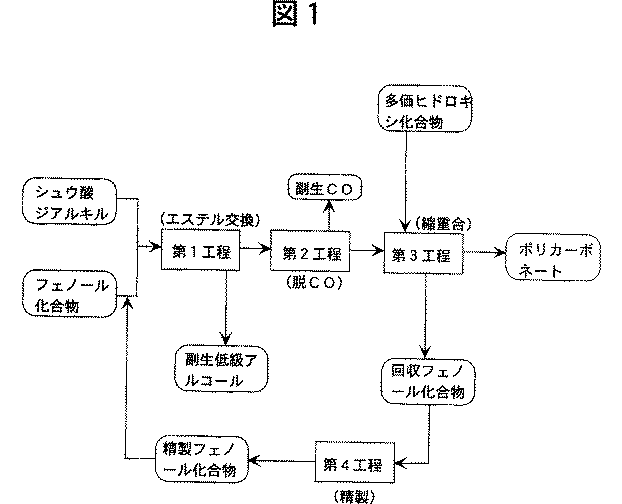
[Example2-3 and Comparative Example 2]
Changing the amount and type of amine compound contained as impurities, the above examples1The same experiment was conducted. When the amine compound was triethylamine, a polycondensation reaction was performed by replacing tetramethylammonium hydroxide with tetraethylammonium hydroxide.
[0075]
[Table 1]
[Comparative example3]
Using a feed liquid (phenol: 54.1% by weight, DMO: 45.3% by weight, TPT: 0.5% by weight) containing 1000 ppm (2000 ppm based on purified phenol) of trimethylamine, In the same manner as in Example 1, diphenyl oxalate was produced.
[0077]
When the state of the first reactive distillation column was stabilized (4 hours after starting the supply), the composition of the bottom liquid was 4.21% by weight of diphenyl oxalate, 23.42% by weight of methyl phenyl oxalate, The rate was 28.43% by weight and phenol 43.39% by weight, and the withdrawal amount was about 613 g / h. At this time, a condensate having a composition of 99.7% by weight of methanol and 0.3% by weight of dimethyl oxalate was extracted from the top of the column at a rate of about 34 g / h.
[0078]
[Comparative example4]
In the field mixture, trimethylamine is 350 ppm.NoDiphenyl oxalate was produced in the same manner as in Comparative Example 1 using the product that was contained at 700 ppm).
[0079]
When the state of the first reactive distillation column was stabilized (4 hours after starting the supply), the composition of the bottom liquid was 4.21% by weight of diphenyl oxalate, 23.82% by weight of methyl phenyl oxalate, The rate was 28.30% by weight and phenol was 43.10% by weight, and the amount extracted was about 612 g / h. From the top of the column, a condensate having a composition of 99.7% by weight of methanol and 0.3% by weight of dimethyl oxalate was extracted at about 35 g / h.
[0080]
[Example4]
Although it is the same as Example 1, the 1st reactive distillation column and the 2nd reactive distillation column were connected and diphenyl oxalate was manufactured as a continuous recycling system.
[0081]
In the 12th stage from the top of the 50-stage Oldershaw (first reactive distillation column) equipped with a 1-liter bottom flask and having an inner diameter of 32 mm, 54.1 wt% phenol, 45.3% wt dimethyl oxalate, A mixture containing 0.5% by weight of tetraphenoxytitanium is fed at 600 mL / h, the bottom flask is heated to 190 ° C. with a mantle heater, and the vapor from the top of the tower is condensed with a cooler at a reflux ratio of 2. The reaction (transesterification reaction) was performed while extracting.
[0082]
When the state of the first reactive distillation column was stabilized (after 4 hours from the start of feeding), the composition of the bottom solution was 6.19% by weight of diphenyl oxalate and 30.02% by weight of methyl phenyl oxalate (MPO). And 25.74% by weight of dimethyl oxalate and 37.38% by weight of phenol, and the extraction amount was about 603 g / h. At this time, a condensate having a composition of 99.7% by weight of methanol and 0.3% by weight of dimethyl oxalate was extracted from the top of the column at a rate of about 44 g / h.
[0083]
About 603 g / h of the bottom liquid of the first reactive distillation column was fed to the 12th stage from the top of the same type of old show (second reactive distillation column) as that of the first reactive distillation column under a reduced pressure of 200 mmHg. The bottom flask was heated to 200 ° C. with a mantle heater, and the reaction (disproportionation reaction) was carried out while condensing the vapor from the top of the tower with a cooler and taking it out without reflux. When the state of the second reactive distillation column was stabilized (after 4 hours from the start of feeding), the composition of the bottom liquid (can) was 65.13 wt% diphenyl oxalate, 18.39 methylphenyl oxalate. The extraction amount was 213 g / h, and the weight was 1.21% by weight of dimethyl oxalate and 13.18% by weight of phenol.
[0084]
At this time, from the top of the tower, 1.57% by weight of methanol, 41.81% by weight of dimethyl oxalate, 53.23% by weight of phenol, 2.95% by weight of methylphenyl oxalate, 0.43% by weight of diphenyl oxalate % Condensate was withdrawn at about 390 g / h.
[0085]
The top liquid of the second reactive distillation column is once stored in a 3 L glass container, and an amount commensurate with the amount extracted from the second reactive distillation column (about 390 g / h) is added to the raw material feed position (upper To 12th stage). From the start of this feed, the raw materials fed to the first reactive distillation column (DMO: 45.3% by weight, phenol: 54.1% by weight, TPT: 0.5% by weight, about 600 mL / h) The feed was changed to a reduced amount of dimethyl oxalate and phenol fed by recycling, and the reaction was continued.
[0086]
The bottom reaction liquid of the second reactive distillation column has a heat transfer area of 0.1 m.2To the rotary thin-film evaporator of 15 mmHg under reduced pressure of 15 mmHg, and the evaporator is heated to 200 ° C. with a heating medium to obtain dimethyl oxalate, phenol, methylphenyl oxalate and diphenyl oxalate. Evaporated continuously.
[0087]
The obtained steam was supplied to a position 80 cm from the top of a glass distillation column (MPO recovery column) having an inner diameter of 30 mm and a length of 2 m, filled with a 5 × 5 mm helipack, and continuously distilled. . Then, a condensate having a composition of 3.05% by weight of dimethyl oxalate, 41.73% by weight of phenol, and 55.21% by weight of methylphenyl oxalate is withdrawn at about 68 mL / h from the top of the distillation column. Was extracted at a rate of about 120 g / h (DPO: 99.9% by weight. The liquid extracted from the top of the column was once stored in a 3 L glass container, and an amount corresponding to the amount extracted from the column was second reactive distillation. It was continuously fed to the 30th stage from the top of the tower, and the bottom liquid was distilled in the same distillation tower as the MPO recovery tower, and the purity was 99% including phenol 0.02% by weight and methylphenyl oxalate 0.01% by weight. .95 wt% diphenyl oxalate was obtained at about 120 g / h.
[0088]
From the bottom of the evaporator, a liquid containing about 1.1% by weight (in terms of metal) of titanium was extracted at about 23 g / h and circulated to the raw material feed position of the first reactive distillation column. Starting from the start of catalyst recycling, the raw materials were changed to those containing no catalyst. Then, as in Example 1, the second and third steps are performed, the recovered phenol is purified, and the purified phenol (containing 2 ppm of trimethylamine and 5 ppm of anisole) is supplied to the first reactive distillation column in the first step. did.
[0089]
A small amount of high-boiling impurities were produced as a result of transesterification and disproportionation reactions, but the catalyst was recovered so that the impurity concentration in the catalyst recovery liquid (thin film evaporator can) did not exceed 50% by weight. A portion of the liquid was purged. When purging, the catalyst was added to the raw material by an amount corresponding to the catalyst contained in the purge solution. Although this recycling process was continuously performed for 100 hours, diphenyl oxalate could be stably produced without fluctuation in the reaction rate and the liquid composition of each part.
[0090]
【The invention's effect】
In the present invention, a dialkyl oxalate and a phenol compound are transesterified to synthesize diaryl oxalate, and then the diaryl oxalate is de-CO-reacted to synthesize diaryl carbonate. In the presence of a specific polycondensation catalyst to produce a polycarbonate, while the recovered phenolic compound obtained by separating and removing the phenol compound by-produced by the polycondensation reaction is sufficiently purified. , Other impurities (Lower boiling point than phenolic compoundsThis is a polycarbonate production method in which a purified phenol compound having a specific low content of amine compound) is obtained and circulated and used as a raw material for the above-mentioned transesterification reaction. An industrially superior polycarbonate production process in which phenolic compounds can be reused in the synthesis of diaryl oxalate.
[Brief description of the drawings]
FIG. 1 is a process diagram showing an example of a polycarbonate production method of the present invention.
Claims (6)
Applications Claiming Priority (3)
| Application Number | Priority Date | Filing Date | Title |
|---|---|---|---|
| JP11-54936 | 1999-03-03 | ||
| JP5493699 | 1999-03-03 | ||
| PCT/JP2000/001279 WO2000052077A1 (en) | 1999-03-03 | 2000-03-03 | Process for producing polycarbonate |
Publications (2)
| Publication Number | Publication Date |
|---|---|
| JPWO2000052077A1 JPWO2000052077A1 (en) | 2002-06-18 |
| JP4284635B2 true JP4284635B2 (en) | 2009-06-24 |
Family
ID=12984531
Family Applications (1)
| Application Number | Title | Priority Date | Filing Date |
|---|---|---|---|
| JP2000602698A Expired - Lifetime JP4284635B2 (en) | 1999-03-03 | 2000-03-03 | Production method of polycarbonate |
Country Status (9)
| Country | Link |
|---|---|
| US (1) | US6740729B1 (en) |
| EP (1) | EP1081174B1 (en) |
| JP (1) | JP4284635B2 (en) |
| KR (1) | KR100613641B1 (en) |
| CN (1) | CN1163537C (en) |
| AT (1) | ATE295387T1 (en) |
| DE (1) | DE60020034T2 (en) |
| ES (1) | ES2239590T3 (en) |
| WO (1) | WO2000052077A1 (en) |
Families Citing this family (10)
| Publication number | Priority date | Publication date | Assignee | Title |
|---|---|---|---|---|
| JP4686826B2 (en) * | 2000-08-04 | 2011-05-25 | 宇部興産株式会社 | Polycarbonate manufacturing method |
| DE102005017427A1 (en) * | 2005-04-15 | 2006-10-19 | Zimmer Ag | Process for the treatment of condensates from polycondensation |
| US7183371B2 (en) * | 2004-11-01 | 2007-02-27 | General Electric Company | Method for making polycarbonate |
| US7189869B2 (en) * | 2004-11-01 | 2007-03-13 | General Electric Company | Method for making polycarbonate |
| US20070208159A1 (en) * | 2006-03-02 | 2007-09-06 | General Electric Company | Poly(arylene ether) block copolymer compositions, methods, and articles |
| US9174918B2 (en) * | 2010-01-20 | 2015-11-03 | Ube Industries, Ltd. | Process for preparing diaryl oxalate |
| JP6245097B2 (en) * | 2014-07-14 | 2017-12-13 | 三菱ケミカル株式会社 | Method for producing diphenyl carbonate and method for producing polycarbonate |
| CN105315445B (en) * | 2015-11-20 | 2017-06-16 | 宁波浙铁大风化工有限公司 | A kind of poly- oxalate synthesis technique |
| CN106117534B (en) * | 2016-05-19 | 2017-11-17 | 福建盈科百创电子有限公司 | A kind of security protection flame-retardant polycarbonate material and its production technology |
| TWI871533B (en) | 2022-09-27 | 2025-02-01 | 財團法人工業技術研究院 | Calibration method and calibration device for large-size antenna arrays |
Family Cites Families (6)
| Publication number | Priority date | Publication date | Assignee | Title |
|---|---|---|---|---|
| JPH072736A (en) * | 1993-06-16 | 1995-01-06 | Dainippon Ink & Chem Inc | Method for producing dibasic acid ester |
| TW322471B (en) * | 1995-04-04 | 1997-12-11 | Ube Industries | |
| US5567829A (en) * | 1995-04-17 | 1996-10-22 | General Electric Company | Method for recovering phenol and xanthene values from waste polycarbonate |
| US5922827A (en) * | 1996-09-27 | 1999-07-13 | Ube Industries, Ltd. | Process for producing a polycarbonate |
| MY133750A (en) * | 1996-10-04 | 2007-11-30 | Ube Industries | Process for preparing diaryl carbonate |
| MY115698A (en) * | 1996-10-04 | 2003-08-30 | Ube Industries | Preparation of diaryl carbonate |
-
2000
- 2000-03-03 EP EP00906671A patent/EP1081174B1/en not_active Expired - Lifetime
- 2000-03-03 US US09/674,725 patent/US6740729B1/en not_active Expired - Lifetime
- 2000-03-03 WO PCT/JP2000/001279 patent/WO2000052077A1/en not_active Ceased
- 2000-03-03 DE DE60020034T patent/DE60020034T2/en not_active Expired - Lifetime
- 2000-03-03 JP JP2000602698A patent/JP4284635B2/en not_active Expired - Lifetime
- 2000-03-03 KR KR1020007012264A patent/KR100613641B1/en not_active Expired - Lifetime
- 2000-03-03 ES ES00906671T patent/ES2239590T3/en not_active Expired - Lifetime
- 2000-03-03 AT AT00906671T patent/ATE295387T1/en not_active IP Right Cessation
- 2000-03-03 CN CNB008007632A patent/CN1163537C/en not_active Expired - Lifetime
Also Published As
| Publication number | Publication date |
|---|---|
| ES2239590T3 (en) | 2005-10-01 |
| DE60020034D1 (en) | 2005-06-16 |
| EP1081174A1 (en) | 2001-03-07 |
| KR100613641B1 (en) | 2006-08-17 |
| WO2000052077A1 (en) | 2000-09-08 |
| ATE295387T1 (en) | 2005-05-15 |
| CN1163537C (en) | 2004-08-25 |
| CN1302311A (en) | 2001-07-04 |
| EP1081174B1 (en) | 2005-05-11 |
| EP1081174A4 (en) | 2002-10-30 |
| DE60020034T2 (en) | 2006-03-16 |
| KR20010052304A (en) | 2001-06-25 |
| US6740729B1 (en) | 2004-05-25 |
Similar Documents
| Publication | Publication Date | Title |
|---|---|---|
| US9174918B2 (en) | Process for preparing diaryl oxalate | |
| JP3724905B2 (en) | Method for producing aromatic polycarbonate | |
| EP1081174B1 (en) | Process for producing polycarbonate | |
| JPWO2000052077A1 (en) | Polycarbonate manufacturing method | |
| EP0832910B1 (en) | Process for producing a polycarbonate | |
| KR101976886B1 (en) | Method for producing diaryl carbonates | |
| JP3724724B2 (en) | High-purity diphenyl carbonate composition and polycarbonate production method | |
| JP4686826B2 (en) | Polycarbonate manufacturing method | |
| EP1178033B1 (en) | Process for the purification of diaryl carbonate and process for the production of polycarbonate | |
| JP3412475B2 (en) | Polycarbonate manufacturing method | |
| JP3412476B2 (en) | Production method of polycarbonate | |
| KR101980394B1 (en) | Method for producing diaryl carbonates | |
| JP2002047251A (en) | Purification method and production method of diaryl carbonate | |
| JPH09301920A (en) | Method for producing diaryl oxalate | |
| EP2215045B1 (en) | Method of preparing a purified ester-substituted phenol stream |
Legal Events
| Date | Code | Title | Description |
|---|---|---|---|
| A621 | Written request for application examination |
Free format text: JAPANESE INTERMEDIATE CODE: A621 Effective date: 20050908 |
|
| A131 | Notification of reasons for refusal |
Free format text: JAPANESE INTERMEDIATE CODE: A131 Effective date: 20080912 |
|
| A521 | Request for written amendment filed |
Free format text: JAPANESE INTERMEDIATE CODE: A523 Effective date: 20081111 |
|
| A131 | Notification of reasons for refusal |
Free format text: JAPANESE INTERMEDIATE CODE: A131 Effective date: 20081205 |
|
| A521 | Request for written amendment filed |
Free format text: JAPANESE INTERMEDIATE CODE: A523 Effective date: 20090203 |
|
| TRDD | Decision of grant or rejection written | ||
| A01 | Written decision to grant a patent or to grant a registration (utility model) |
Free format text: JAPANESE INTERMEDIATE CODE: A01 Effective date: 20090227 |
|
| A01 | Written decision to grant a patent or to grant a registration (utility model) |
Free format text: JAPANESE INTERMEDIATE CODE: A01 |
|
| A61 | First payment of annual fees (during grant procedure) |
Free format text: JAPANESE INTERMEDIATE CODE: A61 Effective date: 20090312 |
|
| FPAY | Renewal fee payment (event date is renewal date of database) |
Free format text: PAYMENT UNTIL: 20120403 Year of fee payment: 3 |
|
| R150 | Certificate of patent or registration of utility model |
Free format text: JAPANESE INTERMEDIATE CODE: R150 Ref document number: 4284635 Country of ref document: JP Free format text: JAPANESE INTERMEDIATE CODE: R150 |
|
| FPAY | Renewal fee payment (event date is renewal date of database) |
Free format text: PAYMENT UNTIL: 20120403 Year of fee payment: 3 |
|
| FPAY | Renewal fee payment (event date is renewal date of database) |
Free format text: PAYMENT UNTIL: 20120403 Year of fee payment: 3 |
|
| FPAY | Renewal fee payment (event date is renewal date of database) |
Free format text: PAYMENT UNTIL: 20130403 Year of fee payment: 4 |
|
| R250 | Receipt of annual fees |
Free format text: JAPANESE INTERMEDIATE CODE: R250 |
|
| FPAY | Renewal fee payment (event date is renewal date of database) |
Free format text: PAYMENT UNTIL: 20130403 Year of fee payment: 4 |
|
| FPAY | Renewal fee payment (event date is renewal date of database) |
Free format text: PAYMENT UNTIL: 20130403 Year of fee payment: 4 |
|
| FPAY | Renewal fee payment (event date is renewal date of database) |
Free format text: PAYMENT UNTIL: 20140403 Year of fee payment: 5 |
|
| R250 | Receipt of annual fees |
Free format text: JAPANESE INTERMEDIATE CODE: R250 |
|
| R250 | Receipt of annual fees |
Free format text: JAPANESE INTERMEDIATE CODE: R250 |
|
| R250 | Receipt of annual fees |
Free format text: JAPANESE INTERMEDIATE CODE: R250 |
|
| R250 | Receipt of annual fees |
Free format text: JAPANESE INTERMEDIATE CODE: R250 |
|
| R250 | Receipt of annual fees |
Free format text: JAPANESE INTERMEDIATE CODE: R250 |
|
| R250 | Receipt of annual fees |
Free format text: JAPANESE INTERMEDIATE CODE: R250 |
|
| EXPY | Cancellation because of completion of term |