JP4238564B2 - Character recognition device - Google Patents
Character recognition device Download PDFInfo
- Publication number
- JP4238564B2 JP4238564B2 JP2002330534A JP2002330534A JP4238564B2 JP 4238564 B2 JP4238564 B2 JP 4238564B2 JP 2002330534 A JP2002330534 A JP 2002330534A JP 2002330534 A JP2002330534 A JP 2002330534A JP 4238564 B2 JP4238564 B2 JP 4238564B2
- Authority
- JP
- Japan
- Prior art keywords
- document
- character recognition
- parent
- receipt
- image
- Prior art date
- Legal status (The legal status is an assumption and is not a legal conclusion. Google has not performed a legal analysis and makes no representation as to the accuracy of the status listed.)
- Expired - Fee Related
Links
- 238000001514 detection method Methods 0.000 claims description 59
- 238000010586 diagram Methods 0.000 description 14
- 238000000034 method Methods 0.000 description 8
- 230000015654 memory Effects 0.000 description 6
- 238000013523 data management Methods 0.000 description 1
- 238000013500 data storage Methods 0.000 description 1
- 230000007423 decrease Effects 0.000 description 1
- 230000000694 effects Effects 0.000 description 1
Images

Landscapes
- Character Input (AREA)
- Medical Treatment And Welfare Office Work (AREA)
Description
【0001】
【発明の属する技術分野】
この発明は、例えばレセプト処理装置等の文字認識装置に関し、特に、親原稿と続紙とが混在する原稿束を処理する文字認識装置に関する。
【0002】
【従来の技術】
従来の文字認識装置について、レセプト処理装置を例に採って説明する。レセプト処理装置とは、診療報酬明細書(以下、「レセプト」と記す)を扱う文字認識装置である。
【0003】
レセプト処理装置としては、例えば、以下の特許文献で開示されたものが知られている。
【0004】
図7は、従来のレセプト処理装置の構成例を示す概念図である。図7に示されたように、従来のレセプト処理装置700は、スキャナ710とソータ720とを備えている。
【0005】
スキャナ710のホッパ711には、多数のレセプト701を収容することができる。これらのレセプト701は、1枚ずつ、搬送路712に繰り出されて搬送され、ソータ部720に送られる。搬送路712上を搬送される際、読取部713は、レセプト701からイメージを読み取る。読み取られたイメージは、文字認識部715に送られる。文字認識部715は、かかるイメージの文字認識を行う。
【0006】
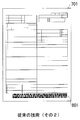
図8の概念図に示したように、レセプト701は、OCRエリア801を備えている。文字認識部715によって得られた文字認識情報のうち、このOCRエリア801に関する情報は、レセプト701の分類等に使用される。
【0007】
続いて、印字部714が、レセプト701に、番号を印字する。
【0008】
スキャナ710の全体制御は、制御部716によって行われる。
【0009】
ソータ部720に送られたレセプト701は、ガイド機構721によって、ポケット722−1,722−2,722−3のいずれかに収容される。収容されるポケット722−1,722−2,722−3は、文字認識部715の認識結果に応じて決定される。
【0010】
このようにして、レセプト701を、保険者ごと或いは医療機関ごとに分類することができる。
【0011】
【特許文献1】
特開平8−272883号公報
【0012】
【発明が解決しようとする課題】
レセプトは、医療機関から保険者への請求書であり、診療報酬の明細が記載される。このため、診療の内容によっては、1枚のレセプトに明細のすべてを記載することができない場合がある。このような場合には、1件の請求について、複数枚の用紙を使用する必要がある。
【0013】
レセプトの原票(1枚目の用紙、以下「親レセプト」と記す)としては、一般にA4サイズの用紙が使用される。そして、追加の用紙は、一般に「続紙単票」と呼ばれており、親レセプトよりも小さい用紙が使用される。通常、続紙単票には、OCRエリアは設けられていない。図9(A)の概念図に示したように、親レセプトに1枚または複数枚の続紙単票が添付される場合、これらはクリップ等で綴じられる。
【0014】
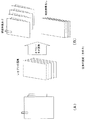
しかしながら、親レセプトと続紙単票とが綴じられている場合、上述のようなレセプト処理装置700で処理することはできない。このため、従来は、図9(B)の概念図に示したように、オペレータが、続紙単票を含むレセプトと含まないレセプトとを選別していた。そして、オペレータは、続紙単票を含まないレセプトのみをレセプト処理装置700で処理し、続紙単票を含むレセプトについては手作業でデータ入力、分類、番号付与等を行っていた。このような手作業は、オペレータの作業負担を増大させる要因になっていた。
【0015】
このような理由から、続紙単票を含むレセプトを処理することができる文字認識装置が嘱望されていた。
【0016】
【課題を解決するための手段】
(1)第1の発明に係る文字認識装置は、ホッパから一枚ずつ繰り出された原稿を搬送する搬送手段と、搬送手段で搬送される原稿の長さを検出しこの検出の結果を用いて原稿の親/続紙を識別する原稿長検出手段と、搬送手段で搬送される原稿のイメージを取得する読取手段と、原稿長検出手段が原稿を親であると識別した場合に取得されたイメージの所定領域の記載内容を認識し、及び、原稿長検出手段が原稿を続紙であると識別した場合に、取得されたイメージの文字認識を行わない文字認識手段とを備える。ここでは、原稿がレセプトであるのが良い。なお、原稿の親が所定サイズの1枚目の用紙であって、文字認識領域を有しており、原稿の続紙が親原稿と異なる大きさの2枚目以降の用紙であって、文字認識領域を有しない構成にしても良い。
【0017】
このような構成によれば、原稿長に基づいて親/続紙を識別することができ、親原稿であると識別された場合にのみ文字認識を行うので、続紙単票であっても、扱うことが可能である。
【0018】
(2)第2の発明に係る文字認識装置は、ホッパから一枚ずつ繰り出された原稿を搬送する搬送手段と、搬送手段で搬送される原稿のイメージを取得する読取手段と、読取手段が取得したイメージを用いて原稿の外形寸法を検出しこの検出結果を用いて原稿の親/続紙を識別する外形識別手段と、外形識別手段が原稿を親であると判断した場合に取得されたイメージの所定領域の記載内容を認識し、及び、外形識別手段が原稿を続紙であると識別した場合に、取得されたイメージの文字認識を行わない文字認識手段とを備える。
【0019】
このような構成によれば、外形寸法に基づいて親/続紙を識別することができ、親原稿であると識別された場合にのみ文字認識を行うので、続紙単票であっても、扱うことが可能である。
【0020】
【発明の実施の形態】
以下、この発明の実施の形態について、図面を用いて説明する。なお、図中、各構成成分の大きさ、形状および配置関係は、本発明が理解できる程度に概略的に示してあるにすぎず、また、以下に説明する数値的条件は単なる例示にすぎない。
【0021】
第1の実施の形態
以下、この発明の第1の実施の形態について、この発明をレセプト処理装置に適用した場合を例に採って説明する。
【0022】
図1は、この実施の形態に係るレセプト処理装置の構成を示す概念図である。図1に示したように、このレセプト処理装置100は、スキャナ110と、1台または複数台のソータ120,120,・・・とを備えている。スキャナ110は、ホッパ111、給紙部112、搬送路113、媒体検知センサ114a,114b、レセプト長検知センサ115、読取部116、印字部117、認識部118および制御部119を備えている。また、ソータ120,120,・・・は、それぞれ、水平搬送路121、媒体検知センサ122、垂直搬送路123−1,123−2,123−3、垂直ブレード124−1,124−2,124−3、ポケット125−1,125−2,125−3およびソータ制御部126を備えている。
【0023】
ホッパ111は、レセプト101を収容する。すなわち、このホッパ111上には、レセプト(親レセプトおよび続紙単票)101が積層される。
【0024】
給紙部112は、ホッパ111に積層されたレセプト101を1枚ずつ繰り出して、搬送路113に給紙する。
【0025】
搬送路113は、給紙部112から受け取ったレセプト101を一定速度で搬送して、初段のソータ120に送る。
【0026】
媒体検知センサ114aは、給紙部112から搬送路113に給紙されたレセプト101の先端および後端を検出する。この媒体検知センサ114aにより、給紙部112や読取部116の周辺における紙詰まりを検出することができる。一方、媒体検知センサ114bは、印字部117直下を通過するレセプト101の先端および後端を検出する。この媒体検知センサ114bにより、印字部117の周辺における紙詰まりを検出することができる。媒体検知センサ114a,114bとしては、例えばフォトカプラ等を使用することができる。
【0027】
レセプト長検知センサ115は、レセプト101の先端および後端を検出する。後述するように、レセプト101の前端の検出タイミングと後端の検出タイミングとの時間差から、このレセプト101の搬送方向の長さを検出することができる。検出結果は、認識部118に送られる。レセプト長検知センサ115としては、例えばフォトカプラ等を使用することができる。
【0028】
読取部116は、搬送路113上を搬送されるレセプト101のイメージを読み取る。読み取られたイメージは、認識部118に送られる。
【0029】
印字部117は、搬送路113上を搬送されるレセプト101に対して、処理番号等の印字を行う。印字の内容については、後述する。
【0030】
認識部118は、外形識別部118aと文字認識部118bとを備えている。外形識別部118aは、後述するように、レセプト長検知センサ115から受け取った検出結果を用いて、レセプト101の外形寸法を識別する。文字認識部118bは、親レセプトのOCRエリア801(図8参照)に対する文字認識を行う。外形識別部118aの識別結果および文字認識部118bの文字認識結果は、制御部119に送られる。
【0031】
制御部119は、内部メモリとして、排出記憶部119aおよびイメージ保存部119bを備えている。この制御部119は、後述するように、認識部118から受け取った外形識別結果および文字認識結果に応じて、印字部117による印字の内容およびそのレセプト101が収容されるポケットの選択を行う。また、制御部119は、スキャナ110全体の動作を制御する。
【0032】
水平搬送路121は、搬送路113または前段の水平搬送路121からレセプト101を受け取って、搬送する。
【0033】
媒体検知センサ122は、レセプト101の先端および後端を検出する。この媒体検知センサ122により、搬送路間の接続部や垂直ブレード124−1の周辺における紙詰まりを検出することができる。媒体検知センサ122としては、例えばフォトカプラ等を使用することができる。
【0034】
垂直搬送路123−1〜123−3は、垂直ブレード124−1〜124−3によって導かれたレセプト101を、上方に搬送する。
【0035】
ポケット125−1〜125−3は、垂直ブレード124−1〜124−3によって導かれたレセプト101を収容する。
【0036】
ソータ制御部126は、制御部119から受け取った情報に基づいて、搬送路121、垂直ブレード124−1〜124−3および垂直搬送路123−1〜123−3等の制御を行う。
【0037】
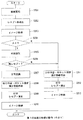
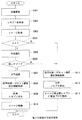
次に、図1に示したレセプト処理装置100の動作を説明する。図2は、レセプト処理装置100の動作を示すフローチャートである。
【0038】
レセプト処理装置100を稼働させる前に、オペレータは、ホッパ111にレセプト101を積載する。このとき、親レセプトと続紙単票とがクリップ等で綴じられているものについては、オペレータは、そのクリップ等を外して、親レセプトが一番上になるように(続紙単票よりも先に搬送路113に繰り出されるように)、ホッパ111に積載する。その後、オペレータの操作により、レセプト処理装置100が稼働する。
【0039】
最初に、給紙部112が、ホッパ111に積載されたレセプト101を順次一枚ずつ繰り出して、搬送路113に給紙する(図2のS201参照)。繰り出されたレセプト101は、媒体検知センサ114aを通過して、レセプト長検知センサ115に達する。
【0040】
そして、レセプト長検知センサ115が、以下のようにして、レセプト長を検出する(図2のS202、図3参照)。なお、かかるレセプト長検出と並行して、後述するような、読取部116によるイメージの取得が行われる(図2のS203参照)。
【0041】
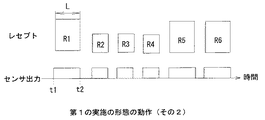
図3は、レセプト長検出の原理を説明するための概念図であり、親レセプトR1、この親レセプトに添付されていた続紙単票R2、R3、R4、単紙R5、R6が順次搬送路113に繰り出された場合の例である。ここで、「単紙」とは、続紙単票が添付されていない親レセプトを意味する。
【0042】
上述のように、搬送路113は、レセプト101を一定速度で搬送する。そして、レセプト長検知センサ115が、レセプト101の先端および後端を検出する。例えば、レセプト長検知センサ115がフォトカプラの場合、このフォトカプラの発光素子と受光素子との間にレセプト101の先端が達すると、このレセプト101によって発光素子から受光素子に達する光が遮られるので、受光素子の受光光量が急激に減少する。一方、フォトカプラの発光素子と受光素子との間をレセプト101の後端が通過し終えると、かかる遮光が行われなくなって、受光素子の受光光量が急激に増加する。レセプト長検知センサ115は、受光素子の受光光量が急激に低下するタイミング(先端検出タイミング)と急激に上昇するタイミング(後端検出タイミング)との差を、算出する。レセプト101の移動速度をV、レセプト101の先端および後端の検出タイミングをt1,t2とすると、レセプト101の搬送方向の長さ(すなわち横方向の長さ)Lは、V(t2−t1)で与えられる。
【0043】
その後、レセプト長検知センサ115は、レセプト長の検出結果を用いて、レセプトの種類(親レセプトまたは続紙単票)を判断する(図2のS204参照)。ここで、親レセプトとしては、常に、同一外形寸法の用紙が使用される。この実施形態では、親レセプトとして、A4サイズ(すなわち縦297mm且つ横210mm)を使用することにする。一方、続紙単票としては、縦方向の長さがA4よりも短く且つ横方向の長さがA4と同一または短い用紙が使用される。したがって、レセプト長検知センサ115の検出結果Lが210mmの場合は、レセプト101が親レセプトであるのか或いは続紙単票であるのかを判断することはできない。この場合、レセプト処理装置100は、ステップS205以降の処理を実行する。一方、L<210mmの場合は、レセプト101が続紙単票であると判断できる。この場合、レセプト処理装置100は、ステップS211以降を実行する。
【0044】
上述のように、レセプト長検出と並行して、レセプト101のイメージの取得が行われる(図2のS203参照)。この処理では、読取部116が、搬送路113上を搬送されるレセプト101のイメージを取得して、そのまま認識部118に送る。
【0045】
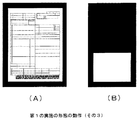
ステップS205では、認識部118内の外形識別部118aが、レセプト101の外形認識処理を行う。レセプト101のイメージは、外形識別部118aに取り込まれ、内部のイメージメモリに一時的に格納される。図4は、読取部116によって取得されたイメージを示す概念図であり、(A)は親レセプトの場合、(B)は続紙単票の場合である。この実施の形態では、搬送路113の搬送路面を光学的に黒色で構成している。このため、黒領域(背景)と白領域(レセプト101の外縁部)との境界が、レセプト101の外形となる。外形識別部118aは、イメージを縦横両方向にサーチして黒画素から白画素への変化点または白画素から黒画素への変化点を検出し、この検出結果を用いてレセプト101の外形を認識する。このようにして認識された外形の寸法と、実際のレセプト101の寸法との比は、1:1である。したがって、外形識別部118aに格納されたイメージを用いて、レセプト101の外形寸法を検出することができる。そして、このようにして得られた外形寸法から、外形識別部118aは、レセプト101の親レセプト/続紙単票の区別を認識する(図2のS206参照)。レセプト101が親レセプトであると認識された場合、レセプト処理装置100は、ステップS207以降を実行する。一方、レセプト101が続紙単票であると認識された場合、レセプト処理装置100は、ステップS211以降を実行する。
【0046】
レセプト101が親レセプトの場合、ステップS207では、認識部118内の文字認識部118bが、OCRエリア801(図8参照)内の文字を認識する(図2のS207参照)。そして、認識結果を、制御部119に送る。
【0047】
制御部119は、文字認識部118bの認識結果に基づいて、印字部117の印字内容と、そのレセプト101が排出されるポケット(各ソータ120のポケット125−1〜125−3のいずれか)とを決定する(図2のS208参照)。この決定の結果は、排出記憶部119aに格納される。そして、レセプト101が印字部117に達すると、制御部119は、印字部117を制御してレセプト101に対する印字を行わせる(図2のS209参照)。
【0048】
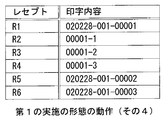
図5は、印字部117による印字内容の一例を示す表である。図5は、図3に対応しており、親レセプトR1、この親レセプトに添付されていた続紙単票R2,R3,R4、単紙R5,R6が順次検出された場合の例である。図5に示されたように、親レセプトR1が検出されたときは、OCRエリア801の認識結果に基づいて、レセプトの処理日付‘020228’と、号機番号‘001’と、処理番号‘00001’とが印字される。また、続紙単票R2は、親レセプトR1に続いているので、この親レセプトR1に添付された続紙単票であると判断され、親レセプトR1の処理番号と、添付書類の1枚目であることを示す番号‘1’とが印字される。ここで、親レセプトR1の分類番号のうち処理番号のみを続紙単票R2に印字することとしたのは、続紙単票は親レセプトよりも用紙の幅が小さい場合があり、このため印字幅を狭くしなければならないからである。例えば、レセプト処理装置100で処理できる続紙単票の最小用紙がA6である場合、この続紙単票に対する印字の幅は、A6用紙の印字領域内に収まるように決定される。同様に、続紙単票R3,R4に対しても、親レセプトR1の処理番号と添付書類の2枚目、3枚目であることを示す番号‘2’,‘3’とが印字される。また、単紙R5,R6については、A4サイズであることより親レセプトであると判断されるので、レセプトの処理日付‘020228’、号機番号‘001’および処理番号‘00002’,‘00003’が印字される。
【0049】
排出先となるポケットは、例えば号機番号に応じて決定すればよい。
【0050】
また、制御部119は、排出記憶部119aに格納された排出先を、各ソータ120のソータ制御部126に送る。ソータ制御部126は、指定されたポケットが次段以降のソータに属する場合は、垂直ブレード124−1を操作して、そのレセプト101を次段のソータ120に導く(図2のS209参照)。一方、指定されたポケットが自装置内のポケットである場合は、垂直ブレード124−1を操作してレセプト101を垂直搬送路123−1に導き、さらに、垂直ブレード124−2,124−3を操作してレセプト101を該当するポケットに排出する(図2のS209参照)。
【0051】
その後、制御部119は、外形識別部118a内のイメージメモリからレセプト101のイメージ情報を読み出すとともに、排出記憶部119aから印字内容および排出ポケットの情報を読み出し、これらの情報を関連づけてイメージ保存部119bに格納する(図2のS210参照)。
【0052】
一方、レセプト101が続紙単票の場合、このレセプト101は、直前に検出された親レセプトの続紙単票であると判断される。続紙単票であると判断された場合には、文字認識を行わない。一般に、続紙単票にはOCRエリア801が設けられていないからである。
【0053】
制御部119は、排出記憶部119aから、対応する親レセプトの情報を読み出す。そして、この情報に基づいて、印字部117の印字内容と(図5参照)、そのレセプト101が排出されるポケット(各ソータ120のポケット125−1〜125−3のいずれか)とを決定する(図2のS211参照)。続紙単票の場合、排出先となるポケットとしては、例えば親レセプトと同じポケットが選択される。この決定の結果は、排出記憶部119aに格納される。そして、レセプト101が印字部117に達すると、制御部119は、印字部117を制御してレセプト101に対する印字を行わせる(図2のS212参照)。
【0054】
さらに、制御部119は、排出記憶部119aに格納された排出先を、各ソータ120のソータ制御部126に送る。ソータ制御部126は、親レセプトの場合と同様にして、該当するポケットにレセプト101を排出する(図2のS212参照)。
【0055】
その後、制御部119は、外形識別部118a内のイメージメモリからレセプト101のイメージ情報を読み出すとともに、排出記憶部119aから印字内容および排出ポケットの情報を読み出し、これらの情報を関連づけてイメージ保存部119bに格納する(図2のS213参照)。
【0056】
なお、上述のステップS210,S213で排出記憶部119aに格納された情報は、レセプト処理装置100の処理結果として、図示しない表示手段或いは印刷手段により表示或いは印字することができる。
【0057】
このように、この実施の形態に係るレセプト処理装置100によれば、親レセプトと続紙単票とを自動的に判別することができ、且つ、親レセプトと続紙単票とを関連づけてレセプト101への印字やポケット125−1〜125−3への搬出等を行うことができるので、オペレータの作業負担を軽減できる。
【0058】
第2の実施の形態
次に、この発明の第2の実施の形態について、この発明をレセプト処理装置に適用した場合を例に採って説明する。
【0059】
この実施の形態の全体構成は、第1の実施の形態と同様であるので(図1参照)、説明を省略する。
【0060】
この実施の形態に係るレセプト処理装置は、主として、続紙単票のイメージを制御部119がイメージ保存部119bに保存するときの動作等が、上述の第1の実施の形態の装置と異なる。
【0061】
以下、この実施の形態に係るレセプト処理装置の動作を説明する。図6は、この実施の形態に係るレセプト処理装置の動作を示すフローチャートである。
【0062】
まず、オペレータは、第1の実施の形態と同様にして、レセプト101をホッパ111に積載する。その後、オペレータがレセプト処理装置100を稼働させると、給紙部112が、ホッパ111に積載されたレセプト101を一枚ずつ搬送路113に繰り出す(図6のS601参照)。レセプト長検知センサ115は、第1の実施の形態と同様にして、レセプト長を検出する(図6のS602、図3参照)。さらに、このレセプト長検出と並行して、読取部116によるイメージの取得が行われる(図6のS603参照)。そして、第1の実施の形態と同様、レセプト長検知センサ115による親レセプト/続紙単票の判断が行われ(図6のS604参照)、判断できなかった場合は、外形識別部118aによる親レセプト/続紙単票の判断が行われる(図6のS605参照)。
【0063】
レセプト101が親レセプトであると認識された場合、文字認識部118bがOCRエリア801(図8参照)内の文字を認識し(図6のS607参照)、認識結果を制御部119に送る。制御部119は、文字認識部118bの認識結果に基づいて印字部117の印字内容および収納先となるポケット125−1〜125−3を決定し、決定の結果を排出記憶部119aに格納する(図6のS608参照)。そして、制御部119は、外形識別部118a内のイメージメモリからレセプト101のイメージ情報を読み出して、イメージ保存部119bに格納する。さらに、制御部119は、第1の実施の形態と同様にして、レセプト101に対する印字を行い、ソータ120,120,・・・のいずれかのポケットにレセプト101を排出する(図6のS609参照)。その後、制御部119は、第1の実施の形態と同様にして、レセプト101のイメージと排出記憶部119aに格納された情報とを関連づけて、イメージ保存部119bに格納する(図6のS610参照)。
【0064】
一方、レセプト101が続紙単票であると判断された場合、まず、制御部119は、排出記憶部119aから、対応する親レセプトの情報を読み出す。そして、この情報に基づいて、印字部117の印字内容(図5参照)と、そのレセプト101が排出されるポケットとを決定する(図6のS611参照)。この決定の結果は、排出記憶部119aに格納される。そして、レセプト101が印字部117に達すると、制御部119は、印字部117を制御してレセプト101に対する印字を行わせる(図6のS612参照)。さらに、制御部119は、排出記憶部119aに格納された排出先を、各ソータ120のソータ制御部126に送る。ソータ制御部126は、親レセプトの場合と同様にして、該当するポケットにレセプト101を排出する(図6のS612参照)。
【0065】
続いて、制御部119は、外形識別部118a内のイメージメモリからレセプト101のイメージ情報を読み出すとともに、排出記憶部119aから印字内容および排出ポケットの情報を読み出し、これらの情報を関連づけてイメージ保存部119bに格納する(図6のS613参照)。ここで、この実施の形態では、続紙単票に関するデータを、既に保存されている親レセプトに関するデータ(S610参照)に関連づけて保存する。すなわち、親レセプトに関するデータと、この親レセプトに添付されていた続紙単票に関するデータとが、一体化された状態で、イメージ保存部119bに保存される。
【0066】
なお、第1の実施の形態と同様、上述のステップS610,S613で排出記憶部119aに格納された情報は、レセプト処理装置100の処理結果として、図示しない表示手段或いは印刷手段により表示或いは印字することができる。
【0067】
このように、この実施の形態に係るレセプト処理装置によれば、第1の実施の形態と同様、親レセプトと続紙単票とを自動的に判別することができ、且つ、親レセプトと続紙単票とを関連づけてレセプト101への番号印字やポケット125−1〜125−3への搬出を行うことができるので、オペレータの作業負担を軽減することができる。
【0068】
加えて、この実施の形態では、イメージ保存部119bへの保存も、親レセプトと続紙単票とを関連づけて行われるので、オペレータによるイメージデータの管理負担も軽減する。
【0069】
なお、第1、第2の実施の形態ではレセプト長検知センサ115と外形識別部118aとを用いて親レセプト/続紙単票を判別することとしたが、これらの一方のみを用いて判別を行うことも可能である。例えば、外形識別部118aのみを使用してすべての判別を行うことも可能である。但し、外形識別部118aは複雑な画像処理を行うので処理時間が長くなり易く、したがって、高速のレセプト処理を行うにはレセプト長検知センサ115を併用することが望ましい。また、短手幅(搬送方向の長さ)がA4用紙と同一サイズの続紙単票を使用しない場合は、レセプト長検知センサ115のみを用いて親レセプト/続紙単票の判別を行うことも可能である。
【0070】
第1、第2の実施の形態では搬送路113の搬送面を光学的に黒色で構成したが(図4参照)、レセプト長検知センサ115のみを用いて判別を行う場合には光学的に白い搬送面で構成してもよい。
【0071】
また、第1、第2の実施の形態において、ソータ120の段数や1台のソータに設けられるポケットの個数は、任意であり、レセプト処理装置の使用条件等に応じて適宜変更して実施することができる。
【0072】
【発明の効果】
以上詳細に説明したように、本発明の文字認識装置によれば、親原稿と続紙原稿とが混在する原稿束を処理することができる。
【図面の簡単な説明】
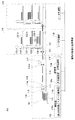
【図1】第1、第2の実施の形態に係る文字認識装置の全体構成を示す概念図である。
【図2】第1の実施の形態に係る文字認識装置の動作を説明するためのフローチャートである。
【図3】第1の実施の形態に係る文字認識装置の動作を説明するための概念図である。
【図4】第1の実施の形態に係る文字認識装置の動作を説明するための概念図である。
【図5】第1の実施の形態に係る文字認識装置の動作を説明するための概念図である。
【図6】第2の実施の形態に係る文字認識装置の動作を説明するためのフローチャートである。
【図7】従来の文字認識装置の全体構成例を示す概念図である。
【図8】従来の文字認識装置の動作を説明するための概念図である。
【図9】従来の文字認識装置の動作を説明するための概念図である。
【符号の説明】
110 スキャナ
111 ホッパ
112 給紙部
113 搬送路
114a,114b 媒体検知センサ
115 レセプト長検知センサ
116 読取部
117 印字部
118 認識部
118a 外形識別部
118b 文字認識部
119 制御部
119a 排出記憶部
119b イメージ保存部
120 ソータ
121 水平搬送路
122 媒体検知センサ
123−1,123−2,123−3 垂直搬送路
124−1,124−2,124−3 垂直ブレード
125−1,125−2,125−3 ポケット
126 ソータ制御部[0001]
BACKGROUND OF THE INVENTION
The present invention relates to a character recognition device such as a receipt processing device, and more particularly to a character recognition device that processes a document bundle in which a parent document and a continuation sheet are mixed.
[0002]
[Prior art]
A conventional character recognition device will be described taking a receipt processing device as an example. The receipt processing device is a character recognition device that handles a medical fee remuneration statement (hereinafter referred to as “receipt”).
[0003]
As a receipt processing apparatus, what was disclosed by the following patent documents, for example is known.
[0004]
FIG. 7 is a conceptual diagram showing a configuration example of a conventional receipt processing apparatus. As shown in FIG. 7, the conventional
[0005]
A number of
[0006]
As shown in the conceptual diagram of FIG. 8, the
[0007]
Subsequently, the
[0008]
Overall control of the
[0009]
The
[0010]
In this way, the
[0011]
[Patent Document 1]
Japanese Patent Laid-Open No. 8-27283
[0012]
[Problems to be solved by the invention]
The receipt is a bill from the medical institution to the insurer, and details of the medical fee are described. For this reason, depending on the contents of medical treatment, it may not be possible to describe all of the details on one receipt. In such a case, it is necessary to use a plurality of sheets for one request.
[0013]
Generally, A4 size paper is used as a receipt slip (first sheet, hereinafter referred to as “parent receipt”). The additional sheet is generally called “continuation sheet cut sheet”, and a sheet smaller than the parent receipt is used. Usually, the OCR area is not provided in the continuous sheet cut sheet. As shown in the conceptual diagram of FIG. 9A, when one or a plurality of continuous paper sheets are attached to the parent receipt, these are bound by a clip or the like.
[0014]
However, when the parent receipt and the cut sheet are bound, the
[0015]
For these reasons, a character recognition device that can process a receipt including a cut sheet is desired.
[0016]
[Means for Solving the Problems]
(1) A character recognition device according to a first aspect of the present invention detects a length of a document transported by a transport unit for transporting a document fed from the hopper one by one, and uses the result of this detection. Document length detection means for identifying a parent / sequential sheet of a document, reading means for acquiring an image of a document conveyed by the conveyance means, and document length detection means when the document is identified as a parentToriRecognize the contents of a predetermined area of the obtained imageWhen the document length detection means identifies the document as a continuation sheet, character recognition of the acquired image is not performed.Character recognition means.Here, the document is preferably a receipt. Note that the parent of the original is a first sheet of a predetermined size and has a character recognition area, and the subsequent sheet of the original is a second or subsequent sheet of a size different from the parent original, You may make it the structure which does not have a recognition area.
[0017]
According to such a configuration, the parent / sequential sheet can be identified based on the document length, and character recognition is performed only when the document is identified as the parent document. It is possible to handle.
[0018]
(2) A character recognition device according to a second aspect of the invention is obtained by a conveying unit that conveys a document fed out from the hopper one by one, a reading unit that acquires an image of the document conveyed by the conveying unit, and a reading unit Using this image, the external dimensions of the document are detected and the result of this detection is used.TeharaOutline identification means that identifies the parent / sequel of the manuscript, and the outline identification means determines that the document is the parentToriRecognize the contents of a predetermined area of the obtained imageIn addition, when the outer shape identifying means identifies the original as a continuation sheet, character recognition of the acquired image is not performed.Character recognition means.
[0019]
According to such a configuration, the parent / sequential sheet can be identified based on the outer dimensions, and character recognition is performed only when the parent document is identified. It is possible to handle.
[0020]
DETAILED DESCRIPTION OF THE INVENTION
Embodiments of the present invention will be described below with reference to the drawings. In the drawings, the size, shape, and arrangement relationship of each component are only shown schematically to the extent that the present invention can be understood, and the numerical conditions described below are merely examples. .
[0021]
First embodiment
The first embodiment of the present invention will be described below by taking as an example the case where the present invention is applied to a receipt processing apparatus.
[0022]
FIG. 1 is a conceptual diagram showing a configuration of a receipt processing apparatus according to this embodiment. As shown in FIG. 1, the
[0023]
The
[0024]
The
[0025]
The
[0026]
The
[0027]
The receptor
[0028]
The
[0029]
The
[0030]
The
[0031]
The
[0032]
The
[0033]
The
[0034]
The vertical conveyance paths 123-1 to 123-3 convey the
[0035]
The pockets 125-1 to 125-3 contain the
[0036]
The
[0037]
Next, the operation of the
[0038]
Before operating the
[0039]
First, the
[0040]
And the receipt
[0041]
FIG. 3 is a conceptual diagram for explaining the principle of detection of the receipt length. The parent receipt R1, the continuous sheet single sheets R2, R3, R4, and the single sheets R5, R6 attached to the parent receipt are sequentially conveyed. This is an example in the case of being extended to 113. Here, “single paper” means a parent receipt to which a continuous paper sheet is not attached.
[0042]
As described above, the
[0043]
Thereafter, the receipt
[0044]
As described above, the image of the
[0045]
In step S <b> 205, the outer
[0046]
When the
[0047]
Based on the recognition result of the
[0048]
FIG. 5 is a table showing an example of contents printed by the
[0049]
What is necessary is just to determine the pocket used as discharge | emission destination according to a machine number, for example.
[0050]
In addition, the
[0051]
After that, the
[0052]
On the other hand, when the
[0053]
The
[0054]
Further, the
[0055]
After that, the
[0056]
Note that the information stored in the
[0057]
As described above, according to the
[0058]
Second embodiment
Next, a second embodiment of the present invention will be described by taking as an example the case where the present invention is applied to a receipt processing apparatus.
[0059]
Since the overall configuration of this embodiment is the same as that of the first embodiment (see FIG. 1), description thereof is omitted.
[0060]
The receipt processing apparatus according to this embodiment is different from the apparatus of the first embodiment described above mainly in the operation when the
[0061]
The operation of the receipt processing apparatus according to this embodiment will be described below. FIG. 6 is a flowchart showing the operation of the receipt processing apparatus according to this embodiment.
[0062]
First, the operator loads the
[0063]
When the
[0064]
On the other hand, when it is determined that the
[0065]
Subsequently, the
[0066]
As in the first embodiment, the information stored in the
[0067]
As described above, according to the receipt processing apparatus according to this embodiment, as in the first embodiment, it is possible to automatically discriminate between a parent receipt and a sheet of cut sheets, and to connect to a parent receipt. The number printing on the
[0068]
In addition, in this embodiment, the image
[0069]
In the first and second embodiments, the receipt
[0070]
In the first and second embodiments, the transport surface of the
[0071]
In the first and second embodiments, the number of
[0072]
【The invention's effect】
As described above in detail, according to the character recognition device of the present invention, it is possible to process a document bundle in which a parent document and a follower document are mixed.
[Brief description of the drawings]
FIG. 1 is a conceptual diagram showing an overall configuration of a character recognition device according to first and second embodiments.
FIG. 2 is a flowchart for explaining the operation of the character recognition device according to the first embodiment;
FIG. 3 is a conceptual diagram for explaining the operation of the character recognition device according to the first embodiment.
FIG. 4 is a conceptual diagram for explaining the operation of the character recognition device according to the first embodiment.
FIG. 5 is a conceptual diagram for explaining the operation of the character recognition device according to the first embodiment.
FIG. 6 is a flowchart for explaining the operation of the character recognition device according to the second embodiment;
FIG. 7 is a conceptual diagram showing an example of the overall configuration of a conventional character recognition device.
FIG. 8 is a conceptual diagram for explaining the operation of a conventional character recognition device.
FIG. 9 is a conceptual diagram for explaining the operation of a conventional character recognition device.
[Explanation of symbols]
110 Scanner
111 Hopper
112 Paper feed unit
113 Transport path
114a, 114b Medium detection sensor
115 Receipt length detection sensor
116 Reading unit
117 Print section
118 Recognition unit
118a Outline identification part
118b Character recognition unit
119 Control unit
119a Discharge storage unit
119b Image storage unit
120 Sorter
121 Horizontal transport path
122 Medium detection sensor
123-1, 123-2, 123-3 Vertical conveyance path
124-1, 124-2, 124-3 Vertical blade
125-1, 125-2, 125-3 pocket
126 Sorter control unit
Claims (7)
前記搬送手段で搬送される前記原稿の長さを検出し、この検出の結果を用いて前記原稿の親/続紙を識別する原稿長検出手段と、
前記搬送手段で搬送される前記原稿のイメージを取得する読取手段と、
前記原稿長検出手段が前記原稿を親であると識別した場合に、前記取得されたイメージの所定領域の記載内容を認識し、及び、前記原稿長検出手段が前記原稿を続紙であると識別した場合に、前記取得されたイメージの文字認識を行わない文字認識手段と、
を備え、
前記原稿がレセプトであることを特徴とする文字認識装置。Transport means for transporting documents fed out one by one from the hopper;
Document length detection means for detecting the length of the document conveyed by the conveyance means and identifying the parent / sequential sheet of the document using the detection result;
Reading means for obtaining an image of the document conveyed by the conveying means;
If the document length detecting means is identified as the original is the parent recognizes the description of a given area before Quito obtained by image, and, when the document length detecting means is the original is continued paper Character recognition means that does not perform character recognition of the acquired image when identified ,
Equipped with a,
Character recognition apparatus wherein the document is characterized in receipt der Rukoto.
前記搬送手段で搬送される前記原稿のイメージを取得する読取手段と、
前記読取手段が取得したイメージを用いて前記原稿の外形寸法を検出し、この検出結果を用いて該原稿の親/続紙を識別する外形識別手段と、
前記外形識別手段が前記原稿を親であると判断した場合に、前記取得されたイメージの所定領域の記載内容を認識し、及び、前記外形識別手段が前記原稿を続紙であると識別した場合に、前記取得されたイメージの文字認識を行わない文字認識手段と、
を備え、
前記原稿がレセプトであることを特徴とする文字認識装置。Transport means for transporting documents fed out one by one from the hopper;
Reading means for obtaining an image of the document conveyed by the conveying means;
An external shape identifying means for detecting an external dimension of the original using the image acquired by the reading means and identifying a parent / sequential sheet of the original using the detection result;
When the external identification means determines that the original is the parent recognizes the description of a given area before Quito obtained by image, and the outline identification means has identified the original to be continued paper A character recognition means that does not perform character recognition of the acquired image ,
Equipped with a,
Character recognition apparatus wherein the document is characterized in receipt der Rukoto.
ホッパから一枚ずつ繰り出された原稿を搬送する搬送手段と、 Transport means for transporting documents fed out one by one from the hopper;
前記搬送手段で搬送される前記原稿の長さを検出し、この検出の結果を用いて前記原稿の親/続紙を識別する原稿長検出手段と、 Document length detection means for detecting the length of the document conveyed by the conveyance means and identifying the parent / sequential sheet of the document using the detection result;
前記搬送手段で搬送される前記原稿のイメージを取得する読取手段と、 Reading means for obtaining an image of the document conveyed by the conveying means;
前記原稿長検出手段が前記原稿を親であると識別した場合に、前記取得されたイメージの所定領域の記載内容を認識し、及び、前記原稿長検出手段が前記原稿を続紙であると識別した場合に、前記取得されたイメージの文字認識を行わない文字認識手段と、 When the document length detection unit identifies the document as a parent, it recognizes the description content of a predetermined area of the acquired image, and the document length detection unit identifies the document as a continuation sheet. A character recognition unit that does not perform character recognition of the acquired image,
を備えることを特徴とする文字認識装置。 A character recognition device comprising:
ホッパから一枚ずつ繰り出された原稿を搬送する搬送手段と、 Transport means for transporting documents fed out one by one from the hopper;
前記搬送手段で搬送される前記原稿のイメージを取得する読取手段と、 Reading means for obtaining an image of the document conveyed by the conveying means;
前記読取手段が取得したイメージを用いて前記原稿の外形寸法を検出し、この検出結果を用いて該原稿の親/続紙を識別する外形識別手段と、 An external shape identifying means for detecting an external dimension of the original using the image acquired by the reading means and identifying a parent / sequential sheet of the original using the detection result;
前記外形識別手段が前記原稿を親であると判断した場合に、前記取得されたイメージの所定領域の記載内容を認識し、及び、前記外形識別手段が前記原稿を続紙であると識別した場合に、前記取得されたイメージの文字認識を行わない文字認識手段と、 When the outline identifying unit determines that the document is a parent, the description content of the predetermined area of the acquired image is recognized, and the outline identifying unit identifies the document as a follow-up sheet And character recognition means that does not perform character recognition of the acquired image,
を備えることを特徴とする文字認識装置。 A character recognition device comprising:
Priority Applications (1)
| Application Number | Priority Date | Filing Date | Title |
|---|---|---|---|
| JP2002330534A JP4238564B2 (en) | 2002-11-14 | 2002-11-14 | Character recognition device |
Applications Claiming Priority (1)
| Application Number | Priority Date | Filing Date | Title |
|---|---|---|---|
| JP2002330534A JP4238564B2 (en) | 2002-11-14 | 2002-11-14 | Character recognition device |
Publications (2)
| Publication Number | Publication Date |
|---|---|
| JP2004164381A JP2004164381A (en) | 2004-06-10 |
| JP4238564B2 true JP4238564B2 (en) | 2009-03-18 |
Family
ID=32808201
Family Applications (1)
| Application Number | Title | Priority Date | Filing Date |
|---|---|---|---|
| JP2002330534A Expired - Fee Related JP4238564B2 (en) | 2002-11-14 | 2002-11-14 | Character recognition device |
Country Status (1)
| Country | Link |
|---|---|
| JP (1) | JP4238564B2 (en) |
Families Citing this family (1)
| Publication number | Priority date | Publication date | Assignee | Title |
|---|---|---|---|---|
| JP4853073B2 (en) * | 2006-03-27 | 2012-01-11 | 沖電気工業株式会社 | Form classification processing system, electronic medium receipt creation method and delivery method |
-
2002
- 2002-11-14 JP JP2002330534A patent/JP4238564B2/en not_active Expired - Fee Related
Also Published As
| Publication number | Publication date |
|---|---|
| JP2004164381A (en) | 2004-06-10 |
Similar Documents
| Publication | Publication Date | Title |
|---|---|---|
| BRPI0411081B1 (en) | APPLIANCE FOR PROCESSING DOCUMENTS AND METHODS FOR PROCESSING DOCUMENTS AND PROCESSING A DOCUMENT WITHIN AN ENVELOPE | |
| CN102375706B (en) | Signal conditioning package and control method thereof | |
| JP2005298106A (en) | Vertical collating machine | |
| JP4238564B2 (en) | Character recognition device | |
| CN100409168C (en) | Printing system, printing device, document replacement device, and printer driver | |
| JP3327092B2 (en) | Form processing device | |
| JP2001039609A (en) | Paper processing device and print processing system | |
| JP4628384B2 (en) | Device capable of using paper with storage element and paper selection device | |
| JPH09263356A (en) | Printing device | |
| JP3208233B2 (en) | Printing device | |
| JP4653412B2 (en) | Bar code recognition processing device | |
| JP2007222744A (en) | Address reading sorter | |
| JPH0646193A (en) | Image reader | |
| JPH07171505A (en) | Address code reader for mail | |
| JP2005193409A (en) | Multifunctional printer apparatus, consumable management method and consumable management program | |
| JP2007137035A (en) | Control method for print medium processing apparatus and print medium processing apparatus | |
| JP2004259080A (en) | Document conveying-and-reading processing method, system and program | |
| JP2004188299A (en) | Paper sheet processing apparatus and paper sheet processing method | |
| JP2004174856A (en) | Information reading device | |
| JP2003177892A (en) | Printing apparatus, paper feed control method, print data generation method, printer driver, printing system, and copying apparatus | |
| JPH08272884A (en) | Form classifying and processing method and system | |
| JP2720359B2 (en) | Image recording device | |
| JP4160265B2 (en) | Optical character reader, form sorting method, and character reading system | |
| JP2001341873A (en) | Image forming device | |
| JP2001189820A (en) | Address printing apparatus, address printing system, and recording medium storing address printing program |
Legal Events
| Date | Code | Title | Description |
|---|---|---|---|
| A621 | Written request for application examination |
Free format text: JAPANESE INTERMEDIATE CODE: A621 Effective date: 20051110 |
|
| A977 | Report on retrieval |
Free format text: JAPANESE INTERMEDIATE CODE: A971007 Effective date: 20080808 |
|
| A131 | Notification of reasons for refusal |
Free format text: JAPANESE INTERMEDIATE CODE: A131 Effective date: 20080812 |
|
| A521 | Request for written amendment filed |
Free format text: JAPANESE INTERMEDIATE CODE: A523 Effective date: 20081006 |
|
| TRDD | Decision of grant or rejection written | ||
| A01 | Written decision to grant a patent or to grant a registration (utility model) |
Free format text: JAPANESE INTERMEDIATE CODE: A01 Effective date: 20081125 |
|
| A01 | Written decision to grant a patent or to grant a registration (utility model) |
Free format text: JAPANESE INTERMEDIATE CODE: A01 |
|
| A61 | First payment of annual fees (during grant procedure) |
Free format text: JAPANESE INTERMEDIATE CODE: A61 Effective date: 20081208 |
|
| FPAY | Renewal fee payment (event date is renewal date of database) |
Free format text: PAYMENT UNTIL: 20120109 Year of fee payment: 3 |
|
| R150 | Certificate of patent or registration of utility model |
Ref document number: 4238564 Country of ref document: JP Free format text: JAPANESE INTERMEDIATE CODE: R150 Free format text: JAPANESE INTERMEDIATE CODE: R150 |
|
| FPAY | Renewal fee payment (event date is renewal date of database) |
Free format text: PAYMENT UNTIL: 20120109 Year of fee payment: 3 |
|
| S531 | Written request for registration of change of domicile |
Free format text: JAPANESE INTERMEDIATE CODE: R313531 |
|
| FPAY | Renewal fee payment (event date is renewal date of database) |
Free format text: PAYMENT UNTIL: 20120109 Year of fee payment: 3 |
|
| R350 | Written notification of registration of transfer |
Free format text: JAPANESE INTERMEDIATE CODE: R350 |
|
| FPAY | Renewal fee payment (event date is renewal date of database) |
Free format text: PAYMENT UNTIL: 20130109 Year of fee payment: 4 |
|
| FPAY | Renewal fee payment (event date is renewal date of database) |
Free format text: PAYMENT UNTIL: 20140109 Year of fee payment: 5 |
|
| LAPS | Cancellation because of no payment of annual fees |