JP4046813B2 - Acrylic ester derivative and method for producing the same - Google Patents
Acrylic ester derivative and method for producing the same Download PDFInfo
- Publication number
- JP4046813B2 JP4046813B2 JP25376797A JP25376797A JP4046813B2 JP 4046813 B2 JP4046813 B2 JP 4046813B2 JP 25376797 A JP25376797 A JP 25376797A JP 25376797 A JP25376797 A JP 25376797A JP 4046813 B2 JP4046813 B2 JP 4046813B2
- Authority
- JP
- Japan
- Prior art keywords
- group
- carbon atoms
- alkyl group
- acid
- reaction
- Prior art date
- Legal status (The legal status is an assumption and is not a legal conclusion. Google has not performed a legal analysis and makes no representation as to the accuracy of the status listed.)
- Expired - Fee Related
Links
- 238000004519 manufacturing process Methods 0.000 title claims description 11
- -1 Acrylic ester Chemical class 0.000 title description 34
- 125000004432 carbon atom Chemical group C* 0.000 claims description 39
- 125000000217 alkyl group Chemical group 0.000 claims description 33
- 239000002253 acid Substances 0.000 claims description 28
- 150000007519 polyprotic acids Polymers 0.000 claims description 25
- 125000004435 hydrogen atom Chemical group [H]* 0.000 claims description 14
- 150000002148 esters Chemical class 0.000 claims description 12
- 125000003178 carboxy group Chemical group [H]OC(*)=O 0.000 claims description 10
- 125000004183 alkoxy alkyl group Chemical group 0.000 claims description 9
- 125000003118 aryl group Chemical group 0.000 claims description 9
- 125000006165 cyclic alkyl group Chemical group 0.000 claims description 9
- 125000002887 hydroxy group Chemical group [H]O* 0.000 claims description 9
- OKTJSMMVPCPJKN-UHFFFAOYSA-N Carbon Chemical compound [C] OKTJSMMVPCPJKN-UHFFFAOYSA-N 0.000 claims description 7
- 229910052799 carbon Inorganic materials 0.000 claims description 7
- 150000001252 acrylic acid derivatives Chemical class 0.000 claims description 6
- 125000005843 halogen group Chemical group 0.000 claims description 6
- UFHFLCQGNIYNRP-UHFFFAOYSA-N Hydrogen Chemical compound [H][H] UFHFLCQGNIYNRP-UHFFFAOYSA-N 0.000 claims description 5
- 229910052739 hydrogen Inorganic materials 0.000 claims description 5
- 239000001257 hydrogen Substances 0.000 claims description 5
- 150000008065 acid anhydrides Chemical class 0.000 claims description 4
- 238000006243 chemical reaction Methods 0.000 description 56
- 238000000034 method Methods 0.000 description 24
- 238000006116 polymerization reaction Methods 0.000 description 21
- 239000003054 catalyst Substances 0.000 description 20
- 150000001875 compounds Chemical class 0.000 description 14
- 239000003112 inhibitor Substances 0.000 description 13
- 239000002904 solvent Substances 0.000 description 12
- 150000008064 anhydrides Chemical class 0.000 description 11
- UHOVQNZJYSORNB-UHFFFAOYSA-N Benzene Chemical compound C1=CC=CC=C1 UHOVQNZJYSORNB-UHFFFAOYSA-N 0.000 description 6
- MYMOFIZGZYHOMD-UHFFFAOYSA-N Dioxygen Chemical compound O=O MYMOFIZGZYHOMD-UHFFFAOYSA-N 0.000 description 6
- YXFVVABEGXRONW-UHFFFAOYSA-N Toluene Chemical compound CC1=CC=CC=C1 YXFVVABEGXRONW-UHFFFAOYSA-N 0.000 description 6
- 229910001882 dioxygen Inorganic materials 0.000 description 6
- 230000035484 reaction time Effects 0.000 description 6
- 125000005396 acrylic acid ester group Chemical group 0.000 description 5
- 239000000178 monomer Substances 0.000 description 5
- 239000002994 raw material Substances 0.000 description 5
- 239000000243 solution Substances 0.000 description 5
- 239000000126 substance Substances 0.000 description 5
- AFVFQIVMOAPDHO-UHFFFAOYSA-N Methanesulfonic acid Chemical compound CS(O)(=O)=O AFVFQIVMOAPDHO-UHFFFAOYSA-N 0.000 description 4
- 239000007795 chemical reaction product Substances 0.000 description 4
- KDYFGRWQOYBRFD-UHFFFAOYSA-N Succinic acid Natural products OC(=O)CCC(O)=O KDYFGRWQOYBRFD-UHFFFAOYSA-N 0.000 description 3
- ZMANZCXQSJIPKH-UHFFFAOYSA-N Triethylamine Chemical compound CCN(CC)CC ZMANZCXQSJIPKH-UHFFFAOYSA-N 0.000 description 3
- 238000007664 blowing Methods 0.000 description 3
- 238000004132 cross linking Methods 0.000 description 3
- SYGAXBISYRORDR-UHFFFAOYSA-N ethyl 2-(hydroxymethyl)prop-2-enoate Chemical compound CCOC(=O)C(=C)CO SYGAXBISYRORDR-UHFFFAOYSA-N 0.000 description 3
- NWVVVBRKAWDGAB-UHFFFAOYSA-N p-methoxyphenol Chemical compound COC1=CC=C(O)C=C1 NWVVVBRKAWDGAB-UHFFFAOYSA-N 0.000 description 3
- 229920000642 polymer Polymers 0.000 description 3
- NWUYHJFMYQTDRP-UHFFFAOYSA-N 1,2-bis(ethenyl)benzene;1-ethenyl-2-ethylbenzene;styrene Chemical compound C=CC1=CC=CC=C1.CCC1=CC=CC=C1C=C.C=CC1=CC=CC=C1C=C NWUYHJFMYQTDRP-UHFFFAOYSA-N 0.000 description 2
- AZQWKYJCGOJGHM-UHFFFAOYSA-N 1,4-benzoquinone Chemical compound O=C1C=CC(=O)C=C1 AZQWKYJCGOJGHM-UHFFFAOYSA-N 0.000 description 2
- NIXOWILDQLNWCW-UHFFFAOYSA-M Acrylate Chemical compound [O-]C(=O)C=C NIXOWILDQLNWCW-UHFFFAOYSA-M 0.000 description 2
- XDTMQSROBMDMFD-UHFFFAOYSA-N Cyclohexane Chemical compound C1CCCCC1 XDTMQSROBMDMFD-UHFFFAOYSA-N 0.000 description 2
- VEXZGXHMUGYJMC-UHFFFAOYSA-N Hydrochloric acid Chemical compound Cl VEXZGXHMUGYJMC-UHFFFAOYSA-N 0.000 description 2
- QIGBRXMKCJKVMJ-UHFFFAOYSA-N Hydroquinone Chemical compound OC1=CC=C(O)C=C1 QIGBRXMKCJKVMJ-UHFFFAOYSA-N 0.000 description 2
- CTQNGGLPUBDAKN-UHFFFAOYSA-N O-Xylene Chemical compound CC1=CC=CC=C1C CTQNGGLPUBDAKN-UHFFFAOYSA-N 0.000 description 2
- NBIIXXVUZAFLBC-UHFFFAOYSA-N Phosphoric acid Chemical compound OP(O)(O)=O NBIIXXVUZAFLBC-UHFFFAOYSA-N 0.000 description 2
- QAOWNCQODCNURD-UHFFFAOYSA-N Sulfuric acid Chemical compound OS(O)(=O)=O QAOWNCQODCNURD-UHFFFAOYSA-N 0.000 description 2
- KKEYFWRCBNTPAC-UHFFFAOYSA-N Terephthalic acid Chemical compound OC(=O)C1=CC=C(C(O)=O)C=C1 KKEYFWRCBNTPAC-UHFFFAOYSA-N 0.000 description 2
- 239000003463 adsorbent Substances 0.000 description 2
- 125000001931 aliphatic group Chemical group 0.000 description 2
- 239000003849 aromatic solvent Substances 0.000 description 2
- 230000005587 bubbling Effects 0.000 description 2
- LSURRKWOANERMF-UHFFFAOYSA-N butyl 2-(hydroxymethyl)prop-2-enoate Chemical compound CCCCOC(=O)C(=C)CO LSURRKWOANERMF-UHFFFAOYSA-N 0.000 description 2
- 238000001460 carbon-13 nuclear magnetic resonance spectrum Methods 0.000 description 2
- 239000011248 coating agent Substances 0.000 description 2
- 238000000576 coating method Methods 0.000 description 2
- 238000006297 dehydration reaction Methods 0.000 description 2
- 230000000694 effects Effects 0.000 description 2
- 238000010438 heat treatment Methods 0.000 description 2
- 239000003456 ion exchange resin Substances 0.000 description 2
- 229920003303 ion-exchange polymer Polymers 0.000 description 2
- QQVIHTHCMHWDBS-UHFFFAOYSA-N isophthalic acid Chemical compound OC(=O)C1=CC=CC(C(O)=O)=C1 QQVIHTHCMHWDBS-UHFFFAOYSA-N 0.000 description 2
- 239000007788 liquid Substances 0.000 description 2
- 239000000463 material Substances 0.000 description 2
- 229940098779 methanesulfonic acid Drugs 0.000 description 2
- RFUCOAQWQVDBEU-UHFFFAOYSA-N methyl 2-(hydroxymethyl)prop-2-enoate Chemical compound COC(=O)C(=C)CO RFUCOAQWQVDBEU-UHFFFAOYSA-N 0.000 description 2
- 239000000203 mixture Substances 0.000 description 2
- 239000003960 organic solvent Substances 0.000 description 2
- 239000003973 paint Substances 0.000 description 2
- XNGIFLGASWRNHJ-UHFFFAOYSA-N phthalic acid Chemical compound OC(=O)C1=CC=CC=C1C(O)=O XNGIFLGASWRNHJ-UHFFFAOYSA-N 0.000 description 2
- 239000000843 powder Substances 0.000 description 2
- 239000000047 product Substances 0.000 description 2
- 238000000425 proton nuclear magnetic resonance spectrum Methods 0.000 description 2
- CYIDZMCFTVVTJO-UHFFFAOYSA-N pyromellitic acid Chemical compound OC(=O)C1=CC(C(O)=O)=C(C(O)=O)C=C1C(O)=O CYIDZMCFTVVTJO-UHFFFAOYSA-N 0.000 description 2
- 239000011347 resin Substances 0.000 description 2
- 229920005989 resin Polymers 0.000 description 2
- 125000001424 substituent group Chemical group 0.000 description 2
- JOXIMZWYDAKGHI-UHFFFAOYSA-N toluene-4-sulfonic acid Chemical compound CC1=CC=C(S(O)(=O)=O)C=C1 JOXIMZWYDAKGHI-UHFFFAOYSA-N 0.000 description 2
- CNHDIAIOKMXOLK-UHFFFAOYSA-N toluquinol Chemical compound CC1=CC(O)=CC=C1O CNHDIAIOKMXOLK-UHFFFAOYSA-N 0.000 description 2
- ARCGXLSVLAOJQL-UHFFFAOYSA-N trimellitic acid Chemical compound OC(=O)C1=CC=C(C(O)=O)C(C(O)=O)=C1 ARCGXLSVLAOJQL-UHFFFAOYSA-N 0.000 description 2
- 125000000391 vinyl group Chemical group [H]C([*])=C([H])[H] 0.000 description 2
- XLYOFNOQVPJJNP-UHFFFAOYSA-N water Substances O XLYOFNOQVPJJNP-UHFFFAOYSA-N 0.000 description 2
- 239000008096 xylene Substances 0.000 description 2
- WJFKNYWRSNBZNX-UHFFFAOYSA-N 10H-phenothiazine Chemical compound C1=CC=C2NC3=CC=CC=C3SC2=C1 WJFKNYWRSNBZNX-UHFFFAOYSA-N 0.000 description 1
- 238000001644 13C nuclear magnetic resonance spectroscopy Methods 0.000 description 1
- 238000005160 1H NMR spectroscopy Methods 0.000 description 1
- JZODKRWQWUWGCD-UHFFFAOYSA-N 2,5-di-tert-butylbenzene-1,4-diol Chemical compound CC(C)(C)C1=CC(O)=C(C(C)(C)C)C=C1O JZODKRWQWUWGCD-UHFFFAOYSA-N 0.000 description 1
- FALRKNHUBBKYCC-UHFFFAOYSA-N 2-(chloromethyl)pyridine-3-carbonitrile Chemical compound ClCC1=NC=CC=C1C#N FALRKNHUBBKYCC-UHFFFAOYSA-N 0.000 description 1
- 125000000954 2-hydroxyethyl group Chemical group [H]C([*])([H])C([H])([H])O[H] 0.000 description 1
- JIGUICYYOYEXFS-UHFFFAOYSA-N 3-tert-butylbenzene-1,2-diol Chemical compound CC(C)(C)C1=CC=CC(O)=C1O JIGUICYYOYEXFS-UHFFFAOYSA-N 0.000 description 1
- XEXOQMOKIUWPNU-UHFFFAOYSA-N C(=O)(O)C=CC(=O)OCC(C(=O)O)=C Chemical compound C(=O)(O)C=CC(=O)OCC(C(=O)O)=C XEXOQMOKIUWPNU-UHFFFAOYSA-N 0.000 description 1
- OFOBLEOULBTSOW-UHFFFAOYSA-N Propanedioic acid Natural products OC(=O)CC(O)=O OFOBLEOULBTSOW-UHFFFAOYSA-N 0.000 description 1
- 230000002378 acidificating effect Effects 0.000 description 1
- 150000007513 acids Chemical class 0.000 description 1
- 229910000147 aluminium phosphate Inorganic materials 0.000 description 1
- 239000007864 aqueous solution Substances 0.000 description 1
- 238000010533 azeotropic distillation Methods 0.000 description 1
- SRSXLGNVWSONIS-UHFFFAOYSA-N benzenesulfonic acid Chemical compound OS(=O)(=O)C1=CC=CC=C1 SRSXLGNVWSONIS-UHFFFAOYSA-N 0.000 description 1
- 229940092714 benzenesulfonic acid Drugs 0.000 description 1
- 230000015572 biosynthetic process Effects 0.000 description 1
- 125000001246 bromo group Chemical group Br* 0.000 description 1
- KDYFGRWQOYBRFD-NUQCWPJISA-N butanedioic acid Chemical compound O[14C](=O)CC[14C](O)=O KDYFGRWQOYBRFD-NUQCWPJISA-N 0.000 description 1
- 125000001309 chloro group Chemical group Cl* 0.000 description 1
- IFDVQVHZEKPUSC-UHFFFAOYSA-N cyclohex-3-ene-1,2-dicarboxylic acid Chemical compound OC(=O)C1CCC=CC1C(O)=O IFDVQVHZEKPUSC-UHFFFAOYSA-N 0.000 description 1
- GWZCCUDJHOGOSO-UHFFFAOYSA-N diphenic acid Chemical compound OC(=O)C1=CC=CC=C1C1=CC=CC=C1C(O)=O GWZCCUDJHOGOSO-UHFFFAOYSA-N 0.000 description 1
- 239000003822 epoxy resin Substances 0.000 description 1
- 238000005886 esterification reaction Methods 0.000 description 1
- 238000001704 evaporation Methods 0.000 description 1
- 230000008020 evaporation Effects 0.000 description 1
- 239000007789 gas Substances 0.000 description 1
- 239000012535 impurity Substances 0.000 description 1
- 239000011261 inert gas Substances 0.000 description 1
- LVHBHZANLOWSRM-UHFFFAOYSA-N itaconic acid Chemical compound OC(=O)CC(=C)C(O)=O LVHBHZANLOWSRM-UHFFFAOYSA-N 0.000 description 1
- VZCYOOQTPOCHFL-UPHRSURJSA-N maleic acid Chemical compound OC(=O)\C=C/C(O)=O VZCYOOQTPOCHFL-UPHRSURJSA-N 0.000 description 1
- 239000011976 maleic acid Substances 0.000 description 1
- FPYJFEHAWHCUMM-UHFFFAOYSA-N maleic anhydride Chemical compound O=C1OC(=O)C=C1 FPYJFEHAWHCUMM-UHFFFAOYSA-N 0.000 description 1
- 125000002496 methyl group Chemical group [H]C([H])([H])* 0.000 description 1
- 229950000688 phenothiazine Drugs 0.000 description 1
- 229920002120 photoresistant polymer Polymers 0.000 description 1
- 229920000647 polyepoxide Polymers 0.000 description 1
- 150000003242 quaternary ammonium salts Chemical class 0.000 description 1
- 238000004904 shortening Methods 0.000 description 1
- 239000001384 succinic acid Substances 0.000 description 1
- 229940014800 succinic anhydride Drugs 0.000 description 1
- 238000000967 suction filtration Methods 0.000 description 1
- 238000003786 synthesis reaction Methods 0.000 description 1
- UFDHBDMSHIXOKF-UHFFFAOYSA-N tetrahydrophthalic acid Natural products OC(=O)C1=C(C(O)=O)CCCC1 UFDHBDMSHIXOKF-UHFFFAOYSA-N 0.000 description 1
- VZCYOOQTPOCHFL-UHFFFAOYSA-N trans-butenedioic acid Natural products OC(=O)C=CC(O)=O VZCYOOQTPOCHFL-UHFFFAOYSA-N 0.000 description 1
- IMFACGCPASFAPR-UHFFFAOYSA-N tributylamine Chemical compound CCCCN(CCCC)CCCC IMFACGCPASFAPR-UHFFFAOYSA-N 0.000 description 1
- ODHXBMXNKOYIBV-UHFFFAOYSA-N triphenylamine Chemical compound C1=CC=CC=C1N(C=1C=CC=CC=1)C1=CC=CC=C1 ODHXBMXNKOYIBV-UHFFFAOYSA-N 0.000 description 1
- 238000005406 washing Methods 0.000 description 1
Images

Landscapes
- Organic Low-Molecular-Weight Compounds And Preparation Thereof (AREA)
Description
【0001】
【発明の属する技術分野】
本発明は、下記一般式(2):
【0002】
【化5】

(式中、R1は水素原子を表し、R3は炭素数1〜18の直鎖状もしくは分枝鎖状もしくは環状のアルキル基、アリール基、炭素数2〜20のアルコキシアルキル基、炭素数1〜8のハロゲン化アルキル基を表し、R 5 は直接結合または炭素数1〜8のアルキル基を表し、R 6 及びR 7 は直接結合または炭素数1〜6のアルキル基を表し、R 8 は直接結合または炭素数1〜3のアルキル基を表し、該基中の水素がアルキル基、水酸基、カルボキシル基、またはハロゲン原子で置換されていても良い)で表されるアクリル酸エステル誘導体およびその製造方法に関するものである。
【0004】
該アクリル酸エステル誘導体は、各種塗料の原料、架橋用モノマー、レジスト用モノマー等に有用である。
【0005】
【従来の技術】
ヒドロキシル基を有する化合物と無水多塩基酸および/または多塩基酸とを反応させてカルボキシル基含有化合物を製造する方法については、従来より種々検討がなされている。
【0006】
例えば、特開平4−294351号公報には、2−ヒドロキシエチル(メタ)アクリレートと無水コハク酸とを反応させると、下記式(3):
【0007】
【化6】
(式中R4は水素原子またはメチル基を示す。)
で表されるカルボキシル基含有アクリレートが得られる合成例が開示されている。
【0009】
しかしながら、前記一般式(2)で表されるアクリル酸エステル誘導体およびその製造方法に関しては今まで知られていなかった。
【0010】
【発明が解決しようとする課題】
本発明は、種々の用途に利用され得る、前記一般式(2)で表されるアクリル酸エステル誘導体およびその製造方法を提供することにある。
【0011】
【課題を解決するための手段】
本願発明者等は、前記一般式(2)で表されるアクリル酸エステル誘導体を提供すべく鋭意検討した結果、オキシアクリル酸エステルと無水多塩基酸とを反応させることにより、前記一般式(2)で表されるアクリル酸エステル誘導体が得られることを見いだして、本発明を完成させるに至った。
【0012】
即ち、本発明は、一般式(1):
【0013】
【化7】
(式中、R1は水素原子を表し、R3は炭素数1〜18の直鎖状もしくは分枝鎖状もしくは環状のアルキル基、アリール基、炭素数2〜20のアルコキシアルキル基、炭素数1〜8のハロゲン化アルキル基を表す)で表されるオキシアクリル酸エステル類と、多塩基酸無水物とを反応させることを特徴とする一般式(2):
【0015】
【化8】
(式中、R1は水素原子を表し、R3は炭素数1〜18の直鎖状もしくは分枝鎖状もしくは環状のアルキル基、アリール基、炭素数2〜20のアルコキシアルキル基、炭素数1〜8のハロゲン化アルキル基を表し、R 5 は直接結合または炭素数1〜8のアルキル基を表し、R 6 及びR 7 は直接結合または炭素数1〜6のアルキル基を表し、R 8 は直接結合または炭素数1〜3のアルキル基を表し、該基中の水素がアルキル基、水酸基、カルボキシル基、またはハロゲン原子で置換されていても良い)で表わされるアクリル酸エステル誘導体の製造方法に関する。
【0017】
また本発明の他の発明は、一般式(2):
【0018】
【化9】
(式中、R1は水素原子を表し、R3は炭素数1〜18の直鎖状もしくは分枝鎖状もしくは環状のアルキル基、アリール基、炭素数2〜20のアルコキシアルキル基、炭素数1〜8のハロゲン化アルキル基を表し、R 5 は直接結合または炭素数1〜8のアルキル基を表し、R 6 及びR 7 は直接結合または炭素数1〜6のアルキル基を表し、R 8 は直接結合または炭素数1〜3のアルキル基を表し、該基中の水素がアルキル基、水酸基、カルボキシル基、またはハロゲン原子で置換されていても良い)で表わされるアクリル酸エステル誘導体に関するものである。
【0020】
【発明の実施の形態】
本発明にかかるアクリル酸エステル誘導体は、前記一般式(2)で構成される化合物である。
【0021】
このうち前記一般式(2)中、R1が水素原子であり、R2で示される基が、
【0022】
【化10】
(式中、R5は直接結合または炭素数1〜8のアルキル基を表し、R6及びR7は直接結合または炭素数1〜6のアルキル基を表し、R 8 は直接結合または炭素数1〜3のアルキル基を表し、該基中の水素がアルキル基、水酸基、カルボキシル基、またはハロゲン原子で置換されていても良い)であり、かつ、R3で示される基が炭素数1〜18の直鎖状もしくは分枝鎖状もしくは環状のアルキル基、アリール基、炭素数2〜20のアルコキシアルキル基、炭素数1〜8のハロゲン化アルキル基である。
【0024】
また、前記一般式(2)中、R1が水素原子であり、R2で示される基が、
【0025】
【化11】
であり、かつ、R3で示される基が炭素数1〜8のアルキル基である化合物がより好ましい。
【0027】
また、前記一般式(2)中、R1が水素原子であり、R2で示される基が、
【0028】
【化12】
であり、かつ、R3で示される基が炭素数1〜4のアルキル基である化合物がさらに好ましい。
【0030】
本発明のアクリル酸エステル誘導体を製造する方法としては、オキシアクリル酸エステルと、無水多塩基酸とを反応させることにより容易に製造される。以下にその製造方法を説明する。
【0031】
本発明にかかるアクリル酸エステルの製造方法において、原料として用いられるオキシアクリル酸エステル類は、前記一般式(1)で示され、式中、R1で示される置換基が水素原子で構成され、R3で示される置換基が炭素数1〜18の直鎖状もしくは分枝鎖状もしくは環状のアルキル基、アリール基、炭素数2〜20のアルコキシアルキル基、炭素数1〜8のハロゲン化アルキル基で構成される化合物である。
【0032】
前記一般式(1)で表されるオキシアクリル酸エステル化合物としては、具体的には、例えば、メチル−α−ヒドロキシメチルアクリレート、エチル−α−ヒドロキシメチルアクリレート、ブチル−α−ヒドロキシメチルアクリレート、2−エチルヘキシル−α−ヒドロキシメチルアクリレート等が挙げられる。これらオキシアクリル酸エステル系化合物は、一種類のみ用いてもよく、また、二種類以上を適宜混合してもよい。上記例示の化合物のうち、メチル−α−ヒドロキシメチルアクリレート、エチル−α−ヒドロキシメチルアクリレート、ブチル−α−ヒドロキシメチルアクリレート、2−エチルヘキシル−α−ヒドロキシメチルアクリレートが重合性に優れるので好ましい。
【0033】
尚、上記オキシアクリル酸エステル系化合物は、従来公知の方法、例えば、相当するアクリル酸エステルとアルデヒド化合物とを塩基性イオン交換樹脂の触媒の存在下で反応させる(特開平6−135896号公報等)ことにより、容易に得ることができる。
【0034】
本発明にかかるアクリル酸エステルの製造方法において原料として用いられる多塩基酸の無水物としてはコハク酸、マレイン酸、o−フタル酸、イソフタル酸、テレフタル酸、o−ヘキサヒドロフタル酸、m−ヘキサヒドロフタル酸、p−ヘキサヒドロフタル酸、テトラヒドロフタル酸、トリメリット酸、ピロメリット酸、ジフェン酸等の多塩基酸の無水物が挙げられるが、特に限定されるものではない。
【0035】
前記オキシアクリル酸エステル化合物と無水多塩基酸および/または多塩基酸との反応方法は、特に限定されるものではなく、従来公知の種々の方法を転用することができる。例えば、
▲1▼オキシアクリル酸エステル化合物と無水多塩基酸との反応方法としては、例えばオキシアクリル酸エステル化合物と無水多塩基酸とを、加温し反応させる方法が好適である。
【0036】
▲2▼オキシアクリル酸エステル化合物と多塩基酸との反応方法としては、例えばオキシアクリル酸エステル化合物と多塩基酸とを、触媒の存在下に加熱して反応させる方法が好適である。
【0037】
前記▲1▼の方法の場合、オキシアクリル酸エステル化合物に対する無水多塩基酸の添加量は、該オキシアクリル酸エステル化合物1モルに対し、無水多塩基酸を0.01〜5モルの範囲とすればよい。無水多塩基酸の添加量が0.01モルより少ない場合には、反応後に残る未反応のオキシアクリル酸エステルが多くなるおそれがある。また、無水多塩基酸の添加量が5モルより多い場合には、反応後に残る未反応の無水多塩基酸が多くなるおそれがある。
【0038】
前記▲1▼の方法を行う際の反応条件等は、特に限定されるものではないが、原料であるオキシアクリル酸エステル、並びに、生成物であるアクリル酸エステルは、分子中にビニル基を含有しているので、重合しやすい性質を有している。従って、オキシアクリル酸エステルやアクリル酸エステルの重合を抑制するために、反応系に重合防止剤(または重合禁止剤)や分子状酸素を添加することが好ましい。
【0039】
前記重合防止剤としては、ヒドロキノン、ヒドロキノンモノメチルエーテル、p−ベンゾキノン、メチルヒドロキノン、t−ブチルヒドキノン、ジ−t−ブチルヒドロキノン、tーブチルカテコール、フェノチアジン等が挙げられるが、特に限定されるものではない。これら重合防止剤は、一種類のみを用いてもよく、また、二種類以上を適宜混合してもよい。また、重合防止剤の添加量は、特に限定されるものではないが、例えば、得られるアクリル酸エステルに対する割合が、0.001重量%〜5重量%の範囲内となるようにすればよい。分子状酸素としては、例えば、空気を用いることができる。この場合、反応系、つまり、オキシアクリル酸と無水多塩基酸の混合液中に空気を吹き込む(いわゆる、バブリング)ようにすればよい。そして、上記重合を充分に抑制するために、重合防止剤と分子状酸素とを併用することが好ましい。
【0040】
前記▲1▼の方法を行う場合、触媒は特に使用する必要は無いが、使用しても差し支えない。使用される触媒としてはヒドロキシル基と無水多塩基酸との反応に用いられる公知の触媒が使用できる。例えば、トリエチルアミン、トリブチルアミン、トリフェニルアミン等の3級アミン化合物、およびそれらのクロル塩、ブロモ塩等の4級アンモニウム塩等が挙げられる。触媒を使用する場合の使用量としては、使用されるオキシアクリル酸エステルに対し10重量%以下、好ましくは5重量%以下が好ましい。使用量が多いと経済的に有利ではない。
【0041】
前記▲1▼の方法を行う場合、溶媒は特に用いる必要は無いが、使用しても差し支えない。使用される溶媒としては、反応を阻害しない溶媒であれば良いが、シクロヘキサン、ベンゼン、トルエン、キシレン等の芳香族系溶剤や脂肪族系溶剤が好適に使用される。
【0042】
前記▲1▼の方法を行う際の反応温度は、特に限定されるものではないが、前記した重合を抑制するために、0℃〜150℃の範囲内が好ましく、30〜120℃の範囲内が特に好ましい。反応温度が0℃よりも低い場合には、反応時間が長く成り過ぎ、アクリル酸エステルを効率的に製造することができなくなるおそれがある。また、反応温度が150℃よりも高い場合には、前記した重合を抑制することができなくなるおそれがある。オキシアクリル酸エステル化合物と無水多塩基酸との反応は発熱反応であるので、両者を反応させる際には、反応系から余分な熱を除去すると共に、該反応系から除去される熱量に見合う量の無水多塩基酸を粉体あるいは溶融状態あるいは溶媒に溶解させて反応系に添加することにより反応温度をほぼ一定に保ちながら反応を進行させても差し支えない。但し、上記反応は必ずしもほぼ一定の反応温度で進行させる必要はない。反応時間は、上記反応が完結するように、反応温度やオキシアクリル酸エステル化合物および無水多塩基酸の種類や組み合わせ、使用量等に応じて、適宜設定すればよい。このときの反応圧力は、特に限定されるものではなく、常圧(大気圧)、減圧、加圧の何れであってもよい。
【0043】
反応終了後、必要に応じて触媒や有機溶媒を除去し、所望するアクリル酸エステル誘導体が容易に得られる。尚、触媒や有機溶媒の除去方法は、特に限定されるものではない。
【0044】
前記▲2▼の方法の場合、例えば、オキシアクリル酸エステル化合物としてα−ヒドロキシアルキルアクリル酸エステルを用い、α−ヒドロキシアルキルアクリル酸エステルと多塩基酸とを触媒の存在下に加熱することにより行うことが好適である。
【0045】
前記▲2▼の方法を行う場合、触媒としては、ヒドロキシル基とカルボキシル基とのエステル化反応に用いられる公知の触媒が使用できる。例えば、塩酸、硫酸、リン酸、メタンスルホン酸、パラトルエンスルホン酸、ベンゼンスルホン酸、酸性イオン交換樹脂等のプロトン酸が挙げられ、好ましくはメタンスルホン酸、パラトルエンスルホン酸が好適に使用される。これら触媒は、一種類のみを用いてもよく、また、二種類以上を適宜混合してもよい。
【0046】
オキシアクリル酸エステル化合物に対する前記触媒の添加量は、用いるオキシアクリル酸エステル類の種類にもよるが、例えば、該オキシアクリル酸エステル類に対する割合が、0.001重量%〜50重量%の範囲内、好ましくは0.01重量%〜10重量%の範囲内となるようにすればよい。触媒の添加量が、0.001重量%よりも少ない場合には、反応時間が長くなり過ぎ、アクリル酸エステル誘導体を効率的に製造することができなくなるおそれがある。また、触媒の添加量を50重量%よりも多くしても、反応時間の短縮等の効果のさらなる向上は望めず、添加した触媒の一部が無駄になり、経済的に不利と成るおそれがある。
【0047】
前記▲2▼の方法を行う場合、オキシアクリル酸エステル化合物に対する多塩基酸の添加量は、該オキシアクリル酸エステル1モルに対し、多塩基酸を0.01〜5モルの範囲とすればよい。多塩基酸の添加量が0.01モルより少ない場合には、反応後に残る未反応のオキシアクリル酸エステルが多くなるおそれがある。また、多塩基酸の添加量が5モルより多い場合には、反応後に残る未反応の多塩基酸が多くなるおそれがある。
【0048】
前記▲2▼の方法を行う際の反応条件等は、特に限定されるものではないが、原料であるオキシアクリル酸エステル、並びに、生成物であるアクリル酸エステルは、分子中にビニル基を含有しているので、重合しやすい性質を有している。従って、オキシアクリル酸エステルやアクリル酸エステルの重合を抑制するために、反応系に重合防止剤(または重合禁止剤)や分子状酸素を添加することが好ましい。
【0049】
前記重合防止剤としては、前記のオキシアクリル酸と無水多塩基酸との反応で挙げられるものが使用できるが、特に限定されるものではない。これら重合防止剤は、一種類のみを用いてもよく、また、二種類以上を適宜混合してもよい。また、重合防止剤の添加量は、特に限定されるものではないが、例えば、得られるアクリル酸エステルに対する割合が、0.001重量%〜5重量%の範囲内となるようにすればよい。分子状酸素としては、例えば、空気を用いることができる。この場合、反応系、つまり、オキシアクリル酸と無水多塩基酸の混合液中に空気を吹き込む(いわゆる、バブリング)ようにすればよい。そして、上記重合を充分に抑制するために、重合防止剤と分子状酸素とを併用することが好ましい。
【0050】
前記▲2▼の方法を行う場合、溶媒は特に用いる必要は無いが、オキシアクリル酸と多塩基酸との反応は脱水反応であるので、使用した生成した水を共沸除去する目的で使用する方が好ましい。使用される溶媒としては、反応を阻害しない溶媒であれば良いが、シクロヘキサン、ベンゼン、トルエン、キシレン等の芳香族系溶剤や脂肪族系溶剤が好適に使用される。
【0051】
前記▲2▼の方法を行う際の反応温度は、特に限定されるものではないが、前記した重合を抑制するために、0℃〜150℃の範囲内が好ましく、30〜120℃の範囲内が特に好ましい。反応温度が0℃よりも低い場合には、反応時間が長く成り過ぎ、アクリル酸エステルを効率的に製造することができなくなるおそれがある。また、反応温度が150℃よりも高い場合には、前記した重合を抑制することができなくなるおそれがある。オキシアクリル酸と多塩基酸との反応は脱水反応であるので、両者を反応させる際には、反応系から生成する水を除去すると共に、該反応系から除去される熱量に見合う量の無水多塩基酸を粉体あるいは溶融状態あるいは溶媒に溶解させて反応系に添加することにより反応温度をほぼ一定に保ちながら反応を進行させるても差し支えない。但し、上記反応は必ずしもほぼ一定の反応温度で進行させる必要はない。反応時間は、上記反応が完結するように、反応温度やオキシアクリル酸系化合物および無水多塩基酸の種類や組み合わせ、使用量等に応じて、適宜設定すればよい。また、反応圧力は、特に限定されるものではなく、常圧(大気圧)、減圧、加圧の何れであってもよい。
【0052】
反応終了後、所定の方法によって反応系から触媒および溶媒を除去することにより、所望するアクリル酸エステル誘導体が容易に得られる。尚、触媒の除去方法は、特に限定されるものではない。例えば、アルカリ水溶液で洗浄する方法や、酸吸着剤を添加し、吸着剤に反応溶液中の触媒を吸着させて不溶物を形成し、次いで、反応溶液の濾過等を行うことにより、不純物、すなわち触媒を除去することができる。また溶媒の除去方法は特に限定されるものではない。例えば、蒸発による溜去、空気や不活性ガスの吹き込みによる除去などが採用できる。
【0053】
【実施例】
以下、実施例を挙げて本発明をさらに具体的に説明するが、本発明はこれらにより何ら限定されるものではない。
【0054】
なお、反応生成物の同定は、1H−NMRおよび13C−NMRで行なった。
【0055】
実施例1
撹拌機、温度計およびガス吹き込み管を備えた500mlの反応容器に、α−ヒドロキシメチルアクリル酸エチル130g、無水マレイン酸98g、重合防止剤としてハイドロキノンモノメチルエーテル0.046gを仕込んだ。反応液中に空気を吹き込みながら、反応液の温度を80〜90℃とし、除熱しながら反応した。発熱が見られなくなってから、反応液を90℃に10時間保持することにより熟成した。この液を吸引ろ過して淡黄色透明液体58gを得た。得られた反応生成物の1H−NMR、および13C−NMRスペクトルを図1および図2に示す。その結果、得られた化合物は、α−((3−カルボキシ−1−オキソプロペニル)オキシメチル)アクリル酸であることが特定された。
【0056】
【発明の効果】
前記一般式(2)で表される新規なアクリル酸エステル誘導体は、従来公知のカルボキシル基を含有する単量体、例えばコハク酸モノ(2−アクリロイルオキシエチル)等の用途と同様の用途に供することができる。例えば、アクリル酸エステル誘導体もしくは前記アクリル酸エステル誘導体からなる重合体は、いわゆる塗料の密着性向上剤として用いることができる。つまり、アクリル酸エステル誘導体もしくは前記アクリル酸エステル誘導体からなる重合体を塗料に添加することにより、被塗布物に対する塗膜の密着性を向上させることができる。
【0057】
また、前記アクリル酸エステル誘導体もしくは前記アクリル酸エステル誘導体からなる重合体は、エポキシ樹脂等の架橋反応に供される架橋用モノマー;紫外線硬化性樹脂やアルカリ可溶性樹脂モノマー等に有用であるので、エッチングレジストやフォトレジスト等のレジスト材料用途に好適に用いることができる。
【図面の簡単な説明】
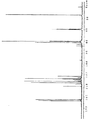
【図1】実施例1で得られた反応生成物の1H−NMRスペクトル図である。
【図2】実施例1で得られた反応生成物の13C−NMRスペクトル図である。[0001]
BACKGROUND OF THE INVENTION
The present invention relates to the following general formula (2):
[0002]
[Chemical formula 5]
(In the formula, R 1 represents hydrogen atom, R 3 represents a linear or branched chain or cyclic alkyl group of 1 to 18 carbons, an aryl group, an alkoxyalkyl group of 2-20 carbon atoms, carbon It represents a halogenated alkyl group having 1 to 8, R 5 represents a direct bond or an alkyl group having 1 to 8 carbon atoms, R 6 and R 7 represents a direct bond or an alkyl group having 1 to 6 carbon atoms, R 8 represents a direct bond or an alkyl group having 1 to 3 carbon atoms, and hydrogen in the group may be substituted with an alkyl group, a hydroxyl group, a carboxyl group, or a halogen atom ) And a manufacturing method thereof.
[0004]
The acrylate derivative is useful as a raw material for various coating materials, a crosslinking monomer, a resist monomer, and the like.
[0005]
[Prior art]
Various studies have been made on methods for producing a carboxyl group-containing compound by reacting a hydroxyl group-containing compound with an anhydrous polybasic acid and / or polybasic acid.
[0006]
For example, in JP-A-4-294351, when 2-hydroxyethyl (meth) acrylate and succinic anhydride are reacted, the following formula (3):
[0007]
[Chemical 6]
(In the formula, R 4 represents a hydrogen atom or a methyl group.)
The synthesis example from which the carboxyl group-containing acrylate represented by these is obtained is disclosed.
[0009]
However, the acrylic ester derivative represented by the general formula (2) and the production method thereof have not been known so far.
[0010]
[Problems to be solved by the invention]
An object of the present invention is to provide an acrylic ester derivative represented by the general formula (2) and a method for producing the same, which can be used for various applications.
[0011]
[Means for Solving the Problems]
As a result of intensive studies to provide the acrylic ester derivative represented by the general formula (2), the inventors of the present application have reacted the oxyacrylic ester with an anhydrous polybasic acid to thereby obtain the general formula (2). It was found that an acrylic ester derivative represented by (2) was obtained, and the present invention was completed.
[0012]
That is, the present invention relates to the general formula (1):
[0013]
[Chemical 7]
(Wherein, R 1 represents a hydrogen atom, R 3 represents a linear or branched chain or cyclic alkyl group having 1 to 18 carbon atoms, an aryl group, an alkoxyalkyl group having 2 to 20 carbon atoms, carbon General formula (2) characterized by reacting an oxyacrylic acid ester represented by the formula ( 1-8 ) and a polybasic acid anhydride:
[0015]
[Chemical 8]
(Wherein, R 1 represents a hydrogen atom, R 3 represents a linear or branched chain or cyclic alkyl group having 1 to 18 carbon atoms, an aryl group, an alkoxyalkyl group having 2 to 20 carbon atoms, carbon It represents a halogenated alkyl group having 1 to 8, R 5 represents a direct bond or an alkyl group having 1 to 8 carbon atoms, R 6 and R 7 represents a direct bond or an alkyl group having 1 to 6 carbon atoms, R 8 represents a direct bond or an alkyl group having 1 to 3 carbon atoms, and hydrogen in the group may be substituted with an alkyl group, a hydroxyl group, a carboxyl group, or a halogen atom ) It relates to a manufacturing method.
[0017]
Another invention of the present invention is represented by the general formula (2):
[0018]
[Chemical 9]
(Wherein, R 1 represents a hydrogen atom, R 3 represents a linear or branched chain or cyclic alkyl group having 1 to 18 carbon atoms, an aryl group, an alkoxyalkyl group having 2 to 20 carbon atoms, carbon It represents a halogenated alkyl group having 1 to 8, R 5 represents a direct bond or an alkyl group having 1 to 8 carbon atoms, R 6 and R 7 represents a direct bond or an alkyl group having 1 to 6 carbon atoms, R 8 represents a direct bond or an alkyl group having 1 to 3 carbon atoms, and hydrogen in the group may be substituted with an alkyl group, a hydroxyl group, a carboxyl group, or a halogen atom ) Is.
[0020]
DETAILED DESCRIPTION OF THE INVENTION
The acrylic ester derivative according to the present invention is a compound composed of the general formula (2 ) .
[0021]
Among these, in the general formula (2), R 1 is a hydrogen atom, and the group represented by R 2 is
[0022]
Embedded image
(Wherein, R 5 represents a direct bond or an alkyl group having 1 to 8 carbon atoms, R 6 and R 7 represents a direct bond or an alkyl group having 1 to 6 carbon atoms, R 8 is a direct bond or C 1 -C A hydrogen atom in the group may be substituted with an alkyl group, a hydroxyl group, a carboxyl group, or a halogen atom), and the group represented by R 3 has 1 to 18 carbon atoms. straight or branched chain or cyclic alkyl group, an aryl group, an alkoxyalkyl group having 2 to 20 carbon atoms, Ru halogenated alkyl groups der having 1 to 8 carbon atoms.
[0024]
In the general formula (2), R 1 is a hydrogen atom, and the group represented by R 2 is
[0025]
Embedded image
And a group represented by R 3 is more preferably an alkyl group having 1 to 8 carbon atoms.
[0027]
In the general formula (2), R 1 is a hydrogen atom, and the group represented by R 2 is
[0028]
Embedded image
, And the and the compound group represented by R 3 is an alkyl group having 1 to 4 carbon atoms is more preferable.
[0030]
As a method for producing acrylic acid ester derivative of the present invention are readily prepared by reacting o carboxymethyl acrylic acid ester, and anhydride polybasic acid. The manufacturing method will be described below.
[0031]
In the production method of acrylic acid esters according to the present invention, oxy acrylic acid esters used as raw material, the represented by the general formula (1), wherein the substituents represented by R 1 is composed of hydrogen atom , A substituent represented by R 3 is a linear, branched or cyclic alkyl group having 1 to 18 carbon atoms, an aryl group, an alkoxyalkyl group having 2 to 20 carbon atoms, or a halogenated group having 1 to 8 carbon atoms It is a compound composed of an alkyl group .
[0032]
Specific examples of the oxyacrylic acid ester compound represented by the general formula (1) include methyl-α-hydroxymethyl acrylate, ethyl-α-hydroxymethyl acrylate, butyl-α-hydroxymethyl acrylate, 2 - ethylhexyl -α- hydroxymethyl acrylated bets, and the like. These oxyacrylic acid ester compounds may be used alone or in combination of two or more. Of the above-exemplified compounds, methyl-α-hydroxymethyl acrylate, ethyl-α-hydroxymethyl acrylate, butyl-α-hydroxymethyl acrylate, and 2-ethylhexyl-α-hydroxymethyl acrylate are preferable because of excellent polymerizability.
[0033]
The oxyacrylic acid ester-based compound is prepared by a conventionally known method, for example, by reacting a corresponding acrylic acid ester with an aldehyde compound in the presence of a basic ion exchange resin catalyst (JP-A-6-135896, etc.). ) Can be easily obtained.
[0034]
The polybasic acid anhydride used as a raw material in the method for producing an acrylic ester according to the present invention includes succinic acid, maleic acid, o-phthalic acid, isophthalic acid, terephthalic acid, o-hexahydrophthalic acid, m-hexa Examples thereof include anhydrides of polybasic acids such as hydrophthalic acid, p-hexahydrophthalic acid, tetrahydrophthalic acid, trimellitic acid, pyromellitic acid, and diphenic acid, but are not particularly limited.
[0035]
The reaction method of the said oxyacrylic acid ester compound, an anhydrous polybasic acid, and / or a polybasic acid is not specifically limited, Various conventionally well-known methods can be diverted. For example,
(1) As a method for reacting the oxyacrylic acid ester compound with the polybasic anhydride, for example, a method of heating and reacting the oxyacrylic acid ester compound with the polybasic anhydride is suitable.
[0036]
(2) As a method for reacting the oxyacrylic acid ester compound with the polybasic acid, for example, a method in which the oxyacrylic acid ester compound and the polybasic acid are reacted by heating in the presence of a catalyst is suitable.
[0037]
In the case of the above method (1), the amount of polybasic anhydride added to the oxyacrylate compound is within the range of 0.01 to 5 moles of polybasic acid with respect to 1 mole of the oxyacrylate compound. That's fine. When the amount of polybasic anhydride added is less than 0.01 mol, there is a risk that the amount of unreacted oxyacrylic acid ester remaining after the reaction will increase. Moreover, when there is more addition amount of an anhydrous polybasic acid than 5 mol, there exists a possibility that the unreacted polybasic acid remaining after reaction may increase.
[0038]
The reaction conditions for carrying out the method (1) are not particularly limited, but the raw material oxyacrylate ester and the product acrylic ester contain a vinyl group in the molecule. Therefore, it has the property of being easily polymerized. Accordingly, it is preferable to add a polymerization inhibitor (or a polymerization inhibitor) or molecular oxygen to the reaction system in order to suppress the polymerization of oxyacrylic acid ester or acrylic acid ester.
[0039]
Examples of the polymerization inhibitor include hydroquinone, hydroquinone monomethyl ether, p-benzoquinone, methylhydroquinone, t-butylhydrquinone, di-t-butylhydroquinone, t-butylcatechol, and phenothiazine, but are not particularly limited. . Only one kind of these polymerization inhibitors may be used, or two or more kinds may be appropriately mixed. Moreover, the addition amount of a polymerization inhibitor is not specifically limited, For example, what is necessary is just to make it the ratio with respect to the acrylic ester obtained to be in the range of 0.001 to 5 weight%. For example, air can be used as the molecular oxygen. In this case, air may be blown into the reaction system, that is, a mixture of oxyacrylic acid and polybasic anhydride (so-called bubbling). And in order to fully suppress the said superposition | polymerization, it is preferable to use a polymerization inhibitor and molecular oxygen together.
[0040]
When carrying out the method (1), it is not necessary to use a catalyst, but it can be used. As the catalyst used, a known catalyst used for the reaction between a hydroxyl group and an anhydrous polybasic acid can be used. Examples thereof include tertiary amine compounds such as triethylamine, tributylamine and triphenylamine, and quaternary ammonium salts such as chloro salts and bromo salts thereof. The amount of the catalyst used is 10% by weight or less, preferably 5% by weight or less, based on the oxyacrylic acid ester used. A large amount is not economically advantageous.
[0041]
When the method (1) is carried out, the solvent is not particularly required, but may be used. The solvent used may be any solvent that does not inhibit the reaction, but aromatic solvents and aliphatic solvents such as cyclohexane, benzene, toluene, and xylene are preferably used.
[0042]
The reaction temperature for carrying out the method (1) is not particularly limited, but is preferably in the range of 0 ° C. to 150 ° C., and in the range of 30 to 120 ° C. in order to suppress the polymerization described above. Is particularly preferred. When the reaction temperature is lower than 0 ° C., the reaction time becomes too long, and the acrylate ester may not be produced efficiently. Moreover, when reaction temperature is higher than 150 degreeC, there exists a possibility that above-described superposition | polymerization cannot be suppressed. Since the reaction between the oxyacrylic acid ester compound and the polybasic anhydride is an exothermic reaction, when the two are reacted, the excess heat is removed from the reaction system and the amount corresponding to the amount of heat removed from the reaction system. The polybasic acid anhydride may be dissolved in powder, molten state or solvent and added to the reaction system to allow the reaction to proceed while maintaining the reaction temperature substantially constant. However, the reaction does not necessarily have to proceed at a substantially constant reaction temperature. The reaction time may be appropriately set according to the reaction temperature, the type and combination of the oxyacrylic acid ester compound and the polybasic anhydride, the amount used, and the like so that the above reaction is completed. The reaction pressure at this time is not particularly limited, and may be normal pressure (atmospheric pressure), reduced pressure, or increased pressure.
[0043]
After completion of the reaction, the catalyst and the organic solvent are removed as necessary, and the desired acrylate derivative is easily obtained. The method for removing the catalyst and the organic solvent is not particularly limited.
[0044]
In the case of the above method (2), for example, α-hydroxyalkyl acrylate is used as the oxyacrylate compound, and the α-hydroxyalkyl acrylate and polybasic acid are heated in the presence of a catalyst. Is preferred.
[0045]
When carrying out the method (2), a known catalyst used for the esterification reaction of a hydroxyl group and a carboxyl group can be used as the catalyst. Examples thereof include protonic acids such as hydrochloric acid, sulfuric acid, phosphoric acid, methanesulfonic acid, paratoluenesulfonic acid, benzenesulfonic acid, acidic ion exchange resin, and preferably methanesulfonic acid and paratoluenesulfonic acid are preferably used. . Only one type of these catalysts may be used, or two or more types may be appropriately mixed.
[0046]
The amount of the catalyst added to the oxyacrylate compound depends on the type of oxyacrylate used, but for example, the ratio to the oxyacrylate is within the range of 0.001 wt% to 50 wt%. Preferably, it may be within the range of 0.01 wt% to 10 wt%. When the addition amount of the catalyst is less than 0.001% by weight, the reaction time becomes too long, and the acrylic ester derivative may not be efficiently produced. Further, even if the amount of the catalyst added is more than 50% by weight, further improvement of the effect such as shortening of the reaction time cannot be expected, and a part of the added catalyst may be wasted, which may be economically disadvantageous. is there.
[0047]
When the method (2) is performed, the polybasic acid may be added to the oxyacrylate compound in an amount of 0.01 to 5 moles per mole of the oxyacrylate ester. . When the addition amount of the polybasic acid is less than 0.01 mol, there is a possibility that unreacted oxyacrylic acid ester remaining after the reaction increases. Moreover, when there is more addition amount of a polybasic acid than 5 mol, there exists a possibility that the unreacted polybasic acid which remains after reaction may increase.
[0048]
The reaction conditions and the like for carrying out the method (2) are not particularly limited, but the raw material oxyacrylate ester and the product acrylic ester contain a vinyl group in the molecule. Therefore, it has the property of being easily polymerized. Accordingly, it is preferable to add a polymerization inhibitor (or a polymerization inhibitor) or molecular oxygen to the reaction system in order to suppress the polymerization of oxyacrylic acid ester or acrylic acid ester.
[0049]
As the polymerization inhibitor, those mentioned in the reaction of oxyacrylic acid and polybasic anhydride can be used, but are not particularly limited. Only one kind of these polymerization inhibitors may be used, or two or more kinds may be appropriately mixed. Moreover, the addition amount of a polymerization inhibitor is not specifically limited, For example, what is necessary is just to make it the ratio with respect to the acrylic ester obtained to be in the range of 0.001 to 5 weight%. For example, air can be used as the molecular oxygen. In this case, air may be blown into the reaction system, that is, a mixture of oxyacrylic acid and polybasic anhydride (so-called bubbling). And in order to fully suppress the said superposition | polymerization, it is preferable to use a polymerization inhibitor and molecular oxygen together.
[0050]
When carrying out the method (2), a solvent is not particularly required. However, since the reaction between oxyacrylic acid and polybasic acid is a dehydration reaction, it is used for the purpose of azeotropic removal of used water. Is preferred. The solvent used may be any solvent that does not inhibit the reaction, but aromatic solvents and aliphatic solvents such as cyclohexane, benzene, toluene, and xylene are preferably used.
[0051]
The reaction temperature for carrying out the method (2) is not particularly limited, but is preferably in the range of 0 ° C. to 150 ° C., and in the range of 30 to 120 ° C. in order to suppress the polymerization described above. Is particularly preferred. When the reaction temperature is lower than 0 ° C., the reaction time becomes too long, and the acrylate ester may not be produced efficiently. Moreover, when reaction temperature is higher than 150 degreeC, there exists a possibility that above-described superposition | polymerization cannot be suppressed. Since the reaction between oxyacrylic acid and polybasic acid is a dehydration reaction, when they are reacted, water generated from the reaction system is removed, and an amount of anhydrous polyhydric acid corresponding to the amount of heat removed from the reaction system is removed. The reaction may be allowed to proceed while keeping the reaction temperature substantially constant by adding the basic acid to the reaction system after being dissolved in powder, molten state or solvent. However, the reaction does not necessarily have to proceed at a substantially constant reaction temperature. What is necessary is just to set reaction time suitably according to the kind, combination, usage-amount, etc. of reaction temperature, an oxyacrylic acid type compound, and an anhydrous polybasic acid so that the said reaction may be completed. The reaction pressure is not particularly limited, and may be any of normal pressure (atmospheric pressure), reduced pressure, and increased pressure.
[0052]
After completion of the reaction, the desired acrylic ester derivative can be easily obtained by removing the catalyst and solvent from the reaction system by a predetermined method. The method for removing the catalyst is not particularly limited. For example, a method of washing with an alkaline aqueous solution, an acid adsorbent is added, a catalyst in the reaction solution is adsorbed on the adsorbent to form an insoluble matter, and then the reaction solution is filtered, so that impurities, The catalyst can be removed. The method for removing the solvent is not particularly limited. For example, removal by evaporation, removal by blowing air or inert gas, and the like can be employed.
[0053]
【Example】
Hereinafter, the present invention will be described more specifically with reference to examples. However, the present invention is not limited to these examples.
[0054]
The reaction product was identified by 1 H-NMR and 13 C-NMR.
[0055]
Example 1
A 500 ml reaction vessel equipped with a stirrer, a thermometer and a gas blowing tube was charged with 130 g of ethyl α-hydroxymethyl acrylate, 98 g of maleic anhydride, and 0.046 g of hydroquinone monomethyl ether as a polymerization inhibitor. While blowing air into the reaction solution, the temperature of the reaction solution was set to 80 to 90 ° C., and the reaction was performed while removing heat. After no exotherm was observed, the reaction solution was aged by maintaining at 90 ° C. for 10 hours. This liquid was subjected to suction filtration to obtain 58 g of a pale yellow transparent liquid. 1 H-NMR and 13 C-NMR spectra of the obtained reaction product are shown in FIG. 1 and FIG. As a result, it was identified that the obtained compound was α-((3-carboxy-1-oxopropenyl) oxymethyl) acrylic acid.
[0056]
【The invention's effect】
The novel acrylic ester derivative represented by the general formula (2) is used for the same use as that of a conventionally known monomer containing a carboxyl group, for example, succinic acid mono (2-acryloyloxyethyl). be able to. For example, an acrylate derivative or a polymer comprising the acrylate derivative can be used as a so-called adhesion improver for paints. That is, the adhesion of the coating film to the object to be coated can be improved by adding an acrylic ester derivative or a polymer comprising the acrylic ester derivative to the paint.
[0057]
In addition, the acrylic ester derivative or the polymer composed of the acrylic ester derivative is useful for a crosslinking monomer used for a crosslinking reaction such as an epoxy resin; an ultraviolet curable resin, an alkali-soluble resin monomer, and the like. It can be suitably used for resist material applications such as resist and photoresist.
[Brief description of the drawings]
1 is a 1 H-NMR spectrum of the reaction product obtained in Example 1.
2 is a 13 C-NMR spectrum of the reaction product obtained in Example 1. FIG.
Claims (3)
前記一般式(2):
General formula (2):
Priority Applications (1)
| Application Number | Priority Date | Filing Date | Title |
|---|---|---|---|
| JP25376797A JP4046813B2 (en) | 1997-09-18 | 1997-09-18 | Acrylic ester derivative and method for producing the same |
Applications Claiming Priority (1)
| Application Number | Priority Date | Filing Date | Title |
|---|---|---|---|
| JP25376797A JP4046813B2 (en) | 1997-09-18 | 1997-09-18 | Acrylic ester derivative and method for producing the same |
Publications (2)
| Publication Number | Publication Date |
|---|---|
| JPH1192425A JPH1192425A (en) | 1999-04-06 |
| JP4046813B2 true JP4046813B2 (en) | 2008-02-13 |
Family
ID=17255866
Family Applications (1)
| Application Number | Title | Priority Date | Filing Date |
|---|---|---|---|
| JP25376797A Expired - Fee Related JP4046813B2 (en) | 1997-09-18 | 1997-09-18 | Acrylic ester derivative and method for producing the same |
Country Status (1)
| Country | Link |
|---|---|
| JP (1) | JP4046813B2 (en) |
-
1997
- 1997-09-18 JP JP25376797A patent/JP4046813B2/en not_active Expired - Fee Related
Also Published As
| Publication number | Publication date |
|---|---|
| JPH1192425A (en) | 1999-04-06 |
Similar Documents
| Publication | Publication Date | Title |
|---|---|---|
| JP3085469B2 (en) | Production of amide ester compound | |
| JPS5921646A (en) | Ethylenically unsaturated compound and preparation thereof | |
| JP4852206B2 (en) | Method for producing cyclobutanetetracarboxylic dianhydride compound | |
| JP4456939B2 (en) | Method for purifying adamantyl esters | |
| JP2001302685A (en) | Method for producing organic phosphorus compound | |
| JPH1192425A (en) | Acrylate derivative and its production | |
| CA2507111A1 (en) | Production process of a polymerizable hyperbranched polyester | |
| JP2878211B2 (en) | Process for producing alkyl imidazolidone (meth) acrylate | |
| JP2702249B2 (en) | Process for producing alkylaminoalkyl ester of acrylic acid or methacrylic acid | |
| JP4963545B2 (en) | (Meth) acryloyloxytetrahydrofuran and process for producing the same | |
| JP3841860B2 (en) | Method for producing allylamine derivative | |
| JPH03120263A (en) | Preparation of (meth)acrylate compound | |
| JP5678820B2 (en) | Method for producing polyfunctional (meth) acrylic acid ester | |
| JP3953133B2 (en) | Method for stabilizing α-hydroxyalkylacrylic acids | |
| JPH02193944A (en) | Production of (meth)acrylic acid ester | |
| JP3859290B2 (en) | Process for producing α-hydroxyalkylacrylic acids | |
| JPH1072404A (en) | Sorbitol (meth) acrylate and process for producing the same | |
| JPS62175448A (en) | Production of alkylaminoalkyl acrylate or methacrylate | |
| JPS63115850A (en) | Production of alkylaminoalkyl ester of acrylic acid or methacrylic acid | |
| JPS6258368B2 (en) | ||
| JP2009185125A (en) | Hyperbranched polymer and method for producing the same, and monomer for synthesizing hyperbranched polymer and precursor thereof | |
| JP2000302749A (en) | (meth)acrylic polyoxyethylene-modified bisphenol s ester, its production and photosensitive resin composition | |
| JPH09143125A (en) | Unsaturated carboxylic acid diester of bicyclohexyl-4,4'-diol | |
| JP2861122B2 (en) | Method for producing pyrazolecarboxylic acid esters | |
| JPH0615506B2 (en) | Diphenic acid monoester and method for producing the same |
Legal Events
| Date | Code | Title | Description |
|---|---|---|---|
| A621 | Written request for application examination |
Free format text: JAPANESE INTERMEDIATE CODE: A621 Effective date: 20040526 |
|
| A131 | Notification of reasons for refusal |
Free format text: JAPANESE INTERMEDIATE CODE: A131 Effective date: 20070424 |
|
| A521 | Written amendment |
Free format text: JAPANESE INTERMEDIATE CODE: A523 Effective date: 20070625 |
|
| RD02 | Notification of acceptance of power of attorney |
Free format text: JAPANESE INTERMEDIATE CODE: A7422 Effective date: 20070625 |
|
| A02 | Decision of refusal |
Free format text: JAPANESE INTERMEDIATE CODE: A02 Effective date: 20070807 |
|
| A521 | Written amendment |
Free format text: JAPANESE INTERMEDIATE CODE: A523 Effective date: 20071003 |
|
| A911 | Transfer of reconsideration by examiner before appeal (zenchi) |
Free format text: JAPANESE INTERMEDIATE CODE: A911 Effective date: 20071024 |
|
| TRDD | Decision of grant or rejection written | ||
| A01 | Written decision to grant a patent or to grant a registration (utility model) |
Free format text: JAPANESE INTERMEDIATE CODE: A01 Effective date: 20071120 |
|
| A61 | First payment of annual fees (during grant procedure) |
Free format text: JAPANESE INTERMEDIATE CODE: A61 Effective date: 20071121 |
|
| FPAY | Renewal fee payment (event date is renewal date of database) |
Free format text: PAYMENT UNTIL: 20101130 Year of fee payment: 3 |
|
| R150 | Certificate of patent or registration of utility model |
Free format text: JAPANESE INTERMEDIATE CODE: R150 |
|
| FPAY | Renewal fee payment (event date is renewal date of database) |
Free format text: PAYMENT UNTIL: 20101130 Year of fee payment: 3 |
|
| FPAY | Renewal fee payment (event date is renewal date of database) |
Free format text: PAYMENT UNTIL: 20111130 Year of fee payment: 4 |
|
| FPAY | Renewal fee payment (event date is renewal date of database) |
Free format text: PAYMENT UNTIL: 20121130 Year of fee payment: 5 |
|
| LAPS | Cancellation because of no payment of annual fees |