JP3846292B2 - Galvanized steel sheet with excellent press formability, paint adhesion and post-coating corrosion resistance - Google Patents
Galvanized steel sheet with excellent press formability, paint adhesion and post-coating corrosion resistance Download PDFInfo
- Publication number
- JP3846292B2 JP3846292B2 JP2001372374A JP2001372374A JP3846292B2 JP 3846292 B2 JP3846292 B2 JP 3846292B2 JP 2001372374 A JP2001372374 A JP 2001372374A JP 2001372374 A JP2001372374 A JP 2001372374A JP 3846292 B2 JP3846292 B2 JP 3846292B2
- Authority
- JP
- Japan
- Prior art keywords
- steel sheet
- galvanized steel
- oil
- coating
- press formability
- Prior art date
- Legal status (The legal status is an assumption and is not a legal conclusion. Google has not performed a legal analysis and makes no representation as to the accuracy of the status listed.)
- Expired - Fee Related
Links
Images
Classifications
-
- C—CHEMISTRY; METALLURGY
- C23—COATING METALLIC MATERIAL; COATING MATERIAL WITH METALLIC MATERIAL; CHEMICAL SURFACE TREATMENT; DIFFUSION TREATMENT OF METALLIC MATERIAL; COATING BY VACUUM EVAPORATION, BY SPUTTERING, BY ION IMPLANTATION OR BY CHEMICAL VAPOUR DEPOSITION, IN GENERAL; INHIBITING CORROSION OF METALLIC MATERIAL OR INCRUSTATION IN GENERAL
- C23C—COATING METALLIC MATERIAL; COATING MATERIAL WITH METALLIC MATERIAL; SURFACE TREATMENT OF METALLIC MATERIAL BY DIFFUSION INTO THE SURFACE, BY CHEMICAL CONVERSION OR SUBSTITUTION; COATING BY VACUUM EVAPORATION, BY SPUTTERING, BY ION IMPLANTATION OR BY CHEMICAL VAPOUR DEPOSITION, IN GENERAL
- C23C28/00—Coating for obtaining at least two superposed coatings either by methods not provided for in a single one of groups C23C2/00 - C23C26/00 or by combinations of methods provided for in subclasses C23C and C25C or C25D
- C23C28/30—Coatings combining at least one metallic layer and at least one inorganic non-metallic layer
- C23C28/32—Coatings combining at least one metallic layer and at least one inorganic non-metallic layer including at least one pure metallic layer
- C23C28/322—Coatings combining at least one metallic layer and at least one inorganic non-metallic layer including at least one pure metallic layer only coatings of metal elements only
- C23C28/3225—Coatings combining at least one metallic layer and at least one inorganic non-metallic layer including at least one pure metallic layer only coatings of metal elements only with at least one zinc-based layer
-
- C—CHEMISTRY; METALLURGY
- C23—COATING METALLIC MATERIAL; COATING MATERIAL WITH METALLIC MATERIAL; CHEMICAL SURFACE TREATMENT; DIFFUSION TREATMENT OF METALLIC MATERIAL; COATING BY VACUUM EVAPORATION, BY SPUTTERING, BY ION IMPLANTATION OR BY CHEMICAL VAPOUR DEPOSITION, IN GENERAL; INHIBITING CORROSION OF METALLIC MATERIAL OR INCRUSTATION IN GENERAL
- C23C—COATING METALLIC MATERIAL; COATING MATERIAL WITH METALLIC MATERIAL; SURFACE TREATMENT OF METALLIC MATERIAL BY DIFFUSION INTO THE SURFACE, BY CHEMICAL CONVERSION OR SUBSTITUTION; COATING BY VACUUM EVAPORATION, BY SPUTTERING, BY ION IMPLANTATION OR BY CHEMICAL VAPOUR DEPOSITION, IN GENERAL
- C23C28/00—Coating for obtaining at least two superposed coatings either by methods not provided for in a single one of groups C23C2/00 - C23C26/00 or by combinations of methods provided for in subclasses C23C and C25C or C25D
- C23C28/30—Coatings combining at least one metallic layer and at least one inorganic non-metallic layer
- C23C28/34—Coatings combining at least one metallic layer and at least one inorganic non-metallic layer including at least one inorganic non-metallic material layer, e.g. metal carbide, nitride, boride, silicide layer and their mixtures, enamels, phosphates and sulphates
- C23C28/345—Coatings combining at least one metallic layer and at least one inorganic non-metallic layer including at least one inorganic non-metallic material layer, e.g. metal carbide, nitride, boride, silicide layer and their mixtures, enamels, phosphates and sulphates with at least one oxide layer
Landscapes
- Chemical & Material Sciences (AREA)
- Inorganic Chemistry (AREA)
- Chemical Kinetics & Catalysis (AREA)
- Engineering & Computer Science (AREA)
- Materials Engineering (AREA)
- Mechanical Engineering (AREA)
- Metallurgy (AREA)
- Organic Chemistry (AREA)
- Chemical Treatment Of Metals (AREA)
- Other Surface Treatments For Metallic Materials (AREA)
Description
【0001】
【発明の属する技術分野】
この発明は、主に自動車車体や家電製品に用いることのできる表面処理鋼板に関するものであり、より詳細には、プレス成形性、塗料密着性および塗装後耐食性の全てに優れた亜鉛めっき鋼板に関するものである。
【0002】
【従来の技術】
亜鉛系のめっきを施した鋼板は、自動車車体の車体強度が長期間の腐食環境下での使用によって低下しにくい材料であることから広く使用されており、わが国においては、主として亜鉛系合金めっきである亜鉛−ニッケル合金めっき鋼板と亜鉛−鉄合金めっき鋼板が使用されている。
亜鉛−ニッケル合金めっき鋼板は、電気めっき法によって製造されるのが一般的であるが、Niが高価であるためコストが高くなり、また、Ni含有量を極めて狭い範囲(通常12±1質量%)に制御せねばならず製造し難いという問題点がある。
また、亜鉛−鉄合金めっき鋼板は、亜鉛−ニッケル合金めっき鋼板の場合と同様、Fe含有量による品質への影響が大きいため、極めて狭い範囲に制御しなければならず製造し難いという問題点がある。
【0003】
一方、近年における自動車メーカーのグローバル化や部品共用化に伴い、世界各地で入手しやすい表面処理鋼板を使用できることが要求されている。従って、従来日本で主に使用されていた製造困難な合金めっき鋼板から、製造しやすい電気亜鉛めっき鋼板や溶融亜鉛めっき鋼板への変換が図られている。
【0004】
これまで亜鉛めっきのみを形成したいわゆる純亜鉛めっき鋼板は、低コストで電気めっき法及び溶融めっき法のいずれでも製造することができるが、自動車車体に使用されることは希であった。この理由は、スポット溶接時に電極に多量の亜鉛が蓄積されやすく、電極の寿命が短くなる(スポット溶接性が悪い)という問題や、プレス成形時に亜鉛めっきの金型への凝着、鋼板表面のかじりやプレス割れ等が発生しプレス加工性が悪いという問題があったからである。
【0005】
このような亜鉛めっき鋼板の問題点を解決する方法として、亜鉛めっきの表面にリン酸亜鉛系皮膜を有する鋼板が提案され、欧州ではすでに使用されている。元々、欧州では製造困難な合金めっき鋼板が入手困難なことと、厚目付けの電気亜鉛めっき鋼板の製造コストが低いこと(電気コストが低い)から亜鉛めっき鋼板の使用が進んでおり、プレス金型や溶接機等も亜鉛めっき鋼板に適用可能な工夫設計がなされている。また、亜鉛めっき鋼板においても、プレス成形性改善のため、亜鉛めっきの表面にリン酸亜鉛系皮膜を有する表面処理鋼板が採用されている。
【0006】
なお、日本では従来から合金めっき鋼板が使用されており、この合金めっき鋼板は、通常、プレス成形性やスポット溶接性が良好であるため、亜鉛めっき鋼板で生じるようなプレス割れや溶接性の問題が生じることは極めて少ない。
しかしながら、この合金めっき鋼板用に使用されていたプレス金型を用いて亜鉛めっき鋼板をプレス加工すると、プレス割れが生じやすい。
【0007】
よって、割れの問題を生じること無く、亜鉛めっき鋼板をプレス加工するには、プレス金型を変更、すなわち自動車車体のデザイン設計を変更(モデルチェンジ)する以外は方法が無く、亜鉛めっき鋼板を現行のプレス金型にそのまま適用することはできないという問題点があった。
【0008】
亜鉛めっき鋼板のプレス成形性の問題を解決する方法としては、上述したように、欧州で行われているのと同様に、亜鉛めっき鋼板において、その表面にリン酸亜鉛系皮膜を形成させる方法が有用である。この方法によって、プレス成形性は大幅に改善され、かなりの部品が、従来の合金めっき鋼板で使用されていたプレス金型を変更することなく、このプレス金型を用いてプレス加工することが可能になる。
この理由は、リン酸亜鉛系皮膜がプレス金型と亜鉛めっきの直接接触を防ぎ、緩衝層として働くこと、加えて、リン酸亜鉛系皮膜がその結晶の隙間に油を保持できるため、プレス成形時に油がより多く供給されるためであると考えられている。
【0009】
しかしながら、リン酸亜鉛系皮膜を有する場合でも、プレス条件によっては、または同じプレス条件で行ったときであっても何がしらのわずかな変動要因によっては、しばしば亜鉛めっきで生じるようなかじりやプレス割れ等が発生する場合があるという問題があった。
【0010】
プレス成形性を向上するための技術としては、例えば特公平7−84673号公報に記載されているように、鋼板表面粗さRaを2.0μm超えの範囲に制御することが有用であり、さらに、このめっき鋼板では、鮮映性を向上させるために、鋼板表面粗さの規則性を表すパラメータSを0.25以下と規定している。
しかしながら、鋼板表面粗さRaが2.0μm超えの範囲に制御するには、鋼板を圧延するための圧延ロールの表面粗さを極めて大きくする必要がある。
【0011】
通常、圧延ロールの表面粗さは、ショットブラスト法によりダル目を付けることによって調整しているが、圧延ロールの表面粗さが極めて大きい場合には、圧延による摩耗も大きくなり、圧延ロールの表面粗さはすぐに小さくなってしまい、ロール表面の粗さ管理コントロールや、頻繁なロール替えの作業等が必要になることから実用的ではない。加えて、特公平7−84673号公報には、リン酸亜鉛系皮膜を有する亜鉛めっき鋼板のプレス成形性やプレス割れの問題についての知見、さらに、塗料密着性や塗装後耐食性については全く示されていない。
【0012】
また、特開平11−343581号公報には、鋼板表面の粗さRaとりん酸塩皮膜量を制御することにより、プレス成形性を向上する技術が開示されている。すなわち、この公報記載によれば、りん酸塩皮膜量が多くなると潤滑性が低下するが、算術平均粗さRaが大きいときには、りん酸塩皮膜量が多い場合にも、剥離したりん酸塩皮膜(これが潤滑性を阻害する。)が凹部に補足されるために潤滑性を阻害せず、プレス成形性が向上することを見出した結果として、算術平均粗さRaとりん酸塩皮膜のりん換算付着量を規定したものである。
【0013】
特開平11−343581号公報記載のめっき鋼板は、めっき層が比較的硬い合金めっき鋼板の場合や、めっき層が軟らかい亜鉛めっき鋼板であって鋼板表面に油が充分に塗布されている場合には、りん酸塩の油保持能力が有効に発揮されて潤滑性が良いため、プレス成形性が優れていると考えられる。
しかしながら、上記めっき鋼板は、めっき層が軟らかい性質を有しかつ無塗油状態の亜鉛めっき(合金化していないいわゆる純亜鉛めっき)鋼板の場合においても、かじりのない良好なプレス成形性を満足させるものではなく、特に高面圧でプレスされる条件下、低粘度油使用条件下(季節によっては気温によっても粘度は下がる。)、揮発性が高い油使用条件下(これも気温によっても揮発性は変化する。)などの条件もしくは条件変動によっては、部分的なかじりがひどく、全くプレスできないものもあった。
【0014】
一方、リン酸亜鉛系皮膜を有する亜鉛めっき鋼板の表面粗さを規定した技術としては、特公平6−6793号公報に記載がある。この記載によれば、Rmaxを6〜30μmにすることにより、塗料との密着性を改善する技術であり、リン酸亜鉛系皮膜を有する亜鉛めっき鋼板のプレス成形性については示唆や開示がない。
【0015】
以上より、上述した従来の技術は、プレス成形性、塗料密着性および塗装後耐食性の全てを満足するものではなかった。
【0016】
【発明が解決しようとする課題】
本発明の目的は、プレス成形性、塗料密着性および塗装後耐食性の全てに優れた亜鉛めっき鋼板を提供することにある。特にプレス成形時に油切れを生じるような苛酷なプレス条件であっても、優れたプレス成形性を示すリン酸亜鉛系皮膜を有する亜鉛めっき鋼板を提供することにある。
【0017】
【課題を解決するための手段】
本発明者らは、まず、リン酸亜鉛系皮膜を有する亜鉛めっき鋼板のプレス成形性を改善するため、亜鉛めっき鋼板と亜鉛系合金めっき鋼板のプレス成形時における表面変化の違いを調査した。
【0018】
プレス成形性には、母材の材質と表面の滑り性の両方の影響を受けるが、本発明では、表面の滑り性の影響のみが現れる摺動性試験によって調査した。つまり、摺動性が優れていればプレス成形性が優れていることを意味する。
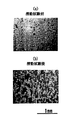
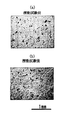
図1(a),(b)は、摺動性試験前後の亜鉛めっき鋼板の表面を、走査型電子顕微鏡によって観察したときのものであり、図2(a),(b)は、摺動性試験前後の亜鉛−ニッケル合金めっき鋼板の表面を、走査型電子顕微鏡によって観察したときのものである。
亜鉛めっき鋼板は、摺動性試験前では、図1(a)に示す表面状態であったものが、摺動性試験後には、図1(b)に示すように、表面が潰されて平らになった面積(黒い部分)が多くなっているのがわかる。一方、亜鉛−ニッケル合金めっき鋼板では、図2(a),(b)に示すように、摺動性試験前後で表面状態がほとんど変化していないのがわかる。
【0019】
亜鉛めっき鋼板と亜鉛系合金めっき鋼板とにおいて、上記のような表面状態の違いが生じる理由としては、亜鉛めっきが亜鉛系合金めっきに比べて非常に軟らかいため、亜鉛めっきの表面凹凸が潰れやすく、一方、亜鉛系合金めっきは比較的硬く、表面凹凸が潰れにくいためであると考えられる。
すなわち、リン酸亜鉛系皮膜を有する亜鉛めっき鋼板であっても、プレス条件によっては(例えばビードによる押えがきつい等により)、局部的に高面圧条件になる部分を生じ、その部分で亜鉛めっきが潰れることにより、リン酸亜鉛系皮膜の表面に存在していた油がプレス初期に吹き出してしまい、このため、油切れ状態を発生しリン酸亜鉛系皮膜の油保持供給能力を生かせず、プレス割れに至ったものと考えた。
【0020】
そこで、本発明者らは、表面粗さが異なる種々のリン酸亜鉛系皮膜を有する亜鉛めっき鋼板のプレス成形性を評価するため、かかる亜鉛めっき鋼板の表面を溶剤脱脂した後、すなわち表面に潤滑油が全く存在しない無塗油状態で摺動性試験を行ったところ、摩擦係数μの値とプレス成形性に良い相関が見られた。
【0021】
すなわち、上記亜鉛めっき鋼板は、高面圧となるプレス条件の場合には、めっきの凹凸が潰れやすく油切れ状態が発生しやすいが、鋼板表面の粗さをコントロールすれば、高面圧条件でも表面の潰される面積が低減されて、鋼板と金型の接触面積が広がることによって摺動抵抗が大きくなる現象を低減することができ、加えて、表面凹凸が潰されないで残存する面積割合が多くなるため、リン酸亜鉛系皮膜の油保持供給能力を生かすことも有効となる結果、プレス成形性が格段に向上することを見出した。
【0022】
また、本発明者らは、さらに、塗料密着性および塗装後耐食性を向上させるための検討を行ったところ、該りん酸亜鉛系皮膜中にNiおよびMnを適正量含有させることによって、塗料密着性および塗装後耐食性が飛躍的に向上することを見出し、本発明を完成させるに至ったのである。
【0023】
すなわち、本発明の要旨は以下に示す通りである。
(1) 表面にりん酸亜鉛系皮膜を有する亜鉛めっき鋼板において、該りん酸亜鉛系皮膜の付着量が0.5〜3.0 g/m2であり、該りん酸亜鉛系皮膜が0.3〜1.5 mass%のNiおよび3.0〜5.0 mass%のMnを含有し、さらに、算術平均粗さRaが1.0〜2.0μm、かつ10点平均粗さRzが4.5μm以上であることを特徴とするプレス成形性、塗料密着性および塗装後耐食性に優れた亜鉛めっき鋼板。
【0024】
【発明の実施の形態】
本発明の表面処理鋼板の素材としては、亜鉛めっき鋼板を用いる。なお、本発明でいう「亜鉛めっき鋼板」とは、いわゆる純亜鉛めっき鋼板を意味するが、亜鉛めっき皮膜には、通常、めっき不純物として、鋼板からの溶出成分(Feその他の鋼中成分)や他の種類のめっきとセル等の設備併用による不純物の混入(Ni,Sn,Al等)を不可避的に含んでいるのが一般的であるため、これらの成分も含むものとする。
また、亜鉛めっきの形成は、電気めっき法を用いても溶融めっき法を用いてもよく、特に限定はしない。
【0025】
さらに、本発明では、亜鉛めっき上にはリン酸亜鉛系皮膜を有する。
リン酸亜鉛系皮膜の付着量は、0.5 〜3.0g/m2 の範囲であることが必要である。前記付着量が0.5g/m2 未満だと、塗油状態でもリン酸亜鉛系皮膜による油保持力が充分に発揮できず、また、金型と、リン酸亜鉛系皮膜表面から露出した亜鉛めっきとが直接接触するのを避けることができなくなり、リン酸亜鉛系皮膜の形成によるプレス成形性の向上効果が不十分となるからである。一方、前記付着量が3.0g/m2 よりも多いと、リン酸亜鉛系皮膜の形成に長時間を要しコストがかさむだけでなく表面の摩擦抵抗が大きくなる結果、逆にプレス成形性が劣化するからである。
【0026】
また、本発明では、プレス成形性とさらには塗料密着性および塗装後耐食性を向上させるため、リン酸亜鉛系皮膜中には0.3〜1.5 mass%のNiと3.0〜5.0 mass%のMnを含有することが必要である。
リン酸亜鉛系皮膜中に含有するNiとMnが、リン酸亜鉛結晶(Zn3(PO4)2・4H2O/Hopeite)中にどのような形態で存在するかは明らかではないが、NiとMnを含有していても、X線回折パターンではHopeiteしか検出されないことから、NiとMnは、Znと置換する形で存在するものと考えられる。
【0027】
リン酸亜鉛系皮膜中のNi含有量を0.3〜1.5 mass%としたのは、0.3mass%未満だと、塗料密着性や塗装後耐食性が劣るからであり、1.5mass%を超えると、コスト高になり、また、外観むらを生じやすくなるからである。
【0028】
また、リン酸亜鉛系皮膜中のMn含有量を3.0〜5.0 mass%としたのは、Mnを3.0 mass%以上含有することにより、プレス成形性が向上するからであり、また、Mnを多く含有するほど、プレス成形性の向上効果は大きくなる傾向があるものの、5.0 mass%を超えて含有すると、電着塗料との密着性が劣化するからである。
【0029】
さらに、本発明では、上記リン酸亜鉛系皮膜を有する亜鉛めっき鋼板の表面粗さを、JIS B 0601-1994で規定された算術平均粗さRaを1.0〜2.0μmとし、かつ同様に規定された10点平均粗さRzを4.5μm以上とすることが必要である。算術平均粗さRaを1.0〜2.0μmとしかつ10点平均粗さRzを4.5μm以上とすることにより、プレス成形時に高面圧となって油切れを生じるような条件(無塗油条件)でも優れたプレス成形性を発揮することができる。
【0030】
表面粗さを上記した範囲に管理する手段としては、素地鋼板またはめっき鋼板の圧延時のロールをショットブラスト法その他の表面加工法によってダル加工を施したロールで圧延する方法を使用することが好ましい。
【0031】
算術平均粗さRaを1.0〜2.0μmとする理由としては、鋼板表面に油が充分に行き渡っている条件では、算術平均粗さRaが1.0μm未満の場合でも充分な摺動性(プレス成形性)を示すが、鋼板表面に油が充分に行き渡っていない条件、特に無塗油条件下では、算術平均粗さRaが1.0μm未満だと、摺動性が極めて悪くなりかじりが発生しやすくなるので、算術平均粗さRaを1.0μm以上とした。一方、算術平均粗さRaが2.0μmよりも大きい場合には、鋼板の表面粗さをコントロールする圧延ロールの摩耗が顕著に発生し、実用的ではないため、算術平均粗さRaを2.0μm以下とした。
【0032】
しかしながら、本発明では、算術平均粗さRaを上記範囲に制御した構成だけでは十分ではなく、高面圧となって油切れを生じるような条件(特に無塗油条件)では、特に、10点平均粗さRzがプレス成形性に大きく関係し、10点平均粗さRzを4.5μm以上にすることがプレス加工性を向上させるのに重要であることを見出した。
【0033】
すなわち、プレス成形時の面圧が高くなる場合は、亜鉛めっきの凹凸が潰されて平坦になる面積が拡大するのは容易に想像でき、実際にもこのような現象が起こっているが、油切れが生じるような条件でも、プレス金型に鋼板表面が直接接触し、滑りにくくなるため、面圧が高くなる場合と同様に亜鉛めっきの表面凹凸が潰されて平坦になる面積が拡大することがわかった。
【0034】
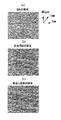
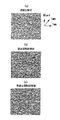
図3(a)〜(c)は、リン酸亜鉛系皮膜を有する亜鉛めっき鋼板の摺動性試験前後の表面形状を三次元粗度計にて測定したときのプロフィール(profile)を示したものであり、図4(a)〜(c)は、亜鉛−ニッケルめっき鋼板の摺動性試験前後の表面形状を三次元粗さ計にて測定したプロフィールを示したものであり、図3(a)および図4(a)は、摺動性試験を行う前の表面形状のプロフィール、図3(b)および図4(b)は、塗油状態で摺動性試験を行った後の表面形状のプロフィール、そして、図3(c)および図4(c)は、鋼板表面の油を脱脂した無塗油状態で摺動性試験を行った後の表面形状のプロフィールである。
【0035】
亜鉛−ニッケルめっき鋼板では、図4(a)〜(c)からもわかるように、摺動性試験前後で表面形状のプロフィールはほとんど変化していない。
【0036】
一方、リン酸亜鉛系皮膜を有する亜鉛めっき鋼板では、塗油状態で摺動性試験を行った場合(図3(b))と、無塗油状態で摺動性試験を行った場合(図3(c))とで、押付け荷重は同じであるにもかかわらず、無塗油状態では亜鉛めっきの表面凹凸が潰されて平坦になる面積が拡大することがわかった。
すなわち、リン酸亜鉛系皮膜を有する亜鉛めっき鋼板では、表面が平滑化することによって、鋼板表面とプレス金型の接触面積が増加して、摺動抵抗が大きくなる結果、プレス成形性が低下するものと考えられる。
【0037】
ここで、図3(c)から、表面凹凸が潰されないで凹部になっている部分がある程度残っていることがわかるが、この部分では、実際のプレス成形ではまだ油が完全に吹き出さずに残っており、高面圧条件での油切れ防止に寄与しているものと考えられる。
【0038】
これらのことから、本発明者らは、プレス成形時に、表面が平滑化する面積を低減することが、無塗油状態になった場合でも摺動抵抗そのものを低下させることになること、さらには、油保持部を多く残存させて無塗油状態を引き起こしにくい表面形状にすることが有効であると考えた。
【0039】
また、プレス油が充分に表面に付着した場合、算術平均粗さRaをコントロールすることが、安定して優れたプレス成形性を発揮するには有効である。これは、算術平均粗さRaは、下記に示す(1)式に基づく計算式から求められる値であり、平均線からの積分値によって求められるため、算術平均粗さRaの値が大きいことは、すなわち油保持量が多いことを意味するからである。
【0040】
【数1】

ところが、無塗油状態でのプレス成形性は、りん酸亜鉛皮膜を有するめっき鋼板でも、めっき種類によって大きく異なること、特に亜鉛めっき(合金化していないいわゆる純亜鉛めっき)の場合には、従来、塗油条件下では有効であった算術平均粗さRaをコントロールするだけでは、かじりの発生は抑えられないが、本発明では、算術平均粗さRaに加えて、さらに、10点平均粗さRzをコントロールすることによって、初めて無塗油条件下での表面の平滑化を抑え、かじりの発生の無い優れたプレス成形性を有する亜鉛めっき鋼板が得られることを見出した。
【0042】
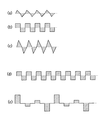
図5(a)〜(e)は、リン酸亜鉛系皮膜を有する亜鉛めっき鋼板の種々の表面形状を模式的に表わしたものである。
図5(a)に示す表面形状は、図5(b)に示す表面形状の1/2程度の算術平均粗さRaであり、10点平均粗さRzが両者でほぼ同じであるが、無塗油での摺動性を調べたところ、両者で摺動性に大きな差は認められなかった。
一方、図5(c) に示す表面形状は、図5(b)に示す表面形状とほぼ同じ算術平均粗さRaであり、10点平均粗さRzが2倍であるが、無塗油での摺動性を調べたところ、無塗油での表面の平滑化が少なく、図5(b)に示す表面形状に比べて、優れた摺動性を発揮する。
また、図5(e) に示す表面形状は、図5(d)に示す表面形状とほぼ同じ算術平均粗さRaであり、10点平均粗さRzが2倍であるが、無塗油での摺動性を調べたところ、無塗油での表面の平滑化が少なく、無塗油での摺動性に優れる。
つまり、10点平均粗さRzが大きいことが、プレス成形性に極めて重要であることを見出した。
【0043】
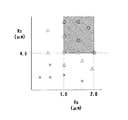
図6は、算術平均粗さRaと10点平均粗さRzが異なる種々のリン酸亜鉛系皮膜(付着量:1.0 g/m2、Ni含有量:0.7mass%、Mn含有量:3.5mass%)を有する亜鉛めっき鋼板を作製し、これらの亜鉛めっき鋼板において、無塗油で摺動性試験を行い、摺動性を評価したときの結果を示したものである。なお、摺動性の判定基準は、後述する実施例の記載と同じ基準で行った。
【0044】
図6の結果から、算術平均粗さRaが1.0〜2.0μmの範囲でかつ10点平均粗さRzが4.5μm以上であるとき、無塗油条件下における摺動性が改善されていることがわかる。
10点平均粗さRzを4.5μm以上と大きくする手段としては、調質圧延ロールの粗さパターンを制御することが有用であり、この場合、意図的に図5(c)あるいは図5(e)に示す表面形状になるようにダル目をつける必要がある。例えば、調質圧延ロールの粗さパターンを放電加工やレーザー加工で制御する場合には、ダル目の形状が決まっているので制御が容易である点で有利である。また、調質圧延ロールの粗さパターンをショット加工で制御する場合には、図5(c)に示す表面形状になるように、ショット材の形状を変える方法や、図5(e)に示す表面形状になるように、ショット材の大きさを変える等によって制御すればよい。
【0045】
上述したところは、この発明の実施形態の一例を示したにすぎず、請求の範囲において種々の変更を加えることができる。
【0046】
【実施例】
次に、この発明の実施例について説明する。
表面粗さの異なる冷延鋼板に電気亜鉛めっきを施すことによって種々の亜鉛めっき鋼板を作製するか、または、冷延鋼板に溶融亜鉛めっきを施した後、スキンパス圧延を行うことによって表面粗さの異なる種々の亜鉛めっき鋼板を作製した。その後、各亜鉛めっき鋼板上に、表1に示す浴組成のリン酸亜鉛系処理液でリン酸亜鉛系皮膜を形成し、以下に示す試験方法によって性能を評価した。
比較のため、従来の電気亜鉛−ニッケル合金めっき鋼板(比較例6)についても併せて作製し、同様に性能を評価した。
【0047】
【表1】
以下に試験方法を示す。
〔平面摺動性〕
塗油での摩擦係数の測定
作製した上記鋼板から採取した長さ300mm および幅20mmの試験片について、その表面を溶剤脱脂後、防錆油(出光興産製Z5)を 1.5g/m2 で塗布した後、以下に示す条件にて、平面摺動性試験を行い、摩擦係数μを測定した。
ダイ形状 : 10mmL×20mmWの長平面
押し付け荷重: 24.5 N/mm2
引抜き速度 : 1000 mm/分
摺動長さ : 100mm
試験温度 : 室温
【0049】
無塗油での摩擦係数の測定
作製した上記鋼板から採取した長さ300mm および幅20mmの試験片について、その表面を溶剤脱脂後、そのまま塗油しない以外は塗油した場合と同じ条件で平面摺動性試験を行い、摩擦係数μを測定し、以下に示す判定基準にて評価した。
摩擦係数μの判定基準
◎:μが0.2未満の場合、
○:μが0.2以上、0.3未満の場合、
△:μが0.3以上、0.4未満の場合、
×:μが0.4以上、または試験片破断によりμ測定不能の場合
【0050】
無塗油でのかじりの発生状況の観察
また、無塗油の摺動性試験では、さらにかじりの発生状況についても目視観察し、以下の基準にて判定した。
○:かじり無し、
△:かじり発生小、
×:かじり発生大
【0051】
〔繰り返し摺動性〕
作製した上記鋼板から採取した長さ300mm および幅20mmの試験片について、その表面を溶剤脱脂後、防錆油(出光興産製Z5)を 1.5g/m2 で塗布した後、以下の条件にて繰り返し摺動性試験を行い、かじりが発生するまでの回数を調べ、繰り返し摺動性を、5回以上の場合を「○」、三回以上5回未満の場合を「△」、そして、3回未満の場合を「×」として評価した。
ダイ形状 : 両面凸型 (凸R:20mm)
押し付け荷重: 7.84 kN
引抜き速度 : 1000 mm/分
摺動長さ : 100mm
試験温度 : 室温
【0052】
〔調達性〕
調達性は、製造の容易さを調査し、製造が容易な場合を「○」、製造が困難な場合を「×」として評価した。
【0053】
〔塗料密着性〕
塗料密着性は、耐水二次密着性試験により評価した。
作製した上記各鋼板は、自動車車体製造工程に準じて、通常のアルカリ脱脂、次いで表面調整を行ったのち、りん酸塩処理液SD2500(日本ペイント(株)社製)に2分間浸漬した。その後、日本ペイント(株)社製のV20電着塗料(浴温:28〜30℃)を用いて電着電圧250 V、180 秒間通電して電着塗装を施し、165 ℃で20分間焼き付けし電着塗膜(膜厚:20μm )を形成した。次いで、自動車用中塗り塗装OTO-870H (日本ペイント(株)社製)と自動車用上塗り塗装OTO650 (日本ペイント(株)製)をそれぞれ40μmの厚さで塗布し、 50℃の純水に10日間浸漬したのち取り出し、直ちに2mm幅のナイフによるクロスカットを入れた後、碁盤目テープを用いた剥離試験を行い,塗膜の剥離状況を観察した。そして、剥離試験後の塗膜残存率が95〜 100%である場合を良「〇」、同塗膜残存率が85%以上95%未満である場合を可「△」および同塗膜残存率が85%未満を不可「×」として評価した。
【0054】
〔塗装後耐食性〕
作製した上記各鋼板は、自動車車体製造工程に準じて、通常のアルカリ脱脂、次いで表面調整を行ったのち、りん酸塩処理液SD2500(日本ペイント(株)社製)に2分間浸漬した。その後、日本ペイント(株)社製のV20電着塗料(浴温:28〜30℃)を用いて電着電圧250 V、180 秒間通電して電着塗装を施し、165 ℃で20分間焼き付けし電着塗膜(膜厚:15μm )を形成して、供試材とした。電着塗装後のサンプルは、ナイフによるクロスカットを入れた後、下記に示すサイクル条件で複合サイクル腐食試験を行い、下記に示す膨れ幅と板厚減少量を測定することによって塗装後耐食性を評価した。尚、電着塗装後耐食性は、Znめっき量の影響も大きいので、本試験に際しては全てZnめっきの付着量が40 g/m2のものを作製して評価した。
【0055】
サイクル条件
塩水噴霧(35℃, 6h)→乾燥(50℃, 3h)→湿潤(50℃, 14h)→放置(35℃, 1h)
【0056】
膨れ幅による塗装後耐食性の評価方法
上記サイクル条件で30サイクルの複合サイクル腐食試験を行った後に各供試材を取り出し、クロスカット部からの片側膨れ幅を最大から5点測定し、平均値を膨れ幅とし、この膨れ幅が、0mm以上、6mm未満の場合を「○」、6mm以上、10mm未満の場合を「△」、そして10mm以上の場合を「×」として評価した。
【0057】
板厚減少量による塗装後耐食性の評価方法
上記サイクル条件で90サイクルの複合サイクル腐食試験を行った後に各供試材を取り出し、電着塗膜を剥離した後、最大腐食深さを測定し、この測定した最大腐食深さの値が、0mm以上、0.1mm未満の場合を「○」、0.1mm以上、0.3mm未満の場合を「△」、そして、0.3mm以上の場合を「×」として評価した。
【0058】
表2にこれらの評価結果を示す。
【0059】
【表2】
表2に示す評価結果から明らかなように、実施例はいずれも、平面摺動性および繰り返し摺動性に優れているとともに、塗料密着性や塗装後耐食性についても優れており、特に、無塗油の場合であっても、亜鉛−ニッケル合金めっき鋼板と同等の優れたプレス成形性を有することがわかる。
【0061】
【発明の効果】
本発明によって、プレス成形性、塗料密着性および塗装後耐食性の全てに優れた亜鉛めっき鋼板、主に自動車車体用鋼板や家電用鋼板として供される表面処理鋼板の提供が可能になった。
特に、本発明の亜鉛めっき鋼板は、プレス成形時に油切れを生じるような苛酷なプレス条件下であっても、優れたプレス成形性を有するため、これまで適用できなかった高面圧となるような難成形部品の材料に対しても適用できるようになった点で大きな意義がある。
【図面の簡単な説明】
【図1】 亜鉛めっき鋼板の表面を走査型電子顕微鏡によって観察したときの図面代用写真であり、(a)は 摺動性試験前の表面、(b)は摺動性試験後の表面を示す。
【図2】 亜鉛−ニッケル合金めっき鋼板の表面を走査型電子顕微鏡によって観察したときの図面代用写真であり、(a)は 摺動性試験前の表面、(b)は摺動性試験後の表面を示す。
【図3】 リン酸亜鉛系皮膜を有する亜鉛めっき鋼板の表面三次元プロフィールを示す図であり、(a)は摺動性試験前、(b)は摺動性試験後(塗油状態)、および(c) 摺動性試験後(無塗油状態)を示す。
【図4】 亜鉛−ニッケル合金めっき鋼板の表面三次元プロフィールを示す図であり、(a)は摺動性試験前、(b)は摺動性試験後(塗油状態)、および(c) 摺動性試験後(無塗油状態)を示す。
【図5】 (a)〜(e)は、リン酸亜鉛系皮膜を有する亜鉛めっき鋼板の種々の表面形状を模式的に表わしたものである。
【図6】 算術平均粗さRaと10点平均粗さRzが異なる種々のリン酸亜鉛系皮膜を有する亜鉛めっき鋼板を作製し、無塗油で摺動性試験を行ったときの算術平均粗さRaと10点平均粗さRzとが摺動性に及ぼす影響を示した図である。[0001]
BACKGROUND OF THE INVENTION
The present invention relates to a surface-treated steel sheet that can be used mainly for automobile bodies and home appliances, and more particularly to a galvanized steel sheet that is excellent in all of press formability, paint adhesion, and corrosion resistance after painting. It is.
[0002]
[Prior art]
Steel sheets plated with zinc are widely used because the body strength of automobile bodies is not easily lowered by long-term corrosive environments. In Japan, zinc-based alloy plating is mainly used. Certain zinc-nickel alloy plated steel sheets and zinc-iron alloy plated steel sheets are used.
Zinc-nickel alloy plated steel sheets are generally manufactured by electroplating, but the cost is high because Ni is expensive, and the Ni content is in a very narrow range (usually 12 ± 1% by mass). ) Has a problem that it is difficult to manufacture.
In addition, as with zinc-nickel alloy-plated steel sheets, zinc-iron alloy-plated steel sheets have a significant effect on quality due to the Fe content, and therefore have a problem that they must be controlled in a very narrow range and are difficult to manufacture. is there.
[0003]
On the other hand, with the recent globalization of automakers and the sharing of parts, it is required that surface-treated steel sheets that are easily available in various parts of the world can be used. Therefore, the conversion from the difficult-to-manufacture alloy-plated steel sheet, which has been mainly used in Japan, to the easily manufactured electrogalvanized steel sheet or hot-dip galvanized steel sheet, has been attempted.
[0004]
Until now, a so-called pure galvanized steel sheet in which only galvanizing is formed can be produced at low cost by either electroplating or hot dipping, but it has rarely been used for automobile bodies. This is because a large amount of zinc tends to accumulate on the electrode during spot welding, shortening the life of the electrode (poor spot weldability), adhesion to the galvanized mold during press molding, This is because galling, press cracking, and the like occur and press workability is poor.
[0005]
As a method for solving such problems of the galvanized steel sheet, a steel sheet having a zinc phosphate coating on the surface of the galvanized surface has been proposed and has already been used in Europe. Originally, the use of galvanized steel sheets has progressed due to the difficulty in obtaining alloy-plated steel sheets, which are difficult to manufacture in Europe, and low production costs for heavy-weight electrogalvanized steel sheets (low electrical costs). In addition, devised designs that can be applied to galvanized steel sheets have also been made. In addition, in the galvanized steel sheet, a surface-treated steel sheet having a zinc phosphate-based film on the surface of galvanization is adopted for improving press formability.
[0006]
In Japan, alloy-plated steel sheets have been used in the past, and these alloy-plated steel sheets usually have good press formability and spot weldability, so there are problems with press cracking and weldability that occur in galvanized steel sheets. Is very rare.
However, when a galvanized steel sheet is pressed using a press mold used for the alloy-plated steel sheet, press cracks are likely to occur.
[0007]
Therefore, there is no method other than changing the press die, that is, changing the design design of the car body (model change), to press the galvanized steel sheet without causing cracking problems. There is a problem that it cannot be applied as it is to a press die.
[0008]
As described above, as a method for solving the press formability problem of a galvanized steel sheet, a method of forming a zinc phosphate-based film on the surface of a galvanized steel sheet, as is done in Europe. Useful. By this method, press formability is greatly improved, and a considerable part can be pressed using this press die without changing the press die used in conventional alloy-plated steel sheets. become.
The reason for this is that the zinc phosphate coating prevents direct contact between the press die and galvanizing and acts as a buffer layer. In addition, the zinc phosphate coating can hold oil in the gaps between the crystals, so press molding It is believed that sometimes more oil is supplied.
[0009]
However, even with zinc phosphate coatings, depending on the pressing conditions, or even when performed under the same pressing conditions, depending on some slight variation factors, galling and pressing often occur in galvanizing. There has been a problem that cracks and the like may occur.
[0010]
As a technique for improving the press formability, for example, as described in Japanese Patent Publication No. 7-84673, it is useful to control the steel sheet surface roughness Ra within a range exceeding 2.0 μm. In this plated steel sheet, in order to improve the sharpness, the parameter S representing the regularity of the steel sheet surface roughness is defined as 0.25 or less.
However, in order to control the steel sheet surface roughness Ra to a range exceeding 2.0 μm, it is necessary to extremely increase the surface roughness of a rolling roll for rolling the steel sheet.
[0011]
Usually, the surface roughness of the rolling roll is adjusted by rounding the surface by shot blasting. However, when the surface roughness of the rolling roll is extremely large, wear due to rolling also increases, and the surface of the rolling roll increases. Roughness is quickly reduced, which is not practical because it requires roll surface roughness management control and frequent roll changing work. In addition, Japanese Patent Publication No. 7-84673 discloses the knowledge about the press formability and press cracking problem of the galvanized steel sheet having a zinc phosphate coating, as well as the paint adhesion and the corrosion resistance after painting. Not.
[0012]
Japanese Patent Laid-Open No. 11-343581 discloses a technique for improving press formability by controlling the surface roughness Ra and the amount of phosphate film. That is, according to the description of this publication, when the amount of phosphate film increases, the lubricity decreases, but when the arithmetic average roughness Ra is large, even if the amount of phosphate film is large, the peeled phosphate film (This hinders lubricity.) Since it is supplemented by the recess, it does not inhibit lubricity, and as a result of finding that press formability is improved, arithmetic average roughness Ra and phosphorus conversion of phosphate film It defines the amount of adhesion.
[0013]
The plated steel sheet described in JP-A-11-343581 is a case where the plated layer is a relatively hard alloy-plated steel sheet, or when the plated layer is a soft galvanized steel sheet and the surface of the steel sheet is sufficiently coated with oil. It is considered that the press formability is excellent because the oil retaining ability of phosphate is effectively exhibited and the lubricity is good.
However, the above-mentioned plated steel sheet satisfies the favorable press formability without galling even in the case of a galvanized (non-alloyed so-called pure galvanized) steel sheet in which the plating layer has a soft property and is oil-free. Not particularly, under conditions of pressing at high surface pressure, under low-viscosity oil conditions (viscosity also decreases depending on the temperature depending on the season), under highly volatile oil conditions (also volatile depending on the temperature) , Etc.) or some variation in conditions, there were some areas that were severely galling and could not be pressed at all.
[0014]
On the other hand, Japanese Patent Publication No. 6-6793 discloses a technique that defines the surface roughness of a galvanized steel sheet having a zinc phosphate coating. According to this description, there is no suggestion or disclosure about the press formability of a galvanized steel sheet having a zinc phosphate-based film, by improving the adhesion with a paint by setting Rmax to 6 to 30 μm.
[0015]
As described above, the above-described conventional techniques do not satisfy all of press formability, paint adhesion, and post-coating corrosion resistance.
[0016]
[Problems to be solved by the invention]
An object of the present invention is to provide a galvanized steel sheet excellent in all of press formability, paint adhesion and post-coating corrosion resistance. In particular, an object of the present invention is to provide a galvanized steel sheet having a zinc phosphate-based film exhibiting excellent press formability even under severe press conditions that cause oil shortage during press forming.
[0017]
[Means for Solving the Problems]
In order to improve the press formability of a galvanized steel sheet having a zinc phosphate-based film, the present inventors first investigated the difference in surface change during press forming between a galvanized steel sheet and a zinc-based alloy plated steel sheet.
[0018]
The press formability is affected by both the material of the base material and the slipperiness of the surface, but in the present invention, it was investigated by a slidability test in which only the influence of the slipperiness of the surface appears. That is, if the slidability is excellent, it means that the press formability is excellent.
Figures 1 (a) and (b) are the results of observation of the surface of a galvanized steel sheet before and after the slidability test with a scanning electron microscope, and Figures 2 (a) and (b) show the sliding It is a thing when the surface of the zinc-nickel alloy plating steel plate before and after a property test is observed with a scanning electron microscope.
The galvanized steel sheet had the surface state shown in Fig. 1 (a) before the slidability test, but after the slidability test, the surface was crushed and flattened as shown in Fig. 1 (b). It turns out that the area (black part) which became has increased. On the other hand, in the zinc-nickel alloy plated steel sheet, as shown in FIGS. 2 (a) and 2 (b), it can be seen that the surface state hardly changed before and after the slidability test.
[0019]
The reason for the difference in surface condition between the galvanized steel sheet and the zinc-based alloy plated steel sheet is that the zinc plating is very soft compared to the zinc-based alloy plating, so that the surface unevenness of the galvanizing is easily crushed. On the other hand, it is considered that zinc-based alloy plating is relatively hard and surface irregularities are not easily crushed.
That is, even a galvanized steel sheet having a zinc phosphate-based film, depending on the press conditions (for example, due to tight press by the bead), a part that is locally in a high surface pressure condition is generated, and galvanization is performed at that part. The oil that was present on the surface of the zinc phosphate coating blows out in the initial stage of the press due to the crushing, and this causes a shortage of oil and does not take advantage of the oil retention and supply capability of the zinc phosphate coating. It was thought that it reached the crack.
[0020]
Therefore, in order to evaluate the press formability of galvanized steel sheets having various zinc phosphate coatings having different surface roughnesses, the present inventors have lubricated the surface of such galvanized steel sheets after solvent degreasing. When the slidability test was conducted in the absence of oil in the absence of any oil, a good correlation was found between the value of the friction coefficient μ and the press formability.
[0021]
In other words, the galvanized steel sheet has a high surface pressure, and the plating irregularities are liable to be crushed and an oil shortage is likely to occur. The phenomenon that the sliding resistance is increased by reducing the area of the surface to be crushed and the contact area between the steel plate and the mold is increased, and in addition, the ratio of the area remaining without being crushed is large. For this reason, it was found that press formability was remarkably improved as a result of making effective use of the oil retention and supply capability of the zinc phosphate coating.
[0022]
In addition, the present inventors have further studied to improve paint adhesion and post-coating corrosion resistance. By containing appropriate amounts of Ni and Mn in the zinc phosphate-based film, the paint adhesion is improved. In addition, the present inventors have found that the corrosion resistance after coating is drastically improved and have completed the present invention.
[0023]
That is, the gist of the present invention is as follows.
(1) In a galvanized steel sheet having a zinc phosphate coating on the surface, the amount of zinc phosphate coating deposited is 0.5 to 3.0 g / m.2The zinc phosphate-based coating contains 0.3 to 1.5 mass% Ni and 3.0 to 5.0 mass% Mn, and further has an arithmetic average roughness Ra of 1.0 to 2.0 μm and a 10-point average roughness Rz. A galvanized steel sheet excellent in press formability, paint adhesion and post-coating corrosion resistance characterized by being 4.5 μm or more.
[0024]
DETAILED DESCRIPTION OF THE INVENTION
A galvanized steel sheet is used as the material for the surface-treated steel sheet of the present invention. In the present invention, the term “galvanized steel sheet” means a so-called pure galvanized steel sheet, but the galvanized film usually contains, as a plating impurity, elution components (Fe and other steel components) from the steel sheet. Since it is common to inevitably contain impurities (Ni, Sn, Al, etc.) due to the combined use of other types of plating and equipment such as cells, these components are also included.
In addition, the formation of galvanizing may be performed using an electroplating method or a hot dipping method, and is not particularly limited.
[0025]
Furthermore, in this invention, it has a zinc phosphate system membrane | film | coat on galvanization.
The amount of zinc phosphate coating is 0.5 to 3.0 g / m.2 It is necessary to be in the range. The adhesion amount is 0.5 g / m2 If it is less than that, the oil holding power by the zinc phosphate coating cannot be fully exerted even in the oiled state, and avoid direct contact between the mold and the zinc plating exposed from the surface of the zinc phosphate coating. This is because the effect of improving the press formability due to the formation of the zinc phosphate coating becomes insufficient. On the other hand, the adhesion amount is 3.0 g / m.2 If the amount is larger than that, it takes a long time to form the zinc phosphate-based film, which not only increases the cost, but also increases the frictional resistance of the surface, resulting in deterioration of press formability.
[0026]
Further, in the present invention, in order to improve press formability and further paint adhesion and post-coating corrosion resistance, the zinc phosphate-based film contains 0.3 to 1.5 mass% Ni and 3.0 to 5.0 mass% Mn. It is necessary.
Ni and Mn contained in the zinc phosphate coating are zinc phosphate crystals (ZnThree(POFour)2・ 4H2It is not clear what form exists in (O / Hopeite), but even if Ni and Mn are contained, only Hopeite is detected in the X-ray diffraction pattern, so Ni and Mn are replaced with Zn It is thought to exist in the form of
[0027]
The reason why the Ni content in the zinc phosphate coating is 0.3 to 1.5 mass% is that if it is less than 0.3 mass%, paint adhesion and post-coating corrosion resistance are poor, and if it exceeds 1.5 mass%, the cost is high. In addition, it is easy to cause uneven appearance.
[0028]
Also, the reason why the Mn content in the zinc phosphate coating is set to 3.0 to 5.0 mass% is that press formability is improved by containing 3.0 mass% or more of Mn, and a large amount of Mn is contained. This is because the effect of improving the press formability tends to increase as the amount increases, but if the content exceeds 5.0 mass%, the adhesion with the electrodeposition paint deteriorates.
[0029]
Furthermore, in the present invention, the surface roughness of the galvanized steel sheet having the zinc phosphate-based film is set to the arithmetic average roughness Ra defined in JIS B 0601-1994, 1.0 to 2.0 μm, and similarly defined. The 10-point average roughness Rz needs to be 4.5 μm or more. Even when the arithmetic average roughness Ra is set to 1.0 to 2.0 μm and the 10-point average roughness Rz is set to 4.5 μm or more, even under conditions (oil-free conditions) that cause high surface pressure during press molding and run out of oil. Excellent press formability can be exhibited.
[0030]
As a means for managing the surface roughness in the above-described range, it is preferable to use a method of rolling a roll during rolling of a base steel plate or a plated steel plate with a roll subjected to dull processing by a shot blasting method or other surface processing method. .
[0031]
The reason why the arithmetic average roughness Ra is set to 1.0 to 2.0 μm is that, under the condition that the oil is sufficiently spread on the surface of the steel sheet, sufficient slidability (press formability) even when the arithmetic average roughness Ra is less than 1.0 μm. ), But under conditions where the oil is not sufficiently spread on the surface of the steel sheet, especially under non-oiled conditions, if the arithmetic average roughness Ra is less than 1.0 μm, the slidability becomes extremely poor and galling is likely to occur. Therefore, the arithmetic average roughness Ra is set to 1.0 μm or more. On the other hand, when the arithmetic average roughness Ra is larger than 2.0 μm, the rolling roll that controls the surface roughness of the steel sheet is significantly worn, which is not practical, so the arithmetic average roughness Ra is 2.0 μm or less. It was.
[0032]
However, in the present invention, the configuration in which the arithmetic average roughness Ra is controlled to be in the above range is not sufficient, and particularly in the condition that the surface pressure becomes high and the oil runs out (particularly oil-free condition), particularly 10 points. It has been found that the average roughness Rz is greatly related to press formability, and that the 10-point average roughness Rz is 4.5 μm or more is important for improving the press workability.
[0033]
In other words, when the surface pressure during press forming increases, it can be easily imagined that the unevenness of the galvanizing is crushed and the flattened area is enlarged, and this phenomenon actually occurs, Even under conditions where cutting occurs, the surface of the steel sheet comes into direct contact with the press die and it becomes difficult to slip, so that the surface unevenness of the galvanized surface is crushed and the flattened area is expanded in the same way as when the surface pressure increases. I understood.
[0034]
Figures 3 (a) to 3 (c) show profiles when the surface shape of a galvanized steel sheet with a zinc phosphate coating is measured with a three-dimensional roughness meter before and after the slidability test. FIGS. 4 (a) to (c) show profiles obtained by measuring the surface shape of the zinc-nickel plated steel sheet before and after the slidability test with a three-dimensional roughness meter, and FIG. ) And FIG. 4 (a) are the profile of the surface shape before the slidability test, and FIGS. 3 (b) and 4 (b) are the surface shape after the slidability test in the oiled state. FIG. 3 (c) and FIG. 4 (c) show the profile of the surface shape after the slidability test was performed in an oil-free state in which the oil on the steel sheet surface was degreased.
[0035]
In the zinc-nickel plated steel sheet, as can be seen from FIGS. 4 (a) to (c), the profile of the surface shape hardly changed before and after the slidability test.
[0036]
On the other hand, in the case of galvanized steel sheets with zinc phosphate coating, the slidability test was performed in an oil-coated state (Fig. 3 (b)) and the slidability test was performed in an oil-free state (Fig. 3). In 3 (c)), it was found that the surface area of the galvanized surface was crushed and flattened in an oil-free state, even though the pressing load was the same.
That is, in a galvanized steel sheet having a zinc phosphate-based film, the contact area between the steel sheet surface and the press die is increased by smoothing the surface, resulting in an increase in sliding resistance, resulting in a decrease in press formability. It is considered a thing.
[0037]
Here, from FIG. 3 (c), it can be seen that the surface unevenness is not crushed and a concave portion remains to some extent, but in this portion, the oil is not completely blown out in the actual press molding. It is thought that it remains and contributes to the prevention of running out of oil under high surface pressure conditions.
[0038]
From these facts, the inventors have found that reducing the area where the surface is smoothed during press molding will reduce the sliding resistance itself even in the oil-free state. Therefore, it was considered effective to have a surface shape that hardly causes an oil-free state by leaving many oil retaining portions.
[0039]
Further, when the press oil sufficiently adheres to the surface, it is effective to control the arithmetic average roughness Ra in order to exhibit stable and excellent press formability. This is because the arithmetic average roughness Ra is a value obtained from a calculation formula based on the following formula (1), and is obtained by an integral value from the average line, so that the value of the arithmetic average roughness Ra is large. That is, it means that the amount of oil retained is large.
[0040]
[Expression 1]
However, the press formability in an oil-free state varies greatly depending on the type of plating even in a plated steel sheet having a zinc phosphate film, particularly in the case of galvanization (so-called pure zinc plating that is not alloyed), The occurrence of galling cannot be suppressed only by controlling the arithmetic average roughness Ra, which was effective under oiling conditions, but in the present invention, in addition to the arithmetic average roughness Ra, the 10-point average roughness Rz It has been found that, for the first time, a galvanized steel sheet having excellent press formability with no occurrence of galling can be obtained by controlling surface smoothness under oil-free conditions.
[0042]
5 (a) to 5 (e) schematically show various surface shapes of a galvanized steel sheet having a zinc phosphate-based film.
The surface shape shown in FIG. 5 (a) is an arithmetic average roughness Ra that is about a half of the surface shape shown in FIG. 5 (b), and the 10-point average roughness Rz is almost the same in both cases. When the slidability with the oil coating was examined, there was no significant difference in slidability between the two.
On the other hand, the surface shape shown in FIG. 5 (c) has almost the same arithmetic average roughness Ra as the surface shape shown in FIG. 5 (b), and the 10-point average roughness Rz is twice, but it is oil-free. As a result of examining the slidability, surface smoothness with no oil coating is little, and superior slidability is exhibited as compared with the surface shape shown in FIG. 5 (b).
Further, the surface shape shown in FIG. 5 (e) has almost the same arithmetic average roughness Ra as the surface shape shown in FIG. 5 (d), and the 10-point average roughness Rz is twice, but it is oil-free. As a result of examining the slidability, the surface smoothness with no oil coating is little and the slidability without oil coating is excellent.
That is, it was found that a large 10-point average roughness Rz is extremely important for press formability.
[0043]
FIG. 6 shows various zinc phosphate coatings with different arithmetic average roughness Ra and 10-point average roughness Rz (attachment amount: 1.0 g / m2, Ni content: 0.7 mass%, Mn content: 3.5 mass%) were produced, and in these galvanized steel plates, slidability tests were conducted without oil coating, and slidability was evaluated. The result of time is shown. The criteria for determining the slidability were the same as those described in the examples described later.
[0044]
From the results of FIG. 6, when the arithmetic average roughness Ra is in the range of 1.0 to 2.0 μm and the 10-point average roughness Rz is 4.5 μm or more, the slidability under the oil-free condition is improved. Recognize.
As a means for increasing the 10-point average roughness Rz to 4.5 μm or more, it is useful to control the roughness pattern of the temper rolling roll, and in this case, intentionally, FIG. 5 (c) or FIG. 5 (e It is necessary to make a dull eye so that the surface shape shown in FIG. For example, when the roughness pattern of the temper rolling roll is controlled by electric discharge machining or laser machining, it is advantageous in that the control is easy because the shape of the dull eye is determined. Further, when controlling the roughness pattern of the temper rolling roll by shot processing, a method of changing the shape of the shot material so as to obtain the surface shape shown in FIG. 5 (c), or shown in FIG. 5 (e) What is necessary is just to control by changing the magnitude | size of a shot material so that it may become a surface shape.
[0045]
The above description is merely an example of the embodiment of the present invention, and various modifications can be made within the scope of the claims.
[0046]
【Example】
Next, examples of the present invention will be described.
Various galvanized steel sheets are produced by electrogalvanizing cold-rolled steel sheets with different surface roughness, or after hot-dip galvanizing is applied to cold-rolled steel sheets, surface pass rolling is performed. Different galvanized steel sheets were prepared. Thereafter, a zinc phosphate-based film was formed on each galvanized steel sheet with a zinc phosphate-based treatment liquid having a bath composition shown in Table 1, and the performance was evaluated by the following test method.
For comparison, a conventional electrozinc-nickel alloy plated steel sheet (Comparative Example 6) was also produced and the performance was similarly evaluated.
[0047]
[Table 1]
The test method is shown below.
[Plane slidability]
Measurement of friction coefficient in oiling
About the test piece of length 300mm and width 20mm collected from the manufactured steel plate, the surface of the sample was degreased with solvent, and then rust prevention oil (Z5 manufactured by Idemitsu Kosan Co., Ltd.) was added at 1.5g / m.2 After coating, a flat slidability test was performed under the following conditions to measure the friction coefficient μ.
Die shape: Long plane of 10mmL × 20mmW
Pressing load: 24.5 N / mm2
Drawing speed: 1000 mm / min
Sliding length: 100mm
Test temperature: Room temperature
[0049]
Measurement of coefficient of friction without oil
A test piece with a length of 300mm and a width of 20mm collected from the steel plate produced above was subjected to a planar slidability test under the same conditions as in the case of oiling, except that the surface was not degreased after solvent degreasing. Was measured and evaluated according to the following criteria.
Criteria for friction coefficient μ
A: When μ is less than 0.2,
○: When μ is 0.2 or more and less than 0.3,
Δ: When μ is 0.3 or more and less than 0.4,
×: When μ is 0.4 or more, or μ cannot be measured due to specimen breakage
[0050]
Observation of the occurrence of galling without oiling
In the oil-free slidability test, the occurrence of galling was also visually observed and judged according to the following criteria.
○: No galling,
Δ: Scratch occurredsmall,
×: Large amount of galling
[0051]
[Repeated slidability]
About the test piece of length 300mm and width 20mm collected from the manufactured steel plate, the surface of the sample was degreased with solvent, and then rust prevention oil (Z5 manufactured by Idemitsu Kosan Co., Ltd.) was added at 1.5g / m.2 After coating, repeat the slidability test under the following conditions, check the number of times until galling occurs, and if the slidability is 5 times or more, “○”, 3 times or more and less than 5 times The case of “Δ” was evaluated as “Δ”, and the case of less than 3 times was evaluated as “x”.
Die shape: Double-sided convex type (convex R: 20mm)
Pressing load: 7.84 kN
Drawing speed: 1000 mm / min
Sliding length: 100mm
Test temperature: Room temperature
[0052]
[Procurement]
In terms of procurement, the ease of production was investigated, and “○” was assigned when production was easy, and “X” was given when production was difficult.
[0053]
[Paint adhesion]
The paint adhesion was evaluated by a water resistance secondary adhesion test.
Each of the manufactured steel sheets was subjected to normal alkaline degreasing and then surface adjustment according to the automobile body manufacturing process, and then immersed in a phosphate treatment solution SD2500 (manufactured by Nippon Paint Co., Ltd.) for 2 minutes. After that, the electrodeposition coating was applied by applying the electrodeposition voltage 250 V for 180 seconds using the V20 electrodeposition paint (bath temperature: 28-30 ° C) manufactured by Nippon Paint Co., Ltd., and baked at 165 ° C for 20 minutes. An electrodeposition coating film (film thickness: 20 μm) was formed. Next, OTO-870H for automobile intermediate coating (made by Nippon Paint Co., Ltd.) and OTO650 for automobile top coating (made by Nippon Paint Co., Ltd.) were each applied to a thickness of 40 μm, and 10% in pure water at 50 ° C. After being immersed for a day, it was taken out, and immediately after a cross cut with a 2 mm wide knife was made, a peeling test using a cross-cut tape was performed, and the peeling state of the coating film was observed. If the coating film remaining rate after the peel test is 95 to 100%, “good” is acceptable. If the coating film remaining rate is 85% or more and less than 95%, “△” and the coating film remaining rate are acceptable. Of less than 85% was evaluated as “No”.
[0054]
[Corrosion resistance after painting]
Each of the manufactured steel sheets was subjected to normal alkaline degreasing and then surface adjustment according to the automobile body manufacturing process, and then immersed in a phosphate treatment solution SD2500 (manufactured by Nippon Paint Co., Ltd.) for 2 minutes. After that, the electrodeposition coating was applied by applying the electrodeposition voltage 250 V for 180 seconds using the V20 electrodeposition paint (bath temperature: 28-30 ° C) manufactured by Nippon Paint Co., Ltd., and baked at 165 ° C for 20 minutes. An electrodeposition coating film (film thickness: 15 μm) was formed as a test material. Samples after electrodeposition coating were subjected to a combined cycle corrosion test under the following cycle conditions after cross cutting with a knife, and the post-coating corrosion resistance was evaluated by measuring the swollen width and thickness reduction shown below. did. In addition, the corrosion resistance after electrodeposition coating is greatly affected by the amount of Zn plating, so the amount of Zn plating deposited in this test was 40 g / m.2Were prepared and evaluated.
[0055]
Cycle conditions
Salt spray (35 ℃, 6h) → Dry (50 ℃, 3h) → Wet (50 ℃, 14h) → Leave (35 ℃, 1h)
[0056]
Evaluation method of post-coating corrosion resistance by blister width
After performing a combined cycle corrosion test of 30 cycles under the above-mentioned cycle conditions, each sample material was taken out, measured from the maximum one-side bulge width from the cross-cut part at five points, and the average value was defined as the bulge width. The case of 0 mm or more and less than 6 mm was evaluated as “◯”, the case of 6 mm or more and less than 10 mm was evaluated as “Δ”, and the case of 10 mm or more was evaluated as “X”.
[0057]
Evaluation method of post-coating corrosion resistance based on sheet thickness reduction
After performing 90 cycles of combined cycle corrosion test under the above cycle conditions, each test material was taken out, and after peeling the electrodeposition coating film, the maximum corrosion depth was measured, and the value of the measured maximum corrosion depth was The case of 0 mm or more and less than 0.1 mm was evaluated as “◯”, the case of 0.1 mm or more and less than 0.3 mm was evaluated as “Δ”, and the case of 0.3 mm or more was evaluated as “x”.
[0058]
Table 2 shows the evaluation results.
[0059]
[Table 2]
As is clear from the evaluation results shown in Table 2, each of the examples is excellent in flat slidability and repetitive slidability, as well as excellent paint adhesion and post-coating corrosion resistance. It can be seen that even in the case of oil, it has excellent press formability equivalent to that of a zinc-nickel alloy plated steel sheet.
[0061]
【The invention's effect】
According to the present invention, it is possible to provide a galvanized steel sheet excellent in all of press formability, paint adhesion, and post-coating corrosion resistance, and a surface-treated steel sheet mainly used as a steel sheet for automobile bodies or a steel sheet for household appliances.
In particular, the galvanized steel sheet of the present invention has excellent press formability even under severe pressing conditions that cause oil shortage during press forming, so that the high surface pressure that could not be applied so far is obtained. This is significant in that it can be applied to materials for difficult to form parts.
[Brief description of the drawings]
FIG. 1 is a drawing-substituting photograph when the surface of a galvanized steel sheet is observed with a scanning electron microscope. (A) shows the surface before the slidability test, and (b) shows the surface after the slidability test. .
FIG. 2 is a drawing-substituting photograph when the surface of a zinc-nickel alloy plated steel sheet is observed with a scanning electron microscope, (a) is the surface before the slidability test, and (b) is the surface after the slidability test. Shows the surface.
FIG. 3 is a diagram showing a three-dimensional surface profile of a galvanized steel sheet having a zinc phosphate coating, (a) before slidability test, (b) after slidability test (oiled state), And (c) after slidability test (no oiling).
FIG. 4 is a diagram showing a three-dimensional surface profile of a zinc-nickel alloy plated steel sheet, (a) before slidability test, (b) after slidability test (oiled state), and (c) It shows after the slidability test (oil-free state).
FIGS. 5A to 5E schematically show various surface shapes of a galvanized steel sheet having a zinc phosphate-based film.
[Fig. 6] Arithmetic average roughness when galvanized steel sheets having various zinc phosphate coatings with different arithmetic average roughness Ra and 10-point average roughness Rz were prepared and slidability test was conducted without oil. FIG. 5 is a diagram showing the influence of roughness Ra and 10-point average roughness Rz on slidability.
Claims (1)
該りん酸亜鉛系皮膜の付着量が0.5〜3.0 g/m2であり、
該りん酸亜鉛系皮膜が0.3〜1.5 mass%のNiおよび3.0〜5.0 mass%のMnを含有し、
さらに、算術平均粗さRaが1.0〜2.0μm、かつ10点平均粗さRzが4.5μm以上であることを特徴とするプレス成形性、塗料密着性および塗装後耐食性に優れた亜鉛めっき鋼板。In the galvanized steel sheet having a zinc phosphate coating on the surface,
The amount of zinc phosphate coating deposited is 0.5 to 3.0 g / m 2 ;
The zinc phosphate-based coating contains 0.3 to 1.5 mass% Ni and 3.0 to 5.0 mass% Mn;
Furthermore, a galvanized steel sheet excellent in press formability, paint adhesion and post-coating corrosion resistance, characterized by an arithmetic average roughness Ra of 1.0 to 2.0 μm and a 10-point average roughness Rz of 4.5 μm or more.
Priority Applications (1)
| Application Number | Priority Date | Filing Date | Title |
|---|---|---|---|
| JP2001372374A JP3846292B2 (en) | 2001-12-06 | 2001-12-06 | Galvanized steel sheet with excellent press formability, paint adhesion and post-coating corrosion resistance |
Applications Claiming Priority (1)
| Application Number | Priority Date | Filing Date | Title |
|---|---|---|---|
| JP2001372374A JP3846292B2 (en) | 2001-12-06 | 2001-12-06 | Galvanized steel sheet with excellent press formability, paint adhesion and post-coating corrosion resistance |
Publications (2)
| Publication Number | Publication Date |
|---|---|
| JP2003171775A JP2003171775A (en) | 2003-06-20 |
| JP3846292B2 true JP3846292B2 (en) | 2006-11-15 |
Family
ID=19181283
Family Applications (1)
| Application Number | Title | Priority Date | Filing Date |
|---|---|---|---|
| JP2001372374A Expired - Fee Related JP3846292B2 (en) | 2001-12-06 | 2001-12-06 | Galvanized steel sheet with excellent press formability, paint adhesion and post-coating corrosion resistance |
Country Status (1)
| Country | Link |
|---|---|
| JP (1) | JP3846292B2 (en) |
Families Citing this family (3)
| Publication number | Priority date | Publication date | Assignee | Title |
|---|---|---|---|---|
| JP6512413B2 (en) | 2016-07-29 | 2019-05-15 | Jfeスチール株式会社 | Zinc phosphate treated galvanized steel sheet and method for producing the same |
| WO2023162371A1 (en) | 2022-02-22 | 2023-08-31 | Jfeスチール株式会社 | Galvanized steel sheet |
| CN115025957B (en) * | 2022-05-25 | 2023-02-21 | 包头钢铁(集团)有限责任公司 | Method for improving corrosion resistance of non-passivated galvanized plate |
-
2001
- 2001-12-06 JP JP2001372374A patent/JP3846292B2/en not_active Expired - Fee Related
Also Published As
| Publication number | Publication date |
|---|---|
| JP2003171775A (en) | 2003-06-20 |
Similar Documents
| Publication | Publication Date | Title |
|---|---|---|
| WO2023132106A1 (en) | Lubricating film-coated zinc-plated steel sheet and method for manufacturing same | |
| JP6682691B1 (en) | Surface-treated galvanized steel sheet and method for producing the same | |
| US6537674B1 (en) | Surface treated steel sheet | |
| JPH0718403A (en) | Alloyed hot-dip galvanized steel sheet with excellent press formability | |
| KR20250024995A (en) | Zinc-coated steel sheet and its manufacturing method | |
| JP4826486B2 (en) | Method for producing galvannealed steel sheet | |
| JP3149801B2 (en) | Alloyed hot-dip galvanized steel sheet and method for producing the same | |
| JP2004156111A (en) | Alloyed hot-dip galvanized steel sheet and method for producing the same | |
| JPH0718402A (en) | Alloyed hot-dip galvanized steel sheet with excellent press formability and image clarity after painting | |
| JP4269758B2 (en) | Galvanized steel sheet and method for producing the same | |
| JP2003171775A (en) | Galvanized steel sheet with excellent press formability, paint adhesion, and corrosion resistance after painting | |
| JP3858706B2 (en) | Galvanized steel sheet with excellent press formability | |
| JP3314606B2 (en) | Galvanized steel sheet with excellent lubricity and its manufacturing method | |
| JP3555604B2 (en) | Surface treated steel sheet excellent in corrosion resistance and formability and method for producing the same | |
| JPH01136952A (en) | Alloyed hot dip galvanized sheet steel having excellent press formability | |
| JP7817647B2 (en) | Surface-treated steel sheet | |
| JP3111904B2 (en) | Manufacturing method of galvanized steel sheet | |
| JP5643625B2 (en) | Steel sheet having a film removal type lubricant film on its surface, and method for producing a coated steel sheet | |
| KR100785989B1 (en) | Inorganic Phosphate-based Lubricated Alloy Hot-Dip Galvanized Steel Sheets with High Formability and Manufacturing Method Thereof | |
| JPH09137285A (en) | Lubricating steel sheet excellent in oil face adhesive property and chemical convertibility | |
| JPH1030191A (en) | Galvanized steel sheet | |
| JP3903904B2 (en) | Surface-treated steel sheet with excellent paintability | |
| JPH081858A (en) | Surface-treated steel sheet with excellent workability | |
| JP2004060020A (en) | Galvanized steel sheet with excellent electrodeposition coating appearance | |
| JPH07305180A (en) | Lubricated steel sheet with excellent appearance, corrosion resistance and workability |
Legal Events
| Date | Code | Title | Description |
|---|---|---|---|
| A621 | Written request for application examination |
Free format text: JAPANESE INTERMEDIATE CODE: A621 Effective date: 20040127 |
|
| A977 | Report on retrieval |
Free format text: JAPANESE INTERMEDIATE CODE: A971007 Effective date: 20050125 |
|
| A131 | Notification of reasons for refusal |
Free format text: JAPANESE INTERMEDIATE CODE: A131 Effective date: 20050201 |
|
| TRDD | Decision of grant or rejection written | ||
| A01 | Written decision to grant a patent or to grant a registration (utility model) |
Free format text: JAPANESE INTERMEDIATE CODE: A01 Effective date: 20060801 |
|
| A61 | First payment of annual fees (during grant procedure) |
Free format text: JAPANESE INTERMEDIATE CODE: A61 Effective date: 20060814 |
|
| R150 | Certificate of patent or registration of utility model |
Free format text: JAPANESE INTERMEDIATE CODE: R150 Ref document number: 3846292 Country of ref document: JP Free format text: JAPANESE INTERMEDIATE CODE: R150 |
|
| FPAY | Renewal fee payment (event date is renewal date of database) |
Free format text: PAYMENT UNTIL: 20090901 Year of fee payment: 3 |
|
| FPAY | Renewal fee payment (event date is renewal date of database) |
Free format text: PAYMENT UNTIL: 20100901 Year of fee payment: 4 |
|
| FPAY | Renewal fee payment (event date is renewal date of database) |
Free format text: PAYMENT UNTIL: 20100901 Year of fee payment: 4 |
|
| FPAY | Renewal fee payment (event date is renewal date of database) |
Free format text: PAYMENT UNTIL: 20110901 Year of fee payment: 5 |
|
| FPAY | Renewal fee payment (event date is renewal date of database) |
Free format text: PAYMENT UNTIL: 20110901 Year of fee payment: 5 |
|
| FPAY | Renewal fee payment (event date is renewal date of database) |
Free format text: PAYMENT UNTIL: 20120901 Year of fee payment: 6 |
|
| FPAY | Renewal fee payment (event date is renewal date of database) |
Free format text: PAYMENT UNTIL: 20120901 Year of fee payment: 6 |
|
| FPAY | Renewal fee payment (event date is renewal date of database) |
Free format text: PAYMENT UNTIL: 20130901 Year of fee payment: 7 |
|
| LAPS | Cancellation because of no payment of annual fees |