JP2025041256A - Parking assistance method, parking assistance device, and parking assistance program - Google Patents
Parking assistance method, parking assistance device, and parking assistance program Download PDFInfo
- Publication number
- JP2025041256A JP2025041256A JP2023148443A JP2023148443A JP2025041256A JP 2025041256 A JP2025041256 A JP 2025041256A JP 2023148443 A JP2023148443 A JP 2023148443A JP 2023148443 A JP2023148443 A JP 2023148443A JP 2025041256 A JP2025041256 A JP 2025041256A
- Authority
- JP
- Japan
- Prior art keywords
- parking
- vehicle
- route
- branch
- setting
- Prior art date
- Legal status (The legal status is an assumption and is not a legal conclusion. Google has not performed a legal analysis and makes no representation as to the accuracy of the status listed.)
- Granted
Links
Images

Classifications
-
- B—PERFORMING OPERATIONS; TRANSPORTING
- B62—LAND VEHICLES FOR TRAVELLING OTHERWISE THAN ON RAILS
- B62D—MOTOR VEHICLES; TRAILERS
- B62D15/00—Steering not otherwise provided for
- B62D15/02—Steering position indicators ; Steering position determination; Steering aids
- B62D15/027—Parking aids, e.g. instruction means
- B62D15/0285—Parking performed automatically
-
- B—PERFORMING OPERATIONS; TRANSPORTING
- B60—VEHICLES IN GENERAL
- B60W—CONJOINT CONTROL OF VEHICLE SUB-UNITS OF DIFFERENT TYPE OR DIFFERENT FUNCTION; CONTROL SYSTEMS SPECIALLY ADAPTED FOR HYBRID VEHICLES; ROAD VEHICLE DRIVE CONTROL SYSTEMS FOR PURPOSES NOT RELATED TO THE CONTROL OF A PARTICULAR SUB-UNIT
- B60W30/00—Purposes of road vehicle drive control systems not related to the control of a particular sub-unit, e.g. of systems using conjoint control of vehicle sub-units
- B60W30/06—Automatic manoeuvring for parking
-
- B—PERFORMING OPERATIONS; TRANSPORTING
- B60—VEHICLES IN GENERAL
- B60W—CONJOINT CONTROL OF VEHICLE SUB-UNITS OF DIFFERENT TYPE OR DIFFERENT FUNCTION; CONTROL SYSTEMS SPECIALLY ADAPTED FOR HYBRID VEHICLES; ROAD VEHICLE DRIVE CONTROL SYSTEMS FOR PURPOSES NOT RELATED TO THE CONTROL OF A PARTICULAR SUB-UNIT
- B60W50/00—Details of control systems for road vehicle drive control not related to the control of a particular sub-unit, e.g. process diagnostic or vehicle driver interfaces
- B60W50/08—Interaction between the driver and the control system
-
- G—PHYSICS
- G01—MEASURING; TESTING
- G01C—MEASURING DISTANCES, LEVELS OR BEARINGS; SURVEYING; NAVIGATION; GYROSCOPIC INSTRUMENTS; PHOTOGRAMMETRY OR VIDEOGRAMMETRY
- G01C21/00—Navigation; Navigational instruments not provided for in groups G01C1/00 - G01C19/00
- G01C21/26—Navigation; Navigational instruments not provided for in groups G01C1/00 - G01C19/00 specially adapted for navigation in a road network
- G01C21/34—Route searching; Route guidance
- G01C21/3407—Route searching; Route guidance specially adapted for specific applications
- G01C21/3415—Dynamic re-routing, e.g. recalculating the route when the user deviates from calculated route or after detecting real-time traffic data or accidents
Landscapes
- Engineering & Computer Science (AREA)
- Automation & Control Theory (AREA)
- Transportation (AREA)
- Mechanical Engineering (AREA)
- Radar, Positioning & Navigation (AREA)
- Remote Sensing (AREA)
- Physics & Mathematics (AREA)
- General Physics & Mathematics (AREA)
- Human Computer Interaction (AREA)
- Combustion & Propulsion (AREA)
- Chemical & Material Sciences (AREA)
- Control Of Driving Devices And Active Controlling Of Vehicle (AREA)
- Traffic Control Systems (AREA)
Abstract
Description
本開示は、駐車支援方法、駐車支援装置および駐車支援プログラムに関する。 This disclosure relates to a parking assistance method, a parking assistance device, and a parking assistance program.
従来、車両が目標駐車枠に向けて自律走行する途中で、検出した駐車枠を画像上に表示し、運転者による駐車枠の選択に基づいて、目標駐車枠を変更する駐車支援装置が知られている(例えば、特許文献1参照)。 Conventionally, a parking assistance device is known that displays a detected parking space on an image while the vehicle is autonomously driving toward a target parking space, and changes the target parking space based on the driver's selection of a parking space (see, for example, Patent Document 1).
しかしながら、駐車場内では車両の影から歩行者が飛び出すことがあるので、自律走行中であっても、運転者は、車両の周辺を目視して安全を確認し、事故防止に努めるべきである。特許文献1に記載の構成は、運転者に画像を見せて、目標駐車枠を変更する操作をさせているので、運転者による安全確認を阻害するおそれがある。また、車両を停車させて変更操作を受け付ける構成であると、安全性が向上するが、駐車にかかる時間が長くなり、利便性が減じる。
However, because pedestrians may suddenly appear from the shadow of a vehicle in a parking lot, even during autonomous driving, the driver should visually check the area around the vehicle to ensure safety and make efforts to prevent accidents. The configuration described in
本開示の目的は、目標駐車枠の変更画面の視認や画面上の操作を必要とせず、変更後の目標駐車枠に途中停止なしで自動駐車を行うことが可能な駐車支援方法、駐車支援装置および駐車支援プログラムを提供することである。 The objective of the present disclosure is to provide a parking assistance method, a parking assistance device, and a parking assistance program that can automatically park in a changed target parking space without stopping midway, without the need to view the target parking space change screen or perform operations on the screen.
本開示に係る駐車支援方法は、
車両の乗員の操作を受け付ける受付けステップと、
駐車枠を検知する検知ステップと、
前記車両の駐車経路を設定する経路設定ステップと、
前記駐車経路から分岐する分岐路を設定する分岐設定ステップと、
前記駐車経路に沿って前記車両を自動駐車させる自動駐車ステップと、
を有し、
前記検知ステップにおいて前記駐車枠を複数検出している場合に、
前記経路設定ステップは、
前記車両を第1の駐車枠に駐車させる駐車経路を設定するステップを含み、
前記分岐設定ステップは、
前記駐車経路上に分岐点を設定して、前記車両を前記分岐点から第2の駐車枠に駐車させる分岐路を設定するステップを含み、
前記自動駐車ステップにおいて、
前記車両を第1の駐車経路に沿って自動駐車させている時に、
目標駐車枠を変更させる変更指示操作を受け付けるステップと、
前記変更指示操作を受け付けるステップにおいて、前記変更指示操作を検出した場合、前記分岐路に沿って前記車両を自動駐車させるステップと、
をさらに含む。
The parking assistance method according to the present disclosure includes:
A receiving step of receiving an operation by a vehicle occupant;
A detection step of detecting a parking space;
A route setting step of setting a parking route for the vehicle;
A branch setting step of setting a branch road branching off from the parking route;
an automatic parking step of automatically parking the vehicle along the parking path;
having
When a plurality of parking frames are detected in the detection step,
The route setting step includes:
A step of setting a parking route for parking the vehicle in a first parking frame,
The branch setting step includes:
A step of setting a branch point on the parking route and setting a branch path for parking the vehicle from the branch point to a second parking frame;
In the automatic parking step,
When the vehicle is automatically parked along a first parking path,
A step of receiving a change instruction operation for changing the target parking frame;
a step of automatically parking the vehicle along the branch road when the change instruction operation is detected in the step of receiving the change instruction operation;
Further includes:
本開示に係る駐車支援装置は、
車両の乗員の操作を受け付ける操作受付部と、
駐車枠を検知する駐車枠検知部と、
前記車両の駐車経路を設定する経路設定部と、
前記駐車経路に沿って前記車両を自動駐車させる走行制御部と、
を備え、
前記経路設定部は、前記駐車経路から分岐する分岐路を設定し、
前記駐車枠検知部が前記駐車枠を複数検出している場合に、
前記経路設定部は、前記車両を第1の駐車枠に駐車させる駐車経路を設定し、
前記経路設定部は、前記駐車経路上に分岐点を設定して、前記車両を前記分岐点から第2の駐車枠に駐車させる分岐路を設定し、
前記走行制御部が、前記車両を第1の駐車経路に沿って自動駐車させている時に、
前記操作受付部は、目標駐車枠を変更させる変更指示操作を受け付け、
前記操作受付部が前記変更指示操作を検出した場合、
前記走行制御部は、前記分岐路に沿って前記車両を自動駐車させる。
The parking assistance device according to the present disclosure is
an operation reception unit that receives an operation by a vehicle occupant;
A parking space detection unit that detects a parking space;
A route setting unit that sets a parking route for the vehicle;
A driving control unit that automatically parks the vehicle along the parking path;
Equipped with
The route setting unit sets a branch road branching off from the parking route,
When the parking frame detection unit detects a plurality of parking frames,
The route setting unit sets a parking route for parking the vehicle in a first parking frame,
The route setting unit sets a branch point on the parking route and sets a branch road for parking the vehicle from the branch point to a second parking frame,
When the traveling control unit is automatically parking the vehicle along a first parking path,
The operation reception unit receives a change instruction operation for changing the target parking frame,
When the operation reception unit detects the change instruction operation,
The driving control unit automatically parks the vehicle along the branch road.
本開示に係る駐車支援プログラムは、
車両のコンピュータに、
車両の乗員の操作を受け付ける受付け処理と、
駐車枠を検知する検知処理と、
前記車両の駐車経路を設定する経路設定処理と、
前記駐車経路から分岐する分岐路を設定する分岐設定処理と、
前記駐車経路に沿って前記車両を自動駐車させる自動駐車処理と、
を実行させ、
前記検知処理において前記駐車枠を複数検出している場合に、
前記経路設定処理は、
前記車両を第1の駐車枠に駐車させる駐車経路を設定する処理を含み、
前記分岐設定処理は、前記駐車経路上に分岐点を設定して、前記車両を前記分岐点から第2の駐車枠に駐車させる分岐路を設定する処理を含み、
前記自動駐車処理において、
前記車両を第1の駐車経路に沿って自動駐車させている時に、
目標駐車枠を変更させる変更指示操作を受け付ける処理と、
前記変更指示操作を受け付ける処理において、前記変更指示操作を検出した場合、
前記分岐路に沿って前記車両を自動駐車させる処理と、
を前記コンピュータに実行させる。
The parking assistance program according to the present disclosure includes:
The vehicle's computer
A reception process for receiving an operation by a vehicle occupant;
A detection process for detecting a parking space;
A route setting process for setting a parking route for the vehicle;
A branch setting process for setting a branch road branching off from the parking route;
an automatic parking process for automatically parking the vehicle along the parking path;
Run the command,
When a plurality of parking frames are detected in the detection process,
The route setting process includes:
A process of setting a parking route for parking the vehicle in a first parking frame is included;
The branch setting process includes a process of setting a branch point on the parking route and setting a branch path for parking the vehicle from the branch point to a second parking frame,
In the automatic parking process,
When the vehicle is automatically parked along a first parking path,
A process of receiving a change instruction operation for changing the target parking frame;
In the process of receiving the change instruction operation, when the change instruction operation is detected,
automatically parking the vehicle along the branch road;
The computer is caused to execute the above steps.
本開示によれば、目標駐車枠の変更を、画面の視認や画面上の操作を必要とせずに行い、変更後の目標駐車枠に途中停止なしで自動駐車することができる。 According to the present disclosure, the target parking frame can be changed without the need to look at the screen or operate the screen, and the vehicle can be automatically parked in the changed target parking frame without stopping along the way.
(実施の形態)
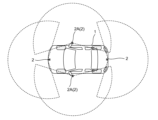
以下、本開示の実施の形態を図面に基づいて詳細に説明する。図1は、本開示の実施の形態に係る駐車支援装置100を適用した車両1による自動駐車を説明するための図である。図2は、本実施の形態に係る駐車支援装置100を適用可能な車両1を示す図である。
(Embodiment)
Hereinafter, an embodiment of the present disclosure will be described in detail with reference to the drawings. Fig. 1 is a diagram for explaining automatic parking by a
図1に示すように、車両1は、車両周辺を監視するカメラ2(図2等参照)を備え、図3に示す駐車支援装置100により、1つ以上の駐車枠が配置された駐車場において、自動駐車を行うことが可能に構成されている。駐車枠は、略平行な2本の駐車枠線で挟まれた領域である。各駐車枠線は、車両1の幅よりも大きい間隔で配置されている。
As shown in FIG. 1, the
図1に示すように、車両1の車体の前後左右の4箇所には、カメラ2が設けられている。各カメラ2は、魚眼レンズを備えており、水平方向に180度以上の視野範囲(破線参照)をもつ。各カメラ2は、路面をとらえるために俯角を付けて装着されているので、路面が映る範囲を水平方向の視野に換算すると、240度程度の範囲の路面が1つのカメラ2に映る。例えば、車体の左右に設けられるサイドカメラ2Aの撮影画像には、前輪と後輪と、車体の側面とが映りこむ。
As shown in FIG. 1,
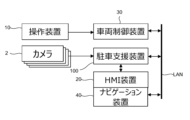
また、図2に示すように、車両1は、4つのカメラ2の他、操作装置10と、HMI(ヒューマンマシンインターフェース)装置20と、車両制御装置30と、駐車支援装置100とを備える。操作装置10は、運転者(乗員)が手動で操作するためのものであり、運転席のパネル上の物理的なスイッチ、タッチパネル上に表示されたソフト的なスイッチの他、ハンドル、ペダル、ギヤのような運転操作のためのものを含む。HMI装置20は、例えば、車両1に設けられるナビゲーション装置40に付属するタッチパネル等、乗員が駐車支援装置100へ操作入力するためのHMIとして利用される。タッチパネルは、操作装置10に含まれても良いし、運転席に設置された各種のスイッチ類も操作装置10に含まれても良いので、操作装置10およびHMI装置20は、重複したものであっても良い。
As shown in FIG. 2, the
車両制御装置30は、図示しないCPU(Central Processing Unit)、ROM(Read Only Memory)、RAM(Random Access Memory)および入出力回路を備えている。乗員が操作装置10を操作すると、車両制御装置30は、操作を受け付ける。通常の運転モードでは、操作の情報に応じて、車両制御装置30がモーター(不図示)を駆動することにより、舵角や車速を制御すると同時に、操作の情報と舵角や車速等の車両情報をLAN(Local Area Network:車内LAN等)に出力する。駐車支援モードになると、車両制御装置30は、LAN経由で速度や舵角の指令を駐車支援装置100から受け、指令に応じて速度や舵角を制御する。
The
駐車支援装置100は、車両制御装置30が操作装置10の動作を監視していることから、操作装置10の操作情報をLAN経由で取得する。乗員は、HMI装置20を介して、駐車支援装置100を操作可能である。駐車支援装置100は、ナビゲーション装置40が出力する車両1の位置情報をLAN経由で受信しても良いし、ナビゲーション装置40から直接、取得しても良い。カメラ2は、撮影画像を駐車支援装置100に常時出力しており、駐車支援をしない時も、駐車支援装置100は、撮影画像から車両周辺を示す表示画像を生成して出力する。また、上記のタッチパネルは、駐車支援装置100が生成した表示画像を出力するディスプレイとしても機能するので、駐車支援装置100とHMI装置20とは直結している。駐車支援装置100は、タッチパネルに行われた操作の情報を直接受信しても良いし、LAN経由で受信するようにしても良い。また、駐車支援装置100は、ナビゲーション装置40が出力する車両1の位置情報をLAN経由で受信することができる。
The
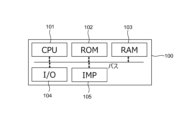
また、駐車支援装置100の機能は、図3に示すハードウェアに実装されても良い。駐車支援装置100は、CPU101、ROM102、RAM103、I/O(入出力インターフェース)104およびIMP(Image Processor)105を備える。駐車支援装置100は、各要素をバスで接続するコンピュータでも良い。また、複数の要素が一つのチップに収容されていても良いし、一つの要素が複数のチップで構成されていても良い。バスは、単独ではなく、複数の種類のバスが組み合わされたものでも良い。例えば、一つのチップに収容されたCPU101、ROM102、RAM103およびIMP105がパラレルバスで接続され、複数のチップで構成されたI/O104が、CPU101等を収容したチップとシリアルバスで接続されるようにしても良い。
The functions of the
CPU101は、駐車支援装置100全体を制御する。ROM102は、電気的に書き換え可能なメモリであり、CPU101が実行するプログラムを記憶するとともに、不揮発なデータ保存領域としても機能し、駐車支援装置100の電源が切られてもデータ等を保持する。RAM103は、CPU101の作業領域として一時記憶に用いられる。例えば、最新の周辺画像のように、一時的に記憶できれば良いデータは、RAM103に記憶される。RAM103は、周辺画像を複数枚、記憶可能な容量を持つ。IMP105は、画像処理に特化して処理性能を上げたプロセッサであり、図4に示す画像取得部130、駐車枠検知部140、報知部180の処理を実行する。
The
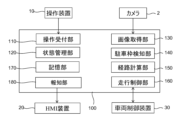
上述のカメラ2は、撮影したカメラ画像を駐車支援装置100に常時、出力している。駐車支援装置100は、駐車支援をしない時もカメラ画像から車両1周辺を示す表示画像を生成して出力する。図4に示すように、駐車支援装置100は、操作受付部110と、状態管理部120と、画像取得部130と、駐車枠検知部140と、経路設定部150と、走行制御部160と、記憶部170と、報知部180とを有する。
The
操作受付部110は、運転操作を含む乗員の操作を示す操作情報を受け付ける。
The
状態管理部120は、操作情報や、車両の状態に応じて、駐車支援の状態(ステート)を管理する。駐車支援装置100の起動から自動駐車の完了までの制御は、状態管理部120が管理するステート毎に予め定められた遷移条件に従ってステートを遷移させ、ステート毎に定められた処理を実行することにより実行される。駐車支援のステートは、例えば、以下に示すステート0からステート9のように設定されても良い。
The
ステート0は、停車状態であり、車両1が停止している状態である。ステート1は、走行状態であり、車両1が走行中であって駐車枠を検知していない状態である。ステート2は、検知状態であり、車両1が走行中であって駐車枠を検知している状態である。ステート3は、検出状態であり、駐車枠を検出している状態である。ステート4は、設定状態であり、経路を設定する状態である。ステート5は、受付状態であり、駐車指示を受け付ける状態である。
ステート6は、照会状態であり、自動駐車を承認する承認動作を受け付ける状態である。ステート7は、自走状態であり、自動駐車を実行中の状態である。ステート8は、応答状態であり、経路を変更する状態である。ステート9は、完了状態であり、自動駐車を完了する状態である。 State 6 is a query state, in which an approval action to approve automatic parking is accepted. State 7 is a self-driving state, in which automatic parking is being performed. State 8 is a response state, in which the route is changed. State 9 is a completion state, in which automatic parking is completed.
上記のステートは、一例である。上記の例では、車両1の走行中に駐車枠が検知されるが、車両1の停車中に駐車枠検知が開始される様にしても良く、ステート0(停車状態)で乗員の操作を受付け、停車したままの状態で経路設定(ステート4)から自動駐車の承認(ステート6)までの動作が実行されても良い。本願は、自動駐車の開始後の動作に特長があるので、自動駐車の開始前の動作やステート構成は任意で良い。
The above states are examples. In the above example, a parking space is detected while
画像取得部130は、カメラ画像を取得して、車両1周辺を示す周辺画像を生成する。周辺画像は、カメラ画像を路面に投影した俯瞰画であっても良いし、別の形式の画像であっても良いし、カメラ画像のままでも良い。本実施の形態では、周辺画像は俯瞰画であるものとする。
The
駐車枠検知部140は、周辺画像の中から、白線を抽出する。次に駐車枠検知部140は、抽出した白線から白線の対を生成し、白線の対を評価して、駐車枠の条件に合うか判定する。例えば、駐車枠検知部140は、周辺画像から白線の対を検出した時に、2本の白線が路面上で平行であること、2本の白線が車長より長いこと、2本の白線の間隔が車幅より大きいこと、の三つの条件が成立する場合、車両1を駐車可能な駐車枠を検出した、と判定する。駐車枠検知部140は、白線の対を長辺とする長方形(つまり、駐車枠)の4隅の座標を出力する。この座標は、周辺画像を撮影した時の自車両を基準とする相対座標である。車両1が移動する場合は、車両1の移動量を補正することにより、駐車枠の絶対座標を得ることができる。
The parking
駐車車両が停車している駐車枠は、通路側から見ると、白線の一部が駐車車両で隠されるので、駐車枠検知部140は、この駐車枠を検知しない。つまり、駐車枠検知部140が検出した駐車枠は、全て空き駐車枠である。駐車車両が存在する駐車枠は、自動駐車の対象とならず、検出もされないので、以下の説明では、駐車枠検知部140が検出した駐車枠を、単に駐車枠と称する。
When viewed from the aisle side, a parking space in which a parked vehicle is parked has part of the white line hidden by the parked vehicle, so the parking
また、駐車枠検知部140は、一度に複数の駐車枠を検出することがある。その場合、複数の駐車枠のうち、乗員が選択したもの、または、所定の基準に従って状態管理部120が選択したものを、目標駐車枠とする。
The parking
経路設定部150は、目標駐車枠の中央に目標駐車位置を設定し、目標停車位置に駐車した時に車体が目標駐車枠の長辺と平行になるように、現在位置から目標停車位置までの駐車経路を設定する。具体的には、経路設定部150は直線区間と曲線区間を組み合わせて駐車経路を構成する。曲線区間は弧、または弧の組合せにより構成する。弧の回転半径または舵角の設定値を決めると、曲線区間の曲率が決まり、弧の長さ、または弧の中心角を決めると、曲線区間を走る距離が決まる。更に、直線区間の長さを決めると、経路全体の設定値が決まる。つまり、経路設定の処理は、経路を区間に分解し、各区間の設定値を設定する処理である、と言い換えても良い。
The
走行制御部160は、設定された駐車経路に沿って車両1が走行するように、舵角および車速を制御する。より具体的には、走行制御部160は、走行している区間が直線区間であれば、舵角の目標値を0度とし、走行している区間が直線区間であれば、回転半径に対応する舵角を、舵角の目標値とする。車速の目標値は、一定値でも良く、例えば時速5kmを車速の目標値としても良い。走行制御部160は、舵角および車速の目標値に基づいて、舵角および車速の指示値を車両制御装置30に出力する。指示値とは、目標値にフィードバック補正を掛けた値である。走行制御部160は、車両制御装置30が出力する計測値に基づいて舵角および車速の実測値を算出する。例えば、車速の実測値は、車輪の回転数の計測値と、車輪の外周長のデータと、から算出される。舵角の実測値は、操舵装置から得られた計測値であっても良いし、複数の車輪の回転数の差から算出された内輪差に基づいて算出されても良い。走行制御部160は、目標値と実測値との差がある時に、舵角および車速の実測値が、舵角および車速の目標値と同じになるように、舵角および車速の指示値を補正する。つまり、走行制御部160は、車両1の舵角や車速を、フィードバック制御している。
The driving
走行制御部160は、算出した舵角および車速の実測値に基づいて、走行中の車両1の位置および向きを追跡し、それに応じて舵角および車速の目標値を変更する。例えば、曲線区間を走行して、設定された距離だけ走行した時は、曲線区間が終わったと判定し、舵角の目標値を0度に変更する。また、走行制御部160は、自動走行中または手動走行中に、舵角および車速の実測値に基づいて、車両1の走行軌跡を算出する。走行軌跡は、移動距離と移動方向と車体の角度とを、単位時間毎に記録した移動情報の形式で算出されても良い。移動情報の形式は、これに限定されず、例えば、単位時間毎に記録した座標情報の形式でも良い。
The driving
走行制御部160は、自動走行中に、経路設定部150が設定した駐車経路と、移動情報で表される走行軌跡とを比較して、走行軌跡が駐車経路を辿るように舵角を補正する。例えば、車両1が、舵角を付けて旋回しながら後退する際に、旋回の中心点から見て、走行軌跡が駐車経路よりも外側を通っている時に、走行制御部160は、舵角の指示値を増やして回転半径を小さくする。これにより、車両1の走行軌跡が駐車経路の方に引き戻される。
During automatic driving, the driving
なお、自動駐車においては、自動で設定した駐車経路を、舵角を自動制御して走行できれば良いので、走行制御部160は、操舵だけ自動制御し、車速は乗員に制御させるようにしても良い。走行制御部160は、例えば、車速が時速5kmを超える時だけ車両1の加速を抑制し、時速5km以下である時は乗員が好む車速で駐車できるようにしても良い。本実施の形態では、自動駐車は自動走行(舵角と車速が自動制御)で行われるが、自動操舵で行われても良い。
Note that automatic parking requires that the vehicle travel along an automatically set parking route with the steering angle automatically controlled, so the driving
記憶部170は、駐車支援装置100の各部が行う処理の、入力データや出力データを一時的に記憶し、各部の処理を支援する。例えば、記憶部170は、画像取得部130が取得したフロントカメラ画像のデータを記憶し、駐車枠検知部140が参照できるようにする。また、記憶部170は、駐車枠検知部140が検出した駐車枠の位置情報を記憶し、経路設定部150が参照できるようにする。また、記憶部170は、経路設定部150が設定した駐車経路を記憶し、走行制御部160が参照できるようにする。また、記憶部170は、フロントカメラ画像の撮影時点、車両1が転舵した時点、駐車枠の中心線に乗って車両1が直進走行を始めた時点、等を記憶し、その時点から車両1がどれだけ移動したかを記憶する。これにより、車両1が刻々位置を変えていても、駐車枠に対して車両1がどこに位置するか、常に特定できるようになる。つまり、駐車支援装置100の各部が行う処理は、記憶部170において有機的に結合される。
The
報知部180は、カメラ画像または周辺画像に基づいて表示画像を生成する。表示画像は、車両1周辺を上方から俯瞰する俯瞰画像であっても良い。つまり、報知部180は、俯瞰画像を表示画像として出力しても良い。
The
報知部180は、状態管理部120の要求に応じて、表示画像にメッセージや図形を重畳して表示する。例えば、報知部180は、自動駐車を開始する際には、駐車枠検知部140が検出した駐車枠の位置を示す半透過の長方形を俯瞰画像上に重畳して表示し、経路設定部150が算出した、自車両から目標駐車位置に向かう経路を点線で表示させても良い。
The
メッセージは、画像上に表示されるだけでなく、音声で読み上げられても良い。または、メッセージは、音声だけで出力されても良い。具体的には、状態管理部120は、予め設定されたテキストの一つを指定して出力するように指令し、これに応じて報知部180は、指定されたテキストに対応する文字列の画像を生成して、これを表示画像に重畳してHMI装置20に出力すると同時に、報知部180は、テキストとともに保存されていた音声データを、表示画像と併せてHMI装置20に出力する。これにより、乗員は、HMI装置20を見ていなくてもメッセージを受け取ることができる。
The message may not only be displayed on an image, but may also be read aloud. Alternatively, the message may be output only as audio. Specifically, the
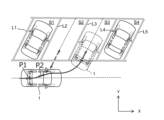
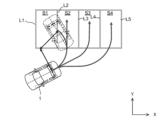
次に、駐車支援装置100における自動駐車の詳細について説明する。図5は、本実施の形態に係る駐車支援装置100における、前進駐車による駐車例を説明するための図である。なお、図5等の説明においては、直交座標系(X,Y)を使用し、後述する図においても共通の直交座標系(X,Y)を用いている。直交座標系では、X方向が左右方向を示し、Y方向が上下方向を示している。
Next, the details of automatic parking in the
図5に示す例では、X方向の-側から順に4つの駐車枠S1~S4が配置された駐車場が示されている。駐車枠S1は、駐車枠線L1,L2に挟まれた駐車枠であり、駐車枠S2は、駐車枠線L2,L3で挟まれた駐車枠であり、駐車枠S3は、駐車枠線L3,L4で挟まれた駐車枠であり、駐車枠S4は、駐車枠線L4,L5で挟まれた駐車枠である。図5に示す例では、空き駐車枠がS2,S3であり、車両1が4つの駐車枠S1~S4に面した通路を、X方向の-側から、X方向の+側に進行している状況が示されている。また、各駐車枠線は、X方向の+側に向かう進路に対して約60度、傾斜している。
The example shown in FIG. 5 shows a parking lot in which four parking frames S1 to S4 are arranged in order from the negative side in the X direction. The parking frame S1 is a parking frame sandwiched between the parking frame lines L1 and L2, the parking frame S2 is a parking frame sandwiched between the parking frame lines L2 and L3, the parking frame S3 is a parking frame sandwiched between the parking frame lines L3 and L4, and the parking frame S4 is a parking frame sandwiched between the parking frame lines L4 and L5. In the example shown in FIG. 5, the vacant parking frames are S2 and S3, and the
図5では、車両1の代表点の軌跡が走行経路として示されている。ここでは、車両1の2つの後輪の中点を車両1の位置を代表する点(車両1の代表点)としている。図5に示された経路では、車両1が通路を直進している時に、駐車枠S2を目標駐車枠とする自動駐車を開始し、P1の位置で駐車枠S2に向けて旋回を開始するが、P2の位置で目標駐車枠を駐車枠S2から駐車枠S3に変更して、自動駐車を続行している。P1は、駐車枠S1に対応する位置であり、前進駐車による自動駐車で駐車枠S2に駐車する際の旋回開始位置である。P2は、駐車枠S2への自動駐車の経路上の位置であり、車両1は、ここから通路と平行な方向に進路を変えている。P2の様に、駐車経路の途中から、別の経路に進路変更する点を分岐点と呼ぶ事にする。例えば、P2は駐車枠S2に向かう経路から駐車枠S3に向かう経路に分岐する分岐点である。
In FIG. 5, the trajectory of the representative point of the
車両1が通路を直進している時に、駐車支援装置100が目標駐車枠を自動選択して自動駐車を開始する場合、例えば、駐車経路を設定可能な駐車枠のうち、最も駐車経路が短くなる駐車枠である駐車枠S2を選択する。すると、間もなく車両1は、旋回開始位置P1から駐車枠S2に向けて旋回を開始するが、乗員の意図する駐車枠が、S2ではなくS3である場合がある。
When the
この様に、乗員が最寄りの駐車枠ではなく、次の駐車枠への駐車を意図する場合の例として、通路に誘導員がいて、駐車枠S2より奥にある駐車枠S3に詰めて駐車するよう、乗員に指示している場合や、車両1の後方に後続車があって、後続車が駐車枠S2に駐車できるよう、乗員が配慮する場合が挙げられる。他には、助手席の乗員が降車する際に、S2よりもS3の方が好都合であると考えた場合や、駐車枠S2に落下物、水溜まりがある場合等が挙げられる。
Examples of cases in which the occupant intends to park in the next parking space rather than the nearest one include when there is a guide in the aisle instructing the occupant to park closer to parking space S3, which is further back than parking space S2, or when there is a following vehicle behind
駐車位置はS3の方が良い、と乗員が考えていて、自動駐車の開始前に、駐車支援装置100が選択した目標駐車枠がS2である事に乗員が気付いた場合には、自動駐車の開始前に目標駐車枠を変更できる可能性もある。しかし、車両1は自動駐車の開始後に旋回開始位置P1で旋回を開始するまでは直進しているため、自動駐車の開始前の車両1の挙動から目標駐車枠がS2だと気付く事は不可能なので、その可能性は低い。そこで、自動駐車の開始後も、乗員の意図した自動駐車に変更出来る様に、次に示すような手段により、自動駐車開始後の目標駐車枠の変更を可能にする。
If the occupant thinks that S3 is a better parking position and notices before automatic parking begins that the target parking frame selected by the
例えば、車両1の走行中に起動されていた駐車枠検知機能により、駐車枠S2,S3を検出しているときに、左へのウインカレバー操作をトリガとして自動駐車を開始した場合、自動駐車の開始指示と同じ手段であるウインカレバー操作を、目標駐車枠の変更指示として受け付けても良い。例えば、自動駐車の開始指示と逆方向の操作を検出した時に、目標駐車枠を変更しても良い。具体的には、左へのウインカレバー操作を検出した時に自動駐車を開始した場合は、自動駐車の実行中に右へのウインカレバー操作を検出した時に、駐車支援装置100は、目標駐車枠をS2からS3に変更しても良い。
For example, if automatic parking is started by a left turn signal lever operation as a trigger when parking spaces S2 and S3 are detected by the parking space detection function that was activated while the
また、左へのハンドル操作をトリガとして自動駐車を開始した場合、自動駐車の開始指示と同じ手段であるハンドル操作を、目標駐車枠の変更指示として受け付けても良い。例えば、自動駐車の実行中に右へのハンドル操作を検出した時に、駐車支援装置100は、目標駐車枠をS2からS3に変更しても良い。
In addition, when automatic parking is started using a steering operation to the left as a trigger, the steering operation, which is the same means as the instruction to start automatic parking, may be accepted as an instruction to change the target parking frame. For example, when a steering operation to the right is detected while automatic parking is being performed, the
こうしたウインカレバーやハンドルの操作は、乗員が周囲を目視したまま実行可能なので、車両1の走行中に乗員にタッチパネルを操作させる場合と比較して、車両1の周辺の監視を妨げない点で好ましい。しかし、助手席の乗員が駐車位置を決定する場合や、助手席の乗員の方が駐車枠に問題があることに気付く場合もある。そこで、駐車位置を変更する手段として、ウインカレバーやハンドルの操作を基本とした上で、助手席の乗員にも実行できるタッチパネルの操作を含めても良い。
Since such operations of the turn signal lever or steering wheel can be performed by the occupant while visually observing the surroundings, this is preferable to having the occupant operate a touch panel while the
例えば、車両1が停車している時に、タッチパネルの操作により自動駐車が開始された場合、自動駐車の実行中のタッチパネルの操作が、目標駐車枠の変更の操作であっても良い。具体的には、タッチパネルの画面上に表示した駐車枠S2へのタッチ操作を検出した時に、駐車支援装置100は、自動駐車を開始し、自動駐車の実行中に、画面上の駐車枠S3へのタッチ操作を検出した時に、駐車支援装置100は、目標駐車枠をS2からS3に変更しても良い。
For example, if automatic parking is started by operating the touch panel while the
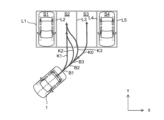
図6は、本実施の形態に係る駐車支援装置100における、後退駐車による自動駐車の例を説明するための図である。図6に示す例では、図5と同様に、4つの駐車枠S1~S4が配置された駐車場が示されているが、図6における、各駐車枠は、X方向に対して直角である。
Figure 6 is a diagram for explaining an example of automatic parking by reverse parking in the
また、図6におけるK0~K3は、自動駐車の経路の例である。経路K0は、駐車枠S3への経路であり、途中で目標駐車枠を変更しなかった場合の経路である。経路K1は、駐車枠S2への経路であり、経路K0から分岐点B1で分岐している。経路K1は、早い時点で目標駐車枠を変更した場合の経路である。経路K2は、駐車枠S2への経路であり、経路K0から分岐点B2で分岐した経路である。分岐点B2の位置は、分岐点B1よりも駐車枠S3に近い位置であり、経路K2は、少し遅い時点で目標駐車枠を変更した場合の経路である。経路K3は、駐車枠S2への経路であり、経路K0から分岐点B3で分岐した場合の経路である。経路K3は、経路K2の場合より遅い時点で目標駐車枠を変更した場合の経路なので、分岐点B3の位置は、分岐点B2よりも更に駐車枠S3に近い。経路K1~K3は、経路K0から分岐した経路なので、分岐路と呼んでも良い。 In addition, K0 to K3 in FIG. 6 are examples of routes for automatic parking. Route K0 is a route to parking space S3, and is a route in the case where the target parking space is not changed along the way. Route K1 is a route to parking space S2, and branches off from route K0 at branch point B1. Route K1 is a route in the case where the target parking space is changed at an early point in time. Route K2 is a route to parking space S2, and is a route branching off from route K0 at branch point B2. The position of branch point B2 is closer to parking space S3 than branch point B1, and route K2 is a route in the case where the target parking space is changed a little later. Route K3 is a route to parking space S2, and is a route branching off from route K0 at branch point B3. Route K3 is a route in the case where the target parking space is changed at a later point in time than route K2, so the position of branch point B3 is even closer to parking space S3 than branch point B2. Paths K1 to K3 are paths that branch off from path K0, so they can also be called branch paths.
例えば、駐車支援装置100の経路設定部150は、駐車枠S2への自動駐車を行う際、後退を開始する前に、駐車枠S2への経路K0を設定する。そして、後退を開始してからは、駐車支援装置100の走行制御部160が、経路K0を車両1が辿るように舵角および車速を制御する。そして、車両1が経路K0を走行している時に、目標駐車枠が変更された場合について考える。ここで、経路設定部150が、その時の車両1の位置を起点として駐車枠S2に駐車するための経路を設定する、と仮定すると、経路設定を処理している間も車両1の走行が継続されるので、経路設定が終わる前に、車両1は経路の起点を通り過ぎてしまう。つまり、車両1の現在位置を起点として駐車枠に駐車するための経路を設定する、という従来の経路設定処理では、走行を継続しながら分岐路を設定する事は出来ない。
For example, when performing automatic parking in the parking space S2, the
目標駐車枠が変更された時に車両1を停車させ、停車位置を起点として別の駐車枠に駐車するための経路を設定するならば、従来の経路設定処理でも分岐路を設定する事が出来る。しかし、自動駐車の途中で車両1が停止すると、駐車に要する時間が増加するので、利便性が低下する。また、停車して経路の起点が確定してから経路設定を開始するので、経路設定の分も、自動駐車の所要時間が増加する。
If
この問題を回避する手段として、経路設定部150に分岐路を設定する分岐処理機能を実装し、分岐処理機能により分岐路を設定する。この分岐路を設定する処理を、分岐設定、または分岐処理と呼ぶ事にする。分岐処理は次のような処理である。例えば、車両が点B1の位置にある時に目標駐車枠が変更された場合、駐車支援装置100の経路設定部150は、経路K0上で車両1の現在位置よりも進行方向にある点、例えば、点B3を分岐点として設定し、分岐点B3から分岐して駐車枠S2に駐車する経路K3を設定する。車両1の現在位置から分岐点B3までの距離は、例えば3mであっても良い。経路設定部150が経路K2を設定している間に、走行制御部160は車両1を経路K0に沿って走行させる。車両1が分岐点B3に達した時に経路K2の設定が終わっていれば良いので、車両1の現在位置から分岐点B3までの距離は、経路設定に要する時間に応じて決めても良いし、経路K2の設定が終わるまで分岐点B3に達しない様に、車両1の車速を制御しても良い。
As a means for avoiding this problem, a branch processing function for setting a branch path is implemented in the
この様にすると、車両が一時停止し、経路設定している間、乗員が待たされる問題は回避できる。しかし、残る問題も幾つかある。 This avoids the problem of passengers having to wait while the vehicle stops and reroutes, but some issues remain.
第一に、乗員が目標駐車枠の変更を指示してから分岐処理を開始すると、分岐処理が終わるまで車両1が進路を変えないので、目標駐車枠の変更指示が受け付けられていない、と乗員が誤解し、不必要な操作や、過剰な操作を行う恐れがある。特に、目標駐車枠の変更指示をハンドルの操作で行う場合、乗員が過剰にハンドルを廻して、車両1の進路が経路K0から大きく外れてしまう恐れがある。
First, if the occupant issues a command to change the target parking space and then starts the branching process, the
また、分岐点が駐車枠に近い位置になると、駐車に掛る時間が長くなる事がある。例えば、車両1が点B2の位置にある時に目標駐車枠が変更された場合、経路設定部150が設定する分岐点は、点B3よりも駐車枠S3に近い位置になる。すると、その位置からは、切り返し無しで駐車枠S2に駐車する事が出来ず、一旦、停止してから前進し、再度停止してから駐車枠S2に向けて後退する、という経路になり、点B2で停止して経路設定した場合よりも、かえって所要時間が長くなる事がある。
In addition, if the branch point is located closer to a parking space, the time required for parking may be longer. For example, if the target parking space is changed when the
そこで、自動駐車を開始する前に分岐路を設定する分岐処理を行い、経路K0の途中に離散的に分岐点B1~B3を設定して、予め経路を設定しておくと良い。駐車支援装置100は、目標駐車枠が変更された時に、分岐点B1~B3の何れかで分岐して、(つまり、経路K1~K3の何れかを辿って)駐車枠S2に車両1を自動駐車させる。予め、分岐する経路の起点(つまり分岐点)を設定しておけば、駐車支援装置100の経路設定部150は予め経路を設定しておくことができるので、経路設定のために停車する必要がなくなる。
Therefore, it is advisable to perform a branching process to set a branching route before starting automatic parking, and to set branching points B1 to B3 discretely along route K0 to set the route in advance. When the target parking frame is changed, the
目標駐車枠が変更された時に経路K1~K3の何れを辿るかについて、駐車支援装置100は、目標駐車枠が変更された時の車両1の位置に応じて選択すれば良い。例えば、駐車支援装置100は、分岐点B1の手前で目標駐車枠が変更された場合、経路K1を選択する。また、駐車支援装置100は、分岐点B1を超えて分岐点B2の手前で目標駐車枠が変更された場合、経路K2を選択する。また、駐車支援装置100は、分岐点B2を超えて分岐点B3の手前で目標駐車枠が変更された場合、経路K3を選択する。分岐点B3を超えて目標駐車枠が変更された場合、駐車支援装置100は、例えば経路K0の分岐点B3まで車両1を逆行させ、分岐点B3から経路K3を走行させるようにしても良い。
When the target parking frame is changed, the
このように、離散的に分岐点を設定し、目標駐車枠の変更指示があった時に、進行方向の最寄りの分岐点で進路変更すると、乗員が目標駐車枠の変更を指示してから、車両1が進路を変えるまでの時間の上限を抑えられる。図示した例では、分岐点の数は三つであるが、分岐点を増やして間隔を短くすれば、より近い分岐点で分岐できる様になるので、目標駐車枠の変更指示から進路変更までの時間を短く出来る。
In this way, by setting branch points discretely and changing course at the nearest branch point in the direction of travel when an instruction to change the target parking frame is given, the upper limit of the time from when the occupant gives an instruction to change the target parking frame until the
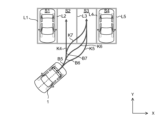
また、図7は、駐車支援装置100における、後退駐車による自動駐車の別の例を示している。図7では、自動駐車開始時の目標駐車枠がS2であり、変更後の目標駐車枠がS3である。つまり、図6では目標駐車枠を開始位置に近い側に変更しているのに対し、図7では目標駐車枠を開始位置から遠い側に変更している。
Figure 7 shows another example of automatic parking by reverse parking in the
図7におけるK4~K7は、自動駐車の経路の例である。経路K4は、駐車枠S2への経路であり、途中で目標駐車枠を変更しなかった場合の経路である。経路K5は、駐車枠S3への経路であり、早い時点で目標駐車枠を変更した場合に、経路K4から分岐点B5で分岐する経路である。経路K6は、駐車枠S3への経路であり、少し遅い時点で目標駐車枠を変更した場合に、経路K4から分岐点B6で分岐する経路である。経路K6は、経路K5よりも遅い時点で目標駐車枠を変更した場合の経路なので、分岐点B6の位置は、分岐点B5よりも駐車枠S2に近い。経路K7は、駐車枠S3への経路であり、更に遅い時点で目標駐車枠を変更した場合に、経路K4から分岐点B7で分岐する経路である。経路K7は、経路K6よりも遅い時点で目標駐車枠を変更した場合の経路なので、分岐点B7の位置は、分岐点B6よりも駐車枠S2に近い。経路K5~K7は、経路K4から分岐した経路なので、分岐路と呼んでも良い。 K4 to K7 in FIG. 7 are examples of routes for automatic parking. Route K4 is a route to parking space S2, and is a route in the case where the target parking space is not changed along the way. Route K5 is a route to parking space S3, and is a route that branches off from route K4 at branch point B5 when the target parking space is changed at an early time. Route K6 is a route to parking space S3, and is a route that branches off from route K4 at branch point B6 when the target parking space is changed a little later. Route K6 is a route in the case where the target parking space is changed at a later time than route K5, so the position of branch point B6 is closer to parking space S2 than branch point B5. Route K7 is a route to parking space S3, and is a route that branches off from route K4 at branch point B7 when the target parking space is changed even later. Route K7 is a route in the case where the target parking space is changed at a later time than route K6, so the position of branch point B7 is closer to parking space S2 than branch point B6. Routes K5 to K7 are routes that branch off from route K4, so they can also be called branch routes.
駐車支援装置100は、隣接する2つの駐車枠を検出している場合、乗員が目標駐車枠を認識しやすいように、初期の駐車経路(図6における経路K0、図7における経路K4)を最適化しても良い。例えば、図6における経路K0は、自動駐車の開始位置から駐車枠S3の間口付近まで車両1を直進させる経路であるのに対し、図7における経路K4は、自動駐車の開始位置から車両1を直ちに旋回させる経路である。
When two adjacent parking spaces are detected, the
この様に、自動駐車の開始直後から、車両1の動きが異なる様に駐車経路を設定すると、目標駐車枠がS2,S3の何れかであるかを、乗員が早い時点で認識することができる。つまり、乗員が目標駐車枠を確認していなかった場合や、目標駐車枠の思い違いをしていた場合にも、目標駐車枠がS2,S3の何れかであるかを自動駐車の開始直後の車両1の動きにより、気付かせることができる。例えば、目標駐車枠が意図しない駐車枠である事に気付くのが遅れて、目標駐車枠を変更する時点が遅くなると、切り返しが必要になって、自動駐車を開始してから駐車完了するまでに要する時間が長くなる事がある。つまり、車両1の動き始めの時点から目標駐車枠が判るように経路を設定する事によって、時間のロスの発生を回避できることがある。
In this way, if the parking route is set so that the movement of the
初期の駐車経路(図6における経路K0、図7における経路K4)は、直線区間が長くなるように最適化しても良い。図6の例では、経路K0の直線区間に分岐点B1~B3が位置するので、経路の起点が設定しやすくなる。また、図7の例では、経路K4の直線区間に分岐点B6,B7が位置しており、経路K6の曲線区間と経路K7の曲線区間とが平行移動の関係になるので、経路K6の曲線区間の設定値(回転半径や中心角)が、経路K7の設定に流用可能である。 The initial parking route (route K0 in FIG. 6, route K4 in FIG. 7) may be optimized to lengthen the straight section. In the example of FIG. 6, branch points B1 to B3 are located in the straight section of route K0, making it easier to set the starting point of the route. Also, in the example of FIG. 7, branch points B6 and B7 are located in the straight section of route K4, and the curved section of route K6 and the curved section of route K7 are in a parallel movement relationship, so the setting values (turning radius and central angle) of the curved section of route K6 can be used to set route K7.
次に、車両1の走行中に乗員が、ウインカレバー操作で左側の駐車枠に前進駐車する様に指示し、自動駐車の開始後に目標駐車枠を変更する場合について説明する。図8および図9に示す駐車場は、図5に示す駐車場と同様に、駐車枠と通路の方向(X方向)が成す角が、約60度である。図8は、空き駐車枠がS2のみである例を示しており、図9は、空き駐車枠がS2,S3である例を示している。
Next, a case will be described in which, while the
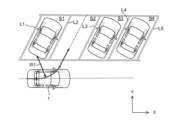
前進駐車の場合も、空き駐車枠が複数ある場合に、目標駐車枠が早く判るよう、駐車経路を工夫すると良い。図8において、駐車枠S2のみを検出している場合に、駐車支援装置100の経路設定部150は、車両1が旋回する旋回区間の回転半径を、標準的な回転半径R1に設定する。一方、図9の様に、駐車枠S2と,S3を検出していて、駐車枠S2を目標駐車枠とする場合、経路設定部150は、車両1が旋回する旋回区間の回転半径R2を、駐車枠S2のみを検出している場合の回転半径R1よりも大きく設定しても良い。これにより、駐車枠S2への車両1の旋回の開始が早くなる。
In the case of forward parking, when there are multiple vacant parking spaces, it is advisable to devise a parking route so that the target parking space can be found quickly. In FIG. 8, when only parking space S2 is detected, the
そのようにすると、目標駐車枠がS3ではなくS2であることを、乗員に早期に気付かせることができるので、乗員が駐車枠の変更を指示する際にも、時間的余裕を大きくすることができる。また、回転半径が大きいと乗員が感じる加速度が小さくなるので、駐車枠変更の指示を出しやすくすることができる。さらに、回転半径が大きいと、駐車枠への車両1の接近が遅くなるので、駐車枠からより離れた、より安全な位置に経路の分岐点を設定できる可能性が高くなる。
In this way, the occupant can be made aware at an early stage that the target parking frame is S2 and not S3, and the occupant can have more time to instruct the parking frame to be changed. Also, when the turning radius is large, the acceleration felt by the occupant is small, making it easier to instruct the parking frame to be changed. Furthermore, when the turning radius is large, the approach of the
また、駐車動作を乗員に知らせる報知を工夫する事により、目標駐車枠を早期に気付かせても良い。例えば図11の様に空き駐車枠が複数ある時に、「手前の駐車枠に駐車します」の様に、目標駐車枠の位置を含む報知を行っても良い。または、駐車動作を報知するタイミングを早くしても良い。例えば、転舵するタイミングよりも早いタイミングで「左に旋回します」と報知しても良い。空き駐車枠が一つの時と空き駐車枠が複数ある時とで、メッセージや報知のタイミングを変えても良い。例えば、空き駐車枠が一つの時は、旋回開始の1秒前から音声メッセージ「左に旋回します」の出力を開始し、空き駐車枠が複数の時は「手前の駐車枠に向かって、左に旋回します」という音声を、旋回開始の3秒前から出力しても良い。 Also, by devising a notification to inform the occupant of the parking operation, the target parking space may be made aware of at an early stage. For example, as shown in FIG. 11, when there are multiple vacant parking spaces, a notification including the location of the target parking space may be made, such as "Parking in the parking space in front." Or, the timing of the notification of the parking operation may be made earlier. For example, a notification of "Turning left" may be made earlier than the timing of steering. The timing of the message or notification may be changed depending on whether there is one vacant parking space or multiple vacant parking spaces. For example, when there is one vacant parking space, the voice message "Turning left" may be output one second before the start of the turn, and when there are multiple vacant parking spaces, a voice message saying "Turning left toward the parking space in front" may be output three seconds before the start of the turn.
そのようにすると、目標駐車枠がS2である事が早めに判り、乗員が意図する駐車枠がS3であれば、乗員は早めに変更を指示することが出来る。例えば、転舵点Aの手前で変更を指示すれば、車両は転舵点Aで旋回せずに駐車枠S3に向かうので、よりスムーズに自動駐車できる。 In this way, it becomes clear early that the target parking frame is S2, and if the driver's intended parking frame is S3, the driver can instruct the driver to change the frame early. For example, if the driver instructs the driver to change the frame before the steering point A, the vehicle will head toward the parking frame S3 without turning at the steering point A, allowing for smoother automatic parking.
図6と図7に戻って、駐車支援装置100の経路設定部150が経路設定するタイミングについて説明する。自動駐車の初期の経路(図6の経路K0、図7の経路K4)は、自動駐車の開始前に経路設定が完了している必要があるが、初期の経路の途中に設定した分岐点から始まる分岐路(図6の経路K1~K3、図7の経路K5~K7)は、必要に応じて、経路設定を行うタイミングを変えても良い。予め経路を数多く設定し、分岐点の間隔を短くしておけば、目標駐車枠の変更指示に対し短時間で経路変更出来るので使用感が良いが、その為には、高い処理能力が必要である。そこで、自動駐車の開始前に全ての分岐路を設定しても良いが、それが出来ない場合には、自動駐車の開始前に分岐路の一部を設定し、自動駐車の開始後も、残りの分岐路の設定を継続するようにしても良い。
Returning to FIG. 6 and FIG. 7, the timing of route setting by the
例えば、図6において、車両1が分岐点B1に達する前に目標駐車枠が変更された場合、自動駐車の経路が分岐点B1から経路K1に変わるので、車両1が分岐点B1に達するまで、経路K2,K3は未設定でも良い。車両1が分岐点B1を超えた後、分岐点B2に達する前に目標駐車枠の変更指示があった場合、自動駐車の経路は分岐点B2から経路K2に変わるので、車両1が分岐点B2に達する前に、経路K2の設定が完了していれば良い。この場合、駐車支援装置100は、車両1が分岐点B2に達するまでに経路K2の設定が完了するように車速を制御しても良いし、経路設定にかかる時間と車速とに基づいて、分岐点の間隔を設定しても良い。
For example, in FIG. 6, if the target parking frame is changed before
また、駐車支援装置100の経路設定部150は、分岐点を一つだけ設定し、自動駐車の開始後に分岐路を設定するようにしても良い。例えば、図6において、経路設定部150は、分岐点B3だけを設定し、自動駐車の開始後に経路K3だけを設定する。この場合、目標駐車枠が変更された際は、目標駐車枠の変更があった時点に関わらず、分岐点B3から経路K3に分岐する。経路K3は、車両1が分岐点B3に達するまでに設定されていれば良いので、経路K1~K3を次々と設定する場合よりも、処理回路の処理性能を低く抑えることができる。つまり、分岐点と経路を減らせば、ハードウェアのコストを下げられる可能性がある。
The
なお、分岐点を減らすると、乗員が目標駐車枠の変更を指示してから車両1の挙動が変化するまでの時間が平均的に長くなる。また、先述の様に、予め分岐点の設定や分岐路の設定をせず、目標駐車枠の変更が指示された時に分岐点を設定して分岐路を設定する場合も、同様に分岐するまでの時間が長くなるので、反応が遅いと評価されることがある。そこで、駐車支援装置100は、目標駐車枠の変更を受け付けた時に、指示を受け付けたことを直ちに報知し、間もなく進路が変わることを続いて報知しても良い。これにより、乗員の印象を良化させることができる。
In addition, if the number of branch points is reduced, the time from when the occupant issues a command to change the target parking frame until the behavior of the
また、電力効率を重視する観点からは、予め分岐点の設定や分岐路の設定をせず、駐車支援装置100が目標駐車枠の変更を受け付けた時に分岐点を設定して、一つの経路だけを設定することが最も効率が良い。ただし、目標駐車枠の変更の時点で分岐点の位置を決めると、その位置から切り返し無しで駐車出来るか、経路設定してみるまで判定できず、乗員に適切な報知が出来ない事がある。つまり、切り返し(一時停止)が必要になる場合があるのに、目標駐車枠の変更を受付けた時点で、切り返しの有無を報知できない。そこで、経路設定部150は、例えば分岐点B3だけを予め設定し、遅くとも自動駐車の開始時に経路設定を開始して、分岐点B3に車両1が達した時に経路K3の設定が完了しているようにすると良い。すると、分岐点B3に車両1が達する前に目標駐車枠が変更された場合は、分岐点B3に達した時に分岐すると報知すれば良く、分岐点B3に車両1が達した後に目標駐車枠が変更された場合は、分岐点B3に戻ってから分岐すると報知すれば良い。つまり、予め分岐点を設定しておけば、分岐路の計算が完了していなくても、目標駐車枠が変更された時点で、一時停止の有無を乗員に報知できる。
In addition, from the viewpoint of placing importance on power efficiency, it is most efficient not to set a branch point or a branch route in advance, but to set a branch point when the
駐車支援装置100の経路設定部150が経路設定する駐車枠は、自動駐車の途中で停車せずに駐車可能な駐車枠のうち、第2候補までの駐車枠としても良い。つまり、経路設定部150は、第1候補の駐車枠に駐車する駐車経路と、第2候補の駐車枠に駐車する分岐路とを設定する。以下、図10を用いて説明する。
The parking space for which the
例えば、図10の場合、実線の車両1は、駐車枠S2,S3,S4には、途中停車なしで駐車することが可能であるが、駐車枠S1には、途中停車なしで駐車することができない。車両1の旋回時の回転半径には下限があり、車両1の旋回運動が制約されるためである。例えば、図10の実線の車両1の位置から最小回転半径で旋回しても、左右の後輪が駐車枠S1の中に入る前に、駐車枠S1の遠端に車両1が達してしまうので、それ以上、後退して車体を駐車枠線と平行にすることができない。実線の車両1が駐車枠S1に駐車するためには、一旦前進した後に、後退駐車を始める必要がある。
For example, in the case of FIG. 10, the
自動駐車の開始後の目標駐車枠の変更は、途中で停車せずに短時間で駐車を完了可能である点に特長があるので、途中停車する必要がある駐車枠まで対象を広げなくても良い。処理の対象とする駐車枠が増えれば、処理量や処理時間に伴うコストが増えるし、途中で停車する場合は、停車中に経路の設定を行っても、駐車にかかる時間は大差ないからである。 Changing the target parking space after automatic parking has begun has the advantage that parking can be completed in a short time without stopping along the way, so there is no need to expand the scope to include parking spaces that require stopping along the way. If the number of parking spaces to be processed increases, the costs associated with the amount of processing and processing time will increase, and if stopping along the way, setting the route while the vehicle is stopped will not make much difference to the time it takes to park.
図10の場合、駐車支援装置100は、乗員の指示がなければ、駐車枠S2を第1候補、駐車枠S3を第2候補としても良い。乗員の指示が駐車枠S3である場合、駐車支援装置100は、駐車枠S3を第1候補とし、S2,S4のうち、車両1により近いS2を第2候補としても良い。乗員が駐車枠S4への駐車を希望する場合もあるが、発生確率が引く場合に対応しても、効果の期待値が小さいので、コスト増を回避すると良い。
In the case of FIG. 10, if there is no instruction from the occupant, the
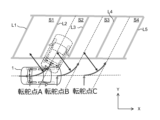
また、前進駐車の場合でも、最小回転半径により車両1の運動が制約される。例えば、図11に示すように、駐車枠S2,S3,S4に対応して、その点から最小回転半径で車両1を旋回させると駐車枠の中央に車体が収まる転舵点A、転舵点B、転舵点Cが設定できる。例えば、その点から最小回転半径で車両1を旋回させると駐車枠S2の中央に車両1が進入可能な位置が、転舵点Aである。
Even in the case of forward parking, the movement of the
この場合、車両1が転舵点Aで転舵せず、直進した後で駐車枠S2に進入しようとすると、最小回転半径の制約から、駐車経路の途中で切り返しをしない限り、車体が駐車枠S2に納まらない。駐車枠S3、駐車枠S4等の他の駐車枠についても同様に、転舵点B、転舵点Cを越えた位置からは切り返しを入れないと正しく駐車できない。後退駐車では、一旦停車した後に最終ストロークが開始されるのに対し、前進駐車では、一時停止せずに駐車枠に車両が進入することが普通であるので、自動駐車でも、ノンストップのスピーディーな駐車が要求される。つまり、前進駐車の自動駐車では、切り返しは容認されないので、対応する転舵点を越えた駐車枠には自動駐車しない。
In this case, if the
例えば、乗員が転舵点Aを直進で通過した後、転舵点Bより手前で自動駐車を指示した時に、駐車支援装置100は、駐車枠S3を目標駐車枠として自動駐車を開始し、転舵点Bまで直進し、転舵点Bで車両1の旋回を開始する駐車経路を辿る。この、転舵点Bまで直進中の時点で、乗員が駐車枠S4へ目標駐車枠の変更を指示すると、駐車支援装置100は、自動駐車の経路を、転舵点Cまで直進して転舵点Cで旋回を開始し、駐車枠S4に進入する駐車経路に切り替える。しかし、同じ転舵点Bまで直進中の時点で、乗員が駐車枠S2へ目標駐車枠の変更を指示した場合は、車両1が直進したまま転舵点Aを通過しているので、転舵点Aを通過した後に駐車枠S2に目標駐車枠の変更が指示されても、駐車枠S2には切り返し無し(ノンストップ)では駐車することができない。つまり、前進駐車では、手前の駐車枠への目標駐車枠の変更は有効性がなく、次の駐車枠への目標駐車枠の変更だけが有効である。
For example, when the occupant passes steering point A in a straight line and then instructs automatic parking just before steering point B, the
このように、前進駐車では、次の駐車枠への目標駐車枠の変更は可能であるが、手前の駐車枠への目標駐車枠の変更は実質的にできない。そのことに適応するため、駐車支援装置100は、目標駐車枠を自動選択するようにしても良い。例えば、転舵点Aを越えて転舵点Bより手前の地点で自動駐車が指示された時に、駐車支援装置100は、駐車枠S3を目標駐車枠として自動選択して自動駐車を開始する。そして、駐車枠S4への目標駐車枠変更を指示する操作があった場合、駐車支援装置100は、目標駐車枠の変更を受け付けるが、駐車枠S2への目標駐車枠変更を指示する操作があった場合には、目標駐車枠の変更を受け付けない。
In this way, in forward parking, it is possible to change the target parking frame to the next parking frame, but it is practically impossible to change the target parking frame to the previous parking frame. To accommodate this, the
例えば、転舵点Aより先であるが転舵点Bよりは手前の位置で、乗員がハンドルを軽く左に廻し、それを駐車支援装置100の操作受付部110が自動駐車の指示として受け付けた時に、駐車支援装置100の報知部180は「左に駐車します。ハンドルを離してください。」とアナウンスする。これに応じて乗員がハンドルを離すと、駐車支援装置100は、車両1の自動駐車を開始する。
For example, when the occupant turns the steering wheel lightly to the left at a position beyond steering point A but before steering point B, and the
乗員にハンドルを解放させることは、自動操舵を妨げられないようにするための手順であり、必要なタイミングで、必要に応じて実施されれば良い。例えば、車両1が駐車場内の通路を直進している時に、乗員によって駐車枠検知ボタンが押された場合、駐車支援装置100は、乗員にハンドルを解放させて、自動操舵を開始しても良い。そうして、乗員が進路維持の為の操舵操作をしない状態にしておくと、乗員によるハンドル操作があった時に、自動駐車の開始の指示や、目標駐車枠の変更の指示として受け付ける事が出来る。例えば、自動操舵が開始されている時に、ハンドルを軽く左に廻した動作を検出した場合は、これを自動駐車の指示と判定して自動駐車を開始し、報知部180は、「左に駐車します」と報知して、転舵点Bで車両1を左に旋回させても良い。
Having the occupant release the steering wheel is a procedure for preventing automatic steering from being impeded, and may be performed at the necessary timing and as necessary. For example, if the occupant presses the parking space detection button while the
転舵点Bで旋回を開始した後、乗員が意図する駐車枠がS4であった場合、乗員がハンドルを軽く右に廻すと、目標駐車枠の変更の指示として受け付けられることにより、目標駐車枠を、次の駐車枠であるS4に変更させることができる。前述の通り、前進駐車では、目標駐車枠の次の駐車枠への変更は可能であるが、手前の駐車枠への変更は出来ないので、ハンドルが右に軽く廻された時は、「右の枠に目標を変更します」と報知するのに対し、ハンドルが左に軽く廻された時は、「左の枠には駐車できません」と報知し、就社枠S3への進入を続行する。 After starting to turn at steering point B, if the occupant's intended parking frame is S4, when the occupant gently turns the steering wheel to the right, this is accepted as an instruction to change the target parking frame, and the target parking frame can be changed to the next parking frame, S4. As mentioned above, in forward parking, it is possible to change the target parking frame to the next parking frame, but it is not possible to change it to the parking frame in front, so when the steering wheel is gently turned to the right, a message is displayed stating "The target will be changed to the frame on the right," whereas when the steering wheel is gently turned to the left, a message is displayed stating "Parking is not possible in the frame on the left," and entry into the parking frame S3 continues.
また、自動駐車の開始の指示手段や、目標駐車枠を変更させる手段は、ウインカレバーの操作や、所定のボタン操作でも良い。例えば、ウインカレバーが左に倒された時に「左に駐車します」と報知して、自動駐車中にウインカレバーが右に倒された時に「右の枠に目標を変更します」と報知しても良い。ウインカレバーの場合、ウインカレバーが左に倒れた状態から、更に左に倒す事は出来ないので、目標駐車枠を左の枠(つまり手前の枠)に変更出来ない事が、直感的に判る。 The means for instructing the start of automatic parking or for changing the target parking frame may be the operation of a turn signal lever or a specified button. For example, when the turn signal lever is tilted to the left, a message saying "Parking to the left" may be announced, and when the turn signal lever is tilted to the right during automatic parking, a message saying "Changing the target to the right frame" may be announced. In the case of a turn signal lever, since the turn signal lever cannot be tilted further to the left once it has been tilted to the left, it is intuitively clear that the target parking frame cannot be changed to the frame on the left (i.e. the frame in front).
前進駐車においては、自動操舵の様な舵角制御の他に、速度の制御を加えても良い。例えば、前進駐車による自動駐車は、一旦、停車して後退で駐車枠に向かう後退駐車の場合よりも、車速が速くなる傾向がある。そこで、乗員がアナウンス等を確認するための時間を確保したり、舵角変更に伴って乗員が感じる加速度を低減したり、分岐路を設定する為の時間的余裕を増やしたりできるように、駐車支援装置100は、変更指示を受け付けた時点で車両1を減速させても良い。この制御は、後退駐車の場合でも一定の効果があるので、駐車支援装置100は、変更指示を受け付けたことを条件として、車両1を減速させるようにしても良い。
In forward parking, in addition to steering angle control such as automatic steering, speed control may also be added. For example, automatic forward parking tends to have a faster vehicle speed than reverse parking, in which the vehicle is stopped and then reversed toward a parking space. Therefore, the
また、前進駐車においても後退駐車の場合と同様に、駐車経路の途中に分岐点が設定されていても良い。具体的には、駐車支援装置100は、設定した分岐点を始点として、次の駐車枠に駐車するための分岐路を、自動駐車の開始前に設定しておいても良い。例えば、分岐路を、最初の曲線区間と、最初の直線区間と、最後の曲線区間と、最後の直線区間とに分解して、曲線区間の回転半径や、直線区間の傾きを予め決めておいても良いし、変更指示を受け付けた時に分岐路を決めても良い。
In forward parking, as in reverse parking, a branch point may be set along the parking path. Specifically, the
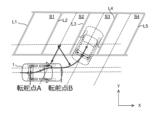
例えば、図12に示すように、駐車枠S3に向かう分岐路における最後の直線区間(駐車位置に向かう直線区間)の、通路の方向(転舵点Aまでの車両の進路)に対する傾きは、駐車枠S3の中心線の傾きと同じであり、駐車枠S3は駐車枠S2と平行なので、分岐路の最後の直線区間の傾きは、駐車枠S2への駐車経路の最後の直線区間の傾きと同じで良い。つまり、分岐路の設定値の一部は、新たに計算する必要が無く、既にある駐車経路の設定値を流用することが出来る。また、分岐路の最初の直線区間を、通路の方向(転舵点Aまでの車両の進路)と平行にする事を予め決めておけば、最初の直線区間の傾きを計算しなくて良い。すると、分岐路の最初の直線区間と最後の直線区間の間で、車両1が旋回する弧の中心角は、駐車枠S2への駐車経路にある弧の中心角と同じになるので、回転半径も同じにして、計算済みの曲線区間の設定値を全て流用すれば良い。分岐路の最初の直線区間を通路と平行にするには、転舵点Aから分岐点までの弧を、分岐点を中心に180度回転させたものを、分岐路の最初の曲線区間とすればよい。つまり、駐車枠S3に駐車する分岐路の、直線区間の傾きと、曲線区間の回転半径と弧の長さは、変更指示の時点で決まっているので、計算不要である。この様に、分岐路の設定値の多くは、駐車枠S2への駐車経路の設定値を流用できる。
For example, as shown in FIG. 12, the inclination of the last straight section (straight section toward the parking position) in the branch road toward the parking stall S3 with respect to the direction of the passage (the path of the vehicle to the steering point A) is the same as the inclination of the center line of the parking stall S3, and since the parking stall S3 is parallel to the parking stall S2, the inclination of the last straight section of the branch road may be the same as the inclination of the last straight section of the parking path to the parking stall S2. In other words, it is not necessary to newly calculate some of the setting values of the branch road, and the setting values of the existing parking path can be reused. Also, if it is determined in advance that the first straight section of the branch road is parallel to the direction of the passage (the path of the vehicle to the steering point A), it is not necessary to calculate the inclination of the first straight section. Then, the central angle of the arc around which the
当初の駐車経路の設定値を流用できず、新たに設定すべき分岐路の設定値は、二つの直線区間の長さだけであるが、処理量が小さいので、変更指示を受付けてから処理しても良いし、予め分岐点を幾つか設定して、変更指示の前に分岐路を設定しておいても良い。この直線区間の長さは、転舵点Aから分岐点までの弧の長さに依存するので、離散的に複数の弧の長さを仮定して、予め設定しておくと良い。 The initial parking route setting value cannot be reused, and the new setting value for the branch road is only the length of the two straight sections. However, since the amount of processing is small, processing can be done after the change instruction is received, or several branch points can be set in advance and the branch road can be set before the change instruction is issued. The length of this straight section depends on the length of the arc from steering point A to the branch point, so it is a good idea to assume the length of multiple arcs discretely and set them in advance.
また、変更指示のタイミングが早く、変更指示を受付けた位置が通路に近い場合、車両を通路に戻しても良い。例えば、図11の転舵点Aで旋回を開始した直後に変更を指示すると、車両は通路に戻って通路上を直進し、転舵点Bで旋回を開始して駐車枠S3に駐車する。車両を通路に戻すと、車両を通路上で走行させ続ける事が出来るので、乗員が立て続けに変更を指示する場合にも対応できる。乗員が連続して目標駐車枠変更を指示し、図12の分岐路の最初の直線区間の様に、駐車枠に近付いた位置のまま車両が走行を続けると、駐車車両がある駐車枠に接近した時に危険である。そこで、例えば、図12の分岐路の最初の直線区間に車両がある時に、乗員が更に目標駐車枠変更を指示し、駐車枠S3にも駐車しない事を意思表示した場合には、車両を通路に戻す様にしても良い。車両を通路に戻せば、前述の危険は無くなるので、車両を通路に戻せる場合は、出来るだけ通路に戻す様にしても良い。 In addition, if the timing of the change instruction is early and the position where the change instruction is received is close to the aisle, the vehicle may be returned to the aisle. For example, if a change instruction is given immediately after starting to turn at steering point A in FIG. 11, the vehicle will return to the aisle, go straight along the aisle, start turning at steering point B, and park in parking space S3. If the vehicle is returned to the aisle, the vehicle can continue to run on the aisle, so it can also be used when the occupant gives a change instruction in succession. If the occupant gives a successive instruction to change the target parking space and the vehicle continues to run at a position close to the parking space, as in the first straight section of the branch road in FIG. 12, it is dangerous when the vehicle approaches a parking space with a parked vehicle. Therefore, for example, when the vehicle is in the first straight section of the branch road in FIG. 12, if the occupant further gives an instruction to change the target parking space and indicates an intention not to park in parking space S3, the vehicle may be returned to the aisle. If the vehicle is returned to the aisle, the above-mentioned danger will disappear, so if the vehicle can be returned to the aisle, it may be returned to the aisle as much as possible.
また、変更指示のタイミングが遅く、車両が駐車枠に接近した位置で変更指示を受付けた場合、次の駐車枠に正しく駐車する為には、切り返しを必要とする事がある。その様な場合に、切り返しを含む経路で自動駐車させても良いが、前述の様に、切り返しを入れると前進駐車の要請(スピーディーな駐車)に反するので、「変更できません」と報知して、当初の駐車枠への駐車を続行しても良い。つまり、変更指示があった時の車両の位置に応じて、変更指示を受付けないようにしても良い。 Also, if the timing of the change instruction is late and the change instruction is received when the vehicle is approaching a parking space, it may be necessary to turn around in order to park correctly in the next parking space. In such a case, it is possible to automatically park the vehicle using a route that includes turning around, but as mentioned above, turning around goes against the request for forward parking (speedy parking), so it is possible to notify the driver that "change is not possible" and continue parking in the original parking space. In other words, it is possible to not accept the change instruction depending on the vehicle's position when the change instruction is received.
また、変更指示を受付けるタイミングは、旋回の開始前であっても良い。例えば、駐車支援装置100の報知部180は、駐車枠に進入するための旋回を開始する前に、「手前の枠に駐車します」と、アナウンスし、乗員が不同意である場合、目標駐車枠を次の枠に変更できるようにしても良い。旋回の開始前に変更指示を受付けると、旋回を開始せずに次の枠に向かうので、駐車枠にアプローチせずに次の枠に変更する操作を、スキップと言い換えても良い。自動駐車を指示した時点から自動駐車が始まると言っても良いが、外見上、通路の走行中は自動駐車の実行中の様には見えないので、旋回を開始して駐車枠にアプローチした時に自動駐車が始まると考え、駐車枠に進入するための旋回開始後の走行を自動駐車と呼んでも良い。そうすると、このスキップは、自動駐車の開始前の目標駐車枠変更と称することができる。ここで、スキップ(自動駐車の開始前の目標駐車枠変更)の指示手段が、自動駐車の開始後の目標駐車枠変更の手段と同じに設定されていれば、乗員は、自動駐車の開始前か、開始後かを考えずに目標駐車枠を変更することができる。また、旋回の開始後も変更指示を受け付けるので、乗員は気づいた時点で変更を指示すれば良いし、タイミングによって指示方法を変える必要も無い。
The timing of receiving the change instruction may be before the start of turning. For example, the
例えば、乗員が、転舵点Aより手前でウインカレバーを左に倒して自動駐車を指示した場合、車両1が駐車枠S2の転舵点に接近した際に、「この駐車枠に駐車します」とアナウンスがあったとする。これに対して、乗員が、駐車枠S2に駐車したくないと考えてウインカレバーを中立に戻すと、「スキップします」とアナウンスがあり、車両1が転舵せずに直進を続ける。または、車両1が左への旋回を始めた後で、乗員が、駐車したくないと考えてウインカレバーを中立に戻すと、「スキップします」とアナウンスがあり、車両1が元の通路に戻る。
For example, if the occupant tilts the turn signal lever to the left before steering point A to indicate automatic parking, an announcement is made that "You will park in this parking space" as
このようにすると、同じ操作に対して同じ結果が得られ、タイミングが前後しても、意図した駐車枠に駐車できるので、乗員は安心して自動駐車を利用することができる。 In this way, the same result can be obtained for the same operation, and even if the timing is delayed, the vehicle can be parked in the intended parking space, allowing occupants to use automatic parking with peace of mind.
また、駐車枠の変更を指示する操作は、所定のボタン操作であっても良いし駐車枠の変更を指示する乗員は、運転者ではなく、助手席の乗員でも良い。例えば、転舵点Aよりも手前でハザードランプのボタンを助手席の乗員が押したことに応じて、駐車枠S2を目標駐車枠とする自動駐車が開始された後、助手席の乗員が駐車枠S2に問題があることに気付くことがある。また、駐車枠S3に駐車させるつもりで、助手席の乗員が、ハザードランプのボタンを押したが、押すタイミングが早すぎていて、駐車枠S2に向けて車両1が旋回を開始した時に、意図しない駐車枠に向かっていると気付くこともある。そのような場合、駐車支援装置100は、ハザードランプのボタンが再び押されたことを、駐車枠の変更指示として受け付けても良い。
The operation to instruct the change of the parking space may be a predetermined button operation, and the occupant who instructs the change of the parking space may be a passenger in the passenger seat instead of the driver. For example, after automatic parking with parking space S2 as the target parking space is started in response to the passenger in the passenger seat pressing the hazard lamp button before the steering point A, the passenger in the passenger seat may notice that there is a problem with parking space S2. In addition, the passenger in the passenger seat may press the hazard lamp button with the intention of parking in parking space S3, but may press it too early, and may notice that the
なお、駐車支援装置100は、ハザードランプのボタン等、所定のボタンが操作された時に、HMI装置20を用いて、目標駐車枠を変更させる意図を照会しても良い。乗員が、目標駐車枠を変更させる意図がなくても、ボタンを操作することがあるからである。照会があった場合、駐車支援装置100は、目標駐車枠を変更させる意図を、助手席の乗員が操作可能なように、HMI装置20のタッチパネルによって受け付けても良いし、ハンドル、ウインカレバーの操作のような運転者の操作によって受け付けても良い。また、所定のボタンはハザードランプのボタンの様な物理的なボタンに限らず、タッチパネル上に表示された、ソフト的なボタンであっても良い。
The
また、駐車支援装置100は、目標駐車枠を変更させる意図を照会する際に、車両1を減速させても良いし、停止させても良い。例えば、車両1が一時停止すれば、自動駐車の進行が止まるので、乗員は、意図を照会するメッセージの確認と、目標駐車枠を変更させる操作とに十分な時間を費やすことができるし、停車中であれば、乗員が車両周辺を目視していなくても良い。また、乗員は、何らかの問題がある時にハザードランプを点灯させることがあるので、駐車支援装置100は、ハザードランプの操作があったことを条件として、意図の照会と平行して車両1を減速させても良い。
Furthermore, the
ここから、駐車枠の変更を指示する操作が、ハンドル操作である場合の課題について説明する。例えば、ハンドル操作が自動駐車の開始を指示する手段である場合に、自動駐車の開始指示と同じ手段であるハンドル操作で、目標駐車を変更できるようにすると、目標駐車枠の変更手段として受け入れやすくなる。また、ハンドルは進路変更の手段として使用されていることから、目標駐車枠の変更手段として想起されやすいので、自動駐車の指示手段がハンドル操作ではない場合でも、ハンドル操作は目標駐車枠の変更手段として受け入れ易い。 From here, we will explain the issues that arise when the operation instructing to change the parking space is steering. For example, when steering is the means of instructing to start automatic parking, if the target parking space can be changed by steering, which is the same means used to instruct to start automatic parking, it will be more easily accepted as a means of changing the target parking space. In addition, because steering is used as a means of changing trajectory, it is easily thought of as a means of changing the target parking space. Therefore, even if the means of instructing automatic parking is not steering, steering is more easily accepted as a means of changing the target parking space.
ただし、ハンドルが目標駐車枠の変更手段であると、それに付随した課題が発生する。 However, when the steering wheel is used to change the target parking space, problems arise.
例えば、目標駐車枠の変更指示の為にハンドルを操作すると、車両1の進路が変わり、設定した駐車経路から外れるおそれがある。自動駐車では、車両1が設定した経路に沿って走行するよう、舵角をフィードバック制御しながら、走行するので、経路からのズレ幅が小さければ、車両1はフィードバック制御により設定した経路に戻るが、ズレ幅が大きければ戻るのが遅れたり、戻らなかったりする。
For example, when the steering wheel is operated to change the target parking space, the
そこで、駐車支援装置100は、目標駐車枠の変更手段としてハンドルが操作された時に発生する経路からのズレ幅を、より小さくするように制御しても良い。例えば、駐車支援装置100は、自動駐車中にハンドル操作が検出された時に、目標駐車枠の変更指示を受け付けたことを直ちに報知し、ハンドルを解放するよう乗員に促して、舵角がハンドル操作前の状態に、早期に復帰するようにしても良い。例えば、駐車支援装置100は、「ハンドルを離してください」と報知したり、ハンドルを振動させたりして、乗員にハンドルの解放を促しても良い。
Therefore, the
また、駐車支援装置100は、自動駐車中にハンドル操作を検出した時に、走行制御部160の指示により、電動パワーステアリング(EPS:Electric Power Steering Systems)にハンドル操作に逆らう反力(操作方向と逆方向のトルク)を発生させ、ハンドル操作による舵角の変化を抑えても良い。ただし、EPSが反力を発生すると、乗員が危険回避の目的で操舵している場合に、危険回避を妨げる可能性がある。
In addition, when the
そこで、例えば、操舵トルクや舵角の変化率が所定の閾値を超える場合、または、上記の報知やハンドルの振動があっても操舵が続く場合には、駐車支援装置100は、危険回避の目的で操舵が行われていると判定しても良い。危険回避の目的で操舵が行われていると判定した場合に、駐車支援装置100は、乗員の操舵方向に対して順方向のトルクを発生させ、操舵を支援しても良い。逆に、操舵トルクや舵角の変化率が小さい場合に、駐車支援装置100は、危険回避を目的とする操舵ではないと推定し、ハンドルの振動が終わるまでを期限として反力を発生させても良い。
Therefore, for example, if the rate of change of the steering torque or steering angle exceeds a predetermined threshold value, or if steering continues despite the above-mentioned notification or steering wheel vibration, the
具体的には、駐車支援装置100は、以下に示す方法でEPSを制御する。
・操舵トルクが第1閾値未満である場合、ノイズと判断して無視する(回避操作とも変更指示とも判定しない)。
・操舵トルクが、第1閾値より大きい第2閾値以上である場合、順方向トルクを発生させ、操舵を支援する(操舵は回避操作だと判定する)。
・操舵トルクが第1閾値以上であって、第2閾値未満である場合、逆方向トルクを発生させ、ハンドルを振動させる。
・振動開始から所定時間が経過しても操舵トルクが第1閾値以上である場合、回避操作と判定し、振動を停止して順方向トルクを発生させ、操舵を支援する。
・振動開始から所定時間内に操舵トルクが第1閾値未満となった場合、変更指示と判定し、振動を停止して、経路または分岐路に合流するための自動操舵を開始する。
Specifically, the
When the steering torque is less than the first threshold, it is determined to be noise and ignored (it is not determined to be an avoidance operation or a change instruction).
When the steering torque is equal to or greater than a second threshold value that is greater than the first threshold value, a forward torque is generated to assist the steering (the steering is determined to be an avoidance maneuver).
When the steering torque is equal to or greater than the first threshold and less than the second threshold, a reverse torque is generated to vibrate the steering wheel.
If the steering torque is equal to or greater than the first threshold value even after a predetermined time has elapsed since the start of vibration, it is determined that an avoidance operation is occurring, vibration is stopped, and forward torque is generated to assist steering.
If the steering torque falls below the first threshold within a predetermined time from the start of vibration, it is determined that a change command has been issued, vibration is stopped, and automatic steering is initiated to join the route or branch road.
駐車支援装置100がこのように制御すると、乗員は、危険回避の目的で操舵する場合は、ハンドルを強く廻すか、振動を無視してハンドルを廻し続けるか、すれば良く、そうすることにより、操舵支援を受けることができる。また、駐車枠変更を指示する場合は、ハンドルを軽く、短時間だけ廻すことにより、操舵介入による進路の変化量(ズレ幅)を抑えることができる。ハンドル操作が弱すぎると無視されるので、ハンドルが振動するまで廻して、ハンドルが振動したら離せば良い。
When the
また、自動駐車中に乗員が問題を発見した場合、ブレーキが操作されることがある。例えば、駐車枠内に歩行者がいることを乗員が発見した場合、ブレーキが操作される。この時に、隣接する駐車枠が空いている場合、乗員は、歩行者が駐車枠内から立ち去るまで待っても良いが、駐車枠を変更して自動駐車を続行しても良い。 Also, if the occupant notices a problem during automatic parking, the brakes may be applied. For example, if the occupant notices a pedestrian in the parking space, the brakes will be applied. If an adjacent parking space is available at this time, the occupant can wait until the pedestrian leaves the parking space, or they can change parking spaces and continue automatic parking.
そこで、駐車支援装置100は、空き駐車枠が連続している場所で、自動駐車中にブレーキの操作を検出した時に、目標駐車枠を変更させる意図があるか、照会しても良い。変更させる意図は、上述の駐車枠変更の指示手段の何れかで受け付ければ良い。つまり、変更させる意図は、ハンドルやウインカレバーの操作によって受け付けても良いし、タッチパネルの操作で受け付けても良い。ブレーキの操作により車両1が停止した後であれば、運転者がタッチパネルを見たり、操作したりしても問題はない。
Therefore, when the
運転者が、照会に対して何も操作しないまま、ブレーキを解放した場合、駐車支援装置100は、駐車枠を変更せずに自動駐車を続行するようにしても良いし、意図を示す操作が行われるまで、車両1の停止状態を維持させるようにしても良い。
If the driver releases the brakes without performing any operation in response to the inquiry, the
また、自動駐車中にハンドルとブレーキの両方が操作された場合は、ハンドルのみが操作された場合よりも、危険回避のための操作である確率が高い。そこで、駐車支援装置100は、ハンドルとブレーキの両方が操作された場合に、ハンドルのみが操作された場合よりも、トルクを判定する第2閾値を引き下げて、EPSがステアリング操作に逆らうトルクではなく、ステアリング操作を補助するトルクを発生し易くするようにしても良い。または、駐車支援装置100は、ハンドルとブレーキの両方が操作されたことを条件として、ステアリング操作に逆らうトルクをEPSで発生させることを禁止するか、または、ステアリング操作を支援する順方向トルクを発生させるようにしても良い。
In addition, when both the steering wheel and the brake are operated during automatic parking, there is a higher probability that the operation is for the purpose of avoiding danger than when only the steering wheel is operated. Therefore, the
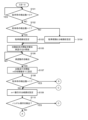
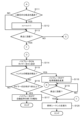
次に、駐車支援装置100の動作例について説明する。図13および図14は、駐車支援装置100における駐車支援制御の動作例を示すフローチャートである。駐車支援装置100は、乗員により駐車枠検知ボタンが押されると起動する。本制御、つまりフローチャートに記載の制御は、駐車支援装置100と、その駐車枠検知部140が起動して、駐車枠検知がONになった時にスタートする。
Next, an example of the operation of the
スタート時点の初期状態では、車両1は停車中でも良いし、走行中でも良い。本実施の形態に係る駐車支援装置100は、前進駐車の自動駐車と、後退駐車の自動駐車との両方に対応しても良いし、一方のみに対応しても良い。ここでは、自動駐車が前進駐車と後退駐車の何れかについては、スタートの時点で決定済みであるものとする。例えば、車両1のギヤが前進位置の時に駐車枠検知ボタンが押された場合は、その時点で前進駐車に決定しても良い。また、車両1が直進状態から旋回して停車した後、ギヤが後退位置の時に駐車枠検知ボタンが押された場合は、その時点で後退駐車に決定しても良い。駐車支援装置100では、ボタンやギヤの操作は操作受付部110が受付け、判定と判定結果の管理は、状態管理部120が行う。つまり、前進駐車と後退駐車との何れで自動駐車するかは、スタート時点までに状態管理部120で決定されているものとする。
In the initial state at the start, the
図13に示すように、駐車支援装置100の状態管理部120は、駐車枠検知部140の検知結果に基づいて、駐車枠の検出数が0か判定する(ステップS101)。判定の結果、駐車枠の検出数が0の場合(ステップS101、YES)、処理はステップS101に戻る。つまり、ステップS101の処理を、駐車枠検知部140が駐車枠を検出するまで繰り返す。
As shown in FIG. 13, the
一方、駐車枠の検出数が0でない場合(ステップS101、NO)、状態管理部120は、駐車枠の検出数が1か判定する(ステップS102)。判定の結果、駐車枠の検出数が1の場合(ステップS102、YES)、駐車枠検知部140は、駐車経路を設定する(ステップS103)。ステップS103では、検出された一つの駐車枠に対応する駐車経路を設定し、駐車枠検知部140が設定した駐車経路は、記憶部170が記憶する。
On the other hand, if the number of detected parking spaces is not 0 (step S101, NO), the
一方、駐車枠の検出数が2以上の場合(ステップS102、NO)、駐車支援装置100の経路設定部150は、駐車経路と、その駐車経路から分岐する分岐路を設定する(ステップS104)。ステップS104では、検出した複数の駐車枠のうち、第1候補の駐車枠に駐車する駐車経路と、駐車経路の途中の分岐点から第2候補の駐車枠に駐車する分岐路と、を設定する。第1候補の駐車枠および第2候補の駐車枠は、複数の駐車枠の中から、車両1を駐車する上での条件に基づいて選択された駐車枠である。例えば、前進駐車の場合、車両1の進行方向に転舵点がある駐車枠のうち、車両1に最も近いものを第1候補の駐車枠とし、車両1に2番目に近いものを第2候補の駐車枠としても良い。また、後退駐車の場合、複数の駐車枠のうち、車両の後端からの距離が最も短いものを第1候補の駐車枠とし、2番目に短いものを第2候補の駐車枠としても良い。
On the other hand, if the number of detected parking spaces is two or more (step S102, NO), the
ステップS103またはステップS104の後、報知部180は、自動駐車の開始を報知し、自動駐車を承認するか、照会する(ステップS105)。ステップS105では、例えば、「自動駐車を開始するので、ハンドルを離してください」のようにアナウンスしても良い。
After step S103 or step S104, the
次に、状態管理部120は、承認動作(例えば、ハンドルを離す等の、照会に対応する動作)を検出したか否かについて判定する(ステップS106)。判定の結果、承認動作を検出しない場合(ステップS106、NO)、状態管理部120は、ステップS106の処理を繰り返す。一方、承認動作を検出した場合(ステップS106、YES)、駐車支援装置100の走行制御部160は、自動走行を開始し、状態管理部120は、変数mの初期値を1に設定する(ステップS107)。mは、分岐路の番号であって、設定済みの分岐路はm番目の分岐路、次に設定する分岐路はm+1番目の分岐路である。ステップS107の処理では、ステップS104の処理において、第2候補の駐車経路(1番目の分岐路)が設定済みである場合に対応して、mを1に設定する。駐車枠の検出数が1の場合、設定済みの分岐路は無いので、mと設定済みの分岐路の数が合わないが、駐車枠の検出数が1の場合は、mを参照しないので問題ない。
Next, the
次に、状態管理部120は、駐車枠の検出数が1か判定する(ステップS108)。これは、目標駐車枠変更が無い場合と、目標駐車枠変更がある場合とで処理を分ける為のステップである。判定の結果、検出数が1の場合(ステップS108、YES)、処理はBに分岐し、ステップS119に遷移する。ステップS119からの処理は、目標駐車枠変更の無い、普通の自動駐車の処理であり、そこでは分岐路の番号mを参照しない。一方、検出数が2以上の場合(ステップS108、NO)、ステップS109以降の、目標駐車枠変更がある場合の処理を開始する。先ず、ステップS109では、経路設定部150は、m+1番目の分岐路を設定する(ステップS109)。m+1番目の分岐路とは、最寄りの分岐路(m番目の分岐路)の分岐点よりも先の分岐点で分岐する次の分岐路であり、車両は自動駐車しながら次の分岐路を設定している。
Next, the
自動駐車開始の時点でmは1であり、最初の分岐点(分岐点1)で分岐する分岐路1(第2候補の駐車枠に駐車する駐車経路のうち最初のもの)を設定済みであるので、ステップS109で設定される分岐路は、その次の分岐点2で分岐する分岐路2である。つまり、m番目の分岐点までに、その次のm+1番目の分岐点で分岐する分岐路m+1を設定しておくことにより、常に、進行方向にある分岐点で分岐する分岐路が設定済みである状態にする。
When automatic parking starts, m is 1, and because branch road 1 (the first of the parking routes for parking in the second candidate parking space) that branches off at the first branch point (branch point 1) has already been set, the branch road set in step S109 is
次に、状態管理部120は、ハンドル操作の有無を判定する(ステップS110)。ハンドル操作は、目標駐車枠変更を指示する操作の一例である。判定の結果、ハンドル操作を検出していない場合(ステップS110、NO)、図14に示すように、状態管理部120は、m番目の分岐点を車両1が通過したか否かについて判定する(ステップS111)。
Next, the
判定の結果、m番目の分岐点を車両1が通過した場合(ステップS111、YES)、状態管理部120は、mをm+1に更新する(ステップS112)。ステップS112の後、または、ステップS111で、m番目の分岐点を車両1が通過していない場合(ステップS111、NO)、駐車支援装置100は、車両1が進んだ距離を評価し、駐車経路の終点(目標駐車位置)に車両1が到着したか否かについて判定する(ステップS113)。
If the result of the determination is that the
判定の結果、車両1が終点に到着していない場合(ステップS113、NO)、処理はステップS109に戻る。つまり、再び、分岐路の設定に戻り、車両1が分岐点を超える毎に次の分岐路の設定を行う。一方、車両1が終点に到着した場合(ステップS113、YES)、処理はステップS120に進み、停車シーケンスを実行して自動駐車を終了する。つまり、駐車枠を複数、検出している場合は、分岐路を設定しながら自動駐車を実行し、その間に、目標駐車枠変更を指示するハンドル操作を検出しなければ、そのまま当初の駐車枠に駐車して終了する。
If the result of the determination is that the
ステップS110の判定に戻り、ハンドル操作を検出した場合(ステップS110、YES)、Dに進む。D以降は、目標駐車枠の変更指示に対応する処理である。図14が示す様に、DからステップS114に進み、報知部180は、バイブレータをONにして、状態管理部120はタイマーを0に設定する(ステップS114)。このステップS114では、目標駐車位置の変更を受け付ける処理を開始する。具体的には、バイブレータによりハンドルを振動させ、振動の継続時間をタイマーにより計時する。つまり、ハンドルを振動させて、目標駐車位置の変更指示を検出した事を報知する。また、ハンドルを振動させている間、同時に、EPSで操舵に逆らうトルクを発生させて、進路を維持する制御を加えても良い。
Returning to the judgment of step S110, if steering wheel operation is detected (step S110, YES), the process proceeds to D. From D onwards, the process corresponds to the instruction to change the target parking frame. As shown in FIG. 14, the process proceeds from D to step S114, where the
なお、ステップS110に操舵トルクの評価を追加しても良い。例えば、駐車支援装置100の状態管理部120は、ハンドル操作を検知する際に、操舵トルクを評価し、操舵トルクが第1閾値以上、第2閾値未満である時、つまり、危険回避のための操舵であると判定する条件に当たらない場合のみYESとしても良い。操舵トルクを評価した結果、操舵トルクが第2閾値以上である場合は、危険回避のための操舵であると判定し、不図示の遷移でステップS117に分岐させ、自動駐車を終了させても良い。
Note that an evaluation of steering torque may be added to step S110. For example, the
目標駐車枠の変更の指示であると判定した場合(ステップS110、YES)、ステップS114でハンドルを振動させた上で、状態管理部120は、ハンドルの解放を検出したか否かについて判定する(ステップS115)。判定の結果、ハンドルの解放を検出していない場合(ステップS115、NO)、状態管理部120は、タイマーの計時が1秒以上であるか否かについて判定する(ステップS116)。
If it is determined that the instruction is to change the target parking space (step S110, YES), the steering wheel is vibrated in step S114, and the
判定の結果、タイマーの計時が1秒以上ではない場合(ステップS116、NO)、処理はステップS115に戻る。つまり、ハンドルの振動時間が1秒未満である場合、ハンドル解放の検知を続ける。一方、タイマーの計時が1秒以上である場合(ステップS116、YES)、駐車支援装置100は、バイブレータをOFFにして、自動駐車の終了を報知し(ステップS117)、ステップS117の後、本制御は終了する。自動駐車を終了する理由は、乗員が危険回避の為にハンドル操作を続けている場合に対応する為と、乗員がハンドルを握り続けていると、操舵制御ができない為である。つまり、ハンドルが1秒以上、操舵され続けた場合、乗員がハンドルの手動制御を必要としているか、または自動操舵の続行が困難な状況であると判断して、自動駐車を終了する。また、ステップS117の後に、EPSで順方向のトルクを発生させて、操舵を支援する制御を加えても良い。
If the timer is not counting for 1 second or more (step S116, NO), the process returns to step S115. That is, if the vibration time of the steering wheel is less than 1 second, the detection of steering wheel release continues. On the other hand, if the timer is counting for 1 second or more (step S116, YES), the
ステップS115の判定に戻り、ハンドルの解放を検出した場合(ステップS115、YES)、駐車支援装置100の報知部180は、バイブレータをOFFにし、走行制御部160は駐車経路を変更する(ステップS118)。ステップS118では、駐車経路をm番目の分岐路を通る経路に変更する。つまり、ハンドルが短時間だけ操舵された場合は、目標駐車枠の変更の指示であると判定して、進行方向の最寄りの分岐点から、分岐路mに進路変更する。
Returning to the judgment of step S115, if the release of the steering wheel is detected (step S115, YES), the
次に、状態管理部120は、駐車経路の終点(目標駐車位置)に車両1が到着したか否かについて判定する(ステップS119)。駐車経路の情報は、駐車経路の終点までの距離の情報を含むので、ステップS119では、終点までの距離を車両1が走行したか否かを判定する。
Next, the
判定の結果、終点に車両1が到達していない場合(ステップS119、NO)、ステップS119の処理を繰り返す。一方、終点に車両1が到達した場合(ステップS119、YES)、駐車支援装置100は、停車シーケンスを実行する(ステップS120)。停車シーケンスは、自動駐車が終了したことの報知と、パーキングブレーキをONにすることを含む。ステップS120の後、本制御は終了する。
If the result of the determination is that the
以上のように構成された本実施の形態によれば、駐車支援装置100は、駐車枠を複数検出している場合に、車両を第1の駐車枠に駐車させる駐車経路を設定し、駐車経路上に分岐点を設定して、車両を分岐点から第2の駐車枠に駐車させる分岐路を設定する。そして、駐車支援装置100は、車両を第1の駐車経路に沿って自動駐車させている時に目標駐車枠を変更させる変更指示操作を検出した場合、分岐路に沿って車両を自動駐車させる。
According to the present embodiment configured as described above, when multiple parking frames are detected, the
これにより、変更指示操作によって、第1の駐車枠から第2の駐車枠に自動駐車の駐車位置を変更することができる。駐車位置を変更した時に、既に第2の駐車枠に駐車する分岐路を設定済みであるので、途中停車なしで自動駐車を行うことができる。つまり、駐車位置を別の駐車枠に変更した時に駐車にかかる時間を、短縮することができる。 This allows the parking position for automatic parking to be changed from the first parking space to the second parking space by a change instruction operation. When the parking position is changed, the branch road for parking in the second parking space has already been set, so automatic parking can be performed without stopping along the way. In other words, the time required for parking can be reduced when the parking position is changed to another parking space.
また、分岐路に関わる設定を、自動駐車の開始前に行うので、第2の駐車枠に駐車位置を変更する変更指示操作があった時に、分岐路の設定の為に車両を一時停車させる必要が無い。そのため、駐車位置を別の駐車枠に変更した場合も、車両1をスムーズに自動駐車させることができる。
In addition, since the settings related to the branch road are made before the start of automatic parking, when a change instruction operation is made to change the parking position to the second parking frame, there is no need to temporarily stop the vehicle to set the branch road. Therefore, even if the parking position is changed to another parking frame, the
また、分岐路の旋回区間の回転半径、または、前記旋回区間の弧の長さ、または、前記分岐路の直線区間の角度、のうち少なくとも一つを、第1の駐車経路の設定値に基づいて設定するので、第2の駐車経路の設定を簡易にすることができる。 In addition, at least one of the turning radius of the turning section of the branch road, the arc length of the turning section, or the angle of the straight section of the branch road is set based on the setting value of the first parking route, which simplifies the setting of the second parking route.
また、駐車支援装置100は、変更指示操作を検出した時に、複数の分岐点のうち最寄りの分岐点を選択し、最寄りの分岐点までは前記第1の駐車経路に沿って走行し、最寄りの分岐点からは分岐路に沿って自動駐車する。そうすると、乗員が変更指示をしてから進路変更するまでの時間が短いために応答性が良いと感じられ、使用感が良くなる。
When the
また、駐車支援装置100は、複数の分岐点の間隔を、分岐路の設定に要する時間に基づいて設定し、分岐点を越える毎に次の分岐路を設定する。この様に、分岐路を設定するタイミングを分散させる事により、処理性能が低くても分岐路を設定する事が出来る。そのため、駐車支援装置100のコストを抑えることが出来ることができる。
The
また、駐車支援装置100は、ハンドルやウインカレバーの操作の様な、周囲を監視したままでも可能な操作を変更指示操作として受け付け、目標駐車枠の変更の為に、ディスプレイ画面の視認や画面上の操作を必要としない。その為、車両周囲の安全確認を阻害することなく、駐車位置を別の駐車枠に変更できる。また、所定のボタンの操作を検出した場合にも変更指示操作として受け付けるので、助手席の乗員も変更指示ができる。
The
また、ステアリング操作の、操舵力、操舵時間、角速度の何れかが、第1の閾値を超え、かつ、第2の閾値を超えない場合に、変更指示操作を検出したと判定する。これにより、ステアリング操作が変更指示操作ではなく、危険回避の為の操舵である場合に、変更指示操作と誤判定することを予防できる。 In addition, if any of the steering force, steering time, or angular velocity of the steering operation exceeds a first threshold value but does not exceed a second threshold value, it is determined that a change instruction operation has been detected. This makes it possible to prevent the steering operation from being erroneously determined to be a change instruction operation when it is not a change instruction operation but steering for danger avoidance.
また、ステアリングの操作が第2の閾値を超えない場合、ステアリングの操作に逆らうトルクを、車両の電動パワーステアリングで発生させる。これにより、変更指示操作の影響で、車両が自動駐車の経路から逸脱することを抑制できる。また、ステアリングの操作が第2の閾値を超える場合、ステアリングの操作に逆らうトルクを電動パワーステアリングで発生させない。これにより、ステアリングの操作が変更指示操作ではなく危険回避のための操作である場合に、危険回避を妨げない様にすることができる。 In addition, if the steering operation does not exceed the second threshold, a torque that opposes the steering operation is generated by the vehicle's electric power steering. This makes it possible to prevent the vehicle from deviating from the automatic parking route due to the influence of the change instruction operation. In addition, if the steering operation exceeds the second threshold, a torque that opposes the steering operation is not generated by the electric power steering. This makes it possible to prevent danger avoidance from being hindered when the steering operation is not a change instruction operation but an operation for danger avoidance.
また、自動駐車中にステアリングの操作とブレーキの操作の両方を検出している場合は、ステアリングの操作に逆らうトルクを電動パワーステアリングで発生させない様にするか、または、ステアリングの操作を検出してブレーキの操作を検出していない場合と比較して、ステアリングの操作に逆らうトルクを電動パワーステアリングで発生させ難くする。これは、自動駐車中にハンドルとブレーキの両方が操作された場合は、ハンドルのみが操作された場合よりも、危険回避のための操作である確率が高い事を考慮したものであり、これにより、危険回避のための操舵を妨げないように制御する事が出来る。 In addition, if both steering and braking operations are detected during automatic parking, the electric power steering is prevented from generating torque that counteracts the steering operation, or the electric power steering is made less likely to generate torque that counteracts the steering operation compared to when steering operation is detected but braking operation is not. This is because when both the steering wheel and brake are operated during automatic parking, there is a higher probability that the operation is for the purpose of avoiding danger than when only the steering wheel is operated, and this makes it possible to control steering for avoiding danger without interfering.
また、ステアリングの操作を検出した時にステアリングを振動させ、ステアリングに加えられた力、または、トルクが第3の閾値未満になった場合に、変更指示操作を検出したと判定する。これにより、変更指示操作を検出した事を乗員に知らせ、ステアリングを離させる事により、車両の駐車経路からの逸脱を抑制することができる。 In addition, when a steering operation is detected, the steering wheel is vibrated, and when the force or torque applied to the steering wheel falls below a third threshold, it is determined that a change instruction operation has been detected. This notifies the occupant that a change instruction operation has been detected, and by having them release the steering wheel, it is possible to prevent the vehicle from deviating from the parking path.
また、複数の駐車枠を検出している場合の駐車経路の設定においてを、駐車枠を1つだけ検出している場合に設定する駐車経路と比較して、旋回を開始する時期を早くしたり、旋回区間の回転半径を大きくしたり、直線区間の長さを長くしたりする。これにより、乗員が目標駐車位置を早い時点で察知出来る様になり、分岐路の設定を容易化することができる。 In addition, when setting a parking route when multiple parking spaces are detected, the timing at which turning begins is made earlier, the turning radius of the turning section is made larger, and the length of the straight section is made longer, compared to a parking route set when only one parking space is detected. This allows the driver to sense the target parking position at an earlier point in time, making it easier to set branch routes.
また、車両の動作を乗員に報知する際に、乗員に対して目標駐車位置を含む報知をしたり、旋回するタイミングよりも早いタイミングで報知したりするので、乗員が目標駐車位置を速やかに認識することができる。 In addition, when notifying the occupant of the vehicle's operation, the target parking position is also included in the notification, and the notification is given earlier than the turning timing, so the occupant can quickly recognize the target parking position.
また、車両が第1の駐車経路に沿って自動駐車をしている時に、ステアリングの操作、ブレーキペダルの操作、および、所定のボタンの操作、の何れかを検出した場合、目標駐車枠を変更させる意図を照会する報知を行う。これにより、乗員の操作が、目標駐車枠の変更指示か否かを、乗員に確認できるので、乗員が希望する駐車枠に確実に自動駐車することができる。 In addition, when the vehicle is automatically parked along the first parking path, if any of steering operation, brake pedal operation, and operation of a specified button is detected, a notification is issued to inquire about the intention to change the target parking frame. This allows the occupant to confirm whether their operation is an instruction to change the target parking frame, so that the vehicle can be automatically parked reliably in the parking frame desired by the occupant.
また、変更指示操作を検出した時に、車両を減速させるように車両の速度を制御する。これにより、乗員がアナウンス等を確認するための時間を確保したり、舵角変更に伴って乗員が感じる加速度を低減したり、分岐路を設定する為の時間的余裕を増やしたりできる。 In addition, when a change instruction operation is detected, the vehicle speed is controlled to decelerate the vehicle. This allows the occupants time to check announcements, etc., reduces the acceleration felt by the occupants due to the steering angle change, and increases the time allowance for setting a branch route.
また、目標駐車枠を変更させる意図を照会する報知を行う際に、車両を減速させるように車両の速度を制御するので、目標駐車枠の変更の意図を乗員が確認するための時間を確保することができる。 In addition, when a notification is issued to inquire about the intention to change the target parking frame, the vehicle speed is controlled to decelerate the vehicle, so that time is secured for the occupant to confirm the intention to change the target parking frame.
また、第1の駐車枠に隣接する駐車枠から第2の駐車枠を選択するので、第1の駐車枠への駐車経路から分岐する第2の駐車枠への駐車経路を設定しやすくすることができる。また、第2の駐車枠の選択方法を簡易にすることができる。 In addition, since the second parking space is selected from the parking space adjacent to the first parking space, it is easy to set a parking path to the second parking space that branches off from the parking path to the first parking space. In addition, the method of selecting the second parking space can be simplified.
その他、上記実施の形態は、何れも本開示を実施するにあたっての具体化の一例を示したものに過ぎず、これらによって本開示の技術的範囲が限定的に解釈されてはならないものである。すなわち、本開示はその要旨、またはその主要な特徴から逸脱することなく、様々な形で実施することができる。 In addition, the above embodiments are merely examples of concrete ways of implementing the present disclosure, and the technical scope of the present disclosure should not be interpreted in a limiting manner based on them. In other words, the present disclosure can be implemented in various forms without departing from its gist or main features.
本開示の駐車支援装置は、目標駐車枠の変更画面の視認や画面上の操作を必要とせず、変更後の目標駐車枠に途中停止なしで自動駐車を行うことが可能な駐車支援方法、駐車支援装置および駐車支援プログラムとして有用である。 The parking assistance device disclosed herein is useful as a parking assistance method, parking assistance device, and parking assistance program that can automatically park in the changed target parking space without stopping midway, without the need to view the target parking space change screen or operate on the screen.
1 車両
2 カメラ
10 操作装置
20 HMI装置
30 車両制御装置
40 ナビゲーション装置
100 駐車支援装置
101 CPU
102 ROM
103 RAM
104 I/O
105 IMP
110 操作受付部
120 状態管理部
130 画像取得部
140 駐車枠検知部
150 経路設定部
160 走行制御部
170 記憶部
180 報知部
REFERENCE SIGNS
102 ROM
103 RAM
104 I/O
105 IMP
REFERENCE SIGNS
Claims (18)
駐車枠を検知する検知ステップと、
前記車両の駐車経路を設定する経路設定ステップと、
前記駐車経路から分岐する分岐路を設定する分岐設定ステップと、
前記駐車経路に沿って前記車両を自動駐車させる自動駐車ステップと、
を有し、
前記検知ステップにおいて前記駐車枠を複数検出している場合に、
前記経路設定ステップは、
前記車両を第1の駐車枠に駐車させる駐車経路を設定するステップを含み、
前記分岐設定ステップは、前記駐車経路上に分岐点を設定して、前記車両を前記分岐点から第2の駐車枠に駐車させる分岐路を設定するステップを含み、
前記自動駐車ステップにおいて、
前記車両を第1の駐車経路に沿って自動駐車させている時に、
目標駐車枠を変更させる変更指示操作を受け付けるステップと、
前記変更指示操作を受け付けるステップにおいて、前記変更指示操作を検出した場合、前記分岐路に沿って前記車両を自動駐車させるステップと、
をさらに含む、
駐車支援方法。 A receiving step of receiving an operation by a vehicle occupant;
A detection step of detecting a parking space;
A route setting step of setting a parking route for the vehicle;
A branch setting step of setting a branch road branching off from the parking route;
an automatic parking step of automatically parking the vehicle along the parking path;
having
When a plurality of parking frames are detected in the detection step,
The route setting step includes:
A step of setting a parking route for parking the vehicle in a first parking frame,
The branch setting step includes a step of setting a branch point on the parking route and setting a branch path for parking the vehicle from the branch point to a second parking frame,
In the automatic parking step,
When the vehicle is automatically parked along a first parking path,
A step of receiving a change instruction operation for changing the target parking frame;
a step of automatically parking the vehicle along the branch road when the change instruction operation is detected in the step of receiving the change instruction operation;
Further comprising:
Parking assistance methods.
前記分岐路に関わる設定の一部、または全部を、前記自動駐車の開始前に行うステップを含む、
請求項1に記載の駐車支援方法。 The branch setting step includes:
A step of performing a part or all of the settings related to the branch road before starting the automatic parking,
The parking assistance method according to claim 1 .
前記分岐路の旋回区間の回転半径、
または、前記旋回区間の弧の長さ、
または、前記分岐路の直線区間の角度、
のうち少なくとも一つを、
前記第1の駐車経路の設定値に基づいて設定するステップを含む、
請求項1に記載の駐車支援方法。 The branch setting step includes:
The turning radius of the turning section of the branch road,
Or, the arc length of the turning section,
Or, the angle of the straight section of the branch path,
At least one of
Setting the first parking path based on a set value;
The parking assistance method according to claim 1 .
前記自動駐車ステップにおいて、前記変更指示操作を検出した時に、複数の分岐点のうち最寄りの分岐点を選択し、
前記最寄りの分岐点までは前記第1の駐車経路に沿って走行し、
前記最寄りの分岐点からは分岐路に沿って自動駐車する、
請求項1に記載の駐車支援方法。 The branch setting step includes a step of setting a plurality of branch points on the first parking route,
In the automatic parking step, when the change instruction operation is detected, a nearest branch point is selected from a plurality of branch points;
Travel along the first parking route to the nearest branch point;
From the nearest branch point, the vehicle automatically parks along a branch road.
The parking assistance method according to claim 1 .
前記複数の分岐点の間隔を、前記分岐路の設定に要する時間に基づいて設定するステップを含み、
前記分岐設定ステップは、前記第1の駐車経路に沿って自動駐車している時に前記分岐路を設定するステップを含む、
請求項4に記載の駐車支援方法。 The branch setting step includes:
setting intervals between the plurality of branch points based on a time required to set the branch path,
The branch setting step includes a step of setting the branch path when automatic parking is performed along the first parking path.
The parking assistance method according to claim 4.
請求項1に記載の駐車支援方法。 In the automatic parking step, when a steering operation, a turn signal lever operation, or a predetermined button operation is detected while the vehicle is being automatically parked along the first parking path, it is determined that the change instruction operation has been detected.
The parking assistance method according to claim 1 .
請求項6に記載の駐車支援方法。 In the automatic parking step, when any one of a steering force, a steering time, and an angular velocity of the steering operation exceeds a first threshold value and does not exceed a second threshold value, it is determined that the change instruction operation has been detected.
The parking assistance method according to claim 6.
前記ステアリングの操作の前記値が前記第2の閾値を超えない場合、前記ステアリングの操作に逆らうトルクを、前記車両の電動パワーステアリングで発生させ、
前記ステアリングの操作の前記値が前記第2の閾値を超える場合、前記ステアリングの操作に逆らうトルクを前記電動パワーステアリングで発生させない、
請求項7に記載の駐車支援方法。 In the automatic parking step,
generating a torque opposing the steering operation by an electric power steering of the vehicle when the value of the steering operation does not exceed the second threshold;
When the value of the steering operation exceeds the second threshold, the electric power steering is not caused to generate a torque opposing the steering operation.
The parking assistance method according to claim 7.
前記ステアリングの操作に逆らうトルクを前記車両の電動パワーステアリングで発生させないか、または、
前記ステアリングの操作を検出して前記ブレーキの操作を検出していない場合と比較して、前記ステアリングの操作に逆らうトルクを前記電動パワーステアリングで発生させ難くする、
請求項7または請求項8に記載の駐車支援方法。 In the automatic parking step, when both the steering operation and the brake operation are detected,
The electric power steering of the vehicle does not generate a torque counteracting the steering operation, or
The electric power steering is made less likely to generate a torque counter to the steering operation, compared with a case where the steering operation is detected but the brake operation is not detected.
The parking assistance method according to claim 7 or 8.
前記自動駐車ステップにおいて、
前記ステアリングの操作を検出した時に前記ステアリングを振動させ、
前記ステアリングに加えられた力、または、トルクが第3の閾値未満になった場合に、前記変更指示操作を検出したと判定する、
請求項6に記載の駐車支援方法。 The vehicle has a function of vibrating the steering wheel,
In the automatic parking step,
vibrating the steering wheel when an operation of the steering wheel is detected;
When the force or torque applied to the steering wheel becomes less than a third threshold value, it is determined that the change instruction operation has been detected.
The parking assistance method according to claim 6.
前進駐車または後退駐車の場合に、旋回を開始する時期が、より早い、および、
前記前進駐車の場合に、旋回区間の回転半径が、より大きい、および、
前記後退駐車の場合に、経路の支点から直進する距離が、より長い、
のうちの何れかに該当する、
請求項1に記載の駐車支援方法。 In the step of setting the parking path, the parking path set when a plurality of parking frames are detected is compared with the parking path set when only one parking frame is detected,
When parking forward or backward, the vehicle starts turning earlier, and
In the case of forward parking, the turning radius of the turning section is larger, and
In the case of the reverse parking, the distance of the straight line from the fulcrum of the route is longer.
It corresponds to any of the following:
The parking assistance method according to claim 1 .
前記報知するステップは、目標駐車位置の報知を含む報知をするか、または
前記車両の動作のタイミングよりも早いタイミングで、前記車両の動作を報知する、
請求項1に記載の駐車支援方法。 The method further includes the step of notifying the occupant of the operation of the vehicle, and when a plurality of parking frames are detected,
The step of notifying includes: notifying a target parking position; or notifying the operation of the vehicle at a timing earlier than the operation of the vehicle.
The parking assistance method according to claim 1 .
前記自動駐車ステップにおいて、前記車両が前記第1の駐車経路に沿って自動駐車をしている時に、ステアリングの操作、ブレーキペダルの操作、および、所定のボタンの操作、の何れかを検出した場合、前記目標駐車枠を変更させる意図を照会する報知を行う、
請求項1に記載の駐車支援方法。 The method further includes a step of notifying the occupant of an intention to change the target parking frame,
In the automatic parking step, when the vehicle is automatically parked along the first parking path, if any of a steering operation, a brake pedal operation, and a predetermined button operation is detected, a notification is made to inquire about an intention to change the target parking frame.
The parking assistance method according to claim 1 .
請求項1に記載の駐車支援方法。 In the automatic parking step, when the change instruction operation is detected, a speed of the vehicle is controlled so as to decelerate the vehicle.
The parking assistance method according to claim 1 .
請求項13に記載の駐車支援方法。 In the automatic parking step, when a notification is made to inquire about an intention to change the target parking frame, a speed of the vehicle is controlled so as to decelerate the vehicle.
14. The parking assistance method according to claim 13.
請求項1に記載の駐車支援方法。 In the automatic parking step, the second parking frame is selected from the parking frames adjacent to the first parking frame.
The parking assistance method according to claim 1 .
駐車枠を検知する駐車枠検知部と、
前記車両の駐車経路を設定する経路設定部と、
前記駐車経路に沿って前記車両を自動駐車させる走行制御部と、
を備え、
前記経路設定部は、前記駐車経路から分岐する分岐路を設定し、
前記駐車枠検知部が前記駐車枠を複数検出している場合に、
前記経路設定部は、前記車両を第1の駐車枠に駐車させる駐車経路を設定し、
前記経路設定部は、前記駐車経路上に分岐点を設定して、前記車両を前記分岐点から第2の駐車枠に駐車させる分岐路を設定し、
前記走行制御部が、前記車両を第1の駐車経路に沿って自動駐車させている時に、
前記操作受付部は、目標駐車枠を変更させる変更指示操作を受け付け、
前記操作受付部が前記変更指示操作を検出した場合、
前記走行制御部は、前記分岐路に沿って前記車両を自動駐車させる、
駐車支援装置。 an operation reception unit that receives an operation by a vehicle occupant;
A parking space detection unit that detects a parking space;
A route setting unit that sets a parking route for the vehicle;
A driving control unit that automatically parks the vehicle along the parking path;
Equipped with
The route setting unit sets a branch road branching off from the parking route,
When the parking frame detection unit detects a plurality of parking frames,
The route setting unit sets a parking route for parking the vehicle in a first parking frame,
The route setting unit sets a branch point on the parking route and sets a branch road for parking the vehicle from the branch point to a second parking frame,
When the traveling control unit is automatically parking the vehicle along a first parking path,
The operation reception unit receives a change instruction operation for changing the target parking frame,
When the operation reception unit detects the change instruction operation,
The driving control unit automatically parks the vehicle along the branch road.
Parking assistance device.
車両の乗員の操作を受け付ける受付け処理と、
駐車枠を検知する検知処理と、
前記車両の駐車経路を設定する経路設定処理と、
前記駐車経路から分岐する分岐路を設定する分岐設定処理と、
前記駐車経路に沿って前記車両を自動駐車させる自動駐車処理と、
を実行させ、
前記検知処理において前記駐車枠を複数検出している場合に、
前記経路設定処理は、
前記車両を第1の駐車枠に駐車させる駐車経路を設定する処理を含み、
前記分岐設定処理は、前記駐車経路上に分岐点を設定して、前記車両を前記分岐点から第2の駐車枠に駐車させる分岐路を設定する処理を含み、
前記自動駐車処理において、
前記車両を第1の駐車経路に沿って自動駐車させている時に、
目標駐車枠を変更させる変更指示操作を受け付ける処理と、
前記変更指示操作を受け付ける処理において、前記変更指示操作を検出した場合、
前記分岐路に沿って前記車両を自動駐車させる処理と、
を前記コンピュータに実行させる、
駐車支援プログラム。 The vehicle's computer
A reception process for receiving an operation by a vehicle occupant;
A detection process for detecting a parking space;
A route setting process for setting a parking route for the vehicle;
A branch setting process for setting a branch road branching off from the parking route;
an automatic parking process for automatically parking the vehicle along the parking path;
Run the command,
When a plurality of parking frames are detected in the detection process,
The route setting process includes:
A process of setting a parking route for parking the vehicle in a first parking frame is included;
The branch setting process includes a process of setting a branch point on the parking route and setting a branch path for parking the vehicle from the branch point to a second parking frame,
In the automatic parking process,
When the vehicle is automatically parked along a first parking path,
A process of receiving a change instruction operation for changing the target parking frame;
In the process of receiving the change instruction operation, when the change instruction operation is detected,
automatically parking the vehicle along the branch road;
causing the computer to execute
Parking assistance program.
Priority Applications (2)
| Application Number | Priority Date | Filing Date | Title |
|---|---|---|---|
| JP2023148443A JP7646278B1 (en) | 2023-09-13 | 2023-09-13 | Parking assistance method, parking assistance device, and parking assistance program |
| US18/825,142 US12583444B2 (en) | 2023-09-13 | 2024-09-05 | Parking support method, parking support apparatus, and computer-readable recording medium |
Applications Claiming Priority (1)
| Application Number | Priority Date | Filing Date | Title |
|---|---|---|---|
| JP2023148443A JP7646278B1 (en) | 2023-09-13 | 2023-09-13 | Parking assistance method, parking assistance device, and parking assistance program |
Publications (2)
| Publication Number | Publication Date |
|---|---|
| JP7646278B1 JP7646278B1 (en) | 2025-03-17 |
| JP2025041256A true JP2025041256A (en) | 2025-03-26 |
Family
ID=94873169
Family Applications (1)
| Application Number | Title | Priority Date | Filing Date |
|---|---|---|---|
| JP2023148443A Active JP7646278B1 (en) | 2023-09-13 | 2023-09-13 | Parking assistance method, parking assistance device, and parking assistance program |
Country Status (2)
| Country | Link |
|---|---|
| US (1) | US12583444B2 (en) |
| JP (1) | JP7646278B1 (en) |
Families Citing this family (1)
| Publication number | Priority date | Publication date | Assignee | Title |
|---|---|---|---|---|
| JP7646278B1 (en) * | 2023-09-13 | 2025-03-17 | パナソニックオートモーティブシステムズ株式会社 | Parking assistance method, parking assistance device, and parking assistance program |
Citations (7)
| Publication number | Priority date | Publication date | Assignee | Title |
|---|---|---|---|---|
| JP2011025753A (en) * | 2009-07-22 | 2011-02-10 | Equos Research Co Ltd | Drive support apparatus and drive support method |
| JP2016060243A (en) * | 2014-09-12 | 2016-04-25 | アイシン精機株式会社 | Parking support device |
| WO2017068698A1 (en) * | 2015-10-22 | 2017-04-27 | 日産自動車株式会社 | Parking support method and parking support device |
| WO2017068694A1 (en) * | 2015-10-22 | 2017-04-27 | 日産自動車株式会社 | Parking support method and parking support device |
| US20190193724A1 (en) * | 2017-12-26 | 2019-06-27 | Lg Electronics Inc. | Autonomous vehicle and controlling method thereof |
| JP2021151815A (en) * | 2020-03-24 | 2021-09-30 | パナソニックIpマネジメント株式会社 | Parking support device, parking support system, and parking support method |
| JP2022077093A (en) * | 2020-11-11 | 2022-05-23 | フォルシアクラリオン・エレクトロニクス株式会社 | Parking assistance device and parking assistance method |
Family Cites Families (87)
| Publication number | Priority date | Publication date | Assignee | Title |
|---|---|---|---|---|
| US4931930A (en) * | 1988-04-19 | 1990-06-05 | Industrial Technology Research Institute | Automatic parking device for automobile |
| JPH0696397A (en) * | 1992-09-16 | 1994-04-08 | Mitsubishi Electric Corp | Image tracking device and image tracking method |
| DE4336288C1 (en) * | 1993-10-25 | 1995-03-30 | Daimler Benz Ag | Device for monitoring the rear or front space of a parking motor vehicle |
| US5742141A (en) * | 1996-06-04 | 1998-04-21 | Ford Motor Company | Semi-autonomous parking control system for a vehicle providing tactile feedback to a vehicle operator |
| JP3645969B2 (en) * | 1996-10-09 | 2005-05-11 | 本田技研工業株式会社 | Automatic vehicle steering system |
| DE19650808A1 (en) * | 1996-12-06 | 1998-06-10 | Bosch Gmbh Robert | Parking device for a motor vehicle |
| CA2199999A1 (en) * | 1997-03-14 | 1998-09-14 | Peter Johann Kielland | Parking regulation enforcement system |
| JP3182509B2 (en) * | 1997-04-28 | 2001-07-03 | 本田技研工業株式会社 | Automatic steering system for vehicles with automatic transmission |
| JP4057743B2 (en) * | 1999-05-26 | 2008-03-05 | 本田技研工業株式会社 | Vehicle steering device |
| US7366595B1 (en) * | 1999-06-25 | 2008-04-29 | Seiko Epson Corporation | Vehicle drive assist system |
| US6411867B1 (en) * | 1999-10-27 | 2002-06-25 | Fujitsu Ten Limited | Vehicle driving support system, and steering angle detection device |
| JP4245817B2 (en) * | 2001-02-22 | 2009-04-02 | アルパイン株式会社 | Car navigation system |
| JP3749483B2 (en) * | 2002-01-11 | 2006-03-01 | トヨタ自動車株式会社 | Parking assistance device |
| DE10354661A1 (en) * | 2003-11-22 | 2005-06-30 | Robert Bosch Gmbh | Device for semi-autonomous support of the parking process in vehicles |
| JP4495160B2 (en) * | 2004-06-25 | 2010-06-30 | パイオニア株式会社 | Guidance and notification device |
| DE102005046827A1 (en) * | 2004-09-30 | 2006-04-06 | Robert Bosch Gmbh | Garage maneuvering assisting method for parking vehicle in garage, involves determining dimensions of garage and position of vehicle in garage, and defining trajectory of vehicle for terminating maneuvering of garage |
| DE102005032095A1 (en) * | 2005-07-08 | 2007-01-18 | Robert Bosch Gmbh | parking device |
| DE102007009745A1 (en) * | 2007-02-28 | 2008-09-04 | Continental Automotive Gmbh | Method for controlling vehicle steering during parking process, involves measuring parking place selected for parking vehicle and establishing orientation field, where orientation field determines number of support points |
| DE102007062244A1 (en) * | 2007-12-21 | 2009-06-25 | Robert Bosch Gmbh | Device for semi-autonomous support of a parking operation of a vehicle |
| ATE548245T1 (en) * | 2008-04-03 | 2012-03-15 | Valeo Schalter & Sensoren Gmbh | METHOD AND DEVICE FOR SUPPORTING A DRIVE OF A VEHICLE WHEN PARKING OUT OF A PARKING SPACE |
| US20110080304A1 (en) * | 2009-10-07 | 2011-04-07 | Ford Global Technologies, Llc | Vehicle Park Assist System and Method for Parking a Vehicle Using Such System |
| DE102010002105A1 (en) * | 2010-02-18 | 2011-08-18 | Robert Bosch GmbH, 70469 | Method for assisting a driver of a vehicle in a driving maneuver |
| WO2012143033A1 (en) * | 2011-04-18 | 2012-10-26 | Valeo Schalter Und Sensoren Gmbh | Method for assisting a driver of a motor vehicle in parking into a parking space, driver assistance system and motor vehicle |
| DE102011086210A1 (en) * | 2011-11-11 | 2013-05-16 | Robert Bosch Gmbh | Method for assisting a driver of a motor vehicle and device for carrying out the method |
| WO2014091613A1 (en) * | 2012-12-13 | 2014-06-19 | トヨタ自動車株式会社 | Parking assistance device |
| EP3015319B1 (en) * | 2013-06-26 | 2017-10-04 | Toyota Jidosha Kabushiki Kaisha | Parking assist device |
| JP5962604B2 (en) * | 2013-07-11 | 2016-08-03 | トヨタ自動車株式会社 | Vehicle control system |
| KR102108056B1 (en) * | 2013-07-26 | 2020-05-08 | 주식회사 만도 | Apparatus and method for providing parking control |
| DE102013214805A1 (en) * | 2013-07-29 | 2015-01-29 | Bayerische Motoren Werke Aktiengesellschaft | Decide on the direction of travel when restarting in an automated parking process with a parking assistance system |
| DE102014108949A1 (en) * | 2014-06-26 | 2015-12-31 | Valeo Schalter Und Sensoren Gmbh | A method for assisting a driver of a motor vehicle when parking, driver assistance system and motor vehicle |
| JP6278920B2 (en) * | 2015-03-23 | 2018-02-14 | 三菱電機株式会社 | Parking assistance device |
| DE102016210297A1 (en) * | 2015-06-17 | 2016-12-22 | Robert Bosch Gmbh | Management of a parking lot |
| KR101637842B1 (en) * | 2015-07-08 | 2016-07-07 | 현대자동차주식회사 | Autonomous Driving System and Method in Parking Lot |
| US9557741B1 (en) * | 2015-08-24 | 2017-01-31 | Ford Global Technologies, Llc | System and method for autonomous valet parking using plenoptic cameras |
| JP6594736B2 (en) * | 2015-10-27 | 2019-10-23 | クラリオン株式会社 | Parking assistance device |
| KR101827058B1 (en) * | 2015-11-11 | 2018-02-07 | 현대자동차주식회사 | Parking assist apparatus and mehtod for controlling vehicle speed thereof |
| KR102395879B1 (en) * | 2015-12-14 | 2022-05-09 | 현대모비스 주식회사 | method and system for generating optimized parking path |
| WO2017145364A1 (en) | 2016-02-26 | 2017-08-31 | 三菱電機株式会社 | Parking assistance device and parking assistance method |
| DE102016122289A1 (en) * | 2016-11-21 | 2018-05-24 | Valeo Schalter Und Sensoren Gmbh | A method of locating a vehicle along a route in a parking lot environment |
| US9969386B1 (en) * | 2017-01-10 | 2018-05-15 | Mitsubishi Electric Research Laboratories, Inc. | Vehicle automated parking system and method |
| JP6699602B2 (en) * | 2017-03-08 | 2020-05-27 | トヨタ自動車株式会社 | Automatic parking equipment |
| DE102017204830A1 (en) * | 2017-03-22 | 2018-09-27 | Ford Global Technologies, Llc | Method and driver assistance system to support the entry and / or Ausparkens a motor vehicle |
| JP6911434B2 (en) * | 2017-03-23 | 2021-07-28 | 株式会社アイシン | Vehicle running support device |
| JP6793085B2 (en) * | 2017-04-07 | 2020-12-02 | クラリオン株式会社 | Parking support device |
| JP6724853B2 (en) * | 2017-04-24 | 2020-07-15 | アイシン精機株式会社 | Parking assistance device |
| US10852153B2 (en) * | 2017-05-12 | 2020-12-01 | Lg Electronics Inc. | Autonomous vehicle and method of controlling the same |
| KR101964919B1 (en) * | 2017-05-26 | 2019-08-13 | 주식회사 만도 | Method and Apparatus for controlling parking of vehicle |
| KR102001916B1 (en) * | 2017-05-30 | 2019-07-19 | 엘지전자 주식회사 | Parking assistance system |
| JP2018203218A (en) * | 2017-06-09 | 2018-12-27 | アイシン精機株式会社 | Parking support system |
| US10593212B2 (en) * | 2017-06-12 | 2020-03-17 | GM Global Technology Operations LLC | Autonomous parking methods and systems for autonomous vehicles |
| KR20180136134A (en) * | 2017-06-14 | 2018-12-24 | 주식회사 만도 | Smart parking assist system and method for driving thereof |
| US11155257B2 (en) * | 2017-06-26 | 2021-10-26 | Hitachi Automotive Systems, Ltd. | Automatic parking control device |
| WO2019058781A1 (en) | 2017-09-20 | 2019-03-28 | 日立オートモティブシステムズ株式会社 | Parking assistance device |
| KR102060070B1 (en) * | 2017-10-24 | 2019-12-27 | 엘지전자 주식회사 | Device for automatically parking vehicle and method for controlling the same |
| JP6932662B2 (en) * | 2018-03-01 | 2021-09-08 | 日立Astemo株式会社 | Vehicle driving control device |
| JP6917330B2 (en) * | 2018-03-28 | 2021-08-11 | 日立Astemo株式会社 | Parking support device |
| JP7133336B2 (en) * | 2018-04-06 | 2022-09-08 | 日立Astemo株式会社 | parking assist device |
| DE102018207863A1 (en) * | 2018-05-18 | 2019-11-21 | Bayerische Motoren Werke Aktiengesellschaft | Device and method for outputting navigation information and vehicle |
| KR102567015B1 (en) * | 2018-05-21 | 2023-08-14 | 에스케이텔레콤 주식회사 | Apparatus and method for parking guide |
| US11117569B2 (en) * | 2018-06-27 | 2021-09-14 | Baidu Usa Llc | Planning parking trajectory generation for self-driving vehicles using optimization method |
| JP7367329B2 (en) * | 2019-04-11 | 2023-10-24 | 株式会社アイシン | Parking area guidance system and program |
| JP7018048B2 (en) * | 2019-06-24 | 2022-02-09 | 本田技研工業株式会社 | Parking support system |
| JP2021000958A (en) * | 2019-06-24 | 2021-01-07 | 本田技研工業株式会社 | Parking support system |
| KR102052188B1 (en) * | 2019-07-16 | 2019-12-05 | (주)성원티피에스 | Parking assistant system for autonomous vehicle |
| JPWO2021033632A1 (en) * | 2019-08-20 | 2021-02-25 | ||
| US11648934B2 (en) * | 2019-08-29 | 2023-05-16 | Nissan Motor Co., Ltd. | Parking assistance method and parking assistance device |
| JP7476509B2 (en) * | 2019-10-10 | 2024-05-01 | 株式会社アイシン | Parking assistance device, parking assistance method, and parking assistance program |
| JP7172961B2 (en) * | 2019-11-11 | 2022-11-16 | トヨタ自動車株式会社 | automatic parking system |
| WO2021176691A1 (en) * | 2020-03-06 | 2021-09-10 | キオクシア株式会社 | Information processing apparatus, information processing method, and information processing program |
| JP7541843B2 (en) * | 2020-03-19 | 2024-08-29 | 本田技研工業株式会社 | Vehicle control device |
| WO2021235212A1 (en) * | 2020-05-20 | 2021-11-25 | 株式会社デンソー | Parking assistance device, parking assistance method, and parking assistance program |
| CN112185107B (en) * | 2020-08-27 | 2022-08-12 | 北京北大千方科技有限公司 | Optimal parking lot calculation method and device, storage medium and terminal |
| EP4246491A4 (en) * | 2020-11-27 | 2023-12-27 | Huawei Technologies Co., Ltd. | NAVIGATION METHOD, APPARATUS AND SYSTEM |
| JP7224402B2 (en) * | 2021-07-20 | 2023-02-17 | 三菱電機株式会社 | Parking lot management device |
| DE102021125861A1 (en) * | 2021-10-05 | 2023-04-06 | Graphmasters SA | Method and parking guidance system for allocating a parking space for a vehicle and for navigating the vehicle to the parking space |
| WO2023140041A1 (en) * | 2022-01-24 | 2023-07-27 | 株式会社アイシン | Driving assistance device and computer program |
| JP7504334B2 (en) * | 2022-01-28 | 2024-06-24 | パナソニックオートモーティブシステムズ株式会社 | Parking assistance device and parking assistance method |
| US12291191B1 (en) * | 2022-12-22 | 2025-05-06 | Zoox, Inc. | Parking location filter |
| US12269464B2 (en) * | 2022-12-22 | 2025-04-08 | Zoox, Inc. | Trajectory determination based on pose data |
| US12269508B1 (en) * | 2022-12-22 | 2025-04-08 | Zoox, Inc. | Determining parking locations based on multistage filtering |
| CN120584061A (en) * | 2023-01-31 | 2025-09-02 | 日产自动车株式会社 | Parking assistance method and parking assistance device |
| US12291193B1 (en) * | 2023-02-23 | 2025-05-06 | Zoox, Inc. | Trajectory determination based on heuristic grid data |
| JP7646278B1 (en) * | 2023-09-13 | 2025-03-17 | パナソニックオートモーティブシステムズ株式会社 | Parking assistance method, parking assistance device, and parking assistance program |
| US12337830B2 (en) * | 2023-09-21 | 2025-06-24 | Ford Global Technologies, Llc | Parking assist systems and methods |
| CN119953354A (en) * | 2023-11-08 | 2025-05-09 | 比亚迪股份有限公司 | A parking method and related device |
| CN120564456A (en) * | 2024-02-27 | 2025-08-29 | 鸿海精密工业股份有限公司 | Vehicle parking method and vehicle finding method |
| CN120663915A (en) * | 2025-08-13 | 2025-09-19 | 赛力斯汽车有限公司 | Automatic parking method and device, electronic equipment and storage medium |
-
2023
- 2023-09-13 JP JP2023148443A patent/JP7646278B1/en active Active
-
2024
- 2024-09-05 US US18/825,142 patent/US12583444B2/en active Active
Patent Citations (7)
| Publication number | Priority date | Publication date | Assignee | Title |
|---|---|---|---|---|
| JP2011025753A (en) * | 2009-07-22 | 2011-02-10 | Equos Research Co Ltd | Drive support apparatus and drive support method |
| JP2016060243A (en) * | 2014-09-12 | 2016-04-25 | アイシン精機株式会社 | Parking support device |
| WO2017068698A1 (en) * | 2015-10-22 | 2017-04-27 | 日産自動車株式会社 | Parking support method and parking support device |
| WO2017068694A1 (en) * | 2015-10-22 | 2017-04-27 | 日産自動車株式会社 | Parking support method and parking support device |
| US20190193724A1 (en) * | 2017-12-26 | 2019-06-27 | Lg Electronics Inc. | Autonomous vehicle and controlling method thereof |
| JP2021151815A (en) * | 2020-03-24 | 2021-09-30 | パナソニックIpマネジメント株式会社 | Parking support device, parking support system, and parking support method |
| JP2022077093A (en) * | 2020-11-11 | 2022-05-23 | フォルシアクラリオン・エレクトロニクス株式会社 | Parking assistance device and parking assistance method |
Also Published As
| Publication number | Publication date |
|---|---|
| US20250083664A1 (en) | 2025-03-13 |
| US12583444B2 (en) | 2026-03-24 |
| JP7646278B1 (en) | 2025-03-17 |
Similar Documents
| Publication | Publication Date | Title |
|---|---|---|
| JP6451854B2 (en) | Method for controlling travel control device and travel control device | |
| JP6451855B2 (en) | Travel control method and travel control apparatus | |
| JP7040098B2 (en) | Steering support device | |
| JP6368574B2 (en) | Vehicle control device | |
| CN104395946B (en) | Method for automatically carrying out a driving maneuver | |
| JP7159600B2 (en) | Vehicle controllers, interface devices, and computers | |
| JP2021020497A (en) | Collision avoidance support device | |
| JP6607826B2 (en) | Travel control device | |
| JP6975766B2 (en) | Parking support device, parking support method and program | |
| WO2013008299A1 (en) | Vehicle emergency withdrawal device | |
| CN112977416B (en) | Parking assistance system and control method thereof | |
| CN114212024B (en) | Control method of direction indicator and control device of direction indicator | |
| JP6318204B2 (en) | Parking exit support device | |
| JP2015049823A (en) | Collision avoidance support device and collision avoidance support method | |
| JP2023544628A (en) | Vehicle driving system and method that operates driving functions depending on driver data | |
| WO2020230300A1 (en) | Vehicle travel control method and vehicle travel control device | |
| JP2018045397A (en) | Automatic operation vehicle | |
| JP2018163113A (en) | Parking support method, parking support device using the same, movement control device, and program | |
| JP2002307976A (en) | Driving support device | |
| JP7646278B1 (en) | Parking assistance method, parking assistance device, and parking assistance program | |
| JP2006176069A (en) | Interchange merge support device | |
| JP7481070B2 (en) | Vehicle control device, vehicle merging assistance device, and vehicle | |
| JP6373916B2 (en) | Parking exit support device | |
| JP7139632B2 (en) | AUTOMATIC DRIVING CONTROL ECU FOR VEHICLE AND AUTOMATIC DRIVING CONTROL METHOD | |
| JP2002362181A (en) | Driving support device |
Legal Events
| Date | Code | Title | Description |
|---|---|---|---|
| A711 | Notification of change in applicant |
Free format text: JAPANESE INTERMEDIATE CODE: A711 Effective date: 20240306 |
|
| A621 | Written request for application examination |
Free format text: JAPANESE INTERMEDIATE CODE: A621 Effective date: 20250106 |
|
| A871 | Explanation of circumstances concerning accelerated examination |
Free format text: JAPANESE INTERMEDIATE CODE: A871 Effective date: 20250106 |
|
| TRDD | Decision of grant or rejection written | ||
| A01 | Written decision to grant a patent or to grant a registration (utility model) |
Free format text: JAPANESE INTERMEDIATE CODE: A01 Effective date: 20250212 |
|
| A61 | First payment of annual fees (during grant procedure) |
Free format text: JAPANESE INTERMEDIATE CODE: A61 Effective date: 20250303 |
|
| R150 | Certificate of patent or registration of utility model |
Ref document number: 7646278 Country of ref document: JP Free format text: JAPANESE INTERMEDIATE CODE: R150 |