JP2022017500A - Cyclic dinucleotide compound and usage - Google Patents
Cyclic dinucleotide compound and usage Download PDFInfo
- Publication number
- JP2022017500A JP2022017500A JP2021180838A JP2021180838A JP2022017500A JP 2022017500 A JP2022017500 A JP 2022017500A JP 2021180838 A JP2021180838 A JP 2021180838A JP 2021180838 A JP2021180838 A JP 2021180838A JP 2022017500 A JP2022017500 A JP 2022017500A
- Authority
- JP
- Japan
- Prior art keywords
- groups
- group
- alkyl
- amino
- amino group
- Prior art date
- Legal status (The legal status is an assumption and is not a legal conclusion. Google has not performed a legal analysis and makes no representation as to the accuracy of the status listed.)
- Pending
Links
- 0 CC*(C)(CC)C1(C)C(CC2)CC2C1 Chemical compound CC*(C)(CC)C1(C)C(CC2)CC2C1 0.000 description 43
- JVCYMIYPGWGCGT-AATRIKPKSA-N CC/C(/N)=C(/C)\NS(NC)(=O)=O Chemical compound CC/C(/N)=C(/C)\NS(NC)(=O)=O JVCYMIYPGWGCGT-AATRIKPKSA-N 0.000 description 2
- LTQXSWOHMBWBJW-FFFRKSDCSA-N NC(NC1=O)=Nc2c1nc[n]2[C@@H](C1OP(OC[C@H](C(C2)OP(O)(OC3)=O)O[C@H]2c2ccc(cc4)c5c2ccc2c5c4ccc2)(S)=O)O[C@H]3C1O Chemical compound NC(NC1=O)=Nc2c1nc[n]2[C@@H](C1OP(OC[C@H](C(C2)OP(O)(OC3)=O)O[C@H]2c2ccc(cc4)c5c2ccc2c5c4ccc2)(S)=O)O[C@H]3C1O LTQXSWOHMBWBJW-FFFRKSDCSA-N 0.000 description 2
- GDOPTJXRTPNYNR-UHFFFAOYSA-N CC1CCCC1 Chemical compound CC1CCCC1 GDOPTJXRTPNYNR-UHFFFAOYSA-N 0.000 description 1
- IFTRQJLVEBNKJK-UHFFFAOYSA-N CCC1CCCC1 Chemical compound CCC1CCCC1 IFTRQJLVEBNKJK-UHFFFAOYSA-N 0.000 description 1
- PXCSPAWQUHASJQ-NVJFOEDDSA-N CCCC(C1OP(O)(OC[C@H](C(C2O)OP(O)(OC3)=O)O[C@H]2[n]2c(ncnc4N)c4nc2)=O)=C3O[C@H]1[n]1c(N=C(N)NC2=O)c2nc1 Chemical compound CCCC(C1OP(O)(OC[C@H](C(C2O)OP(O)(OC3)=O)O[C@H]2[n]2c(ncnc4N)c4nc2)=O)=C3O[C@H]1[n]1c(N=C(N)NC2=O)c2nc1 PXCSPAWQUHASJQ-NVJFOEDDSA-N 0.000 description 1
- QGELLSNOXWILNK-UHFFFAOYSA-N CCC[U]/C(/CNC)=C(/C)\N(C(C1)P)C(N=C(C)C)=C1C(C)=O Chemical compound CCC[U]/C(/CNC)=C(/C)\N(C(C1)P)C(N=C(C)C)=C1C(C)=O QGELLSNOXWILNK-UHFFFAOYSA-N 0.000 description 1
- UQABWPSYPMMXBY-XYBHJXGASA-N CN(C)P(OC[C@H](C(C1O)OP(O)(OC2)=O)O[C@H]1[n]1c(ncnc3N)c3nc1)(OC1[C@H]([n]3c(N=C(N)NC4=O)c4nc3)O[C@H]2C1O)=O Chemical compound CN(C)P(OC[C@H](C(C1O)OP(O)(OC2)=O)O[C@H]1[n]1c(ncnc3N)c3nc1)(OC1[C@H]([n]3c(N=C(N)NC4=O)c4nc3)O[C@H]2C1O)=O UQABWPSYPMMXBY-XYBHJXGASA-N 0.000 description 1
- XEUGXEPDOATBOT-SASVASPOSA-N C[C@@](COP(OC1[C@H]([n](cc2)c(N=C(N)N3)c2C3=O)OC(COP(O)(OC23)=O)C1O)(S)=O)(C2O)O[C@H]3[n]1c(ncnc2N)c2nc1 Chemical compound C[C@@](COP(OC1[C@H]([n](cc2)c(N=C(N)N3)c2C3=O)OC(COP(O)(OC23)=O)C1O)(S)=O)(C2O)O[C@H]3[n]1c(ncnc2N)c2nc1 XEUGXEPDOATBOT-SASVASPOSA-N 0.000 description 1
- GZWGNHWTLOUWIE-YJRKASINSA-N NC(NC1=O)=Nc2c1nc[n]2[C@@H](C1OP(O)(OC[C@H](C(C2O)OP(O)(OC3)=O)O[C@H]2[n]2c(nc[n]4c5ncc4)c5nc2)=O)O[C@H]3C1O Chemical compound NC(NC1=O)=Nc2c1nc[n]2[C@@H](C1OP(O)(OC[C@H](C(C2O)OP(O)(OC3)=O)O[C@H]2[n]2c(nc[n]4c5ncc4)c5nc2)=O)O[C@H]3C1O GZWGNHWTLOUWIE-YJRKASINSA-N 0.000 description 1
- ODQHUXLWUFBILB-FOHKRMRBSA-N NC(NC1=O)=Nc2c1nc[n]2[C@@H](C1OP(O)(OC[C@H](C2OP(O)(OC3)=O)OC([n]4c(nc[n]5c6ncc5)c6nc4)=C2O)=O)O[C@H]3C1O[IH]C(F)(F)F Chemical compound NC(NC1=O)=Nc2c1nc[n]2[C@@H](C1OP(O)(OC[C@H](C2OP(O)(OC3)=O)OC([n]4c(nc[n]5c6ncc5)c6nc4)=C2O)=O)O[C@H]3C1O[IH]C(F)(F)F ODQHUXLWUFBILB-FOHKRMRBSA-N 0.000 description 1
- KXXQEYIDFCANIV-QFNAKULQSA-N Nc1ncnc2c1nc[n]2[C@@H](C1O)O[C@H](CNC(C(C2=O)=O)=C2NC2[C@H]([n]3c(N=C(N)NC4=O)c4nc3)O[C@H](CO3)C2O)C1OP3(O)=O Chemical compound Nc1ncnc2c1nc[n]2[C@@H](C1O)O[C@H](CNC(C(C2=O)=O)=C2NC2[C@H]([n]3c(N=C(N)NC4=O)c4nc3)O[C@H](CO3)C2O)C1OP3(O)=O KXXQEYIDFCANIV-QFNAKULQSA-N 0.000 description 1
- UCTYAYGKEVAKRJ-SVKVBJPBSA-N Nc1ncnc2c1nc[n]2[C@@H](C1O)O[C@H](CNS(NC2[C@H]([n]3c(N=C(N)NC4=O)c4nc3)O[C@H](CO3)C2O)(=O)=O)C1OP3(O)=O Chemical compound Nc1ncnc2c1nc[n]2[C@@H](C1O)O[C@H](CNS(NC2[C@H]([n]3c(N=C(N)NC4=O)c4nc3)O[C@H](CO3)C2O)(=O)=O)C1OP3(O)=O UCTYAYGKEVAKRJ-SVKVBJPBSA-N 0.000 description 1
- HFMFYPFXASFSSE-LSEYUMQNSA-N Nc1ncnc2c1nc[n]2[C@@H](C1O)O[C@H](C[n]2nnc(COC3[C@H]([n]4c(N=C(N)NC5=O)c5nc4)O[C@H](CO4)C3O)c2)C1OP4(O)=O Chemical compound Nc1ncnc2c1nc[n]2[C@@H](C1O)O[C@H](C[n]2nnc(COC3[C@H]([n]4c(N=C(N)NC5=O)c5nc4)O[C@H](CO4)C3O)c2)C1OP4(O)=O HFMFYPFXASFSSE-LSEYUMQNSA-N 0.000 description 1
- DRRQHPNOHPDWCN-FOHKRMRBSA-N Nc1ncnc2c1nc[n]2[C@@H](C1O)O[C@H](Cc2c[n](C3=C([n]4c(N=C(N)NC5=O)c5nc4)O[C@H](CO4)C3O)nn2)C1OP4(O)=O Chemical compound Nc1ncnc2c1nc[n]2[C@@H](C1O)O[C@H](Cc2c[n](C3=C([n]4c(N=C(N)NC5=O)c5nc4)O[C@H](CO4)C3O)nn2)C1OP4(O)=O DRRQHPNOHPDWCN-FOHKRMRBSA-N 0.000 description 1
- NHLJYMFVQJCUBU-INMZTKTKSA-N Nc1ncnc2c1nc[n]2[C@@H](C1OP(O)(OCC(O[C@H](C2OP(O)(OC3)=O)[n]4c(N=C(N)NC5=O)c5nc4)=C2OCC(F)(F)F)=O)O[C@H]3C1O Chemical compound Nc1ncnc2c1nc[n]2[C@@H](C1OP(O)(OCC(O[C@H](C2OP(O)(OC3)=O)[n]4c(N=C(N)NC5=O)c5nc4)=C2OCC(F)(F)F)=O)O[C@H]3C1O NHLJYMFVQJCUBU-INMZTKTKSA-N 0.000 description 1
- PPRDYPVGZIHATQ-CGCQPWTRSA-N Nc1ncnc2c1nc[n]2[C@@H](C1OP(O)(OC[C@H](C(C2OP(OC3)(S)=O)O)O[C@H]2[n](cc2)c(N=C(N)N4)c2C4=O)=O)O[C@H]3C1O Chemical compound Nc1ncnc2c1nc[n]2[C@@H](C1OP(O)(OC[C@H](C(C2OP(OC3)(S)=O)O)O[C@H]2[n](cc2)c(N=C(N)N4)c2C4=O)=O)O[C@H]3C1O PPRDYPVGZIHATQ-CGCQPWTRSA-N 0.000 description 1
Classifications
-
- C—CHEMISTRY; METALLURGY
- C07—ORGANIC CHEMISTRY
- C07H—SUGARS; DERIVATIVES THEREOF; NUCLEOSIDES; NUCLEOTIDES; NUCLEIC ACIDS
- C07H21/00—Compounds containing two or more mononucleotide units having separate phosphate or polyphosphate groups linked by saccharide radicals of nucleoside groups, e.g. nucleic acids
- C07H21/02—Compounds containing two or more mononucleotide units having separate phosphate or polyphosphate groups linked by saccharide radicals of nucleoside groups, e.g. nucleic acids with ribosyl as saccharide radical
-
- C—CHEMISTRY; METALLURGY
- C07—ORGANIC CHEMISTRY
- C07H—SUGARS; DERIVATIVES THEREOF; NUCLEOSIDES; NUCLEOTIDES; NUCLEIC ACIDS
- C07H19/00—Compounds containing a hetero ring sharing one ring hetero atom with a saccharide radical; Nucleosides; Mononucleotides; Anhydro-derivatives thereof
- C07H19/02—Compounds containing a hetero ring sharing one ring hetero atom with a saccharide radical; Nucleosides; Mononucleotides; Anhydro-derivatives thereof sharing nitrogen
- C07H19/04—Heterocyclic radicals containing only nitrogen atoms as ring hetero atom
- C07H19/16—Purine radicals
- C07H19/20—Purine radicals with the saccharide radical esterified by phosphoric or polyphosphoric acids
- C07H19/213—Purine radicals with the saccharide radical esterified by phosphoric or polyphosphoric acids containing cyclic phosphate
-
- A—HUMAN NECESSITIES
- A61—MEDICAL OR VETERINARY SCIENCE; HYGIENE
- A61K—PREPARATIONS FOR MEDICAL, DENTAL OR TOILETRY PURPOSES
- A61K31/00—Medicinal preparations containing organic active ingredients
- A61K31/70—Carbohydrates; Sugars; Derivatives thereof
- A61K31/7084—Compounds having two nucleosides or nucleotides, e.g. nicotinamide-adenine dinucleotide, flavine-adenine dinucleotide
-
- A—HUMAN NECESSITIES
- A61—MEDICAL OR VETERINARY SCIENCE; HYGIENE
- A61K—PREPARATIONS FOR MEDICAL, DENTAL OR TOILETRY PURPOSES
- A61K45/00—Medicinal preparations containing active ingredients not provided for in groups A61K31/00 - A61K41/00
- A61K45/06—Mixtures of active ingredients without chemical characterisation, e.g. antiphlogistics and cardiaca
-
- A—HUMAN NECESSITIES
- A61—MEDICAL OR VETERINARY SCIENCE; HYGIENE
- A61K—PREPARATIONS FOR MEDICAL, DENTAL OR TOILETRY PURPOSES
- A61K9/00—Medicinal preparations characterised by special physical form
- A61K9/48—Preparations in capsules, e.g. of gelatin, of chocolate
- A61K9/50—Microcapsules having a gas, liquid or semi-solid filling; Solid microparticles or pellets surrounded by a distinct coating layer, e.g. coated microspheres, coated drug crystals
- A61K9/51—Nanocapsules; Nanoparticles
-
- A—HUMAN NECESSITIES
- A61—MEDICAL OR VETERINARY SCIENCE; HYGIENE
- A61P—SPECIFIC THERAPEUTIC ACTIVITY OF CHEMICAL COMPOUNDS OR MEDICINAL PREPARATIONS
- A61P31/00—Antiinfectives, i.e. antibiotics, antiseptics, chemotherapeutics
-
- A—HUMAN NECESSITIES
- A61—MEDICAL OR VETERINARY SCIENCE; HYGIENE
- A61P—SPECIFIC THERAPEUTIC ACTIVITY OF CHEMICAL COMPOUNDS OR MEDICINAL PREPARATIONS
- A61P35/00—Antineoplastic agents
-
- A—HUMAN NECESSITIES
- A61—MEDICAL OR VETERINARY SCIENCE; HYGIENE
- A61P—SPECIFIC THERAPEUTIC ACTIVITY OF CHEMICAL COMPOUNDS OR MEDICINAL PREPARATIONS
- A61P37/00—Drugs for immunological or allergic disorders
- A61P37/02—Immunomodulators
-
- A—HUMAN NECESSITIES
- A61—MEDICAL OR VETERINARY SCIENCE; HYGIENE
- A61P—SPECIFIC THERAPEUTIC ACTIVITY OF CHEMICAL COMPOUNDS OR MEDICINAL PREPARATIONS
- A61P37/00—Drugs for immunological or allergic disorders
- A61P37/02—Immunomodulators
- A61P37/04—Immunostimulants
-
- A—HUMAN NECESSITIES
- A61—MEDICAL OR VETERINARY SCIENCE; HYGIENE
- A61P—SPECIFIC THERAPEUTIC ACTIVITY OF CHEMICAL COMPOUNDS OR MEDICINAL PREPARATIONS
- A61P43/00—Drugs for specific purposes, not provided for in groups A61P1/00-A61P41/00
-
- C—CHEMISTRY; METALLURGY
- C07—ORGANIC CHEMISTRY
- C07H—SUGARS; DERIVATIVES THEREOF; NUCLEOSIDES; NUCLEOTIDES; NUCLEIC ACIDS
- C07H21/00—Compounds containing two or more mononucleotide units having separate phosphate or polyphosphate groups linked by saccharide radicals of nucleoside groups, e.g. nucleic acids
-
- C—CHEMISTRY; METALLURGY
- C07—ORGANIC CHEMISTRY
- C07H—SUGARS; DERIVATIVES THEREOF; NUCLEOSIDES; NUCLEOTIDES; NUCLEIC ACIDS
- C07H21/00—Compounds containing two or more mononucleotide units having separate phosphate or polyphosphate groups linked by saccharide radicals of nucleoside groups, e.g. nucleic acids
- C07H21/04—Compounds containing two or more mononucleotide units having separate phosphate or polyphosphate groups linked by saccharide radicals of nucleoside groups, e.g. nucleic acids with deoxyribosyl as saccharide radical
Landscapes
- Health & Medical Sciences (AREA)
- Chemical & Material Sciences (AREA)
- Life Sciences & Earth Sciences (AREA)
- Organic Chemistry (AREA)
- General Health & Medical Sciences (AREA)
- Molecular Biology (AREA)
- Biochemistry (AREA)
- Engineering & Computer Science (AREA)
- Medicinal Chemistry (AREA)
- Pharmacology & Pharmacy (AREA)
- Animal Behavior & Ethology (AREA)
- Public Health (AREA)
- Veterinary Medicine (AREA)
- Genetics & Genomics (AREA)
- Biotechnology (AREA)
- General Chemical & Material Sciences (AREA)
- Nuclear Medicine, Radiotherapy & Molecular Imaging (AREA)
- Chemical Kinetics & Catalysis (AREA)
- Immunology (AREA)
- Bioinformatics & Cheminformatics (AREA)
- Epidemiology (AREA)
- Communicable Diseases (AREA)
- Oncology (AREA)
- Physics & Mathematics (AREA)
- Biomedical Technology (AREA)
- Nanotechnology (AREA)
- Optics & Photonics (AREA)
- Pharmaceuticals Containing Other Organic And Inorganic Compounds (AREA)
- Saccharide Compounds (AREA)
- Medicines That Contain Protein Lipid Enzymes And Other Medicines (AREA)
- Medicines Containing Antibodies Or Antigens For Use As Internal Diagnostic Agents (AREA)
- Medicinal Preparation (AREA)
- Cephalosporin Compounds (AREA)
Abstract
Description
関連出願の相互参照
本出願は、2016年3月18日出願の米国特許仮出願第62/310,364号、2016年6月28日出願の米国特許仮出願第62/355,382号、および2016年9月17日出願の米国特許仮出願第62/396,140号の恩典を主張するものであり、各特許仮出願の内容全体が参照により本明細書に組み入れられる。
Mutual reference to related applications This application is for US Patent Provisional Application No. 62 / 310,364 filed March 18, 2016, US Patent Provisional Application No. 62 / 355,382 filed June 28, 2016, and September 2016. It claims the benefits of US Patent Provisional Application No. 62 / 396,140 filed on the 17th, and the entire contents of each patent provisional application are incorporated herein by reference.
技術分野
本発明は、新規環状ジヌクレオチドcGAMP類似体、その薬学的組成物、その合成方法、および医学的治療におけるその使用を提供する。特に、本発明の化合物は、STING(インターフェロン遺伝子刺激因子)を活性化することで身体の免疫応答を増強するものであり、がん、感染性疾患、および免疫障害の免疫療法に有用である。本化合物は、がんおよび感染性疾患に対するワクチンを開発するためのアジュバントとしても有用である。
The present invention provides a novel cyclic dinucleotide cGAMP analog, a pharmaceutical composition thereof, a method for synthesizing the same, and its use in medical treatment. In particular, the compounds of the present invention enhance the body's immune response by activating STING (interferon gene stimulator) and are useful for immunotherapy of cancer, infectious diseases, and immune disorders. The compound is also useful as an adjuvant for developing vaccines against cancer and infectious diseases.
背景
サイトゾルDNAは、微生物感染および悪性細胞に対する免疫防御に重要なI型インターフェロンおよび他のサイトカインを誘導するが、自己免疫を生じさせることもある。このDNAシグナル伝達経路はアダプタータンパク質STING(インターフェロン遺伝子刺激因子)および転写因子IRF3を必要とするが、DNAセンシング機構は最近まで不明であった。テキサス大学の国際公開公報第2014099824号(特許文献1)では、哺乳動物サイトゾル抽出物がインビトロでATPおよびGTPから、RNAの存在下ではなくDNAの存在下で環状GMP-AMP(cGAMP)を合成したことが開示された。哺乳動物細胞のDNA遺伝子導入またはDNAウイルス感染もcGAMP産生を誘発した。cGAMPがSTINGに結合することで、IRF3が活性化され、インターフェロンβ(IFN-β)を含むI型インターフェロンが誘導された。したがって、cGAMPは、後生動物において第1の環状ジヌクレオチドとなり、また、サイトゾルDNAに応答してインターフェロン産生を誘発する内在性のセカンドメッセンジャーとして機能する。
Background Cytosol DNA induces type I interferon and other cytokines that are important for immune defense against microbial infections and malignant cells, but can also give rise to autoimmunity. This DNA signaling pathway requires the adapter protein STING (interferon gene stimulator) and the transcription factor IRF3, but the mechanism of DNA sensing has been unknown until recently. In International Publication No. 2014099824 (Patent Document 1) of the University of Texas, a mammalian cytosol extract synthesizes cyclic GMP-AMP (cGAMP) from ATP and GTP in vitro in the presence of DNA rather than RNA. It was disclosed that it was done. DNA gene transfer or DNA virus infection in mammalian cells also induced cGAMP production. Binding of cGAMP to STING activated IRF3 and induced type I interferon containing interferon β (IFN-β). Therefore, cGAMP becomes the first cyclic dinucleotide in metazoans and also functions as an endogenous second messenger that induces interferon production in response to cytosolic DNA.
また、生化学的分画および定量的質量分析を通じて、国際公開公報第2014099824号(特許文献1)の発明者らは、ヌクレオチジルトランスフェラーゼファミリーに属するcGAMP合成酵素(cGAS)を同定した。cGASの過剰発現はSTING依存的に転写因子IRF3を活性化しかつIFNを誘導した。cGASのノックダウンはDNA遺伝子導入またはDNAウイルス感染によるIRF3活性化およびIFN誘導を阻害した。cGASは細胞質中でDNAに結合し、cGAMP合成を触媒した。これらの結果は、cGASが、セカンドメッセンジャーcGAMPを産生することでインターフェロンを誘導するサイトゾルDNAセンサーであることを示している。また、国際公開公報第2014099824号(特許文献1)の発明者らは、彼らが単離および合成したセカンドメッセンジャーcGAMPが、2つのホスホジエステル結合、すなわち、GMPの2'-OHとAMPの5'-リン酸との間の一方の結合およびAMPの3'-OHとGMPの5'-リン酸との間の他方の結合を含むことを確定した。この分子は2'3'-cGAMPと呼ばれる。 In addition, through biochemical fractionation and quantitative mass spectrometry, the inventors of International Publication No. 2014099824 (Patent Document 1) identified cGAMP synthase (cGAS) belonging to the nucleotitidyltransferase family. Overexpression of cGAS activated the transcription factor IRF3 and induced IFN in a STING-dependent manner. Knockdown of cGAS inhibited IRF3 activation and IFN induction by DNA gene transfer or DNA virus infection. cGAS bound to DNA in the cytoplasm and catalyzed cGAMP synthesis. These results indicate that cGAS is a cytosol DNA sensor that induces interferon by producing the second messenger cGAMP. In addition, the inventors of International Publication No. 2014099824 (Patent Document 1) found that the second messenger cGAMP isolated and synthesized by them has two phosphodiester bonds, that is, 2'-OH of GMP and 5'of AMP. -It was determined to contain one bond with phosphate and the other bond between 3'-OH of AMP and 5'-phosphate of GMP. This molecule is called 2'3'-c GAMP.
本分野におけるいくつかのさらなる特許出願がこれ以降に公開されている。 Several further patent applications in this area have been published since then.
Aduro Biotechの米国特許第20140205653号(特許文献2)および米国特許第20140341976号(特許文献3)では、STINGを活性化する環状ジヌクレオチド(CDN)化合物およびSTINGを阻害するCDN化合物がそれぞれ開示されている。特に、当該発明のCDNは、STING依存的TBK1活性化およびその結果としてのI型インターフェロン産生を活性化または阻害する1つまたは複数の環状プリンジヌクレオチドを含む組成物の形態で与えられる。 Aduro Biotech's US Patent No. 20140205653 (Patent Document 2) and US Pat. No. 20140341976 (Patent Document 3) disclose cyclic dinucleotide (CDN) compounds that activate STING and CDN compounds that inhibit STING, respectively. There is. In particular, the CDN of the invention is given in the form of a composition comprising one or more cyclic purine dinucleotides that activate or inhibit STING-dependent TBK1 activation and consequent type I interferon production.
シカゴ大学の国際公開公報第2015077354 A1号(特許文献4)では、インターフェロン遺伝子刺激因子(STING)アゴニストを腫瘍内投与することによりがんを処置するための方法および組成物が開示されている。いくつかの態様では、対象にインターフェロン遺伝子刺激因子(STING)アゴニストの有効量を投与する段階を含み、STINGアゴニストが腫瘍内投与される、該対象においてがんを処置するための方法に関連する、組成物および方法が提供される。 International Publication No. 2015077354 A1 (Patent Document 4) of the University of Chicago discloses a method and composition for treating cancer by intratumoral administration of an interferon gene stimulating factor (STING) agonist. In some embodiments, the subject comprises the step of administering an effective amount of an interferon gene stimulator (STING) agonist, wherein the STING agonist is administered intratumorally, relating to a method for treating cancer in the subject. Compositions and methods are provided.
復旦大学の国際公開公報第2015161762号(特許文献5)では、腫瘍が胃がん、肺がん、結腸がん、肝がん、前立腺がん、または膵がんである抗腫瘍薬を調製するための環状ジヌクレオチドcGAMPの使用が開示されている。cGAMPは、免疫不全マウスにおいてヒト腫瘍細胞株の増殖を阻害することが示された。 According to the International Publication No. 2015161762 (Patent Document 5) of Fudan University, cyclic dinucleotides for preparing antitumor drugs whose tumors are gastric cancer, lung cancer, colon cancer, liver cancer, prostate cancer, or pancreatic cancer. The use of cGAMP is disclosed. cGAMP has been shown to inhibit the growth of human tumor cell lines in immunodeficient mice.
GlaxoSmithKlineの国際公開公報第2015185565号(特許文献6)では、環状ジヌクレオチド化合物のクラスまたはその薬学的に許容される塩および互変異性体、該化合物を含む組成物、組み合わせ、および医薬、ならびに該化合物の調製のための方法が開示されている。当該発明はまた、STINGの調節が有益である疾患および状態、例えば炎症、アレルギー疾患および自己免疫疾患、感染性疾患、がんの処置における、ならびに、ワクチンアジュバントとしての、該化合物、組み合わせ、組成物、および医薬の使用に関する。 In GlaxoSmithKline International Publication No. 2015185565 (Patent Document 6), a class of cyclic dinucleotide compounds or pharmaceutically acceptable salts and tautomers thereof, compositions, combinations and pharmaceuticals containing the compounds, and the like. Methods for the preparation of compounds are disclosed. The invention also relates to the compounds, combinations, compositions in the treatment of diseases and conditions in which regulation of STING is beneficial, such as inflammation, allergic and autoimmune diseases, infectious diseases, cancer, and as a vaccine adjuvant. , And the use of medicines.
Memorial Sloan Kettering Cancer Centerの国際公開公報第2014179335号(特許文献7)では、cGAMP異性体の使用および/または活用ならびに酵素cGASの構造に関連する組成物、方法、キット、およびアッセイが開示されている。 International Publication No. 2014179335 (Patent Document 7) of the Memorial Sloan Kettering Cancer Center discloses compositions, methods, kits, and assays related to the use and / or utilization of the cGAMP isomer and the structure of the enzyme cGAS. ..
医学的治療における使用のための新規環状ジヌクレオチドcGAMP類似体の発見および開発がなお必要である。具体的には、内在性cGAMPよりも優れた効力、安定性、および特異性を示すcGAMP類似体がなお必要である。がんおよび感染性疾患を含むヒト疾患の動物モデルにおいて優れた安全性および有効性を示すcGAMP類似体はまだ開発されていない。 The discovery and development of novel cyclic dinucleotide cGAMP analogs for use in medical treatment is still needed. Specifically, there is still a need for cGAMP analogs that exhibit superior efficacy, stability, and specificity over endogenous cGAMP. CGAMP analogs showing superior safety and efficacy in animal models of human diseases, including cancer and infectious diseases, have not yet been developed.
式Iは式Ia~Iiを包含する。 Formula I includes formulas Ia-Ii.
一局面では、本発明は、式Ia:
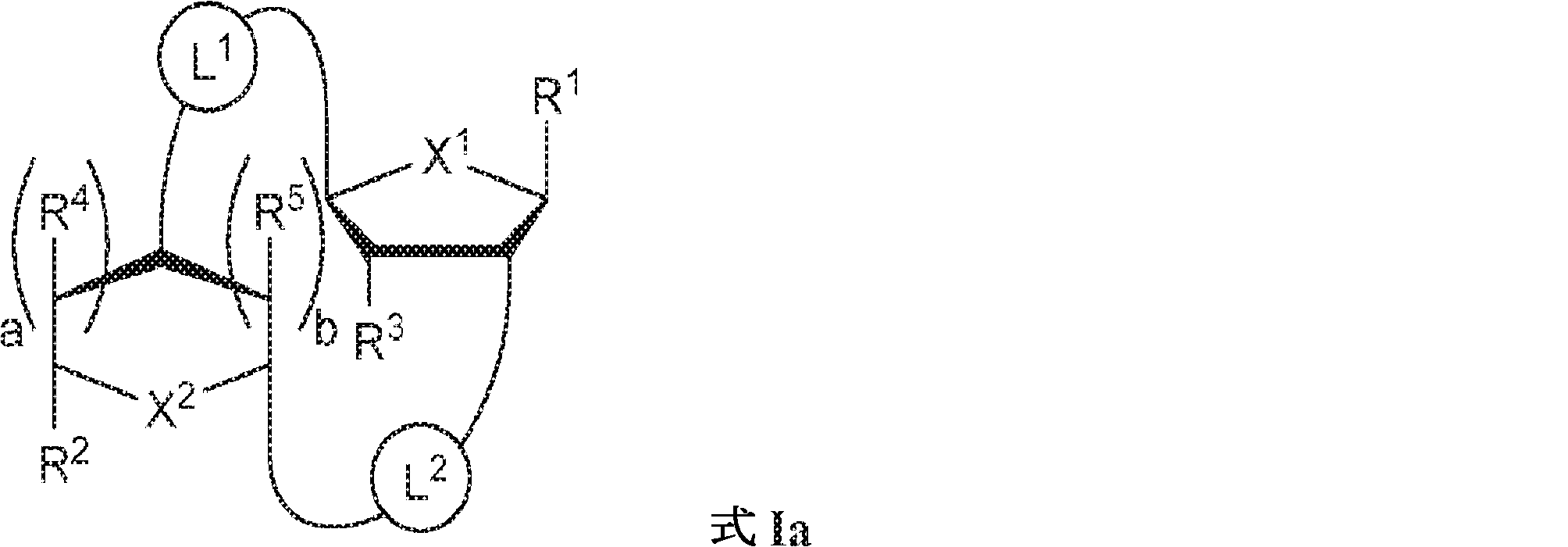
式中、
aおよびbは独立して0または1であり、かつ、aが1でありbが0でありかつR5が存在しない場合; およびaが0でありbが1でありかつR4が存在しない場合にa + b = 1であり;
X1およびX2は独立して5員環中のO、S、またはSeであり;
X1に対してα位の炭素から出発するL1、およびX2に対してα位の炭素から出発するL2は独立して、-CH2O-P(O)R6-O-、-CH2O-P(S)R6-O-、-C(Y1)(Y2)O-P(O)R6-C(Y3)(Y4)-、-CH2NHSO2NH-、-CH2NHC(O)NH-、-CH2NHC(S)NH-、-CH2NHC(NH)NH-、-CH2NHC(O)CH2-、-CH2NHSO2CH2-、-CH2CH2C(O)NH-、-CH2CH2SO2NH-、-CH2NH(3,4-ジオキソシクロブテン-1,2-ジイル)NH-、

cは0、1、または2であり;
d、e、およびfは独立して0または1であり;
Y1、Y2、Y3、およびY4は独立してHまたはFであり;
R6は、ヒドロキシル、チオール、C1~6アルキル、1個もしくは複数のハロゲン基、チオール基、ヒドロキシル基、カルボニル基、カルボキシル基、カルボニルオキシル基、C1~6アルコキシ基、C1~6ヒドロキシアルコキシ基、アミノ基、C1~6アルキルアミノ基、ジ(C1~6アルキル)アミノ基、もしくはアジド基を用いて選択的に官能基を付与されたC1~6アルキル、C1~6アルコキシ、1個もしくは複数のハロゲン基、チオール基、ヒドロキシル基、カルボニル基、カルボキシル基、カルボニルオキシル基、C1~6ヒドロキシアルコキシ基、アミノ基、C1~6アルキルアミノ基、ジ(C1~6アルキル)アミノ基、もしくはアジド基を用いて選択的に官能基を付与されたC1~6アルコキシ、C3~5アルケニル-O-、C3~5アルキニル-O-、オリゴ(エチレングリコール)、ポリ(エチレングリコール)、ボラノ(-BH3
-)、または-NR7R8であり;
R7およびR8は独立して、水素、C1~6アルキル、1個もしくは複数のハロゲン基、チオール基、ヒドロキシル基、カルボニル基、カルボキシル基、カルボニルオキシル基、C1~6アルコキシ基、C1~6ヒドロキシアルコキシ基、アミノ基、C1~6アルキルアミノ基、ジ(C1~6アルキル)アミノ基、もしくはアジド基を用いて選択的に官能基を付与されたC1~6アルキル、環状-(C1~6アルキル)-、1個もしくは複数のハロゲン基、チオール基、ヒドロキシル基、カルボニル基、カルボキシル基、カルボニルオキシル基、C1~6アルコキシ基、C1~6ヒドロキシアルコキシ基、アミノ基、C1~6アルキルアミノ基、もしくはジ(C1~6アルキル)アミノ基を用いて選択的に官能基を付与された環状-(C1~6アルキル)-、環状-(C1~6オキサアルキル)-、または1個もしくは複数のハロゲン基、チオール基、ヒドロキシル基、カルボニル基、カルボキシル基、カルボニルオキシル基、C1~6ヒドロキシアルコキシ基、アミノ基、C1~6アルキルアミノ基、もしくはジ(C1~6アルキル)アミノ基を用いて選択的に官能基を付与された環状-(C1~6オキサアルキル)-であり;
R1およびR2は独立して、互変異性形態を含む以下の一般構造:
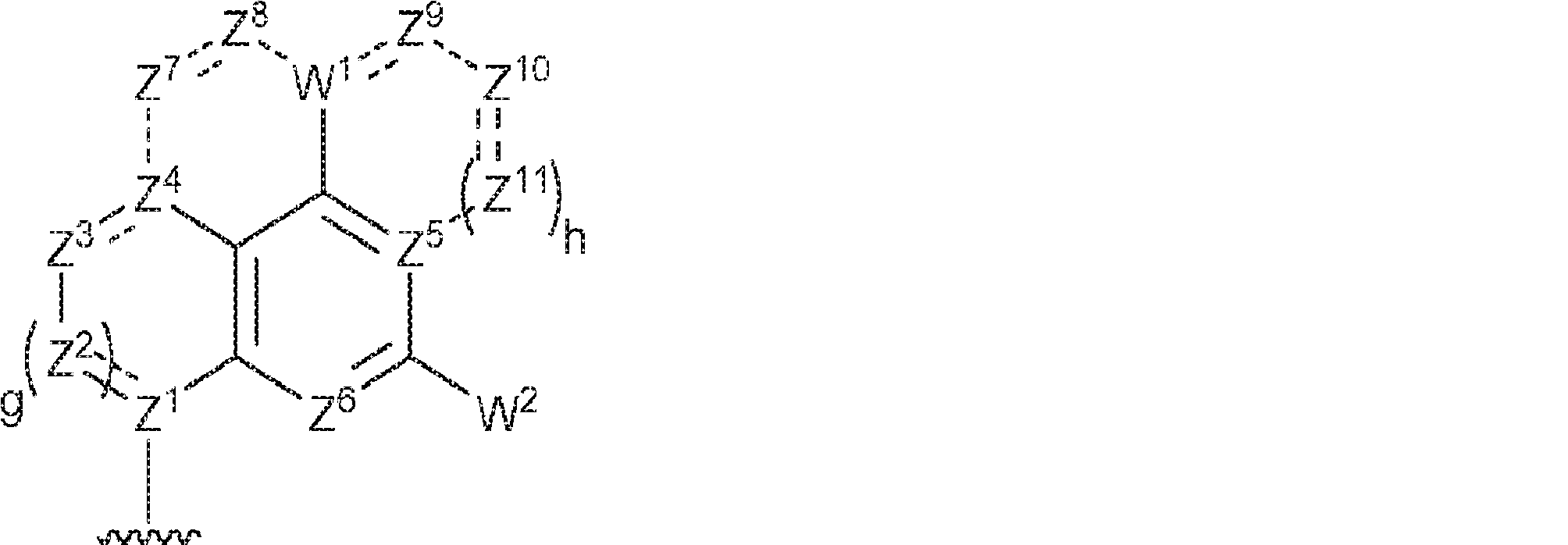
gおよびhは独立して0または1であり;
W1およびW2は独立して、水素、ハロゲン、ヒドロキシル、C1~6アルキル、1個もしくは複数のハロゲン基、チオール基、ヒドロキシル基、カルボニル基、カルボキシル基、カルボニルオキシル基、C1~6アルコキシ基、C1~6ヒドロキシアルコキシ基、アミノ基、C1~6アルキルアミノ基、ジ(C1~6アルキル)アミノ基、もしくはアジド基を用いて選択的に官能基を付与されたC1~6アルキル、C1~6アルコキシ、1個もしくは複数のハロゲン基、チオール基、ヒドロキシル基、カルボニル基、カルボキシル基、カルボニルオキシル基、C1~6ヒドロキシアルコキシ基、アミノ基、C1~6アルキルアミノ基、ジ(C1~6アルキル)アミノ基、もしくはアジド基を用いて選択的に官能基を付与されたC1~6アルコキシ、C3~5アルケニル-O-、C3~5アルキニル-O-、オリゴ(エチレングリコール)、ポリ(エチレングリコール)、アジド、または-NR7R8であり;
Z1、Z2、Z3、Z4、Z5、およびZ6は独立してCHまたはNであり;
存在する場合に、Z7、Z8、Z9、Z10、およびZ11は独立してCHまたはNであり、さらにW1はCHまたはNであり;かつ
R3、R4、およびR5は独立して、水素、ハロゲン、ヒドロキシル、アミノ、C1~6アルキル、1個もしくは複数のハロゲン基、チオール基、ヒドロキシル基、カルボニル基、カルボキシル基、カルボニルオキシル基、C1~6アルコキシ基、C1~6ヒドロキシアルコキシ基、アミノ基、C1~6アルキルアミノ基、ジ(C1~6アルキル)アミノ基、もしくはアジド基を用いて選択的に官能基を付与されたC1~6アルキル、C1~6アルコキシ、1個もしくは複数のハロゲン基、チオール基、ヒドロキシル基、カルボニル基、カルボキシル基、カルボニルオキシル基、C1~6ヒドロキシアルコキシ基、アミノ基、C1~6アルキルアミノ基、ジ(C1~6アルキル)アミノ基、もしくはアジド基を用いて選択的に官能基を付与されたC1~6アルコキシ、C3~5アルケニル-O-、C3~5アルキニル-O-、オリゴ(エチレングリコール)、ポリ(エチレングリコール)、アジド、または-NR7R8である。
In one aspect, the invention is based on the formula Ia:
During the ceremony
If a and b are 0 or 1 independently and a is 1 and b is 0 and R 5 does not exist; and a is 0 and b is 1 and R 4 does not exist. If a + b = 1;
X 1 and X 2 are independently O, S, or Se in a 5-membered ring;
L 1 starting from the carbon at the α-position with respect to X 1 and L 2 starting from the carbon at the α-position with respect to X 2 are independently -CH 2 OP (O) R 6 -O-, -CH. 2 OP (S) R 6 -O-, -C (Y 1 ) (Y 2 ) OP (O) R 6 -C (Y 3 ) (Y 4 )-, -CH 2 NHSO 2 NH-, -CH 2 NHC (O) NH-, -CH 2 NHC (S) NH-, -CH 2 NHC (NH) NH-, -CH 2 NHC (O) CH 2- , -CH 2 NHSO 2 CH 2- , -CH 2 CH 2 C (O) NH-, -CH 2 CH 2 SO 2 NH-, -CH 2 NH (3,4-dioxocyclobutene-1,2-diyl) NH-,
c is 0, 1, or 2;
d, e, and f are independently 0 or 1;
Y 1 , Y 2 , Y 3 , and Y 4 are independently H or F;
R 6 is hydroxyl, thiol, C 1-6 alkyl, one or more halogen groups, thiol group, hydroxyl group, carbonyl group, carboxyl group, carbonyloxyl group, C 1-6 alkoxy group, C 1-6 hydroxy C 1 to 6 alkyl, C 1 to 6 selectively functional groups using an alkoxy group, an amino group, a C 1 to 6 alkyl amino group, a di (C 1 to 6 alkyl) amino group, or an azido group. Alkoxy, one or more halogen groups, thiol groups, hydroxyl groups, carbonyl groups, carboxyl groups, carbonyloxyl groups, C 1-6 hydroxyalkoxy groups, amino groups, C 1-6 alkylamino groups, di (C 1- 6 Alkyl) C 1-6 alkoxy, C 3-5 alkenyl-O-, C 3-5 alkynyl-O-, oligo (ethylene glycol) selectively functionalized with an amino group or an azido group. , Poly (ethylene glycol), Borano (-BH 3- ) , or -NR 7 R 8 ;
R 7 and R 8 are independently hydrogen, C 1-6 alkyl, one or more halogen groups, thiol groups, hydroxyl groups, carbonyl groups, carboxyl groups, carbonyloxyl groups, C 1-6 alkoxy groups, C. C 1-6 alkyl, which is selectively functionalized with a 1-6 hydroxyalkoxy group, an amino group, a C 1-6 alkyl amino group, a di (C 1-6 alkyl) amino group, or an azido group. Cyclic- (C 1-6 alkyl)-, one or more halogen groups, thiol groups, hydroxyl groups, carbonyl groups, carboxyl groups, carbonyloxyl groups, C 1-6 alkoxy groups, C 1-6 hydroxyalkoxy groups, Cyclic- (C 1-6 alkyl)-, cyclic-(C 1 ) selectively functionalized with an amino group, C 1-6 alkyl amino group, or di (C 1-6 alkyl) amino group ~ 6 Oxalalkyl)-or one or more halogen groups, thiol groups, hydroxyl groups, carbonyl groups, carboxyl groups, carbonyloxyl groups, C 1-6 hydroxyalkoxy groups, amino groups, C 1-6 alkylamino groups , Or a cyclic- (C 1-6 oxaalkyl)-selectively imparted with a functional group using a di (C 1-6 alkyl) amino group;
R 1 and R 2 are independent and include the following general structures, including tautomeric forms:
g and h are independently 0 or 1;
W 1 and W 2 are independently hydrogen, halogen, hydroxyl, C 1-6 alkyl, one or more halogen groups, thiol group, hydroxyl group, carbonyl group, carboxyl group, carbonyloxyl group, C 1-6 . C 1 selectively functionalized with an alkoxy group, C 1-6 hydroxyalkoxy group, amino group, C 1-6 alkylamino group, di (C 1-6 alkyl) amino group, or azido group. ~ 6 alkyl, C 1 ~ 6 alkoxy, one or more halogen groups, thiol group, hydroxyl group, carbonyl group, carboxyl group, carbonyloxyl group, C 1 ~ 6 hydroxyalkoxy group, amino group, C 1 ~ 6 alkyl C 1-6 alkoxy, C 3-5 alkenyl-O-, C 3-5 alkynyl- selectively functionalized with an amino group, a di (C 1-6 alkyl) amino group, or an azido group. O-, oligo (ethylene glycol), poly (ethylene glycol), azide, or -NR 7 R 8 ;
Z 1 , Z 2 , Z 3 , Z 4 , Z 5 , and Z 6 are independently CH or N;
If present, Z 7 , Z 8 , Z 9 , Z 10 , and Z 11 are independently CH or N, and W 1 is CH or N; and
R 3 , R 4 , and R 5 are independently hydrogen, halogen, hydroxyl, amino, C 1-6 alkyl, one or more halogen groups, thiol groups, hydroxyl groups, carbonyl groups, carboxyl groups, carbonyl oxyls. Group, C 1-6 alkoxy group, C 1-6 hydroxyalkoxy group, amino group, C 1-6 alkylamino group, di (C 1-6 alkyl) amino group, or selectively functional group using azide group C 1 to 6 alkyl, C 1 to 6 alkoxy, one or more halogen groups, thiol groups, hydroxyl groups, carbonyl groups, carboxyl groups, carbonyloxyl groups, C 1 to 6 hydroxyalkoxy groups, amino groups , C 1-6 alkylamino groups, di (C 1-6 alkyl) amino groups, or C 1-6 alkoxys selectively functionalized with azido groups, C 3-5 alkenyl-O-, C 3-5 alkynyl-O-, oligo (ethylene glycol), poly (ethylene glycol), azide, or -NR 7 R 8 .
一態様では、本発明は、式Ib:
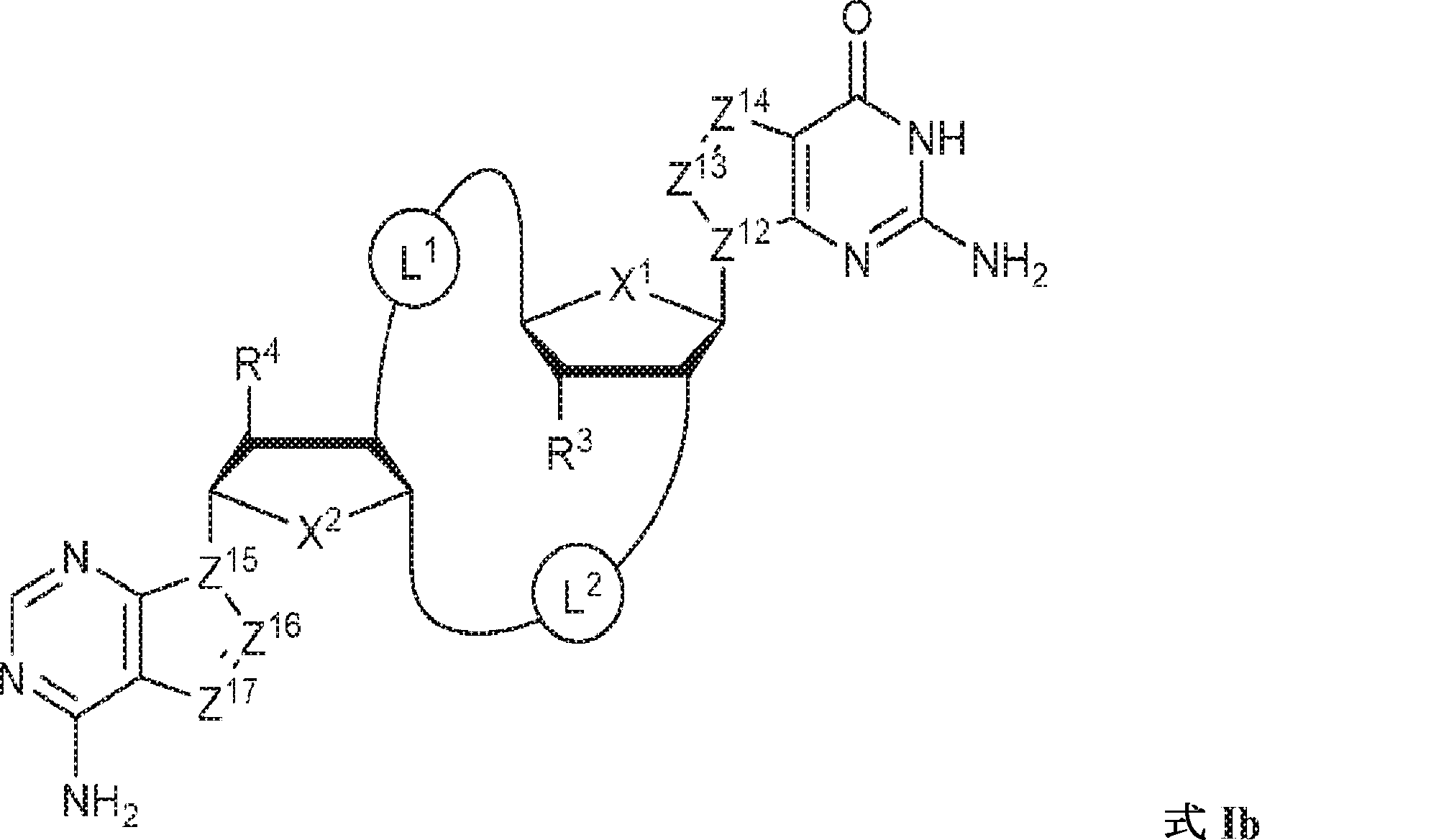
式中、
X1およびX2は独立してO、S、またはSeであり;
Z12、Z13、Z14、Z15、Z16、およびZ17は独立してCHまたはNであり;
X1に対してα位の炭素から出発するL1、およびX2に対してα位の炭素から出発するL2は独立して、-CH2O-P(O)R6-O-、-CH2O-P(S)R6-O-、-C(Y1)(Y2)O-P(O)R6-C(Y3)(Y4)-、-CH2NHSO2NH-、-CH2NHC(O)NH-、-CH2NHC(S)NH-、-CH2NHC(NH)NH-、-CH2NHC(O)CH2-、-CH2NHSO2CH2-、-CH2CH2C(O)NH-、-CH2CH2SO2NH-、-CH2NH(3,4-ジオキソシクロブテン-1,2-ジイル)NH-、

cは0、1、または2であり;
d、e、およびfは独立して0または1であり;
Y1、Y2、Y3、およびY4は独立してHまたはFであり;
R6は、ヒドロキシル、チオール、C1~6アルキル、1個もしくは複数のハロゲン基、チオール基、ヒドロキシル基、カルボニル基、カルボキシル基、カルボニルオキシル基、C1~6アルコキシ基、C1~6ヒドロキシアルコキシ基、アミノ基、C1~6アルキルアミノ基、ジ(C1~6アルキル)アミノ基、もしくはアジド基を用いて選択的に官能基を付与されたC1~6アルキル、C1~6アルコキシ、1個もしくは複数のハロゲン基、チオール基、ヒドロキシル基、カルボニル基、カルボキシル基、カルボニルオキシル基、C1~6ヒドロキシアルコキシ基、アミノ基、C1~6アルキルアミノ基、ジ(C1~6アルキル)アミノ基、もしくはアジド基を用いて選択的に官能基を付与されたC1~6アルコキシ、C3~5アルケニル-O-、C3~5アルキニル-O-、オリゴ(エチレングリコール)、ポリ(エチレングリコール)、ボラノ(-BH3
-)、または-NR7R8であり;
R7およびR8は独立して、水素、C1~6アルキル、1個もしくは複数のハロゲン基、チオール基、ヒドロキシル基、カルボニル基、カルボキシル基、カルボニルオキシル基、C1~6アルコキシ基、C1~6ヒドロキシアルコキシ基、アミノ基、C1~6アルキルアミノ基、ジ(C1~6アルキル)アミノ基、もしくはアジド基を用いて選択的に官能基を付与されたC1~6アルキル、環状-(C1~6アルキル)-、1個もしくは複数のハロゲン基、チオール基、ヒドロキシル基、カルボニル基、カルボキシル基、カルボニルオキシル基、C1~6アルコキシ基、C1~6ヒドロキシアルコキシ基、アミノ基、C1~6アルキルアミノ基、もしくはジ(C1~6アルキル)アミノ基を用いて選択的に官能基を付与された環状-(C1~6アルキル)-、環状-(C1~6オキサアルキル)-、または1個もしくは複数のハロゲン基、チオール基、ヒドロキシル基、カルボニル基、カルボキシル基、カルボニルオキシル基、C1~6ヒドロキシアルコキシ基、アミノ基、C1~6アルキルアミノ基、もしくはジ(C1~6アルキル)アミノ基を用いて選択的に官能基を付与された環状-(C1~6オキサアルキル)-であり;かつ
R3およびR4は独立して、水素、ハロゲン、ヒドロキシル、アミノ、C1~6アルキル、1個もしくは複数のハロゲン基、チオール基、ヒドロキシル基、カルボニル基、カルボキシル基、カルボニルオキシル基、C1~6アルコキシ基、C1~6ヒドロキシアルコキシ基、アミノ基、C1~6アルキルアミノ基、ジ(C1~6アルキル)アミノ基、もしくはアジド基を用いて選択的に官能基を付与されたC1~6アルキル、C1~6アルコキシ、1個もしくは複数のハロゲン基、チオール基、ヒドロキシル基、カルボニル基、カルボキシル基、カルボニルオキシル基、C1~6ヒドロキシアルコキシ基、アミノ基、C1~6アルキルアミノ基、ジ(C1~6アルキル)アミノ基、もしくはアジド基を用いて選択的に官能基を付与されたC1~6アルコキシ、C3~5アルケニル-O-、C3~5アルキニル-O-、オリゴ(エチレングリコール)、ポリ(エチレングリコール)、アジド、または-NR7R8である。
In one aspect, the invention is in the formula Ib :.
During the ceremony
X 1 and X 2 are independently O, S, or Se;
Z 12 , Z 13 , Z 14 , Z 15 , Z 16 , and Z 17 are independently CH or N;
L 1 starting from the carbon at the α-position with respect to X 1 and L 2 starting from the carbon at the α-position with respect to X 2 are independently -CH 2 OP (O) R 6 -O-, -CH. 2 OP (S) R 6 -O-, -C (Y 1 ) (Y 2 ) OP (O) R 6 -C (Y 3 ) (Y 4 )-, -CH 2 NHSO 2 NH-, -CH 2 NHC (O) NH-, -CH 2 NHC (S) NH-, -CH 2 NHC (NH) NH-, -CH 2 NHC (O) CH 2- , -CH 2 NHSO 2 CH 2- , -CH 2 CH 2 C (O) NH-, -CH 2 CH 2 SO 2 NH-, -CH 2 NH (3,4-dioxocyclobutene-1,2-diyl) NH-,
c is 0, 1, or 2;
d, e, and f are independently 0 or 1;
Y 1 , Y 2 , Y 3 , and Y 4 are independently H or F;
R 6 is hydroxyl, thiol, C 1-6 alkyl, one or more halogen groups, thiol group, hydroxyl group, carbonyl group, carboxyl group, carbonyloxyl group, C 1-6 alkoxy group, C 1-6 hydroxy C 1 to 6 alkyl, C 1 to 6 selectively functional groups using an alkoxy group, an amino group, a C 1 to 6 alkyl amino group, a di (C 1 to 6 alkyl) amino group, or an azido group. Alkoxy, one or more halogen groups, thiol groups, hydroxyl groups, carbonyl groups, carboxyl groups, carbonyloxyl groups, C 1-6 hydroxyalkoxy groups, amino groups, C 1-6 alkylamino groups, di (C 1- 6 Alkyl) C 1-6 alkoxy, C 3-5 alkenyl-O-, C 3-5 alkynyl-O-, oligo (ethylene glycol) selectively functionalized with an amino group or an azido group. , Poly (ethylene glycol), Borano (-BH 3- ) , or -NR 7 R 8 ;
R 7 and R 8 are independently hydrogen, C 1-6 alkyl, one or more halogen groups, thiol groups, hydroxyl groups, carbonyl groups, carboxyl groups, carbonyloxyl groups, C 1-6 alkoxy groups, C. C 1-6 alkyl, which is selectively functionalized with a 1-6 hydroxyalkoxy group, an amino group, a C 1-6 alkyl amino group, a di (C 1-6 alkyl) amino group, or an azido group. Cyclic- (C 1-6 alkyl)-, one or more halogen groups, thiol groups, hydroxyl groups, carbonyl groups, carboxyl groups, carbonyloxyl groups, C 1-6 alkoxy groups, C 1-6 hydroxyalkoxy groups, Cyclic- (C 1-6 alkyl)-, cyclic-(C 1 ) selectively functionalized with an amino group, C 1-6 alkyl amino group, or di (C 1-6 alkyl) amino group ~ 6 Oxalalkyl)-or one or more halogen groups, thiol groups, hydroxyl groups, carbonyl groups, carboxyl groups, carbonyloxyl groups, C 1-6 hydroxyalkoxy groups, amino groups, C 1-6 alkylamino groups , Or a cyclic- (C 1-6 oxaalkyl)-selectively imparted with a functional group using a di (C 1-6 alkyl) amino group; and
R 3 and R 4 are independently hydrogen, halogen, hydroxyl, amino, C 1-6 alkyl, one or more halogen groups, thiol groups, hydroxyl groups, carbonyl groups, carboxyl groups, carbonyloxyl groups, C 1 A functional group was selectively imparted using a ~ 6 alkoxy group, a C 1 to 6 hydroxyalkoxy group, an amino group, a C 1 to 6 alkylamino group, a di (C 1 to 6 alkyl) amino group, or an azido group. C 1 to 6 alkyl, C 1 to 6 alkoxy, one or more halogen groups, thiol group, hydroxyl group, carbonyl group, carboxyl group, carbonyloxyl group, C 1 to 6 hydroxyalkoxy group, amino group, C 1 to 6 Alkylamino group, di (C 1-6 alkyl) amino group, or C 1-6 alkoxy selectively functionalized with azido group, C 3-5 alkenyl-O-, C 3-5 Alkinyl-O-, oligo (ethylene glycol), poly (ethylene glycol), azide, or -NR 7 R 8 .
別の態様では、本発明は、式Ic:
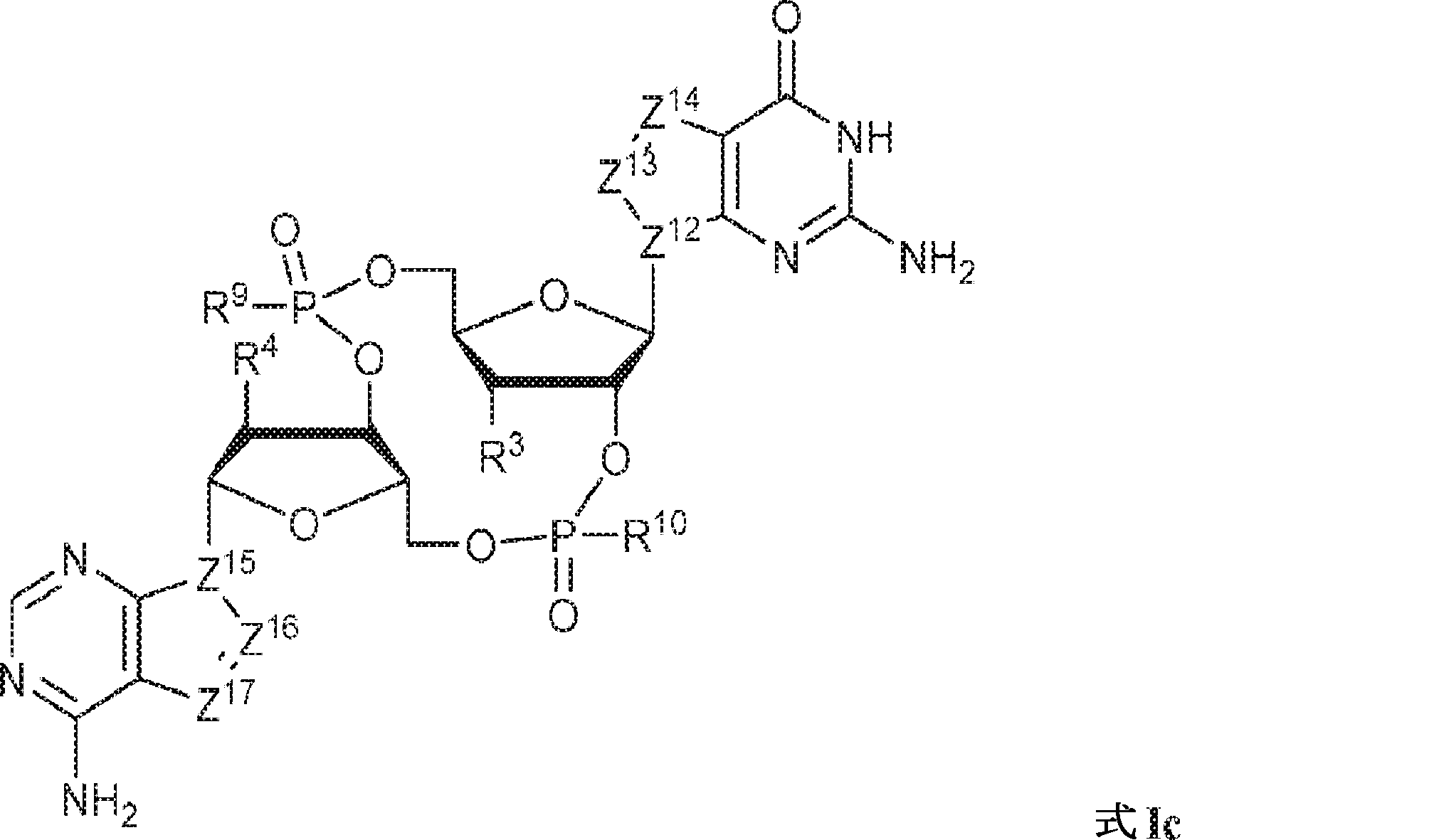
式中、
Z12、Z13、Z14、Z15、Z16、およびZ17は独立してCHまたはNであり;
R3およびR4は独立して、水素、ハロゲン、ヒドロキシル、アミノ、C1~6アルキル、1個もしくは複数のハロゲン基、チオール基、ヒドロキシル基、カルボニル基、カルボキシル基、カルボニルオキシル基、C1~6アルコキシ基、C1~6ヒドロキシアルコキシ基、アミノ基、C1~6アルキルアミノ基、ジ(C1~6アルキル)アミノ基、もしくはアジド基を用いて選択的に官能基を付与されたC1~6アルキル、C1~6アルコキシ、1個もしくは複数のハロゲン基、チオール基、ヒドロキシル基、カルボニル基、カルボキシル基、カルボニルオキシル基、C1~6ヒドロキシアルコキシ基、アミノ基、C1~6アルキルアミノ基、ジ(C1~6アルキル)アミノ基、もしくはアジド基を用いて選択的に官能基を付与されたC1~6アルコキシ、C3~5アルケニル-O-、C3~5アルキニル-O-、オリゴ(エチレングリコール)、ポリ(エチレングリコール)、アジド、または-NR7R8であり;
R7およびR8は独立して、水素、C1~6アルキル、1個もしくは複数のハロゲン基、チオール基、ヒドロキシル基、カルボニル基、カルボキシル基、カルボニルオキシル基、C1~6アルコキシ基、C1~6ヒドロキシアルコキシ基、アミノ基、C1~6アルキルアミノ基、ジ(C1~6アルキル)アミノ基、もしくはアジド基を用いて選択的に官能基を付与されたC1~6アルキル、環状-(C1~6アルキル)-、1個もしくは複数のハロゲン基、チオール基、ヒドロキシル基、カルボニル基、カルボキシル基、カルボニルオキシル基、C1~6アルコキシ基、C1~6ヒドロキシアルコキシ基、アミノ基、C1~6アルキルアミノ基、もしくはジ(C1~6アルキル)アミノ基を用いて選択的に官能基を付与された環状-(C1~6アルキル)-、環状-(C1~6オキサアルキル)-、または1個もしくは複数のハロゲン基、チオール基、ヒドロキシル基、カルボニル基、カルボキシル基、カルボニルオキシル基、C1~6ヒドロキシアルコキシ基、アミノ基、C1~6アルキルアミノ基、もしくはジ(C1~6アルキル)アミノ基を用いて選択的に官能基を付与された環状-(C1~6オキサアルキル)-であり;かつ
R9およびR10は独立して、ヒドロキシル、チオール、C1~6アルキル、1個もしくは複数のハロゲン基、チオール基、ヒドロキシル基、カルボニル基、カルボキシル基、カルボニルオキシル基、C1~6アルコキシ基、C1~6ヒドロキシアルコキシ基、アミノ基、C1~6アルキルアミノ基、ジ(C1~6アルキル)アミノ基、もしくはアジド基を用いて選択的に官能基を付与されたC1~6アルキル、C1~6アルコキシ、1個もしくは複数のハロゲン基、チオール基、ヒドロキシル基、カルボニル基、カルボキシル基、カルボニルオキシル基、C1~6ヒドロキシアルコキシ基、アミノ基、C1~6アルキルアミノ基、ジ(C1~6アルキル)アミノ基、もしくはアジド基を用いて選択的に官能基を付与されたC1~6アルコキシ、C3~5アルケニル-O-、C3~5アルキニル-O-、オリゴ(エチレングリコール)、ポリ(エチレングリコール)、ボラノ(-BH3
-)、または-NR7R8である。
In another aspect, the invention is in the formula Ic :.
During the ceremony
Z 12 , Z 13 , Z 14 , Z 15 , Z 16 , and Z 17 are independently CH or N;
R 3 and R 4 are independently hydrogen, halogen, hydroxyl, amino, C 1-6 alkyl, one or more halogen groups, thiol groups, hydroxyl groups, carbonyl groups, carboxyl groups, carbonyloxyl groups, C 1 A functional group was selectively imparted using a ~ 6 alkoxy group, a C 1 to 6 hydroxyalkoxy group, an amino group, a C 1 to 6 alkylamino group, a di (C 1 to 6 alkyl) amino group, or an azido group. C 1 to 6 alkyl, C 1 to 6 alkoxy, one or more halogen groups, thiol group, hydroxyl group, carbonyl group, carboxyl group, carbonyloxyl group, C 1 to 6 hydroxyalkoxy group, amino group, C 1 to 6 Alkylamino group, di (C 1-6 alkyl) amino group, or C 1-6 alkoxy selectively functionalized with azido group, C 3-5 alkenyl-O-, C 3-5 Alkinyl-O-, oligo (ethylene glycol), poly (ethylene glycol), azide, or -NR 7 R 8 ;
R 7 and R 8 are independently hydrogen, C 1-6 alkyl, one or more halogen groups, thiol groups, hydroxyl groups, carbonyl groups, carboxyl groups, carbonyloxyl groups, C 1-6 alkoxy groups, C. C 1-6 alkyl, which is selectively functionalized with a 1-6 hydroxyalkoxy group, an amino group, a C 1-6 alkyl amino group, a di (C 1-6 alkyl) amino group, or an azido group. Cyclic- (C 1-6 alkyl)-, one or more halogen groups, thiol groups, hydroxyl groups, carbonyl groups, carboxyl groups, carbonyloxyl groups, C 1-6 alkoxy groups, C 1-6 hydroxyalkoxy groups, Cyclic- (C 1-6 alkyl)-, cyclic-(C 1 ) selectively functionalized with an amino group, C 1-6 alkyl amino group, or di (C 1-6 alkyl) amino group ~ 6 Oxalalkyl)-or one or more halogen groups, thiol groups, hydroxyl groups, carbonyl groups, carboxyl groups, carbonyloxyl groups, C 1-6 hydroxyalkoxy groups, amino groups, C 1-6 alkylamino groups , Or a cyclic- (C 1-6 oxaalkyl)-selectively imparted with a functional group using a di (C 1-6 alkyl) amino group; and
R 9 and R 10 are independently hydroxyl, thiol, C 1-6 alkyl, one or more halogen groups, thiol groups, hydroxyl groups, carbonyl groups, carboxyl groups, carbonyloxyl groups, C 1-6 alkoxy groups. , C 1 to 6 hydroxyalkoxy group, amino group, C 1 to 6 alkylamino group, di (C 1 to 6 alkyl) amino group, or C 1 to 6 selectively functionalized using an azido group. Alkyl, C 1-6 alkoxy, one or more halogen groups, thiol groups, hydroxyl groups, carbonyl groups, carboxyl groups, carbonyloxyl groups, C 1-6 hydroxyalkoxy groups, amino groups, C 1-6 alkylamino groups , C 1-6 alkoxy, C 3-5 alkenyl-O-, C 3-5 alkynyl-O-, selectively functionalized with a di (C 1-6 alkyl) amino group or an azido group. , Oligo (ethylene glycol), Poly (ethylene glycol), Borano (-BH 3- ) , or -NR 7 R 8 .
別の態様では、式Icの一方または両方のテトラヒドロフラニル環中の酸素原子は硫黄原子またはセレン原子で置き換えられている。 In another embodiment, the oxygen atom in one or both tetrahydrofuranyl rings of formula Ic is replaced with a sulfur atom or a selenium atom.
別の態様では、本発明は、式Id:
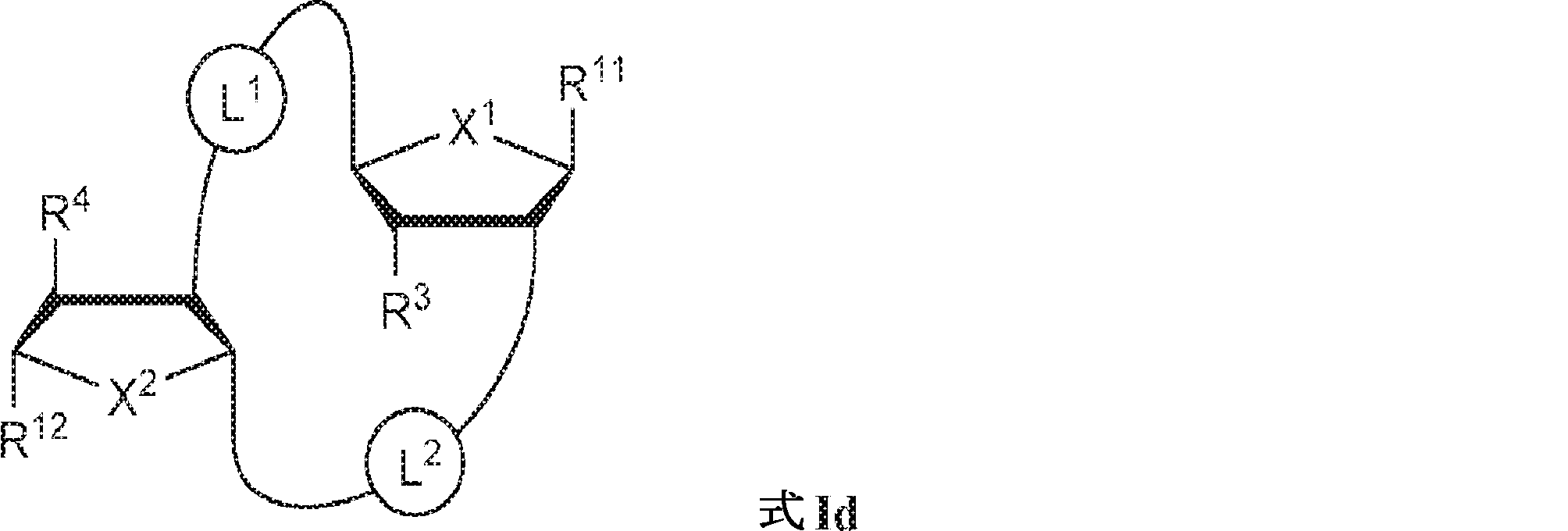
式中、
X1およびX2は独立してO、S、またはSeであり;
X1に対してα位の炭素から出発するL1、およびX2に対してα位の炭素から出発するL2は独立して、-CH2O-P(O)R6-O-、-CH2O-P(S)R6-O-、-C(Y1)(Y2)O-P(O)R6-C(Y3)(Y4)-、-CH2NHSO2NH-、-CH2NHC(O)NH-、-CH2NHC(S)NH-、-CH2NHC(NH)NH-、-CH2NHC(O)CH2-、-CH2NHSO2CH2-、-CH2CH2C(O)NH-、-CH2CH2SO2NH-、-CH2NH(3,4-ジオキソシクロブテン-1,2-ジイル)NH-、

cは0、1、または2であり;
d、e、およびfは独立して0または1であり;
Y1、Y2、Y3、およびY4は独立してHまたはFであり;
R6は、ヒドロキシル、チオール、C1~6アルキル、1個もしくは複数のハロゲン基、チオール基、ヒドロキシル基、カルボニル基、カルボキシル基、カルボニルオキシル基、C1~6アルコキシ基、C1~6ヒドロキシアルコキシ基、アミノ基、C1~6アルキルアミノ基、ジ(C1~6アルキル)アミノ基、もしくはアジド基を用いて選択的に官能基を付与されたC1~6アルキル、C1~6アルコキシ、1個もしくは複数のハロゲン基、チオール基、ヒドロキシル基、カルボニル基、カルボキシル基、カルボニルオキシル基、C1~6ヒドロキシアルコキシ基、アミノ基、C1~6アルキルアミノ基、ジ(C1~6アルキル)アミノ基、もしくはアジド基を用いて選択的に官能基を付与されたC1~6アルコキシ、C3~5アルケニル-O-、C3~5アルキニル-O-、オリゴ(エチレングリコール)、ポリ(エチレングリコール)、ボラノ(-BH3
-)、または-NR7R8であり;
R7およびR8は独立して、水素、C1~6アルキル、1個もしくは複数のハロゲン基、チオール基、ヒドロキシル基、カルボニル基、カルボキシル基、カルボニルオキシル基、C1~6アルコキシ基、C1~6ヒドロキシアルコキシ基、アミノ基、C1~6アルキルアミノ基、ジ(C1~6アルキル)アミノ基、もしくはアジド基を用いて選択的に官能基を付与されたC1~6アルキル、環状-(C1~6アルキル)-、1個もしくは複数のハロゲン基、チオール基、ヒドロキシル基、カルボニル基、カルボキシル基、カルボニルオキシル基、C1~6アルコキシ基、C1~6ヒドロキシアルコキシ基、アミノ基、C1~6アルキルアミノ基、もしくはジ(C1~6アルキル)アミノ基を用いて選択的に官能基を付与された環状-(C1~6アルキル)-、環状-(C1~6オキサアルキル)-、または1個もしくは複数のハロゲン基、チオール基、ヒドロキシル基、カルボニル基、カルボキシル基、カルボニルオキシル基、C1~6ヒドロキシアルコキシ基、アミノ基、C1~6アルキルアミノ基、もしくはジ(C1~6アルキル)アミノ基を用いて選択的に官能基を付与された環状-(C1~6オキサアルキル)-であり;
R3およびR4は独立して、水素、ハロゲン、ヒドロキシル、アミノ、C1~6アルキル、1個もしくは複数のハロゲン基、チオール基、ヒドロキシル基、カルボニル基、カルボキシル基、カルボニルオキシル基、C1~6アルコキシ基、C1~6ヒドロキシアルコキシ基、アミノ基、C1~6アルキルアミノ基、ジ(C1~6アルキル)アミノ基、もしくはアジド基を用いて選択的に官能基を付与されたC1~6アルキル、C1~6アルコキシ、1個もしくは複数のハロゲン基、チオール基、ヒドロキシル基、カルボニル基、カルボキシル基、カルボニルオキシル基、C1~6ヒドロキシアルコキシ基、アミノ基、C1~6アルキルアミノ基、ジ(C1~6アルキル)アミノ基、もしくはアジド基を用いて選択的に官能基を付与されたC1~6アルコキシ、C3~5アルケニル-O-、C3~5アルキニル-O-、オリゴ(エチレングリコール)、ポリ(エチレングリコール)、アジド、または-NR7R8であり;
R11およびR12は独立して、
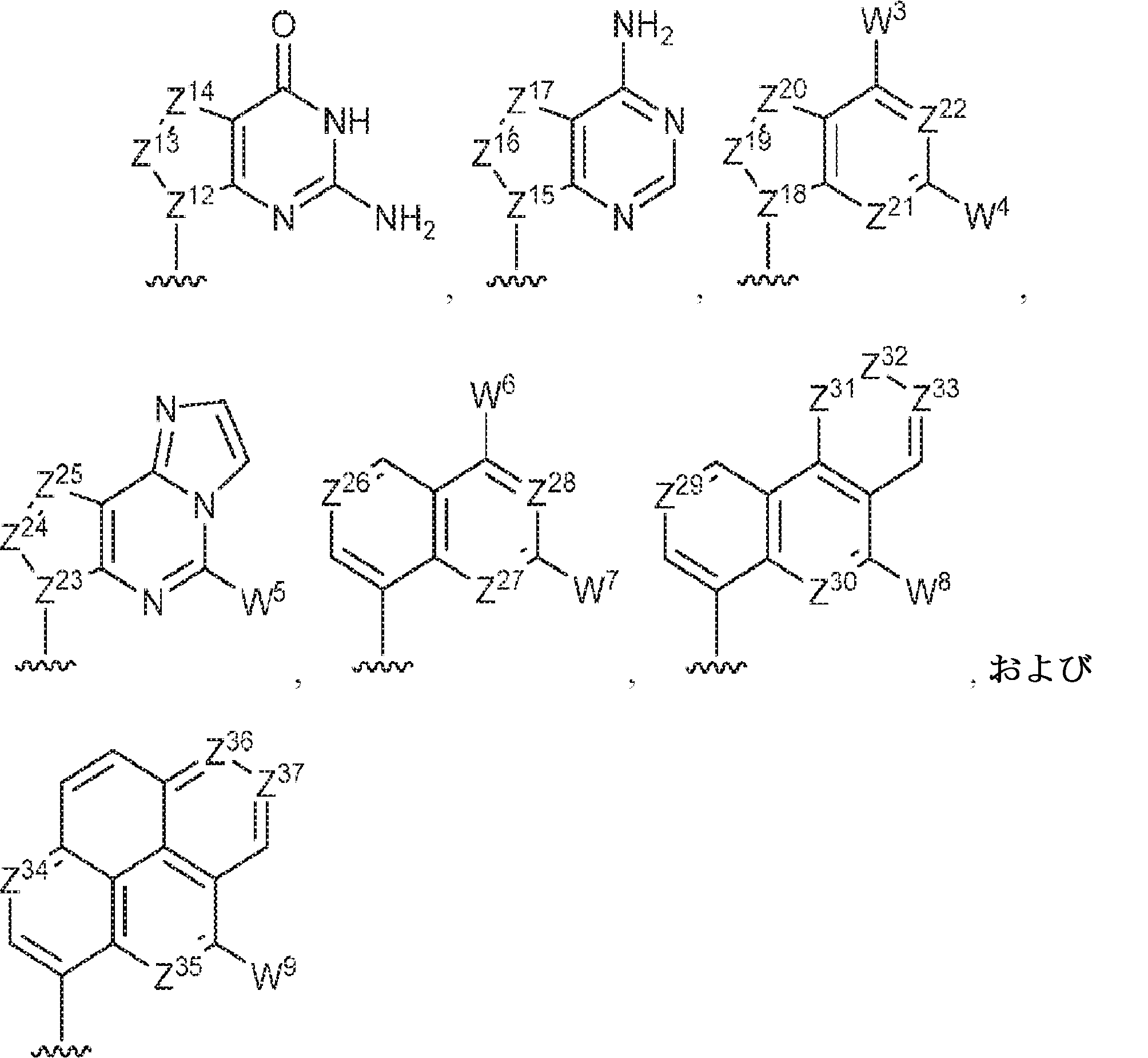
Z12、Z13、Z14、Z15、Z16、Z17、Z18、Z19、Z20、Z21、Z22、Z23、Z24、Z25、Z26、Z27、Z28、Z29、Z30、Z31、Z32、Z33、Z34、Z35、Z36、およびZ37はそれぞれ独立してCHまたはNであり;かつ
W3、W4、W5、W6、W7、W8、およびW9は独立して、水素、ハロゲン、ヒドロキシル、C1~6アルキル、1個もしくは複数のハロゲン基、チオール基、ヒドロキシル基、カルボニル基、カルボキシル基、カルボニルオキシル基、C1~6アルコキシ基、C1~6ヒドロキシアルコキシ基、アミノ基、C1~6アルキルアミノ基、ジ(C1~6アルキル)アミノ基、もしくはアジド基を用いて選択的に官能基を付与されたC1~6アルキル、C1~6アルコキシ、1個もしくは複数のハロゲン基、チオール基、ヒドロキシル基、カルボニル基、カルボキシル基、カルボニルオキシル基、C1~6ヒドロキシアルコキシ基、アミノ基、C1~6アルキルアミノ基、ジ(C1~6アルキル)アミノ基、もしくはアジド基を用いて選択的に官能基を付与されたC1~6アルコキシ、C3~5アルケニル-O-、C3~5アルキニル-O-、オリゴ(エチレングリコール)、ポリ(エチレングリコール)、アジド、または-NR7R8である。
In another aspect, the invention describes the formula Id:
During the ceremony
X 1 and X 2 are independently O, S, or Se;
L 1 starting from the carbon at the α-position with respect to X 1 and L 2 starting from the carbon at the α-position with respect to X 2 are independently -CH 2 OP (O) R 6 -O-, -CH. 2 OP (S) R 6 -O-, -C (Y 1 ) (Y 2 ) OP (O) R 6 -C (Y 3 ) (Y 4 )-, -CH 2 NHSO 2 NH-, -CH 2 NHC (O) NH-, -CH 2 NHC (S) NH-, -CH 2 NHC (NH) NH-, -CH 2 NHC (O) CH 2- , -CH 2 NHSO 2 CH 2- , -CH 2 CH 2 C (O) NH-, -CH 2 CH 2 SO 2 NH-, -CH 2 NH (3,4-dioxocyclobutene-1,2-diyl) NH-,
c is 0, 1, or 2;
d, e, and f are independently 0 or 1;
Y 1 , Y 2 , Y 3 , and Y 4 are independently H or F;
R 6 is hydroxyl, thiol, C 1-6 alkyl, one or more halogen groups, thiol group, hydroxyl group, carbonyl group, carboxyl group, carbonyloxyl group, C 1-6 alkoxy group, C 1-6 hydroxy C 1 to 6 alkyl, C 1 to 6 selectively functional groups using an alkoxy group, an amino group, a C 1 to 6 alkyl amino group, a di (C 1 to 6 alkyl) amino group, or an azido group. Alkoxy, one or more halogen groups, thiol groups, hydroxyl groups, carbonyl groups, carboxyl groups, carbonyloxyl groups, C 1-6 hydroxyalkoxy groups, amino groups, C 1-6 alkylamino groups, di (C 1- 6 Alkyl) C 1-6 alkoxy, C 3-5 alkenyl-O-, C 3-5 alkynyl-O-, oligo (ethylene glycol) selectively functionalized with an amino group or an azido group. , Poly (ethylene glycol), Borano (-BH 3- ) , or -NR 7 R 8 ;
R 7 and R 8 are independently hydrogen, C 1-6 alkyl, one or more halogen groups, thiol groups, hydroxyl groups, carbonyl groups, carboxyl groups, carbonyloxyl groups, C 1-6 alkoxy groups, C. C 1-6 alkyl, which is selectively functionalized with a 1-6 hydroxyalkoxy group, an amino group, a C 1-6 alkyl amino group, a di (C 1-6 alkyl) amino group, or an azido group. Cyclic- (C 1-6 alkyl)-, one or more halogen groups, thiol groups, hydroxyl groups, carbonyl groups, carboxyl groups, carbonyloxyl groups, C 1-6 alkoxy groups, C 1-6 hydroxyalkoxy groups, Cyclic- (C 1-6 alkyl)-, cyclic-(C 1 ) selectively functionalized with an amino group, C 1-6 alkyl amino group, or di (C 1-6 alkyl) amino group ~ 6 Oxalalkyl)-or one or more halogen groups, thiol groups, hydroxyl groups, carbonyl groups, carboxyl groups, carbonyloxyl groups, C 1-6 hydroxyalkoxy groups, amino groups, C 1-6 alkylamino groups , Or a cyclic- (C 1-6 oxaalkyl)-selectively imparted with a functional group using a di (C 1-6 alkyl) amino group;
R 3 and R 4 are independently hydrogen, halogen, hydroxyl, amino, C 1-6 alkyl, one or more halogen groups, thiol groups, hydroxyl groups, carbonyl groups, carboxyl groups, carbonyloxyl groups, C 1 A functional group was selectively imparted using a ~ 6 alkoxy group, a C 1 to 6 hydroxyalkoxy group, an amino group, a C 1 to 6 alkylamino group, a di (C 1 to 6 alkyl) amino group, or an azido group. C 1 to 6 alkyl, C 1 to 6 alkoxy, one or more halogen groups, thiol group, hydroxyl group, carbonyl group, carboxyl group, carbonyloxyl group, C 1 to 6 hydroxyalkoxy group, amino group, C 1 to 6 Alkylamino group, di (C 1-6 alkyl) amino group, or C 1-6 alkoxy selectively functionalized with azido group, C 3-5 alkenyl-O-, C 3-5 Alkinyl-O-, oligo (ethylene glycol), poly (ethylene glycol), azide, or -NR 7 R 8 ;
R 11 and R 12 are independent,
Z 12 , Z 13 , Z 14 , Z 15 , Z 16 , Z 17 , Z 18 , Z 19 , Z 20 , Z 21 , Z 22 , Z 23 , Z 24 , Z 25 , Z 26 , Z 27 , Z 28 , Z 29 , Z 30 , Z 31 , Z 32 , Z 33 , Z 34 , Z 35 , Z 36 , and Z 37 are CH or N independently; and
W 3 , W 4 , W 5 , W 6 , W 7 , W 8 , and W 9 are independently hydrogen, halogen, hydroxyl, C 1-6 alkyl, one or more halogen groups, thiol groups, hydroxyl. Group, carbonyl group, carboxyl group, carbonyloxyl group, C 1-6 alkoxy group, C 1-6 hydroxyalkoxy group, amino group, C 1-6 alkylamino group, di (C 1-6 alkyl) amino group, or C 1-6 alkyl, C 1-6 alkoxy, one or more halogen groups, thiol groups, hydroxyl groups, carbonyl groups, carboxyl groups, carbonyloxyl groups, selectively functionalized with azido groups, C 1 to 6 hydroxyalkoxy group selectively added with a functional group using a C 1 to 6 hydroxyalkoxy group, an amino group, a C 1 to 6 alkyl amino group, a di (C 1 to 6 alkyl) amino group, or an azido group. , C 3-5 alkenyl-O-, C 3-5 alkynyl-O-, oligo (ethylene glycol), poly (ethylene glycol), azide, or -NR 7 R 8 .
別の態様では、本発明は、式Ie:
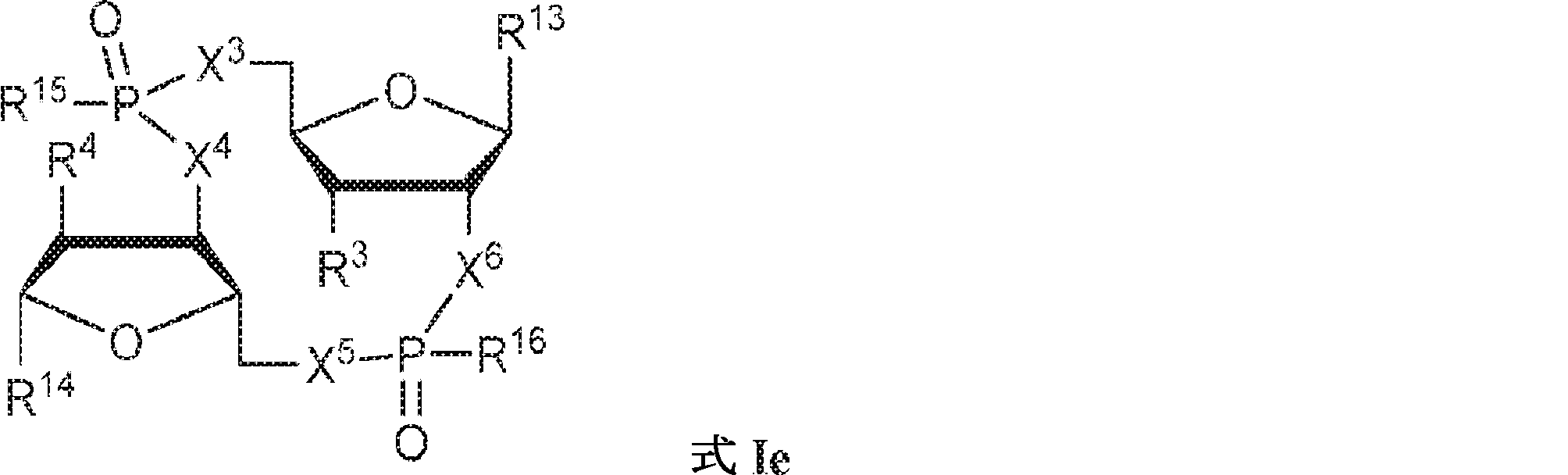
式中、
X3、X4、X5、およびX6は独立してO、NH、CH2、CHF、またはCF2であり;
R13およびR14は独立して、
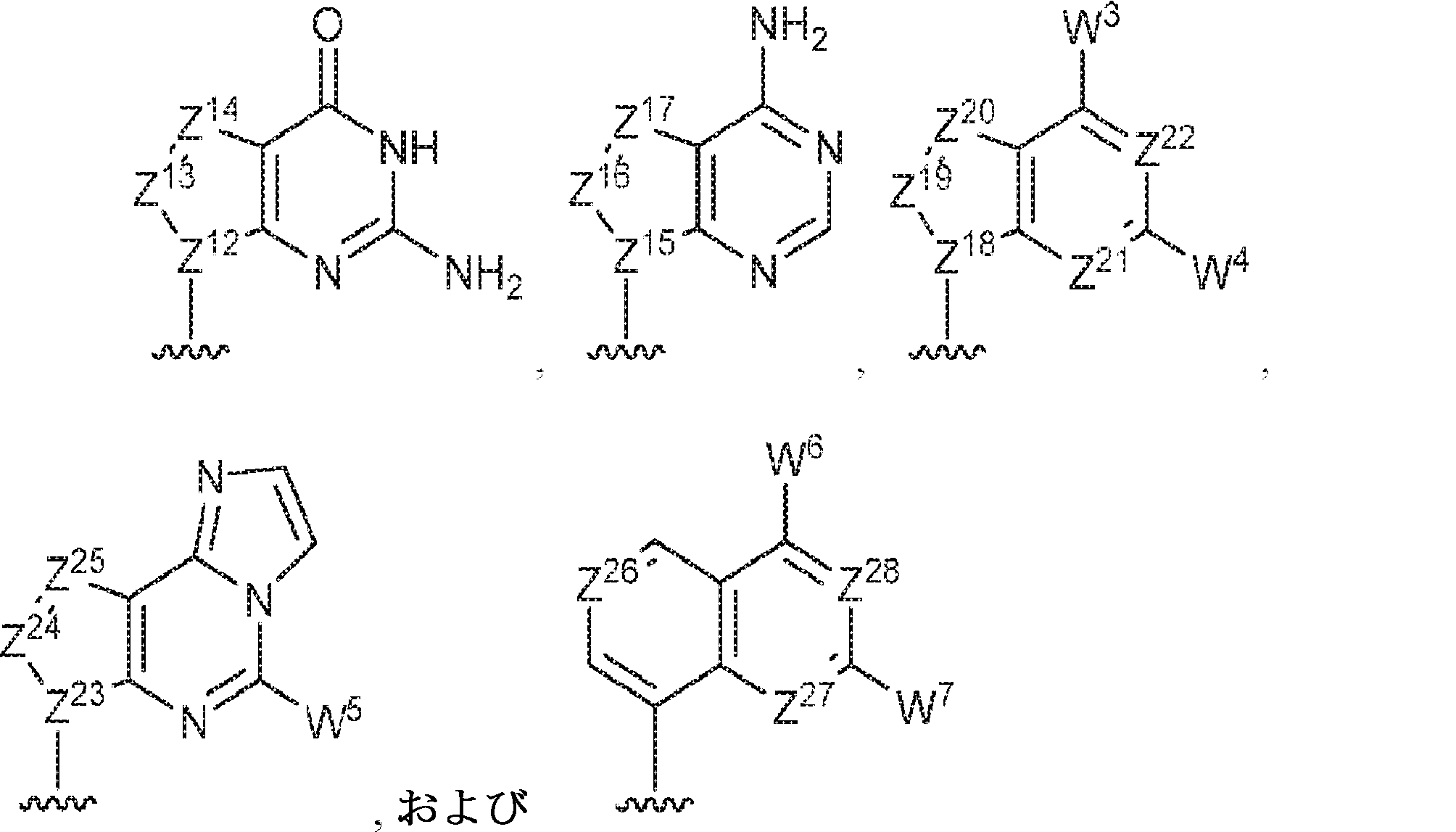
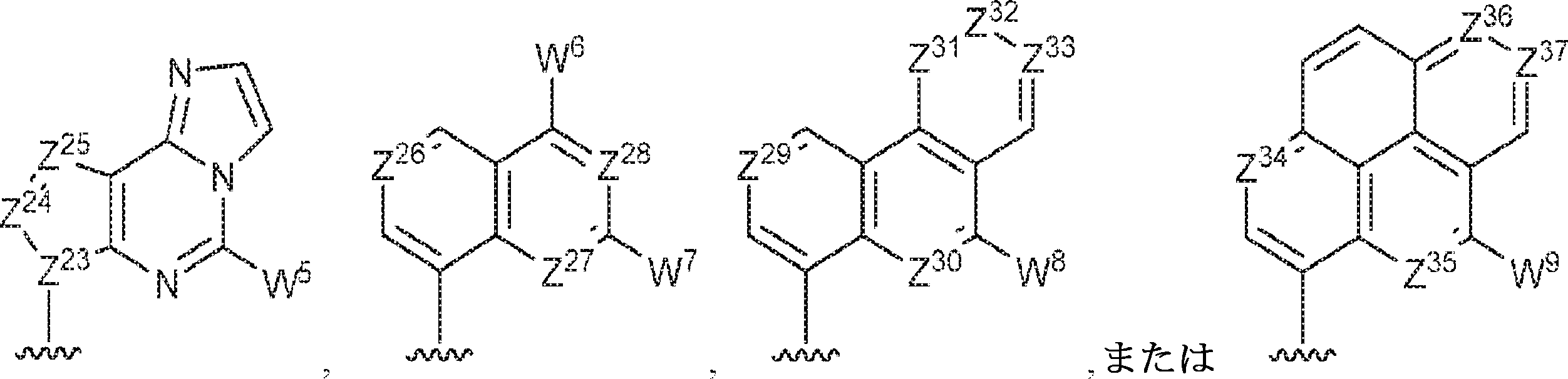
Z12、Z13、Z14、Z15、Z16、Z17、Z18、Z19、Z20、Z21、Z22、Z23、Z24、Z25、Z26、Z27、およびZ28はそれぞれ独立してCHまたはNであり;かつ
W3、W4、W5、W6、およびW7は独立して、水素、ハロゲン、ヒドロキシル、C1~6アルキル、1個もしくは複数のハロゲン基、チオール基、ヒドロキシル基、カルボニル基、カルボキシル基、カルボニルオキシル基、C1~6アルコキシ基、C1~6ヒドロキシアルコキシ基、アミノ基、C1~6アルキルアミノ基、ジ(C1~6アルキル)アミノ基、もしくはアジド基を用いて選択的に官能基を付与されたC1~6アルキル、C1~6アルコキシ、1個もしくは複数のハロゲン基、チオール基、ヒドロキシル基、カルボニル基、カルボキシル基、カルボニルオキシル基、C1~6ヒドロキシアルコキシ基、アミノ基、C1~6アルキルアミノ基、ジ(C1~6アルキル)アミノ基、もしくはアジド基を用いて選択的に官能基を付与されたC1~6アルコキシ、C3~5アルケニル-O-、C3~5アルキニル-O-、オリゴ(エチレングリコール)、ポリ(エチレングリコール)、アジド、または-NR7R8であり;
R7およびR8は独立して、水素、C1~6アルキル、1個もしくは複数のハロゲン基、チオール基、ヒドロキシル基、カルボニル基、カルボキシル基、カルボニルオキシル基、C1~6アルコキシ基、C1~6ヒドロキシアルコキシ基、アミノ基、C1~6アルキルアミノ基、ジ(C1~6アルキル)アミノ基、もしくはアジド基を用いて選択的に官能基を付与されたC1~6アルキル、環状-(C1~6アルキル)-、1個もしくは複数のハロゲン基、チオール基、ヒドロキシル基、カルボニル基、カルボキシル基、カルボニルオキシル基、C1~6アルコキシ基、C1~6ヒドロキシアルコキシ基、アミノ基、C1~6アルキルアミノ基、もしくはジ(C1~6アルキル)アミノ基を用いて選択的に官能基を付与された環状-(C1~6アルキル)-、環状-(C1~6オキサアルキル)-、または1個もしくは複数のハロゲン基、チオール基、ヒドロキシル基、カルボニル基、カルボキシル基、カルボニルオキシル基、C1~6ヒドロキシアルコキシ基、アミノ基、C1~6アルキルアミノ基、もしくはジ(C1~6アルキル)アミノ基を用いて選択的に官能基を付与された環状-(C1~6オキサアルキル)-であり;
R3およびR4は独立して、水素、ハロゲン、ヒドロキシル、アミノ、C1~6アルキル、1個もしくは複数のハロゲン基、チオール基、ヒドロキシル基、カルボニル基、カルボキシル基、カルボニルオキシル基、C1~6アルコキシ基、C1~6ヒドロキシアルコキシ基、アミノ基、C1~6アルキルアミノ基、ジ(C1~6アルキル)アミノ基、もしくはアジド基を用いて選択的に官能基を付与されたC1~6アルキル、C1~6アルコキシ、1個もしくは複数のハロゲン基、チオール基、ヒドロキシル基、カルボニル基、カルボキシル基、カルボニルオキシル基、C1~6ヒドロキシアルコキシ基、アミノ基、C1~6アルキルアミノ基、ジ(C1~6アルキル)アミノ基、もしくはアジド基を用いて選択的に官能基を付与されたC1~6アルコキシ、C3~5アルケニル-O-、C3~5アルキニル-O-、オリゴ(エチレングリコール)、ポリ(エチレングリコール)、アジド、または-NR7R8であり;かつ
R15およびR16は独立して、ヒドロキシル、チオール、メトキシ、エトキシ、アミノ、N-メチルアミノ、N,N-ジメチルアミノ、N-エチルアミノ、N,N-ジエチルアミノ、N-モルホリノ、またはボラノ(-BH3
-)である。
In another aspect, the invention is in the formula Ie :.
During the ceremony
X 3 , X 4 , X 5 , and X 6 are independently O, NH, CH 2 , CHF, or CF 2 ;
R 13 and R 14 are independent,
Z 12 , Z 13 , Z 14 , Z 15 , Z 16 , Z 17 , Z 18 , Z 19 , Z 20 , Z 21 , Z 22 , Z 23 , Z 24 , Z 25 , Z 26 , Z 27 , and Z 28 are CH or N independently; and
W 3 , W 4 , W 5 , W 6 and W 7 are independently hydrogen, halogen, hydroxyl, C 1-6 alkyl, one or more halogen groups, thiol groups, hydroxyl groups, carbonyl groups, carboxyls. Selected using a group, a carbonyloxyl group, a C 1-6 alkoxy group, a C 1-6 hydroxyalkoxy group, an amino group, a C 1-6 alkylamino group, a di (C 1-6 alkyl) amino group, or an azido group. C 1-6 alkyl, C 1-6 alkoxy, one or more halogen groups, thiol group, hydroxyl group, carbonyl group, carboxyl group, carbonyloxyl group, C 1-6 hydroxyalkoxy C 1-6 alkoxy, C 3-5 alkenyl selectively functionalized with groups, amino groups, C 1-6 alkyl amino groups, di (C 1-6 alkyl) amino groups, or azido groups -O-, C 3-5 alkynyl-O-, oligo (ethylene glycol), poly (ethylene glycol), azide, or -NR 7 R 8 ;
R 7 and R 8 are independently hydrogen, C 1-6 alkyl, one or more halogen groups, thiol groups, hydroxyl groups, carbonyl groups, carboxyl groups, carbonyloxyl groups, C 1-6 alkoxy groups, C. C 1-6 alkyl, which is selectively functionalized with a 1-6 hydroxyalkoxy group, an amino group, a C 1-6 alkyl amino group, a di (C 1-6 alkyl) amino group, or an azido group. Cyclic- (C 1-6 alkyl)-, one or more halogen groups, thiol groups, hydroxyl groups, carbonyl groups, carboxyl groups, carbonyloxyl groups, C 1-6 alkoxy groups, C 1-6 hydroxyalkoxy groups, Cyclic- (C 1-6 alkyl)-, cyclic-(C 1 ) selectively functionalized with an amino group, C 1-6 alkyl amino group, or di (C 1-6 alkyl) amino group ~ 6 Oxalalkyl)-or one or more halogen groups, thiol groups, hydroxyl groups, carbonyl groups, carboxyl groups, carbonyloxyl groups, C 1-6 hydroxyalkoxy groups, amino groups, C 1-6 alkylamino groups , Or a cyclic- (C 1-6 oxaalkyl)-selectively imparted with a functional group using a di (C 1-6 alkyl) amino group;
R 3 and R 4 are independently hydrogen, halogen, hydroxyl, amino, C 1-6 alkyl, one or more halogen groups, thiol groups, hydroxyl groups, carbonyl groups, carboxyl groups, carbonyloxyl groups, C 1 A functional group was selectively imparted using a ~ 6 alkoxy group, a C 1 to 6 hydroxyalkoxy group, an amino group, a C 1 to 6 alkylamino group, a di (C 1 to 6 alkyl) amino group, or an azido group. C 1 to 6 alkyl, C 1 to 6 alkoxy, one or more halogen groups, thiol group, hydroxyl group, carbonyl group, carboxyl group, carbonyloxyl group, C 1 to 6 hydroxyalkoxy group, amino group, C 1 to 6 Alkylamino group, di (C 1-6 alkyl) amino group, or C 1-6 alkoxy selectively functionalized with azido group, C 3-5 alkenyl-O-, C 3-5 Alkinyl-O-, oligo (ethylene glycol), poly (ethylene glycol), azide, or -NR 7 R 8 ; and
R 15 and R 16 are independently hydroxyl, thiol, methoxy, ethoxy, amino, N-methylamino, N, N-dimethylamino, N-ethylamino, N, N-diethylamino, N-morpholino, or borano ( -BH 3- ) .
別の態様では、式Ieの一方または両方のテトラヒドロフラニル環中の酸素原子は硫黄原子またはセレン原子で置き換えられている。 In another embodiment, the oxygen atom in one or both tetrahydrofuranyl rings of Formula Ie is replaced with a sulfur atom or a selenium atom.
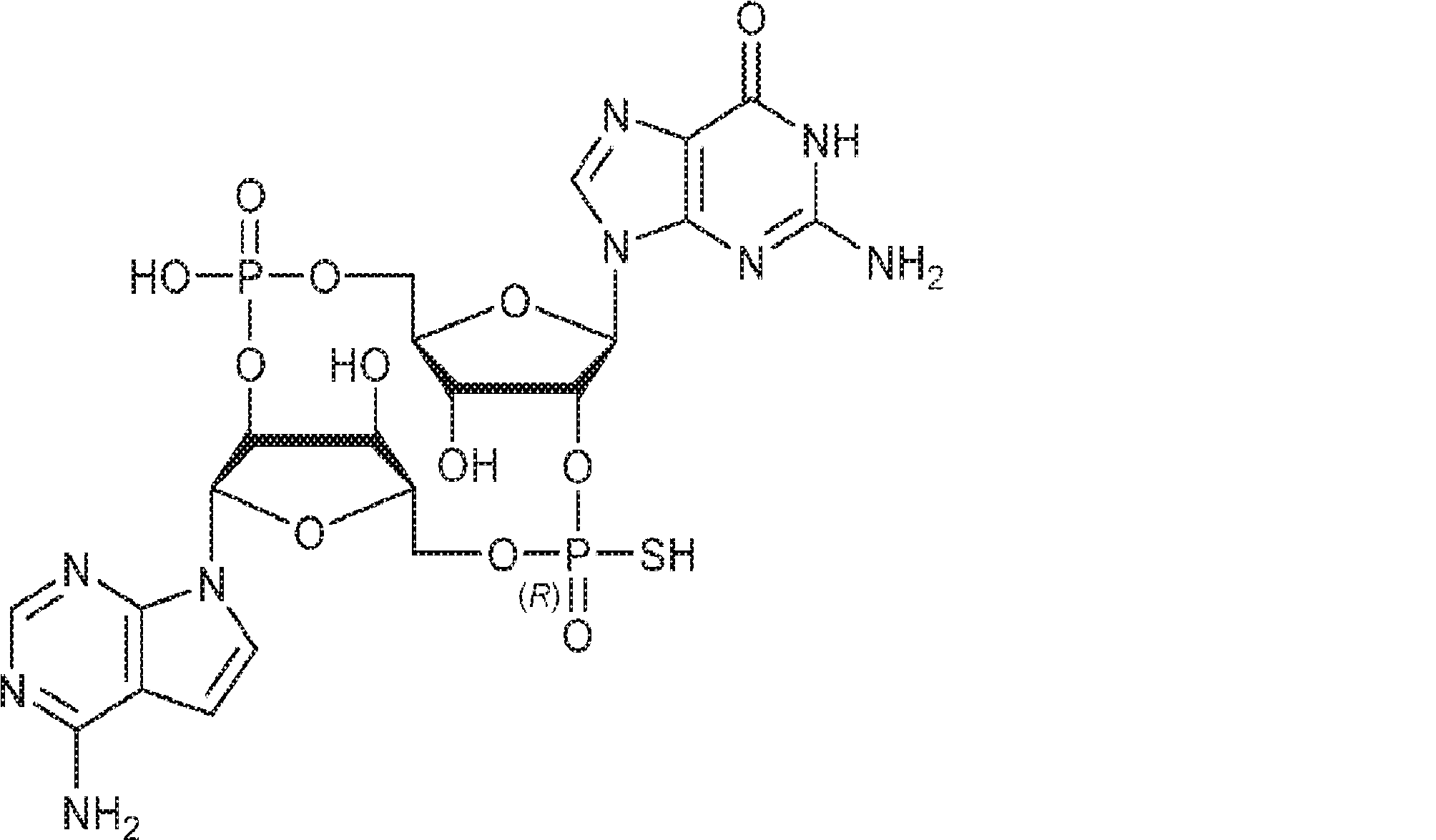
別の態様では、化合物は
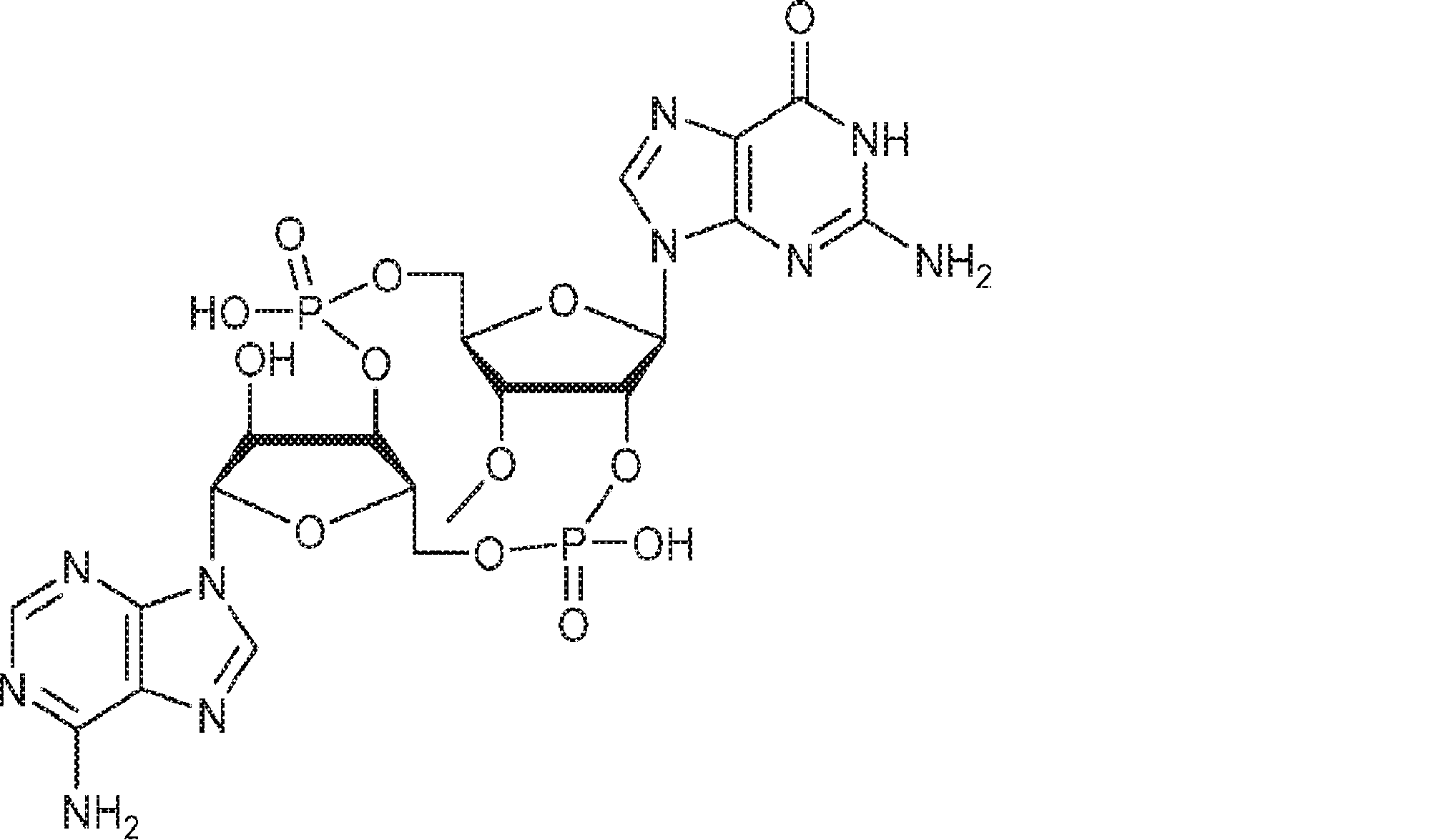
別の態様では、化合物は
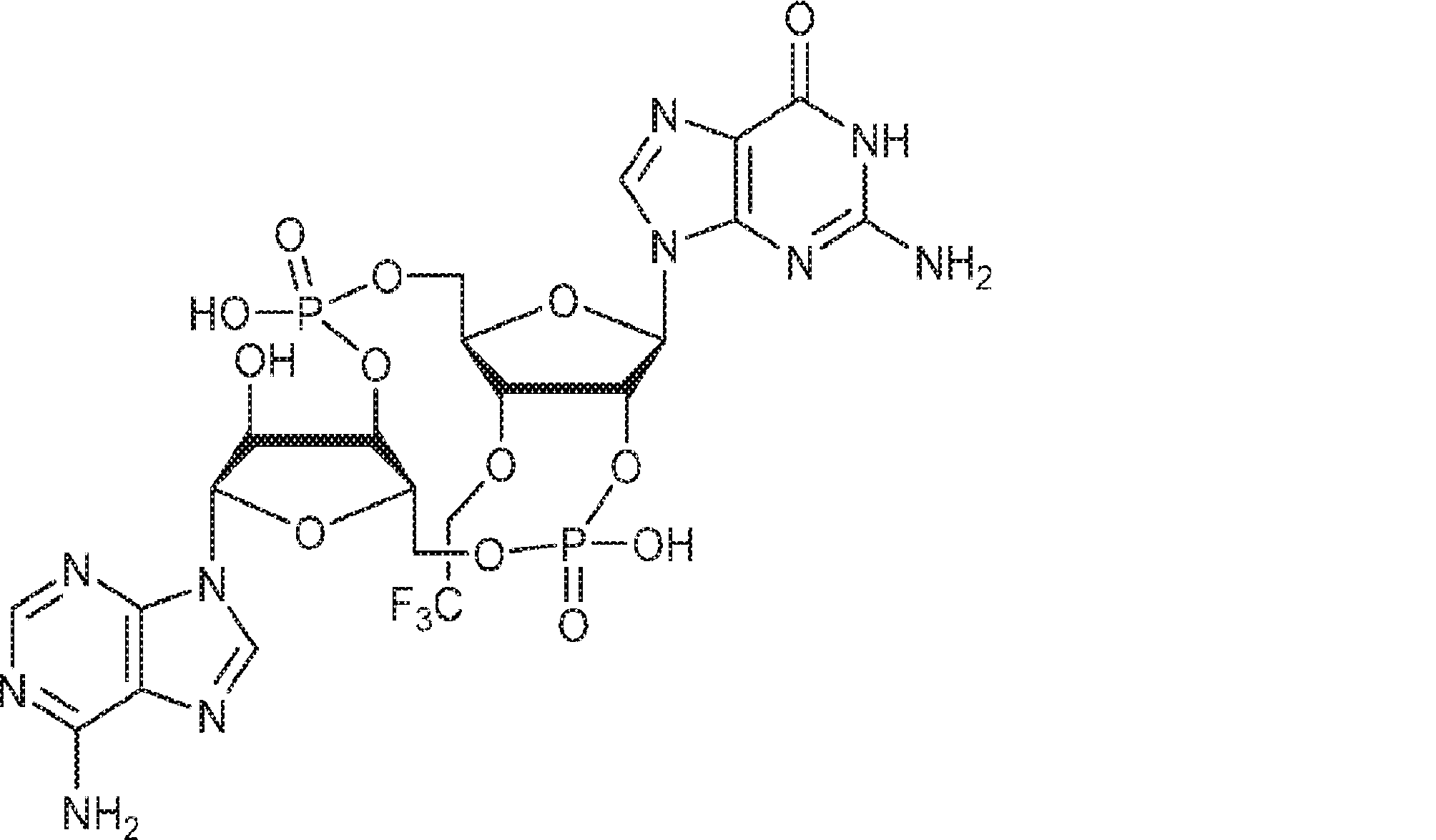
別の態様では、化合物は
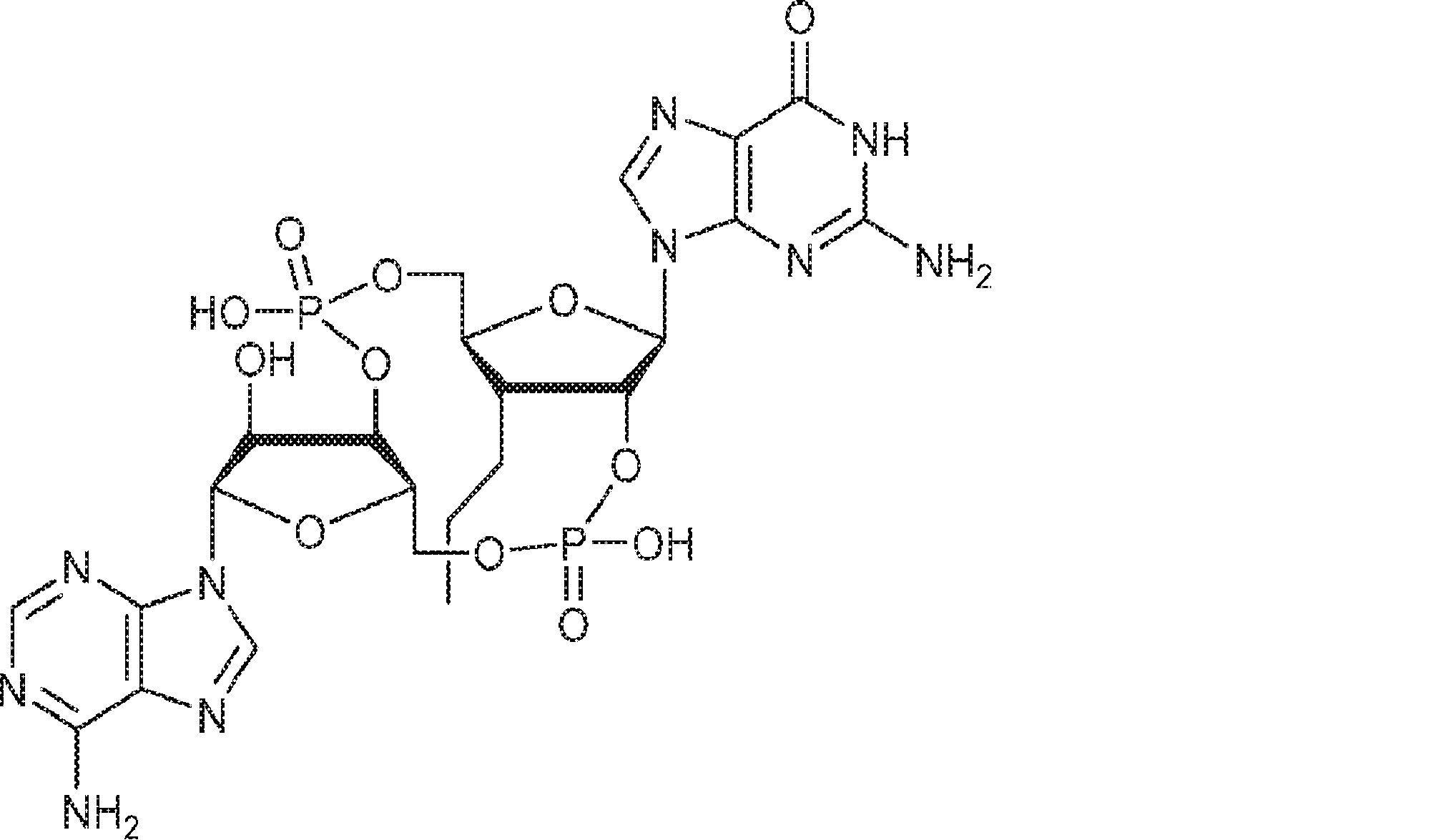
別の態様では、化合物は
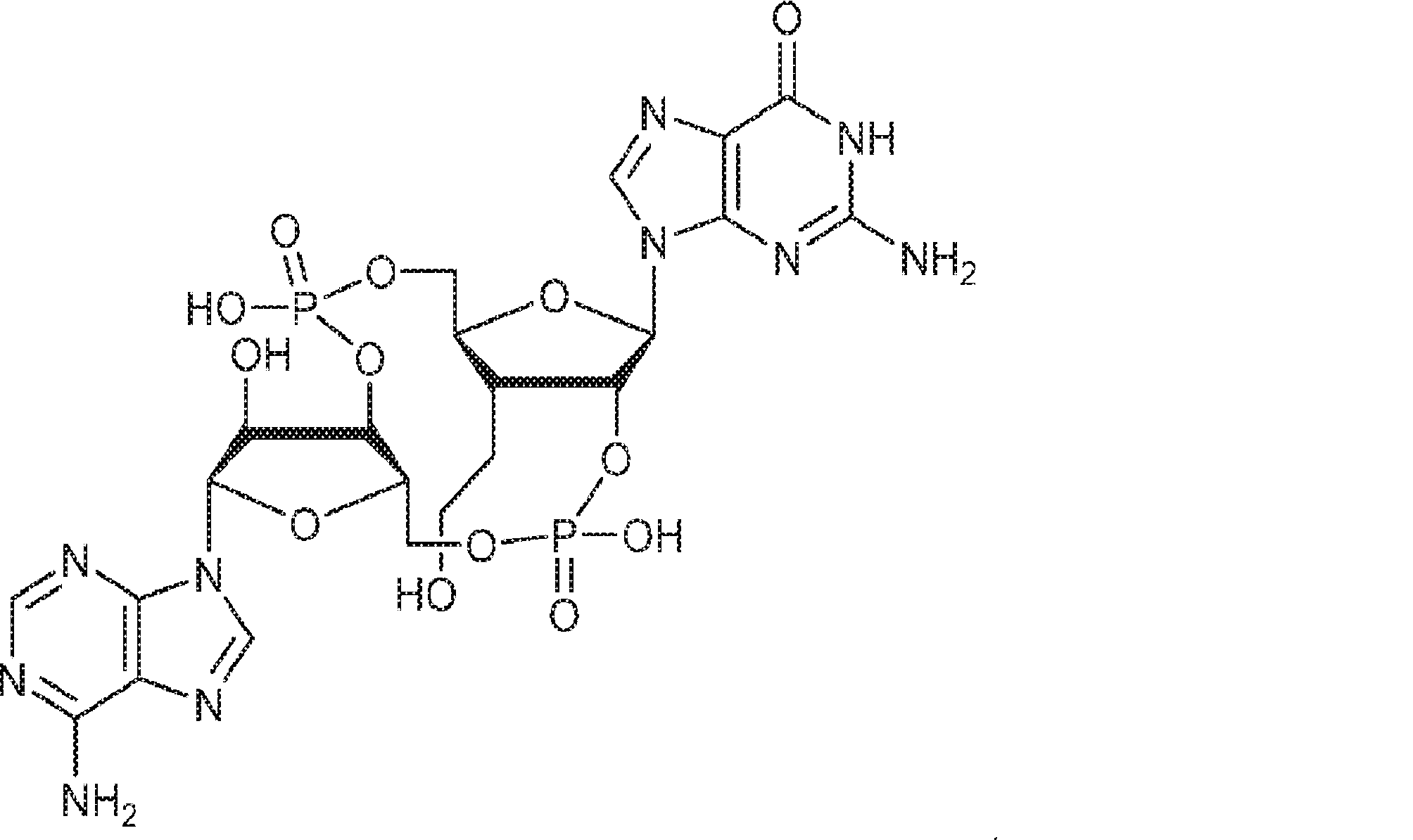
別の態様では、化合物は
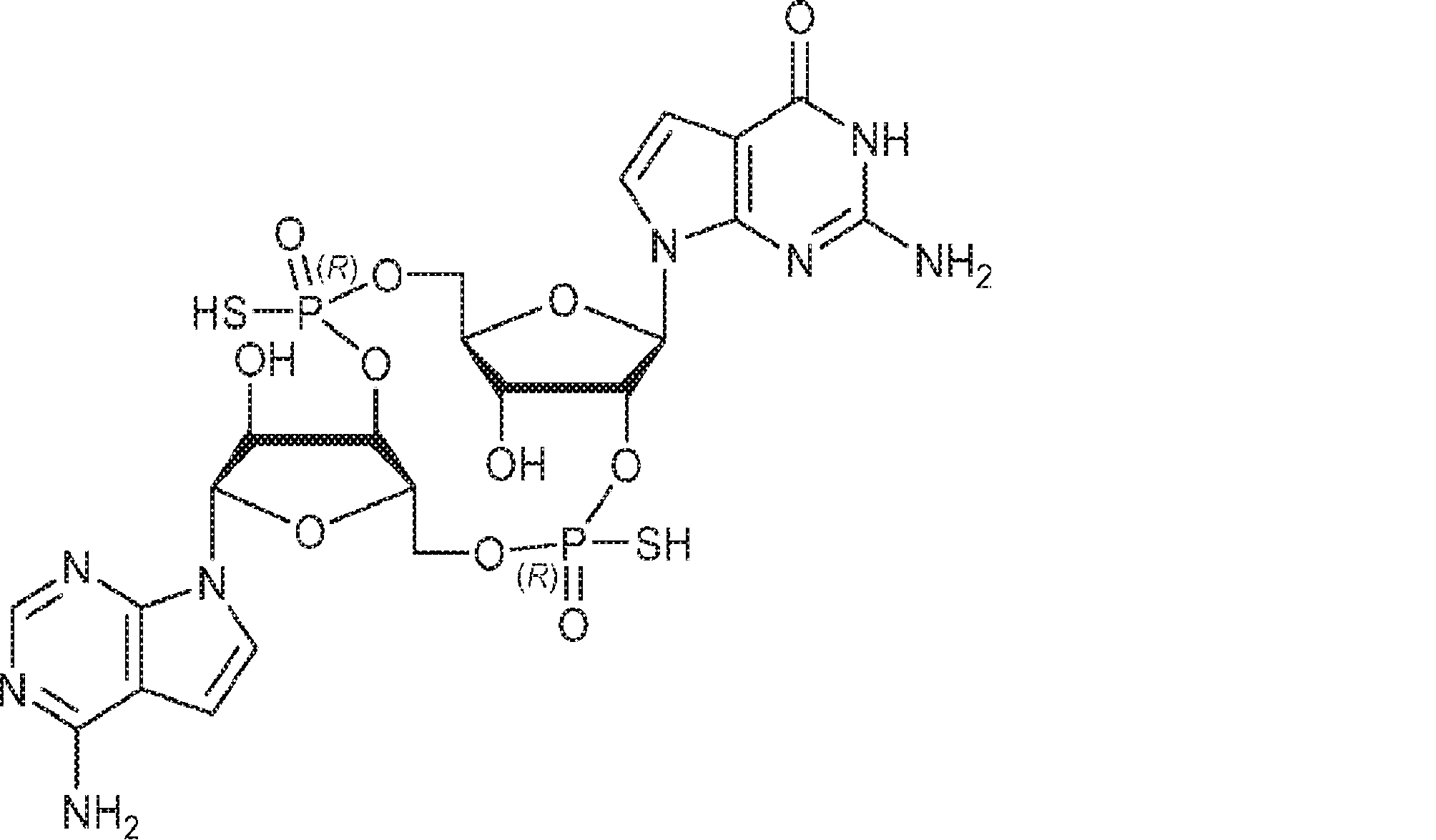
別の態様では、化合物は
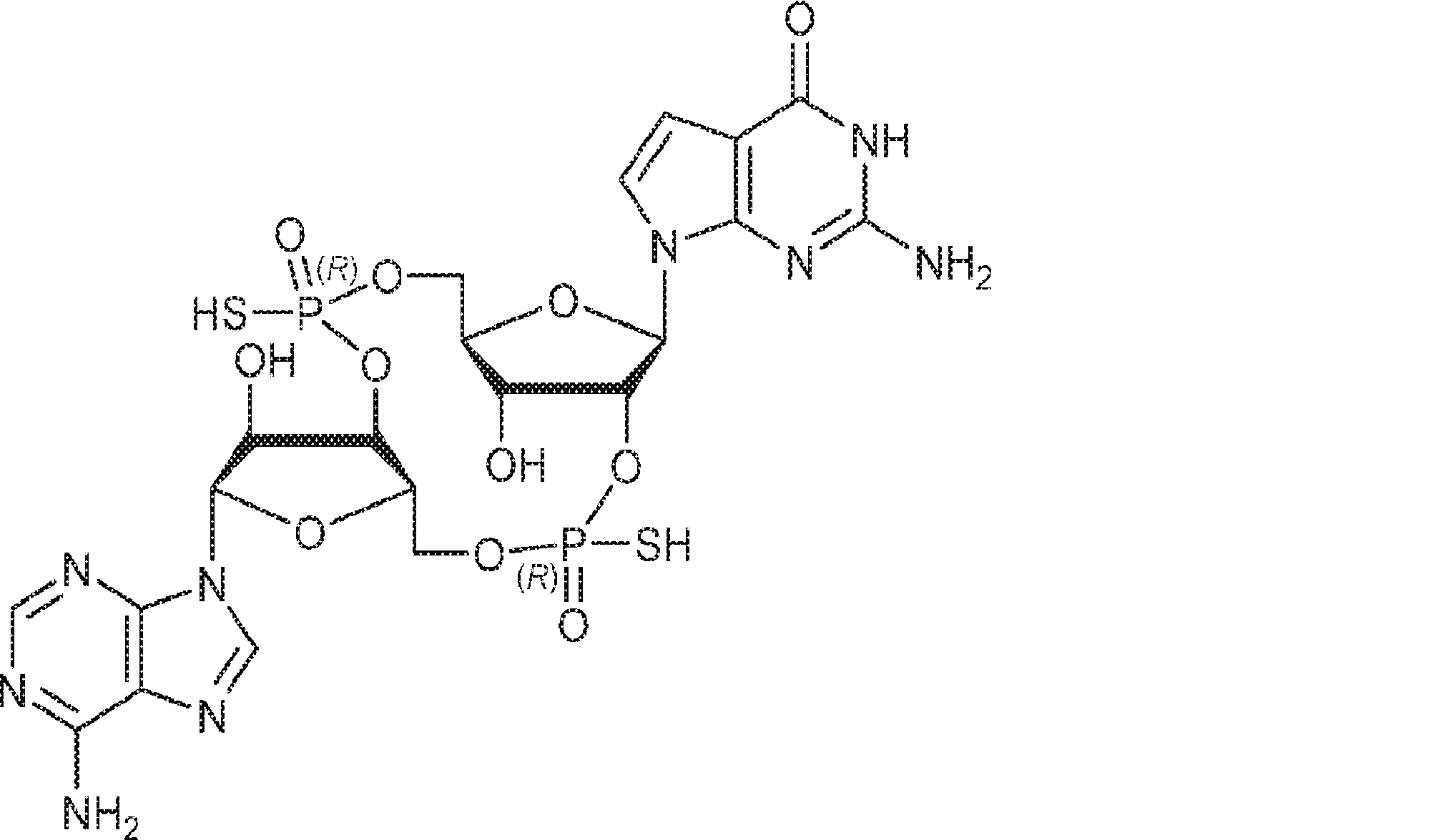
別の態様では、化合物は
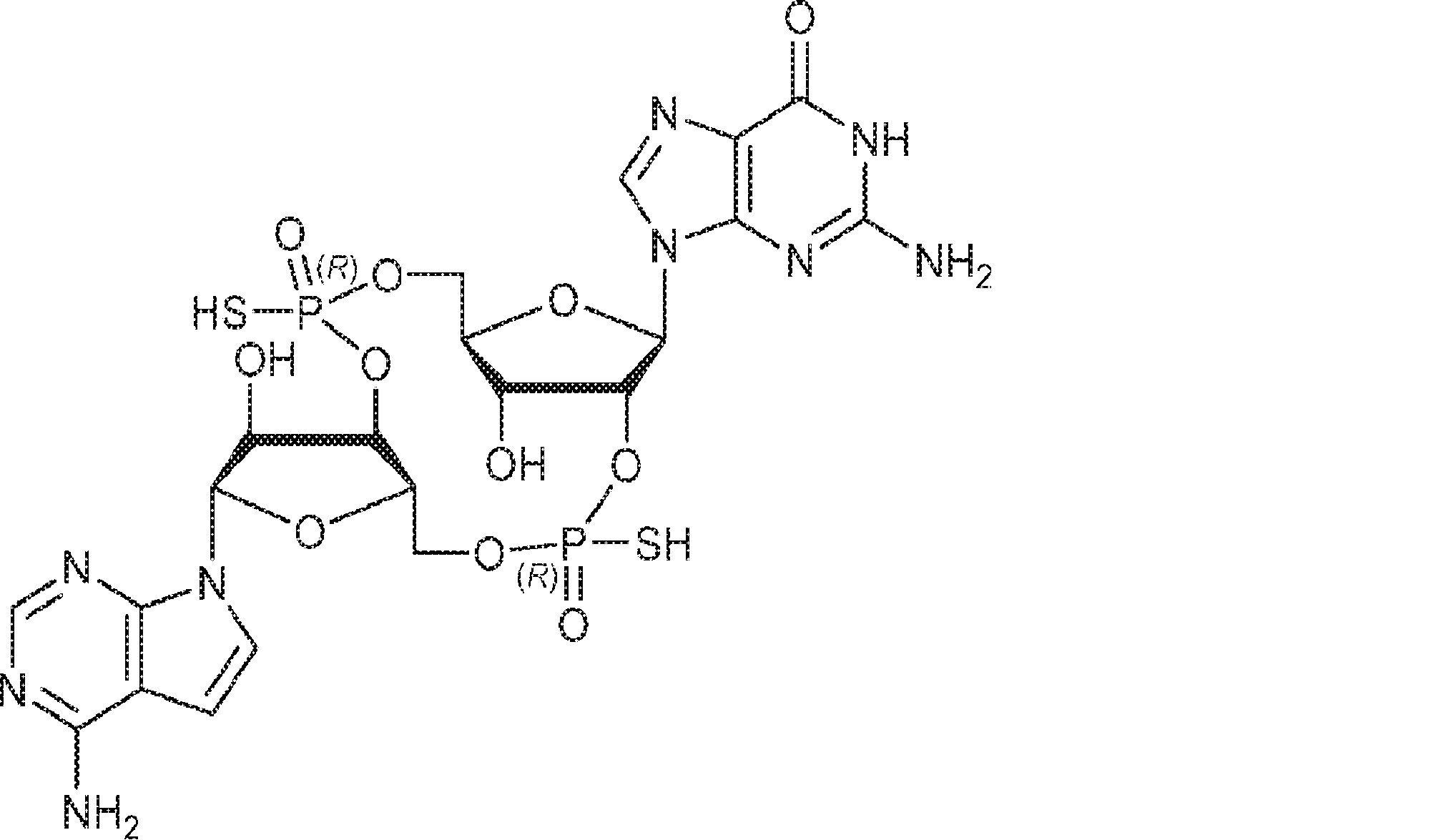
別の態様では、化合物は
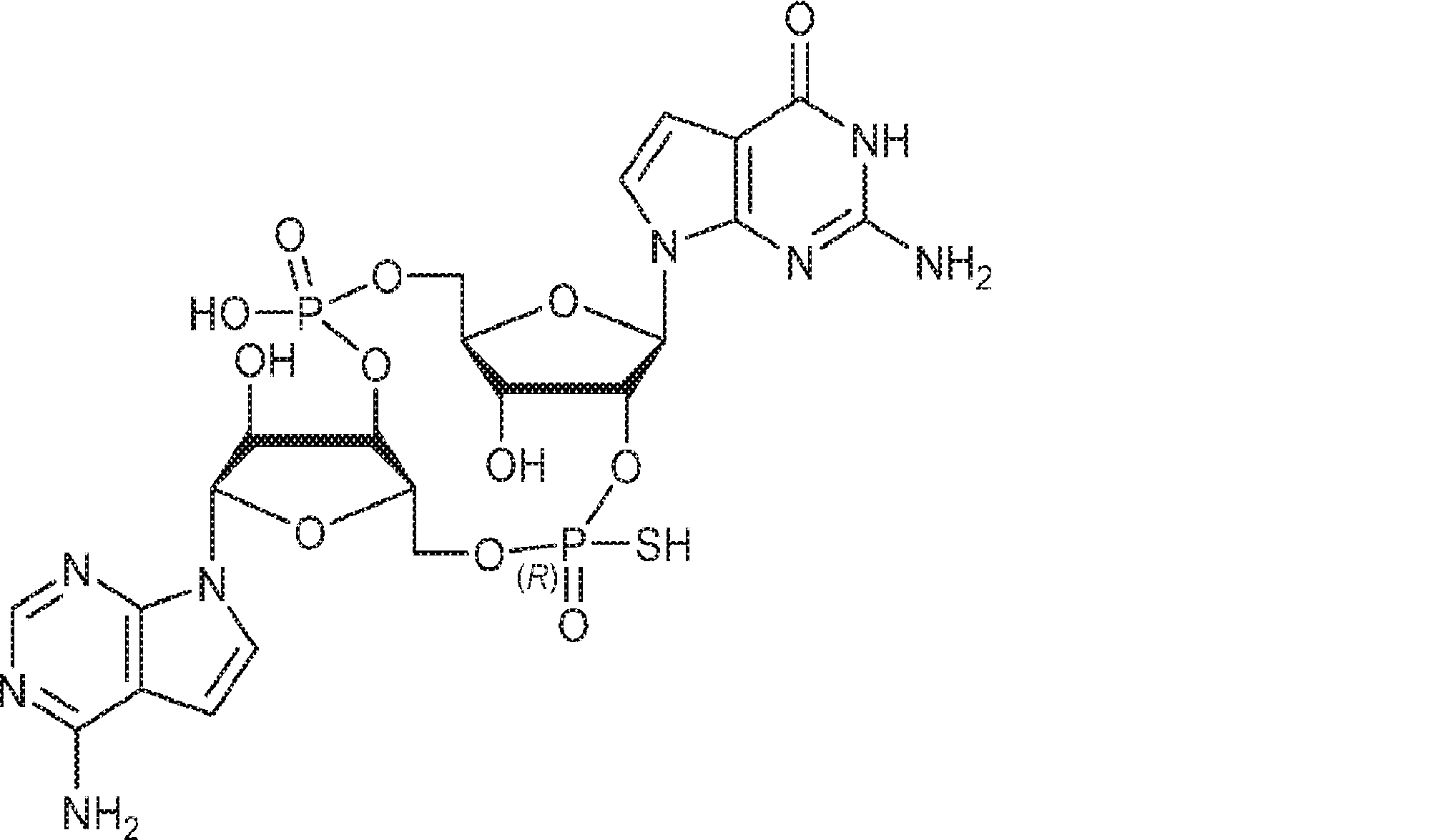
別の態様では、化合物は
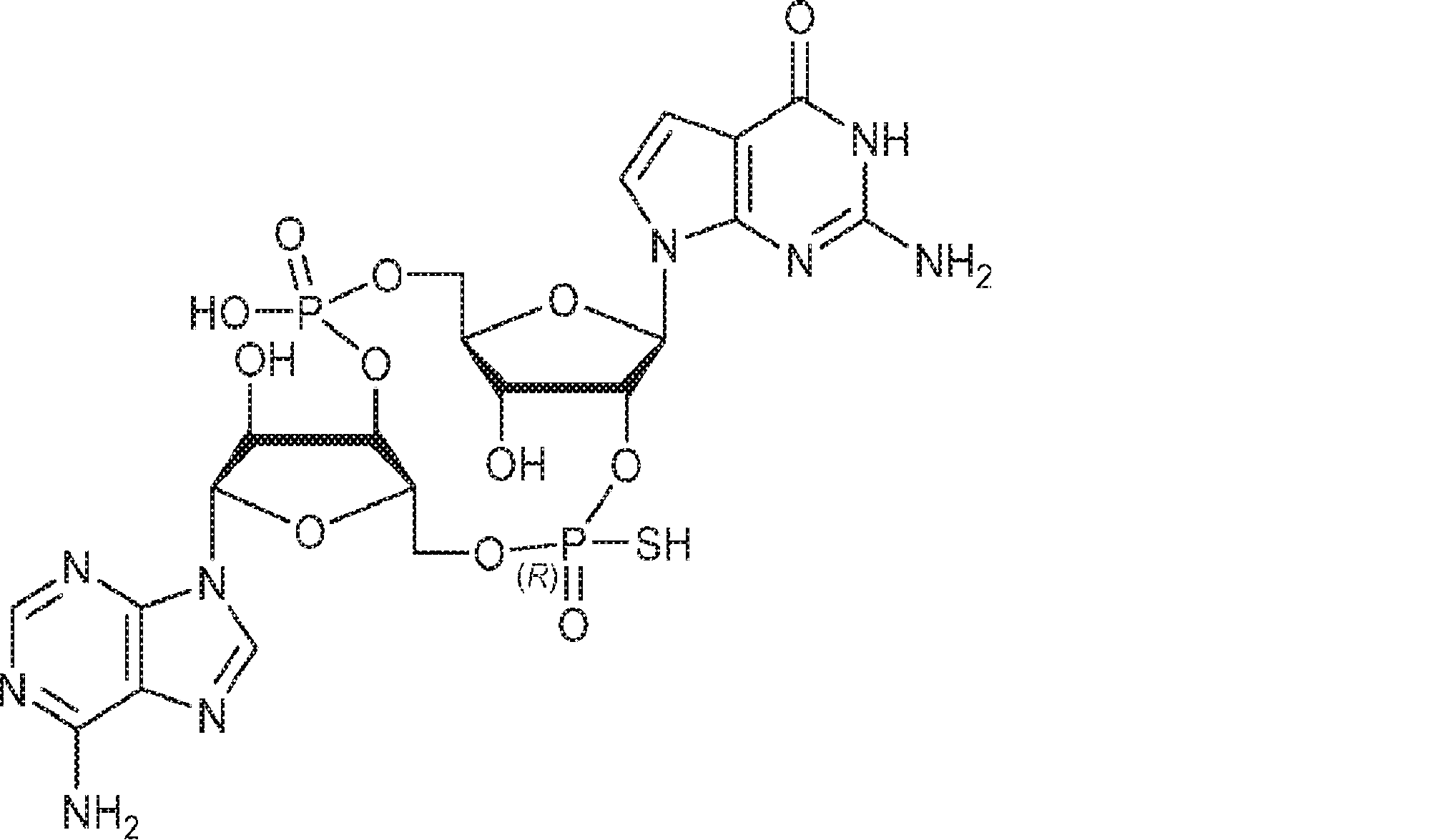
別の態様では、化合物は

別の態様では、化合物は
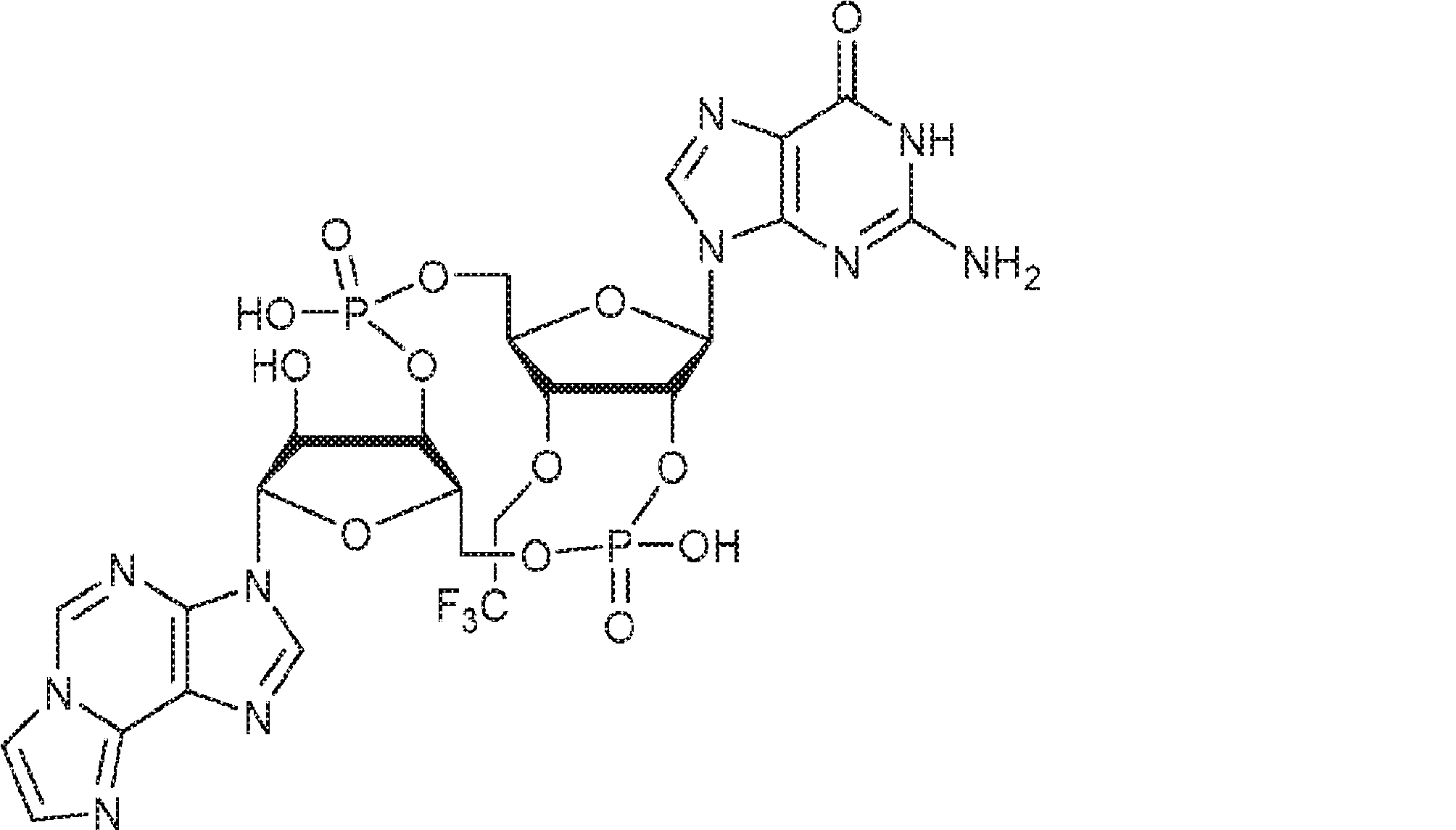
別の態様では、化合物は
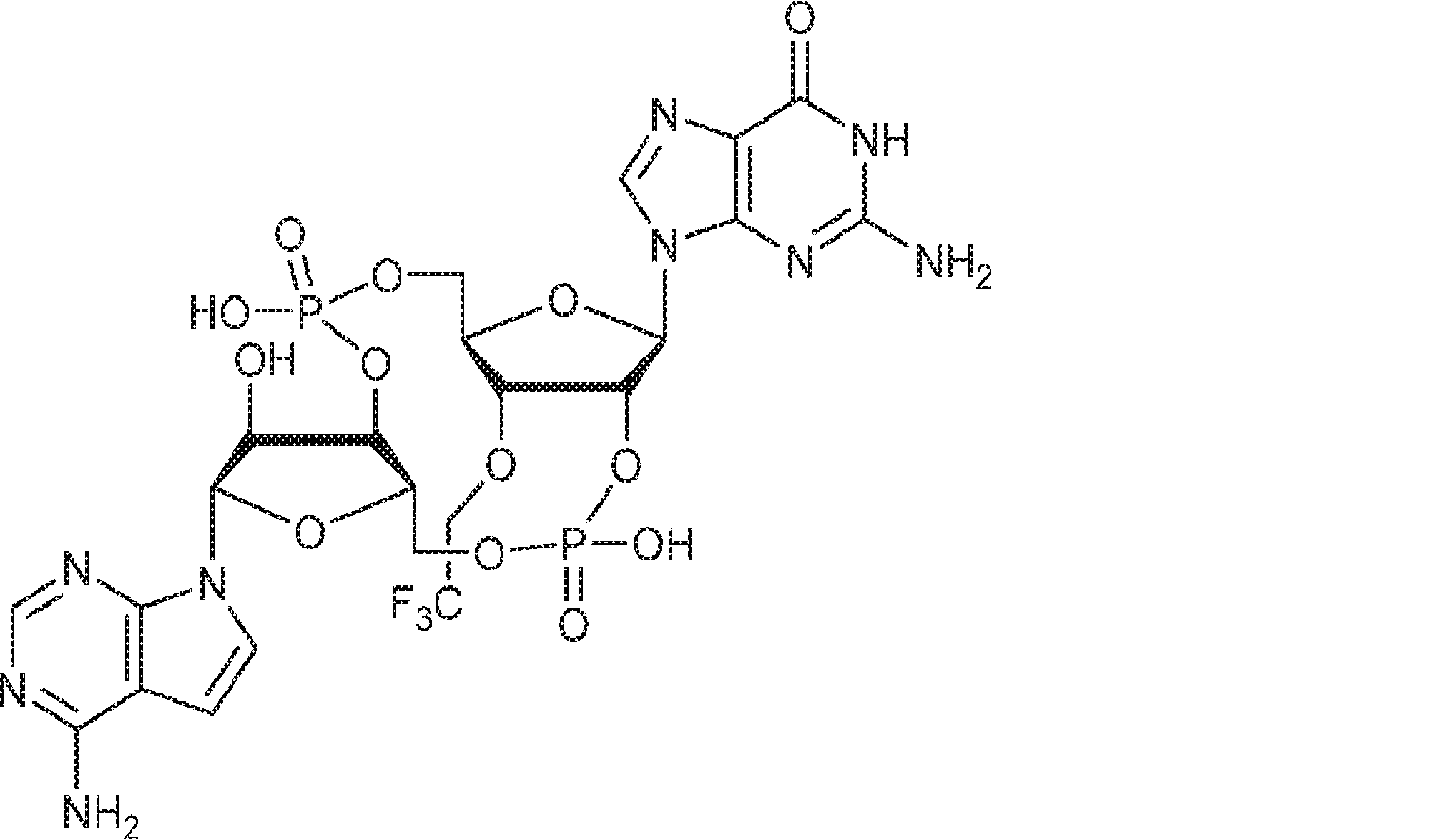
別の態様では、化合物は
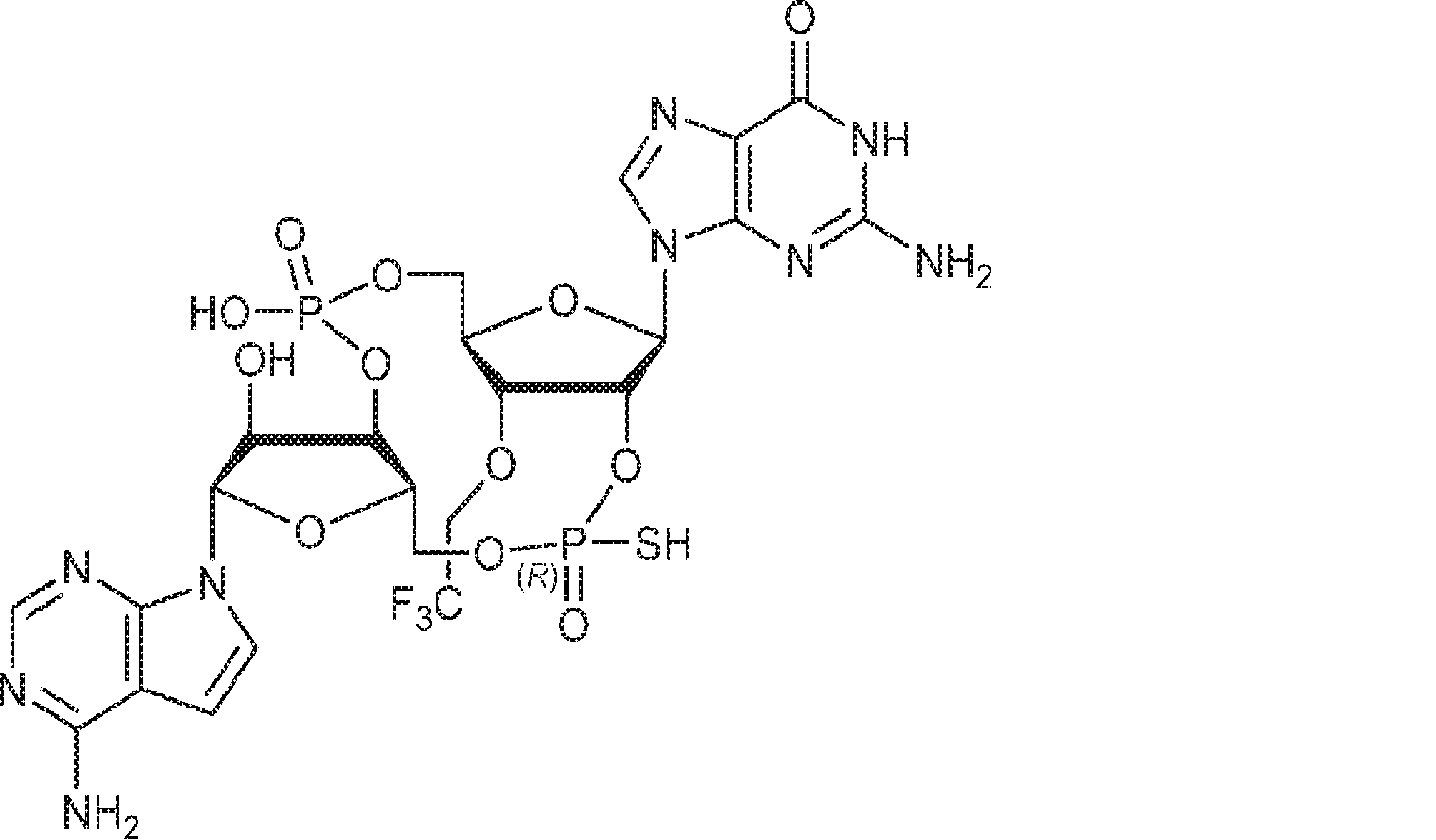
別の態様では、化合物は
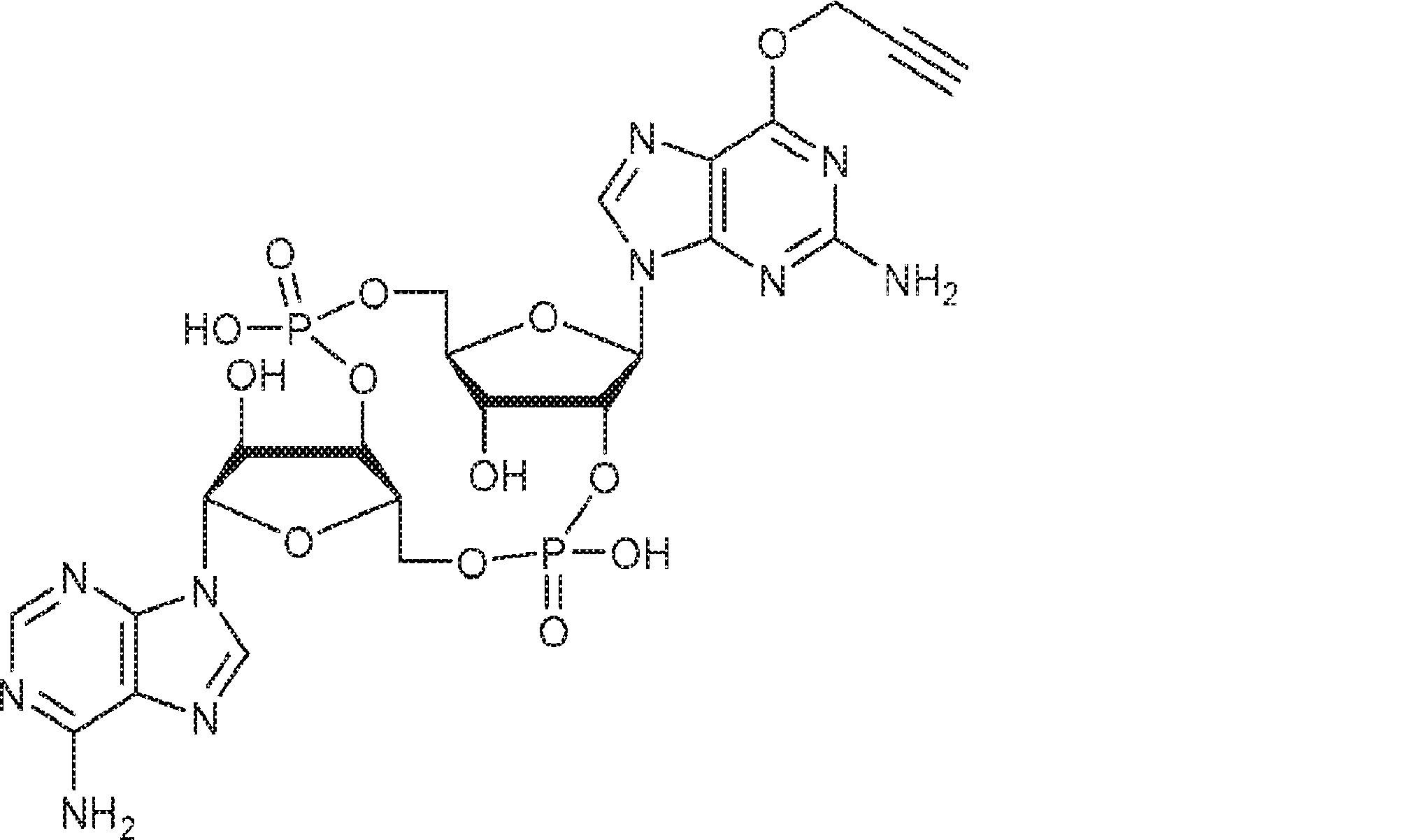
別の態様では、化合物は
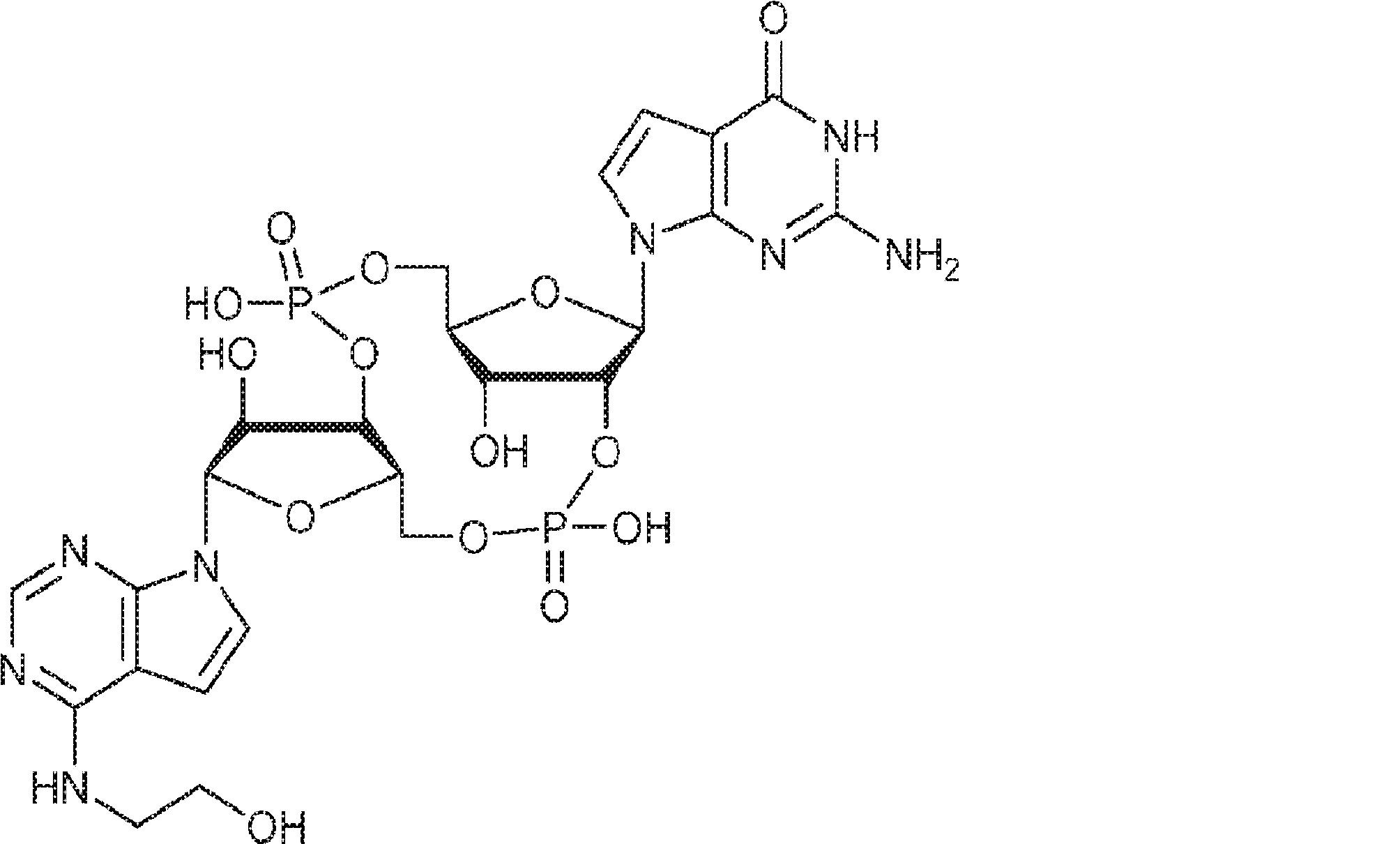
別の態様では、化合物は
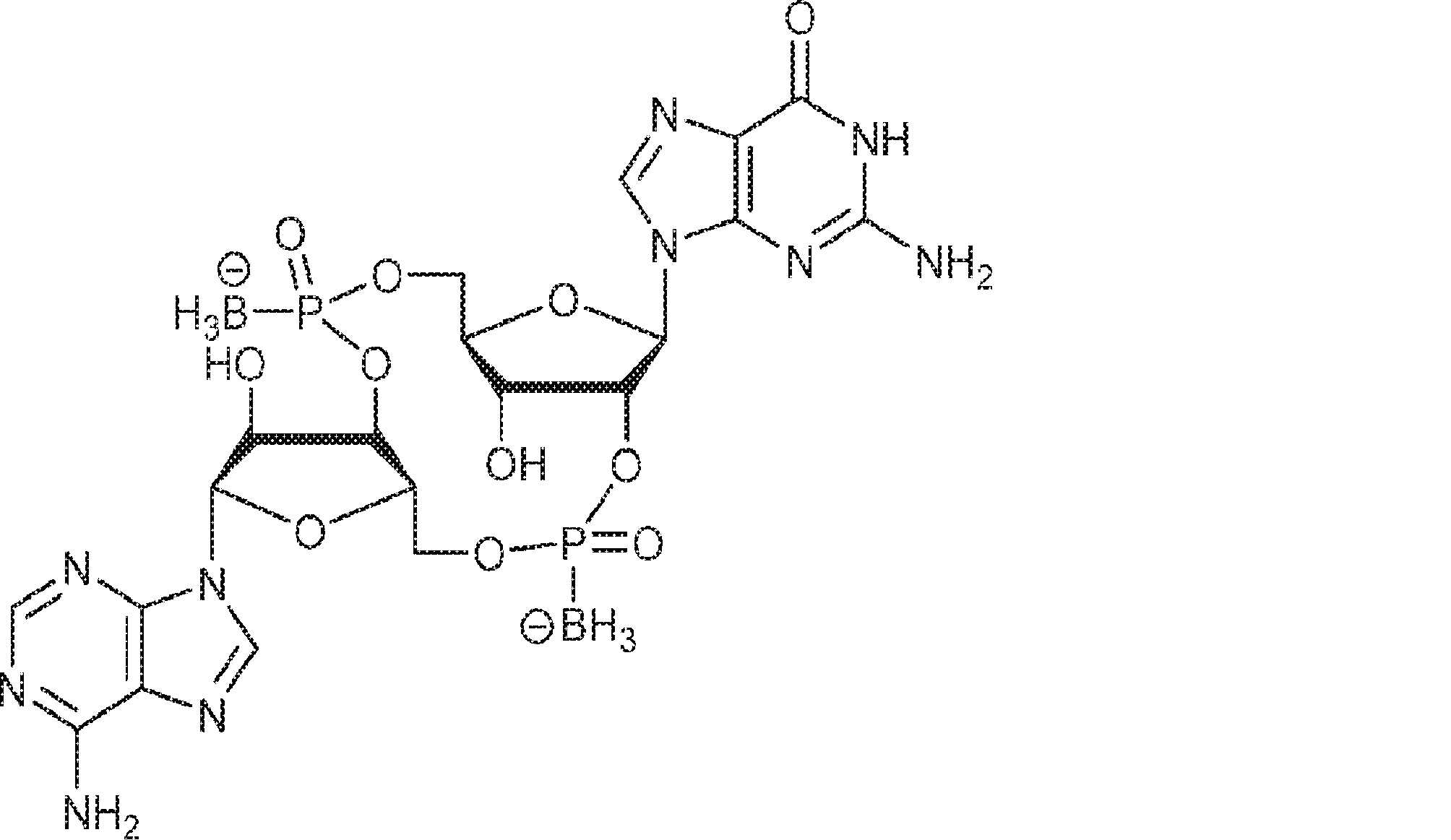
別の態様では、化合物は
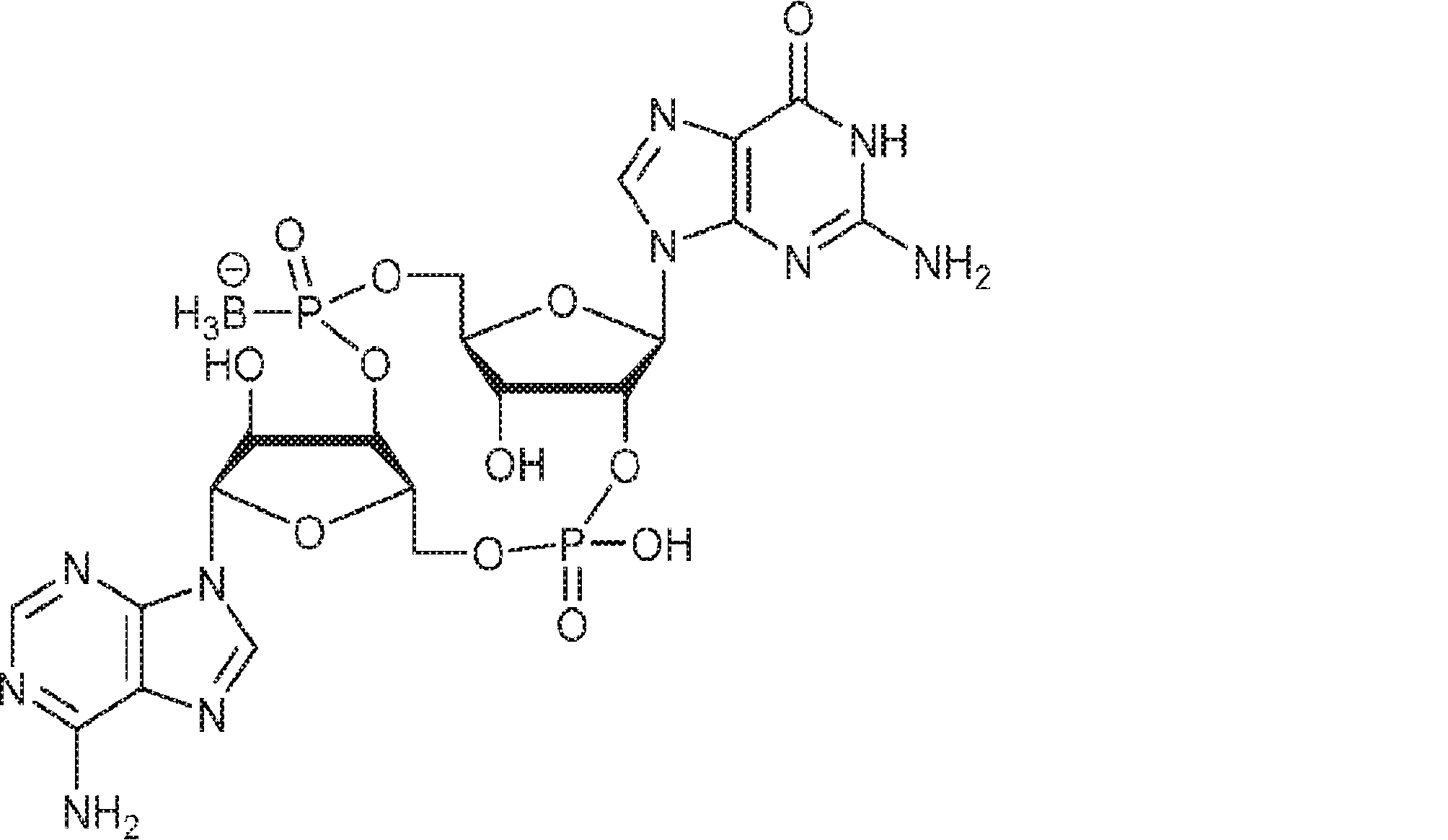
別の態様では、化合物は
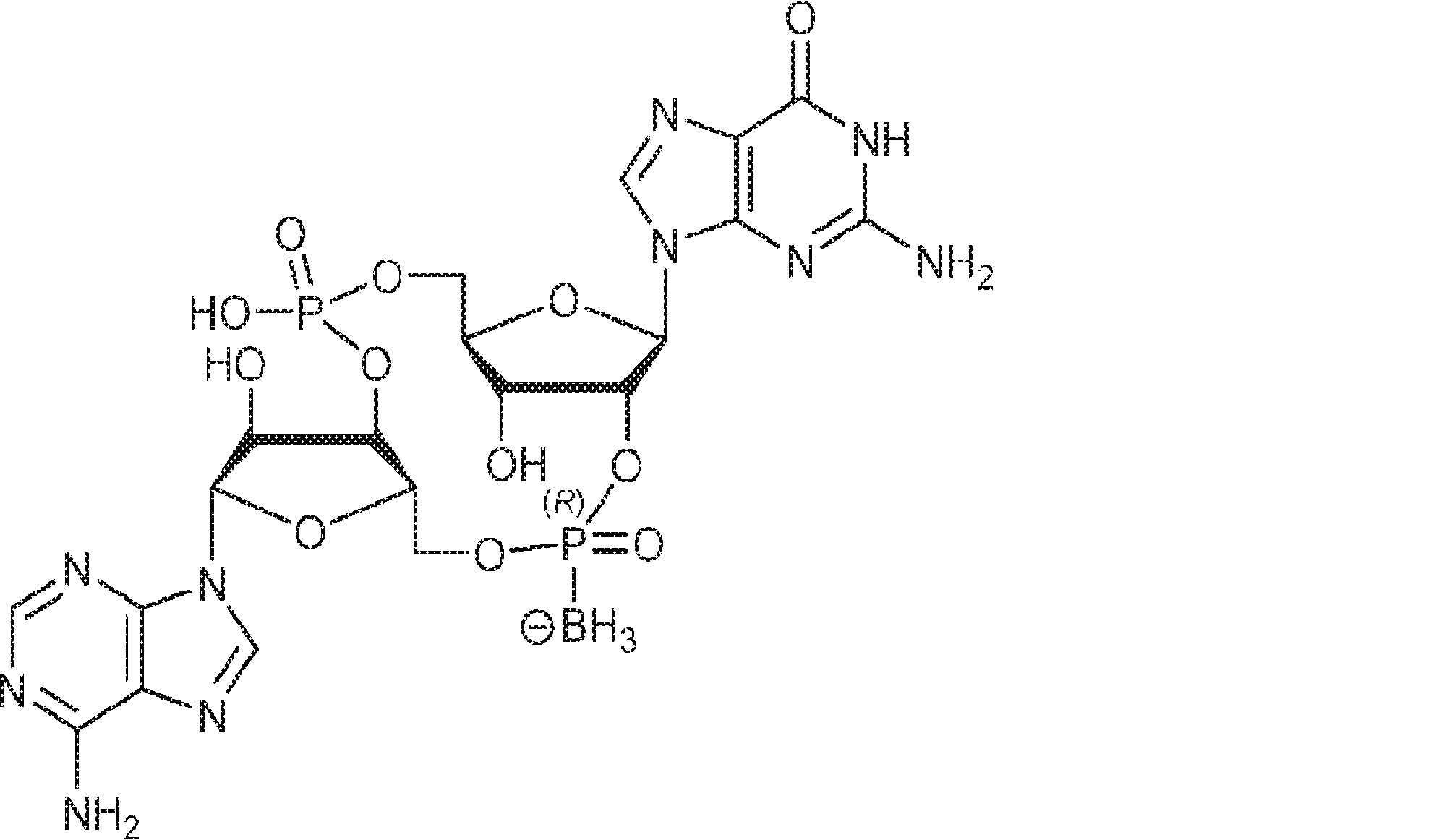
別の態様では、化合物は
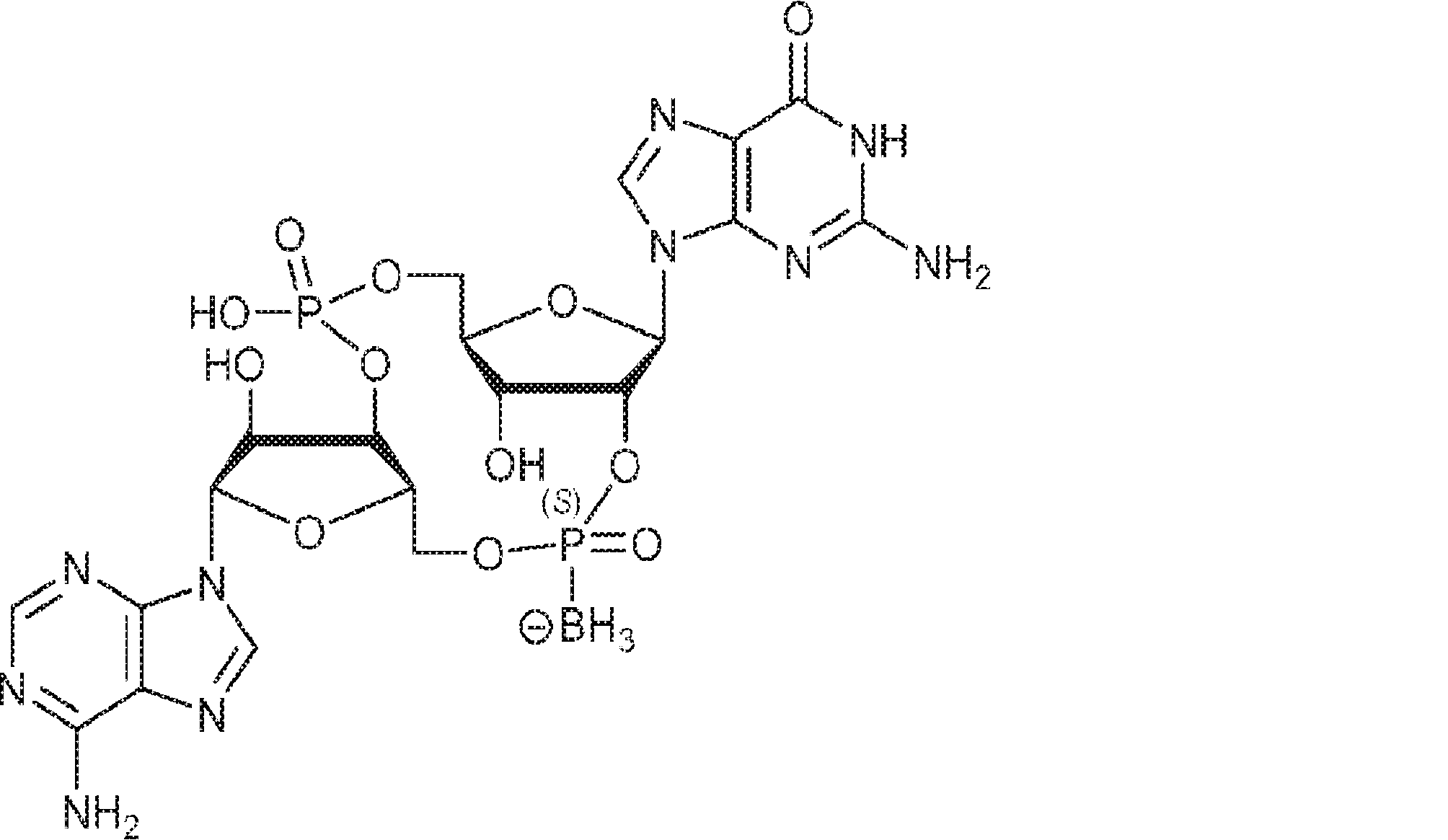
別の態様では、化合物は
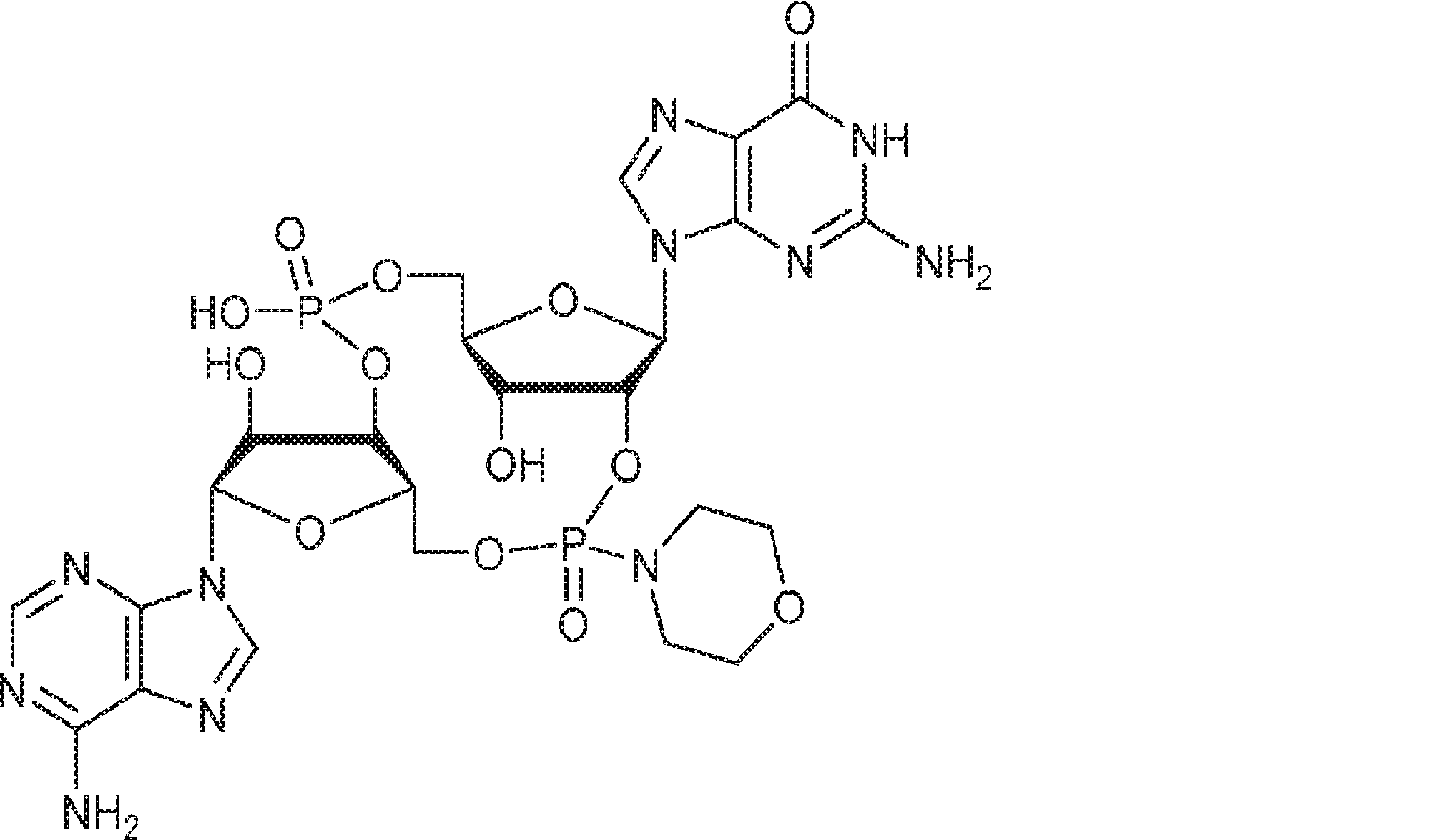
別の態様では、化合物は
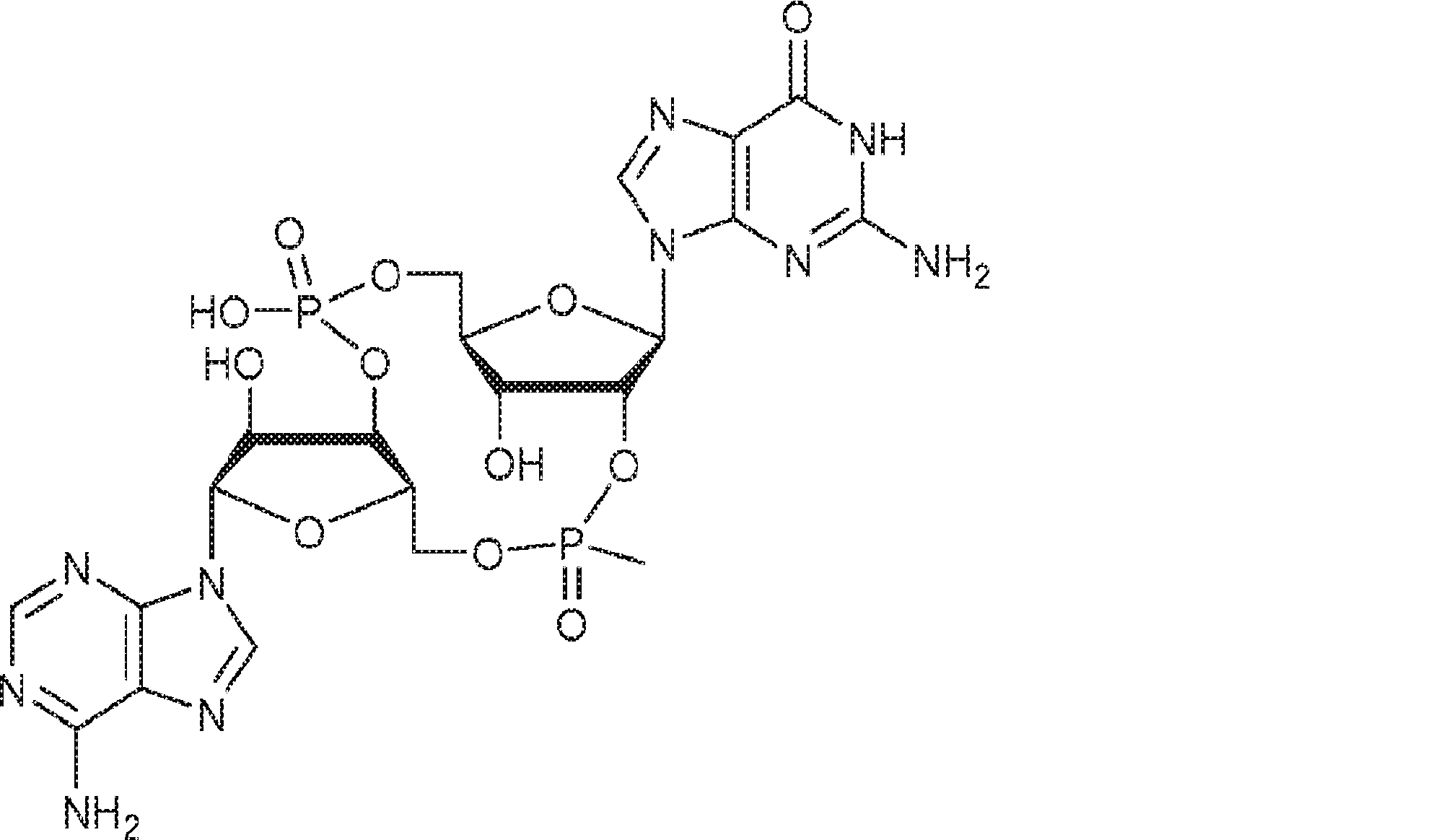
一態様では、本発明は、式If:

式中、
X1およびX2は独立してO、S、またはSeであり;
Z12、Z13、Z14、Z15、Z16、およびZ17は独立してCHまたはNであり;
X1に対してα位の炭素から出発するL1、およびX2に対してα位の炭素から出発するL2は独立して、-CH2O-P(O)R6-O-、-CH2O-P(S)R6-O-、-C(Y1)(Y2)O-P(O)R6-C(Y3)(Y4)-、-CH2NHSO2NH-、-CH2NHC(O)NH-、-CH2NHC(S)NH-、-CH2NHC(NH)NH-、-CH2NHC(O)CH2-、-CH2NHSO2CH2-、-CH2CH2C(O)NH-、-CH2CH2SO2NH-、-CH2NH(3,4-ジオキソシクロブテン-1,2-ジイル)NH-、

cは0、1、または2であり;
d、e、およびfは独立して0または1であり;
Y1、Y2、Y3、およびY4は独立してHまたはFであり;
R6は、ヒドロキシル、チオール、C1~6アルキル、1個もしくは複数のハロゲン基、チオール基、ヒドロキシル基、カルボニル基、カルボキシル基、カルボニルオキシル基、C1~6アルコキシ基、C1~6ヒドロキシアルコキシ基、アミノ基、C1~6アルキルアミノ基、ジ(C1~6アルキル)アミノ基、もしくはアジド基を用いて選択的に官能基を付与されたC1~6アルキル、C1~6アルコキシ、1個もしくは複数のハロゲン基、チオール基、ヒドロキシル基、カルボニル基、カルボキシル基、カルボニルオキシル基、C1~6ヒドロキシアルコキシ基、アミノ基、C1~6アルキルアミノ基、ジ(C1~6アルキル)アミノ基、もしくはアジド基を用いて選択的に官能基を付与されたC1~6アルコキシ、C3~5アルケニル-O-、C3~5アルキニル-O-、オリゴ(エチレングリコール)、ポリ(エチレングリコール)、ボラノ(-BH3
-)、または-NR7R8であり;
R7およびR8は独立して、水素、C1~6アルキル、1個もしくは複数のハロゲン基、チオール基、ヒドロキシル基、カルボニル基、カルボキシル基、カルボニルオキシル基、C1~6アルコキシ基、C1~6ヒドロキシアルコキシ基、アミノ基、C1~6アルキルアミノ基、ジ(C1~6アルキル)アミノ基、もしくはアジド基を用いて選択的に官能基を付与されたC1~6アルキル、環状-(C1~6アルキル)-、1個もしくは複数のハロゲン基、チオール基、ヒドロキシル基、カルボニル基、カルボキシル基、カルボニルオキシル基、C1~6アルコキシ基、C1~6ヒドロキシアルコキシ基、アミノ基、C1~6アルキルアミノ基、もしくはジ(C1~6アルキル)アミノ基を用いて選択的に官能基を付与された環状-(C1~6アルキル)-、環状-(C1~6オキサアルキル)-、または1個もしくは複数のハロゲン基、チオール基、ヒドロキシル基、カルボニル基、カルボキシル基、カルボニルオキシル基、C1~6ヒドロキシアルコキシ基、アミノ基、C1~6アルキルアミノ基、もしくはジ(C1~6アルキル)アミノ基を用いて選択的に官能基を付与された環状-(C1~6オキサアルキル)-であり;かつ
R3およびR5は独立して、水素、ハロゲン、ヒドロキシル、アミノ、C1~6アルキル、1個もしくは複数のハロゲン基、チオール基、ヒドロキシル基、カルボニル基、カルボキシル基、カルボニルオキシル基、C1~6アルコキシ基、C1~6ヒドロキシアルコキシ基、アミノ基、C1~6アルキルアミノ基、ジ(C1~6アルキル)アミノ基、もしくはアジド基を用いて選択的に官能基を付与されたC1~6アルキル、C1~6アルコキシ、1個もしくは複数のハロゲン基、チオール基、ヒドロキシル基、カルボニル基、カルボキシル基、カルボニルオキシル基、C1~6ヒドロキシアルコキシ基、アミノ基、C1~6アルキルアミノ基、ジ(C1~6アルキル)アミノ基、もしくはアジド基を用いて選択的に官能基を付与されたC1~6アルコキシ、C3~5アルケニル-O-、C3~5アルキニル-O-、オリゴ(エチレングリコール)、ポリ(エチレングリコール)、アジド、または-NR7R8である。
In one aspect, the invention is in the expression If :.
During the ceremony
X 1 and X 2 are independently O, S, or Se;
Z 12 , Z 13 , Z 14 , Z 15 , Z 16 , and Z 17 are independently CH or N;
L 1 starting from the carbon at the α-position with respect to X 1 and L 2 starting from the carbon at the α-position with respect to X 2 are independently -CH 2 OP (O) R 6 -O-, -CH. 2 OP (S) R 6 -O-, -C (Y 1 ) (Y 2 ) OP (O) R 6 -C (Y 3 ) (Y 4 )-, -CH 2 NHSO 2 NH-, -CH 2 NHC (O) NH-, -CH 2 NHC (S) NH-, -CH 2 NHC (NH) NH-, -CH 2 NHC (O) CH 2- , -CH 2 NHSO 2 CH 2- , -CH 2 CH 2 C (O) NH-, -CH 2 CH 2 SO 2 NH-, -CH 2 NH (3,4-dioxocyclobutene-1,2-diyl) NH-,
c is 0, 1, or 2;
d, e, and f are independently 0 or 1;
Y 1 , Y 2 , Y 3 , and Y 4 are independently H or F;
R 6 is hydroxyl, thiol, C 1-6 alkyl, one or more halogen groups, thiol group, hydroxyl group, carbonyl group, carboxyl group, carbonyloxyl group, C 1-6 alkoxy group, C 1-6 hydroxy C 1 to 6 alkyl, C 1 to 6 selectively functional groups using an alkoxy group, an amino group, a C 1 to 6 alkyl amino group, a di (C 1 to 6 alkyl) amino group, or an azido group. Alkoxy, one or more halogen groups, thiol groups, hydroxyl groups, carbonyl groups, carboxyl groups, carbonyloxyl groups, C 1-6 hydroxyalkoxy groups, amino groups, C 1-6 alkylamino groups, di (C 1- 6 Alkyl) C 1-6 alkoxy, C 3-5 alkenyl-O-, C 3-5 alkynyl-O-, oligo (ethylene glycol) selectively functionalized with an amino group or an azido group. , Poly (ethylene glycol), Borano (-BH 3- ) , or -NR 7 R 8 ;
R 7 and R 8 are independently hydrogen, C 1-6 alkyl, one or more halogen groups, thiol groups, hydroxyl groups, carbonyl groups, carboxyl groups, carbonyloxyl groups, C 1-6 alkoxy groups, C. C 1-6 alkyl, which is selectively functionalized with a 1-6 hydroxyalkoxy group, an amino group, a C 1-6 alkyl amino group, a di (C 1-6 alkyl) amino group, or an azido group. Cyclic- (C 1-6 alkyl)-, one or more halogen groups, thiol groups, hydroxyl groups, carbonyl groups, carboxyl groups, carbonyloxyl groups, C 1-6 alkoxy groups, C 1-6 hydroxyalkoxy groups, Cyclic- (C 1-6 alkyl)-, cyclic-(C 1 ) selectively functionalized with an amino group, C 1-6 alkyl amino group, or di (C 1-6 alkyl) amino group ~ 6 Oxalalkyl)-or one or more halogen groups, thiol groups, hydroxyl groups, carbonyl groups, carboxyl groups, carbonyloxyl groups, C 1-6 hydroxyalkoxy groups, amino groups, C 1-6 alkylamino groups , Or a cyclic- (C 1-6 oxaalkyl)-selectively imparted with a functional group using a di (C 1-6 alkyl) amino group; and
R 3 and R 5 are independently hydrogen, halogen, hydroxyl, amino, C 1-6 alkyl, one or more halogen groups, thiol groups, hydroxyl groups, carbonyl groups, carboxyl groups, carbonyloxyl groups, C 1 A functional group was selectively imparted using a ~ 6 alkoxy group, a C 1 to 6 hydroxyalkoxy group, an amino group, a C 1 to 6 alkylamino group, a di (C 1 to 6 alkyl) amino group, or an azido group. C 1 to 6 alkyl, C 1 to 6 alkoxy, one or more halogen groups, thiol group, hydroxyl group, carbonyl group, carboxyl group, carbonyloxyl group, C 1 to 6 hydroxyalkoxy group, amino group, C 1 to 6 Alkylamino group, di (C 1-6 alkyl) amino group, or C 1-6 alkoxy selectively functionalized with azido group, C 3-5 alkenyl-O-, C 3-5 Alkinyl-O-, oligo (ethylene glycol), poly (ethylene glycol), azide, or -NR 7 R 8 .
一態様では、本発明は、式Ig:
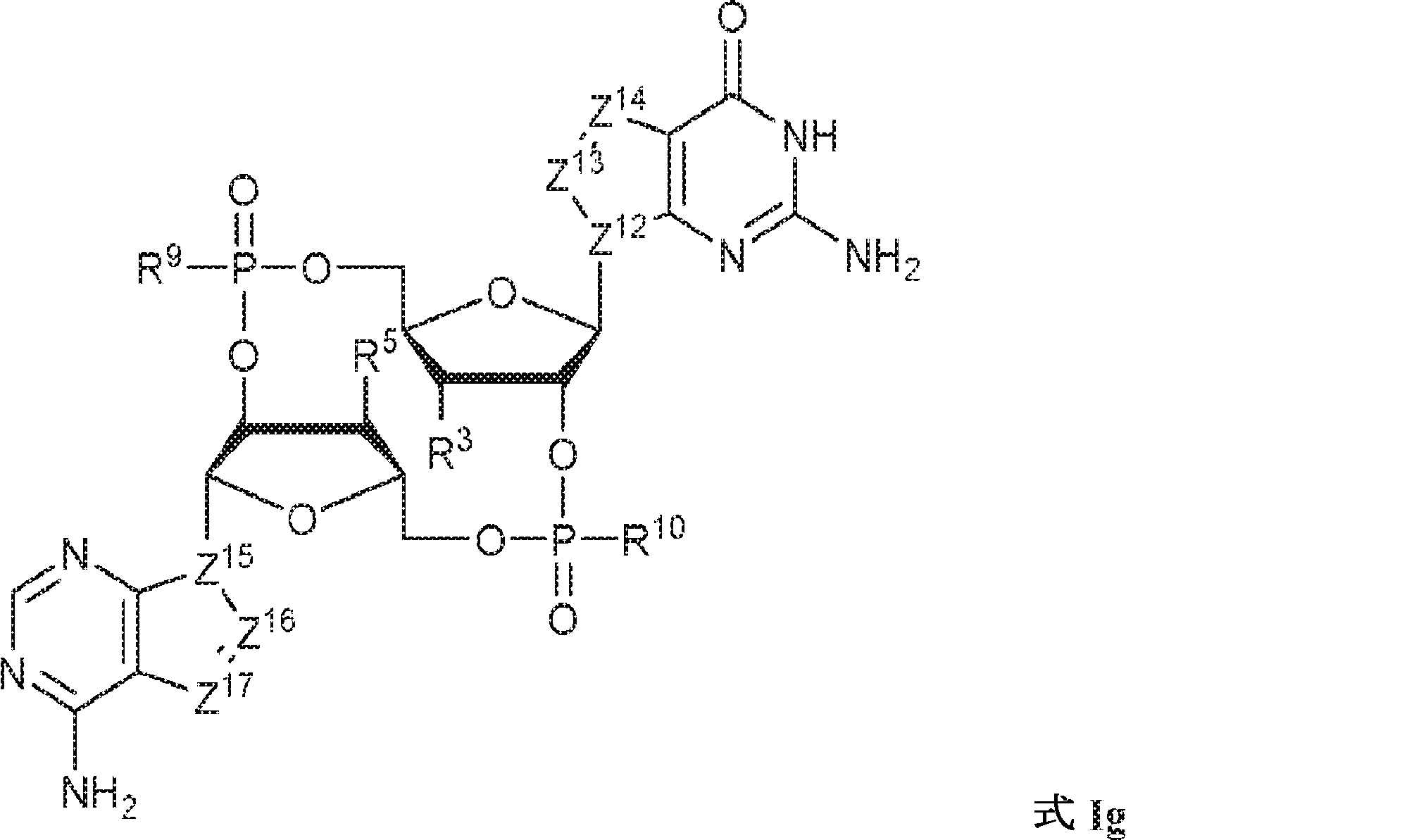
式中、
Z12、Z13、Z14、Z15、Z16、およびZ17は独立してCHまたはNであり;
R3およびR5は独立して、水素、ハロゲン、ヒドロキシル、アミノ、C1~6アルキル、1個もしくは複数のハロゲン基、チオール基、ヒドロキシル基、カルボニル基、カルボキシル基、カルボニルオキシル基、C1~6アルコキシ基、C1~6ヒドロキシアルコキシ基、アミノ基、C1~6アルキルアミノ基、ジ(C1~6アルキル)アミノ基、もしくはアジド基を用いて選択的に官能基を付与されたC1~6アルキル、C1~6アルコキシ、1個もしくは複数のハロゲン基、チオール基、ヒドロキシル基、カルボニル基、カルボキシル基、カルボニルオキシル基、C1~6ヒドロキシアルコキシ基、アミノ基、C1~6アルキルアミノ基、ジ(C1~6アルキル)アミノ基、もしくはアジド基を用いて選択的に官能基を付与されたC1~6アルコキシ、C3~5アルケニル-O-、C3~5アルキニル-O-、オリゴ(エチレングリコール)、ポリ(エチレングリコール)、アジド、または-NR7R8であり;
R7およびR8は独立して、水素、C1~6アルキル、1個もしくは複数のハロゲン基、チオール基、ヒドロキシル基、カルボニル基、カルボキシル基、カルボニルオキシル基、C1~6アルコキシ基、C1~6ヒドロキシアルコキシ基、アミノ基、C1~6アルキルアミノ基、ジ(C1~6アルキル)アミノ基、もしくはアジド基を用いて選択的に官能基を付与されたC1~6アルキル、環状-(C1~6アルキル)-、1個もしくは複数のハロゲン基、チオール基、ヒドロキシル基、カルボニル基、カルボキシル基、カルボニルオキシル基、C1~6アルコキシ基、C1~6ヒドロキシアルコキシ基、アミノ基、C1~6アルキルアミノ基、もしくはジ(C1~6アルキル)アミノ基を用いて選択的に官能基を付与された環状-(C1~6アルキル)-、環状-(C1~6オキサアルキル)-、または1個もしくは複数のハロゲン基、チオール基、ヒドロキシル基、カルボニル基、カルボキシル基、カルボニルオキシル基、C1~6ヒドロキシアルコキシ基、アミノ基、C1~6アルキルアミノ基、もしくはジ(C1~6アルキル)アミノ基を用いて選択的に官能基を付与された環状-(C1~6オキサアルキル)-であり;かつ
R9およびR10は独立して、ヒドロキシル、チオール、C1~6アルキル、1個もしくは複数のハロゲン基、チオール基、ヒドロキシル基、カルボニル基、カルボキシル基、カルボニルオキシル基、C1~6アルコキシ基、C1~6ヒドロキシアルコキシ基、アミノ基、C1~6アルキルアミノ基、ジ(C1~6アルキル)アミノ基、もしくはアジド基を用いて選択的に官能基を付与されたC1~6アルキル、C1~6アルコキシ、1個もしくは複数のハロゲン基、チオール基、ヒドロキシル基、カルボニル基、カルボキシル基、カルボニルオキシル基、C1~6ヒドロキシアルコキシ基、アミノ基、C1~6アルキルアミノ基、ジ(C1~6アルキル)アミノ基、もしくはアジド基を用いて選択的に官能基を付与されたC1~6アルコキシ、C3~5アルケニル-O-、C3~5アルキニル-O-、オリゴ(エチレングリコール)、ポリ(エチレングリコール)、ボラノ(-BH3
-)、または-NR7R8である。
In one aspect, the invention is based on the formula Ig :.
During the ceremony
Z 12 , Z 13 , Z 14 , Z 15 , Z 16 , and Z 17 are independently CH or N;
R 3 and R 5 are independently hydrogen, halogen, hydroxyl, amino, C 1-6 alkyl, one or more halogen groups, thiol groups, hydroxyl groups, carbonyl groups, carboxyl groups, carbonyloxyl groups, C 1 A functional group was selectively imparted using a ~ 6 alkoxy group, a C 1 to 6 hydroxyalkoxy group, an amino group, a C 1 to 6 alkylamino group, a di (C 1 to 6 alkyl) amino group, or an azido group. C 1 to 6 alkyl, C 1 to 6 alkoxy, one or more halogen groups, thiol group, hydroxyl group, carbonyl group, carboxyl group, carbonyloxyl group, C 1 to 6 hydroxyalkoxy group, amino group, C 1 to 6 Alkylamino group, di (C 1-6 alkyl) amino group, or C 1-6 alkoxy selectively functionalized with azido group, C 3-5 alkenyl-O-, C 3-5 Alkinyl-O-, oligo (ethylene glycol), poly (ethylene glycol), azide, or -NR 7 R 8 ;
R 7 and R 8 are independently hydrogen, C 1-6 alkyl, one or more halogen groups, thiol groups, hydroxyl groups, carbonyl groups, carboxyl groups, carbonyloxyl groups, C 1-6 alkoxy groups, C. C 1-6 alkyl, which is selectively functionalized with a 1-6 hydroxyalkoxy group, an amino group, a C 1-6 alkyl amino group, a di (C 1-6 alkyl) amino group, or an azido group. Cyclic- (C 1-6 alkyl)-, one or more halogen groups, thiol groups, hydroxyl groups, carbonyl groups, carboxyl groups, carbonyloxyl groups, C 1-6 alkoxy groups, C 1-6 hydroxyalkoxy groups, Cyclic- (C 1-6 alkyl)-, cyclic-(C 1 ) selectively functionalized with an amino group, C 1-6 alkyl amino group, or di (C 1-6 alkyl) amino group ~ 6 Oxalalkyl)-or one or more halogen groups, thiol groups, hydroxyl groups, carbonyl groups, carboxyl groups, carbonyloxyl groups, C 1-6 hydroxyalkoxy groups, amino groups, C 1-6 alkylamino groups , Or a cyclic- (C 1-6 oxaalkyl)-selectively imparted with a functional group using a di (C 1-6 alkyl) amino group; and
R 9 and R 10 are independently hydroxyl, thiol, C 1-6 alkyl, one or more halogen groups, thiol groups, hydroxyl groups, carbonyl groups, carboxyl groups, carbonyloxyl groups, C 1-6 alkoxy groups. , C 1 to 6 hydroxyalkoxy group, amino group, C 1 to 6 alkylamino group, di (C 1 to 6 alkyl) amino group, or C 1 to 6 selectively functionalized using an azido group. Alkyl, C 1-6 alkoxy, one or more halogen groups, thiol groups, hydroxyl groups, carbonyl groups, carboxyl groups, carbonyloxyl groups, C 1-6 hydroxyalkoxy groups, amino groups, C 1-6 alkylamino groups , C 1-6 alkoxy, C 3-5 alkenyl-O-, C 3-5 alkynyl-O-, selectively functionalized with a di (C 1-6 alkyl) amino group or an azido group. , Oligo (ethylene glycol), Poly (ethylene glycol), Borano (-BH 3- ) , or -NR 7 R 8 .
別の態様では、式Igの一方または両方のテトラヒドロフラニル環中の酸素原子は硫黄原子またはセレン原子で置き換えられている。 In another embodiment, the oxygen atom in one or both tetrahydrofuranyl rings of the formula Ig is replaced with a sulfur atom or a selenium atom.
別の態様では、本発明は、式Ih:
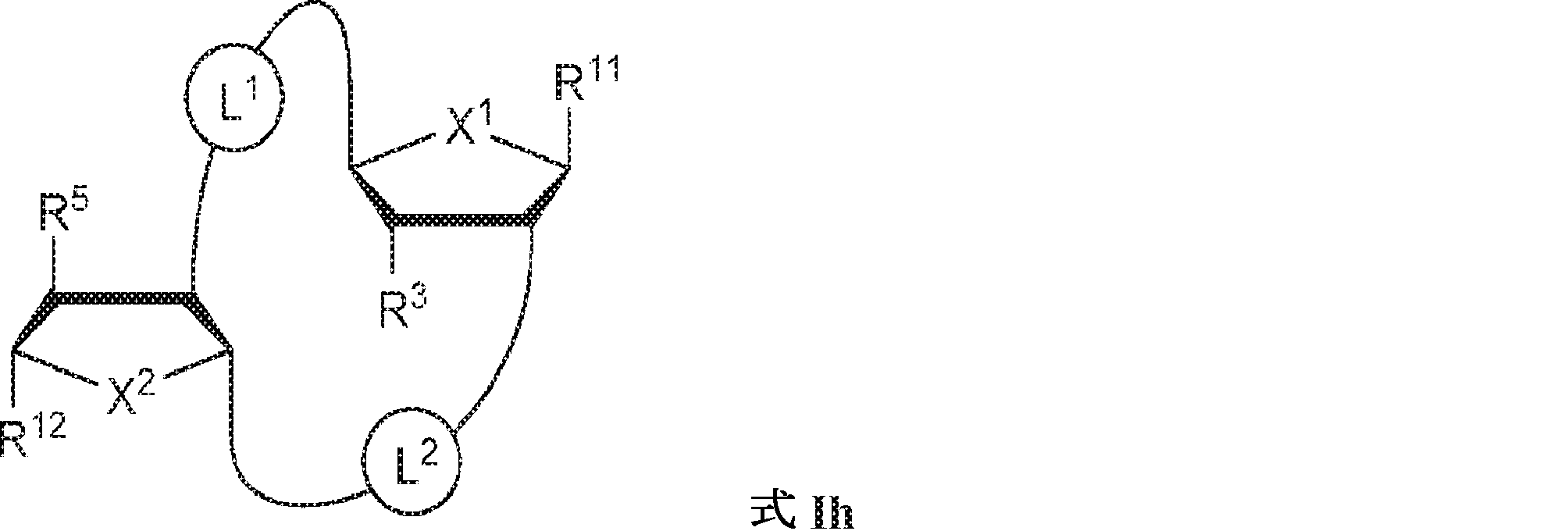
式中、
X1およびX2は独立してO、S、またはSeであり;
X1に対してα位の炭素から出発するL1、およびX2に対してα位の炭素から出発するL2は独立して、-CH2O-P(O)R6-O-、-CH2O-P(S)R6-O-、-C(Y1)(Y2)O-P(O)R6-C(Y3)(Y4)-、-CH2NHSO2NH-、-CH2NHC(O)NH-、-CH2NHC(S)NH-、-CH2NHC(NH)NH-、-CH2NHC(O)CH2-、-CH2NHSO2CH2-、-CH2CH2C(O)NH-、-CH2CH2SO2NH-、-CH2NH(3,4-ジオキソシクロブテン-1,2-ジイル)NH-、

cは0、1、または2であり;
d、e、およびfは独立して0または1であり;
Y1、Y2、Y3、およびY4は独立してHまたはFであり;
R6は、ヒドロキシル、チオール、C1~6アルキル、1個もしくは複数のハロゲン基、チオール基、ヒドロキシル基、カルボニル基、カルボキシル基、カルボニルオキシル基、C1~6アルコキシ基、C1~6ヒドロキシアルコキシ基、アミノ基、C1~6アルキルアミノ基、ジ(C1~6アルキル)アミノ基、もしくはアジド基を用いて選択的に官能基を付与されたC1~6アルキル、C1~6アルコキシ、1個もしくは複数のハロゲン基、チオール基、ヒドロキシル基、カルボニル基、カルボキシル基、カルボニルオキシル基、C1~6ヒドロキシアルコキシ基、アミノ基、C1~6アルキルアミノ基、ジ(C1~6アルキル)アミノ基、もしくはアジド基を用いて選択的に官能基を付与されたC1~6アルコキシ、C3~5アルケニル-O-、C3~5アルキニル-O-、オリゴ(エチレングリコール)、ポリ(エチレングリコール)、ボラノ(-BH3
-)、または-NR7R8であり;
R7およびR8は独立して、水素、C1~6アルキル、1個もしくは複数のハロゲン基、チオール基、ヒドロキシル基、カルボニル基、カルボキシル基、カルボニルオキシル基、C1~6アルコキシ基、C1~6ヒドロキシアルコキシ基、アミノ基、C1~6アルキルアミノ基、ジ(C1~6アルキル)アミノ基、もしくはアジド基を用いて選択的に官能基を付与されたC1~6アルキル、環状-(C1~6アルキル)-、1個もしくは複数のハロゲン基、チオール基、ヒドロキシル基、カルボニル基、カルボキシル基、カルボニルオキシル基、C1~6アルコキシ基、C1~6ヒドロキシアルコキシ基、アミノ基、C1~6アルキルアミノ基、もしくはジ(C1~6アルキル)アミノ基を用いて選択的に官能基を付与された環状-(C1~6アルキル)-、環状-(C1~6オキサアルキル)-、または1個もしくは複数のハロゲン基、チオール基、ヒドロキシル基、カルボニル基、カルボキシル基、カルボニルオキシル基、C1~6ヒドロキシアルコキシ基、アミノ基、C1~6アルキルアミノ基、もしくはジ(C1~6アルキル)アミノ基を用いて選択的に官能基を付与された環状-(C1~6オキサアルキル)-であり;
R3およびR5は独立して、水素、ハロゲン、ヒドロキシル、アミノ、C1~6アルキル、1個もしくは複数のハロゲン基、チオール基、ヒドロキシル基、カルボニル基、カルボキシル基、カルボニルオキシル基、C1~6アルコキシ基、C1~6ヒドロキシアルコキシ基、アミノ基、C1~6アルキルアミノ基、ジ(C1~6アルキル)アミノ基、もしくはアジド基を用いて選択的に官能基を付与されたC1~6アルキル、C1~6アルコキシ、1個もしくは複数のハロゲン基、チオール基、ヒドロキシル基、カルボニル基、カルボキシル基、カルボニルオキシル基、C1~6ヒドロキシアルコキシ基、アミノ基、C1~6アルキルアミノ基、ジ(C1~6アルキル)アミノ基、もしくはアジド基を用いて選択的に官能基を付与されたC1~6アルコキシ、C3~5アルケニル-O-、C3~5アルキニル-O-、オリゴ(エチレングリコール)、ポリ(エチレングリコール)、アジド、または-NR7R8であり;
R11およびR12は独立して、
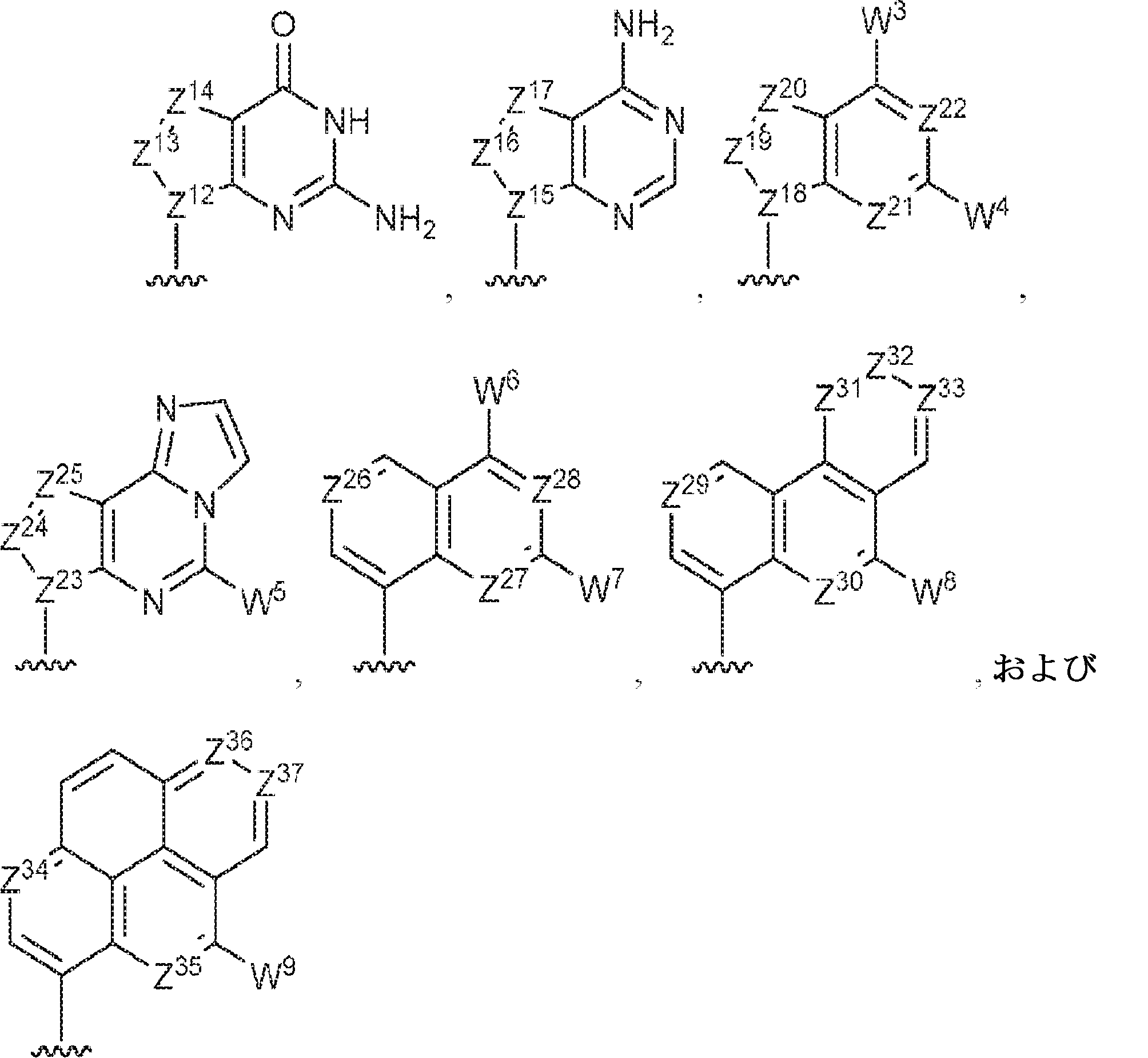
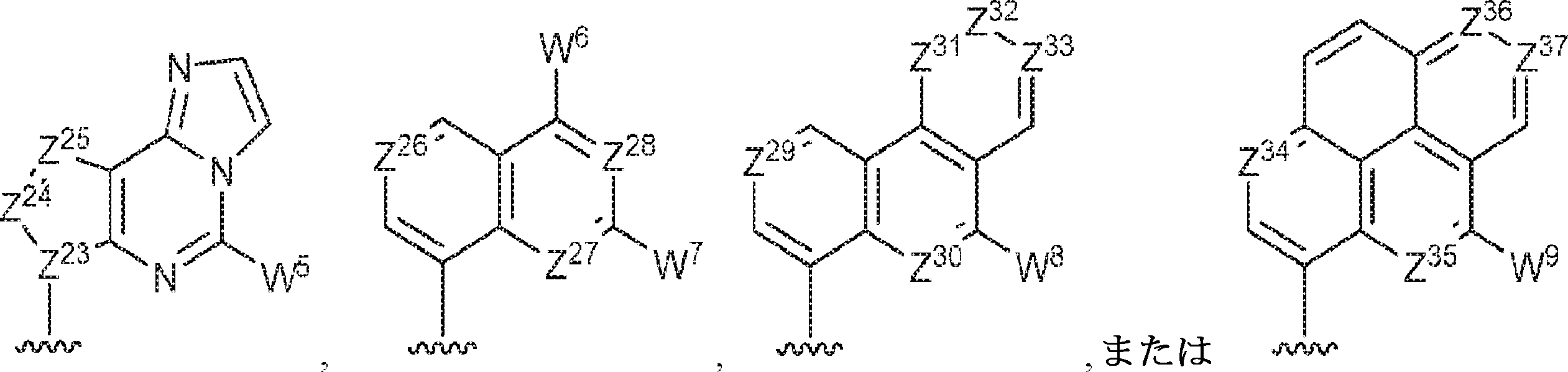
Z12、Z13、Z14、Z15、Z16、Z17、Z18、Z19、Z20、Z21、Z22、Z23、Z24、Z25、Z26、Z27、Z28、Z29、Z30、Z31、Z32、Z33、Z34、Z35、Z36、およびZ37はそれぞれ独立してCHまたはNであり;かつ
W3、W4、W5、W6、W7、W8、およびW9は独立して、水素、ハロゲン、ヒドロキシル、C1~6アルキル、1個もしくは複数のハロゲン基、チオール基、ヒドロキシル基、カルボニル基、カルボキシル基、カルボニルオキシル基、C1~6アルコキシ基、C1~6ヒドロキシアルコキシ基、アミノ基、C1~6アルキルアミノ基、ジ(C1~6アルキル)アミノ基、もしくはアジド基を用いて選択的に官能基を付与されたC1~6アルキル、C1~6アルコキシ、1個もしくは複数のハロゲン基、チオール基、ヒドロキシル基、カルボニル基、カルボキシル基、カルボニルオキシル基、C1~6ヒドロキシアルコキシ基、アミノ基、C1~6アルキルアミノ基、ジ(C1~6アルキル)アミノ基、もしくはアジド基を用いて選択的に官能基を付与されたC1~6アルコキシ、C3~5アルケニル-O-、C3~5アルキニル-O-、オリゴ(エチレングリコール)、ポリ(エチレングリコール)、アジド、または-NR7R8である。
In another aspect, the invention is based on the formula Ih :.
During the ceremony
X 1 and X 2 are independently O, S, or Se;
L 1 starting from the carbon at the α-position with respect to X 1 and L 2 starting from the carbon at the α-position with respect to X 2 are independently -CH 2 OP (O) R 6 -O-, -CH. 2 OP (S) R 6 -O-, -C (Y 1 ) (Y 2 ) OP (O) R 6 -C (Y 3 ) (Y 4 )-, -CH 2 NHSO 2 NH-, -CH 2 NHC (O) NH-, -CH 2 NHC (S) NH-, -CH 2 NHC (NH) NH-, -CH 2 NHC (O) CH 2- , -CH 2 NHSO 2 CH 2- , -CH 2 CH 2 C (O) NH-, -CH 2 CH 2 SO 2 NH-, -CH 2 NH (3,4-dioxocyclobutene-1,2-diyl) NH-,
c is 0, 1, or 2;
d, e, and f are independently 0 or 1;
Y 1 , Y 2 , Y 3 , and Y 4 are independently H or F;
R 6 is hydroxyl, thiol, C 1-6 alkyl, one or more halogen groups, thiol group, hydroxyl group, carbonyl group, carboxyl group, carbonyloxyl group, C 1-6 alkoxy group, C 1-6 hydroxy C 1 to 6 alkyl, C 1 to 6 selectively functional groups using an alkoxy group, an amino group, a C 1 to 6 alkyl amino group, a di (C 1 to 6 alkyl) amino group, or an azido group. Alkoxy, one or more halogen groups, thiol groups, hydroxyl groups, carbonyl groups, carboxyl groups, carbonyloxyl groups, C 1-6 hydroxyalkoxy groups, amino groups, C 1-6 alkylamino groups, di (C 1- 6 Alkyl) C 1-6 alkoxy, C 3-5 alkenyl-O-, C 3-5 alkynyl-O-, oligo (ethylene glycol) selectively functionalized with an amino group or an azido group. , Poly (ethylene glycol), Borano (-BH 3- ) , or -NR 7 R 8 ;
R 7 and R 8 are independently hydrogen, C 1-6 alkyl, one or more halogen groups, thiol groups, hydroxyl groups, carbonyl groups, carboxyl groups, carbonyloxyl groups, C 1-6 alkoxy groups, C. C 1-6 alkyl, which is selectively functionalized with a 1-6 hydroxyalkoxy group, an amino group, a C 1-6 alkyl amino group, a di (C 1-6 alkyl) amino group, or an azido group. Cyclic- (C 1-6 alkyl)-, one or more halogen groups, thiol groups, hydroxyl groups, carbonyl groups, carboxyl groups, carbonyloxyl groups, C 1-6 alkoxy groups, C 1-6 hydroxyalkoxy groups, Cyclic- (C 1-6 alkyl)-, cyclic-(C 1 ) selectively functionalized with an amino group, C 1-6 alkyl amino group, or di (C 1-6 alkyl) amino group ~ 6 Oxalalkyl)-or one or more halogen groups, thiol groups, hydroxyl groups, carbonyl groups, carboxyl groups, carbonyloxyl groups, C 1-6 hydroxyalkoxy groups, amino groups, C 1-6 alkylamino groups , Or a cyclic- (C 1-6 oxaalkyl)-selectively imparted with a functional group using a di (C 1-6 alkyl) amino group;
R 3 and R 5 are independently hydrogen, halogen, hydroxyl, amino, C 1-6 alkyl, one or more halogen groups, thiol groups, hydroxyl groups, carbonyl groups, carboxyl groups, carbonyloxyl groups, C 1 A functional group was selectively imparted using a ~ 6 alkoxy group, a C 1 to 6 hydroxyalkoxy group, an amino group, a C 1 to 6 alkylamino group, a di (C 1 to 6 alkyl) amino group, or an azido group. C 1 to 6 alkyl, C 1 to 6 alkoxy, one or more halogen groups, thiol group, hydroxyl group, carbonyl group, carboxyl group, carbonyloxyl group, C 1 to 6 hydroxyalkoxy group, amino group, C 1 to 6 Alkylamino group, di (C 1-6 alkyl) amino group, or C 1-6 alkoxy selectively functionalized with azido group, C 3-5 alkenyl-O-, C 3-5 Alkinyl-O-, oligo (ethylene glycol), poly (ethylene glycol), azide, or -NR 7 R 8 ;
R 11 and R 12 are independent,
Z 12 , Z 13 , Z 14 , Z 15 , Z 16 , Z 17 , Z 18 , Z 19 , Z 20 , Z 21 , Z 22 , Z 23 , Z 24 , Z 25 , Z 26 , Z 27 , Z 28 , Z 29 , Z 30 , Z 31 , Z 32 , Z 33 , Z 34 , Z 35 , Z 36 , and Z 37 are CH or N independently; and
W 3 , W 4 , W 5 , W 6 , W 7 , W 8 , and W 9 are independently hydrogen, halogen, hydroxyl, C 1-6 alkyl, one or more halogen groups, thiol groups, hydroxyl. Group, carbonyl group, carboxyl group, carbonyloxyl group, C 1-6 alkoxy group, C 1-6 hydroxyalkoxy group, amino group, C 1-6 alkylamino group, di (C 1-6 alkyl) amino group, or C 1-6 alkyl, C 1-6 alkoxy, one or more halogen groups, thiol groups, hydroxyl groups, carbonyl groups, carboxyl groups, carbonyloxyl groups, selectively functionalized with azido groups, C 1 to 6 hydroxyalkoxy group selectively added with a functional group using a C 1 to 6 hydroxyalkoxy group, an amino group, a C 1 to 6 alkyl amino group, a di (C 1 to 6 alkyl) amino group, or an azido group. , C 3-5 alkenyl-O-, C 3-5 alkynyl-O-, oligo (ethylene glycol), poly (ethylene glycol), azide, or -NR 7 R 8 .
別の態様では、本発明は、式Ii:
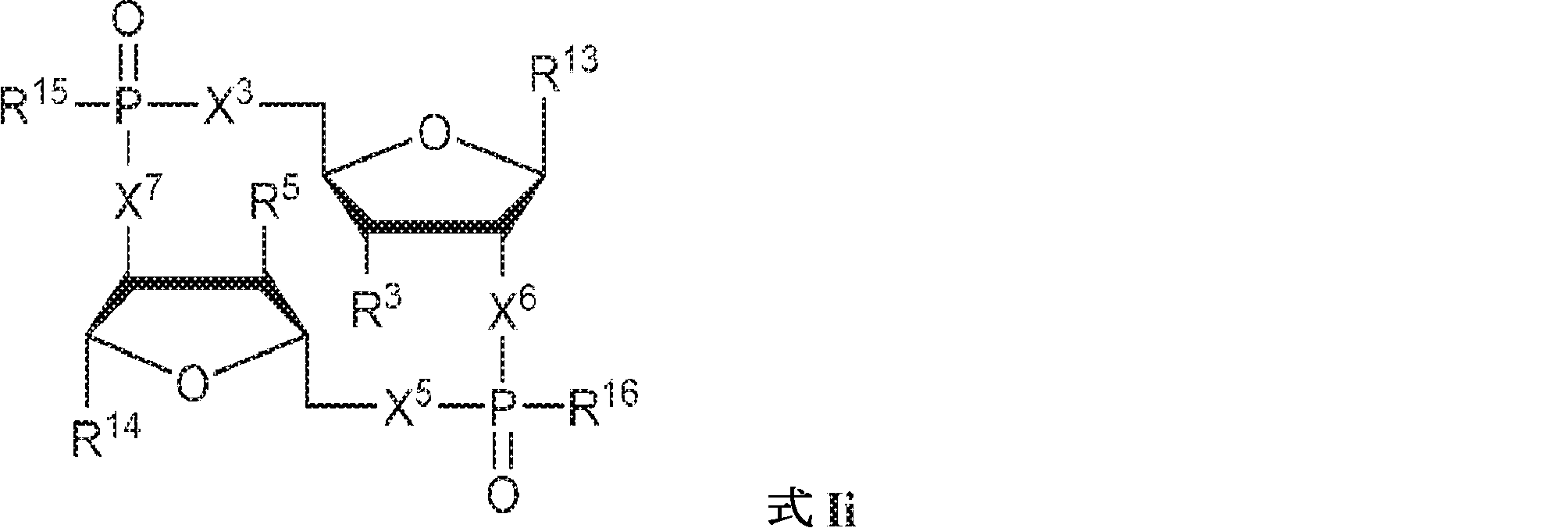
式中、
X3、X5、X6、およびX7は独立してO、NH、CH2、CHF、またはCF2であり;
R13およびR14は独立して、
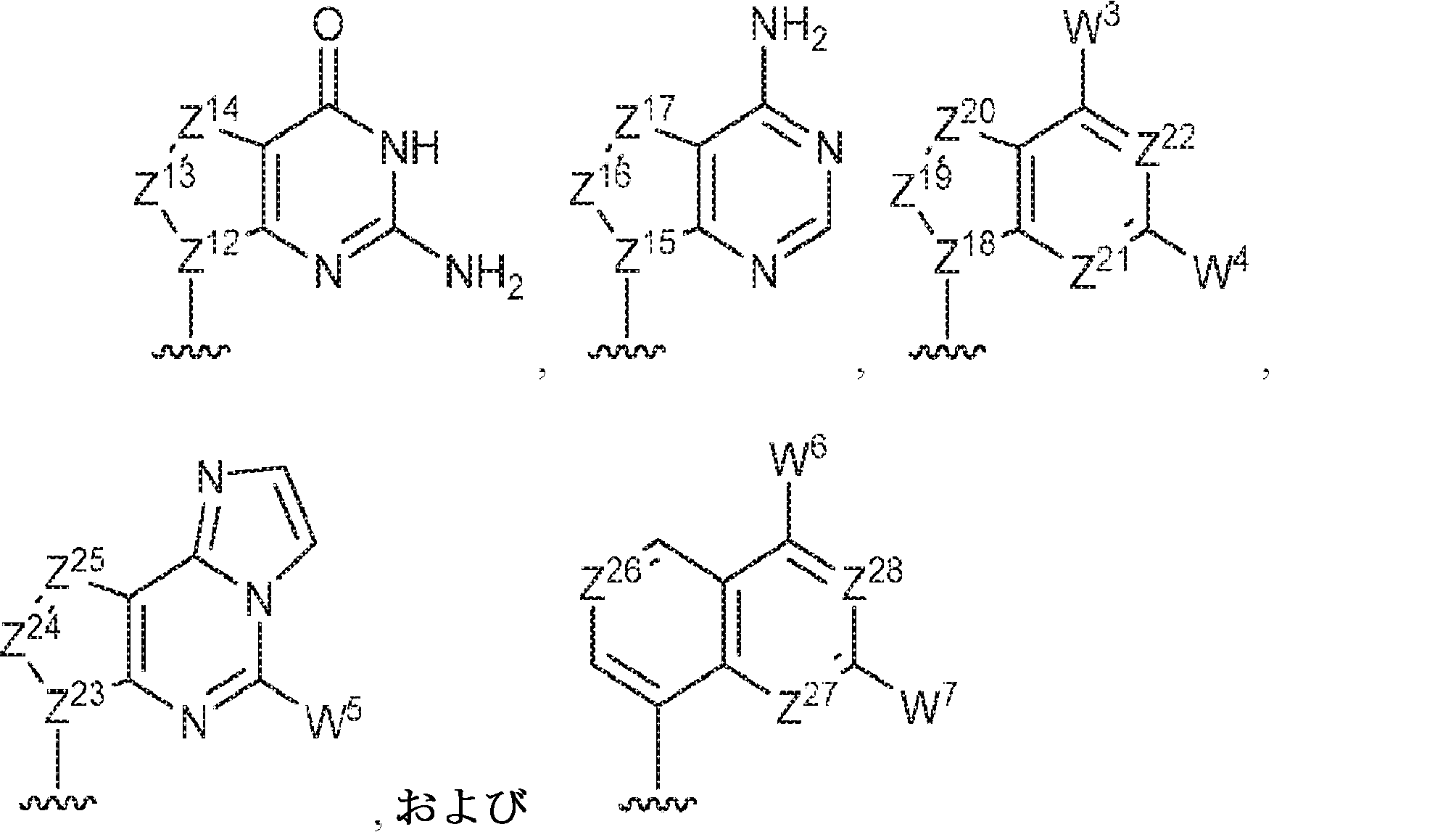
Z12、Z13、Z14、Z15、Z16、Z17、Z18、Z19、Z20、Z21、Z22、Z23、Z24、Z25、Z26、Z27、およびZ28はそれぞれ独立してCHまたはNであり;かつ
W3、W4、W5、W6、およびW7は独立して、水素、ハロゲン、ヒドロキシル、C1~6アルキル、1個もしくは複数のハロゲン基、チオール基、ヒドロキシル基、カルボニル基、カルボキシル基、カルボニルオキシル基、C1~6アルコキシ基、C1~6ヒドロキシアルコキシ基、アミノ基、C1~6アルキルアミノ基、ジ(C1~6アルキル)アミノ基、もしくはアジド基を用いて選択的に官能基を付与されたC1~6アルキル、C1~6アルコキシ、1個もしくは複数のハロゲン基、チオール基、ヒドロキシル基、カルボニル基、カルボキシル基、カルボニルオキシル基、C1~6ヒドロキシアルコキシ基、アミノ基、C1~6アルキルアミノ基、ジ(C1~6アルキル)アミノ基、もしくはアジド基を用いて選択的に官能基を付与されたC1~6アルコキシ、C3~5アルケニル-O-、C3~5アルキニル-O-、オリゴ(エチレングリコール)、ポリ(エチレングリコール)、アジド、または-NR7R8であり;
R7およびR8は独立して、水素、C1~6アルキル、1個もしくは複数のハロゲン基、チオール基、ヒドロキシル基、カルボニル基、カルボキシル基、カルボニルオキシル基、C1~6アルコキシ基、C1~6ヒドロキシアルコキシ基、アミノ基、C1~6アルキルアミノ基、ジ(C1~6アルキル)アミノ基、もしくはアジド基を用いて選択的に官能基を付与されたC1~6アルキル、環状-(C1~6アルキル)-、1個もしくは複数のハロゲン基、チオール基、ヒドロキシル基、カルボニル基、カルボキシル基、カルボニルオキシル基、C1~6アルコキシ基、C1~6ヒドロキシアルコキシ基、アミノ基、C1~6アルキルアミノ基、もしくはジ(C1~6アルキル)アミノ基を用いて選択的に官能基を付与された環状-(C1~6アルキル)-、環状-(C1~6オキサアルキル)-、または1個もしくは複数のハロゲン基、チオール基、ヒドロキシル基、カルボニル基、カルボキシル基、カルボニルオキシル基、C1~6ヒドロキシアルコキシ基、アミノ基、C1~6アルキルアミノ基、もしくはジ(C1~6アルキル)アミノ基を用いて選択的に官能基を付与された環状-(C1~6オキサアルキル)-であり;
R3およびR5は独立して、水素、ハロゲン、ヒドロキシル、アミノ、C1~6アルキル、1個もしくは複数のハロゲン基、チオール基、ヒドロキシル基、カルボニル基、カルボキシル基、カルボニルオキシル基、C1~6アルコキシ基、C1~6ヒドロキシアルコキシ基、アミノ基、C1~6アルキルアミノ基、ジ(C1~6アルキル)アミノ基、もしくはアジド基を用いて選択的に官能基を付与されたC1~6アルキル、C1~6アルコキシ、1個もしくは複数のハロゲン基、チオール基、ヒドロキシル基、カルボニル基、カルボキシル基、カルボニルオキシル基、C1~6ヒドロキシアルコキシ基、アミノ基、C1~6アルキルアミノ基、ジ(C1~6アルキル)アミノ基、もしくはアジド基を用いて選択的に官能基を付与されたC1~6アルコキシ、C3~5アルケニル-O-、C3~5アルキニル-O-、オリゴ(エチレングリコール)、ポリ(エチレングリコール)、アジド、または-NR7R8であり;かつ
R15およびR16は独立して、ヒドロキシル、チオール、メトキシ、エトキシ、アミノ、N-メチルアミノ、N,N-ジメチルアミノ、N-エチルアミノ、N,N-ジエチルアミノ、N-モルホリノ、またはボラノ(-BH3
-)である。
In another aspect, the invention is in the formula Ii :.
During the ceremony
X 3 , X 5 , X 6 , and X 7 are independently O, NH, CH 2 , CHF, or CF 2 ;
R 13 and R 14 are independent,
Z 12 , Z 13 , Z 14 , Z 15 , Z 16 , Z 17 , Z 18 , Z 19 , Z 20 , Z 21 , Z 22 , Z 23 , Z 24 , Z 25 , Z 26 , Z 27 , and Z 28 are CH or N independently; and
W 3 , W 4 , W 5 , W 6 and W 7 are independently hydrogen, halogen, hydroxyl, C 1-6 alkyl, one or more halogen groups, thiol groups, hydroxyl groups, carbonyl groups, carboxyls. Selected using a group, a carbonyloxyl group, a C 1-6 alkoxy group, a C 1-6 hydroxyalkoxy group, an amino group, a C 1-6 alkylamino group, a di (C 1-6 alkyl) amino group, or an azido group. C 1-6 alkyl, C 1-6 alkoxy, one or more halogen groups, thiol group, hydroxyl group, carbonyl group, carboxyl group, carbonyloxyl group, C 1-6 hydroxyalkoxy C 1-6 alkoxy, C 3-5 alkenyl selectively functionalized with groups, amino groups, C 1-6 alkyl amino groups, di (C 1-6 alkyl) amino groups, or azido groups -O-, C 3-5 alkynyl-O-, oligo (ethylene glycol), poly (ethylene glycol), azide, or -NR 7 R 8 ;
R 7 and R 8 are independently hydrogen, C 1-6 alkyl, one or more halogen groups, thiol groups, hydroxyl groups, carbonyl groups, carboxyl groups, carbonyloxyl groups, C 1-6 alkoxy groups, C. C 1-6 alkyl, which is selectively functionalized with a 1-6 hydroxyalkoxy group, an amino group, a C 1-6 alkyl amino group, a di (C 1-6 alkyl) amino group, or an azido group. Cyclic- (C 1-6 alkyl)-, one or more halogen groups, thiol groups, hydroxyl groups, carbonyl groups, carboxyl groups, carbonyloxyl groups, C 1-6 alkoxy groups, C 1-6 hydroxyalkoxy groups, Cyclic- (C 1-6 alkyl)-, cyclic-(C 1 ) selectively functionalized with an amino group, C 1-6 alkyl amino group, or di (C 1-6 alkyl) amino group ~ 6 Oxalalkyl)-or one or more halogen groups, thiol groups, hydroxyl groups, carbonyl groups, carboxyl groups, carbonyloxyl groups, C 1-6 hydroxyalkoxy groups, amino groups, C 1-6 alkylamino groups , Or a cyclic- (C 1-6 oxaalkyl)-selectively imparted with a functional group using a di (C 1-6 alkyl) amino group;
R 3 and R 5 are independently hydrogen, halogen, hydroxyl, amino, C 1-6 alkyl, one or more halogen groups, thiol groups, hydroxyl groups, carbonyl groups, carboxyl groups, carbonyloxyl groups, C 1 A functional group was selectively imparted using a ~ 6 alkoxy group, a C 1 to 6 hydroxyalkoxy group, an amino group, a C 1 to 6 alkylamino group, a di (C 1 to 6 alkyl) amino group, or an azido group. C 1 to 6 alkyl, C 1 to 6 alkoxy, one or more halogen groups, thiol group, hydroxyl group, carbonyl group, carboxyl group, carbonyloxyl group, C 1 to 6 hydroxyalkoxy group, amino group, C 1 to 6 Alkylamino group, di (C 1-6 alkyl) amino group, or C 1-6 alkoxy selectively functionalized with azido group, C 3-5 alkenyl-O-, C 3-5 Alkinyl-O-, oligo (ethylene glycol), poly (ethylene glycol), azide, or -NR 7 R 8 ; and
R 15 and R 16 are independently hydroxyl, thiol, methoxy, ethoxy, amino, N-methylamino, N, N-dimethylamino, N-ethylamino, N, N-diethylamino, N-morpholino, or borano ( -BH 3- ) .
別の態様では、式Iiの一方または両方のテトラヒドロフラニル環中の酸素原子は硫黄原子またはセレン原子で置き換えられている。 In another embodiment, the oxygen atom in one or both tetrahydrofuranyl rings of formula Ii is replaced with a sulfur atom or a selenium atom.
別の態様では、化合物は
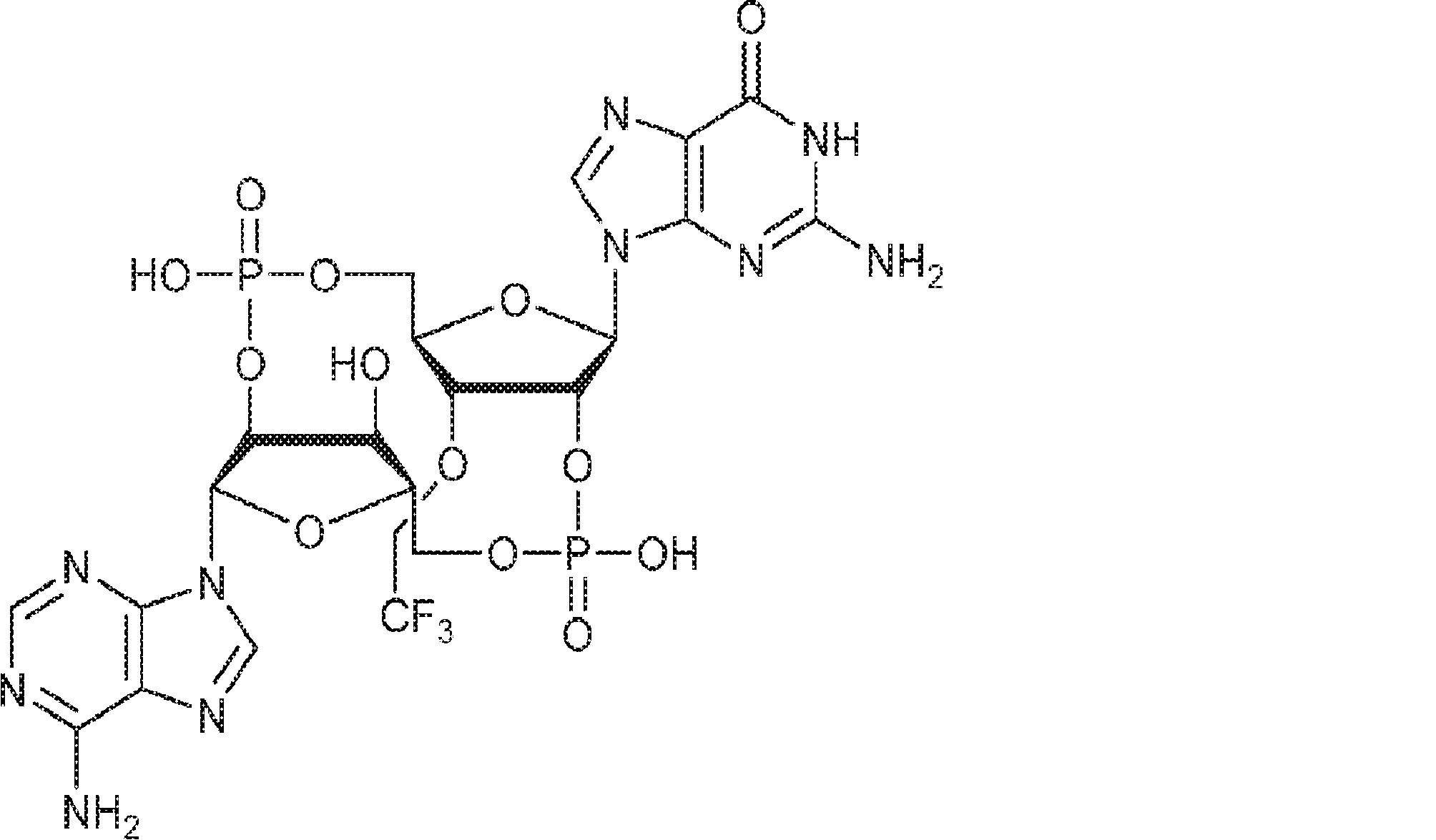
別の態様では、化合物は
別の局面では、本発明は、式Iの化合物またはその薬学的に許容される塩と、1つまたは複数の薬学的に許容される賦形剤とを含む、薬学的組成物を提供する。 In another aspect, the invention provides a pharmaceutical composition comprising a compound of formula I or a pharmaceutically acceptable salt thereof and one or more pharmaceutically acceptable excipients.
別の局面では、本発明は、それを必要とする患者に、式Iの化合物またはその薬学的に許容される塩を投与する段階を含む、STINGの調節が有益である疾患または状態を処置する方法を提供する。 In another aspect, the invention treats a disease or condition in which regulation of STING is beneficial, including the step of administering to a patient in need thereof a compound of formula I or a pharmaceutically acceptable salt thereof. Provide a method.
別の局面では、本発明は、STINGの調節が有益である疾患または状態の処置における使用のための、式Iの化合物またはその薬学的に許容される塩を提供する。 In another aspect, the invention provides a compound of formula I or a pharmaceutically acceptable salt thereof for use in the treatment of a disease or condition in which regulation of STING is beneficial.
別の局面では、本発明は、治療における使用のための、式Iの化合物またはその薬学的に許容される塩を提供する。 In another aspect, the invention provides a compound of formula I or a pharmaceutically acceptable salt thereof for therapeutic use.
別の局面では、本発明は、がんの処置における使用のための、式Iの化合物またはその薬学的に許容される塩を提供する。 In another aspect, the invention provides a compound of formula I or a pharmaceutically acceptable salt thereof for use in the treatment of cancer.
別の局面では、本発明は、がんの処置における使用のための、式Iの化合物もしくはその薬学的に許容される塩、またはその薬学的組成物、例えば式Iの化合物の細胞取り込み、安定性、および有効性を増強するナノ粒子もしくは送達ビヒクルを提供する。 In another aspect, the invention is cell uptake, stable of a compound of formula I or a pharmaceutically acceptable salt thereof, or a pharmaceutical composition thereof, eg, a compound of formula I, for use in the treatment of cancer. Provided are nanoparticles or delivery vehicles that enhance sex and efficacy.
別の局面では、本発明は、それを必要とする患者に、式Iの化合物またはその薬学的に許容される塩の治療有効量を投与する段階を含む、がんを処置する方法を提供する。 In another aspect, the invention provides a method of treating cancer, comprising administering to a patient in need thereof a therapeutically effective amount of a compound of formula I or a pharmaceutically acceptable salt thereof. ..
別の局面では、本発明は、がんの処置用の医薬の製造における、式Iの化合物またはその薬学的に許容される塩の使用を提供する。 In another aspect, the invention provides the use of a compound of formula I or a pharmaceutically acceptable salt thereof in the manufacture of a pharmaceutical for the treatment of cancer.
別の局面では、本発明は、式Iの化合物またはその薬学的に許容される塩と、少なくとも1つのさらなる治療用物質とを含む、薬学的組成物を提供する。 In another aspect, the invention provides a pharmaceutical composition comprising a compound of formula I or a pharmaceutically acceptable salt thereof and at least one additional therapeutic substance.
別の局面では、本発明は、式Iの化合物またはその薬学的に許容される塩と、少なくとも1つのさらなる治療用物質と、1つまたは複数の薬学的に許容される賦形剤とを含む、薬学的組成物を提供する。 In another aspect, the invention comprises a compound of formula I or a pharmaceutically acceptable salt thereof, and at least one additional therapeutic agent and one or more pharmaceutically acceptable excipients. , Provide pharmaceutical compositions.
別の局面では、本発明は、治療における使用のための、式Iの化合物またはその薬学的に許容される塩と少なくとも1つのさらなる治療用物質とを含む薬学的組成物を提供する。 In another aspect, the invention provides a pharmaceutical composition comprising a compound of formula I or a pharmaceutically acceptable salt thereof and at least one additional therapeutic substance for use in therapy.
別の局面では、本発明は、STINGの調節が有益である疾患または状態の処置における使用のための、式Iの化合物またはその薬学的に許容される塩と少なくとも1つのさらなる治療用物質とを含む薬学的組成物を提供する。 In another aspect, the invention comprises a compound of formula I or a pharmaceutically acceptable salt thereof and at least one additional therapeutic substance for use in the treatment of diseases or conditions in which regulation of STING is beneficial. Provided are pharmaceutical compositions containing.
別の局面では、本発明は、がんの処置における使用のための、式Iの化合物またはその薬学的に許容される塩と少なくとも1つのさらなる治療用物質とを含む薬学的組成物を提供する。 In another aspect, the invention provides a pharmaceutical composition comprising a compound of formula I or a pharmaceutically acceptable salt thereof and at least one additional therapeutic substance for use in the treatment of cancer. ..
別の局面では、本発明は、それを必要とする患者に、式Iの化合物またはその薬学的に許容される塩と少なくとも1つのさらなる治療用物質とを含む組み合わせの治療有効量を投与する段階を含む、STINGの調節が有益である疾患または状態を処置するための方法を提供する。 In another aspect, the invention administers a therapeutically effective amount of a combination comprising a compound of formula I or a pharmaceutically acceptable salt thereof and at least one additional therapeutic agent to a patient in need thereof. Provides methods for treating diseases or conditions in which regulation of STING is beneficial, including.
別の局面では、本発明は、それを必要とする患者に、式Iの化合物またはその薬学的に許容される塩と少なくとも1つのさらなる治療用物質とを含む薬学的組成物の治療有効量を投与する段階を含む、がんを処置する方法を提供する。 In another aspect, the invention provides a therapeutically effective amount of a pharmaceutical composition comprising a compound of formula I or a pharmaceutically acceptable salt thereof and at least one additional therapeutic agent to a patient in need thereof. Provided are methods of treating cancer, including the stage of administration.
別の局面では、本発明は、がんの処置における使用のための、式Iの化合物またはその薬学的に許容される塩と少なくとも1つのさらなる治療用物質とを含む薬学的組成物を提供する。治療用物質としては、PD1に対する、PD-L1に対する、CTLA4に対する、および有効な抗腫瘍免疫応答を遮断する他の分子に対するヒト化抗体などの免疫チェックポイント阻害物質が挙げられるがそれに限定されない。 In another aspect, the invention provides a pharmaceutical composition comprising a compound of formula I or a pharmaceutically acceptable salt thereof and at least one additional therapeutic substance for use in the treatment of cancer. .. Therapeutic agents include, but are not limited to, immune checkpoint inhibitors such as humanized antibodies against PD1, PD-L1, CTLA4, and other molecules that block effective antitumor immune responses.
別の局面では、本発明は、それを必要とする患者に、式Iの化合物またはその薬学的に許容される塩と少なくとも1つのさらなる治療用物質とを含む薬学的組成物をの治療有効量投与する段階を含む、がんを処置する方法を提供する。治療用物質としては、PD1に対する、PD-L1に対する、CTLA4に対する、および有効な抗腫瘍免疫応答を遮断する他の分子に対するヒト化抗体などの免疫チェックポイント阻害物質が挙げられるがそれに限定されない。 In another aspect, the invention provides a therapeutically effective amount of a pharmaceutical composition comprising a compound of formula I or a pharmaceutically acceptable salt thereof and at least one additional therapeutic agent to a patient in need thereof. Provided are methods of treating cancer, including the stage of administration. Therapeutic agents include, but are not limited to, immune checkpoint inhibitors such as humanized antibodies against PD1, PD-L1, CTLA4, and other molecules that block effective antitumor immune responses.
別の局面では、本発明は、がんの処置における使用のための、式Iの化合物またはその薬学的に許容される塩と少なくとも1つのさらなる治療用物質とを含む薬学的組成物を提供する。治療用物質としては、腫瘍細胞を直接死滅させ、腫瘍抗原の提示を増強し、かつSTING経路を活性化する、高線量放射線などの放射線が挙げられる。 In another aspect, the invention provides a pharmaceutical composition comprising a compound of formula I or a pharmaceutically acceptable salt thereof and at least one additional therapeutic substance for use in the treatment of cancer. .. Therapeutic substances include radiation, such as high-dose radiation, that directly kills tumor cells, enhances tumor antigen presentation, and activates the STING pathway.
別の局面では、本発明は、それを必要とする患者に、式Iの化合物またはその薬学的に許容される塩と少なくとも1つのさらなる治療用物質とを含む薬学的組成物の治療有効量を投与する段階を含む、がんを処置する方法を提供する。治療用物質としては、腫瘍細胞を直接死滅させ、腫瘍抗原の提示を増強し、かつSTING経路を活性化する、高線量放射線などの放射線が挙げられる。 In another aspect, the invention provides a therapeutically effective amount of a pharmaceutical composition comprising a compound of formula I or a pharmaceutically acceptable salt thereof and at least one additional therapeutic agent to a patient in need thereof. Provided are methods of treating cancer, including the stage of administration. Therapeutic substances include radiation, such as high-dose radiation, that directly kills tumor cells, enhances tumor antigen presentation, and activates the STING pathway.
別の局面では、本発明は、がんの処置における使用のための、式Iの化合物またはその薬学的に許容される塩と少なくとも1つのさらなる治療用物質とを含む薬学的組成物を提供する。治療用物質としては、腫瘍細胞を選択的に死滅させかつ腫瘍抗原の提示を増強する、別の化学療法剤が挙げられる。 In another aspect, the invention provides a pharmaceutical composition comprising a compound of formula I or a pharmaceutically acceptable salt thereof and at least one additional therapeutic substance for use in the treatment of cancer. .. Therapeutic agents include other chemotherapeutic agents that selectively kill tumor cells and enhance the presentation of tumor antigens.
別の局面では、本発明は、それを必要とする患者に、式Iの化合物またはその薬学的に許容される塩と少なくとも1つのさらなる治療用物質とを含む薬学的組成物の治療有効量を投与する段階を含む、がんを処置する方法を提供する。治療用物質としては、腫瘍細胞を選択的に死滅させかつ腫瘍抗原の提示を増強する、別の化学療法剤が挙げられる。 In another aspect, the invention provides a therapeutically effective amount of a pharmaceutical composition comprising a compound of formula I or a pharmaceutically acceptable salt thereof and at least one additional therapeutic agent to a patient in need thereof. Provided are methods of treating cancer, including the stage of administration. Therapeutic agents include other chemotherapeutic agents that selectively kill tumor cells and enhance the presentation of tumor antigens.
別の局面では、本発明は、がんの処置における使用のための、式Iの化合物またはその薬学的に許容される塩と、ナノ粒子を含む薬学的製剤と少なくとも1つのさらなる治療用物質とを含む薬学的組成物を提供する。治療用物質としては放射線および/または別の化学療法剤が挙げられる。 In another aspect, the invention comprises a compound of formula I or a pharmaceutically acceptable salt thereof for use in the treatment of cancer, a pharmaceutical formulation comprising nanoparticles and at least one additional therapeutic substance. To provide a pharmaceutical composition comprising. Therapeutic substances include radiation and / or other chemotherapeutic agents.
別の局面では、本発明は、それを必要とする患者に、がんの処置における使用のための、式Iの化合物またはその薬学的に許容される塩とナノ粒子を含む薬学的製剤と少なくとも1つのさらなる治療用物質とを含む薬学的組成物の治療有効量を投与する段階を含む、がんを処置する方法を提供する。治療用物質としては放射線および/または別の化学療法剤が挙げられる。 In another aspect, the invention is at least a pharmaceutical formulation comprising a compound of formula I or a pharmaceutically acceptable salt and nanoparticles thereof for use in the treatment of cancer for patients in need thereof. Provided are methods of treating cancer, comprising the step of administering a therapeutically effective amount of a pharmaceutical composition comprising one additional therapeutic substance. Therapeutic substances include radiation and / or other chemotherapeutic agents.
別の局面では、本発明は、それを必要とする患者に、がんの処置における使用のための、式Iの化合物またはその薬学的に許容される塩とナノ粒子を含む薬学的製剤と少なくとも1つのさらなる治療用物質とを含む薬学的組成物の治療有効量を投与する段階を含む、がんを処置する方法を提供する。式Iの化合物は、腫瘍に直接注射されてもよく、筋肉(筋肉内)、皮膚(皮下および皮内)、腹膜(腹腔内)、リンパ節(リンパ内)、または静脈(静脈内)への注射を含む全身注射されてもよい。 In another aspect, the invention is at least a pharmaceutical formulation comprising a compound of formula I or a pharmaceutically acceptable salt and nanoparticles thereof for use in the treatment of cancer for patients in need thereof. Provided are methods of treating cancer, comprising the step of administering a therapeutically effective amount of a pharmaceutical composition comprising one additional therapeutic substance. The compound of formula I may be injected directly into the tumor and into the muscle (intramuscular), skin (subcutaneous and intradermal), peritoneum (intraperitoneal), lymph node (intralymph), or vein (intravenous). It may be injected systemically, including injection.
別の局面では、本発明は、ワクチンアジュバントとしての使用のための、式Iの化合物またはその薬学的に許容される塩を提供する。 In another aspect, the invention provides a compound of formula I or a pharmaceutically acceptable salt thereof for use as a vaccine adjuvant.
別の局面では、本発明は、ワクチンアジュバントとしての使用のための、式Iの化合物もしくはその薬学的に許容される塩、またはその薬学的組成物、例えば式Iの化合物の細胞取り込み、安定性、および有効性を増強するナノ粒子もしくは送達ビヒクルを提供する。 In another aspect, the invention is cell uptake, stability of a compound of formula I or a pharmaceutically acceptable salt thereof, or a pharmaceutical composition thereof, eg, a compound of formula I, for use as a vaccine adjuvant. , And nanoparticles or delivery vehicles that enhance efficacy.
一態様では、薬学的組成物はワクチンである。 In one aspect, the pharmaceutical composition is a vaccine.
別の態様では、本発明は、それを必要とする患者に、アジュバントとしての式Iの化合物またはその薬学的に許容される塩と、腫瘍抗原とを含む薬学的組成物の治療有効量を投与する段階を含む、免疫応答を誘導または促進する方法を提供する。 In another aspect, the invention administers to a patient in need thereof a therapeutically effective amount of a pharmaceutical composition comprising a compound of formula I as an adjuvant or a pharmaceutically acceptable salt thereof and a tumor antigen. Provided is a method of inducing or promoting an immune response, including the step of inducing or promoting an immune response.
別の態様では、本発明は、それを必要とする患者に、アジュバントとしての式Iの化合物もしくはその薬学的組成物と、腫瘍抗原とを含む薬学的組成物、または該アジュバントおよび腫瘍抗原の細胞取り込みを増強するナノ粒子もしくは送達ビヒクルなどのその薬学的組成物の治療有効量を投与する段階を含む、免疫応答を誘導または促進する方法を提供する。 In another aspect, the invention presents, to a patient in need thereof, a pharmaceutical composition comprising a compound of formula I as an adjuvant or a pharmaceutical composition thereof and a tumor antigen, or cells of the adjuvant and tumor antigen. Provided are methods of inducing or facilitating an immune response, comprising the step of administering a therapeutically effective amount of the pharmaceutical composition, such as nanoparticles or delivery vehicles that enhance uptake.
別の局面では、本発明は、アジュバントとしての式Iの化合物またはその薬学的に許容される塩と、標的病原体の免疫原とを含む、薬学的組成物を提供する。 In another aspect, the invention provides a pharmaceutical composition comprising a compound of formula I as an adjuvant or a pharmaceutically acceptable salt thereof and an immunogen of a target pathogen.
別の局面では、本発明は、ワクチンアジュバントとしての使用のための、式Iの化合物またはその薬学的に許容される塩を提供する。 In another aspect, the invention provides a compound of formula I or a pharmaceutically acceptable salt thereof for use as a vaccine adjuvant.
別の態様では、本発明は、それを必要とする患者に、アジュバントとしての式Iの化合物またはその薬学的に許容される塩と、標的病原体の免疫原とを含む薬学的組成物の治療有効量を投与する段階を含む、免疫応答を誘導または促進する方法を提供する。 In another aspect, the invention is therapeutically effective in a patient in need thereof of a pharmaceutical composition comprising a compound of formula I as an adjuvant or a pharmaceutically acceptable salt thereof and an immunogen of the target pathogen. Provided are methods of inducing or facilitating an immune response, including the step of administering an amount.
別の局面では、本発明は、式Iの化合物またはその薬学的に許容される塩を含む、ワクチンアジュバントを提供する。 In another aspect, the invention provides a vaccine adjuvant comprising a compound of formula I or a pharmaceutically acceptable salt thereof.
別の局面では、本発明は、抗原または抗原組成物と式Iの化合物またはその薬学的に許容される塩とを含む免疫原性組成物を提供する。 In another aspect, the invention provides an immunogenic composition comprising an antigen or antigen composition and a compound of formula I or a pharmaceutically acceptable salt thereof.
別の局面では、本発明は、がんおよび感染性疾患を含む疾患の処置または予防における使用のための、抗原または抗原組成物と式Iの化合物またはその薬学的に許容される塩とを含む免疫原性組成物を提供する。 In another aspect, the invention comprises an antigen or antigen composition and a compound of formula I or a pharmaceutically acceptable salt thereof for use in the treatment or prevention of diseases including cancer and infectious diseases. An immunogenic composition is provided.
別の局面では、本発明は、がんおよび感染性疾患を含む疾患の処置用または予防用の抗原または抗原組成物を含む免疫原性組成物の製造のための、式Iの化合物またはその薬学的に許容される塩の使用を提供する。 In another aspect, the invention is a compound of formula I or a pharmaceutical thereof for the manufacture of an immunogenic composition comprising an antigen or antigen composition for the treatment or prevention of diseases including cancer and infectious diseases. Provide the use of an acceptable salt.
別の局面では、本発明は、疾患に罹患しているかまたは罹患しやすい患者に、抗原または抗原組成物と式Iの化合物またはその薬学的に許容される塩とを含む免疫原性組成物を投与する段階を含む、該疾患を処置または予防する方法を提供する。 In another aspect, the invention provides an immunogenic composition comprising an antigen or antigen composition and a compound of formula I or a pharmaceutically acceptable salt thereof to a patient who is or is susceptible to a disease. Provided are methods of treating or preventing the disease, including the stage of administration.
別の局面では、本発明は、がんおよび感染性疾患を含む疾患の処置または予防における使用のための、抗原または抗原組成物と式Iの化合物またはその薬学的に許容される塩とを含むワクチン組成物を提供する。 In another aspect, the invention comprises an antigen or antigen composition and a compound of formula I or a pharmaceutically acceptable salt thereof for use in the treatment or prevention of diseases including cancer and infectious diseases. A vaccine composition is provided.
別の局面では、本発明は、がんおよび感染性疾患を含む疾患の処置用または予防用の抗原または抗原組成物を含むワクチン組成物の製造のための、式Iの化合物またはその薬学的に許容される塩の使用を提供する。 In another aspect, the invention is a compound of formula I or pharmaceutically thereof for the manufacture of a vaccine composition comprising an antigen or antigen composition for the treatment or prevention of diseases including cancer and infectious diseases. Provide acceptable salt use.
別の局面では、本発明は、疾患に罹患しているかまたは罹患しやすい患者に、抗原または抗原組成物と式Iの化合物またはその薬学的に許容される塩とを含むワクチン組成物を投与する段階を含む、該疾患を処置または予防する方法を提供する。 In another aspect, the invention administers a vaccine composition comprising an antigen or antigen composition and a compound of formula I or a pharmaceutically acceptable salt thereof to a patient who is or is susceptible to the disease. Provided are methods of treating or preventing the disease, including stages.
別の局面では、本発明は、自己免疫疾患および自己炎症性疾患を含む免疫障害の処置における使用のための、式Iの化合物またはその薬学的に許容される塩を提供する。 In another aspect, the invention provides a compound of formula I or a pharmaceutically acceptable salt thereof for use in the treatment of immune disorders, including autoimmune and autoimmune diseases.
別の局面では、自己免疫疾患および自己炎症性疾患を含む免疫障害の処置における使用のための、式Iの化合物もしくはその薬学的に許容される塩、またはその薬学的組成物、例えば式Iの化合物の細胞取り込み、安定性、および有効性を増強するナノ粒子もしくは送達ビヒクルを提供する。 In another aspect, a compound of formula I or a pharmaceutically acceptable salt thereof, or a pharmaceutical composition thereof, eg, formula I, for use in the treatment of immune disorders, including autoimmune and autoimmune diseases. Provided are nanoparticles or delivery vehicles that enhance cell uptake, stability, and efficacy of a compound.
別の局面では、本発明は、それを必要とする患者に、式Iの化合物またはその薬学的に許容される塩の治療有効量を投与する段階を含む、免疫障害を処置する方法を提供する。 In another aspect, the invention provides a method of treating an immune disorder comprising administering to a patient in need thereof a therapeutically effective amount of a compound of formula I or a pharmaceutically acceptable salt thereof. ..
別の局面では、本発明は、自己免疫疾患および自己炎症性疾患を含む免疫障害の処置用の医薬の製造における、式Iの化合物またはその薬学的に許容される塩の使用を提供する。 In another aspect, the invention provides the use of a compound of formula I or a pharmaceutically acceptable salt thereof in the manufacture of a pharmaceutical for the treatment of immune disorders, including autoimmune and autoimmune diseases.
上記の局面/態様、および本明細書の他の箇所に開示される他の局面/態様のすべての組み合わせが想定されて、本発明のさらなる態様となることが認識されよう。
[本発明1001]
式Ia:
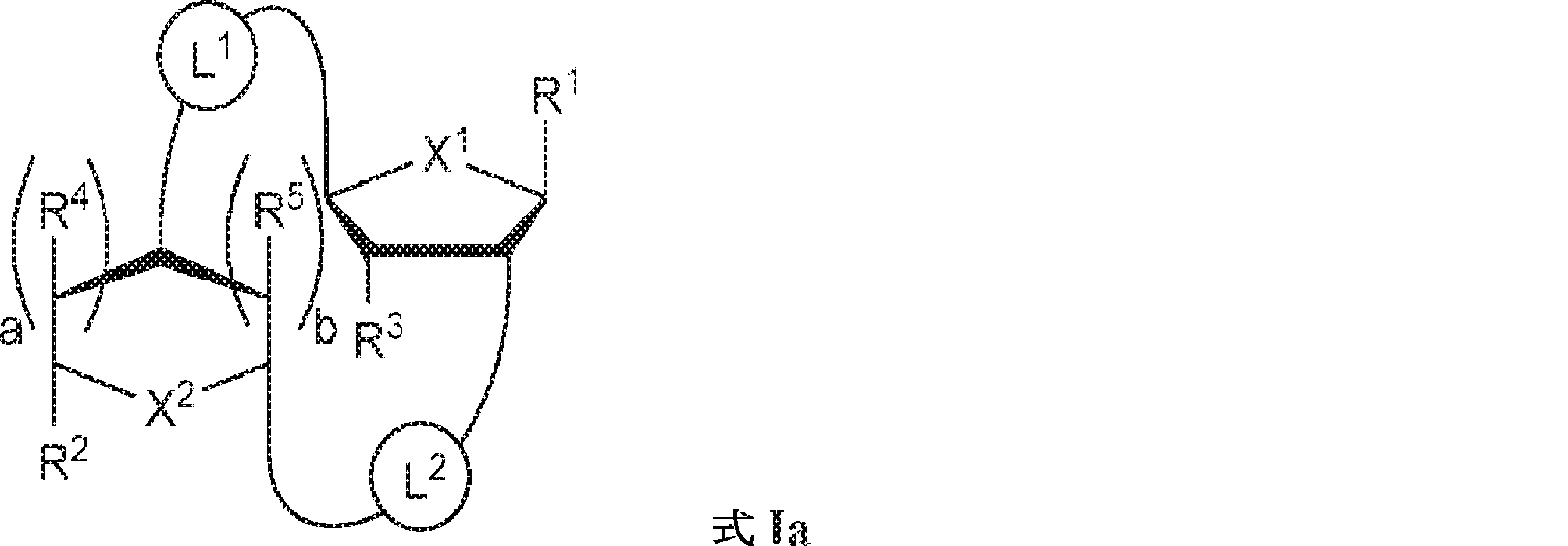
式中、
aおよびbは独立して0または1であり、かつ、aが1でありbが0でありかつR5が存在しない場合; およびaが0でありbが1でありかつR4が存在しない場合にa + b = 1であり;
X1およびX2は独立して5員環中のO、S、またはSeであり;
X1に対してα位の炭素から出発するL1、およびX2に対してα位の炭素から出発するL2は独立して、-CH2O-P(O)R6-O-、-CH2O-P(S)R6-O-、-C(Y1)(Y2)O-P(O)R6-C(Y3)(Y4)-、-CH2NHSO2NH-、-CH2NHC(O)NH-、-CH2NHC(S)NH-、-CH2NHC(NH)NH-、-CH2NHC(O)CH2-、-CH2NHSO2CH2-、-CH2CH2C(O)NH-、-CH2CH2SO2NH-、-CH2NH(3,4-ジオキソシクロブテン-1,2-ジイル)NH-、

cは0、1、または2であり;
d、e、およびfは独立して0または1であり;
Y1、Y2、Y3、およびY4は独立してHまたはFであり;
R6は、ヒドロキシル、チオール、C1~6アルキル、1個もしくは複数のハロゲン基、チオール基、ヒドロキシル基、カルボニル基、カルボキシル基、カルボニルオキシル基、C1~6アルコキシ基、C1~6ヒドロキシアルコキシ基、アミノ基、C1~6アルキルアミノ基、ジ(C1~6アルキル)アミノ基、もしくはアジド基を用いて選択的に官能基を付与されたC1~6アルキル、C1~6アルコキシ、1個もしくは複数のハロゲン基、チオール基、ヒドロキシル基、カルボニル基、カルボキシル基、カルボニルオキシル基、C1~6ヒドロキシアルコキシ基、アミノ基、C1~6アルキルアミノ基、ジ(C1~6アルキル)アミノ基、もしくはアジド基を用いて選択的に官能基を付与されたC1~6アルコキシ、C3~5アルケニル-O-、C3~5アルキニル-O-、オリゴ(エチレングリコール)、ポリ(エチレングリコール)、ボラノ(-BH3
-)、または-NR7R8であり;
R7およびR8は独立して、水素、C1~6アルキル、1個もしくは複数のハロゲン基、チオール基、ヒドロキシル基、カルボニル基、カルボキシル基、カルボニルオキシル基、C1~6アルコキシ基、C1~6ヒドロキシアルコキシ基、アミノ基、C1~6アルキルアミノ基、ジ(C1~6アルキル)アミノ基、もしくはアジド基を用いて選択的に官能基を付与されたC1~6アルキル、環状-(C1~6アルキル)-、1個もしくは複数のハロゲン基、チオール基、ヒドロキシル基、カルボニル基、カルボキシル基、カルボニルオキシル基、C1~6アルコキシ基、C1~6ヒドロキシアルコキシ基、アミノ基、C1~6アルキルアミノ基、もしくはジ(C1~6アルキル)アミノ基を用いて選択的に官能基を付与された環状-(C1~6アルキル)-、環状-(C1~6オキサアルキル)-、または1個もしくは複数のハロゲン基、チオール基、ヒドロキシル基、カルボニル基、カルボキシル基、カルボニルオキシル基、C1~6ヒドロキシアルコキシ基、アミノ基、C1~6アルキルアミノ基、もしくはジ(C1~6アルキル)アミノ基を用いて選択的に官能基を付与された環状-(C1~6オキサアルキル)-であり;
R1およびR2は独立して、互変異性形態を含む以下の一般構造:
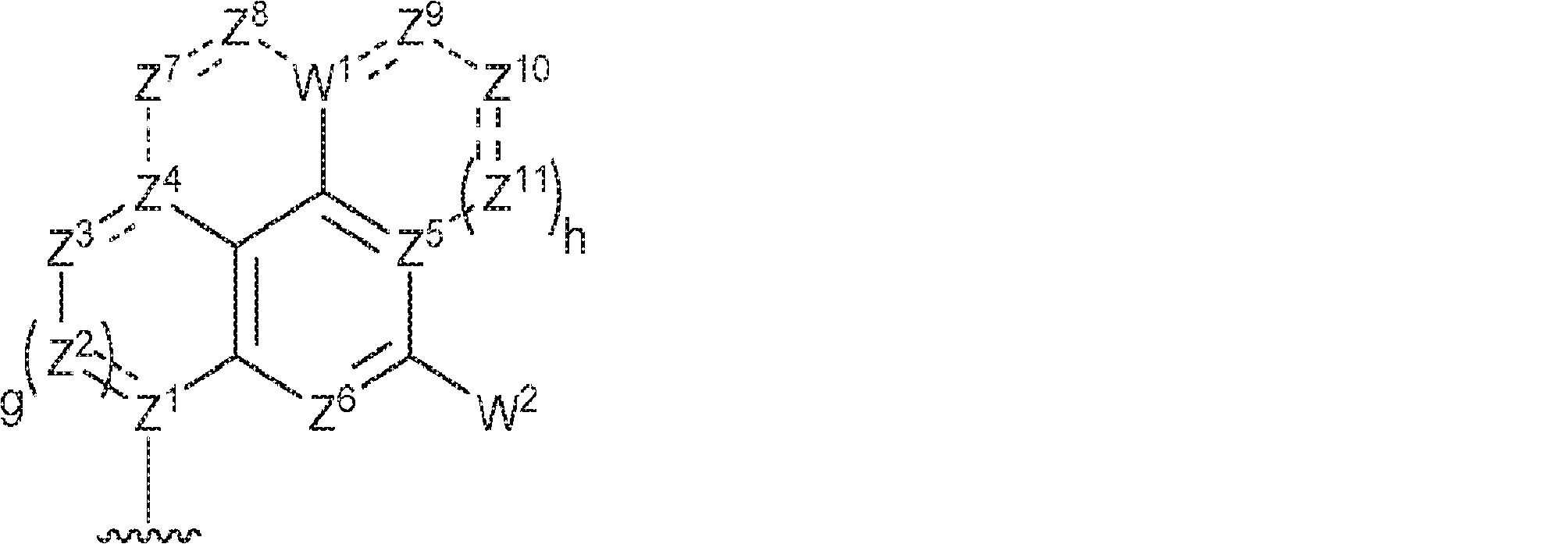
gおよびhは独立して0または1であり;
W1およびW2は独立して、水素、ハロゲン、ヒドロキシル、C1~6アルキル、1個もしくは複数のハロゲン基、チオール基、ヒドロキシル基、カルボニル基、カルボキシル基、カルボニルオキシル基、C1~6アルコキシ基、C1~6ヒドロキシアルコキシ基、アミノ基、C1~6アルキルアミノ基、ジ(C1~6アルキル)アミノ基、もしくはアジド基を用いて選択的に官能基を付与されたC1~6アルキル、C1~6アルコキシ、1個もしくは複数のハロゲン基、チオール基、ヒドロキシル基、カルボニル基、カルボキシル基、カルボニルオキシル基、C1~6ヒドロキシアルコキシ基、アミノ基、C1~6アルキルアミノ基、ジ(C1~6アルキル)アミノ基、もしくはアジド基を用いて選択的に官能基を付与されたC1~6アルコキシ、C3~5アルケニル-O-、C3~5アルキニル-O-、オリゴ(エチレングリコール)、ポリ(エチレングリコール)、アジド、または-NR7R8であり;
Z1、Z2、Z3、Z4、Z5、およびZ6は独立してCHまたはNであり;
存在する場合に、Z7、Z8、Z9、Z10、およびZ11は独立してCHまたはNであり、さらにW1はCHまたはNであり;
R3、R4、およびR5は独立して、水素、ハロゲン、ヒドロキシル、アミノ、C1~6アルキル、1個もしくは複数のハロゲン基、チオール基、ヒドロキシル基、カルボニル基、カルボキシル基、カルボニルオキシル基、C1~6アルコキシ基、C1~6ヒドロキシアルコキシ基、アミノ基、C1~6アルキルアミノ基、ジ(C1~6アルキル)アミノ基、もしくはアジド基を用いて選択的に官能基を付与されたC1~6アルキル、C1~6アルコキシ、1個もしくは複数のハロゲン基、チオール基、ヒドロキシル基、カルボニル基、カルボキシル基、カルボニルオキシル基、C1~6ヒドロキシアルコキシ基、アミノ基、C1~6アルキルアミノ基、ジ(C1~6アルキル)アミノ基、もしくはアジド基を用いて選択的に官能基を付与されたC1~6アルコキシ、C3~5アルケニル-O-、C3~5アルキニル-O-、オリゴ(エチレングリコール)、ポリ(エチレングリコール)、アジド、または-NR7R8であり;かつ
該化合物は2'3'-cGAMPではない。
[本発明1002]
式Ib:
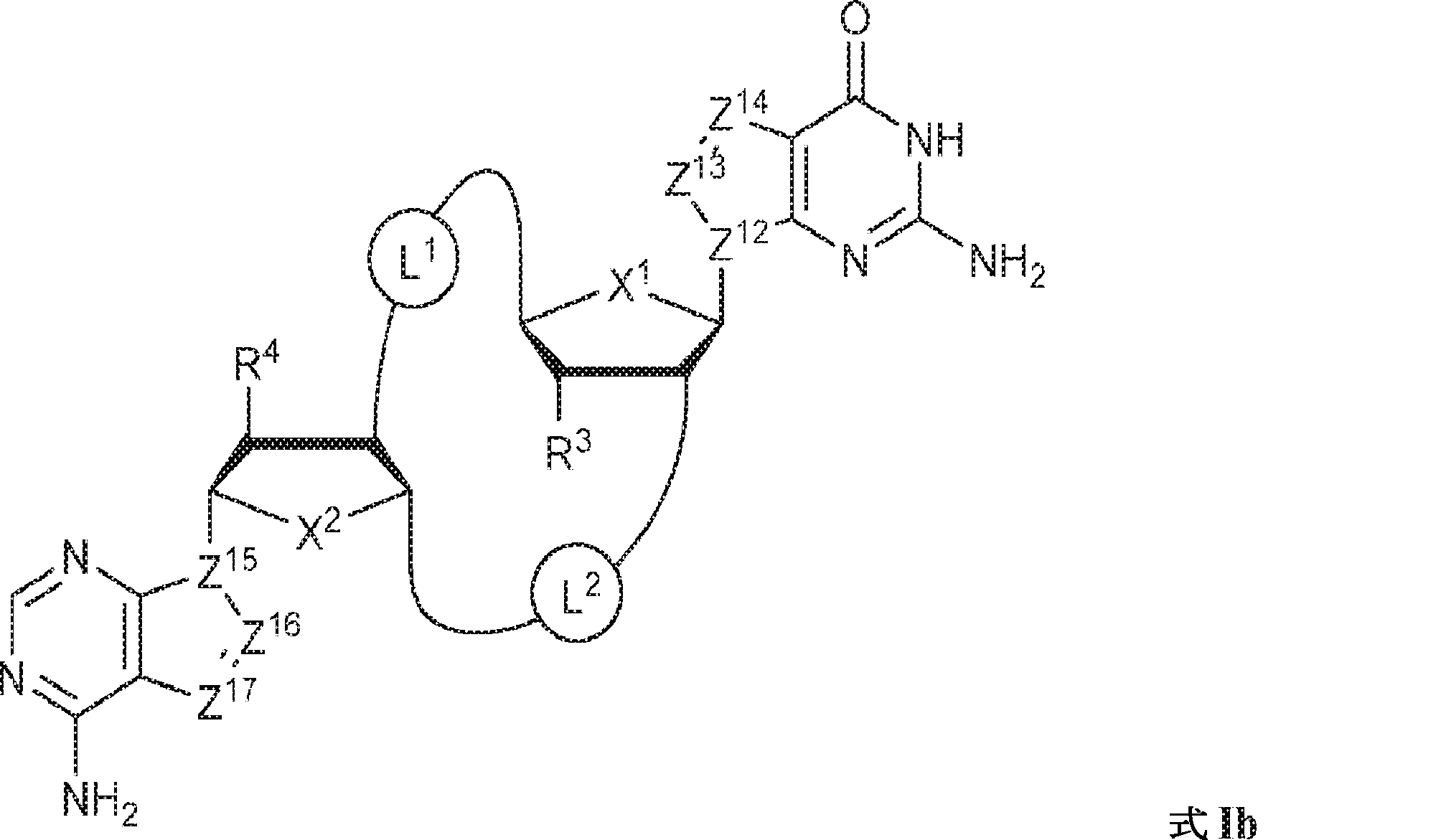
式中、
X1およびX2は独立してO、S、またはSeであり;
Z12、Z13、Z14、Z15、Z16、およびZ17は独立してCHまたはNであり;
X1に対してα位の炭素から出発するL1、およびX2に対してα位の炭素から出発するL2は独立して、-CH2O-P(O)R6-O-、-CH2O-P(S)R6-O-、-C(Y1)(Y2)O-P(O)R6-C(Y3)(Y4)-、-CH2NHSO2NH-、-CH2NHC(O)NH-、-CH2NHC(S)NH-、-CH2NHC(NH)NH-、-CH2NHC(O)CH2-、-CH2NHSO2CH2-、-CH2CH2C(O)NH-、-CH2CH2SO2NH-、-CH2NH(3,4-ジオキソシクロブテン-1,2-ジイル)NH-、

cは0、1、または2であり;
d、e、およびfは独立して0または1であり;
Y1、Y2、Y3、およびY4は独立してHまたはFであり;
R6は、ヒドロキシル、チオール、C1~6アルキル、1個もしくは複数のハロゲン基、チオール基、ヒドロキシル基、カルボニル基、カルボキシル基、カルボニルオキシル基、C1~6アルコキシ基、C1~6ヒドロキシアルコキシ基、アミノ基、C1~6アルキルアミノ基、ジ(C1~6アルキル)アミノ基、もしくはアジド基を用いて選択的に官能基を付与されたC1~6アルキル、C1~6アルコキシ、1個もしくは複数のハロゲン基、チオール基、ヒドロキシル基、カルボニル基、カルボキシル基、カルボニルオキシル基、C1~6ヒドロキシアルコキシ基、アミノ基、C1~6アルキルアミノ基、ジ(C1~6アルキル)アミノ基、もしくはアジド基を用いて選択的に官能基を付与されたC1~6アルコキシ、C3~5アルケニル-O-、C3~5アルキニル-O-、オリゴ(エチレングリコール)、ポリ(エチレングリコール)、ボラノ(-BH3
-)、または-NR7R8であり;
R7およびR8は独立して、水素、C1~6アルキル、1個もしくは複数のハロゲン基、チオール基、ヒドロキシル基、カルボニル基、カルボキシル基、カルボニルオキシル基、C1~6アルコキシ基、C1~6ヒドロキシアルコキシ基、アミノ基、C1~6アルキルアミノ基、ジ(C1~6アルキル)アミノ基、もしくはアジド基を用いて選択的に官能基を付与されたC1~6アルキル、環状-(C1~6アルキル)-、1個もしくは複数のハロゲン基、チオール基、ヒドロキシル基、カルボニル基、カルボキシル基、カルボニルオキシル基、C1~6アルコキシ基、C1~6ヒドロキシアルコキシ基、アミノ基、C1~6アルキルアミノ基、もしくはジ(C1~6アルキル)アミノ基を用いて選択的に官能基を付与された環状-(C1~6アルキル)-、環状-(C1~6オキサアルキル)-、または1個もしくは複数のハロゲン基、チオール基、ヒドロキシル基、カルボニル基、カルボキシル基、カルボニルオキシル基、C1~6ヒドロキシアルコキシ基、アミノ基、C1~6アルキルアミノ基、もしくはジ(C1~6アルキル)アミノ基を用いて選択的に官能基を付与された環状-(C1~6オキサアルキル)-であり;
R3およびR4は独立して、水素、ハロゲン、ヒドロキシル、アミノ、C1~6アルキル、1個もしくは複数のハロゲン基、チオール基、ヒドロキシル基、カルボニル基、カルボキシル基、カルボニルオキシル基、C1~6アルコキシ基、C1~6ヒドロキシアルコキシ基、アミノ基、C1~6アルキルアミノ基、ジ(C1~6アルキル)アミノ基、もしくはアジド基を用いて選択的に官能基を付与されたC1~6アルキル、C1~6アルコキシ、1個もしくは複数のハロゲン基、チオール基、ヒドロキシル基、カルボニル基、カルボキシル基、カルボニルオキシル基、C1~6ヒドロキシアルコキシ基、アミノ基、C1~6アルキルアミノ基、ジ(C1~6アルキル)アミノ基、もしくはアジド基を用いて選択的に官能基を付与されたC1~6アルコキシ、C3~5アルケニル-O-、C3~5アルキニル-O-、オリゴ(エチレングリコール)、ポリ(エチレングリコール)、アジド、または-NR7R8であり;かつ
該化合物は、2'3'-cGAMPを含む既に開示された化合物ではない。
[本発明1003]
式Ic:
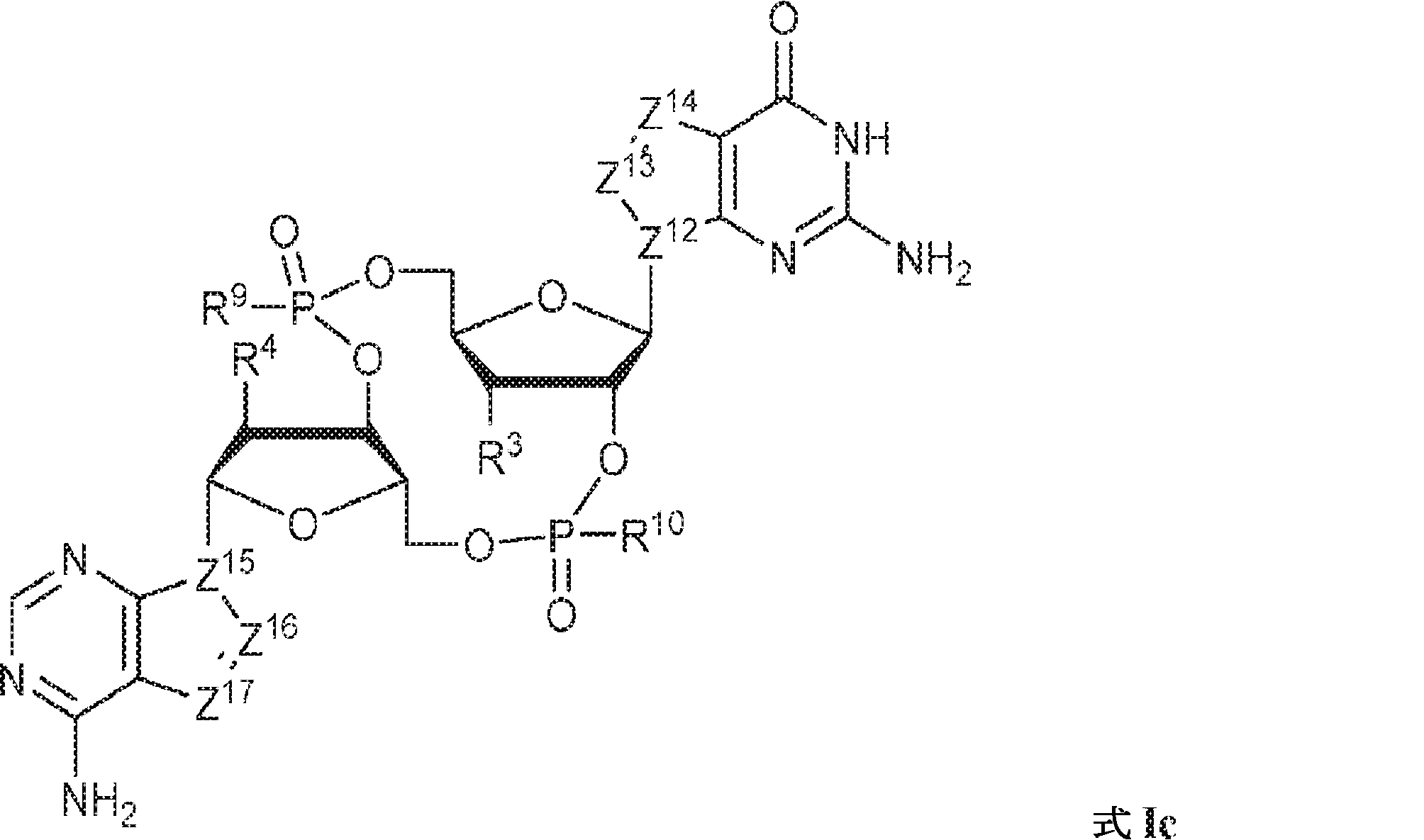
式中、
Z12、Z13、Z14、Z15、Z16、およびZ17は独立してCHまたはNであり;
R3およびR4は独立して、水素、ハロゲン、ヒドロキシル、アミノ、C1~6アルキル、1個もしくは複数のハロゲン基、チオール基、ヒドロキシル基、カルボニル基、カルボキシル基、カルボニルオキシル基、C1~6アルコキシ基、C1~6ヒドロキシアルコキシ基、アミノ基、C1~6アルキルアミノ基、ジ(C1~6アルキル)アミノ基、もしくはアジド基を用いて選択的に官能基を付与されたC1~6アルキル、C1~6アルコキシ、1個もしくは複数のハロゲン基、チオール基、ヒドロキシル基、カルボニル基、カルボキシル基、カルボニルオキシル基、C1~6ヒドロキシアルコキシ基、アミノ基、C1~6アルキルアミノ基、ジ(C1~6アルキル)アミノ基、もしくはアジド基を用いて選択的に官能基を付与されたC1~6アルコキシ、C3~5アルケニル-O-、C3~5アルキニル-O-、オリゴ(エチレングリコール)、ポリ(エチレングリコール)、アジド、または-NR7R8であり;
R7およびR8は独立して、水素、C1~6アルキル、1個もしくは複数のハロゲン基、チオール基、ヒドロキシル基、カルボニル基、カルボキシル基、カルボニルオキシル基、C1~6アルコキシ基、C1~6ヒドロキシアルコキシ基、アミノ基、C1~6アルキルアミノ基、ジ(C1~6アルキル)アミノ基、もしくはアジド基を用いて選択的に官能基を付与されたC1~6アルキル、環状-(C1~6アルキル)-、1個もしくは複数のハロゲン基、チオール基、ヒドロキシル基、カルボニル基、カルボキシル基、カルボニルオキシル基、C1~6アルコキシ基、C1~6ヒドロキシアルコキシ基、アミノ基、C1~6アルキルアミノ基、もしくはジ(C1~6アルキル)アミノ基を用いて選択的に官能基を付与された環状-(C1~6アルキル)-、環状-(C1~6オキサアルキル)-、または1個もしくは複数のハロゲン基、チオール基、ヒドロキシル基、カルボニル基、カルボキシル基、カルボニルオキシル基、C1~6ヒドロキシアルコキシ基、アミノ基、C1~6アルキルアミノ基、もしくはジ(C1~6アルキル)アミノ基を用いて選択的に官能基を付与された環状-(C1~6オキサアルキル)-であり;
R9およびR10は独立して、ヒドロキシル、チオール、C1~6アルキル、1個もしくは複数のハロゲン基、チオール基、ヒドロキシル基、カルボニル基、カルボキシル基、カルボニルオキシル基、C1~6アルコキシ基、C1~6ヒドロキシアルコキシ基、アミノ基、C1~6アルキルアミノ基、ジ(C1~6アルキル)アミノ基、もしくはアジド基を用いて選択的に官能基を付与されたC1~6アルキル、C1~6アルコキシ、1個もしくは複数のハロゲン基、チオール基、ヒドロキシル基、カルボニル基、カルボキシル基、カルボニルオキシル基、C1~6ヒドロキシアルコキシ基、アミノ基、C1~6アルキルアミノ基、ジ(C1~6アルキル)アミノ基、もしくはアジド基を用いて選択的に官能基を付与されたC1~6アルコキシ、C3~5アルケニル-O-、C3~5アルキニル-O-、オリゴ(エチレングリコール)、ポリ(エチレングリコール)、ボラノ(-BH3
-)、または-NR7R8であり;
式Icの一方または両方のテトラヒドロフラニル環中の酸素原子は硫黄原子またはセレン原子で置き換えられていてもよく;かつ
該化合物は2'3'-cGAMPではない。
[本発明1004]
式Id:

式中、
X1およびX2は独立してO、S、またはSeであり;
X1に対してα位の炭素から出発するL1、およびX2に対してα位の炭素から出発するL2は独立して、-CH2O-P(O)R6-O-、-CH2O-P(S)R6-O-、-C(Y1)(Y2)O-P(O)R6-C(Y3)(Y4)-、-CH2NHSO2NH-、-CH2NHC(O)NH-、-CH2NHC(S)NH-、-CH2NHC(NH)NH-、-CH2NHC(O)CH2-、-CH2NHSO2CH2-、-CH2CH2C(O)NH-、-CH2CH2SO2NH-、-CH2NH(3,4-ジオキソシクロブテン-1,2-ジイル)NH-、

cは0、1、または2であり;
d、e、およびfは独立して0または1であり;
Y1、Y2、Y3、およびY4は独立してHまたはFであり;
R6は、ヒドロキシル、チオール、C1~6アルキル、1個もしくは複数のハロゲン基、チオール基、ヒドロキシル基、カルボニル基、カルボキシル基、カルボニルオキシル基、C1~6アルコキシ基、C1~6ヒドロキシアルコキシ基、アミノ基、C1~6アルキルアミノ基、ジ(C1~6アルキル)アミノ基、もしくはアジド基を用いて選択的に官能基を付与されたC1~6アルキル、C1~6アルコキシ、1個もしくは複数のハロゲン基、チオール基、ヒドロキシル基、カルボニル基、カルボキシル基、カルボニルオキシル基、C1~6ヒドロキシアルコキシ基、アミノ基、C1~6アルキルアミノ基、ジ(C1~6アルキル)アミノ基、もしくはアジド基を用いて選択的に官能基を付与されたC1~6アルコキシ、C3~5アルケニル-O-、C3~5アルキニル-O-、オリゴ(エチレングリコール)、ポリ(エチレングリコール)、ボラノ(-BH3
-)、または-NR7R8であり;
R7およびR8は独立して、水素、C1~6アルキル、1個もしくは複数のハロゲン基、チオール基、ヒドロキシル基、カルボニル基、カルボキシル基、カルボニルオキシル基、C1~6アルコキシ基、C1~6ヒドロキシアルコキシ基、アミノ基、C1~6アルキルアミノ基、ジ(C1~6アルキル)アミノ基、もしくはアジド基を用いて選択的に官能基を付与されたC1~6アルキル、環状-(C1~6アルキル)-、1個もしくは複数のハロゲン基、チオール基、ヒドロキシル基、カルボニル基、カルボキシル基、カルボニルオキシル基、C1~6アルコキシ基、C1~6ヒドロキシアルコキシ基、アミノ基、C1~6アルキルアミノ基、もしくはジ(C1~6アルキル)アミノ基を用いて選択的に官能基を付与された環状-(C1~6アルキル)-、環状-(C1~6オキサアルキル)-、または1個もしくは複数のハロゲン基、チオール基、ヒドロキシル基、カルボニル基、カルボキシル基、カルボニルオキシル基、C1~6ヒドロキシアルコキシ基、アミノ基、C1~6アルキルアミノ基、もしくはジ(C1~6アルキル)アミノ基を用いて選択的に官能基を付与された環状-(C1~6オキサアルキル)-であり;
R3およびR4は独立して、水素、ハロゲン、ヒドロキシル、アミノ、C1~6アルキル、1個もしくは複数のハロゲン基、チオール基、ヒドロキシル基、カルボニル基、カルボキシル基、カルボニルオキシル基、C1~6アルコキシ基、C1~6ヒドロキシアルコキシ基、アミノ基、C1~6アルキルアミノ基、ジ(C1~6アルキル)アミノ基、もしくはアジド基を用いて選択的に官能基を付与されたC1~6アルキル、C1~6アルコキシ、1個もしくは複数のハロゲン基、チオール基、ヒドロキシル基、カルボニル基、カルボキシル基、カルボニルオキシル基、C1~6ヒドロキシアルコキシ基、アミノ基、C1~6アルキルアミノ基、ジ(C1~6アルキル)アミノ基、もしくはアジド基を用いて選択的に官能基を付与されたC1~6アルコキシ、C3~5アルケニル-O-、C3~5アルキニル-O-、オリゴ(エチレングリコール)、ポリ(エチレングリコール)、アジド、または-NR7R8であり;
R11およびR12は独立して、
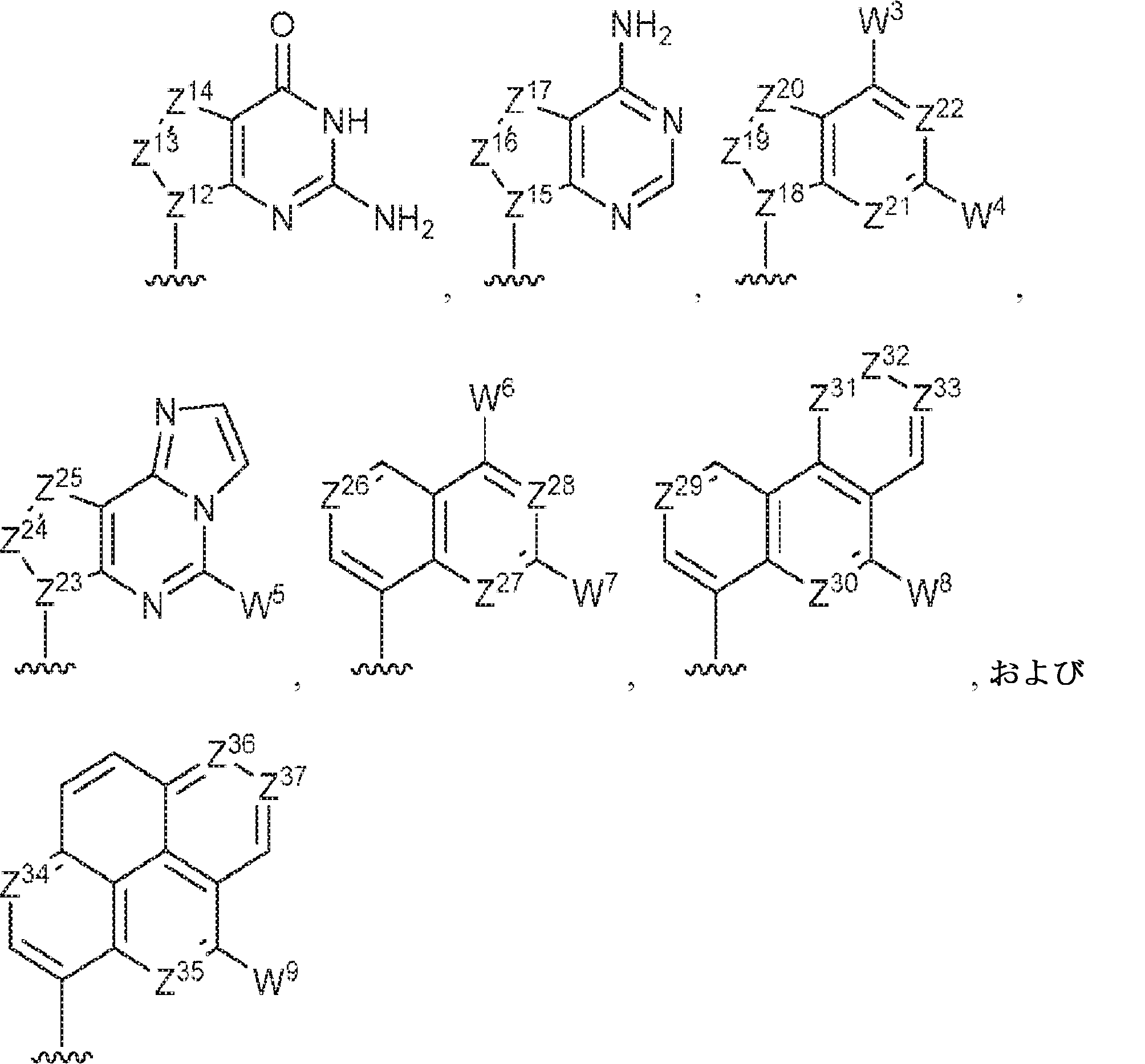
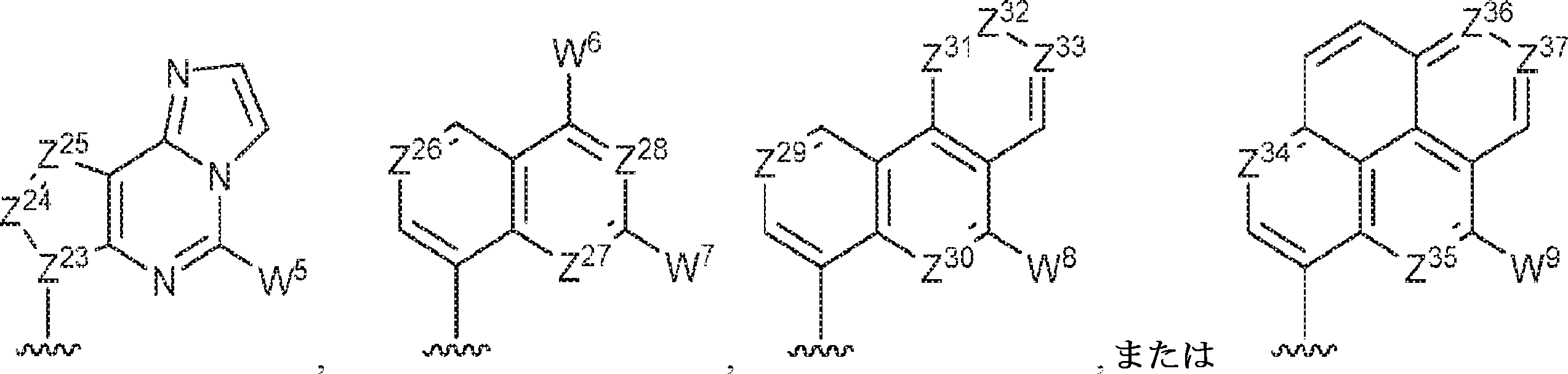
Z12、Z13、Z14、Z15、Z16、Z17、Z18、Z19、Z20、Z21、Z22、Z23、Z24、Z25、Z26、Z27、Z28、Z29、Z30、Z31、Z32、Z33、Z34、Z35、Z36、およびZ37はそれぞれ独立してCHまたはNであり;かつ
W3、W4、W5、W6、W7、W8、およびW9は独立して、水素、ハロゲン、ヒドロキシル、C1~6アルキル、1個もしくは複数のハロゲン基、チオール基、ヒドロキシル基、カルボニル基、カルボキシル基、カルボニルオキシル基、C1~6アルコキシ基、C1~6ヒドロキシアルコキシ基、アミノ基、C1~6アルキルアミノ基、ジ(C1~6アルキル)アミノ基、もしくはアジド基を用いて選択的に官能基を付与されたC1~6アルキル、C1~6アルコキシ、1個もしくは複数のハロゲン基、チオール基、ヒドロキシル基、カルボニル基、カルボキシル基、カルボニルオキシル基、C1~6ヒドロキシアルコキシ基、アミノ基、C1~6アルキルアミノ基、ジ(C1~6アルキル)アミノ基、もしくはアジド基を用いて選択的に官能基を付与されたC1~6アルコキシ、C3~5アルケニル-O-、C3~5アルキニル-O-、オリゴ(エチレングリコール)、ポリ(エチレングリコール)、アジド、または-NR7R8である。
[本発明1005]
式Ie:
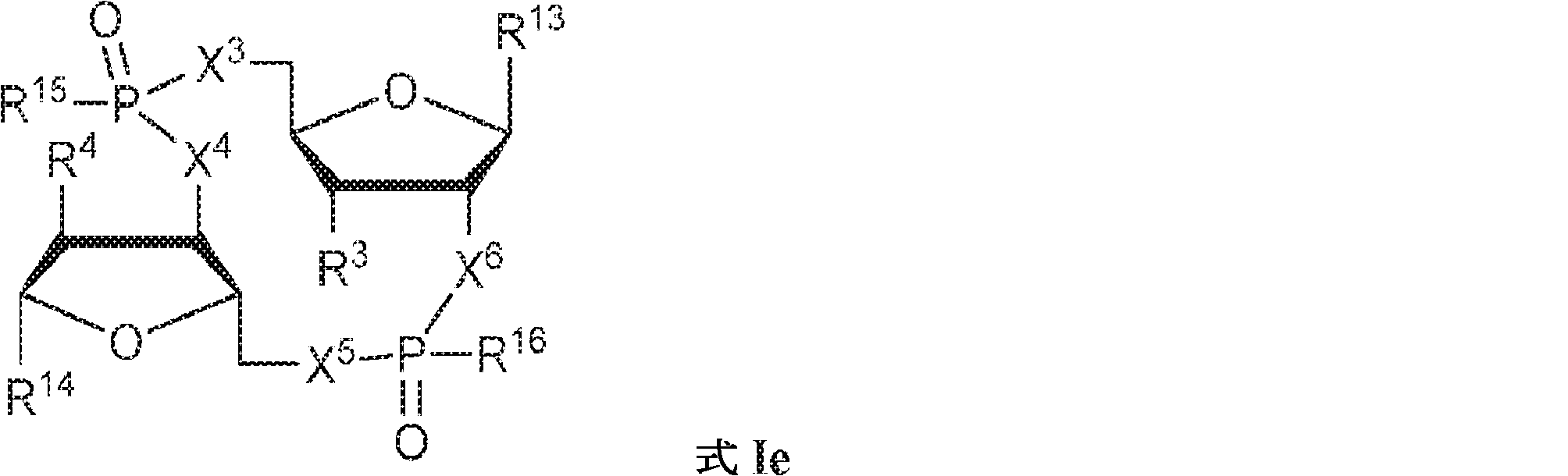
式中、
X3、X4、X5、およびX6は独立してO、NH、CH2、CHF、またはCF2であり;
R13およびR14は独立して、
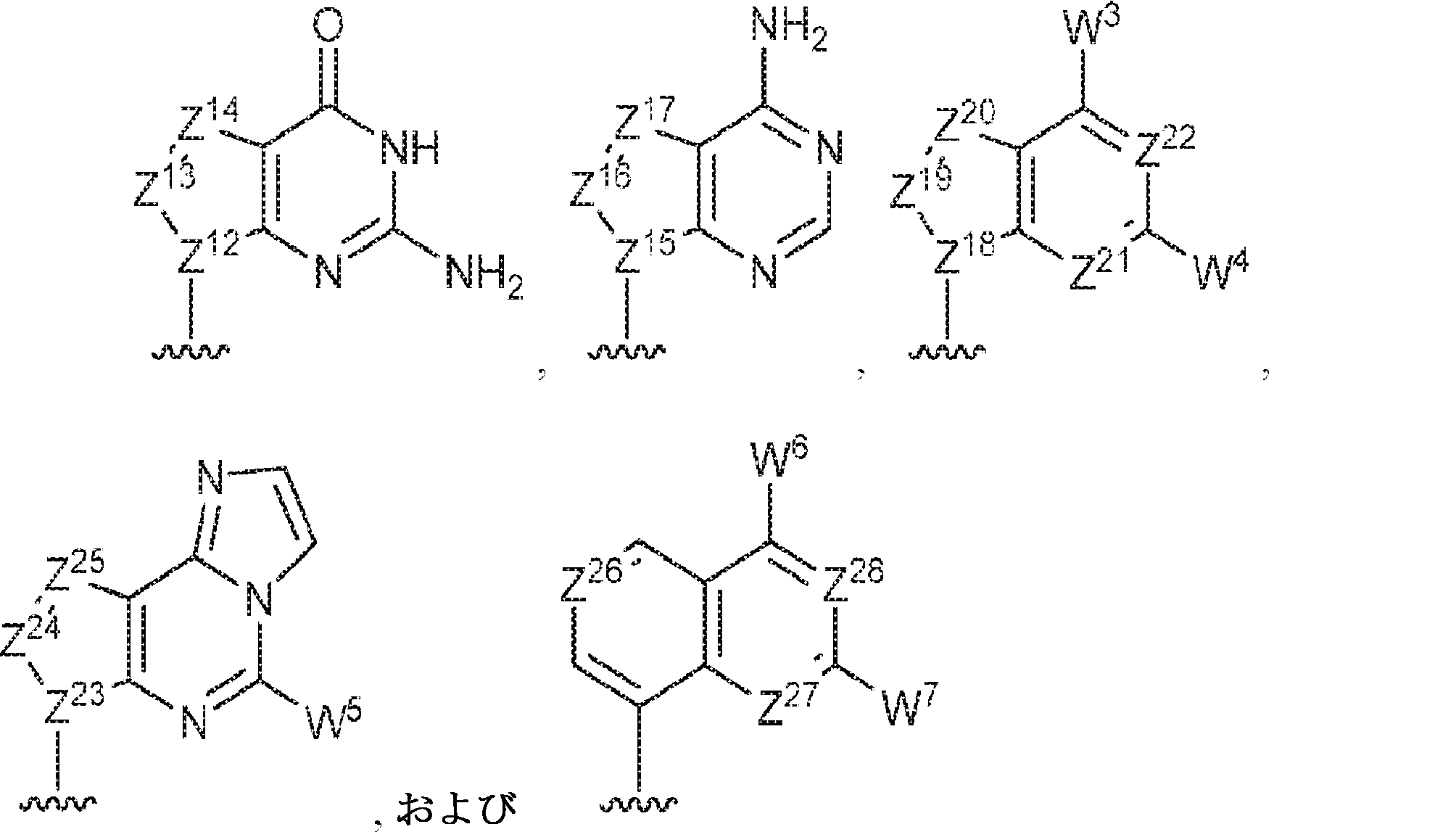
Z12、Z13、Z14、Z15、Z16、Z17、Z18、Z19、Z20、Z21、Z22、Z23、Z24、Z25、Z26、Z27、およびZ28はそれぞれ独立してCHまたはNであり;かつ
W3、W4、W5、W6、およびW7は独立して、水素、ハロゲン、ヒドロキシル、C1~6アルキル、1個もしくは複数のハロゲン基、チオール基、ヒドロキシル基、カルボニル基、カルボキシル基、カルボニルオキシル基、C1~6アルコキシ基、C1~6ヒドロキシアルコキシ基、アミノ基、C1~6アルキルアミノ基、ジ(C1~6アルキル)アミノ基、もしくはアジド基を用いて選択的に官能基を付与されたC1~6アルキル、C1~6アルコキシ、1個もしくは複数のハロゲン基、チオール基、ヒドロキシル基、カルボニル基、カルボキシル基、カルボニルオキシル基、C1~6ヒドロキシアルコキシ基、アミノ基、C1~6アルキルアミノ基、ジ(C1~6アルキル)アミノ基、もしくはアジド基を用いて選択的に官能基を付与されたC1~6アルコキシ、C3~5アルケニル-O-、C3~5アルキニル-O-、オリゴ(エチレングリコール)、ポリ(エチレングリコール)、アジド、または-NR7R8であり;
R7およびR8は独立して、水素、C1~6アルキル、1個もしくは複数のハロゲン基、チオール基、ヒドロキシル基、カルボニル基、カルボキシル基、カルボニルオキシル基、C1~6アルコキシ基、C1~6ヒドロキシアルコキシ基、アミノ基、C1~6アルキルアミノ基、ジ(C1~6アルキル)アミノ基、もしくはアジド基を用いて選択的に官能基を付与されたC1~6アルキル、環状-(C1~6アルキル)-、1個もしくは複数のハロゲン基、チオール基、ヒドロキシル基、カルボニル基、カルボキシル基、カルボニルオキシル基、C1~6アルコキシ基、C1~6ヒドロキシアルコキシ基、アミノ基、C1~6アルキルアミノ基、もしくはジ(C1~6アルキル)アミノ基を用いて選択的に官能基を付与された環状-(C1~6アルキル)-、環状-(C1~6オキサアルキル)-、または1個もしくは複数のハロゲン基、チオール基、ヒドロキシル基、カルボニル基、カルボキシル基、カルボニルオキシル基、C1~6ヒドロキシアルコキシ基、アミノ基、C1~6アルキルアミノ基、もしくはジ(C1~6アルキル)アミノ基を用いて選択的に官能基を付与された環状-(C1~6オキサアルキル)-であり;
R3およびR4は独立して、水素、ハロゲン、ヒドロキシル、アミノ、C1~6アルキル、1個もしくは複数のハロゲン基、チオール基、ヒドロキシル基、カルボニル基、カルボキシル基、カルボニルオキシル基、C1~6アルコキシ基、C1~6ヒドロキシアルコキシ基、アミノ基、C1~6アルキルアミノ基、ジ(C1~6アルキル)アミノ基、もしくはアジド基を用いて選択的に官能基を付与されたC1~6アルキル、C1~6アルコキシ、1個もしくは複数のハロゲン基、チオール基、ヒドロキシル基、カルボニル基、カルボキシル基、カルボニルオキシル基、C1~6ヒドロキシアルコキシ基、アミノ基、C1~6アルキルアミノ基、ジ(C1~6アルキル)アミノ基、もしくはアジド基を用いて選択的に官能基を付与されたC1~6アルコキシ、C3~5アルケニル-O-、C3~5アルキニル-O-、オリゴ(エチレングリコール)、ポリ(エチレングリコール)、アジド、または-NR7R8であり;
R15およびR16は独立して、ヒドロキシル、チオール、メトキシ、エトキシ、アミノ、N-メチルアミノ、N,N-ジメチルアミノ、N-エチルアミノ、N,N-ジエチルアミノ、N-モルホリノ、またはボラノ(-BH3
-)であり;
式Ieの一方または両方のテトラヒドロフラニル環中の酸素原子は硫黄原子またはセレン原子で置き換えられていてもよく;かつ
該化合物は2'3'-cGAMPではない。
[本発明1006]
式If:
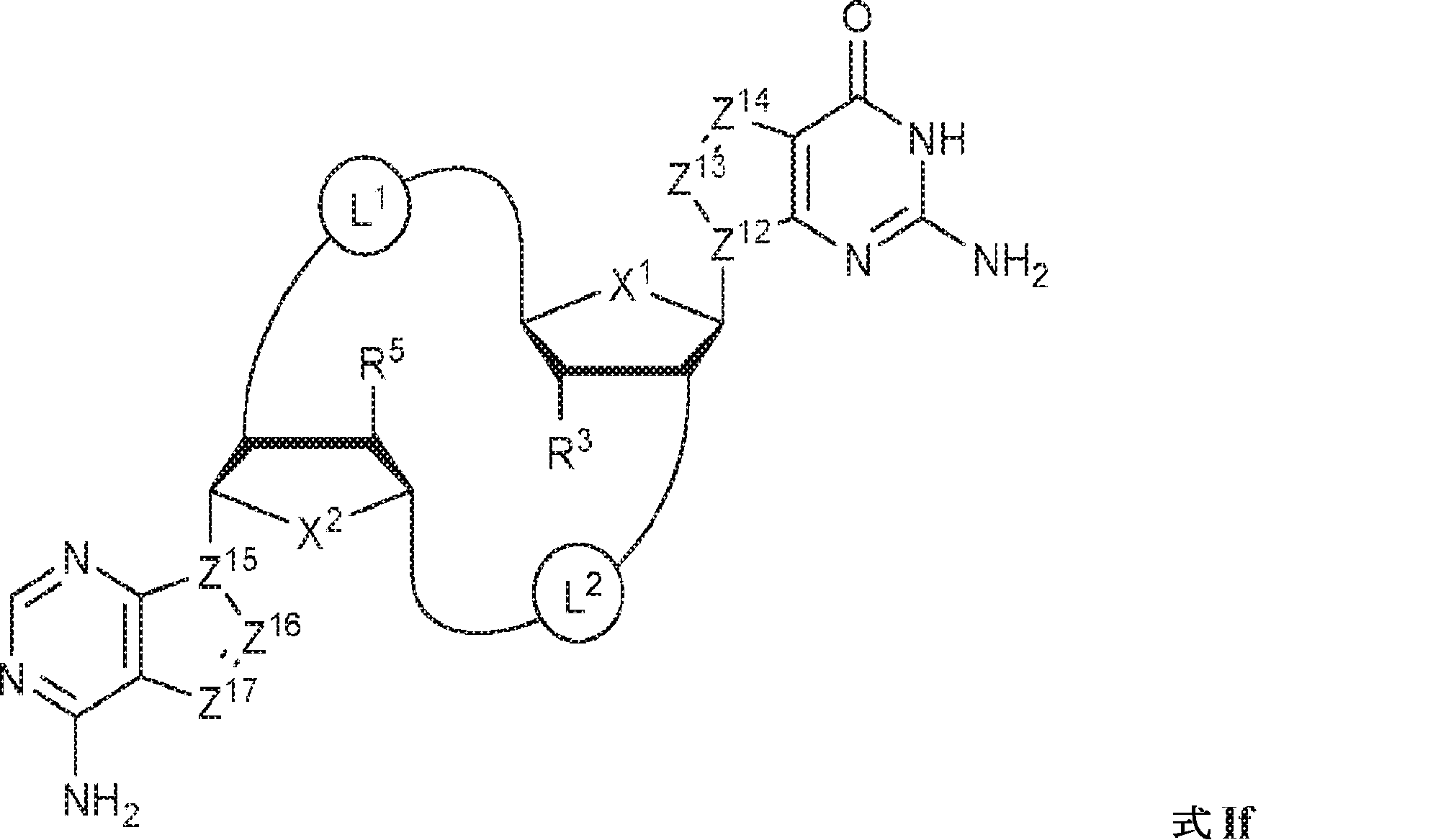
式中、
X1およびX2は独立してO、S、またはSeであり;
Z12、Z13、Z14、Z15、Z16、およびZ17は独立してCHまたはNであり;
X1に対してα位の炭素から出発するL1、およびX2に対してα位の炭素から出発するL2は独立して、-CH2O-P(O)R6-O-、-CH2O-P(S)R6-O-、-C(Y1)(Y2)O-P(O)R6-C(Y3)(Y4)-、-CH2NHSO2NH-、-CH2NHC(O)NH-、-CH2NHC(S)NH-、-CH2NHC(NH)NH-、-CH2NHC(O)CH2-、-CH2NHSO2CH2-、-CH2CH2C(O)NH-、-CH2CH2SO2NH-、-CH2NH(3,4-ジオキソシクロブテン-1,2-ジイル)NH-、

cは0、1、または2であり;
d、e、およびfは独立して0または1であり;
Y1、Y2、Y3、およびY4は独立してHまたはFであり;
R6は、ヒドロキシル、チオール、C1~6アルキル、1個もしくは複数のハロゲン基、チオール基、ヒドロキシル基、カルボニル基、カルボキシル基、カルボニルオキシル基、C1~6アルコキシ基、C1~6ヒドロキシアルコキシ基、アミノ基、C1~6アルキルアミノ基、ジ(C1~6アルキル)アミノ基、もしくはアジド基を用いて選択的に官能基を付与されたC1~6アルキル、C1~6アルコキシ、1個もしくは複数のハロゲン基、チオール基、ヒドロキシル基、カルボニル基、カルボキシル基、カルボニルオキシル基、C1~6ヒドロキシアルコキシ基、アミノ基、C1~6アルキルアミノ基、ジ(C1~6アルキル)アミノ基、もしくはアジド基を用いて選択的に官能基を付与されたC1~6アルコキシ、C3~5アルケニル-O-、C3~5アルキニル-O-、オリゴ(エチレングリコール)、ポリ(エチレングリコール)、ボラノ(-BH3
-)、または-NR7R8であり;
R7およびR8は独立して、水素、C1~6アルキル、1個もしくは複数のハロゲン基、チオール基、ヒドロキシル基、カルボニル基、カルボキシル基、カルボニルオキシル基、C1~6アルコキシ基、C1~6ヒドロキシアルコキシ基、アミノ基、C1~6アルキルアミノ基、ジ(C1~6アルキル)アミノ基、もしくはアジド基を用いて選択的に官能基を付与されたC1~6アルキル、環状-(C1~6アルキル)-、1個もしくは複数のハロゲン基、チオール基、ヒドロキシル基、カルボニル基、カルボキシル基、カルボニルオキシル基、C1~6アルコキシ基、C1~6ヒドロキシアルコキシ基、アミノ基、C1~6アルキルアミノ基、もしくはジ(C1~6アルキル)アミノ基を用いて選択的に官能基を付与された環状-(C1~6アルキル)-、環状-(C1~6オキサアルキル)-、または1個もしくは複数のハロゲン基、チオール基、ヒドロキシル基、カルボニル基、カルボキシル基、カルボニルオキシル基、C1~6ヒドロキシアルコキシ基、アミノ基、C1~6アルキルアミノ基、もしくはジ(C1~6アルキル)アミノ基を用いて選択的に官能基を付与された環状-(C1~6オキサアルキル)-であり;
R3およびR5は独立して、水素、ハロゲン、ヒドロキシル、アミノ、C1~6アルキル、1個もしくは複数のハロゲン基、チオール基、ヒドロキシル基、カルボニル基、カルボキシル基、カルボニルオキシル基、C1~6アルコキシ基、C1~6ヒドロキシアルコキシ基、アミノ基、C1~6アルキルアミノ基、ジ(C1~6アルキル)アミノ基、もしくはアジド基を用いて選択的に官能基を付与されたC1~6アルキル、C1~6アルコキシ、1個もしくは複数のハロゲン基、チオール基、ヒドロキシル基、カルボニル基、カルボキシル基、カルボニルオキシル基、C1~6ヒドロキシアルコキシ基、アミノ基、C1~6アルキルアミノ基、ジ(C1~6アルキル)アミノ基、もしくはアジド基を用いて選択的に官能基を付与されたC1~6アルコキシ、C3~5アルケニル-O-、C3~5アルキニル-O-、オリゴ(エチレングリコール)、ポリ(エチレングリコール)、アジド、または-NR7R8であり;かつ
該化合物は2'2'-cGAMPではない。
[本発明1007]
式Ig:
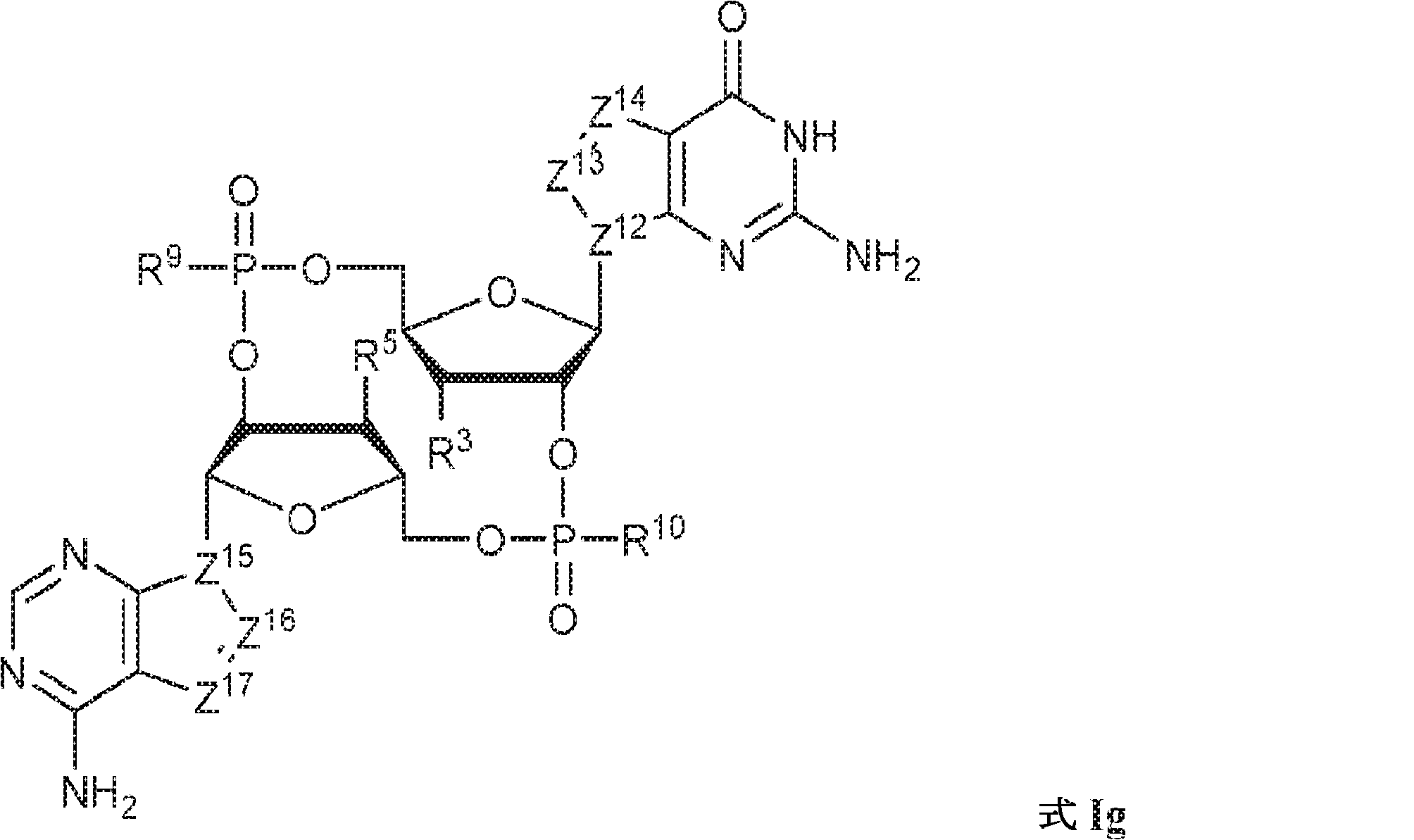
式中、
Z12、Z13、Z14、Z15、Z16、およびZ17は独立してCHまたはNであり;
R3およびR5は独立して、水素、ハロゲン、ヒドロキシル、アミノ、C1~6アルキル、1個もしくは複数のハロゲン基、チオール基、ヒドロキシル基、カルボニル基、カルボキシル基、カルボニルオキシル基、C1~6アルコキシ基、C1~6ヒドロキシアルコキシ基、アミノ基、C1~6アルキルアミノ基、ジ(C1~6アルキル)アミノ基、もしくはアジド基を用いて選択的に官能基を付与されたC1~6アルキル、C1~6アルコキシ、1個もしくは複数のハロゲン基、チオール基、ヒドロキシル基、カルボニル基、カルボキシル基、カルボニルオキシル基、C1~6ヒドロキシアルコキシ基、アミノ基、C1~6アルキルアミノ基、ジ(C1~6アルキル)アミノ基、もしくはアジド基を用いて選択的に官能基を付与されたC1~6アルコキシ、C3~5アルケニル-O-、C3~5アルキニル-O-、オリゴ(エチレングリコール)、ポリ(エチレングリコール)、アジド、または-NR7R8であり;
R7およびR8は独立して、水素、C1~6アルキル、1個もしくは複数のハロゲン基、チオール基、ヒドロキシル基、カルボニル基、カルボキシル基、カルボニルオキシル基、C1~6アルコキシ基、C1~6ヒドロキシアルコキシ基、アミノ基、C1~6アルキルアミノ基、ジ(C1~6アルキル)アミノ基、もしくはアジド基を用いて選択的に官能基を付与されたC1~6アルキル、環状-(C1~6アルキル)-、1個もしくは複数のハロゲン基、チオール基、ヒドロキシル基、カルボニル基、カルボキシル基、カルボニルオキシル基、C1~6アルコキシ基、C1~6ヒドロキシアルコキシ基、アミノ基、C1~6アルキルアミノ基、もしくはジ(C1~6アルキル)アミノ基を用いて選択的に官能基を付与された環状-(C1~6アルキル)-、環状-(C1~6オキサアルキル)-、または1個もしくは複数のハロゲン基、チオール基、ヒドロキシル基、カルボニル基、カルボキシル基、カルボニルオキシル基、C1~6ヒドロキシアルコキシ基、アミノ基、C1~6アルキルアミノ基、もしくはジ(C1~6アルキル)アミノ基を用いて選択的に官能基を付与された環状-(C1~6オキサアルキル)-であり;
R9およびR10は独立して、ヒドロキシル、チオール、C1~6アルキル、1個もしくは複数のハロゲン基、チオール基、ヒドロキシル基、カルボニル基、カルボキシル基、カルボニルオキシル基、C1~6アルコキシ基、C1~6ヒドロキシアルコキシ基、アミノ基、C1~6アルキルアミノ基、ジ(C1~6アルキル)アミノ基、もしくはアジド基を用いて選択的に官能基を付与されたC1~6アルキル、C1~6アルコキシ、1個もしくは複数のハロゲン基、チオール基、ヒドロキシル基、カルボニル基、カルボキシル基、カルボニルオキシル基、C1~6ヒドロキシアルコキシ基、アミノ基、C1~6アルキルアミノ基、ジ(C1~6アルキル)アミノ基、もしくはアジド基を用いて選択的に官能基を付与されたC1~6アルコキシ、C3~5アルケニル-O-、C3~5アルキニル-O-、オリゴ(エチレングリコール)、ポリ(エチレングリコール)、ボラノ(-BH3
-)、または-NR7R8であり;
式Igの一方または両方のテトラヒドロフラニル環中の酸素原子は硫黄原子またはセレン原子で置き換えられていてもよく;かつ
該化合物は2'2'-cGAMPではない。
[本発明1008]
式Ih:
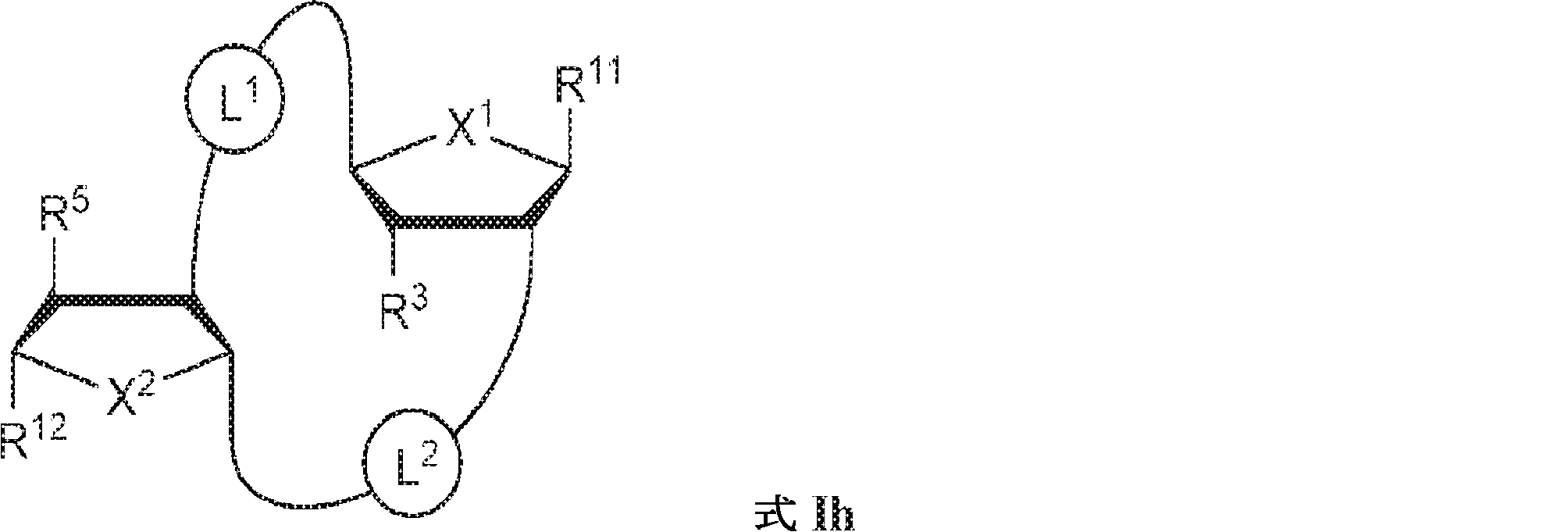
式中、
X1およびX2は独立してO、S、またはSeであり;
X1に対してα位の炭素から出発するL1、およびX2に対してα位の炭素から出発するL2は独立して、-CH2O-P(O)R6-O-、-CH2O-P(S)R6-O-、-C(Y1)(Y2)O-P(O)R6-C(Y3)(Y4)-、-CH2NHSO2NH-、-CH2NHC(O)NH-、-CH2NHC(S)NH-、-CH2NHC(NH)NH-、-CH2NHC(O)CH2-、-CH2NHSO2CH2-、-CH2CH2C(O)NH-、-CH2CH2SO2NH-、-CH2NH(3,4-ジオキソシクロブテン-1,2-ジイル)NH-、

cは0、1、または2であり;
d、e、およびfは独立して0または1であり;
Y1、Y2、Y3、およびY4は独立してHまたはFであり;
R6は、ヒドロキシル、チオール、C1~6アルキル、1個もしくは複数のハロゲン基、チオール基、ヒドロキシル基、カルボニル基、カルボキシル基、カルボニルオキシル基、C1~6アルコキシ基、C1~6ヒドロキシアルコキシ基、アミノ基、C1~6アルキルアミノ基、ジ(C1~6アルキル)アミノ基、もしくはアジド基を用いて選択的に官能基を付与されたC1~6アルキル、C1~6アルコキシ、1個もしくは複数のハロゲン基、チオール基、ヒドロキシル基、カルボニル基、カルボキシル基、カルボニルオキシル基、C1~6ヒドロキシアルコキシ基、アミノ基、C1~6アルキルアミノ基、ジ(C1~6アルキル)アミノ基、もしくはアジド基を用いて選択的に官能基を付与されたC1~6アルコキシ、C3~5アルケニル-O-、C3~5アルキニル-O-、オリゴ(エチレングリコール)、ポリ(エチレングリコール)、ボラノ(-BH3
-)、または-NR7R8であり;
R7およびR8は独立して、水素、C1~6アルキル、1個もしくは複数のハロゲン基、チオール基、ヒドロキシル基、カルボニル基、カルボキシル基、カルボニルオキシル基、C1~6アルコキシ基、C1~6ヒドロキシアルコキシ基、アミノ基、C1~6アルキルアミノ基、ジ(C1~6アルキル)アミノ基、もしくはアジド基を用いて選択的に官能基を付与されたC1~6アルキル、環状-(C1~6アルキル)-、1個もしくは複数のハロゲン基、チオール基、ヒドロキシル基、カルボニル基、カルボキシル基、カルボニルオキシル基、C1~6アルコキシ基、C1~6ヒドロキシアルコキシ基、アミノ基、C1~6アルキルアミノ基、もしくはジ(C1~6アルキル)アミノ基を用いて選択的に官能基を付与された環状-(C1~6アルキル)-、環状-(C1~6オキサアルキル)-、または1個もしくは複数のハロゲン基、チオール基、ヒドロキシル基、カルボニル基、カルボキシル基、カルボニルオキシル基、C1~6ヒドロキシアルコキシ基、アミノ基、C1~6アルキルアミノ基、もしくはジ(C1~6アルキル)アミノ基を用いて選択的に官能基を付与された環状-(C1~6オキサアルキル)-であり;
R3およびR5は独立して、水素、ハロゲン、ヒドロキシル、アミノ、C1~6アルキル、1個もしくは複数のハロゲン基、チオール基、ヒドロキシル基、カルボニル基、カルボキシル基、カルボニルオキシル基、C1~6アルコキシ基、C1~6ヒドロキシアルコキシ基、アミノ基、C1~6アルキルアミノ基、ジ(C1~6アルキル)アミノ基、もしくはアジド基を用いて選択的に官能基を付与されたC1~6アルキル、C1~6アルコキシ、1個もしくは複数のハロゲン基、チオール基、ヒドロキシル基、カルボニル基、カルボキシル基、カルボニルオキシル基、C1~6ヒドロキシアルコキシ基、アミノ基、C1~6アルキルアミノ基、ジ(C1~6アルキル)アミノ基、もしくはアジド基を用いて選択的に官能基を付与されたC1~6アルコキシ、C3~5アルケニル-O-、C3~5アルキニル-O-、オリゴ(エチレングリコール)、ポリ(エチレングリコール)、アジド、または-NR7R8であり;
R11およびR12は独立して、
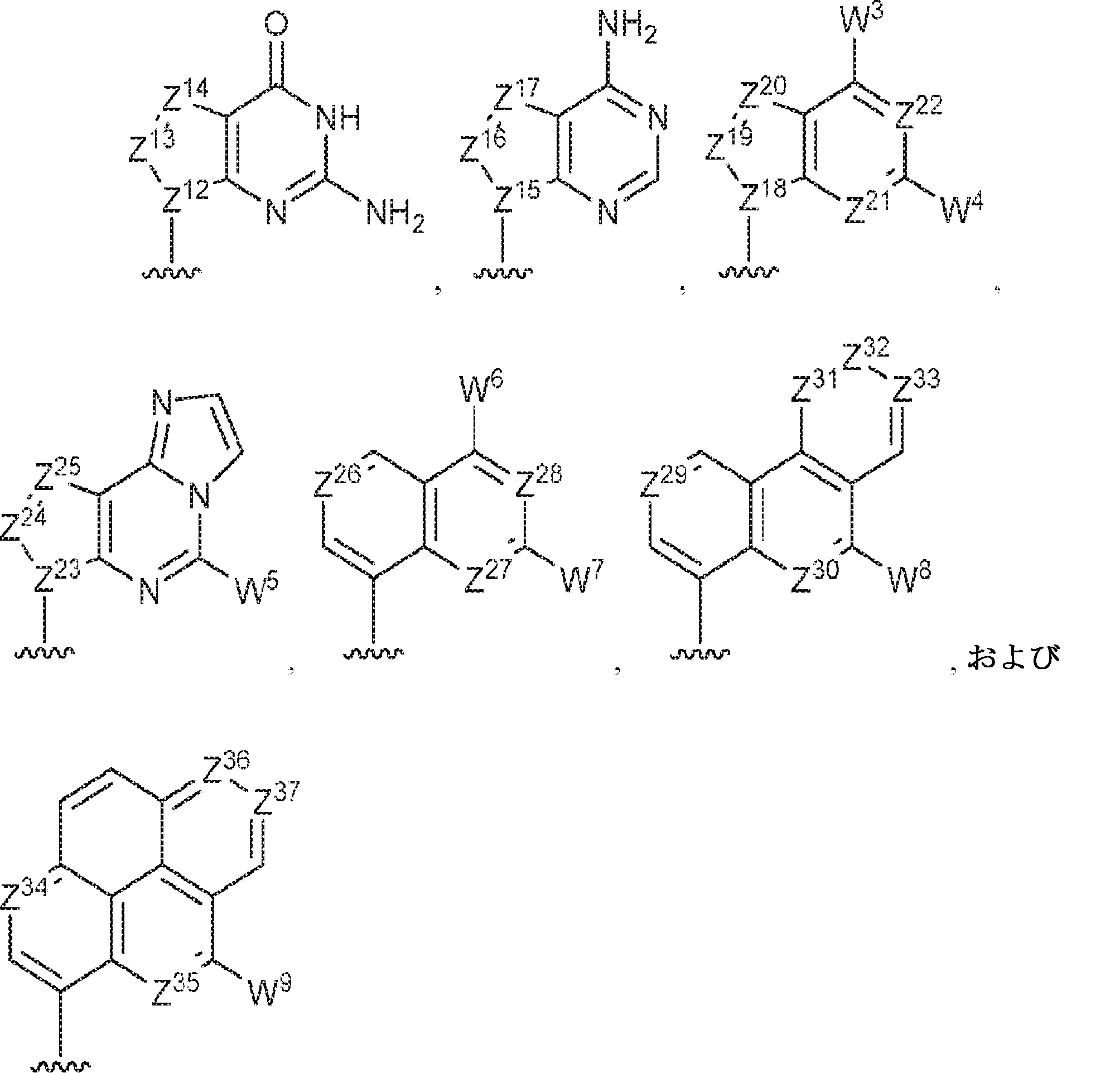
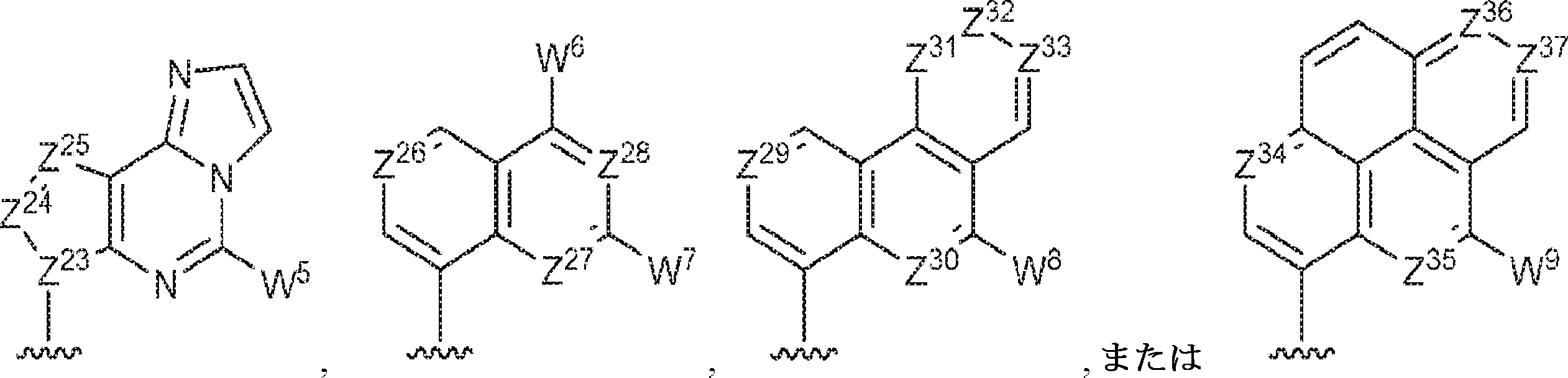
Z12、Z13、Z14、Z15、Z16、Z17、Z18、Z19、Z20、Z21、Z22、Z23、Z24、Z25、Z26、Z27、Z28、Z29、Z30、Z31、Z32、Z33、Z34、Z35、Z36、およびZ37はそれぞれ独立してCHまたはNであり;かつ
W3、W4、W5、W6、W7、W8、およびW9は独立して、水素、ハロゲン、ヒドロキシル、C1~6アルキル、1個もしくは複数のハロゲン基、チオール基、ヒドロキシル基、カルボニル基、カルボキシル基、カルボニルオキシル基、C1~6アルコキシ基、C1~6ヒドロキシアルコキシ基、アミノ基、C1~6アルキルアミノ基、ジ(C1~6アルキル)アミノ基、もしくはアジド基を用いて選択的に官能基を付与されたC1~6アルキル、C1~6アルコキシ、1個もしくは複数のハロゲン基、チオール基、ヒドロキシル基、カルボニル基、カルボキシル基、カルボニルオキシル基、C1~6ヒドロキシアルコキシ基、アミノ基、C1~6アルキルアミノ基、ジ(C1~6アルキル)アミノ基、もしくはアジド基を用いて選択的に官能基を付与されたC1~6アルコキシ、C3~5アルケニル-O-、C3~5アルキニル-O-、オリゴ(エチレングリコール)、ポリ(エチレングリコール)、アジド、または-NR7R8である。
[本発明1009]
式Ii:
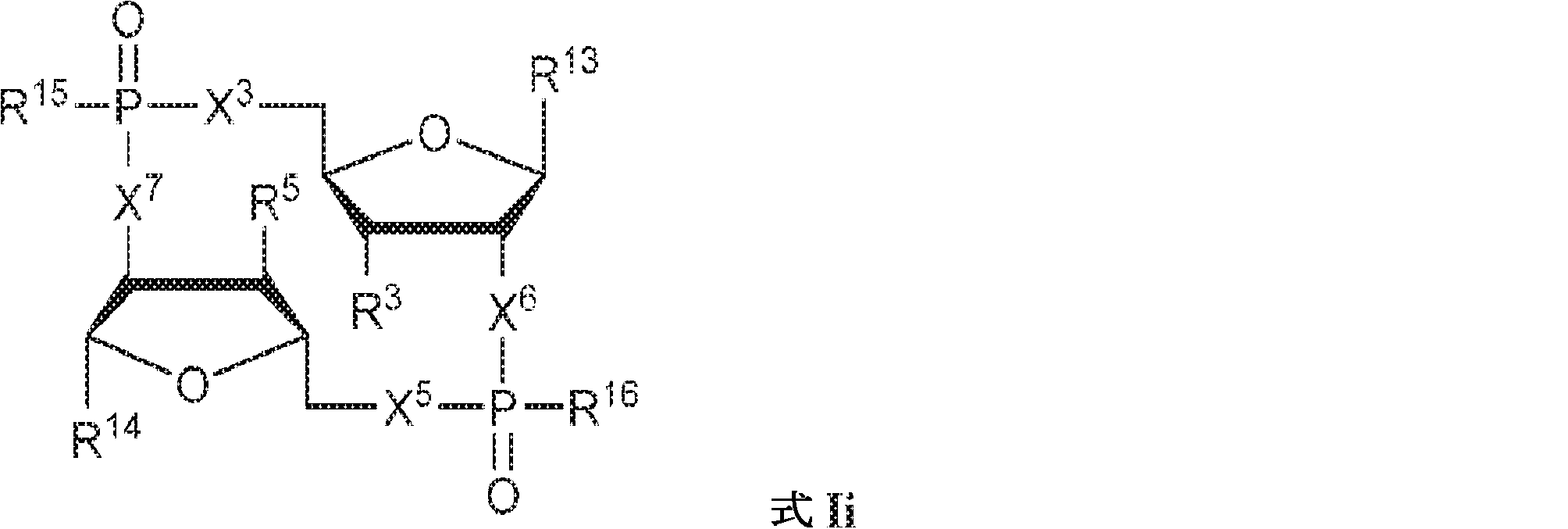
式中、
X3、X5、X6、およびX7は独立してO、NH、CH2、CHF、またはCF2であり;
R13およびR14は独立して、
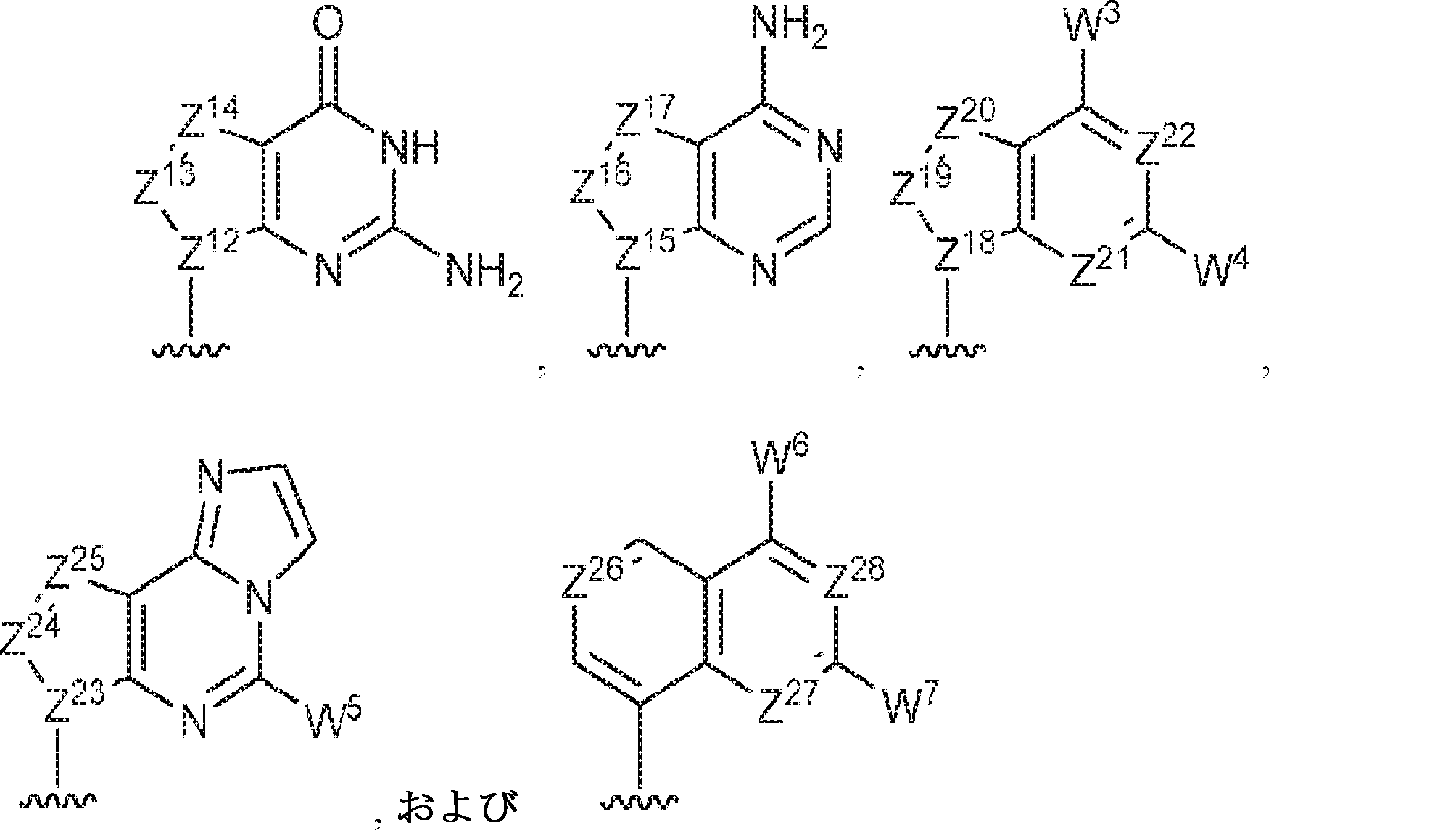
Z12、Z13、Z14、Z15、Z16、Z17、Z18、Z19、Z20、Z21、Z22、Z23、Z24、Z25、Z26、Z27、およびZ28はそれぞれ独立してCHまたはNであり;かつ
W3、W4、W5、W6、およびW7は独立して、水素、ハロゲン、ヒドロキシル、C1~6アルキル、1個もしくは複数のハロゲン基、チオール基、ヒドロキシル基、カルボニル基、カルボキシル基、カルボニルオキシル基、C1~6アルコキシ基、C1~6ヒドロキシアルコキシ基、アミノ基、C1~6アルキルアミノ基、ジ(C1~6アルキル)アミノ基、もしくはアジド基を用いて選択的に官能基を付与されたC1~6アルキル、C1~6アルコキシ、1個もしくは複数のハロゲン基、チオール基、ヒドロキシル基、カルボニル基、カルボキシル基、カルボニルオキシル基、C1~6ヒドロキシアルコキシ基、アミノ基、C1~6アルキルアミノ基、ジ(C1~6アルキル)アミノ基、もしくはアジド基を用いて選択的に官能基を付与されたC1~6アルコキシ、C3~5アルケニル-O-、C3~5アルキニル-O-、オリゴ(エチレングリコール)、ポリ(エチレングリコール)、アジド、または-NR7R8であり;
R7およびR8は独立して、水素、C1~6アルキル、1個もしくは複数のハロゲン基、チオール基、ヒドロキシル基、カルボニル基、カルボキシル基、カルボニルオキシル基、C1~6アルコキシ基、C1~6ヒドロキシアルコキシ基、アミノ基、C1~6アルキルアミノ基、ジ(C1~6アルキル)アミノ基、もしくはアジド基を用いて選択的に官能基を付与されたC1~6アルキル、環状-(C1~6アルキル)-、1個もしくは複数のハロゲン基、チオール基、ヒドロキシル基、カルボニル基、カルボキシル基、カルボニルオキシル基、C1~6アルコキシ基、C1~6ヒドロキシアルコキシ基、アミノ基、C1~6アルキルアミノ基、もしくはジ(C1~6アルキル)アミノ基を用いて選択的に官能基を付与された環状-(C1~6アルキル)-、環状-(C1~6オキサアルキル)-、または1個もしくは複数のハロゲン基、チオール基、ヒドロキシル基、カルボニル基、カルボキシル基、カルボニルオキシル基、C1~6ヒドロキシアルコキシ基、アミノ基、C1~6アルキルアミノ基、もしくはジ(C1~6アルキル)アミノ基を用いて選択的に官能基を付与された環状-(C1~6オキサアルキル)-であり;
R3およびR5は独立して、水素、ハロゲン、ヒドロキシル、アミノ、C1~6アルキル、1個もしくは複数のハロゲン基、チオール基、ヒドロキシル基、カルボニル基、カルボキシル基、カルボニルオキシル基、C1~6アルコキシ基、C1~6ヒドロキシアルコキシ基、アミノ基、C1~6アルキルアミノ基、ジ(C1~6アルキル)アミノ基、もしくはアジド基を用いて選択的に官能基を付与されたC1~6アルキル、C1~6アルコキシ、1個もしくは複数のハロゲン基、チオール基、ヒドロキシル基、カルボニル基、カルボキシル基、カルボニルオキシル基、C1~6ヒドロキシアルコキシ基、アミノ基、C1~6アルキルアミノ基、ジ(C1~6アルキル)アミノ基、もしくはアジド基を用いて選択的に官能基を付与されたC1~6アルコキシ、C3~5アルケニル-O-、C3~5アルキニル-O-、オリゴ(エチレングリコール)、ポリ(エチレングリコール)、アジド、または-NR7R8であり;
R15およびR16は独立して、ヒドロキシル、チオール、メトキシ、エトキシ、アミノ、N-メチルアミノ、N,N-ジメチルアミノ、N-エチルアミノ、N,N-ジエチルアミノ、N-モルホリノ、またはボラノ(-BH3
-)であり;
式Iiの一方または両方のテトラヒドロフラニル環中の酸素原子は硫黄原子またはセレン原子で置き換えられていてもよく;かつ
該化合物は2'2'-cGAMPではない。
[本発明1010]
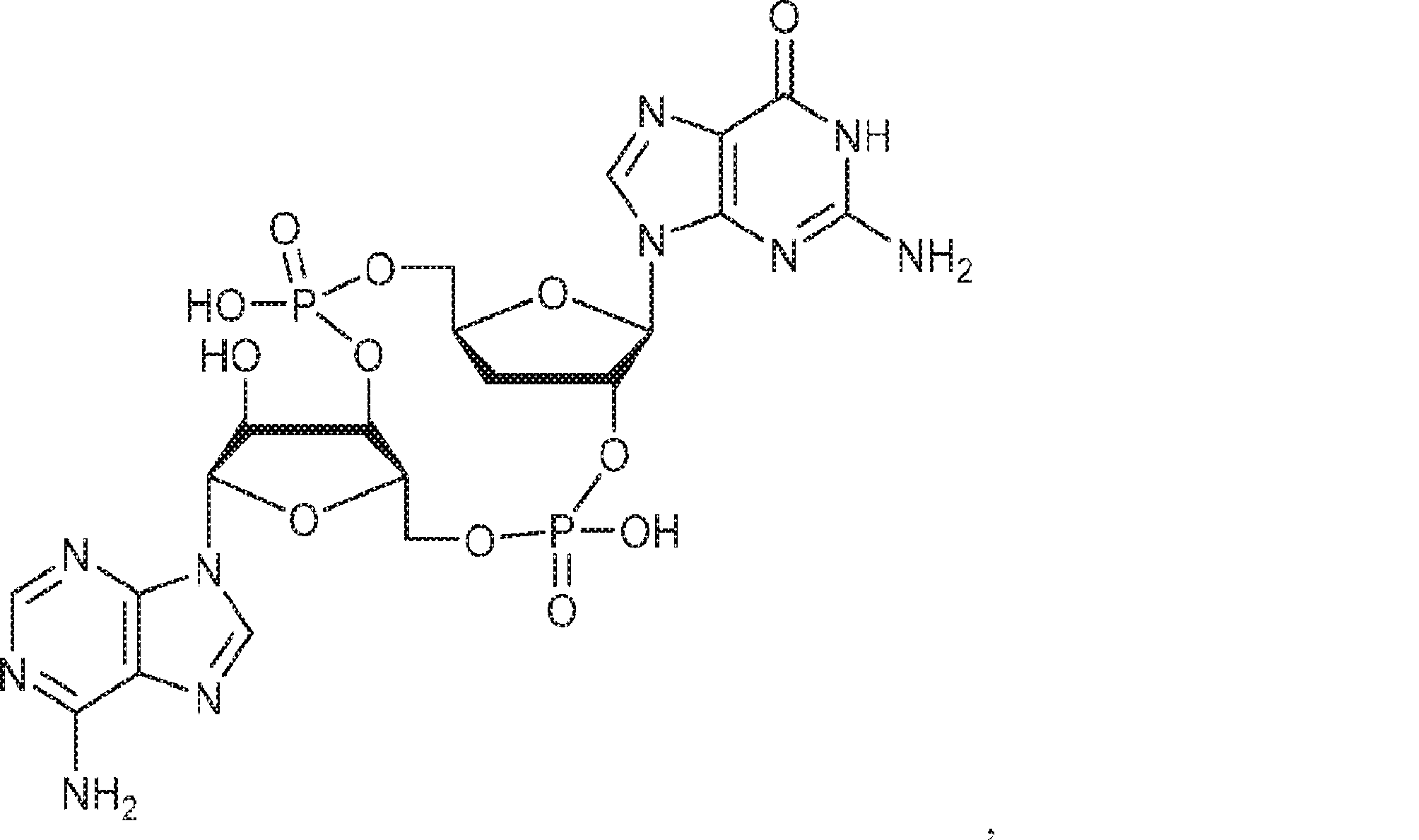
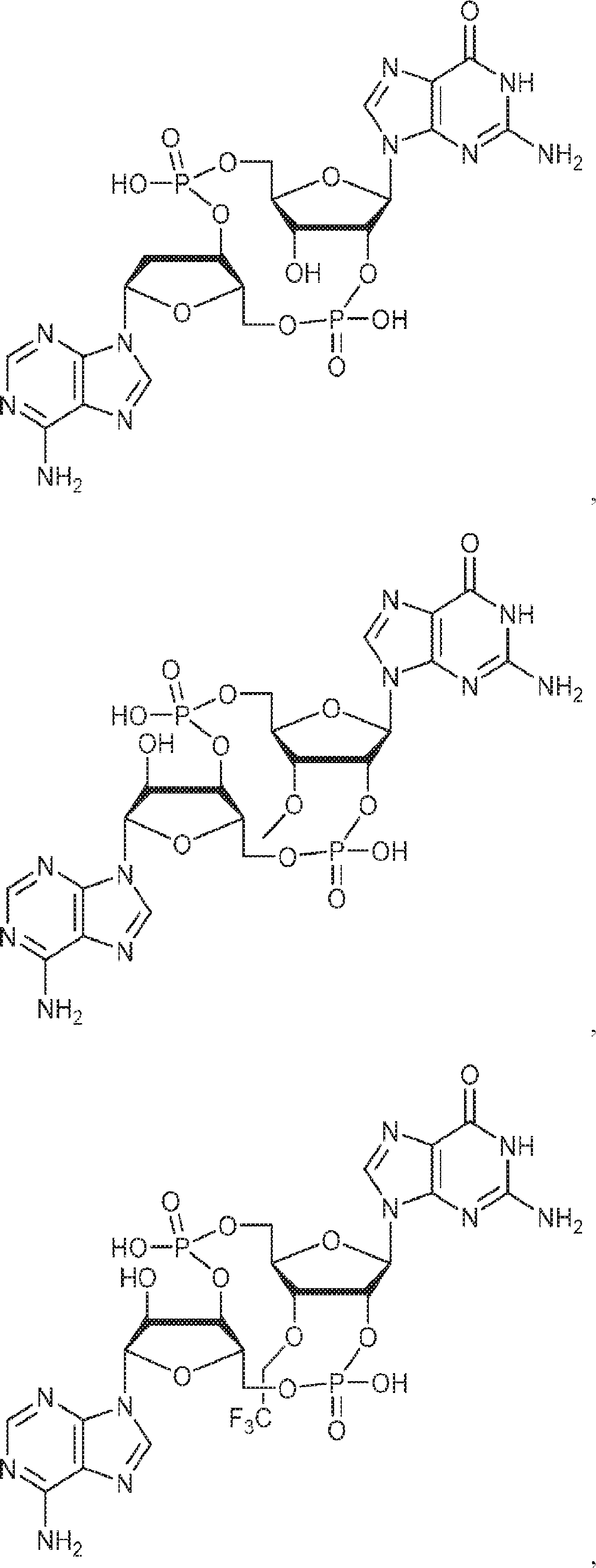
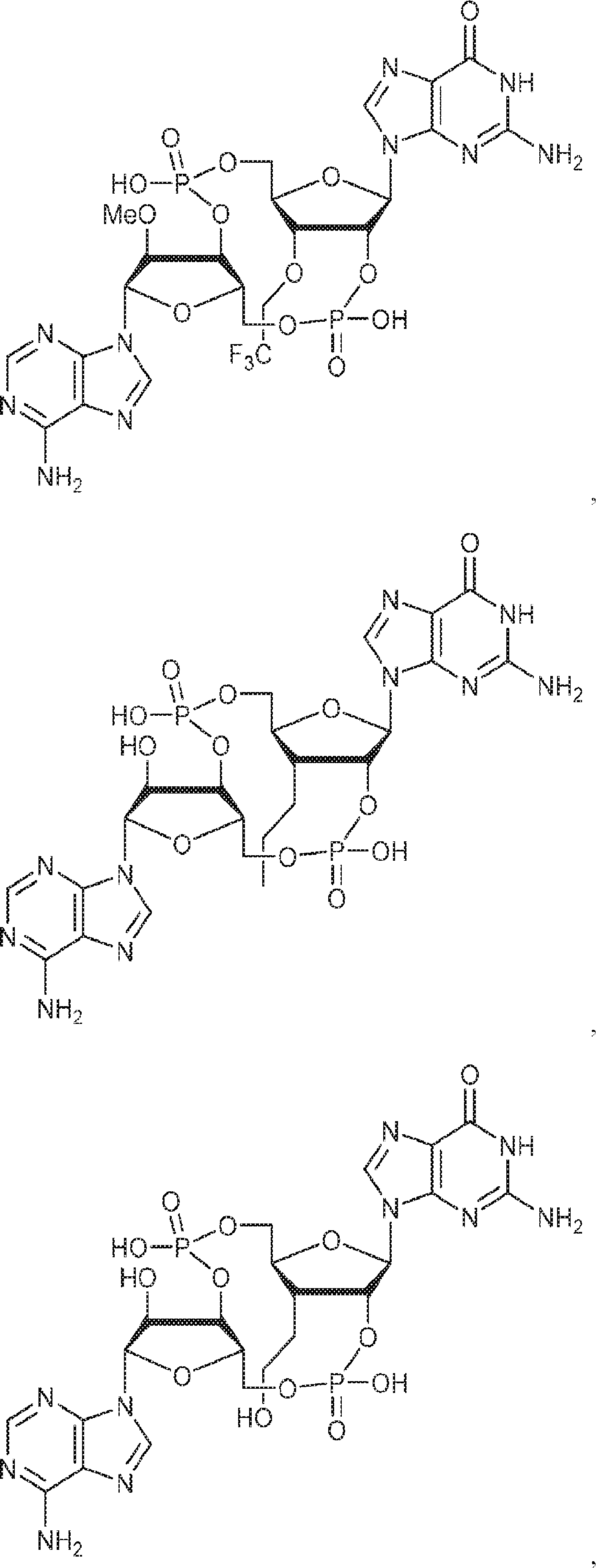
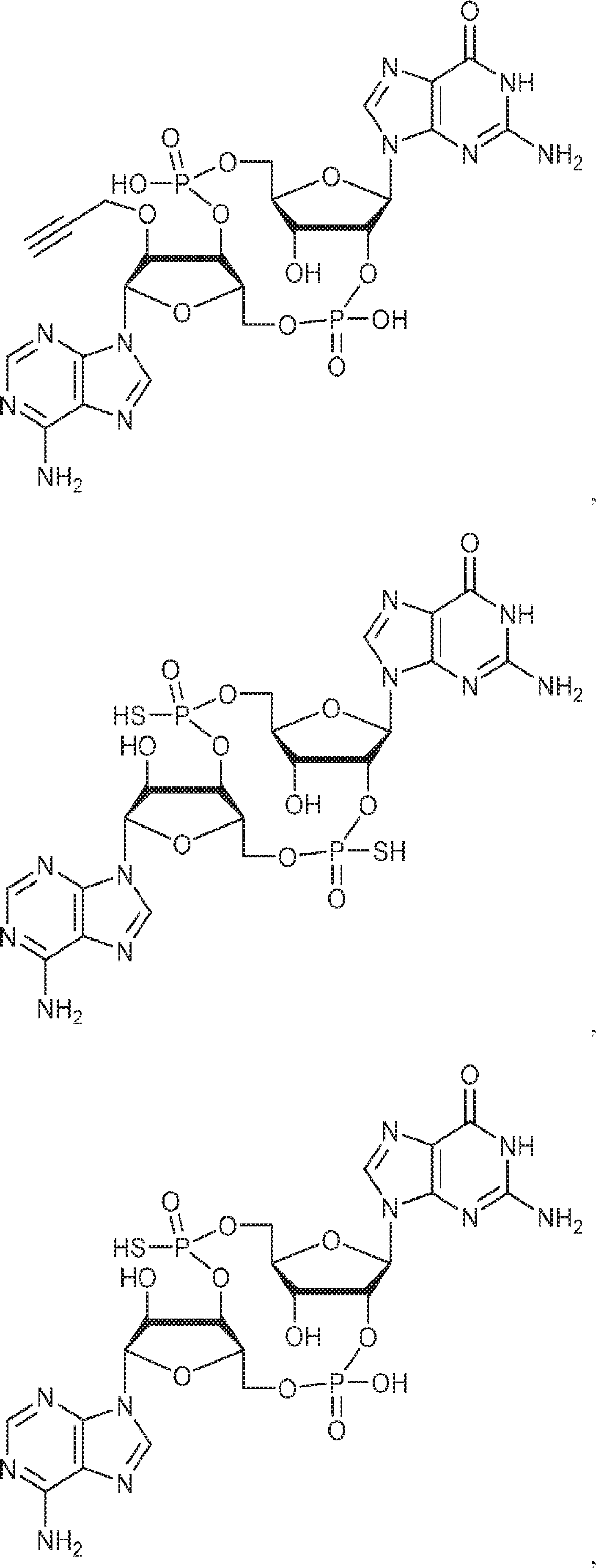
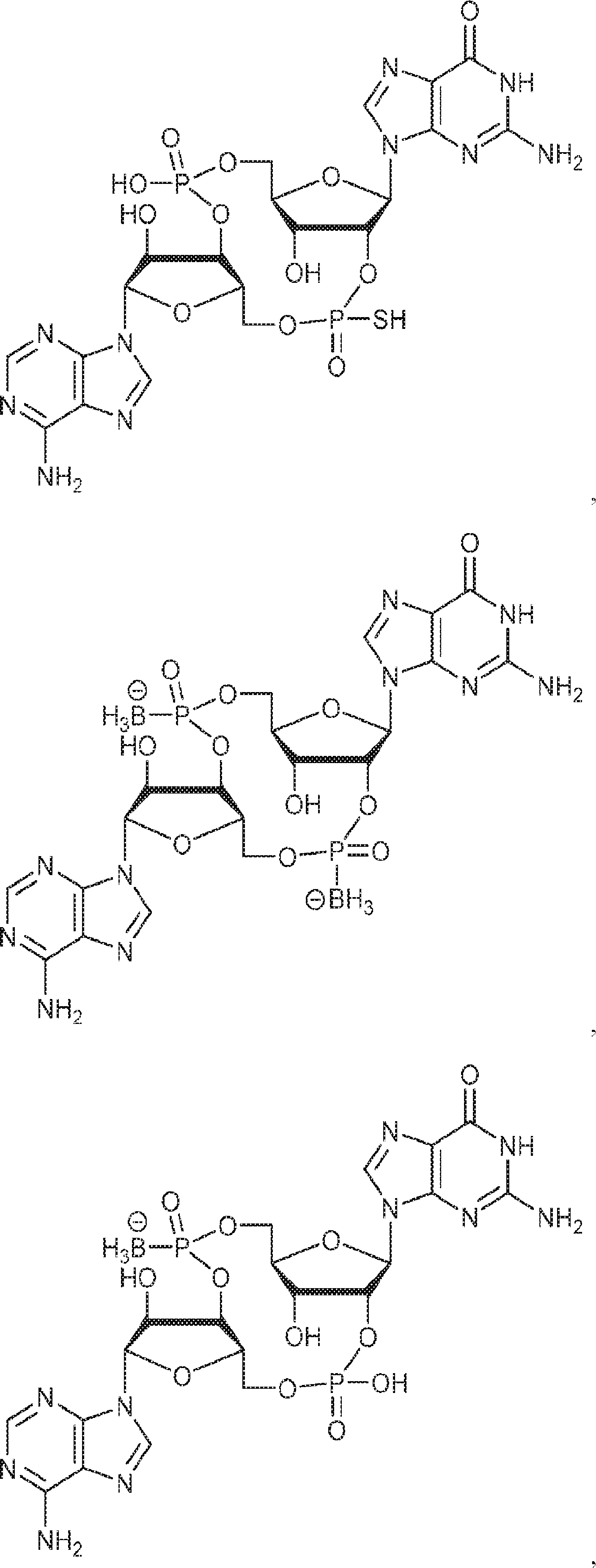
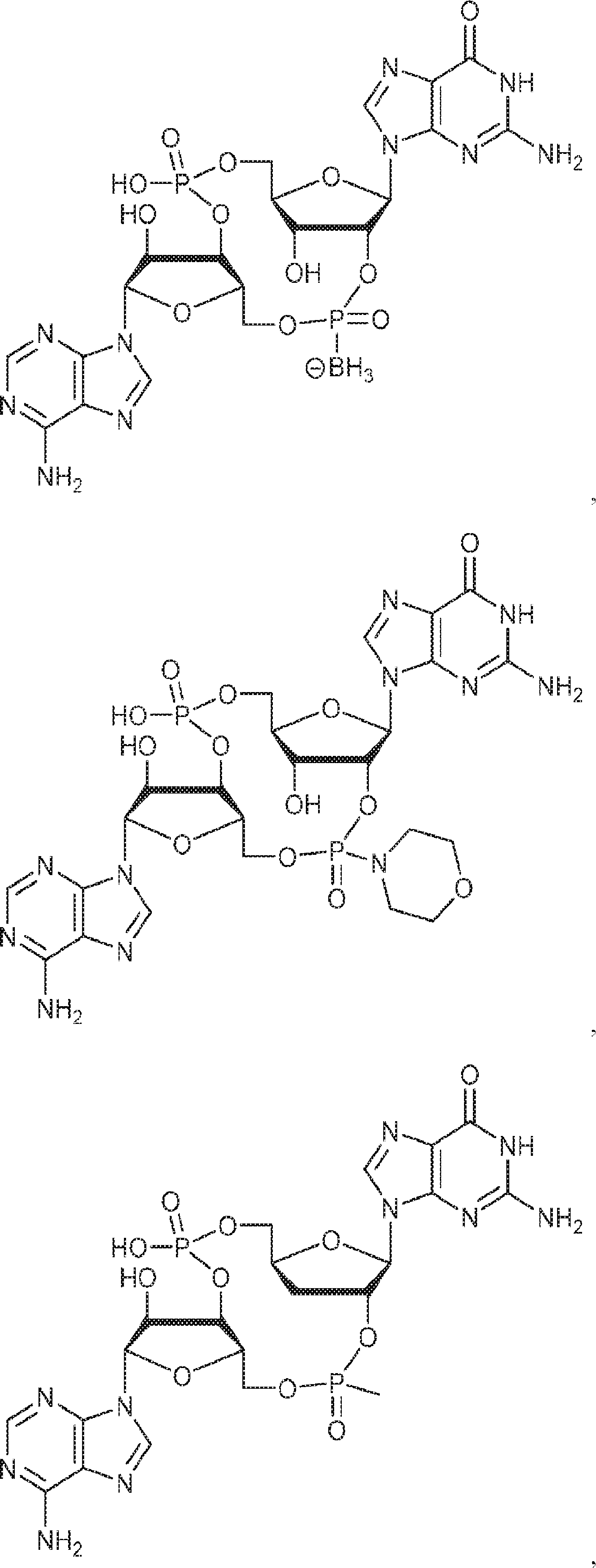
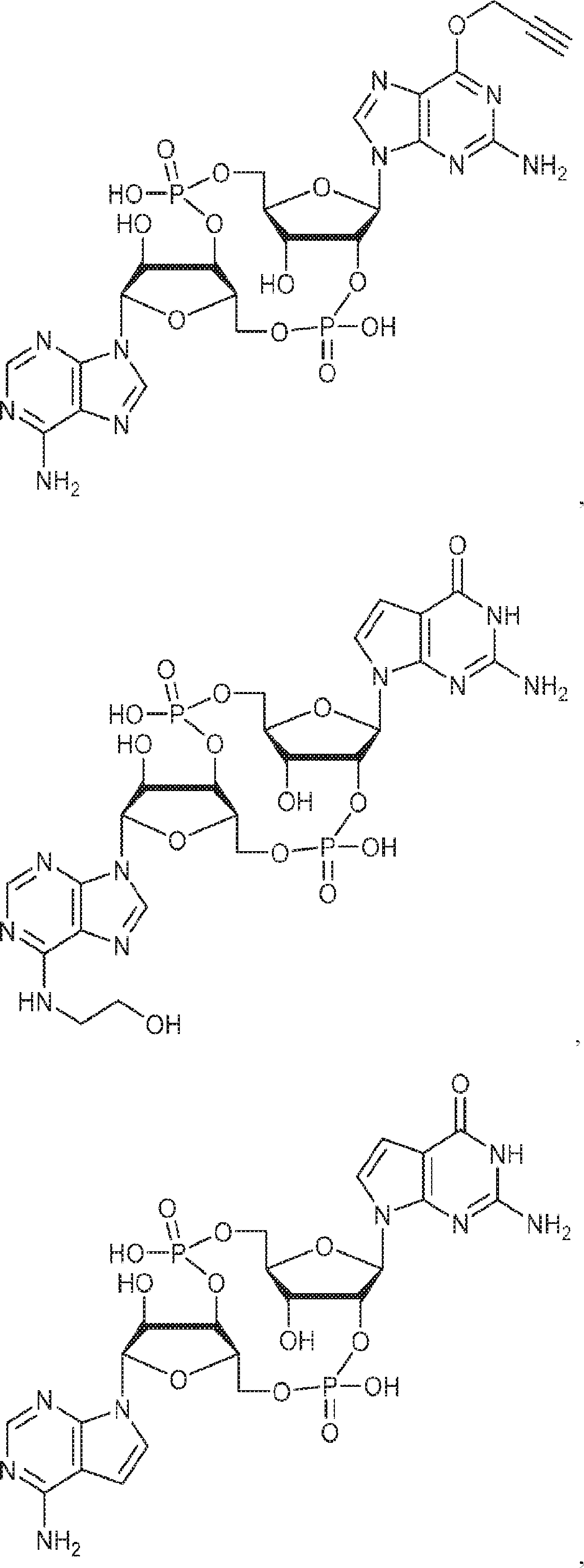
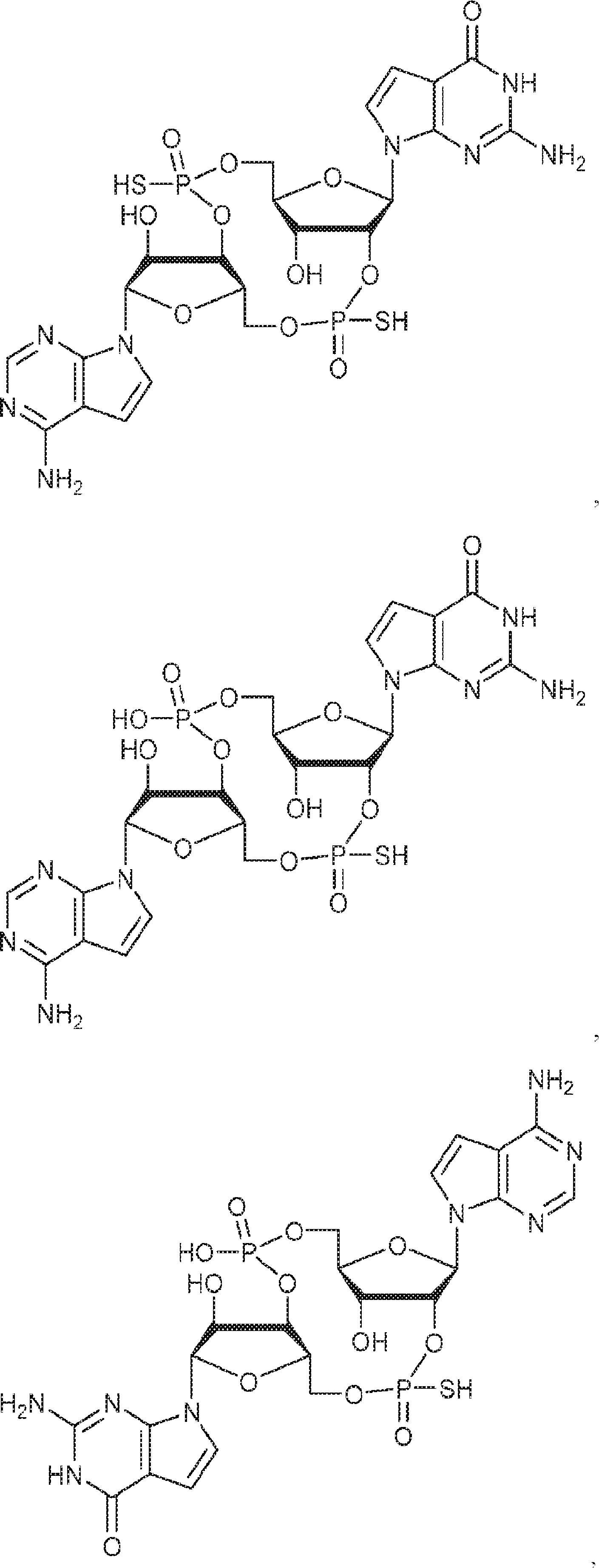
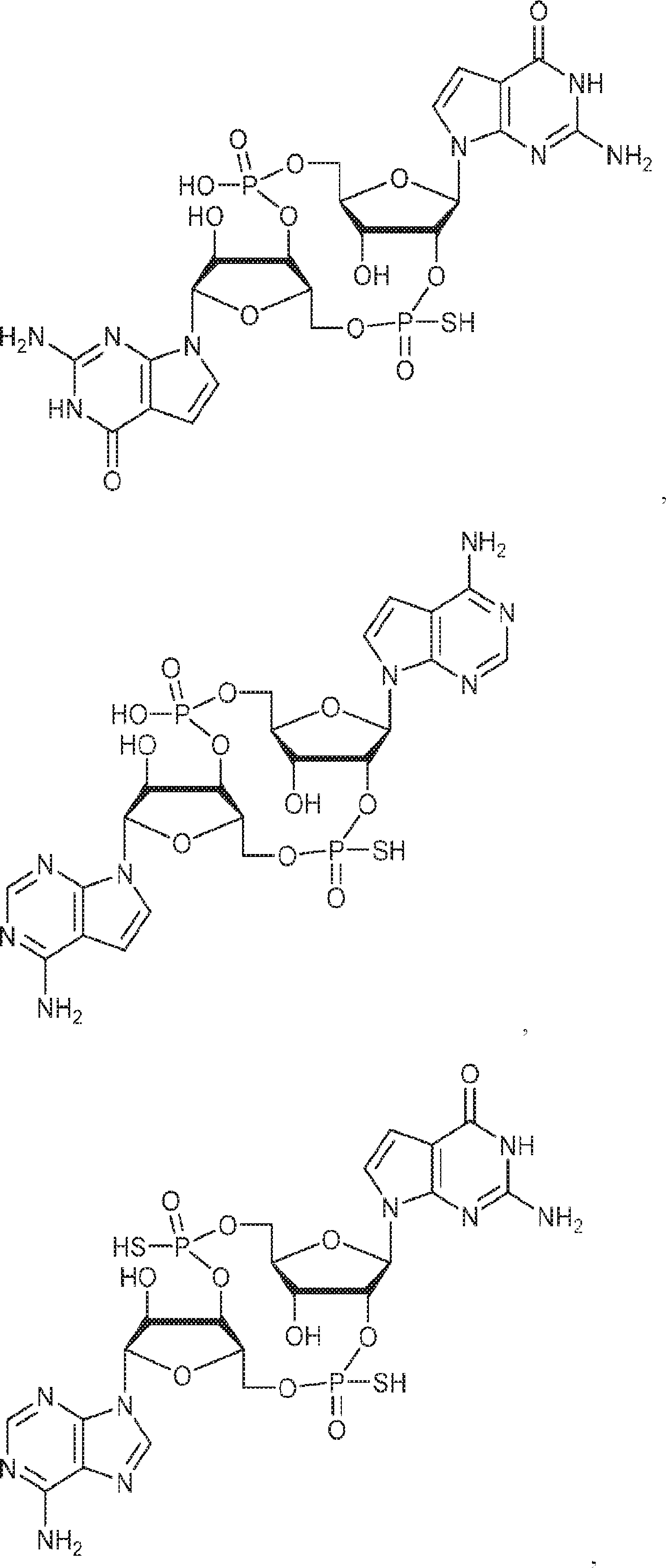
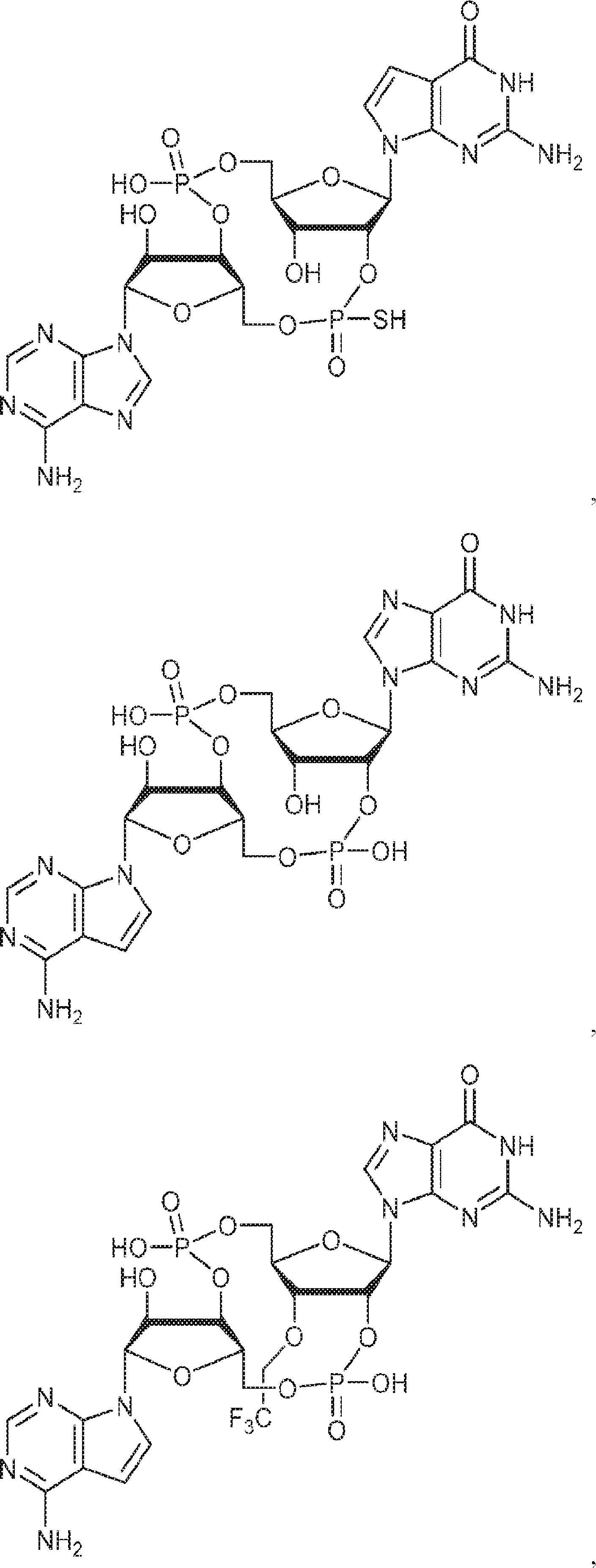
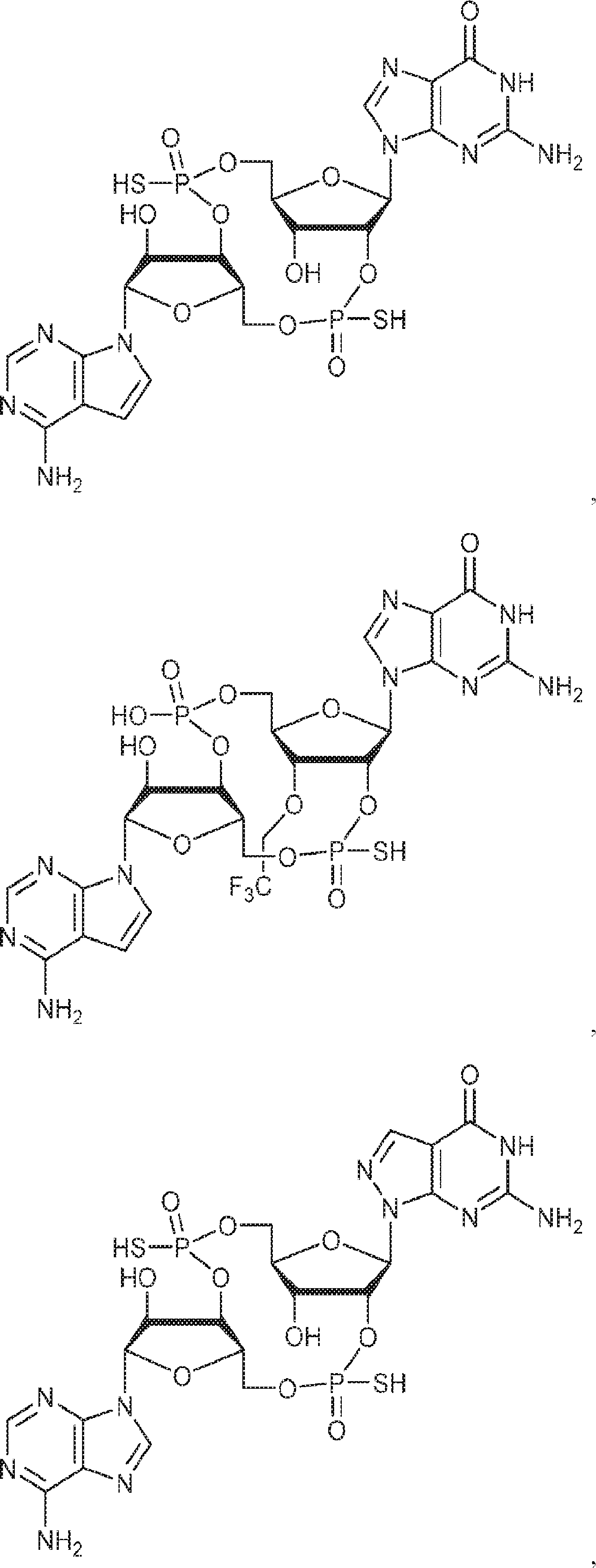

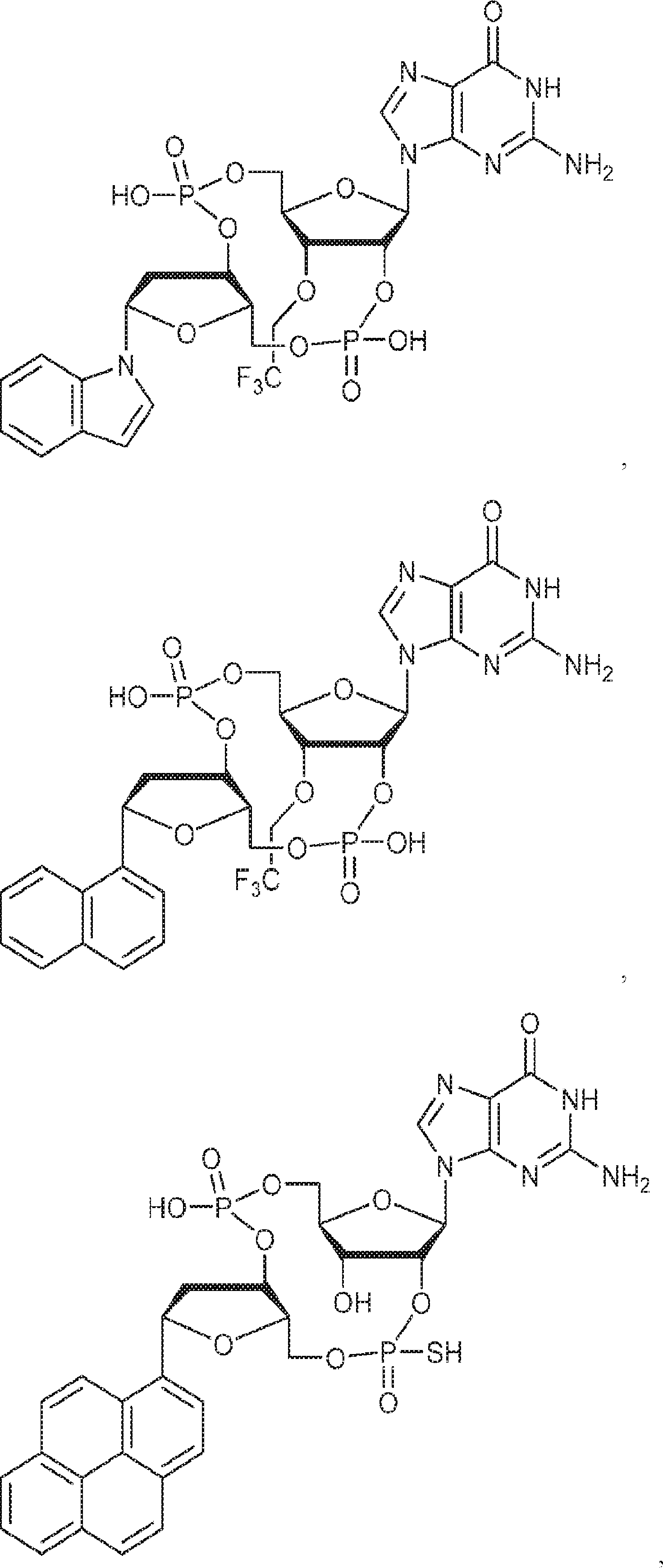
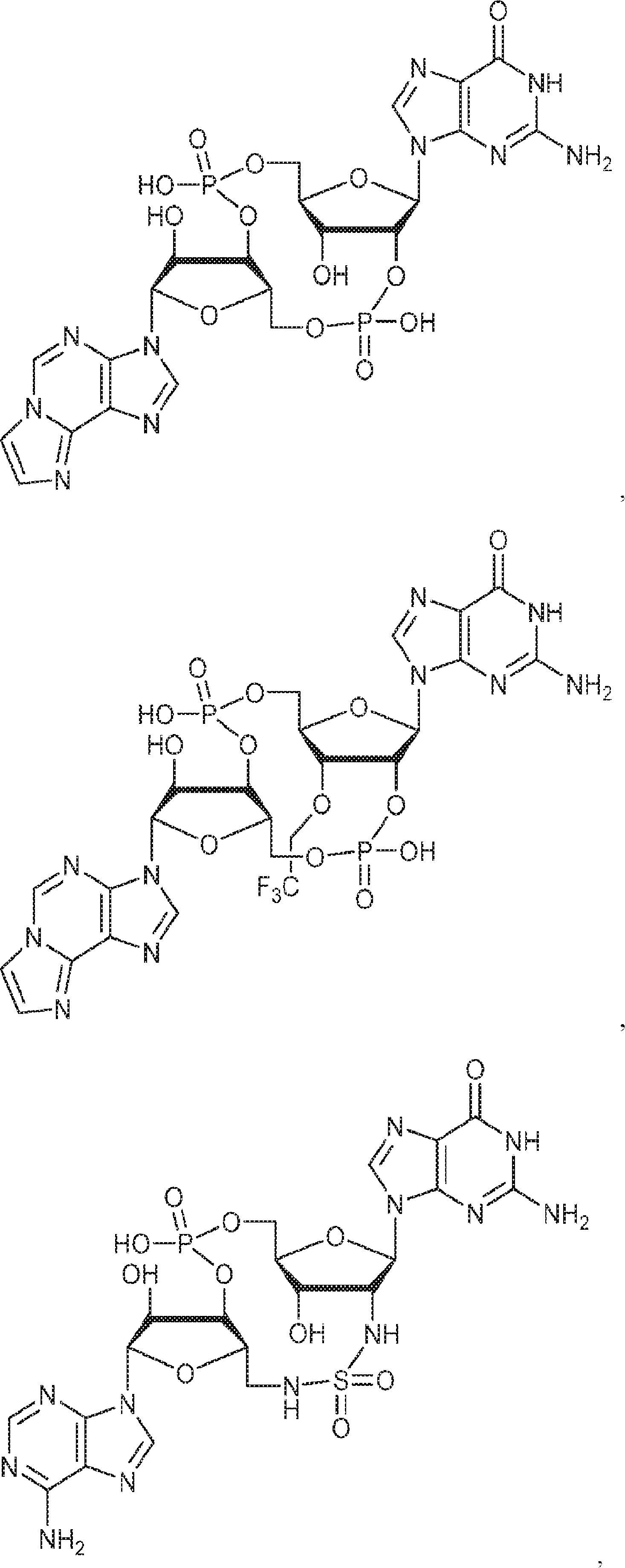

[本発明1011]
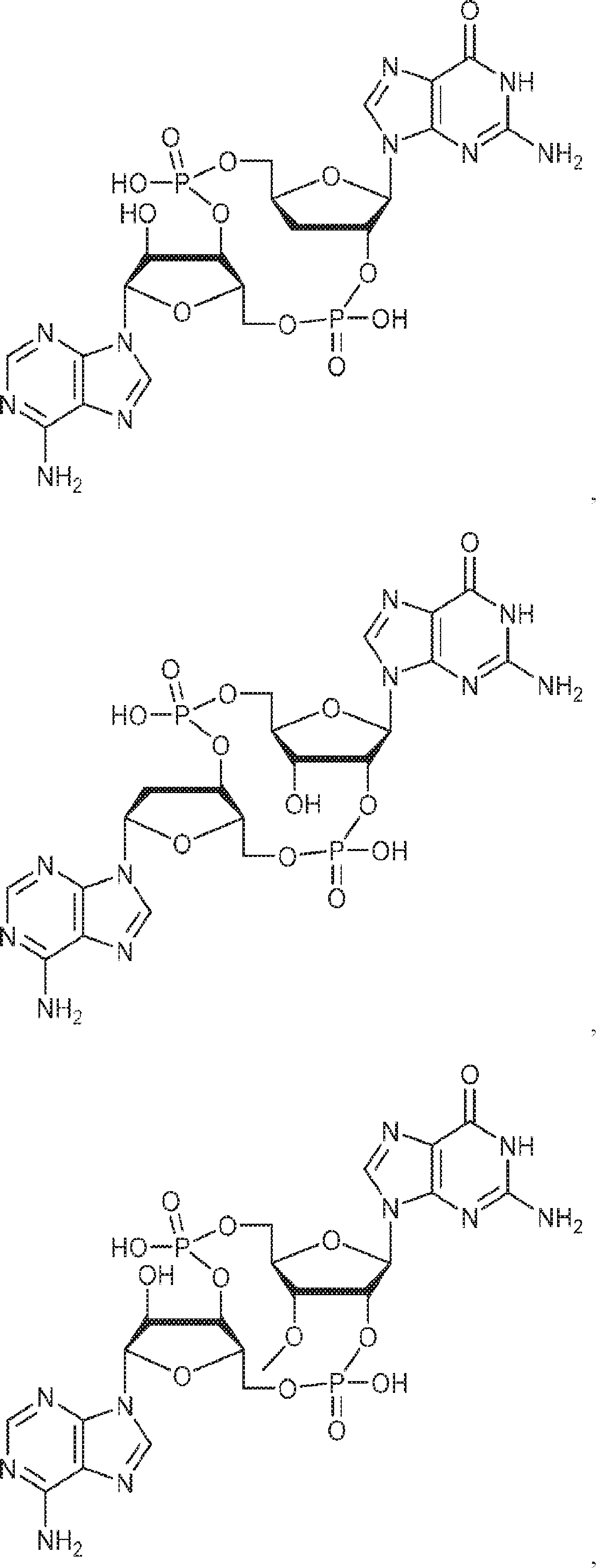
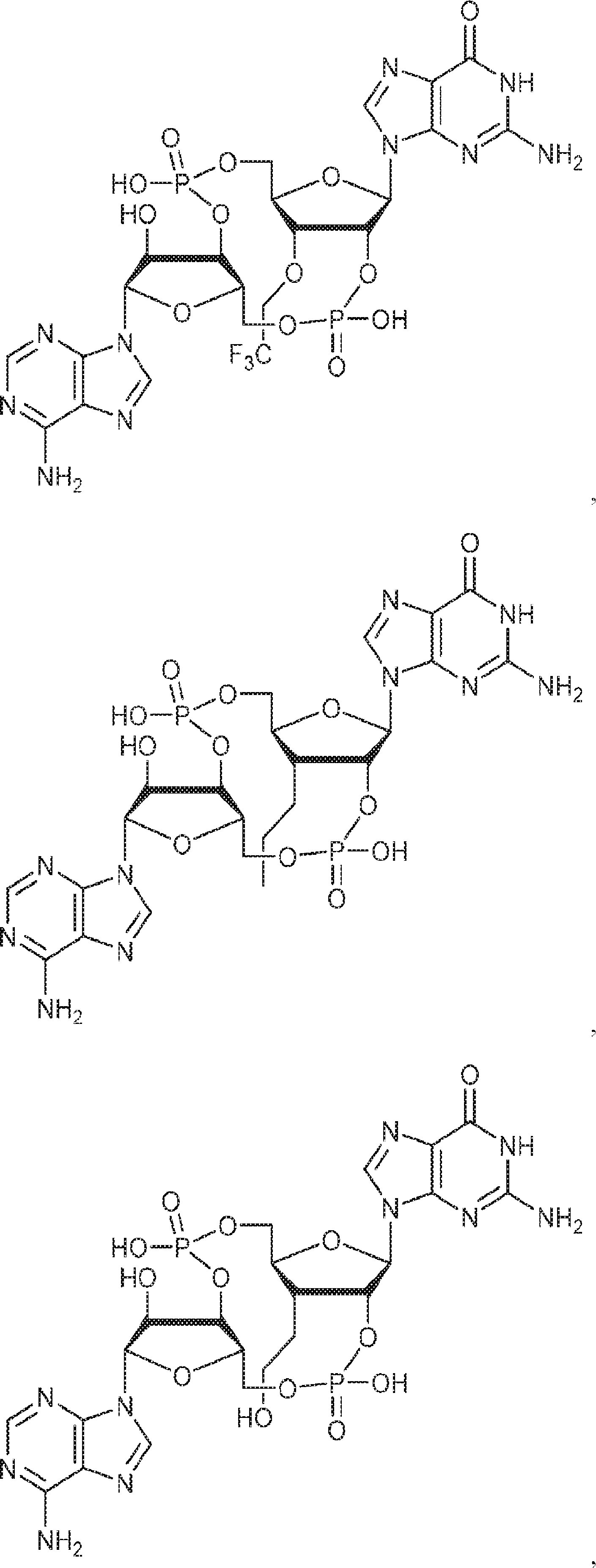
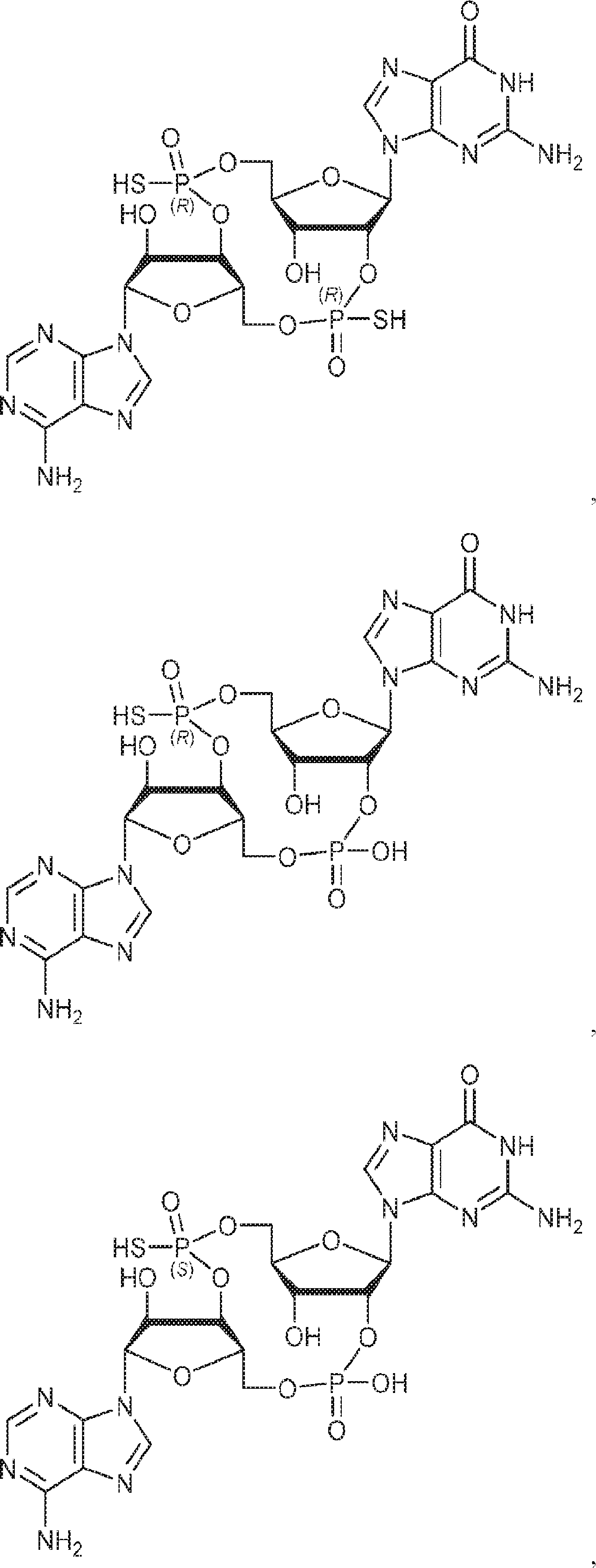
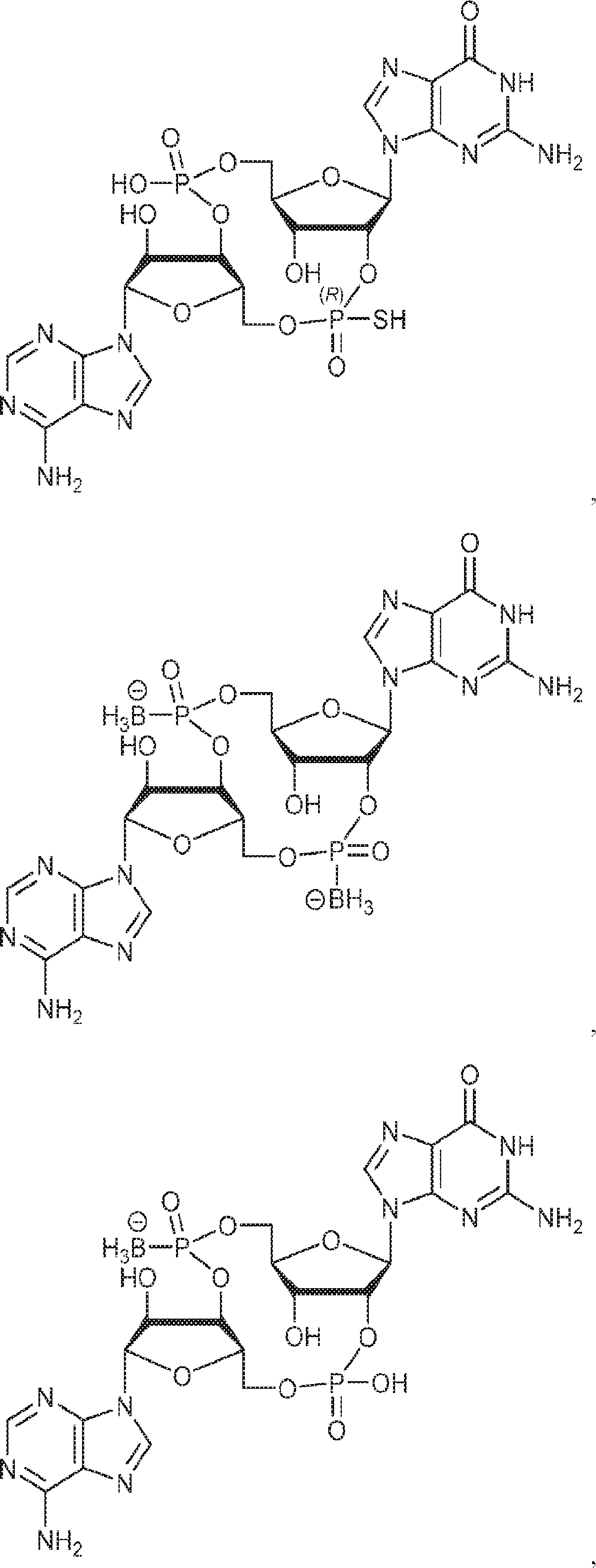
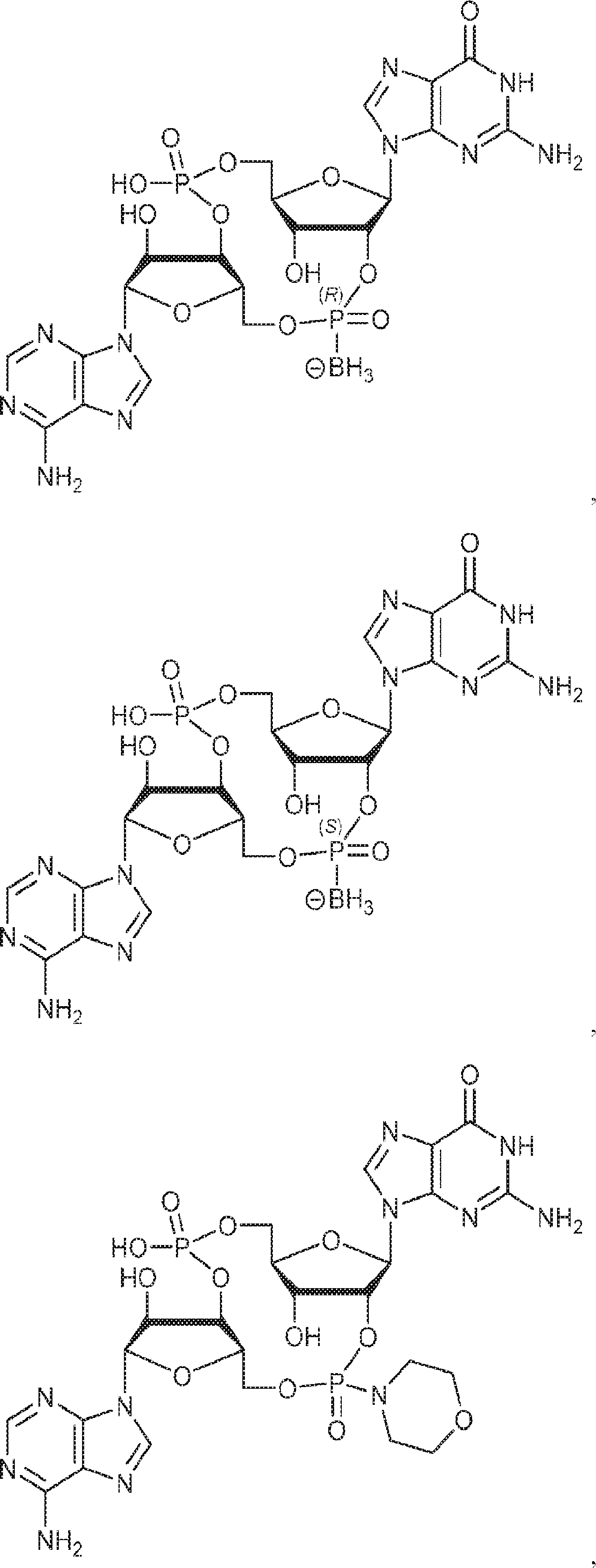
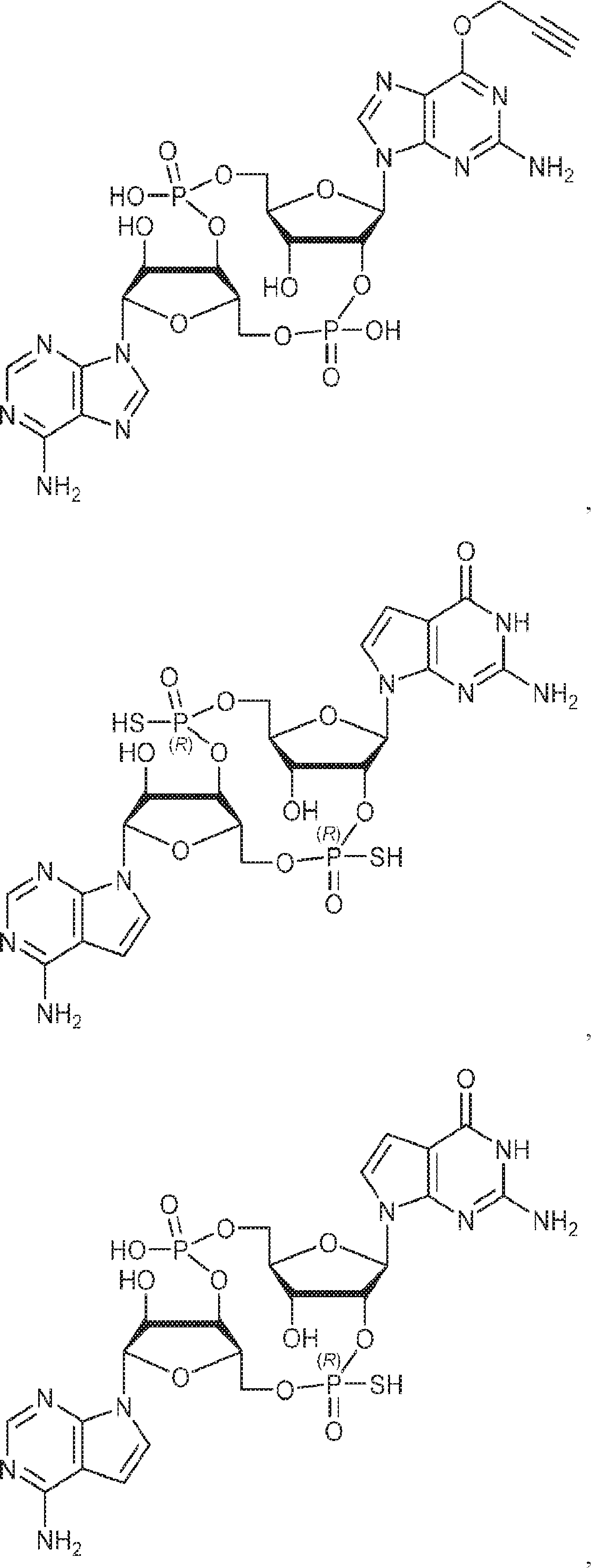
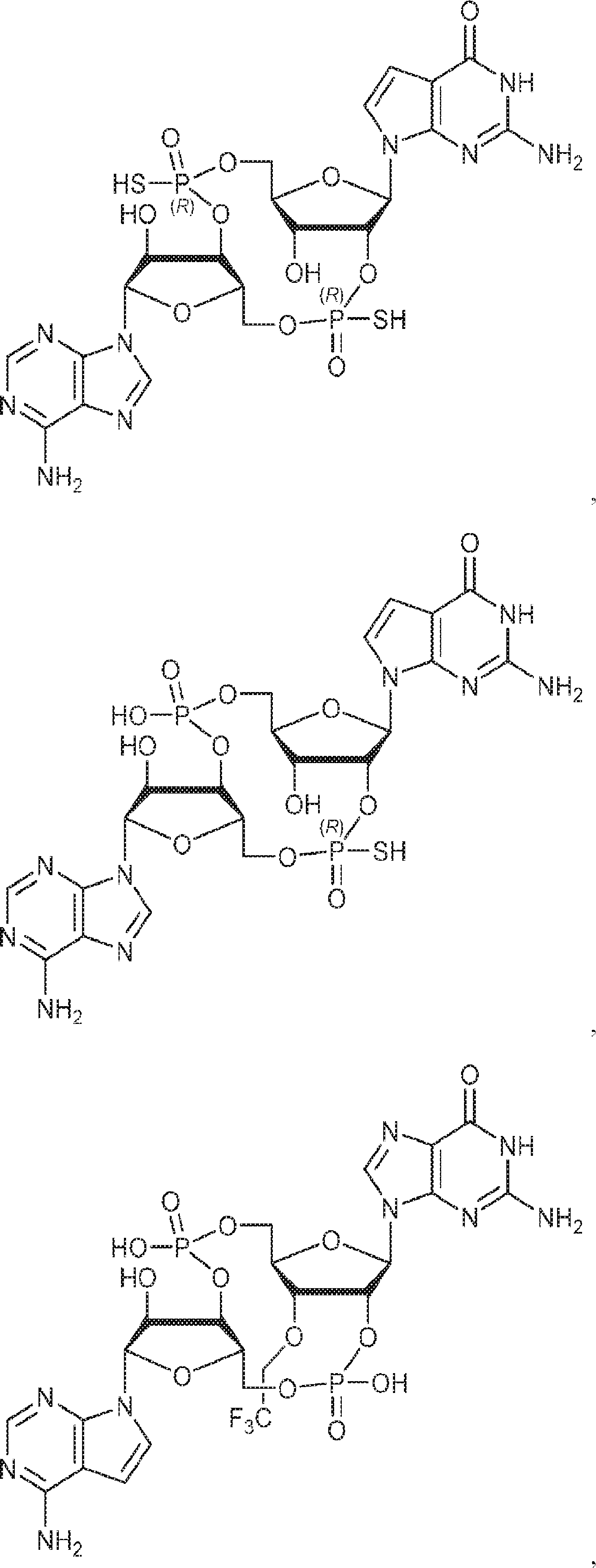
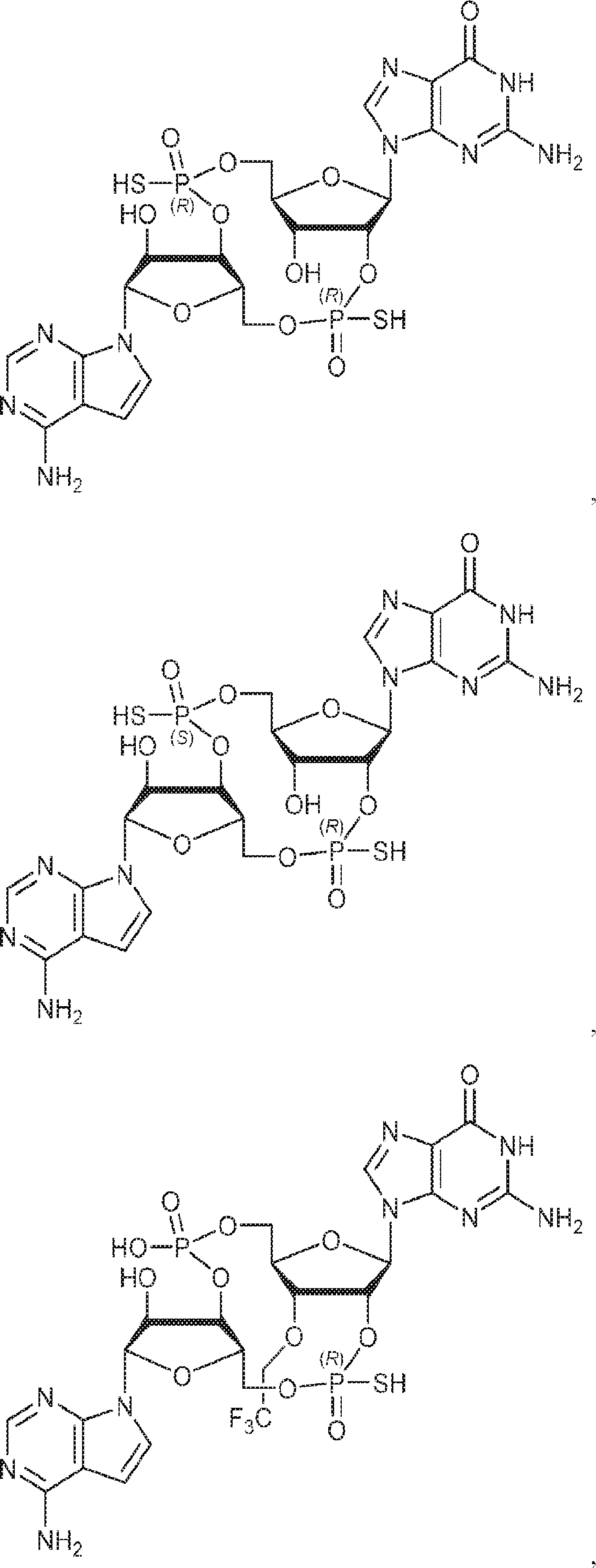
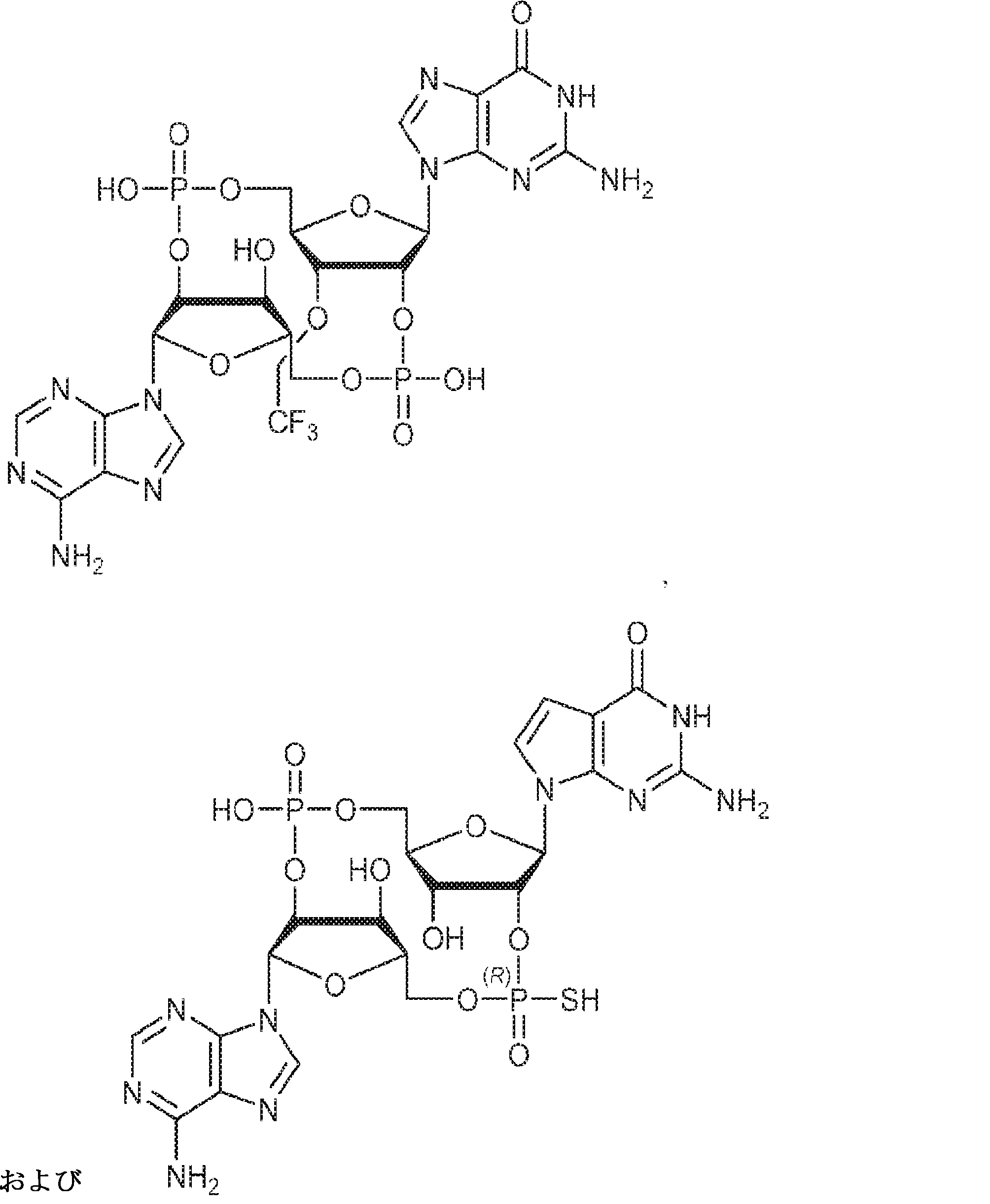
[本発明1012]
式:

[本発明1013]
式:
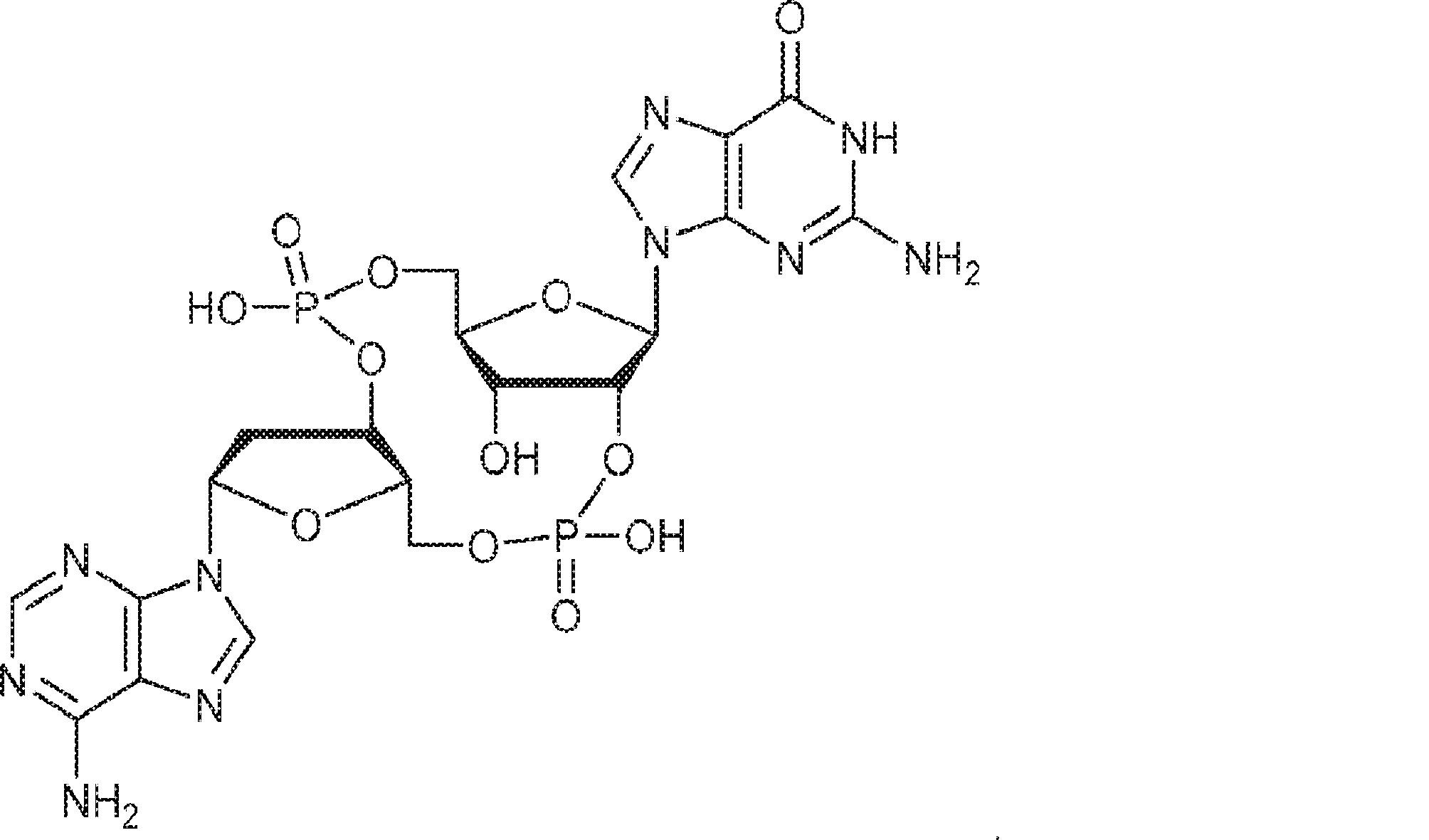
[本発明1014]
式:
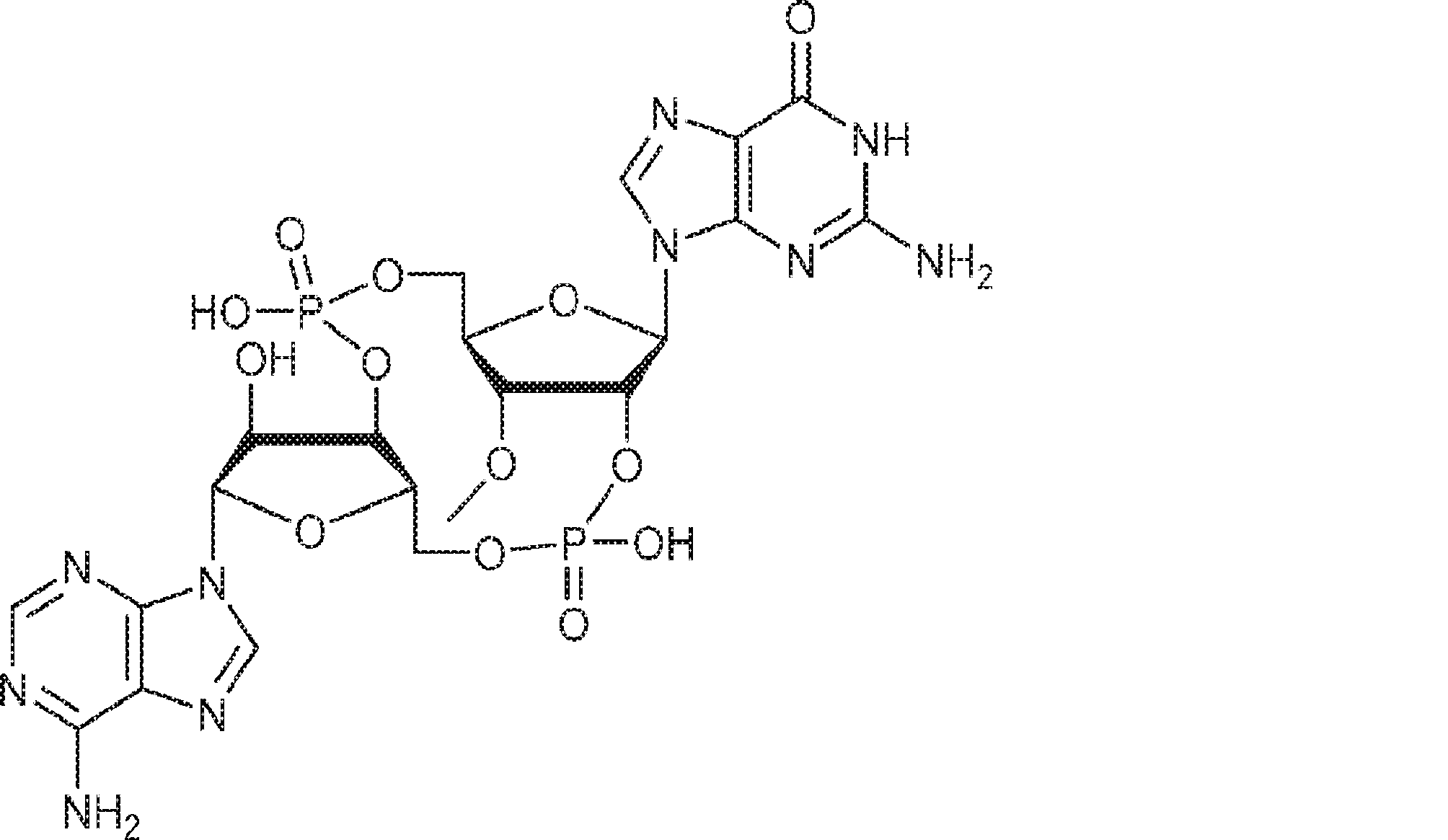
[本発明1015]
式:
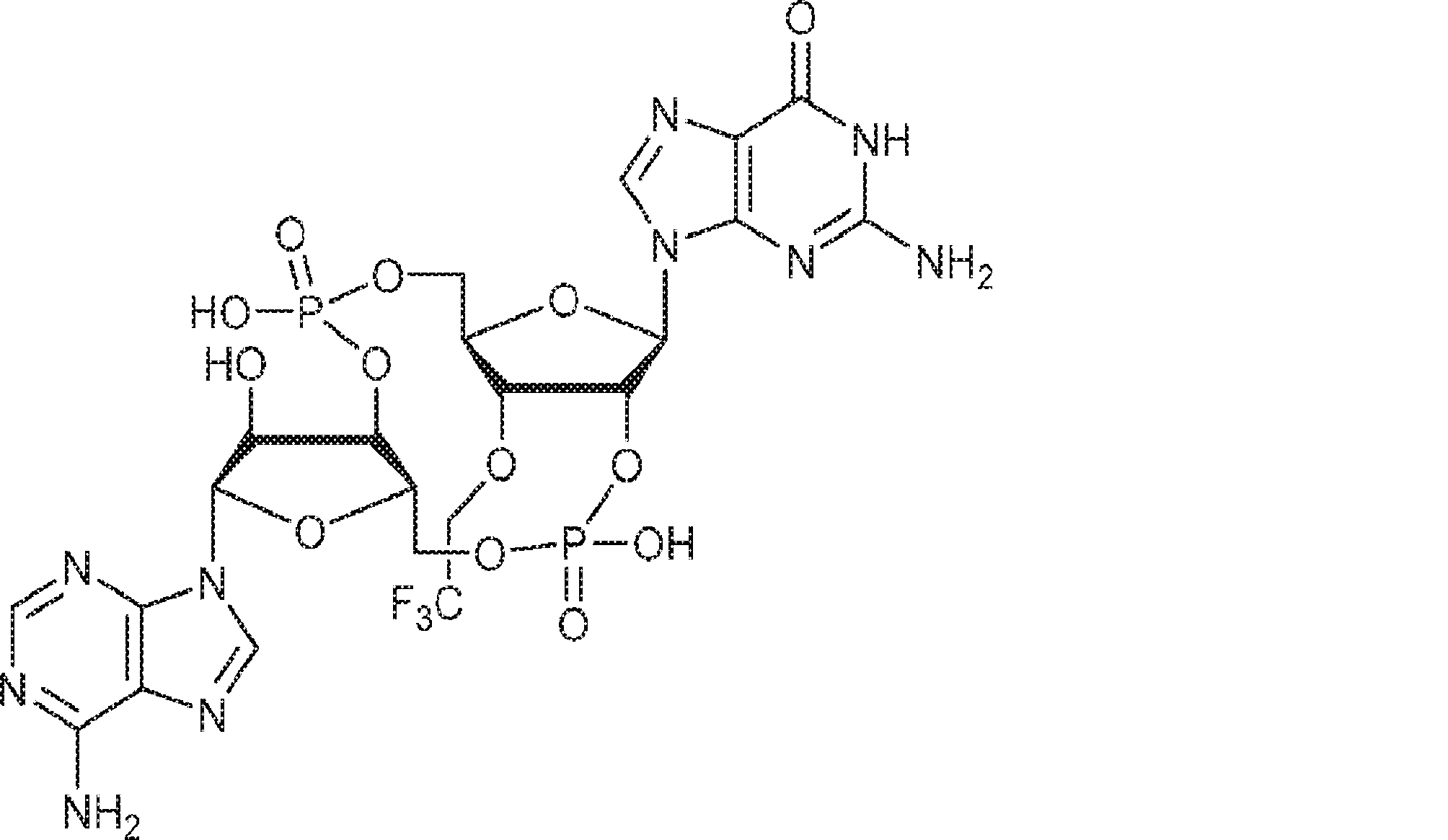
[本発明1016]
式:
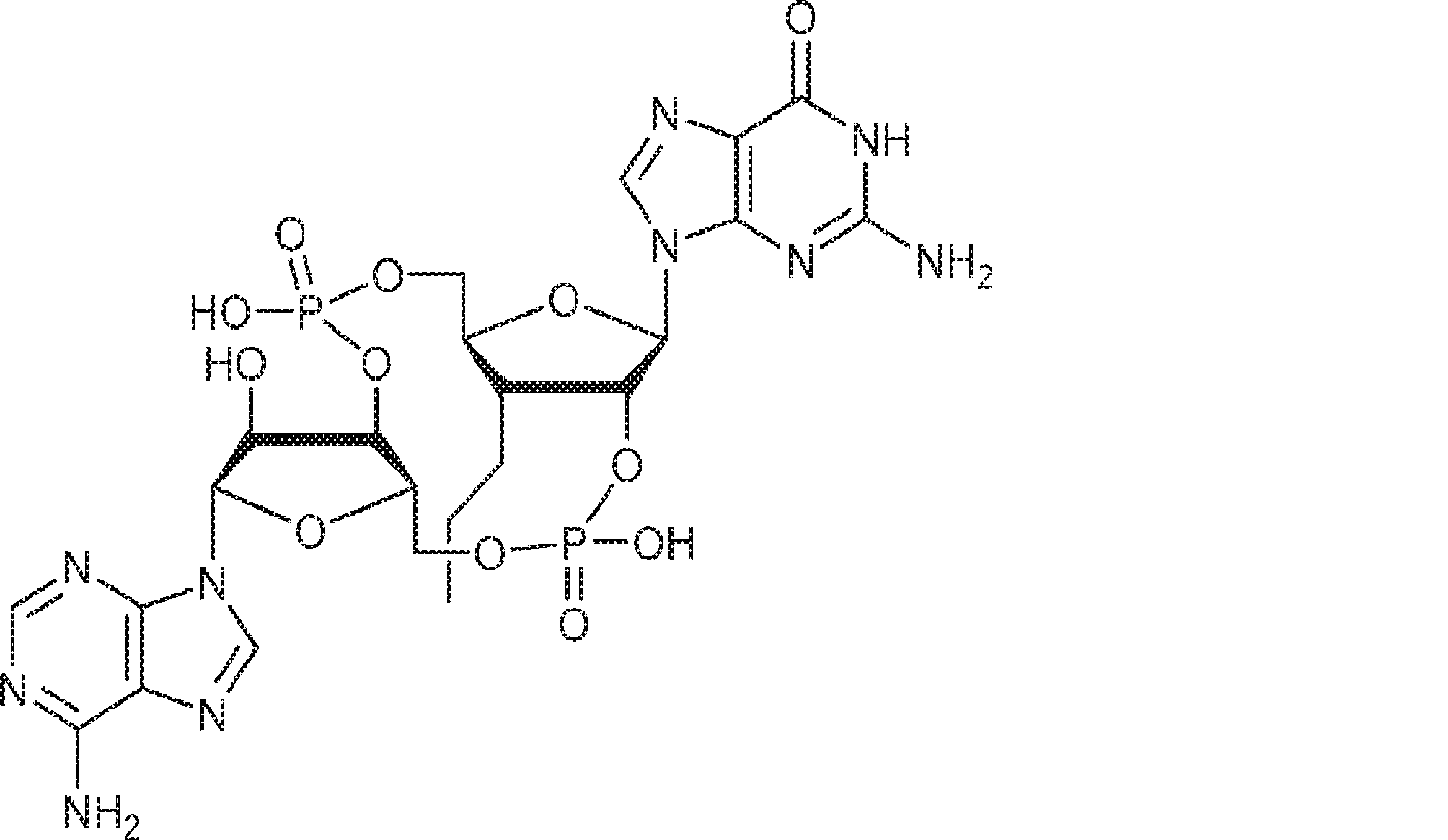
[本発明1017]
式:

[本発明1018]
式:
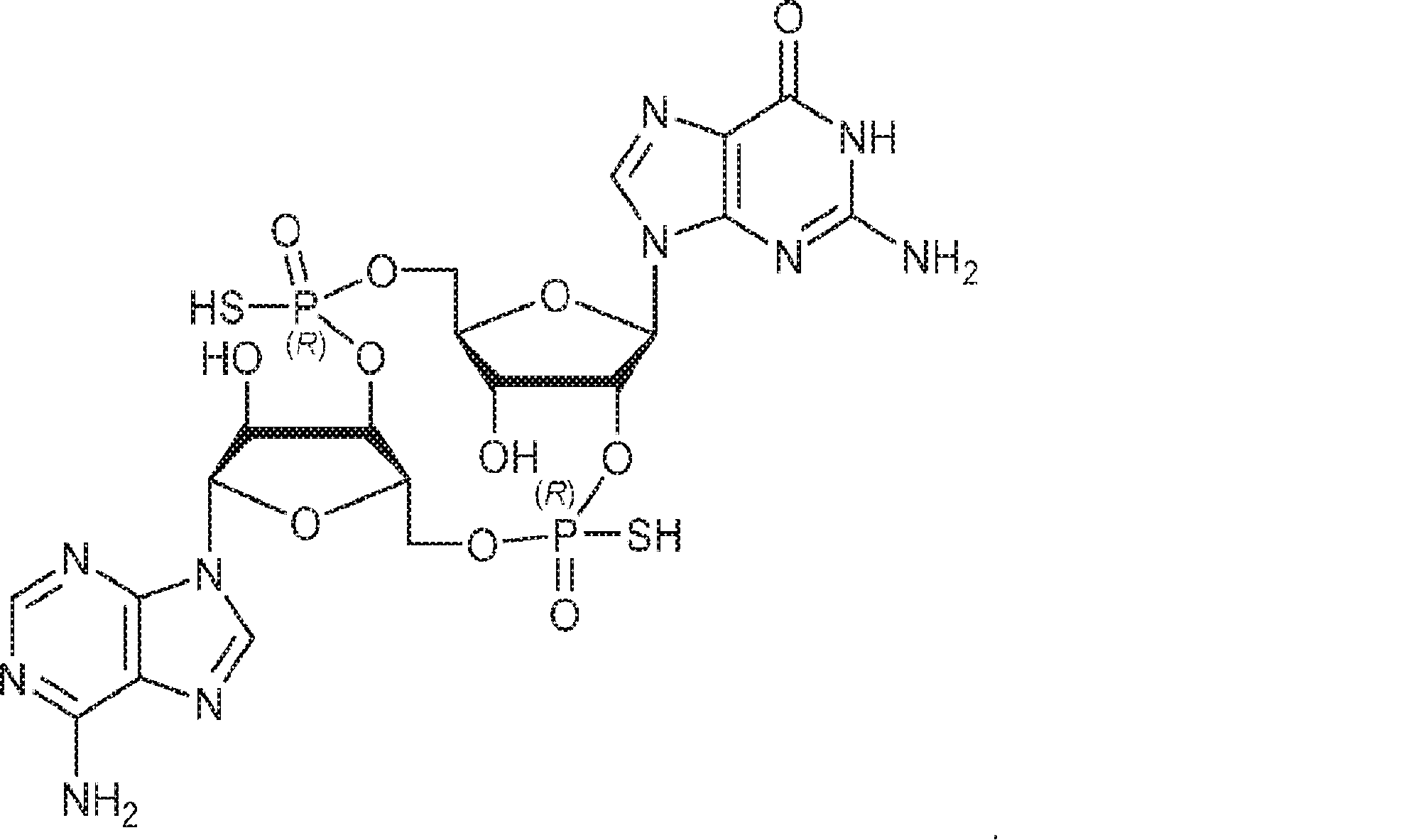
[本発明1019]
式:
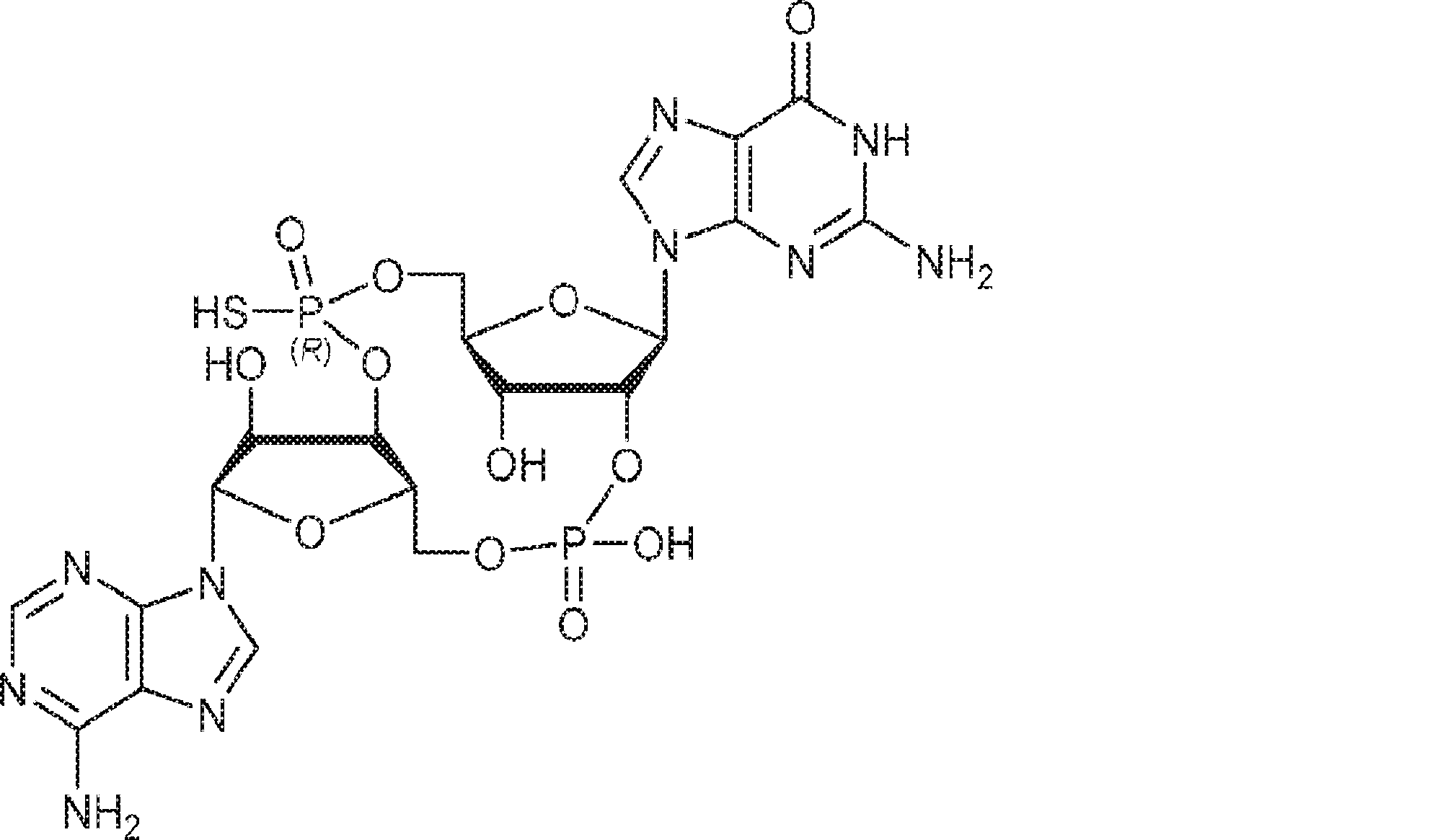
[本発明1020]
式:
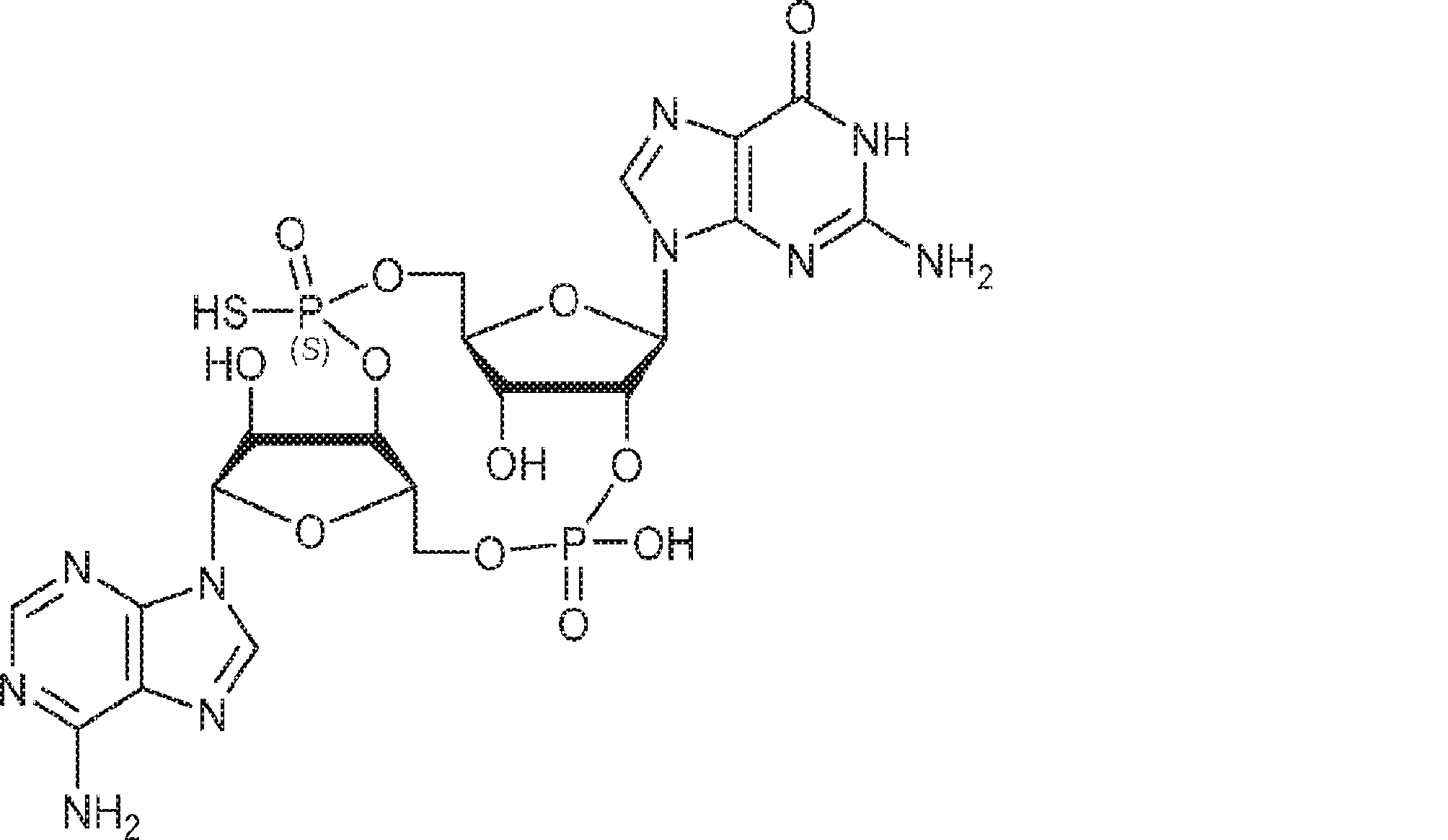
[本発明1021]
式:
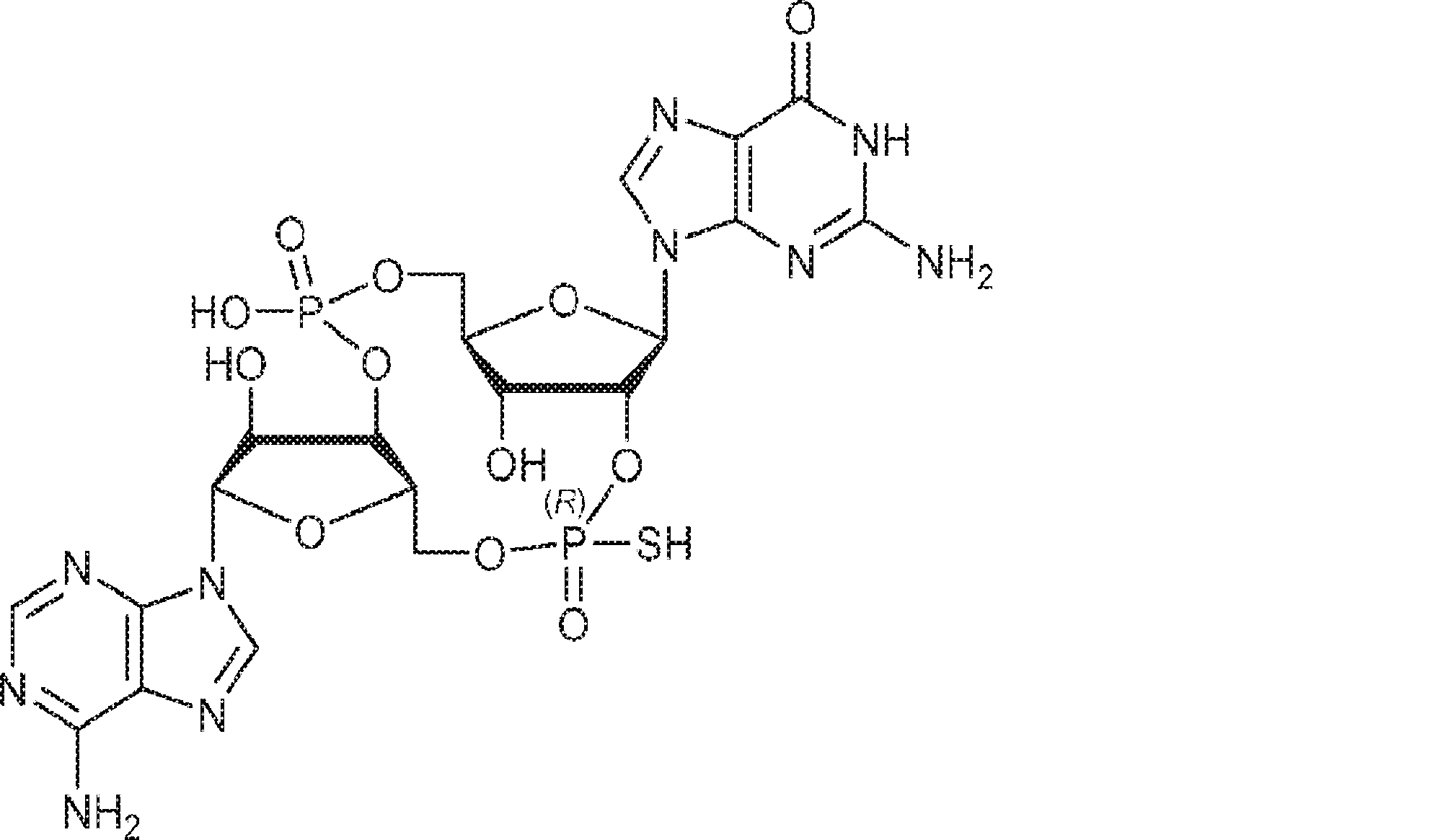
[本発明1022]
式:
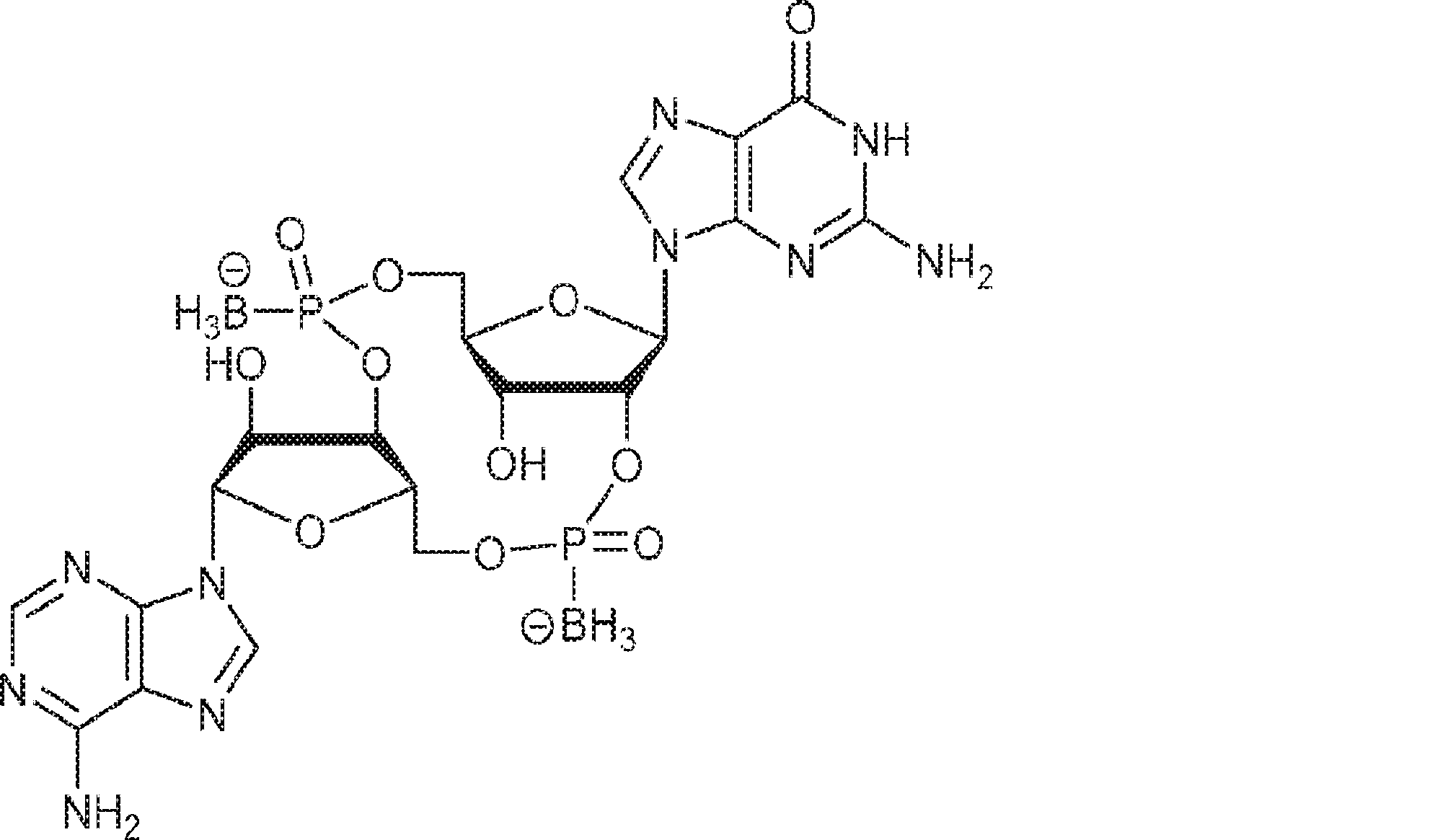
[本発明1023]
式:

[本発明1024]
式:

[本発明1025]
式:

[本発明1026]
式:

[本発明1027]
式:

[本発明1028]
式:
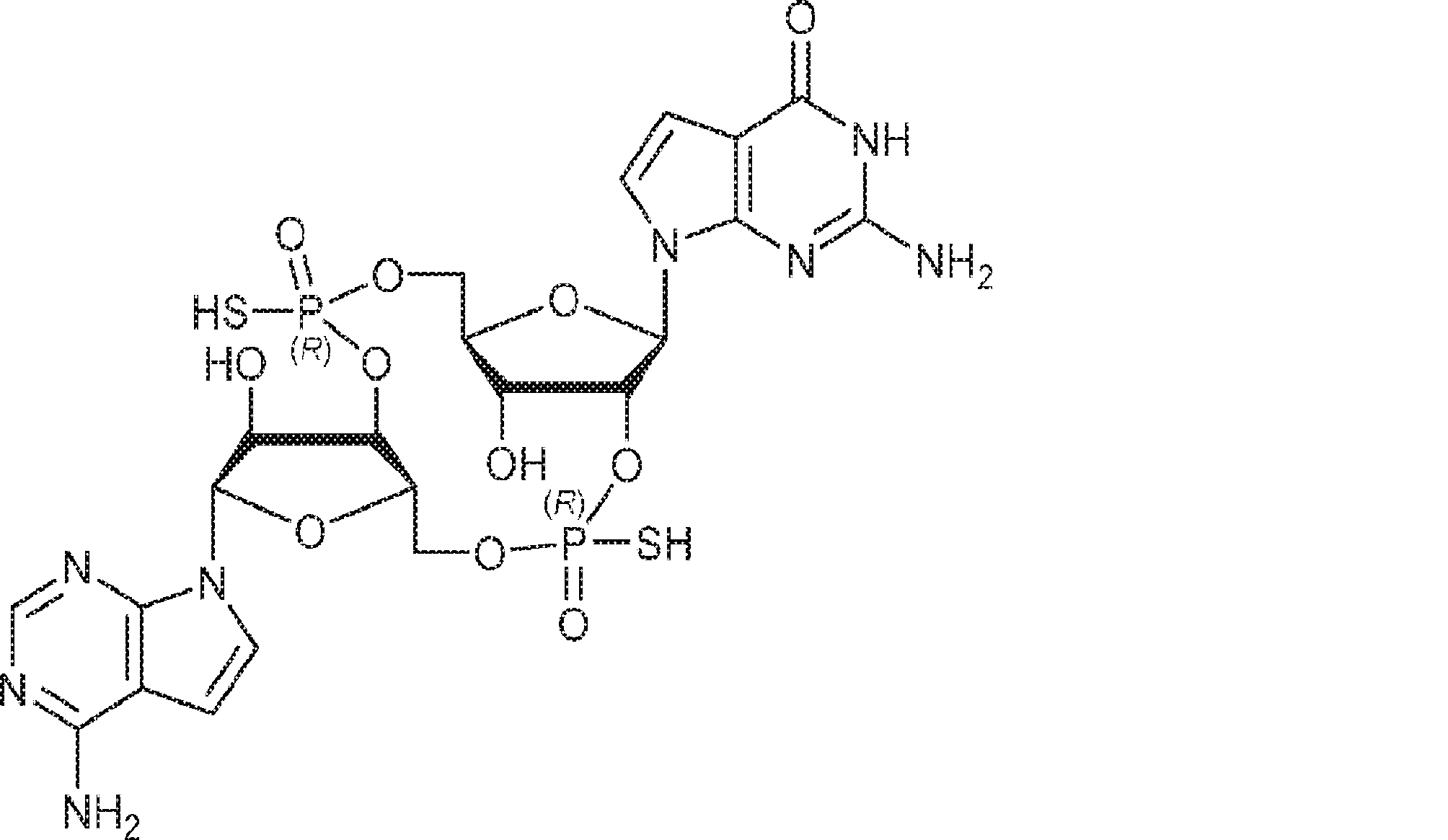
[本発明1029]
式:

[本発明1030]
式:
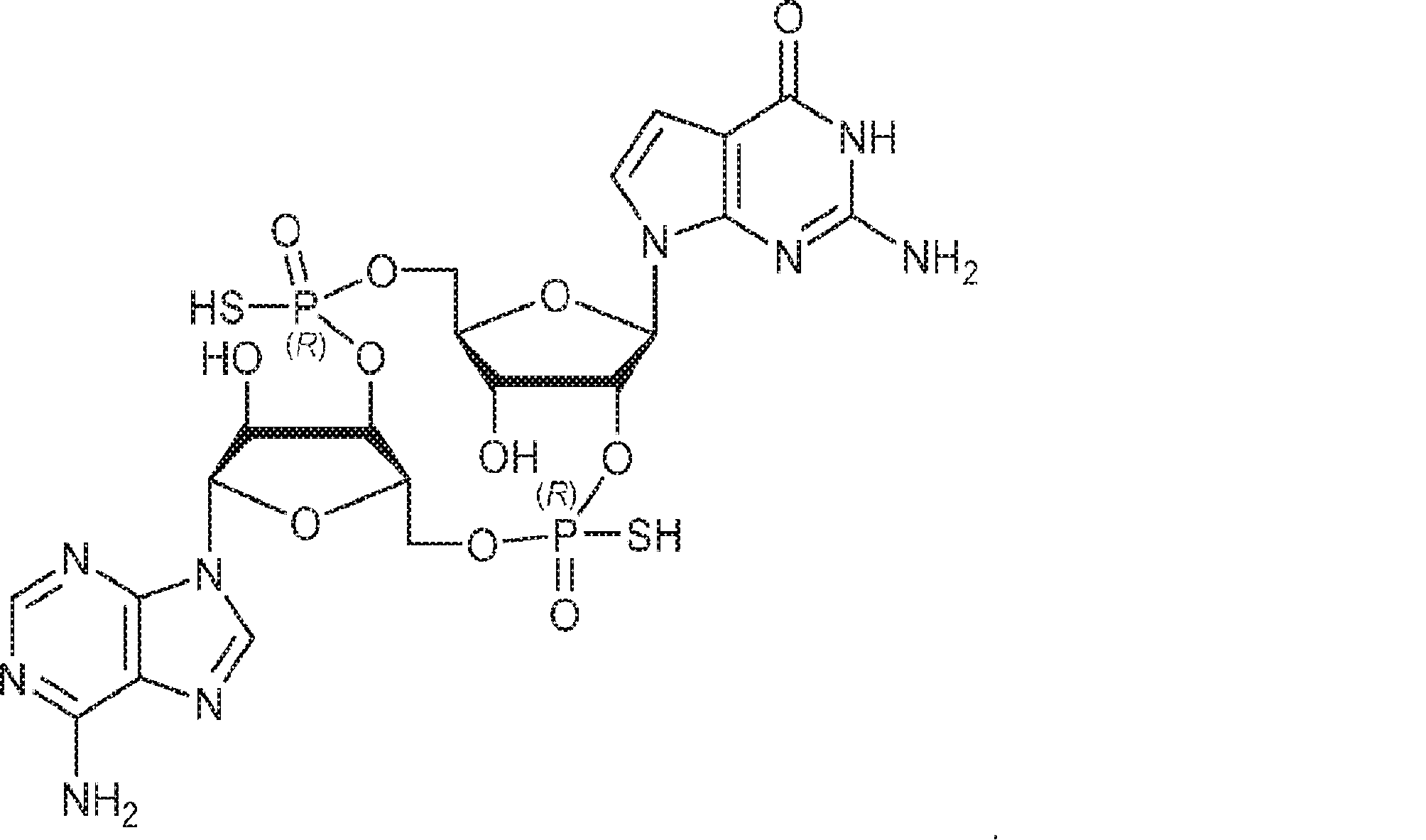
[本発明1031]
式:
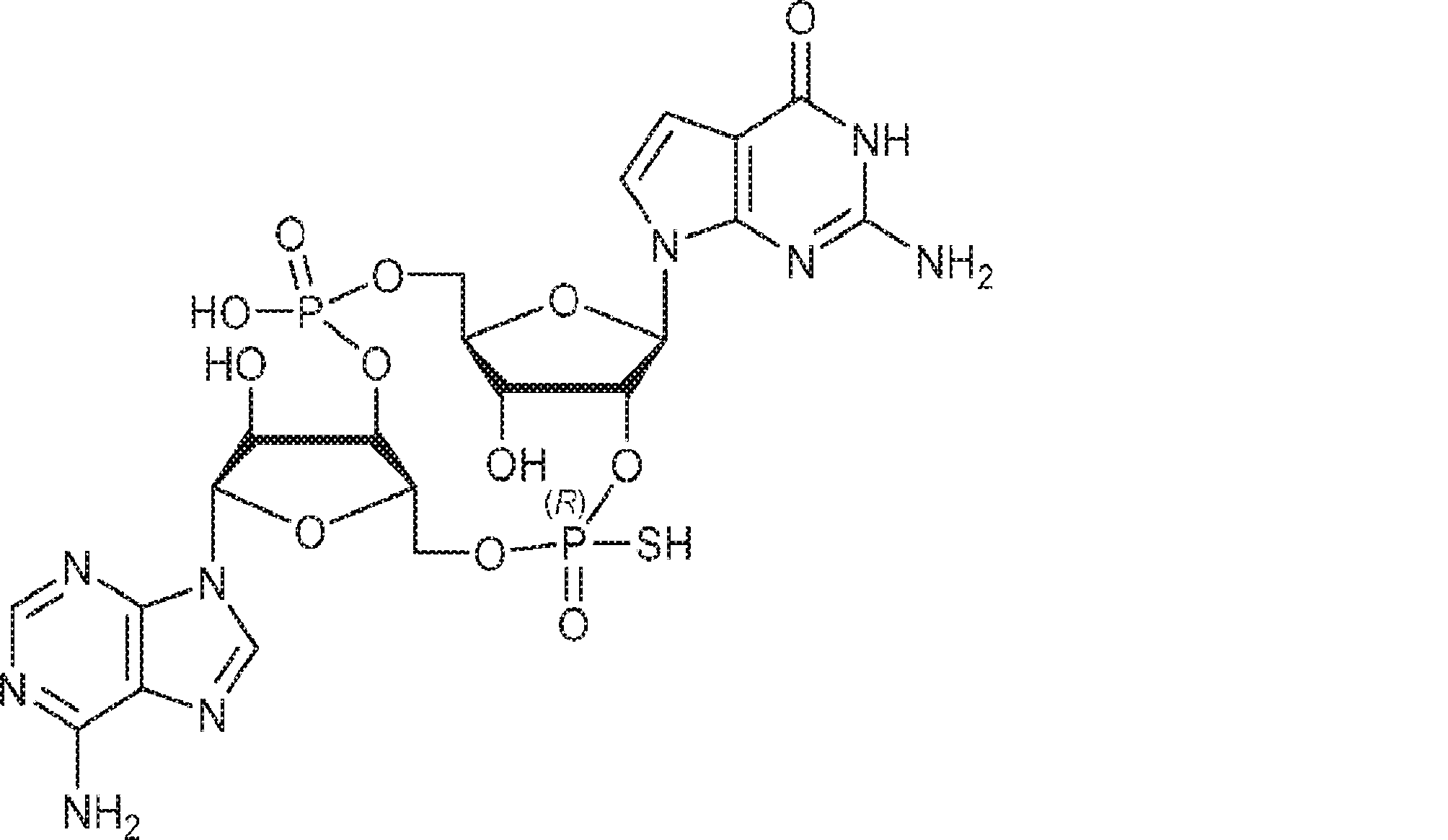
[本発明1032]
式:

[本発明1033]
式:

[本発明1034]
式:
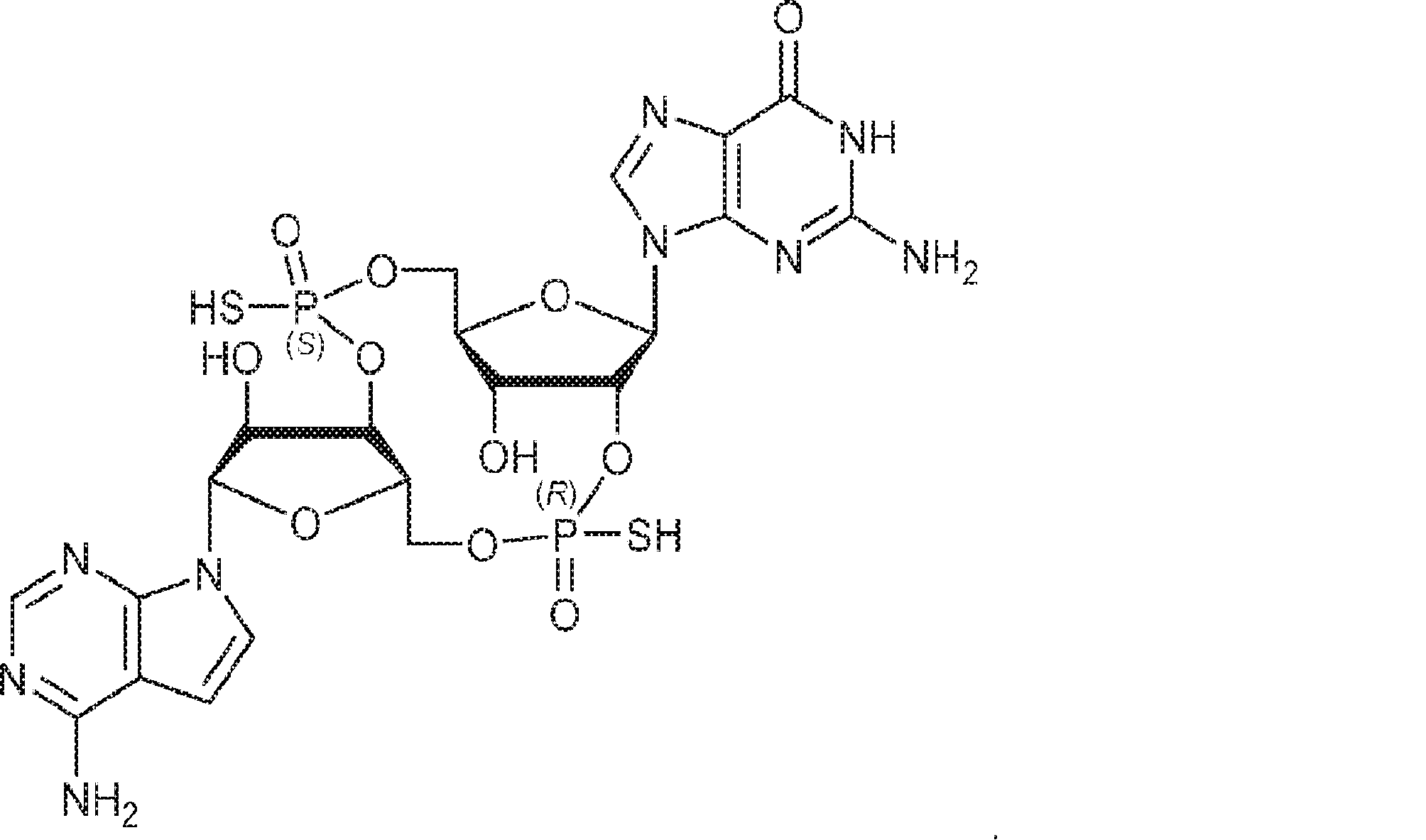
[本発明1035]
式:

[本発明1036]
式:

[本発明1037]
式:

[本発明1038]
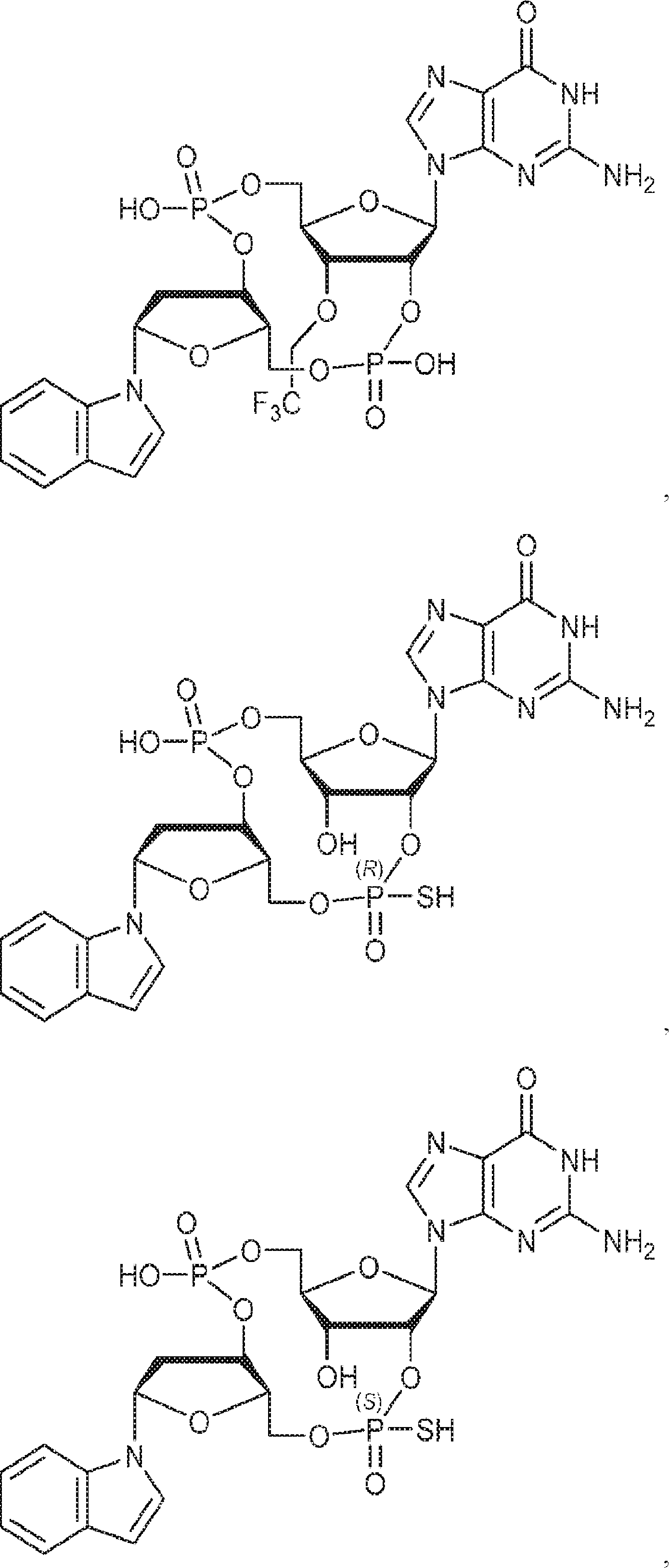
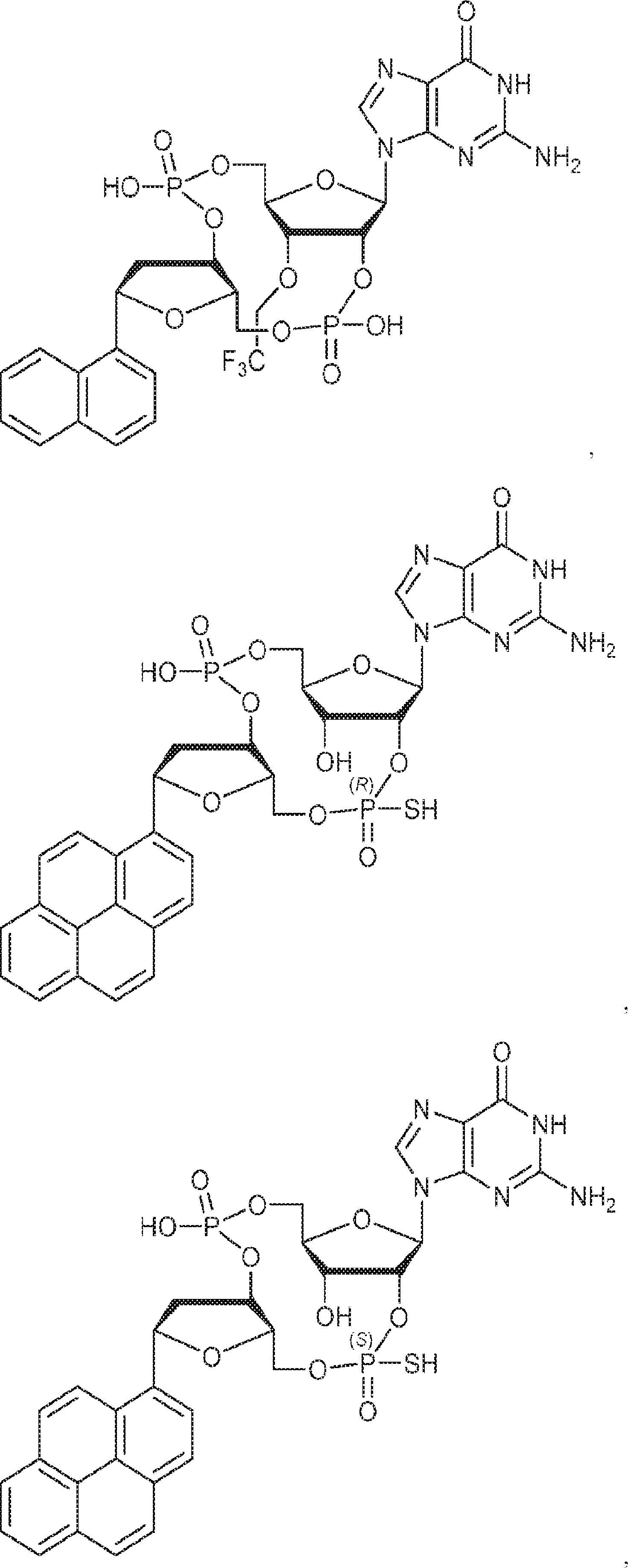


[本発明1039]
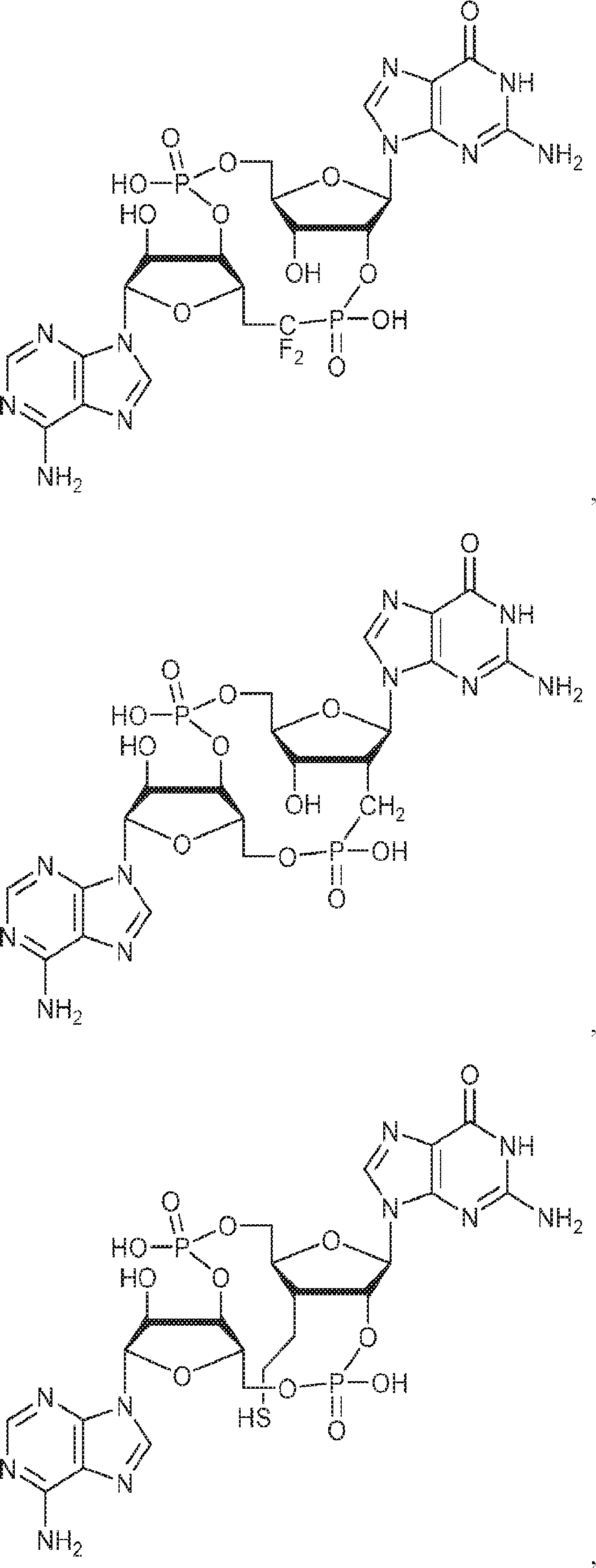


[本発明1040]
式:

[本発明1041]
式:
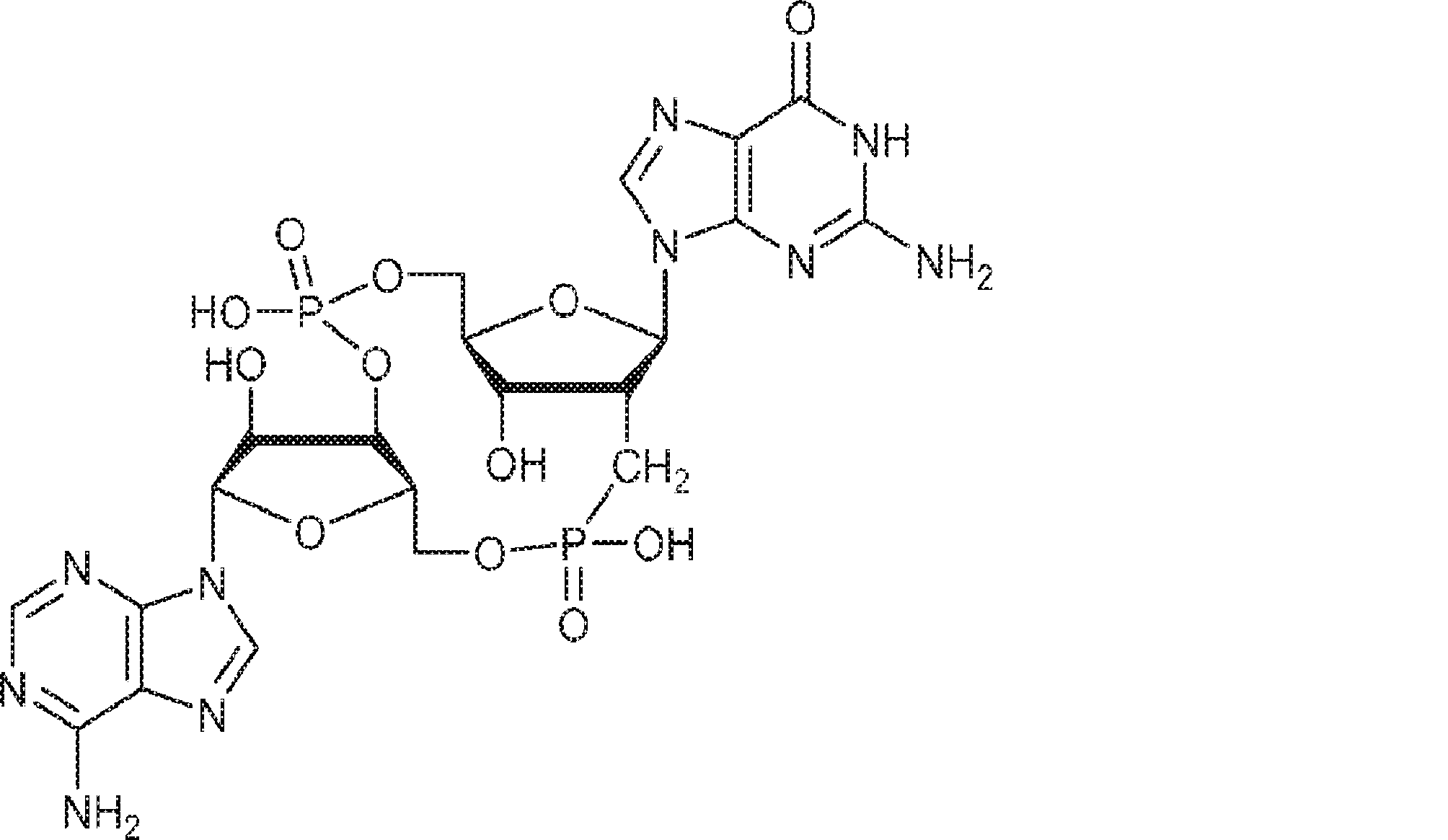
[本発明1042]
式:
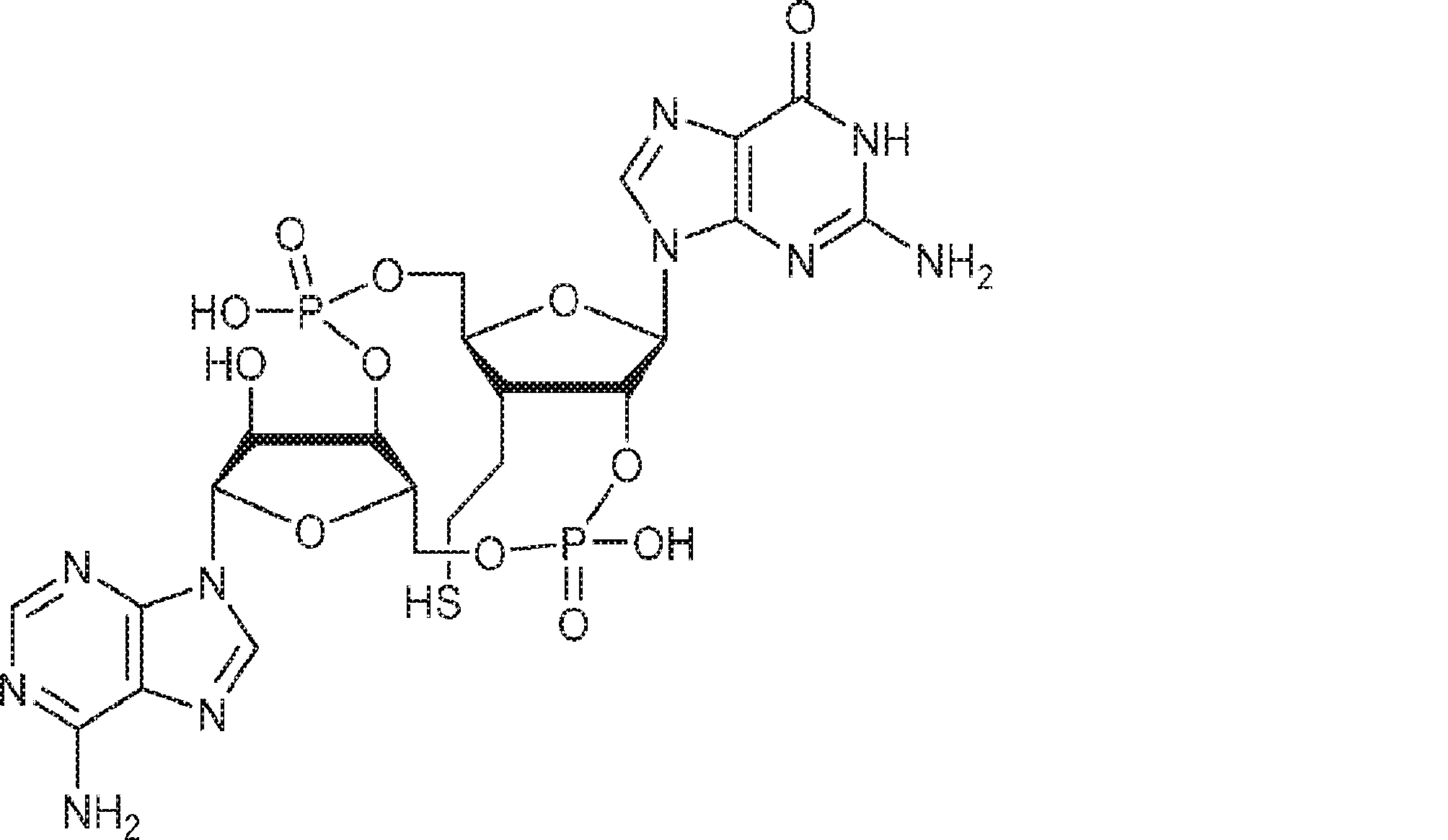
[本発明1043]
式:

[本発明1044]
式:

[本発明1045]
式:

[本発明1046]
式:

[本発明1047]
式:
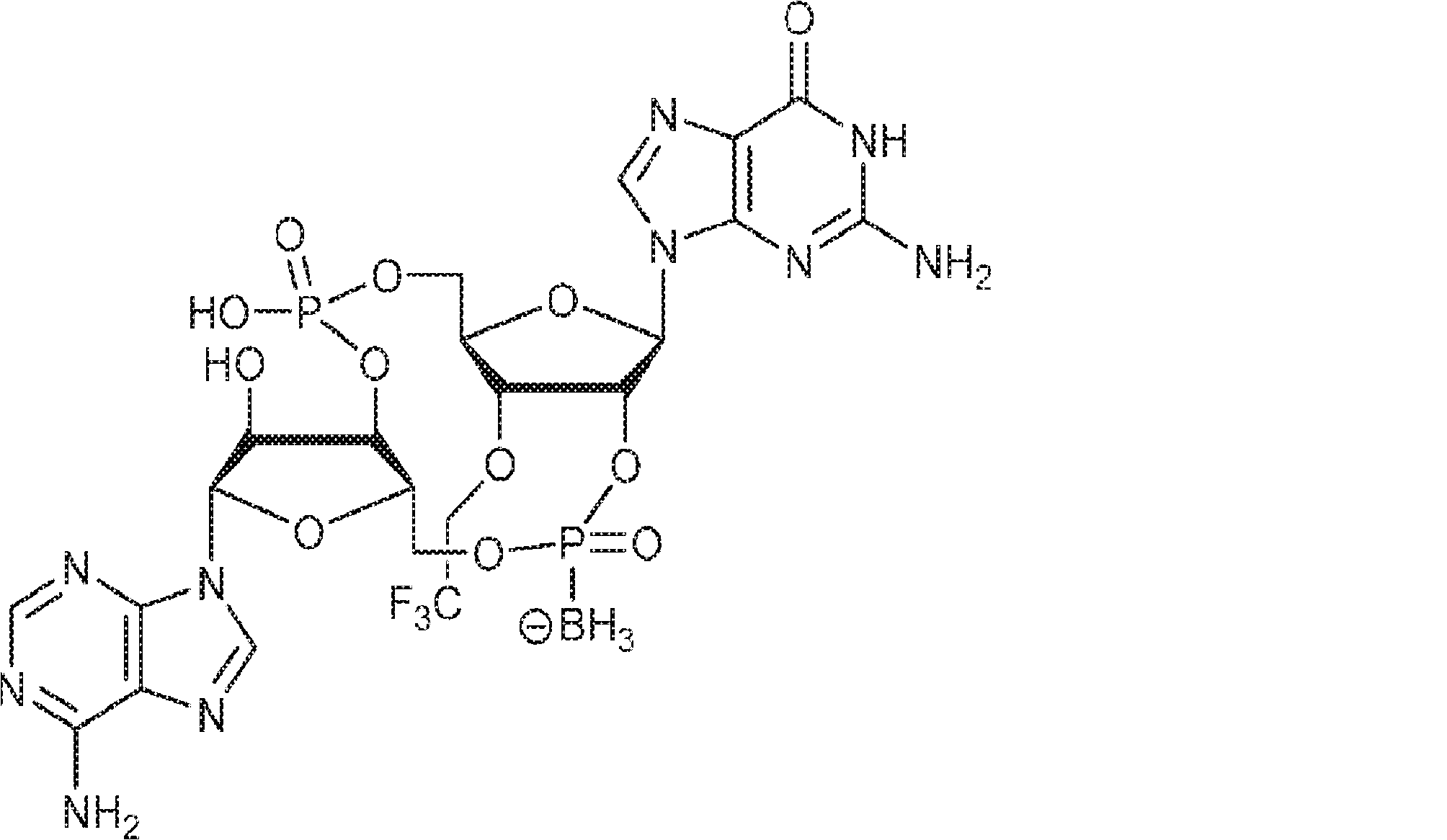
[本発明1048]
式:
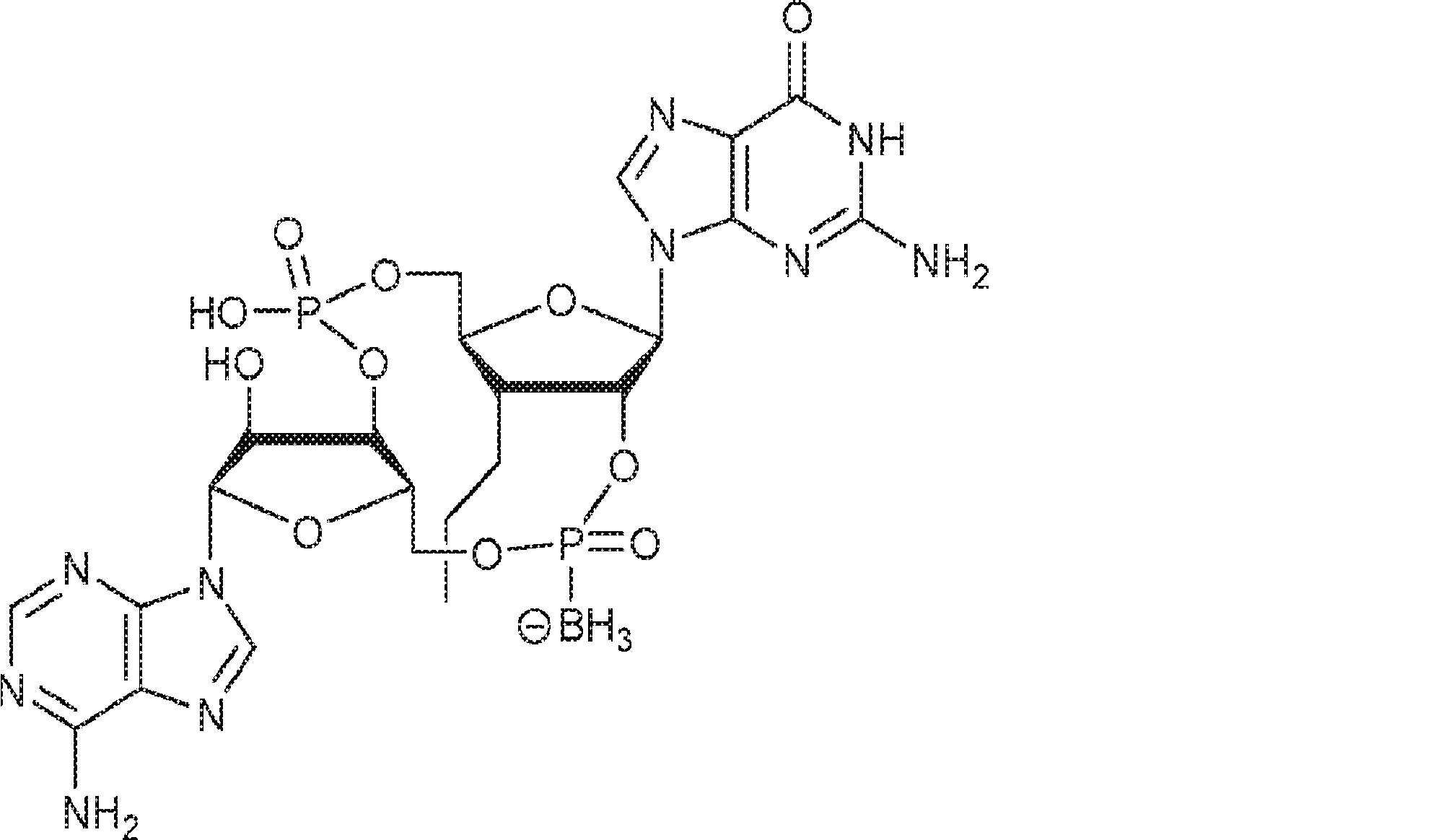
[本発明1049]
式:

[本発明1050]
式:

[本発明1051]
式:

[本発明1052]
式:

[本発明1053]
式:

[本発明1054]
式:

[本発明1055]
式Iの化合物またはその薬学的に許容される塩を含む、薬学的組成物。
[本発明1056]
ナノ粒子または別の送達ビヒクルを含む薬学的製剤中の式Iの化合物である、薬学的組成物。
[本発明1057]
式Iの化合物と少なくとも1つのさらなる治療用物質との組み合わせである、薬学的組成物。
[本発明1058]
前記さらなる治療用物質が、PD-1に対する、PD-L1に対する、またはCTLA-4に対する抗体を含むがそれらに限定されない免疫チェックポイント阻害物質である、本発明1057の薬学的組成物。
[本発明1059]
前記さらなる治療用物質が、体幹部定位放射線治療(SBRT)を含む放射線である、本発明1057の薬学的組成物。
[本発明1060]
前記さらなる治療用物質が、化学療法剤と治療用抗体とを含む抗悪性腫瘍剤である、本発明1057の薬学的組成物。
[本発明1061]
がん細胞の免疫原(腫瘍抗原)または感染性病原体の免疫原を有する薬学的製剤中の式Iの化合物である、薬学的組成物。
[本発明1062]
1つまたは複数の薬学的に許容される担体、希釈剤、および賦形剤をさらに含む、本発明1057の薬学的組成物。
[本発明1063]
それを必要とする患者に、式Iの化合物またはその薬学的に許容される塩の有効量を投与する段階を含む、免疫応答を誘導または促進する方法。
[本発明1064]
それを必要とする患者に、本発明1063の薬学的組成物の有効量を投与する段階を含む、免疫応答を誘導または促進する方法。
[本発明1065]
それを必要とする患者に、式Iの化合物またはその薬学的に許容される塩の有効量を投与する段階を含む、STING依存性免疫応答を誘導または促進する方法。
[本発明1066]
それを必要とする患者に、本発明1063の薬学的組成物の有効量を投与する段階を含む、STING依存性免疫応答を誘導または促進する方法。
[本発明1067]
それを必要とする患者に、式Iの化合物またはその薬学的に許容される塩の治療有効量を投与する段階を含む、がんを処置する方法。
[本発明1068]
それを必要とする患者に、本発明1067の薬学的組成物の治療有効量を投与する段階を含む、がんを処置する方法。
[本発明1069]
それを必要とする患者に、PD-1に対する、PD-L1に対する、またはCTLA-4に対する抗体を含むがそれらに限定されない免疫チェックポイント抗体と組み合わせて式Iの化合物またはその薬学的に許容される塩を含む薬学的組成物の治療有効量を投与する段階を含む、がんを処置する方法。
[本発明1070]
それを必要とする患者に、体幹部定位放射線治療(SBRT)を含む放射線と組み合わせて式Iの化合物またはその薬学的に許容される塩を含む薬学的組成物の治療有効量を投与する段階を含む、がんを処置する方法。
[本発明1071]
それを必要とする患者に、化学療法剤と治療用抗体とを含む抗悪性腫瘍剤と組み合わせて式Iの化合物またはその薬学的に許容される塩を含む薬学的組成物の治療有効量を投与する段階を含む、がんを処置する方法。
[本発明1072]
それを必要とする患者に、式Iの化合物またはその薬学的に許容される塩の治療有効量を投与する段階を含む、感染性疾患を処置する方法。
[本発明1073]
それを必要とする患者に、本発明1072の薬学的組成物の治療有効量を投与する段階を含む、感染性疾患を処置する方法。
[本発明1074]
それを必要とする患者に、式Iの化合物またはその薬学的に許容される塩の治療有効量を投与する段階を含む、免疫障害を処置する方法。
[本発明1075]
それを必要とする患者に、本発明1074の薬学的組成物の治療有効量を投与する段階を含む、免疫障害を処置する方法。
[本発明1076]
疾患の処置または予防における使用のための、抗原または抗原組成物と式Iの化合物またはその薬学的に許容される塩とを含むワクチン組成物。
[本発明1077]
疾患の処置用または予防用の抗原または抗原組成物を含むワクチン組成物の製造のための、式Iの化合物またはその薬学的に許容される塩の使用。
[本発明1078]
疾患に罹患しているかまたは罹患しやすい患者に、抗原または抗原組成物と式Iの化合物またはその薬学的に許容される塩とを含むワクチン組成物を投与する段階を含む、該疾患を処置または予防する方法。
[本発明1079]
それを必要とする患者に、式Iの化合物またはその薬学的に許容される塩の治療有効量を投与する段階を含み、該患者が哺乳動物である、疾患を処置または予防する方法。
[本発明1080]
それを必要とする患者に、式Iの化合物またはその薬学的に許容される塩の治療有効量を投与する段階を含み、該患者がヒトである、疾患を処置または予防する方法。
It will be appreciated that all combinations of the above aspects / aspects and the other aspects / aspects disclosed elsewhere herein are envisioned to be a further aspect of the invention.
[Invention 1001]
Expression Ia:
During the ceremony
If a and b are 0 or 1 independently and a is 1 and b is 0 and R 5 does not exist; and a is 0 and b is 1 and R 4 does not exist. If a + b = 1;
X 1 and X 2 are independently O, S, or Se in a 5-membered ring;
L 1 starting from the carbon at the α-position with respect to X 1 and L 2 starting from the carbon at the α-position with respect to X 2 are independently -CH 2 OP (O) R 6 -O-, -CH. 2 OP (S) R 6 -O-, -C (Y 1 ) (Y 2 ) OP (O) R 6 -C (Y 3 ) (Y 4 )-, -CH 2 NHSO 2 NH-, -CH 2 NHC (O) NH-, -CH 2 NHC (S) NH-, -CH 2 NHC (NH) NH-, -CH 2 NHC (O) CH 2- , -CH 2 NHSO 2 CH 2- , -CH 2 CH 2 C (O) NH-, -CH 2 CH 2 SO 2 NH-, -CH 2 NH (3,4-dioxocyclobutene-1,2-diyl) NH-,
c is 0, 1, or 2;
d, e, and f are independently 0 or 1;
Y 1 , Y 2 , Y 3 , and Y 4 are independently H or F;
R 6 is hydroxyl, thiol, C 1-6 alkyl, one or more halogen groups, thiol group, hydroxyl group, carbonyl group, carboxyl group, carbonyloxyl group, C 1-6 alkoxy group, C 1-6 hydroxy C 1 to 6 alkyl, C 1 to 6 selectively functional groups using an alkoxy group, an amino group, a C 1 to 6 alkyl amino group, a di (C 1 to 6 alkyl) amino group, or an azido group. Alkoxy, one or more halogen groups, thiol groups, hydroxyl groups, carbonyl groups, carboxyl groups, carbonyloxyl groups, C 1-6 hydroxyalkoxy groups, amino groups, C 1-6 alkylamino groups, di (C 1- 6 Alkyl) C 1-6 alkoxy, C 3-5 alkenyl-O-, C 3-5 alkynyl-O-, oligo (ethylene glycol) selectively functionalized with an amino group or an azido group. , Poly (ethylene glycol), Borano (-BH 3- ) , or -NR 7 R 8 ;
R 7 and R 8 are independently hydrogen, C 1-6 alkyl, one or more halogen groups, thiol groups, hydroxyl groups, carbonyl groups, carboxyl groups, carbonyloxyl groups, C 1-6 alkoxy groups, C. C 1-6 alkyl, which is selectively functionalized with a 1-6 hydroxyalkoxy group, an amino group, a C 1-6 alkyl amino group, a di (C 1-6 alkyl) amino group, or an azido group. Cyclic- (C 1-6 alkyl)-, one or more halogen groups, thiol groups, hydroxyl groups, carbonyl groups, carboxyl groups, carbonyloxyl groups, C 1-6 alkoxy groups, C 1-6 hydroxyalkoxy groups, Cyclic- (C 1-6 alkyl)-, cyclic-(C 1 ) selectively functionalized with an amino group, C 1-6 alkyl amino group, or di (C 1-6 alkyl) amino group ~ 6 Oxalalkyl)-or one or more halogen groups, thiol groups, hydroxyl groups, carbonyl groups, carboxyl groups, carbonyloxyl groups, C 1-6 hydroxyalkoxy groups, amino groups, C 1-6 alkylamino groups , Or a cyclic- (C 1-6 oxaalkyl)-selectively imparted with a functional group using a di (C 1-6 alkyl) amino group;
R 1 and R 2 are independent and include the following general structures, including tautomeric forms:
g and h are independently 0 or 1;
W 1 and W 2 are independently hydrogen, halogen, hydroxyl, C 1-6 alkyl, one or more halogen groups, thiol group, hydroxyl group, carbonyl group, carboxyl group, carbonyloxyl group, C 1-6 . C 1 selectively functionalized with an alkoxy group, C 1-6 hydroxyalkoxy group, amino group, C 1-6 alkylamino group, di (C 1-6 alkyl) amino group, or azido group. ~ 6 alkyl, C 1 ~ 6 alkoxy, one or more halogen groups, thiol group, hydroxyl group, carbonyl group, carboxyl group, carbonyloxyl group, C 1 ~ 6 hydroxyalkoxy group, amino group, C 1 ~ 6 alkyl C 1-6 alkoxy, C 3-5 alkenyl-O-, C 3-5 alkynyl- selectively functionalized with an amino group, a di (C 1-6 alkyl) amino group, or an azido group. O-, oligo (ethylene glycol), poly (ethylene glycol), azide, or -NR 7 R 8 ;
Z 1 , Z 2 , Z 3 , Z 4 , Z 5 , and Z 6 are independently CH or N;
If present, Z 7 , Z 8 , Z 9 , Z 10 , and Z 11 are independently CH or N, and W 1 is CH or N;
R 3 , R 4 , and R 5 are independently hydrogen, halogen, hydroxyl, amino, C 1-6 alkyl, one or more halogen groups, thiol groups, hydroxyl groups, carbonyl groups, carboxyl groups, carbonyl oxyls. Group, C 1-6 alkoxy group, C 1-6 hydroxyalkoxy group, amino group, C 1-6 alkylamino group, di (C 1-6 alkyl) amino group, or selectively functional group using azide group C 1 to 6 alkyl, C 1 to 6 alkoxy, one or more halogen groups, thiol groups, hydroxyl groups, carbonyl groups, carboxyl groups, carbonyloxyl groups, C 1 to 6 hydroxyalkoxy groups, amino groups , C 1-6 alkylamino groups, di (C 1-6 alkyl) amino groups, or C 1-6 alkoxys selectively functionalized with azido groups, C 3-5 alkenyl-O-, C 3-5 alkynyl-O-, oligo (ethylene glycol), poly (ethylene glycol), azide, or -NR 7 R 8 ; and the compound is not 2'3'-c GAMP.
[Invention 1002]
Expression Ib:
During the ceremony
X 1 and X 2 are independently O, S, or Se;
Z 12 , Z 13 , Z 14 , Z 15 , Z 16 , and Z 17 are independently CH or N;
L 1 starting from the carbon at the α-position with respect to X 1 and L 2 starting from the carbon at the α-position with respect to X 2 are independently -CH 2 OP (O) R 6 -O-, -CH. 2 OP (S) R 6 -O-, -C (Y 1 ) (Y 2 ) OP (O) R 6 -C (Y 3 ) (Y 4 )-, -CH 2 NHSO 2 NH-, -CH 2 NHC (O) NH-, -CH 2 NHC (S) NH-, -CH 2 NHC (NH) NH-, -CH 2 NHC (O) CH 2- , -CH 2 NHSO 2 CH 2- , -CH 2 CH 2 C (O) NH-, -CH 2 CH 2 SO 2 NH-, -CH 2 NH (3,4-dioxocyclobutene-1,2-diyl) NH-,
c is 0, 1, or 2;
d, e, and f are independently 0 or 1;
Y 1 , Y 2 , Y 3 , and Y 4 are independently H or F;
R 6 is hydroxyl, thiol, C 1-6 alkyl, one or more halogen groups, thiol group, hydroxyl group, carbonyl group, carboxyl group, carbonyloxyl group, C 1-6 alkoxy group, C 1-6 hydroxy C 1 to 6 alkyl, C 1 to 6 selectively functional groups using an alkoxy group, an amino group, a C 1 to 6 alkyl amino group, a di (C 1 to 6 alkyl) amino group, or an azido group. Alkoxy, one or more halogen groups, thiol groups, hydroxyl groups, carbonyl groups, carboxyl groups, carbonyloxyl groups, C 1-6 hydroxyalkoxy groups, amino groups, C 1-6 alkylamino groups, di (C 1- 6 Alkyl) C 1-6 alkoxy, C 3-5 alkenyl-O-, C 3-5 alkynyl-O-, oligo (ethylene glycol) selectively functionalized with an amino group or an azido group. , Poly (ethylene glycol), Borano (-BH 3- ) , or -NR 7 R 8 ;
R 7 and R 8 are independently hydrogen, C 1-6 alkyl, one or more halogen groups, thiol groups, hydroxyl groups, carbonyl groups, carboxyl groups, carbonyloxyl groups, C 1-6 alkoxy groups, C. C 1-6 alkyl, which is selectively functionalized with a 1-6 hydroxyalkoxy group, an amino group, a C 1-6 alkyl amino group, a di (C 1-6 alkyl) amino group, or an azido group. Cyclic- (C 1-6 alkyl)-, one or more halogen groups, thiol groups, hydroxyl groups, carbonyl groups, carboxyl groups, carbonyloxyl groups, C 1-6 alkoxy groups, C 1-6 hydroxyalkoxy groups, Cyclic- (C 1-6 alkyl)-, cyclic-(C 1 ) selectively functionalized with an amino group, C 1-6 alkyl amino group, or di (C 1-6 alkyl) amino group ~ 6 Oxalalkyl)-or one or more halogen groups, thiol groups, hydroxyl groups, carbonyl groups, carboxyl groups, carbonyloxyl groups, C 1-6 hydroxyalkoxy groups, amino groups, C 1-6 alkylamino groups , Or a cyclic- (C 1-6 oxaalkyl)-selectively imparted with a functional group using a di (C 1-6 alkyl) amino group;
R 3 and R 4 are independently hydrogen, halogen, hydroxyl, amino, C 1-6 alkyl, one or more halogen groups, thiol groups, hydroxyl groups, carbonyl groups, carboxyl groups, carbonyloxyl groups, C 1 A functional group was selectively imparted using a ~ 6 alkoxy group, a C 1 to 6 hydroxyalkoxy group, an amino group, a C 1 to 6 alkylamino group, a di (C 1 to 6 alkyl) amino group, or an azido group. C 1 to 6 alkyl, C 1 to 6 alkoxy, one or more halogen groups, thiol group, hydroxyl group, carbonyl group, carboxyl group, carbonyloxyl group, C 1 to 6 hydroxyalkoxy group, amino group, C 1 to C 1-6 alkoxy, C 3-5 alkenyl-O-, C 3-5 selectively functionalized with 6 alkylamino groups, di (C 1-6 alkyl) amino groups, or azido groups. It is an alkynyl-O-, oligo (ethylene glycol), poly (ethylene glycol), azide, or -NR 7 R 8 ; and the compound is not a previously disclosed compound containing 2'3'-c GAMP.
[Invention 1003]
Expression Ic:
During the ceremony
Z 12 , Z 13 , Z 14 , Z 15 , Z 16 , and Z 17 are independently CH or N;
R 3 and R 4 are independently hydrogen, halogen, hydroxyl, amino, C 1-6 alkyl, one or more halogen groups, thiol groups, hydroxyl groups, carbonyl groups, carboxyl groups, carbonyloxyl groups, C 1 A functional group was selectively imparted using a ~ 6 alkoxy group, a C 1 to 6 hydroxyalkoxy group, an amino group, a C 1 to 6 alkylamino group, a di (C 1 to 6 alkyl) amino group, or an azido group. C 1 to 6 alkyl, C 1 to 6 alkoxy, one or more halogen groups, thiol group, hydroxyl group, carbonyl group, carboxyl group, carbonyloxyl group, C 1 to 6 hydroxyalkoxy group, amino group, C 1 to 6 Alkylamino group, di (C 1-6 alkyl) amino group, or C 1-6 alkoxy selectively functionalized with azido group, C 3-5 alkenyl-O-, C 3-5 Alkinyl-O-, oligo (ethylene glycol), poly (ethylene glycol), azide, or -NR 7 R 8 ;
R 7 and R 8 are independently hydrogen, C 1-6 alkyl, one or more halogen groups, thiol groups, hydroxyl groups, carbonyl groups, carboxyl groups, carbonyloxyl groups, C 1-6 alkoxy groups, C. C 1-6 alkyl, which is selectively functionalized with a 1-6 hydroxyalkoxy group, an amino group, a C 1-6 alkyl amino group, a di (C 1-6 alkyl) amino group, or an azido group. Cyclic- (C 1-6 alkyl)-, one or more halogen groups, thiol groups, hydroxyl groups, carbonyl groups, carboxyl groups, carbonyloxyl groups, C 1-6 alkoxy groups, C 1-6 hydroxyalkoxy groups, Cyclic- (C 1-6 alkyl)-, cyclic-(C 1 ) selectively functionalized with an amino group, C 1-6 alkyl amino group, or di (C 1-6 alkyl) amino group ~ 6 Oxalalkyl)-or one or more halogen groups, thiol groups, hydroxyl groups, carbonyl groups, carboxyl groups, carbonyloxyl groups, C 1-6 hydroxyalkoxy groups, amino groups, C 1-6 alkylamino groups , Or a cyclic- (C 1-6 oxaalkyl)-selectively imparted with a functional group using a di (C 1-6 alkyl) amino group;
R 9 and R 10 are independently hydroxyl, thiol, C 1-6 alkyl, one or more halogen groups, thiol groups, hydroxyl groups, carbonyl groups, carboxyl groups, carbonyloxyl groups, C 1-6 alkoxy groups. , C 1 to 6 hydroxyalkoxy group, amino group, C 1 to 6 alkylamino group, di (C 1 to 6 alkyl) amino group, or C 1 to 6 selectively functionalized using an azido group. Alkyl, C 1-6 alkoxy, one or more halogen groups, thiol groups, hydroxyl groups, carbonyl groups, carboxyl groups, carbonyloxyl groups, C 1-6 hydroxyalkoxy groups, amino groups, C 1-6 alkylamino groups , C 1-6 alkoxy, C 3-5 alkenyl-O-, C 3-5 alkynyl-O-, selectively functionalized with a di (C 1-6 alkyl) amino group or an azido group. , Oligo (ethylene glycol), Poly (ethylene glycol), Borano (-BH 3- ) , or -NR 7 R 8 ;
Oxygen atoms in one or both tetrahydrofuranyl rings of formula Ic may be replaced with sulfur or selenium atoms; and the compound is not a 2'3'-c GAMP.
[Invention 1004]
Expression Id:
During the ceremony
X 1 and X 2 are independently O, S, or Se;
L 1 starting from the carbon at the α-position with respect to X 1 and L 2 starting from the carbon at the α-position with respect to X 2 are independently -CH 2 OP (O) R 6 -O-, -CH. 2 OP (S) R 6 -O-, -C (Y 1 ) (Y 2 ) OP (O) R 6 -C (Y 3 ) (Y 4 )-, -CH 2 NHSO 2 NH-, -CH 2 NHC (O) NH-, -CH 2 NHC (S) NH-, -CH 2 NHC (NH) NH-, -CH 2 NHC (O) CH 2- , -CH 2 NHSO 2 CH 2- , -CH 2 CH 2 C (O) NH-, -CH 2 CH 2 SO 2 NH-, -CH 2 NH (3,4-dioxocyclobutene-1,2-diyl) NH-,
c is 0, 1, or 2;
d, e, and f are independently 0 or 1;
Y 1 , Y 2 , Y 3 , and Y 4 are independently H or F;
R 6 is hydroxyl, thiol, C 1-6 alkyl, one or more halogen groups, thiol group, hydroxyl group, carbonyl group, carboxyl group, carbonyloxyl group, C 1-6 alkoxy group, C 1-6 hydroxy C 1 to 6 alkyl, C 1 to 6 selectively functional groups using an alkoxy group, an amino group, a C 1 to 6 alkyl amino group, a di (C 1 to 6 alkyl) amino group, or an azido group. Alkoxy, one or more halogen groups, thiol groups, hydroxyl groups, carbonyl groups, carboxyl groups, carbonyloxyl groups, C 1-6 hydroxyalkoxy groups, amino groups, C 1-6 alkylamino groups, di (C 1- 6 Alkyl) C 1-6 alkoxy, C 3-5 alkenyl-O-, C 3-5 alkynyl-O-, oligo (ethylene glycol) selectively functionalized with an amino group or an azido group. , Poly (ethylene glycol), Borano (-BH 3- ) , or -NR 7 R 8 ;
R 7 and R 8 are independently hydrogen, C 1-6 alkyl, one or more halogen groups, thiol groups, hydroxyl groups, carbonyl groups, carboxyl groups, carbonyloxyl groups, C 1-6 alkoxy groups, C. C 1-6 alkyl, which is selectively functionalized with a 1-6 hydroxyalkoxy group, an amino group, a C 1-6 alkyl amino group, a di (C 1-6 alkyl) amino group, or an azido group. Cyclic- (C 1-6 alkyl)-, one or more halogen groups, thiol groups, hydroxyl groups, carbonyl groups, carboxyl groups, carbonyloxyl groups, C 1-6 alkoxy groups, C 1-6 hydroxyalkoxy groups, Cyclic- (C 1-6 alkyl)-, cyclic-(C 1 ) selectively functionalized with an amino group, C 1-6 alkyl amino group, or di (C 1-6 alkyl) amino group ~ 6 Oxalalkyl)-or one or more halogen groups, thiol groups, hydroxyl groups, carbonyl groups, carboxyl groups, carbonyloxyl groups, C 1-6 hydroxyalkoxy groups, amino groups, C 1-6 alkylamino groups , Or a cyclic- (C 1-6 oxaalkyl)-selectively imparted with a functional group using a di (C 1-6 alkyl) amino group;
R 3 and R 4 are independently hydrogen, halogen, hydroxyl, amino, C 1-6 alkyl, one or more halogen groups, thiol groups, hydroxyl groups, carbonyl groups, carboxyl groups, carbonyloxyl groups, C 1 A functional group was selectively imparted using a ~ 6 alkoxy group, a C 1 to 6 hydroxyalkoxy group, an amino group, a C 1 to 6 alkylamino group, a di (C 1 to 6 alkyl) amino group, or an azido group. C 1 to 6 alkyl, C 1 to 6 alkoxy, one or more halogen groups, thiol group, hydroxyl group, carbonyl group, carboxyl group, carbonyloxyl group, C 1 to 6 hydroxyalkoxy group, amino group, C 1 to 6 Alkylamino group, di (C 1-6 alkyl) amino group, or C 1-6 alkoxy selectively functionalized with azido group, C 3-5 alkenyl-O-, C 3-5 Alkinyl-O-, oligo (ethylene glycol), poly (ethylene glycol), azide, or -NR 7 R 8 ;
R 11 and R 12 are independent,
Z 12 , Z 13 , Z 14 , Z 15 , Z 16 , Z 17 , Z 18 , Z 19 , Z 20 , Z 21 , Z 22 , Z 23 , Z 24 , Z 25 , Z 26 , Z 27 , Z 28 , Z 29 , Z 30 , Z 31 , Z 32 , Z 33 , Z 34 , Z 35 , Z 36 , and Z 37 are independently CH or N; and
W 3 , W 4 , W 5 , W 6 , W 7 , W 8 and W 9 are independently hydrogen, halogen, hydroxyl, C 1-6 alkyl, one or more halogen groups, thiol groups, hydroxyl. Group, carbonyl group, carboxyl group, carbonyloxyl group, C 1-6 alkoxy group, C 1-6 hydroxyalkoxy group, amino group, C 1-6 alkylamino group, di (C 1-6 alkyl) amino group, or C 1-6 alkyl, C 1-6 alkoxy, one or more halogen groups, thiol groups, hydroxyl groups, carbonyl groups, carboxyl groups, carbonyloxyl groups, selectively functionalized with azido groups, C 1 to 6 hydroxyalkoxy group selectively added with a functional group using a C 1 to 6 hydroxyalkoxy group, an amino group, a C 1 to 6 alkyl amino group, a di (C 1 to 6 alkyl) amino group, or an azido group. , C 3-5 alkenyl-O-, C 3-5 alkynyl-O-, oligo (ethylene glycol), poly (ethylene glycol), azide, or -NR 7 R 8 .
[Invention 1005]
Expression Ie:
During the ceremony
X 3 , X 4 , X 5 , and X 6 are independently O, NH, CH 2 , CHF, or CF 2 ;
R 13 and R 14 are independent,
Z 12 , Z 13 , Z 14 , Z 15 , Z 16 , Z 17 , Z 18 , Z 19 , Z 20 , Z 21 , Z 22 , Z 23 , Z 24 , Z 25 , Z 26 , Z 27 , and Z 28 are CH or N independently; and
W 3 , W 4 , W 5 , W 6 and W 7 are independently hydrogen, halogen, hydroxyl, C 1-6 alkyl, one or more halogen groups, thiol groups, hydroxyl groups, carbonyl groups, carboxyls. Selected using a group, a carbonyloxyl group, a C 1-6 alkoxy group, a C 1-6 hydroxyalkoxy group, an amino group, a C 1-6 alkylamino group, a di (C 1-6 alkyl) amino group, or an azido group. C 1-6 alkyl, C 1-6 alkoxy, one or more halogen groups, thiol group, hydroxyl group, carbonyl group, carboxyl group, carbonyloxyl group, C 1-6 hydroxyalkoxy C 1-6 alkoxy, C 3-5 alkenyl selectively functionalized with groups, amino groups, C 1-6 alkyl amino groups, di (C 1-6 alkyl) amino groups, or azido groups -O-, C 3-5 alkynyl-O-, oligo (ethylene glycol), poly (ethylene glycol), azide, or -NR 7 R 8 ;
R 7 and R 8 are independently hydrogen, C 1-6 alkyl, one or more halogen groups, thiol groups, hydroxyl groups, carbonyl groups, carboxyl groups, carbonyloxyl groups, C 1-6 alkoxy groups, C. C 1-6 alkyl, which is selectively functionalized with a 1-6 hydroxyalkoxy group, an amino group, a C 1-6 alkyl amino group, a di (C 1-6 alkyl) amino group, or an azido group. Cyclic- (C 1-6 alkyl)-, one or more halogen groups, thiol groups, hydroxyl groups, carbonyl groups, carboxyl groups, carbonyloxyl groups, C 1-6 alkoxy groups, C 1-6 hydroxyalkoxy groups, Cyclic- (C 1-6 alkyl)-, cyclic-(C 1 ) selectively functionalized with an amino group, C 1-6 alkyl amino group, or di (C 1-6 alkyl) amino group ~ 6 Oxalalkyl)-or one or more halogen groups, thiol groups, hydroxyl groups, carbonyl groups, carboxyl groups, carbonyloxyl groups, C 1-6 hydroxyalkoxy groups, amino groups, C 1-6 alkylamino groups , Or a cyclic- (C 1-6 oxaalkyl)-selectively imparted with a functional group using a di (C 1-6 alkyl) amino group;
R 3 and R 4 are independently hydrogen, halogen, hydroxyl, amino, C 1-6 alkyl, one or more halogen groups, thiol groups, hydroxyl groups, carbonyl groups, carboxyl groups, carbonyloxyl groups, C 1 A functional group was selectively imparted using a ~ 6 alkoxy group, a C 1 to 6 hydroxyalkoxy group, an amino group, a C 1 to 6 alkylamino group, a di (C 1 to 6 alkyl) amino group, or an azido group. C 1 to 6 alkyl, C 1 to 6 alkoxy, one or more halogen groups, thiol group, hydroxyl group, carbonyl group, carboxyl group, carbonyloxyl group, C 1 to 6 hydroxyalkoxy group, amino group, C 1 to 6 Alkylamino group, di (C 1-6 alkyl) amino group, or C 1-6 alkoxy selectively functionalized with azido group, C 3-5 alkenyl-O-, C 3-5 Alkinyl-O-, oligo (ethylene glycol), poly (ethylene glycol), azide, or -NR 7 R 8 ;
R 15 and R 16 are independently hydroxyl, thiol, methoxy, ethoxy, amino, N-methylamino, N, N-dimethylamino, N-ethylamino, N, N-diethylamino, N-morpholino, or borano ( -BH 3- ) and;
Oxygen atoms in one or both tetrahydrofuranyl rings of Formula Ie may be replaced with sulfur or selenium atoms; and the compound is not 2'3'-c GAMP.
[Invention 1006]
Expression If:
During the ceremony
X 1 and X 2 are independently O, S, or Se;
Z 12 , Z 13 , Z 14 , Z 15 , Z 16 , and Z 17 are independently CH or N;
L 1 starting from the carbon at the α-position with respect to X 1 and L 2 starting from the carbon at the α-position with respect to X 2 are independently -CH 2 OP (O) R 6 -O-, -CH. 2 OP (S) R 6 -O-, -C (Y 1 ) (Y 2 ) OP (O) R 6 -C (Y 3 ) (Y 4 )-, -CH 2 NHSO 2 NH-, -CH 2 NHC (O) NH-, -CH 2 NHC (S) NH-, -CH 2 NHC (NH) NH-, -CH 2 NHC (O) CH 2- , -CH 2 NHSO 2 CH 2- , -CH 2 CH 2 C (O) NH-, -CH 2 CH 2 SO 2 NH-, -CH 2 NH (3,4-dioxocyclobutene-1,2-diyl) NH-,
c is 0, 1, or 2;
d, e, and f are independently 0 or 1;
Y 1 , Y 2 , Y 3 , and Y 4 are independently H or F;
R 6 is hydroxyl, thiol, C 1-6 alkyl, one or more halogen groups, thiol group, hydroxyl group, carbonyl group, carboxyl group, carbonyloxyl group, C 1-6 alkoxy group, C 1-6 hydroxy C 1 to 6 alkyl, C 1 to 6 selectively functional groups using an alkoxy group, an amino group, a C 1 to 6 alkyl amino group, a di (C 1 to 6 alkyl) amino group, or an azido group. Alkoxy, one or more halogen groups, thiol groups, hydroxyl groups, carbonyl groups, carboxyl groups, carbonyloxyl groups, C 1-6 hydroxyalkoxy groups, amino groups, C 1-6 alkylamino groups, di (C 1- 6 Alkyl) C 1-6 alkoxy, C 3-5 alkenyl-O-, C 3-5 alkynyl-O-, oligo (ethylene glycol) selectively functionalized with an amino group or an azido group. , Poly (ethylene glycol), Borano (-BH 3- ) , or -NR 7 R 8 ;
R 7 and R 8 are independently hydrogen, C 1-6 alkyl, one or more halogen groups, thiol groups, hydroxyl groups, carbonyl groups, carboxyl groups, carbonyloxyl groups, C 1-6 alkoxy groups, C. C 1-6 alkyl, which is selectively functionalized with a 1-6 hydroxyalkoxy group, an amino group, a C 1-6 alkyl amino group, a di (C 1-6 alkyl) amino group, or an azido group. Cyclic- (C 1-6 alkyl)-, one or more halogen groups, thiol groups, hydroxyl groups, carbonyl groups, carboxyl groups, carbonyloxyl groups, C 1-6 alkoxy groups, C 1-6 hydroxyalkoxy groups, Cyclic- (C 1-6 alkyl)-, cyclic-(C 1 ) selectively functionalized with an amino group, C 1-6 alkyl amino group, or di (C 1-6 alkyl) amino group ~ 6 Oxalalkyl)-or one or more halogen groups, thiol groups, hydroxyl groups, carbonyl groups, carboxyl groups, carbonyloxyl groups, C 1-6 hydroxyalkoxy groups, amino groups, C 1-6 alkylamino groups , Or a cyclic- (C 1-6 oxaalkyl)-selectively imparted with a functional group using a di (C 1-6 alkyl) amino group;
R 3 and R 5 are independently hydrogen, halogen, hydroxyl, amino, C 1-6 alkyl, one or more halogen groups, thiol groups, hydroxyl groups, carbonyl groups, carboxyl groups, carbonyloxyl groups, C 1 A functional group was selectively imparted using a ~ 6 alkoxy group, a C 1 to 6 hydroxyalkoxy group, an amino group, a C 1 to 6 alkylamino group, a di (C 1 to 6 alkyl) amino group, or an azido group. C 1 to 6 alkyl, C 1 to 6 alkoxy, one or more halogen groups, thiol group, hydroxyl group, carbonyl group, carboxyl group, carbonyloxyl group, C 1 to 6 hydroxyalkoxy group, amino group, C 1 to 6 Alkylamino group, di (C 1-6 alkyl) amino group, or C 1-6 alkoxy selectively functionalized with azido group, C 3-5 alkenyl-O-, C 3-5 Alkinyl-O-, oligo (ethylene glycol), poly (ethylene glycol), azide, or -NR 7 R 8 ; and the compound is not 2'2'-c GAMP.
[Invention 1007]
Expression Ig:
During the ceremony
Z 12 , Z 13 , Z 14 , Z 15 , Z 16 , and Z 17 are independently CH or N;
R 3 and R 5 are independently hydrogen, halogen, hydroxyl, amino, C 1-6 alkyl, one or more halogen groups, thiol groups, hydroxyl groups, carbonyl groups, carboxyl groups, carbonyloxyl groups, C 1 A functional group was selectively imparted using a ~ 6 alkoxy group, a C 1 to 6 hydroxyalkoxy group, an amino group, a C 1 to 6 alkylamino group, a di (C 1 to 6 alkyl) amino group, or an azido group. C 1 to 6 alkyl, C 1 to 6 alkoxy, one or more halogen groups, thiol group, hydroxyl group, carbonyl group, carboxyl group, carbonyloxyl group, C 1 to 6 hydroxyalkoxy group, amino group, C 1 to 6 Alkylamino group, di (C 1-6 alkyl) amino group, or C 1-6 alkoxy selectively functionalized with azido group, C 3-5 alkenyl-O-, C 3-5 Alkinyl-O-, oligo (ethylene glycol), poly (ethylene glycol), azide, or -NR 7 R 8 ;
R 7 and R 8 are independently hydrogen, C 1-6 alkyl, one or more halogen groups, thiol groups, hydroxyl groups, carbonyl groups, carboxyl groups, carbonyloxyl groups, C 1-6 alkoxy groups, C. C 1-6 alkyl, which is selectively functionalized with a 1-6 hydroxyalkoxy group, an amino group, a C 1-6 alkyl amino group, a di (C 1-6 alkyl) amino group, or an azido group. Cyclic- (C 1-6 alkyl)-, one or more halogen groups, thiol groups, hydroxyl groups, carbonyl groups, carboxyl groups, carbonyloxyl groups, C 1-6 alkoxy groups, C 1-6 hydroxyalkoxy groups, Cyclic- (C 1-6 alkyl)-, cyclic-(C 1 ) selectively functionalized with an amino group, C 1-6 alkyl amino group, or di (C 1-6 alkyl) amino group ~ 6 Oxalalkyl)-or one or more halogen groups, thiol groups, hydroxyl groups, carbonyl groups, carboxyl groups, carbonyloxyl groups, C 1-6 hydroxyalkoxy groups, amino groups, C 1-6 alkylamino groups , Or a cyclic- (C 1-6 oxaalkyl)-selectively imparted with a functional group using a di (C 1-6 alkyl) amino group;
R 9 and R 10 are independently hydroxyl, thiol, C 1-6 alkyl, one or more halogen groups, thiol groups, hydroxyl groups, carbonyl groups, carboxyl groups, carbonyloxyl groups, C 1-6 alkoxy groups. , C 1 to 6 hydroxyalkoxy group, amino group, C 1 to 6 alkylamino group, di (C 1 to 6 alkyl) amino group, or C 1 to 6 selectively functionalized using an azido group. Alkyl, C 1-6 alkoxy, one or more halogen groups, thiol groups, hydroxyl groups, carbonyl groups, carboxyl groups, carbonyloxyl groups, C 1-6 hydroxyalkoxy groups, amino groups, C 1-6 alkylamino groups , C 1-6 alkoxy, C 3-5 alkenyl-O-, C 3-5 alkynyl-O-, selectively functionalized with a di (C 1-6 alkyl) amino group or an azido group. , Oligo (ethylene glycol), Poly (ethylene glycol), Borano (-BH 3- ) , or -NR 7 R 8 ;
The oxygen atom in one or both tetrahydrofuranyl rings of the formula Ig may be replaced with a sulfur atom or a selenium atom; and the compound is not 2'2'-c GAMP.
[Invention 1008]
Expression Ih:
During the ceremony
X 1 and X 2 are independently O, S, or Se;
L 1 starting from the carbon at the α-position with respect to X 1 and L 2 starting from the carbon at the α-position with respect to X 2 are independently -CH 2 OP (O) R 6 -O-, -CH. 2 OP (S) R 6 -O-, -C (Y 1 ) (Y 2 ) OP (O) R 6 -C (Y 3 ) (Y 4 )-, -CH 2 NHSO 2 NH-, -CH 2 NHC (O) NH-, -CH 2 NHC (S) NH-, -CH 2 NHC (NH) NH-, -CH 2 NHC (O) CH 2- , -CH 2 NHSO 2 CH 2- , -CH 2 CH 2 C (O) NH-, -CH 2 CH 2 SO 2 NH-, -CH 2 NH (3,4-dioxocyclobutene-1,2-diyl) NH-,
c is 0, 1, or 2;
d, e, and f are independently 0 or 1;
Y 1 , Y 2 , Y 3 , and Y 4 are independently H or F;
R 6 is hydroxyl, thiol, C 1-6 alkyl, one or more halogen groups, thiol group, hydroxyl group, carbonyl group, carboxyl group, carbonyloxyl group, C 1-6 alkoxy group, C 1-6 hydroxy C 1 to 6 alkyl, C 1 to 6 selectively functional groups using an alkoxy group, an amino group, a C 1 to 6 alkyl amino group, a di (C 1 to 6 alkyl) amino group, or an azido group. Alkoxy, one or more halogen groups, thiol groups, hydroxyl groups, carbonyl groups, carboxyl groups, carbonyloxyl groups, C 1-6 hydroxyalkoxy groups, amino groups, C 1-6 alkylamino groups, di (C 1- 6 Alkyl) C 1-6 alkoxy, C 3-5 alkenyl-O-, C 3-5 alkynyl-O-, oligo (ethylene glycol) selectively functionalized with an amino group or an azido group. , Poly (ethylene glycol), Borano (-BH 3- ) , or -NR 7 R 8 ;
R 7 and R 8 are independently hydrogen, C 1-6 alkyl, one or more halogen groups, thiol groups, hydroxyl groups, carbonyl groups, carboxyl groups, carbonyloxyl groups, C 1-6 alkoxy groups, C. C 1-6 alkyl, which is selectively functionalized with a 1-6 hydroxyalkoxy group, an amino group, a C 1-6 alkyl amino group, a di (C 1-6 alkyl) amino group, or an azido group. Cyclic- (C 1-6 alkyl)-, one or more halogen groups, thiol groups, hydroxyl groups, carbonyl groups, carboxyl groups, carbonyloxyl groups, C 1-6 alkoxy groups, C 1-6 hydroxyalkoxy groups, Cyclic- (C 1-6 alkyl)-, cyclic-(C 1 ) selectively functionalized with an amino group, C 1-6 alkyl amino group, or di (C 1-6 alkyl) amino group ~ 6 Oxalalkyl)-or one or more halogen groups, thiol groups, hydroxyl groups, carbonyl groups, carboxyl groups, carbonyloxyl groups, C 1-6 hydroxyalkoxy groups, amino groups, C 1-6 alkylamino groups , Or a cyclic- (C 1-6 oxaalkyl)-selectively imparted with a functional group using a di (C 1-6 alkyl) amino group;
R 3 and R 5 are independently hydrogen, halogen, hydroxyl, amino, C 1-6 alkyl, one or more halogen groups, thiol groups, hydroxyl groups, carbonyl groups, carboxyl groups, carbonyloxyl groups, C 1 A functional group was selectively imparted using a ~ 6 alkoxy group, a C 1 to 6 hydroxyalkoxy group, an amino group, a C 1 to 6 alkylamino group, a di (C 1 to 6 alkyl) amino group, or an azido group. C 1 to 6 alkyl, C 1 to 6 alkoxy, one or more halogen groups, thiol group, hydroxyl group, carbonyl group, carboxyl group, carbonyloxyl group, C 1 to 6 hydroxyalkoxy group, amino group, C 1 to 6 Alkylamino group, di (C 1-6 alkyl) amino group, or C 1-6 alkoxy selectively functionalized with azido group, C 3-5 alkenyl-O-, C 3-5 Alkinyl-O-, oligo (ethylene glycol), poly (ethylene glycol), azide, or -NR 7 R 8 ;
R 11 and R 12 are independent,
Z 12 , Z 13 , Z 14 , Z 15 , Z 16 , Z 17 , Z 18 , Z 19 , Z 20 , Z 21 , Z 22 , Z 23 , Z 24 , Z 25 , Z 26 , Z 27 , Z 28 , Z 29 , Z 30 , Z 31 , Z 32 , Z 33 , Z 34 , Z 35 , Z 36 , and Z 37 are independently CH or N; and
W 3 , W 4 , W 5 , W 6 , W 7 , W 8 and W 9 are independently hydrogen, halogen, hydroxyl, C 1-6 alkyl, one or more halogen groups, thiol groups, hydroxyl. Group, carbonyl group, carboxyl group, carbonyloxyl group, C 1-6 alkoxy group, C 1-6 hydroxyalkoxy group, amino group, C 1-6 alkylamino group, di (C 1-6 alkyl) amino group, or C 1-6 alkyl, C 1-6 alkoxy, one or more halogen groups, thiol groups, hydroxyl groups, carbonyl groups, carboxyl groups, carbonyloxyl groups, selectively functionalized with azido groups, C 1 to 6 hydroxyalkoxy group selectively added with a functional group using a C 1 to 6 hydroxyalkoxy group, an amino group, a C 1 to 6 alkyl amino group, a di (C 1 to 6 alkyl) amino group, or an azido group. , C 3-5 alkenyl-O-, C 3-5 alkynyl-O-, oligo (ethylene glycol), poly (ethylene glycol), azide, or -NR 7 R 8 .
[Invention 1009]
Expression Ii:
During the ceremony
X 3 , X 5 , X 6 , and X 7 are independently O, NH, CH 2 , CHF, or CF 2 ;
R 13 and R 14 are independent,
Z 12 , Z 13 , Z 14 , Z 15 , Z 16 , Z 17 , Z 18 , Z 19 , Z 20 , Z 21 , Z 22 , Z 23 , Z 24 , Z 25 , Z 26 , Z 27 , and Z 28 are CH or N independently; and
W 3 , W 4 , W 5 , W 6 and W 7 are independently hydrogen, halogen, hydroxyl, C 1-6 alkyl, one or more halogen groups, thiol groups, hydroxyl groups, carbonyl groups, carboxyls. Selected using a group, a carbonyloxyl group, a C 1-6 alkoxy group, a C 1-6 hydroxyalkoxy group, an amino group, a C 1-6 alkylamino group, a di (C 1-6 alkyl) amino group, or an azido group. C 1-6 alkyl, C 1-6 alkoxy, one or more halogen groups, thiol group, hydroxyl group, carbonyl group, carboxyl group, carbonyloxyl group, C 1-6 hydroxyalkoxy C 1-6 alkoxy, C 3-5 alkenyl selectively functionalized with groups, amino groups, C 1-6 alkyl amino groups, di (C 1-6 alkyl) amino groups, or azido groups -O-, C 3-5 alkynyl-O-, oligo (ethylene glycol), poly (ethylene glycol), azide, or -NR 7 R 8 ;
R 7 and R 8 are independently hydrogen, C 1-6 alkyl, one or more halogen groups, thiol groups, hydroxyl groups, carbonyl groups, carboxyl groups, carbonyloxyl groups, C 1-6 alkoxy groups, C. C 1-6 alkyl, which is selectively functionalized with a 1-6 hydroxyalkoxy group, an amino group, a C 1-6 alkyl amino group, a di (C 1-6 alkyl) amino group, or an azido group. Cyclic- (C 1-6 alkyl)-, one or more halogen groups, thiol groups, hydroxyl groups, carbonyl groups, carboxyl groups, carbonyloxyl groups, C 1-6 alkoxy groups, C 1-6 hydroxyalkoxy groups, Cyclic- (C 1-6 alkyl)-, cyclic-(C 1 ) selectively functionalized with an amino group, C 1-6 alkyl amino group, or di (C 1-6 alkyl) amino group ~ 6 Oxalalkyl)-or one or more halogen groups, thiol groups, hydroxyl groups, carbonyl groups, carboxyl groups, carbonyloxyl groups, C 1-6 hydroxyalkoxy groups, amino groups, C 1-6 alkylamino groups , Or a cyclic- (C 1-6 oxaalkyl)-selectively imparted with a functional group using a di (C 1-6 alkyl) amino group;
R 3 and R 5 are independently hydrogen, halogen, hydroxyl, amino, C 1-6 alkyl, one or more halogen groups, thiol groups, hydroxyl groups, carbonyl groups, carboxyl groups, carbonyloxyl groups, C 1 A functional group was selectively imparted using a ~ 6 alkoxy group, a C 1 to 6 hydroxyalkoxy group, an amino group, a C 1 to 6 alkylamino group, a di (C 1 to 6 alkyl) amino group, or an azido group. C 1 to 6 alkyl, C 1 to 6 alkoxy, one or more halogen groups, thiol group, hydroxyl group, carbonyl group, carboxyl group, carbonyloxyl group, C 1 to 6 hydroxyalkoxy group, amino group, C 1 to 6 Alkylamino group, di (C 1-6 alkyl) amino group, or C 1-6 alkoxy selectively functionalized with azido group, C 3-5 alkenyl-O-, C 3-5 Alkinyl-O-, oligo (ethylene glycol), poly (ethylene glycol), azide, or -NR 7 R 8 ;
R 15 and R 16 are independently hydroxyl, thiol, methoxy, ethoxy, amino, N-methylamino, N, N-dimethylamino, N-ethylamino, N, N-diethylamino, N-morpholino, or borano ( -BH 3- ) and;
Oxygen atoms in one or both tetrahydrofuranyl rings of formula Ii may be replaced with sulfur or selenium atoms; and the compound is not 2'2'-c GAMP.
[Invention 1010]
[Invention 1011]
[Invention 1012]
formula:
[Invention 1013]
formula:
[Invention 1014]
formula:
[Invention 1015]
formula:
[Invention 1016]
formula:
[Invention 1017]
formula:
[Invention 1018]
formula:
[Invention 1019]
formula:
[Invention 1020]
formula:
[Invention 1021]
formula:
[Invention 1022]
formula:
[Invention 1023]
formula:
[Invention 1024]
formula:
[Invention 1025]
formula:
[Invention 1026]
formula:
[Invention 1027]
formula:
[Invention 1028]
formula:
[Invention 1029]
formula:
[Invention 1030]
formula:
[Invention 1031]
formula:
[Invention 1032]
formula:
[Invention 1033]
formula:
[Invention 1034]
formula:
[Invention 1035]
formula:
[Invention 1036]
formula:
[Invention 1037]
formula:
[Invention 1038]
[Invention 1039]
[Invention 1040]
formula:
[Invention 1041]
formula:
[Invention 1042]
formula:
[Invention 1043]
formula:
[Invention 1044]
formula:
[Invention 1045]
formula:
[Invention 1046]
formula:
[Invention 1047]
formula:
[Invention 1048]
formula:
[Invention 1049]
formula:
[Invention 1050]
formula:
[Invention 1051]
formula:
[Invention 1052]
formula:
[Invention 1053]
formula:
[Invention 1054]
formula:
[Invention 1055]
A pharmaceutical composition comprising a compound of formula I or a pharmaceutically acceptable salt thereof.
[Invention 1056]
A pharmaceutical composition which is a compound of formula I in a pharmaceutical formulation comprising nanoparticles or another delivery vehicle.
[Invention 1057]
A pharmaceutical composition that is a combination of a compound of formula I and at least one additional therapeutic substance.
[Invention 1058]
The pharmaceutical composition of the present invention 1057, wherein the further therapeutic substance is an immune checkpoint inhibitor comprising, but not limited to, antibodies against PD-1, PD-L1, or CTLA-4.
[Invention 1059]
The pharmaceutical composition of the present invention 1057, wherein the further therapeutic substance is radiation comprising stereotactic body radiotherapy (SBRT).
[Invention 1060]
The pharmaceutical composition of the present invention 1057, wherein the further therapeutic substance is an antineoplastic agent comprising a chemotherapeutic agent and a therapeutic antibody.
[Invention 1061]
A pharmaceutical composition which is a compound of formula I in a pharmaceutical formulation having an immunogen of cancer cells (tumor antigen) or an immunogen of an infectious pathogen.
[Invention 1062]
The pharmaceutical composition of the present invention 1057 further comprising one or more pharmaceutically acceptable carriers, diluents, and excipients.
[Invention 1063]
A method of inducing or facilitating an immune response comprising administering to a patient in need thereof an effective amount of a compound of formula I or a pharmaceutically acceptable salt thereof.
[Invention 1064]
A method of inducing or promoting an immune response comprising administering to a patient in need thereof an effective amount of the pharmaceutical composition of the present invention 1063.
[Invention 1065]
A method of inducing or facilitating a STING-dependent immune response, comprising administering to a patient in need thereof an effective amount of a compound of formula I or a pharmaceutically acceptable salt thereof.
[Invention 1066]
A method of inducing or promoting an STING-dependent immune response comprising administering to a patient in need thereof an effective amount of the pharmaceutical composition of the present invention 1063.
[Invention 1067]
A method of treating cancer, comprising administering to a patient in need thereof a therapeutically effective amount of a compound of formula I or a pharmaceutically acceptable salt thereof.
[Invention 1068]
A method of treating cancer, comprising the step of administering to a patient in need thereof a therapeutically effective amount of the pharmaceutical composition of the present invention 1067.
[Invention 1069]
Compounds of formula I or pharmaceutically acceptable thereof in combination with immune checkpoint antibodies comprising, but not limited to, antibodies against PD-1, PD-L1 or CTLA-4 to patients in need thereof. A method of treating cancer, comprising the step of administering a therapeutically effective amount of a pharmaceutical composition comprising a salt.
[Invention 1070]
The step of administering to patients in need of it a therapeutically effective amount of a pharmaceutical composition comprising a compound of formula I or a pharmaceutically acceptable salt thereof in combination with radiation including stereotactic body radiotherapy (SBRT). How to treat cancer, including.
[Invention 1071]
Patients in need thereof receive a therapeutically effective amount of a pharmaceutical composition comprising a compound of formula I or a pharmaceutically acceptable salt thereof in combination with an antineoplastic agent comprising a chemotherapeutic agent and a therapeutic antibody. How to treat cancer, including stages of treatment.
[Invention 1072]
A method of treating an infectious disease, comprising the step of administering to a patient in need thereof a therapeutically effective amount of a compound of formula I or a pharmaceutically acceptable salt thereof.
[Invention 1073]
A method for treating an infectious disease, comprising the step of administering to a patient in need thereof a therapeutically effective amount of the pharmaceutical composition of the present invention 1072.
[Invention 1074]
A method of treating an immune disorder comprising administering to a patient in need thereof a therapeutically effective amount of a compound of formula I or a pharmaceutically acceptable salt thereof.
[Invention 1075]
A method of treating an immune disorder comprising administering to a patient in need thereof a therapeutically effective amount of the pharmaceutical composition of the present invention 1074.
[Invention 1076]
A vaccine composition comprising an antigen or antigen composition and a compound of Formula I or a pharmaceutically acceptable salt thereof for use in the treatment or prevention of a disease.
[Invention 1077]
Use of a compound of Formula I or a pharmaceutically acceptable salt thereof for the production of a vaccine composition comprising an antigen or antigen composition for the treatment or prevention of a disease.
[Invention 1078]
Treatment or treatment of a disease comprising the step of administering to a patient who is or is susceptible to the disease a vaccine composition comprising an antigen or antigen composition and a compound of formula I or a pharmaceutically acceptable salt thereof. How to prevent.
[Invention 1079]
A method of treating or preventing a disease, comprising administering to a patient in need thereof a therapeutically effective amount of a compound of formula I or a pharmaceutically acceptable salt thereof, wherein the patient is a mammal.
[Invention 1080]
A method of treating or preventing a disease, comprising administering to a patient in need thereof a therapeutically effective amount of a compound of formula I or a pharmaceutically acceptable salt thereof, wherein the patient is human.
詳細な説明
本発明は、新規cGAMP類似体、その薬学的組成物、および治療におけるその使用を提供する。2'3'-cGAMPは、哺乳動物細胞により産生される内在性のセカンドメッセンジャーである。それは、STINGの立体構造変化を誘導するSTINGの高親和性リガンドであり、I型インターフェロンの強力な誘導因子である。cGASおよびcGAS-cGAMP経路は、自己DNAおよび外来DNAに対する炎症応答を誘発するために重要である。したがって、cGASは、DNAを含みかつライフサイクルにDNAを必要とする微生物病原体に対する免疫防御のために重要である。これらの病原体としてはDNAウイルス、HIVを含むレトロウイルス、結核菌を含む細菌、真菌、および寄生虫が挙げられる。また、cGASは、腫瘍DNAを検出することができ、悪性細胞に対する身体の内因性免疫のために重要である。cGAS-cGAMP-STING経路の活性化は、がん免疫療法のために重要である。
Detailed Description The present invention provides novel cGAMP analogs, pharmaceutical compositions thereof, and their use in treatment. 2'3'-cGAMP is an endogenous second messenger produced by mammalian cells. It is a high-affinity ligand for STING that induces conformational change in STING and is a potent inducer of type I interferon. The cGAS and cGAS-cGAMP pathways are important for eliciting an inflammatory response to autologous and foreign DNA. Therefore, cGAS is important for immune defense against microbial pathogens that contain DNA and require DNA for their life cycle. These pathogens include DNA viruses, retroviruses including HIV, bacteria including tuberculosis, fungi, and parasites. In addition, cGAS can detect tumor DNA and is important for the body's endogenous immunity to malignant cells. Activation of the cGAS-cGAMP-STING pathway is important for cancer immunotherapy.
I型インターフェロンの強力な誘導因子として、cGAMP(したがって本発明のcGAMP類似体)は合理的な免疫アジュバントとなる。したがって、式Iの化合物またはその薬学的に許容される塩を、ワクチンアジュバントとして特に粘膜ワクチンと共に使用することができ、免疫原と共に製剤化し、環状ジ-GMPおよびc-ジ-AMPと同様にワクチンアジュバントとして送達することができる(例えばPedersen, et al. PLoS ONE, Nov 2011, 6, 11, e26973; Ebensen et al., Vaccine 29, 2011, 5210-5220; Chen et al., Vaccine 28, 2010, 3080-3085を参照)。実際には、cGAMP(および本発明のcGAMP類似体)がインターフェロンを誘導する際にc-ジ-GMPよりも強力であることから、多くの場合、当該のアジュバントはc-ジ-GMPよりも有効性が高い。 As a potent inducing factor for type I interferon, cGAMP (hence the cGAMP analog of the invention) is a rational immunoadjuvant. Thus, a compound of formula I or a pharmaceutically acceptable salt thereof can be used as a vaccine adjuvant specifically with mucosal vaccines, formulated with immunogens and vaccines as well as cyclic di-GMP and c-di-AMP. It can be delivered as an adjuvant (eg Pedersen, et al. PLoS ONE, Nov 2011, 6, 11, e26973; Ebensen et al., Vaccine 29, 2011, 5210-5220; Chen et al., Vaccine 28, 2010, See 3080-3085). In fact, the adjuvant is often more effective than c-di-GMP because cGAMP (and the cGAMP analogs of the invention) are more potent than c-di-GMP in inducing interferon. Highly sex.
一局面では、本発明は、がんの処置における使用のための、式Iの化合物またはその薬学的に許容される塩を含む薬学的組成物を提供する。一態様では、薬学的組成物は式Iの化合物である。別の態様では、薬学的組成物は、ナノ粒子または別の送達ビヒクルを含む薬学的製剤中の式Iの化合物である。別の態様では、薬学的組成物は、式Iの化合物と、PD-1に対する、PD-L1に対する、またはCTLA-4に対する抗体などの免疫チェックポイント阻害物質を含むがそれに限定されない少なくとも1つのさらなる治療用物質との組み合わせである。また、式Iの化合物と組み合わせて使用される治療用物質としては、腫瘍放射線、または腫瘍細胞を標的とする化学療法剤が挙げられる。 In one aspect, the invention provides a pharmaceutical composition comprising a compound of formula I or a pharmaceutically acceptable salt thereof for use in the treatment of cancer. In one aspect, the pharmaceutical composition is a compound of formula I. In another aspect, the pharmaceutical composition is a compound of formula I in a pharmaceutical formulation comprising nanoparticles or another delivery vehicle. In another aspect, the pharmaceutical composition comprises, but is not limited to, a compound of formula I and an immune checkpoint inhibitor such as an antibody against PD-1, PD-L1, or CTLA-4. It is a combination with a therapeutic substance. In addition, therapeutic substances used in combination with the compound of formula I include tumor radiation or chemotherapeutic agents that target tumor cells.
別の局面では、本発明は、アジュバントとしての式Iの化合物またはその薬学的に許容される塩と、標的病原体の免疫原とを含む、薬学的組成物を提供する。一態様では、薬学的組成物はワクチンである。別の態様では、本発明は、それを必要とする患者に、アジュバントとしての式Iの化合物またはその薬学的に許容される塩と、標的病原体の免疫原とを含む薬学的組成物の有効量を投与する段階を含む、免疫応答を誘導または促進する方法を提供する。 In another aspect, the invention provides a pharmaceutical composition comprising a compound of formula I as an adjuvant or a pharmaceutically acceptable salt thereof and an immunogen of a target pathogen. In one aspect, the pharmaceutical composition is a vaccine. In another aspect, the invention is an effective amount of a pharmaceutical composition comprising a compound of formula I as an adjuvant or a pharmaceutically acceptable salt thereof and an immunogen of a target pathogen for a patient in need thereof. Provided are methods of inducing or facilitating an immune response, including the step of administering.
本明細書において使用されるように、
「ハロ」および「ハロゲン」という用語は単独でまたは他の基と組み合わせて、フルオロ-、クロロ-、ブロモ-、およびヨード-を意味する。
As used herein,
The terms "halo" and "halogen" mean fluoro-, chloro-, bromo-, and iodine-alone or in combination with other groups.
「C1~6アルキル」という用語は単独でまたは他の基と組み合わせて、1~6個の炭素原子を含む一価の直鎖または分岐鎖アルキル基を意味する。例示的なC1~6アルキル基としてはメチル基、エチル基、n-プロピル基、イソプロピル基、n-ブチル基、sec-ブチル基、およびtert-ブチル基が挙げられるがそれらに限定されない。C1~4アルキルがより好ましい。 The term "C 1-6 alkyl" means a monovalent straight chain or branched chain alkyl group containing 1-6 carbon atoms alone or in combination with other groups. Exemplary C 1-6 alkyl groups include, but are not limited to, methyl, ethyl, n-propyl, isopropyl, n-butyl, sec-butyl, and tert-butyl groups. C 1-4 alkyl is more preferred.
「C1~6アルコキシ」という用語は単独でまたは他の基と組み合わせて、R'がC1~6アルキルであるR'-O-を意味する。 The term "C 1-6 alkoxy" means R'-O- in which R'is C 1-6 alkyl, alone or in combination with other groups.
「ハロC1~6アルキル」という用語は単独でまたは他の基と組み合わせて、1個または複数のハロ置換基で置換されたC1~6アルキル基、例えばCF3およびCH2CF3を意味する。 The term "halo C 1-6 alkyl" means C 1-6 alkyl groups substituted with one or more halo substituents, eg CF 3 and CH 2 CF 3 , alone or in combination with other groups. do.
「本発明の化合物」または「式Iの化合物」という用語は、別途規定がない限り、式Iの化合物およびその塩のすべての溶媒和物、複合体、多形、放射標識誘導体、互変異性体、立体異性体、および光学異性体を含む。 Unless otherwise specified, the terms "compound of the invention" or "compound of formula I" are all solvents, complexes, polymorphs, radiolabeled derivatives, tautomers of compounds of formula I and salts thereof. Includes body, stereoisomers, and optical isomers.
「有効量」という用語は、例えば研究者または臨床医が求めている組織、システム、動物、またはヒトの生物学的または医学的応答を誘発する薬物または薬剤の量を意味する。 The term "effective amount" means, for example, the amount of drug or drug that elicits a biological or medical response in a tissue, system, animal, or human that is sought by a researcher or clinician.
「治療有効量」という用語は、当該の量を受け取っていない対応する対象と比較して、疾患、障害、もしくは副作用の処置、治癒、予防、もしくは寛解を改善するか、または疾患もしくは障害の進行速度を減少させる、任意の量を意味する。この用語は、正常な生理機能を増強するために有効な量もその範囲内に含む。 The term "therapeutically effective amount" is used to improve the treatment, cure, prevention, or remission of a disease, disorder, or side effect, or to the progression of the disease or disorder, as compared to the corresponding subject who has not received the amount. Means any amount that reduces speed. The term also includes in its range effective amounts to enhance normal physiology.
「防止」という用語は、予防を含むものであり、疾患を治癒または処置するよりもむしろ予防するためのものである措置または手順を意味する。予防するとは、疾患発症に先立って、疾患発症性の作用物質に曝露されうる対象または疾患に罹患しやすい対象において、疾患を引き起こすかまたは疾患を発生させる危険性を減少させること、疾患の少なくとも1つの臨床的症状を発生させないことを意味する。 The term "prevention" includes prevention and means a measure or procedure that is intended to prevent rather than cure or treat a disease. Prevention means reducing the risk of causing or developing a disease in subjects who may or are susceptible to the disease-causing agent prior to the onset of the disease, at least one of the diseases. It means that it does not cause one clinical symptom.
「薬学的に許容される」という用語は、正しい医学的判断の範囲内で、過剰な毒性、刺激、または他の問題もしくは合併症を伴わずにヒトおよび動物の組織と接触させた使用に適しており、妥当なベネフィット/リスク比に相応している、化合物、材料、組成物、および剤形を意味する。 The term "pharmaceutically acceptable" is suitable for use in contact with human and animal tissues within the correct medical judgment, without excessive toxicity, irritation, or other problems or complications. Means a compound, material, composition, and dosage form that is commensurate with a reasonable benefit / risk ratio.
「薬学的に許容される賦形剤」という用語は、薬学的製剤のすべての希釈剤、担体、結合剤、滑剤、および他の成分を含み、それらと共に本発明の化合物が投与される。 The term "pharmaceutically acceptable excipient" includes all diluents, carriers, binders, lubricants, and other components of pharmaceutical formulations, together which the compounds of the invention are administered.
本発明の化合物は固体形態または液体形態で存在しうる。固体形態では、本発明の化合物は、完全非晶質から完全結晶性までの範囲の固体状態の連続体として存在しうる。 The compounds of the invention may exist in solid or liquid form. In solid form, the compounds of the invention may exist as a continuum in a solid state ranging from perfectly amorphous to perfectly crystalline.
「非晶質」という用語は、材料が、分子レベルでの長距離秩序を欠いており、温度に応じて固体または液体の物理的性質を示しうる、状態を意味する。通常、そのような材料は、特徴的なX線回折パターンを示さず、また、固体の性質を示すが、より正式には液体として記述される。加熱時に固体から液体への性質の変化が生じ、これは状態の変化、典型的には二次変化(「ガラス転移」)により特徴づけられる。 The term "amorphous" means a state in which a material lacks long-range order at the molecular level and can exhibit the physical properties of a solid or liquid depending on the temperature. Normally, such materials do not exhibit characteristic X-ray diffraction patterns and exhibit solid properties, but are more formally described as liquids. Upon heating, a change in properties from solid to liquid occurs, which is characterized by a change in state, typically a secondary change (“glass transition”).
「結晶性」という用語は、材料が、分子レベルで規則的な秩序の内部構造を示し、規定のピークを伴う特徴的なX線回折パターンを示す、固相を意味する。また、そのような材料は、十分に加熱された際に液体の性質を示すが、固体から液体への変化は相の変化、典型的には一次変化(「融点」)により特徴づけられる。 The term "crystalline" means a solid phase in which the material exhibits a regular ordered internal structure at the molecular level and exhibits a characteristic X-ray diffraction pattern with defined peaks. Also, such materials exhibit liquid properties when sufficiently heated, but the change from solid to liquid is characterized by a phase change, typically a primary change (“melting point”).
本発明の化合物は、2つ以上の形態で結晶化する能力、すなわち、多形性として知られる特性を有しうるものであり、そのような多形性形態(「多形」)が本発明の範囲内であることが理解されよう。一般に、多形性は、温度もしくは圧力またはその両方の変化に対する応答として生じうるものであり、結晶化過程の変動によっても生じうる。多形は、当技術分野において公知の様々な物理的特性、例えばX線回折パターン、溶解度、および融点により識別可能である。 The compounds of the present invention may have the ability to crystallize in two or more forms, i.e., a property known as polymorphism, such polymorphic forms (“polymorphs”) of the invention. It will be understood that it is within the range of. In general, polymorphism can occur as a response to changes in temperature and / or pressure, and can also occur due to variations in the crystallization process. Polymorphs can be identified by various physical properties known in the art, such as X-ray diffraction patterns, solubility, and melting point.
式Iの化合物は溶媒和形態および非溶媒和形態で存在しうる。本明細書において使用される「溶媒和物」という用語は、溶質(本発明では式Iの化合物または塩)および溶媒により形成される変動可能な化学量論の複合体を意味する。本発明における当該の溶媒は、溶質の生物活性に干渉することができない。当業者は、結晶性化合物について、結晶化の間に溶媒分子が結晶格子に取り込まれた、薬学的に許容される溶媒和物が形成されうることを認識するであろう。取り込まれた溶媒分子は水分子、またはエタノール、イソプロパノール、DMSO、酢酸、エタノールアミン、および酢酸エチル分子などの非水性分子でありうる。通常、水分子を取り込んだ結晶格子は「水和物」と呼ばれる。水和物は、化学量論的水和物、および可変量の水を含む組成物を含む。本発明はすべてのそのような溶媒和物を含む。 The compounds of formula I can exist in solvated and non-solvated forms. As used herein, the term "solvate" means a complex of variable stoichiometry formed by a solute (a compound or salt of formula I in the present invention) and a solvent. The solvent in the present invention cannot interfere with the biological activity of the solute. Those skilled in the art will recognize that for crystalline compounds, pharmaceutically acceptable solvates can be formed in which solvent molecules are incorporated into the crystal lattice during crystallization. The incorporated solvent molecule can be a water molecule or a non-aqueous molecule such as ethanol, isopropanol, DMSO, acetic acid, ethanolamine, and ethyl acetate molecule. Usually, the crystal lattice that incorporates water molecules is called "hydrate". Hydrate includes stoichiometric hydrates and compositions containing variable amounts of water. The present invention includes all such solvates.
また、いくつかの化合物が互変異性体を形成しうることに留意されたい。「互変異性体」とは、特定の化合物構造の互換的形態であり、かつ、水素原子および電子の置換が異なる、化合物を意味する。したがって、2つの構造は電子および原子(通常はH)の移動を通じて平衡しうる。例えば、エノールおよびケトンは、酸または塩基での処理によって急速に相互変換されることから、互変異性体である。本発明の化合物のすべての互変異性体および互変異性体混合物が本発明の化合物の範囲内に含まれることが理解されよう。 Also note that some compounds can form tautomers. "Tautomer" means a compound that is a compatible form of a particular compound structure and that has different substitutions of hydrogen atoms and electrons. Therefore, the two structures can equilibrate through the movement of electrons and atoms (usually H). For example, enols and ketones are tautomers because they are rapidly interconverted by treatment with acids or bases. It will be appreciated that all tautomers and mixtures of tautomers of the compounds of the invention are included within the scope of the compounds of the invention.
式Iの化合物は塩の形態でありうる。通常、本発明の塩は薬学的に許容される塩である。「薬学的に許容される塩」という用語に包含される塩は、本発明の化合物の無毒の塩を指す。好適な塩に関する概要は例えばBerge et al, J. Pharm. Sci. 1977, 66, 1-19を参照。好適な薬学的に許容される塩としては酸付加塩を挙げることができる。薬学的に許容される酸付加塩は、式Iの化合物と好適な無機酸または有機酸(例えば臭化水素酸、塩酸、硫酸、硝酸、リン酸、p-トルエンスルホン酸、ベンゼンスルホン酸、メタンスルホン酸、エタンスルホン酸、2-ナフタレンスルホン酸などのナフタレンスルホン酸)とを場合によっては有機溶媒などの好適な溶媒中で反応させて塩を得て、これを通常は例えば結晶化および濾過により単離することで形成することができる。式Iの化合物の薬学的に許容される酸付加塩は、例えば臭化水素酸塩、塩酸塩、硫酸塩、硝酸塩、リン酸塩、p-トルエンスルホン酸塩、ベンゼンスルホン酸塩、メタンスルホン酸塩、エタンスルホン酸塩、またはナフタレンスルホン酸塩(例えば2-ナフタレンスルホン酸塩)でありうる。他の薬学的に許容されない塩、例えばトリフルオロ酢酸塩が、例えば本発明の化合物の単離において使用されることがあり、本発明の範囲内に含まれる。 The compound of formula I can be in the form of a salt. Generally, the salt of the present invention is a pharmaceutically acceptable salt. The salt included in the term "pharmaceutically acceptable salt" refers to a non-toxic salt of a compound of the invention. See, for example, Berge et al, J. Pharm. Sci. 1977, 66, 1-19 for an overview of suitable salts. Suitable pharmaceutically acceptable salts include acid addition salts. Pharmaceutically acceptable acid addition salts are compounds of formula I and suitable inorganic or organic acids (eg, hydrobromic acid, hydrochloric acid, sulfuric acid, nitrate, phosphoric acid, p-toluene sulfonic acid, benzene sulfonic acid, methane). (Naphthalene sulfonic acid such as sulfonic acid, ethane sulfonic acid, 2-naphthalene sulfonic acid) is optionally reacted in a suitable solvent such as an organic solvent to obtain a salt, which is usually obtained by crystallization and filtration, for example. It can be formed by isolation. The pharmaceutically acceptable acid addition salts of the compound of formula I are, for example, hydrobromide, hydrochloride, sulfate, nitrate, phosphate, p-toluenesulfonate, benzenesulfonate, methanesulfonic acid. It can be a salt, ethane sulfonate, or naphthalene sulfonate (eg 2-naphthalene sulfonate). Other pharmaceutically unacceptable salts, such as trifluoroacetic acid salts, may be used, for example, in the isolation of compounds of the invention and are included within the scope of the invention.
本発明は、その範囲内に、式Iの化合物のすべてのありうる化学量論的形態および非化学量論的形態を含む。 The invention includes, within its scope, all possible stoichiometric and non-stoichiometric forms of the compounds of formula I.
本発明の化合物を治療における使用のために原材料化学物質として投与することが可能であるが、本発明の化合物を薬学的組成物中の有効成分として提供することも可能である。そのような組成物は、薬学分野において周知の様式で調製可能であり、少なくとも1つの有効化合物を含みうる。したがって、本発明はさらに、本発明の化合物と、1つまたは複数の薬学的に許容される賦形剤とを含む、薬学的組成物を提供する。賦形剤は、本組成物の他の成分に適合しかつそのレシピエントに無害であるという意味で、許容されるものでなければならない。本発明の別の局面によれば、当該の剤またはその薬学的に許容される塩と、1つまたは複数の薬学的に許容される賦形剤とを含む、薬学的組成物の調製のための方法も提供される。薬学的組成物は、本明細書に記載のいずれかの状態の処置および/または防止における使用のためでありうる。 While the compounds of the invention can be administered as raw material chemicals for therapeutic use, the compounds of the invention can also be provided as active ingredients in pharmaceutical compositions. Such compositions can be prepared in a manner well known in the pharmaceutical art and may comprise at least one active compound. Accordingly, the invention further provides a pharmaceutical composition comprising the compounds of the invention and one or more pharmaceutically acceptable excipients. Excipients must be acceptable in the sense that they are compatible with the other ingredients of the composition and harmless to their recipients. According to another aspect of the invention, for the preparation of a pharmaceutical composition comprising the agent or a pharmaceutically acceptable salt thereof and one or more pharmaceutically acceptable excipients. Method is also provided. The pharmaceutical composition may be for use in the treatment and / or prevention of any of the conditions described herein.
一般に、本発明の化合物は薬学的有効量で投与される。通常、実際に投与される本化合物の量は、処置すべき状態、選択される投与経路、投与される実際の化合物、個々の患者の年齢、体重、および応答、患者の症状の重症度などを含む関連の状況に照らして医師により決定される。薬学的組成物は、単位剤形当たり所定量の有効成分を含む単位剤形として提供可能である。「単位剤形」という用語は、ヒト対象および他の哺乳動物用の単位剤形として好適な物理的に個別の単位を意味し、各単位は、所望の治療効果を生成するように算出された所定量の活性物質と好適な薬学的賦形剤、ビヒクル、または担体との結合を含む。典型的な単位剤形としては、液体組成物の予め充填され予め測定されたアンプルもしくはシリンジ、または固体組成物の場合の丸剤、錠剤、カプセル剤などが挙げられる。 Generally, the compounds of the invention are administered in pharmaceutically effective amounts. Usually, the amount of the compound actually administered depends on the condition to be treated, the route of administration selected, the actual compound administered, the age, weight and response of the individual patient, the severity of the patient's symptoms, etc. Determined by the physician in the light of the relevant context, including. The pharmaceutical composition can be provided as a unit dosage form containing a predetermined amount of the active ingredient per unit dosage form. The term "unit dosage form" means physically distinct units suitable as unit dosage forms for human subjects and other mammals, each unit calculated to produce the desired therapeutic effect. Includes binding of a given amount of active substance to a suitable pharmaceutical excipient, vehicle, or carrier. Typical unit dosage forms include pre-filled and pre-measured ampoules or syringes of liquid compositions, or pills, tablets, capsules and the like in the case of solid compositions.
好ましい単位剤形組成物は、有効成分の一日量もしくは一日分割量またはその適切な一部分を含む、組成物である。したがって、そのような単位剤形は1日1回または2回以上投与可能である。そのような薬学的組成物は、薬学分野において周知であるいずれかの方法により調製可能である。 A preferred unit dosage form composition is a composition comprising a daily amount or a daily divided amount of the active ingredient or an appropriate portion thereof. Therefore, such unit dosage forms can be administered once or more than once daily. Such pharmaceutical compositions can be prepared by any method well known in the pharmaceutical art.
薬学的組成物は、任意の適切な経路、例えば経口(頬側もしくは舌下を含む)、直腸、吸入、鼻腔内、局所(頬側、舌下、もしくは経皮を含む)、膣内、または非経口(皮下、筋肉内、静脈内、もしくは皮内を含む)経路による投与に適応しうる。そのような組成物は、薬学分野において公知である任意の方法によって、例えば有効成分と担体または賦形剤とを結合させることで調製可能である。 The pharmaceutical composition can be used by any suitable route, such as oral (including buccal or sublingual), rectal, inhalation, intranasal, topical (including buccal, sublingual, or transdermal), intravaginal, or. It may be indicated for administration by parenteral (including subcutaneous, intramuscular, intravenous, or intradermal) routes. Such compositions can be prepared by any method known in the pharmaceutical art, eg, by combining the active ingredient with a carrier or excipient.
経口投与に適応した薬学的組成物は、カプセル剤もしくは錠剤; 散剤もしくは顆粒剤; 水性もしくは非水性液体中の溶液剤もしくは懸濁液剤; 食用泡剤もしくはホイップ剤; または水中油型液体乳剤もしくは油中水型液体乳剤などの個別の単位として提供可能である。 Pharmaceutical compositions suitable for oral administration include capsules or tablets; powders or granules; solutions or suspensions in aqueous or non-aqueous liquids; edible foams or whips; or oil-in-water liquid emulsions or oils. It can be provided as an individual unit such as a medium-water liquid emulsion.
例えば、錠剤またはカプセル剤の形態での経口投与では、有効薬物成分をエタノール、グリセリン、水などの経口用で無毒の薬学的に許容される不活性賦形剤と組み合わせることができる。散剤は、化合物を好適な微細サイズに縮小し、例えばデンプンまたはマンニトールなどの食用炭水化物などの同様に調製された薬学的賦形剤と混合することで調製される。香味料、保存料、分散剤、および着色料が存在してもよい。 For example, for oral administration in the form of tablets or capsules, the active drug component can be combined with an oral, non-toxic, pharmaceutically acceptable inert excipient such as ethanol, glycerin, water. The powder is prepared by reducing the compound to a suitable fine size and mixing it with a similarly prepared pharmaceutical excipient such as edible carbohydrates such as starch or mannitol. Flavors, preservatives, dispersants, and colorants may be present.
カプセル剤は、上記のように粉末混合物を調製し、成形ゼラチンシースに充填することで作製される。コロイダルシリカ、タルク、ステアリン酸マグネシウム、ステアリン酸カルシウム、または固体ポリエチレングリコールなどの滑剤および潤滑剤を含む賦形剤を、充填操作の前に粉末混合物に加えてもよい。カプセル剤が摂取される際の医薬の有効性を改善するために、寒天、炭酸カルシウム、または炭酸ナトリウムなどの崩壊剤または可溶化剤を加えてもよい。 Capsules are made by preparing a powder mixture as described above and filling it in a molded gelatin sheath. Excipients containing lubricants and lubricants such as colloidal silica, talc, magnesium stearate, calcium stearate, or solid polyethylene glycol may be added to the powder mixture prior to the filling operation. Disintegrants or solubilizers such as agar, calcium carbonate, or sodium carbonate may be added to improve the efficacy of the drug when the capsule is ingested.
さらに、所望のまたは必要な場合、好適な結合剤、滑剤、潤滑剤、甘味料、香料、崩壊剤、および着色剤を含む賦形剤が混合物に組み込まれてもよい。好適な結合剤としてはデンプン、ゼラチン、天然糖、例えばグルコースまたはβ-乳糖、トウモロコシ甘味料、天然ガムおよび合成ガム、例えばアラビアゴム、トラガント、またはアルギン酸ナトリウム、カルボキシメチルセルロース、ポリエチレングリコール、ワックスなどが挙げられる。これらの剤形中で使用される潤滑剤としてはオレイン酸ナトリウム、ステアリン酸ナトリウム、ステアリン酸マグネシウム、安息香酸ナトリウム、酢酸ナトリウム、塩化ナトリウムなどが挙げられる。崩壊剤としてはデンプン、メチルセルロース、寒天、ベントナイト、キサンタンガムなどが挙げられるがそれらに限定されない。錠剤は、例えば粉末混合物を調製し、造粒またはスラッグ化し、潤滑剤および崩壊剤を加え、加圧して錠剤にすることで製剤化される。粉末混合物は、好適に粉砕された化合物を、上記の希釈剤または基剤、ならびに場合によってはカルボキシメチルセルロース、アルギナート、ゼラチン、もしくはポリビニルピロリドンなどの結合剤、パラフィンなどの溶解遅延剤、第四級塩などの再吸収促進剤、および/またはベントナイト、カオリン、もしくはリン酸二カルシウムなどの吸収剤と混合することで調製される。粉末混合物は、結合剤、例えばシロップ、デンプンのり、アラビアゴム溶液(acadia mucilage)、またはセルロース材料溶液もしくはポリマー材料溶液で湿潤させ、スクリーンに押し通すことで造粒可能である。造粒の代わりとして、粉末混合物を打錠機に通すことができ、結果として不完全成形スラッグが顆粒に分解される。錠剤成形ダイへの付着を防ぐために、顆粒をステアリン酸、ステアリン酸塩、タルク、またはミネラルオイルの添加により潤滑することができる。次に潤滑混合物を錠剤に圧縮する。本発明の化合物を易流動性の不活性担体と組み合わせて、造粒工程またはスラッグ化工程を経ずに錠剤に直接圧縮してもよい。セラックの密封コーティング、糖またはポリマー材料のコーティング、およびワックスの光沢コーティングからなる透明または不透明の保護コーティングを設けてもよい。異なる単位剤形を区別するために、これらのコーティングに色素を加えてもよい。 In addition, excipients containing suitable binders, lubricants, lubricants, sweeteners, flavors, disintegrants, and colorants may be incorporated into the mixture if desired or required. Suitable binders include starch, gelatin, natural sugars such as glucose or β-lactose, corn sweeteners, natural and synthetic gums such as gum arabic, tragant, or sodium alginate, carboxymethyl cellulose, polyethylene glycol, wax and the like. Be done. Examples of the lubricant used in these dosage forms include sodium oleate, sodium stearate, magnesium stearate, sodium benzoate, sodium acetate, sodium chloride and the like. Disintegrants include, but are not limited to, starch, methylcellulose, agar, bentonite, xanthan gum and the like. Tablets are formulated, for example, by preparing a powder mixture, granulating or slugging, adding a lubricant and a disintegrant, and pressurizing to form tablets. The powder mixture is a suitablely ground compound, the above-mentioned diluent or base, and in some cases, a binder such as carboxymethyl cellulose, alginate, calcium, or polyvinylpyrrolidone, a dissolution retarder such as paraffin, a quaternary salt. It is prepared by mixing with a reabsorption accelerator such as, and / or an absorbent such as bentonite, kaolin, or dicalcium phosphate. The powder mixture can be granulated by moistening with a binder such as syrup, starch paste, gum arabic solution (acadia mucilage), or cellulosic or polymer material solution and pressing through a screen. As an alternative to granulation, the powder mixture can be passed through a locker, resulting in the breakdown of incompletely molded slugs into granules. Granules can be lubricated by the addition of stearic acid, stearate, talc, or mineral oil to prevent adhesion to the tablet forming die. The lubricating mixture is then compressed into tablets. The compounds of the present invention may be combined with an easily flowing inert carrier and directly compressed into tablets without undergoing a granulation step or a slugging step. A transparent or opaque protective coating consisting of a sealed coating of shellac, a coating of sugar or polymer material, and a glossy coating of wax may be provided. Dyes may be added to these coatings to distinguish between different unit dosage forms.
所与の量が所定量の化合物を含むように、溶液剤、懸濁液剤、シロップ剤、およびエリキシル剤などの経口液剤を単位剤形として調製してもよい。シロップ剤は、化合物を好適な味付けの水溶液に溶解させることで調製可能であり、一方、エリキシル剤は無毒のアルコール性ビヒクルの使用を通じて調製される。懸濁液剤は、化合物を無毒のビヒクルに分散させることで製剤化可能である。可溶化剤および乳化剤、例えばエトキシル化イソステアリルアルコールおよびポリオキシエチレンソルビトールエーテル、保存料、風味添加剤、例えばペパーミント油、あるいは天然甘味料またはサッカリンもしくは他の人工甘味料、などを加えてもよい。 Oral solutions such as solutions, suspensions, syrups, and elixirs may be prepared as unit dosage forms such that a given amount contains a predetermined amount of the compound. Syrups can be prepared by dissolving the compound in a suitable seasoned aqueous solution, while elixirs are prepared through the use of non-toxic alcoholic vehicles. The suspension can be formulated by dispersing the compound in a non-toxic vehicle. Solubilizers and emulsifiers such as ethoxylated isostearyl alcohols and polyoxyethylene sorbitol ethers, preservatives, flavor additives such as peppermint oil, or natural sweeteners or saccharin or other artificial sweeteners may be added.
適切な場合、経口投与用の単位剤形組成物をマイクロカプセル化してもよい。放出を延長するかまたは持続させるために、例えば微粒子材料をポリマー、ワックスなどでコーティングするかまたはそれに埋め込むことで、該組成物を調製してもよい。 Where appropriate, unit dosage form compositions for oral administration may be microencapsulated. The composition may be prepared, for example, by coating or embedding a particulate material with a polymer, wax, etc., in order to prolong or sustain the release.
本発明の化合物を小単層ベシクル、大単層ベシクル、および多層ベシクルなどのリポソーム送達システムの形態で投与してもよい。リポソームはコレステロール、ステアリルアミン、またはホスファチジルコリンなどの種々のリン脂質から形成可能である。経皮投与に適応した薬学的組成物は、長期間レシピエントの表皮に密接した状態にとどまるように意図される個別のパッチとして提供可能である。 The compounds of the invention may be administered in the form of liposome delivery systems such as small monolayer vesicles, large monolayer vesicles, and multilayer vesicles. Liposomes can be formed from various phospholipids such as cholesterol, stearylamine, or phosphatidylcholine. Pharmaceutical compositions adapted for transdermal administration can be provided as individual patches intended to remain in close contact with the recipient's epidermis for extended periods of time.
局所投与に適応した薬学的組成物は、軟膏剤、クリーム剤、懸濁液剤、ローション剤、散剤、溶液剤、ペースト剤、ゲル剤、スプレー剤、エアロゾル剤、または油剤として製剤化可能である。 Pharmaceutical compositions suitable for topical administration can be formulated as ointments, creams, suspensions, lotions, powders, solutions, pastes, gels, sprays, aerosols, or oils.
眼または他の外側組織、例えば口および皮膚の処置では、組成物は局所軟膏剤またはクリーム剤として適用されることが好ましい。軟膏として製剤化する場合、有効成分をパラフィン性または水混和性軟膏基剤と共に使用することができる。あるいは、有効成分を水中油型クリーム基剤または油中水型基剤と共にクリーム剤として製剤化することもできる。 For treatment of the eye or other outer tissues such as the mouth and skin, the composition is preferably applied as a topical ointment or cream. When formulated as an ointment, the active ingredient can be used with a paraffinic or miscible ointment base. Alternatively, the active ingredient can be formulated as a cream with an oil-in-water cream base or a water-in-oil base.
眼への局所投与に適応した薬学的組成物としては、有効成分が好適な担体、特に水性溶媒に溶解または懸濁した点眼剤が挙げられる。 Pharmaceutical compositions suitable for topical administration to the eye include eye drops in which the active ingredient is dissolved or suspended in a suitable carrier, particularly an aqueous solvent.
口内での局所投与に適応した薬学的組成物としては舐剤、パステル剤、およびうがい薬が挙げられる。 Pharmaceutical compositions adapted for topical oral administration include licking agents, pastel agents, and mouthwashes.
直腸投与に適応した薬学的組成物は坐薬または浣腸剤として提供可能である。 Pharmaceutical compositions adapted for rectal administration can be provided as suppositories or enemas.
経鼻投与または吸入投与用の剤形はエアロゾル剤、溶液剤、懸濁液滴剤、ゲル剤、または乾燥散剤として好都合に製剤化可能である。 Dosage forms for nasal or inhalation administration can be conveniently formulated as aerosols, solutions, suspension drops, gels, or dry powders.
鼻腔内投与用の組成物としては、液滴または加圧式ポンプにより鼻に投与される水性組成物が挙げられる。この目的に好適な組成物は、水を希釈剤または担体として含む。肺または鼻への投与用の組成物は、1つまたは複数の賦形剤、例えば1つまたは複数の懸濁化剤、1つまたは複数の保存料、1つまたは複数の界面活性剤、1つまたは複数の等張化剤、1つまたは複数の共溶媒を含んでもよく、かつ、該組成物のpHを制御するための成分、例えば緩衝系を含んでもよい。さらに、該組成物は他の賦形剤、例えば、抗酸化剤、例えばメタ重亜硫酸ナトリウム、および矯味剤を含んでもよい。また、組成物を噴霧によって鼻、または気道の他の領域に投与することができる。鼻腔内組成物によって、式Iの化合物または(a)その薬学的に許容される塩を鼻腔(標的組織)の全区域に送達することができ、さらに、式Iの化合物または(a)その薬学的に許容される塩をより長期間にわたって標的組織と接触した状態にとどめることができる。鼻腔内組成物に好適な投与レジメンは、鼻腔をきれいにした後に患者に鼻を通じてゆっくりと吸入させるというものである。吸入中に、一方の鼻孔に該組成物が投与され、他方の鼻腔は手で圧迫される。次に、この手順を他方の鼻孔に対しても繰り返す。通常、鼻孔1つ当たり1回または2回のスプレーを上記手順によって1日1回、2回、または3回、理想的には1日1回投与する。1日1回の投与に好適な鼻腔内組成物が特に関心対象となる。 Compositions for intranasal administration include aqueous compositions administered to the nose by droplets or pressurized pumps. Suitable compositions for this purpose include water as a diluent or carrier. Compositions for pulmonary or nasal administration include one or more excipients, eg, one or more suspending agents, one or more preservatives, one or more surfactants, 1 It may contain one or more isotonic agents, one or more co-solvents, and may also contain components for controlling the pH of the composition, such as a buffer system. In addition, the composition may contain other excipients such as antioxidants such as sodium metabisulfite and flavoring agents. The composition can also be administered by spraying to the nose, or other areas of the respiratory tract. The intranasal composition allows the compound of formula I or (a) its pharmaceutically acceptable salt to be delivered to the entire area of the nasal cavity (target tissue), as well as the compound of formula I or (a) its pharmacy. The acceptable salt can remain in contact with the target tissue for a longer period of time. A suitable dosing regimen for the intranasal composition is to have the patient inhale slowly through the nose after cleaning the nasal cavity. During inhalation, the composition is administered to one nostril and the other nasal cavity is manually compressed. This procedure is then repeated for the other nostril. Usually, one or two sprays per nostril are given once, twice, or three times a day, ideally once a day, according to the above procedure. Of particular interest are intranasal compositions suitable for once-daily administration.
懸濁化剤が含まれる場合、通常は組成物の総重量に対して0.1~5%(w/w)、例えば1.5%~2.4%(w/w)の量で存在する。薬学的に許容される懸濁化剤の例としてはAvicef(結晶セルロースおよびカルボキシメチルセルロースナトリウム)、カルボキシメチルセルロースナトリウム、ビーガム、トラガント、ベントナイト、メチルセルロース、キサンタンガム、Carbopol、およびポリエチレングリコールが挙げられるがそれらに限定されない。 When a suspending agent is included, it is usually present in an amount of 0.1-5% (w / w), eg 1.5% -2.4% (w / w), based on the total weight of the composition. Examples of pharmaceutically acceptable suspending agents include, but are limited to, Avicef (Crystal Cellulose and Sodium Carboxymethyl Cellulose), Sodium Carboxymethyl Cellulose, Bee Gum, Tragant, Bentnite, Methyl Cellulose, Xanthan Gum, Carbopol, and Polyethylene Glycol. Not done.
1つまたは複数の賦形剤を含みうる肺または鼻への投与用の組成物は、1つまたは複数の保存料を含むことで、微生物または真菌の混入または増殖から保護されうる。薬学的に許容される抗菌剤または保存料の例としては四級アンモニウム化合物(例えば塩化ベンザルコニウム、塩化ベンゼトニウム、セトリミド、塩化セチルピリジニウム、塩化ラウラルコニウム、および塩化ミリスチルピコリニウム)、水銀剤(例えば硝酸フェニル水銀、酢酸フェニル水銀、およびチメロサール)、アルコール剤(例えばクロロブタノール、フェニルエチルアルコール、およびベンジルアルコール)、抗菌エステル(例えばパラ-ヒドロキシ安息香酸エステル)、キレート剤、例えばエデト酸二ナトリウム(EDTA)、ならびに、他の抗菌剤、例えばクロルヘキシジン、クロロクレゾール、ソルビン酸およびその塩(例えばソルビン酸カリウム)、ならびにポリミキシンが挙げられるがそれらに限定されない。薬学的に許容される抗真菌剤または保存料の例としては安息香酸ナトリウム、ソルビン酸、プロピオン酸ナトリウム、メチルパラベン、エチルパラベン、プロピルパラベン、およびブチルパラベンが挙げられるがそれらに限定されない。保存料が含まれる場合、組成物の総重量に対して0.001~1%(w/w)、例えば0.015%~0.5%(w/w)の量で存在しうる。組成物(例えば、少なくとも1つの化合物が懸濁している組成物)は、組成物の水相中での医薬粒子の溶解を促進するように機能する1つまたは複数の界面活性剤を含みうる。例えば、界面活性剤の使用量は、混合中に発泡を引き起こさない量である。薬学的に許容される界面活性剤の例としては脂肪アルコール、脂肪酸エステル、および脂肪酸エーテル、例えばポリオキシエチレン(20)ソルビタンモノオレエート(ポリソルベート80)、マクロゴールエーテル、およびポロキサマーが挙げられる。界面活性剤は、組成物の総重量に対して約0.01~10%(w/w)、例えば0.01~0.75%(w/w)、例えば約0.5%(w/w)の量で存在しうる。 Compositions for lung or nasal administration that may contain one or more excipients may be protected from contamination or growth of microorganisms or fungi by including one or more preservatives. Examples of pharmaceutically acceptable antibacterial agents or preservatives include quaternary ammonium compounds (eg, benzalkonium chloride, benzethonium chloride, cetylmid, cetylpyridinium chloride, lauralconium chloride, and myristylpicolinium chloride), mercury agents ( For example, phenylmercury nitrate, phenylmercury acetate, and thimerosal), alcohol agents (eg chlorobutanol, phenylethyl alcohol, and benzyl alcohol), antibacterial esters (eg para-hydroxybenzoic acid esters), chelating agents such as disodium edetate (eg disodium edetate). EDTA), as well as other antibacterial agents such as, but not limited to, chlorhexidine, chlorocresol, sorbic acid and salts thereof (eg, potassium sorbate), and polymixins. Examples of pharmaceutically acceptable antifungal agents or preservatives include, but are not limited to, sodium benzoate, sorbic acid, sodium propionate, methylparaben, ethylparaben, propylparaben, and butylparaben. When preservatives are included, they may be present in an amount of 0.001 to 1% (w / w), eg 0.015% to 0.5% (w / w), based on the total weight of the composition. The composition (eg, a composition in which at least one compound is suspended) may comprise one or more surfactants that function to facilitate the dissolution of the pharmaceutical particles in the aqueous phase of the composition. For example, the amount of surfactant used is such that it does not cause foaming during mixing. Examples of pharmaceutically acceptable surfactants include fatty alcohols, fatty acid esters, and fatty acid ethers such as polyoxyethylene (20) sorbitan monooleate (polysorbate 80), macrogol ethers, and poloxamers. The surfactant may be present in an amount of about 0.01-10% (w / w), eg 0.01-0.75% (w / w), eg, about 0.5% (w / w), based on the total weight of the composition. ..
体液、例えば鼻腔液との等張性を実現することで刺激性レベルを減少させるために、1つまたは複数の等張化剤が含まれてもよい。薬学的に許容される等張化剤の例としては塩化ナトリウム、ブドウ糖、キシリトール、塩化カルシウム、グルコース、グリセリン、およびソルビトールが挙げられるがそれらに限定されない。等張化剤が存在する場合、組成物の総重量に対して0.1~10%(w/w)、例えば4.5~5.5%(w/w)、例えば約5.0%(w/w)の量で含まれうる。 One or more isotonic agents may be included to reduce irritation levels by achieving isotonicity with body fluids such as nasal fluid. Examples of pharmaceutically acceptable isotonic agents include, but are not limited to, sodium chloride, glucose, xylitol, calcium chloride, glucose, glycerin, and sorbitol. In the presence of isotonic agents, in an amount of 0.1-10% (w / w), eg 4.5-5.5% (w / w), eg about 5.0% (w / w), to the total weight of the composition. Can be included.
本発明の組成物は、好適な緩衝剤、例えばクエン酸ナトリウム、クエン酸、トロメタモール、リン酸二ナトリウム(例えば十二水和物、七水和物、二水和物、および無水形態)またはリン酸ナトリウムなどのリン酸塩、ならびにそれらの混合物の添加により緩衝可能である。 The compositions of the invention are suitable buffers such as sodium citrate, citric acid, tromethamole, disodium phosphate (eg, duohydrate, heptahydrate, dihydrate, and anhydrous forms) or phosphorus. It can be buffered by the addition of phosphates such as sodium citrate, as well as mixtures thereof.
緩衝剤が存在する場合、組成物の総重量に対して0.1~5%(w/w)、例えば1~3%(w/w)の量で含まれうる。 If a buffer is present, it can be contained in an amount of 0.1-5% (w / w), eg 1-3% (w / w), based on the total weight of the composition.
矯味剤の例としてはスクラロース、ショ糖、サッカリンまたはその塩、果糖、ブドウ糖、グリセリン、コーンシロップ、アスパルテーム、アセスルファムK、キシリトール、ソルビトール、エリスリトール、グリシルリジン酸アンモニウム、タウマチン、ネオテーム、マンニトール、メントール、ユーカリ油、樟脳、天然香味料、人工香味料、およびそれらの組み合わせが挙げられる。 Examples of flavoring agents include sucralose, sucrose, saccharin or its salts, fructose, glucose, glycerin, corn syrup, aspartame, acesulfam K, xylitol, sorbitol, erythritol, ammonium glycyrrhizinate, taumatin, neotame, mannitol, menthol, eucalyptus oil. , Glycerol, natural flavors, artificial flavors, and combinations thereof.
医薬化合物および/または他の賦形剤の溶解性を促進するために、1つまたは複数の共溶媒が含まれてもよい。薬学的に許容される共溶媒の例としてはプロピレングリコール、ジプロピレングリコール、エチレングリコール、グリセリン、エタノール、ポリエチレングリコール(例えばPEG300またはPEG400)、およびメタノールが挙げられるがそれらに限定されない。一態様では、共溶媒はプロピレングリコールである。 One or more co-solvents may be included to facilitate the solubility of the pharmaceutical compound and / or other excipients. Examples of pharmaceutically acceptable cosolvents include, but are not limited to, propylene glycol, dipropylene glycol, ethylene glycol, glycerin, ethanol, polyethylene glycol (eg, PEG300 or PEG400), and methanol. In one aspect, the co-solvent is propylene glycol.
共溶媒は、存在する場合、組成物の総重量に対して0.05~30%(w/w)、例えば1~25%(w/w)、例えば1~10%(w/w)の量で含まれうる。 The co-solvent, if present, is in an amount of 0.05-30% (w / w), eg 1-25% (w / w), eg 1-10% (w / w), based on the total weight of the composition. Can be included.
吸入投与用の組成物としては、加圧式ポンプまたは吸入器、例えばリザーバ乾燥粉末吸入器、単位用量乾燥粉末吸入器、予め計量された複数用量乾燥粉末吸入器、経鼻吸入器、または加圧式エアロゾル吸入器、ネブライザー、もしくは注入器により気道に投与される、水性、有機、または水性/有機混合の乾燥粉末組成物または結晶組成物が挙げられる。この目的に好適な組成物は、水を希釈剤または担体として含んでおり、緩衝剤、等張化剤などの従来の賦形剤を有していてもよい。また、水性組成物を噴霧によって鼻、および気道の他の領域に投与することができる。そのような組成物は、定量吸入器などの加圧式パックから好適な液化噴霧剤の使用により送達される水溶液剤もしくは水性懸濁液剤またはエアロゾル剤でありうる。 Compositions for inhalation administration include pressurized pumps or inhalers such as reservoir dry powder inhalers, unit dose dry powder inhalers, pre-weighed multidose dry powder inhalers, nasal inhalers, or pressurized aerosols. Included are aqueous, organic, or aqueous / organic mixed dry powder or crystalline compositions administered to the airway by an inhaler, nebulizer, or injector. Suitable compositions for this purpose contain water as a diluent or carrier and may have conventional excipients such as buffers, isotonic agents and the like. The aqueous composition can also be administered by spraying to the nose and other areas of the respiratory tract. Such compositions can be aqueous solutions or aqueous suspensions or aerosols delivered by the use of suitable liquefied sprays from pressurized packs such as metered dose inhalers.
鼻への(例えば鼻炎の処置のための)または肺への局所投与用の組成物としては、加圧式ポンプにより鼻腔に送達される加圧式エアロゾル組成物および水性組成物が挙げられる。加圧されておらず鼻腔への局所投与に好適である組成物が特に関心対象となる。この目的に好適な組成物は、水を希釈剤または担体として含む。肺または鼻への送達用の水性組成物は緩衝剤、等張化剤などの従来の賦形剤を有していてもよい。また、水性組成物を噴霧により鼻に投与することができる。 Compositions for topical administration to the nose (eg, for the treatment of rhinitis) or to the lungs include pressurized aerosol compositions and aqueous compositions delivered to the nasal cavity by a pressurized pump. Compositions that are not pressurized and are suitable for topical administration to the nasal cavity are of particular interest. Suitable compositions for this purpose include water as a diluent or carrier. Aqueous compositions for delivery to the lungs or nose may have conventional excipients such as buffers, isotonic agents. In addition, the aqueous composition can be administered to the nose by spraying.
通常、液体分配器が、鼻腔に液体組成物を送達するために使用可能である。液体組成物は水性または非水性でありうるが、通常は水性である。そのような液体分配器は、分配ノズルまたは分配オリフィスを有することができ、それを通じて定量の液体組成物が、液体分配器のポンプ機構にユーザーが加える力が加えられるときに分配される。一般に、そのような液体分配器には、複数の定量の液体組成物のリザーバが設けられており、用量はポンプを連続的に作動させることで分配可能である。分配ノズルまたは分配オリフィスは、鼻腔内への液体組成物のスプレー分配のためにユーザーの鼻孔に挿入されるように構成されうる。 Usually, a liquid distributor can be used to deliver the liquid composition to the nasal cavity. The liquid composition can be aqueous or non-aqueous, but is usually aqueous. Such a liquid distributor can have a distribution nozzle or a distribution orifice through which a quantitative liquid composition is distributed when a user-applied force is applied to the pump mechanism of the liquid distributor. Generally, such a liquid distributor is provided with a reservoir of a plurality of quantitative liquid compositions, and the dose can be distributed by continuously operating the pump. The distribution nozzle or distribution orifice may be configured to be inserted into the user's nostrils for spray distribution of the liquid composition into the nasal cavity.
吸入による肺への局所送達用の乾燥粉末組成物は、例えば、吸入器または注入器中での使用のための、例えばゼラチンのカプセルおよびカートリッジ、または例えばラミネートアルミニウム箔のブリスターとして提供可能である。一般に、粉末ブレンド組成物は、式Iの化合物またはその薬学的に許容される塩と単糖、二糖、または多糖(例えば乳糖またはデンプン)などの好適な粉末基剤(担体/希釈剤/賦形剤物質)との吸入用粉末混合物を含む。乾燥粉末組成物は、薬物および担体に加えて、さらなる賦形剤(例えば糖エステル、例えばセロビオースオクタアセテート、ステアリン酸カルシウム、またはステアリン酸マグネシウムなどの三成分剤)を含んでもよい。 Dry powder compositions for topical delivery to the lungs by inhalation can be provided, for example, as gelatin capsules and cartridges, or, for example, blister of laminated aluminum foil, for use in an inhaler or infusion device. In general, powder blend compositions are a compound of formula I or a pharmaceutically acceptable salt thereof and a suitable powder base (carrier / diluent / additive) such as monosaccharides, disaccharides, or polysaccharides (eg lactose or starch). Contains a powder mixture for inhalation with the excipient substance). In addition to the drug and carrier, the dry powder composition may contain additional excipients such as sugar esters such as cellobiose octaacetate, calcium stearate, or magnesium stearate.
非経口投与に適応した薬学的組成物としては、抗酸化剤、緩衝剤、静菌剤、および該組成物を目的のレシピエントの血液と等張性にする溶質を含みうる、水性および非水性の滅菌注射溶液剤; ならびに懸濁化剤および増粘剤を含みうる水性および非水性の滅菌懸濁液剤が挙げられる。該組成物は、単位用量または複数用量容器、例えば密封アンプルおよびバイアルで提供可能であり、使用直前に滅菌液体担体、例えば注射用水の添加しか必要としない凍結乾燥(freeze-dried(lyophilized))条件で貯蔵可能である。即時注射用の溶液剤および懸濁液剤を滅菌散剤、顆粒剤、および錠剤から調製することができる。 Pharmaceutical compositions suitable for parenteral administration may include aqueous and non-aqueous components, which may include antioxidants, buffers, bacteriostatic agents, and solutes that make the composition isotonic with the blood of the recipient of interest. Sterile injectable solutions; as well as aqueous and non-aqueous sterilized suspensions which may contain suspending and thickening agents. The composition can be provided in unit dose or multi-dose containers, such as sealed ampoules and vials, under freeze-dried (lyophilized) conditions that require only the addition of a sterile liquid carrier, such as water for injection, immediately prior to use. Can be stored at. Solutions and suspensions for immediate injection can be prepared from sterile powders, granules, and tablets.
前記組成物が、上記で特に言及した成分に加えて、当該種類の製剤化を考慮して当技術分野において慣習的な他の剤を含んでもよく、例えば、経口投与に好適な組成物が香味料を含んでもよいということを理解すべきである。 The composition may contain, in addition to the ingredients specifically mentioned above, other agents customary in the art in view of the formulation of the type, eg, a composition suitable for oral administration is flavored. It should be understood that the fee may be included.
式Iの化合物およびその薬学的に許容される塩は、その活性を調節するための他のアジュバントと共に製剤化されてもよい。そのような組成物は、抗体または抗体断片、あるいは、タンパク質、DNA、生菌もしくは死菌、および/またはウイルスもしくはウイルス様粒子を含むがそれらに限定されない抗原成分を、アルミニウム塩、油および水エマルジョン、熱ショックタンパク質、リピドA調製物および誘導体、糖脂質、他のTLRアゴニスト、例えばCpG DNAまたは同様の作用物質、サイトカイン、例えばGM-CSFもしくはIL-12または同様の作用物質を含むがそれらに限定されない、アジュバント活性を有する1つまたは複数の成分と共に含みうる。 The compound of formula I and its pharmaceutically acceptable salt may be formulated with other adjuvants to regulate its activity. Such compositions include, but are not limited to, antibodies or antibody fragments, or antigenic components including, but not limited to, proteins, DNA, live or dead bacteria, and / or viruses or virus-like particles, aluminum salts, oils and water emulsions. , Heat shock proteins, lipid A preparations and derivatives, glycolipids, other TLR agonists such as CpG DNA or similar agonists, cytokines such as GM-CSF or IL-12 or similar agonists. Can be included with one or more components that do not have adjuvant activity.
前記剤の治療有効量は、対象の年齢および体重、処置を必要とする正確な状態およびその重症度、製剤の性質、ならびに投与経路を例えば含むいくつかの要因に依存するものであり、最終的には担当の医師または獣医師の裁量による。特に、処置すべき対象は哺乳動物、特にヒトである。 The therapeutically effective amount of the agent depends on several factors, including, for example, the age and weight of the subject, the exact condition requiring treatment and its severity, the nature of the formulation, and the route of administration, and ultimately. Is at the discretion of the attending physician or veterinarian. In particular, the subjects to be treated are mammals, especially humans.
前記剤を一日量で投与することができる。この量を1日当たり1回の用量で、またはより通常には、総一日量が同じになるように1日当たり複数回(例えば2回、3回、4回、5回、もしくは6回)の部分用量で与えることができる。 The agent can be administered in a daily dose. This amount should be taken once a day, or more usually, multiple times a day (eg, 2, 3, 4, 5, or 6 times) so that the total daily dose is the same. It can be given in partial doses.
好適には、本発明に従って投与される本発明の化合物の量は、1日当たり約0.01mg~約1g(遊離化合物または無塩化合物として算出)より選択される量である。 Preferably, the amount of the compound of the invention administered according to the invention is an amount selected from about 0.01 mg to about 1 g (calculated as a free compound or unsalted compound) per day.
式Iの化合物およびその薬学的に許容される塩を、単独でまたは他の治療用物質と組み合わせて使用することができる。式Iの化合物およびその薬学的に許容される塩ならびに他の薬学的に活性な作用物質を、一緒にまたは別々に投与することができ、別々に投与する場合、投与は同時に行われてもよく、任意の順序で、任意の好都合な経路で、別々のまたは組み合わせた薬学的組成物として連続的に行われてもよい。式Iの化合物またはその薬学的に許容される塩および他の薬学的に活性な作用物質の量、ならびに相対的な投与タイミングは、所望の併用治療効果を実現するように選択される。式Iの化合物またはその薬学的に許容される塩、およびさらなる治療用物質を、両化合物を含む単一の薬学的組成物中での同時投与によって組み合わせて使用することができる。あるいは、この組み合わせを、各組成物が一方の化合物を含む別々の薬学的組成物として、例えば本発明の化合物が最初に、他方の化合物が次に投与されるか、その逆である、連続的な様式で、別々に投与することもできる。そのような連続的な投与は短い時間間隔で(例えば同時に)行われてもよく、長い時間間隔で行われてもよい。さらに、化合物が同じ剤形で投与されるか否かは問題ではなく、例えば、一方の化合物を局所投与してもよく、他方の化合物を経口投与してもよい。好適には、両化合物は経口投与される。 The compounds of formula I and their pharmaceutically acceptable salts can be used alone or in combination with other therapeutic substances. The compounds of formula I and their pharmaceutically acceptable salts and other pharmaceutically active agents can be administered together or separately, and if administered separately, the administration may be simultaneous. , In any order, by any convenient route, may be performed sequentially as separate or combined pharmaceutical compositions. The amount of the compound of formula I or a pharmaceutically acceptable salt thereof and other pharmaceutically active agents, as well as the relative timing of administration, are selected to achieve the desired combination therapeutic effect. Compounds of formula I or pharmaceutically acceptable salts thereof, and additional therapeutic agents can be used in combination by co-administration in a single pharmaceutical composition comprising both compounds. Alternatively, this combination may be contiguous, for example, the compound of the invention is first administered, the other compound is administered next, or vice versa, as separate pharmaceutical compositions, each composition comprising one compound. It can also be administered separately in various ways. Such continuous administration may be given at short time intervals (eg, simultaneously) or at long time intervals. Furthermore, it does not matter whether the compounds are administered in the same dosage form, for example, one compound may be administered topically or the other compound may be administered orally. Preferably, both compounds are orally administered.
前記組み合わせを、組み合わせキットとして提供することができる。本明細書において使用される「組み合わせキット」または「パーツキット」という用語は、本発明の組み合わせを投与するために使用される1つまたは複数の薬学的組成物を意味する。両化合物を同時投与する場合、組み合わせキットは両化合物を錠剤などの単一の薬学的組成物に、または別々の薬学的組成物に含みうる。両化合物を同時投与しない場合、組み合わせキットは各化合物を単一の包装中の別々の薬学的組成物、または別々の包装中の別々の薬学的組成物に含む。組み合わせキットは、投与量説明書および投与説明書などの説明書を備えていてもよい。そのような投与量説明書および投与説明書は、例えば薬品ラベルによって医師に与えられる種類のものでもよく、患者への説明書などの医師によって与えられる種類のものでもよい。 The combination can be provided as a combination kit. As used herein, the term "combination kit" or "parts kit" means one or more pharmaceutical compositions used to administer the combinations of the invention. When both compounds are administered simultaneously, the combination kit may include both compounds in a single pharmaceutical composition, such as a tablet, or in separate pharmaceutical compositions. If both compounds are not co-administered, the combination kit comprises each compound in a separate pharmaceutical composition in a single package or in a separate pharmaceutical composition in separate packages. The combination kit may include instructions such as dosage instructions and administration instructions. Such dosage instructions and dosing instructions may be of the type given to the physician, for example by the drug label, or of the type given by the physician, such as instructions to the patient.
前記組み合わせを、一方が最初に、他方が次に投与されるか、またはその逆である、連続的な様式で別々に投与する場合、当該の連続的な投与は短い時間間隔で行われてもよく、長い時間間隔で行われてもよい。例えば、第1の剤の投与から数分後~数十分後の他方の剤の投与、および第1の剤の投与から数時間~数日後の他方の剤の投与が含まれ、ここで時間の経過は限定されない。例えば、一方の剤が1日1回投与されてもよく、他方の剤が1日2回または3回投与されてもよく、あるいは、一方の剤が週1回投与されてもよく、他方の剤が1日1回投与されてもよい。当業者には、適切な場合、他の治療用成分の活性および/または安定性および/または物理的特性、例えば溶解性を最適化するために、該治療用成分を塩の形態で、例えばアルカリ金属塩もしくはアミン塩または酸付加塩として、あるいはプロドラッグとして、あるいはエステル、例えば低級アルキルエステルとして、あるいは溶媒和物、例えば水和物として使用することができることは明らかであろう。適切な場合、治療用成分を光学的に純粋な形態で使用することができることも明らかであろう。 If the combinations are administered separately in a continuous fashion, one first, the other next, or vice versa, the continuous doses may be given at short time intervals. Well, it may be done at long time intervals. For example, administration of the other agent minutes to tens of minutes after administration of the first agent and administration of the other agent several hours to several days after administration of the first agent are included, and the time thereof is here. The progress of is not limited. For example, one agent may be administered once daily, the other agent may be administered twice or three times daily, or one agent may be administered once a week, the other. The agent may be administered once daily. To those skilled in the art, where appropriate, to optimize the activity and / or stability and / or physical properties of other therapeutic ingredients, eg solubility, the therapeutic ingredient in the form of a salt, eg alkaline. It will be clear that it can be used as a metal salt or amine salt or acid addition salt, or as a prodrug, or as an ester, eg, a lower alkyl ester, or as a solvate, eg, a hydrate. It will also be clear that the therapeutic ingredient can be used in optically pure form, where appropriate.
同じ組成物中で組み合わせる場合、2つの化合物が、安定しかつ互いにおよび該組成物の他の成分に適合していなければならず、投与用に製剤化されうるものと認識されよう。別々に製剤化する場合、当技術分野において当該化合物に関して公知の様式で、該化合物を任意の好都合な組成物として好都合に与えることができる。 When combined in the same composition, it will be recognized that the two compounds must be stable and compatible with each other and the other components of the composition and can be formulated for administration. When formulated separately, the compound can be conveniently provided as any convenient composition in a manner known in the art for the compound.
式Iの化合物を、同じ疾患、状態、または障害に対して有効な第2の治療用物質と組み合わせて使用する場合、各化合物の用量は、該化合物を単独で使用する場合の用量と異なりうる。適切な用量を当業者は容易に認識するであろう。 When compounds of formula I are used in combination with a second therapeutic agent effective against the same disease, condition, or disorder, the dose of each compound may differ from the dose when the compound is used alone. .. Those skilled in the art will readily recognize the appropriate dose.
一態様では、本発明の方法および使用における患者は哺乳動物である。別の態様では、患者はヒトである。本発明の化合物は、がんを含む、STINGの調節が有益である疾患および状態の処置において有用である。また、STINGの調節が有益である疾患および状態の処置において、免疫応答調節剤としての式Iの化合物およびその薬学的に許容される塩は、単独形として、組み合わせで、またはアジュバントとして有用でありうる。 In one aspect, the patient in the methods and uses of the invention is a mammal. In another aspect, the patient is a human. The compounds of the present invention are useful in the treatment of diseases and conditions in which regulation of STING is beneficial, including cancer. Also, in the treatment of diseases and conditions in which regulation of STING is beneficial, the compounds of formula I as immune response regulators and their pharmaceutically acceptable salts are useful alone, in combination, or as adjuvants. sell.
一局面では、処置すべき疾患または状態はがんである。式Iの化合物またはその薬学的に許容される塩が潜在的に有益な抗腫瘍効果を示しうる、がん疾患およびがん状態の例としては、肺がん、骨がん、膵がん、皮膚がん、頭部がん、頸部がん、子宮がん、卵巣がん、胃がん、結腸がん、乳がん、食道がん、小腸がん、腸がん、内分泌系がん、甲状腺がん、副甲状腺がん、副腎がん、尿道がん、前立腺がん、陰茎がん、精巣がん、尿管がん、膀胱がん、腎がん、もしくは肝がん; 直腸がん; 肛門部がん; ファロピウス管がん、子宮内膜がん、子宮頸がん、膣がん、外陰がん、腎盂がん、腎細胞がん; 軟部組織肉腫; 粘液腫; 横紋筋腫; 線維腫; 脂肪腫; 奇形腫; 胆管がん; 肝芽腫; 血管肉腫; 血管腫; 肝細胞がん; 線維肉腫; 軟骨肉腫; 骨髄腫; 慢性もしくは急性白血病; リンパ球性リンパ腫; 原発性CNSリンパ腫; CNS新生物; 脊椎軸腫瘍; 扁平上皮がん; 滑膜肉腫; 悪性胸膜中皮腫; 脳幹神経膠腫; 下垂体腺腫; 気管支腺腫; 軟骨腫様過誤腫; 中皮腫; ホジキン病; または1つもしくは複数の上記がんの組み合わせが挙げられる。 In one aspect, the disease or condition to be treated is cancer. Examples of cancer diseases and conditions in which a compound of formula I or a pharmaceutically acceptable salt thereof may have potentially beneficial antitumor effects include lung cancer, bone cancer, pancreatic cancer, and skin. Head cancer, cervical cancer, uterine cancer, ovarian cancer, stomach cancer, colon cancer, breast cancer, esophageal cancer, small intestinal cancer, intestinal cancer, endocrine cancer, thyroid cancer, secondary Thyroid cancer, adrenal cancer, urinary tract cancer, prostate cancer, penis cancer, testis cancer, urinary tract cancer, bladder cancer, kidney cancer, or liver cancer; rectal cancer; anal cancer Faropius tube cancer, endometrial cancer, cervical cancer, vaginal cancer, genital cancer, renal pelvis cancer, renal cell cancer; soft tissue sarcoma; mucinoma; rhizome myoma; fibroma; lipoma Malformation; Bile duct cancer; Hepatic blastoma; Hemangiosarcoma; Hemangiomas; Hepatic cell carcinoma; Fibrosarcoma; Chondrocystoma; Myeloma; Chronic or acute leukemia; Lymphocytic lymphoma; Primary CNS lymphoma; CNS neoplasm Spinal axis tumor; squamous epithelial cancer; synovial sarcoma; malignant thoracic mesotheloma; cerebral stem glioma; pituitary adenomas; bronchial adenomas; cartiloma-like erroneous tumors; The above cancer combinations can be mentioned.
さらなる局面では、本発明は、がんの処置における使用のための、式Iの化合物またはその薬学的に許容される塩を提供する。 In a further aspect, the invention provides a compound of formula I or a pharmaceutically acceptable salt thereof for use in the treatment of cancer.
さらなる局面では、本発明は、それを必要とする患者に、式Iの化合物またはその薬学的に許容される塩の治療有効量を投与する段階を含む、がんを処置する方法を提供する。 In a further aspect, the invention provides a method of treating cancer, comprising administering to a patient in need thereof a therapeutically effective amount of a compound of formula I or a pharmaceutically acceptable salt thereof.
さらなる局面では、本発明は、がんの処置用の医薬の製造における、式Iの化合物またはその薬学的に許容される塩の使用を提供する。 In a further aspect, the invention provides the use of a compound of formula I or a pharmaceutically acceptable salt thereof in the manufacture of a pharmaceutical for the treatment of cancer.
本発明の化合物を他の治療的がん処置法、例えば、抗悪性腫瘍療法、免疫チェックポイント阻害物質、他の化学療法剤、ホルモン剤、抗体剤との併用療法、ならびに手術処置および/または放射線処置と共に使用することができる。 The compounds of the invention are used in combination with other therapeutic cancer treatments such as antineoplastic therapy, immune checkpoint inhibitors, other chemotherapeutic agents, hormonal agents, antibody agents, and surgical procedures and / or radiation. Can be used with treatment.
最近、PD-1に対する、PD-L1に対する、およびCTLA4に対するヒト化抗体などの免疫チェックポイント阻害物質が、黒色腫、非小細胞肺がん、腎細胞がん、および膀胱がんを含むいくつかの種類の転移性がんを処置することに非常に成功したことが示された(Sharma and Allison, 2015, Science 348, 56)。しかし、CD8 T細胞などの抗腫瘍免疫細胞が生成されかつ/または腫瘍に浸潤する数が不十分であることなどから、チェックポイント阻害物質療法の利益を受けるがん患者の割合は依然としてわずかである。cGAS-STING経路の活性化は、腫瘍特異的CD8 T細胞の産生および浸潤を含む抗腫瘍免疫を活性化する。したがって、cGAMP類似体は、免疫チェックポイント阻害物質と相乗的に機能すると予想されており、併用療法は、より大きな割合のがん患者に治療上の利益をもたらす可能性が高い。 Recently, several types of immune checkpoint inhibitors, such as humanized antibodies against PD-1, PD-L1, and CTLA4, include melanoma, non-small cell lung cancer, renal cell carcinoma, and bladder cancer. It has been shown to be very successful in treating metastatic cancer in (Sharma and Allison, 2015, Science 348, 56). However, the proportion of cancer patients who benefit from checkpoint inhibitor therapy remains small, as antitumor immune cells such as CD8 T cells are generated and / or infiltrate the tumor in insufficient numbers. .. Activation of the cGAS-STING pathway activates anti-tumor immunity, including the production and infiltration of tumor-specific CD8 T cells. Therefore, cGAMP analogs are expected to function synergistically with immune checkpoint inhibitors, and combination therapy is likely to provide therapeutic benefits to a larger proportion of cancer patients.
さらなる局面では、本発明は、式Iの化合物またはその薬学的に許容される塩と少なくとも1つの免疫チェックポイント阻害物質とを含む薬学的組成物を提供する。 In a further aspect, the invention provides a pharmaceutical composition comprising a compound of formula I or a pharmaceutically acceptable salt thereof and at least one immune checkpoint inhibitor.
さらなる局面では、本発明は、治療における使用のための、式Iの化合物またはその薬学的に許容される塩と少なくとも1つの免疫チェックポイント阻害物質とを含む薬学的組成物を提供する。 In a further aspect, the invention provides a pharmaceutical composition comprising a compound of formula I or a pharmaceutically acceptable salt thereof and at least one immune checkpoint inhibitor for therapeutic use.
さらなる局面では、本発明は、がんを処置する際での使用のための、式Iの化合物またはその薬学的に許容される塩と少なくとも1つの免疫チェックポイント阻害物質とを含む薬学的組成物を提供する。 In a further aspect, the invention is a pharmaceutical composition comprising a compound of formula I or a pharmaceutically acceptable salt thereof and at least one immune checkpoint inhibitor for use in treating cancer. I will provide a.
さらなる局面では、本発明は、がんの処置用の医薬の製造における、式Iの化合物またはその薬学的に許容される塩と少なくとも1つの免疫チェックポイント阻害物質とを含む薬学的組成物の使用を提供する。 In a further aspect, the invention uses a pharmaceutical composition comprising a compound of formula I or a pharmaceutically acceptable salt thereof and at least one immune checkpoint inhibitor in the manufacture of a pharmaceutical for the treatment of cancer. I will provide a.
さらなる局面では、本発明は、それを必要とする患者に、式Iの化合物またはその薬学的に許容される塩と少なくとも免疫チェックポイント阻害物質とを含む薬学的組成物の治療有効量を投与する段階を含む、がんを処置する方法を提供する。 In a further aspect, the invention administers to a patient in need thereof a therapeutically effective amount of a pharmaceutical composition comprising a compound of formula I or a pharmaceutically acceptable salt thereof and at least an immune checkpoint inhibitor. Provide methods for treating cancer, including stages.
さらなる局面では、本発明は、式Iの化合物またはその薬学的に許容される塩と、少なくとも1つの免疫チェックポイント阻害物質と、1つまたは複数の薬学的に許容される担体、希釈剤、および賦形剤とを含む、薬学的組成物を提供する。 In a further aspect, the invention comprises a compound of formula I or a pharmaceutically acceptable salt thereof, at least one immune checkpoint inhibitor, and one or more pharmaceutically acceptable carriers, diluents, and diluents. Provided are pharmaceutical compositions comprising excipients.
体幹部定位放射線治療(SBRT)などの腫瘍放射線、特に高線量放射線は高精度で腫瘍細胞を死滅させる。死腫瘍細胞は、腫瘍特異的細胞毒性T細胞を生成するための腫瘍抗原となるだけでなく、腫瘍DNAを抗原提示細胞中に放出することでcGAS-STING経路を活性化しもする(Deng et al., 2014, Immunity 41, 843)。したがって、cGAMP類似体は、より大きな割合のがん患者に利益を与えるように放射線療法と相乗的に機能すると予想される。 Tumor radiation such as stereotactic body radiotherapy (SBRT), especially high-dose radiation, kills tumor cells with high accuracy. Dead tumor cells not only serve as tumor antigens for producing tumor-specific cytotoxic T cells, but also activate the cGAS-STING pathway by releasing tumor DNA into antigen-presenting cells (Deng et al). ., 2014, Immunity 41, 843). Therefore, cGAMP analogs are expected to work synergistically with radiation therapy to benefit a greater proportion of cancer patients.
さらなる局面では、本発明は、SBRTなどの放射線療法と組み合わせて式Iの化合物またはその薬学的に許容される塩を含む薬学的組成物を提供する。 In a further aspect, the invention provides a pharmaceutical composition comprising a compound of formula I or a pharmaceutically acceptable salt thereof in combination with radiation therapy such as SBRT.
さらなる局面では、本発明は、がんを処置する際の使用のための、SBRTなどの放射線療法と組み合わせて式Iの化合物またはその薬学的に許容される塩を含む薬学的組成物を提供する。 In a further aspect, the invention provides a pharmaceutical composition comprising a compound of formula I or a pharmaceutically acceptable salt thereof in combination with radiation therapy such as SBRT for use in treating cancer. ..
さらなる局面では、本発明は、SBRTなどの放射線療法と組み合わせて式Iの化合物またはその薬学的に許容される塩を含む薬学的組成物の、がんの処置用の医薬の製造における使用を提供する。 In a further aspect, the invention provides the use of a pharmaceutical composition comprising a compound of formula I or a pharmaceutically acceptable salt thereof in combination with radiation therapy such as SBRT in the manufacture of a pharmaceutical for the treatment of cancer. do.
さらなる局面では、本発明は、それを必要とする患者に、SBRTなどの放射線療法と組み合わせて式Iの化合物またはその薬学的に許容される塩を含む薬学的組成物の治療有効量を投与する段階を含む、がんを処置する方法を提供する。 In a further aspect, the invention administers to a patient in need thereof a therapeutically effective amount of a pharmaceutical composition comprising a compound of formula I or a pharmaceutically acceptable salt thereof in combination with radiation therapy such as SBRT. Provide methods for treating cancer, including stages.
さらなる局面では、本発明は、がんの処置のための、SBRTなどの放射線療法と組み合わせて式Iの化合物またはその薬学的に許容される塩と1つまたは複数の薬学的に許容される担体、希釈剤、および賦形剤とを含む薬学的組成物を提供する。 In a further aspect, the invention is a compound of formula I or a pharmaceutically acceptable salt thereof in combination with radiation therapy such as SBRT and one or more pharmaceutically acceptable carriers. , Diluents, and excipients are provided.
抗悪性腫瘍剤としては、細胞周期、シグナル伝達、DNA代謝、および血管新生を阻害することで、ならびに/またはDNA損傷、アポトーシス、および壊死を促進することで、腫瘍細胞を死滅させる、化合物および抗体を含む。これらの剤は、がん治療に現在使用されている最大クラスの分子を含む。抗悪性腫瘍剤は腫瘍細胞を選択的に死滅させるが、それらの多くは正常細胞も死滅させ、それにより重症副作用を生じさせる。抗原提示細胞による死腫瘍細胞関連抗原のプロセシングにより腫瘍特異的細胞毒性T細胞が生成される。この過程をcGAMP類似体により増強することができる。したがって、cGAMP類似体と抗悪性腫瘍剤との組み合わせは、より大きな割合の患者に利益を与える相乗効果を生じさせる可能性が高い。 Anti-malignant tumor agents include compounds and antibodies that kill tumor cells by inhibiting cell cycle, signaling, DNA metabolism, and angiogenesis, and / or by promoting DNA damage, apoptosis, and necrosis. including. These agents contain the largest class of molecules currently used in the treatment of cancer. Anti-malignant tumor agents selectively kill tumor cells, but many also kill normal cells, thereby causing severe side effects. Processing of dead tumor cell-related antigens by antigen-presenting cells produces tumor-specific cytotoxic T cells. This process can be enhanced by cGAMP analogs. Therefore, the combination of cGAMP analogs and antineoplastic agents is likely to produce a synergistic effect that benefits a larger proportion of patients.
さらなる局面では、本発明は、式Iの化合物またはその薬学的に許容される塩と少なくとも1つの抗悪性腫瘍剤とを含む薬学的組成物を提供する。 In a further aspect, the invention provides a pharmaceutical composition comprising a compound of formula I or a pharmaceutically acceptable salt thereof and at least one antineoplastic agent.
さらなる局面では、本発明は、治療における使用のための、式Iの化合物またはその薬学的に許容される塩と少なくとも1つの抗悪性腫瘍剤とを含む薬学的組成物を提供する。 In a further aspect, the invention provides a pharmaceutical composition comprising a compound of formula I or a pharmaceutically acceptable salt thereof and at least one antineoplastic agent for therapeutic use.
さらなる局面では、本発明は、がんを処置する際の使用のための、式Iの化合物またはその薬学的に許容される塩と少なくとも1つの抗悪性腫瘍剤とを含む薬学的組成物を提供する。 In a further aspect, the invention provides a pharmaceutical composition comprising a compound of formula I or a pharmaceutically acceptable salt thereof and at least one antineoplastic agent for use in treating cancer. do.
さらなる局面では、本発明は、がんの処置用の医薬の製造における、式Iの化合物またはその薬学的に許容される塩と少なくとも1つの抗悪性腫瘍剤とを含む薬学的組成物の使用を提供する。 In a further aspect, the invention uses a pharmaceutical composition comprising a compound of formula I or a pharmaceutically acceptable salt thereof and at least one antineoplastic agent in the manufacture of a pharmaceutical for the treatment of cancer. offer.
さらなる局面では、本発明は、それを必要とする患者に、式Iの化合物またはその薬学的に許容される塩と少なくとも1つの抗悪性腫瘍剤とを含む薬学的組成物の治療有効量を投与する段階を含む、がんを処置する方法を提供する。 In a further aspect, the invention administers a therapeutically effective amount of a pharmaceutical composition comprising a compound of formula I or a pharmaceutically acceptable salt thereof and at least one antineoplastic agent to a patient in need thereof. Provides a method of treating cancer, including the steps to do so.
さらなる局面では、本発明は、式Iの化合物またはその薬学的に許容される塩と、少なくとも1つの抗悪性腫瘍剤と、1つまたは複数の薬学的に許容される担体、希釈剤、および賦形剤とを含む、薬学的組成物を提供する。 In a further aspect, the invention comprises a compound of formula I or a pharmaceutically acceptable salt thereof, at least one antineoplastic agent, and one or more pharmaceutically acceptable carriers, diluents, and excipients. Provided is a pharmaceutical composition comprising a shaping agent.
処置される感受性腫瘍に対する活性を有する任意の抗悪性腫瘍剤を組み合わせ中で用いることができる。有用である典型的な抗悪性腫瘍剤としては、ジテルペノイドおよびビンカアルカロイドなどの微小管阻害物質; 白金配位錯体; ナイトロジェンマスタード、オキサアザホスホリン、アルキルスルホナート、ニトロソウレア、およびトリアゼンなどのアルキル化剤; アントラサイクリン、アクチノマイシン、およびブレオマイシンなどの抗生物質; エピポドフィロトキシンなどのトポイソメラーゼII阻害物質; プリン類似体およびピリミジン類似体ならびに葉酸代謝拮抗化合物などの代謝拮抗剤; カンプトテシンなどのトポイソメラーゼI阻害物質; ホルモンおよびホルモン類似体; シグナル伝達経路阻害物質; 非受容体チロシン血管新生阻害物質; 免疫療法剤; アポトーシス促進剤; ならびに細胞周期シグナル伝達阻害物質が挙げられる。 Any antineoplastic agent having activity against the susceptible tumor to be treated can be used in combination. Typical antineoplastic agents that are useful are microtube inhibitors such as diterpenoids and binca alkaloids; platinum coordination complexes; alkyls such as nitrogen mustards, oxaazaphosphorins, alkylsulfonates, nitrosoureas, and triazenes. Agents; Antibiotics such as anthracyclines, actinomycin, and bleomycin; Topoisomerase II inhibitors such as epipodophilotoxin; Antimetabolites such as purine analogs and pyrimidine analogs and antimetabolite compounds; Topoisomerases such as camptothecin I inhibitors; hormones and hormone analogs; signal transduction pathway inhibitors; non-receptor tyrosine anthropogenic inhibitors; immunotherapeutic agents; antimetabolites; and cell cycle signal transduction inhibitors.
微小管阻害物質または有糸分裂阻害物質は、細胞周期のM期または分裂期において腫瘍細胞の微小管に対して活性を示す、時期特異的な剤である。微小管阻害物質の例としてはジテルペノイドおよびビンカアルカロイドが挙げられる。 Microtubule inhibitors or mitotic inhibitors are time-specific agents that are active against the microtubules of tumor cells during the M or mitotic phase of the cell cycle. Examples of microtubule inhibitors include diterpenoids and vinca alkaloids.
天然供給源に由来するジテルペノイドは、細胞周期のG2/M期に機能する時期特異的な抗がん剤である。ジテルペノイドは、微小管のβ-チューブリンサブユニットを、このタンパク質に結合することで安定化すると考えられる。次に、このタンパク質の解体が有糸分裂の停止および後に続く細胞死によって阻害されると考えられる。ジテルペノイドの例としてはパクリタキセルおよびその類似体ドセタキセルが挙げられる。 Diterpenoids derived from natural sources are time-specific anticancer agents that function in the G 2 / M phase of the cell cycle. Diterpenoids are thought to stabilize the β-tubulin subunit of microtubules by binding to this protein. The disassembly of this protein is then thought to be inhibited by mitotic arrest and subsequent cell death. Examples of diterpenoids include paclitaxel and its analog docetaxel.
ビンカアルカロイドは、ニチニチソウ植物体に由来する時期特異的な抗悪性腫瘍剤である。ビンカアルカロイドは、細胞周期のM期(有糸分裂)において、チューブリンに特異的に結合することで作用する。したがって、結合したチューブリン分子は微小管に重合不可能である。有糸分裂が中期に停止し、続いて細胞死が生じると考えられる。ビンカアルカロイドの例としてはビンブラスチン、ビンクリスチン、およびビノレルビンが挙げられる。 Vinca alkaloid is a time-specific antineoplastic agent derived from the Madagascar periwinkle plant. Vinca alkaloids act by specifically binding to tubulin during the M phase of the cell cycle (mitosis). Therefore, the bound tubulin molecule cannot be polymerized into microtubules. It is thought that mitosis stops in metaphase, followed by cell death. Examples of vinca alkaloids include vinblastine, vincristine, and vinorelbine.
白金配位錯体は、DNAと相互作用する非時期特異的抗がん剤である。白金錯体は腫瘍細胞に入り込み、アクア化を経て、DNAと鎖内架橋および鎖間架橋を形成することで、腫瘍に対する有害な生物学的作用をもたらす。白金配位錯体の例としてはオキサリプラチン、シスプラチン、およびカルボプラチンが挙げられる。 Platinum coordination complexes are non-time-specific anticancer agents that interact with DNA. Platinum complexes enter tumor cells and undergo aquaization to form intrachain and interchain crosslinks with DNA, resulting in detrimental biological effects on tumors. Examples of platinum coordination complexes include oxaliplatin, cisplatin, and carboplatin.
アルキル化剤は非時期特異的な抗がん剤であり、強力な求電子剤である。通常、アルキル化剤は、アルキル化によってリン酸基、アミノ基、スルフヒドリル基、ヒドロキシル基、カルボキシル基、およびイミダゾール基などのDNA分子の求核性部分を通じてDNAへの共有結合を形成する。そのようなアルキル化は核酸機能を妨害することで細胞死を生じさせる。アルキル化剤の例としては、シクロホスファミド、メルファラン、およびクロラムブシルなどのナイトロジェンマスタード; ブスルファンなどのアルキルスルホナート; カルムスチンなどのニトロソウレア; ならびにダカルバジンなどのトリアゼンが挙げられる。 Alkylating agents are non-periodic specific anticancer agents and potent electrophiles. Alkylating agents typically form covalent bonds to DNA through alkylation through the nucleophilic moieties of DNA molecules such as phosphate groups, amino groups, sulfhydryl groups, hydroxyl groups, carboxyl groups, and imidazole groups. Such alkylation causes cell death by interfering with nucleic acid function. Examples of alkylating agents include nitrogen mustards such as cyclophosphamide, melphalan, and chlorambucil; alkyl sulfonates such as busulfan; nitrosourea such as carmustine; and triazene such as dacarbazine.
抗生作用抗悪性腫瘍薬は、DNAに結合または介在する非時期特異的な剤である。通常、そのような作用によって安定なDNA複合体または鎖切断が生じ、これにより通常の核酸機能が妨害されて細胞死が生じる。抗生作用抗悪性腫瘍剤の例としてはダクチノマイシンなどのアクチノマイシン、ダウノルビシンおよびドキソルビシンなどのアントラサイクリン、ならびにブレオマイシンが挙げられる。 Antibacterial antineoplastic agents are non-time-specific agents that bind or intervene in DNA. Usually, such action results in a stable DNA complex or strand break, which interferes with normal nucleic acid function and results in cell death. Examples of antibiotic antineoplastic agents include actinomycin such as dactinomycin, anthracyclines such as daunorubicin and doxorubicin, and bleomycin.
トポイソメラーゼII阻害物質としてはエピポドフィロトキシンが挙げられる。エピポドフィロトキシンは、マンドレイク植物体に由来する時期特異的な抗悪性腫瘍剤である。通常、エピポドフィロトキシンは、細胞周期のS期およびG2期において、トポイソメラーゼIIおよびDNAと三元複合体を形成してDNA鎖切断を引き起こすことで細胞に影響を与える。鎖切断部が増え、続いて細胞死が生じる。エピポドフィロトキシンの例としてはエトポシドおよびテニポシドが挙げられる。 Examples of topoisomerase II inhibitors include epipodophyllotoxin. Epipodophylrotoxin is a time-specific antineoplastic agent derived from mandrake plants. Normally, epipodophyllotoxin affects cells by forming a ternary complex with topoisomerase II and DNA and causing DNA strand breaks in the S and G2 phases of the cell cycle. The number of chain breaks increases, followed by cell death. Examples of epipodophylrotoxins include etoposide and teniposide.
代謝拮抗性抗悪性腫瘍剤は、細胞周期のS期(DNA合成)において、DNA合成を阻害することにより、またはプリンもしくはピリミジン塩基の合成を阻害することでDNA合成を制限することにより作用する、時期特異的な抗悪性腫瘍剤である。したがって、S期は進行せず、続いて細胞死が生じる。代謝拮抗性抗悪性腫瘍剤の例としてはフルオロウラシル、メトトレキサート、シタラビン、メルカプトプリン、チオグアニン、およびゲムシタビンが挙げられる。 Metabolic antineoplastic agents act by inhibiting DNA synthesis or by inhibiting the synthesis of purine or pyrimidine bases in the S phase (DNA synthesis) of the cell cycle. It is a time-specific antineoplastic agent. Therefore, S phase does not progress, followed by cell death. Examples of antimetabolite antineoplastic agents include fluorouracil, methotrexate, cytarabine, mercaptopurine, tioguanine, and gemcitabine.
カンプトテシンおよびカンプトテシン誘導体を含む、カンプトテシン類が、トポイソメラーゼI阻害物質として利用可能であるかまたは開発中である。カンプトテシン類の細胞毒性活性は、そのトポイソメラーゼI阻害活性に関連していると考えられる。カンプトテシン類の例としてはイリノテカン、トポテカン、および以下に記載の7-(4-メチルピペラジノ-メチレン)-10,11-エチレンジオキシ-20-カンプトテシンの様々な光学形態が挙げられるがそれに限定されない。 Camptothecins, including camptothecin and camptothecin derivatives, are available or under development as topoisomerase I inhibitors. The cytotoxic activity of camptothecins is thought to be related to their topoisomerase I inhibitory activity. Examples of camptothecins include, but are not limited to, irinotecan, topotecan, and the various optical forms of 7- (4-methylpiperazino-methylene) -10,11-ethylenedioxy-20-camptothecin described below.
ホルモンおよびホルモン類似体は、ホルモンとがんの増殖および/または増殖の欠如との間の関係性が存在するがんを処置するために有用な化合物である。がん処置において有用なホルモンおよびホルモン類似体の例としては、子どもにおける悪性リンパ腫および急性白血病の処置において有用な、プレドニゾンおよびプレドニゾロンなどの副腎皮質ステロイド; エストロゲン受容体を含む副腎皮質がんおよびホルモン依存性乳がんの処置において有用な、アミノグルテチミド、ならびにアナストロゾール、レトロゾール、ボロゾール、およびエキセメスタンなどの他のアロマターゼ阻害物質; ホルモン依存性乳がんおよび子宮内膜がんの処置において有用な、酢酸メゲストロールなどのプロゲスチン; 前立腺がんおよび良性前立腺肥大症の処置において有用な、エストロゲン、フルベストラントなどの抗エストロゲン剤、フルタミド、ニルタミド、ビカルタミド、酢酸シプロテロン、ならびにフィナステリドおよびデュタステリドなどの5a還元酵素; ホルモン依存性乳がんおよび他の感受性がんの処置において有用な、タモキシフェン、トレミフェン、ラロキシフェン、ドロロキシフェン、ヨードキシフェン(iodoxyfene)などの抗エストロゲン剤、および選択的エストロゲン受容体調節剤(SERMS); ならびに、前立腺がんの処置のために黄体形成ホルモン(LH)および/または卵胞刺激ホルモン(FSH)の放出を刺激する性腺刺激ホルモン放出ホルモン(GnRH)およびその類似体、例えば、酢酸ゴセレリンおよびリュープロリドなどのLHRHアゴニストおよびアンタゴニストが挙げられる。 Hormones and hormone analogs are useful compounds for treating cancer in which there is a link between hormones and the growth and / or lack of growth of the cancer. Examples of hormones and hormone analogs useful in cancer treatment are corticosteroids such as prednison and prednisolone, which are useful in the treatment of malignant lymphoma and acute leukemia in children; Aminoglutetimide, useful in the treatment of sex breast cancer, and other aromatase inhibitors such as anastrosol, retrozole, borozole, and exemethane; acetic acid useful in the treatment of hormone-dependent breast cancer and endometrial cancer. Progestins such as megestrol; anti-estrogen agents such as estrogen, flubestland, ciproterone acetate, and 5a reductases such as finasteride and dutasteride, useful in the treatment of prostate cancer and benign prostatic hypertrophy. Anti-estrogen agents such as tamoxiphene, tremiphen, laroxyphene, droroxyphene, iodoxyfene, and selective estrogen receptor regulators (SERMS) useful in the treatment of hormone-dependent breast cancer and other susceptible cancers. Also, gonadotropin-releasing hormone (GnRH) and its analogs that stimulate the release of gonadotropin (LH) and / or follicular-stimulating hormone (FSH) for the treatment of prostate cancer, such as goseleline acetate and leuprolide. LHRH agonists and antagonists such as.
シグナル伝達経路阻害物質は、細胞内変化を誘起する化学的過程を遮断または阻害する阻害物質である。本明細書において使用される、この変化とは、細胞増殖または細胞分化のことである。本発明において有用なシグナル伝達阻害物質としては、受容体チロシンキナーゼ阻害物質、非受容体チロシンキナーゼ阻害物質、SH2/SH3ドメイン遮断剤、セリン/スレオニンキナーゼ阻害物質、ホスファチジルイノシトール-3キナーゼ阻害物質、ミオイノシトールシグナル伝達阻害物質、およびRasがん遺伝子阻害物質が挙げられる。 Signal transduction pathway inhibitors are inhibitors that block or inhibit the chemical processes that induce intracellular changes. As used herein, this change is cell proliferation or cell differentiation. Signal transduction inhibitors useful in the present invention include receptor tyrosine kinase inhibitors, non-receptor tyrosine kinase inhibitors, SH2 / SH3 domain blockers, serine / threonine kinase inhibitors, phosphatidylinositol-3 kinase inhibitors, and myo. Examples include inositol signaling inhibitors and Ras oncogene inhibitors.
いくつかのタンパク質チロシンキナーゼは、細胞増殖の制御に関与する様々なタンパク質中で、特定のチロシル残基のリン酸化を触媒する。そのようなタンパク質チロシンキナーゼは大まかに受容体キナーゼまたは非受容体キナーゼと分類可能である。 Some protein tyrosine kinases catalyze the phosphorylation of specific tyrosyl residues among the various proteins involved in the regulation of cell proliferation. Such protein tyrosine kinases can be broadly classified as receptor kinases or non-receptor kinases.
受容体チロシンキナーゼは、細胞外リガンド結合ドメイン、膜貫通ドメイン、およびチロシンキナーゼドメインを有する、膜貫通タンパク質である。受容体チロシンキナーゼは、細胞増殖の制御に関与するものであり、一般に増殖因子受容体と呼ばれる。例えば過剰発現または変異による、多くのこれらキナーゼの不適切なまたは制御不能な活性化、すなわち異常なキナーゼ増殖因子受容体活性が、制御不能な細胞増殖をもたらすことが示された。したがって、当該キナーゼの異常活性は悪性組織増殖に関連していた。したがって、当該キナーゼの阻害物質によって、がん処置方法を実現することができた。増殖因子受容体としては、例えば上皮増殖因子受容体(EGFr)、血小板由来増殖因子受容体(PDGFr)、erbB2、erbB4、ret、血管内皮増殖因子受容体(VEGFr)、免疫グロブリン様ドメインおよび上皮増殖因子相同ドメインを有するチロシンキナーゼ(TIE-2)、インスリン増殖因子I(IGFI)受容体、マクロファージコロニー刺激因子(cfms)、BTK、ckit、cmet、線維芽細胞増殖因子(FGF)受容体、Trk受容体(TrkA、TrkB、およびTrkC)、エフリン(eph)受容体、ならびにRETがん原遺伝子が挙げられる。いくつかの増殖受容体阻害物質が開発中であり、それらはリガンドアンタゴニスト、抗体、チロシンキナーゼ阻害物質、およびアンチセンスオリゴヌクレオチドを含む。増殖因子受容体、および増殖因子受容体機能を阻害する剤は、例えばKath, John C, Exp. Opin. Ther. Patents (2000) 10(6):803-818; Shawver et al. DDT Vol 2, No. 2 February 1997; およびLofts, F. J. et al in "Growth factor receptors as targets", New Molecular Targets for Cancer Chemotherapy, ed. Workman, Paul and Kerr, David, CRC press 1994, Londonに記載されている。 Receptor tyrosine kinases are transmembrane proteins that have an extracellular ligand binding domain, a transmembrane domain, and a tyrosine kinase domain. Receptor tyrosine kinases are involved in the regulation of cell proliferation and are commonly referred to as growth factor receptors. Inappropriate or uncontrolled activation of many of these kinases, eg, aberrant kinase growth factor receptor activity, due to overexpression or mutation, has been shown to result in uncontrolled cell proliferation. Therefore, the abnormal activity of the kinase was associated with malignant tissue growth. Therefore, a cancer treatment method could be realized by the inhibitor of the kinase. Growth factor receptors include, for example, epidermal growth factor receptor (EGFr), platelet-derived growth factor receptor (PDGFr), erbB2, erbB4, ret, vascular endothelial growth factor receptor (VEGFr), immunoglobulin-like domain and epidermal growth factor. Tyrosine kinase (TIE-2) with factor homologous domain, insulin growth factor I (IGFI) receptor, macrophage colony stimulator (cfms), BTK, ckit, cmet, fibroblast growth factor (FGF) receptor, Trk receptor Examples include the body (TrkA, TrkB, and TrkC), the ephlin receptor, and the RET proto-oncogene. Several growth receptor inhibitors are under development, including ligand antagonists, antibodies, tyrosine kinase inhibitors, and antisense oligonucleotides. Growth factor receptors and agents that inhibit growth factor receptor function include, for example, Kath, John C, Exp. Opin. Ther. Patents (2000) 10 (6): 803-818; Shawver et al. DDT Vol 2, No. 2 February 1997; and Lofts, FJ et al in "Growth factor receptors as targets", New Molecular Targets for Cancer Chemotherapy, ed. Workman, Paul and Kerr, David, CRC press 1994, London.
増殖因子受容体キナーゼではないチロシンキナーゼは非受容体チロシンキナーゼと呼ばれる。抗がん薬の標的または潜在的な標的である、本発明において有用な非受容体チロシンキナーゼとしては、cSrc、Lck、Fyn、Yes、Jak、cAbl、FAK(接着斑キナーゼ)、ブルトン型チロシンキナーゼ、およびBcr-Ablが挙げられる。当該の非受容体キナーゼ、および非受容体チロシンキナーゼ機能を阻害する剤は、例えばSinh, S. and Corey, S.J., (1999) Journal of Hematotherapy and Stem Cell Research 8 (5): 465-80; およびBolen, J.B., Brugge, J.S., (1997) Annual review of Immunology. 15: 371-404に記載されている。 Tyrosine kinases that are not growth factor receptor kinases are called non-receptor tyrosine kinases. Non-receptor tyrosine kinases useful in the present invention that are targets or potential targets of anticancer drugs include cSrc, Lck, Fyn, Yes, Jak, cAbl, FAK (adhesive spot kinase), and Bruton's tyrosine kinase. , And Bcr-Abl. Such non-receptor kinases and agents that inhibit non-receptor tyrosine kinase functions include, for example, Sinh, S. and Corey, SJ, (1999) Journal of Hematotherapy and Stem Cell Research 8 (5): 465-80; and Bolen, JB, Brugge, JS, (1997) Annual review of Immunology. 15: 371-404.
SH2/SH3ドメイン遮断剤は、PI3-K p85サブユニット、Srcファミリーキナーゼ、アダプター分子(She、Crk、Nek、Grb2)、およびRas-GAPを含む、種々の酵素またはアダプタータンパク質中で、SH2またはSH3ドメイン結合を妨害する剤である。抗がん薬の標的としてのSH2/SH3ドメインはSmithgall, T.E. (1995), Journal of Pharmacological and Toxicological Methods. 34(3) 125-32において説明されている。 SH2 / SH3 domain blockers are SH2 or SH3 in a variety of enzymes or adapter proteins, including PI3-K p85 subunits, Src family kinases, adapter molecules (She, Crk, Nek, Grb2), and Ras-GAP. It is an agent that interferes with domain binding. The SH2 / SH3 domain as an anticancer drug target is described in Smithgall, T.E. (1995), Journal of Pharmacological and Toxicological Methods. 34 (3) 125-32.
セリン/スレオニンキナーゼ阻害物質としては、Rafキナーゼ(rafk)、マイトジェンまたは細胞外制御キナーゼ(MEK)、および細胞外制御キナーゼ(ERK)の遮断剤を含む、MAPキナーゼカスケード遮断剤; ならびにPKC(α、β、γ、ε、μ、λ、ι、ζ)、IkBキナーゼファミリー(IKKa、IKKb)、PKBファミリーキナーゼ、aktキナーゼファミリーメンバー、およびTGFβ受容体キナーゼの遮断剤を含む、タンパク質キナーゼCファミリーメンバー遮断剤が挙げられる。当該のセリン/スレオニンキナーゼおよびその阻害物質は例えばYamamoto, T. et al., (1999), Journal of Biochemistry. 126 (5) 799-803; Brodt, P et al. (2000), Biochemical Pharmacology, 60. 1101-1107; Massague, J., and Weis-Garcia, F. (1996) Cancer Surveys. 27:41-64; Philip, P.A.; and Harris, A.L. (1995), Cancer Treatment and Research. 78: 3-27; Lackey, K. et al Bioorganic and Medicinal Chemistry Letters, (10), 2000, 223-226; 米国特許第6,268,391号; およびMartinez-lacaci, L, et al., Int. J. Cancer (2000), 88(1), 44-52に記載されている。 Serin / threonine kinase inhibitors include MAP kinase cascade blockers; and PKC (α,) including Raf kinase (rafk), mitogen or extracellular regulatory kinase (MEK), and extracellular regulatory kinase (ERK) blockers. Protein kinase C family member blockade, including β, γ, ε, μ, λ, ι, ζ), IkB kinase family (IKKa, IKKb), PKB family kinase, akt kinase family member, and TGFβ receptor kinase blocker. Agents are mentioned. Such serine / threonine kinases and their inhibitors are described, for example, in Yamamoto, T. et al., (1999), Journal of Biochemistry. 126 (5) 799-803; Brodt, P et al. (2000), Biochemical Pharmacology, 60. 1101-1107; Massague, J., and Weis-Garcia, F. (1996) Cancer Surveys. 27: 41-64; Philip, PA; and Harris, AL (1995), Cancer Treatment and Research. 78: 3- 27; Lackey, K. et al Bioorganic and Medicinal Chemistry Letters, (10), 2000, 223-226; US Pat. No. 6,268,391; and Martinez-lacaci, L, et al., Int. J. Cancer (2000), It is described in 88 (1), 44-52.
PI3キナーゼ、ATM、DNA-PK、およびKuの遮断剤を含む、ホスファチジルイノシトール-3キナーゼファミリーメンバーの阻害物質も、本発明において有用である。当該のキナーゼは例えばAbraham, R.T. (1996), Current Opinion in Immunology. 8 (3) 412-8; Canman, C.E., Lim, D.S. (1998), Oncogene 17 (25) 3301-3308; Jackson, S.P. (1997), International Journal of Biochemistry and Cell Biology. 29 (7):935-8; およびZhong, H. et al. Cancer Res., (2000) 60(6), 1541-1545において説明されている。 Inhibitors of phosphatidylinositol-3 kinase family members, including PI3 kinase, ATM, DNA-PK, and Ku blockers, are also useful in the present invention. Such kinases are, for example, Abraham, RT (1996), Current Opinion in Immunology. 8 (3) 412-8; Canman, CE, Lim, DS (1998), Oncogene 17 (25) 3301-3308; Jackson, SP (1997). ), International Journal of Biochemistry and Cell Biology. 29 (7): 935-8; and Zhong, H. et al. Cancer Res., (2000) 60 (6), 1541-1545.
ホスホリパーゼC遮断剤およびミオイノシトール類似体などのミオイノシトールシグナル伝達阻害物質も本発明において有用である。当該のシグナル阻害物質は例えばPowis, G., and Kozikowski A., (1994) New Molecular Targets for Cancer Chemotherapy ed., Paul Workman and David Kerr, CRC press 1994, Londonに記載されている。 Phospholipase C blockers and myo-inositol signaling inhibitors such as myo-inositol analogs are also useful in the present invention. Such signal inhibitors are described, for example, in Powis, G., and Kozikowski A., (1994) New Molecular Targets for Cancer Chemotherapy ed., Paul Workman and David Kerr, CRC press 1994, London.
シグナル伝達経路阻害物質の別の群はRasがん遺伝子阻害物質である。当該の阻害物質としてはファルネシルトランスフェラーゼ阻害物質、ゲラニルゲラニルトランスフェラーゼ阻害物質、およびCAAXプロテアーゼ阻害物質、ならびにアンチセンスオリゴヌクレオチド、リボザイム、および免疫療法が挙げられる。当該の阻害物質は、野生型変異rasを含む細胞中でras活性化を遮断することで抗増殖剤として作用することが示された。Rasがん遺伝子阻害はScharovsky, O.G., et al. (2000), Journal of Biomedical Science. 7(4) 292-8; Ashby, M.N. (1998), Current Opinion in Lipidology. 9 (2) 99-102; およびBioChim. Biophys. Acta, (19899) 1423(3):19-30において説明されている。 Another group of signaling pathway inhibitors are Ras oncogene inhibitors. Such inhibitors include farnesyltransferase inhibitors, geranylgeranyltransferase inhibitors, and CAAX protease inhibitors, as well as antisense oligonucleotides, ribozymes, and immunotherapy. The inhibitor has been shown to act as an antiproliferative agent by blocking ras activation in cells containing the wild-type mutant ras. Ras oncogene inhibition is Scharovsky, OG, et al. (2000), Journal of Biomedical Science. 7 (4) 292-8; Ashby, MN (1998), Current Opinion in Lipidology. 9 (2) 99-102; And BioChim. Biophys. Acta, (19899) 1423 (3): 19-30.
受容体キナーゼリガンド結合に対する抗体アンタゴニストもシグナル伝達阻害物質としての役割を果たしうる。このシグナル伝達経路阻害物質の群は、受容体チロシンキナーゼの細胞外リガンド結合ドメインに対するヒト化抗体の使用を含む。例としてはImclone C225 EGFR特異的抗体(Green, M.C. et al, Monoclonal Antibody Therapy for Solid Tumors, Cancer Treat. Rev., (2000), 26(4), 269-286を参照); Herceptin(登録商標)erbB2抗体(Tyrosine Kinase Signalling in Breast cancer:erbB Family Receptor Tyrosine Kinases, Breast cancer Res., 2000, 2(3), 176-183を参照); および2CB VEGFR2特異的抗体(Brekken, R.A. et al, Selective Inhibition of VEGFR2 Activity by a monoclonal Anti-VEGF antibody blocks tumor growth in mice, Cancer Res. (2000) 60, 5117-5124を参照)が挙げられる。 Antibody antagonists for receptor kinase ligand binding can also serve as signal transduction inhibitors. This group of signaling pathway inhibitors involves the use of humanized antibodies against the extracellular ligand binding domain of the receptor tyrosine kinase. For example, Imclone C225 EGFR-specific antibody (see Green, MC et al, Monoclonal Antibody Therapy for Solid Tumors, Cancer Treat. Rev., (2000), 26 (4), 269-286); Herceptin®. erbB2 antibody (see Tyrosine Kinase Signalling in Breast cancer: erbB Family Receptor Tyrosine Kinases, Breast cancer Res., 2000, 2 (3), 176-183); and 2CB VEGFR2-specific antibody (Brekken, RA et al, Selective Inhibition). Of VEGFR2 Activity by a monoclonal Anti-VEGF antibody blocks tumor growth in mice, Cancer Res. (2000) 60, 5117-5124).
非受容体MEK血管新生阻害物質などの抗血管新生剤、ならびに、血管内皮増殖因子の効果を阻害する剤(例えば抗血管内皮細胞増殖因子抗体ベバシズマブ[Avastin(商標)])、ならびに他の機構により機能する化合物(例えばリノミド、インテグリンανβ3機能阻害物質、エンドスタチン、およびアンジオスタチン)も有用でありうる。 By anti-angiogenic agents such as non-receptor MEK angiogenesis inhibitors, as well as agents that inhibit the effects of vascular endothelial growth factor (eg, anti-vascular endothelial growth factor antibody bevacizumab [Avastin ™]), and other mechanisms. Functional compounds such as linomid, integrin ανβ3 function inhibitor, endostatin, and angiostatin may also be useful.
一局面では、本発明は、式Iの化合物またはその薬学的に許容される塩と、微小管阻害物質、白金配位錯体、アルキル化剤、抗生物質、トポイソメラーゼII阻害物質、代謝拮抗剤、トポイソメラーゼI阻害物質、ホルモンおよびホルモン類似体、シグナル伝達経路阻害物質、非受容体チロシンMEK血管新生阻害物質、免疫療法剤、アポトーシス促進剤、または細胞周期シグナル伝達阻害物質である少なくとも1つの抗悪性腫瘍剤とを含む、薬学的組成物を提供する。 In one aspect, the invention comprises a compound of formula I or a pharmaceutically acceptable salt thereof and a microtube inhibitor, a platinum coordination complex, an alkylating agent, an antibiotic, a topoisomerase II inhibitor, an antimetabolite, a topoisomerase. I At least one antineoplastic agent that is an inhibitor, hormone and hormone analog, signal transduction pathway inhibitor, non-receptor tyrosine MEK angiogenesis inhibitor, immunotherapeutic agent, antimetabolite, or cell cycle signaling inhibitor To provide a pharmaceutical composition comprising and.
別の局面では、本発明は、式Iの化合物またはその薬学的に許容される塩と、ジテルペノイドおよびビンカアルカロイドより選択される少なくとも1つの抗悪性腫瘍剤とを含む、薬学的組成物を提供する。 In another aspect, the invention provides a pharmaceutical composition comprising a compound of formula I or a pharmaceutically acceptable salt thereof and at least one antineoplastic agent selected from diterpenoids and vinca alkaloids. ..
別の局面では、本発明は、式Iの化合物またはその薬学的に許容される塩と、白金配位錯体である少なくとも1つの抗悪性腫瘍剤とを含む、薬学的組成物を提供する。一態様では、少なくとも1つの抗悪性腫瘍剤はパクリタキセル、カルボプラチン、またはビノレルビンである。 In another aspect, the invention provides a pharmaceutical composition comprising a compound of formula I or a pharmaceutically acceptable salt thereof and at least one antineoplastic agent which is a platinum coordination complex. In one aspect, the at least one antineoplastic agent is paclitaxel, carboplatin, or vinorelbine.
別の局面では、本発明は、式Iの化合物またはその薬学的に許容される塩と、シグナル伝達経路阻害物質である少なくとも1つの抗悪性腫瘍剤とを含む、薬学的組成物を提供する。一態様では、シグナル伝達経路阻害物質は増殖因子受容体キナーゼVEGFR2、TIE2、PDGFR、BTK、erbB2、EGFr、IGFR-1、TrkA、TrkB、TrkC、またはc-fmsの阻害物質である。別の態様では、シグナル伝達経路阻害物質はセリン/スレオニンキナーゼrafk、akt、またはPKC-ζの阻害物質である。別の態様では、シグナル伝達経路阻害物質は、srcキナーゼファミリーより選択される非受容体チロシンキナーゼの阻害物質である。別の態様では、シグナル伝達経路阻害物質はc-src阻害物質である。別の態様では、シグナル伝達経路阻害物質は、ファルネシルトランスフェラーゼ阻害物質およびゲラニルゲラニルトランスフェラーゼ阻害物質より選択されるRasがん遺伝子阻害物質である。別の態様では、シグナル伝達経路阻害物質は、PI3Kからなる群より選択されるセリン/スレオニンキナーゼの阻害物質である。別の態様では、シグナル伝達経路阻害物質は二重EGFr/erbB2阻害物質、例えばN-{3-クロロ-4-[(3-フルオロベンジル)オキシ]フェニル}-6-[5-({[2-(メタンスルホニル)エチル]アミノ}メチル)-2-フリル]-4-キナゾリンアミンである。 In another aspect, the invention provides a pharmaceutical composition comprising a compound of formula I or a pharmaceutically acceptable salt thereof and at least one antineoplastic agent that is a signaling pathway inhibitor. In one aspect, the signaling pathway inhibitor is an inhibitor of the growth factor receptor kinases VEGFR2, TIE2, PDGFR, BTK, erbB2, EGFr, IGFR-1, TrkA, TrkB, TrkC, or c-fms. In another aspect, the signaling pathway inhibitor is an inhibitor of the serine / threonine kinase rafk, akt, or PKC-ζ. In another aspect, the signaling pathway inhibitor is an inhibitor of non-receptor tyrosine kinases selected from the src kinase family. In another aspect, the signaling pathway inhibitor is a c-src inhibitor. In another aspect, the signaling pathway inhibitor is a Ras oncogene inhibitor selected from farnesyltransferase inhibitors and geranylgeranyltransferase inhibitors. In another aspect, the signaling pathway inhibitor is an inhibitor of serine / threonine kinase selected from the group consisting of PI3K. In another embodiment, the signaling pathway inhibitor is a double EGFr / erbB2 inhibitor such as N- {3-chloro-4-[(3-fluorobenzyl) oxy] phenyl} -6- [5-({[2 -(Methanesulfonyl) ethyl] amino} methyl) -2-frill] -4-quinazoline amine.
別の局面では、本発明は、式Iの化合物またはその薬学的に許容される塩と、細胞周期シグナル伝達阻害物質である少なくとも1つの抗悪性腫瘍剤とを含む、薬学的組成物を提供する。一態様では、細胞周期シグナル伝達阻害物質はCDK2、CDK4、またはCDK6の阻害物質である。 In another aspect, the invention provides a pharmaceutical composition comprising a compound of formula I or a pharmaceutically acceptable salt thereof and at least one antineoplastic agent that is a cell cycle signaling inhibitor. .. In one aspect, the cell cycle signaling inhibitor is a CDK2, CDK4, or CDK6 inhibitor.
式Iの化合物を、以下のスキームおよび/または以下に記載の具体例に記載されている有機合成分野において公知の方法によって調製することができる。すべてのこれらの方法においては、必要な場合、感受性または反応性基の保護基が一般的な化学原理に従って使用可能であることが十分に理解されよう。保護基は有機合成の標準的方法に従って操作される(T. W. Green and P. G. M. Wuts (1999) Protective Groups in Organic Synthesis, 3rd edition, John Wiley & Sons)。これらの基は、化合物合成の好都合な段階で、当業者に自明の方法を使用して除去される。プロセスの選択、ならびにそれらの実行に関する反応条件および順序は、式Iの化合物の調製と矛盾しないものとする。 The compounds of formula I can be prepared by methods known in the field of organic synthesis described in the schemes below and / or the specific examples described below. It will be well understood that in all these methods, if necessary, protecting groups for sensitive or reactive groups can be used according to common chemical principles. Protecting groups are manipulated according to standard methods of organic synthesis (TW Green and PGM Wuts (1999) Protective Groups in Organic Synthesis, 3rd edition , John Wiley & Sons). These groups are removed at a convenient stage in compound synthesis using methods self-explanatory to those of skill in the art. The choice of processes, as well as the reaction conditions and order for their execution, shall be consistent with the preparation of the compounds of formula I.
本明細書に記載の例および態様が例示のみを目的とすること、ならびに、本明細書を踏まえた様々な修正または変更が、当業者に示唆されており、かつ本出願の真意および範囲内ならびに添付の特許請求の範囲内に包含されるべきであることが理解されよう。 It is suggested to those skilled in the art that the examples and embodiments described herein are for illustrative purposes only, and that various modifications or modifications in light of this specification are made to those skilled in the art and within the true meaning and scope of the present application. It will be understood that it should be included within the scope of the attached claims.
以下のリストは、本明細書において使用される特定の略語に関する定義を示す。このリストが網羅的なものではないが、以下に定義されていない略語の意味が当業者には自明であるということが認識されよう。Acはアセチルであり; AcOHは酢酸であり; Ac2Oは無水酢酸であり; AIBNは2,2'-アゾビスイソブチロニトリルであり; Bnはベンジルであり; BSAはN,O-ビス(トリメチルシリル)アセトアミドであり; BSTFAはN,O-ビス(トリメチルシリル)トリフルオロアセトアミドであり; Buはブチルであり; Bzはベンゾイルであり; CANは硝酸セリウム(IV)アンモニウムであり; CEは2-シアノエチルであり; DCAはジクロロ酢酸であり; DCMはジクロロメタンであり; DDTTは1,2,4-ジチアゾール-5-チオンであり; DEADはアゾジカルボン酸ジエチルであり; DIADはアゾジカルボン酸ジイソプロピルであり; DIPEAはN,N-ジイソプロピルエチルアミンであり; DMAPは4-(ジメチルアミノ)ピリジンであり; DMFはN,N-ジメチルホルムアミドであり; DMOCPは2-クロロ-5,5-ジメチル-1,3,2-ジオキサホスホリナン2-オキシドであり; DMSOはメチルスルホキシドであり; DMTrは4,4'-ジメトキシトリチルであり; EtOAcは酢酸エチルであり; EtOHはエタノールであり; HMPTはヘキサメチル亜リン酸トリアミドであり; HPLCは高速液体クロマトグラフィーであり; ibuはイソブチリルであり; IBXは2-ヨードキシ安息香酸であり; Imidはイミダゾールであり; iPrはイソプロピルであり; KOHは水酸化カリウムであり; Meはメチルであり; MeCNはアセトニトリルであり; MeOHはメタノールであり; MTBEはメチルtert-ブチルエーテルであり; Msはメタンスルホニルであり; Pd/Cはパラジウム活性炭であり; NISはN-ヨードスクシンイミドであり; NPEは2-(4-ニトロフェニル)エチルであり; PEは石油エーテルであり; Phはフェニルであり; PMBはp-メトキシベンジルであり; PPh3はトリフェニルホスフィンであり; Pyはピリジンであり; TBAFはフッ化テトラ-n-ブチルアンモニウムであり; TBAIはヨウ化テトラブチルアンモニウムであり; TBDPSはtert-ブチルジフェニルシリルであり; TBHPはtert-ブチルヒドロペルオキシドであり; TBSはtert-ブチルジメチルシリルであり; TCDIは1,1'-チオカルボニルジイミダゾールであり; TDA-1はトリス[2-(2-メトキシエトキシ)エチル]アミンであり; TEAはトリエチルアミンであり; Tfはトリフルオロメタンスルホニルであり; TFAはトリフルオロ酢酸であり; TFEは2,2,2-トリフルオロエチルであり; THFはテトラヒドロフランであり; TIPSはトリイソプロピルシリルであり; TLCは薄層クロマトグラフィーであり; TMSはトリメチルシリルであり; TMSOTfはトリメチルシリル トリフルオロメタンスルホネートであり; Tolはp-トルオイルであり; Trはトリチルである。 The following list provides definitions for specific abbreviations used herein. Although this list is not exhaustive, it will be appreciated by those skilled in the art that the meaning of abbreviations not defined below is self-evident. Ac is acetyl; AcOH is acetic acid; Ac 2 O is anhydrous acetic acid; AIBN is 2,2'-azobisisobutyronitrile; Bn is benzyl; BSA is N, O-bis. (Trimethylsilyl) acetonitrile; BSTFA is N, O-bis (trimethylsilyl) trifluoroacetoamide; Bu is butyl; Bz is benzoyl; CAN is cerium (IV) ammonium nitrate; CE is 2- DCA is dichloroacetic acid; DCM is dichloromethane; DDTT is 1,2,4-dithiazol-5-thione; DEAD is diethyl azodicarboxylate; DIAD is diisopropyl azodicarboxylate. DIPEA is N, N-diisopropylethylamine; DMAP is 4- (dimethylamino) pyridine; DMF is N, N-dimethylformamide; DMOCP is 2-chloro-5,5-dimethyl-1,3 , 2-Dioxaphosphorinane 2-oxide; DMSO is methylsulfoxide; DMTr is 4,4'-dimethoxytrityl; EtOAc is ethyl acetate; EtOH is ethanol; HMPT is hexamethylsublin Acid triamide; HPLC is fast liquid chromatography; ibu is isobutyryl; IBX is 2-iodoxybenzoic acid; Imid is imidazole; i Pr is isopropyl; KOH is potassium hydroxide Me is methyl; MeCN is acetonitrile; MeOH is methanol; MTBE is methyl tert-butyl ether; Ms is methanesulfonyl; Pd / C is palladium activated carbon; NIS is N-iodosuccinimide NPE is 2- (4-nitrophenyl) ethyl; PE is petroleum ether; Ph is phenyl; PMB is p-methoxybenzyl; PPh 3 is triphenylphosphine; Py is TBAF is tetra-n-butylammonium fluoride; TBAI is tetrabutylammonium iodide; TBDPS is tert-butyldiphenylsilyl; TBHP is tert-butylhydroperoxide; TBS is tert -Butyldimethyl It is silyl; TCDI is 1,1'-thiocarbonyldiimidazole; TDA-1 is tris [2- (2-methoxyethoxy) ethyl] amine; TEA is triethylamine; Tf is trifluoromethanesulfonyl. Yes; TFA is trifluoroacetic acid; TFE is 2,2,2-trifluoroethyl; THF is tetrahydrofuran; TIPS is triisopropylsilyl; TLC is thin layer chromatography; TMS is trimethylsilyl TMSOTf is trimethylsilyl trifluoromethanesulfonate; Tol is p-toroil; Tr is trityl.
中間体調製
B1の調製:
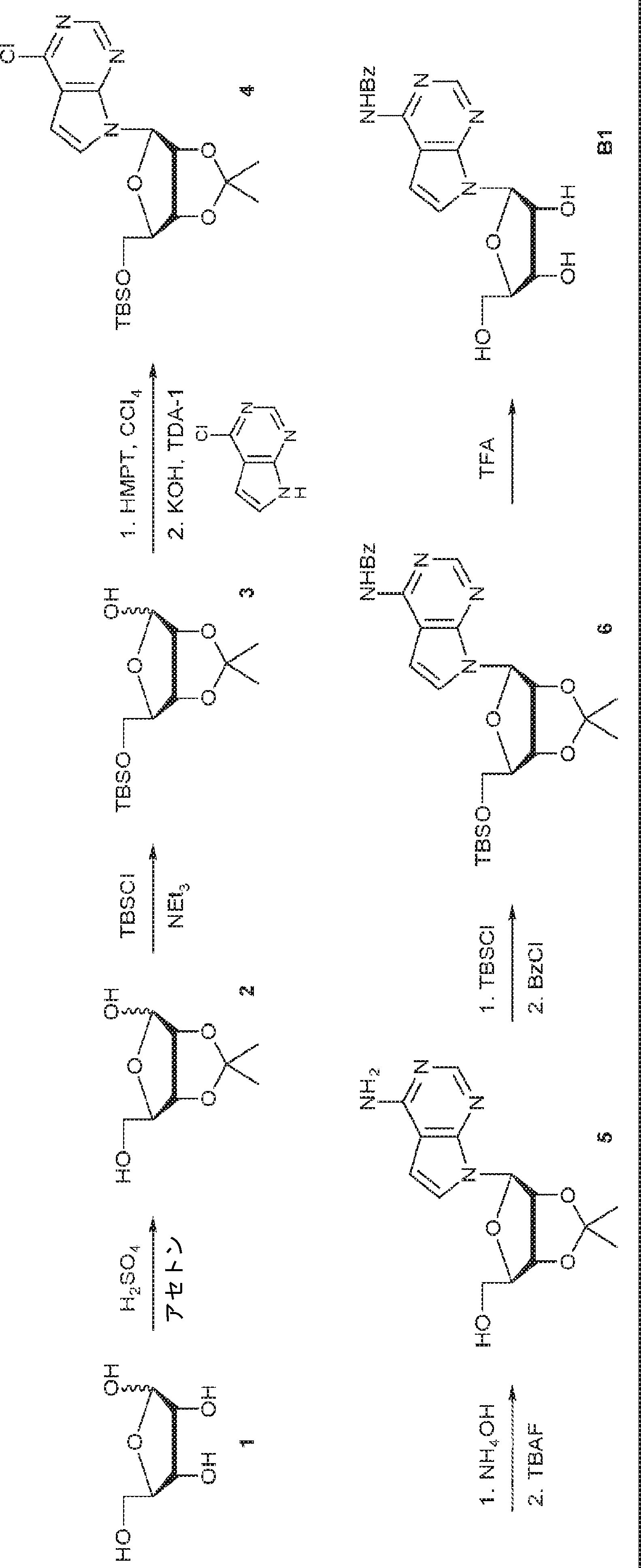
Preparation of B1:
工程1:アセトニド2
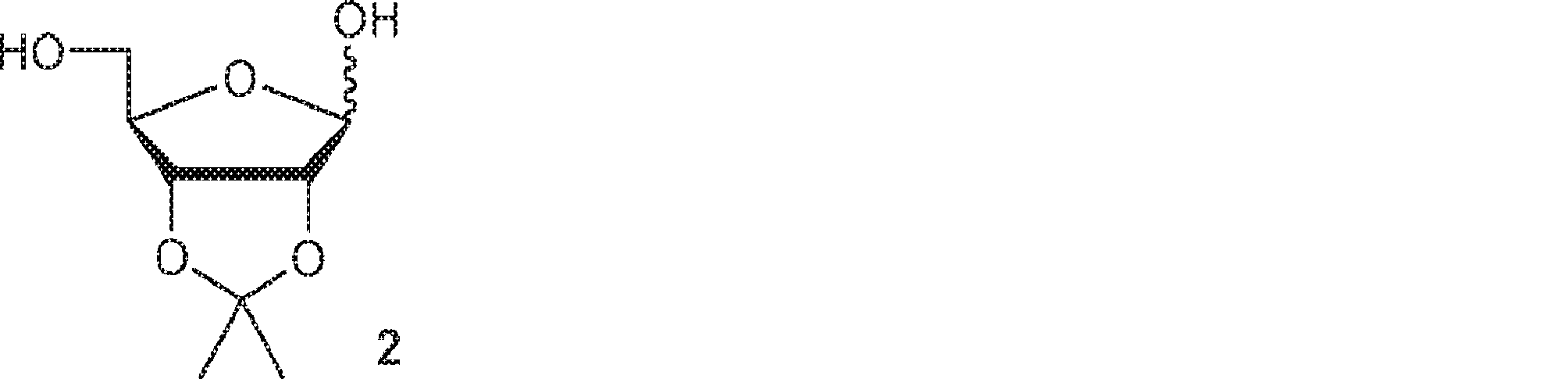
工程2:シリルエーテル3
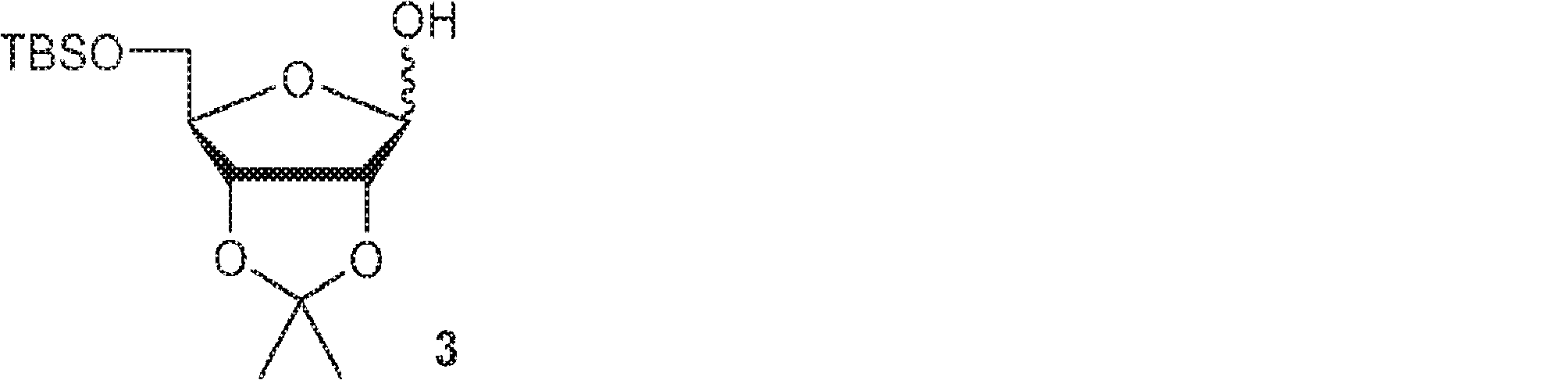
工程3:デアザプリン4

工程4:アデニン5

工程5:ベンゾアート6
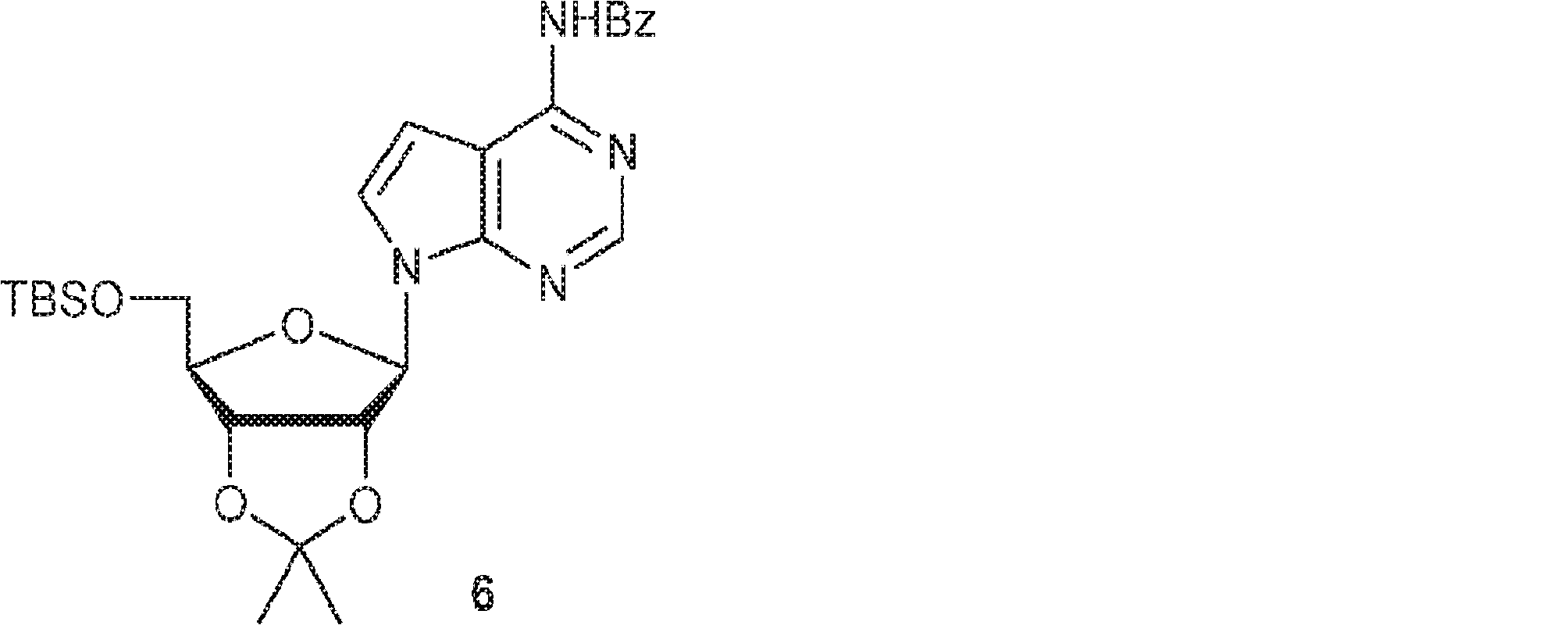
工程6:B1

B2の調製:

工程1:アニリン8

工程2:アザプリン9

工程3:アザアデニン10

工程4:アザアデニン11

工程5:アザアデニン12

工程6:アザアデノシン14
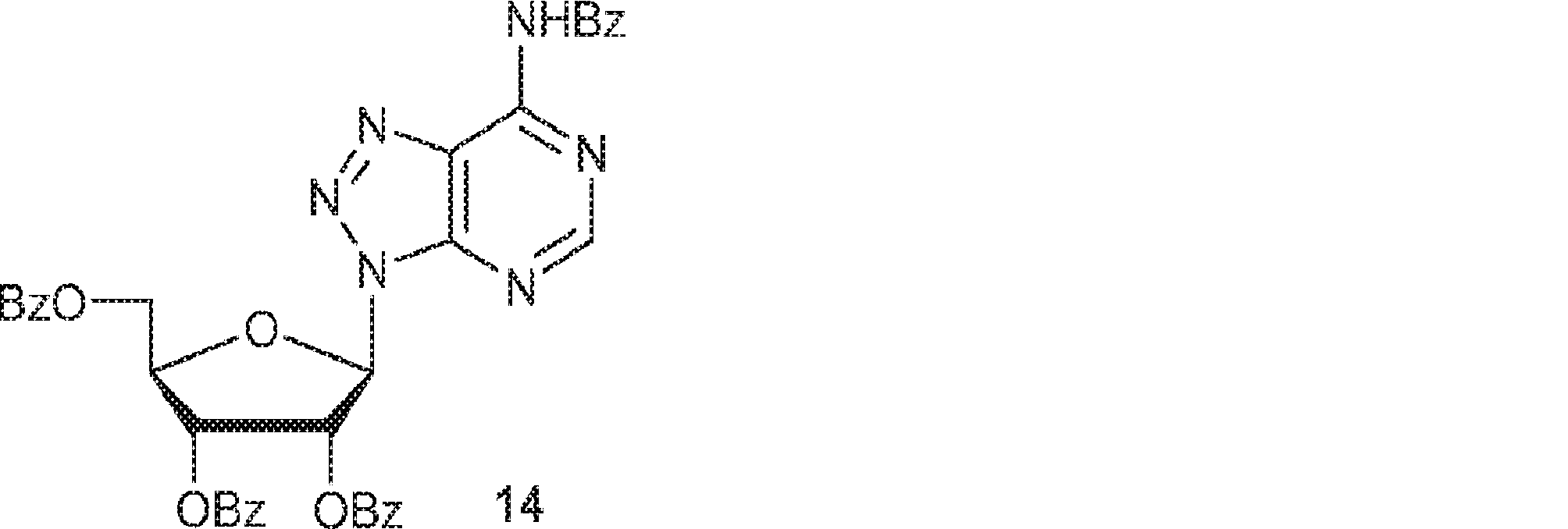
工程7:B2
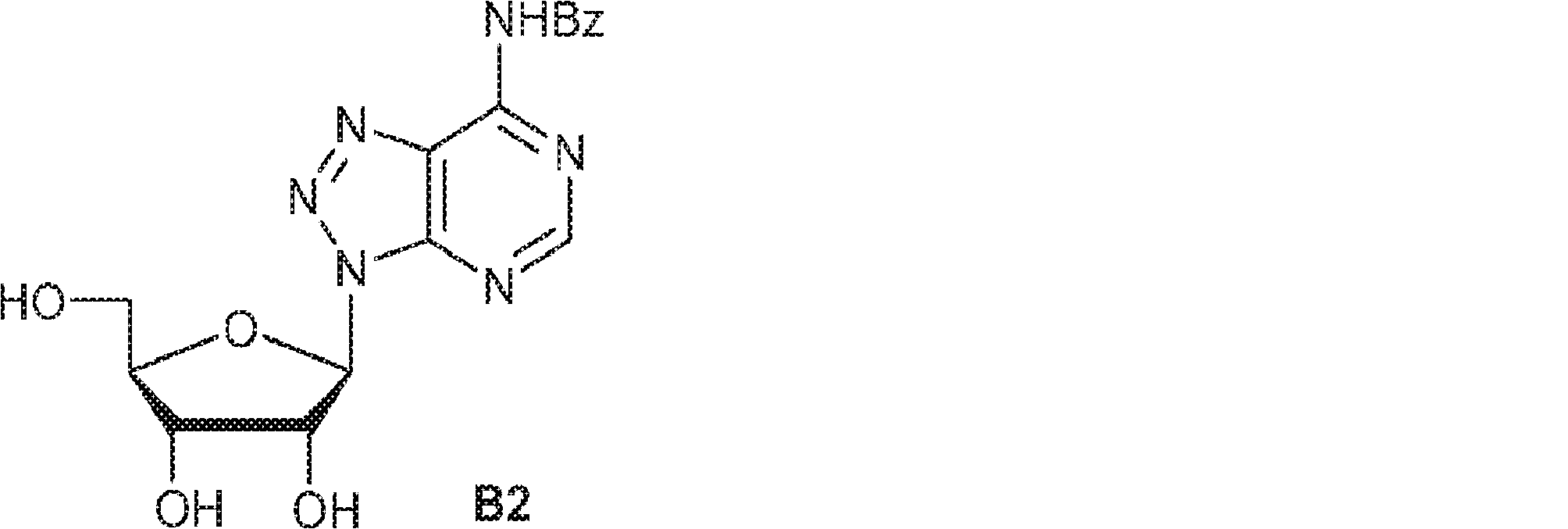
DMTr-B3の調製:

工程1:ジオール16
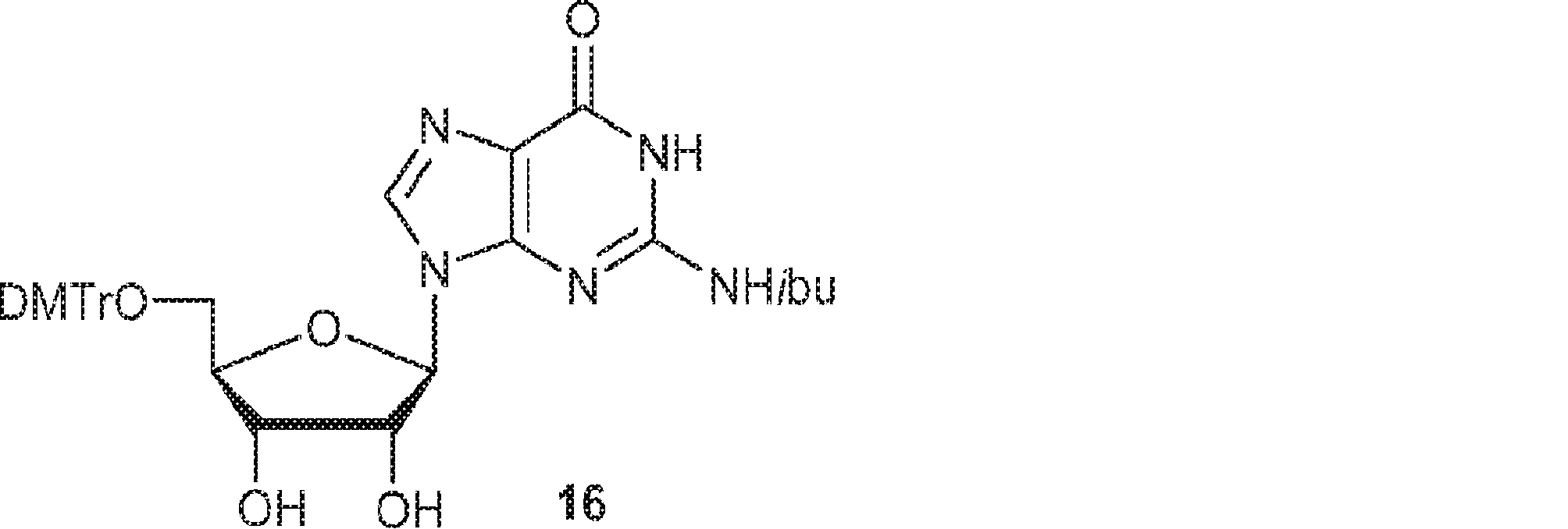
工程2:アルコール17

工程3:チオカルバメート18

工程4:シリルエーテル19

工程5:DMTr-B3

B4の調製:

工程1:アルコール21

工程2:アルコール22
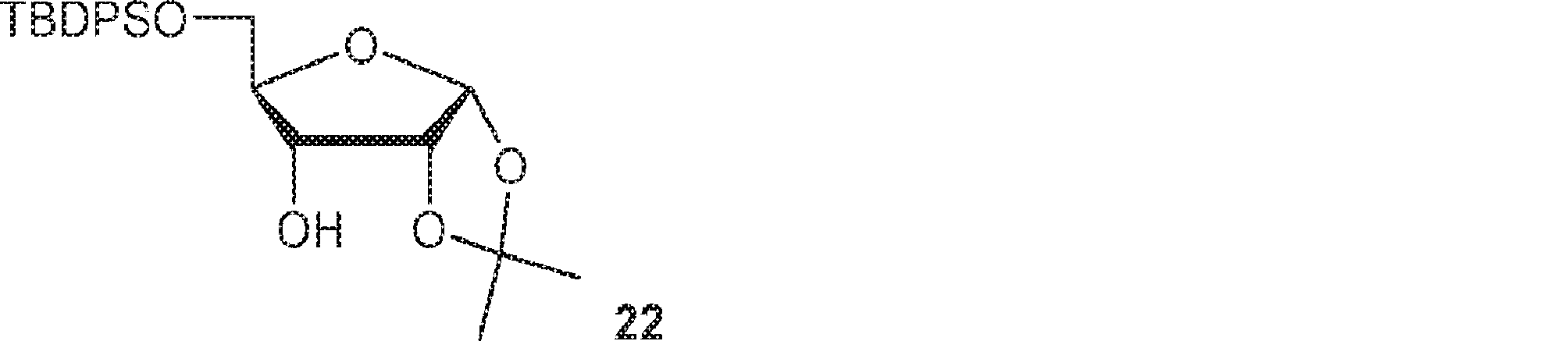
工程3:メチルエーテル23

工程4:ベンゾアート24

工程5:アセテート25

工程6:グアノシン27
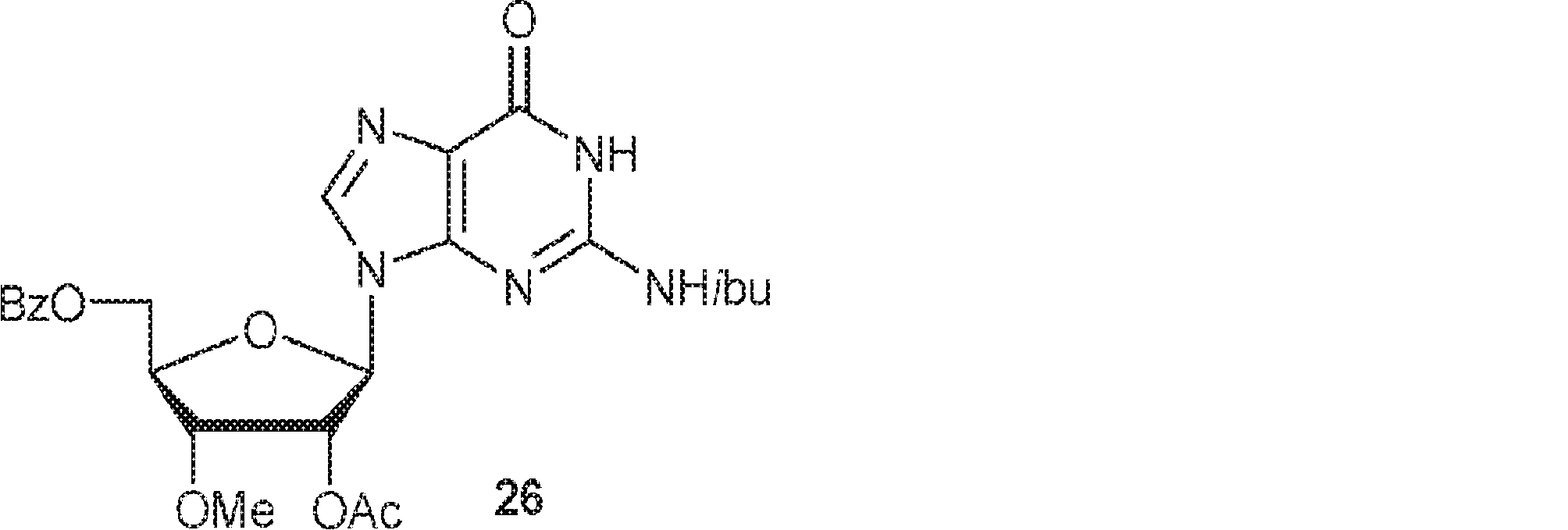
工程7:B4

B5の調製:

工程1:アセテート28

工程2:プロパルギルエーテル29

工程3:B5

B6の調製:

工程1:デアザプリン29
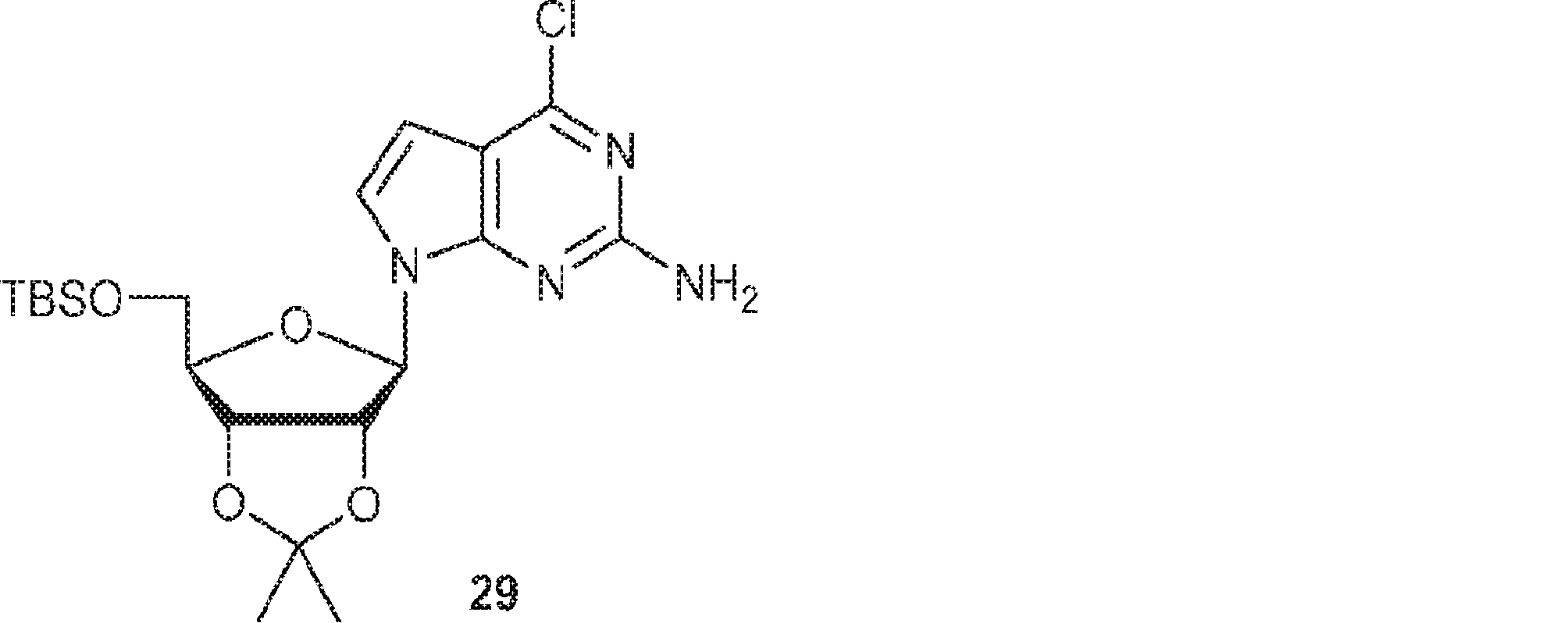
工程2:アルコール30

工程3:シリルエーテル31

工程4:イソブチレート32
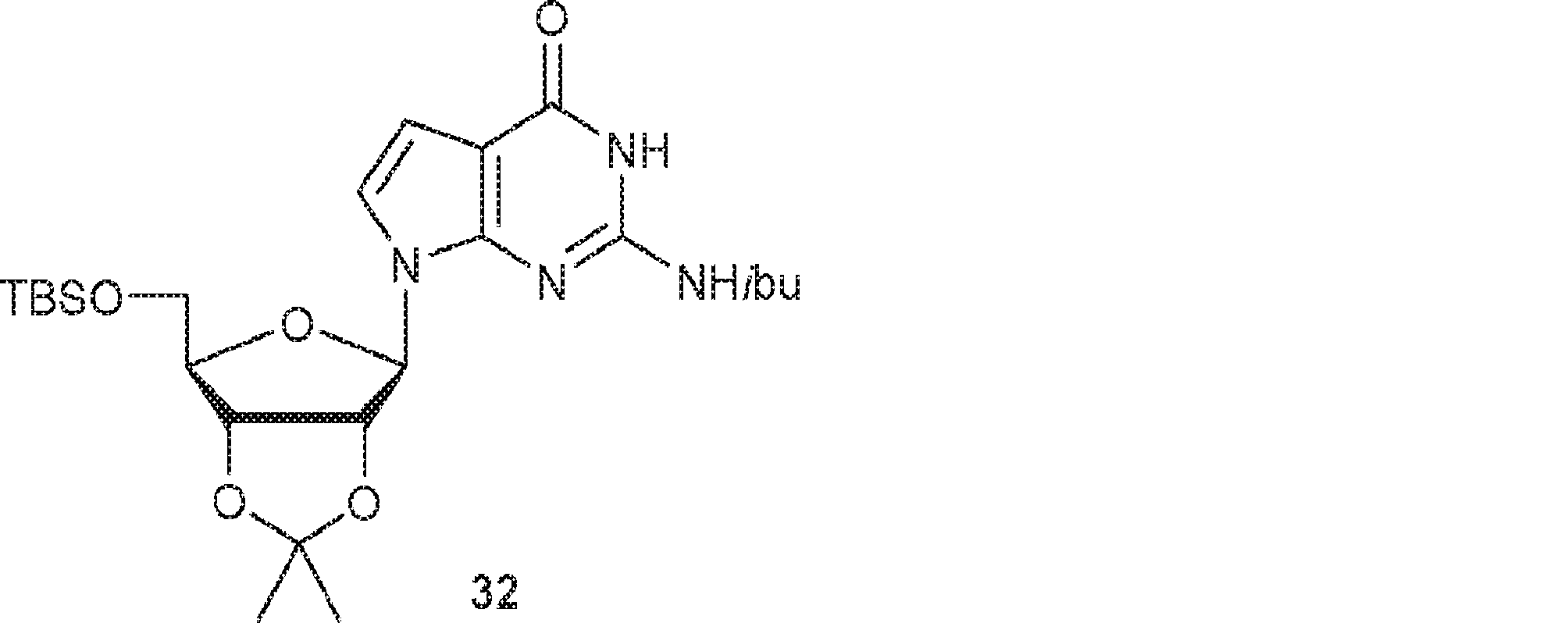
工程5:B6

BA1の調製:

工程1:プロパルギルエーテル34
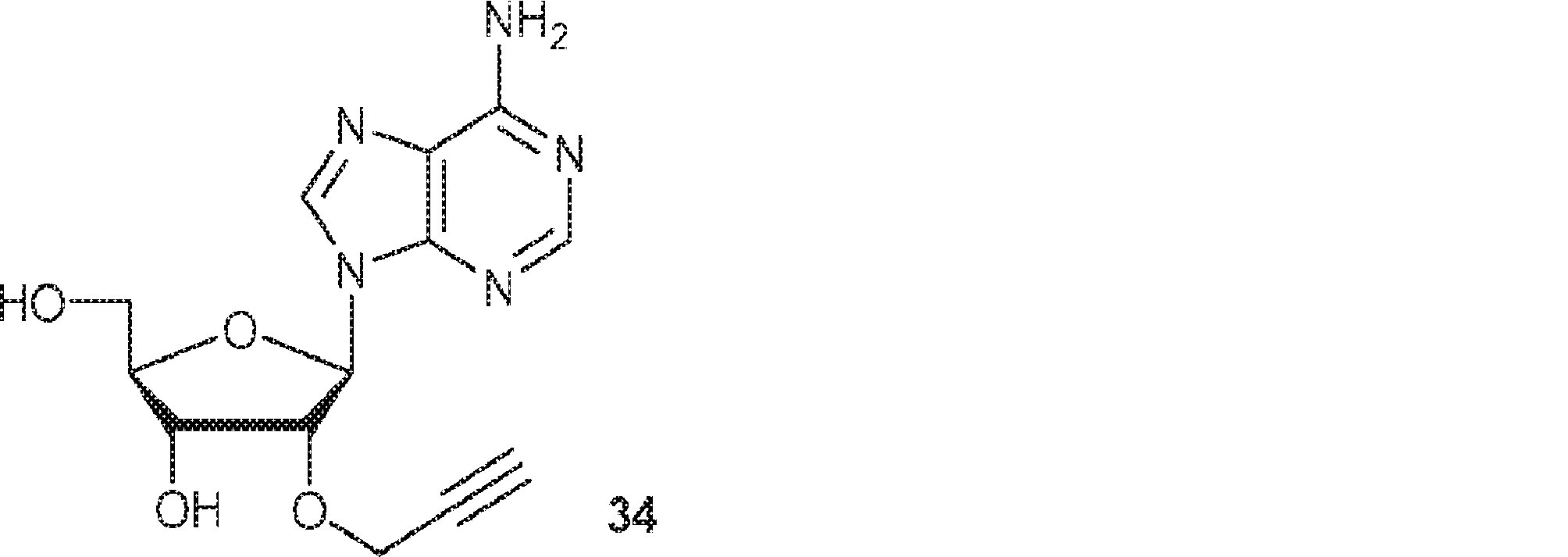
工程2:BA1

BA2の調製:

工程1:ピラゾロピリミジン36

工程2:ピラゾロピリミジン37

工程3:トリベンゾアート38

工程4:ベンズアミド39
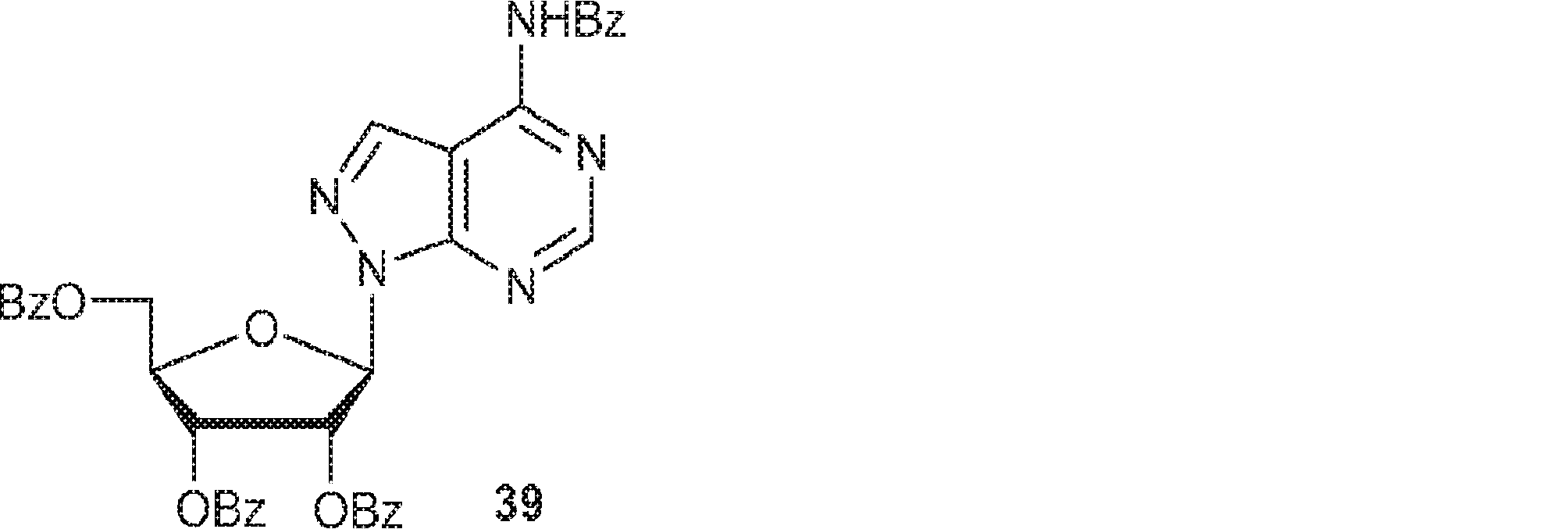
工程5:BA2

BA3の調製:

工程1:トリフルオロエチルエーテル40
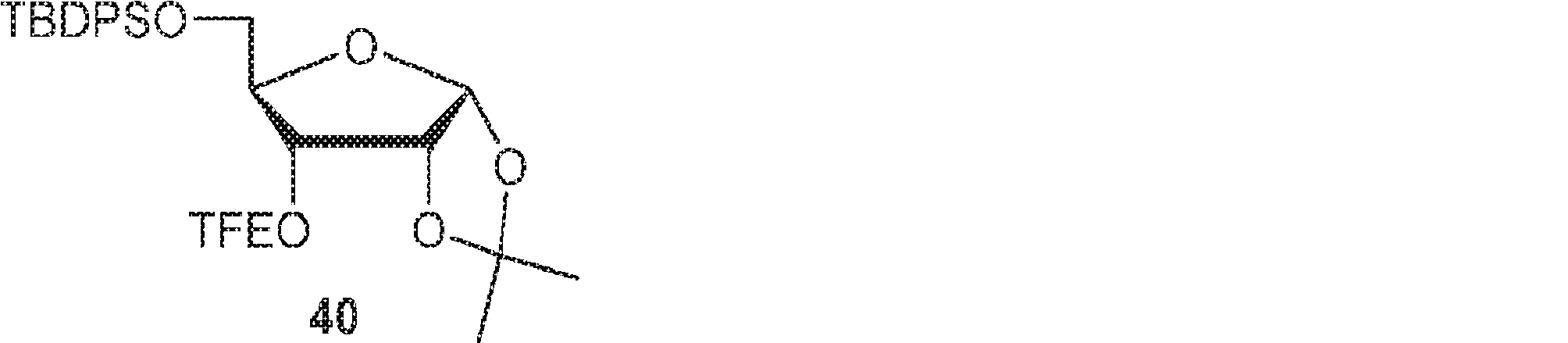
工程2:ベンゾアート41
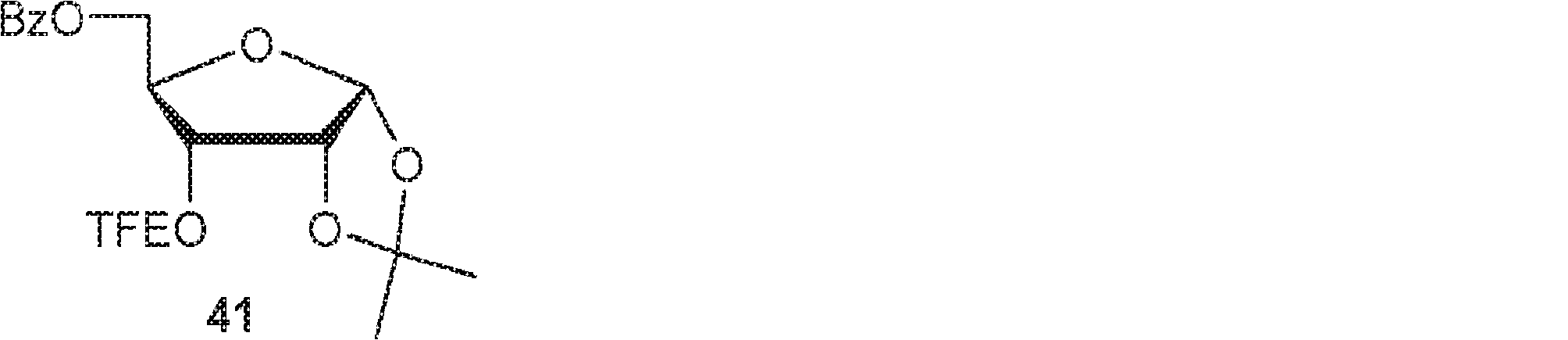
工程3:アセテート42

工程4:グアノシン43

工程5:BA3
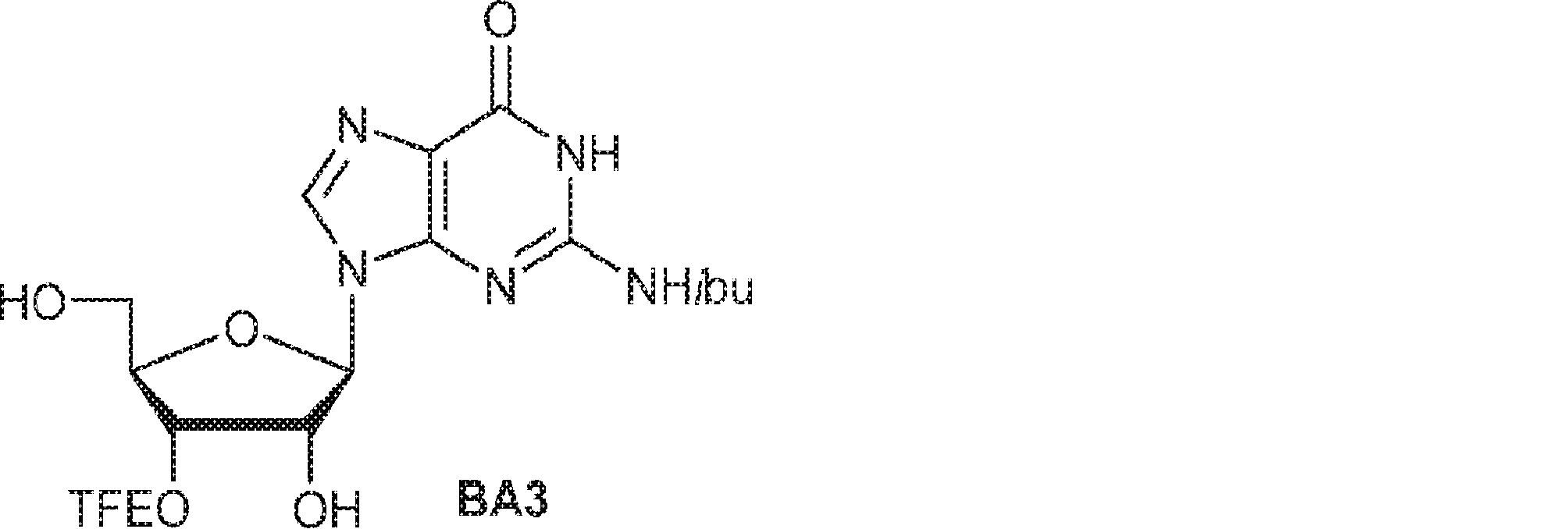
BB1の調製:

工程1:ピラゾール44

工程2:チオ尿素45

工程3:ピラゾロピリミジノン46
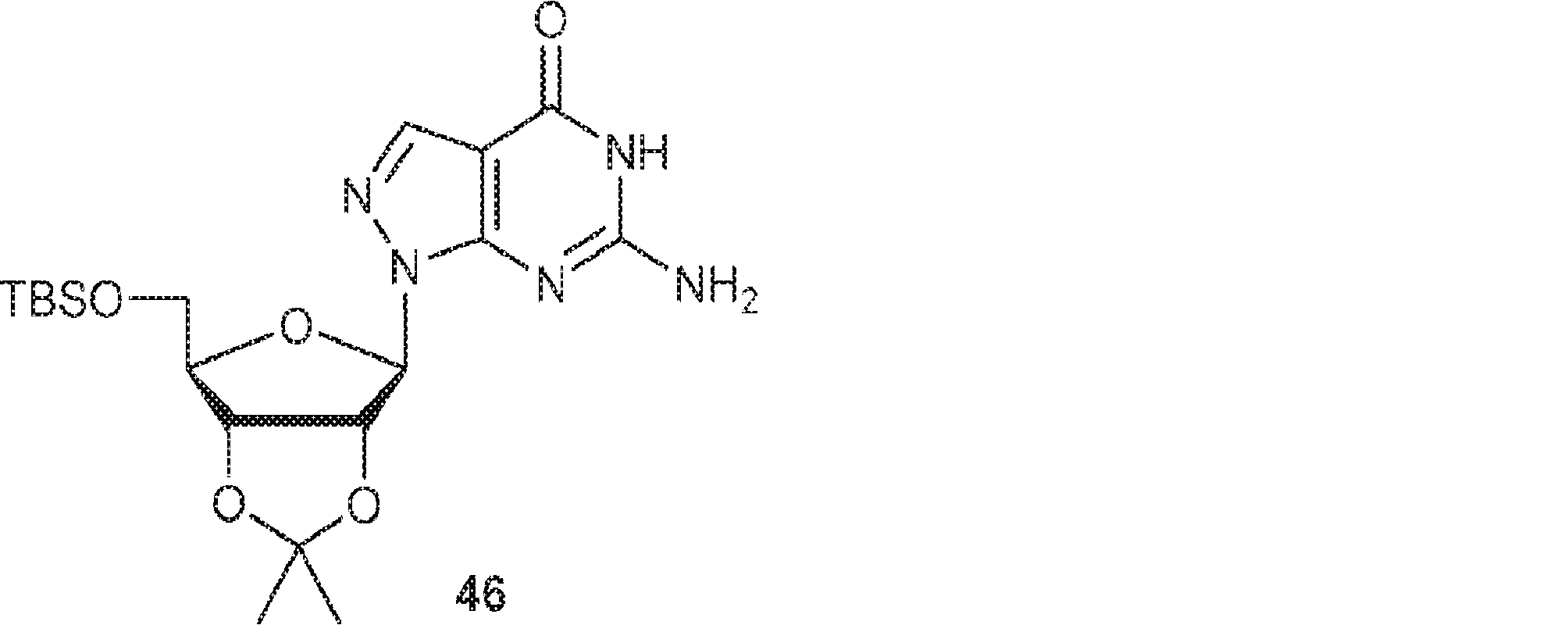
工程4:イソブチレート47

工程5:BB1
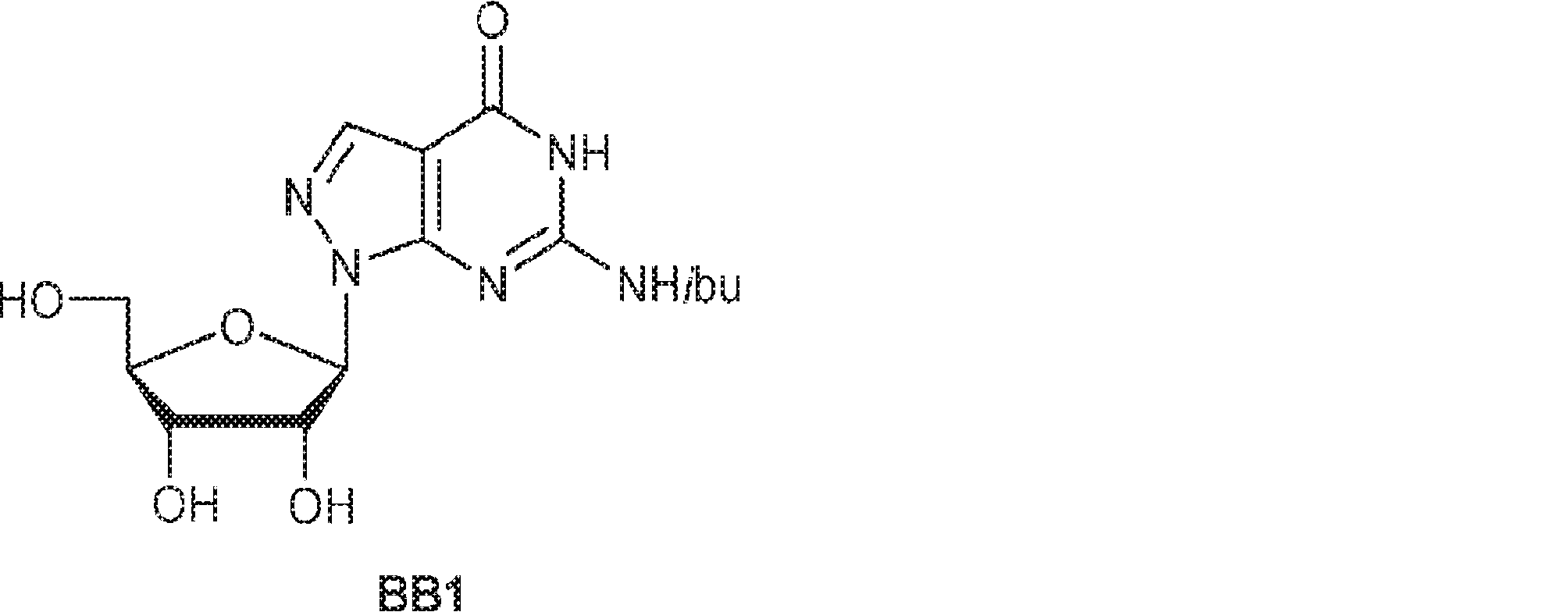
BC1の調製:

工程1:アセトニド49
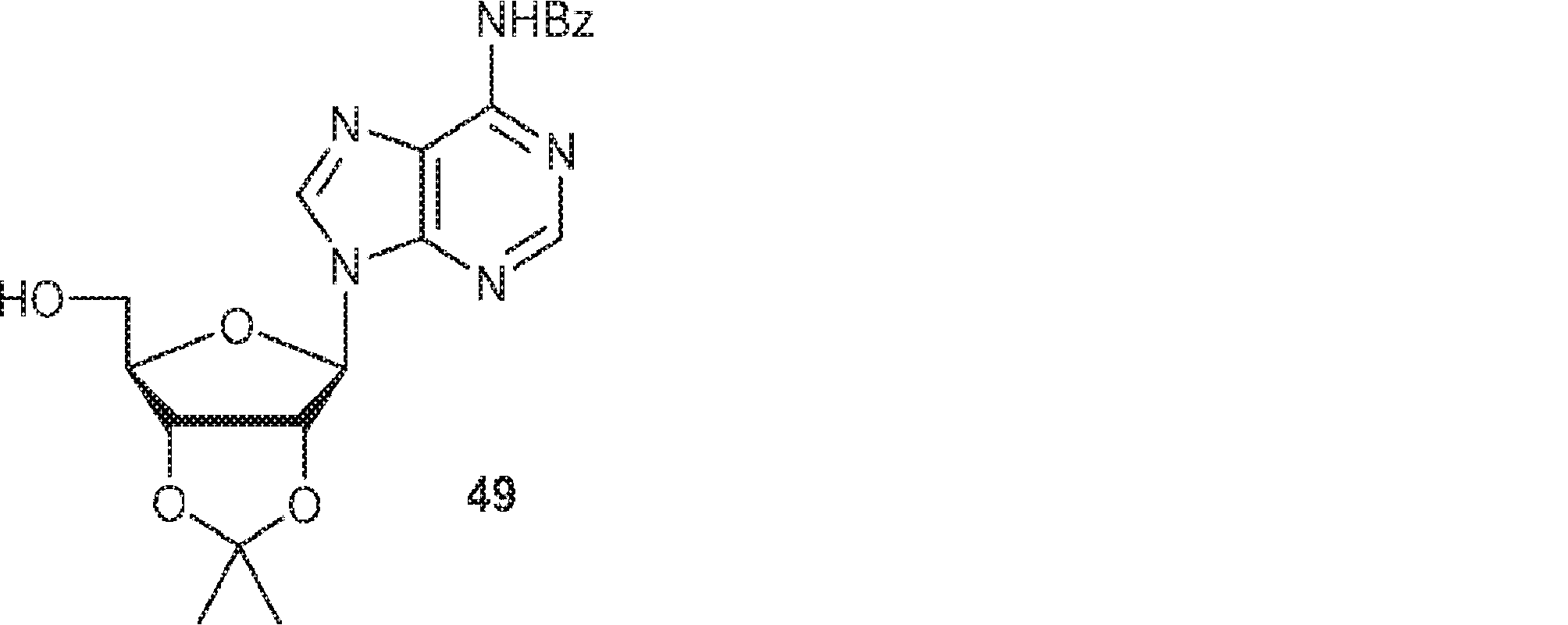
工程2:アジド50
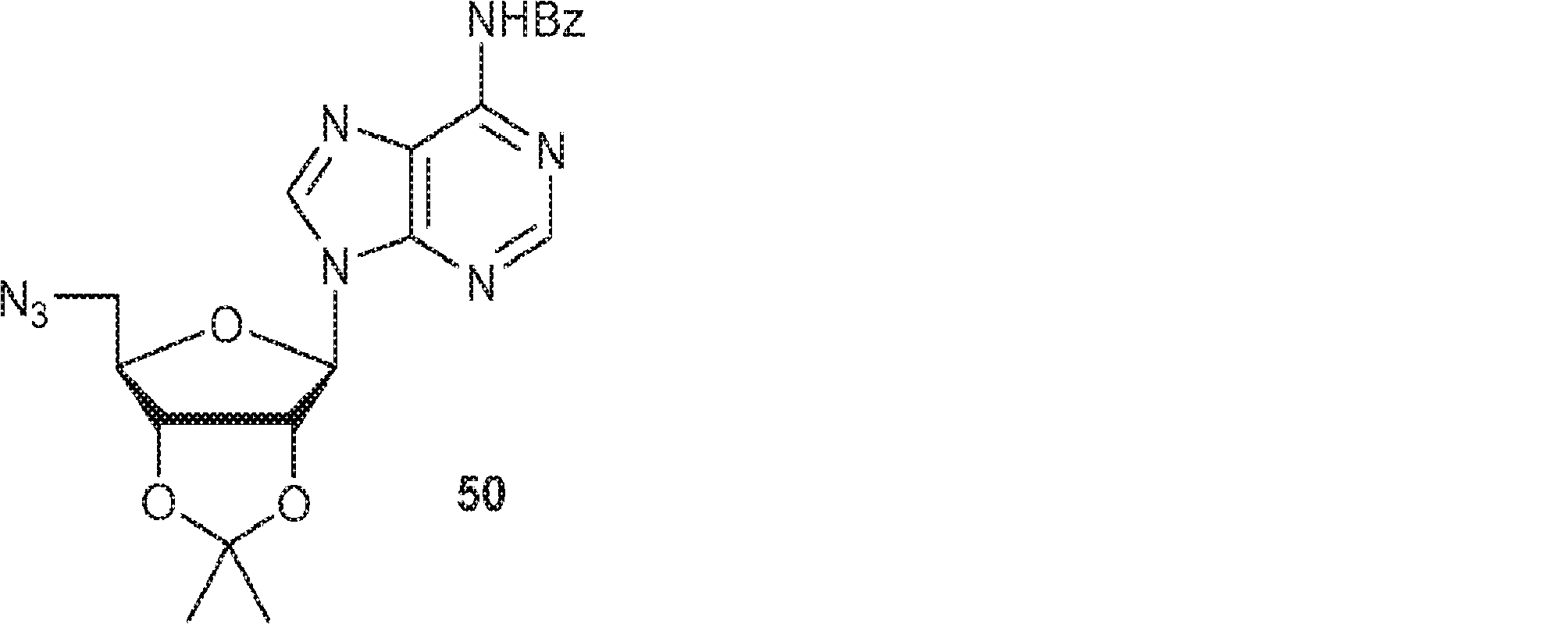
工程3:BC1

BC2の調製:

工程1:インドール52

工程2:BC2
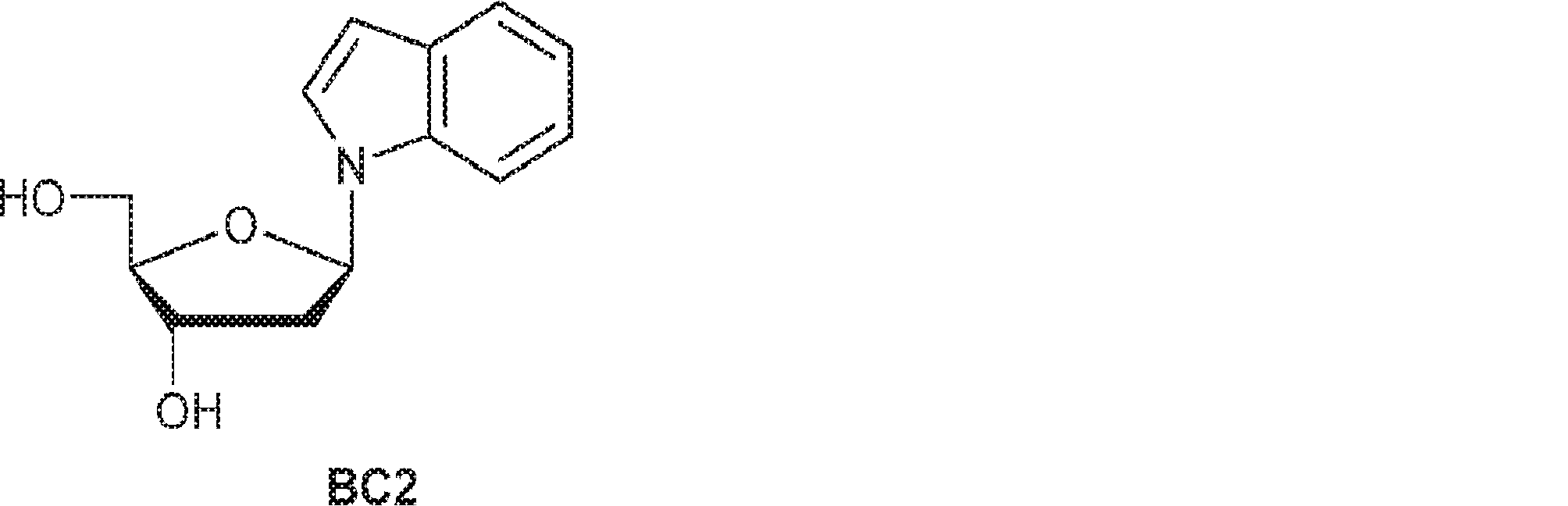
BC3の調製:

工程1:ピレン54
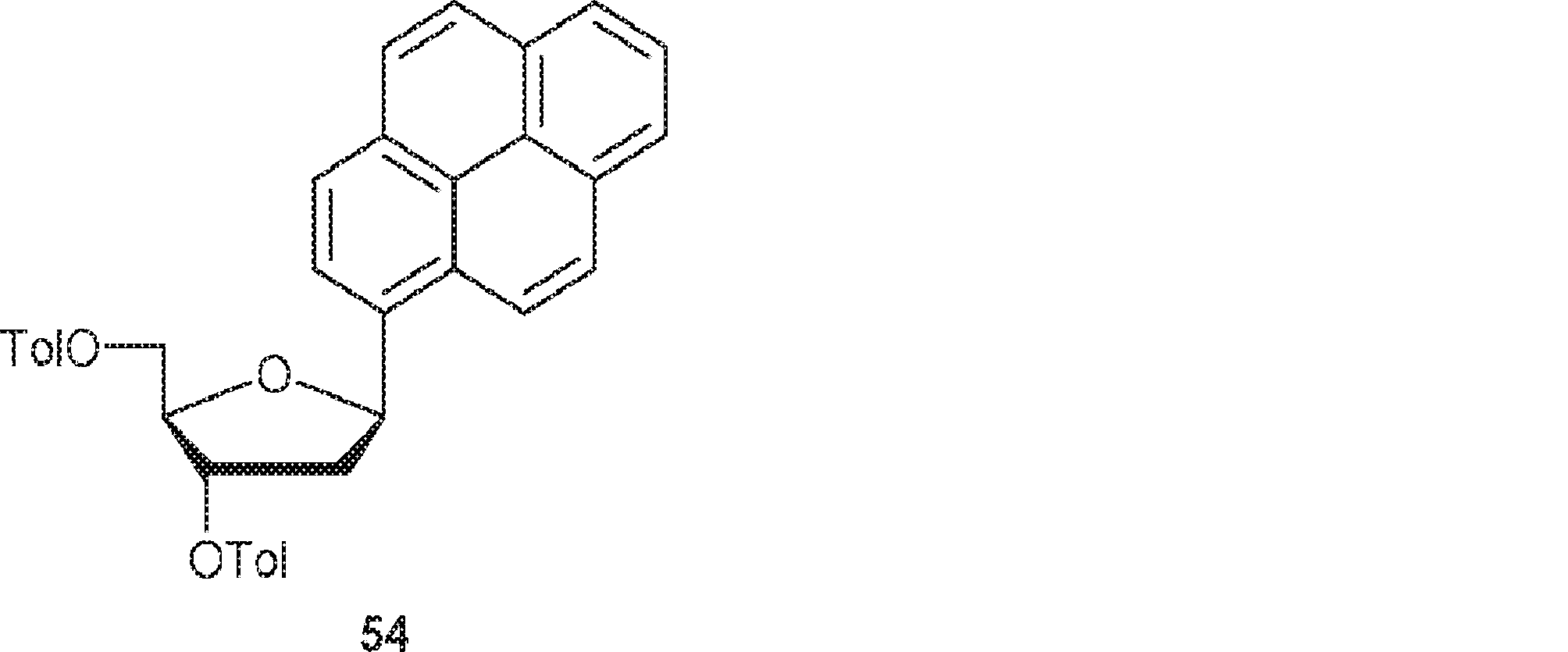
工程2:BC3
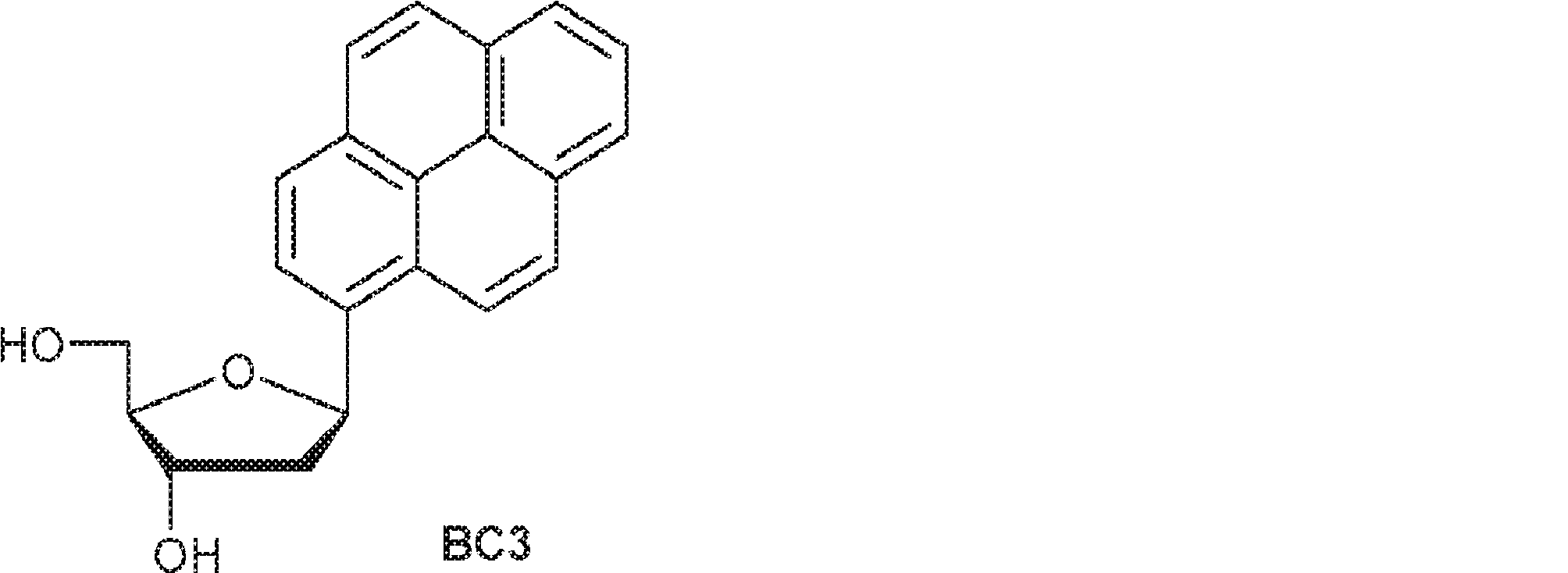
BC4の調製:
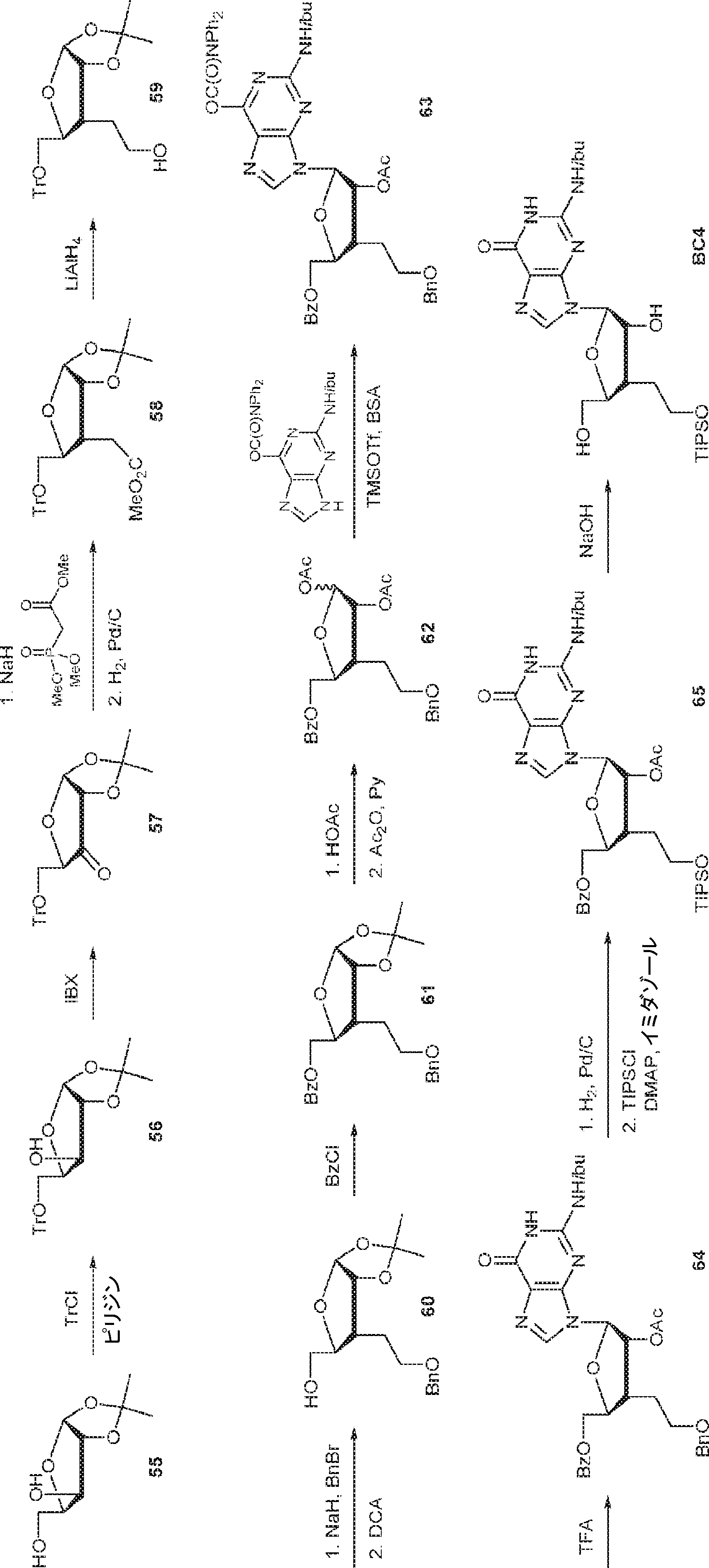
工程1:アルコール56
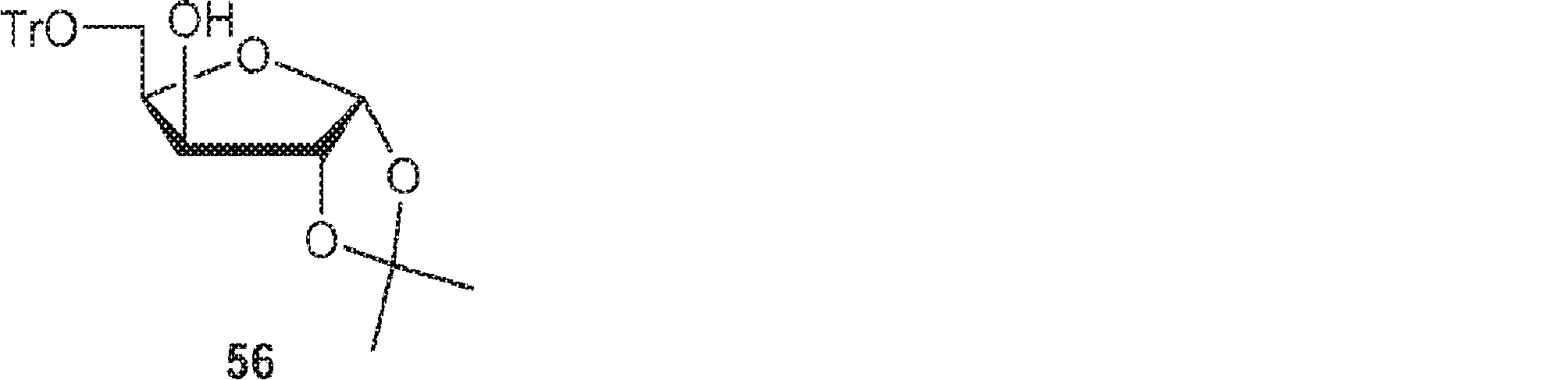
工程2:ケトン57

工程3:エステル58
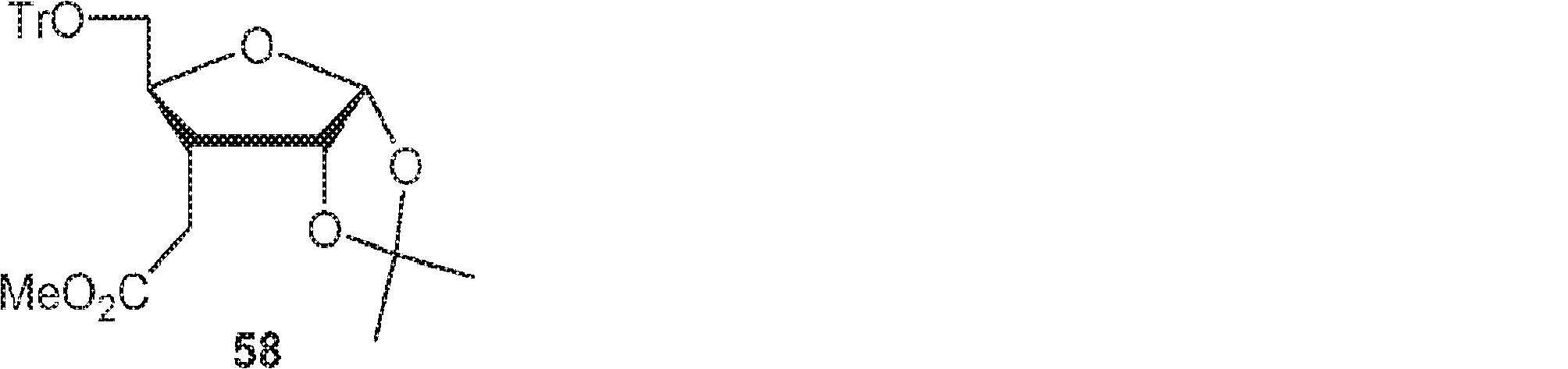
工程4:アルコール59
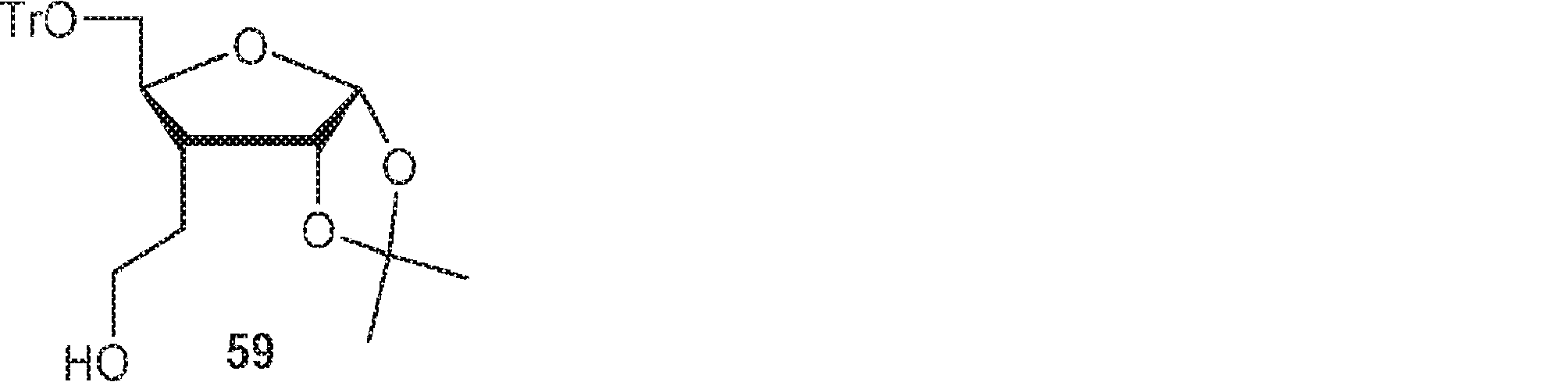
工程5:アルコール60

工程6:ベンゾアート61

工程7:アセテート62
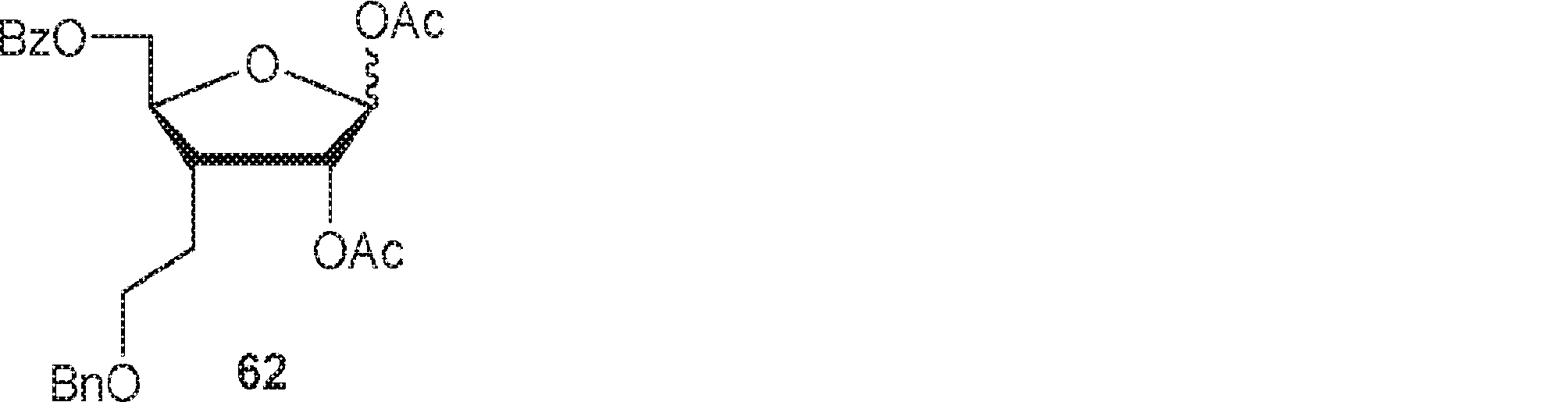
工程8:プリン63
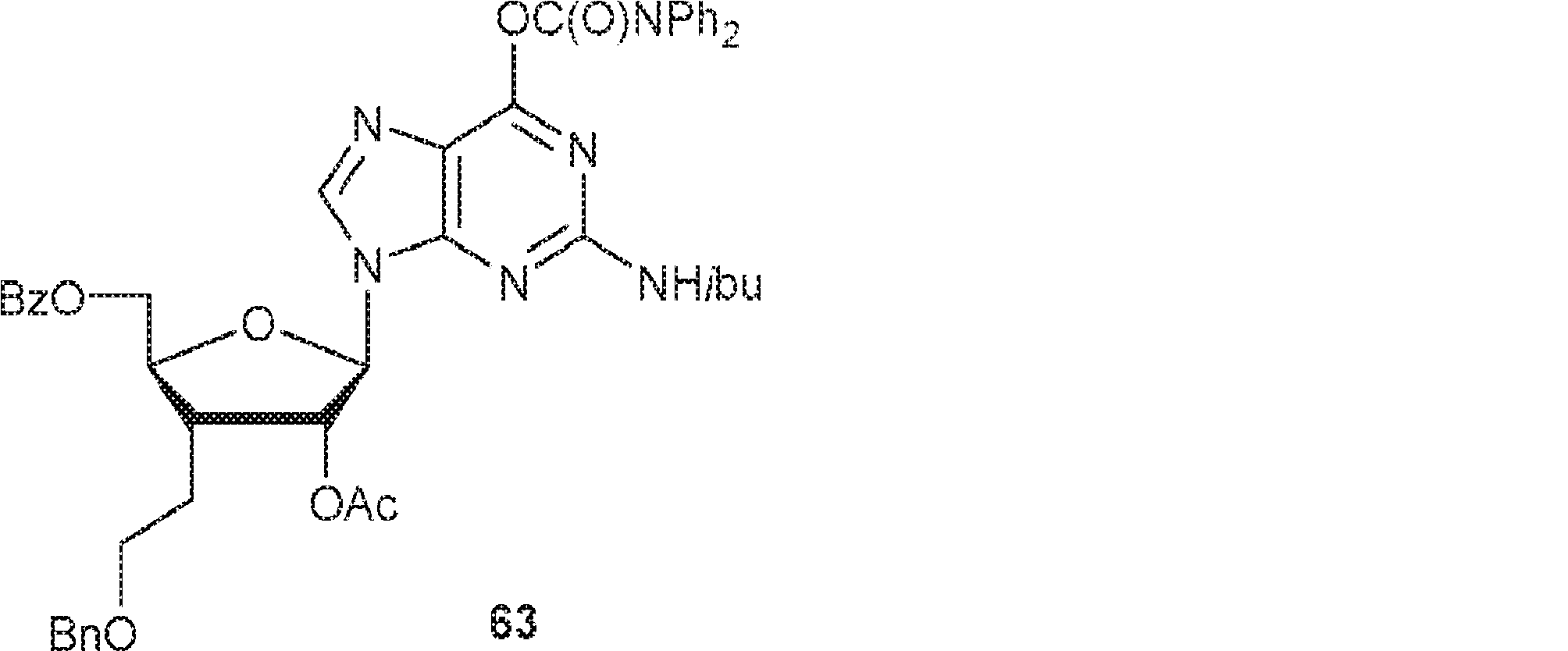
工程9:グアノシン64
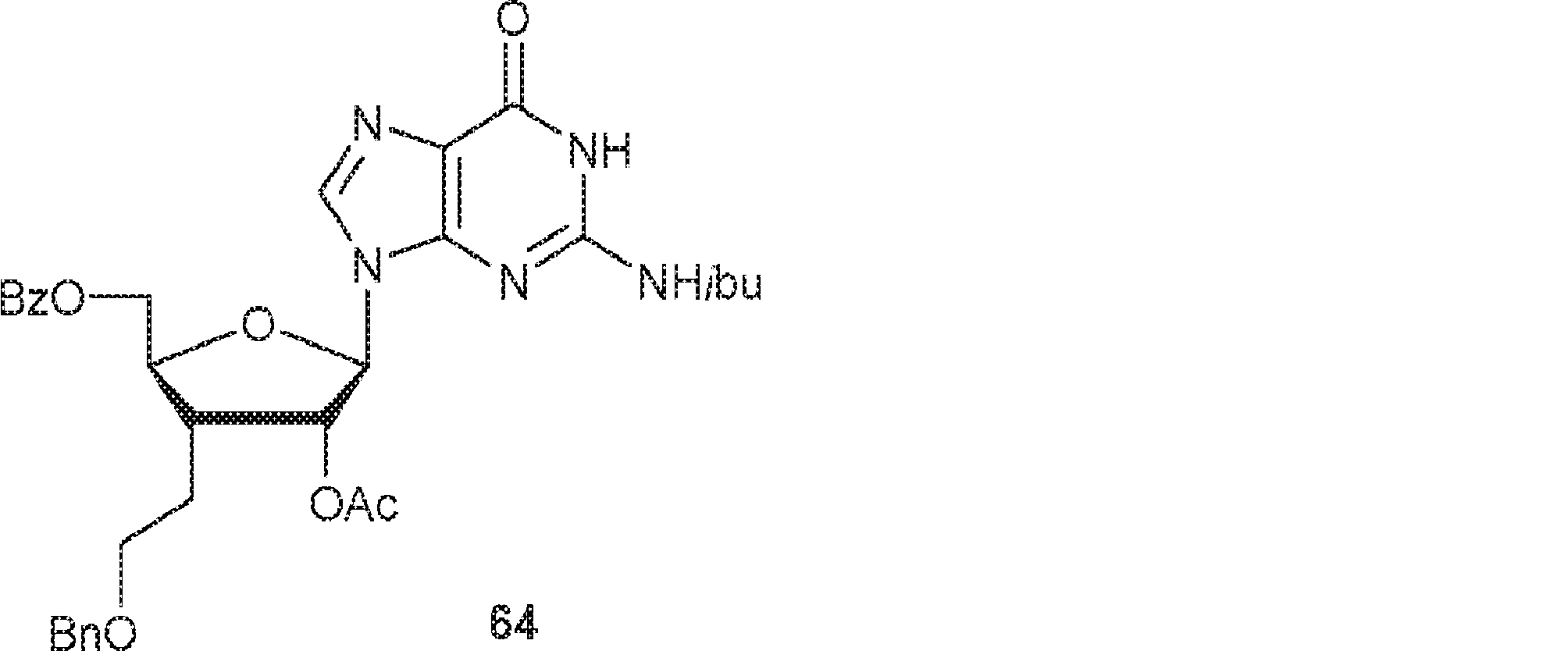
工程10:シリルエーテル65
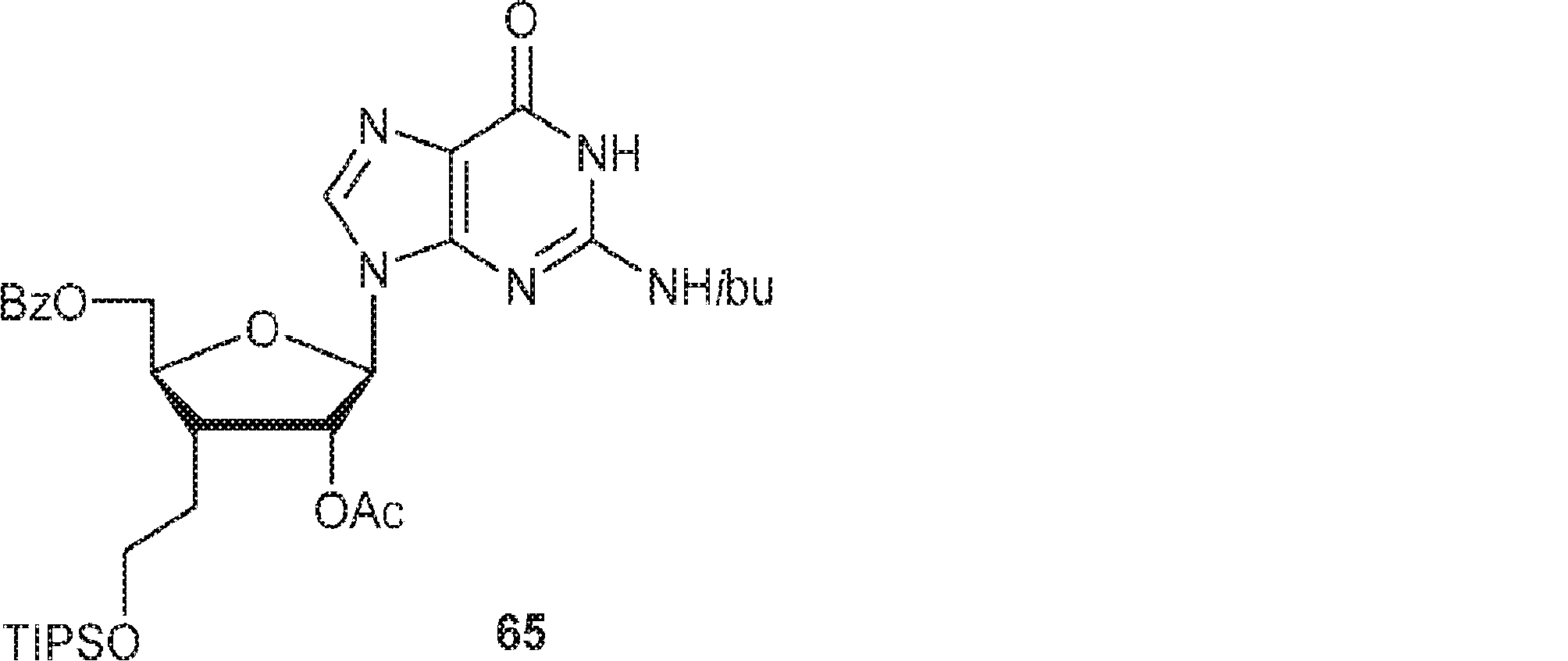
工程11:BC4
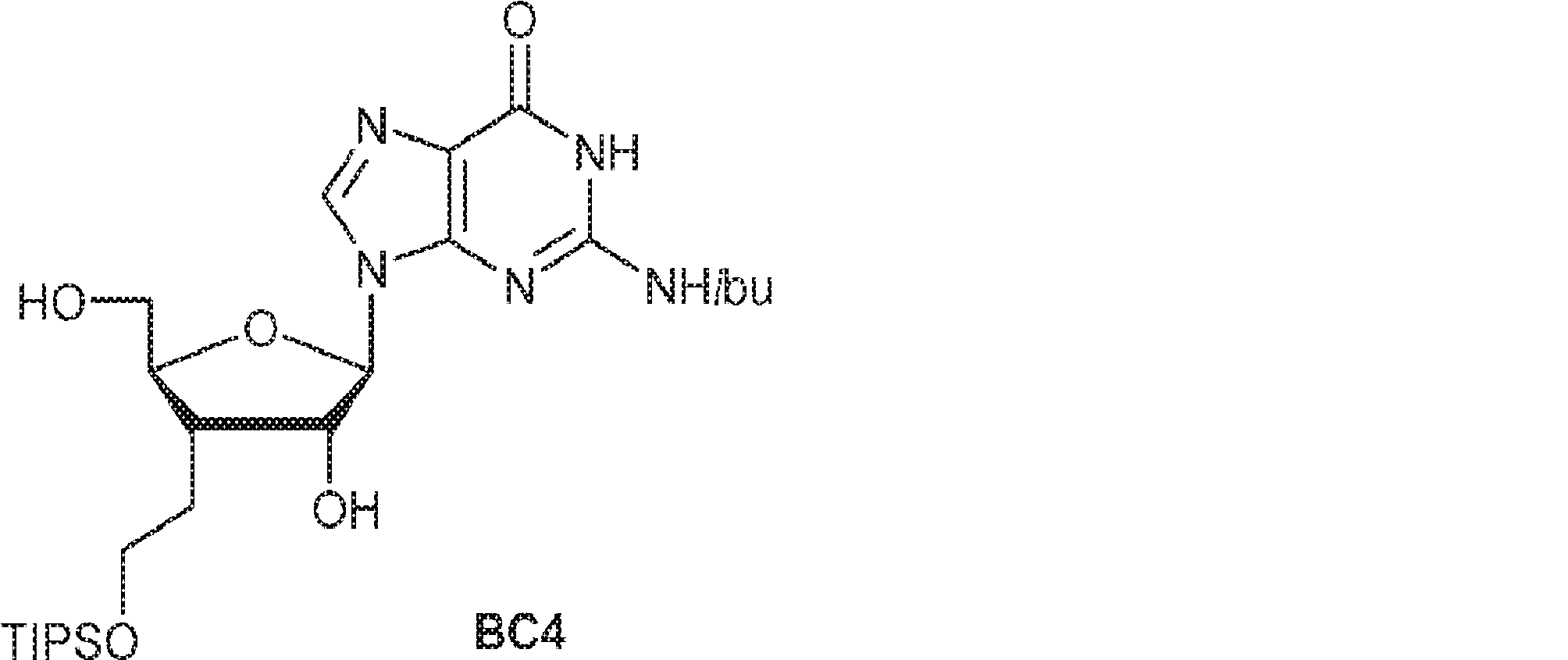
BC5の調製:
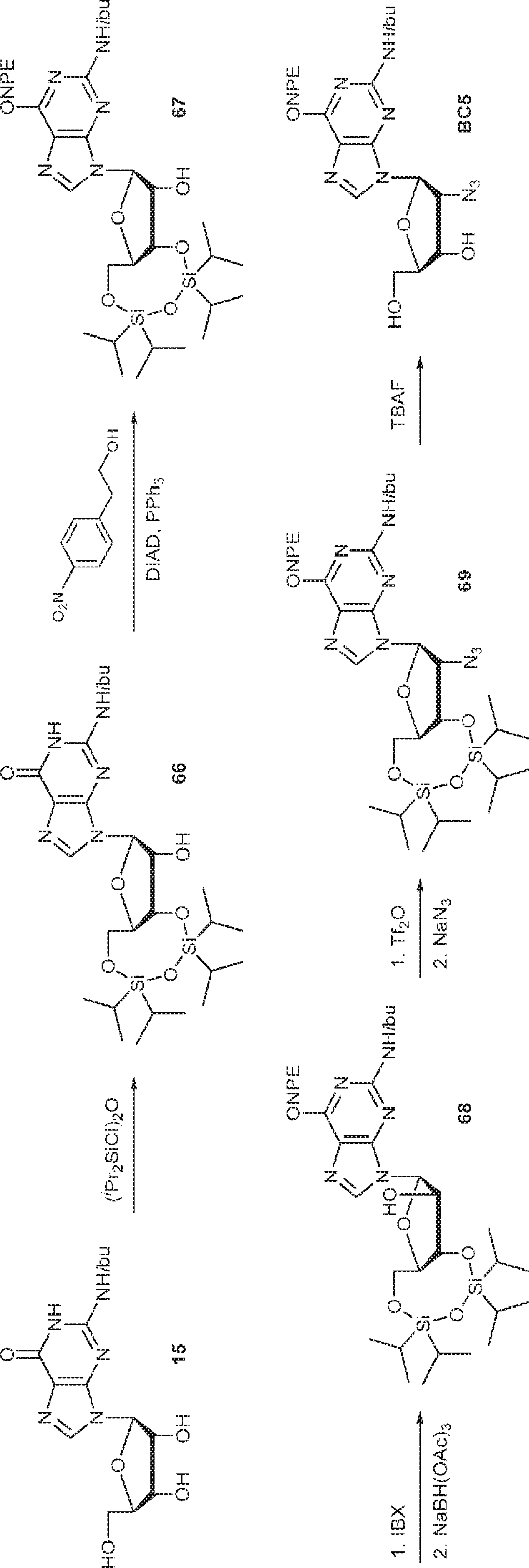
工程1:アルコール66

工程2:プリン67
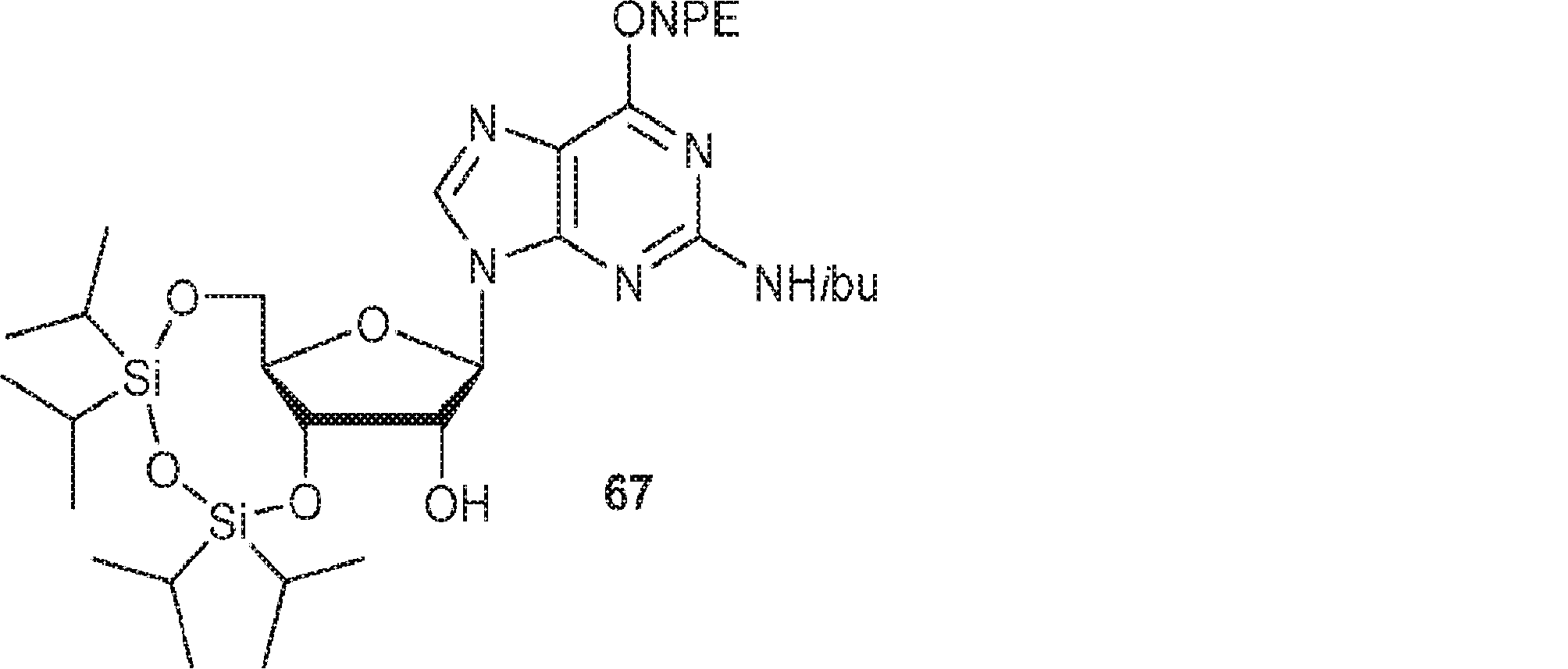
工程3:アルコール68
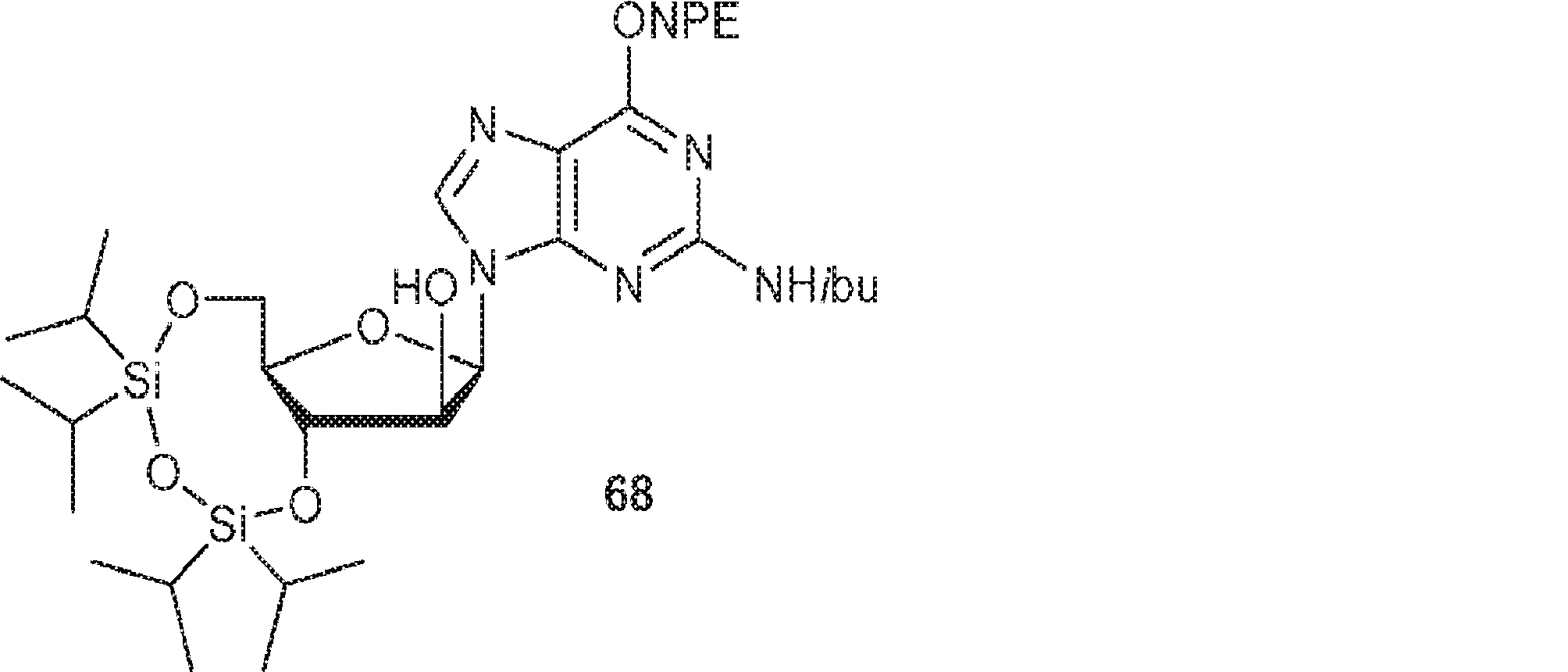
工程4:アジド69
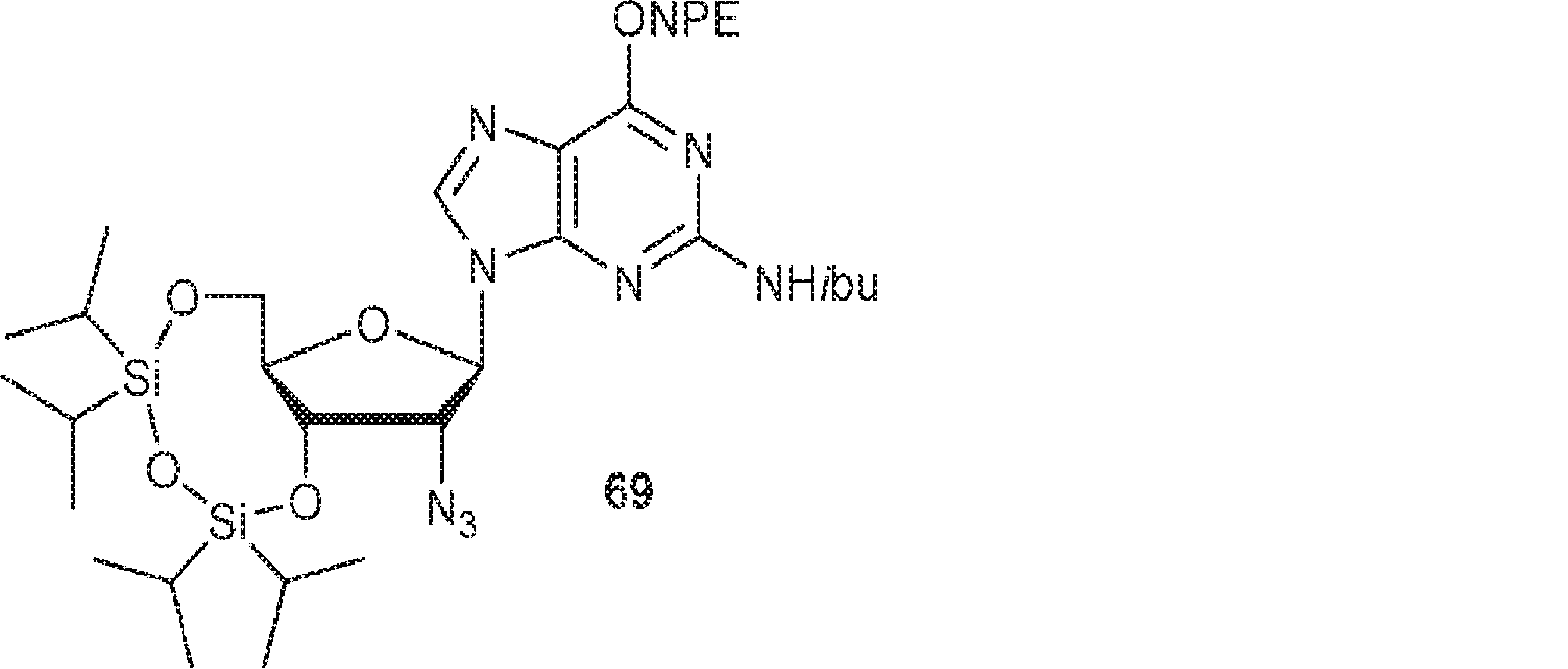
工程5:BC5
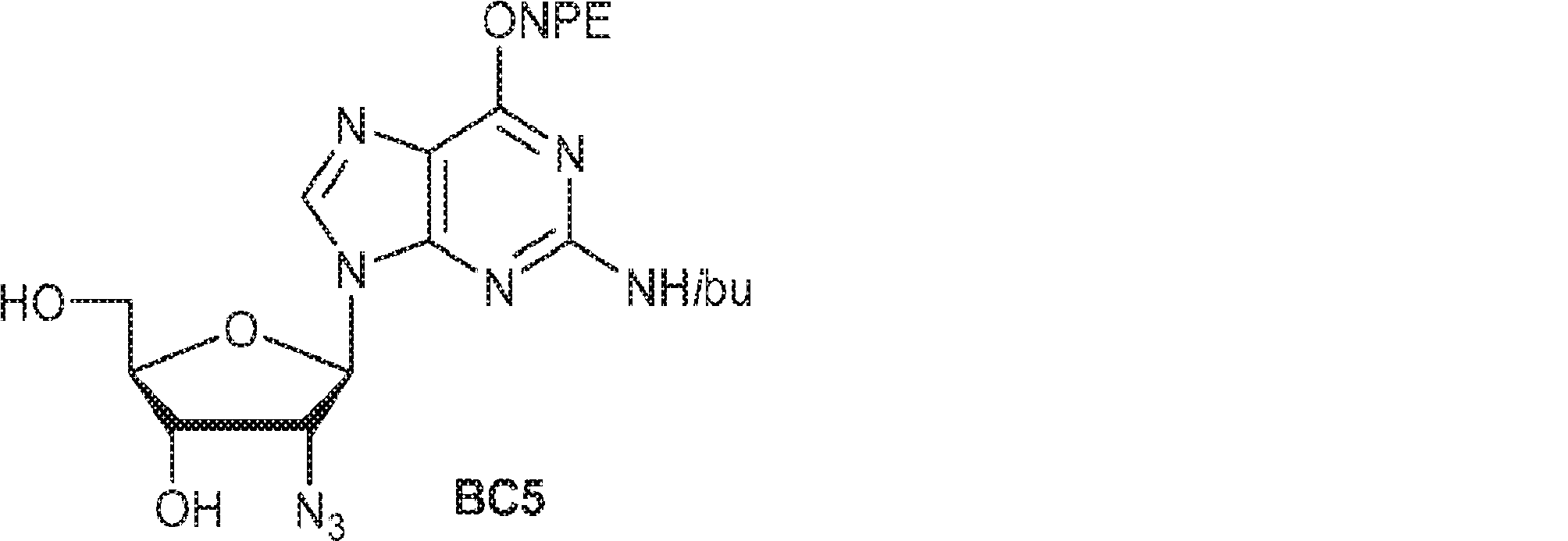
以下の化合物を、本質的には中間体BC3およびBC4のための上記方法により調製する。 The following compounds are prepared essentially by the above methods for intermediates BC3 and BC4.
(表1)中間体BC6およびBC7
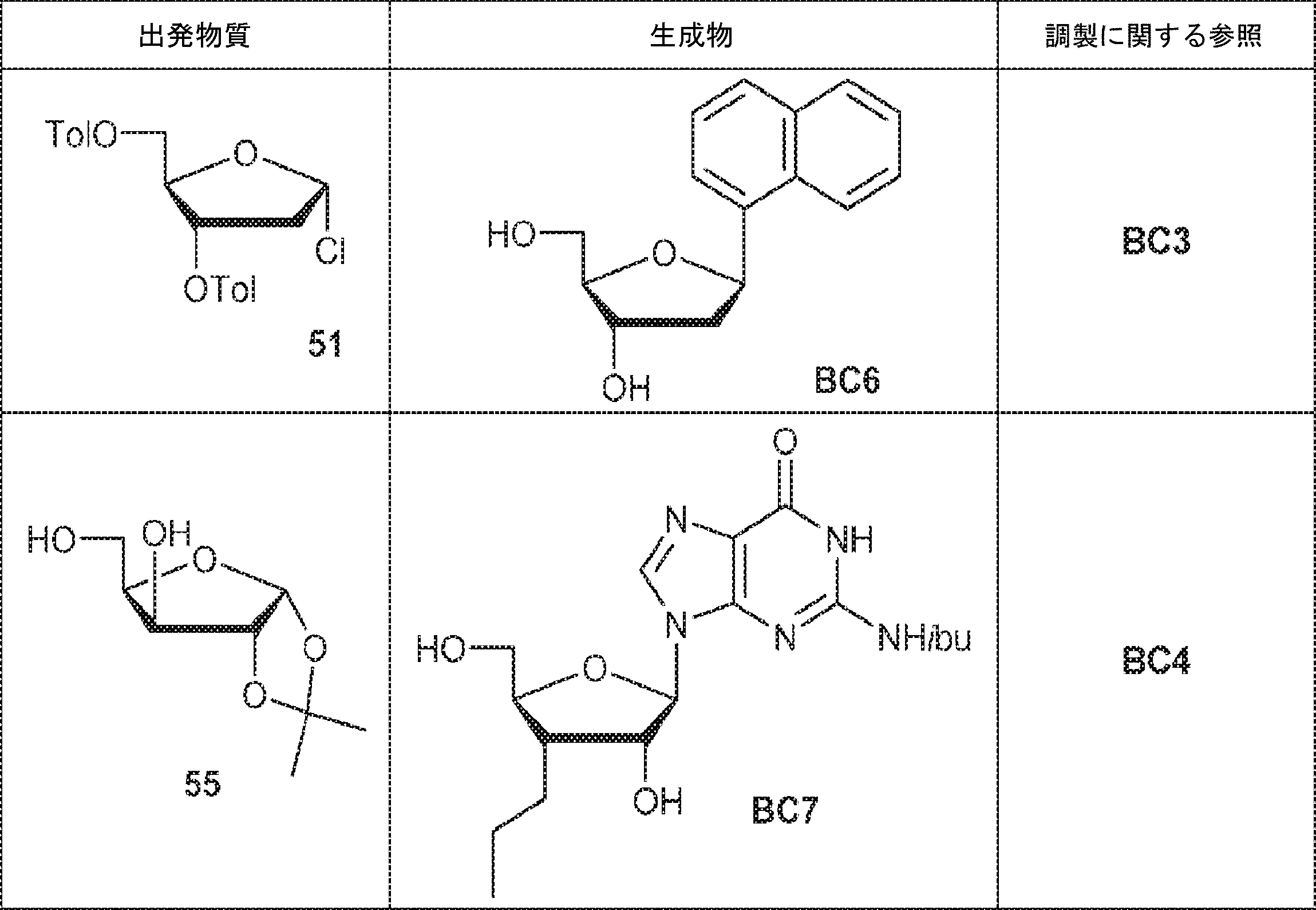
A1およびA2の調製:

工程1:ベンゾアート70

工程2:ジオール71
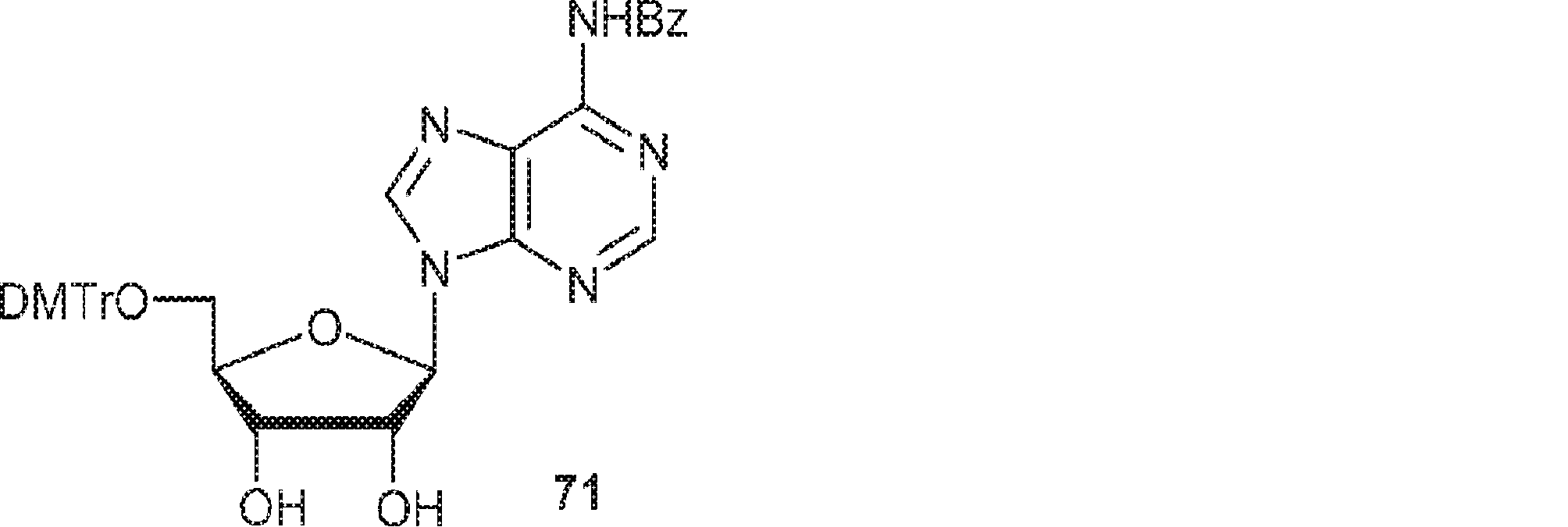
工程3:シリルエーテル72

工程4:A2
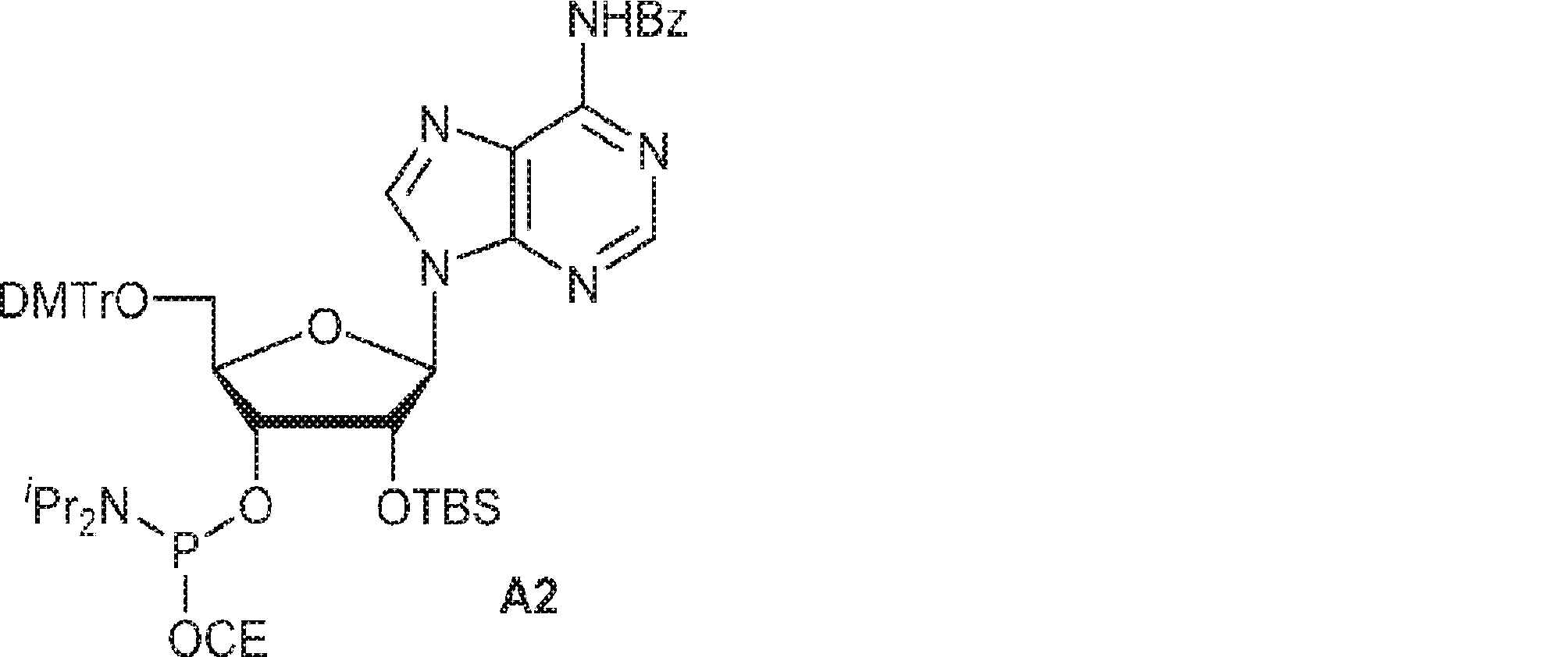
工程5:A1
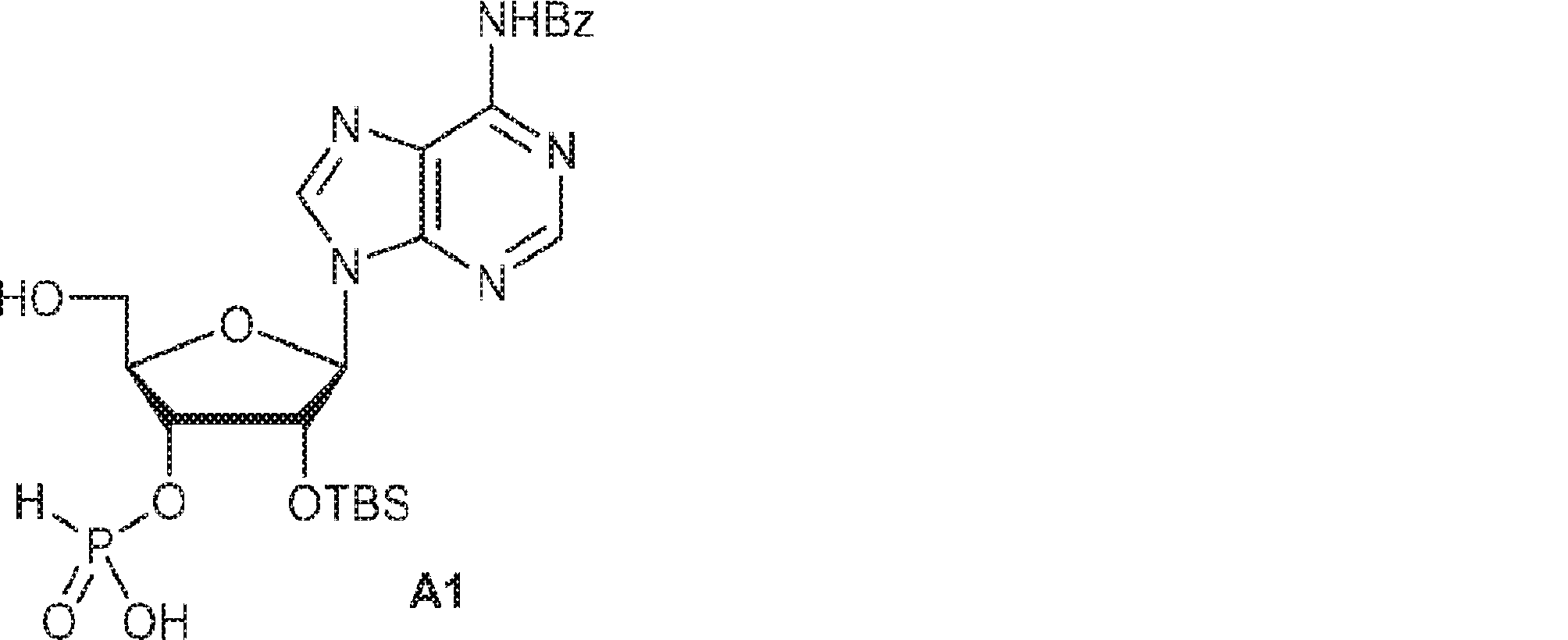
AB1の調製:
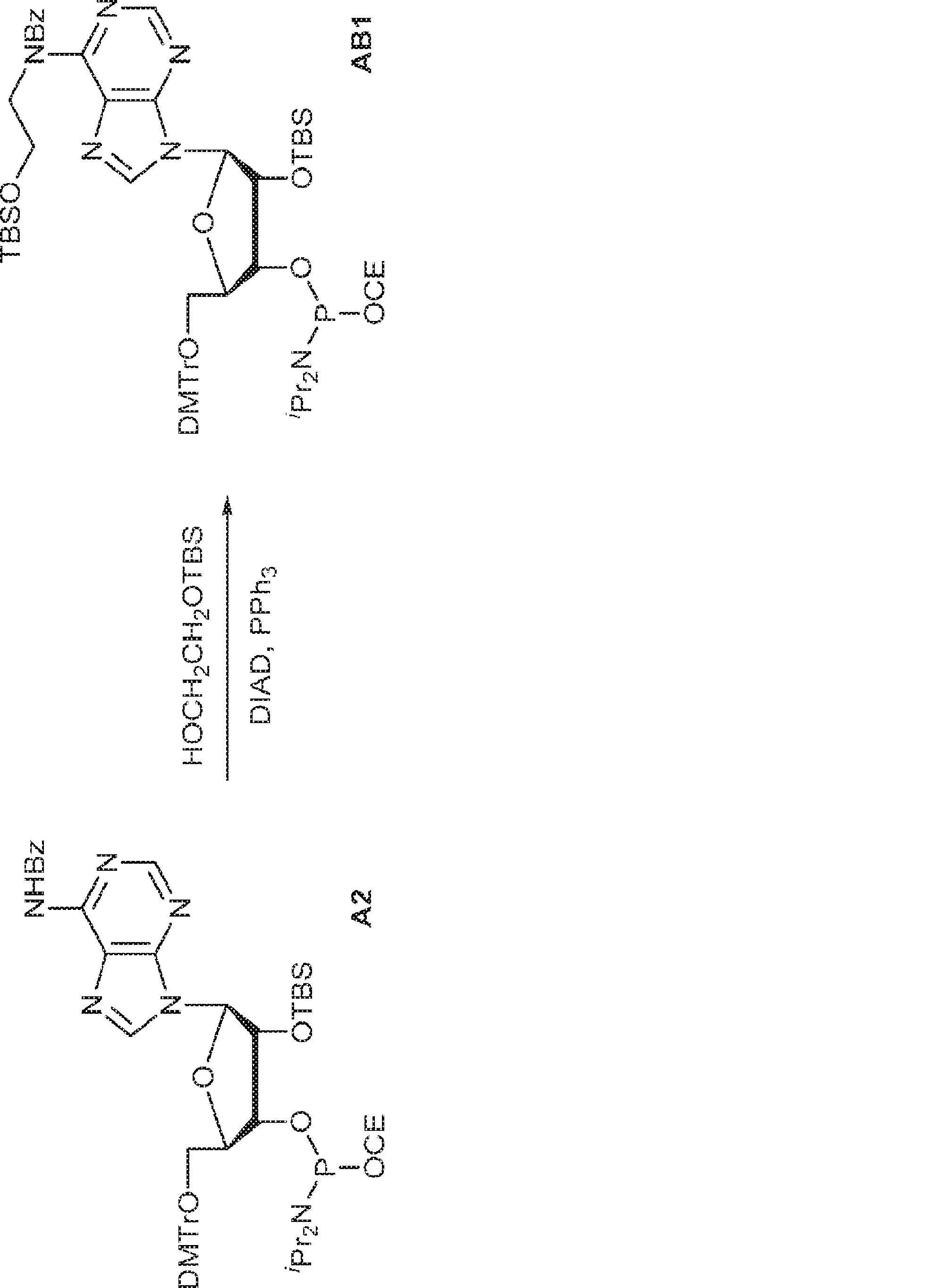
AC1の調製:

工程1:ジオール73
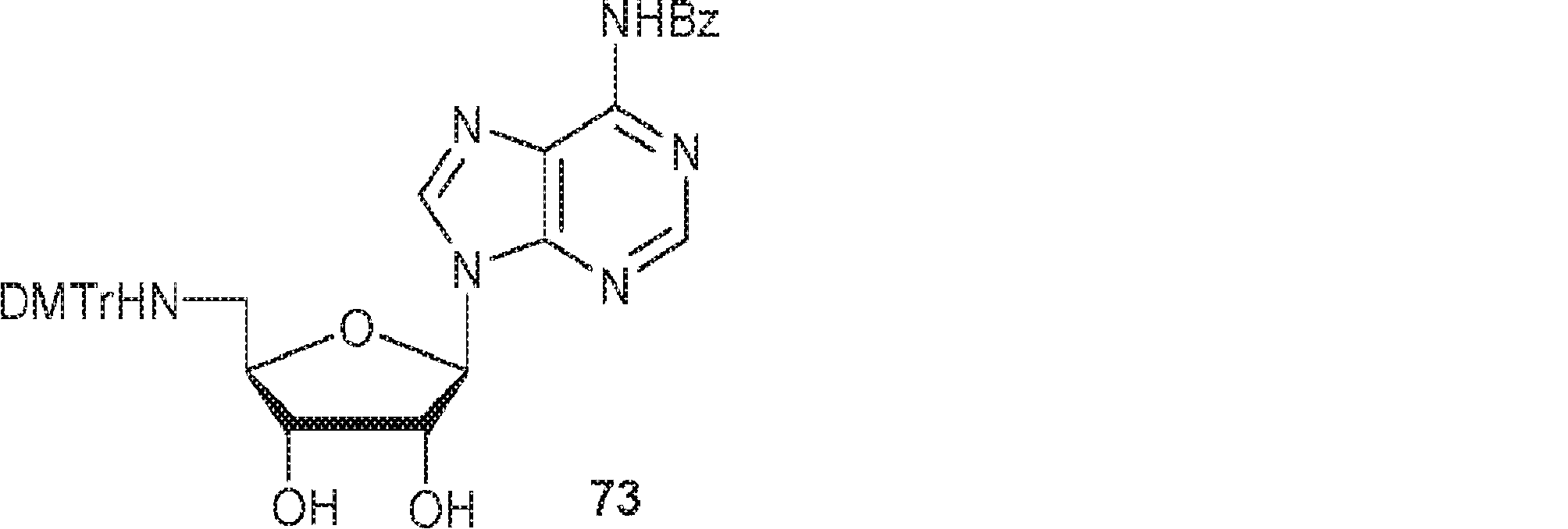
工程2:シリルエーテル74
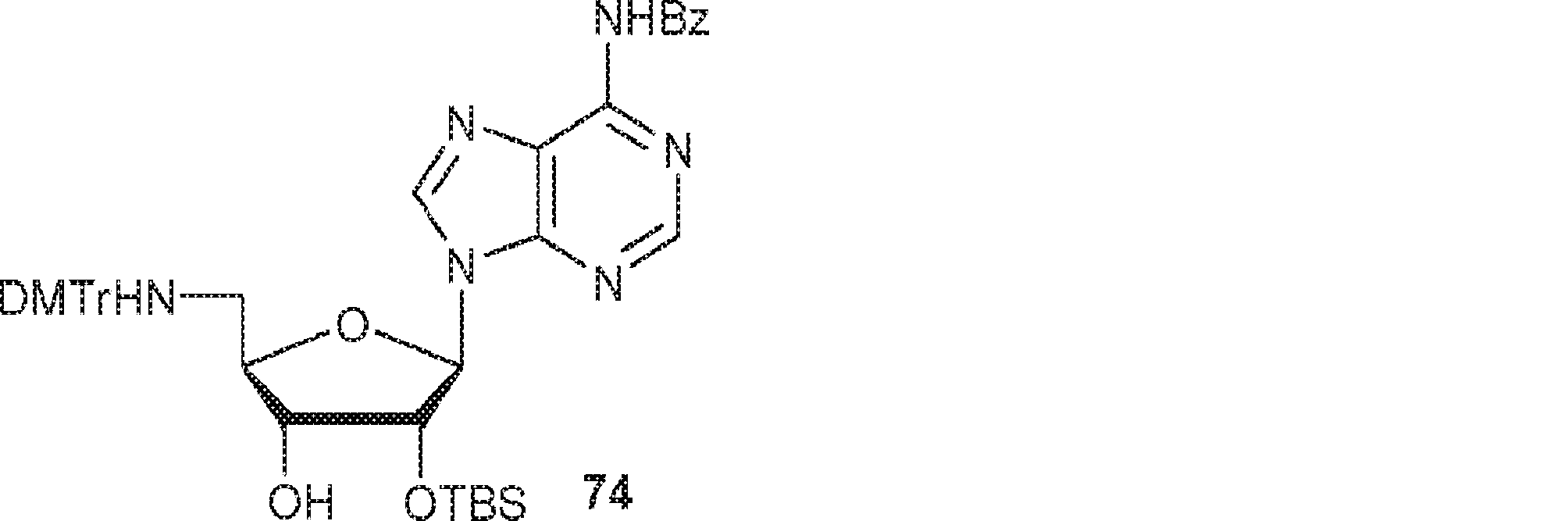
工程3:AC1
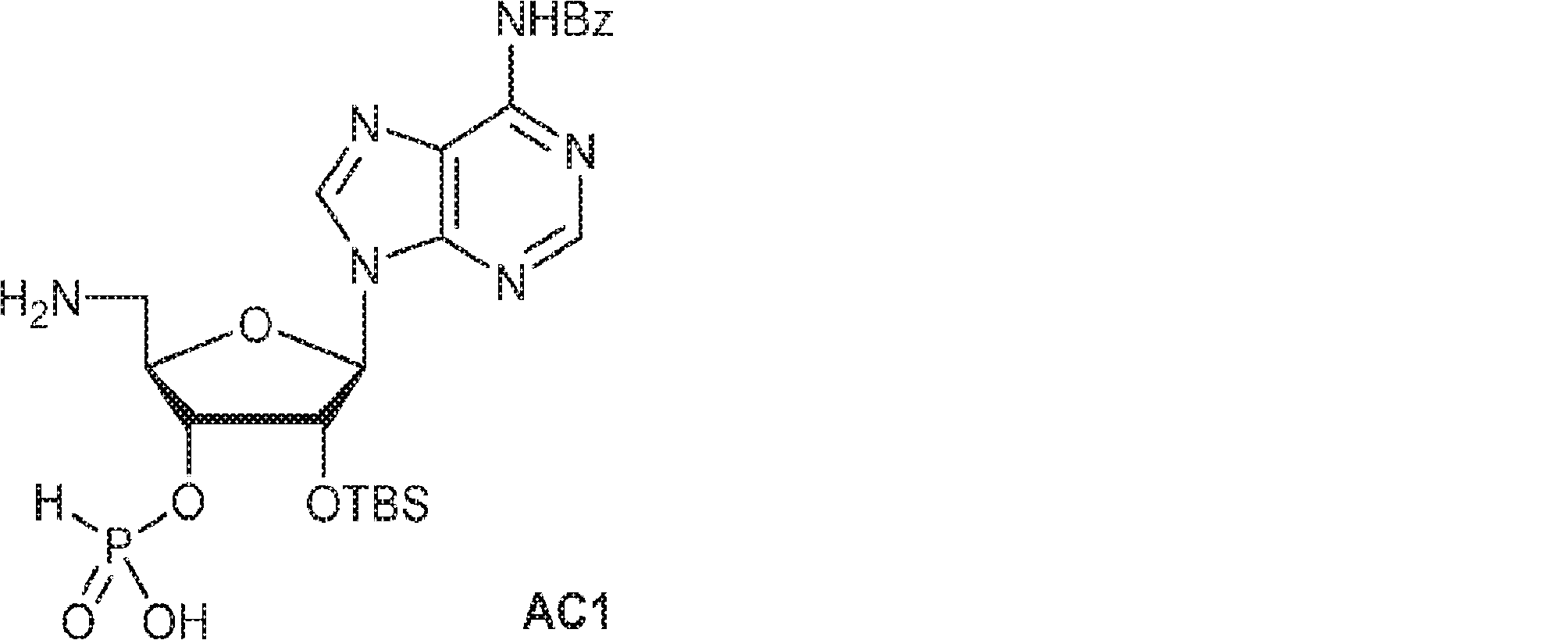
AC2の調製:

工程1:アルコール75
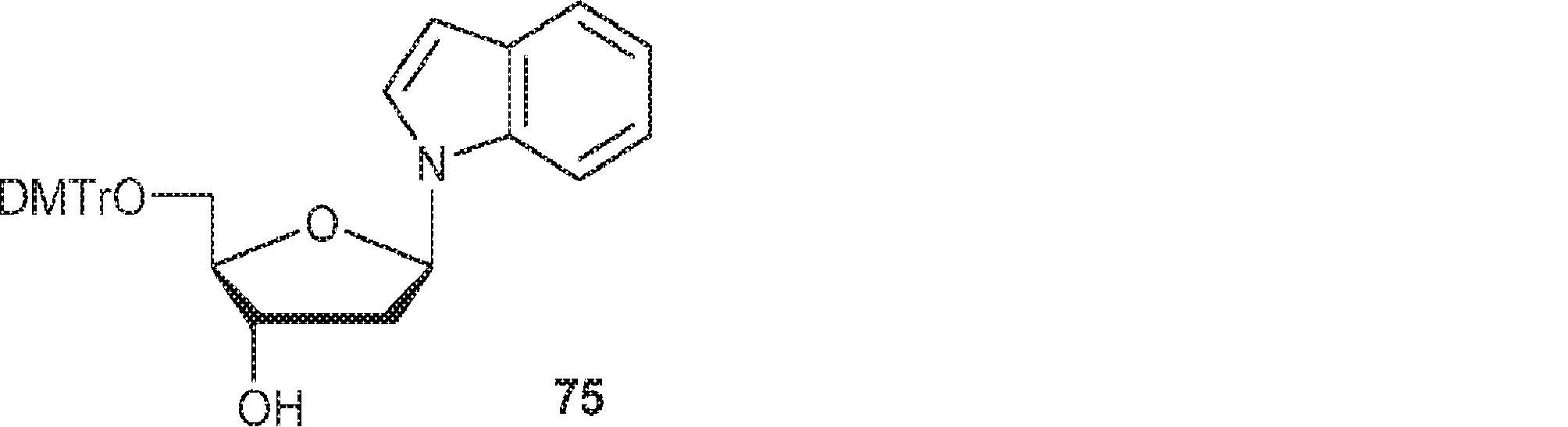
工程2:AC2

G1およびG2の調製:
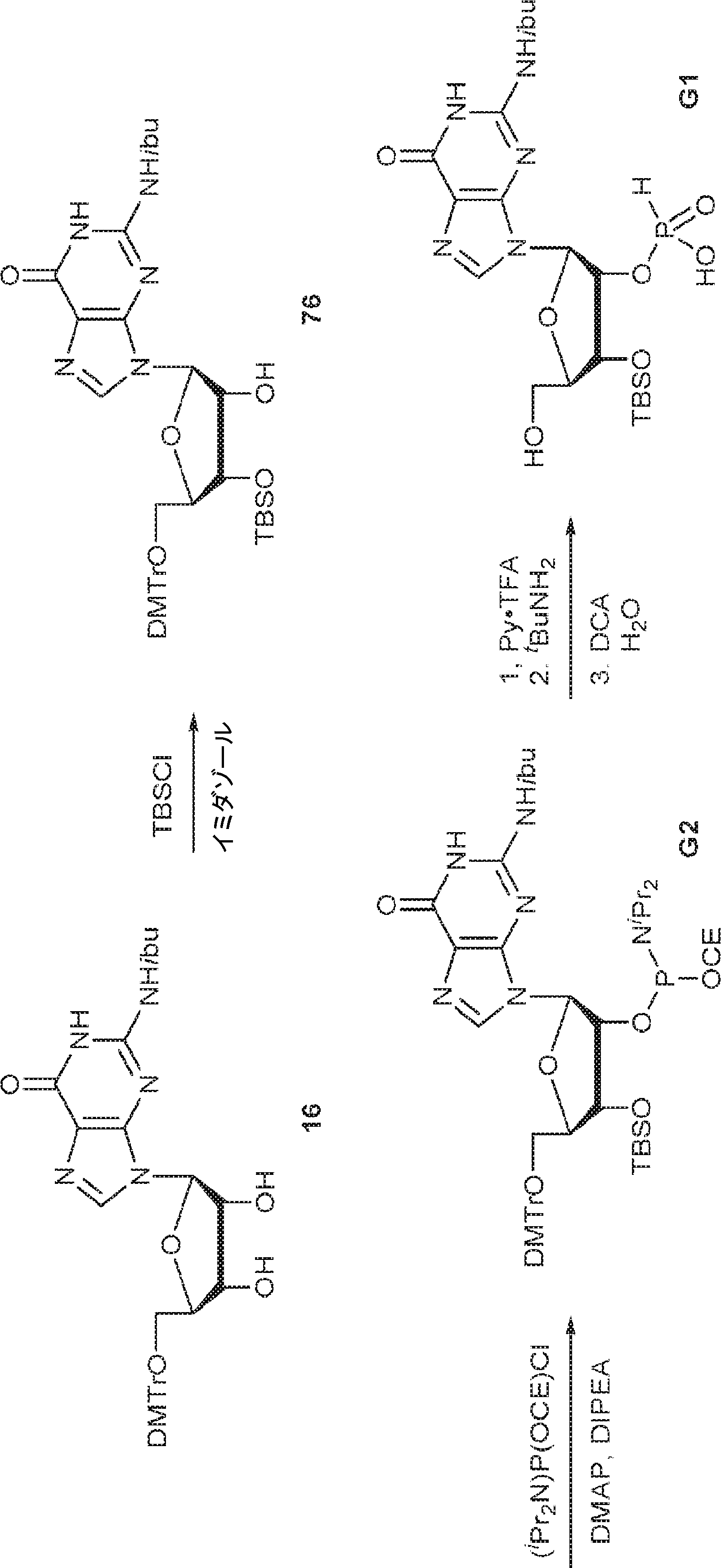
工程1:シリルエーテル76
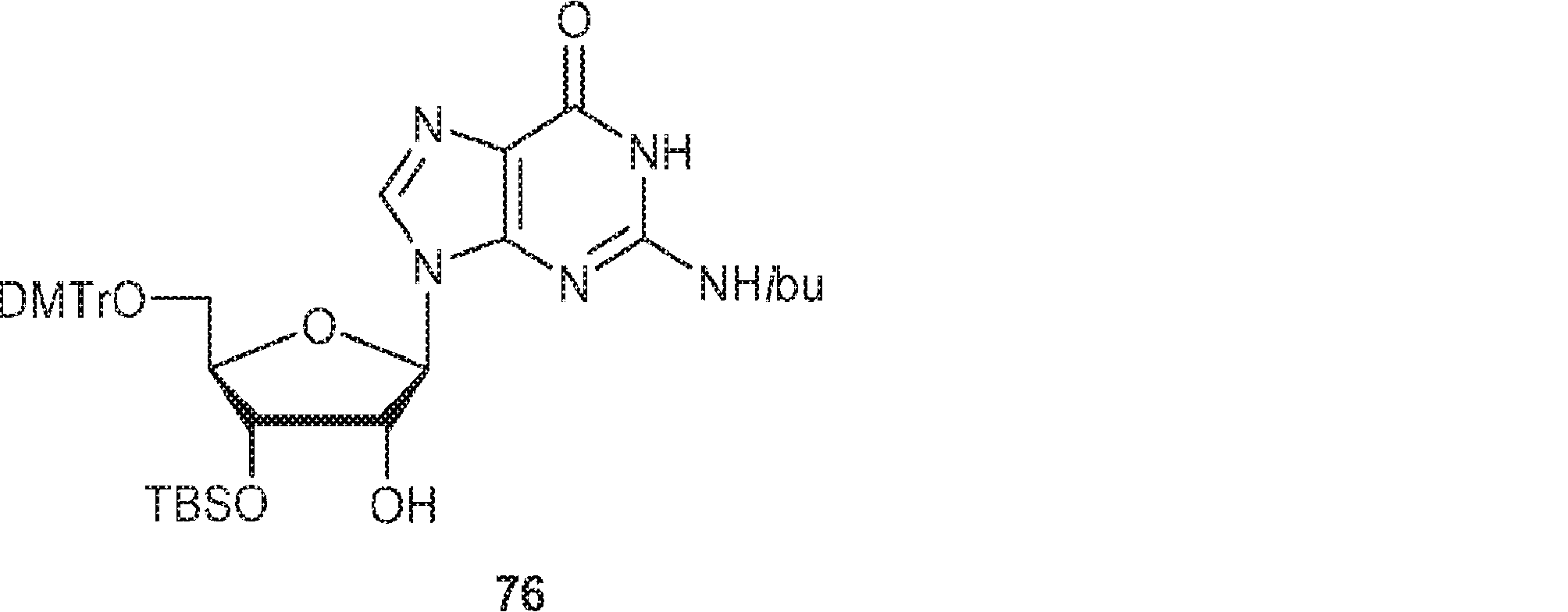
工程2:G2
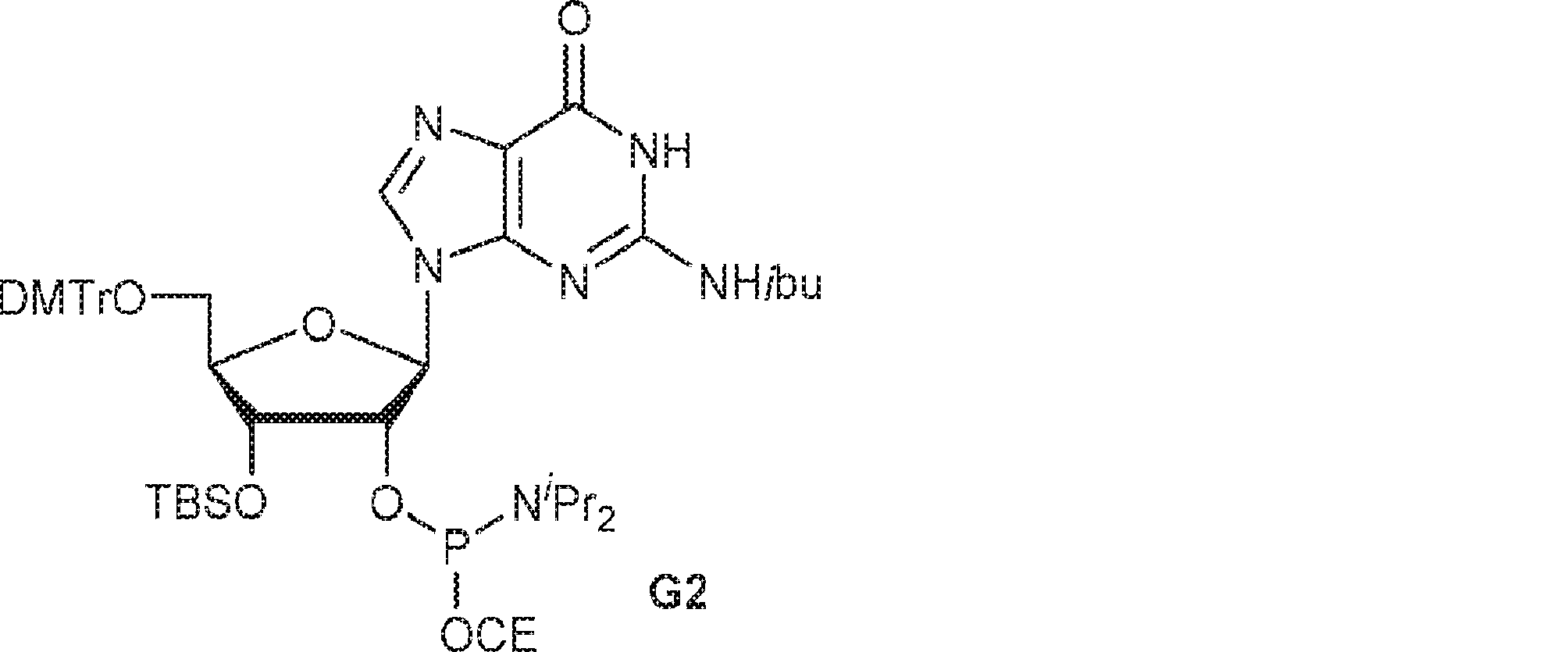
工程3:G1

GB1およびGB2の調製:

工程1:ジオール77

工程2:シリルエーテル78

工程3:GB1
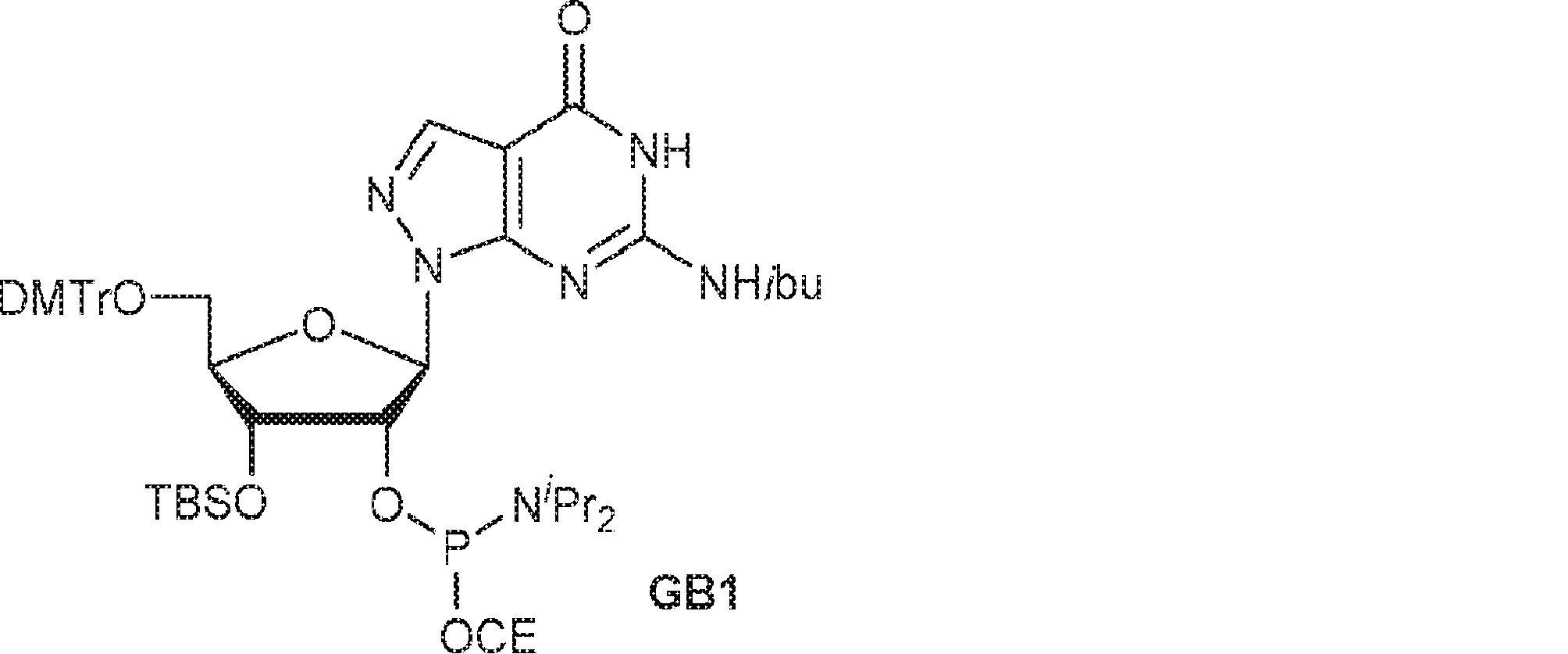
工程4:GB2

GC1の調製:

工程1:アルコール79
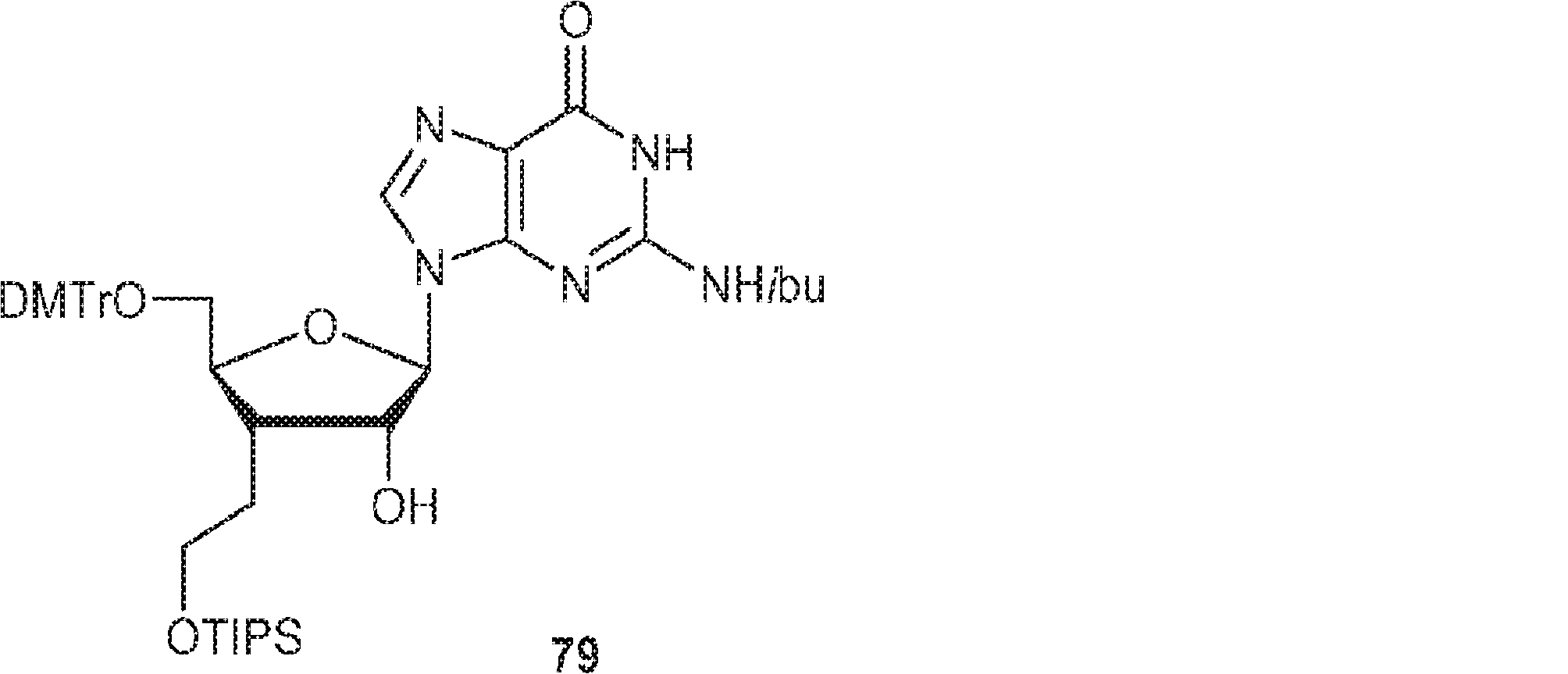
工程2:GC1

GC2の調製:

工程1:アルコール80
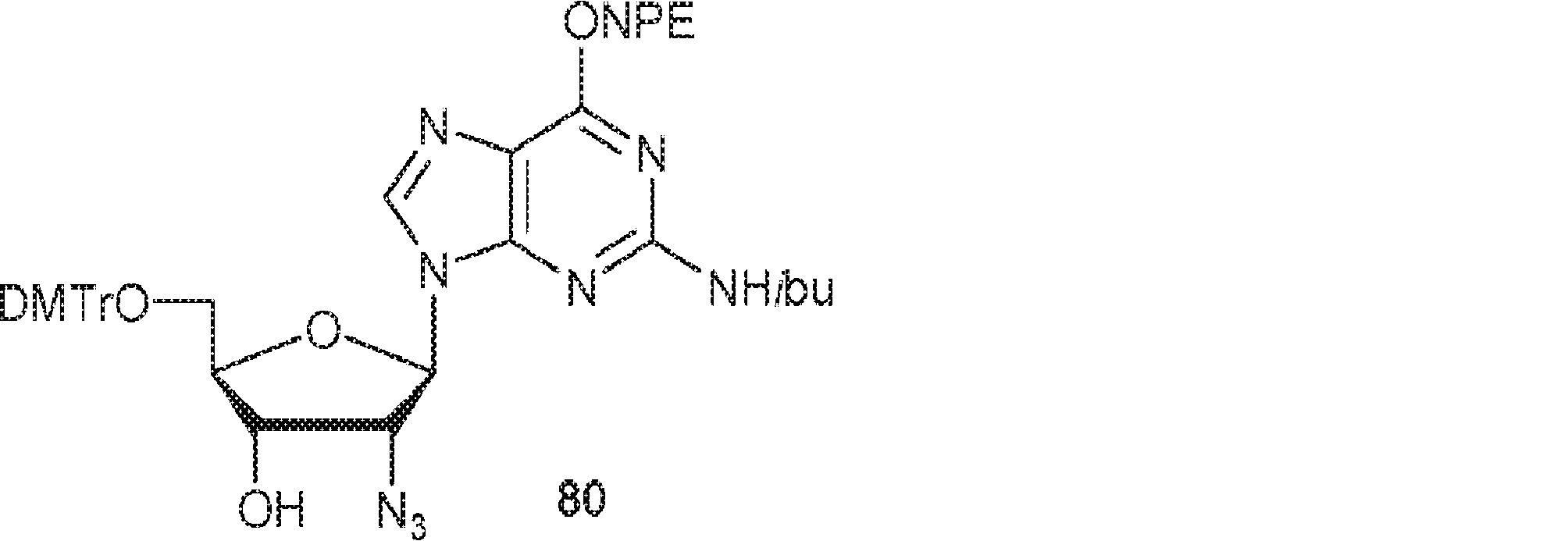
工程2:GC2
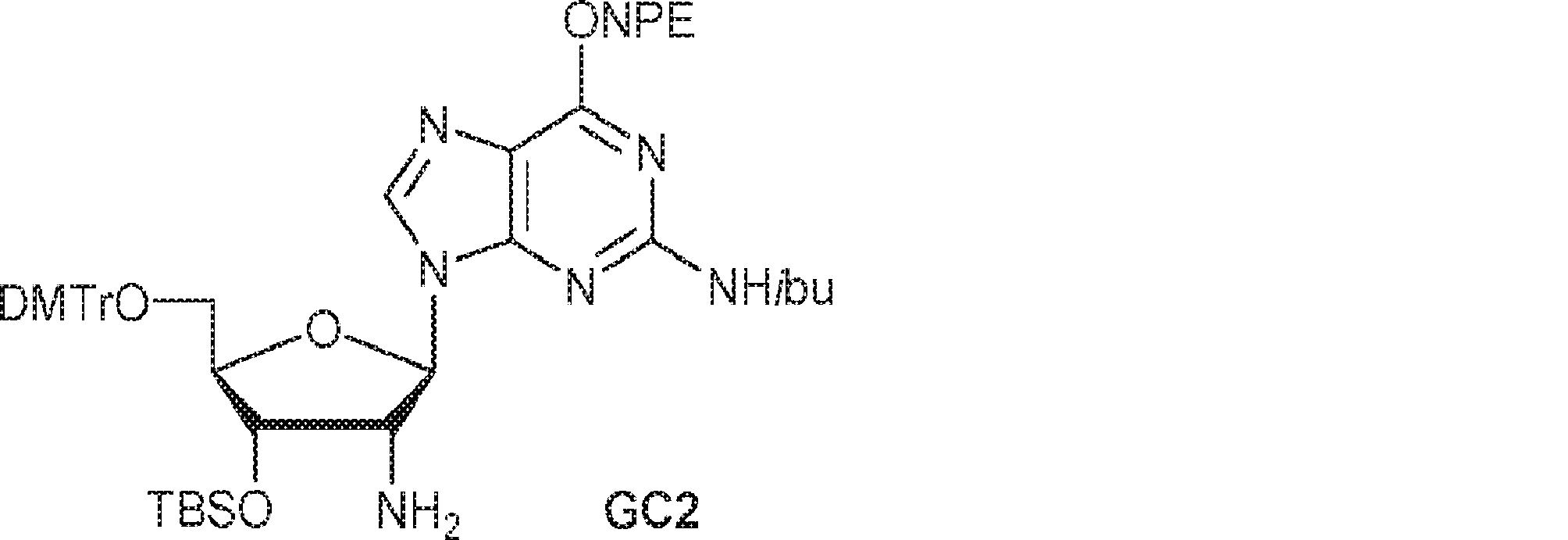
以下の化合物を、本質的には中間体A1、A2、AC1、AC2、G1、G2、GC1、およびGC2のための上記方法により調製する。 The following compounds are essentially prepared by the above methods for intermediates A1, A2, AC1, AC2, G1, G2, GC1 and GC2.
(表2)中間体A1~A5、AA1、AA2、AB1、AC1~AC6、G1~G7、GA1、GB1~GB3、およびGC1~GC5
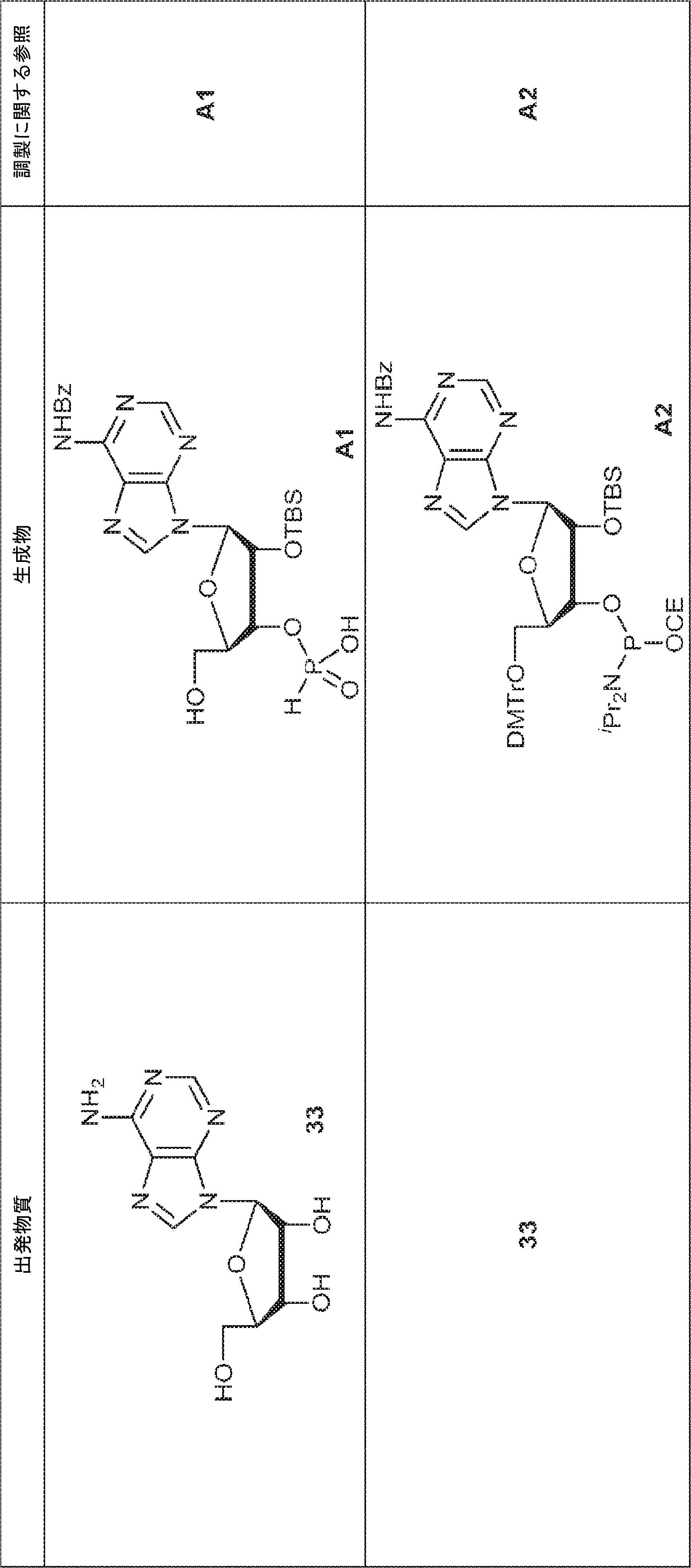
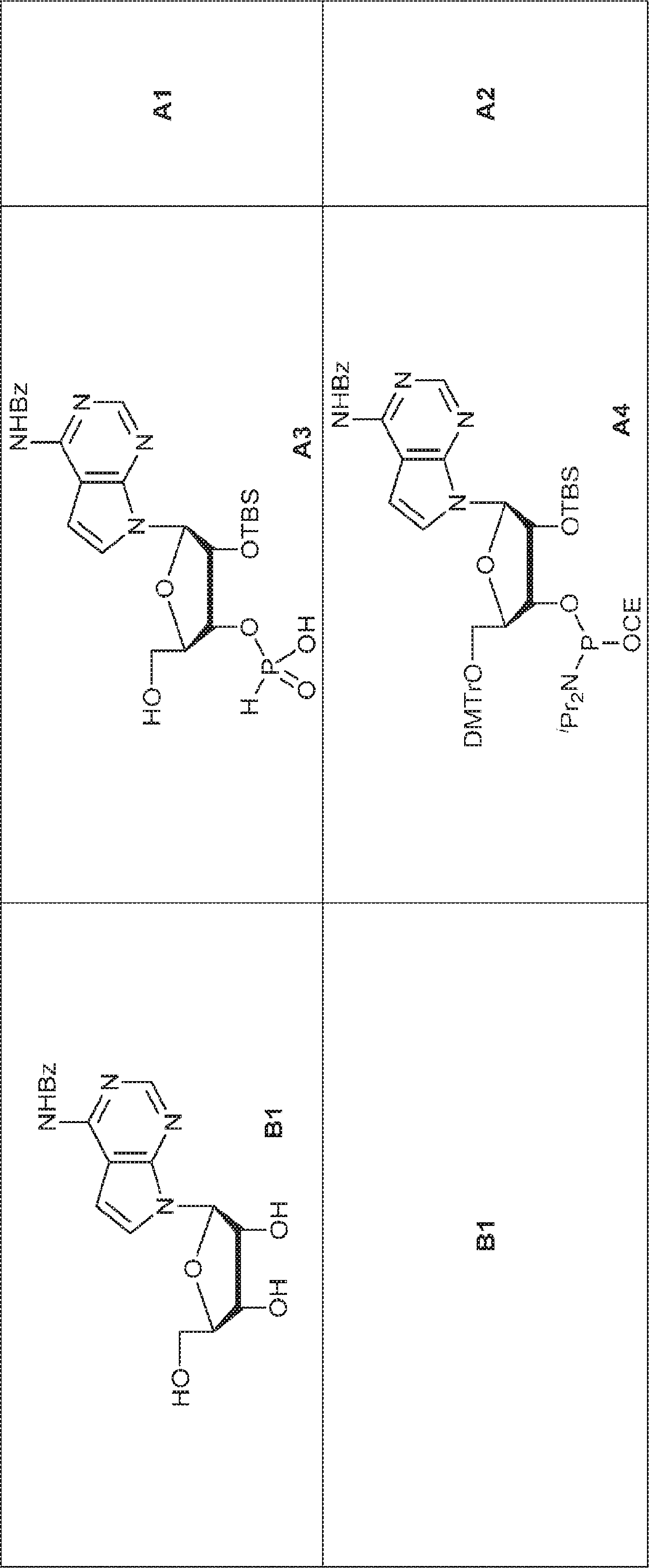
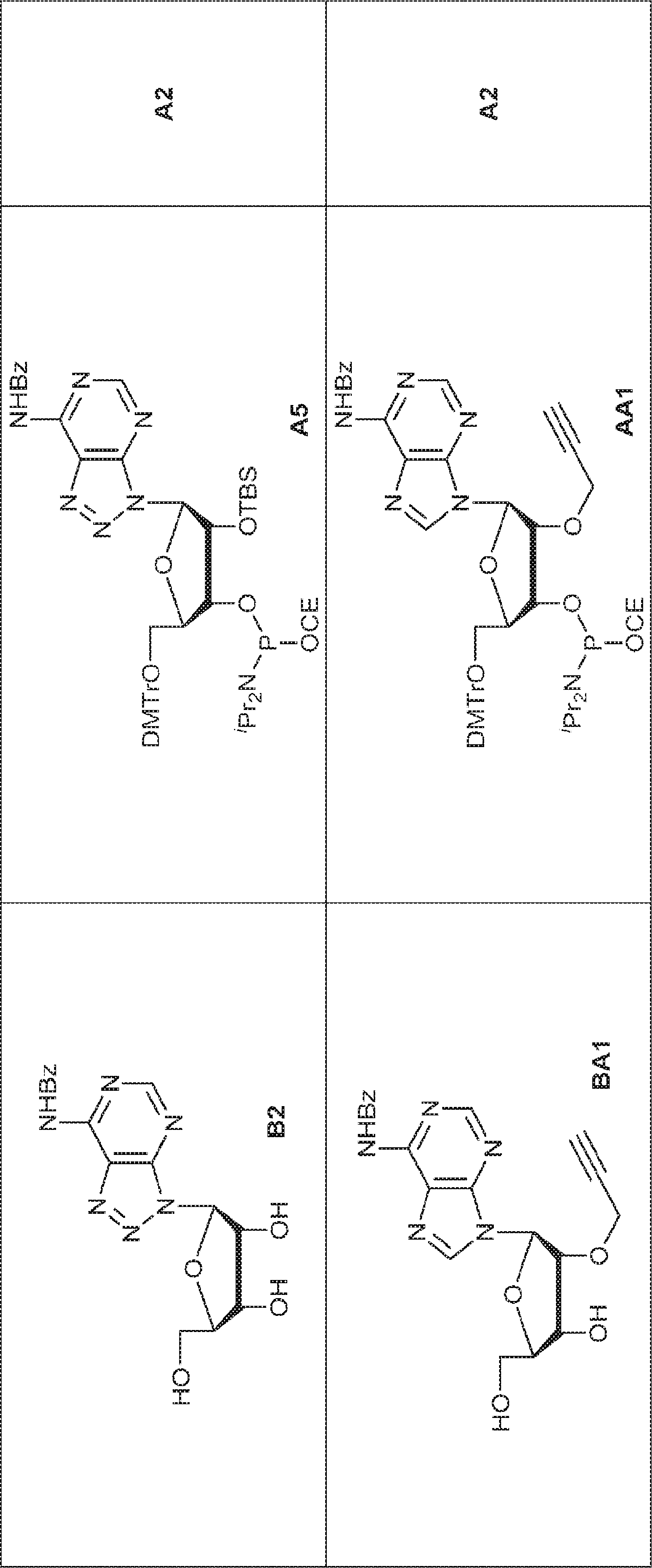
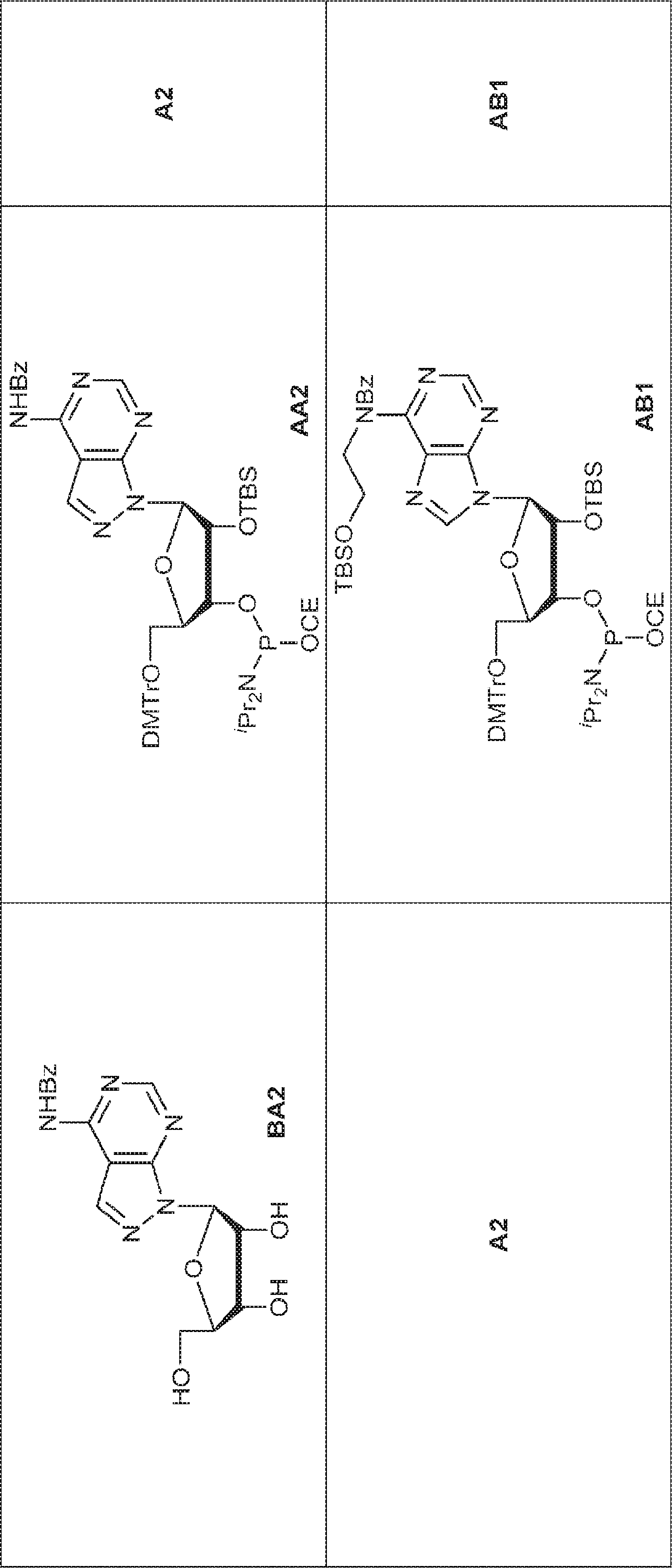

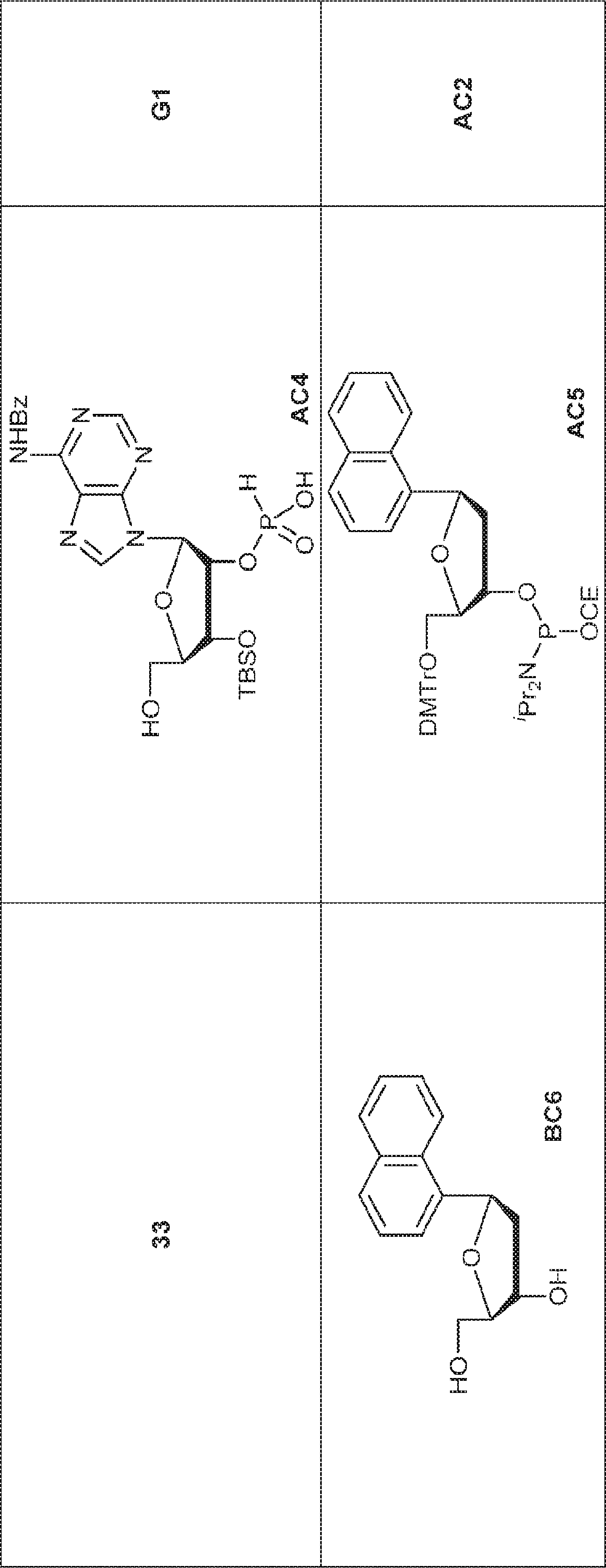
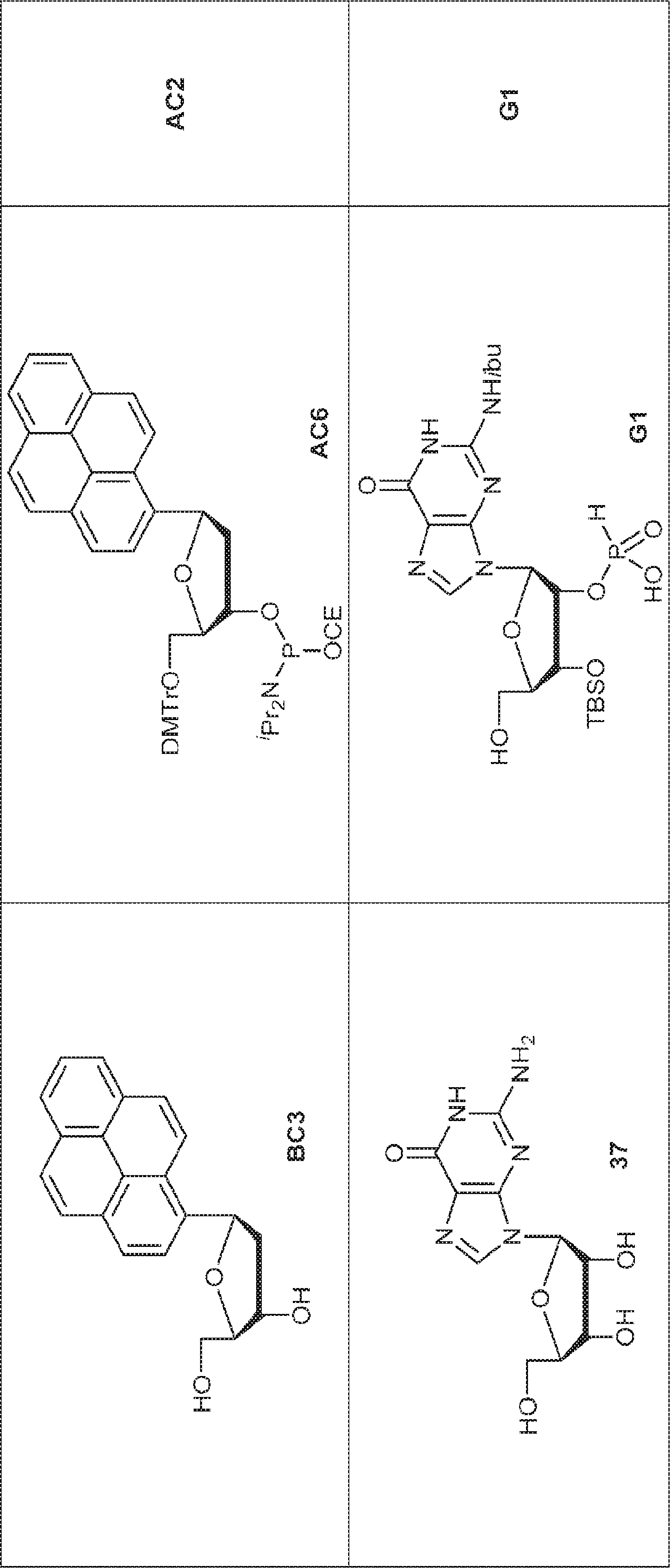

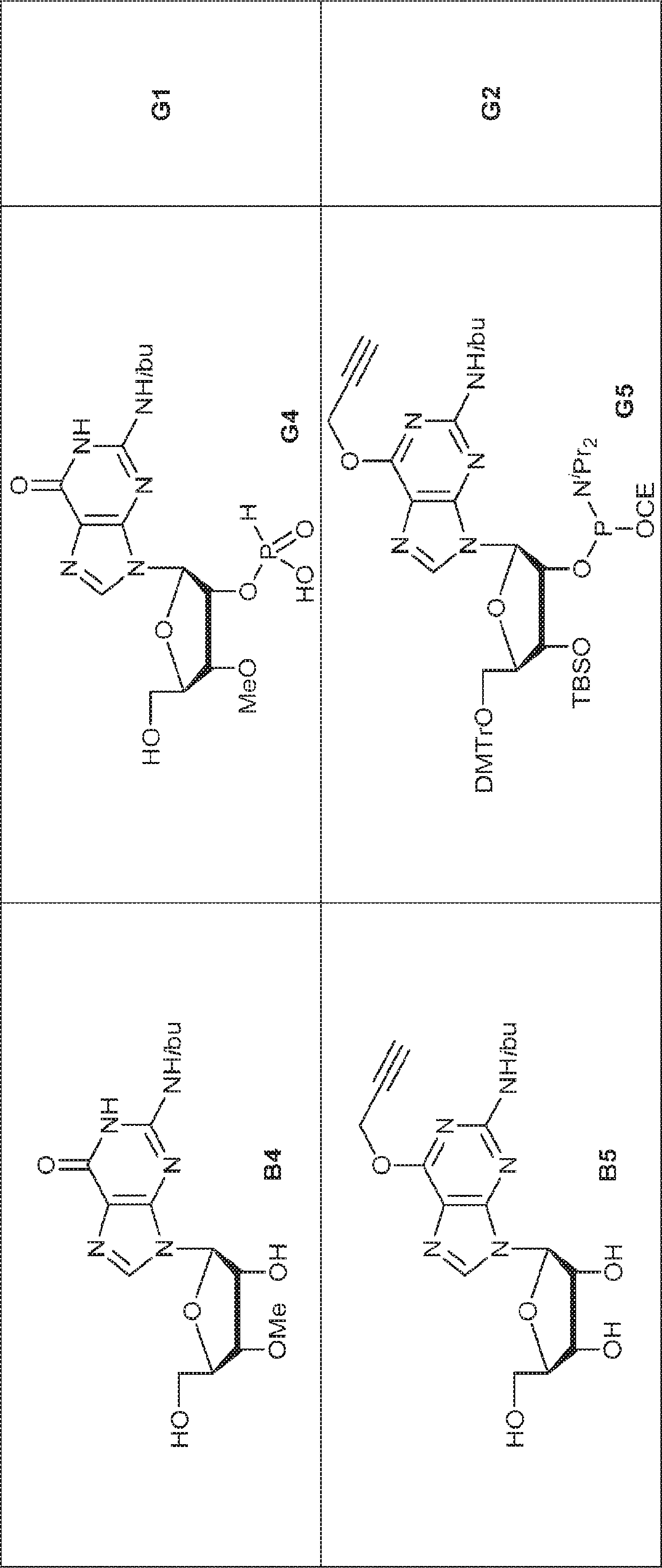
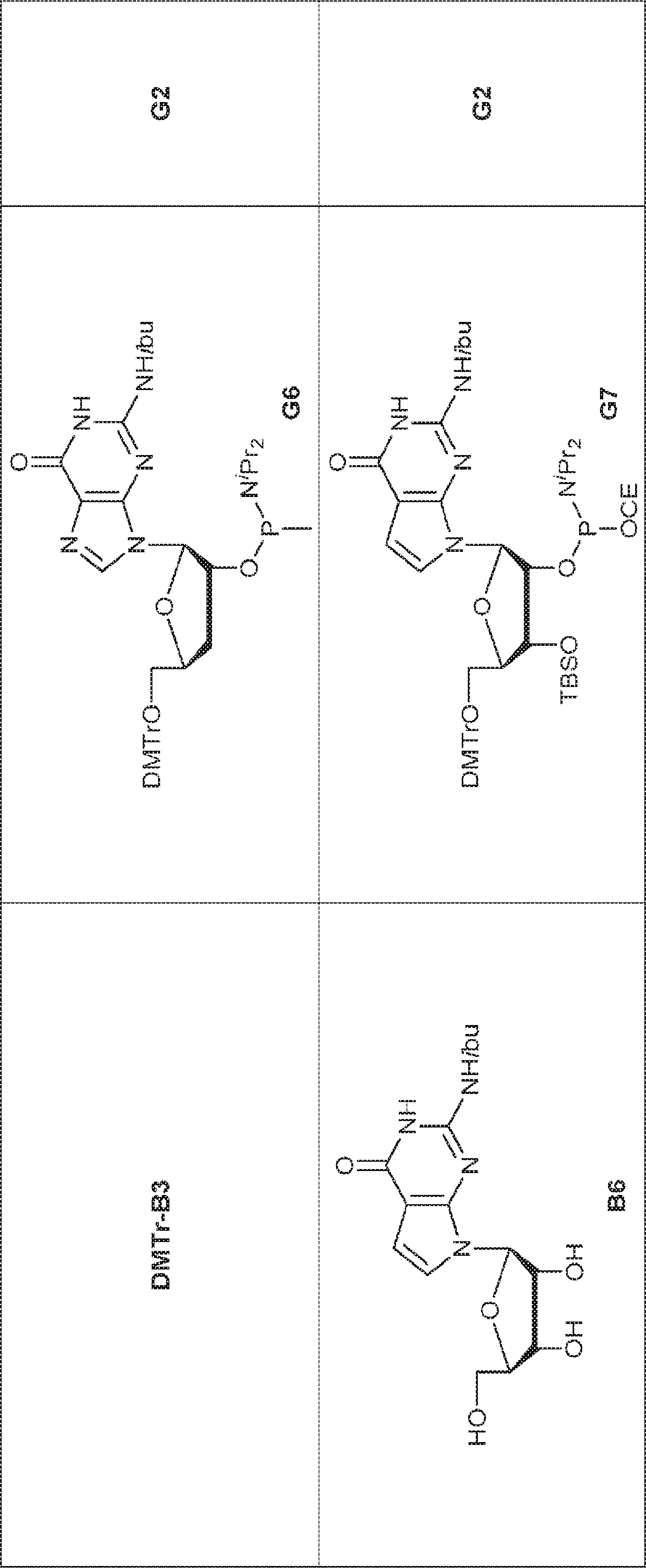


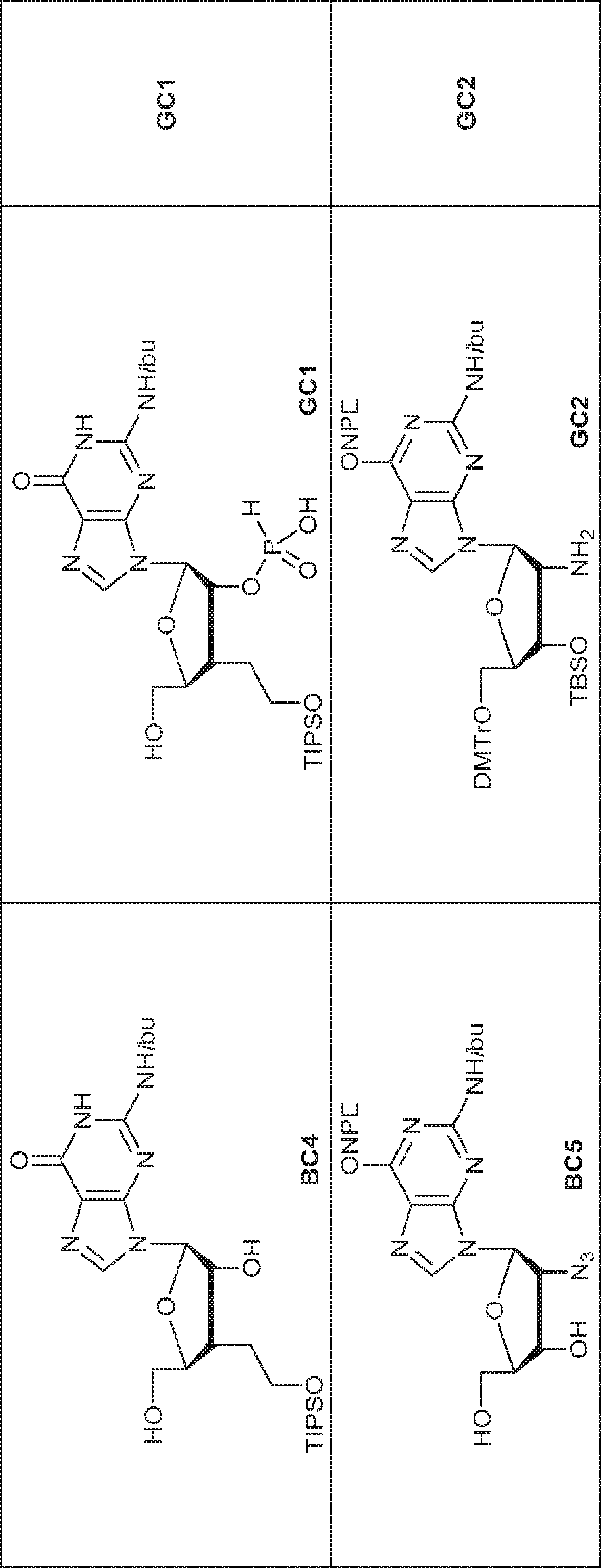


C1の調製:
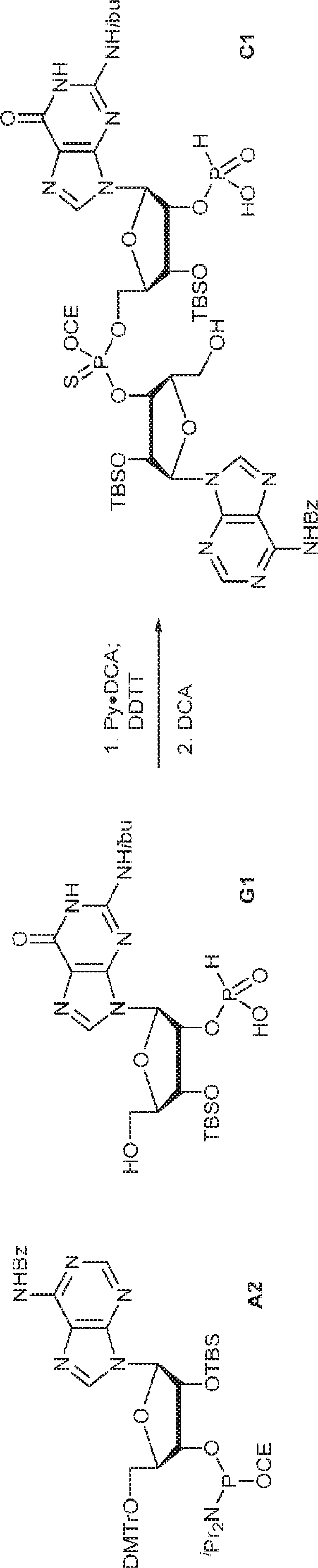
C2の調製:
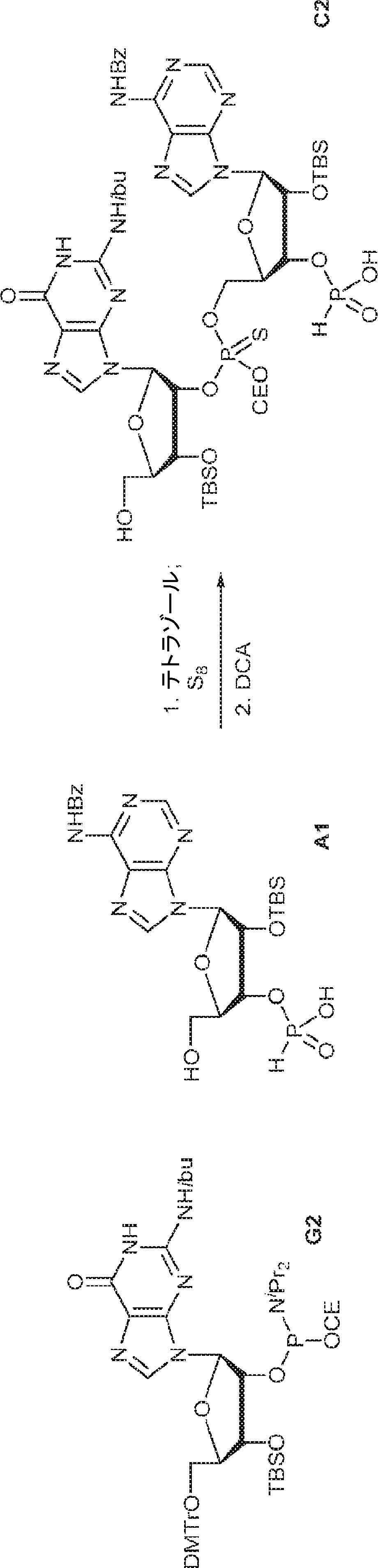
C3の調製:

CA1の調製:
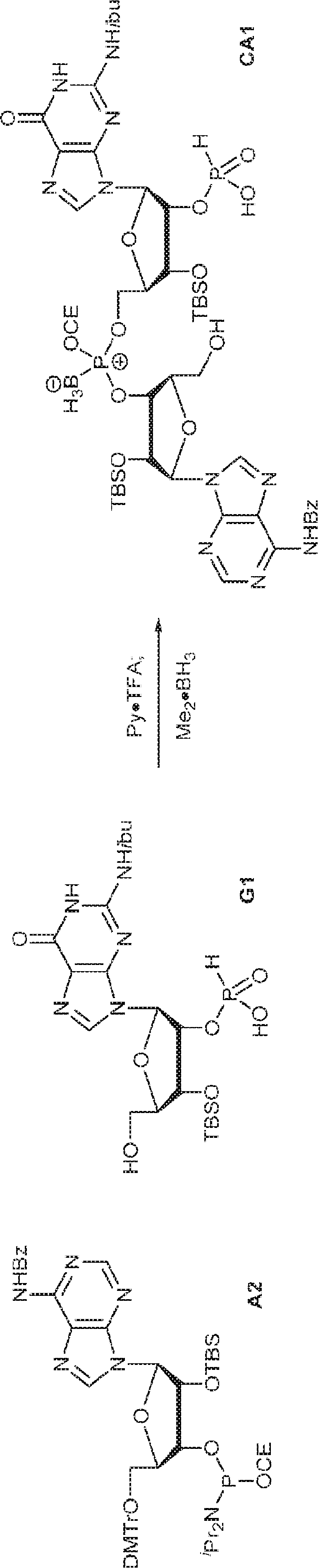
CC1の調製:

工程1:スクアラミド81

工程2:CC1

CC2の調製:

工程1:スルファメート82
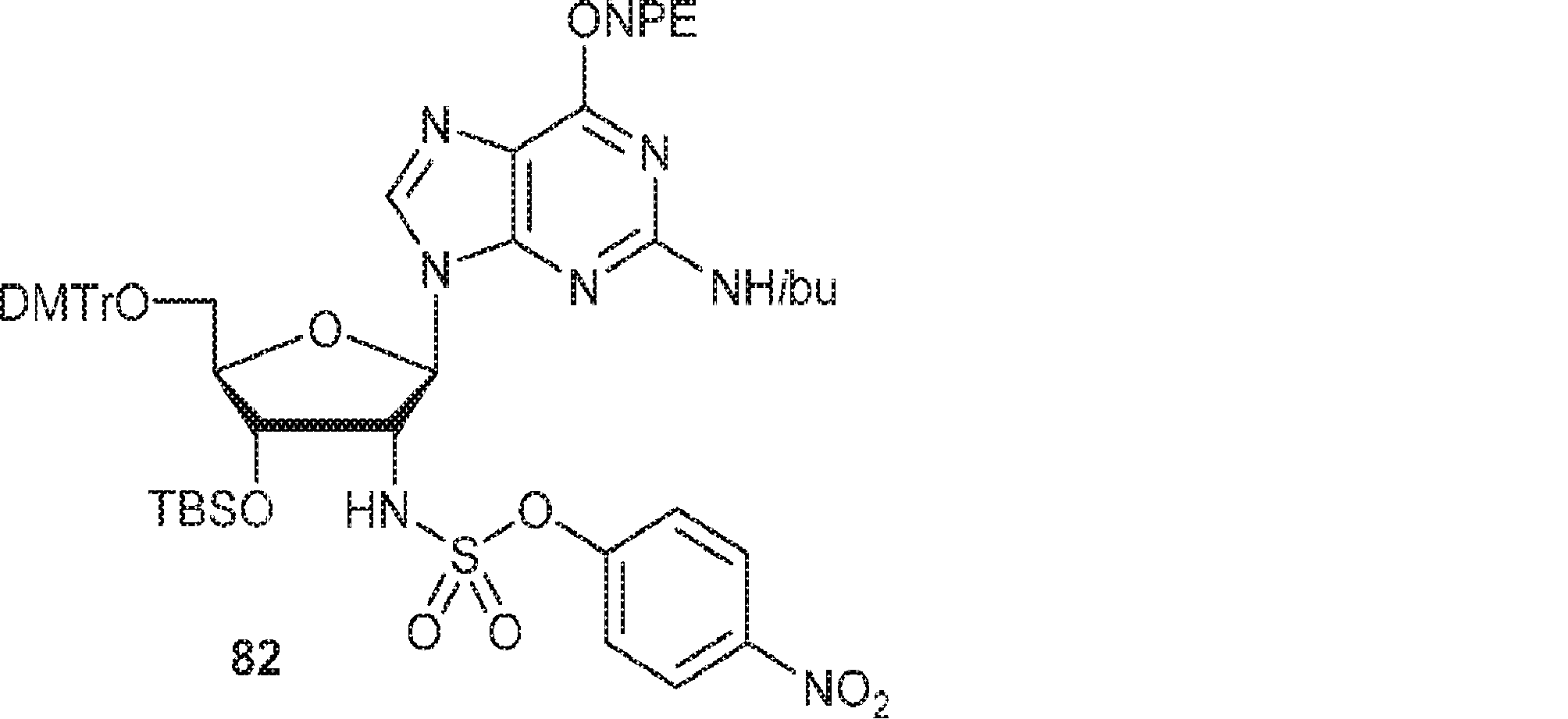
工程2:CC2
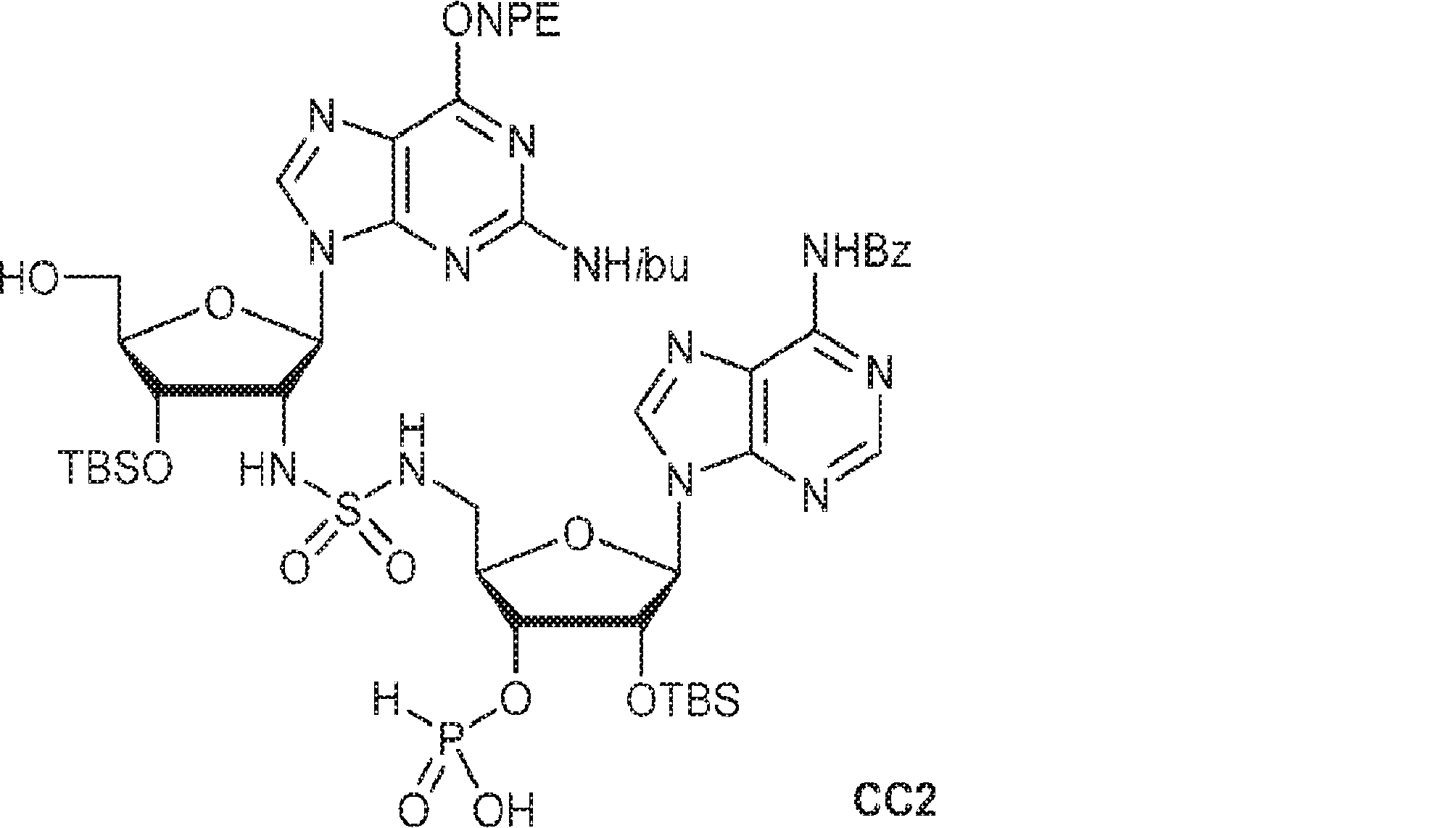
実施例A:E5の合成
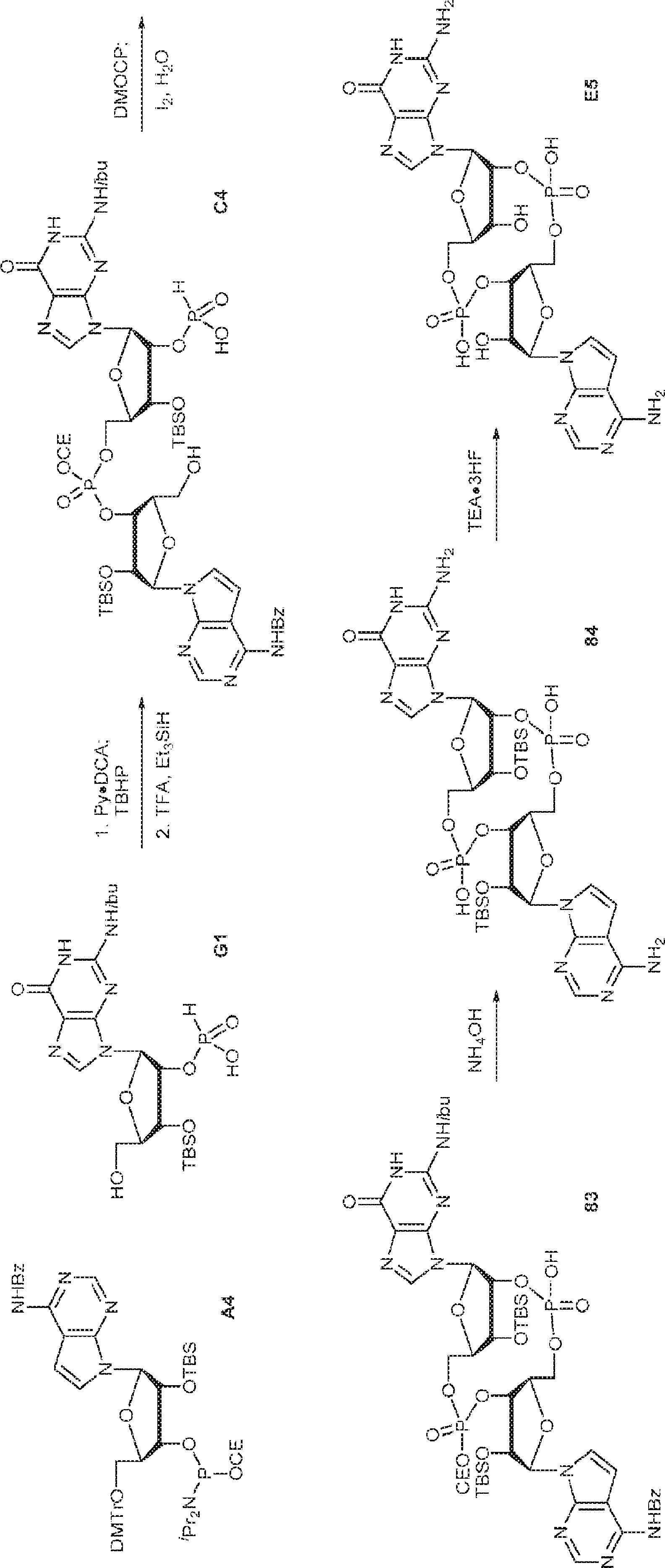
工程1:C4

工程2:ホスホジエステル83
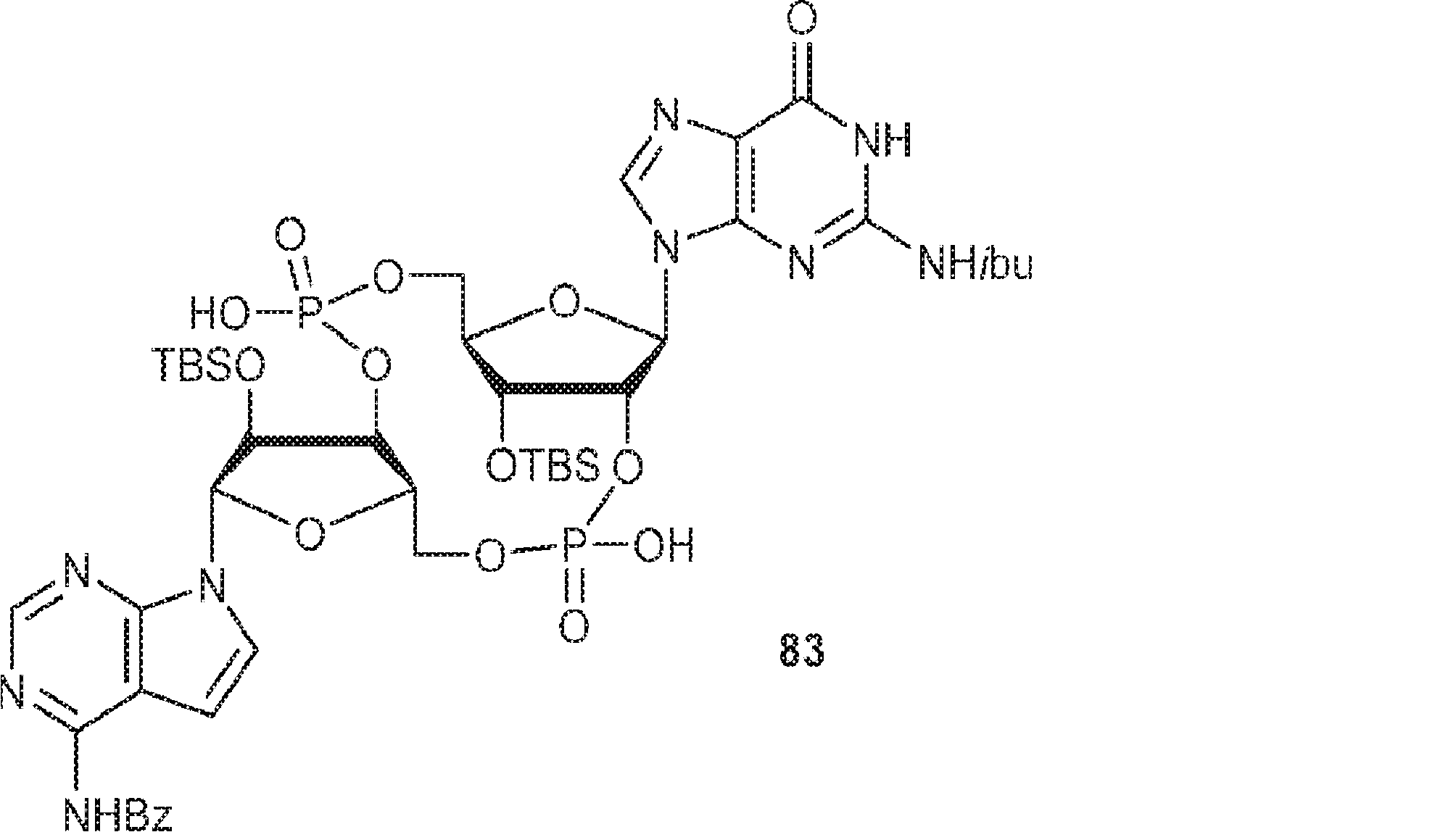
工程3:ビスホスホジエステル84
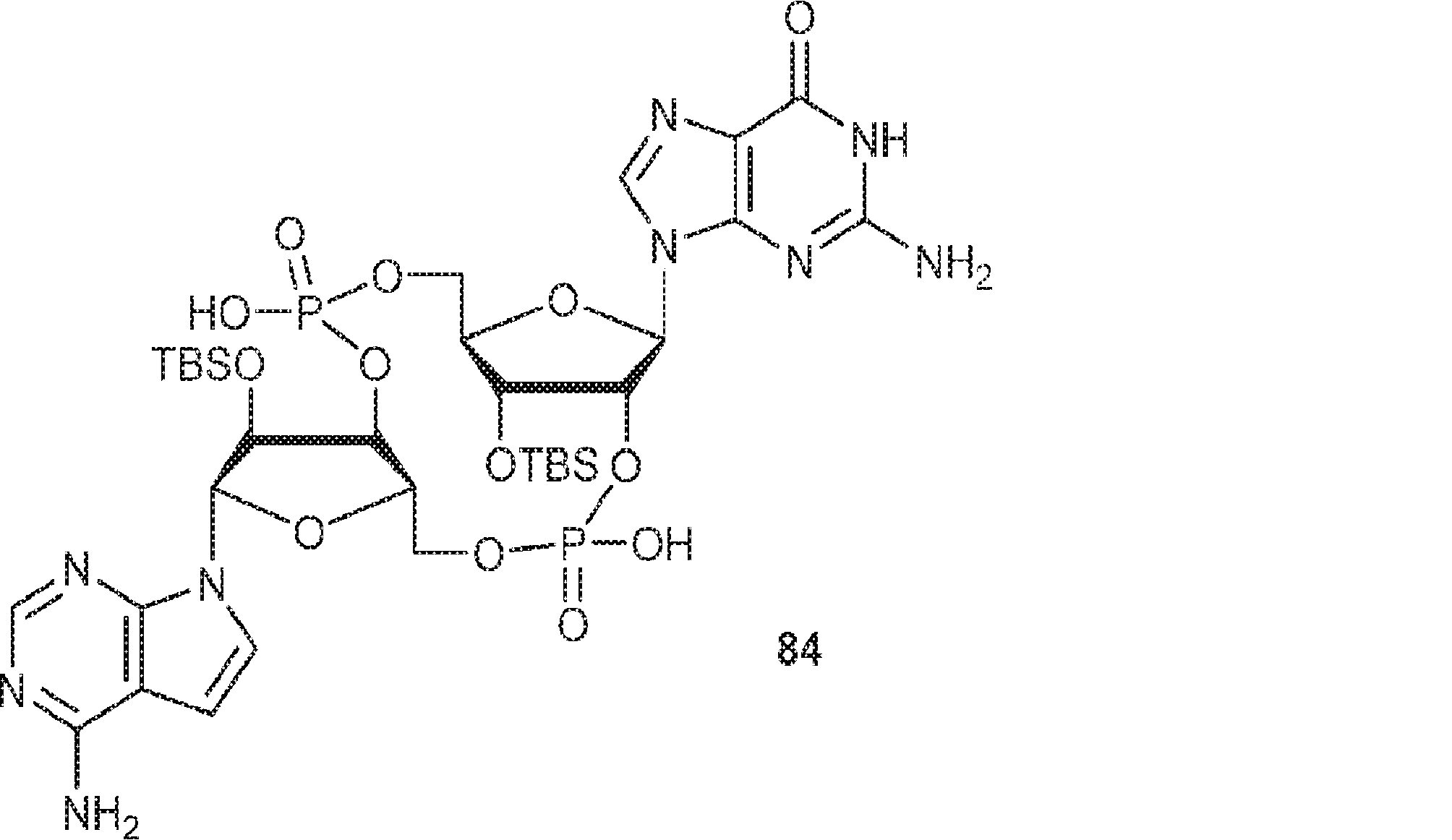
工程4:E5

実施例B:E15~E18の合成
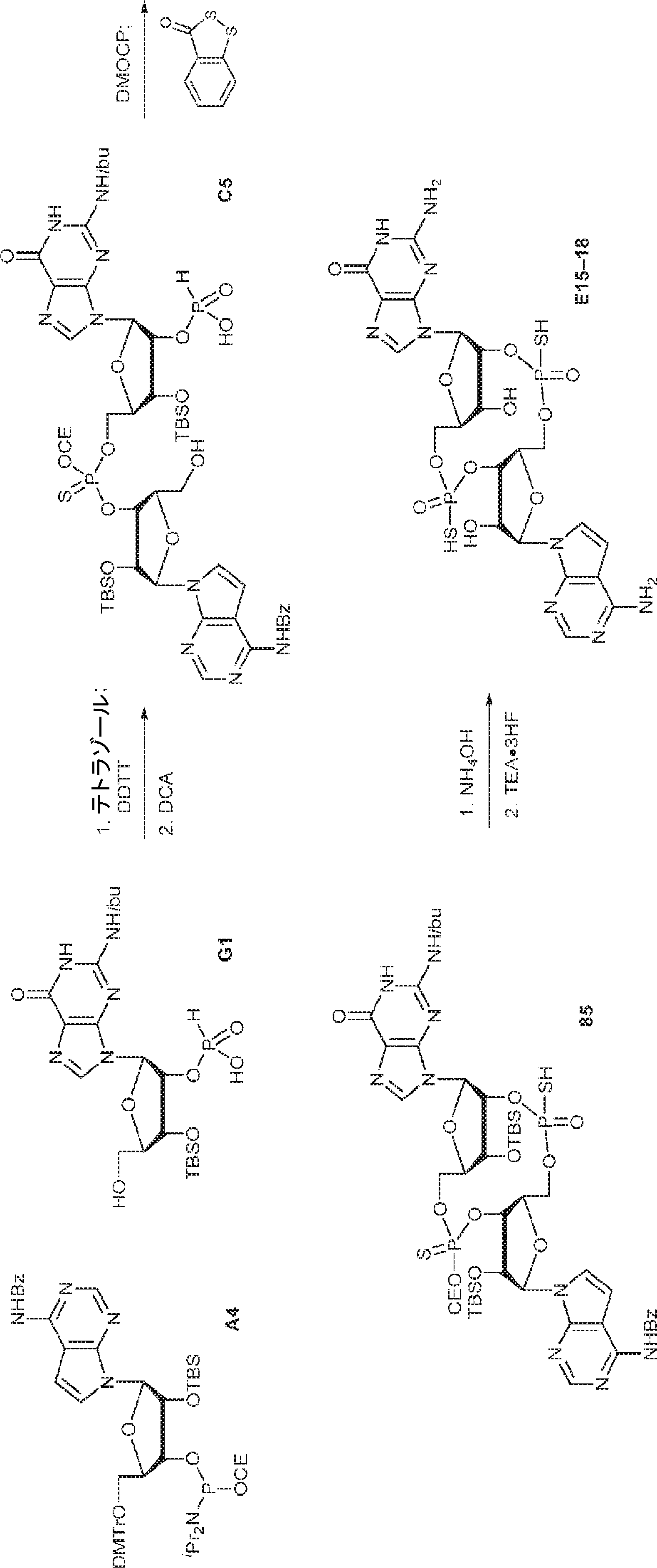
工程1:C5
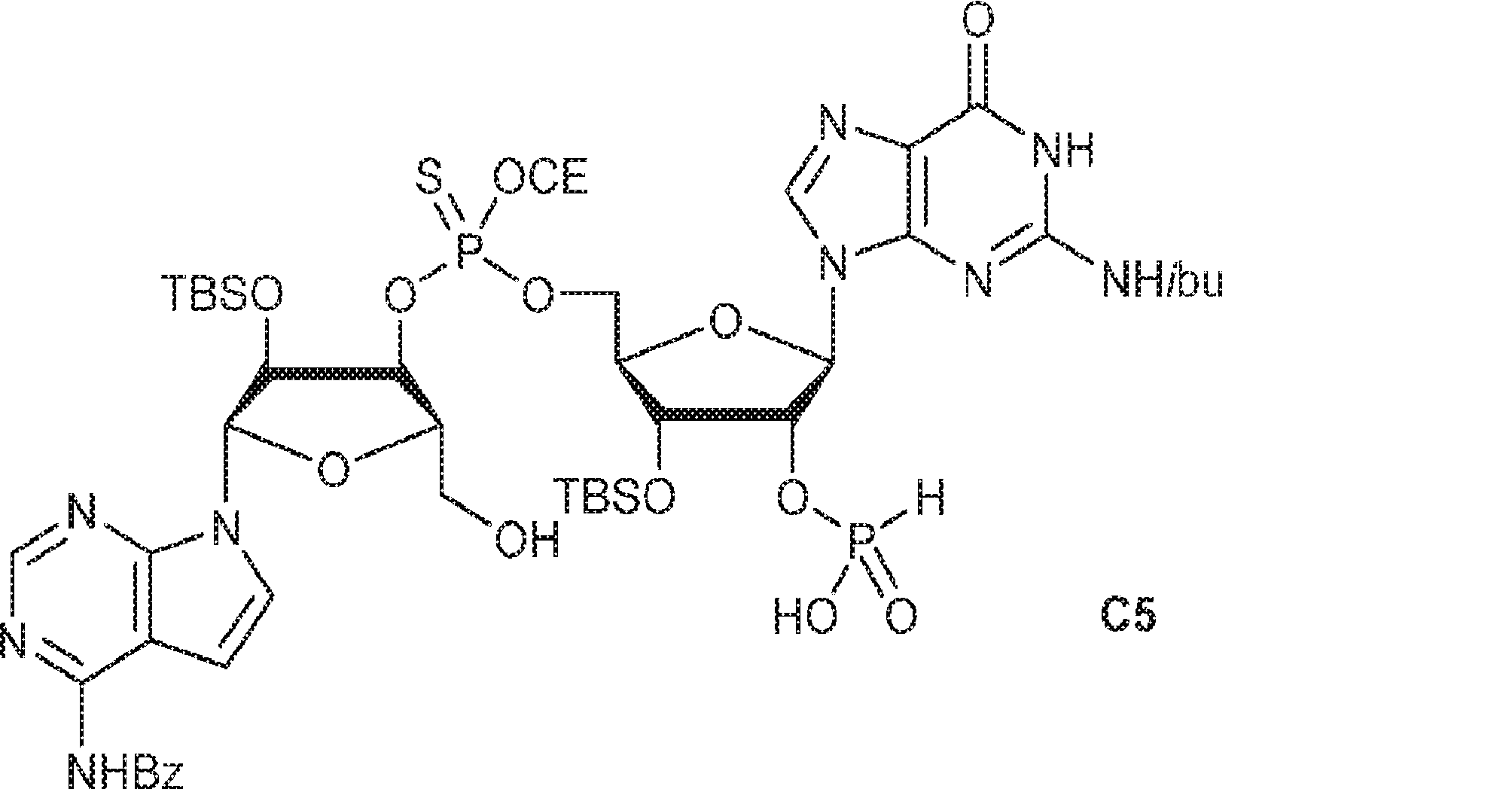
工程2:ホスホロチオエート85
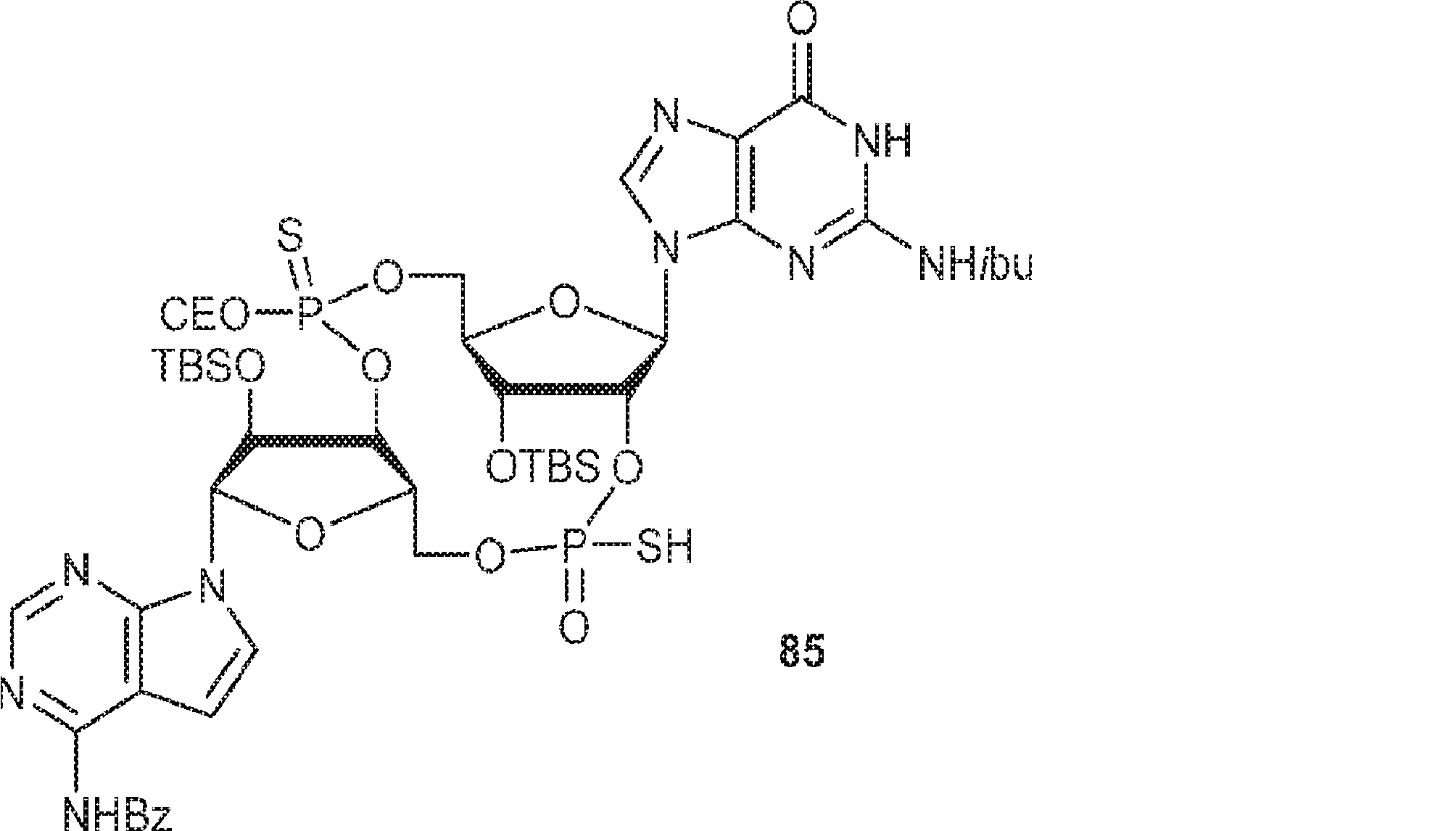
工程3:E15~E18
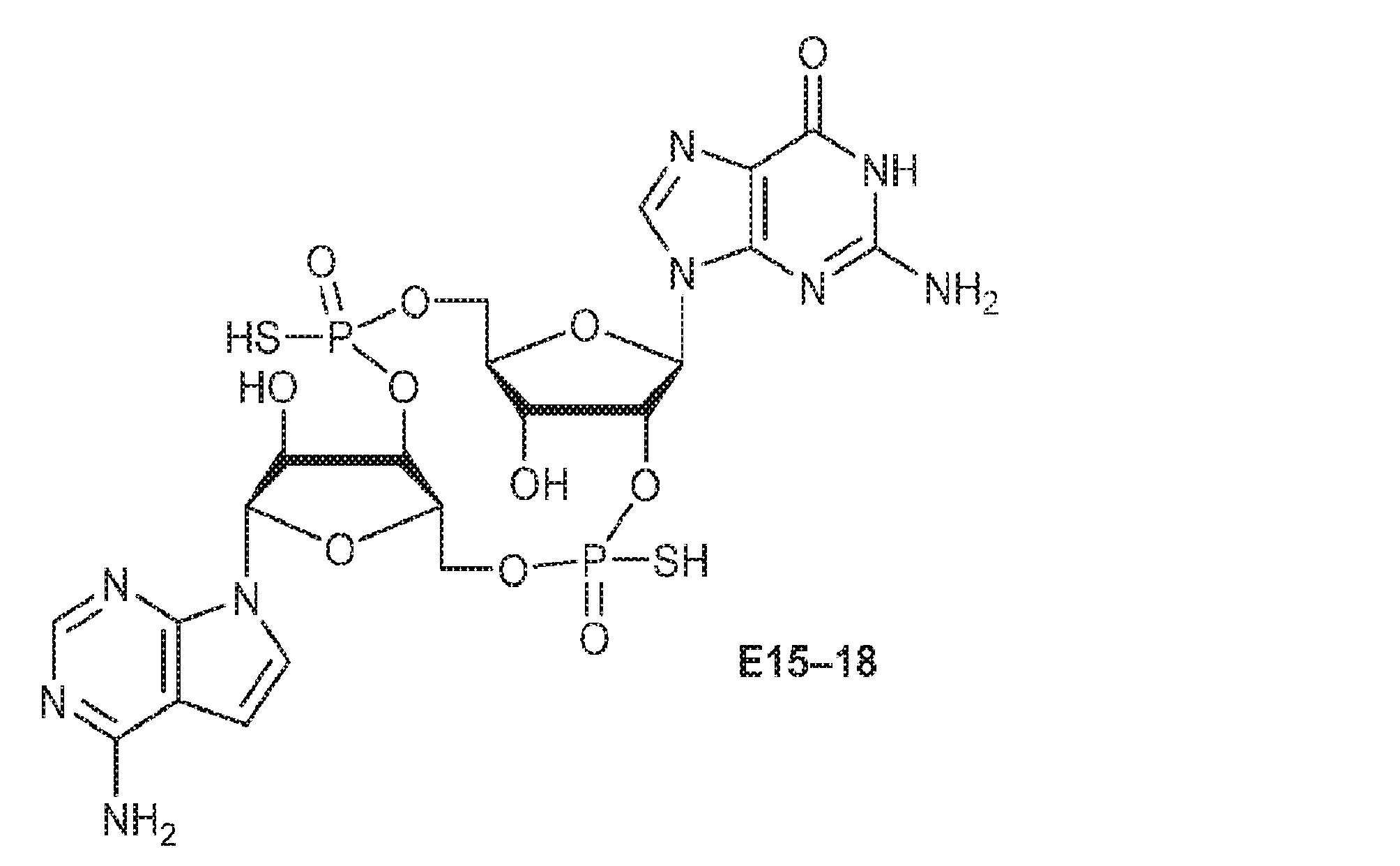
実施例C:E24の合成
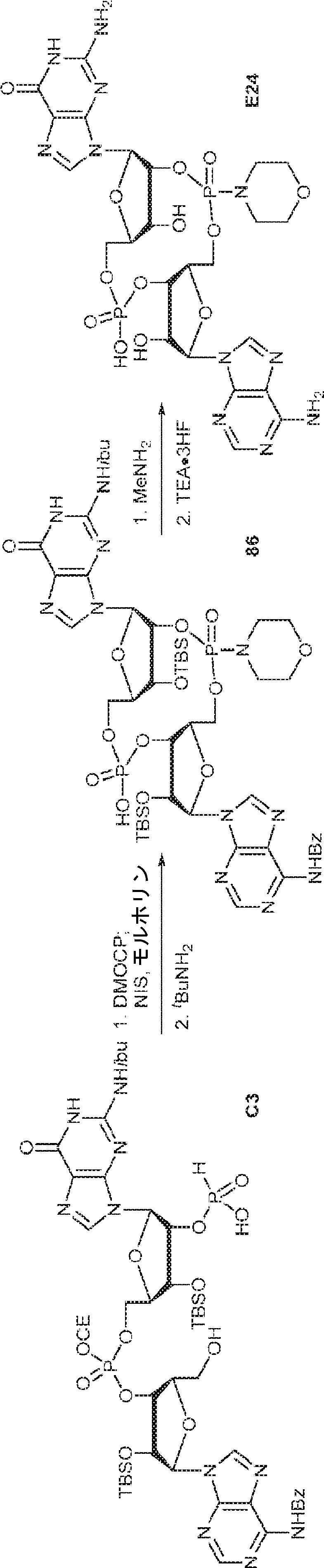
工程1:ホスホロアミデート44
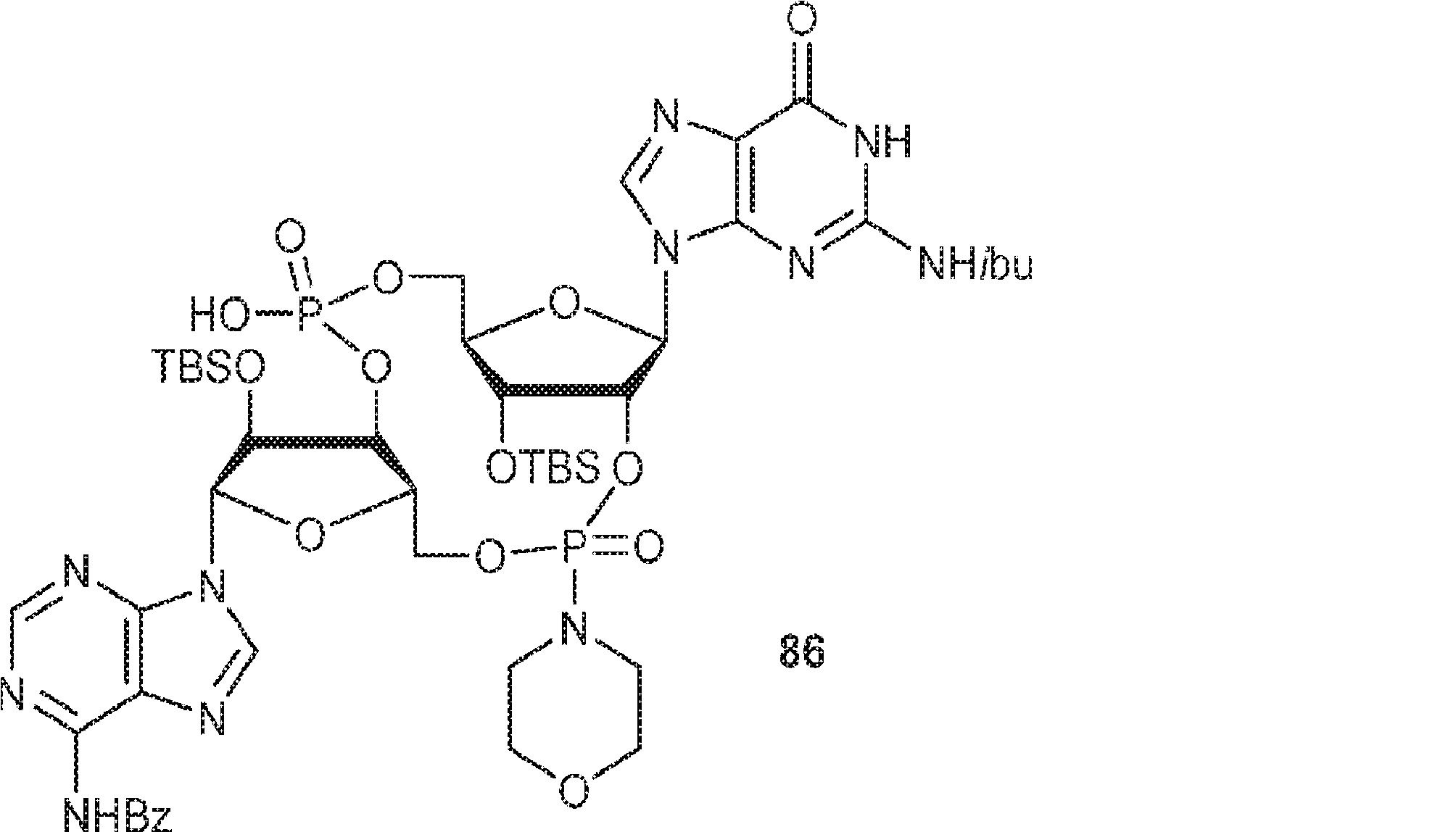
工程2:E24
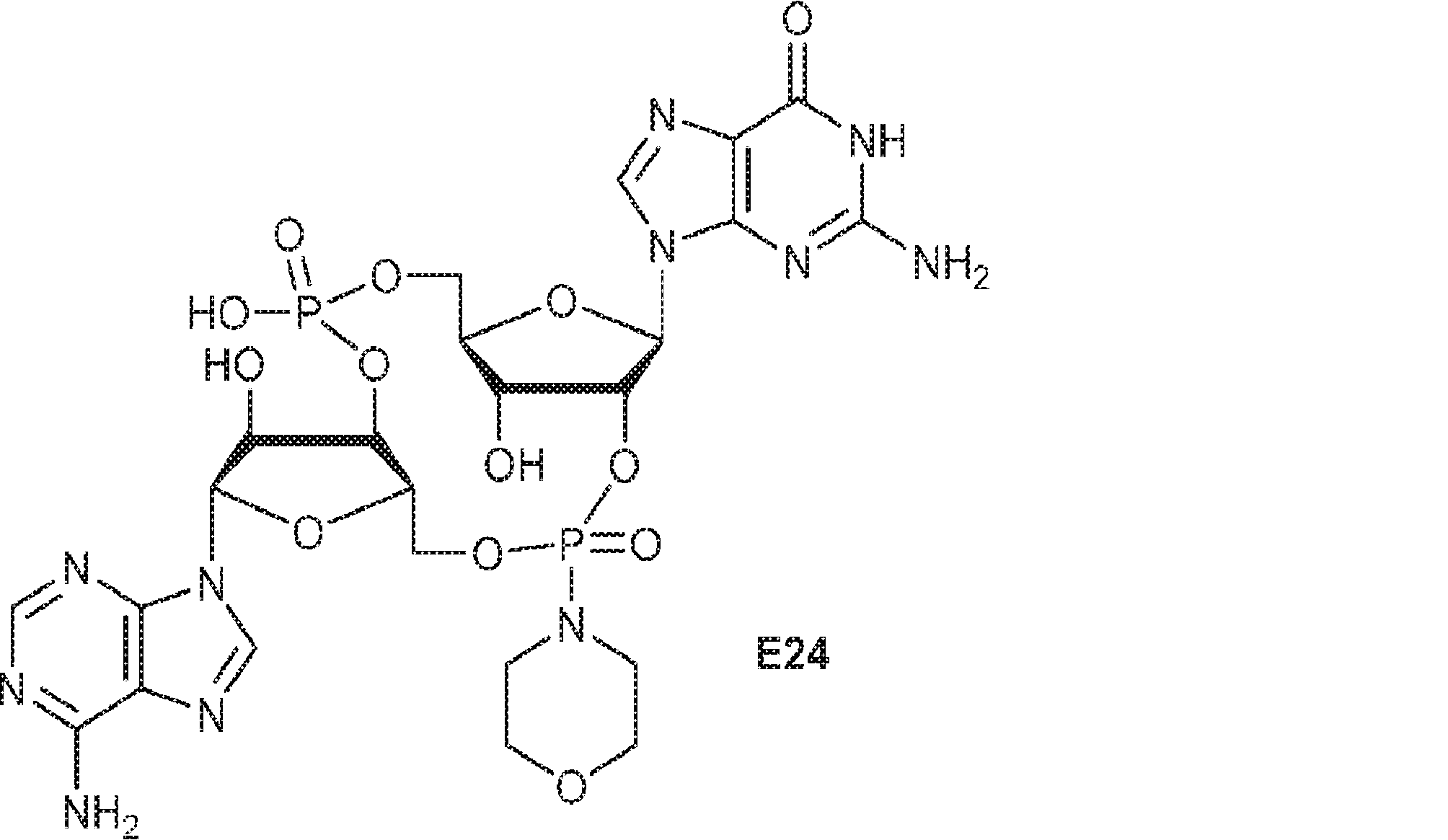
実施例D:E25の合成

工程1:ボラノホスフェート87
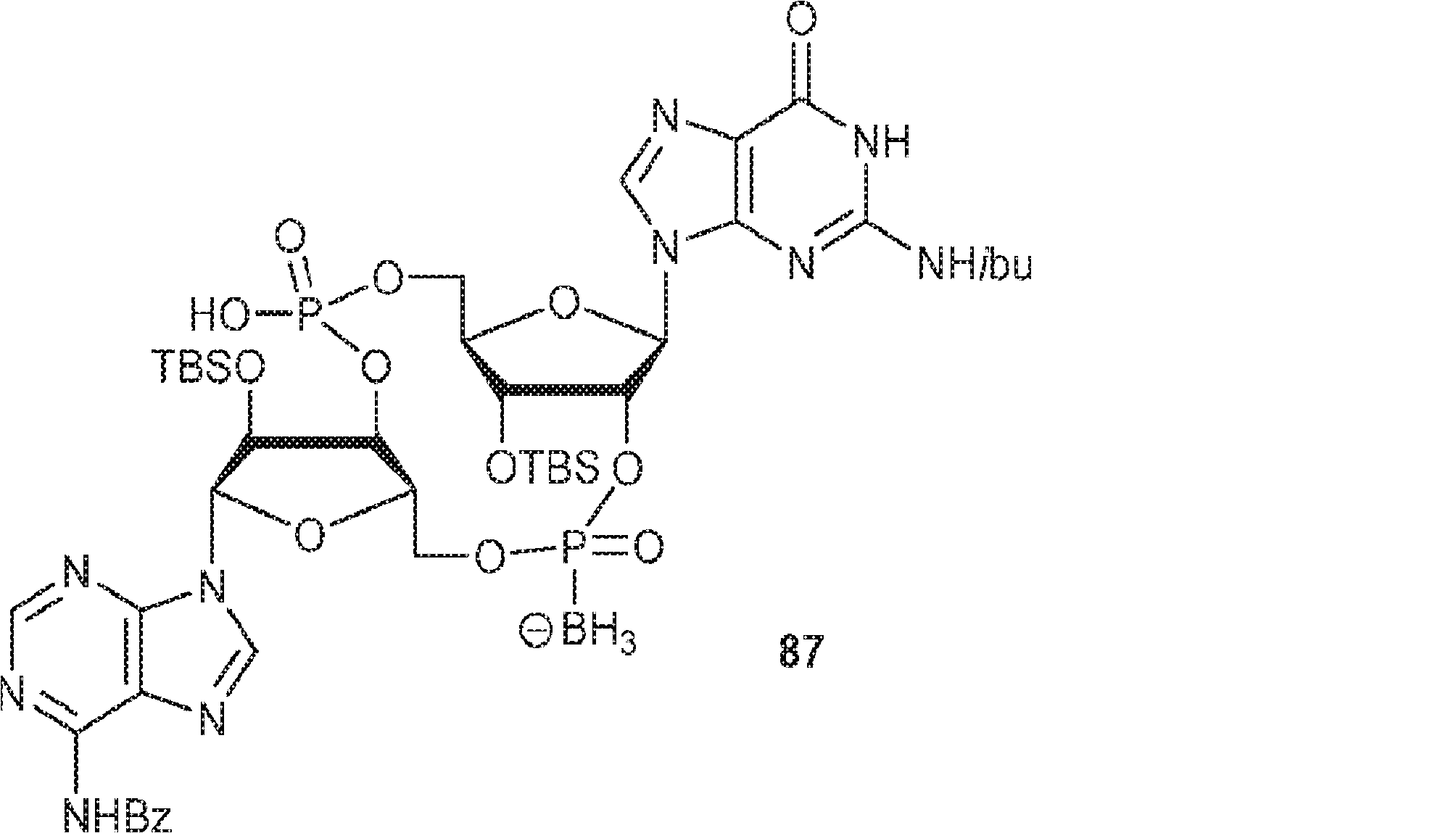
工程2:E25

実施例E:EB1およびEB2の合成
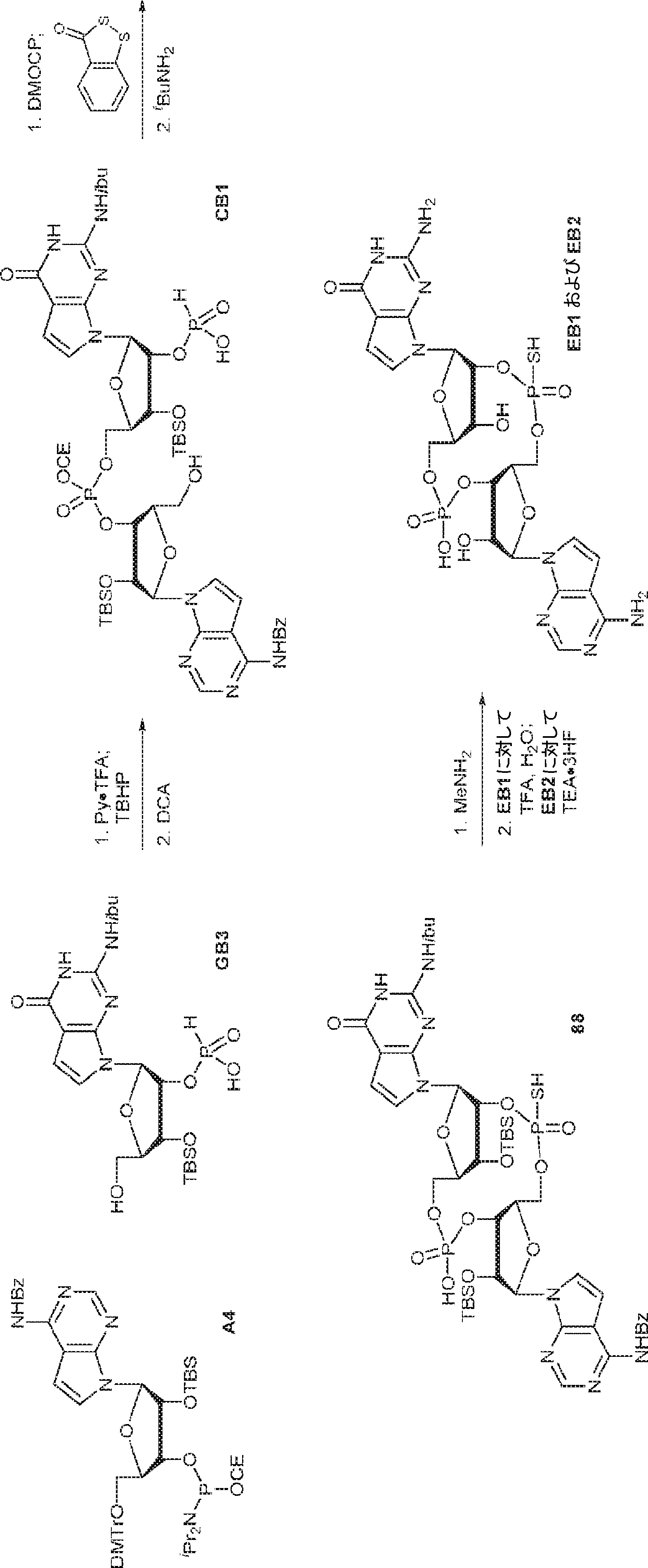
工程1:CB1

工程2:ホスホロチオエート88
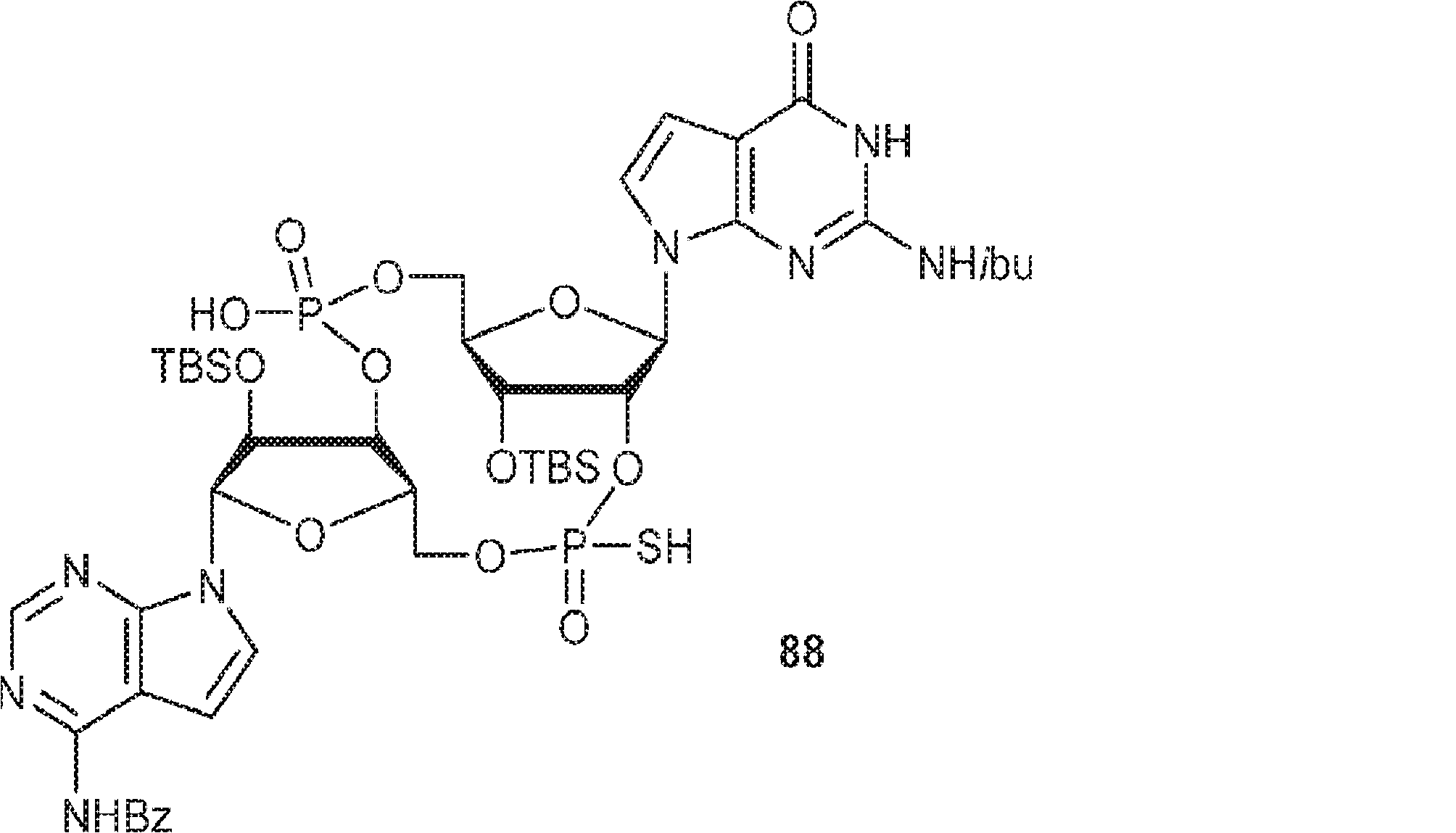
工程3:EB1およびEB2

63の異性体2(16mg)にメチルアミン(エタノール中33%、2mL)を0℃で加える。室温で12時間攪拌後、混合物を濃縮し、残渣をPy/TEAの混合物(5mL/2mL×3)と共蒸発させ、次にPy(0.04mL)に溶解させる。次にTEA(0.25mL)およびTEA・3HF(0.15mL)を加える。55℃で3時間攪拌後、アセトン(2mL)を加える。固体を濾取し(10mg)、HPLC(MeCN/0.1% TFA入りの水、0%→30%)で精製してEB2を白色固体(5mg、収率45%)として得る。(MS: [M+H]+ 689.0, [M-H]- 687.0) Methylamine (33% in ethanol, 2 mL) is added to 63 isomers 2 (16 mg) at 0 ° C. After stirring at room temperature for 12 hours, the mixture is concentrated and the residue is co-evaporated with the Py / TEA mixture (5 mL / 2 mL x 3) and then dissolved in Py (0.04 mL). Then add TEA (0.25 mL) and TEA · 3HF (0.15 mL). After stirring at 55 ° C for 3 hours, add acetone (2 mL). The solid is collected by filtration (10 mg) and purified by HPLC (water containing MeCN / 0.1% TFA, 0% → 30%) to give EB2 as a white solid (5 mg, 45% yield). (MS: [M + H] + 689.0, [MH ] --687.0)
実施例F:EC25の合成
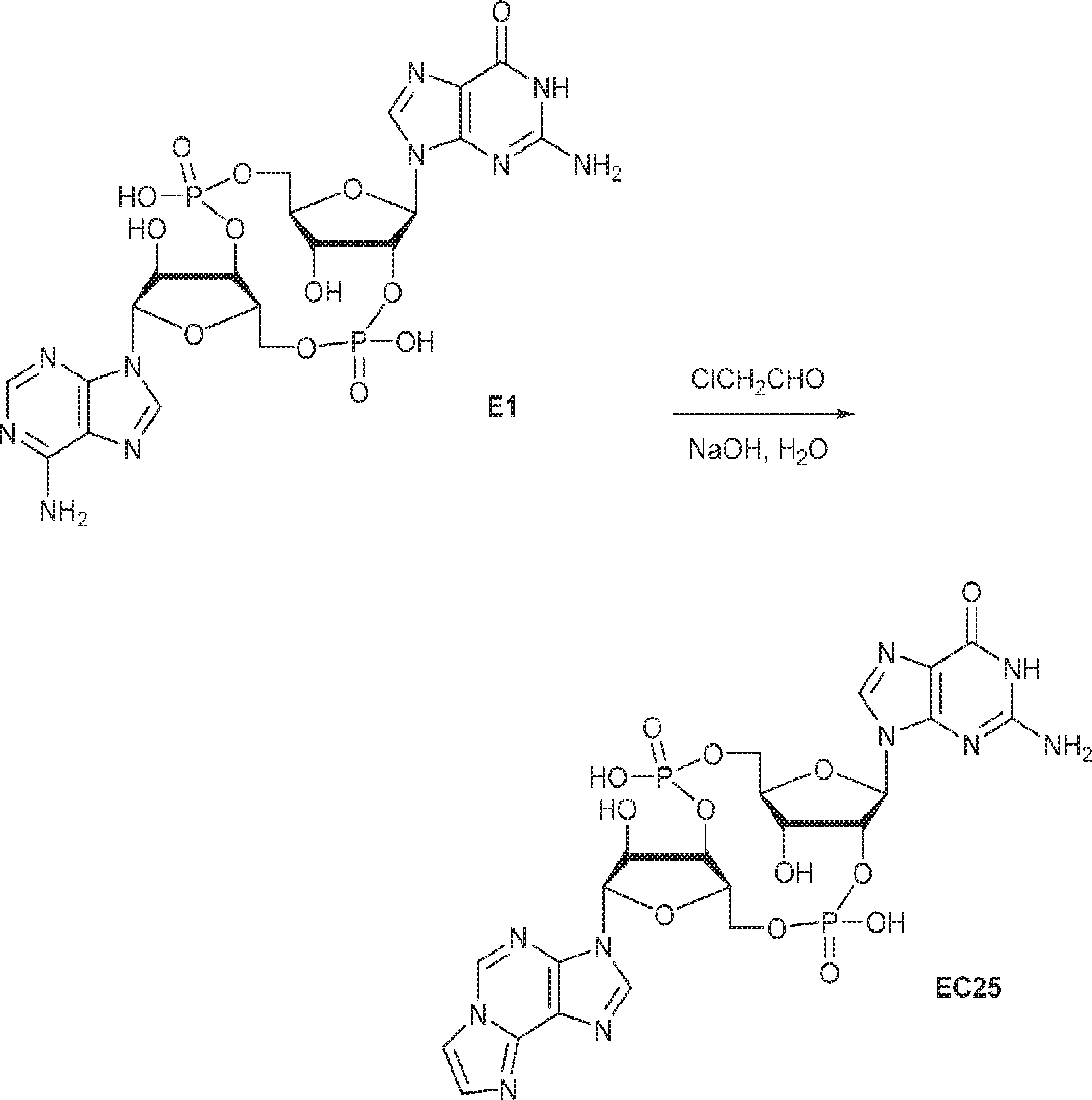
以下の化合物を本質的には上記方法により調製する。 The following compounds are essentially prepared by the above method.
(表3)例E1~E25、EA1~EA11、EB1~EB7、およびEC1~EC24
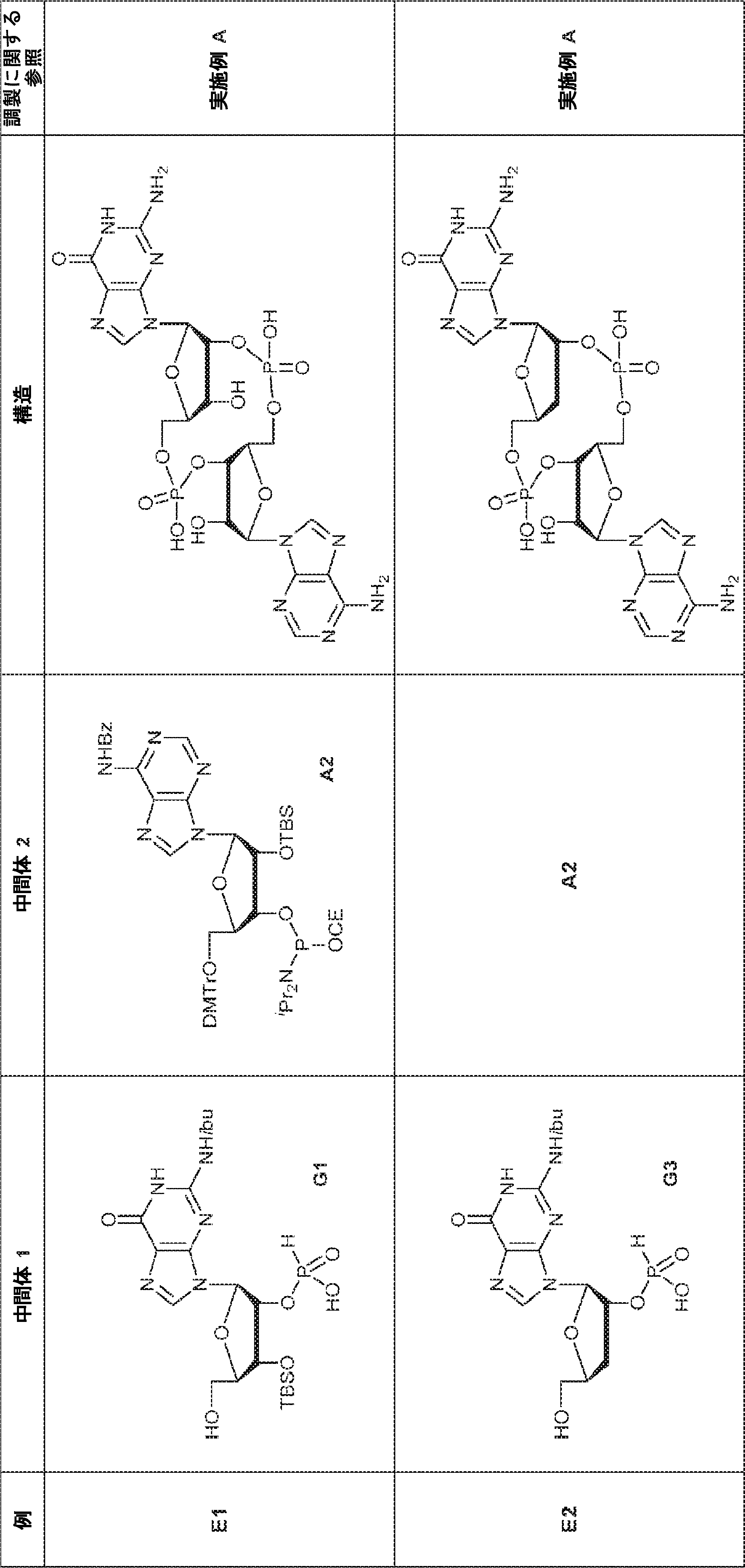
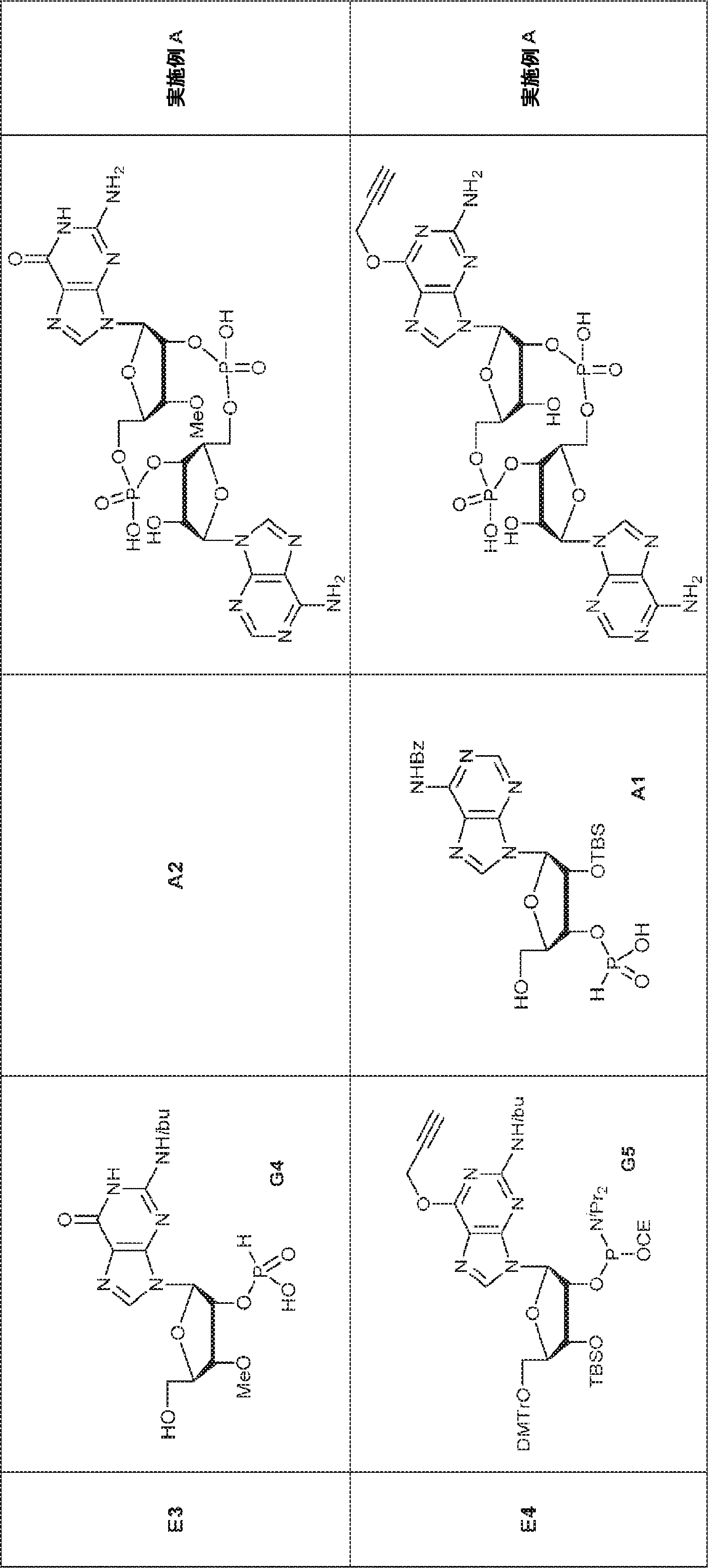


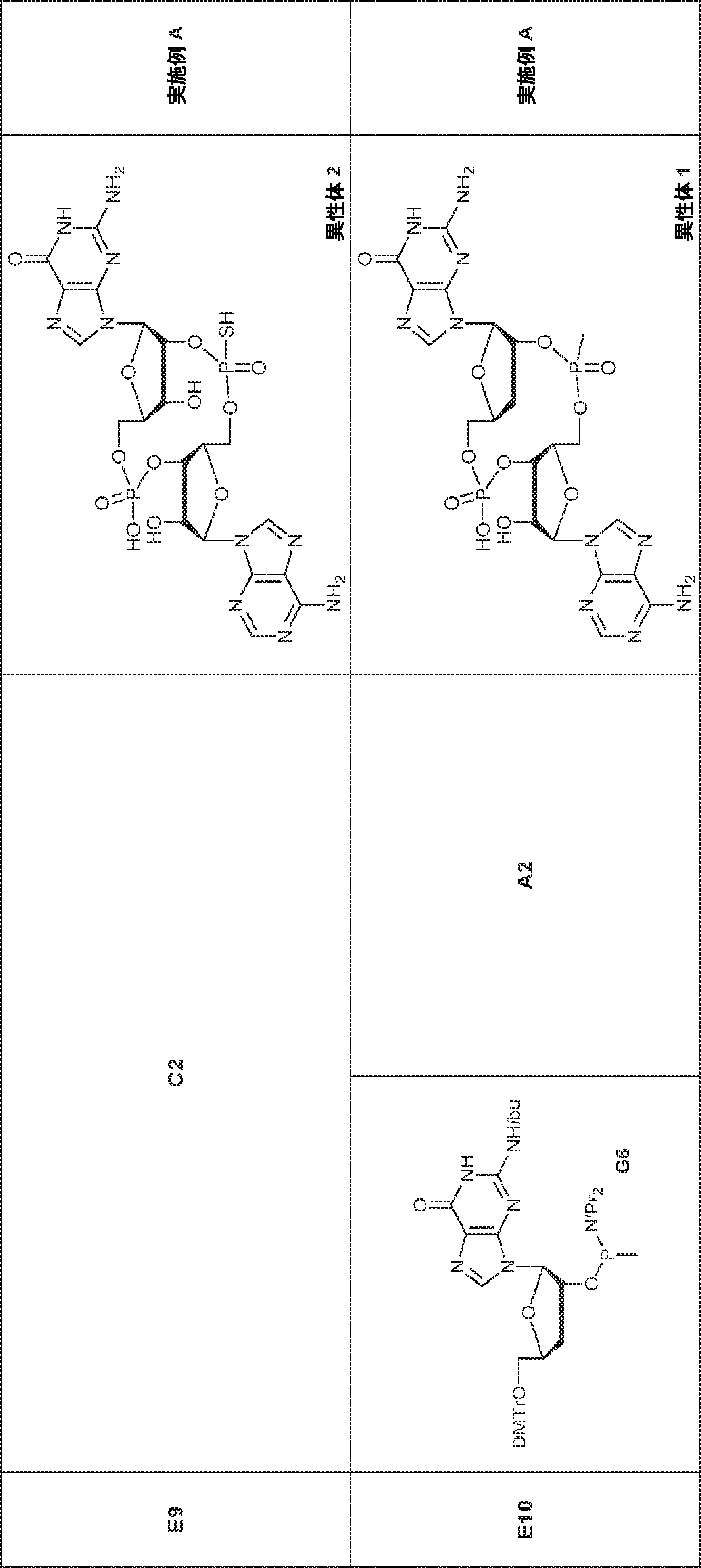
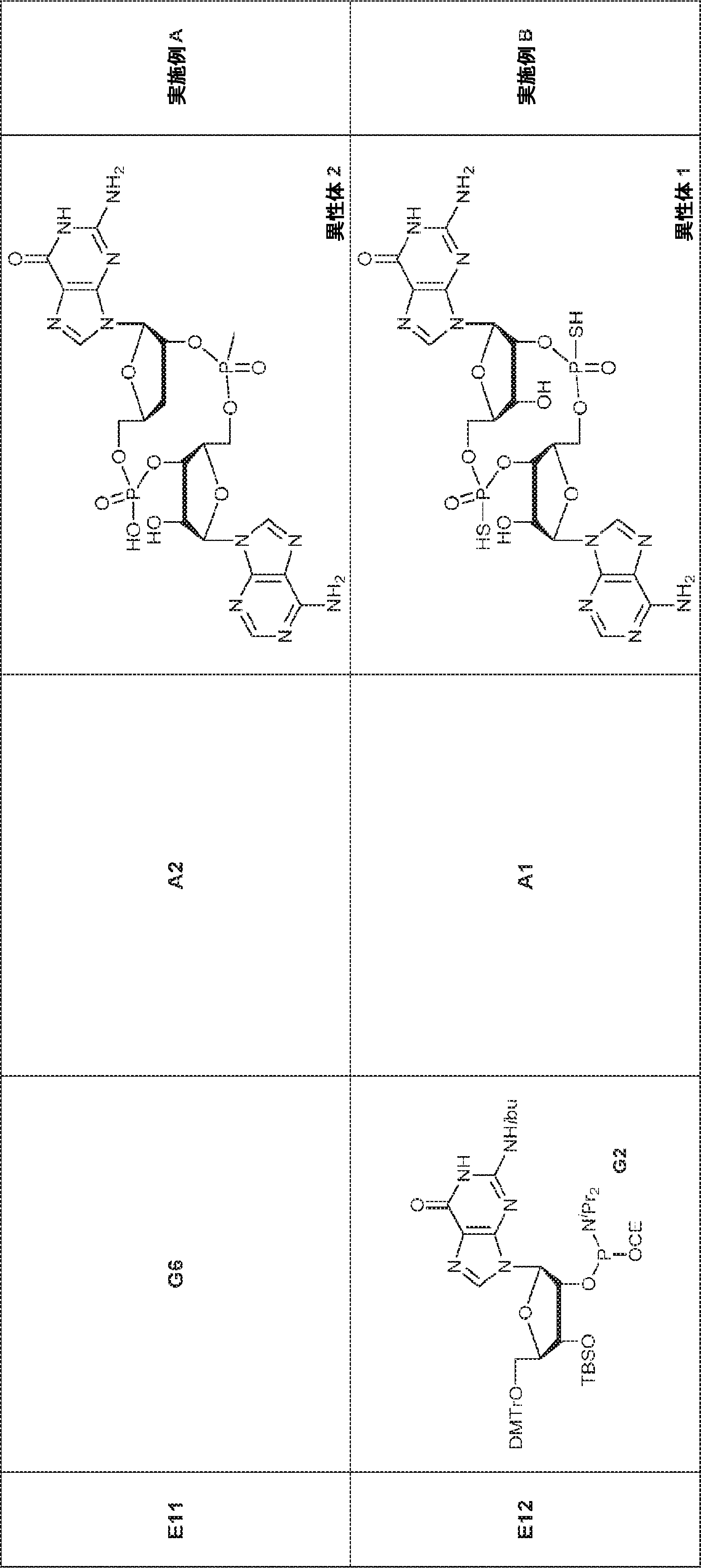
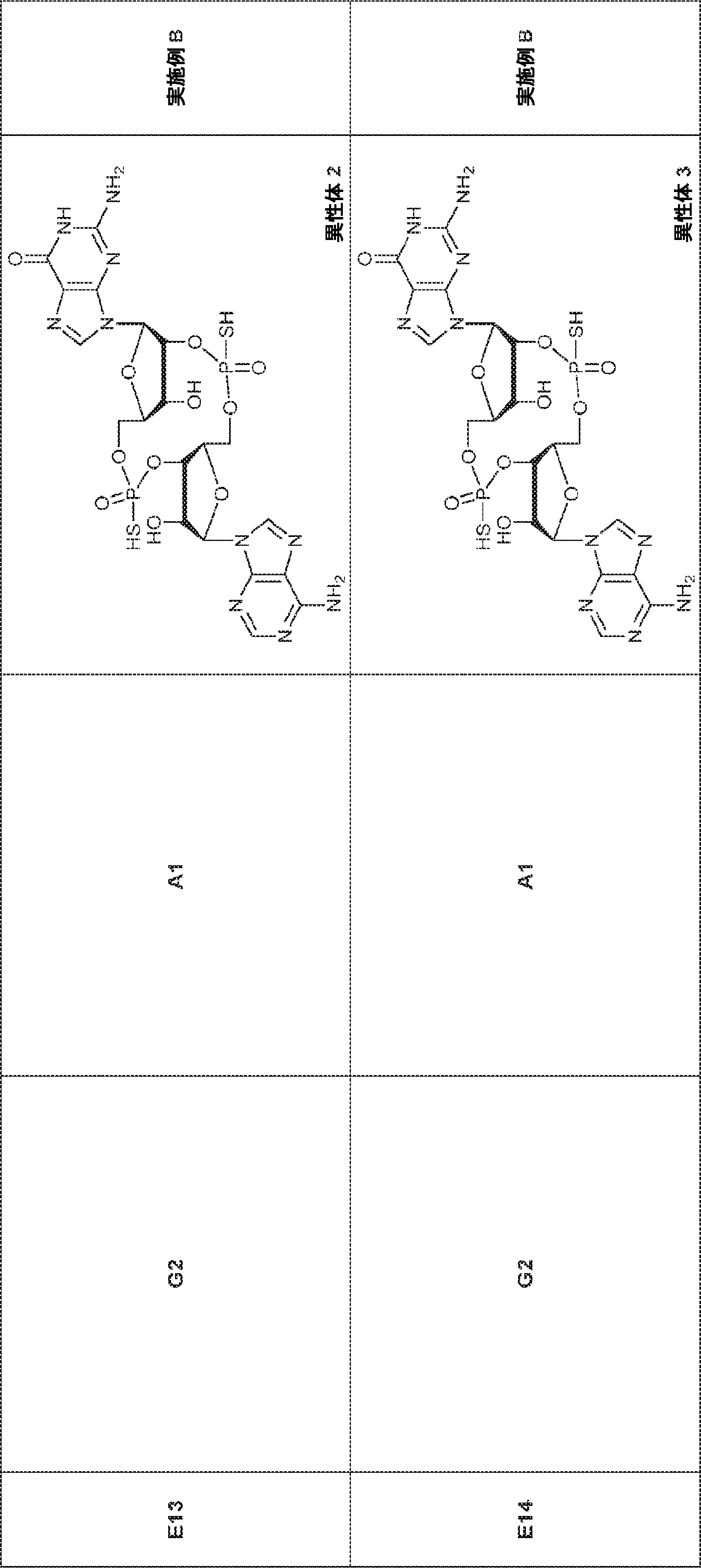
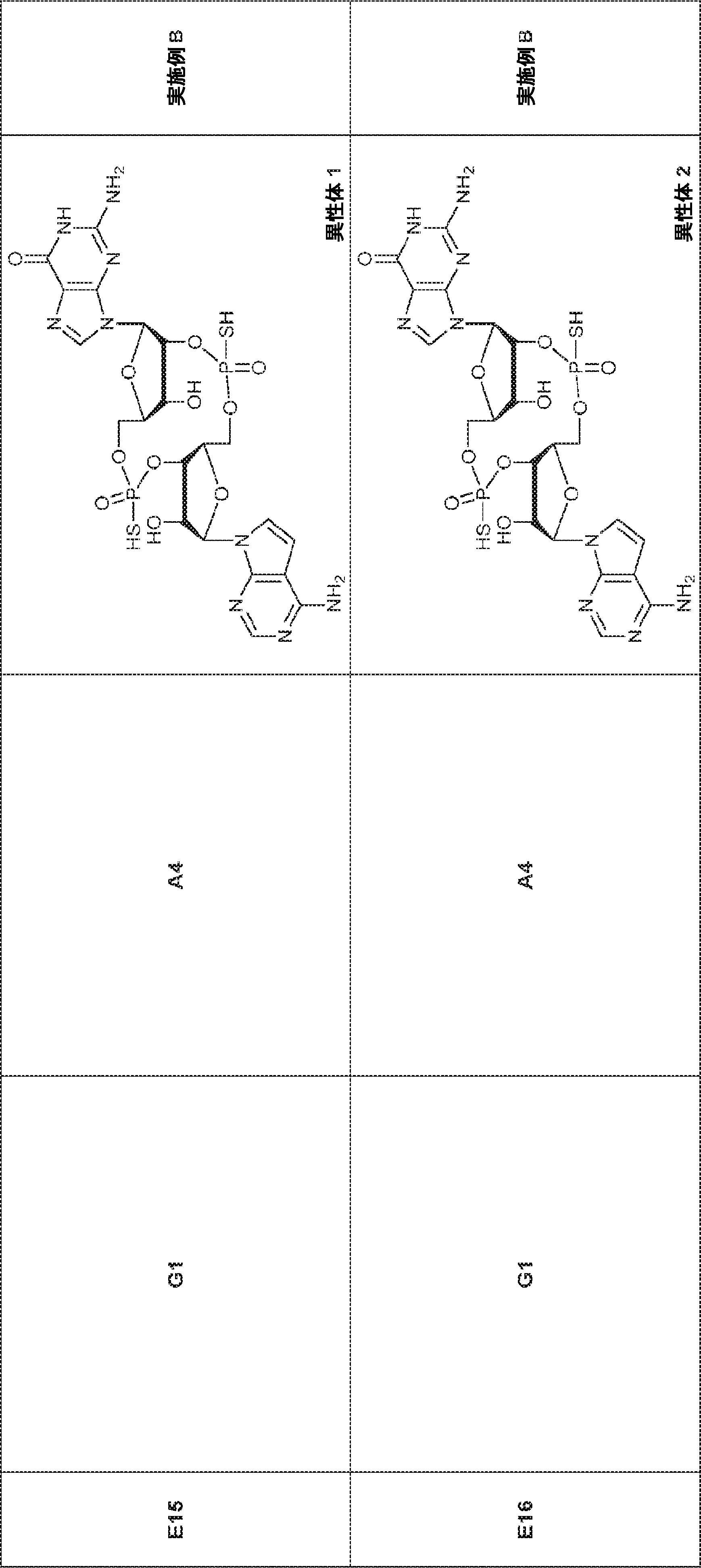
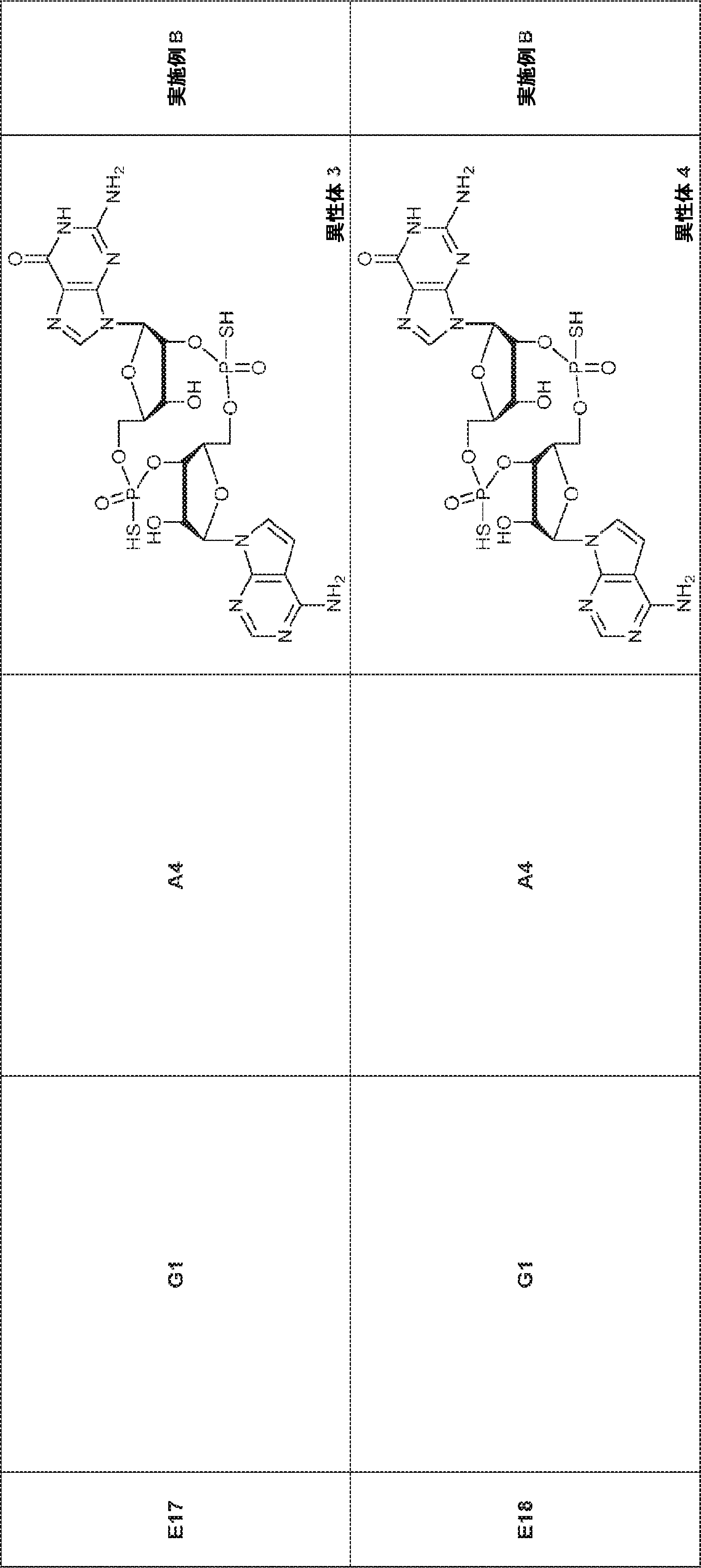


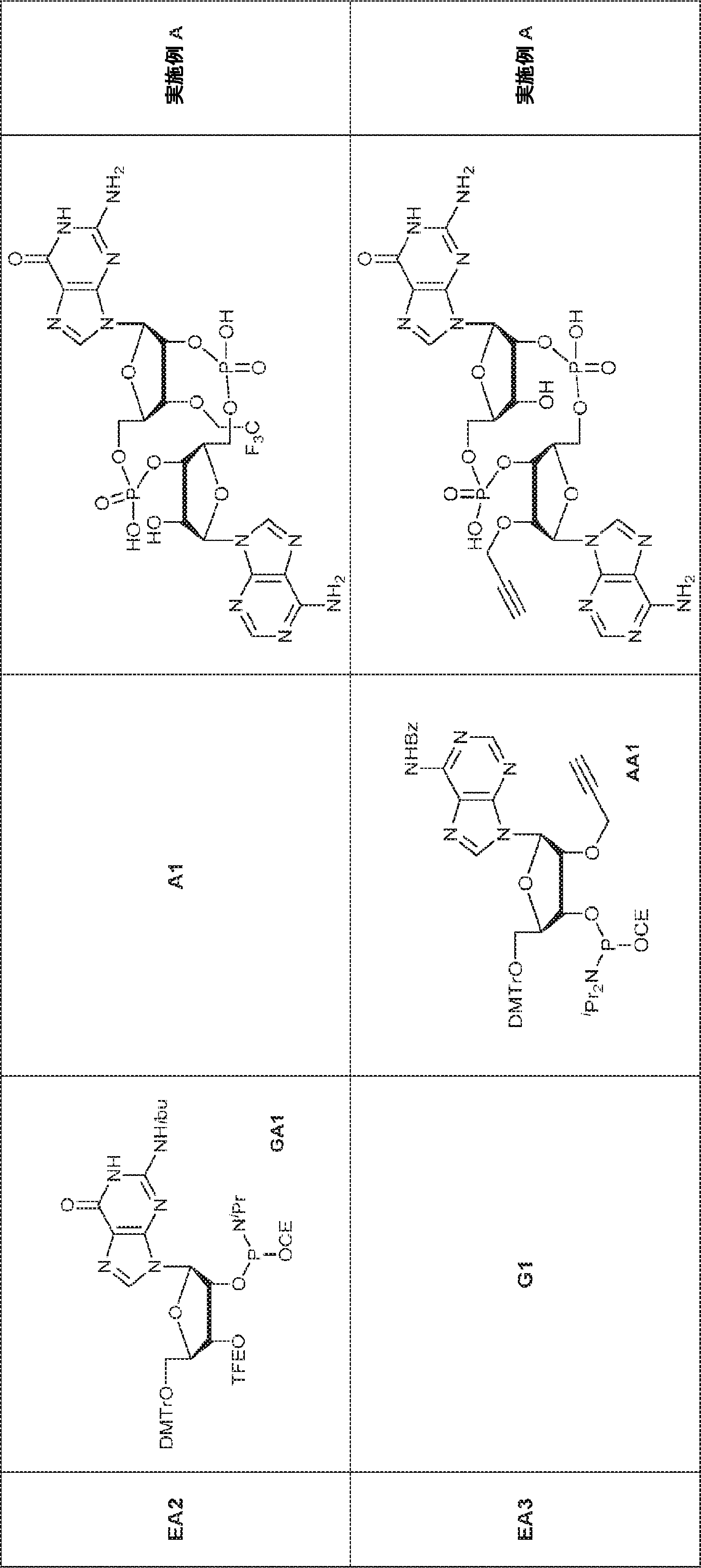
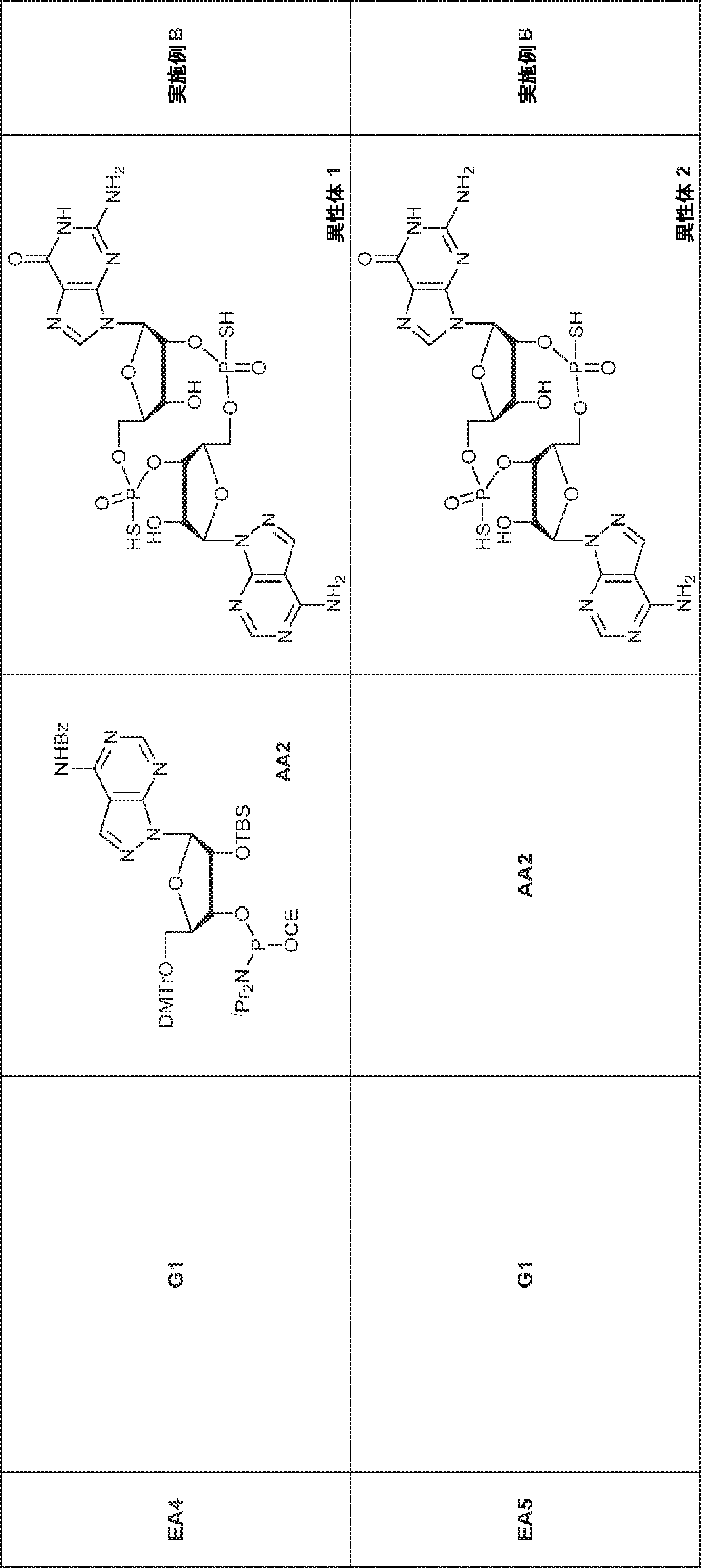


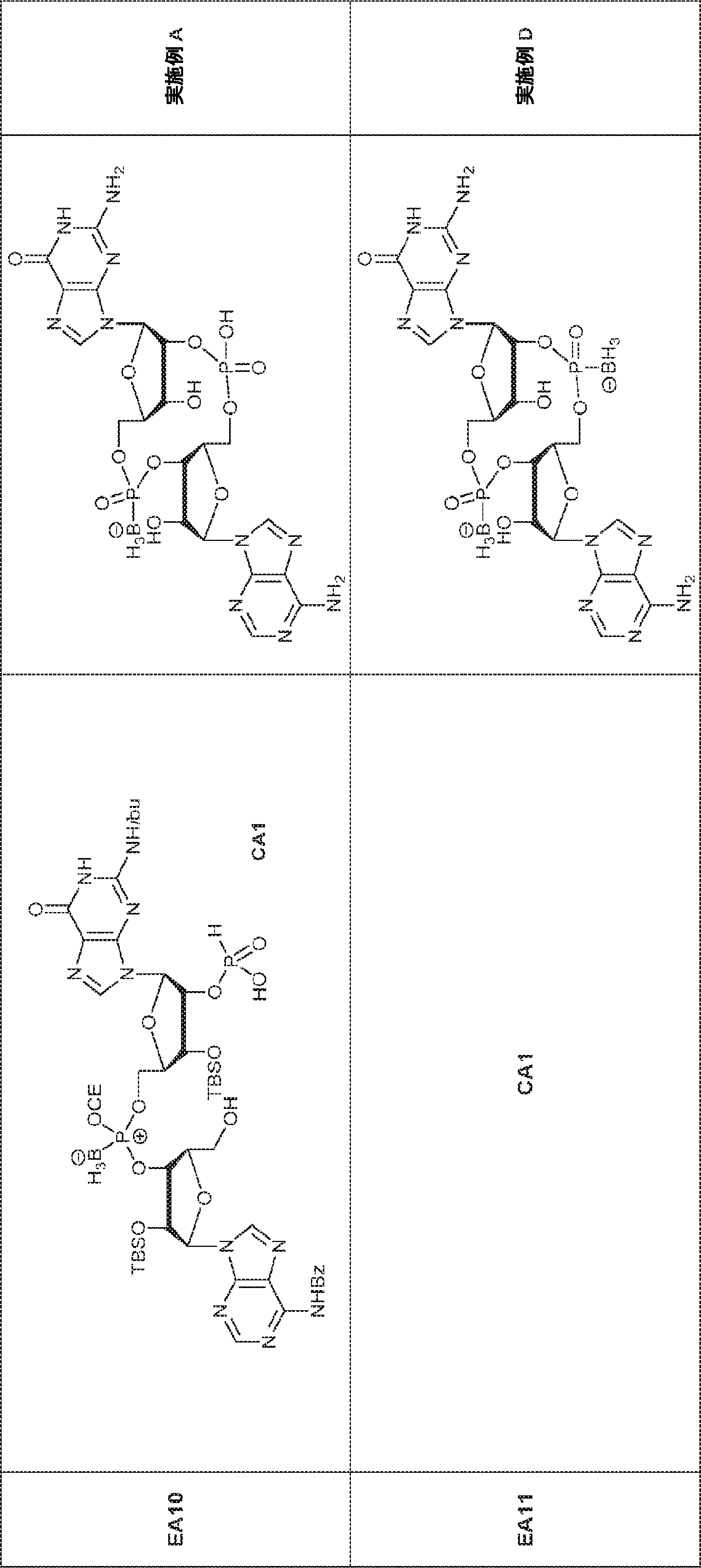
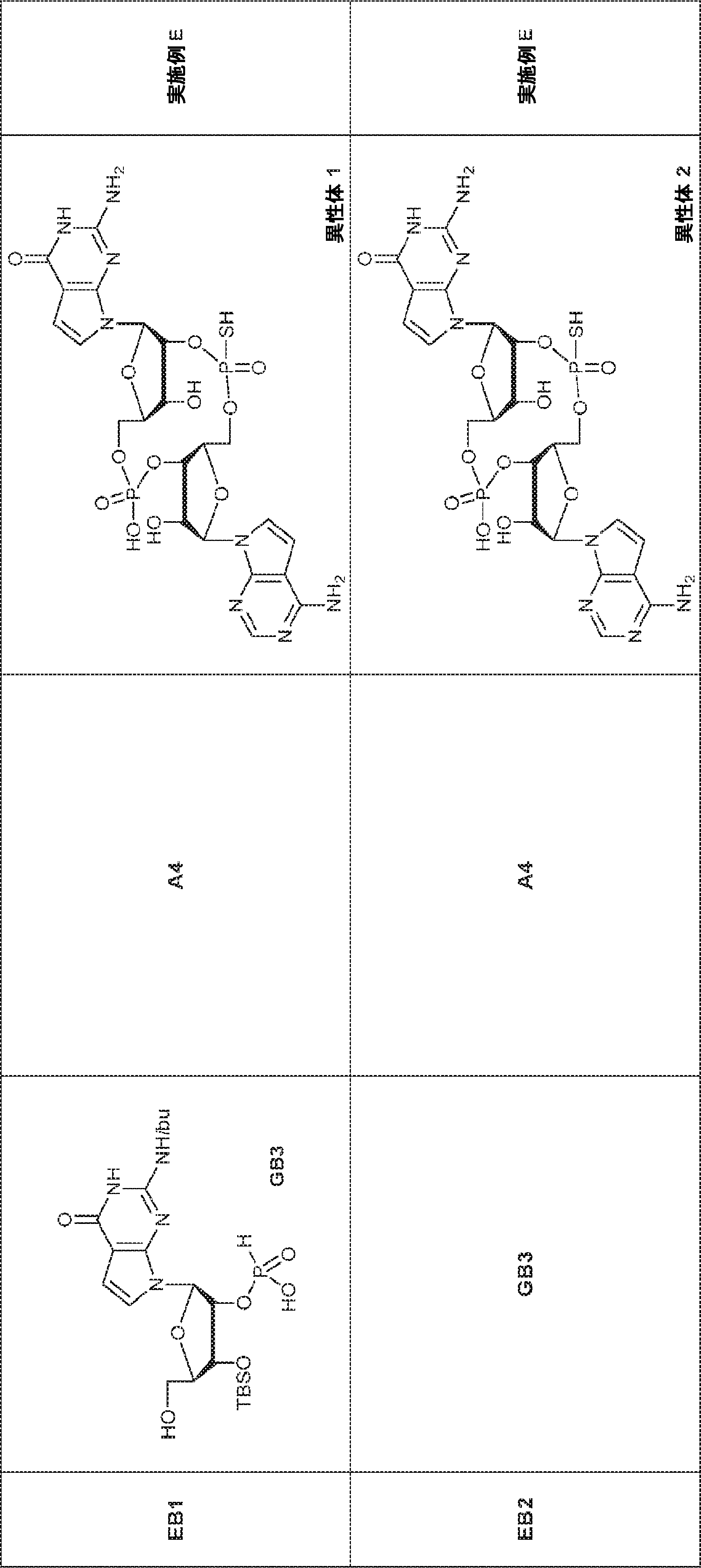

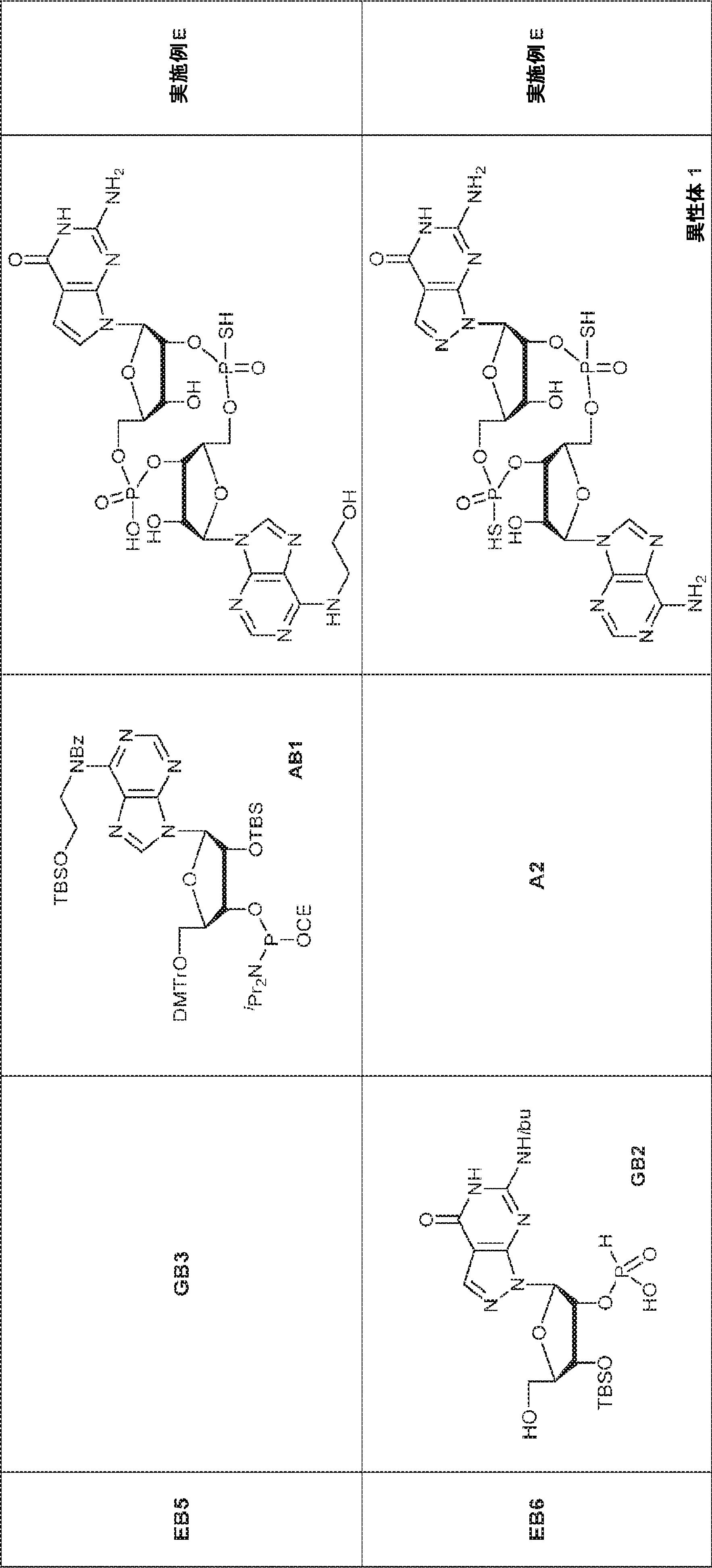
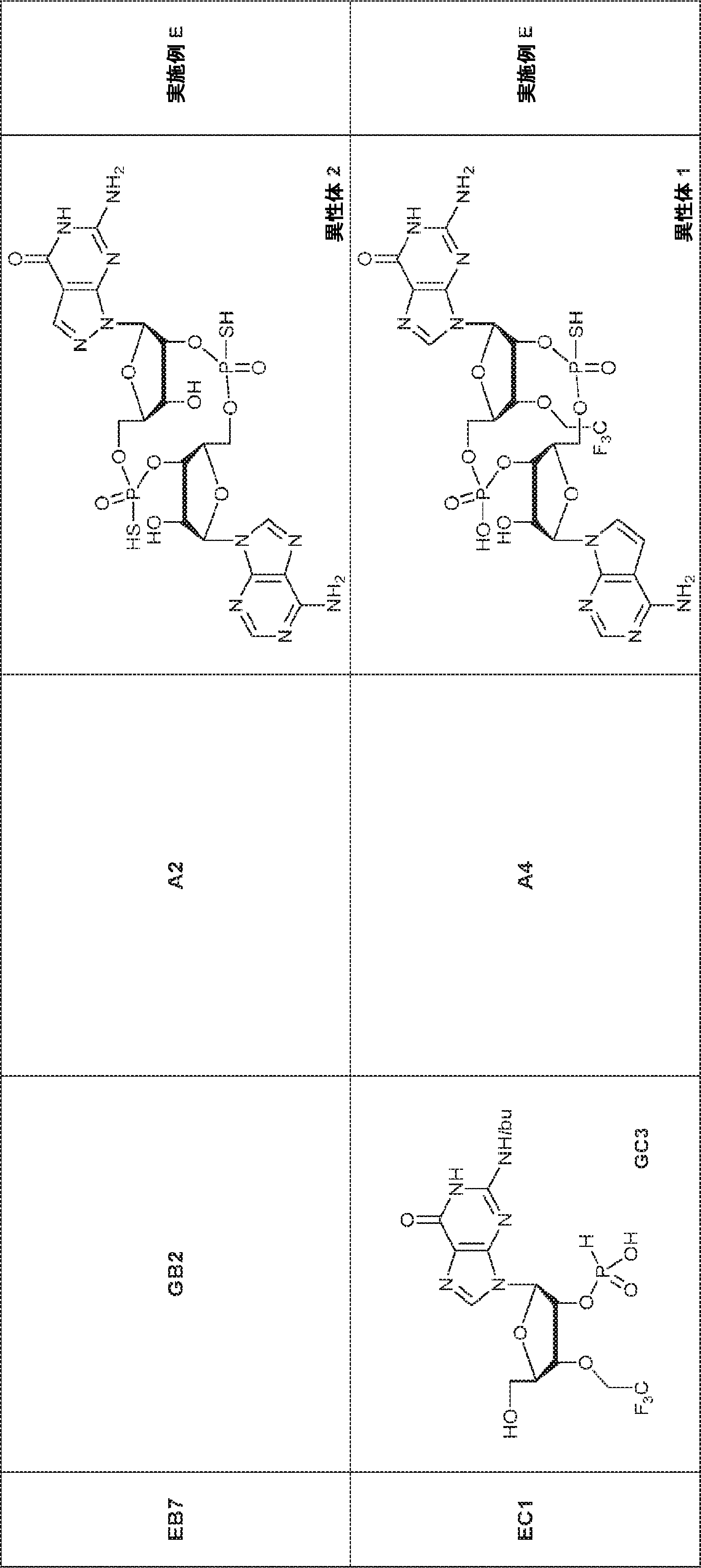

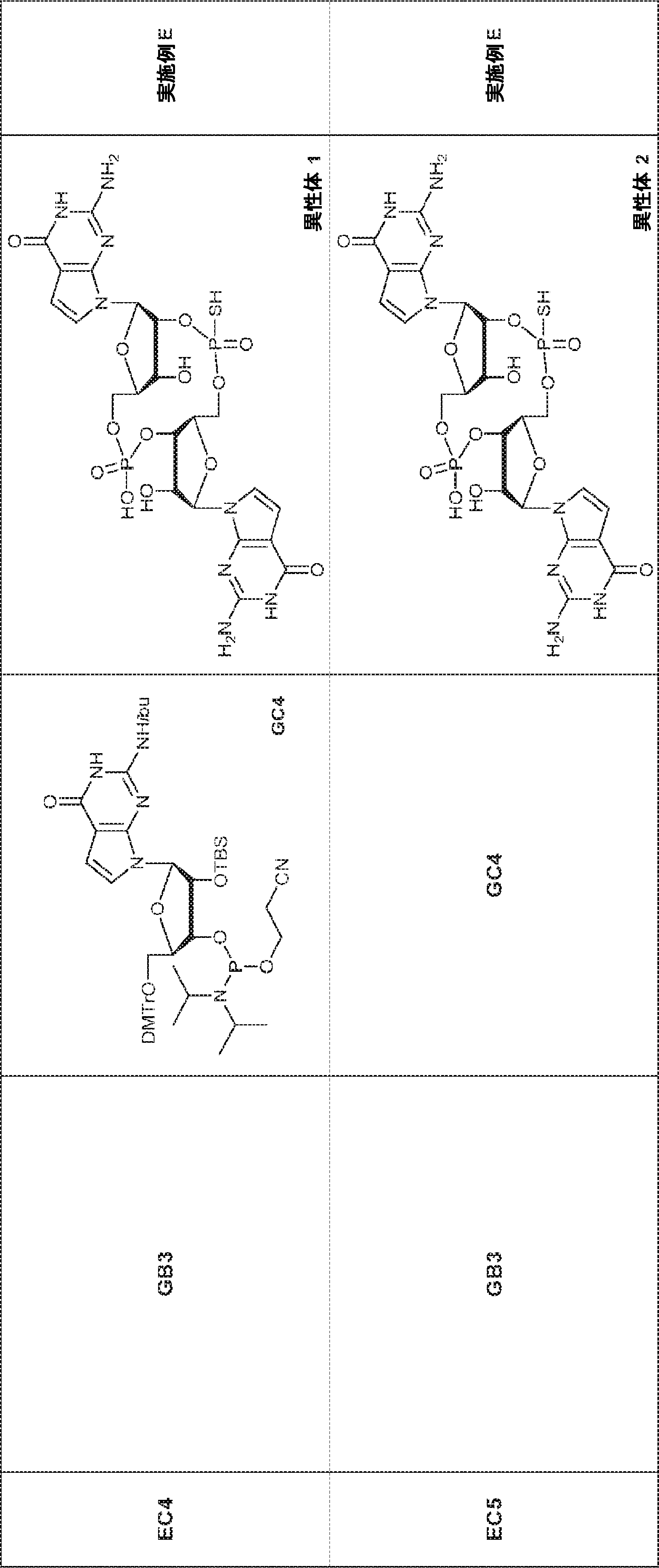
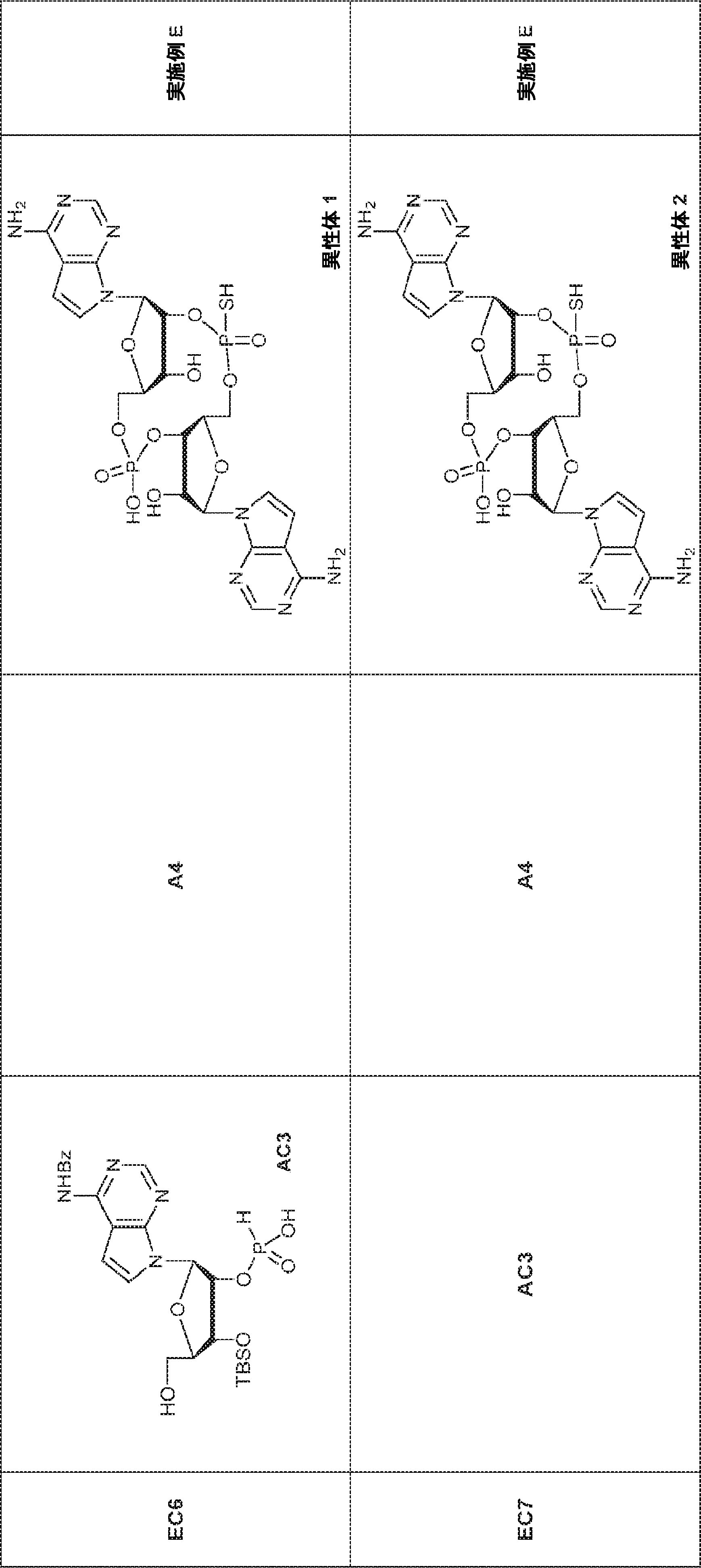
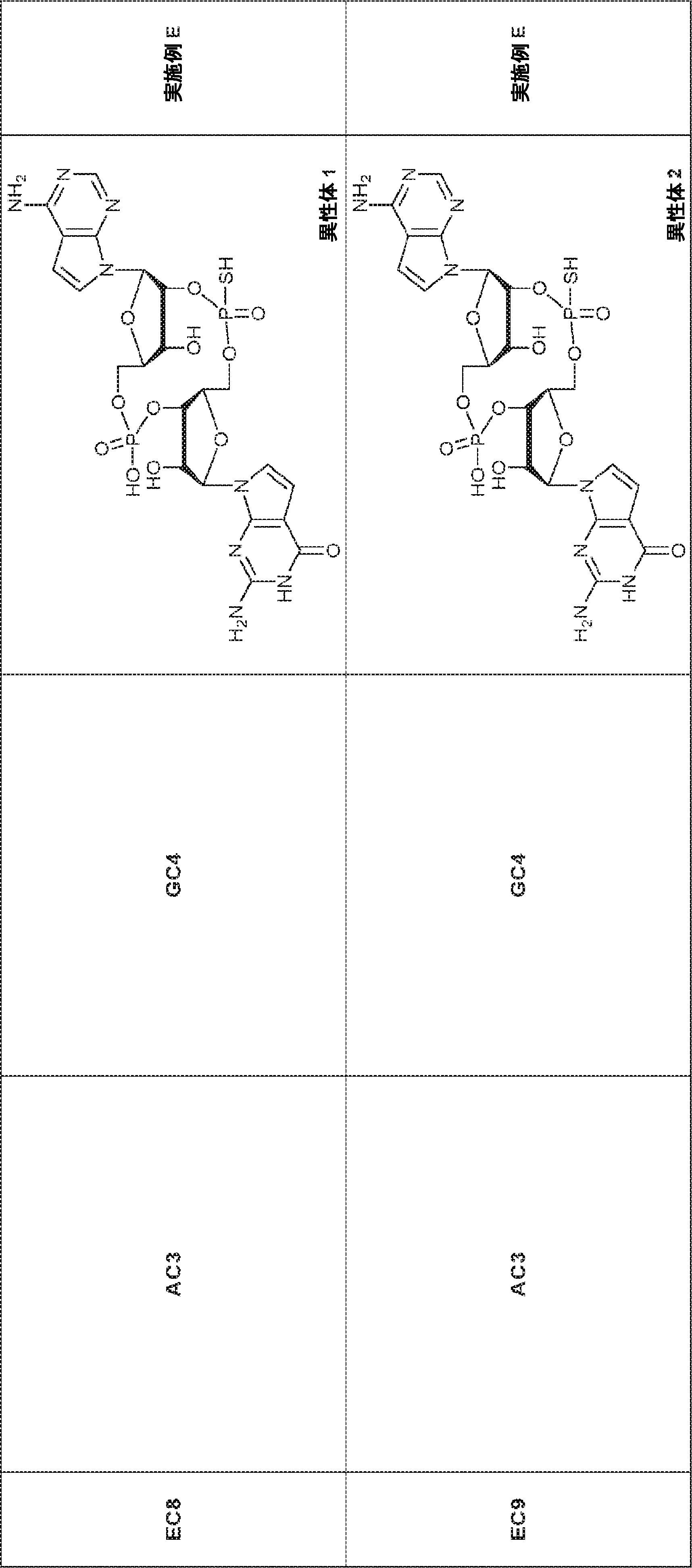
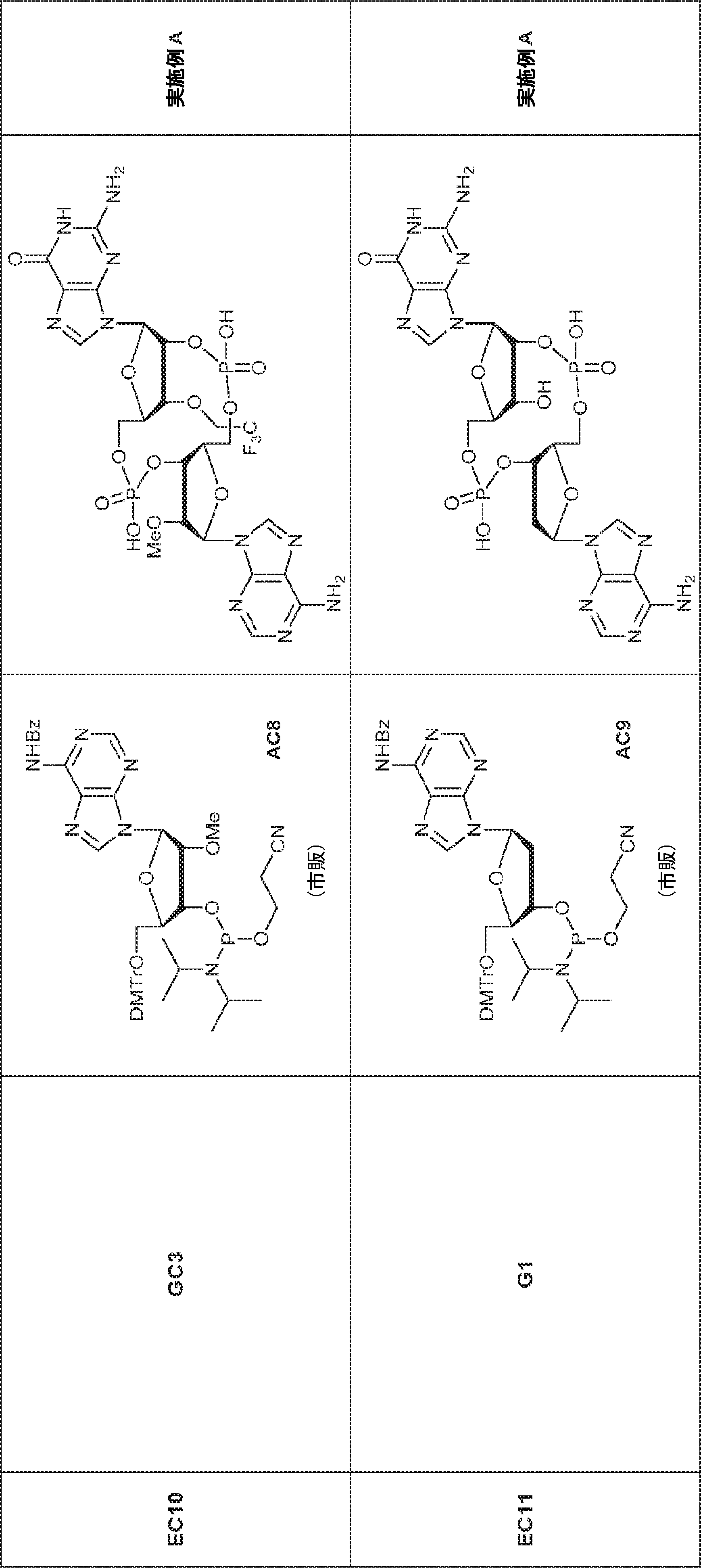
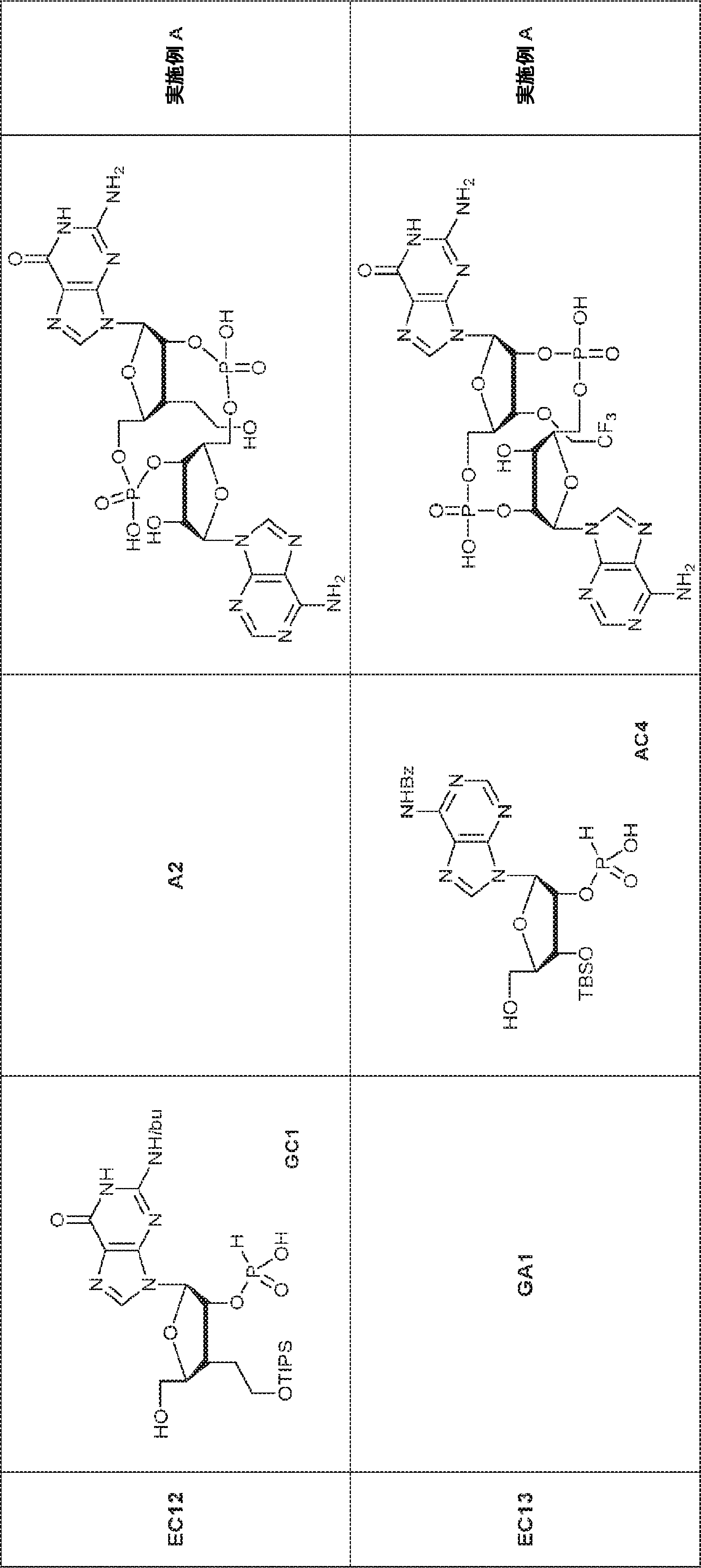
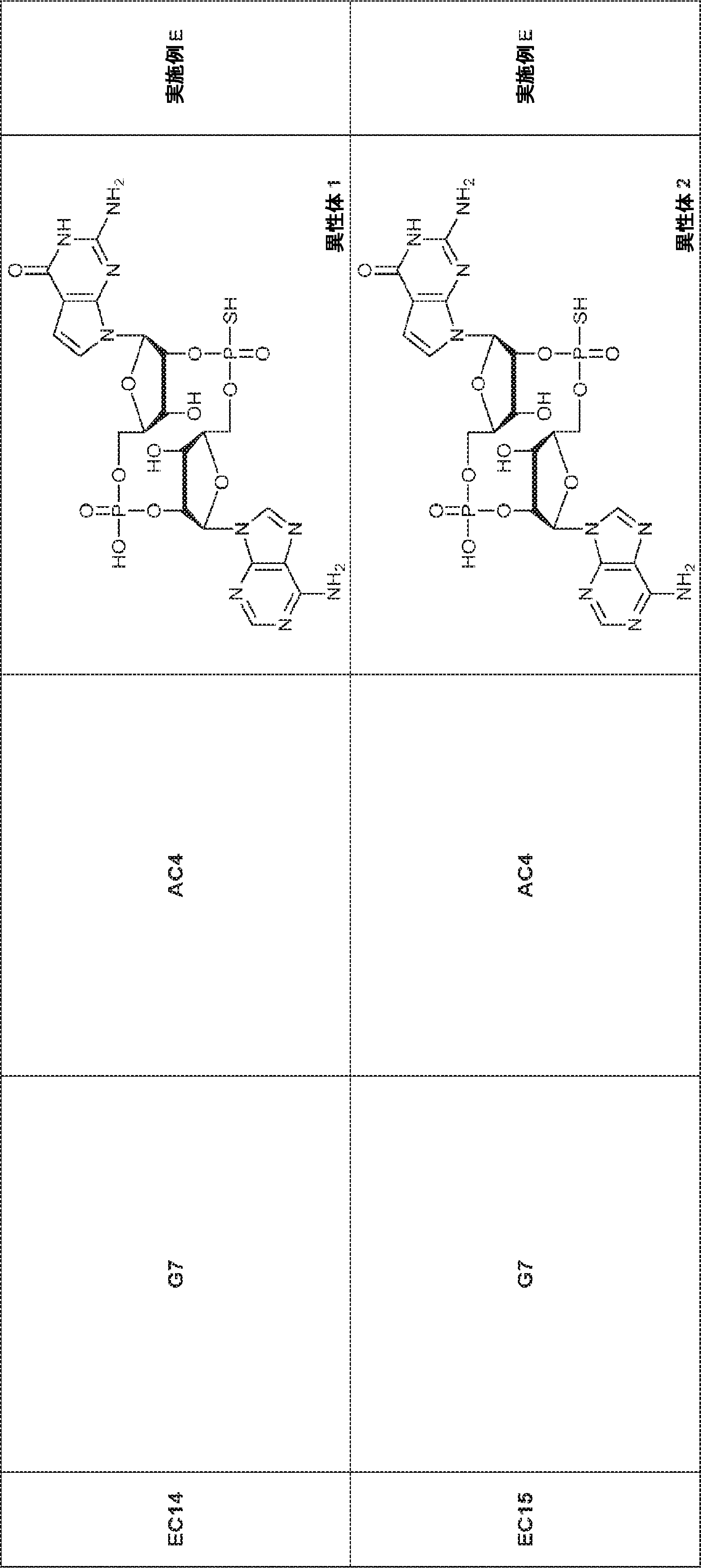

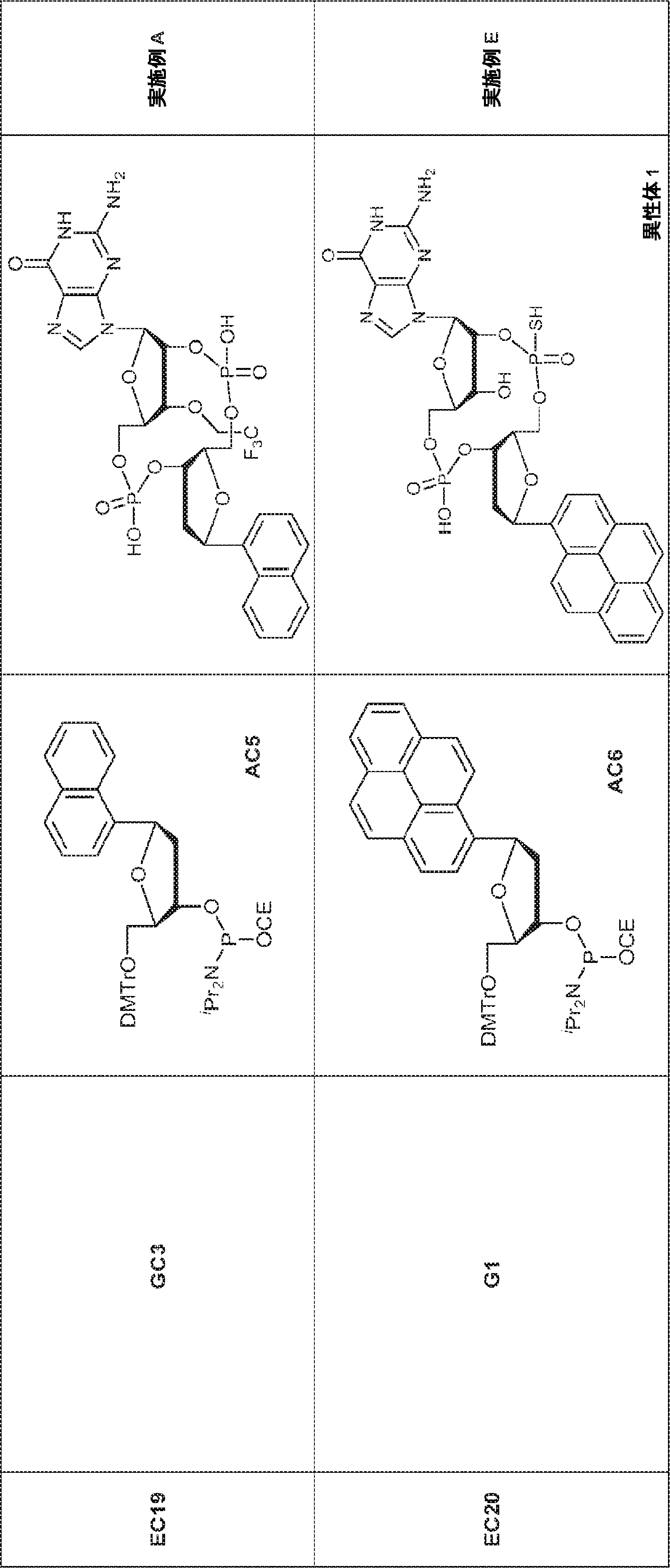
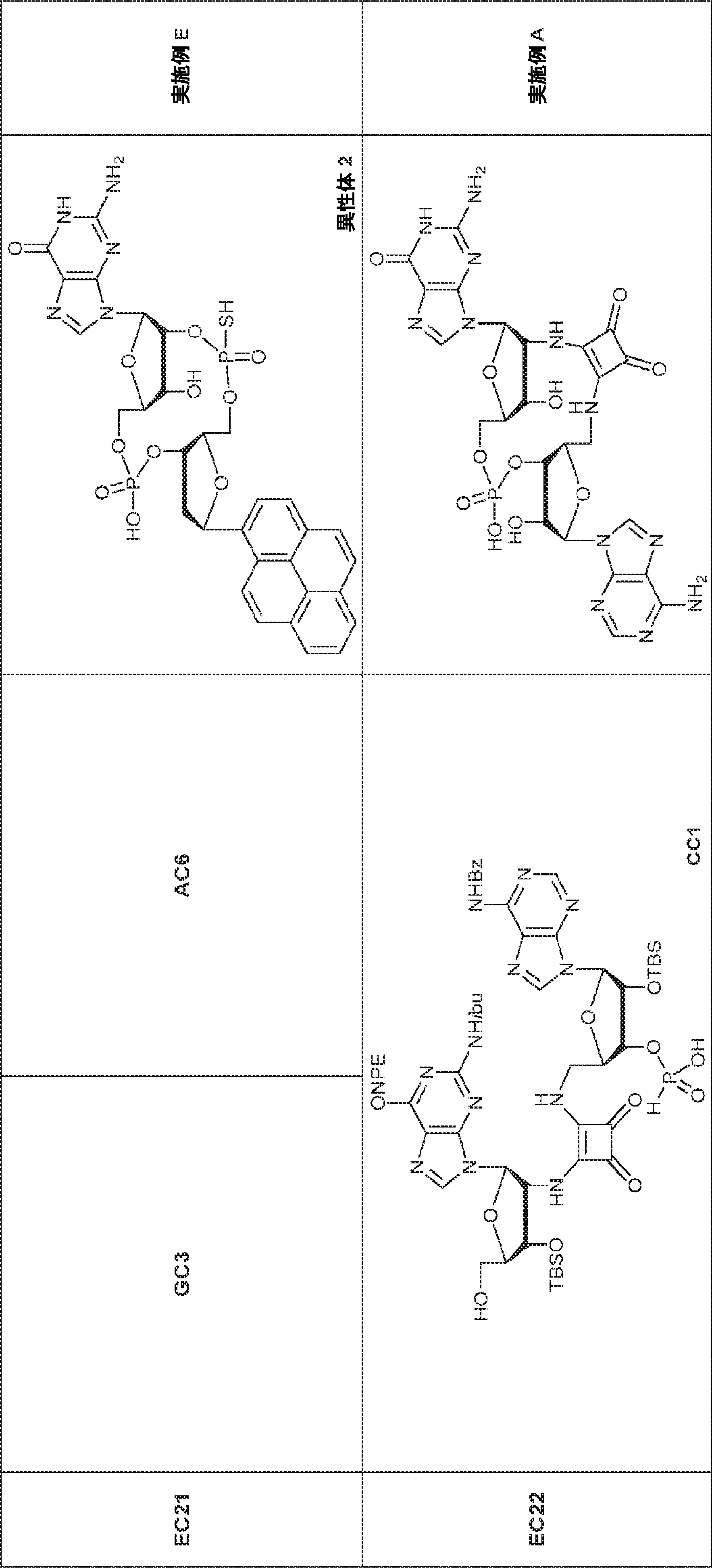

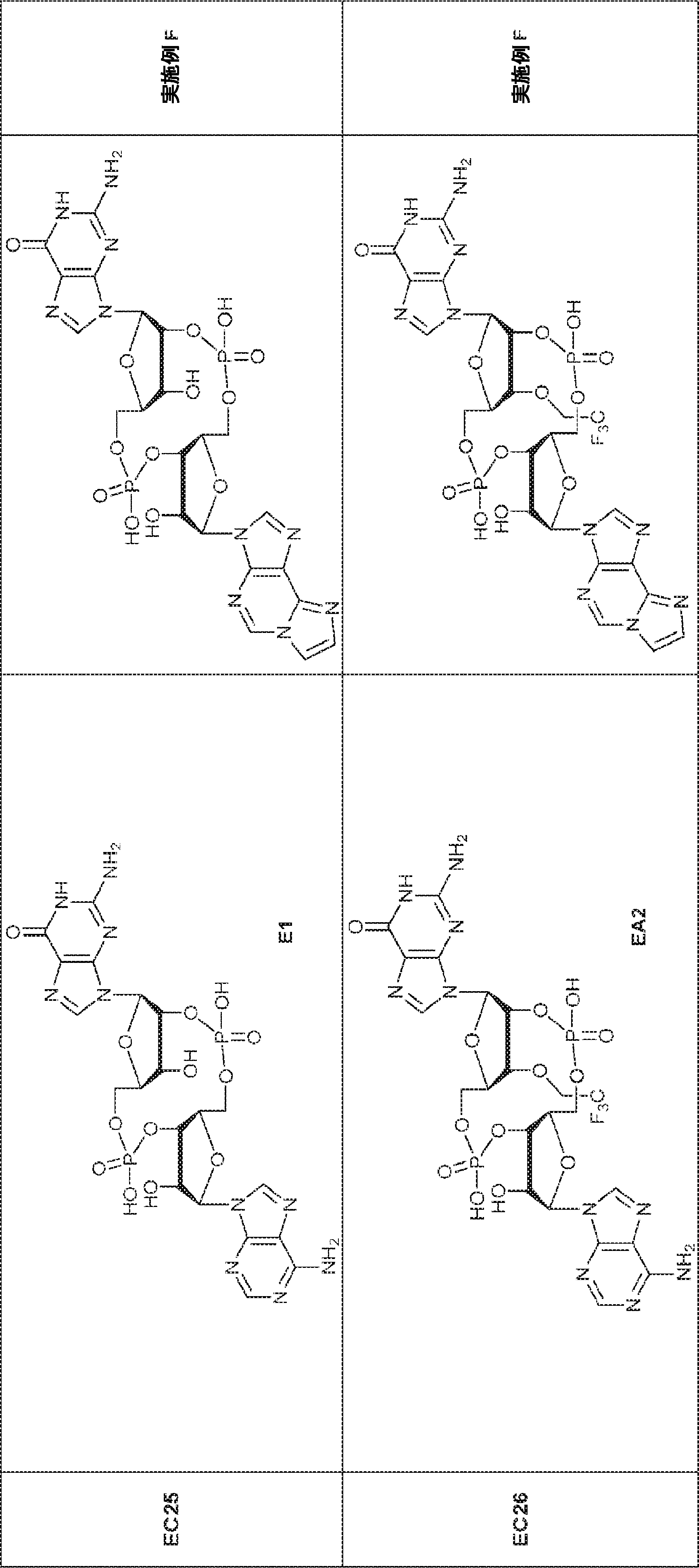
化合物例の選択された物性データを以下に要約する。 The selected physical property data of the compound examples are summarized below.
(表4)環状ジヌクレオチドおよび類似体の物性データ
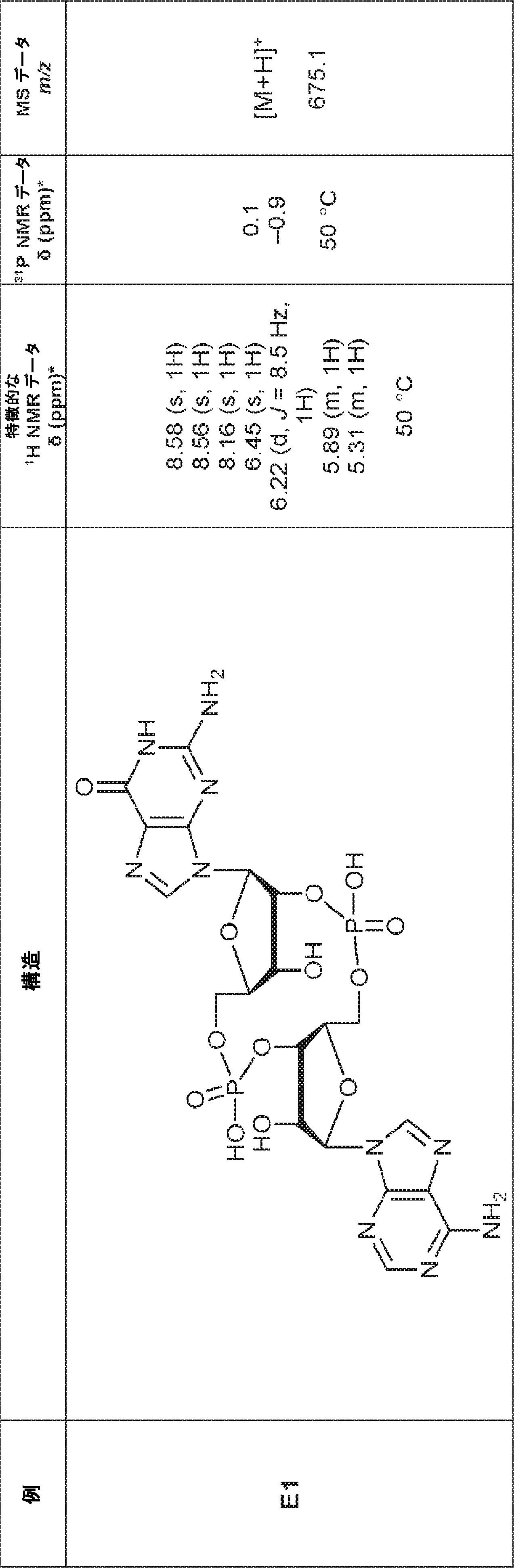
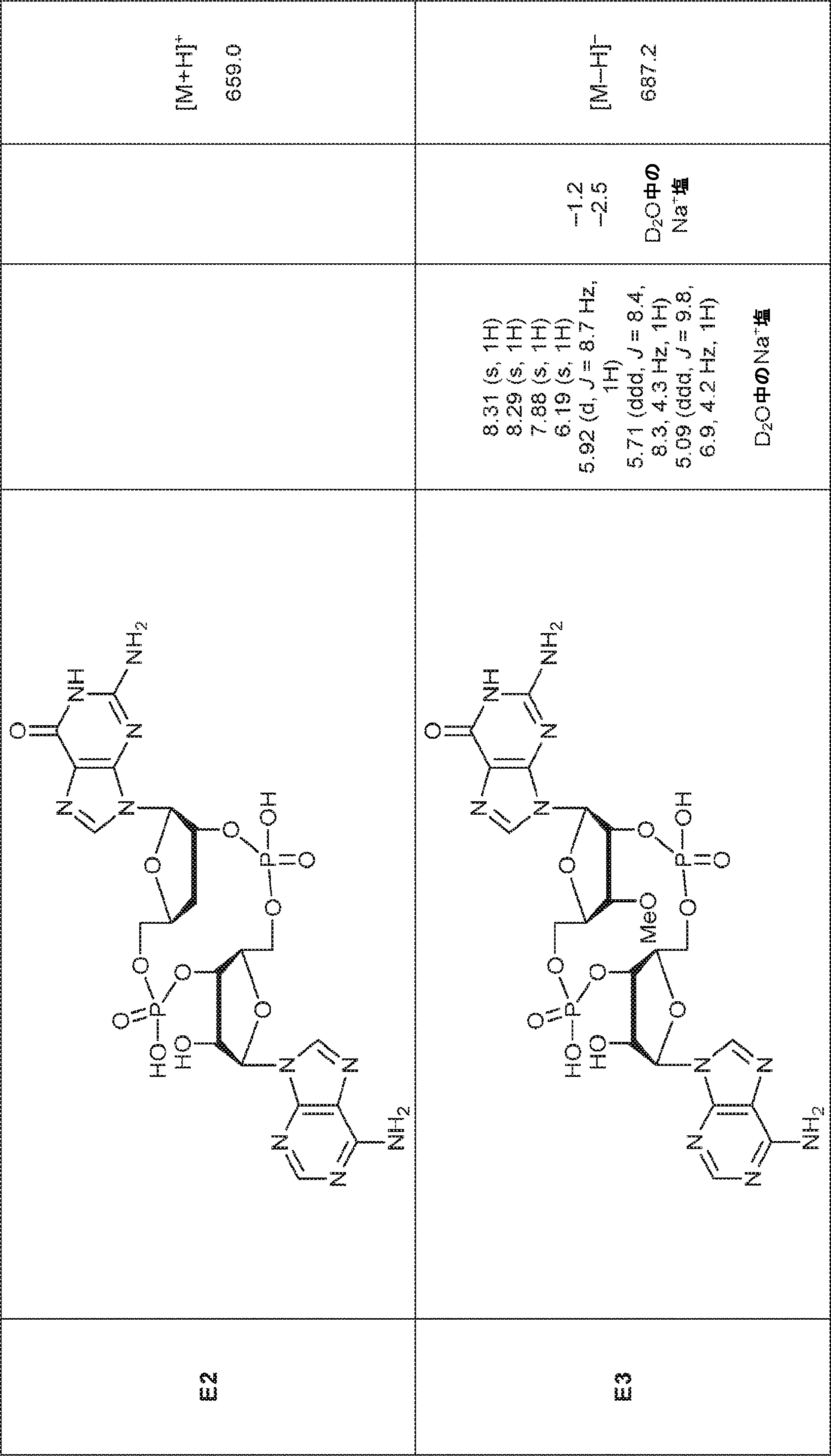
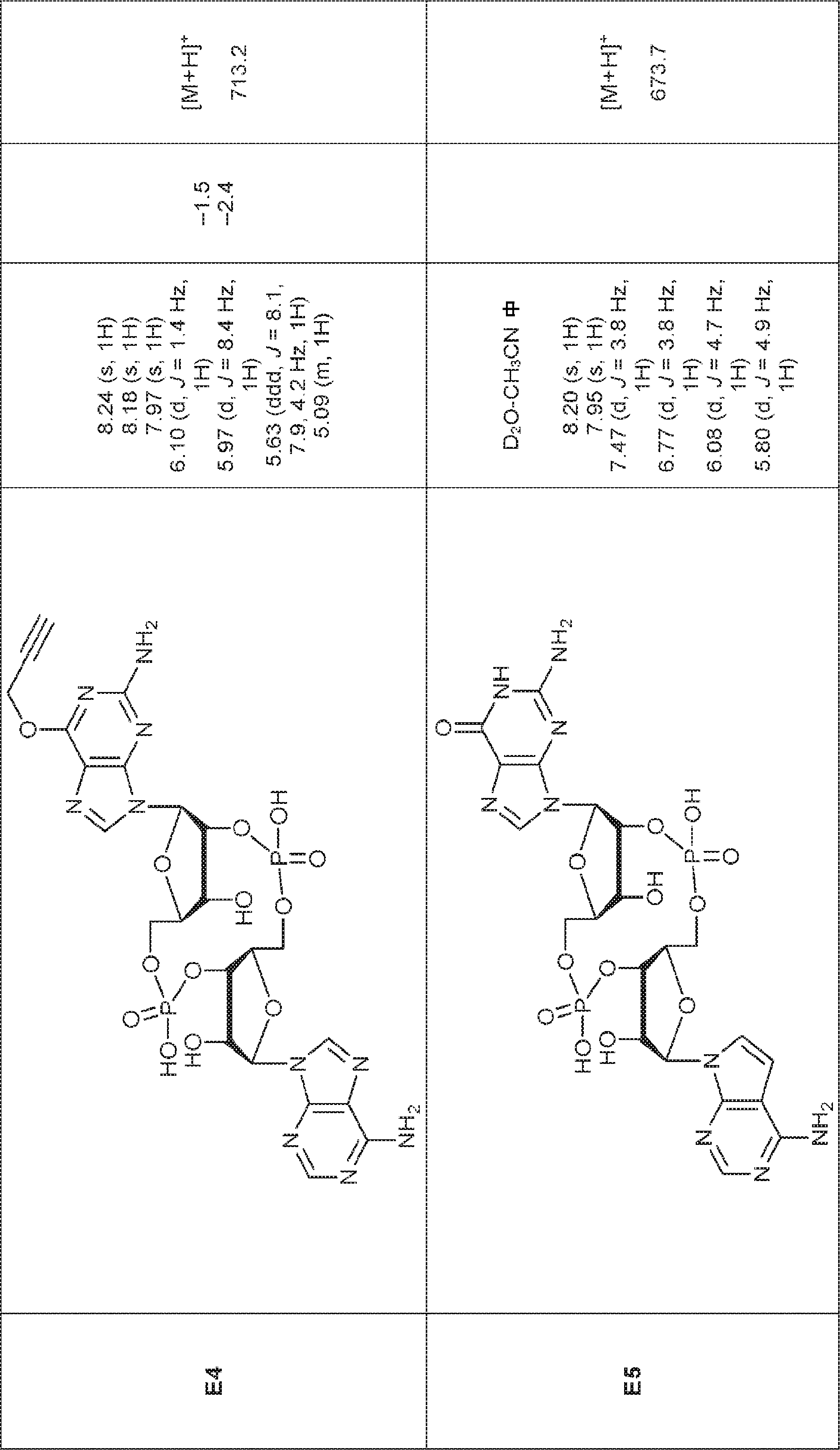
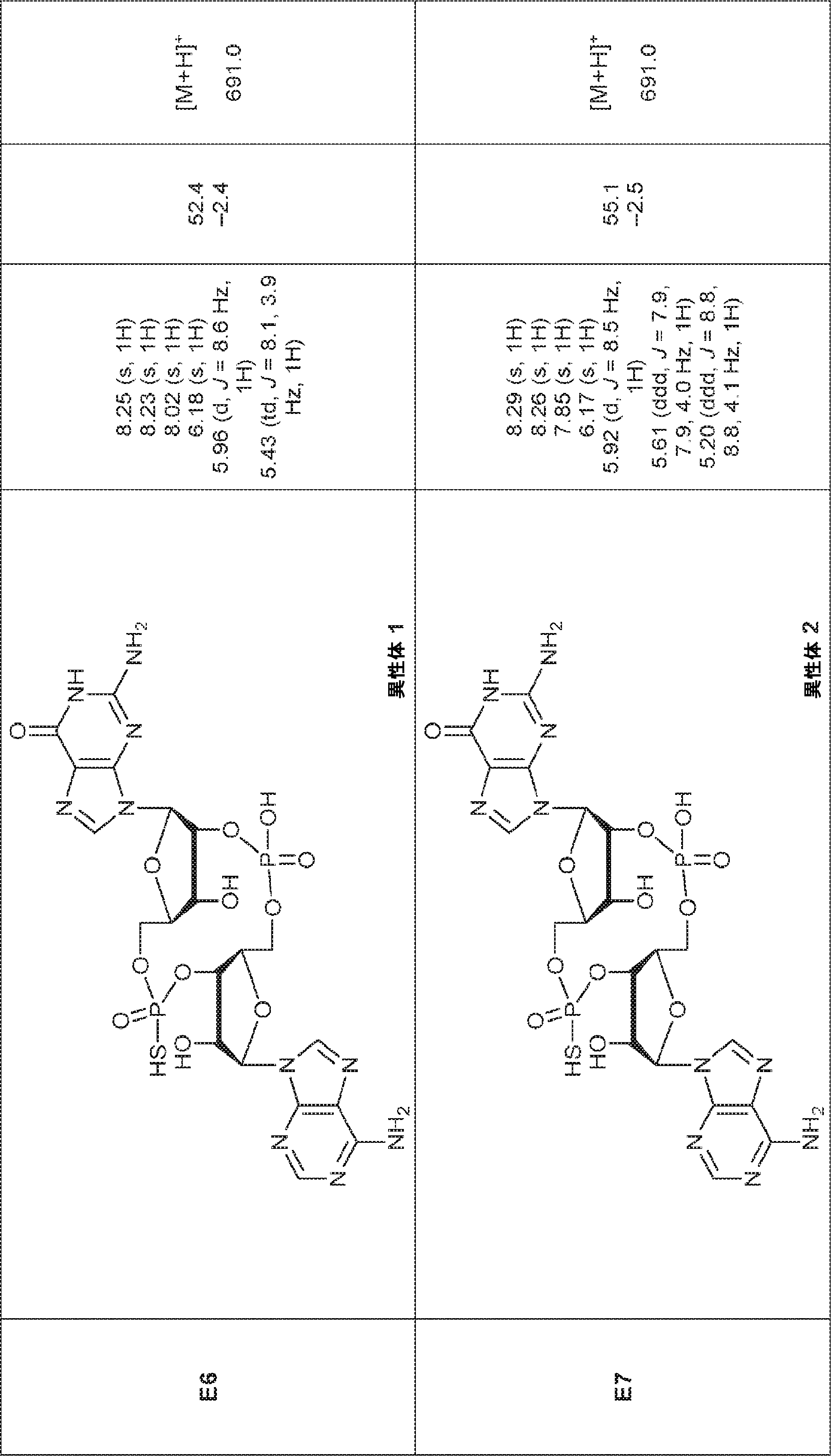
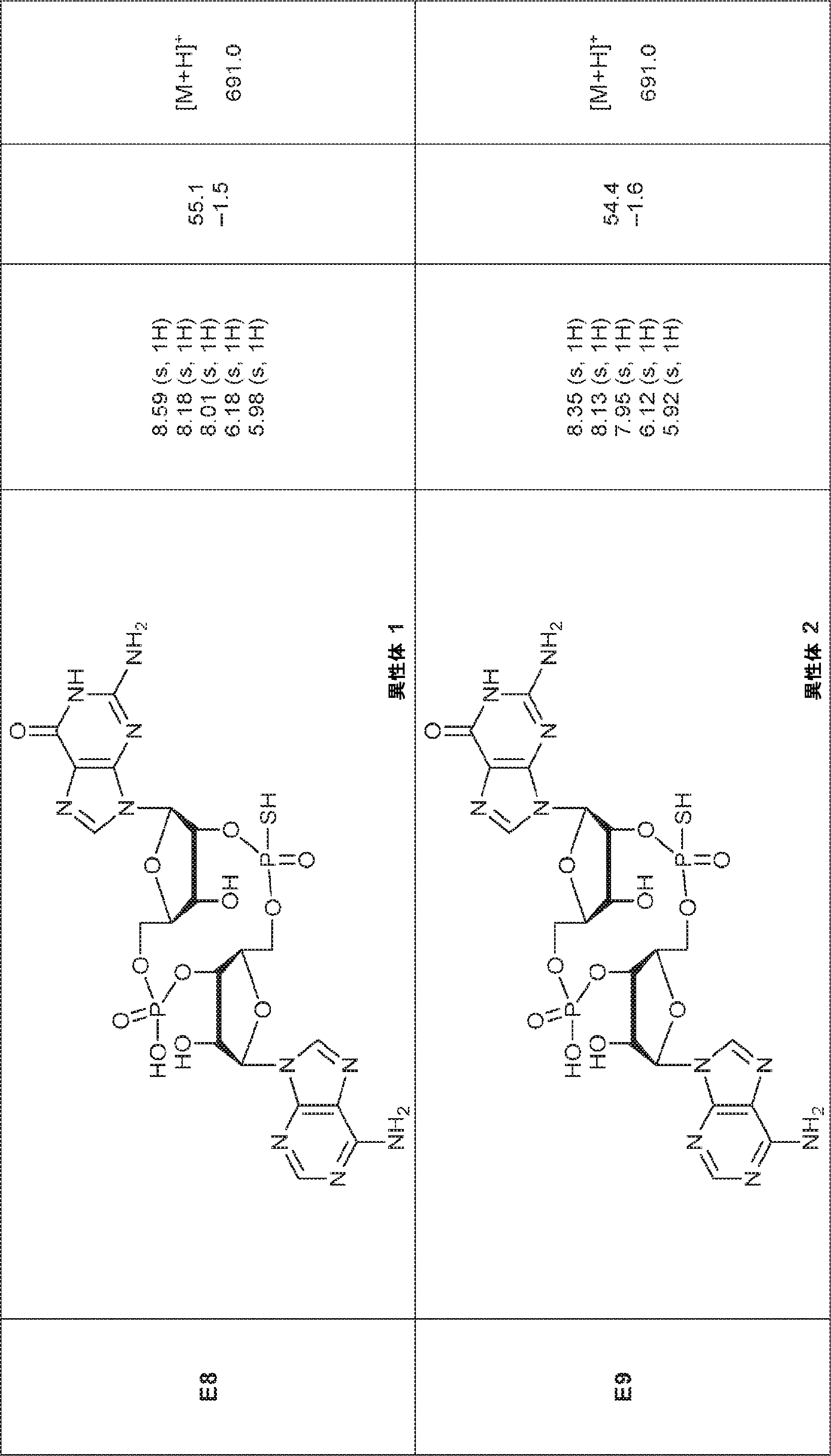
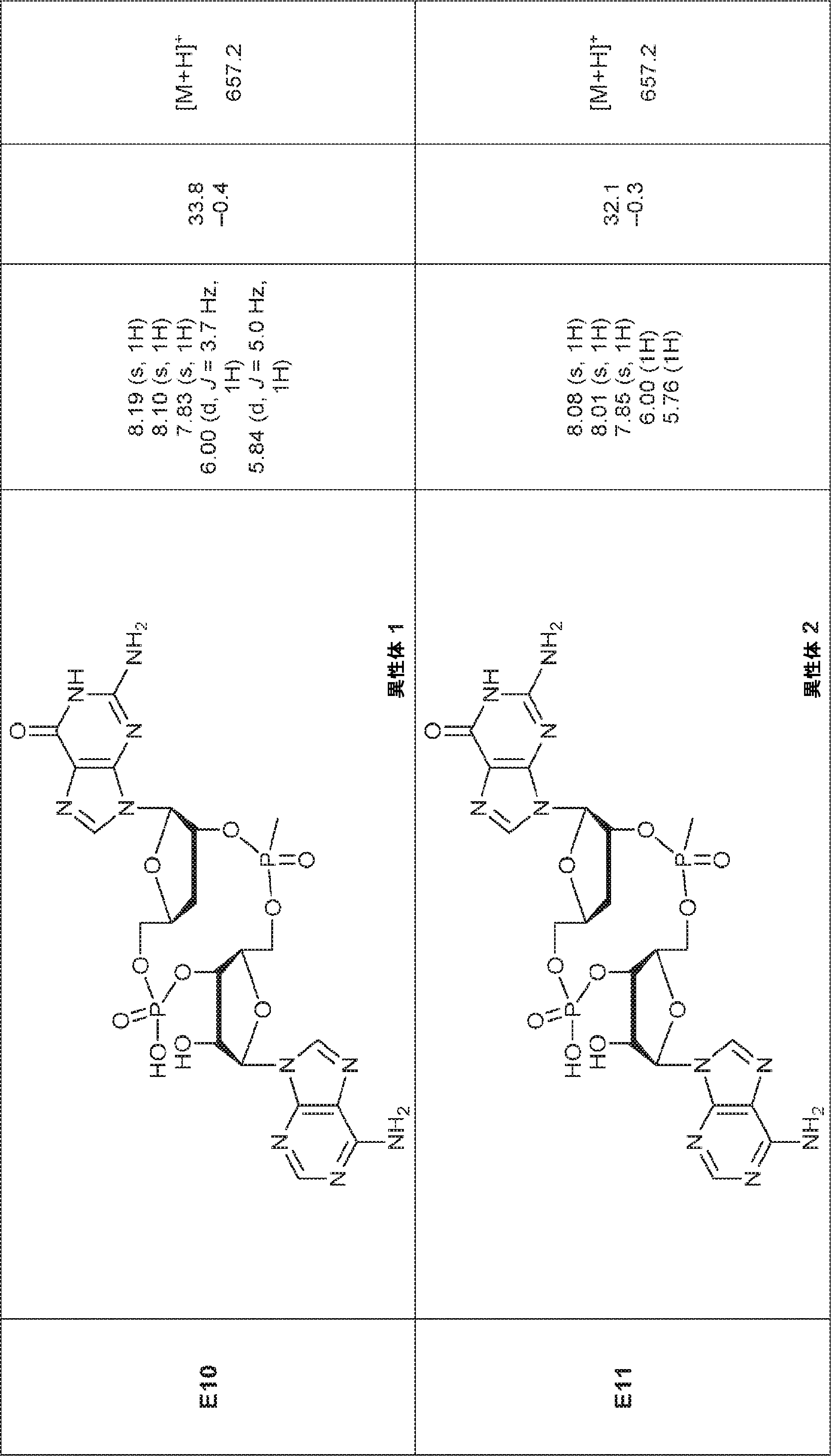
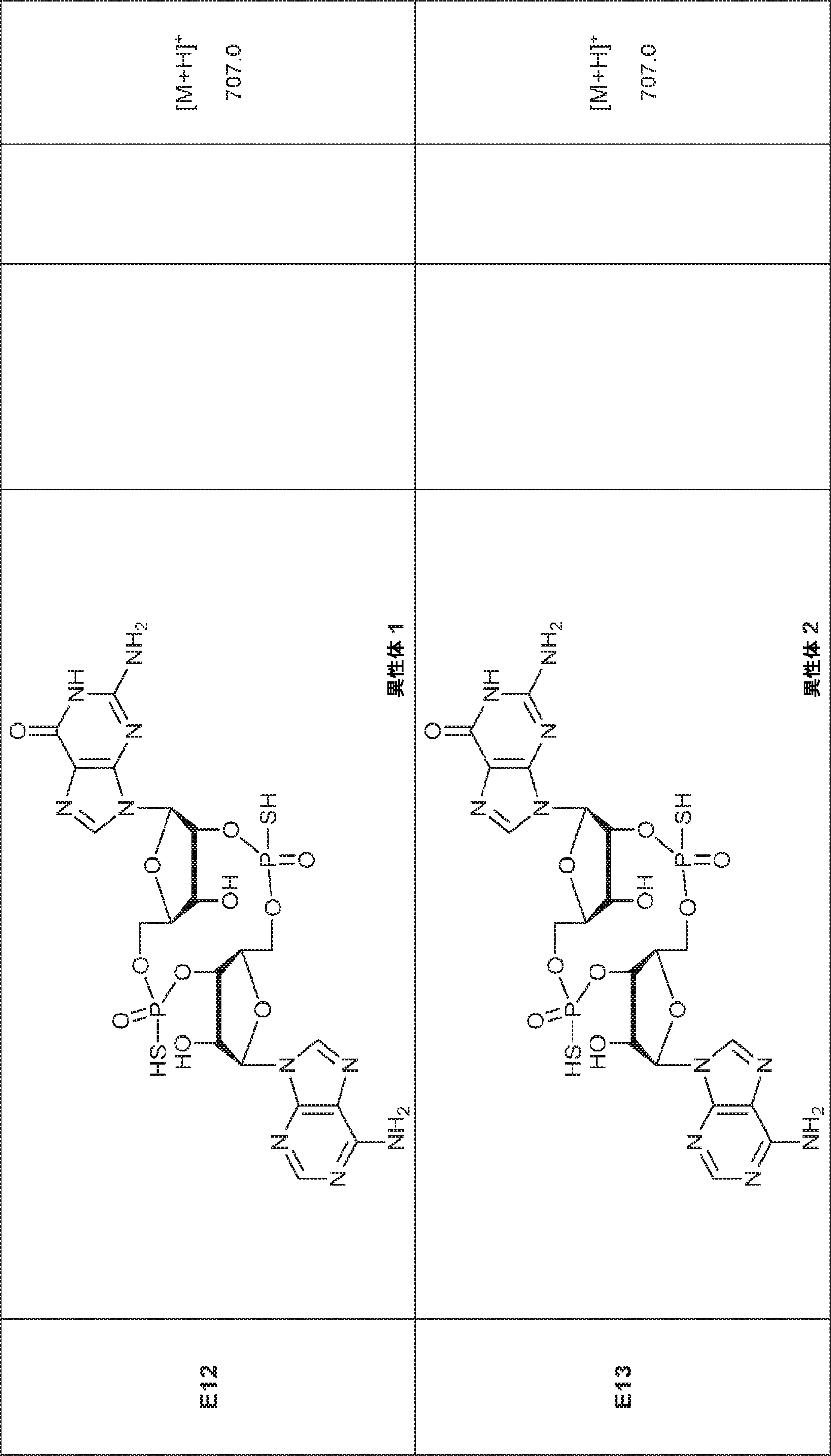
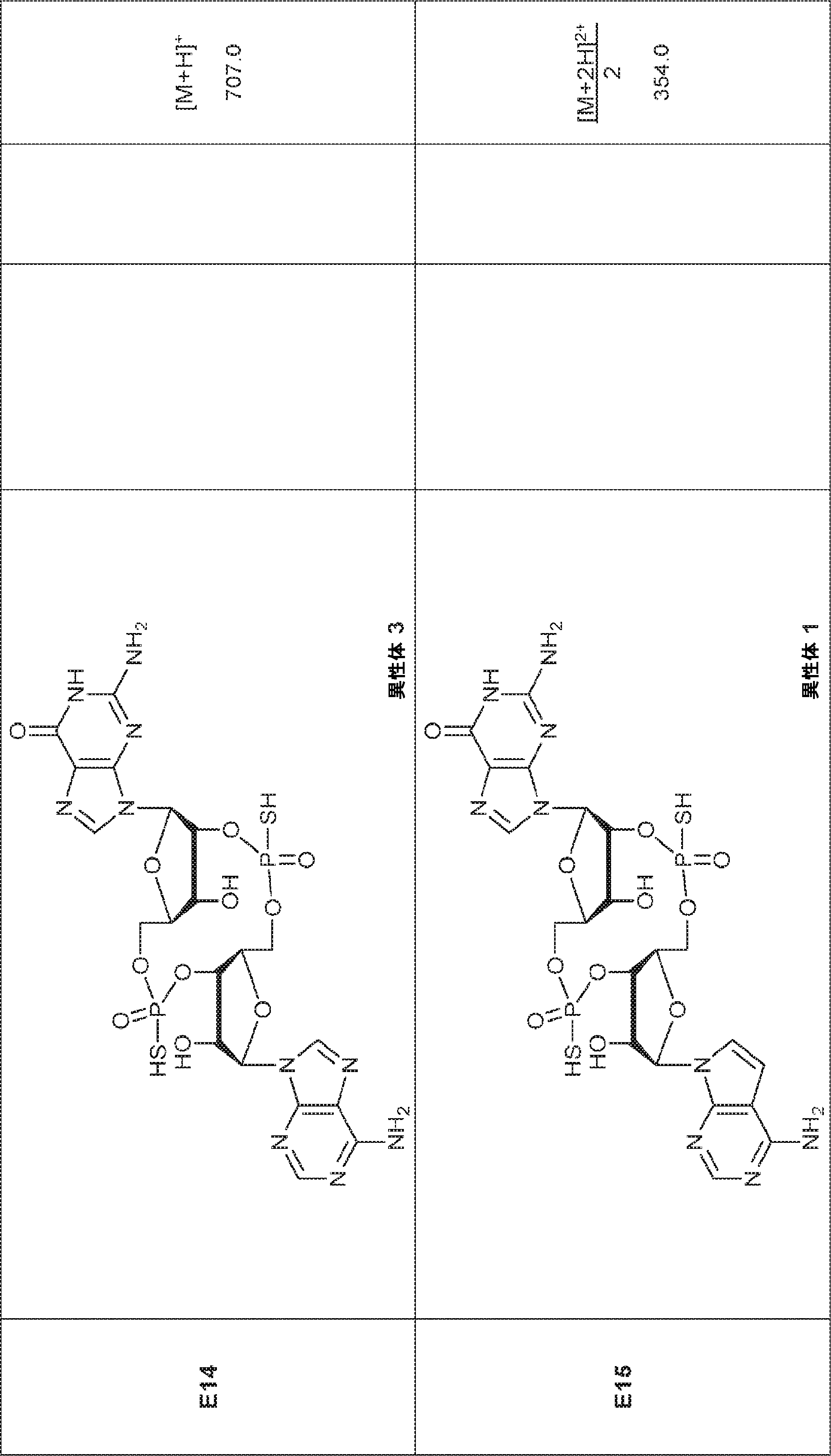
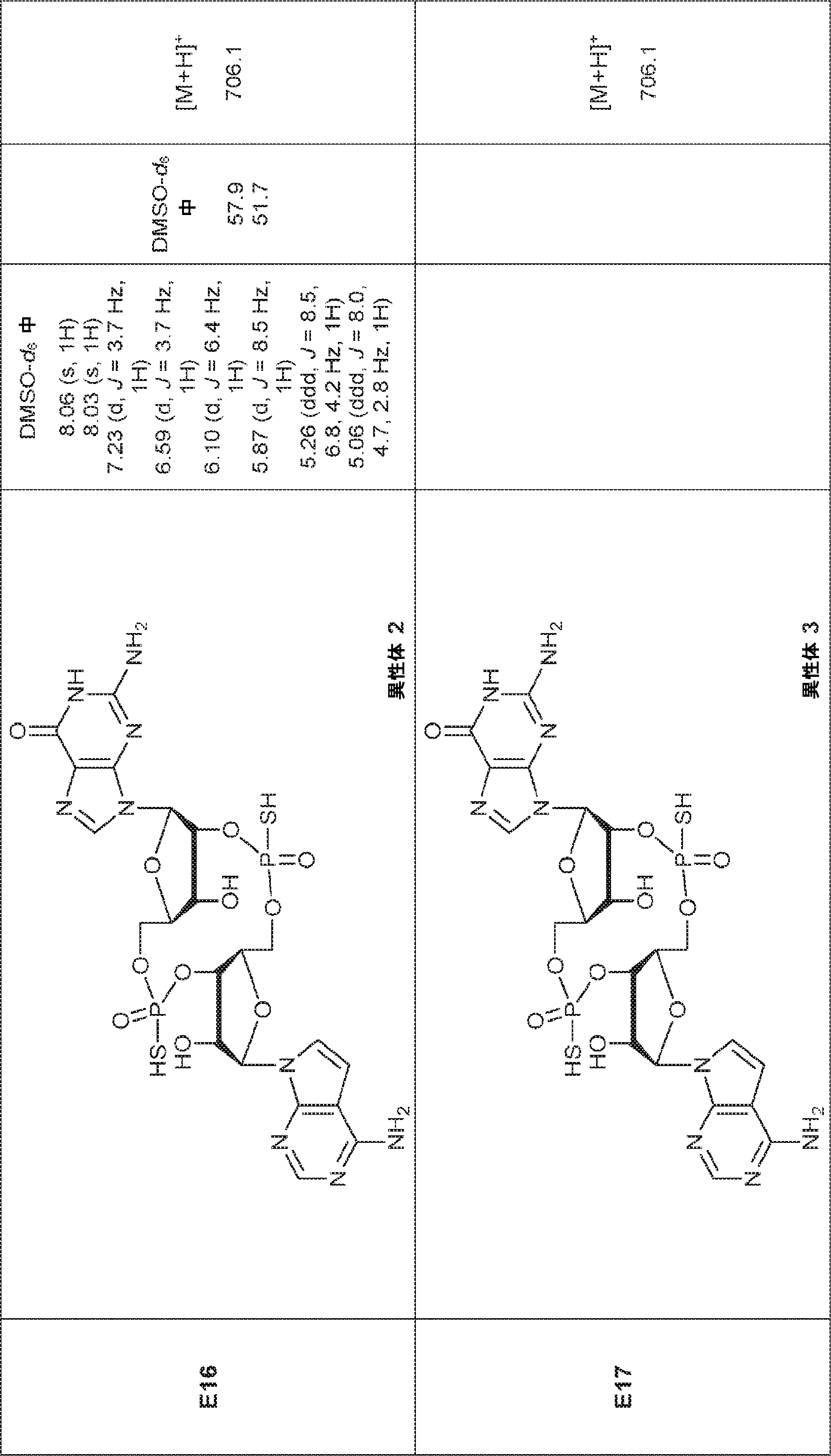
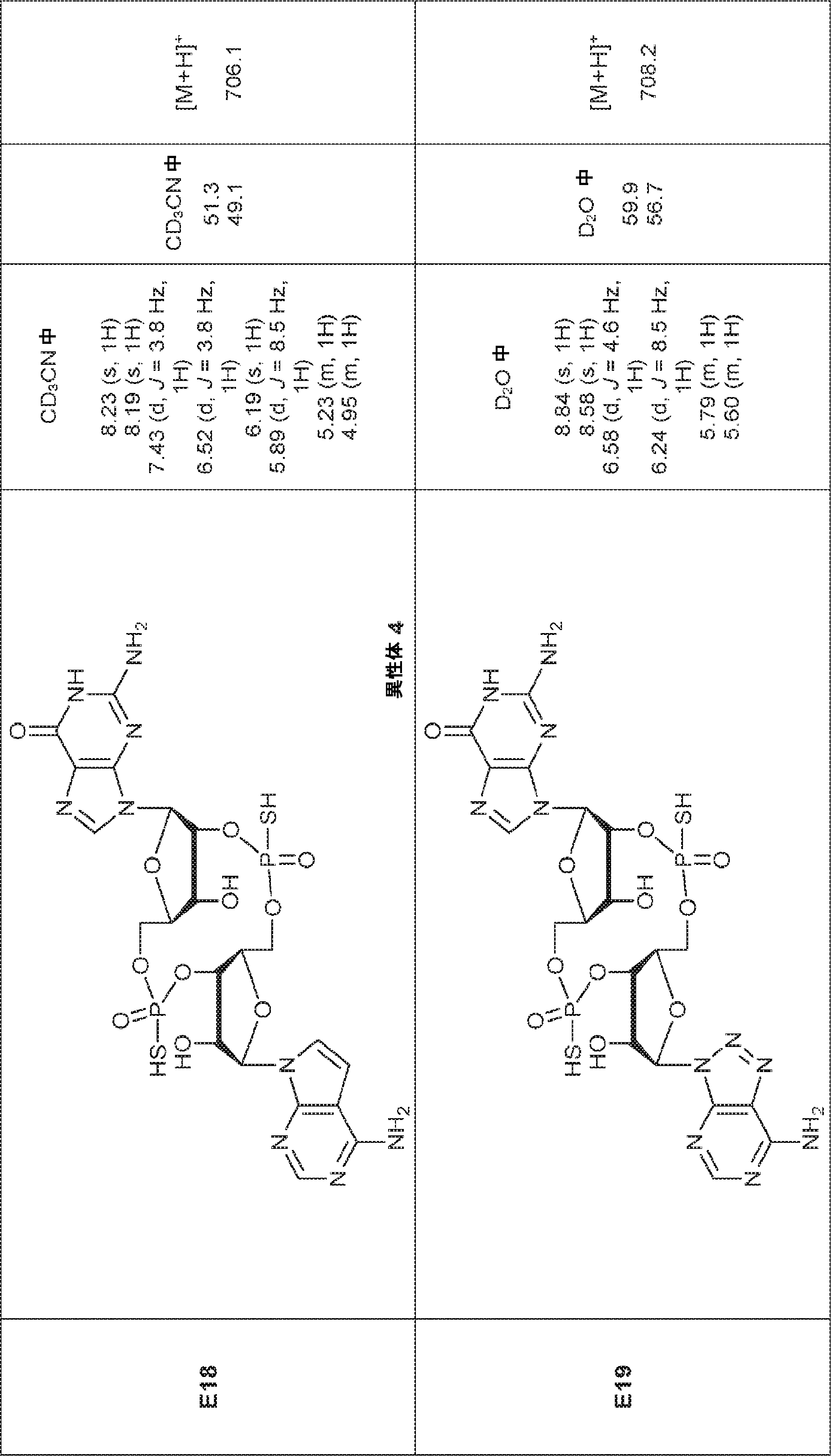

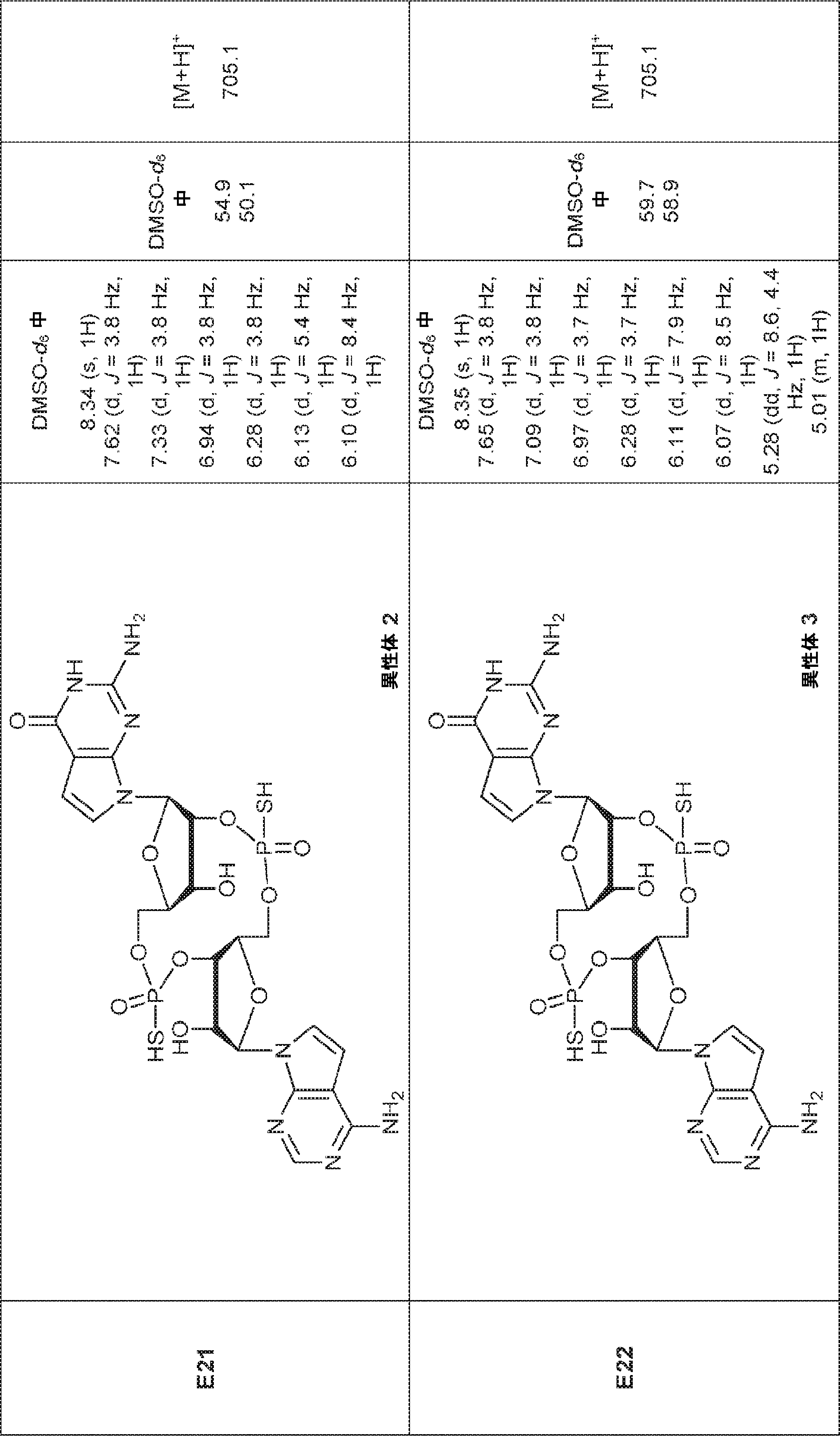
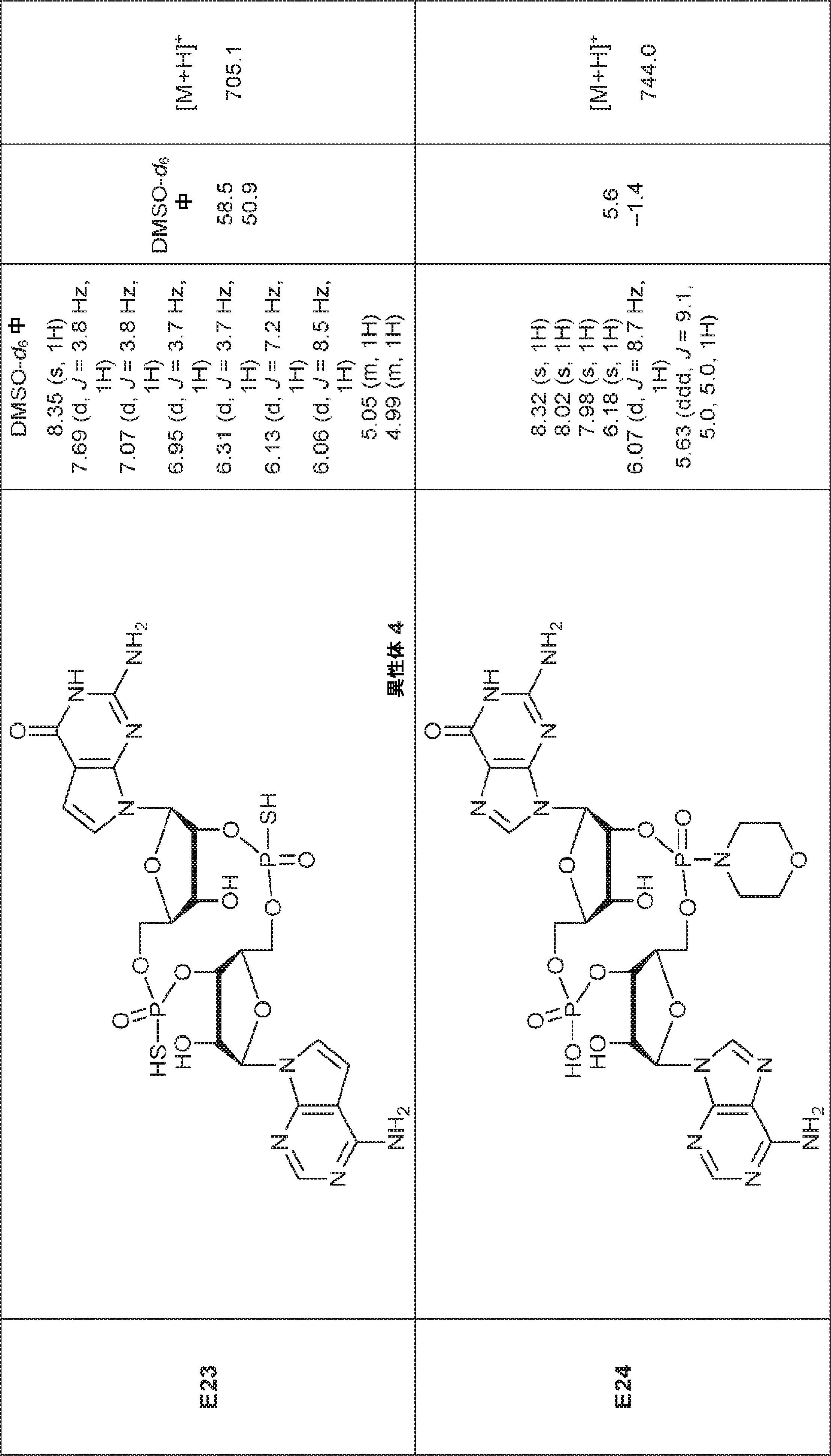

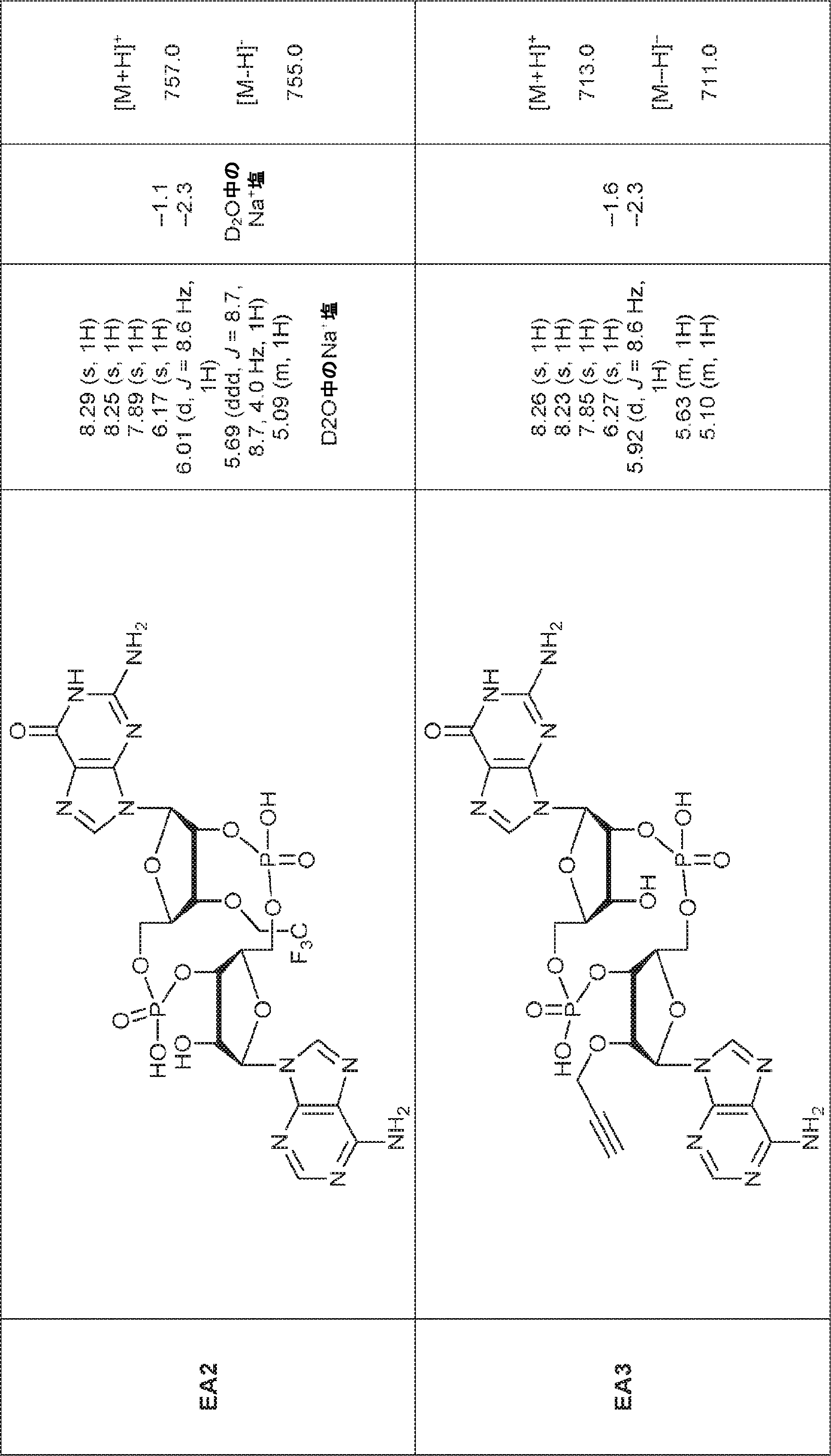
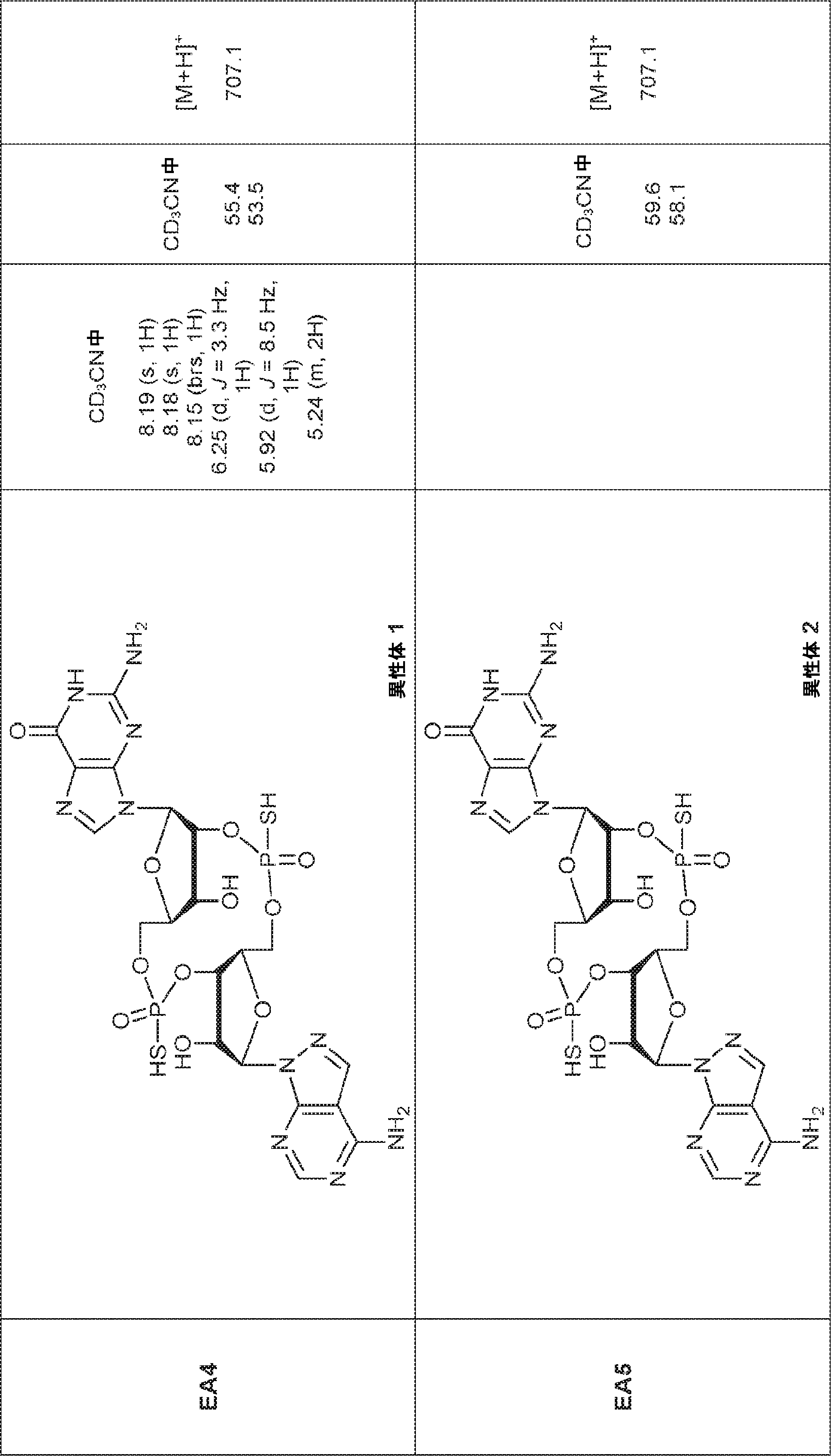

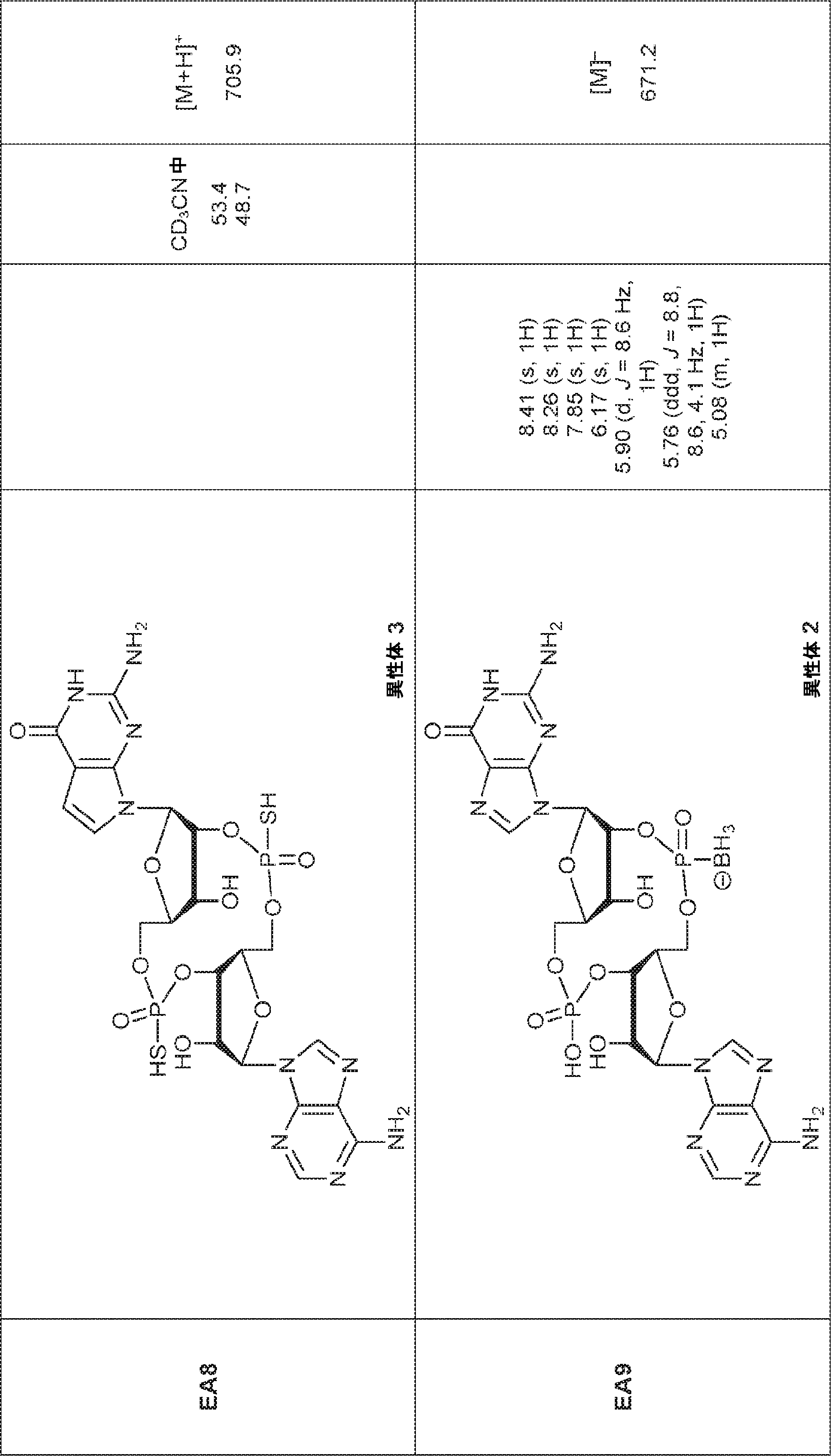
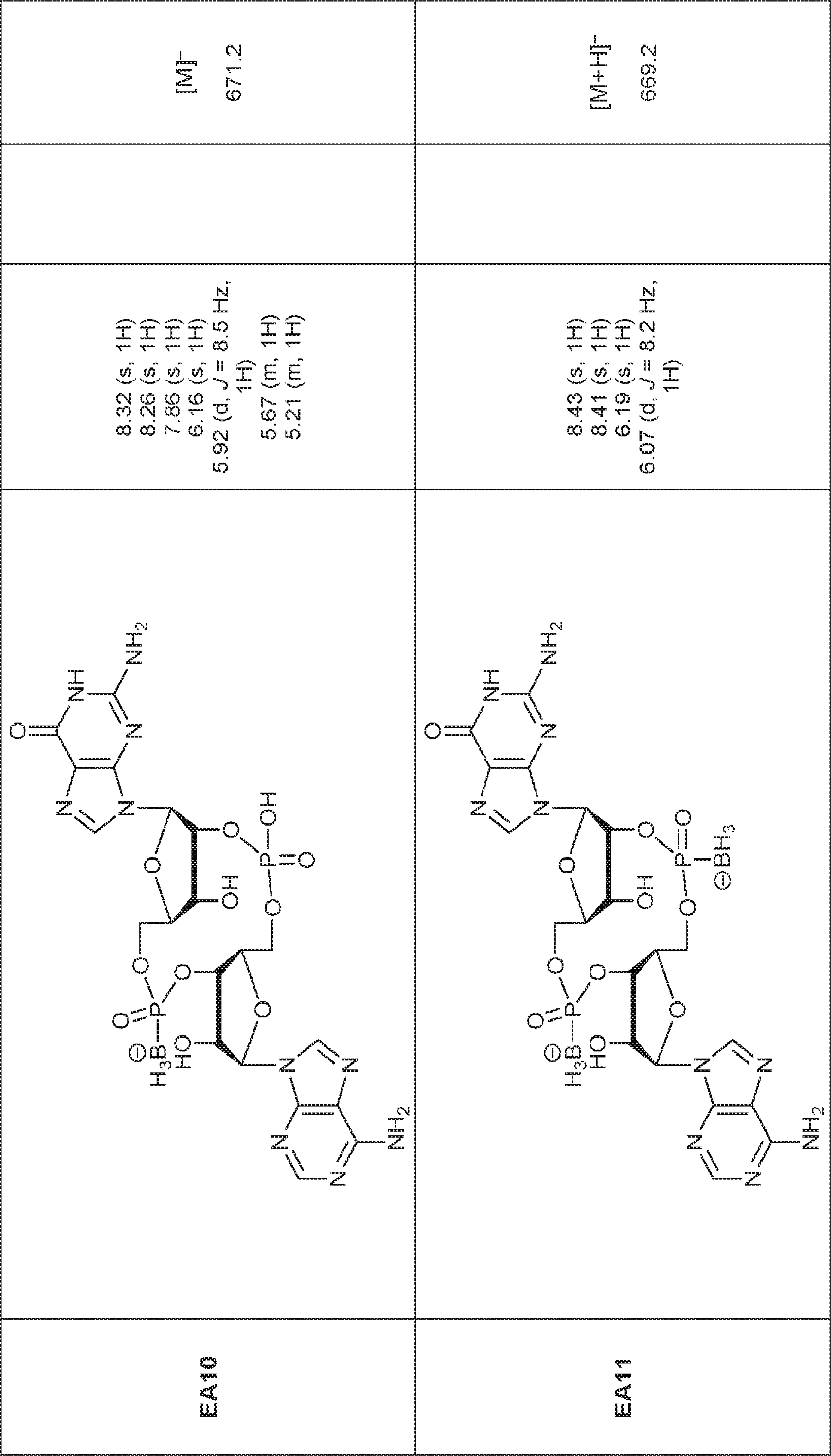

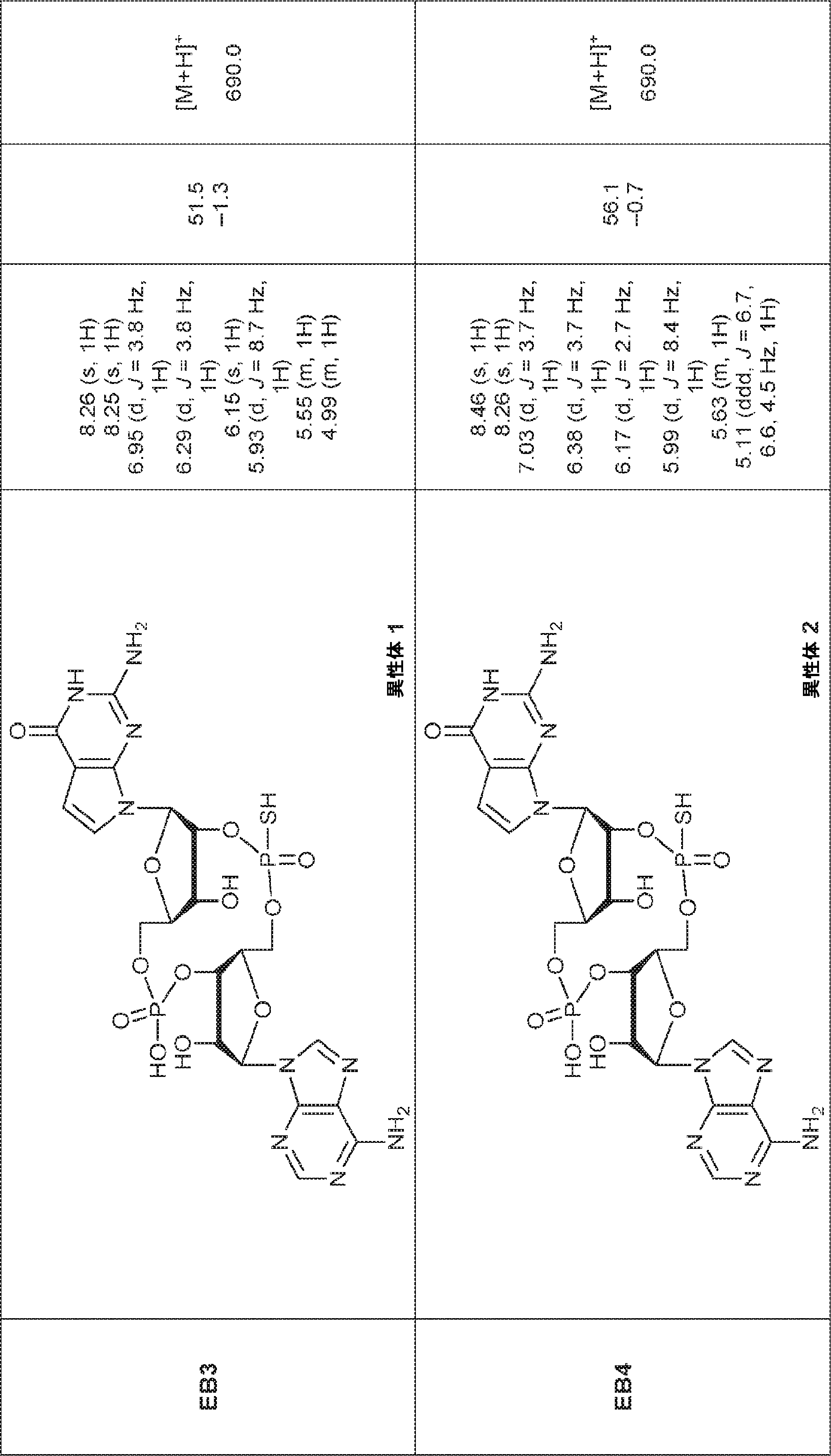
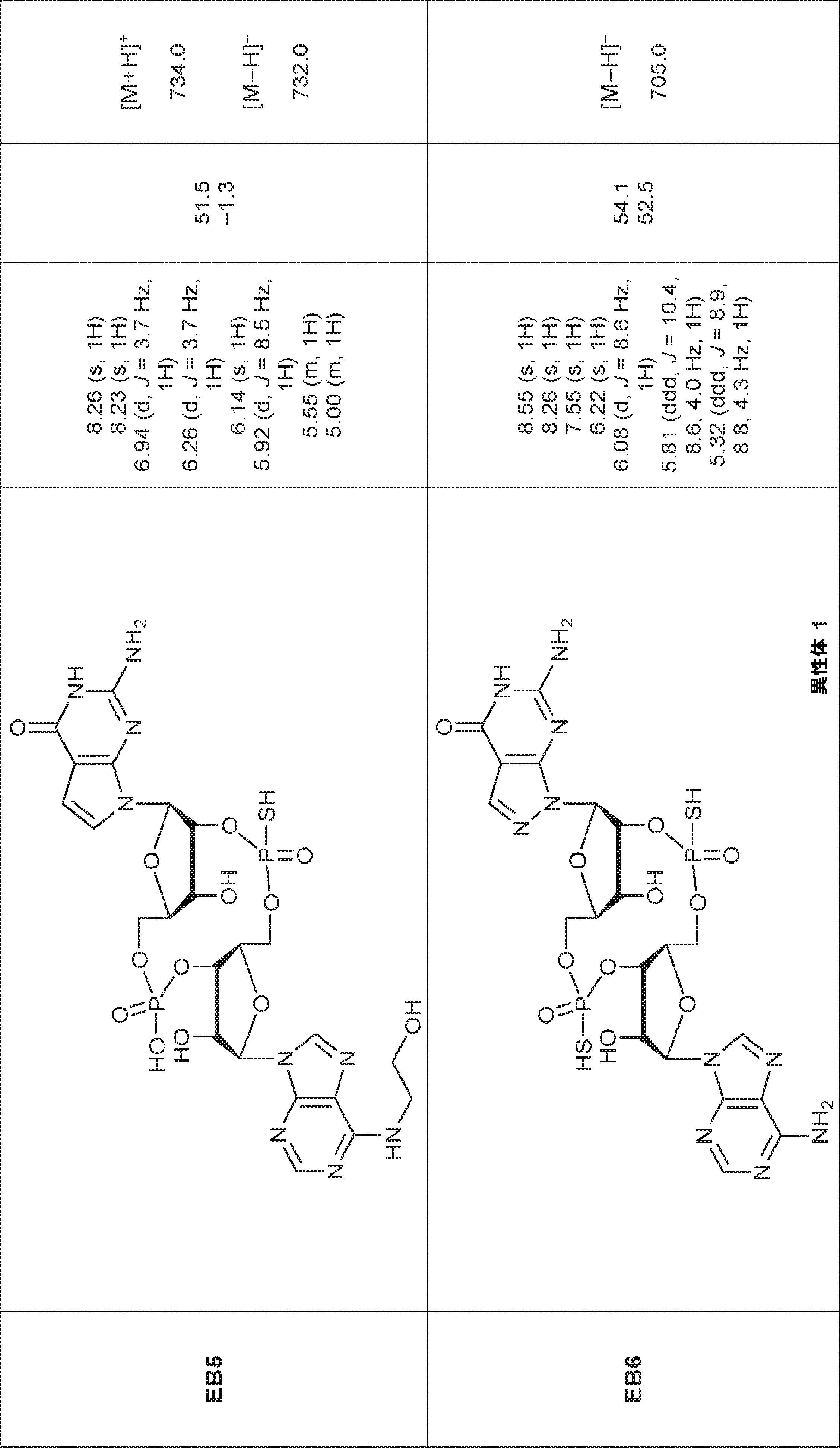
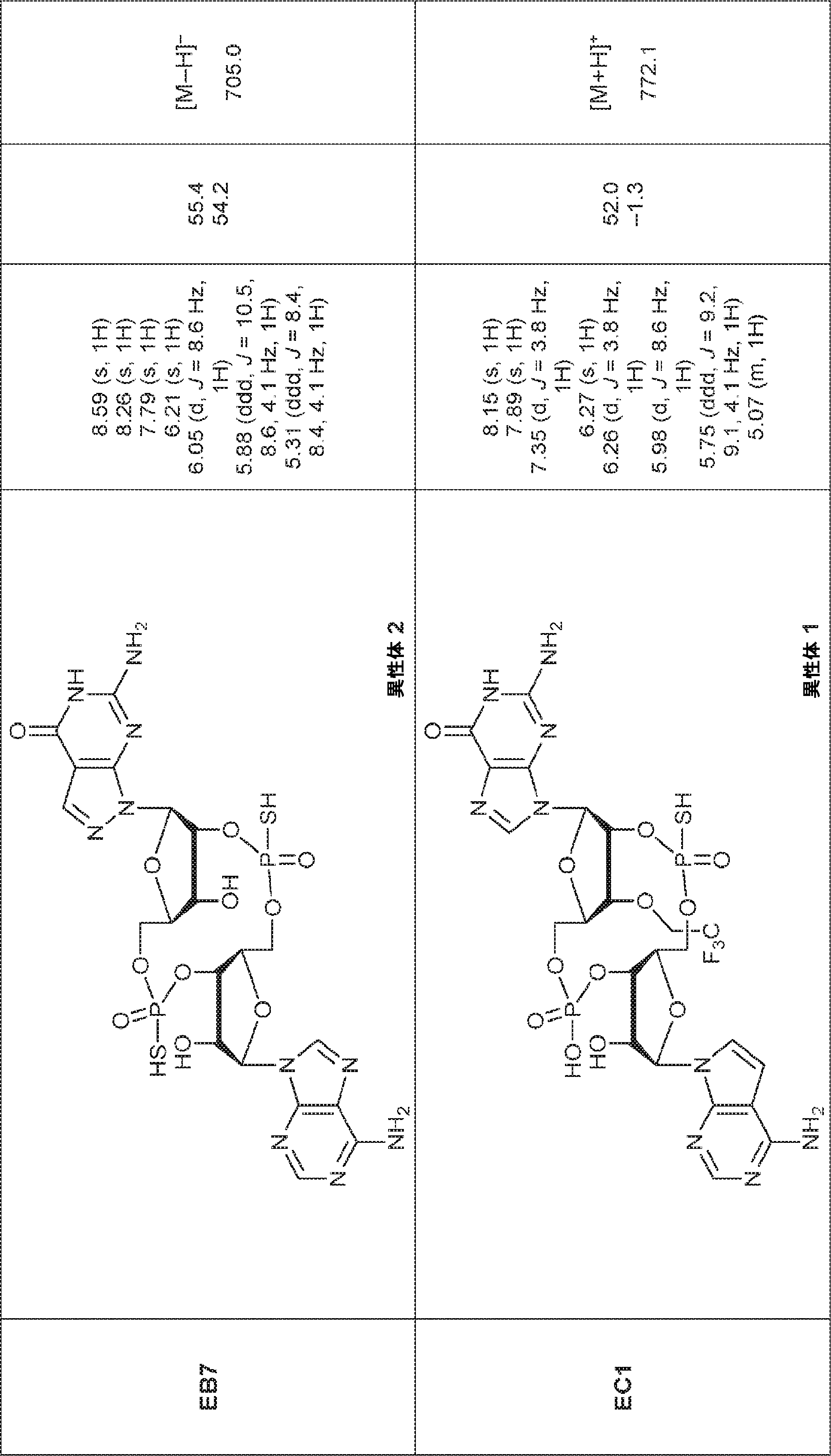
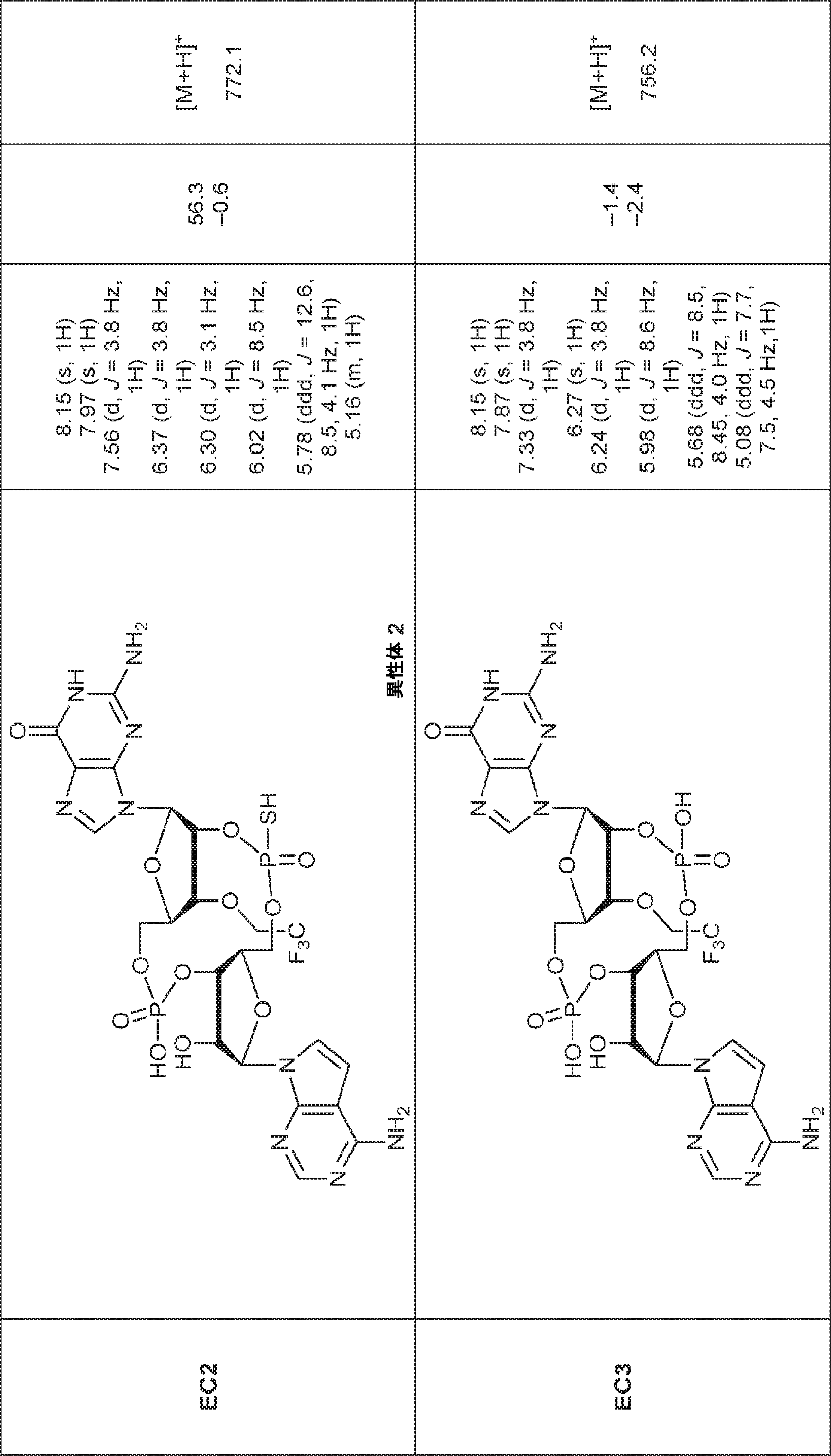
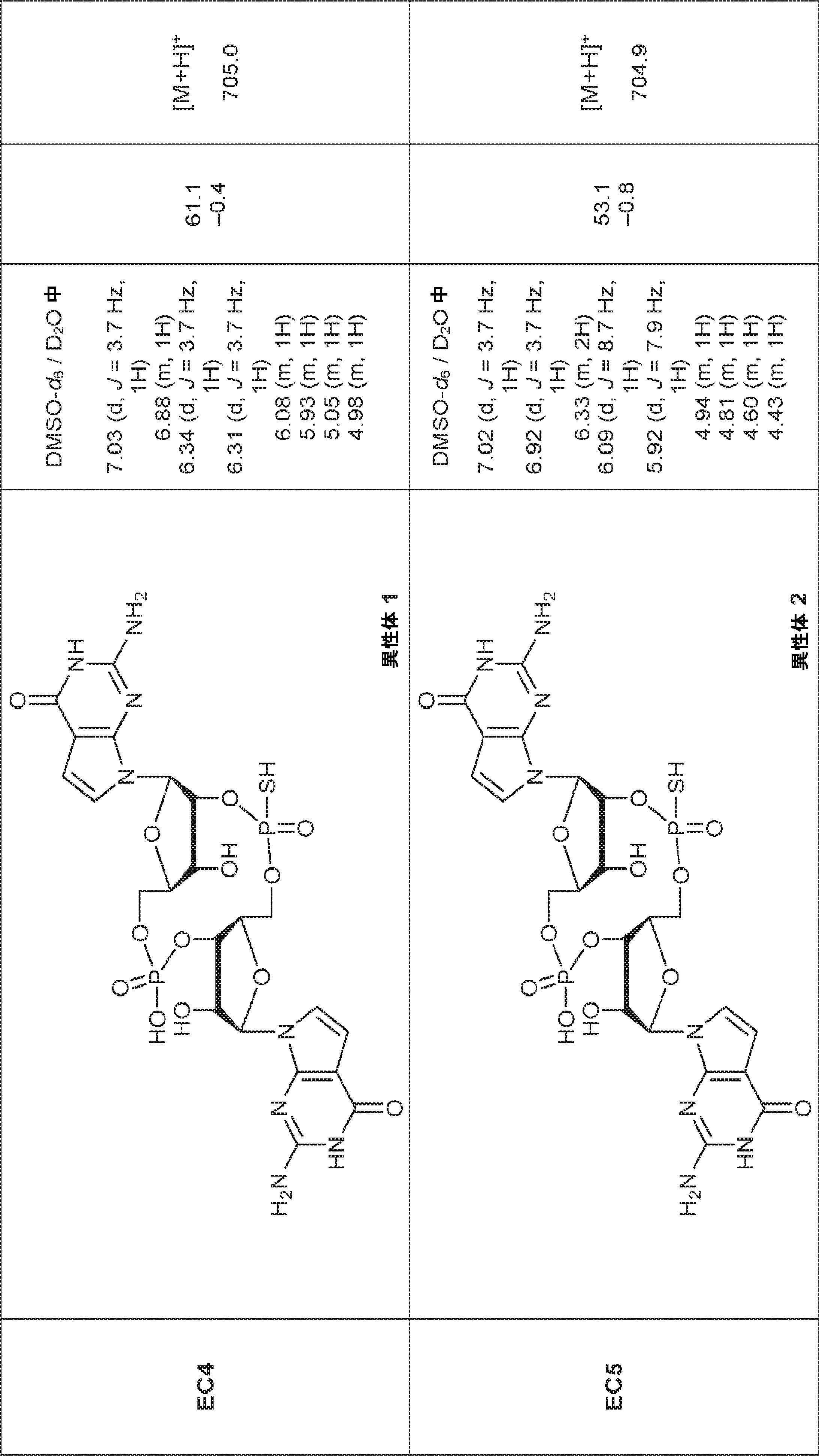
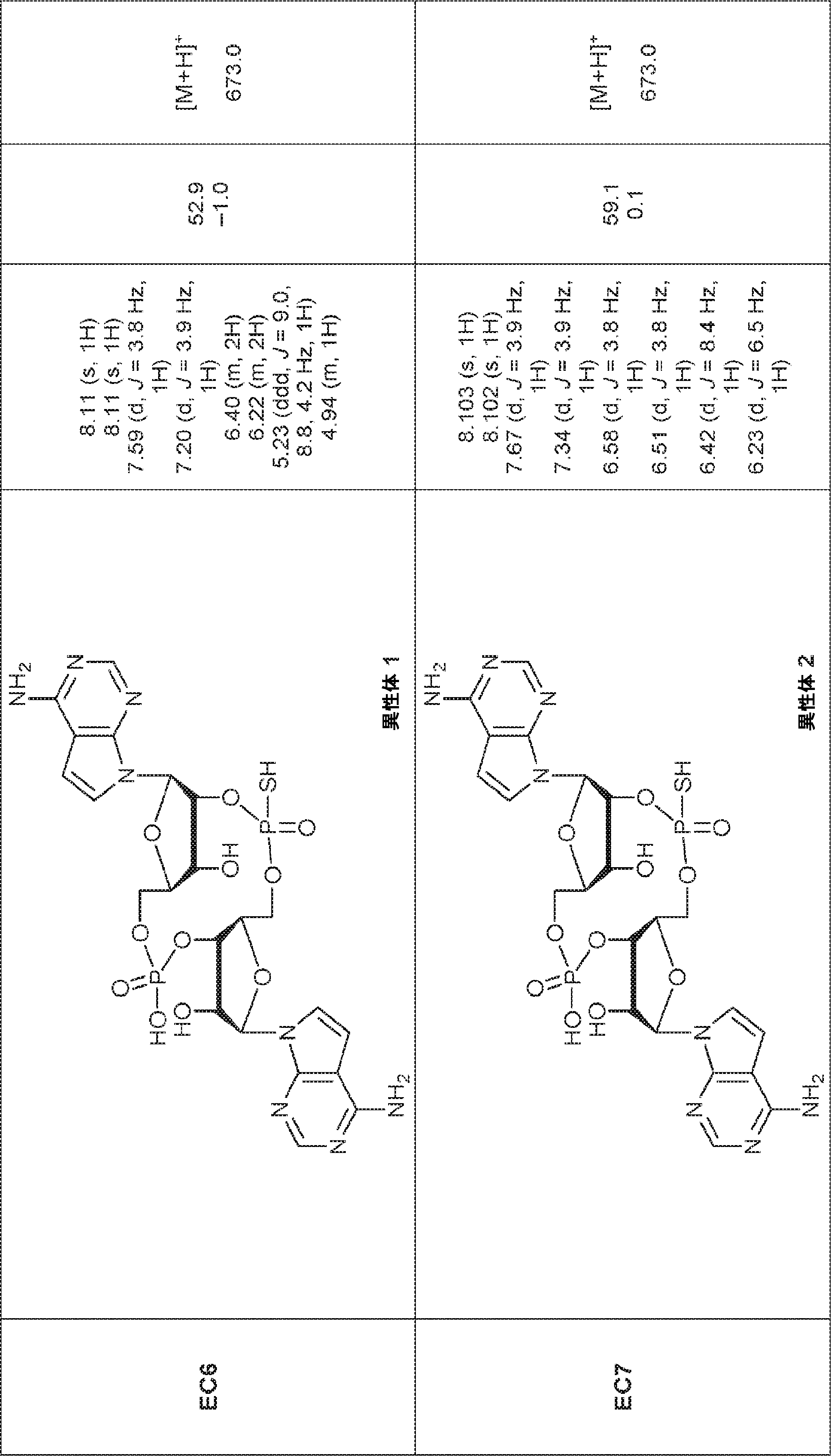
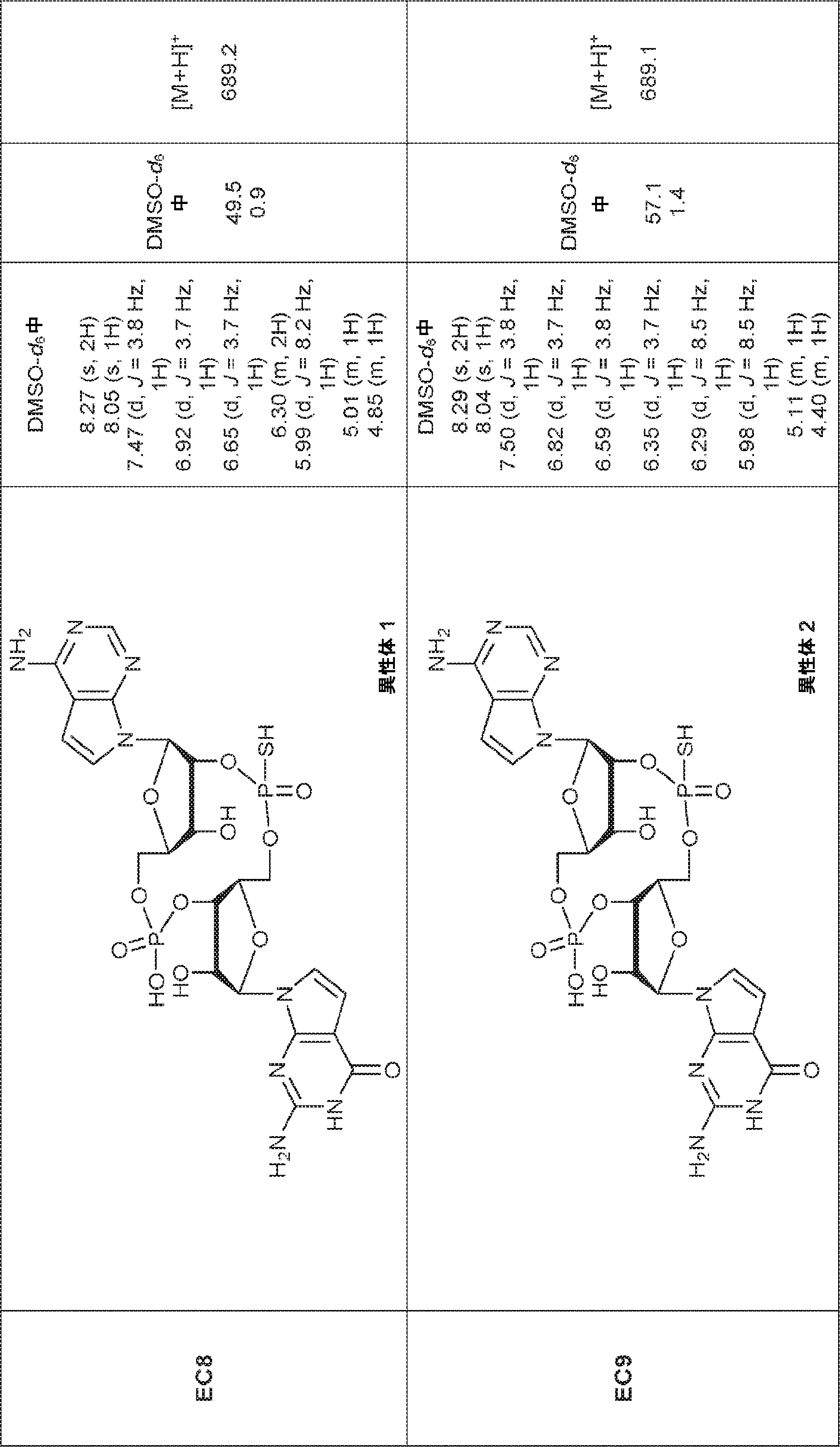

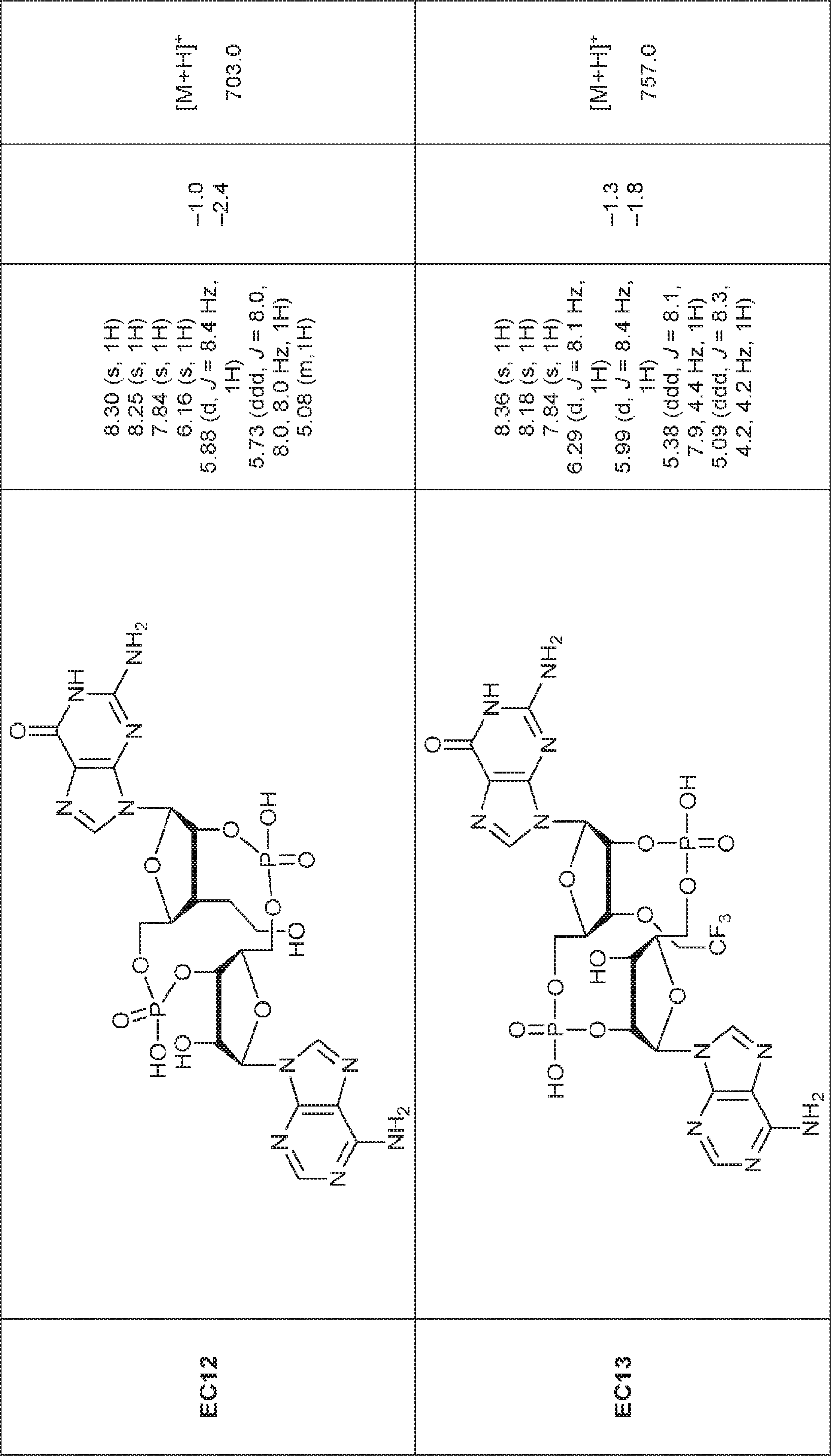
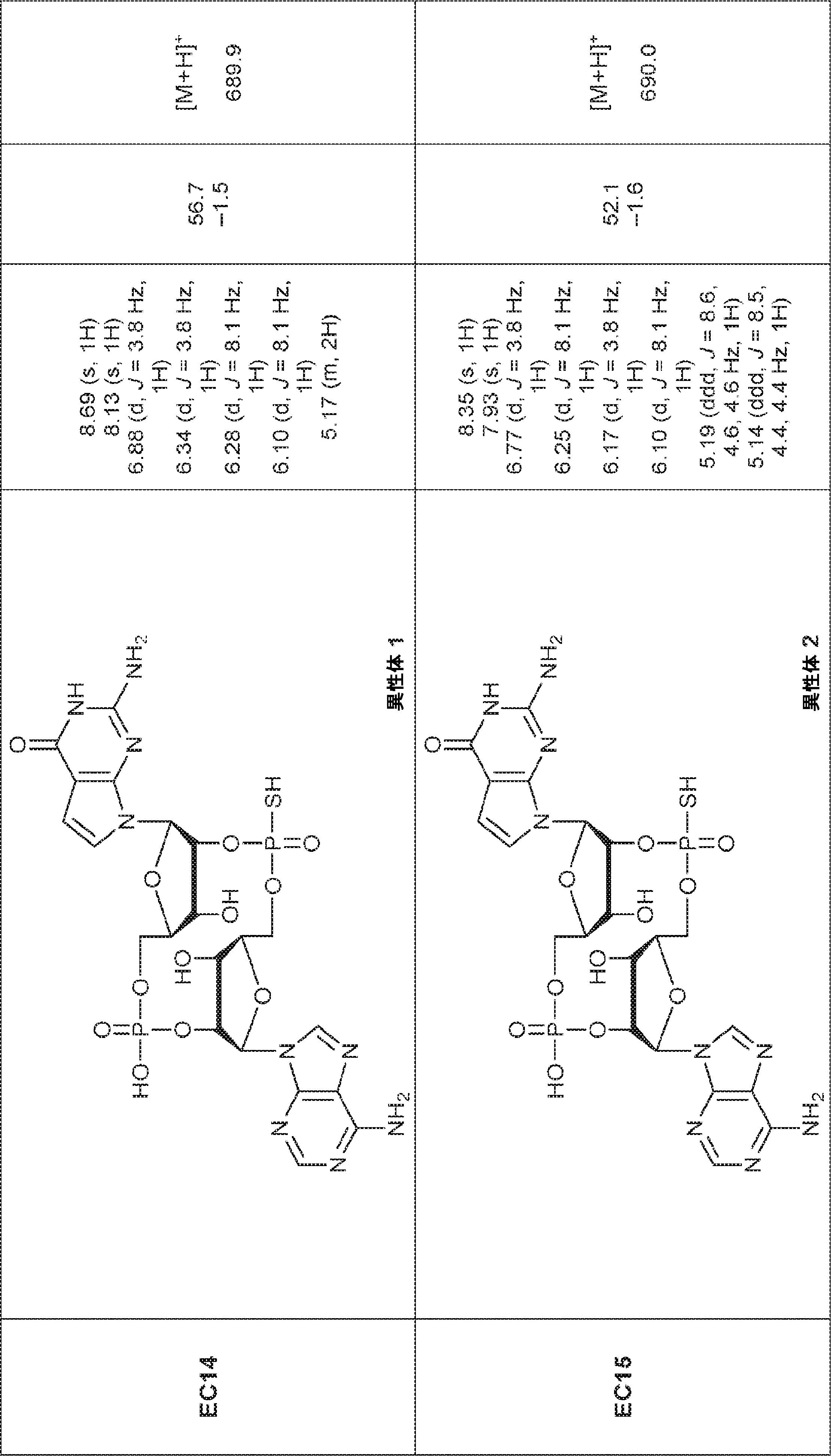
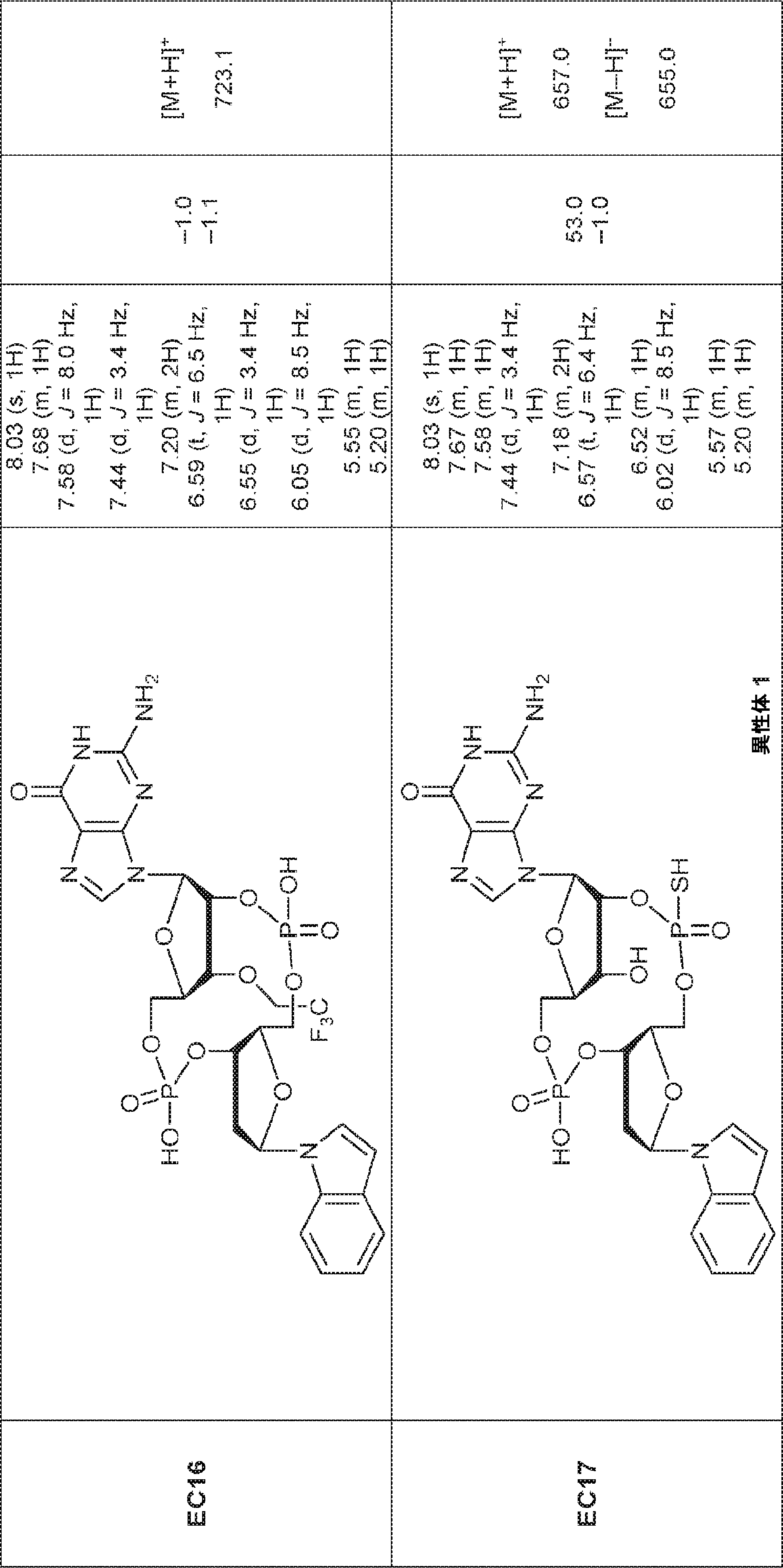
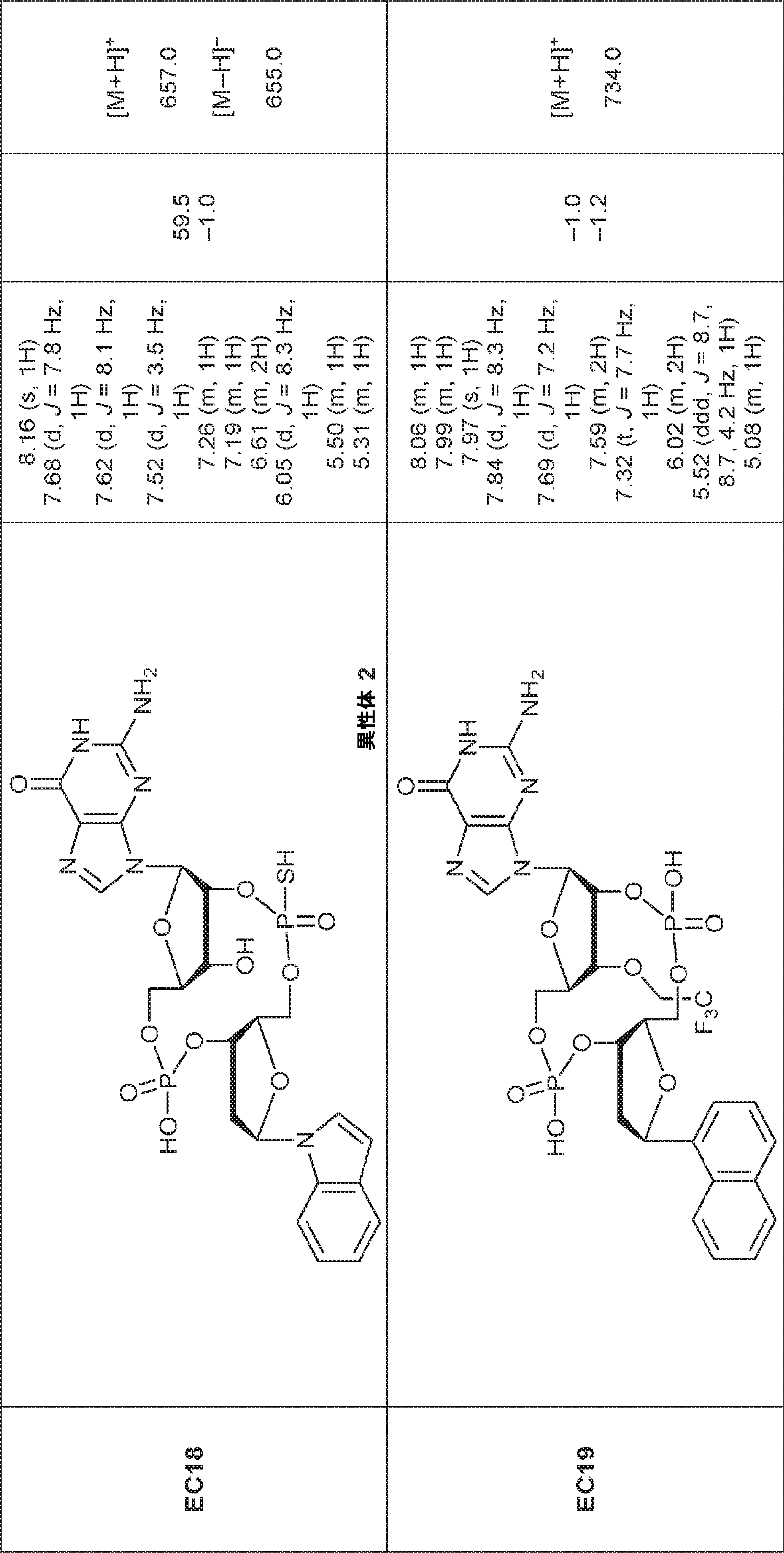
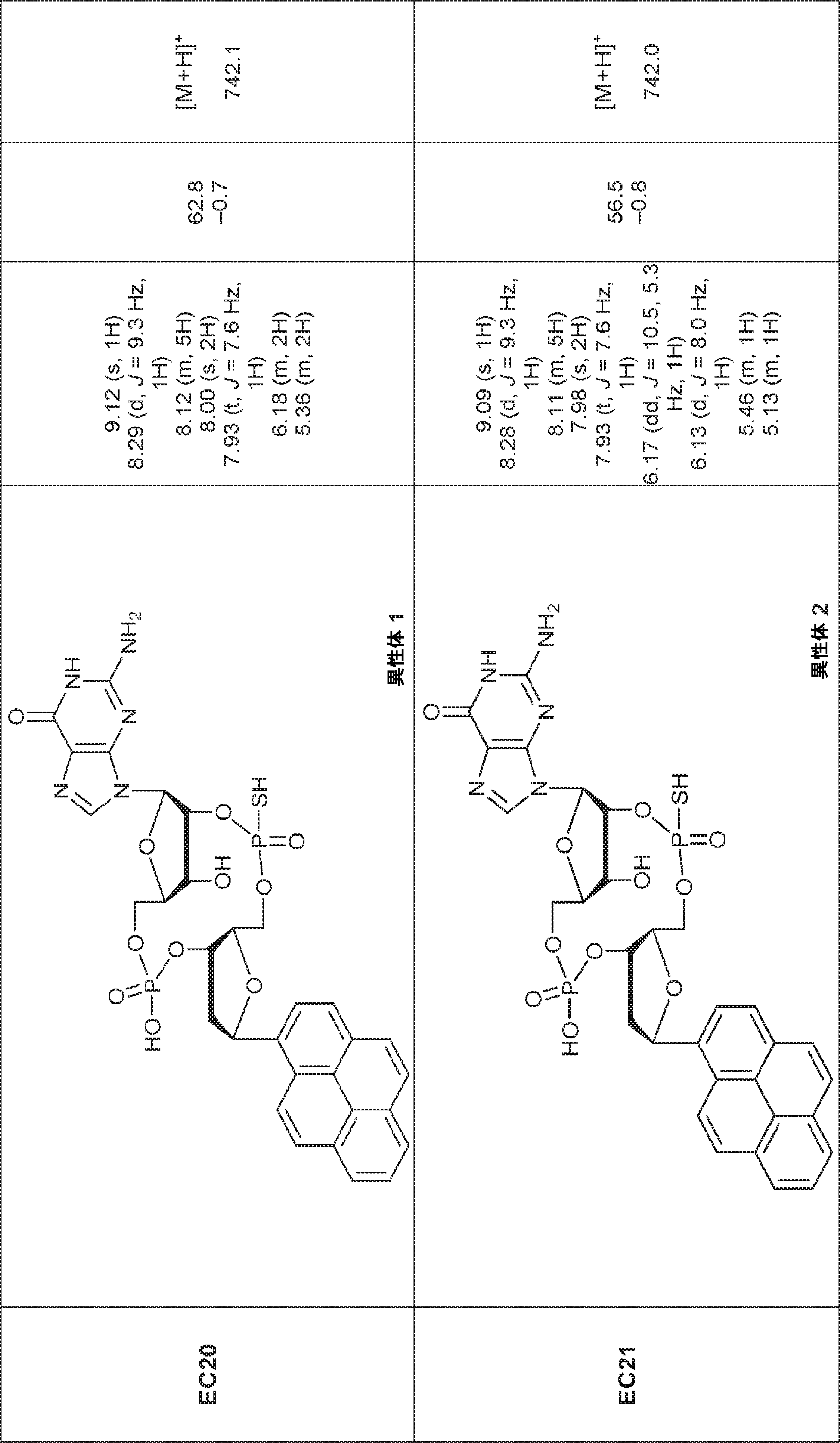
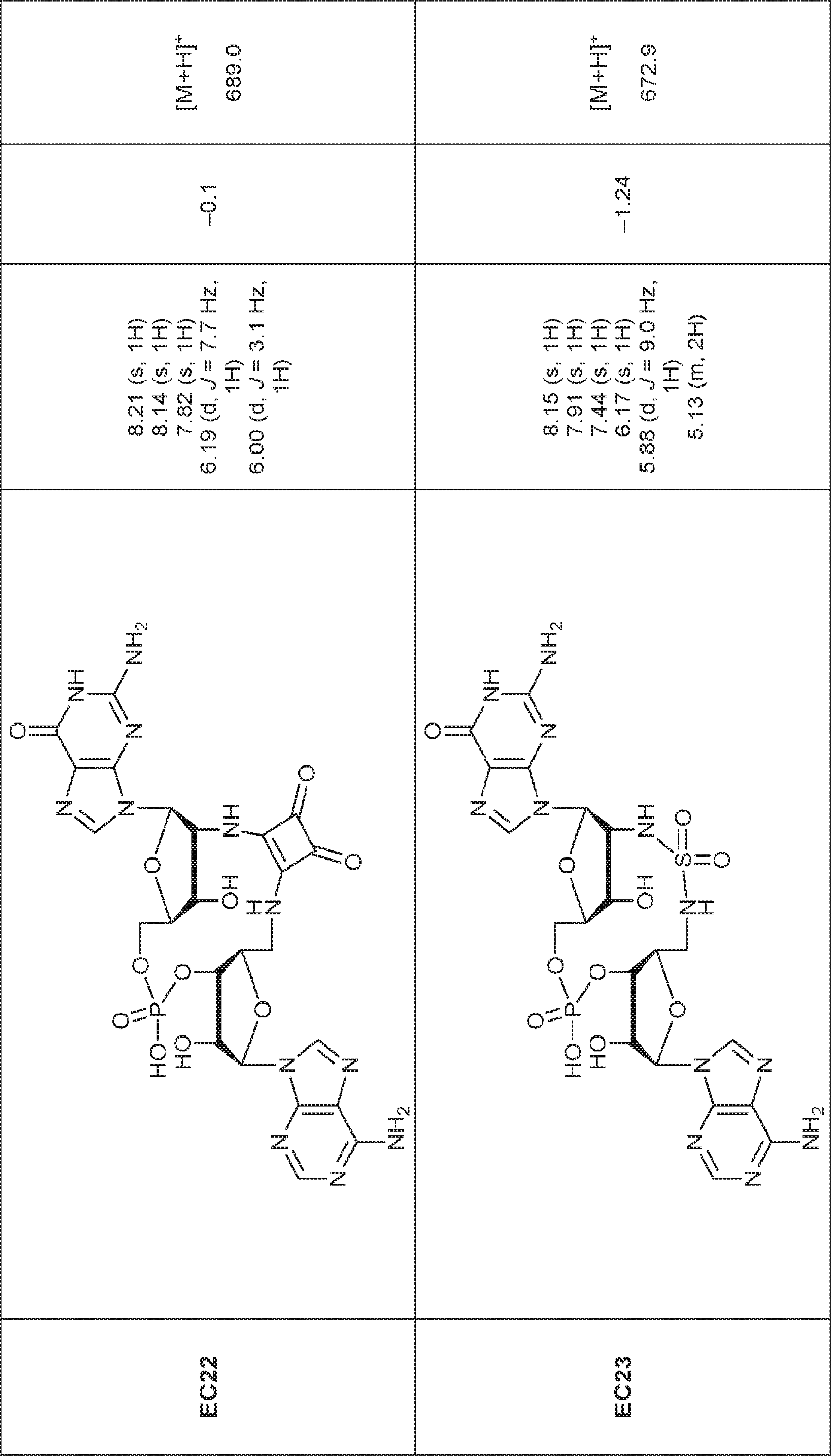
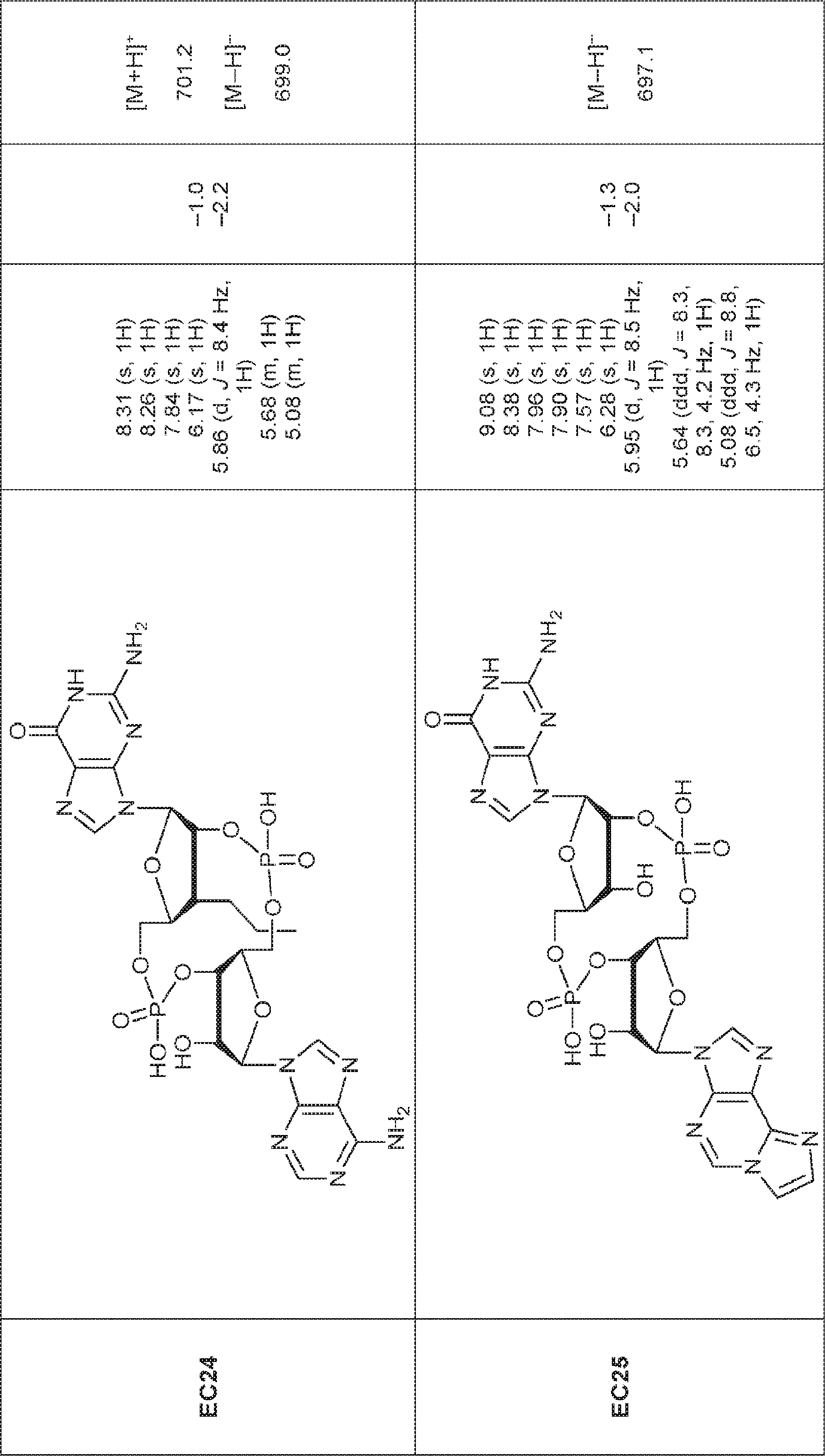
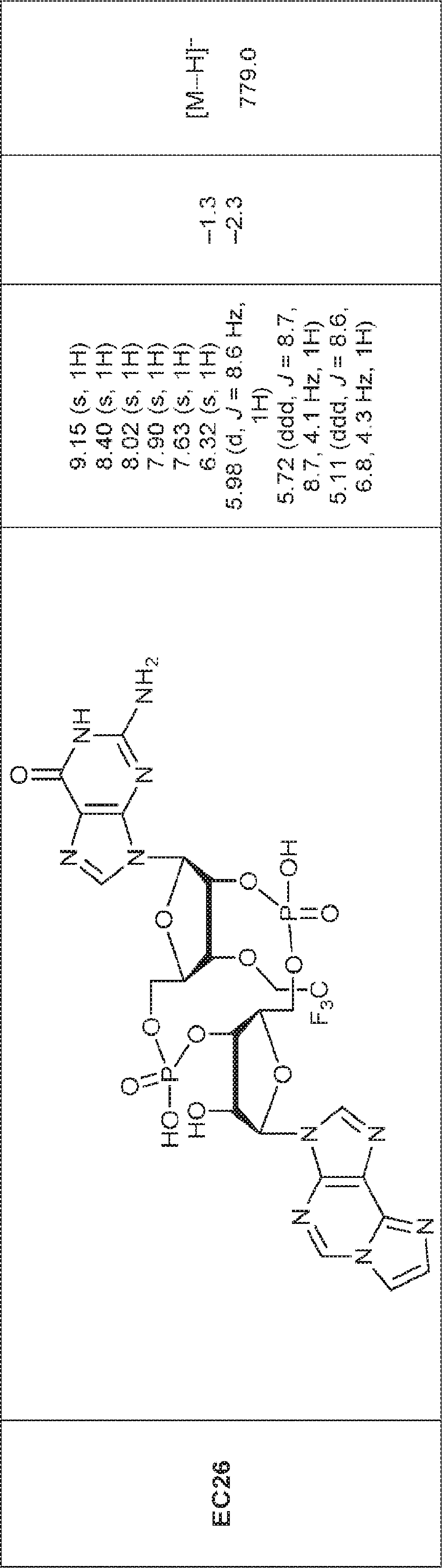
代表的化合物の立体化学情報を以下に示す。 The stereochemical information of typical compounds is shown below.
(表5)例E23およびEB3のP配置

生物学的試験
96ウェルプレート中で、cGAMP類似体化合物のリン酸緩衝食塩水(PBS)中段階希釈液と、0.2×10⁶個/ウェルのTHP1ルシフェラーゼレポーター細胞とを、細胞膜上に開口チャネルを形成することで化合物取り込みを促進しうるパーフリンゴリジンO(PFO)1nMの存在下または非存在下で混合する。16時間後、各ウェルから培地15μLを新たなプレートに移し、発光を測定する。PBS刺激細胞に対する発光の増大倍率を各化合物の濃度の対数に対してプロットし、EC50をGraphpadを使用して算出する。
Biological test
In a 96-well plate, a medium-stage diluted phosphate buffered saline (PBS) diluted solution of the cGAMP analog compound and 0.2 × 10 6 / well THP1 luciferase reporter cells were placed on the cell membrane to form an open channel. Mix in the presence or absence of perfringophosphoric acid O (PFO) 1nM, which can promote compound uptake. After 16 hours, transfer 15 μL of medium from each well to a new plate and measure luminescence. The rate of increase in luminescence for PBS-stimulated cells is plotted against the log of the concentration of each compound, and EC 50 is calculated using Graphpad.
(表6)環状ジヌクレオチドおよび類似体の活性

2'3'-cGAMPを、ウシ胎仔血清(FBS)中に存在する酵素エクトヌクレオチドピロホスファターゼ/ホスホジエステラーゼ(ENPP1)により分解することができる(Li et al., 2015, Nat Chem Biol, 11, 235)。cGAMP類似体が安定性を改善したか否かを試験するために、合成cGAMP類似体(100μMストック)5μLをFBS 45μLと共に最終量50μL、37℃で1時間、2時間、および4時間インキュベートした。指示された時点で反応混合物10μLを取り出し、リン酸緩衝食塩水(PBS)10μLと混合した後、95℃で加熱してタンパク質を変性させ、これを13000gで5分間の遠心分離によって取り除いた。上清をTHP1-ISG-ルシフェラーゼ細胞株にPFOの存在下で送達して、上記のように残りのcGAMP類似体の活性を測定した。カテゴリーAは4時間のインキュベーション後に10%未満の活性減少を示し、Bは4時間のインキュベーション後に10~75%の活性減少を示し、Cは4時間のインキュベーション後に75%超の活性減少を示す。 2'3'-cGAMP can be degraded by the enzyme ectonucleotide pyrophosphatase / phosphodiesterase (ENPP1) present in fetal bovine serum (FBS) (Li et al., 2015, Nat Chem Biol, 11, 235). .. To test whether the cGAMP analogs improved stability, 5 μL of synthetic cGAMP analogs (100 μM stock) were incubated with 45 μL of FBS in a final volume of 50 μL at 37 ° C. for 1 hour, 2 hours, and 4 hours. At the indicated time, 10 μL of the reaction mixture was removed, mixed with 10 μL of phosphate buffered saline (PBS), heated at 95 ° C. to denature the protein and removed by centrifugation at 13000 g for 5 minutes. The supernatant was delivered to the THP1-ISG-luciferase cell line in the presence of PFO and the activity of the remaining cGAMP analogs was measured as described above. Category A shows a <10% decrease in activity after 4 hours of incubation, B shows a 10-75% decrease in activity after 4 hours of incubation, and C shows a> 75% decrease in activity after 4 hours of incubation.
(表7)ウシ胎仔血清中での環状ジヌクレオチドおよび類似体の安定性
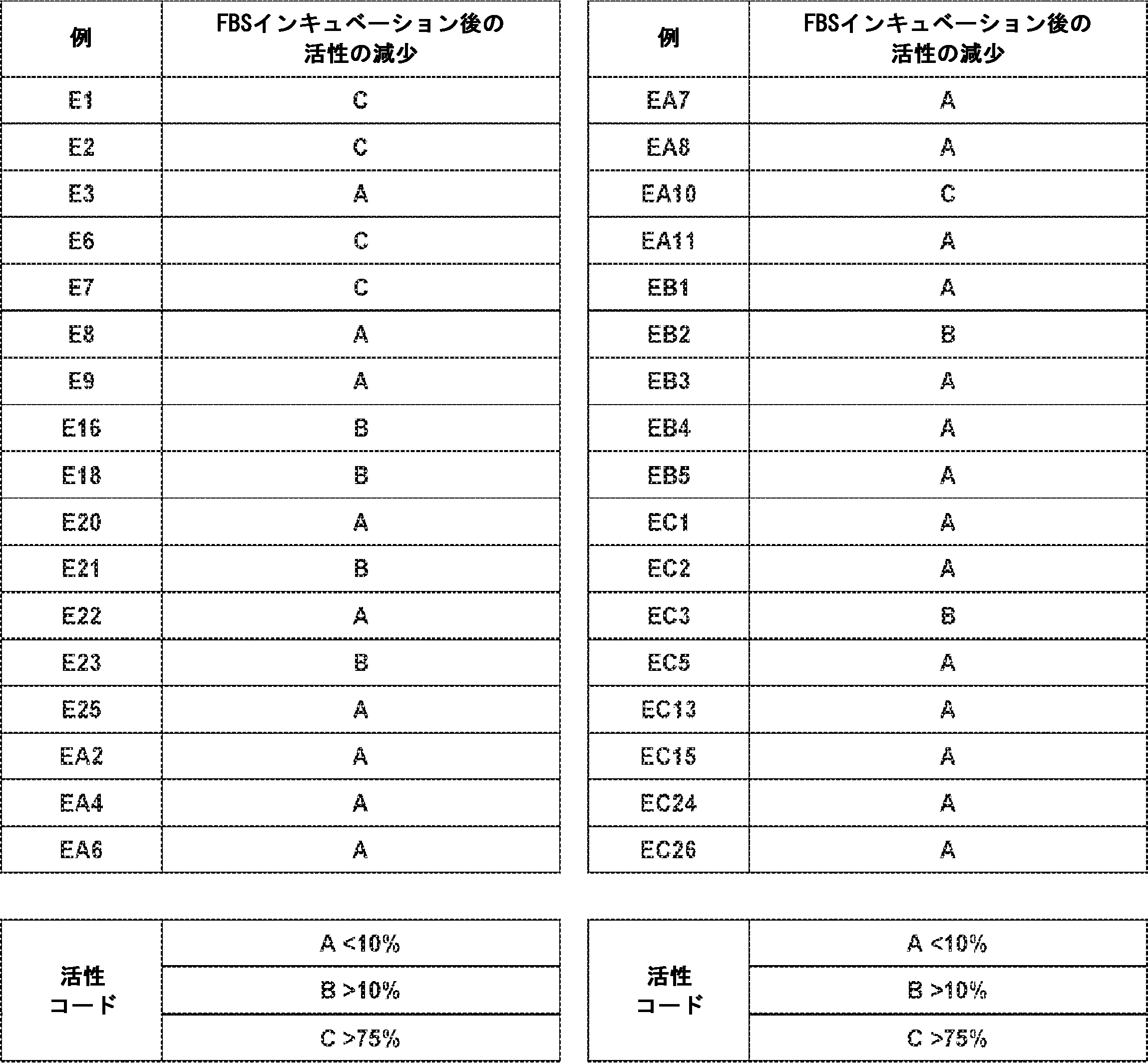
以下の一連のデータ裏付けのない例も本発明の化合物である。 The following series of unsubstantiated examples are also compounds of the invention.
(表8)P1~P15の構造
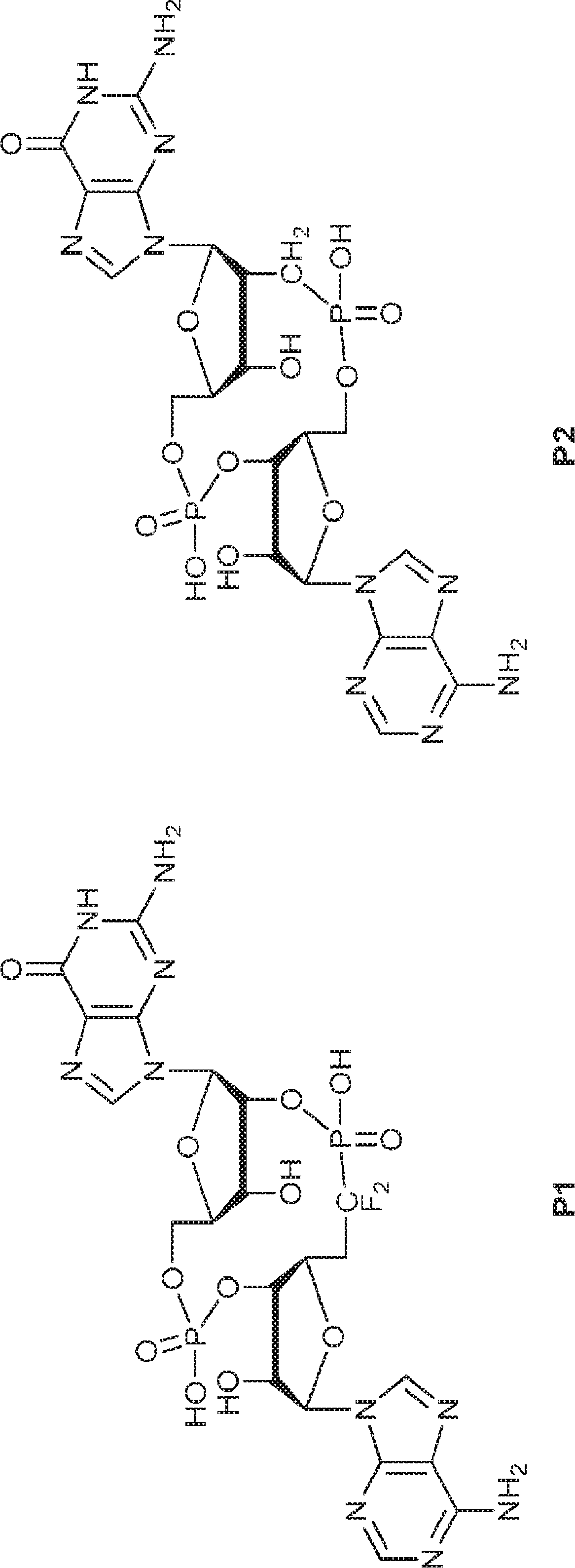
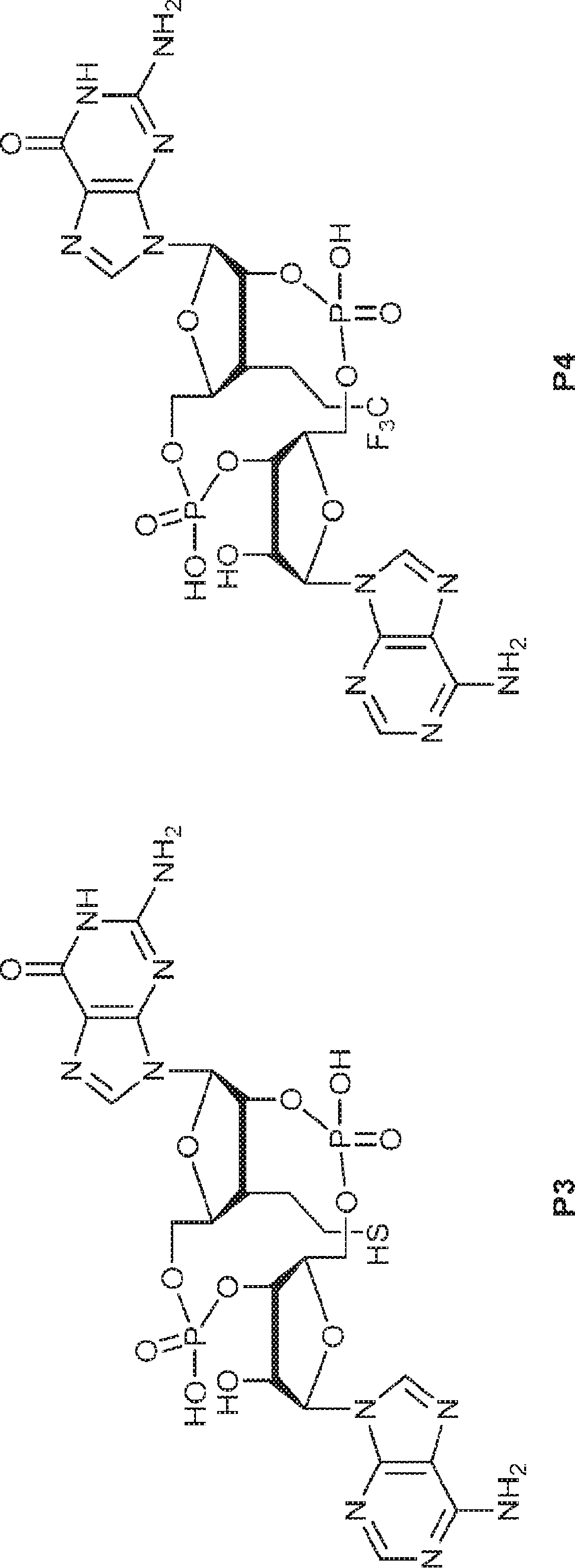
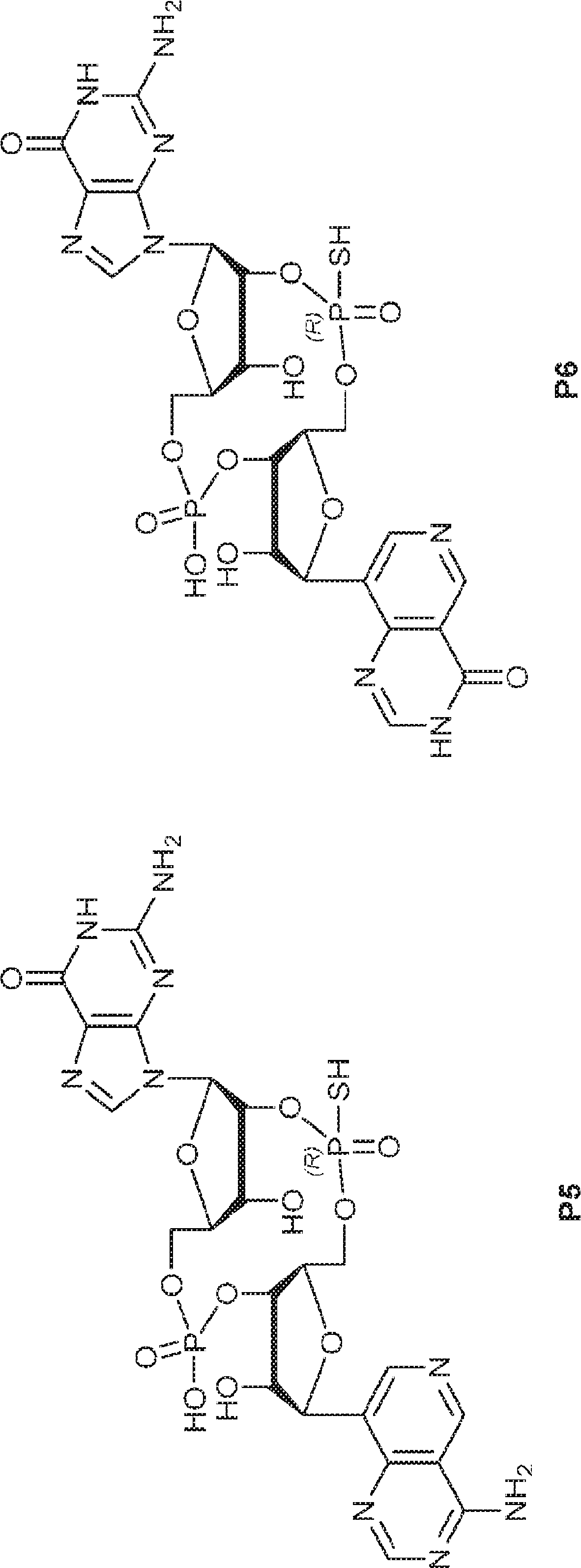
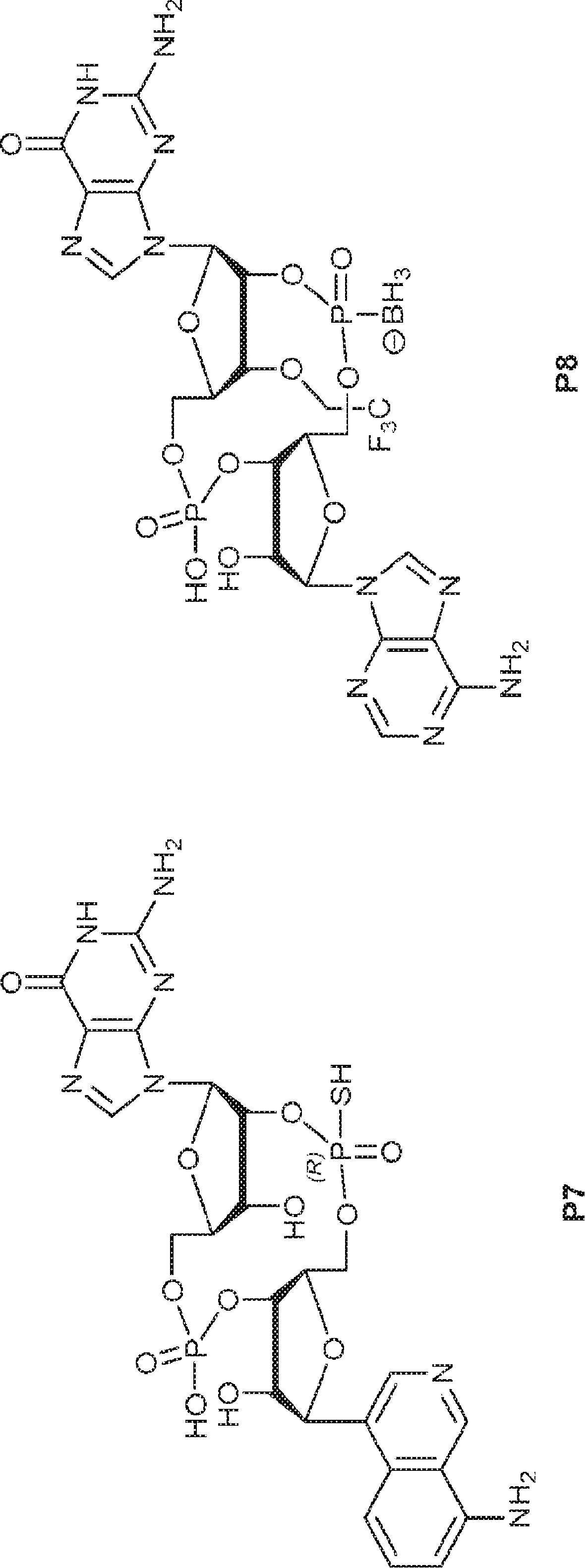
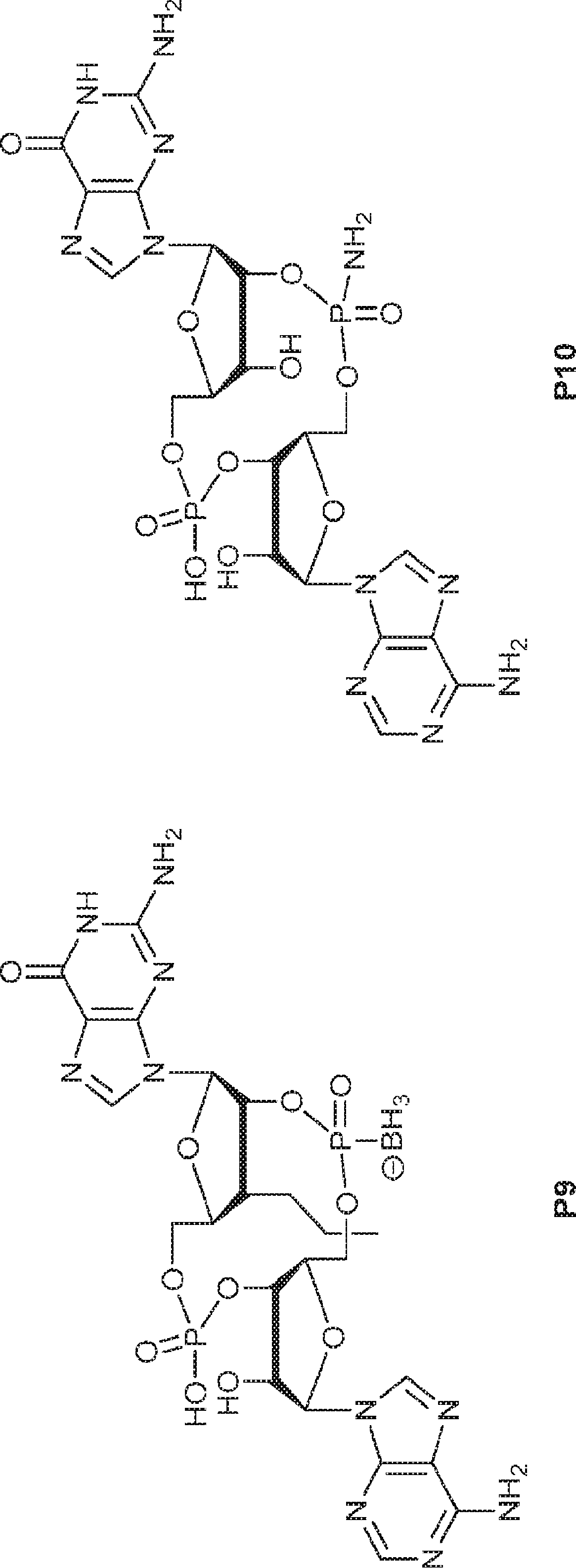

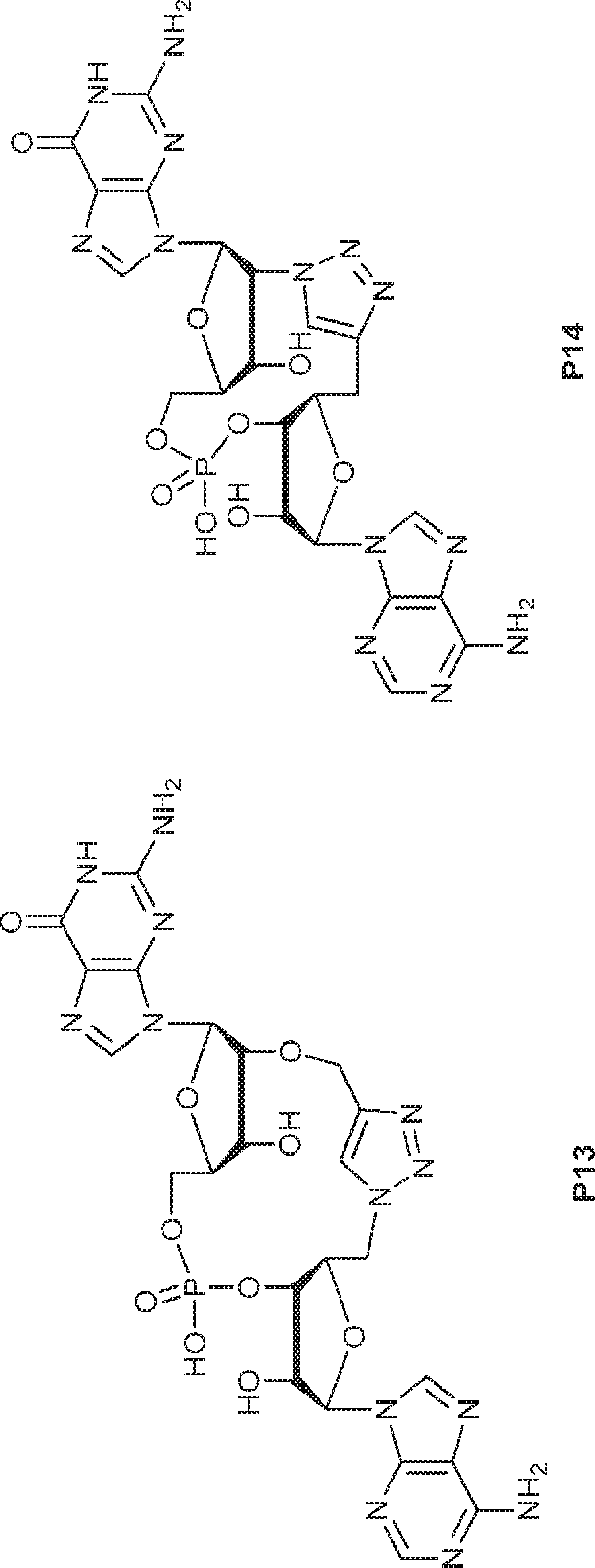
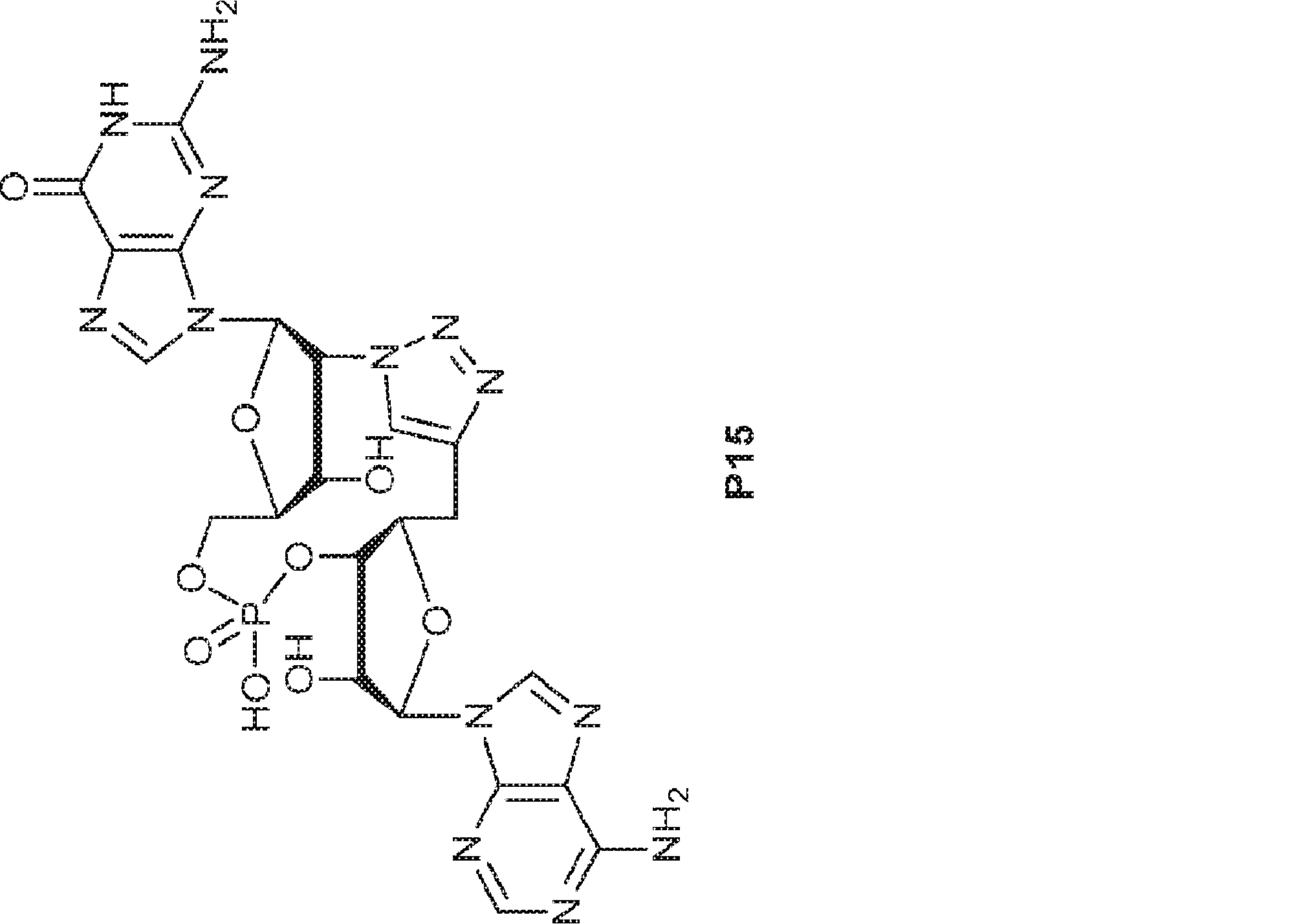
Claims (80)

式中、
aおよびbは独立して0または1であり、かつ、aが1でありbが0でありかつR5が存在しない場合; およびaが0でありbが1でありかつR4が存在しない場合にa + b = 1であり;
X1およびX2は独立して5員環中のO、S、またはSeであり;
X1に対してα位の炭素から出発するL1、およびX2に対してα位の炭素から出発するL2は独立して、-CH2O-P(O)R6-O-、-CH2O-P(S)R6-O-、-C(Y1)(Y2)O-P(O)R6-C(Y3)(Y4)-、-CH2NHSO2NH-、-CH2NHC(O)NH-、-CH2NHC(S)NH-、-CH2NHC(NH)NH-、-CH2NHC(O)CH2-、-CH2NHSO2CH2-、-CH2CH2C(O)NH-、-CH2CH2SO2NH-、-CH2NH(3,4-ジオキソシクロブテン-1,2-ジイル)NH-、

cは0、1、または2であり;
d、e、およびfは独立して0または1であり;
Y1、Y2、Y3、およびY4は独立してHまたはFであり;
R6は、ヒドロキシル、チオール、C1~6アルキル、1個もしくは複数のハロゲン基、チオール基、ヒドロキシル基、カルボニル基、カルボキシル基、カルボニルオキシル基、C1~6アルコキシ基、C1~6ヒドロキシアルコキシ基、アミノ基、C1~6アルキルアミノ基、ジ(C1~6アルキル)アミノ基、もしくはアジド基を用いて選択的に官能基を付与されたC1~6アルキル、C1~6アルコキシ、1個もしくは複数のハロゲン基、チオール基、ヒドロキシル基、カルボニル基、カルボキシル基、カルボニルオキシル基、C1~6ヒドロキシアルコキシ基、アミノ基、C1~6アルキルアミノ基、ジ(C1~6アルキル)アミノ基、もしくはアジド基を用いて選択的に官能基を付与されたC1~6アルコキシ、C3~5アルケニル-O-、C3~5アルキニル-O-、オリゴ(エチレングリコール)、ポリ(エチレングリコール)、ボラノ(-BH3 -)、または-NR7R8であり;
R7およびR8は独立して、水素、C1~6アルキル、1個もしくは複数のハロゲン基、チオール基、ヒドロキシル基、カルボニル基、カルボキシル基、カルボニルオキシル基、C1~6アルコキシ基、C1~6ヒドロキシアルコキシ基、アミノ基、C1~6アルキルアミノ基、ジ(C1~6アルキル)アミノ基、もしくはアジド基を用いて選択的に官能基を付与されたC1~6アルキル、環状-(C1~6アルキル)-、1個もしくは複数のハロゲン基、チオール基、ヒドロキシル基、カルボニル基、カルボキシル基、カルボニルオキシル基、C1~6アルコキシ基、C1~6ヒドロキシアルコキシ基、アミノ基、C1~6アルキルアミノ基、もしくはジ(C1~6アルキル)アミノ基を用いて選択的に官能基を付与された環状-(C1~6アルキル)-、環状-(C1~6オキサアルキル)-、または1個もしくは複数のハロゲン基、チオール基、ヒドロキシル基、カルボニル基、カルボキシル基、カルボニルオキシル基、C1~6ヒドロキシアルコキシ基、アミノ基、C1~6アルキルアミノ基、もしくはジ(C1~6アルキル)アミノ基を用いて選択的に官能基を付与された環状-(C1~6オキサアルキル)-であり;
R1およびR2は独立して、互変異性形態を含む以下の一般構造:
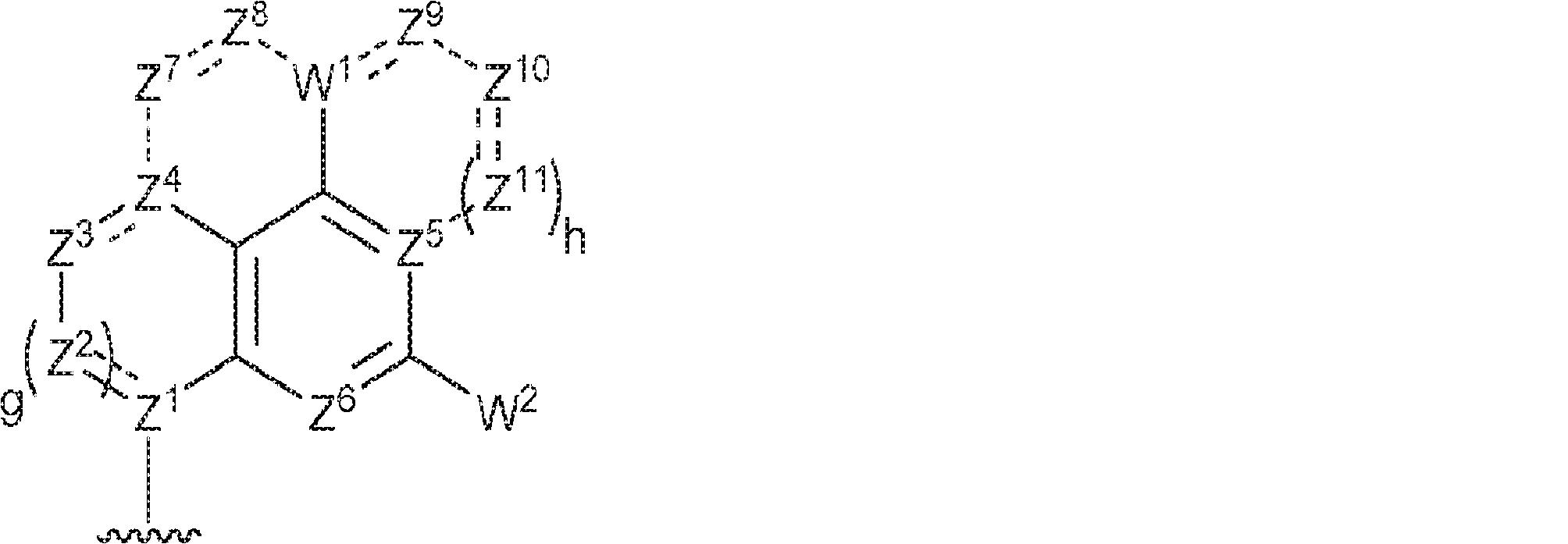
gおよびhは独立して0または1であり;
W1およびW2は独立して、水素、ハロゲン、ヒドロキシル、C1~6アルキル、1個もしくは複数のハロゲン基、チオール基、ヒドロキシル基、カルボニル基、カルボキシル基、カルボニルオキシル基、C1~6アルコキシ基、C1~6ヒドロキシアルコキシ基、アミノ基、C1~6アルキルアミノ基、ジ(C1~6アルキル)アミノ基、もしくはアジド基を用いて選択的に官能基を付与されたC1~6アルキル、C1~6アルコキシ、1個もしくは複数のハロゲン基、チオール基、ヒドロキシル基、カルボニル基、カルボキシル基、カルボニルオキシル基、C1~6ヒドロキシアルコキシ基、アミノ基、C1~6アルキルアミノ基、ジ(C1~6アルキル)アミノ基、もしくはアジド基を用いて選択的に官能基を付与されたC1~6アルコキシ、C3~5アルケニル-O-、C3~5アルキニル-O-、オリゴ(エチレングリコール)、ポリ(エチレングリコール)、アジド、または-NR7R8であり;
Z1、Z2、Z3、Z4、Z5、およびZ6は独立してCHまたはNであり;
存在する場合に、Z7、Z8、Z9、Z10、およびZ11は独立してCHまたはNであり、さらにW1はCHまたはNであり;
R3、R4、およびR5は独立して、水素、ハロゲン、ヒドロキシル、アミノ、C1~6アルキル、1個もしくは複数のハロゲン基、チオール基、ヒドロキシル基、カルボニル基、カルボキシル基、カルボニルオキシル基、C1~6アルコキシ基、C1~6ヒドロキシアルコキシ基、アミノ基、C1~6アルキルアミノ基、ジ(C1~6アルキル)アミノ基、もしくはアジド基を用いて選択的に官能基を付与されたC1~6アルキル、C1~6アルコキシ、1個もしくは複数のハロゲン基、チオール基、ヒドロキシル基、カルボニル基、カルボキシル基、カルボニルオキシル基、C1~6ヒドロキシアルコキシ基、アミノ基、C1~6アルキルアミノ基、ジ(C1~6アルキル)アミノ基、もしくはアジド基を用いて選択的に官能基を付与されたC1~6アルコキシ、C3~5アルケニル-O-、C3~5アルキニル-O-、オリゴ(エチレングリコール)、ポリ(エチレングリコール)、アジド、または-NR7R8であり;かつ
該化合物は2'3'-cGAMPではない。 Expression Ia:
During the ceremony
If a and b are 0 or 1 independently and a is 1 and b is 0 and R 5 does not exist; and a is 0 and b is 1 and R 4 does not exist. If a + b = 1;
X 1 and X 2 are independently O, S, or Se in a 5-membered ring;
L 1 starting from the carbon at the α-position with respect to X 1 and L 2 starting from the carbon at the α-position with respect to X 2 are independently -CH 2 OP (O) R 6 -O-, -CH. 2 OP (S) R 6 -O-, -C (Y 1 ) (Y 2 ) OP (O) R 6 -C (Y 3 ) (Y 4 )-, -CH 2 NHSO 2 NH-, -CH 2 NHC (O) NH-, -CH 2 NHC (S) NH-, -CH 2 NHC (NH) NH-, -CH 2 NHC (O) CH 2- , -CH 2 NHSO 2 CH 2- , -CH 2 CH 2 C (O) NH-, -CH 2 CH 2 SO 2 NH-, -CH 2 NH (3,4-dioxocyclobutene-1,2-diyl) NH-,
c is 0, 1, or 2;
d, e, and f are independently 0 or 1;
Y 1 , Y 2 , Y 3 , and Y 4 are independently H or F;
R 6 is hydroxyl, thiol, C 1-6 alkyl, one or more halogen groups, thiol group, hydroxyl group, carbonyl group, carboxyl group, carbonyloxyl group, C 1-6 alkoxy group, C 1-6 hydroxy C 1 to 6 alkyl, C 1 to 6 selectively functional groups using an alkoxy group, an amino group, a C 1 to 6 alkyl amino group, a di (C 1 to 6 alkyl) amino group, or an azido group. Alkoxy, one or more halogen groups, thiol groups, hydroxyl groups, carbonyl groups, carboxyl groups, carbonyloxyl groups, C 1-6 hydroxyalkoxy groups, amino groups, C 1-6 alkylamino groups, di (C 1- 6 Alkyl) C 1-6 alkoxy, C 3-5 alkenyl-O-, C 3-5 alkynyl-O-, oligo (ethylene glycol) selectively functionalized with an amino group or an azido group. , Poly (ethylene glycol), Borano (-BH 3- ) , or -NR 7 R 8 ;
R 7 and R 8 are independently hydrogen, C 1-6 alkyl, one or more halogen groups, thiol groups, hydroxyl groups, carbonyl groups, carboxyl groups, carbonyloxyl groups, C 1-6 alkoxy groups, C. C 1-6 alkyl, which is selectively functionalized with a 1-6 hydroxyalkoxy group, an amino group, a C 1-6 alkyl amino group, a di (C 1-6 alkyl) amino group, or an azido group. Cyclic- (C 1-6 alkyl)-, one or more halogen groups, thiol groups, hydroxyl groups, carbonyl groups, carboxyl groups, carbonyloxyl groups, C 1-6 alkoxy groups, C 1-6 hydroxyalkoxy groups, Cyclic- (C 1-6 alkyl)-, cyclic-(C 1 ) selectively functionalized with an amino group, C 1-6 alkyl amino group, or di (C 1-6 alkyl) amino group ~ 6 Oxalalkyl)-or one or more halogen groups, thiol groups, hydroxyl groups, carbonyl groups, carboxyl groups, carbonyloxyl groups, C 1-6 hydroxyalkoxy groups, amino groups, C 1-6 alkylamino groups , Or a cyclic- (C 1-6 oxaalkyl)-selectively imparted with a functional group using a di (C 1-6 alkyl) amino group;
R 1 and R 2 are independent and include the following general structures, including tautomeric forms:
g and h are independently 0 or 1;
W 1 and W 2 are independently hydrogen, halogen, hydroxyl, C 1-6 alkyl, one or more halogen groups, thiol group, hydroxyl group, carbonyl group, carboxyl group, carbonyloxyl group, C 1-6 . C 1 selectively functionalized with an alkoxy group, C 1-6 hydroxyalkoxy group, amino group, C 1-6 alkylamino group, di (C 1-6 alkyl) amino group, or azido group. ~ 6 alkyl, C 1 ~ 6 alkoxy, one or more halogen groups, thiol group, hydroxyl group, carbonyl group, carboxyl group, carbonyloxyl group, C 1 ~ 6 hydroxyalkoxy group, amino group, C 1 ~ 6 alkyl C 1-6 alkoxy, C 3-5 alkenyl-O-, C 3-5 alkynyl- selectively functionalized with an amino group, a di (C 1-6 alkyl) amino group, or an azido group. O-, oligo (ethylene glycol), poly (ethylene glycol), azide, or -NR 7 R 8 ;
Z 1 , Z 2 , Z 3 , Z 4 , Z 5 , and Z 6 are independently CH or N;
If present, Z 7 , Z 8 , Z 9 , Z 10 , and Z 11 are independently CH or N, and W 1 is CH or N;
R 3 , R 4 , and R 5 are independently hydrogen, halogen, hydroxyl, amino, C 1-6 alkyl, one or more halogen groups, thiol groups, hydroxyl groups, carbonyl groups, carboxyl groups, carbonyl oxyls. Group, C 1-6 alkoxy group, C 1-6 hydroxyalkoxy group, amino group, C 1-6 alkylamino group, di (C 1-6 alkyl) amino group, or selectively functional group using azide group C 1 to 6 alkyl, C 1 to 6 alkoxy, one or more halogen groups, thiol groups, hydroxyl groups, carbonyl groups, carboxyl groups, carbonyloxyl groups, C 1 to 6 hydroxyalkoxy groups, amino groups , C 1-6 alkylamino groups, di (C 1-6 alkyl) amino groups, or C 1-6 alkoxys selectively functionalized with azido groups, C 3-5 alkenyl-O-, C 3-5 alkynyl-O-, oligo (ethylene glycol), poly (ethylene glycol), azide, or -NR 7 R 8 ; and the compound is not 2'3'-c GAMP.
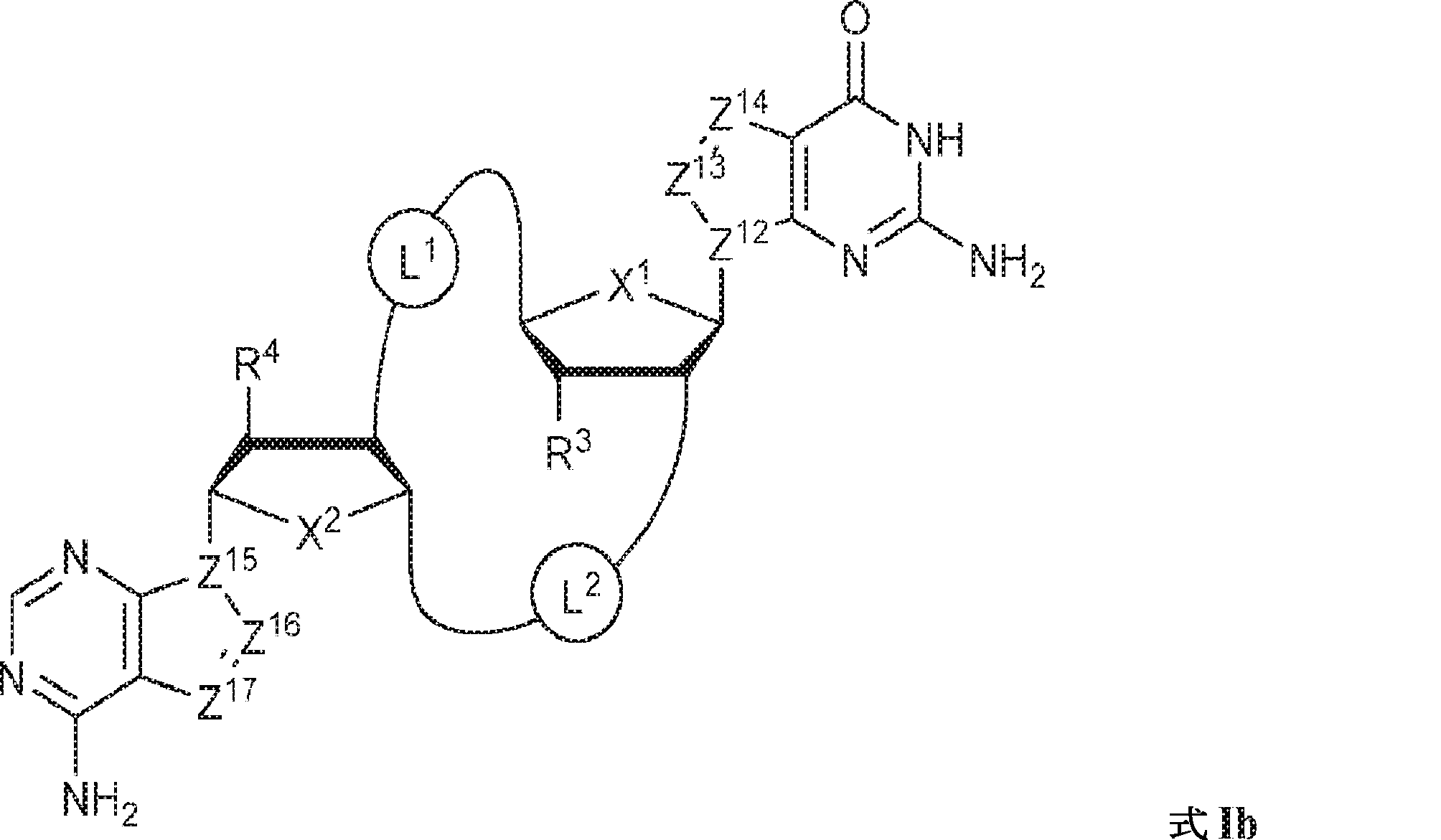
式中、
X1およびX2は独立してO、S、またはSeであり;
Z12、Z13、Z14、Z15、Z16、およびZ17は独立してCHまたはNであり;
X1に対してα位の炭素から出発するL1、およびX2に対してα位の炭素から出発するL2は独立して、-CH2O-P(O)R6-O-、-CH2O-P(S)R6-O-、-C(Y1)(Y2)O-P(O)R6-C(Y3)(Y4)-、-CH2NHSO2NH-、-CH2NHC(O)NH-、-CH2NHC(S)NH-、-CH2NHC(NH)NH-、-CH2NHC(O)CH2-、-CH2NHSO2CH2-、-CH2CH2C(O)NH-、-CH2CH2SO2NH-、-CH2NH(3,4-ジオキソシクロブテン-1,2-ジイル)NH-、

cは0、1、または2であり;
d、e、およびfは独立して0または1であり;
Y1、Y2、Y3、およびY4は独立してHまたはFであり;
R6は、ヒドロキシル、チオール、C1~6アルキル、1個もしくは複数のハロゲン基、チオール基、ヒドロキシル基、カルボニル基、カルボキシル基、カルボニルオキシル基、C1~6アルコキシ基、C1~6ヒドロキシアルコキシ基、アミノ基、C1~6アルキルアミノ基、ジ(C1~6アルキル)アミノ基、もしくはアジド基を用いて選択的に官能基を付与されたC1~6アルキル、C1~6アルコキシ、1個もしくは複数のハロゲン基、チオール基、ヒドロキシル基、カルボニル基、カルボキシル基、カルボニルオキシル基、C1~6ヒドロキシアルコキシ基、アミノ基、C1~6アルキルアミノ基、ジ(C1~6アルキル)アミノ基、もしくはアジド基を用いて選択的に官能基を付与されたC1~6アルコキシ、C3~5アルケニル-O-、C3~5アルキニル-O-、オリゴ(エチレングリコール)、ポリ(エチレングリコール)、ボラノ(-BH3 -)、または-NR7R8であり;
R7およびR8は独立して、水素、C1~6アルキル、1個もしくは複数のハロゲン基、チオール基、ヒドロキシル基、カルボニル基、カルボキシル基、カルボニルオキシル基、C1~6アルコキシ基、C1~6ヒドロキシアルコキシ基、アミノ基、C1~6アルキルアミノ基、ジ(C1~6アルキル)アミノ基、もしくはアジド基を用いて選択的に官能基を付与されたC1~6アルキル、環状-(C1~6アルキル)-、1個もしくは複数のハロゲン基、チオール基、ヒドロキシル基、カルボニル基、カルボキシル基、カルボニルオキシル基、C1~6アルコキシ基、C1~6ヒドロキシアルコキシ基、アミノ基、C1~6アルキルアミノ基、もしくはジ(C1~6アルキル)アミノ基を用いて選択的に官能基を付与された環状-(C1~6アルキル)-、環状-(C1~6オキサアルキル)-、または1個もしくは複数のハロゲン基、チオール基、ヒドロキシル基、カルボニル基、カルボキシル基、カルボニルオキシル基、C1~6ヒドロキシアルコキシ基、アミノ基、C1~6アルキルアミノ基、もしくはジ(C1~6アルキル)アミノ基を用いて選択的に官能基を付与された環状-(C1~6オキサアルキル)-であり;
R3およびR4は独立して、水素、ハロゲン、ヒドロキシル、アミノ、C1~6アルキル、1個もしくは複数のハロゲン基、チオール基、ヒドロキシル基、カルボニル基、カルボキシル基、カルボニルオキシル基、C1~6アルコキシ基、C1~6ヒドロキシアルコキシ基、アミノ基、C1~6アルキルアミノ基、ジ(C1~6アルキル)アミノ基、もしくはアジド基を用いて選択的に官能基を付与されたC1~6アルキル、C1~6アルコキシ、1個もしくは複数のハロゲン基、チオール基、ヒドロキシル基、カルボニル基、カルボキシル基、カルボニルオキシル基、C1~6ヒドロキシアルコキシ基、アミノ基、C1~6アルキルアミノ基、ジ(C1~6アルキル)アミノ基、もしくはアジド基を用いて選択的に官能基を付与されたC1~6アルコキシ、C3~5アルケニル-O-、C3~5アルキニル-O-、オリゴ(エチレングリコール)、ポリ(エチレングリコール)、アジド、または-NR7R8であり;かつ
該化合物は、2'3'-cGAMPを含む既に開示された化合物ではない。 Expression Ib:
During the ceremony
X 1 and X 2 are independently O, S, or Se;
Z 12 , Z 13 , Z 14 , Z 15 , Z 16 , and Z 17 are independently CH or N;
L 1 starting from the carbon at the α-position with respect to X 1 and L 2 starting from the carbon at the α-position with respect to X 2 are independently -CH 2 OP (O) R 6 -O-, -CH. 2 OP (S) R 6 -O-, -C (Y 1 ) (Y 2 ) OP (O) R 6 -C (Y 3 ) (Y 4 )-, -CH 2 NHSO 2 NH-, -CH 2 NHC (O) NH-, -CH 2 NHC (S) NH-, -CH 2 NHC (NH) NH-, -CH 2 NHC (O) CH 2- , -CH 2 NHSO 2 CH 2- , -CH 2 CH 2 C (O) NH-, -CH 2 CH 2 SO 2 NH-, -CH 2 NH (3,4-dioxocyclobutene-1,2-diyl) NH-,
c is 0, 1, or 2;
d, e, and f are independently 0 or 1;
Y 1 , Y 2 , Y 3 , and Y 4 are independently H or F;
R 6 is hydroxyl, thiol, C 1-6 alkyl, one or more halogen groups, thiol group, hydroxyl group, carbonyl group, carboxyl group, carbonyloxyl group, C 1-6 alkoxy group, C 1-6 hydroxy C 1 to 6 alkyl, C 1 to 6 selectively functional groups using an alkoxy group, an amino group, a C 1 to 6 alkyl amino group, a di (C 1 to 6 alkyl) amino group, or an azido group. Alkoxy, one or more halogen groups, thiol groups, hydroxyl groups, carbonyl groups, carboxyl groups, carbonyloxyl groups, C 1-6 hydroxyalkoxy groups, amino groups, C 1-6 alkylamino groups, di (C 1- 6 Alkyl) C 1-6 alkoxy, C 3-5 alkenyl-O-, C 3-5 alkynyl-O-, oligo (ethylene glycol) selectively functionalized with an amino group or an azido group. , Poly (ethylene glycol), Borano (-BH 3- ) , or -NR 7 R 8 ;
R 7 and R 8 are independently hydrogen, C 1-6 alkyl, one or more halogen groups, thiol groups, hydroxyl groups, carbonyl groups, carboxyl groups, carbonyloxyl groups, C 1-6 alkoxy groups, C. C 1-6 alkyl, which is selectively functionalized with a 1-6 hydroxyalkoxy group, an amino group, a C 1-6 alkyl amino group, a di (C 1-6 alkyl) amino group, or an azido group. Cyclic- (C 1-6 alkyl)-, one or more halogen groups, thiol groups, hydroxyl groups, carbonyl groups, carboxyl groups, carbonyloxyl groups, C 1-6 alkoxy groups, C 1-6 hydroxyalkoxy groups, Cyclic- (C 1-6 alkyl)-, cyclic-(C 1 ) selectively functionalized with an amino group, C 1-6 alkyl amino group, or di (C 1-6 alkyl) amino group ~ 6 Oxalalkyl)-or one or more halogen groups, thiol groups, hydroxyl groups, carbonyl groups, carboxyl groups, carbonyloxyl groups, C 1-6 hydroxyalkoxy groups, amino groups, C 1-6 alkylamino groups , Or a cyclic- (C 1-6 oxaalkyl)-selectively imparted with a functional group using a di (C 1-6 alkyl) amino group;
R 3 and R 4 are independently hydrogen, halogen, hydroxyl, amino, C 1-6 alkyl, one or more halogen groups, thiol groups, hydroxyl groups, carbonyl groups, carboxyl groups, carbonyloxyl groups, C 1 A functional group was selectively imparted using a ~ 6 alkoxy group, a C 1 to 6 hydroxyalkoxy group, an amino group, a C 1 to 6 alkylamino group, a di (C 1 to 6 alkyl) amino group, or an azido group. C 1 to 6 alkyl, C 1 to 6 alkoxy, one or more halogen groups, thiol group, hydroxyl group, carbonyl group, carboxyl group, carbonyloxyl group, C 1 to 6 hydroxyalkoxy group, amino group, C 1 to C 1-6 alkoxy, C 3-5 alkenyl-O-, C 3-5 selectively functionalized with 6 alkylamino groups, di (C 1-6 alkyl) amino groups, or azido groups. It is an alkynyl-O-, oligo (ethylene glycol), poly (ethylene glycol), azide, or -NR 7 R 8 ; and the compound is not a previously disclosed compound containing 2'3'-c GAMP.

式中、
Z12、Z13、Z14、Z15、Z16、およびZ17は独立してCHまたはNであり;
R3およびR4は独立して、水素、ハロゲン、ヒドロキシル、アミノ、C1~6アルキル、1個もしくは複数のハロゲン基、チオール基、ヒドロキシル基、カルボニル基、カルボキシル基、カルボニルオキシル基、C1~6アルコキシ基、C1~6ヒドロキシアルコキシ基、アミノ基、C1~6アルキルアミノ基、ジ(C1~6アルキル)アミノ基、もしくはアジド基を用いて選択的に官能基を付与されたC1~6アルキル、C1~6アルコキシ、1個もしくは複数のハロゲン基、チオール基、ヒドロキシル基、カルボニル基、カルボキシル基、カルボニルオキシル基、C1~6ヒドロキシアルコキシ基、アミノ基、C1~6アルキルアミノ基、ジ(C1~6アルキル)アミノ基、もしくはアジド基を用いて選択的に官能基を付与されたC1~6アルコキシ、C3~5アルケニル-O-、C3~5アルキニル-O-、オリゴ(エチレングリコール)、ポリ(エチレングリコール)、アジド、または-NR7R8であり;
R7およびR8は独立して、水素、C1~6アルキル、1個もしくは複数のハロゲン基、チオール基、ヒドロキシル基、カルボニル基、カルボキシル基、カルボニルオキシル基、C1~6アルコキシ基、C1~6ヒドロキシアルコキシ基、アミノ基、C1~6アルキルアミノ基、ジ(C1~6アルキル)アミノ基、もしくはアジド基を用いて選択的に官能基を付与されたC1~6アルキル、環状-(C1~6アルキル)-、1個もしくは複数のハロゲン基、チオール基、ヒドロキシル基、カルボニル基、カルボキシル基、カルボニルオキシル基、C1~6アルコキシ基、C1~6ヒドロキシアルコキシ基、アミノ基、C1~6アルキルアミノ基、もしくはジ(C1~6アルキル)アミノ基を用いて選択的に官能基を付与された環状-(C1~6アルキル)-、環状-(C1~6オキサアルキル)-、または1個もしくは複数のハロゲン基、チオール基、ヒドロキシル基、カルボニル基、カルボキシル基、カルボニルオキシル基、C1~6ヒドロキシアルコキシ基、アミノ基、C1~6アルキルアミノ基、もしくはジ(C1~6アルキル)アミノ基を用いて選択的に官能基を付与された環状-(C1~6オキサアルキル)-であり;
R9およびR10は独立して、ヒドロキシル、チオール、C1~6アルキル、1個もしくは複数のハロゲン基、チオール基、ヒドロキシル基、カルボニル基、カルボキシル基、カルボニルオキシル基、C1~6アルコキシ基、C1~6ヒドロキシアルコキシ基、アミノ基、C1~6アルキルアミノ基、ジ(C1~6アルキル)アミノ基、もしくはアジド基を用いて選択的に官能基を付与されたC1~6アルキル、C1~6アルコキシ、1個もしくは複数のハロゲン基、チオール基、ヒドロキシル基、カルボニル基、カルボキシル基、カルボニルオキシル基、C1~6ヒドロキシアルコキシ基、アミノ基、C1~6アルキルアミノ基、ジ(C1~6アルキル)アミノ基、もしくはアジド基を用いて選択的に官能基を付与されたC1~6アルコキシ、C3~5アルケニル-O-、C3~5アルキニル-O-、オリゴ(エチレングリコール)、ポリ(エチレングリコール)、ボラノ(-BH3 -)、または-NR7R8であり;
式Icの一方または両方のテトラヒドロフラニル環中の酸素原子は硫黄原子またはセレン原子で置き換えられていてもよく;かつ
該化合物は2'3'-cGAMPではない。 Expression Ic:
During the ceremony
Z 12 , Z 13 , Z 14 , Z 15 , Z 16 , and Z 17 are independently CH or N;
R 3 and R 4 are independently hydrogen, halogen, hydroxyl, amino, C 1-6 alkyl, one or more halogen groups, thiol groups, hydroxyl groups, carbonyl groups, carboxyl groups, carbonyloxyl groups, C 1 A functional group was selectively imparted using a ~ 6 alkoxy group, a C 1 to 6 hydroxyalkoxy group, an amino group, a C 1 to 6 alkylamino group, a di (C 1 to 6 alkyl) amino group, or an azido group. C 1 to 6 alkyl, C 1 to 6 alkoxy, one or more halogen groups, thiol group, hydroxyl group, carbonyl group, carboxyl group, carbonyloxyl group, C 1 to 6 hydroxyalkoxy group, amino group, C 1 to 6 Alkylamino group, di (C 1-6 alkyl) amino group, or C 1-6 alkoxy selectively functionalized with azido group, C 3-5 alkenyl-O-, C 3-5 Alkinyl-O-, oligo (ethylene glycol), poly (ethylene glycol), azide, or -NR 7 R 8 ;
R 7 and R 8 are independently hydrogen, C 1-6 alkyl, one or more halogen groups, thiol groups, hydroxyl groups, carbonyl groups, carboxyl groups, carbonyloxyl groups, C 1-6 alkoxy groups, C. C 1-6 alkyl, which is selectively functionalized with a 1-6 hydroxyalkoxy group, an amino group, a C 1-6 alkyl amino group, a di (C 1-6 alkyl) amino group, or an azido group. Cyclic- (C 1-6 alkyl)-, one or more halogen groups, thiol groups, hydroxyl groups, carbonyl groups, carboxyl groups, carbonyloxyl groups, C 1-6 alkoxy groups, C 1-6 hydroxyalkoxy groups, Cyclic- (C 1-6 alkyl)-, cyclic-(C 1 ) selectively functionalized with an amino group, C 1-6 alkyl amino group, or di (C 1-6 alkyl) amino group ~ 6 Oxalalkyl)-or one or more halogen groups, thiol groups, hydroxyl groups, carbonyl groups, carboxyl groups, carbonyloxyl groups, C 1-6 hydroxyalkoxy groups, amino groups, C 1-6 alkylamino groups , Or a cyclic- (C 1-6 oxaalkyl)-selectively imparted with a functional group using a di (C 1-6 alkyl) amino group;
R 9 and R 10 are independently hydroxyl, thiol, C 1-6 alkyl, one or more halogen groups, thiol groups, hydroxyl groups, carbonyl groups, carboxyl groups, carbonyloxyl groups, C 1-6 alkoxy groups. , C 1 to 6 hydroxyalkoxy group, amino group, C 1 to 6 alkylamino group, di (C 1 to 6 alkyl) amino group, or C 1 to 6 selectively functionalized using an azido group. Alkyl, C 1-6 alkoxy, one or more halogen groups, thiol groups, hydroxyl groups, carbonyl groups, carboxyl groups, carbonyloxyl groups, C 1-6 hydroxyalkoxy groups, amino groups, C 1-6 alkylamino groups , C 1-6 alkoxy, C 3-5 alkenyl-O-, C 3-5 alkynyl-O-, selectively functionalized with a di (C 1-6 alkyl) amino group or an azido group. , Oligo (ethylene glycol), Poly (ethylene glycol), Borano (-BH 3- ) , or -NR 7 R 8 ;
Oxygen atoms in one or both tetrahydrofuranyl rings of formula Ic may be replaced with sulfur or selenium atoms; and the compound is not a 2'3'-c GAMP.

式中、
X1およびX2は独立してO、S、またはSeであり;
X1に対してα位の炭素から出発するL1、およびX2に対してα位の炭素から出発するL2は独立して、-CH2O-P(O)R6-O-、-CH2O-P(S)R6-O-、-C(Y1)(Y2)O-P(O)R6-C(Y3)(Y4)-、-CH2NHSO2NH-、-CH2NHC(O)NH-、-CH2NHC(S)NH-、-CH2NHC(NH)NH-、-CH2NHC(O)CH2-、-CH2NHSO2CH2-、-CH2CH2C(O)NH-、-CH2CH2SO2NH-、-CH2NH(3,4-ジオキソシクロブテン-1,2-ジイル)NH-、

cは0、1、または2であり;
d、e、およびfは独立して0または1であり;
Y1、Y2、Y3、およびY4は独立してHまたはFであり;
R6は、ヒドロキシル、チオール、C1~6アルキル、1個もしくは複数のハロゲン基、チオール基、ヒドロキシル基、カルボニル基、カルボキシル基、カルボニルオキシル基、C1~6アルコキシ基、C1~6ヒドロキシアルコキシ基、アミノ基、C1~6アルキルアミノ基、ジ(C1~6アルキル)アミノ基、もしくはアジド基を用いて選択的に官能基を付与されたC1~6アルキル、C1~6アルコキシ、1個もしくは複数のハロゲン基、チオール基、ヒドロキシル基、カルボニル基、カルボキシル基、カルボニルオキシル基、C1~6ヒドロキシアルコキシ基、アミノ基、C1~6アルキルアミノ基、ジ(C1~6アルキル)アミノ基、もしくはアジド基を用いて選択的に官能基を付与されたC1~6アルコキシ、C3~5アルケニル-O-、C3~5アルキニル-O-、オリゴ(エチレングリコール)、ポリ(エチレングリコール)、ボラノ(-BH3 -)、または-NR7R8であり;
R7およびR8は独立して、水素、C1~6アルキル、1個もしくは複数のハロゲン基、チオール基、ヒドロキシル基、カルボニル基、カルボキシル基、カルボニルオキシル基、C1~6アルコキシ基、C1~6ヒドロキシアルコキシ基、アミノ基、C1~6アルキルアミノ基、ジ(C1~6アルキル)アミノ基、もしくはアジド基を用いて選択的に官能基を付与されたC1~6アルキル、環状-(C1~6アルキル)-、1個もしくは複数のハロゲン基、チオール基、ヒドロキシル基、カルボニル基、カルボキシル基、カルボニルオキシル基、C1~6アルコキシ基、C1~6ヒドロキシアルコキシ基、アミノ基、C1~6アルキルアミノ基、もしくはジ(C1~6アルキル)アミノ基を用いて選択的に官能基を付与された環状-(C1~6アルキル)-、環状-(C1~6オキサアルキル)-、または1個もしくは複数のハロゲン基、チオール基、ヒドロキシル基、カルボニル基、カルボキシル基、カルボニルオキシル基、C1~6ヒドロキシアルコキシ基、アミノ基、C1~6アルキルアミノ基、もしくはジ(C1~6アルキル)アミノ基を用いて選択的に官能基を付与された環状-(C1~6オキサアルキル)-であり;
R3およびR4は独立して、水素、ハロゲン、ヒドロキシル、アミノ、C1~6アルキル、1個もしくは複数のハロゲン基、チオール基、ヒドロキシル基、カルボニル基、カルボキシル基、カルボニルオキシル基、C1~6アルコキシ基、C1~6ヒドロキシアルコキシ基、アミノ基、C1~6アルキルアミノ基、ジ(C1~6アルキル)アミノ基、もしくはアジド基を用いて選択的に官能基を付与されたC1~6アルキル、C1~6アルコキシ、1個もしくは複数のハロゲン基、チオール基、ヒドロキシル基、カルボニル基、カルボキシル基、カルボニルオキシル基、C1~6ヒドロキシアルコキシ基、アミノ基、C1~6アルキルアミノ基、ジ(C1~6アルキル)アミノ基、もしくはアジド基を用いて選択的に官能基を付与されたC1~6アルコキシ、C3~5アルケニル-O-、C3~5アルキニル-O-、オリゴ(エチレングリコール)、ポリ(エチレングリコール)、アジド、または-NR7R8であり;
R11およびR12は独立して、
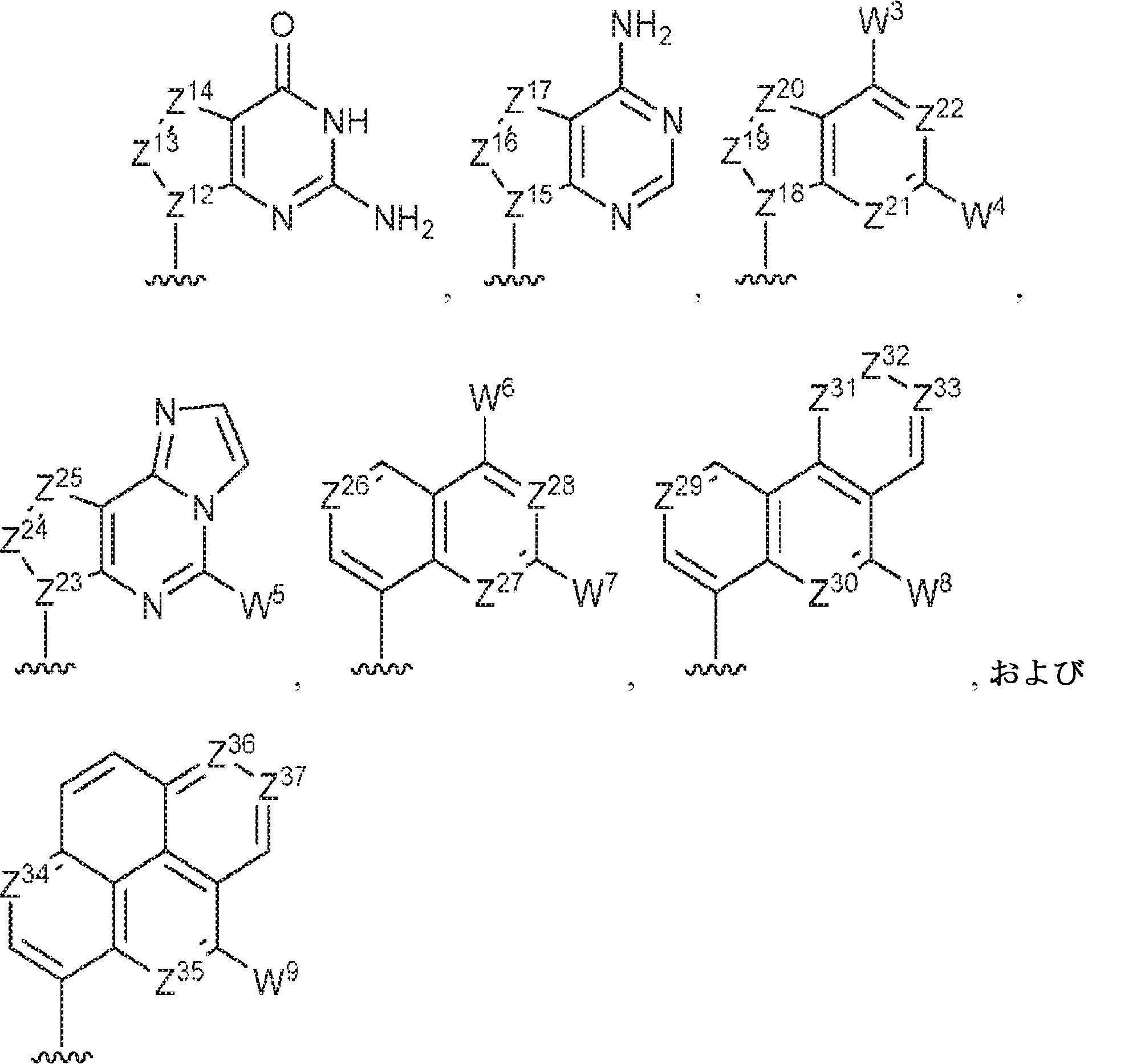
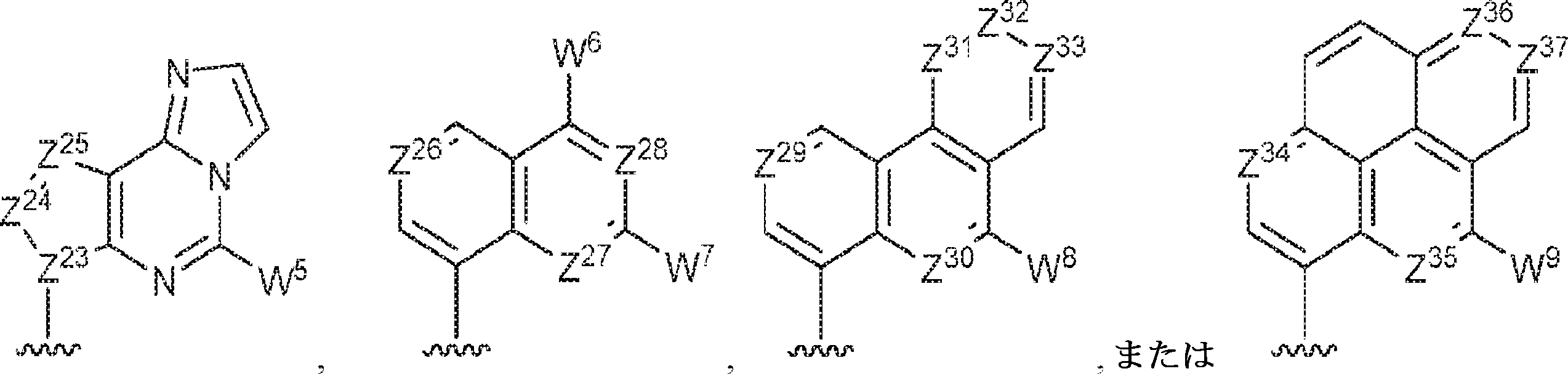
Z12、Z13、Z14、Z15、Z16、Z17、Z18、Z19、Z20、Z21、Z22、Z23、Z24、Z25、Z26、Z27、Z28、Z29、Z30、Z31、Z32、Z33、Z34、Z35、Z36、およびZ37はそれぞれ独立してCHまたはNであり;かつ
W3、W4、W5、W6、W7、W8、およびW9は独立して、水素、ハロゲン、ヒドロキシル、C1~6アルキル、1個もしくは複数のハロゲン基、チオール基、ヒドロキシル基、カルボニル基、カルボキシル基、カルボニルオキシル基、C1~6アルコキシ基、C1~6ヒドロキシアルコキシ基、アミノ基、C1~6アルキルアミノ基、ジ(C1~6アルキル)アミノ基、もしくはアジド基を用いて選択的に官能基を付与されたC1~6アルキル、C1~6アルコキシ、1個もしくは複数のハロゲン基、チオール基、ヒドロキシル基、カルボニル基、カルボキシル基、カルボニルオキシル基、C1~6ヒドロキシアルコキシ基、アミノ基、C1~6アルキルアミノ基、ジ(C1~6アルキル)アミノ基、もしくはアジド基を用いて選択的に官能基を付与されたC1~6アルコキシ、C3~5アルケニル-O-、C3~5アルキニル-O-、オリゴ(エチレングリコール)、ポリ(エチレングリコール)、アジド、または-NR7R8である。 Expression Id:
During the ceremony
X 1 and X 2 are independently O, S, or Se;
L 1 starting from the carbon at the α-position with respect to X 1 and L 2 starting from the carbon at the α-position with respect to X 2 are independently -CH 2 OP (O) R 6 -O-, -CH. 2 OP (S) R 6 -O-, -C (Y 1 ) (Y 2 ) OP (O) R 6 -C (Y 3 ) (Y 4 )-, -CH 2 NHSO 2 NH-, -CH 2 NHC (O) NH-, -CH 2 NHC (S) NH-, -CH 2 NHC (NH) NH-, -CH 2 NHC (O) CH 2- , -CH 2 NHSO 2 CH 2- , -CH 2 CH 2 C (O) NH-, -CH 2 CH 2 SO 2 NH-, -CH 2 NH (3,4-dioxocyclobutene-1,2-diyl) NH-,
c is 0, 1, or 2;
d, e, and f are independently 0 or 1;
Y 1 , Y 2 , Y 3 , and Y 4 are independently H or F;
R 6 is hydroxyl, thiol, C 1-6 alkyl, one or more halogen groups, thiol group, hydroxyl group, carbonyl group, carboxyl group, carbonyloxyl group, C 1-6 alkoxy group, C 1-6 hydroxy C 1 to 6 alkyl, C 1 to 6 selectively functional groups using an alkoxy group, an amino group, a C 1 to 6 alkyl amino group, a di (C 1 to 6 alkyl) amino group, or an azido group. Alkoxy, one or more halogen groups, thiol groups, hydroxyl groups, carbonyl groups, carboxyl groups, carbonyloxyl groups, C 1-6 hydroxyalkoxy groups, amino groups, C 1-6 alkylamino groups, di (C 1- 6 Alkyl) C 1-6 alkoxy, C 3-5 alkenyl-O-, C 3-5 alkynyl-O-, oligo (ethylene glycol) selectively functionalized with an amino group or an azido group. , Poly (ethylene glycol), Borano (-BH 3- ) , or -NR 7 R 8 ;
R 7 and R 8 are independently hydrogen, C 1-6 alkyl, one or more halogen groups, thiol groups, hydroxyl groups, carbonyl groups, carboxyl groups, carbonyloxyl groups, C 1-6 alkoxy groups, C. C 1-6 alkyl, which is selectively functionalized with a 1-6 hydroxyalkoxy group, an amino group, a C 1-6 alkyl amino group, a di (C 1-6 alkyl) amino group, or an azido group. Cyclic- (C 1-6 alkyl)-, one or more halogen groups, thiol groups, hydroxyl groups, carbonyl groups, carboxyl groups, carbonyloxyl groups, C 1-6 alkoxy groups, C 1-6 hydroxyalkoxy groups, Cyclic- (C 1-6 alkyl)-, cyclic-(C 1 ) selectively functionalized with an amino group, C 1-6 alkyl amino group, or di (C 1-6 alkyl) amino group ~ 6 Oxalalkyl)-or one or more halogen groups, thiol groups, hydroxyl groups, carbonyl groups, carboxyl groups, carbonyloxyl groups, C 1-6 hydroxyalkoxy groups, amino groups, C 1-6 alkylamino groups , Or a cyclic- (C 1-6 oxaalkyl)-selectively imparted with a functional group using a di (C 1-6 alkyl) amino group;
R 3 and R 4 are independently hydrogen, halogen, hydroxyl, amino, C 1-6 alkyl, one or more halogen groups, thiol groups, hydroxyl groups, carbonyl groups, carboxyl groups, carbonyloxyl groups, C 1 A functional group was selectively imparted using a ~ 6 alkoxy group, a C 1 to 6 hydroxyalkoxy group, an amino group, a C 1 to 6 alkylamino group, a di (C 1 to 6 alkyl) amino group, or an azido group. C 1 to 6 alkyl, C 1 to 6 alkoxy, one or more halogen groups, thiol group, hydroxyl group, carbonyl group, carboxyl group, carbonyloxyl group, C 1 to 6 hydroxyalkoxy group, amino group, C 1 to 6 Alkylamino group, di (C 1-6 alkyl) amino group, or C 1-6 alkoxy selectively functionalized with azido group, C 3-5 alkenyl-O-, C 3-5 Alkinyl-O-, oligo (ethylene glycol), poly (ethylene glycol), azide, or -NR 7 R 8 ;
R 11 and R 12 are independent,
Z 12 , Z 13 , Z 14 , Z 15 , Z 16 , Z 17 , Z 18 , Z 19 , Z 20 , Z 21 , Z 22 , Z 23 , Z 24 , Z 25 , Z 26 , Z 27 , Z 28 , Z 29 , Z 30 , Z 31 , Z 32 , Z 33 , Z 34 , Z 35 , Z 36 , and Z 37 are CH or N independently; and
W 3 , W 4 , W 5 , W 6 , W 7 , W 8 , and W 9 are independently hydrogen, halogen, hydroxyl, C 1-6 alkyl, one or more halogen groups, thiol groups, hydroxyl. Group, carbonyl group, carboxyl group, carbonyloxyl group, C 1-6 alkoxy group, C 1-6 hydroxyalkoxy group, amino group, C 1-6 alkylamino group, di (C 1-6 alkyl) amino group, or C 1-6 alkyl, C 1-6 alkoxy, one or more halogen groups, thiol groups, hydroxyl groups, carbonyl groups, carboxyl groups, carbonyloxyl groups, selectively functionalized with azido groups, C 1 to 6 hydroxyalkoxy group selectively added with a functional group using a C 1 to 6 hydroxyalkoxy group, an amino group, a C 1 to 6 alkyl amino group, a di (C 1 to 6 alkyl) amino group, or an azido group. , C 3-5 alkenyl-O-, C 3-5 alkynyl-O-, oligo (ethylene glycol), poly (ethylene glycol), azide, or -NR 7 R 8 .

式中、
X3、X4、X5、およびX6は独立してO、NH、CH2、CHF、またはCF2であり;
R13およびR14は独立して、
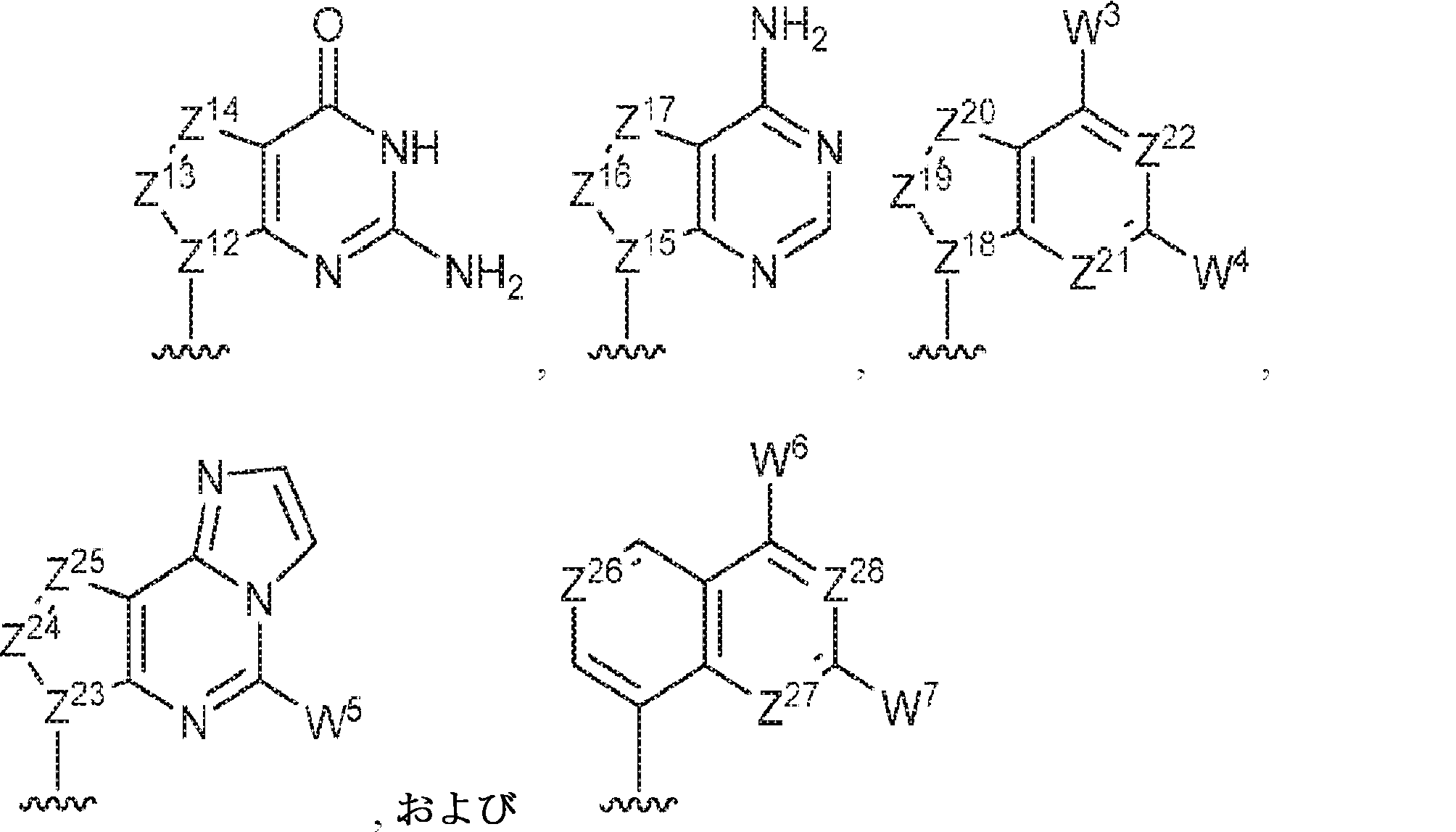
Z12、Z13、Z14、Z15、Z16、Z17、Z18、Z19、Z20、Z21、Z22、Z23、Z24、Z25、Z26、Z27、およびZ28はそれぞれ独立してCHまたはNであり;かつ
W3、W4、W5、W6、およびW7は独立して、水素、ハロゲン、ヒドロキシル、C1~6アルキル、1個もしくは複数のハロゲン基、チオール基、ヒドロキシル基、カルボニル基、カルボキシル基、カルボニルオキシル基、C1~6アルコキシ基、C1~6ヒドロキシアルコキシ基、アミノ基、C1~6アルキルアミノ基、ジ(C1~6アルキル)アミノ基、もしくはアジド基を用いて選択的に官能基を付与されたC1~6アルキル、C1~6アルコキシ、1個もしくは複数のハロゲン基、チオール基、ヒドロキシル基、カルボニル基、カルボキシル基、カルボニルオキシル基、C1~6ヒドロキシアルコキシ基、アミノ基、C1~6アルキルアミノ基、ジ(C1~6アルキル)アミノ基、もしくはアジド基を用いて選択的に官能基を付与されたC1~6アルコキシ、C3~5アルケニル-O-、C3~5アルキニル-O-、オリゴ(エチレングリコール)、ポリ(エチレングリコール)、アジド、または-NR7R8であり;
R7およびR8は独立して、水素、C1~6アルキル、1個もしくは複数のハロゲン基、チオール基、ヒドロキシル基、カルボニル基、カルボキシル基、カルボニルオキシル基、C1~6アルコキシ基、C1~6ヒドロキシアルコキシ基、アミノ基、C1~6アルキルアミノ基、ジ(C1~6アルキル)アミノ基、もしくはアジド基を用いて選択的に官能基を付与されたC1~6アルキル、環状-(C1~6アルキル)-、1個もしくは複数のハロゲン基、チオール基、ヒドロキシル基、カルボニル基、カルボキシル基、カルボニルオキシル基、C1~6アルコキシ基、C1~6ヒドロキシアルコキシ基、アミノ基、C1~6アルキルアミノ基、もしくはジ(C1~6アルキル)アミノ基を用いて選択的に官能基を付与された環状-(C1~6アルキル)-、環状-(C1~6オキサアルキル)-、または1個もしくは複数のハロゲン基、チオール基、ヒドロキシル基、カルボニル基、カルボキシル基、カルボニルオキシル基、C1~6ヒドロキシアルコキシ基、アミノ基、C1~6アルキルアミノ基、もしくはジ(C1~6アルキル)アミノ基を用いて選択的に官能基を付与された環状-(C1~6オキサアルキル)-であり;
R3およびR4は独立して、水素、ハロゲン、ヒドロキシル、アミノ、C1~6アルキル、1個もしくは複数のハロゲン基、チオール基、ヒドロキシル基、カルボニル基、カルボキシル基、カルボニルオキシル基、C1~6アルコキシ基、C1~6ヒドロキシアルコキシ基、アミノ基、C1~6アルキルアミノ基、ジ(C1~6アルキル)アミノ基、もしくはアジド基を用いて選択的に官能基を付与されたC1~6アルキル、C1~6アルコキシ、1個もしくは複数のハロゲン基、チオール基、ヒドロキシル基、カルボニル基、カルボキシル基、カルボニルオキシル基、C1~6ヒドロキシアルコキシ基、アミノ基、C1~6アルキルアミノ基、ジ(C1~6アルキル)アミノ基、もしくはアジド基を用いて選択的に官能基を付与されたC1~6アルコキシ、C3~5アルケニル-O-、C3~5アルキニル-O-、オリゴ(エチレングリコール)、ポリ(エチレングリコール)、アジド、または-NR7R8であり;
R15およびR16は独立して、ヒドロキシル、チオール、メトキシ、エトキシ、アミノ、N-メチルアミノ、N,N-ジメチルアミノ、N-エチルアミノ、N,N-ジエチルアミノ、N-モルホリノ、またはボラノ(-BH3 -)であり;
式Ieの一方または両方のテトラヒドロフラニル環中の酸素原子は硫黄原子またはセレン原子で置き換えられていてもよく;かつ
該化合物は2'3'-cGAMPではない。 Expression Ie:
During the ceremony
X 3 , X 4 , X 5 , and X 6 are independently O, NH, CH 2 , CHF, or CF 2 ;
R 13 and R 14 are independent,
Z 12 , Z 13 , Z 14 , Z 15 , Z 16 , Z 17 , Z 18 , Z 19 , Z 20 , Z 21 , Z 22 , Z 23 , Z 24 , Z 25 , Z 26 , Z 27 , and Z 28 are CH or N independently; and
W 3 , W 4 , W 5 , W 6 and W 7 are independently hydrogen, halogen, hydroxyl, C 1-6 alkyl, one or more halogen groups, thiol groups, hydroxyl groups, carbonyl groups, carboxyls. Selected using a group, a carbonyloxyl group, a C 1-6 alkoxy group, a C 1-6 hydroxyalkoxy group, an amino group, a C 1-6 alkylamino group, a di (C 1-6 alkyl) amino group, or an azido group. C 1-6 alkyl, C 1-6 alkoxy, one or more halogen groups, thiol group, hydroxyl group, carbonyl group, carboxyl group, carbonyloxyl group, C 1-6 hydroxyalkoxy C 1-6 alkoxy, C 3-5 alkenyl selectively functionalized with groups, amino groups, C 1-6 alkyl amino groups, di (C 1-6 alkyl) amino groups, or azido groups -O-, C 3-5 alkynyl-O-, oligo (ethylene glycol), poly (ethylene glycol), azide, or -NR 7 R 8 ;
R 7 and R 8 are independently hydrogen, C 1-6 alkyl, one or more halogen groups, thiol groups, hydroxyl groups, carbonyl groups, carboxyl groups, carbonyloxyl groups, C 1-6 alkoxy groups, C. C 1-6 alkyl, which is selectively functionalized with a 1-6 hydroxyalkoxy group, an amino group, a C 1-6 alkyl amino group, a di (C 1-6 alkyl) amino group, or an azido group. Cyclic- (C 1-6 alkyl)-, one or more halogen groups, thiol groups, hydroxyl groups, carbonyl groups, carboxyl groups, carbonyloxyl groups, C 1-6 alkoxy groups, C 1-6 hydroxyalkoxy groups, Cyclic- (C 1-6 alkyl)-, cyclic-(C 1 ) selectively functionalized with an amino group, C 1-6 alkyl amino group, or di (C 1-6 alkyl) amino group ~ 6 Oxalalkyl)-or one or more halogen groups, thiol groups, hydroxyl groups, carbonyl groups, carboxyl groups, carbonyloxyl groups, C 1-6 hydroxyalkoxy groups, amino groups, C 1-6 alkylamino groups , Or a cyclic- (C 1-6 oxaalkyl)-selectively imparted with a functional group using a di (C 1-6 alkyl) amino group;
R 3 and R 4 are independently hydrogen, halogen, hydroxyl, amino, C 1-6 alkyl, one or more halogen groups, thiol groups, hydroxyl groups, carbonyl groups, carboxyl groups, carbonyloxyl groups, C 1 A functional group was selectively imparted using a ~ 6 alkoxy group, a C 1 to 6 hydroxyalkoxy group, an amino group, a C 1 to 6 alkylamino group, a di (C 1 to 6 alkyl) amino group, or an azido group. C 1 to 6 alkyl, C 1 to 6 alkoxy, one or more halogen groups, thiol group, hydroxyl group, carbonyl group, carboxyl group, carbonyloxyl group, C 1 to 6 hydroxyalkoxy group, amino group, C 1 to 6 Alkylamino group, di (C 1-6 alkyl) amino group, or C 1-6 alkoxy selectively functionalized with azido group, C 3-5 alkenyl-O-, C 3-5 Alkinyl-O-, oligo (ethylene glycol), poly (ethylene glycol), azide, or -NR 7 R 8 ;
R 15 and R 16 are independently hydroxyl, thiol, methoxy, ethoxy, amino, N-methylamino, N, N-dimethylamino, N-ethylamino, N, N-diethylamino, N-morpholino, or borano ( -BH 3- ) and;
Oxygen atoms in one or both tetrahydrofuranyl rings of Formula Ie may be replaced with sulfur or selenium atoms; and the compound is not 2'3'-c GAMP.
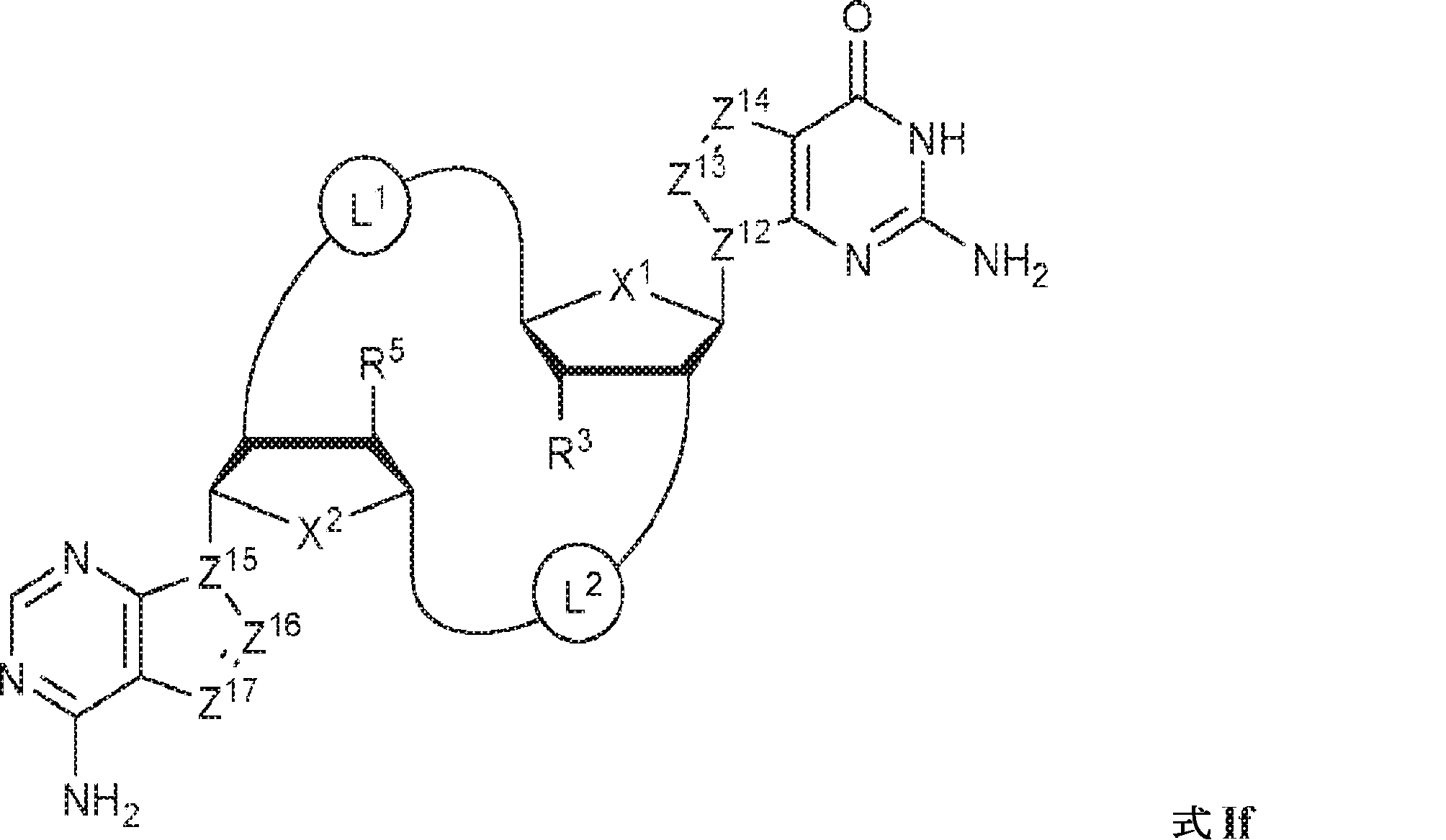
式中、
X1およびX2は独立してO、S、またはSeであり;
Z12、Z13、Z14、Z15、Z16、およびZ17は独立してCHまたはNであり;
X1に対してα位の炭素から出発するL1、およびX2に対してα位の炭素から出発するL2は独立して、-CH2O-P(O)R6-O-、-CH2O-P(S)R6-O-、-C(Y1)(Y2)O-P(O)R6-C(Y3)(Y4)-、-CH2NHSO2NH-、-CH2NHC(O)NH-、-CH2NHC(S)NH-、-CH2NHC(NH)NH-、-CH2NHC(O)CH2-、-CH2NHSO2CH2-、-CH2CH2C(O)NH-、-CH2CH2SO2NH-、-CH2NH(3,4-ジオキソシクロブテン-1,2-ジイル)NH-、

cは0、1、または2であり;
d、e、およびfは独立して0または1であり;
Y1、Y2、Y3、およびY4は独立してHまたはFであり;
R6は、ヒドロキシル、チオール、C1~6アルキル、1個もしくは複数のハロゲン基、チオール基、ヒドロキシル基、カルボニル基、カルボキシル基、カルボニルオキシル基、C1~6アルコキシ基、C1~6ヒドロキシアルコキシ基、アミノ基、C1~6アルキルアミノ基、ジ(C1~6アルキル)アミノ基、もしくはアジド基を用いて選択的に官能基を付与されたC1~6アルキル、C1~6アルコキシ、1個もしくは複数のハロゲン基、チオール基、ヒドロキシル基、カルボニル基、カルボキシル基、カルボニルオキシル基、C1~6ヒドロキシアルコキシ基、アミノ基、C1~6アルキルアミノ基、ジ(C1~6アルキル)アミノ基、もしくはアジド基を用いて選択的に官能基を付与されたC1~6アルコキシ、C3~5アルケニル-O-、C3~5アルキニル-O-、オリゴ(エチレングリコール)、ポリ(エチレングリコール)、ボラノ(-BH3 -)、または-NR7R8であり;
R7およびR8は独立して、水素、C1~6アルキル、1個もしくは複数のハロゲン基、チオール基、ヒドロキシル基、カルボニル基、カルボキシル基、カルボニルオキシル基、C1~6アルコキシ基、C1~6ヒドロキシアルコキシ基、アミノ基、C1~6アルキルアミノ基、ジ(C1~6アルキル)アミノ基、もしくはアジド基を用いて選択的に官能基を付与されたC1~6アルキル、環状-(C1~6アルキル)-、1個もしくは複数のハロゲン基、チオール基、ヒドロキシル基、カルボニル基、カルボキシル基、カルボニルオキシル基、C1~6アルコキシ基、C1~6ヒドロキシアルコキシ基、アミノ基、C1~6アルキルアミノ基、もしくはジ(C1~6アルキル)アミノ基を用いて選択的に官能基を付与された環状-(C1~6アルキル)-、環状-(C1~6オキサアルキル)-、または1個もしくは複数のハロゲン基、チオール基、ヒドロキシル基、カルボニル基、カルボキシル基、カルボニルオキシル基、C1~6ヒドロキシアルコキシ基、アミノ基、C1~6アルキルアミノ基、もしくはジ(C1~6アルキル)アミノ基を用いて選択的に官能基を付与された環状-(C1~6オキサアルキル)-であり;
R3およびR5は独立して、水素、ハロゲン、ヒドロキシル、アミノ、C1~6アルキル、1個もしくは複数のハロゲン基、チオール基、ヒドロキシル基、カルボニル基、カルボキシル基、カルボニルオキシル基、C1~6アルコキシ基、C1~6ヒドロキシアルコキシ基、アミノ基、C1~6アルキルアミノ基、ジ(C1~6アルキル)アミノ基、もしくはアジド基を用いて選択的に官能基を付与されたC1~6アルキル、C1~6アルコキシ、1個もしくは複数のハロゲン基、チオール基、ヒドロキシル基、カルボニル基、カルボキシル基、カルボニルオキシル基、C1~6ヒドロキシアルコキシ基、アミノ基、C1~6アルキルアミノ基、ジ(C1~6アルキル)アミノ基、もしくはアジド基を用いて選択的に官能基を付与されたC1~6アルコキシ、C3~5アルケニル-O-、C3~5アルキニル-O-、オリゴ(エチレングリコール)、ポリ(エチレングリコール)、アジド、または-NR7R8であり;かつ
該化合物は2'2'-cGAMPではない。 Expression If:
During the ceremony
X 1 and X 2 are independently O, S, or Se;
Z 12 , Z 13 , Z 14 , Z 15 , Z 16 , and Z 17 are independently CH or N;
L 1 starting from the carbon at the α-position with respect to X 1 and L 2 starting from the carbon at the α-position with respect to X 2 are independently -CH 2 OP (O) R 6 -O-, -CH. 2 OP (S) R 6 -O-, -C (Y 1 ) (Y 2 ) OP (O) R 6 -C (Y 3 ) (Y 4 )-, -CH 2 NHSO 2 NH-, -CH 2 NHC (O) NH-, -CH 2 NHC (S) NH-, -CH 2 NHC (NH) NH-, -CH 2 NHC (O) CH 2- , -CH 2 NHSO 2 CH 2- , -CH 2 CH 2 C (O) NH-, -CH 2 CH 2 SO 2 NH-, -CH 2 NH (3,4-dioxocyclobutene-1,2-diyl) NH-,
c is 0, 1, or 2;
d, e, and f are independently 0 or 1;
Y 1 , Y 2 , Y 3 , and Y 4 are independently H or F;
R 6 is hydroxyl, thiol, C 1-6 alkyl, one or more halogen groups, thiol group, hydroxyl group, carbonyl group, carboxyl group, carbonyloxyl group, C 1-6 alkoxy group, C 1-6 hydroxy C 1 to 6 alkyl, C 1 to 6 selectively functional groups using an alkoxy group, an amino group, a C 1 to 6 alkyl amino group, a di (C 1 to 6 alkyl) amino group, or an azido group. Alkoxy, one or more halogen groups, thiol groups, hydroxyl groups, carbonyl groups, carboxyl groups, carbonyloxyl groups, C 1-6 hydroxyalkoxy groups, amino groups, C 1-6 alkylamino groups, di (C 1- 6 Alkyl) C 1-6 alkoxy, C 3-5 alkenyl-O-, C 3-5 alkynyl-O-, oligo (ethylene glycol) selectively functionalized with an amino group or an azido group. , Poly (ethylene glycol), Borano (-BH 3- ) , or -NR 7 R 8 ;
R 7 and R 8 are independently hydrogen, C 1-6 alkyl, one or more halogen groups, thiol groups, hydroxyl groups, carbonyl groups, carboxyl groups, carbonyloxyl groups, C 1-6 alkoxy groups, C. C 1-6 alkyl, which is selectively functionalized with a 1-6 hydroxyalkoxy group, an amino group, a C 1-6 alkyl amino group, a di (C 1-6 alkyl) amino group, or an azido group. Cyclic- (C 1-6 alkyl)-, one or more halogen groups, thiol groups, hydroxyl groups, carbonyl groups, carboxyl groups, carbonyloxyl groups, C 1-6 alkoxy groups, C 1-6 hydroxyalkoxy groups, Cyclic- (C 1-6 alkyl)-, cyclic-(C 1 ) selectively functionalized with an amino group, C 1-6 alkyl amino group, or di (C 1-6 alkyl) amino group ~ 6 Oxalalkyl)-or one or more halogen groups, thiol groups, hydroxyl groups, carbonyl groups, carboxyl groups, carbonyloxyl groups, C 1-6 hydroxyalkoxy groups, amino groups, C 1-6 alkylamino groups , Or a cyclic- (C 1-6 oxaalkyl)-selectively imparted with a functional group using a di (C 1-6 alkyl) amino group;
R 3 and R 5 are independently hydrogen, halogen, hydroxyl, amino, C 1-6 alkyl, one or more halogen groups, thiol groups, hydroxyl groups, carbonyl groups, carboxyl groups, carbonyloxyl groups, C 1 A functional group was selectively imparted using a ~ 6 alkoxy group, a C 1 to 6 hydroxyalkoxy group, an amino group, a C 1 to 6 alkylamino group, a di (C 1 to 6 alkyl) amino group, or an azido group. C 1 to 6 alkyl, C 1 to 6 alkoxy, one or more halogen groups, thiol group, hydroxyl group, carbonyl group, carboxyl group, carbonyloxyl group, C 1 to 6 hydroxyalkoxy group, amino group, C 1 to 6 Alkylamino group, di (C 1-6 alkyl) amino group, or C 1-6 alkoxy selectively functionalized with azido group, C 3-5 alkenyl-O-, C 3-5 Alkinyl-O-, oligo (ethylene glycol), poly (ethylene glycol), azide, or -NR 7 R 8 ; and the compound is not 2'2'-c GAMP.

式中、
Z12、Z13、Z14、Z15、Z16、およびZ17は独立してCHまたはNであり;
R3およびR5は独立して、水素、ハロゲン、ヒドロキシル、アミノ、C1~6アルキル、1個もしくは複数のハロゲン基、チオール基、ヒドロキシル基、カルボニル基、カルボキシル基、カルボニルオキシル基、C1~6アルコキシ基、C1~6ヒドロキシアルコキシ基、アミノ基、C1~6アルキルアミノ基、ジ(C1~6アルキル)アミノ基、もしくはアジド基を用いて選択的に官能基を付与されたC1~6アルキル、C1~6アルコキシ、1個もしくは複数のハロゲン基、チオール基、ヒドロキシル基、カルボニル基、カルボキシル基、カルボニルオキシル基、C1~6ヒドロキシアルコキシ基、アミノ基、C1~6アルキルアミノ基、ジ(C1~6アルキル)アミノ基、もしくはアジド基を用いて選択的に官能基を付与されたC1~6アルコキシ、C3~5アルケニル-O-、C3~5アルキニル-O-、オリゴ(エチレングリコール)、ポリ(エチレングリコール)、アジド、または-NR7R8であり;
R7およびR8は独立して、水素、C1~6アルキル、1個もしくは複数のハロゲン基、チオール基、ヒドロキシル基、カルボニル基、カルボキシル基、カルボニルオキシル基、C1~6アルコキシ基、C1~6ヒドロキシアルコキシ基、アミノ基、C1~6アルキルアミノ基、ジ(C1~6アルキル)アミノ基、もしくはアジド基を用いて選択的に官能基を付与されたC1~6アルキル、環状-(C1~6アルキル)-、1個もしくは複数のハロゲン基、チオール基、ヒドロキシル基、カルボニル基、カルボキシル基、カルボニルオキシル基、C1~6アルコキシ基、C1~6ヒドロキシアルコキシ基、アミノ基、C1~6アルキルアミノ基、もしくはジ(C1~6アルキル)アミノ基を用いて選択的に官能基を付与された環状-(C1~6アルキル)-、環状-(C1~6オキサアルキル)-、または1個もしくは複数のハロゲン基、チオール基、ヒドロキシル基、カルボニル基、カルボキシル基、カルボニルオキシル基、C1~6ヒドロキシアルコキシ基、アミノ基、C1~6アルキルアミノ基、もしくはジ(C1~6アルキル)アミノ基を用いて選択的に官能基を付与された環状-(C1~6オキサアルキル)-であり;
R9およびR10は独立して、ヒドロキシル、チオール、C1~6アルキル、1個もしくは複数のハロゲン基、チオール基、ヒドロキシル基、カルボニル基、カルボキシル基、カルボニルオキシル基、C1~6アルコキシ基、C1~6ヒドロキシアルコキシ基、アミノ基、C1~6アルキルアミノ基、ジ(C1~6アルキル)アミノ基、もしくはアジド基を用いて選択的に官能基を付与されたC1~6アルキル、C1~6アルコキシ、1個もしくは複数のハロゲン基、チオール基、ヒドロキシル基、カルボニル基、カルボキシル基、カルボニルオキシル基、C1~6ヒドロキシアルコキシ基、アミノ基、C1~6アルキルアミノ基、ジ(C1~6アルキル)アミノ基、もしくはアジド基を用いて選択的に官能基を付与されたC1~6アルコキシ、C3~5アルケニル-O-、C3~5アルキニル-O-、オリゴ(エチレングリコール)、ポリ(エチレングリコール)、ボラノ(-BH3 -)、または-NR7R8であり;
式Igの一方または両方のテトラヒドロフラニル環中の酸素原子は硫黄原子またはセレン原子で置き換えられていてもよく;かつ
該化合物は2'2'-cGAMPではない。 Expression Ig:
During the ceremony
Z 12 , Z 13 , Z 14 , Z 15 , Z 16 , and Z 17 are independently CH or N;
R 3 and R 5 are independently hydrogen, halogen, hydroxyl, amino, C 1-6 alkyl, one or more halogen groups, thiol groups, hydroxyl groups, carbonyl groups, carboxyl groups, carbonyloxyl groups, C 1 A functional group was selectively imparted using a ~ 6 alkoxy group, a C 1 to 6 hydroxyalkoxy group, an amino group, a C 1 to 6 alkylamino group, a di (C 1 to 6 alkyl) amino group, or an azido group. C 1 to 6 alkyl, C 1 to 6 alkoxy, one or more halogen groups, thiol group, hydroxyl group, carbonyl group, carboxyl group, carbonyloxyl group, C 1 to 6 hydroxyalkoxy group, amino group, C 1 to 6 Alkylamino group, di (C 1-6 alkyl) amino group, or C 1-6 alkoxy selectively functionalized with azido group, C 3-5 alkenyl-O-, C 3-5 Alkinyl-O-, oligo (ethylene glycol), poly (ethylene glycol), azide, or -NR 7 R 8 ;
R 7 and R 8 are independently hydrogen, C 1-6 alkyl, one or more halogen groups, thiol groups, hydroxyl groups, carbonyl groups, carboxyl groups, carbonyloxyl groups, C 1-6 alkoxy groups, C. C 1-6 alkyl, which is selectively functionalized with a 1-6 hydroxyalkoxy group, an amino group, a C 1-6 alkyl amino group, a di (C 1-6 alkyl) amino group, or an azido group. Cyclic- (C 1-6 alkyl)-, one or more halogen groups, thiol groups, hydroxyl groups, carbonyl groups, carboxyl groups, carbonyloxyl groups, C 1-6 alkoxy groups, C 1-6 hydroxyalkoxy groups, Cyclic- (C 1-6 alkyl)-, cyclic-(C 1 ) selectively functionalized with an amino group, C 1-6 alkyl amino group, or di (C 1-6 alkyl) amino group ~ 6 Oxalalkyl)-or one or more halogen groups, thiol groups, hydroxyl groups, carbonyl groups, carboxyl groups, carbonyloxyl groups, C 1-6 hydroxyalkoxy groups, amino groups, C 1-6 alkylamino groups , Or a cyclic- (C 1-6 oxaalkyl)-selectively imparted with a functional group using a di (C 1-6 alkyl) amino group;
R 9 and R 10 are independently hydroxyl, thiol, C 1-6 alkyl, one or more halogen groups, thiol groups, hydroxyl groups, carbonyl groups, carboxyl groups, carbonyloxyl groups, C 1-6 alkoxy groups. , C 1 to 6 hydroxyalkoxy group, amino group, C 1 to 6 alkylamino group, di (C 1 to 6 alkyl) amino group, or C 1 to 6 selectively functionalized using an azido group. Alkyl, C 1-6 alkoxy, one or more halogen groups, thiol groups, hydroxyl groups, carbonyl groups, carboxyl groups, carbonyloxyl groups, C 1-6 hydroxyalkoxy groups, amino groups, C 1-6 alkylamino groups , C 1-6 alkoxy, C 3-5 alkenyl-O-, C 3-5 alkynyl-O-, selectively functionalized with a di (C 1-6 alkyl) amino group or an azido group. , Oligo (ethylene glycol), Poly (ethylene glycol), Borano (-BH 3- ) , or -NR 7 R 8 ;
The oxygen atom in one or both tetrahydrofuranyl rings of the formula Ig may be replaced with a sulfur atom or a selenium atom; and the compound is not 2'2'-c GAMP.
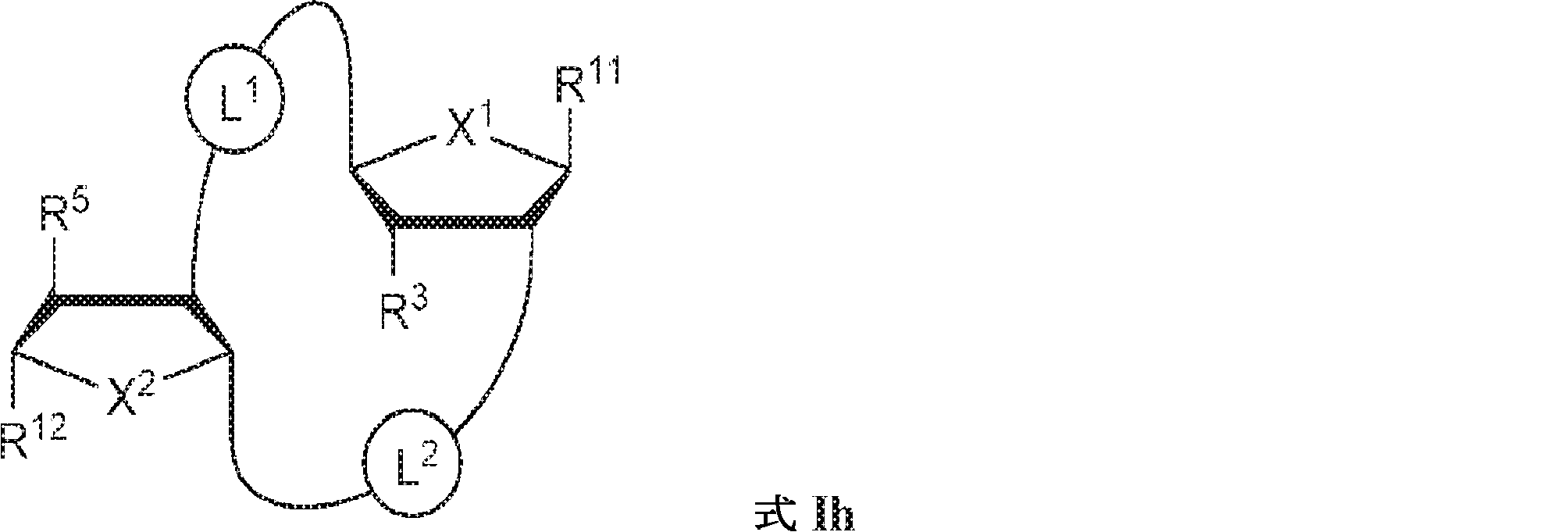
式中、
X1およびX2は独立してO、S、またはSeであり;
X1に対してα位の炭素から出発するL1、およびX2に対してα位の炭素から出発するL2は独立して、-CH2O-P(O)R6-O-、-CH2O-P(S)R6-O-、-C(Y1)(Y2)O-P(O)R6-C(Y3)(Y4)-、-CH2NHSO2NH-、-CH2NHC(O)NH-、-CH2NHC(S)NH-、-CH2NHC(NH)NH-、-CH2NHC(O)CH2-、-CH2NHSO2CH2-、-CH2CH2C(O)NH-、-CH2CH2SO2NH-、-CH2NH(3,4-ジオキソシクロブテン-1,2-ジイル)NH-、

cは0、1、または2であり;
d、e、およびfは独立して0または1であり;
Y1、Y2、Y3、およびY4は独立してHまたはFであり;
R6は、ヒドロキシル、チオール、C1~6アルキル、1個もしくは複数のハロゲン基、チオール基、ヒドロキシル基、カルボニル基、カルボキシル基、カルボニルオキシル基、C1~6アルコキシ基、C1~6ヒドロキシアルコキシ基、アミノ基、C1~6アルキルアミノ基、ジ(C1~6アルキル)アミノ基、もしくはアジド基を用いて選択的に官能基を付与されたC1~6アルキル、C1~6アルコキシ、1個もしくは複数のハロゲン基、チオール基、ヒドロキシル基、カルボニル基、カルボキシル基、カルボニルオキシル基、C1~6ヒドロキシアルコキシ基、アミノ基、C1~6アルキルアミノ基、ジ(C1~6アルキル)アミノ基、もしくはアジド基を用いて選択的に官能基を付与されたC1~6アルコキシ、C3~5アルケニル-O-、C3~5アルキニル-O-、オリゴ(エチレングリコール)、ポリ(エチレングリコール)、ボラノ(-BH3 -)、または-NR7R8であり;
R7およびR8は独立して、水素、C1~6アルキル、1個もしくは複数のハロゲン基、チオール基、ヒドロキシル基、カルボニル基、カルボキシル基、カルボニルオキシル基、C1~6アルコキシ基、C1~6ヒドロキシアルコキシ基、アミノ基、C1~6アルキルアミノ基、ジ(C1~6アルキル)アミノ基、もしくはアジド基を用いて選択的に官能基を付与されたC1~6アルキル、環状-(C1~6アルキル)-、1個もしくは複数のハロゲン基、チオール基、ヒドロキシル基、カルボニル基、カルボキシル基、カルボニルオキシル基、C1~6アルコキシ基、C1~6ヒドロキシアルコキシ基、アミノ基、C1~6アルキルアミノ基、もしくはジ(C1~6アルキル)アミノ基を用いて選択的に官能基を付与された環状-(C1~6アルキル)-、環状-(C1~6オキサアルキル)-、または1個もしくは複数のハロゲン基、チオール基、ヒドロキシル基、カルボニル基、カルボキシル基、カルボニルオキシル基、C1~6ヒドロキシアルコキシ基、アミノ基、C1~6アルキルアミノ基、もしくはジ(C1~6アルキル)アミノ基を用いて選択的に官能基を付与された環状-(C1~6オキサアルキル)-であり;
R3およびR5は独立して、水素、ハロゲン、ヒドロキシル、アミノ、C1~6アルキル、1個もしくは複数のハロゲン基、チオール基、ヒドロキシル基、カルボニル基、カルボキシル基、カルボニルオキシル基、C1~6アルコキシ基、C1~6ヒドロキシアルコキシ基、アミノ基、C1~6アルキルアミノ基、ジ(C1~6アルキル)アミノ基、もしくはアジド基を用いて選択的に官能基を付与されたC1~6アルキル、C1~6アルコキシ、1個もしくは複数のハロゲン基、チオール基、ヒドロキシル基、カルボニル基、カルボキシル基、カルボニルオキシル基、C1~6ヒドロキシアルコキシ基、アミノ基、C1~6アルキルアミノ基、ジ(C1~6アルキル)アミノ基、もしくはアジド基を用いて選択的に官能基を付与されたC1~6アルコキシ、C3~5アルケニル-O-、C3~5アルキニル-O-、オリゴ(エチレングリコール)、ポリ(エチレングリコール)、アジド、または-NR7R8であり;
R11およびR12は独立して、
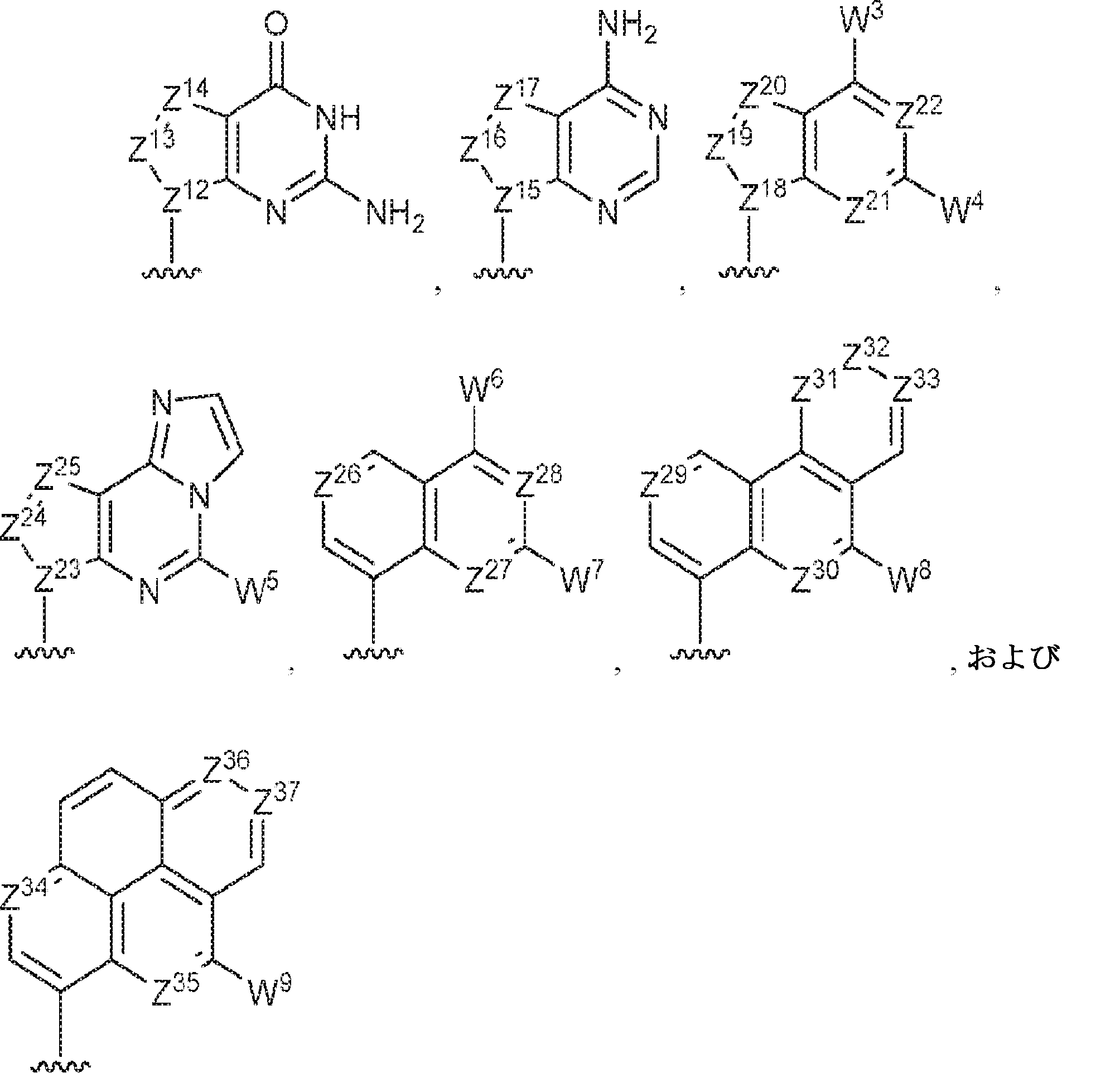
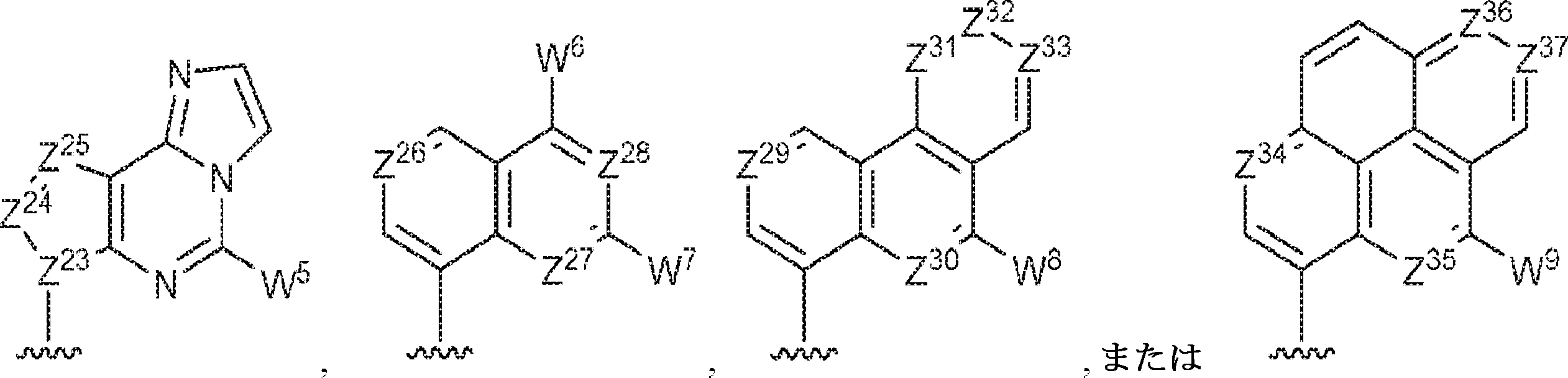
Z12、Z13、Z14、Z15、Z16、Z17、Z18、Z19、Z20、Z21、Z22、Z23、Z24、Z25、Z26、Z27、Z28、Z29、Z30、Z31、Z32、Z33、Z34、Z35、Z36、およびZ37はそれぞれ独立してCHまたはNであり;かつ
W3、W4、W5、W6、W7、W8、およびW9は独立して、水素、ハロゲン、ヒドロキシル、C1~6アルキル、1個もしくは複数のハロゲン基、チオール基、ヒドロキシル基、カルボニル基、カルボキシル基、カルボニルオキシル基、C1~6アルコキシ基、C1~6ヒドロキシアルコキシ基、アミノ基、C1~6アルキルアミノ基、ジ(C1~6アルキル)アミノ基、もしくはアジド基を用いて選択的に官能基を付与されたC1~6アルキル、C1~6アルコキシ、1個もしくは複数のハロゲン基、チオール基、ヒドロキシル基、カルボニル基、カルボキシル基、カルボニルオキシル基、C1~6ヒドロキシアルコキシ基、アミノ基、C1~6アルキルアミノ基、ジ(C1~6アルキル)アミノ基、もしくはアジド基を用いて選択的に官能基を付与されたC1~6アルコキシ、C3~5アルケニル-O-、C3~5アルキニル-O-、オリゴ(エチレングリコール)、ポリ(エチレングリコール)、アジド、または-NR7R8である。 Expression Ih:
During the ceremony
X 1 and X 2 are independently O, S, or Se;
L 1 starting from the carbon at the α-position with respect to X 1 and L 2 starting from the carbon at the α-position with respect to X 2 are independently -CH 2 OP (O) R 6 -O-, -CH. 2 OP (S) R 6 -O-, -C (Y 1 ) (Y 2 ) OP (O) R 6 -C (Y 3 ) (Y 4 )-, -CH 2 NHSO 2 NH-, -CH 2 NHC (O) NH-, -CH 2 NHC (S) NH-, -CH 2 NHC (NH) NH-, -CH 2 NHC (O) CH 2- , -CH 2 NHSO 2 CH 2- , -CH 2 CH 2 C (O) NH-, -CH 2 CH 2 SO 2 NH-, -CH 2 NH (3,4-dioxocyclobutene-1,2-diyl) NH-,
c is 0, 1, or 2;
d, e, and f are independently 0 or 1;
Y 1 , Y 2 , Y 3 , and Y 4 are independently H or F;
R 6 is hydroxyl, thiol, C 1-6 alkyl, one or more halogen groups, thiol group, hydroxyl group, carbonyl group, carboxyl group, carbonyloxyl group, C 1-6 alkoxy group, C 1-6 hydroxy C 1 to 6 alkyl, C 1 to 6 selectively functional groups using an alkoxy group, an amino group, a C 1 to 6 alkyl amino group, a di (C 1 to 6 alkyl) amino group, or an azido group. Alkoxy, one or more halogen groups, thiol groups, hydroxyl groups, carbonyl groups, carboxyl groups, carbonyloxyl groups, C 1-6 hydroxyalkoxy groups, amino groups, C 1-6 alkylamino groups, di (C 1- 6 Alkyl) C 1-6 alkoxy, C 3-5 alkenyl-O-, C 3-5 alkynyl-O-, oligo (ethylene glycol) selectively functionalized with an amino group or an azido group. , Poly (ethylene glycol), Borano (-BH 3- ) , or -NR 7 R 8 ;
R 7 and R 8 are independently hydrogen, C 1-6 alkyl, one or more halogen groups, thiol groups, hydroxyl groups, carbonyl groups, carboxyl groups, carbonyloxyl groups, C 1-6 alkoxy groups, C. C 1-6 alkyl, which is selectively functionalized with a 1-6 hydroxyalkoxy group, an amino group, a C 1-6 alkyl amino group, a di (C 1-6 alkyl) amino group, or an azido group. Cyclic- (C 1-6 alkyl)-, one or more halogen groups, thiol groups, hydroxyl groups, carbonyl groups, carboxyl groups, carbonyloxyl groups, C 1-6 alkoxy groups, C 1-6 hydroxyalkoxy groups, Cyclic- (C 1-6 alkyl)-, cyclic-(C 1 ) selectively functionalized with an amino group, C 1-6 alkyl amino group, or di (C 1-6 alkyl) amino group ~ 6 Oxalalkyl)-or one or more halogen groups, thiol groups, hydroxyl groups, carbonyl groups, carboxyl groups, carbonyloxyl groups, C 1-6 hydroxyalkoxy groups, amino groups, C 1-6 alkylamino groups , Or a cyclic- (C 1-6 oxaalkyl)-selectively imparted with a functional group using a di (C 1-6 alkyl) amino group;
R 3 and R 5 are independently hydrogen, halogen, hydroxyl, amino, C 1-6 alkyl, one or more halogen groups, thiol groups, hydroxyl groups, carbonyl groups, carboxyl groups, carbonyloxyl groups, C 1 A functional group was selectively imparted using a ~ 6 alkoxy group, a C 1 to 6 hydroxyalkoxy group, an amino group, a C 1 to 6 alkylamino group, a di (C 1 to 6 alkyl) amino group, or an azido group. C 1 to 6 alkyl, C 1 to 6 alkoxy, one or more halogen groups, thiol group, hydroxyl group, carbonyl group, carboxyl group, carbonyloxyl group, C 1 to 6 hydroxyalkoxy group, amino group, C 1 to 6 Alkylamino group, di (C 1-6 alkyl) amino group, or C 1-6 alkoxy selectively functionalized with azido group, C 3-5 alkenyl-O-, C 3-5 Alkinyl-O-, oligo (ethylene glycol), poly (ethylene glycol), azide, or -NR 7 R 8 ;
R 11 and R 12 are independent,
Z 12 , Z 13 , Z 14 , Z 15 , Z 16 , Z 17 , Z 18 , Z 19 , Z 20 , Z 21 , Z 22 , Z 23 , Z 24 , Z 25 , Z 26 , Z 27 , Z 28 , Z 29 , Z 30 , Z 31 , Z 32 , Z 33 , Z 34 , Z 35 , Z 36 , and Z 37 are CH or N independently; and
W 3 , W 4 , W 5 , W 6 , W 7 , W 8 , and W 9 are independently hydrogen, halogen, hydroxyl, C 1-6 alkyl, one or more halogen groups, thiol groups, hydroxyl. Group, carbonyl group, carboxyl group, carbonyloxyl group, C 1-6 alkoxy group, C 1-6 hydroxyalkoxy group, amino group, C 1-6 alkylamino group, di (C 1-6 alkyl) amino group, or C 1-6 alkyl, C 1-6 alkoxy, one or more halogen groups, thiol groups, hydroxyl groups, carbonyl groups, carboxyl groups, carbonyloxyl groups, selectively functionalized with azido groups, C 1 to 6 hydroxyalkoxy group selectively added with a functional group using a C 1 to 6 hydroxyalkoxy group, an amino group, a C 1 to 6 alkyl amino group, a di (C 1 to 6 alkyl) amino group, or an azido group. , C 3-5 alkenyl-O-, C 3-5 alkynyl-O-, oligo (ethylene glycol), poly (ethylene glycol), azide, or -NR 7 R 8 .
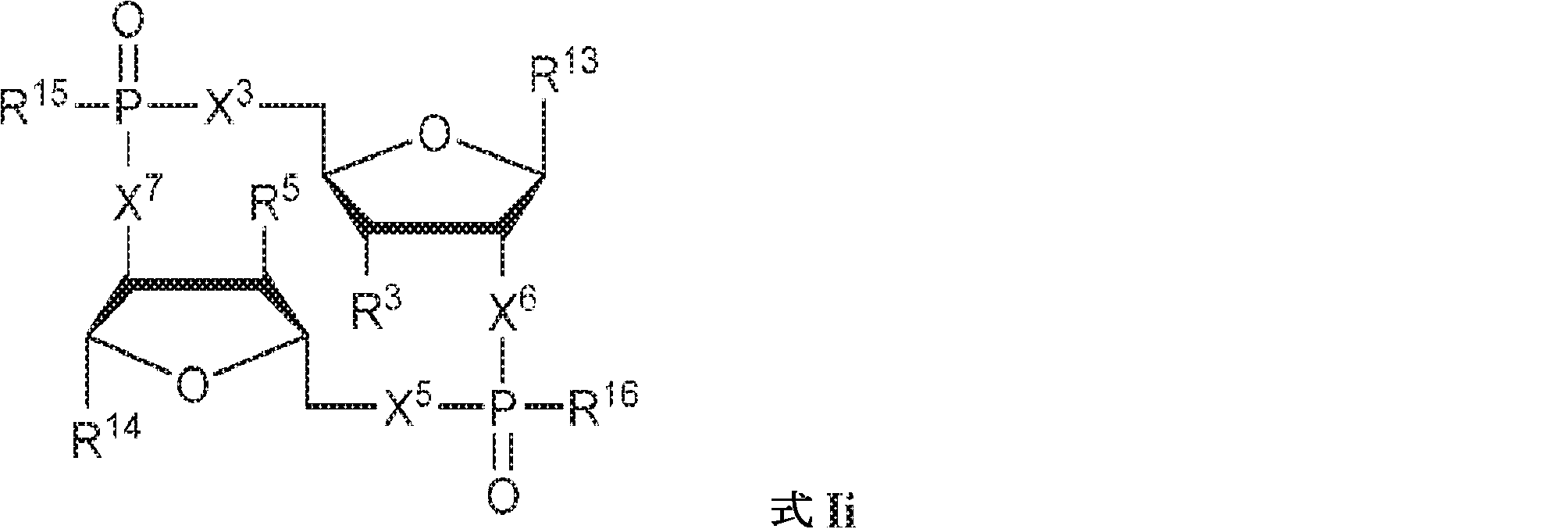
式中、
X3、X5、X6、およびX7は独立してO、NH、CH2、CHF、またはCF2であり;
R13およびR14は独立して、

Z12、Z13、Z14、Z15、Z16、Z17、Z18、Z19、Z20、Z21、Z22、Z23、Z24、Z25、Z26、Z27、およびZ28はそれぞれ独立してCHまたはNであり;かつ
W3、W4、W5、W6、およびW7は独立して、水素、ハロゲン、ヒドロキシル、C1~6アルキル、1個もしくは複数のハロゲン基、チオール基、ヒドロキシル基、カルボニル基、カルボキシル基、カルボニルオキシル基、C1~6アルコキシ基、C1~6ヒドロキシアルコキシ基、アミノ基、C1~6アルキルアミノ基、ジ(C1~6アルキル)アミノ基、もしくはアジド基を用いて選択的に官能基を付与されたC1~6アルキル、C1~6アルコキシ、1個もしくは複数のハロゲン基、チオール基、ヒドロキシル基、カルボニル基、カルボキシル基、カルボニルオキシル基、C1~6ヒドロキシアルコキシ基、アミノ基、C1~6アルキルアミノ基、ジ(C1~6アルキル)アミノ基、もしくはアジド基を用いて選択的に官能基を付与されたC1~6アルコキシ、C3~5アルケニル-O-、C3~5アルキニル-O-、オリゴ(エチレングリコール)、ポリ(エチレングリコール)、アジド、または-NR7R8であり;
R7およびR8は独立して、水素、C1~6アルキル、1個もしくは複数のハロゲン基、チオール基、ヒドロキシル基、カルボニル基、カルボキシル基、カルボニルオキシル基、C1~6アルコキシ基、C1~6ヒドロキシアルコキシ基、アミノ基、C1~6アルキルアミノ基、ジ(C1~6アルキル)アミノ基、もしくはアジド基を用いて選択的に官能基を付与されたC1~6アルキル、環状-(C1~6アルキル)-、1個もしくは複数のハロゲン基、チオール基、ヒドロキシル基、カルボニル基、カルボキシル基、カルボニルオキシル基、C1~6アルコキシ基、C1~6ヒドロキシアルコキシ基、アミノ基、C1~6アルキルアミノ基、もしくはジ(C1~6アルキル)アミノ基を用いて選択的に官能基を付与された環状-(C1~6アルキル)-、環状-(C1~6オキサアルキル)-、または1個もしくは複数のハロゲン基、チオール基、ヒドロキシル基、カルボニル基、カルボキシル基、カルボニルオキシル基、C1~6ヒドロキシアルコキシ基、アミノ基、C1~6アルキルアミノ基、もしくはジ(C1~6アルキル)アミノ基を用いて選択的に官能基を付与された環状-(C1~6オキサアルキル)-であり;
R3およびR5は独立して、水素、ハロゲン、ヒドロキシル、アミノ、C1~6アルキル、1個もしくは複数のハロゲン基、チオール基、ヒドロキシル基、カルボニル基、カルボキシル基、カルボニルオキシル基、C1~6アルコキシ基、C1~6ヒドロキシアルコキシ基、アミノ基、C1~6アルキルアミノ基、ジ(C1~6アルキル)アミノ基、もしくはアジド基を用いて選択的に官能基を付与されたC1~6アルキル、C1~6アルコキシ、1個もしくは複数のハロゲン基、チオール基、ヒドロキシル基、カルボニル基、カルボキシル基、カルボニルオキシル基、C1~6ヒドロキシアルコキシ基、アミノ基、C1~6アルキルアミノ基、ジ(C1~6アルキル)アミノ基、もしくはアジド基を用いて選択的に官能基を付与されたC1~6アルコキシ、C3~5アルケニル-O-、C3~5アルキニル-O-、オリゴ(エチレングリコール)、ポリ(エチレングリコール)、アジド、または-NR7R8であり;
R15およびR16は独立して、ヒドロキシル、チオール、メトキシ、エトキシ、アミノ、N-メチルアミノ、N,N-ジメチルアミノ、N-エチルアミノ、N,N-ジエチルアミノ、N-モルホリノ、またはボラノ(-BH3 -)であり;
式Iiの一方または両方のテトラヒドロフラニル環中の酸素原子は硫黄原子またはセレン原子で置き換えられていてもよく;かつ
該化合物は2'2'-cGAMPではない。 Expression Ii:
During the ceremony
X 3 , X 5 , X 6 , and X 7 are independently O, NH, CH 2 , CHF, or CF 2 ;
R 13 and R 14 are independent,
Z 12 , Z 13 , Z 14 , Z 15 , Z 16 , Z 17 , Z 18 , Z 19 , Z 20 , Z 21 , Z 22 , Z 23 , Z 24 , Z 25 , Z 26 , Z 27 , and Z 28 are CH or N independently; and
W 3 , W 4 , W 5 , W 6 and W 7 are independently hydrogen, halogen, hydroxyl, C 1-6 alkyl, one or more halogen groups, thiol groups, hydroxyl groups, carbonyl groups, carboxyls. Selected using a group, a carbonyloxyl group, a C 1-6 alkoxy group, a C 1-6 hydroxyalkoxy group, an amino group, a C 1-6 alkylamino group, a di (C 1-6 alkyl) amino group, or an azido group. C 1-6 alkyl, C 1-6 alkoxy, one or more halogen groups, thiol group, hydroxyl group, carbonyl group, carboxyl group, carbonyloxyl group, C 1-6 hydroxyalkoxy C 1-6 alkoxy, C 3-5 alkenyl selectively functionalized with groups, amino groups, C 1-6 alkyl amino groups, di (C 1-6 alkyl) amino groups, or azido groups -O-, C 3-5 alkynyl-O-, oligo (ethylene glycol), poly (ethylene glycol), azide, or -NR 7 R 8 ;
R 7 and R 8 are independently hydrogen, C 1-6 alkyl, one or more halogen groups, thiol groups, hydroxyl groups, carbonyl groups, carboxyl groups, carbonyloxyl groups, C 1-6 alkoxy groups, C. C 1-6 alkyl, which is selectively functionalized with a 1-6 hydroxyalkoxy group, an amino group, a C 1-6 alkyl amino group, a di (C 1-6 alkyl) amino group, or an azido group. Cyclic- (C 1-6 alkyl)-, one or more halogen groups, thiol groups, hydroxyl groups, carbonyl groups, carboxyl groups, carbonyloxyl groups, C 1-6 alkoxy groups, C 1-6 hydroxyalkoxy groups, Cyclic- (C 1-6 alkyl)-, cyclic-(C 1 ) selectively functionalized with an amino group, C 1-6 alkyl amino group, or di (C 1-6 alkyl) amino group ~ 6 Oxalalkyl)-or one or more halogen groups, thiol groups, hydroxyl groups, carbonyl groups, carboxyl groups, carbonyloxyl groups, C 1-6 hydroxyalkoxy groups, amino groups, C 1-6 alkylamino groups , Or a cyclic- (C 1-6 oxaalkyl)-selectively imparted with a functional group using a di (C 1-6 alkyl) amino group;
R 3 and R 5 are independently hydrogen, halogen, hydroxyl, amino, C 1-6 alkyl, one or more halogen groups, thiol groups, hydroxyl groups, carbonyl groups, carboxyl groups, carbonyloxyl groups, C 1 A functional group was selectively imparted using a ~ 6 alkoxy group, a C 1 to 6 hydroxyalkoxy group, an amino group, a C 1 to 6 alkylamino group, a di (C 1 to 6 alkyl) amino group, or an azido group. C 1 to 6 alkyl, C 1 to 6 alkoxy, one or more halogen groups, thiol group, hydroxyl group, carbonyl group, carboxyl group, carbonyloxyl group, C 1 to 6 hydroxyalkoxy group, amino group, C 1 to 6 Alkylamino group, di (C 1-6 alkyl) amino group, or C 1-6 alkoxy selectively functionalized with azido group, C 3-5 alkenyl-O-, C 3-5 Alkinyl-O-, oligo (ethylene glycol), poly (ethylene glycol), azide, or -NR 7 R 8 ;
R 15 and R 16 are independently hydroxyl, thiol, methoxy, ethoxy, amino, N-methylamino, N, N-dimethylamino, N-ethylamino, N, N-diethylamino, N-morpholino, or borano ( -BH 3- ) and;
Oxygen atoms in one or both tetrahydrofuranyl rings of formula Ii may be replaced with sulfur or selenium atoms; and the compound is not 2'2'-c GAMP.
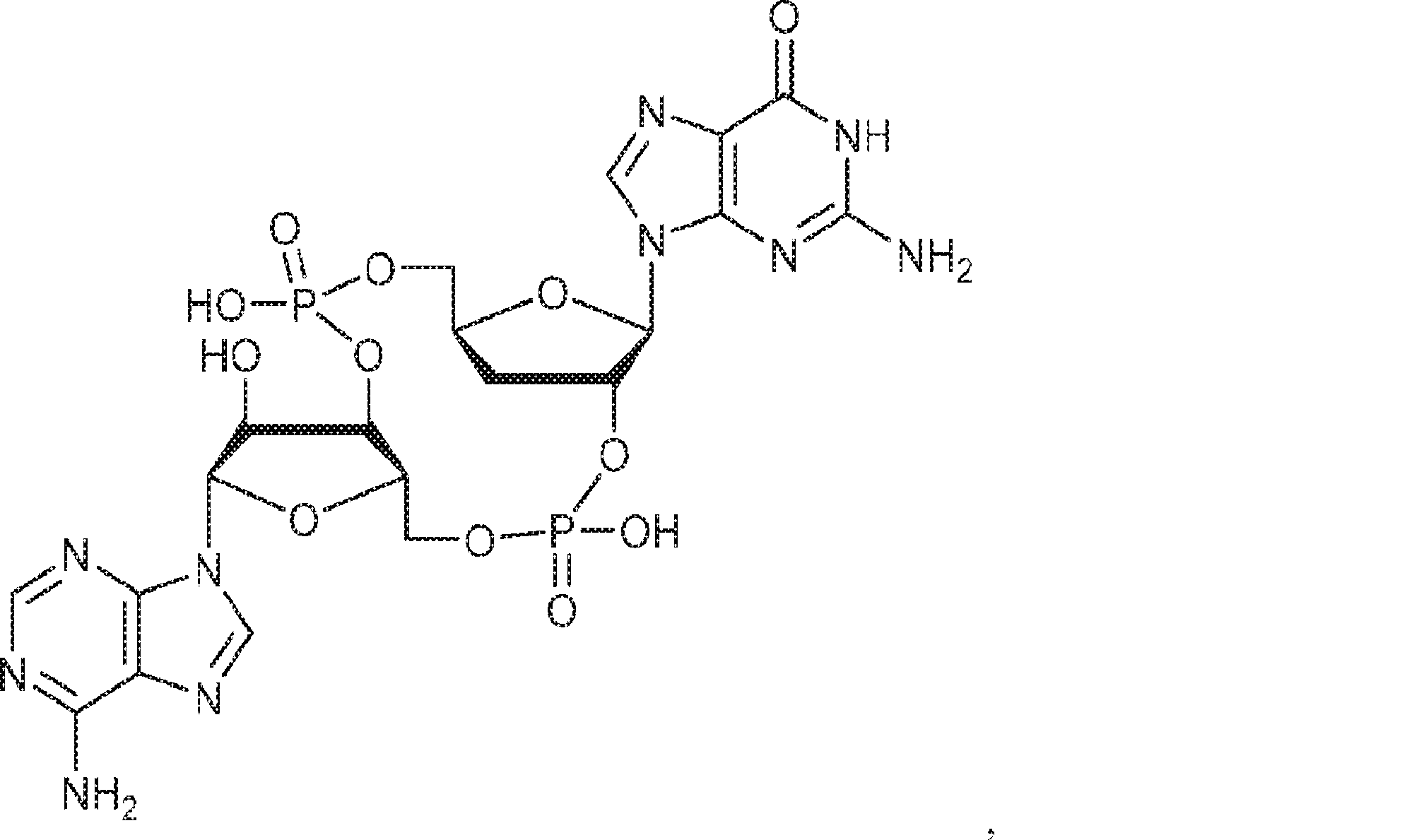
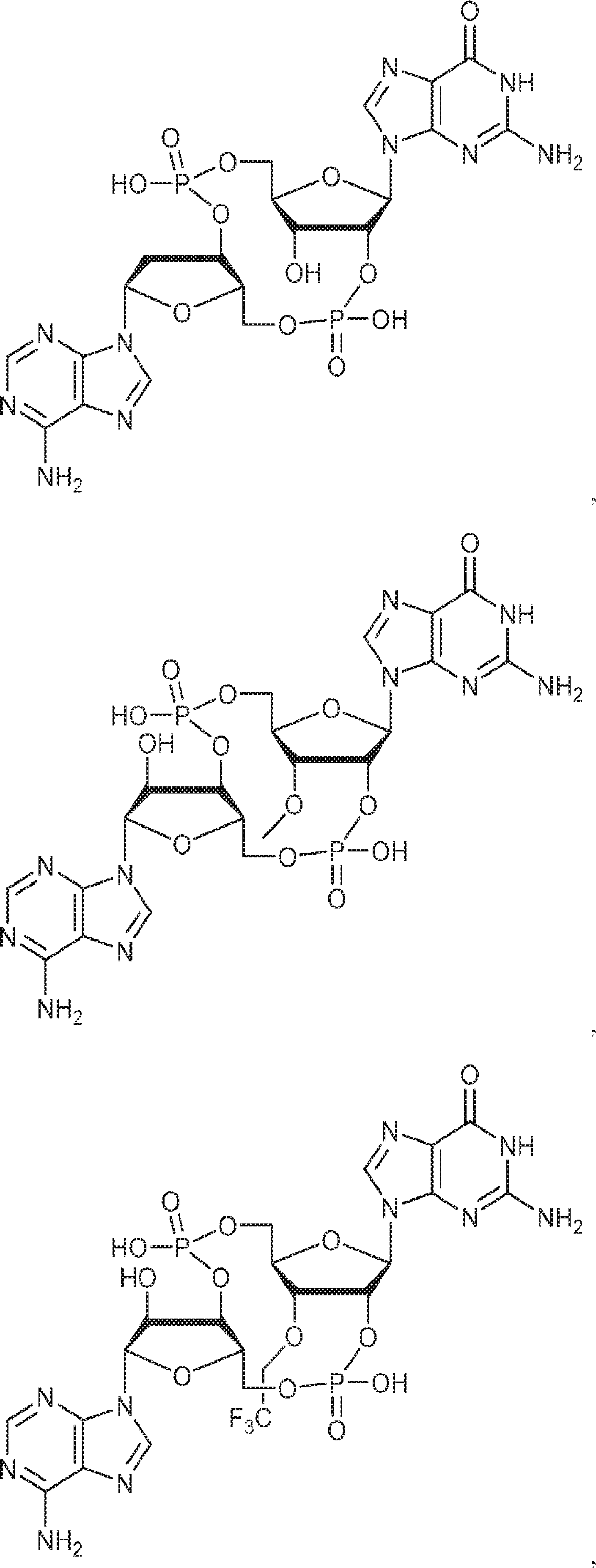
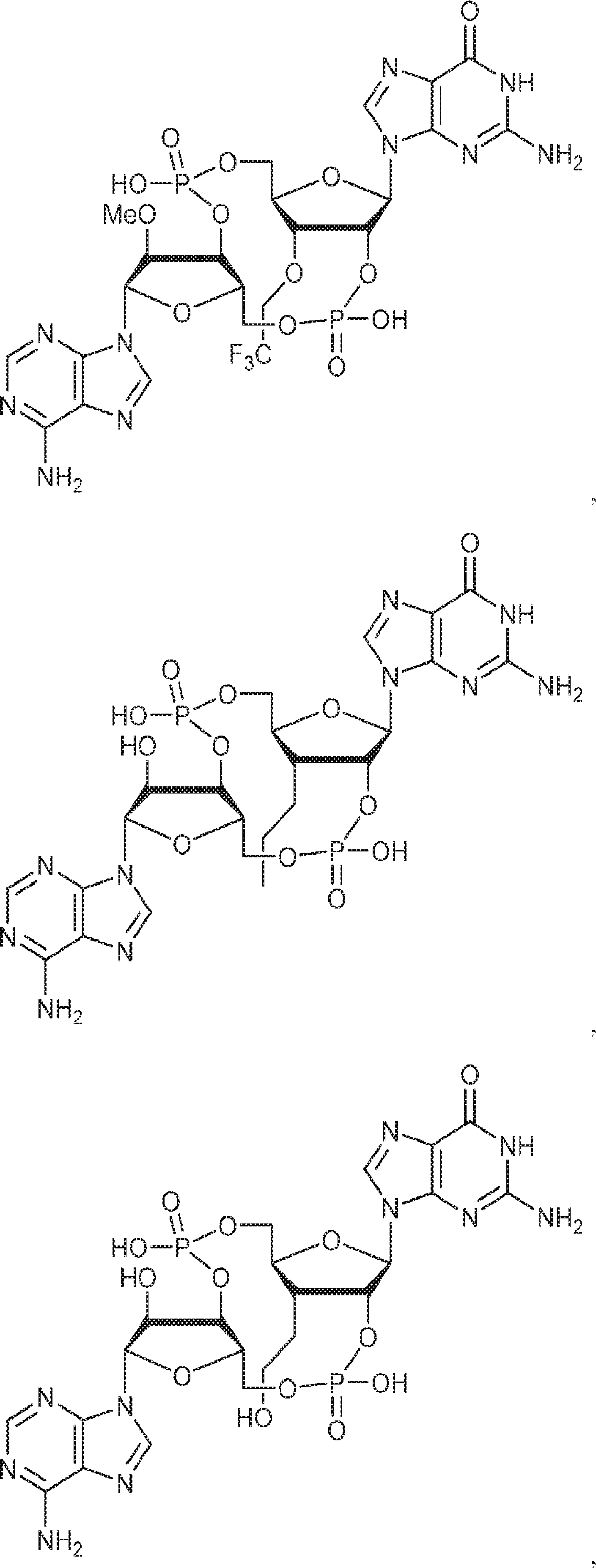
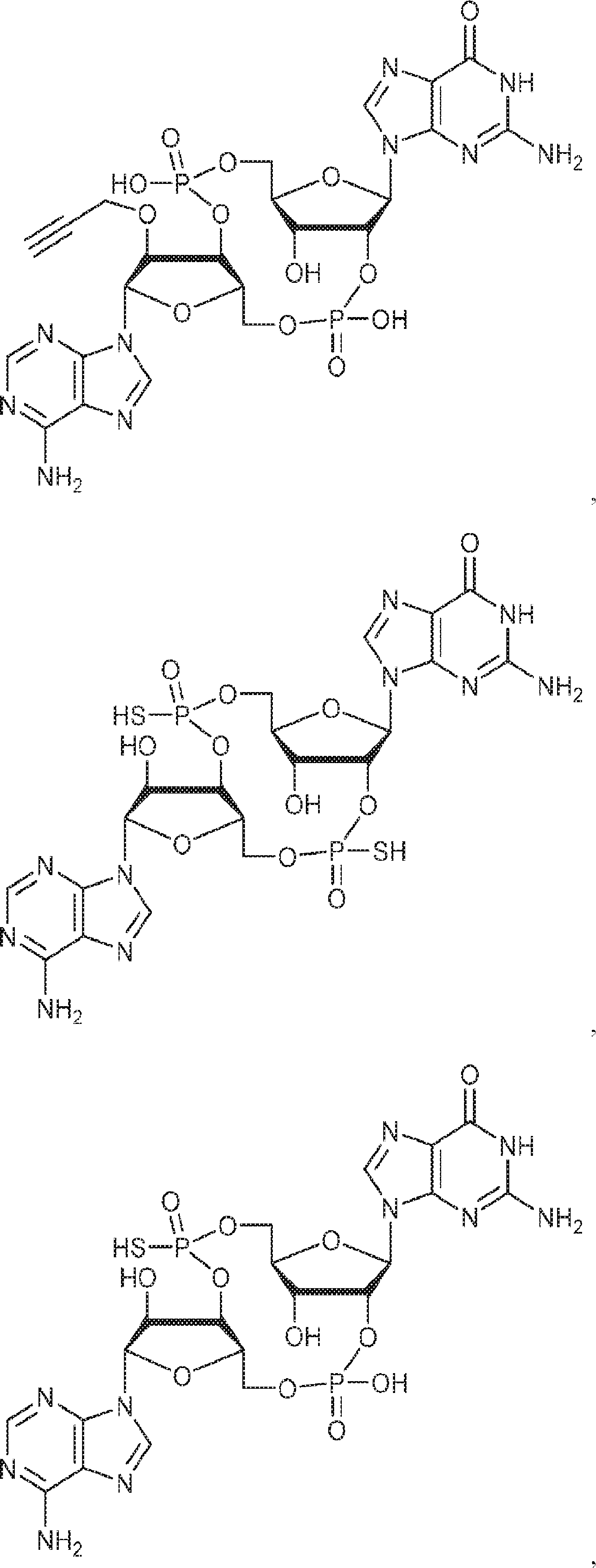
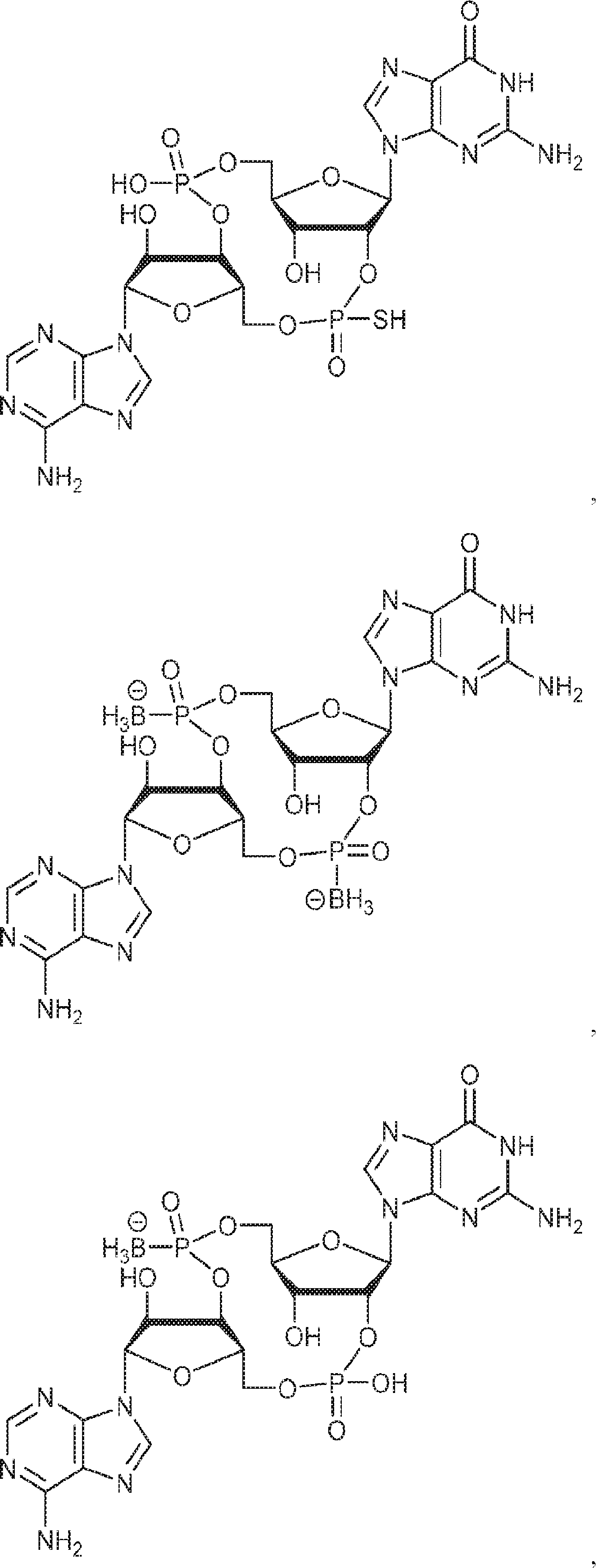
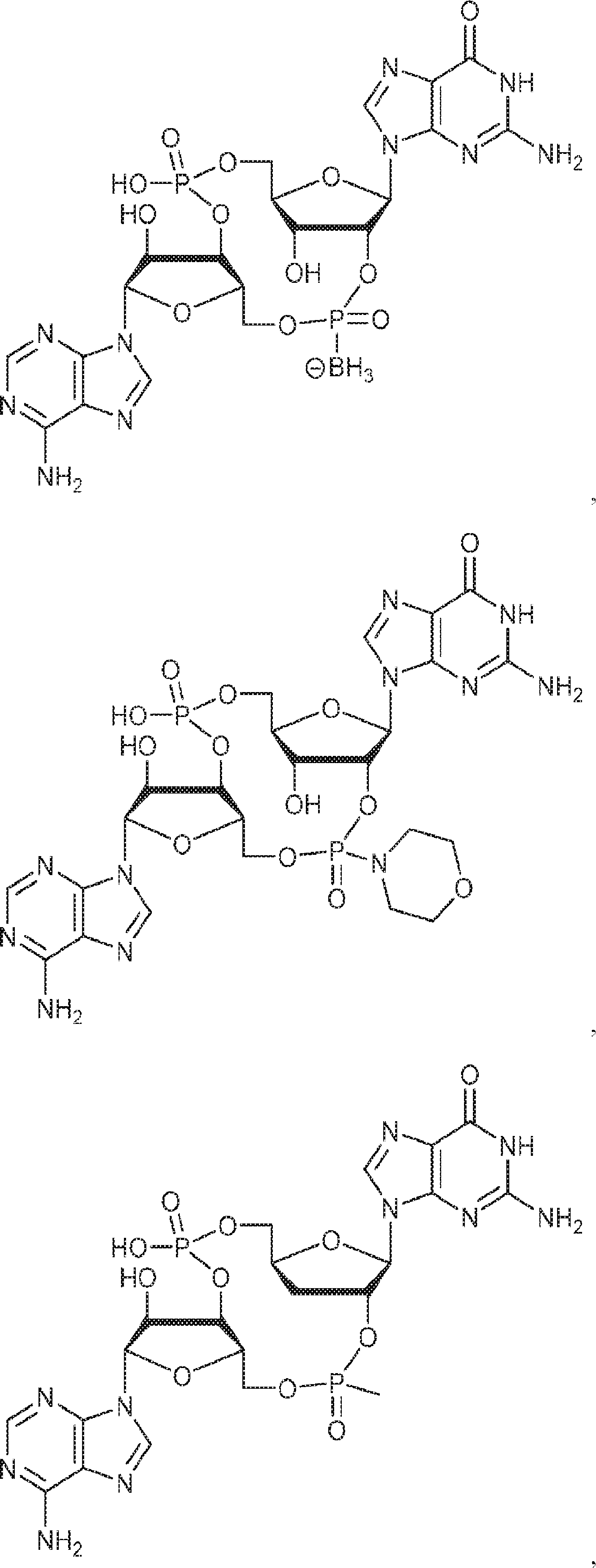

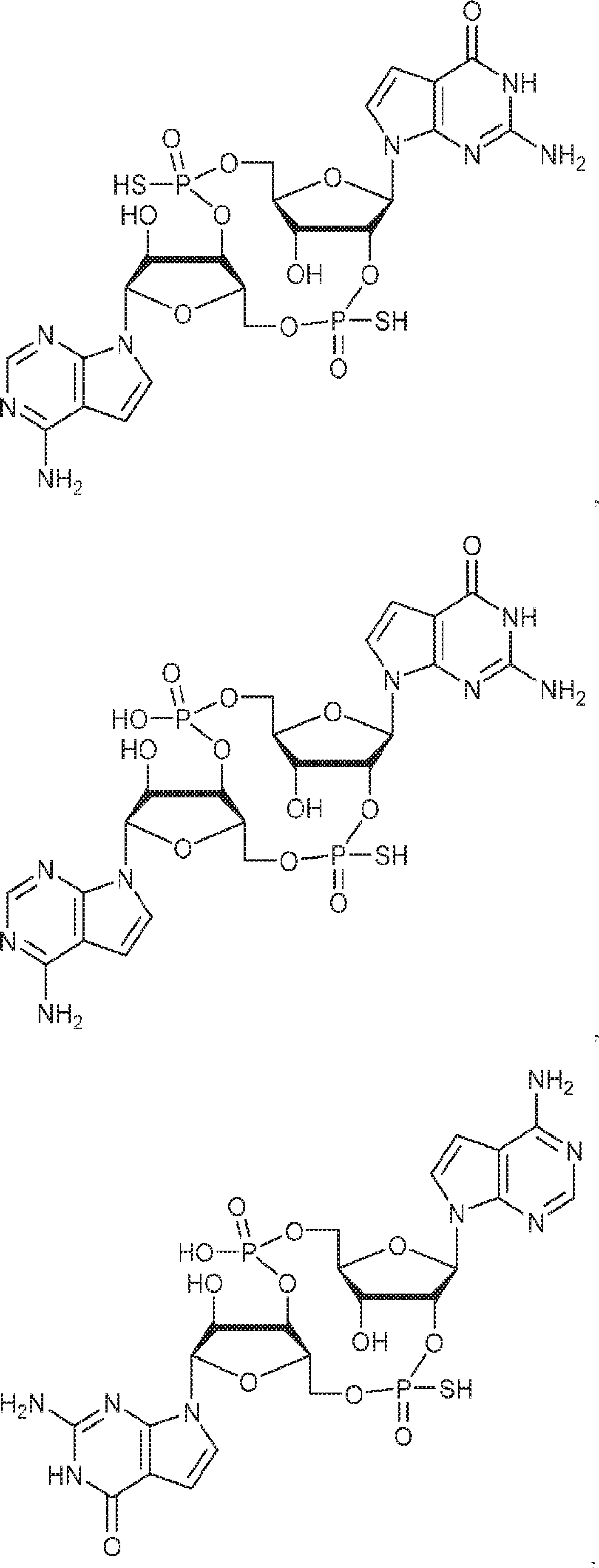
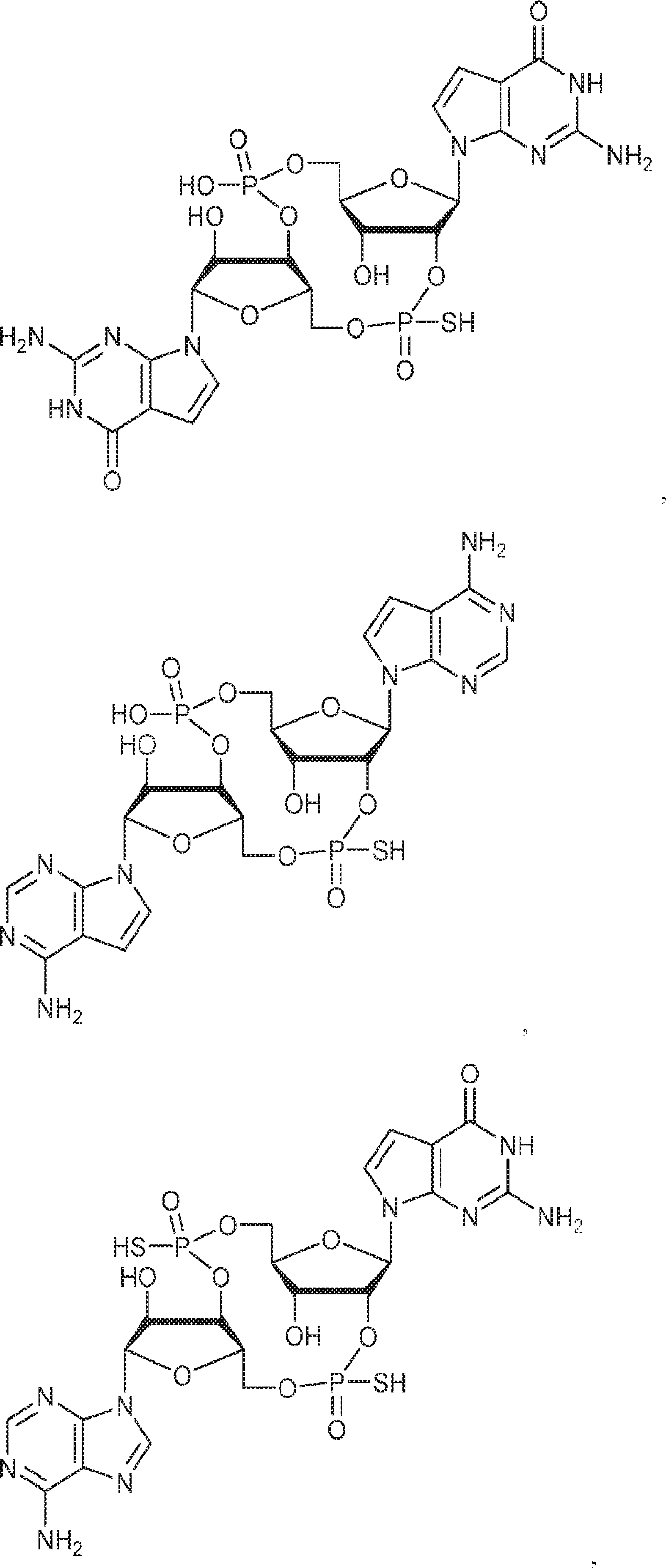

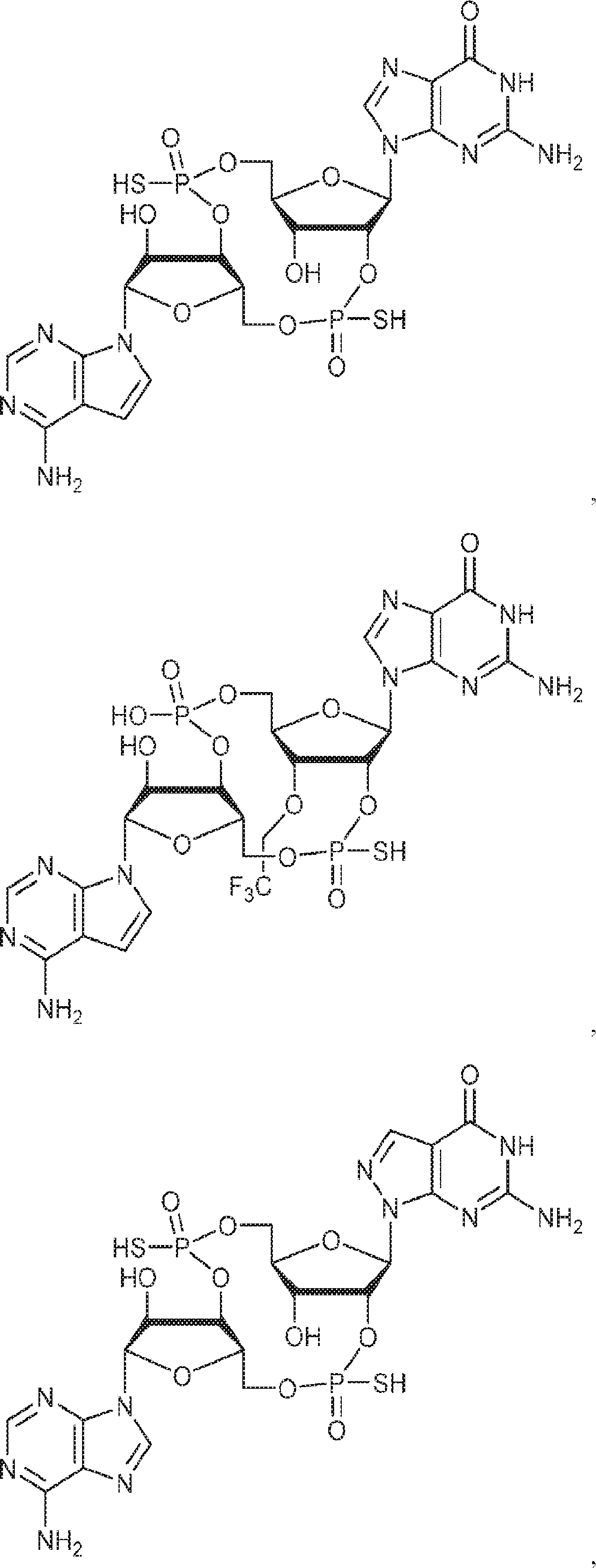
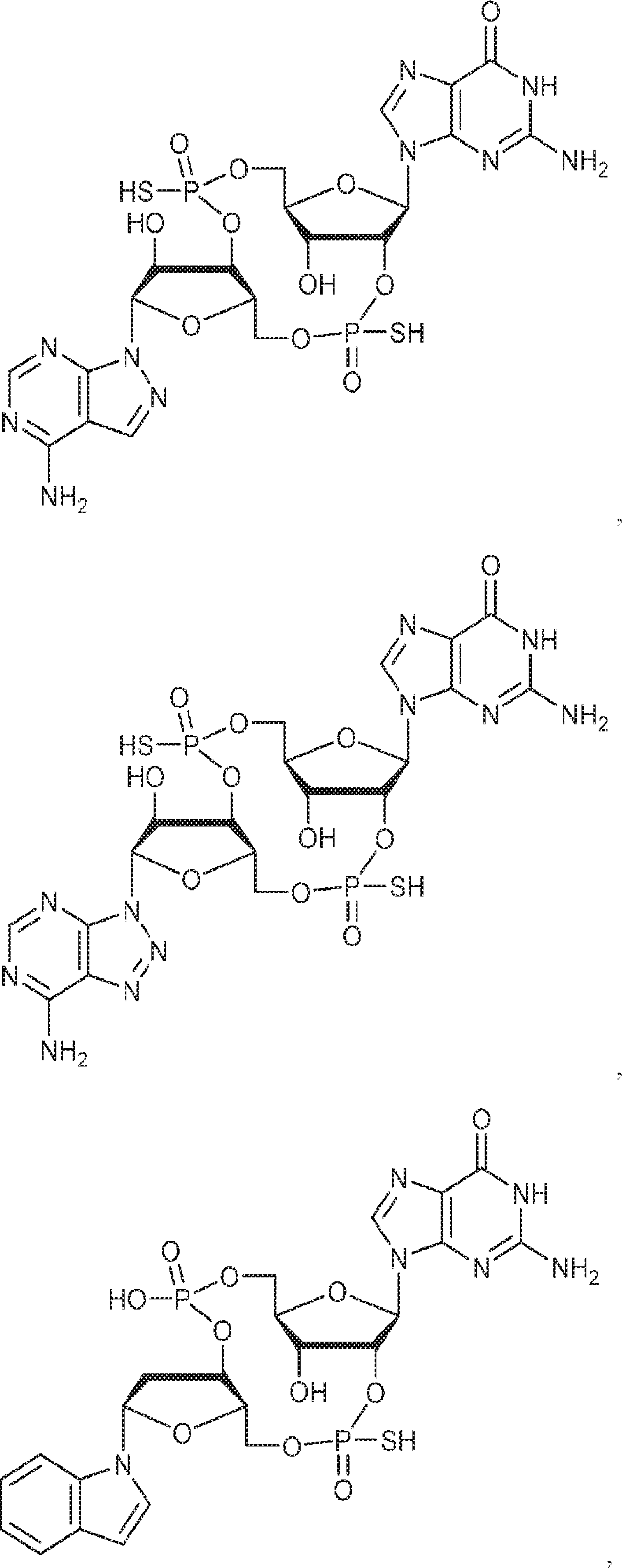


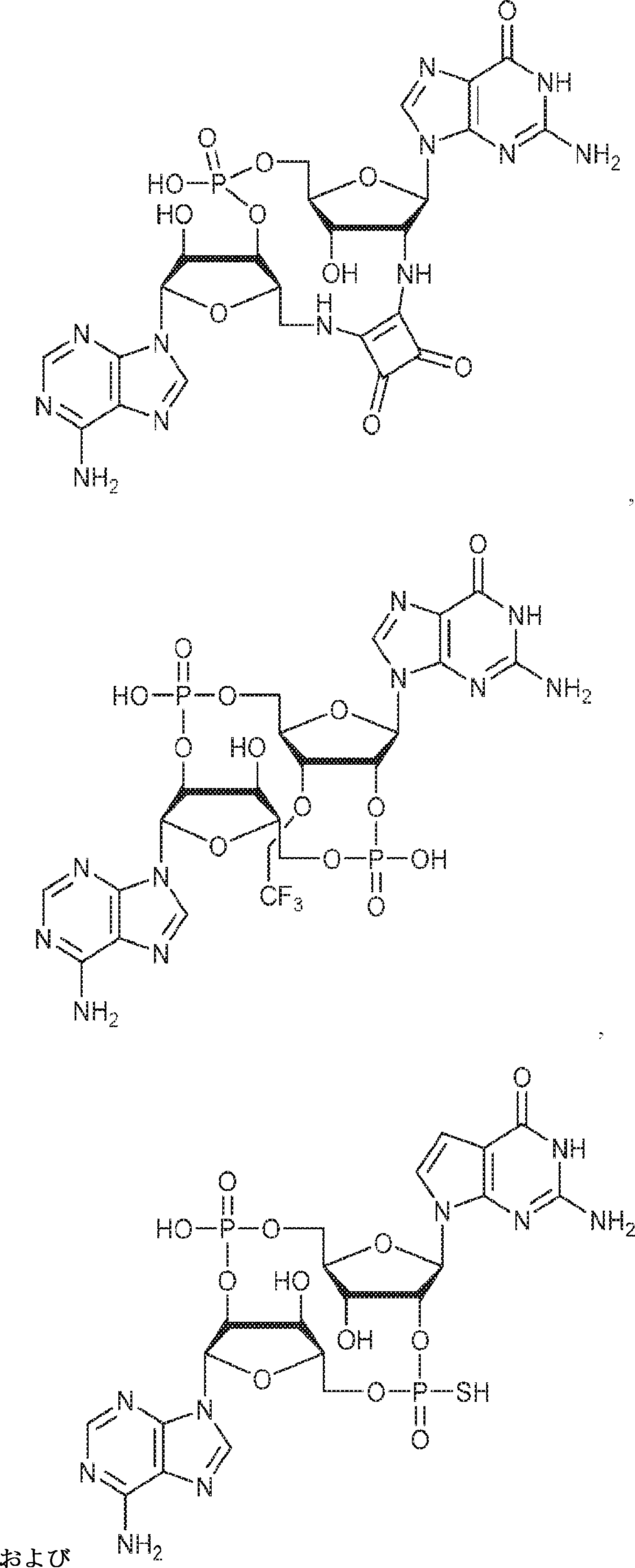

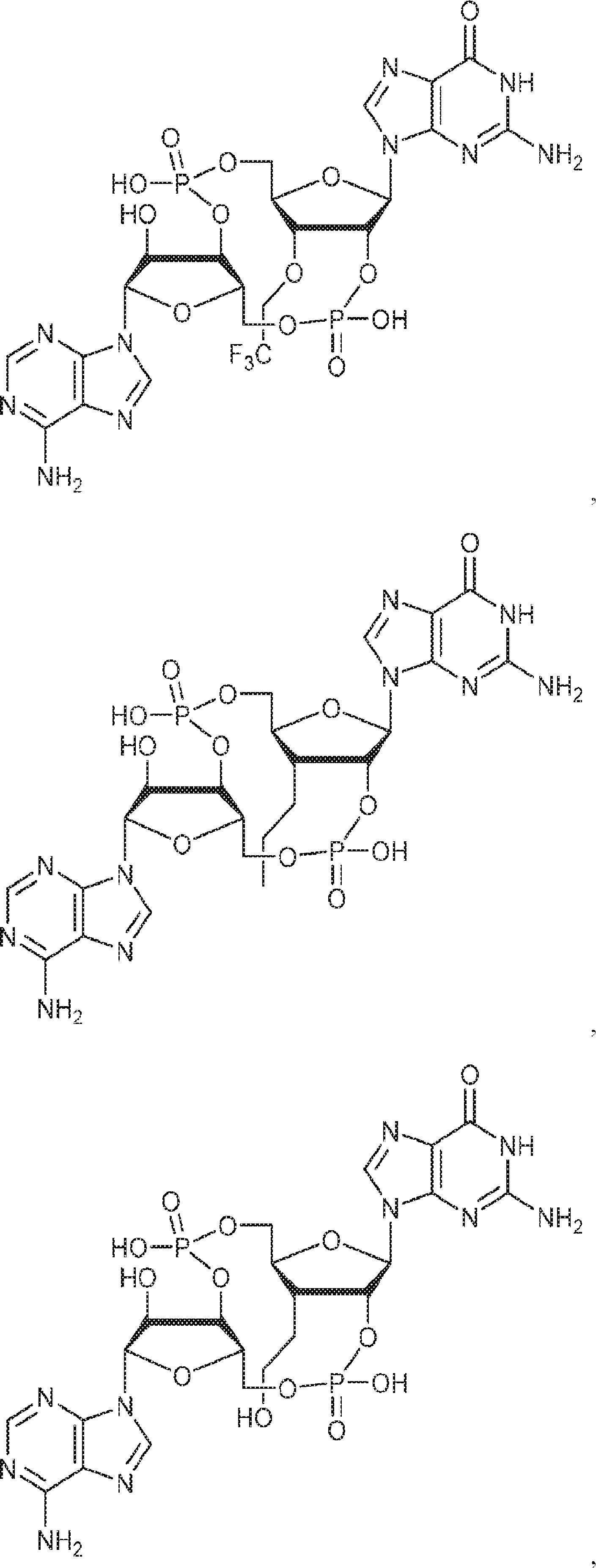
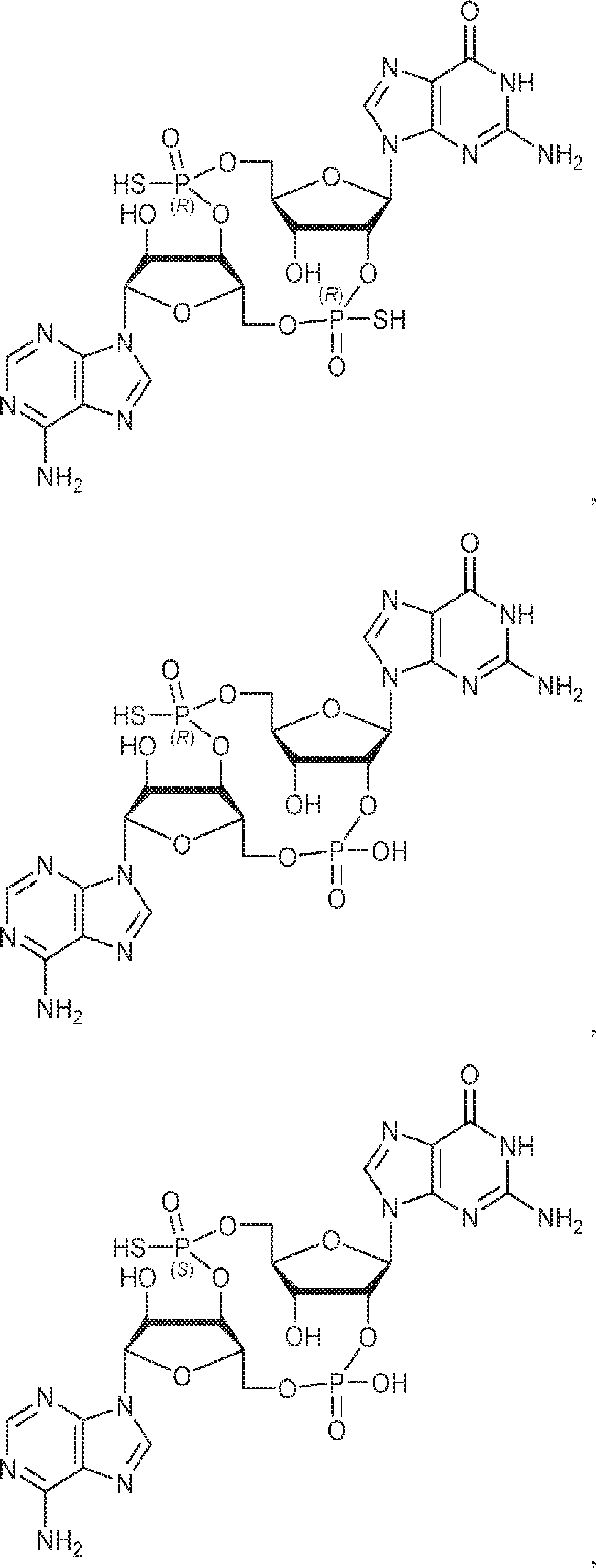

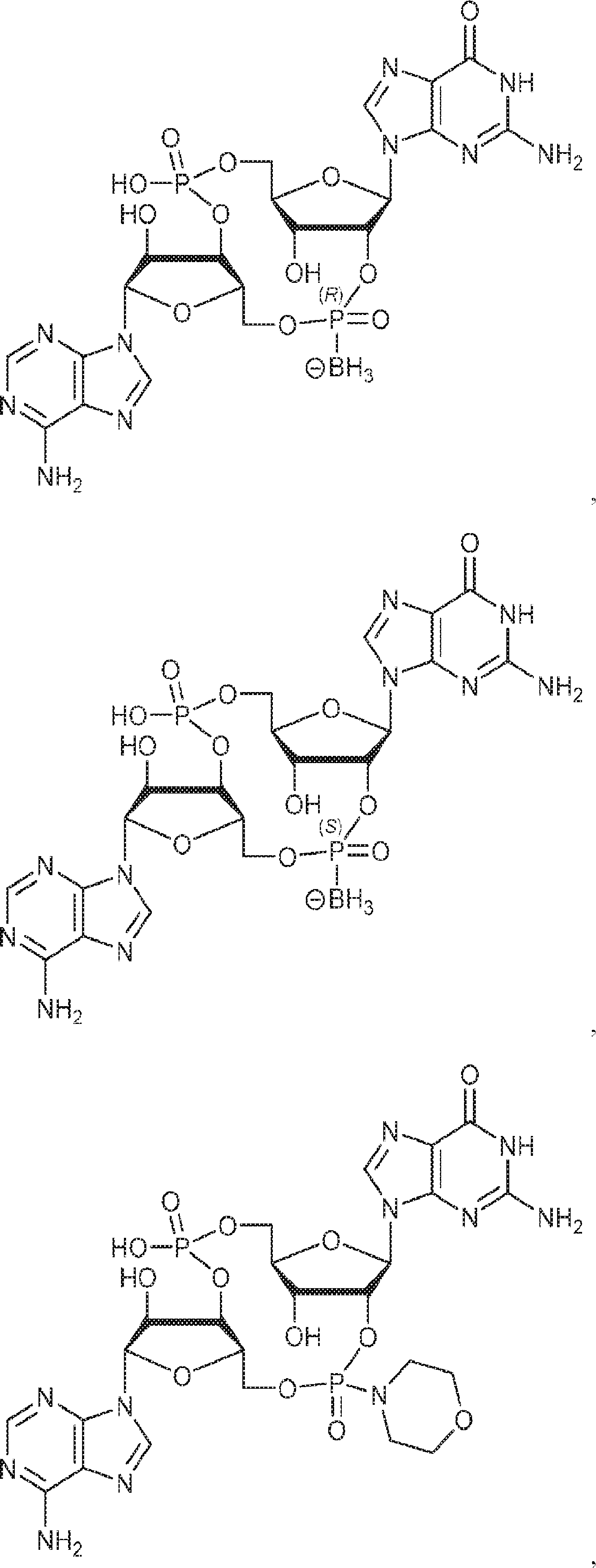

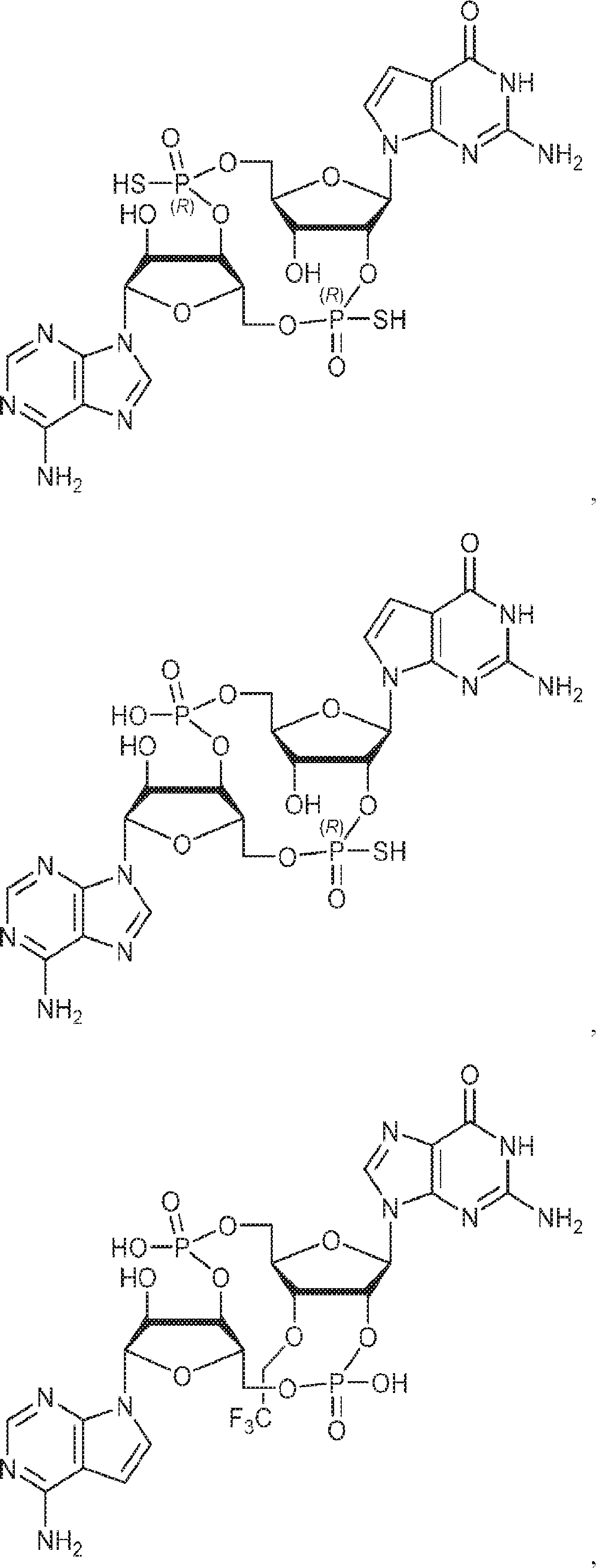
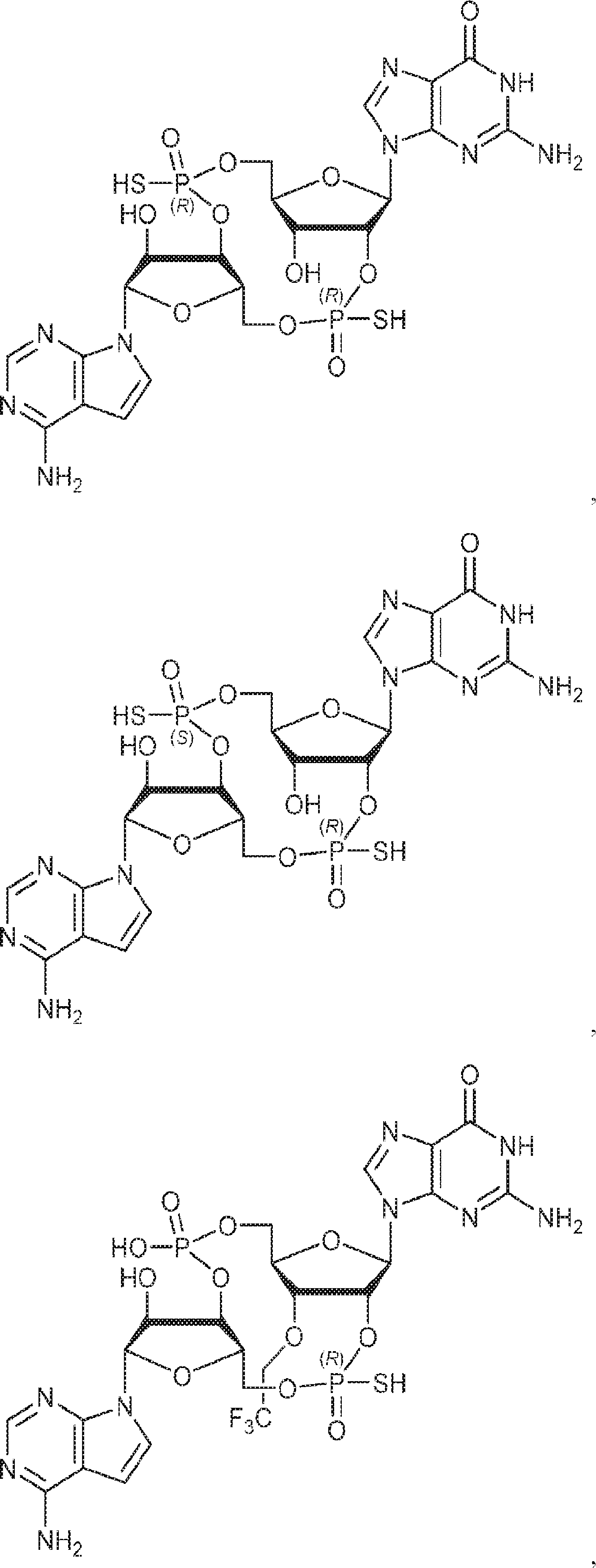
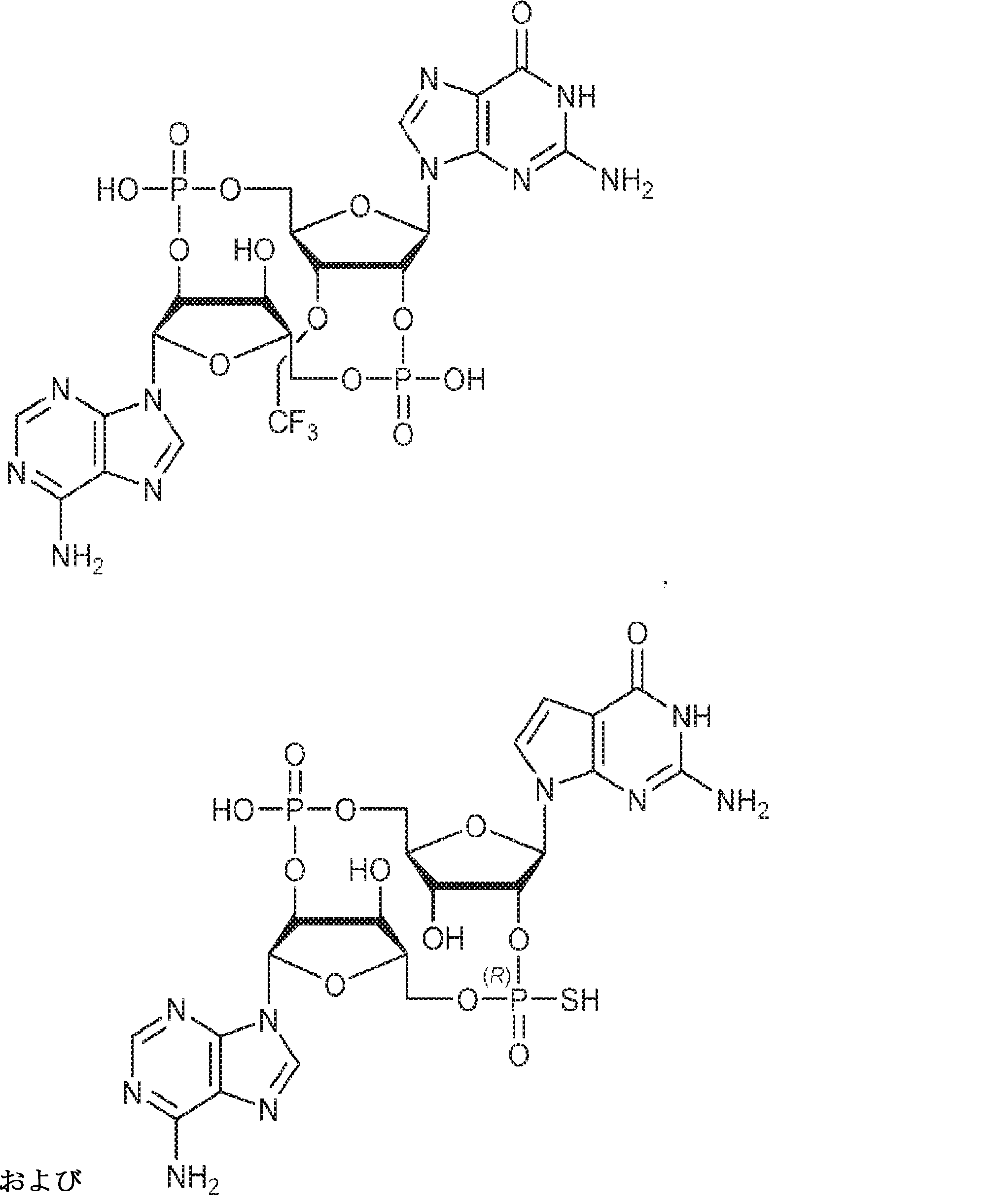
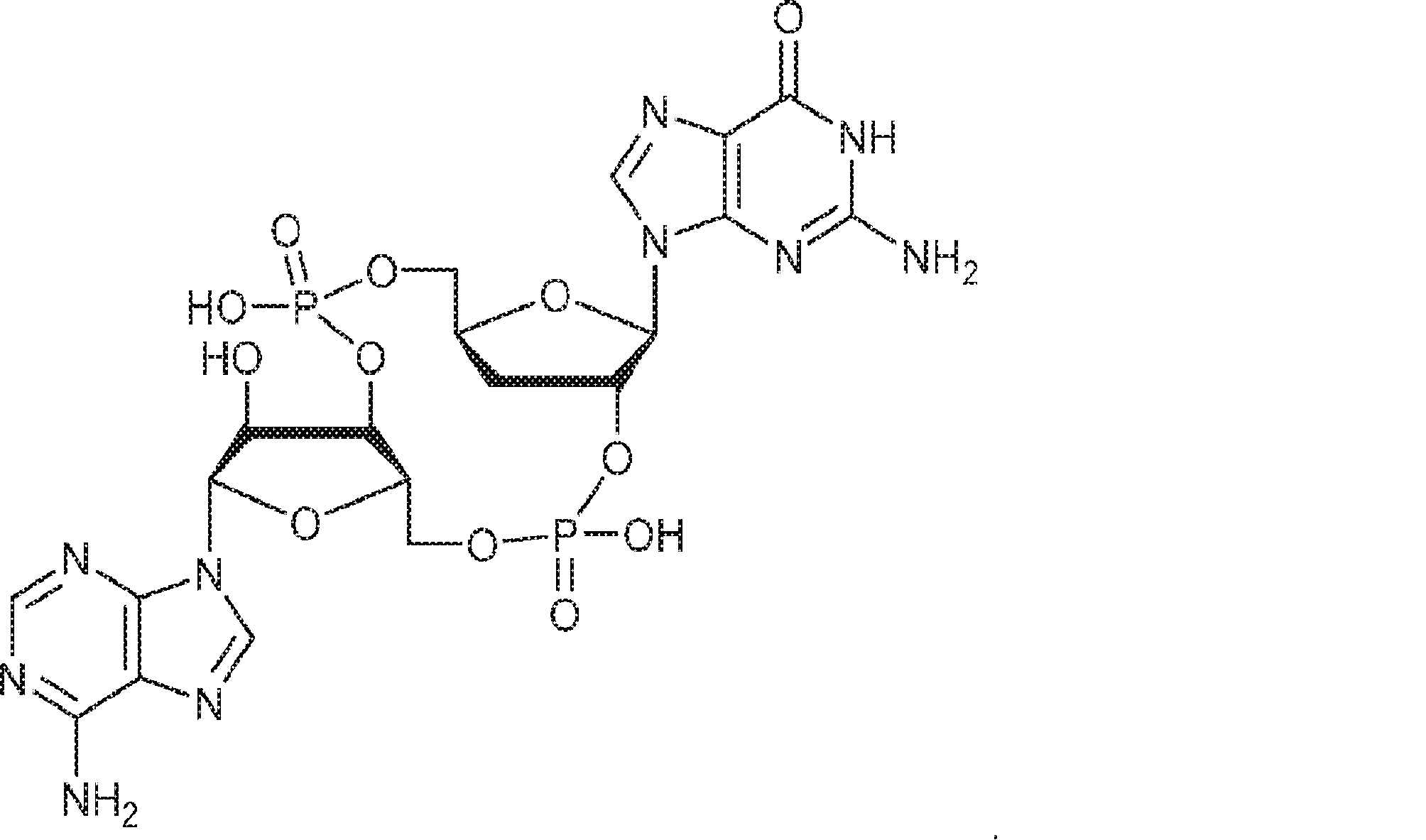
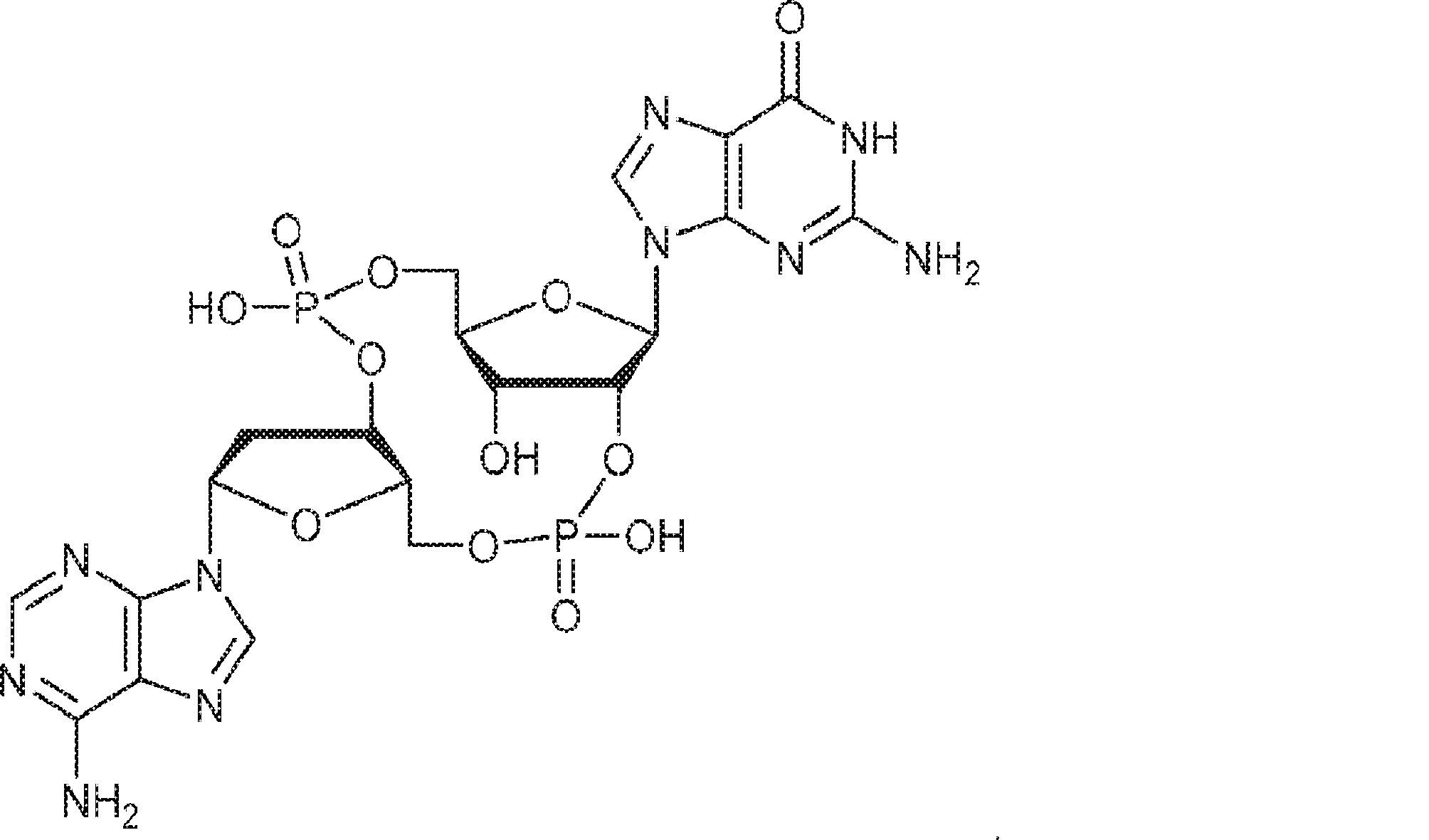
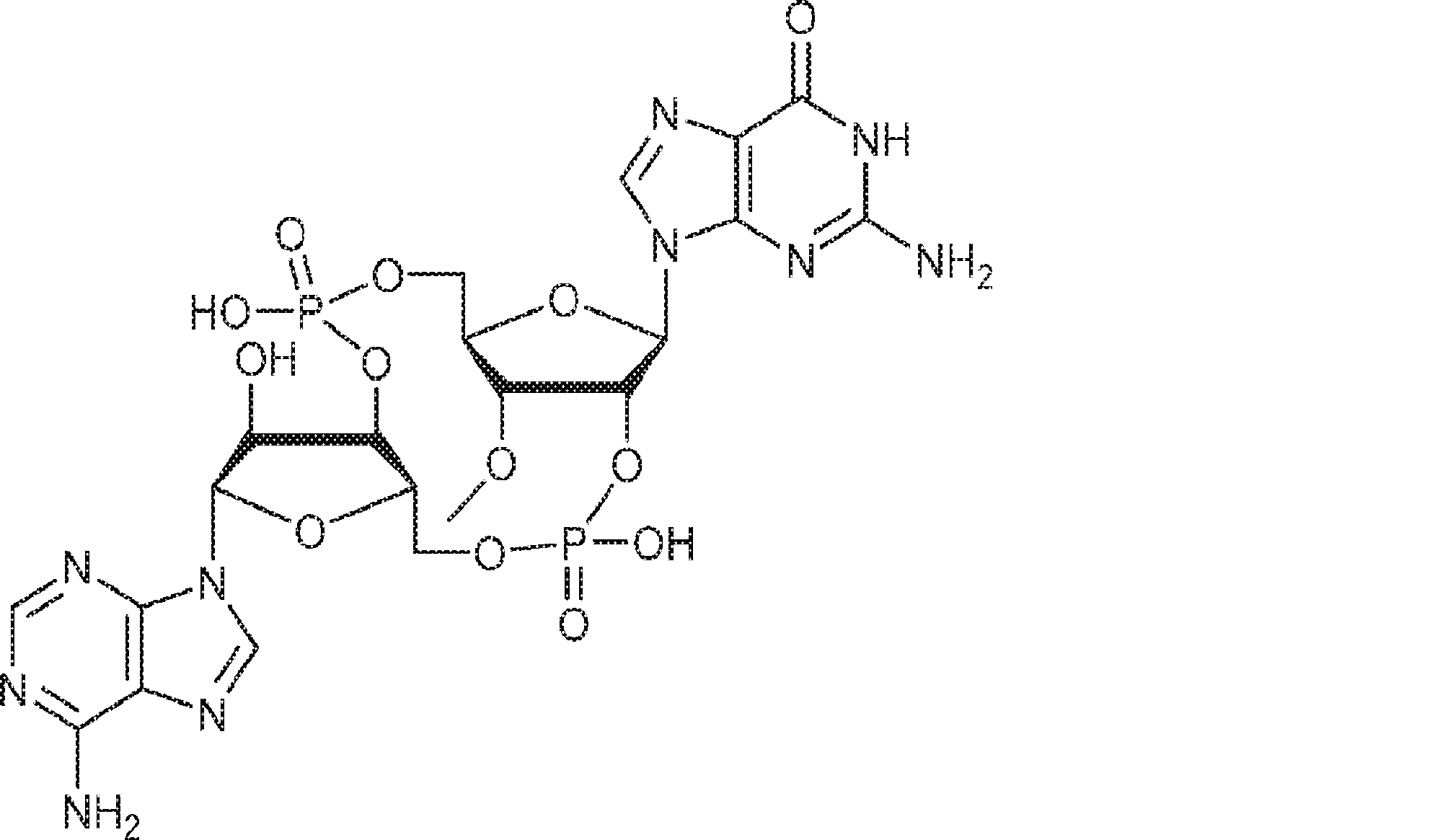
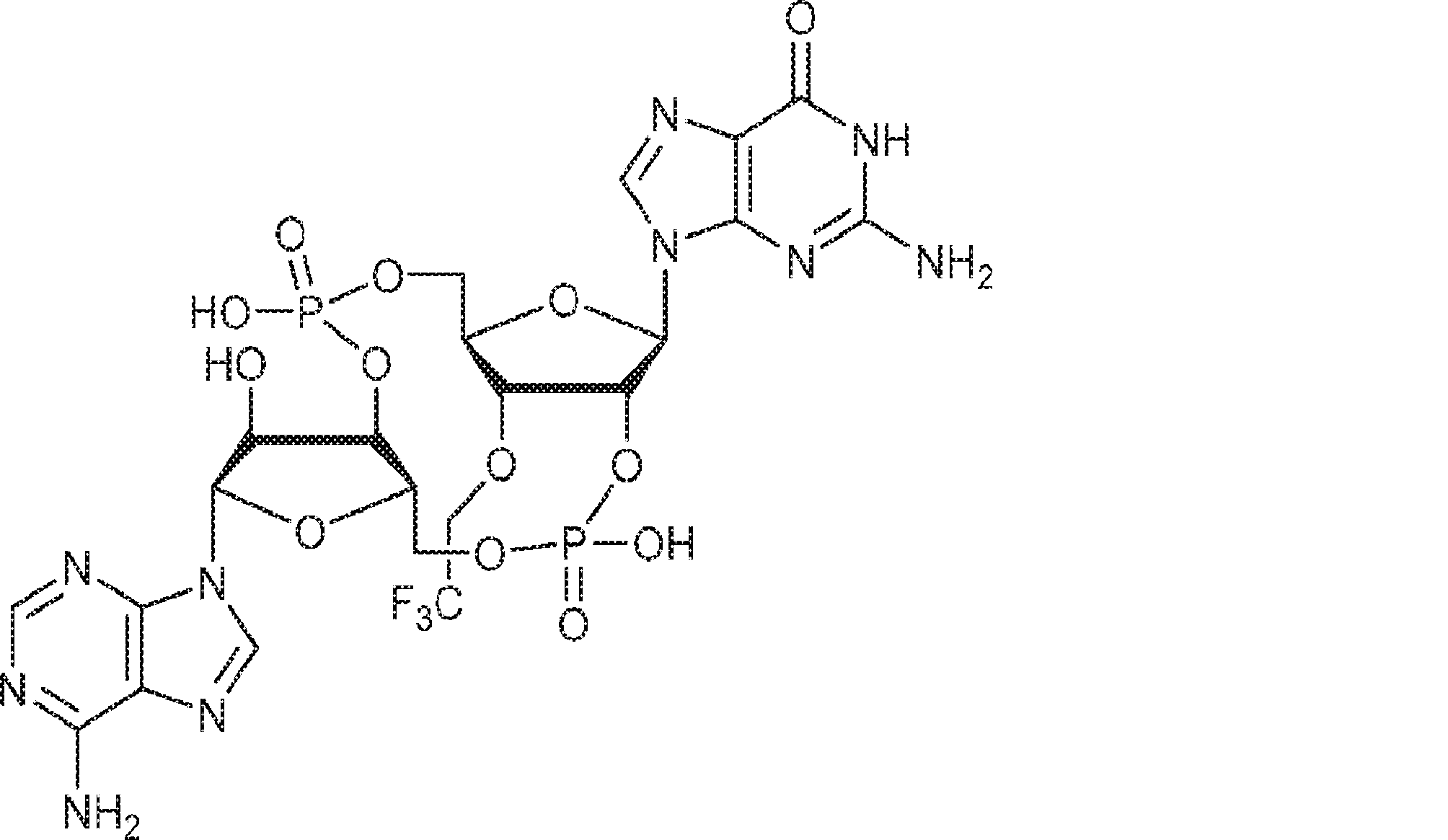
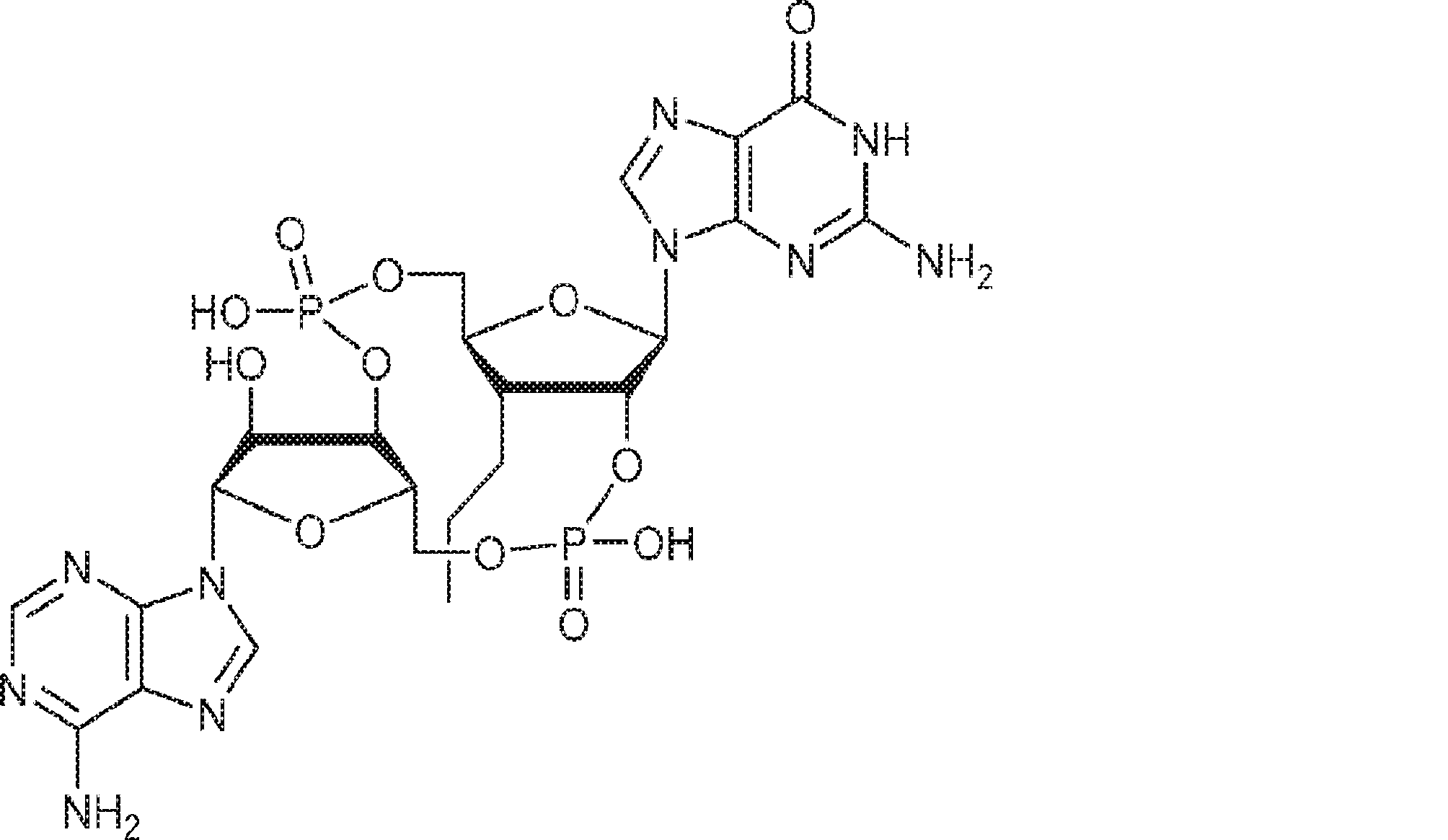

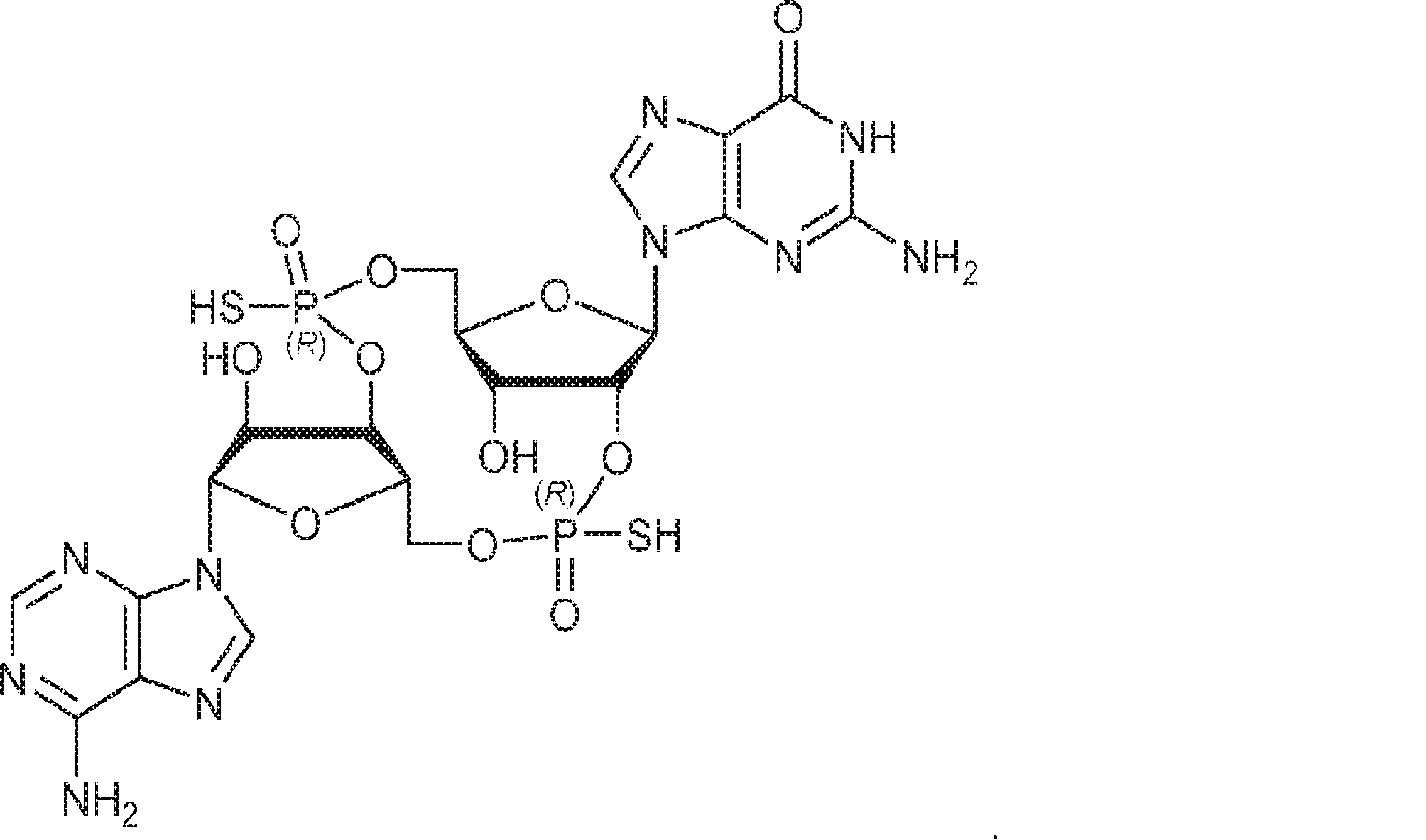
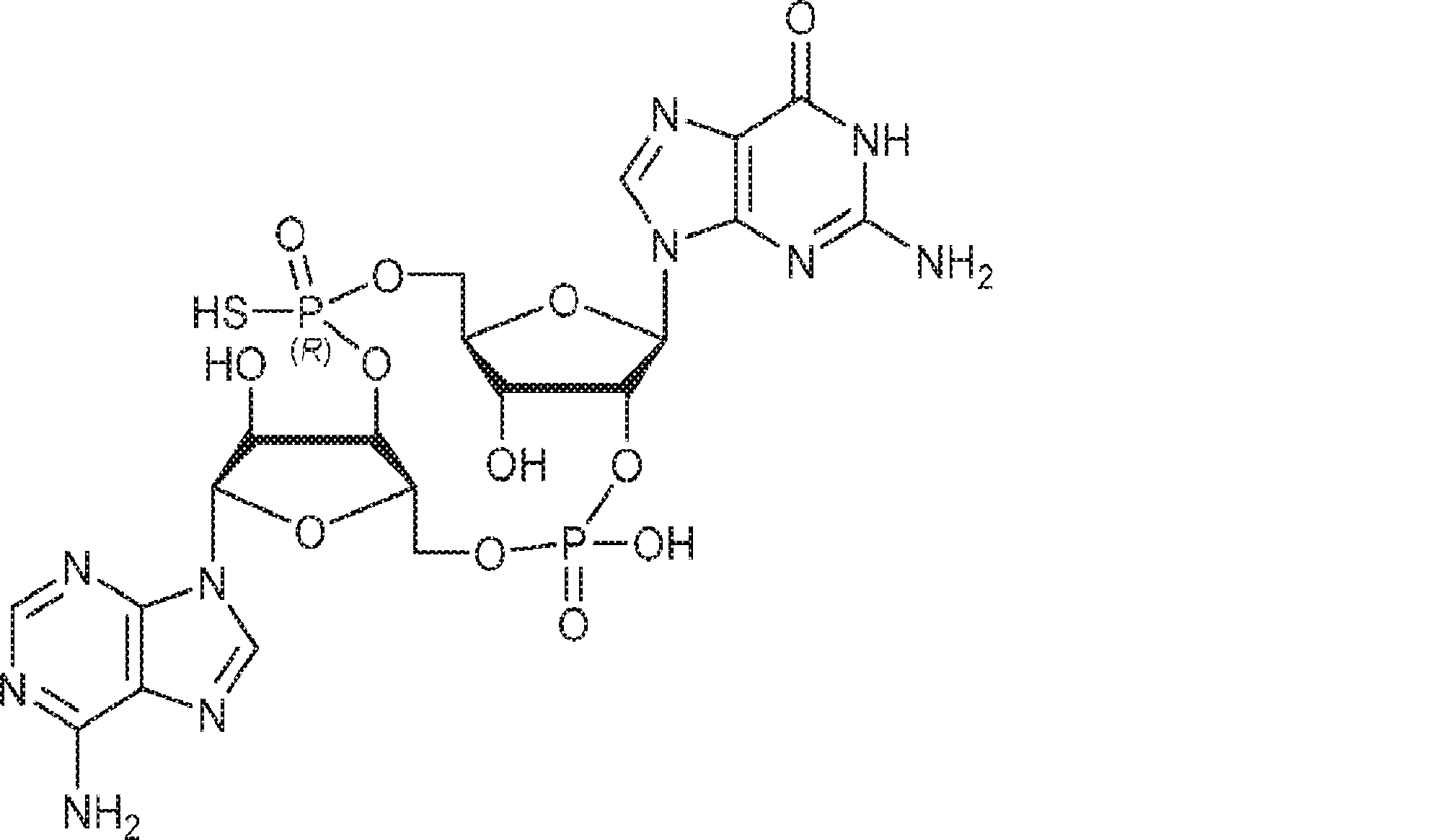
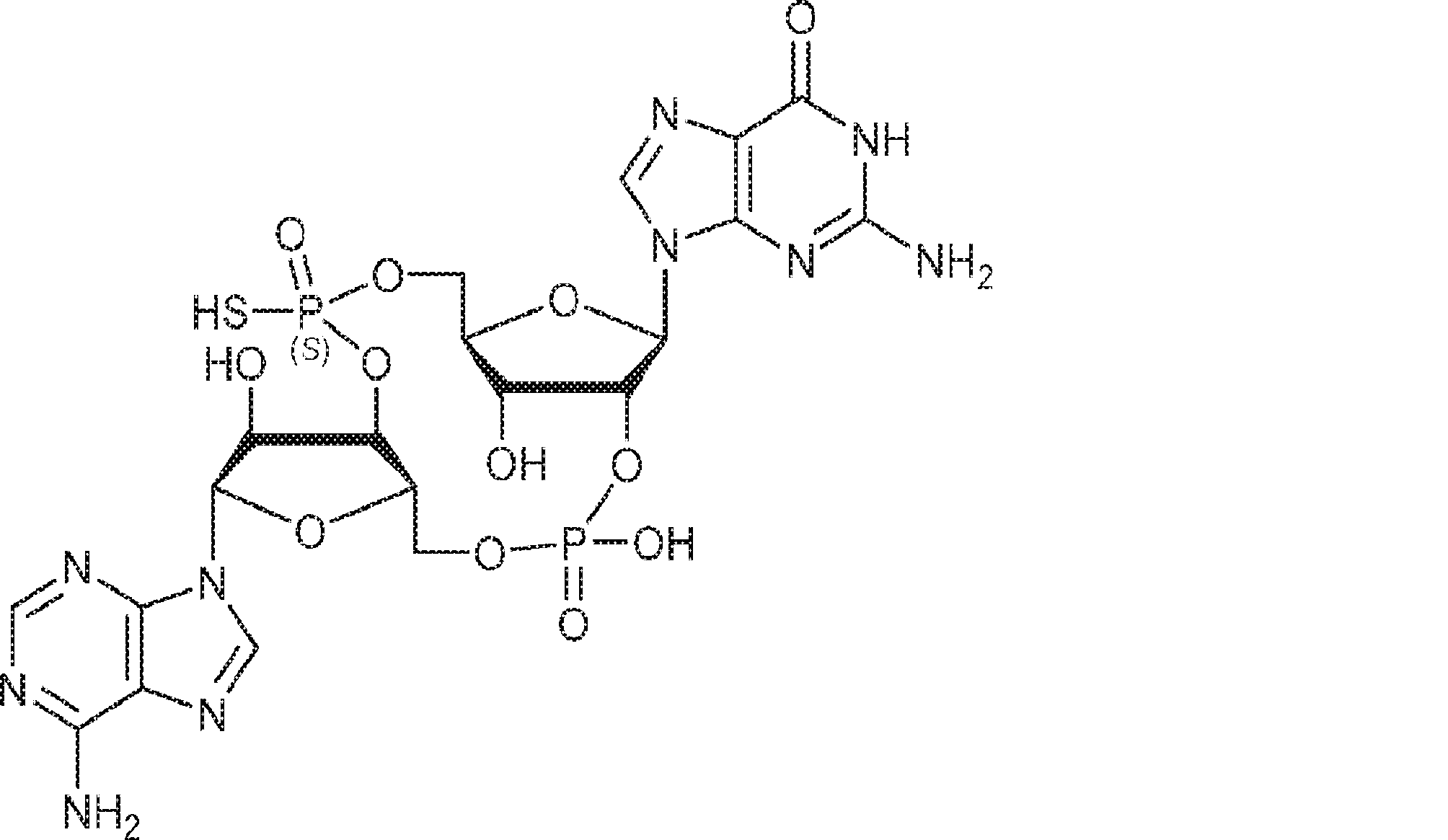
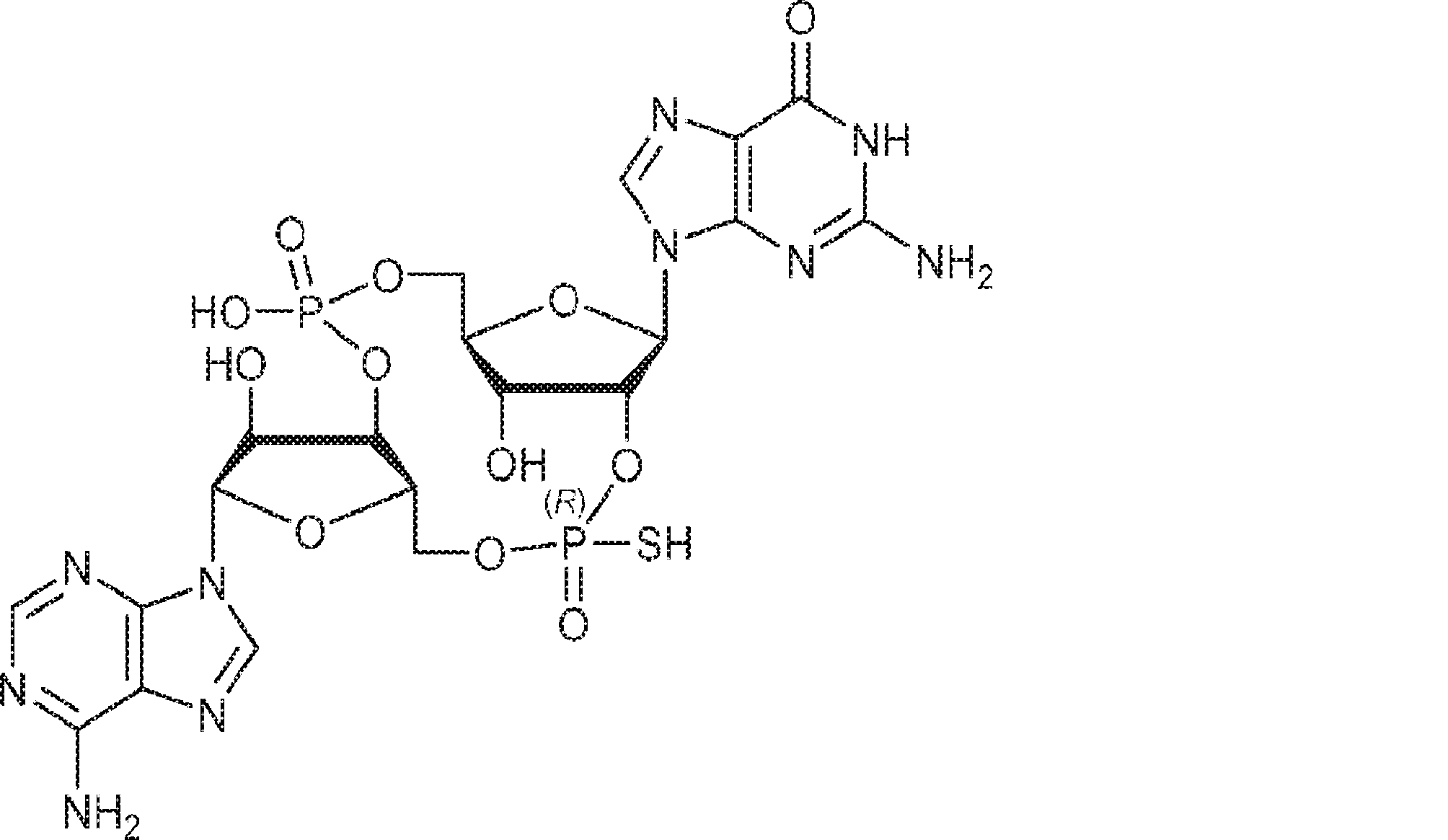
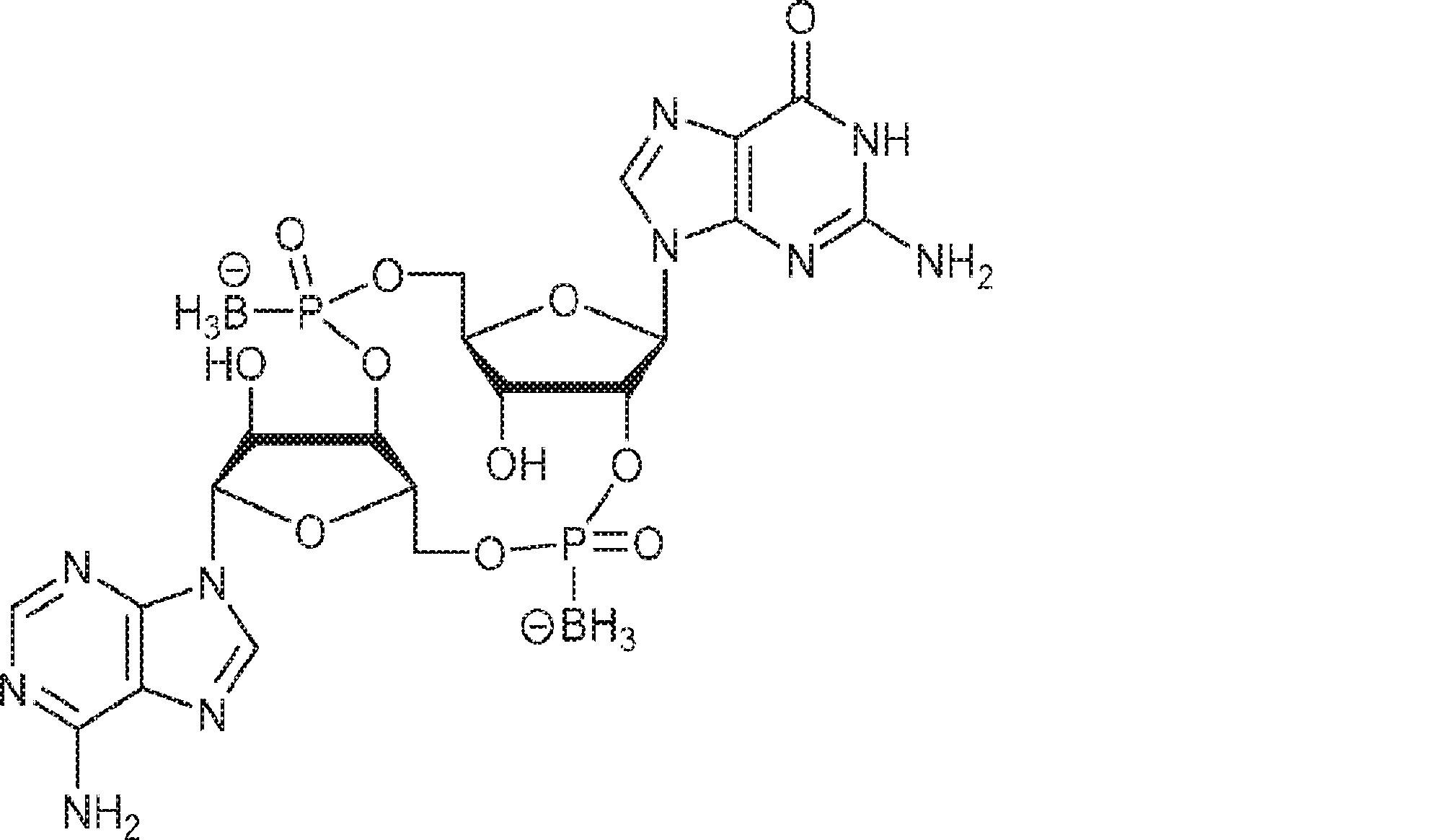
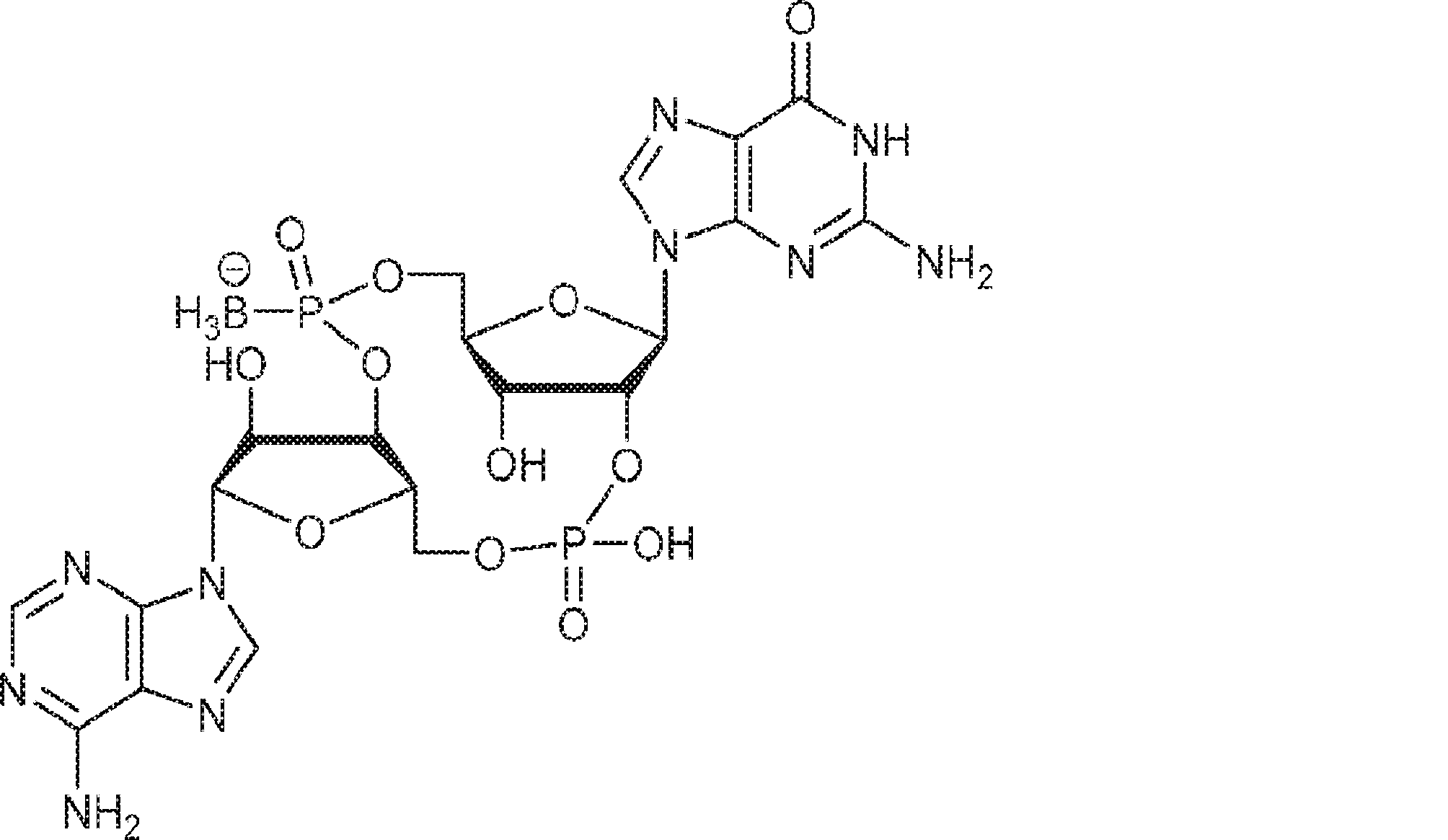
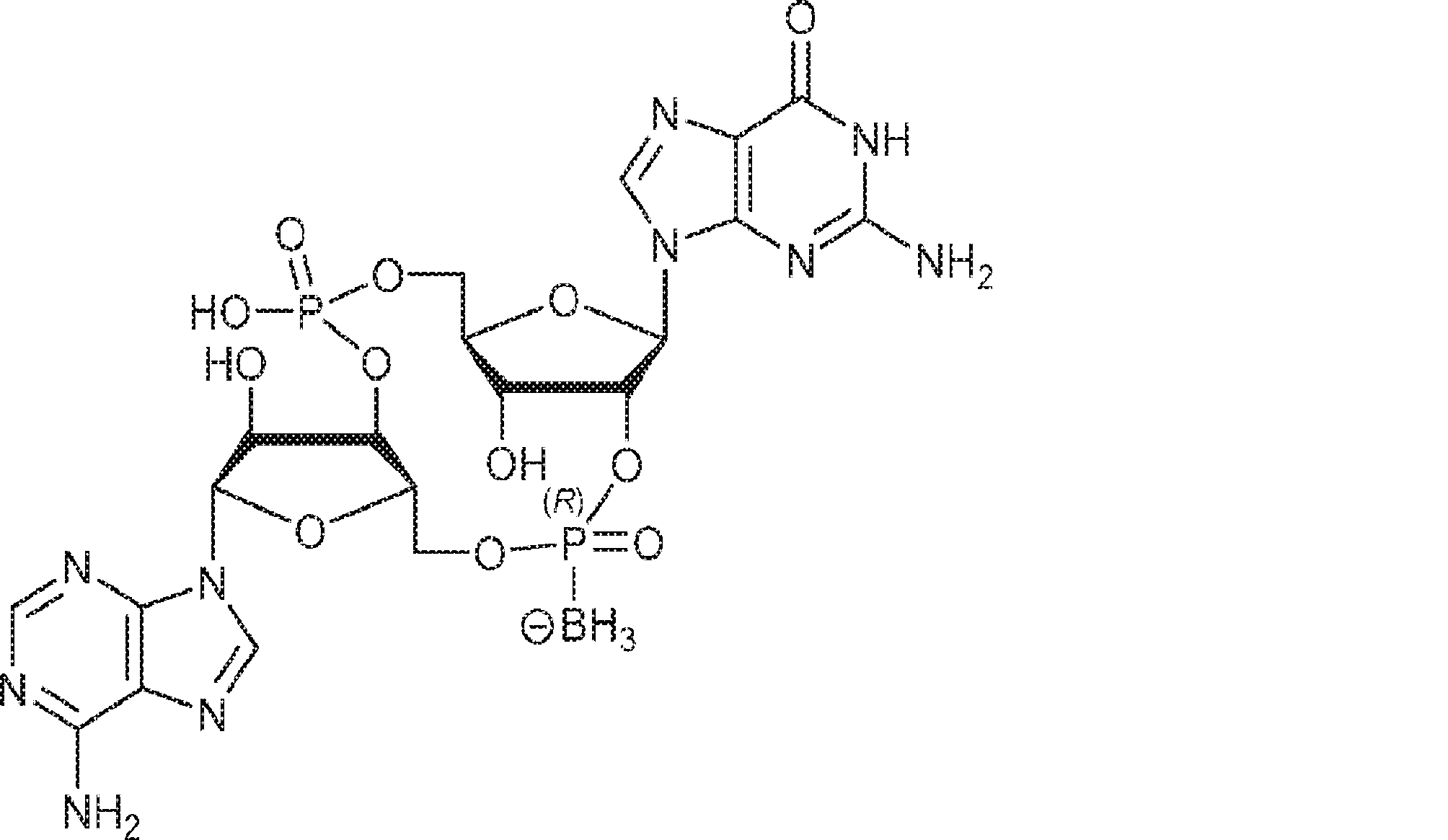
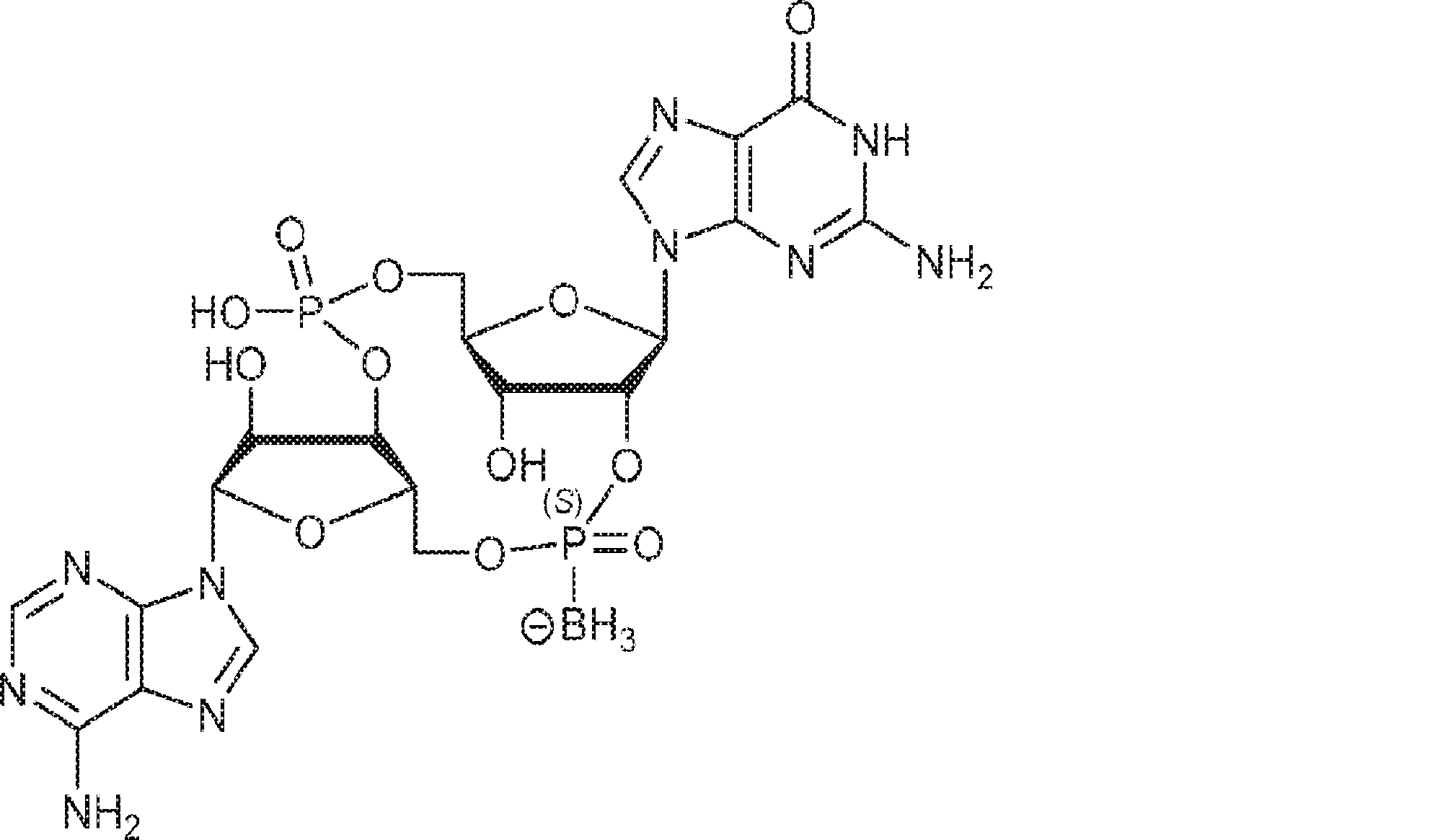

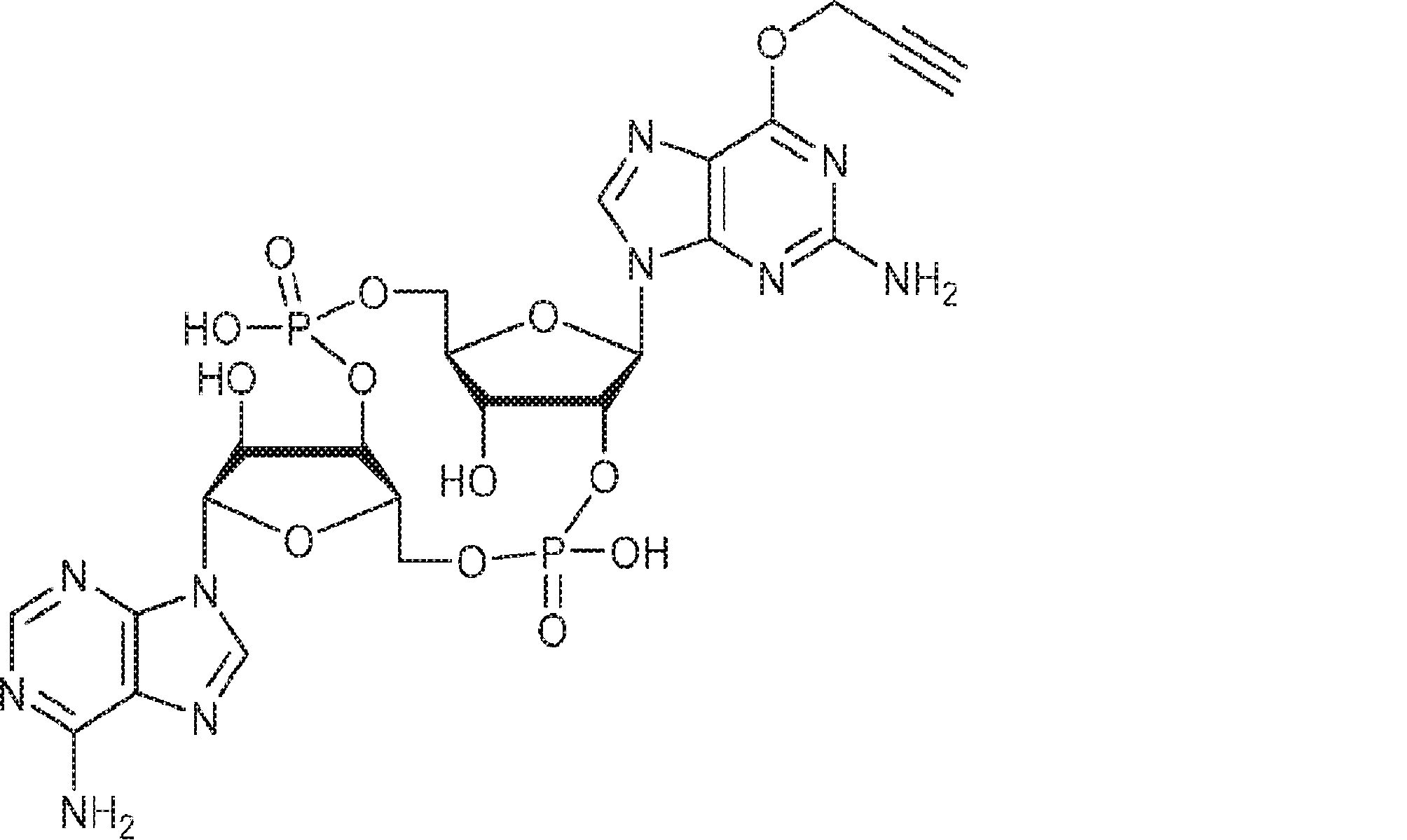
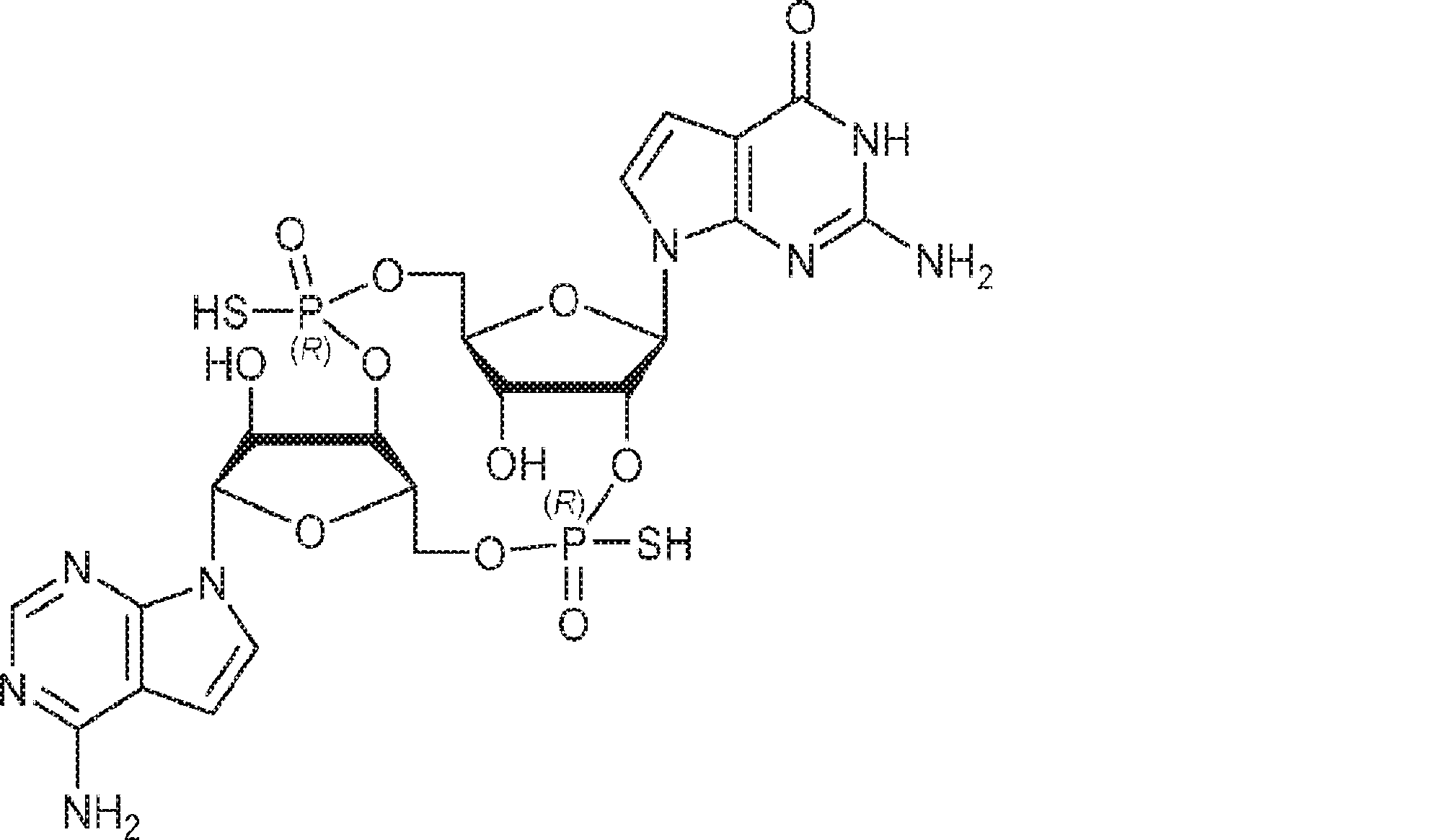
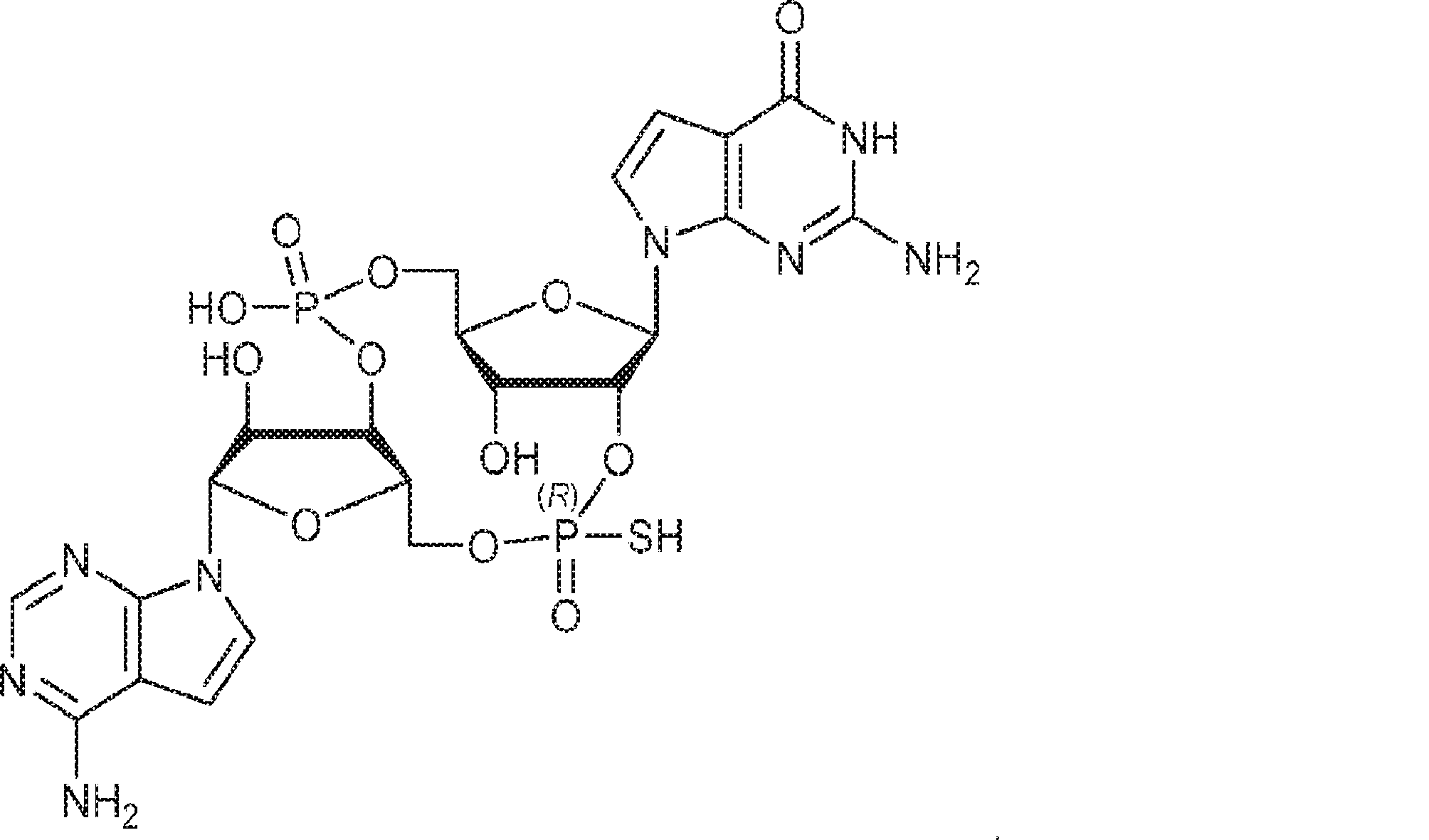
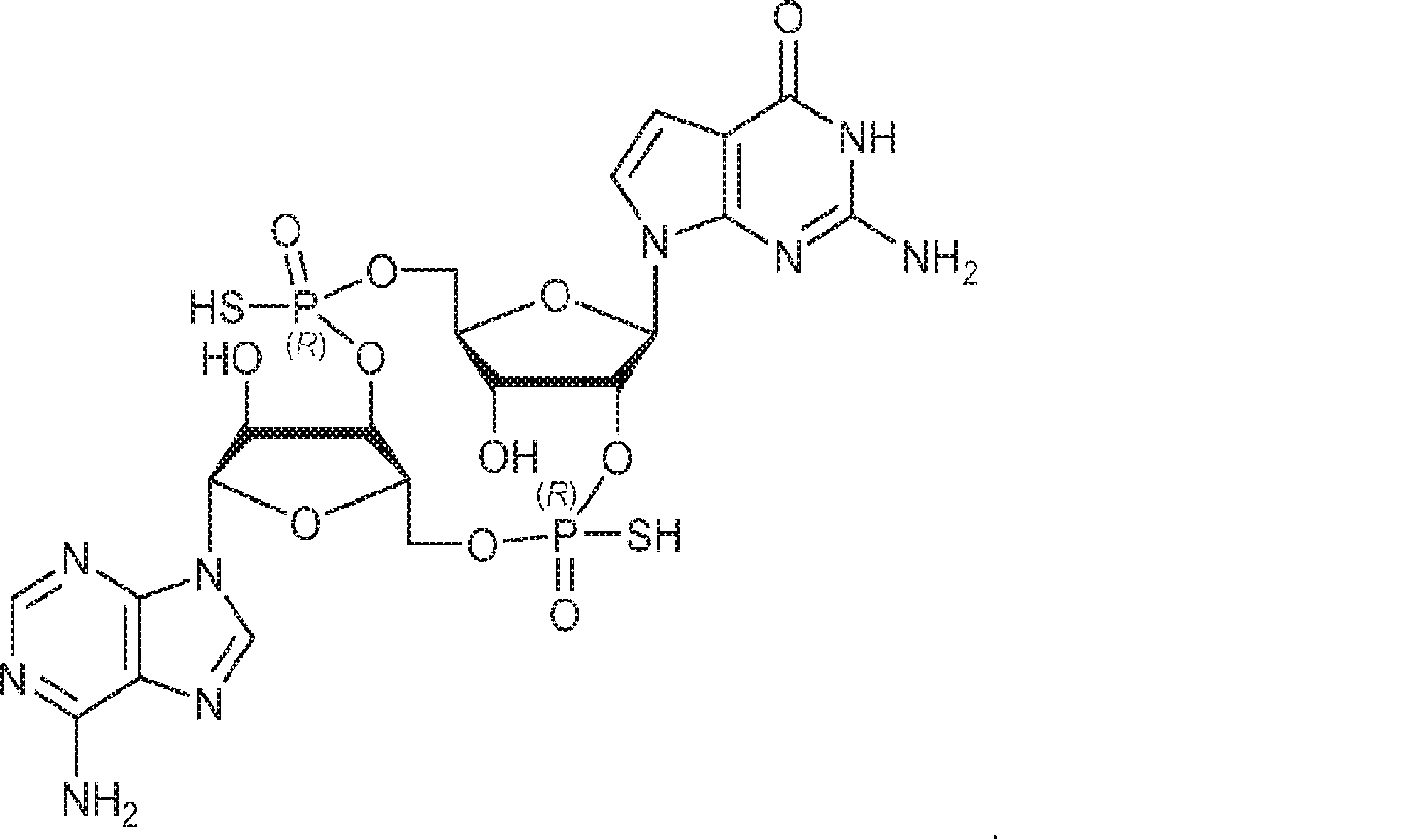
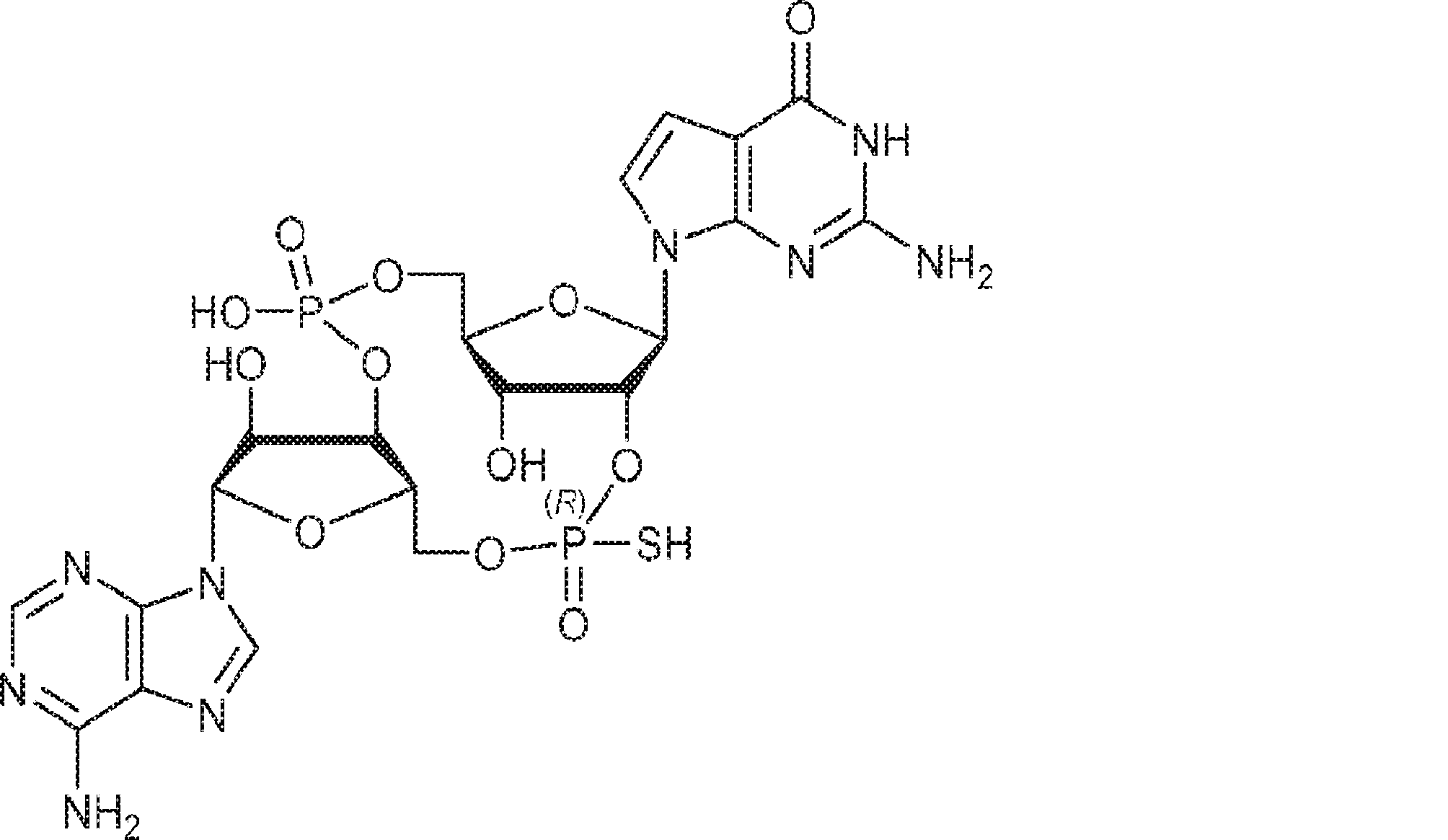
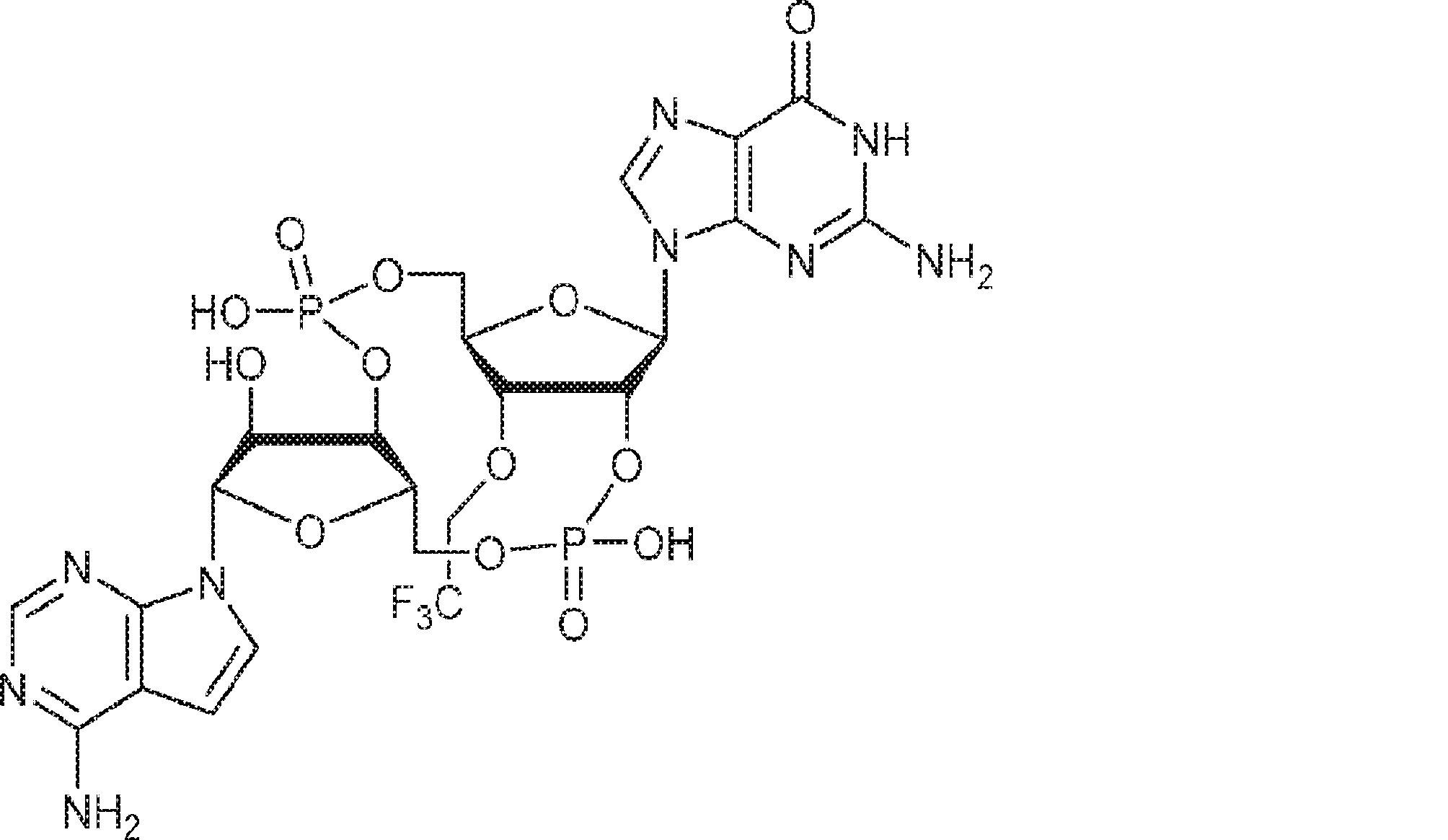
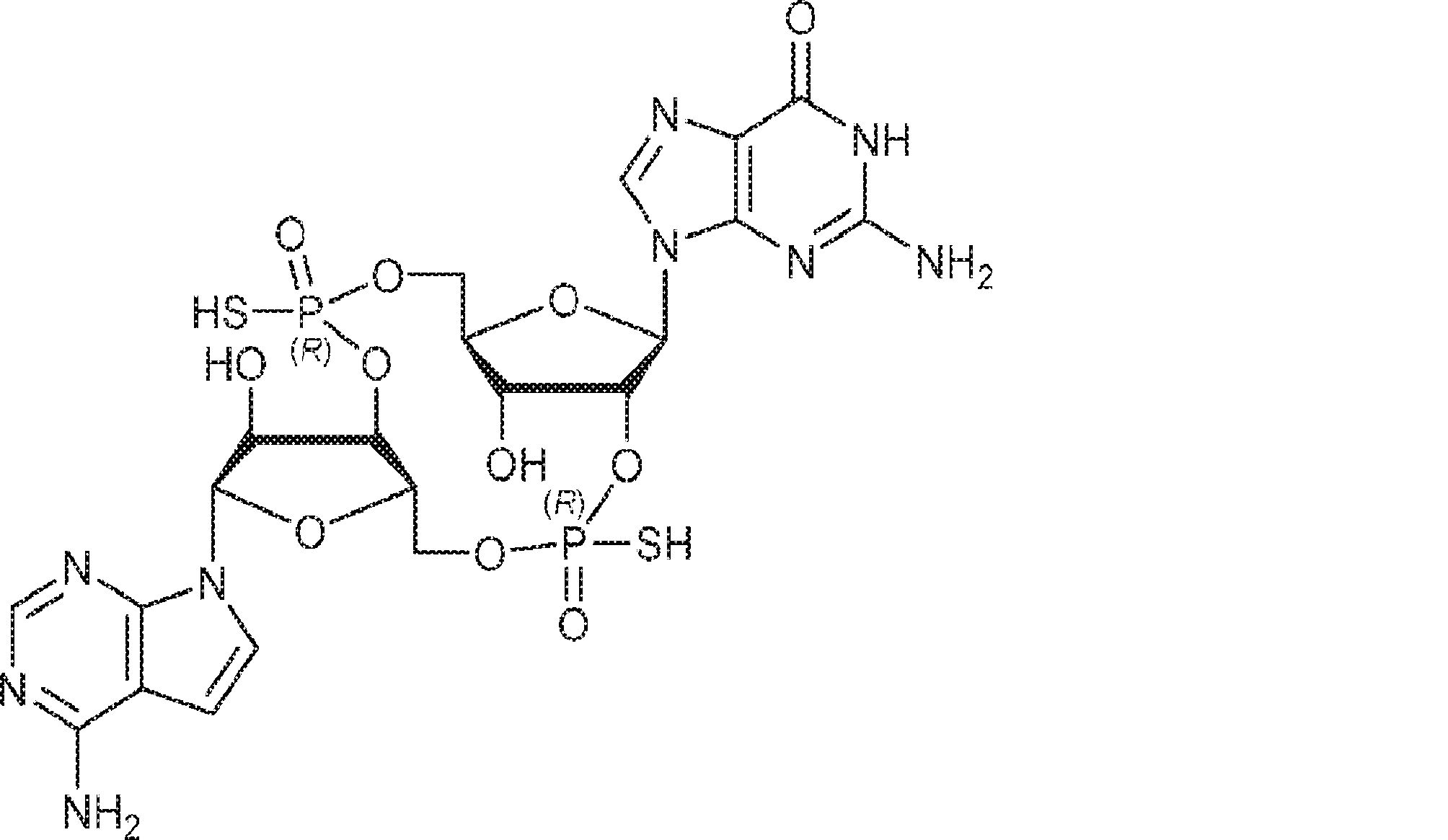

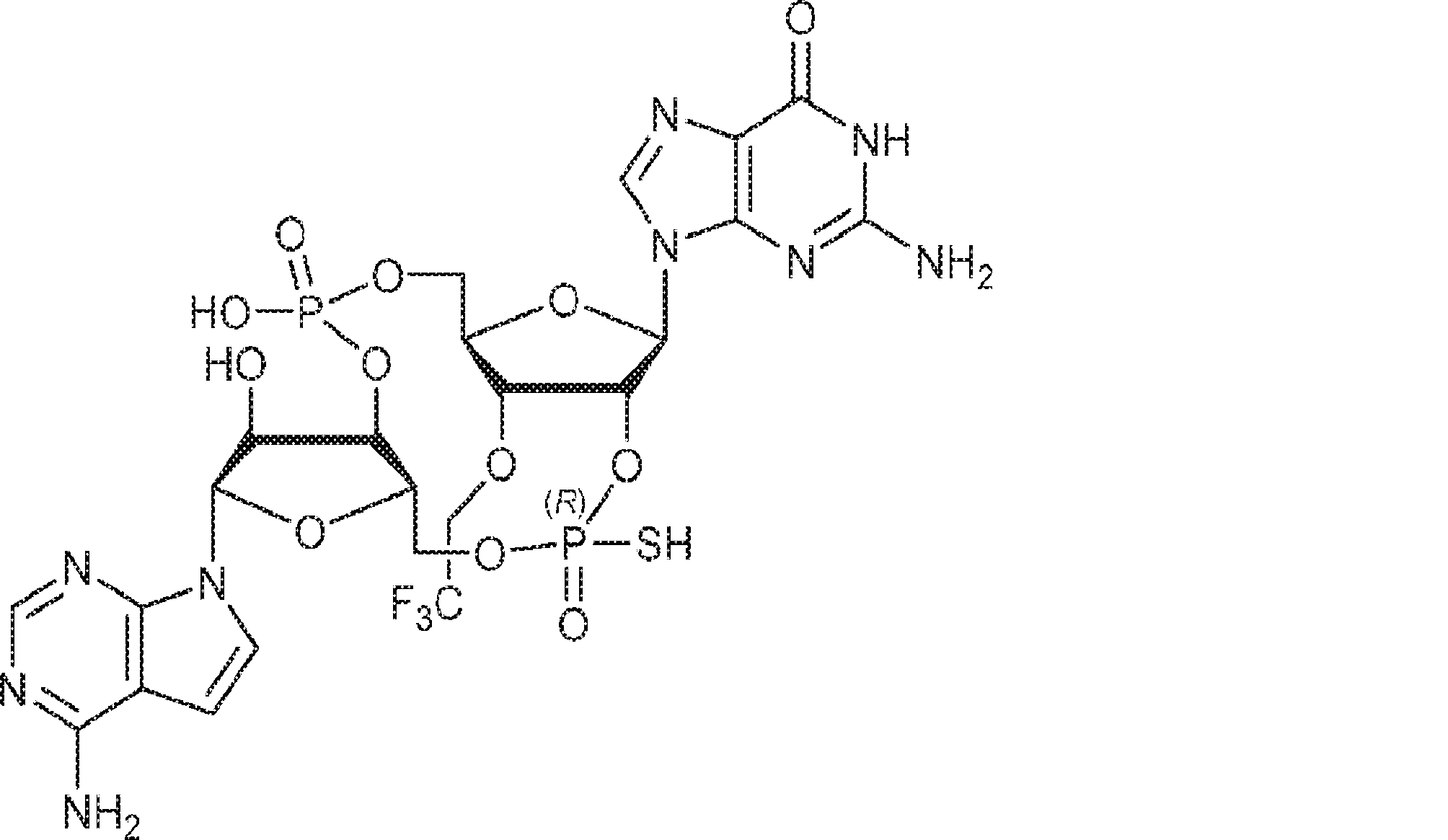
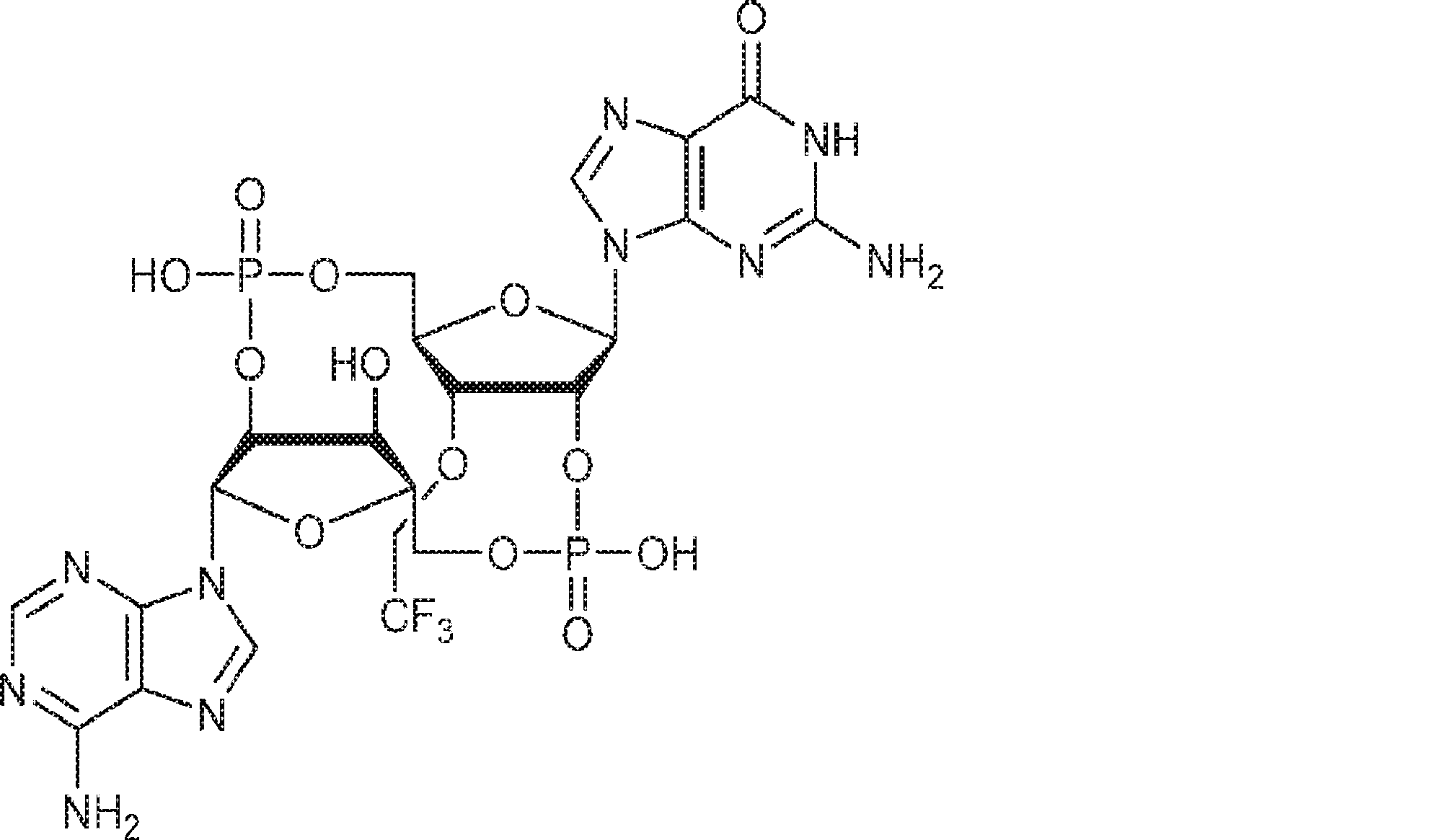


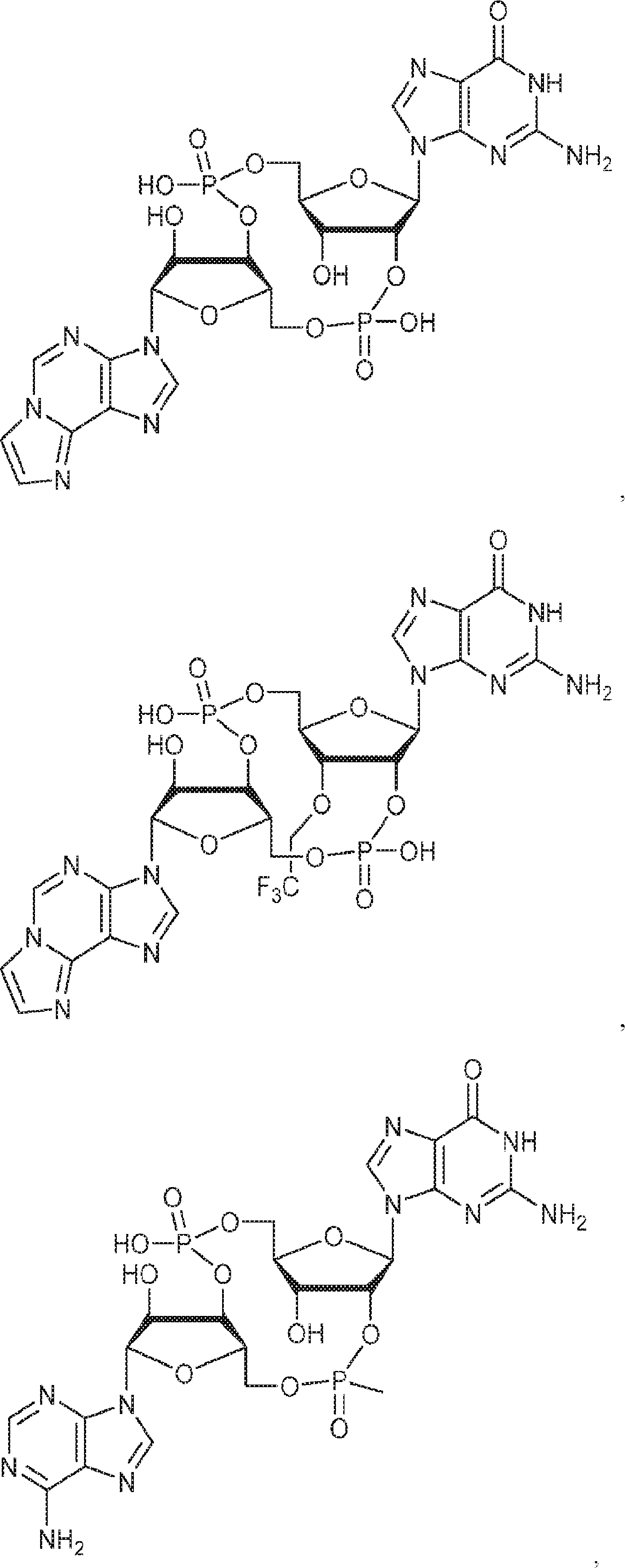
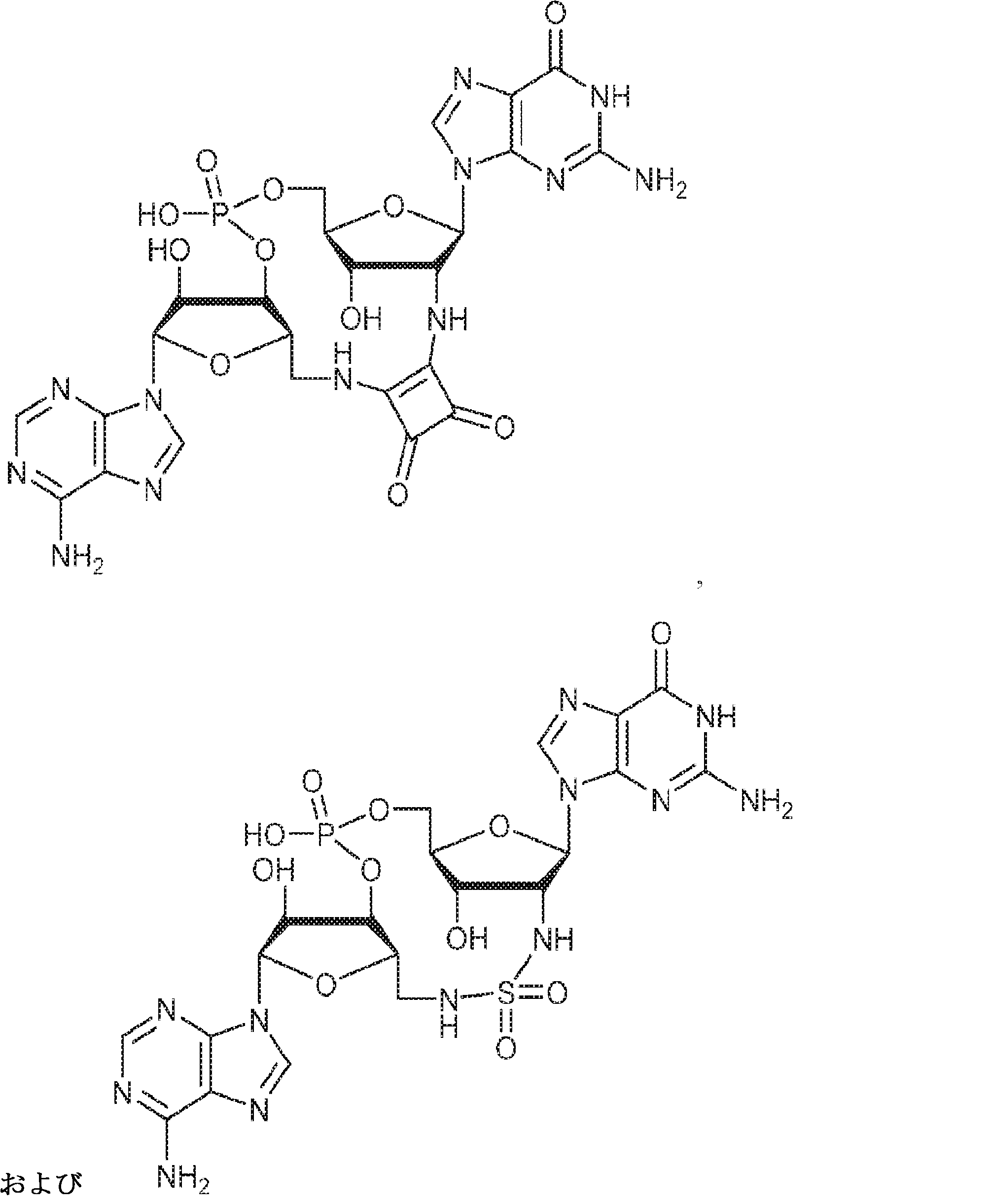
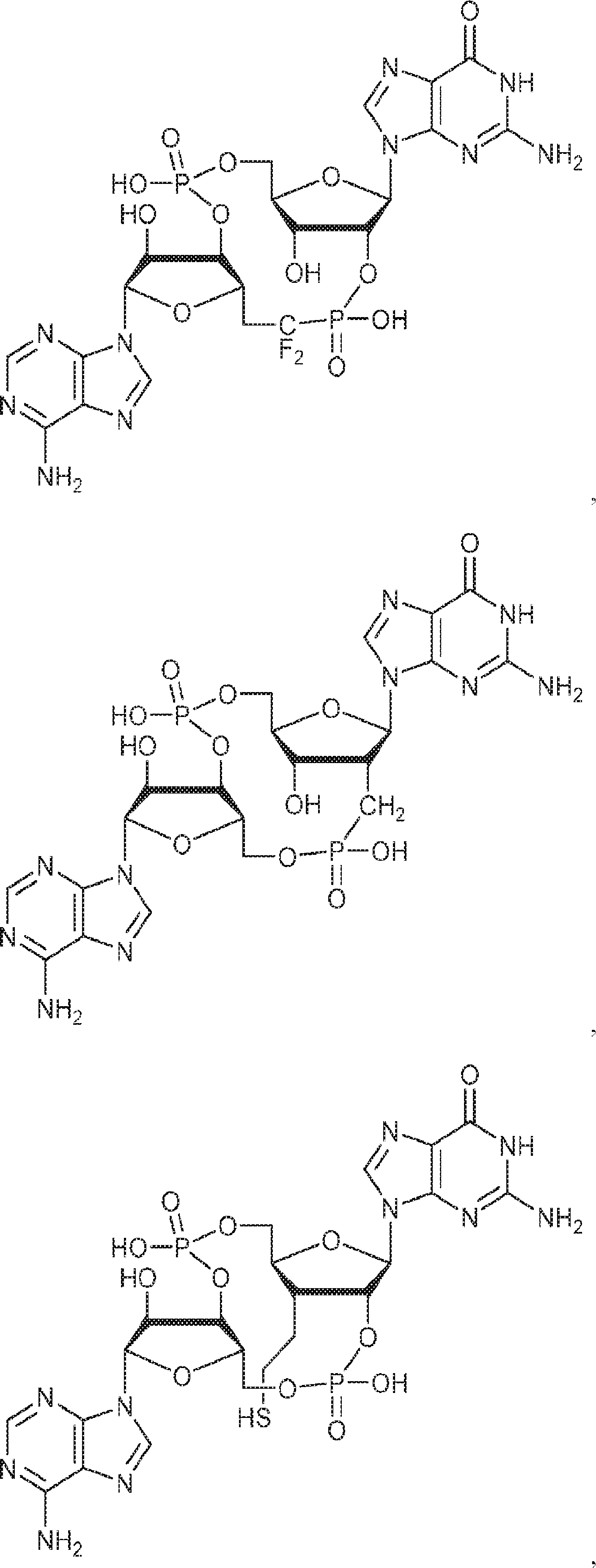


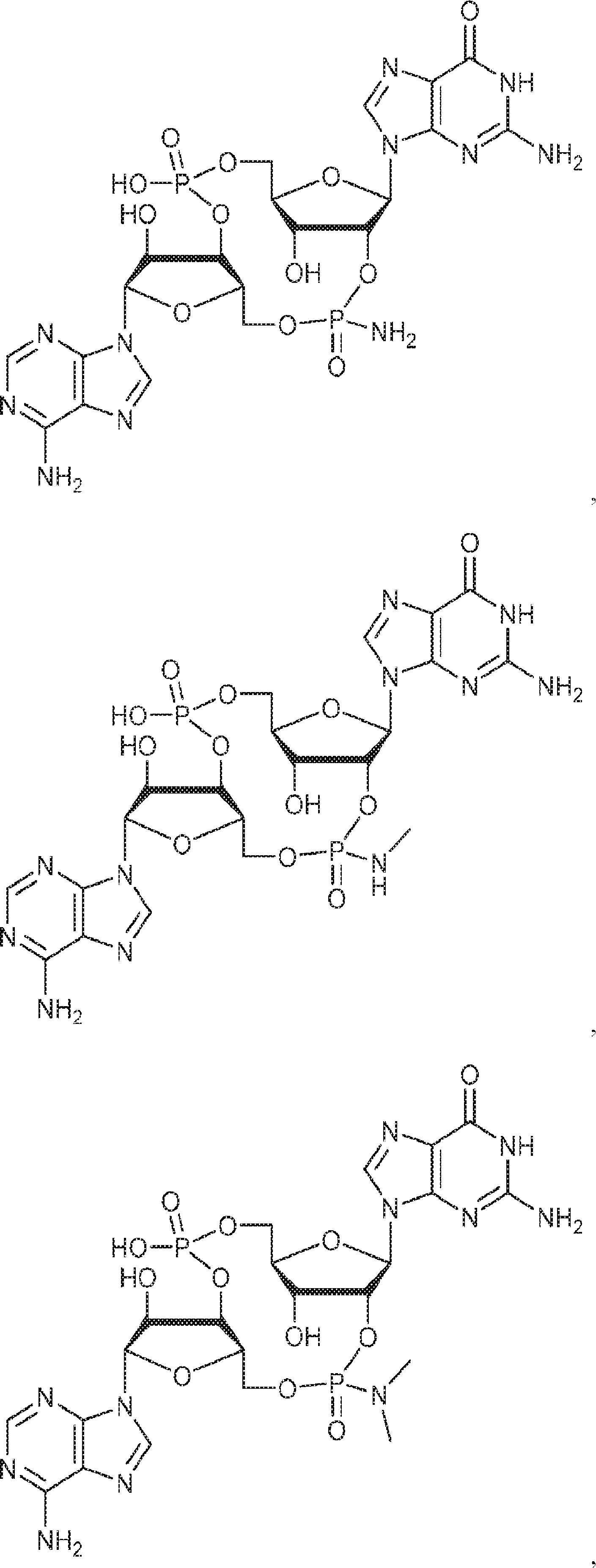

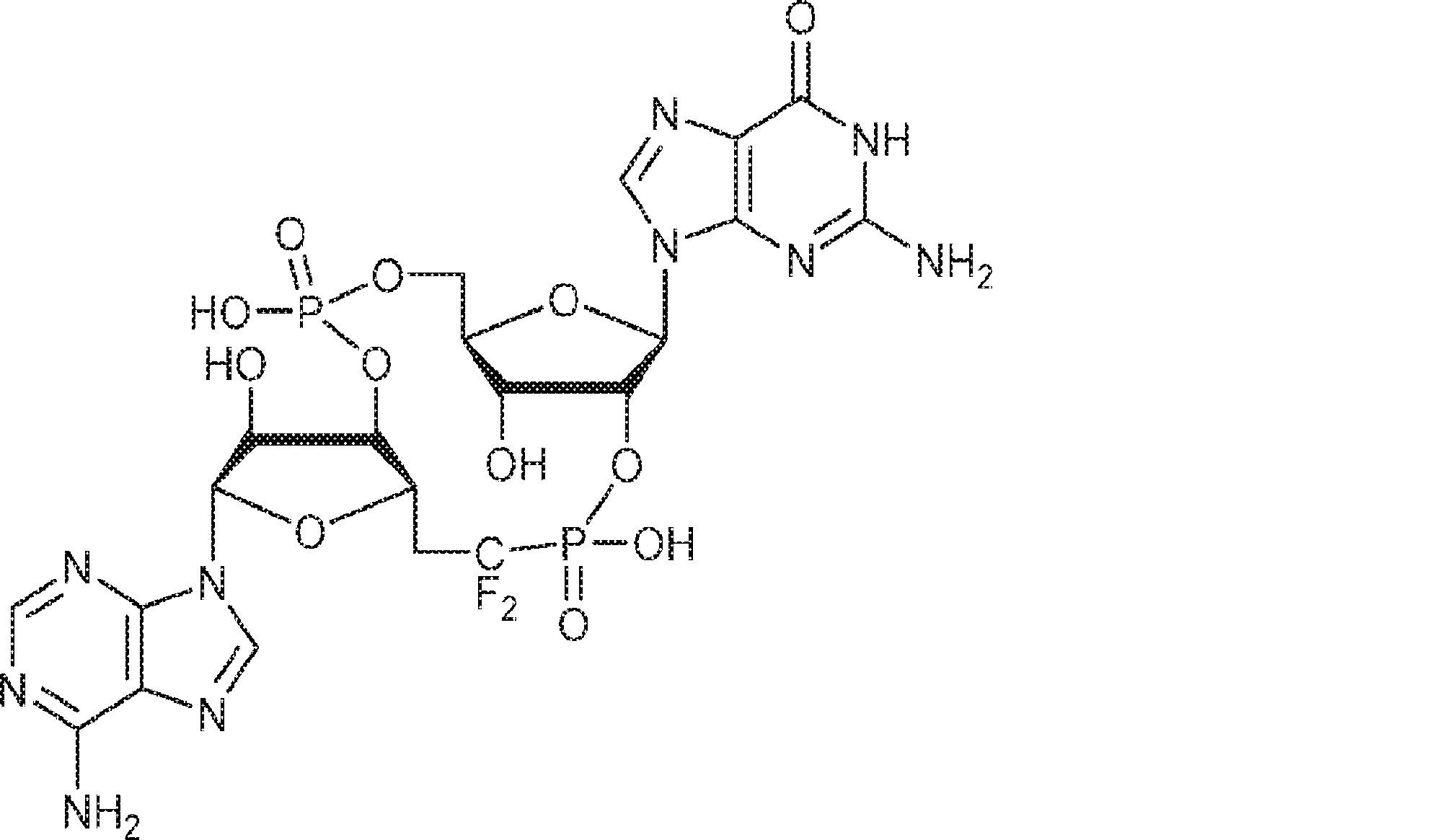
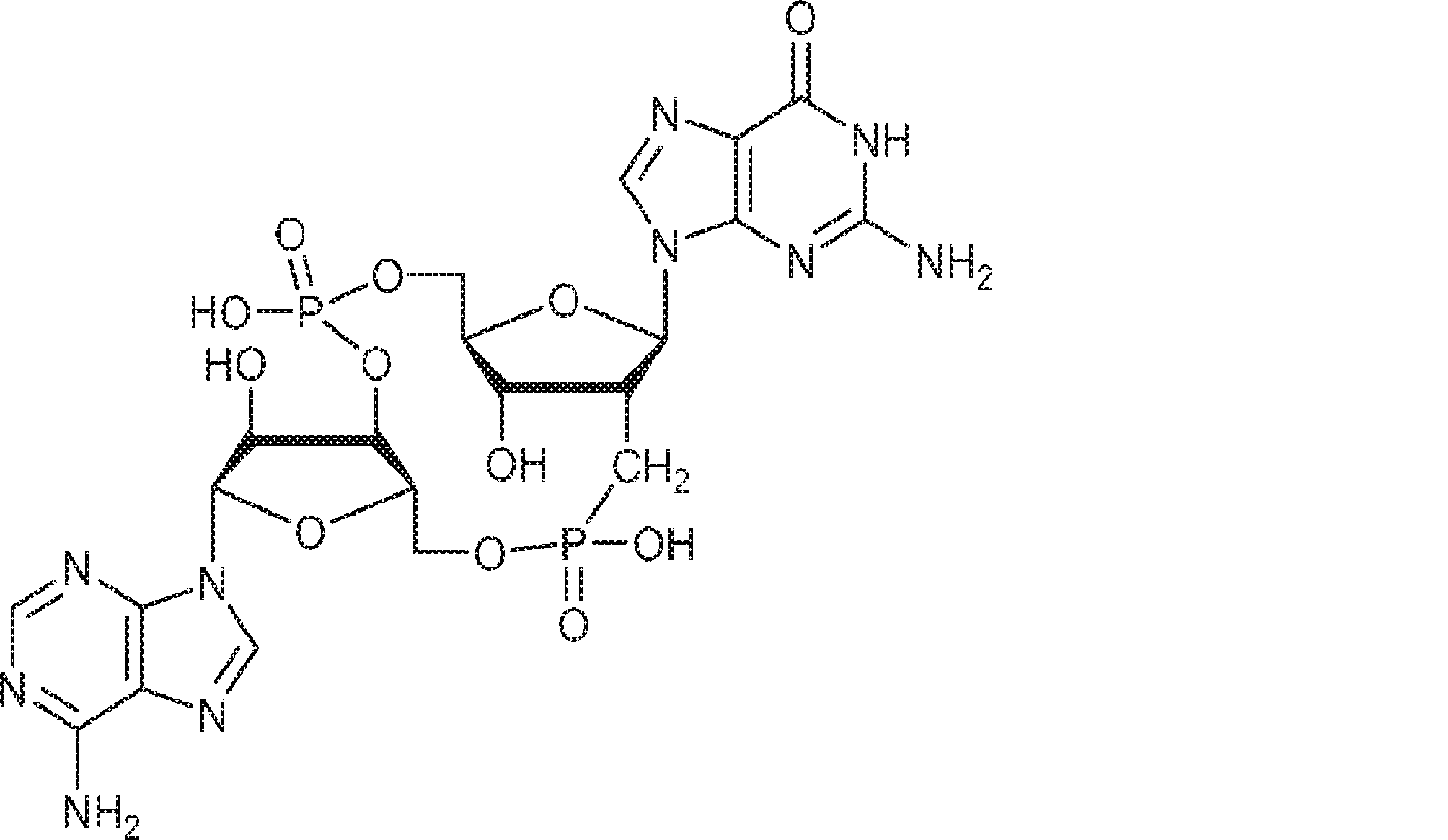
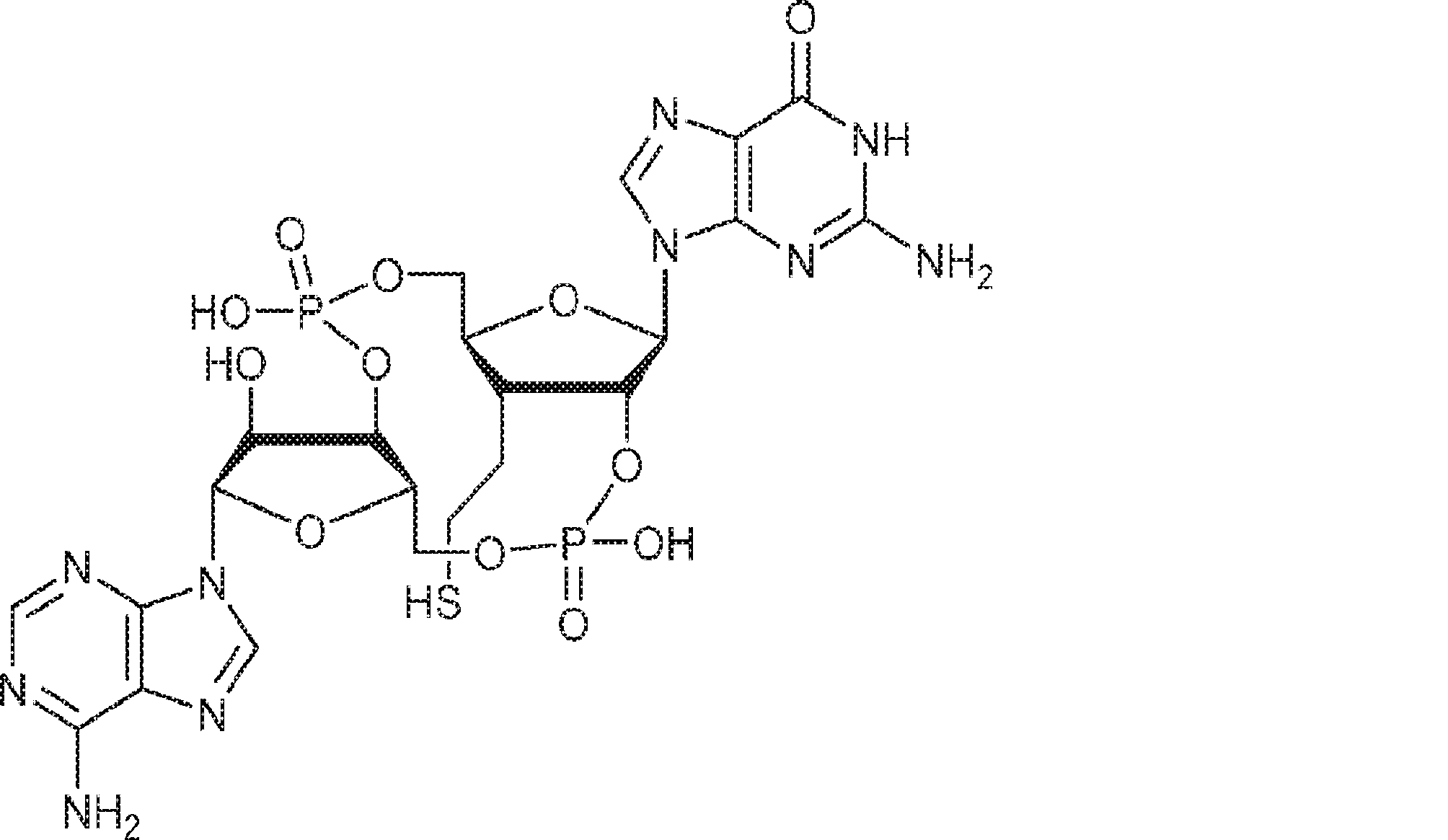


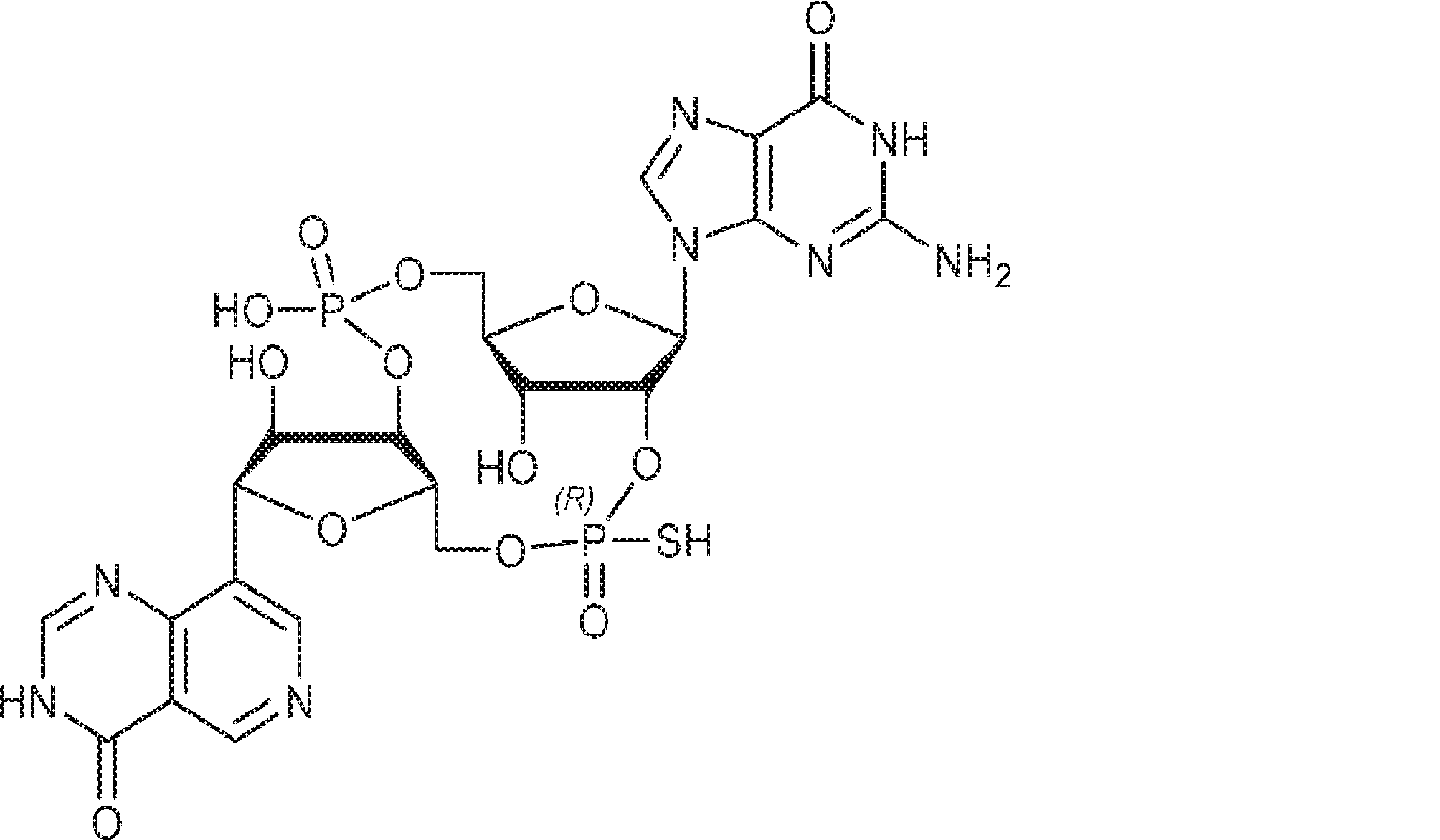
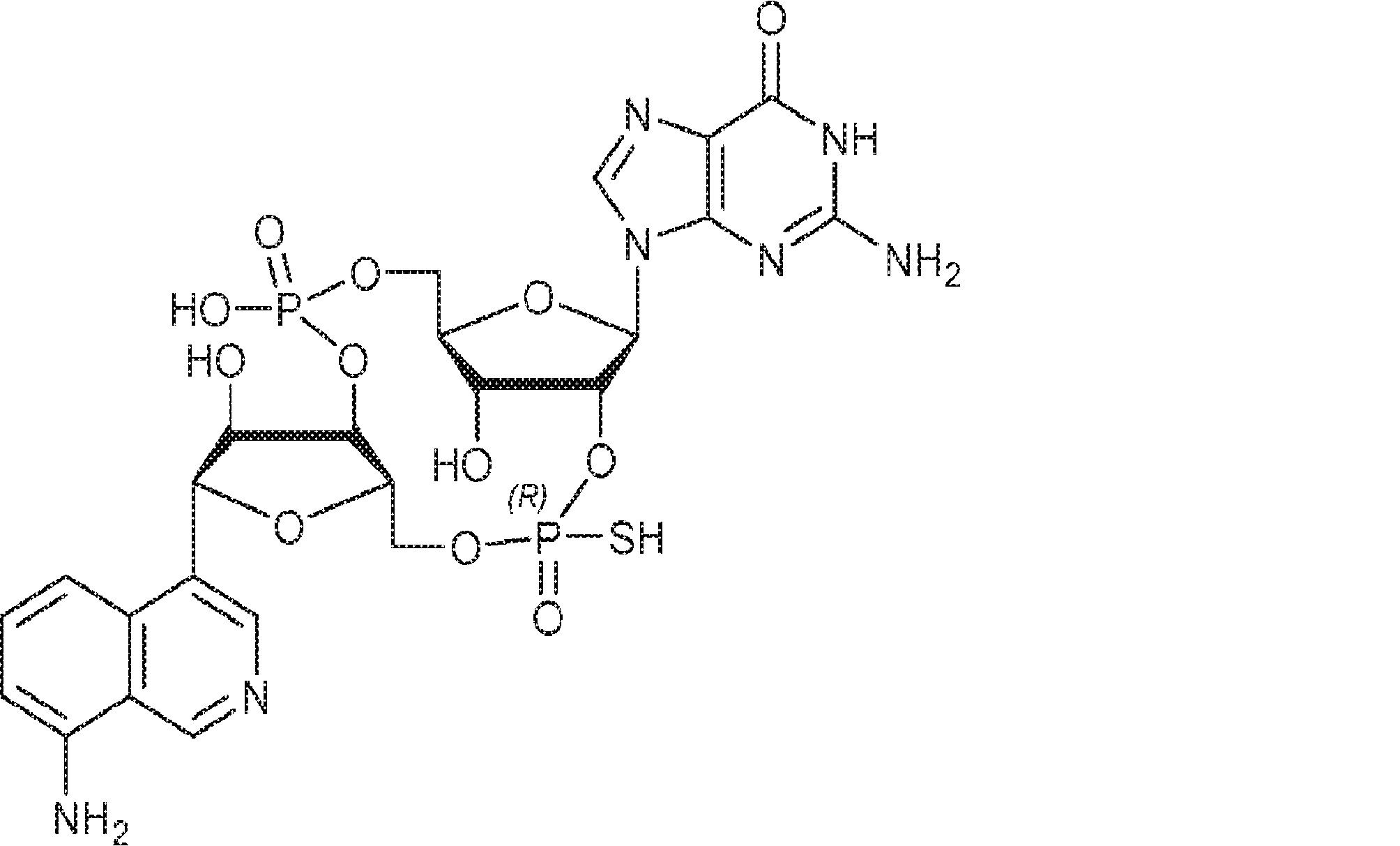
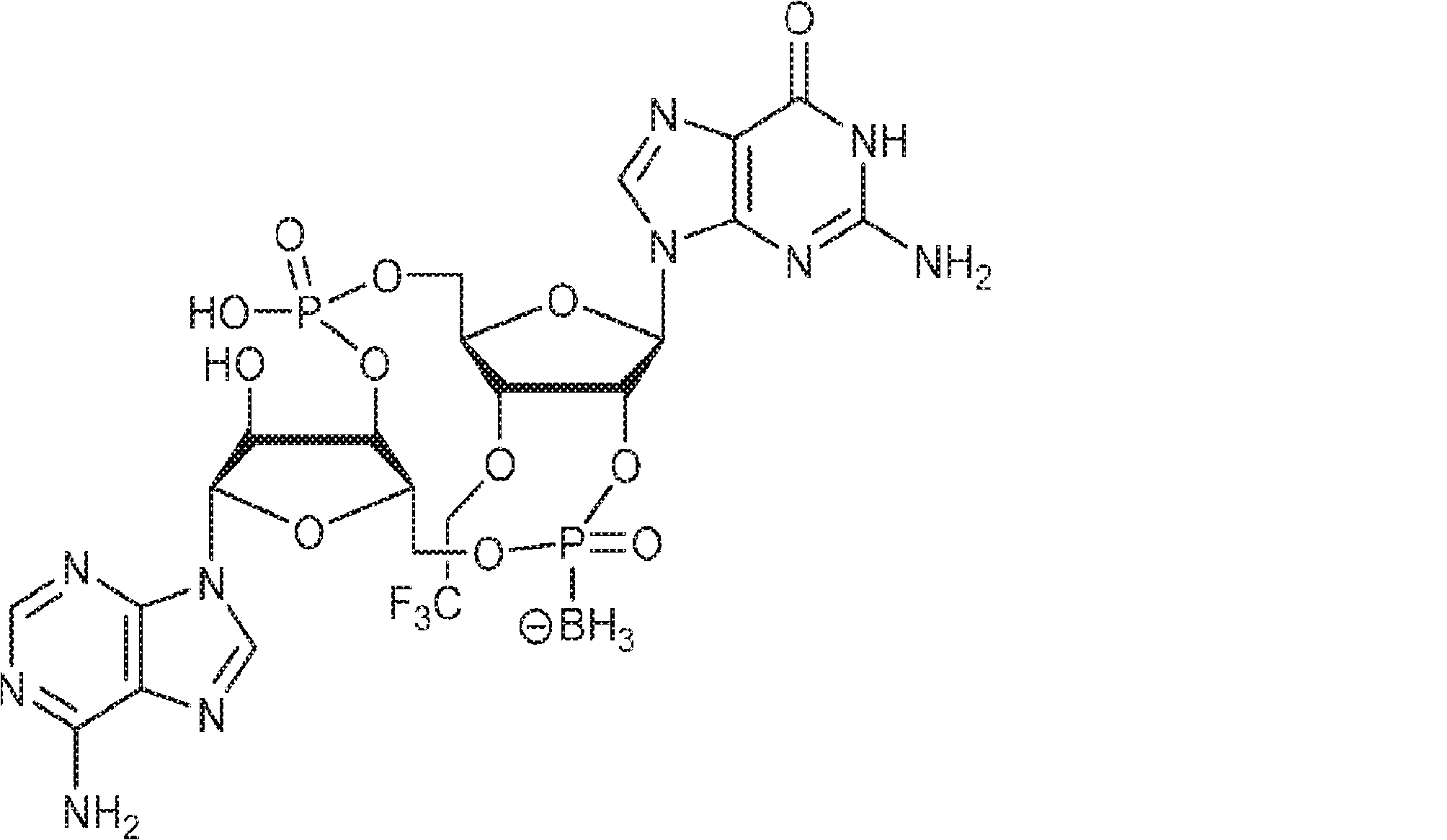
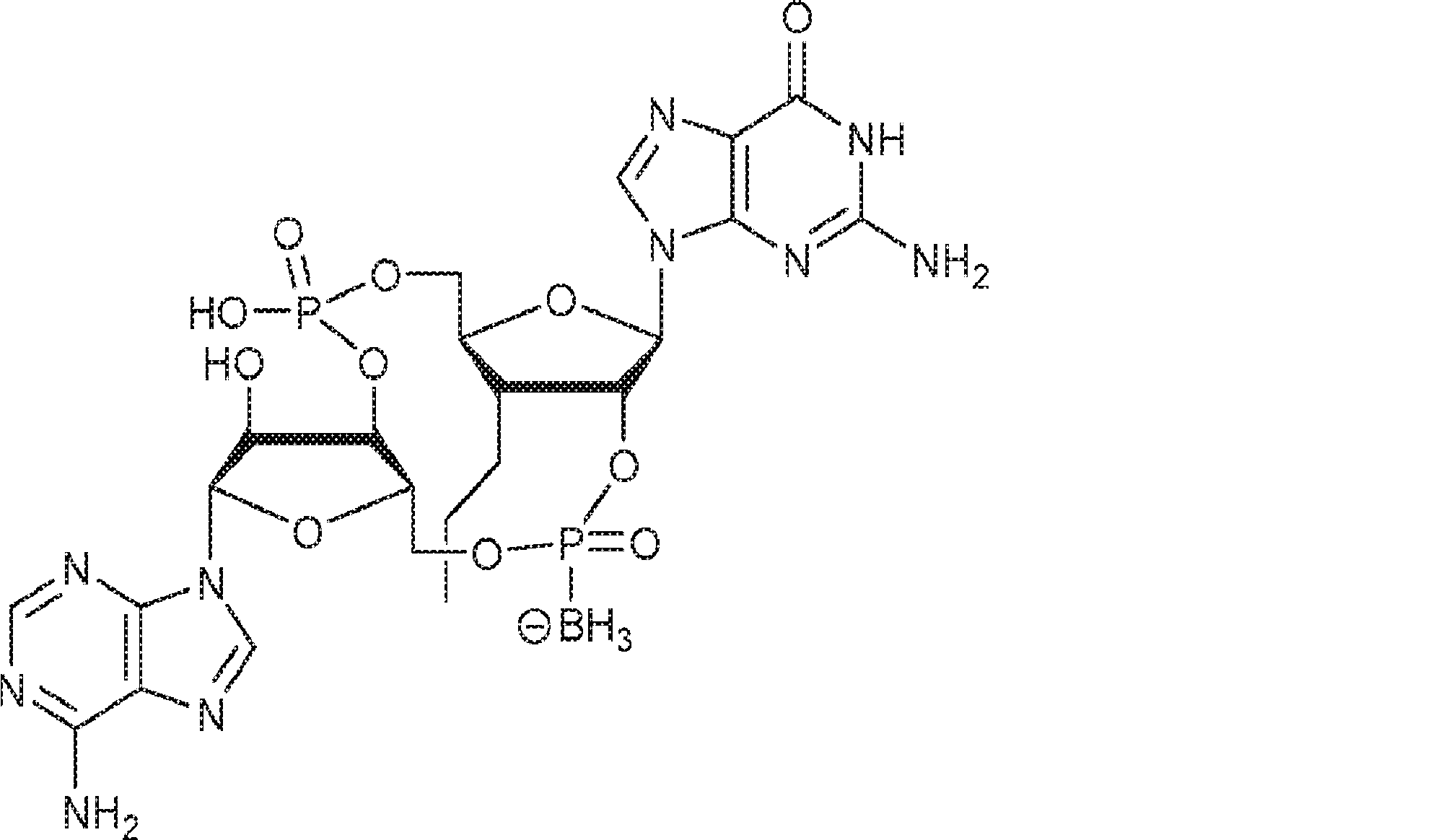

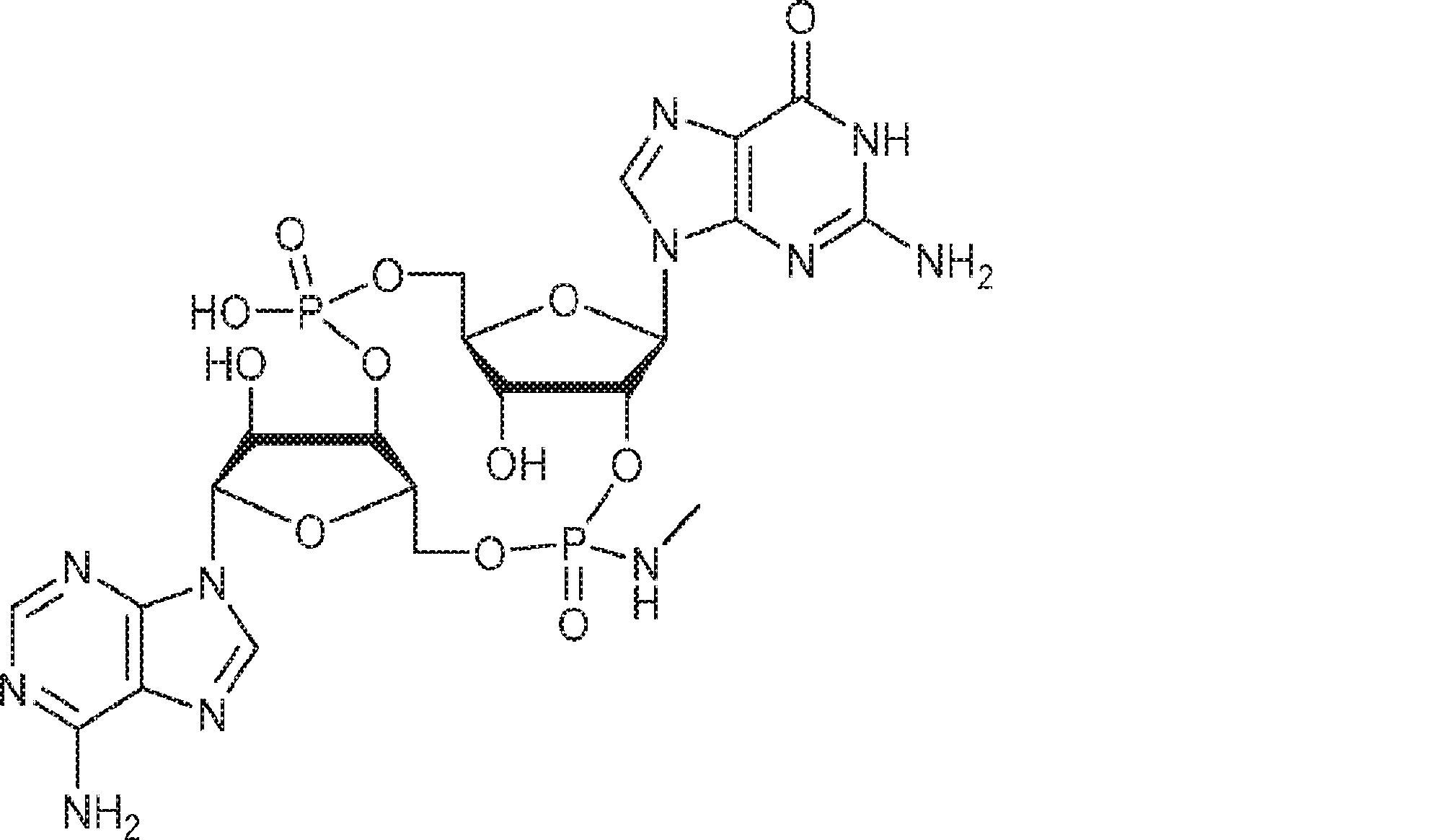
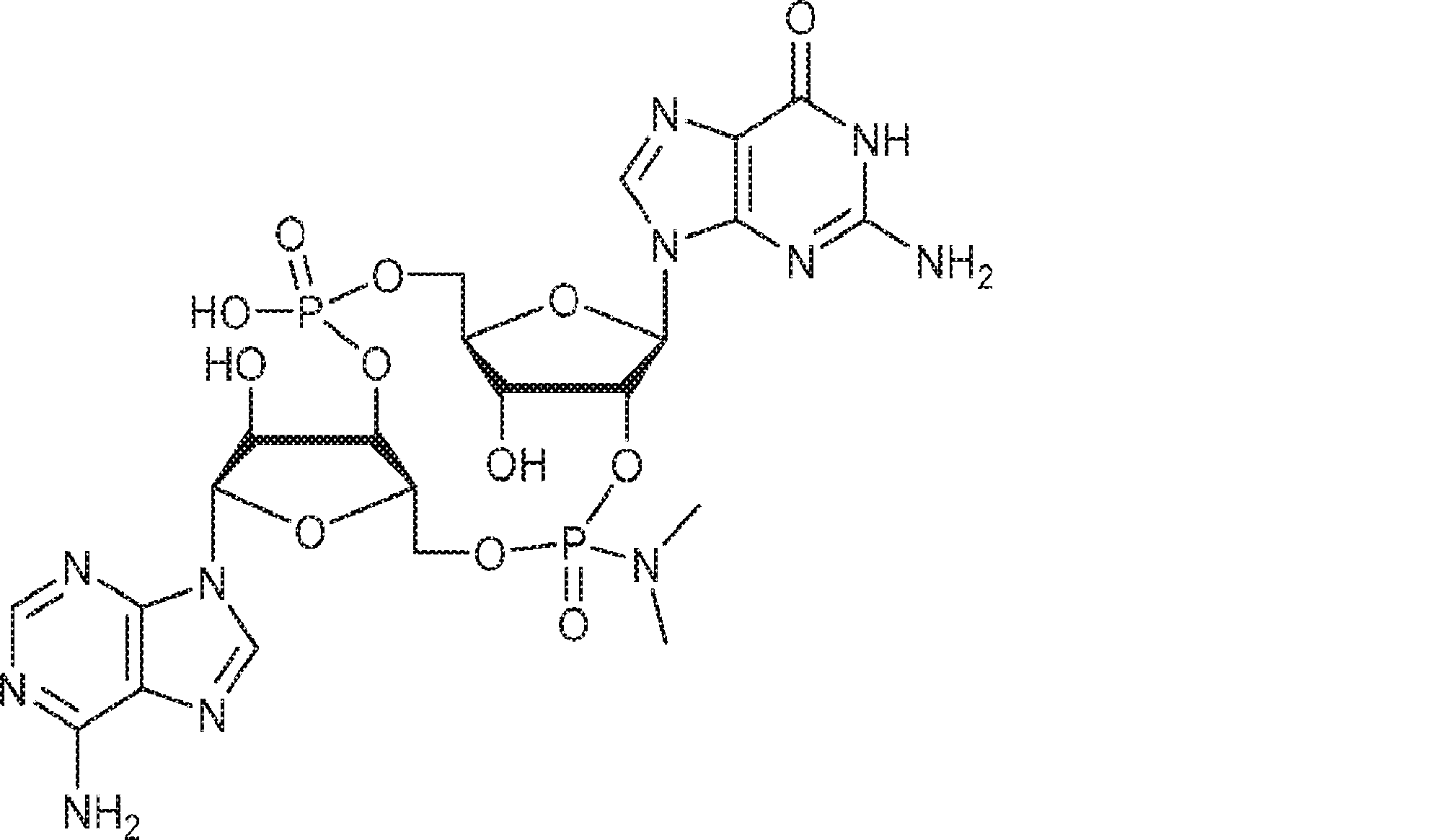
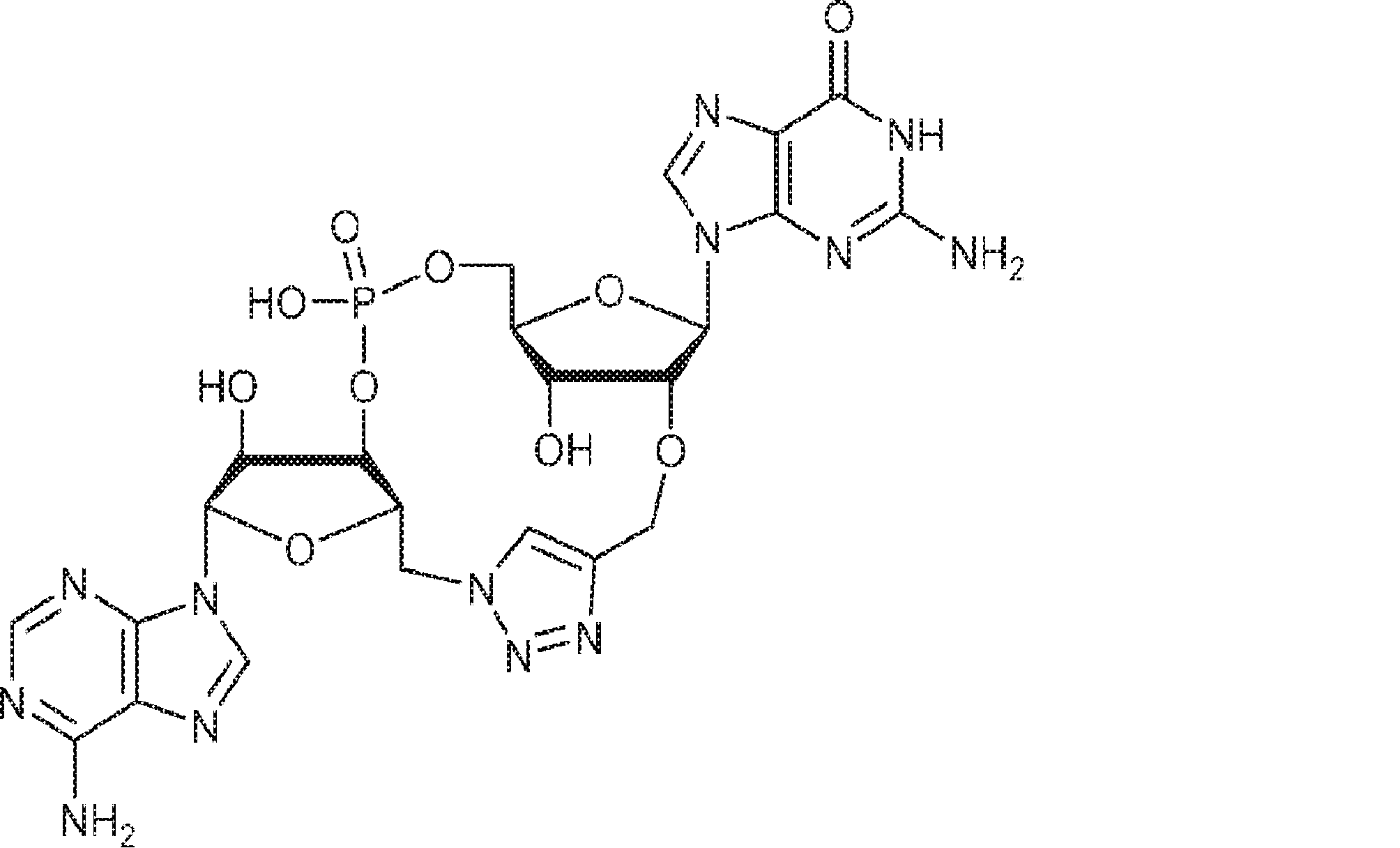
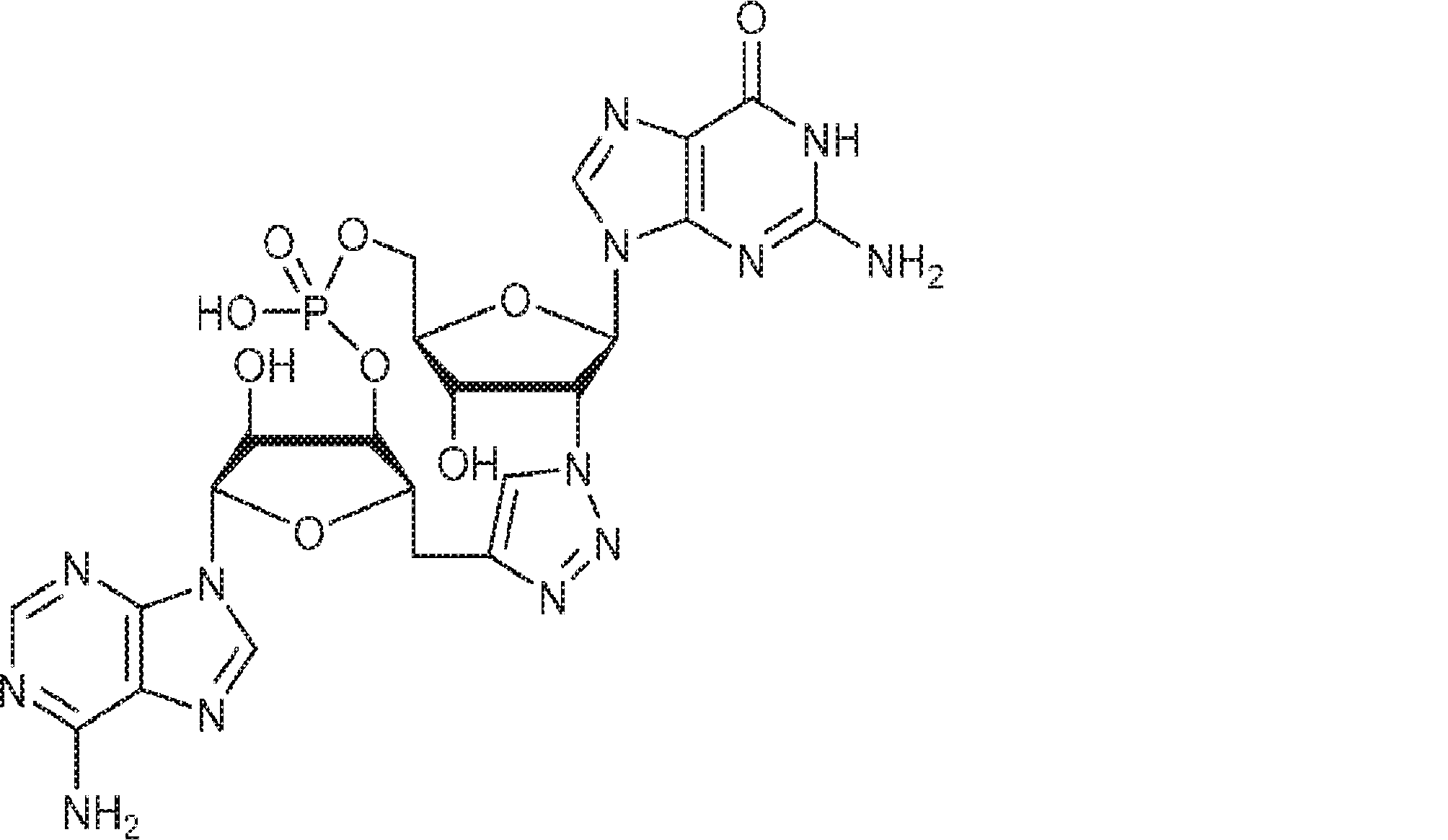
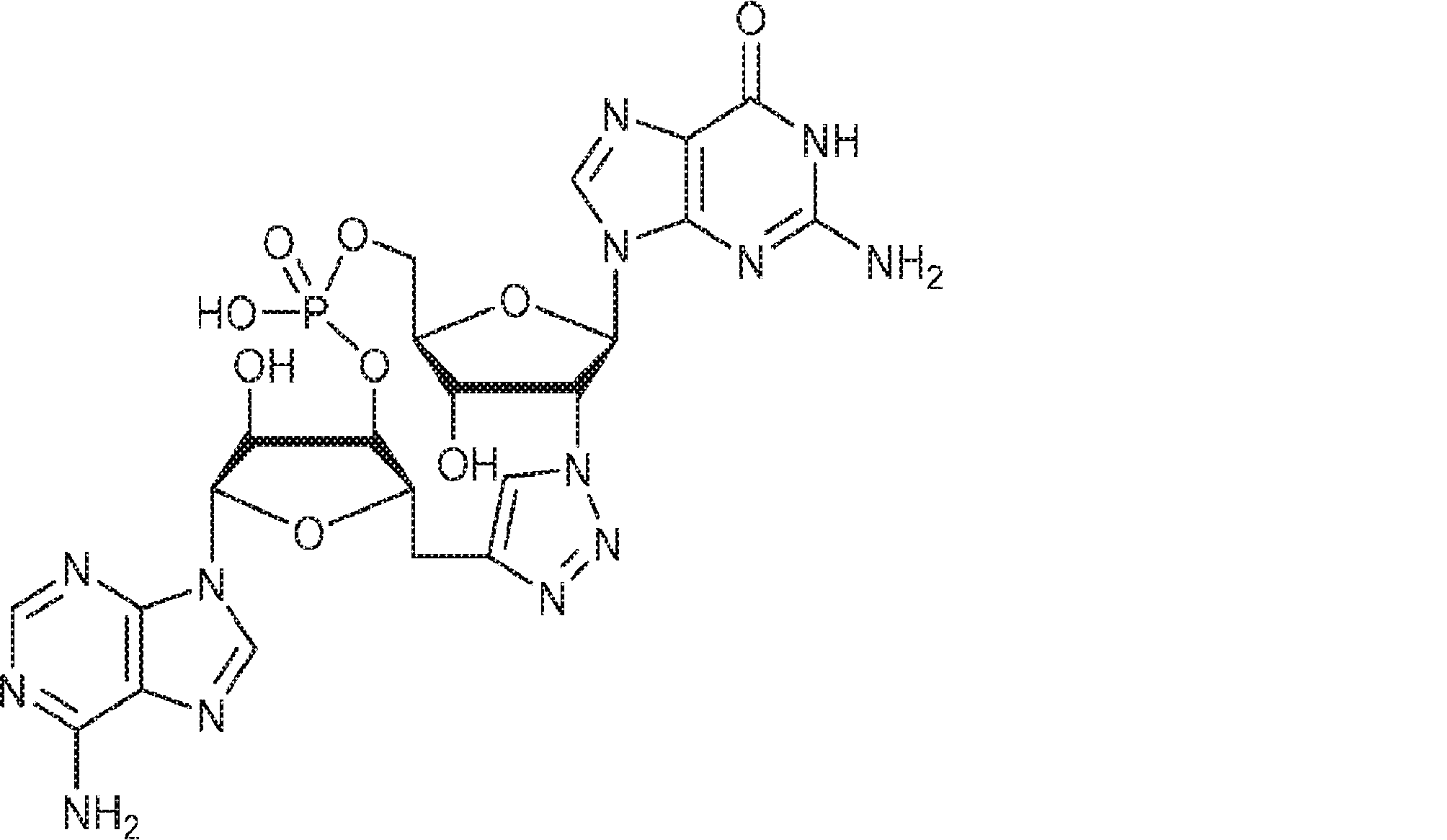
Applications Claiming Priority (7)
| Application Number | Priority Date | Filing Date | Title |
|---|---|---|---|
| US201662310364P | 2016-03-18 | 2016-03-18 | |
| US62/310,364 | 2016-03-18 | ||
| US201662355382P | 2016-06-28 | 2016-06-28 | |
| US62/355,382 | 2016-06-28 | ||
| US201662396140P | 2016-09-17 | 2016-09-17 | |
| US62/396,140 | 2016-09-17 | ||
| JP2018568181A JP6980198B2 (en) | 2016-03-18 | 2017-03-17 | Cyclic dinucleotide compound and usage |
Related Parent Applications (1)
| Application Number | Title | Priority Date | Filing Date |
|---|---|---|---|
| JP2018568181A Division JP6980198B2 (en) | 2016-03-18 | 2017-03-17 | Cyclic dinucleotide compound and usage |
Publications (1)
| Publication Number | Publication Date |
|---|---|
| JP2022017500A true JP2022017500A (en) | 2022-01-25 |
Family
ID=59851227
Family Applications (3)
| Application Number | Title | Priority Date | Filing Date |
|---|---|---|---|
| JP2018568181A Active JP6980198B2 (en) | 2016-03-18 | 2017-03-17 | Cyclic dinucleotide compound and usage |
| JP2020031617A Active JP6980200B2 (en) | 2016-03-18 | 2020-02-27 | Cyclic dinucleotide compound and usage |
| JP2021180838A Pending JP2022017500A (en) | 2016-03-18 | 2021-11-05 | Cyclic dinucleotide compound and usage |
Family Applications Before (2)
| Application Number | Title | Priority Date | Filing Date |
|---|---|---|---|
| JP2018568181A Active JP6980198B2 (en) | 2016-03-18 | 2017-03-17 | Cyclic dinucleotide compound and usage |
| JP2020031617A Active JP6980200B2 (en) | 2016-03-18 | 2020-02-27 | Cyclic dinucleotide compound and usage |
Country Status (22)
| Country | Link |
|---|---|
| US (3) | US10519188B2 (en) |
| EP (2) | EP3429596B1 (en) |
| JP (3) | JP6980198B2 (en) |
| KR (1) | KR102530488B1 (en) |
| CN (3) | CN109475570B (en) |
| AU (1) | AU2017233068C1 (en) |
| BR (1) | BR112018068748B1 (en) |
| CA (1) | CA3017524A1 (en) |
| DK (1) | DK3429596T3 (en) |
| ES (1) | ES2929628T3 (en) |
| HR (1) | HRP20221263T1 (en) |
| HU (1) | HUE060396T2 (en) |
| IL (2) | IL280430B2 (en) |
| LT (1) | LT3429596T (en) |
| MA (1) | MA43827A (en) |
| MX (2) | MX390014B (en) |
| NZ (1) | NZ746112A (en) |
| PL (1) | PL3429596T3 (en) |
| PT (1) | PT3429596T (en) |
| SG (2) | SG10201912074PA (en) |
| WO (1) | WO2017161349A1 (en) |
| ZA (1) | ZA201806074B (en) |
Families Citing this family (118)
| Publication number | Priority date | Publication date | Assignee | Title |
|---|---|---|---|---|
| US11453697B1 (en) | 2015-08-13 | 2022-09-27 | Merck Sharp & Dohme Llc | Cyclic di-nucleotide compounds as sting agonists |
| MA42608A (en) | 2015-08-13 | 2018-06-20 | Merck Sharp & Dohme | CYCLIC DI-NUCLEOTIDE COMPOUNDS AS STING AGONISTS (INTERFERON GENE STIMULATOR) |
| CA3006930A1 (en) | 2015-12-03 | 2017-06-08 | Glaxosmithkline Intellectual Property Development Limited | Cyclic purine dinucleotides as modulators of sting |
| KR20250049441A (en) | 2016-01-11 | 2025-04-11 | 인네이트 튜머 이뮤니티, 인코포레이티드 | Cyclic dinucleotides for treating conditions associated with sting activity such as cancer |
| EP3429596B1 (en) * | 2016-03-18 | 2022-08-31 | Immune Sensor, LLC | Cyclic di-nucleotide compounds and methods of use |
| RS62410B1 (en) | 2016-10-04 | 2021-10-29 | Merck Sharp & Dohme | Benzo[b]thiophene compounds as sting agonists |
| MA46535A (en) | 2016-10-14 | 2019-08-21 | Prec Biosciences Inc | SPECIFIC MODIFIED MEGANUCLEASES OF RECOGNITION SEQUENCES IN THE HEPATITIS B VIRUS GENOME |
| JOP20170188A1 (en) * | 2016-11-25 | 2019-01-30 | Janssen Biotech Inc | Cyclic dinucleotides as sting agonists |
| JOP20170192A1 (en) * | 2016-12-01 | 2019-01-30 | Takeda Pharmaceuticals Co | Cyclic dinucleotide |
| JP2018090562A (en) * | 2016-12-01 | 2018-06-14 | 武田薬品工業株式会社 | Cyclic dinucleotide |
| US20200113924A1 (en) * | 2016-12-20 | 2020-04-16 | Merck Sharp & Dohme Corp. | Cyclic dinucleotide sting agonists for cancer treatment |
| US11021511B2 (en) | 2017-01-27 | 2021-06-01 | Janssen Biotech, Inc. | Cyclic dinucleotides as sting agonists |
| EP3573718B1 (en) * | 2017-01-27 | 2022-06-01 | Janssen Biotech, Inc. | Cyclic dinucleotides as sting agonists |
| US20200055883A1 (en) | 2017-02-17 | 2020-02-20 | Eisai R&D Management Co., Ltd. | Cyclic di-nucleotides derivative for the treatment of cancer |
| WO2018156625A1 (en) | 2017-02-21 | 2018-08-30 | Board Of Regents,The University Of Texas System | Cyclic dinucleotides as agonists of stimulator of interferon gene dependent signalling |
| WO2018198084A1 (en) * | 2017-04-27 | 2018-11-01 | Lupin Limited | Cyclic di-nucleotide compounds with tricyclic nucleobases |
| US11466047B2 (en) | 2017-05-12 | 2022-10-11 | Merck Sharp & Dohme Llc | Cyclic di-nucleotide compounds as sting agonists |
| WO2019027857A1 (en) | 2017-08-04 | 2019-02-07 | Merck Sharp & Dohme Corp. | COMBINATIONS OF PD-1 ANTAGONISTS AND BENZO[b]THIOPHENE STING AGONISTS FOR CANCER TREATMENT |
| JP2020530838A (en) | 2017-08-04 | 2020-10-29 | メルク・シャープ・アンド・ドーム・コーポレーションMerck Sharp & Dohme Corp. | Benzo [b] thiophene STING agonist for cancer treatment |
| WO2019043634A2 (en) | 2017-08-30 | 2019-03-07 | Beijing Xuanyi Pharmasciences Co., Ltd. | Cyclic di-nucleotides as stimulator of interferon genes modulators |
| WO2019046511A1 (en) * | 2017-08-31 | 2019-03-07 | Sperovie Biosciences, Inc. | Compounds, compositions, and methods for the treatment of disease |
| WO2019074887A1 (en) * | 2017-10-10 | 2019-04-18 | Bristol-Myers Squibb Company | Cyclic dinucleotides as anticancer agents |
| KR102747388B1 (en) * | 2017-10-16 | 2024-12-26 | 브리스톨-마이어스 스큅 컴퍼니 | Cyclic dinucleotides as anticancer agents |
| WO2019084060A1 (en) | 2017-10-24 | 2019-05-02 | Silverback Therapeutics, Inc. | Conjugates and methods of use thereof for selective delivery of immune-modulatory agents |
| MX2020004858A (en) | 2017-11-10 | 2020-10-01 | Takeda Pharmaceuticals Co | Sting modulator compounds, and methods of making and using. |
| EA038805B1 (en) * | 2017-11-21 | 2021-10-21 | Такеда Фармасьютикал Компани Лимитед | Cyclic dinucleotides as sting (stimulator of interferon genes) agonists |
| EP3724205B1 (en) * | 2017-12-15 | 2022-06-22 | Janssen Biotech, Inc. | Cyclic dinucleotides as sting agonists |
| EP3728283B1 (en) * | 2017-12-20 | 2023-11-22 | Institute of Organic Chemistry and Biochemistry ASCR, V.V.I. | 3'3' cyclic dinucleotides with phosphonate bond activating the sting adaptor protein |
| CN111511754B (en) * | 2017-12-20 | 2023-09-12 | 捷克共和国有机化学与生物化学研究所 | 2’3’ cyclic dinucleotide with phosphonate bond that activates STING adapter protein |
| US20190185509A1 (en) * | 2017-12-20 | 2019-06-20 | Institute Of Organic Chemistry And Biochemistry Ascr, V.V.I. | 2'2' cyclic dinucleotides with phosphonate bond activating the sting adaptor protein |
| WO2019125974A1 (en) * | 2017-12-20 | 2019-06-27 | Merck Sharp & Dohme Corp. | Cyclic di-nucleotide compounds as sting agonists |
| KR102526964B1 (en) | 2018-02-26 | 2023-04-28 | 길리애드 사이언시즈, 인코포레이티드 | Substituted pyrrolizine compounds as HBV replication inhibitors |
| WO2019173587A1 (en) * | 2018-03-08 | 2019-09-12 | Bristol-Myers Squibb Company | Cyclic dinucleotides as anticancer agents |
| US20210015915A1 (en) * | 2018-03-23 | 2021-01-21 | Takeda Pharmaceutical Company Limited | Sting modulator compounds with sulfamate linkages, and methods of making and using |
| WO2019195124A1 (en) | 2018-04-03 | 2019-10-10 | Merck Sharp & Dohme Corp. | Benzothiophenes and related compounds as sting agonists |
| WO2019195063A1 (en) | 2018-04-03 | 2019-10-10 | Merck Sharp & Dohme Corp. | Aza-benzothiophene compounds as sting agonists |
| WO2019195181A1 (en) | 2018-04-05 | 2019-10-10 | Gilead Sciences, Inc. | Antibodies and fragments thereof that bind hepatitis b virus protein x |
| US11874276B2 (en) | 2018-04-05 | 2024-01-16 | Dana-Farber Cancer Institute, Inc. | STING levels as a biomarker for cancer immunotherapy |
| TWI833744B (en) * | 2018-04-06 | 2024-03-01 | 捷克科學院有機化學與生物化學研究所 | 3'3'-cyclic dinucleotides |
| TW202005654A (en) | 2018-04-06 | 2020-02-01 | 捷克科學院有機化學與生物化學研究所 | 2'2'-cyclic dinucleotides |
| TWI818007B (en) * | 2018-04-06 | 2023-10-11 | 捷克科學院有機化學與生物化學研究所 | 2'3'-cyclic dinucleotides |
| TW201945388A (en) | 2018-04-12 | 2019-12-01 | 美商精密生物科學公司 | Optimized engineered meganucleases having specificity for a recognition sequence in the hepatitis B virus genome |
| CN110407879A (en) * | 2018-04-28 | 2019-11-05 | 杭州星鳌生物科技有限公司 | The chemical composition of TXS-WX class compound, preparation method and its application in antitumor |
| US20190359645A1 (en) | 2018-05-03 | 2019-11-28 | Institute Of Organic Chemistry And Biochemistry Ascr, V.V.I. | 2'3'-cyclic dinucleotides comprising carbocyclic nucleotide |
| US10947227B2 (en) | 2018-05-25 | 2021-03-16 | Incyte Corporation | Tricyclic heterocyclic compounds as sting activators |
| US12291548B2 (en) | 2018-07-10 | 2025-05-06 | Sperovie Biosciences, Inc. | Compounds, compositions, and methods for the treatment of disease |
| TW202030199A (en) * | 2018-07-17 | 2020-08-16 | 美商健生生物科技公司 | Cyclic dinucleotides as sting agonists |
| US11008344B2 (en) | 2018-07-31 | 2021-05-18 | Incyte Corporation | Tricyclic heteroaryl compounds as STING activators |
| US10875872B2 (en) | 2018-07-31 | 2020-12-29 | Incyte Corporation | Heteroaryl amide compounds as sting activators |
| WO2020028097A1 (en) | 2018-08-01 | 2020-02-06 | Gilead Sciences, Inc. | Solid forms of (r)-11-(methoxymethyl)-12-(3-methoxypropoxy)-3,3-dimethyl-8-0x0-2,3,8,13b-tetrahydro-1h-pyrido[2,1-a]pyrrolo[1,2-c] phthalazine-7-c arboxylic acid |
| WO2020036199A1 (en) | 2018-08-16 | 2020-02-20 | Eisai R&D Management Co., Ltd. | Salts of compounds and crystals thereof |
| MA53438A (en) | 2018-08-24 | 2021-09-15 | Codiak Biosciences Inc | EXTRACELLULAR VESICLES TARGETING DENDRITIC CELLS AND USES THEREOF |
| CN118878620A (en) | 2018-09-06 | 2024-11-01 | 第一三共株式会社 | Cyclic dinucleotide derivatives and methods for producing antibody-drug conjugates |
| SG11202101980VA (en) | 2018-09-12 | 2021-03-30 | Silverback Therapeutics Inc | Methods and composition for the treatment of disease with immune stimulatory conjugates |
| WO2020057546A1 (en) | 2018-09-21 | 2020-03-26 | 上海迪诺医药科技有限公司 | Cyclic dinucleotide analogue, pharmaceutical composition thereof, and application |
| WO2020074004A1 (en) * | 2018-10-12 | 2020-04-16 | 上海济煜医药科技有限公司 | Cyclic dinucleotide compound and uses thereof |
| US11110106B2 (en) | 2018-10-29 | 2021-09-07 | Venenum Biodesign, LLC | Sting agonists for treating bladder cancer and solid tumors |
| US11161864B2 (en) | 2018-10-29 | 2021-11-02 | Venenum Biodesign, LLC | Sting agonists |
| FI3873903T3 (en) | 2018-10-31 | 2024-03-26 | Gilead Sciences Inc | Substituted 6-azbenzimidazole compounds as HPK1 inhibitors |
| KR102658602B1 (en) | 2018-10-31 | 2024-04-19 | 길리애드 사이언시즈, 인코포레이티드 | Substituted 6-azabenzimidazole compounds with HPK1 inhibitory activity |
| TWI827720B (en) * | 2018-11-02 | 2024-01-01 | 大陸商上海濟煜醫藥科技有限公司 | Cyclic dinucleotide compounds and uses thereof |
| US11596692B1 (en) | 2018-11-21 | 2023-03-07 | Incyte Corporation | PD-L1/STING conjugates and methods of use |
| CN111349132B (en) * | 2018-12-21 | 2021-06-04 | 上海济煜医药科技有限公司 | Tumor immunity compound and application thereof |
| WO2020146237A1 (en) | 2019-01-07 | 2020-07-16 | Incyte Corporation | Heteroaryl amide compounds as sting activators |
| EP3934757B1 (en) * | 2019-03-07 | 2023-02-22 | Institute of Organic Chemistry and Biochemistry ASCR, V.V.I. | 2'3'-cyclic dinucleotides and prodrugs thereof |
| EP3935065A1 (en) | 2019-03-07 | 2022-01-12 | Institute of Organic Chemistry and Biochemistry ASCR, V.V.I. | 3'3'-cyclic dinucleotide analogue comprising a cyclopentanyl modified nucleotide as sting modulator |
| CA3129011C (en) * | 2019-03-07 | 2023-12-19 | Institute Of Organic Chemistry And Biochemistry Ascr, V.V.I. | 3'3'-cyclic dinucleotides and prodrugs thereof |
| BR112021018694A2 (en) | 2019-03-21 | 2021-11-30 | Codiak Biosciences Inc | Extracellular vesicles for vaccine delivery |
| US12233356B2 (en) | 2019-03-21 | 2025-02-25 | Lonza Sales Ag | Process for preparing extracellular vesicles |
| WO2020210938A1 (en) * | 2019-04-15 | 2020-10-22 | Bioardis Llc | Quinazoline derivatives as cd73 inhibitors |
| TWI751517B (en) | 2019-04-17 | 2022-01-01 | 美商基利科學股份有限公司 | Solid forms of a toll-like receptor modulator |
| CN109929894B (en) * | 2019-04-17 | 2021-06-01 | 中国农业科学院兰州兽医研究所 | A kind of preparation and activity identification method of porcine second messenger molecule 2'3'-cGAMP |
| TW202210480A (en) | 2019-04-17 | 2022-03-16 | 美商基利科學股份有限公司 | Solid forms of a toll-like receptor modulator |
| US11787833B2 (en) | 2019-05-09 | 2023-10-17 | Aligos Therapeutics, Inc. | Modified cyclic dinucleoside compounds as sting modulators |
| TWI826690B (en) | 2019-05-23 | 2023-12-21 | 美商基利科學股份有限公司 | Substituted eneoxindoles and uses thereof |
| MX2021015452A (en) | 2019-06-25 | 2022-02-11 | Gilead Sciences Inc | FLT3L-FC FUSION PROTEINS AND METHODS OF USE. |
| WO2021003445A1 (en) | 2019-07-03 | 2021-01-07 | Codiak Biosciences, Inc. | Extracellular vesicles targeting t cells and uses thereof |
| CA3145889A1 (en) * | 2019-07-05 | 2021-01-14 | Tambo, Inc. | Trans-cyclooctene bioorthogonal agents and uses in cancer and immunotherapy |
| JP7576779B2 (en) | 2019-07-19 | 2024-11-01 | イミューンセンサー セラピューティクス、インコーポレイテッド | Antibody-STING agonist conjugates and their use in immunotherapy - Patents.com |
| WO2021034804A1 (en) | 2019-08-19 | 2021-02-25 | Gilead Sciences, Inc. | Pharmaceutical formulations of tenofovir alafenamide |
| US20220305048A1 (en) | 2019-08-26 | 2022-09-29 | Dana-Farber Cancer Institute, Inc. | Use of heparin to promote type 1 interferon signaling |
| EP4034276A1 (en) * | 2019-09-25 | 2022-08-03 | Codiak BioSciences, Inc. | Methods of producing extracellular vesicles |
| EP4034081A1 (en) | 2019-09-25 | 2022-08-03 | Codiak BioSciences, Inc. | Extracellular vesicle compositions |
| KR20220074917A (en) | 2019-09-30 | 2022-06-03 | 길리애드 사이언시즈, 인코포레이티드 | HBV vaccines and methods of treating HBV |
| CA3151322A1 (en) | 2019-10-01 | 2021-04-08 | Silverback Therapeutics, Inc. | Combination therapy with immune stimulatory conjugates |
| CA3157849A1 (en) * | 2019-10-14 | 2021-04-22 | Immunesensor Therapeutics, Inc. | Methods of treating cancer with a sting agonist |
| DK4069729T3 (en) | 2019-12-06 | 2025-04-07 | Prec Biosciences Inc | OPTIMIZED, MODIFIED MEGANUCLEASES WITH SPECIFICITY FOR A RECOGNITION SEQUENCE IN THE HEPATITIS B VIRUS GENOME |
| EP4106819A1 (en) | 2020-02-21 | 2022-12-28 | Silverback Therapeutics, Inc. | Nectin-4 antibody conjugates and uses thereof |
| PH12022551961A1 (en) | 2020-03-06 | 2023-10-09 | Daiichi Sankyo Co Ltd | Antibody-drug conjugate including novel cyclic dinucleotide derivative |
| US20230114434A1 (en) | 2020-03-13 | 2023-04-13 | Codiak Biosciences, Inc. | Extracellular vesicles for treating neurological disorders |
| AR121620A1 (en) | 2020-03-20 | 2022-06-22 | Gilead Sciences Inc | 4-C-SUBSTITUTED-2-HALO-2-DEOXIADENOSINE NUCLEOSIDE PRODRUGS AND METHODS OF PREPARATION AND USE THEREOF |
| AU2021236763A1 (en) | 2020-03-20 | 2022-10-06 | Lonza Sales Ag | Extracellular vesicles for therapy |
| EP4134098A4 (en) | 2020-04-10 | 2024-05-15 | ONO Pharmaceutical Co., Ltd. | CANCER THERAPY METHODS |
| MX2022014110A (en) * | 2020-05-15 | 2023-01-30 | Immunesensor Therapeutics Inc | Sting agonist combination treatments with immune checkpoint inhibitors. |
| IL299508A (en) | 2020-07-01 | 2023-02-01 | Ars Pharmaceuticals Inc | Name of the invention: antibody conjugates against ASGR1 and their uses |
| JP7712352B2 (en) | 2020-08-07 | 2025-07-23 | ギリアード サイエンシーズ, インコーポレイテッド | Prodrugs of phosphonamide nucleotide analogues and pharmaceutical uses thereof - Patents.com |
| AU2021338014A1 (en) | 2020-09-02 | 2023-03-09 | Daiichi Sankyo Company, Limited | Novel endo-β-N-acetylglucosaminidase |
| EP4217087A2 (en) | 2020-09-23 | 2023-08-02 | Codiak BioSciences, Inc. | Process for preparing extracellular vesicles |
| WO2022066928A2 (en) | 2020-09-23 | 2022-03-31 | Codiak Biosciences, Inc. | Process for preparing extracellular vesicles |
| EP4216993A2 (en) | 2020-09-23 | 2023-08-02 | Codiak BioSciences, Inc. | Methods of producing extracellular vesicles |
| WO2022066883A1 (en) | 2020-09-23 | 2022-03-31 | Codiak Biosciences, Inc. | Extracellular vesicles comprising kras antigens and uses thereof |
| EP4240488A1 (en) | 2020-11-09 | 2023-09-13 | Takeda Pharmaceutical Company Limited | Antibody drug conjugates |
| EP4337223A1 (en) | 2021-05-13 | 2024-03-20 | Gilead Sciences, Inc. | Combination of a tlr8 modulating compound and anti-hbv sirna therapeutics |
| TW202313094A (en) | 2021-05-18 | 2023-04-01 | 美商基利科學股份有限公司 | Methods of using flt3l-fc fusion proteins |
| KR20240005901A (en) | 2021-06-23 | 2024-01-12 | 길리애드 사이언시즈, 인코포레이티드 | Diacylglycerol Kinase Modulating Compounds |
| AU2022298639C1 (en) | 2021-06-23 | 2025-07-17 | Gilead Sciences, Inc. | Diacylglyercol kinase modulating compounds |
| AU2022299051B2 (en) | 2021-06-23 | 2025-03-13 | Gilead Sciences, Inc. | Diacylglyercol kinase modulating compounds |
| KR20240025616A (en) | 2021-06-23 | 2024-02-27 | 길리애드 사이언시즈, 인코포레이티드 | Diacylglycerol Kinase Modulating Compounds |
| US20230121320A1 (en) * | 2021-07-23 | 2023-04-20 | Immunesensor Therapeutics, Inc. | Sting agonist combination treatments with cytokines |
| EP4137499A1 (en) | 2021-08-17 | 2023-02-22 | Ustav organicke chemie a biochemie AV CR, v.v.i. | 7-substituted 7-deazaadenine-containing 2,3 -cyclic dinucleotides |
| JPWO2023167238A1 (en) | 2022-03-02 | 2023-09-07 | ||
| KR20250054799A (en) | 2022-08-29 | 2025-04-23 | 다이이찌 산쿄 가부시키가이샤 | Antibody drug conjugates comprising a mutant Fc region |
| CN115417906B (en) * | 2022-09-14 | 2024-02-27 | 杭州星鳌生物科技有限公司 | Cyclic dinucleotide metal compound and preparation method and application thereof |
| GB202304385D0 (en) | 2023-03-24 | 2023-05-10 | Prostate Cancer Res | Combinatorial IL-15 therapy |
| WO2025240242A1 (en) | 2024-05-13 | 2025-11-20 | Gilead Sciences, Inc. | Combination therapies with ribavirin |
| WO2025240246A1 (en) | 2024-05-13 | 2025-11-20 | Gilead Sciences, Inc. | Combination therapies with ribavirin |
| WO2025240244A1 (en) | 2024-05-13 | 2025-11-20 | Gilead Sciences, Inc. | Combination therapies comprising bulevirtide and lonafarnib for use in the treatment of hepatitis d virus infection |
| US20250345389A1 (en) | 2024-05-13 | 2025-11-13 | Gilead Sciences, Inc. | Combination therapies |
Citations (5)
| Publication number | Priority date | Publication date | Assignee | Title |
|---|---|---|---|---|
| WO2014189805A1 (en) * | 2013-05-18 | 2014-11-27 | Auro Biotech, Inc. | Compositions and methods for activating "stimulator of interferon gene"-dependent signalling |
| JP2015518901A (en) * | 2012-06-08 | 2015-07-06 | アデュロ バイオテック | Compositions and methods for cancer immunotherapy |
| CN104962561A (en) * | 2015-06-25 | 2015-10-07 | 河南农业大学 | RNA aptamer and detection method for enzymatic cGAMP generation amount detection |
| WO2017027646A1 (en) * | 2015-08-13 | 2017-02-16 | Merck Sharp & Dohme Corp. | Cyclic di-nucleotide compounds as sting agonists |
| JP6980198B2 (en) * | 2016-03-18 | 2021-12-15 | イミューン センサー リミテッド ライアビリティ カンパニー | Cyclic dinucleotide compound and usage |
Family Cites Families (91)
| Publication number | Priority date | Publication date | Assignee | Title |
|---|---|---|---|---|
| GB9716557D0 (en) | 1997-08-06 | 1997-10-08 | Glaxo Group Ltd | Benzylidene-1,3-dihydro-indol-2-one derivatives having anti-cancer activity |
| CA2533873A1 (en) | 2003-07-28 | 2005-04-07 | David K.R. Karaolis | Method for attenuating virulence of microbial pathogens and for inhibiting microbial biofilm formation |
| JP4887284B2 (en) | 2004-03-15 | 2012-02-29 | デイビッド・ケイ・アール・カラオリス | Methods for inhibiting the growth of cancer cells or increasing apoptosis of cancer cells |
| EP1782826A1 (en) | 2005-11-08 | 2007-05-09 | GBF Gesellschaft für Biotechnologische Forschung mbH | PQS and c-diGMP and its conjugates as adjuvants and their uses in pharmaceutical compositions |
| EP2324044A4 (en) | 2008-08-04 | 2012-04-25 | Univ Miami | STING (INTERFERON GENE STIMULATOR), A REGULATOR OF INDIAN IMMUNE RESPONSES |
| WO2013166000A1 (en) | 2012-04-30 | 2013-11-07 | Barber Glen N | Modulating immune responses |
| WO2011003025A1 (en) | 2009-07-01 | 2011-01-06 | Rutgers, The State University Of New Jersey | Synthesis of cyclic diguanosine monophosphate and thiophosphate analogs thereof |
| US9061048B2 (en) | 2010-12-15 | 2015-06-23 | The Regents Of The University Of California | Cyclic di-AMP induction of type I interferon |
| JP5650780B2 (en) | 2012-04-04 | 2015-01-07 | 日東電工株式会社 | Vaccine composition |
| MX361680B (en) * | 2012-12-13 | 2018-12-13 | Aduro Biotech Inc | Compositions comprising cyclic purine dinucleotides having defined stereochemistries and methods for their preparation and use. |
| EP3398616A3 (en) | 2012-12-19 | 2019-01-30 | Board of Regents, The University of Texas System | Pharmaceutical targeting of a mammalian cyclic di-nucleotide signaling pathway |
| SG11201502792TA (en) * | 2012-12-27 | 2015-05-28 | Aduro Biotech Inc | Signal peptide fusion partners facilitating listerial expression of antigenic sequences and methods of preparation and use thereof |
| WO2014109256A1 (en) | 2013-01-09 | 2014-07-17 | 国立大学法人東北大学 | Triazole-linked cyclic dinucleotide analogue |
| WO2014144666A2 (en) * | 2013-03-15 | 2014-09-18 | The University Of Chicago | Methods and compositions related to t-cell activity |
| SG10201708821RA (en) | 2013-04-29 | 2017-12-28 | Memorial Sloan Kettering Cancer Center | Compositions and methods for altering second messenger signaling |
| JP2016518140A (en) | 2013-05-03 | 2016-06-23 | ザ リージェンツ オブ ザ ユニバーシティ オブ カリフォルニア | Cyclic dinucleotide derivatization of type I interferon |
| JP6400082B2 (en) * | 2013-05-18 | 2018-10-03 | アデュロ バイオテック,インコーポレイテッド | Compositions and methods for inhibiting "stimulating factor of interferon gene" dependent signaling |
| US9549944B2 (en) | 2013-05-18 | 2017-01-24 | Aduro Biotech, Inc. | Compositions and methods for inhibiting “stimulator of interferon gene”—dependent signalling |
| US10176292B2 (en) | 2013-07-31 | 2019-01-08 | Memorial Sloan-Kettering Cancer Center | STING crystals and modulators |
| KR20160065858A (en) | 2013-10-21 | 2016-06-09 | 드렉셀유니버시티 | Use of sting agonists to treat chronic hepatitis b virus infection |
| US20160287623A1 (en) | 2013-11-19 | 2016-10-06 | The University Of Chicago | Use of sting agonist as cancer treatment |
| WO2015108595A1 (en) * | 2014-01-15 | 2015-07-23 | Nikolai Khodarev | Anti-tumor therapy |
| CN103908468B (en) | 2014-04-21 | 2017-02-08 | 上海捌加壹医药科技有限公司 | Application of cyclic dinucleotide cGAMP in preparing anti-tumor medicaments |
| CR20160564A (en) * | 2014-06-04 | 2017-01-20 | Glaxosmithkline Ip Dev Ltd | CYCLIC DINUCLEOTIDES AS STING MODULATORS |
| WO2016079899A1 (en) | 2014-11-20 | 2016-05-26 | 国立研究開発法人医薬基盤・健康・栄養研究所 | NOVEL Th1-INDUCING ADJUVANT COMPRISING COMBINATION OF DIFFERENT NUCLEIC ACID ADJUVANTS, AND USE OF SAME |
| EP3233191A1 (en) | 2014-12-16 | 2017-10-25 | Invivogen | Combined use of a chemotherapeutic agent and a cyclic dinucleotide for cancer treatment |
| CN107148424B (en) | 2014-12-16 | 2021-01-08 | 凯拉治疗股份公司 | Cyclic dinucleotides for inducing cytokines |
| EP3233089A4 (en) | 2014-12-17 | 2018-11-14 | Lipogen LLC | Method of treating cancer with cgamp or cgasmp |
| GB201501462D0 (en) | 2015-01-29 | 2015-03-18 | Glaxosmithkline Ip Dev Ltd | Novel compounds |
| CA2979215A1 (en) | 2015-03-10 | 2016-09-15 | Aduro Biotech, Inc. | Compositions and methods for activating "stimulator of interferon gene"-dependent signalling |
| US10329258B2 (en) | 2015-04-30 | 2019-06-25 | University Of Washington | CGAS in systemic lupus erythematosus (SLE) |
| EP3307329A4 (en) | 2015-06-11 | 2019-05-15 | University of Miami | TREATMENT AND DIAGNOSIS OF CANCER |
| CN106318997A (en) | 2015-07-03 | 2017-01-11 | 聊城市奥润生物医药科技有限公司 | Efficient preparation and purification method of thio- (seleno-) phosphoric acid cyclic di-nucleotide cGAMP |
| WO2017011444A1 (en) | 2015-07-13 | 2017-01-19 | The Wistar Institute Of Anatomy And Biology | Methods and compositions for treating b cell cancers |
| WO2017011622A1 (en) | 2015-07-14 | 2017-01-19 | Spring Bank Pharmaceuticals, Inc. | Compounds and compositions that induce rig-i-and other pattern recongnition receptors |
| CN108430503A (en) | 2015-10-28 | 2018-08-21 | 艾杜罗生物科技公司 | Compositions and methods for activating "interferon gene stimulator" dependent signaling |
| US20170146519A1 (en) | 2015-11-20 | 2017-05-25 | Oregon Health & Science University | Sting agonists and methods of selecting sting agonists |
| CA3006930A1 (en) | 2015-12-03 | 2017-06-08 | Glaxosmithkline Intellectual Property Development Limited | Cyclic purine dinucleotides as modulators of sting |
| DE212016000029U1 (en) | 2015-12-07 | 2017-07-30 | Opi Vi - Ip Holdco Llc | Compositions of antibody construct agonist conjugates |
| US20170158772A1 (en) | 2015-12-07 | 2017-06-08 | Opi Vi - Ip Holdco Llc | Compositions of antibody construct - agonist conjugates and methods of use thereof |
| CN106554416B (en) | 2015-12-09 | 2019-03-15 | 聊城市奥润生物医药科技有限公司 | A kind of application of anti-PD-L1 Humanized monoclonal antibodies joint interferon gene stimulates the protein (STING) agonist in antitumor |
| CN106540260A (en) | 2015-12-09 | 2017-03-29 | 聊城市奥润生物医药科技有限公司 | Interferon gene stimulatory protein(SP)(STING)Application of the agonist in anti-alzheimer's disease |
| WO2017106740A1 (en) | 2015-12-16 | 2017-06-22 | Aduro Biotech, Inc. | Methods for identifying inhibitors of "stimulator of interferon gene"-dependent interferon production |
| WO2017123657A1 (en) | 2016-01-11 | 2017-07-20 | Gary Glick | Cyclic dinucleotides for treating conditions associated with sting activity such as cancer |
| KR20250049441A (en) | 2016-01-11 | 2025-04-11 | 인네이트 튜머 이뮤니티, 인코포레이티드 | Cyclic dinucleotides for treating conditions associated with sting activity such as cancer |
| US20170239283A1 (en) | 2016-02-23 | 2017-08-24 | Providence Health & Services - Oregon | Use of sting agonists to treat virally-induced and pre-malignant growths |
| AU2017225769B2 (en) | 2016-03-02 | 2023-01-05 | The Board Of Regents Of The University Of Texas System | Sting activating nanovaccine for immunotherapy |
| EP3426671A4 (en) | 2016-03-11 | 2019-11-20 | Spring Bank Pharmaceuticals, Inc. | Compounds and compositions for the treatment of infections |
| CN108779473A (en) | 2016-03-16 | 2018-11-09 | 法国居里学院 | It is used to prepare the purposes of the method and the particle of the virion with ring dinucleotides for treating cancer |
| CN106539757A (en) | 2016-03-20 | 2017-03-29 | 聊城市奥润生物医药科技有限公司 | Application of the ring dinucleotide cGAMP- liposomees in antitumor |
| ES2781474T3 (en) | 2016-04-07 | 2020-09-02 | Glaxosmithkline Ip Dev Ltd | Heterocyclic amides useful as protein modulators |
| PE20181884A1 (en) | 2016-04-07 | 2018-12-07 | Glaxosmithkline Ip Dev Ltd | USEFUL HETEROCYCLIC AMIDES AS PROTEIN MODULATORS |
| WO2017186711A1 (en) | 2016-04-25 | 2017-11-02 | Invivogen | Novel complexes of immunostimulatory compounds, and uses thereof |
| CN107412260B (en) | 2016-05-23 | 2022-07-19 | 北京大学 | cGAS-STING pathway activators and uses thereof |
| US20190161754A1 (en) | 2016-06-13 | 2019-05-30 | The Regents Of The University Of California | Fluorescent biosensor for 2', 3'-cgamp |
| CN106552265A (en) | 2016-06-21 | 2017-04-05 | 聊城市奥润生物医药科技有限公司 | STING agonist and application of the IDO1 inhibitor drug combinations in antitumor |
| CA3028718A1 (en) | 2016-06-24 | 2017-12-28 | Infinity Pharmaceuticals, Inc. | Combination therapies |
| WO2018009466A1 (en) | 2016-07-05 | 2018-01-11 | Aduro Biotech, Inc. | Locked nucleic acid cyclic dinucleotide compounds and uses thereof |
| TW201803886A (en) | 2016-07-06 | 2018-02-01 | 史貝羅威生物科學有限公司 | Compounds, compositions, and methods for the treatment of disease |
| KR102569881B1 (en) | 2016-07-06 | 2023-08-22 | 에프-스타 테라퓨틱스 인코포레이티드 | Compounds, compositions and methods for treating disease |
| WO2018013887A1 (en) | 2016-07-15 | 2018-01-18 | Sperovie Biosciences, Inc. | Compounds, compositions, and methods for the treatment of disease |
| US11725035B2 (en) | 2016-08-09 | 2023-08-15 | Stipe Therapeutics Aps | Methods of treating a disorder associated with with insufficient stimulator of interferon genes (STING) activity |
| DK3922279T3 (en) | 2016-08-30 | 2025-02-03 | Dana Farber Cancer Inst Inc | DRUG DELIVERY PREPARATIONS AND THEIR USE |
| WO2018045204A1 (en) | 2016-08-31 | 2018-03-08 | Ifm Therapeutics, Inc | Cyclic dinucleotide analogs for treating conditions associated with sting (stimulator of interferon genes) activity |
| US11052149B2 (en) | 2016-09-19 | 2021-07-06 | The University Of North Carolina At Chapel Hill | Methods and compositions for inducing an immune response |
| US10537590B2 (en) | 2016-09-30 | 2020-01-21 | Boehringer Ingelheim International Gmbh | Cyclic dinucleotide compounds |
| RS62410B1 (en) | 2016-10-04 | 2021-10-29 | Merck Sharp & Dohme | Benzo[b]thiophene compounds as sting agonists |
| WO2018065360A1 (en) | 2016-10-07 | 2018-04-12 | Biolog Life Science Institute Forschungslabor Und Biochemica-Vertrieb Gmbh | Cyclic dinucleotides containing benzimidazole, method for the production of same, and use of same to activate stimulator of interferon genes (sting)-dependent signaling pathways |
| AU2017341735B2 (en) | 2016-10-11 | 2022-01-13 | Helmholtz Center for Infection Research | Hepatitis C virus immunogenic compositions comprising as an adjuvant a cyclic dinucleotide or an archaeosome and methods of use thereof |
| JOP20170188A1 (en) | 2016-11-25 | 2019-01-30 | Janssen Biotech Inc | Cyclic dinucleotides as sting agonists |
| JOP20170192A1 (en) | 2016-12-01 | 2019-01-30 | Takeda Pharmaceuticals Co | Cyclic dinucleotide |
| US20200113924A1 (en) | 2016-12-20 | 2020-04-16 | Merck Sharp & Dohme Corp. | Cyclic dinucleotide sting agonists for cancer treatment |
| AU2017378782A1 (en) | 2016-12-20 | 2019-07-04 | Merck Sharp & Dohme Corp. | Combinations of PD-1 antagonists and cyclic dinucleotide sting agonists for cancer treatment |
| WO2018119325A1 (en) | 2016-12-22 | 2018-06-28 | Mavupharma, Inc. | Compositions and methods of enhancing or augmenting type i ifn production |
| WO2018119117A1 (en) | 2016-12-22 | 2018-06-28 | The Regents Of The University Of California | Methods of producing cyclic dinucleotides |
| JP2020504740A (en) | 2016-12-22 | 2020-02-13 | マブファーマ,インク. | Phosphodiesterase inhibitors and methods of treating microorganisms |
| US11021511B2 (en) | 2017-01-27 | 2021-06-01 | Janssen Biotech, Inc. | Cyclic dinucleotides as sting agonists |
| EP3573718B1 (en) | 2017-01-27 | 2022-06-01 | Janssen Biotech, Inc. | Cyclic dinucleotides as sting agonists |
| US20190336615A1 (en) | 2017-01-27 | 2019-11-07 | Silverback Therapeutics, Inc. | Tumor targeting conjugates and methods of use thereof |
| AU2017397458B2 (en) | 2017-02-01 | 2025-07-10 | Modernatx, Inc. | RNA cancer vaccines |
| JP2018131427A (en) | 2017-02-17 | 2018-08-23 | 国立研究開発法人理化学研究所 | Technology for controlling immune cells |
| WO2018156625A1 (en) | 2017-02-21 | 2018-08-30 | Board Of Regents,The University Of Texas System | Cyclic dinucleotides as agonists of stimulator of interferon gene dependent signalling |
| JOP20190218A1 (en) | 2017-03-22 | 2019-09-22 | Boehringer Ingelheim Int | Modified cyclic dinucleotide compounds |
| WO2018198084A1 (en) | 2017-04-27 | 2018-11-01 | Lupin Limited | Cyclic di-nucleotide compounds with tricyclic nucleobases |
| US11466047B2 (en) | 2017-05-12 | 2022-10-11 | Merck Sharp & Dohme Llc | Cyclic di-nucleotide compounds as sting agonists |
| EP3431484A1 (en) | 2017-07-21 | 2019-01-23 | Ludwig-Maximilians-Universität München | A fluorescent cyclic dinucleotide and its use in methods of identifying substances having an ability to modulate the cgas/sting pathway |
| CN107335049B (en) | 2017-08-18 | 2019-10-18 | 中国药科大学 | Application of Asteraceae-Type Cyclic Peptide Compounds as Inhibitors of cGAS-STING Signaling Pathway |
| WO2019043634A2 (en) | 2017-08-30 | 2019-03-07 | Beijing Xuanyi Pharmasciences Co., Ltd. | Cyclic di-nucleotides as stimulator of interferon genes modulators |
| WO2019046511A1 (en) | 2017-08-31 | 2019-03-07 | Sperovie Biosciences, Inc. | Compounds, compositions, and methods for the treatment of disease |
| US20210015915A1 (en) | 2018-03-23 | 2021-01-21 | Takeda Pharmaceutical Company Limited | Sting modulator compounds with sulfamate linkages, and methods of making and using |
| CN108498529A (en) | 2018-06-20 | 2018-09-07 | 福建师范大学 | Dnmt rna inhibitor and cGAMP pharmaceutical compositions for tumor prevention treatment |
-
2017
- 2017-03-17 EP EP17767683.0A patent/EP3429596B1/en active Active
- 2017-03-17 CA CA3017524A patent/CA3017524A1/en active Pending
- 2017-03-17 NZ NZ746112A patent/NZ746112A/en unknown
- 2017-03-17 CN CN201780030376.9A patent/CN109475570B/en active Active
- 2017-03-17 ES ES17767683T patent/ES2929628T3/en active Active
- 2017-03-17 IL IL280430A patent/IL280430B2/en unknown
- 2017-03-17 EP EP19218894.4A patent/EP3692996A1/en active Pending
- 2017-03-17 MX MX2018011224A patent/MX390014B/en unknown
- 2017-03-17 JP JP2018568181A patent/JP6980198B2/en active Active
- 2017-03-17 BR BR112018068748-0A patent/BR112018068748B1/en not_active IP Right Cessation
- 2017-03-17 SG SG10201912074PA patent/SG10201912074PA/en unknown
- 2017-03-17 LT LTEPPCT/US2017/023093T patent/LT3429596T/en unknown
- 2017-03-17 AU AU2017233068A patent/AU2017233068C1/en active Active
- 2017-03-17 PL PL17767683.0T patent/PL3429596T3/en unknown
- 2017-03-17 DK DK17767683.0T patent/DK3429596T3/en active
- 2017-03-17 HR HRP20221263TT patent/HRP20221263T1/en unknown
- 2017-03-17 CN CN202210558244.6A patent/CN114751950B/en active Active
- 2017-03-17 SG SG11201807660QA patent/SG11201807660QA/en unknown
- 2017-03-17 KR KR1020187029283A patent/KR102530488B1/en active Active
- 2017-03-17 WO PCT/US2017/023093 patent/WO2017161349A1/en not_active Ceased
- 2017-03-17 CN CN202111504995.1A patent/CN114230625A/en active Pending
- 2017-03-17 PT PT177676830T patent/PT3429596T/en unknown
- 2017-03-17 MA MA043827A patent/MA43827A/en unknown
- 2017-03-17 HU HUE17767683A patent/HUE060396T2/en unknown
-
2018
- 2018-04-15 US US15/953,492 patent/US10519188B2/en active Active
- 2018-09-11 ZA ZA2018/06074A patent/ZA201806074B/en unknown
- 2018-09-14 MX MX2022001755A patent/MX2022001755A/en unknown
- 2018-09-17 IL IL261827A patent/IL261827B/en active IP Right Grant
-
2019
- 2019-06-11 US US16/438,153 patent/US11299512B2/en active Active
-
2020
- 2020-02-27 JP JP2020031617A patent/JP6980200B2/en active Active
-
2021
- 2021-11-05 JP JP2021180838A patent/JP2022017500A/en active Pending
-
2022
- 2022-03-17 US US17/697,247 patent/US20220340613A1/en not_active Abandoned
Patent Citations (6)
| Publication number | Priority date | Publication date | Assignee | Title |
|---|---|---|---|---|
| JP2015518901A (en) * | 2012-06-08 | 2015-07-06 | アデュロ バイオテック | Compositions and methods for cancer immunotherapy |
| WO2014189805A1 (en) * | 2013-05-18 | 2014-11-27 | Auro Biotech, Inc. | Compositions and methods for activating "stimulator of interferon gene"-dependent signalling |
| CN104962561A (en) * | 2015-06-25 | 2015-10-07 | 河南农业大学 | RNA aptamer and detection method for enzymatic cGAMP generation amount detection |
| WO2017027646A1 (en) * | 2015-08-13 | 2017-02-16 | Merck Sharp & Dohme Corp. | Cyclic di-nucleotide compounds as sting agonists |
| JP6980198B2 (en) * | 2016-03-18 | 2021-12-15 | イミューン センサー リミテッド ライアビリティ カンパニー | Cyclic dinucleotide compound and usage |
| JP6980200B2 (en) * | 2016-03-18 | 2021-12-15 | イミューン センサー リミテッド ライアビリティ カンパニー | Cyclic dinucleotide compound and usage |
Non-Patent Citations (2)
| Title |
|---|
| LI,L. ET AL.: "Hydrolysis of 2'3'-cGAMP by ENPP1 and design of nonhydrolyzable analogs", NATURE CHEMICAL BIOLOGY, vol. 10, no. 12, JPN6022048439, 2014, pages 1043 - 1048, ISSN: 0005136648 * |
| ZHANG,X. ET AL.: "Cyclic GMP-AMP Containing Mixed Phosphodiester Linkages Is An Endogenous High-Affinity Ligand for ST", MOLECULAR CELL, vol. 51, no. 2, JPN6022048440, 2013, pages 226 - 235, ISSN: 0004922543 * |
Also Published As
Similar Documents
| Publication | Publication Date | Title |
|---|---|---|
| JP6980200B2 (en) | Cyclic dinucleotide compound and usage | |
| CN106459131B (en) | Cyclic annular dinucleotides as STING regulator | |
| JP6722682B2 (en) | Cyclic nucleotides particularly useful for cancer treatment | |
| ES2717436T3 (en) | Novel compounds | |
| RU2361589C2 (en) | Method of cancer treatment | |
| HK40073085A (en) | Cyclic di-nucleotide compounds and methods of use | |
| HK40003440B (en) | Cyclic di-nucleotide compounds and methods of use | |
| HK40003440A (en) | Cyclic di-nucleotide compounds and methods of use | |
| HK40035878A (en) | Cyclic di-nucleotide compounds and methods of use | |
| TW202539640A (en) | Urea derivatives of tricyclic compounds, and compositions and methods thereof | |
| EA037513B1 (en) | Cyclic dinucleotide compounds and methods of use thereof |
Legal Events
| Date | Code | Title | Description |
|---|---|---|---|
| A521 | Request for written amendment filed |
Free format text: JAPANESE INTERMEDIATE CODE: A523 Effective date: 20211206 |
|
| A621 | Written request for application examination |
Free format text: JAPANESE INTERMEDIATE CODE: A621 Effective date: 20211206 |
|
| A131 | Notification of reasons for refusal |
Free format text: JAPANESE INTERMEDIATE CODE: A131 Effective date: 20221116 |
|
| A601 | Written request for extension of time |
Free format text: JAPANESE INTERMEDIATE CODE: A601 Effective date: 20230214 |
|
| A521 | Request for written amendment filed |
Free format text: JAPANESE INTERMEDIATE CODE: A523 Effective date: 20230512 |
|
| RD04 | Notification of resignation of power of attorney |
Free format text: JAPANESE INTERMEDIATE CODE: A7424 Effective date: 20230720 |
|
| A02 | Decision of refusal |
Free format text: JAPANESE INTERMEDIATE CODE: A02 Effective date: 20230828 |