JP2021086355A - Information processing method, program, and information processing device - Google Patents
Information processing method, program, and information processing device Download PDFInfo
- Publication number
- JP2021086355A JP2021086355A JP2019214183A JP2019214183A JP2021086355A JP 2021086355 A JP2021086355 A JP 2021086355A JP 2019214183 A JP2019214183 A JP 2019214183A JP 2019214183 A JP2019214183 A JP 2019214183A JP 2021086355 A JP2021086355 A JP 2021086355A
- Authority
- JP
- Japan
- Prior art keywords
- image
- information processing
- dimensional space
- relative position
- information
- Prior art date
- Legal status (The legal status is an assumption and is not a legal conclusion. Google has not performed a legal analysis and makes no representation as to the accuracy of the status listed.)
- Pending
Links
Images


Landscapes
- User Interface Of Digital Computer (AREA)
- Processing Or Creating Images (AREA)
Abstract
【課題】簡便な処理を用いて疑似3Dモデルを適切に生成する。【解決手段】情報処理方法は、情報処理装置に含まれる1又は複数のプロセッサが、対象物を撮影すること、撮影される画像に含まれる特徴点群を用いて3次元空間を作成すること、3次元空間内の情報処理装置の自己位置を推定すること、対象物に関連して3次元空間内に設定される基準位置と、3次元空間内で推定された情報処理装置の自己位置との相対位置を取得すること、情報処理装置の位置又は角度が変更される所定のタイミングごとに、位置又は角度により撮影された画像と、位置又は角度に対応して取得された相対位置を示す相対位置情報とを他の情報処理装置に送信すること、基準位置に基づく第1オブジェクトを画面に表示制御し、第1オブジェクトを用いて対象物の未撮影の位置を視認可能に表示制御すること、を実行する。【選択図】図1PROBLEM TO BE SOLVED: To appropriately generate a pseudo 3D model by using a simple process. SOLUTION: One or a plurality of processors included in an information processing apparatus capture an object, and a three-dimensional space is created by using a group of feature points included in the captured image. Estimating the self-position of the information processing device in the three-dimensional space, the reference position set in the three-dimensional space in relation to the object, and the self-position of the information processing device estimated in the three-dimensional space. Acquiring a relative position, at a predetermined timing when the position or angle of the information processing device is changed, an image taken by the position or angle, and a relative position indicating the relative position acquired corresponding to the position or angle. Sending information to other information processing devices, controlling the display of the first object based on the reference position on the screen, and visually controlling the unphotographed position of the object using the first object. Run. [Selection diagram] Fig. 1
Description
本開示は、情報処理方法、プログラム、及び情報処理装置に関する。 The present disclosure relates to information processing methods, programs, and information processing devices.
3Dモデルを生成する一般的な手法の一つとして、フォトグラメトリがある(例えば非特許文献1参照)。このフォトグラメトリでは、対象物を複数の視点からスキャンして、このスキャン画像から3Dモデルを構築する。しかし、この手法は、技能のあるユーザでなければ、適切な3Dモデルを構築するのが難しい。さらに、この手法は、処理負荷が大きく、高性能なPC(Personal Computer)等が必要となる。 Photogrammetry is one of the general methods for generating a 3D model (see, for example, Non-Patent Document 1). In this photogrammetry, an object is scanned from a plurality of viewpoints, and a 3D model is constructed from the scanned images. However, this method makes it difficult to build a suitable 3D model unless you are a skilled user. Further, this method requires a high-performance personal computer (PC) or the like, which has a large processing load.
また、3Dモデル構築に関して処理負荷を減らす方法の一つに、Imposterがある(例えば非特許文献2)。このImposterでは、対象物を複数の視点から撮影し、撮影した画像をつなぎ合わせることで、疑似的な3Dモデルを生成する。 Further, there is Imposter as one of the methods for reducing the processing load for 3D model construction (for example, Non-Patent Document 2). In this Imposter, an object is photographed from a plurality of viewpoints, and the photographed images are stitched together to generate a pseudo 3D model.
しかしながら、疑似的な3Dモデル(以下、「疑似3Dモデル」とも称す。)を生成する従来技術では、対象物を少なくとも180度の様々な角度で静止画を撮影する必要があり、これを実行可能にする専用の器具が用いられており、気軽に疑似3Dモデルを生成することはできなかった。 However, in the prior art of generating a pseudo 3D model (hereinafter, also referred to as a "pseudo 3D model"), it is necessary to take a still image of an object at various angles of at least 180 degrees, which is feasible. It was not possible to easily generate a pseudo 3D model because a special instrument was used.
本開示は、簡便な処理を用いて疑似3Dモデルを適切に生成することを可能にする情報処理方法、プログラム、及び情報処理装置を提供することを目的の一つとする。 One of the objects of the present disclosure is to provide an information processing method, a program, and an information processing apparatus capable of appropriately generating a pseudo 3D model by using a simple process.
本開示の一実施形態に係る情報処理方法は、情報処理装置に含まれる1又は複数のプロセッサが、対象物を撮影すること、撮影される画像に含まれる特徴点群を用いて3次元空間を作成すること、前記3次元空間内の前記情報処理装置の自己位置を推定すること、前記対象物に関連して前記3次元空間内に設定される基準位置と、前記3次元空間内で推定された前記情報処理装置の自己位置との相対位置を取得すること、前記情報処理装置の位置又は角度が変更される所定のタイミングごとに、当該位置又は角度により撮影された画像と、前記位置又は角度に対応して取得された前記相対位置を示す相対位置情報とを他の情報処理装置に送信すること、前記基準位置に基づく第1オブジェクトを画面に表示制御し、前記第1オブジェクトを用いて前記対象物の未撮影の位置を視認可能に表示制御すること、を実行する。 In the information processing method according to the embodiment of the present disclosure, one or a plurality of processors included in the information processing apparatus capture an object, and a three-dimensional space is created by using a group of feature points included in the captured image. Creating, estimating the self-position of the information processing device in the three-dimensional space, the reference position set in the three-dimensional space in relation to the object, and the estimation in the three-dimensional space. Acquiring a relative position with respect to the self-position of the information processing device, an image taken at the position or angle at a predetermined timing when the position or angle of the information processing device is changed, and the position or angle. The relative position information indicating the relative position acquired in response to the above is transmitted to another information processing apparatus, the first object based on the reference position is displayed and controlled on the screen, and the first object is used to control the display. The display control of the unphotographed position of the object so as to be visible is executed.
開示の技術によれば、簡便な処理を用いて疑似3Dモデルを適切に生成することを可能にする。 According to the disclosed technique, it is possible to appropriately generate a pseudo 3D model by using a simple process.
以下、本開示の実施形態について図面を参照しつつ詳細に説明する。なお、同一の要素には同一の符号を付し、重複する説明を省略する。 Hereinafter, embodiments of the present disclosure will be described in detail with reference to the drawings. The same elements are designated by the same reference numerals, and duplicate description will be omitted.
[実施形態]
実施形態では、第1ユーザ(例えば出品者)が、出品対象の対象物(例えば商品)を、いろいろな角度から第1情報処理装置(例えば携帯端末等)のカメラで撮影し、撮影された画像(例えば静止画像)をサーバに送信する。このとき、第1情報処理装置は、公知技術を用いて3次元空間の環境地図を作成し、この3次元空間内での自己位置推定を行い、3次元空間内の対象物と第1情報処理装置との相対位置を求め、撮影された画像とともに相対位置の情報(以下、「相対位置情報」とも称す。)もサーバに送信する。また、第1情報処理装置は、対象物に対して未撮影の位置を視認可能にすることで、適切な位置及び/又は角度での撮影を第1ユーザに案内(ガイド)する。
[Embodiment]
In the embodiment, a first user (for example, an exhibitor) photographs an object (for example, a product) to be exhibited with a camera of a first information processing device (for example, a mobile terminal) from various angles, and the captured image. (For example, a still image) is sent to the server. At this time, the first information processing apparatus creates an environmental map of the three-dimensional space using a known technique, estimates the self-position in the three-dimensional space, and performs the first information processing with the object in the three-dimensional space. The position relative to the device is obtained, and the information on the relative position (hereinafter, also referred to as "relative position information") is transmitted to the server together with the captured image. In addition, the first information processing apparatus guides (guides) the first user to shoot at an appropriate position and / or angle by making the unphotographed position visible with respect to the object.
第1情報処理装置は、ガイド等により、例えば、カメラの位置や角度が変更された画像が撮影される度に、その自己位置での相対位置情報と画像とをサーバに送信する。このとき、第1情報処理装置は、対象物を識別するための情報を示す対象物ID(例えば商品ID)を、画像及び相対位置情報ともにサーバに送信してもよい。 The first information processing apparatus transmits, for example, the relative position information at its own position and the image to the server each time an image in which the position or angle of the camera is changed is taken by a guide or the like. At this time, the first information processing apparatus may transmit an object ID (for example, a product ID) indicating information for identifying the object to the server together with the image and the relative position information.
サーバは、第1ユーザにより撮影された画像と、その画像に対する相対位置情報とを関連付けて保存する。また、サーバは、その画像に含まれる対象物の対象物IDに、画像及び相対位置情報のセットを関連付ける。対象物IDは、画像と相対位置情報とのセットとともに送信される場合は、サーバは、その対象物IDを利用する。また、サーバは、画像に含まれる対象物に対して物体検出を行い、検出された物体にIDを割り当て、このIDを対象物IDとして管理してもよい。なお、この対象物IDごとに関連付けられる画像及び相対位置情報のセットが疑似3Dモデルを構成する。 The server stores the image taken by the first user in association with the relative position information with respect to the image. Further, the server associates the image and the set of relative position information with the object ID of the object included in the image. When the object ID is transmitted together with the set of the image and the relative position information, the server uses the object ID. Further, the server may detect an object included in the image, assign an ID to the detected object, and manage this ID as the object ID. A set of images and relative position information associated with each object ID constitutes a pseudo 3D model.
サーバは、第2ユーザ(例えば閲覧者)が利用する第2情報処理装置から対象物IDを受信した場合、この対象物IDに関連付けられている各画像と各相対位置情報とを第2情報処理装置に送信する。 When the server receives the object ID from the second information processing device used by the second user (for example, the viewer), the server secondly processes each image associated with the object ID and each relative position information. Send to the device.
第2情報処理装置は、サーバから各画像と各相対位置情報とを受信すると、予め設定された基準位置に、受信された各画像のうちの一つの第1画像を表示する。次に、第2情報処理装置は、この第1画像に対応する相対位置情報を基準に、この相対位置情報が示す相対位置を変更するユーザ操作に応じて、変更後の相対位置に対応する画像を表示する。 When the second information processing apparatus receives each image and each relative position information from the server, the second information processing apparatus displays the first image of one of the received images at a preset reference position. Next, the second information processing apparatus uses the relative position information corresponding to the first image as a reference, and the image corresponding to the changed relative position according to the user operation for changing the relative position indicated by the relative position information. Is displayed.
以上の実施形態によれば、第1情報処理装置を用いて、簡便な処理により疑似3Dモデルを適切に生成することがでできる。第1情報処理装置では、AR(Augmented Reality)の技術で用いられる環境地図作成処理、自己位置推定処理を用いることで、撮影空間に関する3次元空間を構築し、この3次元空間における対象物とカメラ(第1情報処理装置)との相対位置情報を求めることができる。求められた相対位置情報は、画像とともに管理されることで、疑似3Dモデルを生成することが可能になる。また、対象物に対して未撮影の位置を視認可能にすることで、必要十分な位置、角度での撮影を可能にし、適切な疑似3Dモデルを生成することが可能になる。 According to the above embodiment, the pseudo 3D model can be appropriately generated by a simple process using the first information processing apparatus. The first information processing device uses the environment map creation process and self-position estimation process used in AR (Augmented Reality) technology to construct a three-dimensional space related to the shooting space, and the object and camera in this three-dimensional space. The relative position information with (the first information processing apparatus) can be obtained. By managing the obtained relative position information together with the image, it becomes possible to generate a pseudo 3D model. Further, by making the unphotographed position visible with respect to the object, it is possible to photograph at a necessary and sufficient position and angle, and it is possible to generate an appropriate pseudo 3D model.
<システムの適用例>
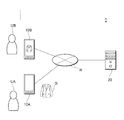
図1は、実施形態における情報処理システム1の各構成例を示す図である。図1に示す例では、各ユーザが利用する各情報処理装置10A、10B、電子商取引プラットフォームを管理するサーバ20がネットワークNを介して接続される。なお、情報処理装置10A、10Bは、任意の数がネットワークNに接続される。
<System application example>
FIG. 1 is a diagram showing each configuration example of the
情報処理装置10A、10Bは、例えば、スマートフォン、携帯電話(フィーチャーフォン)、コンピュータ、PDA(Personal Digital Assistant)などであり、内蔵又は外付けにより撮影装置を有する。情報処理装置10A、10Bは、特に区別しない場合は、情報処理装置10、又はユーザ端末10とも表記する。
The
情報処理装置20は、例えばサーバであり、1又は複数の装置により構成されてもよい。また、情報処理装置20は、電子商取引プラットフォームを管理し、また、出品商品の画像を管理して、疑似3Dモデルを閲覧者に提供することも可能である。以下、情報処理装置20は、サーバ20とも表記する。
The
図1に示す例では、ユーザ端末10Aは、例えば第1ユーザUAが利用する端末であり、カメラ機能を起動し、出品対象の商品Gを撮影し、撮影された画像をサーバ20に送信する。このとき、ユーザ端末10Aは、公知の自己位置推定処理を実行し、3次元空間内の自端末の位置を推定し、3次元空間内の商品Gの位置と自己位置との相対位置を算出する。算出された相対位置を示す相対位置情報は、画像とともにサーバ20に送信される。
In the example shown in FIG. 1, the
サーバ20は、受信した画像と相対位置情報とを関連付けて管理する。このとき、サーバ20は、商品Gの商品情報を管理するとともに、商品IDに関連付けて、画像と相対位置情報とのセットを複数管理する。これにより、サーバ20は、商品ごとに、画像と相対位置情報とのセットを複数含む疑似3Dモデルを構築することができる。
The
ユーザ端末10Bは、例えば第2ユーザUBが利用する端末であり、ユーザ操作に基づいて、出品中の商品から閲覧したい商品を選択し、選択した商品の商品IDをサーバ20に送信する。ユーザ端末10Bは、送信した商品IDに対応する疑似3Dモデルをサーバ20から受信し、疑似3Dモデルを画面に表示制御する。表示の仕方としては、例えば、疑似3Dモデルを起動中のカメラの画像にAR表示制御してもよいし、所定のツールを用いて表示制御してもよい。
The
<構成の一例>
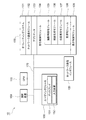
図2は、実施形態に係るユーザ端末10の一例を示すブロック図である。ユーザ端末10は、1つ又は複数の処理装置(CPU)110、1つ又は複数のネットワーク又は他の通信インタフェース120、メモリ130、ユーザインタフェース150、撮影装置160、及びこれらの構成要素を相互接続するための1つ又は複数の通信バス170を含む。
<Example of configuration>
FIG. 2 is a block diagram showing an example of the
ユーザインタフェース150は、例えば、ディスプレイ装置151及び入力装置(キーボード及び/又はマウス又は他の何らかのポインティングデバイス等)152を備えるユーザインタフェース150である。また、ユーザインタフェース150は、タッチパネルでもよい。
The
メモリ130は、例えば、DRAM、SRAM、DDR RAM又は他のランダムアクセス固体記憶装置などの高速ランダムアクセスメモリであり、また、1つ又は複数の磁気ディスク記憶装置、光ディスク記憶装置、フラッシュメモリデバイス、又は他の不揮発性固体記憶装置などの不揮発性メモリでもよい。
The
また、メモリ130の他の例として、CPU110から遠隔に設置される1つ又は複数の記憶装置でもよい。ある実施形態において、メモリ130は次のプログラム、モジュール及びデータ構造、又はそれらのサブセットを格納する。
Further, as another example of the
オペレーティングシステム131は、例えば、様々な基本的なシステムサービスを処理するとともにハードウェアを用いてタスクを実行するためのプロシージャを含む。
ネットワーク通信モジュール132は、例えば、ユーザ端末10を他のコンピュータに、1つ又は複数のネットワーク通信インタフェース120及び、インターネット、他の広域ネットワーク、ローカルエリアネットワーク、メトロポリタンエリアネットワークなどの1つ又は複数の通信ネットワークを介して接続するために使用され、送受信モジュールとしても使用されうる。
The
アプリデータ133は、ユーザが電子商取引プラットフォームを利用する際に処理されるデータを含む。例えば、アプリデータ133は、ユーザ情報や、撮影装置160を起動中に撮影(又は撮像)された画像や、サーバ20から取得された情報を含む。他にも、疑似3Dモデルの情報などがアプリデータ133に含まれる。
The
以下、取引制御モジュール134及び表示制御モジュール139は、疑似3Dモデルを生成するための撮影側の処理と、疑似3Dモデルを表示するための表示側の処理とで、それぞれの処理が異なるため、場合分けをして説明する。
Hereinafter, the
(撮影側の処理)
取引制御モジュール134は、サーバ20が提供する電子商取引プラットフォームにおける商品の売買などの取引を制御する。例えば、取引制御モジュール134は、疑似3Dモデルの生成に関する撮影制御モジュール135、地図生成モジュール136、位置推定モジュール137、取得モジュール138を少なくとも有する。
(Processing on the shooting side)
The
撮影制御モジュール135は、第1ユーザ等の操作に応じてカメラ機能を起動させ、撮影装置160により、対象物が撮影された画像を取得し、サーバ20に送信するよう制御する。カメラ起動後にレンズを通して取得される画像は、表示制御モジュール139により画面に表示制御されてもよい。
The
地図生成モジュール136は、レンズを通して取得される画像に含まれる特徴点群を用いて3次元空間のモデルを作成する。例えば、地図生成モジュール136は、周囲環境マッピング処理や、環境地図生成処理と呼ばれる公知の技術を用いて、撮影中の画像から3次元空間を生成する。
The
位置推定モジュール137は、生成された3次元空間内のユーザ端末10の自己位置を推定する。例えば、位置推定モジュール137は、ユーザ端末10(又は撮影装置160)の位置が3次元空間内でどこにいるのかを推定する自己位置推定処理と呼ばれる公知の技術を用いてもよい。
The
なお、例えば、地図生成モジュール136及び位置推定モジュール137は、SLAM(Simultaneous Localization and Mapping)等の技術を用いて、画像をもとに平面や物体を認識して空間を作成する周囲環境マッピング処理と、撮影している撮影装置160の位置が空間内でどこにいるのかを推定する自己位置推定処理とを同時に行ってもよい。
For example, the
また、地図生成モジュール136及び位置推定モジュール137は、Apple(登録商標)社が提供するARKit、Google社が提供するARCoreなどを用いて、VIO(Visual-Inertial Odometry)に基づき周囲環境マッピング処理と、自己位置推定処理とを行ってもよい。VIO技術では、ユーザ端末10の加速度センサやジャイロセンサからのセンシング情報も用いて、自己位置推定を行う。
In addition, the
取得モジュール138は、対象物に関連して3次元空間内に設定される基準位置と、3次元空間内で推定されたユーザ端末10の自己位置との相対位置を取得する。例えば、取得モジュール138は、検出された特徴群を用いて、対象物が存在すると推定される面を基準面とし、基準面上における対象物の中心を基準位置として設定してもよい。また、取得モジュール138は、簡易的に、撮影時の対象物は画面の中心にあると予測し、画面の中心を基準位置として設定してもよく、その他の基準で基準位置を設定してもよい。なお、取得モジュール138の相対位置情報を取得する処理は、位置推定モジュール137が実行してもよい。
The
取引制御モジュール134は、ユーザ端末10の位置又は角度が変更される所定のタイミングごとに、この位置又は角度により撮影された画像と、この位置又は角度に対応して取得された相対位置情報とをサーバ20に送信するよう制御する。これにより、ネットワーク通信モジュール132は、撮影される所定のタイミングで、画像及び相対位置情報をサーバ20に送信することが可能になる。所定のタイミングは、撮影ボタンなどが押下され、静止画像が取得されたタイミングでもよい。
The
表示制御モジュール139は、画面に対して設定された基準位置に基づく第1オブジェクトを画面に表示制御し、第1オブジェクトを用いて対象物の未撮影の位置を視認可能に表示制御する。例えば、表示制御モジュール139は、対象物を略覆うような略半球状で半透明の第1オブジェクトの中心が基準位置になるように表示制御する。
The
次に、表示制御モジュール139は、撮影された位置及び角度に対応する第1オブジェクトの表面の所定領域を識別可能にする。これにより、撮影済みの領域と未撮影の領域とを区別することができ、第1ユーザに対し、未撮影の位置及び角度で撮影するための案内を提供することができる。なお、第1オブジェクトは半球状に限らず、ボックス型、楕円型、任意の形状を有するオブジェクトであればよい。また、所定領域の識別方法は、色の違いを用いたり、枠で囲ったりすること等が考えられる。
Next, the
これにより、簡便な処理を用いて疑似3Dモデルを適切に生成することが可能になる。例えば、対象物に対して撮影済み及び未撮影のそれぞれの領域を識別可能にすることで、未撮影の領域を第1ユーザに案内することができ、疑似3Dモデルを構築するために十分な量の画像を視覚的にわかりやすく表示することができる。 This makes it possible to appropriately generate a pseudo 3D model using a simple process. For example, by making each of the photographed and unphotographed areas identifiable with respect to the object, the unphotographed area can be guided to the first user, which is a sufficient amount for constructing a pseudo 3D model. Images can be displayed visually in an easy-to-understand manner.
また、表示制御モジュール139は、撮影済の位置又は角度を示す第2オブジェクトを、第1オブジェクトに関連付けて表示制御することを含んでもよい。例えば、表示制御モジュール139は、撮像された画像の縮小版である第2オブジェクトを、撮影された位置及び角度に対応する第1オブジェクトの位置に表示制御する。より具体的には、表示制御モジュール139は、第2オブジェクトの中心を、自己位置と基準位置との線分が第1オブジェクトに交わる位置に表示制御する。第2オブジェクトの表示の仕方は、第1オブジェクトの表面に沿ってもよいし、沿わなくてもよい。
Further, the
これにより、第1オブジェクトとは異なる第2オブジェクトを用いて、撮影された範囲を視覚的に表現することが可能になる。また、第2オブジェクトとして、撮影された画像を用いることで、どの位置及び角度からどのような画像が表現できるかを視認させつつ、他の位置及び角度での撮影を第1ユーザにガイドすることが可能になる。なお、第2オブジェクトは、撮影された画像ではなく、撮影された領域に関連するようなオブジェクトでもよい。 This makes it possible to visually represent the photographed range by using a second object different from the first object. In addition, by using the captured image as the second object, it is possible to guide the first user to shoot at another position and angle while visually recognizing what kind of image can be expressed from which position and angle. Becomes possible. The second object may be an object related to the captured area instead of the captured image.
また、表示制御モジュール139は、奥行き方向を用いて、第2オブジェクトを重畳して表示制御することを含んでもよい。例えば、第1ユーザが、同じ位置、同じ角度から撮影した画像でも、ズームを用いて遠近を変更した画像や、角度は同じでも遠近の位置が異なる画像を撮影したとする。このとき、表示制御モジュール139は、奥行き方向を用いて、第1オブジェクトに近いほど、拡大された対象物に関する第2オブジェクト、第1オブジェクトから離れるほど、縮小された対象物に関する第2オブジェクトが表示されるように表示制御する。
Further, the
これにより、同じ角度から位置又はズームの異なる複数の画像が撮影された場合でも、奥行き方向を用いて適切に撮影領域又は未撮影領域を表現することが可能になる。 As a result, even when a plurality of images having different positions or zooms are captured from the same angle, it is possible to appropriately represent the captured region or the unphotographed region using the depth direction.
また、取得モジュール138は、対象物のカテゴリ情報を取得してもよい。例えば、取得モジュール138は、ユーザ端末10に入力された対象物のカテゴリ情報(例えば商品のカテゴリ)を取得してもよい。
Further, the
この場合、表示制御モジュール139は、カテゴリ情報が示すカテゴリに応じて、第1オブジェクトを用いての未撮影の位置の表示方法を変更してもよい。例えば、カテゴリ情報が車、家具、高級品などの購入者が細部を気にするような商品の場合には、表示制御モジュール139は、矢印などにより近接した位置での撮像を案内したりする。また、対象物のカテゴリに応じて、対象物の撮像する位置や角度を変更するような案内(例えば矢印や吹き出しコメント等)をしたりする。また、表示制御モジュール139は、第1オブジェクトの表面の色などを用いて、その領域の色が濃い方が撮影を要することを示すなど、第1オブジェクト自体を用いて表示方向を変更してもよい。
In this case, the
これにより、対象物のカテゴリごとに、必要十分な画像を第1ユーザに知らせることができ、結果的に、対象物のカテゴリごとに、適切な疑似3Dモデルを作成することが可能になる。 As a result, the necessary and sufficient images can be notified to the first user for each category of the object, and as a result, an appropriate pseudo 3D model can be created for each category of the object.
また、表示制御モジュール139により表示される第2オブジェクトのサイズは、撮影された画像に含まれる対象物のサイズに応じて変更されてもよい。例えば、表示制御モジュール139は、画像内の対象物が示す面積が大きければ、第2オブジェクトのサイズを大きくし、画像内の対象物が占める面積が小さければ、第2オブジェクトのサイズを小さくする。
Further, the size of the second object displayed by the
これにより、第2オブジェクトのサイズを用いて、どのようなサイズ感の対象物の画像が撮像されたかを第1ユーザに知らせることができる。 Thereby, the size of the second object can be used to inform the first user of what kind of size the image of the object has been captured.
(表示側の処理)
取引制御モジュール134は、電子商取引プラットフォームにおいて出品された対象物(例えば商品)を公開し、ユーザに対象物の情報等を公開する。ここで、第2ユーザが、公開された対象物に興味を持ち、一つの対象物の閲覧等を選択したとする。
(Processing on the display side)
The
取引制御モジュール134は、選択された対象物を特定し、その対象物の識別情報(対象物ID、例えば商品ID)を、ネットワーク通信モジュール132を介してサーバ20に送信するよう制御する。
The
取引制御モジュール134は、サーバ20から、送信した対象物IDに関連付けられる対象物が撮影された各画像、及び各相対位置情報を、ネットワーク通信モジュール134を介して受信する。相対位置情報は、対象物を撮影したユーザ端末10が3次元空間内のどの位置にいるかが推定された自己位置と、3次元空間内の基準位置との相対位置を示す情報を含む。なお、各画像及び各相対位置情報の情報群は、疑似3Dモデルを構成する情報である。
The
表示制御モジュール139は、画面内に基準位置を設定し、基準位置に対応して設定された第1画像を表示制御し、基準位置と第1画像との相対位置を変更するユーザ操作に応じて、変更後の相対位置に対応する画像を画面に表示制御する。
The
例えば、表示制御モジュール139は、撮影装置160を起動させ、撮影装置160から取得した像を画面に表示制御する。このとき、地図生成モジュール136及び位置推定モジュール137は、3次元空間のモデルを生成したり、自己位置を推定したりする。表示制御モジュール139は、3次元空間内に基準位置を設定する。基準位置は、机やテーブルなどの平面の中心や、画面の中心などである。
For example, the
表示制御モジュール139は、設定された基準位置に、予め最初の画像として設定された第1画像を画面に重畳表示する。これにより、画面を介して見る現実世界のテーブルや机等の上に、対象物がAR表示されることになる。第1画像は、例えば、対象物の正面画像が設定されるとよく、これに限らず、最初にサーバ20に登録された画像などでもよい。
The
表示制御モジュール139は、ユーザがユーザ端末10の位置や角度を変更することで、その位置及び角度における3次元空間内の位置及び角度を推定し、推定された位置及び角度と基準位置との位置関係に最も近い相対位置情報を特定し、特定された相対位置情報に関連付けられた画像を画面に表示制御する。
The
これにより、第2ユーザは、撮影装置160を起動して、例えば基準位置にAR表示された対象物に対し、ユーザ端末10の位置や角度を変えることで、その位置や角度に応じた画像がAR表示され、いろいろな位置や角度で撮影された画像を見ることが可能になる。
As a result, the second user activates the photographing
また、表示制御モジュール139は、所定のツールを用いて疑似3Dモデルを表示制御してもよい。例えば、表示制御モジュール139は、疑似3Dモデルを表示するためのツールを起動し、最初の一枚として設定された第1画像を画面に表示制御する。
Further, the
この場合、表示制御モジュール139は、ユーザ操作に応じて、表示対象の画像を特定し、特定した画像を画面に表示制御する。例えば、タッチパネル上で、縦方向又は横方向等へのフリック操作又はドラッグ操作等が検知されると、表示制御モジュール139は、フリック操作等の操作量に対応する移動量に応じた位置や角度と基準位置との位置関係に最も近い相対位置情報を有する画像を特定し、特定された画像を表示制御する。また、表示制御モジュール139は、ツール上に上下左右の矢印などを表示し、この矢印の操作により、表示中の画像の相対位置情報から操作された矢印方向の相対位置情報を有する画像を表示するように制御してもよい。
In this case, the
これにより、ユーザ端末10を移動させなくても、画面上の直感的な操作に応じて適切な画像を表示することができる。
As a result, an appropriate image can be displayed according to an intuitive operation on the screen without moving the
また、表示制御モジュール139は、基準位置に基づく第1オブジェクトを画面に表示制御し、この第1オブジェクトを用いて未表示の画像の位置を視認可能に表示制御してもよい。例えば、表示制御モジュール139は、上述したような第1オブジェクトを画面に表示し、第2ユーザが見た画像に対応する第1オブジェクトの表面領域について、色を変えるなどして、第2ユーザに未表示の面を視認可能にする。
Further, the
これにより、第2ユーザに対し、第1オブジェクトを用いて、表示されていない画像を知らせることができる。さらに、撮影時に用いる第1オブジェクトを流用することができるため、実装が容易である。 As a result, the second user can be notified of the image that is not displayed by using the first object. Further, since the first object used at the time of shooting can be diverted, the implementation is easy.
また、表示制御モジュール139は、各画像に対するユーザの表示回数を示す度合を第1オブジェクトに関連付けて表示制御してもよい。例えば、表示制御モジュール139は、ヒートマップのように、第1オブジェクトの表面の色の濃さを用いてユーザの表示回数を表現してもよい。この場合、どの画像が何回表示されたかの情報については、ユーザ端末10は、サーバ20から疑似3Dモデルを受信する際に合わせて受信しておく。
Further, the
なお、1つ又は複数の処理装置(CPU)110は、メモリ130から、必要に応じて各モジュールを読み出して実行する。例えば、1つ又は複数の処理装置(CPU)110は、メモリ130に格納されているネットワーク通信モジュール132を実行することで、通信部を構成してもよい。また、1つ又は複数の処理装置(CPU)110は、メモリ130に格納されている取引制御モジュール134、撮影制御モジュール135、地図生成モジュール136、位置推定モジュール137、取得モジュール138、及び表示制御モジュール139をそれぞれ実行することで、取引制御部、撮影制御部、地図生成部、位置推定部、及び表示制御部を構成してもよい。
The one or more processing devices (CPUs) 110 read each module from the
他の実施形態において、取引制御モジュール134、撮影制御モジュール135、地図生成モジュール136、位置推定モジュール137、取得モジュール138、及び表示制御モジュール139は、ユーザ端末10のメモリ130に格納されるスタンドアロンアプリケーションであってもよい。スタンドアロンアプリケーションとしては、限定はされないが、取引制御アプリケーション、撮影制御アプリケーション、地図生成アプリケーション、位置推定アプリケーション、表示制御アプリケーションが挙げられる。さらに他の実施形態において、取引制御モジュール134、撮影制御モジュール135、地図生成モジュール136、位置推定モジュール137、取得モジュール138、及び表示制御モジュール139は別のアプリケーションへのアドオン又はプラグインであってもよい。
In another embodiment, the
上記に示した要素の各々は、先述の記憶装置の1つ又は複数に格納され得る。上記に示したモジュールの各々は、上述される機能を実行するための命令のセットに対応する。上記に示したモジュール又はプログラム(すなわち、命令のセット)は別個のソフトウェアプログラム、プロシージャ又はモジュールとして実装される必要はないとともに、従ってこれらのモジュールの様々なサブセットは様々な実施形態で組み合わされるか、或いは再構成されてもよい。ある実施形態において、メモリ130は上記に示されるモジュール及びデータ構造のサブセットを格納し得る。さらには、メモリ130は上述されない追加的なモジュール及びデータ構造を格納し得る。
Each of the elements shown above may be stored in one or more of the aforementioned storage devices. Each of the modules shown above corresponds to a set of instructions for performing the functions described above. The modules or programs (ie, sets of instructions) shown above do not need to be implemented as separate software programs, procedures or modules, so various subsets of these modules may be combined or combined in different embodiments. Alternatively, it may be reconstructed. In certain embodiments,
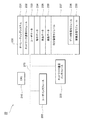
図3は、実施形態に係るサーバ20の一例を示すブロック図である。サーバ20は、1つ又は複数の処理装置(CPU)210、1つ又は複数のネットワーク又は他の通信インタフェース220、メモリ230、及びこれらの構成要素を相互接続するための1つ又は複数の通信バス270を含む。
FIG. 3 is a block diagram showing an example of the
サーバ20は、場合によりユーザインタフェース250を含んでもよく、これとしては、ディスプレイ装置(図示せず)、及びキーボード及び/又はマウス(又は他の何らかのポインティングデバイス等の入力装置。図示せず)を挙げることができる。
The
メモリ230は、例えば、DRAM、SRAM、DDR RAM又は他のランダムアクセス固体記憶装置などの高速ランダムアクセスメモリであり、また、1つ又は複数の磁気ディスク記憶装置、光ディスク記憶装置、フラッシュメモリデバイス、又は他の不揮発性固体記憶装置などの不揮発性メモリでもよい。
The
また、メモリ230の他の例は、CPU210から遠隔に設置される1つ又は複数の記憶装置を挙げることができる。ある実施形態において、メモリ230は次のプログラム、モジュール及びデータ構造、又はそれらのサブセットを格納する。
Further, another example of the
オペレーティングシステム231は、例えば、様々な基本的なシステムサービスを処理するとともにハードウェアを用いてタスクを実行するためのプロシージャを含む。
ネットワーク通信モジュール232は、例えば、サーバ20を他のコンピュータに、1つ又は複数の通信ネットワークインタフェース220及びインターネット、他の広域ネットワーク、ローカルエリアネットワーク、メトロポリタンエリアネットワークなどの1つ又は複数の通信ネットワークを介して接続するために使用され、送受信モジュールとしても使用されうる。
The
ユーザデータ233は、電子商取引プラットフォームを利用するユーザの情報を含む。例えば、ユーザデータ233は、各ユーザIDに関連付けて、ユーザ名称、住所、電話番号、ニックネーム等を含む。ユーザデータ233は、図4を用いて後述する。
The
取引データ234は、電子商取引プラットフォームにおける売買取引の情報を含む。例えば、取引データ234は、取引IDに関連付けて、商品ID、買い手のユーザID、売り手のユーザID、成約日時などを含む。取引データ234は、図5を用いて後述する。
The
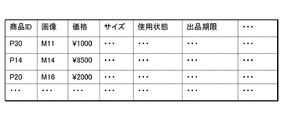
商品データ235は、電子商取引プラットフォームに登録された商品情報を含む。例えば、商品データ235は、出品された商品ごとに、商品ID、画像、価格、サイズ、使用状態、出品期限などを含む。商品データ235は、図6を用いて後述する。
The
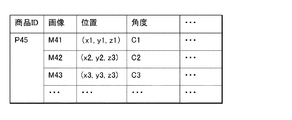
画像データ236は、疑似3Dモデルを生成するために用いられる画像及び相対位置情報に関する情報を含む。例えば、画像データ236は、商品IDに関連付けて、画像及び相対位置情報を示す位置情報、角度情報などを含む。画像データ236は、図7を用いて後述する。 The image data 236 includes information about the image and relative position information used to generate the pseudo 3D model. For example, the image data 236 includes position information, angle information, and the like indicating an image and relative position information in association with the product ID. The image data 236 will be described later with reference to FIG. 7.
取引管理モジュール237は、電子商取引プラットフォームにおける商品の売買処理を管理する。例えば、取引管理モジュール237は、商品説明を補助するための商品の疑似3Dモデルの生成、表示に関連して、データ管理モジュール238、画像送信モジュール239を有する。
The
データ管理モジュール238は、疑似3Dモデルを生成するための画像及び相対位置情報を、対象物ID(例えば商品ID)に関連付けて画像データ236として管理する。また、データ管理モジュール238は、ユーザデータ233、取引データ234、商品データ235のデータについても管理する。
The
また、データ管理モジュール238は、画像データ236に含まれる各画像が、ユーザ端末10に表示された回数をカウントしてもよい。ユーザは、他のユーザも含まれる。これにより、サーバ20は、良く表示されている画像を把握することができる。
Further, the
画像送信モジュール239は、取引管理モジュール237が、ユーザから対象物IDを取得した場合、この対象物IDに対応する疑似3Dモデルに対応する各画像及び各相対位置情報を、対象物IDを送信したユーザ端末10に送信する。
When the
なお、上述した1つ又は複数の処理装置(CPU)210は、メモリ230から、必要に応じて各モジュールを読み出して実行する。例えば、1つ又は複数の処理装置(CPU)210は、メモリ230に格納されているネットワーク通信モジュール220を実行することで、通信部を構成してもよい。また、1つ又は複数の処理装置(CPU)210は、メモリ230に格納されている取引管理モジュール237、データ管理モジュール238、及び画像送信モジュール239をそれぞれ実行することで、取引管理部、データ管理部、及び画像送信部を構成してもよい。
The one or more processing units (CPU) 210 described above read each module from the
上記に示した要素の各々は先述される記憶装置の1つ又は複数に格納され得る。上記に示したモジュールの各々は、上述される機能を実行するための命令のセットに対応する。上記に示したモジュール又はプログラム(すなわち、命令のセット)は別個のソフトウェアプログラム、プロシージャ又はモジュールとして実装される必要はないとともに、従ってこれらのモジュールの様々なサブセットが様々な実施形態で組み合わされるか、或いは再構成され得る。ある実施形態において、メモリ230は上記に示されるモジュール及びデータ構造のサブセットを格納し得る。さらには、メモリ230は上述されない追加的なモジュール及びデータ構造を格納し得る。
Each of the elements shown above may be stored in one or more of the storage devices described above. Each of the modules shown above corresponds to a set of instructions for performing the functions described above. The modules or programs (ie, sets of instructions) shown above do not need to be implemented as separate software programs, procedures or modules, and thus various subsets of these modules are combined or combined in various embodiments. Alternatively, it can be reconstructed. In certain embodiments,
図3は「サーバ」を示すが、図3は、本明細書に記載される実施形態の構造的な概略としてよりも、サーバのセットに存在し得る様々な特徴についての説明が意図されている。実際には、当業者により認識されるとおり、別個に示される項目が組み合わされ得るであろうとともに、ある項目が別個にされ得るであろう。例えば、図3において別個に示される項目は単一サーバ上に実装され得るであろうとともに、単一の項目が1台又は複数のサーバにより実装され得るであろう。 Although FIG. 3 shows a “server”, FIG. 3 is intended to describe various features that may be present in a set of servers, rather than as a structural outline of the embodiments described herein. .. In practice, as will be appreciated by those skilled in the art, items shown separately could be combined and some items could be separated. For example, the items shown separately in FIG. 3 could be implemented on a single server, and a single item could be implemented by one or more servers.
<データ構造の一例>
図4は、実施形態に係るユーザデータ233の一例を示す図である。ユーザデータ233には、電子商取引プラットフォームを運営、管理する者により作成された各会員ユーザに関する情報が管理される。「ユーザID」には、サーバ20がユーザを一意に識別するためのユーザ識別情報(ユーザID:Identifier)が含められる。「ユーザ情報」には、ユーザのパーソナルな情報である「氏名」、「住所」、「電話番号」などが含められる。なお、ユーザIDは、ユーザ情報の一つに含められてもよい。
<Example of data structure>
FIG. 4 is a diagram showing an example of
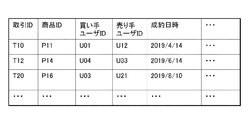
図5は、実施形態に係る取引データ234の一例を示す図である。取引データ234の「取引ID」には、売買の取引開始に応じて付与される取引IDが含められる。「商品ID」には、出品された商品の識別情報が含められる。「買い手ユーザID」には、その商品の買い手であるユーザのユーザIDが含められる。「売り手ユーザID」には、その商品を出品したユーザのユーザIDが含められる。「成約日時」には、売買が成立した日時情報が含められる。なお、取引データ234は、その他のデータを含んでもよい。
FIG. 5 is a diagram showing an example of
図6は、実施形態に係る商品データ235の一例を示す図である。商品データ235の「商品ID」には、出品された商品の識別情報が含められる。「画像」には、その商品の画像データが含められる。「価格」には、その商品の価格が含められる。「サイズ」には、その商品のサイズ情報が含められる。「使用状態」は、商品の使用状態が含められ、複数のランクなどにより表現される使用状態でもよい。「出品期限」には、出品された商品の購入依頼を受け付ける期限を示す情報が含められる。なお、商品データ235は、商品のカテゴリやブランド、商品名などを含んでもよい。
FIG. 6 is a diagram showing an example of
図7は、実施形態に係る画像データ236の一例を示す図である。画像データ236の「商品ID」には、出品された商品の識別情報が含められる。「画像」には、その商品の画像データが含められる。「位置」には、3次元空間内の自己位置と基準位置との相対位置を示す情報が含められる。「角度」には、撮影時のユーザ端末10の角度(例えば基準面(地面等)を0度としたときの角度)を示す情報が含められる。相対位置情報に角度情報を含めてもよい。なお、画像データ236は、その他のデータを含んでもよい。
FIG. 7 is a diagram showing an example of image data 236 according to the embodiment. The "product ID" of the image data 236 includes identification information of the exhibited product. The "image" includes image data of the product. The "position" includes information indicating a relative position between the self-position and the reference position in the three-dimensional space. The "angle" includes information indicating the angle of the
位置情報は、例えば、3次元空間内の座標系において、自己位置の座標と基準位置の座標との差分により求められる。角度は、自己位置における撮影装置160の向きを示し、例えば、ユーザ端末10に備えられるジャイロセンサなどにより計測されたユーザ端末10の傾きなどを示す。上述した図4〜7に示すデータ構造は、あくまでも一例であって、この例に限られない。
The position information is obtained, for example, by the difference between the coordinates of the self position and the coordinates of the reference position in the coordinate system in the three-dimensional space. The angle indicates the orientation of the photographing
<動作説明>
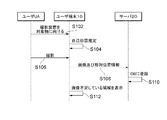
次に、実施形態に係る情報処理システム1の動作について説明する。図8は、実施形態に係る情報処理システム1における疑似3Dモデルの生成処理の一例を示すシーケンス図である。
<Operation explanation>
Next, the operation of the
(ステップS102)
ユーザUAは、ユーザ端末10に設けられた撮影装置160を起動し、撮影装置160のレンズを対象物に向ける。
(Step S102)
The user UA activates the photographing
(ステップS104)
ユーザ端末10の地図生成モジュール136及び位置推定モジュール137は、3次元空間のモデルを生成し、この3次元空間内におけるユーザ端末10の自己位置を推定する。
(Step S104)
The
(ステップS106)
ユーザUAは、自身が対象物を撮影したい位置又は角度で、ユーザ端末10に撮影を指示する。例えば、撮影の指示方法としては、撮影ボタンの押下、又はジェスチャや音声などでの指示でもよい。
(Step S106)
The user UA instructs the
(ステップS108)
ユーザ端末10は、撮影時の画像を取得し、3次元空間内における撮影時のユーザ端末10の自己位置と、対象物に関する基準位置との相対位置を示す相対位置情報を取得し、画像及び相対位置情報をサーバ20に送信する。
(Step S108)
The
(ステップS110)
サーバ20のデータ管理モジュール238は、取得した画像及び相対位置情報を対象物IDに関連付けてデータベースに登録する。例えば、サーバ20は、取得した画像及び位置情報をメモリ230に保存する。
(Step S110)
The
(ステップS112)
ユーザ端末10の表示制御モジュール139は、第1オブジェクトなどを画面にAR表示することで、未撮影の領域や画像が不足している領域を視認可能にして、次に撮影すべき位置や角度を案内表示する(例えば図10の画面D12参照)。
(Step S112)
The
次に、上述した案内にしたがって、ユーザにより新たな画像が撮影されると、ステップS106、S108、S110の処理が繰り返し実行される。 Next, when a new image is taken by the user according to the above-mentioned guidance, the processes of steps S106, S108, and S110 are repeatedly executed.
以上の処理により、未撮影の領域や画像が不足している領域を案内することで、サーバ20側では、様々な位置や角度での画像を取得することができ、適切な疑似3Dモデルの生成が可能になる。
By guiding the unphotographed area and the area where the image is insufficient by the above processing, the
図9は、実施形態に係る情報処理システム1における疑似3Dモデルの表示処理の一例を示すシーケンス図である。
FIG. 9 is a sequence diagram showing an example of display processing of a pseudo 3D model in the
(ステップS202)
ユーザUBは、例えば、電子商取引プラットフォームで閲覧したい対象物を見つけ、その対象物を選択したとする。
(Step S202)
It is assumed that the user UB finds an object to be browsed on the electronic commerce platform and selects the object.
(ステップS204)
ユーザ端末10の取引制御モジュール134は、選択された対象物の対象物IDを特定し、対象物IDをサーバ20に送信するよう制御する。
(Step S204)
The
(ステップS206)
サーバ20のデータ管理モジュール238は、取得した対象物IDに関連付けられた疑似3Dモデルを構築する各画像及び各相対位置情報を取得する。
(Step S206)
The
(ステップS208)
サーバ20の取引管理モジュール237は、疑似3Dモデルの各画像及び各相対位置情報をユーザ端末10に送信するよう制御する。
(Step S208)
The
(ステップS210)
ユーザUBは、撮影装置160を起動し、又は撮影装置160が起動されてから、対象物を見たい場所に、撮影装置160の画角が入るように撮影装置160のレンズを向ける。
(Step S210)
The user UB activates the photographing
(ステップS212)
ユーザ端末10の地図生成モジュール136及び位置推定モジュール137は、3次元空間のモデルを生成し、この3次元空間内におけるユーザ端末10の自己位置を推定する。
(Step S212)
The
(ステップS214)
ユーザ端末10の表示制御モジュール139は、画面内に設定された基準位置に、予め設定された第1画像を表示する。例えば、第1画像は、各画像のうち、最初に撮影された画像又は対象物を正面から撮影した画像が好適である(例えば、図11参照)。
(Step S214)
The
この後、ユーザ操作に応じて、様々な角度で撮影された画像が画面に表示されることで、ユーザUBは、対象物の詳細を知ることができる。なお、画像がAR表示される場合、ユーザ端末10は、その都度、自己位置を推定し、推定された自己位置や角度をサーバ20に送信することで、サーバ20から1つの画像を取得し、その画像をAR表示するようにしてもよい。
After that, the user UB can know the details of the object by displaying the images taken at various angles on the screen according to the user operation. When the image is AR-displayed, the
なお、疑似3Dモデルの表示方法については、AR表示以外にも、所定の表示ツールを用いて表示することも可能である(例えば図12参照)。この場合、ユーザが画面上を操作することにより、表示される画像を切り替えることが可能である。 As for the display method of the pseudo 3D model, it is possible to display it by using a predetermined display tool in addition to the AR display (see, for example, FIG. 12). In this case, the displayed image can be switched by the user operating on the screen.
以上の処理により、、電子商取引プラットフォームにおいて、出品中の対象物について、ユーザが撮影した画像に基づき生成された疑似3Dモデルを表示可能にすることで、様々な角度や位置での対象物の画像を表示することができ、閲覧者に対し、対象物の使用状態などを把握しやすくすることができる。 Through the above processing, the electronic commerce platform can display a pseudo 3D model generated based on the image taken by the user for the object being exhibited, so that the image of the object at various angles and positions can be displayed. Can be displayed, making it easier for the viewer to understand the usage status of the object.
<表示画面の具体例>
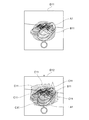
図10は、実施形態に係る撮影中の表示画面の具体例を説明するための図である。図10に示す画面D11には、例えば出品対象の靴A1が、撮影装置160の起動により画面を介して表示される例を示す。この例では、実際に撮影画像を得る前に、自己位置推定が行われ、画面中心を基準位置として第1オブジェクトB11が画面に表示されている。なお、第1オブジェクトB11は、略半球状のオブジェクトであり、基準位置を中心点にし、X軸、Y軸、Z軸が表示される。
<Specific example of display screen>
FIG. 10 is a diagram for explaining a specific example of the display screen during shooting according to the embodiment. The screen D11 shown in FIG. 10 shows an example in which, for example, the shoe A1 to be exhibited is displayed via the screen when the photographing
次に、ユーザが様々な角度や位置で靴A1を撮影すると、画面D12に、撮影された位置及び角度に対応する第2オブジェクトC11が第1オブジェクトにB11に関連して表示される。第2オブジェクトは、撮影された数だけ表示され、撮影位置や角度が表現可能なオブジェクトであればよい。 Next, when the user photographs the shoe A1 at various angles and positions, the second object C11 corresponding to the photographed position and angle is displayed on the screen D12 in relation to the B11 on the first object. The second object may be any object that is displayed as many as the number of shots and can express the shooting position and angle.
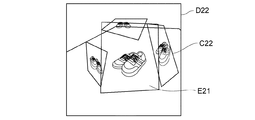
図11A〜Cは、実施形態に係る疑似3DモデルをAR表示する例を示す図である。図11Aは、撮影中の画面を流用する例を示す。図11Aに示す例では、画面D21に、撮影中と同じように、第1オブジェクトB21と第2オブジェクトC21とが表示される。最初に表示される第1画像である画像E21は、疑似3Dモデルに登録された各画像のうちの1つの画像であり、例えば、ユーザにより最初に撮影された画像や正面画像などである。 11A to 11C are diagrams showing an example in which the pseudo 3D model according to the embodiment is AR-displayed. FIG. 11A shows an example of diverting the screen during shooting. In the example shown in FIG. 11A, the first object B21 and the second object C21 are displayed on the screen D21 as in the case of shooting. The image E21, which is the first image displayed first, is one of the images registered in the pseudo 3D model, and is, for example, an image first taken by the user, a front image, or the like.
例えば、第1画像E21及び第1オブジェクトB21の中心が、画面内(又は3次元空間内)に設定された基準位置に位置するように表示される。第1画像の相対位置情報と、他の画像の相対位置情報との関係から、各第2オブジェクトC21の表示位置が決定される。 For example, the center of the first image E21 and the first object B21 is displayed so as to be located at a reference position set in the screen (or in the three-dimensional space). The display position of each second object C21 is determined from the relationship between the relative position information of the first image and the relative position information of the other images.
閲覧者は、画面D21を見ることにより、どの位置や角度からの画像があるかを容易に把握することができ、自分が見たい画像をすぐに選択してみることができる。さらに、撮影中と同じオブジェクトを流用できるため、メモリ削減や処理負荷軽減にも貢献することができる。 By looking at the screen D21, the viewer can easily grasp from which position or angle the image is present, and can immediately select the image he / she wants to see. Furthermore, since the same object as during shooting can be used, it can contribute to memory reduction and processing load reduction.
図11Bは、AR表示する際に、撮影画像を第2オブジェクトとして表示する例を示す。図11Bに示す例では、第1画像である画像E21を中心に、撮影された位置や角度に対応する位置や角度に、縮小された画像が第2オブジェクトC22として複数表示される。 FIG. 11B shows an example in which a captured image is displayed as a second object when AR is displayed. In the example shown in FIG. 11B, a plurality of reduced images are displayed as the second object C22 at positions and angles corresponding to the captured positions and angles, centering on the image E21 which is the first image.
例えば、第1画像E21の中心が、画面内(又は3次元空間内)に設定された基準位置に位置するように表示される。第1画像の相対位置情報と、他の画像の相対位置情報との関係から、各第2オブジェクトC22の表示位置が決定される。 For example, the center of the first image E21 is displayed so as to be located at a reference position set in the screen (or in the three-dimensional space). The display position of each second object C22 is determined from the relationship between the relative position information of the first image and the relative position information of the other images.
閲覧者は、縮小画像をサムネイル画像として利用するとともに、どの位置や角度から撮影された画像であるかを直感的に把握することができる。 The viewer can use the reduced image as a thumbnail image and intuitively grasp from which position and angle the image was taken.
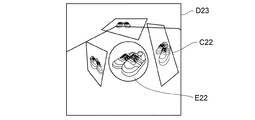
図11Cは、AR表示する際に、撮影画像を第2オブジェクトとして表示する他の例を示す。図11Cに示す例では、第1画像から対象物を物体認識して切り出し、必要な部分画像E22が基準位置に表示される。第2オブジェクトC22は、図11Bに示す例と同様である。 FIG. 11C shows another example in which the captured image is displayed as the second object when AR is displayed. In the example shown in FIG. 11C, an object is recognized as an object from the first image and cut out, and a necessary partial image E22 is displayed at a reference position. The second object C22 is similar to the example shown in FIG. 11B.
なお、図11A〜Cにおいて、ユーザ端末10を移動させることで、その都度、3次元空間内の自己位置が推定され、推定された自己位置や角度に最も近い位置や角度で撮影された画像が画面中央の画像に切り替わるようになる。
In FIGS. 11A to 11C, each time the
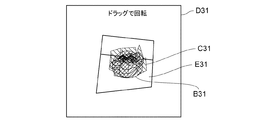
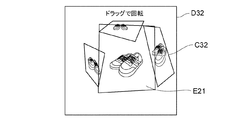
図12A〜Cは、実施形態に係る疑似3Dモデルを所定の表示ツールを用いて表示する例を示す図である。図12Aは、撮影中の画面を流用する例を示す。図12Aに示す例では、画面D31に、撮影中と同じように、第1オブジェクトB31と第2オブジェクトC31とが表示される。最初に表示される第1画像である画像E31は、疑似3Dモデルに登録された各画像のうちの1つの画像であり、例えば、ユーザにより最初に撮影された画像や正面画像などである。 12A to 12C are diagrams showing an example of displaying the pseudo 3D model according to the embodiment using a predetermined display tool. FIG. 12A shows an example of diverting the screen during shooting. In the example shown in FIG. 12A, the first object B31 and the second object C31 are displayed on the screen D31 as in the case of shooting. The image E31, which is the first image displayed first, is one of the images registered in the pseudo 3D model, and is, for example, an image first taken by the user, a front image, or the like.
例えば、第1画像E31及び第1オブジェクトB31の中心が、画面内に設定された基準位置に位置するように表示される。第1画像の相対位置情報と、他の画像の相対位置情報との関係から、各第2オブジェクトC31の表示位置が決定される。 For example, the center of the first image E31 and the first object B31 is displayed so as to be located at a reference position set in the screen. The display position of each second object C31 is determined from the relationship between the relative position information of the first image and the relative position information of the other images.
閲覧者は、画面D31を見ることにより、どの位置や角度からの画像があるかを容易に把握することができ、自分が見たい画像をすぐに選択してみることができる。さらに、撮影中と同じオブジェクトを流用できるため、メモリ削減や処理負荷軽減にも貢献することができる。 By looking at the screen D31, the viewer can easily grasp from which position or angle the image is present, and can immediately select the image he / she wants to see. Furthermore, since the same object as during shooting can be used, it can contribute to memory reduction and processing load reduction.
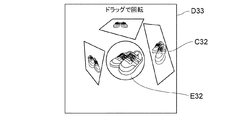
図12Bは、撮影画像を第2オブジェクトC32として表示する例を示す。図12Bに示す例では、第1画像である画像E21を中心に、撮影された位置や角度に対応する位置や角度に、縮小された画像が第2オブジェクトC32として複数表示される。 FIG. 12B shows an example of displaying the captured image as the second object C32. In the example shown in FIG. 12B, a plurality of reduced images are displayed as the second object C32 at positions and angles corresponding to the captured positions and angles, centering on the image E21 which is the first image.
例えば、第1画像E31の中心が、画面内に設定された基準位置に位置するように表示される。第1画像の相対位置情報と、他の画像の相対位置情報との関係から、各第2オブジェクトC32の表示位置が決定される。 For example, the center of the first image E31 is displayed so as to be located at a reference position set in the screen. The display position of each second object C32 is determined from the relationship between the relative position information of the first image and the relative position information of the other images.
閲覧者は、縮小画像をサムネイル画像として利用するとともに、どの位置や角度から撮影された画像であるかを直感的に把握することができる。 The viewer can use the reduced image as a thumbnail image and intuitively grasp from which position and angle the image was taken.
図12Cは、撮影画像を第2オブジェクトC32として表示する他の例を示す。図12Cに示す例では、第1画像から対象物を物体認識して切り出し、必要な部分画像E32が基準位置に表示される。第2オブジェクトC32は、図12Bに示す例と同様である。 FIG. 12C shows another example of displaying the captured image as the second object C32. In the example shown in FIG. 12C, an object is recognized as an object from the first image and cut out, and a necessary partial image E32 is displayed at a reference position. The second object C32 is similar to the example shown in FIG. 12B.
なお、図12A〜Cにおいて、ユーザ端末10の画面上を操作(例えばドラッグして回転操作)することで、操作量に対応する移動量に応じた位置や角度に最も近い位置や角度で撮影された画像が画面中央の画像に切り替わるようになる。
In addition, in FIGS. 12A to 12C, by operating (for example, dragging and rotating) the screen of the
開示技術は、上述した実施形態に限定されるものではなく、開示技術の要旨を逸脱しない範囲内において、他の様々な形で実施することができる。このため、上記実施形態はあらゆる点で単なる例示にすぎず、限定的に解釈されるものではない。例えば、上述した各処理ステップは処理内容に矛盾を生じない範囲で任意に順番を変更し、または並列に実行することができる。 The disclosed technology is not limited to the above-described embodiment, and can be implemented in various other forms without departing from the gist of the disclosed technology. For this reason, the above embodiments are merely exemplary in all respects and are not to be construed in a limited manner. For example, the above-mentioned processing steps can be arbitrarily changed in order or executed in parallel within a range that does not cause a contradiction in the processing contents.
本開示の実施形態のプログラムは、コンピュータに読み取り可能な記憶媒体に記憶された状態で提供されてもよい。 記憶媒体は、「一時的でない有形の媒体」に、プログラムを記憶可能である。プログラムは、限定でなく例として、ソフトウェアプログラムやコンピュータプログラムを含む。 The program of the embodiment of the present disclosure may be provided in a state of being stored in a computer-readable storage medium. The storage medium can store the program in a "non-temporary tangible medium". Programs include, but are not limited to, software programs and computer programs as examples.
[変形例]
また、上述した実施形態における変形例では、上記実施形態において、サーバ10は、電子商取引プラットフォームをベースとしなくてもよい。例えば、ユーザが手軽に疑似3Dモデルを生成するニーズがあれば如何なるシステムにも適用可能である。また、対象物ごとに疑似3Dモデルを生成するという観点においては、ユーザ端末10は、必ずしも未撮影領域を識別可能にしなくてもよく、対象物IDとともに、画像及び相対位置情報をサーバ20に送信すればよい。
[Modification example]
Further, in the modification of the above-described embodiment, in the above-described embodiment, the
また、撮影中や表示中にAR表示する第1オブジェクト又は第2オブジェクトは、対象物に重複しない領域に表示するよう制御されることで、対象物の視認性を向上させることができる。また、画像が不足している領域において、対象となる画像が登録されていれば、その画像を反転させて表示されるようにしてもよい。例えば、左側からの画像が撮影されていない場合に、右側からの画像が撮影されていれば、サーバ20は、右側の画像を反転させた画像を左側からの画像として登録し、相対位置情報も左側からの画像になるように修正することで、サーバ20側で画像を補完することができるようになる。
Further, the visibility of the object can be improved by controlling the first object or the second object to be AR-displayed during shooting or display so as to be displayed in an area that does not overlap with the object. Further, if the target image is registered in the area where the image is insufficient, the image may be inverted and displayed. For example, if the image from the left side is not taken and the image from the right side is taken, the
1 情報処理システム
10、10A、10B 情報処理装置(ユーザ端末)
20 情報処理装置(サーバ)
110、210 処理装置(CPU)
120、220 ネットワーク通信インタフェース
130、230 メモリ
131、231 オペレーティングシステム
132、232 ネットワーク通信モジュール
134 取引制御モジュール
135 撮影制御モジュール
136 地図生成モジュール
137 位置推定モジュール
138 取得モジュール
139 表示制御モジュール
150 ユーザインタフェース
160 撮影装置
170、270 通信バス
237 取引管理モジュール
238 データ管理モジュール
239 画像送信モジュール
1
20 Information processing device (server)
110, 210 processing unit (CPU)
120, 220
Claims (12)
対象物を撮影すること、
撮影される画像に含まれる特徴点群を用いて3次元空間を作成すること、
前記3次元空間内の前記情報処理装置の自己位置を推定すること、
前記対象物に関連して前記3次元空間内に設定される基準位置と、前記3次元空間内で推定された前記情報処理装置の自己位置との相対位置を取得すること、
前記情報処理装置の位置又は角度が変更される所定のタイミングごとに、当該位置又は角度により撮影された画像と、前記位置又は角度に対応して取得された前記相対位置を示す相対位置情報とを他の情報処理装置に送信すること、
前記基準位置に基づく第1オブジェクトを画面に表示制御し、前記第1オブジェクトを用いて前記対象物の未撮影の位置を視認可能に表示制御すること、
を実行する情報処理方法。 One or more processors included in the information processing device
Taking a picture of an object,
Creating a three-dimensional space using a group of feature points included in the captured image,
Estimating the self-position of the information processing device in the three-dimensional space,
Acquiring the relative position between the reference position set in the three-dimensional space in relation to the object and the self-position of the information processing apparatus estimated in the three-dimensional space.
At a predetermined timing when the position or angle of the information processing device is changed, an image taken at the position or angle and relative position information indicating the relative position acquired corresponding to the position or angle are displayed. Sending to other information processing devices,
Display control of the first object based on the reference position on the screen, and visually control the display control of the unphotographed position of the object using the first object.
Information processing method to execute.
撮影済の位置又は角度を示す第2オブジェクトを、前記第1オブジェクトに関連付けて表示制御することを含む、請求項1に記載の情報処理方法 The display control is
The information processing method according to claim 1, wherein a second object indicating a photographed position or angle is displayed and controlled in association with the first object.
奥行き方向を用いて、前記第2オブジェクトを重畳して表示制御することを含む、請求項2に記載の情報処理方法。 The display control is
The information processing method according to claim 2, further comprising superimposing and controlling the display of the second object using the depth direction.
前記対象物のカテゴリ情報を取得することを含み、
前記表示制御することは、
前記カテゴリ情報が示すカテゴリに応じて、前記第1オブジェクトを用いての前記未撮影の位置の表示方法を変更することを含む、請求項1乃至3いずれか一項に記載の情報処理方法。 The acquisition is
Including acquiring the category information of the object
The display control is
The information processing method according to any one of claims 1 to 3, which comprises changing the display method of the unphotographed position using the first object according to the category indicated by the category information.
対象物を撮影すること、
撮影される画像に含まれる特徴点群を用いて3次元空間を作成すること、
前記3次元空間内の前記情報処理装置の自己位置を推定すること、
前記対象物に関連して前記3次元空間内に設定される基準位置と、前記3次元空間内で推定された前記情報処理装置の自己位置との相対位置を取得すること、
前記情報処理装置の位置又は角度が変更される所定のタイミングごとに、当該位置又は角度により撮影された画像と、前記位置又は角度に対応して取得された前記相対位置を示す相対位置情報とを他の情報処理装置に送信すること、
前記基準位置に基づく第1オブジェクトを画面に表示制御し、前記第1オブジェクトを用いて前記対象物の未撮影の位置を視認可能に表示制御すること、
を実行させるプログラム。 For one or more processors included in the information processing device
Taking a picture of an object,
Creating a three-dimensional space using a group of feature points included in the captured image,
Estimating the self-position of the information processing device in the three-dimensional space,
Acquiring the relative position between the reference position set in the three-dimensional space in relation to the object and the self-position of the information processing apparatus estimated in the three-dimensional space.
At a predetermined timing when the position or angle of the information processing device is changed, an image taken at the position or angle and relative position information indicating the relative position acquired corresponding to the position or angle are displayed. Sending to other information processing devices,
Display control of the first object based on the reference position on the screen, and visually control the display control of the unphotographed position of the object using the first object.
A program that executes.
前記1又は複数のプロセッサが、
対象物を撮影すること、
撮影される画像に含まれる特徴点群を用いて3次元空間を作成すること、
前記3次元空間内の前記情報処理装置の自己位置を推定すること、
前記対象物に関連して前記3次元空間内に設定される基準位置と、前記3次元空間内で推定された前記情報処理装置の自己位置との相対位置を取得すること、
前記情報処理装置の位置又は角度が変更される所定のタイミングごとに、当該位置又は角度により撮影された画像と、前記位置又は角度に対応して取得された前記相対位置を示す相対位置情報とを他の情報処理装置に送信すること、
前記基準位置に基づく第1オブジェクトを画面に表示制御し、前記第1オブジェクトを用いて前記対象物の未撮影の位置を視認可能に表示制御すること、
を実行する情報処理装置。 An information processing device that includes one or more processors.
The one or more processors
Taking a picture of an object,
Creating a three-dimensional space using a group of feature points included in the captured image,
Estimating the self-position of the information processing device in the three-dimensional space,
Acquiring the relative position between the reference position set in the three-dimensional space in relation to the object and the self-position of the information processing apparatus estimated in the three-dimensional space.
At a predetermined timing when the position or angle of the information processing device is changed, an image taken at the position or angle and relative position information indicating the relative position acquired corresponding to the position or angle are displayed. Sending to other information processing devices,
Display control of the first object based on the reference position on the screen, and visually control the display control of the unphotographed position of the object using the first object.
Information processing device that executes.
対象物を識別する識別情報をサーバに送信すること、
前記サーバから、前記識別情報に関連付けられる前記対象物が撮影された各画像、及び各相対位置情報を受信することであって、前記相対位置情報は、前記対象物を撮影した他の情報処理装置の3次元空間内における自己位置と、前記3次元空間内の基準位置との相対位置を示す情報を含む、前記受信すること、
画面内に基準位置を設定し、前記基準位値に対応して設定された第1画像を表示制御し、前記基準位置と前記第1画像との相対位置を変更するユーザ操作に応じて、変更後の相対位置に対応する画像を画面に表示制御すること
を実行する情報処理方法。 One or more processors included in the information processing device
Sending identification information that identifies the object to the server,
The server receives each image of the object associated with the identification information and each relative position information, and the relative position information is another information processing device that photographs the object. Receiving, which includes information indicating a relative position between the self-position in the three-dimensional space and the reference position in the three-dimensional space.
A reference position is set in the screen, the first image set corresponding to the reference position value is displayed and controlled, and the relative position between the reference position and the first image is changed according to a user operation. An information processing method that controls the display of the image corresponding to the later relative position on the screen.
前記基準位置に基づく第1オブジェクトを画面に表示制御し、前記第1オブジェクトを用いて未表示の画像の位置を視認可能に表示制御することを含む、請求項8に記載の情報処理方法。 The display control is
The information processing method according to claim 8, wherein the first object based on the reference position is displayed and controlled on the screen, and the position of the undisplayed image is visually controlled by using the first object.
各画像に対するユーザの表示回数を示す度合を前記第1オブジェクトに関連付けて表示制御することを含む、請求項8又は9に記載の情報処理方法。 The display control is
The information processing method according to claim 8 or 9, which comprises controlling the display of each image by associating it with the first object to indicate the number of times the user has displayed the image.
対象物を識別する識別情報をサーバに送信すること、
前記サーバから、前記識別情報に関連付けられる前記対象物が撮影された各画像、及び3次元空間内において推定された前記対象物を撮影した他の情報処理装置の各自己位置と、前記3次元空間内の基準位置との各相対位置を示す各相対位置情報を受信すること、
画面内に基準位置を設定し、前記基準位値に対応して設定された第1画像を表示制御し、前記基準位置と前記第1画像との相対位置を変更するユーザ操作に応じて、変更後の相対位置に対応する画像を画面に表示制御すること、
を実行させるプログラム。 For one or more processors included in the information processing device
Sending identification information that identifies the object to the server,
From the server, each image of the object associated with the identification information, each self-position of another information processing device that captured the object estimated in the three-dimensional space, and the three-dimensional space. Receiving each relative position information indicating each relative position with respect to the reference position in
A reference position is set in the screen, the first image set corresponding to the reference position value is displayed and controlled, and the relative position between the reference position and the first image is changed according to a user operation. To control the display of the image corresponding to the later relative position on the screen,
A program that executes.
前記1又は複数のプロセッサが、
対象物を識別する識別情報をサーバに送信すること、
前記サーバから、前記識別情報に関連付けられる前記対象物が撮影された各画像、及び3次元空間内において推定された前記対象物を撮影した他の情報処理装置の各自己位置と、前記3次元空間内の基準位置との各相対位置を示す各相対位置情報を受信すること、
画面内に基準位置を設定し、前記基準値に対応して設定された第1画像を表示制御し、前記基準位置と前記第1画像との相対位置を変更するユーザ操作に応じて、変更後の相対位置に対応する画像を画面に表示制御すること
を実行する情報処理装置。 An information processing device that includes one or more processors.
The one or more processors
Sending identification information that identifies the object to the server,
From the server, each image of the object associated with the identification information, each self-position of another information processing device that captured the object estimated in the three-dimensional space, and the three-dimensional space. Receiving each relative position information indicating each relative position with respect to the reference position in
After the change, the reference position is set in the screen, the first image set corresponding to the reference value is displayed and controlled, and the relative position between the reference position and the first image is changed according to the user operation. An information processing device that controls the display of the image corresponding to the relative position of.
Priority Applications (1)
| Application Number | Priority Date | Filing Date | Title |
|---|---|---|---|
| JP2019214183A JP2021086355A (en) | 2019-11-27 | 2019-11-27 | Information processing method, program, and information processing device |
Applications Claiming Priority (1)
| Application Number | Priority Date | Filing Date | Title |
|---|---|---|---|
| JP2019214183A JP2021086355A (en) | 2019-11-27 | 2019-11-27 | Information processing method, program, and information processing device |
Publications (1)
| Publication Number | Publication Date |
|---|---|
| JP2021086355A true JP2021086355A (en) | 2021-06-03 |
Family
ID=76088832
Family Applications (1)
| Application Number | Title | Priority Date | Filing Date |
|---|---|---|---|
| JP2019214183A Pending JP2021086355A (en) | 2019-11-27 | 2019-11-27 | Information processing method, program, and information processing device |
Country Status (1)
| Country | Link |
|---|---|
| JP (1) | JP2021086355A (en) |
Cited By (3)
| Publication number | Priority date | Publication date | Assignee | Title |
|---|---|---|---|---|
| JP2022068843A (en) * | 2020-10-22 | 2022-05-10 | ヤフー株式会社 | Transmission program, terminal device, and transmission method |
| JP2023058031A (en) * | 2021-10-12 | 2023-04-24 | アディダス アーゲー | Activation architecture for processing digital assets and related physical products |
| JPWO2023188510A1 (en) * | 2022-03-29 | 2023-10-05 |
-
2019
- 2019-11-27 JP JP2019214183A patent/JP2021086355A/en active Pending
Cited By (5)
| Publication number | Priority date | Publication date | Assignee | Title |
|---|---|---|---|---|
| JP2022068843A (en) * | 2020-10-22 | 2022-05-10 | ヤフー株式会社 | Transmission program, terminal device, and transmission method |
| JP7631163B2 (en) | 2020-10-22 | 2025-02-18 | Lineヤフー株式会社 | TRANSMISSION PROGRAM, TERMINAL DEVICE, AND TRANSMISSION METHOD |
| JP2023058031A (en) * | 2021-10-12 | 2023-04-24 | アディダス アーゲー | Activation architecture for processing digital assets and related physical products |
| US12131283B2 (en) | 2021-10-12 | 2024-10-29 | Adidas Ag | Activation architecture for processing digital assets and related physical products |
| JPWO2023188510A1 (en) * | 2022-03-29 | 2023-10-05 |
Similar Documents
| Publication | Publication Date | Title |
|---|---|---|
| US11238513B1 (en) | Methods and device for implementing a virtual browsing experience | |
| KR101737725B1 (en) | Content creation tool | |
| US9639988B2 (en) | Information processing apparatus and computer program product for processing a virtual object | |
| EP3646144B1 (en) | Mixed reality world integration of holographic buttons in a mixed reality device | |
| JP5280475B2 (en) | Information processing system, information processing method, and program | |
| CN110716645A (en) | Augmented reality data presentation method and device, electronic equipment and storage medium | |
| US20160253843A1 (en) | Method and system of management for switching virtual-reality mode and augmented-reality mode | |
| US20180158134A1 (en) | Shopping System Using Augmented Reality | |
| JP5295416B1 (en) | Image processing apparatus, image processing method, and image processing program | |
| KR20190005082A (en) | Method and appratus for providing information on offline merchandise to sales on online through augmented reality | |
| JP6677890B2 (en) | Information processing system, its control method and program, and information processing apparatus, its control method and program | |
| CN107622434B (en) | Information processing methods, systems and intelligent devices | |
| CN115086774B (en) | Resource display method, device, electronic equipment and storage medium | |
| JP6510116B2 (en) | Customer grasping system using virtual object display system, customer grasping system program and customer grasping method | |
| CN111213206B (en) | Method and system for providing user interface for three-dimensional environment | |
| CN112988007B (en) | Three-dimensional material interaction method and device | |
| KR102005251B1 (en) | Server, provider terminal and method for providing image of offerings base on virtual reality | |
| JP6304305B2 (en) | Image processing apparatus, image processing method, and program | |
| CN114785949A (en) | Video object processing method and device and electronic equipment | |
| TWI514319B (en) | Methods and systems for editing data using virtual objects, and related computer program products | |
| CN108021226A (en) | AR content interactions implementation method and device based on product packaging | |
| KR20140039508A (en) | System and method for virtual coordination management | |
| US12407911B2 (en) | Image processing apparatus and method with capture direction recommendations | |
| CN110852770A (en) | Data processing method and device, computing equipment and display equipment | |
| KR20190006815A (en) | Server and method for selecting representative image for visual contents |