JP2020184878A - Load distribution method of multiple charging stations to mobile load in charging station network and charging station network - Google Patents
Load distribution method of multiple charging stations to mobile load in charging station network and charging station network Download PDFInfo
- Publication number
- JP2020184878A JP2020184878A JP2020116433A JP2020116433A JP2020184878A JP 2020184878 A JP2020184878 A JP 2020184878A JP 2020116433 A JP2020116433 A JP 2020116433A JP 2020116433 A JP2020116433 A JP 2020116433A JP 2020184878 A JP2020184878 A JP 2020184878A
- Authority
- JP
- Japan
- Prior art keywords
- charging
- charging station
- load
- time
- demand
- Prior art date
- Legal status (The legal status is an assumption and is not a legal conclusion. Google has not performed a legal analysis and makes no representation as to the accuracy of the status listed.)
- Granted
Links
Images
Classifications
-
- B—PERFORMING OPERATIONS; TRANSPORTING
- B65—CONVEYING; PACKING; STORING; HANDLING THIN OR FILAMENTARY MATERIAL
- B65H—HANDLING THIN OR FILAMENTARY MATERIAL, e.g. SHEETS, WEBS, CABLES
- B65H55/00—Wound packages of filamentary material
- B65H55/04—Wound packages of filamentary material characterised by method of winding
-
- G—PHYSICS
- G02—OPTICS
- G02B—OPTICAL ELEMENTS, SYSTEMS OR APPARATUS
- G02B6/00—Light guides; Structural details of arrangements comprising light guides and other optical elements, e.g. couplings
- G02B6/44—Mechanical structures for providing tensile strength and external protection for fibres, e.g. optical transmission cables
- G02B6/4439—Auxiliary devices
- G02B6/4457—Bobbins; Reels
-
- B—PERFORMING OPERATIONS; TRANSPORTING
- B65—CONVEYING; PACKING; STORING; HANDLING THIN OR FILAMENTARY MATERIAL
- B65H—HANDLING THIN OR FILAMENTARY MATERIAL, e.g. SHEETS, WEBS, CABLES
- B65H2701/00—Handled material; Storage means
- B65H2701/30—Handled filamentary material
- B65H2701/32—Optical fibres or optical cables
-
- B—PERFORMING OPERATIONS; TRANSPORTING
- B65—CONVEYING; PACKING; STORING; HANDLING THIN OR FILAMENTARY MATERIAL
- B65H—HANDLING THIN OR FILAMENTARY MATERIAL, e.g. SHEETS, WEBS, CABLES
- B65H2701/00—Handled material; Storage means
- B65H2701/50—Storage means for webs, tapes, or filamentary material
- B65H2701/53—Adaptations of cores or reels for special purposes
- B65H2701/533—Storage compartments for accessories
-
- B—PERFORMING OPERATIONS; TRANSPORTING
- B65—CONVEYING; PACKING; STORING; HANDLING THIN OR FILAMENTARY MATERIAL
- B65H—HANDLING THIN OR FILAMENTARY MATERIAL, e.g. SHEETS, WEBS, CABLES
- B65H2701/00—Handled material; Storage means
- B65H2701/50—Storage means for webs, tapes, or filamentary material
- B65H2701/53—Adaptations of cores or reels for special purposes
- B65H2701/536—Arrangements for protecting connectors attached to the wound material
-
- Y—GENERAL TAGGING OF NEW TECHNOLOGICAL DEVELOPMENTS; GENERAL TAGGING OF CROSS-SECTIONAL TECHNOLOGIES SPANNING OVER SEVERAL SECTIONS OF THE IPC; TECHNICAL SUBJECTS COVERED BY FORMER USPC CROSS-REFERENCE ART COLLECTIONS [XRACs] AND DIGESTS
- Y02—TECHNOLOGIES OR APPLICATIONS FOR MITIGATION OR ADAPTATION AGAINST CLIMATE CHANGE
- Y02T—CLIMATE CHANGE MITIGATION TECHNOLOGIES RELATED TO TRANSPORTATION
- Y02T10/00—Road transport of goods or passengers
- Y02T10/60—Other road transportation technologies with climate change mitigation effect
- Y02T10/70—Energy storage systems for electromobility, e.g. batteries
-
- Y—GENERAL TAGGING OF NEW TECHNOLOGICAL DEVELOPMENTS; GENERAL TAGGING OF CROSS-SECTIONAL TECHNOLOGIES SPANNING OVER SEVERAL SECTIONS OF THE IPC; TECHNICAL SUBJECTS COVERED BY FORMER USPC CROSS-REFERENCE ART COLLECTIONS [XRACs] AND DIGESTS
- Y02—TECHNOLOGIES OR APPLICATIONS FOR MITIGATION OR ADAPTATION AGAINST CLIMATE CHANGE
- Y02T—CLIMATE CHANGE MITIGATION TECHNOLOGIES RELATED TO TRANSPORTATION
- Y02T10/00—Road transport of goods or passengers
- Y02T10/60—Other road transportation technologies with climate change mitigation effect
- Y02T10/7072—Electromobility specific charging systems or methods for batteries, ultracapacitors, supercapacitors or double-layer capacitors
-
- Y—GENERAL TAGGING OF NEW TECHNOLOGICAL DEVELOPMENTS; GENERAL TAGGING OF CROSS-SECTIONAL TECHNOLOGIES SPANNING OVER SEVERAL SECTIONS OF THE IPC; TECHNICAL SUBJECTS COVERED BY FORMER USPC CROSS-REFERENCE ART COLLECTIONS [XRACs] AND DIGESTS
- Y02—TECHNOLOGIES OR APPLICATIONS FOR MITIGATION OR ADAPTATION AGAINST CLIMATE CHANGE
- Y02T—CLIMATE CHANGE MITIGATION TECHNOLOGIES RELATED TO TRANSPORTATION
- Y02T90/00—Enabling technologies or technologies with a potential or indirect contribution to GHG emissions mitigation
- Y02T90/10—Technologies relating to charging of electric vehicles
- Y02T90/12—Electric charging stations
-
- Y—GENERAL TAGGING OF NEW TECHNOLOGICAL DEVELOPMENTS; GENERAL TAGGING OF CROSS-SECTIONAL TECHNOLOGIES SPANNING OVER SEVERAL SECTIONS OF THE IPC; TECHNICAL SUBJECTS COVERED BY FORMER USPC CROSS-REFERENCE ART COLLECTIONS [XRACs] AND DIGESTS
- Y02—TECHNOLOGIES OR APPLICATIONS FOR MITIGATION OR ADAPTATION AGAINST CLIMATE CHANGE
- Y02T—CLIMATE CHANGE MITIGATION TECHNOLOGIES RELATED TO TRANSPORTATION
- Y02T90/00—Enabling technologies or technologies with a potential or indirect contribution to GHG emissions mitigation
- Y02T90/10—Technologies relating to charging of electric vehicles
- Y02T90/16—Information or communication technologies improving the operation of electric vehicles
-
- Y—GENERAL TAGGING OF NEW TECHNOLOGICAL DEVELOPMENTS; GENERAL TAGGING OF CROSS-SECTIONAL TECHNOLOGIES SPANNING OVER SEVERAL SECTIONS OF THE IPC; TECHNICAL SUBJECTS COVERED BY FORMER USPC CROSS-REFERENCE ART COLLECTIONS [XRACs] AND DIGESTS
- Y02—TECHNOLOGIES OR APPLICATIONS FOR MITIGATION OR ADAPTATION AGAINST CLIMATE CHANGE
- Y02T—CLIMATE CHANGE MITIGATION TECHNOLOGIES RELATED TO TRANSPORTATION
- Y02T90/00—Enabling technologies or technologies with a potential or indirect contribution to GHG emissions mitigation
- Y02T90/10—Technologies relating to charging of electric vehicles
- Y02T90/16—Information or communication technologies improving the operation of electric vehicles
- Y02T90/167—Systems integrating technologies related to power network operation and communication or information technologies for supporting the interoperability of electric or hybrid vehicles, i.e. smartgrids as interface for battery charging of electric vehicles [EV] or hybrid vehicles [HEV]
Landscapes
- Physics & Mathematics (AREA)
- General Physics & Mathematics (AREA)
- Optics & Photonics (AREA)
- Packaging Of Annular Or Rod-Shaped Articles, Wearing Apparel, Cassettes, Or The Like (AREA)
- Remote Monitoring And Control Of Power-Distribution Networks (AREA)
- Charge And Discharge Circuits For Batteries Or The Like (AREA)
- Electric Propulsion And Braking For Vehicles (AREA)
- Traffic Control Systems (AREA)
- Storage Of Web-Like Or Filamentary Materials (AREA)
Abstract
【課題】充電ステーションネットワーク内での充電ステーションの非常に効率的な使用を可能にするため、充電ステーションネットワーク内で移動負荷、特に電気自動車(EV)に対し、複数の充電ステーションの負荷分散を行う方法を提供する。【解決手段】充電ステーションネットワークにおいて、移動負荷の充電需要の予測に基づいて、設定可能な最適化パラメータを考慮して、各充電ステーション1〜nごとのエネルギー電力範囲限界の分配を実行する。前記配分を考慮して、各充電ステーションに対して、または設定可能な数の充電ステーションに対して、前記エネルギー電力範囲限界を少なくとも部分的に充足するために、少なくとも1つの移動負荷の少なくとも1つの輸送パラメータの適応および/または選択を実行する。【選択図】図1PROBLEM TO BE SOLVED: To distribute a load of a plurality of charging stations to a mobile load, particularly an electric vehicle (EV), in the charging station network in order to enable very efficient use of the charging station in the charging station network. Provide a method. In a charging station network, distribution of energy power range limits for each charging station 1-n is performed, taking into account configurable optimization parameters, based on a forecast of charging demand for mobile loads. At least one of at least one mobile load to at least partially meet the energy power range limit for each charging station or for a configurable number of charging stations in view of the allocation. Performs adaptation and / or selection of transport parameters. [Selection diagram] Fig. 1
Description
本発明は、充電ステーションネットワーク内で移動負荷、特に電気自動車(EV)に対し、複数の充電ステーションの負荷分散を行う方法に関する。前記移動負荷の充電需要の予測に基づいて、設定可能な最適化パラメータを考慮して、各充電ステーションpごとのエネルギー電力範囲限界(ΔE,ΔP)p,limの分配が実行される(ただしp=1,...,nであり、nおよびpは整数である)。そして、前記分配を考慮して、各充電ステーションpに対して、または、設定可能な数の充電ステーションpに対して、前記エネルギー電力範囲限界(ΔE,ΔP)p,limを少なくとも部分的に充足するために、少なくとも1つの移動負荷の少なくとも1つの輸送パラメータの適応および/または選択が実行される。 The present invention relates to a method of distributing the load of a plurality of charging stations to a mobile load, particularly an electric vehicle (EV), within a charging station network. Based on the prediction of the charge demand of the mobile load, the energy power range limit (ΔE, ΔP) p, lim distribution for each charging station p is executed in consideration of the configurable optimization parameters (however, p). = 1, ..., n, where n and p are integers). Then, in consideration of the distribution, the energy power range limit (ΔE, ΔP) p, lim is at least partially satisfied for each charging station p or for a settable number of charging stations p. To do so, adaptation and / or selection of at least one transport parameter for at least one mobile load is performed.
また、本発明は、充電ステーションネットワークに関する。該充電ステーションネットワークは、移動負荷、特に電気自動車(EV)に対し、複数の充電ステーションの負荷分散を行う手段と、前記移動負荷の充電需要の予測に基づいて、設定可能な最適化パラメータを考慮して、各充電ステーションpごとのエネルギー電力範囲限界(ΔE,ΔP)p,limを分配する手段と(ただしp=1,...,nであり、nおよびpは整数である)、前記分配を考慮して、各充電ステーションpに対して、または、設定可能な数の充電ステーションpに対して、前記エネルギー電力範囲限界(ΔE,ΔP)p,limを少なくとも部分的に充足するために、少なくとも1つの移動負荷の少なくとも1つの輸送パラメータの適応および/または選択を行う手段と、を備える。 The present invention also relates to a charging station network. The charging station network considers means for load distribution of multiple charging stations for mobile loads, especially electric vehicles (EVs), and configurable optimization parameters based on the prediction of charging demand for the mobile loads. Then, the means for distributing the energy power range limit (ΔE, ΔP) p, lim for each charging station p (where p = 1, ..., n, and n and p are integers), the above. In order to satisfy the energy power range limits (ΔE, ΔP) p, lim at least partially for each charging station p or for a configurable number of charging stations p in consideration of distribution. , A means of adapting and / or selecting at least one transport parameter for at least one mobile load.
輸送・電力業界への電気自動車の導入は、試験・研究において世界中で検討されてきている。主要な課題の1つは依然として、自動車の持続可能な充電と、都市や広域輸送(街路)ネットワーク内でのEV充電要求に対するエネルギー配送である。今日では、EV充電プロセス、物理的接続の諸側面とともに、充電方式(接続性、電力)に応じた電力網(パワーグリッド)との連携が主に注目されている。 The introduction of electric vehicles into the transportation and power industry has been considered worldwide in testing and research. One of the major challenges remains the sustainable charging of vehicles and the delivery of energy to EV charging demands within cities and wide area transportation (street) networks. Today, the EV charging process, various aspects of physical connection, and cooperation with the power grid (power grid) according to the charging method (connectivity, electric power) are mainly attracting attention.
従来技術によれば、網安定性管理は以下の2つの方式のいずれかに従う。
(a)発電に負荷が従うもの。これは、集中型発電のみで発電資源の自然変動がほとんどまたは全くない場合の従来の考え方である。
(b)負荷に発電が従うもの。これは、変動する電源の普及によって引き起こされた新たなパラダイムシフトである。
According to the prior art, network stability management follows one of the following two methods.
(A) The load follows the power generation. This is the conventional way of thinking when there is little or no natural fluctuation of power generation resources only in centralized power generation.
(B) Power generation follows the load. This is a new paradigm shift caused by the widespread use of fluctuating power sources.
これらを実現するため、供給と消費者との間の相互作用が広範囲に用いられる。業界で適用されている考え方は、負荷管理、大規模発電と二次エネルギー資源、およびさまざまなエネルギー貯蔵方式の組合せに対する(制御可能な家電製品から工業規模のものまでにわたる)需要−応答/需要側管理である。 To achieve these, the interaction between supply and consumer is widely used. The idea applied in the industry is demand-response / demand side (from controllable appliances to industrial scale) for load management, large-scale power generation and secondary energy resources, and combinations of various energy storage schemes. It is management.
まず、デバイス/ユニットに適用されるべき基本的概念として、(i)使用時間トレランスと(ii)容量トレランス、の2つがある。一般的に、デバイスはいずれか一方の能力を有する。時間トレランスは、エネルギー使用における遅延または先進を受容可能なすべての種類のデバイスやプロセス(例えば電化製品や冷房)に対して使用される。これらは通常、動作するための電力レートが一定なので、デバイスを稼働させる快適さ/基本設定をずらすことによって、あるいは、冷却/加熱のための熱貯蔵のような固有の貯蔵機能を使用することによって、時間トレランスが実現される。容量トレランスは、電池のように、さまざまな動作モードによって、あるいは、電力調節のフレキシビリティによって、電力/エネルギー使用を低減可能なデバイスの場合に可能である。 First, there are two basic concepts that should be applied to devices / units: (i) usage time tolerance and (ii) capacity tolerance. In general, the device has one or the other capability. Time tolerance is used for all types of devices and processes (eg appliances and cooling) that can tolerate delays or advances in energy use. These usually have a constant power rate to operate, so by shifting the comfort / basic settings of running the device, or by using unique storage features such as heat storage for cooling / heating. , Time tolerance is realized. Capacity tolerance is possible for devices that can reduce power / energy usage, such as batteries, by different modes of operation or by the flexibility of power regulation.
EVの場合、電池充電プロセスは、充電のために選択される電力レベルによって影響を受けることがある。しかしこれは、個々のEVの充電時間と、所与の限定された充電ステーション(EVCS)とともにEV車列を考慮する際の充電スループット時間に、強く影響を及ぼす。 For EVs, the battery charging process can be affected by the power level selected for charging. However, this has a strong effect on the charging time of individual EVs and the charging throughput time when considering EV convoys with a given limited charging station (EVCS).
運行情報における統合の観点から、現在、次のアプローチがさまざまな形態で検討されている。
・R&D+実施:近くの充電スポットの地図の提供。価格情報、最大電力情報、または充電スポットの利用可能性情報を含むこともあるし、情報を全く含まないこともある。
・R&D:充電スポットを予約(たいていは駐車場を通じて)する予約サービスを考慮。
・R&D:個々のEVおよび車列に対する電池限界を扱うために輸送手段を統合。
From the perspective of integration in operation information, the following approaches are currently being considered in various forms.
・ R & D + implementation: Providing a map of nearby charging spots. It may or may not contain price information, maximum power information, or charging spot availability information at all.
・ R & D: Consider a reservation service that reserves charging spots (usually through the parking lot).
-R & D: Integrated transportation to handle battery limits for individual EVs and convoys.
電力網との連携は現在、ステーションの電力特性に関する情報によって制限されている。電力網管理方式への統合の課題に対するアプローチは主に以下の通りである。
・R&D:特定の充電地点の負荷分散(時間および位置のプロファイルの概念、特許文献1参照)と、EV充電対応駐車場の管理の多くの例。
・R&D:予報付き需要分析を電力網管理に導入すること(他の負荷/発電は、負荷分散に役立つように調節される)について、特許文献2参照。
・R&D:運行パラメータ(例えば最短運行時間)をサポートして待機時間を最小化するための充電割当てについて、特許文献2参照。
・R&D:局所的な需要に対する局所的な発電の活用を個々に目指す局所網セグメント制御によって統制される相異なる電力網セグメント間の協調的負荷分散。特に網間負荷分散は、予報とEV充電案内のために高度輸送情報の使用を必要とする。
Coordination with the power grid is currently limited by information about the power characteristics of the station. The main approaches to the challenge of integration into the power grid management system are as follows.
R & D: Many examples of load distribution at specific charging points (concept of time and location profiles, see Patent Document 1) and management of EV charging-enabled parking lots.
R & D: See
-R & D: See
-R & D: Coordinated load distribution between different power grid segments controlled by local network segment control that individually aims to utilize local power generation for local demand. In particular, inter-network load distribution requires the use of advanced transport information for forecasting and EV charging guidance.
本明細書において、以下の用語が関連性がある:
・EV充電ステーション(EV Charging Station, EVCS)
同一または相異なる電力レベルを有するn>1個の独立な充電ステーションを提供する充電地点
・電気自動車(Electric Vehicle, EV)
充電状態(state-of-charge, SOC)およびその電池特性によって規定される充電プロファイルP_EV(t)によって記述される移動可能な電気的負荷
・EMS
エネルギー管理システム(Energy Management System)
・ETA
推定到着時刻(Estimated Arrival Time)
・OBU
車載ユニット(On-Board Unit)。例えば運行ルーティングのために使用されるEV内の通信ユニット
・ORG
オンライン経路案内(Online Route Guidance)。経路案内およびナビゲーションサービスを提供する要素
・CDP
充電需要プレディクタ(Charging Demand Predictor)。SOC、経路情報および運行基本設定/条件に関して与えられるある特定の時刻/地点における充電要求を計算する要素
・充電状態(SOC)
充電状態:与えられた距離を運転するために使用可能な充電電池レベル。SOCは、電池特性および自動車使用パターンによって影響される。
The following terms are relevant herein:
・ EV Charging Station (EVCS)
Electric Vehicle (EV) that provides n> 1 independent charging station with the same or different power levels
Movable electrical load / EMS described by the charge profile P_EV (t) defined by the state-of-charge (SOC) and its battery characteristics.
Energy Management System
・ ETA
Estimated Arrival Time
・ OBU
On-Board Unit. For example, the communication unit ORG in the EV used for operation routing.
Online Route Guidance. Elements that provide route guidance and navigation services ・ CDP
Charging Demand Predictor. Factors that calculate the charge request at a particular time / point given for SOC, route information and basic operating settings / conditions-Charge state (SOC)
Charging status: The rechargeable battery level that can be used to drive a given distance. SOC is affected by battery characteristics and vehicle usage patterns.
本発明の目的は、充電ステーションネットワーク内で移動負荷に対し複数の充電ステーションの負荷分散を行う方法および対応する充電ステーションネットワークにおいて、充電ステーションネットワーク内での充電ステーションの非常に効率的な使用を可能にするような改良およびさらなる展開を行うことである。 An object of the present invention is to enable highly efficient use of charging stations within a charging station network in a method of load balancing a plurality of charging stations for mobile loads within the charging station network and in the corresponding charging station network. It is to make improvements and further developments.
本発明によれば、上記の目的は、請求項1の構成を備えた方法、および、請求項17の構成を備えた充電ステーションネットワークによって達成される。
According to the present invention, the above object is achieved by the method having the configuration of
本発明によって認識されたこととして、充電ステーションネットワーク内での移動負荷に対する複数の充電ステーションの負荷分散は、少なくとも1つの移動負荷の少なくとも1つの輸送パラメータを考慮することによって特に効率的とすることができる。第1のステップで、設定可能な最適化パラメータを考慮して、各充電ステーションごとのエネルギー電力範囲限界の分配が実行される。この分配は、移動負荷の充電需要の予測に基づく。エネルギー電力範囲限界は、充電ステーションによって移動負荷に提供されるべきエネルギーおよび電力に関する限界を規定する。第2のステップで、前記分配を考慮して、各充電ステーションに対して、または、設定可能な数の充電ステーションに対して、エネルギー電力範囲限界を少なくとも部分的に充足するために、少なくとも1つの移動負荷の少なくとも1つの輸送パラメータの適応および/または選択が実行される。第1のステップでは、前記設定可能な最適化パラメータは、移動負荷の予測充電需要の充足のために提供されるべきエネルギー電力範囲限界の分配に影響を及ぼす。第2のステップでは、少なくとも1つの移動負荷の少なくとも1つの輸送パラメータが、前記分配を考慮して、エネルギー電力範囲限界を少なくとも部分的に充足するために、適応および/または選択される。少なくとも1つの移動負荷の少なくとも1つの輸送パラメータの適切な適応および/または選択により、充電ステーションのエネルギー電力範囲限界が容易に充足可能となる。これにより、設定可能な最適化パラメータに従って、エネルギー電力範囲限界の分配が管理される。こうして、前記少なくとも1つの輸送パラメータの適応および/または選択のステップにより、最適化プロセスを実現することができる。 As recognized by the present invention, the load distribution of multiple charging stations to mobile loads within the charging station network can be made particularly efficient by considering at least one transport parameter of at least one mobile load. it can. In the first step, the energy power range limit distribution for each charging station is performed, taking into account the configurable optimization parameters. This distribution is based on a forecast of mobile load charge demand. The energy power range limit defines the energy and power limits that should be provided to the mobile load by the charging station. In the second step, taking into account the distribution, at least one for each charging station or for a configurable number of charging stations to at least partially satisfy the energy power range limit. At least one transport parameter adaptation and / or selection of the transfer load is performed. In the first step, the configurable optimization parameters affect the distribution of energy power range limits to be provided to meet the predicted charging demand for mobile loads. In the second step, at least one transport parameter of at least one mobile load is adapted and / or selected to at least partially meet the energy power range limit in view of the distribution. Appropriate adaptation and / or selection of at least one transport parameter for at least one mobile load makes it easy to meet the energy power range limits of the charging station. This manages the distribution of energy power range limits according to configurable optimization parameters. Thus, the optimization process can be implemented by the steps of adapting and / or selecting the at least one transport parameter.
結果として、充電ステーションネットワーク内での充電ステーションの非常に効率的な使用が可能となる。 As a result, the charging station can be used very efficiently within the charging station network.
好ましい実施形態において、前記少なくとも1つの輸送パラメータの適応および/または選択の結果として、少なくとも1つの移動負荷の充電需要またはその予測を修正してもよい。このような充電需要またはその予測の修正は、本方法の第1のステップにおける分配プロセスの適応された基礎を提供することができる。 In a preferred embodiment, as a result of the adaptation and / or selection of the at least one transport parameter, the charge demand or forecast thereof for at least one mobile load may be modified. Such modification of charge demand or forecast thereof can provide an adapted basis for the distribution process in the first step of the method.
非常に経済的な方法を提供するため、前記最適化パラメータが、低コストの分配または最低コストの分配を求めるように設定されてもよい。コスト節減によって、充電ステーションの効率的な使用を提供することができる。 To provide a very economical method, the optimization parameters may be set to seek low cost or lowest cost distribution. Cost savings can provide efficient use of charging stations.
さらに好ましい実施形態において、前記移動負荷が、時間トレランスおよび容量トレランスを有する移動負荷に変換されてもよい。少なくとも1つの移動負荷の少なくとも1つの輸送パラメータの適切な適応および/または選択によって、この時間および容量トレランスを非常に容易に実現することができる。 In a more preferred embodiment, the mobile load may be converted into a mobile load with time tolerance and volume tolerance. This time and capacity tolerance can be achieved very easily with proper adaptation and / or selection of at least one transport parameter for at least one mobile load.
非常に単純な分配として、前記エネルギー電力範囲限界(ΔE,ΔP)p,limが各充電ステーションpごとに等分配されてもよい。換言すれば、各充電ステーションpが同じエネルギー電力範囲限界(ΔE,ΔP)p,limを有する。しかし、個々の状況に応じて、前記エネルギー電力範囲限界(ΔE,ΔP)p,limが各充電ステーションpごとに、過去の負荷分散可能性、ネットワークグリッド内での経済的強度、および/または戦略的位置の形式の因子を考慮して分配されてもよい。こうして、充電ステーション間でエネルギー電力範囲限界を選択的に分配することにより、充電ステーションネットワーク内での充電ステーションの非常に効率的な使用を実現することができる。 As a very simple distribution, the energy power range limits (ΔE, ΔP) p, lim may be equally distributed to each charging station p. In other words, each charging station p has the same energy power range limit (ΔE, ΔP) p, lim . However, depending on the individual situation, the energy power range limits (ΔE, ΔP) p, lim may be for each charging station p, past load distribution potential, economic strength within the network grid, and / or strategy. It may be distributed in consideration of factors in the form of target position. Thus, by selectively distributing the energy power range limits among the charging stations, very efficient use of the charging stations within the charging station network can be achieved.
本発明の方法の第1のステップのための充電需要の予測は、さまざまなパラメータに依存してもよい。好ましくは、前記充電需要の予測が少なくとも1つの輸送パラメータに依存してもよい。この輸送パラメータは、移動負荷の個々の充電需要に影響を及ぼす。例えば、より長い経路のほうが、より短い経路よりも、充電需要が高くなる。 The prediction of charge demand for the first step of the method of the present invention may depend on various parameters. Preferably, the forecast of charge demand may depend on at least one transport parameter. This transport parameter affects the individual charge demand of the mobile load. For example, longer routes have higher charging demand than shorter routes.
一般的に、移動負荷に提供されるべきエネルギーおよび電力に関する充電需要は時間および位置の関数であってもよい。 In general, the charge demand for energy and power to be provided to the mobile load may be a function of time and position.
個々の状況および環境を考慮するため、充電需要が、1つの経路条件、相異なる経路の経路条件、位置、方向、時間条件、運行時間、推定到着時刻(ETA)、速度、運転パターン、現在の充電要求、予測充電要求、充電時間、充電モード、充電レベルおよび/または電池レベルを考慮してもよい。また、充電需要は、前記相異なるパラメータのうちの複数を考慮することも可能である。 To consider individual situations and environments, the charging demand is one route condition, different route route conditions, position, direction, time condition, operating time, estimated time of arrival (ETA), speed, driving pattern, current Charging requirements, estimated charging requirements, charging times, charging modes, charging levels and / or battery levels may be considered. It is also possible to consider a plurality of the different parameters of the charging demand.
前記少なくとも1つの輸送パラメータは個々の状況に依存してもよい。好ましい実施形態において、前記少なくとも1つの輸送パラメータが、ユーザ基本設定、経路、経路案内、ルーティング情報、距離、方向、充電時間、運行時間、速度、待機時間および休憩時間のうちの1つ以上であってもよい。 The at least one transport parameter may depend on the individual circumstances. In a preferred embodiment, the at least one transport parameter is one or more of user preference, route, route guidance, routing information, distance, direction, charging time, operating time, speed, waiting time and break time. You may.
輸送パラメータへの簡易なアクセスに関して、前記少なくとも1つの輸送パラメータが、高度輸送システムまたはサービス(intelligent transport system or service, ITS)によって提供されてもよい。こうして、最新の快適な輸送システムまたはサービスが、本発明の方法および充電ステーションネットワーク内に統合されることが可能となる。 With respect to simple access to transport parameters, the at least one transport parameter may be provided by an intelligent transport system or service (ITS). In this way, the latest comfortable transportation system or service can be integrated within the method and charging station network of the present invention.
非常に効率的な方法を提供するため、前記方法は、設定可能なしきい値を超過中または超過後の負荷の原因の発生時または発生後に受動的に実行されてもよい。設定可能な負荷超過原因が発生するとすぐに、本方法が自動的に起動または開始されてもよい。こうして、複数の充電ステーションの適切な負荷分散を提供することができる。 To provide a very efficient method, the method may be performed passively during or after the cause of the load during or after the configurable threshold is exceeded. The method may be started or started automatically as soon as a configurable cause of overload occurs. In this way, it is possible to provide appropriate load distribution for a plurality of charging stations.
さらに好ましい実施形態において、前記方法が動的に実行されてもよい。換言すれば、本発明の方法のステップは、設定可能な期間後に、または、設定可能な事象の場合に、または、設定可能な時間窓内で、反復されてもよい。 In a more preferred embodiment, the method may be performed dynamically. In other words, the steps of the method of the invention may be repeated after a configurable period of time, in the case of a configurable event, or within a configurable time window.
エネルギーステーションの非常に効率的な使用を提供するため、前記適応および/または選択の期間中に、ユーザ基本設定および/または交通条件および/または気象条件が考慮されてもよい。こうして、個々の状況および環境への個々の適応が可能となる。 User preferences and / or traffic and / or weather conditions may be considered during the adaptation and / or selection period to provide highly efficient use of the energy station. In this way, individual adaptation to individual situations and environments is possible.
さらに好ましくは、前記適応および/または選択の期間中に、ITSが、またはITSからのデータが活用されてもよい。このようにして、現実の交通状況への適切な適応が可能となる。 More preferably, during the adaptation and / or selection period, ITS or data from ITS may be utilized. In this way, it is possible to appropriately adapt to the actual traffic conditions.
さらに好ましくは、各充電ステーションpごとのエネルギー電力範囲限界(ΔE,ΔP)p,limが、ユーザ相互作用/フィードバックおよび/またはユーザ基本設定および/または実時間交通条件を考慮して適応されてもよい。これにより、変化する環境または基本設定に応答して、エネルギー電力範囲限界の迅速な適応が可能となる。 More preferably, the energy power range limits (ΔE, ΔP) p, lim for each charging station p may be adapted in consideration of user interaction / feedback and / or user basic settings and / or real-time traffic conditions. Good. This allows for rapid adaptation of energy power range limits in response to changing environments or basic settings.
本発明の方法または充電ステーションネットワークを実現するため、前記適応および/または選択が、分散型管理方式によって、または、集中型管理方式によって実行されてもよい。個々の状況に応じて、ユーザは、管理方式の種類を選択することができる。好ましい実施形態において、前記適応および/または選択が、近隣の充電ステーションによって二者間で実行されてもよい。 In order to realize the method of the present invention or the charging station network, the adaptation and / or selection may be performed by a decentralized management method or a centralized management method. The user can select the type of management method according to the individual situation. In a preferred embodiment, the adaptation and / or selection may be performed between the two by a nearby charging station.
本発明の充電ステーションネットワークは、さまざまな機能要素を備えてもよい。好ましくは、前記負荷分散手段、前記分配手段または前記適応および/または選択手段が、通信システム、経路案内またはオンライン経路案内、充電需要プレディクタ、充電ステーションのエネルギー管理システム(EMS)、またはEMS管理センタの少なくとも1つを備えてもよい。 The charging station network of the present invention may include various functional elements. Preferably, the load distribution means, the distribution means or the adaptive and / or selection means of a communication system, routing or online routing, a charging demand predictor, a charging station energy management system (EMS), or an EMS management center. At least one may be provided.
本発明の方法および充電ステーションネットワークの実施形態の重要な側面および特徴について以下で説明する。 Important aspects and features of the methods of the invention and embodiments of the charging station network will be described below.
本発明は、ある特定のコンテクスト条件下で充電負荷プロファイルに影響を与えるように高度輸送制御を利用する問題を解決する。充電需要予測および交通変更(距離、速度、および休憩時間提案を含む経路案内)を用いてEVの交通依存遅延および充電量トレランスに影響を与えるための、多数の充電ステーション間で負荷分散を行う方法が提供される。本発明は、集約された時間および容量トレランスを有する移動負荷を通じて充電要求を動的に制御するために、充電需要の予測または予報、充電計画および交通制御作用を利用する。本発明により提案されるシステムは、局所および遠隔の充電ステーションを含む負荷分散方式において、任意の種類(相異なる電力レベル、エネルギーレベル、サイズ、およびサービスレベル)の充電ステーションネットワークの制御に基づくことが可能であり、これにより、集中型および分散型の制御の実施が可能となる。 The present invention solves the problem of utilizing advanced transport control to affect the charge load profile under certain context conditions. How to load balance across multiple charging stations to influence EV traffic-dependent delays and charge tolerance using charge demand forecasting and traffic changes (routing guidance including distance, speed, and break time suggestions) Is provided. The present invention utilizes forecasting or forecasting of charging demand, charging planning and traffic control actions to dynamically control charging demand through mobile loads with aggregated time and capacity tolerance. The system proposed by the present invention may be based on the control of any type of charging station network (different power levels, energy levels, sizes, and service levels) in load distribution schemes including local and remote charging stations. It is possible, which allows for centralized and decentralized control implementation.
本発明は、充電需要予測および交通制御を用いてEVの交通依存遅延および充電量トレランスに影響を与えるための、多数の充電ステーション間で負荷分散を行うシステムにおいて、輸送(運行経路案内)、電池使用率(速度/運行距離)、充電要求(SOC)、EV充電ステーション(EVCS)の充電容量、充電地点、網負荷分散等の間の相関するパラメータ空間を能動的に活用することができる。 The present invention provides transport (operation route guidance), batteries in a system that distributes load among a large number of charging stations in order to influence EV traffic-dependent delay and charge tolerance using charge demand forecasting and traffic control. Correlated parameter spaces between usage rate (speed / operating distance), charging request (SOC), charging capacity of EV charging station (EVCS), charging point, network load distribution, etc. can be actively utilized.
本発明により提案されるシステムは、ルーティングプランナ、経路案内、EV充電需要予測を統合して、EVを時間および容量トレランスのある移動負荷に変換することにより、このような負荷は充電ステーション間の負荷分散に適用可能となる。 The system proposed by the present invention integrates a routing planner, routing, and EV charge demand forecast to convert EV into a mobile load with time and capacity tolerance, so that such load is a load between charging stations. Applicable to distribution.
電力網あるいはITS領域における領域固有の解決法の提案を検討すること以外に残った問題として、予測を含む計画段階から、距離および速度を通じて運行フローに影響を与え、電力レベルの制御に至るまで両システムの組合せを用いることにより、相異なる充電ステーションが複数ステーション間で協調的に負荷分散できるようにすることがある。本発明は、特定のコンテクスト境界内で負荷レベルを制御する手段を実現することができる。ここでのコンテクストとは、与えられたシステムの負荷分散に影響を与える経路および充電時間の組合せ(例えば最速経路+充電+待機時間)である。 Other than considering proposals for region-specific solutions in the power grid or ITS domain, the remaining problems are from the planning stage, including forecasting, to influencing operational flow through distance and speed, to controlling power levels. By using the combination of, different charging stations may be able to coordinately distribute the load among a plurality of stations. The present invention can implement means for controlling load levels within a particular context boundary. The context here is a combination of a path and a charging time that affects the load distribution of a given system (for example, the fastest path + charging + standby time).
本発明の実施形態は、高度輸送サービスを活用することにより、充電ステーション(位置的に多様)のネットワークの協調的負荷分散を実現することで、高い利用効率を達成し、充電ステーションおよび/または充電ステーションネットワークに対する電力制約を充足する。主要な考え方は、システムが、経路案内によって与えられるフレキシビリティを通じて需要予測および計画に影響を与えることを可能にすることである。 An embodiment of the present invention achieves high utilization efficiency by realizing coordinated load distribution of a network of charging stations (locationally diverse) by utilizing advanced transportation services, and charging stations and / or charging. Satisfy power constraints on station networks. The main idea is to allow the system to influence demand forecasting and planning through the flexibility provided by routing.
本発明により提案される方法は、以下のものを備えたシステムによって実現可能である:
・遠隔充電ユニットのEMS制御センタとの間での通信および制御を可能にするように構成された通信システム
・以下のコンポーネントおよびサービスユニット:
・オンライン経路案内
・EV充電需要プレディクタ
・充電ステーションのEMS
・オプションとして、オンライン経路案内に統合されて、または、オンライン経路案内とは独立に、ルーティングプランナを含む。
The method proposed by the present invention is feasible by a system comprising:
-Communication system configured to enable communication and control of the remote charging unit with the EMS control center-The following components and service units:
・ Online route guidance ・ EV charging demand predictor ・ Charging station EMS
-Optionally includes a routing planner, integrated with online routing or independent of online routing.
本発明の実施形態の目的は、高度輸送手段を使用して、充電パターンに影響を与え、時間および位置の関数として充電需要(ΔE,ΔP)の負荷分散を行うことである。経路条件や時間条件のようなユーザ基本設定に関して、好ましくは充電モード、運転パターン(人的なスタイル/要因)が、輸送案内サービスを通じて考慮されることが可能である。このようにして、本方法は、EVを時間および容量トレランスのある移動負荷に変換することにより、EV充電需要プロファイルに影響を与える。 An object of an embodiment of the present invention is to use advanced transport means to influence charging patterns and load distribution of charging demand (ΔE, ΔP) as a function of time and position. With respect to user basic settings such as route conditions and time conditions, preferably charging modes, driving patterns (human style / factors) can be considered through the transport guidance service. In this way, the method affects the EV charge demand profile by converting the EV into a mobile load with time and capacity tolerance.
一般的に、本方法は、臨界的な負荷状況の原因の発生時/発生後に受動的に適用されてもよい。予測により、可能な事象の原因の発生前にある程度反応することが可能である。本発明により提案される方法は、上記の移動負荷のモビリティパラメータ(例えば距離、方向、速度)ならびに交通および気象条件のような外的要因を利用して、時間および位置に関する負荷プロファイルを制御する手段を負荷予報と組み合わせる。 In general, the method may be passively applied during / after the occurrence of the cause of a critical load situation. By prediction, it is possible to react to some extent before the occurrence of the cause of a possible event. The method proposed by the present invention is a means of controlling a load profile with respect to time and position by utilizing the above-mentioned mobility parameters of a mobile load (eg distance, direction, speed) and external factors such as traffic and weather conditions. Is combined with the load forecast.
本方法および充電ステーションネットワークによれば、離れた地点の充電ステーション(例えば、都市の相異なる地点の駐車場会社、高速充電ネットワーク、配送会社の充電ネットワークおよび/または他の車列制御会社)が、ネットワーク内の離れた充電ステーションの効率に影響を与え、電力網ネットワークの電力需要(例えば時間、位置、網依存性)を充足することができる。 According to this method and charging station networks, remote charging stations (eg, parking companies, fast charging networks, shipping company charging networks and / or other lane control companies at different points in the city) It can affect the efficiency of remote charging stations in the network and meet the power demands (eg, time, location, network dependence) of the grid network.
したがって、充電ステーションネットワークは、能動的な負荷分散に対応した顧客、あるいはさらに自給と統合した能動的な生産者消費者のようなエネルギー市場における利点を獲得することができる。というのは、本方法および充電ステーションネットワークによれば、個々のステーションおよびサービスする充電ネットワークに対して、より良好な需要予報が可能となるからである。 Thus, charging station networks can gain advantages in energy markets such as customers who support active load distribution, or even active producers and consumers who integrate with self-sufficiency. This is because the method and the charging station network allow for better demand forecasting for individual stations and the charging network to be serviced.
時刻に応じて、未使用容量に対する追加的なエネルギーサービスを創設することができる。電力限界を超過せずに所与の電力容量の高い利用性を最適化することにより、本方法および充電ステーションネットワークは車列の充電効率を向上させ、高度輸送ルーティングに統合する。 Depending on the time of day, additional energy services for unused capacity can be created. By optimizing the high utilization of a given power capacity without exceeding the power limit, the method and charging station network will improve the charging efficiency of the convoy and integrate it into advanced transport routing.
本発明の実施形態のさらなる重要な側面:
・時間および充電容量に関する運行変更(例えば距離、速度、および休憩時間提案を含む経路案内)を通じてEV充電要求に影響を与えること
・交通制御手続きを通じてEVを時間および容量トレランスのある移動負荷に変換するためのEVモビリティの利用
・充電予測およびオンデマンド変更制御の組合せ
・局所および遠隔の充電ステーションを含む負荷分散方式において、任意の種類(例えば相異なる電力レベル、エネルギーレベル、サイズ、およびサービスレベル)の充電ステーションネットワークの制御
Further important aspects of embodiments of the present invention:
-Influencing EV charging requirements through operational changes related to time and charge capacity (eg, route guidance including distance, speed, and break time suggestions) -Converting EVs to time- and capacity-tolerant travel loads through traffic control procedures Utilization of EV mobility for: -Combination of charge prediction and on-demand change control-For load distribution schemes including local and remote charging stations of any type (eg different power levels, energy levels, sizes, and service levels) Charging station network control
本発明の実施形態は、以下の重要な特徴を備えることができる:
1)物理的(同じ網負荷分散地域に属する)または仮想的(経済的側面を通じてつながっている、例えば車列のロジスティックス)充電ステーションネットワークにおける多数の充電ステーションの負荷分散最適化が、以下のことを通じて行われる:
a.輸送パラメータの変更を通じて位置および時間のある特定の点に対する充電プロファイルに影響を与えることにより、EVを時間および容量トレランスのある移動負荷に能動的に変換すること
b.即時的、および、予測された充電要求の利用
c.時間、位置、コンテクストのプロファイルに従って充電需要予報に影響を与えること
2)充電要求に対する能動的な負荷プロファイル需要予測/変更および制御への、ITSサービス(例えば交通制御、経路案内、環境にやさしい運転等)の統合
3)充電ネットワーク内の多数の充電ステーション間の負荷分散ネゴシエーションが以下のことをサポートする:
a.集中型EMS制御
b.分散型EMS制御
Embodiments of the present invention can include the following important features:
1) Load distribution optimization of multiple charging stations in a physical (belonging to the same network load distribution area) or virtual (economical, eg, convoy logistics) charging station network, through: To be done:
a. Actively converting EVs into time- and capacity-tolerant mobile loads by influencing the charging profile for a particular point of location and time through changes in transport parameters. Utilization of immediate and predicted charge requests c. Affecting charging demand forecasts according to time, location, and context profiles 2) Active load profile for charging demands ITS services for demand forecasting / modification and control (eg traffic control, routing, environmentally friendly driving, etc.) ) Integration 3) Load distribution negotiation between multiple charging stations in the charging network supports:
a. Centralized EMS control b. Distributed EMS control
本発明の実施形態は、位置の異なる充電ステーションのセット(これらは、エネルギー・電力管理のためにまとめて管理される)に対する輸送パラメータの変更を通じて、位置および時間のある特定の点に対する充電プロファイルに影響を与えることにより、EVを時間および容量トレランスのある移動負荷に能動的に変換することを含んでもよい。 Embodiments of the invention provide a charging profile for a particular point of location and time through changes in transport parameters for a set of charging stations in different locations, which are managed together for energy and power management. By influencing, it may include actively converting EV into a moving load with time and capacity tolerance.
交通制御はすでに、輸送需要に影響を与えるために広く用いられている方法である。このような確立されたサービスを充電需要の課題と連携させることは、まだあまり検討されていない。 Traffic control is already a widely used method for influencing transport demand. Coordinating such established services with the challenge of charging demand has not yet been considered much.
本発明により提案される方法によれば、運行およびロジスティックス管理の制御空間に統合された充電ネットワーク方式において、さまざまな分野の新しいサービスが、EV充電の新たな領域に対する負荷分散を能動的に実行することが可能となる。 According to the method proposed by the present invention, new services in various fields actively perform load distribution to new areas of EV charging in a charging network system integrated in the control space of operation and logistics management. It becomes possible.
計画およびオンライン案内への本方法の活用を通じて、充電インフラがより効率的に使用されることが可能となり、コスト低減につながる。適切に管理されたネットワークが、エネルギーサービス市場(生産者消費者型)に能動的に参入することが可能となる。 Through the use of this method for planning and online guidance, the charging infrastructure can be used more efficiently, leading to cost reduction. A well-managed network will be able to actively enter the energy services market (producer-consumer type).
本方法は、運行および充電要求を通信するために、EVのある程度のインテリジェンス(情報処理能力)を仮定し、ITSサービスとの協調を仮定する。 The method assumes some intelligence (information processing capability) of the EV and coordinates with the ITS service in order to communicate operation and charge requests.
本発明を好ましい態様で実施するにはいくつもの可能性がある。このためには、一方で請求項1および19に従属する諸請求項を参照しつつ、他方で図面により例示された本発明の好ましい実施形態についての以下の説明を参照されたい。図面を用いて本発明の好ましい実施形態を説明する際には、本発明の教示による好ましい実施形態一般およびその変形例について説明する。
There are a number of possibilities for implementing the present invention in a preferred manner. To this end, refer to
本発明の実施形態は、高度輸送サービスを活用することによって、EMS制御センタにより制御される充電ステーション(位置的に多様)のネットワークにおいて協調的負荷分散を行うシステムあるいは充電ステーションネットワークおよび方法を提供することにより、高い利用効率を達成し、充電ステーションおよび/または充電ステーションネットワークに対する電力制約を充足する。主要な考え方は、システムが、経路案内によって与えられるフレキシビリティを通じて需要予測および計画に影響を与えることを可能にすることである。EMS制御センタは、充電ネットワークにわたる負荷分散と、充電ステーションネットワーク全体で集約された電力網からの電力/エネルギーコマンドに対するサービスを可能にする。 Embodiments of the present invention provide a system or charging station network and method for coordinated load distribution in a network of charging stations (positionally diverse) controlled by an EMS control center by utilizing advanced transportation services. Thereby, high utilization efficiency is achieved and the power constraint on the charging station and / or the charging station network is satisfied. The main idea is to allow the system to influence demand forecasting and planning through the flexibility provided by routing. The EMS control center enables load distribution across the charging network and service for power / energy commands from the centralized power grid across the charging station network.
本発明により提案される方法は、以下のものを備えたシステムまたは充電ステーションネットワークによって実現可能である:
・以下のことを行うように構成された通信システム
・複数の電気自動車の充電状態に関するデータを取得する
・電気自動車にルーティング情報を送信する
・以下のことを行うように構成されたオンライン経路案内
・要求側EVから充電需要データ(例えば充電レベル、充電のための好ましいSOC限界)、運行情報(例えば位置、方向、時間、速度、推定到着時刻(ETA)、...)を取得する
・EV充電需要プレディクタと通信して、運行経路に沿った充電計画を推定する
・交通特性(例えば交通密度、交通渋滞、経路偏差等)に関するオンライン高度輸送情報を取得する
・充電モード、好ましい電力レベルに従って、好ましい充電ステーション(ΔE,ΔP)に対して必要とされる時間(Δt)および容量トレランス(ΔE,ΔP)による経路変動を計算する
・EVに経路案内情報を通信し、必要な経路および/または運行適応を交渉することにより、制御変数(例えば速度、距離、方向)として充電ステーション(リスト)を推奨する
・以下のことを行うように構成されたEV充電需要プレディクタ
・充電状態(例えばSOC、電池特性等)、運行経路(例えば距離、予想速度、運転パターン)、ユーザ基本設定に関する情報を取得する
・可能な充電地点に対する充電需要予測を推定する
・要求された充電需要情報のセットを、ルーティングプランナおよび/またはオンライン経路案内と通信する
・以下のことを行うように構成された充電ステーションのEMS
・予想される充電需要負荷をルーティングプランナと通信し、経路計画の(E,P)限界に対する所与の前提条件を交渉する
・予想充電需要をオンライン経路案内と通信し、(E,P)限界に従って必要な負荷分散調整(ΔE,ΔP)を交渉する
・充電需要状態をEMS制御センタに通信し、充電ステーションに対する(ΔE,ΔP)限界をEMS制御センタと交渉する
・以下のことを行うように構成された遠隔充電ユニットのEMS制御センタ
・充電ステーションのEMSのネットワークとの間で充電需要状態を通信する
・充電ステーションの個々のEMSと(ΔE,ΔP)限界を交渉する
・オプションとして、オンライン経路案内に統合されて、または、オンライン経路案内とは独立に、以下のことを行うように構成されたルーティングプランナを含む
・運行計画および充電レベルのデータを取得する
・道路関連条件を考慮することにより(ΔE,ΔP)の全偏差を生成する
・EV充電需要プレディクタと通信して、計画経路に沿った充電計画(計画経路上の充電ステーション群に対する予報)を推定する
・経路計画情報をEVと通信する
The method proposed by the present invention is feasible by a system or charging station network with:
・ Communication system configured to do the following ・ Acquire data on the charging status of multiple electric vehicles ・ Send routing information to the electric vehicle ・ Online route guidance configured to do the following Obtain charge demand data (eg charge level, preferred SOC limit for charging), operation information (eg position, direction, time, speed, estimated time of arrival (ETA), ...) from the requesting EV-EV charging Communicate with the demand predictor to estimate the charging plan along the route of operation-Get online advanced transportation information about traffic characteristics (eg traffic density, traffic congestion, route deviation, etc.)-Preferable according to charging mode, preferred power level Calculate the route variation due to the time (Δt) and capacity tolerance (ΔE, ΔP) required for the charging station (ΔE, ΔP) ・ Communicate the route guidance information to the EV and adapt the required route and / or operation. Recommend charging stations (lists) as control variables (eg speed, distance, direction) by negotiating-EV charge demand predictors configured to do the following-Charging status (eg SOC, battery characteristics, etc.) ), Get information about travel routes (eg distance, estimated speed, driving pattern), user basic settings-Estimate charge demand forecasts for possible charging points-Set the requested charge demand information into the routing planner and / Or communicate with online routing • Charging station EMS configured to:
-Communicate the expected charge demand load with the routing planner and negotiate given prerequisites for the (E, P) limits of the route plan-Communicate the expected charge demand with the online routing and (E, P) limits Negotiate the necessary load distribution adjustments (ΔE, ΔP) according to ・ Communicate the charge demand status to the EMS control center and negotiate the (ΔE, ΔP) limit for the charging station with the EMS control center ・ Do the following: EMS control center of configured remote charging unit-Communicates charge demand status with EMS network of charging station-Negotiates (ΔE, ΔP) limits with individual EMS of charging station-Optional online route Includes routing planners that are configured to do the following, integrated into the guidance or independently of online routing: -Obtaining operational planning and charging level data-By considering road-related conditions Generates the total deviation of (ΔE, ΔP) ・ Communicates with the EV charge demand predictor to estimate the charging plan (forecast for the charging station group on the planned route) along the planned route ・ Communicates the route plan information with EV To do
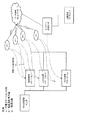
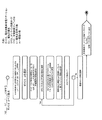
システムまたは充電ステーションネットワークの実施形態を図1に例示する。 An embodiment of a system or charging station network is illustrated in FIG.
EMS制御センタが遠隔充電ステーションの局所EMSに接続される。充電ステーションのEMSは、いわゆるオンラインルーティングガイド(online routing guide, ORG)を通じて充電需要予報を取得することができる。このようなORGは、登録されたEVの経路(計画され、または、オンラインで)を分析し、ユーザおよび運行基本設定(例えば街路の選択、運行時間、速度基本設定、充電地点ネットワークの選択等)に従ってEVに複数の経路に対する経路案内を提供することができる。ORGは、充電需要予測サービスユニットを統合あるいは連携させて、選択された経路に対する予想充電需要を計算する。データ通信ネットワークが、固定またはモバイル接続を通じてすべての構成要素を接続する。特にEVに(例えば車載ユニットOBUに)収容された経路案内クライアントとの通信のため、適応された経路案内がEVユーザに通信され、充電ステーションへの案内として提供される。 The EMS control center is connected to the local EMS of the remote charging station. The EMS of the charging station can obtain the charge demand forecast through the so-called online routing guide (ORG). Such an ORG analyzes the route of the registered EV (planned or online) and sets the user and basic operation settings (for example, street selection, operation time, basic speed setting, selection of charging point network, etc.). Therefore, it is possible to provide the EV with route guidance for a plurality of routes. The ORG integrates or links the charge demand forecast service units to calculate the expected charge demand for the selected route. A data communication network connects all components through a fixed or mobile connection. In particular, for communication with a route guidance client housed in the EV (eg, in the vehicle-mounted unit OBU), the adapted route guidance is communicated to the EV user and provided as guidance to the charging station.
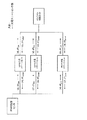
好ましい実施形態において、EMS制御センタは、第1のステップとして、k個の充電ステーションのそれぞれと(ΔE,ΔP)p,limの範囲の限界について交渉する。最低コスト解を求めた後、k個の充電ステーションの個々のEMSは、オンライン経路ガイドを用いた経路適応を起動する。図2は、EMS充電ネットワークにおいてネゴシエーションプロセスとして与えられる第1のステップを表す。EMS制御センタを通じて起動されると、充電システムのEMSは、所与の期間または他の任意の要求されたコンテクスト(例えば時間、位置、地域)に対する自己のフレキシビリティ範囲の充電予報を取得する。全部でk個の充電ステーションに対する(ΔE,ΔP)p,limの所与の分配から出発して、EMS制御センタ、局所ステーションのEMS、およびオンライン経路案内ユニットは、システム需要とEVフレキシビリティ範囲との間で要求される最適値に到達するまで、ネットワークにわたる(ΔE,ΔP)の変動について交渉する。(ΔE,ΔP)p,limは等分配されてもよいし、過去の負荷分散可能性、ネットワークグリッド内での経済的強度、戦略的位置等のような因子を含んでもよい。 In a preferred embodiment, the EMS control center negotiates with each of the k charging stations the limits of the (ΔE, ΔP) p, lim range as a first step. After finding the lowest cost solution, each EMS of k charging stations activates route adaptation with online route guides. FIG. 2 represents a first step given as a negotiation process in an EMS charging network. When activated through the EMS control center, the EMS of the charging system obtains a charge forecast for its flexibility range for a given period or any other requested context (eg time, location, region). Starting with a given distribution of (ΔE, ΔP) p, lim to a total of k charging stations, the EMS control center, local station EMS, and online routing units have system demand and EV flexibility range. Negotiate (ΔE, ΔP) fluctuations across the network until the optimum value required between them is reached. (ΔE, ΔP) p, lim may be evenly distributed or may include factors such as past load distributability, economic strength within the network grid, strategic position, and the like.
本方法は動的とみなされる。すなわち、所与の時間窓において、エネルギー制限要求に対して、精密適応プロセスを適用することにより、連続的で応答性の高いプロセスを実現することができる。 This method is considered dynamic. That is, in a given time window, a continuous and responsive process can be realized by applying a precision adaptation process to the energy limiting requirements.
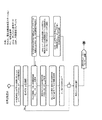
図3は、充電ステーションネットワークのk個の充電ステーションのエネルギー電力範囲(ΔE,ΔP)p,limを規定するために最低コスト解の推定を行うアルゴリズム例を表す。 FIG. 3 shows an example of an algorithm for estimating the lowest cost solution in order to define the energy power range (ΔE, ΔP) p, lim of k charging stations in the charging station network.
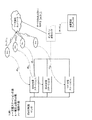
第2のステップで、各充電ステーションEVCSは、エネルギーおよび電力に対する所与の範囲限界を充足するために、交通条件、要求される停車(例えば交通信号)と継続時間、強制される停車(例えば交通渋滞)を考慮して、可能な経路適応について交渉する。図4は、対応するシステム例を示す。 In the second step, each charging station EVCS is forced to stop (eg traffic), traffic conditions, required stops (eg traffic signals) and duration, to meet given range limits for energy and power. Negotiate possible route adaptations in consideration of traffic congestion). FIG. 4 shows a corresponding system example.
アルゴリズムの実施例を図5に示す。この実施例は、充電ステーションごとにエネルギー電力範囲において最適化された運行パラメータ(例えば運行時間、充電時間、待機時間、休憩時間、街路選択等)に基づいてすべての可能な経路からEVごとに最良の経路を求めることを目標とする。この例は、所与の充電ステーションで充電を行うことが可能なすべてのEVの変動可能性を考慮し、最良の解を求めて最適化する。 An example of the algorithm is shown in FIG. This example is best for each EV from all possible routes based on operating parameters optimized for each charging station in the energy power range (eg operating time, charging time, standby time, break time, street selection, etc.). The goal is to find the route of. This example takes into account the variability of all EVs capable of charging at a given charging station and optimizes for the best solution.
相異なるユーザにサービスするため、例えば(幹線経路のみに留まるというような)経路選択、待機時間設定、計画休憩時間に関するユーザ基本設定、あるいはさらに充電基本設定(例えば都市運行では中程度の充電のみ)を、運行パラメータに対する調整によって考慮することができる。 To serve different users, for example, route selection (such as staying on the main route only), standby time settings, user basic settings for planned breaks, or even basic charging settings (for example, only moderate charging for city operations). Can be taken into account by adjusting for operational parameters.
充電ステーションネットワークまたはシステムおよび方法は、システムに参入していないがEV充電ネットワークに対する確率的負荷のように見えるEVユーザに関してフレキシブルである。このような負荷の予測のためにさまざまな方法が使用可能であり、例えば過去の充電プロファイルおよび案内されていないユーザの統計を統合することが可能である。 Charging station networks or systems and methods are flexible for EV users who have not entered the system but appear to be a stochastic load on the EV charging network. Various methods are available for predicting such loads, for example, it is possible to integrate historical charging profiles and statistics of unguided users.
この好ましい実施形態において、経路案内は、車列ロジスティックスの基礎とみなされる。経路案内は、エネルギーおよび輸送の両方の領域からの目標を参照し、各EVごとの最良経路を求めることにより、ステーションネットワークに対してステーションごとに、交渉された(ΔE,ΔP)p,limの範囲を保証する。 In this preferred embodiment, route guidance is considered the basis of convoy logistics. Route guidance is negotiated station-by-station (ΔE, ΔP) p, lim to the station network by referring to targets from both energy and transport areas and finding the best route for each EV. Guarantee range.
別の実施形態においては、例えば配送時間処理等への影響を考慮するために、車列管理を別のアプローチで扱うことが可能である。このような場合、EVユーザ相互作用とプロセスへのフィードバックを統合し、ネットワークの全部または一部の充電ステーションに関係するEMS制御センタとの再ネゴシエーションプロセスを可能とするために、2ステップアプローチの方法をより緊密に統合することが可能である。 In another embodiment, convoy management can be treated in a different approach, for example in order to consider the impact on delivery time processing and the like. In such cases, a two-step approach method to integrate EV user interaction with process feedback and enable a renegotiation process with the EMS control center associated with all or part of the network's charging stations. Can be more tightly integrated.
EVユーザ相互作用/フィードバックの統合および/または交通条件の実時間統合は、期間内の(ΔE,ΔP)p,lim適応要求につながる可能性がある。実時間ダイナミクスをサポートするため、本システムは、(ΔE,ΔP)p,limの再ネゴシエーションのために分散型管理方式で実現されてもよい。したがって、さらなる実施形態において、近隣の充電ステーションの適応が、例えば地域的または経済的コンテクストによって与えられる二者間適応として実現されることが可能であり、例えば公平性の考え方において必要とされる(ΔE,ΔP)p,lim履歴記録のためにEMS制御センタに報告される。 Integration of EV user interactions / feedback and / or real-time integration of traffic conditions can lead to (ΔE, ΔP) p, lim adaptation requirements within the period. To support real-time dynamics, the system may be implemented in a decentralized management scheme for renegotiation of (ΔE, ΔP) p, lim . Thus, in a further embodiment, the adaptation of nearby charging stations can be realized, for example, as a bilateral adaptation given by a regional or economic context, which is required, for example, in the concept of fairness ( ΔE, ΔP) p, lim Reported to the EMS control center for history recording.
別の実施形態において、広域(例えば交通量の多い地点)にわたる交通全体(無相関車列管理)に対して、例えば速度、再ルーティング(距離)および交通信号(タイミング)に影響を与えるために、オンライン経路案内が、交通制御センタとの直接接続を通じて経路および運行適応要求を実施してもよい。 In another embodiment, for example, to affect speed, rerouting (distance) and traffic signal (timing) for the entire traffic (uncorrelated convoy management) over a wide area (eg, a point of heavy traffic). Online routing may carry out routing and operational adaptation requests through a direct connection to the traffic control center.
さらなる実施形態において、交通制御および充電管理が、充電およびロジスティックス計画、さらに充電予約サービスとの統合に拡張される。 In a further embodiment, traffic control and charge management will be extended to integration with charge and logistics planning, as well as charge reservation services.
上記の説明および添付図面の記載に基づいて、当業者は本発明の多くの変形例および他の実施形態に想到し得るであろう。したがって、本発明は、開示した具体的実施形態に限定されるものではなく、変形例および他の実施形態も、添付の特許請求の範囲内に含まれるものと解すべきである。本明細書では特定の用語を用いているが、それらは総称的・説明的意味でのみ用いられており、限定を目的としたものではない。 Based on the above description and description in the accompanying drawings, one of ordinary skill in the art will be able to conceive of many variations and other embodiments of the invention. Therefore, the present invention is not limited to the disclosed specific embodiments, and variations and other embodiments should be understood to be included in the appended claims. Although specific terms are used herein, they are used only in a generic and descriptive sense and are not intended to be limiting.
Claims (18)
前記充電ステーションネットワークが前記複数の充電ステーションを制御する制御センタを含み、前記移動負荷が容量トレランスの能力を有する移動負荷であり、
前記制御センタが、
前記移動負荷の充電需要の予測に基づいて、前記充電ステーションにより前記移動負荷に提供されるべきエネルギーおよび電力に関する限界であるエネルギー電力範囲限界について各充電ステーションと交渉し、
設定可能な最適化パラメータを考慮して、各充電ステーションpごとに、前記充電ステーションpの個別状況を考慮して前記エネルギー電力範囲限界を選択的に分配し(ただしp=1,...,nであり、nおよびpは整数である)、
前記分配を考慮して、各充電ステーションpに対して、または、設定可能な数の充電ステーションpに対して、前記エネルギー電力範囲限界を少なくとも部分的に充足するために、少なくとも1つの移動負荷の少なくとも1つの輸送パラメータの適応および/または選択が近隣の充電ステーションによって二者間で実行される、
ことを特徴とする、充電ステーションネットワーク内で移動負荷に対し複数の充電ステーションの負荷分散を行う方法。 In the method of distributing the load of multiple charging stations to the mobile load in the charging station network,
The charging station network includes a control center that controls the plurality of charging stations, and the mobile load is a mobile load having capacity tolerance capability.
The control center
Based on the prediction of the charging demand of the mobile load, the energy power range limit, which is the limit regarding the energy and power to be provided to the mobile load by the charging station, is negotiated with each charging station.
The energy power range limit is selectively distributed for each charging station p in consideration of the configurable optimization parameters and in consideration of the individual situation of the charging station p (however, p = 1, ..., n, where n and p are integers),
Considering the distribution, for each charging station p or for a configurable number of charging stations p, at least one mobile load to satisfy the energy power range limit at least partially. adaptation and / or selection of at least one transport parameter Ru is performed by neighboring charging station between two parties,
A method of distributing the load of a plurality of charging stations to a mobile load in a charging station network.
複数の充電ステーションと、
前記複数の充電ステーションを制御する制御センタと、
を有し、前記移動負荷が容量トレランスの能力を有する移動負荷であり、
前記制御センタが、
前記移動負荷の充電需要の予測に基づいて、前記充電ステーションにより前記移動負荷に提供されるべきエネルギーおよび電力に関する限界であるエネルギー電力範囲限界について各充電ステーションと交渉する手段と、
設定可能な最適化パラメータを考慮して、各充電ステーションpごとに、前記充電ステーションpの個別状況を考慮して前記エネルギー電力範囲限界を選択的に分配する手段と(ただしp=1,...,nであり、nおよびpは整数である)、
を備え、
前記分配を考慮して、各充電ステーションpに対して、または、設定可能な数の充電ステーションpに対して、前記エネルギー電力範囲限界を少なくとも部分的に充足するために、少なくとも1つの移動負荷の少なくとも1つの輸送パラメータの適応および/または選択が近隣の充電ステーションによって二者間で実行される、
ことを特徴とする充電ステーションネットワーク。 Charging station network
With multiple charging stations
A control center that controls the plurality of charging stations,
The moving load is a moving load having a capacity tolerance capability.
The control center
A means of negotiating with each charging station about the energy and power limits that the charging station should provide to the mobile load , based on the prediction of the charging demand of the mobile load.
A means for selectively distributing the energy power range limit for each charging station p in consideration of the configurable optimization parameters and in consideration of the individual situation of the charging station p (however, p = 1, .. , N, where n and p are integers),
With
Considering the distribution, for each charging station p or for a configurable number of charging stations p, at least one mobile load to satisfy the energy power range limit at least partially. Adaptation and / or selection of at least one transport parameter is performed between the two by a nearby charging station,
It features a charging station network.
Priority Applications (1)
| Application Number | Priority Date | Filing Date | Title |
|---|---|---|---|
| JP2020116433A JP7041719B2 (en) | 2014-04-22 | 2020-07-06 | How to load balance multiple charging stations to mobile loads within the charging station network and charging station network |
Applications Claiming Priority (3)
| Application Number | Priority Date | Filing Date | Title |
|---|---|---|---|
| PCT/EP2014/058080 WO2015161863A1 (en) | 2014-04-22 | 2014-04-22 | Shipping container for delivering cables |
| JP2018151256A JP2019004696A (en) | 2014-04-22 | 2018-08-10 | Method for performing load distribution of plural charging stations to movement load in charging station network and charging station network |
| JP2020116433A JP7041719B2 (en) | 2014-04-22 | 2020-07-06 | How to load balance multiple charging stations to mobile loads within the charging station network and charging station network |
Related Parent Applications (1)
| Application Number | Title | Priority Date | Filing Date |
|---|---|---|---|
| JP2018151256A Division JP2019004696A (en) | 2014-04-22 | 2018-08-10 | Method for performing load distribution of plural charging stations to movement load in charging station network and charging station network |
Publications (2)
| Publication Number | Publication Date |
|---|---|
| JP2020184878A true JP2020184878A (en) | 2020-11-12 |
| JP7041719B2 JP7041719B2 (en) | 2022-03-24 |
Family
ID=50736043
Family Applications (1)
| Application Number | Title | Priority Date | Filing Date |
|---|---|---|---|
| JP2020116433A Active JP7041719B2 (en) | 2014-04-22 | 2020-07-06 | How to load balance multiple charging stations to mobile loads within the charging station network and charging station network |
Country Status (5)
| Country | Link |
|---|---|
| EP (1) | EP3134342B1 (en) |
| JP (1) | JP7041719B2 (en) |
| ES (1) | ES2774298T3 (en) |
| PL (1) | PL3134342T3 (en) |
| WO (1) | WO2015161863A1 (en) |
Cited By (2)
| Publication number | Priority date | Publication date | Assignee | Title |
|---|---|---|---|---|
| KR20230013315A (en) * | 2021-07-19 | 2023-01-26 | (주)클린일렉스 | Electric vehicle charging power distribution system and method using OCPP-based smart charging profile |
| JP2024530679A (en) * | 2021-08-13 | 2024-08-23 | ヒタチ・エナジー・リミテッド | Controlling and Scheduling Charging of Electric Vehicles and Related Systems and Methods - Patent application |
Families Citing this family (4)
| Publication number | Priority date | Publication date | Assignee | Title |
|---|---|---|---|---|
| WO2019169148A1 (en) | 2018-02-28 | 2019-09-06 | Commscope Technologies Llc | Packaging assembly for telecommunications equipment |
| ES2960078T3 (en) * | 2018-07-09 | 2024-02-29 | Prysmian Spa | Fiber optic installation kit and corresponding procedures for its use and manufacturing. |
| IT201900024190A1 (en) * | 2019-12-17 | 2021-06-17 | Prysmian Spa | Kit to supply a rolled product |
| WO2024004240A1 (en) * | 2022-06-30 | 2024-01-04 | 株式会社フジクラ | Packing unit |
Citations (3)
| Publication number | Priority date | Publication date | Assignee | Title |
|---|---|---|---|---|
| JP2012055087A (en) * | 2010-09-01 | 2012-03-15 | Keio Gijuku | Power network control network |
| US20130006677A1 (en) * | 2011-06-30 | 2013-01-03 | International Business Machines Corporation | Recharging of battery electric vehicles on a smart electrical grid system |
| US20130046411A1 (en) * | 2011-08-15 | 2013-02-21 | Siemens Corporation | Electric Vehicle Load Management |
Family Cites Families (9)
| Publication number | Priority date | Publication date | Assignee | Title |
|---|---|---|---|---|
| US3389868A (en) * | 1966-09-08 | 1968-06-25 | Itt | Device for coiled stowage of cables |
| US4840449A (en) * | 1988-01-27 | 1989-06-20 | American Telephone And Telegraph Company, At&T Bell Laboratories | Optical fiber splice organizer |
| GB2224259B (en) * | 1988-10-28 | 1993-05-05 | Cabot Corp | Apparatus for packaging and transporting wire |
| US5193756A (en) * | 1991-06-24 | 1993-03-16 | Hughes Aircraft Company | Figure eight linear dispenser |
| FR2814246B1 (en) * | 2000-09-21 | 2003-08-15 | France Telecom | DEVICE FOR STORING LENGTHS OF FIBER OPTIC CABLES |
| WO2002070386A1 (en) * | 2001-02-28 | 2002-09-12 | Kadence Photonics Pty Ltd | Optical fibre handling method and apparatus |
| US7072560B1 (en) * | 2005-03-10 | 2006-07-04 | The United States Of America As Represented By The Secretary Of The Navy | Twist free method of optical fiber stowage and payout |
| US7599598B2 (en) * | 2006-08-09 | 2009-10-06 | Adc Telecommunications, Inc. | Cable payout systems and methods |
| US8016222B2 (en) | 2008-04-16 | 2011-09-13 | Windy City Wire Cable And Technology Products, Llc | Wire and cable dispensing container and systems |
-
2014
- 2014-04-22 PL PL14725019T patent/PL3134342T3/en unknown
- 2014-04-22 ES ES14725019T patent/ES2774298T3/en active Active
- 2014-04-22 EP EP14725019.5A patent/EP3134342B1/en active Active
- 2014-04-22 WO PCT/EP2014/058080 patent/WO2015161863A1/en not_active Ceased
-
2020
- 2020-07-06 JP JP2020116433A patent/JP7041719B2/en active Active
Patent Citations (3)
| Publication number | Priority date | Publication date | Assignee | Title |
|---|---|---|---|---|
| JP2012055087A (en) * | 2010-09-01 | 2012-03-15 | Keio Gijuku | Power network control network |
| US20130006677A1 (en) * | 2011-06-30 | 2013-01-03 | International Business Machines Corporation | Recharging of battery electric vehicles on a smart electrical grid system |
| US20130046411A1 (en) * | 2011-08-15 | 2013-02-21 | Siemens Corporation | Electric Vehicle Load Management |
Cited By (4)
| Publication number | Priority date | Publication date | Assignee | Title |
|---|---|---|---|---|
| KR20230013315A (en) * | 2021-07-19 | 2023-01-26 | (주)클린일렉스 | Electric vehicle charging power distribution system and method using OCPP-based smart charging profile |
| KR102557973B1 (en) * | 2021-07-19 | 2023-07-20 | (주)클린일렉스 | Electric vehicle charging power distribution system and method using OCPP-based smart charging profile |
| JP2024530679A (en) * | 2021-08-13 | 2024-08-23 | ヒタチ・エナジー・リミテッド | Controlling and Scheduling Charging of Electric Vehicles and Related Systems and Methods - Patent application |
| JP7842199B2 (en) | 2021-08-13 | 2026-04-07 | ヒタチ・エナジー・リミテッド | Control and scheduling of electric vehicle charging, and related systems and methods. |
Also Published As
| Publication number | Publication date |
|---|---|
| PL3134342T3 (en) | 2021-01-11 |
| EP3134342B1 (en) | 2019-12-18 |
| EP3134342A1 (en) | 2017-03-01 |
| JP7041719B2 (en) | 2022-03-24 |
| WO2015161863A1 (en) | 2015-10-29 |
| ES2774298T3 (en) | 2020-07-20 |
Similar Documents
| Publication | Publication Date | Title |
|---|---|---|
| JP2019004696A (en) | Method for performing load distribution of plural charging stations to movement load in charging station network and charging station network | |
| JP7041719B2 (en) | How to load balance multiple charging stations to mobile loads within the charging station network and charging station network | |
| Koufakis et al. | Offline and online electric vehicle charging scheduling with V2V energy transfer | |
| Said et al. | A novel electric vehicles charging/discharging management protocol based on queuing model | |
| He et al. | Optimal scheduling for charging and discharging of electric vehicles | |
| Ko et al. | Mobility-aware vehicle-to-grid control algorithm in microgrids | |
| EP2760696B1 (en) | Method and system for charging electric vehicles | |
| Kong et al. | Charging schemes for plug-in hybrid electric vehicles in smart grid: A survey | |
| Balasubramaniam et al. | Deep learning-based power prediction aware charge scheduling approach in cloud based electric vehicular network | |
| Liu et al. | Reservation-based EV charging recommendation concerning charging urgency policy | |
| Joós et al. | Integrated V2G, G2V, and renewable energy sources coordination over a converged fiber-wireless broadband access network | |
| EP3110653B1 (en) | Self-managing charging poles | |
| Feng et al. | Efficient mobile energy replenishment scheme based on hybrid mode for wireless rechargeable sensor networks | |
| JP2015060570A (en) | Operation plan generation device and operation plan generation method | |
| KR20230010516A (en) | Operation scheduling method and device for mobile charging station | |
| Vayá et al. | Combined smart-charging and frequency regulation for fleets of plug-in electric vehicles | |
| Theodoropoulos et al. | A load balancing control algorithm for EV static and dynamic wireless charging | |
| Tang et al. | A holistic review on advanced bi-directional EV charging control algorithms | |
| Hosseini et al. | Optimizing electric vehicle charging through an artificial intelligence mechanism for smart transportation | |
| KR20130102681A (en) | System and method for frequency control | |
| Huang et al. | Electric vehicle entire-trip navigation and charging reservation method based on a high-speed communication network | |
| CN106096793A (en) | The charging electric vehicle decision method that periodicity based on congestion aware optimizes | |
| Dande et al. | An integrated charging and computation scheduling of electric vehicles in edge computing system | |
| Chen et al. | Energy management framework for mobile vehicular electric storage | |
| CN119417129A (en) | An electric vehicle charging scheduling system and method based on deep reinforcement learning and renewable energy |
Legal Events
| Date | Code | Title | Description |
|---|---|---|---|
| A621 | Written request for application examination |
Free format text: JAPANESE INTERMEDIATE CODE: A621 Effective date: 20200706 |
|
| A521 | Request for written amendment filed |
Free format text: JAPANESE INTERMEDIATE CODE: A523 Effective date: 20200716 |
|
| A977 | Report on retrieval |
Free format text: JAPANESE INTERMEDIATE CODE: A971007 Effective date: 20210315 |
|
| A131 | Notification of reasons for refusal |
Free format text: JAPANESE INTERMEDIATE CODE: A131 Effective date: 20210511 |
|
| A601 | Written request for extension of time |
Free format text: JAPANESE INTERMEDIATE CODE: A601 Effective date: 20210805 |
|
| A521 | Request for written amendment filed |
Free format text: JAPANESE INTERMEDIATE CODE: A523 Effective date: 20210921 |
|
| TRDD | Decision of grant or rejection written | ||
| A01 | Written decision to grant a patent or to grant a registration (utility model) |
Free format text: JAPANESE INTERMEDIATE CODE: A01 Effective date: 20220222 |
|
| A61 | First payment of annual fees (during grant procedure) |
Free format text: JAPANESE INTERMEDIATE CODE: A61 Effective date: 20220311 |
|
| R150 | Certificate of patent or registration of utility model |
Ref document number: 7041719 Country of ref document: JP Free format text: JAPANESE INTERMEDIATE CODE: R150 |
|
| S111 | Request for change of ownership or part of ownership |
Free format text: JAPANESE INTERMEDIATE CODE: R313113 |
|
| R350 | Written notification of registration of transfer |
Free format text: JAPANESE INTERMEDIATE CODE: R350 |