JP2020131663A - Mold clamping apparatus - Google Patents
Mold clamping apparatus Download PDFInfo
- Publication number
- JP2020131663A JP2020131663A JP2019031757A JP2019031757A JP2020131663A JP 2020131663 A JP2020131663 A JP 2020131663A JP 2019031757 A JP2019031757 A JP 2019031757A JP 2019031757 A JP2019031757 A JP 2019031757A JP 2020131663 A JP2020131663 A JP 2020131663A
- Authority
- JP
- Japan
- Prior art keywords
- mold clamping
- mold
- tie bar
- clamping device
- clamping means
- Prior art date
- Legal status (The legal status is an assumption and is not a legal conclusion. Google has not performed a legal analysis and makes no representation as to the accuracy of the status listed.)
- Granted
Links
- 230000007246 mechanism Effects 0.000 claims abstract description 45
- 238000002347 injection Methods 0.000 claims description 8
- 239000007924 injection Substances 0.000 claims description 8
- 230000000452 restraining effect Effects 0.000 claims description 8
- 238000000465 moulding Methods 0.000 claims 2
- 230000002093 peripheral effect Effects 0.000 description 8
- 230000005415 magnetization Effects 0.000 description 6
- 229910000831 Steel Inorganic materials 0.000 description 5
- 239000010959 steel Substances 0.000 description 5
- 230000004907 flux Effects 0.000 description 4
- 239000011347 resin Substances 0.000 description 4
- 229920005989 resin Polymers 0.000 description 4
- 229910000828 alnico Inorganic materials 0.000 description 3
- 238000010586 diagram Methods 0.000 description 3
- 230000009471 action Effects 0.000 description 2
- 238000000034 method Methods 0.000 description 2
- 230000004048 modification Effects 0.000 description 2
- 238000012986 modification Methods 0.000 description 2
- 229910001172 neodymium magnet Inorganic materials 0.000 description 2
- 230000004323 axial length Effects 0.000 description 1
- 230000015572 biosynthetic process Effects 0.000 description 1
- 230000008859 change Effects 0.000 description 1
- 238000012790 confirmation Methods 0.000 description 1
- 230000005611 electricity Effects 0.000 description 1
- 238000005265 energy consumption Methods 0.000 description 1
- 239000000463 material Substances 0.000 description 1
- JLCXRPSKXNFCOX-UHFFFAOYSA-N neodymium Chemical compound [Nd].[Nd] JLCXRPSKXNFCOX-UHFFFAOYSA-N 0.000 description 1
- 230000008569 process Effects 0.000 description 1
- 238000005728 strengthening Methods 0.000 description 1
Images

Classifications
-
- B—PERFORMING OPERATIONS; TRANSPORTING
- B29—WORKING OF PLASTICS; WORKING OF SUBSTANCES IN A PLASTIC STATE IN GENERAL
- B29C—SHAPING OR JOINING OF PLASTICS; SHAPING OF MATERIAL IN A PLASTIC STATE, NOT OTHERWISE PROVIDED FOR; AFTER-TREATMENT OF THE SHAPED PRODUCTS, e.g. REPAIRING
- B29C45/00—Injection moulding, i.e. forcing the required volume of moulding material through a nozzle into a closed mould; Apparatus therefor
- B29C45/17—Component parts, details or accessories; Auxiliary operations
- B29C45/64—Mould opening, closing or clamping devices
-
- B—PERFORMING OPERATIONS; TRANSPORTING
- B29—WORKING OF PLASTICS; WORKING OF SUBSTANCES IN A PLASTIC STATE IN GENERAL
- B29C—SHAPING OR JOINING OF PLASTICS; SHAPING OF MATERIAL IN A PLASTIC STATE, NOT OTHERWISE PROVIDED FOR; AFTER-TREATMENT OF THE SHAPED PRODUCTS, e.g. REPAIRING
- B29C45/00—Injection moulding, i.e. forcing the required volume of moulding material through a nozzle into a closed mould; Apparatus therefor
- B29C45/17—Component parts, details or accessories; Auxiliary operations
- B29C45/64—Mould opening, closing or clamping devices
- B29C45/67—Mould opening, closing or clamping devices hydraulic
- B29C45/6707—Mould opening, closing or clamping devices hydraulic without relative movement between the piston and the cylinder of the clamping device during the mould opening or closing movement
- B29C45/6714—Mould opening, closing or clamping devices hydraulic without relative movement between the piston and the cylinder of the clamping device during the mould opening or closing movement using a separate element transmitting the mould clamping force from the clamping cylinder to the mould
- B29C45/6728—Mould opening, closing or clamping devices hydraulic without relative movement between the piston and the cylinder of the clamping device during the mould opening or closing movement using a separate element transmitting the mould clamping force from the clamping cylinder to the mould the separate element consisting of coupling rods
-
- B—PERFORMING OPERATIONS; TRANSPORTING
- B29—WORKING OF PLASTICS; WORKING OF SUBSTANCES IN A PLASTIC STATE IN GENERAL
- B29C—SHAPING OR JOINING OF PLASTICS; SHAPING OF MATERIAL IN A PLASTIC STATE, NOT OTHERWISE PROVIDED FOR; AFTER-TREATMENT OF THE SHAPED PRODUCTS, e.g. REPAIRING
- B29C45/00—Injection moulding, i.e. forcing the required volume of moulding material through a nozzle into a closed mould; Apparatus therefor
- B29C45/17—Component parts, details or accessories; Auxiliary operations
- B29C45/64—Mould opening, closing or clamping devices
- B29C45/68—Mould opening, closing or clamping devices hydro-mechanical
-
- H—ELECTRICITY
- H01—ELECTRIC ELEMENTS
- H01F—MAGNETS; INDUCTANCES; TRANSFORMERS; SELECTION OF MATERIALS FOR THEIR MAGNETIC PROPERTIES
- H01F7/00—Magnets
- H01F7/02—Permanent magnets [PM]
-
- B—PERFORMING OPERATIONS; TRANSPORTING
- B29—WORKING OF PLASTICS; WORKING OF SUBSTANCES IN A PLASTIC STATE IN GENERAL
- B29C—SHAPING OR JOINING OF PLASTICS; SHAPING OF MATERIAL IN A PLASTIC STATE, NOT OTHERWISE PROVIDED FOR; AFTER-TREATMENT OF THE SHAPED PRODUCTS, e.g. REPAIRING
- B29C45/00—Injection moulding, i.e. forcing the required volume of moulding material through a nozzle into a closed mould; Apparatus therefor
- B29C45/17—Component parts, details or accessories; Auxiliary operations
- B29C45/64—Mould opening, closing or clamping devices
- B29C2045/645—Mould opening, closing or clamping devices using magnetic means
-
- B—PERFORMING OPERATIONS; TRANSPORTING
- B29—WORKING OF PLASTICS; WORKING OF SUBSTANCES IN A PLASTIC STATE IN GENERAL
- B29C—SHAPING OR JOINING OF PLASTICS; SHAPING OF MATERIAL IN A PLASTIC STATE, NOT OTHERWISE PROVIDED FOR; AFTER-TREATMENT OF THE SHAPED PRODUCTS, e.g. REPAIRING
- B29C45/00—Injection moulding, i.e. forcing the required volume of moulding material through a nozzle into a closed mould; Apparatus therefor
- B29C45/17—Component parts, details or accessories; Auxiliary operations
- B29C45/64—Mould opening, closing or clamping devices
- B29C45/66—Mould opening, closing or clamping devices mechanical
- B29C2045/664—Mould opening, closing or clamping devices mechanical using mould clamping means operating independently from the mould closing means
-
- B—PERFORMING OPERATIONS; TRANSPORTING
- B29—WORKING OF PLASTICS; WORKING OF SUBSTANCES IN A PLASTIC STATE IN GENERAL
- B29K—INDEXING SCHEME ASSOCIATED WITH SUBCLASSES B29B, B29C OR B29D, RELATING TO MOULDING MATERIALS OR TO MATERIALS FOR MOULDS, REINFORCEMENTS, FILLERS OR PREFORMED PARTS, e.g. INSERTS
- B29K2905/00—Use of metals, their alloys or their compounds, as mould material
Landscapes
- Engineering & Computer Science (AREA)
- Manufacturing & Machinery (AREA)
- Mechanical Engineering (AREA)
- Physics & Mathematics (AREA)
- Electromagnetism (AREA)
- Power Engineering (AREA)
- Moulds For Moulding Plastics Or The Like (AREA)
- Injection Moulding Of Plastics Or The Like (AREA)
Abstract
Description
本発明は、金型を型締めする型締装置に関する。 The present invention relates to a mold clamping device for mold clamping a mold.
金型のキャビティへ溶融樹脂を射出し、凝固させて樹脂成形品を得ることが盛んに行われている。金型は、固定型と可動型とからなり、型締装置で型締めされる。 It is widely practiced to inject molten resin into the cavity of a mold and solidify it to obtain a resin molded product. The mold consists of a fixed mold and a movable mold, and is molded by a mold clamping device.
型締装置として、ハーフナットを備えたものが知られている(例えば、特許文献1(図1)参照)。 As a mold clamping device, one provided with a half nut is known (see, for example, Patent Document 1 (FIG. 1)).
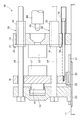
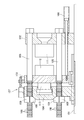
特許文献1を次図に基づいて説明する。
図7は従来の型締装置の基本構成を説明する図であり、ベース101に、固定盤102が固定され、可動盤103及び型締手段104がタイバー105の軸方向に移動可能に載せられている。
固定盤102と可動盤103とが型開閉手段106で連結され、可動盤103と型締手段104とが連結手段107で連結されている。
FIG. 7 is a diagram illustrating a basic configuration of a conventional mold clamping device, in which a
The
タイバー105には、必要な箇所に複数の周溝108が一定のピッチで設けられている。
型締手段104には、周溝108に噛み合う歯を有するハーフナット109が、上下移動可能に取付けられている。ハーフナット109は、上下2個で1セットとなり、互いに接近する(閉じる)ことで周溝108に噛み合い、互いに離れる(開く)ことで噛み合いが解除される。
The
A
図では、固定盤102に取付けた固定型111と、可動盤103に取付けた可動型112とが離れており、型開き状態にある。
ハーフナット109を開き、型開閉手段106を縮動すると、固定型111に可動型112が当たる。
In the figure, the
When the
タイバー105の周溝108とハーフナット109の歯とがずれている場合には、連結手段107により、周溝108にハーフナット109の歯が合致するまで、可動盤103を基準にして型締手段104を僅かに移動する。
合致したら、ハーフナット109を閉じる。次に、ピストン113により、型締めを実施する。
When the
When they match, close the
この型締めのときに、ハーフナット109には、大きな力が加わる。この力に耐えるように、周溝108は、ある程度の大きさのピッチで設ける。ピッチが小さ過ぎる、隣り合う周溝108、108間の肉が薄くなり、軸力に対する強度が不足するからである。
ピッチを大きくすると、強度が確保できる。反面、型締手段104の細かい位置決めはできなくなる。
At the time of this mold clamping, a large force is applied to the
Strength can be ensured by increasing the pitch. On the other hand, the mold clamping means 104 cannot be finely positioned.
型締装置の高性能化が求められる中、任意の位置で型締手段を位置決めすることが望まれる。 As the performance of the mold clamping device is required to be improved, it is desired to position the mold clamping means at an arbitrary position.
本発明は、任意の位置で型締手段を位置決めすることができる型締装置を提供することを課題とする。 An object of the present invention is to provide a mold clamping device capable of positioning a mold clamping means at an arbitrary position.
請求項1に係る発明は、ベースに固定され固定型を支える固定盤と、前記ベースに移動可能に載せられ可動型を支える可動盤と、この可動盤の外側に配置されると共に前記ベースに移動可能に載せられ前記可動型を前記固定型へ型締めする型締手段と、少なくとも前記可動盤を貫通して延びるタイバーと、前記固定盤に対して前記可動盤又は前記型締手段を前記タイバーに沿って移動する型開閉手段とを有する型締装置であって、
この型締装置は、前記タイバーに前記型締手段又は前記固定盤を拘束状態にする拘束機構を備え、
この拘束機構は、前記タイバーに対して前記型締手段又は前記固定盤を拘束状態にすることと非拘束状態にすることとを切り換える磁石機構を備えていることを特徴とする。
The invention according to
In this mold clamping device, the mold clamping means or the fixing plate is provided with a restraining mechanism in a restraining state on the tie bar.
The restraint mechanism is characterized by comprising a magnet mechanism for switching between the restraining state and the non-constraining state of the mold clamping means or the fixing plate with respect to the tie bar.
請求項2に係る発明は、請求項1記載の型締装置であって、
前記拘束機構は、前記タイバーとの間に所定の距離を保って配置されていることを特徴とする。
The invention according to
The restraint mechanism is characterized in that it is arranged with a predetermined distance from the tie bar.
請求項3に係る発明は、請求項1又は請求項2記載の型締装置であって、
前記磁石機構は、複数の永久磁石と、一部の永久磁石の極性を制御する電磁コイルとを備えていることを特徴とする。
The invention according to
The magnet mechanism is characterized by including a plurality of permanent magnets and an electromagnetic coil that controls the polarity of some of the permanent magnets.
請求項4に係る発明は、請求項1〜3のいずれか1項記載の型締装置であって、
前記拘束機構は、前記タイバーを囲いつつ、前記型締手段から前記可動盤を貫通して延び、先端が前記可動盤から前記固定盤側へ突き出ている筒部を備えていることを特徴とする。
The invention according to
The restraint mechanism is characterized by including a tubular portion that surrounds the tie bar, extends from the mold clamping means through the movable platen, and has a tip protruding from the movable platen toward the fixed platen. ..
請求項5に係る発明は、請求項1〜3のいずれか1項記載の型締装置であって、
前記拘束機構は、前記タイバーを囲いつつ、前記固定盤を貫通して延び、先端が前記固定盤から射出装置側へ突き出ている筒部を備えていることを特徴とする。
The invention according to
The restraint mechanism is characterized by including a tubular portion that surrounds the tie bar, extends through the fixing plate, and has a tip protruding from the fixing plate toward the injection device.
請求項1に係る発明では、磁石機構でタイバーに対して型締手段を拘束状態にするため、タイバーに対して型締手段を、任意の位置で拘束させることができる。
すなわち、本発明によれば、任意の位置で型締手段を位置決めすることができる型締装置が提供される。
In the invention according to
That is, according to the present invention, there is provided a mold clamping device capable of positioning the mold clamping means at an arbitrary position.
請求項2に係る発明では、拘束機構は、タイバーとの間に所定の距離を保って配置されている。拘束機構は、タイバーと接触しないため、拘束機構及びタイバーの相互に、擦り傷や摩耗の発生がない。
In the invention according to
請求項3に係る発明では、磁石機構は、複数の永久磁石と、一部の永久磁石の極性を制御する電磁コイルとを備えている。電磁コイルに極く短時間通電することで、拘束状態又は非拘束状態になるように、永久磁石の極性を切り換える。極く短時間は1秒未満である。その他の時間は通電する必要がないため、電気エネルギーの消費を小さくすることができ、電気代を大きく低減することができる。
In the invention according to
請求項4に係る発明では、拘束機構は、型締手段から可動盤を貫通して延び、先端が可動盤から固定盤側へ突き出ている筒部を備えている。筒部が十分に長くなり、永久磁石を配置する面積が大きくなるため、拘束に必要な吸磁力を容易に確保することができる。または、永久磁石を配置する面積が大きくなるため、磁束密度の小さな磁石が採用可能となる。磁束密度が小さな磁石は、安価であり入手容易である。
In the invention according to
請求項5に係る発明では、拘束機構は、固定盤を貫通して延び、先端が固定盤から射出装置側へ突き出ている筒部を備えている。筒部が十分に長くなり、永久磁石を配置する面積が大きくなるため、拘束に必要な吸磁力を容易に確保することができる。または、永久磁石を配置する面積が大きくなるため、磁束密度の小さな磁石が採用可能となる。磁束密度が小さな磁石は、安価であり入手容易である。
In the invention according to
本発明の実施の形態を添付図に基づいて以下に説明する。 Embodiments of the present invention will be described below with reference to the accompanying drawings.
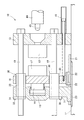
図1に示すように、型締装置10は、ベース11と、このベース11に固定され固定型12を支える固定盤13と、この固定盤13と平行に配置され固定型12へ向かって延びるピストンロッド14を備えベース11に水平移動自在に支持されている型締手段15と、この型締手段15と共に可動盤18を移動する型開閉手段16と、固定盤13と型締手段15の間に配置されピストンロッド14に連結されベース11に水平移動自在に支持され可動型17を支える可動盤18と、固定盤13から水平に延びて可動盤18及び型締手段15を貫通するタイバー19、19と、タイバー19を囲うようにして型締手段15に取付けられた拘束機構30とを備えている横型型締装置である。
As shown in FIG. 1, the
型締手段15は、油圧シリンダ、電動シリンダ、トグル機構の何れでもよい。型開閉手段16は、油圧シリンダ、電動シリンダの何れでもよい。
また、型開閉手段16は、固定盤13と型締手段15とに掛け渡してもよい。
さらにまた、型開閉手段16は、ベース11と可動盤18(又は型締手段15)とに掛け渡してもよい。
The mold clamping means 15 may be a hydraulic cylinder, an electric cylinder, or a toggle mechanism. The mold opening / closing means 16 may be either a hydraulic cylinder or an electric cylinder.
Further, the mold opening / closing means 16 may be bridged between the fixing
Furthermore, the mold opening / closing means 16 may be hung on the
例えば、ベース11に敷設したレール21にスライダー22を載せ、スライダー22に可動盤18を載せる。レール21とスライダー22とに鋼球等のころを介在させることで、軽い力でベース11に対して可動盤18を水平に移動させることができる。
また、例えば、型締手段15は、ベース11の上面に貼った摺り板23に直接載せて、ベース11に対して 型締手段15を水平に移動させるようにしてもよい。
可動盤18を摺り板23に載せることや、型締手段15をスライダー22を介してレール21に載せることは差し支えない。
For example, the
Further, for example, the mold clamping means 15 may be directly placed on a sliding
The
拘束機構30は、タイバー19に沿った軸方向の長さ(内周面の面積)を確保するために、型締手段15及び可動盤18を貫通して、先端が固定盤13側へ突出するようにすることが望まれる。
拘束機構30は、例えば、一端に設けたフランジ31と、このフランジ31を型締手段32に固定する複数本のボルト32と、フランジ31からタイバー19に沿って延びる筒部33とからなる。
The
The
なお、筒部33の外周に雄ねじ部を設け、型締手段15に雌ねじ部を設け、型締手段15に筒部33をねじ結合してもよい。ねじ結合であれば、フランジ31とボルト32を省くことができる。
A male screw portion may be provided on the outer circumference of the
図2に示すように、フランジ31から延びる筒部33は十分に長い。
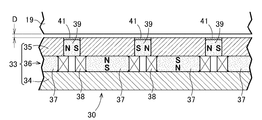
図3に示すように、筒部33は、例えば、鋼製の外筒34と、鋼製の内筒35と、これら外筒34と内筒35の間に配置される磁石機構36とからなる。
この磁石機構36は、例えば、外筒34と内筒35の間に配置される複数の第1の永久磁石37と、この第1の永久磁石37を囲う電磁コイル38と、隣り合う電磁コイル38、38の間に且つ内筒35に取付けられた第2の永久磁石39とからなる。電磁コイル38は、電磁石に相当する。
As shown in FIG. 2, the
As shown in FIG. 3, the
The
第1の永久磁石37は、アルニコ磁石が好適である。電磁コイル38に通電すると不可避的に第1の永久磁石37の温度が上がる。アルニコ磁石は、キュリー点温度が860℃であるため、温度上昇に耐えると共に、磁化反転(磁化の向きを変えること。)に好適である。
The first
第2の永久磁石39は、電磁コイル38の影響を受けないため、キュリー点温度が300℃のネオジム(ネオジウム)磁石が採用できる。ネオジム磁石の磁気エネルギー密度は300kJ/m3であり、アルニコ磁石の磁気エネルギー密度40kJ/m3の7.5倍の磁気特性を有するため、第2の永久磁石39に好適である。
Since the second
ただし、ネオジム磁石は錆びやすいため、遮水膜41で外気と隔離する。
また、第2の永久磁石39においては、ある第2の永久磁石39のN極と隣りの第2の永久磁石39のN極が向かい合い、ある第2の永久磁石39のS極と隣りの第2の永久磁石39のS極が向かい合うように配置する。
However, since neodymium magnets are easily rusted, they are separated from the outside air by a water-
Further, in the second
以上の構成からなる拘束機構30の作用を、次に説明する。
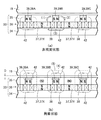
図4(a)、(b)において、図左から右へ、第2の永久磁石39は、第2の永久磁石39A、39B、39Cと呼ぶ(A、B、Cは位置を区別するための添え字である)。
隣り合う第2の永久磁石39A、39Bの間に位置する第1の永久磁石37を第1の永久磁石37X、隣り合う第2の永久磁石39A、39Bの間に位置する第1の永久磁石37を第1の永久磁石37Yと呼ぶ。
The operation of the
In FIGS. 4A and 4B, from left to right in FIG. 4, the second
The first
図4(a)に示すよう、第1の永久磁石37Xの上面がN極、下面がS極となり、隣の第1の永久磁石37Yの上面がS、下面がNとなるようにする。
磁力線はN極からS極に向かうため、第1の永久磁石37Xの上面のN極から出た磁力線は矢印(1)のように、最も近い第2の永久磁石39BのS極に向かう。
第2の永久磁石39BのN極から出た磁力線は矢印(2)のように、最も近い第1の永久磁石37YのS極に向かう。
第1の永久磁石37YのN極から出た磁力線は矢印(3)のように、最も近い第1の永久磁石37XのS極に向かう。
As shown in FIG. 4A, the upper surface of the first permanent magnet 37X has an N pole and the lower surface has an S pole, and the upper surface of the adjacent first permanent magnet 37Y has S and the lower surface has N.
Since the lines of magnetic force go from the north pole to the south pole, the lines of magnetic force emitted from the north pole on the upper surface of the first permanent magnet 37X go toward the south pole of the nearest second permanent magnet 39B as shown by the arrow (1).
The lines of magnetic force emitted from the north pole of the second permanent magnet 39B are directed toward the south pole of the nearest first permanent magnet 37Y as shown by the arrow (2).
The lines of magnetic force emitted from the north pole of the first permanent magnet 37Y are directed to the south pole of the nearest first permanent magnet 37X as shown by the arrow (3).
結果、中央の第2の永久磁石39Bにおいては、図時計回りの磁力線42が形成される。
隣の第2の永久磁石39A、39Cにおいては、図反時計回りの磁力線42が形成される。
何れの磁力線42も、タイバー19には関与していないため、タイバー19に対して、筒部33は、図面左又は右へ移動可能となる。この状態は、非拘束状態に相当する。
As a result, in the second permanent magnet 39B in the center, the
In the adjacent second permanent magnets 39A and 39C, the
Since none of the magnetic field lines 42 is involved in the
タイバー19に対して、筒部33を拘束状態にするには、電磁コイル38に通電して第1の永久磁石37Xの上面がS極、下面がN極となるように磁化反転する。同様に、隣の第1の永久磁石37Yの上面がN極、下面がS極となるように磁化反転する。
In order to constrain the
図4(b)に示すように、第1の永久磁石37X、37Yが磁化反転された。なお、この磁化反転のための通電は、1秒未満で十分である。
中央の第2の永久磁石39BのN極から出た磁力線42は、矢印(4)のように、直近のタイバー19を経由して自己のS極に至る。
また、右側の第1の永久磁石37YのN極から出た磁力線42は、矢印(5)のように、タイバー19を経由して、左側の第1の永久磁石37XのS極に至る。
なお、鋼製の内筒35が、(N)極や(S)極となるため、鋼製の内筒35が、磁力線42の形成及び強化に寄与している。
As shown in FIG. 4B, the first permanent magnets 37X and 37Y were magnetized and inverted. It should be noted that less than 1 second is sufficient for energization for this magnetization reversal.
The
Further, the
Since the steel
左右の第2の永久磁石39A、39Cに関する磁力線42は向きが逆であるが、タイバー19を経由することに変わりはない。
これらの磁力線42により、タイバー19に対して、筒部33は拘束状態になる。拘束状態では、筒部33は図左右へ移動しない。
The directions of the
Due to these lines of
電磁コイル38に逆向きの通電をして、磁化反転を再度実施すると、図4(a)に戻る。
When the
ところで、図4(b)における拘束力は、筒部33とタイバー19との距離Dによって変化する。この変化を検討する。
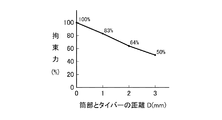
本発明者らが確かめたところ、図5に示すように、筒部33とタイバー19との距離Dを横軸に取ったとき、拘束力は右下がりの緩い曲線で得られた。
距離Dが0mmの場合の拘束力を100%とした場合、距離Dが1mmでの拘束力は83%で、距離Dが2mmでの拘束力は64%で、距離Dが3mmでの拘束力は50%であった。
By the way, the binding force in FIG. 4B changes depending on the distance D between the
As a result of confirmation by the present inventors, as shown in FIG. 5, when the distance D between the
When the binding force when the distance D is 0 mm is 100%, the binding force when the distance D is 1 mm is 83%, the binding force when the distance D is 2 mm is 64%, and the binding force when the distance D is 3 mm. Was 50%.
よって、距離Dが数mmであれば、十分な拘束力が確保できる。この数mmを所定の距離という。
距離Dを数mmにすることで、筒部33とタイバー19との機械的接触が回避され、筒部33の摩耗及びタイバー19の摩耗を回避できる。
Therefore, if the distance D is several mm, a sufficient binding force can be secured. This few mm is called a predetermined distance.
By setting the distance D to several mm, mechanical contact between the
以上のような拘束機構30を備えた型締装置10の作用を次に説明する。
図1では、固定型12から可動型17が離れている。型締めするには、拘束機構30を非拘束状態にし、型開閉手段16を縮動する。すると、可動盤18及び型締手段15は、固定盤13に接近する。この接近により、固定型12に可動型17が当たる。
次に、拘束機構30を拘束状態にする。そして、型締手段15を伸動して、固定型12へ可動型17を高圧型締めする。
The operation of the
In FIG. 1, the
Next, the
射出装置44のノズル45を固定型12に当て、射出装置44から溶融樹脂を固定型12及び可動型17へ射出する。樹脂材料が固まったら、拘束機構30を拘束状態から非拘束状態に換え、型開きに備える。
The
次に、電気エネルギーの消費量を検討する。
図4(b)に示す拘束状態が、例えば60秒間続けられるとする。電磁コイル38には、1秒間通電し、59秒間は通電しないため、通電率は1÷60=0.017の計算により、通電時間は、全体の1.7%に止まる。図4(a)においても同様である。
したがって、本実施例では、電気エネルギーの消費はごく僅かである。
Next, consider the amount of electrical energy consumed.
It is assumed that the restraint state shown in FIG. 4B is continued for, for example, 60 seconds. Since the
Therefore, in this embodiment, the consumption of electrical energy is negligible.
ただし、第1の永久磁石37と第2の永久磁石39と電磁コイル38からなる磁石機構36は、単なる電磁石に変更することは差し支えない。
電磁石であれば、高価な永久磁石37、39が不要であるために、磁石機構36は安価となる。しかし、電磁石では、拘束中は連続して通電するため、電気エネルギーの消費は格段に大きくなる。
よって、電気エネルギーの消費の点では、電磁石よりは、永久磁石が勝る。
However, the
In the case of an electromagnet, the
Therefore, in terms of electrical energy consumption, permanent magnets are superior to electromagnets.
次に、本発明に係る変更例を、図6に基づいて説明する。
図6に示すように、拘束機構30は、固定盤13側に設けてもよい。その他の構成は図1と同じであるから、図1の符号を流用し、構造の詳細な説明は省略する。
拘束機構30は、固定盤13から筒部33の先端を射出装置44側に突出させることで、筒部33の十分な長さを確保することができる。
Next, an example of modification according to the present invention will be described with reference to FIG.
As shown in FIG. 6, the
The
なお、図6とは異なり、筒部33の先端が固定盤13から可動盤18側へ延びるようにしてもよい。ただし、固定型12の脱着作業を考えると、筒部33の先端を射出装置44側に突出させる方が、作業スペースを増大することができ、より好ましい。
Note that, unlike FIG. 6, the tip of the
また、実施例では横型型締装置で説明したが、本発明は、竪型型締装置に適用することは差し支えない。 Further, in the examples, the horizontal mold clamping device has been described, but the present invention may be applied to the vertical mold clamping device.
本発明は、従来ハーフナットを使用していた型締装置の代替技術に適用できる。 The present invention can be applied to an alternative technique for a mold clamping device that conventionally uses a half nut.
10…型締装置、11…ベース、12…固定型、13…固定盤、15…型締手段、16…型開閉手段、17…可動型、18…可動盤、19…タイバー、30…拘束機構、33…筒部、34…外筒、35…内筒、36…磁石機構、37…第1の永久磁石、38…電磁コイル、39…第2の永久磁石、42…磁力線、44…射出装置、D…所定の距離。 10 ... Mold clamping device, 11 ... Base, 12 ... Fixed type, 13 ... Fixed plate, 15 ... Mold clamping means, 16 ... Mold opening and closing means, 17 ... Movable type, 18 ... Movable plate, 19 ... Tie bar, 30 ... Restraint mechanism , 33 ... Cylinder, 34 ... Outer cylinder, 35 ... Inner cylinder, 36 ... Magnet mechanism, 37 ... First permanent magnet, 38 ... Electromagnetic coil, 39 ... Second permanent magnet, 42 ... Magnetic line, 44 ... Injection device , D ... A predetermined distance.
Claims (5)
この型締装置は、前記タイバーに前記型締手段又は前記固定盤を拘束状態にする拘束機構を備え、
この拘束機構は、前記タイバーに対して前記型締手段又は前記固定盤を拘束状態にすることと非拘束状態にすることとを切り換える磁石機構を備えていることを特徴とする型締装置。 A fixed plate that is fixed to the base and supports the fixed mold, a movable plate that is movably mounted on the base and supports the movable mold, and a movable plate that is arranged outside the movable plate and movably mounted on the base. A mold clamping means for molding to the fixed mold, a tie bar extending at least through the movable platen, and a mold opening / closing means for moving the movable platen or the mold clamping means with respect to the fixed platen along the tie bar. It is a mold clamping device having
In this mold clamping device, the mold clamping means or the fixing plate is provided with a restraining mechanism in a restraining state on the tie bar.
The restraining mechanism is a mold clamping device including a magnet mechanism that switches the mold clamping means or the fixing plate into a restrained state and a non-constrained state with respect to the tie bar.
前記拘束機構は、前記タイバーとの間に所定の距離を保って配置されていることを特徴とする型締装置。 The mold clamping device according to claim 1.
The mold clamping device is characterized in that the restraint mechanism is arranged with a predetermined distance from the tie bar.
前記磁石機構は、複数の永久磁石と、一部の永久磁石の極性を制御する電磁コイルとを備えていることを特徴とする型締装置。 The mold clamping device according to claim 1 or 2.
The magnet mechanism is a mold clamping device including a plurality of permanent magnets and an electromagnetic coil for controlling the polarity of some of the permanent magnets.
前記拘束機構は、前記タイバーを囲いつつ、前記型締手段から前記可動盤を貫通して延び、先端が前記可動盤から前記固定盤側へ突き出ている筒部を備えていることを特徴とする型締装置。 The mold clamping device according to any one of claims 1 to 3.
The restraint mechanism is characterized by including a tubular portion that surrounds the tie bar, extends from the mold clamping means through the movable platen, and has a tip protruding from the movable platen toward the fixed platen. Molding device.
前記拘束機構は、前記タイバーを囲いつつ、前記固定盤を貫通して延び、先端が前記固定盤から射出装置側へ突き出ている筒部を備えていることを特徴とする型締装置。 The mold clamping device according to any one of claims 1 to 3.
The restraint mechanism is a mold clamping device including a tubular portion that surrounds the tie bar, extends through the fixing plate, and has a tip protruding from the fixing plate toward the injection device.
Priority Applications (5)
| Application Number | Priority Date | Filing Date | Title |
|---|---|---|---|
| JP2019031757A JP6854838B2 (en) | 2019-02-25 | 2019-02-25 | Molding device |
| CN202080016514.XA CN113474104B (en) | 2019-02-25 | 2020-02-14 | Mold clamping device |
| PCT/JP2020/005682 WO2020175166A1 (en) | 2019-02-25 | 2020-02-14 | Mold-clamping machine |
| EP20762436.2A EP3932588B1 (en) | 2019-02-25 | 2020-02-14 | Mold-clamping machine |
| US17/423,225 US12257754B2 (en) | 2019-02-25 | 2020-02-14 | Mold-clamping machine |
Applications Claiming Priority (1)
| Application Number | Priority Date | Filing Date | Title |
|---|---|---|---|
| JP2019031757A JP6854838B2 (en) | 2019-02-25 | 2019-02-25 | Molding device |
Publications (2)
| Publication Number | Publication Date |
|---|---|
| JP2020131663A true JP2020131663A (en) | 2020-08-31 |
| JP6854838B2 JP6854838B2 (en) | 2021-04-07 |
Family
ID=72238277
Family Applications (1)
| Application Number | Title | Priority Date | Filing Date |
|---|---|---|---|
| JP2019031757A Active JP6854838B2 (en) | 2019-02-25 | 2019-02-25 | Molding device |
Country Status (5)
| Country | Link |
|---|---|
| US (1) | US12257754B2 (en) |
| EP (1) | EP3932588B1 (en) |
| JP (1) | JP6854838B2 (en) |
| CN (1) | CN113474104B (en) |
| WO (1) | WO2020175166A1 (en) |
Cited By (1)
| Publication number | Priority date | Publication date | Assignee | Title |
|---|---|---|---|---|
| CN117577443A (en) * | 2024-01-16 | 2024-02-20 | 淄博速悦电子有限公司 | A combined current transformer and its preparation process |
Citations (4)
| Publication number | Priority date | Publication date | Assignee | Title |
|---|---|---|---|---|
| JP2001315130A (en) * | 2000-05-02 | 2001-11-13 | Meiki Co Ltd | Mold clamping device and its control method |
| KR20030043289A (en) * | 2001-11-27 | 2003-06-02 | 엘지전선 주식회사 | Locking Mechanism Using Magnetro-Rheological Fluid |
| JP2017121797A (en) * | 2016-01-08 | 2017-07-13 | 株式会社コスメック | Magnet clamp system |
| KR20180045683A (en) * | 2016-10-26 | 2018-05-04 | 엘에스엠트론 주식회사 | Half-Nut Combining Apparatus of Injection Molding Machine |
Family Cites Families (9)
| Publication number | Priority date | Publication date | Assignee | Title |
|---|---|---|---|---|
| US5188850A (en) * | 1990-07-27 | 1993-02-23 | Nissie Jushi Kogyo K.K. | Clamping apparatus for molding machine |
| JP4531737B2 (en) * | 2006-11-07 | 2010-08-25 | 住友重機械工業株式会社 | Clamping device |
| US7611346B2 (en) * | 2007-02-05 | 2009-11-03 | Husky Injection Molding Systems Ltd. | Molding-system clamp |
| WO2008105041A1 (en) * | 2007-02-23 | 2008-09-04 | Pascal Engineering Corporation | Magnetic fixing device |
| JP4516097B2 (en) * | 2007-06-13 | 2010-08-04 | 株式会社名機製作所 | Clamping device |
| JP5634899B2 (en) * | 2011-01-31 | 2014-12-03 | 住友重機械工業株式会社 | Clamping device |
| JP5749127B2 (en) * | 2011-09-20 | 2015-07-15 | 住友重機械工業株式会社 | Injection molding machine |
| JP6177217B2 (en) * | 2014-11-05 | 2017-08-09 | 日精樹脂工業株式会社 | Clamping device |
| JP6480384B2 (en) | 2016-06-29 | 2019-03-06 | 日精樹脂工業株式会社 | Clamping device |
-
2019
- 2019-02-25 JP JP2019031757A patent/JP6854838B2/en active Active
-
2020
- 2020-02-14 US US17/423,225 patent/US12257754B2/en active Active
- 2020-02-14 WO PCT/JP2020/005682 patent/WO2020175166A1/en not_active Ceased
- 2020-02-14 EP EP20762436.2A patent/EP3932588B1/en active Active
- 2020-02-14 CN CN202080016514.XA patent/CN113474104B/en active Active
Patent Citations (4)
| Publication number | Priority date | Publication date | Assignee | Title |
|---|---|---|---|---|
| JP2001315130A (en) * | 2000-05-02 | 2001-11-13 | Meiki Co Ltd | Mold clamping device and its control method |
| KR20030043289A (en) * | 2001-11-27 | 2003-06-02 | 엘지전선 주식회사 | Locking Mechanism Using Magnetro-Rheological Fluid |
| JP2017121797A (en) * | 2016-01-08 | 2017-07-13 | 株式会社コスメック | Magnet clamp system |
| KR20180045683A (en) * | 2016-10-26 | 2018-05-04 | 엘에스엠트론 주식회사 | Half-Nut Combining Apparatus of Injection Molding Machine |
Cited By (2)
| Publication number | Priority date | Publication date | Assignee | Title |
|---|---|---|---|---|
| CN117577443A (en) * | 2024-01-16 | 2024-02-20 | 淄博速悦电子有限公司 | A combined current transformer and its preparation process |
| CN117577443B (en) * | 2024-01-16 | 2024-04-02 | 淄博速悦电子有限公司 | Combined current transformer and preparation process thereof |
Also Published As
| Publication number | Publication date |
|---|---|
| JP6854838B2 (en) | 2021-04-07 |
| EP3932588B1 (en) | 2023-10-11 |
| EP3932588A1 (en) | 2022-01-05 |
| CN113474104B (en) | 2023-01-06 |
| EP3932588A4 (en) | 2022-12-07 |
| WO2020175166A1 (en) | 2020-09-03 |
| US12257754B2 (en) | 2025-03-25 |
| EP3932588C0 (en) | 2023-10-11 |
| US20220063164A1 (en) | 2022-03-03 |
| CN113474104A (en) | 2021-10-01 |
Similar Documents
| Publication | Publication Date | Title |
|---|---|---|
| US10460864B2 (en) | Magnetic substance holding device | |
| CN103862646B (en) | The nozzle contact mechanism of injection machine | |
| JP2010173333A (en) | Mold clamping device and mold thickness adjusting method | |
| JP6337205B2 (en) | Magnetic material holding device | |
| JP6854838B2 (en) | Molding device | |
| AU2297401A (en) | Method, system and apparatus employing permanent magnets having reach-out magnetic fields for electromagnetically transferring, braking, and metering molten metals feeding into metal casting machines | |
| JP2009029086A (en) | Mold clamping device | |
| CN107877771A (en) | A kind of magnet injection machine in additional orientation magnetic field | |
| FR2880466B1 (en) | BISTABLE ELECTROMAGNETIC ACTUATOR | |
| JP5183891B2 (en) | Clamping device | |
| CN207509591U (en) | A kind of magnet injection molding machine in additional orientation magnetic field | |
| JP5005478B2 (en) | Injection molding machine | |
| US20110244065A1 (en) | Injection molding machine | |
| KR101417602B1 (en) | Injection molding machine | |
| JP5005972B2 (en) | Clamping device | |
| KR20170048783A (en) | Mold clamping device with magnetic clamping power | |
| JP5290510B2 (en) | Clamping device | |
| KR101327253B1 (en) | Injection molding machine | |
| JP2007290134A (en) | Mold clamping force control method and mold clamping device | |
| KR20130031792A (en) | Injection molding machine | |
| CN205703426U (en) | A kind of electric control permanent magnet mold changing systems | |
| TWI395393B (en) | Rod type linear motor | |
| SU1565581A1 (en) | Device for pressing powders of magnetically hard materials | |
| KR20130079222A (en) | Injection molding machine | |
| JP2012158025A (en) | Molding machine |
Legal Events
| Date | Code | Title | Description |
|---|---|---|---|
| A621 | Written request for application examination |
Free format text: JAPANESE INTERMEDIATE CODE: A621 Effective date: 20200116 |
|
| A131 | Notification of reasons for refusal |
Free format text: JAPANESE INTERMEDIATE CODE: A131 Effective date: 20201222 |
|
| A521 | Request for written amendment filed |
Free format text: JAPANESE INTERMEDIATE CODE: A523 Effective date: 20210212 |
|
| TRDD | Decision of grant or rejection written | ||
| A01 | Written decision to grant a patent or to grant a registration (utility model) |
Free format text: JAPANESE INTERMEDIATE CODE: A01 Effective date: 20210302 |
|
| A61 | First payment of annual fees (during grant procedure) |
Free format text: JAPANESE INTERMEDIATE CODE: A61 Effective date: 20210316 |
|
| R150 | Certificate of patent or registration of utility model |
Ref document number: 6854838 Country of ref document: JP Free format text: JAPANESE INTERMEDIATE CODE: R150 |
|
| R250 | Receipt of annual fees |
Free format text: JAPANESE INTERMEDIATE CODE: R250 |