JP2019532905A - Multi-layer glazing - Google Patents
Multi-layer glazing Download PDFInfo
- Publication number
- JP2019532905A JP2019532905A JP2019522888A JP2019522888A JP2019532905A JP 2019532905 A JP2019532905 A JP 2019532905A JP 2019522888 A JP2019522888 A JP 2019522888A JP 2019522888 A JP2019522888 A JP 2019522888A JP 2019532905 A JP2019532905 A JP 2019532905A
- Authority
- JP
- Japan
- Prior art keywords
- layer
- glazing
- panes
- laminate
- pane
- Prior art date
- Legal status (The legal status is an assumption and is not a legal conclusion. Google has not performed a legal analysis and makes no representation as to the accuracy of the status listed.)
- Pending
Links
- 239000010410 layer Substances 0.000 claims abstract description 150
- 229910052709 silver Inorganic materials 0.000 claims abstract description 43
- 239000004332 silver Substances 0.000 claims abstract description 43
- BQCADISMDOOEFD-UHFFFAOYSA-N Silver Chemical compound [Ag] BQCADISMDOOEFD-UHFFFAOYSA-N 0.000 claims abstract description 42
- 239000011521 glass Substances 0.000 claims abstract description 39
- 125000006850 spacer group Chemical group 0.000 claims abstract description 27
- 239000011229 interlayer Substances 0.000 claims abstract description 19
- 230000005855 radiation Effects 0.000 claims description 41
- 230000002093 peripheral effect Effects 0.000 claims description 10
- 238000000137 annealing Methods 0.000 claims description 9
- 238000000034 method Methods 0.000 claims description 9
- 238000000151 deposition Methods 0.000 claims description 8
- 238000004544 sputter deposition Methods 0.000 claims description 4
- 239000013536 elastomeric material Substances 0.000 claims description 3
- XLOMVQKBTHCTTD-UHFFFAOYSA-N Zinc monoxide Chemical compound [Zn]=O XLOMVQKBTHCTTD-UHFFFAOYSA-N 0.000 description 22
- 239000000758 substrate Substances 0.000 description 17
- 238000000576 coating method Methods 0.000 description 14
- 239000011248 coating agent Substances 0.000 description 13
- 239000007789 gas Substances 0.000 description 11
- 239000011787 zinc oxide Substances 0.000 description 11
- PXHVJJICTQNCMI-UHFFFAOYSA-N Nickel Chemical compound [Ni] PXHVJJICTQNCMI-UHFFFAOYSA-N 0.000 description 10
- 239000000835 fiber Substances 0.000 description 9
- 239000000463 material Substances 0.000 description 9
- 229910052751 metal Inorganic materials 0.000 description 8
- 230000003287 optical effect Effects 0.000 description 8
- 239000003570 air Substances 0.000 description 7
- 229910052782 aluminium Inorganic materials 0.000 description 7
- XAGFODPZIPBFFR-UHFFFAOYSA-N aluminium Chemical compound [Al] XAGFODPZIPBFFR-UHFFFAOYSA-N 0.000 description 7
- PPBRXRYQALVLMV-UHFFFAOYSA-N Styrene Chemical compound C=CC1=CC=CC=C1 PPBRXRYQALVLMV-UHFFFAOYSA-N 0.000 description 6
- GWEVSGVZZGPLCZ-UHFFFAOYSA-N Titan oxide Chemical compound O=[Ti]=O GWEVSGVZZGPLCZ-UHFFFAOYSA-N 0.000 description 6
- 238000010438 heat treatment Methods 0.000 description 6
- 239000002184 metal Substances 0.000 description 6
- 229920002037 poly(vinyl butyral) polymer Polymers 0.000 description 6
- -1 polyethylene Polymers 0.000 description 6
- OGIDPMRJRNCKJF-UHFFFAOYSA-N titanium oxide Inorganic materials [Ti]=O OGIDPMRJRNCKJF-UHFFFAOYSA-N 0.000 description 6
- 239000013307 optical fiber Substances 0.000 description 5
- 230000000930 thermomechanical effect Effects 0.000 description 5
- XKRFYHLGVUSROY-UHFFFAOYSA-N Argon Chemical compound [Ar] XKRFYHLGVUSROY-UHFFFAOYSA-N 0.000 description 4
- OKTJSMMVPCPJKN-UHFFFAOYSA-N Carbon Chemical compound [C] OKTJSMMVPCPJKN-UHFFFAOYSA-N 0.000 description 4
- 229910000990 Ni alloy Inorganic materials 0.000 description 4
- 229910052581 Si3N4 Inorganic materials 0.000 description 4
- 230000004888 barrier function Effects 0.000 description 4
- 239000002274 desiccant Substances 0.000 description 4
- 239000000203 mixture Substances 0.000 description 4
- 238000007789 sealing Methods 0.000 description 4
- HQVNEWCFYHHQES-UHFFFAOYSA-N silicon nitride Chemical compound N12[Si]34N5[Si]62N3[Si]51N64 HQVNEWCFYHHQES-UHFFFAOYSA-N 0.000 description 4
- 239000004743 Polypropylene Substances 0.000 description 3
- VYPSYNLAJGMNEJ-UHFFFAOYSA-N Silicium dioxide Chemical compound O=[Si]=O VYPSYNLAJGMNEJ-UHFFFAOYSA-N 0.000 description 3
- 229910052787 antimony Inorganic materials 0.000 description 3
- 230000008021 deposition Effects 0.000 description 3
- 239000007769 metal material Substances 0.000 description 3
- 150000002739 metals Chemical class 0.000 description 3
- 150000004767 nitrides Chemical class 0.000 description 3
- 239000002861 polymer material Substances 0.000 description 3
- 229920001155 polypropylene Polymers 0.000 description 3
- 230000008569 process Effects 0.000 description 3
- 239000000126 substance Substances 0.000 description 3
- XOLBLPGZBRYERU-UHFFFAOYSA-N tin dioxide Chemical compound O=[Sn]=O XOLBLPGZBRYERU-UHFFFAOYSA-N 0.000 description 3
- 229910001887 tin oxide Inorganic materials 0.000 description 3
- 238000009736 wetting Methods 0.000 description 3
- NLHHRLWOUZZQLW-UHFFFAOYSA-N Acrylonitrile Chemical compound C=CC#N NLHHRLWOUZZQLW-UHFFFAOYSA-N 0.000 description 2
- KAKZBPTYRLMSJV-UHFFFAOYSA-N Butadiene Chemical compound C=CC=C KAKZBPTYRLMSJV-UHFFFAOYSA-N 0.000 description 2
- VYZAMTAEIAYCRO-UHFFFAOYSA-N Chromium Chemical compound [Cr] VYZAMTAEIAYCRO-UHFFFAOYSA-N 0.000 description 2
- 229910000599 Cr alloy Inorganic materials 0.000 description 2
- 229920002943 EPDM rubber Polymers 0.000 description 2
- 239000004698 Polyethylene Substances 0.000 description 2
- 229920002367 Polyisobutene Polymers 0.000 description 2
- RTAQQCXQSZGOHL-UHFFFAOYSA-N Titanium Chemical compound [Ti] RTAQQCXQSZGOHL-UHFFFAOYSA-N 0.000 description 2
- 229910021536 Zeolite Inorganic materials 0.000 description 2
- 229910045601 alloy Inorganic materials 0.000 description 2
- 239000000956 alloy Substances 0.000 description 2
- WATWJIUSRGPENY-UHFFFAOYSA-N antimony atom Chemical compound [Sb] WATWJIUSRGPENY-UHFFFAOYSA-N 0.000 description 2
- 229910052786 argon Inorganic materials 0.000 description 2
- QVGXLLKOCUKJST-UHFFFAOYSA-N atomic oxygen Chemical compound [O] QVGXLLKOCUKJST-UHFFFAOYSA-N 0.000 description 2
- 125000000484 butyl group Chemical group [H]C([*])([H])C([H])([H])C([H])([H])C([H])([H])[H] 0.000 description 2
- 239000003990 capacitor Substances 0.000 description 2
- 238000006243 chemical reaction Methods 0.000 description 2
- 239000011651 chromium Substances 0.000 description 2
- 229910052804 chromium Inorganic materials 0.000 description 2
- 239000000788 chromium alloy Substances 0.000 description 2
- 238000004140 cleaning Methods 0.000 description 2
- 238000009833 condensation Methods 0.000 description 2
- 150000001993 dienes Chemical class 0.000 description 2
- HNPSIPDUKPIQMN-UHFFFAOYSA-N dioxosilane;oxo(oxoalumanyloxy)alumane Chemical compound O=[Si]=O.O=[Al]O[Al]=O HNPSIPDUKPIQMN-UHFFFAOYSA-N 0.000 description 2
- 238000009826 distribution Methods 0.000 description 2
- HQQADJVZYDDRJT-UHFFFAOYSA-N ethene;prop-1-ene Chemical group C=C.CC=C HQQADJVZYDDRJT-UHFFFAOYSA-N 0.000 description 2
- 238000009499 grossing Methods 0.000 description 2
- AMGQUBHHOARCQH-UHFFFAOYSA-N indium;oxotin Chemical compound [In].[Sn]=O AMGQUBHHOARCQH-UHFFFAOYSA-N 0.000 description 2
- 238000009413 insulation Methods 0.000 description 2
- 229910052743 krypton Inorganic materials 0.000 description 2
- DNNSSWSSYDEUBZ-UHFFFAOYSA-N krypton atom Chemical compound [Kr] DNNSSWSSYDEUBZ-UHFFFAOYSA-N 0.000 description 2
- 239000002808 molecular sieve Substances 0.000 description 2
- 229910052759 nickel Inorganic materials 0.000 description 2
- 239000001301 oxygen Substances 0.000 description 2
- 229910052760 oxygen Inorganic materials 0.000 description 2
- 230000001699 photocatalysis Effects 0.000 description 2
- 238000000623 plasma-assisted chemical vapour deposition Methods 0.000 description 2
- 229920001707 polybutylene terephthalate Polymers 0.000 description 2
- 229920000573 polyethylene Polymers 0.000 description 2
- 229920000139 polyethylene terephthalate Polymers 0.000 description 2
- 239000005020 polyethylene terephthalate Substances 0.000 description 2
- 229920001021 polysulfide Polymers 0.000 description 2
- 239000005077 polysulfide Substances 0.000 description 2
- 150000008117 polysulfides Polymers 0.000 description 2
- 230000002265 prevention Effects 0.000 description 2
- 229920005989 resin Polymers 0.000 description 2
- 239000011347 resin Substances 0.000 description 2
- 239000000741 silica gel Substances 0.000 description 2
- 229910002027 silica gel Inorganic materials 0.000 description 2
- URGAHOPLAPQHLN-UHFFFAOYSA-N sodium aluminosilicate Chemical compound [Na+].[Al+3].[O-][Si]([O-])=O.[O-][Si]([O-])=O URGAHOPLAPQHLN-UHFFFAOYSA-N 0.000 description 2
- 238000001228 spectrum Methods 0.000 description 2
- 239000010935 stainless steel Substances 0.000 description 2
- 229910001220 stainless steel Inorganic materials 0.000 description 2
- 238000005496 tempering Methods 0.000 description 2
- 229910052719 titanium Inorganic materials 0.000 description 2
- 239000010936 titanium Substances 0.000 description 2
- 229910052724 xenon Inorganic materials 0.000 description 2
- FHNFHKCVQCLJFQ-UHFFFAOYSA-N xenon atom Chemical compound [Xe] FHNFHKCVQCLJFQ-UHFFFAOYSA-N 0.000 description 2
- 239000010457 zeolite Substances 0.000 description 2
- BNEMLSQAJOPTGK-UHFFFAOYSA-N zinc;dioxido(oxo)tin Chemical compound [Zn+2].[O-][Sn]([O-])=O BNEMLSQAJOPTGK-UHFFFAOYSA-N 0.000 description 2
- RNFJDJUURJAICM-UHFFFAOYSA-N 2,2,4,4,6,6-hexaphenoxy-1,3,5-triaza-2$l^{5},4$l^{5},6$l^{5}-triphosphacyclohexa-1,3,5-triene Chemical compound N=1P(OC=2C=CC=CC=2)(OC=2C=CC=CC=2)=NP(OC=2C=CC=CC=2)(OC=2C=CC=CC=2)=NP=1(OC=1C=CC=CC=1)OC1=CC=CC=C1 RNFJDJUURJAICM-UHFFFAOYSA-N 0.000 description 1
- NIXOWILDQLNWCW-UHFFFAOYSA-M Acrylate Chemical compound [O-]C(=O)C=C NIXOWILDQLNWCW-UHFFFAOYSA-M 0.000 description 1
- ZOXJGFHDIHLPTG-UHFFFAOYSA-N Boron Chemical compound [B] ZOXJGFHDIHLPTG-UHFFFAOYSA-N 0.000 description 1
- 229920000049 Carbon (fiber) Polymers 0.000 description 1
- 241001274216 Naso Species 0.000 description 1
- 239000004952 Polyamide Substances 0.000 description 1
- 239000005062 Polybutadiene Substances 0.000 description 1
- 239000004793 Polystyrene Substances 0.000 description 1
- 229910001069 Ti alloy Inorganic materials 0.000 description 1
- 230000006978 adaptation Effects 0.000 description 1
- 239000012080 ambient air Substances 0.000 description 1
- 238000005452 bending Methods 0.000 description 1
- 230000005540 biological transmission Effects 0.000 description 1
- 229910052796 boron Inorganic materials 0.000 description 1
- 239000004917 carbon fiber Substances 0.000 description 1
- 230000001427 coherent effect Effects 0.000 description 1
- 230000005494 condensation Effects 0.000 description 1
- 229920001577 copolymer Polymers 0.000 description 1
- 238000002425 crystallisation Methods 0.000 description 1
- 230000008025 crystallization Effects 0.000 description 1
- 238000007599 discharging Methods 0.000 description 1
- 238000006073 displacement reaction Methods 0.000 description 1
- 230000000694 effects Effects 0.000 description 1
- 238000000295 emission spectrum Methods 0.000 description 1
- 238000000407 epitaxy Methods 0.000 description 1
- 239000003063 flame retardant Substances 0.000 description 1
- 238000007667 floating Methods 0.000 description 1
- 239000012530 fluid Substances 0.000 description 1
- 238000003286 fusion draw glass process Methods 0.000 description 1
- 229910052733 gallium Inorganic materials 0.000 description 1
- 239000003365 glass fiber Substances 0.000 description 1
- 229910052734 helium Inorganic materials 0.000 description 1
- 239000001307 helium Substances 0.000 description 1
- SWQJXJOGLNCZEY-UHFFFAOYSA-N helium atom Chemical compound [He] SWQJXJOGLNCZEY-UHFFFAOYSA-N 0.000 description 1
- 238000000265 homogenisation Methods 0.000 description 1
- 229910052738 indium Inorganic materials 0.000 description 1
- 238000009434 installation Methods 0.000 description 1
- 239000004579 marble Substances 0.000 description 1
- 238000000465 moulding Methods 0.000 description 1
- 239000010955 niobium Substances 0.000 description 1
- 229910052758 niobium Inorganic materials 0.000 description 1
- GUCVJGMIXFAOAE-UHFFFAOYSA-N niobium atom Chemical compound [Nb] GUCVJGMIXFAOAE-UHFFFAOYSA-N 0.000 description 1
- 238000005121 nitriding Methods 0.000 description 1
- 229910052756 noble gas Inorganic materials 0.000 description 1
- 230000009972 noncorrosive effect Effects 0.000 description 1
- 231100000252 nontoxic Toxicity 0.000 description 1
- 230000003000 nontoxic effect Effects 0.000 description 1
- 230000001590 oxidative effect Effects 0.000 description 1
- 229920003229 poly(methyl methacrylate) Polymers 0.000 description 1
- 229920000058 polyacrylate Polymers 0.000 description 1
- 229920002647 polyamide Polymers 0.000 description 1
- 229920002857 polybutadiene Polymers 0.000 description 1
- 229920000515 polycarbonate Polymers 0.000 description 1
- 239000004417 polycarbonate Substances 0.000 description 1
- 229920000728 polyester Polymers 0.000 description 1
- 239000004926 polymethyl methacrylate Substances 0.000 description 1
- 229920002223 polystyrene Polymers 0.000 description 1
- 229920002635 polyurethane Polymers 0.000 description 1
- 239000004814 polyurethane Substances 0.000 description 1
- 239000010453 quartz Substances 0.000 description 1
- 230000002285 radioactive effect Effects 0.000 description 1
- 230000002787 reinforcement Effects 0.000 description 1
- 230000000717 retained effect Effects 0.000 description 1
- 238000007493 shaping process Methods 0.000 description 1
- 229910052710 silicon Inorganic materials 0.000 description 1
- 239000010703 silicon Substances 0.000 description 1
- 150000003378 silver Chemical class 0.000 description 1
- 239000002356 single layer Substances 0.000 description 1
- 239000006104 solid solution Substances 0.000 description 1
- 238000005728 strengthening Methods 0.000 description 1
- 230000001629 suppression Effects 0.000 description 1
- 229910052718 tin Inorganic materials 0.000 description 1
- XLYOFNOQVPJJNP-UHFFFAOYSA-N water Substances O XLYOFNOQVPJJNP-UHFFFAOYSA-N 0.000 description 1
- 229910052725 zinc Inorganic materials 0.000 description 1
- 239000011701 zinc Substances 0.000 description 1
- JRFBNCLFYLUNCE-UHFFFAOYSA-N zinc;oxygen(2-);titanium(4+) Chemical compound [O-2].[O-2].[O-2].[Ti+4].[Zn+2] JRFBNCLFYLUNCE-UHFFFAOYSA-N 0.000 description 1
Images
Classifications
-
- E—FIXED CONSTRUCTIONS
- E06—DOORS, WINDOWS, SHUTTERS, OR ROLLER BLINDS IN GENERAL; LADDERS
- E06B—FIXED OR MOVABLE CLOSURES FOR OPENINGS IN BUILDINGS, VEHICLES, FENCES OR LIKE ENCLOSURES IN GENERAL, e.g. DOORS, WINDOWS, BLINDS, GATES
- E06B3/00—Window sashes, door leaves, or like elements for closing wall or like openings; Layout of fixed or moving closures, e.g. windows in wall or like openings; Features of rigidly-mounted outer frames relating to the mounting of wing frames
- E06B3/66—Units comprising two or more parallel glass or like panes permanently secured together
- E06B3/67—Units comprising two or more parallel glass or like panes permanently secured together characterised by additional arrangements or devices for heat or sound insulation or for controlled passage of light
- E06B3/6715—Units comprising two or more parallel glass or like panes permanently secured together characterised by additional arrangements or devices for heat or sound insulation or for controlled passage of light specially adapted for increased thermal insulation or for controlled passage of light
-
- C—CHEMISTRY; METALLURGY
- C03—GLASS; MINERAL OR SLAG WOOL
- C03C—CHEMICAL COMPOSITION OF GLASSES, GLAZES OR VITREOUS ENAMELS; SURFACE TREATMENT OF GLASS; SURFACE TREATMENT OF FIBRES OR FILAMENTS MADE FROM GLASS, MINERALS OR SLAGS; JOINING GLASS TO GLASS OR OTHER MATERIALS
- C03C17/00—Surface treatment of glass, not in the form of fibres or filaments, by coating
- C03C17/34—Surface treatment of glass, not in the form of fibres or filaments, by coating with at least two coatings having different compositions
- C03C17/36—Surface treatment of glass, not in the form of fibres or filaments, by coating with at least two coatings having different compositions at least one coating being a metal
-
- C—CHEMISTRY; METALLURGY
- C03—GLASS; MINERAL OR SLAG WOOL
- C03C—CHEMICAL COMPOSITION OF GLASSES, GLAZES OR VITREOUS ENAMELS; SURFACE TREATMENT OF GLASS; SURFACE TREATMENT OF FIBRES OR FILAMENTS MADE FROM GLASS, MINERALS OR SLAGS; JOINING GLASS TO GLASS OR OTHER MATERIALS
- C03C17/00—Surface treatment of glass, not in the form of fibres or filaments, by coating
- C03C17/34—Surface treatment of glass, not in the form of fibres or filaments, by coating with at least two coatings having different compositions
- C03C17/36—Surface treatment of glass, not in the form of fibres or filaments, by coating with at least two coatings having different compositions at least one coating being a metal
- C03C17/3602—Surface treatment of glass, not in the form of fibres or filaments, by coating with at least two coatings having different compositions at least one coating being a metal the metal being present as a layer
- C03C17/3626—Surface treatment of glass, not in the form of fibres or filaments, by coating with at least two coatings having different compositions at least one coating being a metal the metal being present as a layer one layer at least containing a nitride, oxynitride, boronitride or carbonitride
-
- C—CHEMISTRY; METALLURGY
- C03—GLASS; MINERAL OR SLAG WOOL
- C03C—CHEMICAL COMPOSITION OF GLASSES, GLAZES OR VITREOUS ENAMELS; SURFACE TREATMENT OF GLASS; SURFACE TREATMENT OF FIBRES OR FILAMENTS MADE FROM GLASS, MINERALS OR SLAGS; JOINING GLASS TO GLASS OR OTHER MATERIALS
- C03C17/00—Surface treatment of glass, not in the form of fibres or filaments, by coating
- C03C17/34—Surface treatment of glass, not in the form of fibres or filaments, by coating with at least two coatings having different compositions
- C03C17/36—Surface treatment of glass, not in the form of fibres or filaments, by coating with at least two coatings having different compositions at least one coating being a metal
- C03C17/3602—Surface treatment of glass, not in the form of fibres or filaments, by coating with at least two coatings having different compositions at least one coating being a metal the metal being present as a layer
- C03C17/3639—Multilayers containing at least two functional metal layers
-
- C—CHEMISTRY; METALLURGY
- C03—GLASS; MINERAL OR SLAG WOOL
- C03C—CHEMICAL COMPOSITION OF GLASSES, GLAZES OR VITREOUS ENAMELS; SURFACE TREATMENT OF GLASS; SURFACE TREATMENT OF FIBRES OR FILAMENTS MADE FROM GLASS, MINERALS OR SLAGS; JOINING GLASS TO GLASS OR OTHER MATERIALS
- C03C17/00—Surface treatment of glass, not in the form of fibres or filaments, by coating
- C03C17/34—Surface treatment of glass, not in the form of fibres or filaments, by coating with at least two coatings having different compositions
- C03C17/36—Surface treatment of glass, not in the form of fibres or filaments, by coating with at least two coatings having different compositions at least one coating being a metal
- C03C17/3602—Surface treatment of glass, not in the form of fibres or filaments, by coating with at least two coatings having different compositions at least one coating being a metal the metal being present as a layer
- C03C17/3644—Surface treatment of glass, not in the form of fibres or filaments, by coating with at least two coatings having different compositions at least one coating being a metal the metal being present as a layer the metal being silver
-
- C—CHEMISTRY; METALLURGY
- C03—GLASS; MINERAL OR SLAG WOOL
- C03C—CHEMICAL COMPOSITION OF GLASSES, GLAZES OR VITREOUS ENAMELS; SURFACE TREATMENT OF GLASS; SURFACE TREATMENT OF FIBRES OR FILAMENTS MADE FROM GLASS, MINERALS OR SLAGS; JOINING GLASS TO GLASS OR OTHER MATERIALS
- C03C17/00—Surface treatment of glass, not in the form of fibres or filaments, by coating
- C03C17/34—Surface treatment of glass, not in the form of fibres or filaments, by coating with at least two coatings having different compositions
- C03C17/36—Surface treatment of glass, not in the form of fibres or filaments, by coating with at least two coatings having different compositions at least one coating being a metal
- C03C17/3602—Surface treatment of glass, not in the form of fibres or filaments, by coating with at least two coatings having different compositions at least one coating being a metal the metal being present as a layer
- C03C17/3657—Surface treatment of glass, not in the form of fibres or filaments, by coating with at least two coatings having different compositions at least one coating being a metal the metal being present as a layer the multilayer coating having optical properties
- C03C17/366—Low-emissivity or solar control coatings
-
- C—CHEMISTRY; METALLURGY
- C03—GLASS; MINERAL OR SLAG WOOL
- C03C—CHEMICAL COMPOSITION OF GLASSES, GLAZES OR VITREOUS ENAMELS; SURFACE TREATMENT OF GLASS; SURFACE TREATMENT OF FIBRES OR FILAMENTS MADE FROM GLASS, MINERALS OR SLAGS; JOINING GLASS TO GLASS OR OTHER MATERIALS
- C03C17/00—Surface treatment of glass, not in the form of fibres or filaments, by coating
- C03C17/34—Surface treatment of glass, not in the form of fibres or filaments, by coating with at least two coatings having different compositions
- C03C17/36—Surface treatment of glass, not in the form of fibres or filaments, by coating with at least two coatings having different compositions at least one coating being a metal
- C03C17/3602—Surface treatment of glass, not in the form of fibres or filaments, by coating with at least two coatings having different compositions at least one coating being a metal the metal being present as a layer
- C03C17/3681—Surface treatment of glass, not in the form of fibres or filaments, by coating with at least two coatings having different compositions at least one coating being a metal the metal being present as a layer the multilayer coating being used in glazing, e.g. windows or windscreens
Landscapes
- Chemical & Material Sciences (AREA)
- Engineering & Computer Science (AREA)
- Materials Engineering (AREA)
- Chemical Kinetics & Catalysis (AREA)
- General Chemical & Material Sciences (AREA)
- Geochemistry & Mineralogy (AREA)
- Life Sciences & Earth Sciences (AREA)
- Organic Chemistry (AREA)
- Civil Engineering (AREA)
- Structural Engineering (AREA)
- Joining Of Glass To Other Materials (AREA)
- Securing Of Glass Panes Or The Like (AREA)
- Surface Treatment Of Glass (AREA)
Abstract
本発明は、複数の平行なペイン(12、14、20、112、120)を有しており、これらペインが、これらペインの間において少なくとも1つの中間層空間(22、24、122)を画定している少なくとも1つのスペーサ(16、116)によって離されている、複層グレージング(10、100)であって、上述のペインのうちの少なくとも1つ、「機能ペイン」(20、120)が、熱強化されていない少なくとも1つの薄いガラスシートを有しており、その厚みt1が、0.1mm〜2mmの範囲内であり、かつその面のうちの少なくとも1つ(20a、120d)が、少なくとも1つの銀層を有しており低放射性を有している薄層の積層体でコーティングされており、上述の積層体が、オームで表され式Rs・t22− 115・n < 25・t2に対応するシート抵抗Rs、を有しており、t2が、積層体に存在している銀層の厚み又はそれぞれの銀層の厚みの合計であり、かつnが、積層体に存在している銀層の数である、複層グレージング(10、100)、に関する。【選択図】図1The present invention has a plurality of parallel panes (12, 14, 20, 112, 120) that define at least one interlayer space (22, 24, 122) between the panes. Multi-layer glazing (10, 100) separated by at least one spacer (16, 116), wherein at least one of the above-mentioned panes, a “functional pane” (20, 120) , Having at least one thin glass sheet that is not heat strengthened, having a thickness t1 in the range of 0.1 mm to 2 mm, and at least one of its faces (20a, 120d), It is coated with a thin layered laminate having at least one silver layer and having low emissivity, and the above mentioned laminate is expressed in ohms and has the formula Rs · t22-115. N <25 · t2 corresponding to sheet resistance Rs, where t2 is the thickness of the silver layer present in the laminate or the total thickness of each silver layer, and n is the laminate Multilayer glazing (10, 100), which is the number of silver layers present in the body. [Selection] Figure 1
Description
本発明は、グレージングの分野、より特には、複層グレージングの分野に関する。 The present invention relates to the field of glazing, and more particularly to the field of multilayer glazing.
複層グレージングには、複数の要件、時には矛盾していることがある複数の要件が、課される。複層グレージングは、対流、伝導、又は放射による、いかなる熱の損失をも可能な限り防いで、優れた熱絶縁特性を示す必要がある。同時に、グレージングのソーラーファクターが最大化されている必要があり、それによって、太陽放射が建物の内部を加熱できる必要がある。最後に、グレージングが、可能な限り軽量である必要があり、特には、設置時又は使用時におけるいかなる破損をも防ぐために、優れた熱機械的強度を確保しつつグレージングの取扱いを促進するために、可能な限り軽量である必要がある。 Multi-layer glazing imposes multiple requirements, sometimes multiple conflicting requirements. Multilayer glazing needs to exhibit as good thermal insulation properties as possible while preventing any heat loss due to convection, conduction or radiation. At the same time, the solar factor of glazing needs to be maximized so that solar radiation can heat the interior of the building. Finally, the glazing needs to be as light as possible, especially to facilitate handling of the glazing while ensuring excellent thermomechanical strength to prevent any damage during installation or use. Need to be as lightweight as possible.
本発明の目的は、これらの異なる要件を、可能な限り満たすグレージングを提供することである。 The object of the present invention is to provide a glazing that satisfies these different requirements as much as possible.
この目的のために、本発明の主題は、少なくとも1つのスペーサによって離されている複数の平行なペインを含んでおり、少なくとも1つのこのスペーサが、上述のペインの間において少なくとも1つの中間層空間を画定している、複層グレージングであって、
上述のペインのうちの少なくとも1つ、「機能ペイン」が、少なくとも1つの、熱強化されていない薄いガラスシートを有しており、その厚みt1が、0.1mm〜2mmの範囲内であり、かつその面のうちの少なくとも1つが、低放射性を有しており少なくとも1つの銀層を含んでいる薄層の積層体でコーティングされており、
上述の積層体が、オームで表される、以下の式に対応するシート抵抗Rsを示し:
Rs・t22 − 115・n <25・t2
t2が、nmで表される、積層体に存在している、銀層の厚み、又はそれぞれの銀層の厚みの合計であり、かつnが、積層体に存在している銀層の数である。
For this purpose, the subject of the invention comprises a plurality of parallel panes separated by at least one spacer, the at least one spacer being at least one intermediate layer space between the aforementioned panes. A multi-layer glazing that defines
At least one of the above-mentioned panes, the “functional pane” has at least one thin glass sheet that is not heat strengthened, and its thickness t1 is in the range of 0.1 mm to 2 mm, And at least one of its faces is coated with a laminate of thin layers having low emissivity and comprising at least one silver layer;
The laminate described above exhibits sheet resistance Rs, expressed in ohms, corresponding to the following formula:
Rs · t2 2 − 115 · n <25 · t2
t2 is the thickness of the silver layer present in the laminate, expressed in nm, or the total thickness of each silver layer, and n is the number of silver layers present in the laminate. is there.
低放射性を有している積層体又は「low−e」積層体は、本発明の意味の範囲において、EN12898規格の意味の範囲での283Kにおける標準放射率が、概して、0.05以下、特には0.03以下、さらには0.02以下、又は0.01以下である積層体、である。 Laminates having low emissivity or “low-e” laminates, in the sense of the present invention, generally have a standard emissivity at 283K within the meaning of the EN12898 standard of 0.05 or less, in particular Is a laminate that is 0.03 or less, further 0.02 or less, or 0.01 or less.
特定の実施態様によれば、グレージングが、追加的に、以下の1又は複数の追加的な特徴を、単独で、又は技術的に可能なすべての組み合わせに従って、含んでいる: According to a particular embodiment, the glazing additionally comprises one or more of the following additional features, alone or according to all combinations that are technically possible:
− ペイン又はそれぞれのペインが、少なくとも1つのガラスシートを含んでおり、特には、ガラスシートからなっており、ガラスシートが、特には透明又は半透明である。 The pane or each pane comprises at least one glass sheet, in particular composed of a glass sheet, the glass sheet being in particular transparent or translucent.
− 厚みt1が、0.5mm〜1.6mm、特には1.0mm〜1.5mmの範囲内であり、又は0.2mm〜0.9mmの範囲内である。 The thickness t1 is in the range from 0.5 mm to 1.6 mm, in particular from 1.0 mm to 1.5 mm, or in the range from 0.2 mm to 0.9 mm.
− 低放射性を有している積層体でコーティングされている少なくとも1つの面が、中間層空間の方に向いている。このようにして、積層体が、化学的又は機械的な攻撃から保護される。 At least one surface coated with a laminate having low radiation is directed towards the interlayer space. In this way, the laminate is protected from chemical or mechanical attack.
− 薄いガラスシート若しくはそれぞれの薄いガラスシートのちょうど1つの面が、低放射率を有している薄層の積層体でコーティングされている。 -The thin glass sheet or just one side of each thin glass sheet is coated with a thin layered laminate having a low emissivity.
− グレージングが、機能ペインを1つのみ、有している。
− グレージングが、少なくとも2つの機能ペイン、特には正確に2又は3の機能ペインを有している。
-The glazing has only one function pane.
The glazing has at least two function panes, in particular exactly two or three function panes.
− グレージングが、二重グレージングである。したがって、好ましくは、グレージングが、単一の中間層空間を画定する単一のスペーサによって離されている2つの単層ペインを、有している。この場合には、これらのペインのうちの少なくとも1つ、特にはこれらのペインの1つのみ、又はこれらのペインそれぞれが、機能ペインである。 The glazing is double glazing. Accordingly, preferably the glazing has two single layer panes separated by a single spacer defining a single interlayer space. In this case, at least one of these panes, in particular only one of these panes, or each of these panes is a functional pane.
− グレージングが、少なくとも3つのペインを有しており、特には正確に3つのペインを有している。例えば、グレージングが、三重グレージング又は四重グレージングであってよい。第一の実施態様によれば、グレージングが、それぞれが単一の中間層空間を画定している(p−1)のスペーサによってペアで離されているpのペインを、有している。第二の実施態様によれば、グレージングが、有利には、単一のスペーサを有しており、この単一のスペーサが、2つの「外部」ペインの間に固定されており、かつ上述の外部ペインの間に配置されている「内部」ペインをそれぞれ受け入れている少なくとも1つの周縁溝を、備えている。グレージングが、特には、正確に3つのペインを有している;この場合には、これは、三重グレージングである。好ましくは、この三重グレージングが、単一のスペーサを有しており、この単一のスペーサが、2つの外部ペインの間に固定されており、かつ上述の外部ペインの間に配置されている単層の内部ペインを受け入れている周縁溝を、1つのみ、備えている。 The glazing has at least three panes, in particular exactly three panes. For example, the glazing may be triple glazing or quadruple glazing. According to a first embodiment, the glazing has p panes separated by a pair of (p-1) spacers each defining a single interlayer space. According to a second embodiment, the glazing advantageously has a single spacer, which is fixed between two “outer” panes and is And at least one peripheral groove, each receiving an “inner” pane disposed between the outer panes. The glazing in particular has exactly three panes; in this case it is triple glazing. Preferably, the triple glazing has a single spacer, the single spacer being fixed between the two outer panes and disposed between the aforementioned outer panes. There is only one peripheral groove receiving the inner pane of the layer.
− 周縁溝又はそれぞれの周縁溝が、エラストマー材料に基づいているライニングを備えており、例えば、エチレン/プロピレン/ジエン(EPDM)ゴムに基づいているライニングを備えている。ライニングは、内部ペインの熱膨張において起こり得る変化を補償することを可能にしつつ、溝において内部ペインを固定する役割を果たす。このようにして、溝における内部ペインの応力のない固定が提供され、グレージングに優れた熱機械的強度を提供することが可能となり、内部ペインが本発明の意味の範囲において機能ペインである場合であっても、グレージングに優れた熱機械的強度を提供することが可能となる。 The peripheral groove or each peripheral groove is provided with a lining based on an elastomeric material, for example with a lining based on ethylene / propylene / diene (EPDM) rubber. The lining serves to fix the inner pane in the groove while allowing compensation for possible changes in the thermal expansion of the inner pane. In this way, stress-free fixing of the inner pane in the groove is provided, making it possible to provide thermomechanical strength with excellent glazing, when the inner pane is a functional pane within the meaning of the invention. Even if it exists, it becomes possible to provide the thermomechanical strength excellent in glazing.
− 少なくとも1つの内部ペインが、機能ペインである。三重グレージングの場合には、内部ペインが、機能ペインである。好ましくは、内部ペインが、グレージングの唯一の機能ペインである。外部ペインの厚みが、好ましくは、2mm〜6mmの範囲内、特には2mm〜4mmの範囲内である。 -At least one inner pane is a function pane. In the case of triple glazing, the inner pane is the function pane. Preferably, the inner pane is the only functional pane for glazing. The thickness of the outer pane is preferably in the range 2 mm to 6 mm, in particular in the range 2 mm to 4 mm.
− 機能ペイン又はそれぞれの機能ペインが、1つのみのガラスシート、したがって上記において定義されている薄いガラスシートからなっている。 The function pane or each function pane consists of only one glass sheet and thus a thin glass sheet as defined above.
− 機能ペイン又はそれぞれの機能ペインが、少なくとも2つのガラスシート、特には正確に2つのガラスシートを有している。好ましくは、少なくとも1つの薄いガラスシートが、積層中間層、例えばポリビニルブチラール(PVB)によって、別のガラスシートに接着的に固定されている。薄いガラスシートが、それぞれ、好ましくは、中間層空間に接している。他のガラスシートが、好ましくは、その厚みが0.1mm〜2mm、特には0.5mm〜1.6mmの範囲内であるという意味において、薄い。この他のガラスシートが、薄層の積層体でコーティングされていてよく、又はコーティングされていなくてもよい。 The function pane or each function pane has at least two glass sheets, in particular exactly two glass sheets. Preferably, at least one thin glass sheet is adhesively fixed to another glass sheet by means of a laminated interlayer, for example polyvinyl butyral (PVB). Each thin glass sheet is preferably in contact with the interlayer space. The other glass sheet is preferably thin in the sense that its thickness is in the range of 0.1 mm to 2 mm, in particular 0.5 mm to 1.6 mm. This other glass sheet may or may not be coated with a thin laminate.
− グレージングの少なくとも1つのペインが、機能ペインではない。非機能ペインの厚みが、好ましくは、2mm〜6mm、特には2mm〜4mmの範囲内である。少なくとも1つの非機能ペインが、その面のうちの少なくとも1つにおいて、特には、中間層空間に向いている面において、薄いlow−e層の積層体で、コーティングされていてよい。この積層体が、機能ペインの薄いガラスシートによって保持されているものと同一であり、又は異なる。非機能ペインのうちの少なくとも1つが、その面の少なくとも1つにおいて、他の機能、特には太陽光制御、凝縮防止、又は自己洗浄機能、を示す薄層の積層体で、コーティングされていてよい。 -At least one pane of glazing is not a functional pane. The thickness of the non-functional pane is preferably in the range of 2 mm to 6 mm, in particular 2 mm to 4 mm. At least one non-functional pane may be coated with a stack of thin low-e layers on at least one of its faces, in particular on the face facing the interlayer space. This laminate is the same as or different from that held by the thin glass sheet of the functional pane. At least one of the non-functional panes may be coated on at least one of its faces with a thin layer stack showing other functions, in particular solar control, anti-condensation or self-cleaning functions. .
− 低放射性を有している、薄層の積層体又はそれぞれの薄層の積層体が、1、2、3、又は4つの銀層(n=1、2、3、又は4)を有している。明細書の続きにおいてより詳細に説明されるように、銀層又はそれぞれの銀層が、好ましくは、それぞれが少なくとも1つの誘電体層を有している少なくとも2つのコーティングによって囲まれている。 -A thin layer stack or each thin layer stack having low emissivity has 1, 2, 3, or 4 silver layers (n = 1, 2, 3, or 4); ing. As will be explained in more detail in the remainder of the specification, the silver layer or each silver layer is preferably surrounded by at least two coatings each having at least one dielectric layer.
− 低放射性を有している積層体又はそれぞれの積層体が、上述の積層体の堆積の工程、特にはマグネトロンカソードスパッタリングによる上述の積層体の堆積の工程、それに続く、上述の積層体の急速アニーリングの工程、特にはレーザー放射又はフラッシュランプによる急速アニーリングの工程、を含む方法によって、得られる。これらの技術に関するさらなる詳細が、明細書の続きにおいて示される。 The stack having low emissivity or each stack is a step of depositing the above-described stack, in particular the step of depositing the above-mentioned stack by magnetron cathode sputtering, followed by the rapid It is obtained by a method comprising an annealing step, in particular a rapid annealing step with laser radiation or a flash lamp. Further details regarding these techniques are provided in the continuation of the specification.
− 薄いガラスシート又はそれぞれの薄いガラスシートが、フローティングによって、又はドローイングによって、特には下方向へのドローイングによって、特には「フュージョンドロー」法によって、得られる。 A thin glass sheet or each thin glass sheet is obtained by floating or by drawing, in particular by drawing downwards, in particular by the “fusion drawing” method.
本発明の特徴及び利点が、例示としてのみ示されておりかつ添付の図面を参照して記載されている、本発明に係る複層グレージングの以下の複数の実施態様の記載において、明らかとなるであろう。 The features and advantages of the present invention will become apparent in the following description of several embodiments of multi-layer glazing according to the present invention, given by way of example only and described with reference to the accompanying drawings, in which: I will.
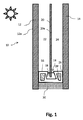
図1は、2つの外部ペインを有している本発明に係る三重グレージング10を説明している。2つの外部ペインは、それぞれ、建物の外側に向くことが意図されている第一ペイン12、及び典型的には建物の内部に向くことが意図されている第二ペイン14である。これら2つの外部ペインが、外部ペイン12及び14の端部に沿って連続的に延在しているスペーサ16に、固定されている。スペーサ16に、周縁溝18が備えられており、この周縁溝18が、上述の外部ペイン12と14との間に位置している内部ペイン20を、受け入れている。
FIG. 1 illustrates a
慣用的であるように、ペインの面が、外部ペイン12の、外部に接している、第1面である外部面12aから始めて、増加する順番で、第1〜第6の範囲の数字によって、番号付けされている。
As is conventional, the face of the pane starts from the
2つの外部ペイン12及び14が、ガラスシートを有している。これらが、例えば、2mm〜6mm、特には3mm〜5mmの範囲内の厚みを有している一体的なガラスシートであってよい。これらが、特には建物の外部に向くことが意図されている外部ペイン12に関して、積層中間層、例えばポリビニルブチラール(PVB)製の積層中間層によって接着的に結合している2つのガラスシートの集合体であってもよい。これは、押し入り防止、及び/又は音絶縁、及び/又は人員安全(例えば破片防止)特性を付与するために、行われる。
Two
外部ペイン12及び14の異なる面が、グレージング10に種々の機能性を付与するための薄層の積層体でコーティングされていてよく、又はコーティングされていなくてよい。例えば、外部ペイン12の外部面12aが、少なくとも1つの、光触媒層、特には酸化チタン、特にはアナターゼ形態で少なくとも部分的に結晶化されている酸化チタンの光触媒層を有している自己洗浄性積層体で、かつ/又は、低放射性を有している少なくとも1つの層、例えば、透明伝導性酸化物(TCO)の層、特にはインジウムスズ酸化物(ITO)若しくはドープされている亜鉛酸化物の層を有している耐凝縮積層体で、コーティングされていてよい。
Different surfaces of the
外部ペイン12及び14の他の面が、少なくとも1つの銀層を有しており低放射性を有している薄層の積層体で、コーティングされていてよい。
The other side of the
スペーサ16が、金属材料、及び/又はポリマー材料で形成されていてよい。適切な金属材料の例としては、特には、アルミニウム又はステンレス鋼が挙げられる。適切なポリマー材料の例としては、特には、ポリエチレン(PE)、ポリカーボネート(PC)、ポリプロピレン(PP)、ポリスチレン、ポリブタジエン、ポリエステル、ポリウレタン、ポリメチルメタクリレート、ポリアクリレート、ポリアミド、ポリエチレンテレフタレート(PET)、ポリブチレンテレフタレート(PBT)、アクリロニトリル/ブタジエン/スチレン(ABS)、アクリロニトリル/スチレン/アクリレート(ASA)、又はスチレン/アクリロニトリルコポリマー(SAN)が挙げられる。これらの材料の任意の組み合わせ又は混合物を想定することもできる。例えば、スペーサのプロファイル要素それぞれが、ステンレス鋼シートからなる補強を有しているポリプロピレンに基づいていてよい。これがポリマー材料に基づいている場合には、プロファイル要素が、有利には、繊維、特にはガラス繊維又は炭素繊維によって、補強されている。
The
溝18が、ライニング19を備えており、このライニング19が、エラストマー材料、典型的にはエチレン/プロピレン/ジエン(EPDM)ゴムに基づいている。このようにして、熱的に強化されていない薄いガラスシートの、内部ペインとしての使用にも関わらず、グレージングの熱機械的強度が向上することが、見いだされた。
The groove 18 is provided with a
外部ペイン12、14、スペーサ16、及び内部ペイン20によって形成されるアセンブリが、2つの中間層空間22及び24を形成している。中間層空間22、24それぞれが、空気で充填されていてよい。しかしながら、好ましくは、それぞれの中間層空間22、24が、ペインの間で空気に取って代わる、絶縁性ガス層を、有している。複層グレージングのそれぞれの中間層空間において絶縁性ガス層を形成するために使用されるガスの例としては、特には、アルゴン(Ar)、クリプトン(Kr)、及びキセノン(Xe)が挙げられる。有利には、複層グレージングのそれぞれの中間層空間における絶縁性ガス層が、空気の熱伝導率よりも低い熱伝導率を示すガスを85%以上含有している。適切なガスは、好ましくは、無色であり、無毒であり、非腐食性であり、難燃性であり、かつ紫外放射への曝露に対して非感受性である。
The assembly formed by the
中間層空間22、24に耐漏洩性を付与するために、耐漏洩性ストリップ26が、2つの外部ペイン12、14と、スペーサ16の側方端部との間に配置される。耐漏洩性ストリップ26が、例えば、ポリイソブチレン(ブチル)に基づいている。
In order to provide leakage resistance to the
スペーサ16が、乾燥剤材料28を受け入れるための筐体を画定しており、それによって、中間層空間22、24に存在し得るいかなる残余の湿分をも吸収する。乾燥剤材料28は、副層グレージング10の中間層空間22、24それぞれに存在している空気又はガス層を脱水することができる任意の材料であってよく、特には、分子ふるい、シリカゲル、CaCl2、Na2SO4、活性炭、ゼオライト、及び/又はこれ等の混合物から選択される。
The
封止バリア30、例えばポリスルフィド樹脂製の封止バリア30が、スペーサ16の外側周縁部において、外部ペイン12と14との間に、適用され、それによって、ペイン12、14が、スペーサ16に保持される。
A sealing
内部ペイン20が、本発明の意味の範囲において、機能ペインである。これは、薄いガラスシートであり、その厚みが、0.1mm〜2mmの範囲内であり、その面のうちの1つの面20a、すなわちグレージングの第3面であり中間層空間22の方に向いている面20aが、低放射性を有している薄層の積層体でコーティングされている。示されていない他の実施態様によれば、積層体が、ガラスシートの他の面、又はガラスシートの両面において、コーティングされていてよい。
The
この積層体が、n個の銀層(nが、例えば、1、2、3などの値を有している)を有しており、かつ、オームで表され下記の式に対応しているシート抵抗Rsを、示す:
Rs・t22 − 115・n < 25・t2
ここで、t2が、銀層の厚み、又はそれぞれの銀層の厚みの合計である。
This laminate has n silver layers (n has a value of, for example, 1, 2, 3, etc.), and is expressed in ohms and corresponds to the following formula: The sheet resistance Rs is indicated:
Rs · t2 2 − 115 · n <25 · t2
Here, t2 is the thickness of the silver layer or the total thickness of the respective silver layers.
この積層体が、好ましくは、基材から出発して、少なくとも1つの第一誘電体層を有している第一コーティング、少なくとも1つの銀層、随意にオーバーブロッカー層、及び少なくとも1つの第二誘電体層を有している第二コーティングを、有している。 The laminate preferably starts from a substrate and has a first coating having at least one first dielectric layer, at least one silver layer, optionally an overblocker layer, and at least one second A second coating having a dielectric layer;
好ましくは、銀層又はそれぞれの銀層の物理的な厚みが、6nmと20nmの間である。 Preferably, the physical thickness of the silver layer or each silver layer is between 6 nm and 20 nm.
オーバーブロッカー層は、(例えば、後に続く層が酸化性又は窒化性雰囲気の下で堆積される場合に)後に続く層の堆積の間に、かつ強化又は曲げタイプの随意の加熱処理の間に、銀層を保護することが、意図されている。 The overblocker layer can be used during subsequent layer deposition (e.g., when subsequent layers are deposited under an oxidizing or nitriding atmosphere) and during an optional heat treatment of the strengthening or bending type. It is intended to protect the silver layer.
銀層が、アンダーブロッカー層の上に、かつこれに接触して、堆積されてもよい。したがって、積層体が、銀層又はそれぞれの銀層に隣接している、オーバーブロッカー層、及び/又はアンダーブロッカー層を、有していてよい。 A silver layer may be deposited over and in contact with the underblocker layer. Thus, the laminate may have an overblocker layer and / or an underblocker layer adjacent to the silver layer or each silver layer.
ブロッカー(アンダーブロッカー及び/又はオーバーブロッカー)層が、一般に、ニッケル、クロム、チタン、ニオブ、又はこれらの異なる金属の合金から選択される金属に基づいている。特には、ニッケル/チタン合金(特にはそれぞれの金属を約50重量%含んでいるもの)、又はニッケル/クロム合金(特には80重量%のニッケル及び20重量%のクロムを含んでいるもの)に、言及することができる。オーバーブロッカー層が、複数の重なり合っている層からなっていてもよく、例えば、基材から離れる方向に移動して、チタンの層、そしてニッケル合金(特には、ニッケル/クロム合金)の層、又はその逆、からなっていてもよい。引用されている種々の金属又は合金が、部分的に酸化されていてもよく、かつ、特には、酸素に関して化学量論以下(例えばTiOx、NiCrOx)であってよい。 The blocker (underblocker and / or overblocker) layer is generally based on a metal selected from nickel, chromium, titanium, niobium, or alloys of these different metals. In particular, nickel / titanium alloys (especially those containing about 50% by weight of the respective metal) or nickel / chromium alloys (especially those containing 80% by weight nickel and 20% by weight chromium). Can be mentioned. The overblocker layer may consist of a plurality of overlapping layers, for example, moving away from the substrate, a layer of titanium and a layer of nickel alloy (especially a nickel / chromium alloy), or The converse may also consist of. The various metals or alloys cited may be partially oxidized and in particular sub-stoichiometric (eg TiO x , NiCrO x ) with respect to oxygen.
これらのブロッカー(アンダーブロッカー及び/又はオーバーブロッカー)層は、非常に薄く、通常は、1nm未満の厚みを有しており、それにより、積層体の光透過性に影響しないようになっており、かつ本発明に係る加熱処理の間に部分的に酸化されうるようになっている。一般的に、ブロッカー層は、犠牲層であり、大気又は基材に由来する酸素を捕捉することができ、そのようにして銀層が酸化することが防止される。 These blocker (underblocker and / or overblocker) layers are very thin and usually have a thickness of less than 1 nm so that they do not affect the light transmission of the laminate, In addition, it can be partially oxidized during the heat treatment according to the present invention. Generally, the blocker layer is a sacrificial layer and can capture oxygen from the atmosphere or the substrate, thus preventing the silver layer from being oxidized.
第一及び/又は第二誘電体層が、典型的には、酸化物でできており(特にはスズ酸化物でできており)、又は好ましくは窒化物でできており、特には、(特には基材から最も遠くにある第二誘電体層に関して)窒化ケイ素でできている。一般に、窒化ケイ素が、ドープされていてよく、例えば、アルミニウム又はホウ素でドープされていてよく、それによって、カソードスパッタリング技術によるその堆積が、促進される。(ケイ素の量に対する原子パーセントに対応する)ドープの程度は、一般的に、2%以下である。これら誘電体層の機能は、銀層を化学的及び機械的攻撃から保護することであり、かつ、誘電体層は、干渉現象によって、積層体の光学的特性、特には反射における光学的特性にも、影響を及ぼす。 The first and / or second dielectric layer is typically made of an oxide (especially made of tin oxide) or preferably made of nitride, in particular (especially Is made of silicon nitride (with respect to the second dielectric layer furthest from the substrate). In general, silicon nitride may be doped, for example with aluminum or boron, thereby facilitating its deposition by cathode sputtering techniques. The degree of doping (corresponding to atomic percent with respect to the amount of silicon) is typically 2% or less. The function of these dielectric layers is to protect the silver layer from chemical and mechanical attack, and the dielectric layer is able to reduce the optical properties of the laminate, particularly the optical properties in reflection, by interference phenomena. Also has an effect.
第一コーティングが、1つの誘電体層、又は複数の、典型的には2〜4の誘電体層を有していてよい。第二コーティングが、1つの誘電体層、又は複数の、典型的には2〜3の誘電体層を有していてよい。これらの誘電体層は、好ましくは、窒化ケイ素、酸化チタン、酸化スズ、若しくは酸化亜鉛、又はそれらの混合物若しくは固体溶液の任意の1つ、例えばスズ亜鉛酸化物若しくはチタン亜鉛酸化物から選択される材料でできている。第一コーティングであっても、又は第二コーティングであっても、誘電体層の物理的な厚み、又はすべての誘電体層の全体としての物理的な厚みが、好ましくは15nmと60nmの間、特には20nmと50nmの間である。 The first coating may have one dielectric layer, or multiple, typically 2-4 dielectric layers. The second coating may have one dielectric layer, or multiple, typically 2-3 dielectric layers. These dielectric layers are preferably selected from silicon nitride, titanium oxide, tin oxide, or zinc oxide, or any one of their mixtures or solid solutions, such as tin zinc oxide or titanium zinc oxide Made of material. Whether the first coating or the second coating, the physical thickness of the dielectric layer, or the overall physical thickness of all dielectric layers, is preferably between 15 and 60 nm, In particular, it is between 20 nm and 50 nm.
第一コーティングが、好ましくは、銀層の直下に、又は随意のアンダーブロッカー層の直下に、湿潤層を有している。この層の機能は、銀層の濡れ及び結合を増加させることである。亜鉛酸化物、特にはアルミニウムでドープされている亜鉛酸化物が、この点に関して特に有利であることが証明されている。 The first coating preferably has a wetting layer directly under the silver layer or directly under the optional underblocker layer. The function of this layer is to increase the wetting and bonding of the silver layer. Zinc oxide, in particular zinc oxide doped with aluminum, has proven particularly advantageous in this regard.
第一コーティングが、湿潤層の直下において、平滑層を有していてもよい。平滑層は、部分的に、さらには完全に、非結晶質の混合酸化物である(したがって非常に粗さが低い)。平滑層の役割は、好ましい結晶学的方向性に従って湿潤層の成長を促進することであり、これが、エピタキシー現象によって、銀の結晶化を促進する。平滑層が、好ましくは、Sn、Zn、In、Ga、及びSbから選択される少なくとも2つの金属の混合酸化物から構成されている。好ましい酸化物は、アンチモンでドープされているインジウムスズ酸化物である。 The first coating may have a smooth layer directly under the wet layer. The smoothing layer is partly and even completely non-crystalline mixed oxide (thus very low roughness). The role of the smooth layer is to promote the growth of the wet layer according to the preferred crystallographic orientation, which promotes the crystallization of silver by the epitaxy phenomenon. The smooth layer is preferably composed of a mixed oxide of at least two metals selected from Sn, Zn, In, Ga, and Sb. A preferred oxide is indium tin oxide doped with antimony.
第一コーティングにおいて、湿潤層又は随意の平滑層が、好ましくは第一誘電体層に直接に堆積される。第一誘電体層が、好ましくは、基材に直接に堆積される。積層体の光学的特性(特には反射における外観)の最適な適合のために、第一誘電体層を、代替的に、別の酸化物層又は窒化物層に、例えばチタン酸化物層に、堆積してもよい。 In the first coating, a wetting layer or optional smoothing layer is preferably deposited directly on the first dielectric layer. The first dielectric layer is preferably deposited directly on the substrate. For optimal adaptation of the optical properties of the stack (especially the appearance in reflection), the first dielectric layer can alternatively be replaced with another oxide or nitride layer, for example a titanium oxide layer, It may be deposited.
第二コーティングにおいて、第二誘電体層を、銀層に直接に、若しくは好ましくはオーバーブロッカー層に直接に、堆積してよく、又は、積層体の光学的特性を適合することが意図されている他の酸化物層若しくは窒化物層の上に、堆積してもよい。例えば、亜鉛酸化物層、特にはアルミニウムでドープされている亜鉛酸化物層を、又はスズ酸化物層も、オーバーブロッカー層と第二誘電体層との間に配置してよく、第二誘電体層が、好ましくは、窒化ケイ素製である。亜鉛酸化物、特にはアルミニウムでドープされている亜鉛酸化物が、銀層と上方の層との間の接着を向上させることを、可能にする。 In the second coating, the second dielectric layer may be deposited directly on the silver layer, or preferably directly on the overblocker layer, or it is intended to adapt the optical properties of the laminate. It may be deposited on other oxide or nitride layers. For example, a zinc oxide layer, in particular a zinc oxide layer doped with aluminum, or a tin oxide layer may also be disposed between the overblocker layer and the second dielectric layer, and the second dielectric The layer is preferably made of silicon nitride. Zinc oxide, in particular zinc oxide doped with aluminum, makes it possible to improve the adhesion between the silver layer and the upper layer.
したがって、積層体が、好ましくは、少なくとも1つの、一連のZnO/Ag/ZnOを、有している。亜鉛酸化物が、アルミニウムでドープされていてよい。アンダーブロッカー層が、銀層と下方に位置している層との間に位置していてよい。代替的には又は累積的に、オーバーブロッカー層が、銀層と上に存在している層との間に位置していてよい。 Thus, the stack preferably has at least one series of ZnO / Ag / ZnO. Zinc oxide may be doped with aluminum. An underblocker layer may be located between the silver layer and the underlying layer. Alternatively or cumulatively, an overblocker layer may be located between the silver layer and the overlying layer.
最後に、第二コーティングに、本技術分野において「オーバーコート」として言及されることがある、オーバー層を、載せてよい。積層体の最終層、したがって周囲空気と接している層は、積層体を任意の機械的攻撃(傷、及び類似のもの)又は化学的な攻撃から保護することが、意図されている。このオーバーコートは、一般に、非常に薄く、それにより、積層体の反射における外観が阻害されないようになっている(その厚みが、典型的には、1nmと5nmの間である)。オーバーコートは、好ましくは、チタン酸化物又は混合スズ亜鉛酸化物に基づいており、特には、アンチモンでドープされており、準化学量論の形態で堆積されている。 Finally, the second coating may be overlaid with an overlayer, sometimes referred to in the art as an “overcoat”. The final layer of the laminate, and therefore the layer in contact with the ambient air, is intended to protect the laminate from any mechanical attack (scratches and the like) or chemical attack. This overcoat is generally very thin so that the appearance in the reflection of the laminate is not disturbed (its thickness is typically between 1 nm and 5 nm). The overcoat is preferably based on titanium oxide or mixed tin zinc oxide, in particular doped with antimony and deposited in a substoichiometric form.
積層体が、1又は複数の銀層を有していてよく、特には2又は3の銀層を有していてよい。複数の銀層が存在する場合には、上記において示された一般的な構造が、繰り返されうる。この場合には、所与の銀層に対する(したがってこの銀層の上に位置している)第二のコーティングが、一般的に、後に続く銀層に対する第一コーティングに一致する。 The laminate may have one or more silver layers, and in particular may have 2 or 3 silver layers. If there are multiple silver layers, the general structure shown above can be repeated. In this case, the second coating for a given silver layer (and thus located above this silver layer) generally corresponds to the first coating for the silver layer that follows.
この場合には、積層体が、マグネトロンカソードスパッタリングによって得られる。他の堆積技術も、可能であり、例えば、プラズマ強化型化学気相成長(PECVD)技術も可能である。 In this case, the laminate is obtained by magnetron cathode sputtering. Other deposition techniques are possible, for example, plasma enhanced chemical vapor deposition (PECVD) techniques.
非常に低い抵抗性及び非常に低い放射性を達成するために、銀層が、高い程度の結晶性を示している必要があり、これは、堆積の間には得ることができず、その結果として、加熱処理が必要であることが分かっている。慣用的に、ガラスが、加熱強化され、すなわち、ガラスが、約600℃〜630℃の温度にされ、そして、急速に冷却される。加熱強化は、銀層の抵抗性特性及び放射性特性における改善に加えて、ペインの熱機械的な強度を向上させることができる。しかしながら、加熱強化は、薄いガラスシートに関しては、工業的に実行することができない。 In order to achieve very low resistance and very low emissivity, the silver layer must exhibit a high degree of crystallinity, which cannot be obtained during deposition and as a result It has been found that heat treatment is necessary. Conventionally, the glass is heat strengthened, that is, the glass is brought to a temperature of about 600 ° C. to 630 ° C. and rapidly cooled. Heat strengthening can improve the thermomechanical strength of the pane in addition to improvements in the resistive and radioactive properties of the silver layer. However, heat strengthening cannot be carried out industrially for thin glass sheets.
積層体の優れた抵抗性及び放射性特性が、この場合には、急速アニーリングの工程によって、特にはレーザー放射又はフラッシュランプによる急速アニーリングの工程によって、得られる。 The excellent resistance and radiation properties of the laminate are obtained in this case by a rapid annealing process, in particular by a rapid annealing process with laser radiation or flash lamps.
用語「急速アニーリング」は、処理される積層体の各場所を、非常に短い時間の間に、典型的には10秒未満の間に、特には1秒未満の間に、さらには0.1秒未満の間に、典型的には300℃以上の温度にすることができる処理を意味するものと理解される。熱は、ガラスシートへと拡散する時間を有しておらず、その結果として、ガラスシートの温度が、一般に、50℃を超えない。 The term “rapid annealing” refers to the location of the laminate to be processed for a very short period of time, typically less than 10 seconds, in particular less than 1 second, even 0.1%. It is understood to mean a treatment that can be brought to a temperature of typically 300 ° C. or more in less than a second. The heat does not have time to diffuse into the glass sheet, and as a result, the temperature of the glass sheet generally does not exceed 50 ° C.
好ましい実施態様によれば、急速アニーリングが、フラッシュランプによって実行される。 According to a preferred embodiment, rapid annealing is performed by a flash lamp.
フラッシュランプは、一般的に、希ガスで充填されておりかつそれらの端部に電極が備わっている、封止された、ガラスチューブ又は石英チューブの形態で、提供される。コンデンサの放電によって得られる、短い時間間隔の電気パルスの影響の下で、ガスがイオン化し、かつ特に強い非コヒーレントな光が生じる。放射スペクトルが、一般に、少なくとも2つの放射ラインを有している。これは、好ましくは、近紫外において放射最大値を示す連続的なスペクトルである。 Flash lamps are generally provided in the form of sealed glass tubes or quartz tubes that are filled with a noble gas and are provided with electrodes at their ends. Under the influence of short time interval electrical pulses obtained by discharging the capacitor, the gas is ionized and a particularly intense incoherent light is produced. The radiation spectrum generally has at least two radiation lines. This is preferably a continuous spectrum showing a radiation maximum in the near ultraviolet.
ランプは、好ましくは、キセノンランプである。ランプは、アルゴンランプ、ヘリウムランプ、又はクリプトンランプであってもよい。放射スペクトルが、好ましくは、複数のライン、特には160nm〜1000nmの範囲の波長における複数のラインを、有している。 The lamp is preferably a xenon lamp. The lamp may be an argon lamp, a helium lamp, or a krypton lamp. The emission spectrum preferably has a plurality of lines, in particular a plurality of lines at wavelengths in the range of 160 nm to 1000 nm.
フラッシュの持続時間が、好ましくは、0.05ミリ秒〜20ミリ秒、特には0.1ミリ秒〜5ミリ秒の範囲内である。繰返し速度が、好ましくは、0.1Hz〜5Hz、特には0.2Hz〜2Hzの範囲内である。 The duration of the flash is preferably in the range of 0.05 ms to 20 ms, especially 0.1 ms to 5 ms. The repetition rate is preferably in the range of 0.1 Hz to 5 Hz, in particular 0.2 Hz to 2 Hz.
放射が、隣り合って配置されている複数のランプ、例えば5〜20のランプ、又は8〜15のランプから生じてよく、それにより、同時に比較的広い区域を処理するようになっていてよい。この場合には、すべてのランプが、同時にフラッシュを放射してよい。 The radiation may originate from a plurality of lamps arranged next to each other, for example 5-20 lamps, or 8-15 lamps, so that a relatively large area can be processed simultaneously. In this case, all lamps may emit a flash at the same time.
ランプ又は各ランプが、好ましくは、基材の最も大きい面に対して横方向に、配置されている。ランプ又は各ランプが、好ましくは1m以上、特には2m以上、さらには3m以上の長さを有しており、それにより、広いサイズの基材を処理することができるようになっている。 The lamps or each lamp is preferably arranged transverse to the largest surface of the substrate. The lamp or each lamp preferably has a length of 1 m or more, in particular 2 m or more, and even 3 m or more, so that substrates of large sizes can be processed.
コンデンサは、典型的には、500V〜500kVの電圧で充電される。電流密度が、好ましくは、4000A/cm2以上である。フラッシュランプによって放射される合計エネルギーの密度が、積層体の表面面積に対して、好ましくは1J/cm2と100J/cm2の間、特には1J/cm2と30J/cm2の間、さらには5J/cm2と20J/cm2の間である。 The capacitor is typically charged with a voltage between 500V and 500kV. The current density is preferably 4000 A / cm 2 or more. The density of the total energy emitted by the flash lamp, with respect to the surface area of the laminate, preferably between 1 J / cm 2 and 100 J / cm 2, in particular between 1 J / cm 2 and 30 J / cm 2, further Is between 5 J / cm 2 and 20 J / cm 2 .
別の好ましい実施態様によれば、急速アニーリングが、レーザー放射によって実行される。レーザー放射が、好ましくは、少なくとも1つのレーザーラインの形態で、積層体において焦点合わせされる。 According to another preferred embodiment, rapid annealing is performed by laser radiation. Laser radiation is focused in the stack, preferably in the form of at least one laser line.
レーザー放射が、好ましくは、1又は複数のレーザー源を有しておりかつ成形光学部品及びリダイレクト光学部品も有しているモジュールによって、生成される。 The laser radiation is preferably generated by a module having one or more laser sources and also having shaped optics and redirect optics.
レーザー源が、典型的には、レーザーダイオード又はファイバーレーザーであり、特には、ファイバー、ダイオード、又はディスクレーザーである。レーザーダイオードは、要求される空間が小さいにもかかわらず、供給電力に対して、高い出力密度を経済的に達成することを可能にする。ファイバーレーザーの空間要件は、さらに比較的小さく、かつ、得られる線形出力密度が、さらに比較的高い可能性があり、しかしながら、コストに関しては、比較的大きい。用語「ファイバーレーザー」は、レーザー光が生成される場所がレーザー光が送られる場所から空間的に離れており、レーザー光が少なくとも1つの光学ファイバーによって送られる、レーザー、を意味しているものと理解される。ディスクレーザーの場合には、レーザー光が、Yb:YAG製のディスク、例えば薄い(約0.1mm厚)ディスクの形状の放射媒体が備えられている共振キャビティにおいて、生成される。このようにして生成される光が、処理の場所に向けられている少なくとも1つの光学ファイバーにカップリングされる。ファイバーレーザー又はディスクレーザーが、好ましくは、レーザーダイオードによって、光学的にポンピングされる。 The laser source is typically a laser diode or a fiber laser, in particular a fiber, diode or disk laser. Laser diodes make it possible to economically achieve a high power density for the supplied power, even though the required space is small. The spatial requirements of fiber lasers are even smaller and the resulting linear power density can be even higher, but the cost is relatively high. The term “fiber laser” means a laser in which the place where the laser light is generated is spatially separated from the place where the laser light is sent and the laser light is sent by at least one optical fiber; Understood. In the case of a disc laser, laser light is generated in a resonant cavity provided with a radiation medium in the form of a Yb: YAG disc, for example a thin (about 0.1 mm thick) disc. The light thus generated is coupled to at least one optical fiber that is directed to the processing location. A fiber laser or disk laser is preferably optically pumped by a laser diode.
レーザー源から生じる放射が、好ましくは、連続的である。 The radiation originating from the laser source is preferably continuous.
レーザー放射の波長が、好ましくは、500nm〜2000nm、特には700nm〜1100nm、さらには800nm〜1000nmの範囲内である。808nm、880nm、915nm、940nm、又は980nmから選択される1又は複数の波長で放射する高出力レーザーダイオードが、特に良好に適していることが証明されている。ディスクレーザーの場合には、波長が、例えば、1030nm(Yb:YAGレーザーに関する放射波長)である。ファイバーレーザーに関しては、波長が、典型的には、1070nmである。 The wavelength of the laser radiation is preferably in the range from 500 nm to 2000 nm, in particular from 700 nm to 1100 nm, and even from 800 nm to 1000 nm. High power laser diodes that emit at one or more wavelengths selected from 808 nm, 880 nm, 915 nm, 940 nm, or 980 nm have proven to be particularly well suited. In the case of a disk laser, the wavelength is, for example, 1030 nm (a radiation wavelength related to a Yb: YAG laser). For fiber lasers, the wavelength is typically 1070 nm.
非ファイバーレーザーの場合には、成形光学部品及びリダイレクト光学部品が、好ましくは、レンズ及びミラーを含んでおり、かつ放射の位置合わせ、均一化、及び焦点合わせのための手段として、使用される。 In the case of non-fiber lasers, shaped and redirected optics preferably include lenses and mirrors and are used as a means for alignment, homogenization, and focusing of radiation.
位置合わせ手段の目的は、適切な場合に、ラインに沿って、レーザー源によって放射される放射を、配置することである。これは、好ましくは、ミラーを含んでいる。均一化手段の目的は、レーザー源の空間的プロファイルを重ね合わせ、それによって、ラインの全体に沿って、均一な直線的な出力密度を得ることである。均一化手段が、好ましくは、入射光線を二次的な光線に分離すること、及び上述の二次的な光線を均一なラインへと再結合させることを可能にする、レンズを、含んでいる。放射焦点合わせ手段は、放射を、処理される積層体において、所望の長さ及び幅のラインの形状で、焦点合わせすることを、可能にする。焦点合わせ手段が、好ましくは、焦点合わせミラー又は集束レンズを含んでいる。 The purpose of the alignment means is to place the radiation emitted by the laser source along the line, where appropriate. This preferably includes a mirror. The purpose of the homogenizing means is to superimpose the spatial profile of the laser source, thereby obtaining a uniform linear power density along the entire line. The homogenizing means preferably comprises a lens, which makes it possible to separate the incident light into secondary rays and to recombine the secondary rays mentioned above into a uniform line. . The radiation focusing means allows the radiation to be focused in the shape of a line of the desired length and width in the laminate being processed. The focusing means preferably includes a focusing mirror or a focusing lens.
ファイバーレーザーの場合には、成形光学部品が、好ましくは、光学ファイバー又はそれぞれの光学ファイバーの出口に位置している光学ヘッドの形態で、一緒にまとめられている。 In the case of a fiber laser, the molded optical components are grouped together, preferably in the form of optical fibers or optical heads located at the exit of each optical fiber.
上述の光学ヘッドの成形光学部品が、好ましくは、レンズ、ミラー、及びプリズムを有しており、かつ放射を、変換するための、均一化するための、かつ焦点合わせするための、手段として、使用される。 The shaping optical component of the optical head described above preferably comprises a lens, a mirror and a prism, and as means for converting, homogenizing and focusing the radiation, used.
変換手段が、ミラー及び/又はプリズムを含んでおり、かつ、光学ファイバーの出口において得られる円状の光線を、ラインの形状で、異方性の非円状光線に変換する役割を果たす。これのために、変換手段が、その軸のうちの1つ(高速軸、又はレーザーラインの幅wの軸)に沿って光線の質を増加させ、かつ他の軸(低速軸、又はレーザーラインの長さlの軸)に沿って光線の質を低減させる。 The conversion means includes a mirror and / or a prism and plays a role of converting a circular light beam obtained at the exit of the optical fiber into an anisotropic non-circular light beam in the form of a line. For this purpose, the conversion means increases the quality of the beam along one of its axes (fast axis or the axis of the width w of the laser line) and the other axis (slow axis or laser line). The quality of the light rays along the axis of length l).
均一化手段は、レーザー源の空間プロファイルを重ね合わせ、それによって、ライン全体に沿って、均一な線形出力密度を得る。均一化手段が、好ましくは、入射光線を二次的な光線に分離すること、及びこの二次的な光線を均一なラインに再統合することを可能にする、レンズを、有している。 The homogenizing means superimposes the spatial profile of the laser source, thereby obtaining a uniform linear power density along the entire line. The homogenizing means preferably has a lens that makes it possible to separate the incident light beam into a secondary light beam and to reintegrate this secondary light beam into a uniform line.
最後に、放射焦点合わせ手段が、放射を、作業平面のレベルにおいて、すなわち処理される積層体の平面において、所望の長さ及び幅のラインの形状で、焦点合わせすることを、可能にする。焦点合わせ手段が、好ましくは、焦点合わせミラー又は集束レンズを含んでいる。 Finally, the radiation focusing means makes it possible to focus the radiation at the level of the working plane, i.e. in the form of lines of the desired length and width, in the plane of the laminate to be processed. The focusing means preferably includes a focusing mirror or a focusing lens.
単一のレーザーラインが使用される場合には、ラインの長さが、有利には、基材の幅に等しい。この長さは、典型的には、1m以上、特には2m以上、さらには3m以上である。複数のライン、分離されており又は分離されておらず、しかしながら基材の全幅を処理するように配置されている複数のラインを、使用することも、可能である。この場合には、それぞれのレーザーラインの長さが、好ましくは、10cm以上、又は20cm以上、特には、30cm〜100cm、特には30cm〜75cm、さらには30cm〜60cmの範囲内である。 If a single laser line is used, the length of the line is advantageously equal to the width of the substrate. This length is typically 1 m or more, in particular 2 m or more, and even 3 m or more. It is also possible to use a plurality of lines, separated or not separated, but arranged to handle the entire width of the substrate. In this case, the length of each laser line is preferably 10 cm or more, or 20 cm or more, particularly 30 cm to 100 cm, particularly 30 cm to 75 cm, and further 30 cm to 60 cm.
ラインの「長さ」という用語は、基材が前進する方向に対して横向きの第一の方向において、積層体の表面において計測したときの、ラインの最大の寸法を意味しており、かつ用語「幅」は、第一の方向に対して直交している第二の方向に沿った寸法を意味しているものと理解される。レーザーの分野において慣用的であるように、ラインの幅wは、光線の軸(放射の強度が最大である場所)と、放射の強度が最大強度の1/e2倍に等しい場所との間の(この第二方向に沿う)距離に、対応している。レーザーラインの長さ方向軸がxとして言及される場合には、この軸に沿う、w(x)として言及される幅分布を、定義することが可能である。 The term “length” of a line means the maximum dimension of the line as measured at the surface of the laminate in a first direction transverse to the direction in which the substrate advances, and the term “Width” is understood to mean a dimension along a second direction perpendicular to the first direction. As is customary in the field of lasers, the line width w is between the axis of the ray (where the radiation intensity is maximum) and where the radiation intensity is equal to 1 / e 2 times the maximum intensity. Corresponding to the distance (along this second direction). If the longitudinal axis of the laser line is referred to as x, it is possible to define a width distribution along this axis, referred to as w (x).
レーザーライン又はそれぞれのレーザーラインの平均の幅が、好ましくは、少なくとも35μm、特には40μm〜100μm、又は40μm〜70μmの範囲内である。本記載を通じて、用語「平均」は、算術平均を意味するものと理解される。ラインの全長にわたって、幅分布が、せまく、それによって、いかなる処理の不均一性をも、可能な限り制限する。したがって、最大幅と最小幅との間の違いが、好ましくは、平均幅の値の10%以下である。この値が、好ましくは、5%以下、さらには3%以下である。 The average width of the laser lines or of each laser line is preferably at least 35 μm, in particular in the range 40 μm to 100 μm, or 40 μm to 70 μm. Throughout this description, the term “average” is understood to mean the arithmetic average. Over the entire length of the line, the width distribution is constrained, thereby limiting any process non-uniformity as much as possible. Therefore, the difference between the maximum width and the minimum width is preferably no more than 10% of the average width value. This value is preferably 5% or less, more preferably 3% or less.
成形光学部品及びリダイレクト光学部品、特には位置合わせ手段を、手動で調節してよく、又はそれらの位置合わせを遠隔的に調節することを可能にするアクチュエータによって調節してよい。これらのアクチュエータ(典型的には圧電モーター又はブロック)を、手動で制御してよく、かつ/又は自動で調節してよい。後者の場合には、アクチュエータが、好ましくは、検出器に接続され、かつフィードバックループにも接続されるであろう。 Molding optics and redirect optics, in particular the alignment means, may be adjusted manually or by actuators that allow their alignment to be adjusted remotely. These actuators (typically piezoelectric motors or blocks) may be controlled manually and / or adjusted automatically. In the latter case, the actuator will preferably be connected to the detector and also to the feedback loop.
レーザーモジュールの少なくとも部分、さらにはこれの全てが、好ましくは、耐漏洩性のボックスに配置され、有利には冷却されている、特には換気されている、耐漏洩性のボックスに配置され、それによって、それらの熱安定性が確保される。 At least a part of the laser module, and all of this, is preferably arranged in a leakproof box, advantageously placed in a leakproof box, which is advantageously cooled, in particular ventilated. Thus, their thermal stability is ensured.
レーザーモジュールが、剛性構造、「ブリッジ」として言及され、金属要素に基づいており、典型的にはアルミニウム製である剛性構造に、好ましくは、取り付けられている。この構造が、好ましくは、大理石スラブを含んでいない。ブリッジが、好ましくは、搬送手段に平行に配置され、それにより、レーザーライン又はそれぞれのレーザーラインの焦点平面が、処理される基材の表面に平行なままであるようになっている。好ましくは、ブリッジが、少なくとも4つの脚部を有しており、これらの高さを別個に調節することができ、それによって、すべての環境下において平行な位置合わせが確保される。調節を、距離センサと関連付けて、それぞれの脚部に位置しているモーターによって、手動で又は自動的に、提供してよい。ブリッジの高さを、処理される基材の厚みを考慮に入れ、かつそのようにして基材の平面がレーザーライン又はそれぞれのレーザーラインの焦点平面に一致することが確保されるように、(手動又は自動で)、適合させてよい。 The laser module is referred to as a rigid structure, “bridge” and is preferably attached to a rigid structure, which is based on metal elements and is typically made of aluminum. This structure preferably does not include a marble slab. The bridge is preferably arranged parallel to the conveying means, so that the laser line or the focal plane of each laser line remains parallel to the surface of the substrate to be processed. Preferably, the bridge has at least four legs and these heights can be adjusted separately, thereby ensuring parallel alignment under all circumstances. The adjustment may be provided manually or automatically by a motor located at each leg in association with the distance sensor. The height of the bridge takes into account the thickness of the substrate to be treated, and thus ensures that the plane of the substrate coincides with the focal plane of the laser line or of each laser line ( It may be adapted (manually or automatically).
レーザーラインの線形出力密度が、好ましくは、300W/cm以上、有利には350W/cm以上又は400W/cm以上、特には450W/cm以上、さらには500W/cm以上、さらには550W/cm以上である。これが、有利には、600W/cm以上、特には800W/cm以上、さらには1000W/cm以上である。線形出力密度は、積層体においてレーザーライン又はそれぞれのレーザーラインが焦点合わせされる場所において、計測される。これは、出力検出計、例えば、熱量計測器、例えば特には、Coherent社のBeam Finder S/N 2000716出力計を、ラインに沿って配置することによって、計測してよい。出力は、有利には、ライン又はそれぞれのラインの全長にわたって均一に分布している。好ましくは、最大の出力と最小の出力との間の差異が、平均出力の10%未満である。 The linear power density of the laser line is preferably 300 W / cm or more, advantageously 350 W / cm or more or 400 W / cm or more, in particular 450 W / cm or more, more preferably 500 W / cm or more, more preferably 550 W / cm or more. is there. This is advantageously greater than or equal to 600 W / cm, in particular greater than or equal to 800 W / cm and even greater than or equal to 1000 W / cm. The linear power density is measured at the laser line or where each laser line is focused in the stack. This may be measured by placing an output detector, such as a calorimeter, in particular, Coherent's Beam Finder S / N 20000007 output meter, along the line. The output is advantageously distributed uniformly over the entire length of the line or each line. Preferably, the difference between the maximum output and the minimum output is less than 10% of the average output.
積層体に提供されるエネルギー密度が、好ましくは、20J/cm2以上、さらには30J/cm2以上である。 The energy density provided to the laminate is preferably 20 J / cm 2 or more, and more preferably 30 J / cm 2 or more.
高出力及びエネルギー密度は、基材を実質的に加熱することなく、積層体を非常に急速に加熱することを、可能にする。 The high power and energy density allows the laminate to be heated very quickly without substantially heating the substrate.
加熱処理の間に積層体の各場所がさらされる最大の温度が、好ましくは、300℃以上、特には350℃以上、さらには400℃以上、さらには500℃以上又は600℃以上である。通常は、対象となっている積層体の場所が放射装置の下、例えばレーザーラインの下又はフラッシュランプの下を通過した瞬間に、最大の温度を受ける。所与の瞬間において、積層体の、放射装置の下(例えばレーザーラインの下)に位置している表面、及びそのすぐ近傍の(例えば1mm未満離れている)場所のみが、通常は、300℃以上の温度である。レーザーラインの下流を含めて、2mm超、特には5mm超の、(全身の方向に沿って計測した)レーザーラインまでの距離に関しては、積層体の温度が、通常は、50℃以下、さらには40℃以下又は30℃以下である。 The maximum temperature to which each place of the laminate is exposed during the heat treatment is preferably 300 ° C. or higher, particularly 350 ° C. or higher, further 400 ° C. or higher, further 500 ° C. or higher, or 600 ° C. or higher. Usually, the maximum temperature is experienced at the instant the location of the laminate of interest passes under the radiation device, for example under the laser line or under the flash lamp. At a given moment, only the surface of the stack located under the radiation device (eg under the laser line) and in the immediate vicinity (eg less than 1 mm away) is usually at 300 ° C. It is the above temperature. Regarding the distance to the laser line (measured along the whole body direction), including downstream of the laser line, more than 2 mm, especially more than 5 mm, the temperature of the laminate is usually 50 ° C. or lower, It is 40 degrees C or less or 30 degrees C or less.
積層体のそれぞれの場所が、有利には0.05ms〜10ms、特には0.1ms〜5ms、又は0.1ms〜2msの範囲内である時間にわたって、熱処理を受ける(又は最大温度にされる)。レーザーラインによる処理の場合には、この時間が、レーザーラインの幅によって、かつ基材とレーザーラインとの間の相対的な変位の速度によって、固定される。フラッシュランプによる処理の場合には、この時間が、フラッシュの持続時間に対応する。 Each location of the laminate is subjected to a heat treatment (or brought to a maximum temperature) for a time that is preferably in the range of 0.05 ms to 10 ms, in particular 0.1 ms to 5 ms, or 0.1 ms to 2 ms. . In the case of processing with a laser line, this time is fixed by the width of the laser line and by the speed of relative displacement between the substrate and the laser line. In the case of processing with a flash lamp, this time corresponds to the duration of the flash.
レーザー放射が、部分的に、処理される積層体によって反射され、かつ部分的に、基材を通って透過する。安全上の理由から、好ましくは、放射制止手段を、この反射されたかつ/又は透過した放射の経路に、配置する。これらの放射制止手段は、典型的には、流体、特には水の循環によって冷却される、金属筐体である。反射された放射がレーザーモジュールを損傷することを防止するために、レーザーライン又はそれぞれのレーザーラインの伝搬の軸が、好ましくは、基材に対する垂直と、ゼロでない角度、典型的には5°と20°の間の角度を、形成している。 Laser radiation is partially reflected by the laminate being processed and partially transmitted through the substrate. For safety reasons, preferably radiation suppression means are arranged in this reflected and / or transmitted radiation path. These radiation stopping means are typically metal housings that are cooled by circulation of fluids, in particular water. In order to prevent the reflected radiation from damaging the laser module, the laser line or the axis of propagation of each laser line is preferably perpendicular to the substrate and at a non-zero angle, typically 5 °. An angle between 20 ° is formed.
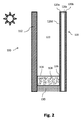
図2は、本発明に係る二重グレージング100を説明している。二重グレージング100が、2つの外部ペインを有している。2つの外部ペインは、それぞれ、建物の外部に向くことが意図されている第一ペイン112、及び典型的には建物の内部に向くことが意図されている第二ペイン120である。これらの2つの外部ペインが、外部ペイン112及び120の端部に沿って連続的に延在しているスペーサ116に、固定されている。
FIG. 2 illustrates a
2つの外部ペイン112及び120が、ガラスシートを有している。これは、例えば外部ペイン112に関しては、2mm〜6mm、特には3mm〜5mmの範囲内の厚みを有している一体的なガラスシートである。
Two
スペーサ116が、図1のスペーサ16との関連で上述したように、金属及び/又はポリマー材料からできていていよい。
The
外部ペイン112、120及びスペーサ116から形成されるアセンブリが、中間層空間122を形成している。この中間層空間122が、空気で充填されていてよい。しかしながら、好ましくは、中間層空間122が、ペインの間で空気と置き換わっている、絶縁性ガス層を、含んでいる。ガスの例が、図1の中間層空間22及び24との関連で、上記において示されている。
An assembly formed from the
中間層空間122を耐漏洩性にするために、耐漏洩性ストリップ126を、2つの外部ペイン112、120と、スペーサ116の側方端部との間に、配置する。耐漏洩性ストリップ126が、例えば、ポリイソブチレン(ブチル)に基づいている。
In order to make the
スペーサ116が、乾燥剤材料128を受け入れるための筐体を規定しており、それによって、中間層空間122に存在し得るいかなる残余の湿分をも吸収する。乾燥剤材料128が、複層グレージング100の中間層空間122に存在する空気又はガス層を脱水することができる任意の材料であってよく、特には、分子ふるい、シリカゲル、CaCl2、NaSO4、活性炭、ゼオライト、及び/又はこれらの混合物から、選択される。
A
封止バリア130、例えばポリスルフィド樹脂製の封止バリア130が、外部ペイン112と120との間において、スペーサ116の外側周縁部に適用されており、それによって、ペイン112、120が、スペーサ116に保持されている。
A sealing
外部ペイン120が、本発明の意味の範囲において、機能ペインである。この機能ペイン120が、この場合には、積層中間層120c、例えばポリビニルブチラール(PVB)製の積層中間層120cによって接着的に結合されている2つの薄いガラスシート120a、120bのアセンブリである。
The
薄いガラスシート120a、120bの厚みが、0.1mm〜2mmの範囲内である。
The
シート120aの面のうちの1つであり、グレージングの第3面であり、中間層空間122に面している、面120dが、低放射性を有している薄層の積層体でコーティングされている。低放射性を有している薄層の積層体及びこれを得るための手段に関して図1との関連で上記において示された種々の細部が、本発明に係るグレージングの任意のタイプについてそうであるように、図2のグレージングにも、適用される。
One of the surfaces of the
Claims (10)
前記ペインのうちの少なくとも1つである「機能ペイン」(20、120)が、熱強化されていない少なくとも1つの薄いガラスシートを有しており、その厚みt1が、0.1mm〜2mmの範囲内であり、かつその面のうちの少なくとも1つ(20a、120d)が、少なくとも1つの銀層を有しており低放射性を有している薄層の積層体でコーティングされており、
前記積層体が、オームで表される、下記の式に対応するシート抵抗Rs、を示し:
Rs・t22−115・n<25・t2
t2が、nmで表される、前記積層体に存在している、銀層の厚み、又はそれぞれの銀層の厚みの合計であり、かつnが、前記積層体に存在している銀層の数である、
複層グレージング(10、100)。 Having a plurality of parallel panes (12, 14, 20, 112, 120), the panes defining at least one interlayer space (22, 24, 122) between the panes, at least Multi-layer glazing (10, 100) separated by one spacer (16, 116),
The “functional pane” (20, 120), which is at least one of the panes, has at least one thin glass sheet that is not heat strengthened, and its thickness t1 ranges from 0.1 mm to 2 mm. And at least one of its faces (20a, 120d) is coated with a laminate of thin layers having at least one silver layer and having low radiation,
The laminate shows sheet resistance Rs, expressed in ohms, corresponding to the following formula:
Rs · t2 2 −115 · n <25 · t2
t2 is the thickness of the silver layer present in the laminate, expressed in nm, or the sum of the thicknesses of the respective silver layers, and n is the silver layer present in the laminate. Is a number,
Multi-layer glazing (10, 100).
Applications Claiming Priority (3)
| Application Number | Priority Date | Filing Date | Title |
|---|---|---|---|
| FR1660382A FR3057900A1 (en) | 2016-10-26 | 2016-10-26 | MULTIPLE GLAZING COMPRISING AT LEAST ONE SHEET OF THIN GLASS COATED WITH A LOW EMISSIVITY STACK |
| FR1660382 | 2016-10-26 | ||
| PCT/FR2017/052888 WO2018078248A1 (en) | 2016-10-26 | 2017-10-20 | Multiple glazing |
Publications (1)
| Publication Number | Publication Date |
|---|---|
| JP2019532905A true JP2019532905A (en) | 2019-11-14 |
Family
ID=58009947
Family Applications (1)
| Application Number | Title | Priority Date | Filing Date |
|---|---|---|---|
| JP2019522888A Pending JP2019532905A (en) | 2016-10-26 | 2017-10-20 | Multi-layer glazing |
Country Status (8)
| Country | Link |
|---|---|
| US (1) | US20190284868A1 (en) |
| EP (1) | EP3532693A1 (en) |
| JP (1) | JP2019532905A (en) |
| KR (1) | KR20190070349A (en) |
| CN (1) | CN109963999A (en) |
| BR (1) | BR112019004097A2 (en) |
| FR (1) | FR3057900A1 (en) |
| WO (1) | WO2018078248A1 (en) |
Families Citing this family (10)
| Publication number | Priority date | Publication date | Assignee | Title |
|---|---|---|---|---|
| CA3086376A1 (en) | 2017-12-21 | 2019-06-27 | Corning Incorporated | Multi-layer insulated glass unit comprising a low cte glass layer |
| KR102513687B1 (en) * | 2018-01-22 | 2023-03-24 | 쌩-고벵 글래스 프랑스 | Insulation glazing, window and manufacturing method |
| KR102742290B1 (en) * | 2018-07-30 | 2024-12-12 | 코닝 인코포레이티드 | Insulating glazing unit |
| CN113227528A (en) * | 2018-12-21 | 2021-08-06 | 康宁股份有限公司 | Triple pane opening assembly |
| US11697963B2 (en) * | 2019-05-01 | 2023-07-11 | Oldcastle BuildingEnvelope Inc. | Insulating panel assembly |
| KR102751119B1 (en) | 2019-12-18 | 2025-01-08 | 코닝 인코포레이티드 | An apparatus and a method for manufacturing a multi-pane glass unit |
| KR102906035B1 (en) * | 2019-12-18 | 2025-12-29 | 코닝 인코포레이티드 | a multi-pane glass unit and a method for manufacturing the same |
| EP4078265A4 (en) * | 2019-12-19 | 2024-01-10 | Carlex Glass America, LLC | Laminated glazing having an information acquisition system viewing area |
| US11879290B2 (en) * | 2021-02-17 | 2024-01-23 | Vitro Flat Glass Llc | Multi-pane insulating glass unit having a rigid frame for a third pane and method of making the same |
| US12116832B2 (en) * | 2021-02-17 | 2024-10-15 | Vitro Flat Glass Llc | Multi-pane insulated glass unit having a relaxed film forming a third pane and method of making the same |
Family Cites Families (11)
| Publication number | Priority date | Publication date | Assignee | Title |
|---|---|---|---|---|
| DE3211753C2 (en) * | 1982-03-30 | 1985-03-28 | Interpane Entwicklungs- und Beratungsgesellschaft mbH & Co. KG, 3471 Lauenförde | Highly transparent, neutral-looking and heat-insulating covering for a substrate made of transparent material and use of the covering |
| CN1153749A (en) * | 1995-11-02 | 1997-07-09 | 加迪安工业公司 | Neutral, high performance, durable low-E glass coating system, insulating glass units made therefrom, and methods of making same |
| ES2627198T5 (en) * | 2002-05-03 | 2020-08-21 | Vitro Flat Glass Llc | Substrate having thermal management coating for an insulating glass unit |
| FR2864988B1 (en) * | 2004-01-09 | 2006-04-28 | Saint Gobain | MULTIPLE GLAZING WITH ACOUSTIC AND THERMAL INSULATION PROPERTIES |
| FR2906832A1 (en) * | 2006-10-09 | 2008-04-11 | Saint Gobain | MULTIPLE GLAZING WITH INCREASED SELECTIVITY |
| CN201817401U (en) * | 2010-07-26 | 2011-05-04 | 林嘉宏 | Double-silver low-emissivity coated glass capable of being processed in different places |
| US8559100B2 (en) * | 2011-10-12 | 2013-10-15 | Guardian Industries Corp. | Coated article with low-E coating having absorbing layer over functional layer designed to increase outside reflectance |
| PH12015501774B1 (en) * | 2013-02-14 | 2023-12-06 | Agc Glass Europe | Solar control glazing |
| MX360105B (en) * | 2013-02-20 | 2018-10-23 | Saint Gobain | Pane having a coating that reflects thermal radiation. |
| PL3008269T3 (en) * | 2013-06-14 | 2017-10-31 | Saint Gobain | Spacer for triple glazing |
| PL3033312T3 (en) * | 2013-08-16 | 2021-11-02 | Guardian Glass, LLC | Coated article with low-e coating having low visible transmission |
-
2016
- 2016-10-26 FR FR1660382A patent/FR3057900A1/en not_active Withdrawn
-
2017
- 2017-10-20 EP EP17794025.1A patent/EP3532693A1/en not_active Withdrawn
- 2017-10-20 CN CN201780066767.6A patent/CN109963999A/en active Pending
- 2017-10-20 JP JP2019522888A patent/JP2019532905A/en active Pending
- 2017-10-20 US US16/345,103 patent/US20190284868A1/en not_active Abandoned
- 2017-10-20 BR BR112019004097A patent/BR112019004097A2/en not_active Application Discontinuation
- 2017-10-20 WO PCT/FR2017/052888 patent/WO2018078248A1/en not_active Ceased
- 2017-10-20 KR KR1020197014743A patent/KR20190070349A/en not_active Withdrawn
Also Published As
| Publication number | Publication date |
|---|---|
| US20190284868A1 (en) | 2019-09-19 |
| BR112019004097A2 (en) | 2019-05-28 |
| EP3532693A1 (en) | 2019-09-04 |
| FR3057900A1 (en) | 2018-04-27 |
| CN109963999A (en) | 2019-07-02 |
| KR20190070349A (en) | 2019-06-20 |
| WO2018078248A1 (en) | 2018-05-03 |
Similar Documents
| Publication | Publication Date | Title |
|---|---|---|
| US20190284868A1 (en) | Multiple glazing | |
| JP6054890B2 (en) | Method for obtaining a substrate with a coating | |
| RU2441759C1 (en) | Device for electromagnetic radiation shielding | |
| CN105658592B (en) | The method that manufacture is coated with the substrate of the lamination including conductive transparent oxide film | |
| JP6272311B2 (en) | Window with UV treated low emissivity coating and method of manufacturing the same | |
| CN112218758B (en) | Window unit with patterned coating for reducing bird strike and method of making same | |
| EA022240B1 (en) | Multiple-glazing panel and method of manufacturing the same | |
| EA017986B1 (en) | Multiple glazing unit having increased selectivity | |
| KR20140088520A (en) | Method of heat treatment of silver layers | |
| KR20150125656A (en) | Method for heat-treating a coating | |
| CN105392591A (en) | Method for producing a substrate provided with a coating | |
| EP3201152A1 (en) | Substrate provided with a stack having thermal properties and an intermediate layer of stoichiometric compounds | |
| EA033859B1 (en) | Substrate provided with a thin-film stack having thermal properties and a substoichiometric intermediate layer | |
| KR20170105904A (en) | Low-emissivity glass | |
| JP2016141596A (en) | Laminated glass and multi-layer glass | |
| JP4941896B2 (en) | Heat-resistant laminated glass and heat-resistant laminated glass structure | |
| US20170137320A1 (en) | Method for obtaining a material comprising a functional layer made from silver resistant to a high-temperature treatment | |
| JP2021099418A (en) | Optical film |