JP2017155195A - Paramylon aqueous dispersion and cell proliferation promoter - Google Patents
Paramylon aqueous dispersion and cell proliferation promoter Download PDFInfo
- Publication number
- JP2017155195A JP2017155195A JP2016042619A JP2016042619A JP2017155195A JP 2017155195 A JP2017155195 A JP 2017155195A JP 2016042619 A JP2016042619 A JP 2016042619A JP 2016042619 A JP2016042619 A JP 2016042619A JP 2017155195 A JP2017155195 A JP 2017155195A
- Authority
- JP
- Japan
- Prior art keywords
- paramylon
- cellulose
- dispersion
- nanofibers
- aqueous
- Prior art date
- Legal status (The legal status is an assumption and is not a legal conclusion. Google has not performed a legal analysis and makes no representation as to the accuracy of the status listed.)
- Granted
Links
Images
Landscapes
- Compositions Of Macromolecular Compounds (AREA)
- Medicinal Preparation (AREA)
- Cosmetics (AREA)
- Pharmaceuticals Containing Other Organic And Inorganic Compounds (AREA)
Abstract
【課題】パラミロンの有効成分の効果を生体で発現可能な新規なパラミロン水性分散液及び細胞増殖促進剤を提供する。【解決手段】少なくとも(A)パラミロン,(B)アニオン変性セルロースナノファイバー、セルロースナノファイバー、キチンナノファイバー、およびキトサンナノファイバーから選ばれる一種以上の繊維,及び(C)水の成分を含有するパラミロン水性分散液である。(A)成分と(B)成分との比率が、(A)/(B)=1〜200である。パラミロン水性分散液中の(B)成分の濃度が、6.0×10−5重量%〜5.0重量%である。【選択図】図1PROBLEM TO BE SOLVED: To provide a novel paramylon aqueous dispersion capable of expressing the effect of an active ingredient of paramylon in a living body and a cell growth promoter. SOLUTION: Paramylon containing at least one or more fibers selected from (A) paramylon, (B) anion-modified cellulose nanofibers, cellulose nanofibers, chitin nanofibers, and chitosan nanofibers, and (C) water component. It is an aqueous dispersion. The ratio of the (A) component to the (B) component is (A)/(B)=1 to 200. The concentration of the component (B) in the paramylon aqueous dispersion is 6.0×10 −5 wt% to 5.0 wt %. [Selection diagram] Figure 1
Description
本発明は、新規なパラミロン水性分散液及びこのパラミロン水性分散液を用いた細胞増殖促進剤に関する。 The present invention relates to a novel aqueous paramylon dispersion and a cell growth promoter using the aqueous paramylon dispersion.
微細藻類ユーグレナの貯蔵多糖であるパラミロンは、β−1,3−グルカンの一種であって、免疫賦活効果やある種の腫瘍に対する抗腫瘍効果など、生体に対する体質改善効果や疾患治療・予防効果を有するとの報告がされている。
ユーグレナから抽出したパラミロンは、水や熱水には不溶性である。従って、生体に摂取・投与されたときにより高い効果を奏するよう、アルカリ処理,化学修飾,架橋結合等の処理を施した処理パラミロンが、種々提案されている(例えば特許文献1,2)。
Paramylon, a stored polysaccharide of the microalgae Euglena, is a kind of β-1,3-glucan that has an effect of improving the constitution and treating and preventing diseases such as immunostimulatory effect and antitumor effect against certain tumors. Have been reported.
Paramylon extracted from Euglena is insoluble in water and hot water. Therefore, various treatment paramylons that have been subjected to treatments such as alkali treatment, chemical modification, and cross-linking have been proposed so as to achieve higher effects when ingested and administered to living bodies (for example,
特許文献1は、パラミロンの水酸基がエピクロロヒドリンとの反応によって架橋修飾された水溶性パラミロン誘導体であって、マウスの腰部にサルコーマ180固形腫瘍を皮下移植したときに、延命効果が認められたことが記載されている。
また、特許文献2は、パラミロンをアルカリ処理後酸で中和処理をすることにより、パラミロンよりも結晶化度の低いアモルファスパラミロンが得られ、このアモルファスパラミロンが、パラミロンよりも高いアレルギー抑制効果を備えることが記載されている。
しかし、特許文献1,2のような従来の処理パラミロンは、ある特定の疾患治療・予防効果やある特定の体質改善効果を、生体のある特定の組織に対して示すことが報告されている反面、すべての疾患及び生体の組織に対して万能に有効ではなく、他の疾患や組織に対して、効果が得られないことが多かった。
処理パラミロンの種類が増えれば、改善できる体質や治療・予防できる疾患の種類も増えることが予想される。生体組織において、疾患の治療・予防や体質改善等の新たな効果を発現できる新規な処理パラミロンの開発が望まれていた。
However, the conventional treatment paramylons such as
As the types of treated paramylon increase, the constitution that can be improved and the types of diseases that can be treated and prevented are expected to increase. There has been a demand for the development of a novel treated paramylon capable of expressing new effects such as treatment / prevention of diseases and improvement of constitution in living tissues.
本発明は、上記の課題に鑑みてなされたものであり、本発明の目的は、パラミロンの有効成分の効果を生体で発現可能な新規なパラミロン水性分散液及び細胞増殖促進剤を提供することにある。
本発明の他の目的は、パラミロンを水性溶媒に分散する新規な方法を提供するパラミロン水性分散液及び細胞増殖促進剤を提供することにある。
The present invention has been made in view of the above problems, and an object of the present invention is to provide a novel paramylon aqueous dispersion and a cell growth promoter that can express the effect of an active ingredient of paramylon in a living body. is there.
Another object of the present invention is to provide a paramylon aqueous dispersion and a cell growth promoter that provide a novel method for dispersing paramylon in an aqueous solvent.
本発明者らが、パラミロンを水性溶媒に分散させる新規な方法について種々試行錯誤したところ、特定のセルロース繊維を含む水性溶媒にパラミロンが分散し、かつ、その分散液が、線維芽細胞に対して増殖促進効果を呈することを見出し、本発明をするに至った。
前記目的を達成するために、本発明のパラミロン水性分散液又は細胞増殖促進剤は、少なくとも下記の(A)〜(C)成分を含有することを特徴とするパラミロン水性分散液により解決される。
(A)パラミロン。
(B)アニオン変性セルロースナノファイバー、セルロースナノファイバー、キチンナノファイバー、およびキトサンナノファイバーから選ばれる一種以上の繊維。
(C)水。
As a result of various trials and errors made by the present inventors about a novel method for dispersing paramylon in an aqueous solvent, paramylon is dispersed in an aqueous solvent containing a specific cellulose fiber, and the dispersion is used for fibroblasts. It has been found that it has a growth promoting effect, and has led to the present invention.
In order to achieve the object, the aqueous paramylon dispersion or cell growth promoter of the present invention is solved by an aqueous paramylon dispersion characterized by containing at least the following components (A) to (C).
(A) Paramylon.
(B) One or more fibers selected from anion-modified cellulose nanofibers, cellulose nanofibers, chitin nanofibers, and chitosan nanofibers.
(C) Water.
このように、パラミロンを、(B)成分の繊維と共に水に加えるので、パラミロンを水性溶媒中に分散させたパラミロン水性分散液を得ることができる。また、パラミロンを、(B)成分を用いて溶媒中に分散させるので、分散させるために、加熱や化学反応を経る必要がない。従って、分散させる処理が簡易であり、また、熱や化学反応に弱い添加物等も併用できる。
これらの成分を含有するパラミロン水性分散液は、分散性がよく、1週間放置しても分散度が低下しない良好な分散安定性を有する。また、本発明のパラミロン水性分散液は、ヒトの皮膚に適用した場合でもべたつきがない。従って、皮膚に良好に適用でき、皮膚創傷治癒促進剤,皮膚外用剤,化粧品,皮膚の老化防止剤又は皮膚の老化改善剤として皮膚に適用した場合も、べたつきなく良好な使用感が得られる。
Thus, since paramylon is added to water together with the fiber of component (B), a paramylon aqueous dispersion in which paramylon is dispersed in an aqueous solvent can be obtained. Further, since paramylon is dispersed in the solvent using the component (B), it is not necessary to undergo heating or chemical reaction in order to disperse it. Accordingly, the dispersing process is simple, and additives that are weak against heat and chemical reaction can be used together.
Paramylon aqueous dispersions containing these components have good dispersibility and good dispersion stability that does not lower the degree of dispersion even after standing for 1 week. Moreover, the paramylon aqueous dispersion of the present invention does not become sticky even when applied to human skin. Therefore, it can be applied well to the skin, and even when applied to the skin as a skin wound healing promoter, external preparation for skin, cosmetics, anti-aging agent for skin or an anti-aging agent for skin, a good feeling without stickiness can be obtained.
さらに、本発明のパラミロン水性分散液は、細胞増殖促進効果及び細胞遊走促進効果を有するため、細胞増殖促進効果及び細胞遊走促進効果に優れた細胞増殖促進剤として利用できる。
皮膚の線維芽細胞の増殖促進効果と、皮膚に適用したときのべたつきのない優れた使用感とを併せて発揮するため、皮膚創傷治癒促進剤,皮膚外用剤,化粧品,皮膚の老化防止剤及び皮膚の老化改善剤として利用できる。
Furthermore, since the paramylon aqueous dispersion of the present invention has a cell growth promoting effect and a cell migration promoting effect, it can be used as a cell growth promoting agent that is excellent in the cell growth promoting effect and the cell migration promoting effect.
Skin wound healing promoter, external preparation for skin, cosmetics, anti-aging agent for skin, in order to exhibit both the effect of promoting the proliferation of skin fibroblasts and the excellent use feeling without stickiness when applied to the skin It can be used as a skin aging improving agent.
前記(A)成分と前記(B)成分との比率が、(A)/(B)=1〜200であるとよい。
前記(B)成分の濃度が、6.0×10⁻⁵重量%〜5.0重量%であるとよい。
前記(B)成分がアニオン変性セルロースナノファイバーであるとよい。
前記細胞増殖促進剤は、線維芽細胞の増殖促進剤として用いられてもよい。皮膚創傷治癒促進剤,皮膚外用剤,化粧品,皮膚の老化防止剤又は皮膚の老化改善剤として用いられてもよい。
The ratio of the component (A) to the component (B) is preferably (A) / (B) = 1 to 200.
The concentration of the component (B) is preferably 6.0 × 10 −5 wt% to 5.0 wt%.
The component (B) is preferably anion-modified cellulose nanofiber.
The cell growth promoter may be used as a fibroblast growth promoter. It may be used as a skin wound healing promoter, a skin external preparation, a cosmetic, a skin anti-aging agent or a skin aging improving agent.
本発明によれば、パラミロンを、(B)成分の繊維と共に水に加えるので、パラミロンを水性溶媒中に分散させたパラミロン水性分散液を得ることができる。また、パラミロンを、(B)成分を用いて溶媒中に分散させるので、分散させるために、加熱や化学反応を経る必要がない。従って、分散させる処理が簡易であり、また、熱や化学反応に弱い添加物等も併用できる。
これらの成分を含有するパラミロン水性分散液は、分散性がよく、1週間放置しても分散度が低下しない良好な分散安定性を有する。また、本発明のパラミロン水性分散液は、ヒトの皮膚に適用した場合でもべたつきがない。従って、皮膚に良好に適用でき、皮膚創傷治癒促進剤,皮膚外用剤,化粧品,皮膚の老化防止剤又は皮膚の老化改善剤として皮膚に適用した場合も、べたつきなく良好な使用感が得られる。
According to the present invention, since paramylon is added to water together with the fiber of component (B), an aqueous paramylon dispersion in which paramylon is dispersed in an aqueous solvent can be obtained. Further, since paramylon is dispersed in the solvent using the component (B), it is not necessary to undergo heating or chemical reaction in order to disperse it. Accordingly, the dispersing process is simple, and additives that are weak against heat and chemical reaction can be used together.
Paramylon aqueous dispersions containing these components have good dispersibility and good dispersion stability that does not lower the degree of dispersion even after standing for 1 week. Moreover, the paramylon aqueous dispersion of the present invention does not become sticky even when applied to human skin. Therefore, it can be applied well to the skin, and even when applied to the skin as a skin wound healing promoter, external preparation for skin, cosmetics, anti-aging agent for skin or an anti-aging agent for skin, a good feeling without stickiness can be obtained.
さらに、本発明のパラミロン水性分散液は、細胞増殖促進効果及び細胞遊走促進効果を有するため、細胞増殖促進効果及び細胞遊走促進効果に優れた細胞増殖促進剤として利用できる。
皮膚の線維芽細胞の増殖促進効果と、皮膚に適用したときのべたつきのない優れた使用感とを併せて発揮するため、皮膚創傷治癒促進剤,皮膚外用剤,化粧品,皮膚の老化防止剤及び皮膚の老化改善剤として利用できる。
Furthermore, since the paramylon aqueous dispersion of the present invention has a cell growth promoting effect and a cell migration promoting effect, it can be used as a cell growth promoting agent that is excellent in the cell growth promoting effect and the cell migration promoting effect.
Skin wound healing promoter, external preparation for skin, cosmetics, anti-aging agent for skin, in order to exhibit both the effect of promoting the proliferation of skin fibroblasts and the excellent use feeling without stickiness when applied to the skin It can be used as a skin aging improving agent.
以下、本発明の一実施形態に係るパラミロン水性分散液及び細胞増殖促進剤について説明する。
本実施形態のパラミロン水性分散液は、少なくとも下記の(A)〜(C)成分を含有する。
(A)パラミロン。
(B)アニオン変性セルロースナノファイバー、セルロースナノファイバー、キチンナノファイバー、およびキトサンナノファイバーから選ばれる一種以上の繊維。
(C)水。
以下、(A)〜(C)の各成分について説明する。
Hereinafter, a paramylon aqueous dispersion and a cell growth promoter according to an embodiment of the present invention will be described.
The paramylon aqueous dispersion of the present embodiment contains at least the following components (A) to (C).
(A) Paramylon.
(B) One or more fibers selected from anion-modified cellulose nanofibers, cellulose nanofibers, chitin nanofibers, and chitosan nanofibers.
(C) Water.
Hereinafter, the components (A) to (C) will be described.
〔(A)パラミロン〕
パラミロン(Paramylon)は、約700個のグルコースがβ−1,3−結合により重合した高分子体(β−1,3−グルカン)であり、ユーグレナ属が含有する貯蔵多糖である。パラミロン粒子は、扁平な回転楕円体粒子であり、β−1,3−グルカン鎖がらせん状に絡まりあって形成されている。
[(A) Paramylon]
Paramylon is a high molecular weight polymer (β-1,3-glucan) in which about 700 glucoses are polymerized by β-1,3-linkages, and is a storage polysaccharide contained in the genus Euglena. Paramylon particles are flat spheroid particles, and β-1,3-glucan chains are entangled in a spiral shape.
パラミロンは、すべての種,変種のユーグレナ細胞内に顆粒として存在し、その個数,形状,粒子の均一性は、種により特徴がある。
パラミロンは、グルコースのみからなり、E.gracilis Zの野生株と葉緑体欠損株SM−ZKから得られたパラミロンの平均重合度は、グルコース単位で約700である。
パラミロンは、水,熱水には不溶性であるが、希アルカリ,濃い酸,ジメチルスルホキシド,ホルムアルデヒド,ギ酸に溶ける。
パラミロンの平均密度は、E.gracilis Zでは、1.53、E.gracilis var.bacillaris SM−L1では、1.63である。
Paramylon is present as granules in Euglena cells of all species and varieties, and the number, shape, and uniformity of the particles are characterized by species.
Paramylon consists only of glucose. The average degree of polymerization of paramylon obtained from a wild strain of gracilis Z and a chloroplast-deficient strain SM-ZK is about 700 in glucose units.
Paramylon is insoluble in water and hot water, but is soluble in dilute alkali, concentrated acid, dimethyl sulfoxide, formaldehyde, and formic acid.
The average density of paramylon is gracilis Z, 1.53; gracilis var. In Bacilaris SM-L1, it is 1.63.
パラミロンは、粉末図形法を用いたX線解析によれば、3本の直鎖状β−グルカンが右巻きの縄のように捻じれあったゆるやかならせん構造をとっている。このグルカン分子がいくつか集まってパラミロン顆粒を形成する。パラミロン顆粒は、結晶構造部分が非常に多く約90%を占め、多糖類の中で最も結晶構造率の高い化合物である。また、パラミロンは、水を含みにくい(ユーグレナ 生理と生化学(北岡正三郎編、(株)学会出版センター))。
なお、パラミロン((株)ユーグレナ製)の粒度分布は、レーザ回折/散乱式粒度分布測定装置で測定したときのメジアン径が、1.5〜2.5μmである。
Paramylon has a gentle helical structure in which three linear β-glucans are twisted like a right-handed rope according to X-ray analysis using a powder pattern method. Several of these glucan molecules gather to form paramylon granules. Paramylon granules are very high in crystal structure and occupy about 90%, and are the compounds with the highest crystal structure ratio among polysaccharides. Paramylon is hard to contain water (Euglena Physiology and Biochemistry (edited by Shozaburo Kitaoka, Society Publishing Center)).
The particle size distribution of Paramylon (manufactured by Euglena Co., Ltd.) has a median diameter of 1.5 to 2.5 μm when measured with a laser diffraction / scattering particle size distribution measuring device.
パラミロン粒子は、培養されたユーグレナ属から任意の適切な方法で単離および微粒子状に精製され、通常粉末体として提供されている。
例えば、パラミロン粒子は、(1)任意の適切な培地中でのユーグレナ細胞の培養;(2)当該培地からのユーグレナ細胞の分離;(3)分離されたユーグレナ細胞からのパラミロンの単離;(4)単離されたパラミロンの精製;および必要に応じて(5)冷却およびその後の凍結乾燥により得ることができる。
パラミロンの単離は、例えば、大部分が生物分解される種類の非イオン性または陰イオン性の界面活性剤を用いて行われ得る。パラミロンの精製は、実質的には単離と同時に行われ得る。
Paramylon particles are isolated from the cultured Euglena genus by any appropriate method and purified to a fine particle, and are usually provided as a powder.
For example, paramylon particles can be (1) cultured Euglena cells in any suitable medium; (2) separation of Euglena cells from the medium; (3) isolation of paramylon from isolated Euglena cells; 4) purification of isolated paramylon; and (5) cooling and subsequent lyophilization if necessary.
Paramylon isolation can be performed, for example, using non-ionic or anionic surfactants of the type that are largely biodegradable. The purification of paramylon can be performed substantially simultaneously with the isolation.
なお、ユーグレナからのパラミロンの単離および精製は周知であり、例えば、E. Ziegler, "Die naturlichen und kunstlichen Aromen" Heidelberg, Germany, 1982, Chapter 4.3 "Gefriertrocken"、DE 43 28 329、または特表2003−529538号公報に記載されている。 The isolation and purification of paramylon from Euglena is well known, for example, E. Ziegler, “Die naturlichen und kunstlichen Aromen” Heidelberg, Germany, 1982, Chapter 4.3 “Gefriertrocken”, DE 43 28 329, or Special Table 2003 -529295.
〔(B)アニオン変性セルロースナノファイバー、セルロースナノファイバー、キチンナノファイバー、およびキトサンナノファイバーから選ばれる一種以上の繊維〕
成分(B)は、アニオン変性セルロースナノファイバー、セルロースナノファイバー、キチンナノファイバー、およびキトサンナノファイバーから選ばれる一種以上の繊維である。
これらの繊維は、単独で(B)成分として用いてもよいし、二種以上を組み合わせて用いてもよい。以下、これらの繊維について説明する。
[(B) One or more types of fibers selected from anion-modified cellulose nanofibers, cellulose nanofibers, chitin nanofibers, and chitosan nanofibers]
Component (B) is one or more fibers selected from anion-modified cellulose nanofibers, cellulose nanofibers, chitin nanofibers, and chitosan nanofibers.
These fibers may be used alone as the component (B), or two or more kinds may be used in combination. Hereinafter, these fibers will be described.
◎アニオン変性セルロースナノファイバー
(B)成分として、アニオン変性セルロースナノファイバーを用いることができる。以下、アニオン変性セルロースナノファイバーについて説明する。
Anion-modified cellulose nanofiber Anion-modified cellulose nanofiber can be used as the component (B). Hereinafter, the anion-modified cellulose nanofiber will be described.
本実施形態において、アニオン変性セルロースナノファイバーとは、アニオン性の基(カルボキシル基またはカルボキシメチル基など)を導入したセルロース系原料(「アニオン変性セルロース」)を解繊して得られる平均繊維長50nm〜5000nm、好ましくは0.1〜5μm、平均繊維幅1nm〜1000nm、又は2〜300nm、好ましくは2〜150nmであるセルロースのミクロフィブリルをいう。カルボキシル基を導入したカルボキシルセルロースナノファイバーと、カルボキシメチル基を導入したカルボキシメチルセルロースナノファイバーが含まれる。 In the present embodiment, the anion-modified cellulose nanofiber is an average fiber length of 50 nm obtained by defibrating a cellulose-based material (“anion-modified cellulose”) into which an anionic group (carboxyl group or carboxymethyl group or the like) is introduced. Cellulose microfibrils having a diameter of ˜5000 nm, preferably 0.1 to 5 μm, an average fiber width of 1 nm to 1000 nm, or 2 to 300 nm, preferably 2 to 150 nm. A carboxyl cellulose nanofiber introduced with a carboxyl group and a carboxymethyl cellulose nanofiber introduced with a carboxymethyl group are included.
<セルロース系原料>
セルロース系原料は、木材由来のクラフトパルプまたはサルファイトパルプ、それらを高圧ホモジナイザーやミル等で粉砕した粉末セルロース、あるいはそれらを酸加水分解などの化学処理により精製した微結晶セルロース粉末等を含む。この他に、ケナフ、麻、イネ、バカス、竹等の植物由来のセルロース系原料も使用できる。
<Cellulose-based raw material>
Cellulose-based raw materials include wood-derived kraft pulp or sulfite pulp, powdered cellulose obtained by pulverizing them with a high-pressure homogenizer, a mill, or the like, or microcrystalline cellulose powder obtained by purifying them by chemical treatment such as acid hydrolysis. In addition, cellulosic materials derived from plants such as kenaf, hemp, rice, bacus, and bamboo can also be used.
粉末セルロースとは、木材パルプの非結晶部分を酸加水分解により除去した後、粉砕及び篩い分けすることで得られる微結晶性又は結晶性セルロースからなる棒軸状粒子である。
また、上記したセルロース系原料を高速回転式、コロイドミル式、高圧式、ロールミル式、超音波式などの分散装置、湿式の高圧または超高圧ホモジナイザーなどで微細化したものをセルロース系原料として使用することもできる。
Powdered cellulose is a rod-like particle made of microcrystalline or crystalline cellulose obtained by removing an amorphous portion of wood pulp by acid hydrolysis, and then pulverizing and sieving.
In addition, the above cellulose-based material is refined with a high-speed rotating type, colloid mill type, high-pressure type, roll mill type, ultrasonic type dispersing device, wet high-pressure or ultra-high pressure homogenizer, etc., and used as the cellulose-based material. You can also.
<アニオン変性セルロース>
上記のセルロース原料に、下記に例示する公知の方法を用いてアニオン性の基を導入(アニオン変性)することで、アニオン変性セルロースを得ることができる。
<Anion-modified cellulose>
Anion-modified cellulose can be obtained by introducing an anionic group (anion-modified) into the above cellulose raw material using a known method exemplified below.
(i)カルボキシメチル化
上記のセルロース系原料を発底原料にし、3〜20質量倍の低級アルコール、具体的にはメタノール、エタノール、N−プロピルアルコール、イソプロピルアルコール、N−ブタノール、イソブタノール、第3級ブタノール等の単独、又は2種以上の混合物と水の混合媒体を溶媒として使用する。混合媒体における低級アルコールの混合割合は、60〜95質量%である。発底原料のグルコース残基当たり0.5〜20倍モルの水酸化アルカリ金属、具体的には水酸化ナトリウム又は水酸化カリウムをマーセル化剤として使用し、発底原料、溶媒、及びマーセル化剤を混合し、反応温度を0〜70℃、かつ反応時間を15分〜8時間としてマーセル化処理を行う。その後、モノクロロ酢酸又はモノクロロ酢酸ナトリウム(カルボキシメチル化剤)をグルコース残基当たり0.05〜10.0倍モル添加し、反応温度30〜90℃、かつ反応時間30分〜10時間としてエーテル化反応を行うことにより、カルボキシメチル基を導入したセルロースを得ることができる。
(I) Carboxymethylation Using the above cellulose-based raw material as a starting raw material, 3 to 20 times by mass of lower alcohol, specifically methanol, ethanol, N-propyl alcohol, isopropyl alcohol, N-butanol, isobutanol, Solvents such as tertiary butanol alone or a mixture of two or more and water are used as the solvent. The mixing ratio of the lower alcohol in the mixed medium is 60 to 95% by mass. A bottoming raw material, a solvent, and a mercerizing agent, using 0.5 to 20 moles of alkali metal hydroxide per glucose residue of the bottoming raw material, specifically sodium hydroxide or potassium hydroxide as a mercerizing agent And a mercerization treatment is performed at a reaction temperature of 0 to 70 ° C. and a reaction time of 15 minutes to 8 hours. Thereafter, monochloroacetic acid or sodium monochloroacetate (carboxymethylating agent) is added in an amount of 0.05 to 10.0 times mol per glucose residue, and the etherification reaction is performed at a reaction temperature of 30 to 90 ° C. and a reaction time of 30 minutes to 10 hours. By performing the step, cellulose having a carboxymethyl group introduced can be obtained.
アニオン変性セルロースとして、カルボキシメチル基を導入したセルロースを用いる場合、セルロースのグルコース単位当たりのカルボキシメチル置換度が0.01〜0.50であることが好ましい。セルロースにカルボキシメチル基を導入することで、セルロース同士が電気的に反発する。このため、カルボキシメチル基を導入したセルロースは容易にナノオーダーへと解繊することができる。 When cellulose having a carboxymethyl group introduced is used as the anion-modified cellulose, the degree of carboxymethyl substitution per glucose unit of the cellulose is preferably 0.01 to 0.50. By introducing a carboxymethyl group into cellulose, the celluloses repel each other electrically. For this reason, the cellulose which introduce | transduced the carboxymethyl group can be fibrillated easily to nano order.
カルボキシメチル置換度は、以下の方法により測定できる:
試料約2.0gを精秤して、300ml共栓三角フラスコに入れる。硝酸メタノール(無水メタノール1Lに特級濃硝酸100mlを加えた液)100mlを加え、3時間振盪して、カルボキシメチルセルロースナトリウム(Na−CMC)をカルボキシメチルセルロース(H−CMC)にする。その絶乾H−CMC1.5〜2.0gを精秤し、300ml共栓三角フラスコに入れる。80%メタノール15mlでH−CMCを湿潤し、0.1NのNaOH100mlを加えて室温で3時間振盪する。指示薬としてフェノールフタレインを用いて、0.1NのH2SO4で過剰のNaOHを逆滴定する。次式:
[{100×F’−(0.1NのH2SO4(ml))×F}/(H−CMCの絶乾質量(g))]×0.1=A
カルボキシルメチル置換度=0.162A/(1−0.058A)
A:1gのH−CMCを中和するのに必要な1NのNaOHの量(ml)
F’:0.1NのH2SO4のファクター
F:0.1NのNaOHのファクター
を用いてカルボキシルメチル置換度を算出する。
The degree of carboxymethyl substitution can be measured by the following method:
About 2.0 g of sample is precisely weighed and placed in a 300 ml stoppered Erlenmeyer flask. Add 100 ml of nitric acid methanol (1 ml of anhydrous methanol and 100 ml of special concentrated nitric acid) and shake for 3 hours to convert sodium carboxymethyl cellulose (Na-CMC) to carboxymethyl cellulose (H-CMC). The absolute dry H-CMC 1.5-2.0 g is precisely weighed and put into a 300 ml stoppered Erlenmeyer flask. Wet H-CMC with 15 ml of 80% methanol, add 100 ml of 0.1 N NaOH and shake at room temperature for 3 hours. Excess NaOH is back titrated with 0.1 N H 2 SO 4 using phenolphthalein as an indicator. The following formula:
[{100 × F ′ − (0.1N H 2 SO 4 (ml)) × F} / (absolute dry mass of H-CMC (g))] × 0.1 = A
Carboxymethyl substitution degree = 0.162A / (1-0.058A)
A: Amount of 1N NaOH required to neutralize 1 g H-CMC (ml)
F ′: 0.1N H 2 SO 4 factor F: 0.1N NaOH factor is used to calculate the degree of carboxyl methyl substitution.
(ii)カルボキシル化
上記のセルロース原料を、N−オキシル化合物、及び、臭化物、ヨウ化物若しくはこれらの混合物からなる群から選択される化合物の存在下で酸化剤を用いて水中で酸化することにより、カルボキシル基を導入したセルロース(以下、「酸化セルロース」とも呼ぶ。)を得ることができる。
(Ii) Carboxylation By oxidizing the above cellulose raw material in water using an oxidizing agent in the presence of a compound selected from the group consisting of N-oxyl compounds and bromides, iodides or mixtures thereof, Cellulose introduced with a carboxyl group (hereinafter also referred to as “oxidized cellulose”) can be obtained.
N−オキシル化合物とは、ニトロキシラジカルを発生しうる化合物をいう。N−オキシル化合物としては、目的の酸化反応を促進する化合物であれば、いずれの化合物も使用できる。例えば、2,2,6,6−テトラメチル−1−ピペリジン−オキシラジカル(T以下、「TEMPO」という。)は好ましい。また、4−ヒドロキシTEMPOの水酸基をアルコールでエーテル化、またはカルボン酸若しくはスルホン酸でエステル化し、適度な疎水性を付与した4−ヒドロキシTEMPO誘導体、あるいは4−アミノTEMPOのアミノ基をアセチル化し、適度な疎水性を付与した4−アセトアミドTEMPOは、安価であり、かつ均一な酸化セルロースを得ることができるため、好ましい。 The N-oxyl compound refers to a compound that can generate a nitroxy radical. As the N-oxyl compound, any compound can be used as long as it promotes the target oxidation reaction. For example, 2,2,6,6-tetramethyl-1-piperidine-oxy radical (hereinafter referred to as “TEMPO”) is preferable. In addition, 4-hydroxy TEMPO hydroxyl group is etherified with alcohol, or esterified with carboxylic acid or sulfonic acid, 4-hydroxy TEMPO derivative imparted with appropriate hydrophobicity, or 4-amino TEMPO amino group is acetylated, 4-acetamido TEMPO imparted with a hydrophobic property is preferable because it is inexpensive and can provide uniform oxidized cellulose.
アザアダマンタン型ニトロキシラジカルは、短時間で効率よくセルロース系原料を酸化でき、また、セルロース鎖の切断も起こりにくいため、好ましい。 An azaadamantane-type nitroxy radical is preferable because it can efficiently oxidize the cellulose-based raw material in a short time and is less likely to break the cellulose chain.
臭化物とは臭素を含む化合物であり、水中で解離してイオン化可能な臭化アルカリ金属が含まれる。また、ヨウ化物とはヨウ素を含む化合物であり、ヨウ化アルカリ金属が含まれる。 Bromide is a compound containing bromine and includes alkali metal bromide that can be dissociated and ionized in water. An iodide is a compound containing iodine, and includes an alkali metal iodide.
酸化剤としては、ハロゲン、次亜ハロゲン酸、亜ハロゲン酸、過ハロゲン酸またはそれらの塩、ハロゲン酸化物、過酸化物など公知のものを使用できる。 As the oxidizing agent, there can be used known ones such as halogen, hypohalous acid, halous acid, perhalogen acid or salts thereof, halogen oxide and peroxide.
セルロースの酸化工程は、反応温度15〜30℃程度の室温、反応液のpHを9〜12、好ましくは10〜11程度、酸化反応における反応時間0.5〜6時間、例えば、0.5〜4時間程度で行うことができる。
酸化セルロースのカルボキシル基量が、セルロースの絶乾質量に対して、0.2〜2.0mmol/g以上、好ましくは1.0mmol/g〜2.0mmol/gとなるように条件を設定するとよい。
The oxidation step of cellulose is performed at room temperature of about 15 to 30 ° C., pH of the reaction solution is 9 to 12, preferably about 10 to 11, reaction time in oxidation reaction is 0.5 to 6 hours, for example, 0.5 to It can be performed in about 4 hours.
Conditions may be set so that the carboxyl group amount of oxidized cellulose is 0.2 to 2.0 mmol / g or more, preferably 1.0 mmol / g to 2.0 mmol / g, with respect to the absolute dry mass of cellulose. .
カルボキシル基量は、酸化セルロース又はセルロースナノファイバーの0.5質量%スラリー(水分散液)60mlを調製し、0.1M塩酸水溶液を加えてpH2.5とした後、0.05Nの水酸化ナトリウム水溶液を滴下してpHが11になるまで電気伝導度を測定し、電気伝導度の変化が緩やかな弱酸の中和段階において消費された水酸化ナトリウム量(a)から、下式を用いて算出することができる:
カルボキシル基量〔mmol/g酸化セルロース又はセルロースナノファイバー〕=a〔ml〕×0.05/酸化セルロース又はセルロースナノファイバー質量〔g〕。
The amount of carboxyl groups was prepared by preparing 60 ml of 0.5% by mass slurry (aqueous dispersion) of oxidized cellulose or cellulose nanofibers, adding 0.1M hydrochloric acid aqueous solution to pH 2.5, and then adding 0.05N sodium hydroxide. The electrical conductivity was measured by dropping the aqueous solution until the pH reached 11, and the amount was calculated from the amount of sodium hydroxide (a) consumed in the neutralization step of the weak acid where the change in electrical conductivity was slow, using the following formula: can do:
Amount of carboxyl group [mmol / g oxidized cellulose or cellulose nanofiber] = a [ml] × 0.05 / mass of oxidized cellulose or cellulose nanofiber [g].
<アニオン変性セルロースのナノファイバー化>
前記で得たアニオン変性セルロースを含む分散液を調製し、分散液中でアニオン変性セルロースを解繊してナノファイバー化する。「ナノファイバー化する」とは、セルロースを、平均繊維幅1〜1000nm、又は2〜300nm、好ましくは2〜150nm、平均繊維長50〜5000nm、好ましくは0.1〜5μmのセルロースファイバーへと加工することを意味する。分散液とは前記アニオン変性セルロースが水等の分散媒に分散している液である。
<Nanofiberization of anion-modified cellulose>
A dispersion containing the anion-modified cellulose obtained above is prepared, and the anion-modified cellulose is fibrillated in the dispersion to form nanofibers. “Nanofiber” means that cellulose is processed into cellulose fibers having an average fiber width of 1 to 1000 nm, or 2 to 300 nm, preferably 2 to 150 nm, and an average fiber length of 50 to 5000 nm, preferably 0.1 to 5 μm. It means to do. A dispersion is a liquid in which the anion-modified cellulose is dispersed in a dispersion medium such as water.
アニオン変性セルロースを解繊して分散媒中に分散させるには、高速回転式、コロイドミル式、高圧式、ロールミル式、超音波式などの装置を用いて分散液に強力なせん断力を印加することが好ましい。特に、アニオン変性セルロースナノファイバーを効率よく得るには、前記分散液に50MPa以上の圧力を印加し、かつ強力なせん断力を印加できる湿式の高圧または超高圧ホモジナイザーを用いることが好ましい。この処理により、アニオン変性セルロースが解繊してアニオン変性セルロースナノファイバーが形成され、かつアニオン変性セルロースナノファイバーが分散媒中に分散する。 In order to disentangle anion-modified cellulose and disperse it in a dispersion medium, a strong shearing force is applied to the dispersion using a high-speed rotating type, colloid mill type, high pressure type, roll mill type, ultrasonic type device, etc. It is preferable. In particular, in order to efficiently obtain anion-modified cellulose nanofibers, it is preferable to use a wet high pressure or ultrahigh pressure homogenizer capable of applying a pressure of 50 MPa or more to the dispersion and applying a strong shearing force. By this treatment, the anion-modified cellulose is fibrillated to form anion-modified cellulose nanofibers, and the anion-modified cellulose nanofibers are dispersed in the dispersion medium.
前記処理に供する分散液中のアニオン変性セルロース濃度は、0.1%(w/v)以上であり、1〜50%(w/v)が好ましく、1〜10%(w/v)がより好ましい。2〜10%(w/v)、または3〜10%(w/v)でもよい。 The anion-modified cellulose concentration in the dispersion used for the treatment is 0.1% (w / v) or more, preferably 1 to 50% (w / v), more preferably 1 to 10% (w / v). preferable. It may be 2 to 10% (w / v), or 3 to 10% (w / v).
アニオン変性セルロースナノファイバー分散液は、ナトリウム、マグネシウム、カリウム、カルシウムのイオン等の1価又は2価の金属イオンを含有させることにより、セルロースナノファイバー分散液の流動性を向上させたものであってもよい。 The anion-modified cellulose nanofiber dispersion is obtained by improving the fluidity of the cellulose nanofiber dispersion by containing monovalent or divalent metal ions such as sodium, magnesium, potassium and calcium ions. Also good.
アニオン変性セルロースとしてカルボキシル基を導入したセルロースを用いる場合には、ナノファイバー化を行う前に、任意にアルカリ性条件下で、pH8〜14、温度40〜120℃で0.5〜24時間加水分解(「アルカリ加水分解」)してもよい。
アルカリ加水分解により、アニオン変性セルロースをナノファイバー化する際に要するエネルギーを低減させることができる。
When using a cellulose introduced with a carboxyl group as an anion-modified cellulose, it is hydrolyzed for 0.5 to 24 hours at a pH of 8 to 14 and a temperature of 40 to 120 ° C., optionally under alkaline conditions, before nanofibration. "Alkaline hydrolysis").
The energy required for converting anion-modified cellulose into nanofibers can be reduced by alkaline hydrolysis.
アニオン変性セルロースとしてカルボキシル基を導入したセルロースを用いる場合には、ナノファイバー化の前に、アニオン変性セルロースを上記のアルカリ加水分解とは別の方法で任意に低粘度化処理してもよい。これにより、ナノファイバー化に要するエネルギーを低減させることができる。
上記アニオン変性セルロースの中でも、TEMPO酸化セルロースを、好適に用いることができる。
In the case of using cellulose introduced with a carboxyl group as the anion-modified cellulose, the anion-modified cellulose may optionally be subjected to a viscosity-reducing treatment by a method different from the above alkaline hydrolysis before the nanofiber formation. Thereby, the energy required for nanofiber formation can be reduced.
Among the anion-modified celluloses, TEMPO oxidized cellulose can be suitably used.
◎TEMPO酸化セルロース(TOC)
TEMPO酸化セルロースとは、パルプを、水溶性の安定ニトロキシルラジカルであるTEMPO(2,2,6,6−テトラメチルピペリジニル−1−オキシルの略)触媒酸化したセルロースシングルナノファイバーである。
◎ TEMPO oxidized cellulose (TOC)
TEMPO-oxidized cellulose is cellulose single nanofiber obtained by catalytically oxidizing pulp with TEMPO (short for 2,2,6,6-tetramethylpiperidinyl-1-oxyl), which is a water-soluble stable nitroxyl radical.
TEMPO酸化セルロースは、数平均繊維径が2〜150nmのセルロース繊維であって、そのセルロースが、セルロースI型結晶構造を有すると共に、セルロース分子中のグルコースユニットのC6位の水酸基が選択的にカルボキシル基に酸化変性された、微細なセルロース繊維である。これは、上記セルロース繊維が、I型結晶構造を有する天然由来のセルロース固体原料を表面酸化し微細化した繊維であることを意味する。すなわち、天然セルロースの生合成の過程においては、ほぼ例外なくミクロフィブリルと呼ばれるナノファイバーがまず形成され、これらが多束化して高次な固体構造を構成するが、上記ミクロフィブリル間の強い凝集力の原動となっている表面間の水素結合を弱めるために、その水酸基(セルロース分子中の各グルコースユニットのC6位の水酸基)の一部が酸化され、カルボキシル基に変換されているものである。 TEMPO-oxidized cellulose is a cellulose fiber having a number average fiber diameter of 2 to 150 nm. The cellulose has a cellulose I-type crystal structure, and the hydroxyl group at the C6 position of the glucose unit in the cellulose molecule is selectively a carboxyl group. It is a fine cellulose fiber oxidized and modified. This means that the cellulose fiber is a fiber obtained by subjecting a naturally-derived cellulose solid raw material having an I-type crystal structure to surface oxidation and refinement. That is, in the process of biosynthesis of natural cellulose, nanofibers called microfibrils are first formed almost without exception, and these form multiple bundles to form a higher-order solid structure. In order to weaken the hydrogen bond between the surfaces that are the driving force of the water, a part of the hydroxyl group (the hydroxyl group at the C6 position of each glucose unit in the cellulose molecule) is oxidized and converted into a carboxyl group.
TEMPO酸化セルロースを構成するセルロースがI型結晶構造を有することは、例えば、広角X線回折像測定により得られる回折プロファイルにおいて、2シータ=14〜17°付近と、2シータ=22〜23°付近の2つの位置に典型的なピークをもつことから同定することができる。 The cellulose constituting TEMPO-oxidized cellulose has a type I crystal structure, for example, in the diffraction profile obtained by wide-angle X-ray diffraction image measurement, in the vicinity of 2 theta = 14-17 ° and in the vicinity of 2 theta = 22-23 ° Can be identified by having typical peaks at these two positions.
また、TEMPO酸化セルロースは、数平均繊維径が2〜150nmである。上記数平均繊維径は、好ましくは2〜100nmであり、特に好ましくは3〜80nmである。すなわち、上記数平均繊維径が上記範囲未満であると、本質的に分散媒体に溶解してしまい、逆に上記数平均繊維径が上記範囲を超えると、セルロース繊維が沈降してしまい、セルロース繊維を配合することによる機能性を発現することができないからである。 TEMPO oxidized cellulose has a number average fiber diameter of 2 to 150 nm. The number average fiber diameter is preferably 2 to 100 nm, particularly preferably 3 to 80 nm. That is, when the number average fiber diameter is less than the above range, it is essentially dissolved in the dispersion medium. Conversely, when the number average fiber diameter exceeds the above range, the cellulose fibers are precipitated, and the cellulose fibers It is because the functionality by blending cannot be expressed.
TEMPO酸化セルロースの数平均繊維径は、例えば、つぎのようにして測定することができる。すなわち、固形分率で0.05〜0.1重量%の微細セルロースの水分散体を調製し、その分散体を、親水化処理済みのカーボン膜被覆グリッド上にキャストして、透過型電子顕微鏡(TEM)の観察用試料とする。なお、大きな繊維径の繊維を含む場合には、ガラス上へキャストした表面の走査型電子顕微鏡(SEM)像を観察してもよい。そして、構成する繊維の大きさに応じて5000倍、10000倍あるいは50000倍のいずれかの倍率で電子顕微鏡画像による観察を行う。その際に、得られた画像内に縦横任意の画像幅の軸を想定し、その軸に対し、20本以上の繊維が交差するよう、試料および観察条件(倍率等)を調節する。そして、この条件を満たす観察画像を得た後、この画像に対し、1枚の画像当たり縦横2本ずつの無作為な軸を引き、軸に交錯する繊維の繊維径を目視で読み取っていく。このようにして、最低3枚の重複しない表面部分の画像を、電子顕微鏡で撮影し、各々2つの軸に交錯する繊維の繊維径の値を読み取る(したがって、最低20本×2×3=120本の繊維径の情報が得られる)。このようにして得られた繊維径のデータにより、数平均繊維径を算出する。 The number average fiber diameter of TEMPO oxidized cellulose can be measured, for example, as follows. That is, an aqueous dispersion of fine cellulose having a solid content of 0.05 to 0.1% by weight was prepared, and the dispersion was cast on a carbon film-coated grid that had been subjected to a hydrophilization treatment. (TEM) observation sample. In addition, when the fiber of a big fiber diameter is included, you may observe the scanning electron microscope (SEM) image of the surface cast on glass. Then, observation with an electron microscope image is performed at a magnification of 5000 times, 10000 times, or 50000 times depending on the size of the constituent fibers. At that time, an axis having an arbitrary vertical and horizontal image width is assumed in the obtained image, and the sample and observation conditions (magnification, etc.) are adjusted so that 20 or more fibers intersect the axis. Then, after obtaining an observation image that satisfies this condition, two random axes, vertical and horizontal, per image are drawn on this image, and the fiber diameter of the fiber that intersects the axis is visually read. In this way, images of at least three non-overlapping surface portions are taken with an electron microscope, and the fiber diameter values of the fibers intersecting with each of the two axes are read (thus, at least 20 × 2 × 3 = 120). Information on the fiber diameter of the book is obtained). The number average fiber diameter is calculated from the fiber diameter data thus obtained.
そして、TEMPO酸化セルロースは、セルロース分子中の各グルコースユニットのC6位の水酸基が選択的に酸化されてカルボキシル基に変性されており、それによってカルボキシル基の割合が0.6〜2.5mmol/gになっている。上記カルボキシル基の含量は、保形性能、分散安定性の点から、好ましくは1.0〜2.0mmol/gの範囲である。なお、上記カルボキシル基量が上記範囲未満であると、セルロース繊維の分散安定性に乏しく、沈降を生じる場合があり、逆に上記カルボキシル基量が上記範囲を超えると、水溶性が強くなりべたついた使用感を与える傾向がみられるようになる。 In TEMPO-oxidized cellulose, the hydroxyl group at the C6 position of each glucose unit in the cellulose molecule is selectively oxidized and modified to carboxyl groups, whereby the carboxyl group ratio is 0.6 to 2.5 mmol / g. It has become. The content of the carboxyl group is preferably in the range of 1.0 to 2.0 mmol / g from the viewpoint of shape retention performance and dispersion stability. In addition, when the amount of the carboxyl group is less than the above range, the dispersion stability of the cellulose fiber is poor and precipitation may occur, and conversely, when the amount of the carboxyl group exceeds the above range, the water solubility becomes strong and sticky. A tendency to give a feeling of use comes to be seen.
上記特定のセルロース繊維のカルボキシル基量の測定は、例えば、乾燥重量を精秤したセルロース試料から0.5〜1重量%スラリーを60ml調製し、0.1Mの塩酸水溶液によってpHを約2.5とした後、0.05Mの水酸化ナトリウム水溶液を滴下して、電気伝導度測定を行う。測定はpHが約11になるまで続ける。電気伝導度の変化が緩やかな弱酸の中和段階において消費された水酸化ナトリウム量(V)から、次の式に従いカルボキシル基量を求めることができる。 The measurement of the carboxyl group amount of the specific cellulose fiber is, for example, preparing 60 ml of a 0.5 to 1% by weight slurry from a cellulose sample precisely weighed on the dry weight, and adjusting the pH to about 2.5 with a 0.1 M hydrochloric acid aqueous solution. Then, 0.05M sodium hydroxide aqueous solution is dropped, and the electrical conductivity is measured. The measurement is continued until the pH is about 11. The amount of carboxyl groups can be determined from the amount of sodium hydroxide consumed in the neutralization step of a weak acid with a slow change in electrical conductivity (V) according to the following formula.
カルボキシル基量 (mmol/g)=V(ml)×〔0.05/セルロース重量〕 ……(式) Carboxyl group amount (mmol / g) = V (ml) × [0.05 / cellulose weight] (formula)
なお、カルボキシル基量の調整は、後述するように、セルロース繊維の酸化工程で用いる共酸化剤の添加量や反応時間を制御することにより行うことができる。 In addition, adjustment of a carboxyl group amount can be performed by controlling the addition amount and reaction time of the co-oxidant used at the oxidation process of a cellulose fiber so that it may mention later.
TEMPO酸化セルロースは、繊維表面上のセルロース分子中の各グルコースユニットのC6位の水酸基のみが選択的にカルボキシル基に酸化されている。このセルロース繊維表面上のグルコースユニットのC6位の水酸基のみが選択的にカルボキシル基に酸化されているかどうかは、例えば、13C−NMRチャートにより確認することができる。すなわち、酸化前のセルロースの13C−NMRチャートで確認できるグルコース単位の1級水酸基のC6位に相当する62ppmのピークが、酸化反応後は消失し、代わりに、178ppmに、カルボキシル基に由来するピークが現れる。このようにして、グルコース単位のC6位水酸基のみがカルボキシル基に酸化されていることを確認することができる。 In TEMPO-oxidized cellulose, only the hydroxyl group at the C6 position of each glucose unit in the cellulose molecule on the fiber surface is selectively oxidized to a carboxyl group. Whether or not only the hydroxyl group at the C6 position of the glucose unit on the cellulose fiber surface is selectively oxidized to a carboxyl group can be confirmed by, for example, a 13C-NMR chart. That is, the 62 ppm peak corresponding to the C6 position of the primary hydroxyl group of the glucose unit, which can be confirmed on the 13C-NMR chart of cellulose before oxidation, disappears after the oxidation reaction, and instead, a peak derived from the carboxyl group at 178 ppm. Appears. In this way, it can be confirmed that only the C6 hydroxyl group of the glucose unit is oxidized to a carboxyl group.
本実施形態における、TEMPO酸化セルロースは、TEMPOの存在下、共酸化剤を用いて酸化されたものであるがTEMPOの代わりに、他のN−オキシル化合物を用いてもよい。
TEMPO酸化セルロースは、例えば、(1)酸化反応工程、(2)精製工程、(3)分散工程(微細化処理工程)等を行うことにより得ることができる。以下、各工程を順に説明し、最後に、(4)他の添加剤の添加について説明する。
The TEMPO oxidized cellulose in this embodiment is oxidized using a co-oxidant in the presence of TEMPO, but other N-oxyl compounds may be used instead of TEMPO.
TEMPO oxidized cellulose can be obtained, for example, by performing (1) an oxidation reaction step, (2) a purification step, (3) a dispersion step (a refinement treatment step), and the like. Hereinafter, each step will be described in order, and finally, (4) addition of other additives will be described.
(1)酸化反応工程
天然セルロースと、TEMPOとを水(分散媒体)に分散させた後、共酸化剤を添加して、反応を開始する。反応中は0.5Mの水酸化ナトリウム水溶液を滴下してpHを10〜11に保ち、pHに変化が見られなくなった時点で反応終了と見なす。ここで、共酸化剤とは、直接的にセルロース水酸基を酸化する物質ではなく、酸化触媒として用いられるN−オキシル化合物を酸化する物質のことである。
(1) Oxidation reaction step After natural cellulose and TEMPO are dispersed in water (dispersion medium), a co-oxidant is added to start the reaction. During the reaction, a 0.5 M aqueous sodium hydroxide solution is added dropwise to maintain the pH at 10 to 11, and the reaction is regarded as completed when no change in pH is observed. Here, the co-oxidant is not a substance that directly oxidizes a cellulose hydroxyl group but a substance that oxidizes an N-oxyl compound used as an oxidation catalyst.
上記天然セルロースは、植物,動物,バクテリア産生ゲル等のセルロースの生合成系から単離した精製セルロースを意味する。より具体的には、針葉樹系パルプ、広葉樹系パルプ、コットンリンター,コットンリント等の綿系パルプ、麦わらパルプ,バガスパルプ等の非木材系パルプ、バクテリアセルロース(BC)、ホヤから単離されるセルロース、海草から単離されるセルロース等をあげることができる。これらは単独でもしくは二種以上併せて用いられる。上記天然セルロースは、叩解等の表面積を高める処理を施すと、反応効率を高めることができ、生産性を高めることができるため好ましい。また、上記天然セルロースとして、単離、精製の後、乾燥させない(ネバードライ)で保存していたものを使用すると、ミクロフィブリルの集束体が膨潤しやすい状態であるため、反応効率を高め、微細化処理後の数平均繊維径を小さくすることができるため好ましい。 The natural cellulose means purified cellulose isolated from a cellulose biosynthetic system such as a plant, animal, or bacteria-producing gel. More specifically, softwood pulp, hardwood pulp, cotton pulp such as cotton linter and cotton lint, non-wood pulp such as straw pulp and bagasse pulp, bacterial cellulose (BC), cellulose isolated from sea squirt, seaweed Cellulose isolated from can be mentioned. These may be used alone or in combination of two or more. The natural cellulose is preferably subjected to a treatment for increasing the surface area such as beating, because the reaction efficiency can be increased and the productivity can be increased. In addition, if the natural cellulose that has been stored after being isolated and purified and not dried (never dry) is used, the microfibril bundles are likely to swell. This is preferable because the number average fiber diameter after the crystallization treatment can be reduced.
反応水溶液中の天然セルロース濃度は、試薬(天然セルロース)の充分な拡散が可能な濃度であれば任意である。通常は、反応水溶液の重量に対して約5%以下であるが、機械的攪拌力の強い装置を使用することにより反応濃度を上げることができる。 The natural cellulose concentration in the aqueous reaction solution is arbitrary as long as the reagent (natural cellulose) can be sufficiently diffused. Usually, it is about 5% or less with respect to the weight of the reaction aqueous solution, but the reaction concentration can be increased by using an apparatus having a strong mechanical stirring force.
また、TEMPOの代わりに、例えば、一般に酸化触媒として用いられるニトロキシラジカルを有する化合物を含むN−オキシル化合物を用いてもよい。N−オキシル化合物は、4−アセトアミド−TEMPOを含むピペリジンニトロキシオキシラジカル等の水溶性の化合物が好ましい。TEMPO又はN−オキシル化合物の添加は、触媒量で充分であり、好ましくは0.1〜4mmol/l、さらに好ましくは0.2〜2mmol/lの範囲で反応水溶液に添加する。 Further, instead of TEMPO, for example, an N-oxyl compound including a compound having a nitroxy radical generally used as an oxidation catalyst may be used. The N-oxyl compound is preferably a water-soluble compound such as piperidine nitroxyoxy radical containing 4-acetamido-TEMPO. Addition of TEMPO or N-oxyl compound is sufficient in a catalytic amount, preferably 0.1 to 4 mmol / l, more preferably 0.2 to 2 mmol / l.
上記共酸化剤としては、例えば、次亜ハロゲン酸またはその塩、亜ハロゲン酸またはその塩、過ハロゲン酸またはその塩、過酸化水素、過有機酸等があげられる。これらは単独でもしくは二種以上併せて用いられる。なかでも、次亜塩素酸ナトリウム、次亜臭素酸ナトリウム等のアルカリ金属次亜ハロゲン酸塩が好ましい。そして、上記次亜塩素酸ナトリウムを使用する場合は、臭化ナトリウム等の臭化アルカリ金属の存在下で反応を進めることが、反応速度の点において好ましい。上記臭化アルカリ金属の添加量は、上記N−オキシル化合物に対して約1〜40倍モル量、好ましくは約10〜20倍モル量である。 Examples of the co-oxidant include hypohalous acid or a salt thereof, hypohalous acid or a salt thereof, perhalogen acid or a salt thereof, hydrogen peroxide, a perorganic acid, and the like. These may be used alone or in combination of two or more. Of these, alkali metal hypohalites such as sodium hypochlorite and sodium hypobromite are preferable. And when using the said sodium hypochlorite, it is preferable in terms of reaction rate to advance reaction in presence of alkali bromide metals, such as sodium bromide. The addition amount of the alkali metal bromide is about 1 to 40 times mol, preferably about 10 to 20 times mol for the N-oxyl compound.
上記反応水溶液のpHは約8〜11の範囲で維持されることが好ましい。水溶液の温度は約4〜40℃において任意であるが、反応は室温(25℃)で行うことが可能であり、特に温度の制御は必要としない。 The pH of the aqueous reaction solution is preferably maintained in the range of about 8-11. The temperature of the aqueous solution is arbitrary at about 4 to 40 ° C., but the reaction can be performed at room temperature (25 ° C.), and the temperature is not particularly required to be controlled.
目的とするカルボキシル基量を得るために、酸化の程度を共酸化剤の添加量と反応時間により制御する。通常、反応時間は約5〜120分、長くとも240分以内に完了する。
そして、上記反応終了後、塩酸を添加して中性(pH6.0〜8.0)に調整する。また、長期保存安定性を向上させる目的で、上記反応終了後に、水素化ホウ素ナトリウム等により還元処理を行っても良い。
In order to obtain the target amount of carboxyl groups, the degree of oxidation is controlled by the amount of co-oxidant added and the reaction time. Usually, the reaction time is completed within about 5 to 120 minutes, at most 240 minutes.
And after completion | finish of the said reaction, hydrochloric acid is added and it adjusts to neutrality (pH 6.0-8.0). For the purpose of improving long-term storage stability, reduction treatment may be performed with sodium borohydride or the like after the completion of the reaction.
(2)精製工程
つぎに、未反応の共酸化剤(次亜塩素酸等)や、各種副生成物等を除く目的で、適宜、精製を行う。反応物繊維は通常、この段階ではナノファイバー単位までばらばらに分散しているわけではないため、通常の精製法、すなわち水洗とろ過を繰り返すことで高純度(99重量%以上)の反応物繊維と水の分散体とする。
(2) Purification step Next, purification is appropriately performed for the purpose of removing unreacted co-oxidant (such as hypochlorous acid) and various by-products. At this stage, the reactant fibers are usually not dispersed evenly to the nanofiber unit. Therefore, by repeating the usual purification method, that is, washing with water and filtration, the reactant fibers are highly purified (99% by weight or more). Use water dispersion.
上記精製工程における精製方法は、遠心脱水を利用する方法(例えば、連続式デカンダー)のように、上述した目的を達成できる装置であればどのような装置を利用しても構わない。こうして得られる反応物繊維の水分散体は、絞った状態で固形分(セルロース)濃度としておよそ10重量%〜50重量%の範囲にある。この後の分散工程を考慮すると、50重量%よりも高い固形分濃度とすると、分散に極めて高いエネルギーが必要となることから好ましくない。 As the purification method in the purification step, any device may be used as long as it can achieve the above-described object, such as a method using centrifugal dehydration (for example, a continuous decanter). The aqueous dispersion of the reactant fibers thus obtained is in the range of approximately 10 wt% to 50 wt% as the solid content (cellulose) concentration in the squeezed state. Considering the subsequent dispersion step, if the solid content concentration is higher than 50% by weight, it is not preferable because extremely high energy is required for dispersion.
(3)分散工程(微細化処理工程)
上記精製工程にて得られる水を含浸した反応物繊維(水分散体)を、水等の分散媒体中に分散させ分散処理を行う。処理に伴って粘度が上昇し、微細化処理されたセルロース繊維の分散体を得ることができる。その後、上記セルロース繊維の分散体を乾燥することによって、TEMPO酸化セルロースを得ることができる。なお、上記セルロース繊維の分散体を乾燥することなく、分散体の状態で用いても差し支えない。
(3) Dispersion process (miniaturization process)
The reaction fiber (water dispersion) impregnated with water obtained in the purification step is dispersed in a dispersion medium such as water to perform a dispersion treatment. With the treatment, the viscosity increases, and a dispersion of finely pulverized cellulose fibers can be obtained. Thereafter, TEMPO-oxidized cellulose can be obtained by drying the dispersion of cellulose fibers. The cellulose fiber dispersion may be used in the state of dispersion without drying.
上記分散工程で使用する分散機としては、高速回転下でのホモミキサー、高圧ホモジナイザー、超高圧ホモジナイザー、超音波分散処理、ビーター、ディスク型レファイナー、コニカル型レファイナー、ダブルディスク型レファイナー、グラインダー等の強力で叩解能力のある装置を使用することにより、より効率的かつ高度なダウンサイジングが可能となり、経済的に有利に分散体を得ることができる点で好ましい。なお、上記分散機としては、例えば、スクリュー型ミキサー、パドルミキサー、ディスパー型ミキサー、タービン型ミキサー等を用いても差し支えない。 Dispersers used in the above dispersion process include high-powered homomixers, high-pressure homogenizers, ultra-high-pressure homogenizers, ultrasonic dispersion processing, beaters, disk type refiners, conical type refiners, double disk type refiners, grinders, etc. By using a device having a beating ability, it is preferable in that a more efficient and advanced downsizing is possible, and a dispersion can be obtained economically advantageously. As the disperser, for example, a screw mixer, a paddle mixer, a disper mixer, a turbine mixer, or the like may be used.
上記セルロース繊維の分散体の乾燥法としては、例えば、分散媒体が水である場合は、スプレードライ、凍結乾燥法等が用いられ、分散媒体が水と有機溶媒の混合溶液である場合は、ドラムドライヤーによる乾燥法、スプレードライヤーによる噴霧乾燥法等が用いられる。 As a drying method of the cellulose fiber dispersion, for example, when the dispersion medium is water, spray drying, freeze drying, or the like is used. When the dispersion medium is a mixed solution of water and an organic solvent, a drum is used. A drying method using a dryer, a spray drying method using a spray dryer, or the like is used.
(4)他の添加剤の添加
また、本発明の細胞増殖促進剤は、上記特定のセルロース繊維及び分散媒体のほかに、他の成分材料として、機能性添加剤を用いることも可能である。上記機能性添加剤としては、例えば、増粘促進剤、無機塩類、有機塩類、界面活性剤、オイル類、保湿剤、防腐剤、有機微粒子、無機微粒子、消臭剤、香料、有機溶媒等があげられる。これらは単独でもしくは二種以上併せて用いられる。
(4) Addition of other additives In addition to the specific cellulose fiber and the dispersion medium, the cell growth promoter of the present invention can use a functional additive as another component material. Examples of the functional additives include thickening accelerators, inorganic salts, organic salts, surfactants, oils, moisturizers, preservatives, organic fine particles, inorganic fine particles, deodorants, fragrances, organic solvents, and the like. can give. These may be used alone or in combination of two or more.
増粘促進剤としては、カルボキシビニルポリマー,(メタ)アクリル酸アルキル共重合体が用いられる。(メタ)アクリル酸アルキル共重合体とは、アクリル酸アルキル共重合体あるいはメタクリル酸アルキル共重合体等を用いることができる。そして、本発明において、これらの増粘促進剤は、単独でもしくは二種以上併せて用いられる。 As the thickening accelerator, carboxyvinyl polymer and alkyl (meth) acrylate copolymer are used. As the (meth) alkyl acrylate copolymer, an alkyl acrylate copolymer, an alkyl methacrylate copolymer, or the like can be used. And in this invention, these thickening promoters are used individually or in combination of 2 or more types.
無機塩類としては、水に溶解・分散できるものが好ましく、例えば、アルカリ金属、アルカリ土類金属、遷移金属と、ハロゲン化水素、硫酸、炭酸等からなる塩類があげられ、具体的には、NaCl、KCl、CaCl2、MgCl2、(NH4)2SO4、Na2CO3等があげられる。これらは単独でもしくは二種以上併せて用いられる。 The inorganic salts are preferably those that can be dissolved / dispersed in water, for example, salts made of alkali metal, alkaline earth metal, transition metal, hydrogen halide, sulfuric acid, carbonic acid, and the like. , KCl, CaCl 2 , MgCl 2 , (NH 4 ) 2 SO 4 , Na 2 CO 3 and the like. These may be used alone or in combination of two or more.
有機塩類としては、アルカリ金属、アルカリ土類金属等の水酸化物や、有機アミンと分子中に存在するカルボキシル基、リン酸基、スルホン酸基等を中和することにより実質的に水溶性、水分散性を示す物質であるものが好ましい。 Organic salts are substantially water-soluble by neutralizing hydroxides such as alkali metals and alkaline earth metals, organic amines and carboxyl groups, phosphoric acid groups, sulfonic acid groups, etc. present in the molecule. What is the substance which shows water dispersibility is preferable.
界面活性剤としては、水に溶解・分散できるものが好ましく、例えば、アルキルスルホコハク酸ソーダ,アルキルスルホン酸ソーダ,アルキル硫酸エステル塩等のスルホン酸系界面活性剤、ポリオキシエチレンアルキルリン酸エステル等のリン酸エステル系界面活性剤、高級アルコールのアルキレンオキサイド付加物,アルキルアリールフェノールのアルキレンオキサイド付加物等の非イオン系界面活性剤等があげられる。これらは単独でもしくは二種以上併せて用いられる。 As the surfactant, those that can be dissolved / dispersed in water are preferable, and examples thereof include sulfonic acid surfactants such as sodium alkylsulfosuccinate, sodium alkylsulfonate, and alkyl sulfate ester salts, and polyoxyethylene alkyl phosphate esters. Nonionic surfactants such as phosphate ester surfactants, alkylene oxide adducts of higher alcohols, and alkylene oxide adducts of alkylarylphenols. These may be used alone or in combination of two or more.
オイル類としては、例えば、メチルポリシロキサン,シリコーンポリエーテルコポリマー等のシリコンオイル、オリーブ油,ひまし油等の植物油、動物油、ラノリン、流動パラフィン、スクワラン等があげられる。これらは単独でもしくは二種以上併せて用いられる。 Examples of oils include silicone oils such as methylpolysiloxane and silicone polyether copolymer, vegetable oils such as olive oil and castor oil, animal oils, lanolin, liquid paraffin, squalane and the like. These may be used alone or in combination of two or more.
保湿剤としては、例えば、ヒアルロン酸、グリセリン、1,3−ブチレングリコール、ソルビトール、ジプロピレングリコール等があげられる。これらは単独でもしくは二種以上併せて用いられる。 Examples of the humectant include hyaluronic acid, glycerin, 1,3-butylene glycol, sorbitol, dipropylene glycol and the like. These may be used alone or in combination of two or more.
有機微粒子としては、例えば、スチレン−ブタジエンラテックス、アクリルエマルジョン、ウレタンエマルジョン等があげられる。これらは単独でもしくは二種以上併せて用いられる。 Examples of the organic fine particles include styrene-butadiene latex, acrylic emulsion, urethane emulsion and the like. These may be used alone or in combination of two or more.
無機微粒子としては、例えば、酸化チタン、シリカ化合物、カーボンブラック等があげられる。これらは単独でもしくは二種以上併せて用いられる。 Examples of the inorganic fine particles include titanium oxide, silica compound, and carbon black. These may be used alone or in combination of two or more.
防腐剤としては、例えば、メチルパラベン、エチルパラベン等があげられ、単独でもしくは二種以上併せて用いられる。 Examples of preservatives include methyl paraben and ethyl paraben, and these may be used alone or in combination of two or more.
消臭剤・香料としては、例えば、Dリモネン、デシルアルデヒド、メントン、プレゴン、オイゲノール、シンナムアルデヒド、ベンズアルデヒド、メントール、ペパーミント油、レモン油、オレンジ油、植物(例えば、カタバミ、ドクダミ、ツガ、イチョウ、クロマツ、カラマツ、アカマツ、キリ、ヒイラギモクセイ、ライラック、キンモクセイ、フキ、ツワブキ、レンギョウ等)の各器官から水、親水性有機溶剤で抽出された消臭有効成分等があげられる。これらは単独でもしくは二種以上併せて用いられる。 Deodorants and fragrances include, for example, D limonene, decyl aldehyde, menthone, pulegone, eugenol, cinnamaldehyde, benzaldehyde, menthol, peppermint oil, lemon oil, orange oil, plants (e.g. Deodorant active ingredients extracted from water, hydrophilic organic solvents, etc. from each organ of black pine, larch, red pine, giraffe, holly mushroom, lilac, guinea pig, fuchsia, Japanese algae, forsythia and the like. These may be used alone or in combination of two or more.
有機溶媒としては、例えば、水に可溶するアルコール類(メタノール、エタノール、イソプロパノール、イソブタノール、sec−ブタノール、tert−ブタノール、メチルセロソルブ、エチルセロソルブ、エチレングリコール、グリセリン等)、エーテル類(エチレングリコールジメチルエーテル、1,4−ジオキサン、テトラヒドロフラン等)、ケトン類(アセトン、メチルエチルケトン)、N,N−ジメチルホルムアミド、N,N−ジメチルアセトアミド、ジメチルスルホキサイド等があげられる。これらは単独でもしくは二種以上併せて用いられる。 Examples of the organic solvent include water-soluble alcohols (methanol, ethanol, isopropanol, isobutanol, sec-butanol, tert-butanol, methyl cellosolve, ethyl cellosolve, ethylene glycol, glycerin, etc.), ethers (ethylene glycol) Dimethyl ether, 1,4-dioxane, tetrahydrofuran and the like), ketones (acetone, methyl ethyl ketone), N, N-dimethylformamide, N, N-dimethylacetamide, dimethyl sulfoxide and the like. These may be used alone or in combination of two or more.
また、機能性添加剤の配合量は、機能性添加剤が目的とする効果を発現するために必要な配合量で用いられる。 Moreover, the compounding quantity of a functional additive is used by the compounding quantity required in order for the functional additive to express the target effect.
TEMPO酸化セルロースを含む水性分散液は、TEMPO酸化セルロースと水、さらに、必要に応じ機能性添加剤を配合し、混合処理等することにより得ることができる。 The aqueous dispersion containing TEMPO-oxidized cellulose can be obtained by blending TEMPO-oxidized cellulose and water, and further, if necessary, a functional additive, followed by mixing treatment.
混合処理としては、例えば、真空ホモミキサー、ディスパー、プロペラミキサー、ニーダー等の各種混練器、各種粉砕機、ブレンダー、ホモジナイザー、超音波ホモジナイザー、コロイドミル、ペブルミル、ビーズミル粉砕機、高圧ホモジナイザーや超高圧ホモジナイザー等を用いた混合処理があげられる。なお、上記混合処理は、先に述べたように常温で行うことが可能であるが、必要に応じ、加熱することも可能であり、その温度範囲は、好ましくは、5〜95℃の範囲内であり、より好ましくは10〜30℃の範囲内である。 Examples of the mixing process include various kneaders such as vacuum homomixers, dispersers, propeller mixers, kneaders, various pulverizers, blenders, homogenizers, ultrasonic homogenizers, colloid mills, pebble mills, bead mill pulverizers, high-pressure homogenizers, and ultrahigh-pressure homogenizers. Etc. are mixed. In addition, although the said mixing process can be performed at normal temperature as stated above, it is also possible to heat as needed, The temperature range is preferably in the range of 5-95 degreeC. More preferably, it is in the range of 10 to 30 ° C.
◎セルロースナノファイバー
セルロースナノファイバー(CNF)は、パルプ等のセルロースファイバー含有材料をリファイナー、グラインダー(石臼式磨砕機)、一軸又は二軸混練機(押出機)、高圧ホモジナイザー、ビーズミル等によって磨砕、叩解等の機械処理をすることによって解繊、微細化して製造される。必要に応じて、これらの解繊方法を組み合わせて処理したものであってもよい。一般的には、平均幅が数〜100nm程度、平均長さが0.5〜数μm程度のサイズの繊維状物質である。
◎ Cellulose nanofibers Cellulose nanofibers (CNF) are made by grinding cellulose fiber-containing materials such as pulp with refiners, grinders (stone mills), uniaxial or biaxial kneaders (extruders), high-pressure homogenizers, bead mills, etc. Manufactured by defibration and refinement by mechanical processing such as beating. If necessary, a combination of these defibrating methods may be used. Generally, it is a fibrous material having a size with an average width of about several to 100 nm and an average length of about 0.5 to several μm.
◎キチンナノファイバー
本実施形態のキチンナノファイバーは、キチン含有生物由来の材料を少なくとも1回の脱蛋白工程及び少なくとも1回の脱灰工程に付し、次いで、解繊工程に付すことにより得られ、幅(または径)が約2nm〜約30nmの伸びきり鎖の結晶の繊維であって、生体内のキチンナノファイバーがありのままの状態で単離・抽出されたものである。水中で完全にナノ分散して透明高粘度になる性質を有する。キチンナノファイバーには、カニ等由来のα型結晶構造を有するα−キチンナノファイバー、イカ等由来のβ型結晶構造を有するβ−キチンナノファイバーの双方を含む。
キチンナノファイバーの幅(または径)は、通常は、約2nm〜約30nm、好ましくは約2nm〜約20nm、例えば、5nm〜20nmである。ここで、例えば、「キチンナノファイバーの幅(または径)は約2nm〜約20nm」とは、電子顕微鏡観察にて観察した場合に,幅(または径)が約2nm〜約20nm以下であるファイバーが全体の約50%以上、好ましくは約60%以上、さらに好ましくは約70%以上を占める状態をいう。
Chitin nanofiber The chitin nanofiber of the present embodiment is obtained by subjecting a chitin-containing biological material to at least one deproteinization step and at least one decalcification step, and then to a defibration step. , Which is an isolated chain crystal fiber having a width (or diameter) of about 2 nm to about 30 nm, and is isolated and extracted as it is in vivo. It has the property of being completely nano-dispersed in water and becoming transparent and highly viscous. Chitin nanofibers include both α-chitin nanofibers having an α-type crystal structure derived from crabs and the like, and β-chitin nanofibers having a β-type crystal structure derived from squid and the like.
The width (or diameter) of chitin nanofibers is usually about 2 nm to about 30 nm, preferably about 2 nm to about 20 nm, such as 5 nm to 20 nm. Here, for example, “the width (or diameter) of the chitin nanofiber is about 2 nm to about 20 nm” is a fiber whose width (or diameter) is about 2 nm to about 20 nm or less when observed with an electron microscope. Occupies about 50% or more of the whole, preferably about 60% or more, more preferably about 70% or more.
キチン含有生物としては、甲殻類、昆虫類またはオキアミなどが例示されるが、これらに限定されない。キチンナノファイバーの原料となるキチン含有生物由来の材料は、例えば、昆虫類の外皮、オキアミなどの殻、甲殻類の殻および外皮などが挙げられる。キチン含有生物由来の材料としては、キチン含量の多い生物、例えば、エビ、カニなどの甲殻類の殻および外皮が好ましい。 Examples of chitin-containing organisms include, but are not limited to, crustaceans, insects, and krill. Examples of the chitin-containing organism-derived material used as the raw material for chitin nanofibers include insect hulls, krill shells, crustacean shells, hulls, and the like. As materials derived from chitin-containing organisms, organisms with a high chitin content, for example, shells and hulls of crustaceans such as shrimps and crabs are preferred.
生体中のキチンナノファイバーは、その周囲および間隙に存在する蛋白および炭酸カルシウムを含むマトリクスを有しているので、脱マトリクス処理を行わなければ得ることができない。
キチンナノファイバーは、生体内のキチンナノファイバーをありのままの状態で単離・抽出することが可能である。そのため、キチンナノファイバーは、細くて均質であり、長く、繊維の分子が伸びきり鎖結晶で強度が高いものとして得ることができる。伸びきり鎖結晶とは、剛直性の高分子が伸びきった状態で規則正しく配列し、束になった繊維状の結晶のことであり、欠陥が少ないため強靭な物性を発揮することが可能である。特に、エビやカニなどの甲殻類のキチンは結晶性の高いアルファキチンであるため、エビやカニなどの甲殻類の殻を原料にして得られるキチンナノファイバーは、上記の優れた特性が顕著である。
Since chitin nanofibers in a living body have a matrix containing protein and calcium carbonate existing around and in the gap, they cannot be obtained unless dematrixing is performed.
Chitin nanofibers can be isolated and extracted as they are in vivo. For this reason, chitin nanofibers can be obtained as thin, homogeneous, long, long-stretched fiber crystals with high chain strength. An extended chain crystal is a fibrous crystal that is regularly arranged in a state in which a rigid polymer is fully stretched to form a bundle, and since it has few defects, it can exhibit strong physical properties. . In particular, because crustacean chitin such as shrimp and crab is highly crystalline alpha chitin, chitin nanofibers obtained from crustacean shells such as shrimp and crab have the above-mentioned excellent characteristics. is there.
脱蛋白により、キチンナノファイバーを囲んでマトリックスを形成している蛋白が除去される。脱蛋白処理には、アルカリ処理法、プロテアーゼなどのタンパク質分解酵素法などがあるが、アルカリ処理法が好適である。アルカリ処理による脱蛋白において、水酸化カリウム、水酸化ナトリウム、水酸化リチウムなどのアルカリの水溶液が好ましく用いられ、その濃度は、キチン含有生物由来の材料の量、キチン含有生物の種類、部位などに応じて適宜選択されうるが、通常は約2〜約10%(w/v)、好ましくは約3〜約7%(w/v)、例えば約5%(w/v)である。アルカリ処理による脱蛋白の温度は、キチン含有生物由来の材料の量、キチン含有生物の種類、部位などに応じて適宜選択されうるが、通常は約80℃以上、好ましくは約90℃以上、さらに好ましくはアルカリ水溶液を還流しながら行う。処理時間も、キチン含有生物由来の材料の量、キチン含有生物の種類、部位などに応じて適宜選択されうるが、通常は数時間〜約3日間、好ましくは数時間〜約2日間行ってもよい。 Deproteinization removes the protein that forms the matrix surrounding the chitin nanofibers. Examples of the deproteinization treatment include an alkali treatment method and a proteolytic enzyme method such as protease, and the alkali treatment method is preferred. In deproteinization by alkali treatment, an aqueous solution of an alkali such as potassium hydroxide, sodium hydroxide, or lithium hydroxide is preferably used, and the concentration depends on the amount of the chitin-containing organism-derived material, the type of chitin-containing organism, the site, etc. Depending on the case, it is usually selected from about 2 to about 10% (w / v), preferably about 3 to about 7% (w / v), for example about 5% (w / v). The temperature of deproteinization by the alkali treatment can be appropriately selected according to the amount of the chitin-containing organism-derived material, the type of chitin-containing organism, the site, etc., but is usually about 80 ° C. or higher, preferably about 90 ° C. or higher, Preferably, it is carried out while refluxing an alkaline aqueous solution. The treatment time can also be appropriately selected depending on the amount of the chitin-containing organism-derived material, the type of chitin-containing organism, the site, etc., but it is usually several hours to about 3 days, preferably several hours to about 2 days. Good.
脱灰により、キチンナノファイバーを囲んでいる灰分、主に炭酸カルシウムが除去される。脱灰処理には、酸処理法、エチレンジアミン4酢酸処理法などがあるが、酸処理法が好適である。酸処理による脱灰において、塩酸の水溶液が好ましく用いられ、その濃度は、キチン含有生物由来の材料の量、キチン含有生物の種類、部位などに応じて適宜選択されうるが、通常は約4〜約12%(w/v)、好ましくは約5〜約10%(w/v)である。酸処理による脱蛋白の温度は、キチン含有生物由来の材料の量、キチン含有生物の種類、部位などに応じて適宜選択されうるが、通常は約10〜約50℃、好ましくは約20〜約30℃、例えば室温であってもよい。酸処理による脱灰時間も、キチン含有生物由来の材料の量、キチン含有生物の種類、部位などに応じて適宜選択されうるが、通常は数時間〜数日間、好ましくは約1〜約3日、例えば2日間行ってもよい。 The deashing removes the ash that surrounds the chitin nanofibers, mainly calcium carbonate. The decalcification treatment includes an acid treatment method and an ethylenediamine tetraacetic acid treatment method, and an acid treatment method is preferred. In the decalcification by acid treatment, an aqueous solution of hydrochloric acid is preferably used, and the concentration thereof can be appropriately selected according to the amount of the chitin-containing organism-derived material, the type of chitin-containing organism, the site, etc. About 12% (w / v), preferably about 5 to about 10% (w / v). The temperature of deproteinization by acid treatment can be appropriately selected according to the amount of chitin-containing organism-derived material, the type of chitin-containing organism, the site, etc., but is usually about 10 to about 50 ° C., preferably about 20 to about It may be 30 ° C., for example room temperature. The decalcification time by the acid treatment can be appropriately selected according to the amount of the material derived from the chitin-containing organism, the kind of the chitin-containing organism, the site, etc., but usually several hours to several days, preferably about 1 to about 3 days. For example, you may carry out for 2 days.
次いで、上記工程で得られた外皮(ほとんどがキチンナノファイバーとなっている)を解繊処理し、目的のキチンナノファイバーを得る。キチンナノファイバーは乾燥すると水素結合して強固に凝集するため、キチンナノファイバー製造における各工程を、材料を常に乾燥させずに行うことが好ましい。解繊処理には、石臼式摩砕器、高圧ホモジナイザー、凍結粉砕装置などの装置を用いることができ、好ましくは石臼式磨砕機などによりグラインダー処理を行う。石臼式磨砕機などのような、より強い負荷をかけることができる装置を用いれば、カニやエビなどの殻由来のアルファキチンでも速やかに解繊することができる。その後、得られたキチンナノファイバーを水などの水性媒体に分散させてもよい。 Next, the outer skin (mostly chitin nanofibers) obtained in the above process is defibrated to obtain the target chitin nanofiber. Since chitin nanofibers are hydrogen-bonded and strongly aggregated when dried, it is preferable to perform each step in the production of chitin nanofibers without always drying the material. For the defibrating treatment, an apparatus such as a stone mill grinder, a high-pressure homogenizer, and a freeze grinding apparatus can be used, and the grinder treatment is preferably performed using a stone mill grinder. If a device capable of applying a stronger load, such as a stone mill, is used, it is possible to quickly disentangle even shell-derived alpha chitin such as crabs and shrimps. Thereafter, the obtained chitin nanofibers may be dispersed in an aqueous medium such as water.
上記のキチンナノファイバーの製造工程において、必要ならば、あるいは所望により、脱色工程を行ってもよい。脱色工程は、上記方法のいずれの段階において行ってもよいが、好ましくは、脱蛋白および脱灰処理が終わった後に行う。脱色はいずれの方法で行ってもよいが、塩素系漂白剤や酸素系漂白剤、還元系漂白剤の使用が好ましく、例えば、酢酸緩衝液などの緩衝液中約1〜約2%の次亜塩素酸ナトリウムを用いて、約70〜約90℃で数時間行ってもよい。 In the above-described production process of chitin nanofibers, a decoloring step may be performed if necessary or desired. The decolorization step may be performed at any stage of the above method, but is preferably performed after the deproteinization and decalcification treatments are completed. Decolorization may be carried out by any method, but it is preferable to use a chlorine bleaching agent, an oxygen bleaching agent, or a reducing bleaching agent. For example, about 1 to about 2% of hypochlorous acid in a buffer solution such as an acetate buffer solution. It may be carried out with sodium chlorate at about 70 to about 90 ° C. for several hours.
さらに、脱蛋白工程、脱灰処理工程、脱色工程、解繊工程および以下に説明する酸性試薬での処理を効率よく行うために、粉砕工程を行ってもよい。粉砕工程は、上記方法のいずれの段階において行ってもよいが、好ましくは、解繊工程の直前に行う。粉砕工程はいずれの方法で行ってもよいが、ホモジナイザー処理やミキサー処理などの方法が好ましく、例えば、家庭用フードプロセッサーにより行ってもよい。 Furthermore, a pulverization step may be performed in order to efficiently perform the deproteinization step, the deashing step, the decolorization step, the defibration step, and the treatment with the acidic reagent described below. The pulverization step may be performed at any stage of the above method, but is preferably performed immediately before the defibration step. The pulverization step may be performed by any method, but a method such as a homogenizer treatment or a mixer treatment is preferable, and may be performed by, for example, a household food processor.
上記の脱蛋白工程、脱灰処理工程、脱色工程、粉砕工程などの工程は、繰り返し、複数回、あるいは交互に行ってもよい。また、それぞれの行程は順序を問わない。 The steps such as the deproteinization step, the deashing step, the decolorization step, and the pulverization step may be repeated, repeated a plurality of times, or alternately. Moreover, the order of each process is not ask | required.
さらに、約20〜約30℃で、1時間〜約1日、酢酸等の弱酸からなる酸性試薬の水溶液に脱灰処理されたキチン含有材料を浸漬して処理することにより、キチンナノファイバーの水分散性を向上させてもよい。 Furthermore, the water of chitin nanofibers is treated by immersing and treating the decalcified chitin-containing material in an aqueous solution of an acidic reagent composed of a weak acid such as acetic acid at about 20 to about 30 ° C. for 1 hour to about 1 day. Dispersibility may be improved.
◎キトサンナノファイバー
本実施形態のキトサンナノファイバーは、キチン含有生物由来の材料を、少なくとも1回の脱蛋白工程および少なくとも1回の脱灰工程および少なくとも1回の脱アセチル化工程に付し、次いで、解繊工程に付すことにより得られる。脱蛋白工程、脱灰工程、解繊工程については、キチンナノファイバーの製造工程に関して上で説明したのと同様である。なお、本実施形態において、脱蛋白工程と脱アセチル化工程を同時に行うことも可能である。さらに、既に脱蛋白工程および脱灰工程を行った市販のキチン粉末を脱アセチル化工程に付すことによって、キトサンナノファイバーを製造することも可能である。脱アセチル化方法はいくつかの方法が公知であるが、アルカリ処理法が好適である。アルカリ処理による脱アセチル化において、水酸化カリウム、水酸化ナトリウム、水酸化リチウムなどのアルカリの水溶液が好ましく用いられ、その濃度は、通常は約20〜約50%(w/v)、好ましくは約30〜約40%(w/v)、例えば約40%(w/v)である。アルカリ処理による脱アセチル化の温度は、キチン含有生物由来の材料の量、キチン含有生物の種類、部位などに応じて適宜選択されうるが、通常は約80℃以上、好ましくは約90℃以上、さらに好ましくはアルカリ水溶液を還流しながら行う。処理時間も、キチン含有生物由来の材料の量、キチン含有生物の種類、部位などに応じて適宜選択されうるが、通常は30分〜約3日間、好ましくは30分〜一晩行ってもよい。なお、キトサンナノファイバーは乾燥すると水素結合して強固に凝集するため、キトサンナノファイバーの製造工程を、材料を常に乾燥させずに行うことが非常に好ましい。
キトサンナノファイバーの幅(または径)は、上述したキチンナノファイバーの幅(または径)と同様である。
◎ Chitosan nanofiber The chitosan nanofiber of the present embodiment is obtained by subjecting a chitin-containing biological material to at least one deproteinization step, at least one deashing step, and at least one deacetylation step, It is obtained by subjecting to a defibrating process. The deproteinization process, the decalcification process, and the defibration process are the same as described above with respect to the production process of chitin nanofibers. In this embodiment, the deproteinization step and the deacetylation step can be performed simultaneously. Furthermore, it is also possible to produce chitosan nanofibers by subjecting a commercially available chitin powder that has already undergone a deproteinization step and a deashing step to a deacetylation step. Although several methods are known as the deacetylation method, an alkali treatment method is preferable. In the deacetylation by alkali treatment, an aqueous solution of an alkali such as potassium hydroxide, sodium hydroxide or lithium hydroxide is preferably used, and its concentration is usually about 20 to about 50% (w / v), preferably about 30 to about 40% (w / v), for example about 40% (w / v). The temperature of deacetylation by alkali treatment can be appropriately selected according to the amount of the chitin-containing organism-derived material, the type of chitin-containing organism, the site, etc., but is usually about 80 ° C. or higher, preferably about 90 ° C. or higher, More preferably, it is carried out while refluxing an alkaline aqueous solution. The treatment time can also be appropriately selected according to the amount of the chitin-containing organism-derived material, the type of chitin-containing organism, the site, etc., but it is usually 30 minutes to about 3 days, preferably 30 minutes to overnight. . In addition, since chitosan nanofibers are hydrogen-bonded and strongly agglomerate when dried, it is highly preferable to perform the production process of chitosan nanofibers without always drying the material.
The width (or diameter) of the chitosan nanofiber is the same as the width (or diameter) of the chitin nanofiber described above.
〔パラミロン水性分散液〕
本実施形態のパラミロン水性分散液は、(A)パラミロンと、(B)アニオン変性セルロースナノファイバー、セルロースナノファイバー、キチンナノファイバー、およびキトサンナノファイバーから選ばれる一種以上の繊維と、(C)水を含有する分散液である。
パラミロン水性分散液におけるパラミロンの含有量は、パラミロン水性分散液全量の60重量%以下である。パラミロンの含有量が、60重量%を超えると、上記特定のセルロース繊維の存在下であっても、水性溶媒に分散しなくなるからである。
[Paramilon aqueous dispersion]
The aqueous paramylon dispersion of this embodiment comprises (A) paramylon, (B) one or more fibers selected from anion-modified cellulose nanofibers, cellulose nanofibers, chitin nanofibers, and chitosan nanofibers, and (C) water. A dispersion containing
The content of paramylon in the aqueous paramylon dispersion is 60% by weight or less of the total amount of the aqueous paramylon dispersion. This is because when the content of paramylon exceeds 60% by weight, it is not dispersed in the aqueous solvent even in the presence of the specific cellulose fiber.
(A)成分と(B)成分との比率は、(A)/(B)=1〜200の範囲内である。
パラミロン水性分散液における(B)成分の濃度は、6.0×10⁻⁵重量%〜5.0重量%の範囲内であるとよい。(B)成分の濃度の含有量が、上記範囲内であると、パラミロンを水性液中において分散させることができると同時に、パラミロンと繊維を含む水性分散液が、細胞増殖促進効果を得ることが可能となる。
The ratio of the component (A) to the component (B) is in the range of (A) / (B) = 1 to 200.
The concentration of the component (B) in the aqueous paramylon dispersion is preferably in the range of 6.0 × 10 −5 wt% to 5.0 wt%. When the content of the component (B) is within the above range, paramylon can be dispersed in the aqueous liquid, and at the same time, the aqueous dispersion containing paramylon and fibers can obtain a cell growth promoting effect. It becomes possible.
本実施形態のパラミロン水性分散液によれば、(B)成分の繊維を用いて分散させるので、水に不溶のパラミロンを、化学的な処理を施すことなく、水性溶媒に分散させることができる。 According to the aqueous paramylon dispersion of this embodiment, since the fiber of component (B) is dispersed, paramylon insoluble in water can be dispersed in an aqueous solvent without chemical treatment.
〔細胞増殖促進剤〕
本実施形態のパラミロン水性分散液は、さらに、細胞増殖を促進する機能を有することから、細胞増殖促進剤としても用いることができる。
[Cell growth promoter]
Since the paramylon aqueous dispersion of this embodiment further has a function of promoting cell growth, it can also be used as a cell growth promoter.
本実施形態の線維芽細胞増殖促進剤は、皮膚の線維芽細胞の増殖の促進や延命の作用を有する。線維芽細胞の増殖促進により、線維芽細胞によって産生される細胞外マトリックス、例えば皮膚の弾力性に寄与するコラーゲン、保湿成分であるヒアルロン酸、及びコラーゲンの線維を支え、皮膚の弾力性に寄与するエラスチンの増加が期待される。加齢に伴い、又は皮膚が紫外線及び活性酸素等に曝されると線維芽細胞が減少することが知られている。それにより、線維芽細胞によってもたらされるコラーゲン等の細胞外マトリックスも減少し、老化現象、例えば真皮の厚みの減少、皮膚のしわ及びたるみの発生、はりの消失、並びに保湿性の低下が生じる。本実施形態の線維芽細胞増殖促進剤により、皮膚の線維芽細胞の増殖が促進されると、しわやたるみの防止、はりの消失の防止、及び皮膚の保湿性の向上が期待され、優れた皮膚の老化防止・改善効果が発揮される。したがって、本実施形態の線維芽細胞増殖促進剤は、皮膚の老化防止剤又は改善剤としても用いることができる。 The fibroblast proliferation promoter of this embodiment has the effect of promoting the proliferation of the fibroblasts of the skin and prolonging the life. By promoting the growth of fibroblasts, it supports the extracellular matrix produced by fibroblasts, such as collagen that contributes to skin elasticity, hyaluronic acid, a moisturizing component, and collagen fibers, and contributes to skin elasticity. An increase in elastin is expected. It is known that fibroblasts decrease with aging or when the skin is exposed to ultraviolet rays and active oxygen. This also reduces the extracellular matrix such as collagen brought about by fibroblasts, resulting in aging phenomena such as a reduction in the thickness of the dermis, the occurrence of wrinkles and sagging of the skin, the disappearance of the beam, and the loss of moisture retention. When the growth of skin fibroblasts is promoted by the fibroblast proliferation promoter of this embodiment, it is expected to prevent wrinkles and sagging, to prevent the disappearance of beams, and to improve the moisture retention of the skin. It is effective in preventing and improving skin aging. Therefore, the fibroblast proliferation promoter of this embodiment can also be used as an anti-aging or improving agent for skin.
また、皮膚組織が損傷した場合、損傷部位から線維芽細胞が遊走・増殖し、細胞外マトリックスの合成により、損傷箇所が修復されることが知られている。本実施形態の線維芽細胞増殖促進剤により、皮膚の線維芽細胞の増殖が促進されると、皮膚組織の損傷修復が促進され、治癒が早まることが期待される。したがって、本実施形態の線維芽細胞増殖促進剤は、皮膚創傷治癒促進剤としても用いることができる。 It is also known that when skin tissue is damaged, fibroblasts migrate and proliferate from the damaged site, and the damaged site is repaired by synthesis of the extracellular matrix. When the proliferation of fibroblasts in the skin is promoted by the fibroblast proliferation promoter of this embodiment, it is expected that damage repair of the skin tissue is promoted and healing is accelerated. Therefore, the fibroblast proliferation promoter of this embodiment can also be used as a skin wound healing promoter.
本実施形態の線維芽細胞増殖促進剤の具体的な配合形態としては、上記の作用効果を得ることを目的とした皮膚外用剤、化粧品、医薬品、研究用試薬、及び飲食品等として適用することができる。これらの中で、本実施形態の線維芽細胞増殖促進剤は皮膚外用剤や化粧品として皮膚表面(表皮)に塗布されることが好ましい。本実施形態の線維芽細胞増殖促進剤を皮膚外用剤、化粧品、及び飲食品として適用する場合は、従来品と区別するために、上記作用・効果、例えば皮膚の線維芽細胞の増殖促進、しわやたるみの防止、はりの消失の防止、皮膚の保湿性の向上、老化防止・改善、及び皮膚創傷治癒促進等の効果を得ることを目的とする旨の表示を付すことが好ましい。 As a specific blending form of the fibroblast proliferation promoting agent of the present embodiment, it is applied as a skin external preparation, cosmetics, pharmaceuticals, research reagents, foods and drinks, etc. for the purpose of obtaining the above-mentioned effects. Can do. Among these, the fibroblast proliferation promoter of this embodiment is preferably applied to the skin surface (epidermis) as a skin external preparation or cosmetic. When the fibroblast proliferation promoter of this embodiment is applied as an external preparation for skin, cosmetics, and foods and drinks, in order to distinguish it from conventional products, the above actions / effects such as the promotion of proliferation of skin fibroblasts, wrinkles, etc. It is preferable to indicate that the purpose is to obtain effects such as prevention of sagging, prevention of beam loss, improvement of skin moisture retention, prevention / improvement of aging, and promotion of skin wound healing.
本実施形態の線維芽細胞増殖促進剤を化粧品に適用する場合、化粧品基材に配合することにより製造することができる。化粧品の形態は、乳液状、クリーム状、粉末状などのいずれであってもよい。このような化粧品を肌に適用することにより、線維芽細胞増殖促進作用を得ることができる。化粧品基剤は、一般に化粧品に共通して配合されるものであって、例えば、油分、精製水及びアルコールを主要成分として、界面活性剤、保湿剤、酸化防止剤、増粘剤、抗脂漏剤、血行促進剤、美白剤、pH調整剤、色素顔料、防腐剤及び香料から選択される少なくとも一種が適宜配合される。 When applying the fibroblast proliferation promoter of this embodiment to cosmetics, it can manufacture by mix | blending with a cosmetic base material. The form of the cosmetic may be any of emulsion, cream, powder and the like. By applying such cosmetics to the skin, it is possible to obtain a fibroblast proliferation promoting action. Cosmetic bases are generally blended in common with cosmetics. For example, oil, purified water, and alcohol as main components, surfactants, moisturizers, antioxidants, thickeners, anti-seborrheic agents. At least one selected from an agent, a blood circulation promoter, a whitening agent, a pH adjuster, a pigment, a preservative, and a fragrance is appropriately added.
本実施形態の線維芽細胞増殖促進剤を飲食品に適用する場合、線維芽細胞増殖促進剤を飲食品そのものとして、又は種々の食品素材又は飲料品素材に配合して使用することができる。飲食品の形態としては、特に限定されず、液状、粉末状、ゲル状、固形状のいずれであってもよく、また剤形としては、錠剤、カプセル剤、顆粒剤、ドリンク剤のいずれであってもよい。その中でも、吸湿性が抑えられることから、カプセル剤であることが好ましい。前記飲食品としては、その他の成分としてゲル化剤含有食品、糖類、香料、甘味料、油脂、基材、賦形剤、食品添加剤、副素材、増量剤等を適宜配合してもよい。 When the fibroblast growth promoter of this embodiment is applied to a food or drink, the fibroblast growth promoter can be used as a food or drink itself or by blending it with various food materials or beverage materials. The form of the food or drink is not particularly limited, and may be any of liquid, powder, gel, and solid, and the dosage form is any of tablets, capsules, granules, and drinks. May be. Among these, a capsule is preferable because hygroscopicity is suppressed. As said food-drinks, you may mix | blend gelatinizer containing foodstuffs, saccharides, a fragrance | flavor, a sweetener, fats and oils, a base material, an excipient | filler, a food additive, a subsidiary material, a bulking agent etc. suitably as another component.
本実施形態の線維芽細胞増殖促進剤を医薬用素材又は医薬品として使用する場合は、皮膚への塗布、服用(経口摂取)により投与する場合の他、皮下注射、血管内投与、経皮投与等のあらゆる投与方法を採用することが可能である。剤形としては、特に限定されないが、例えば、散剤、粉剤、顆粒剤、錠剤、カプセル剤、丸剤、坐剤、液剤、注射剤等が挙げられる。また、添加剤として賦形剤、基剤、乳化剤、溶剤、安定剤等を配合してもよい。また、本実施形態の線維芽細胞増殖促進剤を線維芽細胞増殖促進用の試薬の形態で実験用・研究用試薬として適用してもよい。線維芽細胞が関係する生理作用のメカニズムの解明又は各種症状の治療法等の研究・開発等の分野において、好適に用いられる。 When the fibroblast growth promoter of this embodiment is used as a pharmaceutical material or medicine, it can be administered by application to the skin, taken (orally ingested), subcutaneous injection, intravascular administration, transdermal administration, etc. Any administration method can be employed. Although it does not specifically limit as a dosage form, For example, a powder, a powder agent, a granule, a tablet, a capsule, a pill, a suppository, a liquid agent, an injection, etc. are mentioned. Moreover, you may mix | blend an excipient | filler, a base, an emulsifier, a solvent, a stabilizer etc. as an additive. Further, the fibroblast proliferation promoting agent of the present embodiment may be applied as an experimental / research reagent in the form of a fibroblast proliferation promoting reagent. It is preferably used in fields such as elucidation of the mechanism of physiological action related to fibroblasts or research and development such as treatment methods for various symptoms.
つぎに、本発明の実施例について説明する。ただし、本発明はこれら実施例に限定されるものではない。
〔試験1:パラミロン水性分散液の物性試験:パラミロンとTOCの分散液〕
本発明のパラミロン水性分散液として、実施例1〜9を調製し、各実施例のパラミロン水性分散液の対比例として、比較例1〜3を調整した。
(実施例1〜3:パラミロンとTOCの分散液)
(A)成分のパラミロン((株)ユーグレナ製)10重量%と、(B)成分の、下記合成例に基づいて合成したTEMPO酸化セルロース(TOC)水性分散液に含まれるTEMPO酸化セルロース(TOC)0.2重量%,0.5重量%又は1.0重量%と、(C)成分の水を89.8重量%,89.5重量%又は89.0重量%をそれぞれ含む混合液を調整した。ホモディスパーを用いて回転数3000rpm、25℃で5分間攪拌し、実施例1〜3のパラミロン水性分散液を調製した。
合成例:
針葉樹パルプ2gに、水150mlと、臭化ナトリウム0.25gと、TEMPOを0.025gとを加え、充分撹拌して分散させた後、13重量%次亜塩素酸ナトリウム水溶液(共酸化剤)を、上記パルプ1.0gに対して次亜塩素酸ナトリウム量が6.5mmol/gとなるように加え、反応を開始した。反応の進行に伴いpHが低下するため、pHを10〜11に保持するように0.5N水酸化ナトリウム水溶液を滴下しながら、pHの変化が見られなくなるまで反応させた(反応時間:120分)。反応終了後、0.1N塩酸を添加してpHを7.0に調整し、ろ過と水洗を繰り返して精製し、繊維表面が酸化されたセルロース繊維を得た。このセルロース繊維を、固形分濃度が2重量%となるように純水で希釈し、超高圧ホモジナイザーで処理し、セルロース繊維の水性分散液を得た。数平均繊維径が6nmであった。
Next, examples of the present invention will be described. However, the present invention is not limited to these examples.
[Test 1: Physical property test of aqueous paramylon dispersion: dispersion of paramylon and TOC]
Examples 1 to 9 were prepared as paramylon aqueous dispersions of the present invention, and Comparative Examples 1 to 3 were prepared as the proportions of the paramylon aqueous dispersions of each example.
(Examples 1-3: Paramylon and TOC dispersion)
(A) 10% by weight of paramylon (manufactured by Euglena Co., Ltd.) and TEMPO oxidized cellulose (TOC) contained in an aqueous dispersion of TEMPO oxidized cellulose (TOC) synthesized based on the following synthesis example of component (B) Prepare a mixture containing 0.2 wt%, 0.5 wt% or 1.0 wt% and 89.8 wt%, 89.5 wt% or 89.0 wt% of component (C) water, respectively. did. The mixture was stirred for 5 minutes at 3000 rpm and 25 ° C. using a homodisper to prepare paramylon aqueous dispersions of Examples 1 to 3.
Synthesis example:
To 2 g of softwood pulp, 150 ml of water, 0.25 g of sodium bromide and 0.025 g of TEMPO were added and dispersed with sufficient stirring, and then a 13 wt% sodium hypochlorite aqueous solution (co-oxidant) was added. The reaction was started by adding sodium hypochlorite to 6.5 mmol / g with respect to 1.0 g of the pulp. Since the pH decreased with the progress of the reaction, the reaction was continued until no change in pH was observed while dropping a 0.5N aqueous sodium hydroxide solution so that the pH was maintained at 10-11 (reaction time: 120 minutes). ). After completion of the reaction, 0.1N hydrochloric acid was added to adjust the pH to 7.0, and purification was repeated by filtration and washing to obtain cellulose fibers having oxidized fiber surfaces. The cellulose fiber was diluted with pure water so that the solid content concentration was 2% by weight, and treated with an ultrahigh pressure homogenizer to obtain an aqueous dispersion of cellulose fiber. The number average fiber diameter was 6 nm.
(実施例4,5:パラミロンとCNFの分散液)
針葉樹漂白クラフトパルプ(NBKP)50gを水4950gに分散させ、パルプ濃度1重量%の分散液を調整した。この分散液をセレンディピターMKCA6−3(増幸産業(株)製)で30回処理し、セルロースナノファイバー(CNF)を得た。得られたCNFの繊維径の平均値は70nmであった。
このCNFを(B)成分として用い、(A)成分のパラミロン((株)ユーグレナ製)10重量%と、(B)成分のCNFを0.5重量%又は1.0重量%と、(C)成分の水を89.5重量%又は89.0重量%をそれぞれ含む混合液を調整した。ホモディスパーを用いて回転数3000rpm、25℃で5分間攪拌し、実施例4,5のパラミロン水性分散液を調整した。
(Examples 4 and 5: dispersion of paramylon and CNF)
50 g of softwood bleached kraft pulp (NBKP) was dispersed in 4950 g of water to prepare a dispersion having a pulp concentration of 1% by weight. This dispersion was treated 30 times with serendipeater MKCA6-3 (manufactured by Masuko Sangyo Co., Ltd.) to obtain cellulose nanofibers (CNF). The average fiber diameter of the obtained CNF was 70 nm.
Using this CNF as the component (B), 10% by weight of the paramylon (A) component (manufactured by Euglena), 0.5% by weight or 1.0% by weight of the CNF of the component (C) ) Mixtures containing 89.5% by weight or 89.0% by weight of component water were prepared. Using a homodisper, the mixture was stirred at 3000 rpm and 25 ° C. for 5 minutes to prepare paramylon aqueous dispersions of Examples 4 and 5.
(実施例6,7:パラミロンとキチンNFの分散液)
市販キチンの水分散体を調整し、100〜245MPaの超高圧に加圧し、微細なオリフィスノズル(φ0.1〜0.8mm)から高圧で噴射して製造された(株)スギノマシン製BiNFi−s(ビンフィス)(登録商標)SFo−20002を、(B)成分のキチンナノファイバー(キチンNF)として用い、(A)成分のパラミロン((株)ユーグレナ製)10重量%と、(B)成分のキチンNFを0.5重量%又は1.0重量%と、(C)成分の水を89.5重量%又は89.0重量%をそれぞれ含む混合液を調整した。ホモディスパーを用いて回転数3000rpm、25℃で5分間攪拌し、実施例6,7のパラミロン水性分散液を調整した。
(Examples 6 and 7: dispersion of paramylon and chitin NF)
BiNFi- manufactured by Sugino Machine Co., Ltd. manufactured by adjusting an aqueous dispersion of commercially available chitin, pressurizing it to an ultra-high pressure of 100 to 245 MPa, and spraying it at a high pressure from a fine orifice nozzle (φ0.1 to 0.8 mm) Using s (Vinfis) (registered trademark) SFo-20002 as chitin nanofiber (chitin NF) as component (B), 10% by weight of paramylon (manufactured by Euglena) as component (A), and component (B) A mixed liquid containing 0.5% by weight or 1.0% by weight of chitin NF and 89.5% by weight or 89.0% by weight of water of component (C) was prepared. The mixture was stirred for 5 minutes at 3000 rpm and 25 ° C. using a homodisper to prepare paramylon aqueous dispersions of Examples 6 and 7.
(実施例8:パラミロンとキトサンNFの分散液)
市販キトサンの水分散体を調整し、100〜245MPaの超高圧に加圧し、微細なオリフィスノズル(φ0.1〜0.8mm)から高圧で噴射して製造された(株)スギノマシン製BiNFi−s(ビンフィス)(登録商標)EFo−08002を、(B)成分のキトサンナノファイバー(キトサンNF)として用い、(A)成分のパラミロン((株)ユーグレナ製)10重量%と、(B)成分のキトサンNFを0.5重量%又は1.0重量%と、(C)成分の水を89.5重量%又は89.0重量%をそれぞれ含む混合液を調整した。ホモディスパーを用いて回転数3000rpm、25℃で5分間攪拌し、実施例8のパラミロン水性分散液を調整した。
(Example 8: Paramylon and chitosan NF dispersion)
BiNFi− manufactured by Sugino Machine Co., Ltd. manufactured by adjusting a commercially available aqueous dispersion of chitosan, pressurizing it to an ultra-high pressure of 100 to 245 MPa, and spraying it from a fine orifice nozzle (φ0.1 to 0.8 mm) at a high pressure. Using s (Vinfis) (registered trademark) EFo-08002 as chitosan nanofiber (chitosan NF) as component (B), 10% by weight of (A) component paramylon (manufactured by Euglena Co., Ltd.) and (B) component A mixed solution containing 0.5% by weight or 1.0% by weight of chitosan NF and 89.5% by weight or 89.0% by weight of water of component (C) was prepared. The mixture was stirred for 5 minutes at 3000 rpm and 25 ° C. using a homodisper to prepare the aqueous paramylon dispersion of Example 8.
(実施例9:パラミロンと低置換度CMCNFの分散液)
撹拌機に、パルプ(LBKP、日本製紙(株)製)を乾燥質量で200g、水酸化ナトリウムを乾燥質量で18g加え、パルプ固形分濃度が15重量%になるように水を加えた。その後、30℃で30分攪拌した後に70℃まで昇温し、モノクロロ酢酸ナトリウムを117g(有効成分換算)添加した。1時間反応した後に、反応物を取り出して中和、洗浄して、グルコース単位当たりの置換度0.05のアニオン変性されたセルロースを得た。その後、アニオン変性されたセルロースに水を添加して固形分濃度5重量%とし、高圧ホモジナイザーにより20℃、140MPaの圧力で5回処理し、数平均繊維径30nmのセルロース繊維の分散液を、低置換度カルボキシメチルセルロースナノファイバー(CMCNF)の分散液として得た。
この分散液中の低置換度CMCNFを(B)成分として用い、(A)成分のパラミロン((株)ユーグレナ製)10重量%と、調整した分散液中の(B)成分低置換度CMCNFを0.5重量%又は1.0重量%と、(C)成分の水を89.5重量%又は89.0重量%をそれぞれ含む混合液を調整した。ホモディスパーを用いて回転数3000rpm、25℃で5分間攪拌し、実施例9のパラミロン水性分散液を調整した。
(Example 9: Dispersion of paramylon and low substitution degree CMCNF)
To the stirrer, 200 g of pulp (LBKP, Nippon Paper Industries Co., Ltd.) in dry mass and 18 g of sodium hydroxide in dry mass were added, and water was added so that the pulp solid content concentration was 15 wt%. Then, after stirring for 30 minutes at 30 ° C., the temperature was raised to 70 ° C., and 117 g of sodium monochloroacetate (in terms of active ingredient) was added. After reacting for 1 hour, the reaction product was taken out, neutralized, and washed to obtain anion-modified cellulose having a substitution degree of 0.05 per glucose unit. Thereafter, water was added to the anion-modified cellulose to obtain a solid content concentration of 5% by weight, and it was treated 5 times with a high-pressure homogenizer at 20 ° C. and a pressure of 140 MPa, to thereby reduce the dispersion of cellulose fibers having a number average fiber diameter of 30 nm. The degree of substitution was obtained as a dispersion of carboxymethylcellulose nanofibers (CMCNF).
Using low-substitution CMCNF in this dispersion as component (B), 10% by weight of (A) component Paramylon (manufactured by Euglena) and (B) component low-substitution CMCNF in the prepared dispersion A mixed solution containing 0.5% by weight or 1.0% by weight and 89.5% by weight or 89.0% by weight of the water of component (C) was prepared. The mixture was stirred for 5 minutes at 3000 rpm and 25 ° C. using a homodisper to prepare the aqueous paramylon dispersion of Example 9.
(比較例1〜3)
比較例1〜3には、(B)成分の代わりに、それぞれ、キサンタンガム(KELTROL CG−T),カルボキシメチルセルロース(CMC),ポリビニルピロリドン(PVP)を用い、これらの成分を1.0重量%と、(A)成分のパラミロン((株)ユーグレナ製)10重量%と、(C)成分の水を89.0重量%をそれぞれ含む混合液を調整した。ホモディスパーを用いて回転数3000rpm、25℃で5分間攪拌し、比較例1〜3のパラミロン水性分散液を調整した。
比較例1〜3において(B)成分の代わりにキサンタンガムは、化粧品によく利用される分散剤である。また、CMC(カルボキシメチルセルロース)は、各(B)成分の類似化合物である。PVP(ポリビニルピロリドン)はよく利用される合成系の増粘剤である。
(Comparative Examples 1-3)
In Comparative Examples 1 to 3, instead of the component (B), xanthan gum (KELTROL CG-T), carboxymethyl cellulose (CMC), and polyvinylpyrrolidone (PVP) were used, respectively, and these components were 1.0% by weight. A mixed solution containing 10% by weight of Paramylon (A) component (manufactured by Euglena Co., Ltd.) and 89.0% by weight of water of Component (C) was prepared. Using a homodisper, stirring was performed at 3000 rpm and 25 ° C. for 5 minutes to prepare the paramylon aqueous dispersions of Comparative Examples 1 to 3.
In Comparative Examples 1 to 3, xanthan gum is a dispersant often used in cosmetics instead of the component (B). CMC (carboxymethylcellulose) is a similar compound of each component (B). PVP (polyvinylpyrrolidone) is a commonly used synthetic thickener.
(評価試験)
調製した実施例1〜9及び比較例1〜3について、分散性,分散安定性,べたつき感の試験を行った。
分散性の試験では、実施例1〜9及び比較例1〜3のパラミロン水性分散液を調整後、25℃で5分間放置し、分散状態を評価した。分散状態は下記式で分散度を計算し、分散度が100である場合「○」、80以上である場合「△」、80未満である場合「×」と評価した。
分散度[%]=パラミロンが分散している部分の高さ/液全体の高さ×100 … 式
(Evaluation test)
The prepared Examples 1 to 9 and Comparative Examples 1 to 3 were tested for dispersibility, dispersion stability, and stickiness.
In the dispersibility test, the paramylon aqueous dispersions of Examples 1 to 9 and Comparative Examples 1 to 3 were prepared, and then allowed to stand at 25 ° C. for 5 minutes to evaluate the dispersion state. The degree of dispersion was calculated by the following formula, and the degree of dispersion was evaluated as “◯” when the degree of dispersion was 100, “Δ” when it was 80 or more, and “x” when it was less than 80.
Dispersity [%] = height where paramylon is dispersed / height of the whole liquid × 100
分散安定性の試験では、実施例1〜9及び比較例1〜3のパラミロン水性分散液を調整後、50℃の密閉された環境で1週間放置し、分散状態を評価した。分散状態は下記式で分散度を計算し、分散度が100である場合「○」、80以上である場合「△」、80未満である場合「×」と評価した。
分散度[%]=パラミロンが分散している部分の高さ/液全体の高さ×100 … 式
In the dispersion stability test, the aqueous paramylon dispersions of Examples 1 to 9 and Comparative Examples 1 to 3 were prepared, and then left in a sealed environment at 50 ° C. for 1 week to evaluate the dispersion state. The degree of dispersion was calculated by the following formula, and the degree of dispersion was evaluated as “◯” when the degree of dispersion was 100, “Δ” when it was 80 or more, and “x” when it was less than 80.
Dispersity [%] = height where paramylon is dispersed / height of the whole liquid × 100
べたつき感の試験では、実施例1〜9及び比較例1〜3のパラミロン水性分散液を調整後、無作為に抽出した10人の上腕に塗布した。評価は、(A)べたつきなし、(B)べたつく、(C)非常にべたつくの3段階で行い、(A)が8人以上を◎、5〜7人を○、2〜4人を△、1人以下を×とした。 In the sticky feeling test, the paramylon aqueous dispersions of Examples 1 to 9 and Comparative Examples 1 to 3 were prepared and then applied to 10 randomly extracted upper arms. Evaluation is performed in three stages: (A) no stickiness, (B) stickiness, and (C) very stickiness. (A) is ◎ for 8 or more people, ○ for 5-7 people, △ for 2-4 people, One or less people were rated as x.
(結果)
実施例1〜9及び比較例1〜3についての分散性,分散安定性及びべたつき感の試験結果を、表1に示す。
(result)
Table 1 shows the test results of dispersibility, dispersion stability, and stickiness for Examples 1 to 9 and Comparative Examples 1 to 3.
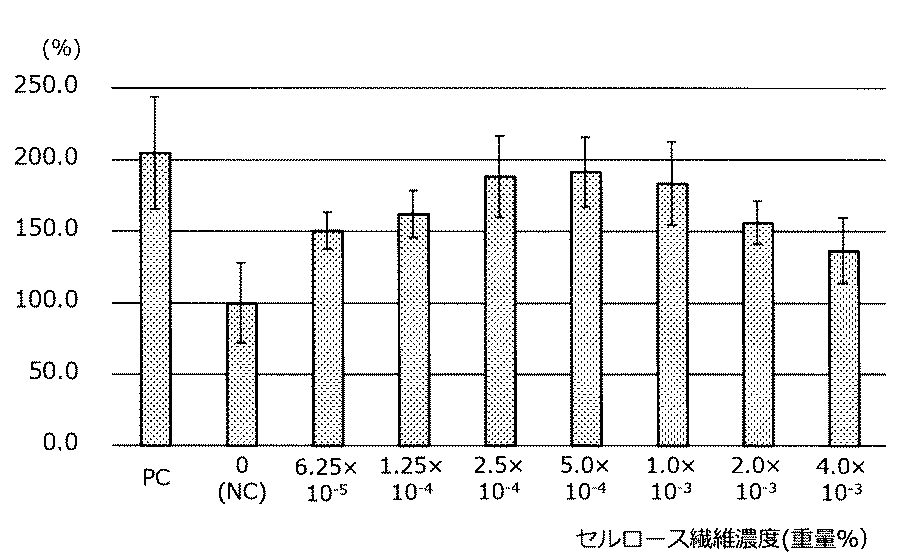
表1の結果の通り、比較例1〜3のパラミロン水性分散液では、分散性,分散安定性及びべたつき感の評価項目のうち少なくとも一つにおいて、実施例1〜9のパラミロン水性分散液では、分散性,分散安定性及びべたつき感について、いずれも良好な結果が得られた。
〔試験2:パラミロン水性分散液の細胞増殖促進効果確認試験〕
本発明のパラミロン水性分散液の一実施例として、(A)成分に(株)ユーグレナ製のパラミロン、(B)成分にアニオン変性セルロースナノファイバーの一例のTEMPO酸化セルロース(TOC)水性分散液10重量%希釈溶液を用いたパラミロン水性分散液を使用し、パラミロン水性分散液の線維芽細胞増殖促進作用を試験した。
TEMPO酸化セルロース(TOC)水性分散液10重量%希釈溶液は、本発明の実施例に係るTEMPO酸化セルロース0.2重量%と、水からなる分散体である。
まず、対数増殖期にあるヒト正常皮膚線維芽細胞(DSファーマ製,Cell System−Fb Cells)を、96ウェルプレートにウェルあたり2,000セルとなるよう0.5%ウシ胎児血清(FBS),ダルベッコ改変イーグル培地(DMEM)に懸濁して播種し、1日培養した。
As shown in Table 1, in the paramylon aqueous dispersions of Comparative Examples 1 to 3, in at least one of the evaluation items of dispersibility, dispersion stability and stickiness, in the paramylon aqueous dispersions of Examples 1 to 9, Good results were obtained for dispersibility, dispersion stability, and stickiness.
[Test 2: Test for confirming cell growth promotion effect of aqueous paramylon dispersion]
As an example of the aqueous paramylon dispersion of the present invention, the component (A) is Paramylon manufactured by Euglena Co., Ltd., and the component (B) is an example of an anion-modified cellulose nanofiber TEMPO oxidized cellulose (TOC)
A 10% by weight diluted TEMPO-oxidized cellulose (TOC) aqueous dispersion is a dispersion composed of 0.2% by weight of TEMPO-oxidized cellulose according to an example of the present invention and water.
First, human normal dermal fibroblasts (manufactured by DS Pharma, Cell System-Fb Cells) in a logarithmic growth phase were placed in a 96-well plate at 0.5% fetal bovine serum (FBS), 2,000 cells per well, It was suspended and seeded in Dulbecco's modified Eagle medium (DMEM) and cultured for 1 day.
パラミロン水性分散液(TEMPO酸化セルロース(TOC)水性分散液10重量%及びパラミロン5重量%溶液)を、それぞれ、0.03125重量%(セルロース繊維濃度6.25×10⁻⁵重量%,パラミロン1.56×10⁻³重量%),0.0625重量%(セルロース繊維濃度1.25×10⁻⁴重量%,パラミロン3.13×10⁻³重量%),0.125重量%(セルロース繊維濃度2.5×10⁻⁴重量%,パラミロン6.25×10⁻³重量%),0.25重量%(セルロース繊維濃度5.0×10⁻⁴重量%,パラミロン1.25×10⁻²重量%),0.5重量%(セルロース繊維濃度1.0×10⁻³重量%,パラミロン2.5×10⁻²重量%)濃度になるように0.5%FBS,DMEMで希釈して各ウェルに添加した。また、ポジティブコントロール(PC)に、セルロースナノファイバーを添加せず、10%FBS,DMEMとなるよう、FBS,DMEMを添加した。ネガティブコントロール(NC)は、セルロースナノファイバーを添加せず、0.5%FBS,DMEMとなるようにした。これらのサンプルについて、更に培養を行った。
Paramylon aqueous dispersions (TEMPO oxidized cellulose (TOC)
パラミロン水性分散液添加前,添加後1日培養後,2日培養後,3日培養後に、水溶性テトラゾリウム塩WST−8を発色試薬として用いた細胞増殖測定用発色試薬CCK−8((株)同仁化学研究所)をDMEMで20倍希釈し、100μL/wellずつ添加し、2時間呈色反応を行い、マイクロプレートリーダーで450nmの吸光度を測定した。ポジティブコントロール(PC),ネガティブコントロール(NC)も、同様に450nmの吸光度を測定した。 Coloring reagent CCK-8 for cell proliferation measurement using water-soluble tetrazolium salt WST-8 as a coloring reagent before the addition of paramylon aqueous dispersion, after 1 day culture, after 2 days culture, and after 3 days culture (Corporation) Dojindo Laboratories) was diluted 20-fold with DMEM, added at 100 μL / well, color reaction was performed for 2 hours, and absorbance at 450 nm was measured with a microplate reader. For the positive control (PC) and the negative control (NC), the absorbance at 450 nm was measured in the same manner.
結果を、図1及び図2に示す。
図1は、培養0日目(パラミロン水性分散液添加前)の細胞数を100として、培養1,2,3日後の各サンプルの細胞数の増加率を示すグラフである。図2は、培養3日後の各サンプルの細胞数を示すグラフであって、ネガティブコントロール(NC)の3日目の細胞数を、100%とした割合を示している。
図1,2の結果より、TEMPO酸化セルロース(TOC)水性分散液10重量%希釈溶液の濃度が0.03125重量%(セルロース繊維濃度6.25×10⁻⁵重量%,パラミロン1.56×10⁻³重量%)以上のときに、細胞の増殖が促進されていた。
また、パラミロン水性分散液濃度0重量%〜16重量%のサンプルは、濃度が上昇するに従って白濁していたが、すべてのサンプルにおいて、沈殿はなく、パラミロンが液中に分散していた。
The results are shown in FIG. 1 and FIG.
FIG. 1 is a graph showing the increase rate of the number of cells in each sample after 1, 2, and 3 days of culture, where the number of cells on
1 and 2, the concentration of the 10% by weight TEMPO oxidized cellulose (TOC) aqueous dispersion was 0.03125% by weight (cellulose fiber concentration 6.25 × 10 −5 wt%, paramylon 1.56 × 10 6). −3 wt%) or more, cell proliferation was promoted.
In addition, the samples having a paramylon aqueous dispersion concentration of 0 wt% to 16 wt% became cloudy as the concentration increased, but in all the samples, there was no precipitation and paramylon was dispersed in the solution.
〔対照試験1〕
試験2のパラミロン水性分散液の細胞増殖促進効果を確認するための対照試験として、TEMPO酸化セルロース(TOC)を含まない対比例のパラミロン液を用いて、試験2と同様の手順で実験をおこなった。
本対照試験1では、試験2のパラミロン水性分散液の代わりに、全量に対して5重量%のパラミロンを含むよう、水にパラミロンを添加した対比例のパラミロン混合水を用いたことを除いては、試験2と同様の手順とした。
[Control study 1]
As a control test for confirming the cell growth promoting effect of the aqueous paramylon dispersion in
In this
結果を、図3及び図4に示す。
図3は、培養0日目(パラミロン混合液添加前)の細胞数を100として、培養1,2,3日後の各サンプルの細胞数の増加率を示すグラフである。図4は、培養3日後の各サンプルの細胞数を示すグラフであって、ネガティブコントロール(NC)の3日目の細胞数を、100%としている。
図3,図4の結果より、試験2で見られたような顕著な細胞増殖の促進効果は見られなかった。
また、濃度0.03125重量%〜16重量%の各パラミロン混合液は、パラミロンが水中に分散しておらず、撹拌を止めるとパラミロンが沈殿した。
The results are shown in FIGS.
FIG. 3 is a graph showing the rate of increase in the number of cells in each sample after 1, 2, and 3 days of culture, where the number of cells on
From the results of FIG. 3 and FIG. 4, the remarkable effect of promoting cell proliferation as seen in
In addition, in each of the paramylon mixed solutions having a concentration of 0.03125 wt% to 16 wt%, paramylon was not dispersed in water, and paramylon precipitated when the stirring was stopped.
以上の試験2及び対照試験1の結果より、水性液中にパラミロンだけでなくセルロース繊維を添加することにより、パラミロンが水性液中に分散し、更に、細胞増殖促進効果が得られることが分かった。
From the results of
Claims (7)
(A)パラミロン。
(B)アニオン変性セルロースナノファイバー、セルロースナノファイバー、キチンナノファイバー、およびキトサンナノファイバーから選ばれる一種以上の繊維。
(C)水。 A paramylon aqueous dispersion comprising at least the following components (A) to (C):
(A) Paramylon.
(B) One or more fibers selected from anion-modified cellulose nanofibers, cellulose nanofibers, chitin nanofibers, and chitosan nanofibers.
(C) Water.
(A)パラミロン。
(B)アニオン変性セルロースナノファイバー、セルロースナノファイバー、キチンナノファイバー、およびキトサンナノファイバーから選ばれる一種以上の繊維。
(C)水。 A cell growth promoter comprising a paramylon aqueous dispersion containing at least the following components (A) to (C):
(A) Paramylon.
(B) One or more fibers selected from anion-modified cellulose nanofibers, cellulose nanofibers, chitin nanofibers, and chitosan nanofibers.
(C) Water.
Priority Applications (1)
| Application Number | Priority Date | Filing Date | Title |
|---|---|---|---|
| JP2016042619A JP6712875B2 (en) | 2016-03-04 | 2016-03-04 | Fibroblast proliferation promoter |
Applications Claiming Priority (1)
| Application Number | Priority Date | Filing Date | Title |
|---|---|---|---|
| JP2016042619A JP6712875B2 (en) | 2016-03-04 | 2016-03-04 | Fibroblast proliferation promoter |
Publications (2)
| Publication Number | Publication Date |
|---|---|
| JP2017155195A true JP2017155195A (en) | 2017-09-07 |
| JP6712875B2 JP6712875B2 (en) | 2020-06-24 |
Family
ID=59809357
Family Applications (1)
| Application Number | Title | Priority Date | Filing Date |
|---|---|---|---|
| JP2016042619A Expired - Fee Related JP6712875B2 (en) | 2016-03-04 | 2016-03-04 | Fibroblast proliferation promoter |
Country Status (1)
| Country | Link |
|---|---|
| JP (1) | JP6712875B2 (en) |
Cited By (5)
| Publication number | Priority date | Publication date | Assignee | Title |
|---|---|---|---|---|
| JP2019211347A (en) * | 2018-06-05 | 2019-12-12 | 国立大学法人福井大学 | Immunometric compositions, immunoassay diagnostics, and immune measurement devices |
| JP2020066658A (en) * | 2018-10-22 | 2020-04-30 | 株式会社Kri | Sulfated esterified cellulose nanofiber and dry matter thereof |
| JP2021046392A (en) * | 2019-09-13 | 2021-03-25 | ユー ピー エム キュンメネ コーポレーション | Method for preparing pharmaceutical composition and pharmaceutical composition |
| WO2023149408A1 (en) * | 2022-02-02 | 2023-08-10 | 株式会社ユーグレナ | Cosmetic composition, cosmetic composition for epidermal keratinocyte proliferation, epidermal keratinocyte proliferation agent, antioxidant, cosmetic composition for dermal papilla cell proliferation, dermal papilla cell proliferation agent, hair restorer, loricrin gene expression promoter, heme oxygenase-1 gene expression promoter, and cornified envelope formation promoter |
| WO2025070618A1 (en) * | 2023-09-28 | 2025-04-03 | 株式会社日本触媒 | Nanofiber, additive for dermatological preparation, dermatological preparation, and method for producing nanofiber |
Citations (7)
| Publication number | Priority date | Publication date | Assignee | Title |
|---|---|---|---|---|
| JPH0459715A (en) * | 1990-06-29 | 1992-02-26 | Harima Chem Inc | skin cosmetics |
| JP2004307438A (en) * | 2003-04-10 | 2004-11-04 | Unitika Ltd | Skin care preparation for external use |
| JP2012092223A (en) * | 2010-10-27 | 2012-05-17 | National Institute Of Advanced Industrial Science & Technology | Porous film |
| JP2012193139A (en) * | 2011-03-16 | 2012-10-11 | Daicel Corp | Cosmetics |
| WO2014088072A1 (en) * | 2012-12-07 | 2014-06-12 | 日本製紙株式会社 | Carboxymethylated cellulose fiber |
| JP2014139303A (en) * | 2012-12-18 | 2014-07-31 | Mitsubishi Chemicals Corp | Rubber modifier, rubber latex dispersion and rubber composition |
| JP2014231479A (en) * | 2013-05-02 | 2014-12-11 | 株式会社ユーグレナ | Wound treatment agent |
-
2016
- 2016-03-04 JP JP2016042619A patent/JP6712875B2/en not_active Expired - Fee Related
Patent Citations (7)
| Publication number | Priority date | Publication date | Assignee | Title |
|---|---|---|---|---|
| JPH0459715A (en) * | 1990-06-29 | 1992-02-26 | Harima Chem Inc | skin cosmetics |
| JP2004307438A (en) * | 2003-04-10 | 2004-11-04 | Unitika Ltd | Skin care preparation for external use |
| JP2012092223A (en) * | 2010-10-27 | 2012-05-17 | National Institute Of Advanced Industrial Science & Technology | Porous film |
| JP2012193139A (en) * | 2011-03-16 | 2012-10-11 | Daicel Corp | Cosmetics |
| WO2014088072A1 (en) * | 2012-12-07 | 2014-06-12 | 日本製紙株式会社 | Carboxymethylated cellulose fiber |
| JP2014139303A (en) * | 2012-12-18 | 2014-07-31 | Mitsubishi Chemicals Corp | Rubber modifier, rubber latex dispersion and rubber composition |
| JP2014231479A (en) * | 2013-05-02 | 2014-12-11 | 株式会社ユーグレナ | Wound treatment agent |
Cited By (7)
| Publication number | Priority date | Publication date | Assignee | Title |
|---|---|---|---|---|
| JP2019211347A (en) * | 2018-06-05 | 2019-12-12 | 国立大学法人福井大学 | Immunometric compositions, immunoassay diagnostics, and immune measurement devices |
| WO2019235318A1 (en) * | 2018-06-05 | 2019-12-12 | 国立大学法人福井大学 | Composition for immunoassay, diagnostic drug for immunoassay, and device for immunoassay |
| JP2020066658A (en) * | 2018-10-22 | 2020-04-30 | 株式会社Kri | Sulfated esterified cellulose nanofiber and dry matter thereof |
| JP2021046392A (en) * | 2019-09-13 | 2021-03-25 | ユー ピー エム キュンメネ コーポレーション | Method for preparing pharmaceutical composition and pharmaceutical composition |
| JP7640065B2 (en) | 2019-09-13 | 2025-03-05 | ユー ピー エム キュンメネ コーポレーション | Method for preparing a pharmaceutical composition and pharmaceutical composition |
| WO2023149408A1 (en) * | 2022-02-02 | 2023-08-10 | 株式会社ユーグレナ | Cosmetic composition, cosmetic composition for epidermal keratinocyte proliferation, epidermal keratinocyte proliferation agent, antioxidant, cosmetic composition for dermal papilla cell proliferation, dermal papilla cell proliferation agent, hair restorer, loricrin gene expression promoter, heme oxygenase-1 gene expression promoter, and cornified envelope formation promoter |
| WO2025070618A1 (en) * | 2023-09-28 | 2025-04-03 | 株式会社日本触媒 | Nanofiber, additive for dermatological preparation, dermatological preparation, and method for producing nanofiber |
Also Published As
| Publication number | Publication date |
|---|---|
| JP6712875B2 (en) | 2020-06-24 |
Similar Documents
| Publication | Publication Date | Title |
|---|---|---|
| JP5296445B2 (en) | Gel composition | |
| JP5502712B2 (en) | Viscous aqueous composition | |
| JP6308531B2 (en) | Topical skin preparation | |
| JP6712875B2 (en) | Fibroblast proliferation promoter | |
| JP5795094B2 (en) | Thickener composition | |
| JP5701570B2 (en) | Viscous aqueous composition and process for producing the same | |
| CN112494430B (en) | Preparation method of pharmaceutical composition and pharmaceutical composition | |
| WO2019221272A1 (en) | Pulverized product of carboxymethylated pulp and additive containing said pulverized product | |
| JP6229090B1 (en) | H-type carboxylated cellulose nanofiber | |
| JP5628018B2 (en) | Aqueous gel composition | |
| JP6276812B2 (en) | Sunscreen cosmetics | |
| JP2017222610A (en) | Foamable aerosol composition | |
| Souza et al. | Study of morphological properties and rheological parameters of cellulose nanofibrils of cocoa shell (Theobroma cacao L.) | |
| JP7605945B2 (en) | Fibrillated chemically modified cellulose fibers | |
| JP6645917B2 (en) | Gel sheet composition and method for producing the same | |
| WO2018143149A1 (en) | Production method of dried cellulose nanofibers | |
| EP3722324B1 (en) | Carboxymethylated cellulose nanofibers | |
| CN104892772B (en) | Method of poroducing nanofibers from gramineae | |
| Popa | Polysaccharides in medicinal and pharmaceutical applications | |
| EP3722328A1 (en) | Carboxymethylated cellulose nanofibers | |
| JP2016094358A (en) | Cellulose nanofiber dispersion and cosmetic composition using the same. | |
| Wu et al. | One-pot fabrication of sacchachitin for production of TEMPO-oxidized sacchachitin nanofibers (TOSCNFs) utilized as scaffolds to enhance bone regeneration | |
| WO2024154815A1 (en) | Aqueous composition, anti-inflammatory agent, moisturizing agent, food composition for anti-inflammation or moisturizing, and production method for aqueous composition | |
| JP2017155024A (en) | Cell growth promoter | |
| JP6139754B1 (en) | Cell growth promoter |
Legal Events
| Date | Code | Title | Description |
|---|---|---|---|
| RD01 | Notification of change of attorney |
Free format text: JAPANESE INTERMEDIATE CODE: A7426 Effective date: 20160421 |
|
| A621 | Written request for application examination |
Free format text: JAPANESE INTERMEDIATE CODE: A621 Effective date: 20190226 |
|
| A977 | Report on retrieval |
Free format text: JAPANESE INTERMEDIATE CODE: A971007 Effective date: 20191218 |
|
| A131 | Notification of reasons for refusal |
Free format text: JAPANESE INTERMEDIATE CODE: A131 Effective date: 20200114 |
|
| A521 | Request for written amendment filed |
Free format text: JAPANESE INTERMEDIATE CODE: A523 Effective date: 20200311 |
|
| TRDD | Decision of grant or rejection written | ||
| A01 | Written decision to grant a patent or to grant a registration (utility model) |
Free format text: JAPANESE INTERMEDIATE CODE: A01 Effective date: 20200519 |
|
| A61 | First payment of annual fees (during grant procedure) |
Free format text: JAPANESE INTERMEDIATE CODE: A61 Effective date: 20200602 |
|
| R150 | Certificate of patent or registration of utility model |
Ref document number: 6712875 Country of ref document: JP Free format text: JAPANESE INTERMEDIATE CODE: R150 |
|
| R250 | Receipt of annual fees |
Free format text: JAPANESE INTERMEDIATE CODE: R250 |
|
| R250 | Receipt of annual fees |
Free format text: JAPANESE INTERMEDIATE CODE: R250 |
|
| LAPS | Cancellation because of no payment of annual fees |