JP2017036282A - Chlorhexidine gluconate-containing solvent adhesive - Google Patents
Chlorhexidine gluconate-containing solvent adhesive Download PDFInfo
- Publication number
- JP2017036282A JP2017036282A JP2016164314A JP2016164314A JP2017036282A JP 2017036282 A JP2017036282 A JP 2017036282A JP 2016164314 A JP2016164314 A JP 2016164314A JP 2016164314 A JP2016164314 A JP 2016164314A JP 2017036282 A JP2017036282 A JP 2017036282A
- Authority
- JP
- Japan
- Prior art keywords
- chlorhexidine
- adhesive
- drying
- salt
- formulation
- Prior art date
- Legal status (The legal status is an assumption and is not a legal conclusion. Google has not performed a legal analysis and makes no representation as to the accuracy of the status listed.)
- Granted
Links
Images
Classifications
-
- A—HUMAN NECESSITIES
- A61—MEDICAL OR VETERINARY SCIENCE; HYGIENE
- A61L—METHODS OR APPARATUS FOR STERILISING MATERIALS OR OBJECTS IN GENERAL; DISINFECTION, STERILISATION OR DEODORISATION OF AIR; CHEMICAL ASPECTS OF BANDAGES, DRESSINGS, ABSORBENT PADS OR SURGICAL ARTICLES; MATERIALS FOR BANDAGES, DRESSINGS, ABSORBENT PADS OR SURGICAL ARTICLES
- A61L24/00—Surgical adhesives or cements; Adhesives for colostomy devices
- A61L24/04—Surgical adhesives or cements; Adhesives for colostomy devices containing macromolecular materials
- A61L24/043—Mixtures of macromolecular materials
-
- A—HUMAN NECESSITIES
- A01—AGRICULTURE; FORESTRY; ANIMAL HUSBANDRY; HUNTING; TRAPPING; FISHING
- A01N—PRESERVATION OF BODIES OF HUMANS OR ANIMALS OR PLANTS OR PARTS THEREOF; BIOCIDES, e.g. AS DISINFECTANTS, AS PESTICIDES OR AS HERBICIDES; PEST REPELLANTS OR ATTRACTANTS; PLANT GROWTH REGULATORS
- A01N47/00—Biocides, pest repellants or attractants, or plant growth regulators containing organic compounds containing a carbon atom not being member of a ring and having no bond to a carbon or hydrogen atom, e.g. derivatives of carbonic acid
- A01N47/40—Biocides, pest repellants or attractants, or plant growth regulators containing organic compounds containing a carbon atom not being member of a ring and having no bond to a carbon or hydrogen atom, e.g. derivatives of carbonic acid the carbon atom having a double or triple bond to nitrogen, e.g. cyanates, cyanamides
- A01N47/42—Biocides, pest repellants or attractants, or plant growth regulators containing organic compounds containing a carbon atom not being member of a ring and having no bond to a carbon or hydrogen atom, e.g. derivatives of carbonic acid the carbon atom having a double or triple bond to nitrogen, e.g. cyanates, cyanamides containing —N=CX2 groups, e.g. isothiourea
- A01N47/44—Guanidine; Derivatives thereof
-
- A—HUMAN NECESSITIES
- A61—MEDICAL OR VETERINARY SCIENCE; HYGIENE
- A61L—METHODS OR APPARATUS FOR STERILISING MATERIALS OR OBJECTS IN GENERAL; DISINFECTION, STERILISATION OR DEODORISATION OF AIR; CHEMICAL ASPECTS OF BANDAGES, DRESSINGS, ABSORBENT PADS OR SURGICAL ARTICLES; MATERIALS FOR BANDAGES, DRESSINGS, ABSORBENT PADS OR SURGICAL ARTICLES
- A61L24/00—Surgical adhesives or cements; Adhesives for colostomy devices
- A61L24/001—Use of materials characterised by their function or physical properties
- A61L24/0015—Medicaments; Biocides
-
- C—CHEMISTRY; METALLURGY
- C09—DYES; PAINTS; POLISHES; NATURAL RESINS; ADHESIVES; COMPOSITIONS NOT OTHERWISE PROVIDED FOR; APPLICATIONS OF MATERIALS NOT OTHERWISE PROVIDED FOR
- C09J—ADHESIVES; NON-MECHANICAL ASPECTS OF ADHESIVE PROCESSES IN GENERAL; ADHESIVE PROCESSES NOT PROVIDED FOR ELSEWHERE; USE OF MATERIALS AS ADHESIVES
- C09J11/00—Features of adhesives not provided for in group C09J9/00, e.g. additives
- C09J11/02—Non-macromolecular additives
- C09J11/06—Non-macromolecular additives organic
-
- A—HUMAN NECESSITIES
- A61—MEDICAL OR VETERINARY SCIENCE; HYGIENE
- A61K—PREPARATIONS FOR MEDICAL, DENTAL OR TOILETRY PURPOSES
- A61K9/00—Medicinal preparations characterised by special physical form
- A61K9/14—Particulate form, e.g. powders, Processes for size reducing of pure drugs or the resulting products, Pure drug nanoparticles
-
- A—HUMAN NECESSITIES
- A61—MEDICAL OR VETERINARY SCIENCE; HYGIENE
- A61L—METHODS OR APPARATUS FOR STERILISING MATERIALS OR OBJECTS IN GENERAL; DISINFECTION, STERILISATION OR DEODORISATION OF AIR; CHEMICAL ASPECTS OF BANDAGES, DRESSINGS, ABSORBENT PADS OR SURGICAL ARTICLES; MATERIALS FOR BANDAGES, DRESSINGS, ABSORBENT PADS OR SURGICAL ARTICLES
- A61L2300/00—Biologically active materials used in bandages, wound dressings, absorbent pads or medical devices
- A61L2300/20—Biologically active materials used in bandages, wound dressings, absorbent pads or medical devices containing or releasing organic materials
- A61L2300/204—Biologically active materials used in bandages, wound dressings, absorbent pads or medical devices containing or releasing organic materials with nitrogen-containing functional groups, e.g. aminoxides, nitriles, guanidines
- A61L2300/206—Biguanides, e.g. chlorohexidine
-
- A—HUMAN NECESSITIES
- A61—MEDICAL OR VETERINARY SCIENCE; HYGIENE
- A61L—METHODS OR APPARATUS FOR STERILISING MATERIALS OR OBJECTS IN GENERAL; DISINFECTION, STERILISATION OR DEODORISATION OF AIR; CHEMICAL ASPECTS OF BANDAGES, DRESSINGS, ABSORBENT PADS OR SURGICAL ARTICLES; MATERIALS FOR BANDAGES, DRESSINGS, ABSORBENT PADS OR SURGICAL ARTICLES
- A61L2300/00—Biologically active materials used in bandages, wound dressings, absorbent pads or medical devices
- A61L2300/40—Biologically active materials used in bandages, wound dressings, absorbent pads or medical devices characterised by a specific therapeutic activity or mode of action
- A61L2300/404—Biocides, antimicrobial agents, antiseptic agents
Landscapes
- Health & Medical Sciences (AREA)
- Life Sciences & Earth Sciences (AREA)
- General Health & Medical Sciences (AREA)
- Engineering & Computer Science (AREA)
- Chemical & Material Sciences (AREA)
- Surgery (AREA)
- Epidemiology (AREA)
- Animal Behavior & Ethology (AREA)
- Public Health (AREA)
- Veterinary Medicine (AREA)
- Agronomy & Crop Science (AREA)
- Pest Control & Pesticides (AREA)
- Plant Pathology (AREA)
- Dentistry (AREA)
- Wood Science & Technology (AREA)
- Zoology (AREA)
- Environmental Sciences (AREA)
- Organic Chemistry (AREA)
- Materials Engineering (AREA)
- Materials For Medical Uses (AREA)
- Adhesives Or Adhesive Processes (AREA)
- Organic Low-Molecular-Weight Compounds And Preparation Thereof (AREA)
- Toxicology (AREA)
Abstract
Description
本出願は米国仮出願61/434991(出願日:2011年1月21日)の優先権を主張し、その内容全体をここで援用する。 This application claims priority from US Provisional Application 61/43491 (filing date: January 21, 2011), the entire contents of which are incorporated herein by reference.
本発明は、特にクロルヘキシジングルコネートであるクロルヘキシジン塩を接着剤に含有させる方法、クロルヘキシジン塩含有接着剤、およびそのような接着剤を利用した製品に関する。 The present invention particularly relates to a method for containing an adhesive with chlorhexidine salt, which is chlorhexidine gluconate, an adhesive containing chlorhexidine salt, and a product using such an adhesive.
幅広い範囲の医療用製品はユーザの皮膚へ製品を付着させるために接着剤を利用している。感染やその他の望まない状況に容易につながる可能性がある、接着剤と皮膚との接触部での微生物の増殖を防止するか、または少なくとも最小限にとどめることが望ましいことは理解されよう。 A wide range of medical products utilize adhesives to adhere the product to the user's skin. It will be appreciated that it is desirable to prevent or at least minimize the growth of microorganisms at the adhesive-skin contact, which can easily lead to infection and other unwanted situations.
したがって、技術者は医療用製品または材料に幅広い範囲の抗菌剤を含有させた。そのような抗菌剤の一部は既に接着剤に利用されているが、接着剤組成物への効果的な含有はその他の多数の抗菌剤に技術的な問題を提起する。接着剤中でそのような抗菌剤を効果的に拡散させることは困難である。さらに、ある種の抗菌剤は含有に伴って効能が損なわれる。 Thus, engineers have included a wide range of antimicrobial agents in medical products or materials. Although some of such antibacterial agents are already utilized in adhesives, their effective inclusion in adhesive compositions poses technical problems for many other antibacterial agents. It is difficult to effectively diffuse such antimicrobial agents in the adhesive. Furthermore, certain antibacterial agents lose their efficacy with inclusion.
クロルヘキシジングルコネートは幅広い抗菌スペクトルを有しており、安全で、市場に受け入れられている。しかしながら、クロルヘキシジングルコネートがそれらの低コスト性および乾燥状態および湿潤状態の皮膚における良好な接着性により、外科的利用には標準的である溶媒ベースのアクリル接着剤に利用されたことはない。 Chlorhexidine gluconate has a broad antibacterial spectrum, is safe and is accepted by the market. However, chlorhexidine gluconate has never been utilized in solvent-based acrylic adhesives that are standard for surgical applications due to their low cost and good adhesion in dry and wet skin.
したがって、接着剤中に存在するときにその化合物が効率的に拡散され、その効能を保持するよう、クロルヘキシジングルコネートを接着剤組成物に含有させる方法を提供することが望まれるであろう。 Accordingly, it would be desirable to provide a method for incorporating chlorhexidine gluconate into an adhesive composition so that the compound is efficiently diffused and retains its efficacy when present in the adhesive.
従来から知られている組成物、製品および活用に関連する困難や欠点は、本発明の方法、接着剤組成物、そのような組成物を用いた製品および関連する使用法によって対処される。 Difficulties and disadvantages associated with previously known compositions, products and applications are addressed by the methods, adhesive compositions, products using such compositions and related uses.
1特徴では、本発明は固体形状のクロルヘキシジンの作成方法を提供する。この方法は少なくとも一つのクロルヘキシジン塩の水溶液を準備するステップを含んでいる。この方法は、その水溶液を積極的に乾燥させることによってその少なくとも一つの固体形状のクロルヘキシジン塩を得るステップも含んでいる。 In one aspect, the present invention provides a method for making a solid form of chlorhexidine. The method includes providing an aqueous solution of at least one chlorhexidine salt. The method also includes obtaining the at least one solid form of chlorhexidine salt by actively drying the aqueous solution.
別な特徴では、本発明はクロルヘキシジンを含有する接着剤の作成方法を提供する。この方法は、少なくとも一つのクロルヘキシジン塩の水溶液を提供するステップと、その水溶液を積極的に乾燥させることでその少なくとも一つの固体形状であるクロルヘキシジン塩を得るステップとを含んでいる。この方法は、接着剤成分を提供するステップと、その接着剤成分と適合できる溶媒を提供するステップとをさらに含んでいる。この方法は、クロルヘキシジン溶液を作成するため、その溶媒内でその固体形状のクロルヘキシジンを溶
解させるステップをさらに含んでいる。さらに、この方法はそのクロルヘキシジン溶液をその接着剤成分と組み合わせることで接着剤含有クロルヘキシジンを作成するステップをさらに含んでいる。
In another aspect, the present invention provides a method for making an adhesive containing chlorhexidine. The method includes providing an aqueous solution of at least one chlorhexidine salt, and actively drying the aqueous solution to obtain the chlorhexidine salt in its at least one solid form. The method further includes providing an adhesive component and providing a solvent compatible with the adhesive component. The method further includes dissolving the solid form of chlorhexidine in the solvent to create a chlorhexidine solution. The method further includes the step of making an adhesive-containing chlorhexidine by combining the chlorhexidine solution with the adhesive component.
さらに別な特徴では、本発明はクロルヘキシジンを含んだ接着剤処方物を提供する。この接着剤処方物は接着剤と、少なくとも一つのクロルヘキシジン塩とを含んでいる。 In yet another aspect, the present invention provides an adhesive formulation comprising chlorhexidine. The adhesive formulation includes an adhesive and at least one chlorhexidine salt.
さらに別な特徴では、本発明は抗菌性を備えた接着剤を有する医療用製品を提供する。この医療用製品はクロルヘキシジンを含んだ接着剤処方物を含んでいる。 In yet another aspect, the present invention provides a medical product having an adhesive with antibacterial properties. This medical product contains an adhesive formulation containing chlorhexidine.
本発明はその他の異なる実施例でも実施することができ、その詳細については本発明の範囲から逸脱せずに多様な点で変更可能であることは理解されよう。したがって本発明についての解説は例示的であり、本発明を制限するものではない。 It will be appreciated that the invention may be practiced in other and different embodiments, and its details may be modified in various respects without departing from the scope of the invention. Accordingly, the description of the invention is illustrative and not limiting.
クロルヘキシジングルコネート(CHG)の溶媒ベース接着剤への含有は、クロルヘキシジングルコネートの物理的および化学的特性のために達成されていないと考えられている。例えば、クロルヘキシジングルコネートは強度の親水性であり、メタノールとアセトンにのみ溶解できる。さらに典型的にはクロルヘキシジングルコネートは水性処方物中で20重量%または40重量%にて商業的に入手可能である。その水性処方物は溶媒ベース接着剤とは容易に組み合わせできない。クロルヘキシジングルコネートは高温に敏感であることから、そうでなければ接着剤への含有に必要であろうその後の処理が制限される。さらに蒸発によって乾燥されると、その化合物は溶媒内に容易に拡散できない。これは、この化合物を溶媒ベース接着剤へ含有させようとする際に別な困難を与える。 Inclusion of chlorhexidine gluconate (CHG) in solvent-based adhesives is believed not to be achieved due to the physical and chemical properties of chlorhexidine gluconate. For example, chlorhexidine gluconate is strongly hydrophilic and can only be dissolved in methanol and acetone. More typically, chlorhexidine gluconate is commercially available at 20 wt% or 40 wt% in aqueous formulations. The aqueous formulation cannot be easily combined with solvent based adhesives. Chlorhexidine gluconate is sensitive to high temperatures, limiting subsequent processing that would otherwise be required for inclusion in the adhesive. When further dried by evaporation, the compound cannot easily diffuse into the solvent. This presents another difficulty when trying to incorporate this compound into a solvent-based adhesive.
本発明は、クロルヘキシジングルコネートを、医療用および外科的利用において幅広く利用されている溶媒ベースのアクリル接着剤などの溶媒ベースの接着剤へ含有させるための独特な手法を提供する。この新規な方法では、好適には、粉末を得るためにクロルヘキシジングルコネートのフリーズドライ処理またはスプレードライ処理による積極乾燥法によってクロルヘキシジングルコネートを溶媒ベースの接着剤へと含有させる。この粉末はその後にアクリル接着剤などの対象接着剤と適合できる溶媒中に溶解される。典型的なアクリル接着剤のための適切な溶媒の1例はメタノールである。 The present invention provides a unique approach for incorporating chlorhexidine gluconate into solvent-based adhesives such as solvent-based acrylic adhesives that are widely used in medical and surgical applications. In this novel process, chlorhexidine gluconate is preferably incorporated into the solvent-based adhesive by a freeze-drying or spray drying process of chlorhexidine gluconate to obtain a powder. This powder is then dissolved in a solvent compatible with the target adhesive, such as an acrylic adhesive. One example of a suitable solvent for a typical acrylic adhesive is methanol.
クロルヘキシジン
クロルヘキシジンは化学防腐剤であり、抗菌剤として一般的に使用されている。グラム陽性およびグラム陰性バクテリアの両方に効果的であるが、一部のグラム陰性バクテリアには効果が弱い。殺菌作用および細菌発育抑制機能を有しており、その作用メカニズムは膜崩壊であり、以前に考えられていたようなATPアーゼ不活性化ではない。菌類およびエンベロープウイルスにも利用できるが、深くは研究されていない。高濃度のクロルヘキシジンを含有する製品は、損傷のリスクのため、眼や耳から遠ざけられなければならない。しかしながらクロルヘキシジンは、例えば一部のコンタクトレンズ溶液などにて、非常に低濃度では安全に使用されている。
Chlorhexidine Chlorhexidine is a chemical preservative and is commonly used as an antibacterial agent. It is effective against both gram positive and gram negative bacteria, but is less effective against some gram negative bacteria. It has a bactericidal action and a bacterial growth-suppressing function, and its action mechanism is membrane disruption, not ATPase inactivation as previously thought. It can also be used for fungi and enveloped viruses, but has not been studied extensively. Products containing high concentrations of chlorhexidine must be kept away from the eyes and ears because of the risk of damage. However, chlorhexidine is safely used at very low concentrations, for example in some contact lens solutions.
クロルヘキシジングルコネート(クロルヘキシジンジグルコネートとしても知られている)はクロルヘキシジンおよびグルコン酸の塩である。クロルヘキシジングルコネートの構造式は、
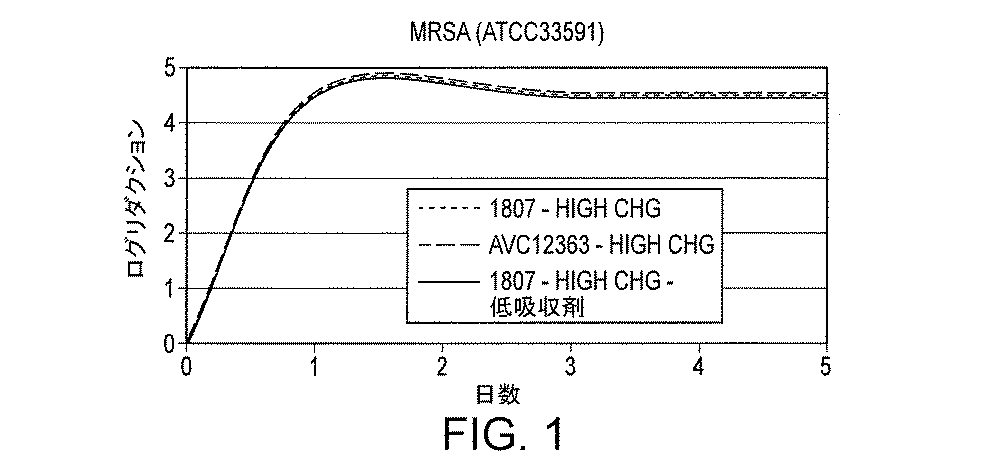
である。この化合物は実際にはジグルコネート化合物であり、一般的にはクロルヘキシジングルコネートと呼称されている。
Chlorhexidine gluconate (also known as chlorhexidine digluconate) is a salt of chlorhexidine and gluconic acid. The structural formula of chlorhexidine gluconate is
It is. This compound is actually a digluconate compound and is commonly referred to as chlorhexidine gluconate.
このように、ここで使用する用語“クロルヘキシジングルコネート”はジグルコネート化合物を含むものである。さらに用語“クロルヘキシジングルコネート”および“クロルヘキシジンジグルコネート”はここでは互換可能に使用されている。 Thus, as used herein, the term “chlorhexidine gluconate” is intended to include digluconate compounds. Furthermore, the terms “chlorhexidine gluconate” and “chlorhexidine digluconate” are used interchangeably herein.
本発明によって抗菌剤として使用できる薬剤的に許容可能なクロルヘキシジン塩は、クロルヘキシジンパルミテート、クロルヘキシジンジホスファニレート、クロルヘキシジンジヒドロクロライド、クロルヘキシジンジアセテート、およびクロルヘキシジンジグルコネートを含むが、これらに限らない。クロルヘキシジン遊離塩基は抗菌剤の別例である。 Pharmaceutically acceptable chlorhexidine salts that can be used as antimicrobial agents in accordance with the present invention include, but are not limited to, chlorhexidine palmitate, chlorhexidine diphosphanate, chlorhexidine dihydrochloride, chlorhexidine diacetate, and chlorhexidine digluconate. Chlorhexidine free base is another example of an antibacterial agent.
このように本発明は、アクリル接着剤などの溶媒ベースの接着剤中に、特にクロルヘキシジングルコネートである1以上のクロルヘキシジン塩を含有させるための方法を提供する。本発明は特にクロルヘキシジングルコネートの含有を目的としているが、本発明はその他のクロルヘキシジン塩および関連する化合物にも利用できる。一般的に水性または液状で提供または製造される任意のクロルヘキシジン塩が、ここで解説する本発明の多様な好適な形態の候補である。 The present invention thus provides a method for incorporating one or more chlorhexidine salts, particularly chlorhexidine gluconate, in a solvent-based adhesive such as an acrylic adhesive. Although the present invention is specifically directed to the inclusion of chlorhexidine gluconate, the present invention can be used with other chlorhexidine salts and related compounds. Any chlorhexidine salt, generally provided or manufactured in aqueous or liquid form, is a candidate for the various preferred forms of the invention described herein.
積極乾燥法
水および/またはその他の溶剤または液体が、1以上の積極乾燥法によってクロルヘキシジン塩から除去または分離される。この“積極乾燥法”とは、液体の受動的蒸発以外に、典型的には水である液体をクロルヘキシジン塩から除去または分離させる任意の方法を指している。受動的蒸発とはクロルヘキシジン塩から液体成分を除去または分離させる補助とするための空気流またはその他の流体流を使用しない大気温度での液体成分の蒸発を指す。
Active Drying Method Water and / or other solvents or liquids are removed or separated from the chlorhexidine salt by one or more active drying methods. This “aggressive drying” refers to any method that removes or separates the liquid, typically water, from the chlorhexidine salt, other than passive evaporation of the liquid. Passive evaporation refers to evaporation of a liquid component at ambient temperature without the use of an air stream or other fluid stream to assist in removing or separating the liquid component from the chlorhexidine salt.
このように、ここで使用する積極乾燥とは、空気作用乾燥法としても知られる液体上での空気流を利用したり、ホットエア乾燥法としても知られる熱エネルギーを液体に供給する加熱促進蒸発、電磁波エネルギーのごとき電磁波への暴露による乾燥法、フリーズドライ法、およびスプレードライ法などの積極蒸発法のごとき幅広い液体除去技術を指しているがこれらに限定されない。これらおよびその他の乾燥法の組合せを利用することもできる。好適には積極乾燥法はフリーズドライ法またはスプレードライ法によって実行される。 Thus, active drying as used herein refers to heat-enhanced evaporation that utilizes an air stream over a liquid, also known as an air-acting drying method, or supplies thermal energy, also known as a hot-air drying method, It refers to a wide range of liquid removal techniques such as, but not limited to, active evaporation methods such as drying methods, freeze drying methods, and spray drying methods by exposure to electromagnetic waves such as electromagnetic energy. Combinations of these and other drying methods can also be utilized. Preferably the aggressive drying method is carried out by freeze drying or spray drying.
フリーズドライ法は腐敗しやすい材料を保存するため、または輸送のために材料をさらに便利な状態にするために典型的に利用される脱水法である。フリーズドライ法は典型的には材料を凍結し、材料中の凍結水分を固体から気体へと直接的に昇華させるため、周囲の気圧を低下させて十分な熱を追加することで実施される。 The freeze drying method is a dehydration method typically utilized to preserve perishable materials or to make the materials more convenient for transport. Freeze-drying is typically performed by reducing the ambient pressure and adding sufficient heat to freeze the material and sublimate the frozen moisture in the material directly from solid to gas.
本発明による好適な方法では、20%(全てのパーセントは特に明記されている場合を除き重量パーセントである)のクロルヘキシジングルコネート溶液をフリーズドライ処理する。フリーズドライ処理はほぼ任意の形態で実行できる。本発明の1実施態様では、2
0%クロルヘキシジングルコネートと80%の水の溶液がその溶液を約−20℃の温度下で約0.180バールの気圧下に約24時間配置することで完全に凍結される。これらの温度、気圧および時間が単なる例示であることは理解されよう。本発明は広範囲のフリーズドライ条件を含んでいる。典型的には、温度は約−80℃(またはそれ以下)から約10℃(またはそれ以上)であり、好適には約−50℃から約0℃である。典型的には気圧は約0.01バールから約0.95バールの範囲内であり、好適には約0.10バールから約0.50バールの間である。典型的な時間は数秒から数日である。
In a preferred method according to the present invention, 20% (all percentages are weight percentages unless otherwise specified) is freeze-dried. The freeze-drying process can be executed in almost any form. In one embodiment of the invention, 2
A solution of 0% chlorhexidine gluconate and 80% water is completely frozen by placing the solution at a temperature of about −20 ° C. and a pressure of about 0.180 bar for about 24 hours. It will be appreciated that these temperatures, pressures and times are merely exemplary. The present invention includes a wide range of freeze-dry conditions. Typically, the temperature is from about -80 ° C (or lower) to about 10 ° C (or higher), preferably from about -50 ° C to about 0 ° C. Typically, the atmospheric pressure is in the range of about 0.01 bar to about 0.95 bar, preferably between about 0.10 bar and about 0.50 bar. Typical times are a few seconds to a few days.
好適には水性クロルヘキシジングルコネート溶液を溶液の表面積を増加させる容器内に配置する。溶液の表面積を増加させて熱伝導を促すことで水性クロルヘキシジングルコネート溶液を凍結させるのに必要な時間が減少することは理解されよう。表面積の増加は凍結塊からの水の移動と昇華を促し、それによってクロルヘキシジングルコネートの残留成分を残させる。 Preferably, the aqueous chlorhexidine gluconate solution is placed in a container that increases the surface area of the solution. It will be appreciated that increasing the surface area of the solution to promote heat transfer reduces the time required to freeze the aqueous chlorhexidine gluconate solution. The increase in surface area promotes water migration and sublimation from the frozen mass, thereby leaving a residual component of chlorhexidine gluconate.
ここで解説する好適な方法では、その後にフリーズドライ処理される20%クロルヘキシジングルコネート溶液を利用しているが、本発明がこれに限定されないことは理解されよう。前述のごとく、クロルヘキシジングルコネートは典型的には40%水溶液としても入手でき、ここで解説するように、それをフリーズドライ処理できる。約1%から化合物の溶解限度までの濃度を有する水溶液の利用が想定内である。典型的には、多くのクロルヘキシジン塩の場合、これらは約1%から約60%の濃度の水溶液の形態で商業的に入手可能である。 Although the preferred method described herein utilizes a 20% chlorhexidine gluconate solution that is then freeze-dried, it will be understood that the invention is not so limited. As noted above, chlorhexidine gluconate is typically available as a 40% aqueous solution, which can be freeze-dried as described herein. The use of an aqueous solution having a concentration from about 1% to the solubility limit of the compound is contemplated. Typically, for many chlorhexidine salts, these are commercially available in the form of an aqueous solution at a concentration of about 1% to about 60%.
フリーズドライ処理中、固体を形成するために水溶液を当初に凍結させた後、水の少なくとも一部が昇華によって固体から除去される。本発明はフリーズドライ処理以外の技術または運用によって水成分を部分的に除去する工程を含んでいる。しかしながら、少なくとも大部分および最も好適には全ての水がフリーズドライ処理によって除去されることが好ましい。 During the freeze drying process, after the aqueous solution is first frozen to form a solid, at least a portion of the water is removed from the solid by sublimation. The present invention includes a step of partially removing water components by a technique or operation other than freeze-drying. However, it is preferred that at least a majority and most preferably all of the water is removed by freeze drying.
その他の好適な積極乾燥技術はスプレードライ法である。スプレードライ法は、ホットガスで迅速に乾燥させることによって液体またはスラリーから乾燥粉末を製造する方法である。これは食品や薬剤などの熱的に敏感な材料を乾燥させる好適な方法である。一定の粒子サイズの分散状態は触媒などの産業製品をスプレードライ処理するための理由のひとつである。典型的には空気が加熱乾燥媒体である。しかしながら、液体が可燃性溶媒である場合、または製品が酸素に過敏である場合には窒素を利用できる。 Another suitable aggressive drying technique is spray drying. The spray drying method is a method for producing a dry powder from a liquid or slurry by rapidly drying with hot gas. This is a preferred method for drying thermally sensitive materials such as food and drugs. The dispersion state of a certain particle size is one of the reasons for spray-drying industrial products such as catalysts. Typically air is the heat drying medium. However, nitrogen can be utilized if the liquid is a flammable solvent or if the product is sensitive to oxygen.
全てのスプレードライヤは液体またはスラリーを制御された水滴サイズスプレーへと拡散させるため、噴霧器またはスプレーノズルを利用する。最も一般的なものは回転ノズルおよび単体流体圧渦巻ノズルである。あるいは利用形態によっては、2流体または超音波ノズルが利用される。処理条件によっては、10マイクロメータから500マイクロメータまでの水滴サイズが適切なノズルの選択によって達成できる。最も一般的な水滴サイズは直径が100マイクロメータから200マイクロメータの範囲である。得られる乾燥粉末は自由流動性であることが多い。 All spray dryers utilize an atomizer or spray nozzle to diffuse the liquid or slurry into a controlled droplet size spray. The most common are rotary nozzles and unitary fluid pressure swirl nozzles. Alternatively, a two-fluid or ultrasonic nozzle is used depending on the application form. Depending on the processing conditions, water droplet sizes from 10 micrometers to 500 micrometers can be achieved by selecting an appropriate nozzle. The most common water droplet sizes range from 100 micrometers to 200 micrometers in diameter. The resulting dry powder is often free flowing.
熱乾燥ガスは噴霧器の方向に対して並流または逆流として通過できる。並流は粒子のシステム内での滞在時間を短縮させ、粒子分離器(典型的にはサイクロン装置)をさらに効率よく作用させることができる。逆流法はチャンバ内での粒子の滞留時間を延長させることができ、通常は流動床システムと共に利用される。 The hot drying gas can pass as cocurrent or countercurrent to the direction of the nebulizer. Cocurrent flow reduces the residence time of the particles in the system and allows the particle separator (typically a cyclone device) to work more efficiently. The reverse flow method can extend the residence time of the particles in the chamber and is typically utilized with a fluidized bed system.
追加の技術および/または別な積極乾燥法は、例えばスプレードライ法とフリーズドライ法の組み合わせを含むことができる。
接着剤へのクロルヘキシジンの含有
Additional techniques and / or alternative aggressive drying methods can include, for example, a combination of spray and freeze drying methods.
Inclusion of chlorhexidine in adhesives
オプションで1以上のサイズ減少工程を含んだ1以上の積極乾燥法によるクロルヘキシジングルコネートまたはその他の塩の粉末の作成後に、その粉末は粒子形態のクロルヘキシジングルコネートを1以上の適したメタノールなどの溶媒に追加することによって容易に安定化できる。クロルヘキシジングルコネートがその化合物をその溶媒中で容易に溶解させる量で追加される。メタノールを溶媒として使用するには、クロルヘキシジングルコネートの濃度を約15%から約20%の範囲内とすることが許容可能であることが判明している。しかしながら、本発明はこれらの値以上または以下の濃度の利用も含むことは理解されよう。 After preparation of the powder of chlorhexidine gluconate or other salt by one or more aggressive drying methods optionally including one or more size reduction steps, the powder is converted into particulate form of chlorhexidine gluconate in one or more suitable solvents such as methanol Can be easily stabilized. Chlorhexidine gluconate is added in an amount that readily dissolves the compound in the solvent. To use methanol as a solvent, it has been found acceptable to have a concentration of chlorhexidine gluconate in the range of about 15% to about 20%. However, it will be understood that the invention includes the use of concentrations above or below these values.
クロルヘキシジングルコネート(またはその他のクロルヘキシジンの塩)の粉末を適切な溶媒へと溶解させた後、クロルヘキシジングルコネート溶液を溶媒ベースの接着剤に含有させる。典型的には、これはその溶液を接着剤成分または接着剤処方物へと直接的に加えるか、何らかの方法で含有させることで実行される。 After the powder of chlorhexidine gluconate (or other chlorhexidine salt) is dissolved in a suitable solvent, the chlorhexidine gluconate solution is included in the solvent-based adhesive. Typically, this is done by adding the solution directly to the adhesive component or adhesive formulation or by some means of inclusion.
接着剤含有クロルヘキシジン塩をその後に製品中に望むように含有させるか、または使用する。例えば医療用製品上に接着層を形成するよう、従来のコーティング法および乾燥法を実行できる。そのような医療用製品の非限定的な例には、切開フィルムおよび装置固定製品、傷処置製品およびストーマパウチなどの外科用製品が含まれる。 The adhesive-containing chlorhexidine salt is then included or used as desired in the product. For example, conventional coating and drying methods can be performed to form an adhesive layer on a medical product. Non-limiting examples of such medical products include surgical products such as incision film and device fixation products, wound treatment products and stoma pouches.
実施態様によっては、接着剤は好適にはポリウレタン膜またはその他の別な材料のキャリアによって覆われる。 In some embodiments, the adhesive is preferably covered by a polyurethane film or other material carrier.
接着剤
本発明の方法は、クロルヘキシジングルコネートなどのクロルヘキシジン塩を、好適には溶媒ベース接着剤である幅広い種類の接着剤へと含有させるために使用できる。非限定的な接着剤の例には、アクリル接着剤、ゴム接着剤、シリコン接着剤、ポリウレタン接着剤およびこれらの変形や組み合わせが含まれる。一般的には、好適にはクロルヘキシジングルコネートである得られるクロルヘキシジン塩を任意の非水性ベースの接着剤に含有させることができる。好適にはこの接着剤は溶媒ベースの接着剤である。さらに好適には、この接着剤は溶媒ベースのアクリル接着剤である。
Adhesives The method of the present invention can be used to incorporate chlorhexidine salts, such as chlorhexidine gluconate, into a wide variety of adhesives, preferably solvent-based adhesives. Non-limiting examples of adhesives include acrylic adhesives, rubber adhesives, silicone adhesives, polyurethane adhesives, and variations and combinations thereof. In general, the resulting chlorhexidine salt, preferably chlorhexidine gluconate, can be included in any non-aqueous based adhesive. Preferably the adhesive is a solvent based adhesive. More preferably, the adhesive is a solvent based acrylic adhesive.
本発明は、ここで解説する方法によって製造されるクロルヘキシジン粉末を、接着成分および/または接着性プレミックスなどの接着剤と組み合せるステップも含んでいる。この方法はクロルヘキシジン含有接着剤のその後の作成のための別なアプローチを提供する。 The present invention also includes the step of combining the chlorhexidine powder produced by the method described herein with an adhesive, such as an adhesive component and / or an adhesive premix. This method provides another approach for the subsequent preparation of chlorhexidine-containing adhesives.
クロルヘキシジン塩を含有する溶液、混合物または分散物を組み合わせることで接着剤処方物または接着剤中間物へ、1以上のクロルヘキシジン塩を接着剤に含有させ、得られる混合物を1以上の乾燥法によってその接着剤およびクロルヘキシジン塩の混合物から液体成分を除去することも想定内である。 Combining solutions, mixtures or dispersions containing chlorhexidine salts into an adhesive formulation or adhesive intermediate causes one or more chlorhexidine salts to be included in the adhesive and bonding the resulting mixture by one or more drying methods. It is also envisaged to remove the liquid component from the mixture of agent and chlorhexidine salt.
クロルヘキシジンが粒子形態である実施例では、その粒子が疎水性接着剤マトリックスへと含有された時に別な利点が得られる。この疎水性特性のため、クロルヘキシジン、特にクロルヘキシジングルコネートは疎水性接着剤マトリックスから容易に解放されるであろう。 In embodiments where chlorhexidine is in particulate form, another advantage is obtained when the particles are incorporated into a hydrophobic adhesive matrix. Because of this hydrophobic character, chlorhexidine, especially chlorhexidine gluconate, will be easily released from the hydrophobic adhesive matrix.
追加的添加物
1以上の追加的添加物を接着剤およびクロルヘキシジン処方物へと含有させることがで
きる。好適にはこの追加の添加物は薬剤化合物を含んでいる。そのような薬剤化合物は、殺菌剤、抗生物質、抗菌剤、抗ウィルス剤、抗血液凝固剤、麻酔薬、抗炎症剤、鎮痛剤、抗がん剤、血管拡張物質、傷治療剤、脈管形成剤、血管抑制作用剤、免疫増進剤、成長因子、およびその他の生物学的製剤を含むが、これに限らない。適切な殺菌剤には、ビグアニド化合物、トリクロサン、ペニシリン、テトラサイクリン、ゲンタマイシンおよびトブラマイシンTMなどのアミノグルコシド、ポリミキシン、リファムピシン、バシトラシン、エリスロマイシン、バンコマイシン、ネオマイシン、クロラムフェニコール、ミコナゾール、オクソリニック酸、ノルフロキサシン、ナリジクス酸、ペフロキサシン、エノキサシン、およびシプロフロキサシンなどのキノロン系抗菌剤、スルフォンアミド、ノノキノール9、フジシン酸、セファロスポリンおよびこれらの化合物および類似化合物の組合せが含まれるが、これに限らない。これら追加の殺菌剤化合物は向上した殺菌活性作用を提供する。
Additional Additives One or more additional additives can be included in the adhesive and chlorhexidine formulations. Preferably the additional additive comprises a drug compound. Such drug compounds include bactericides, antibiotics, antibacterial agents, antiviral agents, anticoagulants, anesthetics, anti-inflammatory agents, analgesics, anticancer agents, vasodilators, wound treatment agents, vascular Includes, but is not limited to, forming agents, vasosuppressive agents, immune enhancers, growth factors, and other biologics. Suitable fungicides, biguanide compounds, triclosan, penicillin, tetracycline, aminoglycosides, such as gentamicin and tobramycin TM, polymyxin, rifampicin, bacitracin, erythromycin, vancomycin, neomycin, chloramphenicol, miconazole, oxo clinic acid, norfloxacin, Examples include, but are not limited to, quinolone antibacterial agents such as nalidixic acid, pefloxacin, enoxacin, and ciprofloxacin, sulfonamides,
利用形態によっては、接着剤組成物は1以上の吸収剤を含むことができる。適した吸収剤の1例は親水コロイド剤である。この親水コロイド剤は直鎖性または架橋性でよい。適切な親水コロイド剤には、カルボキシメチルセルロースナトリウムなどの合成親水コロイド剤、およびゼラチン、ペクチン、グアーガム、イナゴマメゴム、トラガカントゴム、ゴムカラヤ、でんぷん、ゴムアラビック、アルギン酸およびそのナトリウムおよび/またはカルシウム塩などの天然物が含まれる。その他、ポリビニルアルコール、ポリビニルアセテート、ポリビニルピロリドン、ポリアクリリック酸、ポリヒドロキシアクリルアクリレート、ポリアクリラミド、高分子重量ポリエチレングリコールおよびポリプロピレングリコールなどの合成親水コロイド剤が利用可能である。その他の親水コロイド剤には架橋または結晶ナトリウムカルボキシメチルセルロース、クロスリンクデキストランおよびスターチアクリルニトリルグラフトコポリマーが含まれる。 Depending on the application, the adhesive composition can include one or more absorbents. One example of a suitable absorbent is a hydrocolloid agent. The hydrocolloid agent may be linear or crosslinkable. Suitable hydrocolloids include synthetic hydrocolloids such as sodium carboxymethylcellulose and natural products such as gelatin, pectin, guar gum, locust bean gum, tragacanth gum, gum karaya, starch, gum arabic, alginic acid and its sodium and / or calcium salts Is included. In addition, synthetic hydrocolloid agents such as polyvinyl alcohol, polyvinyl acetate, polyvinyl pyrrolidone, polyacrylic acid, polyhydroxyacryl acrylate, polyacrylamide, high molecular weight polyethylene glycol and polypropylene glycol can be used. Other hydrocolloid agents include cross-linked or crystalline sodium carboxymethyl cellulose, cross-linked dextran and starch acrylonitrile graft copolymers.
クロルヘキシジン剤を含有する接着剤の加工性および得られた化合物の殺菌効能を評価するために試験を行なった。接着剤組成物は接着成分、吸収剤および殺菌剤を含んでいた。 A test was conducted to evaluate the processability of the adhesive containing the chlorhexidine agent and the bactericidal efficacy of the resulting compound. The adhesive composition contained an adhesive component, an absorbent and a disinfectant.
原材料のリストを表1に示す。 A list of raw materials is shown in Table 1.
1807接着剤はエーブリー デニソンから商業的に入手できるアクリル接着剤である。AVC‐12363接着剤もエーブリー デニソンから入手でき、接着性コーティング剤、固定装置、切開膜などの医療的利用に適した溶剤性アクリル接着剤である。 1807 adhesive is an acrylic adhesive commercially available from Avery Dennison. AVC-12363 adhesive is also available from Avery Dennison and is a solvent-based acrylic adhesive suitable for medical applications such as adhesive coatings, fixation devices, and incision membranes.
組成物のサンプルを次のように準備した。20%クロルヘキシジン水溶液をフリーズド
ライ処理した。湿性接着剤を計量し、ブレーカーに加えた。A800カルボキシメチルセルロース(粒子サイズが75μm以下)を800rpmでの混合下で接着剤に直接加えた。
A sample of the composition was prepared as follows. A 20% chlorhexidine aqueous solution was freeze-dried. The wet adhesive was weighed and added to the breaker. A800 carboxymethylcellulose (particle size 75 μm or less) was added directly to the adhesive under mixing at 800 rpm.
フリーズドライ処理されたクロルヘキシジングルコネート粉末を15%の濃度でメタノールに溶解させた。その後にクロルヘキシジングルコネートを800rpmでの混合下で接着剤に追加した。 Freeze-dried chlorhexidine gluconate powder was dissolved in methanol at a concentration of 15%. Chlorhexidine gluconate was then added to the adhesive under mixing at 800 rpm.
カルボキシメチルセルロースおよびクロルヘキシジングルコネートを含有する接着剤を800rpmでの混合状態に30分間滞留させた。 An adhesive containing carboxymethyl cellulose and chlorhexidine gluconate was allowed to stay in the mixed state at 800 rpm for 30 minutes.
その後、接着剤をBG684剥離ライナーに100gsmコーティングした。コーティング速度は4m/分であった。 The adhesive was then coated on the BG684 release liner with 100 gsm. The coating speed was 4 m / min.
コーティング物をオーブン内にて95℃で15分間乾燥させた。 The coating was dried in an oven at 95 ° C. for 15 minutes.
Med5575Aをキャリアとしてコーティングの上に人手で積層加工した。 Med5575A was manually laminated on the coating as a carrier.
表2にて示すように、以下の試験法を評価多層試作品に対して使用した。 As shown in Table 2, the following test methods were used for the evaluation multilayer prototype.
試験に関して、T06/022はEN13726に対応する。T04/001およびT04/095に関する詳細は以下の通りである。 For testing, T06 / 022 corresponds to EN13726. Details regarding T04 / 001 and T04 / 095 are as follows.
T04/001−ガラスへのフィナットタック(Finat Tack)
定義:感圧材料のタック特性とは、さらに完全な接触のために外圧を用いることなく、基準面の特定領域と瞬時に(または実質的に瞬時)接触させた材料のループを分離させるのに必要な力である。
T04 / 001-Finat Tack to glass
Definition: The tack property of a pressure sensitive material is to separate the loop of material that is in immediate (or substantially instantaneous) contact with a specific area of the reference surface without using external pressure for more complete contact. It is necessary power.
意味:タックとは最小の圧力で瞬時に接着させるテープの能力の測定値である。 Meaning: Tack is a measure of the ability of a tape to bond instantaneously with minimal pressure.
試験標本:試験標本は幅25mmで長さ150mmであった。試験標本は機械方向に直角に適切なカッターで切断された。 Test specimen: The test specimen was 25 mm wide and 150 mm long. The test specimen was cut with a suitable cutter perpendicular to the machine direction.
装置:最小厚が3.0mmの平坦な“フロートプロセス”ガラスプレートが使用された。金属ペッグがプレートの中央に取り付けられた。ペッグの寸法は、ペッグが接着テスタの下方顎部内に締め付けられる寸法でなければならない。37ミクロンのポリエステル膜が使用される。 Apparatus: A flat “float process” glass plate with a minimum thickness of 3.0 mm was used. A metal peg was attached to the center of the plate. The peg dimensions must be such that the peg can be clamped in the lower jaw of the adhesive tester. A 37 micron polyester membrane is used.
試験法:試験前にガラスパネルが洗浄された。タックを決定するため、試験されないガラスの側部は37ミクロンのポリエステル膜で覆われた。試験片は幅25mmで長さ150mmであった。切断面は滑らかで直線的でなければならない。それぞれの試験片の裏紙は試験が実行される直前に除去された。試験サンプルは次のように配置された。サンプルの両端は保持され、ループ状に形成され、両端を合わせることで接着面は外側に向けられた。接着テスタの顎部を接着剤コーティングから保護するため、自由端はポリエステルで覆われた。150mmのループが形成されるよう、ポリエステルで保護されたサンプルの端部は顎部間に配置された。テスタが開始され、毎分300mmの速度でループがガラスプレートと接触させられた。ガラスプレートへの完全接触(25mm×25mm)が達成されると、テスタの方向は直ちに反転され、毎分300mmの速度で分離された。反転方向の遅延が最小限に抑えられていることが重要である。ループをガラスプレートから完全に分離させるのに必要な最大の力が記録された。 Test method: The glass panel was cleaned before the test. To determine tack, the side of the glass that was not tested was covered with a 37 micron polyester film. The test piece was 25 mm wide and 150 mm long. The cut surface must be smooth and straight. The backing paper of each specimen was removed just before the test was performed. The test samples were arranged as follows. Both ends of the sample were held and formed in a loop shape, and the bonding surface was directed outward by joining both ends. The free end was covered with polyester to protect the jaws of the adhesive tester from the adhesive coating. The end of the sample protected with polyester was placed between the jaws so that a 150 mm loop was formed. The tester was started and the loop was brought into contact with the glass plate at a speed of 300 mm per minute. When full contact (25 mm × 25 mm) to the glass plate was achieved, the tester direction was immediately reversed and separated at a rate of 300 mm per minute. It is important that the delay in the reversal direction is minimized. The maximum force required to completely separate the loop from the glass plate was recorded.
レポート:タックレポートはメートル幅当たりのニュートン値(N/m)のタック値を含んでいる。25mm幅以外のものが試験された場合、メートル当たりのニュートン値は観察された値を標本の幅で割ることによって得られる。その値がテープのどちら側(積層側または取り付け側)を表わすかが報告され、その値が試験幅偏差から得られる場合、この標本幅も記録されなければならない。標本の剛性は結果に影響し、異なるキャリアでの異なる接着剤を比較するときには考慮されなければならない。タック値を幅当たりのニュートン値(N/m)で報告する。 Report: The tack report contains tack values in Newtons per meter width (N / m). If anything other than 25 mm wide is tested, the Newton value per meter is obtained by dividing the observed value by the sample width. If the value represents which side of the tape (lamination or mounting side) is reported and the value is derived from the test width deviation, this sample width must also be recorded. Specimen stiffness affects the results and must be considered when comparing different adhesives on different carriers. The tack value is reported in Newton values per width (N / m).
T04/095−CD(4.5ポンド、20分間)中でのマットフレックスポリエチレンへのピール接着、アクリル接着剤でコーティングされた全ての製品を使用した
定義:ポリエチレンへのピール接着とは、接触を確立する定義された圧力を使用し、感圧テープを試験パネルから特定の角度と速度で除去するのに必要な力(平均)である。
Peel adhesion to matt flex polyethylene in T04 / 095-CD (4.5 lbs, 20 minutes), using all products coated with acrylic adhesive Definition: Peel adhesion to polyethylene means contact The force (average) required to remove the pressure sensitive tape from the test panel at a specific angle and speed, using the defined pressure to be established.
装置:この評価のために次の装置が使用された。
接着テスタ
アルミニウムパネル(15cm×15cm)
DCテープ
2050gローラ(4.5ポンド)ASTM D1000
ポリエチレンフォイル(25μm)(基準PE試験側は典型的にはロールの内面である)
サプライヤーACE
予備処理Ref7660雌側
紙片25×230mm
紙(ラッカーなし)
Equipment: The following equipment was used for this evaluation.
Adhesion tester Aluminum panel (15cm x 15cm)
DC tape 2050g roller (4.5 pounds) ASTM D1000
Polyethylene foil (25 μm) (standard PE test side is typically the inner surface of the roll)
Supplier ACE
Pre-treatment Ref 7660 female side paper piece 25 × 230mm
Paper (without lacquer)
サンプルの準備:試験材料とポリエチレン試験基材は24時間、温度23±2℃で、その温度における50±2%の相対湿度にて準備した。DCテープはアルミニウムパネルに積層加工された。ポリエチレンフォイルの未処理側が硬質ゴムローラで自己接着アルミニウムパネルに積層加工された。試験標本は25mm幅で長さ約150mmであった。試験標本は適切なカッターによって機械方向に切断された。紙片の縁部は±1cm重ねて積層加工された。 Sample preparation: The test material and the polyethylene test substrate were prepared for 24 hours at a temperature of 23 ± 2 ° C. and a relative humidity of 50 ± 2% at that temperature. The DC tape was laminated to an aluminum panel. The untreated side of the polyethylene foil was laminated to a self-adhesive aluminum panel with a hard rubber roller. The test specimen was 25 mm wide and about 150 mm long. The test specimen was cut in the machine direction with a suitable cutter. The edges of the paper pieces were laminated by stacking ± 1 cm.
測定:試験標本のライナー(裏地)が除去され、試験標本はポリエチレンフォイル上に横断方向に積層加工された。サンプルは定速150cm/分でASTMローラでロール処理された。20分間待った後、接着テスタでの測定が開始された。紙片の端は上方グリップで締め付けられ、アルミニウムパネルは下方グリップで締め付けられた。紙片とアルミ
ニウムパネルとの間の試験角度は90°であった。
Measurement: The test specimen liner was removed and the test specimen was laminated in a transverse direction onto a polyethylene foil. The sample was rolled with an ASTM roller at a constant speed of 150 cm / min. After waiting for 20 minutes, measurement with an adhesion tester was started. The edge of the paper piece was clamped with the upper grip and the aluminum panel was clamped with the lower grip. The test angle between the paper strip and the aluminum panel was 90 °.
レポート:90°ピールが試験標本を試験基材から除去するために必要な平均値である(N/25mm)。 Report: 90 ° peel is the average value required to remove the test specimen from the test substrate (N / 25 mm).
試作品が2種類の接着剤に基づいて準備された。負圧傷治療(NPWT)(皮膚への長期間の利用)において良く知られた利用形態であるため1807が選択された。AVC−12363はそのポリマー構造のために選択された。AVC−12363は−COOH官能基を含まない。 Prototypes were prepared based on two types of adhesives. 1807 was selected because it is a well-known form of use in negative pressure wound treatment (NPWT) (long-term use on the skin). AVC-12363 was selected for its polymer structure. AVC-12363 does not contain a -COOH functional group.
表3および表4はここで解説している接着剤組成物を用いて形成された多層構造体の性能と特徴の概略を示している。“抗菌剤”の欄の名称“FD CHG”とは、ここで解説されているフリーズドライ処理されたクロルヘキシジングルコネートのことである。“AXM”とは抗菌効能を指す。“PAPE”とはポリエチレンへの接着性である。“FHC”とは流体処理性能であり、“NT”とは未試験状態のことである。 Tables 3 and 4 outline the performance and characteristics of the multilayer structures formed using the adhesive compositions described herein. The name “FD CHG” in the “Antimicrobial Agent” column refers to freeze-dried chlorhexidine gluconate as described herein. “AXM” refers to antibacterial efficacy. “PAPE” is adhesion to polyethylene. “FHC” is a fluid processing performance, and “NT” is an untested state.
評価された全てのサンプルにおいて、接着剤へのクロルヘキシジングルコネートの含有は接着性に重大な影響を与えないことが判明した。 In all samples evaluated, the inclusion of chlorhexidine gluconate in the adhesive was found not to have a significant effect on adhesion.
殺菌効能の評価も行われた。 Bactericidal efficacy was also evaluated.
当初はカルボキシルメチルセルロースを含有するサンプルと含有しないサンプルの両方において、殺菌効能評価がASTM2180に従って実施された。この選択の理由は以下の通りである。高濃度の‐COOH官能基を有する1807は陽性に荷電されたクロルヘキシジングルコネートの解放を抑制することができるであろう。さらに、カルボキシルメチルセルロースは陰イオン性ポリマーであり、クロルヘキシジングルコネートを保持でき
る。
Initially, bactericidal efficacy assessments were performed according to ASTM 2180 in both samples containing and not containing carboxymethylcellulose. The reason for this selection is as follows. 1807 with a high concentration of -COOH functionality could inhibit the release of positively charged chlorhexidine gluconate. Furthermore, carboxymethylcellulose is an anionic polymer and can hold chlorhexidine gluconate.
クロルヘキシジンの2つの濃度レベルが試験された。高レベルのクロルヘキシジングルコネート(100gsm接着剤への9%CHG)が評価された。この高濃度は殺菌効果を達成することが可能であるか否かを評価するために選択された。中間レベルのクロルヘキシジン塩基(45gsmおよび100gsm中の5%クロルヘキシジン塩基)も試験された。クロルヘキシジン塩基は水中で低溶解性を示し、よって最悪のケースを示した。 Two concentration levels of chlorhexidine were tested. High levels of chlorhexidine gluconate (9% CHG to 100 gsm adhesive) were evaluated. This high concentration was chosen to assess whether it was possible to achieve a bactericidal effect. Intermediate levels of chlorhexidine base (5% chlorhexidine base in 45 gsm and 100 gsm) were also tested. Chlorhexidine base showed low solubility in water and thus the worst case.
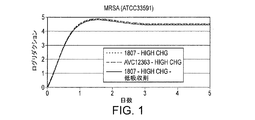
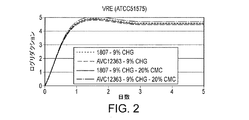
図1と図2に多様なサンプルの抗菌効果を示す。これらの図中のデータは100gsmがコーティングされた全ての接着剤に基づいた。図1は再接種なしでのASTM2180による殺菌効果を示している。 1 and 2 show the antibacterial effect of various samples. The data in these figures was based on all adhesives coated with 100 gsm. FIG. 1 shows the bactericidal effect of ASTM 2180 without revaccination.
結論としては、1807またはAVC‐12363を含有し、カルボキシメチルセルロース(A800)を含有するまたは含有しない試作品の殺菌効果は高濃度のクロルヘキシジングルコネートと同様の殺菌効果を示した(図1および図2参照)。カルボキシメチルセルロースも1807接着剤の−COOH官能基もその殺菌効果を抑制しないようであった。 In conclusion, the bactericidal effects of prototypes containing 1807 or AVC-12363 and with or without carboxymethylcellulose (A800) showed similar bactericidal effects as high concentrations of chlorhexidine gluconate (FIGS. 1 and 2). reference). Neither carboxymethylcellulose nor the —COOH functional group of the 1807 adhesive appeared to inhibit its bactericidal effect.
接着剤、接着剤への含有剤、構造体および多層構造のためのその他の成分はUS2010/0322996にて提供されている。 Adhesives, additives to adhesives, structures and other components for multilayer structures are provided in US 2010/0322996.
その他の利点はこの技術の今後の利用および研究によって明らかになるであろう。 Other advantages will become apparent through future use and research of this technology.
ここで引用した全ての特許、公報および文献の内容全体をここで援用する。 The entire contents of all patents, publications and literature cited herein are hereby incorporated by reference.
ここで解説した1実施例の1以上の特徴または要素は別な実施例の1以上の特徴または要素と組み合わせ可能であることができることは理解されよう。よって、本発明はここで解説した実施例の要素または特徴の全ての組合せを含んでいる。 It will be understood that one or more features or elements of one embodiment described herein may be combined with one or more features or elements of another embodiment. Thus, the present invention includes all combinations of elements or features of the embodiments described herein.
前述したように、本発明は既存の製品、接着剤および方法に関連する多くの問題を解決する。しかしながら、当業者であれば、本発明の特徴を説明するためにここで解説された詳細、材料および成分並びに工程の多様な変更は、添付の「請求の範囲」に記載された本発明の本質および範囲を逸脱することなく実施できることは理解されよう。 As mentioned above, the present invention solves many problems associated with existing products, adhesives and methods. However, one of ordinary skill in the art appreciates that various changes in the details, materials and components, and steps described herein to explain the features of the invention are the essence of the invention as set forth in the appended claims. It will be understood that this can be done without departing from the scope and scope.
Claims (53)
前記水溶液を積極的に乾燥させることによって前記少なくとも一つの固体形状のクロルヘキシジン塩を得るステップと、
を含む、固体形状のクロルヘキシジンの作成方法。 Providing an aqueous solution of at least one chlorhexidine salt;
Obtaining the at least one solid form of chlorhexidine salt by actively drying the aqueous solution;
A method for producing a solid form of chlorhexidine.
前記水溶液を積極乾燥させることで前記少なくとも一つの固体形状のクロルヘキシジン塩を得るステップと、
接着剤成分を準備するステップと、
前記接着剤成分と適合可能な溶媒を準備するステップと、
前記溶媒内で固体形状のクロルヘキシジンを溶解させてクロルヘキシジン溶液を作成するステップと、
前記クロルヘキシジン溶液を前記接着剤成分と組み合わせることで接着剤含有クロルヘキシジンを作成するステップと、
を含む、クロルヘキシジンを含有する接着剤の作成方法。 Providing an aqueous solution of at least one chlorhexidine salt;
Obtaining the at least one solid form of chlorhexidine salt by actively drying the aqueous solution;
Preparing an adhesive component;
Providing a solvent compatible with the adhesive component;
Dissolving a solid form of chlorhexidine in the solvent to create a chlorhexidine solution;
Creating an adhesive-containing chlorhexidine by combining the chlorhexidine solution with the adhesive component;
A method for producing an adhesive containing chlorhexidine, comprising:
接着剤、および
少なくとも一つのクロルヘキシジン塩を含む、請求項46記載の医療用製品。 The adhesive formulation is:
47. The medical product of claim 46, comprising an adhesive and at least one chlorhexidine salt.
Applications Claiming Priority (2)
| Application Number | Priority Date | Filing Date | Title |
|---|---|---|---|
| US201161434991P | 2011-01-21 | 2011-01-21 | |
| US61/434,991 | 2011-01-21 |
Related Parent Applications (1)
| Application Number | Title | Priority Date | Filing Date |
|---|---|---|---|
| JP2013550654A Division JP2014510038A (en) | 2011-01-21 | 2012-01-23 | Chlorhexidine gluconate-containing solvent adhesive |
Publications (3)
| Publication Number | Publication Date |
|---|---|
| JP2017036282A true JP2017036282A (en) | 2017-02-16 |
| JP2017036282A5 JP2017036282A5 (en) | 2018-02-08 |
| JP6280175B2 JP6280175B2 (en) | 2018-02-14 |
Family
ID=45563573
Family Applications (2)
| Application Number | Title | Priority Date | Filing Date |
|---|---|---|---|
| JP2013550654A Pending JP2014510038A (en) | 2011-01-21 | 2012-01-23 | Chlorhexidine gluconate-containing solvent adhesive |
| JP2016164314A Active JP6280175B2 (en) | 2011-01-21 | 2016-08-25 | Chlorhexidine gluconate-containing solvent adhesive |
Family Applications Before (1)
| Application Number | Title | Priority Date | Filing Date |
|---|---|---|---|
| JP2013550654A Pending JP2014510038A (en) | 2011-01-21 | 2012-01-23 | Chlorhexidine gluconate-containing solvent adhesive |
Country Status (11)
| Country | Link |
|---|---|
| US (2) | US9346981B2 (en) |
| EP (1) | EP2665363B1 (en) |
| JP (2) | JP2014510038A (en) |
| CN (2) | CN103442572A (en) |
| BR (1) | BR112013018616B1 (en) |
| DK (1) | DK2665363T3 (en) |
| ES (1) | ES2767278T3 (en) |
| HK (1) | HK1246213A1 (en) |
| HU (1) | HUE048016T2 (en) |
| PL (1) | PL2665363T3 (en) |
| WO (1) | WO2012100244A2 (en) |
Families Citing this family (10)
| Publication number | Priority date | Publication date | Assignee | Title |
|---|---|---|---|---|
| US10314935B2 (en) | 2009-01-07 | 2019-06-11 | Entrotech Life Sciences, Inc. | Chlorhexidine-containing antimicrobial laminates |
| CN103442572A (en) | 2011-01-21 | 2013-12-11 | 艾利丹尼森公司 | Adhesives containing chlorhexidine gluconate |
| WO2012158483A2 (en) | 2011-05-16 | 2012-11-22 | Avery Dennison Corporation | Adhesive containing microparticles |
| KR102242908B1 (en) | 2013-02-07 | 2021-04-20 | 애버리 데니슨 코포레이션 | Antimicrobial adhesives having improved properties |
| US11213432B2 (en) | 2013-03-15 | 2022-01-04 | Avery Dennison Corporation | Transparent cover dressing application system and inclusion of label strip |
| US11039615B2 (en) | 2014-04-18 | 2021-06-22 | Entrotech Life Sciences, Inc. | Methods of processing chlorhexidine-containing polymerizable compositions and antimicrobial articles formed thereby |
| US9970303B2 (en) | 2014-05-13 | 2018-05-15 | Entrotech, Inc. | Erosion protection sleeve |
| WO2015188031A2 (en) | 2014-06-05 | 2015-12-10 | Avery Dennison Corporation | Articles with active agent concentrated at the substrate contacting surface and related methods |
| US11590255B2 (en) * | 2016-11-11 | 2023-02-28 | Avery Dennison Corporation | Rubber-based soft gel skin adhesives |
| US12245919B2 (en) | 2018-06-13 | 2025-03-11 | Avery Dennison Corporation | Medical adhesives for quick release of antimicrobials |
Citations (4)
| Publication number | Priority date | Publication date | Assignee | Title |
|---|---|---|---|---|
| JPH06508287A (en) * | 1991-06-21 | 1994-09-22 | スミス アンド ネフュー ピーエルシー | Adhesive compositions and products |
| JPH06509955A (en) * | 1991-08-23 | 1994-11-10 | ザ、ジレット、カンパニー | Sustained release matrix for oral application |
| JP2007536261A (en) * | 2004-05-07 | 2007-12-13 | スリーエム イノベイティブ プロパティズ カンパニー | Antimicrobial article |
| WO2011009083A1 (en) * | 2009-07-17 | 2011-01-20 | Carefusion 2200, Inc. | Particles incorporating antimicrobial agents |
Family Cites Families (43)
| Publication number | Priority date | Publication date | Assignee | Title |
|---|---|---|---|---|
| EP0011471B1 (en) | 1978-11-17 | 1983-02-09 | SMITH & NEPHEW RESEARCH LIMITED | Adhesive-coated sheet material incorporating anti-bacterial substances |
| US4199567A (en) | 1979-01-02 | 1980-04-22 | Burton, Parsons & Company, Inc. | Method for imparting freeze stability to chlorhexidine-containing medicaments |
| US4310509A (en) | 1979-07-31 | 1982-01-12 | Minnesota Mining And Manufacturing Company | Pressure-sensitive adhesive having a broad spectrum antimicrobial therein |
| US4434181A (en) | 1981-12-07 | 1984-02-28 | Fearing Manufacturing Co., Inc. | Teat dip |
| CA1207228A (en) | 1983-10-17 | 1986-07-08 | D. Michael Fearing | Teat dip |
| PT82204B (en) * | 1985-03-14 | 1987-08-17 | Derwentside Lab Ltd | Improvements in or relating to the production of cleansing solutions |
| GB8620227D0 (en) | 1986-08-20 | 1986-10-01 | Smith & Nephew Ass | Wound dressing |
| US5322695A (en) | 1987-01-09 | 1994-06-21 | Hercon Laboratories Corporation | Moisture-vapor-permeable dressing |
| GB8706116D0 (en) | 1987-03-14 | 1987-04-15 | Smith & Nephew Ass | Adhesive dressings |
| US5270358A (en) | 1989-12-28 | 1993-12-14 | Minnesota Mining And Manufacturing Company | Composite of a disperesed gel in an adhesive matrix |
| GB9117256D0 (en) | 1991-08-09 | 1991-09-25 | Smith & Nephew | Adhesive products |
| US5276079A (en) | 1991-11-15 | 1994-01-04 | Minnesota Mining And Manufacturing Company | Pressure-sensitive poly(n-vinyl lactam) adhesive composition and method for producing and using same |
| US5382451A (en) * | 1992-04-06 | 1995-01-17 | Minnesota Mining And Manufacturing | Method for coating adhesive polymers |
| GB9209327D0 (en) | 1992-04-30 | 1992-06-17 | Johnson & Johnson Medical | Freeze-dried pad |
| US5614310A (en) | 1994-11-04 | 1997-03-25 | Minnesota Mining And Manufacturing Company | Low trauma wound dressing with improved moisture vapor permeability |
| US5686096A (en) | 1995-12-22 | 1997-11-11 | Becton Dickinson And Company | Medical device for the protection of a catheter penetration site |
| MA24577A1 (en) | 1997-06-26 | 1998-12-31 | Procter & Gamble | METHODS AND COMPOSITIONS FOR REDUCING MICROORGANISM FOR FOOD PRODUCTS |
| US6458341B1 (en) | 1998-06-04 | 2002-10-01 | 3M Innovative Properties Company | Devices with coatings containing chlorhexidine gluconate, compositions and methods |
| US6455086B1 (en) | 1998-06-26 | 2002-09-24 | The Procter & Gamble Company | Microorganism reduction methods and compositions for food cleaning |
| CN1245016A (en) * | 1998-08-14 | 2000-02-23 | 凌沛学 | Disinfecting tablet containing chlorhexidine acetate and preparing process thereof |
| US20020015726A1 (en) | 2000-06-30 | 2002-02-07 | Scamilla Aledo Maria Aparecida De Carvalho | Dressings and bandages comprising same |
| DE19857151A1 (en) * | 1998-12-11 | 2000-06-15 | Degussa | Powdered, water-soluble chlorhexidine salt, useful e.g. as disinfectant in cosmetics, contains anion from specific sugar acids or their lactones |
| GB9827292D0 (en) | 1998-12-12 | 1999-02-03 | Univ Strathclyde | Freeze drying |
| GB9908000D0 (en) * | 1999-04-09 | 1999-06-02 | Smith & Nephew | Curable compositions |
| IN192343B (en) * | 2000-05-26 | 2004-04-10 | Ranbaxy Lab Ltd | |
| DE10052322A1 (en) * | 2000-10-21 | 2002-05-02 | Degussa | Storage-stable solid chlorhexidine composition used for preparing aqueous disinfectant solutions e.g. for skin disinfection contains sugar acid and microbicidal quaternary ammonium bromide |
| US6589562B1 (en) | 2000-10-25 | 2003-07-08 | Salvona L.L.C. | Multicomponent biodegradable bioadhesive controlled release system for oral care products |
| US6830758B2 (en) * | 2001-04-02 | 2004-12-14 | Lectec Corporation | Psoriasis patch |
| US7704523B2 (en) | 2002-04-26 | 2010-04-27 | Lohmann & Rauscher Gmbh | Microbial cellulose wound dressing for treating chronic wounds |
| JP4031294B2 (en) * | 2002-06-07 | 2008-01-09 | 株式会社 伊藤園 | Method for producing theanine |
| WO2004072346A2 (en) | 2003-02-12 | 2004-08-26 | Avery Dennison Corporation | Mechanical closure tape |
| FR2855516B1 (en) * | 2003-05-27 | 2005-07-08 | Atofina | OXIDATION OF ACRYLIC ACID PROPANE BY USING CATALYSTS MIXED WITH CRYSTALLINE PHASES |
| US20060034899A1 (en) | 2004-08-12 | 2006-02-16 | Ylitalo Caroline M | Biologically-active adhesive articles and methods of manufacture |
| US8158152B2 (en) * | 2005-11-18 | 2012-04-17 | Scidose Llc | Lyophilization process and products obtained thereby |
| BRPI0707832B1 (en) | 2006-02-14 | 2020-04-28 | Allegiance Corp | applicator to apply antiseptic solution and selectively remove unwanted by-products from antiseptic solution and process to selectively remove unwanted by-products from antiseptic solution |
| AU2007317622B2 (en) * | 2006-10-27 | 2010-12-16 | 3M Innovative Properties Company | Antimicrobial compositions |
| PL2252667T3 (en) | 2008-02-14 | 2016-02-29 | Avery Dennison Corp | Fluid absorbent adhesive articles |
| US20110067799A1 (en) * | 2008-04-30 | 2011-03-24 | Tesa Se | Adhesive tape |
| CN101297977B (en) * | 2008-06-16 | 2012-02-29 | 中国海洋大学 | A kind of bioadhesive and its application |
| US10314935B2 (en) | 2009-01-07 | 2019-06-11 | Entrotech Life Sciences, Inc. | Chlorhexidine-containing antimicrobial laminates |
| CN103442572A (en) | 2011-01-21 | 2013-12-11 | 艾利丹尼森公司 | Adhesives containing chlorhexidine gluconate |
| WO2012158483A2 (en) * | 2011-05-16 | 2012-11-22 | Avery Dennison Corporation | Adhesive containing microparticles |
| KR102242908B1 (en) * | 2013-02-07 | 2021-04-20 | 애버리 데니슨 코포레이션 | Antimicrobial adhesives having improved properties |
-
2012
- 2012-01-23 CN CN2012800139761A patent/CN103442572A/en active Pending
- 2012-01-23 BR BR112013018616-0A patent/BR112013018616B1/en active IP Right Grant
- 2012-01-23 CN CN201711155286.0A patent/CN107890583A/en active Pending
- 2012-01-23 EP EP12702693.8A patent/EP2665363B1/en active Active
- 2012-01-23 PL PL12702693T patent/PL2665363T3/en unknown
- 2012-01-23 JP JP2013550654A patent/JP2014510038A/en active Pending
- 2012-01-23 ES ES12702693T patent/ES2767278T3/en active Active
- 2012-01-23 DK DK12702693.8T patent/DK2665363T3/en active
- 2012-01-23 US US13/980,592 patent/US9346981B2/en active Active
- 2012-01-23 HU HUE12702693A patent/HUE048016T2/en unknown
- 2012-01-23 WO PCT/US2012/022162 patent/WO2012100244A2/en not_active Ceased
-
2016
- 2016-04-21 US US15/134,698 patent/US9764059B2/en active Active
- 2016-08-25 JP JP2016164314A patent/JP6280175B2/en active Active
-
2018
- 2018-04-25 HK HK18105365.6A patent/HK1246213A1/en unknown
Patent Citations (4)
| Publication number | Priority date | Publication date | Assignee | Title |
|---|---|---|---|---|
| JPH06508287A (en) * | 1991-06-21 | 1994-09-22 | スミス アンド ネフュー ピーエルシー | Adhesive compositions and products |
| JPH06509955A (en) * | 1991-08-23 | 1994-11-10 | ザ、ジレット、カンパニー | Sustained release matrix for oral application |
| JP2007536261A (en) * | 2004-05-07 | 2007-12-13 | スリーエム イノベイティブ プロパティズ カンパニー | Antimicrobial article |
| WO2011009083A1 (en) * | 2009-07-17 | 2011-01-20 | Carefusion 2200, Inc. | Particles incorporating antimicrobial agents |
Also Published As
| Publication number | Publication date |
|---|---|
| ES2767278T3 (en) | 2020-06-17 |
| CN103442572A (en) | 2013-12-11 |
| HUE048016T2 (en) | 2020-05-28 |
| DK2665363T3 (en) | 2020-01-20 |
| EP2665363B1 (en) | 2019-12-25 |
| PL2665363T3 (en) | 2020-07-27 |
| WO2012100244A3 (en) | 2012-11-15 |
| HK1246213A1 (en) | 2018-09-07 |
| JP6280175B2 (en) | 2018-02-14 |
| BR112013018616A2 (en) | 2016-07-12 |
| US20160228600A1 (en) | 2016-08-11 |
| CN107890583A (en) | 2018-04-10 |
| BR112013018616B1 (en) | 2019-04-24 |
| WO2012100244A2 (en) | 2012-07-26 |
| US9764059B2 (en) | 2017-09-19 |
| US20130303656A1 (en) | 2013-11-14 |
| EP2665363A2 (en) | 2013-11-27 |
| US9346981B2 (en) | 2016-05-24 |
| JP2014510038A (en) | 2014-04-24 |
Similar Documents
| Publication | Publication Date | Title |
|---|---|---|
| JP6280175B2 (en) | Chlorhexidine gluconate-containing solvent adhesive | |
| US20220249408A1 (en) | Articles with Active Agent Concentrated at the Substrate Contacting Surface and Related Methods | |
| US11318223B2 (en) | Antimicrobial adhesives having improved properties | |
| JP5665116B2 (en) | Patches and patch preparations | |
| JP6613251B2 (en) | Improved adhesive used in medical applications | |
| EP2827820B1 (en) | High adhesion antimicrobial skin prep solutions and related methods | |
| WO2013074628A1 (en) | Controlled release of active using ph | |
| US20250256013A1 (en) | Antimicrobial compositions and articles made therefrom | |
| US20250161117A1 (en) | Antimicrobial compositions and articles made therefrom | |
| JP2006271927A (en) | Wound covering composition and sheet-like wound covering material | |
| TW201710430A (en) | Attachment preparation containing bisoprolol |
Legal Events
| Date | Code | Title | Description |
|---|---|---|---|
| A977 | Report on retrieval |
Free format text: JAPANESE INTERMEDIATE CODE: A971007 Effective date: 20170622 |
|
| A131 | Notification of reasons for refusal |
Free format text: JAPANESE INTERMEDIATE CODE: A131 Effective date: 20170704 |
|
| A601 | Written request for extension of time |
Free format text: JAPANESE INTERMEDIATE CODE: A601 Effective date: 20171002 |
|
| A524 | Written submission of copy of amendment under article 19 pct |
Free format text: JAPANESE INTERMEDIATE CODE: A524 Effective date: 20171201 |
|
| A521 | Request for written amendment filed |
Free format text: JAPANESE INTERMEDIATE CODE: A821 Effective date: 20171201 |
|
| TRDD | Decision of grant or rejection written | ||
| A01 | Written decision to grant a patent or to grant a registration (utility model) |
Free format text: JAPANESE INTERMEDIATE CODE: A01 Effective date: 20180109 |
|
| A61 | First payment of annual fees (during grant procedure) |
Free format text: JAPANESE INTERMEDIATE CODE: A61 Effective date: 20180118 |
|
| R150 | Certificate of patent or registration of utility model |
Ref document number: 6280175 Country of ref document: JP Free format text: JAPANESE INTERMEDIATE CODE: R150 |
|
| R250 | Receipt of annual fees |
Free format text: JAPANESE INTERMEDIATE CODE: R250 |
|
| R250 | Receipt of annual fees |
Free format text: JAPANESE INTERMEDIATE CODE: R250 |
|
| S531 | Written request for registration of change of domicile |
Free format text: JAPANESE INTERMEDIATE CODE: R313531 |
|
| R350 | Written notification of registration of transfer |
Free format text: JAPANESE INTERMEDIATE CODE: R350 |
|
| R250 | Receipt of annual fees |
Free format text: JAPANESE INTERMEDIATE CODE: R250 |
|
| R250 | Receipt of annual fees |
Free format text: JAPANESE INTERMEDIATE CODE: R250 |
|
| R250 | Receipt of annual fees |
Free format text: JAPANESE INTERMEDIATE CODE: R250 |
|
| R250 | Receipt of annual fees |
Free format text: JAPANESE INTERMEDIATE CODE: R250 |