JP2016166322A - Polymer nanoparticles for improving the strain capacity of composites - Google Patents
Polymer nanoparticles for improving the strain capacity of composites Download PDFInfo
- Publication number
- JP2016166322A JP2016166322A JP2015162396A JP2015162396A JP2016166322A JP 2016166322 A JP2016166322 A JP 2016166322A JP 2015162396 A JP2015162396 A JP 2015162396A JP 2015162396 A JP2015162396 A JP 2015162396A JP 2016166322 A JP2016166322 A JP 2016166322A
- Authority
- JP
- Japan
- Prior art keywords
- resin
- nanoparticles
- polymer nanoparticles
- strain
- polymer
- Prior art date
- Legal status (The legal status is an assumption and is not a legal conclusion. Google has not performed a legal analysis and makes no representation as to the accuracy of the status listed.)
- Granted
Links
Images
Classifications
-
- C—CHEMISTRY; METALLURGY
- C08—ORGANIC MACROMOLECULAR COMPOUNDS; THEIR PREPARATION OR CHEMICAL WORKING-UP; COMPOSITIONS BASED THEREON
- C08J—WORKING-UP; GENERAL PROCESSES OF COMPOUNDING; AFTER-TREATMENT NOT COVERED BY SUBCLASSES C08B, C08C, C08F, C08G or C08H
- C08J5/00—Manufacture of articles or shaped materials containing macromolecular substances
- C08J5/04—Reinforcing macromolecular compounds with loose or coherent fibrous material
- C08J5/10—Reinforcing macromolecular compounds with loose or coherent fibrous material characterised by the additives used in the polymer mixture
-
- C—CHEMISTRY; METALLURGY
- C08—ORGANIC MACROMOLECULAR COMPOUNDS; THEIR PREPARATION OR CHEMICAL WORKING-UP; COMPOSITIONS BASED THEREON
- C08J—WORKING-UP; GENERAL PROCESSES OF COMPOUNDING; AFTER-TREATMENT NOT COVERED BY SUBCLASSES C08B, C08C, C08F, C08G or C08H
- C08J5/00—Manufacture of articles or shaped materials containing macromolecular substances
- C08J5/005—Reinforced macromolecular compounds with nanosized materials, e.g. nanoparticles, nanofibres, nanotubes, nanowires, nanorods or nanolayered materials
-
- C—CHEMISTRY; METALLURGY
- C08—ORGANIC MACROMOLECULAR COMPOUNDS; THEIR PREPARATION OR CHEMICAL WORKING-UP; COMPOSITIONS BASED THEREON
- C08J—WORKING-UP; GENERAL PROCESSES OF COMPOUNDING; AFTER-TREATMENT NOT COVERED BY SUBCLASSES C08B, C08C, C08F, C08G or C08H
- C08J5/00—Manufacture of articles or shaped materials containing macromolecular substances
- C08J5/24—Impregnating materials with prepolymers which can be polymerised in situ, e.g. manufacture of prepregs
- C08J5/241—Impregnating materials with prepolymers which can be polymerised in situ, e.g. manufacture of prepregs using inorganic fibres
- C08J5/243—Impregnating materials with prepolymers which can be polymerised in situ, e.g. manufacture of prepregs using inorganic fibres using carbon fibres
-
- C—CHEMISTRY; METALLURGY
- C08—ORGANIC MACROMOLECULAR COMPOUNDS; THEIR PREPARATION OR CHEMICAL WORKING-UP; COMPOSITIONS BASED THEREON
- C08J—WORKING-UP; GENERAL PROCESSES OF COMPOUNDING; AFTER-TREATMENT NOT COVERED BY SUBCLASSES C08B, C08C, C08F, C08G or C08H
- C08J5/00—Manufacture of articles or shaped materials containing macromolecular substances
- C08J5/24—Impregnating materials with prepolymers which can be polymerised in situ, e.g. manufacture of prepregs
- C08J5/241—Impregnating materials with prepolymers which can be polymerised in situ, e.g. manufacture of prepregs using inorganic fibres
- C08J5/244—Impregnating materials with prepolymers which can be polymerised in situ, e.g. manufacture of prepregs using inorganic fibres using glass fibres
-
- C—CHEMISTRY; METALLURGY
- C08—ORGANIC MACROMOLECULAR COMPOUNDS; THEIR PREPARATION OR CHEMICAL WORKING-UP; COMPOSITIONS BASED THEREON
- C08J—WORKING-UP; GENERAL PROCESSES OF COMPOUNDING; AFTER-TREATMENT NOT COVERED BY SUBCLASSES C08B, C08C, C08F, C08G or C08H
- C08J5/00—Manufacture of articles or shaped materials containing macromolecular substances
- C08J5/24—Impregnating materials with prepolymers which can be polymerised in situ, e.g. manufacture of prepregs
- C08J5/249—Impregnating materials with prepolymers which can be polymerised in situ, e.g. manufacture of prepregs characterised by the additives used in the prepolymer mixture
-
- C—CHEMISTRY; METALLURGY
- C08—ORGANIC MACROMOLECULAR COMPOUNDS; THEIR PREPARATION OR CHEMICAL WORKING-UP; COMPOSITIONS BASED THEREON
- C08J—WORKING-UP; GENERAL PROCESSES OF COMPOUNDING; AFTER-TREATMENT NOT COVERED BY SUBCLASSES C08B, C08C, C08F, C08G or C08H
- C08J2300/00—Characterised by the use of unspecified polymers
- C08J2300/22—Thermoplastic resins
-
- C—CHEMISTRY; METALLURGY
- C08—ORGANIC MACROMOLECULAR COMPOUNDS; THEIR PREPARATION OR CHEMICAL WORKING-UP; COMPOSITIONS BASED THEREON
- C08J—WORKING-UP; GENERAL PROCESSES OF COMPOUNDING; AFTER-TREATMENT NOT COVERED BY SUBCLASSES C08B, C08C, C08F, C08G or C08H
- C08J2300/00—Characterised by the use of unspecified polymers
- C08J2300/24—Thermosetting resins
-
- C—CHEMISTRY; METALLURGY
- C08—ORGANIC MACROMOLECULAR COMPOUNDS; THEIR PREPARATION OR CHEMICAL WORKING-UP; COMPOSITIONS BASED THEREON
- C08J—WORKING-UP; GENERAL PROCESSES OF COMPOUNDING; AFTER-TREATMENT NOT COVERED BY SUBCLASSES C08B, C08C, C08F, C08G or C08H
- C08J2400/00—Characterised by the use of unspecified polymers
- C08J2400/22—Thermoplastic resins
-
- C—CHEMISTRY; METALLURGY
- C08—ORGANIC MACROMOLECULAR COMPOUNDS; THEIR PREPARATION OR CHEMICAL WORKING-UP; COMPOSITIONS BASED THEREON
- C08J—WORKING-UP; GENERAL PROCESSES OF COMPOUNDING; AFTER-TREATMENT NOT COVERED BY SUBCLASSES C08B, C08C, C08F, C08G or C08H
- C08J2400/00—Characterised by the use of unspecified polymers
- C08J2400/24—Thermosetting resins
Landscapes
- Chemical & Material Sciences (AREA)
- Engineering & Computer Science (AREA)
- Materials Engineering (AREA)
- Organic Chemistry (AREA)
- Health & Medical Sciences (AREA)
- Chemical Kinetics & Catalysis (AREA)
- Medicinal Chemistry (AREA)
- Polymers & Plastics (AREA)
- Manufacturing & Machinery (AREA)
- Inorganic Chemistry (AREA)
- Nanotechnology (AREA)
- Reinforced Plastic Materials (AREA)
- Compositions Of Macromolecular Compounds (AREA)
Abstract
Description
本開示は複合材料に関し、より詳細には、複合材構造体の歪能力を向上させるための複合材構造体でのナノ粒子の使用に関する。 The present disclosure relates to composite materials, and more particularly to the use of nanoparticles in composite structures to improve the strain capability of composite structures.
複合材構造体は、樹脂マトリクスに埋め込まれた強化繊維を含むのが典型的である。複合材構造体は、負荷を繊維長に沿って伝達するよう設計される。樹脂マトリクスは繊維を所定位置に保持し、樹脂マトリクスを通じて負荷を伝わらせることにより、繊維から繊維へと負荷を伝達し得る。複合材構造体に負荷をかける間、樹脂マトリクスは典型的に、多方向に負荷を受ける。例えば、ある負荷が複合材構造体に加わると、樹脂マトリクスが、繊維に平行な方向に沿って及び繊維を横切る一又は複数の方向に沿って、負荷を受け得る。歪の何らかの組み合わせが既定値を超えると、樹脂マトリクスは破損し得る。 The composite structure typically includes reinforcing fibers embedded in a resin matrix. The composite structure is designed to transmit the load along the fiber length. The resin matrix can transmit the load from fiber to fiber by holding the fiber in place and transmitting the load through the resin matrix. While loading the composite structure, the resin matrix is typically loaded in multiple directions. For example, when a load is applied to the composite structure, the resin matrix may be loaded along a direction parallel to the fibers and along one or more directions across the fibers. If any combination of strains exceeds a predetermined value, the resin matrix can break.
歪不変量破壊理論は、複合材構造体内の樹脂マトリクスの破壊を招く歪の組み合わせを予測するために用いられる基準である。歪不変量破壊理論においては、第1の歪不変量J1を超過すると破壊が発生する。第1の歪不変量J1は、互いに直交に配向する3つの主歪(ε1+ε2+ε3)の合計である。 Strain invariant fracture theory is a criterion used to predict the combination of strains that lead to the destruction of the resin matrix within the composite structure. In the strain invariant fracture theory, the fracture occurs when the first strain invariant J1 is exceeded. The first strain invariant J1 is the sum of three principal strains (ε 1 + ε 2 + ε 3 ) oriented orthogonal to each other.
標準テストクーポンが単軸引張で負荷を受けると、主歪ε1が引張方向に増大する一方、ポアソン比に起因して、クーポンの断面が縮小するので、主歪ε2+ε3は負であるか圧縮性である。クーポンが引張負荷によって伸長するにつれてクーポン断面が縮小する能力の結果、クーポンが縮小できないようなかなり大きい値よりも、主歪ε1が増大し得る。一方、静水圧引張(即ち、ε1=ε2=ε3)で負荷を受けた材料は、3つの主方向の比較的低い歪で破損する。 When a standard test coupon is loaded by uniaxial tension, the principal strain ε 1 increases in the tensile direction, while the cross section of the coupon shrinks due to the Poisson's ratio, so the principal strain ε 2 + ε 3 is negative. Or compressible. As a result of the ability of the coupon cross-section to shrink as the coupon is stretched by a tensile load, the principal strain ε 1 can increase beyond a much larger value that the coupon cannot shrink. On the other hand, a material loaded with hydrostatic tension (ie, ε 1 = ε 2 = ε 3 ) breaks with relatively low strain in three main directions.
複合材構造体に負荷がかけられると、強化フィラメントは典型的に、樹脂マトリクスを縮小に抵抗するように拘束する。マトリクスの縮小能力が減少することにより、マトリクスの引張歪能力が制限される。マトリクスの歪能力が制限された結果、複合材構造体の性能が制限され得る。例えば、複合材構造体が引張負荷を受ける場合、樹脂の比較的低い破壊歪により、繊維が破壊歪に到達する前に樹脂の破壊(例えば、微細ひび割れ)が引き起こされ得る。 As the composite structure is loaded, the reinforcing filaments typically restrain the resin matrix to resist shrinkage. The reduction in matrix shrinkage capacity limits the tensile strain capacity of the matrix. As a result of the limited distortion capacity of the matrix, the performance of the composite structure can be limited. For example, if the composite structure is subjected to a tensile load, the relatively low fracture strain of the resin can cause the resin to break (eg, microcracks) before the fiber reaches the fracture strain.
このように、複合材構造体の性能を向上させる手段として、複合材構造体内の樹脂の歪能力を増大させるシステム及び方法に対する当技術分野での需要が存在する。 Thus, there is a need in the art for systems and methods that increase the strain capacity of a resin within a composite structure as a means of improving the performance of the composite structure.
複合材構造体内の樹脂の歪能力に関連する上記の需要は本発明によって特に対処され、本発明は、樹脂混合物を形成するために、樹脂と該樹脂内の複数の高分子ナノ粒子とを含む組成物を提供する。高分子ナノ粒子の少なくとも幾つかは、高分子ナノ粒子のポリマー骨格の性質に起因して、及び/又は樹脂の自由体積よりも大きいナノ粒子自由体積に起因して、及び/又は樹脂の空隙率よりも高いナノ粒子空隙率に起因して、樹脂よりも高い歪能力を有し得る。高分子ナノ粒子は、結果として、樹脂混合物の歪能力及び/又は歪能力を高め、これにより複合材構造体の性能が向上し得る。 The above demands related to the strain capacity of the resin within the composite structure are particularly addressed by the present invention, which includes a resin and a plurality of polymeric nanoparticles within the resin to form a resin mixture. A composition is provided. At least some of the polymer nanoparticles are due to the nature of the polymer backbone of the polymer nanoparticles and / or due to the nanoparticle free volume being greater than the free volume of the resin and / or the porosity of the resin Due to the higher nanoparticle porosity, it may have a higher strain capacity than the resin. The polymer nanoparticles can consequently increase the strain capacity and / or strain capacity of the resin mixture, thereby improving the performance of the composite structure.
更なる実施形態では、高い歪能力を有する高分子ナノ粒子を含有する樹脂を含む複合材構造体が開示される。複合材構造体は更に、樹脂混合物内に埋め込まれた複数の強化繊維を含み得る。高分子ナノ粒子の高い歪能力は、ポリマー骨格の性質、ナノ粒子の自由体積、及び/又は、ナノ粒子の空隙率に起因し得る。 In a further embodiment, a composite structure comprising a resin containing polymeric nanoparticles with high strain capability is disclosed. The composite structure may further include a plurality of reinforcing fibers embedded in the resin mixture. The high strain capability of the polymer nanoparticles can be attributed to the nature of the polymer backbone, the free volume of the nanoparticles, and / or the porosity of the nanoparticles.
組成物の生成方法も開示される。本方法は、樹脂を提供すること、及び、樹脂内に複数の高分子ナノ粒子を混合して樹脂混合物を生成することを含み得る。上述のように、高分子ナノ粒子は高い膨張能力を有し得る。 A method of producing the composition is also disclosed. The method can include providing a resin and mixing a plurality of polymeric nanoparticles within the resin to form a resin mixture. As mentioned above, the polymeric nanoparticles can have a high expansion capacity.
更なる実施形態では、複合材構造体に印加される負荷に抵抗する方法が開示される。複合材構造体は、複数の高分子ナノ粒子を含む硬化された樹脂を含有し得、複数の高分子ナノ粒子の少なくとも幾つかは、高分子ナノ粒子のポリマー骨格に起因して、比較的高い自由体積を有する高分子ナノ粒子に起因して、及び/又はナノ粒子の空隙率に起因して、樹脂よりも高い歪能力を有し得る。本方法は更に、高分子ナノ粒子を含まない樹脂の体積歪能力よりも高い樹脂混合物の体積歪能力によって、負荷に抵抗することを含み得る。 In a further embodiment, a method for resisting a load applied to a composite structure is disclosed. The composite structure may contain a cured resin comprising a plurality of polymer nanoparticles, at least some of the plurality of polymer nanoparticles being relatively high due to the polymer backbone of the polymer nanoparticles Due to the polymer nanoparticles having free volume and / or due to the porosity of the nanoparticles, they may have a higher strain capacity than the resin. The method can further include resisting the load by a volumetric strain capability of the resin mixture that is higher than a volumetric strain capability of the resin that does not include the polymeric nanoparticles.
特徴、機能及び利点は、本開示の様々な実施形態において独立して達成可能であり、又は、以下の説明及び図面を参照して更なる詳細が理解可能である更に他の実施形態において組み合わされてもよい。 The features, functions, and advantages can be achieved independently in various embodiments of the present disclosure or combined in yet other embodiments that can be understood in further detail with reference to the following description and drawings. May be.
本開示の上記の及びその他の特徴は、図面を参照することでより明白となり、図面では、全体を通して類似の番号が類似の部分を表している。 The above and other features of the present disclosure will become more apparent with reference to the drawings, in which like numerals represent like parts throughout.
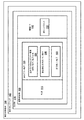
ここで、本開示の様々な実施形態を図示する目的で示された図面を参照すると、樹脂118と歪能力の高い高分子ナノ粒子150とを含む樹脂混合物122を含む、複合材構造体100のブロック図が図1に示される。幾つかの実施例で、複合材構造体100は、一又は複数の複合材プライ104(図2)を含む複合材レイアップ102として形成され得る。複合材レイアップ102は樹脂混合物122内に埋め込まれた繊維トウ110を含み得る。繊維トウ110の各々は、強化フィラメント112で形成され得る。繊維110の予含浸中及び/又は繊維110の樹脂注入中、繊維110に樹脂118が塗布され得る。
Referring now to the drawings shown for purposes of illustrating various embodiments of the present disclosure, a
有利には、高分子ナノ粒子150が比較的高い歪能力及び/又は膨張能力を有し得る。例えば、高分子ナノ粒子150の材料組成物116は、硬化された未修飾樹脂118よりも高い体積歪能力及び/又はより大きい破壊歪を有し得る。本開示において、未修飾樹脂118は、歪能力の高い高分子ナノ粒子150を含まない樹脂118として記載され得る。高分子ナノ粒子150の比較的高い歪能力は、高分子ナノ粒子材料のポリマー骨格154の性質に起因し得る。別の実施例で、高分子ナノ粒子150の比較的高い歪能力は未修飾樹脂118の自由体積よりも大きいナノ粒子自由体積に起因し得る。
Advantageously, the
更なる実施例で、高分子ナノ粒子150の比較的高い歪能力は、未修飾樹脂118の空隙率よりも高い、高分子ナノ粒子150のナノ粒子空隙率に起因し得る。高分子ナノ粒子150の比較的高い歪能力及び/又は膨張能力は、結果として、未修飾樹脂118の歪及び/又は歪能力と比較して、樹脂混合物122の歪及び/又は歪能力における向上をもたらし得る。樹脂混合物122の歪及び/又は歪能力を向上させることは、結果として、複合材構造体100の負荷担持能力又は剛性など、複合材構造体100の性能の向上につながる。
In a further example, the relatively high strain capability of the
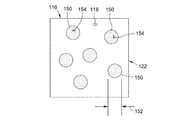
有利には、歪能力の高い高分子ナノ粒子150は、強化フィラメント112のフィラメント断面幅に対して比較的小さい粒子断面幅152で提供され得る。例えば、高分子ナノ粒子150は10〜200ナノメートルの粒子断面幅152を有し得、強化フィラメント112は5〜30ミクロンのフィラメント断面幅を有し得る。更に、高分子ナノ粒子150は、概して丸い又は球状の形状で提供され得る。高分子ナノ粒子150の比較的小さいサイズ及び/又は概して丸いもしくは球状の形状により、樹脂混合物122の粘度増加を未修飾樹脂118の粘度と比較して最小限に抑え、高分子ナノ粒子150が比較的高い担持レベルで樹脂118に添加されることが可能となる。一実施例で、高分子ナノ粒子150は、体積比で樹脂混合物122の75パーセントまでを構成し得る。樹脂混合物122の比較的低い粘度により、複合材レイアップ102の処理が促進され得、埋め込み繊維を通る樹脂のフローが促進され得る。
Advantageously, the high strain
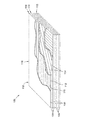
図2は、繊維110と樹脂118に埋め込まれた複数の歪能力の高い高分子ナノ粒子150とを含む複合材プライ104のスタックで作製された、複合材構造体100の概略図である。図示の実施例で、複合材プライ104は一方向性プライ108として構成されている。一方向性プライ108の各々は、概して平行であり連続的な強化繊維110又は繊維トウ110を含み得る。一実施例で、一方向性プライ108は、互いに隣り合って配置された複数の一方向性テープ114又は繊維トウ110で作製され得る。繊維トウ110の各々は、数千本の強化フィラメント112で作製され得る。例えば、1本の繊維トウ110が最大で100,000本を超える強化フィラメント120を含み得る。幾つかの実施例で、強化フィラメントは、5〜30ミクロンの断面幅又は直径のフィラメントを有する。例えば、炭素強化フィラメントは、約5〜7ミクロンの断面幅のフィラメントを有してもよい。ガラス強化フィラメントは、10〜25ミクロンの断面幅のフィラメントを有してもよい。本開示で、繊維、複合材繊維、強化繊維、及び繊維トウの語が交換可能に使用されてもよい。
FIG. 2 is a schematic view of a
図2は一方向性プライ108で形成された複合材レイアップ102を示すが、複合材レイアップ102は、一方向性テープ、繊維織物、編み上げ繊維、ステッチ繊維の形態、チョップドファイバの形態、及び任意の他のタイプの波形及び非波形繊維の形態を含むがこれらに限定されない、種々の多様な繊維形態のうちの任意の複合材プライ104を用いて提供されてよい。複合材レイアップ102内の繊維110の構成に関わらず、有利には、樹脂118が、樹脂混合物122の歪能力を向上させ得る複数の歪能力の高い高分子ナノ粒子150を含み得る。更に、強化繊維110又は強化フィラメント112を含まない用途では、歪能力の高い高分子ナノ粒子150が樹脂混合物122内に含まれ得る。例えば、歪能力の高い高分子ナノ粒子150は、接着剤、コーティング、射出成型可能なプラスチック、及びその他の用途として用いられる樹脂内に含まれ得る。
FIG. 2 shows a
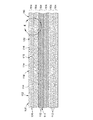
図3は、図2の複合材構造体100の一部の断面を示し、異なる角度に向きを合わされた一方向性プライ108の強化フィラメント112を示す。例えば、中間の2つの複合材プライ104は、紙面に平行に向きを合わされ得る強化フィラメント112を含み得る。最上部の複合材プライ104及び最下部の複合材プライ104は、紙面に直角の方向に沿って向きを合わされ得る。複合材プライ104の中間と最上部との間、並びに複合材プライ104の中間と最下部との間に配置され得る複合材プライ104は、紙の面に対して非平行且つ非垂直に配向される強化フィラメント120を含み得る。しかしながら、複合材プライ104のうちの何れもが、複合材レイアップ102内の他の複合材プライ104の強化フィラメント112に対して任意の角度に向きを合わされた強化繊維110を含み得る。更に、複合材プライ104のうちの何れもが、一方向性テープ以外の繊維形態で提供され得る。
FIG. 3 shows a cross-section of a portion of the
図2に示されているような複合材構造体100は、複合材プライ104のスタックをレイアップすることにより形成され得る。一実施例で、複合材プライ104は、樹脂混合物122を用いて予含浸され得る(例えば、プリプレグ複合材プライ)。樹脂混合物122は、歪能力の高い高分子ナノ粒子150を含み得る。樹脂混合物122の粘度を低下させ、これにより樹脂混合物122が流動し、隣接した複合材プライ104の樹脂混合物122と混合されるように、プリプレグ複合材プライ104のスタックに熱が加えられ得る。プリプレグ複合材プライ104の樹脂混合物122を硬化及び/又は固化するために、熱及び/又は圧力が加えられ得る。複合材構造体100を得るために、複合材レイアップ102が能動的に又は受動的に冷却され得る。
A
プリプレグ工程の前又はプリプレグ工程中に、高い歪能力を有する高分子ナノ粒子150が複合材プライ104に塗布され得る。幾つかの実施例で、各繊維110トウを構成する強化フィラメント112の内部に又は間に高分子ナノ粒子が埋め込まれるように、繊維トウ110、一方向性テープ、繊維織物、又は他の繊維形態に、高分子ナノ粒子150が塗布され得る。例えば、繊維トウ110をプリプレグ繊維形態(プリプレグ一方向性テープ、プリプレグ一方向性シート、プリプレグ繊維織物、プリプレグ編み上げ繊維110、及び他のプリプレグ繊維形態など)へと形成する前に、移動中の繊維トウ110の強化フィラメント112上に高分子ナノ粒子150がスプレー噴霧され得る。
Prior to or during the prepreg process,
代替的に、複合材レイアップ102は、ドライ繊維複合材プライ104をスタックすることにより形成され得る。ドライ繊維複合材プライ104に、歪能力の高い高分子ナノ粒子150を含有する樹脂混合物122が注入され得る。樹脂混合物122は、適切な樹脂注入プロセスを用いてドライ繊維複合材プライ104へ注入され得る。例えば、歪能力の高い高分子ナノ粒子150を含有する樹脂混合物122が、真空支援型樹脂トランスファー成形(VARTM)、大気圧制御圧力樹脂注入(CAPRI)、又は他の様々な樹脂トランスファープロセスのうちの任意のものを用いて、ドライ繊維複合材プライ104へ注入され得る。樹脂混合物122の注入後、複合材レイアップ102は固化され得る。樹脂混合物122を硬化及び/又は凝固させて複合材構造体100を形成するために、熱及び/又は圧力が複合材レイアップ102に加えられ得る。
Alternatively, the
本明細書に記載の任意の実施例で、樹脂118及び/又は高分子ナノ粒子は、熱可塑性材料及び/又は熱硬化性材料で形成され得る。熱可塑性材料は、アクリル、フルオロカーボン、ポリアミド、ポリオレフィン(例えば、ポリエチレン、ポリプロピレン)、ポリエステル、ポリカーボネート、ポリウレタン、ポリアリールエーテルケトン(例えば、ポリエーテルエーテルケトン(PEEK)、ポリエーテルケトンケトン(PEKK)、ポリエーテルケトンエーテルケトン(PEKEK))、など)、ポリエーテルイミド、ポリエーテルスルホン、ポリスルホン、及び/又はポリフェニルスルホンを含み得る。熱硬化性材料は、ポリウレタン、フェノール、ポリイミド、スルホン化ポリマー(ポリフェニレンスルファイド)、導電性ポリマー(例えば、ポリアニリン)、ベンゾオキサジン、ビスマレイミド、シアン酸エステル、ポリエステル、エポキシ、及びシルセスキオキサンを含み得る。強化フィラメント120は、炭素、炭化ケイ素、ホウ素、セラミックなどの材料、及び金属材料から形成されてもよい。強化フィラメント112は、Eガラス(アルミノホウケイ酸ガラス)、Sガラス(アルミノケイ酸ガラス)、純シリカ、ホウケイ酸ガラス、光学ガラス、及び他のガラス組成物から形成されてもよい。
In any of the examples described herein, the
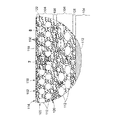
図4は、図3の複合材構造体100の一部を示し、樹脂混合物122内の複数の歪能力の高い高分子ナノ粒子150を示す。図示のように、高分子ナノ粒子150は強化フィラメント112のフィラメント断面幅に対して比較的小さい粒子断面幅152を有し得る。図示の実施例で、高分子ナノ粒子150は、複合材レイアップ102全体に均一に分布し得る。例えば、高分子ナノ粒子150は、一方向性テープ114の各々の強化フィラメント112の間に含まれ得る。更に、高分子ナノ粒子150は、隣接した複合材プライ104の間の層間領域106に含まれ得る。更に、高分子ナノ粒子150は、複合材プライ104の一方向性テープ114の隣接したペアの対向する側端間の空間に含まれ得る。
FIG. 4 shows a portion of the
これに関して、複合材レイアップ102は、強化フィラメント112を囲む及び/又は一方向性テープの強化フィラメント112間に埋め込まれる高分子ナノ粒子150を含有する、プリプレグ一方向性テープ114で構成され得る。複合材レイアップ102の処理中、樹脂118の粘度を低下させるために樹脂混合物122に熱が加えられ得、これにより、同じ複合材プライ104内で及び隣接した複合材プライ104内で、プリプレグ一方向性テープ114の各々の樹脂混合物122が流動して一方向性テープ114の樹脂混合物122と混合することが可能となる。樹脂混合物122の混合により、結果として、高分子ナノ粒子150が複合材レイアップ102全体に、概して均一に分散され得る。
In this regard, the
しかしながら、他の実施例で、高分子ナノ粒子150は、複合材レイアップ102の一方向性プライ108のレイアップ中及び/又はレイアップ後に、標的位置に選択的に塗布され得る。歪能力の高い高分子ナノ粒子150は、複合材レイアップ102の樹脂リッチなポケットに塗布され得る。樹脂リッチなポケットは、複合材レイアップ102のその位置における繊維110の体積に対して、比較的高い体積の樹脂118を含有し得る。他の実施例で、歪能力の高い高分子ナノ粒子150は、繊維ベッド内に(例えば、繊維トウ110もしくは複合材プライ104を構成する強化フィラメント112内に又はこれらの間に)優先的に塗布され得る。更に、高分子ナノ粒子は、複合材レイアップ102のある領域に選択的に塗布され得る一方、複合材レイアップ102の他の領域は高分子ナノ粒子150を含まない。例えば、高分子ナノ粒子150は、複合材レイアップ102の層間領域106のうちの一又は複数に塗布され得、複合材レイアップ102の他の領域は高分子ナノ粒子150を含まなくてもよい。
However, in other examples, the
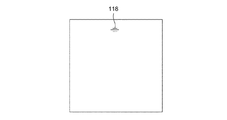
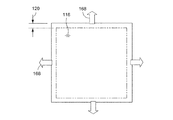
図5は、硬化された未修飾樹脂118のユニットセル(最小単位(unit cell))の概略図であり、高分子ナノ粒子を含まない未修飾樹脂118を示す。未修飾樹脂118は、より低い破壊歪を有し得るか又は熱可塑性樹脂118よりも脆弱であり得る、熱硬化性材料で作成され得る。図5Aは、硬化された未修飾樹脂118に対する2軸引張168の印加を示す概略図であり、未修飾樹脂118全体に亘り全方向に均一に分散される樹脂歪120を示す。
FIG. 5 is a schematic diagram of a unit cell (unit cell) of cured
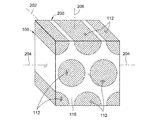
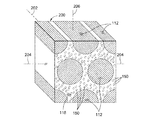
図6は、未修飾樹脂118に埋め込まれた強化フィラメント112を含有する、複合材構造体100の例示的なブロック200の概略斜視図である。強化フィラメント112は、例示的なブロック200の第1の方向202に沿って向くように図示されている。図6には、第1の方向202に直角方向の第2の方向204、並びに、第1の方向及び第2の方向204に対して直角方向の第3の方向206も示されている。図6Aは、強化フィラメント112に平行な第1の方向202に沿って図6の例示的なブロック200に印加される単軸引張負荷208の概略斜視図であり、第1の方向202に沿って生じた引張歪210を示している。未修飾樹脂118を含有する強化フィラメント112が、第2の方向204及び第3の方向206に沿った収縮を拘束するので、複合材構造体100の例示的なブロック200は、第2の方向204及び第3の方向206に沿って比較的小さい歪を呈する。上述のように、未修飾樹脂118の低下した、引張負荷方向を横切る方向に沿った収縮又は歪能力により、強化フィラメント112の歪は制限され、複合材構造体100の性能が損なわれる。
FIG. 6 is a schematic perspective view of an
図7は、図4の線7で切り取った、硬化された樹脂混合物122のユニットセルの概略図であり、樹脂混合物122内の高い歪能力を有する複数の高分子ナノ粒子150を示している。これに関して、硬化された樹脂混合物122は、未修飾樹脂118の歪能力よりも大きい、少なくとも1つの方向に沿った歪能力を有し得る。上述のように、歪能力の高い高分子ナノ粒子150は、未修飾樹脂118よりも高い歪能力を有すると特徴付けられ得る。例えば、高分子ナノ粒子150は、高分子ナノ粒子150の材料組成物116(例えば、ポリウレタン、エチレンプロピレンゴム)のポリマー骨格154の性質に起因し、本質的に高い歪能力を有し得る。
FIG. 7 is a schematic diagram of a unit cell of the cured
上述のように、歪能力の高い高分子ナノ粒子150は、比較的小さい粒子断面幅152又は約10〜200ナノメートルの直径を備え得る。幾つかの実施例で、高分子ナノ粒子は10〜100ナノメートルの断面幅を有し得る。しかしながら、特定の用途では、高分子ナノ粒子が2ミクロンまでの断面幅を有し得る。有利には、高分子ナノ粒子150の比較的小さい粒子断面幅152は、含浸工程又は樹脂注入中に発生し得る過度に大きいナノ粒子の除去を防止し得る。これに関して、過剰に大きいナノ粒子が、樹脂の流入中に強化フィラメント112間を通過することを防止され得る。
As described above, the high strain
幾つかの実施例で、樹脂混合物122は、実質的に同じ粒子断面幅152を有し得る高分子ナノ粒子150を含有し得る。しかしながら、他の実施例で、高分子ナノ粒子150のうちの幾つかが、樹脂混合物122内の他の高分子ナノ粒子150の粒子断面幅152とは異なる粒子断面幅152を有し得る。更に、歪能力の高い高分子ナノ粒子150に加えて、樹脂混合物122は、高い歪能力の提供とは異なる機能を有し得る高分子ナノ粒子を含み得る。例えば、樹脂混合物122内の高分子ナノ粒子の少なくとも幾つかが、未修飾樹脂118の靱性よりも高い靱性を有し得る熱可塑性材料で形成され得る。
In some examples, the
例えば、歪能力の高い高分子ナノ粒子150に加えて、樹脂混合物122はまた、樹脂硬化の前もしくは樹脂硬化中、並びに樹脂の大部分が複合材レイアップ102を通流した後、熱可塑性高分子ナノ粒子が完全に又は部分的に樹脂混合物122内に溶解するように、樹脂118内に少なくとも部分的に可溶であり得る、熱可塑性高分子ナノ粒子(図示せず)を含有し得る。熱可塑性高分子ナノ粒子の溶解の結果、樹脂混合物122は、硬化された未修飾樹脂118の靱性に対して増大した靱性を有し得る。樹脂混合物122の増大した靱性より、運用中の複合材構造体100の熱サイクル及び/又は機械的負荷において、複合材構造体100内の亀裂発生もしくは亀裂成長が低減又は防止され得る。一実施形態で、高分子ナノ粒子150の少なくとも幾つかは、樹脂118と高分子ナノ粒子150との間で負荷を伝達可能であり得る、シース(図示せず)内に含有され得る。他の実施例で、シースは少なくとも部分的に樹脂118に可溶であり得る。例えば、シースの溶解が、硬化された樹脂118の靱性の向上に繋がるように、シースは熱可塑性であり得る。
For example, in addition to the high strain
好ましくは、歪能力の高い高分子ナノ粒子150及び/又は他のタイプの高分子ナノ粒子は、樹脂混合物122の粘度に対する高分子ナノ粒子の影響を低下させる手段として、丸い形状又は球状の形状で提供され得る。高分子ナノ粒子の概して丸い形状又は球状の形状により、樹脂注入もしくは樹脂流入中、ナノ粒子が強化フィラメント112間に滑り込むことが可能となり得、鋭利な端部もしくは角部を有する、球状でない形状又は複雑な形状のナノ粒子の場合に発生し得る、高分子ナノ粒子の強化フィラメント112又は他の高分子ナノ粒子とのインターロックが回避され得る。しかしながら、高分子ナノ粒子が球状でない形状で提供されてもよい。例えば、高分子ナノ粒子は、長方形もしくは楕円形状などの概して丸い形状、又は、立方体、長方形、ピラミッド型、及びその他の形状を含むがこれらに限定されない3次元のファセット形状として提供され得る。
Preferably, the high-
高分子ナノ粒子の丸い形状もしくは球状の形状及び/又は比較的小さい粒子断面幅152により、樹脂の粘度に対する影響が比較的小さく、樹脂混合物122内の高分子ナノ粒子の比較的高い濃度を可能とし得る。幾つかの実施例で、高分子ナノ粒子200は、樹脂118及び高分子ナノ粒子200を含有する、体積比で樹脂混合物122の75パーセントまでを構成し得る。好ましくは、高分子ナノ粒子200は、高分子ナノ粒子200の体積百分率の範囲の下限として、樹脂混合物114の体積の最小10%を占めてもよい。しかしながら、幾つかの例では、高分子ナノ粒子200は、範囲の下限で、体積の5%未満を占めてもよい。更に他の例では、高分子ナノ粒子200は、範囲の下限で、樹脂混合物114の10%未満を占めてもよい。更なる例では、高分子ナノ粒子200は、範囲の下限で、体積の15%未満を占めてもよい。
The round or spherical shape of the polymer nanoparticles and / or the relatively small particle
ある種の応用では、高分子ナノ粒子200の体積百分率の範囲の上限として、樹脂混合物114の体積の最大65%で高分子ナノ粒子200を提供することが望ましいことがある。しかしながら、幾つかの例では、高分子ナノ粒子200は、範囲の上限として、体積の50%未満を占めてもよい。ある種の応用では、高分子ナノ粒子200は、樹脂混合物114の高分子ナノ粒子200の体積百分率の範囲に関する上述の下限及び上限の任意の組み合わせで提供されてもよい。高分子ナノ粒子200の体積百分率の範囲に関する上述の下限及び上限の非限定的な組み合わせには、高分子ナノ粒子200が樹脂混合物114の体積百分率で5〜75%を占める配合が含まれる。別の例では、樹脂混合物114の体積百分率で10〜75%を占める高分子ナノ粒子200が含まれる。更に他の例では、高分子ナノ粒子200は、樹脂混合物114の体積百分率で15〜65%を占めてもよい。更に別の例では、高分子ナノ粒子200は、樹脂混合物114の体積百分率で20〜50%を占めてもよい。有利には、概して丸い形又は球形の高分子ナノ粒子200は、樹脂112内での高分子ナノ粒子200の濃度が直線的に上昇するにつれて樹脂112の特性を直線的に改善し、樹脂の粘度の影響は最小限又は無視しうる程度に抑えることができる。
For certain applications, it may be desirable to provide the
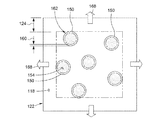
図7Aは、図5Aの未修飾樹脂118に印加された二軸引張168と同じ大きさで、図7の硬化された樹脂混合物122に印加された、二軸引張168の概略図である。二軸引張168負荷の印加に応答して、歪能力の高い高分子ナノ粒子150は、ナノ粒子の膨張162を呈し得る。これに関して、高分子ナノ粒子150の膨張又は拡張により、図5Aに示す未修飾樹脂118の歪に対して、樹脂118マトリクスの歪における増大が可能となり得る。図7Aで、全方向に均一に伸びている樹脂混合物122の歪が示される。樹脂118高分子ナノ粒子間の領域はポアソン比に起因して歪み得、結果として樹脂118マトリクスの歪能力が増大し得る。
7A is a schematic diagram of a
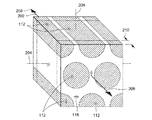
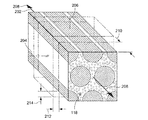
図8は、上述のように高い歪能力を有する高分子ナノ粒子150を含有する樹脂混合物122内に埋め込まれた強化フィラメント112を含有する、複合材構造体100の例示的なブロック200の概略斜視図である。図示の実施例で、高分子ナノ粒子150は、樹脂118マトリクス全体に亘り実質的に均一に分散され得、個々の繊維110トウ(図2)の強化フィラメント112の間及び/又は隣接して配置された複合材レイアップ102繊維110トウの間に、位置し得る。図8Aは、強化フィラメント112の長さに平行な第1の方向202に沿って例示的なブロック200に印加される単軸引張負荷208の概略斜視図である。第2の方向204及び第3の方向206の両方に沿った、樹脂混合物122に生じた圧縮歪212、214も示されている。有利には、複数の高分子ナノ粒子150のナノ粒子歪みの影響は、ポアソン比による高分子ナノ粒子150間の樹脂混合物122の領域の歪みを考慮に入れる。結果として、図6Aに示す例示的なブロック200のより低い引張歪み210の量に対して、複合材構造体100の例示的なブロック200の第1の方向202に沿った引張歪210が増大する。ナノ粒子歪みの結果として増大した歪能力は、複合材構造体100の性能の向上につながり得る。
FIG. 8 is a schematic perspective view of an
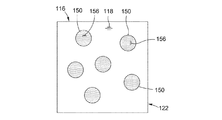
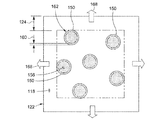
図9は、硬化された修飾済み樹脂118の自由体積よりも大きいナノ粒子自由体積を有する自由体積の大きい高分子ナノ粒子156を含有する、硬化された樹脂混合物122のユニットセルの一実施形態の概略図である。本開示で、自由体積の大きい高分子ナノ粒子156は、オングストロームレベルの空隙率を有するものとして記載され得る。自由体積の大きい高分子ナノ粒子156はまた、高分子組成物を構成するポリマー鎖の端部に未充填体積を含む、高分子組成物を有する材料で作製されるものとして記載され得る。自由体積の大きい高分子ナノ粒子156において、高分子ナノ粒子156の体積の95パーセントまでが、非連結の固体(図示せず)であり得、これにより、自由体積の大きい高分子ナノ粒子156の自由体積の膨張が可能であり得る。非連結の固体は、組成物の体積膨張中に最小限の応力を呈する単一の非固体相を有する組成物を表し得る。図9Aは、図9Aの硬化された樹脂混合物122に印加される二軸引張168の概略図であり、未修飾樹脂118(図5A)の歪能力よりも高い、発生したナノ粒子歪160及び樹脂混合物歪124を示す。樹脂混合物122の歪は、自由体積の大きい高分子ナノ粒子156の比較的高い膨張能力によって提供され得る。
FIG. 9 illustrates one embodiment of a unit cell of a cured
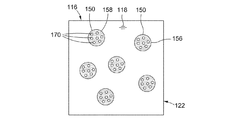
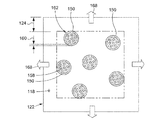
図10は、複数の細孔170を各々が有する多孔性高分子ナノ粒子158を含有する樹脂118を含む、硬化された樹脂混合物122のユニットセルの概略図である。幾つかの実施例で、多孔性高分子ナノ粒子158は、硬化された未修飾樹脂118の空隙率よりも高いナノ粒子空隙率を有し得る。多孔性高分子ナノ粒子は単一の細孔170を含有し得る。幾つかの実施例で、単一の細孔170が、多孔性高分子ナノ粒子158の外面に密封される全体積の50パーセントよりも多くを占め得る。しかしながら、他の実施例で、単一の多孔性高分子ナノ粒子158が複数の細孔170を有し得る。幾つかの実施例では、細孔170が、多孔性高分子ナノ粒子158の全体積の50パーセントよりも多くを占め得る。代替的に、多孔性高分子ナノ粒子158は、多孔性高分子ナノ粒子158の全体積の50パーセントを下回る細孔170の全体積を有し得、樹脂118の空隙率よりも高い空隙率を有し得る。多孔性高分子ナノ粒子158はまた、水の浸入を最小限に抑えるために、少なくとも部分的に、疎水性又は超疎水性の材料で作製され得る。好ましくは、空隙率のレベルに関わらず、多孔性高分子ナノ粒子158は未修飾樹脂118よりも高い歪能力を有する。図10Aは、図10Aの硬化された樹脂混合物122に印加される二軸引張168の概略図であり、未修飾樹脂118(図5A)の歪能力よりも高い、ナノ粒子歪160及び樹脂混合物歪124を示している。
FIG. 10 is a schematic view of a unit cell of a cured
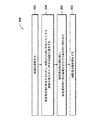
図11は、複合構造物100の製造方法300に含まれ得る一又は複数の工程を示すフロー図である。本方法の工程302は、上述の熱可塑性材料又は熱硬化性材料のうちの任意の1つで形成され得る樹脂118を提供することを含む。
FIG. 11 is a flowchart showing one or a plurality of steps that can be included in the
方法の工程304は、歪特性が向上した樹脂混合物122を形成するために、複数の歪能力の高い高分子ナノ粒子150を樹脂118に混合することを含み得る。上述のように、歪能力の高い高分子ナノ粒子150の歪能力は、高分子ナノ粒子150のポリマー骨格154の性質、自由体積の大きい高分子ナノ粒子156、及び/又は一又は複数の細孔170を有する多孔性高分子ナノ粒子158、を含むがこれらに限定されない、一又は複数の特性によって提供され得る。歪能力の高い高分子ナノ粒子150は、未修飾樹脂118の体積歪能力よりも高い体積歪能力を有し得る。
プリプレグ工程の前に又はその間に、歪能力の高い高分子ナノ粒子150が樹脂118に添加され得る。代替的に、歪能力の高い高分子ナノ粒子150は、液体樹脂注入プロセス中、樹脂118を複合材レイアップ102に注入する前に液体樹脂118と混合され得る。更に、歪能力の高い高分子ナノ粒子150は、複合材レイアップ102の一又は複数の複合材プライ104間にレイアップされ得る樹脂フィルム(図示せず)に含まれ得る。更なる実施例で、樹脂マトリクスの歪能力を高めるために、歪能力の高い高分子ナノ粒子150は、複合材レイアップ102の標的領域に添加され得る。更なる態様では、他の機能を有する高分子ナノ粒子が歪能力の高い高分子ナノ粒子150に含まれ得る。例えば、樹脂の靱性、弾性率、強度、熱膨張率(CTE)、不燃性、発煙性及び毒性レベル、導電性、及び/又は耐食性を高めるために、高分子ナノ粒子が樹脂118に添加され得る。更に、硬化による収縮、反応熱を低減し、並びに/又は、複合材レイアップ102及び/もしくは複合材構造体100の他の特性を向上させるために、高分子ナノ粒子が添加され得る。
Prior to or during the prepreg process, high-straining
方法の工程306は、樹脂混合物122の硬化前に、樹脂混合物122内に強化繊維110を埋め込むことを含み得る。上述のように、強化繊維110は、歪能力の高い高分子ナノ粒子150を含有する樹脂混合物122で予含浸され得る。プリプレグ繊維110は、一方向性テープ、繊維織物、編み上げ繊維、又は他の繊維形態を含む様々な任意の繊維形態で配置され得る。代替的に、高分子ナノ粒子150を含有する樹脂混合物122は、任意の様々な樹脂注入処理を用いてドライ繊維110レイアップ内に注入され得る。
方法の工程308は、樹脂混合物122を硬化することを含み得る。幾つかの実施例で、複合材レイアップ102を固化して繊維体積率を向上させるために、並びに/又は揮発性物質及び/もしくはボイドを複合材レイアップ102から除去するために、硬化前又は硬化中に圧力が印加され得る。固化に続いて、樹脂混合物122を硬化又は固化して複合材構造体100を形成するために、熱及び/又は圧力が加えられ得る。
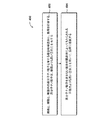
図12は、複合材構造体100に印加される負荷に抵抗する方法400の一又は複数の工程を示すフロー図である。本方法の工程402は、高い歪能力を有する高分子ナノ粒子150を含有する硬化された樹脂混合物122を有する複合材構造体100に、負荷を印加することを含み得る。上述のように、歪能力の高い高分子ナノ粒子150の添加により、樹脂混合物122及び/又は複合材構造体100のポアソン比に起因して収縮する能力を高めることによって樹脂118の性能が直接的に向上し得、これにより、樹脂の歪能力が高まり、従って複合材構造体100の性能が向上し得る。有利には、歪能力の高い高分子ナノ粒子の添加により、ベースとなる樹脂118の化学構造を変更することが回避され、これにより耐溶剤性及びその他の特性を含む樹脂の特性が影響を受けない。
FIG. 12 is a flow diagram illustrating one or more steps of a
方法の工程404は、未修飾樹脂118の体積歪能力よりも高い樹脂混合物122の体積歪能力を用いて、複合材構造体100に対する負荷に抵抗することを含み得る。一実施例で、方法は、複合材構造体100の第1の軸又は第1の方向202に沿って負荷を印加すること、及び、未修飾の樹脂118を含有する複合材構造体100の歪能力よりも高い硬化された樹脂混合物122の歪能力を用いて、負荷に抵抗することを含み得る。例えば、複合材構造体100が単軸引張で負荷をかけられ得る。高分子ナノ粒子150の歪能力の結果、単軸引張負荷は、樹脂118を含有する複合材構造体100の引張歪よりも大きい、第1の軸又は第1の方向202に沿った複合材構造体100の引張歪を引き起こし得る。方法は更に、第1の方向202を横切る方向を向く、第2の軸又は第2の方向204に沿って、圧縮歪によって単軸引張荷重に抵抗することを含み得る。高分子ナノ粒子を含有する複合材構造体100の第2の方向204に沿った圧縮歪は、未修飾の樹脂118を含有する複合材構造体100の圧縮歪よりも大きくなり得る。
幾つかの実施例で、方法は、強化フィラメント112が互いに接触することを防ぎ繊維120(図4)の浸透性を制御するための離間材(スペーサ)として機能する、一又は複数の強化フィラメント112に、複数の高分子ナノ粒子200を結合することを含み得る。高分子ナノ粒子200は、強化フィラメント112が繊維形成装置(図示せず)から引かれている間、強化フィラメント112に塗布され得る。他の実施例で、高分子ナノ粒子200は、繊維トウ110が、一方向性テープ、一方向性シート、繊維織物、編み上げ繊維、及び他の繊維形態へと形成される間、強化フィラメント112に塗布され得る。高分子ナノ粒子200はまた、プリプレグ工程中に、一又は複数の強化フィラメント112に結合されるか又は塗布されてもよく、この場合、繊維トウ、一方向性テープ、繊維織物、編み上げ繊維、及び繊維形態に樹脂118が塗布され得る。
In some embodiments, the method prevents the reinforcing
幾つかの実施例では、高分子ナノ粒子200が強化フィラメント112に溶融(melt−fuse)され得る。例えば、高分子ナノ粒子200が熱可塑性材料で形成され、又は、高分子ナノ粒子200が、コアを包囲する熱可塑性シースを各々が有する、コアシースナノ粒子(図示せず)として構成されてもよい。コアシースナノ粒子が強化フィラメント112と接触すると、強化フィラメント112及び/又は高分子ナノ粒子のシースは、コアシースナノ粒子の外部の強化フィラメント112に対する接合又は溶融が引き起こされる温度まで、加熱され得る。
In some embodiments, the
本開示の例示的な実施形態は、航空機、宇宙船、衛星、又は他の航空宇宙コンポーネントの製造及び保守方法(図示せず)の内容に記述される。製造前の段階では、コンポーネントの製造及び/又は保守は、航空宇宙コンポーネントの仕様及び設計、並びに材料の調達を含み得る。製造段階では、航空宇宙コンポーネントのコンポーネント及びサブアセンブリの製造、並びにシステムインテグレーションが行われる。その後、航空機、宇宙性、衛星、又は他の航空宇宙コンポーネントは、認可及び納品を経て運航に供され得る。 Exemplary embodiments of the present disclosure are described in the context of manufacturing and service methods (not shown) of aircraft, spacecraft, satellites, or other aerospace components. In the pre-manufacturing stage, component manufacture and / or maintenance may include aerospace component specification and design, and material procurement. In the manufacturing phase, components and subassemblies of aerospace components and system integration are performed. Thereafter, aircraft, space, satellite, or other aerospace components can be put into service via authorization and delivery.
1つの例では、製造及び保守方法によって製造された航空宇宙コンポーネントは、複数のシステム及び内装を有する機体を含む。複数のシステムの例には、推進システム、電気システム、油圧システム、及び環境システムのうちの一又は複数が含まれる。任意の数の他のシステムが含まれ得る。航空宇宙産業の例を示したが、様々な例示的な実施形態は、自動車産業などの他の産業にも適用され得る。 In one example, an aerospace component manufactured by a manufacturing and maintenance method includes a fuselage having multiple systems and interiors. Examples of the plurality of systems include one or more of a propulsion system, an electrical system, a hydraulic system, and an environmental system. Any number of other systems may be included. Although an example of the aerospace industry has been shown, various exemplary embodiments may be applied to other industries such as the automotive industry.
本明細書で具現化されている装置及び方法は、航空宇宙コンポーネントの製造及び/又は保守方法の段階のうちの少なくとも1つにおいて採用されることがある。具体的には、複合材構造体100(例えば、図1)、被覆、射出成形プラスチック、及び/又は接着剤は、航空宇宙コンポーネントの製造及び保守方法の段階のうちのいずれか1つにおいて製造されてもよい。例えば、限定しないが、複合材構造体は、コンポーネント及びサブアセンブリの製造、システムインテグレーション、定期的な製造及び保守、又は航空機の製造及び保守における他の何らかの段階のうちの少なくとも1つで製造され得る。更には、複合材構造体は、一又は複数の航空宇宙コンポーネントで使用され得る。例えば、複合材構造体は、航空機、宇宙船、衛星、又は他の航空宇宙コンポーネントの機体の構造、内装、又は他の部品に含まれ得る。 The apparatus and methods embodied herein may be employed in at least one of the stages of an aerospace component manufacturing and / or maintenance method. Specifically, the composite structure 100 (eg, FIG. 1), the coating, the injection molded plastic, and / or the adhesive is manufactured at any one of the stages of aerospace component manufacturing and maintenance methods. May be. For example, without limitation, the composite structure may be manufactured in at least one of component and subassembly manufacturing, system integration, periodic manufacturing and maintenance, or some other stage in aircraft manufacturing and maintenance. . Furthermore, the composite structure may be used in one or more aerospace components. For example, the composite structure may be included in the aircraft structure, interior, or other part of an aircraft, spacecraft, satellite, or other aerospace component.
本開示の一態様によれば、樹脂、複数の高分子ナノ粒子、樹脂内に埋め込まれた複数の強化繊維を含有する複合材構造体が提供され、高分子ナノ粒子のうちの少なくとも幾つかは、下記の少なくとも1つ:高分子ナノ粒子のポリマー骨格の性質、樹脂の自由体積よりも大きいナノ粒子自由体積、及び、樹脂の空隙率よりも大きいナノ粒子空隙率に起因して、樹脂よりも高い歪能力を有する。有利には、複合材構造体は、その繊維が下記のうちの少なくとも1つの構成:繊維トウ、一方向性テープ、繊維織物、及び/又は編み上げ繊維を有する。有利には、高分子ナノ粒子は、体積比で樹脂混合物の10パーセント以上を構成し、高分子ナノ粒子は、体積比で樹脂混合物の75パーセントまでを構成する。 According to one aspect of the present disclosure, a composite structure is provided that includes a resin, a plurality of polymer nanoparticles, and a plurality of reinforcing fibers embedded in the resin, wherein at least some of the polymer nanoparticles are At least one of the following: due to the nature of the polymer skeleton of the polymer nanoparticles, the nanoparticle free volume greater than the resin free volume, and the nanoparticle porosity greater than the resin porosity High distortion ability. Advantageously, the composite structure has its fibers having at least one of the following configurations: fiber tow, unidirectional tape, fiber fabric, and / or braided fibers. Advantageously, the polymeric nanoparticles comprise 10 percent or more of the resin mixture by volume ratio, and the polymeric nanoparticles comprise up to 75 percent of the resin mixture by volume ratio.
本開示の一態様によれば、組成物の形成方法が提供され、本方法は、樹脂を提供すること、及び、樹脂混合物を形成するために樹脂内に複数の高分子ナノ粒子を混合することを含み、高分子ナノ粒子の少なくとも幾つかは、下記の少なくとも1つ:高分子ナノ粒子のポリマー骨格の性質、樹脂の自由体積よりも大きいナノ粒子自由体積、及び、樹脂の空隙率よりも高いナノ粒子空隙率に起因して、樹脂よりも高い歪能力を有する。有利には、方法は更に、樹脂混合物の硬化前に、樹脂混合物内に強化繊維を少なくとも部分的に埋め込むことを含む。 According to one aspect of the present disclosure, a method of forming a composition is provided, the method providing a resin and mixing a plurality of polymeric nanoparticles in the resin to form a resin mixture. And at least some of the polymer nanoparticles are at least one of the following: the nature of the polymer backbone of the polymer nanoparticles, the nanoparticle free volume greater than the resin free volume, and the resin porosity higher Due to the nanoparticle porosity, it has a higher strain capacity than the resin. Advantageously, the method further comprises at least partially embedding reinforcing fibers in the resin mixture prior to curing of the resin mixture.
本開示の一態様によれば、樹脂、複数の高分子ナノ粒子を含む組成物が提供され、高分子ナノ粒子の少なくとも幾つかは、下記の少なくとも1つ:高分子ナノ粒子のポリマー骨格の性質、樹脂の自由体積よりも大きいナノ粒子自由体積、及び、樹脂の空隙率よりも高いナノ粒子空隙率に起因して、樹脂よりも高い歪能力 を有する。有利には、組成物は、高分子ナノ粒子は、体積比で樹脂混合物の10パーセント以上を構成し、高分子ナノ粒子は、体積比で樹脂混合物の75パーセントまでを構成する。 According to one aspect of the present disclosure, a composition comprising a resin, a plurality of polymer nanoparticles is provided, wherein at least some of the polymer nanoparticles are at least one of the following: the nature of the polymer backbone of the polymer nanoparticles Due to the nanoparticle free volume larger than the resin free volume and the nanoparticle porosity higher than the resin porosity, it has a higher strain capacity than the resin. Advantageously, in the composition, the polymeric nanoparticles comprise 10 percent or more of the resin mixture by volume, and the polymeric nanoparticles comprise up to 75 percent of the resin mixture by volume.
本発明のさらなる修正及び改良は、当業者には明らかであろう。したがって、本明細書に記載され、示される部分の特定の組み合わせは、本開示のある特定の実施形態を表すことを意図するのみであり、本開示の精神及び範囲内にある代替的な実施形態又は装置を限定するものではない。 Further modifications and improvements of the invention will be apparent to those skilled in the art. Accordingly, the specific combinations of parts described and illustrated herein are intended only to represent certain embodiments of the disclosure, and alternative embodiments that are within the spirit and scope of the disclosure. Alternatively, the apparatus is not limited.
100 複合材構造体
102 複合材レイアップ
104 複合材プライ
106 層間領域
108 一方向プライ
110 繊維トウ
112 強化フィラメント
114 樹脂混合物
116 組成物
118 樹脂
120 強化フィラメント
122 樹脂混合物
124 樹脂混合物ひずみ
150 高分子ナノ粒子
152 粒子断面幅
154 ポリマー骨格
156 自由体積の大きい高分子ナノ粒子
158 多孔性高分子ナノ粒子
160 ナノ粒子ひずみ
162 拡張
168 2軸引張
170 ポア
200 高分子ナノ粒子
202 第1の方向
204 第2の方向
206 第3の方向
208 単軸引張負荷
210 引張ひずみ
212、214 圧縮ひずみ
300、400 方法
DESCRIPTION OF
Claims (15)
複数の高分子ナノ粒子(150)、
前記樹脂と前記高分子ナノ粒子とを含む樹脂混合物(122)を含む組成物であって、
前記高分子ナノ粒子(150)の少なくとも幾つかが、
前記高分子ナノ粒子(150)のポリマー骨格の性質、
前記樹脂(118)の自由体積よりも大きいナノ粒子自由体積、及び
前記樹脂(118)の空隙率よりも高いナノ粒子空隙率
のうちの少なくとも1つに起因して、前記樹脂(118)よりも高い歪能力を有する、組成物。 Resin (118),
A plurality of polymer nanoparticles (150),
A composition comprising a resin mixture (122) comprising the resin and the polymer nanoparticles,
At least some of the polymeric nanoparticles (150) are
The nature of the polymer backbone of the polymer nanoparticles (150);
More than the resin (118) due to at least one of the nanoparticle free volume greater than the resin (118) free volume and the nanoparticle porosity higher than the resin (118) porosity. A composition having a high strain capability.
熱可塑性材料、アクリル、フルオロカーボン、ポリアミド、ポリオレフィン、ポリエステル、ポリカーボネート、ポリウレタン、ポリアリールエーテルケトン、ポリエーテルイミド、ポリエーテルスルホン、ポリスルホン、及びポリフェニルスルホン、
熱硬化性材料、ポリウレタン、フェノール、ポリイミド、スルホン化ポリマー、導電性ポリマー、ベンゾオキサジン、ビスマレイミド、シアン酸エステル、ポリエステル、エポキシ、及びシルセスキオキサン
のうちの少なくとも1つで構成される、請求項1から8の何れか一項に記載の組成物。 The resin (118) and / or the polymer nanoparticles (150)
Thermoplastic material, acrylic, fluorocarbon, polyamide, polyolefin, polyester, polycarbonate, polyurethane, polyaryletherketone, polyetherimide, polyethersulfone, polysulfone, and polyphenylsulfone,
Composed of at least one of thermosetting material, polyurethane, phenol, polyimide, sulfonated polymer, conductive polymer, benzoxazine, bismaleimide, cyanate ester, polyester, epoxy, and silsesquioxane Item 9. The composition according to any one of Items 1 to 8.
前記樹脂混合物(122)が、硬化されると、前記高分子ナノ粒子(150)を含まない硬化された樹脂(118)の靱性に対して増大した靱性を有する、請求項1から9の何れか一項に記載の組成物。 At least some of the polymeric nanoparticles (150) are formed of a thermoplastic material and are at least partially soluble in the resin (118);
The resin mixture (122), when cured, has an increased toughness relative to the toughness of the cured resin (118) that does not include the polymeric nanoparticles (150). The composition according to one item.
前記樹脂(118)と前記高分子ナノ粒子との間で負荷を伝達可能であるか、
少なくとも部分的に前記樹脂(118)に可溶であるかの何れかである、シース内に含有される、請求項1から10の何れか一項に記載の組成物。 The polymer nanoparticles (150) are
Is it possible to transfer a load between the resin (118) and the polymer nanoparticles,
11. A composition according to any one of the preceding claims, contained within a sheath, which is at least partially soluble in the resin (118).
複数の高分子ナノ粒子(150)を含む樹脂(118)を有する複合材構造体に負荷を印加するステップであって、前記高分子ナノ粒子(150)の少なくとも幾つかが、
前記高分子ナノ粒子(150)のポリマー骨格の性質、
前記樹脂(118)の自由体積よりも大きいナノ粒子自由体積、及び
前記樹脂(118)よりも高い空隙率であるナノ粒子空隙率
の少なくとも1つに起因して、前記樹脂(118)よりも高い歪能力を有する、ステップと、
前記高分子ナノ粒子を含まない樹脂(118)の体積歪能力よりも高い前記樹脂(118)の体積歪能力を用いて、前記負荷に抵抗するステップと
を含む方法。 A method of resisting a load applied to a composite structure,
Applying a load to a composite structure having a resin (118) comprising a plurality of polymer nanoparticles (150), wherein at least some of the polymer nanoparticles (150) are:
The nature of the polymer backbone of the polymer nanoparticles (150);
Higher than the resin (118) due to at least one of the nanoparticle free volume greater than the free volume of the resin (118) and the nanoparticle porosity being a higher porosity than the resin (118) A step having distortion capability;
Resisting the load using a volumetric strain capability of the resin (118) that is higher than a volumetric strain capability of the resin (118) that does not include the polymer nanoparticles.
前記複合材構造体の第1の軸に沿って前記負荷を印加すること、及び
前記高分子ナノ粒子(150)を含まない複合材構造体の歪能力よりも高い、硬化された前記樹脂(118)の前記第1の軸に沿った歪能力を用いて、前記負荷に抵抗すること
を含む、請求項12に記載の方法。 Applying the load and resisting the load;
Applying the load along a first axis of the composite structure, and the cured resin (118) higher than a strain capacity of the composite structure not including the polymer nanoparticles (150). 13. The method of claim 12, comprising resisting the load using a strain capability along the first axis.
前記第1の軸に沿って引張負荷を印加すること、及び
前記高分子ナノ粒子(150)を含まない複合材構造体の引張歪よりも大きい、前記第1の軸に沿った引張歪を用いて、前記負荷に抵抗することを含む、請求項12又は13に記載の方法。 Applying the load and resisting the load;
Applying a tensile load along the first axis, and using a tensile strain along the first axis that is greater than the tensile strain of the composite structure that does not include the polymeric nanoparticles (150). 14. A method according to claim 12 or 13, comprising resisting the load.
前記高分子ナノ粒子(150)を含まない複合材構造体の圧縮歪よりも大きい、前記第2の軸に沿った圧縮歪を用いて、前記負荷に抵抗することを含む、請求項14に記載の方法。 The composite structure has a second axis perpendicular to the first axis and resisting the load further;
15. Resisting the load using a compressive strain along the second axis that is greater than a compressive strain of a composite structure that does not include the polymer nanoparticles (150). the method of.
Applications Claiming Priority (2)
| Application Number | Priority Date | Filing Date | Title |
|---|---|---|---|
| US14/493,369 US10662302B2 (en) | 2014-09-23 | 2014-09-23 | Polymer nanoparticles for improved distortion capability in composites |
| US14/493,369 | 2014-09-23 |
Publications (3)
| Publication Number | Publication Date |
|---|---|
| JP2016166322A true JP2016166322A (en) | 2016-09-15 |
| JP2016166322A5 JP2016166322A5 (en) | 2019-10-10 |
| JP7240079B2 JP7240079B2 (en) | 2023-03-15 |
Family
ID=54325304
Family Applications (1)
| Application Number | Title | Priority Date | Filing Date |
|---|---|---|---|
| JP2015162396A Active JP7240079B2 (en) | 2014-09-23 | 2015-08-20 | Polymer nanoparticles to improve deformability of composites |
Country Status (4)
| Country | Link |
|---|---|
| US (1) | US10662302B2 (en) |
| EP (2) | EP3546504B1 (en) |
| JP (1) | JP7240079B2 (en) |
| ES (1) | ES2742692T3 (en) |
Citations (6)
| Publication number | Priority date | Publication date | Assignee | Title |
|---|---|---|---|---|
| WO2009119467A1 (en) * | 2008-03-25 | 2009-10-01 | 東レ株式会社 | Epoxy resin composition, fiber-reinforced composite material and method for producing the same |
| JP2010126702A (en) * | 2008-12-01 | 2010-06-10 | Toray Ind Inc | Epoxy resin composition, fiber-reinforced composite material, and methods for producing them |
| JP2010242083A (en) * | 2009-03-31 | 2010-10-28 | General Electric Co <Ge> | Cured composite composition |
| JP2011157491A (en) * | 2010-02-02 | 2011-08-18 | Toray Ind Inc | Epoxy resin composition for tow prepreg and tow prepreg |
| JP2012528236A (en) * | 2009-05-28 | 2012-11-12 | サイテク・テクノロジー・コーポレーシヨン | Particle reinforced fiber reinforced polymer composite |
| WO2014050264A1 (en) * | 2012-09-28 | 2014-04-03 | 東レ株式会社 | Prepreg, and carbon fiber reinforced composite material |
Family Cites Families (74)
| Publication number | Priority date | Publication date | Assignee | Title |
|---|---|---|---|---|
| GB1358276A (en) | 1972-06-27 | 1974-07-03 | British Railways Board | Composites of carbon fibres and synthetic plastics materials |
| US3860565A (en) | 1973-10-01 | 1975-01-14 | Minnesota Mining & Mfg | Encapsulated isocyanurate catalyst |
| US4306040A (en) | 1980-11-03 | 1981-12-15 | Monsanto Company | Multiphase core//shell polymers |
| US4629759A (en) | 1985-10-28 | 1986-12-16 | General Electric Company | Flame retardant polyetherimide-polycarbonate blends |
| US4701475A (en) | 1986-06-25 | 1987-10-20 | The Dow Chemical Company | Polyurethanes reinforced with rigid rod micro fillers |
| ES2051274T3 (en) | 1986-12-25 | 1994-06-16 | Toray Industries | HIGHLY RESISTANT COMPOSITE MATERIALS. |
| EP0378854A1 (en) | 1989-01-19 | 1990-07-25 | General Electric Company | Expanded fiber composite structure and process for making said structure |
| US4954195A (en) | 1989-02-13 | 1990-09-04 | Lockheed Corporation | Production of thermoset composites containing thermoplastic fillers |
| EP0392348A3 (en) | 1989-04-14 | 1991-12-27 | Cytec Technology Corp. | Toughened thermosetting structural materials |
| JPH03284988A (en) | 1990-03-31 | 1991-12-16 | Toppan Printing Co Ltd | Reversible recording medium |
| JPH0771804B2 (en) | 1990-10-12 | 1995-08-02 | 株式会社神戸製鋼所 | Carbon fiber prepreg and carbon fiber reinforced resin |
| US5618857A (en) * | 1993-06-24 | 1997-04-08 | Loctite Corporation | Impregnation sealant composition of superior high temperature resistance, and method of making same |
| TW305860B (en) | 1994-03-15 | 1997-05-21 | Toray Industries | |
| JP3296995B2 (en) | 1997-06-12 | 2002-07-02 | イビデン株式会社 | Raw material composition for preparing interlayer resin insulator and method for preparing interlayer resin insulator |
| US6096669A (en) | 1997-10-28 | 2000-08-01 | Gkn Westland Aerospace Inc. | Unidirectional fiber-random mat preform |
| JPH11269393A (en) | 1998-01-22 | 1999-10-05 | Nippon Shokubai Co Ltd | Thermosetting resin composition |
| MX214606B (en) | 1998-03-03 | 2003-06-04 | Ppg Ind Ohio Inc | Inorganic particle-coated glass fiber strands and products including the same |
| JP4204716B2 (en) | 1999-10-15 | 2009-01-07 | 株式会社クラレ | Self-supporting porous fiber assembly and method for producing the same |
| US7037865B1 (en) | 2000-08-08 | 2006-05-02 | Moldite, Inc. | Composite materials |
| TW572912B (en) | 2000-10-25 | 2004-01-21 | Rohm & Haas | Processes for preparing impact modifier powders |
| US6503856B1 (en) | 2000-12-05 | 2003-01-07 | Hexcel Corporation | Carbon fiber sheet materials and methods of making and using the same |
| US6740185B2 (en) | 2001-02-06 | 2004-05-25 | General Electric Company | Method of preparing preforms for RTM molding processes |
| US6518330B2 (en) | 2001-02-13 | 2003-02-11 | Board Of Trustees Of University Of Illinois | Multifunctional autonomically healing composite material |
| US6531340B2 (en) | 2001-02-23 | 2003-03-11 | Micron Technology, Inc. | Low temperature die attaching material for BOC packages |
| US6855652B2 (en) * | 2001-08-24 | 2005-02-15 | L&L Products, Inc. | Structurally reinforced panels |
| JP4004470B2 (en) | 2001-11-02 | 2007-11-07 | 三洋化成工業株式会社 | Composite resin particles |
| JP3927795B2 (en) | 2001-11-29 | 2007-06-13 | 三菱レイヨン株式会社 | Carbon fiber bundle and its textile fabric |
| US20030174994A1 (en) | 2002-02-19 | 2003-09-18 | Garito Anthony F. | Thermal polymer nanocomposites |
| EP1371684A1 (en) | 2002-06-14 | 2003-12-17 | Rohm And Haas Company | Improved plastic composition |
| WO2004110930A1 (en) | 2003-06-12 | 2004-12-23 | Matsushita Electric Industrial Co., Ltd. | Composite porous body containing nanoparticle and method for producing same |
| US7041740B2 (en) | 2003-09-26 | 2006-05-09 | Hexcel Corporation | Heat-settable resins |
| US7212284B2 (en) | 2004-05-12 | 2007-05-01 | General Electric Company | Method for forming nanoparticle films and application thereof |
| DE102005000683A1 (en) | 2004-08-21 | 2006-03-09 | Saertex Wagener Gmbh & Co. Kg | Process for the production of a fiber composite material for the production of fiber composite components |
| US8399094B2 (en) | 2004-09-01 | 2013-03-19 | Ppg Industries Ohio, Inc. | Multilayer laminated articles including polyurethane and/or poly(ureaurethane) layers and methods of making the same |
| US7435693B2 (en) | 2005-01-07 | 2008-10-14 | The Boeing Company | Toughened, non-crimped unidirectional fabric apparatus and method of making same |
| US7356231B2 (en) | 2005-02-28 | 2008-04-08 | 3M Innovative Properties Company | Composite polymer fibers |
| WO2006121961A1 (en) * | 2005-05-09 | 2006-11-16 | Cytec Technology Corp. | Resin-soluble thermoplastic veil for composite materials |
| US7655295B2 (en) | 2005-06-14 | 2010-02-02 | Siemens Energy, Inc. | Mix of grafted and non-grafted particles in a resin |
| WO2007018736A2 (en) | 2005-07-22 | 2007-02-15 | Appleton Papers Inc. | Encapsulated structural adhesive |
| KR101167733B1 (en) | 2005-11-16 | 2012-07-23 | 삼성전기주식회사 | Dispersant for nanoparticles having surfaces to which capping-ligands are bound, Method for dispersing the nanoparticles using the same and Nanoparticle thin film comprising the same |
| EP2363443B1 (en) | 2005-12-15 | 2020-11-18 | Huntsman Advanced Materials Licensing (Switzerland) GmbH | Multiphase acrylic adhesives |
| US7569625B2 (en) | 2006-06-02 | 2009-08-04 | The Board Of Trustees Of The University Of Illinois | Self-healing elastomer system |
| US20080176987A1 (en) | 2007-01-22 | 2008-07-24 | Trevet Fred W | System and methods for modified resin and composite material |
| US20090004460A1 (en) | 2007-06-28 | 2009-01-01 | U.S.A. As Represented By The Administrator Of The National Aeronautics And Space Administration | Nanoparticle-Containing Thermoplastic Composites and Methods of Preparing Same |
| GB0717507D0 (en) | 2007-09-07 | 2007-10-17 | Cytec Tech Corp | Composite materials and their use |
| US20090130376A1 (en) | 2007-11-20 | 2009-05-21 | The Boeing Company | Unidirectional fiber material and fabrication method |
| US9518163B2 (en) | 2008-05-26 | 2016-12-13 | Semmes, Inc. | Reinforced polymer foams, articles and coatings prepared therefrom and methods of making the same |
| US8288453B2 (en) | 2008-06-26 | 2012-10-16 | Ccp Composites Us | Process to disperse organic microparticles/nanoparticles into non-aqueous resin medium |
| JP5243181B2 (en) | 2008-10-20 | 2013-07-24 | スリーエム イノベイティブ プロパティズ カンパニー | Thermoelectric element using conductive polymer composite and conductive polymer material |
| JP5422235B2 (en) | 2009-03-19 | 2014-02-19 | 株式会社東芝 | Epoxy resin composition, epoxy resin cured product, epoxy resin-based conductive composition, and epoxy resin-based conductive cured product |
| GB0905362D0 (en) * | 2009-03-30 | 2009-05-13 | 3M Innovative Properties Co | Fire resistant epoxy resin based core filler material developing low exothermic heat |
| US20100273382A1 (en) | 2009-04-28 | 2010-10-28 | Malay Nandi | Acoustic and fire retardant foam coating composition for fibrous mat |
| US20100280151A1 (en) | 2009-05-04 | 2010-11-04 | Toray Industries, Inc. | Toughened fiber reinforced polymer composite with core-shell particles |
| EP2253677B1 (en) | 2009-05-19 | 2017-01-25 | Rohm and Haas Company | Opacifying pigment particle |
| US7897703B2 (en) | 2009-05-20 | 2011-03-01 | Hexcel Corporation | Epoxy resin and 4,4′-diaminobenzanilide powder |
| US8268926B2 (en) | 2009-05-28 | 2012-09-18 | Cytec Technology Corp. | Particle-toughened polymer compositions |
| US20110021360A1 (en) | 2009-07-22 | 2011-01-27 | Al-Ghamdi Ahmed Abdullah S | Superconductive nanocomposite |
| CN101623266B (en) | 2009-07-24 | 2012-08-08 | 中国科学院上海硅酸盐研究所 | Calcium phosphate/block copolymer composite porous nanoparticles and preparation method thereof |
| AU2010279709A1 (en) | 2009-08-03 | 2012-01-19 | Applied Nanostructured Solutions, Llc. | Incorporation of nanoparticles in composite fibers |
| EP3508064B1 (en) | 2009-12-17 | 2020-11-25 | Marel Meat B.V. | System and method for processing slaughtered animals and/or parts thereof |
| RU2618674C2 (en) | 2010-09-17 | 2017-05-10 | 3М Инновейтив Пропертиз Компани | Fibre-reinforced, nanoparticle-filled heat-shrinking polymer-composite wires and cables and methods |
| KR101951058B1 (en) * | 2011-03-30 | 2019-02-21 | 도레이 카부시키가이샤 | Prepreg, fiber reinforced composite material, and manufacturing method for fiber reinforced composite material |
| KR20140094549A (en) * | 2011-10-24 | 2014-07-30 | 쓰리엠 이노베이티브 프로퍼티즈 컴파니 | Nanosilica Containing Bismaleimide Compositions |
| JP5785112B2 (en) | 2012-02-15 | 2015-09-24 | Jx日鉱日石エネルギー株式会社 | Fiber reinforced composite material |
| KR101326523B1 (en) | 2012-02-23 | 2013-11-07 | 현대자동차주식회사 | Polymer composites for shielding of electromagnetic wave containing microcapsule containing phase change material coated with carbon nanotube and carbon fiber and a fabrication process thereof |
| US20140023862A1 (en) | 2012-07-23 | 2014-01-23 | Ryan W. Johnson | Process for forming an agglomerated particle cloud network coated fiber bundle |
| JP6320380B2 (en) * | 2012-08-03 | 2018-05-09 | オーシーヴィー インテレクチュアル キャピタル リミテッド ライアビリティ カンパニー | Improved glass fiber reinforced composite |
| KR20140037646A (en) | 2012-09-19 | 2014-03-27 | 삼성전기주식회사 | Epoxy resin composition for insulation, insulating film, prepreg, and printed circuit board |
| NL2009777C2 (en) * | 2012-11-09 | 2014-05-12 | Ut Internat Ventures Holding B V | Polymer foam comprising a polymer and nanoparticles, and nanoparticles for the manufacture of such foam. |
| US9611396B2 (en) | 2012-11-09 | 2017-04-04 | AnCatt | Conducting polymer nanoparticle composites |
| GB201222934D0 (en) | 2012-12-19 | 2013-01-30 | Cytec Ind Inc | Particle toughening for improving fracture toughness |
| US9309114B2 (en) * | 2013-01-14 | 2016-04-12 | Xerox Corporation | Porous nanoparticles produced by solvent-free emulsification |
| WO2015080098A1 (en) * | 2013-11-27 | 2015-06-04 | 東レ株式会社 | Semiconductor resin composition, semiconductor resin film, and semiconductor device using same |
| US9868833B2 (en) | 2013-12-24 | 2018-01-16 | Hexcel Composites, Limited | Improvements to matrix additives |
-
2014
- 2014-09-23 US US14/493,369 patent/US10662302B2/en active Active
-
2015
- 2015-08-20 JP JP2015162396A patent/JP7240079B2/en active Active
- 2015-09-23 EP EP19175062.9A patent/EP3546504B1/en active Active
- 2015-09-23 ES ES15186480T patent/ES2742692T3/en active Active
- 2015-09-23 EP EP15186480.8A patent/EP3000839B1/en active Active
Patent Citations (6)
| Publication number | Priority date | Publication date | Assignee | Title |
|---|---|---|---|---|
| WO2009119467A1 (en) * | 2008-03-25 | 2009-10-01 | 東レ株式会社 | Epoxy resin composition, fiber-reinforced composite material and method for producing the same |
| JP2010126702A (en) * | 2008-12-01 | 2010-06-10 | Toray Ind Inc | Epoxy resin composition, fiber-reinforced composite material, and methods for producing them |
| JP2010242083A (en) * | 2009-03-31 | 2010-10-28 | General Electric Co <Ge> | Cured composite composition |
| JP2012528236A (en) * | 2009-05-28 | 2012-11-12 | サイテク・テクノロジー・コーポレーシヨン | Particle reinforced fiber reinforced polymer composite |
| JP2011157491A (en) * | 2010-02-02 | 2011-08-18 | Toray Ind Inc | Epoxy resin composition for tow prepreg and tow prepreg |
| WO2014050264A1 (en) * | 2012-09-28 | 2014-04-03 | 東レ株式会社 | Prepreg, and carbon fiber reinforced composite material |
Also Published As
| Publication number | Publication date |
|---|---|
| ES2742692T3 (en) | 2020-02-17 |
| US10662302B2 (en) | 2020-05-26 |
| EP3000839B1 (en) | 2019-05-22 |
| EP3546504A1 (en) | 2019-10-02 |
| EP3000839A1 (en) | 2016-03-30 |
| JP7240079B2 (en) | 2023-03-15 |
| EP3546504B1 (en) | 2021-07-28 |
| US20160185928A1 (en) | 2016-06-30 |
Similar Documents
| Publication | Publication Date | Title |
|---|---|---|
| US10995187B2 (en) | Composite structure having nanoparticles for performance enhancement | |
| US9862828B2 (en) | Polymer nanoparticle additions for resin modification | |
| US10059080B2 (en) | Method for the production of a fiber composite component, and semifinished textile product therefor | |
| US10465051B2 (en) | Composition having mechanical property gradients at locations of polymer nanoparticles | |
| JP6655328B2 (en) | Nanoparticles to improve dimensional stability of resin | |
| JP7240079B2 (en) | Polymer nanoparticles to improve deformability of composites | |
| JP2016166322A5 (en) | ||
| JP2010059300A (en) | Carbon fiber reinforced composite material and method for producing the same | |
| AU2023256360A1 (en) | Resin molded body and method for manufacturing same | |
| KR20250007546A (en) | Fiber-reinforced resin molded article and its manufacturing method |
Legal Events
| Date | Code | Title | Description |
|---|---|---|---|
| A621 | Written request for application examination |
Free format text: JAPANESE INTERMEDIATE CODE: A621 Effective date: 20180724 |
|
| A977 | Report on retrieval |
Free format text: JAPANESE INTERMEDIATE CODE: A971007 Effective date: 20190523 |
|
| A131 | Notification of reasons for refusal |
Free format text: JAPANESE INTERMEDIATE CODE: A131 Effective date: 20190528 |
|
| A524 | Written submission of copy of amendment under article 19 pct |
Free format text: JAPANESE INTERMEDIATE CODE: A524 Effective date: 20190828 |
|
| A131 | Notification of reasons for refusal |
Free format text: JAPANESE INTERMEDIATE CODE: A131 Effective date: 20200121 |
|
| A521 | Request for written amendment filed |
Free format text: JAPANESE INTERMEDIATE CODE: A523 Effective date: 20200417 |
|
| A02 | Decision of refusal |
Free format text: JAPANESE INTERMEDIATE CODE: A02 Effective date: 20200901 |
|
| A521 | Request for written amendment filed |
Free format text: JAPANESE INTERMEDIATE CODE: A523 Effective date: 20210104 |
|
| C60 | Trial request (containing other claim documents, opposition documents) |
Free format text: JAPANESE INTERMEDIATE CODE: C60 Effective date: 20210104 |
|
| A911 | Transfer to examiner for re-examination before appeal (zenchi) |
Free format text: JAPANESE INTERMEDIATE CODE: A911 Effective date: 20210112 |
|
| C21 | Notice of transfer of a case for reconsideration by examiners before appeal proceedings |
Free format text: JAPANESE INTERMEDIATE CODE: C21 Effective date: 20210119 |
|
| A912 | Re-examination (zenchi) completed and case transferred to appeal board |
Free format text: JAPANESE INTERMEDIATE CODE: A912 Effective date: 20210402 |
|
| C211 | Notice of termination of reconsideration by examiners before appeal proceedings |
Free format text: JAPANESE INTERMEDIATE CODE: C211 Effective date: 20210406 |
|
| C22 | Notice of designation (change) of administrative judge |
Free format text: JAPANESE INTERMEDIATE CODE: C22 Effective date: 20220712 |
|
| C13 | Notice of reasons for refusal |
Free format text: JAPANESE INTERMEDIATE CODE: C13 Effective date: 20220823 |
|
| C28A | Non-patent document cited |
Free format text: JAPANESE INTERMEDIATE CODE: C2838 Effective date: 20220823 |
|
| A521 | Request for written amendment filed |
Free format text: JAPANESE INTERMEDIATE CODE: A523 Effective date: 20221124 |
|
| C22 | Notice of designation (change) of administrative judge |
Free format text: JAPANESE INTERMEDIATE CODE: C22 Effective date: 20221220 |
|
| C23 | Notice of termination of proceedings |
Free format text: JAPANESE INTERMEDIATE CODE: C23 Effective date: 20230110 |
|
| C03 | Trial/appeal decision taken |
Free format text: JAPANESE INTERMEDIATE CODE: C03 Effective date: 20230207 |
|
| C30A | Notification sent |
Free format text: JAPANESE INTERMEDIATE CODE: C3012 Effective date: 20230207 |
|
| A61 | First payment of annual fees (during grant procedure) |
Free format text: JAPANESE INTERMEDIATE CODE: A61 Effective date: 20230303 |
|
| R150 | Certificate of patent or registration of utility model |
Ref document number: 7240079 Country of ref document: JP Free format text: JAPANESE INTERMEDIATE CODE: R150 |
|
| R250 | Receipt of annual fees |
Free format text: JAPANESE INTERMEDIATE CODE: R250 |