JP2010528126A - Supported metallocene catalyst - Google Patents
Supported metallocene catalyst Download PDFInfo
- Publication number
- JP2010528126A JP2010528126A JP2010508535A JP2010508535A JP2010528126A JP 2010528126 A JP2010528126 A JP 2010528126A JP 2010508535 A JP2010508535 A JP 2010508535A JP 2010508535 A JP2010508535 A JP 2010508535A JP 2010528126 A JP2010528126 A JP 2010528126A
- Authority
- JP
- Japan
- Prior art keywords
- group
- ethylene
- substituent
- catalyst
- propylene copolymer
- Prior art date
- Legal status (The legal status is an assumption and is not a legal conclusion. Google has not performed a legal analysis and makes no representation as to the accuracy of the status listed.)
- Pending
Links
- 239000012968 metallocene catalyst Substances 0.000 title claims abstract description 36
- VYPSYNLAJGMNEJ-UHFFFAOYSA-N Silicium dioxide Chemical compound O=[Si]=O VYPSYNLAJGMNEJ-UHFFFAOYSA-N 0.000 claims abstract description 115
- 229920001577 copolymer Polymers 0.000 claims abstract description 62
- 239000000377 silicon dioxide Substances 0.000 claims abstract description 57
- 125000001424 substituent group Chemical group 0.000 claims abstract description 56
- 238000000034 method Methods 0.000 claims abstract description 48
- 125000000058 cyclopentadienyl group Chemical group C1(=CC=CC1)* 0.000 claims abstract description 40
- 125000003983 fluorenyl group Chemical group C1(=CC=CC=2C3=CC=CC=C3CC12)* 0.000 claims abstract description 39
- 239000000203 mixture Substances 0.000 claims abstract description 19
- 239000002245 particle Substances 0.000 claims abstract description 18
- 239000011148 porous material Substances 0.000 claims abstract description 16
- 150000003624 transition metals Chemical class 0.000 claims abstract description 15
- 229910052723 transition metal Inorganic materials 0.000 claims abstract description 14
- 125000004178 (C1-C4) alkyl group Chemical group 0.000 claims abstract description 12
- 229910052736 halogen Inorganic materials 0.000 claims abstract description 12
- 150000002367 halogens Chemical class 0.000 claims abstract description 12
- 239000003054 catalyst Substances 0.000 claims description 76
- VGGSQFUCUMXWEO-UHFFFAOYSA-N Ethene Chemical compound C=C VGGSQFUCUMXWEO-UHFFFAOYSA-N 0.000 claims description 59
- 239000005977 Ethylene Substances 0.000 claims description 59
- 229910052739 hydrogen Inorganic materials 0.000 claims description 36
- 239000001257 hydrogen Substances 0.000 claims description 36
- 125000004432 carbon atom Chemical group C* 0.000 claims description 34
- UFHFLCQGNIYNRP-UHFFFAOYSA-N Hydrogen Chemical compound [H][H] UFHFLCQGNIYNRP-UHFFFAOYSA-N 0.000 claims description 32
- 239000000155 melt Substances 0.000 claims description 27
- 230000000694 effects Effects 0.000 claims description 26
- 125000001183 hydrocarbyl group Chemical group 0.000 claims description 25
- 229920000642 polymer Polymers 0.000 claims description 25
- 238000006116 polymerization reaction Methods 0.000 claims description 25
- -1 cyclopentadienylfluorenyl Chemical group 0.000 claims description 24
- 229910052799 carbon Inorganic materials 0.000 claims description 23
- 125000004805 propylene group Chemical group [H]C([H])([H])C([H])([*:1])C([H])([H])[*:2] 0.000 claims description 19
- 229910052710 silicon Chemical group 0.000 claims description 19
- 239000010703 silicon Chemical group 0.000 claims description 19
- QQONPFPTGQHPMA-UHFFFAOYSA-N propylene Natural products CC=C QQONPFPTGQHPMA-UHFFFAOYSA-N 0.000 claims description 18
- AQZWEFBJYQSQEH-UHFFFAOYSA-N 2-methyloxaluminane Chemical group C[Al]1CCCCO1 AQZWEFBJYQSQEH-UHFFFAOYSA-N 0.000 claims description 17
- 125000001997 phenyl group Chemical group [H]C1=C([H])C([H])=C(*)C([H])=C1[H] 0.000 claims description 17
- OKTJSMMVPCPJKN-UHFFFAOYSA-N Carbon Chemical group [C] OKTJSMMVPCPJKN-UHFFFAOYSA-N 0.000 claims description 16
- 239000003446 ligand Substances 0.000 claims description 15
- QCWXUUIWCKQGHC-UHFFFAOYSA-N Zirconium Chemical compound [Zr] QCWXUUIWCKQGHC-UHFFFAOYSA-N 0.000 claims description 14
- 125000000217 alkyl group Chemical group 0.000 claims description 14
- 229910052726 zirconium Inorganic materials 0.000 claims description 14
- RTAQQCXQSZGOHL-UHFFFAOYSA-N Titanium Chemical compound [Ti] RTAQQCXQSZGOHL-UHFFFAOYSA-N 0.000 claims description 13
- 238000006243 chemical reaction Methods 0.000 claims description 13
- 229910052719 titanium Inorganic materials 0.000 claims description 13
- 239000010936 titanium Substances 0.000 claims description 13
- 125000002496 methyl group Chemical group [H]C([H])([H])* 0.000 claims description 12
- 125000003545 alkoxy group Chemical group 0.000 claims description 10
- 229910052735 hafnium Inorganic materials 0.000 claims description 10
- VBJZVLUMGGDVMO-UHFFFAOYSA-N hafnium atom Chemical compound [Hf] VBJZVLUMGGDVMO-UHFFFAOYSA-N 0.000 claims description 10
- 230000008569 process Effects 0.000 claims description 10
- 229910052720 vanadium Inorganic materials 0.000 claims description 10
- HQQADJVZYDDRJT-UHFFFAOYSA-N ethene;prop-1-ene Chemical group C=C.CC=C HQQADJVZYDDRJT-UHFFFAOYSA-N 0.000 claims description 9
- 238000002844 melting Methods 0.000 claims description 8
- 230000008018 melting Effects 0.000 claims description 8
- 125000004001 thioalkyl group Chemical group 0.000 claims description 8
- 125000002924 primary amino group Chemical group [H]N([H])* 0.000 claims description 7
- ZSWFCLXCOIISFI-UHFFFAOYSA-N endo-cyclopentadiene Natural products C1C=CC=C1 ZSWFCLXCOIISFI-UHFFFAOYSA-N 0.000 claims description 6
- 125000001495 ethyl group Chemical group [H]C([H])([H])C([H])([H])* 0.000 claims description 6
- 125000000484 butyl group Chemical group [H]C([*])([H])C([H])([H])C([H])([H])C([H])([H])[H] 0.000 claims description 5
- 150000001336 alkenes Chemical class 0.000 claims description 4
- XUIMIQQOPSSXEZ-UHFFFAOYSA-N Silicon Chemical compound [Si] XUIMIQQOPSSXEZ-UHFFFAOYSA-N 0.000 claims description 3
- 125000001118 alkylidene group Chemical group 0.000 claims description 3
- 150000001412 amines Chemical class 0.000 claims description 3
- KPUWHANPEXNPJT-UHFFFAOYSA-N disiloxane Chemical class [SiH3]O[SiH3] KPUWHANPEXNPJT-UHFFFAOYSA-N 0.000 claims description 3
- 229910052732 germanium Inorganic materials 0.000 claims description 3
- GNPVGFCGXDBREM-UHFFFAOYSA-N germanium atom Chemical compound [Ge] GNPVGFCGXDBREM-UHFFFAOYSA-N 0.000 claims description 3
- 125000000999 tert-butyl group Chemical group [H]C([H])([H])C(*)(C([H])([H])[H])C([H])([H])[H] 0.000 claims description 3
- ILQOZXUWVXKEGG-UHFFFAOYSA-L [Cl-].[Cl-].C1(=CC=CC=C1)C(C1=CC=CC=C1)=[Zr+2]C1=C(C(=CC=2C3=CC=C(C=C3CC1=2)C(C)(C)C)C1C(=CC(=C1)C(C)(C)C)C)C(C)(C)C Chemical group [Cl-].[Cl-].C1(=CC=CC=C1)C(C1=CC=CC=C1)=[Zr+2]C1=C(C(=CC=2C3=CC=C(C=C3CC1=2)C(C)(C)C)C1C(=CC(=C1)C(C)(C)C)C)C(C)(C)C ILQOZXUWVXKEGG-UHFFFAOYSA-L 0.000 claims description 2
- 125000000816 ethylene group Chemical group [H]C([H])([*:1])C([H])([H])[*:2] 0.000 claims description 2
- LEONUFNNVUYDNQ-UHFFFAOYSA-N vanadium atom Chemical compound [V] LEONUFNNVUYDNQ-UHFFFAOYSA-N 0.000 claims 7
- 125000004435 hydrogen atom Chemical group [H]* 0.000 claims 3
- 125000000654 isopropylidene group Chemical group C(C)(C)=* 0.000 claims 2
- 238000004519 manufacturing process Methods 0.000 abstract description 8
- 238000007334 copolymerization reaction Methods 0.000 description 15
- 239000004743 Polypropylene Substances 0.000 description 8
- 229910052782 aluminium Inorganic materials 0.000 description 7
- 229920001155 polypropylene Polymers 0.000 description 7
- 150000001875 compounds Chemical class 0.000 description 6
- 229920001519 homopolymer Polymers 0.000 description 6
- 238000002347 injection Methods 0.000 description 6
- 239000007924 injection Substances 0.000 description 6
- 229910052751 metal Inorganic materials 0.000 description 6
- 239000002184 metal Substances 0.000 description 6
- 239000000178 monomer Substances 0.000 description 6
- 238000012360 testing method Methods 0.000 description 6
- 150000001721 carbon Chemical group 0.000 description 5
- 239000000047 product Substances 0.000 description 4
- 239000011347 resin Substances 0.000 description 4
- 229920005989 resin Polymers 0.000 description 4
- XAGFODPZIPBFFR-UHFFFAOYSA-N aluminium Chemical group [Al] XAGFODPZIPBFFR-UHFFFAOYSA-N 0.000 description 3
- 239000002519 antifouling agent Substances 0.000 description 3
- 125000004122 cyclic group Chemical group 0.000 description 3
- 238000002474 experimental method Methods 0.000 description 3
- 230000004044 response Effects 0.000 description 3
- VOITXYVAKOUIBA-UHFFFAOYSA-N triethylaluminium Chemical compound CC[Al](CC)CC VOITXYVAKOUIBA-UHFFFAOYSA-N 0.000 description 3
- GPPXJZIENCGNKB-UHFFFAOYSA-N vanadium Chemical compound [V]#[V] GPPXJZIENCGNKB-UHFFFAOYSA-N 0.000 description 3
- XLYOFNOQVPJJNP-UHFFFAOYSA-N water Substances O XLYOFNOQVPJJNP-UHFFFAOYSA-N 0.000 description 3
- 239000004711 α-olefin Substances 0.000 description 3
- VXNZUUAINFGPBY-UHFFFAOYSA-N 1-Butene Chemical compound CCC=C VXNZUUAINFGPBY-UHFFFAOYSA-N 0.000 description 2
- LIKMAJRDDDTEIG-UHFFFAOYSA-N 1-hexene Chemical compound CCCCC=C LIKMAJRDDDTEIG-UHFFFAOYSA-N 0.000 description 2
- KWKAKUADMBZCLK-UHFFFAOYSA-N 1-octene Chemical compound CCCCCCC=C KWKAKUADMBZCLK-UHFFFAOYSA-N 0.000 description 2
- WSSSPWUEQFSQQG-UHFFFAOYSA-N 4-methyl-1-pentene Chemical compound CC(C)CC=C WSSSPWUEQFSQQG-UHFFFAOYSA-N 0.000 description 2
- WXACXMWYHXOSIX-UHFFFAOYSA-N 5-propan-2-ylidenecyclopenta-1,3-diene Chemical group CC(C)=C1C=CC=C1 WXACXMWYHXOSIX-UHFFFAOYSA-N 0.000 description 2
- RGSFGYAAUTVSQA-UHFFFAOYSA-N Cyclopentane Chemical compound C1CCCC1 RGSFGYAAUTVSQA-UHFFFAOYSA-N 0.000 description 2
- YLQBMQCUIZJEEH-UHFFFAOYSA-N Furan Chemical compound C=1C=COC=1 YLQBMQCUIZJEEH-UHFFFAOYSA-N 0.000 description 2
- 239000004698 Polyethylene Substances 0.000 description 2
- PPBRXRYQALVLMV-UHFFFAOYSA-N Styrene Chemical compound C=CC1=CC=CC=C1 PPBRXRYQALVLMV-UHFFFAOYSA-N 0.000 description 2
- YTPLMLYBLZKORZ-UHFFFAOYSA-N Thiophene Chemical compound C=1C=CSC=1 YTPLMLYBLZKORZ-UHFFFAOYSA-N 0.000 description 2
- 125000004103 aminoalkyl group Chemical group 0.000 description 2
- 125000004429 atom Chemical group 0.000 description 2
- 239000000969 carrier Substances 0.000 description 2
- 239000012986 chain transfer agent Substances 0.000 description 2
- 230000007423 decrease Effects 0.000 description 2
- 150000004820 halides Chemical class 0.000 description 2
- 238000010348 incorporation Methods 0.000 description 2
- 238000012986 modification Methods 0.000 description 2
- 230000004048 modification Effects 0.000 description 2
- JRZJOMJEPLMPRA-UHFFFAOYSA-N olefin Natural products CCCCCCCC=C JRZJOMJEPLMPRA-UHFFFAOYSA-N 0.000 description 2
- 230000000737 periodic effect Effects 0.000 description 2
- 229920000573 polyethylene Polymers 0.000 description 2
- 238000002360 preparation method Methods 0.000 description 2
- 239000000126 substance Substances 0.000 description 2
- MCULRUJILOGHCJ-UHFFFAOYSA-N triisobutylaluminium Chemical compound CC(C)C[Al](CC(C)C)CC(C)C MCULRUJILOGHCJ-UHFFFAOYSA-N 0.000 description 2
- 125000006657 (C1-C10) hydrocarbyl group Chemical group 0.000 description 1
- 229910018516 Al—O Inorganic materials 0.000 description 1
- XJTQEAXBIXXILJ-UHFFFAOYSA-L CC(C)=[Zr](Cl)(Cl)(C1C=CC=C1)C1=CC=CC2=C1CC1=CC=CC=C21 Chemical group CC(C)=[Zr](Cl)(Cl)(C1C=CC=C1)C1=CC=CC2=C1CC1=CC=CC=C21 XJTQEAXBIXXILJ-UHFFFAOYSA-L 0.000 description 1
- 229920000089 Cyclic olefin copolymer Polymers 0.000 description 1
- PMPVIKIVABFJJI-UHFFFAOYSA-N Cyclobutane Chemical compound C1CCC1 PMPVIKIVABFJJI-UHFFFAOYSA-N 0.000 description 1
- LVZWSLJZHVFIQJ-UHFFFAOYSA-N Cyclopropane Chemical compound C1CC1 LVZWSLJZHVFIQJ-UHFFFAOYSA-N 0.000 description 1
- CTQNGGLPUBDAKN-UHFFFAOYSA-N O-Xylene Chemical compound CC1=CC=CC=C1C CTQNGGLPUBDAKN-UHFFFAOYSA-N 0.000 description 1
- BPQQTUXANYXVAA-UHFFFAOYSA-N Orthosilicate Chemical compound [O-][Si]([O-])([O-])[O-] BPQQTUXANYXVAA-UHFFFAOYSA-N 0.000 description 1
- RVGRUAULSDPKGF-UHFFFAOYSA-N Poloxamer Chemical compound C1CO1.CC1CO1 RVGRUAULSDPKGF-UHFFFAOYSA-N 0.000 description 1
- BZHJMEDXRYGGRV-UHFFFAOYSA-N Vinyl chloride Chemical compound ClC=C BZHJMEDXRYGGRV-UHFFFAOYSA-N 0.000 description 1
- 235000010724 Wisteria floribunda Nutrition 0.000 description 1
- RWNBOAAZOLTGQE-UHFFFAOYSA-L [Cl-].[Cl-].C1(=CC=CC=C1)C(C1=CC=CC=C1)=[Zr+2]C1=C(C=CC=2C3=CC=CC=C3CC1=2)C1C(=CC(=C1)C(C)(C)C)C Chemical compound [Cl-].[Cl-].C1(=CC=CC=C1)C(C1=CC=CC=C1)=[Zr+2]C1=C(C=CC=2C3=CC=CC=C3CC1=2)C1C(=CC(=C1)C(C)(C)C)C RWNBOAAZOLTGQE-UHFFFAOYSA-L 0.000 description 1
- 239000000654 additive Substances 0.000 description 1
- 150000004703 alkoxides Chemical group 0.000 description 1
- 125000003118 aryl group Chemical group 0.000 description 1
- 125000004104 aryloxy group Chemical group 0.000 description 1
- QVGXLLKOCUKJST-UHFFFAOYSA-N atomic oxygen Chemical group [O] QVGXLLKOCUKJST-UHFFFAOYSA-N 0.000 description 1
- 230000008901 benefit Effects 0.000 description 1
- 230000003197 catalytic effect Effects 0.000 description 1
- 239000007795 chemical reaction product Substances 0.000 description 1
- 229920005565 cyclic polymer Polymers 0.000 description 1
- HJXBDPDUCXORKZ-UHFFFAOYSA-N diethylalumane Chemical compound CC[AlH]CC HJXBDPDUCXORKZ-UHFFFAOYSA-N 0.000 description 1
- YNLAOSYQHBDIKW-UHFFFAOYSA-M diethylaluminium chloride Chemical compound CC[Al](Cl)CC YNLAOSYQHBDIKW-UHFFFAOYSA-M 0.000 description 1
- 239000000835 fiber Substances 0.000 description 1
- 239000008187 granular material Substances 0.000 description 1
- DMEGYFMYUHOHGS-UHFFFAOYSA-N heptamethylene Natural products C1CCCCCC1 DMEGYFMYUHOHGS-UHFFFAOYSA-N 0.000 description 1
- 150000002431 hydrogen Chemical class 0.000 description 1
- 238000010102 injection blow moulding Methods 0.000 description 1
- 238000001746 injection moulding Methods 0.000 description 1
- 125000000959 isobutyl group Chemical group [H]C([H])([H])C([H])(C([H])([H])[H])C([H])([H])* 0.000 description 1
- 125000001449 isopropyl group Chemical group [H]C([H])([H])C([H])(*)C([H])([H])[H] 0.000 description 1
- 229920001580 isotactic polymer Polymers 0.000 description 1
- 239000000463 material Substances 0.000 description 1
- 229910001507 metal halide Inorganic materials 0.000 description 1
- 150000005309 metal halides Chemical class 0.000 description 1
- 229910021645 metal ion Inorganic materials 0.000 description 1
- 150000002739 metals Chemical class 0.000 description 1
- TVMXDCGIABBOFY-UHFFFAOYSA-N n-Octanol Natural products CCCCCCCC TVMXDCGIABBOFY-UHFFFAOYSA-N 0.000 description 1
- NIHNNTQXNPWCJQ-UHFFFAOYSA-N o-biphenylenemethane Natural products C1=CC=C2CC3=CC=CC=C3C2=C1 NIHNNTQXNPWCJQ-UHFFFAOYSA-N 0.000 description 1
- 150000002902 organometallic compounds Chemical class 0.000 description 1
- 239000008188 pellet Substances 0.000 description 1
- 239000002685 polymerization catalyst Substances 0.000 description 1
- 229920000098 polyolefin Polymers 0.000 description 1
- 229920005604 random copolymer Polymers 0.000 description 1
- 239000002994 raw material Substances 0.000 description 1
- 230000035484 reaction time Effects 0.000 description 1
- 230000002000 scavenging effect Effects 0.000 description 1
- 230000001953 sensory effect Effects 0.000 description 1
- 239000000758 substrate Substances 0.000 description 1
- 125000005309 thioalkoxy group Chemical group 0.000 description 1
- 229930192474 thiophene Natural products 0.000 description 1
- JLTRXTDYQLMHGR-UHFFFAOYSA-N trimethylaluminium Chemical compound C[Al](C)C JLTRXTDYQLMHGR-UHFFFAOYSA-N 0.000 description 1
- 239000008096 xylene Substances 0.000 description 1
- DUNKXUFBGCUVQW-UHFFFAOYSA-J zirconium tetrachloride Chemical compound Cl[Zr](Cl)(Cl)Cl DUNKXUFBGCUVQW-UHFFFAOYSA-J 0.000 description 1
Images

Classifications
-
- C—CHEMISTRY; METALLURGY
- C08—ORGANIC MACROMOLECULAR COMPOUNDS; THEIR PREPARATION OR CHEMICAL WORKING-UP; COMPOSITIONS BASED THEREON
- C08F—MACROMOLECULAR COMPOUNDS OBTAINED BY REACTIONS ONLY INVOLVING CARBON-TO-CARBON UNSATURATED BONDS
- C08F210/00—Copolymers of unsaturated aliphatic hydrocarbons having only one carbon-to-carbon double bond
- C08F210/16—Copolymers of ethene with alpha-alkenes, e.g. EP rubbers
-
- C—CHEMISTRY; METALLURGY
- C08—ORGANIC MACROMOLECULAR COMPOUNDS; THEIR PREPARATION OR CHEMICAL WORKING-UP; COMPOSITIONS BASED THEREON
- C08F—MACROMOLECULAR COMPOUNDS OBTAINED BY REACTIONS ONLY INVOLVING CARBON-TO-CARBON UNSATURATED BONDS
- C08F4/00—Polymerisation catalysts
- C08F4/42—Metals; Metal hydrides; Metallo-organic compounds; Use thereof as catalyst precursors
- C08F4/72—Metals; Metal hydrides; Metallo-organic compounds; Use thereof as catalyst precursors selected from metals not provided for in group C08F4/44
- C08F4/74—Metals; Metal hydrides; Metallo-organic compounds; Use thereof as catalyst precursors selected from metals not provided for in group C08F4/44 selected from refractory metals
- C08F4/76—Metals; Metal hydrides; Metallo-organic compounds; Use thereof as catalyst precursors selected from metals not provided for in group C08F4/44 selected from refractory metals selected from titanium, zirconium, hafnium, vanadium, niobium or tantalum
-
- B—PERFORMING OPERATIONS; TRANSPORTING
- B01—PHYSICAL OR CHEMICAL PROCESSES OR APPARATUS IN GENERAL
- B01J—CHEMICAL OR PHYSICAL PROCESSES, e.g. CATALYSIS OR COLLOID CHEMISTRY; THEIR RELEVANT APPARATUS
- B01J31/00—Catalysts comprising hydrides, coordination complexes or organic compounds
- B01J31/26—Catalysts comprising hydrides, coordination complexes or organic compounds containing in addition, inorganic metal compounds not provided for in groups B01J31/02 - B01J31/24
- B01J31/38—Catalysts comprising hydrides, coordination complexes or organic compounds containing in addition, inorganic metal compounds not provided for in groups B01J31/02 - B01J31/24 of titanium, zirconium or hafnium
-
- B—PERFORMING OPERATIONS; TRANSPORTING
- B01—PHYSICAL OR CHEMICAL PROCESSES OR APPARATUS IN GENERAL
- B01J—CHEMICAL OR PHYSICAL PROCESSES, e.g. CATALYSIS OR COLLOID CHEMISTRY; THEIR RELEVANT APPARATUS
- B01J2231/00—Catalytic reactions performed with catalysts classified in B01J31/00
- B01J2231/10—Polymerisation reactions involving at least dual use catalysts, e.g. for both oligomerisation and polymerisation
- B01J2231/12—Olefin polymerisation or copolymerisation
- B01J2231/122—Cationic (co)polymerisation, e.g. single-site or Ziegler-Natta type
-
- B—PERFORMING OPERATIONS; TRANSPORTING
- B01—PHYSICAL OR CHEMICAL PROCESSES OR APPARATUS IN GENERAL
- B01J—CHEMICAL OR PHYSICAL PROCESSES, e.g. CATALYSIS OR COLLOID CHEMISTRY; THEIR RELEVANT APPARATUS
- B01J2531/00—Additional information regarding catalytic systems classified in B01J31/00
- B01J2531/40—Complexes comprising metals of Group IV (IVA or IVB) as the central metal
- B01J2531/48—Zirconium
-
- B—PERFORMING OPERATIONS; TRANSPORTING
- B01—PHYSICAL OR CHEMICAL PROCESSES OR APPARATUS IN GENERAL
- B01J—CHEMICAL OR PHYSICAL PROCESSES, e.g. CATALYSIS OR COLLOID CHEMISTRY; THEIR RELEVANT APPARATUS
- B01J31/00—Catalysts comprising hydrides, coordination complexes or organic compounds
- B01J31/02—Catalysts comprising hydrides, coordination complexes or organic compounds containing organic compounds or metal hydrides
- B01J31/12—Catalysts comprising hydrides, coordination complexes or organic compounds containing organic compounds or metal hydrides containing organo-metallic compounds or metal hydrides
- B01J31/14—Catalysts comprising hydrides, coordination complexes or organic compounds containing organic compounds or metal hydrides containing organo-metallic compounds or metal hydrides of aluminium or boron
- B01J31/143—Catalysts comprising hydrides, coordination complexes or organic compounds containing organic compounds or metal hydrides containing organo-metallic compounds or metal hydrides of aluminium or boron of aluminium
-
- B—PERFORMING OPERATIONS; TRANSPORTING
- B01—PHYSICAL OR CHEMICAL PROCESSES OR APPARATUS IN GENERAL
- B01J—CHEMICAL OR PHYSICAL PROCESSES, e.g. CATALYSIS OR COLLOID CHEMISTRY; THEIR RELEVANT APPARATUS
- B01J31/00—Catalysts comprising hydrides, coordination complexes or organic compounds
- B01J31/16—Catalysts comprising hydrides, coordination complexes or organic compounds containing coordination complexes
- B01J31/22—Organic complexes
- B01J31/2282—Unsaturated compounds used as ligands
- B01J31/2295—Cyclic compounds, e.g. cyclopentadienyls
-
- C—CHEMISTRY; METALLURGY
- C08—ORGANIC MACROMOLECULAR COMPOUNDS; THEIR PREPARATION OR CHEMICAL WORKING-UP; COMPOSITIONS BASED THEREON
- C08F—MACROMOLECULAR COMPOUNDS OBTAINED BY REACTIONS ONLY INVOLVING CARBON-TO-CARBON UNSATURATED BONDS
- C08F210/00—Copolymers of unsaturated aliphatic hydrocarbons having only one carbon-to-carbon double bond
- C08F210/04—Monomers containing three or four carbon atoms
- C08F210/06—Propene
-
- C—CHEMISTRY; METALLURGY
- C08—ORGANIC MACROMOLECULAR COMPOUNDS; THEIR PREPARATION OR CHEMICAL WORKING-UP; COMPOSITIONS BASED THEREON
- C08F—MACROMOLECULAR COMPOUNDS OBTAINED BY REACTIONS ONLY INVOLVING CARBON-TO-CARBON UNSATURATED BONDS
- C08F4/00—Polymerisation catalysts
- C08F4/42—Metals; Metal hydrides; Metallo-organic compounds; Use thereof as catalyst precursors
- C08F4/44—Metals; Metal hydrides; Metallo-organic compounds; Use thereof as catalyst precursors selected from light metals, zinc, cadmium, mercury, copper, silver, gold, boron, gallium, indium, thallium, rare earths or actinides
- C08F4/60—Metals; Metal hydrides; Metallo-organic compounds; Use thereof as catalyst precursors selected from light metals, zinc, cadmium, mercury, copper, silver, gold, boron, gallium, indium, thallium, rare earths or actinides together with refractory metals, iron group metals, platinum group metals, manganese, rhenium technetium or compounds thereof
- C08F4/62—Refractory metals or compounds thereof
- C08F4/64—Titanium, zirconium, hafnium or compounds thereof
- C08F4/659—Component covered by group C08F4/64 containing a transition metal-carbon bond
- C08F4/65912—Component covered by group C08F4/64 containing a transition metal-carbon bond in combination with an organoaluminium compound
-
- C—CHEMISTRY; METALLURGY
- C08—ORGANIC MACROMOLECULAR COMPOUNDS; THEIR PREPARATION OR CHEMICAL WORKING-UP; COMPOSITIONS BASED THEREON
- C08F—MACROMOLECULAR COMPOUNDS OBTAINED BY REACTIONS ONLY INVOLVING CARBON-TO-CARBON UNSATURATED BONDS
- C08F4/00—Polymerisation catalysts
- C08F4/42—Metals; Metal hydrides; Metallo-organic compounds; Use thereof as catalyst precursors
- C08F4/44—Metals; Metal hydrides; Metallo-organic compounds; Use thereof as catalyst precursors selected from light metals, zinc, cadmium, mercury, copper, silver, gold, boron, gallium, indium, thallium, rare earths or actinides
- C08F4/60—Metals; Metal hydrides; Metallo-organic compounds; Use thereof as catalyst precursors selected from light metals, zinc, cadmium, mercury, copper, silver, gold, boron, gallium, indium, thallium, rare earths or actinides together with refractory metals, iron group metals, platinum group metals, manganese, rhenium technetium or compounds thereof
- C08F4/62—Refractory metals or compounds thereof
- C08F4/64—Titanium, zirconium, hafnium or compounds thereof
- C08F4/659—Component covered by group C08F4/64 containing a transition metal-carbon bond
- C08F4/6592—Component covered by group C08F4/64 containing a transition metal-carbon bond containing at least one cyclopentadienyl ring, condensed or not, e.g. an indenyl or a fluorenyl ring
- C08F4/65922—Component covered by group C08F4/64 containing a transition metal-carbon bond containing at least one cyclopentadienyl ring, condensed or not, e.g. an indenyl or a fluorenyl ring containing at least two cyclopentadienyl rings, fused or not
- C08F4/65927—Component covered by group C08F4/64 containing a transition metal-carbon bond containing at least one cyclopentadienyl ring, condensed or not, e.g. an indenyl or a fluorenyl ring containing at least two cyclopentadienyl rings, fused or not two cyclopentadienyl rings being mutually bridged
Landscapes
- Chemical & Material Sciences (AREA)
- Chemical Kinetics & Catalysis (AREA)
- Organic Chemistry (AREA)
- Health & Medical Sciences (AREA)
- Medicinal Chemistry (AREA)
- Polymers & Plastics (AREA)
- Engineering & Computer Science (AREA)
- Materials Engineering (AREA)
- Inorganic Chemistry (AREA)
- Transition And Organic Metals Composition Catalysts For Addition Polymerization (AREA)
- Addition Polymer Or Copolymer, Post-Treatments, Or Chemical Modifications (AREA)
Abstract
アイソタクチックエチレン−プロピレンコポリマーの製造における担持メタロセン触媒組成物を使用する方法。この組成物は、10−40ミクロンの平均粒子サイズ、1.3−1.6ml/gの細孔容積、200−400m2/gの表面積を有する粒子状シリカ担体上に担持されたメタロセン成分を含む。アルキルアルモキサン共触媒成分は担体上に組み込まれる。このアイソ特異性メタロセンは、式:B(CpRaRb)(FlR’2)MQn(1)または式:B’(Cp’R’aR’b)(Fl’)M’Q’n(2)により特徴付けられる。式CpおよびCp’中で置換シクロペンタジエニル基FlおよびFl’はフルオレニル基であり、BおよびB’は構造的架橋である。Rは2および7位の置換基であり、RaおよびR’aは架橋に対して遠位の置換基であり、RbおよびRbは架橋に対して近位である。MおよびM’は遷移金属であり、Q’はハロゲンまたはC1−C4アルキル基であり、ならびにn’は0−4の整数である。
【選択図】図1A method of using a supported metallocene catalyst composition in the manufacture of an isotactic ethylene-propylene copolymer. This composition comprises a metallocene component supported on a particulate silica support having an average particle size of 10-40 microns, a pore volume of 1.3-1.6 ml / g, and a surface area of 200-400 m 2 / g. Including. The alkylalumoxane cocatalyst component is incorporated on the support. This isospecific metallocene has the formula: B (CpR a R b ) (FlR ′ 2 ) MQ n (1) or the formula: B ′ (Cp′R ′ a R ′ b ) (Fl ′) M′Q ′ n Characterized by (2). In the formulas Cp and Cp ′, the substituted cyclopentadienyl groups Fl and Fl ′ are fluorenyl groups and B and B ′ are structural bridges. R is a substituent at the 2 and 7 positions, R a and R ′ a are substituents distal to the bridge, and R b and R b are proximal to the bridge. M and M ′ are transition metals, Q ′ is a halogen or a C 1 -C 4 alkyl group, and n ′ is an integer of 0-4.
[Selection] Figure 1
Description
本発明は、アイソタクチックエチレン−プロピレンコポリマーを製造するための触媒および方法と、特にアルモキサン処理されたシリカ担体上に担持された担持架橋シクロペンタジエニル−フルオレニルメタロセン、およびアイソ特異性(isospecific)エチレン−プロピレンコポリマーの重合におけるこれらの使用に関する。 The present invention relates to catalysts and methods for producing isotactic ethylene-propylene copolymers, supported bridged cyclopentadienyl-fluorenyl metallocenes supported on alumoxane treated silica supports, and isospecificity ( isospecific) relates to their use in the polymerization of ethylene-propylene copolymers.
シクロペンタジエニル−フルオレニルをベースとするメタロセン触媒は、エチレン、プロピレン、高級オレフィンまたは他のエチレン型不飽和モノマーなどのオレフィンモノマーの単独重合または共重合を含む、重合において有効な触媒である。このようなメタロセンは、通常、架橋シクロペンタジエニルおよびフルオレニル基により特徴付けられるメタロセン配位子構造体を有する。例はイソプロピリデン(シクロペンタジエニル)(フルオレニル)ジルコニウムジクロリドである。このシクロペンタジエニル基またはフルオレニル基またはこの両方は、触媒の構造と、最終的には製造されるポリマーの特性を改変する置換基をシクロペンタジエニル環またはフルオレニル基中に含めることにより変成可能である。このように、ポリエチレン、アタクチックまたはアイソタクチックもしくはシンジオタクチックなど立体特異性であり得るポリプロピレン、およびエチレン−プロピレンコポリマーなどのエチレン−高級アルファオレフィンコポリマーなどのオレフィンポリマーが種々の重合条件下でならびに種々の重合触媒を用いて製造可能である。 Metallocene catalysts based on cyclopentadienyl-fluorenyl are effective catalysts in polymerization, including homopolymerization or copolymerization of olefin monomers such as ethylene, propylene, higher olefins or other ethylenically unsaturated monomers. Such metallocenes usually have a metallocene ligand structure characterized by bridged cyclopentadienyl and fluorenyl groups. An example is isopropylidene (cyclopentadienyl) (fluorenyl) zirconium dichloride. This cyclopentadienyl group or fluorenyl group or both can be modified by including substituents in the cyclopentadienyl ring or fluorenyl group that modify the structure of the catalyst and ultimately the properties of the polymer produced. It is. As such, olefin polymers such as polyethylene, atactic or isotactic or syndiotactic, such as polypropylene, and ethylene-higher alpha olefin copolymers such as ethylene-propylene copolymers, under various polymerization conditions and various It can manufacture using the polymerization catalyst of.
置換もしくは非置換であり得るフルオレンにより置換された、もしくは非置換であり得る6,6−ジメチルフルベンの反応により、架橋シクロペンタジエニルフルオレニル配位子構造体をベースとするメタロセン触媒を作製して、架橋イソプロピリデンシクロペンタジエニルフルオレニル配位子構造体を製造することができる。翻って、この配位子をジルコニウムテトラクロリドなどの遷移金属ハライドと反応させて、架橋ジルコニウムジクロリド化合物が製造される。 Preparation of metallocene catalysts based on bridged cyclopentadienyl fluorenyl ligand structures by reaction of 6,6-dimethylfulvene substituted or unsubstituted with fluorene, which can be substituted or unsubstituted Thus, a bridged isopropylidenecyclopentadienylfluorenyl ligand structure can be produced. In turn, this ligand is reacted with a transition metal halide such as zirconium tetrachloride to produce a crosslinked zirconium dichloride compound.
フルオレニル配位子は、数字9が架橋頭の炭素原子を表示する、フルオレニル配位子に対する付番スキームにより特徴付けられる。置換基の受け入れに利用可能な残りの炭素原子は、フルオレニル配位子の一方のC6環に対しては数1−4により、ならびにフルオレニル配位子の他方のC6環に対しては数5−8により表示される。6,6−ジメチルフルベンにより製造されるシクロペンタジエニル基は、1が架橋頭の炭素原子を表示し、数2および5が近位の炭素原子を、3および4が遠位の原子を表示する、付番スキームにより特徴付けられ得る。
Fluorenyl ligands are characterized by a numbering scheme for fluorenyl ligands where the number 9 represents the carbon atom at the head of the bridge. The remaining carbon atoms available for accepting substituents are number 1-4 for one C6 ring of the fluorenyl ligand and number 5--5 for the other C6 ring of the fluorenyl ligand. 8 is displayed. The cyclopentadienyl group produced by 6,6-dimethylfulvene has 1 representing the carbon atom at the bridge head,
バッチ形反応器または連続反応器であり得る重合反応器中で種々の条件下でメタロセン触媒を使用して、アルファオレフィンホモポリマーもしくはコポリマーが製造され得る。連続重合反応器は、通常、ループ形反応器の形状であり、反応器の中にモノマー流が連続的に導入され、ポリマー製品が連続的に引き出される。例えば、ポリプロピレン、ポリエチレンまたはエチレン−プロピレンコポリマーなどのポリマーは、モノマー流を適切な触媒系と共に連続ループ形反応器の中に導入して、所望のオレフィンホモポリマーもしくはコポリマーを製造することを含む。生成するポリマーはループ形反応器から「フラフ(fluff)」の形で引き出され、次に加工されて、ポリマーがペレットまたは顆粒としての粒子状の形の原材料として製造される。プロピレンなどのC3+アルファオレフィン、1−ブテン、4−メチル−l−ペンテン、1−ヘキセン、1−オクテンまたはスチレンまたはビニルクロリドなどの置換エチレン型不飽和モノマーの場合には、生成するポリマー製品は、立体規則性、例えば、アイソタクチックポリプロピレンまたはシンジオタクチックポリプロピレンの形により特徴付けられ得る。 Alpha olefin homopolymers or copolymers can be produced using metallocene catalysts under various conditions in a polymerization reactor, which can be a batch reactor or a continuous reactor. The continuous polymerization reactor is usually in the form of a loop reactor, in which a monomer stream is continuously introduced into the reactor and the polymer product is withdrawn continuously. For example, polymers such as polypropylene, polyethylene or ethylene-propylene copolymers include introducing a monomer stream with a suitable catalyst system into a continuous loop reactor to produce the desired olefin homopolymer or copolymer. The resulting polymer is withdrawn from the loop reactor in the form of “fluffs” and then processed to produce the polymer as a raw material in the form of particles as pellets or granules. In the case of C 3+ alpha olefins such as propylene, 1-butene, 4-methyl-1-pentene, 1-hexene, 1-octene or substituted ethylenically unsaturated monomers such as styrene or vinyl chloride, the resulting polymer product is Can be characterized by stereoregularity, for example, in the form of isotactic polypropylene or syndiotactic polypropylene.
アイソタクチックポリプロピレンの構造は、連続するモノマー単位の三級炭素原子に結合するメチル基がポリマーの主鎖を通る仮想平面の同一の側に存在するポリプロピレンとして記述可能である。例えば、メチル基はすべてこの面の上または下にある。フィッシャー投影式を用いて、アイソタクチックポリプロピレンの立体化学的シーケンスは次の通り記述される。 The structure of isotactic polypropylene can be described as a polypropylene in which the methyl groups attached to the tertiary carbon atoms of successive monomer units are on the same side of the imaginary plane through the polymer backbone. For example, all methyl groups are above or below this face. Using the Fischer projection formula, the stereochemical sequence of isotactic polypropylene is described as follows.
上記の式において、各垂直の線分はポリマー骨格の同一の側のメチル基を表示する。この構造を記述するもう一つの方法はNMRの使用によるものである。上記に示すアイソタクチックペンタッドに対するBoveyのNMR命名は...mmmm...である。各「m」は「メソ」ダイアッド、すなわちポリマー鎖の平面の同一の側のメチル基の連続する対を表す。当業界で既知のように、この鎖の構造のいかなる偏倚または反転によっても、ポリマーのアイソチック性および結晶性の程度が低下する。 In the above formula, each vertical line segment represents a methyl group on the same side of the polymer backbone. Another way to describe this structure is by using NMR. Bovey's NMR nomenclature for the isotactic pentads shown above is. . . mmmm. . . It is. Each “m” represents a “meso” dyad, ie, a continuous pair of methyl groups on the same side of the plane of the polymer chain. As is known in the art, any deviation or inversion of the structure of this chain will reduce the degree of isotropic and crystallinity of the polymer.
本発明にしたがえば、担持メタロセン触媒組成物と、アイソタクチックエチレン−プロピレンコポリマーの製造においてこのような触媒を用いる方法が提供される。本発明の担持触媒組成物は、10−40ミクロンの平均粒子サイズ、1.3−1.6ml/gの細孔容積、200−400m2/gの範囲内の表面積を有する粒子状シリカ担体上に担持されたメタロセン成分を含む。アルキルアルモキサン共触媒成分は、シリカに対するアルモキサンの重量比が0.6−0.8の範囲内となるように前記シリカ担体上に組み込まれる。アイソ特異性メタロセン触媒成分は、前記粒子状シリカ担体上にシリカおよびアルキルアルモキサンの少なくとも0.5重量パーセントの量で担持され、式
B(CpRaRb)(FlR’2)MQn (1)
(式中、
Cpは置換シクロペンタジエニル基であり、
Flは2および7位で置換されたフルオレニル基であり、
Bは前記触媒に立体剛直性を賦与するCpとFlの間の構造的架橋であり、
Raは、架橋に対して遠位の位置にあり、式XR* 3(式中、Xは炭素またはケイ素であり、R*は同一であるか、もしくは異なり、少なくとも1つのR*が水素でないという前提で、水素または1−20個の炭素原子を有するヒドロカルビル基から選択される)のかさ高な基を含むシクロペンタジエニル基上の置換基であり、
Rbは、架橋に対して近位であり、遠位の置換基に対して非隣接で配置され、ならびに式YR#3(式中、Yはケイ素または炭素であり、各R#は同一であるか、もしくは異なり、水素またはヒドロカルビル基、アルコキシ基、チオアルキル基またはアミノ、1から7個の炭素原子を含有するアルキル基である)であり、置換基Raよりも低かさ高なシクロペンタジエニル環上の置換基であり、
各R’は、同一であるか、もしくは異なり、4−20個の炭素原子を有するヒドロカルビル基であり、置換Rbよりも高かさ高であり、一方のR’がフルオレニル基上2位で置換され、他方のR’がフルオレニル基上7位で置換され、
Mはチタン、ジルコニウム、ハフニウム、およびバナジウムからなる群から選択される遷移金属であり、
QはハロゲンまたはC1−C4アルキル基であり、ならびに
nは0−4の整数である)または式
B’(Cp’R’aR’b)(Fl’)M’Q’n (2)
(式中、
Cp’は置換シクロペンタジエニル基であり、
Fl’はフルオレニル基であり、
B’は前記触媒に立体剛直性を賦与するCp’とFl’の間の構造的架橋であり、
R’aは、架橋に対して遠位の位置にあり、式XR* 3(式中、Xは炭素またはケイ素であり、R*は同一であるか、もしくは異なり、少なくとも1つのR*が水素でないという前提で、水素または1−20個の炭素原子を有するヒドロカルビル基から選択される)のかさ高な基を含むシクロペンタジエニル基上の置換基であり、
R’bは、架橋に対して近位であり、遠位の置換基に対して非隣接で配置され、ならびに式YR#3(式中、Yはケイ素または炭素であり、各R#は同一であるか、もしくは異なり、水素またはヒドロカルビル基、アルコキシ基、チオアルキル基またはアミノアルキル、または1から7個の炭素原子を含有するアルキル基である)であり、置換基R’aよりも低かさ高であるシクロペンタジエニル環上の置換基であり、
M’はチタン、ジルコニウム、ハフニウム、およびバナジウムからなる群から選択される遷移金属であり、
Q’はハロゲンまたはC1−C4アルキル基であり、
n’は0−4の整数である)
により特徴付けられる。
前記アルキルアルモキサン成分および前記メタロセン成分は、1−1000の範囲のAl/Mモル比をもたらすような相対的な量で存在する。
In accordance with the present invention, supported metallocene catalyst compositions and methods of using such catalysts in the production of isotactic ethylene-propylene copolymers are provided. The supported catalyst composition of the present invention is on a particulate silica support having an average particle size of 10-40 microns, a pore volume of 1.3-1.6 ml / g, and a surface area in the range of 200-400 m 2 / g. A metallocene component supported on the substrate. The alkylalumoxane cocatalyst component is incorporated on the silica support such that the weight ratio of alumoxane to silica is in the range of 0.6-0.8. The isospecific metallocene catalyst component is supported on the particulate silica support in an amount of at least 0.5 weight percent of silica and alkylalumoxane, and has the formula B (CpR a R b ) (FlR ′ 2 ) MQ n (1 )
(Where
Cp is a substituted cyclopentadienyl group,
Fl is a fluorenyl group substituted at the 2 and 7 positions;
B is a structural bridge between Cp and Fl that imparts steric rigidity to the catalyst;
R a is in a position distal to the bridge and is of formula XR * 3 where X is carbon or silicon and R * is the same or different and at least one R * is not hydrogen A substituent on a cyclopentadienyl group containing a bulky group (selected from hydrogen or a hydrocarbyl group having 1-20 carbon atoms),
R b is proximal to the bridge and is located non-adjacent to the distal substituent, as well as formula YR # 3 where Y is silicon or carbon and each R # is the same Is or is different from hydrogen or a hydrocarbyl group, an alkoxy group, a thioalkyl group or amino, an alkyl group containing 1 to 7 carbon atoms), and is lower and higher in height than the substituent R a A substituent on the enyl ring,
Each R ′ is the same or different and is a hydrocarbyl group having 4-20 carbon atoms, which is higher in height than the substituted R b , and one R ′ is substituted at the 2-position on the fluorenyl group The other R ′ is substituted at the 7-position on the fluorenyl group,
M is a transition metal selected from the group consisting of titanium, zirconium, hafnium, and vanadium;
Q is a halogen or a C 1 -C 4 alkyl group, and n is an integer from 0-4) or formula B ′ (Cp′R ′ a R ′ b ) (F1 ′) M′Q ′ n (2 )
(Where
Cp ′ is a substituted cyclopentadienyl group,
Fl ′ is a fluorenyl group,
B ′ is a structural bridge between Cp ′ and Fl ′ that imparts steric rigidity to the catalyst;
R ′ a is in a position distal to the bridge and is of formula XR * 3 where X is carbon or silicon, R * is the same or different and at least one R * is hydrogen Is a substituent on a cyclopentadienyl group containing a bulky group (selected from hydrogen or a hydrocarbyl group having 1-20 carbon atoms)
R ′ b is proximal to the bridge and is located non-adjacent to the distal substituent, as well as formula YR # 3 , where Y is silicon or carbon and each R # is the same Or a hydrogen or hydrocarbyl group, an alkoxy group, a thioalkyl group or an aminoalkyl, or an alkyl group containing 1 to 7 carbon atoms), which is lower than the substituent R ′ a Is a substituent on the cyclopentadienyl ring,
M ′ is a transition metal selected from the group consisting of titanium, zirconium, hafnium, and vanadium;
Q ′ is a halogen or a C 1 -C 4 alkyl group,
n 'is an integer of 0-4)
Is characterized by
The alkylalumoxane component and the metallocene component are present in relative amounts to provide an Al / M molar ratio in the range of 1-1000.
本発明の更なる局面においては、アイソタクチックエチレン−プロピレンコポリマーを製造するための方法が提供される。本発明の実施においては、上述の式(1)または式(2)により特徴付けられるアイソ特異性メタロセン触媒成分を含む担持メタロセン触媒成分が提供される。このメタロセン触媒成分は、アルキルアルモキサン触媒成分と、10−40ミクロンの平均粒子サイズ、200−400m2/gの範囲内の表面積、および1.3−1.6ml/グラムの細孔容積により特徴付けられる粒子状シリカ担体を更に含む。この触媒は、重合反応域中でエチレン−プロピレン混合物中で0.01−20モル%のエチレンの範囲内の量でプロピレンとエチレンの混合物と接触される。この反応域は、前記プロピレンのアイソ特異的重合をもたらすのに有効な温度および圧力条件下で前記エチレンの存在において触媒1グラム当り少なくとも1000グラムのポリマーの生成量で運転される。150℃以下の融解温度を有するアイソタクチックエチレン−プロピレンコポリマーが反応域から回収される。本発明の特定の態様においては、このアルキルアルモキサン共触媒はメチルアルモキサンであり、これは始めにシリカ1グラム当り0.6−0.8グラムの範囲内のメチルアルモキサンの量で前記シリカ担体の中に組み込まれ、続いて前記アイソ特異性メタロセン触媒成分が組み込まれる。本発明の特定の態様においては、このシリカ担体は33ミクロンの平均粒子サイズを有する。 In a further aspect of the invention, a method is provided for producing an isotactic ethylene-propylene copolymer. In the practice of the present invention, a supported metallocene catalyst component is provided that includes an isospecific metallocene catalyst component characterized by the above formula (1) or formula (2). The metallocene catalyst component is characterized by an alkylalumoxane catalyst component and an average particle size of 10-40 microns, a surface area in the range of 200-400 m 2 / g, and a pore volume of 1.3-1.6 ml / gram. Further included is a particulate silica support to be applied. The catalyst is contacted with a mixture of propylene and ethylene in the polymerization reaction zone in an amount in the range of 0.01-20 mol% ethylene in the ethylene-propylene mixture. This reaction zone is operated at a production of at least 1000 grams of polymer per gram of catalyst in the presence of ethylene under temperature and pressure conditions effective to effect isospecific polymerization of the propylene. An isotactic ethylene-propylene copolymer having a melting temperature of 150 ° C. or less is recovered from the reaction zone. In a particular embodiment of the present invention, the alkylalumoxane cocatalyst is methylalumoxane, which is initially said silica with an amount of methylalumoxane in the range of 0.6-0.8 grams per gram of silica. Incorporated into the support is followed by incorporation of the isospecific metallocene catalyst component. In a particular embodiment of the invention, the silica support has an average particle size of 33 microns.
本発明の更なる態様においては、アイソタクチックエチレン−プロピレンコポリマーを製造するための前出の方法は、上述の式(2)により特徴付けられるアイソ特異性メタロセン触媒成分を用いて行われる。このメタロセン触媒成分とアルキルアルモキサン共触媒成分は、上述の粒子サイズ、表面積、細孔容積、および細孔直径特性により特徴付けられる粒子状シリカ担体上に担持される。本発明の更なる局面においては、メタロセン成分の置換基R’aは、フェニル基または置換フェニル基であるか、もしくはC(CH3)3、C(CH3)2Ph、CPh3、およびSi(CH3)3からなる群から選択される。特に、置換基R’aはtert−ブチル基または置換もしくは非置換フェニル基であり、置換基R’bはメチル基またはエチル基である。アイソ特異性メタロセン触媒成分の架橋Bは、1から20個の炭素原子を有するアルキリデン基、ジアルキルゲルマニウムもしくはケイ素もしくはシロキサン、アルキルホスフィンもしくはアミンからなる群から選択される。特に、架橋Bはイソプロピレン基であり、Mはジルコニウムまたはチタンである。 In a further aspect of the present invention, the foregoing method for producing isotactic ethylene-propylene copolymer is carried out using an isospecific metallocene catalyst component characterized by the above formula (2). The metallocene catalyst component and alkylalumoxane cocatalyst component are supported on a particulate silica support characterized by the particle size, surface area, pore volume, and pore diameter characteristics described above. In a further aspect of the invention, the substituent R ′ a of the metallocene component is a phenyl group or a substituted phenyl group, or C (CH 3 ) 3 , C (CH 3 ) 2 Ph, CPh 3 , and Si (CH 3 ) 3 is selected from the group consisting of 3 . In particular, the substituent R ′ a is a tert-butyl group or a substituted or unsubstituted phenyl group, and the substituent R ′ b is a methyl group or an ethyl group. The bridge B of the isospecific metallocene catalyst component is selected from the group consisting of alkylidene groups having 1 to 20 carbon atoms, dialkyl germanium or silicon or siloxane, alkylphosphine or amine. In particular, the bridge B is an isopropylene group and M is zirconium or titanium.
本発明の更にもう一つの態様においては、上述の式(1)により特徴付けられるアイソ特異性メタロセン触媒成分を含む担持メタロセン触媒により行われる、アイソタクチックエチレン−プロピレンコポリマーを製造するための方法が提供される。担持メタロセン触媒は、アルキルアルモキサン共触媒成分と粒子状シリカ担体を更に含む。メタロセン触媒成分、アルキルアルモキサン共触媒成分、および粒子状シリカ担体を組み込んだ触媒は、重合反応域中でエチレン−プロピレン混合物中0.01−20モルパーセントのエチレンの範囲内の量でのプロピレンとエチレンの混合物と接触される。前記反応域は、前記プロピレンのアイソタクチック重合をもたらすのに有効な温度および圧力条件下で前記エチレンの存在において触媒1グラム当り少なくとも1000グラムのポリマーの生成量で運転されて、150℃以下の融解温度を有するアイソタクチックエチレン−プロピレンコポリマーが製造される。一つの態様においては、このコポリマーは、20グラム/10分以下のメルトフローレートを有する。場合によっては、この重合法は予備重合相を含むことができる。 In yet another embodiment of the present invention, there is a process for producing an isotactic ethylene-propylene copolymer carried out by a supported metallocene catalyst comprising an isospecific metallocene catalyst component characterized by the above formula (1). Provided. The supported metallocene catalyst further comprises an alkylalumoxane cocatalyst component and a particulate silica support. A catalyst incorporating a metallocene catalyst component, an alkylalumoxane cocatalyst component, and a particulate silica support is prepared with propylene in an amount in the range of 0.01-20 mole percent ethylene in an ethylene-propylene mixture in the polymerization reaction zone. Contacted with a mixture of ethylene. The reaction zone is operated at a production of at least 1000 grams of polymer per gram of catalyst in the presence of the ethylene under temperature and pressure conditions effective to effect isotactic polymerization of the propylene, and less than 150 ° C. An isotactic ethylene-propylene copolymer having a melting temperature is produced. In one embodiment, the copolymer has a melt flow rate of 20 grams / 10 minutes or less. In some cases, the polymerization process can include a prepolymerized phase.
本発明の更に特定の態様においては、アイソタクチックエチレン−プロピレンコポリマーは、120℃以下の融解温度と、10グラム/10分以下のメルトフローレートを有する。このエチレンは、10重量%エチレン以下のエチレン含量を有するアイソタクチックエチレン−プロピレンコポリマーをもたらす量で反応域に供給される。特に、このエチレン−プロピレンコポリマーは、エチレン含量が2−7重量%の間にある場合には、前記エチレン−プロピレンコポリマーは、10グラム/10分以下のエチレン含量による増分的変動、特に5グラム/10分以下の増分的な変動を有するメルトフローレートを呈する。このように、エチレン−プロピレンコポリマーのエチレン含量が全ポリマーの2から7重量%まで変動するにしたがって、メルトフローインデックス(MI2)は、10グラム/10分より上の増分的量、特に5グラム/10分より上の増分で変動しない。 In a more particular aspect of the present invention, the isotactic ethylene-propylene copolymer has a melting temperature of 120 ° C. or less and a melt flow rate of 10 grams / 10 minutes or less. The ethylene is fed to the reaction zone in an amount that results in an isotactic ethylene-propylene copolymer having an ethylene content of 10 wt% ethylene or less. In particular, if the ethylene-propylene copolymer has an ethylene content of between 2-7% by weight, the ethylene-propylene copolymer has an incremental variation with an ethylene content of 10 grams / 10 minutes or less, in particular 5 grams / It exhibits a melt flow rate with an incremental variation of less than 10 minutes. Thus, as the ethylene content of the ethylene-propylene copolymer varies from 2 to 7% by weight of the total polymer, the melt flow index (MI 2 ) is an incremental amount above 10 grams / 10 minutes, especially 5 grams. / Does not fluctuate in increments above 10 minutes.
本発明のなお更なる局面においては、反応域から回収されるエチレン−プロピレンコポリマーは、2.0−2.9重量%の範囲内のエチレン含量を有する対応するエチレン−プロピレンコポリマーに対するメルトフローレートよりも小さい、3.0−7.0重量%の範囲のエチレン含量に対するメルトフローレートを有する。 In yet a further aspect of the invention, the ethylene-propylene copolymer recovered from the reaction zone is from a melt flow rate for a corresponding ethylene-propylene copolymer having an ethylene content in the range of 2.0-2.9 wt%. Also has a melt flow rate for ethylene content in the range of 3.0-7.0% by weight.
本発明のもう一つの態様においては、式 In another embodiment of the present invention, the formula
(式中、
Raは4から20個の炭素原子を含有するかさ高なヒドロカルビル基であり、Rbはメチル基またはエチル基であり、R’は4から20個の炭素原子を含有するかさ高なヒドロカルビル基であり、Mはチタン、ジルコニウム、ハフニウム、およびバナジウムからなる群から選択される遷移金属であり、QはハロゲンまたはC1−C4アルキル基である)により特徴付けられる架橋シクロペンタジエニルフルオレニル配位子を有するアイソ特異性メタロセン触媒成分を含む担持メタロセン触媒成分の使用を含んでなる、アイソタクチックエチレン−プロピレンコポリマーを製造する方法が提供される。式(3)中ではBはシクロペンタジエニルとフルオレニル基の間に延びる構造的架橋であり、ならびにエチレン基であるか、もしくは式
(Where
R a is a bulky hydrocarbyl group containing 4 to 20 carbon atoms, R b is a methyl group or an ethyl group, and R ′ is a bulky hydrocarbyl group containing 4 to 20 carbon atoms. And M is a transition metal selected from the group consisting of titanium, zirconium, hafnium, and vanadium, and Q is a halogen or a C 1 -C 4 alkyl group). There is provided a method of making an isotactic ethylene-propylene copolymer comprising the use of a supported metallocene catalyst component that includes an isospecific metallocene catalyst component having a nyl ligand. In formula (3), B is a structural bridge extending between the cyclopentadienyl and fluorenyl groups, as well as an ethylene group, or
(式中、bはC1−C4アルキル基またはフェニル基である)
により特徴付けられる。この触媒は、アルキルアルモキサン共触媒成分と粒子状シリカ担体を更に含む。この触媒は、重合反応域中でエチレン−プロピレン混合物中で0.01−20モルパーセントのエチレンの範囲内の量でプロピレンとエチレンの混合物と接触される。この反応域は、エチレンの存在においてプロピレンのアイソタクチック重合をもたらすのに有効な温度および圧力条件下で触媒1グラム当り少なくとも1000グラムのポリマーの活性で運転されて、20グラム/10分以下のメルトフローレートと、120℃以下の融解温度を有するアイソタクチックエチレン−プロピレンコポリマーが製造される。
(Wherein b is a C 1 -C 4 alkyl group or a phenyl group)
Is characterized by The catalyst further comprises an alkylalumoxane cocatalyst component and a particulate silica support. The catalyst is contacted with a mixture of propylene and ethylene in the polymerization reaction zone in an amount in the range of 0.01-20 mole percent ethylene in the ethylene-propylene mixture. This reaction zone is operated with an activity of at least 1000 grams of polymer per gram of catalyst under temperature and pressure conditions effective to effect isotactic polymerization of propylene in the presence of ethylene, and no more than 20 grams / 10 minutes. An isotactic ethylene-propylene copolymer having a melt flow rate and a melting temperature of 120 ° C. or less is produced.
本発明の更なる局面においては、式(3)により特徴付けられるアイソ特異性メタロセン触媒成分は、メチル基である置換基Rbと、三級ブチル基である置換基Raにより更に特徴付けられる。置換基R'もまた三級ブチル基でもあり得る。本発明のこの態様においては、架橋置換基bはフェニル基であり、特に架橋Bはジフェニルメチレン基である。 In a further aspect of the invention, the isospecific metallocene catalyst component characterized by formula (3) is further characterized by a substituent R b that is a methyl group and a substituent R a that is a tertiary butyl group. . The substituent R ′ can also be a tertiary butyl group. In this embodiment of the invention, the bridging substituent b is a phenyl group, in particular the bridging B is a diphenylmethylene group.
本発明は、しかるべき担持された架橋シクロペンタジエニル−フルオレニルメタロセンと、アイソタクチックポリマーの増殖(propagation)における触媒としてのこれらの使用を含む。用語「架橋メタロセン」は、この明細書中で使用される時シクロペンタジエニル基とフルオレニル基が構造的架橋と一緒になって架橋して、立体剛直性構造をもたらし、3、4もしくは5族の遷移金属または金属ハライド、金属アルキル、金属アルコキシ、金属アリールオキシまたは金属アルコキシハライドアリールなどによりもたらされ得る中心金属イオンに配位した遷移金属配位化合物を表す。配位子構造体のシクロペンタジエニルおよびフルオレニル基は、中心の配位金属原子の面の上下に配向する。シクロペンタジエニル−フルオレニル配位子構造体を相互接続する構造的架橋は、メタロセン錯体に立体剛直性を付与して、遷移金属原子との配位軸の周りでのシクロペンタジエニルおよびフルオレニル基の回転を妨害する。 The present invention includes appropriate supported bridged cyclopentadienyl-fluorenyl metallocenes and their use as catalysts in the propagation of isotactic polymers. The term “bridged metallocene” as used herein bridges a cyclopentadienyl group and a fluorenyl group together with a structural bridge, resulting in a steric rigid structure, a group 3, 4, or 5 Represents a transition metal coordination compound coordinated to a central metal ion that can be provided by a transition metal or metal halide, metal alkyl, metal alkoxy, metal aryloxy or metal alkoxyhalide aryl. The cyclopentadienyl and fluorenyl groups of the ligand structure are oriented above and below the plane of the central coordination metal atom. The structural bridge that interconnects the cyclopentadienyl-fluorenyl ligand structure imparts steric rigidity to the metallocene complex and allows the cyclopentadienyl and fluorenyl groups around the coordination axis with the transition metal atom. Obstruct the rotation of.
シクロペンタジエニル−フルオレニル配位子は、上下のシクロペンタジエニルおよびフルオレニル基が前述のように化学架橋Bにより相互接続されている構造式 The cyclopentadienyl-fluorenyl ligand has a structural formula in which the upper and lower cyclopentadienyl and fluorenyl groups are interconnected by a chemical bridge B as described above.
により特徴付けられ得る。 Can be characterized by:
式(5)は、シクロペンタジエニル基の架橋頭の炭素原子が1と付番され、フルオレニル基の架橋頭の炭素原子が9と付番される、この明細書中で使用される付番スキームを表示する。フルオレニル基の共役炭素原子は、近位の炭素原子が1および8と付番され、遠位の炭素原子が3、4、5、および6と付番される順番で付番される。付番順序は上記の式(5)に示される。式(5)の垂直な破線により示されるように2個の架橋頭の炭素原子と構造的架橋を通って延びる対称線によりこのような配位子構造体の対称性に言及することは慣用的に行われることである。本発明は、シクロペンタジエニル基に非対称的な立体配置を付与し、フルオレニル基に対称的な立体配置を付与する形で置換されるシクロペンタジエニル−フルオレニルメタロセン構造体を使用する。この立体配置においては、シクロペンタジエニル基は、破線の一方の側では遠位の位置において比較的かさ高な基により置換され、破線の他方の側では非隣接の近位の位置において低かさ高な基により置換される。フルオレニル基は、非置換であるか、もしくは非対称的なシクロペンタジエニル基との組み合わせで2および7位において置換されて、対称的な構造体をもたらす。 Formula (5) is the numbering used in this specification wherein the carbon atom at the bridge head of the cyclopentadienyl group is numbered 1 and the carbon atom at the head of the bridge of the fluorenyl group is numbered 9. Display the scheme. The conjugated carbon atoms of the fluorenyl group are numbered in the order in which the proximal carbon atoms are numbered 1 and 8 and the distal carbon atoms are numbered 3, 4, 5, and 6. The numbering order is shown in equation (5) above. It is customary to refer to the symmetry of such a ligand structure by a symmetry line extending through the structural bridge with two bridging head carbon atoms as shown by the vertical dashed line in formula (5). Is to be done. The present invention uses cyclopentadienyl-fluorenyl metallocene structures that are substituted in a manner that imparts an asymmetric configuration to the cyclopentadienyl group and a symmetrical configuration to the fluorenyl group. In this configuration, the cyclopentadienyl group is replaced by a relatively bulky group at a distal position on one side of the dashed line and a low bulk at a non-adjacent proximal position on the other side of the dashed line. Substituted by a high group. The fluorenyl group is unsubstituted or substituted at the 2 and 7 positions in combination with an asymmetric cyclopentadienyl group, resulting in a symmetric structure.
フルオレニル基上の2、7位の置換基または比較的かさ高なシクロペンタジエニル基上の3位の置換基は、三級ブチル基および置換もしくは非置換可能であるフェニル基を含む。2、7位でフルオレニル配位子に結合する置換フェニル基またはシクロペンタジエニル基上で3位(式1中のRaまたは式2中のR’a)における置換フェニル基は、2,6−ジメチルフェニルおよび2,6−トリフルオロメチルフェニル基を含む。フェニル基上の他の2、6置換基はエチルおよびイソプロピル基を含む。シクロペンタジエニル基上の5位(架橋に対して近位である)における置換基は、シクロペンタジエニル基上の3位における置換基よりも低かさ高である、前述のヒドロカルビル、アルコキシ、チオアルコキシまたはアミノアルキル基を含むことができる。このような置換基は、シクロプロパン、シクロブタン、シクロペンタン、フラン、およびチオフェンなどの環状構造体を含むことができる。 Substituents at the 2-7 position on the fluorenyl group or a 3-position substituent on the relatively bulky cyclopentadienyl group include a tertiary butyl group and a phenyl group which can be substituted or unsubstituted. The substituted phenyl group bonded to the fluorenyl ligand at the 2nd and 7th positions or the substituted phenyl group at the 3rd position on the cyclopentadienyl group (R a in formula 1 or R ′ a in formula 2) is 2,6 -Contains dimethylphenyl and 2,6-trifluoromethylphenyl groups. Other 2,6 substituents on the phenyl group include ethyl and isopropyl groups. The aforementioned hydrocarbyl, alkoxy, substituent at the 5-position on the cyclopentadienyl group (proximal to the bridge) is lower than the substituent at the 3-position on the cyclopentadienyl group; Thioalkoxy or aminoalkyl groups can be included. Such substituents can include cyclic structures such as cyclopropane, cyclobutane, cyclopentane, furan, and thiophene.
本発明のメタロセンは、原子周期律表IA、IIA、およびIIIB族の金属の有機金属化合物により一般的に特徴付け可能な好適な掃去(scavenging)または重合共触媒と一緒に使用可能である。実際的には、有機アルミニウム化合物が重合反応における共触媒として通常使用される。一部の具体的な例は、トリエチルアルミニウム(TEAL)、トリイソブチルアルミニウム、ジエチルアルミニウムクロリド、ジエチルアルミニウムヒドリドなどを含む。TEALなどの掃去剤に加えて、ファウリング防止剤などの他の添加物が本発明の実施において使用され得る。例えば、BASF Corporationから入手し得るpluronic L121などのファウリング防止剤が触媒系に添加され得る。このような掃去剤およびファウリング防止剤の使用は、Tharappelらへの欧州特許出願EPl316566A3で開示されている。 The metallocenes of the present invention can be used with suitable scavenging or polymerization cocatalysts that can be generally characterized by organometallic compounds of the metals of Groups IA, IIA, and IIIB of the Periodic Table of the Periodic Table In practice, organoaluminum compounds are usually used as cocatalysts in the polymerization reaction. Some specific examples include triethylaluminum (TEAL), triisobutylaluminum, diethylaluminum chloride, diethylaluminum hydride and the like. In addition to scavengers such as TEAL, other additives such as anti-fouling agents can be used in the practice of the present invention. For example, an anti-fouling agent such as pluronic L121 available from BASF Corporation can be added to the catalyst system. The use of such scavengers and antifouling agents is disclosed in European patent application EP 1316566A3 to Tarappel et al.
シリカ担体に組み込まれる担持共触媒成分はアルキルアルモキサンである。このような化合物は、Rが概ね1から5個の炭素原子を有するアルキル基である、式 The supported cocatalyst component incorporated into the silica support is an alkylalumoxane. Such compounds have the formula where R is an alkyl group having approximately 1 to 5 carbon atoms.
の繰り返し単位を有するオリゴマー形もしくはポリマー形化合物を含む。アルモキサンは当業界で周知であり、他の合成経路が当業者には既知であるが、一般に有機アルミニウム化合物と水とを反応させることにより製造される。アルモキサンは、例えば米国特許第4,404,344号で開示されているように、線状ポリマーであるか、もしくは環状ポリマーであり得る。このように、アルモキサンは、交互のアルミニウム原子と酸素原子の鎖を含有し、アルミニウムがアルキル基などの置換基を担持する、オリゴマー形もしくはポリマー形アルミニウムオキシ化合物である。線状および環状アルモキサンの厳密な構造は知られていないが、環状アルモキサンに対しては一般式−(Al(R)−O−)−m、および線状化合物に対してはR2Al−O−(Al(R)−O)m−AlR2により表されると一般に考えられている。式中、Rは独立に各存在においてC1−C10ヒドロカルビル、特にアルキル、またはハライドであり、mは1から約50の範囲の、通常少なくとも約4の整数である。アルモキサンはかご型もしくはクラスター型化合物の立体構造でも存在する。アルモキサンは、通常、水とアルキル基に加えてハライドもしくはアルコキシド基を含有し得る、アルミニウムアルキルの反応生成物である。例えばトリメチルアルミニウムおよびトリイソブチルアルミニウムなどのいくつかの異なるアルミニウムアルキル化合物と水とを反応することによって、いわゆる変成もしくは混合アルモキサンが得られる。特定のアルモキサンは、少量のイソブチルなどの他の高級アルキル基により変成されているメチルアルモキサンを含む、メチルアルモキサンである。アルモキサンは少量ないしは実質的な量の出発アルミニウムアルキル化合物を含有し得る。アルモキサンを製造する非加水分解的な手段も当分野で既知である。
Oligomeric or polymeric compounds having the following repeating units: Alumoxanes are well known in the art and other synthetic routes are known to those skilled in the art, but are generally prepared by reacting an organoaluminum compound with water. The alumoxane can be a linear polymer or a cyclic polymer, for example as disclosed in US Pat. No. 4,404,344. Thus, alumoxanes are oligomeric or polymeric aluminum oxy compounds that contain alternating aluminum and oxygen chain chains, with the aluminum carrying substituents such as alkyl groups. The exact structure of linear and cyclic alumoxanes is not known, but for cyclic alumoxanes the general formula-(Al (R) -O-)- m and for linear compounds R 2 Al-O - are believed to be the general represented by (Al (R) -O) m -
本発明の実施において使用されるシリカ担体は、メタロセン成分の性状に依って変わり得る。メタロセン成分が式2にしたがった3,5−置換シクロペンタジエニル基との組み合わせで非置換フルオレニル基を組み込む場合には、シリカ担体は、200−400m2/グラムの表面積との組み合わせで20−35ミクロンの中間粒子サイズを有する。シリカ担体は、1.3−1.6ml/グラムの範囲内の細孔容積により更に特徴付けされる。この明細書中で担体Slと表示される具体的な担体は、30−35ミクロンの粒子サイズ、250−350m2/gの表面積、および1.4ml/gの細孔容積のパラメーターを有する。このように特徴付けられるシリカ担体は、式1のメタロセン成分により図示されているように、2および7位において置換されたフルオレニル基を組み込んだメタロセン成分と共に本発明の実施においても使用され得る。しかしながら、本発明のこの態様においては他のシリカ担体も本発明の実施において使用され得る。このようなシリカ担体は、前述のシリカ担体に加えて、Gauthierらへの米国特許第6,777,366号、Gauthierらへの第6,777,367号、およびGauthierらへの第6,855,783号で述べられているタイプのシリカ担体を含む。このようなシリカ担体は、概ね、10−100ミクロンの範囲内の粒子サイズ、200−900m2/グラムの範囲内の表面積、および0.5−3.5ml/グラムの範囲内の細孔容積を有することを特徴とする。このようなシリカ担体は、20−60ミクロンの範囲内の平均粒子サイズと、100−400Åの範囲内の平均有効細孔直径を有し、米国特許第6,777,366号で述べられているようにシリカ粒子の内部細孔容積内に実質的な量のアルモキサン共触媒を収容する担体材料を含む。本発明のこの局面のための使用に好適な他のシリカ担体は、10−60ミクロンの、特に10−15ミクロンの平均粒子サイズを有し、米国特許第6,777,367号に述べられているように主としてこれらの外部表面上にアルモキサン触媒を組み込んだシリカ担体を含む。本発明のこの局面の実施において使用され得る更なるシリケート担体は、米国特許第6,855,783号に述べられているように、10−50ミクロンの平均粒子サイズと、0.9−2.1ml/グラムの範囲内の細孔容積と共に200−900m2/gの範囲内の表面積を有することを特徴とする。
The silica support used in the practice of the present invention can vary depending on the nature of the metallocene component. When the metallocene component incorporates an unsubstituted fluorenyl group in combination with a 3,5-substituted cyclopentadienyl group according to
本発明のこの局面において使用され得る例示のシリカ担体は、次表に示すように米国特許第6,855,783号に開示されている。表中でこれらは、粒子サイズ、表面積、および細孔容積の特徴的な性質と一緒に担体A、B、C、D、E、およびFと表示されている。 Exemplary silica supports that may be used in this aspect of the invention are disclosed in US Pat. No. 6,855,783 as shown in the following table. In the table these are labeled as supports A, B, C, D, E, and F along with the characteristic properties of particle size, surface area, and pore volume.
表I中に示されているシリカは商用源から入手可能なものである。このように、シリカ担体AおよびCは、Asahi Glass Companyから名称H−121およびH−122として入手可能なものである。シリカBは、Fuji Silysia Chemical,Ltd.から名称P−10として入手可能なものである。シリカBおよびCに対しては、MAO(メチルアルモキサン)とメタロセンは担体内に優先的に担持されるが、担体Aの場合にはMAOとメタロセンは主として表面担持される。担体A、B、およびCは大体球形の構造のものである。担体DおよびEは、PQ Corporationから名称M.S.−3030およびM.S.−3060として市販されているシリカから配合可能なものである。シリカ担体Fは球形の構造のものであり、Asahi Glass Companyから名称H−202として入手可能なものである。 The silica shown in Table I is available from commercial sources. Thus, silica supports A and C are available from Asahi Glass Company under the names H-121 and H-122. Silica B can be obtained from Fuji Silysia Chemical, Ltd. Available as name P-10. For silica B and C, MAO (methylalumoxane) and metallocene are preferentially supported in the carrier, but in the case of carrier A, MAO and metallocene are mainly supported on the surface. Carriers A, B, and C are of a roughly spherical structure. Carriers D and E are designated by the name M.I. from PQ Corporation. S. -3030 and M.I. S. It can be blended from commercially available silica as -3060. Silica support F has a spherical structure and is available from Asahi Glass Company under the name H-202.
本発明の実施において使用され得るシリカ担体の更なる説明としては、参照により全体の開示がこの明細書中に組み込まれている、前述の米国特許第6,777,366号;第6,777,367号、および第6,855,783号を参照のこと。 For further description of silica supports that may be used in the practice of the present invention, see the aforementioned US Pat. Nos. 6,777,366; 6,777,366, the entire disclosure of which is incorporated herein by reference. 367, and 6,855,783.
本発明の担持されたメタロセンは、メチルアルモキサンを始めにシリカ担体上に組み込み、続いてアイソ特異性メタロセン触媒成分を組み込むことにより形成される。アルキルアルモキサン、特にメチルアルモキサンは、シリカ1グラム当り0.4−1グラム、特にシリカ担体1グラム当り0.6−0.8グラムのメチルアルモキサンをもたらすような量でシリカ担体上に組み込まれる。 The supported metallocenes of the present invention are formed by first incorporating methylalumoxane on a silica support followed by incorporation of an isospecific metallocene catalyst component. The alkylalumoxane, in particular methylalumoxane, is incorporated on the silica support in an amount to provide 0.4-1 gram per gram of silica, especially 0.6-0.8 gram of methylalumoxane per gram of silica support. It is.
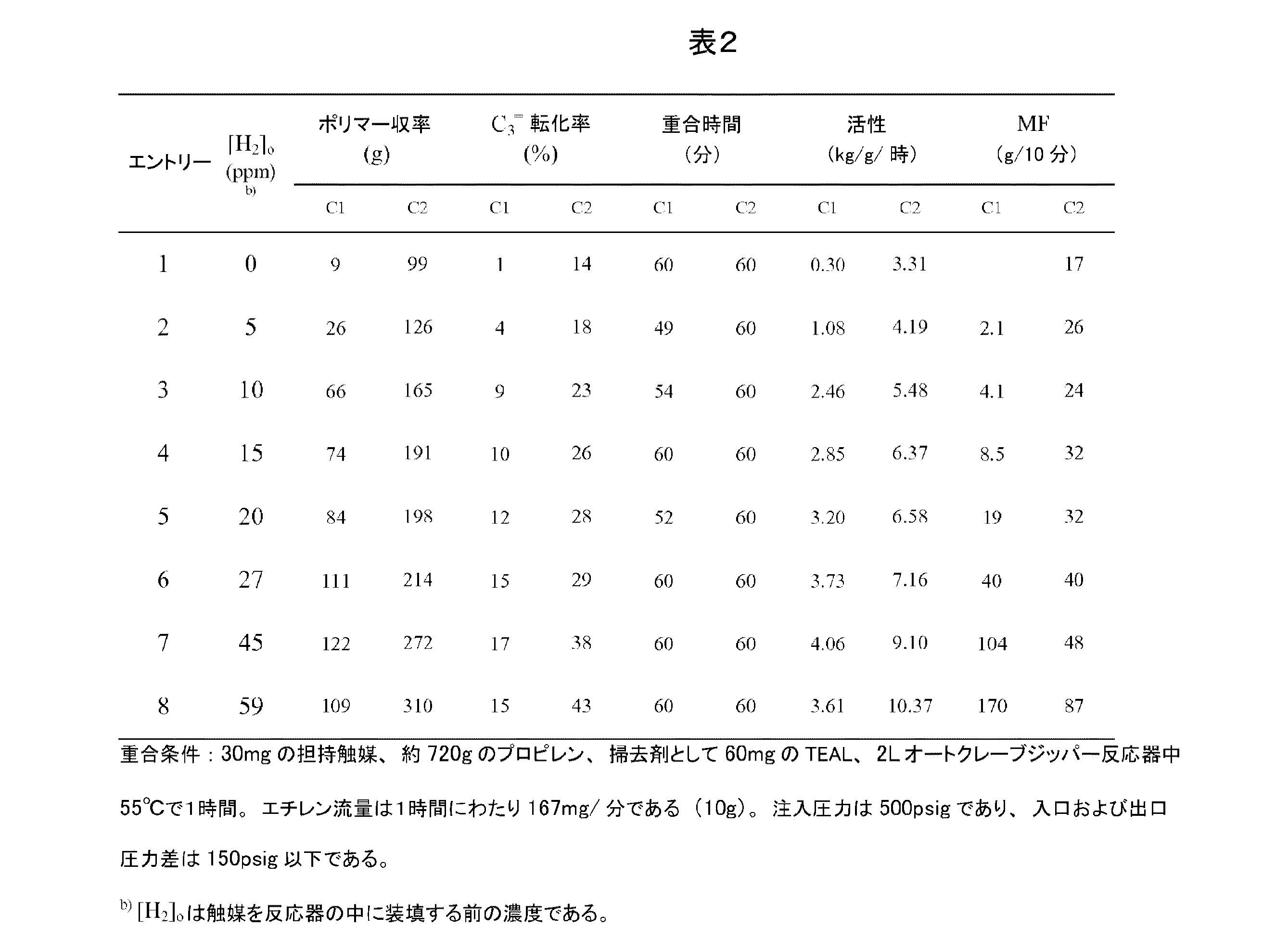
本発明に関する実験においては、式(1)および(2)により特徴付けられるメタロセン成分を例示するメタロセン成分を有する2つの触媒系を用いて、エチレン−プロピレン共重合試験を行った。両方の場合において、シリカ担体1グラム当り約0.7グラムのメチルアルモキサンを与えるようにメチルアルモキサンにより前処理したシリカ担体である、前出の担体S−1上にメタロセンを担持した。この明細書中で触媒C−1と表示した1つの触媒系においては、メタロセン成分はジフェニルメチレン(2−メチル−4−tert−ブチル−シクロペンタジエニル−2,7−ジ−tert−ブチル−1−フルオレニル)ジルコニウムジクロリドであった。第2の触媒系の触媒C−2においては、触媒C−1の場合と同様にメチルアルモキサンにより前処理された同一のシリカ担体S−1上で式2により図示される成分を例示するメタロセン触媒成分を使用した。この場合、メタロセン触媒はジフェニルメチレン(2−メチル−4−tert−ブチル−シクロペンタジエニル−フルオレニル)ジルコニウムジクロリドであった。両方の場合において、メタロセン成分をメチルアルモキサン処理のシリカ担体上に装填して、約175のジルコニウムに対するアルミニウムのモル比を得た。この実験においては、前述の米国特許第6,855,783号に述べられている触媒作製手順に概ね対応する同一の手順を用いて、担持メタロセン触媒成分C−1およびC−2を形成した。2つの触媒系C1およびC2に対して、この試験の共重合を水素濃度の関数としてのポリマー収率、プロピレン転化率、生産性、および触媒活性の形で表2に要約する。
In experiments relating to the present invention, ethylene-propylene copolymerization tests were conducted using two catalyst systems having a metallocene component that exemplifies the metallocene component characterized by formulas (1) and (2). In both cases, the metallocene was supported on support S-1 above, which was a silica support pretreated with methylalumoxane to give about 0.7 grams of methylalumoxane per gram of silica support. In one catalyst system designated herein as catalyst C-1, the metallocene component is diphenylmethylene (2-methyl-4-tert-butyl-cyclopentadienyl-2,7-di-tert-butyl- 1-fluorenyl) zirconium dichloride. In the catalyst C-2 of the second catalyst system, a metallocene exemplifying the component illustrated by the
表2に示すように、触媒C1およびC2の両方に対して共重合活性は水素濃度と共に増加した。水素を同伴することによって、0〜60ppmの範囲内で触媒C1の活性は約10倍変わる。C2に対してはこの増加は約3倍である。更には、同一の共重合条件(55℃およびバルク)下で167mg/分(積分すると1時間で10gとなる)のエチレン注入速度で触媒C2はC1よりも少なくとも2倍活性である。活性差は、0から60ppmの初期水素濃度の全範囲にわたって変わる。水素が系中に存在しない場合には、C2はC1の10倍活性であり、水素濃度がほぼ30ppmである場合には差は約2まで縮小する。すなわち3.73対7.16kg/g/時である。その後、水素濃度が増加するにしたがって、この差異は再度拡大する。 As shown in Table 2, the copolymerization activity increased with hydrogen concentration for both catalysts C1 and C2. By entraining hydrogen, the activity of the catalyst C1 changes about 10 times within the range of 0-60 ppm. For C2, this increase is about three times. Furthermore, catalyst C2 is at least twice as active as C1 at an ethylene injection rate of 167 mg / min (integrated to 10 g per hour) under the same copolymerization conditions (55 ° C. and bulk). The activity difference varies over the entire range of initial hydrogen concentrations from 0 to 60 ppm. When hydrogen is not present in the system, C2 is 10 times more active than C1, and when the hydrogen concentration is approximately 30 ppm, the difference is reduced to about 2. That is 3.73 vs. 7.16 kg / g / hr. Thereafter, as the hydrogen concentration increases, this difference grows again.
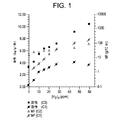
水素濃度が25ppmよりも低い場合には、触媒C1は、35g/10分のメルトフローに対応する、触媒C2よりも低いコポリマーメルトフローをもたらした。C1はメルトフローに対して強い水素応答を示すので、表2および図1に示すように、水素濃度が25ppm以上である場合にはC1により高メルトフローのランダムコポリマーが得られる。この明細書中に示されるメルトフローレートは、ASTM D1238にしたがって230℃および2.16キログラムで測定されるメルトフローインデックス(MI2)に対するものである。 When the hydrogen concentration was below 25 ppm, catalyst C1 resulted in a lower copolymer melt flow than catalyst C2, corresponding to a melt flow of 35 g / 10 min. Since C1 shows a strong hydrogen response to the melt flow, as shown in Table 2 and FIG. 1, when the hydrogen concentration is 25 ppm or more, a high melt flow random copolymer is obtained by C1. The melt flow rate shown herein is relative to the melt flow index (MI 2 ) measured at 230 ° C. and 2.16 kilograms according to ASTM D1238.
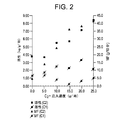
表3に示すように、両方の触媒共重合性能に及ぼすエチレンの影響は顕著である。触媒C1およびC2の両方に対して、共重合活性は、表3に示すように10ppmの同一の初期水素濃度下でエチレン注入速度と共に増加した。エチレンコモノマーの存在によって、335mg/分(系中に1時間で20gを導入)のエチレン注入速度と共にC1活性は約2倍半(すなわち1.33対3.29kg/g/時)変わる。C2に対しても殆ど同一の活性差(すなわち、3.79対8.37kg/g/時)が観察された。更には、触媒C2は、同一の共重合条件(55℃およびバルク)下で約2ないし3倍活性である。全エチレン試験範囲(1時間の注入で1〜25g)に対して、活性差は殆ど同一のままである。触媒C1は、図2に示すように、C2よりも低いコポリマーメルトフローを与える。事実、コポリマーメルトフローは最初エチレン濃度と共に減少し、濃度が15g以上となるにしたがって増加し始める。全体として、コポリマーメルトフローは7g/10分未満であり、ホモポリマー(エントリー1)の19g/10分よりもずっと小さい。他方、触媒C2に対するすべてのコポリマーのメルトフローは、ホモポリマーに対する4.7g/10分の値よりも高い。コモノマー濃度が増加するにしたがって、コポリマーメルトフローは4.7から41g/10分まで増加する。C2は、図2に示すようにC1よりもコポリマーメルトフローに対するずっと強いエチレン応答を示す。 As shown in Table 3, the influence of ethylene on both catalyst copolymerization performance is significant. For both catalysts C1 and C2, the copolymerization activity increased with ethylene injection rate under the same initial hydrogen concentration of 10 ppm as shown in Table 3. The presence of ethylene comonomer changes the C1 activity by a factor of about two and a half (ie 1.33 vs. 3.29 kg / g / hr) with an ethylene injection rate of 335 mg / min (20 g introduced into the system in 1 hour). Almost the same activity difference (ie 3.79 vs. 8.37 kg / g / hr) was observed for C2. Furthermore, catalyst C2 is about 2 to 3 times more active under the same copolymerization conditions (55 ° C. and bulk). For the entire ethylene test range (1-25 g for 1 hour injection), the activity difference remains almost the same. Catalyst C1 provides a lower copolymer melt flow than C2, as shown in FIG. In fact, the copolymer melt flow initially decreases with the ethylene concentration and begins to increase as the concentration increases to 15 g and above. Overall, the copolymer melt flow is less than 7 g / 10 min, much less than the 19 g / 10 min of the homopolymer (entry 1). On the other hand, the melt flow of all copolymers for catalyst C2 is higher than the 4.7 g / 10 min value for the homopolymer. As the comonomer concentration increases, the copolymer melt flow increases from 4.7 to 41 g / 10 min. C2 shows a much stronger ethylene response to copolymer melt flow than C1, as shown in FIG.
表4は、触媒C1およびC2の両方に対するプロピレン共重合のエチレンとの動力学を示す。試験条件は55℃であり、10ppmの水素濃度下での333mg/分(積分すると1時間で20gとなる)のエチレン注入速度のバルクである。ベンチ観察によって、C2およびC1触媒の両方に対して共重合活性は、反応時間と共に増加するということが示される。試験の後段において、両方の触媒の活性は、初期の期間(<30分)よりも約2倍高い。更には、触媒C2はC1よりも約2ないし3倍高活性である。試験の全時間に対して、活性差は殆ど同一のままである。 Table 4 shows the kinetics of propylene copolymerization with ethylene for both catalysts C1 and C2. The test conditions are 55 ° C. and a bulk of ethylene injection rate of 333 mg / min (integrated to 20 g per hour) under 10 ppm hydrogen concentration. Bench observations show that the copolymerization activity increases with reaction time for both C2 and C1 catalysts. In the latter part of the test, the activity of both catalysts is about twice as high as the initial period (<30 minutes). Furthermore, catalyst C2 is about 2 to 3 times more active than C1. The activity difference remains almost the same for the entire duration of the test.
触媒C1は、図3に示すようにC2よりも低いコポリマーメルトフローを与える。事実、コポリマーメルトフローは最初エチレン濃度と共に減少し、時間が進むにしたがって増加し始める。C2は約20分においてずっと早く開始し、C1は重合の後期(45分)で開始する。全体として、C1に対するコポリマーメルトフローは10g/10分未満であり、C2に対するコポリマーメルトフローは16g/10分よりも高い。C2は、C1よりもコポリマーメルトフローに対する強いエチレン応答を示す。 Catalyst C1 provides a lower copolymer melt flow than C2 as shown in FIG. In fact, the copolymer melt flow initially decreases with the ethylene concentration and begins to increase over time. C2 starts much earlier at about 20 minutes and C1 starts later in the polymerization (45 minutes). Overall, the copolymer melt flow for C1 is less than 10 g / 10 min and the copolymer melt flow for C2 is higher than 16 g / 10 min. C2 shows a stronger ethylene response to copolymer melt flow than C1.
前出の実験から、触媒C2の単独重合(表3のエントリー1)が触媒C1による単独重合と比較して同一実験室条件下で低い樹脂メルトフローと高い触媒活性を与えるということを観察することができる。エチレン−プロピレン共重合の場合には、触媒C1と触媒C2系の両方に対して、エチレンは活性促進剤として作用する。触媒C1に対しては増強は約3倍であるが、触媒C2による共重合活性を単独重合活性の8倍の高さまで増強することができる。エチレンは、C2タイプの系においては連鎖移動剤として作用するが、C1系においてはそうではない。触媒C2により製造されるコポリマーは、同一の水素条件下で製造される対応するホモポリマーよりも高いメルトフローを与える。それゆえ、触媒C1は低メルトフローコポリマーをもたらす。水素は、触媒C1系を用いるプロピレンとエチレンとの共重合および単独重合工程においては「ゆっくりとした」連鎖移動剤として作用するように見える。対応するホモポリマーに対して低メルトフロー成分が得られる。触媒C2の活性は約2から4倍高いが、同一の共重合条件触媒下で、C1はC2よりも低メルトフロー樹脂(30g/10分未満)をもたらす。 Observe from the previous experiment that homopolymerization of catalyst C2 (entry 1 in Table 3) gives lower resin melt flow and higher catalytic activity under the same laboratory conditions compared to homopolymerization with catalyst C1. Can do. In the case of ethylene-propylene copolymerization, ethylene acts as an activity promoter for both catalyst C1 and catalyst C2 systems. The enhancement with respect to the catalyst C1 is about 3 times, but the copolymerization activity by the catalyst C2 can be enhanced to 8 times the homopolymerization activity. Ethylene acts as a chain transfer agent in C2 type systems, but not in C1 systems. The copolymer produced by catalyst C2 gives a higher melt flow than the corresponding homopolymer produced under the same hydrogen conditions. Therefore, catalyst C1 provides a low melt flow copolymer. Hydrogen appears to act as a “slow” chain transfer agent in the copolymerization and homopolymerization process of propylene and ethylene using the catalyst C1 system. A low melt flow component is obtained for the corresponding homopolymer. The activity of catalyst C2 is about 2 to 4 times higher, but under the same copolymerization condition catalyst, C1 gives a lower melt flow resin (less than 30 g / 10 min) than C2.
本発明で製造されるポリマーを広い範囲の製品の製造において使用することができる。このように、このコポリマーを使用して、フィルム、テープ、および繊維を製造し得る。更には、これらを使用して、射出成形またはブロー成形用途により成形製品を製造し得る。製造される樹脂は、在来のZ−N触媒系と比較して、例えば官能的な品質に対しては有利である、望ましくは低キシレン可溶分レベルを呈する。更には、低い値から高い値までの極めて広い範囲のMF値を生成する能力は、これらの触媒およびこのように製造される樹脂のもう一つの重要な利点である。 The polymers produced in the present invention can be used in the production of a wide range of products. Thus, the copolymer can be used to produce films, tapes, and fibers. Furthermore, they can be used to produce molded products by injection molding or blow molding applications. The resin produced exhibits a desirably low xylene soluble level, which is advantageous, for example for sensory quality, compared to conventional ZN catalyst systems. Furthermore, the ability to produce a very wide range of MF values from low values to high values is another important advantage of these catalysts and the resins thus produced.
本発明の特定の態様を述べたが、当業者にはこれらの改変が示唆され得るということは理解されるであろうし、本発明は、添付の特許請求の範囲の範囲内に入るすべてのこのような改変の範囲にわたるように意図されている。 While specific embodiments of the present invention have been described, it will be understood that those skilled in the art may suggest these modifications, and the invention is intended to be construed in the scope of the appended claims. It is intended to cover a range of such modifications.
Claims (41)
B(CpRaRb)(FlR’2)MQn (1)
(式中、
Cpは置換シクロペンタジエニル基であり、
Flは2および7位で置換されたフルオレニル基であり、
Bは前記触媒に立体剛直性を賦与するCpとFlの間の構造的架橋であり、
Raは、架橋に対して遠位の位置にあり、式XR* 3(式中、Xは炭素またはケイ素であり、R*は同一であるか、もしくは異なり、少なくとも1つのR*が水素でないという前提で、水素または1−20個の炭素原子を有するヒドロカルビル基から選択される)のかさ高な基を含むシクロペンタジエニル基上の置換基であり、
Rbは、架橋に対して近位であり、遠位の置換基に対して非隣接で配置され、ならびに式YR#3(式中、Yはケイ素または炭素であり、各R#は同一であるか、もしくは異なり、水素または1から7個の炭素原子を含有するヒドロカルビル基、アルコキシ基、チオアルキル基またはアミノ、アルキル基である)であり、置換基Raよりも低かさ高なシクロペンタジエニル環上の置換基であり、
各R’は、同一であるか、もしくは異なり、4−20個の炭素原子を含有するヒドロカルビル基であり、置換Rbよりも高かさ高であり、一方のR’がフルオレニル基上2位で置換され、他方のR’がフルオレニル基上7位で置換され、
Mはチタン、ジルコニウム、ハフニウム、およびバナジウムからなる群から選択される遷移金属であり、
QはハロゲンまたはC1−C4アルキル基であり、ならびに
nは0−4の整数である)
または式
B’(Cp’R’aR’b)(Fl’)M’Q’n (2)
(式中、
Cp’は置換シクロペンタジエニル基であり、
Fl’はフルオレニル基であり、
B’は前記触媒に立体剛直性を賦与するCp’とFl’の間の構造的架橋であり、
R’aは、架橋に対して遠位の位置にあり、式XR* 3(式中、Xは炭素またはケイ素であり、R*は同一であるか、もしくは異なり、少なくとも1つのR*が水素でないという前提で、水素または1−20個の炭素原子を有するヒドロカルビル基から選択される)のかさ高な基を含むシクロペンタジエニル基上の置換基であり、
R’bは、架橋に対して近位であり、遠位の置換基に対して非隣接で配置され、ならびに式YR#3(式中、Yはケイ素または炭素であり、各R#は同一であるか、もしくは異なり、水素または1から7個の炭素原子を含有するヒドロカルビル基、アルコキシ基、チオアルキル基またはアミノ、アルキル基である)であり、置換基R’aよりも低かさ高であるシクロペンタジエニル環上の置換基であり、
M’はチタン、ジルコニウム、ハフニウム、およびバナジウムからなる群から選択される遷移金属であり、
Q’はハロゲンまたはC1−C4アルキル基であり、
n’は0−4の整数である)
のアイソ特異性メタロセン触媒成分;
(ii)アルキルアルモキサン共触媒成分、および
(iii)20−40ミクロンの粒子サイズ、200−400m2/グラムの表面積、および1.3−1.6ml/グラムの範囲内の細孔容積により特徴付けられる粒子状シリカ担体
を含む担持メタロセン触媒を準備すること;
(b)重合反応域中で前記触媒を、前記エチレン−プロピレン混合物中0.01−20モルパーセントのエチレンの範囲内の量でのプロピレンとエチレンの混合物と接触すること;および
(c)前記プロピレンのアイソ特異性重合をもたらすのに有効な温度および圧力条件下で前記エチレンの存在において触媒1グラム当り少なくとも1000グラムのポリマーの生成量で前記反応域を運転して、150℃以下の融解温度を有するアイソタクチックエチレン−プロピレンコポリマーを製造すること
を含んでなる、アイソタクチックエチレン−プロピレンコポリマーを製造するための方法。 (A) (i) Formula
B (CpR a R b ) (FlR ′ 2 ) MQ n (1)
(Where
Cp is a substituted cyclopentadienyl group,
Fl is a fluorenyl group substituted at the 2 and 7 positions;
B is a structural bridge between Cp and Fl that imparts steric rigidity to the catalyst;
R a is in a position distal to the bridge and is of formula XR * 3 where X is carbon or silicon and R * is the same or different and at least one R * is not hydrogen A substituent on a cyclopentadienyl group containing a bulky group (selected from hydrogen or a hydrocarbyl group having 1-20 carbon atoms),
R b is proximal to the bridge and is located non-adjacent to the distal substituent, as well as formula YR # 3 where Y is silicon or carbon and each R # is the same Or a hydrocarbyl group containing 1 to 7 carbon atoms, an alkoxy group, a thioalkyl group or an amino, alkyl group) and having a lower height than the substituent R a A substituent on the enyl ring,
Each R ′ is the same or different and is a hydrocarbyl group containing 4-20 carbon atoms and is higher in height than the substituted R b , while one R ′ is in position 2 on the fluorenyl group Substituted, the other R ′ is substituted at the 7-position on the fluorenyl group,
M is a transition metal selected from the group consisting of titanium, zirconium, hafnium, and vanadium;
Q is a halogen or a C 1 -C 4 alkyl group, and n is an integer of 0-4)
Or expression
B ′ (Cp′R ′ a R ′ b ) (F1 ′) M′Q ′ n (2)
(Where
Cp ′ is a substituted cyclopentadienyl group,
Fl ′ is a fluorenyl group,
B ′ is a structural bridge between Cp ′ and Fl ′ that imparts steric rigidity to the catalyst;
R ′ a is in a position distal to the bridge and is of formula XR * 3 where X is carbon or silicon, R * is the same or different and at least one R * is hydrogen Is a substituent on a cyclopentadienyl group containing a bulky group (selected from hydrogen or a hydrocarbyl group having 1-20 carbon atoms)
R ′ b is proximal to the bridge and is located non-adjacent to the distal substituent, as well as formula YR # 3 , where Y is silicon or carbon and each R # is the same Or is a hydrogen or hydrocarbyl group containing 1 to 7 carbon atoms, an alkoxy group, a thioalkyl group or an amino, alkyl group) and is lower and higher than the substituent R ′ a A substituent on the cyclopentadienyl ring,
M ′ is a transition metal selected from the group consisting of titanium, zirconium, hafnium, and vanadium;
Q ′ is a halogen or a C 1 -C 4 alkyl group,
n 'is an integer of 0-4)
Isospecific metallocene catalyst component of
Characterized by (ii) an alkylalumoxane cocatalyst component, and (iii) a particle size of 20-40 microns, a surface area of 200-400 m < 2 > / gram, and a pore volume in the range of 1.3-1.6 ml / gram. Providing a supported metallocene catalyst comprising a particulate silica support to be attached;
(B) contacting the catalyst in a polymerization reaction zone with a mixture of propylene and ethylene in an amount in the range of 0.01-20 mole percent ethylene in the ethylene-propylene mixture; and (c) the propylene Operating the reaction zone with a yield of at least 1000 grams of polymer per gram of catalyst in the presence of ethylene under temperature and pressure conditions effective to result in an isospecific polymerization of less than 150 ° C. A process for producing an isotactic ethylene-propylene copolymer comprising producing an isotactic ethylene-propylene copolymer.
B’(Cp’R’aR’b)(Fl’)M’Q’n (2)
(式中、
Cp’は置換シクロペンタジエニル基であり、
Fl’はフルオレニル基であり、
B’は前記触媒に立体剛直性を賦与するCp’とFl’の間の構造的架橋であり、
R’aは、架橋に対して遠位の位置にあり、式XR* 3(式中、Xは炭素またはケイ素であり、R*は同一であるか、もしくは異なり、少なくとも1つのR*が水素でないという前提で、水素または1−20個の炭素原子を有するヒドロカルビル基から選択される)のかさ高な基を含むシクロペンタジエニル基上の置換基であり、
R’bは、架橋に対して近位であり、遠位の置換基に対して非隣接で配置され、ならびに式YR#3(式中、Yはケイ素または炭素であり、各R#は同一であるか、もしくは異なり、水素または1から7個の炭素原子を含有するヒドロカルビル基、アルコキシ基、チオアルキル基またはアミノ、アルキル基である)であり、置換基R’aよりも低かさ高であるシクロペンタジエニル環上の置換基であり、
M’はチタン、ジルコニウム、ハフニウム、およびバナジウムからなる群から選択される遷移金属であり、
Q’はハロゲンまたはC1−C4アルキル基であり、ならびに
n’は0−4の整数である)
のアイソ特異性メタロセン触媒成分、
(ii)アルキルアルモキサン共触媒成分、および
(iii)20−35ミクロンの粒子サイズ、200−400m2/グラムの表面積、1.3−1.6ml/グラムの範囲内の細孔容積、および200−240Åの範囲内の細孔直径により特徴付けられる粒子状シリカ担体
を含む担持メタロセン触媒を準備すること;
(b)重合反応域中で前記触媒を前記エチレン−プロピレン混合物中0.01−20モルパーセントのエチレンの範囲内の量でのプロピレンとエチレンの混合物と接触すること;および
(c)前記プロピレンのアイソ特異性重合をもたらすのに有効な温度および圧力条件下で前記エチレンの存在において触媒1グラム当り少なくとも1000グラムのポリマーの生成量で前記反応域を運転して、150℃以下の融解温度を有するアイソタクチックエチレン−プロピレンコポリマーを製造すること
を含んでなる、アイソタクチックエチレン−プロピレンコポリマーを製造するための方法。 (A) (i) Formula
B ′ (Cp′R ′ a R ′ b ) (F1 ′) M′Q ′ n (2)
(Where
Cp ′ is a substituted cyclopentadienyl group,
Fl ′ is a fluorenyl group,
B ′ is a structural bridge between Cp ′ and Fl ′ that imparts steric rigidity to the catalyst;
R ′ a is in a position distal to the bridge and is of formula XR * 3 where X is carbon or silicon, R * is the same or different and at least one R * is hydrogen Is a substituent on a cyclopentadienyl group containing a bulky group (selected from hydrogen or a hydrocarbyl group having 1-20 carbon atoms)
R ′ b is proximal to the bridge and is located non-adjacent to the distal substituent, as well as formula YR # 3 , where Y is silicon or carbon and each R # is identical Or is a hydrogen or hydrocarbyl group containing 1 to 7 carbon atoms, an alkoxy group, a thioalkyl group or an amino, alkyl group) and is lower and higher than the substituent R ′ a A substituent on the cyclopentadienyl ring,
M ′ is a transition metal selected from the group consisting of titanium, zirconium, hafnium, and vanadium;
Q ′ is a halogen or a C 1 -C 4 alkyl group, and n ′ is an integer of 0-4)
An isospecific metallocene catalyst component of
(Ii) an alkylalumoxane cocatalyst component, and (iii) a particle size of 20-35 microns, a surface area of 200-400 m 2 / gram, a pore volume in the range of 1.3-1.6 ml / gram, and 200 Providing a supported metallocene catalyst comprising a particulate silica support characterized by a pore diameter in the range of -240 mm;
(B) contacting the catalyst in a polymerization reaction zone with a mixture of propylene and ethylene in an amount in the range of 0.01-20 mole percent ethylene in the ethylene-propylene mixture; and (c) of the propylene Operating the reaction zone with a yield of at least 1000 grams of polymer per gram of catalyst in the presence of ethylene under temperature and pressure conditions effective to effect isospecific polymerization and having a melting temperature of 150 ° C. or less A process for producing an isotactic ethylene-propylene copolymer comprising producing an isotactic ethylene-propylene copolymer.
B(CpRaRb)(FlR’2)MQn (1)
(式中、
Cpは置換シクロペンタジエニル基であり、
Flは2および7位で置換されたフルオレニル基であり、
Bは前記触媒に立体剛直性を賦与するCpとFlの間の構造的架橋であり、
Raは、架橋に対して遠位の位置にあり、式XR* 3(式中、Xは炭素またはケイ素であり、R*は同一であるか、もしくは異なり、少なくとも1つのR*が水素でないという前提で、水素または1−20個の炭素原子を有するヒドロカルビル基から選択される)のかさ高な基を含むシクロペンタジエニル基上の置換基であり、
Rbは、架橋に対して近位であり、遠位の置換基に対して非隣接で配置され、ならびに式YR#3(式中、Yはケイ素または炭素であり、各R#は同一であるか、もしくは異なり、水素または1から7個の炭素原子を含有するヒドロカルビル基、アルコキシ基、チオアルキル基またはアミノ、アルキル基である)であり、置換基Raよりも低かさ高なシクロペンタジエニル環上の置換基であり、
各R’は、同一であるか、もしくは異なり、4−20個の炭素原子を有するヒドロカルビル基であり、置換Rbよりも高かさ高であり、一方のR’がフルオレニル基上2位で置換され、他方のR’がフルオレニル基上7位で置換され、
Mはチタン、ジルコニウム、ハフニウム、およびバナジウムからなる群から選択される遷移金属であり、
QはハロゲンまたはC1−C4アルキル基であり、
nは0−4の整数である)
のアイソ特異性メタロセン触媒成分)
(ii)アルキルアルモキサン共触媒成分、および
(iii)粒子状シリカ担体
を含む担持メタロセン触媒を準備すること;
(b)重合反応域中で前記触媒を前記エチレン−プロピレン混合物中0.01−20モルパーセントのエチレンの範囲内の量でのプロピレンとエチレンの混合物と接触すること;および
(c)前記プロピレンのアイソ特異性重合をもたらすのに有効な温度および圧力条件下で前記エチレンの存在において触媒1グラム当り少なくとも1000グラムのポリマーの生成量で前記反応域を運転して、150℃以下の融解温度を有するアイソタクチックエチレン−プロピレンコポリマーを製造すること
を含んでなる、アイソタクチックエチレン−プロピレンコポリマーを製造するための方法。 (A) (i) Formula
B (CpR a R b ) (FlR ′ 2 ) MQ n (1)
(Where
Cp is a substituted cyclopentadienyl group,
Fl is a fluorenyl group substituted at the 2 and 7 positions;
B is a structural bridge between Cp and Fl that imparts steric rigidity to the catalyst;
R a is in a position distal to the bridge and is of formula XR * 3 where X is carbon or silicon and R * is the same or different and at least one R * is not hydrogen A substituent on a cyclopentadienyl group containing a bulky group (selected from hydrogen or a hydrocarbyl group having 1-20 carbon atoms),
R b is proximal to the bridge and is located non-adjacent to the distal substituent, as well as formula YR # 3 where Y is silicon or carbon and each R # is the same Or a hydrocarbyl group containing 1 to 7 carbon atoms, an alkoxy group, a thioalkyl group or an amino, alkyl group) and having a lower height than the substituent R a A substituent on the enyl ring,
Each R ′ is the same or different and is a hydrocarbyl group having 4-20 carbon atoms, which is higher in height than the substituted R b , and one R ′ is substituted at the 2-position on the fluorenyl group The other R ′ is substituted at the 7-position on the fluorenyl group,
M is a transition metal selected from the group consisting of titanium, zirconium, hafnium, and vanadium;
Q is a halogen or a C 1 -C 4 alkyl group,
n is an integer of 0-4)
Isospecific metallocene catalyst component)
Providing a supported metallocene catalyst comprising (ii) an alkylalumoxane cocatalyst component, and (iii) a particulate silica support;
(B) contacting the catalyst in a polymerization reaction zone with a mixture of propylene and ethylene in an amount in the range of 0.01-20 mole percent ethylene in the ethylene-propylene mixture; and (c) of the propylene Operating the reaction zone with a yield of at least 1000 grams of polymer per gram of catalyst in the presence of ethylene under temperature and pressure conditions effective to effect isospecific polymerization and having a melting temperature of 150 ° C. or less A process for producing an isotactic ethylene-propylene copolymer comprising producing an isotactic ethylene-propylene copolymer.
Raは4から20個の炭素原子を含有するかさ高なヒドロカルビル基であり、
Rbはメチル基またはエチル基であり、
R’は4から20個の炭素原子を含有するかさ高なヒドロカルビル基であり、
Mはチタン、ジルコニウム、ハフニウム、およびバナジウムからなる群から選択される遷移金属であり、
QはハロゲンまたはC1−C4ヒドロカルビル基であり、
nは0−4の整数であり、
Bはシクロペンタジエニルとフルオレニル基の間に延びる構造的架橋であり、ならびにエチレン基であるか、もしくは式
により特徴付けられるものである)
により特徴付けられる架橋シクロペンタジエニルフルオレニル配位子を含むアイソ特異性メタロセン触媒成分、
(ii)アルキルアルモキサン共触媒成分、および
(iii)粒子状シリカ担体
を含む担持メタロセン触媒を準備すること;
(b)重合反応域中で前記触媒を前記エチレン−プロピレン混合物中0.01−20モルパーセントのエチレンの範囲内の量でのプロピレンとエチレンの混合物と接触すること;および
(c)前記プロピレンのアイソ特異性重合をもたらすのに有効な温度および圧力条件下で前記エチレンの存在において触媒1グラム当り少なくとも1000グラムのポリマーの活性で前記反応域を運転して、80グラム/10分以下のメルトフローレートと、120℃以下の融解温度を有するアイソタクチックエチレン−プロピレンコポリマーを製造すること
を含んでなる、アイソタクチックエチレン−プロピレンコポリマーを製造するための方法。 (A) (i) Formula
R a is a bulky hydrocarbyl group containing 4 to 20 carbon atoms;
R b is a methyl group or an ethyl group,
R ′ is a bulky hydrocarbyl group containing 4 to 20 carbon atoms;
M is a transition metal selected from the group consisting of titanium, zirconium, hafnium, and vanadium;
Q is a halogen or a C 1 -C 4 hydrocarbyl group,
n is an integer of 0-4,
B is a structural bridge extending between the cyclopentadienyl and fluorenyl groups, as well as being an ethylene group or the formula
Is characterized by
An isospecific metallocene catalyst component comprising a bridged cyclopentadienylfluorenyl ligand characterized by
Providing a supported metallocene catalyst comprising (ii) an alkylalumoxane cocatalyst component, and (iii) a particulate silica support;
(B) contacting the catalyst in a polymerization reaction zone with a mixture of propylene and ethylene in an amount in the range of 0.01-20 mole percent ethylene in the ethylene-propylene mixture; and (c) of the propylene Operating the reaction zone with an activity of at least 1000 grams of polymer per gram of catalyst in the presence of ethylene under temperature and pressure conditions effective to effect isospecific polymerization, and a melt flow of 80 grams / 10 minutes or less A process for producing an isotactic ethylene-propylene copolymer comprising producing an isotactic ethylene-propylene copolymer having a rate and a melting temperature of 120 ° C. or less.
b.0.6−0.8の範囲内のシリカに対するアルモキサンの重量比をもたらすように前記シリカ担体上に組み込まれるアルキルアルモキサン共触媒成分;
c.前記シリカおよび前記アルキルアルモキサンの少なくとも0.3重量パーセントの量で前記粒子状シリカ担体上に担持され、ならびに式
B(CpRaRb)(FlR’2)MQn (1)
(式中、
Cpは置換シクロペンタジエニル基であり、
Flは2および7位で置換されたフルオレニル基であり、
Bは前記触媒に立体剛直性を賦与するCpとFlの間の構造的架橋であり、
Raは、架橋に対して遠位の位置にあり、式XR* 3(式中、Xは炭素またはケイ素であり、R*は同一であるか、もしくは異なり、少なくとも1つのR*が水素でないという前提で、水素または1−20個の炭素原子を有するヒドロカルビル基から選択される)のかさ高な基を含むシクロペンタジエニル基上の置換基であり、
Rbは、架橋に対して近位であり、遠位の置換基に対して非隣接で配置され、ならびに式YR#3(式中、Yはケイ素または炭素であり、各R#は同一であるか、もしくは異なり、水素または1から7個の炭素原子を含有するヒドロカルビル基、アルコキシ基、チオアルキル基またはアミノ、アルキル基である)であり、置換基Raよりも低かさ高なシクロペンタジエニル環上の置換基であり、
各R’は、同一であるか、もしくは異なり、4−20個の炭素原子を有するヒドロカルビル基であり、置換Rbよりも高かさ高であり、一方のR’がフルオレニル基上2位で置換され、他方のR’がフルオレニル基上7位で置換され、
Mはチタン、ジルコニウム、ハフニウム、およびバナジウムからなる群から選択される遷移金属であり、
QはハロゲンまたはC1−C4アルキル基であり、ならびに
nは0−4の整数である)
または式
B’(Cp’R’aR’b)(Fl’)M’Q’n (2)
(式中、
Cp’は置換シクロペンタジエニル基であり、
Fl’はフルオレニル基であり、
B’は前記触媒に立体剛直性を賦与するCp’とFl’の間の構造的架橋であり、
R’aは、架橋に対して遠位の位置にあり、式XR* 3(式中、Xは炭素またはケイ素であり、R*は同一であるか、もしくは異なり、少なくとも1つのR*が水素でないという前提で、水素または1−20個の炭素原子を有するヒドロカルビル基から選択される)のかさ高な基を含むシクロペンタジエニル基上の置換基であり、
R’bは、架橋に対して近位であり、遠位の置換基に対して非隣接で配置され、ならびに式YR#3(式中、Yはケイ素または炭素であり、各R#は同一であるか、もしくは異なり、水素または1から7個の炭素原子を含有するヒドロカルビル基、アルコキシ基、チオアルキル基またはアミノ、アルキル基である)であり、置換基R’aよりも低かさ高であるシクロペンタジエニル環上の置換基であり、
M’はチタン、ジルコニウム、ハフニウム、およびバナジウムからなる群から選択される遷移金属であり、
Q’はハロゲンまたはC1−C4アルキル基であり、ならびに
n’は0−4の整数である)
により特徴付けられるアイソ特異性メタロセン触媒成分;
d.1−1000の範囲のAl/Mモル比をもたらすような相対的な量で存在する前記アルキルアルモキサン成分および前記メタロセン成分
を含む、オレフィンの重合において有用な担持メタロセン触媒組成物。
a. A particulate silica support having an average particle size of 20-40 microns, a pore volume in the range of 1.3-1.6 ml / g, and a surface area of 200-400 m 2 / g;
b. An alkylalumoxane cocatalyst component incorporated on the silica support to provide a weight ratio of alumoxane to silica in the range of 0.6-0.8;
c. Supported on the particulate silica support in an amount of at least 0.3 weight percent of the silica and the alkylalumoxane, and the formula
B (CpR a R b ) (FlR ′ 2 ) MQ n (1)
(Where
Cp is a substituted cyclopentadienyl group,
Fl is a fluorenyl group substituted at the 2 and 7 positions;
B is a structural bridge between Cp and Fl that imparts steric rigidity to the catalyst;
R a is in a position distal to the bridge and is of formula XR * 3 where X is carbon or silicon and R * is the same or different and at least one R * is not hydrogen A substituent on a cyclopentadienyl group containing a bulky group (selected from hydrogen or a hydrocarbyl group having 1-20 carbon atoms),
R b is proximal to the bridge and is located non-adjacent to the distal substituent, as well as formula YR # 3 where Y is silicon or carbon and each R # is the same Or a hydrocarbyl group containing 1 to 7 carbon atoms, an alkoxy group, a thioalkyl group or an amino, alkyl group) and having a lower height than the substituent R a A substituent on the enyl ring,
Each R ′ is the same or different and is a hydrocarbyl group having 4-20 carbon atoms, which is higher in height than the substituted R b , and one R ′ is substituted at the 2-position on the fluorenyl group The other R ′ is substituted at the 7-position on the fluorenyl group,
M is a transition metal selected from the group consisting of titanium, zirconium, hafnium, and vanadium;
Q is a halogen or a C 1 -C 4 alkyl group, and n is an integer of 0-4)
Or expression
B ′ (Cp′R ′ a R ′ b ) (F1 ′) M′Q ′ n (2)
(Where
Cp ′ is a substituted cyclopentadienyl group,
Fl ′ is a fluorenyl group,
B ′ is a structural bridge between Cp ′ and Fl ′ that imparts steric rigidity to the catalyst;
R ′ a is in a position distal to the bridge and is of formula XR * 3 where X is carbon or silicon, R * is the same or different and at least one R * is hydrogen Is a substituent on a cyclopentadienyl group containing a bulky group (selected from hydrogen or a hydrocarbyl group having 1-20 carbon atoms)
R ′ b is proximal to the bridge and is located non-adjacent to the distal substituent, as well as formula YR # 3 , where Y is silicon or carbon and each R # is the same Or is a hydrogen or hydrocarbyl group containing 1 to 7 carbon atoms, an alkoxy group, a thioalkyl group or an amino, alkyl group) and is lower and higher than the substituent R ′ a A substituent on the cyclopentadienyl ring,
M ′ is a transition metal selected from the group consisting of titanium, zirconium, hafnium, and vanadium;
Q ′ is a halogen or a C 1 -C 4 alkyl group, and n ′ is an integer of 0-4)
An isospecific metallocene catalyst component characterized by:
d. A supported metallocene catalyst composition useful in the polymerization of olefins comprising the alkylalumoxane component and the metallocene component present in relative amounts to provide an Al / M molar ratio in the range of 1-1000.
Applications Claiming Priority (2)
| Application Number | Priority Date | Filing Date | Title |
|---|---|---|---|
| US11/804,483 US20080287619A1 (en) | 2007-05-18 | 2007-05-18 | Supported metallocene catalysts |
| PCT/US2008/063513 WO2008144303A1 (en) | 2007-05-18 | 2008-05-13 | Supported metallocene catalysts |
Publications (2)
| Publication Number | Publication Date |
|---|---|
| JP2010528126A true JP2010528126A (en) | 2010-08-19 |
| JP2010528126A5 JP2010528126A5 (en) | 2011-06-30 |
Family
ID=40028164
Family Applications (1)
| Application Number | Title | Priority Date | Filing Date |
|---|---|---|---|
| JP2010508535A Pending JP2010528126A (en) | 2007-05-18 | 2008-05-13 | Supported metallocene catalyst |
Country Status (8)
| Country | Link |
|---|---|
| US (1) | US20080287619A1 (en) |
| EP (1) | EP2155389A4 (en) |
| JP (1) | JP2010528126A (en) |
| KR (1) | KR20100016614A (en) |
| CN (1) | CN101568383B (en) |
| CA (1) | CA2677773A1 (en) |
| MX (1) | MX2009005467A (en) |
| WO (1) | WO2008144303A1 (en) |
Families Citing this family (3)
| Publication number | Priority date | Publication date | Assignee | Title |
|---|---|---|---|---|
| US8299188B2 (en) * | 2007-05-18 | 2012-10-30 | Fina Technology, Inc. | Supported metallocene catalysts |
| TWI555574B (en) * | 2011-03-09 | 2016-11-01 | 亞比馬利股份有限公司 | Aluminoxane catalyst activators containing carbocation agents, and use thereof in polyolefin catalysts |
| WO2014206816A1 (en) * | 2013-06-24 | 2014-12-31 | Saudi Basic Industries Corporation | Titanated chromium-based catalysts to produce high density polyethylene |
Citations (9)
| Publication number | Priority date | Publication date | Assignee | Title |
|---|---|---|---|---|
| WO2001027124A1 (en) * | 1999-10-08 | 2001-04-19 | Mitsui Chemicals, Inc. | Metallocene compound, process for producing metallocene compound, olefin polymerization catalyst, process for producing polyolefin, and polyolefin |
| WO2004087775A1 (en) * | 2003-03-28 | 2004-10-14 | Mitsui Chemicals, Inc. | Propylene copolymer, polypropylene composition, use thereof, transition metal compounds, and catalysts for olefin polymerization |
| JP2006008983A (en) * | 2004-05-28 | 2006-01-12 | Mitsui Chemicals Inc | Propylenic polymer |
| JP2006052313A (en) * | 2004-08-11 | 2006-02-23 | Mitsui Chemicals Inc | Application to propylene polymer and shrink film |
| JP2006057010A (en) * | 2003-08-22 | 2006-03-02 | Mitsui Chemicals Inc | Propylene random copolymer and use thereof |
| WO2006025540A1 (en) * | 2004-08-30 | 2006-03-09 | Mitsui Chemicals, Inc. | Process for producing propylene polymer |
| US20060160967A1 (en) * | 2004-12-16 | 2006-07-20 | Voskoboynikov Alexander Z | Halogen substituted metallocene compounds for olefin polymerization |
| JP2007524721A (en) * | 2003-04-11 | 2007-08-30 | フイナ・テクノロジー・インコーポレーテツド | Supported metallocene catalyst |
| WO2008014217A2 (en) * | 2006-07-25 | 2008-01-31 | Fina Technology, Inc. | Fluorenyl catalyst compositions and olefin polymerization process |
Family Cites Families (19)
| Publication number | Priority date | Publication date | Assignee | Title |
|---|---|---|---|---|
| US5643847A (en) * | 1994-08-03 | 1997-07-01 | Exxon Chemical Patents Inc. | Supported ionic catalyst composition |
| EP0818475A1 (en) * | 1996-07-11 | 1998-01-14 | Fina Research S.A. | Syndiotactic/atactic block polyolefins, catalysts and processes for producing the same |
| US5847059A (en) * | 1996-12-20 | 1998-12-08 | Fina Technology, Inc. | Catalyst yield from supported metallocene catalysts |
| EP0881237A1 (en) * | 1997-05-26 | 1998-12-02 | Fina Research S.A. | Process to produce bimodal polyolefins with metallocene catalysts using two reaction zones |
| US6090325A (en) * | 1997-09-24 | 2000-07-18 | Fina Technology, Inc. | Biaxially-oriented metallocene-based polypropylene films |
| EP0967234A1 (en) * | 1998-06-24 | 1999-12-29 | Fina Research S.A. | Production of polyethylene |
| US6515086B1 (en) * | 1999-02-19 | 2003-02-04 | Fina Research, S.A. | Polyolefin production |
| US6443095B1 (en) * | 2000-12-07 | 2002-09-03 | Mcmahon Linda | Live insect bird feeder and method |
| US6984698B2 (en) * | 2001-01-31 | 2006-01-10 | Fina Technology, Inc. | Polyethylene films for barrier applications |
| US6777366B2 (en) * | 2001-02-13 | 2004-08-17 | Fina Technology, Inc. | Method for the preparation of metallocene catalysts |
| US6777367B2 (en) * | 2001-02-13 | 2004-08-17 | Fina Technology, Inc. | Method for the preparation of metallocene catalysts |
| US20030236365A1 (en) * | 2002-06-24 | 2003-12-25 | Fina Technology, Inc. | Polyolefin production with a high performance support for a metallocene catalyst system |
| US6716936B1 (en) * | 2002-12-16 | 2004-04-06 | Equistar Chemicals L.P. | Cascaded boiling pool slurry reactors for producing bimodal low to medium density polyethylene polymers |
| EP1493759A1 (en) * | 2003-07-04 | 2005-01-05 | Total Petrochemicals Research Feluy | Polymerisation process |
| US7034157B2 (en) * | 2003-10-23 | 2006-04-25 | Fina Technology, Inc. | Catalyst components, process for their preparation and their use as catalyst components in polymerization of olefins |
| US20050234198A1 (en) * | 2004-04-20 | 2005-10-20 | Fina Technology, Inc. | Heterophasic copolymer and metallocene catalyst system and method of producing the heterophasic copolymer using the metallocene catalyst system |
| US7220806B2 (en) * | 2005-04-29 | 2007-05-22 | Fina Technology, Inc. | Process for increasing ethylene incorporation into random copolymers |
| US20090269528A1 (en) * | 2006-09-05 | 2009-10-29 | Prime Polymer Co., Ltd | Multilayered stretched hollow material |
| KR20090067171A (en) * | 2006-09-12 | 2009-06-24 | 미쓰이 가가쿠 가부시키가이샤 | Polypropylene Resin and Blow Containers |
-
2007
- 2007-05-18 US US11/804,483 patent/US20080287619A1/en not_active Abandoned
-
2008
- 2008-05-13 WO PCT/US2008/063513 patent/WO2008144303A1/en not_active Ceased
- 2008-05-13 CA CA002677773A patent/CA2677773A1/en not_active Abandoned
- 2008-05-13 JP JP2010508535A patent/JP2010528126A/en active Pending
- 2008-05-13 EP EP08780661A patent/EP2155389A4/en not_active Withdrawn
- 2008-05-13 KR KR1020097023925A patent/KR20100016614A/en not_active Ceased
- 2008-05-13 CN CN2008800011831A patent/CN101568383B/en not_active Expired - Fee Related
- 2008-05-13 MX MX2009005467A patent/MX2009005467A/en unknown
Patent Citations (9)
| Publication number | Priority date | Publication date | Assignee | Title |
|---|---|---|---|---|
| WO2001027124A1 (en) * | 1999-10-08 | 2001-04-19 | Mitsui Chemicals, Inc. | Metallocene compound, process for producing metallocene compound, olefin polymerization catalyst, process for producing polyolefin, and polyolefin |
| WO2004087775A1 (en) * | 2003-03-28 | 2004-10-14 | Mitsui Chemicals, Inc. | Propylene copolymer, polypropylene composition, use thereof, transition metal compounds, and catalysts for olefin polymerization |
| JP2007524721A (en) * | 2003-04-11 | 2007-08-30 | フイナ・テクノロジー・インコーポレーテツド | Supported metallocene catalyst |
| JP2006057010A (en) * | 2003-08-22 | 2006-03-02 | Mitsui Chemicals Inc | Propylene random copolymer and use thereof |
| JP2006008983A (en) * | 2004-05-28 | 2006-01-12 | Mitsui Chemicals Inc | Propylenic polymer |
| JP2006052313A (en) * | 2004-08-11 | 2006-02-23 | Mitsui Chemicals Inc | Application to propylene polymer and shrink film |
| WO2006025540A1 (en) * | 2004-08-30 | 2006-03-09 | Mitsui Chemicals, Inc. | Process for producing propylene polymer |
| US20060160967A1 (en) * | 2004-12-16 | 2006-07-20 | Voskoboynikov Alexander Z | Halogen substituted metallocene compounds for olefin polymerization |
| WO2008014217A2 (en) * | 2006-07-25 | 2008-01-31 | Fina Technology, Inc. | Fluorenyl catalyst compositions and olefin polymerization process |
Also Published As
| Publication number | Publication date |
|---|---|
| KR20100016614A (en) | 2010-02-12 |
| US20080287619A1 (en) | 2008-11-20 |
| MX2009005467A (en) | 2009-06-02 |
| CA2677773A1 (en) | 2008-11-27 |
| CN101568383B (en) | 2013-03-20 |
| EP2155389A1 (en) | 2010-02-24 |
| CN101568383A (en) | 2009-10-28 |
| EP2155389A4 (en) | 2012-06-27 |
| WO2008144303A1 (en) | 2008-11-27 |
Similar Documents
| Publication | Publication Date | Title |
|---|---|---|
| US8299188B2 (en) | Supported metallocene catalysts | |
| JP5622841B2 (en) | Olefin polymer and fiber containing the same | |
| US6730751B2 (en) | Polymerization of polyethylene having high molecular weight | |
| JP2007524721A (en) | Supported metallocene catalyst | |
| JPH06510801A (en) | Catalyst system for the production of amide transition metal compounds and isotactic polypropylene | |
| CN103842394B (en) | For preparing the catalyst of ultra-high molecular weight polyethylene (UHMWPE) | |
| JPWO1999009076A1 (en) | Polydisperse propylene polymers and methods for producing same | |
| EP0979247B1 (en) | Process for producing isotactic polypropylenes in condensed phase using titanocenes | |
| CN116438211A (en) | Solution process for the production of halo- or tertiary-amine functionalized polyolefins | |
| US8524627B2 (en) | Activating supports with controlled distribution of OH groups | |
| CN101568383B (en) | Supported metallocene catalysts | |
| WO2017111513A1 (en) | Supported metallocene catalyst and method for preparing polyolefin by using same | |
| CN111556878B (en) | Supported metallocene catalyst and method for preparing polypropylene using the same | |
| EP1574525A1 (en) | Catalyst composition for polymerization of olefins and polymerization process using the same | |
| JP6174682B2 (en) | Polyolefin polymerization method, semi-crystalline ethylene polymer produced thereby, and article produced from the polymer | |
| CN111212845B (en) | Polyolefin catalyst and polyolefin manufacturing method using same | |
| US6878787B2 (en) | Polyamide supported metallocene catalysts | |
| JP5129129B2 (en) | Polymerization catalyst system of ethylene and α-olefin based on fluorenyl ligand | |
| US7125937B2 (en) | Polyorganosilsesquioxane supported metallocene catalysts | |
| JP2005524742A (en) | Mixed catalyst composition for producing polyolefins | |
| Hanson | New catalysts for olefin polymerization |
Legal Events
| Date | Code | Title | Description |
|---|---|---|---|
| A521 | Request for written amendment filed |
Free format text: JAPANESE INTERMEDIATE CODE: A523 Effective date: 20110506 |
|
| A621 | Written request for application examination |
Free format text: JAPANESE INTERMEDIATE CODE: A621 Effective date: 20110506 |
|
| A977 | Report on retrieval |
Free format text: JAPANESE INTERMEDIATE CODE: A971007 Effective date: 20130605 |
|
| A131 | Notification of reasons for refusal |
Free format text: JAPANESE INTERMEDIATE CODE: A131 Effective date: 20130618 |
|
| A521 | Request for written amendment filed |
Free format text: JAPANESE INTERMEDIATE CODE: A523 Effective date: 20130912 |
|
| A02 | Decision of refusal |
Free format text: JAPANESE INTERMEDIATE CODE: A02 Effective date: 20131008 |
|
| A521 | Request for written amendment filed |
Free format text: JAPANESE INTERMEDIATE CODE: A523 Effective date: 20140206 |
|
| A911 | Transfer to examiner for re-examination before appeal (zenchi) |
Free format text: JAPANESE INTERMEDIATE CODE: A911 Effective date: 20140214 |
|
| A912 | Re-examination (zenchi) completed and case transferred to appeal board |
Free format text: JAPANESE INTERMEDIATE CODE: A912 Effective date: 20140314 |