JP2006517543A - Conductive polymer having crosslinked porphyrin - Google Patents
Conductive polymer having crosslinked porphyrin Download PDFInfo
- Publication number
- JP2006517543A JP2006517543A JP2006501343A JP2006501343A JP2006517543A JP 2006517543 A JP2006517543 A JP 2006517543A JP 2006501343 A JP2006501343 A JP 2006501343A JP 2006501343 A JP2006501343 A JP 2006501343A JP 2006517543 A JP2006517543 A JP 2006517543A
- Authority
- JP
- Japan
- Prior art keywords
- substituted
- electronic functional
- functional unit
- monomer units
- crosslinked polymer
- Prior art date
- Legal status (The legal status is an assumption and is not a legal conclusion. Google has not performed a legal analysis and makes no representation as to the accuracy of the status listed.)
- Pending
Links
Images

Classifications
-
- C—CHEMISTRY; METALLURGY
- C08—ORGANIC MACROMOLECULAR COMPOUNDS; THEIR PREPARATION OR CHEMICAL WORKING-UP; COMPOSITIONS BASED THEREON
- C08G—MACROMOLECULAR COMPOUNDS OBTAINED OTHERWISE THAN BY REACTIONS ONLY INVOLVING UNSATURATED CARBON-TO-CARBON BONDS
- C08G73/00—Macromolecular compounds obtained by reactions forming a linkage containing nitrogen with or without oxygen or carbon in the main chain of the macromolecule, not provided for in groups C08G12/00 - C08G71/00
- C08G73/06—Polycondensates having nitrogen-containing heterocyclic rings in the main chain of the macromolecule
- C08G73/0605—Polycondensates containing five-membered rings, not condensed with other rings, with nitrogen atoms as the only ring hetero atoms
- C08G73/0611—Polycondensates containing five-membered rings, not condensed with other rings, with nitrogen atoms as the only ring hetero atoms with only one nitrogen atom in the ring, e.g. polypyrroles
-
- C—CHEMISTRY; METALLURGY
- C07—ORGANIC CHEMISTRY
- C07D—HETEROCYCLIC COMPOUNDS
- C07D409/00—Heterocyclic compounds containing two or more hetero rings, at least one ring having sulfur atoms as the only ring hetero atoms
- C07D409/14—Heterocyclic compounds containing two or more hetero rings, at least one ring having sulfur atoms as the only ring hetero atoms containing three or more hetero rings
-
- C—CHEMISTRY; METALLURGY
- C08—ORGANIC MACROMOLECULAR COMPOUNDS; THEIR PREPARATION OR CHEMICAL WORKING-UP; COMPOSITIONS BASED THEREON
- C08G—MACROMOLECULAR COMPOUNDS OBTAINED OTHERWISE THAN BY REACTIONS ONLY INVOLVING UNSATURATED CARBON-TO-CARBON BONDS
- C08G61/00—Macromolecular compounds obtained by reactions forming a carbon-to-carbon link in the main chain of the macromolecule
- C08G61/02—Macromolecular compounds containing only carbon atoms in the main chain of the macromolecule, e.g. polyxylylenes
-
- C—CHEMISTRY; METALLURGY
- C08—ORGANIC MACROMOLECULAR COMPOUNDS; THEIR PREPARATION OR CHEMICAL WORKING-UP; COMPOSITIONS BASED THEREON
- C08G—MACROMOLECULAR COMPOUNDS OBTAINED OTHERWISE THAN BY REACTIONS ONLY INVOLVING UNSATURATED CARBON-TO-CARBON BONDS
- C08G61/00—Macromolecular compounds obtained by reactions forming a carbon-to-carbon link in the main chain of the macromolecule
- C08G61/12—Macromolecular compounds containing atoms other than carbon in the main chain of the macromolecule
- C08G61/122—Macromolecular compounds containing atoms other than carbon in the main chain of the macromolecule derived from five- or six-membered heterocyclic compounds, other than imides
- C08G61/123—Macromolecular compounds containing atoms other than carbon in the main chain of the macromolecule derived from five- or six-membered heterocyclic compounds, other than imides derived from five-membered heterocyclic compounds
- C08G61/124—Macromolecular compounds containing atoms other than carbon in the main chain of the macromolecule derived from five- or six-membered heterocyclic compounds, other than imides derived from five-membered heterocyclic compounds with a five-membered ring containing one nitrogen atom in the ring
-
- C—CHEMISTRY; METALLURGY
- C08—ORGANIC MACROMOLECULAR COMPOUNDS; THEIR PREPARATION OR CHEMICAL WORKING-UP; COMPOSITIONS BASED THEREON
- C08G—MACROMOLECULAR COMPOUNDS OBTAINED OTHERWISE THAN BY REACTIONS ONLY INVOLVING UNSATURATED CARBON-TO-CARBON BONDS
- C08G73/00—Macromolecular compounds obtained by reactions forming a linkage containing nitrogen with or without oxygen or carbon in the main chain of the macromolecule, not provided for in groups C08G12/00 - C08G71/00
- C08G73/02—Polyamines
- C08G73/026—Wholly aromatic polyamines
- C08G73/0266—Polyanilines or derivatives thereof
-
- H—ELECTRICITY
- H01—ELECTRIC ELEMENTS
- H01G—CAPACITORS; CAPACITORS, RECTIFIERS, DETECTORS, SWITCHING DEVICES, LIGHT-SENSITIVE OR TEMPERATURE-SENSITIVE DEVICES OF THE ELECTROLYTIC TYPE
- H01G9/00—Electrolytic capacitors, rectifiers, detectors, switching devices, light-sensitive or temperature-sensitive devices; Processes of their manufacture
- H01G9/20—Light-sensitive devices
- H01G9/2059—Light-sensitive devices comprising an organic dye as the active light absorbing material, e.g. adsorbed on an electrode or dissolved in solution
-
- H—ELECTRICITY
- H10—SEMICONDUCTOR DEVICES; ELECTRIC SOLID-STATE DEVICES NOT OTHERWISE PROVIDED FOR
- H10K—ORGANIC ELECTRIC SOLID-STATE DEVICES
- H10K30/00—Organic devices sensitive to infrared radiation, light, electromagnetic radiation of shorter wavelength or corpuscular radiation
- H10K30/451—Organic devices sensitive to infrared radiation, light, electromagnetic radiation of shorter wavelength or corpuscular radiation comprising a metal-semiconductor-metal [m-s-m] structure
-
- H—ELECTRICITY
- H10—SEMICONDUCTOR DEVICES; ELECTRIC SOLID-STATE DEVICES NOT OTHERWISE PROVIDED FOR
- H10K—ORGANIC ELECTRIC SOLID-STATE DEVICES
- H10K85/00—Organic materials used in the body or electrodes of devices covered by this subclass
- H10K85/10—Organic polymers or oligomers
- H10K85/111—Organic polymers or oligomers comprising aromatic, heteroaromatic, or aryl chains, e.g. polyaniline, polyphenylene or polyphenylene vinylene
-
- H—ELECTRICITY
- H10—SEMICONDUCTOR DEVICES; ELECTRIC SOLID-STATE DEVICES NOT OTHERWISE PROVIDED FOR
- H10K—ORGANIC ELECTRIC SOLID-STATE DEVICES
- H10K85/00—Organic materials used in the body or electrodes of devices covered by this subclass
- H10K85/10—Organic polymers or oligomers
- H10K85/111—Organic polymers or oligomers comprising aromatic, heteroaromatic, or aryl chains, e.g. polyaniline, polyphenylene or polyphenylene vinylene
- H10K85/113—Heteroaromatic compounds comprising sulfur or selene, e.g. polythiophene
-
- H—ELECTRICITY
- H10—SEMICONDUCTOR DEVICES; ELECTRIC SOLID-STATE DEVICES NOT OTHERWISE PROVIDED FOR
- H10K—ORGANIC ELECTRIC SOLID-STATE DEVICES
- H10K85/00—Organic materials used in the body or electrodes of devices covered by this subclass
- H10K85/10—Organic polymers or oligomers
- H10K85/141—Organic polymers or oligomers comprising aliphatic or olefinic chains, e.g. poly N-vinylcarbazol, PVC or PTFE
-
- H—ELECTRICITY
- H10—SEMICONDUCTOR DEVICES; ELECTRIC SOLID-STATE DEVICES NOT OTHERWISE PROVIDED FOR
- H10K—ORGANIC ELECTRIC SOLID-STATE DEVICES
- H10K85/00—Organic materials used in the body or electrodes of devices covered by this subclass
- H10K85/30—Coordination compounds
-
- H—ELECTRICITY
- H10—SEMICONDUCTOR DEVICES; ELECTRIC SOLID-STATE DEVICES NOT OTHERWISE PROVIDED FOR
- H10K—ORGANIC ELECTRIC SOLID-STATE DEVICES
- H10K30/00—Organic devices sensitive to infrared radiation, light, electromagnetic radiation of shorter wavelength or corpuscular radiation
- H10K30/50—Photovoltaic [PV] devices
-
- H—ELECTRICITY
- H10—SEMICONDUCTOR DEVICES; ELECTRIC SOLID-STATE DEVICES NOT OTHERWISE PROVIDED FOR
- H10K—ORGANIC ELECTRIC SOLID-STATE DEVICES
- H10K71/00—Manufacture or treatment specially adapted for the organic devices covered by this subclass
- H10K71/10—Deposition of organic active material
- H10K71/12—Deposition of organic active material using liquid deposition, e.g. spin coating
- H10K71/125—Deposition of organic active material using liquid deposition, e.g. spin coating using electrolytic deposition e.g. in-situ electropolymerisation
-
- Y—GENERAL TAGGING OF NEW TECHNOLOGICAL DEVELOPMENTS; GENERAL TAGGING OF CROSS-SECTIONAL TECHNOLOGIES SPANNING OVER SEVERAL SECTIONS OF THE IPC; TECHNICAL SUBJECTS COVERED BY FORMER USPC CROSS-REFERENCE ART COLLECTIONS [XRACs] AND DIGESTS
- Y02—TECHNOLOGIES OR APPLICATIONS FOR MITIGATION OR ADAPTATION AGAINST CLIMATE CHANGE
- Y02E—REDUCTION OF GREENHOUSE GAS [GHG] EMISSIONS, RELATED TO ENERGY GENERATION, TRANSMISSION OR DISTRIBUTION
- Y02E10/00—Energy generation through renewable energy sources
- Y02E10/50—Photovoltaic [PV] energy
- Y02E10/542—Dye sensitized solar cells
-
- Y—GENERAL TAGGING OF NEW TECHNOLOGICAL DEVELOPMENTS; GENERAL TAGGING OF CROSS-SECTIONAL TECHNOLOGIES SPANNING OVER SEVERAL SECTIONS OF THE IPC; TECHNICAL SUBJECTS COVERED BY FORMER USPC CROSS-REFERENCE ART COLLECTIONS [XRACs] AND DIGESTS
- Y02—TECHNOLOGIES OR APPLICATIONS FOR MITIGATION OR ADAPTATION AGAINST CLIMATE CHANGE
- Y02E—REDUCTION OF GREENHOUSE GAS [GHG] EMISSIONS, RELATED TO ENERGY GENERATION, TRANSMISSION OR DISTRIBUTION
- Y02E10/00—Energy generation through renewable energy sources
- Y02E10/50—Photovoltaic [PV] energy
- Y02E10/549—Organic PV cells
Landscapes
- Chemical & Material Sciences (AREA)
- Organic Chemistry (AREA)
- Engineering & Computer Science (AREA)
- Materials Engineering (AREA)
- Health & Medical Sciences (AREA)
- Chemical Kinetics & Catalysis (AREA)
- Medicinal Chemistry (AREA)
- Polymers & Plastics (AREA)
- Power Engineering (AREA)
- Microelectronics & Electronic Packaging (AREA)
- Inorganic Chemistry (AREA)
- Physics & Mathematics (AREA)
- Electromagnetism (AREA)
- Polyoxymethylene Polymers And Polymers With Carbon-To-Carbon Bonds (AREA)
- Nitrogen Condensed Heterocyclic Rings (AREA)
- Photovoltaic Devices (AREA)
Abstract
本発明は、構造Q−(L)n−P−(L’)m−Q’を有する架橋モノマーであって、式中、Q及びQ’が重合可能な単位であり、L及びL’がQとPの間、及びPとQ’の間に直接又は間接の電子伝達をもたらすリンカーであり、又Pが電子機能性単位であるモノマーに関し、且つ又このようなモノマーから調製したポリマーに関する。Qは例えばチオフェン、フラン及びピロールなどのヘテロ芳香族環とすることができる。電子機能性基は、例えばポルフィリン、フタロシアニン、又は置換されたフタロシアニンとすることができる。本発明は又、基材と記述したものなどの架橋ポリマーとを含む電子機能材料にも関する。The present invention relates to a crosslinking monomer having the structure Q- (L) n -P- (L ') m -Q', wherein Q and Q 'are polymerizable units, and L and L' are A linker that provides direct or indirect electron transfer between Q and P, and between P and Q ′, and relates to monomers in which P is an electronic functional unit, and also to polymers prepared from such monomers. Q can be, for example, a heteroaromatic ring such as thiophene, furan and pyrrole. The electronic functional group can be, for example, porphyrin, phthalocyanine, or substituted phthalocyanine. The invention also relates to electronic functional materials comprising a substrate and a crosslinked polymer such as those described.
Description
本発明は、導電性電子機能ポリマーにおける改良、このような電子機能ポリマーを合成する方法における改良、並びにこのようなポリマーの使用に関する。 The present invention relates to improvements in conductive electronic functional polymers, improvements in methods of synthesizing such electronic functional polymers, and the use of such polymers.
本明細書全体にわたるどんな従来技術の考察も、このような従来技術が当分野において広く知られ、又通常の一般的知識の一部を形成することを容認するものと決して考えるべきではない。 Any prior art discussion throughout this specification should in no way be construed as an admission that such prior art is widely known in the art and forms part of the common general knowledge.
ポルフィリンは、電子移動媒介能力を有するほかに、クロロフィルの光捕集能力、及びヘムの酸素結合能力の基礎を提供する興味ある分子構造体である。 Porphyrins are interesting molecular structures that provide the basis for the ability of chlorophyll to collect light and oxygen to bind oxygen, in addition to having the ability to mediate electron transfer.
ポルフィリンは、電子移動に参加することが可能ないくつかの電子機能性基又は単位の1つである。 Porphyrin is one of several electronic functional groups or units that can participate in electron transfer.
ポリマーの構造中へのポルフィリン基の導入は、ポリマー中にポルフィリンの性質を導入することを目的としている。これらの性質には、金属結合性、レドックス活性、光活性、及び光捕集性が含まれる。次いで、これらの性質を示すポリマーは、デバイス中に組み込み、又はデバイス表面に塗布することができる。このデバイスはある用途範囲に使用することができる。 The introduction of porphyrin groups into the polymer structure is aimed at introducing the properties of porphyrin into the polymer. These properties include metal binding, redox activity, photoactivity, and light trapping properties. Polymers exhibiting these properties can then be incorporated into the device or applied to the device surface. This device can be used in a range of applications.
ポルフィリン基をポリマー鎖上に固定化し、又はポリマー鎖中に組み込むことを可能にする手順が知られている。この手順は:
(i)ビニルモノマーとコポリマーを形成させること、
(ii)予め形成されたポリマーにポルフィリンを共有結合させることにより、又は
(iii)天然若しくは合成ポルフィリンに結合した基(ビニル)を重合させること
により達成できる。
Procedures are known that allow porphyrin groups to be immobilized on or incorporated into the polymer chain. This procedure is:
(I) forming a copolymer with a vinyl monomer;
It can be achieved by (ii) covalently bonding a porphyrin to a preformed polymer or (iii) polymerizing a group (vinyl) bonded to a natural or synthetic porphyrin.
ポルフィリンは、導電性ポリマー混合物に、単に添加されてもいる。 Porphyrin is simply added to the conductive polymer mixture.
ポルフィリン含有ポリマーの合成及び用途が概説されている(Bao,Z;Yu,L.Trends in Polymer Science、1995、3、159、及びその中で引用されている参考文献)。 The synthesis and use of porphyrin-containing polymers has been reviewed (Bao, Z; Yu, L. Trends in Polymer Science, 1995, 3, 159, and references cited therein).
特に興味深い方法は、ポルフィリンに電解重合可能な基を結合させることを包含する。次いで、この方法の生成物を使用して、白金若しくはITOガラスなどの電極上にポリマー材料の薄い被膜を形成することができる A particularly interesting method involves attaching an electropolymerizable group to the porphyrin. The product of this method can then be used to form a thin film of polymeric material on an electrode such as platinum or ITO glass.
ポルフィリン含有モノマーを使用して不溶性被膜を電着させ、且つ、化学的及び生物学的検知、太陽エネルギー変換などを含む、ある用途範囲向けに使用されるデバイスを生産することができる。 Porphyrin-containing monomers can be used to electrodeposit insoluble coatings and produce devices that are used for a range of applications, including chemical and biological sensing, solar energy conversion, and the like.
スルホン化ポルフィリンが、導電性ポリマー構造体中に対イオンとして組み込まれている。 Sulfonated porphyrin is incorporated as a counter ion in the conductive polymer structure.
従来のポルフィリン含有ポリマー及び重合可能なモノマーが有する限界の1つは、ポリマーに大きなポルフィリン部分を固定化し又は一体化することにより、ポリマー内の電子伝達性が甚だしく中断されていることである。このことは、これらのポルフィリン−ポリマー被膜が導電性に乏しいことに反映されている。 One of the limitations of conventional porphyrin-containing polymers and polymerizable monomers is that electron transport within the polymer is severely interrupted by immobilizing or integrating large porphyrin moieties in the polymer. This is reflected in the poor conductivity of these porphyrin-polymer coatings.
さらに、ポリマー鎖中にポルフィリンを組み込むことにより、そのために選択されたポリマーの特性をしばしば変化させている。 Furthermore, the incorporation of porphyrins in the polymer chain often changes the properties of the polymer selected for it.
その上、知られているポルフィリン含有モノマーを重合させる能力に限界がある恐れがある。 In addition, the ability to polymerize known porphyrin-containing monomers can be limited.
2つ以上の選択された重合可能なモノマー単位をポルフィリンに結合させ、且つそのモノマー単位をその後単独重合させ又は共重合させることは、ポリマー及びポルフィリン両者の所望の特性を保持しているポルフィリン架橋ポリマーをもたらす可能性を有する。 Coupling two or more selected polymerizable monomer units to a porphyrin and then homopolymerizing or copolymerizing the monomer units is a porphyrin cross-linked polymer that retains the desired properties of both the polymer and the porphyrin Have the potential to bring
このようなポルフィリン架橋ポリマーを提供し、それにより従来技術の少なくとも1つの欠点を克服し又は改良すること、或いは有用な代替物を少なくとも提供することが本発明の目的である。 It is an object of the present invention to provide such porphyrin crosslinked polymers, thereby overcoming or ameliorating at least one disadvantage of the prior art, or at least providing a useful alternative.
本発明は、ポリマーの重合されたモノマー単位に、電子機能性単位が架橋しているポリマーを提供する。 The present invention provides a polymer in which an electronic functional unit is crosslinked to a polymerized monomer unit.
典型的には、1対又は1カルテット(四つ組)の、ポリマーの重合されたモノマー単位に電子機能性単位が架橋している。 Typically, electronic functional units are cross-linked to polymerized monomer units of a pair or quartet of polymer.
本発明のいわゆる「電子機能性単位架橋ポリマー」を調製するのに有用な、重合可能なモノマー単位の架橋対、若しくは架橋カルテットをも提供する。 Also provided are cross-linked pairs of polymerizable monomer units or cross-linked quartets that are useful in preparing the so-called “electronic functional unit cross-linked polymers” of the present invention.
特に本発明は、電子機能性単位架橋ポリマーであって、そのポリマーがホモポリマーと対照されるコポリマーとして調製される架橋ポリマーを提供する。 In particular, the present invention provides a cross-linked polymer prepared as a copolymer that is an electronic functional unit cross-linked polymer, where the polymer is contrasted with a homopolymer.
他の性状の中でも、これらのコポリマーは向上した光起電力性能を示す。 Among other properties, these copolymers exhibit improved photovoltaic performance.
本明細書全体にわたって用語「電子機能性」は、電子を供与若しくは受容するのに適応された、又は、ポルフィリンにより例示される固有の光起電力性状又は化学的輸送性状を有する基若しくは単位を指すものと解釈される。 Throughout this specification the term “electronic functionality” refers to a group or unit that is adapted to donate or accept electrons or that has inherent photovoltaic or chemical transport properties exemplified by porphyrins. To be interpreted.
他の電子機能性単位には、ドイツ特許第4242676A1号において参照されるテトラピロールポルフィン、クロリン、及びコリンから由来する四窒素含有マクロ環が含まれる。 Other electronic functional units include tetranitrogen-containing macrocycles derived from tetrapyrrolporphine, chlorin, and choline referred to in German Patent No. 4242676A1.
第1の態様により、本発明は、重合可能なモノマー単位の架橋対であって、構造:
(式中、Q及びQ’は重合可能なモノマー単位であり、Pは電子機能性単位であり、又L及びL’はQとPの間、及びPとQ’の間に直接又は間接の電子伝達をもたらすリンカーであり、式中、n=0、1、2又は3、且つm=0、1、2又は3である)を有する架橋対にある。
According to a first aspect, the present invention provides a crosslinkable pair of polymerizable monomer units having the structure:
(Wherein Q and Q ′ are polymerizable monomer units, P is an electronic functional unit, and L and L ′ are directly or indirectly between Q and P, and between P and Q ′. Linker providing electron transfer, where n = 0, 1, 2 or 3 and m = 0, 1, 2 or 3.
Q及びQ’は一般式
(式中、Rは任意の適切な重合可能な若しくは重合可能ではない官能基とすることができ、且つXは、S、NH又はOから選択することができる)のヘテロ芳香環であることが好ましい。適切なヘテロ芳香族化合物には、チオフェン、置換されたチオフェン、オリゴチオフェン、フラン、置換されたフラン、ピロール、及び置換されたピロールが含まれる。
Q and Q ′ are general formulas
Wherein R can be any suitable polymerizable or non-polymerizable functional group and X can be selected from S, NH or O, and can be a heteroaromatic ring preferable. Suitable heteroaromatic compounds include thiophene, substituted thiophene, oligothiophene, furan, substituted furan, pyrrole, and substituted pyrrole.
Q及びQ’は、架橋した重合可能なモノマー単位であるモノマー単位がホモポリマーとして重合することを可能にする分子の大きさのものであることがより好ましい。 More preferably, Q and Q 'are of molecular size that allows the monomer units that are cross-linkable polymerizable monomer units to polymerize as homopolymers.
Q及びQ’は同一とすることができ又は異なることができ、Q及びQ’は同一であることが好ましい。 Q and Q 'can be the same or different, and Q and Q' are preferably the same.
リンカーL及びL’は、
(式中、n=0、1、2若しくは3、m=0、1、2若しくは3であり、Arはフェニル、ナフチル、ポリアリール、ヘテロアリール、及びフェロセニル又は類似の金属サンドイッチ錯体を含む群から選択される)を含む群から選択されることが好ましい。
Linkers L and L ′ are
Wherein n = 0, 1, 2 or 3, m = 0, 1, 2 or 3, and Ar is selected from the group comprising phenyl, naphthyl, polyaryl, heteroaryl, and ferrocenyl or similar metal sandwich complexes Are preferably selected from the group comprising
L及びL’は同一とすることができ又は異なることができ、L及びL’は同一であることが好ましい。 L and L 'can be the same or different, and L and L' are preferably the same.
電子機能性単位Pは、ポルフィリン、置換されたポルフィリン、フタロシアニン、置換されたフタロシアニン、又は他の四窒素含有マクロ環を含む群から選択することが好ましい。 The electronic functional unit P is preferably selected from the group comprising porphyrins, substituted porphyrins, phthalocyanines, substituted phthalocyanines, or other tetranitrogen-containing macrocycles.
電子機能性単位Pは、金属に配位でき、又は配位しなくてもよい。電子機能性単位は、金属に配位することが好ましい。この金属は亜鉛であるのが好ましい。 The electronic functional unit P can be coordinated to the metal or may not be coordinated. The electronic functional unit is preferably coordinated to a metal. This metal is preferably zinc.
第2の態様により、本発明は、電子機能性単位架橋ポリマーであって、構造:
(式中、Pは電子機能性単位であり、Q及びQ’は本ポリマーのモノマー単位であり、L及びL’はQとPの間、及びPとQ’の間に直接又は間接の電子伝達をもたらすリンカーであり、式中、n=0、1、2又は3、且つm=0、1、2又は3である)を含む架橋ポリマーにある。
According to a second aspect, the present invention provides an electronic functional unit crosslinked polymer having the structure:
(Wherein P is an electronic functional unit, Q and Q ′ are monomer units of the polymer, L and L ′ are direct or indirect electrons between Q and P and between P and Q ′. Linker that provides transmission, where n = 0, 1, 2, or 3 and m = 0, 1, 2, or 3).
Q及びQ’、L及びL’、並びにPの優先度(preferments)は、Q及びQ’の分子の大きさを、重合可能な架橋したモノマー単位のモノマー単位がホモポリマーとして重合することを可能にする分子の大きさとする優先度を除いて、第1の態様における優先度と同じである。 Q and Q ′, L and L ′, and P preferences allow Q and Q ′ molecule sizes to be polymerized as a homopolymer of monomer units of polymerizable cross-linked monomer units. It is the same as the priority in the first embodiment except for the priority of the size of the molecule to be made.
第3の態様により、本発明は、重合可能なモノマー単位の架橋カルテットであって、構造:
(式中、Pは電子機能性単位であり、Q及びQ’は重合可能なモノマー単位であり、L及びL’はQとPの間、及びPとQ’の間に直接又は間接の電子伝達をもたらすリンカーであり、式中、n=0、1、2又は3、且つm=0、1、2又は3である)を有する架橋カルテットにある。
According to a third aspect, the present invention provides a crosslinked quartet of polymerizable monomer units having the structure:
(Wherein P is an electronic functional unit, Q and Q ′ are polymerizable monomer units, L and L ′ are direct or indirect electrons between Q and P, and between P and Q ′. A linker quartet with a linker that provides transmission, where n = 0, 1, 2, or 3 and m = 0, 1, 2, or 3.
Q及びQ’、L及びL’、並びにPの優先度は、第1の態様についての優先度と同じである。 The priorities of Q and Q ', L and L', and P are the same as the priorities for the first aspect.
第4の態様により、本発明は、電子機能性単位架橋ポリマーであって、構造:
(式中、Pは電子機能性単位であり、Q及びQ’はポリマーのモノマー単位であり、L及びL’はQとPの間、及びPとQ’の間に直接又は間接の電子伝達をもたらすリンカーであり、式中、n=0、1、2又は3、且つm=0、1、2又は3である)を含む架橋ポリマーにある。
According to a fourth aspect, the present invention provides an electronic functional unit crosslinked polymer having the structure:
(Wherein P is an electronic functional unit, Q and Q ′ are monomer units of the polymer, L and L ′ are direct or indirect electron transfer between Q and P, and between P and Q ′. In a crosslinked polymer comprising: n = 0, 1, 2, or 3, and m = 0, 1, 2, or 3.
Q及びQ’、L及びL’、並びにPの優先度は、Q及びQ’の分子の大きさを、重合可能な架橋したモノマー単位であるモノマー単位がホモポリマーとして重合することを可能にする分子の大きさとする優先度を除いて、第1の態様における優先度と同じである。 The priorities of Q and Q ′, L and L ′, and P allow the molecular size of Q and Q ′ to be polymerized as a homopolymer of monomer units that are polymerizable cross-linked monomer units. Except for the priority given to the size of the molecule, it is the same as the priority in the first embodiment.
第5の態様により、本発明は、本発明の第2の態様による電子機能性単位架橋ポリマーであって、そのポリマーがQ及びQ’のモノマー単位と、少なくとも1種の他のモノマー単位とのコポリマーである架橋ポリマーにある。他のモノマー単位は置換された芳香族若しくはヘテロ芳香族環とすることが好ましい。他のモノマー単位は、ベンゼン、置換されたベンゼン、アニリン、置換されたアニリン、チオフェン、置換されたチオフェン、オリゴチオフェン、フラン、置換されたフラン、ピロール、及び置換されたピロールから構成される群から選択されることがより好ましい。 According to a fifth aspect, the present invention provides an electronic functional unit crosslinked polymer according to the second aspect of the present invention, wherein the polymer comprises a monomer unit of Q and Q ′ and at least one other monomer unit. It is in a crosslinked polymer that is a copolymer. The other monomer unit is preferably a substituted aromatic or heteroaromatic ring. Other monomer units are from the group consisting of benzene, substituted benzene, aniline, substituted aniline, thiophene, substituted thiophene, oligothiophene, furan, substituted furan, pyrrole, and substituted pyrrole. More preferably, it is selected.
第6の態様により、本発明は、本発明の第4の態様による電子機能性単位架橋ポリマーであって、そのポリマーがQ及びQ’のモノマー単位と、少なくとも1種の他のモノマー単位とのコポリマーである架橋ポリマーにある。他のモノマー単位は置換された芳香族若しくはヘテロ芳香族環とすることが好ましい。他のモノマー単位は、ベンゼン、置換されたベンゼン、アニリン、置換されたアニリン、チオフェン、置換されたチオフェン、オリゴチオフェン、フラン、置換されたフラン、ピロール、及び置換されたピロールから構成される群から選択されることがより好ましい。 According to a sixth aspect, the present invention provides an electronic functional unit crosslinked polymer according to the fourth aspect of the present invention, wherein the polymer comprises a monomer unit of Q and Q ′ and at least one other monomer unit. It is in a crosslinked polymer that is a copolymer. The other monomer unit is preferably a substituted aromatic or heteroaromatic ring. Other monomer units are from the group consisting of benzene, substituted benzene, aniline, substituted aniline, thiophene, substituted thiophene, oligothiophene, furan, substituted furan, pyrrole, and substituted pyrrole. More preferably, it is selected.
第7の態様により、本発明は、可溶化基をさらに含む前記の態様のいずれか一態様によるモノマー単位の架橋対、モノマー単位の架橋カルテット、ポリマー、又はコポリマーにある。好ましい可溶化基はSO3 −である。 According to a seventh aspect, the invention resides in a cross-linked pair of monomer units, a cross-linked quartet of monomer units, a polymer or a copolymer according to any one of the previous aspects further comprising a solubilizing group. Preferred solubilizing groups are SO 3 - is.
第8の態様により、本発明は、電子機能材料であって、基材と、第2の態様による又は第4〜第7の態様のいずれか一態様による電子機能性単位架橋ポリマー又はコポリマーとを含む材料にある。この電子機能材料は、光起電性材料であることが好ましい。その基材は織物、ガラス、又は金属であることが好ましい。 According to an eighth aspect, the present invention provides an electronic functional material comprising: a substrate; and the electronic functional unit crosslinked polymer or copolymer according to the second aspect or according to any one of the fourth to seventh aspects. In the material that contains. This electronic functional material is preferably a photovoltaic material. The substrate is preferably woven, glass or metal.
第9の態様により、本発明は、第1の態様によるモノマー単位の架橋対を調製する方法であって、前記方法がチオフェンカルボアルデヒドをジピリルメタン化合物と反応させるステップを含む方法にある。 According to a ninth aspect, the present invention is a method for preparing a cross-linked pair of monomer units according to the first aspect, wherein the method comprises reacting thiophenecarbaldehyde with a dipyrrylmethane compound.
第10の態様により、本発明は、第2又は第4〜第7の態様のいずれか一態様によるポリマーを形成する方法であって、それぞれ第1又は第3の態様による重合可能なモノマー単位の架橋対又はカルテットのモノマー単位を重合させるステップを含む方法にある。この重合は酸化によって実施でき、それは化学的又は電気化学的とすることができる。この重合は、電解重合であることが好ましい。 According to a tenth aspect, the invention provides a method of forming a polymer according to any one of the second or fourth to seventh aspects, wherein each of the polymerizable monomer units according to the first or third aspect is There is a method comprising polymerizing monomer units of a crosslinking pair or quartet. This polymerization can be carried out by oxidation, which can be chemical or electrochemical. This polymerization is preferably electrolytic polymerization.
第11の態様により、本発明は、電子機能材料を調製する方法であって、それぞれ第1又は第3の態様による重合可能なモノマー単位の架橋対又はカルテットに基材を接触させるステップと、そのモノマーをその後重合させるステップとを含む方法にある。 According to an eleventh aspect, the present invention provides a method for preparing an electronic functional material comprising contacting a substrate with a crosslinkable pair or quartet of polymerizable monomer units according to the first or third aspects, respectively, And then polymerizing the monomer.
第12の態様により、本発明は、第11の態様により電子機能材料を調製する方法であって、重合可能なモノマー単位の架橋対又はカルテットに、ベンゼン、置換されたベンゼン、アニリン、置換されたアニリン、チオフェン、置換されたチオフェン、オリゴチオフェン、フラン、置換されたフラン、ピロール、及び置換されたピロールから構成される群から選択された少なくとも1種の他のモノマー単位を付加するステップをさらに含む方法にある。 According to a twelfth aspect, the present invention provides a method for preparing an electronic functional material according to the eleventh aspect, wherein a crosslinkable pair or quartet of polymerizable monomer units is substituted with benzene, substituted benzene, aniline, Further comprising adding at least one other monomer unit selected from the group consisting of aniline, thiophene, substituted thiophene, oligothiophene, furan, substituted furan, pyrrole, and substituted pyrrole. Is in the way.
第13の態様により、本発明は、光捕集する方法であって、第2又は第4〜第7の態様のいずれか一態様によるポリマー又はコポリマーを表面に塗布するステップと、得られた表面に光を当てるステップ又は前記表面を光に曝露するステップと、得られた電流を捕集するステップとを含む方法にある。 According to a thirteenth aspect, the invention provides a method of light collection, the step of applying a polymer or copolymer according to any one of the second or fourth to seventh aspects to a surface, and the resulting surface Or exposing the surface to light and collecting the resulting current.
第14の態様により、本発明は、光捕集する方法であって、それぞれ第1又は第3の態様の重合可能なモノマー単位の架橋対又はカルテットを含む群から選択された1つ又は複数の成分を表面に塗布するステップと、場合によって他のモノマー、ポリマー、又はコポリマーの存在下で、このような単位をそのままで(in situ)重合させるステップと、得られた表面に光を当てるステップ又は前記表面を光に曝露するステップと、得られた電流を捕集するステップとを含む方法にある。適切な他のモノマー単位には、ベンゼン、置換されたベンゼン、アニリン、置換されたアニリン、チオフェン、置換されたチオフェン、オリゴチオフェン、フラン、置換されたフラン、ピロール、及び置換されたピロールが含まれる。 According to a fourteenth aspect, the present invention provides a light collecting method comprising one or more selected from the group comprising a crosslinkable pair or quartet of polymerizable monomer units of the first or third aspects, respectively. Applying the components to the surface, polymerizing such units in situ, optionally in the presence of other monomers, polymers or copolymers, and illuminating the resulting surface or The method includes exposing the surface to light and collecting the resulting current. Other suitable monomer units include benzene, substituted benzene, aniline, substituted aniline, thiophene, substituted thiophene, oligothiophene, furan, substituted furan, pyrrole, and substituted pyrrole. .
第15の態様により、本発明は、第2又は第4〜第7の態様のいずれか一態様によるポリマーを組み込んでいる光起電力装置にある。 According to a fifteenth aspect, the invention resides in a photovoltaic device incorporating a polymer according to any one of the second or fourth to seventh aspects.
本発明のさらなる実施形態も構想され、それにはエレクトロクロミズム、サーモクロミズム、光学活性、金属キレート化、分子識別、化学検知、高陽極酸化安定性、及び液晶効果を呈する成分の付加、並びに又その後の化学的誘導体化、例えば酵素又は他の生物学的因子の結合、に適した官能性の付加が含まれる。 Further embodiments of the invention are also envisaged, including electrochromism, thermochromism, optical activity, metal chelation, molecular discrimination, chemical detection, high anodic oxidation stability, and addition of components exhibiting liquid crystal effects, and also subsequent Addition of functionalities suitable for chemical derivatization, such as conjugation of enzymes or other biological factors.
文脈上明らかに他の方法を要しない限り、本説明及び特許請求範囲全体にわたり、語「含む(comprise)」、「含んでいる(comprising)」などは、排他的若しくは網羅的意味と対照される包括的意味として、すなわち「含んでいるが、限定されない(including,but not limited to)」の意味として解釈すべきである。 Unless the context clearly requires otherwise, the words “comprise”, “comprising”, etc. are contrasted with an exclusive or exhaustive meaning throughout the description and claims. It should be interpreted as an inclusive meaning, i.e., "including, but not limited to".
本発明に従って新規なポリマーの調製を可能にする有機合成手順及び重合プロトコルを開発してきている。ポリマー又はコポリマーは、直接的に、又は共役鎖若しくは芳香族基を経由するかいずれかによって、ポルフィリンにより架橋される。このような構造により、ポリマー又はコポリマーの中断性が著しく軽減されて、ポルフィリン部分と導電性ポリマー又はコポリマーとの間の相互作用が可能になる。これらのポルフィリン架橋ポリマーは、他のポルフィリン含有構造と比較して向上した光起電性及び電子移動性能を有し、且つ、ポルフィリン又は他のテトラピロール性マクロ環への結合が可能な化学薬品に対して敏感な導電性ポリマーをもたらす。 In accordance with the present invention, organic synthesis procedures and polymerization protocols have been developed that allow the preparation of novel polymers. The polymer or copolymer is crosslinked with porphyrin either directly or via a conjugated chain or aromatic group. Such a structure significantly reduces the interruption of the polymer or copolymer and allows interaction between the porphyrin moiety and the conductive polymer or copolymer. These porphyrin cross-linked polymers have improved photovoltaic and electron transfer performance compared to other porphyrin-containing structures and are suitable for chemicals capable of binding to porphyrin or other tetrapyrrolic macrocycles. This results in a sensitive conductive polymer.
このポリマーが、選択された架橋した重合可能モノマー単位の重合によって調製したホモポリマー、又は本明細書において記述するコポリマーである場合、ポリマーを形成する能力を向上できる。理論に捉われようとすることなく、ポルフィリン部分の間隔によりポリマーの中断性が軽減されると考えられる。この間隔は、ホモポリマーを形成する場合適正な寸法のモノマー単位を選択することにより、又は適正なモノマー比率のコポリマーを形成することにより、達成できると考えられる。 If the polymer is a homopolymer prepared by polymerization of selected cross-linkable polymerizable monomer units, or a copolymer described herein, the ability to form the polymer can be improved. Without being bound by theory, it is believed that the discontinuity of the polymer is reduced by the spacing of the porphyrin moieties. It is believed that this spacing can be achieved by selecting the right size monomer units when forming a homopolymer or by forming a copolymer with the correct monomer ratio.
モノマーとしてチオフェン(X=S、R=H)又はテルチオフェン(X=S、R=チオフェン)を有する重合可能なモノマー単位の架橋した1対を、上記に示している。電気化学的又は化学的重合により上述のポルフィリン架橋ポリマーがもたらされる。このポリマーは、ポルフィリン部分の光を捕集する能力、及び導電性ポリマー「主鎖」に空孔を通す能力のために、良好な光起電力性能を示す。 A cross-linked pair of polymerizable monomer units having thiophene (X = S, R = H) or terthiophene (X = S, R = thiophene) as monomers is shown above. Electrochemical or chemical polymerization results in the porphyrin crosslinked polymer described above. This polymer exhibits good photovoltaic performance because of the ability to collect light of the porphyrin moiety and the ability to pass vacancies through the conductive polymer “backbone”.
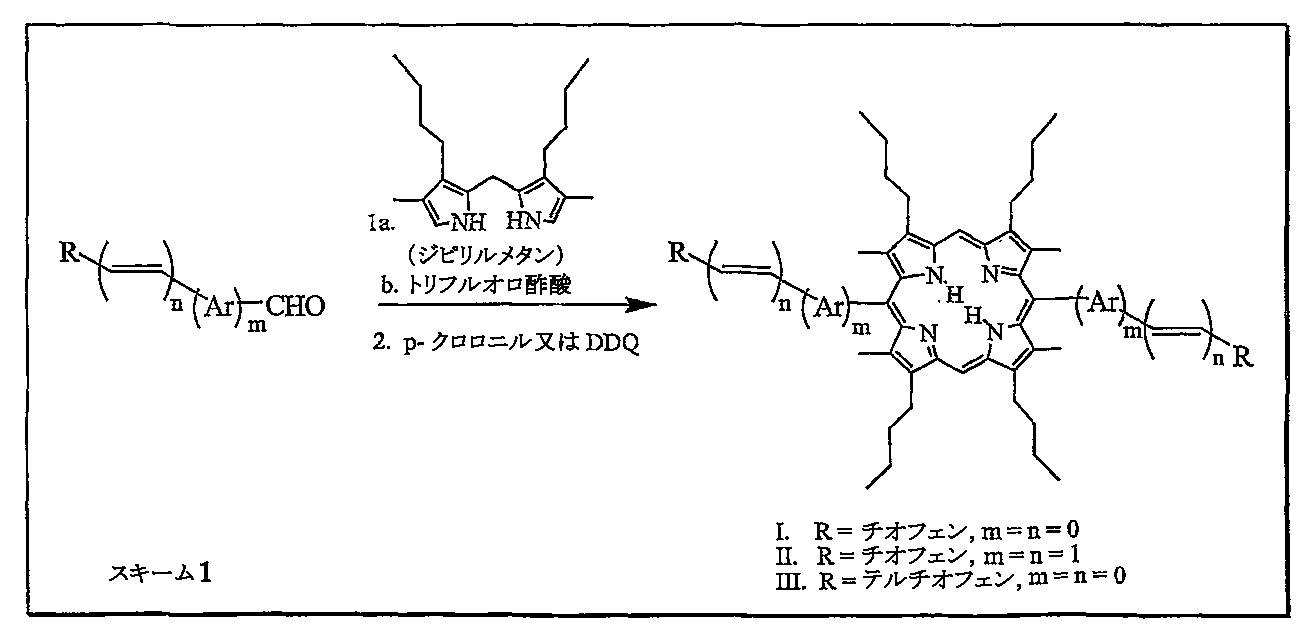
スキーム1に例示する合成方法論を開発しており、それにより重合可能なモノマー単位である広く様々な架橋対の合成が可能になっている。具体的には、I〜IIIが合成されている。
A synthetic methodology illustrated in
テルチオフェン誘導体(III)を電気化学的に重合させて、そのCVが導電性ポリマーに見合うものである青色被膜を形成することができる。 The terthiophene derivative (III) can be electrochemically polymerized to form a blue film whose CV is commensurate with the conductive polymer.
これだけでなく、ポルフィリン架橋コポリマーの調製に使用する場合これらの材料は大いに興味がある。すなわち、(III)及びテルチオフェンを含有するコポリマー(元素分析を使用して確認した比率1:2)を生成させている。このポリマーは電子機能性であり、導電性ポリマーに期待されるUV−可視スペクトルを示す。このポルフィリンテルチオフェンの、他のチオフェンとの共重合だけでなく、ピロール及びその誘導体との共重合も可能である。 Not only this, but these materials are of great interest when used in the preparation of porphyrin crosslinked copolymers. That is, a copolymer containing (III) and terthiophene (ratio 1: 2 confirmed using elemental analysis) is produced. This polymer is electronically functional and exhibits the UV-visible spectrum expected for conductive polymers. This porphyrin terthiophene can be copolymerized not only with other thiophenes but also with pyrrole and its derivatives.
ポルフィリンチオフェン(I及びII)について同様の化学作用を起こすこともできる。したがって、電子機能性ポリマー及びコポリマーの調製においてこれらの材料は極めて価値がある。 Similar chemistries can occur for porphyrin thiophenes (I and II). Therefore, these materials are extremely valuable in the preparation of electronic functional polymers and copolymers.
ポルフィリン部分を使用する最大の利点の1つは、適正な金属原子を挿入することにより、ポルフィリンの電子状態を「調整」する能力である。したがって、銅及び亜鉛誘導体、(銅−III)及び(亜鉛−III)を調製しており、又上記に示した方法でテルチオフェンとのコポリマー架橋剤として作用することを示している。 One of the biggest advantages of using a porphyrin moiety is the ability to “tune” the porphyrin's electronic state by inserting the proper metal atom. Thus, copper and zinc derivatives, (copper-III) and (zinc-III) have been prepared and have been shown to act as copolymer crosslinkers with terthiophene in the manner shown above.
重合反応に注入したエネルギーの、より正確なin situでの制御をもたらすので、電気化学的方法による重合が好ましい。ポリピロール及びポリアニリンについて、得られた材料の性状を操作し且つ改良するためこの方法を有利に使用することができることが実証されている。 Polymerization by electrochemical methods is preferred because it provides more accurate in situ control of the energy injected into the polymerization reaction. For polypyrrole and polyaniline it has been demonstrated that this method can be advantageously used to manipulate and improve the properties of the resulting material.
スキーム1において概説した化学作用及び化合物を利用することにより、本発明に従って様々なポルフィリン誘導体を作製することができる。したがってチオフェンアルデヒドを伸張させることにより、より短いポルフィリン−チオフェン構造体(IV)を調製することができるように、伸張したポルフィリン−チオフェン構造体(II)として、重合可能なモノマー単位の架橋対を調製することができる。
By utilizing the chemistry and compounds outlined in
この化学作用を用いて同様に、置換されたビチオフェン、テルチオフェン及びオリゴマーを作ることもできる。したがって、対応するアルデヒドからビチオフェン(V)及びテルチオフェン(VI)が容易に入手可能である。ピロール又はフラン誘導体(VIIa、b)、(VIIIa、b)及び(IX)を同様に調製することができる。 This chemistry can be used to make substituted bithiophenes, terthiophenes and oligomers as well. Therefore, bithiophene (V) and terthiophene (VI) are readily available from the corresponding aldehydes. Pyrrole or furan derivatives (VIIa, b), (VIIIa, b) and (IX) can be prepared similarly.
(II)などの生成物における芳香環を、フェロセンなどの様々な他の有用な誘導体で置き換えることができる。したがって、スキーム1に概説した手順を用いて、適正なテルチオフェン−フェロセンアルデヒドから、ビステルチオフェン−フェロセン−ポルフィリン(X)を容易に調製することができる。このことは、ポルフィリン部分に極めて接近して、架橋モノマー単位にレドックス活性官能性を導入する方法を提供する。
Aromatic rings in products such as (II) can be replaced with various other useful derivatives such as ferrocene. Thus, using the procedure outlined in
スキーム1におけるジピリルメタン反応物をピロールで置き換えるステップは、重合可能なモノマー単位の架橋したカルテットを作製する方法を提供する。テトラテルチオフェンポルフィリン(XI)がこうして容易に調製されており、電気化学的に重合されて、青色の導電性ポリマー被膜を生じることが示されている。
Replacing the dipyrrylmethane reactant in
このアプローチを用いて、他の光活性な官能性を開発することができる。例えば、テルチオフェンメチルホスホネートのピリジンアルデヒド、ビピリジンアルデヒド、又はテルピリジンアルデヒドとの反応によりポリピリジン官能基化テルチオフェン(XII〜XIV)が得られる(Collis,G.E.、Burrell,A.K.、及びOfficer,D.L.、Tetrahedron Letters、2001、42、8733〜8735)。適切な金属配位子誘導体によるこれらの架橋モノマー単位の錯化は、(XV)などのビステルチオフェン金属錯体架橋モノマー単位をもたらす。これらの架橋モノマー単位は、ポルフィリンテルチオフェンに類似した光捕集性架橋導電性ポリマーを提供する可能性を有する。 Using this approach, other photoactive functionalities can be developed. For example, reaction of terthiophene methylphosphonate with pyridine aldehyde, bipyridine aldehyde, or terpyridine aldehyde provides polypyridine functionalized terthiophenes (XII-XIV) (Collis, GE, Burrell, AK, And Officeer, D.L., Tetrahedron Letters, 2001, 42, 8733-8735). Complexation of these bridging monomer units with appropriate metal ligand derivatives results in bistelthiophene metal complex bridging monomer units such as (XV). These cross-linking monomer units have the potential to provide light-harvesting cross-linked conducting polymers similar to porphyrin terthiophenes.
本明細書における好ましい実施形態を、チオフェン系モノマー単位の架橋対又は架橋カルテットに関して記述しているが、すべてのこの化学作用は、ピロール及びフランなどの他のヘテロ芳香族誘導体に適用可能であることを当分野における技術者は理解するであろう。例えば、ヘテロ芳香族−ポルフィリンモノマー(XVI)は、チオフェン、ピロール、及びフランにより調製し、且つ重合させることができる。したがって、記述した方法論を用い(XVII)などのオリゴマーを得ることが可能である。 Although preferred embodiments herein are described in terms of a cross-linked pair or cross-linked quartet of thiophene-based monomer units, all this chemistry is applicable to other heteroaromatic derivatives such as pyrrole and furan. Those skilled in the art will understand. For example, heteroaromatic-porphyrin monomers (XVI) can be prepared and polymerized with thiophene, pyrrole, and furan. It is therefore possible to obtain oligomers such as (XVII) using the described methodology.
ポルフィリン基を電子伝達で結合した導電性ポリマーの多くの用途は、「可溶性」形態のポリマーを生成させることから利益を得る。そうすると、本発明のこのような材料は、塗料としての又はデバイス製作のための、その後の処理を受けやすくなる。電解流体力学的処理方法により、所望される場合コロイドでも又は真に可溶性のポリマーでも生成させることが可能になる。これらの処理方法は、本発明のポリマーのコロイド状の形態、ナノ粒子、又はナノ繊維を生成させるのに使用することができる。別法として、(XVIII)
などのモノマーによりコポリマーを形成することによって、又は溶解性を誘発するため対イオンとして高分子電解質を使用することによって、可溶性の形態の光活性ポリマーを調製することができる。
Many uses of conductive polymers with porphyrin groups attached by electron transfer benefit from producing “soluble” forms of the polymer. In doing so, such materials of the present invention are susceptible to subsequent processing as paint or for device fabrication. Electrohydrodynamic processing methods allow the production of colloids or truly soluble polymers if desired. These treatment methods can be used to produce colloidal forms, nanoparticles, or nanofibers of the polymers of the present invention. Alternatively, (XVIII)
Soluble forms of photoactive polymers can be prepared by forming a copolymer with monomers such as, or by using a polyelectrolyte as a counter ion to induce solubility.
本発明のポリマー又特にコポリマーの好ましい用途は、光起電性の材料、又特に織物を生産することにある。本発明のモノマー中に基材を浸漬し引き続いて酸化剤に曝すことにより、基材上への直接的な化学的重合が達成される。この方法は、布地、ガラス、又は他の構造材料を含む導電性若しくは非導電性基材のいずれにも適用可能である。 A preferred use of the polymers or in particular the copolymers according to the invention is in the production of photovoltaic materials, in particular textiles. Direct chemical polymerization onto the substrate is achieved by immersing the substrate in the monomer of the present invention and subsequent exposure to an oxidizing agent. This method is applicable to either conductive or non-conductive substrates including fabric, glass, or other structural materials.
下記の図及び実施例を参照して、ここに好ましい実施形態を記述するであろう。 Preferred embodiments will now be described with reference to the following figures and examples.
実施例において、1H核磁気共鳴(NMR)スペクトルは、Tecmag Libra拡張を有するJEOL社JMN−GX270 FT−NMR分光計を使用し270.19MHzで、又Bruker社400Avance実行X−WIN−NMRソフトウェアを使用し400.132MHzで得られた。化学シフトはTMSに対する、又はTMSが存在しない場合重水素化溶媒中の残留プロチウム(CDCl3、7.25ppm;ピリジン−d5、7.00、7.35、8.50ppm;DMSO−d6、2.50ppm;MeOD−d4、3.35ppm)に対するものである。13C NMR化学シフトは、CDCl3(77.0ppm)、ピリジン−d5(123.4、135.3、149.8ppm)、MeOD−d4(49.0ppm)に対するものである。電子吸収スペクトルは、Shimadzu社UV−3101PC UV−可視−NIR走査分光光度計を使用して得られた。質量スペクトルは、Varian社VG70−250S二重焦点磁場型質量分析計を使用して記録した。高速原子衝撃(FAB)高分解度質量スペクトル(HRMS)により分析した試料は、p−ニトロベンジルアルコールマトリックス中に支持し、又VG−OPUSソフトウェアを通したデータは、誤差±5ppmで分子イオン配合を示した。主要なフラグメンテーションは、基準ピーク強度に対する百分率として示される。シリカ(0.032〜0.063mm、Merck社Kieselgel 60)を使用してクロマトグラフィを実施した。前被覆シリカプレート(Merck社Kieselgel 60F254)を使用して薄層クロマトグラフィを実施した。
In the examples, 1 H nuclear magnetic resonance (NMR) spectra were measured at 270.19 MHz using a JEOL JMN-GX270 FT-NMR spectrometer with a Tecmag Libra extension, and a
実施例において使用したクロマトグラフィ溶媒は、実験室グレードであった。逆浸透により水を精製した。使用したすべての他の溶媒は、他に指定しない限りARグレードであった。ヨウ素はM&B社を供給源とし、純度>99.8%まで再昇華させた。Na2S2O3・5H2OはBDH社を供給源とし、GPグレードであった。3−チオフェンカルボキシアルデヒド(98%)はAldrich社を供給源としていた。3’−ホルミル−2,2’:5’,2”−テルチオフェンは、Massey大学で開発した手順(Collis,G.E.、Burrell,A.K.、及びOfficer,D.L.、Tetrahedron Letters、2001、42、8733〜8735)により調製した。ジピリルメタンは、報告された手順(Sessler,J.L.、Johnson,M.R.、Creager,S.E.、Fettinger,J.C.、及びIbers,J.A.、Journal of the American Chemical Society、1990、112、9310〜9329)により調製した。 The chromatographic solvent used in the examples was laboratory grade. Water was purified by reverse osmosis. All other solvents used were AR grade unless specified otherwise. Iodine was resublimated to a purity> 99.8% from M & B. Na 2 S 2 O 3 .5H 2 O was GP grade, sourced from BDH. 3-thiophenecarboxaldehyde (98%) was sourced from Aldrich. 3′-formyl-2,2 ′: 5 ′, 2 ″ -terthiophene was prepared using procedures developed at Massey University (Collis, GE, Burrell, AK, and Officeer, DL, Tetrahedron. Letters, 2001, 42, 8733-8735. Dipyrylmethane was prepared according to the reported procedure (Sessler, JL, Johnson, MR, Creager, SE, Fettinger, JC, And Ibers, JA, Journal of the American Chemical Society, 1990, 112, 9310-9329).
反応は、不活性雰囲気下で実施し、且つ周囲光から遮断した。 The reaction was carried out under an inert atmosphere and was shielded from ambient light.
(実施例1)
5,15−ビス(3’−チエニル)−2,8,12,18−テトラ−n−ブチル−3,7,13,17−テトラメチルポルフィン(I)の合成
室温において3−ホルミルチオフェン(30.6mL、0.349ミリモル)及びジピリルメタン(100mg、0.349ミリモル)を脱気した無水CH2Cl2(35mL)中に溶解した。次いで、TFA(26.9mL、0.349ミリモル、1.0当量)を添加し、この溶液をN2下で攪拌した。TLCによるベースライン材料の最初の兆候において(≒15分;シリカゲル、CH2Cl2)、DBU(52.2mL、0.349ミリモル、1.0当量)の添加により反応を止めた。次いで、p−クロラニル(214mg、0.873ミリモル、2.5当量)を添加し、この溶液を室温で4時間攪拌した。次にEt3N(36mL、0.258ミリモル)を添加し、反応液を激しく1.5時間攪拌した。次いで過剰のEt3N(0.723mL、5.190ミリモル)を添加し、反応液を15分攪拌した(p−クロラニルによりメタノール中に可溶である錯体を形成させる)。メタノールによる溶液から生成物を沈殿させ、ろ過し、且つ高真空下で乾燥して、紫色結晶性固体として生成物(I)(69.3mg、53%)をもたらした。
Synthesis of 5,15-bis (3′-thienyl) -2,8,12,18-tetra-n-butyl-3,7,13,17-tetramethylporphine (I) 3-Formylthiophene (30 .6 mL, 0.349 mmol) and dipyrrylmethane (100 mg, 0.349 mmol) were dissolved in degassed anhydrous CH 2 Cl 2 (35 mL). Then added TFA (26.9 mL, 0.349 mmol, 1.0 eq) and the solution was stirred under N 2. The reaction was stopped by the addition of DBU (52.2 mL, 0.349 mmol, 1.0 equiv) at the first sign of baseline material by TLC (≈15 min; silica gel, CH 2 Cl 2 ). Then p-chloranil (214 mg, 0.873 mmol, 2.5 eq) was added and the solution was stirred at room temperature for 4 hours. Et 3 N (36 mL, 0.258 mmol) was then added and the reaction was stirred vigorously for 1.5 hours. Excess Et 3 N (0.723 mL, 5.190 mmol) was then added and the reaction was stirred for 15 minutes (p-chloranil forms a complex that is soluble in methanol). The product was precipitated from a solution in methanol, filtered and dried under high vacuum to give product (I) (69.3 mg, 53%) as a purple crystalline solid.
(実施例2)
5,15−ビス([2’,2”:5”,2””−テルチオフェン]−3”−イル)−2,8,12,18−テトラ−n−ブチル−3,7,13,17−テトラメチルポルフィン(III)の合成
RTにおいて3’−ホルミル−2,2’:5’,2”−テルチオフェン(96.5mg、349マイクロモル)及びジピリルメタン(100mg、349マイクロモル)を脱気した乾燥CH2Cl2(35mL)中に溶解した。TFA(26.9μL、349マイクロモル、1.0当量)を添加し、この溶液をN2下で攪拌した。TLCによるベースライン材料の最初の兆候において(≒15分;シリカゲル、CH2Cl2)、DBU(52.2μL、349マイクロモル、1.0当量)の添加により反応を止めた。次いで、p−クロラニル(214.5mg、873マイクロモル、2.5当量)を添加し、この溶液をRTで4時間攪拌した。次にEt3N(36μL、258マイクロモル)を添加し、反応液を激しく1時間攪拌した。過剰のEt3N(723μL、5.190ミリモル)を添加し、反応液を15分攪拌した。次いでMeOHによる溶液から生成物を沈殿させ、褐紫色固体として生成物(III)(76.9mg、41%)をもたらした。
5,15-bis ([2 ′, 2 ″: 5 ″, 2 ″ ″-terthiophene] -3 ″ -yl) -2,8,12,18-tetra-n-butyl-3,7,13, Synthesis of 17-tetramethylporphine (III) At RT, 3′-formyl-2,2 ′: 5 ′, 2 ″ -terthiophene (96.5 mg, 349 μmol) and dipyrylmethane (100 mg, 349 μmol) were removed. Dissolved in dry dry CH 2 Cl 2 (35 mL). TFA (26.9 μL, 349 μmol, 1.0 equiv) was added and the solution was stirred under N 2 . At the first sign of baseline material by TLC (≈15 min; silica gel, CH 2 Cl 2 ), the reaction was stopped by the addition of DBU (52.2 μL, 349 μmol, 1.0 equiv). Then p-chloranil (214.5 mg, 873 micromol, 2.5 eq) was added and the solution was stirred at RT for 4 h. Et 3 N (36 μL, 258 μmol) was then added and the reaction was stirred vigorously for 1 hour. Excess Et 3 N (723 μL, 5.190 mmol) was added and the reaction was stirred for 15 minutes. The product was then precipitated from a solution in MeOH, resulting in product (III) (76.9 mg, 41%) as a tan solid.
(実施例3)
5,15−ビス([2’,2”:5”,2””−テルチオフェン]−3”−イル)−2,8,12,18−テトラ−n−ブチル−3,7,13,17−テトラメチルポルフィリナト亜鉛(II)(Zn−III)の合成
RTにおいて攪拌しながらMeOH(1.0mL)中のZn(OAc)2・2H2O(42.9mg、196マイクロモル、1.2当量)の溶液を、CHCl3(18mL)中のビステルチエニルポルフィリン(II)(177mg、163マイクロモル)の溶液に添加した。30分後に、TLC(Rf=0.25、シリカ、CH2Cl2:ヘキサン(1:2))によって、反応が完結したことを判断した。MeOHにより粗生成物を沈殿させ、得られた固体をCH2Cl2/MeOHから再結晶させ、れんが赤色粉末として(Zn−III)(189mg、100%)をもたらした。
5,15-bis ([2 ′, 2 ″: 5 ″, 2 ″ ″-terthiophene] -3 ″ -yl) -2,8,12,18-tetra-n-butyl-3,7,13, Synthesis of 17-tetramethylporphyrinatozinc (II) (Zn-III) Zn (OAc) 2 · 2H 2 O (42.9 mg, 196 μmol, 1.M in MeOH (1.0 mL) with stirring at RT. 2 eq.) Was added to a solution of bistelthienylporphyrin (II) (177 mg, 163 μmol) in CHCl 3 (18 mL) After 30 min TLC (Rf = 0.25, silica, CH 2 Cl 2: hexane: by (1 2)), the reaction crude product was precipitated by .MeOH it determines that it has completed is recrystallized resulting solid from CH 2 Cl 2 / MeOH, brick red Resulted (Zn-III) (189mg, 100%) as end.
(実施例4)
5,15−ビス([2’,2”:5”,2””−テルチオフェン]−3”−イル)−2,8,12,18−テトラ−n−ブチル−3,7,13,17−テトラメチルポルフィリナト銅(II)(Cu−III)の合成
N2雰囲気下で攪拌しながらMeOH(10.0mL)中のCu(OAc)2・H2O(111mg、508マイクロモル、1.2当量)の溶液を、CHCl3(50mL)中の遊離塩基(III)(500mg、461マイクロモル)の還流溶液に添加した。15時間後、TLC分析によりすべての(III)が金属化したことが示された。真空中で溶媒を除去し、残渣をカラムクロマトグラフ(シリカ、37mm直径×90mm、CH2Cl2:ヘキサン(1:2))に掛け、主要な赤色着色帯のものを集めた。CH2Cl2:MeOHから再結晶させ、紫色固体として(Cu−III)(437.5mg、83%)をもたらした。UV−可視(CH2Cl2):λmax[nm](ε×10−3)414(379)、536(22.0)、574(20.3)。FAB−LRMS:m/z(帰属%)1142〜1149においてクラスタ、1143(90、M+)。HRMS:M+(C64H64N4CuS6)の計算値:1143.2751、実測:1143.2753。
Example 4
5,15-bis ([2 ′, 2 ″: 5 ″, 2 ″ ″-terthiophene] -3 ″ -yl) -2,8,12,18-tetra-n-butyl-3,7,13, Synthesis of 17-tetramethylporphyrinatocopper (II) (Cu-III) Cu (OAc) 2 .H 2 O (111 mg, 508 μmol, 1 in MeOH (10.0 mL) with stirring under N 2 atmosphere .2 eq.) Was added to a refluxing solution of free base (III) (500 mg, 461 μmol) in CHCl 3 (50 mL) After 15 h, all (III) was metallated by TLC analysis. The solvent was removed in vacuo and the residue was subjected to column chromatography (silica, 37 mm diameter × 90 mm, CH 2 Cl 2 : hexane (1: 2)) to remove the major red colored band. Collected C 2 Cl 2: recrystallized from MeOH, as a purple solid (Cu-III) (437.5mg, 83%) .UV- visible (CH 2 Cl 2) resulted in a: λ max [nm] (ε × 10 - 3 ) 414 (379), 536 (22.0), 574 (20.3) FAB-LRMS: cluster in m / z (% of assignment) 1142-1149, 1143 (90, M + ) HRMS: M + Calculated value of (C 64 H 64 N 4 CuS 6 ): 1143.27551, actual measurement: 1143.27553.
(実施例5)
5,10,15,20−テトラキス([2’,2”:5”,2””−テルチオフェン]3”−イル)ポルフィン(XI)の合成
室温においてN2下で3’−ホルミル−2,2’:5’,2”−テルチオフェン(158mg、0.572ミリモル)及びピロール(39.65μL、0.572ミリモル)を脱気した無水CH2Cl2(57mL)中に溶解した。BF3・OEt2(7.0μL、57マイクロモル、0.1当量)を添加し、この溶液を暗所で2時間攪拌した。p−クロラニル(105mg、0.429ミリモル、0.75当量)を添加し、この溶液を還流温度で2時間攪拌した。次に過剰のEt3Nを添加し、減圧下で溶媒を除去した。残渣をカラムクロマトグラフ(80mm×37mm直径、CH2Cl2:ヘキサン(1:1))に掛け、最初の主なポルフィリン着色帯(Rf=0.15、CH2Cl2:ヘキサン(1:1))のものを集めた。次いで、MeOHによるCH2Cl2の溶液から生成物を析出させ、次いでろ過し、且つ高真空下で乾燥して、1H NMRによると4つの異性体の分離不可能な混合物を含有する紫色粉末として生成物(XI)(62.4mg、34%)をもたらした。
Synthesis of 5,10,15,20-tetrakis ([2 ′, 2 ″: 5 ″, 2 ″ ″-terthiophene] 3 ″ -yl) porphine (XI) 3′-formyl- 2 under N 2 at room temperature , 2 ′: 5 ′, 2 ″ -terthiophene (158 mg, 0.572 mmol) and pyrrole (39.65 μL, 0.572 mmol) were dissolved in degassed anhydrous CH 2 Cl 2 (57 mL). BF 3 · OEt 2 (7.0 μL, 57 μmol, 0.1 eq) was added and the solution was stirred in the dark for 2 hours. p-Chloranil (105 mg, 0.429 mmol, 0.75 equiv) was added and the solution was stirred at reflux for 2 hours. Then excess Et 3 N was added and the solvent was removed under reduced pressure. The residue was subjected to a column chromatograph (80 mm × 37 mm diameter , CH 2 Cl 2 : hexane (1: 1)) and the first major porphyrin colored band (Rf = 0.15, CH 2 Cl 2 : hexane (1: 1). )). The product is then precipitated from a solution of CH 2 Cl 2 in MeOH, then filtered and dried under high vacuum, a purple powder containing an inseparable mixture of four isomers according to 1 H NMR As product (XI) (62.4 mg, 34%).
(実施例6)
テルチオフェンによるIIIの電解共重合
好ましい重合可能なテルチオフェンモノマー単位の架橋対、すなわち実施例2において調製したIII、のサイクリックボルタンメトリ及び電解共重合を、例としてのみここに記述する。0.1M過塩素酸テトラブチルアンモニウム支持電解質を含有するジクロロメタン中のサイクリックボルタンメトリにより、Ag/Ag+に対し約0.70Vでコモノマー酸化が開始されることが判明した。
(Example 6)
Electrocopolymerization of III with terthiophene The cross-linked pair of preferred polymerizable terthiophene monomer units, ie the cyclic voltammetry and the electrocopolymerization of III prepared in Example 2, are described here by way of example only. Cyclic voltammetry in dichloromethane containing 0.1 M tetrabutylammonium perchlorate supporting electrolyte was found to initiate comonomer oxidation at about 0.70 V versus Ag / Ag + .
サイクリックボルタンモグラムにおける交差の存在により証明されるように、この酸化過程はPt裸表面を幾分修飾する。これはオリゴマー又はポリマー生成物の堆積によるものである。 This oxidation process somewhat modifies the bare Pt surface, as evidenced by the presence of crossings in the cyclic voltammogram. This is due to oligomer or polymer product deposition.
Pt作用電極を使用して電流密度0.5mA/cm2を適用している間、クロノポテンシオグラムを記録した。Pt上に≒0.80Vの定常状態電位が発生した。重合時間の間この電位が上昇しなかったという事実は、導電性ポリマーが堆積したことを示す。 Chronopotentiograms were recorded while applying a current density of 0.5 mA / cm 2 using a Pt working electrode. A steady state potential of ≈0.80 V was generated on Pt. The fact that this potential did not increase during the polymerization time indicates that a conductive polymer has been deposited.
一定の電位0.90Vを印加している間Pt作用電極を使用して、クロノアンペログラムをも記録した。最初の立上げ後、電極上に導電性ポリマー生成物が堆積されるにつれ、電流が定常的に増加した。 A chronoamperogram was also recorded using a Pt working electrode while applying a constant potential of 0.90V. After the initial ramp up, the current steadily increased as the conductive polymer product was deposited on the electrode.
IIIとテルチオフェンとの等モル混合物溶液から電着されたコポリマーの元素分析は、その組成がIII:テルチオフェン:過塩素酸塩対イオンについて1:2:4であることを示した。 Elemental analysis of the copolymer electrodeposited from an equimolar mixture of III and terthiophene showed that its composition was 1: 2: 4 for III: terthiophene: perchlorate counterion.
(実施例7)
光起電力性能
導電性ポリマー又はコポリマーを組み込んでいる光電気化学セルの光起電力性能を検討している。光電気化学セルの可能な一実施形態を、図1に示す。
Photovoltaic performance The photovoltaic performance of photoelectrochemical cells incorporating conductive polymers or copolymers is being investigated. One possible embodiment of a photoelectrochemical cell is shown in FIG.
白色光源としてハロゲンランプを使用し、通常は光電気化学セルに500W/m2の強度をふり向けた。線形掃引ボルタンメトリを用いることにより、暗所における又は明所における光電気化学セルから電流−電圧(I−V)曲線が得られた。次いでI−V曲線を使用して開路電圧(Voc)、短絡電流(Isc)、フィルファクタ、及びエネルギー変換効率(ECE)を測定した。いくつかの結果を表1に示している。 A halogen lamp was used as a white light source, and an intensity of 500 W / m 2 was usually applied to the photoelectrochemical cell. By using linear sweep voltammetry, current-voltage (IV) curves were obtained from photoelectrochemical cells in the dark or in the light. The IV curve was then used to measure open circuit voltage (V oc ), short circuit current (I sc ), fill factor, and energy conversion efficiency (ECE). Some results are shown in Table 1.
表1は、IIIのテルチオフェン(TTh)とのコポリマーであるポリ(III−co−TTh)が最良の結果をもたらし、ポルフィリン部分への亜鉛の配位が光起電力性能を向上させたことを示す。
Table 1 shows that poly (III-co-TTh), a copolymer of III with terthiophene (TTh), gave the best results and that the coordination of zinc to the porphyrin moiety improved photovoltaic performance. Show.
(実施例8)
光電気化学セル
ポリ(III−co−TTh)の高められた光起電力性能をさらに研究した。
(Example 8)
The enhanced photovoltaic performance of the photoelectrochemical cell poly (III-co-TTh) was further studied.
ポルフィリン架橋コポリマーであるポリ(III−co−TTh)を調製し且つ光電気化学セルに組み込んで、光起電力応答について試験した。 Poly (III-co-TTh), a porphyrin cross-linked copolymer, was prepared and incorporated into a photoelectrochemical cell and tested for photovoltaic response.
ポルフィリン空洞中に亜鉛を配位する効果をも研究した。 The effect of coordinating zinc in the porphyrin cavity was also studied.
試薬及び材料
実施例2において記述するようにトランス−5,15−ビス([2,2’;5’,2”−テルチオフェン]−3’イル)−2,8,12,18−テトラ−n−ブチル−3,7,13,17−テトラメチルポルフィリン(III)を合成した。2,2’;5’,2”−テルチオフェン(TTh)(Aldrich社)、過塩素酸テトラブチルアンモニウム(TBAP、Fluka社)、ヨウ素(Univar、Ajax、Aldrich社、99.8%)、メタノール(Univar、Ajax社)、アセトニトリル(ACN、Univar、Ajax社)、ジクロロメタン(DCM、Univar、Ajax社)、イソプロパノール(Univar、Ajax社)、ヨウ化テトラプロピルアンモニウム(Aldrich社、>=98%)、エチレンカーボネート(Aldrich社、99%)、酢酸亜鉛(Fluka社)、プロピレンカーボネート(Aldrich社、99%)。ITO被覆ガラス(=<10Ωsq−1)は、Delta Technologies Limited社(米国)から購入し、所要の大きさに切断し、液体洗剤で洗浄し、ミリQ水で続いてイソプロパノールで完全にすすぎ、且つ乾燥させた。ポリマーで被覆する前に、UVO洗浄機(Model No.42−220、Jelight Co.Inc.社、米国)内でITO被覆ガラスを処理した。エチレンカーボネート/プロピレンカーボネート(1:1重量)中に、I2(60mM)及びヨウ化テトラプロピルアンモニウム(500mM)を溶解することにより液体電解質を調製した。Dynavac社MagnetronスパッタコータModel SC100MSを使用してITO被覆ガラス上に白金の薄層をスパッタ被覆した。電流50mA及びAr圧力2×10⁻³ミリバールでスパッタを実施した。Pt厚さ10Åをスパッタ被覆した。これらの試料は、ポリマー被覆したITO被覆ガラスに対する対向電極として使用した。
Reagents and Materials Trans-5,15-bis ([2,2 ′; 5 ′, 2 ″ -terthiophene] -3′yl) -2,8,12,18-tetra- as described in Example 2 n-butyl-3,7,13,17-tetramethylporphyrin (III) was synthesized. 2,2 ′; 5 ′, 2 ″ -terthiophene (TTh) (Aldrich), tetrabutylammonium perchlorate ( TBAP, Fluka), iodine (Univar, Ajax, Aldrich, 99.8%), methanol (Univar, Ajax), acetonitrile (ACN, Univar, Ajax), dichloromethane (DCM, Univar, Ajax), isopropanol (Univar, Ajax), tetrapropylammonium iodide (Aldrich,> = 98%) , Ethylene carbonate (Aldrich Corp., 99%), zinc acetate (Fluka Co.), propylene carbonate (Aldrich Corp., 99%). ITO coated glass (= <10Ω sq −1 ) was purchased from Delta Technologies Limited (USA), cut to the required size, washed with liquid detergent, rinsed thoroughly with milliQ water followed by isopropanol, and Dried. Prior to coating with the polymer, the ITO-coated glass was processed in a UVO cleaner (Model No. 42-220, Jelight Co. Inc., USA). A liquid electrolyte was prepared by dissolving I 2 (60 mM) and tetrapropylammonium iodide (500 mM) in ethylene carbonate / propylene carbonate (1: 1 weight). A thin layer of platinum was sputter coated onto ITO coated glass using a Dynavac Magnetron sputter coater Model SC100MS. Sputtering was performed at a current of 50 mA and an Ar pressure of 2 × 10 −3 mbar. A Pt thickness of 10 mm was sputter coated. These samples were used as counter electrodes for polymer coated ITO coated glass.
設備及び方法
EG&G社PAR363ポテンシオスタット/ガルバノスタット、Bioanalytical Systems社CV27ボルタンモグラフ、Chart v3.5.7/EChem v1.3.2によるMacLab400ソフトウェア(ADInstruments社)及びMacintosh社コンピュータから構成される電気化学ハードウェア系を使用してコポリマーの電解合成及び試験を達成した。作用電極(白金円板、又はITO被覆ガラス、又はそれらの上にポリマー被覆を有するこれらの基材)、白金網補助電極、及び塩橋を有するAg/Ag+比較電極から構成される三電極型電気化学セルを使用した。コポリマー試料は、元素分析(The Campbell Microanalytical Laboratory、Otago大学、ニュージーランド)にも掛けた。Shimadzu社UV1601分光光度計を使用し、又300〜1100nmの範囲にわたり走査して、コポリマー(酸化及び還元状態)のUV−可視スペクトルが得られた。Leica−stereo SS440顕微鏡を使用して、コポリマー被膜(溶液側)について走査電子顕微鏡観察(SEM)試験を行った。HP34401Aマルチメータ及び定電流電源系(EG&G社PAR363ポテンシオスタット/ガルバノスタット)に接続した4点プローブを使用して導電率測定を行った。新たに調製した被膜(デジタル測微計(Mitutoyo社、日本)を用い、厚さ7〜33μm)を使用し、電気化学的に調製したポリマーを試験した。電流−電圧(I−V)曲線を得るために、ハロゲンランプ(Wiko Ltd社からのSoLux MR−16)と、Macintosh社コンピュータ/Chart v3.5.7/EChem v1.3.2によるMacLab400ソフトウェア(ADInstruments社)/CV27ボルタンモグラフ(Bioanalytical Systems社)から構成される設備とを使用して、光起電力装置試験を行った。500Wm−2の光強度を使用した。
Equipment and Methods EG & G PAR 363 Potentiostat / Galvanostat, Bioanalytical Systems CV27 Voltammograph,
光起電力装置の製作及び試験
ITO被覆ガラス上にコポリマーを電着させ、アセトニトリルですすぎ、次いで乾燥させた。一般に、ポリマー又はコポリマー被膜は、ポリマーの化学ポテンシャルの低下により高い開路電圧(Voc)を得るために[2]、光起電力装置として組み立てる前に、0.1M TBAP/DCM中で−0.8Vにおいて完全に電解還元した。コポリマーで被覆したITO被覆ガラス電極と、PtスパッタしたITO被覆ガラス電極との間に液体電解質をサンドイッチ状にはさむことにより、装置を組み立てた。このことは、これら2つの電極間のスペーサとしてパラフィルムの縁取りをすることにより行った。線形掃引ボルタンメトリ(LSV)によって光起電力装置を試験した。電流がゼロである場合開路電圧(Voc)をもたらし、又電圧がゼロである場合短絡電流(Isc)をもたらす。
Production and Testing of Photovoltaic Devices Copolymers were electrodeposited on ITO coated glass, rinsed with acetonitrile and then dried. In general, polymer or copolymer coatings are obtained in order to obtain a higher open circuit voltage (V oc ) due to a decrease in the chemical potential of the polymer [2], before assembling as a photovoltaic device, in 0.1M TBAP / DCM at −0. Completely electroreduction at 8V. The device was assembled by sandwiching a liquid electrolyte between a copolymer coated ITO coated glass electrode and a Pt sputtered ITO coated glass electrode. This was done by trimming the parafilm as a spacer between these two electrodes. The photovoltaic device was tested by linear sweep voltammetry (LSV). An open circuit voltage (V oc ) results when the current is zero, and a short circuit current (I sc ) when the voltage is zero.
結果
ポリ(III−co−TTh)
最初に、ポルフィリン架橋ビステルチオフェンであるIIIの電解活性を検討した(図1(a))。テルチオフェン単独のCV(図1(b))、及びIIIの類似体であるジフェニルポルフィリンのCV(図1(c))と比較すると、IIIは、ポルフィリン部分により2つのレドックス過程(ピークA/B及びC/D)を経ることが見出された。図1(a)におけるピークCの陽極性電位で、テルチオフェン部分の電解酸化が明らかになる。他の還元ピーク(図1(a)においてEと表示される)は、溶液中に溶解したO2の還元によるものであった。陽極性の上方限界を1.2から2.0Vまで変化させたが、これらの条件はどれも導電性、電解活性ポリマー被膜の形成をもたらさなかった。さらに、ガルバノスタット方法又はポテンシオスタット方法のいずれを使用しても白金電極上にホモポリマー被膜を得ることができなかった。これらの条件下でIIIがホモポリマーを形成することが可能ではないことはおそらく、分子サイズが大きいとすれば、立体障害によるものである。このため、IIIをテルチオフェン(TTh)と共重合させることを考慮した。
Result Poly (III-co-TTh)
First, the electrolytic activity of III, which is a porphyrin-bridged bistelthiophene, was examined (FIG. 1 (a)). Compared to the CV of terthiophene alone (FIG. 1 (b)), and the CV of diphenylporphyrin, an analog of III (FIG. 1 (c)), III has two redox processes (peaks A / B) due to the porphyrin moiety. And C / D). The anodic potential at peak C in FIG. 1A reveals electrolytic oxidation of the terthiophene moiety. The other reduction peak (labeled E in FIG. 1 (a)) was due to the reduction of O 2 dissolved in the solution. Although the anodic upper limit was varied from 1.2 to 2.0 V, none of these conditions resulted in the formation of a conductive, electroactive polymer coating. Furthermore, a homopolymer film could not be obtained on the platinum electrode using either the galvanostat method or the potentiostat method. The inability of III to form a homopolymer under these conditions is probably due to steric hindrance if the molecular size is large. For this reason, the copolymerization of III with terthiophene (TTh) was considered.
モノマーIIIとのテルチオフェンの電気化学的共重合
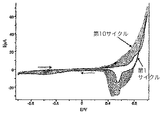
定電位若しくは定電流いずれかのサイクリックボルタンメトリ(CV)を使用して、白金電極上にTThとのIIIのコポリマーを首尾よく電着することができることを見出した。このコポリマーのポテンシオダイナミックな成長は、III(5mM)/テルチオフェン(5mM)/TBAP(0.1M)/DCMを含有するコモノマー溶液から−1.0〜+1.0Vの電位範囲にわたって100mVs−1で行われた。成長の間に得られたサイクリックボルタンモグラム(図2)は、サイクル回数の増加による予想されたレドックス電流の増加を示し、導電性電解活性ポリマーの成長を示した。IIIとTThの等モル混合物を含有するモノマー溶液からのコポリマーの成長を、元素分析(ポルフィリン部分からのN2.52%、テルチオフェン部分からのS16.48%、及びCl6.30%)により確認した。この結果は、このポリマー材料がIII単位1:テルチオフェン単位2:過塩素酸塩対アニオン4の比率を有することを示唆している。この高い負荷量は、3チオフェン単位毎に1過塩素酸塩対アニオンを有するコポリマー形成を示すものである。その他の記述として、このコポリマーはポリ(III−co−TTh)と呼ぶ。図2における第1サイクルに基づいて、ポリ(III−co−TTh)のポテンシオスタット成長のため選択した電位は+0.90Vであった。導電性ポリマー成長に典型的であるクロノアンペログラムが得られ;最初の立上りの後、コポリマーが成長を続けるにつれて電流が定常的に増加し、表面積の増加をもたらした。一定電流密度0.5mAcm−2でポリ(III−co−TTh)のガルバノスタット成長が行われた。得られたクロノポテンシオグラムは最初の立上り、次いで導電性電解活性ポリマーの成長について予想された電位の低下を示した。10分後、成長中に得られた電位は+0.80Vであった。
Electrochemical copolymerization of terthiophene with monomer III Successful electrodeposition of a copolymer of III with TTh on a platinum electrode using either constant potential or constant current cyclic voltammetry (CV). I found out that I can. The potentiodynamic growth of this copolymer is 100 mVs −1 over a potential range of −1.0 to +1.0 V from a comonomer solution containing III (5 mM) / terthiophene (5 mM) / TBAP (0.1 M) / DCM. Made in The cyclic voltammogram obtained during growth (FIG. 2) showed the expected increase in redox current with increasing number of cycles, indicating the growth of the conductive electroactive polymer. The growth of the copolymer from a monomer solution containing an equimolar mixture of III and TTh was confirmed by elemental analysis (N2.52% from porphyrin moiety, S16.48% from terthiophene moiety, and 6.30% Cl). . This result suggests that the polymeric material has a ratio of III unit 1: terthiophene unit 2: perchlorate to anion 4. This high loading is indicative of copolymer formation with 1 perchlorate counter anion for every 3 thiophene units. As another description, this copolymer is referred to as poly (III-co-TTh). Based on the first cycle in FIG. 2, the potential selected for potentiostat growth of poly (III-co-TTh) was + 0.90V. A chronoamperogram typical of conducting polymer growth was obtained; after the first rise, the current steadily increased as the copolymer continued to grow, resulting in an increase in surface area. Poly (III-co-TTh) galvanostat growth was performed at a constant current density of 0.5 mAcm −2 . The resulting chronopotentiogram showed the first rise and then the potential drop expected for the growth of the conductive electroactive polymer. After 10 minutes, the potential obtained during growth was + 0.80V.
ポリ(III−co−TTh)の重合後サイクリックボルタンメトリ
コポリマー成長後、サイクリックボルタンメトリを使用して1.0M NaNO3/H2O溶液中における、又0.1M TBAP/ACN溶液中におけるポリ(III−co−TTh)修飾白金電極について検討した。しかし、0.1M TBAP/ACN中に非常に安定なレドックス対(図3においてA/Bと表示される)が観察されたが、1M NaNO3支持電解質を含有する水溶液中にはポリマー主鎖ピークは観察されなかった。このことは、一般にポリピロールよりもポリチオフェンが疎水性であり、したがって水性媒質では電気化学的スイッチングがあまり効率的ではない[3]事実による。観察されたレドックス対(A/Bと表示される)は、コポリマー主鎖の酸化/還元に帰されるものである。このサイクルボルタンモグラムは、Cutlerらにより得られた他の置換されたポリ(テルチオフェン)被膜のCVにおいて非定形的ではないものである[25、32]。
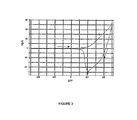
Post-polymerization of poly (III-co-TTh) Cyclic voltammetry After copolymer growth, in cyclic 1.0M NaNO 3 / H 2 O solution using cyclic voltammetry and 0.1M TBAP / ACN solution The poly (III-co-TTh) modified platinum electrode was examined. However, a very stable redox couple (labeled A / B in FIG. 3) was observed in 0.1M TBAP / ACN, but in the aqueous solution containing 1M NaNO 3 supporting electrolyte the polymer backbone peak Was not observed. This is due to the fact that polythiophene is generally more hydrophobic than polypyrrole and therefore electrochemical switching is less efficient in aqueous media [3]. The observed redox couple (denoted A / B) is attributed to the oxidation / reduction of the copolymer backbone. This cycle voltammogram is not atypical in the CV of other substituted poly (terthiophene) coatings obtained by Cutler et al. [25, 32].
ポリ(III−co−TTh)のUV−可視分光法、導電率、及び走査電子顕微鏡法
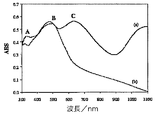
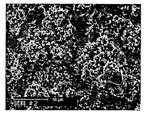
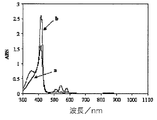
ポリ(III−co−TTh)被膜(ITO被覆ガラス上に電着された)のUV−可視スペクトルを記録した(図4)。酸化された状態で、ポリ(III−co−TTh)のスペクトル(図4(a))は、導電性状態にあるポリチオフェンについて予想される330nmにおける鋭いピーク(A)、505nm(B)及び650nm(C)における2つのブロードピーク、及び890nmからより長い波長に伸びる自由キャリヤテールを示す。その還元状態のスペクトル(図4(b))は、650nmにおけるピークCも、自由キャリヤテールも失われていることを示す。これは導電率の低下と一致している。ポリ(テルチオフェン)[5]と比較するとポリ(III−co−TTh)は、酸化状態及び還元状態両方について505nmにおいて安定な吸収ピーク(B)を示し、このピークはポリ(テルチオフェン)のスペクトルには存在せず、ポルフィリン部分の吸収に帰属させることができる[34]。ポリ(III−co−TTh)の導電率が0.24Scm−1であることを測定した。又ポリ(III−co−TTh)の溶液側の走査電子顕微鏡写真(図5)は、開放気孔性の形態を示しており、このことは、大きな表面積によって光電気化学セルから得ることが可能な電流が増加されるはずである点で、光起電力装置に有利であろう。
UV-visible spectroscopy, conductivity, and scanning electron microscopy of poly (III-co-TTh) Record UV-visible spectrum of poly (III-co-TTh) coating (electrodeposited on ITO coated glass) (FIG. 4). In the oxidized state, the spectrum of poly (III-co-TTh) (FIG. 4 (a)) shows sharp peaks (A), 505 nm (B) and 650 nm (330 nm expected for polythiophene in the conductive state ( 2C shows two broad peaks and a free carrier tail extending from 890 nm to longer wavelengths. The reduced state spectrum (FIG. 4 (b)) shows that both the peak C at 650 nm and the free carrier tail are lost. This is consistent with a decrease in conductivity. Compared with poly (terthiophene) [5], poly (III-co-TTh) shows a stable absorption peak (B) at 505 nm for both the oxidized and reduced states, which is the spectrum of poly (terthiophene). It can be attributed to the absorption of the porphyrin moiety [34]. The conductivity of poly (III-co-TTh) was measured to be 0.24 Scm- 1 . The scanning electron micrograph on the solution side of poly (III-co-TTh) (FIG. 5) also shows the open porosity morphology, which can be obtained from the photoelectrochemical cell with a large surface area. It would be advantageous for photovoltaic devices in that the current should be increased.
ポリ(III−co−TTh)を組み込んだ装置の光起電力試験
光電気化学セル
光電気化学セルとして製作するために、白金円板電極の代わりにITO被覆ガラス電極上にコポリマー、ポリ(III−co−TTh)を電着させた。ポリ(III−co−TTh)被膜が成長した後、それらを組み立てて光起電力装置とする前に、0.10M TBAP/DCN溶液中において−0.8Vで還元した。すべての光電気化学セルは、走査速度100mVs−1で電位限界−0.4〜+1.2Vの間においてサイクリックボルタンメトリによりITO被覆ガラス上に成長させたポリ(III−co−TTh)から組み立てた。
最初、光起電力装置は、走査速度100mVs−1で電位限界−0.4〜+1.2Vの間において、III(5mM)/2(1mM)/TBAP(0.1M)/DCMを含有するモノマー溶液からサイクリックボルタンメトリにより成長させたコポリマーから作製した。ポリマー被膜の厚さは、成長の間サイクルの回数を制御することにより決定した(表2)。光起電力装置を製作するとき液体電解質を使用した。表2は、光起電力装置として製作した場合、これらの完全に還元されたコポリマーから得られた光起電力特性を要約している。500Wm−2ハロゲン光源によりこれらのセルを試験し、試験面積は0.04cm2であった。最良のセルは、CVにより15サイクルの間成長させたコポリマーを組み込み、光起電力特性:Voc=212mV、Isc=435μAcm−2、フィルファクタ=0.30、及びエネルギー変換効率(ECE)=0.055%を有していた。
Photovoltaic testing of devices incorporating poly (III-co-TTh) Photoelectrochemical cell For fabrication as a photoelectrochemical cell, a copolymer, poly (III- co-TTh) was electrodeposited. After the poly (III-co-TTh) coatings were grown, they were reduced at −0.8 V in a 0.10M TBAP / DCN solution before they were assembled into a photovoltaic device. All photoelectrochemical cells were made from poly (III-co-TTh) grown on ITO-coated glass by cyclic voltammetry at a scan rate of 100 mVs −1 and between the potential limits of −0.4 to +1.2 V. Assembled.
Initially, the photovoltaic device is a monomer containing III (5 mM) / 2 (1 mM) / TBAP (0.1 M) / DCM at a scanning speed of 100 mVs −1 and between a potential limit of −0.4 to +1.2 V. Made from copolymers grown from solution by cyclic voltammetry. The thickness of the polymer coating was determined by controlling the number of cycles during growth (Table 2). A liquid electrolyte was used when making the photovoltaic device. Table 2 summarizes the photovoltaic properties obtained from these fully reduced copolymers when fabricated as a photovoltaic device. Tested these cells by 500Wm -2 halogen light source, the test area was 0.04 cm 2. The best cell incorporates a copolymer grown for 15 cycles by CV, photovoltaic properties: V oc = 212 mV, I sc = 435 μAcm −2 , fill factor = 0.30, and energy conversion efficiency (ECE) = It had 0.055%.
光起電力装置応答へのコポリマー成長間のIII:TThモノマーモル比の影響
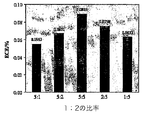
最良の光起電力装置を得るためにコポリマー組成をさらに最適化させた。コポリマー成長について一連のIII:TThモノマーのモル比を検討した。次のIII:TThのコモノマーモル比:5:1、5:2、5:5、2:5、及び1:5mMを選択した。又、堆積させたコポリマーは、光電気化学セルとして組み立てる前に−0.8Vで完全に還元した。表3は、これらの還元したコポリマーから得られた光起電力特性結果を要約している。その結果は、エネルギー変換効率及び短絡電流(Isc)が、コポリマー成長の間の被膜の厚さ及びモノマーモル比によって影響を受けることを示している。図6は、III:TThについての種々のモノマーモル比から得られた最良のエネルギー変換効率結果を示している。最良の光起電力装置(ECE=0.090%)は、III(5mM)/TTh(5mM)/TBAP(0.1M)/DCMを含有するモノマー溶液から100mVs−1で電位限界−0.4V/+1.2Vによりサイクリックボルタンメトリにより20サイクル成長させたコポリマーを組み込んでいた。この装置は、500Wm−2のハロゲンランプ強度下でVoc=246mV、Isc=581μAcm−2、フィルファクタ=0.31、及びECE=0.090%を有していた。これらの結果は、ポリ(III−co−TTh)成長の間に使用したモノマーモル比が、光起電力応答に影響することを示している。表3は又、ポリマー厚さ(成長サイクルの回数)の増加に関して、ECE及びIscは共に同一の傾向を有することをも示している。一方他の2つの特性値、Voc及びフィルファクタは、ポリマー被膜の厚さには独立であるように見える。これらの傾向は、被膜厚さ及び短絡電流が、これらの光電気化学セルのエネルギー変換効率に影響する2つの支配的なパラメータであったことを示唆している。
Effect of III: TTh monomer molar ratio during copolymer growth on photovoltaic device response The copolymer composition was further optimized to obtain the best photovoltaic device. A series of III: TTh monomer molar ratios were examined for copolymer growth. The following III: TTh comonomer molar ratios were selected: 5: 1, 5: 2, 5: 5, 2: 5, and 1: 5 mM. The deposited copolymer was also completely reduced at -0.8 V before assembly as a photoelectrochemical cell. Table 3 summarizes the photovoltaic characteristics results obtained from these reduced copolymers. The results show that energy conversion efficiency and short circuit current (Isc) are affected by coating thickness and monomer molar ratio during copolymer growth. FIG. 6 shows the best energy conversion efficiency results obtained from various monomer molar ratios for III: TTh. The best photovoltaic device (ECE = 0.090%) is a potential limit of −0.4 V at 100 mVs −1 from a monomer solution containing III (5 mM) / TTh (5 mM) / TBAP (0.1 M) / DCM. Incorporated a copolymer grown for 20 cycles by cyclic voltammetry at + / 1.2V. This device, V oc = 246mV under halogen lamp intensity of 500Wm -2, I sc = 581μAcm -2 , fill factor = 0.31, and had a ECE = 0.090%. These results indicate that the monomer molar ratio used during poly (III-co-TTh) growth affects the photovoltaic response. Table 3 also shows that both ECE and Isc have the same trend with increasing polymer thickness (number of growth cycles). On the other hand, the other two characteristic values, V oc and fill factor, appear to be independent of the thickness of the polymer coating. These trends suggest that film thickness and short circuit current were two dominant parameters affecting the energy conversion efficiency of these photoelectrochemical cells.
亜鉛をポルフィリンの空洞中に組み込んだ光起電力装置
光合成系による太陽光の捕集は、クロロフィル分子の配列を使用することに掛かっている。
Photovoltaic devices incorporating zinc in porphyrin cavities The collection of sunlight by the photosynthetic system depends on the use of an array of chlorophyll molecules.
クロロフィルはマグネシウム含有ポルフィリンである。ポルフィリン化学における40年を超える研究を行っており、クロロフィルの光捕集過程の特定の態様に似せて機能させることを試み、その試みの大部分は亜鉛系ポルフィリン系を含む[6]。亜鉛はポルフィリンに導入しやすく、又亜鉛ポルフィリンはマグネシウムポルフィリンよりも安定なので、このような研究には亜鉛は好ましい金属である。
Chlorophyll is a magnesium-containing porphyrin. Over 40 years of research in porphyrin chemistry has been undertaken, attempting to function in a particular manner in the chlorophyll light collection process, most of which involves the zinc-based porphyrin system [6]. Zinc is a preferred metal for such studies because zinc is easy to introduce into porphyrins and zinc porphyrins are more stable than magnesium porphyrins.
我々は、ポルフィリンコポリマーの使用が、ポリチオフェン系光起電力装置の光捕集能力を高めることの実証に着手してきている。遊離塩基ポルフィリンでこの効果を実証しており、次のステップは、分子フォトニックデバイスにおいて亜鉛ポルフィリンを広範に使用するものとし、ポルフィリンの空洞の中に亜鉛をキレート化することにより、包含されるポルフィリンの光捕集性状を改良する試みであった[7]。DCM中のモノマー濃度0.04mMにおいて、亜鉛を組み込んだ、若しくは亜鉛を組み込まないモノマーIIIの典型的なUV−可視スペクトルを記録した(図7)。それらのスペクトルは、亜鉛を配位したモノマーIIIが、亜鉛を組み込まないものよりも高い光吸収を有することを示している。モノマーIII内の亜鉛は、300〜600nm間の光捕集性を高め、このことは光起電力性能をより良好に高めるのに有用であるはずである。ポリ(III−co−TTh)のさらなる検討は、亜鉛を組み込んだポリ(III−co−TTh)被膜の試料から得られたものと、結果を比較することにより行った。この研究において、すべての還元されたポリ(III−co−TTh)(5:5)修飾ITO被覆ガラス電極を、メタノール中の酢酸亜鉛(0.001M)+TBAP(0.1M)含有溶液に2日間曝露した。これらのコポリマー修飾ITO被覆ガラス電極はアセトニトリルで完全にすすぎ、且つ乾燥させた。 We have begun to demonstrate that the use of porphyrin copolymers enhances the light collection capability of polythiophene-based photovoltaic devices. A free-base porphyrin has demonstrated this effect, and the next step is to use zinc porphyrin extensively in molecular photonic devices, and it is encompassed by chelating zinc into the porphyrin cavity. It was an attempt to improve the light collection property of [7]. A typical UV-visible spectrum of monomer III with or without zinc incorporated was recorded at a monomer concentration of 0.04 mM in DCM (FIG. 7). Their spectra show that the monomer III coordinated with zinc has a higher light absorption than one that does not incorporate zinc. Zinc in Monomer III increases light collection between 300-600 nm, which should be useful for better photovoltaic performance. Further investigation of poly (III-co-TTh) was done by comparing the results to those obtained from samples of poly (III-co-TTh) coatings incorporating zinc. In this study, all reduced poly (III-co-TTh) (5: 5) modified ITO coated glass electrodes were placed in a solution containing zinc acetate (0.001M) + TBAP (0.1M) in methanol for 2 days. Exposed. These copolymer modified ITO coated glass electrodes were rinsed thoroughly with acetonitrile and dried.
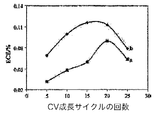
表4は、亜鉛浸漬した、又亜鉛浸漬しないこれらの還元されたコポリマーから得られた光起電力特性結果を要約する。その結果は、コポリマーを亜鉛浸漬した後ECE、フィルファクタ、及びIscの値はすべて増加するが、Vocの値は低下することを示している。図8は、亜鉛浸漬ポリ(III−co−TTh)及び遊離塩基ポリ(III−co−TTh)の両方についてのECE値を比較している。最良の結果は、15回成長させたコポリマーについてであり、その場合、金属化しない試料と比較してECE値は2倍になった(0.06〜0.12%)。
Table 4 summarizes the photovoltaic property results obtained from these reduced copolymers with and without zinc immersion. The results show that after zinc immersing the copolymer, the ECE, fill factor, and I sc values all increase, but the V oc value decreases. FIG. 8 compares the ECE values for both zinc-soaked poly (III-co-TTh) and free base poly (III-co-TTh). The best results were for the copolymer grown 15 times, in which case the ECE value doubled (0.06-0.12%) compared to the non-metallized sample.
コポリマーの厚さにかかわらず、遊離塩基コポリマーに対して、亜鉛を組み込んだポリ(III−co−TTh)についてのECE値は常に増加を示していた。これは、亜鉛がポルフィリン部分に配位され、それにより光起電力装置の量子収率を増加させるためであろう。このことは、ポリマー内の亜鉛の元素分析により支持され、元素分析は亜鉛:ポルフィリンのモル比が1:4であることを示している。これにより、ポルフィリン部位の4つに1つが金属化されている可能性が示唆される。 Regardless of the copolymer thickness, the ECE value for poly (III-co-TTh) incorporating zinc always showed an increase relative to the free base copolymer. This may be because zinc is coordinated to the porphyrin moiety, thereby increasing the quantum yield of the photovoltaic device. This is supported by elemental analysis of zinc in the polymer, which shows that the molar ratio of zinc: porphyrin is 1: 4. This suggests that one in four porphyrin sites may be metallized.
結論
2,2’:5’,2”−テルチオフェン(TTh)、ポリ(III−co−TTh)と共にトランス−5,15−ビス([2’2”5”2”−テルチオフェン]−3’イル)−2,8,12,18−テトラ−n−ブチル−3,7,13,17−テトラメチルポルフィリン(III)を含有するコポリマー堆積物を首尾よく電解合成した。一般に、このコポリマーは低い導電率を有していたが、UV−可視スペクトルは、完全に酸化された(導電性)状態と、完全に還元された(半導電性)状態との間の予想される吸光度の差異を依然示していた。ポリ(III−co−TTh)は、ポリマー主鎖に架橋している光捕集部分(ポルフィリン)を含有する。ポリ(III−co−TTh)が成長している間III:TThについてのモノマーモル比は、光起電力応答に大きな影響を有していた(図2)。光起電力装置向けのIII:TThについての最良のモル比は、1:1である。これは、成長中の種々のモノマーモル比から生成されるコポリマー主鎖におけるIIIとTThの種々の百分率のためである。Yohannesらにより記述されているポリ(3−メチルチオフェン)からのデバイス[1](Voc=140mV、Isc=0.35μAcm−2)と比較してVoc及びIscにおける顕著な改良が得られている。その上、我々の最近の研究、例えばCutlerらなど[25、32]、と比較し、これらのデバイスのECE及びIsc値も又、ポリ(テルチオフェン)及びポリ(ニトロスチリルテルチオフェン)について報告されているものよりも著しく高い。エネルギー変換効率対ポリマー厚さの傾向は、Isc応答における傾向と類似している(表3)。このことから再び、IscがECEに影響を及ぼす支配的パラメータであることが確認される。モノマーIII:TThについてのモル比1:1からサイクリックボルタンメトリにより成長させ、光起電力装置として組み立てる前に亜鉛浸漬した本コポリマーから、最良の装置を作製した。この装置は、Voc=185mV、Isc=881μAcm−2(Yohannesら[1]と比較して、半分の光強度で、2500倍を超える改良)、フィルファクタ=0.36、エネルギー変換効率=0.12%を有していた。
本発明は、特定の実施形態を参照して記述しているが、当分野の技術者には、本発明の範囲から逸脱することなく変更及び修正を実施できることが理解されるであろう。
(参考文献)
(References)
Claims (54)
(式中、Q及びQ’は重合可能な単位であり、
L及びL’はPとQとQ’の間に直接又は間接の電子伝達をもたらすリンカーであり、
Pは電子機能性単位であり、
式中、n=0、1、2又は3であり、
式中、m=0、1、2又は3である)
を有する重合可能なモノマー単位の架橋対。 Construction:
(Wherein Q and Q ′ are polymerizable units,
L and L ′ are linkers that provide direct or indirect electron transfer between P and Q and Q ′;
P is an electronic functional unit,
Where n = 0, 1, 2 or 3;
(Where m = 0, 1, 2 or 3)
Crosslinkable pairs of polymerizable monomer units having
置換された芳香族、アニリン、置換されたアニリン、チオフェン、置換されたチオフェン、オリゴチオフェン、フラン、置換されたフラン、ピロール、及び置換されたピロール
を含む群から選択される置換された芳香環又はヘテロ芳香環である、請求項1に記載の重合可能なモノマー単位の架橋対。 Q and Q ′ are
A substituted aromatic ring selected from the group comprising substituted aromatic, aniline, substituted aniline, thiophene, substituted thiophene, oligothiophene, furan, substituted furan, pyrrole, and substituted pyrrole, or The crosslinkable pair of polymerizable monomer units according to claim 1 which is a heteroaromatic ring.
(式中、n=0、1、2又は3であり、
式中、m=0、1、2又は3であり、
Arはフェニル、ナフチル、ポリアリール、ヘテロアリール、及びフェロセニル又は類似の金属サンドイッチ錯体を含む群から選択される)
を含む群から選択される、請求項1又は2に記載の重合可能なモノマー単位の架橋対。 L and L ′ are
(Where n = 0, 1, 2 or 3;
Where m = 0, 1, 2 or 3;
Ar is selected from the group comprising phenyl, naphthyl, polyaryl, heteroaryl, and ferrocenyl or similar metal sandwich complexes)
A cross-linked pair of polymerizable monomer units according to claim 1 or 2 selected from the group comprising
ポルフィリン、
置換されたポルフィリン、
フタロシアニン、
置換されたフタロシアニン、
四窒素含有マクロ環
を含む群から選択される、前記請求項のいずれか一項に記載の重合可能なモノマー単位の架橋対。 P is
Porphyrin,
Substituted porphyrins,
Phthalocyanine,
Substituted phthalocyanines,
Crosslinkable pair of polymerizable monomer units according to any one of the preceding claims, selected from the group comprising a tetranitrogen-containing macrocycle.
(式中、Q及びQ’は前記ポリマーのモノマー単位であり、
L及びL’はQとPの間、及びPとQ’の間に直接又は間接の電子伝達をもたらすリンカーであり、
Pは電子機能性単位であり、
式中、n=0、1、2又は3であり、
式中、m=0、1、2又は3である)
を含む電子機能性単位架橋ポリマー。 Construction:
Wherein Q and Q ′ are monomer units of the polymer,
L and L ′ are linkers that provide direct or indirect electron transfer between Q and P and between P and Q ′;
P is an electronic functional unit,
Where n = 0, 1, 2 or 3;
(Where m = 0, 1, 2 or 3)
An electronic functional unit crosslinked polymer comprising:
置換された芳香族、アニリン、置換されたアニリン、チオフェン、置換されたチオフェン、オリゴチオフェン、フラン、置換されたフラン、ピロール、及び置換されたピロール
を含む群から選択される置換された芳香環又はヘテロ芳香環である、請求項6に記載の電子機能性単位架橋ポリマー。 Q and Q ′ are
A substituted aromatic ring selected from the group comprising substituted aromatic, aniline, substituted aniline, thiophene, substituted thiophene, oligothiophene, furan, substituted furan, pyrrole, and substituted pyrrole, or The electronic functional unit crosslinked polymer according to claim 6, which is a heteroaromatic ring.
(式中、n=0、1、2又は3であり、
式中、m=0、1、2又は3であり、
Arはフェニル、ナフチル、ポリアリール、ヘテロアリール、及びフェロセニル又は類似の金属サンドイッチ錯体を含む群から選択される)
を含む群から選択される、請求項6又は7に記載の電子機能性単位架橋ポリマー。 L is
(Where n = 0, 1, 2 or 3;
Where m = 0, 1, 2 or 3;
Ar is selected from the group comprising phenyl, naphthyl, polyaryl, heteroaryl, and ferrocenyl or similar metal sandwich complexes)
The electronic functional unit crosslinked polymer according to claim 6 or 7, which is selected from the group comprising:
ポルフィリン、
置換されたポルフィリン、
フタロシアニン、
置換されたフタロシアニン、
四窒素含有マクロ環
を含む群から選択される、請求項6から8までのいずれか一項に記載の電子機能性単位架橋ポリマー。 P is
Porphyrin,
Substituted porphyrins,
Phthalocyanine,
Substituted phthalocyanines,
The electronic functional unit crosslinked polymer according to any one of claims 6 to 8, which is selected from the group comprising a tetranitrogen-containing macrocycle.
置換された芳香族、アニリン、置換されたアニリン、チオフェン、置換されたチオフェン、オリゴチオフェン、フラン、置換されたフラン、ピロール、及び置換されたピロール
を含む群から選択される、請求項11に記載の電子機能性単位架橋ポリマー。 The other monomer unit is
12. The selected from the group comprising substituted aromatic, aniline, substituted aniline, thiophene, substituted thiophene, oligothiophene, furan, substituted furan, pyrrole, and substituted pyrrole. An electronic functional unit crosslinked polymer.
(式中、
Q及びQ’は重合可能なモノマー単位であり、
L及びL’はPとQとQ’の間に直接又は間接の電子伝達をもたらすリンカーであり、
Pは電子機能性単位であり、
n=0、1、2又は3であり、
m=0、1、2又は3である)
を有する重合可能なモノマー単位の架橋カルテット。 Construction:
(Where
Q and Q ′ are polymerizable monomer units,
L and L ′ are linkers that provide direct or indirect electron transfer between P and Q and Q ′;
P is an electronic functional unit,
n = 0, 1, 2, or 3;
m = 0, 1, 2, or 3)
A crosslinked quartet of polymerizable monomer units having:
置換された芳香族、アニリン、置換されたアニリン、チオフェン、置換されたチオフェン、オリゴチオフェン、フラン、置換されたフラン、ピロール、及び置換されたピロール
を含む群から選択される置換された芳香環又はヘテロ芳香環である、請求項17に記載の重合可能なモノマー単位の架橋カルテット。 Q and Q ′ are
A substituted aromatic ring selected from the group comprising substituted aromatic, aniline, substituted aniline, thiophene, substituted thiophene, oligothiophene, furan, substituted furan, pyrrole, and substituted pyrrole, or 18. A crosslinked quartet of polymerizable monomer units according to claim 17 which is a heteroaromatic ring.
(式中、n=0、1、2又は3であり、
式中、m=0、1、2又は3であり、
Arはフェニル、ナフチル、ポリアリール、ヘテロアリール、及びフェロセニル又は類似の金属サンドイッチ錯体を含む群から選択される)
を含む群から選択される、請求項17又は18に記載の重合可能なモノマー単位の架橋カルテット。 L is
(Where n = 0, 1, 2 or 3;
Where m = 0, 1, 2 or 3;
Ar is selected from the group comprising phenyl, naphthyl, polyaryl, heteroaryl, and ferrocenyl or similar metal sandwich complexes)
19. A crosslinked quartet of polymerizable monomer units according to claim 17 or 18 selected from the group comprising:
ポルフィリン、
置換されたポルフィリン、
フタロシアニン、
置換されたフタロシアニン、
四窒素含有マクロ環
を含む群から選択される、請求項17又は18に記載の重合可能なモノマー単位の架橋カルテット。 P is
Porphyrin,
Substituted porphyrins,
Phthalocyanine,
Substituted phthalocyanines,
19. A crosslinked quartet of polymerizable monomer units according to claim 17 or 18, selected from the group comprising a tetranitrogen-containing macrocycle.
(式中、Q及びQ’は前記ポリマーのモノマー単位であり、
L及びL’はQとPの間、及びPとQ’の間に直接又は間接の電子伝達をもたらすリンカーであり、
Pは電子機能性単位であり、
式中、n=0、1、2又は3であり、
式中、m=0、1、2又は3である)
を含む電子機能性単位架橋ポリマー。 Construction:
Wherein Q and Q ′ are monomer units of the polymer,
L and L ′ are linkers that provide direct or indirect electron transfer between Q and P and between P and Q ′;
P is an electronic functional unit,
Where n = 0, 1, 2 or 3;
(Where m = 0, 1, 2 or 3)
An electronic functional unit crosslinked polymer comprising:
置換された芳香族、アニリン、置換されたアニリン、チオフェン、置換されたチオフェン、オリゴチオフェン、フラン、置換されたフラン、ピロール、及び置換されたピロール
を含む群から選択される置換された芳香環又はヘテロ芳香環である、請求項22に記載の電子機能性単位架橋ポリマー。 Q and Q ′ are
A substituted aromatic ring selected from the group comprising substituted aromatic, aniline, substituted aniline, thiophene, substituted thiophene, oligothiophene, furan, substituted furan, pyrrole, and substituted pyrrole, or The electronic functional unit crosslinked polymer according to claim 22, which is a heteroaromatic ring.
(式中、n=0、1、2又は3であり、
式中、m=0、1、2又は3であり、
Arはフェニル、ナフチル、ポリアリール、ヘテロアリール、及びフェロセニル、又は類似の金属サンドイッチ錯体を含む群から選択される)
を含む群から選択される、請求項22又は23に記載の電子機能性単位架橋ポリマー。 L is
(Where n = 0, 1, 2 or 3;
Where m = 0, 1, 2 or 3;
Ar is selected from the group comprising phenyl, naphthyl, polyaryl, heteroaryl, and ferrocenyl, or similar metal sandwich complexes)
24. The electronic functional unit crosslinked polymer according to claim 22 or 23, which is selected from the group comprising:
ポルフィリン、
置換されたポルフィリン、
フタロシアニン、
置換されたフタロシアニン、
四窒素含有マクロ環
を含む群から選択される、請求項22から23までのいずれか一項に記載の電子機能性単位架橋ポリマー。 P is
Porphyrin,
Substituted porphyrins,
Phthalocyanine,
Substituted phthalocyanines,
24. The electronic functional unit crosslinked polymer according to any one of claims 22 to 23, which is selected from the group comprising a tetranitrogen-containing macrocycle.
置換された芳香族、アニリン、置換されたアニリン、チオフェン、置換されたチオフェン、オリゴチオフェン、フラン、置換されたフラン、ピロール、及び置換されたピロール
を含む群から選択される、請求項27に記載の電子機能性単位架橋ポリマー。 The other monomer unit is
28. The selected from the group comprising substituted aromatic, aniline, substituted aniline, thiophene, substituted thiophene, oligothiophene, furan, substituted furan, pyrrole, and substituted pyrrole. An electronic functional unit crosslinked polymer.
Applications Claiming Priority (2)
| Application Number | Priority Date | Filing Date | Title |
|---|---|---|---|
| AU2003900404A AU2003900404A0 (en) | 2003-01-31 | 2003-01-31 | Conducting polymers with porphyrin cross-linkers |
| PCT/AU2004/000111 WO2004067533A1 (en) | 2003-01-31 | 2004-01-30 | Conducting polymers with porphyrin cross-linkers |
Publications (2)
| Publication Number | Publication Date |
|---|---|
| JP2006517543A true JP2006517543A (en) | 2006-07-27 |
| JP2006517543A5 JP2006517543A5 (en) | 2007-03-08 |
Family
ID=30005105
Family Applications (1)
| Application Number | Title | Priority Date | Filing Date |
|---|---|---|---|
| JP2006501343A Pending JP2006517543A (en) | 2003-01-31 | 2004-01-30 | Conductive polymer having crosslinked porphyrin |
Country Status (5)
| Country | Link |
|---|---|
| US (1) | US20070295398A1 (en) |
| EP (1) | EP1594876A4 (en) |
| JP (1) | JP2006517543A (en) |
| AU (1) | AU2003900404A0 (en) |
| WO (1) | WO2004067533A1 (en) |
Cited By (5)
| Publication number | Priority date | Publication date | Assignee | Title |
|---|---|---|---|---|
| JP2009520861A (en) * | 2005-12-23 | 2009-05-28 | コミツサリア タ レネルジー アトミーク | Sensitizing complex, method for producing the same, inorganic / organic hybrid semiconductor material including the same, and solar cell including the material |
| US7884357B2 (en) | 2006-05-18 | 2011-02-08 | Sony Corporation | Organic electronic device, method for production thereof, and organic semiconductor molecule |
| JP2013518151A (en) * | 2010-01-30 | 2013-05-20 | 海洋王照明科技股▲ふん▼有限公司 | Copolymer containing fluorenylporphyrin-anthracene, process for producing the same and application thereof |
| JP2013521348A (en) * | 2010-03-23 | 2013-06-10 | ▲海▼洋王照明科技股▲ふん▼有限公司 | Fluorenyl-containing porphyrin-benzene copolymer and its production method and application |
| JP2014057003A (en) * | 2012-09-13 | 2014-03-27 | Daicel Corp | Solar cell and method of manufacturing the same |
Families Citing this family (9)
| Publication number | Priority date | Publication date | Assignee | Title |
|---|---|---|---|---|
| NZ541788A (en) * | 2005-08-11 | 2007-12-21 | Auckland Uniservices Ltd | Conducting polymers and their use in oligonucleotide (ODN) probes |
| US7901852B2 (en) * | 2008-02-29 | 2011-03-08 | Freescale Semiconductor, Inc. | Metrology of bilayer photoresist processes |
| CN101948566B (en) * | 2010-06-23 | 2012-09-19 | 中国科学院化学研究所 | Multifunctional polymer for resisting fungi and cancers and performing cell imaging and preparation method thereof |
| TWI499611B (en) * | 2013-11-14 | 2015-09-11 | 國立交通大學 | Conjugated polymer compound |
| US10214626B2 (en) | 2016-12-09 | 2019-02-26 | International Business Machines Corporation | Renewable cross-linker for increased bio-content from fructose |
| SE543571C2 (en) * | 2019-02-07 | 2021-03-30 | Christian Strietzel | Conducting redox oligomers |
| CN112430311B (en) * | 2019-08-26 | 2023-05-23 | 上海戎科特种装备有限公司 | Electrochromic copolymer containing porphyrin conjugated ring, preparation method thereof, copolymer film and application |
| CN112225883B (en) * | 2020-10-12 | 2023-05-26 | 湘潭大学 | Four kinds of D-A' - (pi-A) 2 Metal complex of polymeric pyridine derivative and preparation method and application thereof |
| US20240208921A1 (en) * | 2022-12-14 | 2024-06-27 | University Of Cincinnati | Synthesis of Thiophene Derivatized Polyphenolic Calixarenes |
Citations (2)
| Publication number | Priority date | Publication date | Assignee | Title |
|---|---|---|---|---|
| US6127356A (en) * | 1993-10-15 | 2000-10-03 | Duke University | Oxidant scavengers |
| JP2001342190A (en) * | 2000-06-02 | 2001-12-11 | Japan Science & Technology Corp | Novel tetrapyrrolyl-substituted porphyrin and its preparation |
Family Cites Families (6)
| Publication number | Priority date | Publication date | Assignee | Title |
|---|---|---|---|---|
| JPH0572762A (en) * | 1991-09-13 | 1993-03-26 | Matsushita Electric Ind Co Ltd | Electrophotographic photoreceptor |
| JPH0572777A (en) * | 1991-09-13 | 1993-03-26 | Matsushita Electric Ind Co Ltd | Electrophotographic sensitive material |
| JPH05100446A (en) * | 1991-10-04 | 1993-04-23 | Matsushita Electric Ind Co Ltd | Electrophotographic photoconductor |
| DE4242676A1 (en) * | 1992-12-17 | 1994-06-23 | Basf Ag | New polymeric porphyrin compounds useful in electrical and optical uses |
| FR2798146B1 (en) * | 1999-08-12 | 2002-04-12 | Univ Joseph Fourier | PHOTOGREFFABLE ELECTROPOLYMERS, PROCESS FOR OBTAINING THEM AND APPLICATIONS THEREOF AS MEDIA FOR SPECIFIC RECOGNITION PROBES IN ELECTRONIC BIOSENSORS |
| JP4278080B2 (en) * | 2000-09-27 | 2009-06-10 | 富士フイルム株式会社 | High sensitivity light receiving element and image sensor |
-
2003
- 2003-01-31 AU AU2003900404A patent/AU2003900404A0/en not_active Abandoned
-
2004
- 2004-01-30 US US10/544,085 patent/US20070295398A1/en not_active Abandoned
- 2004-01-30 JP JP2006501343A patent/JP2006517543A/en active Pending
- 2004-01-30 EP EP04706576A patent/EP1594876A4/en not_active Withdrawn
- 2004-01-30 WO PCT/AU2004/000111 patent/WO2004067533A1/en not_active Ceased
Patent Citations (2)
| Publication number | Priority date | Publication date | Assignee | Title |
|---|---|---|---|---|
| US6127356A (en) * | 1993-10-15 | 2000-10-03 | Duke University | Oxidant scavengers |
| JP2001342190A (en) * | 2000-06-02 | 2001-12-11 | Japan Science & Technology Corp | Novel tetrapyrrolyl-substituted porphyrin and its preparation |
Cited By (6)
| Publication number | Priority date | Publication date | Assignee | Title |
|---|---|---|---|---|
| JP2009520861A (en) * | 2005-12-23 | 2009-05-28 | コミツサリア タ レネルジー アトミーク | Sensitizing complex, method for producing the same, inorganic / organic hybrid semiconductor material including the same, and solar cell including the material |
| US9196847B2 (en) | 2005-12-23 | 2015-11-24 | Commissariat A L'energie Atomique | Sensitizing complexes, process for the preparation thereof, semiconductive inorganic/organic hybrid material comprising them, and photovoltaic cell comprising said material |
| US7884357B2 (en) | 2006-05-18 | 2011-02-08 | Sony Corporation | Organic electronic device, method for production thereof, and organic semiconductor molecule |
| JP2013518151A (en) * | 2010-01-30 | 2013-05-20 | 海洋王照明科技股▲ふん▼有限公司 | Copolymer containing fluorenylporphyrin-anthracene, process for producing the same and application thereof |
| JP2013521348A (en) * | 2010-03-23 | 2013-06-10 | ▲海▼洋王照明科技股▲ふん▼有限公司 | Fluorenyl-containing porphyrin-benzene copolymer and its production method and application |
| JP2014057003A (en) * | 2012-09-13 | 2014-03-27 | Daicel Corp | Solar cell and method of manufacturing the same |
Also Published As
| Publication number | Publication date |
|---|---|
| EP1594876A4 (en) | 2008-07-09 |
| WO2004067533A1 (en) | 2004-08-12 |
| AU2003900404A0 (en) | 2003-02-13 |
| US20070295398A1 (en) | 2007-12-27 |
| EP1594876A1 (en) | 2005-11-16 |
Similar Documents
| Publication | Publication Date | Title |
|---|---|---|
| Zhu et al. | Conducting polymetallorotaxanes: metal ion mediated enhancements in conductivity and charge localization | |
| Cosnier et al. | Electropolymerization: concepts, materials and applications | |
| Knapton et al. | Synthesis and properties of metallo-supramolecular poly (p-phenylene ethynylene) s | |
| US7186355B2 (en) | Insulated nanoscopic pathways, compositions and devices of the same | |
| Roncali | Linearly extended π-donors: when tetrathiafulvalene meets conjugated oligomers and polymers | |
| Cui et al. | Tuning of resistive memory switching in electropolymerized metallopolymeric films | |
| Too et al. | Photovoltaic devices based on polythiophenes and substituted polythiophenes | |
| US20070295398A1 (en) | Conducting Polymers With Porphyrin Cross-Linkers | |
| Sharma et al. | Cross-linked naphthalene diimide-based polymer as a cathode material for high-performance organic batteries | |
| Sauvage et al. | Conjugated polyrotaxanes: improvement of the polymer properties by using sterically hindered coordinating units | |
| KR102429713B1 (en) | Covalent organic nanosheet for high-performance sodium ion battery, and method for manufacturing same | |
| US10121971B2 (en) | Cellulose-polymer composites for solar cells | |
| Li et al. | Very stable, highly electroactive polymers of zinc (II)-5, 15-bisthienylphenyl porphyrin exhibiting charge-trapping effects | |
| Chen et al. | Photoelectrochemical cells based on a novel porphyrin containing light harvesting conducting copolymer | |
| AU2006243103B2 (en) | Conductive material and conductive film and process for producing them | |
| Saito et al. | Poly (1, 5-naphthyridine-2, 6-diyl) Having a Highly Extended and Electron-Withdrawing. pi.-Conjugation System. Preparation, Optical Properties, and Electrochemical Redox Reaction | |
| Fatuch et al. | Synthesis and characterization of aniline copolymers containing carboxylic groups and their application as sensitizer and hole conductor in solar cells | |
| Soganci et al. | Synthesis of a carbazole substituted unusual cobalt (ii) dioxime complex to design conducting polymers with caged metal centers for enhanced optical and electrical properties | |
| EP2537875A1 (en) | Novel polyazomethine | |
| Abd-El-Aziz et al. | Novel synthesis and electropolymerization of metallo-conjugated thiophene derivatives | |
| Vacareanu et al. | Electrogeneration of N-substituted polyaniline micro/nanoparticles with potential for energy storage | |
| Abd-El-Aziz et al. | Electropolymerization and Impedance Spectroscopic Characterization of Thiophene Derivatives with η6-aryl-η5-cyclopentadienyliron hexaflourophosphates | |
| JP2005353318A (en) | Dye-sensitized solar cell | |
| Sathiyaraj et al. | Performance of novel hyperbranched poly (aryl‐ether‐urea) s doped with N3‐dye in nanocrystalline DSSC | |
| Rimmele et al. | Soluble Conjugated Polymers without Side Chains: Macrocycles as Comonomers |
Legal Events
| Date | Code | Title | Description |
|---|---|---|---|
| A521 | Request for written amendment filed |
Free format text: JAPANESE INTERMEDIATE CODE: A523 Effective date: 20070117 |
|
| A621 | Written request for application examination |
Free format text: JAPANESE INTERMEDIATE CODE: A621 Effective date: 20070117 |
|
| A131 | Notification of reasons for refusal |
Free format text: JAPANESE INTERMEDIATE CODE: A131 Effective date: 20100601 |
|
| A02 | Decision of refusal |
Free format text: JAPANESE INTERMEDIATE CODE: A02 Effective date: 20101105 |