JP2005536498A - Method for producing butadiene from n-butane - Google Patents
Method for producing butadiene from n-butane Download PDFInfo
- Publication number
- JP2005536498A JP2005536498A JP2004520592A JP2004520592A JP2005536498A JP 2005536498 A JP2005536498 A JP 2005536498A JP 2004520592 A JP2004520592 A JP 2004520592A JP 2004520592 A JP2004520592 A JP 2004520592A JP 2005536498 A JP2005536498 A JP 2005536498A
- Authority
- JP
- Japan
- Prior art keywords
- butane
- butene
- butadiene
- stream
- optionally
- Prior art date
- Legal status (The legal status is an assumption and is not a legal conclusion. Google has not performed a legal analysis and makes no representation as to the accuracy of the status listed.)
- Withdrawn
Links
Images
Classifications
-
- C—CHEMISTRY; METALLURGY
- C07—ORGANIC CHEMISTRY
- C07C—ACYCLIC OR CARBOCYCLIC COMPOUNDS
- C07C5/00—Preparation of hydrocarbons from hydrocarbons containing the same number of carbon atoms
- C07C5/32—Preparation of hydrocarbons from hydrocarbons containing the same number of carbon atoms by dehydrogenation with formation of free hydrogen
- C07C5/327—Formation of non-aromatic carbon-to-carbon double bonds only
- C07C5/333—Catalytic processes
- C07C5/3335—Catalytic processes with metals
-
- C—CHEMISTRY; METALLURGY
- C07—ORGANIC CHEMISTRY
- C07C—ACYCLIC OR CARBOCYCLIC COMPOUNDS
- C07C11/00—Aliphatic unsaturated hydrocarbons
- C07C11/12—Alkadienes
- C07C11/16—Alkadienes with four carbon atoms
- C07C11/167—1, 3-Butadiene
-
- C—CHEMISTRY; METALLURGY
- C07—ORGANIC CHEMISTRY
- C07C—ACYCLIC OR CARBOCYCLIC COMPOUNDS
- C07C5/00—Preparation of hydrocarbons from hydrocarbons containing the same number of carbon atoms
- C07C5/32—Preparation of hydrocarbons from hydrocarbons containing the same number of carbon atoms by dehydrogenation with formation of free hydrogen
- C07C5/327—Formation of non-aromatic carbon-to-carbon double bonds only
- C07C5/333—Catalytic processes
- C07C5/3335—Catalytic processes with metals
- C07C5/3337—Catalytic processes with metals of the platinum group
-
- C—CHEMISTRY; METALLURGY
- C07—ORGANIC CHEMISTRY
- C07C—ACYCLIC OR CARBOCYCLIC COMPOUNDS
- C07C7/00—Purification; Separation; Use of additives
- C07C7/04—Purification; Separation; Use of additives by distillation
Landscapes
- Chemical & Material Sciences (AREA)
- Organic Chemistry (AREA)
- Chemical Kinetics & Catalysis (AREA)
- Engineering & Computer Science (AREA)
- Analytical Chemistry (AREA)
- Oil, Petroleum & Natural Gas (AREA)
- Water Supply & Treatment (AREA)
- Organic Low-Molecular-Weight Compounds And Preparation Thereof (AREA)
- Low-Molecular Organic Synthesis Reactions Using Catalysts (AREA)
- Catalysts (AREA)
Abstract
本発明は、A)n−ブタン含有気体供給流を供給し、(B)n−ブタン含有気体供給流を第1脱水素化領域へと供給し、n−ブタンを1−ブテン、2−ブテン及び随意にブタジエンへと非酸化的に触媒的に脱水素化して、n−ブタン、1−ブテン及び2−ブテンを、場合によりブタジエンと第2成分とを含む第1生成気体流を得、(C)n−ブタン、1−ブテン及び2−ブテンを、場合によりブタジエンと第2成分を含む第1生成気体流を、第2脱水素化領域へと供給し、1−ブテン及び2−ブテンをブタジエンへと酸化的に脱水素化して、ブタジエン、n−ブタン、及び蒸気を、場合により第2成分を含む第2生成気体流を得、(D)第2生成気体流からブタジエンを回収する、n−ブタンからのブタジエンの製造方法に関する。The present invention provides A) an n-butane containing gas feed stream, (B) an n-butane containing gas feed stream is fed to the first dehydrogenation zone, and n-butane is fed into 1-butene, 2-butene And optionally non-oxidatively catalytic dehydrogenation to butadiene to obtain a first product gas stream comprising n-butane, 1-butene and 2-butene, optionally butadiene and a second component, C) supplying a first product gas stream comprising n-butane, 1-butene and 2-butene, optionally containing butadiene and a second component, to a second dehydrogenation zone; Oxidatively dehydrogenating to butadiene to obtain a second product gas stream comprising butadiene, n-butane, and steam, optionally including a second component, and (D) recovering butadiene from the second product gas stream; The present invention relates to a method for producing butadiene from n-butane.
Description
本発明は、n−ブタンからのブタジエンの製造方法に関する。 The present invention relates to a method for producing butadiene from n-butane.
ブタジエンは、通常は原材料としてナフサから出発して、飽和炭化水素の熱分解(クラッキング)することにより、主に製造されている。ナフサのクラッキングは、メタン、エタン、エテン、アセチレン、プロパン、プロペン、プロピン、アレン、ブテン、ブタジエン、ブチン、メチルアレン、C5及びより高分子量の炭化水素の炭化水素混合物を生じる。クラッキング気体中のアセチレン性不飽和炭化水素、例えばアセチレン、プロピン、1−ブチン、2−ブチン、ブテニン、及びジアセチレン等は、例えば、ディールスアルダー反応でビニルシクロヘキサンへのブタジエンの二量化が後に起こり、そのためにこれらの化合物の痕跡量であっても、銅二量体化触媒の触媒毒となる。ブチン及びアレンは、同様にブタジエンとディールスアルダー反応で反応して、副生成物の形成に至る。三重不飽和C4炭化水素は、一般に、ブタジエンの他の用途に問題となる。 Butadiene is usually produced by starting from naphtha as a raw material and pyrolyzing (cracking) saturated hydrocarbons. Cracking naphtha, resulting methane, ethane, ethene, acetylene, propane, propene, propyne, allene, butenes, butadiene, butyne, methyl allene, hydrocarbon mixtures of hydrocarbons C 5 and higher molecular weight. Acetylenically unsaturated hydrocarbons in the cracking gas, such as acetylene, propyne, 1-butyne, 2-butyne, butenin, diacetylene, etc., for example, occur after dimerization of butadiene to vinylcyclohexane in a Diels-Alder reaction, Therefore, even trace amounts of these compounds are catalyst poisons of the copper dimerization catalyst. Butine and allene similarly react with butadiene in a Diels-Alder reaction, leading to the formation of by-products. Triunsaturated C 4 hydrocarbons are generally problematic for other uses of butadiene.
特にブチンは、ブタジエンから蒸留法又は抽出法でのみ取り出し可能であるが、この場合には非常に困難を伴う。そのため、クラッキング装置からのブタジエンを使用する場合には、ブタジエンが対応するブテンへと選択的に部分水素化される水素化段階を、ブタジエンの二量化に前置することが必要である。 Butyne, in particular, can only be removed from butadiene by distillation or extraction, but this is very difficult. Therefore, when using butadiene from cracking equipment, it is necessary to precede the butadiene dimerization with a hydrogenation stage in which butadiene is selectively partially hydrogenated to the corresponding butene.
別な不利益としては、ナフサ又はその他の炭化水素混合物をクラッキングする場合に、複合炭化水素混合物が得られることがある。例えば、ブタジエンがクラッキング処理で得られる場合に、比較的に大量のエテン又はプロペンが不可避的に副生成物として得られる。 Another disadvantage is that complex hydrocarbon mixtures can be obtained when cracking naphtha or other hydrocarbon mixtures. For example, when butadiene is obtained by cracking, relatively large amounts of ethene or propene are inevitably obtained as by-products.
あるいは、ブタジエンは、n−ブタンから出発して、触媒的脱水素化によって製造可能である。しかし、この方法の不利益は、低いブタジエン収率であり、そのために、n−ブタンの触媒的脱水素化は、主として1−ブテン又は2−ブテンを生じる。 Alternatively, butadiene can be produced by catalytic dehydrogenation starting from n-butane. However, the disadvantage of this process is the low butadiene yield, so that the catalytic dehydrogenation of n-butane yields primarily 1-butene or 2-butene.
本発明の目的は、n−ブタンからブタジエンを製造する方法であって、先行技術の不利益を有さず、且つ高いブタジエン収率が得られる製造方法を提供することにある。 An object of the present invention is to provide a process for producing butadiene from n-butane, which does not have the disadvantages of the prior art, and can provide a high butadiene yield.
本発明者等は、この目的が、
(A)n−ブタン含有気体供給流を供給し、
(B)n−ブタン含有気体供給流を第1脱水素化領域へと供給し、
非酸化的に触媒的にn−ブタンを1−ブテン、2−ブテン及び随意にブタジエンへと脱水素化して、
n−ブタン、1−ブテン及び2−ブテンを、場合によりブタジエンと第2成分とを含む第1生成気体流を得、
(C)n−ブタン、1−ブテン及び2−ブテンを、場合によりブタジエンと第2成分を含む第1生成気体流を、第2脱水素化領域へと供給し、
1−ブテン及び2−ブテンをブタジエンへと酸化的に脱水素化して、
ブタジエン、n−ブタン、及び蒸気を、場合により第2成分を含む第2生成気体流を得、
(D)第2生成気体流からブタジエンを回収し、
を含む、n−ブタンからのブタジエンの製造方法によって達成されることを見いだした。
The present inventors have stated that this purpose is
(A) supplying an n-butane containing gas feed stream;
(B) supplying an n-butane-containing gas feed stream to the first dehydrogenation zone;
Non-oxidatively catalytically dehydrogenating n-butane to 1-butene, 2-butene and optionally butadiene;
obtaining a first product gas stream comprising n-butane, 1-butene and 2-butene, optionally comprising butadiene and a second component;
(C) supplying a first product gas stream comprising n-butane, 1-butene and 2-butene, optionally containing butadiene and a second component, to the second dehydrogenation zone;
Oxidatively dehydrogenating 1-butene and 2-butene to butadiene;
Obtaining a second product gas stream comprising butadiene, n-butane, and steam, optionally including a second component;
(D) recovering butadiene from the second product gas stream;
Has been found to be achieved by a process for the production of butadiene from n-butane.
第1処理部Aにおいて、n−ブタン含有供給気体流が供給される。通常、原材料はn−ブタン豊富な気体混合物、例えば、液化石油ガス(LPG)である。LPGは、主としてC2〜C5−炭化水素を含む。LPGの組成は非常に多様である。好適には、使用されるLPGは10質量%以上のブタンを含む。 In the 1st process part A, n-butane containing supply gas flow is supplied. Typically, the raw material is an n-butane rich gas mixture, such as liquefied petroleum gas (LPG). LPG is mainly C 2 -C 5 - containing hydrocarbons. The composition of LPG is very diverse. Preferably, the LPG used contains 10% by weight or more of butane.
本発明の製造方法のひとつの変形において、n−ブタン含有脱水素化供給気体流の供給は、以下の:
(A1)液化石油ガス(LPG)流を供給し、
(A2)プロパン、及び随意にメタン、エタン、及びペンタンを、LPG流から取り出して、ブタン(n−ブタン、及びイソブタン)含有流を得、
(A3)ブタン含有流からイソブタンを取り出して、n−ブタン含有供給気体流を得て、取り出したイソブタンをn−ブタン/イソブタン混合物へと随意に異性化し、n−ブタン/イソブタン混合物をイソブタン取り出し過程へと再循環する、
工程を含む。
In one variation of the production method of the present invention, the feed of the n-butane-containing dehydrogenation feed gas stream is as follows:
(A1) supplying a liquefied petroleum gas (LPG) stream;
(A2) Propane and optionally methane, ethane, and pentane are removed from the LPG stream to obtain a butane (n-butane and isobutane) containing stream;
(A3) removing isobutane from the butane-containing stream to obtain a feed gas stream containing n-butane, optionally isomerizing the removed isobutane into an n-butane / isobutane mixture, and removing the n-butane / isobutane mixture from the isobutane Recirculate to the
Process.
プロパン、及びメタン、エタン、及びペンタンは、1以上の通常の精留塔において取り出される。例えば、低沸点物質(メタン、エタン、プロパン)は、第1塔のオーバーヘッドで取り出すことができ、高沸点物質(ペンタン)は、第2塔の塔底部で取り出すことができる。ブタン(n−ブタン及びイソブタン)を含む流れは、例えば通常の精留塔中でイソブタンが取り出される箇所から、取り出される。残余のn−ブタン含有流は、後のブタン脱水素化のための供給気体流として使用される。 Propane and methane, ethane, and pentane are withdrawn in one or more conventional rectification columns. For example, low-boiling substances (methane, ethane, propane) can be removed at the overhead of the first column, and high-boiling substances (pentane) can be removed at the bottom of the second column. A stream containing butane (n-butane and isobutane) is withdrawn from the point where isobutane is withdrawn, for example, in a normal rectification column. The remaining n-butane containing stream is used as the feed gas stream for subsequent butane dehydrogenation.
取り出されたイソブタン流を異性化処理することが好適である。この末端で、イソブタン含有流は、異性化反応装置へと供給される。n−ブタンへのイソブタンの異性化は、GB−A2018815に記載されているように行うことができる。得られたn−ブタン/イソブタン混合物は、n−ブタン/イソブタン分離塔へと供給される。 It is preferred to isomerize the removed isobutane stream. At this end, the isobutane containing stream is fed to the isomerization reactor. The isomerization of isobutane to n-butane can be carried out as described in GB-A2008815. The resulting n-butane / isobutane mixture is fed to an n-butane / isobutane separation column.
処理部Bにおいて、n−ブタン含有供給気体流は、第1脱水素化領域へと供給され、非酸化的触媒的脱水素化処理される。n−ブタンは、脱水素化反応装置中で、脱水素化触媒を通過して、1−ブタン及び2−ブタンへと部分的に脱水素化され、少量のブタジエンもまた形成される。さらに、水素及び少量のメタン、エタン、エテン、プロパン、及びプロペンが形成される。脱水素化方法に依存して、炭素酸化物(CO、CO2)、水、及び窒素もまた、非酸化的触媒的n−ブタン脱水素化の生成気体混合物中に存在する。さらに、未転化のn−ブタンが生成気体混合物中に存在する。 In the processing section B, the n-butane-containing supply gas stream is supplied to the first dehydrogenation region and subjected to a non-oxidative catalytic dehydrogenation process. n-butane is partially dehydrogenated in a dehydrogenation reactor through a dehydrogenation catalyst to 1-butane and 2-butane, and a small amount of butadiene is also formed. In addition, hydrogen and small amounts of methane, ethane, ethene, propane, and propene are formed. Depending on the dehydrogenation process, carbon oxides (CO, CO 2 ), water, and nitrogen are also present in the product gas mixture of non-oxidative catalytic n-butane dehydrogenation. In addition, unconverted n-butane is present in the product gas mixture.
非酸化的触媒的n−脱水素化は、同時供給物として、場合により酸素含有気体を含んで、行うことができる。 Non-oxidative catalytic n-dehydrogenation can be performed as a co-feed, optionally with an oxygen-containing gas.
酸化的方法と比較した非酸化的方法の特徴は、流出気体中の水素の存在である。酸化的脱水素化において、遊離の水素は実質的に形成されない。 A feature of non-oxidative methods compared to oxidative methods is the presence of hydrogen in the effluent gas. In oxidative dehydrogenation, free hydrogen is not substantially formed.
原理的に、非酸化的触媒的n−ブタン脱水素化は、先行技術から知られるあらゆる種類の反応装置及び方法において行うことができる。本発明に適した脱水素化方法の比較的包括的記載は、「Catalytica(登録商標) Studies Division,Oxidative Dehydrogenation and Alternative Dehydrogenation Processes」(Study Number 4192OD、1993年、430 Ferguson Drive、Mountain View、California、94043−5272、USA)に見ることができる。 In principle, non-oxidative catalytic n-butane dehydrogenation can be carried out in all kinds of reactors and processes known from the prior art. A relatively comprehensive description of the dehydrogenation method suitable for the present invention is “Catalytica® Studies Division, Oxidative Dehydration and Alternative Dehydration Processes, 4” 94043-5272, USA).
好適な反応装置の形態は、固定床管状又は集合管式反応装置である。これらの反応装置において、触媒(脱水素化触媒、及び、同時供給物として酸素と共に作用する場合には、随意に特別な酸化触媒)は、反応管中で又は反応集合管中で固定床として配置される。反応管は、通常は、反応管を取り囲む空間での気体、例えばメタン等の炭化水素の燃焼によって間接的に加熱される。この間接的形態の加熱は固定床の全長の最初の20〜30%にのみ施され、床の残りの長さ部分は、間接的加熱により放出される熱によって必要な反応温度にまで加熱されることが好ましい。通常の反応管の内径は、約10〜15cmである。典型的な脱水素化集合管反応装置は、約300〜1000個の反応管を含む。反応管の内部温度は、通常は、300〜1200℃の範囲、好ましくは500〜1000℃の範囲にある。処理圧力は、通常は、0.5〜8bar、少量の蒸気希釈が使用される場合には(プロパン脱水素化のリンデ過程と同様に)、しばしば1〜2barであり、あるいは高度の蒸気希釈が使用される場合には(Phillips Petroleum Co.のプロパン又はブタンの脱水素化のための蒸気活性改質法(STAR法)と同様に、US4902849、US4996387、及びUS5389342参照)、3〜8barである。典型的な気体時間空間速度(GSHV)は、使用される炭化水素に対して、500〜2000h-1である。触媒の幾何形状は、例えば、球状又はシリンダー状(中空又は非中空状)にすることができる。 A suitable reactor configuration is a fixed bed tubular or collecting tube reactor. In these reactors, the catalyst (dehydrogenation catalyst and optionally a special oxidation catalyst if working with oxygen as co-feed) is arranged as a fixed bed in the reaction tube or in the reaction collecting tube. Is done. The reaction tube is usually heated indirectly by combustion of a gas, for example a hydrocarbon such as methane, in a space surrounding the reaction tube. This indirect form of heating is applied only to the first 20-30% of the total length of the fixed bed, and the remaining length of the bed is heated to the required reaction temperature by the heat released by indirect heating. It is preferable. A typical reaction tube has an inner diameter of about 10 to 15 cm. A typical dehydrogenation collecting tube reactor contains about 300-1000 reaction tubes. The internal temperature of the reaction tube is usually in the range of 300 to 1200 ° C, preferably in the range of 500 to 1000 ° C. The process pressure is usually 0.5 to 8 bar, often 1 to 2 bar if a small amount of steam dilution is used (similar to the propane dehydrogenation Linde process), or high steam dilution is When used (see US Pat. No. 4,902,849, US Pat. No. 4,996,387, and US Pat. No. 5,389,342, as well as the steam active reforming method (STAR method) for dehydrogenation of propane or butane by Phillips Petroleum Co.) 3-8 bar. Typical gas hourly space velocities (GSHV) are 500 to 2000 h −1 for the hydrocarbons used. The geometric shape of the catalyst can be, for example, spherical or cylindrical (hollow or non-hollow).
非酸化的触媒的n−ブタン脱水素化は、Chem.Eng.Sci.1992年b、47(9−11)2313に記載されているように、流動床中の不均一系触媒の下でも行うことができる。好適には、2つの流動床が、並行して使用され、その1つは一般に再生処理過程にあるものである。処理圧力は、典型的には1〜2barであり、脱水素化温度は一般に550〜600℃である。脱水素化に必要な熱は、脱水素化触媒を反応温度まで予熱することにより反応系へと導入される。酸素含有同時供給物の混合は、予熱装置を不用にし、必要な熱は酸素の存在下での水素の燃焼により反応系中で直接に生成可能である。随意に、水素含有同時供給物を付加的に混合してもよい。 Non-oxidative catalytic n-butane dehydrogenation is described in Chem. Eng. Sci. As described in 1992 b, 47 (9-11) 2313, it can also be carried out under a heterogeneous catalyst in a fluidized bed. Preferably, two fluidized beds are used in parallel, one of which is generally in the regeneration process. The processing pressure is typically 1-2 bar and the dehydrogenation temperature is generally 550-600 ° C. The heat required for dehydrogenation is introduced into the reaction system by preheating the dehydrogenation catalyst to the reaction temperature. Mixing the oxygen-containing co-feed eliminates the need for a preheater and the necessary heat can be generated directly in the reaction system by combustion of hydrogen in the presence of oxygen. Optionally, a hydrogen-containing co-feed may be additionally mixed.
非酸化的触媒的n−ブタン脱水素化は、同時供給物として酸素含有気体を場合により含んで、トレイ(段)反応装置中で行うことができる。この反応装置は、1個以上の連続した触媒床を含む。触媒床の数は、1〜20個、好適には1〜6個、好ましくは1〜4個、特に1〜3個である。触媒床には好ましくは放射状に又は軸状に反応気体が通過する。一般に、そのようなトレイ反応装置は、固定触媒床を使用して操作される。最も簡易な場合には、固定触媒床は、高炉反応装置中で、又は同軸シリンダー状グリッドの環状ギャップ中で、軸状に配置されている。高炉反応装置は、1個のトレイ(段)に対応する。単一の高炉反応装置中で脱水素化を行うことは好ましい実施態様に対応し、その場合には酸素含有同時供給物が使用される。別な好ましい実施の態様において、脱水素化は、3個の触媒床を有するトレイ反応装置中で行われる。同時供給物として酸素含有気体を使用しない方法において、反応気体混合物は、トレイ反応装置中で、ひとつの触媒床から次の触媒床への途中で、例えば高温気体により加熱された熱交換板を通過することによって、又は高温燃焼気体により加熱された管を通過することによって、一定程度の加熱がなされる。 Non-oxidative catalytic n-butane dehydrogenation can be performed in a tray reactor, optionally containing an oxygen-containing gas as a co-feed. The reactor includes one or more continuous catalyst beds. The number of catalyst beds is 1-20, suitably 1-6, preferably 1-4, in particular 1-3. The reaction gas passes through the catalyst bed preferably radially or axially. In general, such tray reactors are operated using a fixed catalyst bed. In the simplest case, the fixed catalyst bed is arranged axially in the blast furnace reactor or in the annular gap of the coaxial cylindrical grid. The blast furnace reactor corresponds to one tray (stage). Performing the dehydrogenation in a single blast furnace reactor corresponds to a preferred embodiment, in which case an oxygen-containing co-feed is used. In another preferred embodiment, the dehydrogenation is performed in a tray reactor having three catalyst beds. In a method that does not use oxygen-containing gas as a co-feed, the reaction gas mixture passes through a heat exchange plate heated by, for example, hot gas, in the tray reactor, on the way from one catalyst bed to the next. By heating or passing through a tube heated by hot combustion gas, a certain degree of heating is achieved.
本発明の方法の好ましい実施の態様において、非酸化的触媒的n−ブタン脱水素化は、自熱式に行われる。この末端で、n−ブタン脱水素化の反応気体混合物は、さらに、1個以上の反応領域中で酸素と混合され、反応気体混合物中に存在する水素及び/又は炭化水素は、少なくとも部分的に燃焼され、これにより、1個以上の反応領域中で脱水素化に必要とされる熱の少なくとも一部が、反応気体混合物中で直接に生成される。 In a preferred embodiment of the process of the invention, the non-oxidative catalytic n-butane dehydrogenation is carried out autothermally. At this end, the reaction gas mixture of n-butane dehydrogenation is further mixed with oxygen in one or more reaction zones, and hydrogen and / or hydrocarbons present in the reaction gas mixture are at least partially Burned, thereby producing at least a portion of the heat required for dehydrogenation in one or more reaction zones directly in the reaction gas mixture.
一般に、反応気体混合物に添加される酸素含有気体の量は、n−ブタンの脱水素化に必要とされる熱の量が、反応気体混合物中に存在する水素、及び反応気体混合物中に存在する炭化水素、及び/又はコークスの形態で存在する炭素の燃焼によって生成するように選択される。一般に、供給される酸素の総量は、ブタンの総量に対して、0.001〜0.5モル/モル、好ましくは0.005〜0.2モル/モル、より好ましくは0.05〜0.2モル/モルである。酸素は、純粋な酸素としても、あるいは不活性な気体との混合物、例えば空気の形態での酸素含有気体としても、いずれでも使用可能である。不活性な気体及び燃焼により生成した気体は、通常は、さらに希釈をもたらして、それによって不均一系触媒された脱水素化を維持する。 Generally, the amount of oxygen-containing gas added to the reaction gas mixture is such that the amount of heat required for the dehydrogenation of n-butane is present in the hydrogen present in the reaction gas mixture, and in the reaction gas mixture. It is selected to be produced by combustion of hydrocarbons and / or carbon present in the form of coke. In general, the total amount of oxygen supplied is 0.001 to 0.5 mol / mol, preferably 0.005 to 0.2 mol / mol, more preferably 0.05 to 0.00 mol, based on the total amount of butane. 2 mol / mol. The oxygen can be used either as pure oxygen or as a mixture with an inert gas, for example as an oxygen-containing gas in the form of air. Inert gases and gases produced by combustion typically provide further dilution, thereby maintaining heterogeneously catalyzed dehydrogenation.
燃焼して熱を生成する水素は、触媒的n−ブタン脱水素化において形成された水素、及び水素含有気体として反応気体混合物へ付加的に添加されたあらゆる水素である。存在する水素の量は、H2/O2のモル比が、反応気体混合物中で、酸素が供給された直後に、1〜10モル/モル、好ましくは2〜5モル/モルとなるように好ましくは添加しなければならない。多段式反応装置においては、酸素含有及びあらゆる水素含有気体のあらゆる中間供給にこのことがあてはまる。 The hydrogen that is combusted to produce heat is the hydrogen formed in the catalytic n-butane dehydrogenation and any hydrogen added in addition to the reaction gas mixture as a hydrogen-containing gas. The amount of hydrogen present, the molar ratio of H 2 / O 2 is in the reaction gas mixture, immediately after oxygen is supplied, from 1 to 10 mol / mol, preferably such that 2 to 5 mol / mol Preferably it must be added. In multistage reactors this is the case for any intermediate feed of oxygen-containing and any hydrogen-containing gas.
水素は触媒的に燃焼する。使用される脱水素化触媒は、一般に、炭化水素の及び水素の酸素による燃焼をも触媒し、そのために原理的には、特別な酸化触媒の添加は必要ない。一の実施の態様において、操作は、炭化水素の存在下で水素の酸素による燃焼を選択的に触媒する、1以上の酸化触媒の存在下で行われる。CO、CO2、及び水を生成する、これらの炭化水素の酸素による燃焼は、そのためにごくわずかな程度しか進行しない。脱水素化触媒及び酸化触媒は、好ましくは別な反応領域中に存在する。 Hydrogen burns catalytically. The dehydrogenation catalysts used generally also catalyze the combustion of hydrocarbons and of hydrogen with oxygen, so that in principle no addition of special oxidation catalysts is necessary. In one embodiment, the operation is performed in the presence of one or more oxidation catalysts that selectively catalyze the combustion of hydrogen with oxygen in the presence of hydrocarbons. The combustion of these hydrocarbons with oxygen, which produces CO, CO 2 and water, therefore proceeds only to a negligible extent. The dehydrogenation catalyst and the oxidation catalyst are preferably present in separate reaction zones.
反応が1以上の段階で行われる場合には、酸化触媒は1の、1以上の、又は全ての反応領域に存在させることができる。 If the reaction is carried out in one or more stages, the oxidation catalyst can be present in one, one or more or all reaction zones.
水素の酸化を選択的に触媒する触媒を、反応装置中の他の位置よりも高い酸素分圧である場所、特に酸素含有気体の供給位置付近に、配置することが好適である。酸素含有気体及び/又は水素含有気体は、反応装置中の1以上の位置で供給することもできる。 A catalyst that selectively catalyzes the oxidation of hydrogen is preferably disposed at a location where the oxygen partial pressure is higher than other positions in the reactor, particularly near the position where the oxygen-containing gas is supplied. The oxygen-containing gas and / or hydrogen-containing gas can also be supplied at one or more locations in the reactor.
本発明の方法の一の実施の態様において、酸素含有気体の、及び水素含有気体の中間供給は、トレイ反応装置の各トレイ(段)の上流にある。本発明の別な実施の態様において、酸素含有気体及び水素含有気体は、第1トレイを除く各トレイの上流で供給される。一の実施の態様において、特別な酸化触媒の層が、各供給位置の下流に位置し、脱水素化触媒の層がその後ろにある。別な実施の態様において、特別な酸化触媒は存在しない。脱水素化温度は、一般に400〜1100℃であり、トレイ反応装置の最後の触媒床中の圧力は、一般に0.2〜5bar、好ましくは1〜3barである。GSHVは、一般に500〜2000h-1であり、高負荷操作では、100000h-1にまで上げられ、好ましくは4000〜16000h-1である。 In one embodiment of the method of the present invention, the intermediate supply of oxygen-containing gas and hydrogen-containing gas is upstream of each tray (stage) of the tray reactor. In another embodiment of the invention, the oxygen-containing gas and the hydrogen-containing gas are supplied upstream of each tray except the first tray. In one embodiment, a special oxidation catalyst layer is located downstream of each feed location, followed by a dehydrogenation catalyst layer. In another embodiment, no special oxidation catalyst is present. The dehydrogenation temperature is generally from 400 to 1100 ° C., and the pressure in the last catalyst bed of the tray reactor is generally from 0.2 to 5 bar, preferably from 1 to 3 bar. GSHV is generally 500~2000H -1, in the high-load operation, is increased to 100000h -1, preferably 4000~16000h -1.
水素の燃焼を選択的に触媒する好適な触媒は、ゲルマニウム、スズ、鉛、ヒ素、アンチモン、及びビスマスの酸化物及び/又はリン酸化物からなる群より選択された酸化物及び/又はリン酸化物を含む。水素の燃焼を触媒する別な好ましい触媒は、周期表のI族及び/又はVIII族遷移元素の貴金属を含む。 Suitable catalysts for selectively catalyzing hydrogen combustion are oxides and / or phosphorus oxides selected from the group consisting of oxides and / or phosphorous oxides of germanium, tin, lead, arsenic, antimony, and bismuth including. Another preferred catalyst for catalyzing hydrogen combustion comprises noble metals of Group I and / or Group VIII transition elements of the periodic table.
使用される脱水素化触媒は、一般に、支持体及び活性成分を含む。支持体は、一般に、熱耐性酸化物又は混合酸化物からなる。脱水素化触媒は、好ましくは、酸化ジルコニウム、酸化亜鉛、酸化アルミニウム、二酸化ケイ素、二酸化チタン、酸化マグネシウム、酸化ランタン、酸化セリウム、及びこれらの混合物からなる群より選択された金属酸化物を、支持体として含む。混合物は、物理的混合物であってもよく、あるいはマグネシウムアルミニウム酸化物又は亜鉛アルミニウム酸化物混合酸化物の化学的混合相であってもよい。好ましい支持体は、二酸化ジルコニウム及び/又は二酸化ケイ素であり、特に好ましいものは、二酸化ジルコニウム及び二酸化ケイ素の混合物である。 The dehydrogenation catalyst used generally comprises a support and an active component. The support generally consists of a heat resistant oxide or mixed oxide. The dehydrogenation catalyst preferably supports a metal oxide selected from the group consisting of zirconium oxide, zinc oxide, aluminum oxide, silicon dioxide, titanium dioxide, magnesium oxide, lanthanum oxide, cerium oxide, and mixtures thereof. Include as body. The mixture may be a physical mixture or a chemical mixed phase of magnesium aluminum oxide or zinc aluminum oxide mixed oxide. Preferred supports are zirconium dioxide and / or silicon dioxide, particularly preferred is a mixture of zirconium dioxide and silicon dioxide.
脱水素化触媒の活性成分は、一般に、周期表のVIII族遷移元素の金属を1種以上、好ましくはプラチナ及び/又はパラジウム、より好ましくはプラチナを含む。さらに脱水素化触媒は、周期表のI族及び/又はII族の主族元素を1種以上、好ましくはカリウム及び/又はセシウムを含む。脱水素化触媒は、さらにランタノイド及びアクチノイドを含む周期表のIII族の遷移元素を1種以上、好ましくはランタン及び/又はセリウムを含む。最後に、脱水素化触媒は、周期表のIII族及び/又はIV族の主族元素を1種以上、好ましくはホウ素、ガリウム、ケイ素、ゲルマニウム、スズ及び鉛からなる群より選択された1種以上の元素、より好ましくはスズを含む。 The active component of the dehydrogenation catalyst generally comprises one or more metals of group VIII transition elements of the periodic table, preferably platinum and / or palladium, more preferably platinum. Further, the dehydrogenation catalyst contains at least one group I and / or group II main group element of the periodic table, preferably potassium and / or cesium. The dehydrogenation catalyst further contains one or more Group III transition elements of the periodic table containing lanthanoids and actinides, preferably lanthanum and / or cerium. Finally, the dehydrogenation catalyst is one or more of group III and / or group IV main group elements of the periodic table, preferably one selected from the group consisting of boron, gallium, silicon, germanium, tin and lead It contains the above elements, more preferably tin.
好ましい実施の態様において、脱水素化触媒は、周期表のVIII族の遷移元素の1種以上、I及び/又はII族の主族元素の1種以上、III族及び/又はIV族の主族元素の1種以上、及びランタノイド及びアクチノイドを含むIII族の遷移元素の1種以上を含む。 In a preferred embodiment, the dehydrogenation catalyst comprises one or more of Group VIII transition elements of the periodic table, one or more of Group I and / or II main group elements, Group III and / or Group IV main groups. It includes one or more elements and one or more group III transition elements including lanthanoids and actinides.
例えば、WO99/46039、US4788371、EP−A705136、WO99/29420、US5220091、US5430220、US5877369、EP0117146、DE−A19937106、DE−A19937105、及びDE−A19937107に記載されているあらゆる脱水素化触媒は、本発明に使用できる。自熱式n−ブタン脱水素化の上述の変形に特に好ましい触媒は、DE−A19937107の実施例1、2、3及び4による触媒である。 For example, any dehydrogenation catalyst described in WO 99/46039, US 4788371, EP-A 705136, WO 99/29420, US 5220091, US 5430220, US 5877369, EP 0117146, DE-A 19937106, DE-A 19937105, and DE-A 19937107 may be used in the present invention. Can be used for Particularly preferred catalysts for the abovementioned variants of autothermal n-butane dehydrogenation are those according to Examples 1, 2, 3 and 4 of DE-A 19937107.
蒸気の存在下でn−ブタン脱水素化を行うことが好適である。添加する蒸気は、熱キャリアとして作用し、触媒上の有機沈積物の気化を助け、これにより触媒の炭化を妨げ、触媒のオンストリーム時間(実働時間)を増大する。有機沈積物は、一酸化炭素、二酸化炭素、及び場合により水に転化される。 It is preferred to perform n-butane dehydrogenation in the presence of steam. The added steam acts as a heat carrier and helps vaporize organic deposits on the catalyst, thereby preventing carbonization of the catalyst and increasing the on-stream time (working time) of the catalyst. Organic deposits are converted to carbon monoxide, carbon dioxide, and optionally water.
脱水素化触媒は、本質的に公知の方法で再生することができる。例えば、蒸気を、反応混合物に添加してもよく、又は酸素含有気体を高温で触媒に時折通過させて、沈積した炭素を焼却してもよい。蒸気での希釈は、脱水素化の生成物側へ平衡を移動する。蒸気での再生の後に、触媒は水素含有気体で随意に還元される。 The dehydrogenation catalyst can be regenerated in a manner known per se. For example, steam may be added to the reaction mixture, or oxygen-containing gas may be occasionally passed through the catalyst at elevated temperatures to incinerate the deposited carbon. Dilution with steam moves the equilibrium to the product side of the dehydrogenation. After regeneration with steam, the catalyst is optionally reduced with a hydrogen-containing gas.
n−ブタン脱水素化は、ブタジエン、1−ブテン、2−ブテン、及び未転化のn−ブタンに加えて、第2成分を含む気体混合物を提供する。通常の第2成分は、水素、蒸気、窒素、CO及びCO2、メタン、エタン、エテン、プロパン、及びプロペンを含有する。第1脱水素化領域から放出される気体混合物の組成は、脱水素化方法に依存して非常に変動しうる。例えば、水素に加えて酸素の供給を伴う好ましい自熱式脱水素化において、生成気体混合物は、比較的に高含量の蒸気及び炭素酸化物を含む。酸素の供給を伴わない方法においては、非酸化的脱水素化の生成気体混合物は、比較的高含量の水素を有する。 n-Butane dehydrogenation provides a gaseous mixture containing a second component in addition to butadiene, 1-butene, 2-butene, and unconverted n-butane. The second component usually contains hydrogen, steam, nitrogen, CO and CO 2, methane, ethane, ethene, propane, and propene. The composition of the gas mixture released from the first dehydrogenation zone can vary greatly depending on the dehydrogenation method. For example, in a preferred autothermal dehydrogenation with a supply of oxygen in addition to hydrogen, the product gas mixture contains a relatively high content of steam and carbon oxides. In processes that do not involve the supply of oxygen, the product gas mixture of non-oxidative dehydrogenation has a relatively high content of hydrogen.
非酸化的自熱式n−ブタン脱水素化の生成気体流は、典型的には、0.1〜15体積%のブタジエン、1〜15体積%の1−ブテン、1〜20体積パーセントの2−ブテン、20〜70体積%のn−ブタン、5〜70体積%の蒸気、0〜5体積%の低沸点炭化水素(メタン、エタン、エテン、プロパン、及びプロペン)、0〜30体積%の水素、0〜30体積%の窒素、及び0〜5体積%の炭素酸化物を含む。 The product gas stream of non-oxidative autothermal n-butane dehydrogenation is typically 0.1-15% by volume butadiene, 1-15% by volume 1-butene, 1-20% by volume 2 -Butene, 20-70% by volume n-butane, 5-70% by volume steam, 0-5% by volume low-boiling hydrocarbons (methane, ethane, ethene, propane, and propene), 0-30% by volume Contains hydrogen, 0-30% by volume nitrogen, and 0-5% by volume carbon oxide.
本発明によれば、非酸化的触媒的脱水素化に続けて、酸化的脱水素化(オキシデヒドロ化)が処理部Cとして行われる。 According to the present invention, the non-oxidative catalytic dehydrogenation is followed by the oxidative dehydrogenation (oxydehydro) as the processing section C.
原理的には、これはあらゆる種類の反応装置と先行技術から公知の方法において、例えば流動床、トレイ炉、又は固定床管式又は集合管式反応装置において、行うことができる。本発明の方法には後者を使用することが好適である。オキシデヒドロ化を行うために、気体混合物は、酸素:n−ブテンのモル比が0.5以上であることが必要である。好適には、酸素:n−ブテンのモル比が0.55〜50である。この比に調節するために、一般に触媒的脱水素化により生じる生成気体混合物は、酸素又は酸素含有気体、例えば空気と混合される。そして、酸素含有気体混合物は、オキシデヒドロ化へと供給される。 In principle, this can be done in all types of reactors and processes known from the prior art, for example in fluidized beds, tray furnaces or fixed bed tube or collecting tube reactors. It is preferred to use the latter in the method of the present invention. In order to perform oxydehydrolysis, the gas mixture needs to have an oxygen: n-butene molar ratio of 0.5 or more. Preferably, the molar ratio of oxygen: n-butene is 0.55-50. In order to adjust to this ratio, the product gas mixture, generally resulting from catalytic dehydrogenation, is mixed with oxygen or an oxygen-containing gas, such as air. The oxygen-containing gas mixture is then fed into oxydehydrolation.
1,3−ブタジエンへとn−ブテンをオキシデヒドロ化するのに特に適した触媒は、概して付加的に鉄を含むMo−Bi−O多金属酸化物系に基づくものである。一般に、触媒系は、周期表の1〜15族の成分、例えばカリウム、マグネシウム、ジルコニウム、クロム、ニッケル、コバルト、カドミウム、スズ、鉛、ゲルマニウム、ランタン、マンガン、タングステン、リン、セリウム、アルミニウム、又はケイ素をも付加的に含む。 Particularly suitable catalysts for the oxydehydration of n-butene to 1,3-butadiene are generally based on Mo-Bi-O multimetal oxide systems additionally containing iron. Generally, the catalyst system is a group 1-15 component of the periodic table, such as potassium, magnesium, zirconium, chromium, nickel, cobalt, cadmium, tin, lead, germanium, lanthanum, manganese, tungsten, phosphorus, cerium, aluminum, or Silicon is additionally included.
有用な触媒及びこれらの調製は、例えばUS4423281(Mo12BiNi8Pb0.5Cr3K0.2Ox、及びMo12BibNi7Al3Cr0.5K0.5Ox)、US4336409((Mo12BiNi6Cd2Cr3P0.5Ox)、DE−A2600128(Mo12BiNi0.5Cr3P0.5Mg7.5K0.1Ox + SiO2)、及びDE−A2440329(Mo12BiCo4.5Ni2.5Cr3P0.5K0.1Ox)に記載されており、これらは参照文献としてここで明確に組み込まれている。 Useful catalysts and their preparation are described for example in US Pat. No. 4,423,281 (Mo 12 BiNi 8 Pb 0.5 Cr 3 K 0.2 O x and Mo 12 Bi b Ni 7 Al 3 Cr 0.5 K 0.5 O x ), US 4336409 ((Mo 12 BiNi 6 Cd). 2 Cr 3 P 0.5 O x ), DE-A 2600128 (Mo 12 BiNi 0.5 Cr 3 P 0.5 Mg 7.5 K 0.1 O x + SiO 2 ), and DE-A 2440329 (Mo 12 BiCo 4.5 Ni 2.5 Cr 3 P 0.5 K 0.1 O) x ), which are hereby expressly incorporated by reference.
1,3−ブタジエンへとn−ブテンをオキシヒドロ化するために適した種々の多金属酸化物触媒の活性成分の化学量論は、以下の一般式(I)に包含される:
Mo12BiaFebCocNidCreX1 fKgOx (I)
(但し、上記の変数は、
X1 = W、Sn、Mn、La、Ce、Ge、Ti、Zr、Hf、Nb、P、Si、Sb、Al、Cd、及び/又はMg、
a = 0.5〜5、好ましくは0.5〜2、
b = 0〜5、好ましくは2〜4、
c = 0〜10、好ましくは3〜10、
d = 0〜10
e = 0〜10、好ましくは0.1〜4、
f = 0〜5、好ましくは0.1〜2、
g = 0〜2、好ましくは0.01〜1、且つ、
x = (I)中の酸素以外の元素の価数及び/又は出現数によって決定される数値である)。
The stoichiometry of the active components of various multimetal oxide catalysts suitable for the oxyhydronation of n-butene to 1,3-butadiene is encompassed by the following general formula (I):
Mo 12 Bi a Fe b Co c Ni d Cr e X 1 f K g O x (I)
(However, the above variables are
X 1 = W, Sn, Mn, La, Ce, Ge, Ti, Zr, Hf, Nb, P, Si, Sb, Al, Cd, and / or Mg,
a = 0.5-5, preferably 0.5-2
b = 0-5, preferably 2-4,
c = 0 to 10, preferably 3 to 10,
d = 0-10
e = 0 to 10, preferably 0.1 to 4,
f = 0-5, preferably 0.1-2,
g = 0-2, preferably 0.01-1 and
x = a numerical value determined by the valence and / or the number of occurrences of elements other than oxygen in (I)).
本発明の方法においては、オキシヒドロ化にMo−Bi−Fe−O多金属酸化物系を使用することが好ましく、Mo−Bi−Fe−Cr−O、又はMo−Bi−Fe−Zr−O金属酸化物系を使用することが特に好ましい。好ましい系が、例えば、US4547615(Mo12BiFe0.1Ni8ZrCr3K0.2Ox、及びMo12BiFe0.1Ni8AlCr3K0.2Ox)、US4424141(Mo12BiFe3Co4.5Ni2.5P0.5K0.1Ox + SiO2)、DE−A2530959(Mo12BiFe3Co4.5Ni2.5Cr0.5K0.1Ox、Mo13.75BiFe3Co4.5Ni2.5Ge0.5K0.8Ox、Mo12BiFe3Co4.5Ni2.5Mn0.5K0.1Ox、及びMo12BiFe3Co4.5Ni2.5La0.5K0.1Ox)、US3911039(Mo12BiFe3Co4.5Ni2.5Sn0.5K0.1Ox)、DE−A2530959、及びDE−A2447825(Mo12BiFe3Co4.5Ni2.5W0.5K0.1Ox)に記載されている。言及した触媒の調製と特定は、ここで明確に参照されて引用されている文献に包括的に記載されている。
In the method of the present invention, it is preferable to use a Mo—Bi—Fe—O multimetal oxide system for the oxyhydration, Mo—Bi—Fe—Cr—O, or Mo—Bi—Fe—Zr—O metal. It is particularly preferred to use an oxide system. Preferred systems are, for example, US4547615 (Mo 12 BiFe 0.1 Ni 8 ZrCr 3 K 0.2 O x and Mo 12 BiFe 0.1 Ni 8 AlCr 3 K 0.2 O x ), US 4424141 (Mo 12 BiFe 3 Co 4.5 Ni 2.5 P 0.5 K 0.1). O x + SiO 2), DE -A2530959 (
オキシヒドロ化触媒は、一般に、2mmを超える平均粒径を有する成形体として使用される。処理を行うときに観察される圧力降下のために、これより小さな成形体は一般には適さない。有用な成形体には、タブレット、シリンダー、中空シリンダー、環、球、ストランド、ワゴンホイール、又は押出物が含まれる。特別な形状、例えば「三葉状(trilobes)」及び「トライスター状(tristars)」(EP−A−0593646参照)、又は1以上のノッチを外面に有する成形体(US5168090参照)も同様に可能である。 Oxyhydroation catalysts are generally used as shaped bodies having an average particle size of more than 2 mm. Smaller shaped bodies are generally not suitable due to the pressure drop observed when processing. Useful shaped bodies include tablets, cylinders, hollow cylinders, rings, spheres, strands, wagon wheels, or extrudates. Special shapes, such as “trilobes” and “tristars” (see EP-A-0593646), or molded bodies with one or more notches on the outer surface (see US Pat. No. 5,168,090) are likewise possible. is there.
一般に、使用される触媒は、支持体のない触媒として使用される。この場合に、触媒成形体全体は、活性成分からなり、これには助剤、例えばグラファイト又は細孔形成剤、及びさらに別な成分もまた含まれている。特に、支持体のない触媒としてn−ブテンからブタジエンへのオキシヒドロ化に好適に使用されるMo−Bi−Fe−O触媒を使用することが有利であることがわかっている。さらに、触媒の活性成分を支持体、例えば無機、酸化物成形体へと、施すことが可能である。そのような触媒は、一般に被覆触媒と呼ばれる。 In general, the catalyst used is used as a catalyst without a support. In this case, the entire catalyst shaped body consists of active ingredients, which also contain auxiliary agents, such as graphite or pore formers, and further components. In particular, it has been found to be advantageous to use a Mo—Bi—Fe—O catalyst which is preferably used for the oxyhydrolysis of n-butene to butadiene as a support-free catalyst. Furthermore, the active component of the catalyst can be applied to a support, such as an inorganic or oxide compact. Such a catalyst is commonly referred to as a coated catalyst.
ブタジエンへのn−ブテンのオキシヒドロ化は、一般に220〜490℃、好ましくは250〜450℃の温度で行われる。実用上の理由から、反応装置の入口圧力は、一般に、そのプラントとそれに続く後処理の流れ抵抗を克服するのに十分であるように選択される。この反応装置の入口圧力は、一般に0.005〜1MPaで大気圧より大きく、好ましくは0.01〜0.5MPaで大気圧より大きい圧力である。その性質により、反応装置の入口領域で与えられる気体の圧力は、触媒床全体及び不活性部分にわたって実質的に減少する。 The oxyhydrolysis of n-butene to butadiene is generally carried out at a temperature of 220 to 490 ° C, preferably 250 to 450 ° C. For practical reasons, the reactor inlet pressure is generally selected to be sufficient to overcome the plant and subsequent work-up flow resistance. The inlet pressure of the reactor is generally 0.005 to 1 MPa and higher than atmospheric pressure, preferably 0.01 to 0.5 MPa and higher than atmospheric pressure. Due to its nature, the pressure of the gas applied at the inlet region of the reactor is substantially reduced over the entire catalyst bed and the inert part.
形成されるn−ブテンの酸化的脱水素化を伴った、非酸化的触媒的、好ましくは自熱式脱水素化の連結は、使用されるn−ブタンに対しての非常に高いブタジエンの収率をもたらす。非酸化的脱水素化は、穏和な方法で操作することができる。もっぱら非酸化的脱水素化と同等の収率は、選択率の明確な減少という犠牲によってのみ達成される。 The linkage of non-oxidative catalytic, preferably autothermal dehydrogenation, with oxidative dehydrogenation of the n-butene formed, results in a very high butadiene yield to the n-butane used. Bring rate. Non-oxidative dehydrogenation can be operated in a mild manner. A yield comparable to that of non-oxidative dehydrogenation is achieved only at the expense of a distinct reduction in selectivity.
ブタジエンと未転化のn−ブタンに加えて、オキシデヒドロ化から放出された第2生成気体流は、蒸気を含む。第2成分としては、一酸化炭素、二酸化炭素、酸素、窒素、メタン、エタン、エテン、プロパン、及びプロペンが、一般に含まれ、場合により水素及びさらに酸素含有炭化水素(酸素化合物として知られる)が含まれる。一般に、1−ブテン及び2−ブテンは非常に小さな割合でのみ含まれる。 In addition to butadiene and unconverted n-butane, the second product gas stream released from oxydehydrolysis contains steam. The second component generally includes carbon monoxide, carbon dioxide, oxygen, nitrogen, methane, ethane, ethene, propane, and propene, optionally hydrogen and further oxygen-containing hydrocarbons (known as oxygen compounds). included. In general, 1-butene and 2-butene are included only in a very small proportion.
例えば、オキシデヒドロ化から放出された生成気体流は、1〜20体積%のブタジエン、0〜1体積%の1−ブテン、0〜1体積%の2−ブテン、0〜50体積%のブタン、2〜50体積%の蒸気、0〜5体積%の低沸点炭化水素(メタン、エタン、エテン、プロパン、及びプロペン)、0〜20体積%の水素、0〜90体積%の窒素、0〜5体積%の炭素酸化物、0〜3体積%酸素化合物を含む。 For example, the product gas stream released from oxydehydrolysis is 1-20% by volume butadiene, 0-1% by volume 1-butene, 0-1% by volume 2-butene, 0-50% by volume butane, 2-50 vol% steam, 0-5 vol% low boiling hydrocarbons (methane, ethane, ethene, propane, and propene), 0-20 vol% hydrogen, 0-90 vol% nitrogen, 0-5 Contains volume percent carbon oxides and 0-3 volume percent oxygen compounds.
ブタジエンは、処理部Dにおいて、オキシデヒドロ化で得られた第2生成気体流から回収される。 Butadiene is recovered in the processing section D from the second product gas stream obtained by oxydehydrolysis.
第2生成気体流からのブタジエンの回収は、以下の:
(D1)生成気体流を水で冷却して、蒸気及び高沸点有機第2成分を凝縮して取り出し、
(D2)水素、一酸化炭素、二酸化炭素、窒素、メタン、エタン、エテン、プロパン、及びプロペンからなる群より選択された、第2生成気体流中の低沸点第2成分を除去して、
ブタジエン及びn−ブタンを、場合により1−ブテン及び2−ブテンを、さらに場合により別な第2成分として酸素化合物を含む流れを得、
(D3)酸素化合物を随意に取り出して、ブタジエン及びn−ブタンを、場合により1−ブテン及び2−ブテンを含む流れを得、
(D4)ブタジエン及びn−ブタンを、場合により1−ブテン及び2−ブテンを含む流れを、n−ブタンを、場合により1−ブテン及び2−ブテンを含む流れと、ブタジエンを含む流れとに分離し、
(D5)n−ブタンを、場合により1−ブテン及び2−ブテンを含む流れを、
非酸化的触媒的脱水素化(B)へと、随意に再循環する、
工程を含むことができる。
The recovery of butadiene from the second product gas stream is as follows:
(D1) cooling the product gas stream with water to condense and remove the vapor and the high-boiling organic second component;
(D2) removing the low boiling second component in the second product gas stream selected from the group consisting of hydrogen, carbon monoxide, carbon dioxide, nitrogen, methane, ethane, ethene, propane, and propene;
Obtaining a stream comprising butadiene and n-butane, optionally 1-butene and 2-butene, and optionally an oxygen compound as a further second component,
(D3) optionally removing the oxygen compound to obtain a stream comprising butadiene and n-butane, optionally 1-butene and 2-butene,
(D4) Separating butadiene and n-butane optionally into a stream containing 1-butene and 2-butene into a stream containing n-butane optionally containing 1-butene and 2-butene and a stream containing butadiene. And
(D5) a stream comprising n-butane, optionally containing 1-butene and 2-butene,
Optionally recycled to non-oxidative catalytic dehydrogenation (B),
Steps may be included.
脱水素化段階から放出された後に、その温度が一般に220〜490℃である高温気体混合物は、通常は水で冷却される。これにより、蒸気及びあらゆる高沸点有機第2成分が凝縮される。 After being discharged from the dehydrogenation stage, the hot gas mixture whose temperature is generally 220-490 ° C. is usually cooled with water. This condenses the vapor and any high boiling organic second component.
ブタジエン、n−ブタン、及び1−ブテン及び2−ブテンに加えて、脱水素化気体混合物中に存在している低沸点第2成分、例えば水素、一酸化炭素、二酸化炭素、窒素、メタン、エタン、エテン、プロパン、及びプロペンは、その後にC4炭化水素から取り出される。 In addition to butadiene, n-butane, and 1-butene and 2-butene, low-boiling secondary components present in the dehydrogenated gas mixture, such as hydrogen, carbon monoxide, carbon dioxide, nitrogen, methane, ethane , Ethene, propane, and propene are subsequently removed from the C 4 hydrocarbon.
低沸点第2成分は、通常の精留によって除去することができる。 The low boiling point second component can be removed by ordinary rectification.
低沸点第2成分は、高沸点吸着剤を使用した吸着/脱着サイクルで取り出すこともできる。この方法では、実質的に全ての低沸点第2成分(窒素、水素、メタン、エタン、エテン、プロパン、プロペン、炭素酸化物、酸素)が、n−ブタン脱水素化生成気体流から取り出される。 The low boiling point second component can also be removed by an adsorption / desorption cycle using a high boiling point adsorbent. In this process, substantially all of the low boiling second component (nitrogen, hydrogen, methane, ethane, ethene, propane, propene, carbon oxide, oxygen) is removed from the n-butane dehydrogenation product gas stream.
この末端で、C4−炭化水素が、吸着段階の不活性吸着剤に吸着されて、C4−炭化水素を含む吸着剤と、残余の第2成分を含む排出気体とが得られる。脱着段階では、C4−炭化水素及び第2成分の痕跡量が、再び吸着剤から放出される。 At this end, the C 4 -hydrocarbon is adsorbed by the inert adsorbent in the adsorption stage, and an adsorbent containing C 4 -hydrocarbon and an exhaust gas containing the remaining second component are obtained. In the desorption stage, trace amounts of C 4 -hydrocarbon and second component are again released from the adsorbent.
吸着段階で使用される不活性吸着剤は、一般に、取り出される炭化水素が生成気体混合物の残余の成分よりも明確に高い溶解度を有している、高沸点の非極性溶媒である。吸着は、吸着剤を通じた生成気体混合物を単に通過することによって行うことができる。しかし、塔(カラム)中で又は回転式吸着装置中で作用させることもできる。操作は、並流、向流、又は逆流で行うことができる。有用な吸着塔の例には、バブルトレイ、遠心トレイ、及び/又は網目板(シーブトレイ)を有するトレイ塔(段塔)、構造充填物、例えばMellapak(登録商標)250Yのように比表面積100〜1000m2/m3を有するシート金属充填物を有する塔、及びランダム充填塔が含まれる。しかし、有用な吸着塔には、細流塔及び噴霧塔、グラファイトブロック吸着装置、表面吸着装置、例えば厚膜及び薄膜吸着装置、及びロータリーカラム、プレートスクラバー、クロススペーススクラバー、ロータリースクラバーも含まれる。 The inert adsorbent used in the adsorption stage is generally a high boiling nonpolar solvent in which the hydrocarbon being removed has a distinctly higher solubility than the remaining components of the product gas mixture. Adsorption can take place simply by passing the product gas mixture through the adsorbent. However, it can also be operated in a column or in a rotary adsorber. The operation can be performed in cocurrent, countercurrent, or countercurrent. Examples of useful adsorption towers include bubble trays, centrifuge trays, and / or tray towers (stage towers) with mesh plates (sieve trays), structured packings such as Melapak (R) 250Y Included are towers with sheet metal packing having 1000 m 2 / m 3 and random packed towers. However, useful adsorption towers also include trickle and spray towers, graphite block adsorbers, surface adsorbers such as thick and thin film adsorbers, and rotary columns, plate scrubbers, cross-space scrubbers, rotary scrubbers.
有用な吸着剤は、比較的に非極性の有機溶媒、例えば脂肪族C8〜C18−アルケン、又は芳香族炭化水素、例えばパラフィン蒸留の中油画分、又はバルキーな基を有するエーテル、又はそれらの溶媒の混合物であり、1,2−ジメチルフタレートのような極性溶媒をそれに添加してもよい。別な有用な吸着剤には、ベンゼン酸及びフタル酸のエステルであって、直鎖C1〜C8−アルカノールとのもの、例えばn−ブチルベンゾアート、メチルベンゾアート、エーテルベンゾアート、ジメチルフタレート、ジエチルフタレート、及びさらに熱キャリア油、例えばビフェニル及びジフェニルエーテル、これらの塩素誘導体、及びさらにトリアリールアルケンが含まれる。有用な吸着剤は、ビフェニル及びジフェニルエーテルの混合物、好ましくは共沸混合物組成物、例えば市販のDiphyl(登録商標)である。しばしば、この溶媒混合物は、0.1〜25質量%のジメチルフタレートを含む。別な有用な吸着剤は、オクタン、ノナン、デカン、ウンデカン、ドデカン、トリデカン、テトラデカン、ペンタデカン、ヘキサデカン、ヘプタデカン、及びオクタデカン、又は主成分として上述した直鎖アルカンを有する製油所流から得られる画分である。 Useful adsorbents are non-polar organic solvents relatively, for example, aliphatic C 8 -C 18 - alkenes, or aromatic hydrocarbons, such as paraffin distillation medium oil fraction, or ethers having bulky groups, or their A polar solvent such as 1,2-dimethylphthalate may be added thereto. The other useful adsorbents include a benzene acid and esters of phthalic acid, straight-chain C 1 -C 8 - those with alkanols, for example n- butyl benzoate, methyl benzoate, ether benzoate, dimethyl phthalate , Diethyl phthalate, and further hot carrier oils such as biphenyl and diphenyl ethers, their chlorine derivatives, and also triarylalkenes. A useful adsorbent is a mixture of biphenyl and diphenyl ether, preferably an azeotrope composition, such as the commercially available Diphyl®. Often the solvent mixture contains 0.1 to 25% by weight dimethyl phthalate. Other useful adsorbents are octane, nonane, decane, undecane, dodecane, tridecane, tetradecane, pentadecane, hexadecane, heptadecane, and octadecane, or fractions obtained from refinery streams having the above-mentioned linear alkanes as the main component. It is.
脱着のために、吸着状態の吸着剤を、加熱して及び/又は減圧して低圧にする。あるいは、脱着は、ストリッピングによって、あるいは減圧と組み合わせて、1以上の処理工程での加熱及びストリッピングによって、行うこともできる。脱着段階で再生された吸着剤は、吸着段階へと再循環される。 For desorption, the adsorbent in the adsorbed state is heated and / or depressurized to a low pressure. Alternatively, desorption can be performed by stripping or by heating and stripping in one or more processing steps in combination with reduced pressure. The adsorbent regenerated in the desorption stage is recycled to the adsorption stage.
実質的にブタジエン及びn−ブタンからなる流れは、1−ブテン及び2−ブテン、及び別な第2成分としての酸素化合物をも含んだままであってもよい。そのような酸素化合物は、例えばフラン、マレイン酸無水物を含む。その酸素化合物は、別な分離段階でC4炭化水素から取り除くことができ、その分離段階は、同様に、吸着/脱着段階として、又は精留として、形成されていてもよい。 The stream consisting essentially of butadiene and n-butane may also contain 1-butene and 2-butene and an oxygen compound as another second component. Such oxygen compounds include, for example, furan and maleic anhydride. The oxygen compound can be removed from the C 4 hydrocarbon in a separate separation stage, which can likewise be formed as an adsorption / desorption stage or as a rectification.
残余の流れは、通常は主としてブタジエン及びn−ブタンを含み、及び付加的に少量の1−ブテン及び2−ブテンを含んでいてもよく、この流れは、別な分離段階で、n−ブタン及び1−ブテン及び2−ブテンを含む流れ、及びブタジエンを含む流れに分離することができる。分離は、例えば、ブタジエンのスクラビングによって、行うことができる。ブタジエンスクラビングは、Weissermehl/Arpe、Industrielle Organische Chemie、第五版、1998年、120/121頁、又はHydrocarbon Processing、2002年三月、頁50Bに記載されているように行うことができる。
The remaining stream usually contains mainly butadiene and n-butane, and may additionally contain small amounts of 1-butene and 2-butene, and this stream is separated into n-butane and It can be separated into a stream comprising 1-butene and 2-butene and a stream comprising butadiene. Separation can be performed, for example, by scrubbing butadiene. Butadiene scrubbing can be performed as described in Weissermehl / Arpe, Industry Organische Chemie, 5th edition, 1998,
n−ブタン及び1−ブテン及び2−ブテンを含む流れは、少なくとも一部は非酸化的触媒的脱水素化(B)へと再循環することができる。 The stream comprising n-butane and 1-butene and 2-butene can be recycled at least in part to non-oxidative catalytic dehydrogenation (B).
処理部(D)は、好ましくは、少なくとも工程(D1)、(D2)及び(D4)を含む。より好ましくは、工程(D1)〜(D5)を含む。 The processing unit (D) preferably includes at least steps (D1), (D2), and (D4). More preferably, steps (D1) to (D5) are included.
本発明を以下に図を参照して詳細に説明する。 The present invention will be described in detail below with reference to the drawings.
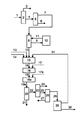
図は、本発明の処理方法の好ましい実施の態様の処理方法フローダイアグラムを示している。実質的にプロパン、n−ブタン及びイソブタン(加えてメタン、エタン、ペンタンを含んでいてもよい)からなる液化石油ガス(LPG)の供給流1を、精留塔2へと供給し、実質的にプロパン及びメタン及びエタンから構成される流れ3と、実質的にn−ブタン及びイソブタン及びペンタンから構成される流れ4とに分離される。精留塔5において、ペンタン6が取り出される。ブタン混合物7は、精留塔8中で、イソブタン9とn−ブタン12とに分離され、イソブタンは、異性化反応装置10中で、n−ブタン/イソブタン混合物11へと異性化され、これは精留塔8へと戻して供給される。n−ブタンは、供給気体流12として、第1脱水素化段階15へと供給され、そこではブタンが1−ブテン、2−ブテン、及びブタジエンとなる非酸化的触媒的脱水素化が行われる。これは好ましくは、酸素又は空気を同時供給13として、随意に水素を同時供給14として供給しながら、自熱式条件下で行われる。第1脱水素化段階は、流動床中で逆混合しながら、又は部分的気体再循環をしながら、例えばドイツ国特許出願P10211275.4(この出願は本発明の優先日において公開されていない)に記載されているように、行うことが好ましい。第1脱水素化段階から放出された生成気体流16は、ブタジエン、1−ブテン、2−ブテン及び未転化のn−ブタンに加えて、蒸気及び通常の第2成分、例えば水素、炭素酸化物、窒素、水素、メタン、エタン、エテン、プロパン及びペンタンを含んでおり、第2脱水素化段階18へと供給され、ここでは酸素又は空気を同時供給17として供給しながら、1−ブテン及び2−ブテンからブタジエンへのオキシデヒドロ化が行われる。第2脱水素化段階は、好ましくは集合管式反応装置で行われる。第2脱水素化段階は好ましくは1以上の段階で、例えば2段階で行われる。オキシデヒドロ化の2段階構成において、第2脱水素化段階は、第1オキシデヒドロ化段階18及び第2オキシデヒドロ化段階18aからなり、空気又は酸素がそれぞれ同時供給17又は17aとして供給される。第2脱水素化段階から放出された生成気体流19a(1段階構成オキシデヒドロ化においては、これは生成気体流19である)は、ブタジエン及び未転化のn−ブタンに加えて、蒸気及び第2成分、例えば水素、炭素酸化物、窒素、メタン、エタン、エテン、プロパン、及び/又はプロペンを、場合により1−ブテン及び2−ブテンの少量の残余を、場合により酸素及び酸素含有炭化水素(酸素化合物)を、含んでいる。生成気体流19aは、随意に熱交換器で予冷した後に、冷却凝縮ユニット20で冷却され、このユニットは、水と高沸点有機副生成物、例えば高沸点炭化水素及び酸素化合物が、凝縮され、流れ21として処理経路から排出されるように、例えば水流動床として、又は流下薄膜式凝縮装置として構成することができる。未凝縮の生成気体成分は、分離段階23へ、流れ22として供給され、ここで低沸点物質及び未凝縮の第2成分24(生成気体流19aに存在する場合: 水素、炭素酸化物、窒素、エタン、エタン、エテン、プロパン、プロペン、及び酸素)が取り出される。分離段階23は、精留塔又は吸着/脱着ユニットとして構成することができる。流れ25は、脱水素化のC4生成物、未転化のn−ブタン、及びあらゆる酸素化合物、例えばフラン及びマレイン酸無水物を含み、精留塔又は吸着/脱着ユニットとして構成できる別な分離段階26へと、随意に供給される。分離段階26において、酸素化合物及び残余の水の痕跡量が取り除かれ、流れ27として処理経路から排出される。流れ28は、ブタジエン及びn−ブタンからなり、少量の1−ブテン及び2−ブテンを含んでいてもよく、これは別な分離段階29、例えばブタジエンスクラビングへと供給され、そこで、n−ブタン及び1−ブテン及び2−ブテンからなる流れ31と、ブタジエンからなる流れ31へと分離される。流れ31は、少なくとも部分的に、非酸化的触媒的脱水素化段階15へと再循環することができる。
The figure shows a processing method flow diagram of a preferred embodiment of the processing method of the present invention. A liquefied petroleum gas (LPG) feed stream 1 consisting essentially of propane, n-butane and isobutane (which may additionally contain methane, ethane and pentane) is fed to a
本発明を以下の実施例によって詳細に説明する。 The invention is illustrated in detail by the following examples.
[実施例1]
脱水素化触媒前駆体の調製
600mlのエタノール中に11.993gのSnCl2・2H2O及び7.886gのH2PtCl6・6H2Oを含む溶液を、1000gの粉砕したZrO2/SiO2混合酸化物(米国Norton製、ZrO2/SiO2の質量比が95:5)に注ぎかけた。
[Example 1]
Preparation of Dehydrogenation Catalyst Precursor A solution containing 11.993 g SnCl 2 .2H 2 O and 7.886 g H 2 PtCl 6 .6H 2 O in 600 ml ethanol was added to 1000 g ground ZrO 2 / SiO 2. The mixture was poured into a mixed oxide (manufactured by Norton, USA, the mass ratio of ZrO 2 / SiO 2 was 95: 5).
混合酸化物は、以下の特性を有する:
篩画分1.6〜2mm; BET表面積:86m2/g; 孔体積:0.28ml/g(水銀多孔度測定法による)。
Mixed oxides have the following properties:
Sieve fraction 1.6-2 mm; BET surface area: 86 m 2 / g; pore volume: 0.28 ml / g (according to mercury porosimetry).
上清のエタノールは、水流ポンプの真空(20mbar)を用いた回転式蒸発装置(ロータリーエバポレーター)で取り除いた。いずれも空気中で、次に100℃で15時間、乾燥処理した後に、560℃で3時間、か焼した。次に、2500mlのH2O中に7.71gのCsNO3、13.559gのKNO3、及び98.33gのLa(NO3)3・6H2Oを含む溶液を、乾燥固体に注いだ。上清の水は、水流ポンプの真空(20mbar)を用いた回転式蒸発装置(ロータリーエバポレーター)で取り除いた。いずれも空気中で、次に100℃で15時間、乾燥処理した後に、560℃で3時間、か焼した。 The ethanol in the supernatant was removed with a rotary evaporator (rotary evaporator) using a water pump vacuum (20 mbar). All were calcined at 560 ° C. for 3 hours after drying in air and then at 100 ° C. for 15 hours. Next, a solution containing 7.71 g CsNO 3 , 13.559 g KNO 3 , and 98.33 g La (NO 3 ) 3 .6H 2 O in 2500 ml H 2 O was poured into the dry solid. The supernatant water was removed with a rotary evaporator (rotary evaporator) using a water pump vacuum (20 mbar). All were calcined at 560 ° C. for 3 hours after drying in air and then at 100 ° C. for 15 hours.
得られた触媒前駆体は、Pt0.3Sn0.6Cs0.5K0.5La3.0(指数は質量比を表す)の組成物を、キャリアとして(ZrO2)95(SiO2)5(指数は質量比を表す)上に有していた。 The obtained catalyst precursor has a composition of Pt 0.3 Sn 0.6 Cs 0.5 K 0.5 La 3.0 (index represents a mass ratio) as a carrier and (ZrO 2 ) 95 (SiO 2 ) 5 (index represents a mass ratio). ) Had on.
[実施例2]
脱水素化領域A反応装置の充填及び触媒前駆体の活性化
実施例1から得られた20mlの触媒前駆体を、垂直管式反応装置(反応装置長:800mm; 壁厚:2mm; 内径:20mm; 反応装置材料:内部アロナイズ処理、即ちアルミニウム酸化物被覆処理、スチール管; 加熱:HTM Reetz製オーブン(LOBA 1100−28−650−2、縦方向中央部長さ650mm)を使用した電気的加熱)に充填して使用した。触媒床の長さは、75mmである。触媒床は、管式反応装置の縦方向中央部に設置した。その上下に残った反応装置内容積は、不活性材料としてステアタイト球(直径4〜5mm)で充填され、これは触媒ベースの上で下から支持されている。
[Example 2]
Dehydrogenation Zone A Reactor Filling and Catalyst Precursor Activation 20 ml of the catalyst precursor obtained from Example 1 was added to a vertical tube reactor (reactor length: 800 mm; wall thickness: 2 mm; inner diameter: 20 mm). Reactor material: internal aronizing treatment, ie aluminum oxide coating treatment, steel tube; heating: electrical heating using an oven made by HTM Reetz (LOBA 1100-28-650-2, longitudinal central length 650 mm) Filled and used. The length of the catalyst bed is 75 mm. The catalyst bed was installed in the center in the longitudinal direction of the tubular reactor. The reactor internal volume remaining above and below is filled with steatite spheres (diameter 4-5 mm) as an inert material, which is supported from below on the catalyst base.
反応管は、次に、500℃の加熱領域に沿った外壁温度で、30分間にわたり、9.3l/h(stp)の水素で満たした。同じ壁温で、水素流を、80体積%の窒素と20体積%の空気の流れにより23l/h(STP)で30分間かけて最初に置換し、次に純粋な空気の同じ流れにより30分間をかけて置換した。壁温を保持しつつ、N2の同じ流れで15分間かけてパージ(浄化)を行い、最後に9.3l/h(STP)の水素で30分間かけて再び還元を行った。触媒前駆体の活性化はこれで完了した。 The reaction tube was then filled with 9.3 l / h (stp) of hydrogen for 30 minutes at the outer wall temperature along the 500 ° C. heating zone. At the same wall temperature, the hydrogen stream was first displaced over 30 minutes at 23 l / h (STP) with a flow of 80% by volume nitrogen and 20% by volume air, and then for 30 minutes with the same stream of pure air. And replaced. While maintaining the wall temperature, purging was performed for 15 minutes with the same flow of N 2 , and finally reduction was performed again with 9.3 l / h (STP) of hydrogen for 30 minutes. The activation of the catalyst precursor is now complete.
[実施例3]
オキシデヒドロ化触媒の調製
最初に、0.2質量%の遊離のHNO3含量及び12.5質量%のCo含量(=Co 3.71モル)を有する1750.9gの硝酸コバルト水溶液を、熱耐性ガラス製10L固体反応装置に充填した。14.2質量%のFe含量(=Fe 1.59モル)を有する626.25gの固体Fe(NO3)3・9H2Oを、最初に充填した硝酸コバルト溶液中で、室温で撹拌しながら溶解した。3質量%の遊離のHNO3含量及び11.1質量%のBi含量(=Bi 0.32モル)を有する599.5gの硝酸ビスマス溶液を、蒸気得られた溶液に室温で添加した。106.23gの固体Cr(NO3)3・9H2O(=Cr 0.27モル)を次に添加した。60℃に加熱してさらに撹拌した後に、赤色溶液(溶液A)が得られた。
[Example 3]
Preparation of the oxydehydrolysis catalyst First, 1750.9 g of cobalt nitrate aqueous solution having a free HNO 3 content of 0.2% by weight and a Co content of 12.5% by weight (= Co 3.71 mol) were heat-resistant. A glass 10 L solid reactor was packed. 626.25 g of solid Fe (NO 3 ) 3 .9H 2 O having an Fe content of 14.2% by weight (= Fe 1.59 mol) are stirred at room temperature in the initially charged cobalt nitrate solution. Dissolved. 599.5 g of bismuth nitrate solution having a free HNO 3 content of 3 % by weight and a Bi content of 11.1% by weight (= Bi 0.32 mol) was added to the resulting solution at room temperature. 106.23 g of solid Cr (NO 3 ) 3 .9H 2 O (= Cr 0.27 mol) was then added. After heating to 60 ° C. and further stirring, a red solution (solution A) was obtained.
最初に、耐熱性3l撹拌ガラス容器中に2000mlの水を満たした。次に、2.38gのKOH(=K 0.042モル)及び1124.86gの(NH4)6Mo7O24・4H2O(=Mo 6.37モル)を添加して、60℃で溶解した。得られた溶液はやや濁りを示した。(溶液B)
次に、溶液Aを撹拌しながら、溶液Bを溶液Aへとポンプ注入した。102.05gの50質量%のSiO2含量を有するSiO2ゾル(「Ludox TM」、デュポン製、=Si 0.85モル)を、60℃で得られた暗黄色懸濁液へと添加した。
Initially, a heat resistant 3 liter stirred glass container was filled with 2000 ml of water. Next, 2.38 g of KOH (= K 0.042 mol) and 112.86 g of (NH 4 ) 6 Mo 7 O 24 · 4H 2 O (= Mo 6.37 mol) were added at 60 ° C. Dissolved. The resulting solution was slightly turbid. (Solution B)
Next, solution B was pumped into solution A while stirring solution A. 102.05 g of a SiO 2 sol having a 50% by weight SiO 2 content (“Ludox ™”, DuPont = Si 0.85 mol) was added to the dark yellow suspension obtained at 60 ° C.
得られた懸濁液を60℃で30分間撹拌し、次に噴霧乾燥した(入口温度370℃、出口温度110〜112℃)。得られた噴霧粉末を、4質量%のグラファイトと混合し、次に直径5mm高さ3mmの固体タブレットへと成錠した。固体タブレット(錠)を、マッフル炉中で、網(ワイアシーブ)(メッシュの大きさ3.5mm)上で、480℃で6時間、熱処理して、100l/hの速度の空気流によって、空気を通過させた。か焼したタブレットは、網を通じて細分して、平均顆粒径2〜3mmを有する触媒細片(スパル)を得た。 The resulting suspension was stirred at 60 ° C. for 30 minutes and then spray dried (inlet temperature 370 ° C., outlet temperature 110-112 ° C.). The spray powder obtained was mixed with 4% by weight of graphite and then locked into a solid tablet 5 mm in diameter and 3 mm high. The solid tablet (tablet) was heat treated in a muffle furnace on a net (wire sieve) (mesh size: 3.5 mm) at 480 ° C. for 6 hours, and air was blown by an air flow at a rate of 100 l / h. I let it pass. The calcined tablet was subdivided through a net to obtain catalyst strips (spars) having an average granule diameter of 2-3 mm.
オキシデヒドロ化触媒は、公称組成Mo12Bi0.6Fe3Co7Cr0.5Si1.6K0.08Ox(指数は原子比を表す)を有していた。 The oxydehydration catalyst had a nominal composition Mo 12 Bi 0.6 Fe 3 Co 7 Cr 0.5 Si 1.6 K 0.08 O x (index represents atomic ratio).
[実施例4]
脱水素化領域B反応装置の充填
実施例3で得られた95mlの触媒前駆体を、垂直管式反応装置(反応装置長:100cm; 壁厚:2mm; 内径:13mm; 反応装置材料:内部アロナイズ処理されたスチール管、その内部にはサーモウェルが設置され、外径2mmで可動式温度部材(moveable thermal element)を含む; 加熱:電気的加熱、100cmの反応装置長にわたる3個の独立した加熱領域を備え、加熱カラーを使用、Winkler(Heidelberg)製、82cmの最大等温長を反応装置中央部領域にかけて達成)に充填して使用した。触媒床の長さは82cmであった。触媒床は、管式反応装置の等温領域にある。上下に残った反応装置内容積は、不活性材料としてステアタイト球(直径2〜3mm)を充填して、反応管の充填全体は、高さ5cmの触媒ベースの上で下から支持されている。
[Example 4]
Filling of dehydrogenation zone B reactor The 95 ml catalyst precursor obtained in Example 3 was mixed with a vertical tube reactor (reactor length: 100 cm; wall thickness: 2 mm; inner diameter: 13 mm; reactor material: internal aronize) Treated steel tube with thermowell installed inside, 2mm outer diameter and including moveable thermal element; Heating: Electrical heating, 3 independent heating over 100cm reactor length It was used with a heating collar using a heating collar, made by Winkler (Heidelberg), achieving a maximum isothermal length of 82 cm over the central region of the reactor). The catalyst bed length was 82 cm. The catalyst bed is in the isothermal region of the tubular reactor. The reactor internal volume remaining above and below is filled with steatite spheres (2 to 3 mm in diameter) as an inert material, and the entire filling of the reaction tube is supported from below on a catalyst base having a height of 5 cm. .
[実施例5]
脱水素化領域A反応装置中のn−ブタンの脱水素化
実施例2の脱水素化領域A反応装置を、500℃の加熱領域に沿った外壁温度で、反応気体混合物として、20l/h(stp)のn−ブタン、3.5l/h(stp)の空気、1.4l/h(stp)の水素、及び10l/h(stp)の蒸気の混合物で、満たした。
[Example 5]
Dehydrogenation of n-butane in the dehydrogenation zone A reactor The dehydrogenation zone A reactor of Example 2 is used as a reaction gas mixture at an outer wall temperature along the heating zone of 500 ° C. The mixture was filled with a mixture of n-butane of stp), 3.5 l / h (stp) air, 1.4 l / h (stp) hydrogen, and 10 l / h (stp) steam.
n−ブタン、空気、及び水素は、Brooks製の質量流量調節装置を使用して最初に計量導入し、一方、水はKontron HPLCポンプ420を使用して液体の形態でエバポレーター(蒸発装置)へと最初に計量導入し、その中で蒸発させ、次にn−ブタン及び空気に混合した。充填された充填気体混合物の温度は150℃であった。REKO圧力調節装置を反応装置の出口で使用して、管式反応装置の出口圧力を1.5barに設定した。 n-Butane, air, and hydrogen are first metered in using a Brooks mass flow controller, while water is sent to an evaporator in the form of a liquid using a Kontron HPLC pump 420. First metered in, evaporated in it, then mixed in n-butane and air. The temperature of the filled gas mixture charged was 150 ° C. A REKO pressure regulator was used at the outlet of the reactor and the outlet pressure of the tubular reactor was set to 1.5 bar.
得られた生成気体混合物Aの分析量を、大気圧へと減圧し、冷却して存在する蒸気を凝縮して取り出した。残存気体は、GC(HP6890 Chem−Station附属、検出部:FID; TCD: 分離カラム:Al2O3/KCl(Chromopack)、Carboxen1010(Supelco))を使用して分析した。対応する方法で、充填気体混合物も分析した。 The amount of analysis of the resulting product gas mixture A was reduced to atmospheric pressure, and the vapor that existed by cooling was condensed and taken out. The residual gas was analyzed using GC (HP6890 Chem-Station attachment, detector: FID; TCD: separation column: Al 2 O 3 / KCl (Chromopack), Carboxen 1010 (Supelco)). The corresponding gas mixture was also analyzed in a corresponding manner.
3日間の操作時間の後、表1に報告する分析結果が得られた。 After 3 days of operation time, the analytical results reported in Table 1 were obtained.
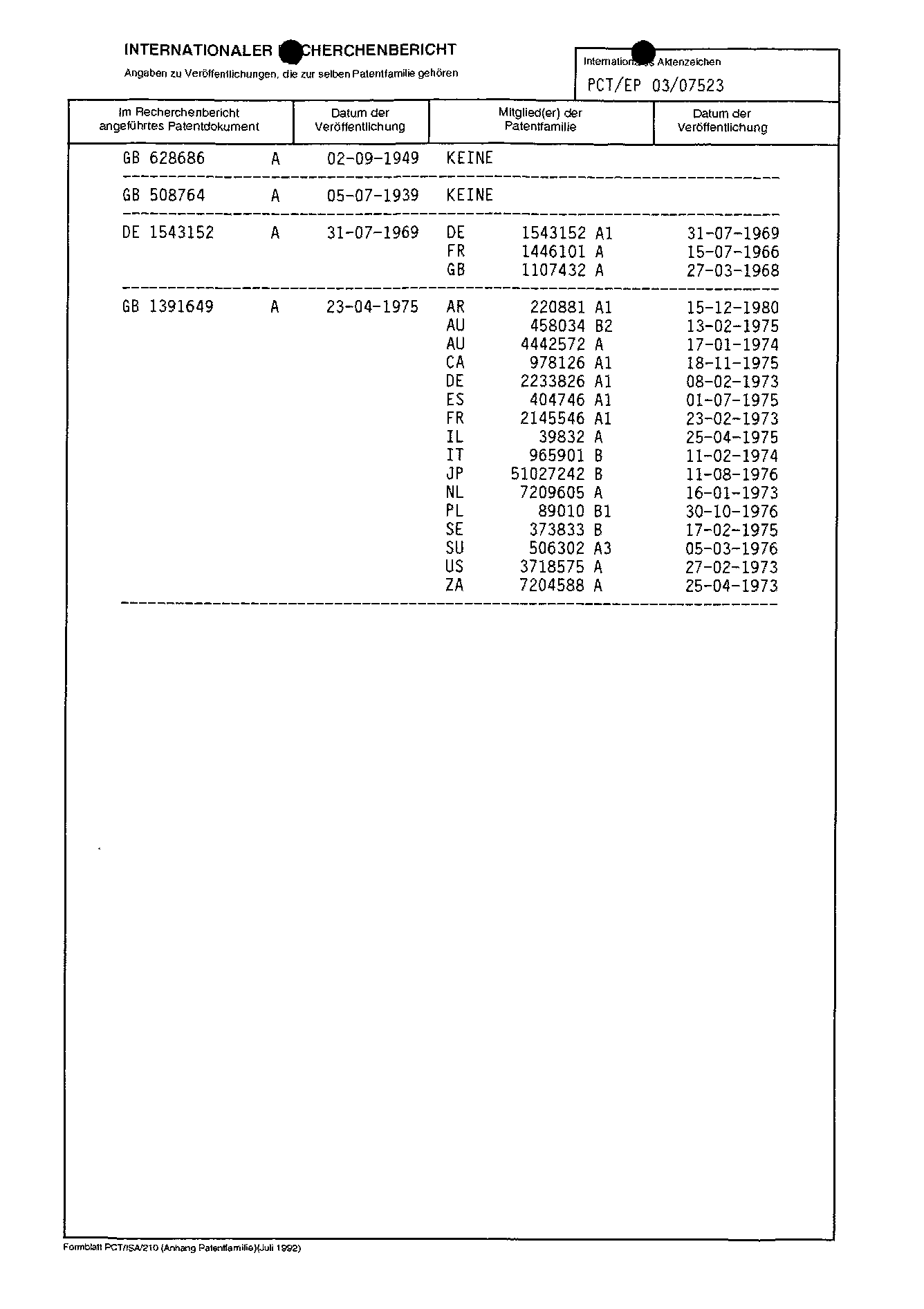
1段階あたり32モル%のn−ブタン転化と94モル%のn−ブタン形成の選択率とが、これらの値に相当する。ブタジエン形成の選択率は3.3%に相当する。 These values correspond to 32 mol% n-butane conversion and 94 mol% n-butane formation per stage. The selectivity for butadiene formation corresponds to 3.3%.
[実施例6]
脱水素化領域A反応装置でのn−ブタンの脱水素化と、これに続く脱水素化領域B反応装置でのオキシデヒドロ化。
[Example 6]
Dehydrogenation of n-butane in the dehydrogenation zone A reactor followed by oxydehydrolysis in the dehydrogenation zone B reactor.
実施例4の脱水素化領域B反応装置は、反応気体混合物の単一スループットでのn−ブテン転化が99モル%を超えるような温度に加熱され、反応装置の内部温度は、内部サーモウェル中に設置された温度部材を使用して調節される。 The dehydrogenation zone B reactor of Example 4 was heated to a temperature such that the single-throughput n-butene conversion of the reaction gas mixture was greater than 99 mol%, and the internal temperature of the reactor was within the internal thermowell. Is adjusted using a temperature member installed in the.
充填は、150l/h(stp)の空気(=20℃)と、実施例5の34.4l/h(stp)の生成気体混合物A(=500℃)との混合物からなる。空気は、Brooks製の質量流量調節装置を使用して計量導入した。気体混合物の充填の温度は、反応装置外壁温度にされた。反応管の出口の圧力調節装置を使用して、反応装置の出口圧力は1.3barに設定された。 The filling consists of a mixture of 150 l / h (stp) of air (= 20 ° C.) and 34.4 l / h (stp) of product gas mixture A of Example 5 (= 500 ° C.). The air was metered in using a Brooks mass flow controller. The temperature of the gas mixture filling was brought to the reactor outer wall temperature. Using the pressure regulator at the outlet of the reaction tube, the outlet pressure of the reactor was set to 1.3 bar.
圧力調節装置の下流では、得られた生成気体混合物流B(温度=330℃)は、大気圧に減圧され、GC(HP6890 Chem−Station附属、検出部:FID; TCD: 分離カラム:Poraplot Q(Chromopack)、Carboxen1010(Supelco))を使用して分析された。充填気体混合物は、同じ方法で分析した。 Downstream of the pressure regulator, the resulting product gas mixture stream B (temperature = 330 ° C.) is depressurized to atmospheric pressure, GC (HP6890 Chem-Station attachment, detector: FID; TCD: separation column: Poraplot Q ( Chromopack), Carboxen 1010 (Supelco)). The filled gas mixture was analyzed in the same way.
3日間の操作時間の後、表2に報告する分析結果が得られた。 After 3 days of operation time, the analytical results reported in Table 2 were obtained.
1段階あたり99モル%のn−ブタン転化と80モル%のn−ブタン形成の選択率とが、これらの値に相当する。 99 mol% n-butane conversion per stage and 80 mol% n-butane formation selectivity correspond to these values.
脱水素化領域AとBの両方にわたるブタジエンの全体収率は、使用したn−ブタンに対して、25%であった。 The overall yield of butadiene over both dehydrogenation zones A and B was 25% based on the n-butane used.
[比較例]
実施例5に記載の充填気体混合物を、脱水素化領域B反応装置へと直接に通した。同じ反応条件の下で、n−ブタンからブテン又はブタジエンへの転化は生じなかった。
[Comparative example]
The charged gas mixture described in Example 5 was passed directly to the dehydrogenation zone B reactor. Under the same reaction conditions, no conversion of n-butane to butene or butadiene occurred.
Claims (5)
(B)n−ブタン含有気体供給流を第1脱水素化領域へと供給し、
n−ブタンを1−ブテン、2−ブテン及び随意にブタジエンへと非酸化的に触媒的に脱水素化して、
n−ブタン、1−ブテン及び2−ブテンを、場合によりブタジエンと第2成分を含む第1生成気体流を得、
(C)n−ブタン、1−ブテン及び2−ブテンを、場合によりブタジエンと第2成分を含む第1生成気体流を、第2脱水素化領域へと供給し、
1−ブテン及び2−ブテンをブタジエンへと酸化的に脱水素化して、
ブタジエン、n−ブタン、及び蒸気と、場合により第2成分を含む第2生成気体流を得、
(D)第2生成気体流からブタジエンを回収する、
n−ブタンからのブタジエンの製造方法。 (A) supplying an n-butane containing gas feed stream;
(B) supplying an n-butane-containing gas feed stream to the first dehydrogenation zone;
non-oxidatively catalytic dehydrogenation of n-butane to 1-butene, 2-butene and optionally butadiene,
obtaining a first product gas stream comprising n-butane, 1-butene and 2-butene, optionally comprising butadiene and a second component,
(C) supplying a first product gas stream comprising n-butane, 1-butene and 2-butene, optionally containing butadiene and a second component, to the second dehydrogenation zone;
Oxidatively dehydrogenating 1-butene and 2-butene to butadiene;
Obtaining a second product gas stream comprising butadiene, n-butane, and steam, and optionally a second component;
(D) recovering butadiene from the second product gas stream;
A method for producing butadiene from n-butane.
(A1)液化石油ガス(LPG)流を供給し、
(A2)プロパン、及び随意にメタン、エタン、及びペンタンを、LPG流から取り出して、ブタン含有流を得、
(A3)ブタン含有流からイソブタンを取り出して、n−ブタン含有供給気体流を得て、取り出したイソブタンをn−ブタン/イソブタン混合物へと異性化し、n−ブタン/イソブタン混合物をイソブタン取り出し過程へと随意に再循環する、
ことを特徴とする、請求項1に記載の製造方法。 The supply of the feed gas stream containing n-butane is the following:
(A1) supplying a liquefied petroleum gas (LPG) stream;
(A2) Propane and optionally methane, ethane, and pentane are removed from the LPG stream to obtain a butane-containing stream,
(A3) removing isobutane from the butane-containing stream to obtain an n-butane-containing feed gas stream, isomerizing the removed isobutane into an n-butane / isobutane mixture, and subjecting the n-butane / isobutane mixture to an isobutane removal process Recirculate at will,
The manufacturing method of Claim 1 characterized by the above-mentioned.
(D1)生成気体流を水で冷却して、蒸気及び高沸点有機第2成分を凝縮して取り出し、
(D2)水素、一酸化炭素、二酸化炭素、窒素、メタン、エタン、エテン、プロパン、及びプロペンからなる群より選択された、第2生成気体流中の低沸点第2成分を除去して、
ブタジエン及びn−ブタンを、場合により1−ブテン及び2−ブテンを、さらに場合により別な第2成分として酸素化合物を含む流れを得、
(D3)酸素化合物を随意に取り出して、ブタジエン及びn−ブタンを、場合により1−ブテン及び2−ブテンを含む流れを得、
(D4)ブタジエン及びn−ブタンを、場合により1−ブテン及び2−ブテンを含む流れを、n−ブタンを、場合により1−ブテン及び2−ブテンを含む流れと、ブタジエンを含む流れとに分離し、
(D5)n−ブタンを、場合により1−ブテン及び2−ブテンを含む流れを、
非酸化的触媒的脱水素化(B)へと、随意に再循環し、
を含むことを特徴とする、請求項1〜4のいずれかに記載の製造方法。 The recovery (D) of butadiene from the second product gas stream is as follows:
(D1) cooling the product gas stream with water to condense and remove the vapor and the high-boiling organic second component;
(D2) removing the low boiling second component in the second product gas stream selected from the group consisting of hydrogen, carbon monoxide, carbon dioxide, nitrogen, methane, ethane, ethene, propane, and propene;
Obtaining a stream comprising butadiene and n-butane, optionally 1-butene and 2-butene, and optionally an oxygen compound as a further second component,
(D3) optionally removing the oxygen compound to obtain a stream comprising butadiene and n-butane, optionally 1-butene and 2-butene,
(D4) Separating butadiene and n-butane optionally into a stream containing 1-butene and 2-butene into a stream containing n-butane optionally containing 1-butene and 2-butene and a stream containing butadiene. And
(D5) a stream comprising n-butane, optionally containing 1-butene and 2-butene,
Optionally recycled to non-oxidative catalytic dehydrogenation (B),
The manufacturing method in any one of Claims 1-4 characterized by including.
Applications Claiming Priority (2)
| Application Number | Priority Date | Filing Date | Title |
|---|---|---|---|
| DE10231632 | 2002-07-12 | ||
| PCT/EP2003/007523 WO2004007408A1 (en) | 2002-07-12 | 2003-07-10 | Method for the production of butadiene from n-butane |
Publications (1)
| Publication Number | Publication Date |
|---|---|
| JP2005536498A true JP2005536498A (en) | 2005-12-02 |
Family
ID=30009935
Family Applications (1)
| Application Number | Title | Priority Date | Filing Date |
|---|---|---|---|
| JP2004520592A Withdrawn JP2005536498A (en) | 2002-07-12 | 2003-07-10 | Method for producing butadiene from n-butane |
Country Status (16)
| Country | Link |
|---|---|
| US (1) | US7034195B2 (en) |
| EP (1) | EP1523462B1 (en) |
| JP (1) | JP2005536498A (en) |
| KR (1) | KR100974260B1 (en) |
| CN (1) | CN100494130C (en) |
| AT (1) | ATE461165T1 (en) |
| AU (1) | AU2003254335A1 (en) |
| BR (1) | BR0311949A (en) |
| CA (1) | CA2493133A1 (en) |
| DE (1) | DE50312525D1 (en) |
| EA (1) | EA007394B1 (en) |
| MX (1) | MXPA04012234A (en) |
| MY (1) | MY135793A (en) |
| NO (1) | NO20045324L (en) |
| TW (1) | TWI324591B (en) |
| WO (1) | WO2004007408A1 (en) |
Cited By (16)
| Publication number | Priority date | Publication date | Assignee | Title |
|---|---|---|---|---|
| JP2010120933A (en) * | 2008-10-24 | 2010-06-03 | Asahi Kasei Chemicals Corp | Method for producing conjugated diolefin |
| JP2010534553A (en) * | 2007-05-10 | 2010-11-11 | エスケー エナジー 株式会社 | Zinc ferrite catalyst, method for producing the same, and method for producing 1,3-butadiene using the same |
| JP2012067048A (en) * | 2010-09-27 | 2012-04-05 | Asahi Kasei Chemicals Corp | Method for producing butadiene |
| JP2012512181A (en) * | 2009-03-25 | 2012-05-31 | ルマス テクノロジー インコーポレイテッド | Propylene production from butane |
| JP2013502414A (en) * | 2009-08-17 | 2013-01-24 | ルマス テクノロジー インコーポレイテッド | Method for producing butadiene |
| JP2013100244A (en) * | 2011-11-08 | 2013-05-23 | Mitsui Chemicals Inc | Method for producing conjugated diolefin |
| JP2013189440A (en) * | 2007-05-30 | 2013-09-26 | Sk Innovation Co Ltd | Method for manufacturing 1,3-butadiene using multi-component-based bismuth molybdate catalyst |
| JP2014073462A (en) * | 2012-10-04 | 2014-04-24 | Cosmo Oil Co Ltd | Metal oxide catalyst, production method of the same, and production method of alkadiene |
| JP2014519478A (en) * | 2011-04-04 | 2014-08-14 | エボニック デグサ ゲーエムベーハー | Process for producing 1-butene and 1,3-butadiene derivatives |
| JP2015509108A (en) * | 2012-01-30 | 2015-03-26 | ビーエーエスエフ ソシエタス・ヨーロピアBasf Se | Process for producing butadiene and / or butenes from n-butane |
| WO2015186915A1 (en) * | 2014-06-03 | 2015-12-10 | 주식회사 엘지화학 | Method for preparing butadiene through oxidative dehydrogenation |
| JP2017509483A (en) * | 2014-12-05 | 2017-04-06 | エルジー・ケム・リミテッド | Composite oxide catalyst for butadiene production and method for producing the same |
| US9738574B2 (en) | 2014-06-03 | 2017-08-22 | Lg Chem, Ltd. | Method for producing butadiene through oxidative dehydrogenation reaction |
| JP2018197215A (en) * | 2017-05-24 | 2018-12-13 | Jxtgエネルギー株式会社 | Manufacturing method of unsaturated hydrocarbon |
| JP2019137663A (en) * | 2018-02-15 | 2019-08-22 | Jxtgエネルギー株式会社 | Method for producing unsaturated hydrocarbon |
| JP2019137664A (en) * | 2018-02-15 | 2019-08-22 | Jxtgエネルギー株式会社 | Method for producing unsaturated hydrocarbon |
Families Citing this family (60)
| Publication number | Priority date | Publication date | Assignee | Title |
|---|---|---|---|---|
| DE10350044A1 (en) * | 2003-10-27 | 2005-05-25 | Basf Ag | Process for the preparation of 1-butene |
| DE10350045A1 (en) * | 2003-10-27 | 2005-05-25 | Basf Ag | Process for the preparation of 1-butene |
| DE10361822A1 (en) | 2003-12-30 | 2005-08-11 | Basf Ag | Process for the preparation of butadiene |
| DE10361823A1 (en) * | 2003-12-30 | 2005-08-11 | Basf Ag | Process for the preparation of butadiene and 1-butene |
| DE10361824A1 (en) * | 2003-12-30 | 2005-07-28 | Basf Ag | Process for the preparation of butadiene |
| RU2269504C1 (en) * | 2004-10-25 | 2006-02-10 | Открытое акционерное общество Научно-исследовательский институт "Ярсинтез" (ОАО НИИ "Ярсинтез") | 1,3-butadiene production process |
| DE102004054766A1 (en) * | 2004-11-12 | 2006-05-18 | Basf Ag | Process for the preparation of butadiene from n-butane |
| DE102004059356A1 (en) | 2004-12-09 | 2006-06-14 | Basf Ag | Process for the preparation of butadiene from n-butane |
| DE102004061514A1 (en) | 2004-12-21 | 2006-07-06 | Basf Ag | Process for the preparation of butadiene from n-butane |
| DE102005002127A1 (en) * | 2005-01-17 | 2006-07-20 | Basf Ag | Process for the preparation of butadiene from n-butane |
| US7943038B2 (en) * | 2008-01-29 | 2011-05-17 | Kellogg Brown & Root Llc | Method for producing olefins using a doped catalyst |
| US7910784B2 (en) * | 2008-06-14 | 2011-03-22 | Lummus Technology Inc. | Process for the production of styrene monomer by improving energy efficiency and injecting a recycle gas into the EB vaporizer |
| CN102639227B (en) * | 2009-12-01 | 2014-10-01 | 巴斯夫欧洲公司 | Reactor for carrying out autothermal gas phase dehydrogenation |
| US8802019B2 (en) | 2010-12-21 | 2014-08-12 | Basf Se | Reactor for carrying out an autothermal gas-phase dehydrogenation |
| JP5968334B2 (en) | 2010-12-21 | 2016-08-10 | ビーエーエスエフ ソシエタス・ヨーロピアBasf Se | Reactor for carrying out autothermal gas phase dehydrogenation |
| US9352270B2 (en) | 2011-04-11 | 2016-05-31 | ADA-ES, Inc. | Fluidized bed and method and system for gas component capture |
| BR112013032516A2 (en) * | 2011-06-17 | 2017-03-01 | Invista Tech Sarl | biosynthesize butadiene method and method to produce butadiene |
| EA025292B1 (en) | 2011-08-02 | 2016-12-30 | Басф Се | Reactor for carrying out autothermal gas-phase dehydrogenation |
| US8852538B2 (en) | 2011-08-02 | 2014-10-07 | Basf Se | Reactor for carrying out an autothermal gas-phase dehydrogenation |
| US9012707B2 (en) | 2011-08-02 | 2015-04-21 | Basf Se | Continuous process for carrying out autothermal gas-phase dehydrogenations |
| KR20140068035A (en) | 2011-08-02 | 2014-06-05 | 바스프 에스이 | Continuous method for carrying out autothermal gas phase dehydrogenations |
| KR101338637B1 (en) * | 2011-10-06 | 2013-12-06 | 삼성토탈 주식회사 | Single-step Precipitation Method of Producing Magnesia-zirconia Mixed Carrier for Catalyst for Oxidative Dehydrogenation of n-Butane, Magnesium Orthovanadate Catalyst Supported on Magnesia-zirconia Mixed Carrier, and Method of Producing n-Butene and 1,3-Butadiene Using Said Catalyst |
| CN102417432A (en) * | 2011-12-16 | 2012-04-18 | 天津市泰亨气体有限公司 | Method for preparing 1, 3-butadiene by catalytic dehydrogenation of butane |
| US9193647B2 (en) | 2012-01-30 | 2015-11-24 | Basf Se | Process for preparing butadiene and/or butenes from n-butane |
| CN103483123B (en) * | 2012-06-08 | 2015-05-13 | 中国石油化工股份有限公司 | Method of preparing butadiene from normal alkane |
| RU2488440C1 (en) * | 2012-07-18 | 2013-07-27 | ФЕДЕРАЛЬНОЕ ГОСУДАРСТВЕННОЕ БЮДЖЕТНОЕ УЧРЕЖДЕНИЕ НАУКИ ИНСТИТУТ ОРГАНИЧЕСКОЙ ХИМИИ им. Н.Д. ЗЕЛИНСКОГО РОССИЙСКОЙ АКАДЕМИИ НАУК (ИОХ РАН) | Catalyst for continuous oxidative dehydrogenation of ethane and method for continuous oxidative dehydrogenation of ethane using said catalyst |
| IN2015DN02082A (en) | 2012-09-20 | 2015-08-14 | Ada Es Inc | |
| US9611191B2 (en) | 2012-12-12 | 2017-04-04 | Basf Se | Reactor for carrying out an autothermal gas-phase dehydrogenation |
| CN103086829B (en) * | 2013-01-30 | 2016-01-13 | 中国石油化工股份有限公司 | Butylene oxidation-dehydrogenation waste water recycling method |
| CN103965007B (en) * | 2013-01-30 | 2015-11-18 | 中国石油化工股份有限公司 | The method of mixed c 4 volume increase divinyl |
| CN103086830B (en) * | 2013-01-30 | 2015-04-08 | 中国石油化工股份有限公司 | Production method of butadiene |
| CN103965005B (en) * | 2013-01-30 | 2016-04-13 | 中国石油化工股份有限公司 | The acid stripping method of butylene oxidation-dehydrogenation product |
| CN103962058A (en) | 2013-01-30 | 2014-08-06 | 中国石油化工股份有限公司 | Premixer, radial fixed-bed reactor and butaneoxidative dehydrogenation reaction system |
| US10035741B2 (en) | 2013-03-07 | 2018-07-31 | Tpc Group Llc | High throughput oxidative dehydrogenation process |
| WO2014138520A2 (en) | 2013-03-07 | 2014-09-12 | Tpc Group Llc | Multi-stage oxidative dehydrogenation process with inter-stage cooling |
| CN104250193B (en) * | 2013-06-28 | 2016-12-28 | 中国石油化工股份有限公司 | A kind of propylene and the preparation method of butadiene |
| CN104250184B (en) * | 2013-06-28 | 2016-01-13 | 中国石油化工股份有限公司 | A kind of preparation method of low-carbon alkene |
| EP2832716A1 (en) * | 2013-07-29 | 2015-02-04 | LANXESS Deutschland GmbH | 1,3-butadiene synthesis |
| CN103483130B (en) * | 2013-09-23 | 2015-05-20 | 浙江大学 | Method for synthesizing 1,3-butadiene by adopting Bi/Mo/La/Fe four-component composite oxide catalyst |
| US20150166439A1 (en) * | 2013-12-16 | 2015-06-18 | Uop Llc | Integration of mto with on purpose butadiene |
| DE102013226370A1 (en) | 2013-12-18 | 2015-06-18 | Evonik Industries Ag | Production of butadiene by oxidative dehydrogenation of n-butene after prior isomerization |
| US9611192B2 (en) | 2014-06-30 | 2017-04-04 | Uop Llc | Integration of N-C4/N-C4=/BD separation system for on-purpose butadiene synthesis |
| DE102015200702A1 (en) | 2015-01-19 | 2016-07-21 | Evonik Degussa Gmbh | Preparation of butadiene from ethene |
| WO2016132293A1 (en) | 2015-02-19 | 2016-08-25 | Sabic Global Technologies B.V. | Systems and methods related to the production of polyethylene |
| WO2016151074A1 (en) | 2015-03-26 | 2016-09-29 | Basf Se | Method for preparing 1,3-butadiene from n-butenes by oxidative dehydrogenation |
| WO2016150940A1 (en) * | 2015-03-26 | 2016-09-29 | Basf Se | Process for preparing 1,3-butadiene from n-butenes by oxidative dehydrogenation |
| US10927058B2 (en) | 2015-05-15 | 2021-02-23 | Sabic Global Technologies B.V. | Systems and methods related to the syngas to olefin process |
| EP3294837A1 (en) | 2015-05-15 | 2018-03-21 | SABIC Global Technologies B.V. | Systems and methods related to the syngas to olefin process |
| CN106867578B (en) * | 2015-12-14 | 2018-09-04 | 中国石油天然气股份有限公司 | A conversion and utilization process of low-carbon hydrocarbons |
| CN106867563B (en) * | 2015-12-14 | 2018-10-16 | 中国石油天然气股份有限公司 | A method for converting topped oil light hydrocarbons |
| CN108602734A (en) * | 2016-06-30 | 2018-09-28 | 环球油品公司 | Pass through the oxidative dehydrogenation method that then direct dehydrogenation produces butadiene |
| WO2018024740A1 (en) | 2016-08-02 | 2018-02-08 | Basf Se | Reactor for carrying out the autothermal gas phase dehydrogenation of a hydrocarbon-containing gas flow |
| US10391477B2 (en) * | 2016-09-30 | 2019-08-27 | Uchicago Argonne, Llc | Multimetallic catalysts |
| DE102016224063A1 (en) | 2016-12-02 | 2018-06-07 | Thyssenkrupp Ag | Process for the preparation of butadiene |
| US10828621B2 (en) | 2017-08-28 | 2020-11-10 | Uchicago Argonne, Llc | Supported multimetallic catalysts for oxidative dehydrogenation of alkanes |
| US20220340506A1 (en) * | 2019-09-02 | 2022-10-27 | Jsr Corporation | Method for producing 1,3-butadiene |
| CN116157375B (en) | 2020-07-17 | 2026-03-17 | Sabic环球技术有限责任公司 | Removal of C3 light hydrocarbons from LPG feedstock in a butane isomerization unit |
| JP7699937B2 (en) * | 2021-03-09 | 2025-06-30 | 千代田化工建設株式会社 | Method for producing butadiene |
| CN113754510B (en) * | 2021-10-08 | 2022-10-28 | 河北工业大学 | Method for preparing 1,3-butadiene |
| US20250257165A1 (en) * | 2022-04-12 | 2025-08-14 | Bridgestone Americas Tire Operations, Llc | Butadiene production from used tires |
Family Cites Families (8)
| Publication number | Priority date | Publication date | Assignee | Title |
|---|---|---|---|---|
| GB508764A (en) * | 1937-10-20 | 1939-07-05 | Ig Farbenindustrie Ag | Improvements in the manufacture and production of butadiene from butane |
| US2376323A (en) * | 1942-01-02 | 1945-05-22 | Phillips Petroleum Co | Process of two-stage catalytic dehydrogenation of paraffin hydrocarbons to diolefin |
| GB628686A (en) * | 1943-10-29 | 1949-09-02 | Universal Oil Prod Co | Production of butadiene |
| US3161670A (en) * | 1960-12-12 | 1964-12-15 | Shell Oil Co | Preparation of olefinic compounds |
| GB1107432A (en) | 1964-09-01 | 1968-03-27 | Lummus Co | Dehydrogenation process |
| US3718575A (en) * | 1971-07-12 | 1973-02-27 | Universal Oil Prod Co | Hydrocracking for lpg production |
| US3907919A (en) * | 1973-04-09 | 1975-09-23 | El Paso Products Co | Dehydrogenation of hydrocarbons |
| JPS59167525A (en) * | 1983-03-14 | 1984-09-21 | Japan Synthetic Rubber Co Ltd | Production of 1,3-butadiene |
-
2003
- 2003-07-07 MY MYPI20032539A patent/MY135793A/en unknown
- 2003-07-10 EP EP03763815A patent/EP1523462B1/en not_active Expired - Lifetime
- 2003-07-10 BR BR0311949-1A patent/BR0311949A/en not_active IP Right Cessation
- 2003-07-10 AT AT03763815T patent/ATE461165T1/en not_active IP Right Cessation
- 2003-07-10 MX MXPA04012234A patent/MXPA04012234A/en unknown
- 2003-07-10 KR KR1020057000290A patent/KR100974260B1/en not_active Expired - Fee Related
- 2003-07-10 AU AU2003254335A patent/AU2003254335A1/en not_active Abandoned
- 2003-07-10 JP JP2004520592A patent/JP2005536498A/en not_active Withdrawn
- 2003-07-10 DE DE50312525T patent/DE50312525D1/en not_active Expired - Lifetime
- 2003-07-10 EA EA200500176A patent/EA007394B1/en not_active IP Right Cessation
- 2003-07-10 CN CNB038165791A patent/CN100494130C/en not_active Expired - Fee Related
- 2003-07-10 CA CA002493133A patent/CA2493133A1/en not_active Abandoned
- 2003-07-10 US US10/516,920 patent/US7034195B2/en not_active Expired - Fee Related
- 2003-07-10 WO PCT/EP2003/007523 patent/WO2004007408A1/en not_active Ceased
- 2003-07-11 TW TW092119023A patent/TWI324591B/en not_active IP Right Cessation
-
2004
- 2004-12-03 NO NO20045324A patent/NO20045324L/en not_active Application Discontinuation
Cited By (19)
| Publication number | Priority date | Publication date | Assignee | Title |
|---|---|---|---|---|
| JP2010534553A (en) * | 2007-05-10 | 2010-11-11 | エスケー エナジー 株式会社 | Zinc ferrite catalyst, method for producing the same, and method for producing 1,3-butadiene using the same |
| JP2013189440A (en) * | 2007-05-30 | 2013-09-26 | Sk Innovation Co Ltd | Method for manufacturing 1,3-butadiene using multi-component-based bismuth molybdate catalyst |
| JP2010120933A (en) * | 2008-10-24 | 2010-06-03 | Asahi Kasei Chemicals Corp | Method for producing conjugated diolefin |
| JP2012512181A (en) * | 2009-03-25 | 2012-05-31 | ルマス テクノロジー インコーポレイテッド | Propylene production from butane |
| JP2013502414A (en) * | 2009-08-17 | 2013-01-24 | ルマス テクノロジー インコーポレイテッド | Method for producing butadiene |
| JP2015061859A (en) * | 2009-08-17 | 2015-04-02 | ルマス テクノロジー インコーポレイテッド | Process for production of butadiene |
| JP2012067048A (en) * | 2010-09-27 | 2012-04-05 | Asahi Kasei Chemicals Corp | Method for producing butadiene |
| JP2014519478A (en) * | 2011-04-04 | 2014-08-14 | エボニック デグサ ゲーエムベーハー | Process for producing 1-butene and 1,3-butadiene derivatives |
| JP2013100244A (en) * | 2011-11-08 | 2013-05-23 | Mitsui Chemicals Inc | Method for producing conjugated diolefin |
| JP2015509108A (en) * | 2012-01-30 | 2015-03-26 | ビーエーエスエフ ソシエタス・ヨーロピアBasf Se | Process for producing butadiene and / or butenes from n-butane |
| JP2014073462A (en) * | 2012-10-04 | 2014-04-24 | Cosmo Oil Co Ltd | Metal oxide catalyst, production method of the same, and production method of alkadiene |
| WO2015186915A1 (en) * | 2014-06-03 | 2015-12-10 | 주식회사 엘지화학 | Method for preparing butadiene through oxidative dehydrogenation |
| US9738574B2 (en) | 2014-06-03 | 2017-08-22 | Lg Chem, Ltd. | Method for producing butadiene through oxidative dehydrogenation reaction |
| JP2017509483A (en) * | 2014-12-05 | 2017-04-06 | エルジー・ケム・リミテッド | Composite oxide catalyst for butadiene production and method for producing the same |
| JP2018197215A (en) * | 2017-05-24 | 2018-12-13 | Jxtgエネルギー株式会社 | Manufacturing method of unsaturated hydrocarbon |
| JP2019137663A (en) * | 2018-02-15 | 2019-08-22 | Jxtgエネルギー株式会社 | Method for producing unsaturated hydrocarbon |
| JP2019137664A (en) * | 2018-02-15 | 2019-08-22 | Jxtgエネルギー株式会社 | Method for producing unsaturated hydrocarbon |
| JP7064896B2 (en) | 2018-02-15 | 2022-05-11 | Eneos株式会社 | Method for producing unsaturated hydrocarbons |
| JP7064897B2 (en) | 2018-02-15 | 2022-05-11 | Eneos株式会社 | Method for producing unsaturated hydrocarbons |
Also Published As
| Publication number | Publication date |
|---|---|
| TWI324591B (en) | 2010-05-11 |
| MY135793A (en) | 2008-06-30 |
| CN1668556A (en) | 2005-09-14 |
| EP1523462B1 (en) | 2010-03-17 |
| EA200500176A1 (en) | 2005-06-30 |
| MXPA04012234A (en) | 2005-02-25 |
| US20050171311A1 (en) | 2005-08-04 |
| DE50312525D1 (en) | 2010-04-29 |
| AU2003254335A1 (en) | 2004-02-02 |
| TW200413304A (en) | 2004-08-01 |
| US7034195B2 (en) | 2006-04-25 |
| CN100494130C (en) | 2009-06-03 |
| EP1523462A1 (en) | 2005-04-20 |
| WO2004007408A1 (en) | 2004-01-22 |
| CA2493133A1 (en) | 2004-01-22 |
| KR20050018960A (en) | 2005-02-28 |
| BR0311949A (en) | 2005-03-22 |
| NO20045324L (en) | 2005-02-11 |
| KR100974260B1 (en) | 2010-08-06 |
| ATE461165T1 (en) | 2010-04-15 |
| EA007394B1 (en) | 2006-10-27 |
Similar Documents
| Publication | Publication Date | Title |
|---|---|---|
| KR100974260B1 (en) | Process for preparing butadiene from N-butane | |
| KR101158589B1 (en) | Preparation of butadiene and 1-butene | |
| CN100447117C (en) | Process for producing butadiene | |
| US8088962B2 (en) | Method for producing butadiene from n-butane | |
| US7238827B2 (en) | Preparation of at least one partial oxidation and/or ammoxidation product of propylene | |
| CN101084174B (en) | Process for preparing butadiene from n-butane | |
| KR101168456B1 (en) | Method for the production of butadiene | |
| KR20070110080A (en) | Process for preparing propene from propane | |
| KR20060136422A (en) | Method for the production of butadiene | |
| US6933407B2 (en) | Method for producing methacrylic acid from isobutane | |
| JP4368201B2 (en) | Production of 4-vinylcyclohexene, ethylbenzene and styrene | |
| JP2004530723A (en) | Method for producing methacrolein from isobutane |
Legal Events
| Date | Code | Title | Description |
|---|---|---|---|
| A761 | Written withdrawal of application |
Free format text: JAPANESE INTERMEDIATE CODE: A761 Effective date: 20061006 |