【0001】
【発明の属する技術分野】
本発明は、医薬等のファインケミカルの分野で有用な発明である。さらに詳しくは、本発明は、医薬等の分野で製造中間体として有用な化合物の新規な製造方法及びその製造に有用な新規な反応促進剤に関するものである。
【0002】
【従来の技術】
本発明の製造方法により製造される2−アミノピラジン誘導体は、例えば、国際公開特許公報WO 01/14376に開示されている神経ペプチド Y受容体拮抗剤として有用な化合物の製造中間体として、また、例えば、過酸化物、ATP、カルシウムイオン又はステロイドホルモン等の生体の微量成分の分析に使用される発光試薬の製造中間体として有用である(シモムラ等(Shimomura et al)バイオケミカル ジャナール(Biochemical Journal)第270巻、第309頁〜第312頁(1990年)参照)。
【0003】
当該ピラジン誘導体の公知の製造方法としては、例えば、薬学雑誌 第89巻、第1646頁〜第1651頁(1969年)及びジャーナル・オブ・ケミカル・ソサエティ(Journal of Chemical Society)第932頁(1951年)が挙げられるが、これらの製造方法は、当該ピラジン誘導体の収率が低く、工業的な製造方法としては好ましくない。
【0004】
さらに、当該ピラジン誘導体の公知の製造方法としては、ジャーナル・オブ・ザ・アメリカン・ケミカル・ソサイエティ(Journal of the American Chemical Society)第93巻、第2333頁〜第2335頁(1971年)が挙げられる。この製造方法では、当該ピラジン誘導体の収率は、高価な四塩化チタンを使用することにより向上しているが、それでも工業的には満足すべきレベルではないことから、製造方法としては工業的に有利な製造方法とはいえない。
【0005】
【発明が解決しようとする課題】
本発明は、従来公知の2−アミノピラジン誘導体の製造方法の上述の問題点を改善し、工業的に優れた2−アミノピラジン誘導体の製造方法及びそのために使用されうる反応促進剤を提供することにある。
【0006】
【課題を解決するための手段】
本発明者らは、2−アミノピラジン誘導体の製造方法に関して、鋭意検討した結果、驚くべきことに、鉄化合物が反応促進作用を有することを見出した。本発明者らはさらに、本発明方法が目的とする2−アミノピラジン誘導体を従来方法よりも高収率で製造できるという特長を有し、さらに反応工程管理が容易であることから工業的にすぐれた製造方法であることを見出し、さらに検討を重ねて本発明を完成した。
【0007】
すなわち、本発明は、
(1) 鉄化合物を有効成分とするピラジン環形成反応の促進剤、
(2) 鉄化合物が、塩化鉄(III)、硝酸鉄(III)、硫酸鉄(III)、臭化鉄(III)、硫酸アンモニウム鉄(III)、クエン酸鉄(III)、シュウ酸鉄(II)又はフマル酸鉄(II)であることを特徴とする前記(1)記載のピラジン環形成反応の促進剤、
(3) 一般式[IV]:
【化5】
[式中、R1は水素原子、炭素数1個〜6個のアルキル基又はアリール基を、R2は水素原子、炭素数1個〜6個のアルキル基、アリール基又はハロゲン原子を示す]で表される化合物又はその酸付加塩と、一般式[III]:
【化6】
[式中、R3は水素原子、炭素数1個〜6個のアルキル基、アリール基又はアラルキル基を示す]で表されるアミノアセトニトリル化合物又はその酸付加塩とを、鉄化合物の存在下で反応させて、一般式[II]:
【化7】
[式中、R1、R2及びR3は前記の意味を示す]で表されるN−オキシド化合物又はその酸付加塩を製造し、次いでこのN−オキシド化合物又はその酸付加塩を還元することを特徴とする一般式[I]:
【化8】
[式中、R1、R2及びR3は前記の意味を示す]で表される2−アミノピラジン誘導体又はその酸付加塩の製造方法、
(4) 鉄化合物が、塩化鉄(III)、硝酸鉄(III)、硫酸鉄(III)、臭化鉄(III)、硫酸アンモニウム鉄(III)、クエン酸鉄(III)、シュウ酸鉄(II)又はフマル酸鉄(II)であることを特徴とする前記(3)記載の2−アミノピラジン誘導体又はその酸付加塩の製造方法、
(5) 還元が、パラジウム炭素又は白金炭素を触媒とする接触還元であることを特徴とする前記(3)又は(4)記載の2−アミノピラジン誘導体の製造方法、
に関するものである。
【0008】
【発明の実施の形態】
本発明について、具体的且つ詳細に説明する。
【0009】
「鉄化合物」とは、例えば、塩化鉄(III)、硝酸鉄(III)、硫酸鉄(III)、臭化鉄(III)、硫酸アンモニウム鉄(III)、クエン酸鉄(III)、シュウ酸鉄(II)又はフマル酸鉄(II)等の鉄原子を含有する化合物を意味し、好ましくは塩化鉄(III)、硝酸鉄(III)又は硫酸鉄(III)等が挙げられる。
【0010】
「炭素数1個〜6個のアルキル基」とは、例えば、メチル基、エチル基、n−プロピル基、イソプロピル基、n−ブチル基、イソブチル基、tert−ブチル基、sec−ブチル基、n−ペンチル基、イソペンチル基、ネオペンチル基、n−ヘキシル基又はイソヘキシル基等の直鎖状又は分岐状の炭素数1個〜6個のアルキル基が挙げられ、なかでもメチル基、エチル基、n−プロピル基、n−ブチル基又はn−ヘキシル基が好ましい。
【0011】
「アリール基」とは、例えば、フェニル基、o−トリル基、p−トリル基、m−トリル基、1−ナフチル基、2−ナフチル基又はインダニル基等の炭素数6個〜12個のアリール基を意味し、なかでもフェニル基、1―ナフチル基又は2−ナフチル基が好ましい。
従って、反応を阻害しない通常の基(例えば、炭素数1個〜6個のアルキル基、炭素数3個〜6個のシクロアルキル基)を置換基として有していてもよい。ここにおいて、炭素数1個〜6個のアルキル基は前記の意味を有し、炭素数3個〜6個のシクロアルキル基としては、例えば、シクロプロピル基、シクロペンチル基又シクロヘキシル基等が挙げられる。
【0012】
「アラルキル基」とは、例えば、ベンジル基、(1−ナフチル)メチル基、(2−ナフチル)メチル基又は2−フェニルエチル基等の炭素数7個〜12個のアリール基が挙げられる。また、これらの基は上記の反応を阻害しない置換基を有していてもよい。
【0013】
「ハロゲン原子」とは、例えば、塩素原子、臭素原子、フッ素原子又はヨウ素原子が挙げられる。
【0014】
次に、本発明の製造方法について説明する。
一般式[IV]:
【化9】
[式中、R1は水素原子、炭素数1個〜6個のアルキル基又はアリール基を、R2は水素原子、炭素数1個〜6個のアルキル基、アリール基又はハロゲン原子を示す]で表される化合物又はその酸付加塩と、一般式[III]:
【化10】
[式中、R3は水素原子、炭素数1個〜6個のアルキル基、アリール基又はアラルキル基を示す]で表されるアミノアセトニトリル化合物又はその酸付加塩とを、鉄化合物の存在下で反応させて、一般式[II]:
【化11】
[式中、R1、R2及びR3は前記の意味を示す]で表されるN−オキシド化合物又はその酸付加塩を製造し、次いでこのN−オキシド化合物又はその酸付加塩を還元することにより行われる。この方法は、好ましくは、以下の(1)及び(2)の処理を順に連続して行うことにより工業的に有利に実施することができる。
【0015】
(1)溶媒に、一般式[IV]で表される化合物又はその酸付加塩、一般式[III]で表されるアミノアセトニトリル化合物又はその酸付加塩、及び鉄化合物を加え、約50℃〜約100℃、好ましくは約70℃〜約100℃で約1時間〜約36時間、好ましくは約2時間〜約21時間反応させて、一般式[II]で表されるN−オキシド化合物又はその酸付加塩を製造する。
本工程で使用される一般式[IV]で表される化合物の使用量は、一般式[III]で表されるアミノアセトニトリル化合物に対して約1当量〜約5当量である。
一般式[III]で表されるアミノアセトニトリル化合物が酸付加塩の場合、例えば、N−メチルモルホリン、水酸化ナトリウム、水酸化カリウム、トリエチルアミン又はジイソプロピルアミン等の塩基を、当該アミノアセトニトリル化合物に対して約1当量〜約6当量、好ましくは約1当量〜約5当量アミノアセトニトリル化合物酸付加塩に加えた後、上記(1)の処理を行う。
(2)(1)で得られた一般式[II]で表されるN−オキシド化合物又はその酸付加塩を含む反応液を還元反応容器に移し、例えばパラジウム炭素又は白金炭素等の触媒を当該アミノアセトニトリル化合物に対して約1mol%〜約5mol%加え、約2気圧〜約6気圧、好ましくは約2気圧〜約5気圧の水素加圧下で、約30℃〜約100℃、好ましくは約30℃〜約80℃で約1時間〜約24時間、好ましくは約8時間〜約15時間反応させる。
【0016】
本発明の反応(1)及び(2)はいずれも溶媒の存在下に行われてよく、そのような溶媒としては、例えば、水、N,N−ジメチルホルムアミド、ジメチルスホキシド、メタノール、エタノール、クロロホルム、テトラヒドロフラン又はイソプロパノール又はそれらの混合溶媒等が挙げられる。
【0017】
本工程で使用される鉄化合物としては、例えば、塩化鉄(III)、硝酸鉄(III)、硫酸鉄(III)、臭化鉄(III)、硫酸アンモニウム鉄(III)、クエン酸鉄(III)、シュウ酸鉄(II)又はフマル酸鉄(II)等が挙げられ、その使用量は、当該アミノアセトニトリル化合物に対して約0.5当量〜約1当量である。
【0018】
以上の工程で得られる生成物は、それ自体既知の方法、例えばシリカゲル又は吸着樹脂等を用いるカラムクロマトグラフィー、液体クロマトグラフィー、薄層クロマトグラフィー、溶媒抽出又は再結晶・再沈殿等の常用の分離精製法を必要に応じて単独又は適宜組み合わせて用いることにより精製・単離することができる。
なお、一般式[I]〜[IV]で表される化合物の酸付加塩における酸としては、例えば、塩酸、硫酸、硝酸等の無機酸、例えば、シュウ酸、酢酸等の有機酸が挙げられる。
【0019】
【発明の実施の形態】
以下に実施例を挙げて、本発明を具体的に説明するが、本発明は、これらにより何ら限定されるものではない。
【0020】
実施例1
2−アミノ−5−フェニルピラジンの製造:
窒素気流下、10Lガラス製ナス型フラスコにアミノアセトニトリル塩酸塩(124g、1.34mol)とメタノール(4L)、12N水酸化ナトリウム水溶液(123mL、1.48mol)を滴下し溶液とする。この溶液にイソニトロソアセトフェノン(100g、0.67mol)と塩化鉄(III)(109g、0.67mol)を20℃以下で加える。反応溶液を50℃で2時間、還流で4時間攪拌反応させる。高速液体クロマトグラフィー(以下、「HPLC」と略)による分析により、イソニトロソアセトフェノンの消失を確認した後に、反応液を室温にまで冷却し、ステンレス製加圧反応容器(内容器はテフロン(登録商標)製)に移液する。反応溶液にパラジウム炭素(10w/w%)を加え、水素加圧下(5atm)、50℃で18時間攪拌する。HPLCで2−アミノ−5−フェニルピラジン=1−オキシド(核磁気共鳴法(以下、「NMR」法と略)による測定値を下記する)が消失したのを確認した後に、反応溶液を12N水酸化ナトリウム水溶液を用いてアルカリ性(pH>10)とする。これをセライトに通し、不溶物を除去した後に濾液を減圧下、メタノールを濃縮する。水層に酢酸エチルを加え、2回抽出する。得られた酢酸エチル溶液を7重量%食塩水で洗浄した後に分液し、酢酸エチル溶液を無水硫酸ナトリウムで脱水する。酢酸エチル溶液を減圧下、一定量まで濃縮した後に、活性炭(商標:Darco−G60)を加え、室温で1時間攪拌する。セライトを通し、活性炭を除去した後に、酢酸エチル溶液を減圧下、一定量まで濃縮すると結晶が析出してくる。得られる懸濁液にn−ヘプタンを滴下し、室温で1時間攪拌した後に、グラスフィルターを用いて濾過し、結晶を酢酸エチル/n−ヘプタン(容量比、1:5)で洗浄する。得られた結晶を室温で減圧乾燥し、2−アミノ−5−フェニルピラジンが黄色結晶として、77g(収率67%)得られた。
【0021】
2−アミノ−5−フェニルピラジン=1−オキシド:
1H−NMR(500MHz,DMSO)δ ppm:8.79(s,1H),8.22(s,1H),7.96(d,J=7.5Hz,2H),7.44(dd,J=7.3,7.5Hz,2H),7.38(dd,J=7.3Hz,1H),7.11(s,2H)
【0022】
2−アミノ−5−フェニルピラジン:
1H−NMR(500MHz,DMSO)δ ppm:8.53(s,1H),8.01(s,1H),7.94(d,J=7.6Hz,1H),7.93(d,J=7.6Hz,1H),7.43(dd,J=7.4,7.6Hz,2H),7.32(dd,J=7.4Hz,1H),6.59(s,1H)
【0023】
13C−NMR(125MHz,DMSO)δ ppm:125.0,127.7,129.0,131.8,137.5,139.2,139.4,155.3
【0024】
HPLCの測定条件
カラム:シンメトリー(symmetry)C8,
4.6mm×250mm
測定温度:25℃
移動層:
グラジェント(gradient):
流速:1.0mL/分
0分(A:B=95:5(体積比))
35分(A:B=50:50(体積比))
A:0.1%リン酸;B:アセトニトリル
検出波長:243nm
保持時間(retention time):
イソニトロアセトフェノン:20.69分
2−アミノ−5−フェニルピラジン=1−オキシド:14.37分
2−アミノ−5−フェニルピラジン:16.03分
【0025】
実施例2〜7
実施例1の製法と同様にして、実施例2〜7の化合物を製造した。ただし、目的物の精製に関しては、実施例1の結晶化法に代えて、シリカゲルカラムクロマトグラフィー(シリカゲル:ワコーゲル(和光純薬製);展開剤:n−ヘプタン及び酢酸エチルの混合溶媒)により行った。
実施例2
2−アミノ−3−メチル−5−フェニルピラジン:(収率:63%)
1H−NMR(500MHz,DMSO)δ ppm:8.40(s,1H),7.94(d,J=7.4,8.3Hz,2H),7.43(d,J=7.6Hz,1H),7.41(d,J=7.8Hz,1H),7.31(d,J=7.2Hz,1H),6.35(s,2H),2.40(s,3H)
【0026】
13C−NMR(125MHz,CDCl3)δ ppm:21.1,125.1,127.6,129.0,136.8,137.6,138.8,138.9,153.6,176.5
【0027】
実施例3
2−アミノ−3−エチル−5−フェニルピラジン:(収率:67%)
1H−NMR(270MHz,CDCl3)δ ppm:8.32(s,1H),7.93(d,J=7.3,8.6Hz,2H),7.45(d,J=7.3Hz,1H),7.42(d,J=7.6Hz,1H),7.34(dd,J=6.9,7.6Hz,1H),4.61(s,2H),2.73(q,J=7.3,7.6Hz,2H),1.41(t,J=7.3,7.6Hz,3H)
【0028】
13C−NMR(125MHz,CDCl3)δ ppm:11.0,26.0,125.0,127.5,129.0,136.5,137.8,138.8,142.5,153.0
【0029】
実施例4
2−アミノ−3,5−ジフェニルピラジン:(収率:58%)
1H−NMR(270MHz,DMSO)δ ppm:8.57(s,1H),8.00(d,J=7.3,8.6Hz,2H),7.82(d,J=6.9,8.3Hz,2H),7.57−7.47(m,4H),7.43(d,J=7.6Hz,1H),7.34(dd,J=6.9,7.6Hz,1H),6.31(s,2H)
【0030】
13C−NMR(67.5MHz,DMSO)δ ppm:124.9,127.8,128.1,128.5,128.6,128.8,128.9,129.0,136.9,137.5,137.8,137.9,139.7,152.0
【0031】
実施例5
2−アミノ−3−ベンジル−5−フェニルピラジン:(収率:72%)
1H−NMR(270MHz,DMSO)δ ppm:8.44(s,1H),7.92(d,J=7.3Hz,2H),7.44−7.17(m,8H),6.41(s,2H),4.11(s,2H)
【0032】
13C−NMR(67.5MHz,DMSO)δ ppm:124.7,126.1,127.3,128.2,128.6,128.9,136.9,137.1,138.1,138.7,140.0,152.7
【0033】
実施例6
2−アミノ−5−フェニル−6−メチルピラジン:(収率:60%)
1H−NMR(270MHz,DMSO)δ ppm:7.82(s,1H),7.51(d,J=6.6Hz,1H),7.43(d,J=6.6Hz,1H),7.41(d,J=7.9Hz,1H),7.34(d,J=6.6Hz,1H),7.32(d,J=7.6Hz,1H),6.40(s,2H),2.35(s,3H)
【0034】
13C−NMR(67.5MHz,DMSO)δ ppm:22.7,127.2,128.2,129.1,129.2,139.7,140.1,147.8,154.2
【0035】
実施例7
2−アミノ−5−メチルピラジン:(収率:55%)
1H−NMR(500MHz,DMSO)δ ppm:7.81(s,1H),7.78(s,1H),6.10(s,2H),2.25(s,3H)
【0036】
13C−NMR(125MHz,DMSO)δ ppm:20.0,131.4,139.6,140.7,154.4,176.5
【0037】
比較例
塩化鉄(III)の代わりに同モル量の四塩化チタンを用いて実施例1の方法に従い、2−アミノ−5−フェニルピラジンを製造すると、その収率は10%であった。
【0038】
【発明の効果】
本発明で提供される鉄化合物を有効成分とするピラジン環の反応促進剤は、従来公知の2−アミノピラジン誘導体の製造方法よりも収率向上を図ることができるため、工業的に優れた2−アミノピラジン誘導体の製造方法を提供することができる。[0001]
BACKGROUND OF THE INVENTION
The present invention is useful in the field of fine chemicals such as pharmaceuticals. More specifically, the present invention relates to a novel method for producing a compound useful as a production intermediate in the field of medicine and the like, and a novel reaction accelerator useful for the production thereof.
[0002]
[Prior art]
The 2-aminopyrazine derivative produced by the production method of the present invention is, for example, an intermediate for producing a compound useful as a neuropeptide Y receptor antagonist disclosed in International Patent Publication WO 01/14376, For example, it is useful as an intermediate for the production of luminescent reagents used in the analysis of trace components of living organisms such as peroxides, ATP, calcium ions or steroid hormones (Shimomura et al. Biochemical Journal) 270, pages 309 to 312 (1990)).
[0003]
Known methods for producing the pyrazine derivative include, for example, the Journal of Pharmaceutical Sciences, Vol. 89, pages 1646 to 1651 (1969) and Journal of Chemical Society, page 932 (1951). However, these production methods are not preferable as an industrial production method because the yield of the pyrazine derivative is low.
[0004]
Furthermore, as a known method for producing the pyrazine derivative, Journal of the American Chemical Society, Vol. 93, pages 2333 to 2335 (1971) may be mentioned. . In this production method, although the yield of the pyrazine derivative is improved by using expensive titanium tetrachloride, it is still not at a level that is industrially satisfactory. It is not an advantageous production method.
[0005]
[Problems to be solved by the invention]
The present invention improves the above-mentioned problems of the conventional methods for producing 2-aminopyrazine derivatives, and provides an industrially superior method for producing 2-aminopyrazine derivatives and a reaction accelerator that can be used therefor. It is in.
[0006]
[Means for Solving the Problems]
As a result of intensive studies on a method for producing a 2-aminopyrazine derivative, the present inventors have surprisingly found that an iron compound has a reaction promoting action. Furthermore, the present inventors have the advantage that the 2-aminopyrazine derivative targeted by the method of the present invention can be produced in a higher yield than the conventional method, and further, it is industrially superior because the reaction process management is easy. The present invention was completed through further investigations.
[0007]
That is, the present invention
(1) a pyrazine ring formation reaction accelerator comprising an iron compound as an active ingredient,
(2) The iron compound is iron chloride (III), iron nitrate (III), iron sulfate (III), iron (III) bromide, iron iron (III) sulfate, iron (III) citrate, iron oxalate (II) Or an accelerator for pyrazine ring formation reaction according to (1) above, which is iron (II) fumarate,
(3) General formula [IV]:
[Chemical formula 5]
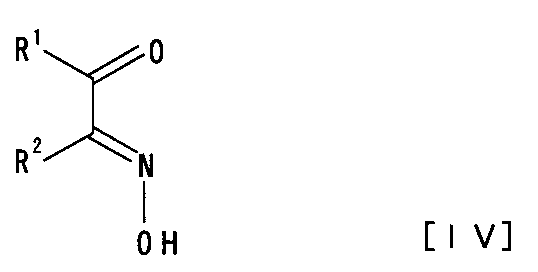
[Chemical 6]
[In the formula, R 3 represents a hydrogen atom, an alkyl group having 1 to 6 carbon atoms, an aryl group or an aralkyl group] and an aminoacetonitrile compound or an acid addition salt thereof in the presence of an iron compound. Reaction is carried out to obtain the general formula [II]:
[Chemical 7]
[Wherein R 1 , R 2 and R 3 have the above-mentioned meanings] is produced, and then the N-oxide compound or an acid addition salt thereof is reduced. General formula [I]:
[Chemical 8]
[Wherein R 1 , R 2 and R 3 have the above-mentioned meanings], a process for producing a 2-aminopyrazine derivative or an acid addition salt thereof,
(4) When the iron compound is iron chloride (III), iron nitrate (III), iron sulfate (III), iron (III) bromide, iron iron (III) sulfate, iron (III) citrate, iron oxalate (II) ) Or iron (II) fumarate, the method for producing a 2-aminopyrazine derivative or an acid addition salt thereof according to the above (3),
(5) The method for producing a 2-aminopyrazine derivative according to the above (3) or (4), wherein the reduction is catalytic reduction using palladium carbon or platinum carbon as a catalyst,
It is about.
[0008]
DETAILED DESCRIPTION OF THE INVENTION
The present invention will be described specifically and in detail.
[0009]
“Iron compound” means, for example, iron (III) chloride, iron (III) nitrate, iron (III) sulfate, iron (III) bromide, iron (III) ammonium sulfate, iron (III) citrate, iron oxalate It means a compound containing an iron atom such as (II) or iron (II) fumarate, preferably iron (III) chloride, iron (III) nitrate or iron (III) sulfate.
[0010]
“C1-C6 alkyl group” means, for example, methyl group, ethyl group, n-propyl group, isopropyl group, n-butyl group, isobutyl group, tert-butyl group, sec-butyl group, n -Linear or branched alkyl groups having 1 to 6 carbon atoms such as pentyl group, isopentyl group, neopentyl group, n-hexyl group or isohexyl group, among which methyl group, ethyl group, n- A propyl group, an n-butyl group or an n-hexyl group is preferred.
[0011]
The “aryl group” is, for example, an aryl having 6 to 12 carbon atoms such as a phenyl group, an o-tolyl group, a p-tolyl group, an m-tolyl group, a 1-naphthyl group, a 2-naphthyl group, or an indanyl group. Means a group, and among them, a phenyl group, a 1-naphthyl group or a 2-naphthyl group is preferable.
Therefore, you may have a normal group (for example, a C1-C6 alkyl group, a C3-C6 cycloalkyl group) which does not inhibit reaction as a substituent. Here, an alkyl group having 1 to 6 carbon atoms has the above-mentioned meaning, and examples of the cycloalkyl group having 3 to 6 carbon atoms include a cyclopropyl group, a cyclopentyl group, and a cyclohexyl group. .
[0012]
Examples of the “aralkyl group” include aryl groups having 7 to 12 carbon atoms such as a benzyl group, a (1-naphthyl) methyl group, a (2-naphthyl) methyl group, or a 2-phenylethyl group. Moreover, these groups may have a substituent which does not inhibit the above reaction.
[0013]
“Halogen atom” includes, for example, chlorine atom, bromine atom, fluorine atom or iodine atom.
[0014]
Next, the manufacturing method of this invention is demonstrated.
Formula [IV]:
[Chemical 9]
[Wherein, R 1 represents a hydrogen atom, an alkyl group having 1 to 6 carbon atoms or an aryl group, and R 2 represents a hydrogen atom, an alkyl group having 1 to 6 carbon atoms, an aryl group, or a halogen atom] Or a compound represented by the general formula [III]:
[Chemical Formula 10]
[In the formula, R 3 represents a hydrogen atom, an alkyl group having 1 to 6 carbon atoms, an aryl group or an aralkyl group] and an aminoacetonitrile compound or an acid addition salt thereof in the presence of an iron compound. Reaction is carried out to obtain the general formula [II]:
Embedded image
[Wherein R 1 , R 2 and R 3 have the above-mentioned meanings] is produced, and then this N-oxide compound or an acid addition salt thereof is reduced. Is done. This method can be advantageously carried out industrially advantageously by successively performing the following treatments (1) and (2) in sequence.
[0015]
(1) A compound represented by the general formula [IV] or an acid addition salt thereof, an aminoacetonitrile compound represented by the general formula [III] or an acid addition salt thereof, and an iron compound are added to a solvent, The N-oxide compound represented by the general formula [II] or the reaction thereof is reacted at about 100 ° C, preferably about 70 ° C to about 100 ° C for about 1 hour to about 36 hours, preferably about 2 hours to about 21 hours. An acid addition salt is produced.
The amount of the compound represented by the general formula [IV] used in this step is about 1 equivalent to about 5 equivalents relative to the aminoacetonitrile compound represented by the general formula [III].
When the aminoacetonitrile compound represented by the general formula [III] is an acid addition salt, for example, a base such as N-methylmorpholine, sodium hydroxide, potassium hydroxide, triethylamine or diisopropylamine is added to the aminoacetonitrile compound. About 1 equivalent to about 6 equivalents, preferably about 1 equivalent to about 5 equivalents, are added to the aminoacetonitrile compound acid addition salt, and then the treatment of (1) above is performed.
(2) The reaction solution containing the N-oxide compound represented by the general formula [II] obtained in (1) or an acid addition salt thereof is transferred to a reduction reaction vessel, and for example, a catalyst such as palladium carbon or platinum carbon is used. About 1 mol% to about 5 mol% with respect to the aminoacetonitrile compound, and about 2 atm to about 6 atm, preferably about 2 atm to about 5 atm under hydrogen pressure, about 30 ° C. to about 100 ° C., preferably about 30 The reaction is carried out at a temperature of from about 80 ° C. to about 80 ° C. for about 1 hour to about 24 hours, preferably about 8 hours to about 15 hours.
[0016]
Both the reactions (1) and (2) of the present invention may be carried out in the presence of a solvent, and examples of such a solvent include water, N, N-dimethylformamide, dimethyl sulfoxide, methanol, ethanol, Examples include chloroform, tetrahydrofuran, isopropanol, or a mixed solvent thereof.
[0017]
Examples of the iron compound used in this step include iron (III) chloride, iron (III) nitrate, iron (III) sulfate, iron (III) bromide, iron iron (III) sulfate, and iron (III) citrate. Iron (II) oxalate, or iron (II) fumarate, and the like, and the amount used is about 0.5 equivalent to about 1 equivalent with respect to the aminoacetonitrile compound.
[0018]
The products obtained in the above steps are separated by conventional methods such as column chromatography using silica gel or adsorption resin, liquid chromatography, thin layer chromatography, solvent extraction or recrystallization / reprecipitation. Purification and isolation can be performed by using purification methods alone or in combination as appropriate.
Examples of the acid in the acid addition salts of the compounds represented by the general formulas [I] to [IV] include inorganic acids such as hydrochloric acid, sulfuric acid, and nitric acid, and organic acids such as oxalic acid and acetic acid. .
[0019]
DETAILED DESCRIPTION OF THE INVENTION
EXAMPLES The present invention will be specifically described below with reference to examples, but the present invention is not limited to these examples.
[0020]
Example 1
Production of 2-amino-5-phenylpyrazine:
Under a nitrogen stream, aminoacetonitrile hydrochloride (124 g, 1.34 mol), methanol (4 L), and 12N aqueous sodium hydroxide solution (123 mL, 1.48 mol) are added dropwise to a 10 L glass eggplant-shaped flask. To this solution is added isonitrosoacetophenone (100 g, 0.67 mol) and iron (III) chloride (109 g, 0.67 mol) at 20 ° C. or lower. The reaction solution is stirred and reacted at 50 ° C. for 2 hours and at reflux for 4 hours. After confirming the disappearance of isonitrosoacetophenone by analysis by high performance liquid chromatography (hereinafter abbreviated as “HPLC”), the reaction solution was cooled to room temperature and a stainless steel pressurized reaction vessel (the inner vessel was Teflon (registered trademark)) )). To the reaction solution is added palladium carbon (10 w / w%), and the mixture is stirred at 50 ° C. for 18 hours under hydrogen pressure (5 atm). After confirming disappearance of 2-amino-5-phenylpyrazine = 1-oxide (measured by a nuclear magnetic resonance method (hereinafter abbreviated as “NMR” method)) by HPLC, the reaction solution was washed with 12N water. It is made alkaline (pH> 10) using an aqueous sodium oxide solution. This is passed through Celite to remove insoluble matter, and then the filtrate is concentrated under reduced pressure to concentrate methanol. Add ethyl acetate to the aqueous layer and extract twice. The obtained ethyl acetate solution is washed with 7% by weight brine and then separated, and the ethyl acetate solution is dehydrated with anhydrous sodium sulfate. The ethyl acetate solution is concentrated to a certain volume under reduced pressure, activated carbon (trade name: Darco-G60) is added, and the mixture is stirred at room temperature for 1 hour. After removing the activated carbon through celite, the ethyl acetate solution is concentrated to a certain amount under reduced pressure to precipitate crystals. N-Heptane is added dropwise to the resulting suspension, and the mixture is stirred at room temperature for 1 hour, filtered using a glass filter, and the crystals are washed with ethyl acetate / n-heptane (volume ratio, 1: 5). The obtained crystals were dried under reduced pressure at room temperature to obtain 77 g (yield 67%) of 2-amino-5-phenylpyrazine as yellow crystals.
[0021]
2-amino-5-phenylpyrazine = 1-oxide:
1 H-NMR (500 MHz, DMSO) δ ppm: 8.79 (s, 1H), 8.22 (s, 1H), 7.96 (d, J = 7.5 Hz, 2H), 7.44 (dd , J = 7.3, 7.5 Hz, 2H), 7.38 (dd, J = 7.3 Hz, 1H), 7.11 (s, 2H)
[0022]
2-Amino-5-phenylpyrazine:
1 H-NMR (500 MHz, DMSO) δ ppm: 8.53 (s, 1H), 8.01 (s, 1H), 7.94 (d, J = 7.6 Hz, 1H), 7.93 (d , J = 7.6 Hz, 1H), 7.43 (dd, J = 7.4, 7.6 Hz, 2H), 7.32 (dd, J = 7.4 Hz, 1H), 6.59 (s, 1H)
[0023]
13 C-NMR (125 MHz, DMSO) δ ppm: 125.0, 127.7, 129.0, 131.8, 137.5, 139.2, 139.4, 155.3
[0024]
HPLC measurement condition column: Symmetry C8,
4.6mm x 250mm
Measurement temperature: 25 ° C
Moving layer:
Gradient:
Flow rate: 1.0 mL / min 0 min (A: B = 95: 5 (volume ratio))
35 minutes (A: B = 50: 50 (volume ratio))
A: 0.1% phosphoric acid; B: acetonitrile detection wavelength: 243 nm
Retention time:
Isonitroacetophenone: 20.69 min 2-amino-5-phenylpyrazine = 1-oxide: 14.37 min 2-amino-5-phenylpyrazine: 16.03 min
Examples 2-7
In the same manner as in the production method of Example 1, the compounds of Examples 2 to 7 were produced. However, the purification of the target product was carried out by silica gel column chromatography (silica gel: Wako Gel (manufactured by Wako Pure Chemical Industries); developing agent: mixed solvent of n-heptane and ethyl acetate) instead of the crystallization method of Example 1. It was.
Example 2
2-Amino-3-methyl-5-phenylpyrazine: (Yield: 63%)
1 H-NMR (500 MHz, DMSO) δ ppm: 8.40 (s, 1H), 7.94 (d, J = 7.4, 8.3 Hz, 2H), 7.43 (d, J = 7. 6 Hz, 1H), 7.41 (d, J = 7.8 Hz, 1H), 7.31 (d, J = 7.2 Hz, 1H), 6.35 (s, 2H), 2.40 (s, 3H)
[0026]
13 C-NMR (125 MHz, CDCl 3 ) δ ppm: 21.1, 125.1, 127.6, 129.0, 136.8, 137.6, 138.8, 138.9, 153.6, 176 .5
[0027]
Example 3
2-Amino-3-ethyl-5-phenylpyrazine: (Yield: 67%)
1 H-NMR (270 MHz, CDCl 3 ) δ ppm: 8.32 (s, 1H), 7.93 (d, J = 7.3, 8.6 Hz, 2H), 7.45 (d, J = 7 .3 Hz, 1 H), 7.42 (d, J = 7.6 Hz, 1 H), 7.34 (dd, J = 6.9, 7.6 Hz, 1 H), 4.61 (s, 2 H), 2 .73 (q, J = 7.3, 7.6 Hz, 2H), 1.41 (t, J = 7.3, 7.6 Hz, 3H)
[0028]
13 C-NMR (125 MHz, CDCl 3 ) δ ppm: 11.0, 26.0, 125.0, 127.5, 129.0, 136.5, 137.8, 138.8, 142.5, 153 .0
[0029]
Example 4
2-Amino-3,5-diphenylpyrazine: (Yield: 58%)
1 H-NMR (270 MHz, DMSO) δ ppm: 8.57 (s, 1H), 8.00 (d, J = 7.3, 8.6 Hz, 2H), 7.82 (d, J = 6. 9, 8.3 Hz, 2H), 7.57-7.47 (m, 4H), 7.43 (d, J = 7.6 Hz, 1H), 7.34 (dd, J = 6.9, 7 .6 Hz, 1H), 6.31 (s, 2H)
[0030]
13 C-NMR (67.5 MHz, DMSO) δ ppm: 124.9, 127.8, 128.1, 128.5, 128.6, 128.8, 128.9, 129.0, 136.9, 137.5, 137.8, 137.9, 139.7, 152.0
[0031]
Example 5
2-Amino-3-benzyl-5-phenylpyrazine: (Yield: 72%)
1 H-NMR (270 MHz, DMSO) δ ppm: 8.44 (s, 1H), 7.92 (d, J = 7.3 Hz, 2H), 7.44-7.17 (m, 8H), 6 .41 (s, 2H), 4.11 (s, 2H)
[0032]
13 C-NMR (67.5 MHz, DMSO) δ ppm: 124.7, 126.1, 127.3, 128.2, 128.6, 128.9, 136.9, 137.1, 138.1 138.7, 140.0, 152.7
[0033]
Example 6
2-Amino-5-phenyl-6-methylpyrazine: (Yield: 60%)
1 H-NMR (270 MHz, DMSO) δ ppm: 7.82 (s, 1H), 7.51 (d, J = 6.6 Hz, 1H), 7.43 (d, J = 6.6 Hz, 1H) , 7.41 (d, J = 7.9 Hz, 1H), 7.34 (d, J = 6.6 Hz, 1H), 7.32 (d, J = 7.6 Hz, 1H), 6.40 ( s, 2H), 2.35 (s, 3H)
[0034]
13 C-NMR (67.5 MHz, DMSO) δ ppm: 22.7, 127.2, 128.2, 129.1, 129.2, 139.7, 140.1, 147.8, 154.2
[0035]
Example 7
2-Amino-5-methylpyrazine: (Yield: 55%)
1 H-NMR (500 MHz, DMSO) δ ppm: 7.81 (s, 1H), 7.78 (s, 1H), 6.10 (s, 2H), 2.25 (s, 3H)
[0036]
13 C-NMR (125 MHz, DMSO) δ ppm: 20.0, 131.4, 139.6, 140.7, 154.4, 176.5
[0037]
Comparative Example When 2-amino-5-phenylpyrazine was produced according to the method of Example 1 using the same molar amount of titanium tetrachloride instead of iron (III) chloride, the yield was 10%.
[0038]
【The invention's effect】
The pyrazine ring reaction accelerator comprising the iron compound provided in the present invention as an active ingredient can improve the yield as compared with a conventionally known method for producing a 2-aminopyrazine derivative. -A method for producing an aminopyrazine derivative can be provided.