JP2005297414A - Primer composition and gas barrier laminated film using it - Google Patents
Primer composition and gas barrier laminated film using it Download PDFInfo
- Publication number
- JP2005297414A JP2005297414A JP2004118629A JP2004118629A JP2005297414A JP 2005297414 A JP2005297414 A JP 2005297414A JP 2004118629 A JP2004118629 A JP 2004118629A JP 2004118629 A JP2004118629 A JP 2004118629A JP 2005297414 A JP2005297414 A JP 2005297414A
- Authority
- JP
- Japan
- Prior art keywords
- component
- gas barrier
- primer
- film
- layer
- Prior art date
- Legal status (The legal status is an assumption and is not a legal conclusion. Google has not performed a legal analysis and makes no representation as to the accuracy of the status listed.)
- Pending
Links
- 230000004888 barrier function Effects 0.000 title claims abstract description 50
- 239000000203 mixture Substances 0.000 title claims abstract description 50
- 239000010408 film Substances 0.000 claims abstract description 66
- 239000010409 thin film Substances 0.000 claims abstract description 41
- 229910044991 metal oxide Inorganic materials 0.000 claims abstract description 36
- 150000004706 metal oxides Chemical class 0.000 claims abstract description 36
- 150000002894 organic compounds Chemical class 0.000 claims abstract description 28
- 229910052751 metal Inorganic materials 0.000 claims abstract description 26
- 239000002184 metal Substances 0.000 claims abstract description 26
- 150000004703 alkoxides Chemical class 0.000 claims abstract description 20
- 229920003023 plastic Polymers 0.000 claims abstract description 15
- 239000004033 plastic Substances 0.000 claims abstract description 14
- 239000003505 polymerization initiator Substances 0.000 claims abstract description 10
- 125000003545 alkoxy group Chemical group 0.000 claims abstract description 7
- 239000002253 acid Substances 0.000 claims abstract description 6
- 239000003795 chemical substances by application Substances 0.000 claims abstract description 5
- 150000002484 inorganic compounds Chemical class 0.000 claims description 17
- 229910010272 inorganic material Inorganic materials 0.000 claims description 17
- 238000006243 chemical reaction Methods 0.000 claims description 16
- 239000005001 laminate film Substances 0.000 claims description 14
- 239000000758 substrate Substances 0.000 claims description 13
- 150000001875 compounds Chemical class 0.000 claims description 11
- 125000001997 phenyl group Chemical group [H]C1=C([H])C([H])=C(*)C([H])=C1[H] 0.000 claims description 11
- 238000006116 polymerization reaction Methods 0.000 claims description 7
- 125000003178 carboxy group Chemical group [H]OC(*)=O 0.000 claims description 5
- 125000002887 hydroxy group Chemical group [H]O* 0.000 claims description 5
- JOYRKODLDBILNP-UHFFFAOYSA-N urethane group Chemical group NC(=O)OCC JOYRKODLDBILNP-UHFFFAOYSA-N 0.000 claims description 5
- 125000003368 amide group Chemical group 0.000 claims description 4
- RTZKZFJDLAIYFH-UHFFFAOYSA-N ether Substances CCOCC RTZKZFJDLAIYFH-UHFFFAOYSA-N 0.000 claims description 4
- 125000005462 imide group Chemical group 0.000 claims description 4
- 238000010438 heat treatment Methods 0.000 claims description 3
- 238000010894 electron beam technology Methods 0.000 claims description 2
- 238000005452 bending Methods 0.000 abstract description 8
- 239000000463 material Substances 0.000 abstract description 8
- 238000003860 storage Methods 0.000 abstract description 7
- 230000003287 optical effect Effects 0.000 abstract description 2
- 230000015572 biosynthetic process Effects 0.000 abstract 1
- 239000010410 layer Substances 0.000 description 86
- NIXOWILDQLNWCW-UHFFFAOYSA-M Acrylate Chemical compound [O-]C(=O)C=C NIXOWILDQLNWCW-UHFFFAOYSA-M 0.000 description 49
- 239000007789 gas Substances 0.000 description 46
- -1 etc. Substances 0.000 description 22
- 239000000126 substance Substances 0.000 description 22
- 229920005989 resin Polymers 0.000 description 19
- 239000011347 resin Substances 0.000 description 19
- 238000000034 method Methods 0.000 description 13
- VYPSYNLAJGMNEJ-UHFFFAOYSA-N Silicium dioxide Chemical compound O=[Si]=O VYPSYNLAJGMNEJ-UHFFFAOYSA-N 0.000 description 12
- 229910052760 oxygen Inorganic materials 0.000 description 9
- XKRFYHLGVUSROY-UHFFFAOYSA-N Argon Chemical compound [Ar] XKRFYHLGVUSROY-UHFFFAOYSA-N 0.000 description 8
- QVGXLLKOCUKJST-UHFFFAOYSA-N atomic oxygen Chemical compound [O] QVGXLLKOCUKJST-UHFFFAOYSA-N 0.000 description 8
- 230000000052 comparative effect Effects 0.000 description 8
- 239000001301 oxygen Substances 0.000 description 8
- LYCAIKOWRPUZTN-UHFFFAOYSA-N Ethylene glycol Chemical compound OCCO LYCAIKOWRPUZTN-UHFFFAOYSA-N 0.000 description 7
- 239000010419 fine particle Substances 0.000 description 7
- 230000003993 interaction Effects 0.000 description 7
- BPQQTUXANYXVAA-UHFFFAOYSA-N Orthosilicate Chemical compound [O-][Si]([O-])([O-])[O-] BPQQTUXANYXVAA-UHFFFAOYSA-N 0.000 description 6
- XUIMIQQOPSSXEZ-UHFFFAOYSA-N Silicon Chemical compound [Si] XUIMIQQOPSSXEZ-UHFFFAOYSA-N 0.000 description 6
- 239000011248 coating agent Substances 0.000 description 6
- 238000000576 coating method Methods 0.000 description 6
- 238000011156 evaluation Methods 0.000 description 6
- 239000001257 hydrogen Substances 0.000 description 6
- 229910052739 hydrogen Inorganic materials 0.000 description 6
- 229910052738 indium Inorganic materials 0.000 description 6
- 229910003437 indium oxide Inorganic materials 0.000 description 6
- PJXISJQVUVHSOJ-UHFFFAOYSA-N indium(iii) oxide Chemical compound [O-2].[O-2].[O-2].[In+3].[In+3] PJXISJQVUVHSOJ-UHFFFAOYSA-N 0.000 description 6
- 229910052710 silicon Inorganic materials 0.000 description 6
- 239000010703 silicon Substances 0.000 description 6
- 239000002904 solvent Substances 0.000 description 6
- 229910052718 tin Inorganic materials 0.000 description 6
- ATJFFYVFTNAWJD-UHFFFAOYSA-N Tin Chemical compound [Sn] ATJFFYVFTNAWJD-UHFFFAOYSA-N 0.000 description 5
- PNEYBMLMFCGWSK-UHFFFAOYSA-N aluminium oxide Inorganic materials [O-2].[O-2].[O-2].[Al+3].[Al+3] PNEYBMLMFCGWSK-UHFFFAOYSA-N 0.000 description 5
- APFVFJFRJDLVQX-UHFFFAOYSA-N indium atom Chemical compound [In] APFVFJFRJDLVQX-UHFFFAOYSA-N 0.000 description 5
- 238000005259 measurement Methods 0.000 description 5
- 230000035699 permeability Effects 0.000 description 5
- 238000009832 plasma treatment Methods 0.000 description 5
- 238000011282 treatment Methods 0.000 description 5
- XLYOFNOQVPJJNP-UHFFFAOYSA-N water Chemical compound O XLYOFNOQVPJJNP-UHFFFAOYSA-N 0.000 description 5
- QNODIIQQMGDSEF-UHFFFAOYSA-N (1-hydroxycyclohexyl)-phenylmethanone Chemical compound C=1C=CC=CC=1C(=O)C1(O)CCCCC1 QNODIIQQMGDSEF-UHFFFAOYSA-N 0.000 description 4
- IJGRMHOSHXDMSA-UHFFFAOYSA-N Atomic nitrogen Chemical compound N#N IJGRMHOSHXDMSA-UHFFFAOYSA-N 0.000 description 4
- DKPFZGUDAPQIHT-UHFFFAOYSA-N Butyl acetate Natural products CCCCOC(C)=O DKPFZGUDAPQIHT-UHFFFAOYSA-N 0.000 description 4
- 239000004820 Pressure-sensitive adhesive Substances 0.000 description 4
- BOTDANWDWHJENH-UHFFFAOYSA-N Tetraethyl orthosilicate Chemical compound CCO[Si](OCC)(OCC)OCC BOTDANWDWHJENH-UHFFFAOYSA-N 0.000 description 4
- 229910052782 aluminium Inorganic materials 0.000 description 4
- XAGFODPZIPBFFR-UHFFFAOYSA-N aluminium Chemical compound [Al] XAGFODPZIPBFFR-UHFFFAOYSA-N 0.000 description 4
- 229910052786 argon Inorganic materials 0.000 description 4
- 125000000524 functional group Chemical group 0.000 description 4
- FUZZWVXGSFPDMH-UHFFFAOYSA-M hexanoate Chemical compound CCCCCC([O-])=O FUZZWVXGSFPDMH-UHFFFAOYSA-M 0.000 description 4
- 239000003999 initiator Substances 0.000 description 4
- 229910052809 inorganic oxide Inorganic materials 0.000 description 4
- 238000002156 mixing Methods 0.000 description 4
- 229920000728 polyester Polymers 0.000 description 4
- 238000004544 sputter deposition Methods 0.000 description 4
- XOLBLPGZBRYERU-UHFFFAOYSA-N tin dioxide Chemical compound O=[Sn]=O XOLBLPGZBRYERU-UHFFFAOYSA-N 0.000 description 4
- 229910001887 tin oxide Inorganic materials 0.000 description 4
- 229910052719 titanium Inorganic materials 0.000 description 4
- 239000010936 titanium Substances 0.000 description 4
- LWNGJAHMBMVCJR-UHFFFAOYSA-N (2,3,4,5,6-pentafluorophenoxy)boronic acid Chemical compound OB(O)OC1=C(F)C(F)=C(F)C(F)=C1F LWNGJAHMBMVCJR-UHFFFAOYSA-N 0.000 description 3
- OKKJLVBELUTLKV-UHFFFAOYSA-N Methanol Chemical compound OC OKKJLVBELUTLKV-UHFFFAOYSA-N 0.000 description 3
- 239000004372 Polyvinyl alcohol Substances 0.000 description 3
- 229910052581 Si3N4 Inorganic materials 0.000 description 3
- RTAQQCXQSZGOHL-UHFFFAOYSA-N Titanium Chemical compound [Ti] RTAQQCXQSZGOHL-UHFFFAOYSA-N 0.000 description 3
- 239000000853 adhesive Substances 0.000 description 3
- 230000001070 adhesive effect Effects 0.000 description 3
- 239000012790 adhesive layer Substances 0.000 description 3
- 150000001450 anions Chemical class 0.000 description 3
- 229910052787 antimony Inorganic materials 0.000 description 3
- 230000001588 bifunctional effect Effects 0.000 description 3
- BMFYCFSWWDXEPB-UHFFFAOYSA-N cyclohexyl(phenyl)methanone Chemical compound C=1C=CC=CC=1C(=O)C1CCCCC1 BMFYCFSWWDXEPB-UHFFFAOYSA-N 0.000 description 3
- MTHSVFCYNBDYFN-UHFFFAOYSA-N diethylene glycol Chemical compound OCCOCCO MTHSVFCYNBDYFN-UHFFFAOYSA-N 0.000 description 3
- 238000007865 diluting Methods 0.000 description 3
- 238000004519 manufacturing process Methods 0.000 description 3
- 239000003607 modifier Substances 0.000 description 3
- 239000005022 packaging material Substances 0.000 description 3
- 229920001223 polyethylene glycol Polymers 0.000 description 3
- 229920002451 polyvinyl alcohol Polymers 0.000 description 3
- HQVNEWCFYHHQES-UHFFFAOYSA-N silicon nitride Chemical compound N12[Si]34N5[Si]62N3[Si]51N64 HQVNEWCFYHHQES-UHFFFAOYSA-N 0.000 description 3
- 229910052725 zinc Inorganic materials 0.000 description 3
- 239000011701 zinc Substances 0.000 description 3
- 239000012956 1-hydroxycyclohexylphenyl-ketone Substances 0.000 description 2
- XDLMVUHYZWKMMD-UHFFFAOYSA-N 3-trimethoxysilylpropyl 2-methylprop-2-enoate Chemical compound CO[Si](OC)(OC)CCCOC(=O)C(C)=C XDLMVUHYZWKMMD-UHFFFAOYSA-N 0.000 description 2
- KWOLFJPFCHCOCG-UHFFFAOYSA-N Acetophenone Chemical compound CC(=O)C1=CC=CC=C1 KWOLFJPFCHCOCG-UHFFFAOYSA-N 0.000 description 2
- 229910002012 Aerosil® Inorganic materials 0.000 description 2
- 239000005977 Ethylene Substances 0.000 description 2
- 229910013504 M-O-M Inorganic materials 0.000 description 2
- 239000002202 Polyethylene glycol Substances 0.000 description 2
- HCHKCACWOHOZIP-UHFFFAOYSA-N Zinc Chemical compound [Zn] HCHKCACWOHOZIP-UHFFFAOYSA-N 0.000 description 2
- XLOMVQKBTHCTTD-UHFFFAOYSA-N Zinc monoxide Chemical compound [Zn]=O XLOMVQKBTHCTTD-UHFFFAOYSA-N 0.000 description 2
- QCWXUUIWCKQGHC-UHFFFAOYSA-N Zirconium Chemical compound [Zr] QCWXUUIWCKQGHC-UHFFFAOYSA-N 0.000 description 2
- 125000000217 alkyl group Chemical group 0.000 description 2
- 229910052785 arsenic Inorganic materials 0.000 description 2
- 125000004429 atom Chemical group 0.000 description 2
- MQDJYUACMFCOFT-UHFFFAOYSA-N bis[2-(1-hydroxycyclohexyl)phenyl]methanone Chemical compound C=1C=CC=C(C(=O)C=2C(=CC=CC=2)C2(O)CCCCC2)C=1C1(O)CCCCC1 MQDJYUACMFCOFT-UHFFFAOYSA-N 0.000 description 2
- 229910052794 bromium Inorganic materials 0.000 description 2
- 230000008859 change Effects 0.000 description 2
- 229910052801 chlorine Inorganic materials 0.000 description 2
- 230000006866 deterioration Effects 0.000 description 2
- 230000007062 hydrolysis Effects 0.000 description 2
- 238000006460 hydrolysis reaction Methods 0.000 description 2
- WGCNASOHLSPBMP-UHFFFAOYSA-N hydroxyacetaldehyde Natural products OCC=O WGCNASOHLSPBMP-UHFFFAOYSA-N 0.000 description 2
- 150000002500 ions Chemical class 0.000 description 2
- 238000010030 laminating Methods 0.000 description 2
- 239000004973 liquid crystal related substance Substances 0.000 description 2
- 229910052757 nitrogen Inorganic materials 0.000 description 2
- 150000004010 onium ions Chemical class 0.000 description 2
- 229920000620 organic polymer Polymers 0.000 description 2
- 229910052698 phosphorus Inorganic materials 0.000 description 2
- 239000002985 plastic film Substances 0.000 description 2
- 229920006255 plastic film Polymers 0.000 description 2
- 230000000379 polymerizing effect Effects 0.000 description 2
- 229920001451 polypropylene glycol Polymers 0.000 description 2
- 230000009257 reactivity Effects 0.000 description 2
- 150000003839 salts Chemical class 0.000 description 2
- 238000004528 spin coating Methods 0.000 description 2
- 238000003756 stirring Methods 0.000 description 2
- JCVQKRGIASEUKR-UHFFFAOYSA-N triethoxy(phenyl)silane Chemical compound CCO[Si](OCC)(OCC)C1=CC=CC=C1 JCVQKRGIASEUKR-UHFFFAOYSA-N 0.000 description 2
- ZNOCGWVLWPVKAO-UHFFFAOYSA-N trimethoxy(phenyl)silane Chemical compound CO[Si](OC)(OC)C1=CC=CC=C1 ZNOCGWVLWPVKAO-UHFFFAOYSA-N 0.000 description 2
- 229910052726 zirconium Inorganic materials 0.000 description 2
- OJJVPGJEBAZOIF-UHFFFAOYSA-N (2,3,4,5-tetrafluorophenoxy)boronic acid Chemical compound OB(O)OC1=CC(F)=C(F)C(F)=C1F OJJVPGJEBAZOIF-UHFFFAOYSA-N 0.000 description 1
- JWZGJDATMFMKIO-UHFFFAOYSA-N (2,3,4-trifluorophenoxy)boronic acid Chemical compound OB(O)OC1=CC=C(F)C(F)=C1F JWZGJDATMFMKIO-UHFFFAOYSA-N 0.000 description 1
- LCIOIBLOWNIOOF-UHFFFAOYSA-N (2,3-difluorophenoxy)boronic acid Chemical compound OB(O)OC1=CC=CC(F)=C1F LCIOIBLOWNIOOF-UHFFFAOYSA-N 0.000 description 1
- DWSBPCLAELVSFD-UHFFFAOYSA-N (2-fluorophenoxy)boronic acid Chemical compound OB(O)OC1=CC=CC=C1F DWSBPCLAELVSFD-UHFFFAOYSA-N 0.000 description 1
- DKZFIPFKXAGEBP-UHFFFAOYSA-N (3-hydroxy-2,2-dimethylpropyl) benzoate Chemical compound OCC(C)(C)COC(=O)C1=CC=CC=C1 DKZFIPFKXAGEBP-UHFFFAOYSA-N 0.000 description 1
- WGYZMNBUZFHYRX-UHFFFAOYSA-N 1-(1-methoxypropan-2-yloxy)propan-2-ol Chemical compound COCC(C)OCC(C)O WGYZMNBUZFHYRX-UHFFFAOYSA-N 0.000 description 1
- NQUXRXBRYDZZDL-UHFFFAOYSA-N 1-(2-prop-2-enoyloxyethyl)cyclohexane-1,2-dicarboxylic acid Chemical compound OC(=O)C1CCCCC1(CCOC(=O)C=C)C(O)=O NQUXRXBRYDZZDL-UHFFFAOYSA-N 0.000 description 1
- XUIXZBXRQFZHIT-UHFFFAOYSA-N 1-[1-(1-hydroxypropan-2-yloxy)propan-2-yloxy]-3-methoxypropan-2-ol Chemical compound COCC(O)COC(C)COC(C)CO XUIXZBXRQFZHIT-UHFFFAOYSA-N 0.000 description 1
- SDXHBDVTZNMBEW-UHFFFAOYSA-N 1-ethoxy-2-(2-hydroxyethoxy)ethanol Chemical compound CCOC(O)COCCO SDXHBDVTZNMBEW-UHFFFAOYSA-N 0.000 description 1
- OEURXIFGOPBMJF-UHFFFAOYSA-N 1-o-(2-hydroxyethyl) 2-o-(2-prop-2-enoyloxyethyl) benzene-1,2-dicarboxylate Chemical compound OCCOC(=O)C1=CC=CC=C1C(=O)OCCOC(=O)C=C OEURXIFGOPBMJF-UHFFFAOYSA-N 0.000 description 1
- NKVCQMYWYHDOOF-UHFFFAOYSA-N 1-phenoxyethane-1,2-diol Chemical compound OCC(O)OC1=CC=CC=C1 NKVCQMYWYHDOOF-UHFFFAOYSA-N 0.000 description 1
- PIZHFBODNLEQBL-UHFFFAOYSA-N 2,2-diethoxy-1-phenylethanone Chemical compound CCOC(OCC)C(=O)C1=CC=CC=C1 PIZHFBODNLEQBL-UHFFFAOYSA-N 0.000 description 1
- KWVGIHKZDCUPEU-UHFFFAOYSA-N 2,2-dimethoxy-2-phenylacetophenone Chemical compound C=1C=CC=CC=1C(OC)(OC)C(=O)C1=CC=CC=C1 KWVGIHKZDCUPEU-UHFFFAOYSA-N 0.000 description 1
- OVSKIKFHRZPJSS-UHFFFAOYSA-N 2,4-D Chemical compound OC(=O)COC1=CC=C(Cl)C=C1Cl OVSKIKFHRZPJSS-UHFFFAOYSA-N 0.000 description 1
- VDPSPUBXLOLDNB-UHFFFAOYSA-N 2-(1,3-dioxo-4,5,6,7-tetrahydroisoindol-2-yl)ethyl prop-2-enoate Chemical compound O=C1N(CCOC(=O)C=C)C(=O)C2=C1CCCC2 VDPSPUBXLOLDNB-UHFFFAOYSA-N 0.000 description 1
- YHYCMHWTYHPIQS-UHFFFAOYSA-N 2-(2-hydroxyethoxy)-1-methoxyethanol Chemical compound COC(O)COCCO YHYCMHWTYHPIQS-UHFFFAOYSA-N 0.000 description 1
- HLIQLHSBZXDKLV-UHFFFAOYSA-N 2-(2-hydroxyethoxy)-1-phenoxyethanol Chemical compound OCCOCC(O)OC1=CC=CC=C1 HLIQLHSBZXDKLV-UHFFFAOYSA-N 0.000 description 1
- SMZOUWXMTYCWNB-UHFFFAOYSA-N 2-(2-methoxy-5-methylphenyl)ethanamine Chemical compound COC1=CC=C(C)C=C1CCN SMZOUWXMTYCWNB-UHFFFAOYSA-N 0.000 description 1
- GJKGAPPUXSSCFI-UHFFFAOYSA-N 2-Hydroxy-4'-(2-hydroxyethoxy)-2-methylpropiophenone Chemical compound CC(C)(O)C(=O)C1=CC=C(OCCO)C=C1 GJKGAPPUXSSCFI-UHFFFAOYSA-N 0.000 description 1
- NIXOWILDQLNWCW-UHFFFAOYSA-N 2-Propenoic acid Natural products OC(=O)C=C NIXOWILDQLNWCW-UHFFFAOYSA-N 0.000 description 1
- LCZVSXRMYJUNFX-UHFFFAOYSA-N 2-[2-(2-hydroxypropoxy)propoxy]propan-1-ol Chemical compound CC(O)COC(C)COC(C)CO LCZVSXRMYJUNFX-UHFFFAOYSA-N 0.000 description 1
- OBFOSROPNNOGQF-UHFFFAOYSA-N 2-[2-[2-[2-[2-(2-hydroxyethoxy)ethoxy]ethoxy]ethoxy]ethoxy]-1-phenoxyethanol Chemical compound OCCOCCOCCOCCOCCOCC(O)OC1=CC=CC=C1 OBFOSROPNNOGQF-UHFFFAOYSA-N 0.000 description 1
- UHFFVFAKEGKNAQ-UHFFFAOYSA-N 2-benzyl-2-(dimethylamino)-1-(4-morpholin-4-ylphenyl)butan-1-one Chemical compound C=1C=C(N2CCOCC2)C=CC=1C(=O)C(CC)(N(C)C)CC1=CC=CC=C1 UHFFVFAKEGKNAQ-UHFFFAOYSA-N 0.000 description 1
- XMLYCEVDHLAQEL-UHFFFAOYSA-N 2-hydroxy-2-methyl-1-phenylpropan-1-one Chemical compound CC(C)(O)C(=O)C1=CC=CC=C1 XMLYCEVDHLAQEL-UHFFFAOYSA-N 0.000 description 1
- 125000000954 2-hydroxyethyl group Chemical group [H]C([*])([H])C([H])([H])O[H] 0.000 description 1
- 125000004200 2-methoxyethyl group Chemical group [H]C([H])([H])OC([H])([H])C([H])([H])* 0.000 description 1
- LWRBVKNFOYUCNP-UHFFFAOYSA-N 2-methyl-1-(4-methylsulfanylphenyl)-2-morpholin-4-ylpropan-1-one Chemical compound C1=CC(SC)=CC=C1C(=O)C(C)(C)N1CCOCC1 LWRBVKNFOYUCNP-UHFFFAOYSA-N 0.000 description 1
- GUXJXWKCUUWCLX-UHFFFAOYSA-N 2-methyl-2-oxazoline Chemical compound CC1=NCCO1 GUXJXWKCUUWCLX-UHFFFAOYSA-N 0.000 description 1
- 150000004786 2-naphthols Chemical class 0.000 description 1
- UXTGJIIBLZIQPK-UHFFFAOYSA-N 3-(2-prop-2-enoyloxyethyl)phthalic acid Chemical compound OC(=O)C1=CC=CC(CCOC(=O)C=C)=C1C(O)=O UXTGJIIBLZIQPK-UHFFFAOYSA-N 0.000 description 1
- GPUDPTSNIRGXMX-UHFFFAOYSA-N 3-(2-prop-2-enoyloxypropyl)phthalic acid Chemical compound C=CC(=O)OC(C)CC1=CC=CC(C(O)=O)=C1C(O)=O GPUDPTSNIRGXMX-UHFFFAOYSA-N 0.000 description 1
- WXISCEUQQBAGKX-UHFFFAOYSA-N 3-(4-prop-1-en-2-ylphenyl)butan-2-one Chemical compound CC(=O)C(C)C1=CC=C(C(C)=C)C=C1 WXISCEUQQBAGKX-UHFFFAOYSA-N 0.000 description 1
- DOYKFSOCSXVQAN-UHFFFAOYSA-N 3-[diethoxy(methyl)silyl]propyl 2-methylprop-2-enoate Chemical compound CCO[Si](C)(OCC)CCCOC(=O)C(C)=C DOYKFSOCSXVQAN-UHFFFAOYSA-N 0.000 description 1
- UDWIZRDPCQAYRF-UHFFFAOYSA-N 3-[diethoxy(methyl)silyl]propyl prop-2-enoate Chemical compound CCO[Si](C)(OCC)CCCOC(=O)C=C UDWIZRDPCQAYRF-UHFFFAOYSA-N 0.000 description 1
- FAOIOVKFSPHXEC-UHFFFAOYSA-N 3-[diethoxy(phenyl)silyl]propyl 2-methylprop-2-enoate Chemical compound CC(=C)C(=O)OCCC[Si](OCC)(OCC)C1=CC=CC=C1 FAOIOVKFSPHXEC-UHFFFAOYSA-N 0.000 description 1
- ISMQWKGQKQPVJF-UHFFFAOYSA-N 3-[diethoxy(phenyl)silyl]propyl prop-2-enoate Chemical compound C=CC(=O)OCCC[Si](OCC)(OCC)C1=CC=CC=C1 ISMQWKGQKQPVJF-UHFFFAOYSA-N 0.000 description 1
- LZMNXXQIQIHFGC-UHFFFAOYSA-N 3-[dimethoxy(methyl)silyl]propyl 2-methylprop-2-enoate Chemical compound CO[Si](C)(OC)CCCOC(=O)C(C)=C LZMNXXQIQIHFGC-UHFFFAOYSA-N 0.000 description 1
- MCDBEBOBROAQSH-UHFFFAOYSA-N 3-[dimethoxy(methyl)silyl]propyl prop-2-enoate Chemical compound CO[Si](C)(OC)CCCOC(=O)C=C MCDBEBOBROAQSH-UHFFFAOYSA-N 0.000 description 1
- UZXIKJQXHFZNCJ-UHFFFAOYSA-N 3-[dimethoxy(phenyl)silyl]propyl prop-2-enoate Chemical compound C=CC(=O)OCCC[Si](OC)(OC)C1=CC=CC=C1 UZXIKJQXHFZNCJ-UHFFFAOYSA-N 0.000 description 1
- CYUZOYPRAQASLN-UHFFFAOYSA-N 3-prop-2-enoyloxypropanoic acid Chemical compound OC(=O)CCOC(=O)C=C CYUZOYPRAQASLN-UHFFFAOYSA-N 0.000 description 1
- URDOJQUSEUXVRP-UHFFFAOYSA-N 3-triethoxysilylpropyl 2-methylprop-2-enoate Chemical compound CCO[Si](OCC)(OCC)CCCOC(=O)C(C)=C URDOJQUSEUXVRP-UHFFFAOYSA-N 0.000 description 1
- XDQWJFXZTAWJST-UHFFFAOYSA-N 3-triethoxysilylpropyl prop-2-enoate Chemical compound CCO[Si](OCC)(OCC)CCCOC(=O)C=C XDQWJFXZTAWJST-UHFFFAOYSA-N 0.000 description 1
- KBQVDAIIQCXKPI-UHFFFAOYSA-N 3-trimethoxysilylpropyl prop-2-enoate Chemical compound CO[Si](OC)(OC)CCCOC(=O)C=C KBQVDAIIQCXKPI-UHFFFAOYSA-N 0.000 description 1
- WPSWDCBWMRJJED-UHFFFAOYSA-N 4-[2-(4-hydroxyphenyl)propan-2-yl]phenol;oxirane Chemical compound C1CO1.C=1C=C(O)C=CC=1C(C)(C)C1=CC=C(O)C=C1 WPSWDCBWMRJJED-UHFFFAOYSA-N 0.000 description 1
- 239000004925 Acrylic resin Substances 0.000 description 1
- 229910002014 Aerosil® 130 Inorganic materials 0.000 description 1
- 229910002018 Aerosil® 300 Inorganic materials 0.000 description 1
- 229910002019 Aerosil® 380 Inorganic materials 0.000 description 1
- 229910002020 Aerosil® OX 50 Inorganic materials 0.000 description 1
- 239000004342 Benzoyl peroxide Substances 0.000 description 1
- OMPJBNCRMGITSC-UHFFFAOYSA-N Benzoylperoxide Chemical compound C=1C=CC=CC=1C(=O)OOC(=O)C1=CC=CC=C1 OMPJBNCRMGITSC-UHFFFAOYSA-N 0.000 description 1
- 229920002799 BoPET Polymers 0.000 description 1
- OKTJSMMVPCPJKN-UHFFFAOYSA-N Carbon Chemical compound [C] OKTJSMMVPCPJKN-UHFFFAOYSA-N 0.000 description 1
- 229910052684 Cerium Inorganic materials 0.000 description 1
- 229920001651 Cyanoacrylate Polymers 0.000 description 1
- MYMOFIZGZYHOMD-UHFFFAOYSA-N Dioxygen Chemical compound O=O MYMOFIZGZYHOMD-UHFFFAOYSA-N 0.000 description 1
- LFQSCWFLJHTTHZ-UHFFFAOYSA-N Ethanol Chemical compound CCO LFQSCWFLJHTTHZ-UHFFFAOYSA-N 0.000 description 1
- VEXZGXHMUGYJMC-UHFFFAOYSA-N Hydrochloric acid Chemical compound Cl VEXZGXHMUGYJMC-UHFFFAOYSA-N 0.000 description 1
- 239000002841 Lewis acid Substances 0.000 description 1
- CERQOIWHTDAKMF-UHFFFAOYSA-N Methacrylic acid Chemical compound CC(=C)C(O)=O CERQOIWHTDAKMF-UHFFFAOYSA-N 0.000 description 1
- MWCLLHOVUTZFKS-UHFFFAOYSA-N Methyl cyanoacrylate Chemical compound COC(=O)C(=C)C#N MWCLLHOVUTZFKS-UHFFFAOYSA-N 0.000 description 1
- WHNWPMSKXPGLAX-UHFFFAOYSA-N N-Vinyl-2-pyrrolidone Chemical compound C=CN1CCCC1=O WHNWPMSKXPGLAX-UHFFFAOYSA-N 0.000 description 1
- CBENFWSGALASAD-UHFFFAOYSA-N Ozone Chemical compound [O-][O+]=O CBENFWSGALASAD-UHFFFAOYSA-N 0.000 description 1
- 229920012266 Poly(ether sulfone) PES Polymers 0.000 description 1
- 229920001328 Polyvinylidene chloride Polymers 0.000 description 1
- 229910006404 SnO 2 Inorganic materials 0.000 description 1
- GWEVSGVZZGPLCZ-UHFFFAOYSA-N Titan oxide Chemical compound O=[Ti]=O GWEVSGVZZGPLCZ-UHFFFAOYSA-N 0.000 description 1
- ZJCCRDAZUWHFQH-UHFFFAOYSA-N Trimethylolpropane Chemical compound CCC(CO)(CO)CO ZJCCRDAZUWHFQH-UHFFFAOYSA-N 0.000 description 1
- RISXKBIOEWVNKL-UHFFFAOYSA-N [2,3-bis(trifluoromethyl)phenoxy]boronic acid Chemical compound OB(O)OC1=CC=CC(C(F)(F)F)=C1C(F)(F)F RISXKBIOEWVNKL-UHFFFAOYSA-N 0.000 description 1
- HVVWZTWDBSEWIH-UHFFFAOYSA-N [2-(hydroxymethyl)-3-prop-2-enoyloxy-2-(prop-2-enoyloxymethyl)propyl] prop-2-enoate Chemical compound C=CC(=O)OCC(CO)(COC(=O)C=C)COC(=O)C=C HVVWZTWDBSEWIH-UHFFFAOYSA-N 0.000 description 1
- UVSSPWOKVSKHCU-UHFFFAOYSA-N [2-(trifluoromethyl)phenoxy]boronic acid Chemical compound OB(O)OC1=CC=CC=C1C(F)(F)F UVSSPWOKVSKHCU-UHFFFAOYSA-N 0.000 description 1
- XRMBQHTWUBGQDN-UHFFFAOYSA-N [2-[2,2-bis(prop-2-enoyloxymethyl)butoxymethyl]-2-(prop-2-enoyloxymethyl)butyl] prop-2-enoate Chemical compound C=CC(=O)OCC(COC(=O)C=C)(CC)COCC(CC)(COC(=O)C=C)COC(=O)C=C XRMBQHTWUBGQDN-UHFFFAOYSA-N 0.000 description 1
- MPIAGWXWVAHQBB-UHFFFAOYSA-N [3-prop-2-enoyloxy-2-[[3-prop-2-enoyloxy-2,2-bis(prop-2-enoyloxymethyl)propoxy]methyl]-2-(prop-2-enoyloxymethyl)propyl] prop-2-enoate Chemical compound C=CC(=O)OCC(COC(=O)C=C)(COC(=O)C=C)COCC(COC(=O)C=C)(COC(=O)C=C)COC(=O)C=C MPIAGWXWVAHQBB-UHFFFAOYSA-N 0.000 description 1
- PFHLXMMCWCWAMA-UHFFFAOYSA-N [4-(4-diphenylsulfoniophenyl)sulfanylphenyl]-diphenylsulfanium Chemical compound C=1C=C([S+](C=2C=CC=CC=2)C=2C=CC=CC=2)C=CC=1SC(C=C1)=CC=C1[S+](C=1C=CC=CC=1)C1=CC=CC=C1 PFHLXMMCWCWAMA-UHFFFAOYSA-N 0.000 description 1
- SJWFRIPVKWSATF-UHFFFAOYSA-N [4-[4-bis[4-(2-hydroxyethyl)phenyl]sulfoniophenyl]sulfanylphenyl]-bis[4-(2-hydroxyethyl)phenyl]sulfanium Chemical compound C1=CC(CCO)=CC=C1[S+](C=1C=CC(SC=2C=CC(=CC=2)[S+](C=2C=CC(CCO)=CC=2)C=2C=CC(CCO)=CC=2)=CC=1)C1=CC=C(CCO)C=C1 SJWFRIPVKWSATF-UHFFFAOYSA-N 0.000 description 1
- GUCYFKSBFREPBC-UHFFFAOYSA-N [phenyl-(2,4,6-trimethylbenzoyl)phosphoryl]-(2,4,6-trimethylphenyl)methanone Chemical compound CC1=CC(C)=CC(C)=C1C(=O)P(=O)(C=1C=CC=CC=1)C(=O)C1=C(C)C=C(C)C=C1C GUCYFKSBFREPBC-UHFFFAOYSA-N 0.000 description 1
- 239000006096 absorbing agent Substances 0.000 description 1
- 150000001252 acrylic acid derivatives Chemical class 0.000 description 1
- 238000004220 aggregation Methods 0.000 description 1
- 230000002776 aggregation Effects 0.000 description 1
- 230000003712 anti-aging effect Effects 0.000 description 1
- 230000003373 anti-fouling effect Effects 0.000 description 1
- WATWJIUSRGPENY-UHFFFAOYSA-N antimony atom Chemical compound [Sb] WATWJIUSRGPENY-UHFFFAOYSA-N 0.000 description 1
- 239000007869 azo polymerization initiator Substances 0.000 description 1
- RWCCWEUUXYIKHB-UHFFFAOYSA-N benzophenone Chemical compound C=1C=CC=CC=1C(=O)C1=CC=CC=C1 RWCCWEUUXYIKHB-UHFFFAOYSA-N 0.000 description 1
- 239000012965 benzophenone Substances 0.000 description 1
- 235000019400 benzoyl peroxide Nutrition 0.000 description 1
- 125000001797 benzyl group Chemical group [H]C1=C([H])C([H])=C(C([H])=C1[H])C([H])([H])* 0.000 description 1
- 230000005540 biological transmission Effects 0.000 description 1
- AENNXXRRACDJAY-UHFFFAOYSA-N bis(2-dodecylphenyl)iodanium Chemical compound CCCCCCCCCCCCC1=CC=CC=C1[I+]C1=CC=CC=C1CCCCCCCCCCCC AENNXXRRACDJAY-UHFFFAOYSA-N 0.000 description 1
- HKWWDSQUZURFQR-UHFFFAOYSA-N bis(4-methylphenyl)iodanium Chemical compound C1=CC(C)=CC=C1[I+]C1=CC=C(C)C=C1 HKWWDSQUZURFQR-UHFFFAOYSA-N 0.000 description 1
- DNFSNYQTQMVTOK-UHFFFAOYSA-N bis(4-tert-butylphenyl)iodanium Chemical compound C1=CC(C(C)(C)C)=CC=C1[I+]C1=CC=C(C(C)(C)C)C=C1 DNFSNYQTQMVTOK-UHFFFAOYSA-N 0.000 description 1
- 229910052797 bismuth Inorganic materials 0.000 description 1
- IISBACLAFKSPIT-UHFFFAOYSA-N bisphenol A Chemical class C=1C=C(O)C=CC=1C(C)(C)C1=CC=C(O)C=C1 IISBACLAFKSPIT-UHFFFAOYSA-N 0.000 description 1
- 229910052796 boron Inorganic materials 0.000 description 1
- CDQSJQSWAWPGKG-UHFFFAOYSA-N butane-1,1-diol Chemical compound CCCC(O)O CDQSJQSWAWPGKG-UHFFFAOYSA-N 0.000 description 1
- 125000000484 butyl group Chemical group [H]C([*])([H])C([H])([H])C([H])([H])C([H])([H])[H] 0.000 description 1
- 229910052791 calcium Inorganic materials 0.000 description 1
- 229910052799 carbon Inorganic materials 0.000 description 1
- 239000003054 catalyst Substances 0.000 description 1
- 150000001768 cations Chemical class 0.000 description 1
- ZMIGMASIKSOYAM-UHFFFAOYSA-N cerium Chemical compound [Ce][Ce][Ce][Ce][Ce][Ce][Ce][Ce][Ce][Ce][Ce][Ce][Ce][Ce][Ce][Ce][Ce][Ce][Ce][Ce][Ce][Ce][Ce][Ce][Ce][Ce][Ce][Ce][Ce][Ce][Ce][Ce][Ce][Ce][Ce][Ce][Ce][Ce] ZMIGMASIKSOYAM-UHFFFAOYSA-N 0.000 description 1
- 239000007809 chemical reaction catalyst Substances 0.000 description 1
- 238000005229 chemical vapour deposition Methods 0.000 description 1
- 229910052804 chromium Inorganic materials 0.000 description 1
- 239000002131 composite material Substances 0.000 description 1
- 238000003851 corona treatment Methods 0.000 description 1
- 239000002537 cosmetic Substances 0.000 description 1
- 239000007822 coupling agent Substances 0.000 description 1
- 125000000113 cyclohexyl group Chemical group [H]C1([H])C([H])([H])C([H])([H])C([H])(*)C([H])([H])C1([H])[H] 0.000 description 1
- 238000011161 development Methods 0.000 description 1
- ZZNQQQWFKKTOSD-UHFFFAOYSA-N diethoxy(diphenyl)silane Chemical compound C=1C=CC=CC=1[Si](OCC)(OCC)C1=CC=CC=C1 ZZNQQQWFKKTOSD-UHFFFAOYSA-N 0.000 description 1
- 239000003085 diluting agent Substances 0.000 description 1
- JJQZDUKDJDQPMQ-UHFFFAOYSA-N dimethoxy(dimethyl)silane Chemical compound CO[Si](C)(C)OC JJQZDUKDJDQPMQ-UHFFFAOYSA-N 0.000 description 1
- AHUXYBVKTIBBJW-UHFFFAOYSA-N dimethoxy(diphenyl)silane Chemical compound C=1C=CC=CC=1[Si](OC)(OC)C1=CC=CC=C1 AHUXYBVKTIBBJW-UHFFFAOYSA-N 0.000 description 1
- YQGOWXYZDLJBFL-UHFFFAOYSA-N dimethoxysilane Chemical compound CO[SiH2]OC YQGOWXYZDLJBFL-UHFFFAOYSA-N 0.000 description 1
- YYLGKUPAFFKGRQ-UHFFFAOYSA-N dimethyldiethoxysilane Chemical compound CCO[Si](C)(C)OCC YYLGKUPAFFKGRQ-UHFFFAOYSA-N 0.000 description 1
- 229910001882 dioxygen Inorganic materials 0.000 description 1
- 238000003618 dip coating Methods 0.000 description 1
- SLAYMDSSGGBWQB-UHFFFAOYSA-N diphenyl(dipropoxy)silane Chemical compound C=1C=CC=CC=1[Si](OCCC)(OCCC)C1=CC=CC=C1 SLAYMDSSGGBWQB-UHFFFAOYSA-N 0.000 description 1
- OWZDULOODZHVCQ-UHFFFAOYSA-N diphenyl-(4-phenylsulfanylphenyl)sulfanium Chemical compound C=1C=C([S+](C=2C=CC=CC=2)C=2C=CC=CC=2)C=CC=1SC1=CC=CC=C1 OWZDULOODZHVCQ-UHFFFAOYSA-N 0.000 description 1
- OZLBDYMWFAHSOQ-UHFFFAOYSA-N diphenyliodanium Chemical compound C=1C=CC=CC=1[I+]C1=CC=CC=C1 OZLBDYMWFAHSOQ-UHFFFAOYSA-N 0.000 description 1
- 208000028659 discharge Diseases 0.000 description 1
- 239000006185 dispersion Substances 0.000 description 1
- 239000003814 drug Substances 0.000 description 1
- 230000007613 environmental effect Effects 0.000 description 1
- 229920006332 epoxy adhesive Polymers 0.000 description 1
- 239000003822 epoxy resin Substances 0.000 description 1
- CVDUUPMTIHXQKC-UHFFFAOYSA-N ethene 1,3,5-triazinane-2,4,6-trione Chemical group C=C.O=C1NC(=O)NC(=O)N1 CVDUUPMTIHXQKC-UHFFFAOYSA-N 0.000 description 1
- FWDBOZPQNFPOLF-UHFFFAOYSA-N ethenyl(triethoxy)silane Chemical compound CCO[Si](OCC)(OCC)C=C FWDBOZPQNFPOLF-UHFFFAOYSA-N 0.000 description 1
- NKSJNEHGWDZZQF-UHFFFAOYSA-N ethenyl(trimethoxy)silane Chemical compound CO[Si](OC)(OC)C=C NKSJNEHGWDZZQF-UHFFFAOYSA-N 0.000 description 1
- UHESRSKEBRADOO-UHFFFAOYSA-N ethyl carbamate;prop-2-enoic acid Chemical compound OC(=O)C=C.CCOC(N)=O UHESRSKEBRADOO-UHFFFAOYSA-N 0.000 description 1
- 125000001495 ethyl group Chemical group [H]C([H])([H])C([H])([H])* 0.000 description 1
- 238000000605 extraction Methods 0.000 description 1
- 229910052731 fluorine Inorganic materials 0.000 description 1
- 235000013305 food Nutrition 0.000 description 1
- 238000001879 gelation Methods 0.000 description 1
- 238000007756 gravure coating Methods 0.000 description 1
- 150000004820 halides Chemical class 0.000 description 1
- 125000005843 halogen group Chemical group 0.000 description 1
- 125000004435 hydrogen atom Chemical class [H]* 0.000 description 1
- 239000011261 inert gas Substances 0.000 description 1
- 230000000977 initiatory effect Effects 0.000 description 1
- 229920000592 inorganic polymer Polymers 0.000 description 1
- 229910052740 iodine Inorganic materials 0.000 description 1
- MGFYSGNNHQQTJW-UHFFFAOYSA-N iodonium Chemical compound [IH2+] MGFYSGNNHQQTJW-UHFFFAOYSA-N 0.000 description 1
- 229910052742 iron Inorganic materials 0.000 description 1
- XEEYBQQBJWHFJM-UHFFFAOYSA-N iron Substances [Fe] XEEYBQQBJWHFJM-UHFFFAOYSA-N 0.000 description 1
- 125000001449 isopropyl group Chemical group [H]C([H])([H])C([H])(*)C([H])([H])[H] 0.000 description 1
- 229920001580 isotactic polymer Polymers 0.000 description 1
- 238000003475 lamination Methods 0.000 description 1
- 150000002605 large molecules Chemical class 0.000 description 1
- 150000007517 lewis acids Chemical class 0.000 description 1
- 230000007774 longterm Effects 0.000 description 1
- 238000001755 magnetron sputter deposition Methods 0.000 description 1
- 229910052748 manganese Inorganic materials 0.000 description 1
- 229910052752 metalloid Inorganic materials 0.000 description 1
- 150000002738 metalloids Chemical class 0.000 description 1
- 150000002739 metals Chemical class 0.000 description 1
- 125000002496 methyl group Chemical group [H]C([H])([H])* 0.000 description 1
- LUCXVPAZUDVVBT-UHFFFAOYSA-N methyl-[3-(2-methylphenoxy)-3-phenylpropyl]azanium;chloride Chemical compound Cl.C=1C=CC=CC=1C(CCNC)OC1=CC=CC=C1C LUCXVPAZUDVVBT-UHFFFAOYSA-N 0.000 description 1
- BFXIKLCIZHOAAZ-UHFFFAOYSA-N methyltrimethoxysilane Chemical compound CO[Si](C)(OC)OC BFXIKLCIZHOAAZ-UHFFFAOYSA-N 0.000 description 1
- 238000012986 modification Methods 0.000 description 1
- 230000004048 modification Effects 0.000 description 1
- ZIUHHBKFKCYYJD-UHFFFAOYSA-N n,n'-methylenebisacrylamide Chemical compound C=CC(=O)NCNC(=O)C=C ZIUHHBKFKCYYJD-UHFFFAOYSA-N 0.000 description 1
- 229940088644 n,n-dimethylacrylamide Drugs 0.000 description 1
- YLGYACDQVQQZSW-UHFFFAOYSA-N n,n-dimethylprop-2-enamide Chemical compound CN(C)C(=O)C=C YLGYACDQVQQZSW-UHFFFAOYSA-N 0.000 description 1
- SLCVBVWXLSEKPL-UHFFFAOYSA-N neopentyl glycol Chemical class OCC(C)(C)CO SLCVBVWXLSEKPL-UHFFFAOYSA-N 0.000 description 1
- 150000004767 nitrides Chemical class 0.000 description 1
- 125000000962 organic group Chemical group 0.000 description 1
- 150000002902 organometallic compounds Chemical class 0.000 description 1
- 238000004806 packaging method and process Methods 0.000 description 1
- 239000002245 particle Substances 0.000 description 1
- WXZMFSXDPGVJKK-UHFFFAOYSA-N pentaerythritol Chemical compound OCC(CO)(CO)CO WXZMFSXDPGVJKK-UHFFFAOYSA-N 0.000 description 1
- VLTRZXGMWDSKGL-UHFFFAOYSA-M perchlorate Chemical compound [O-]Cl(=O)(=O)=O VLTRZXGMWDSKGL-UHFFFAOYSA-M 0.000 description 1
- 150000002978 peroxides Chemical class 0.000 description 1
- FABOKLHQXVRECE-UHFFFAOYSA-N phenyl(tripropoxy)silane Chemical compound CCCO[Si](OCCC)(OCCC)C1=CC=CC=C1 FABOKLHQXVRECE-UHFFFAOYSA-N 0.000 description 1
- 239000003504 photosensitizing agent Substances 0.000 description 1
- 230000000704 physical effect Effects 0.000 description 1
- 238000005268 plasma chemical vapour deposition Methods 0.000 description 1
- 239000004014 plasticizer Substances 0.000 description 1
- 229920001230 polyarylate Polymers 0.000 description 1
- 229920000515 polycarbonate Polymers 0.000 description 1
- 239000004417 polycarbonate Substances 0.000 description 1
- 229920000647 polyepoxide Polymers 0.000 description 1
- 229920001225 polyester resin Polymers 0.000 description 1
- 239000004645 polyester resin Substances 0.000 description 1
- 229920000139 polyethylene terephthalate Polymers 0.000 description 1
- 229920001721 polyimide Polymers 0.000 description 1
- 239000009719 polyimide resin Substances 0.000 description 1
- 229920000642 polymer Polymers 0.000 description 1
- 229920005672 polyolefin resin Polymers 0.000 description 1
- 229920001296 polysiloxane Polymers 0.000 description 1
- 229920005990 polystyrene resin Polymers 0.000 description 1
- 229920001343 polytetrafluoroethylene Polymers 0.000 description 1
- 239000004810 polytetrafluoroethylene Substances 0.000 description 1
- 229920002635 polyurethane Polymers 0.000 description 1
- 239000004814 polyurethane Substances 0.000 description 1
- 239000005033 polyvinylidene chloride Substances 0.000 description 1
- 239000000843 powder Substances 0.000 description 1
- 238000002360 preparation method Methods 0.000 description 1
- QQONPFPTGQHPMA-UHFFFAOYSA-N propylene Natural products CC=C QQONPFPTGQHPMA-UHFFFAOYSA-N 0.000 description 1
- 125000004805 propylene group Chemical group [H]C([H])([H])C([H])([*:1])C([H])([H])[*:2] 0.000 description 1
- 238000010526 radical polymerization reaction Methods 0.000 description 1
- 239000002994 raw material Substances 0.000 description 1
- 238000007717 redox polymerization reaction Methods 0.000 description 1
- 238000011160 research Methods 0.000 description 1
- 229910052706 scandium Inorganic materials 0.000 description 1
- 238000007789 sealing Methods 0.000 description 1
- 229910052711 selenium Inorganic materials 0.000 description 1
- RMAQACBXLXPBSY-UHFFFAOYSA-N silicic acid Chemical compound O[Si](O)(O)O RMAQACBXLXPBSY-UHFFFAOYSA-N 0.000 description 1
- 239000000377 silicon dioxide Substances 0.000 description 1
- 239000002356 single layer Substances 0.000 description 1
- 238000005507 spraying Methods 0.000 description 1
- 229910001220 stainless steel Inorganic materials 0.000 description 1
- 239000010935 stainless steel Substances 0.000 description 1
- 125000001424 substituent group Chemical group 0.000 description 1
- 229910052717 sulfur Inorganic materials 0.000 description 1
- 239000004094 surface-active agent Substances 0.000 description 1
- 229920001576 syndiotactic polymer Polymers 0.000 description 1
- 238000010345 tape casting Methods 0.000 description 1
- 229910052714 tellurium Inorganic materials 0.000 description 1
- 125000000999 tert-butyl group Chemical group [H]C([H])([H])C(*)(C([H])([H])[H])C([H])([H])[H] 0.000 description 1
- OQTSOKXAWXRIAC-UHFFFAOYSA-N tetrabutan-2-yl silicate Chemical compound CCC(C)O[Si](OC(C)CC)(OC(C)CC)OC(C)CC OQTSOKXAWXRIAC-UHFFFAOYSA-N 0.000 description 1
- UQMOLLPKNHFRAC-UHFFFAOYSA-N tetrabutyl silicate Chemical compound CCCCO[Si](OCCCC)(OCCCC)OCCCC UQMOLLPKNHFRAC-UHFFFAOYSA-N 0.000 description 1
- UWHCKJMYHZGTIT-UHFFFAOYSA-N tetraethylene glycol Chemical compound OCCOCCOCCOCCO UWHCKJMYHZGTIT-UHFFFAOYSA-N 0.000 description 1
- LFQCEHFDDXELDD-UHFFFAOYSA-N tetramethyl orthosilicate Chemical compound CO[Si](OC)(OC)OC LFQCEHFDDXELDD-UHFFFAOYSA-N 0.000 description 1
- ZUEKXCXHTXJYAR-UHFFFAOYSA-N tetrapropan-2-yl silicate Chemical compound CC(C)O[Si](OC(C)C)(OC(C)C)OC(C)C ZUEKXCXHTXJYAR-UHFFFAOYSA-N 0.000 description 1
- ZQZCOBSUOFHDEE-UHFFFAOYSA-N tetrapropyl silicate Chemical compound CCCO[Si](OCCC)(OCCC)OCCC ZQZCOBSUOFHDEE-UHFFFAOYSA-N 0.000 description 1
- 238000012719 thermal polymerization Methods 0.000 description 1
- YRHRIQCWCFGUEQ-UHFFFAOYSA-N thioxanthen-9-one Chemical compound C1=CC=C2C(=O)C3=CC=CC=C3SC2=C1 YRHRIQCWCFGUEQ-UHFFFAOYSA-N 0.000 description 1
- OGIDPMRJRNCKJF-UHFFFAOYSA-N titanium oxide Inorganic materials [Ti]=O OGIDPMRJRNCKJF-UHFFFAOYSA-N 0.000 description 1
- 125000003944 tolyl group Chemical group 0.000 description 1
- 238000002834 transmittance Methods 0.000 description 1
- CPUDPFPXCZDNGI-UHFFFAOYSA-N triethoxy(methyl)silane Chemical compound CCO[Si](C)(OCC)OCC CPUDPFPXCZDNGI-UHFFFAOYSA-N 0.000 description 1
- ZIBGPFATKBEMQZ-UHFFFAOYSA-N triethylene glycol Chemical compound OCCOCCOCCO ZIBGPFATKBEMQZ-UHFFFAOYSA-N 0.000 description 1
- WLOQLWBIJZDHET-UHFFFAOYSA-N triphenylsulfonium Chemical compound C1=CC=CC=C1[S+](C=1C=CC=CC=1)C1=CC=CC=C1 WLOQLWBIJZDHET-UHFFFAOYSA-N 0.000 description 1
- 239000012953 triphenylsulfonium Substances 0.000 description 1
- 229910052720 vanadium Inorganic materials 0.000 description 1
- 239000011787 zinc oxide Substances 0.000 description 1
Images
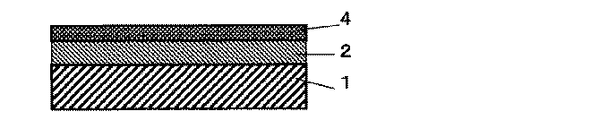
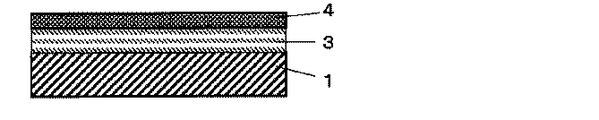
Landscapes
- Paints Or Removers (AREA)
- Laminated Bodies (AREA)
Abstract
Description
本発明は、プライマー用組成物及びこれを用いたガスバリア性積層フィルムに関するものであり、プラスチック基材(A)の少なくとも片面にプライマー層(B)、金属酸化物の薄膜層(C)を順次設けた構成のガスバリア性積層フィルムに関するものである。 The present invention relates to a primer composition and a gas barrier laminate film using the same, and a primer layer (B) and a metal oxide thin film layer (C) are sequentially provided on at least one surface of a plastic substrate (A). The present invention relates to a gas barrier laminate film having the above structure.
食品、医薬品、化粧品等の包装用途において、ガスバリア性は、内容物の劣化を防ぐために必ず要求される特性である。従来、包装用材料フィルム上にアルミニウム、もしくはその酸化物といった金属酸化物薄膜を形成することで、ガスバリア性を持たせる試みがなされているが(特許文献1)、その達成される水蒸気バリア能は0.5〜2 g/day/m2程度である。近年こうした包装材料用途以外に、液晶表示素子、有機EL素子用の樹脂基板用途において、包装材料用途よりも高いガスバリア性が要求されており、材料の開発が急がれている。特に有機EL用樹脂基板においては、10-5g/day/m2以下の非常に高い水蒸気バリア能が必要だといわれている。 In packaging applications for foods, pharmaceuticals, cosmetics, etc., gas barrier properties are always required to prevent deterioration of contents. Conventionally, attempts have been made to provide gas barrier properties by forming a metal oxide thin film such as aluminum or its oxide on a packaging material film (Patent Document 1). it is 0.5~2 g / day / m 2 about. In recent years, in addition to such packaging material applications, resin substrates for liquid crystal display elements and organic EL elements are required to have higher gas barrier properties than packaging material applications, and development of materials has been urgently required. In particular, it is said that a very high water vapor barrier ability of 10 −5 g / day / m 2 or less is required for an organic EL resin substrate.
ガスバリア性を向上させるために、ポリ塩化ビニリデン、ポリテトラフルオロエチレンなどガスバリア性の高いプラスチックを用いたり、ポリビニルアルコールなどの樹脂を基材フィルムに塗布する方法などが採用されている。しかし、有機ポリマーはその構造中に自由体積を有し、熱により変動するために達成できるバリア能には限界がある。現在では、プラスチック表面に有機樹脂で構成されたプライマーを塗工して膜表面を平滑にし、金属酸化物薄膜層をできるだけ緻密に製膜することが高ガスバリア能を達成する上で非常に有効な方法であるとされている。(特許文献2)一方で有機樹脂をガスバリア積層フィルムのプライマーとして用いる時にはその上に製膜する金属酸化物のバリア能力をいろいろな環境条件下で最大限に発揮させるため、単に表面を平滑化させるだけでなく、無機膜との密着性を強化し、耐屈曲性や耐熱性、さらには耐薬品性に優れた樹脂が必要とされている。 In order to improve the gas barrier property, a method using a plastic having a high gas barrier property such as polyvinylidene chloride or polytetrafluoroethylene, or a method of applying a resin such as polyvinyl alcohol to a base film is employed. However, organic polymers have a free volume in their structure and have a limited barrier ability that can be achieved because they fluctuate with heat. At present, it is very effective to achieve a high gas barrier capability by applying a primer made of organic resin on the plastic surface to smooth the film surface and forming the metal oxide thin film layer as densely as possible. It is supposed to be a method. (Patent Document 2) On the other hand, when an organic resin is used as a primer for a gas barrier laminate film, the surface is simply smoothed in order to maximize the barrier ability of the metal oxide film formed thereon under various environmental conditions. In addition to this, there is a need for a resin that enhances adhesion to an inorganic film and has excellent bending resistance, heat resistance, and chemical resistance.
耐屈曲性を改善するため、有機ポリマーと無機ポリマーとからなるハイブリッド樹脂層を有する積層体が検討されて、機械的強度にすぐれ、屈曲等の機械的ストレスを受けても高度なガスバリア性を維持できることが知られている。しかし、原料である有機金属化合物の加水分解処理仮定におけるゲル化や、加水分解処理溶液の長期保存安定性に問題がある。(特許文献3)
本発明の課題は、金属酸化物薄膜との密着性、耐屈曲性、耐熱性に優れたガスバリア性積層フィルムを提供することにありまた、保存安定性が良好なプライマー用組成物を提供することにある。 An object of the present invention is to provide a gas barrier laminate film excellent in adhesion with a metal oxide thin film, flex resistance, and heat resistance, and to provide a primer composition having good storage stability. It is in.
上述課題を達成すべく鋭意研究した結果、プラスチック基材(A)、プライマー層(B)、金属酸化物の薄膜層(C)を順次設けた構成の積層フィルムにおいて、プライマー層(B)に(a)重合性不飽和基を有する有機化合物、(b)分子中に2つ以上のアルコキシ基を有する金属アルコキシドおよびその縮合体、(c)重合開始剤、(d)光酸発生剤からなるプライマー用組成物を使用した場合、ガスバリア性、金属酸化物薄膜との密着性、耐屈曲性、耐熱性に優れていることを見出した。そして、このプライマー用組成物は、保存安定性に優れていることも見出し本発明を完成した。 As a result of earnest research to achieve the above-mentioned problems, in the laminated film having a structure in which the plastic substrate (A), the primer layer (B), and the metal oxide thin film layer (C) are sequentially provided, the primer layer (B) Primer comprising: a) an organic compound having a polymerizable unsaturated group, (b) a metal alkoxide having two or more alkoxy groups in the molecule and its condensate, (c) a polymerization initiator, and (d) a photoacid generator. When the composition for use is used, it has been found that the gas barrier property, the adhesion to the metal oxide thin film, the bending resistance, and the heat resistance are excellent. And it discovered that this primer composition was excellent in storage stability, and completed this invention.
すなわち、本発明は、
(1)プラスチック基材(A)の少なくとも片面に、プライマー層(B)、金属酸化物の薄膜層(C)を順次設けた構成のガスバリア性積層フィルムにおいて、上記プライマー層(B)が、(a)重合性不飽和基を有する有機化合物、(b)分子中に2つ以上のアルコキシ基を有する金属アルコキシドおよびその縮合体、(c)重合開始剤、(d)光酸発生剤からなるプライマー用組成物を重合、硬化することによって得られることを特徴とするプライマー用組成物及びこれを用いたガスバリア性積層フィルムである。
(2)前記プライマー用組成物100重量部に対して、(a)成分が30〜68.9重量部、(b)成分が30〜65重量部、(c)成分が0.1〜5重量部、(d)成分が1〜10重量部含まれていることが好ましい。
(3)前記重合性不飽和基を有する有機化合物は熱、紫外線、電子線により重合反応を行い、一方前記(b)成分は、紫外線照射により重合反応が開始され、その後加熱することによって反応が進行し、無機化合物を形成することを特徴とする。
(4)前記重合性不飽和基を有する有機化合物が水酸基、カルボキシル基、アミド基、イミド基、ウレタン基、エステル結合、エーテル結合から選ばれる少なくとも一つを有する化合物であることが好ましい。
(5)前記(b)成分がフェニル基を有している場合、前記重合性不飽和基を有する有機化合物が少なくとも一つのフェニル基を有する化合物であることが好ましい。
(6)前記(b)成分の重合反応はゾルゲル反応であり、紫外線照射によって光酸発生剤が酸を発生することで反応が開始することを特徴とする。
(1)〜(6)いずれかに記載のプライマー用組成物及びこれを用いたガスバリア性積層フィルムである。
That is, the present invention
(1) In a gas barrier laminate film having a structure in which a primer layer (B) and a metal oxide thin film layer (C) are sequentially provided on at least one surface of a plastic substrate (A), the primer layer (B) is ( Primer comprising: a) an organic compound having a polymerizable unsaturated group, (b) a metal alkoxide having two or more alkoxy groups in the molecule and its condensate, (c) a polymerization initiator, and (d) a photoacid generator. A primer composition obtained by polymerizing and curing a composition for use, and a gas barrier laminate film using the same.
(2) 30 to 68.9 parts by weight of component (a), 30 to 65 parts by weight of component (b), and 0.1 to 5 parts by weight of component (c) with respect to 100 parts by weight of the primer composition. 1 to 10 parts by weight of the component (d) is preferred.
(3) The organic compound having a polymerizable unsaturated group undergoes a polymerization reaction by heat, ultraviolet light, or electron beam, while the component (b) is reacted by being heated by ultraviolet irradiation and then heated. It progresses and forms an inorganic compound.
(4) The organic compound having a polymerizable unsaturated group is preferably a compound having at least one selected from a hydroxyl group, a carboxyl group, an amide group, an imide group, a urethane group, an ester bond, and an ether bond.
(5) When the component (b) has a phenyl group, the organic compound having a polymerizable unsaturated group is preferably a compound having at least one phenyl group.
(6) The polymerization reaction of the component (b) is a sol-gel reaction, and the reaction starts when the photoacid generator generates an acid upon irradiation with ultraviolet rays.
(1)-(6) It is a composition for primers in any one, and a gas-barrier laminated film using the same.
プライマー層(B)に、(a)重合性不飽和基を有する有機化合物、(b)分子中に2つ以上のアルコキシ基を有する金属アルコキシドおよびその縮合体、(c)重合開始剤、(d)光酸発生剤からなるプライマー用組成物を使用してなるガスバリア性積層フィルムは、ガスバリア性、金属酸化物薄膜との密着性、耐屈曲性、耐熱性に優れていることを見出した。さらにこのプライマー用組成物は、保存安定性に優れている。 (A) an organic compound having a polymerizable unsaturated group, (b) a metal alkoxide having two or more alkoxy groups in the molecule and a condensate thereof, (c) a polymerization initiator, (d) It has been found that a gas barrier laminate film using a primer composition comprising a photoacid generator is excellent in gas barrier properties, adhesion to a metal oxide thin film, flex resistance, and heat resistance. Furthermore, this primer composition is excellent in storage stability.
プラスチック基材(A)の少なくとも片面に今回発明したプライマー用組成物によって形成されるプライマー層(B)、さらに金属酸化物の薄膜層(C)を積層することで、ガスバリア性積層フィルムを形成する。以下に各層を構成する材料に関して、詳細に説明する。 A gas barrier multilayer film is formed by laminating a primer layer (B) formed by the primer composition invented this time and a metal oxide thin film layer (C) on at least one surface of the plastic substrate (A). . The materials constituting each layer will be described in detail below.
プラスチック基材(A)
本発明で用いられるプラスチック基材(A)としては、特に制限はないが、液晶表示素子、有機EL素子用基板といった光学用途で用いられる場合は、耐熱性、光線透過率、屈折率、光学異方性(複屈折率)等を考慮する必要がある。例を挙げると、ポリエーテルスルホン(PES)樹脂、ポリカーボネート(PC)樹脂、ポリアリレート樹脂、ポリアクリレート樹脂、ポリエステル樹脂、ポリオレフィン樹脂、エポキシ樹脂、ポリイミド樹脂、ポリビニルアルコール(PVA)系樹脂、ポリスチレン樹脂などである。フィルムの厚みは、10〜500μm、好ましくは10〜200μmが望ましい。プライマー層(B)との密着性を向上させるために、オゾン処理、プラズマ処理、コロナ放電処理等の前処理を行っても問題ない。
プライマー層(B)
プライマー層(B)は、(a)重合性不飽和基を有する有機化合物、(b)分子中に2つ以上のアルコキシ基を有する金属アルコキシドおよびその縮合体、(c)重合開始剤、(d)光酸発生剤からなるプライマー用組成物を重合、硬化することによって得られる。(a)成分の重合化合物と、(b)成分によってなる無機化合物は、水素結合、π-π電子相互作用、イオン結合から選ばれる少なくとも1つの相互作用を形成しており、プライマー層(B)は両者が均一に分散したハイブリッド構造を形成している。
Plastic substrate (A)
The plastic substrate (A) used in the present invention is not particularly limited, but when used in optical applications such as liquid crystal display elements and organic EL element substrates, heat resistance, light transmittance, refractive index, It is necessary to consider the directionality (birefringence) and the like. Examples include polyethersulfone (PES) resin, polycarbonate (PC) resin, polyarylate resin, polyacrylate resin, polyester resin, polyolefin resin, epoxy resin, polyimide resin, polyvinyl alcohol (PVA) resin, polystyrene resin, etc. It is. The thickness of the film is 10 to 500 μm, preferably 10 to 200 μm. In order to improve the adhesion with the primer layer (B), there is no problem even if a pretreatment such as ozone treatment, plasma treatment, corona discharge treatment or the like is performed.
Primer layer (B)
The primer layer (B) comprises (a) an organic compound having a polymerizable unsaturated group, (b) a metal alkoxide having two or more alkoxy groups in the molecule and a condensate thereof, (c) a polymerization initiator, ) It is obtained by polymerizing and curing a primer composition comprising a photoacid generator. The polymer compound (a) and the inorganic compound comprising the component (b) form at least one interaction selected from a hydrogen bond, a π-π electron interaction, and an ionic bond, and the primer layer (B) Forms a hybrid structure in which both are uniformly dispersed.
プライマー層(B)表面には、上記(b)成分によってなる無機化合物を構成する金属原子(以下M)M−О−M結合またはM−ОH基が分散して存在している。これらが、金属酸化物の薄膜層(C)に含まれるM−О−M結合またはM−ОH基と相互作用(共有結合または水素結合)することによって、プライマー層(B)と金属酸化物薄膜層(C)との間の密着性を向上させることができる。また上記(b)成分によってなる無機化合物は、膜表面に均一に分散しているため熱安定性が高く、プラスチック基材の加熱による寸法変化を抑制することができる。以下にプライマー用組成物を構成する材料について詳細に説明する。
(a)重合性不飽和基を有する有機化合物
(a)成分は、水酸基、カルボキシル基、アミド基、イミド基、ウレタン基、エステル結合、エーテル結合から選ばれる少なくとも一つを有する化合物を使用する。これら官能基は、金属アルコキシドおよびその縮合体を脱アルコール反応することによって得られる金属アルコール(M−ОH)と水素結合することができる。有機化合物と無機化合物が水素結合することによって、両者が均一に分散した構造を形成することができる。上記官能基を有さない場合、有機化合物と無機化合物の間に水素結合が働かず、両者が分離した構造になる。この場合、密着性、耐屈曲性、透明性の低下、無機化合物の凝集による表面平滑性の低下、熱安定性の低下といった不具合が生じる。
On the surface of the primer layer (B), metal atoms (hereinafter referred to as M) M—O—M bonds or M—OH groups constituting the inorganic compound composed of the component (b) are present in a dispersed manner. These interact with the M—O—M bond or M—OH group (covalent bond or hydrogen bond) contained in the metal oxide thin film layer (C), whereby the primer layer (B) and the metal oxide thin film are formed. The adhesion between the layer (C) can be improved. In addition, since the inorganic compound composed of the component (b) is uniformly dispersed on the film surface, the thermal stability is high, and the dimensional change due to heating of the plastic substrate can be suppressed. The materials constituting the primer composition will be described in detail below.
(A) Organic compound having a polymerizable unsaturated group (a) As the component, a compound having at least one selected from a hydroxyl group, a carboxyl group, an amide group, an imide group, a urethane group, an ester bond, and an ether bond is used. These functional groups can hydrogen bond with a metal alcohol (M-OH) obtained by dealcoholizing a metal alkoxide and a condensate thereof. When the organic compound and the inorganic compound are hydrogen-bonded, a structure in which both are uniformly dispersed can be formed. When the functional group is not present, hydrogen bonds do not work between the organic compound and the inorganic compound, resulting in a structure in which both are separated. In this case, problems such as a decrease in adhesion, flex resistance, transparency, a decrease in surface smoothness due to aggregation of inorganic compounds, and a decrease in thermal stability occur.
(a)成分は、前述した官能基を有する有機化合物であればとくに制限はない。水酸基を持つ有機化合物としては、2-ヒドロキシエチル(メタ)アクリレート、2-ヒドロキシプロピル(メタ)アクリレート、2-ヒドロキシ-3-フェノキシプロピル(メタ)アクリレート、2-アクリロイルオキシエチル-2-ヒドロキシエチルフタル酸、2-ヒドロキシブチル(メタ)アクリレート、ポリエチレングリコール(メタ)アクリレート、ポリプロピレングリコール(メタ)アクリレート、ブタンジオールモノ(メタ)アクリレート、ペンタエリスリトールトリアクリレートなどが挙げられる。カルボキシル基を持つ有機化合物としては、アクリル酸、メタクリル酸、2-アクリロイルオキシエチルフタル酸、2-アクリロイルオキシエチルヘキサヒドロフタル酸、2-アクリロイルオキシプロピルフタル酸、β-カルボキシエチルアクリレート等が挙げられる。アミド基を持つ有機化合物としては、N, N-ジメチルアクリルアミド、2-メチル-2-オキサゾリン、N-ビニルピロリドン、イソシアヌール酸エチレンオキサイド変性トリアクリレート、メチレンビスアクリルアミドなどが挙げられる。イミド基を持つ重合性有機化合物としては、イミドアクリレート(東亞合成(株)製、アロニックスTO-1534、1429、1428)などが挙げられる。ウレタン基を持つ有機化合物としては、ウレタンアクリレート(新中村化学(株)製、NKオリゴU-4HA、U-6HA、U-108A、U-1084A、U-200AX、U-122A、U-340A、U-324A、UA-100、東亞合成(株)製、アロニックスM-1100、M-1200、M-1210、M-1600、三井化学(株)製、オレスターRA1353、RA1500、RA1573、RA1574)が挙げられる。エステル結合を有する有機化合物としては、メチル(メタ)アクリレート、エチル(メタ)アクリレート、ブチル(メタ)アクリレート、t-ブチル(メタ)アクリレート、2−メトキシエチル(メタ)アクリレート、3−メトキシブチル(メタ)アクリレート、シクロヘキシル(メタ)アクリレート、ジシクロペンテニルアクリレート、ジシクロペンタニル(メタ)アクリレート、ジメチルアミノエチル(メタ)アクリレート、トリメチロールプロパントリ(メタ)アクリレート、ペンタエリスリトールテトタアクリレート、ジペンタエリスリトールヘキサアクリレート、ジトリメチロールプロパンテトラアクリレート、三井化学(株)製、オレスターRA1050、RA2003などが挙げられる。エーテル結合を有する有機化合物としてはエトキシジエチレングリコール(メタ)アクリレート、メトキシジプロピレングリコール(メタ)アクリレート、メトキシトリプロピレングリコール(メタ)アクリレート、メトキシポリプロピレングリコール(メタ)アクリレート、メトキシジエチレングリコール(メタ)アクリレート、メトキシトリエチレングリコール(メタ)アクリレート、メトキシポリエチレングリコール(メタ)アクリレート、ジエチレングリコールジ(メタ)アクリレート、トリエチレングリコールジ(メタ)アクリレート、テトラエチレングリコールジ(メタ)アクリレート、トリプロピレングリコールジ(メタ)アクリレート、エチレンオキサイド変性ネオペンチルグリコールジ(メタ)アクリレート、プロピレンオキサイド変性ネオペンチルグリコールジ(メタ)アクリレート、ポリエチレングリコールジ(メタ)アクリレート、ポリプロピレングリコールジ(メタ)アクリレートなどが挙げられる。これらの有機化合物は、1種単独であるいは2種以上を組み合わせて使用することができる。 The component (a) is not particularly limited as long as it is an organic compound having the functional group described above. Examples of organic compounds having a hydroxyl group include 2-hydroxyethyl (meth) acrylate, 2-hydroxypropyl (meth) acrylate, 2-hydroxy-3-phenoxypropyl (meth) acrylate, and 2-acryloyloxyethyl-2-hydroxyethylphthalate. Examples include acid, 2-hydroxybutyl (meth) acrylate, polyethylene glycol (meth) acrylate, polypropylene glycol (meth) acrylate, butanediol mono (meth) acrylate, and pentaerythritol triacrylate. Examples of the organic compound having a carboxyl group include acrylic acid, methacrylic acid, 2-acryloyloxyethylphthalic acid, 2-acryloyloxyethylhexahydrophthalic acid, 2-acryloyloxypropylphthalic acid, and β-carboxyethyl acrylate. . Examples of the organic compound having an amide group include N, N-dimethylacrylamide, 2-methyl-2-oxazoline, N-vinylpyrrolidone, isocyanuric acid ethylene oxide-modified triacrylate, and methylenebisacrylamide. Examples of the polymerizable organic compound having an imide group include imide acrylate (manufactured by Toagosei Co., Ltd., Aronix TO-1534, 1429, 1428). Examples of organic compounds having a urethane group include urethane acrylate (manufactured by Shin-Nakamura Chemical Co., Ltd., NK Oligo U-4HA, U-6HA, U-108A, U-1084A, U-200AX, U-122A, U-340A, U-324A, UA-100, manufactured by Toagosei Co., Ltd., Aronix M-1100, M-1200, M-1210, M-1600, manufactured by Mitsui Chemicals, Olester RA1353, RA1500, RA1573, RA1574) Can be mentioned. Examples of the organic compound having an ester bond include methyl (meth) acrylate, ethyl (meth) acrylate, butyl (meth) acrylate, t-butyl (meth) acrylate, 2-methoxyethyl (meth) acrylate, and 3-methoxybutyl (meth) ) Acrylate, cyclohexyl (meth) acrylate, dicyclopentenyl acrylate, dicyclopentanyl (meth) acrylate, dimethylaminoethyl (meth) acrylate, trimethylolpropane tri (meth) acrylate, pentaerythritol tetota acrylate, dipentaerythritol hexaacrylate , Ditrimethylolpropane tetraacrylate, Mitsui Chemicals, Olester RA1050, RA2003 and the like. Organic compounds having an ether bond include ethoxydiethylene glycol (meth) acrylate, methoxydipropylene glycol (meth) acrylate, methoxytripropylene glycol (meth) acrylate, methoxypolypropylene glycol (meth) acrylate, methoxydiethylene glycol (meth) acrylate, methoxytriethylene Ethylene glycol (meth) acrylate, methoxypolyethylene glycol (meth) acrylate, diethylene glycol di (meth) acrylate, triethylene glycol di (meth) acrylate, tetraethylene glycol di (meth) acrylate, tripropylene glycol di (meth) acrylate, ethylene Oxide-modified neopentyl glycol di (meth) acrylate, propylene Kisaido modified neopentyl glycol di (meth) acrylate, polyethylene glycol di (meth) acrylate, polypropylene glycol di (meth) acrylate. These organic compounds can be used alone or in combination of two or more.
前記(b)成分がフェニル基を有している場合、(a)成分が少なくとも一つのフェニル基を有する化合物を使用する。このフェニル基は、(b)成分のゾルゲル反応によって生成する無機化合物に含まれるフェニル基と相互作用することができる(π-π電子相互作用)。有機化合物と無機化合物が相互作用することで、両者が均一に分散した構造を形成することができる。 When the component (b) has a phenyl group, a compound in which the component (a) has at least one phenyl group is used. This phenyl group can interact with the phenyl group contained in the inorganic compound produced by the sol-gel reaction of component (b) (π-π electron interaction). By the interaction between the organic compound and the inorganic compound, a structure in which both are uniformly dispersed can be formed.
フェニル基を有する(a)成分としては、ベンジル(メタ)アクリレート、エチレンオキサイド変性クレゾール(メタ)アクリレート、エトキシ化フェニル(メタ)アクリレート、ネオペンチルグリコールベンゾエート(メタ)アクリレート、フェノキシエチル(メタ)アクリレート、フェノキシジエチレングリコール(メタ)アクリレート、フェノキシヘキサエチレングリコール(メタ)アクリレート、ビスフェノールA エチレンオキサイド変性ジ(メタ)アクリレート、エトキシ化ビスフェノールAジ(メタ)アクリレート、ヒドロキシエチル化β-ナフトール(メタ)アクリレート、パラクミルフェノキシエチレングリコール(メタ)アクリレートなどが挙げられる。これらの有機化合物は、1種単独であるいは2種以上を組み合わせて使用することができる。フェニル基を有する(b)成分としては、フェニルトリメトキシシラン、フェニルトリエトキシシラン、フェニルトリプロポキシシラン、ジフェニルジメトキシシラン、ジフェニルジエトキシシラン、ジフェニルジプロポキシシランなどが挙げられる。 As the component (a) having a phenyl group, benzyl (meth) acrylate, ethylene oxide-modified cresol (meth) acrylate, ethoxylated phenyl (meth) acrylate, neopentyl glycol benzoate (meth) acrylate, phenoxyethyl (meth) acrylate, Phenoxydiethylene glycol (meth) acrylate, phenoxyhexaethylene glycol (meth) acrylate, bisphenol A ethylene oxide modified di (meth) acrylate, ethoxylated bisphenol A di (meth) acrylate, hydroxyethylated β-naphthol (meth) acrylate, paracumyl Examples thereof include phenoxyethylene glycol (meth) acrylate. These organic compounds can be used singly or in combination of two or more. Examples of the component (b) having a phenyl group include phenyltrimethoxysilane, phenyltriethoxysilane, phenyltripropoxysilane, diphenyldimethoxysilane, diphenyldiethoxysilane, diphenyldipropoxysilane and the like.
(a)成分は、前記プライマー用組成物100重量部に対して、30〜68.9重量部、好ましくは35〜65重量部で含有される。(a)成分の含有量がこの範囲であると金属酸化物薄膜層(C)との密着性が向上し、靭性が良好で、屈曲による塗膜のワレが起こりにくい。 The component (a) is contained in an amount of 30 to 68.9 parts by weight, preferably 35 to 65 parts by weight, based on 100 parts by weight of the primer composition. When the content of the component (a) is within this range, the adhesion with the metal oxide thin film layer (C) is improved, the toughness is good, and the coating film is not easily cracked due to bending.
(a)成分は、予め部分的に重合していても良い。重合度に特に制限はないが、高分子量化合物の場合、粘性が高く薄膜を形成しにくいため、必要であれば溶媒で希釈してもよい。重合性不飽和基を持たない有機化合物に関しても、無機化合物との間に水素結合、π-π電子相互作用、イオン結合から選ばれた少なくとも一つ以上の相互作用しうる官能基を有している場合、前記(a)成分と併用して用いても構わない。有機化合物と無機化合物の間に相互作用を持たないが、イソタクチックな高分子とシンジオタクチックな高分子によるステレオコンプレックスの形成と重合性無機化合物のゾルゲル反応を同時に行うことによって、複合体を形成することができる。
(b)分子中に2つ以上のアルコキシ基を有する金属アルコキシドおよびその縮合体
(b)成分は、紫外線照射によりゾルゲル反応が開始され、その後加熱することによって反応が進行し無機化合物を形成する。(b)成分を構成する金属は、特に制限はないが、使いやすさの観点から、珪素、アルミニウム、ジルコニウム、チタニウムが望ましい。金属アルコキシドとしては、下記[化1]で表されるものである。
The component (a) may be partially polymerized in advance. The degree of polymerization is not particularly limited, but in the case of a high molecular weight compound, it is difficult to form a thin film because of its high viscosity, and may be diluted with a solvent if necessary. An organic compound having no polymerizable unsaturated group has at least one functional group capable of interacting with an inorganic compound selected from a hydrogen bond, a π-π electron interaction, and an ionic bond. If present, it may be used in combination with the component (a). Although there is no interaction between organic and inorganic compounds, a complex is formed by simultaneously forming a stereocomplex with isotactic and syndiotactic polymers and sol-gel reaction of polymerizable inorganic compounds. be able to.
(B) Metal alkoxide having two or more alkoxy groups in the molecule and a condensate thereof (b) The sol-gel reaction of the component (b) is initiated by ultraviolet irradiation, and then the reaction proceeds by heating to form an inorganic compound. The metal constituting the component (b) is not particularly limited, but silicon, aluminum, zirconium, and titanium are preferable from the viewpoint of ease of use. The metal alkoxide is represented by the following [Chemical Formula 1].
(式中、R1で示される置換基はアルキル基を表し、R2は低級アルキル基を表す。x及びyは、x+y=4かつ、xは2以下となる整数を表す。)
上記[化1]で示された金属アルコキシドは、2官能性、3官能性、4官能性の金属アルコキシドを示している。2官能性金属アルコキシドとしては、ジメチルジメトキシシラン、ジメチルジエトキシシラン、これらに対応するジアルコキシジルコニウム、ジアルコキシチタンなどが挙げられる。3官能性金属アルコキシドとしては、メチルトリメトキシシラン、メチルトリエトキシシラン、フェニルトリメトキシシラン、フェニルトリエトキシシラン、ビニルトリメトキシシラン、ビニルトリエトキシシラン、γ−メタクリロキシプロピルトリメトキシシラン、これらに対応するトリアルコキシアルミニウム、トリアルコキシジルコニウム、トリアルコキシチタンなどが挙げられる。4官能性金属アルコキシドとしては、テトラメトキシシラン、テトラエトキシシラン、テトラ-n-プロポキシシラン、テトライソプロポキシシラン、テトラ-n-ブトキシシラン、テトライソブトキシシラン、テトラ-sec-ブトキシシラン、テトラ-tert-ブトキシシラン、これらに対応するテトラアルコキシジルコニウム、テトラアルコキシチタンなどが挙げられる。
(Wherein the substituents represented by R 1 represents an alkyl group, .x and y R 2 represents a lower alkyl group, x + y = 4 and, x is an integer which is 2 or less.)
The metal alkoxide represented by the above [Chemical Formula 1] is a bifunctional, trifunctional, or tetrafunctional metal alkoxide. Examples of the bifunctional metal alkoxide include dimethyldimethoxysilane, dimethyldiethoxysilane, dialkoxyzirconium and dialkoxytitanium corresponding to these. Trifunctional metal alkoxides include methyltrimethoxysilane, methyltriethoxysilane, phenyltrimethoxysilane, phenyltriethoxysilane, vinyltrimethoxysilane, vinyltriethoxysilane, and γ-methacryloxypropyltrimethoxysilane. And trialkoxyaluminum, trialkoxyzirconium, trialkoxytitanium and the like. Examples of tetrafunctional metal alkoxides include tetramethoxysilane, tetraethoxysilane, tetra-n-propoxysilane, tetraisopropoxysilane, tetra-n-butoxysilane, tetraisobutoxysilane, tetra-sec-butoxysilane, and tetra-tert. -Butoxysilane, tetraalkoxyzirconium and tetraalkoxytitanium corresponding to these.
前記金属アルコキシドは、1種単独であるいは2種以上を組み合わせて使用することができる。2種類以上の金属アルコキシドを使用する場合の混合比は任意であるが、4官能性の金属アルコキシドの配合比率が高くなるにつれて、反応性が増し、硬い塗膜を得ることができる。一方、2官能または3官能性の金属アルコキシドの配合比率が高くなるにつれて、柔軟性の高い塗膜を得ることができる。前記金属アルコキシドは縮合体を使用しても良い。金属アルコキシドの縮合体として市販されている商品としては、多摩化学(株)製 Mシリケート51、Mシリケート56、Mシリケート60、シリケート40、シリケート45、シリケート48等を挙げることができる。 The said metal alkoxide can be used individually by 1 type or in combination of 2 or more types. The mixing ratio in the case of using two or more kinds of metal alkoxides is arbitrary, but as the blending ratio of the tetrafunctional metal alkoxide increases, the reactivity increases and a hard coating film can be obtained. On the other hand, a coating film with high flexibility can be obtained as the blending ratio of the bifunctional or trifunctional metal alkoxide increases. The metal alkoxide may be a condensate. Commercially available products as a metal alkoxide condensate include M silicate 51, M silicate 56, M silicate 60, silicate 40, silicate 45, and silicate 48 manufactured by Tama Chemical Co., Ltd.
(b)成分は、前記プライマー用組成物100重量部に対して、30〜65重量部、好ましくは31〜60重量部で含有される。(b)成分の含有量がこの範囲であると、靭性が良好で、屈曲による塗膜のワレが起こりにくく、金属酸化物薄膜層(C)との密着性が向上する。 The component (b) is contained in an amount of 30 to 65 parts by weight, preferably 31 to 60 parts by weight with respect to 100 parts by weight of the primer composition. When the content of the component (b) is within this range, the toughness is good, the crack of the coating due to bending hardly occurs, and the adhesion with the metal oxide thin film layer (C) is improved.
(b)成分と併用して、無機酸化物微粒子を使用することができる。無機酸化物微粒子は、珪素、アルミニウム、チタニウム、ジルコニウム、インジウム、スズ、亜鉛、アンチモンから選ばれる少なくとも一つ以上の元素からなる酸化物微粒子で、平均粒子径は0.001〜2μm、好ましくは0.001〜0.2μmである。以下に無機酸化物微粒子の具体例を示す。 In combination with the component (b), inorganic oxide fine particles can be used. The inorganic oxide fine particles are oxide fine particles composed of at least one element selected from silicon, aluminum, titanium, zirconium, indium, tin, zinc and antimony, and the average particle diameter is 0.001 to 2 μm, preferably 0. 0.001 to 0.2 μm. Specific examples of the inorganic oxide fine particles are shown below.
シリカ微粒子としては、日産化学工業(株)製 商品名:メタノールシリカゾル、MEK-ST、MIBK-ST、IPA-ST、IPA-ST-UP、NPC-ST-30、NBA-ST、XBA-ST、DMAC-ST、ST-20、ST-40、ST-C、ST-N、ST-O、ST-50、日本アエロジル(株)製 商品名:アエロジル130、アエロジル300、アエロジル380、アエロジルTT60、アエロジルОX50等を挙げることができる。アルミナ微粒子としては、日産化学工業(株)製 商品名:アルミナゾル-100、アルミナゾル-200、アルミナゾル-500等を挙げることができる。アルミナ、酸化チタン、酸化インジウム、酸化スズ、酸化亜鉛の粉末及び溶剤分散品としては、シーアイ化成(株)製 商品名:ナノテックを挙げることができる。これら無機酸化物微粒子を前記(b)成分と併用して使用する場合、配合量は前記(b)成分に対して30重量%程度までが好ましい。
(c)重合開始剤
(c)成分は、熱、光により、ラジカル重合を開始する化合物であれば特に限定はなく、いずれでも使用することができる。具体例を挙げると、熱重合開始剤としては、α, α’-アゾイソブチロニトリル、α, α’-アゾビスイソバレロニトリル等のアゾ系重合開始剤、過酸化ベンゾイル等の過酸化物系重合開始剤、レドックス系重合開始剤等が挙げられる。光開始剤としては、ベンゾフェノン、アセトフェノン、2, 2-ジメトキシ-1, 2-ジフェニルエタン-1-オン、2-ヒドロキシ-2-メチル-1-フェニル-プロパン-1-オン、2, 2-ジエトキシアセトフェノン、1-[4-(2-ヒドロキシエトキシ)-フェニル]-2-ヒドロキシ-2-メチル-1-プロパン-1-オン、2-メチル-1[4-(メチルチオ)フェニル]-2-モルフォリノプロパン-1-オン、2-ベンジル-2-ジメチルアミノ-1-(4-モルフォリノフェニル)-ブタノン-1、ベンジルジメチルケタール、1-ヒドロキシシクロヘキシルフェニルケトン、オリゴ(2-ヒドロキシ-2-メチル-1-(4-(1-メチルビニル)フェニル)プロパノン、メチルフェニルグリコキシレート、ビス(2, 4, 6-トリメチルベンゾイル)-フェニルフォスフィンオキサイド、チオキサントンなどを挙げることができる。
As silica fine particles, product name: Methanol Silica Sol, MEK-ST, MIBK-ST, IPA-ST, IPA-ST-UP, NPC-ST-30, NBA-ST, XBA-ST, manufactured by Nissan Chemical Industries, Ltd. DMAC-ST, ST-20, ST-40, ST-C, ST-N, ST-O, ST-50, manufactured by Nippon Aerosil Co., Ltd. Trade name: Aerosil 130, Aerosil 300, Aerosil 380, Aerosil TT60, Aerosil OX50 etc. can be mentioned. Examples of the alumina fine particles include trade names: Alumina Sol-100, Alumina Sol-200, Alumina Sol-500, etc., manufactured by Nissan Chemical Industries, Ltd. Examples of alumina, titanium oxide, indium oxide, tin oxide, and zinc oxide powders and solvent dispersions include trade name: Nanotech, manufactured by CI Kasei Co., Ltd. When these inorganic oxide fine particles are used in combination with the component (b), the blending amount is preferably up to about 30% by weight with respect to the component (b).
(C) Polymerization initiator The component (c) is not particularly limited as long as it is a compound that initiates radical polymerization by heat and light, and any of them can be used. Specific examples include thermal polymerization initiators such as α, α'-azoisobutyronitrile, azo polymerization initiators such as α, α'-azobisisovaleronitrile, and peroxides such as benzoyl peroxide. System polymerization initiators, redox polymerization initiators and the like. Photoinitiators include benzophenone, acetophenone, 2,2-dimethoxy-1,2-diphenylethane-1-one, 2-hydroxy-2-methyl-1-phenyl-propan-1-one, 2,2-di Ethoxyacetophenone, 1- [4- (2-hydroxyethoxy) -phenyl] -2-hydroxy-2-methyl-1-propan-1-one, 2-methyl-1 [4- (methylthio) phenyl] -2- Morpholinopropan-1-one, 2-benzyl-2-dimethylamino-1- (4-morpholinophenyl) -butanone-1, benzyldimethyl ketal, 1-hydroxycyclohexyl phenyl ketone, oligo (2-hydroxy-2- Examples thereof include methyl-1- (4- (1-methylvinyl) phenyl) propanone, methylphenylglycoxylate, bis (2,4,6-trimethylbenzoyl) -phenylphosphine oxide, thioxanthone and the like.
(c)成分は、前記プライマー用組成物100重量部に対して、0.1〜5重量部、好ましくは1〜4重量部で含有される。(c)成分がこの範囲にあると、有機化合物に対して硬化性を与え、硬化物質の吸湿性を抑えることができる。
(d)光酸発生剤
(b)成分は、ゾルゲル反応によって無機化合物を形成する。ゾルゲル反応に用いられる反応促進剤は、一般的には水と触媒(酸、塩基)であるが、これらを溶液に添加すると、溶液中で反応が進行してしまうため、時間の経過とともに、溶液がゲル化してしまうという欠点があった。この問題を解決するために、反応触媒に(d)光酸発生剤を使用した。光酸発生剤は、紫外線照射によって酸を発生する化合物であるため、ゾルゲル反応は紫外線を照射することによって始めて開始される。よって溶液中ではゾルゲル反応が進行せず、時間の経過によって物性が変化する心配がない。(d)光酸発生剤は、公知の光カチオン開始剤を使用することができる。
The component (c) is contained in an amount of 0.1 to 5 parts by weight, preferably 1 to 4 parts by weight, with respect to 100 parts by weight of the primer composition. When the component (c) is within this range, it is possible to impart curability to the organic compound and to suppress the hygroscopicity of the cured substance.
(D) Photoacid generator (b) The component forms an inorganic compound by a sol-gel reaction. The reaction accelerator used in the sol-gel reaction is generally water and a catalyst (acid, base). However, when these are added to the solution, the reaction proceeds in the solution. Has the disadvantage of gelling. In order to solve this problem, (d) a photoacid generator was used as a reaction catalyst. Since the photoacid generator is a compound that generates an acid upon irradiation with ultraviolet rays, the sol-gel reaction is initiated only by irradiation with ultraviolet rays. Therefore, the sol-gel reaction does not proceed in the solution, and there is no concern that the physical properties change over time. (D) As the photoacid generator, a known photocationic initiator can be used.
光カチオン開始剤の好ましい例として下記一般式[化2]で表される構造を有するオニウム塩を挙げることができる。このオニウム塩は、光反応し、ルイス酸を放出する化合物である。 Preferable examples of the photocation initiator include onium salts having a structure represented by the following general formula [Chemical Formula 2]. This onium salt is a compound that photoreacts and releases a Lewis acid.
(式中、カチオンはオニウムイオンであり、Wは、S、Se、Te、P、As、Sb、Bi、O、I、Br、Cl、またはN≡Nであり、R14、R15、R16、およびR17は同一または異なる有機基であり、a、b、cおよびdはそれぞれ0〜3の整数であって、(a+b+c+d)は((Wの価数)+m)に等しい。
Mは、ハロゲン化錯体[MXn+m]の中心原子を構成する金属またはメタロイドであり、例えば、B、P、As、Sb、Fe、Sn、Bi、Al、Ca、In、Ti、Zn、Sc、V、Cr、Mn、Co等である。
Xは例えば、F、Cl、Br等のハロゲン原子であり、mはハロゲン化物錯体イオンの正味の電荷であり、nはMの原子価である。)
一般式[化2]においてオニウムイオンの具体例としては、ジフェニルヨードニウム、4−メトキシジフェニルヨードニウム、ビス(4−メチルフェニル)ヨードニウム、ビス(4−tert−ブチルフェニル)ヨードニウム、ビス(ドデシルフェニル)ヨードニウム、トリフェニルスルホニウム、ジフェニル−4−チオフェノキシフェニルスルホニウム、ビス〔4−(ジフェニルスルフォニオ)−フェニル〕スルフィド、ビス〔4−(ジ(4−(2−ヒドロキシエチル)フェニル)スルホニオ)−フェニル〕スルフィド、η5−2,4−(シクロペンタジェニル)〔1,2,3,4,5,6−η−(メチルエチル)ベンゼン〕−鉄(1+)等が挙げられる。
(Wherein the cation is an onium ion, W is S, Se, Te, P, As, Sb, Bi, O, I, Br, Cl, or N≡N, and R14, R15, R16, and R 17 is the same or different organic group, a, b, c and d are each an integer of 0 to 3, and (a + b + c + d) is equal to ((valence of W) + m).
M is a metal or metalloid constituting the central atom of the halogenated complex [MXn + m]. For example, B, P, As, Sb, Fe, Sn, Bi, Al, Ca, In, Ti, Zn, Sc, V , Cr, Mn, Co and the like.
X is a halogen atom such as F, Cl, Br, etc., m is the net charge of the halide complex ion, and n is the valence of M. )
Specific examples of onium ions in the general formula [Chemical Formula 2] include diphenyliodonium, 4-methoxydiphenyliodonium, bis (4-methylphenyl) iodonium, bis (4-tert-butylphenyl) iodonium, bis (dodecylphenyl) iodonium. , Triphenylsulfonium, diphenyl-4-thiophenoxyphenylsulfonium, bis [4- (diphenylsulfonio) -phenyl] sulfide, bis [4- (di (4- (2-hydroxyethyl) phenyl) sulfonio) -phenyl ] Sulfide, η5-2,4- (cyclopentagenyl) [1,2,3,4,5,6-η- (methylethyl) benzene] -iron (1+) and the like.
一般式[化2]において陰イオンの具体例としては、テトラフルオロボレート、ヘキサフルオロホスフェート、ヘキサフルオロアンチモネート、ヘキサフルオロアルセネート、ヘキサクロロアンチモネート等が挙げられる。また、一般式[化2]において陰イオンとしてハロゲン化錯体[MXn+m]の代わりに、過塩素酸イオン、トリフルオロメタンスルホン酸イオン、トルエンスルホン酸イオン、トリニトロトルエンスルホン酸イオン等であってもよい。
さらに、一般式[化2]において陰イオンとしてハロゲン化錯体[MXn+m]の代わりに芳香族陰イオンであってもよい。具体例としては、テトラ(フルオロフェニル)ボレート、テトラ(ジフルオロフェニル)ボレート、テトラ(トリフルオロフェニル)ボレート、テトラ(テトラフルオロフェニル)ボレート、テトラ(ペンタフルオロフェニル)ボレート、テトラ(パーフルオロフェニル)ボレート、テトラ(トリフルオロメチルフェニル)ボレート、テトラ(ジ(トリフルオロメチル)フェニル)ボレートなどを挙げることができる。これらの光カチオン開始剤は、1種単独であるいは2種以上を組み合わせて使用することができる。
Specific examples of the anion in the general formula [Chemical Formula 2] include tetrafluoroborate, hexafluorophosphate, hexafluoroantimonate, hexafluoroarsenate, hexachloroantimonate and the like. In the general formula [Chemical Formula 2], a perchlorate ion, a trifluoromethanesulfonate ion, a toluenesulfonate ion, a trinitrotoluenesulfonate ion, or the like may be used instead of the halogenated complex [MXn + m] as an anion.
Furthermore, an aromatic anion may be used instead of the halogenated complex [MXn + m] as an anion in the general formula [Chemical Formula 2]. Specific examples include tetra (fluorophenyl) borate, tetra (difluorophenyl) borate, tetra (trifluorophenyl) borate, tetra (tetrafluorophenyl) borate, tetra (pentafluorophenyl) borate, tetra (perfluorophenyl) borate. , Tetra (trifluoromethylphenyl) borate, tetra (di (trifluoromethyl) phenyl) borate and the like. These photocationic initiators can be used alone or in combination of two or more.
(d)成分は、前記プライマー用組成物100重量部に対して、1〜10重量部、好ましくは3〜7重量部で含有される。(d)成分がこの範囲にあると、重合性無機化合物の反応状況が良好となり、又硬化後に光カチオン開始剤が溶出するのを予防する観点から好ましい。
(e)その他の改質剤
本発明のプライマー用組成物には、必要に応じてその他の改質剤を使用することができる。改質剤としては、例えば、重合開始助剤(光増感剤)、老化防止剤、レベリング剤、濡れ性改良剤、密着付与剤、界面活性剤、可塑剤、紫外線吸収剤等が挙げられる。これらは、1種単独でも複数種を組み合わせて使用してもよい。
The component (d) is contained in an amount of 1 to 10 parts by weight, preferably 3 to 7 parts by weight, based on 100 parts by weight of the primer composition. When the component (d) is in this range, the reaction state of the polymerizable inorganic compound becomes good, and it is preferable from the viewpoint of preventing the photocation initiator from eluting after curing.
(E) Other modifiers Other modifiers can be used in the primer composition of the present invention as necessary. Examples of the modifier include polymerization initiation assistants (photosensitizers), anti-aging agents, leveling agents, wettability improvers, adhesion imparting agents, surfactants, plasticizers, and ultraviolet absorbers. These may be used alone or in combination of two or more.
有機化合物と無機化合物の間に働く相互作用を補助する目的として、分子内にカップリング剤を少量添加してもよい。具体的に例を挙げるとγ-メタクリロキシプロピルメチルジメトキシシラン、γ-メタクリロキシプロピルトリメトキシシラン、γ-メタクリロキシプロピルメチルジエトキシシラン、γ-メタクリロキシプロピルトリエトキシシラン、γ-メタクリロキシプロピルフェニルジメトキシシラン、γ-メタクリロキシプロピルフェニルジエトキシシラン、γ-アクリロキシプロピルメチルジメトキシシラン、γ-アクリロキシプロピルトリメトキシシラン、γ-アクリロキシプロピルメチルジエトキシシラン、γ-アクリロキシプロピルトリエトキシシラン、γ-アクリロキシプロピルフェニルジメトキシシラン、γ-アクリロキシプロピルフェニルジエトキシシランなどが挙げられる。添加量は任意であるが、(a)成分に対して10重量%以下が望ましい。 A small amount of a coupling agent may be added in the molecule for the purpose of assisting the interaction between the organic compound and the inorganic compound. Specific examples include γ-methacryloxypropylmethyldimethoxysilane, γ-methacryloxypropyltrimethoxysilane, γ-methacryloxypropylmethyldiethoxysilane, γ-methacryloxypropyltriethoxysilane, and γ-methacryloxypropylphenyl. Dimethoxysilane, γ-methacryloxypropylphenyldiethoxysilane, γ-acryloxypropylmethyldimethoxysilane, γ-acryloxypropyltrimethoxysilane, γ-acryloxypropylmethyldiethoxysilane, γ-acryloxypropyltriethoxysilane, Examples include γ-acryloxypropylphenyldimethoxysilane, γ-acryloxypropylphenyldiethoxysilane, and the like. The addition amount is arbitrary, but is preferably 10% by weight or less based on the component (a).
本発明におけるプライマー用組成物は、ロールコート、グラビアコート、ナイフコート、ディップコート、スプレーコート、スピンコート等の公知の方法により形成することができる。膜厚は、各種用途により要求される製造コストや表面平滑性などの要件に応じての観点から適宜決定されるので特に制限はないが、一般的には0.1〜20μm、より好ましくは0.1〜10μmである。また、プライマー用組成物をプラスチックフィルムに塗布、硬化することによって形成されるプライマー層(B)は、後述するプラズマ処理により、水滴との接触角が40°以下になることが密着性向上の為に好ましい。 The primer composition in the present invention can be formed by a known method such as roll coating, gravure coating, knife coating, dip coating, spray coating, spin coating or the like. The film thickness is not particularly limited because it is appropriately determined from the viewpoint of manufacturing cost and surface smoothness required by various applications, but is generally 0.1 to 20 μm, more preferably 0. .1 to 10 μm. In addition, the primer layer (B) formed by applying and curing the primer composition on a plastic film has a contact angle with water droplets of 40 ° or less due to the plasma treatment described later, in order to improve adhesion. Is preferable.
プライマー層(B)のプラズマ処理としては、公知の方法を用いることができる。例としては真空容器に酸素、窒素などのガスを導入し、プラズマ放電を行うことで樹脂表面に結合の切断とともにラジカルが発生し、発生したラジカル部分と導入したガス分子との結合により極性の高いヒドロキシル基やカルボキシル基が生成する。導入するガスとしては特に制限はないが反応性の点を考慮すると酸素等の活性の高いガスを用いることが望ましい。また処理時間と投入電力においては特に制限はないが、著しく長い時間処理した場合表面の劣化と粗さの増大を引き起こすため、処理時間が10秒から2分の間、特に好ましくは20秒から1分の間が好ましい。同様に投入電力は好ましくは200W以下、さらに好ましくは100W以下である。 A known method can be used as the plasma treatment of the primer layer (B). For example, by introducing a gas such as oxygen or nitrogen into a vacuum vessel and performing plasma discharge, radicals are generated at the same time as bonds are broken on the resin surface, and the generated radicals and the introduced gas molecules are highly polar due to the bonds. Hydroxyl groups and carboxyl groups are generated. The gas to be introduced is not particularly limited, but it is desirable to use a highly active gas such as oxygen in consideration of the reactivity. The treatment time and input power are not particularly limited, but the treatment time is between 10 seconds and 2 minutes, particularly preferably from 20 seconds to 1 because it causes deterioration of the surface and an increase in roughness when treated for an extremely long time. Minutes are preferred. Similarly, the input power is preferably 200 W or less, more preferably 100 W or less.
金属酸化物薄膜(C)
本発明における、金属酸化物薄膜層(C)に関しては特に制限はないが、例えば、珪素、インジウム、錫、亜鉛、セリウム、チタン、アルミニウム等の一種類以上の金属を含む酸化物、もしくは窒化物、もしくは酸化窒化物などを用いることができる。金属酸化物薄膜層(C)は可視光域において透明な層であり、更にガスバリア性能の高い層であることが好ましく、具体的な例として、窒化珪素薄膜や酸化窒化珪素薄膜、酸化インジウムと酸化すずからなるITO薄膜が好ましく、特にはインジウムを含む酸化物薄膜が好ましい。また、可視光域における透明性、かつ所望のガスバリア性能を満たす範囲内であれば、これら金属酸化物膜(C)に水素や炭素等が含有されていても、なんら本発明を阻害するものではない。
Metal oxide thin film (C)
Although there is no restriction | limiting in particular regarding the metal oxide thin film layer (C) in this invention, For example, the oxide or nitride containing 1 or more types of metals, such as silicon, indium, tin, zinc, cerium, titanium, aluminum Alternatively, oxynitride or the like can be used. The metal oxide thin film layer (C) is a transparent layer in the visible light region, and is preferably a layer having a high gas barrier performance. Specific examples include a silicon nitride thin film, a silicon oxynitride thin film, indium oxide and an oxide. An ITO thin film made of tin is preferable, and an oxide thin film containing indium is particularly preferable. Moreover, as long as it is within the range satisfying the transparency in the visible light region and the desired gas barrier performance, even if hydrogen, carbon, or the like is contained in these metal oxide films (C), the present invention is not inhibited at all. Absent.
本発明における金属酸化物薄膜層(C)の膜厚は、ガスバリア性能、およびガスバリア性能に対する耐屈曲性の観点から、好ましくは5〜500nm、より好ましくは10〜200nmであり、各種用途に応じて設定される反射防止性能や製造コスト等に応じて適宜選択される。本発明における金属酸化物薄膜層(C)は、1層である必要ではなく、構成する化合物の種類、屈折率、膜厚等の異なる2層以上から構成されていても良い。また、ITO薄膜をはじめとする導電性を持つ金属酸化物膜(C)を用いることで、該金属酸化物膜を透明導電層として用いることも可能である。本発明において、窒化珪素薄膜や酸化窒化珪素薄膜、さらにはITO薄膜を代表例とする金属酸化物薄膜(C)は、公知の成膜方法で形成することが出来る。具体的には、スパッタやプラズマCVD(化学気相堆積)法により成膜を行う方法を例示することが出来る。 The film thickness of the metal oxide thin film layer (C) in the present invention is preferably from 5 to 500 nm, more preferably from 10 to 200 nm, from the viewpoint of gas barrier performance and bending resistance to gas barrier performance. It is appropriately selected according to the set antireflection performance, manufacturing cost, and the like. The metal oxide thin film layer (C) in the present invention does not need to be a single layer, and may be composed of two or more layers different in the type of compound, refractive index, film thickness, and the like. Further, by using a conductive metal oxide film (C) including an ITO thin film, the metal oxide film can be used as a transparent conductive layer. In the present invention, the metal oxide thin film (C) typified by a silicon nitride thin film, a silicon oxynitride thin film, or an ITO thin film can be formed by a known film forming method. Specifically, a method of forming a film by sputtering or plasma CVD (chemical vapor deposition) can be exemplified.
なかでもスパッタリング法は電力、ガス圧等を変えることで膜質を制御でき、またガスバリア性フィルムに適した緻密な膜を形成できるために好ましく、具体的には酸化インジウムと酸化すずの焼結体等をターゲットとし、スパッタガスにアルゴン等の不活性ガス、もしくはアルゴンと酸素の混合ガスを用い、直流(DC)あるいは高周波(RF)マグネトロン方式でプラズマ発生させる方法を例として挙げることができる。 Among these, the sputtering method is preferable because the film quality can be controlled by changing the power, gas pressure, etc., and a dense film suitable for a gas barrier film can be formed. Specifically, a sintered body of indium oxide and tin oxide is used. As an example, a method of generating plasma by a direct current (DC) or high frequency (RF) magnetron method using an inert gas such as argon or a mixed gas of argon and oxygen as a sputtering gas can be given.
金属酸化物薄膜(C)は適当な製膜条件を選ぶことにより、金属/酸素/窒素組成比や所望のガスバリア性能ならびに屈折率を有する膜を得ることができる。例えば、ITO膜は、ターゲットである酸化すず/酸化インジウム重量比、スパッタガスのアルゴン/酸素の分圧の調整によって、所望のガスバリア性能を得るとともに屈折率を2.0〜2.4の範囲で制御することが可能である。これにより、高いガスバリア能を有するだけでなく、前述したプライマー層(B)との多層積層により、反射防止能を付与することができる。 For the metal oxide thin film (C), a film having a metal / oxygen / nitrogen composition ratio, desired gas barrier performance and refractive index can be obtained by selecting appropriate film forming conditions. For example, the ITO film has a desired gas barrier performance and a refractive index in the range of 2.0 to 2.4 by adjusting the target tin oxide / indium oxide weight ratio and the sputtering gas argon / oxygen partial pressure. It is possible to control. Thereby, not only has high gas barrier ability, but antireflection ability can be imparted by multilayer lamination with the primer layer (B) described above.
透明ガスバリア性フィルムの構成
本発明のガスバリア性フィルムは、上記のプラスチックフィルム(A)とプライマー層(B)と金属酸化物薄膜層(C)とからなり、(A)/(B)/(C)の順の積層構造を有することを特徴とする。また、本発明のガスバリア性フィルムは、本発明の目的の範囲であれば、上記の3種3層構造である必要はなく、(A)/(B)/(C)の順となる組合せが存在すれば、より多層の積層構造であっても構わない。例えば(A)/(B)/(C)/(B)/(C)のようにプライマー層(B)、金属酸化物薄膜層(C)を二層ずつ交互に積層することも可能であるし、後述する接着剤層(D)もしくは粘着剤層(E)を用いて(A)/(B)/(C)/(D)/(A)/(B)/(C)のように二枚以上のガスバリア性フィルムを貼り合せてもよい。また、必要に応じて後述する機能性透明層(F)を直接、または粘着剤層(E)を介して含ませることができる。これらの場合、各層で使用されるプライマー層(B)や金属酸化物薄膜層(C)は同じ物質、同じ膜厚でなくても構わない。例えば、(A)/(B)/(C1)/(B)/(C2)/(B)/(C3)のようにプライマー層(B)と金属酸化物薄膜層(C)が三層ずつ積層されたフィルムにおいて金属酸化物膜層の各層のうち、内側の二層(C1,C2)と最外層(C3)の製膜物質、製膜条件変えることで(C1,C2)においてはインジウム酸化物、窒化珪素、酸化窒化珪素等のバリア能に優れた緻密な膜を形成し、(C3)においてはITO等の導電性に優れた膜を形成することで、最外層を透明電極として使用することが可能である。ただし、層数が増加することで製造コストが高くなったり反射防止性能の制御が困難になることがあるので、各層の層数の上限は、10層以下、好ましくは7層以下である。
Structure of transparent gas barrier film The gas barrier film of the present invention comprises the plastic film (A), the primer layer (B), and the metal oxide thin film layer (C), and (A) / (B) / (C ) In that order. In addition, the gas barrier film of the present invention does not need to have the above-described three-type three-layer structure within the range of the object of the present invention, and a combination in the order of (A) / (B) / (C) If it exists, it may have a multilayer structure. For example, two layers of the primer layer (B) and the metal oxide thin film layer (C) can be alternately laminated like (A) / (B) / (C) / (B) / (C). Then, using the adhesive layer (D) or the pressure-sensitive adhesive layer (E) described later, as in (A) / (B) / (C) / (D) / (A) / (B) / (C) Two or more gas barrier films may be bonded together. Moreover, the functional transparent layer (F) mentioned later can be included directly or via an adhesive layer (E) as needed. In these cases, the primer layer (B) and the metal oxide thin film layer (C) used in each layer may not be the same substance and the same film thickness. For example, three layers of primer layer (B) and metal oxide thin film layer (C) like (A) / (B) / (C1) / (B) / (C2) / (B) / (C3) In the laminated film, among the layers of the metal oxide film layer, the inner two layers (C1, C2) and the outermost layer (C3) are made of indium oxide by changing the film forming materials and film forming conditions (C1, C2). In this case, the outermost layer is used as a transparent electrode by forming a dense film having excellent barrier performance such as a material, silicon nitride, silicon oxynitride, etc., and forming a film having excellent conductivity such as ITO in (C3). It is possible. However, the increase in the number of layers may increase the manufacturing cost or make it difficult to control the antireflection performance, so the upper limit of the number of layers in each layer is 10 layers or less, preferably 7 layers or less.
本発明における接着剤層(D)としては透明であれば公知の物を用いることができる。具体的にはエポキシ系接着剤、ウレタン系接着剤、シアノアクリレート系の瞬間接着剤、変性アクリレート系接着剤などを例としてあげることができる。 As the adhesive layer (D) in the present invention, a known material can be used as long as it is transparent. Specific examples include epoxy adhesives, urethane adhesives, cyanoacrylate instantaneous adhesives, modified acrylate adhesives, and the like.
本発明において、粘着剤層(E)は、プラスチック基材フィルム(A)にプライマー層(B)、金属酸化物薄膜層(C)を積層した透明ガスバリアフィルムの二枚を貼り合せるのに用いられるほか、該ガスバリアフィルムの最外層に後述する機能性透明層(F)を積層する場合に必要に応じて用いられる。また複数の機能性透明層を貼り合せる時にも用いることができる。 In the present invention, the pressure-sensitive adhesive layer (E) is used to bond two sheets of a transparent gas barrier film obtained by laminating a primer layer (B) and a metal oxide thin film layer (C) on a plastic substrate film (A). In addition, it is used as necessary when a functional transparent layer (F) described later is laminated on the outermost layer of the gas barrier film. It can also be used when bonding a plurality of functional transparent layers.
本発明の粘着材層としては、透明であれば、公知の粘着材を制限無く用いることが出来る。具体的には、特開平10−217380号公報や特開2002−323861号公報等に記載されているものを採用することが出来る。 As the pressure-sensitive adhesive layer of the present invention, a known pressure-sensitive adhesive material can be used without limitation as long as it is transparent. Specifically, those described in JP-A-10-217380 and JP-A-2002-323861 can be employed.
機能性透明層(F)としては、防眩層やハードコート層、防汚層、帯電防止層、調色層、反射防止層、光取り出し効率向上層等が採用できる。これらの層は上記の透明ガスバリアフィルムの一方の面もしくは両面、もしくは内部に用いることができる。また本発明で用いられるプライマー層(B)を機能性透明層に用いてもよい。これらの機能性透明層(F)については、より詳細には特開平10−217380号公報や特開2002−323861号公報等に記載されているものを採用することが出来る。 As the functional transparent layer (F), an antiglare layer, a hard coat layer, an antifouling layer, an antistatic layer, a toning layer, an antireflection layer, a light extraction efficiency improving layer and the like can be adopted. These layers can be used on one side or both sides of the transparent gas barrier film, or inside. Moreover, you may use the primer layer (B) used by this invention for a functional transparent layer. As these functional transparent layers (F), those described in JP-A-10-217380 and JP-A-2002-323861 can be employed in more detail.
以下に、本発明の実施形態を示す。尚、当然のことながら本発明は係る実施形態に限定されるものではなく、特許請求の範囲の記載から把握される技術範囲において、種々の形態に変更することが可能である。
[実施例1]
プライマー用組成物の調製
(a)成分としてポリウレタンアクリレートを主成分とする紫外線硬化型樹脂(三井化学(株)製、商品名:オレスターRA1353)47部、希釈溶媒として酢酸ブチル235部、(c)成分として1-ヒドロキシシクロヘキシルフェニルケトン(チバスペシャリティケミカル(株)製、商品名:イルガキュア184)2部を添加し、5分間攪拌した。これに、(b)成分としてテトラエトキシシラン47部、(d)成分として(メチルフェニル)(4−イソプロピル)ヨードニウムテトラ(ペンタフルオロフェニル)ボレート(ローディアシリコーン社、ロードシルR2074)4部を添加し、30分間攪拌することでプライマー用組成物を調製した。
Embodiments of the present invention are shown below. Needless to say, the present invention is not limited to such embodiments, and various modifications can be made within the technical scope obtained from the description of the scope of claims.
[Example 1]
Preparation of primer composition (a) 47 parts of an ultraviolet curable resin (manufactured by Mitsui Chemicals, Inc., trade name: Olester RA1353) having polyurethane acrylate as a main component, 235 parts of butyl acetate as a diluting solvent, (c ) 2 parts of 1-hydroxycyclohexyl phenyl ketone (manufactured by Ciba Specialty Chemicals, trade name: Irgacure 184) was added and stirred for 5 minutes. To this, 47 parts of tetraethoxysilane as component (b) and 4 parts of (methylphenyl) (4-isopropyl) iodonium tetra (pentafluorophenyl) borate (Rhodia Silicone, Rhodosyl R2074) as component (d) A primer composition was prepared by stirring for 30 minutes.
プライマー用組成物のコーティング
プラスチック基材(A)には厚みが125μmのPETフィルム(帝人・デュポン(株)社製)を用いた。当該フィルムの上に、上記の方法で調製したプライマー用組成物をスピンコートにより厚み1μmとなるように塗布した。塗布したフィルムを60℃、80℃、120℃でそれぞれ一時間ずつ乾燥後、1000mJ/cmでUV照射を行い、プラスチック上に製膜されたプライマー層(B)を得た。
A PET film (manufactured by Teijin DuPont Co., Ltd.) having a thickness of 125 μm was used as the coating plastic substrate (A) of the primer composition . On the film, the primer composition prepared by the above method was applied by spin coating so as to have a thickness of 1 μm. The coated film was dried at 60 ° C., 80 ° C., and 120 ° C. for 1 hour, and then irradiated with UV at 1000 mJ / cm to obtain a primer layer (B) formed on a plastic.
プライマー層(B)の酸素プラズマ処理
真空容器内に酸素ガスを導入し、上記の方法で得られたプライマー積層フィルムのプライマー表面を酸素プラズマ処理(100W、酸素分圧10mTorr)30秒により表面親水化処理を行った。
Oxygen gas is introduced into the oxygen plasma treatment vacuum vessel of the primer layer (B), and the primer surface of the primer laminated film obtained by the above method is hydrophilized by oxygen plasma treatment (100 W, oxygen partial pressure 10 mTorr) for 30 seconds. Processed.
金属酸化物薄膜(C)の製膜
真空容器内にアルゴンガス(2mTorr)を導入し、上記の方法で得られたプライマー積層フィルムの親水化された樹脂表面側に直流マグネトロンスパッタリング法によってインジウムとスズとの酸化物からなるITO薄膜層を膜厚75nmとなるように形成を行った。
Argon gas (2 mTorr) was introduced into the vacuum vessel for forming the metal oxide thin film (C), and indium and tin were applied to the hydrophilic resin surface side of the primer laminated film obtained by the above method by DC magnetron sputtering. An ITO thin film layer made of an oxide was formed to a thickness of 75 nm.
ここで、インジウムとスズとの酸化物からなる薄膜層の形成には、ターゲットとして、酸化インジウム・酸化スズ焼結体〔In2O3:SnO2=90:10(重量比)〕を用いた。作製したフィルムに対し後述する評価を行った。 Here, an indium oxide / tin oxide sintered body [In 2 O 3 : SnO 2 = 90: 10 (weight ratio)] was used as a target for forming a thin film layer made of an oxide of indium and tin. . The produced film was evaluated as will be described later.
[実施例2]
(a)成分としてポリエステルアクリレートを主成分とする紫外線硬化型樹脂(三井化学(株)製、商品名:オレスターRA1050)47部を使用した点以外は実施例1と同様に積層フィルムを作成し、評価を行った。
[Example 2]
(A) A laminated film was prepared in the same manner as in Example 1 except that 47 parts of an ultraviolet curable resin (manufactured by Mitsui Chemicals, Inc., trade name: Olester RA1050) containing polyester acrylate as a main component was used. And evaluated.
[比較例1]
(a)成分としてポリエステルアクリレートを主成分とする紫外線硬化型樹脂(三井化学(株)製、商品名:オレスターRA1050)96部、希釈溶媒として酢酸ブチル480部、(c)成分として1-ヒドロキシシクロヘキシルフェニルケトン(チバスペシャリティケミカル(株)製、商品名:イルガキュア184)4部を添加し、5分間攪拌することでプライマー用組成物を調製した。この組成物を用いて、実施例1と同様に積層フィルムを作成し、評価を行った。
[Comparative Example 1]
96 parts of UV curable resin (product name: Olester RA1050, made by Mitsui Chemicals, Inc.), polyester acrylate as the main component as component (a), 480 parts of butyl acetate as diluent solvent, 1-hydroxy as component (c) A primer composition was prepared by adding 4 parts of cyclohexyl phenyl ketone (trade name: Irgacure 184, manufactured by Ciba Specialty Chemicals Co., Ltd.) and stirring for 5 minutes. Using this composition, a laminated film was prepared and evaluated in the same manner as in Example 1.
[比較例2]
(a)成分としてポリエステルアクリレートを主成分とする紫外線硬化型樹脂(三井化学(株)製、商品名:オレスターRA1050)49部、希釈溶媒として酢酸ブチル245部、(c)成分として1-ヒドロキシシクロヘキシルフェニルケトン(チバスペシャリティケミカル(株)製、商品名:イルガキュア184)2部を添加し、5分間攪拌した。これに、(b)成分としてテトラエトキシシラン49部を添加し、30分間攪拌することでプライマー用組成物を調製した。この組成物を用いて、実施例1と同様に積層フィルムを作成し、評価を行った。
[Comparative Example 2]
(A) 49 parts of an ultraviolet curable resin (trade name: Olester RA1050, manufactured by Mitsui Chemicals, Inc.) containing polyester acrylate as a main component, 245 parts of butyl acetate as a diluting solvent, and 1-hydroxy as a component (c) 2 parts of cyclohexyl phenyl ketone (manufactured by Ciba Specialty Chemicals, trade name: Irgacure 184) was added and stirred for 5 minutes. To this, 49 parts of tetraethoxysilane was added as component (b) and stirred for 30 minutes to prepare a primer composition. Using this composition, a laminated film was prepared and evaluated in the same manner as in Example 1.
[比較例3]
(a)成分としてポリエステルアクリレートを主成分とする紫外線硬化型樹脂(三井化学(株)製、商品名:オレスターRA1050)45部、希釈溶媒として酢酸ブチル225部、(c)成分として1-ヒドロキシシクロヘキシルフェニルケトン(チバスペシャリティケミカル(株)製、商品名:イルガキュア184)2部を添加し、5分間攪拌した。これに、(b)成分としてテトラエトキシシラン45部、(d)成分として0.1N-HCl8部を添加し、5時間密閉下室温で攪拌することでプライマー用組成物を調製した。この組成物を用いて、実施例1と同様に積層フィルムを作成し、評価を行った。
[Comparative Example 3]
(A) 45 parts of an ultraviolet curable resin (manufactured by Mitsui Chemicals, Inc., trade name: Olester RA1050) containing polyester acrylate as a main component, 225 parts of butyl acetate as a diluting solvent, and 1-hydroxy as a component (c) 2 parts of cyclohexyl phenyl ketone (manufactured by Ciba Specialty Chemicals, trade name: Irgacure 184) was added and stirred for 5 minutes. To this was added 45 parts of tetraethoxysilane as the component (b) and 8 parts of 0.1N HCl as the component (d), and the mixture was stirred for 5 hours at room temperature under sealing to prepare a primer composition. Using this composition, a laminated film was prepared and evaluated in the same manner as in Example 1.
[評価]
実施例、比較例で示した方法で作製したフィルムに対し、以下の評価を行った。それぞれの結果を表1にまとめた。
[Evaluation]
The following evaluation was performed with respect to the film produced by the method shown by the Example and the comparative example. The results are summarized in Table 1.
《フィルムの水蒸気透過率の測定》
それぞれのフィルムに対しモダンコントロール社製PERMATRAN-W600により、温度40℃、相対湿度100%における透湿度測定を行った。本測定の測定限界は0.02g/day/m2である。
<Measurement of water vapor transmission rate of film>
Each film was measured for moisture permeability at a temperature of 40 ° C. and a relative humidity of 100% using PERMATRAN-W600 manufactured by Modern Control. The measurement limit for this measurement is 0.02 g / day / m 2 .
《フィルムの耐屈曲性の測定》
それぞれのフィルムを金属酸化物薄膜側を外側にした条件で10mmφのステンレス棒に沿って180°10回の屈曲を繰り返した後、(1)と同様の条件で透湿度測定を行った。
<Measurement of flex resistance of film>
Each film was repeatedly bent 180 ° 10 times along a 10 mmφ stainless steel rod under the condition that the metal oxide thin film side was on the outside, and then the moisture permeability was measured under the same conditions as in (1).
《フィルムの耐熱性の測定》
それぞれのフィルムを130℃24時間加熱した後、(1)と同様の条件で透湿度測定を行った。
<Measurement of heat resistance of film>
After each film was heated at 130 ° C. for 24 hours, moisture permeability was measured under the same conditions as in (1).
《プライマー組成物の保存安定性の評価》
各プライマー組成物を密閉下30℃で30日間放置した後積層フィルムを作成し、(1)と同様の条件で透湿度測定を行った。
<< Evaluation of storage stability of primer composition >>
Each primer composition was allowed to stand at 30 ° C. in a sealed state for 30 days, and then a laminated film was prepared. The moisture permeability was measured under the same conditions as in (1).
表1に記した評価(1)の結果では、プライマー層(B)に本発明のプライマー用組成物を使用した場合(実施例1、2)と、プライマー層(B)に有機化合物のみを使用した場合(比較例1)とでは同様の水蒸気透過率を示しているが、評価(2)、(3)の結果では、本発明のプライマー用組成物を用いたほうが高いガスバリア性を示した。この結果から、本発明のプライマー用組成物を用いたガスバリア性積層フィルムは、耐屈曲性、耐熱性に優れていることが分かった。また(d)成分を配合しない場合(比較例2)、ガスバリア性が低いことが分かった。さらに、(d)成分に0.1N-HClを使用した場合(比較例3)、評価(4)の結果から、保存安定性が悪いことが分かった。 In the result of evaluation (1) shown in Table 1, when the primer composition of the present invention is used for the primer layer (B) (Examples 1 and 2), only the organic compound is used for the primer layer (B). In this case (Comparative Example 1), the same water vapor permeability was shown, but in the results of evaluations (2) and (3), the use of the primer composition of the present invention showed higher gas barrier properties. From these results, it was found that the gas barrier laminate film using the primer composition of the present invention was excellent in flex resistance and heat resistance. In addition, it was found that when the component (d) was not blended (Comparative Example 2), the gas barrier property was low. Furthermore, when 0.1N-HCl was used as the component (d) (Comparative Example 3), it was found from the results of evaluation (4) that the storage stability was poor.
1:透明プラスチック(PET)フィルム
2:プライマー(有機−無機複合体)層
3:プライマー(紫外線硬化型樹脂)層
4:金属酸化物薄(ITO)膜層
1: Transparent plastic (PET) film 2: Primer (organic-inorganic composite) layer 3: Primer (UV curable resin) layer 4: Metal oxide thin (ITO) film layer
Claims (6)
The polymerization reaction of the component (b) is a sol-gel reaction, and the reaction starts when the photoacid generator generates an acid upon irradiation with ultraviolet rays. A composition and a gas barrier laminate film using the composition.
Priority Applications (1)
| Application Number | Priority Date | Filing Date | Title |
|---|---|---|---|
| JP2004118629A JP2005297414A (en) | 2004-04-14 | 2004-04-14 | Primer composition and gas barrier laminated film using it |
Applications Claiming Priority (1)
| Application Number | Priority Date | Filing Date | Title |
|---|---|---|---|
| JP2004118629A JP2005297414A (en) | 2004-04-14 | 2004-04-14 | Primer composition and gas barrier laminated film using it |
Publications (1)
| Publication Number | Publication Date |
|---|---|
| JP2005297414A true JP2005297414A (en) | 2005-10-27 |
Family
ID=35329547
Family Applications (1)
| Application Number | Title | Priority Date | Filing Date |
|---|---|---|---|
| JP2004118629A Pending JP2005297414A (en) | 2004-04-14 | 2004-04-14 | Primer composition and gas barrier laminated film using it |
Country Status (1)
| Country | Link |
|---|---|
| JP (1) | JP2005297414A (en) |
Cited By (8)
| Publication number | Priority date | Publication date | Assignee | Title |
|---|---|---|---|---|
| JP2008254193A (en) * | 2007-03-30 | 2008-10-23 | Tohcello Co Ltd | Gas barrier laminate |
| JP2009006707A (en) * | 2007-05-29 | 2009-01-15 | Kureha Corp | Gas barrier precursor laminate, gas barrier laminate and methods for producing the same |
| JP2009062495A (en) * | 2007-09-10 | 2009-03-26 | Tohcello Co Ltd | Coating agent for forming gas-barrier layer, gas-barrier film and production method thereof |
| JPWO2007119825A1 (en) * | 2006-04-14 | 2009-08-27 | 三菱樹脂株式会社 | Gas barrier laminate |
| JP2010105321A (en) * | 2008-10-31 | 2010-05-13 | Toppan Printing Co Ltd | Laminated body |
| DE102009003221A1 (en) * | 2009-05-19 | 2010-11-25 | Evonik Degussa Gmbh | Barrier film, useful e.g. in packaging industry and for organic light-emitting diodes, comprises a weather-resistant carrier layer, a lacquer layer and a barrier layer, where the lacquer layer improves adhesion of the carrier layer |
| JP2012057136A (en) * | 2010-09-13 | 2012-03-22 | Sakai Chem Ind Co Ltd | Resin composition for forming transparent film, laminate, and method for producing transparent film |
| JP5163491B2 (en) * | 2006-04-21 | 2013-03-13 | コニカミノルタホールディングス株式会社 | Method for producing gas barrier film, resin base material for organic electroluminescence, and organic electroluminescence device using the same |
-
2004
- 2004-04-14 JP JP2004118629A patent/JP2005297414A/en active Pending
Cited By (8)
| Publication number | Priority date | Publication date | Assignee | Title |
|---|---|---|---|---|
| JPWO2007119825A1 (en) * | 2006-04-14 | 2009-08-27 | 三菱樹脂株式会社 | Gas barrier laminate |
| JP5163491B2 (en) * | 2006-04-21 | 2013-03-13 | コニカミノルタホールディングス株式会社 | Method for producing gas barrier film, resin base material for organic electroluminescence, and organic electroluminescence device using the same |
| JP2008254193A (en) * | 2007-03-30 | 2008-10-23 | Tohcello Co Ltd | Gas barrier laminate |
| JP2009006707A (en) * | 2007-05-29 | 2009-01-15 | Kureha Corp | Gas barrier precursor laminate, gas barrier laminate and methods for producing the same |
| JP2009062495A (en) * | 2007-09-10 | 2009-03-26 | Tohcello Co Ltd | Coating agent for forming gas-barrier layer, gas-barrier film and production method thereof |
| JP2010105321A (en) * | 2008-10-31 | 2010-05-13 | Toppan Printing Co Ltd | Laminated body |
| DE102009003221A1 (en) * | 2009-05-19 | 2010-11-25 | Evonik Degussa Gmbh | Barrier film, useful e.g. in packaging industry and for organic light-emitting diodes, comprises a weather-resistant carrier layer, a lacquer layer and a barrier layer, where the lacquer layer improves adhesion of the carrier layer |
| JP2012057136A (en) * | 2010-09-13 | 2012-03-22 | Sakai Chem Ind Co Ltd | Resin composition for forming transparent film, laminate, and method for producing transparent film |
Similar Documents
| Publication | Publication Date | Title |
|---|---|---|
| TWI312005B (en) | Antibacterial and anti-static multifunctional hard coating composition | |
| JP5858278B2 (en) | Active energy ray-curable resin composition, method for producing active energy ray-curable resin composition, paint, coating film, and film | |
| JP5472544B2 (en) | Active energy ray-curable resin composition, method for producing the same, paint, coating film, and film | |
| CN101309760A (en) | Single-layer film and hydrophilic material comprising same | |
| JP2013173871A (en) | Composition, antistatic coating agent, and antistatic laminate | |
| JP5605525B2 (en) | Active energy ray-curable resin composition, method for producing active energy ray-curable resin composition, paint, coating film, and film | |
| JP6245705B2 (en) | Hard coat film forming composition, cured film, and antistatic article | |
| JP2005297414A (en) | Primer composition and gas barrier laminated film using it | |
| CN108472685A (en) | The manufacturing method of laminated body | |
| CN104254443B (en) | Laminated body and its manufacturing method | |
| JP2003041152A (en) | Composite, coating composition, coating film thereof, antireflection film, antireflection film, and image display device | |
| WO2022124202A1 (en) | Composition, curable composition, and cured product | |
| JP6701690B2 (en) | Coating agent composition for coating glass substrate | |
| JP2006306008A (en) | Antistatic laminate | |
| JP2006206832A (en) | Manufacturing method of laminate | |
| JP4298556B2 (en) | Transparent gas barrier film | |
| JP2006231317A (en) | Manufacturing method of laminate | |
| CN107129713A (en) | Transparent coating formation coating fluid and the base material with transparent coating | |
| JP2005257840A (en) | Film for optics | |
| JP2006001984A (en) | Hard coat forming composition, and method for manufacturing the same | |
| JP4609068B2 (en) | Curable composition, cured product thereof and laminate | |
| JP2009248361A (en) | Scratch-resistant resin plate and its use | |
| JP2016110025A (en) | Photocurable resin molded body, polarizing plate using the same, and transmissive liquid crystal display | |
| JP2011194756A (en) | Hard coat film for decoration, decorative film, and decorative molded product | |
| JP4618018B2 (en) | Antistatic laminate |