JP2005296848A - Production method of ultra pure water - Google Patents
Production method of ultra pure water Download PDFInfo
- Publication number
- JP2005296848A JP2005296848A JP2004118246A JP2004118246A JP2005296848A JP 2005296848 A JP2005296848 A JP 2005296848A JP 2004118246 A JP2004118246 A JP 2004118246A JP 2004118246 A JP2004118246 A JP 2004118246A JP 2005296848 A JP2005296848 A JP 2005296848A
- Authority
- JP
- Japan
- Prior art keywords
- water
- ultrapure water
- thin film
- film evaporator
- supplied
- Prior art date
- Legal status (The legal status is an assumption and is not a legal conclusion. Google has not performed a legal analysis and makes no representation as to the accuracy of the status listed.)
- Pending
Links
Images
Landscapes
- Vaporization, Distillation, Condensation, Sublimation, And Cold Traps (AREA)
- Heat Treatment Of Water, Waste Water Or Sewage (AREA)
Abstract
【課題】超純水を製造するための工程を簡略化できると共に、原水としての使用が困難であった汚染水溶液、例えば、半導体製造工場におけるレジスト洗浄廃液の如き希薄な水酸化テトラアルキルアンモニウム(TMAH)含有廃水を使用することが可能な超純水の新規な製造方法を提供する。
【解決手段】TMAH含有廃水は、半導体製造工場201より薄膜蒸発缶202に供給され、留出水を得、上記留出水は、外気と接触することなく配管を通じて超純水製造工程に供給される。上記超純水製造工程において、留出水は、紫外線酸化処理装置203、イオン交換樹脂装置204、フィルター装置205で順次処理され、ユースポイント206に供給される。
【選択図】 図2
A process for producing ultrapure water can be simplified, and a dilute tetraalkylammonium hydroxide (TMAH) such as a resist solution used in a semiconductor manufacturing factory, which has been difficult to use as raw water, such as a resist cleaning waste liquid. ) A novel method for producing ultrapure water capable of using contained wastewater is provided.
TMAH-containing wastewater is supplied from a semiconductor manufacturing factory 201 to a thin film evaporator 202 to obtain distilled water, and the distilled water is supplied to an ultrapure water manufacturing process through piping without contacting with outside air. The In the ultrapure water production process, the distilled water is sequentially treated by the ultraviolet oxidation treatment device 203, the ion exchange resin device 204, and the filter device 205 and supplied to the use point 206.
[Selection] Figure 2
Description
本発明は、超純水の新規な製造方法に関する。詳しくは、超純水を製造するための工程を簡略化できると共に、原水としての使用が困難であった汚染水溶液、例えば、半導体製造工場におけるレジスト洗浄廃液の如き希薄な水酸化テトラアルキルアンモニウム(以下、TAAHと略す)含有廃水を使用することが可能な超純水の新規な製造方法を提供するものである。 The present invention relates to a novel method for producing ultrapure water. Specifically, the process for producing ultrapure water can be simplified, and a contaminated aqueous solution that has been difficult to use as raw water, for example, a diluted tetraalkylammonium hydroxide (hereinafter referred to as a resist cleaning waste liquid in a semiconductor manufacturing factory) The present invention provides a novel method for producing ultrapure water capable of using wastewater containing.
超純水は、電子部品の洗浄等の電子工業分野、研究施設のプロセス用水などの用途に広く使用されている。上記超純水の製造方法としては、原水より一次純水を製造する純水製造工程(一次純水製造工程)と、該純水製造工程で得られた一次純水を処理して超純水を製造する超純水製造工程(二次純水製造工程)との組合せにより製造されるのが一般的である。例えば、工水、市水などを原水として使用し、必要に応じて凝集、ろ過等の前処理を前処理を施した後、逆浸透処理(RO)とイオン交換処理との組合せよりなる一次純水製造工程にて処理し、次いで、紫外線照射(UV)による殺菌、イオン交換処理及びウルトラフィルターによるろ過を組み合わせた二次純水製造工程にて処理する方法が挙げられる(特許文献1参照)。 Ultrapure water is widely used in the fields of electronic industry such as cleaning of electronic parts, and process water in research facilities. As the method for producing ultrapure water, a pure water production process (primary pure water production process) for producing primary pure water from raw water, and the primary pure water obtained in the pure water production process is treated to obtain ultrapure water. In general, it is produced by a combination with an ultrapure water production process (secondary pure water production process). For example, primary water consisting of a combination of reverse osmosis treatment (RO) and ion exchange treatment after using pre-treatment such as flocculation and filtration as necessary, using industrial water and city water as raw water. There is a method of treating in a water production process and then treating in a secondary pure water production process that combines sterilization by ultraviolet irradiation (UV), ion exchange treatment and filtration with an ultrafilter (see Patent Document 1).
上記超純水の製造方法は、既に工業的にも実施されているが、一次純水の製造方法は、前記のように、逆浸透処理とイオン交換樹脂との処理の組合せを基本とし、場合によっては、殺菌処理、有機物の分解処理を更に組み合わせることによって原水からイオン、有機物等を除去するという複雑な工程を必要とするものであり、これらの処理をより簡素化することが求められていた。 Although the above-described method for producing ultrapure water has already been implemented industrially, the method for producing primary pure water is based on the combination of reverse osmosis treatment and ion exchange resin as described above. Some require a complicated process of removing ions, organic matter, etc. from raw water by further combining sterilization treatment and organic matter decomposition treatment, and it has been required to simplify these treatments. .
一方、ウェハ等の基板上にパターンを形成する工程において、回路形成用レジストの現像に使用された後の水酸化テトラメチルアンモニウムを含有する廃水(以下、TMAH含有廃水と略記する。)は、通常、2.5質量%以下の希薄廃水であり、前記超純水の製造のための原水として使用することができれば、得られる超純水を洗浄水或いはTMAHの希釈水として再利用することが可能である。 On the other hand, in the step of forming a pattern on a substrate such as a wafer, waste water containing tetramethylammonium hydroxide after being used for developing a resist for circuit formation (hereinafter abbreviated as TMAH-containing waste water) is usually used. If it is a dilute waste water of 2.5% by mass or less and can be used as raw water for the production of the ultrapure water, the obtained ultrapure water can be reused as washing water or TMAH dilution water. It is.
しかしながら、前記従来の方法は、原水としてある程度清澄な水の使用が要求されるものであり、上記TAAH含有廃水を使用することは困難であった。 However, the conventional method requires the use of clear water to some extent as raw water, and it has been difficult to use the TAAH-containing waste water.
従って、本発明の目的は、簡易な工程により、しかも、原水としてTAAH含有廃水の如き汚染水溶液を使用することが可能な超純水の製造方法を提供することにある。 Accordingly, an object of the present invention is to provide a method for producing ultrapure water that can use a contaminated aqueous solution such as TAAH-containing wastewater as raw water by a simple process.
本発明者らは、上記課題を解決すべく鋭意研究を重ねた。その結果、原水より一次純水を得るための方法として、薄膜蒸発缶を使用した蒸発法を採用することによって、前記TAAH含有廃水の如き汚染水溶液を原水として使用した場合でも、従来法における清澄な原水を使用した場合の一次純水と同程度或いはそれ以上の純度を有する一次純水が得られること、また、かかる方法により、少なくとも二段階の処理が必要であった一次純水の製造工程が一段階の処理に簡略できることを見出した。更に、前記薄膜蒸発缶からの留出水は菌の存在量が極めて少ないため、この留出水を外気と接触させること無く、配管を通じて超純水製造工程に一次純水として供給することによって、超純水製造工程における滅菌処理を効果的に軽減することができ、前記目的を全て解決し得ることを見出し、本発明を完成するに至った。 The inventors of the present invention have made extensive studies to solve the above problems. As a result, by adopting an evaporation method using a thin film evaporator as a method for obtaining primary pure water from raw water, even when a contaminated aqueous solution such as the TAAH-containing wastewater is used as raw water, A primary pure water having a purity equivalent to or higher than that of the primary pure water when raw water is used is obtained, and a process for producing the primary pure water, which requires at least two stages of treatment, is required by such a method. It was found that the process can be simplified to one step. Furthermore, since the distillate from the thin film evaporator has a very small amount of bacteria, by supplying this distillate as primary pure water to the ultrapure water production process through the piping without contacting the distillate with outside air, It has been found that the sterilization treatment in the ultrapure water production process can be effectively reduced and all of the above objects can be solved, and the present invention has been completed.
即ち、本発明は、原水を薄膜蒸発缶に導入して水を留出せしめた後、該留出水を外気と接触させること無く、上記薄膜蒸発缶より配管を通じて超純水製造工程に一次純水として供給することを特徴とする超純水の製造方法である。 That is, the present invention introduces primary pure water into the ultrapure water production process through piping from the thin film evaporator without introducing the raw water into the thin film evaporator and distilling the water, and without bringing the distilled water into contact with the outside air. A method for producing ultrapure water, characterized in that it is supplied as water.
本発明の方法によれば、従来の方法に比べて簡略化された工程でありながら、高純度の一次純水を得ることが可能な超純水の製造方法が提供される。また、従来では使用が困難であった前記TAAH含有廃水の如き汚染水溶液を原水として使用することが可能となり、これによって廃液の処理及びその再利用を図ることが可能となり、例えば、TAAH含有廃水を原水として超純水を製造し、得られた超純水を洗浄水或いは高純度TAAH水溶液(濃縮、精製されたTAAH水溶液を含む)の希釈水として再利用するという、水の循環利用工程を実現することができ、工業的に極めて有利な方法であるといえる。 According to the method of the present invention, there is provided a method for producing ultrapure water capable of obtaining high purity primary pure water while being a simplified process as compared with the conventional method. Further, it becomes possible to use a contaminated aqueous solution such as the TAAH-containing wastewater, which has been difficult to use in the past, as raw water, thereby enabling the treatment and reuse of the waste liquid. Realized a water recycling process in which ultra-pure water is produced as raw water and the obtained ultra-pure water is reused as washing water or diluted water of high-purity TAAH aqueous solution (including concentrated and purified TAAH aqueous solution). It can be said that this is an industrially extremely advantageous method.
本発明の超純水の製造方法に使用する原水は、特に制限されないが、水よりも沸点が低い液体、水と共沸組成を作る液体は可及的的に少ないことが好ましく、かかる液体を実質的に含有しない水であることが最も好ましい。本発明において、具体的に使用される原水を例示すれば、従来より使用されていた工水、市水等は勿論、前記TAAH含有廃水等の汚染水溶液が挙げられる。 The raw water used in the method for producing ultrapure water of the present invention is not particularly limited, but it is preferable that the liquid having a boiling point lower than that of water and the liquid that forms an azeotropic composition with water be as small as possible. Most preferably, the water is substantially free of water. In the present invention, specific examples of raw water used include contaminated aqueous solutions such as the TAAH-containing wastewater as well as conventionally used industrial water and city water.
特に、TMAH含有廃水は、他の汚染水溶液に比べ、電子工業に使用されることから、使用前において高純度であり、また、使用後においてもイレギュラー的な不純物が少なく、後述する薄膜蒸発において、より高純度の留出水を得ることができ好ましい。 In particular, TMAH-containing wastewater is used in the electronics industry compared to other contaminated aqueous solutions, so it is highly pure before use, and has few irregular impurities after use, and in thin film evaporation described later. It is preferable to obtain a distilled water with higher purity.
上記TAAH含有廃液は、半導体やカラーフィルター等の電子部品等を製造する設備の現像工程において、レジスト現像液としてTAAH水溶液を使用して現像後に得られる廃液が挙げられ、上記廃液には、一般的には、界面活性剤やレジスト由来の有機物が含有されている。このような界面活性剤やレジスト由来の有機物の含有量は、通常0.01〜1質量%程度である。また、上記TAAHのアルキル基の種類は、メチル、エチル、プロピル、ブチル等が一般的である。そのうち、現像液としては、アルキル基がメチルである水酸化テトラメチルアンモニウム(TMAH)が通常使用される。 Examples of the TAAH-containing waste liquid include a waste liquid obtained after development using a TAAH aqueous solution as a resist developer in a development process of equipment for manufacturing electronic parts such as semiconductors and color filters. Contains an organic substance derived from a surfactant or a resist. The content of such surfactants and organic substances derived from resist is usually about 0.01 to 1% by mass. Further, the type of alkyl group of TAAH is generally methyl, ethyl, propyl, butyl or the like. Among them, as the developer, tetramethylammonium hydroxide (TMAH) whose alkyl group is methyl is usually used.
本発明において使用される薄膜蒸発缶は、密閉容器内に加熱面を有し、該加熱面に原水を供給する手段を有し、また、密閉容器の気相部に、凝縮器と配管で接続されたガスの取出口を有する構造が一般的である。最も好適に使用できる薄膜蒸発缶としては、流下式薄膜蒸発器が挙げられる。 The thin film evaporator used in the present invention has a heating surface in a sealed container, has means for supplying raw water to the heating surface, and is connected to the gas phase part of the sealed container by a condenser and piping. A structure having a gas outlet is generally used. A thin film evaporator that can be used most suitably includes a falling film evaporator.
一般的な構造を示せば、加熱手段を備えた、垂直又は傾斜させて設けられた湾曲面或いは平面よりなる加熱面、該加熱面の上部に設けられる液供給口、及び該加熱面の下部に設けられる液貯槽を有し、上記液供給口から供給された液を加熱面表面で液膜として流下せしめるようにした構造を有するものが挙げられる。更に具体的に流下式薄膜蒸発器を例示すれば、加熱面を湾曲面で形成する態様としては、筒状又はコーン状の形状が好適である。この場合、加熱面を内面とし、外面を加熱手段によって加熱する方法が一般的である。 If a general structure is shown, a heating surface having a heating surface, which is a vertical or inclined curved surface or a flat surface, a liquid supply port provided at the upper portion of the heating surface, and a lower portion of the heating surface. A liquid storage tank is provided, and the liquid supplied from the liquid supply port is structured to flow down as a liquid film on the surface of the heating surface. More specifically, for example, a flow-down type thin film evaporator is preferably a cylindrical shape or a cone shape as a mode of forming the heating surface as a curved surface. In this case, a method is generally used in which the heating surface is the inner surface and the outer surface is heated by a heating means.
また、上記加熱面の加熱手段は特に制限されないが、ジャケットを設けて熱媒体を供給する方法、ヒーターにより加熱する方法等挙げられるが、上記熱媒体を使用する方法が特に好ましい。上記熱媒体としては、水蒸気が一般的である。 The heating means for the heating surface is not particularly limited, and examples thereof include a method of supplying a heat medium by providing a jacket and a method of heating by a heater, and the method of using the heat medium is particularly preferable. As the heat medium, water vapor is generally used.
上記加熱面は、1つの蒸発器に単数設けてもよいし、複数設けてもよい。また、加熱手段は、1つの加熱面に1つの加熱手段を設けてもよいが、加熱面の上端から下端までの温度分布を調整するために上下方向に複数に分割してもよい。 One heating surface may be provided in one evaporator, or a plurality of heating surfaces may be provided. Moreover, although a heating means may provide one heating means in one heating surface, in order to adjust the temperature distribution from the upper end of a heating surface to a lower end, you may divide | segment into several in an up-down direction.
なお、本発明の流下式薄膜蒸発器を使用した濃縮は常圧で実施してもよいし、減圧装置を設けて減圧下で行ってもよいが、減圧下に行うことが望ましい。この場合、圧力は300torr以下、特に、100〜200torrが好ましい。 Concentration using the falling film evaporator of the present invention may be carried out at normal pressure, or may be carried out under reduced pressure by providing a pressure reducing device, but is preferably carried out under reduced pressure. In this case, the pressure is preferably 300 torr or less, particularly preferably 100 to 200 torr.
また、加熱面に対して供給するTAAH廃液の供給量を調整する方法、加熱面への供給熱量を調整する方法などによって、加熱面での液の発泡が発生しないように制御することが望ましい。 Further, it is desirable to control so that liquid bubbling does not occur on the heating surface by a method of adjusting the amount of TAAH waste liquid supplied to the heating surface, a method of adjusting the amount of heat supplied to the heating surface, or the like.
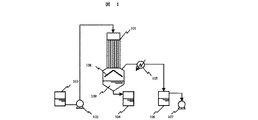
図2は本発明の方法の実施に使用することができる代表的な流下式薄膜蒸発器を示す概略図である。図において、TAAH廃水槽103より液供給ポンプ102によって縦型流下式薄膜蒸発器101に供給されたTAAH廃水は、複数の管の内壁に形成された加熱面を流下して濃縮されながら該加熱面の下端に至る。該加熱面の下端では、前記したように液膜の厚みを調整するように運転条件が採用される。また、加熱面下端より滴下する液滴が下部の貯液部109に落下することによる発泡を防止するため、液面カバー108を設けることが好ましい。一方、真空ポンプ107によって吸引されたガスは、凝縮器105によって冷却され、貯槽106に留出水が貯められる。該真空ポンプ107の出力を調整することにより、蒸発器内の圧力を任意に減圧することができる。
FIG. 2 is a schematic diagram illustrating a typical falling film evaporator that can be used to practice the method of the present invention. In the figure, the TAAH wastewater supplied from the TAAH wastewater tank 103 to the vertical falling thin film evaporator 101 by the liquid supply pump 102 flows down the heating surface formed on the inner walls of a plurality of pipes while being concentrated. To the bottom. At the lower end of the heating surface, the operating conditions are adopted so as to adjust the thickness of the liquid film as described above. In addition, it is preferable to provide the
本発明において、薄膜蒸発缶による濃縮の程度は特に制限されないが、濃縮倍率が10〜300倍、好ましくは、10〜250倍程度に濃縮することが好ましい。また、前記TAAH廃水を使用する場合は、濃縮後の濃度が40質量%を超えない範囲で、好ましくは、30質量%程度で行うことが好ましい。 In the present invention, the degree of concentration by the thin film evaporator is not particularly limited, but the concentration factor is preferably 10 to 300 times, and more preferably about 10 to 250 times. Moreover, when using the said TAAH wastewater, it is preferable to carry out in the range by which the density | concentration after concentration does not exceed 40 mass%, Preferably, it is about 30 mass%.
本発明において、前記原水は、これを前記薄膜蒸発缶に導入して水を留出せしめた後、該留出水を外気と接触させること無く、上記薄膜蒸発缶より配管を通じて超純水製造工程に一次純水として供給することが重要である。 In the present invention, the raw water is introduced into the thin film evaporator, and after distilling the water, the ultrapure water production process through the pipe from the thin film evaporator without bringing the distilled water into contact with the outside air It is important to supply it as primary pure water.
即ち、本発明に方法によれば、薄膜蒸発缶を使用することにより、蒸留時の泡沫同伴による留出水への菌の混入が防止され、該菌の混入量が著しく減少した留出水が得られる。かかる留出水は、通常薄膜蒸発缶の頂部のガス取出し口に接続する配管に取り付けられた凝縮器によって蒸発した水蒸気が液化されて得られるもので、必要に応じてタンクに貯められた後、配管を通じて超純水製造工程に一次純水として供給することによって、該留出水における菌の増加を極めて効果的に防止することができる。 That is, according to the method of the present invention, the use of a thin film evaporator prevents the entry of bacteria into the distillate due to entrainment of foam during distillation, and distillate water in which the amount of the bacteria mixed is significantly reduced. can get. Such distilled water is usually obtained by liquefying water vapor evaporated by a condenser attached to a pipe connected to the gas outlet at the top of the thin film evaporator, and after being stored in a tank as necessary, By supplying primary ultrapure water to the ultrapure water production process through the piping, it is possible to extremely effectively prevent the increase of bacteria in the distillate.
本発明において、上記効果を一層効果的に発揮させるためには、薄膜蒸発缶及び配管の内部の材質は、イオン溶出量が可及的的に少ないことが好ましく、85μg/m2・月以下特に40μg/m2・月以下であことが好ましい。かかるイオン溶出量を達成するためには、例えば、薄膜蒸発缶、配管をSUS316L等の材質で構成し、且つ、その内面を鏡面研磨する態様、薄膜蒸発缶、配管の内面にフッ素樹脂等のライニングを施す態様などが挙げられる。
なお、上記イオン溶出量は、濃度20質量%のTMAHの水溶液50gにテストピース(表面積30cm2)を液温70℃下で1ヶ月間放置した後、全イオン溶出量をICP質量分析装置で測定し、その結果より求めた値である。
In the present invention, in order to exhibit the above-described effect more effectively, the material inside the thin film evaporator and the pipe is preferably as small as possible in the amount of ion elution, particularly 85 μg / m 2 · month or less. It is preferably 40 μg / m 2 · month or less. In order to achieve such an ion elution amount, for example, the thin film evaporator and the pipe are made of a material such as SUS316L, and the inner surface is mirror-polished, the thin film evaporator and the inner surface of the pipe are lined with fluorine resin or the like And the like.
The ion elution amount was determined by leaving the test piece (surface area 30 cm 2 ) in 50 g of an aqueous solution of TMAH having a concentration of 20 mass% for 1 month at a liquid temperature of 70 ° C., and then measuring the total ion elution amount with an ICP mass spectrometer. And the value obtained from the result.
本発明において、超純水製造工程は、一次純水を更に精製する公知の工程が特に制限なく採用される。代表的な態様を例示すれば、UVを照射することによって水の殺菌を行なう紫外線酸化処理装置、イオン交換樹脂と水を接触せしめることによりイオン性物質を除去するイオン交換樹脂装置、孔径0.05〜2.0μmのウルトラフィルターによりパーティクルの除去を行なうフィルター装置よりなる処理工程が好適に採用される。勿論、これらの装置は、一次純水として供給された留出水が外気と接触することなく配管を通じて供給排出される。また、超純水製造工程において、これらの装置は、必要に応じて順序が変更されても良いし、必要に応じて一部を省略しても良い。
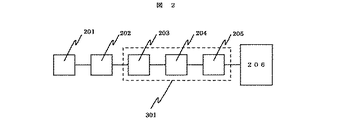
図2は、前記TMAH含有廃水を使用して本発明の方法を実施するための好適な態様を示すフローシートである。即ち、半導体製造工場201にて排出されたTMAH含有廃水は、薄膜蒸発缶を用いた蒸発工程202に供給され、留出水を得る。上記留出水は、外気と接触することなく配管を通じて超純水製造工程に供給される。上記超純水製造工程において、留出水は、紫外線酸化処理装置203、イオン交換樹脂装置204、フィルター装置205で順次処理され、ユースポイント206に供給される。
In the present invention, as the ultrapure water production process, a known process for further purifying primary pure water is employed without any particular limitation. As a typical example, an ultraviolet oxidation treatment apparatus that sterilizes water by irradiating UV, an ion exchange resin apparatus that removes ionic substances by bringing the ion exchange resin into contact with water, and a pore size of 0.05 A processing step comprising a filter device that removes particles with an ultra filter of ˜2.0 μm is preferably employed. Of course, in these devices, the distilled water supplied as the primary pure water is supplied and discharged through the piping without coming into contact with the outside air. In the ultrapure water production process, the order of these devices may be changed as necessary, or a part of them may be omitted as necessary.
FIG. 2 is a flow sheet showing a preferred embodiment for carrying out the method of the present invention using the TMAH-containing wastewater. That is, the TMAH-containing wastewater discharged at the
上記ユースポイント206は、半導体製造工場201であっても良く、かかる循環を行なうことにより、工場内の水の使用量を著しく低減することが可能である。また、本発明の方法において、留出水は、存在する菌が極めて少ないため、前記紫外線酸化処理装置における負担を軽減することができる。
The
以下、本発明をより具体的に説明するため、実施例を示すが、本発明はこれらの実施例に限定されるものではない。 EXAMPLES Hereinafter, examples will be shown to describe the present invention more specifically, but the present invention is not limited to these examples.
実施例1
LSI製造工程から排出されるフォトレジスト、界面活性剤及び水酸化テトラメチルアンモニウム(TMAH)を含有するフォトレジスト現像廃液を使用した。この廃液は、TMAH濃度が0.6質量%、界面活性剤、フォトレジスト由来のCOD濃度が67ppm、pHが12.9であった。
Example 1
A photoresist developing waste solution containing photoresist, surfactant and tetramethylammonium hydroxide (TMAH) discharged from the LSI manufacturing process was used. The waste liquid had a TMAH concentration of 0.6% by mass, a surfactant and a photoresist-derived COD concentration of 67 ppm, and a pH of 12.9.
図1に示す縦型流下式薄膜蒸発器(材質SUS316L 内面電解研磨 イオン溶出量26μg/m2・月)を使用して上記廃液の濃縮を行った。上記濃縮は、真空ポンプ7にて蒸発器内を150torrの減圧にして実施した。また、縦型流下式薄膜式蒸発器1の加熱面は、伝熱管内径が0.0214m、伝熱管長さが1m、伝熱管本数が7本のものによって構成し、その表面を水蒸気で約130℃に加熱した。 The waste liquid was concentrated using the vertical down flow type thin film evaporator (material SUS316L inner surface electropolishing, ion elution amount 26 μg / m 2 · month) shown in FIG. The concentration was carried out by reducing the pressure in the evaporator with a vacuum pump 7 to 150 torr. Further, the heating surface of the vertical down flow type thin film evaporator 1 is constituted by a heat transfer tube inner diameter of 0.0214 m, a heat transfer tube length of 1 m, and a heat transfer tube number of seven, and the surface thereof is about 130 with water vapor. Heated to ° C.
上記蒸発器に前記TMAH廃液(被処理液)を1.5L/分の供給量で供給して、留出水を1.45L/分の量で得た。 The TMAH waste liquid (liquid to be treated) was supplied to the evaporator at a supply rate of 1.5 L / min, and distilled water was obtained at a rate of 1.45 L / min.
得られた留出水の分析結果を表1(イオン量、微粒子量、生菌数等を記載)に示す。 The analysis results of the obtained distillate are shown in Table 1 (describes the amount of ions, amount of fine particles, number of viable bacteria, etc.)
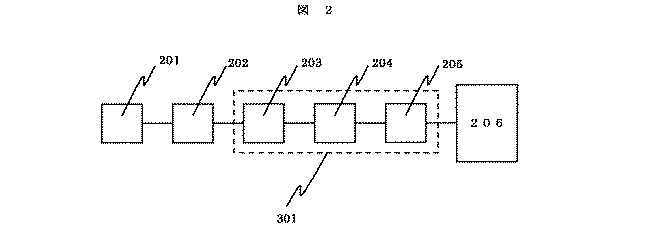
尚、紫外線酸化処理装置203としては、流水式紫外線殺菌器を使用し、イオン交換樹脂装置204としては、カートリッジ式 カチオン/アニオン混合樹脂を使用し、フィルター装置205としては、孔径0.2μmのフィルターを使用した。
In addition, a flowing water type ultraviolet sterilizer is used as the ultraviolet
上記方法によって得られた超純水の分析結果を表2(イオン量、微粒子量、生菌数等を記載)に示す。 The analysis results of ultrapure water obtained by the above method are shown in Table 2 (describes the amount of ions, the amount of fine particles, the number of viable bacteria, etc.).
101 薄膜蒸発器
102 給液ポンプ
103 TMAH含有廃水貯槽
105 凝縮器
106 貯槽
107 真空ポンプ
201 半導体製造工場
202 蒸発工程
301 超純水製造工程
206 ユースポイント
DESCRIPTION OF SYMBOLS 101 Thin film evaporator 102 Liquid supply pump 103 TMAH containing waste
Claims (3)
3. The method for producing ultrapure water according to claim 1 or 2, wherein the raw water is a waste liquid containing tetraalkylammonium hydroxide at a concentration of 0.1 to 2.5% by mass obtained by washing a resist in a semiconductor manufacturing plant. .
Priority Applications (1)
| Application Number | Priority Date | Filing Date | Title |
|---|---|---|---|
| JP2004118246A JP2005296848A (en) | 2004-04-13 | 2004-04-13 | Production method of ultra pure water |
Applications Claiming Priority (1)
| Application Number | Priority Date | Filing Date | Title |
|---|---|---|---|
| JP2004118246A JP2005296848A (en) | 2004-04-13 | 2004-04-13 | Production method of ultra pure water |
Publications (1)
| Publication Number | Publication Date |
|---|---|
| JP2005296848A true JP2005296848A (en) | 2005-10-27 |
Family
ID=35329041
Family Applications (1)
| Application Number | Title | Priority Date | Filing Date |
|---|---|---|---|
| JP2004118246A Pending JP2005296848A (en) | 2004-04-13 | 2004-04-13 | Production method of ultra pure water |
Country Status (1)
| Country | Link |
|---|---|
| JP (1) | JP2005296848A (en) |
Cited By (2)
| Publication number | Priority date | Publication date | Assignee | Title |
|---|---|---|---|---|
| JP2007098272A (en) * | 2005-10-04 | 2007-04-19 | Kobelco Eco-Solutions Co Ltd | Method and apparatus for treating ammonia-containing water |
| JP2020075908A (en) * | 2018-09-28 | 2020-05-21 | 株式会社トクヤマ | Method for producing organic solvent solution of quaternary ammonium hydroxide |
-
2004
- 2004-04-13 JP JP2004118246A patent/JP2005296848A/en active Pending
Cited By (2)
| Publication number | Priority date | Publication date | Assignee | Title |
|---|---|---|---|---|
| JP2007098272A (en) * | 2005-10-04 | 2007-04-19 | Kobelco Eco-Solutions Co Ltd | Method and apparatus for treating ammonia-containing water |
| JP2020075908A (en) * | 2018-09-28 | 2020-05-21 | 株式会社トクヤマ | Method for producing organic solvent solution of quaternary ammonium hydroxide |
Similar Documents
| Publication | Publication Date | Title |
|---|---|---|
| KR940003209B1 (en) | Heating degassing ultrapure water system | |
| TWI421132B (en) | Preparation method, manufacturing device and cleaning device for dissolved gas washing water | |
| JP5251184B2 (en) | Gas dissolved water supply system | |
| JPH0647105B2 (en) | Purification method and device for pure water or ultrapure water | |
| US20050263458A1 (en) | Process for removing organics from ultrapure water | |
| WO2009128327A1 (en) | Cleaning water for electronic material, method of cleaning electronic material, and system for supplying water containing dissolved gases | |
| JP5441714B2 (en) | Pure water production method and apparatus, ozone water production method and apparatus, and cleaning method and apparatus | |
| TWI601695B (en) | Method for producing ozone gas dissolved water and washing method of electronic material | |
| WO2016063578A1 (en) | Ammonia-containing wastewater treatment apparatus and treatment method | |
| CN109890766A (en) | Method for treating water and device | |
| JPH1064867A (en) | Method and device for cleaning a variety of electronic component members | |
| JPH03262585A (en) | Ultra-pure water generating apparatus | |
| CN1279650A (en) | High-temperature ultra-high-purity water production equipment and chemical liquid preparation system including the equipment | |
| JP5320665B2 (en) | Ultrapure water production apparatus and method | |
| JP4756327B2 (en) | Nitrogen gas dissolved water production method | |
| JP2005296848A (en) | Production method of ultra pure water | |
| TW201615557A (en) | Processing method and processing device for ammonia-containing drainage water | |
| EP1180497A1 (en) | Ionic purifier | |
| JP3296407B2 (en) | Cleaning method and cleaning device for electronic component members | |
| JP2814041B2 (en) | Method and apparatus for producing ultrapure water | |
| JPH10128254A (en) | Washing method for electronic members and device therefor | |
| JPH0517889A (en) | Regeneration method of tetraalkylammonium hydroxide | |
| JP2017202474A (en) | Ozone dissolved water production apparatus | |
| TWI612014B (en) | method for treating boron-containing wastewater using fluidized-bed ?homogeneous granulation technique | |
| JPH07155744A (en) | Ultrapure water production method |
Legal Events
| Date | Code | Title | Description |
|---|---|---|---|
| A621 | Written request for application examination |
Free format text: JAPANESE INTERMEDIATE CODE: A621 Effective date: 20061116 |
|
| A977 | Report on retrieval |
Free format text: JAPANESE INTERMEDIATE CODE: A971007 Effective date: 20080707 |
|
| A131 | Notification of reasons for refusal |
Free format text: JAPANESE INTERMEDIATE CODE: A131 Effective date: 20080714 |
|
| A02 | Decision of refusal |
Free format text: JAPANESE INTERMEDIATE CODE: A02 Effective date: 20081110 |