JP2005296530A - Puzzle game device and puzzle game program - Google Patents
Puzzle game device and puzzle game program Download PDFInfo
- Publication number
- JP2005296530A JP2005296530A JP2004120974A JP2004120974A JP2005296530A JP 2005296530 A JP2005296530 A JP 2005296530A JP 2004120974 A JP2004120974 A JP 2004120974A JP 2004120974 A JP2004120974 A JP 2004120974A JP 2005296530 A JP2005296530 A JP 2005296530A
- Authority
- JP
- Japan
- Prior art keywords
- character
- puzzle
- player character
- player
- game
- Prior art date
- Legal status (The legal status is an assumption and is not a legal conclusion. Google has not performed a legal analysis and makes no representation as to the accuracy of the status listed.)
- Granted
Links
- 230000008859 change Effects 0.000 claims description 17
- 230000004044 response Effects 0.000 claims description 6
- 230000015572 biosynthetic process Effects 0.000 abstract description 46
- 238000000034 method Methods 0.000 description 66
- 230000008569 process Effects 0.000 description 61
- 238000005755 formation reaction Methods 0.000 description 45
- 238000013500 data storage Methods 0.000 description 5
- 230000006870 function Effects 0.000 description 5
- 230000009471 action Effects 0.000 description 4
- 230000001419 dependent effect Effects 0.000 description 4
- 239000011159 matrix material Substances 0.000 description 4
- 238000004891 communication Methods 0.000 description 2
- 238000010586 diagram Methods 0.000 description 2
- 230000000694 effects Effects 0.000 description 2
- 239000004973 liquid crystal related substance Substances 0.000 description 1
- 238000004519 manufacturing process Methods 0.000 description 1
- 230000003287 optical effect Effects 0.000 description 1
Images










Classifications
-
- A—HUMAN NECESSITIES
- A63—SPORTS; GAMES; AMUSEMENTS
- A63F—CARD, BOARD, OR ROULETTE GAMES; INDOOR GAMES USING SMALL MOVING PLAYING BODIES; VIDEO GAMES; GAMES NOT OTHERWISE PROVIDED FOR
- A63F13/00—Video games, i.e. games using an electronically generated display having two or more dimensions
-
- A—HUMAN NECESSITIES
- A63—SPORTS; GAMES; AMUSEMENTS
- A63F—CARD, BOARD, OR ROULETTE GAMES; INDOOR GAMES USING SMALL MOVING PLAYING BODIES; VIDEO GAMES; GAMES NOT OTHERWISE PROVIDED FOR
- A63F13/00—Video games, i.e. games using an electronically generated display having two or more dimensions
- A63F13/80—Special adaptations for executing a specific game genre or game mode
-
- A—HUMAN NECESSITIES
- A63—SPORTS; GAMES; AMUSEMENTS
- A63F—CARD, BOARD, OR ROULETTE GAMES; INDOOR GAMES USING SMALL MOVING PLAYING BODIES; VIDEO GAMES; GAMES NOT OTHERWISE PROVIDED FOR
- A63F13/00—Video games, i.e. games using an electronically generated display having two or more dimensions
- A63F13/90—Constructional details or arrangements of video game devices not provided for in groups A63F13/20 or A63F13/25, e.g. housing, wiring, connections or cabinets
-
- A—HUMAN NECESSITIES
- A63—SPORTS; GAMES; AMUSEMENTS
- A63F—CARD, BOARD, OR ROULETTE GAMES; INDOOR GAMES USING SMALL MOVING PLAYING BODIES; VIDEO GAMES; GAMES NOT OTHERWISE PROVIDED FOR
- A63F2300/00—Features of games using an electronically generated display having two or more dimensions, e.g. on a television screen, showing representations related to the game
- A63F2300/20—Features of games using an electronically generated display having two or more dimensions, e.g. on a television screen, showing representations related to the game characterised by details of the game platform
- A63F2300/204—Features of games using an electronically generated display having two or more dimensions, e.g. on a television screen, showing representations related to the game characterised by details of the game platform the platform being a handheld device
-
- A—HUMAN NECESSITIES
- A63—SPORTS; GAMES; AMUSEMENTS
- A63F—CARD, BOARD, OR ROULETTE GAMES; INDOOR GAMES USING SMALL MOVING PLAYING BODIES; VIDEO GAMES; GAMES NOT OTHERWISE PROVIDED FOR
- A63F2300/00—Features of games using an electronically generated display having two or more dimensions, e.g. on a television screen, showing representations related to the game
- A63F2300/60—Methods for processing data by generating or executing the game program
-
- A—HUMAN NECESSITIES
- A63—SPORTS; GAMES; AMUSEMENTS
- A63F—CARD, BOARD, OR ROULETTE GAMES; INDOOR GAMES USING SMALL MOVING PLAYING BODIES; VIDEO GAMES; GAMES NOT OTHERWISE PROVIDED FOR
- A63F2300/00—Features of games using an electronically generated display having two or more dimensions, e.g. on a television screen, showing representations related to the game
- A63F2300/60—Methods for processing data by generating or executing the game program
- A63F2300/66—Methods for processing data by generating or executing the game program for rendering three dimensional images
- A63F2300/6623—Methods for processing data by generating or executing the game program for rendering three dimensional images for animating a group of characters
-
- A—HUMAN NECESSITIES
- A63—SPORTS; GAMES; AMUSEMENTS
- A63F—CARD, BOARD, OR ROULETTE GAMES; INDOOR GAMES USING SMALL MOVING PLAYING BODIES; VIDEO GAMES; GAMES NOT OTHERWISE PROVIDED FOR
- A63F2300/00—Features of games using an electronically generated display having two or more dimensions, e.g. on a television screen, showing representations related to the game
- A63F2300/80—Features of games using an electronically generated display having two or more dimensions, e.g. on a television screen, showing representations related to the game specially adapted for executing a specific type of game
Landscapes
- Engineering & Computer Science (AREA)
- Multimedia (AREA)
- Processing Or Creating Images (AREA)
- User Interface Of Digital Computer (AREA)
Abstract
Description
この発明は、パズルゲーム装置およびパズルゲームプログラムに関し、特にたとえば、プレイヤキャラクタの分身を戦略的に生成および配列してパズルを解くような、パズルゲーム装置およびパズルゲームプログラムに関する。 The present invention relates to a puzzle game apparatus and a puzzle game program, and more particularly to a puzzle game apparatus and a puzzle game program that solves a puzzle by strategically generating and arranging player character alternations.
プレイヤが操作するプレイヤキャラクタに、分身や追加キャラクタを付加して、ゲームプレイを有利に進めることができるようにしたゲームが知られている。非特許文献1には、合体パーツを手に入れながらプレイするシューティングゲームが開示されている。このゲームでは、プレイヤは合体パーツを手に入れて自機をパワーアップすることができるとともに、合体パーツとフォーメーションを組んで、広い範囲に弾を撃って、敵を倒すことができるように工夫されている。 A game is known in which a game play can be advantageously advanced by adding a substitute or an additional character to the player character operated by the player. Non-Patent Document 1 discloses a shooting game that is played while obtaining combined parts. In this game, the player can get the coalesced parts and power up their own machine, and also assemble the coalesced parts and formation, shoot the bullets over a wide range, and defeat the enemy ing.
また、非特許文献2には、4人のキャラクタが所定のフォーメーションを組んだ状態でプレイするアクションゲームが開示されている。プレイヤは、フォーメーションの形を変えることはできないが、固定されたフォーメーションにおけるキャラクタの配置場所を変えることができる。そのためには、配置場所の変更方法に応じて異なるマークが付けられたタイルを拾わねばならない。すなわち、プレイヤはゲームの状況に応じて、最適なタイルを取り、所望のキャラクタを特定の場所に配置することによって、ゲームをプレイする。
Non-Patent
一方、プレイヤキャラクタに分身や追加キャラクタを付加するものではないが、複数のプレイヤキャラクタを同時に操作することで解決可能になる課題が設定されたゲームの一例が特許文献1に開示される。特許文献1では、複数のプレイヤキャラクタを1つのコントローラで個別に操作可能にするために、コントローラに設けられた複数の方向レバーおよび複数のスイッチが、各プレイヤキャラクタの操作用にそれぞれ割り当てられる。プレイヤは、各プレイヤキャラクタ用の方向レバー等を操作して、複数のプレイヤキャラクタを個別または同時に移動させて、扉を開けるための複数の床のスイッチに同時に載せることが要求される。
しかしながら、非特許文献1および非特許文献2のいずれにおいても、分身や、フォーメーションを組む相手となるキャラクタの配置の形成の仕方自体にゲーム性を持たせていなかった。すなわち、ゲームを有利にプレイするために分身やフォーメーションを駆使するのであるが、その作業自体は、あくまでプレイヤの意志に委ねられており、分身やフォーメーションの作り方それ自体がゲーム進行上の要素とされていなかった。
However, neither the
一方、特許文献1では、複数のプレイヤキャラクタを同時に操作することで解決可能になる課題が設定されるので、その課題を解くためには、プレイヤは複数のプレイヤキャラクタを個別に操作しなければならず、したがって、操作性に問題があった。また、特許文献1の技術は、分身やフォーメーションを駆使するものですらないので、分身やフォーメーションの作り方それ自体がゲームの要素とされるものでもない。
On the other hand, in
それゆえに、この発明の主たる目的は、新規な、パズルゲーム装置およびパズルゲームプログラムを提供することである。 Therefore, the main object of the present invention is to provide a novel puzzle game apparatus and puzzle game program.
この発明の他の目的は、プレイヤキャラクタの分身を作って、分身とプレイヤキャラクタとを所定の条件を満たすように配置したときに、パズルが解かれてゲームの進行を変化させる、パズルゲーム装置およびパズルゲームプログラムを提供することである。 Another object of the present invention is to provide a puzzle game apparatus that creates a player character's alternation and changes the progress of the game by solving the puzzle when the alternation and the player character are arranged so as to satisfy a predetermined condition. It is to provide a puzzle game program.
この発明の更なる目的は、プレイヤキャラクタの分身を作る作業に新しい操作を取り入れた、パズルゲーム装置およびパズルゲームプログラムを提供することである。 A further object of the present invention is to provide a puzzle game apparatus and a puzzle game program in which a new operation is incorporated into the work of creating a player character.
請求項1の発明は、操作手段、表示手段、プレイヤキャラクタ表示制御手段、パズル表示制御手段、分身キャラクタ生成手段、分身キャラクタ表示制御手段、パズル解決判断手段、および進行変化手段を備える、パズルゲーム装置である。操作手段はプレイヤがゲーム操作を行うためのものである。表示手段はゲーム画像を表示するためのものである。プレイヤキャラクタ表示制御手段は、操作手段の入力に応じて、プレイヤの操作するプレイヤキャラクタを表示手段に表示する。パズル表示制御手段は、解決すべき所定の条件を示すパズル画像を表示手段に表示する。分身キャラクタ生成手段は、少なくともゲームフィールド内の所定の位置にプレイヤキャラクタが存在したことに基づいて、プレイヤキャラクタの複製である分身キャラクタを生成する。分身キャラクタ表示制御手段は、分身キャラクタ生成手段によって生成されたときのプレイヤキャラクタとの相対的な位置関係を保持して、プレイヤキャラクタと関連的に配置された分身キャラクタを表示手段に表示する。パズル解決判断手段は、プレイヤキャラクタと分身キャラクタとの配置パターンがパズル画像の示す所定の条件を満足したか否かを判断する。進行変化手段は、パズル解決判断手段によって所定の条件が満足されたと判断されたとき、ゲームの進行を変化させる。
The invention according to
請求項1の発明では、パズルゲーム装置(10:実施例で相当する参照符号。以下同じ。)は、プレイヤがゲーム操作を行うための操作手段(20)、およびゲーム画像を表示する表示手段(18)を含む。プレイヤキャラクタ表示制御手段(30、68、S5、S43、S111)は、操作手段の入力に応じて、プレイヤの操作するプレイヤキャラクタ(100)を表示手段に表示する。パズル表示制御手段(30、76、S1)は、解決すべき所定の条件を示すパズル画像(108、110)を表示手段に表示する。分身キャラクタ生成手段(30、72、S15、S17、S37、S49、S115)は、少なくともゲームフィールド内の所定の位置にプレイヤキャラクタが存在したことに基づいて、プレイヤキャラクタの複製である分身キャラクタ(104)を生成する。分身キャラクタ表示制御手段(30、74、S9)は、分身キャラクタ生成手段によって生成されたときのプレイヤキャラクタとの相対的な位置関係を保持して、プレイヤキャラクタと関連的に配置された分身キャラクタを表示手段に表示する。パズル解決判断手段(30、78、S19、S21)は、プレイヤキャラクタと分身キャラクタとの配置パターンがパズル画像の示す所定の条件を満足したか否かを判断する。進行変化手段(30、80、S69、S89)は、パズル解決判断手段によって所定の条件が満足されたと判断されたとき、ゲームの進行を変化させる。 According to the first aspect of the present invention, the puzzle game apparatus (10: reference numeral corresponding to the embodiment; the same applies hereinafter) includes operation means (20) for a player to perform a game operation, and display means for displaying a game image ( 18). The player character display control means (30, 68, S5, S43, S111) displays the player character (100) operated by the player on the display means in response to the input from the operation means. The puzzle display control means (30, 76, S1) displays a puzzle image (108, 110) indicating a predetermined condition to be solved on the display means. The surrogate character generating means (30, 72, S15, S17, S37, S49, S115) is a surrogate character (104) that is a duplicate of the player character based on the presence of the player character at least at a predetermined position in the game field. ) Is generated. The surrogate character display control means (30, 74, S9) maintains the relative positional relationship with the player character when generated by the surrogate character generation means, and displays the surrogate character arranged in association with the player character. Display on the display means. The puzzle solution determining means (30, 78, S19, S21) determines whether or not the arrangement pattern of the player character and the substitute character satisfies a predetermined condition indicated by the puzzle image. The progress changing means (30, 80, S69, S89) changes the progress of the game when the puzzle solution determining means determines that the predetermined condition is satisfied.
したがって、請求項1の発明によれば、生成された分身キャラクタとプレイヤキャラクタとの配置パターンが、パズル画像に示された所定の条件を満足するときには、パズルが解かれて、ゲームの進行を変化させることができる。したがって、プレイヤは、パズル画像に適合するように戦略的に分身キャラクタを作成してプレイヤキャラクタに関連的に配置することが要求されるので、興趣性に優れた新しいパズルゲームを提供することができる。
Therefore, according to the invention of
請求項2の発明は、請求項1の発明に従属し、分身キャラクタ表示制御手段は、分身キャラクタの表示時間が所定時間を超えたとき、表示していた分身キャラクタを消滅させる。
The invention according to
請求項2の発明では、分身キャラクタ表示制御手段(S11、S13、S39、S47)は、分身キャラクタの表示時間が所定時間を超えたとき、表示していた分身キャラクタを消滅させるので、分身キャラクタを使用する時間を制限することができる。したがって、パズルを解く際には、戦略と迅速なプレイが要求されるので、プレイヤに対して、緊張感をより与えることができ、ゲームの興趣性をより高めることができる。 According to the second aspect of the present invention, the clone character display control means (S11, S13, S39, S47) erases the displayed clone character when the display time of the clone character exceeds a predetermined time. The time to use can be limited. Therefore, since a strategy and quick play are required when solving a puzzle, a sense of tension can be given to the player, and the fun of the game can be further enhanced.
請求項3の発明は、請求項1の発明に従属し、分身キャラクタ生成手段は、分身キャラクタを作成可能な複数の作成位置が所定の形態で配置されている分身ブロックを表示手段に表示する分身ブロック表示制御手段と、プレイヤキャラクタが分身ブロックの作成位置に重なったことに基づいて、その重なった作成位置にプレイヤキャラクタの複製を生成する複製生成手段とを含む。
The invention according to
請求項3の発明では、分身キャラクタ生成手段は、分身ブロック表示制御手段と複製生成手段とを含む。分身ブロック表示制御手段(30、70、S1)は、分身キャラクタを作成可能な複数の作成位置が所定の形態で配置されている分身ブロック(102)を表示手段に表示する。複製生成手段(30、72、S15、S17)は、プレイヤキャラクタが分身ブロックの作成位置に重なったことに基づいて、その重なった作成位置にプレイヤキャラクタの複製を生成する。したがって、分身キャラクタを作成する際には、所定の条件に適合する配置パターンを考慮しつつ、分身ブロックの所望の作成位置に上手くプレイヤキャラクタを重ねていくことが要求されるので、プレイヤキャラクタの分身を作る作業に新しい操作を取り入れたパズルゲームを提供できる。 According to a third aspect of the present invention, the substitute character generating means includes a substitute block display control means and a duplicate generating means. The split block display control means (30, 70, S1) displays on the display means a split block (102) in which a plurality of creation positions capable of creating a split character are arranged in a predetermined form. The duplicate generation means (30, 72, S15, S17) generates a duplicate of the player character at the overlapping creation position based on the player character overlapping the creation block creation position. Therefore, when creating a surrogate character, it is required to superimpose the player character on the desired creation position of the surrogate block while considering an arrangement pattern that meets a predetermined condition. It is possible to provide a puzzle game that incorporates a new operation in the process of creating.
請求項4は、請求項3の発明に従属し、複製生成手段は、プレイヤキャラクタが作成位置と重なった状態で操作手段から所定の入力があったとき、その重なった作成位置に複製を生成して、表示手段に表示する。
請求項4の発明では、複製生成手段(S31、S37)は、プレイヤキャラクタが作成位置と重なった状態で操作手段から所定の入力があったとき、その重なった作成位置に複製を生成して、表示手段に表示する。したがって、分身キャラクタを作成する際には、分身ブロックの所望の作成位置にプレイヤキャラクタを重ねて、所定の操作入力を行えばよいので、比較的簡単な操作で分身を作成することができる。
In the invention of
請求項5の発明は、請求項3の発明に従属し、複製生成手段は、プレイヤキャラクタが所定数の作成位置と重なったことに基づいて、その重なった作成位置に複製を生成して、表示手段に表示する。
The invention according to claim 5 is dependent on the invention according to
請求項5の発明では、複製生成手段(S107、S115、S117)は、プレイヤキャラクタが所定数の作成位置と重なったことに基づいて、その重なった作成位置に複製を生成して、表示手段に表示する。したがって、分身キャラクタを作成する際には、分身ブロックの複数の作成位置うち、所望の数および所望の位置にのみプレイヤキャラクタが重なるように上手く操作することが要求されるので、分身の作成の難易度を上げて、ゲームの興趣性を高めることができる。 According to the fifth aspect of the invention, the copy generation means (S107, S115, S117) generates a copy at the overlapped creation positions based on the fact that the player character has overlapped with a predetermined number of creation positions, and displays it on the display means. indicate. Therefore, when creating a surrogate character, it is required to operate the player character so that the player character overlaps only at a desired number and a desired position among a plurality of creation positions of the survivor block. You can raise the degree of fun of the game.
請求項6の発明は、プレイヤがゲーム操作を行う操作手段とゲーム画像を表示する表示手段とを備えるゲーム装置を、パズルゲーム装置として機能させるパズルゲームプログラムである。このパズルゲームプログラムは、ゲーム装置のプロセサに、プレイヤキャラクタ表示制御ステップ、パズル表示制御ステップ、分身キャラクタ生成ステップ、分身キャラクタ表示制御ステップ、パズル解決判断ステップ、および進行変化ステップを実行させる。プレイヤキャラクタ表示制御ステップは、操作手段の入力に応じて、プレイヤの操作するプレイヤキャラクタを表示手段に表示する。パズル表示制御ステップは、解決すべき所定の条件を示すパズル画像を表示手段に表示する。分身キャラクタ生成ステップは、少なくともゲームフィールド内の所定の位置にプレイヤキャラクタが存在したことに基づいて、プレイヤキャラクタの複製である分身キャラクタを生成する。分身キャラクタ表示制御ステップは、分身キャラクタ生成ステップによって生成されたときのプレイヤキャラクタとの相対的な位置関係を保持して、プレイヤキャラクタと関連的に配置された分身キャラクタを表示手段に表示する。パズル解決判断ステップは、プレイヤキャラクタと分身キャラクタとの配置パターンがパズル画像の示す所定の条件を満足したか否かを判断する。進行変化ステップは、パズル解決判断ステップによって所定の条件が満足されたと判断されたとき、ゲームの進行を変化させる。 The invention of claim 6 is a puzzle game program that causes a game device including an operation means for a player to perform a game operation and a display means for displaying a game image to function as a puzzle game device. This puzzle game program causes a processor of the game device to execute a player character display control step, a puzzle display control step, a clone character generation step, a clone character display control step, a puzzle solution determination step, and a progress change step. In the player character display control step, a player character operated by the player is displayed on the display unit in response to an input from the operation unit. In the puzzle display control step, a puzzle image indicating a predetermined condition to be solved is displayed on the display means. The clone character generation step generates a clone character that is a duplicate of the player character based on at least the player character existing at a predetermined position in the game field. The clone character display control step maintains the relative positional relationship with the player character as generated by the clone character generation step and displays the clone character arranged in association with the player character on the display means. In the puzzle solution determining step, it is determined whether or not the arrangement pattern of the player character and the substitute character satisfies a predetermined condition indicated by the puzzle image. The progress change step changes the progress of the game when it is determined that the predetermined condition is satisfied by the puzzle solution determination step.
請求項6−10の発明によっても、請求項1−5の発明と同様に、戦略的に分身キャラクタを作成しプレイヤキャラクタに関連的に配置するような、興趣性に優れた新しいパズルゲームを提供することができる。 Also according to the invention of claim 6-10, as in the invention of claim 1-5, a new puzzle game excellent in entertaining is provided, such that strategic characters are strategically created and placed in relation to the player character. can do.
この発明によれば、分身キャラクタとプレイヤキャラクタとの配置パターンが、パズル画像に示された所定の条件を満足するとき、ゲームの進行が変化される。したがって、プレイヤは、パズル画像の示す条件に適合するように戦略性を持って分身キャラクタを作成し、プレイヤキャラクタに関連的に配置することが要求されるので、興趣性に優れた新しいパズルゲームを提供することができる。 According to this invention, the progress of the game is changed when the arrangement pattern of the substitute character and the player character satisfies the predetermined condition shown in the puzzle image. Therefore, the player is required to create a character with a strategy so as to meet the conditions indicated by the puzzle image and place it in relation to the player character. Can be provided.
また、分身キャラクタを作成する際に分身ブロックを用いる場合には、分身ブロックの所望の作成位置にプレイヤキャラクタを重ねていく必要があるので、分身を作る作業に新しい操作を取り入れたパズルゲームを提供できる。 Also, when using a clone block when creating a clone character, it is necessary to overlay the player character at the desired position of the clone block, so a puzzle game that incorporates new operations for creating a clone block is provided. it can.
この発明の上述の目的,その他の目的,特徴および利点は、図面を参照して行う以下の実施例の詳細な説明から一層明らかとなろう。 The above object, other objects, features and advantages of the present invention will become more apparent from the following detailed description of embodiments with reference to the drawings.
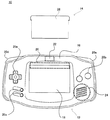
図1に示すこの実施例のゲーム装置10は、ゲーム機12およびゲーム機12に接続されるカートリッジ14を含む。ゲーム機12は、両手で把持可能な大きさの携帯型のゲーム機であり、ゲームプログラムおよびデータを記憶した着脱可能な外部記憶媒体としてのカートリッジ14を取り替えることによって、種々のゲームを楽しむことができるものである。この実施例では、たとえばプレイヤキャラクタ(プレイヤによって操作されるキャラクタ)の分身を戦略的に生成および配列してパズルを解くようなパズルゲームがプレイされる。
A
なお、ゲーム機12は携帯型のゲーム機に限られず、たとえば家庭用テレビ受像機に接続して使用される据置型のビデオゲーム機が適用されてよい。また、ゲーム情報記憶媒体は、カートリッジ14に限られず、CD−ROM,DVD−ROMのような光学式情報記憶媒体、光磁気ディスクまたは磁気ディスク等の各種の情報記憶媒体が適用されてよい。
Note that the
ゲーム機12は、たとえば横長形状のハウジング16を含み、ハウジング16の一方主面(表面)には、その略中央に画像表示手段の一例として液晶表示器(以下、「LCD」と略称する。)18が設けられるとともに、LCD18を挟む左右には操作手段としての種々の操作スイッチ20が設けられる。
The
操作スイッチ20は、たとえば方向スイッチ20aと、動作スイッチ20bと、スタート/セレクトボタン20cと、ハウジング16の左角に設けられたLボタン20dと、ハウジング16の右角に設けられたRボタン20eとを含む。方向スイッチ20aは、たとえばゲームの中でプレイヤキャラクタを操作するときにその移動方向を指示したり、項目を選択するカーソルを移動させたりするために使用される。動作スイッチ20bは、たとえばプレイヤキャラクタの行動(ジャンプ、剣を振る等)を指示したり、選択項目を決定/キャンセルしたり、分身を作成したりするために使用される。Lボタン20dおよびRボタン20eは、動作スイッチ20bに割り当てられた動作やその他の動作を指示するために使用される。スタート/セレクトボタン20cは、ゲームプレイを開始したり、ゲーム操作を中断したりするために使用される。
The
また、ゲーム機12には、必要に応じて、その上側面にコネクタ22が設けられる。このコネクタ22は、図2に示すように、他のゲーム装置10’(または他のゲーム機12’)と接続して通信ゲームをプレイしたり、ゲーム機12で処理されたゲームの内容を記憶したデータ等を他のゲーム装置10’との間で送受信したりするために使用される。また、ハウジング16の表面に設けられた音抜き孔の内部にはスピーカ24が内蔵され、ゲーム中のBGMや効果音等の音が出力される。
Further, the
カートリッジ14は、ハウジング16の背面側に設けられたコネクタ26を介してゲーム機12に着脱可能なハウジング28を含む。このカートリッジ14がコネクタ26を介してゲーム機12に接続されることによって、ゲーム機12はパズルゲーム装置10として機能する。
The
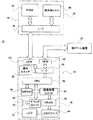
図2にはゲーム装置10のブロック図が示される。この図2を参照して、ゲーム機12はCPU30を含む。CPU30は、プロセサないしコンピュータとも呼ばれ、カートリッジ14に内蔵されたROM32のプログラムに従ってゲーム処理等を行う。CPU30には、ワーキングRAM(以下、「WRAM」と略称する。)34,画像処理ユニット36,サウンドユニット38,入力/出力インタフェース(以下、「I/O」と略称する。)40等が接続される。
FIG. 2 shows a block diagram of the
WRAM34は、CPU30の作業領域ないしバッファ領域として用いられる。WRAM34には、CPU30がゲーム処理に際して必要とするデータがロードされ、あるいは、ゲーム処理中に発生したデータを更新的に記憶する。画像処理ユニット36には表示用RAM(以下、「VRAM」と略称する。)42が接続される。画像処理ユニット36は、CPU30の指示によって、WRAM34に一時記憶されたデータに基づいて表示用の画像データを生成する。VRAM42は、画像処理ユニット36によって生成された表示に使用される画像データを一時記憶する。VRAM42に格納された画像データは、LCDドライバ44を介してLCD18に表示される。サウンドユニット38は、CPU30のゲーム処理等に関連して発生されたサウンドデータをアナログ信号に変換して、スピーカ24から音楽又は効果音として出力する。
The
I/O40は、CPU30と、操作スイッチ20,コネクタ26(カートリッジ14),コネクタ22(他のゲーム装置10’)とを接続する。CPU30は、このI/O40を介して操作スイッチ20からの操作入力データを検出してプログラム処理に使用する。また、CPU30はI/O40を介してカートリッジ14を制御する。さらに、CPU30は、I/O40に接続されたコネクタ22を介して他のゲーム装置10’とデータの送受信を行う。
The I /
カートリッジ14は、そのハウジング28の内部に、ROM32および保存用メモリ46等を備え、これらはカートリッジ入力/出力インタフェース(以下「カートリッジI/O」と略称する。)48と接続される。ROM32は、ゲーム装置10をパズルゲーム装置として機能させるためのプログラムおよびデータを固定的に記憶している。保存用メモリ46は、ゲームデータ等を保存するための書込み読出し可能なメモリであり、たとえば不揮発性メモリであるフラッシュメモリや電池を電源とするSRAMなどが用いられる。カートリッジ14がゲーム機12に装着されると、カートリッジI/O48は、コネクタ26およびI/O40を介してCPU30と接続される。これによって、CPU30は、カートリッジI/O48を介してROM32および保存用メモリ46にアクセスして、カートリッジ14の制御もしくは、カートリッジ14とのデータのやり取りを行うことができる。
The
なお、この実施例では、別々のゲーム機12とカートリッジ14とを接続するようにしているが、これらは一体的に形成されてもよく、つまり、ROM32および保存用メモリ46は、ゲーム機12に内蔵するようにしてもよい。
In this embodiment, the
図3には、ゲーム装置10のWRAM34のメモリマップ60の一例が示される。メモリマップ60は大きく分けて、プログラム記憶領域62とデータ記憶領域64とに分かれる。プログラム記憶領域62には、CPU30によって実行されゲーム機12をこの発明にかかるパズルゲーム装置として機能させる種々のプログラムが記憶されている。データ記憶領域64には、プログラム記憶領域62に記憶されたプログラムによって使用される種々のデータが記憶されている。また、データ記憶領域64は、プログラム処理された結果生成または取得されたデータを一時記憶するための領域でもある。
FIG. 3 shows an example of the
なお、メモリマップ60はWRAM34のメモリマップであるとしたが、たとえば、この実施例のゲーム装置10のように、固定的にプログラムを記憶しているROM32をCPU30に直接接続可能な場合は、WRAM34にプログラムやデータを転送して保持する必要が無い。この場合は、プログラム記憶領域62やデータ記憶領域64の一部をこのROM32に固定的に記憶可能であるため、CPU30が直接ROM32にアクセスできるからである。ただし、このような形態を採用するときには、ROM32には、書込が不能であるため、読み出し専用のデータだけを固定記憶しておく。
Although the
プログラム記憶領域62は、操作入力取得プログラム記憶領域66、プレイヤキャラクタ表示制御プログラム記憶領域68、分身ブロック表示プログラム記憶領域70、分身生成プログラム記憶領域72、分身キャラクタ表示制御プログラム記憶領域74、パズル表示プログラム記憶領域76、パズル解決判断プログラム記憶領域78、および解決時進行変化プログラム記憶領域80等を含む。
The program storage area 62 includes an operation input acquisition
操作入力取得プログラム記憶領域66には、プレイヤよる操作スイッチ20の操作に応じたデータ(操作入力データ)を取得するためのプログラムが記憶される。取得した操作入力データは操作データバッファ領域82に一時記憶される。
The operation input acquisition
プレイヤキャラクタ表示制御プログラム記憶領域68には、プレイヤキャラクタの表示を制御するためのプログラムが記憶される。プレイヤキャラクタの位置データ等を含みその動作を制御するためのデータが操作入力データに基づいて算出され、プレイヤキャラクタ制御データ領域84に一時記憶される。プレイヤキャラクタ100(図4)の画像は、プレイヤキャラクタ制御データおよびプレイヤキャラクタ画像データに基づいて生成されて、LCD18に表示される。
The player character display control
分身ブロック表示プログラム記憶領域70には、分身ブロックをLCD18に表示するためのプログラムが記憶されている。分身ブロック102(図4等)は、プレイヤキャラクタ100の複製である分身を作成するためのものである。分身ブロック102は、複数種類が準備されており、各分身ブロック102は、仮想ゲーム空間ないしゲームフィールドにおいて、たとえばパズルを示す画像の近くの所定の位置に設けられる。分身ブロック102は複数のブロック片を含み、複数のブロック片が所定の形態に配置されて組み合わせられることによって1つの分身ブロック102を形成する。たとえば図4の分身ブロック102では、複数のブロック片が4×5のマトリックス状に配置されている。分身ブロック102を構成する複数のブロック片は、この分身ブロック102において分身を作成可能な位置(作成位置)を示している。分身ブロック102の画像は、分身ブロックデータおよび分身ブロック画像データに基づいて生成され、LCD18に表示される。
A part block display
分身生成プログラム記憶領域72には、分身キャラクタを生成するためのプログラムが記憶される。分身キャラクタ104(図5等)は、少なくともゲームフィールドの所定位置にプレイヤキャラクタ100が存在したことに基づいて生成され、この実施例では、分身ブロック102上に重ねられたことに基づいて生成される。たとえば、プレイヤは、プレイヤキャラクタ100を分身ブロック102のいずれかのブロック片上に重ねてたとえば所定の操作入力を行うことによって、該ブロック片上にプレイヤキャラクタ100の分身キャラクタ104(図5)を作成することができる。あるいは、プレイヤは、プレイヤキャラクタ100を分身ブロック102の規定数のブロック片上に重ねるだけで、規定数の分身キャラクタ104を作成することができる(図17)。また、分身キャラクタ104は、生成されたときのプレイヤキャラクタ100との相対的な位置関係を保持して移動するものである。そこで、この実施例では、分身キャラクタ104が作成されると、各分身キャラクタ104の位置について、プレイヤキャラクタ100の位置からの相対的なズレ値がそれぞれ算出される。そして、プレイヤキャラクタ100からのズレ値で表現された各分身キャラクタ104の位置データ(制御データ)は、分身キャラクタ生成データ領域86に記憶される。なお、分身ブロック102の分身作成機能は、プレイヤキャラクタ100が所定のアイテムを所持していること等のような所定条件が満足されたときに有効にされるものであってもよい。
The alternation generation
分身キャラクタ表示制御プログラム記憶領域74には、分身キャラクタ104の表示を制御するためのプログラムが記憶される。分身キャラクタ104は、生成されたときのプレイヤキャラクタ100との相対的な位置関係を保持して、プレイヤキャラクタ100と関連的に配置される。つまり、分身キャラクタ104は、プレイヤキャラクタ100の移動に従って、プレイヤキャラクタ100との相対的な位置関係を保持した状態で、移動する。この分身キャラクタ104の表示位置は、操作入力データに基づいて算出されたプレイヤキャラクタ制御データ(位置データ)、および分身キャラクタ制御データ(位置データ)に基づいて算出される。また、分身キャラクタ104の画像は、分身キャラクタ104の表示位置データおよびプレイヤキャラクタ画像データに基づいて生成される。また、分身キャラクタ104の表示には制限時間が設けられていて、分身キャラクタ104が生成ないし表示されてから一定時間が経過したときには、分身キャラクタ104は消滅されて表示されなくなる。
The clone character display control
パズル表示プログラム記憶領域76には、パズルを示す画像を表示するためのプログラムが記憶される。パズル画像は、プレイヤによって解決されるべき所定の条件を示すものであり、たとえばゲームフィールドの所定位置に仕掛けあるいは障害として設けられる。パズルの一例としては、図4に示すような扉106を開くためのスイッチ108、図8に示すような通路上の運ばれるべき大きなブロック110などが設けられる。たとえば、扉106を開くためのスイッチ108は、所定の形態で配置された複数個のスイッチボタンを含み、これらスイッチボタンが同時に押されないと扉が開かないようになっている。また、大きなブロック110は、隊列を組んだ複数人によって押されないと動かないようになっている。パズルの画像は、パズル表示用データに基づいて生成されて、LCD18に表示される。
The puzzle display
パズル解決判断プログラム記憶領域78には、パズルが解決されたか否かを判断するためのプログラムが記憶される。つまり、このプログラムによって、パズル画像の示す所定の条件が満足されたか否かが判断される。たとえば、扉106を開くためのスイッチ108の場合には、複数のスイッチボタンの全てがプレイヤキャラクタ100および分身キャラクタ104によって同時に押されたか否かが判断される。つまり、プレイヤキャラクタ100と分身キャラクタ104とが形成する隊形ないし配置パターンが、スイッチボタンの数および配置形態と同じであり、かつ、その隊形ないし配置パターンがすべてのスイッチボタン上に重ねられているか否かが判断される。また、大きなブロック110の場合には、該ブロック110の所定の辺のすべての部分がプレイヤキャラクタ100と分身キャラクタ104とで形成される隊形ないし配置パターンによって同時に接触されているか否かが判断される。
The puzzle solution determination
解決時進行変化プログラム記憶領域80には、パズルが解決されたときに、ゲームの進行に変化を与えるためのプログラムが記憶される。一例として、パズルが解決されたときにはゲーム画像に変化が与えられる。たとえば、扉106を開くためのスイッチ108の場合には、扉106が開くような画像が表示される(図7)。また、大きなブロック110の場合には、該ブロック110がプレイヤキャラクタ100および分身キャラクタ104の隊列によって動かされるような画像が表示される(図11等)。このような解決時の画像は、解決時画像変化用データに基づいて生成され、LCD18に表示される。
The progress change
データ記憶領域64は、操作データバッファ領域82、プレイヤキャラクタ制御データ領域84、分身キャラクタ生成データ領域86、プレイヤキャラクタ画像データ領域88、分身ブロックデータ領域90、分身ブロック画像データ領域92、パズル表示用データ領域94、および解決時画像変化用データ領域96等を含む。
The
操作データバッファ領域82には、操作入力取得プログラムによって取得または検出された操作スイッチ20からの操作入力データが一時記憶される。
In the operation
プレイヤキャラクタ制御データ領域84には、プレイヤキャラクタ100の動作を制御するためのデータが記憶される。この制御データには、仮想ゲーム空間ないしゲームフィールドにおけるプレイヤキャラクタ100の位置座標を示す位置データが含まれる。
The player character
分身キャラクタ生成データ領域86には、作成された各分身キャラクタ104の動作を制御するためのデータが記憶される。この制御データには、各分身キャラクタ104の位置に関する位置データが含まれ、各分身キャラクタ104の位置は、この実施例ではプレイヤキャラクタ100との相対的なズレ値(プレイヤキャラクタ100からの距離データ)、すなわち、プレイヤキャラクタ100の位置を基準としたX軸方向の値およびY軸方向の値で表現される。なお、各分身キャラクタ104の位置データは、プレイヤキャラクタ100との相対的な位置で記憶せずに、ゲームフィールド上の位置座標そのままを記憶するようにしてもよい。ただし、この場合には、プレイヤキャラクタ100の位置が更新されるたびに、各分身キャラクタ104の位置も更新する必要がある。
In the character
プレイヤキャラクタ画像データ領域88には、プレイヤキャラクタ100を表示するための画像データが記憶される。また、分身キャラクタ104を表示する場合もこのプレイヤキャラクタ100の画像データが使用される。
In the player character
分身ブロックデータ領域90には、各分身ブロック102に関するデータが記憶される。分身ブロックデータは、該分身ブロック102のゲームフィールド上の位置を示す位置データ、該分身ブロック102を構成する複数のブロック片の配置形態ないし位置を示す配置データ、該分身ブロック102を表示するための各ブロック片に使用される画像を指定する指定データ(識別子)等を含む。
In the part
分身ブロック画像データ領域92には、各分身ブロック102を表示するための画像データが記憶される。たとえば、分身ブロック102を構成する各ブロック片に使用される画像データが、その指定データ(識別子)に対応付けて記憶されている。
In the block
パズル表示用データ領域94には、各パズルを表示するためのデータが記憶される。このパズル表示用データは、該パズルのゲームフィールド上の位置を示す位置データ、該パズルを示す画像データ等を含む。
The puzzle
解決時画像変化用データ領域96には、パズルが解決されたときに画像を変化させるためのデータが記憶される。この解決時画像変化用データは、たとえば、変化するパズルのゲームフィールド上の位置を示す位置データ、パズルが変化する様子を示すための画像データ等を含む。
The solution image
このゲーム装置10では、プレイヤキャラクタ100とともに隊形を組む分身キャラクタ104を戦略的に作成して、パズルを解くようなパズルゲームがプレイされる。プレイヤは、パズルの近くに配置された分身ブロック102を用いて、パズルを解決可能な隊形ないし配置パターンとなるようにプレイヤキャラクタ100から分身キャラクタ104を作成する。
In this
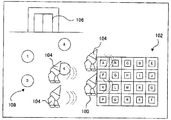
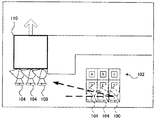
図4には、パズルとして扉106を開けるためのスイッチ108が表示されたゲーム画面の一例が示される。この図4のスイッチ108は所定の形態で配置された4つのボタンスイッチ1−4を含み、このスイッチ108の近くには該スイッチ108に対応する分身ブロック102が設けられている。扉106は、全てのボタンスイッチが同時に押されたときに開かれる。プレイヤは、ブロック片A−Tがマトリックス状に配置された分身ブロック102を用いて、このスイッチ108に適合するようにプレイヤキャラクタ100の分身を作成する。
FIG. 4 shows an example of a game screen on which a
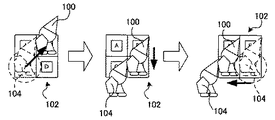
図5には、分身キャラクタ104の作成の概要が示される。図4のスイッチ108に適合するためには、分身ブロック102のうち、一例としてブロック片F,D,P,Nの位置に、分身キャラクタ104とプレイヤキャラクタ100とが配置されたような隊形を作成すればよい。
FIG. 5 shows an outline of creation of the
この実施例では、プレイヤは、まず、方向スイッチ20aを操作してプレイヤキャラクタ100をブロック片Fの位置に移動させて、所定の操作スイッチ20(たとえば動作スイッチ20b)を操作する。これによって、ブロック片Fの位置にはプレイヤキャラクタ100のコピーとして分身キャラクタ104が生成される。次に、プレイヤは、プレイヤキャラクタ100をブロック片Dの位置に移動させる。このとき、図5の左側に示すように、作成された分身キャラクタ104はブロック片Fの位置に留まったままであり、プレイヤキャラクタ100のみが移動する。そして、プレイヤは、ブロック片Dの位置で所定の操作スイッチ20を操作して、該位置にさらに分身キャラクタ104を作成する。続けて、ブロック片Pの位置でも、同様にして、さらに分身キャラクタ104を作成する。最後に、プレイヤは、プレイヤキャラクタ100をブロック片Nの位置に移動させて、所定の操作スイッチ20を操作する。このようにして、図5の右側に示すように、所望の隊形を組んだプレイヤキャラクタ100と分身キャラクタ104とを作成することができる。
In this embodiment, the player first operates the
分身キャラクタ104の作成後、図6に示すように、プレイヤは、方向スイッチ20aを操作して、プレイヤキャラクタ100と分身キャラクタ104とをスイッチ108の方へ移動させる。このとき、プレイヤキャラクタ100と分身キャラクタ104とは、その隊形を維持したまま移動する。また、後述するように、分身キャラクタ104には表示制限時間が設定されているので、プレイヤは、プレイヤキャラクタ100および分身キャラクタ104を制限時間内にスイッチ108の位置に移動させる必要がある。
After creating the
そして、図7に示すように、プレイヤは、所望の隊形ないし配置パターンを有するプレイヤキャラクタ100および分身キャラクタ104を、スイッチ108上に重ねる。この場合、スイッチ108の全てのスイッチボタンが同時に押されたので、このパズルが解決されたと判断され、扉106の開く画像が生成されて表示される。
Then, as shown in FIG. 7, the player superimposes the
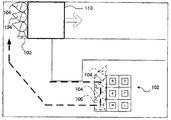
また、図8には、パズルとして大きなブロック110が表示されたゲーム画面の一例が示される。このブロック110は、プレイヤキャラクタ100のみでは動かすことができないものであり、その近くには該ブロック110に対応する分身ブロック102が設けられている。ブロック110の所定の辺がその長さに相当する数のプレイヤキャラクタ100および分身キャラクタ104によって接触されたときに、このブロック110を動かすことが可能になる。プレイヤは、このブロック110を動かすために、ブロック片A−Iがマトリックス状に配置された分身ブロック102を用いて、分身キャラクタ104を作成する。
FIG. 8 shows an example of a game screen on which a
この状態のブロック110に適合するためには、横方向に3つのキャラクタが並べられた隊形を作成する必要がある。つまり、図9に示すように、分身ブロック102のうち、一例としてブロック片G,H,Iの位置に、分身キャラクタ104とプレイヤキャラクタ100とが配置されたような隊形を作成すればよい。プレイヤは、上述のように、各ブロック片G,H,Iの上にプレイヤキャラクタ100を移動させるとともに所定の操作スイッチ20を操作することによって、図9中に破線で示すように、所望の隊形を形成した分身キャラクタ104とプレイヤキャラクタ100を作成することができる。
In order to conform to the
そして、プレイヤは、この隊形を移動させ、ブロック110の下辺に接触させる。これによって、図8の状態のブロック110のパズルが解決されたと判断され、このブロック110を画面上方へ移動させることができる。分身キャラクタ104の表示には、制限時間が設定されているので、プレイヤはブロック110の移動をこの制限時間内に完了させる必要がある。
Then, the player moves the formation and contacts the lower side of the
図10に示すように、分身キャラクタ104の表示制限時間を超えたときには、プレイヤキャラクタ100のみが残り、分身キャラクタ104は画面上から消滅する。なお、図10では、消滅した分身キャラクタ104を点線で示す。
As shown in FIG. 10, when the display time limit of the
また、この図10の状態のブロック110は、プレイヤキャラクタ100のみでは動かせないので、プレイヤは、再び所望の隊形のプレイヤキャラクタ100および分身キャラクタ104を、分身ブロック102を用いて作成する。この状態のブロック110は、その左辺に接触することによって画面の右方向へ移動させる必要があり、隊形の変更が必要である。
Further, since the
図10の状態のブロック110に適合するためには、縦方向に3つのキャラクタが並べられた隊形を作成する必要がある。つまり、図11に示すように、分身ブロック102のうち、一例としてブロック片A,D,Gの位置に、分身キャラクタ104とプレイヤキャラクタ100とが配置されたような隊形を形成すればよい。具体的には、プレイヤは、上述と同様にして、各ブロック片A,D,Gの上にプレイヤキャラクタ100を移動させるとともに所定の操作スイッチ20を操作することによって、図11中で破線で示すように、所望の隊形を作成する。
In order to conform to the
そして、プレイヤは、この隊形を移動させてブロック110の左辺に接触させる。これによって、図10の状態のブロック110のパズルが解決されたと判断され、図11に示すように、このブロック110を画面の右方向へ動かすことが可能になる。
Then, the player moves the formation so as to contact the left side of the
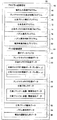
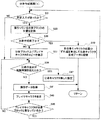
図12には、このゲーム装置10のゲーム動作の一例が示される。図12の最初のステップS1で、CPU30は初期設定を実行する。たとえば、ゲームフィールド上にパズル画像(扉106およびスイッチ108、またはブロック110など)、プレイヤキャラクタ100、および分身ブロック102などを表示する。これによって、たとえば図4または図8に示すようなパズルを含むゲーム画面がLCD18に表示される。
FIG. 12 shows an example of the game operation of the
次に、ステップS3で、CPU30は、操作スイッチ20からの操作入力データを取得して操作データバッファ領域82に一時記憶する。続いて、ステップS5で、CPU30は画像処理ユニット36等を用いてプレイヤキャラクタ100をLCD18に表示する。たとえば、取得した操作入力データに基づいてプレイヤキャラクタ100の少なくとも位置を含む制御データが更新されて、プレイヤキャラクタ制御データ領域84に一時記憶される。そして、プレイヤキャラクタ制御データおよびプレイヤキャラクタ画像データに基づいて、プレイヤの操作に応じたプレイヤキャラクタ100の画像が生成される。
Next, in step S <b> 3, the
そして、ステップS7では、CPU30は、分身キャラクタ104があるか否かを判断する。たとえば分身キャラクタ生成データ領域86に分身キャラクタ104の制御データが記憶されているかどうか、あるいは分身キャラクタ104の有無を示すフラグがオンになっているか否かなどを判断する。ステップS7で“YES”であれば、ステップS9で、CPU30は画像処理ユニット36等を用いて分身キャラクタ104をLCD18に表示する。たとえば、プレイヤキャラクタ100の制御データ(位置データ)と各分身キャラクタ104の制御データ(プレイヤキャラクタ100との相対位置)とに基づいて、各分身キャラクタ104の表示位置を算出する。そして、プレイヤキャラクタ画像データを用いて、算出された各分身キャラクタ104の位置に、各分身キャラクタ104の画像を生成する。これによって、生成されたときのプレイヤキャラクタ100との相対的な位置関係を保持してプレイヤキャラクタ100に関連的に配置された分身キャラクタ104が表示される。こうして、隊形を形成したプレイヤキャラクタ100と分身キャラクタ104とが表示される。
In step S <b> 7, the
ステップS11では、CPU30は、分身キャラクタ104の表示が制限時間を超えたかどうかを判断する。分身キャラクタ104の表示時間は、たとえば最初の分身キャラクタ104が表示されたときにカウントされ始める。ステップS11で“YES”であれば、ステップS13で、CPU30は、たとえば分身キャラクタ生成データ領域86をクリアすることによって、分身キャラクタ無しに設定する。一方、ステップS7で“NO”であれば、または、ステップS11で“NO”であれば、そのままステップS15へ進む。
In step S <b> 11, the
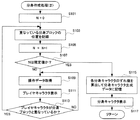
ステップS15では、CPU30は、プレイヤキャラクタ制御データと分身ブロックデータとに基づいて、プレイヤキャラクタ100が分身ブロック102と重なっているか否かを判断する。このステップS15で“YES”であれば、つまり、プレイヤがプレイヤキャラクタ100を分身ブロック102上に乗せた場合には、CPU30は、続くステップS17で分身作成処理を実行する。この分身作成処理の動作は、後述するように図13に詳細に示される。この処理では、プレイヤの操作に応じて、分身ブロック102を用いて分身キャラクタ104が作成され、隊形を組んだプレイヤキャラクタ100と分身キャラクタ104が形成される。一方、ステップS15で“NO”でればステップS19へ進む。
In step S <b> 15, the
ステップS19では、CPU30は、プレイヤキャラクタ制御データおよびパズル表示用データに基づいて、プレイヤキャラクタ100がパズルに接触したか否かを判断する。つまり、プレイヤキャラクタ100が、扉106を開くためのスイッチ108またはブロック110などに接触したか否かが判断される。このステップS19で“YES”であれば、CPU30は、続くステップS21でパズル判定処理を実行する。このパズル判定処理の動作は、後述するように図14(扉106のスイッチ108の場合)および図15(ブロック110の場合)に詳細に示される。この処理では、パズルが解決されたか否かが判断され、解決された場合にはゲームの進行に変化が与えられる。
In step S19, the
一方、ステップS19で“NO”であれば、またはステップS21を終了すると、続くステップS23で、CPU30は、ゲーム終了であるか否かを判断する。このステップS23で“NO”であれば、ステップS3へ戻って処理を繰り返す。そして、このステップS23で“YES”であれば、ゲームを終了するための処理を実行して、処理を終了する。
On the other hand, if “NO” in the step S19, or when the step S21 is ended, in a succeeding step S23, the
図13には、図12のステップS17の分身作成処理の動作の一例が示される。図13の最初のステップS31で、CPU30は、所定の操作入力があったか否かを判断する。つまり、プレイヤキャラクタ100が分身ブロック102上に重なった状態で、所定の操作スイッチ20の操作入力があったか否かが操作データバッファ領域82のデータに基づいて判断される。ステップS31で“YES”であれば、ステップS33で、CPU30は、プレイヤキャラクタ100の重なっている分身ブロック102のブロック片の位置をWRAM34の所定の領域に記録する。一方、ステップS31で“NO”であれば、ステップS39へ進む。
FIG. 13 shows an example of the operation of the alternation creation process in step S17 of FIG. In the first step S31 of FIG. 13, the
続いて、ステップS35で、CPU30は、分身の作成は終了であるか否かを判断する。この実施例では、作成すべき分身キャラクタ104の数がパズルに応じて決まっているので、たとえば、ステップS33で記憶された位置の数が、その分身キャラクタ104の作成の規定数に「1」(プレイヤキャラクタ100の数)を加算した数に一致するか否かが判断される。あるいは、分身の作成の終了をプレイヤの所定の操作スイッチ20の操作によって入力させる場合には、作成終了を指示する操作入力があったか否かを判断するようにしてもよい。
Subsequently, in step S35, the
ステップS35で“NO”であれば、つまり、分身キャラクタ104の作成の場合には、ステップS37で、CPU30は、画像処理ユニット36等を用いて、ステップS33で記憶した分身ブロック102のブロック片上に、分身キャラクタ104としてプレイヤキャラクタ100のコピーを表示する。なお、ここでは、図示は省略してあるが、たとえば最初の分身キャラクタ104を表示したときに、CPU30は、分身キャラクタ104の表示時間のカウントを開始する。
If “NO” in the step S35, that is, if the
ステップS39では、CPU30は、分身キャラクタ104の表示が制限時間を超えたか否かを判断する。ステップS39で“NO”であれば、つまり、制限時間内であって、分身キャラクタ104の作成を続行してよい場合には、CPU30は、ステップS41で、図12のステップS3と同様にして、操作入力データを取得して操作データバッファ領域82に一時記憶する。そして、CPU30は、ステップS43で、図12のステップS5と同様にして、操作入力に応じてプレイヤキャラクタ100をLCD18に表示する。
In step S39, the
続いて、ステップS45で、CPU30は、図12のステップS15と同様にして、プレイヤキャラクタ100が分身ブロック102と重なっているか否かを判断する。このステップS45で“NO”であれば、ステップS39に戻って処理を繰り返す。一方、ステップS45で“YES”であれば、ステップS31へ戻って処理を繰り返す。
Subsequently, in step S45, the
また、ステップS39で“YES”であれば、つまり、分身キャラクタ104の作成の途中で、分身キャラクタ104の表示の制限時間を超えた場合には、ステップS47で、CPU30は、ステップS33で記憶した位置データをクリアして、分身キャラクタ無しに設定する。そして、ステップS37で表示した分身キャラクタ104の画像をVRAM42から消去しLCD18に表示させないようにする。ステップS47を終了すると、この分身作成処理を終了して図12のステップS19へ戻る。
On the other hand, if “YES” in the step S39, that is, if the time limit for displaying the
また、ステップS35で“YES”であれば、つまり、分身キャラクタ104の作成が終了した場合には、続くステップS49で、CPU30は、ステップS33で記憶した各位置データに基づいて、プレイヤキャラクタ100の位置に対する各分身キャラクタ104の位置のズレ値を算出して、分身キャラクタ生成データ領域86に記憶する。ステップS49を終了すると、この分身作成処理を終了して図12のステップS19へ戻る。
If “YES” in the step S35, that is, if the creation of the
図14には、図12のステップS21のパズル判定処理の動作の一例が示される。この図14のパズル判定処理はパズルが扉106を開くスイッチ108である場合に適用されるものである。図14の最初のステップS61で、CPU30は、スイッチ108のうちいずれかのスイッチボタンの位置とプレイヤキャラクタ100の位置が同じであるか否かを判断する。このステップS61で“NO”であれば、パズルは解決されていないので、このパズル判定処理を終了して図12のステップS23へ戻る。
FIG. 14 shows an example of the operation of the puzzle determination process in step S21 of FIG. The puzzle determination process of FIG. 14 is applied when the puzzle is a
一方、ステップS61で“YES”であれば、続くステップS63で、CPU30は、スイッチ108の他のスイッチボタンの位置と分身キャラクタ104のいずれかの位置とが同じであるか否かを判断する。このステップS63で“NO”であれば、パズルは解決されていないので、このパズル判定処理を終了して図12のステップS23へ戻る。
On the other hand, if “YES” in the step S61, the
ステップS63で“YES”であれば、続くステップS65で、CPU30は、スイッチ108の全てのスイッチボタンについて位置の判定が終了したか否かを判断する。
If “YES” in the step S63, the
ステップS65で“NO”であれば、ステップS67で、CPU30は、スイッチ108の他の(判定の終了していない)スイッチボタンの位置と、他の分身キャラクタ104のいずれかの位置が同じであるか否かを判断する。ステップS67で“NO”であれば、パズルは解決されていないので、このパズル判定処理を終了して図12のステップS23へ戻る。
If “NO” in the step S65, the
一方、ステップS67で“YES”であれば、ステップS65へ戻って処理を繰り返す。そして、ステップS65で“YES”であれば、つまり、スイッチ108の残りの全てのスイッチボタンの位置と、残りの分身キャラクタ104の位置とが同じであった場合には、パズルが解決されたと判断できる。したがって、続くステップS69で、CPU30は、画像処理ユニット36等を用いて、扉106が開く様子を示す画像を生成してLCD18に表示する。ステップS69を終了すると、このパズル判定処理を終了して図12のステップS23へ戻る。
On the other hand, if “YES” in the step S67, the process returns to the step S65 to repeat the process. If “YES” in the step S65, that is, if the positions of all the remaining switch buttons of the
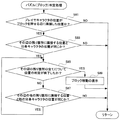
また、図15には、図12のステップS21のパズル判定処理の動作の他の一例が示される。この図15のパズル判定処理は、パズルが大きなブロック110である場合に適用されるものである。図15の最初のステップS81で、CPU30は、プレイヤキャラクタ100の位置が、ブロック110を押すことが可能な辺に隣接した位置であるかどうかを判断する。たとえば図9の例では、プレイヤキャラクタ100の位置がブロック110の下辺に隣接した位置であるか否かが判断される。このステップS81で“NO”であれば、パズルは解決されていないので、このパズル判定処理を終了して図12のステップS23へ戻る。
FIG. 15 shows another example of the operation of the puzzle determination process in step S21 of FIG. The puzzle determination process of FIG. 15 is applied when the puzzle is a
一方、ステップS81で“YES”であれば、続くステップS83で、CPU30は、その辺の残りの箇所に隣接する位置と、分身キャラクタ104のいずれかの位置とが同じであるか否かを判断する。このステップS83で“NO”であれば、パズルは解決されていないので、このパズル判定処理を終了して図12のステップS23へ戻る。
On the other hand, if “YES” in the step S81, the
ステップS83で“YES”であれば、CPU30は、ステップS85で、その辺の残り箇所の全てについて位置の判定が終了したか否かを判断する。
If “YES” in the step S83, the
このステップS85で“NO”であれば、CPU30は、ステップS87で、その辺の他の(判定の終了していない)残り箇所に隣接する位置と、他の分身キャラクタ104のいずれかの位置とが同じであるか否かを判断する。このステップS87で“NO”であれば、パズルは解決されていないので、このパズル判定処理を終了して図12のステップS23へ戻る。
If “NO” in this step S85, the
一方、ステップS87で“YES”であれば、ステップS85へ戻って処理を繰り返す。そして、ステップS85で“YES”であれば、つまり、ブロック110の当該辺の残り箇所に隣接する位置の全てと、残りの分身キャラクタ104の位置とが同じであった場合には、パズルが解決されたと判断できる。したがって、続くステップS89で、CPU30は、画像処理ユニット36等を用いて、隊形を組んだプレイヤキャラクタ100と分身キャラクタ104に押されてブロック110が移動する様子を示す画像を生成してLCD18に表示する。ステップS89を終了すると、このパズル判定処理を終了して図12のステップS23へ戻る。
On the other hand, if “YES” in the step S87, the process returns to the step S85 to repeat the process. If “YES” in the step S85, that is, if all the positions adjacent to the remaining portions of the side of the
この実施例によれば、分身キャラクタ104とプレイヤキャラクタ100との隊形ないし配置パターンが、パズルの画像に示された所定の条件を満足するとき、ゲームの進行が変化される。したがって、戦略的に分身キャラクタ104を作成してプレイヤキャラクタ100に関連的に配置することが要求される、興趣性に優れた新しいパズルゲームを提供することができる。
According to this embodiment, the progress of the game is changed when the formation or arrangement pattern of the
また、分身キャラクタ104の表示には制限時間が設けられるので、パズルの解決のためには戦略と迅速なプレイが要求される。したがって、パズルの解決に緊張感をより与えることができ、パズルゲームの興趣性をより高めることができる。
In addition, since a time limit is provided for the display of the
また、分身キャラクタ104を作成する際には、パズル画像の示す所定の条件に適合する隊形ないし配置パターンを考慮しつつ、分身ブロック102の所望の作成位置に上手くプレイヤキャラクタを重ねていくことが要求される。したがって、プレイヤキャラクタ100の分身を作る作業に新しい操作を取り入れたパズルゲームを提供できる。
Also, when creating the
なお、上述の実施例では、プレイヤキャラクタ100が分身ブロック102のブロック片上に重ねられた状態で所定の操作入力があったときに、分身キャラクタ104を生成してそのブロック片の位置に表示するようにしていた。しかしながら、図16に示すような他の実施例では、プレイヤキャラクタ100が分身ブロック102のブロック片上に重ねられただけで、所定の操作入力無しに、そのブロック片の位置に分身キャラクタ104を生成するようにしてもよい。この場合には、分身ブロック102のブロック片上に規定回数プレイヤキャラクタ100が重ねられたときに初めて、分身キャラクタ104の全てを表示するようにしてもよい。
In the above-described embodiment, when a predetermined operation input is made with the
すなわち、図16のゲーム画面では、パズルとして扉106を開けるためのスイッチ108が設けられ、近くにこのスイッチ108に対応する分身ブロック102が設けられる。スイッチ108は、所定形態に配置された4つのスイッチボタン1−4を含むので、3つの分身キャラクタ104を作成する必要があることがわかる。したがって、この実施例では、プレイヤキャラクタ100を分身ブロック102の上にちょうど4回だけ重ねる必要がある。分身ブロック102ではブロック片A−Nが矩形枠状に配置されている。このスイッチ108に適合するためには、分身ブロック102のうち4つのブロック片C,G,L,Fの位置に、分身キャラクタ104とプレイヤキャラクタ100とが配置されたような隊形を作成すればよい。
That is, in the game screen of FIG. 16, a
この隊形を形成する際には、図17の左側に示すように、プレイヤは、方向スイッチ20aを操作して、プレイヤキャラクタ100をたとえばブロック片C,G,L,Fの上に順に乗せる。ただし、プレイヤは、分身ブロック102の他のブロック片上にプレイヤキャラクタ100が乗らないように、プレイヤキャラクタ100を移動させる必要がある。このような操作によって、プレイヤキャラクタ100をブロック片F上に乗せたときには、図17の右側に示すように、ブロック片C,G,Lの位置に分身キャラクタ104が表示される。こうして、所望の隊形を形成したプレイヤキャラクタ100と分身キャラクタ104とが得られる。
When forming this formation, as shown on the left side of FIG. 17, the player operates the
したがって、この実施例では、分身ブロック102上にプレイヤキャラクタ100を重ねただけで所定の操作入力無しに分身キャラクタ104が生成されるので、プレイヤは、方向スイッチ20aによる移動操作だけで簡単に分身キャラクタ104を作成することができる。ただし、分身キャラクタ104を生成したい位置以外にはプレイヤキャラクタ100を分身ブロック102上に乗せてはいけないので、慎重な操作が要求される。また、プレイヤキャラクタ100を分身ブロック102のブロック片上に規定回数重ねて初めて分身キャラクタ104が表示されるので、プレイヤは、分身キャラクタ104を作成したい位置を予め充分に検討するとともに覚えておかねばならない。したがって、分身キャラクタ102の作成自体の難易度は高めることができ、パズルゲームの興趣性を向上することができる。
Therefore, in this embodiment, the
図18には、この他の実施例における図12のステップS17の分身作成処理の動作の一例が示される。図18の最初のステップS101で、CPU30は分身ブロック102のブロック片上に重なった回数をカウントするための変数Nに初期値「0」を設定する。
FIG. 18 shows an example of the operation of the alternation creation process in step S17 of FIG. 12 in this other embodiment. In the first step S101 in FIG. 18, the
次に、ステップS103で、CPU30は、プレイヤキャラクタ100の重なっている分身ブロック102のブロック片の位置をWRAM34の所定領域に記憶する。
Next, in step S <b> 103, the
続いて、CPU30は、ステップS105で変数Nに「1」を加算して、ステップS107で、変数Nの値が規定値であるか否かを判断する。たとえば図16の例ではNが「4」であるか否かが判断される。
Subsequently, the
ステップS107で“NO”であれば、CPU30は、ステップS109で、図12のステップS3と同様にして操作入力データを取得する。そして、CPU30は、ステップS111で、図12のステップS5と同様にして、操作入力に応じてプレイヤキャラクタ100をLCD18に表示する。
If “NO” in the step S107, the
続いて、CPU30は、ステップS113で、図12のステップS15と同様にして、プレイヤキャラクタ100が分身ブロック102と重なっているかどうかを判断する。ステップS105で“NO”であれば、ステップS109に戻って処理を繰り返す。また、ステップS105で“YES”であれば、ステップS103に戻って処理を繰り返す。
Subsequently, in step S113, the
一方、ステップS107で“YES”であれば、つまり、プレイヤキャラクタ100が分身ブロック102のブロック片の上に規定回数重ねられた場合には、CPU30は、ステップS115で、各分身キャラクタ104のプレイヤキャラクタ100とのズレ値を、ステップS103で記憶した各位置データに基づいて算出して、分身キャラクタ生成データ領域86に記憶する。そして、CPU30は、ステップS117で、図12のステップS9と同様にして、分身キャラクタ104をLCD18に表示する。ステップS117を終了すると、この分身作成処理を終了して図12のステップS19へ戻る。
On the other hand, if “YES” in the step S107, that is, if the
また、上述の各実施例では、分身ブロック102は、パズルとしての扉106を開くスイッチ108やブロック110の形態に対応して、その形態を含んだ形態に形成されていた。しかしながら、図19に示すような他の実施例では、分身ブロック102の形態は、パズルの形態を含まないものであってもよい。
Further, in each of the above-described embodiments, the
すなわち、図19のゲーム画面では、パズルとして扉106を開けるためのスイッチ108が設けられる。スイッチ108は、所定形態に配置された3つのスイッチボタン1−3を含む。スイッチ108の近くには分身ブロック102が設けられるが、この分身ブロック102は、該スイッチ108の形態を含まない、ブロック片A−Dが2×2のマトリックス状に配置された形態を有する。したがって、この実施例では、隊形を形成する際には、分身キャラクタ104を分身ブロック102上の所定の位置に生成していくだけでは足りない。そこで、この実施例では、分身キャラクタ104が生成された後でたとえば所定の操作入力があったときに分身キャラクタ104を表示し、その後、分身キャラクタ104を、プレイヤキャラクタ100の移動に従わせて移動させるようにしている。
That is, on the game screen of FIG. 19, a
このため、プレイヤは、分身キャラクタ104を生成するたびに、その分身キャラクタ104をプレイヤキャラクタ100とともに移動させながら、全体の隊形を形作っていかねばならない。つまり、プレイヤは、各分身キャラクタ104の生成位置と移動とを考慮しつつ分身キャラクタ104を作成していくことが要求される。したがって、分身キャラクタ104の作成の難易度をより高めることができ、パズルゲームの興趣性をより向上できる。さらに、分身キャラクタ104の表示に時間制限が設けられる場合には、プレイヤは隊形をより迅速に形成しなければならない。したがって、プレイヤに緊張感を与えることができるとともに、プレイヤはより緻密な戦略を立てることが要求されるので、パズルゲームの興趣性をさらに高めることができる。
For this reason, every time the player creates the
このスイッチ108に適合する隊形を形成する際には、図20の左側に示すように、プレイヤは、方向スイッチ20aを操作して、プレイヤキャラクタ100を、まず、ブロック片Cの上に乗せて所定の操作スイッチ20を操作する。これによって、ブロック片Cの位置に分身キャラクタ104が生成される。次に、プレイヤは、プレイヤキャラクタ100をブロック片Bの上に移動させて、たとえば所定の操作スイッチ20を操作する。これによって、ブロック片Cの位置に分身キャラクタ104が表示される。このとき、この分身キャラクタ104とプレイヤキャラクタ100との相対的なズレ値が算出されて、この分身キャラクタ104の制御データとして分身キャラクタ生成データ領域84に記憶されている。したがって、分身キャラクタ104は、このときのプレイヤキャラクタ100との相対位置関係を維持したまま、プレイヤキャラクタ100に従って移動する。
When forming a formation conforming to the
続いて、図20の中央に示すように、プレイヤは、プレイヤキャラクタ100をブロック片Dの上に移動させて、所定の操作スイッチ20を操作する。これによって、ブロック片Dの位置に更なる分身キャラクタ104が生成される。そして、図20の右側に示すように、プレイヤは、プレイヤキャラクタ100をブロック片Cの位置に移動させて、所定の操作スイッチ20を操作する。これによって、ブロック片Dの位置に更なる分身キャラクタ104が表示されるとともに、プレイヤキャラクタ100と分身キャラクタ104との隊形が確定する。また、先の分身キャラクタ104の場合と同様に、この更なる分身キャラクタ104の位置を示すズレ値が算出されて分身キャラクタ生成データ領域に記憶される。このようにして、スイッチ108に適合する隊形を組んだプレイヤキャラクタ100と分身キャラクタ104とを形成することができる。
Subsequently, as shown in the center of FIG. 20, the player moves the
なお、上述の図20の例では、プレイヤによる所定の操作入力(動作スイッチ20b等の操作)があったときに分身キャラクタ104を生成する分身作成処理が適用される場合を説明したが、この図19実施例でも、上述の図16実施例と同様に、プレイヤキャラクタ100が分身ブロック104のブロック片上に重ねられただけで所定入力なしに分身キャラクタ104を生成する分身作成処理が適用されてよいのはもちろんである。この場合には、たとえば図20の左側に示すような分身ブロック102上での斜め移動が行われると、プレイヤキャラクタ100が意図しないブロック片Dを踏んでしまうこともあり得る。したがって、分身ブロック102のブロック片の領域に対して所定の割合(たとえば50%)以上プレイヤキャラクタ100が重ねられたときに該ブロック片の位置に分身キャラクタ104を生成するような処理を行うことによって、分身ブロック102上の移動に対応するようにしてもよい。
In the example of FIG. 20 described above, a case has been described in which a part creation process for generating a
また、上述の各実施例では、パズルが解決されたときには、パズルが解決されたことに応じて変化した画像を表示することによって、ゲームの進行に変化または影響を与えるようにしていた。詳しくは、扉106の場合には扉106が開く画像を表示し、また、ブロック110の場合には該ブロック110が移動する画像を表示することで、ゲーム進行上の障害が解除されたことをプレイヤに知らせていた。つまり、上述の各実施例では、パズル解決時には、画面上見えていたもの(たとえば障害)が変化する様子を表示していた。しかしながら、パズルが解決されたときに与えられるゲームの進行上の変化は、上述のものに限られるものではない。他の実施例では、たとえば、画面上見えていなかったものが見えるように画像を変化させてもよい。一例として、通れなかったところに橋が架かったり、ダンジョンが出現したり、アイテムが降ってきたりといった種々の変化が考えられる。また、画面上見える変化ではなく、画面上見えない変化を与えるようにしてもよい。一例として、プレイヤキャラクタ100をパワーアップさせたり、レベルアップさせたりといった属性値の変化が考えられる。
Further, in each of the above-described embodiments, when a puzzle is solved, an image changed according to the puzzle being solved is displayed, thereby changing or affecting the progress of the game. Specifically, in the case of the
10 …ゲーム装置
12 …ゲーム機
14 …カートリッジ
18 …LCD
20 …操作スイッチ
32 …CPU
34 …ROM
36 …WRAM
100 …プレイヤキャラクタ
102 …分身ブロック
104 …分身キャラクタ
108 …スイッチ
110 …ブロック
DESCRIPTION OF
20 ...
34 ROM
36 ... WRAM
100 ...
Claims (10)
ゲーム画像を表示する表示手段、
前記操作手段の入力に応じて、プレイヤの操作するプレイヤキャラクタを前記表示手段に表示するプレイヤキャラクタ表示制御手段、
解決すべき所定の条件を示すパズル画像を前記表示手段に表示するパズル表示制御手段、
少なくともゲームフィールド内の所定の位置にプレイヤキャラクタが存在したことに基づいて、前記プレイヤキャラクタの複製である分身キャラクタを生成する分身キャラクタ生成手段、
前記分身キャラクタ生成手段によって生成されたときのプレイヤキャラクタとの相対的な位置関係を保持して、前記プレイヤキャラクタと関連的に配置された前記分身キャラクタを前記表示手段に表示する分身キャラクタ表示制御手段、
前記プレイヤキャラクタと前記分身キャラクタとの配置パターンが前記パズル画像の示す所定の条件を満足したか否かを判断するパズル解決判断手段、および
前記パズル解決判断手段によって前記所定の条件が満足されたと判断されたとき、ゲームの進行を変化させる進行変化手段を備える、パズルゲーム装置。 Operation means for the player to perform game operations;
Display means for displaying game images;
Player character display control means for displaying a player character operated by the player on the display means in response to an input from the operation means;
Puzzle display control means for displaying a puzzle image indicating a predetermined condition to be solved on the display means;
A surrogate character generating means for generating a surrogate character that is a copy of the player character based on the presence of the player character at a predetermined position in at least the game field;
Standing character display control means for maintaining the relative positional relationship with the player character when generated by the standing character generating means and displaying the standing character arranged in association with the player character on the display means. ,
A puzzle solution determining means for determining whether or not an arrangement pattern of the player character and the clone character satisfies a predetermined condition indicated by the puzzle image; and determining that the predetermined condition is satisfied by the puzzle solution determining means A puzzle game apparatus comprising progress changing means for changing the progress of the game when played.
分身キャラクタを作成可能な複数の作成位置が所定の形態で配置されている分身ブロックを前記表示手段に表示する分身ブロック表示制御手段と、
プレイヤキャラクタが前記分身ブロックの作成位置に重なったことに基づいて、その重なった作成位置に前記プレイヤキャラクタの複製を生成する複製生成手段とを含む、請求項1記載のパズルゲーム装置。 The alternation character generation means includes:
A clone block display control means for displaying a clone block in which a plurality of creation positions capable of creating a clone character are arranged in a predetermined form on the display means;
The puzzle game apparatus according to claim 1, further comprising: copy generation means for generating a copy of the player character at the overlapped creation position based on the player character overlapping the creation block creation position.
前記操作手段の入力に応じて、プレイヤの操作するプレイヤキャラクタを前記表示手段に表示するプレイヤキャラクタ表示制御ステップ、
解決すべき所定の条件を示すパズル画像を前記表示手段に表示するパズル表示制御ステップ、
少なくともゲームフィールド内の所定の位置にプレイヤキャラクタが存在したことに基づいて、前記プレイヤキャラクタの複製である分身キャラクタを生成する分身キャラクタ生成ステップ、
前記分身キャラクタ生成ステップによって生成されたときのプレイヤキャラクタとの相対的な位置関係を保持して、前記プレイヤキャラクタと関連的に配置された前記分身キャラクタを前記表示手段に表示する分身キャラクタ表示制御ステップ、
前記プレイヤキャラクタと前記分身キャラクタとの配置パターンが前記パズル画像の示す所定の条件を満足したか否かを判断するパズル解決判断ステップ、および
前記パズル解決判断ステップによって前記所定の条件が満足されたと判断されたとき、ゲームの進行を変化させる進行変化ステップを実行させる、パズルゲームプログラム。 A puzzle game program for causing a game device including an operation means for a player to perform a game operation and a display means for displaying a game image to function as a puzzle game device, the processor of the game device,
A player character display control step of displaying on the display means a player character operated by a player in response to an input from the operation means;
A puzzle display control step of displaying a puzzle image indicating a predetermined condition to be solved on the display means;
A clone character generation step of generating a clone character that is a copy of the player character based on the presence of the player character at least at a predetermined position in the game field;
A clone character display control step for displaying the clone character arranged in association with the player character on the display means while maintaining a relative positional relationship with the player character when generated by the clone character generation step. ,
A puzzle solution determining step for determining whether or not an arrangement pattern of the player character and the substitute character satisfies a predetermined condition indicated by the puzzle image; and determining that the predetermined condition is satisfied by the puzzle solution determining step A puzzle game program that, when played, causes a progress change step to change the progress of the game.
分身キャラクタを作成可能な複数の作成位置が所定の形態で配置されている分身ブロックを前記表示手段に表示する分身ブロック表示制御ステップと、
プレイヤキャラクタが前記分身ブロックの作成位置に重なったことに基づいて、その重なった作成位置に前記プレイヤキャラクタの複製を生成する複製生成ステップとを含む、請求項6記載のパズルゲームプログラム。 The alternation character generation step includes:
A branch block display control step of displaying on the display means a clone block in which a plurality of creation positions capable of creating a clone character are arranged in a predetermined form;
The puzzle game program according to claim 6, further comprising: a replica generation step of generating a replica of the player character at the overlapped creation position based on the player character overlapping the creation block creation position.
Priority Applications (4)
| Application Number | Priority Date | Filing Date | Title |
|---|---|---|---|
| JP2004120974A JP4117264B2 (en) | 2004-04-16 | 2004-04-16 | Puzzle game apparatus and puzzle game program |
| US11/099,523 US7467998B2 (en) | 2004-04-16 | 2005-04-06 | Puzzle game apparatus, storage medium storing puzzle game program, and puzzle game controlling method |
| EP05102783A EP1586357B1 (en) | 2004-04-16 | 2005-04-08 | Puzzle game apparatus, storage medium storing puzzle game program, and puzzle game controlling method |
| DE602005012336T DE602005012336D1 (en) | 2004-04-16 | 2005-04-08 | Puzzle device, puzzle control process and corresponding recording medium |
Applications Claiming Priority (1)
| Application Number | Priority Date | Filing Date | Title |
|---|---|---|---|
| JP2004120974A JP4117264B2 (en) | 2004-04-16 | 2004-04-16 | Puzzle game apparatus and puzzle game program |
Publications (2)
| Publication Number | Publication Date |
|---|---|
| JP2005296530A true JP2005296530A (en) | 2005-10-27 |
| JP4117264B2 JP4117264B2 (en) | 2008-07-16 |
Family
ID=34939201
Family Applications (1)
| Application Number | Title | Priority Date | Filing Date |
|---|---|---|---|
| JP2004120974A Expired - Lifetime JP4117264B2 (en) | 2004-04-16 | 2004-04-16 | Puzzle game apparatus and puzzle game program |
Country Status (4)
| Country | Link |
|---|---|
| US (1) | US7467998B2 (en) |
| EP (1) | EP1586357B1 (en) |
| JP (1) | JP4117264B2 (en) |
| DE (1) | DE602005012336D1 (en) |
Cited By (9)
| Publication number | Priority date | Publication date | Assignee | Title |
|---|---|---|---|---|
| JP2015054189A (en) * | 2013-09-13 | 2015-03-23 | 任天堂株式会社 | Game program, game device, game system, and game processing method |
| JP2015054190A (en) * | 2013-09-13 | 2015-03-23 | 任天堂株式会社 | Game program, game device, game system, and game processing method |
| JP5702009B1 (en) * | 2014-03-31 | 2015-04-15 | グリー株式会社 | GAME PROGRAM, INFORMATION PROCESSING DEVICE CONTROL METHOD, AND INFORMATION PROCESSING DEVICE |
| JP2015196100A (en) * | 2015-06-29 | 2015-11-09 | グリー株式会社 | GAME PROGRAM, INFORMATION PROCESSING DEVICE CONTROL METHOD, AND INFORMATION PROCESSING DEVICE |
| JP2016116896A (en) * | 2016-02-10 | 2016-06-30 | グリー株式会社 | Game program, control method of information processor, and information processor |
| JP2016221314A (en) * | 2016-08-16 | 2016-12-28 | グリー株式会社 | Game program, control method of information processor, and information processor |
| JP2019093184A (en) * | 2019-02-07 | 2019-06-20 | グリー株式会社 | Game program, control method of information processor, and information processor |
| CN112007359A (en) * | 2020-08-24 | 2020-12-01 | 杭州睿琪软件有限公司 | Image display method, readable storage medium and computer equipment |
| JP2022118232A (en) * | 2020-10-07 | 2022-08-12 | グリー株式会社 | Game program, control method for information processing device, and information processing device |
Families Citing this family (9)
| Publication number | Priority date | Publication date | Assignee | Title |
|---|---|---|---|---|
| JP4116039B2 (en) * | 2006-01-27 | 2008-07-09 | 株式会社スクウェア・エニックス | GAME DEVICE, GAME PROGRESSING METHOD, PROGRAM, AND RECORDING MEDIUM |
| US8584024B2 (en) * | 2008-02-01 | 2013-11-12 | International Business Machines Corporation | Avatar cloning in a virtual world |
| JP5639526B2 (en) * | 2011-03-31 | 2014-12-10 | 株式会社コナミデジタルエンタテインメント | GAME DEVICE, GAME DEVICE CONTROL METHOD, AND PROGRAM |
| JP5869236B2 (en) * | 2011-06-03 | 2016-02-24 | 任天堂株式会社 | Information processing program, information processing apparatus, information processing system, and information processing method |
| JP5937792B2 (en) | 2011-06-03 | 2016-06-22 | 任天堂株式会社 | GAME PROGRAM, GAME DEVICE, GAME SYSTEM, AND GAME PROCESSING METHOD |
| KR101829969B1 (en) * | 2016-01-26 | 2018-02-20 | 엔에이치엔엔터테인먼트 주식회사 | Method for progressing puzzle matching game and game system for progressing puzzle matching game using the method |
| JP6970712B2 (en) * | 2019-06-14 | 2021-11-24 | 任天堂株式会社 | Information processing program, information processing device, information processing system, and information processing method |
| JP7132314B2 (en) * | 2020-12-08 | 2022-09-06 | 株式会社スクウェア・エニックス | Video game processing program and video game processing system |
| CN116785727B (en) * | 2023-05-29 | 2025-05-06 | 宁波大学 | A block generation method for a Candy Crush game |
Family Cites Families (6)
| Publication number | Priority date | Publication date | Assignee | Title |
|---|---|---|---|---|
| US6326963B1 (en) | 1998-01-22 | 2001-12-04 | Nintendo Co., Ltd. | Method and apparatus for efficient animation and collision detection using local coordinate systems |
| JP3998858B2 (en) * | 1999-05-28 | 2007-10-31 | 株式会社バンダイナムコゲームス | GAME DEVICE, GAME DEVICE IMAGE PROCESSING METHOD, AND RECORDING MEDIUM |
| JP2002224435A (en) | 2001-01-30 | 2002-08-13 | Konami Co Ltd | Video game device, player character action control method, and video game program |
| JP2005505357A (en) | 2001-10-10 | 2005-02-24 | ソニー・コンピュータ・エンタテインメント・アメリカ・インク | Method for providing game information by a character in a game environment |
| AU2003268147A1 (en) | 2002-08-20 | 2004-03-11 | Vivendi Universal Games, Inc | Computer game with emotion-based character interraction |
| JP2005007069A (en) * | 2003-06-20 | 2005-01-13 | Nintendo Co Ltd | Game machine, and game program |
-
2004
- 2004-04-16 JP JP2004120974A patent/JP4117264B2/en not_active Expired - Lifetime
-
2005
- 2005-04-06 US US11/099,523 patent/US7467998B2/en not_active Expired - Lifetime
- 2005-04-08 DE DE602005012336T patent/DE602005012336D1/en not_active Expired - Fee Related
- 2005-04-08 EP EP05102783A patent/EP1586357B1/en not_active Expired - Lifetime
Cited By (13)
| Publication number | Priority date | Publication date | Assignee | Title |
|---|---|---|---|---|
| JP2015054190A (en) * | 2013-09-13 | 2015-03-23 | 任天堂株式会社 | Game program, game device, game system, and game processing method |
| JP2015054189A (en) * | 2013-09-13 | 2015-03-23 | 任天堂株式会社 | Game program, game device, game system, and game processing method |
| US10328348B2 (en) | 2014-03-31 | 2019-06-25 | Gree, Inc. | Puzzle battle game |
| JP5702009B1 (en) * | 2014-03-31 | 2015-04-15 | グリー株式会社 | GAME PROGRAM, INFORMATION PROCESSING DEVICE CONTROL METHOD, AND INFORMATION PROCESSING DEVICE |
| US10967275B2 (en) | 2014-03-31 | 2021-04-06 | Gree, Inc. | Puzzle battle game |
| JP2015196100A (en) * | 2015-06-29 | 2015-11-09 | グリー株式会社 | GAME PROGRAM, INFORMATION PROCESSING DEVICE CONTROL METHOD, AND INFORMATION PROCESSING DEVICE |
| JP2016116896A (en) * | 2016-02-10 | 2016-06-30 | グリー株式会社 | Game program, control method of information processor, and information processor |
| JP2016221314A (en) * | 2016-08-16 | 2016-12-28 | グリー株式会社 | Game program, control method of information processor, and information processor |
| JP2019093184A (en) * | 2019-02-07 | 2019-06-20 | グリー株式会社 | Game program, control method of information processor, and information processor |
| CN112007359A (en) * | 2020-08-24 | 2020-12-01 | 杭州睿琪软件有限公司 | Image display method, readable storage medium and computer equipment |
| CN112007359B (en) * | 2020-08-24 | 2023-12-15 | 杭州睿琪软件有限公司 | Image display method, readable storage medium and computer equipment |
| JP2022118232A (en) * | 2020-10-07 | 2022-08-12 | グリー株式会社 | Game program, control method for information processing device, and information processing device |
| JP7335570B2 (en) | 2020-10-07 | 2023-08-30 | グリー株式会社 | Game program, control method for information processing device, and information processing device |
Also Published As
| Publication number | Publication date |
|---|---|
| EP1586357A1 (en) | 2005-10-19 |
| DE602005012336D1 (en) | 2009-03-05 |
| JP4117264B2 (en) | 2008-07-16 |
| US20050233793A1 (en) | 2005-10-20 |
| US7467998B2 (en) | 2008-12-23 |
| EP1586357B1 (en) | 2009-01-14 |
Similar Documents
| Publication | Publication Date | Title |
|---|---|---|
| JP4117264B2 (en) | Puzzle game apparatus and puzzle game program | |
| US8038533B2 (en) | Game system using parent game machine and child game machine | |
| US8251823B2 (en) | Video game processing apparatus, a method and a computer program product for processing a video game | |
| JP5583904B2 (en) | GAME DEVICE AND PROGRAM | |
| JP3440265B2 (en) | Computer-readable recording medium recording video game program, video game program, video game processing method, and video game processing apparatus | |
| JP4137140B2 (en) | Video game processing apparatus and video game processing program | |
| JP4346625B2 (en) | Video game processing apparatus and video game processing program | |
| JP2001029655A (en) | Action selection support method, recording medium, and game device | |
| US7229349B2 (en) | Multi-player game system and multi-player game program | |
| JP2007244536A (en) | Video game processing apparatus, video game processing method, and video game processing program | |
| JP2008125536A (en) | Video game processing apparatus and video game processing program | |
| JP2015054190A (en) | Game program, game device, game system, and game processing method | |
| US20070060347A1 (en) | Video game processing method, video game processing apparatus and video game processing program | |
| JP4167710B2 (en) | Video game processing apparatus and video game processing program | |
| JP4225926B2 (en) | Two-screen display game apparatus and two-screen display game program | |
| JP2004073741A (en) | Game program | |
| JP2007296105A (en) | Video game processing apparatus, video game processing method, and video game processing program | |
| JP5193428B2 (en) | Board game system, game device, game program | |
| JP2008113758A (en) | Video game processing apparatus, video game processing method, and video game processing program | |
| JP6130334B2 (en) | GAME DEVICE, PROGRAM, VIDEO GAME PROCESSING SYSTEM, AND VIDEO GAME PROCESSING PROGRAM | |
| JP2004073589A (en) | Game device, computer game device, and jigsaw puzzle | |
| JP4143241B2 (en) | Puzzle game apparatus and storage medium thereof | |
| JP2003225463A (en) | Training game program, video game apparatus, and training game control method | |
| JP2006314610A (en) | Video game device, program for achieving the video game device and recording medium | |
| JP2001353372A (en) | Link game system, game information storage medium storing link game program, and link game method |
Legal Events
| Date | Code | Title | Description |
|---|---|---|---|
| A621 | Written request for application examination |
Free format text: JAPANESE INTERMEDIATE CODE: A621 Effective date: 20060707 |
|
| A131 | Notification of reasons for refusal |
Free format text: JAPANESE INTERMEDIATE CODE: A131 Effective date: 20070918 |
|
| A521 | Request for written amendment filed |
Free format text: JAPANESE INTERMEDIATE CODE: A523 Effective date: 20071107 |
|
| A02 | Decision of refusal |
Free format text: JAPANESE INTERMEDIATE CODE: A02 Effective date: 20071218 |
|
| A521 | Request for written amendment filed |
Free format text: JAPANESE INTERMEDIATE CODE: A523 Effective date: 20080214 |
|
| A911 | Transfer to examiner for re-examination before appeal (zenchi) |
Free format text: JAPANESE INTERMEDIATE CODE: A911 Effective date: 20080226 |
|
| TRDD | Decision of grant or rejection written | ||
| A01 | Written decision to grant a patent or to grant a registration (utility model) |
Free format text: JAPANESE INTERMEDIATE CODE: A01 Effective date: 20080325 |
|
| A61 | First payment of annual fees (during grant procedure) |
Free format text: JAPANESE INTERMEDIATE CODE: A61 Effective date: 20080421 |
|
| FPAY | Renewal fee payment (event date is renewal date of database) |
Free format text: PAYMENT UNTIL: 20110425 Year of fee payment: 3 |
|
| R150 | Certificate of patent or registration of utility model |
Ref document number: 4117264 Country of ref document: JP Free format text: JAPANESE INTERMEDIATE CODE: R150 Free format text: JAPANESE INTERMEDIATE CODE: R150 |
|
| FPAY | Renewal fee payment (event date is renewal date of database) |
Free format text: PAYMENT UNTIL: 20110425 Year of fee payment: 3 |
|
| FPAY | Renewal fee payment (event date is renewal date of database) |
Free format text: PAYMENT UNTIL: 20110425 Year of fee payment: 3 |
|
| FPAY | Renewal fee payment (event date is renewal date of database) |
Free format text: PAYMENT UNTIL: 20110425 Year of fee payment: 3 |
|
| R250 | Receipt of annual fees |
Free format text: JAPANESE INTERMEDIATE CODE: R250 |
|
| FPAY | Renewal fee payment (event date is renewal date of database) |
Free format text: PAYMENT UNTIL: 20120425 Year of fee payment: 4 |
|
| FPAY | Renewal fee payment (event date is renewal date of database) |
Free format text: PAYMENT UNTIL: 20130425 Year of fee payment: 5 |
|
| R250 | Receipt of annual fees |
Free format text: JAPANESE INTERMEDIATE CODE: R250 |
|
| FPAY | Renewal fee payment (event date is renewal date of database) |
Free format text: PAYMENT UNTIL: 20130425 Year of fee payment: 5 |
|
| FPAY | Renewal fee payment (event date is renewal date of database) |
Free format text: PAYMENT UNTIL: 20140425 Year of fee payment: 6 |
|
| R250 | Receipt of annual fees |
Free format text: JAPANESE INTERMEDIATE CODE: R250 |
|
| R250 | Receipt of annual fees |
Free format text: JAPANESE INTERMEDIATE CODE: R250 |
|
| R250 | Receipt of annual fees |
Free format text: JAPANESE INTERMEDIATE CODE: R250 |
|
| R250 | Receipt of annual fees |
Free format text: JAPANESE INTERMEDIATE CODE: R250 |
|
| R250 | Receipt of annual fees |
Free format text: JAPANESE INTERMEDIATE CODE: R250 |
|
| R250 | Receipt of annual fees |
Free format text: JAPANESE INTERMEDIATE CODE: R250 |
|
| R250 | Receipt of annual fees |
Free format text: JAPANESE INTERMEDIATE CODE: R250 |
|
| R250 | Receipt of annual fees |
Free format text: JAPANESE INTERMEDIATE CODE: R250 |
|
| R250 | Receipt of annual fees |
Free format text: JAPANESE INTERMEDIATE CODE: R250 |
|
| R250 | Receipt of annual fees |
Free format text: JAPANESE INTERMEDIATE CODE: R250 |
|
| EXPY | Cancellation because of completion of term |