JP2005295088A - Wireless communication system and wireless communication device - Google Patents
Wireless communication system and wireless communication device Download PDFInfo
- Publication number
- JP2005295088A JP2005295088A JP2004105668A JP2004105668A JP2005295088A JP 2005295088 A JP2005295088 A JP 2005295088A JP 2004105668 A JP2004105668 A JP 2004105668A JP 2004105668 A JP2004105668 A JP 2004105668A JP 2005295088 A JP2005295088 A JP 2005295088A
- Authority
- JP
- Japan
- Prior art keywords
- signal
- pilot signal
- base station
- frequency
- pilot
- Prior art date
- Legal status (The legal status is an assumption and is not a legal conclusion. Google has not performed a legal analysis and makes no representation as to the accuracy of the status listed.)
- Granted
Links
Images
Landscapes
- Transceivers (AREA)
Abstract
【課題】 基地局と移動局とで構成される無線通信システムにおいて、移動局のコストアップを招くことなく、無線信号の周波数漂動によって生じる通信不良を防止する。
【解決手段】 通信装置10、30は、送信信号をアップコンバートし、受信信号をダウンコンバートすることにより、無線通信を行う。基地局側の通信装置10は、一定周波数f0のパイロット信号Tpを送信信号と共にアップコンバートして送信し、移動局側の通信装置30は、ダウンコンバート後のパイロット信号を送信信号と一緒にアップコンバートして、基地局側に送信する。そして、基地局側の通信装置10は、受信信号をダウンコンバートした後、パイロット信号Rpを抽出し、この受信パイロット信号Rpの周波数と送信パイロット信号Tpの周波数とが一致するように、アップ・ダウンコンバートに用いる局発信号f1c,f2cの周波数を補正する。
【選択図】 図1
PROBLEM TO BE SOLVED: To prevent a communication failure caused by frequency drift of a radio signal in a radio communication system composed of a base station and a mobile station without causing an increase in cost of the mobile station.
Communication apparatuses 10 and 30 perform wireless communication by up-converting a transmission signal and down-converting a reception signal. The base station side communication device 10 up-converts and transmits a pilot signal Tp having a constant frequency f0 together with the transmission signal, and the mobile station side communication device 30 up-converts the pilot signal after down-conversion together with the transmission signal. Then, it transmits to the base station side. Then, the base station-side communication apparatus 10 down-converts the received signal, extracts the pilot signal Rp, and increases and decreases the frequency of the received pilot signal Rp and the frequency of the transmitted pilot signal Tp so as to match. The frequencies of the local signals f1c and f2c used for conversion are corrected.
[Selection] Figure 1
Description
本発明は、互いに双方向に無線通信可能な基地局と移動局とからなる移動体用の無線通信システム、及び、このシステムを実現するのに好適な無線通信装置に関する。 The present invention relates to a wireless communication system for a mobile body including a base station and a mobile station that can wirelessly communicate with each other and a wireless communication apparatus suitable for realizing this system.
従来より、地球局と衛星との間で無線通信を行う場合に生じる無線信号の周波数漂動(ドップラーシフト)を防止し得る無線通信システムとして、地球局から衛星に送信する信号に一定周波数のパイロット信号を重畳しておき、衛星側では、受信したパイロット信号の周波数と本来の周波数とのずれをドップラーシフトの量として検出し、その検出したドップラーシフト量だけ受信信号の周波数をシフトさせるものが知られている(例えば、特許文献1等参照)。 Conventionally, as a radio communication system capable of preventing frequency drift (Doppler shift) of a radio signal that occurs when radio communication is performed between an earth station and a satellite, a pilot having a constant frequency is used for a signal transmitted from the earth station to the satellite. It is known that the signal is superimposed, and the satellite side detects the difference between the frequency of the received pilot signal and the original frequency as the amount of Doppler shift, and shifts the frequency of the received signal by the detected amount of Doppler shift. (See, for example, Patent Document 1).
また、基地局と移動局との間で通信を行う場合に生じる周波数漂動(ドップラーシフト)を防止し得る無線通信システムとして、移動局側にGPS受信機を搭載し、移動局から基地局へデータを送信する際には、GPS受信機にて検出した移動速度等に基づきドップラーシフト量を演算し、そのドップラーシフト量だけ送信信号の周波数を本来の周波数からシフトさせることで、基地局側でドップラーシフトの影響を受けることなく移動局からのデータを受信できるようにしたものも知られている(例えば、特許文献2等参照)。
しかし、上記前者の技術では、衛星側(換言すれば移動局側)で受信信号のドップラーシフト量を検出するために、衛星側に地球局(換言すれば基地局)と同じパイロット信号を生成するための発振器を搭載しなければならず、しかも、各局のパイロット信号の周波数を一致させるには、各局に設けるパイロット信号の発振器を、発振周波数が安定した高価なものにする必要があることから、無線通信システム全体のコストアップを招き、例えば、無線電話網等のように基地局と多数の移動局とで構成され、移動局のコストダウンが要求されるシステムでは、採用することはできない。 However, in the former technique, the same pilot signal as that of the earth station (in other words, the base station) is generated on the satellite side in order to detect the Doppler shift amount of the received signal on the satellite side (in other words, the mobile station side). In order to make the frequency of the pilot signal of each station coincide with each other, it is necessary to make the oscillator of the pilot signal provided in each station expensive with a stable oscillation frequency, This increases the cost of the entire radio communication system, and cannot be adopted in a system that is composed of a base station and a large number of mobile stations such as a radio telephone network and requires cost reduction of the mobile stations.
また、後者の技術でも、移動局にGPS受信機を搭載しなければならないことから、移動局のコストアップを招き、上記と同様の問題が発生する。
本発明は、こうした問題に鑑みなされたもので、基地局と移動局とで構成される無線通信システムにおいて、移動局のコストアップを招くことなく、無線信号の周波数漂動(詳しくは、移動局の移動に伴うドップラーシフト)によって生じる通信不良を防止することを目的とする。
In the latter technique, since a GPS receiver must be mounted on the mobile station, the cost of the mobile station is increased and the same problem as described above occurs.
The present invention has been made in view of these problems, and in a wireless communication system including a base station and a mobile station, the frequency drift of a wireless signal (specifically, the mobile station) can be achieved without increasing the cost of the mobile station. The purpose is to prevent a communication failure caused by a Doppler shift associated with the movement of.
係る目的を達成するためになされた請求項1に記載の無線通信システムにおいては、基地局が移動局に伝送信号を送信する際、伝送信号と特定周波数のパイロット信号とを同時にアップコンバートして、そのアップコンバート後の信号をアンテナから送信する。 In the wireless communication system according to claim 1, wherein the base station transmits a transmission signal to a mobile station, the transmission signal and a pilot signal of a specific frequency are simultaneously up-converted. The signal after the up-conversion is transmitted from the antenna.
一方、移動局は、基地局からの送信信号をアンテナにて受信し、その受信信号をダウンコンバートすることにより、基地局が送信した元の伝送信号とパイロット信号とを復元する。また、移動局は、その復元したパイロット信号を、基地局に送信すべき伝送信号と共にアップコンバートし、そのアップコンバート後の信号を基地局への送信信号としてアンテナから送信する。 On the other hand, the mobile station receives the transmission signal from the base station by the antenna and down-converts the reception signal to restore the original transmission signal and pilot signal transmitted by the base station. Further, the mobile station up-converts the restored pilot signal together with the transmission signal to be transmitted to the base station, and transmits the signal after the up-conversion as a transmission signal to the base station from the antenna.
そして、基地局側では、移動局からの送信信号をアンテナを介して受信し、その受信信号をダウンコンバートすることにより、移動局が送信した伝送信号とパイロット信号とを復元する。そして、この復元したパイロット信号(以下、受信パイロット信号ともいう)と、移動局に送信するパイロット信号(以下、送信パイロット信号ともいう)との周波数を比較し、これら各パイロット信号の周波数が一致するように、送信信号のアップコンバート及び受信信号のダウンコンバートに利用する第1局発信号と第2局発信号との周波数を、同一周波数だけ補正する。 On the base station side, the transmission signal from the mobile station is received via the antenna, and the received signal is down-converted to restore the transmission signal and pilot signal transmitted by the mobile station. The restored pilot signal (hereinafter also referred to as a received pilot signal) is compared with the frequency of a pilot signal (hereinafter also referred to as a transmitted pilot signal) transmitted to the mobile station, and the frequencies of these pilot signals match. As described above, the frequencies of the first local signal and the second local signal used for up-conversion of the transmission signal and down-conversion of the reception signal are corrected by the same frequency.
つまり、本発明の無線通信システムにおいて、移動局側で受信信号をダウンコンバートするのに使用される受信用局発信号と、同じく移動局側で送信信号をアップコンバートするのに使用される送信用局発信号とは、それぞれ、一定周波数に固定されている。 In other words, in the radio communication system of the present invention, the reception local signal used to downconvert the received signal on the mobile station side and the transmission signal used to upconvert the transmission signal on the mobile station side as well. Each local signal is fixed at a constant frequency.
このため、移動局が停止しており、無線信号に周波数漂動(ドップラーシフト)が発生していなければ、基地局側で送信信号をアップコンバートするのに用いる第1局発信号と、基地局側で受信信号をダウンコンバートするのに用いる第2局発信号とを、それぞれ、移動局側の受信用局発信号、及び、送信用局発信号の周波数と一致させれば、基地局と移動局との間で無線通信を問題なく実行できる。 For this reason, if the mobile station is stopped and no frequency drift (Doppler shift) occurs in the radio signal, the first local station signal used for up-converting the transmission signal on the base station side, and the base station If the second local station signal used for down-converting the received signal on the side matches the frequency of the local station signal for reception on the mobile station side and the frequency of the local station signal for transmission on the mobile station side, Wireless communication with a station can be performed without any problems.
しかし、移動局が移動し、無線信号に周波数漂動(ドップラーシフト)が生じると、第1局発信号と受信用局発信号との周波数、及び、第2局発信号と送信用局発信号との周波数を、それぞれ一致させても、各局で得られる受信信号の周波数は元の送信信号の周波数からずれてしまう。 However, when the mobile station moves and a frequency drift (Doppler shift) occurs in the radio signal, the frequency of the first local oscillation signal and the reception local oscillation signal, and the second local oscillation signal and the transmission local oscillation signal. And the frequency of the received signal obtained at each station deviates from the frequency of the original transmission signal.
そこで、本発明では、基地局と移動局との間で一つのパイロット信号を送受信し、その送受信によって生じるパイロット信号一往復分の周波数変動を基地局側で検出して、この周波数変動がなくなるように、送信信号のアップコンバートに用いる第1局発信号と受信信号のダウンコンバートに用いる第2局発信号とを同一周波数だけ補正することで、これら各局発信号を周波数変動の2分の1の周波数分だけ個々に補正するようにしているのである。 Therefore, in the present invention, one pilot signal is transmitted / received between the base station and the mobile station, and the frequency fluctuation for one round trip of the pilot signal caused by the transmission / reception is detected on the base station side so that this frequency fluctuation is eliminated. In addition, the first local oscillation signal used for up-conversion of the transmission signal and the second local oscillation signal used for down-conversion of the reception signal are corrected by the same frequency, so that each local oscillation signal is reduced by half of the frequency fluctuation. Each frequency is corrected individually.
この結果、基地局及び移動局では、それぞれ、受信信号をダウンコンバートすることによって、通信相手が送信した元の伝送信号を正確に復元できることになり、移動局の移動によって生じる通信不良を防止できる。 As a result, each of the base station and the mobile station can accurately restore the original transmission signal transmitted by the communication partner by down-converting the received signal, thereby preventing a communication failure caused by the movement of the mobile station.
また、この効果を得るために、本発明では、基地局側でパイロット信号を生成したり、送信パイロット信号と受信パイロット信号との周波数を比較したりするが、移動局側では、単に受信したパイロット信号を再送信するだけでよく、本発明を実現するに当たって、移動局のコストアップを招くことはない。 In order to obtain this effect, the present invention generates a pilot signal on the base station side or compares the frequencies of the transmission pilot signal and the reception pilot signal, but the mobile station side simply receives the received pilot signal. It is only necessary to retransmit the signal, and there is no increase in the cost of the mobile station in realizing the present invention.
よって、本発明の無線通信システムによれば、例えば、無線電話網等のように基地局と多数の移動局とで構成され、移動局のコストダウンが要求されるシステムに容易に適用することができ、その効果を発揮できる。 Therefore, according to the wireless communication system of the present invention, for example, it can be easily applied to a system configured with a base station and a large number of mobile stations, such as a wireless telephone network, where cost reduction of the mobile station is required. Yes, it can demonstrate its effect.
なお、このように一つの基地局に対して多数の移動局が存在する無線通信システムに本発明を適用する場合には、基地局側で通信相手を識別できるようにする必要があるが、このためには、例えば、請求項2に記載のように、基地局は、移動局との無線通信時には、通信対象となる移動局の識別情報にてパイロット信号を振幅変調することにより、パイロット信号に通信対象となる移動局の識別情報を付与し、移動局は、ダウンコンバート後の受信信号の中から抽出したパイロット信号から識別情報を復調し、その復調した識別情報が自己の識別情報であるときに、パイロット信号抽出後の受信信号を基地局からの伝送信号として取り込む受信動作及び前記基地局への伝送信号の送信動作を行うように構成するか、或いは、請求項3に記載のように、移動局は、基地局との無線通信時には、基地局へ送信するパイロット信号を自己の識別情報にて振幅変調することにより、パイロット信号に自己の識別情報を付与し、基地局は、ダウンコンバート後の受信信号の中から抽出したパイロット信号から識別情報を復調し、その復調した識別情報から通信相手となる移動局を認識するようにするとよい。 In addition, when the present invention is applied to a wireless communication system in which a large number of mobile stations exist for one base station, it is necessary to be able to identify the communication partner on the base station side. For this purpose, for example, as described in claim 2, the base station performs amplitude modulation on the pilot signal with the identification information of the mobile station to be communicated during wireless communication with the mobile station, thereby converting the pilot signal into a pilot signal. When identification information of a mobile station to be communicated is given, and the mobile station demodulates the identification information from the pilot signal extracted from the down-converted received signal, and the demodulated identification information is its own identification information Or a reception operation for receiving a reception signal after extraction of a pilot signal as a transmission signal from a base station and a transmission operation for transmitting the transmission signal to the base station. Thus, during wireless communication with the base station, the mobile station gives its own identification information to the pilot signal by amplitude-modulating the pilot signal transmitted to the base station with its own identification information. The identification information may be demodulated from the pilot signal extracted from the received signal after conversion, and the mobile station that is the communication partner may be recognized from the demodulated identification information.
つまり、このようにすれば、基地局側では、パイロット信号を利用して通信相手となる移動局を指定しつつ無線通信を行うか、或いは、受信したパイロット信号から受信信号を送信してきた移動局を認識することができるようになり、基地局は、複数の移動局との間で良好な無線通信を行うことができる。なお、請求項2に記載の技術と請求項3に記載の技術とを互いに組み合わせるようにすれば、基地局と複数の移動局との1対多通信をより良好に実行できるのはいうまでもない。 In other words, in this way, on the base station side, wireless communication is performed while designating a mobile station to be a communication partner using a pilot signal, or a mobile station that has transmitted a received signal from a received pilot signal Can be recognized, and the base station can perform good wireless communication with a plurality of mobile stations. In addition, it goes without saying that the one-to-many communication between the base station and the plurality of mobile stations can be performed more satisfactorily by combining the technology described in claim 2 and the technology described in claim 3 with each other. Absent.
また、このようにパイロット信号は、移動体の移動に伴う周波数変動(ドップラーシフト)を検出するだけでなく、振幅変調することによって、所望の情報を伝送できることから、例えば、請求項4に記載のように、通信衛星から送信された偏波面の異なる2種類の電波の一方を選択的に受信し、所定周波数帯の放送信号に周波数変換して出力する衛星アンテナが基地局に設けられ、基地局は、この衛星アンテナからの放送信号を、伝送信号及びパイロットと共にアップコンバートして、特定の移動局に送信するよう構成されているような場合には、放送信号の受信装置となる移動局側でパイロット信号を振幅変調することで、基地局側の衛星アンテナによる受信電波の偏波面を切り換えるようにすることもできる。
In addition, since the pilot signal can transmit desired information not only by detecting the frequency fluctuation (Doppler shift) accompanying the movement of the moving body but also by modulating the amplitude, for example, according to
つまり、請求項4に記載の無線通信システムにおいて、移動局は、基地局へ送信するパイロット信号を、衛星アンテナによる受信電波の偏波面を指定する情報にて振幅変調することにより、パイロット信号に偏波面の指定情報を付与し、基地局は、ダウンコンバート後の受信信号の中から抽出したパイロット信号から偏波面の指定情報を復調し、その復調した指定情報に従い衛星アンテナが受信する電波の偏波面を切り換えることから、放送信号の受信装置となる移動局側で、基地局に設けられた衛星アンテナが受信する電波の偏波面を切り換えることができるようになり、基地局から移動局に衛星放送を配信するシステムの使い勝手を向上できる。
In other words, in the radio communication system according to
一方、請求項5に記載の発明は、移動局との間で無線通信を行う基地局として使用される無線通信装置に関するものであり、無線通信用のアンテナと、特定周波数のパイロット信号を発生するパイロット信号発生手段と、移動局に送信すべき伝送信号をアップコンバートするのに必要な所定周波数の第1局発信号を発生する第1局部発振手段と、移動局からの送信信号をダウンコンバートするのに必要な所定周波数の第2局発信号を発生する第2局部発振手段と、パイロット信号発生手段からのパイロット信号と前記移動局に送信すべき伝送信号とを混合し、第1局部発振手段が発生した第1局発信号を用いてアップコンバートすると共に、そのアップコンバート後の信号を移動局への送信信号としてアンテナから送信する第1周波数変換手段と、アンテナからの受信信号を、第2局部発振手段が発生した第2局発信号を用いてダウンコンバートする第2周波数変換手段と、第2周波数変換手段にてダウンコンバートされた受信信号の中からパイロット信号を抽出し、パイロット信号抽出後の受信信号を移動局からの伝送信号として内部回路に出力するパイロット信号抽出手段と、このパイロット信号抽出手段にて抽出されたパイロット信号とパイロット信号発生手段が発生したパイロット信号との周波数を比較し、これら各パイロット信号の周波数が一致するように、第1局部発振手段及び第2局部発振手段の発振周波数を同一周波数だけ補正する局部発振周波数補正手段と、を備えたことを特徴とする。 On the other hand, the invention described in claim 5 relates to a wireless communication apparatus used as a base station for performing wireless communication with a mobile station, and generates an antenna for wireless communication and a pilot signal of a specific frequency. Pilot signal generating means, first local oscillating means for generating a first local oscillation signal having a predetermined frequency required for up-converting a transmission signal to be transmitted to the mobile station, and down-converting the transmission signal from the mobile station A second local oscillation means for generating a second local oscillation signal of a predetermined frequency required for the transmission, a pilot signal from the pilot signal generation means and a transmission signal to be transmitted to the mobile station, and the first local oscillation means The first frequency conversion means for up-conversion using the signal generated from the first station generated and transmitting the up-converted signal from the antenna as a transmission signal to the mobile station And a second frequency converting means for down-converting the received signal from the antenna using the second local oscillation signal generated by the second local oscillating means, and the received signal down-converted by the second frequency converting means. Pilot signal extracting means for extracting the pilot signal from the pilot signal and outputting the received signal after extraction of the pilot signal to the internal circuit as a transmission signal from the mobile station, and the pilot signal and pilot signal generating means extracted by the pilot signal extracting means And a local oscillation frequency correction means for correcting the oscillation frequency of the first local oscillation means and the second local oscillation means by the same frequency so that the frequencies of the pilot signals are compared and the frequencies of these pilot signals are matched. , Provided.
従って、この請求項5に記載の無線通信装置によれば、請求項1に記載の無線通信システムにおける基地局として使用することができ、延いては、請求項1と同様の効果を得ることができる。 Therefore, according to the wireless communication apparatus of the fifth aspect, it can be used as a base station in the wireless communication system of the first aspect, and as a result, the same effect as in the first aspect can be obtained. it can.
また次に、請求項6に記載の発明は、移動体に搭載され、基地局との間で無線通信を行う移動局として使用される無線通信装置であって、無線通信用のアンテナと、基地局に送信すべき伝送信号をアップコンバートするのに必要な一定周波数の送信用局発信号を発生する送信用局部発振手段と、基地局からの送信信号をダウンコンバートするのに必要な一定周波数の受信用局発信号を発生する受信用局部発振手段と、アンテナからの受信信号を、受信用局部発振手段が発生した受信用局発信号を用いてダウンコンバートする受信用周波数変換手段と、受信用周波数変換手段にてダウンコンバートされた受信信号の中からパイロット信号を抽出し、このパイロット信号抽出後の受信信号を基地局からの伝送信号として内部回路に出力するパイロット信号抽出手段と、このパイロット信号抽出手段にて抽出されたパイロット信号と基地局に送信すべき伝送信号とを混合し、送信用局部発振手段が発生した送信用局発信号を用いてアップコンバートすると共に、そのアップコンバート後の信号を基地局への送信信号としてアンテナから送信する送信用周波数変換手段と、を備えたことを特徴とする。
Further, the invention according to
従って、この請求項6に記載の無線通信装置によれば、請求項1に記載の無線通信システムにおける移動局として使用することができ、延いては、請求項1と同様の効果を得ることができる。 Therefore, according to the radio communication apparatus of the sixth aspect, it can be used as a mobile station in the radio communication system according to the first aspect, and as a result, the same effect as in the first aspect can be obtained. it can.
また次に、請求項7に記載の発明は、請求項5又は請求項6に記載の無線通信装置において、伝送信号と共にアップコンバートするパイロット信号を振幅変調する変調手段と、パイロット信号抽出手段にて抽出されたパイロット信号から該パイロット信号の振幅を変調した元の情報を復調する復調手段と、の少なくとも一方を備えたことを特徴とする。
Further, the invention according to
つまり、請求項5又は請求項6に記載の無線通信装置において、通信相手に送信するパイロット信号を振幅変調する変調手段を設ければ、パイロット信号の振幅変調によって通信相手に所望の情報(上述した識別情報や衛星アンテナの偏波切換のための情報等)を送信でき、逆に、受信したパイロット信号から元の情報を復調する復調手段を設ければ、通信相手からパイロット信号を振幅変調することによって送信されてきた情報を取得することができるようになり、無線信号の周波数漂動(ドップラーシフト)に伴う受信不要を防止するのに利用するパイロット信号を、情報伝達媒体として有効に利用することが可能となる。
That is, in the wireless communication device according to
以下に本発明の実施形態について説明する。
[第1実施形態]
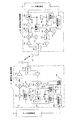
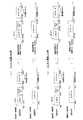
図1は本発明が適用された第1実施形態の無線通信システムの構成を表す説明図である。
Embodiments of the present invention will be described below.
[First Embodiment]
FIG. 1 is an explanatory diagram showing the configuration of a wireless communication system according to a first embodiment to which the present invention is applied.
図1に示す如く、本実施形態の無線通信システムは、特定の場所に設置された基地局側のデータ管理装置2と、その周囲を移動する複数の移動体に搭載された複数のデータ通信端末4との間で送受信すべき伝送信号を、無線通信を利用して双方向に伝送するためのものであり、基地局側の通信装置10と、移動局となる移動体側の複数の通信装置30(図では1つのみを記載)とから構成されている。 As shown in FIG. 1, the wireless communication system of this embodiment includes a base station side data management device 2 installed at a specific location and a plurality of data communication terminals mounted on a plurality of mobile bodies moving around the base station side. 4 for transmitting a transmission signal to be transmitted / received to / from 4 bidirectionally using wireless communication, and a communication device 10 on the base station side and a plurality of communication devices 30 on the mobile body side serving as a mobile station. (Only one is shown in the figure).
ここでまず、データ管理装置2は、移動体側の通信装置30に送信すべき伝送信号として、例えば周波数:1.5〜2GHzの送信信号Txを出力するように構成されており、通信装置10は、この送信信号Txを、ミキサ13にて、第1局部発振器12からの発振信号(第1局発信号:略12.5GHz)fc1と混合することにより、送信信号Txを所定周波数帯(略14〜14.5GHz帯)の送信信号にアップコンバートする。
Here, first, the data management device 2 is configured to output, for example, a transmission signal Tx having a frequency of 1.5 to 2 GHz as a transmission signal to be transmitted to the communication device 30 on the mobile body side. The transmission signal Tx is mixed with the oscillation signal (first local oscillation signal: approximately 12.5 GHz) fc1 from the first
また、通信装置10には、一定周波数fo(例えば1.25GHz)のパイロット信号(送信パイロット信号)Tpを発生する局部発振器21が備えられており、この送信パイロット信号Tpは、ASK変調器22にて振幅変調された後、混合器23を介して送信信号Txと混合され、ミキサ13にて送信信号Txと一緒に所定周波数(本実施形態では13.75GHz)へとアップコンバートされる。
In addition, the communication device 10 includes a
そして、そのアップコンバート後の送信信号及びパイロット信号は、バンドパスフィルタ(以下、BPFという)14を介して増幅器15に入力され、増幅器15にて所定レベルまで増幅された後、フィルタ16を介して、アンテナ11まで伝送され、アンテナ11から無線信号として周囲に放射される。
Then, the transmission signal and the pilot signal after the up-conversion are input to the
次に、このアンテナ11から放射された無線信号は、基地局周囲の移動体に搭載された通信装置30のアンテナ31にて受信される。そして、その受信信号は、通信装置30内で、フィルタ32を介して増幅器33に入力され、増幅器33にて所定レベルまで増幅された後、ミキサ35に入力される。
Next, the radio signal radiated from the antenna 11 is received by the
ミキサ35は、増幅器33を介して入力された受信信号を、受信用局部発振器34からの発振信号(受信用局発信号:12.5GHz)f1oと混合することにより、受信信号をダウンコンバートする。そして、そのダウンコンバート後の受信信号はBPF36を介して増幅器37に入力され、この増幅器37にて所定レベルまで増幅された後、パイロット分離回路38に入力される。
The
なお、このパイロット分離回路38は、ダウンコンバート後の受信信号の中から、パイロット信号PILOTを抽出するためのものである。
次に、パイロット分離回路38にてパイロット信号PILOTが除去された受信信号は、データ通信端末4に出力され、パイロット分離回路38にて受信信号から抽出されたパイロット信号PILOTは、ASK復調器45に入力されると共に、増幅器46に入力される。
The
Next, the reception signal from which pilot signal PILOT has been removed by
そして、増幅器46に入力されたパイロット信号PILOTは、所定レベルまで増幅された後、ASK変調器47にて振幅変調され、その後、混合器48を介して、データ通信端末4から出力された基地局への送信信号(本実施形態では0.5〜1.0GHz)と混合される。
The pilot signal PILOT input to the
また、パイロット信号PILOTと混合された送信信号は、ミキサ42にて、送信用局部発振器41からの発振信号(送信用局発信号:11.75GHz)f2oと混合されることにより、所定周波数帯(本実施形態では、12.25〜12.75GHz、パイロット信号は略13GHz)にアップコンバートされる。
The transmission signal mixed with the pilot signal PILOT is mixed with the oscillation signal (transmission local oscillation signal: 11.75 GHz) f2o from the transmission
そして、そのアップコンバート後の送信信号及びパイロット信号は、BPF43を介して増幅器44に入力され、増幅器44にて所定レベルまで増幅された後、フィルタ32を介して、アンテナ31まで伝送され、アンテナ31から無線信号として周囲に放射される。
The transmission signal and pilot signal after the up-conversion are input to the
次に、このアンテナ31から放射された無線信号は、基地局側の通信装置10のアンテナ11にて受信され、その受信信号は、フィルタ16を介して増幅器17に入力され、増幅器17にて所定レベルまで増幅された後、ミキサ19に入力される。
Next, the radio signal radiated from the
ミキサ19は、増幅器17を介して入力された受信信号を、第2局部発振器18からの発振信号(第2局発信号:略11.75GHz)f2cと混合することにより、受信信号をダウンコンバートする。
The
そして、そのダウンコンバート後の受信信号は、BPF20を介して、パイロット分離回路24に入力され、このパイロット分離回路24にて、データ管理装置2に出力すべき受信信号Rxと受信パイロット信号Rpとに分離される。
The down-converted reception signal is input to the
パイロット分離回路24にて受信パイロット信号Rpが除去された受信信号Rxは、データ管理装置2に出力され、パイロット分離回路24にて受信信号から抽出された受信パイロット信号Rpは、ASK復調器25に入力されると共に、周波数比較部27及び周波数制御部28に入力される。
The reception signal Rx from which the reception pilot signal Rp has been removed by the
なお、上記各通信装置10,30には、それぞれ、マイクロコンピュータ(マイコン)からなる通信制御部26,49が内蔵されている。
そして、通信装置10側の通信制御部26は、データ管理装置2からの指令を受けて、ASK変調器22を駆動することにより、送信パイロット信号Tpに移動局一斉呼び出し用のコマンドを付与し、周囲の移動体へ送信させる。
Each of the communication devices 10 and 30 includes
And the
また、移動体側の通信装置30において、通信制御部49は、ASK復調器45からの復調データを監視し、ASK復調器45にて一斉呼び出しのコマンドが復調されると、データ通信端末4に、基地局側に送信すべきデータがあるか否かを問い合わせ、送信すべきデータがある場合には、ASK変調器47を駆動することにより、パイロット信号に自己の識別情報と通信要求のコマンドを付与し、基地局へと送信させる。
Further, in the communication device 30 on the mobile unit side, the
このため、通信装置10側の通信制御部26は、上記のようにASK変調器22を駆動することにより、移動局一斉呼び出し用のコマンドにてASK変調した送信パイロット信号Tpを送信させた後は、ASK復調器25にて通信要求のコマンドが復調されるのを待ち、通信要求のコマンドが復調されると、そのコマンドと共に送信されてきた移動局の識別情報を取得する。
For this reason, after the
そして、その後は、その識別情報を付与した応答コマンドにてASK変調器22を駆動し、その応答コマンドを付与した送信パイロット信号Tpを送信させることで、識別情報に対応した特定の移動局(通信装置30)に通信許可を行い、その後、通信許可を行った移動局(通信装置30)との間で、各種データを送受信する。
Thereafter, the
次に、周波数比較部27は、パイロット分離回路24から入力される受信パイロット信号Rpと、局部発振器21が発生した送信パイロット信号Tpとの周波数を比較し、その周波数の差に応じた電圧信号Vdfを発生する。
Next, the
そして、周波数制御部28は、この周波数比較部27から出力される電圧信号Vdfが零、つまり、受信パイロット信号Rpと送信パイロット信号Tpとの周波数が一致するように、第1局部発振器12及び第2局部発振器18の発振周波数を同一周波数だけ補正する。
Then, the
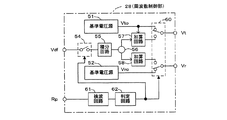
すなわち、本実施形態では、第1局部発振器12及び第2局部発振器18は周波数可変型の局部発振器にて構成されており、周波数制御部28には、これら各局部発振器12,18の発振周波数を、移動体側通信装置30内の局部発振器34,41と同じ基準周波数f1o,f2oに制御するための基準電圧Vto、Vroを発生する基準電圧源51,52が設けられている(図2参照)。
That is, in the present embodiment, the first
また、図2に示すように、周波数制御部28には、受信パイロット信号Rpを検波する検波回路61と、検波回路61からの出力に基づき受信パイロット信号Rpの有無を判定する判定回路62と、判定回路62で受信パイロット信号Rpが有ると判定されたときにオン状態に切り換えられて、周波数比較部27からの電圧信号Vdfを取り込むスイッチ54とが備えられている。
As shown in FIG. 2, the
そして、判定回路62で受信パイロット信号Rpがないと判定されているときには、出力回路60が図のように切り換えられて、基準電圧源51,52から出力された基準電圧Vto、Vroを局部発振器12,18の制御電圧Vt、Vrとして出力し、各局部発振器12,18の発振周波数を基準周波数f1o,f2oに制御する。
When the
一方、判定回路62で受信パイロット信号Rpが有ると判定され、スイッチ54がオン状態となって、周波数比較部27からの電圧信号Vdfが入力されているときには、その電圧信号Vdfを積分回路(換言すればローパスフィルタ)55で積分し、その積分結果を分配器56を介して、2つの加算回路57,58に入力する。
On the other hand, when the
すると、これら各加算回路57,58では、基準電圧源51,52からの出力(つまり基準電圧Vto、Vro)に分配器56を介して入力された積分値(電圧)が加算され、各加算回路57,58からの出力が、局部発振器12,18の制御電圧Vt、Vrとして、出力回路60を介して出力される。
Then, in each of the
つまり、周波数制御部28では、移動体側の通信装置30から送信されたパイロット信号が受信されているときに、その受信パイロット信号Rpと送信パイロット信号Tpとの周波数を比較し、これら各信号Rp、Tpの周波数が一致するように、局部発振器12,18の発振周波数を同一周波数だけ補正するようにされているのである。
That is, when the pilot signal transmitted from the mobile communication device 30 is received, the
従って、本実施形態の無線通信システムによれば、基地局側の通信装置10と無線通信を行っている通信装置30が搭載された移動体が移動し、無線信号に周波数漂動(ドップラーシフト)が生じた際に、その周波数漂動によって、各通信装置10,30側で得られる受信信号の周波数が変動し、通信不良が発生するのを防止できる。 Therefore, according to the wireless communication system of the present embodiment, the mobile body on which the communication device 30 that performs wireless communication with the communication device 10 on the base station side moves, and the frequency drift (Doppler shift) occurs in the wireless signal. When this occurs, it is possible to prevent a communication failure from occurring due to fluctuations in the frequency of the received signal obtained on the side of each communication device 10 and 30 due to the frequency drift.
そして、特に、本実施形態では、基地局側の通信装置10だけで各通信装置10、30における受信特性を改善していることから、移動局となる移動体側の通信装置30のコストアップを招くのを防止し、基地局と多数の移動局とで構成され、移動局のコストダウンが要求される無線通信システムであっても容易に適用することができる。 In particular, in this embodiment, since the reception characteristics of the communication devices 10 and 30 are improved only by the communication device 10 on the base station side, the cost of the communication device 30 on the mobile body serving as a mobile station is increased. Therefore, the present invention can be easily applied even to a wireless communication system that includes a base station and a large number of mobile stations and requires cost reduction of the mobile station.
以上、本発明の一実施形態について説明したが、本発明は、上記実施形態に限定されるものではなく、本発明の技術範囲内で種々の態様を採ることができる。
例えば、上記実施形態では、基地局側の通信装置10が複数の通信装置30と1対多通信を行うものとして説明したが、本発明は、基地局と移動局とが常に一対一通信を行うように構成された無線通信システムであっても適用できる。
As mentioned above, although one Embodiment of this invention was described, this invention is not limited to the said embodiment, A various aspect can be taken within the technical scope of this invention.
For example, in the above embodiment, the base station side communication apparatus 10 has been described as performing one-to-many communication with a plurality of communication apparatuses 30, but in the present invention, the base station and the mobile station always perform one-to-one communication. Even a wireless communication system configured as described above can be applied.
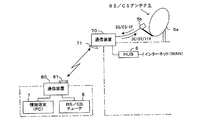
またこの場合、例えば、図3に示すように、基地局となる通信装置70が、建造物の屋上等に設置されたBS/CSアンテナ5と、建造物内に構築されたネットワーク(棟内ネットワーク)に接続されたHUB6とに接続され、BS/CSアンテナ5からのテレビ放送の受信信号を特定の移動体に搭載された通信装置80を介して、移動体に搭載されたBS/CSチューナ8に配信すると共に、HUB6及び移動体側の通信装置80を介して、移動体に搭載されたパーソナルコンピュータ(PC)等の情報端末7を棟内ネットワークへアクセス可能に接続するように構成された通信システムであっても適用できる。
In this case, for example, as shown in FIG. 3, a
以下、この通信システムについて本発明の第2実施形態として説明する。
[第2実施形態]
まず、BS/CSアンテナ5は、放送衛星(BS)や通信衛星(CS)を介して配信される衛星放送を受信する衛星放送受信アンテナであり、反射鏡5aと、支持腕を介して反射鏡5aの焦点位置に配置された受信ユニット5bとから構成されている。
Hereinafter, this communication system will be described as a second embodiment of the present invention.
[Second Embodiment]
First, the BS / CS antenna 5 is a satellite broadcast receiving antenna that receives a satellite broadcast distributed via a broadcasting satellite (BS) or a communication satellite (CS), and is a reflecting
そして、この受信ユニット5bは、通信装置70側から直流15Vの電源供給を受けると、放送衛星(BS)からの送信電波と、通信衛星(CS)からの送信電波の内の右旋円偏波とを受信し、その受信信号を、元の周波数よりも低い所定周波数帯(例えば、1032〜2071MHz)の中間周波信号(BS/CS−IF)にダウンコンバートして出力する(図5(a)参照)。
When receiving 15 VDC from the
また、受信ユニット5bは、通信装置70側から直流11Vの電源供給を受けると、通信衛星(CS)からの送信電波の内の左旋円偏波を受信し、その受信信号を、元の周波数よりも低い所定周波数帯(例えば、1595〜2071MHz)の中間周波信号(BS/CS−IF)にダウンコンバートして出力する(図5(b)参照)。
Further, when receiving the
そして、通信装置70は、このように受信ユニット5bから入力される受信信号(BS/CS−IF)と、HUB6を介して入力される通信データ(下りデータ:2650〜3400MHz)とを、59GHzの第1局発信号f1cでミリ波帯へアップコンバートして、移動体側の通信装置80に送信する(図5参照)。
Then, the
また、移動体側の通信装置80は、情報端末7から出力された通信データ(上りデータ:1032〜2071MHz)を63.35GHzの送信用局発信号f2oでミリ波帯へアップコンバートして、基地局側の通信装置70に送信する(図5参照)。
In addition, the mobile-
そして、通信装置70,80は、局部発振器の発振周波数や送受信する信号の帯域は異なるものの、基本的には、図1に示した通信装置10、30と同じ回路ブロックを備えており、図1に示した通信装置10、30と異なる点は、以下の通りである。
The
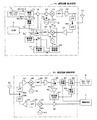
すなわち、図4に示す如く、基地局側の通信装置70は、BS/CSアンテナ5からの受信信号(BS/CS−IF)と、HUB6から入力される上りデータ(送信データTx)とを混合し、これらを送信信号として混合器23に出力する混合器75と、BS/CSアンテナ5の受信ユニット5bに電源供給を行うための電源回路72及び電源フィルタ73とを備える。
That is, as shown in FIG. 4, the
そして、電源回路72は、ASK復調器25にてパイロット信号(周波数、例えば900MHz)から復調された偏波切換信号に従って、BS/CSアンテナ5の受信ユニット5bに供給する電源電圧を11V又は15Vに切り換える。
Then, the
一方、移動体側の通信装置80には、パイロット分離回路38でパイロット信号を分離した後の受信信号を、BS/CS−IFと下りデータとに分波し、BS/CS−IFをBS/CSチューナ8に出力し、下りデータを情報端末7に出力する分波回路81が備えられている。
On the other hand, the
また、BS/CSチューナ8は、BS/CSアンテナ5の受信ユニット5bにおける受信偏波面を切り換えるために、直流11V又は15Vの電圧を選択的に出力できるようにされているため、分波回路81からBS/CSチューナ8に至る伝送路には、その直流信号成分を分離するDC分離回路82が設けられ、更に、このDC分離回路82には、分離した電圧が11Vか15Vかを判定する電圧判定回路83が設けられている。
Further, since the BS /
そして、この電圧判定回路83の判定出力は、ASK変調器47に入力され、ASK変調器47は、電圧判定回路83による判定結果に応じた偏波切換信号にてパイロット信号を振幅変調し、情報端末7からの上りデータと共に基地局側通信装置70へと送信させるようにされている。
The determination output of the
従って、図3,図4に示した通信システムにおいては、パイロット信号を利用して通信品質を確保できるだけでなく、このパイロット信号を振幅変調することによって、BS/CSアンテナ5の受信偏波面の切り換えを、移動体側で行うことができるようになり、パイロット信号を、情報伝達媒体として有効に利用することが可能となる。 Therefore, in the communication system shown in FIGS. 3 and 4, not only can the communication quality be ensured by using the pilot signal, but also the received polarization plane of the BS / CS antenna 5 is switched by amplitude-modulating the pilot signal. Thus, the pilot signal can be effectively used as an information transmission medium.
また、本実施形態の場合は、アップコンバート及びダウンコンバート用の局部発振器に60MHz帯のミリ波発振器が使用されているため、その発振周波数が高くなる分、第1実施形態で使用している局部発振器に比べ、発振器自体の周波数漂動が大きくなるが、本発明では、基地局と移動局との間でパイロット信号を送受信した際に生じるパイロット信号の周波数変動を基地局側で検出し、その周波数変動がなくなるように、基地局側でアップコンバート及びダウンコンバートに使用する局部発振器の発振周波数を補正することから、局部発振器の周波数漂動によって生じる送受信信号の周波数変動も吸収できることになる。よって、本実施形態によれば、各通信装置70,80に局部発振器として設けられたミリ波発振器の周波数漂動によって生じる通信不良についても改善でき、移動体の停止時にも効果を発揮することができる。
In the case of the present embodiment, since a 60 MHz band millimeter-wave oscillator is used as the local oscillator for up-conversion and down-conversion, the local frequency used in the first embodiment is increased as the oscillation frequency increases. Compared with the oscillator, the frequency drift of the oscillator itself is larger, but in the present invention, the frequency fluctuation of the pilot signal that occurs when the pilot signal is transmitted and received between the base station and the mobile station is detected on the base station side. Since the base station corrects the oscillation frequency of the local oscillator used for up-conversion and down-conversion so that the frequency fluctuation is eliminated, the frequency fluctuation of the transmission / reception signal caused by the frequency drift of the local oscillator can be absorbed. Therefore, according to the present embodiment, it is possible to improve the communication failure caused by the frequency drift of the millimeter wave oscillator provided as a local oscillator in each of the
2…データ管理装置、4…データ通信端末、5…BS/CSアンテナ、5a…反射鏡、5b…受信ユニット、6…HUB、7…情報端末、8…BS/CSチューナ、10…通信装置、11…アンテナ、12…第1局部発振器、13…ミキサ、15…増幅器、16…フィルタ、17…増幅器、18…第2局部発振器、19…ミキサ、21…局部発振器、22…ASK変調器、23…混合器、24…パイロット分離回路、25…ASK復調器、26…通信制御部、27…周波数比較部、28…周波数制御部、30…通信装置、31…アンテナ、32…フィルタ、33…増幅器、34…受信用局部発振器、35…ミキサ、37…増幅器、38…パイロット分離回路、41…送信用局部発振器、42…ミキサ、44…増幅器、45…ASK復調器、46…増幅器、47…ASK変調器、48…混合器、49…通信制御部、51…基準電圧源、54…スイッチ、56…分配器、57…加算回路、60…出力回路、61…検波回路、62…判定回路、70…通信装置、72…電源回路、73…電源フィルタ、75…混合器、80…通信装置、81…分波回路、82…DC分離回路、83…電圧判定回路。
2 ... Data management device, 4 ... Data communication terminal, 5 ... BS / CS antenna, 5a ... Reflector, 5b ... Reception unit, 6 ... HUB, 7 ... Information terminal, 8 ... BS / CS tuner, 10 ... Communication device, DESCRIPTION OF SYMBOLS 11 ... Antenna, 12 ... 1st local oscillator, 13 ... Mixer, 15 ... Amplifier, 16 ... Filter, 17 ... Amplifier, 18 ... 2nd local oscillator, 19 ... Mixer, 21 ... Local oscillator, 22 ... ASK modulator, 23 DESCRIPTION OF SYMBOLS ... Mixer, 24 ... Pilot separation circuit, 25 ... ASK demodulator, 26 ... Communication control part, 27 ... Frequency comparison part, 28 ... Frequency control part, 30 ... Communication apparatus, 31 ... Antenna, 32 ... Filter, 33 ...
Claims (7)
前記基地局は、前記移動局に送信すべき伝送信号と特定周波数のパイロット信号とを、所定周波数の第1局発信号を用いてアップコンバートし、該アップコンバート後の信号を前記移動局への送信信号としてアンテナから送信し、
前記移動局は、前記基地局からの送信信号をアンテナを介して受信し、該受信信号を前記第1局発信号と略同一周波数で周波数が固定された受信用局発信号を用いてダウンコンバートし、該ダウンコンバート後の受信信号の中から前記パイロット信号を抽出して、該パイロット信号抽出後の受信信号を前記基地局からの伝送信号として取り込むと共に、該抽出したパイロット信号と前記基地局に送信すべき伝送信号とを、周波数が固定された送信用局発信号を用いてアップコンバートし、該アップコンバート後の信号を前記基地局への送信信号としてアンテナから送信し、
更に、前記基地局は、前記移動局からの送信信号をアンテナを介して受信し、該受信信号を前記送信用局発信号と略同一周波数の第2局発信号を用いてダウンコンバートし、該ダウンコンバート後の受信信号の中から前記パイロット信号を抽出して、該パイロット信号抽出後の受信信号を前記移動局からの伝送信号として取り込むと共に、該抽出したパイロット信号と前記移動局に送信するパイロット信号との周波数を比較し、これら各パイロット信号の周波数が一致するように、前記第1局発信号と前記第2局発信号との周波数を同一周波数だけ補正することを特徴とする無線通信システム。 A wireless communication system comprising a base station and a mobile station capable of wireless communication with each other in both directions,
The base station up-converts a transmission signal to be transmitted to the mobile station and a pilot signal of a specific frequency using a first-station signal of a predetermined frequency, and sends the signal after the up-conversion to the mobile station. Transmit from the antenna as a transmission signal,
The mobile station receives a transmission signal from the base station via an antenna, and down-converts the reception signal using a reception local oscillation signal whose frequency is fixed at substantially the same frequency as the first local oscillation signal. Then, the pilot signal is extracted from the down-converted received signal, the received signal after the pilot signal extraction is captured as a transmission signal from the base station, and the extracted pilot signal and the base station are The transmission signal to be transmitted is up-converted using a transmitting station-generated signal whose frequency is fixed, and the signal after the up-conversion is transmitted from the antenna as a transmission signal to the base station,
Further, the base station receives a transmission signal from the mobile station via an antenna, down-converts the reception signal using a second local oscillation signal having substantially the same frequency as the local transmission signal, The pilot signal is extracted from the down-converted received signal, the received signal after the pilot signal extraction is taken in as a transmission signal from the mobile station, and the extracted pilot signal and a pilot to be transmitted to the mobile station A radio communication system characterized in that the frequency of the first local oscillator signal and the second local oscillator signal are corrected by the same frequency so that the frequencies of the pilot signals coincide with each other by comparing the frequencies with the signals. .
前記移動局は、前記ダウンコンバート後の受信信号の中から抽出したパイロット信号から前記識別情報を復調し、該復調した識別情報が自己の識別情報であるときに、該パイロット信号抽出後の受信信号を前記基地局からの伝送信号として取り込む受信動作及び前記基地局への伝送信号の送信動作を行うことを特徴とする請求項1記載の無線通信システム。 At the time of wireless communication with the mobile station, the base station gives the pilot signal identification information of the mobile station to be communicated by amplitude-modulating the pilot signal with the identification information of the mobile station to be communicated And
The mobile station demodulates the identification information from a pilot signal extracted from the down-converted received signal, and when the demodulated identification information is its own identification information, the received signal after the pilot signal extraction 2. The wireless communication system according to claim 1, wherein a receiving operation for capturing a signal as a transmission signal from the base station and a transmission operation for transmitting a transmission signal to the base station are performed.
前記基地局は、前記ダウンコンバート後の受信信号の中から抽出したパイロット信号から前記識別情報を復調し、該復調した識別情報から通信相手となる移動局を認識することを特徴とする請求項1又は請求項2記載の無線通信システム。 At the time of wireless communication with the base station, the mobile station gives its own identification information to the pilot signal by amplitude-modulating the pilot signal to be transmitted to the base station with its own identification information,
2. The base station demodulates the identification information from a pilot signal extracted from the down-converted received signal, and recognizes a mobile station as a communication partner from the demodulated identification information. Or the radio | wireless communications system of Claim 2.
通信衛星から送信された偏波面の異なる2種類の電波の一方を選択的に受信し、所定周波数帯の放送信号に周波数変換して出力する衛星アンテナを備え、
該衛星アンテナからの放送信号を、前記伝送信号及びパイロットと共にアップコンバートして、特定の移動局に送信するよう構成され、
該移動局は、前記基地局へ送信するパイロット信号を、前記衛星アンテナによる受信電波の偏波面を指定する情報にて振幅変調することにより、前記パイロット信号に該偏波面の指定情報を付与し、
前記基地局は、前記ダウンコンバート後の受信信号の中から抽出したパイロット信号から前記偏波面の指定情報を復調し、該復調した指定情報に従い前記衛星アンテナが受信する電波の偏波面を切り換えることを特徴とする請求項1記載の無線通信システム。 The base station
A satellite antenna that selectively receives one of two types of radio waves transmitted from a communication satellite and has a different polarization plane, converts the frequency into a broadcast signal of a predetermined frequency band, and outputs the broadcast signal;
The broadcast signal from the satellite antenna is configured to be up-converted with the transmission signal and the pilot and transmitted to a specific mobile station,
The mobile station assigns the pilot plane designation information to the pilot signal by amplitude-modulating the pilot signal to be transmitted to the base station with information designating the polarization plane of the radio wave received by the satellite antenna,
The base station demodulates the polarization plane designation information from the pilot signal extracted from the down-converted received signal, and switches the polarization plane of the radio wave received by the satellite antenna according to the demodulated designation information. The wireless communication system according to claim 1.
無線通信用のアンテナと、
特定周波数のパイロット信号を発生するパイロット信号発生手段と、
前記移動局に送信すべき伝送信号をアップコンバートするのに必要な所定周波数の第1局発信号を発生する第1局部発振手段と、
前記移動局からの送信信号をダウンコンバートするのに必要な所定周波数の第2局発信号を発生する第2局部発振手段と、
前記パイロット信号発生手段からのパイロット信号と前記移動局に送信すべき伝送信号とを混合し、前記第1局部発振手段が発生した第1局発信号を用いてアップコンバートすると共に、該アップコンバート後の信号を前記移動局への送信信号として前記アンテナから送信する第1周波数変換手段と、
前記アンテナからの受信信号を、前記第2局部発振手段が発生した第2局発信号を用いてダウンコンバートする第2周波数変換手段と、
該第2周波数変換手段にてダウンコンバートされた受信信号の中からパイロット信号を抽出し、該パイロット信号抽出後の受信信号を移動局からの伝送信号として内部回路に出力するパイロット信号抽出手段と、
該パイロット信号抽出手段にて抽出されたパイロット信号と前記パイロット信号発生手段が発生したパイロット信号との周波数を比較し、これら各パイロット信号の周波数が一致するように、前記第1局部発振手段及び第2局部発振手段の発振周波数を同一周波数だけ補正する局部発振周波数補正手段と、
を備えたことを特徴とする無線通信装置。 A wireless communication device used as a base station for performing wireless communication with a mobile station,
An antenna for wireless communication;
Pilot signal generating means for generating a pilot signal of a specific frequency;
First local oscillation means for generating a first local oscillation signal having a predetermined frequency necessary for up-converting a transmission signal to be transmitted to the mobile station;
Second local oscillating means for generating a second local oscillation signal having a predetermined frequency necessary for down-converting a transmission signal from the mobile station;
A pilot signal from the pilot signal generating means and a transmission signal to be transmitted to the mobile station are mixed, up-converted using the first local signal generated by the first local oscillating means, and after the up-conversion First frequency converting means for transmitting the signal from the antenna as a transmission signal to the mobile station;
Second frequency converting means for down-converting the received signal from the antenna using the second local oscillation signal generated by the second local oscillation means;
Pilot signal extraction means for extracting a pilot signal from the reception signal down-converted by the second frequency conversion means and outputting the received signal after extraction of the pilot signal to an internal circuit as a transmission signal from a mobile station;
The pilot signal extracted by the pilot signal extracting means and the pilot signal generated by the pilot signal generating means are compared in frequency, and the first local oscillating means and the first oscillator Two local oscillation frequency correction means for correcting the oscillation frequency of the two local oscillation means by the same frequency;
A wireless communication apparatus comprising:
無線通信用のアンテナと、
前記基地局に送信すべき伝送信号をアップコンバートするのに必要な一定周波数の送信用局発信号を発生する送信用局部発振手段と、
前記基地局からの送信信号をダウンコンバートするのに必要な一定周波数の受信用局発信号を発生する受信用局部発振手段と、
前記アンテナからの受信信号を、前記受信用局部発振手段が発生した受信用局発信号を用いてダウンコンバートする受信用周波数変換手段と、
該受信用周波数変換手段にてダウンコンバートされた受信信号の中からパイロット信号を抽出し、該パイロット信号抽出後の受信信号を基地局からの伝送信号として内部回路に出力するパイロット信号抽出手段と、
該パイロット信号抽出手段にて抽出されたパイロット信号と前記基地局に送信すべき伝送信号とを混合し、前記送信用局部発振手段が発生した送信用局発信号を用いてアップコンバートすると共に、該アップコンバート後の信号を前記基地局への送信信号として前記アンテナから送信する送信用周波数変換手段と、
を備えたことを特徴とする無線通信装置。 A wireless communication device mounted on a mobile body and used as a mobile station that performs wireless communication with a base station,
An antenna for wireless communication;
Transmitting local oscillation means for generating a transmitting local oscillation signal having a constant frequency necessary for up-converting a transmission signal to be transmitted to the base station;
Receiving local oscillation means for generating a receiving local oscillation signal having a constant frequency necessary for down-converting a transmission signal from the base station;
A reception frequency converting means for down-converting a reception signal from the antenna using a reception local oscillation signal generated by the reception local oscillation means;
Pilot signal extraction means for extracting a pilot signal from the reception signal down-converted by the reception frequency conversion means, and outputting the received signal after extraction of the pilot signal to an internal circuit as a transmission signal from a base station;
The pilot signal extracted by the pilot signal extraction unit and the transmission signal to be transmitted to the base station are mixed, up-converted using the transmission local oscillation signal generated by the transmission local oscillation unit, and A transmission frequency converting means for transmitting the signal after up-conversion from the antenna as a transmission signal to the base station;
A wireless communication apparatus comprising:
前記パイロット信号抽出手段にて抽出されたパイロット信号から該パイロット信号の振幅を変調した元の情報を復調する復調手段と、
の少なくとも一方を備えたことを特徴とする請求項5又は請求項6に記載の無線通信装置。
Modulation means for amplitude-modulating a pilot signal to be up-converted with the transmission signal;
Demodulation means for demodulating original information obtained by modulating the amplitude of the pilot signal from the pilot signal extracted by the pilot signal extraction means;
The wireless communication apparatus according to claim 5, comprising at least one of the following.
Priority Applications (1)
| Application Number | Priority Date | Filing Date | Title |
|---|---|---|---|
| JP2004105668A JP4374269B2 (en) | 2004-03-31 | 2004-03-31 | Wireless communication system and wireless communication device |
Applications Claiming Priority (1)
| Application Number | Priority Date | Filing Date | Title |
|---|---|---|---|
| JP2004105668A JP4374269B2 (en) | 2004-03-31 | 2004-03-31 | Wireless communication system and wireless communication device |
Publications (2)
| Publication Number | Publication Date |
|---|---|
| JP2005295088A true JP2005295088A (en) | 2005-10-20 |
| JP4374269B2 JP4374269B2 (en) | 2009-12-02 |
Family
ID=35327559
Family Applications (1)
| Application Number | Title | Priority Date | Filing Date |
|---|---|---|---|
| JP2004105668A Expired - Fee Related JP4374269B2 (en) | 2004-03-31 | 2004-03-31 | Wireless communication system and wireless communication device |
Country Status (1)
| Country | Link |
|---|---|
| JP (1) | JP4374269B2 (en) |
Cited By (2)
| Publication number | Priority date | Publication date | Assignee | Title |
|---|---|---|---|---|
| JP2008294548A (en) * | 2007-05-22 | 2008-12-04 | Maspro Denkoh Corp | Millimeter-wave transmission / reception system, frequency conversion device, modulation / demodulation device, and program |
| JP2008312151A (en) * | 2007-06-18 | 2008-12-25 | Maspro Denkoh Corp | Millimeter-wave transmission / reception system and frequency converter |
-
2004
- 2004-03-31 JP JP2004105668A patent/JP4374269B2/en not_active Expired - Fee Related
Cited By (2)
| Publication number | Priority date | Publication date | Assignee | Title |
|---|---|---|---|---|
| JP2008294548A (en) * | 2007-05-22 | 2008-12-04 | Maspro Denkoh Corp | Millimeter-wave transmission / reception system, frequency conversion device, modulation / demodulation device, and program |
| JP2008312151A (en) * | 2007-06-18 | 2008-12-25 | Maspro Denkoh Corp | Millimeter-wave transmission / reception system and frequency converter |
Also Published As
| Publication number | Publication date |
|---|---|
| JP4374269B2 (en) | 2009-12-02 |
Similar Documents
| Publication | Publication Date | Title |
|---|---|---|
| CN101958734B (en) | Integrated wireless coverage solution | |
| WO1994015409A1 (en) | Frequency control system | |
| US6459905B1 (en) | Mobile communication system | |
| EP2501201B1 (en) | Method, apparatus and microwave relay node for microwave relay reception and transmission | |
| US7251461B2 (en) | Wireless communications system, wireless transmitter, and wireless receiver | |
| US20110274218A1 (en) | Dual polarization transmission system, dual polarization transmission method, reception apparatus, transmission apparatus, reception method, and transmission method | |
| JP4374269B2 (en) | Wireless communication system and wireless communication device | |
| CN115412151A (en) | Satellite communication method and device and station control equipment | |
| EP1168649A2 (en) | Two-way radio communication system and two-way radio communication method. | |
| JP2015064291A (en) | Communication-radar shared antenna device | |
| JP4516029B2 (en) | Reader / writer device | |
| JP2009088863A (en) | Millimeter-wave transmission / reception system and frequency converter | |
| EP0933880A2 (en) | Booster for a handy phone | |
| JP4980791B2 (en) | Millimeter wave transmission / reception system | |
| JP5090798B2 (en) | Millimeter-wave transmission / reception system and frequency converter | |
| MXPA04010062A (en) | Access method and gsm repeater system with spectral exchange between the 900 and 1800 mhz gsm wave frequencies. | |
| JP4074807B2 (en) | Millimeter-wave transmission / reception system, transmission device, and reception device | |
| JP5106892B2 (en) | Mobile relay transmission system | |
| JP4142938B2 (en) | Millimeter-wave transmission / reception system, transmission device, and reception device | |
| JP2003110491A (en) | Wireless transmission system, wireless transmission device and reception monitor device thereof | |
| JP2004173111A (en) | Millimeter-wave transmission / reception system, transmitter and receiver | |
| KR0119559B1 (en) | WiFi Transceiver | |
| JPS6157741B2 (en) | ||
| JP4675793B2 (en) | Reception device and transmission device | |
| KR20080098110A (en) | Receiving and transmitting signal converting apparatus for mobile communication of tdd type |
Legal Events
| Date | Code | Title | Description |
|---|---|---|---|
| A621 | Written request for application examination |
Free format text: JAPANESE INTERMEDIATE CODE: A621 Effective date: 20070328 |
|
| A977 | Report on retrieval |
Free format text: JAPANESE INTERMEDIATE CODE: A971007 Effective date: 20090421 |
|
| A131 | Notification of reasons for refusal |
Free format text: JAPANESE INTERMEDIATE CODE: A131 Effective date: 20090512 |
|
| A521 | Written amendment |
Free format text: JAPANESE INTERMEDIATE CODE: A523 Effective date: 20090713 |
|
| TRDD | Decision of grant or rejection written | ||
| A01 | Written decision to grant a patent or to grant a registration (utility model) |
Free format text: JAPANESE INTERMEDIATE CODE: A01 Effective date: 20090818 |
|
| A01 | Written decision to grant a patent or to grant a registration (utility model) |
Free format text: JAPANESE INTERMEDIATE CODE: A01 |
|
| A61 | First payment of annual fees (during grant procedure) |
Free format text: JAPANESE INTERMEDIATE CODE: A61 Effective date: 20090907 |
|
| FPAY | Renewal fee payment (event date is renewal date of database) |
Free format text: PAYMENT UNTIL: 20120911 Year of fee payment: 3 |
|
| R150 | Certificate of patent or registration of utility model |
Free format text: JAPANESE INTERMEDIATE CODE: R150 |
|
| FPAY | Renewal fee payment (event date is renewal date of database) |
Free format text: PAYMENT UNTIL: 20120911 Year of fee payment: 3 |
|
| FPAY | Renewal fee payment (event date is renewal date of database) |
Free format text: PAYMENT UNTIL: 20130911 Year of fee payment: 4 |
|
| LAPS | Cancellation because of no payment of annual fees |