JP2005293016A - Log file monitoring program, log file monitoring method, computer system - Google Patents
Log file monitoring program, log file monitoring method, computer system Download PDFInfo
- Publication number
- JP2005293016A JP2005293016A JP2004104664A JP2004104664A JP2005293016A JP 2005293016 A JP2005293016 A JP 2005293016A JP 2004104664 A JP2004104664 A JP 2004104664A JP 2004104664 A JP2004104664 A JP 2004104664A JP 2005293016 A JP2005293016 A JP 2005293016A
- Authority
- JP
- Japan
- Prior art keywords
- log file
- information
- monitored
- invariant information
- log
- Prior art date
- Legal status (The legal status is an assumption and is not a legal conclusion. Google has not performed a legal analysis and makes no representation as to the accuracy of the status listed.)
- Pending
Links
Images

Landscapes
- Debugging And Monitoring (AREA)
Abstract
Description
本発明は、ログファイルを監視するためのログファイル監視プログラム、ログファイル監視方法、およびそのようなプログラムまたは方法が適用され得る計算機システムに係り、特に、ログファイルのローテーションに適切に対応するログファイル監視プログラム、ログファイル監視方法、および計算機システムに関する。 The present invention relates to a log file monitoring program for monitoring a log file, a log file monitoring method, and a computer system to which such a program or method can be applied, and in particular, a log file appropriately corresponding to log file rotation. The present invention relates to a monitoring program, a log file monitoring method, and a computer system.
ログファイルを監視(周期的に参照)し特定のイベントの発生を検知するような処理を行うプログラムでは、一般的に、ある監視周期における監視で、前回の監視周期で処理された後に付加された部分のみを処理対象とする。付加された部分は、例えば、前回の監視周期のとき最終処理部分を監視ポインタで指し示しておきその監視ポインタの後方として認識することができる。 Programs that monitor log files (refer to them periodically) and perform processing that detects the occurrence of specific events are generally added after being processed in the previous monitoring cycle during monitoring in a certain monitoring cycle. Only the part is processed. The added portion can be recognized as the rear of the monitoring pointer by pointing the final processing portion with the monitoring pointer at the previous monitoring cycle, for example.
一方、ログファイルの監視とは全く独立した機構として、ログファイルのローテーションという仕組みがある。これは、長期運用におけるログファイルによるディスク容量圧迫を避けるための機構で、一定期間でログファイル名を変えてバックアップファイルを作成し、バックアップを何世代か保持した上で、最も古いものを捨てるという操作を行うものである。 On the other hand, there is a mechanism called log file rotation as a mechanism completely independent of log file monitoring. This is a mechanism to avoid overwhelming disk space due to log files in long-term operation, creating a backup file by changing the log file name in a certain period, holding several generations of backups, and discarding the oldest one The operation is performed.
ログファイルを監視し処理を行う技術に関する従来例には、例えば特開平10−293704号公報(特許文献1)、特開平9−101912号公報(特許文献2)に記載されたものがある。また、ファイルを管理する従来技術として例えば特開2003−22206号公報(特許文献3)記載のものがある。
ログファイルの監視プログラムは、そのログファイルにローテーションが生じていても正しく監視する必要がある。このため、例えば、各監視周期の監視においてオープン中のログファイルの処理を行ったあとローテーションの有無を調べ、ローテーションが生じていればオープンする(すなわち監視対象の)ログファイル名を指定して現在使用のログファイルにオープンし直すことでローテーションに応じたログファイルの監視を可能にしている。ローテーションの有無は、例えばローテーションを行う側の機構(例えばOS:オペレーティングシステム)からの通知により認知することができる。 The log file monitoring program needs to monitor correctly even if the log file is rotated. For this reason, for example, after processing an open log file in the monitoring of each monitoring cycle, the presence of rotation is checked, and if rotation has occurred, the name of the log file to be opened (that is, the monitoring target) is specified and The log file can be monitored according to the rotation by reopening the log file. The presence / absence of rotation can be recognized by, for example, notification from a mechanism (for example, OS: operating system) that performs the rotation.
しかしながら、まれには、監視周期が1周した後の監視においてその間、ローテーションが2度以上生じている場合も考えられる。この場合には、もとのオープン中のログファイルと現在使用のログファイルとは漏れなく監視されるが、その中間で使用されていたログファイルには監視の見落としが発生する。なお、上記の各従来技術では、ログファイルのローテーションに対応して監視を行うことに言及がない。 However, in rare cases, there may be a case where rotation occurs twice or more during the monitoring after one cycle of the monitoring cycle. In this case, the original open log file and the currently used log file are monitored without omission, but monitoring is overlooked in the intermediate log file. In each of the above prior arts, there is no mention of performing monitoring in response to log file rotation.
本発明は、上記の事情を考慮してなされたもので、ログファイルを監視するためのログファイル監視プログラム、ログファイル監視方法、およびそのようなプログラムまたは方法が適用され得る計算機システムにおいて、ログファイルのローテーションに適切に対応することが可能なログファイル監視プログラム、ログファイル監視方法、および計算機システムを提供することを目的とする。 The present invention has been made in consideration of the above circumstances, and in a log file monitoring program for monitoring a log file, a log file monitoring method, and a computer system to which such a program or method can be applied. An object of the present invention is to provide a log file monitoring program, a log file monitoring method, and a computer system that can appropriately cope with the rotation of the computer.
上記の課題を解決するため、本発明に係るログファイル監視プログラムは、監視中でオープン中のログファイルに付与された不変情報を、第1の不変情報として記憶するステップと、監視中でオープン中の前記ログファイルを処理するステップと、前記第1の不変情報が記憶された状態において、監視すべきログファイル名のログファイルに付与された不変情報を第2の不変情報として調査・取得するステップと、前記記憶された第1の不変情報と前記取得された第2の不変情報とが同一であるか否かを判定するステップと、前記判定の結果が同一でない場合に、ログファイルローテーションで適用されるログファイル名変更規則に基づいて監視中でオープン中の前記ログファイルに至る世代情報を調査・取得するステップと、前記取得された世代情報に基づいて監視中でオープン中の前記ログファイルより新しい世代のログファイルを順にオープン対象として処理するステップとをコンピュータに実行させることを特徴とする。 In order to solve the above-described problem, a log file monitoring program according to the present invention includes a step of storing invariant information given to a log file being monitored and opened as first invariant information, and being opened during monitoring. A step of processing the log file, and a step of investigating and acquiring the invariant information given to the log file having the log file name to be monitored as the second invariant information in a state where the first invariant information is stored. And the step of determining whether the stored first invariant information and the acquired second invariant information are the same, and the log file rotation is applied when the result of the determination is not the same Investigating and acquiring generation information leading to the open log file being monitored based on the log file name change rule Characterized in that and a step of sequentially processed as an open target a new generation of the log file from the log file in the open in the monitoring on the basis of the generation information to the computer.
すなわち、このプログラムでは、ログファイルが、ローテーションによってそのログファイル名には変更があるが、同時に、ローテーションされても変わらない情報(不変情報)が付与されていることに着目する。監視中でオープン中のログファイルに付与された不変情報を第1の不変情報とし、監視すべきログファイル名のログファイルに付与された不変情報を第2の不変情報とする。これらが一致すればローテーションは発生していない。一致しなければ何らかのローテーションが生じているので、ログファイル名変更規則に基づいてオープン中のログファイルに遡る世代情報を調査・取得する。世代情報には各世代のログファイルに関する情報が含まれているので、これに基づいて各世代のログファイルを検索すればすべての世代のログファイルについて監視が行き届き処理されることになる。よって、ログファイルのローテーションに適切に対応してログファイルの監視を行うことが可能になる。 That is, in this program, attention is paid to the fact that the log file is given information (invariant information) that is not changed even when the log file is rotated, but is changed at the same time. The invariant information given to the log file being monitored and opened is the first invariant information, and the invariant information given to the log file with the log file name to be monitored is the second invariant information. If they match, no rotation has occurred. If they do not match, some rotation has occurred, so the generation information traced back to the open log file is investigated and acquired based on the log file name change rule. Since the generation information includes information on the log files of each generation, if the log files of each generation are searched based on this information, the log files of all generations are monitored and processed. Therefore, it becomes possible to monitor the log file appropriately corresponding to the rotation of the log file.
また、本発明に係るログファイル監視方法は、監視中でオープン中のログファイルに付与された不変情報を、第1の不変情報として記憶するステップと、監視中でオープン中の前記ログファイルを処理するステップと、前記第1の不変情報が記憶された状態において、監視すべきログファイル名のログファイルに付与された不変情報を第2の不変情報として調査・取得するステップと、前記記憶された第1の不変情報と前記取得された第2の不変情報とが同一であるか否かを判定するステップと、前記判定の結果が同一でない場合に、ログファイルローテーションで適用されるログファイル名変更規則に基づいて監視中でオープン中の前記ログファイルに至る世代情報を調査・取得するステップと、前記取得された世代情報に基づいて監視中でオープン中の前記ログファイルより新しい世代のログファイルを順にオープン対象として処理するステップとを具備することを特徴とする。 The log file monitoring method according to the present invention also includes a step of storing invariant information given to a log file being monitored and opened as first invariant information, and processing the log file being opened during monitoring. In the state where the first invariant information is stored, inspecting and acquiring the invariant information given to the log file having the log file name to be monitored as the second invariant information, and the stored A step of determining whether or not the first invariant information and the acquired second invariant information are the same, and a log file name change applied in log file rotation when the result of the determination is not the same Checking / acquiring generation information up to the open log file being monitored based on rules, and monitoring based on the acquired generation information The new generation of the log file from the log file during open sequentially, characterized by comprising the step of treating an open object.
このログファイル監視方法は、ほぼ上記のログファイル監視プログラムと同様な作用および効果を有する。 This log file monitoring method has substantially the same operation and effect as the above log file monitoring program.
また、本発明に係る計算機システムは、監視中でオープン中のログファイルに付与された不変情報を、第1の不変情報として記憶する手段と、監視中でオープン中の前記ログファイルを処理する手段と、前記第1の不変情報が記憶された状態において、監視すべきログファイル名のログファイルに付与された不変情報を第2の不変情報として調査・取得する手段と、前記記憶された第1の不変情報と前記取得された第2の不変情報とが同一であるか否かを判定する手段と、前記判定の結果が同一でない場合に、ログファイルローテーションで適用されるログファイル名変更規則に基づいて監視中でオープン中の前記ログファイルに至る世代情報を調査・取得する手段と、前記取得された世代情報に基づいて監視中でオープン中の前記ログファイルより新しい世代のログファイルを順にオープン対象として処理する手段とを備えたログファイル監視部と、前記ログファイル監視部により監視される前記各ログファイルを記憶するログファイル記憶部とを具備することを特徴とする。 The computer system according to the present invention includes means for storing invariant information given to a log file being monitored and being opened as first invariant information, and means for processing the log file being opened while being monitored. And in the state where the first invariant information is stored, means for investigating and acquiring the invariant information given to the log file having the log file name to be monitored as the second invariant information, and the stored first Means for determining whether or not the obtained invariant information is the same as the acquired second invariant information and a log file name change rule applied in log file rotation when the result of the determination is not the same. Based on the generation information reaching the log file being monitored and opened based on the generation information, and the log file being opened being monitored based on the acquired generation information. A log file monitoring unit comprising means for sequentially processing log files of a newer generation than the log as an open target, and a log file storage unit for storing each log file monitored by the log file monitoring unit It is characterized by.
この計算機システムは、上記のログファイル監視プログラムをソフトウエアとして備えた計算機として実現することができる。よって、ここで、上記の各手段は、例えばマイクロプロセッサやメモリ、ハードディスクなどのハードウエアと、これらのハードウエア上で動作するオペレーティングシステム等の基本ソフトウエアや上記のプログラムおよびその他のアプリケーションプログラムなどとによって構成することが可能である。 This computer system can be realized as a computer provided with the log file monitoring program as software. Therefore, here, each of the above means includes, for example, hardware such as a microprocessor, a memory, and a hard disk, basic software such as an operating system that operates on these hardware, the above program, and other application programs. Can be configured.
本発明によれば、ログファイルのローテーションに適切に対応してログファイルの監視を行うことが可能になる。 According to the present invention, it is possible to monitor a log file appropriately corresponding to the rotation of the log file.
本発明の実施態様として、前記不変情報はinode番号であるとすることができる。inode番号は、ログファイルのローテーションによっても不変の情報としてよく知られたものである。 As an embodiment of the present invention, the invariant information may be an inode number. The inode number is well known as invariant information even by log file rotation.
また、実施態様として、前記処理は障害発生の検知であるとすることができる。障害発生の検知は、ログファイル監視の用途として広く用いられている。 As an embodiment, the process may be detection of occurrence of a failure. Detection of failure occurrence is widely used for log file monitoring.
また、実施態様として、前記ログファイル名変更規則は、前記監視すべきログファイル名に「.n」(nは整数で世代が古くなると1ずつ増加)を付加する規則であると仮定する、とすることができる。この規則は、ローテーションによってログファイル名を変更する場合のOS側の規則の典型例であるので、これらにあらかじめ対応するものである。 Further, as an embodiment, it is assumed that the log file name change rule is a rule that adds “.n” (n is an integer and increases by 1 when the generation is older) to the log file name to be monitored. can do. Since this rule is a typical example of the rule on the OS side when the log file name is changed by rotation, it corresponds to these in advance.
また、実施態様として、前記世代情報は、ログファイル名と該ログファイル名のログファイルに付与された不変情報とからなる組の情報を前記第2の不変情報から前記第1の不変情報までたどったものである、とすることができる。これにより、監視すべきログファイルを過不足なく調査することができる。 As an embodiment, the generation information traces a set of information including a log file name and invariant information assigned to the log file with the log file name from the second invariant information to the first invariant information. It can be said that As a result, the log file to be monitored can be investigated without excess or deficiency.
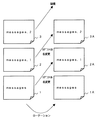
以上を踏まえ、以下では本発明の実施形態を図面を参照しながら説明する。まず、参考例としての形態を図1、図2を参照して説明する。図1は、ログファイルのローテーションを模式的に説明する図(参考例)である。 Based on the above, embodiments of the present invention will be described below with reference to the drawings. First, a form as a reference example will be described with reference to FIGS. FIG. 1 is a diagram (reference example) for schematically explaining log file rotation.
ある時点において、messagesの名を有するログファイル1、そのバックアップとしてのログファイル2、さらにそのバックアップとしてのログファイル3が存在するものとする。このようなログファイル1、2、3は、計算機システムにおいて、例えばOSやログファイル監視プログラム以外のアプリケーションプログラムがそれらの処理上の必要から保有している。ログファイル1、2、3は、例えばログファイル記憶部としてのハードディスク上に記憶領域が確保されている。
It is assumed that there is a
バックアップとしてのログファイル2には、例えばmessages.1の名、そのバックアップとしてのログファイル3には例えばmessages.2の名が、これらのログファイルを保有するソフトウエアにより付与されている。ログファイル2、3は、過去のログが収納されたバックアップであり、その時点で使用されている(情報の更新や付加がされる)のはログファイル1のみである。
The
ログファイルのローテーションがなされると、図示するように、ログファイル1はmessages.1に自動的に名称が変更されてバックアップとしてのログファイル2Aとなり、ログファイル2はmessages.2に自動的に名称が変更されてさらにバックアップとしてのログファイル3Aとなる。そして、ログファイル3はこの場合破棄される。これにより、新たなログファイルであるがもとの名messagesを有するログファイル1Aが新規登場する。
When the log file is rotated, the
ローテーション後は、ログファイル1Aのみが使用される(情報の更新や付加がされる)。ログファイルのローテーションの仕組みにより長期運用によるハードディスク上の容量圧迫を避けることができる。なお、この例ではバックアップを2世代とるようにしているが、OSやアプリケーションプログラムにより適宜その増減があり得る。また、ローテーションのタイミングは、例えば1週間というような一定の期間やユーザによる設定があり得る。 After the rotation, only the log file 1A is used (information is updated or added). The log file rotation mechanism prevents the hard disk from being compressed for a long time. In this example, the backup is made for two generations, but the number can be appropriately increased or decreased depending on the OS or application program. Further, the rotation timing may be set for a certain period such as one week or by the user.
ログファイル監視プログラムでは、一般的に、監視すべきログファイル名(この例では「messages」)を登録しその登録のログファイル1をオープンして必要な処理を行う。また、通常はある定められた周期ごとにログファイル1の内容に対して処理を行いその処理以外の期間ではログファイル監視プログラムはスリープ状態となる。一度ログファイル1がオープンされると、そのオープン対象はローテーションにより名が変更(messages→messages.1)になっても当然実質的に同じログファイル2Aとして継続する。そして、ローテーションが発生した場合には、通常例えばOS側からその情報がもたらされる。ログファイル監視プログラムは、これにより、名称が登録された名称であり新規に登場したログファイル1Aの監視に移行することができる。
In the log file monitoring program, generally, a log file name to be monitored (in this example, “messages”) is registered, and the registered
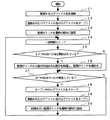
具体的に図2に示す流れ図に基づき説明する。図2は、ログファイル監視プログラムの処理フローを示す流れ図(参考例)である。まず、ログファイル監視プログラムでは、監視するログファイル名(この例では「messages」)を登録する(ステップ21)。このときほかに監視する周期などが設定可能であればそれを行う。なお、ここで表現として「登録する」の主語がプログラムとなっているが実際にはユーザがキーボードなどのマンマシンインターフェースを使用して登録の指示を行いこれに従いプログラムが動作するということである。ユーザの行う操作については以下でも適宜省略する。 This will be specifically described based on the flowchart shown in FIG. FIG. 2 is a flowchart (reference example) showing the processing flow of the log file monitoring program. First, the log file monitoring program registers the name of the log file to be monitored (“messages” in this example) (step 21). At this time, if another monitoring period can be set, it is performed. Note that although the subject of “register” is a program as an expression here, the user actually instructs registration using a man-machine interface such as a keyboard and the program operates accordingly. The operations performed by the user will be omitted as appropriate below.
次に、登録されたログファイル名のログファイルをオープンする(ステップ22)。そして、オープンされたログファイルで監視ポインタを最終の部分に設定する(ステップ23)。その最終の部分は現在までに存在するログの最終であり、これ以降に付加・更新されるログが監視されることになる。監視ポインタが設定されたら監視周期に従いログ監視プログラムは一定時間スリープとなる(ステップ24)。 Next, the log file having the registered log file name is opened (step 22). Then, the monitoring pointer is set to the last part in the opened log file (step 23). The last part is the last of the logs existing so far, and logs added / updated thereafter are monitored. When the monitoring pointer is set, the log monitoring program goes to sleep for a predetermined time according to the monitoring cycle (step 24).
スリープすべき時間が経過したら、次に、オープン中のログファイルの更新を調べる(ステップ25)。具体的には、例えばログファイルの更新日付を見ることで判断できる。更新がなければスリープ前と監視対象のログファイルに変化はないので次のステップ26をスキップする。更新がされている場合には、スリープ前に設定されていた監視ポインタの指し示すログ以降に付加されたログについて所定の処理を行う(ステップ26)。このとき、監視ポインタを処理された最後に進める(同)。「所定の処理」はこのログファイル監視プログラムが有する機能により様々であるが、例えば障害発生の検知などを挙げることができる。
When the time to sleep has elapsed, the update of the open log file is checked (step 25). Specifically, it can be determined by looking at the update date of the log file, for example. If there is no update, the
次に、ログファイルのローテーションが発生しているかを調べる(ステップ27)。これは、例えばOS側から通知された情報に基づいたりOS側に問い合わせることにより可能である。ローテーションが発生していない場合には、現在オープンのログファイルは古くなっていないので次のステップ28、29、30をスキップし、次のスリープ(ステップ24)に移行する。
Next, it is checked whether log file rotation has occurred (step 27). This can be done, for example, based on information notified from the OS side or by making an inquiry to the OS side. If rotation has not occurred, the currently open log file is not old, so the
ローテーションが発生している場合は、現在オープンのファイルは古くなっている。そこで、そのファイルをクローズし(ステップ28)、登録されたログファイル名のログファイルをオープンする(ステップ29)。「登録されたログファイル名」はステップ21における登録による。そして、オープンされたログファイルについて所定の処理を行い、監視ポインタを最後の部分に設定する(ステップ30)。これにより、実質的に新たなログファイルがオープン・処理される。この後、次のスリープ(ステップ24)に移行する。以上のようなフローにより一定周期ごとに所定の処理を行うログファイル監視がなされる。
If rotation occurs, the currently open file is out of date. Therefore, the file is closed (step 28), and the log file having the registered log file name is opened (step 29). “Registered log file name” is based on registration in
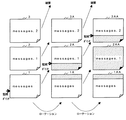
図3は、図2に示したログファイル監視プログラムの機能を説明する図(参考例)である。図3における、ログファイル1、2、3、1A、2A、3Aは、それぞれ図1に示した同符号のものに相当する。図3の左側の状態で監視プログラムによる処理がなされ、そのあとローテーションが生じ図3中央の状態になった場合におけるログファイル監視プログラムの処理対象は、上記図2による説明からわかるように、ログファイル2Aおよびログファイル1Aのそれぞれドットパターン部である。 FIG. 3 is a diagram (reference example) for explaining the function of the log file monitoring program shown in FIG. Log files 1, 2, 3, 1A, 2A, 3A in FIG. 3 correspond to the same reference numerals shown in FIG. The processing target of the log file monitoring program when the processing by the monitoring program is performed in the state on the left side of FIG. 2A and the log file 1A are dot pattern portions.
今、図3の左側の状態で監視プログラムによる処理がなされ、そのあとローテーションが2度生じ図3の右側の状態になり、次の監視の処理がなされる場合を考える。この場合、図2のステップ26においてログファイル3AAのドットパターン部について処理がなされる。そのあと図2のステップ30でログファイル1AAのドットパターン部について処理がなされる。すなわち、中間のバックアップであるログファイル2AAについては所定の処理がなされない。これは監視プログラムとして完全性が欠如しているといえる。
Now, let us consider a case where the processing by the monitoring program is performed in the state on the left side of FIG. 3, and then the rotation occurs twice and the state on the right side of FIG. 3 is reached and the next monitoring processing is performed. In this case, processing is performed for the dot pattern portion of the log file 3AA in
そこで、次に、本発明の一実施形態に係るログファイル監視プログラムについて図4ないし図7を参照して説明する。図7は、本発明の一実施形態に係るログファイル監視プログラムの処理フローを示す流れ図である。 Then, next, a log file monitoring program according to an embodiment of the present invention will be described with reference to FIGS. FIG. 7 is a flowchart showing a processing flow of the log file monitoring program according to the embodiment of the present invention.
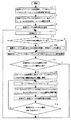
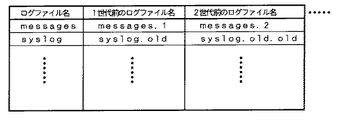
このログファイル監視プログラムでは、まず、監視するログファイル名を登録し、そのログファイルのローテーションによる名変更規則を取得する(ステップ41)。ログファイル名の登録は図2のステップ21と同じである。「そのログファイルのローテーションによる名変更規則の取得」は、例えば、図5に示すような名変更規則の情報を監視される側のソフトウエアから得るということである。図5は、ログファイル名が「messages」であれば、1世代前の名は「messages.1」、2世代前の名は「messages.2」であることを、ログファイル名が「syslog」であれば、1世代前の名は「syslog.old」、2世代前の名は「syslog.old.old」であることを情報として取得したことを示している。世代の数は監視される側のソフトウエアの構成に依存する。
In this log file monitoring program, first, the log file name to be monitored is registered, and a name change rule by rotation of the log file is acquired (step 41). Registration of the log file name is the same as
次に、登録されたログファイル名のログファイルをオープンし、そのオープンされたログファイルに付与されたinode番号を記憶する(ステップ42)。inode番号は、ログファイルに不変に付与されている番号であり、ローテーションが発生しても、ログファイル名のようには変化しない。なお、inode番号も監視される側のソフトウエア、例えばOSにより付与されるものであるが、ログファイルに不変に付与される情報であればその情報を代わりに利用することもできる。 Next, the log file having the registered log file name is opened, and the inode number assigned to the opened log file is stored (step 42). The inode number is a number assigned to the log file invariably, and does not change like the log file name even if rotation occurs. Note that the inode number is also assigned by the monitored software, for example, the OS, but the information can be used instead if it is information that is permanently given to the log file.
次に、オープンされたログファイルで監視ポインタを最終の部分に設定する(ステップ43)。これによりその設定位置以後のログが監視されることになる。監視ポインタが設定されたら監視周期に従いログ監視プログラムは一定時間スリープとなる(ステップ44)。 Next, the monitoring pointer is set to the last part in the opened log file (step 43). As a result, logs after the set position are monitored. When the monitoring pointer is set, the log monitoring program sleeps for a predetermined time according to the monitoring cycle (step 44).
スリープすべき時間が経過したら、次に、オープン中のログファイルの更新を調べる(ステップ45)。具体的には、例えばログファイルの更新日付を見ることで判断できる。更新がなければスリープ前と監視対象のログファイルに変化はないので次のステップ46をスキップする。更新がされている場合には、スリープ前に設定されていた監視ポインタの指し示すログ以降に付加されたログについて所定の処理を行う(ステップ46)。このとき、監視ポインタを処理された最後に進める(同)。「所定の処理」は例えば障害発生の検知などを挙げることができる。
When the time to sleep has elapsed, the update of the open log file is checked (step 45). Specifically, it can be determined by looking at the update date of the log file, for example. If there is no update, there is no change in the log file before sleep and the monitoring target, so the
次に、登録されたログファイル名のログファイルに付与されたinode番号を取得する(ステップ47)。「登録されたログファイル名」はステップ41における登録でのログファイル名である。そして、取得されたinode番号と、ステップ42で記憶されたinode番号との一致/不一致を調べる(ステップ48)。これはすなわち、現在オープンのログファイルが古くなっているか否か(ローテーションが発生しているか否か)を調べていることになる。記憶されているinode番号は現在オープンのログファイルのinode番号であり、取得されたinode番号は、登録されたログファイル名のログファイルに付与されたもの、つまり現在使用されているログファイルのinode番号だからである。
Next, the inode number assigned to the log file with the registered log file name is acquired (step 47). “Registered log file name” is the log file name in the registration in step 41. Then, a match / mismatch between the acquired inode number and the inode number stored in
両inode番号が一致の時は、ログファイルのローテーションが発生していないので次のステップ49から53をスキップする。そして次のスリープ(ステップ44)に移行する。
If the two inode numbers match, the log file rotation has not occurred, so the
両inode番号が不一致のときは、ログファイル名変更規則に基づいて、登録されたログファイル名のログファイルからオープン中のログファイルまでの世代情報を遡及的に調査・取得する(ステップ49)。この世代情報は、ログファイル名とこのログファイル名のログファイルに付与されたinode番号とからなる組の情報を現在のログファイルからオープン中のログファイルに遡ってたどり得るものである。得られる世代情報は、例えば、図7に示すようになる。図7は、図4に示したログファイル監視プログラムにおいて取得された世代情報の例を示す図である。 If the two inode numbers do not match, the generation information from the log file with the registered log file name to the open log file is retrospectively investigated and acquired based on the log file name change rule (step 49). This generation information can trace a set of information including a log file name and an inode number assigned to the log file with this log file name from the current log file back to the open log file. The obtained generation information is, for example, as shown in FIG. FIG. 7 is a diagram showing an example of generation information acquired by the log file monitoring program shown in FIG.
図7に示すように、まず、登録されたログファイル名「messages」からそのログファイルのinode番号x3が取得できる。次に、ログファイル名変更規則を知得して1世代前のログファイル名「messages.1」がわかっているので、そのログファイル名についてinode番号x2を取得する。ここでinode番号x2が、記憶されたinode番号に一致すれば現在オープンされているログファイルに達したことになる。一致しなければ、さらに、知得されたログファイル名変更規則から前の世代のログファイル名「messages.2」を根拠にそのinode番号x1を取得する。ここで例えばinode番号x1が、記憶されたinode番号に一致したものとすると、この間、ローテーションは2度発生したことになる。 As shown in FIG. 7, first, the inode number x3 of the log file can be acquired from the registered log file name “messages”. Next, since the log file name change rule is known and the log file name “messages.1” of the previous generation is known, the inode number x2 is acquired for the log file name. Here, if the inode number x2 matches the stored inode number, the currently opened log file has been reached. If they do not match, the inode number x1 is acquired based on the log file name “messages.2” of the previous generation from the obtained log file name change rule. Here, for example, if the inode number x1 matches the stored inode number, the rotation has occurred twice during this time.
ステップ49が終了したら、オープン中のログファイルをクローズする(ステップ50)。そして、その次の世代のログファイルをオープンし、同時にそのinode番号を更新して記憶する(ステップ51)。「その次の世代のログファイル」については、取得された世代情報を用いれば、ログファイル名によってもinode番号によっても特定が可能である。ログファイルが新たにオープンしたら、監視に基づく所定の処理を行い、監視ポインタを最後の部分に設定する(ステップ52)。
When
次に、オープンされたログファイルのinode番号が、ステップ47で取得されたinode番号に一致するかを判定する(ステップ53)。一致の場合は、現在使用中のログファイルがオープンされているので、次のスリープ(ステップ44)に移行する。一致しない場合には、ステップ50に戻りそこから同様にオープン対象を更新してステップ51、52、53の処理を行う。以上のようなフローにより一定周期ごとに所定の処理を行うログファイル監視がなされる。
Next, it is determined whether the inode number of the opened log file matches the inode number acquired in step 47 (step 53). In the case of coincidence, the log file currently in use has been opened, and the process proceeds to the next sleep (step 44). If they do not match, the process returns to step 50 to update the open target in the same manner and perform the processing of
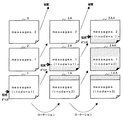
このログファイル監視によれば、監視の1周期の間にローテーションが2度以上発生しても監視の抜けは生じない。これを図6を参照してさらに説明する。図6は、図4に示したログファイル監視プログラムの機能を説明する図である。図6において使用する各引用符号は、図3と同じように付与されている。 According to this log file monitoring, no monitoring omission occurs even if rotation occurs twice or more during one monitoring period. This will be further described with reference to FIG. FIG. 6 is a diagram for explaining the functions of the log file monitoring program shown in FIG. Each reference symbol used in FIG. 6 is assigned in the same manner as in FIG.
図6の左側の状態で監視プログラムによる処理がなされ、そのあとローテーションが生じ図6中央の状態になった場合におけるログファイル監視プログラムの処理対象は、上記図4による説明からわかるように、ログファイル2Aおよびログファイル1Aのそれぞれドットパターン部である。これは、世代情報の調査・取得により、オープン対象がログファイル2Aからログファイル1Aに変わるからである。ここで、ステップ47で取得されるinode番号はx2であり、それより前に最後に記憶(ステップ51か42で記憶)されたinode番号はx1である。
The processing target of the log file monitoring program in the case where the processing by the monitoring program is performed in the state on the left side of FIG. 2A and the log file 1A are dot pattern portions. This is because the open target is changed from the
また、図6の左側の状態で監視プログラムによる処理がなされ、そのあとローテーションが2度生じ図6の右側の状態になり、次の監視の処理がなされる場合を考える。この場合、図4のステップ46においてログファイル3AAのドットパターン部について処理がなされる。そのあと図6のステップ51、52でログファイル2AAのドットパターン部について処理がなされる。さらにその後、ステップ53を経て再びステップ51、52でログファイル1AAのドットパターン部について処理がなされる。すなわち、中間のバックアップであるログファイル2AAについても所定の処理がなされる。よって、監視プログラムとして監視の抜けが発生しない完全性を有している。ここで、図4のステップ47で取得されるinode番号はx3であり、それよりに前に最後に記憶(ステップ51か42で記憶)されたinode番号はx1である。
Further, consider the case where the processing by the monitoring program is performed in the state on the left side of FIG. 6, and then the rotation occurs twice and the state on the right side of FIG. 6 is reached and the next monitoring processing is performed. In this case, processing is performed for the dot pattern portion of the log file 3AA in
以上説明のように、本実施形態によれば、監視周期間でログファイルのローテーションが複数回発生した場合にも更新・追加されたログを見落とすことなく処理することができる。特に、ログファイル名のローテーションによる変更規則を監視される側のソフトウエアから取得するようにしているので、どのような変更規則であっても対応することができる。ただし、典型的な変更規則であれば、変更規則を仮定しその仮定により前世代のログファイル名が推定できるのでこれによっても同様なはたらきを得ることができる。 As described above, according to the present embodiment, even when log file rotation occurs a plurality of times during the monitoring period, it is possible to perform processing without overlooking the updated / added log. In particular, since the change rule based on the rotation of the log file name is obtained from the monitored software, any change rule can be handled. However, in the case of a typical change rule, the change rule is assumed and the log file name of the previous generation can be estimated based on the change rule.
1,1A,1AA…ログファイル、2,2A,2AA、3,3A,3AA…バックアップのログファイル 1, 1A, 1AA ... log file, 2, 2A, 2AA, 3, 3A, 3AA ... backup log file
Claims (7)
監視中でオープン中の前記ログファイルを処理するステップと、
前記第1の不変情報が記憶された状態において、監視すべきログファイル名のログファイルに付与された不変情報を第2の不変情報として調査・取得するステップと、
前記記憶された第1の不変情報と前記取得された第2の不変情報とが同一であるか否かを判定するステップと、
前記判定の結果が同一でない場合に、ログファイルローテーションで適用されるログファイル名変更規則に基づいて監視中でオープン中の前記ログファイルに至る世代情報を調査・取得するステップと、
前記取得された世代情報に基づいて監視中でオープン中の前記ログファイルより新しい世代のログファイルを順にオープン対象として処理するステップと
をコンピュータに実行させるためのログファイル監視プログラム。 Storing invariant information given to a log file being monitored and opened as first invariant information;
Processing the log file being monitored and open;
In the state where the first invariant information is stored, investigating and acquiring the invariant information given to the log file having the log file name to be monitored as the second invariant information;
Determining whether the stored first invariant information and the acquired second invariant information are the same;
If the determination results are not the same, investigating and acquiring generation information that reaches the open log file being monitored based on the log file name change rule applied in log file rotation;
A log file monitoring program for causing a computer to execute, in order, a log file of a newer generation than the currently open log file being monitored based on the acquired generation information.
監視中でオープン中の前記ログファイルを処理するステップと、
前記第1の不変情報が記憶された状態において、監視すべきログファイル名のログファイルに付与された不変情報を第2の不変情報として調査・取得するステップと、
前記記憶された第1の不変情報と前記取得された第2の不変情報とが同一であるか否かを判定するステップと、
前記判定の結果が同一でない場合に、ログファイルローテーションで適用されるログファイル名変更規則に基づいて監視中でオープン中の前記ログファイルに至る世代情報を調査・取得するステップと、
前記取得された世代情報に基づいて監視中でオープン中の前記ログファイルより新しい世代のログファイルを順にオープン対象として処理するステップと
を具備することを特徴とするログファイル監視方法。 Storing invariant information given to a log file being monitored and opened as first invariant information;
Processing the log file being monitored and open;
In the state where the first invariant information is stored, investigating and acquiring the invariant information given to the log file having the log file name to be monitored as the second invariant information;
Determining whether the stored first invariant information and the acquired second invariant information are the same;
If the determination results are not the same, investigating and acquiring generation information that reaches the open log file being monitored based on the log file name change rule applied in log file rotation;
A log file monitoring method comprising: sequentially processing log files of a newer generation than the currently open log file based on the acquired generation information as open targets.
前記ログファイル監視部により監視される前記各ログファイルを記憶するログファイル記憶部と
を具備することを特徴とする計算機システム。 Means for storing invariant information given to a log file being monitored and opened as first invariant information, means for processing the log file being opened for monitoring, and the first invariant information are stored Means for investigating / acquiring invariant information given to the log file having the log file name to be monitored as second invariant information, the stored first invariant information, and the acquired second The means for determining whether or not the invariant information is the same, and the log that is being monitored and opened based on the log file name change rule applied in log file rotation when the result of the determination is not the same A means for investigating / acquiring generation information leading to a file and a log file of a newer generation than the log file being opened being monitored based on the acquired generation information. And log file monitoring unit that includes a means for processing an open target,
A computer system comprising: a log file storage unit that stores the log files monitored by the log file monitoring unit.
Priority Applications (1)
| Application Number | Priority Date | Filing Date | Title |
|---|---|---|---|
| JP2004104664A JP2005293016A (en) | 2004-03-31 | 2004-03-31 | Log file monitoring program, log file monitoring method, computer system |
Applications Claiming Priority (1)
| Application Number | Priority Date | Filing Date | Title |
|---|---|---|---|
| JP2004104664A JP2005293016A (en) | 2004-03-31 | 2004-03-31 | Log file monitoring program, log file monitoring method, computer system |
Publications (1)
| Publication Number | Publication Date |
|---|---|
| JP2005293016A true JP2005293016A (en) | 2005-10-20 |
Family
ID=35325908
Family Applications (1)
| Application Number | Title | Priority Date | Filing Date |
|---|---|---|---|
| JP2004104664A Pending JP2005293016A (en) | 2004-03-31 | 2004-03-31 | Log file monitoring program, log file monitoring method, computer system |
Country Status (1)
| Country | Link |
|---|---|
| JP (1) | JP2005293016A (en) |
Cited By (3)
| Publication number | Priority date | Publication date | Assignee | Title |
|---|---|---|---|---|
| JP2010244306A (en) * | 2009-04-06 | 2010-10-28 | Nec Corp | Device, method and program for gathering of obstacle analysis information |
| JP2011215783A (en) * | 2010-03-31 | 2011-10-27 | Nec Corp | Apparatus, method and program for managing extraction of log information difference |
| US8290992B2 (en) * | 2008-01-23 | 2012-10-16 | Nec Corporation | File management method, file management device, and program |
-
2004
- 2004-03-31 JP JP2004104664A patent/JP2005293016A/en active Pending
Cited By (3)
| Publication number | Priority date | Publication date | Assignee | Title |
|---|---|---|---|---|
| US8290992B2 (en) * | 2008-01-23 | 2012-10-16 | Nec Corporation | File management method, file management device, and program |
| JP2010244306A (en) * | 2009-04-06 | 2010-10-28 | Nec Corp | Device, method and program for gathering of obstacle analysis information |
| JP2011215783A (en) * | 2010-03-31 | 2011-10-27 | Nec Corp | Apparatus, method and program for managing extraction of log information difference |
Similar Documents
| Publication | Publication Date | Title |
|---|---|---|
| US10929242B2 (en) | File corruption recovery in concurrent data protection | |
| US9208307B2 (en) | Automatic algorithm discovery using reverse dataflow analysis | |
| CN110659256B (en) | Multi-computer room synchronization method, computing device and computer storage medium | |
| US7917481B1 (en) | File-system-independent malicious content detection | |
| US9201793B2 (en) | Facilitating profiling of applications for efficient loading | |
| JP2011138309A (en) | System event log system | |
| US11294653B2 (en) | Methods and systems of disassembling executable code | |
| US8286141B2 (en) | Instruction-trace generation program, instruction-trace generating device, and instruction-trace generating method | |
| JP2002342114A (en) | Processor that can collect trace data | |
| CN116484375A (en) | Method, device, medium and electronic equipment for shelling malicious programs | |
| CN117377955A (en) | Leveraging entropy to prevent code execution logs from including payload data | |
| US20040226028A1 (en) | Selective process restart based on API changes | |
| US8032757B1 (en) | Methods and apparatus for content fingerprinting for information leakage prevention | |
| JP2009134360A (en) | Model inspection system, model inspection method, and model inspection program | |
| JP2009223714A (en) | Arithmetic circuit and failure analysis method of arithmetic circuit | |
| JP2009043061A (en) | Debugging device and debugging method | |
| CN113867784B (en) | A virus program reverse analysis method and device | |
| JPH05274186A (en) | Input data processor | |
| JP5389734B2 (en) | Extraction apparatus and extraction method | |
| JP6162628B2 (en) | Log acquisition device and log acquisition method | |
| JP5389733B2 (en) | Extraction apparatus and extraction method | |
| CN117112548B (en) | Hive data automatic offline method, device, equipment and storage medium | |
| JP2009169801A (en) | Schedule retrieval system and retrieval method for data | |
| JP2014160421A (en) | Soft error analysis device and error information preparation device | |
| JP2012256279A (en) | Information processing device, method, and program |
Legal Events
| Date | Code | Title | Description |
|---|---|---|---|
| A977 | Report on retrieval |
Free format text: JAPANESE INTERMEDIATE CODE: A971007 Effective date: 20080104 |
|
| A131 | Notification of reasons for refusal |
Free format text: JAPANESE INTERMEDIATE CODE: A131 Effective date: 20080205 |
|
| A521 | Written amendment |
Free format text: JAPANESE INTERMEDIATE CODE: A523 Effective date: 20080407 |
|
| A131 | Notification of reasons for refusal |
Free format text: JAPANESE INTERMEDIATE CODE: A131 Effective date: 20080513 |
|
| A02 | Decision of refusal |
Free format text: JAPANESE INTERMEDIATE CODE: A02 Effective date: 20080916 |