JP2005292087A - Antibody against 5'-deoxy-5'-methylthioadenosine - Google Patents
Antibody against 5'-deoxy-5'-methylthioadenosine Download PDFInfo
- Publication number
- JP2005292087A JP2005292087A JP2004111373A JP2004111373A JP2005292087A JP 2005292087 A JP2005292087 A JP 2005292087A JP 2004111373 A JP2004111373 A JP 2004111373A JP 2004111373 A JP2004111373 A JP 2004111373A JP 2005292087 A JP2005292087 A JP 2005292087A
- Authority
- JP
- Japan
- Prior art keywords
- antibody
- methylthioadenosine
- deoxy
- mta
- reactivity
- Prior art date
- Legal status (The legal status is an assumption and is not a legal conclusion. Google has not performed a legal analysis and makes no representation as to the accuracy of the status listed.)
- Pending
Links
- 0 CC1(CCCC*)O[C@]([C@@](CO)OC2CCC[n]3c4ncnc(NC)c4nc3)[C@@]2O1 Chemical compound CC1(CCCC*)O[C@]([C@@](CO)OC2CCC[n]3c4ncnc(NC)c4nc3)[C@@]2O1 0.000 description 3
- IJPJORDECJQRIR-UHFFFAOYSA-N CSCC(C(C1O)O)OC1[n]1c(ncnc2NCCCCCC(ON(C(CC3)=O)C3=O)=O)c2nc1 Chemical compound CSCC(C(C1O)O)OC1[n]1c(ncnc2NCCCCCC(ON(C(CC3)=O)C3=O)=O)c2nc1 IJPJORDECJQRIR-UHFFFAOYSA-N 0.000 description 1
Images
Classifications
-
- C—CHEMISTRY; METALLURGY
- C07—ORGANIC CHEMISTRY
- C07K—PEPTIDES
- C07K16/00—Immunoglobulins [IG], e.g. monoclonal or polyclonal antibodies
- C07K16/44—Immunoglobulins [IG], e.g. monoclonal or polyclonal antibodies against material not provided for elsewhere, e.g. haptens, metals, DNA, RNA, amino acids
-
- A—HUMAN NECESSITIES
- A61—MEDICAL OR VETERINARY SCIENCE; HYGIENE
- A61P—SPECIFIC THERAPEUTIC ACTIVITY OF CHEMICAL COMPOUNDS OR MEDICINAL PREPARATIONS
- A61P19/00—Drugs for skeletal disorders
-
- A—HUMAN NECESSITIES
- A61—MEDICAL OR VETERINARY SCIENCE; HYGIENE
- A61P—SPECIFIC THERAPEUTIC ACTIVITY OF CHEMICAL COMPOUNDS OR MEDICINAL PREPARATIONS
- A61P25/00—Drugs for disorders of the nervous system
- A61P25/28—Drugs for disorders of the nervous system for treating neurodegenerative disorders of the central nervous system, e.g. nootropic agents, cognition enhancers, drugs for treating Alzheimer's disease or other forms of dementia
-
- A—HUMAN NECESSITIES
- A61—MEDICAL OR VETERINARY SCIENCE; HYGIENE
- A61P—SPECIFIC THERAPEUTIC ACTIVITY OF CHEMICAL COMPOUNDS OR MEDICINAL PREPARATIONS
- A61P35/00—Antineoplastic agents
-
- C—CHEMISTRY; METALLURGY
- C07—ORGANIC CHEMISTRY
- C07K—PEPTIDES
- C07K2317/00—Immunoglobulins specific features
- C07K2317/90—Immunoglobulins specific features characterized by (pharmaco)kinetic aspects or by stability of the immunoglobulin
- C07K2317/92—Affinity (KD), association rate (Ka), dissociation rate (Kd) or EC50 value
Landscapes
- Health & Medical Sciences (AREA)
- Chemical & Material Sciences (AREA)
- Organic Chemistry (AREA)
- General Health & Medical Sciences (AREA)
- Medicinal Chemistry (AREA)
- Life Sciences & Earth Sciences (AREA)
- General Chemical & Material Sciences (AREA)
- Pharmacology & Pharmacy (AREA)
- Nuclear Medicine, Radiotherapy & Molecular Imaging (AREA)
- Animal Behavior & Ethology (AREA)
- Chemical Kinetics & Catalysis (AREA)
- Public Health (AREA)
- Veterinary Medicine (AREA)
- Engineering & Computer Science (AREA)
- Bioinformatics & Cheminformatics (AREA)
- Genetics & Genomics (AREA)
- Biomedical Technology (AREA)
- Neurology (AREA)
- Neurosurgery (AREA)
- Proteomics, Peptides & Aminoacids (AREA)
- Molecular Biology (AREA)
- Immunology (AREA)
- Biochemistry (AREA)
- Biophysics (AREA)
- Physical Education & Sports Medicine (AREA)
- Hospice & Palliative Care (AREA)
- Psychiatry (AREA)
- Peptides Or Proteins (AREA)
- Preparation Of Compounds By Using Micro-Organisms (AREA)
- Investigating Or Analysing Materials By The Use Of Chemical Reactions (AREA)
- Micro-Organisms Or Cultivation Processes Thereof (AREA)
- Saccharide Compounds (AREA)
- Investigating Or Analysing Biological Materials (AREA)
- Medicines Containing Antibodies Or Antigens For Use As Internal Diagnostic Agents (AREA)
Abstract
【課題】 従来は5’-デオキシ-5’-メチルチオアデノシン(MTA)を特異的に認識する抗体、特にモノクロナル抗体が存在しなかった。またスペルミジンシンターゼの活性を高感度で測定できるアッセイ法が存在しなかった。
【解決手段】新規な免疫原を作製し、これを用いることにより非常に特異性の高い抗体を作製することができた。この抗体を用いることにより高感度でスペルミジンシンターゼの測定も可能となった。
【選択図】 なしPROBLEM TO BE SOLVED: There has been no antibody that specifically recognizes 5′-deoxy-5′-methylthioadenosine (MTA), in particular, a monoclonal antibody. There was no assay method that could measure the activity of spermidine synthase with high sensitivity.
A novel immunogen was prepared and an antibody with very high specificity could be prepared by using it. By using this antibody, spermidine synthase can be measured with high sensitivity.
[Selection figure] None
Description
本発明は、5’-デオキシ-5’-メチルチオアデノシン(以下MTAともいう。)に対する特異性の高い抗体を提供する。さらに、この抗体を用いたアッセイ法を提供する。 The present invention provides an antibody having high specificity for 5'-deoxy-5'-methylthioadenosine (hereinafter also referred to as MTA). Furthermore, an assay using this antibody is provided.
スペルミジンシンターゼ(以下SPDSともいう。)は、以下に示す反応式によりスペルミジンを合成する。スペルミジンは塩基性低分子有機化合物であるポリアミンの1種であり、タンパク質及び核酸合成の盛んな組織中に多く含まれている。スペルミジンは核酸との相互作用による核酸の安定化と構造変化に関っており、種々の核酸合成系への促進作用を有し、タンパク質合成系の活性化等の多岐にわたる生理的作用を示す物質として知られている。そのため、動物組織におけるスペルミジンシンターゼの活性測定方法の研究が行われてきた。
スペルミジンシンターゼの活性を測定する手法としては、基質であるプトレシンや脱炭酸化S-アデノシルメチオニン(以下dcSAMともいう。)を14Cで標識してイオン交換クロマトグラフィー(非特許文献1)、ペーパー電気泳動法(非特許文献2)、高速液体クロマトグラフィー(HPLC)等により測定する方法(非特許文献3)が報告されている。しかし、これらの方法はいずれも反応後に測定対象を分離する工程を要するために非効率的であり時間を要していた。 As a method for measuring the activity of spermidine synthase, the substrate putrescine or decarboxylated S-adenosylmethionine (hereinafter also referred to as dcSAM) is labeled with 14 C and ion exchange chromatography (Non-patent Document 1), paper A method (Non-Patent Document 3) for measuring by electrophoresis (Non-Patent Document 2), high performance liquid chromatography (HPLC) or the like has been reported. However, these methods are inefficient and time-consuming because they require a step of separating the measurement target after the reaction.
また、放射線免疫測定法(RIA)によりSPDSの酵素活性を測定する方法が報告されている(非特許文献4,5,6)。一般的にこのような免疫学的手法により検出を行うには特異性の高い抗体が必要である。先行技術は反応副産物の5’-デオキシ-5’-メチルチオアデノシンに対する抗体を用いているが、いずれもポリクロナル抗体であり、しかもその抗体価(titer)は2,000倍程度と低かった。また5’-デオキシ-5’-メチルチオアデノシンと類似構造を有する脱炭酸化S-アデノシルメチオニンとの交差反応性は約1%であり特異性も低かった。このような抗体では固相酵素免疫測定法(以下ELISAともいう)を始めとする免疫学的検出方法への適用が難しく、その検出能を十分に引き出せない場合がありその改善が望まれていた。
本発明の課題は、MTAと特異的に結合するポリクロナル抗体及びモノクロナル抗体およびこれらを利用した高感度のアッセイ法を提供することである。 An object of the present invention is to provide a polyclonal antibody and a monoclonal antibody that specifically bind to MTA, and a highly sensitive assay method using them.
従来は、過ヨウ素酸酸化法(Erlangerら、1964)によりMTAの糖部分を開環してキャリアタンパクを結合した一般式(IV)で示される免疫原により抗体を作製していた。しかし本発明者らは鋭意工夫を重ねてMTAの塩基部分にリンカーを導入した一般式(III)で示される免疫原を用いることによりMTAを特異的に認識する抗体を作製することができることを見出した。
すなわち本発明は、以下の発明を包含するものである。
[1]
5’-デオキシ-5’-メチルチオアデノシンと特異的に結合するモノクロナル抗体。
[2]
5’-デオキシ-5’-メチルチオアデノシンに対する反応性を100%とした場合に、脱炭酸化 S-アデノシルメチオニンに対する交差反応性が0.1%以下である上記[1]記載のモノクロナル抗体。
[3]
該交差反応性が0.01%以下である上記[1]記載のモノクロナル抗体。
[4]
5’-デオキシ-5’-メチルチオアデノシンに対する反応性を100%とした場合に、脱炭酸化 S-アデノシルメチオニンに対する交差反応性が0.1%以下であるポリクロナル抗体。
[5]
一般式(I):
[6]
一般式(I)で表される化合物においてnが5である[5]記載の化合物。
[7]
Rが以下の式(II):
[8]
5’-デオキシ-5’-メチルチオアデノシンのプリン基にキャリアタンパクを結合させることを特徴とする免疫原。
[9]
一般式(III):
[10]
一般式(III)で表される化合物においてnが5である上記[9]記載の免疫原。
[11]
Xがカギアナカサガイのヘモシアニンである上記[10]記載の免疫原。
[12]
上記[8]から[10]のいずれかに記載の免疫原に対する上記[4]記載のポリクロナル抗体。
[13]
上記[8]から[10]のいずれかに記載の免疫原に対する上記[1]から[3]のいずれかに記載のモノクロナル抗体。
[14]
5’-デオキシ-5’-メチルチオアデノシンと特異的に結合するモノクロナル抗体を産生するハイブリドーマ。
[15]
受託番号がFERM P-19707である上記[14]記載のハイブリドーマ。
[16]
上記[15]に記載のハイブリドーマによって産生される上記[1]から[3]のいずれかに記載のモノクロナル抗体。
[17]
標識されたものである上記[1]から[4]のいずれかに記載の抗体。
[18]
該標識が、酵素、蛍光物質、着色ビーズ、放射性同位元素、金属類、またはビオチンである上記[17]記載の抗体。
[19]
標識がペルオキシダーゼである上記[18]記載の抗体。
[20]
標識がユウロピウムクリプテートである上記[18]記載の抗体。
[21]
上記[1]から[4]のいずれかに記載の抗体を用いたアッセイ法。
[22]
抗体を用いたアッセイ法がELISA法である上記[21]記載の方法。
[23]
抗体を用いたアッセイ法がホモジニアスアッセイ法である上記[21]記載の方法。
[24]
該ホモジニアスアッセイ法が蛍光共鳴エネルギー転移を用いたアッセイ法である上記[23]記載の方法。
[25]
スペルミジンシンターゼの活性を測定するものである上記[21]から[24]のいずれかに記載の方法。
[26]
変形性関節症の治療・予防剤を探索するものである上記[21]から[25]のいずれかに記載の方法。
That is, the present invention includes the following inventions.
[1]
Monoclonal antibody that specifically binds to 5'-deoxy-5'-methylthioadenosine.
[2]
The monoclonal antibody according to [1] above, wherein the cross-reactivity to decarboxylated S-adenosylmethionine is 0.1% or less when the reactivity to 5′-deoxy-5′-methylthioadenosine is 100%.
[3]
The monoclonal antibody according to [1] above, wherein the cross-reactivity is 0.01% or less.
[4]
A polyclonal antibody having a cross-reactivity to decarboxylated S-adenosylmethionine of 0.1% or less when the reactivity to 5′-deoxy-5′-methylthioadenosine is 100%.
[5]
Formula (I):
[6]
The compound according to [5], wherein n is 5 in the compound represented by the general formula (I).
[7]
R is the following formula (II):
[8]
An immunogen comprising a carrier protein bound to a purine group of 5'-deoxy-5'-methylthioadenosine.
[9]
General formula (III):
[10]
The immunogen according to [9] above, wherein n is 5 in the compound represented by the general formula (III).
[11]
The immunogen according to the above [10], wherein X is hemocyanin of the limpet limpet.
[12]
The polyclonal antibody according to [4] above against the immunogen according to any one of [8] to [10].
[13]
The monoclonal antibody according to any one of [1] to [3] above to the immunogen according to any one of [8] to [10].
[14]
A hybridoma that produces a monoclonal antibody that specifically binds to 5'-deoxy-5'-methylthioadenosine.
[15]
The hybridoma according to the above [14], wherein the accession number is FERM P-19707.
[16]
The monoclonal antibody according to any one of [1] to [3], which is produced by the hybridoma according to [15].
[17]
The antibody according to any one of [1] to [4] above, which is labeled.
[18]
The antibody according to [17] above, wherein the label is an enzyme, a fluorescent substance, a colored bead, a radioisotope, a metal, or biotin.
[19]
The antibody according to [18] above, wherein the label is peroxidase.
[20]
The antibody according to [18] above, wherein the label is Europium cryptate.
[21]
An assay method using the antibody according to any one of [1] to [4] above.
[22]
[21] The method described in [21] above, wherein the assay method using an antibody is an ELISA method.
[23]
[21] The method described in [21] above, wherein the assay method using an antibody is a homogeneous assay method.
[24]
The method according to [23] above, wherein the homogeneous assay is an assay using fluorescence resonance energy transfer.
[25]
The method according to any one of [21] to [24] above, wherein the activity of spermidine synthase is measured.
[26]
The method according to any one of [21] to [25] above, which is for searching for a therapeutic / prophylactic agent for osteoarthritis.
本発明の抗体を用いることによって5’-デオキシ-5’-メチルチオアデノシンを高感度で検出することが可能となり、ELISA法やホモジニアスアッセイなど迅速、簡便で高感度なアッセイが可能となった。また本発明の抗体はスペルミジンシンターゼの活性の測定、さらには変形性関節症の治療・予防剤の探索に利用できる。 By using the antibody of the present invention, 5'-deoxy-5'-methylthioadenosine can be detected with high sensitivity, and rapid, simple and high-sensitivity assays such as ELISA and homogeneous assay are possible. The antibody of the present invention can be used for measuring the activity of spermidine synthase, and for searching for a therapeutic / prophylactic agent for osteoarthritis.
「5’-デオキシ-5’-メチルチオアデノシン」は、スペルミジンまたはスペルミンなどのポリアミンが生合成される過程において、脱炭酸化S-アデノシルメチオニン等から産生される。5’-デオキシ-5’-メチルチオアデノシンは各臓器におけるポリアミンシンターゼの活性測定のほか、腫瘍のマーカーとしても用いられる。 “5′-deoxy-5′-methylthioadenosine” is produced from decarboxylated S-adenosylmethionine and the like in the process of biosynthesis of polyamines such as spermidine or spermine. 5'-deoxy-5'-methylthioadenosine is used as a tumor marker in addition to measuring polyamine synthase activity in each organ.
「脱炭酸化S-アデノシルメチオニン」は、ポリアミン生合成過程でスペルミジンシンターゼもしくはスペルミンシンターゼの基質として、スペルミジンやスペルミン等の合成にアミノプロピル基供与体として利用される。なお、脱炭酸化S-アデノシルメチオニンは、S-アデノシルメチオニン(SAM)から脱炭酸化酵素による脱炭酸反応によって生成する。 “Decarboxylated S-adenosylmethionine” is used as a substrate for spermidine synthase or spermine synthase in the process of polyamine biosynthesis and as an aminopropyl group donor for the synthesis of spermidine and spermine. Decarboxylated S-adenosylmethionine is produced from S-adenosylmethionine (SAM) by a decarboxylation reaction using a decarboxylase.
「交差反応性(以下、cross reactivityともいう。)」は、免疫交差反応性のことをいう。ある抗原で免疫することにより得られた抗体が別の抗原(関連抗原)とも結合反応を示すときに、この反応を交差反応という。目的とする抗原とその抗体の反応量を基準とした場合に関連抗原とその抗体との反応量の程度を交差反応性として示すことができる。本明細書中においてはMTAとdcSAMの親和性の相対値(%)で示した。値が低いほど交差反応性が低く、目的の抗原に対して特異性を有することを示す。主に目的抗原と関連抗原の構造が非常に類似しているために起こることが多い。 “Cross-reactivity (hereinafter also referred to as cross-reactivity)” refers to immune cross-reactivity. When an antibody obtained by immunization with a certain antigen exhibits a binding reaction with another antigen (related antigen), this reaction is called a cross-reaction. When the reaction amount between the target antigen and the antibody is used as a reference, the degree of reaction amount between the related antigen and the antibody can be shown as cross-reactivity. In this specification, the relative values (%) of affinity between MTA and dcSAM are shown. The lower the value, the lower the cross-reactivity, indicating specificity for the target antigen. It often occurs mainly because the structures of the target antigen and related antigen are very similar.
本発明抗体においても、5’-デオキシ-5’-メチルチオアデノシンと脱炭酸化S-アデノシルメチオニンはその構造が類似していることにより交差反応が起きると考えられる。その測定法の一例を実施例に示す。本発明にかかるポリクロナル抗体は5’-デオキシ-5’-メチルチオアデノシンに対する反応性を100%とした場合に、脱炭酸化 S-アデノシルメチオニン に対する交差反応性が0.1%以下であるポリクロナル抗体である。また本発明にかかるモノクロナル抗体は5’-デオキシ-5’-メチルチオアデノシンと特異的に結合するモノクロナル抗体であり、好ましくは5’-デオキシ-5’-メチルチオアデノシンに対する反応性を100%とした場合、脱炭酸化 S-アデノシルメチオニンに対する交差反応性が0.1%以下であるモノクロナル抗体であり、さらに好ましくは該交差反応性が0.01%以下であるモノクロナル抗体である。 In the antibody of the present invention, 5'-deoxy-5'-methylthioadenosine and decarboxylated S-adenosylmethionine are considered to cross-react due to their similar structures. An example of the measurement method is shown in the examples. The polyclonal antibody according to the present invention is a polyclonal antibody having a cross-reactivity to decarboxylated S-adenosylmethionine of 0.1% or less when the reactivity to 5′-deoxy-5′-methylthioadenosine is 100%. . The monoclonal antibody according to the present invention is a monoclonal antibody that specifically binds to 5'-deoxy-5'-methylthioadenosine, and preferably has a reactivity with 5'-deoxy-5'-methylthioadenosine of 100%. In this case, a monoclonal antibody having a cross-reactivity with decarboxylated S-adenosylmethionine of 0.1% or less, more preferably a monoclonal antibody with a cross-reactivity of 0.01% or less.
「抗体価(titer)」とは、血清反応において、抗血清の単位容量中に含まれている、抗原に対して結合する抗体量をいう。実際の測定は抗血清の希釈系列に対して一定量の抗原を加えて行い、測定値は反応の生じる終末点における希釈倍数であらわす。 “Antibody titer” refers to the amount of antibody that binds to an antigen contained in a unit volume of antiserum in a serum reaction. The actual measurement is performed by adding a certain amount of antigen to the antiserum dilution series, and the measured value is expressed as the dilution factor at the end point where the reaction occurs.
「親和性(affinity)」とは抗原抗体間の結合力をいう。本明細書中においては、抗体に対する標識MTAの結合量を50%阻害するMTAもしくはdcSAMの濃度(IC50値)を指標として親和性を示した。IC50値はlogistic曲線による回帰モデル(Rodbardら、Synposium on RIA and related procedures in medicine, P165, Int.Atomic Energy Agency, 1974)で算出した。 “Affinity” refers to the binding force between antigen and antibody. In the present specification, affinity was shown using as an index the concentration (IC50 value) of MTA or dcSAM that inhibits the amount of labeled MTA bound to the antibody by 50%. IC50 values were calculated by a regression model using a logistic curve (Rodbard et al., Synposium on RIA and related procedures in medicine, P165, Int. Atomic Energy Agency, 1974).
「ハプテン」とは、部分的な、または不完全な抗原である。ハプテンは主として低分子量の物質であり、単独では抗体の産生を刺激する能力はないが、化学的方法や架橋剤によりキャリアタンパクと結合させて人工抗原として免疫するとハプテンに対する抗体を得ることができる。本発明においては5’-デオキシ-5’-メチルチオアデノシンは低分子化合物であるため単独で抗体を産生することは難しいと考えられることから通常は異種のタンパク質や合成ポリペプチドなどのキャリアタンパクとの複合体を調製して免疫原に用いた。 A “hapten” is a partial or incomplete antigen. A hapten is mainly a low molecular weight substance and does not have the ability to stimulate antibody production by itself, but an antibody against a hapten can be obtained by immunization as an artificial antigen by binding to a carrier protein by a chemical method or a crosslinking agent. In the present invention, since 5′-deoxy-5′-methylthioadenosine is a low molecular weight compound, it is considered difficult to produce an antibody alone. Therefore, it is usually different from a carrier protein such as a heterologous protein or a synthetic polypeptide. A complex was prepared and used as an immunogen.
ハプテンをキャリアタンパクと結合させる場合、通常は反応性官能基を導入したハプテンの誘導体を作製する。この誘導体を本明細書中では「活性化ハプテン」という。活性化ハプテンには特異性の高い抗体を作製するために適当な長さのリンカー(架橋)を用いることができる。また、抗体が認識するのはハプテンの部分構造であるが、この認識部位は反応性官能基の導入位置により影響を受けるので、目的とする抗体に応じて、反応性官能基の導入部位を適切に選択することが重要である。 When a hapten is bound to a carrier protein, a hapten derivative having a reactive functional group introduced is usually prepared. This derivative is referred to herein as an “activated hapten”. For the activated hapten, a linker (crosslink) having an appropriate length can be used in order to produce a highly specific antibody. In addition, the antibody recognizes the partial structure of the hapten, but this recognition site is affected by the position of the reactive functional group, so the site where the reactive functional group is introduced is appropriate depending on the target antibody. It is important to choose.
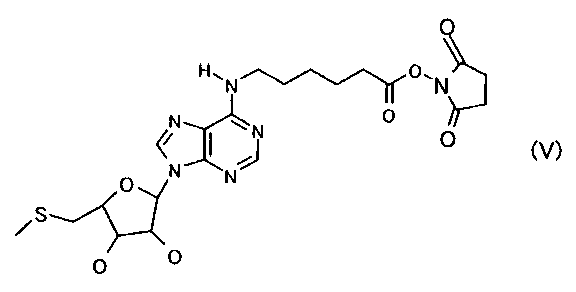
本発明にかかる「活性化ハプテン」は、従来のようにヌクレオチド体の糖部分について反応性を高めたものではなく塩基部分のプリン基に反応性官能基を導入したことを特徴とするものであり、好ましくは一般式(I)で示される化合物のように6位のNH基に反応性官能基を導入したものである。また反応性官能基とハプテンを架橋するリンカーはいずれの長さでも良いが、例えば直鎖状アルキレン鎖であれば、好ましくは炭素数1以上の長さを有するものであり、さらに好ましくは1〜10の長さを有するものであり、特に好ましくは炭素数5を有するものである。また反応性官能基はキャリアタンパクのアミノ残基と結合する反応性が高いものであればよく、好ましくは活性エステル体(例えば、コハク酸イミド体、フタルイミド体、マレイミド体など)であるが、特に好ましくは、式(V) で表される化合物である。
「キャリアタンパク」には、抗原性を高めることが知られている各種のタンパクをいずれも使用できる。その例としては、例えばウシ血清アルブミン(BSA)、ウシチオグロブリン(BTG)、カギアナカサガイのヘモシアニン(KLH) などの高分子物質のほかに合成ポリペプチドなどを例示できる。 As the “carrier protein”, any of various proteins known to enhance antigenicity can be used. Examples thereof include synthetic polypeptides in addition to high-molecular substances such as bovine serum albumin (BSA), bovine thioglobulin (BTG), and limpet hemocyanin (KLH).
「免疫原」とは、本明細書で使用される場合、生物において免疫応答を生じる、または引き起こす能力を有する物質を表す。本発明の免疫原としては5’-デオキシ-5’-メチルチオアデノシンの抗原決定基になりうる部分構造を有する活性化ハプテンとキャリアタンパクとを連結してなり、好ましくは5’-デオキシ-5’-メチルチオアデノシンのプリン基にキャリアタンパクを結合させたものであり、より好ましくは 一般式(III):
本発明の抗体の製造に用いられる免疫原は、活性化ハプテンとキャリアタンパクを用いて、Antibodies:A Laboratory Manual,(1989)(Cold Spring Harbor Laboratory Press)等に記載されている活性エステル法により作製することができる。またAntibodies:A Laboratory Manual,(1989)(Cold Spring Harbor Laboratory Press)等に記載のその他の方法、例えば、カルボジイミド法やグルタルアルデヒド法やジアゾ法によっても作製できる。 The immunogen used for the production of the antibody of the present invention is prepared by an active ester method described in Antibodies: A Laboratory Manual, (1989) (Cold Spring Harbor Laboratory Press) using an activated hapten and a carrier protein. can do. It can also be produced by other methods described in Antibodies: A Laboratory Manual, (1989) (Cold Spring Harbor Laboratory Press), such as a carbodiimide method, a glutaraldehyde method, and a diazo method.
ポリクロナル抗体は、例えば免疫原で免疫した哺乳動物から採血することにより得られる。該方法において、免疫原で免疫される哺乳動物としては、一般には、ウサギ、ヤギ、ヒツジ、マウス、ラットなどが用いられる。今回はモノクロナル抗体とポリクロナル抗体の性能を同一種で比較するために、マウスを被免疫動物として用いた。 A polyclonal antibody can be obtained, for example, by collecting blood from a mammal immunized with an immunogen. In this method, rabbits, goats, sheep, mice, rats and the like are generally used as mammals to be immunized with an immunogen. This time, mice were used as immunized animals in order to compare the performance of monoclonal and polyclonal antibodies in the same species.
免疫方法は一般的方法により、例えば免疫原を哺乳動物に静脈内、皮内、皮下、腹腔内注射などにより投与することにより行い得る。より具体的には、例えば免疫原を生理食塩水含有リン酸緩衝液(PBS)、生理食塩水などで適当濃度に希釈し、所望により通常のアジュバントと併用して、供試動物に2〜3週間間隔で数回投与する。マウスを用いる場合は、一回の投与量を一匹あたり50〜100μg程度とする。ここで前記アジュバントとは抗原と共に投与したとき、非特異的に抗原に対する免疫反応を増強する物質をいう。通常用いられるアジュバントとしては、百日咳ワクチン、フロインドアジュバントなどを例示できる。最終免疫後3〜10日目に哺乳動物の採血を行うことによって、抗血清を得ることができる。抗血清についてはそのままでも、また精製してポリクロナル抗体としても使用できる。
The immunization method can be performed by a general method, for example, by administering an immunogen to a mammal by intravenous, intradermal, subcutaneous, intraperitoneal injection or the like. More specifically, for example, the immunogen is diluted to an appropriate concentration with a physiological saline-containing phosphate buffer (PBS), physiological saline, etc. Give several doses at weekly intervals. When using a mouse, a single dose is about 50 to 100 μg per mouse. Here, the adjuvant refers to a substance that nonspecifically enhances the immune response to the antigen when administered together with the antigen. Examples of commonly used adjuvants include pertussis vaccine and Freund's adjuvant. Antisera can be obtained by collecting blood from
ポリクロナル抗体の精製方法としては非特異的精製法と特異的精製法が挙げられる。非特異的精製法とは塩析法やイオン交換クロマトグラフィ法などにより主にイムノグロブリン画分を取得することを目的とする。特異的精製法としては固定化抗原によるアフィニティクロマトグラフィー法などが挙げられる。 Examples of methods for purifying polyclonal antibodies include non-specific purification methods and specific purification methods. The non-specific purification method is mainly intended to obtain an immunoglobulin fraction by a salting-out method or an ion exchange chromatography method. Specific purification methods include affinity chromatography using an immobilized antigen.
モノクロナル抗体の製造方法は、免疫原で免疫した哺乳動物の形質細胞(免疫細胞)と哺乳動物の形質細胞腫細胞(ミエローマ細胞)との融合細胞(ハイブリドーマ、hybridoma)を作製し、これより所望の5’-デオキシ-5’-メチルチオアデノシンを認識するモノクロナル抗体を産生するクローンを選択し、該クローンを培養することにより実施できる。このモノクロナル抗体の製造は、基本的には常法に従うことができる(Kohler, G. and Milstein, C., Nature, 256, 495-497.(1975)参照)。 A monoclonal antibody is produced by preparing a fused cell (hybridoma) of a mammalian plasma cell (immune cell) immunized with an immunogen and a mammalian plasmacytoma cell (myeloma cell), This can be carried out by selecting a clone that produces a monoclonal antibody that recognizes 5′-deoxy-5′-methylthioadenosine and culturing the clone. The production of this monoclonal antibody can be basically carried out according to a conventional method (see Kohler, G. and Milstein, C., Nature, 256, 495-497. (1975)).
該方法において、免疫原で免疫される哺乳動物は、細胞融合に使用する形質細胞腫細胞との適合性を考慮して選択するのが望ましく、マウス、ラットなどが用いられる。免疫方法についてはポリクロナル抗体の作製の場合と同様とする。但し最終免疫後3〜10日目に免疫動物から脾臓細胞を採取する。
In this method, the mammal immunized with the immunogen is preferably selected in consideration of compatibility with the plasmacytoma cells used for cell fusion, and mice, rats and the like are used. The immunization method is the same as in the production of polyclonal antibodies. However, spleen cells are collected from the immunized
得られた免疫細胞からハイブリドーマを得るには、例えば、「分子細胞生物学基礎実験法」(南江堂 堀江武一ら 1994)等に記載されている方法により、継体培養可能な細胞とすることを目的として、例えば、センダイウイルスやポリエチレングリコール存在下、形質細胞腫細胞と抗体を産生する免疫細胞とを融合させて、ハイブリドーマを得ることができる。ここで用いられる形質細胞腫細胞は、同じ恒温動物でも同種の恒温動物由来の形質細胞腫細胞を用いることが望ましく、例えばマウスを免疫動物として得られた脾臓細胞と融合させる場合、マウスミエローマ細胞を用いることが好ましい。形質細胞腫細胞はp3x63-Ag8.UIなどの公知のものを利用できる。 In order to obtain a hybridoma from the obtained immune cells, for example, it is intended to obtain cells that can be subcultured by the method described in “Basic method for molecular cell biology” (Takeichi Nanae et al., 1994). For example, a hybridoma can be obtained by fusing a plasmacytoma cell and an immune cell producing an antibody in the presence of Sendai virus or polyethylene glycol. The plasmacytoma cells used here are preferably plasmacytoma cells derived from the same isothermal animal even in the same isothermal animal. For example, when a mouse is fused with a spleen cell obtained as an immunized animal, a mouse myeloma cell is used. It is preferable to use it. Known plasmacytoma cells such as p3x63-Ag8.UI can be used.
ハイブリドーマは、HAT培地(ヒポキサンチン、アミノプテリン、チミジン添加培地)により選択し、コロニーが確認された段階で、培養上清に分泌される抗体と抗原との結合を調べる(スクリーニングする)ことにより目的の抗体を産生するハイブリドーマを得ることができる。 The hybridoma is selected by HAT medium (medium supplemented with hypoxanthine, aminopterin and thymidine), and when the colonies are confirmed, the binding between the antibody secreted in the culture supernatant and the antigen is examined (screened). A hybridoma producing the antibody can be obtained.
スクリーニングする方法としては、例えば、スポット法、凝集反応法、ウエスタンブロット法、ELISA法などの一般に抗体の検出に用いられている種々の方法が挙げられるが、好ましくは、例えば後記実施例に詳述するように、ハイブリドーマの培養上清について、5’-デオキシ-5’-メチルチオアデノシンとの反応性を指標とするELISA法に従い実施される。このスクリーニングによって、5’-デオキシ-5’-メチルチオアデノシンと特異的に反応する目的抗体産生株をスクリーニングすることができる。 Examples of the screening method include various methods generally used for antibody detection, such as spot method, agglutination reaction method, Western blot method, ELISA method, etc. As described above, the culture supernatant of the hybridoma is performed according to an ELISA method using the reactivity with 5′-deoxy-5′-methylthioadenosine as an index. By this screening, a target antibody-producing strain that specifically reacts with 5'-deoxy-5'-methylthioadenosine can be screened.
スクリーニングの結果得た目的抗体産生株のクローニングは、通常の限界希釈法、軟寒天法などにより実施できる。クローニングされたハイブリドーマは、必要に応じて、血清培地または無血清培地で大量培養することができる。この培養によれば、比較的高純度の所望抗体を培養上清として得ることができる。また、ハイブリドーマと適合性のある哺乳動物、例えばマウスなどの腹腔に、ハイブリドーマを接種して、所望抗体をマウス腹水として大量に回収することもできる。 Cloning of the target antibody-producing strain obtained as a result of screening can be carried out by the usual limiting dilution method, soft agar method or the like. The cloned hybridoma can be cultured in a large amount in a serum medium or a serum-free medium as necessary. According to this culture, a relatively high purity desired antibody can be obtained as a culture supernatant. In addition, the hybridoma can be inoculated into the abdominal cavity of a mammal that is compatible with the hybridoma, such as a mouse, and the desired antibody can be collected in a large amount as mouse ascites.
上記ハイブリドーマの一具体例としては、常法に従って得られるハイブリドーマ(クローンMTA-7H8)、即ち、後記実施例記載の6-[5-(2,5-ジオキシピロリジン-1-イルオキシ)ペンチル]-5’-デオキシ-5’-メチルチオアデノシンとKLHからなる免疫原により作製されたハイブリドーマを例示することができる。このハイブリドーマは、平成16年3月2日に、独立行政法人 産業技術総合研究所内 特許生物寄託センター(茨城県つくば市東1-1-1 中央第6)に、「Mouse hybridoma MTA-7H8」なる表示で寄託されており、その受託番号は FERM P-19707である。本発明の抗体産生ハイブリドーマの培養上清およびマウスなどの腹水は、そのまま粗製抗体液として用いることができる。またこれらは常法に従って、硫酸アンミモニウム分画、塩析、ゲル濾過法、イオン交換クロマトグラフィー、アフィニテイクロマトグラフィ法などにより精製して、精製抗体とすることができる。 A specific example of the hybridoma is a hybridoma (clone MTA-7H8) obtained according to a conventional method, that is, 6- [5- (2,5-dioxypyrrolidin-1-yloxy) pentyl]- A hybridoma produced by an immunogen consisting of 5′-deoxy-5′-methylthioadenosine and KLH can be exemplified. This hybridoma will be displayed as "Mouse hybridoma MTA-7H8" on March 2, 2004 at the Patent Biological Deposit Center (National 6th 1-1-1, Tsukuba City, Ibaraki), National Institute of Advanced Industrial Science and Technology. The deposit number is FERM P-19707. The culture supernatant of the antibody-producing hybridoma of the present invention and ascites fluid such as a mouse can be used directly as a crude antibody solution. These can be purified by conventional methods such as ammonium sulfate fractionation, salting out, gel filtration, ion exchange chromatography, affinity chromatography, and the like to obtain purified antibodies.
本発明抗体は、以下の理化学的および免疫学的性質を有している。
(1)特異性:脱炭酸化S-アデノシルメチオニンとの交差反応性が0.1%以下、さらには0.01%以下を示す。
(2)免疫グロブリンクラス:IgG1(k)に属する。
(3)分子量:重鎖 50kDa、軽鎖 27kDa
The antibody of the present invention has the following physicochemical and immunological properties.
(1) Specificity: Cross-reactivity with decarboxylated S-adenosylmethionine is 0.1% or less, and further 0.01% or less.
(2) It belongs to immunoglobulin class: IgG 1 (k).
(3) Molecular weight: heavy chain 50kDa, light chain 27kDa
上記のように抗体を用いてアッセイを行うにあたって、通常は抗体の挙動を検出可能とするため抗体そのものが種々の物質で標識されうる。抗体を標識するには、例えば「分子細胞生物学基礎実験法」(南江堂 堀江武一ら1994年)等に記載されている常法を用いることにより行うことができる。種々の物質としては化学発光物質、酵素、蛍光物質、着色ビーズ、放射性同位元素、元素、金属類、ビオチンが挙げられる。以下に具体例を示すがこれらに限定されるものではない。化学発光物質とは例えばルミノールやアクリジニウムエステルなどをさす。酵素とは例えばβ-ガラクトシダーゼやアルカリホスファターゼやペルオキシダーゼなどをさす。蛍光物質とは例えばユウロピウムクリプテートやFITC(fluorescein isothiocyanate)やRITC(tetramethylrhodamin isothiocyanate)などをさす。着色ビーズとは例えばプロテイン Aビーズ、wheat germ agglutinin(WGA)ビーズ、ストレプトアビジンビーズなどをさす。放射性同位元素とは例えば14Cや125Iや3Hなどをさす。元素とは例えばユウロピウムなどのランタニド元素をさす。金属類とは例えばフェリチンや金コロイドなどをさす。特に本発明において好ましい標識の形態はユウロピウムクリプテートである。 In conducting an assay using an antibody as described above, the antibody itself can be labeled with various substances, usually in order to be able to detect the behavior of the antibody. The antibody can be labeled by using a conventional method described in, for example, “Molecular Cell Biology Basic Experimental Method” (Takeichi Horie et al., 1994). Examples of various substances include chemiluminescent substances, enzymes, fluorescent substances, colored beads, radioisotopes, elements, metals, and biotin. Specific examples are shown below, but are not limited thereto. The chemiluminescent substance refers to, for example, luminol and acridinium ester. Examples of enzymes include β-galactosidase, alkaline phosphatase and peroxidase. Examples of the fluorescent substance include europium cryptate, FITC (fluorescein isothiocyanate), and RITC (tetramethylrhodamin isothiocyanate). Examples of the colored beads include protein A beads, wheat germ agglutinin (WGA) beads, and streptavidin beads. Radioisotopes refer to, for example, 14 C, 125 I and 3 H. The element refers to a lanthanide element such as europium. Examples of metals include ferritin and gold colloid. In particular, the preferred form of the label in the present invention is europium cryptate.
ユウロピウムクリプテートは、希土類元素のユウロピウムイオンをトリスビピリジンの環状構造(クリプテート)の中央部に配座した蛍光物質である。クリプテートがなす特徴的な「籠」状構造が水分子からユウロピウムイオンを保護するとともに、クリプテートが吸収した励起光エネルギーを効率よくユウロピウムイオンに転移する。 Europium cryptate is a fluorescent material in which a rare earth europium ion is conformed to the central part of a trisbipyridine cyclic structure (cryptate). The characteristic “籠” -like structure formed by cryptate protects europium ions from water molecules and efficiently transfers the excitation light energy absorbed by cryptate to europium ions.
本発明には上記のように標識したものであってもなくても、5’-デオキシ-5’-メチルチオアデノシンの抗体を用いたアッセイを含むものとする。抗体を用いたアッセイには競合的な測定でも非競合的な測定でも良い。また、ホモジニアスアッセイ法(均一系による測定)でもヘテロジニアスアッセイ法(不均一系による測定)でもよい。具体的には、例えば、酵素免疫測定法(EIA)、固相酵素免疫測定法(ELISA)、蛍光免疫測定法(FIA)、放射線免疫測定法(RIA)、時間分解蛍光免疫測定(TR-FIA)、化学発光免疫測定法、イムノブロット法、ウエスタンブロット法、免疫染色法などの常法に従うことができる。なお、アッセイには治療剤・予防剤の開発を目的とする薬物スクリーニングを含むものとする。また疾患の診断に関するものも含むものとする。 The present invention includes assays using 5'-deoxy-5'-methylthioadenosine antibodies, whether or not labeled as described above. An assay using an antibody may be competitive or non-competitive. Moreover, a homogeneous assay method (measurement by a homogeneous system) or a heterogeneous assay method (measurement by a heterogeneous system) may be used. Specifically, for example, enzyme immunoassay (EIA), solid phase enzyme immunoassay (ELISA), fluorescence immunoassay (FIA), radioimmunoassay (RIA), time-resolved fluorescence immunoassay (TR-FIA) ), Chemiluminescence immunoassay, immunoblotting, Western blotting, immunostaining, and other conventional methods. The assay includes drug screening for the purpose of developing therapeutic and preventive agents. It also includes those related to disease diagnosis.
本発明抗体を用いるアッセイの好ましい具体的方法としては、ELISA法が挙げられる。ELISA法とは、酵素で標識された抗体または抗原を用い、抗体または抗原の量を標識酵素の活性度により定量する方法である。酵素で標識された抗原抗体結合物と遊離型の標識抗原、または抗体を分離するのに固相化された抗体や抗原が用いられる。固相はアガロース、マイクロタイタープレートの内面、ラテックス粒子等が利用できる。ELISA法として具体的には競合法イムノアッセイや2抗体サンドイッチイムノアッセイなどが挙げられる。また標識酵素としては西洋ワサビ由来のペルオキシダーゼ(以下HRPともいう)やアルカリフォスファターゼ等が挙げられるが好ましくは西洋ワサビ由来のペルオキシダーゼである。 A preferred specific method of the assay using the antibody of the present invention includes ELISA. The ELISA method is a method in which an antibody or antigen labeled with an enzyme is used and the amount of the antibody or antigen is quantified based on the activity of the labeled enzyme. An antigen-antibody conjugate labeled with an enzyme and a free-form labeled antigen, or an immobilized antibody or antigen is used to separate the antibody. As the solid phase, agarose, the inner surface of a microtiter plate, latex particles and the like can be used. Specific examples of the ELISA method include a competitive immunoassay and a two-antibody sandwich immunoassay. Examples of the labeling enzyme include horseradish-derived peroxidase (hereinafter also referred to as HRP), alkaline phosphatase, and the like, preferably horseradish-derived peroxidase.
本発明抗体を用いるアッセイの好ましいその他の具体的方法としては、ホモジニアスアッセイ法が挙げられる。ホモジニアスアッセイ法とは、測定が終始溶液状態(均一系)で行われる測定法をさす。洗浄工程を一切必要としないにもかかわらず精度の高いデータを得ることができるアッセイ法である。また、固相を必要としないのでアッセイのミニチュア化が容易であり、貴重な試薬の節約及びコスト、労力の削減に威力を発揮するのでハイスループットスクリーニング法 にも応用できる。代表的なものとしてSPA法(Scintillation Proximity Assay)、蛍光偏光測定法(fluorescence polarization; FP)、蛍光共鳴エネルギー転移(fluorescence resonance energy transfer; 以下FRETともいう)を用いたアッセイ法などがあげられる。 Other preferred specific methods of assay using the antibody of the present invention include homogeneous assay methods. The homogeneous assay method refers to a measurement method in which measurement is performed in a solution state (homogeneous system) throughout. This assay method can obtain highly accurate data even though no washing step is required. In addition, since a solid phase is not required, the assay can be easily miniaturized, and it can be applied to high-throughput screening methods because it saves valuable reagents and reduces costs and labor. Typical examples include SPA (Scintillation Proximity Assay), fluorescence polarization (FP), assay using fluorescence resonance energy transfer (hereinafter also referred to as FRET), and the like.
ホモジニアスアッセイ法の好ましい一例としてはFRETを用いたアッセイ法が挙げられる。FRETとはドナーおよびアクセプターと称される2種類の蛍光物質間のエネルギー転移を利用した手法である。 A preferred example of the homogeneous assay is an assay using FRET. FRET is a technique that uses energy transfer between two types of fluorescent materials called donors and acceptors.
FRETを用いたアッセイ法のうち、好ましい実施形態としてホモジニアス時間分解蛍光法(Homogeneous Time-Resolved Fluorescence;以下, HTRF法ともいう、登録商標)が挙げられる。HTRF法はユウロピウムクリプテートとXL665 (藍藻由来蛍光性タンパクであるアロフィコシアニンの誘導体) からなる2種類の蛍光標識物質を用いた、FRETの原理を利用した測定方法である。HTRFでは、ユウロピウムクリプテートに337nmの励起光を照射すると620nmの長寿命蛍光を発するが、免疫複合体の形成などで近傍にXL665が存在する場合、ユウロピウムクリプテートからXL665へ蛍光共鳴エネルギー転移が起こり、エネルギーを吸収したXL665から665nmの長寿命蛍光が生ずる原理に基づいて測定を行う。蛍光測定と二波長測定(620・665nm)の組み合わせにより擬陽性をもたらすカラークエンチング(インナーフィルター効果)の影響やバックグラウンド蛍光の影響を受けにくく、完全な均一系の測定を可能とする。 Among assay methods using FRET, a preferred embodiment is homogeneous time-resolved fluorescence (hereinafter also referred to as HTRF method). The HTRF method is a measurement method based on the principle of FRET using two types of fluorescently labeled substances consisting of europium cryptate and XL665 (a derivative of allophycocyanin, a fluorescent protein derived from cyanobacteria). In HTRF, when europium cryptate is irradiated with 337 nm excitation light, it emits a long-lived fluorescence of 620 nm. The measurement is performed based on the principle that long-lived fluorescence from XL665 to 665 nm that absorbs energy is generated. The combination of fluorescence measurement and two-wavelength measurement (620 and 665 nm) makes it possible to measure completely homogeneous systems without being affected by color quenching (inner filter effect) that causes false positives or background fluorescence.
ホモジニアスアッセイ法の好ましいその他の一例としては、SPA法(登録商標)が挙げられる。SPA法は、SPAビーズに結合させた抗体と、RI標識した抗原を用いる。該抗体が抗原に結合するとSPAビーズに近接するため抗原により放射されるβ線がSPAビーズ内のシンチレーターに到達し発光するのでこれを測定する。結合していない抗原は測定に影響がないので、抗体と結合していない抗原を除去することなく測定することが可能である。 Another preferred example of the homogeneous assay is the SPA method (registered trademark). The SPA method uses an antibody bound to SPA beads and an RI-labeled antigen. When the antibody binds to the antigen, it is close to the SPA bead, so β-rays emitted by the antigen reach the scintillator in the SPA bead and emit light, and this is measured. Since the unbound antigen does not affect the measurement, it is possible to measure without removing the antigen not bound to the antibody.
スペルミジンシンターゼ(SPDS)は、脱炭酸化S-アデノシルメチオニンのアミノプロピル基をプトレシンへ転移してスペルミジンに変換する反応を触媒する。このとき反応副産物として5’-デオキシ-5’-メチルチオアデノシンが生じる。よって5’-デオキシ-5’-メチルチオアデノシンを特異的、高感度に検出できる本発明のアッセイ法はスペルミジンシンターゼの活性測定に有用である。 Spermidine synthase (SPDS) catalyzes the reaction of transferring the aminopropyl group of decarboxylated S-adenosylmethionine to putrescine and converting it to spermidine. At this time, 5'-deoxy-5'-methylthioadenosine is generated as a reaction byproduct. Therefore, the assay method of the present invention capable of detecting 5'-deoxy-5'-methylthioadenosine specifically and with high sensitivity is useful for measuring the activity of spermidine synthase.
さらに本発明のアッセイ法はスペルミジンシンターゼの活性を阻害するような被験物質のスクリーニングに使用することができる。かかるスクリーニングは被験物質の存在下、発現ベクターなどにより調製したリコンビナントスペルミジンシンターゼ(精製または部分精製品)を、該酵素の基質(dcSAMやプトレシンなど)との結合を可能にする条件下(例えば0.1Mリン酸緩衝液pH7.4、室温)に維持し、被験物質が該酵素の基質の結合を阻害するか否かを調べること、すなわち副生産物である5’-デオキシ-5’-メチルチオアデノシンの生産量を評価する。このとき被験物質は、ペプチド、タンパク、非ペプチド性化合物、合成化合物(低分子化合物等)、発酵生産物、細胞抽出液、植物抽出液、動物組織抽出液などのいずれであってもよい。またこれらを含む試料であってもよい。 Furthermore, the assay method of the present invention can be used to screen for test substances that inhibit the activity of spermidine synthase. Such screening is performed under conditions that allow a recombinant spermidine synthase (purified or partially purified product) prepared by an expression vector or the like to bind to a substrate of the enzyme (such as dcSAM or putrescine) in the presence of a test substance (for example, 0.1M A phosphate buffer (pH 7.4, room temperature) and test whether the test substance inhibits binding of the enzyme substrate, that is, by-product 5'-deoxy-5'-methylthioadenosine Evaluate production. At this time, the test substance may be any of a peptide, a protein, a non-peptide compound, a synthetic compound (such as a low molecular weight compound), a fermentation product, a cell extract, a plant extract, and an animal tissue extract. Moreover, the sample containing these may be sufficient.
またスクリーニング方法に従う候補物質の選別は、被験物質を添加した例えばアッセイプレートのウエルにおける5’-デオキシ-5’-メチルチオアデノシンの検出値が被験物質を添加しないウエルにおける5’-デオキシ-5’-メチルチオアデノシンの検出値に比して変動することをもって、当該被験物質を候補物質として選別することができる。例えば、5’-デオキシ-5’-メチルチオアデノシンの検出値の抑制・減少の程度としては、被験物質を添加したウエルにおける5’-デオキシ-5’-メチルチオアデノシンの検出値が被験物質を添加しないウエルにおける5’-デオキシ-5’-メチルチオアデノシンの検出値と比較して例えば10%、好ましくは30%、特に好ましくは50%以上の減少または増加を示す場合、当該被験物質を候補物質として選別することができる。 In addition, selection of candidate substances according to the screening method is carried out by adding, for example, 5′-deoxy-5′-methylthioadenosine detected in a well of an assay plate to which a test substance is added to a well in which no test substance is added. The test substance can be selected as a candidate substance by varying as compared with the detection value of methylthioadenosine. For example, as the degree of suppression / reduction of the detected value of 5'-deoxy-5'-methylthioadenosine, the detected value of 5'-deoxy-5'-methylthioadenosine in the well to which the test substance was added does not add the test substance A test substance is selected as a candidate substance when it shows a decrease or increase of, for example, 10%, preferably 30%, particularly preferably 50% or more compared to the detected value of 5'-deoxy-5'-methylthioadenosine in the well can do.
スクリーニングにより選別された候補物質はスペルミジンシンターゼが関与することが知られている疾患、例えば変形性関節症、ガンを始めとする増殖性疾患、骨粗鬆症、アルツハイマー病、高血圧症の予防・治療剤になりうるものである。本発明のアッセイ法は好まししい実施形態は変形性関節症の治療・予防剤を探索するのに利用するものである。 Candidate substances selected by screening are prophylactic and therapeutic agents for diseases known to involve spermidine synthase, such as osteoarthritis, proliferative diseases such as cancer, osteoporosis, Alzheimer's disease, and hypertension. It can be. The preferred embodiment of the assay method of the present invention is used to search for a therapeutic / prophylactic agent for osteoarthritis.
変形性関節症とは慢性の関節炎を伴う関節疾患で、関節の構成要素の退行変性により、軟骨の破壊と骨、軟骨の増殖性変化を来たす疾患である。一次性のものと外傷や疾患による二次性のものとがある。主に荷重関節を侵し、老年者によく見られる。最近、ヒトの関節軟骨前駆細胞(HMSC)の遺伝子プロファイリングがなされ、骨形成因子(osteogenic factors)であるbasic fibroblast growth factor 2(bFGF-2)がスペルミジンシンターゼをコードする遺伝子の転写を活性化することが報告されている。これは、ポリアミン生合成経路、特にスペルミジンの生合成、より具体的にはスペルミジンシンターゼが、変形性関節症(以下OAともいう。)と潜在的に関与していることを示している。よってスペルミジンシンターゼの反応を制御することはOAの疾患の治療・予防に役立つことが推察され、さらにこの酵素の阻害剤は上記の疾患の治療薬・予防薬として有用であると考えられる(WO02/058623)。 Osteoarthritis is a joint disease associated with chronic arthritis, and is a disease that causes destruction of cartilage and proliferative changes in bone and cartilage by degenerative degeneration of joint components. Some are primary and others are secondary to trauma and disease. It mainly affects the load joint and is often seen in the elderly. Recently, gene profiling of human articular cartilage progenitor cells (HMSC) has been performed, and basic fibroblast growth factor 2 (bFGF-2), an osteogenic factor, activates transcription of the gene encoding spermidine synthase. Has been reported. This indicates that the polyamine biosynthetic pathway, in particular spermidine biosynthesis, more specifically spermidine synthase, is potentially involved in osteoarthritis (hereinafter also referred to as OA). Therefore, it is presumed that controlling the reaction of spermidine synthase is useful for the treatment and prevention of OA diseases, and inhibitors of this enzyme are considered to be useful as therapeutic and preventive agents for the above diseases (WO02 / 058623).
以下において、実施例および実験例により本発明をより具体的にするが、本発明はこれらに限定されるものではない。 Hereinafter, the present invention will be more specifically described with reference to examples and experimental examples, but the present invention is not limited to these examples.
以下の合成スキームに従って活性化ハプテンである6-[5-(2,5-ジオキシピロリジン-1-イルオキシ)ペンチル]-5’-デオキシ-5’-メチルチオアデノシン(化合物8)を合成した。
合成スキーム1
2’,3’-イソプロピリデンアデノシンの合成
IR (Nujol, cm-1) 3350 (sh), 3240, 3180, 1685 (s).
1H NMR (200MHz, CDCl3) d: 1.38 (3H, s), 1.65 (3H, s), 3.72 - 3.86 (1H, m), 3.95 - 4.02 (1H, m), 4.55 (1H, s), 5.10 - 5.25 (2H, m), 5.86 (3H, d, J = 4.8 Hz), 6.57 (1H, dd, J = 1.8, 11.4 Hz), 7.84 (1H, s), 8.32 (1H, s).
Synthesis of 2 ', 3'-isopropylidene adenosine
IR (Nujol, cm -1 ) 3350 (sh), 3240, 3180, 1685 (s).
1 H NMR (200MHz, CDCl 3 ) d: 1.38 (3H, s), 1.65 (3H, s), 3.72-3.86 (1H, m), 3.95-4.02 (1H, m), 4.55 (1H, s), 5.10-5.25 (2H, m), 5.86 (3H, d, J = 4.8 Hz), 6.57 (1H, dd, J = 1.8, 11.4 Hz), 7.84 (1H, s), 8.32 (1H, s).
2’,3’-イソプロピリデン-5’-(p-トルエンスルホニル)アデノシンの合成
1H NMR (200MHz, CDCl3 + D2O) δ: 1.37 (3H, s), 1.59 (3H, s), 2.40 (3H, s), 4.20 - 4.36 (2H, m), 4.44 - 4.53 (1H, m), 5.05 (1H, dd, J=3.4, 6.2 Hz), 5.34 (1H, dd, J = 1.8, 6.2 Hz), 6.05 (1H, d, J = 18 Hz), 7.19 (2H, d, J = 8.4 Hz), 7.63 (2H, d, J = 8.4 Hz), 7.84 (1H, s), 8.23 (1H, s).
Synthesis of 2 ', 3'-isopropylidene-5'-(p-toluenesulfonyl) adenosine
1 H NMR (200MHz, CDCl 3 + D 2 O) δ: 1.37 (3H, s), 1.59 (3H, s), 2.40 (3H, s), 4.20-4.36 (2H, m), 4.44-4.53 (1H , m), 5.05 (1H, dd, J = 3.4, 6.2 Hz), 5.34 (1H, dd, J = 1.8, 6.2 Hz), 6.05 (1H, d, J = 18 Hz), 7.19 (2H, d, J = 8.4 Hz), 7.63 (2H, d, J = 8.4 Hz), 7.84 (1H, s), 8.23 (1H, s).
2’,3’-イソプロピリデン-5’-デオキシ-5’-メチルチオアデノシンの合成
1H NMR (200MHz, CDCl3) δ: 1.41 (3H, s), 1.62 (3H, s), 2.11 (3H, s), 2.67 - 2.91 (2H, m), 4.36 - 4.48 (1H, m), 5.07 (1H, dd, J = 2.2, 3.4 Hz), 5.52 (1H, dd, J = 2.2, 6.2 Hz), 5.64 (2H, br), 6.09 (1H, d, J = 2.2 Hz), 7.93 (1H, s), 8.36 (1H, s).
Synthesis of 2 ', 3'-isopropylidene-5'-deoxy-5'-methylthioadenosine
1 H NMR (200MHz, CDCl 3 ) δ: 1.41 (3H, s), 1.62 (3H, s), 2.11 (3H, s), 2.67-2.91 (2H, m), 4.36-4.48 (1H, m), 5.07 (1H, dd, J = 2.2, 3.4 Hz), 5.52 (1H, dd, J = 2.2, 6.2 Hz), 5.64 (2H, br), 6.09 (1H, d, J = 2.2 Hz), 7.93 (1H , s), 8.36 (1H, s).
6-(5-エトキシカルボニルペンチル)-2’,3’-イソプロピリデン-5’-デオキシ-5’-メチルチオアデノシンの合成
1H NMR (200MHz, CDCl3) δ: 1.25 (3H, t, J = 7.0 Hz), 1.40 (3H, s), 1.45 - 1.53 (2H, m), 1.62 (3H, s), 1.64 - 1.79 (4H, m), 2.10 (3H, s), 2.31 (2H, t, J = 7.2 Hz), 2.68 - 2.90 (2H, m), 3.56 - 3.76 (2H, m), 4.09 (2H, q, J = 7.0 Hz), 4.36 - 4.45 (1H, m), 5.08 (1H, dd, J = 3.2, 6.6 Hz), 5.53 (1H, dd, J = 1.8, 6.2 Hz), 5.86 (1H, br), 6.07 (1H, d, J = 1.8 Hz), 7.86 (1H, s), 8.36 (1H, s).
Synthesis of 6- (5-ethoxycarbonylpentyl) -2 ', 3'-isopropylidene-5'-deoxy-5'-methylthioadenosine
1 H NMR (200MHz, CDCl 3 ) δ: 1.25 (3H, t, J = 7.0 Hz), 1.40 (3H, s), 1.45-1.53 (2H, m), 1.62 (3H, s), 1.64-1.79 ( 4H, m), 2.10 (3H, s), 2.31 (2H, t, J = 7.2 Hz), 2.68-2.90 (2H, m), 3.56-3.76 (2H, m), 4.09 (2H, q, J = 7.0 Hz), 4.36-4.45 (1H, m), 5.08 (1H, dd, J = 3.2, 6.6 Hz), 5.53 (1H, dd, J = 1.8, 6.2 Hz), 5.86 (1H, br), 6.07 ( 1H, d, J = 1.8 Hz), 7.86 (1H, s), 8.36 (1H, s).
6-(5-エトキシカルボニルペンチル)-5’-デオキシ-5’-メチルチオアデノシンの合成
1H NMR (200MHz, CDCl3 + D2O) δ: 1.25 (3H, t, J = 7.2 Hz), 1.38 - 1.56 (2H, m), 1.59 - 1.81 (4H, m), 2.18 (3H, s), 2.31 (2H, t, J = 7.2 Hz), 2.85 (2H, d, J = 5.4 Hz), 3.53 - 3.78 (2H, m), 4.12 (2H, q, J = 7.2 Hz), 4.32 - 4.45 (2H, m), 4.54 (1H, t, J = 5.2 Hz), 5.94 (1H, d, J = 4.8 Hz), 8.00 (1H, s), 8.29 (1H, s).
Synthesis of 6- (5-ethoxycarbonylpentyl) -5'-deoxy-5'-methylthioadenosine
1 H NMR (200MHz, CDCl 3 + D 2 O) δ: 1.25 (3H, t, J = 7.2 Hz), 1.38-1.56 (2H, m), 1.59-1.81 (4H, m), 2.18 (3H, s ), 2.31 (2H, t, J = 7.2 Hz), 2.85 (2H, d, J = 5.4 Hz), 3.53-3.78 (2H, m), 4.12 (2H, q, J = 7.2 Hz), 4.32-4.45 (2H, m), 4.54 (1H, t, J = 5.2 Hz), 5.94 (1H, d, J = 4.8 Hz), 8.00 (1H, s), 8.29 (1H, s).
6-(5-カルボキシルペンチル)-5’-デオキシ-5’-メチルチオアデノシンの合成
1H NMR (200MHz, DMSO-d6) δ: 1.23 - 1.41 (2H, m), 1.44 - 1.68 (4H, m), 2.06 (3H, s), 2.20 (2H, t, J = 7.2 Hz), 2.47 - 2.58 (2H, m), 2.72 - 2.94 (2H, m), 3.98 - 4.08 (1H, m), 4.13 (1H, t, J = 5.4 Hz), 4.75 (1H, t, J = 5.4 Hz), 5.50 (3H, br), 5.90 (1H, d, J = 1.8 Hz), 7.82 (1H, br), 8.21 (1H, s), 8.36 (1H, s).
Synthesis of 6- (5-carboxylpentyl) -5'-deoxy-5'-methylthioadenosine
1 H NMR (200MHz, DMSO-d6) δ: 1.23-1.41 (2H, m), 1.44-1.68 (4H, m), 2.06 (3H, s), 2.20 (2H, t, J = 7.2 Hz), 2.47 -2.58 (2H, m), 2.72-2.94 (2H, m), 3.98-4.08 (1H, m), 4.13 (1H, t, J = 5.4 Hz), 4.75 (1H, t, J = 5.4 Hz), 5.50 (3H, br), 5.90 (1H, d, J = 1.8 Hz), 7.82 (1H, br), 8.21 (1H, s), 8.36 (1H, s).
6-[5-(2,5-ジオキシピロリジン-1-イルオキシ)ペンチル]-5’-デオキシ-5’-メチルチオアデノシンの合成
1H NMR (200MHz, CDCl3) δ: 1.50 - 1.64 (2H, m), 1.68 - 1.90 (4H, m), 2.18 (3H, s), 2.63 (2H, t, J = 7.2 Hz), 2.77 - 2.89 (6H, m), 3.47 (1H, br), 3.68 (2H, br), 4.35 - 4.51 (2H, m), 4.57 (1H, t, J = 5.4 Hz), 5.91 (1H, d, J = 6.0 Hz), 6.01 (1H, br), 6.46 (1H, br), 7.97 (1H, s), 8.29 (1H, s).
Synthesis of 6- [5- (2,5-dioxypyrrolidin-1-yloxy) pentyl] -5'-deoxy-5'-methylthioadenosine
1 H NMR (200MHz, CDCl 3 ) δ: 1.50-1.64 (2H, m), 1.68-1.90 (4H, m), 2.18 (3H, s), 2.63 (2H, t, J = 7.2 Hz), 2.77- 2.89 (6H, m), 3.47 (1H, br), 3.68 (2H, br), 4.35-4.51 (2H, m), 4.57 (1H, t, J = 5.4 Hz), 5.91 (1H, d, J = 6.0 Hz), 6.01 (1H, br), 6.46 (1H, br), 7.97 (1H, s), 8.29 (1H, s).
6-(3-アミノ)プロピル-5’-デオキシ-5’-メチルチオアデノシンの合成法
合成スキーム2
6-(3-tert-ブトキシカルボニルアミノ)プロピル-2’,3’-イソプロピリデン-5’-デオキシ-5’-メチルチオアデノシンの合成
1H NMR (200MHz, CDCl3) δ: 1.40 (3H, s), 1.46 (9H, s), 1.62 (3H, s), 1.75 - 1.90 (2H, m), 2.11 (3H, s), 2.67 - 2.91 (2H, m), 3.22 (2H, dd, J = 6.0, 12.2 Hz), 3.73 (2H, br), 4.35 - 4.46 (1H, m), 5.08 (1H, dd, J = 3.0, 6.2 Hz), 5.26 (1H, br), 5.52 (1H, dd, J = 2.2, 6.2 Hz), 6.07 (1H, d, J = 2.2 Hz), 6.18 (1H, br), 7.87 (1H, s), 8.36 (1H, s).
Synthesis of 6- (3-tert-butoxycarbonylamino) propyl-2 ', 3'-isopropylidene-5'-deoxy-5'-methylthioadenosine
1 H NMR (200MHz, CDCl 3 ) δ: 1.40 (3H, s), 1.46 (9H, s), 1.62 (3H, s), 1.75-1.90 (2H, m), 2.11 (3H, s), 2.67- 2.91 (2H, m), 3.22 (2H, dd, J = 6.0, 12.2 Hz), 3.73 (2H, br), 4.35-4.46 (1H, m), 5.08 (1H, dd, J = 3.0, 6.2 Hz) , 5.26 (1H, br), 5.52 (1H, dd, J = 2.2, 6.2 Hz), 6.07 (1H, d, J = 2.2 Hz), 6.18 (1H, br), 7.87 (1H, s), 8.36 ( 1H, s).
6-(3-アミノ)プロピル-2’,3’-イソプロピリデン-5’-デオキシ-5’-メチルチオアデノシンの合成
6-(3-アミノ)プロピル-5’-デオキシ-5’-メチルチオアデノシンの合成
1H NMR (200MHz, CD3OD)δ: 1.80 - 1.95 (2H, m), 2.12 (3H, s), 2.80 (2H, t, J = 7.0 Hz), 2.91 (2H, t, J = 6.0 Hz), 3.70 (2H, br), 4.23 (1H, dd, J = 5.8, 10.2 Hz), 4.33 (1H, t, J = 4.8 Hz), 4.68 - 5.00 (6H, m), 6.00 (1H, d, J = 5.2 Hz), 8.26 (1H, s), 8.28 (1H, s).
Synthesis of 6- (3-amino) propyl-5'-deoxy-5'-methylthioadenosine
1 H NMR (200MHz, CD 3 OD) δ: 1.80-1.95 (2H, m), 2.12 (3H, s), 2.80 (2H, t, J = 7.0 Hz), 2.91 (2H, t, J = 6.0 Hz ), 3.70 (2H, br), 4.23 (1H, dd, J = 5.8, 10.2 Hz), 4.33 (1H, t, J = 4.8 Hz), 4.68-5.00 (6H, m), 6.00 (1H, d, J = 5.2 Hz), 8.26 (1H, s), 8.28 (1H, s).
MTAの西洋ワサビペルオキシダーゼ(HRP)標識
実施例2に従って合成した6-(3-アミノ)プロピル-5’-デオキシ-5’-メチルチオアデノシン 0.63 mg(1.8μmol)に蒸留水0.05 ml及び0.1 Mリン酸緩衝液(pH 7.4)0.1 mlを加えて溶解し、これにスルフォスクシンイミジル4-(N-マレイミドメチル)-シクロヘキサン-1-カルボキシレート(sulfo-SMCC、ピアス社製)1.19 mg(2.7μmol)を含む水溶液0.2 mlを加えて、室温で2時間反応した。逆相HPLC(カラム:YMC-Pack ODS-A、6.0 I.D.×150 mm, 溶離条件:アセトニトリル/0.1 %トリフルオロ酢酸、0 〜 50 %、20 min、リニアグラディエント、流速:1 ml/min、検出波長:260 nm)を行って、マレイミド化MTA画分(14.7 分)を分取し、減圧下に溶媒を留去したのち20 %メタノール/蒸留水0.4 mlに溶解した。一方、西洋ワサビペルオキシダーゼ(HRP、ロシュ社製)1.1 mg(27 nmol)を含む0.1 Mリン酸緩衝液(pH 7.4)0.2 mlにスルフォスクシンイミジル6-[3’-(2-ピリジルジチオ)-プロピオンアミド]ヘキサノエート(sulfo-LC-SPDP、ピアス社製)0.43 mg(810 nmol)を含む水溶液0.05 mlを加え、室温で2時間反応させた。0.1 Mメルカプトエチルアミン溶液0.05 mlを加えて室温で1時間静置した後、5 mMエチレンジアミン四酢酸含有0.1 Mリン酸緩衝液(pH 6.0)で平衡化したPD-10(アマシャムファルマシアバイオテック社製)に反応液を通して低分子物質を除去した。HRP 0.115μg(2.9 nmol)を含む画分0.2 mlに上記のマレイミド化MTA 28μg(49 nmol)を加え、4°Cで3日間反応した。0.1 Mリン酸緩衝液(pH 7.4)で平衡化したPD-10(アマシャムファルマシアバイオテック社製)に反応液を通して低分子物質を除去し、HRP標識MTAを得た。
Horseradish peroxidase (HRP) labeling of MTA 6- (3-Amino) propyl-5′-deoxy-5′-methylthioadenosine synthesized according to Example 2 was added to 0.63 mg (1.8 μmol) of distilled water and 0.1 M phosphoric acid. 0.1 ml of buffer solution (pH 7.4) was added and dissolved, and sulfosuccinimidyl 4- (N-maleimidomethyl) -cyclohexane-1-carboxylate (sulfo-SMCC, manufactured by Pierce) 1.19 mg (2.7 μmol) ) Containing 0.2 ml of an aqueous solution was added and reacted at room temperature for 2 hours. Reversed phase HPLC (column: YMC-Pack ODS-A, 6.0 ID x 150 mm, elution condition: acetonitrile / 0.1% trifluoroacetic acid, 0-50%, 20 min, linear gradient, flow rate: 1 ml / min, detection wavelength : 260 nm), the maleimidated MTA fraction (14.7 minutes) was collected, the solvent was distilled off under reduced pressure, and the residue was dissolved in 0.4 ml of 20% methanol / distilled water. Meanwhile, sulfosuccinimidyl 6- [3 '-(2-pyridyldithio) was added to 0.2 ml of 0.1 M phosphate buffer (pH 7.4) containing 1.1 mg (27 nmol) of horseradish peroxidase (HRP, Roche). -Propionamide] hexanoate (sulfo-LC-SPDP, manufactured by Pierce) 0.05 ml of an aqueous solution containing 0.43 mg (810 nmol) was added and reacted at room temperature for 2 hours. PD-10 (manufactured by Amersham Pharmacia Biotech) equilibrated with 0.1 M phosphate buffer (pH 6.0) containing 5 mM ethylenediaminetetraacetic acid after adding 0.05 ml of 0.1 M mercaptoethylamine solution and allowing to stand at room temperature for 1 hour. The low molecular weight substances were removed through the reaction solution. 28 μg (49 nmol) of the above maleimidated MTA was added to 0.2 ml of the fraction containing 0.115 μg (2.9 nmol) of HRP, and reacted at 4 ° C. for 3 days. Low-molecular substances were removed by passing the reaction solution through PD-10 (Amersham Pharmacia Biotech) equilibrated with 0.1 M phosphate buffer (pH 7.4) to obtain HRP-labeled MTA.
MTAを認識するモノクロナル抗体および該抗体を産生するハイブリドーマの作製
(1)免疫原の調製および免疫
キャリアタンパクとしてカギアナカサガイのヘモシアニン(KLH、ピアス社製)を用いた。KLH 20 mgのバイアルに蒸留水を2 ml加え、リン酸塩緩衝化生理食塩水(pH 7.2)溶液とした。これに実施例1に従って合成した6-[5-(2,5-ジオキシピロリジン-1-イルオキシ)ペンチル]-5’-デオキシ-5’-メチルチオアデノシン3.8 mg(7.5μmol)を含むDMF溶液0.19 mlを滴加し、室温で2時間反応させてコンジュゲートを調製した。反応液を蒸留水に対して4 ℃で透析し、次いで凍結乾燥した。乾燥重量18.4 mgのコンジュゲートを得、これを免疫原とした。
Monoclonal antibody recognizing MTA and production of hybridoma producing the antibody
(1) Preparation of immunogen and immunization As a carrier protein, limpet hemocyanin (KLH, manufactured by Pierce) was used. 2 ml of distilled water was added to a 20 mg KLH vial to prepare a phosphate buffered saline (pH 7.2) solution. To this, 0.19 DMF solution containing 3.8 mg (7.5 μmol) of 6- [5- (2,5-dioxypyrrolidin-1-yloxy) pentyl] -5′-deoxy-5′-methylthioadenosine synthesized according to Example 1 was added. ml was added dropwise and reacted at room temperature for 2 hours to prepare the conjugate. The reaction was dialyzed against distilled water at 4 ° C. and then lyophilized. A conjugate with a dry weight of 18.4 mg was obtained and used as an immunogen.
免疫原1.3 mgを生理食塩水0.5 mlに溶かし、フロイントの完全アジュバント(ディフコ社製)0.8 mlを加えてエマルジョンとした。その0.1 ml(0.1 mg)をA/J jms Slcマウス(6週齢、雌)に、3週間隔で5回腹腔内投与して免疫した。細胞融合に供したマウスはその3日前に免疫原0.1 mgを含む生理食塩水0.1 mlを腹腔内にブースター投与した。
1.3 mg of the immunogen was dissolved in 0.5 ml of physiological saline, and 0.8 ml of Freund's complete adjuvant (Difco) was added to make an emulsion. The 0.1 ml (0.1 mg) was immunized with A / J jms Slc mice (6 weeks old, female) by
(2)抗体を産生するハイブリドーマおよび該ハイブリドーマを用いたMTA-7H8抗体の作製
上記(1)の手法に従って免疫したマウスから最終投与3日後にマウスの脾臓を摘出して脾臓細胞を回収した。脾臓細胞1.0×10⁸個とマウスミエローマ細胞(p3×63-Ag8.UI、東京腫瘤研究所)2×10⁷個を50 %のポリエチレングリコール4000を用いて融合させ、ヒポキサンチン、アミノプテリン、およびチミジンを含む培地で選択した。細胞融合10日目に特異抗体産生細胞のスクリーニングを行った。スクリーニングに用いたELISAは次の通りである:96穴マイクロタイタープレート(ヌンク社製)の各ウェルに、1μgの抗マウスIgG抗体(シバヤギ社製)を含むPBS(0.15M NaClを含むリン酸緩衝液(pH7.4))を100μl加えて4℃で16時間固定した。これらのウェルをPBS 200μlで1回洗浄した後、ブロックエース(大日本製薬社製)を200μl 加えて4℃で16時間放置してブロッキングを行った(抗マウスIgG抗体固相化プレート)。各ウェルを緩衝液A(0.01 % Tween20、0.05 % Proclin150、0.15 M NaClを含む50 mMトリス緩衝液(pH7.4))300μlで1回洗浄した後、緩衝液B(0.5 % ウシ血清アルブミン、0.01 % Tween20、0.05 % Proclin150、0.15 M NaClを含む50mMトリス緩衝液(pH7.4))50μlとハイブリドーマ培養上清50 μlを加えて室温で3時間反応させた。次いで、各ウェルを緩衝液A 300μlで3回洗浄し、緩衝液Bで20 ng/mlとしたHRP標識MTAを100μl添加して4 ℃で16時間反応させた。各ウェルを再度洗浄後、TMB+ Substrate- Chromogen(ダコ社製)を100μl添加して室温で30分間発色させた。次いで、1規定硫酸を100μl添加して反応を停止し、1420 ARVO SXマルチラベルカウンタ(パーキンエルマーライフサイエンス社製)を用いて、各ウェルの450 nmにおける吸光度を測定した。
(2) Hybridoma producing antibody and production of MTA-7H8 antibody using the hybridoma From the mouse immunized according to the method of (1) above, the spleen of the mouse was excised 3 days after the final administration to collect spleen cells. Fuse 1.0x10 8 spleen cells and 2x10 7 mouse myeloma cells (p3x63-Ag8.UI, Tokyo Mass Research Institute) using 50% polyethylene glycol 4000 to produce hypoxanthine, aminopterin, and Selection was made on medium containing thymidine. On the 10th day of cell fusion, screening for specific antibody-producing cells was performed. The ELISA used for the screening was as follows: PBS containing 0.1 μg of anti-mouse IgG antibody (manufactured by Shiba Goat) in each well of a 96-well microtiter plate (manufactured by Nunk), phosphate buffer containing 0.15
特異抗体の産生が陽性を示したウェルのハイブリドーマを、限界希釈法により2回クローニングして、MTAを認識するモノクロナル抗体を産生するハイブリドーマのクローンを獲得した。
得られたハイブリドーマの培養上清について、マウスモノクロナル抗体アイソタイピングELISAキット(BD バイオサイエンス社製)を用いて、ハイブリドーマが産生する抗体のサブクラスを決定した。新たに得られたモノクロナル抗体は、MTA-7H8と命名し、そのアイソタイプはIgG1(k)であった。
Hybridomas in wells that showed positive production of specific antibodies were cloned twice by limiting dilution to obtain clones of hybridomas producing monoclonal antibodies that recognize MTA.
About the culture supernatant of the obtained hybridoma, the subclass of the antibody which a hybridoma produces was determined using the mouse monoclonal antibody isotyping ELISA kit (BD Bioscience). The newly obtained monoclonal antibody was named MTA-7H8 and its isotype was IgG 1 (k).
本発明のモノクロナル抗体MTA-7H8を産生するハイブリドーマは、独立行政法人 産業技術総合研究所内 特許生物寄託センター(茨城県つくば市東1-1-1 中央第6)に、平成16年3月2日付けで受託番号FERM P-19707として、ブダペスト条約に基づいて寄託されている。 The hybridoma producing the monoclonal antibody MTA-7H8 of the present invention was obtained from the National Institute of Advanced Industrial Science and Technology, Patent Biological Deposit Center (1-1-1, Higashi 1-1-1, Tsukuba, Ibaraki) on March 2, 2004. At the same time, it was deposited under the Budapest Treaty under the deposit number FERM P-19707.
マウス抗血清の抗体価
免疫マウスより採取した抗血清を緩衝液Bで10倍に薄める操作を繰り返し、1,000-1,000,0000倍の希釈系列を調製した。上記抗マウスIgG抗体固相化プレートを300μlの緩衝液Aで1回洗浄した後、抗血清希釈液を100μl加えて室温で3時間反応させた。次いで、各ウェルを300μlの緩衝液Aで3回洗浄し、緩衝液Bで20 ng/mlとしたHRP標識MTAを100μl添加して4 ℃で一晩反応させた。各ウェルを300μlの緩衝液Aで3回洗浄した後、TMB+ Substrate- Chromogen(ダコ社製)を100μl添加して室温で30分間発色させた。次いで、1規定硫酸を100μl添加して反応を停止し、1420 ARVO SXマルチラベルカウンタ(パーキンエルマーライフサイエンス社製)を用いて、各ウェルの450 nmにおける吸光度を測定した。吸光度が1.0となる抗血清の希釈倍率を抗体価とした。測定の結果、本発明のポリクロナル抗体(抗血清)の抗体価は1000,000倍と従来技術の500倍の値を示した。
Antibody titer of mouse antiserum The antiserum collected from the immunized mouse was diluted 10-fold with buffer B to prepare a 1,000-1,000,000-fold dilution series. The anti-mouse IgG antibody-immobilized plate was washed once with 300 μl of buffer A, and then 100 μl of antiserum diluted solution was added and reacted at room temperature for 3 hours. Next, each well was washed three times with 300 μl of buffer A, 100 μl of HRP-labeled MTA adjusted to 20 ng / ml with buffer B was added, and the mixture was reacted at 4 ° C. overnight. Each well was washed 3 times with 300 μl of buffer A, and then 100 μl of TMB + Substrate-Chromogen (manufactured by Dako) was added to cause color development at room temperature for 30 minutes. Next, 100 μl of 1N sulfuric acid was added to stop the reaction, and the absorbance at 450 nm of each well was measured using a 1420 ARVO SX multilabel counter (manufactured by PerkinElmer Life Sciences). The antibody titer was defined as the dilution factor of the antiserum with an absorbance of 1.0. As a result of the measurement, the antibody titer of the polyclonal antibody (antiserum) of the present invention was 1,000,000 times, 500 times that of the prior art.
抗MTA抗体のMTAおよびdcSAMに対する反応性
緩衝液Bを用いて、MTAについては0.2- 200 pmol/mlの10倍希釈系列を、dcSAMについては2- 2,000 pmol/mlの10倍希釈系列を調製した。上記抗マウスIgG抗体固相化プレートの各ウェルを300μlの緩衝液Aで1回洗浄した後、緩衝液Bで10 ng/mlとしたMTA-7H8、または1,000,000倍に薄めたマウス抗血清を100μl加えて室温で3時間反応させた。次いで、各ウェルを300μlの緩衝液Aで3回洗浄し、MTAまたはdcSAMの希釈液50μlと、緩衝液Bで40 ng/mlとしたHRP標識MTAを50μl添加して4 ℃で一晩反応させた。各ウェルを300μlの緩衝液Aで3回洗浄した後、TMB+ Substrate- Chromogen(ダコ社製)を100μl添加して室温で30分間発色させた。次いで、1規定硫酸を100μl添加して反応を停止し、1420 ARVO SXマルチラベルカウンタ(パーキンエルマーライフサイエンス社製)を用いて、各ウェルの450 nmにおける吸光度を測定した。
Anti-MTA antibody reactivity to MTA and dcSAM Using buffer B, a 0.2-200 pmol / ml 10-fold dilution series was prepared for MTA, and a 2-fold 2,000 pmol / ml 10-fold dilution series was prepared for dcSAM. . After washing each well of the anti-mouse IgG antibody-immobilized plate once with 300 μl of buffer A, 100 μl of MTA-7H8 diluted to 10 ng / ml with buffer B or mouse antiserum diluted 1,000,000 times In addition, the mixture was reacted at room temperature for 3 hours. Next, each well was washed 3 times with 300 μl of buffer A, 50 μl of diluted MTA or dcSAM solution and 50 μl of HRP-labeled MTA adjusted to 40 ng / ml with buffer B were added, and reacted at 4 ° C. overnight. It was. Each well was washed 3 times with 300 μl of buffer A, and then 100 μl of TMB + Substrate-Chromogen (manufactured by Dako) was added to cause color development at room temperature for 30 minutes. Next, 100 μl of 1N sulfuric acid was added to stop the reaction, and the absorbance at 450 nm of each well was measured using a 1420 ARVO SX multilabel counter (manufactured by PerkinElmer Life Sciences).
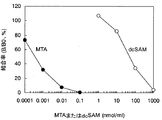
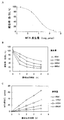
MTA-7H8の反応性の結果を図1に示した。縦軸には各濃度ポイントにおける吸光度(B値)のゼロ濃度における吸光度(B0値)に対する割合(B値/B0値(%))を算出したものを、横軸にMTAあるいはdcSAMの濃度をプロットした競合曲線を作成した。図中の白丸はdcSAMに対する反応性を、黒丸はMTAに対する反応性を示す。MTAおよびdcSAMの競合曲線における親和性(IC50値)はそれぞれ0.4 nM、50μMであった。このようにMTA-7H8はMTAに対して高い反応性を示すばかりでなく、前駆体であるdcSAMに対する交差反応性も0.0008%と極めて小さいことから、本抗体を用いてMTAを特異的に検出できることを確認した。また、本発明のポリクロナル抗体(抗血清)のMTAおよびdcSAMの競合曲線における親和性(IC50値)はそれぞれ4 nM、300μMであり、交差反応性は0.001%であることから従来技術のポリクロナル抗体(1%)よりも大きく優れていた。以上の結果は従来技術(非特許文献5)とともに表1にまとめた。 The reactivity results of MTA-7H8 are shown in FIG. The concentration of the MTA or dcSAM proportion to the absorbance (0 value B) at zero concentration (B value / B 0 value (%)) was obtained by calculating the, the horizontal axis of the vertical axis the absorbance at each concentration point (B value) A competition curve was plotted. White circles in the figure indicate reactivity to dcSAM, and black circles indicate reactivity to MTA. The affinity (IC50 value) in the competition curve of MTA and dcSAM was 0.4 nM and 50 μM, respectively. In this way, MTA-7H8 not only shows high reactivity to MTA, but also has a very low cross-reactivity to the precursor dcSAM of 0.0008%, so this antibody can be used to specifically detect MTA. It was confirmed. In addition, the affinity (IC50 value) of the polyclonal antibody (antiserum) of the present invention in the competition curve of MTA and dcSAM is 4 nM and 300 μM, respectively, and the cross-reactivity is 0.001%. 1%). The above results are summarized in Table 1 together with the prior art (Non-Patent Document 5).
モノクロナル抗体MTA-7H8の精製
Balb/cマウス1匹あたり、1×107個の実施例4で得たハイブリドーマをラボプロダクツ社へ供与して腹水化を委託した。得られた腹水を10,000×gで20分間遠心分離してその上清をPBSで2倍に希釈した後、プロテインGセファロースカラム(アマシャムファルマシアバイオテック社製)に通した。PBSでカラムを十分に洗浄後、0.2Mグリシン塩酸緩衝液(pH2.7)で抗体を溶出し、直ちに1Mトリス緩衝液を加えて中和した。得られた溶出液に等量の飽和硫酸アンモニウムを加えて4 ℃で30分間放置することで塩析した。塩析物を10,000×gで20分間遠心分離して回収した。得られた沈殿をPBSに溶解し、さらにPBSに対して4℃で一晩透析して精製モノクロナル抗体とした。
Purification of monoclonal antibody MTA-7H8
As many as 1 × 10 7 hybridomas obtained in Example 4 per Balb / c mouse were supplied to Laboratories, and ascites was consigned. The obtained ascites was centrifuged at 10,000 × g for 20 minutes, and the supernatant was diluted 2-fold with PBS, and then passed through a protein G sepharose column (Amersham Pharmacia Biotech). After thoroughly washing the column with PBS, the antibody was eluted with 0.2 M glycine hydrochloride buffer (pH 2.7) and immediately neutralized by adding 1 M Tris buffer. An equal amount of saturated ammonium sulfate was added to the obtained eluate, and the mixture was allowed to stand at 4 ° C. for 30 minutes for salting out. The salted-out product was collected by centrifugation at 10,000 × g for 20 minutes. The obtained precipitate was dissolved in PBS and further dialyzed against PBS overnight at 4 ° C. to obtain a purified monoclonal antibody.
マウス抗MTAポリクロナル抗体の精製
実施例2に従って合成した6-(3-アミノ)プロピル-5’-デオキシ-5’-メチルチオアデノシン 0.63 mg(1.8μmol)を含む0.1 Mリン酸塩緩衝液(pH 7.4)1.5 mlをAminoLink固定化キット(ピアス社製)のカップリングゲル1.5 mlに加え、以下キットの手順書に従ってMTA固定化ゲルを含むカラムを調製した。予め0.1 Mリン酸緩衝液(pH 7.4)で平衡化したカラムに、前述の免疫マウスの血清を0.1 Mリン酸緩衝液(pH 7.4)で3倍に薄めたものを加えた。同緩衝液で十分にカラムを洗浄した後、6 mM塩酸で抗体を溶出させて、0.1 Mリン酸緩衝液(pH 8.0)に対して4 ℃で透析し、ポリクロナル抗体を精製した。
Purification of mouse anti-MTA polyclonal antibody 0.1 M phosphate buffer (pH 7.4) containing 0.63 mg (1.8 μmol) of 6- (3-amino) propyl-5′-deoxy-5′-methylthioadenosine synthesized according to Example 2 ) 1.5 ml was added to 1.5 ml of the coupling gel of AminoLink immobilization kit (Pierce), and a column containing the MTA-immobilized gel was prepared according to the following instructions for the kit. To the column previously equilibrated with 0.1 M phosphate buffer (pH 7.4), the above-mentioned immunized mouse serum diluted 3-fold with 0.1 M phosphate buffer (pH 7.4) was added. After thoroughly washing the column with the same buffer, the antibody was eluted with 6 mM hydrochloric acid and dialyzed against 0.1 M phosphate buffer (pH 8.0) at 4 ° C. to purify the polyclonal antibody.
リコンビナントヒトスペルミジンシンターゼの調製
発現ベクターの構築にはインビトロジェン社のGatewayテクノロジーを利用した。ヒトSPDS遺伝子をPCRで増幅し、制限酵素サイトSacIとNotIを介してエントリーベクターpENTR11に挿入し、エントリークローンを得た。3×FLAGタグ(シグマ社製)とGateway Vector Conversion Systemの Reading Frame Cassette Aを連結した遺伝子をPCRで増幅し、NheIとKpnIの制限酵素サイトを介してpShuttleベクター(クロンテック社製)に挿入し、デスティネーションベクターとした。エントリークローンとデスティネーションベクターをClonase存在下混合してattサイト間の部位特異的組み換えを誘導することにより、N末に3×FLAGタグを繋いだヒトSPDSの発現ベクターをクローニングした。発現ベクターはEndoFree Plasmid Maxi kit(キアゲン社製)を用いて精製した。
Preparation of Recombinant Human Spermidine Synthase Expression vectors were constructed using Invitrogen's Gateway technology. The human SPDS gene was amplified by PCR and inserted into the entry vector pENTR11 via restriction enzyme sites SacI and NotI to obtain an entry clone. A gene ligated with 3 × FLAG tag (Sigma) and Gateway Vector Conversion System Reading Frame Cassette A is amplified by PCR, inserted into the pShuttle vector (Clontech) via the NheI and KpnI restriction enzyme sites, A destination vector was used. An entry clone and a destination vector were mixed in the presence of Clonase to induce site-specific recombination between att sites, thereby cloning a human SPDS expression vector with a 3 × FLAG tag at the N-terminus. The expression vector was purified using EndoFree Plasmid Maxi kit (Qiagen).
リポフェクトアミン2000(インビトロジェン社製)と発現ベクターを用いて、手順書に従ってHEK293細胞(ヒト胎児腎臓由来、アメリカンタイプカルチャーコレクション社より入手)をトランスフェクトした。3日間培養した後、細胞を回収して少量のTBS(0.15 M NaClを含む50mMトリス緩衝液(pH7.4))に懸濁させ、超音波で破砕した。TBSで平衡化した抗FLAG抗体(M2)アガロースカラム(シグマ社製)に細胞破砕液を通し、TBSで十分に洗浄した。次いで、0.1 mg/mlの3×FLAGペプチド(シグマ社製)を含むTBSをカラムに通して溶離液を1 mlごとに分取した。各画分1μlの活性を後述のHTRF法で測定して活性のある画分を混合し、1 mM DTT、10 %グリセロール、0.05 mM dcSAMを添加して-80 ℃で保存した。SDS-PAGEおよび抗MTA抗体を用いたウエスタンブロット法により、精製したSPDSの純度を確認した。 Using Lipofectamine 2000 (Invitrogen) and an expression vector, HEK293 cells (derived from human fetal kidney, obtained from American Type Culture Collection) were transfected according to the procedure manual. After culturing for 3 days, the cells were collected, suspended in a small amount of TBS (50 mM Tris buffer (pH 7.4) containing 0.15 M NaCl), and sonicated. The cell disruption solution was passed through an anti-FLAG antibody (M2) agarose column (manufactured by Sigma) equilibrated with TBS, and washed thoroughly with TBS. Subsequently, TBS containing 0.1 mg / ml of 3 × FLAG peptide (manufactured by Sigma) was passed through the column, and the eluent was fractionated every 1 ml. The activity of 1 μl of each fraction was measured by the HTRF method described later, the active fractions were mixed, 1 mM DTT, 10% glycerol and 0.05 mM dcSAM were added and stored at −80 ° C. The purity of the purified SPDS was confirmed by SDS-PAGE and Western blotting using an anti-MTA antibody.
ELISA法によるスペルミジンシンターゼの活性測定
上述のリコンビナントヒトスペルミジンシンターゼを緩衝液C(0.1 % ウシ血清アルブミンを含む0.1Mリン酸カリウム緩衝液(pH7.4))で希釈し、96ウェルアッセイプレート(コーニング社製)へ50μl添加した。さらに基質混合液(0.4 mM ジチオトレイトール、0.1 mM dcSAM、1.3 mM プトレシン、0.4 mM アデニン、0.1 % ウシ血清アルブミンを含む0.1Mリン酸カリウム緩衝液(pH7.4))50μlを加えて室温で反応させた。反応後、20 mM 4-メチルシクロヘキシルアミン(東京化成工業社製)を含む緩衝液Cを100μl各ウェルへ添加して反応を停止した。反応液10μlを、上述の抗マウスIgG抗体を固相化したマイクロタイタープレートへ移し、緩衝液Bで50 ng/mlとしたHRP標識MTA 40μlと緩衝液Bで40 ng/mlとしたMTA-7H8モノクロナル抗体 50μlを加えて室温で一晩反応させた。反応後、各ウェルを緩衝液A 300μlで3回洗浄し、TMB+ Substrate- Chromogen(ダコ社製)を0.1 ml添加して室温で30分間発色させた。次いで、1規定硫酸100μlを添加して反応を停止し、1420 ARVO SXマルチラベルカウンタ(パーキンエルマーライフサイエンス社製)で各ウェルの450 nmにおける吸光度を測定した。各ウェルのMTA量を上記競合曲線より算出し、酵素量、反応時間あたりのMTA産生量を酵素活性とした。
Measurement of spermidine synthase activity by ELISA method Recombinant human spermidine synthase described above was diluted with buffer C (0.1 M potassium phosphate buffer (pH 7.4) containing 0.1% bovine serum albumin), and 96-well assay plate (Corning) 50 μl was added. Add 50 μl of the substrate mixture (0.4 mM dithiothreitol, 0.1 mM dcSAM, 1.3 mM putrescine, 0.4 mM adenine, 0.1% bovine serum albumin 0.1 M potassium phosphate buffer (pH 7.4)) and react at room temperature. I let you. After the reaction, 100 μl of buffer C containing 20 mM 4-methylcyclohexylamine (Tokyo Chemical Industry Co., Ltd.) was added to each well to stop the reaction. 10 μl of the reaction solution was transferred to a microtiter plate on which the above-mentioned anti-mouse IgG antibody was immobilized, and 40 μl of HRP-labeled MTA adjusted to 50 ng / ml with buffer B and MTA-7H8 adjusted to 40 ng / ml with
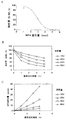
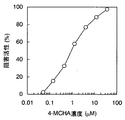
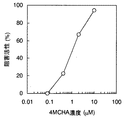
(結果)ELISAによるスペルミジンシンターゼの活性測定の結果を図2に示す。スペルミジンシンターゼの濃度と反応時間に依存してMTA産生量は増加していることが確認された。また、スペルミジンシンターゼの既知阻害剤である4-メチルシクロヘキシルアミンを酵素反応時添加したときの測定結果を図3に示す。4-メチルシクロヘキシルアミンの濃度に依存してMTAの産生は阻害され、IC50値は文献値1.7μM(Shirahata et al., Biochem. Pharma., 1991.)と同等な1.0μMであった。すなわち、本法で検出されるMTAは、スペルミジンシンターゼによりプトレシンがスペルミジンに変換された結果を反映しており、本法でスペルミジンシンターゼの活性を測定できることが確認された。またスペルミジンシンターゼの阻害剤の探索を実施する場合は10%DMSOに溶解した被験物質1μlを予めプレートのウエルに添加しておき、上記の反応を行った。本法によりMTA産生量を検出することによって被験物質の阻害活性を測定した。 (Results) FIG. 2 shows the results of measuring the activity of spermidine synthase by ELISA. It was confirmed that the amount of MTA produced increased depending on the concentration of spermidine synthase and the reaction time. FIG. 3 shows the measurement results when 4-methylcyclohexylamine, a known inhibitor of spermidine synthase, was added during the enzyme reaction. MTA production was inhibited depending on the concentration of 4-methylcyclohexylamine, and the IC50 value was 1.0 μM, equivalent to the literature value 1.7 μM (Shirahata et al., Biochem. Pharma., 1991.). That is, the MTA detected by this method reflects the result of conversion of putrescine to spermidine by spermidine synthase, and it was confirmed that the activity of spermidine synthase can be measured by this method. When searching for an inhibitor of spermidine synthase, 1 μl of a test substance dissolved in 10% DMSO was previously added to the well of the plate, and the above reaction was performed. The inhibitory activity of the test substance was measured by detecting the amount of MTA produced by this method.
HTRF法によるスペルミジンシンターゼの活性測定
(1)新規モノクロナル抗体MTA-7H8のユウロピウムクリプテート標識
MTA-7H8モノクロナル抗体690μg(4.6 nmol)を0.1 Mリン酸塩緩衝液(pH8.0)770 μlに溶かし、クリプテートTBPモノスベレート(CIS バイオインターナショナル社製)100μg(68 nmol)を加えて室温で1時間反応させた。反応液につき、PBSで平衡化したPD- 10(アマシャムファルマシアバイオテック社製)に通して低分子物質を除去し、ユウロピウムクリプテート標識MTA-7H8モノクロナル抗体を得た。
Measurement of spermidine synthase activity by HTRF method (1) Europium cryptate labeling of novel monoclonal antibody MTA-7H8
Dissolve 690 μg (4.6 nmol) of MTA-7H8 monoclonal antibody in 770 μl of 0.1 M phosphate buffer (pH 8.0), add 100 μg (68 nmol) of cryptate TBP monosuberate (CIS Bio International), and add 1 at room temperature. Reacted for hours. The reaction solution was passed through PD-10 (Amersham Pharmacia Biotech) equilibrated with PBS to remove low-molecular substances, and europium cryptate labeled MTA-7H8 monoclonal antibody was obtained.
(2)MTAの クロスリンクドアロフィコシアニン(XL665)標識
XL665(CIS バイオインターナショナル社製)7.7mg(74 nmol)を0.1 Mリン酸塩緩衝液(pH7.0)1.1mlに溶かし、N- スクシンイミジル 3- (2- ピリジルジチオ) プロピオネート(SPDP、ピアス社製)140μg(443 nmol)を添加して室温で20分間反応させ、さらに終濃度10 mMのジチオトレイトールを加えて10分間反応させることによりXL665にシステイン基を導入した。10 mM EDTA含有0.1 Mリン酸塩緩衝液(pH7.0)で平衡化したPD-10(アマシャムファルマシアバイオテック社製)に反応液を通して低分子物質を除去し、XL665を3.4 mg(33 nmol)含む画分1.3 mlへ上述のマレイミド化MTA溶液を660 nmol加えて4 ℃で一晩反応させた。反応液に300μg(2.4μmol)のN-エチルマレイミドを加え、室温で10分間放置した後、0.1Mリン酸カリウム緩衝液(pH7.4)で平衡化したPD-10(アマシャムファルマシアバイオテック社製)に通して低分子物質を除去し、XL665標識MTAを得た。
(2) MTA cross-linked alophycocyanin (XL665) sign
XL665 (CIS Bio International) 7.7 mg (74 nmol) is dissolved in 1.1 ml of 0.1 M phosphate buffer (pH 7.0), and N-succinimidyl 3- (2-pyridyldithio) propionate (SPDP, Pierce) ) 140 μg (443 nmol) was added and allowed to react at room temperature for 20 minutes, and a final concentration of 10 mM dithiothreitol was added and reacted for 10 minutes to introduce a cysteine group into XL665. Low molecular weight substances are removed by passing the reaction solution through PD-10 (Amersham Pharmacia Biotech) equilibrated with 0.1 M phosphate buffer (pH 7.0) containing 10 mM EDTA, and 3.4 mg (33 nmol) of XL665 660 nmol of the above maleimidated MTA solution was added to 1.3 ml of the contained fraction and reacted at 4 ° C. overnight. PD-10 (Amersham Pharmacia Biotech Co., Ltd.) equilibrated with 0.1 M potassium phosphate buffer (pH 7.4) after adding 300 μg (2.4 μmol) N-ethylmaleimide to the reaction solution and allowing to stand at room temperature for 10 minutes ) To remove low molecular weight substances, and XL665-labeled MTA was obtained.
(3)スペルミジンシンターゼの活性測定
緩衝液Cで希釈したスペルミジンシンターゼを384ウェルアッセイプレート(黒色、コーニング社製)へ10μL添加した。次いで、上記基質混合液10μlを加え、室温で反応させた。30 mMの4-メチルシクロヘキシルアミンと260 ng/ml のXL665標識MTAを含む緩衝液D(0.5 % ウシ血清アルブミン、0.6 Mフッ化カリウムを含む0.1 Mリン酸カリウム緩衝液pH7.4)を各ウェルへ20μl添加して反応を停止した。さらに、緩衝液Dで288 ng/mlとしたユウロピウムクリプテート標識抗MTA-7H8抗体を各ウェルへ20μl添加し、室温で16時間反応させた後、Rubystar (BMG Labtechnologis社製)で各ウェルの蛍光測定した。各ウェルのMTA量を標準曲線から算出し、酵素量、反応時間あたりのMTA産生量を酵素活性とした。
(3) Activity measurement of
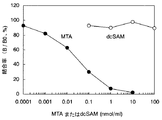
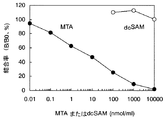
(結果)HTRF法における標準曲線を図4に示す。図中の白丸はdcSAMに対する反応性を、黒丸はMTAに対する反応性を示す。MTAのIC50値は20 nMでELISAと比べると感度が低下するものの高感度を維持し、尚且つ、基質dcSAMに対する交差反応は0.02%以下と極めて小さいため、本法によりスペルミジンシンターゼの活性測定が可能であった。HTRF法によるスペルミジンシンターゼの活性測定の結果を図5に示す。スペルミジンシンターゼの濃度と反応時間に依存してMTA産生量は増加していることが確認された。また、既知阻害剤である4-メチルシクロヘキシルアミンを酵素反応時添加して測定した結果を図6に示す。4-メチルシクロヘキシルアミンの濃度に依存してMTA産生は阻害され、IC50値は1.1μMで、ELISAの結果と同等の値を示した。すなわち、本法で検出されるMTAは、スペルミジンシンターゼによりプトレシンがスペルミジンに変換された結果を反映しており、本法でスペルミジンシンターゼの活性を測定できることが確認された。またスペルミジンシンターゼの阻害剤の探索を実施する場合は10%DMSOに溶解した被験物質1μlを予めプレートのウエルに添加しておき、上記の反応を行った。本法によりMTA産生量を検出することによって被験物質の阻害活性を測定した。 (Result) A standard curve in the HTRF method is shown in FIG. White circles in the figure indicate reactivity to dcSAM, and black circles indicate reactivity to MTA. MTA has an IC50 value of 20 nM, which is less sensitive than ELISA, but maintains high sensitivity. Furthermore, the cross-reaction with the substrate dcSAM is extremely low, 0.02% or less, so this method allows spermidine synthase activity to be measured. Met. The results of measuring the activity of spermidine synthase by the HTRF method are shown in FIG. It was confirmed that the amount of MTA produced increased depending on the concentration of spermidine synthase and the reaction time. Further, FIG. 6 shows the results of measurement by adding 4-methylcyclohexylamine, which is a known inhibitor, during the enzyme reaction. Depending on the concentration of 4-methylcyclohexylamine, MTA production was inhibited, and the IC50 value was 1.1 μM, which was equivalent to the ELISA result. That is, the MTA detected by this method reflects the result of conversion of putrescine to spermidine by spermidine synthase, and it was confirmed that the activity of spermidine synthase can be measured by this method. When searching for an inhibitor of spermidine synthase, 1 μl of a test substance dissolved in 10% DMSO was previously added to the well of the plate, and the above reaction was performed. The inhibitory activity of the test substance was measured by detecting the amount of MTA produced by this method.
SPA法を利用したMTAの定量
(1)MTAの125I標識
放射性ヨウ素[125I] - ボルトン- ハンター試薬(パーキンエルマーライフサイエンス社製)9×10⁶ Bqについて溶媒を減圧下に留去し、これに実施例2に従って合成した6-(3-アミノ)プロピル-5’-デオキシ-5’-メチルチオアデノシン13μgを含む20 %メタノール水10μl及び25 mmol/Lリン酸塩緩衝液(pH 7.1)30μlを加えて4 ℃で一晩反応させた。反応液につき逆相高速液体クロマトグラフィー(装置:島津社製LC-6A、カラム: YMC-Pack ODS-A 6.0 I.D.×150 mm(YMC社製)、溶離液:A ; 10 %アセトニトリル/0.1 %トリフルオロ酢酸、B ; 60 %アセトニトリル/0.1 %トリフルオロ酢酸、A → B、リニアグラディエント(25 min)、流速:1 ml/min)を行って16 分付近に溶出する125I標識MTA(約2.6×10⁶ Bq)を分取した。
Quantification of MTA using SPA method (1) 125 I labeling of MTA Radioiodine [ 125 I]-Bolton Hunter reagent (Perkin Elmer Life Sciences) 9 × 10 6 Bq The solvent was distilled off under reduced pressure, To this, 10 μl of 20% aqueous methanol containing 13 μg of 6- (3-amino) propyl-5′-deoxy-5′-methylthioadenosine synthesized according to Example 2 and 30 μl of 25 mmol / L phosphate buffer (pH 7.1) And reacted at 4 ° C. overnight. Reversed-phase high-performance liquid chromatography (reactor: LC-6A manufactured by Shimadzu, column: YMC-Pack ODS-A 6.0 ID × 150 mm (manufactured by YMC), eluent: A; 10% acetonitrile / 0.1% tri Fluoroacetic acid, B; 60% acetonitrile / 0.1% trifluoroacetic acid, A → B, linear gradient (25 min), flow rate: 1 ml / min), 125 I-labeled MTA eluting around 16 minutes (approx. 2.6 × 10 6 Bq).
(2)MTAの定量
マイクロタイタープレート(IsoPlate-96、白色、パーキンエルマーライフサイエンス社製)に、測定緩衝液E(0.5 % ウシ血清アルブミンを含む0.1Mリン酸カリウム緩衝液(pH7.4))で20 mg/mlとした抗マウス抗体結合SPA PVTビーズ(アマシャムファルマシアバイオテック社製)50μl、MTA標準液50μl、測定緩衝液Eで12,000 Bq/mlとした125I標識MTA 50μlを連続して添加し、最後に1,000 ng/mlマウスポリクロナル抗体を含む測定緩衝液E 50μlを添加して室温で一晩反応させた。反応後、各ウェルの放射能をマイクロプレートシンチレーションカウンタ(Top Count NXT、パーキンエルマーライフサイエンス社製)で測定し、標準曲線を作成した。
(2) Quantification of MTA Measurement buffer E (0.1 M potassium phosphate buffer (pH 7.4) containing 0.5% bovine serum albumin) on a microtiter plate (IsoPlate-96, white, manufactured by PerkinElmer Life Sciences) 50 μl of anti-mouse antibody-bound SPA PVT beads (Amersham Pharmacia Biotech) made up to 20 mg / ml, 50 μl of MTA standard solution, and 50 μl of 125 I-labeled MTA made up to 12,000 Bq / ml in measurement buffer E Finally, 50 μl of measurement buffer E containing 1,000 ng / ml mouse polyclonal antibody was added and allowed to react overnight at room temperature. After the reaction, the radioactivity of each well was measured with a microplate scintillation counter (Top Count NXT, manufactured by PerkinElmer Life Sciences) to prepare a standard curve.
(結果)SPA法で得られた標準曲線を図7に示す。MTAのIC50値は10μMと上述のELISAやHTRF法と比べて劣るものの、dcSAMとの交差反応は0.1%以下と小さく、本法によりMTAの定量が可能であることが確認された。本法を利用することによりスペルミジンシンターゼの活性が測定できる。またスペルミジンシンターゼの阻害剤の探索を実施する場合は10%DMSOに溶解した被験物質1μlを予めプレートのウエルに添加しておき、上記の反応を行った。本法によりMTA産生量を検出することによって被験物質の阻害活性を測定した。 (Results) A standard curve obtained by the SPA method is shown in FIG. Although the IC50 value of MTA is 10 μM, which is inferior to the ELISA and HTRF methods described above, the cross-reaction with dcSAM is as small as 0.1% or less, confirming that MTA can be quantified by this method. By using this method, the activity of spermidine synthase can be measured. When searching for an inhibitor of spermidine synthase, 1 μl of a test substance dissolved in 10% DMSO was previously added to the well of the plate, and the above reaction was performed. The inhibitory activity of the test substance was measured by detecting the amount of MTA produced by this method.
Claims (26)
The method according to any one of claims 21 to 25, wherein the method is for searching for a therapeutic / prophylactic agent for osteoarthritis.
Priority Applications (5)
| Application Number | Priority Date | Filing Date | Title |
|---|---|---|---|
| JP2004111373A JP2005292087A (en) | 2004-04-05 | 2004-04-05 | Antibody against 5'-deoxy-5'-methylthioadenosine |
| PCT/IL2005/000374 WO2005096706A2 (en) | 2004-04-05 | 2005-04-05 | Antibody to 5'-deoxy-5'-methylthioadenosine and uses thereof |
| JP2007505738A JP2007531724A (en) | 2004-04-05 | 2005-04-05 | Antibodies against 5'-deoxy-5'-methylthioadenosine and uses thereof |
| US11/547,955 US20070280946A1 (en) | 2004-04-05 | 2005-04-05 | Antibody to 5' -Deoxy-5' - Methylthioadenosine And Uses Thereof |
| IL178428A IL178428A0 (en) | 2004-04-05 | 2006-10-03 | Antibody to 5'-deoxy-5'-methylthioadenosine and uses thereof |
Applications Claiming Priority (1)
| Application Number | Priority Date | Filing Date | Title |
|---|---|---|---|
| JP2004111373A JP2005292087A (en) | 2004-04-05 | 2004-04-05 | Antibody against 5'-deoxy-5'-methylthioadenosine |
Publications (1)
| Publication Number | Publication Date |
|---|---|
| JP2005292087A true JP2005292087A (en) | 2005-10-20 |
Family
ID=35125495
Family Applications (2)
| Application Number | Title | Priority Date | Filing Date |
|---|---|---|---|
| JP2004111373A Pending JP2005292087A (en) | 2004-04-05 | 2004-04-05 | Antibody against 5'-deoxy-5'-methylthioadenosine |
| JP2007505738A Withdrawn JP2007531724A (en) | 2004-04-05 | 2005-04-05 | Antibodies against 5'-deoxy-5'-methylthioadenosine and uses thereof |
Family Applications After (1)
| Application Number | Title | Priority Date | Filing Date |
|---|---|---|---|
| JP2007505738A Withdrawn JP2007531724A (en) | 2004-04-05 | 2005-04-05 | Antibodies against 5'-deoxy-5'-methylthioadenosine and uses thereof |
Country Status (3)
| Country | Link |
|---|---|
| US (1) | US20070280946A1 (en) |
| JP (2) | JP2005292087A (en) |
| WO (1) | WO2005096706A2 (en) |
Families Citing this family (9)
| Publication number | Priority date | Publication date | Assignee | Title |
|---|---|---|---|---|
| EP2192905A4 (en) | 2007-08-29 | 2010-11-10 | Adam Lubin | Method for the selective therapy of disease |
| WO2009131643A1 (en) * | 2008-04-21 | 2009-10-29 | Monabio, Inc. | Immunoassay for specific determination of s-adenosymethionine and analogs thereof in biological samples |
| WO2013180200A1 (en) | 2012-05-30 | 2013-12-05 | 中外製薬株式会社 | Target-tissue-specific antigen-binding molecule |
| JP2015529199A (en) * | 2012-08-21 | 2015-10-05 | オルソ−クリニカル ダイアグノスティクス,インコーポレイティド | Antibodies against paliperidone hapten and use thereof |
| TWI702316B (en) | 2013-12-04 | 2020-08-21 | 日商中外製藥股份有限公司 | Antigen-binding molecules and their database that change antigen-binding ability in response to compound concentration |
| JP7256816B2 (en) * | 2018-03-07 | 2023-04-12 | コメラ ライフ サイエンシズ,インコーポレイテッド | Excipient compounds for protein formulations |
| MX2021001431A (en) | 2018-08-10 | 2021-05-12 | Chugai Pharmaceutical Co Ltd | MOLECULE FOR BINDING ANTI-DIFFERENTIATION GROUP ANTIGEN 137 (CD137) AND ITS USE. |
| JP7601758B2 (en) * | 2019-03-19 | 2024-12-17 | 中外製薬株式会社 | Antigen-binding molecule containing an antigen-binding domain whose antigen-binding activity changes in an MTA-dependent manner, and library for obtaining said antigen-binding domain |
| CN115385999A (en) * | 2022-06-10 | 2022-11-25 | 浙江大学 | Adenosine artificial antigen, adenosine antibody and application thereof |
Family Cites Families (4)
| Publication number | Priority date | Publication date | Assignee | Title |
|---|---|---|---|---|
| US4376116A (en) * | 1981-09-01 | 1983-03-08 | Research Corporation | Polyamine biosynthesis inhibitors |
| US4687733A (en) * | 1984-01-30 | 1987-08-18 | Ohio State University | Early cancer detection method |
| CN1525818A (en) * | 2000-12-12 | 2004-09-01 | ��ϣŵ | Spermidine synthase inhibitors for the treatment of osteoarthritis and cartilage repair |
| US20040043959A1 (en) * | 2002-03-04 | 2004-03-04 | Bloom Laura A. | Combination therapies for treating methylthioadenosine phosphorylase deficient cells |
-
2004
- 2004-04-05 JP JP2004111373A patent/JP2005292087A/en active Pending
-
2005
- 2005-04-05 US US11/547,955 patent/US20070280946A1/en not_active Abandoned
- 2005-04-05 WO PCT/IL2005/000374 patent/WO2005096706A2/en not_active Ceased
- 2005-04-05 JP JP2007505738A patent/JP2007531724A/en not_active Withdrawn
Also Published As
| Publication number | Publication date |
|---|---|
| JP2007531724A (en) | 2007-11-08 |
| WO2005096706A3 (en) | 2005-12-22 |
| US20070280946A1 (en) | 2007-12-06 |
| WO2005096706A2 (en) | 2005-10-20 |
Similar Documents
| Publication | Publication Date | Title |
|---|---|---|
| JP6971927B2 (en) | Antibodies to risperidone hapten and their use | |
| JP7368867B2 (en) | Antibodies against symmetric dimethylated arginine analytes and their uses | |
| JP2015527987A (en) | Anti-tofacitinib antibody and its use for drug monitoring | |
| WO2009131643A1 (en) | Immunoassay for specific determination of s-adenosymethionine and analogs thereof in biological samples | |
| EP2479190A1 (en) | Collagen neoepitope antibody | |
| JP2007531724A (en) | Antibodies against 5'-deoxy-5'-methylthioadenosine and uses thereof | |
| JP5757497B2 (en) | Monoclonal antibody recognizing ciguatoxins CTX1B and 54-deoxy-CTX1B, and ciguatoxins detection kit using the same | |
| KR101338517B1 (en) | Human liver carboxylesterase 1-specific indicating monoclonal antibody, hybridoma cell line producing the same and use thereof | |
| Xu et al. | Monoclonal antibody-based fluorescence polarization immunoassay for high throughput screening of furaltadone and its metabolite AMOZ in animal feeds and tissues | |
| JP4683572B2 (en) | Quantification of recombinant protein | |
| KR101159011B1 (en) | hapten compound and antibody | |
| JP5026761B2 (en) | Hapten compounds and antibodies | |
| WO2005105846A1 (en) | Antibody specifically recognizing resin plasticizer compound | |
| US6291198B1 (en) | Antibody that recognizes pyrazine derivative and method for measuring 1,2-dicarbonyl derivative using said antibody | |
| KR20250159053A (en) | Antibodies to methotrexate and their uses | |
| Omura et al. | Development of enzyme immunoassay of 2′-deoxycytidine | |
| US20050148041A1 (en) | Sandwich assay kits for detecting shigatoxin ctx3c | |
| WO2026030017A1 (en) | Nitazene analogs and conjugates and methods of production and use thereof | |
| JP2005143504A (en) | Antibody and use thereof |