【0001】
【発明の属する技術分野】
本発明は、アルコキシトルエン、カルボン酸及び分子状酸素を液相で反応させるアルコキシベンズアルデヒド及び/又はアルコキシベンジルアセテートの製造方法に関する。
【0002】
【従来の技術】
アルコキシトルエン類をカルボン酸及び酸素により酸化する方法として、スズ、ゲルマニウム、テルル及び銅から選ばれた元素及びパラジウムを活性炭に担持した触媒により、水/有機溶媒混合物中で反応を行う方法が開示されている。しかし、この方法ではアルコキシ安息香酸等の副生成物の選択率が高いため、工業的に満足できるものではない。(例えば、特許文献1参照。)
また、パラジウムを活性炭に担持した触媒に、スズ化合物及び酢酸カリウムを添加して、酢酸中で反応を行う方法が報告されている。しかし、この方法では、スズ化合物及び酢酸カリウムが反応系に可溶であるため、スズ化合物及び酢酸カリウムの分離・回収工程が必要となり、工業的に実用的ではない。(例えば、非特許文献1参照。)
【特許文献1】
特開平6−100480号公報(第13頁)
【非特許文献1】
「ジャーナル・オブ・キャタリシス」(J.Cat.)(140),(1993)(第311頁)
【0003】
【発明が解決しようとする課題】
本発明は上記の課題に鑑みてなされたものであり、高活性な触媒を用いて高選択的にアルコキシトルエンを酸化し、アルコキシベンズアルデヒド及び/又はアルコキシベンジルアセテートを高収率で得る方法を提供するものである。
【0004】
【課題を解決するための手段】
本発明者らは、上記問題点を解決すべく鋭意研究を行った結果、アンチモン、ビスマス、テルルから選ばれる少なくとも1種類以上の元素とパラジウムが担持されている特定の触媒を液相で用いることにより、アルコキシベンズアルデヒド及び/又はアルコキシベンジルアセテートが高収率で得られることを見出し、本発明を完成するに至った。
【0005】
すなわち、本発明はアルコキシトルエンをカルボン酸及び分子状酸素により液相で酸化するにあたり、アンチモン、ビスマス、テルルから選ばれる少なくとも1種類以上の元素とパラジウムが合金構造を有しており、且つ担体に担持されている触媒を用いることを特徴とする。
【0006】
以下本発明について詳細に説明する。
【0007】
本発明の触媒を調製するにあたり、使用するパラジウム、アンチモン、ビスマス及びテルルの原料は、特に限定するものではない。
【0008】
パラジウム原料としては、パラジウム金属、ヘキサクロロパラジウム酸アンモニウム、へキサクロロパラジウム酸カリウム、ヘキサクロロパラジウム酸ナトリウム、テトラクロロパラジウム酸アンモニウム、テトラクロロパラジウム酸カリウム、テトラクロロパラジウム酸ナトリウム、テトラブロモパラジウム酸カリウム、酸化パラジウム、塩化パラジウム、臭化パラジウム、ヨウ化パラジウム、硝酸パラジウム、硫酸パラジウム、酢酸パラジウム、ジニトロサルファイトパラジウム酸カリウム、クロロカルボニルパラジウム、ジニトロジアンミンパラジウム、テトラアンミンパラジウム塩化物、テトラアンミンパラジウム硝酸塩、cis−ジクロロジアミンパラジウム、trans−ジクロロジアミンパラジウム、ジクロロ(エチレンジアミン)パラジウム、テトラシアノパラジウム酸カリウム等を例示できる。
【0009】
さらに、アンチモンの原料としては、アンチモン金属、フッ化アンチモン、塩化アンチモン、臭化アンチモン、ヨウ化アンチモン、酢酸アンチモン、アンチモニメトキシド、アンチモニエトキシド、アンチモニイソプロポキシド、アンチモニブトキシド、アンチモニエチレングリコシド、アンチモニポタシウムタータレイト、酸化アンチモン、硫化アンチモン、酒石酸やシュウ酸等の有機酸とのアンチモン錯化合物等を例示することができる。
【0010】
さらに、ビスマスの原料としては、ビスマス金属、塩化ビスマス、硝酸ビスマス、オキシ塩化ビスマス、酢酸ビスマス、オキシ酢酸ビスマス、酸化ビスマス等を例示することができる。
【0011】
さらに、テルルの原料としては、金属テルル、塩化テルル、酸化テルル、テルル酸、テルル酸カリウム、テルル酸ナトリウム等を例示することができる。
【0012】
アンチモン、ビスマス、テルルから選ばれる少なくとも1種類以上の元素とパラジウムは、それ自体反応に不活性な担体に担持されて使用される。好ましい担体としてはシリカや活性炭を例示できる。
【0013】
パラジウムの担体への担持量は、担体の重量に対して、0.01〜10重量%、好ましくは0.1〜5重量%である。0.01重量%より少ないと実質的な反応速度を得られず、また、10重量%より多いと経済的に不利となる。
【0014】
又、アンチモン、ビスマス、テルルから選ばれる少なくとも1種類以上の元素とパラジウムの担体への担持は、高選択的にアルコキシトルエンを酸化するために、原子比で(パラジウム)/(アンチモン、ビスマス、テルルから選ばれる少なくとも1種類以上の元素)=1〜100の範囲で行うことが好ましい。
【0015】
本発明において、アンチモン、ビスマス、テルルから選ばれる少なくとも1種類以上の元素とパラジウムは0価の金属状態で担体に担持され、且つアンチモン、ビスマス、テルルから選ばれる少なくとも1種類以上の元素とパラジウムが合金構造を有して担体に担持される。
【0016】
本発明の触媒調製方法について述べる。
【0017】
本発明の触媒の形状には特に制限はなく、反応形式に応じて粉末状のもの又は成形品を用いることができる.懸濁床における反応では粉末又は顆粒を、固定床における反応ではタブレットの打錠成形品、球状又は棒柱状の押し出し成形品等が好ましく用いられる。
【0018】
アンチモン、ビスマス、テルルから選ばれる少なくとも1種類以上の元素とパラジウムの原料を担体に担持する方法は特に限定されるものではなく、公知の方法で担持することができる。例えば沈殿法、イオン交換法、含浸法、沈着法、混練法で担持することができる。含浸法で担持する場合には、アンチモン、ビスマス、テルルから選ばれる少なくとも1種類以上の元素とパラジウムの原料を同時に含浸担持する、もしくは、一方の原料を含浸担持した後、残りの原料を含浸担持してもよい。しかし、アンチモン、ビスマス、テルルから選ばれる少なくとも1種類以上の元素とパラジウムをより均一に担持するためには、両者を同時に含浸担持するのが好ましい。
【0019】
例えば含浸法によりパラジウムとアンチモンの合金を調製する際には、乾燥工程において真空下で乾燥させるのが好ましい。乾燥温度は、好ましくは0〜700℃、さらに好ましくは10〜500℃である。
【0020】
含浸法についてさらに例示するならば、アンチモン、ビスマス、テルルから選ばれる少なくとも1種類以上の元素とパラジウムの原料を適当な溶媒に溶解し、これを担体と混合し、必要ならば所定の時間静置した後、公知の方法で溶媒を除去し、乾燥し、触媒前駆体を得る。得られた触媒前駆体を水素又は水素を含む不活性ガス中で還元処理することにより本発明の触媒を得ることができる。還元処理の温度は、通常100〜700℃、好ましくは200〜500℃の範囲である。
【0021】
なお、還元処理を行う場合の還元剤としては、水素以外にも、一酸化炭素、エチレン等のガス類、アルコール、ヒドラジン水和物等も使用することができ、用いる還元剤の種類に応じて気相又は液相のいずれでも還元処理を行うことができる。
【0022】
なお、水素等による還元処理前に酸素雰囲気下で焼成しても構わない。還元処理前に焼成を行う場合には、酸素又は窒素、ヘリウム、アルゴン等で希釈した酸素、さらには空気の雰囲気中で、200〜700℃で焼成するのがよい。
【0023】
本発明で用いられる原料のアルコキシトルエンは特に限定されるものではなく、p−メトキシトルエン、m−メトキシトルエン、o−メトキシトルエン、p−エトキシトルエン、m−エトキシトルエン、o−エトキシトルエン、p−n−プロポキシトルエン、m−n−プロポキシトルエン、o−n−プロポキシトルエン、p−イソプロポキシトルエン、m−イソプロポキシトルエン、o−イソプロポキシトルエン等を例示することができる。また、本発明で用いられる原料のカルボン酸は特に限定されるものではなく、酢酸、プロピオン酸、酪酸等を例示することができる。これらアルコキシトルエンとカルボン酸の混合比としては、任意の混合比で反応を行うことができる。
【0024】
本反応における溶媒は、反応条件によりカルボン酸もしくはカルボン酸/水の混合物を用いることができる。
【0025】
本発明で用いられる反応器は、反応が液相で行われるために触媒の表面が原料液で覆われる構造であれば特に限定するものではなく、例示として、懸濁床による回分、半回分、連続式反応器、又は固定床流通式反応器が挙げられる。
【0026】
本発明の反応温度は、通常80〜230℃、好ましくは100〜200℃である。反応温度が230℃より高いと副反応の進行が増し、80℃より低いと反応速度の点で不利になる。
【0027】
本発明の反応圧力は、反応温度下で原料のアルコキシトルエン及びカルボン酸が触媒表面で液相に保たる圧力であればよく、好ましくは常圧〜10MPaである。
【0028】
本発明の方法においては、分子状酸素を酸化剤として用いる。分子状酸素は、窒素等の不活性ガスで希釈されていてもよく、空気であってもよい。酸素の供給量は、反応温度、触媒量等によって最適量が変わるが、反応器内の気相部のガス組成が爆発範囲以下であればよい。
【0029】
反応時間は、反応温度、圧力、触媒量等の設定、及び反応器の形式等に応じて適宜最適な時間を設定すればよく、特に限定するものではないが、懸濁床での回分式、半回分式反応においては0.5時間以上、好ましくは1〜10時間である。また、懸濁床による連続式反応又は固定床流通式反応においては、滞留時間は0.03〜10時間が好ましい。
【0030】
【実施例】
以下、本反応を実施例によりさらに詳しく説明するが、本発明はこれら実施例に限定されるものではない。
【0031】
(X線回折測定方法)
X線回折測定は、X線回折測定装置(マックサイエンス社製 M18XHF)を用いてX線源CuKα1、管電流200mA、管電圧40kVで行った。
【0032】
実施例1
蒸留水16gに酒石酸3.6gを溶解し、ここに酸化アンチモン0.49gを加え溶解させた。続いて8.3重量%硝酸パラジウム水溶液7.27gを加えた。この水溶液に担体(富士シリシア社製、商品名キャリアクトQ−30)を20g加えて含浸した。その後、50℃で減圧下乾燥して、100℃で3時間真空乾燥、400℃で5時間空気焼成を経て、400℃で5時間水素還元した。パラジウムのシリカに対する担持量は3重量%、アンチモンのパラジウムに対する添加量は、アンチモン/パラジウム原子比で0.6であった。
【0033】
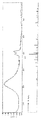
また、X線回折の結果から、パラジウムとアンチモンが共に酸化状態ではなく、0価の金属状態で合金を形成していることを確認した(図1)。
【0034】
温度計、撹拌装置、ガス導入管及び還流冷却装置を取り付けた三つ口フラスコに、上記触媒0.7g、p−メトキシトルエン 2g及び酢酸8mlを加え、内温100℃、常圧で、酸素を60ml/分(0℃、1気圧換算)で連続的に供給し、5時間撹拌することで反応を行った。反応終了後、反応液をガスクロマトグラフィーで分析した結果、p−メトキシトルエンの転化率86.9%、p−メトキシベンジルアセテートの選択率40.5%、p−メトキシベンズアルデヒドの選択率42.2%、アニス酸の選択率17.3%であった。
【0035】
実施例2
蒸留水10gに酒石酸2.3gを溶解させた後、三酸化アンチモン0.33gを添加し溶解させた。続いて8.3重量%のジニトロジアンミンパラジウム硝酸溶液を7.27g添加し、さらに蒸留水を加え全量を21mlとした。この水溶液に担体(富士シリシア社製、商品名キャリアクトQ−30)を20g加えて含浸した。その後、50℃で減圧下乾燥して、100℃で3時間真空乾燥、400℃で5時間空気焼成を経て、400℃で水素還元した。得られた触媒は、元素分析の結果、パラジウム担持量は3重量%で、アンチモンのパラジウムに対する添加量は、アンチモン/パラジウム原子比で0.4であった。また、X線回折の結果から、パラジウムとアンチモンが合金を形成していることを確認した。
【0036】
温度計、撹拌装置、ガス導入管及び還流冷却装置を取り付けた三つ口フラスコに、上記触媒0.7g、p−メトキシトルエン 2g及び酢酸8mlを加え、内温100℃、常圧で、酸素を30ml/分(0℃、1気圧換算)で連続的に供給し、5時間撹拌することで反応を行った。反応終了後、反応液をガスクロマトグラフィーで分析した結果、p−メトキシトルエンの転化率81.5%、p−メトキシベンジルアセテートの選択率76.3%、p−メトキシベンズアルデヒドの選択率15.3%、アニス酸の選択率8.4%であった。
【0037】
比較例1
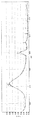
蒸留水16gに酒石酸3.6gを溶解し、ここに酸化アンチモン0.49gを加え溶解させた。続いて8.3重量%硝酸パラジウム水溶液7.27gを加えた。この水溶液に担体(富士シリシア社製、商品名キャリアクトQ−30)を20g加えて含浸した。その後、50℃で減圧下乾燥して、300℃で5時間空気焼成を経て、400℃で5時間水素還元した。パラジウムのシリカに対する担持量は3重量%、アンチモンのパラジウムに対する添加量は、アンチモン/パラジウム原子比で0.6であった。また、X線回折の結果から、パラジウムとアンチモンは合金を形成していないことを確認した(図2)。
【0038】
温度計、撹拌装置、ガス導入管及び還流冷却装置を取り付けた三つ口フラスコに、上記触媒0.7g、p−メトキシトルエン 2g及び酢酸8mlを加え、内温100℃、常圧で、酸素を60ml/分(0℃、1気圧換算)で連続的に供給し、5時間撹拌することで反応を行った。反応終了後、反応液をガスクロマトグラフィーで分析した結果、p−メトキシトルエンの転化率77.6%、p−メトキシベンジルアセテートの選択率21.5%、p−メトキシベンズアルデヒドの選択率24.0%、アニス酸の選択率54.5%であった。
【0039】
【発明の効果】
アルコキシトルエンをカルボン酸及び分子状酸素により液相で酸化するにあたり、アンチモン、ビスマス、テルルから選ばれる少なくとも1種類以上の元素とパラジウムが合金構造を有しており、且つ担体に担持されている触媒を用いることにより、アルコキシベンズアルデヒド及び/又はアルコキシベンジルアセテートを高収率で得ることができる。
【図面の簡単な説明】
【図1】実施例1により得られた触媒のX線回折結果
【図2】比較例1により得られた触媒のX線回折結果[0001]
TECHNICAL FIELD OF THE INVENTION
The present invention relates to a method for producing alkoxybenzaldehyde and / or alkoxybenzyl acetate by reacting alkoxytoluene, carboxylic acid and molecular oxygen in a liquid phase.
[0002]
[Prior art]
As a method for oxidizing alkoxytoluenes with carboxylic acid and oxygen, there is disclosed a method in which an element selected from tin, germanium, tellurium and copper and palladium are supported on activated carbon and a reaction is carried out in a water / organic solvent mixture. ing. However, this method is not industrially satisfactory because the selectivity of by-products such as alkoxybenzoic acid is high. (For example, refer to Patent Document 1.)
In addition, a method has been reported in which a tin compound and potassium acetate are added to a catalyst in which palladium is supported on activated carbon, and the reaction is carried out in acetic acid. However, in this method, since the tin compound and potassium acetate are soluble in the reaction system, a step of separating and recovering the tin compound and potassium acetate is required, which is not industrially practical. (For example, see Non-Patent Document 1.)
[Patent Document 1]
JP-A-6-100480 (page 13)
[Non-patent document 1]
"Journal of Catalysis" (J. Cat.) (140), (1993) (p. 311)
[0003]
[Problems to be solved by the invention]
The present invention has been made in view of the above problems, and provides a method for oxidizing alkoxytoluene with high selectivity using a highly active catalyst to obtain alkoxybenzaldehyde and / or alkoxybenzyl acetate in high yield. Things.
[0004]
[Means for Solving the Problems]
The present inventors have conducted intensive studies to solve the above problems, and found that at least one element selected from antimony, bismuth, and tellurium and a specific catalyst in which palladium is supported are used in a liquid phase. As a result, they have found that alkoxybenzaldehyde and / or alkoxybenzyl acetate can be obtained in high yield, and have completed the present invention.
[0005]
That is, in the present invention, in oxidizing alkoxytoluene in the liquid phase with carboxylic acid and molecular oxygen, at least one element selected from antimony, bismuth, and tellurium and palladium have an alloy structure, and the carrier It is characterized by using a supported catalyst.
[0006]
Hereinafter, the present invention will be described in detail.
[0007]
In preparing the catalyst of the present invention, the raw materials of palladium, antimony, bismuth and tellurium used are not particularly limited.
[0008]
Palladium raw materials include palladium metal, ammonium hexachloropalladate, potassium hexachloropalladate, sodium hexachloropalladate, ammonium tetrachloropalladate, potassium tetrachloropalladate, sodium tetrachloropalladate, potassium tetrabromopalladate, and oxidation. Palladium, palladium chloride, palladium bromide, palladium iodide, palladium nitrate, palladium sulfate, palladium acetate, potassium dinitrosulfite palladium, chlorocarbonyl palladium, dinitrodiammine palladium, tetraamminepalladium chloride, tetraamminepalladium nitrate, cis-dichlorodiamine Palladium, trans-dichlorodiamine palladium, dichloro (ethylenedia Down) palladium, potassium tetra cyano palladium acids and the like.
[0009]
In addition, antimony materials include antimony metal, antimony fluoride, antimony chloride, antimony bromide, antimony iodide, antimony acetate, antimony methoxide, antimony ethoxide, antimony isopropoxide, antimony butoxide, antimony Examples include monethylene glycolside, antimonypotassium tartrate, antimony oxide, antimony sulfide, and antimony complex compounds with organic acids such as tartaric acid and oxalic acid.
[0010]
Further, examples of the raw material of bismuth include bismuth metal, bismuth chloride, bismuth nitrate, bismuth oxychloride, bismuth acetate, bismuth oxyacetate, bismuth oxide, and the like.
[0011]
Furthermore, examples of tellurium raw materials include metal tellurium, tellurium chloride, tellurium oxide, telluric acid, potassium tellurate, sodium tellurate, and the like.
[0012]
At least one element selected from antimony, bismuth, and tellurium and palladium are used by being supported on a carrier inert to the reaction itself. Preferred carriers include silica and activated carbon.
[0013]
The amount of palladium supported on the carrier is 0.01 to 10% by weight, preferably 0.1 to 5% by weight, based on the weight of the carrier. When the amount is less than 0.01% by weight, a substantial reaction rate cannot be obtained, and when the amount is more than 10% by weight, it is economically disadvantageous.
[0014]
In addition, loading of at least one element selected from antimony, bismuth and tellurium and palladium on a carrier is performed in an atomic ratio of (palladium) / (antimony, bismuth and tellurium in order to highly selectively oxidize alkoxytoluene. (At least one or more elements selected from) = 1 to 100).
[0015]
In the present invention, at least one or more elements selected from antimony, bismuth and tellurium and palladium are supported on a carrier in a zero-valent metal state, and at least one or more elements selected from antimony, bismuth and tellurium and palladium are used. It has an alloy structure and is supported on a carrier.
[0016]
The catalyst preparation method of the present invention will be described.
[0017]
The shape of the catalyst of the present invention is not particularly limited, and a powdery or molded product can be used depending on the reaction mode. In the reaction in the suspension bed, powder or granules are preferably used, and in the reaction in the fixed bed, tablet compression moldings, spherical or columnar extrusion moldings and the like are preferably used.
[0018]
The method of supporting at least one element selected from antimony, bismuth, and tellurium and the raw material of palladium on the carrier is not particularly limited, and the carrier can be supported by a known method. For example, it can be supported by a precipitation method, an ion exchange method, an impregnation method, a deposition method, or a kneading method. In the case of supporting by the impregnation method, at least one element selected from antimony, bismuth and tellurium and the raw material of palladium are simultaneously impregnated and supported, or after impregnating and supporting one of the raw materials, the remaining raw material is impregnated and supported. May be. However, in order to more uniformly support palladium and at least one element selected from antimony, bismuth, and tellurium, it is preferable to impregnate and support both at the same time.
[0019]
For example, when preparing an alloy of palladium and antimony by the impregnation method, it is preferable to dry under vacuum in the drying step. The drying temperature is preferably from 0 to 700 ° C, more preferably from 10 to 500 ° C.
[0020]
To further illustrate the impregnation method, at least one element selected from antimony, bismuth, and tellurium and a raw material of palladium are dissolved in a suitable solvent, mixed with a carrier, and if necessary, allowed to stand for a predetermined time. After that, the solvent is removed by a known method and dried to obtain a catalyst precursor. The catalyst of the present invention can be obtained by subjecting the obtained catalyst precursor to a reduction treatment in hydrogen or an inert gas containing hydrogen. The temperature for the reduction treatment is usually in the range of 100 to 700C, preferably 200 to 500C.
[0021]
In addition, as the reducing agent in the case of performing the reduction treatment, in addition to hydrogen, carbon monoxide, gases such as ethylene, alcohol, hydrazine hydrate, and the like can be used, and depending on the type of the reducing agent used. The reduction treatment can be performed in either a gas phase or a liquid phase.
[0022]
Note that firing may be performed in an oxygen atmosphere before reduction treatment with hydrogen or the like. When baking is performed before the reduction treatment, baking is preferably performed at 200 to 700 ° C. in an atmosphere of oxygen or oxygen diluted with nitrogen, helium, argon, or the like, or air.
[0023]
The raw material alkoxytoluene used in the present invention is not particularly limited, and p-methoxytoluene, m-methoxytoluene, o-methoxytoluene, p-ethoxytoluene, m-ethoxytoluene, o-ethoxytoluene, p-methoxytoluene Examples thereof include n-propoxytoluene, mn-propoxytoluene, on-propoxytoluene, p-isopropoxytoluene, m-isopropoxytoluene, and o-isopropoxytoluene. The carboxylic acid as a raw material used in the present invention is not particularly limited, and examples thereof include acetic acid, propionic acid, and butyric acid. The reaction can be performed at any mixing ratio of the alkoxytoluene and the carboxylic acid.
[0024]
As a solvent in this reaction, a carboxylic acid or a mixture of carboxylic acid / water can be used depending on reaction conditions.
[0025]
The reactor used in the present invention is not particularly limited as long as the reaction is carried out in a liquid phase, so long as the surface of the catalyst is covered with the raw material liquid. A continuous type reactor or a fixed bed flow type reactor is mentioned.
[0026]
The reaction temperature of the present invention is usually 80 to 230 ° C, preferably 100 to 200 ° C. When the reaction temperature is higher than 230 ° C., the progress of the side reaction increases, and when the reaction temperature is lower than 80 ° C., the reaction rate is disadvantageous.
[0027]
The reaction pressure of the present invention may be any pressure at which the raw materials, alkoxytoluene and carboxylic acid, are kept in a liquid phase on the catalyst surface at the reaction temperature, and preferably normal pressure to 10 MPa.
[0028]
In the method of the present invention, molecular oxygen is used as the oxidizing agent. The molecular oxygen may be diluted with an inert gas such as nitrogen or may be air. The optimum amount of oxygen to be supplied varies depending on the reaction temperature, the amount of catalyst, and the like, but it is sufficient that the gas composition in the gas phase in the reactor is below the explosion range.
[0029]
The reaction time may be appropriately set according to the reaction temperature, the pressure, the setting of the amount of the catalyst, etc., and the type of the reactor, and is not particularly limited. In a semi-batch reaction, the reaction time is 0.5 hour or more, preferably 1 to 10 hours. In a continuous reaction using a suspension bed or a fixed bed flow reaction, the residence time is preferably 0.03 to 10 hours.
[0030]
【Example】
Hereinafter, the present reaction will be described in more detail with reference to Examples, but the present invention is not limited to these Examples.
[0031]
(X-ray diffraction measurement method)
X-ray diffraction measurement, X-rays source Cu K alpha 1 using X-ray diffraction measurement apparatus (Mac Science Co. M18XHF), was carried out tube current 200 mA, a tube voltage 40 kV.
[0032]
Example 1
3.6 g of tartaric acid was dissolved in 16 g of distilled water, and 0.49 g of antimony oxide was added and dissolved therein. Subsequently, 7.27 g of an aqueous 8.3 wt% palladium nitrate solution was added. The aqueous solution was impregnated with 20 g of a carrier (trade name: Caracto Q-30, manufactured by Fuji Silysia Ltd.). Then, it was dried under reduced pressure at 50 ° C., vacuum-dried at 100 ° C. for 3 hours, calcined at 400 ° C. for 5 hours, and hydrogen reduced at 400 ° C. for 5 hours. The amount of palladium supported on silica was 3% by weight, and the amount of antimony added to palladium was 0.6 in an antimony / palladium atomic ratio.
[0033]
Also, from the results of X-ray diffraction, it was confirmed that both palladium and antimony were not in an oxidized state but formed an alloy in a zero-valent metal state (FIG. 1).
[0034]
0.7 g of the above catalyst, 2 g of p-methoxytoluene and 8 ml of acetic acid were added to a three-necked flask equipped with a thermometer, a stirrer, a gas inlet tube, and a reflux cooling device, and oxygen was added at an internal temperature of 100 ° C. and normal pressure. The reaction was carried out by continuously supplying the mixture at 60 ml / min (0 ° C., 1 atm conversion) and stirring for 5 hours. After completion of the reaction, the reaction solution was analyzed by gas chromatography. As a result, the conversion of p-methoxytoluene was 86.9%, the selectivity of p-methoxybenzyl acetate was 40.5%, and the selectivity of p-methoxybenzaldehyde was 42.2. % And anisic acid selectivity was 17.3%.
[0035]
Example 2
After 2.3 g of tartaric acid was dissolved in 10 g of distilled water, 0.33 g of antimony trioxide was added and dissolved. Subsequently, 7.27 g of a 8.3 wt% dinitrodiammine palladium nitrate solution was added, and distilled water was further added to adjust the total amount to 21 ml. The aqueous solution was impregnated with 20 g of a carrier (trade name: Caracto Q-30, manufactured by Fuji Silysia Ltd.). Then, it was dried under reduced pressure at 50 ° C., vacuum-dried at 100 ° C. for 3 hours, calcined in air at 400 ° C. for 5 hours, and reduced with hydrogen at 400 ° C. As a result of elemental analysis, the obtained catalyst was found to have a supported amount of palladium of 3% by weight and an added amount of antimony to palladium in an atomic ratio of antimony / palladium of 0.4. Further, from the result of X-ray diffraction, it was confirmed that palladium and antimony formed an alloy.
[0036]
0.7 g of the above catalyst, 2 g of p-methoxytoluene and 8 ml of acetic acid were added to a three-necked flask equipped with a thermometer, a stirrer, a gas inlet tube, and a reflux cooling device, and oxygen was added at an internal temperature of 100 ° C. and normal pressure. The reaction was carried out by continuously supplying at 30 ml / min (0 ° C., 1 atm conversion) and stirring for 5 hours. After completion of the reaction, the reaction solution was analyzed by gas chromatography. As a result, the conversion of p-methoxytoluene was 81.5%, the selectivity of p-methoxybenzyl acetate was 76.3%, and the selectivity of p-methoxybenzaldehyde was 15.3%. % And anisic acid selectivity was 8.4%.
[0037]
Comparative Example 1
3.6 g of tartaric acid was dissolved in 16 g of distilled water, and 0.49 g of antimony oxide was added and dissolved therein. Subsequently, 7.27 g of an aqueous 8.3 wt% palladium nitrate solution was added. The aqueous solution was impregnated with 20 g of a carrier (trade name: Caracto Q-30, manufactured by Fuji Silysia Ltd.). Thereafter, the resultant was dried under reduced pressure at 50 ° C., calcined with air at 300 ° C. for 5 hours, and reduced with hydrogen at 400 ° C. for 5 hours. The amount of palladium supported on silica was 3% by weight, and the amount of antimony added to palladium was 0.6 in an antimony / palladium atomic ratio. Also, from the results of X-ray diffraction, it was confirmed that palladium and antimony did not form an alloy (FIG. 2).
[0038]
0.7 g of the above catalyst, 2 g of p-methoxytoluene and 8 ml of acetic acid were added to a three-necked flask equipped with a thermometer, a stirrer, a gas inlet tube, and a reflux cooling device, and oxygen was added at an internal temperature of 100 ° C. and normal pressure. The reaction was carried out by continuously supplying the mixture at 60 ml / min (0 ° C., 1 atm conversion) and stirring for 5 hours. After the completion of the reaction, the reaction mixture was analyzed by gas chromatography. As a result, the conversion of p-methoxytoluene was 77.6%, the selectivity of p-methoxybenzyl acetate was 21.5%, and the selectivity of p-methoxybenzaldehyde was 24.0%. % And anisic acid selectivity of 54.5%.
[0039]
【The invention's effect】
In oxidizing alkoxytoluene in a liquid phase with carboxylic acid and molecular oxygen, a catalyst in which at least one element selected from antimony, bismuth, and tellurium has an alloy structure and palladium, and is supported on a carrier By using, it is possible to obtain alkoxybenzaldehyde and / or alkoxybenzyl acetate in high yield.
[Brief description of the drawings]
FIG. 1 shows the results of X-ray diffraction of the catalyst obtained in Example 1. FIG. 2 shows the results of X-ray diffraction of the catalyst obtained in Comparative Example 1.