JP2004211368A - Concrete curing rust prevention mold releasing agent and curing method making use thereof - Google Patents
Concrete curing rust prevention mold releasing agent and curing method making use thereof Download PDFInfo
- Publication number
- JP2004211368A JP2004211368A JP2002381285A JP2002381285A JP2004211368A JP 2004211368 A JP2004211368 A JP 2004211368A JP 2002381285 A JP2002381285 A JP 2002381285A JP 2002381285 A JP2002381285 A JP 2002381285A JP 2004211368 A JP2004211368 A JP 2004211368A
- Authority
- JP
- Japan
- Prior art keywords
- concrete
- curing
- rust
- release agent
- concrete curing
- Prior art date
- Legal status (The legal status is an assumption and is not a legal conclusion. Google has not performed a legal analysis and makes no representation as to the accuracy of the status listed.)
- Pending
Links
Images
Landscapes
- Devices For Post-Treatments, Processing, Supply, Discharge, And Other Processes (AREA)
- Forms Removed On Construction Sites Or Auxiliary Members Thereof (AREA)
- Moulds, Cores, Or Mandrels (AREA)
Abstract
【課題】基礎コンクリートの養生時、コンクリートのヒビ割れ対策として散水をした後に、金属製型枠とコンクリートとの境界面に錆が発生するのを防止できるようにしたコンクリート養生用防錆離型剤およびこれを用いたコンクリート養生方法を提供すること。
【解決手段】離型用添加剤を単独または併用使用した主成分の添加量が0.2〜20重量%の範囲で、補助添加剤を単独または併用使用した補助成分の添加量が0.2〜10重量%以下の範囲で、残部が基油からなること、また、散水機能付養生保護装置に使用する金属製型枠のうち、散水されて水と接触する部位にコンクリート養生用防錆離型剤を付着させておき、コンクリートCを打ち込んで養生するコンクリート養生方法。
【選択図】 図1[PROBLEMS] A rust preventive release agent for concrete curing capable of preventing rust from being generated on a boundary surface between a metal formwork and concrete after watering as a countermeasure for cracking of the concrete during curing of a basic concrete. And a concrete curing method using the same.
The amount of the main component using the release additive alone or in combination is in the range of 0.2 to 20% by weight, and the amount of the auxiliary component using the auxiliary additive alone or in combination is 0.2 to 20% by weight. In the range of 10 to 10% by weight or less, the remainder is made up of base oil. Also, of the metal formwork used in the curing protection device with a watering function, a part that is in contact with water after being sprinkled is rust-proof for concrete curing. A concrete curing method in which a molding agent is adhered, and concrete C is driven in and cured.
[Selection diagram] Fig. 1
Description
【0001】
【発明の属する技術分野】
この発明は、コンクリート養生用防錆離型剤およびこれを用いたコンクリート養生方法に関する。
【0002】
【従来の技術】
一般に、コンクリートは打ち込み後十分に硬化するまで養生させることが必要となる。養生の良否は硬化後のコンクリートの性質に大きく影響するからである。ところが、コンクリート養生の際、太陽光および外気温上昇により、コンクリート内の水分蒸発でコンクリートにヒビ割れが入る。この点を詳細に述べると、コンクリート養生は、コンクリートの水和反応によって発生する熱源で、自然乾燥し、固化していくのであるが、夏期の場合、外気温の上昇と太陽光により、コンクリート内の水分が非常に蒸発しやすくなり、乾燥が促進され、部分的に不均一な乾燥状態となり、ヒビ割れが発生しやすくなるのである。
【0003】
また、冬期にはコンクリートの急激な温度低下がコンクリートの養生に悪い影響を与えていた。そのため、夏期には太陽光によりコンクリートにヒビ割れが入るのを防ぎ、冬期にはコンクリートの急激な温度低下を抑制できる有効な養生補助手段が要求されることになる。
従来における養生補助手段としては、特許文献1に示す散水手段が開示されている。この散水手段は、決めた時間毎に、必要な水量の散水を自動的に行うことを単なる目的としているにすぎず、散水の均散化をはかり難く、特に蛇口に近い場所と遠い場所では水圧が変化し易く、有効で均一な散水が望み難いという課題が残る。
【0004】
また、特許文献2に示す散水手段は、スリップフォーム工法という特定された工法において使用される水分付与機構であって、同工法にて用いる滑動型枠の上昇に伴って露出するコンクリート表面と風除けフードの間にて噴霧する水分付与機構であるから、一般的な養生を行うコンクリートに対しては適用できないものであり、しかも噴霧方式の水分付与では水分の均散化をはかり難い課題は依然として残るものであった。
【0005】
さらに、低温低圧蒸気を利用してコンクリートを加熱し、養生を促進しようとしている特許文献3に示すように、養生システムも提案されているが、養生空間内の空気を送風機に吸い込み、その空気を加温し養生空間内に戻すことにより、きめ細かい温度制御をせねばならず、手数がかかり、装置が大がかりになり、養生現場での設置が面倒でコスト高になり、簡単に採用しづらいものであった。
そこで、特許文献4に示すように、型枠内で養生を行うコンクリートに対しての散水機能付の養生保護装置として、ホース外面から水を放出できるようにした散水ホースを少なくともコンクリート上方位置に配設してあり、さらに少なくとも太陽光が直接にコンクリートに達しないようにする養生保護シートを以って、散水ホースとコンクリートとを覆い隠すことも提案されたが、特許文献4の場合、型枠が金属製である場合、特に鋼製型枠が使用されると、鋼製型枠と水が反応し、鉄板が酸化して錆が発生する。その錆が赤くコンクリート表面に模様が残り外観上見苦しいという課題があった。
【0006】
散水養生システムを使用しない従来工法では養生後、型枠をコンクリートから剥がし易くするために油性タイプの離型剤(剥離剤)を使ってコンクリートと型枠の離型をし易くしているが、散水養生システムが使用される工法の場合、上記離型剤では水と接触することにより生ずる金属製型枠の錆発生には対応できないのが現状であった。
【0007】
【特許文献1】特開平11−324327号公報
【特許文献2】特開2000−179155号公報
【特許文献3】特開2000−264756号公報
【特許文献4】特開2002−256705号公報
【0008】
【発明が解決しようとする課題】
本発明は、基礎コンクリートの養生時、コンクリートのヒビ割れ対策として散水をした後に、金属製型枠とコンクリートとの境界面に錆が発生するのを防止できるようにしたコンクリート養生用防錆離型剤およびこれを用いたコンクリート養生方法を提供することを目的とするものである。
【0009】
【課題を解決するための手段】
上記課題を解決できる本発明によるコンクリート養生用防錆離型剤としては、前記請求項1に記載したように、基油と離型用添加剤と補助添加剤とを含むコンクリート養生用防錆離型剤であって、離型用添加剤が0.2〜20重量%、補助添加剤が0.2〜10重量%、基油が70〜99.6重量%であることを特徴としている。
【0010】
そして、上記請求項1記載の本発明によるコンクリート養生用防錆離型剤は、従来の単なる離型だけを目的とする一般的な離型剤とは異なり、水と金属製型枠が接触しその境界面に発生し易い錆を防止するとともに、コンクリートが変色するのを防ぐために用いることができる。
請求項2記載の本発明によるコンクリート養生用防錆離型剤は、請求項1記載のコンクリート養生用防錆離型剤において、離型用添加剤と補助添加剤とが、それぞれ1種または複数種とからなることを特徴とするものである。
【0011】
上記請求項2記載のコンクリート養生用防錆離型剤によれば、離型用添加剤、補助添加剤は、それぞれ単独または併用して使用できる。
請求項3記載の本発明によるコンクリート養生用防錆離型剤は、請求項1又は2記載のコンクリート養生用防錆離型剤において、離型用添加剤がラノリン及び/又はワックス類からなり、補助添加剤が非イオン界面活性剤からなることを特徴とするものである。
【0012】
上記請求項3記載のコンクリート養生用防錆離型剤によれば、離型用添加剤としてラノリン及び/又はワックス類を選択でき、補助添加剤として非イオン界面活性剤を選択することができ、好ましい。
また、請求項4に記載された本発明によるコンクリート養生用防錆離型剤を用いたコンクリート養生方法としては、散水機能付養生保護装置に使用する金属製型枠のうち、散水されて水と接触する部位に請求項1〜3記載のコンクリート養生用防錆離型剤を付着させておき、コンクリートを打ち込んで養生することを特徴としている。
【0013】
上記した請求項4記載のコンクリート養生方法の採用によって、コンクリートに対して散水しても、金属製型枠とコンクリートとの境界面に錆が発生するのを確実に防止でき、離型後のコンクリート表面の外観を体裁良好に維持できる。
【0014】
【発明の実施の形態】
次に、本発明によるコンクリート養生用防錆離型剤とこれを用いたコンクリート養生方法についての実施態様を説明する。
先ず、本発明によるコンクリート養生用防錆離型剤の構成は次のようなものである。
コンクリート養生用離型剤
主成分 ……離型用添加剤を単独または併用使用したもので、添加量が0.2〜20重量%の範囲
補助成分……補助添加剤を単独または併用したもので、添加量が0.2〜10重量%以下
残部 ……基油
離型用添加剤は0.2〜20重量%が好ましく、10〜20重量%とすれば更に好ましい。離型用添加剤が0.2重量%より少ないと、離型性と防錆性の効果が劣り、20重量%より多くても、その量に見合った離型性及び防錆性の効果が得られない。また、補助添加剤は0.2〜10重量%が好ましく、1〜10重量%とすれば更に好ましい。補助添加剤が0.2重量%より少ないと、離型性と防錆性の効果が劣り、特に防錆性の効果が劣る。また補助添加剤が10重量%より多くても、その量に見合った離型性及び防錆性の効果が得られない。
【0015】
ここでいう離型用添加剤としては、鯨ロウ、ミツロウ、ラノリン、カルナバワックス、キャンデリアワックス、モンタンワックス、ペトロラタムなどの天然ワックス類、パラフィンワックス、マイクロクリスタリンワックス、酸化ワックス、エステルワックス、酸化ペトロラタム、低分子量ポリエチレンなどの合成ワックス類、カプロン酸、カプリル酸、カプリン酸、オレイン酸、ラウリン酸、ミリスチン酸、パルミチン酸、ステアリン酸、ベヘニン酸、トール油脂肪酸などの脂肪酸類、各種脂肪酸誘導体類、金属塩類、ポリアミド系樹脂、ポリエステル系樹脂、エポキシ系樹脂、ポリウレタン系樹脂、アクリル系樹脂、塩化ビニル系樹脂、セルロース系樹脂、ポリビニール系樹脂、石油系樹脂、エチレン−酢酸ビニル共重合体樹脂、フェノール系樹脂、スチレン系樹脂、ロジン変性樹脂、テルビン樹脂などの樹脂類、有機リン酸エステル、有機スルホン酸塩などがあげられる。中でも、ラノリンとワックスが好ましい。特に、酸化ペトロラタム等の酸化ワックスが好ましい。
【0016】
補助成分として非イオン界面活性剤(エーテル型:ポリオキシエチレンアルキル及びアルキルフェニルエーテル、アルキルアリルホルムアルデヒド縮合ポリオキシエチレンエーテル、ポリオキシエチレンポリオキシプロピレンブロックコポリマー、ポリオキシエチレンポリオキシプロピルアルキルエーテルなど、エーテルエステル型:グリセリンエステルのポリオキシエチレンエーテル、ソルビタンエステルのポリオキシエチレンエーテル、ソルビトールエステルのポリオキシエチレンエーテルなど、エステル型:ポリエチレングリコール脂肪酸エステル、グリセリンエステル、ソルビタンエステル、プロピレングリコールエステル、ショ糖エステルなど、含窒素型:脂肪酸アルカノールアミド、ポリオキシエチレン脂肪酸アミド、ポリオキシエチレンアルキルアミン、アミンオキシドなど)さらに必要に応じて脂肪酸エステル、陽イオン界面活性剤、陰イオン界面活性剤、酸化防止剤、アルカリ・アミン類を使用してもよい。中でも非イオン界面活性剤が好ましく、特にポリオキシエチレンラウリルエーテルが好ましい。
【0017】
基油として灯油、軽油、スピンドル、トランス、マシン油等の鉱物油、ポリアルキレングリコール等の合成油、菜種、やし、パーム、大豆油等の植物油、油脂、脂肪酸エステル等が使用できる。中でも鉱物油が好ましい。
次いで、コンクリートに対する散水機能付遮光断熱装置について説明する。図1はコンクリートの養生時における態様の一例を示し、A,A′は鋼製型枠、Cは型枠A,A′内に打ち込まれたコンクリート、1はコンクリートCの上方位置に配設された散水ホース、2は散水ホース1とコンクリートCとを覆い隠した養生保護シートを示している。20は養生保護シート2の裏側に設けた散水ホース用の挿通部、25はロープ等を通せるハトメ孔を示している。
【0018】
そして、上記散水ホース1については、ゴムの再生原料とポリエチレンとを配合した相溶性の良好な素材からなり、ホース外面から水がにじみ出るポーラス構造体のホース(商品名:シーパーホース)に形成されていて、噴水状に散水したり噴霧状に散水するものではなく、体内から汗がにじみ出るごとくホース外面から水が徐々ににじみ出てコンクリートCに給水するものであり、タイマーにて給水量と時間をコントロールすることができる。
【0019】
上記した散水機能付遮光装置を用いたコンクリート養生の一態様において、本発明のコンクリート養生用防錆離型剤は、金属型枠として水との接触により錆が生じ易い種々の型枠、例えば鋼製型枠A,A′のうち、散水ホース1によって散水されて水を接触する部位、例えば鋼製型枠A,A′が組み込まれる前の露出された表面にローラー塗布またはスプレー散布にて付着させた後、組み込んで、コンクリートCの打ち込みを行い、その後養生保護シート2を被せ、散水ホース1にて散水させながら養生保護を行うものである。 このようにして、散水ホースにてコンクリートに対して水分を均散化させて散水させることができ、養生に必要な水分供給を適切に果たすことができ、また散水ホースとコンクリートとを覆い隠している養生保護シートにてコンクリートに対する直射日光を避け得て、少なくとも遮光を良好に果たすことができる。特に夏期における養生を適切に果たせるものであり、散水ホースと養生保護シートとの簡単且つ使い易い構成による組み合わせ使用によって、コンクリートのヒビ割れ発生を確実に防止できる。
【0020】
そしてコンクリート養生後の鋼製型枠A,A′の離型は本発明によるコンクリート養生用防錆離型剤の作用にてスムーズに行えると共に水と接触した鋼製型枠に錆発生が生じるのを確実に防止できて、離型後のコンクリート表面の外観は体裁良好なものとなる。なお、金属製型枠としては、鋼製型枠のほか、アルミニウム製型枠等、水との接触により錆が生じ易い種々の型枠に対して錆発生防止機能を発揮できることになる。
【0021】
次に、本発明によるコンクリート養生用防錆離型剤の離型性テストと、防錆性テストを以下のようにして行った。
(1)離型性テスト
小型の金型の内面に、本発明によるコンクリート養生用防錆離型剤をローラー塗布で付着させた後、金型内にモルタルを入れ、蒸気養生後に脱型した状態を確認した。離型評価の判定段階は、以下に示す通りである。
【0022】
◎ … 非常に良好
○ … 良好
Δ … 悪し
(2)防錆性テスト
上半浸漬テストであり、離型剤を付着した鉄板(SPCC版で6×8cm)を水(60℃)に半浸漬させ、浸漬後の錆発生を確認した。
【0023】
防錆性テストの判定段階は以下の通りである。
A … 錆発生度 0〜 10%
B … 錆発生度 11〜 25%
C … 錆発生度 26〜 50%
D … 錆発生度 51〜100%
以上の離型性テストと防錆性テストについて、防錆用離型剤の主成分、補助成分および残部の構成を変えた実施例と比較例とを以下に示している。表中の数字の単位は重量%である。
【0024】
【表1】

【表2】
【表3】
【表4】
【表5】
【表6】
【表7】
【表8】
【発明の効果】
本発明によるコンクリート養生用防錆離型剤は、上記テスト結果からも明らかなように、散水されてコンクリート養生する場合の防錆離型剤として優れた離型性と防錆性とを発揮できることになる。
そして、上記本発明によるコンクリート養生用防錆離型剤を用いて行うコンクリート養生方法によると、散水された水を接触する金属製型枠の錆発生を確実に防止して、離型された後のコンクリートの外観を錆のない体裁良好な状態に維持できることになる。
【図面の簡単な説明】
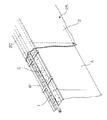
【図1】コンクリート養生状態を示す一部切欠斜視図である。
【符号の説明】
A,A′ 型枠
C コンクリート
1 散水ホース
2 養生保護シート
20 散水ホース用の挿通部[0001]
TECHNICAL FIELD OF THE INVENTION
The present invention relates to a rust preventive release agent for concrete curing and a method for curing concrete using the same.
[0002]
[Prior art]
In general, it is necessary to cure concrete until it hardens sufficiently after casting. This is because the quality of the curing greatly affects the properties of the hardened concrete. However, during curing of the concrete, due to sunlight and an increase in the outside temperature, the concrete cracks due to evaporation of water in the concrete. To explain this point in detail, concrete curing is a heat source generated by the hydration reaction of concrete, which naturally dries and solidifies.In summer, however, the rise in outside temperature and sunlight causes concrete curing. Of the water is very easy to evaporate, drying is promoted, a partially uneven drying state is formed, and cracks are easily generated.
[0003]
In winter, the rapid temperature drop of concrete had a bad influence on concrete curing. Therefore, effective curing assist means is required to prevent cracks from entering the concrete due to sunlight in the summer, and to suppress a rapid decrease in the temperature of the concrete in the winter.
As a conventional curing assisting means, a watering means disclosed in Patent Document 1 is disclosed. This sprinkling means is merely for the purpose of automatically sprinkling the required amount of water at specified time intervals, and it is difficult to equalize the sprinkling, especially in places near and far from the faucet. However, there remains a problem that it is difficult to expect effective and uniform watering.
[0004]
The watering means disclosed in
[0005]
Furthermore, as shown in Patent Literature 3 in which concrete is heated by using low-temperature and low-pressure steam to promote curing, a curing system has been proposed. However, air in the curing space is sucked into a blower, and the air is released. By heating and returning to the curing space, fine temperature control must be performed, which is troublesome, the equipment becomes large, installation at the curing site is troublesome and costly, and it is difficult to adopt easily. there were.
Therefore, as shown in Patent Document 4, a watering hose capable of discharging water from the outer surface of the hose is provided at least above the concrete as a curing protection device having a watering function for concrete that is cured in a mold. It has also been proposed to cover the watering hose and the concrete with a curing protection sheet that at least prevents the sunlight from directly reaching the concrete. Is made of metal, especially when a steel mold is used, the steel mold and water react with each other, oxidizing the iron plate and generating rust. There was a problem that the rust was red and the pattern remained on the concrete surface, making the appearance unsightly.
[0006]
With the conventional method that does not use a watering curing system, after curing, the mold and the formwork are easily released using an oil-based release agent (release agent) to make it easier to remove the formwork from the concrete. In the case of a construction method using a watering curing system, at the present time, the above-mentioned mold release agent cannot cope with rust generation of a metal mold frame caused by contact with water.
[0007]
[Patent Document 1] JP-A-11-324327 [Patent Document 2] JP-A-2000-179155 [Patent Document 3] JP-A-2000-264756 [Patent Document 4] JP-A-2002-256705 ]
[Problems to be solved by the invention]
The present invention provides a rust-preventing mold for concrete curing which is capable of preventing rust from being generated at the interface between the metal formwork and the concrete after watering as a countermeasure for cracking of the concrete during curing of the foundation concrete. It is an object of the present invention to provide an agent and a method for curing concrete using the same.
[0009]
[Means for Solving the Problems]
The rust preventive release agent for concrete curing according to the present invention which can solve the above-mentioned problems includes, as described in claim 1, a rust preventive release agent for concrete cure containing a base oil, a release additive and an auxiliary additive. A mold release agent, wherein the release additive is 0.2 to 20% by weight, the auxiliary additive is 0.2 to 10% by weight, and the base oil is 70 to 99.6% by weight.
[0010]
The rust preventive release agent for concrete curing according to the present invention described in claim 1 is different from a conventional general release agent only for the purpose of mere release, in that water comes in contact with a metal mold. It can be used to prevent rust which is easily generated on the boundary surface and prevent discoloration of concrete.
The rust-preventing release agent for concrete curing according to the present invention according to
[0011]
According to the rust preventive release agent for concrete curing of the second aspect, the release additive and the auxiliary additive can be used alone or in combination.
The rust preventive release agent for concrete curing according to the present invention according to claim 3 is the rust preventive release agent for concrete cure according to
[0012]
According to the rust preventive release agent for concrete curing according to claim 3, lanolin and / or waxes can be selected as a release additive, and a nonionic surfactant can be selected as an auxiliary additive. preferable.
In addition, as a concrete curing method using the rust preventive release agent for concrete curing according to the present invention as described in claim 4, a metal mold used for a curing protection device with a watering function is sprayed with water. The rust preventive release agent for concrete curing according to any one of claims 1 to 3 is adhered to a contacting part, and the concrete is driven into the body for curing.
[0013]
By adopting the concrete curing method according to the fourth aspect, even if water is sprinkled on the concrete, it is possible to reliably prevent rust from being generated on the boundary surface between the metal formwork and the concrete, and the concrete after the mold is released. The appearance of the surface can be maintained in a good appearance.
[0014]
BEST MODE FOR CARRYING OUT THE INVENTION
Next, embodiments of the rust preventive release agent for concrete curing according to the present invention and a concrete curing method using the same will be described.
First, the constitution of the rust preventive release agent for concrete curing according to the present invention is as follows.
Release agent for concrete curing Main component ………………………………………………………………………………………………………………………………………………………………………………. The amount used is 0.2 to 10% by weight or less. The remaining amount of the base oil releasing agent is preferably 0.2 to 20% by weight, and more preferably 10 to 20% by weight. If the amount of the release additive is less than 0.2% by weight, the releasability and the rust-preventive effect are inferior. I can't get it. Further, the amount of the auxiliary additive is preferably 0.2 to 10% by weight, more preferably 1 to 10% by weight. When the amount of the auxiliary additive is less than 0.2% by weight, the effects of mold releasability and rust prevention are poor, and particularly the effects of rust prevention are poor. Also, if the amount of the auxiliary additive is more than 10% by weight, the releasability and the rust-preventing effect corresponding to the amount cannot be obtained.
[0015]
Examples of the release additives include natural waxes such as whale wax, beeswax, lanolin, carnauba wax, canderia wax, montan wax, petrolatum, paraffin wax, microcrystalline wax, oxidized wax, ester wax, and petrolatum oxide. , Synthetic waxes such as low molecular weight polyethylene, fatty acids such as caproic acid, caprylic acid, capric acid, oleic acid, lauric acid, myristic acid, palmitic acid, stearic acid, behenic acid, tall oil fatty acids, various fatty acid derivatives, Metal salts, polyamide resin, polyester resin, epoxy resin, polyurethane resin, acrylic resin, vinyl chloride resin, cellulose resin, polyvinyl resin, petroleum resin, ethylene-vinyl acetate copolymer resin, Pheno Le resins, styrene resins, rosin-modified resins, resins such as Terubin resins, organic phosphoric acid esters, such as organic sulfonic acid salts and the like. Among them, lanolin and wax are preferred. In particular, an oxidized wax such as petrolatum oxide is preferred.
[0016]
Non-ionic surfactants (ether type: polyoxyethylene alkyl and alkyl phenyl ether, alkyl allyl formaldehyde condensed polyoxyethylene ether, polyoxyethylene polyoxypropylene block copolymer, polyoxyethylene polyoxypropyl alkyl ether, etc.) Ester type: polyoxyethylene ether of glycerin ester, polyoxyethylene ether of sorbitan ester, polyoxyethylene ether of sorbitol ester, etc. Ester type: polyethylene glycol fatty acid ester, glycerin ester, sorbitan ester, propylene glycol ester, sucrose ester, etc. , Nitrogen-containing type: fatty acid alkanolamide, polyoxyethylene fatty acid amide, polyoxy Polyoxyethylene alkyl amines, and amine oxides) further fatty acid ester optionally cationic surfactant, anionic surfactant, an antioxidant may be used alkali amines. Among them, nonionic surfactants are preferable, and polyoxyethylene lauryl ether is particularly preferable.
[0017]
As the base oil, mineral oils such as kerosene, light oil, spindle, transformer and machine oil, synthetic oils such as polyalkylene glycol, rapeseed, palm, vegetable oils such as palm, soybean oil, fats and oils, fatty acid esters and the like can be used. Among them, mineral oil is preferred.
Next, a light-shielding and heat-insulating device with a watering function for concrete will be described. FIG. 1 shows an example of an embodiment when concrete is cured. A and A ′ are steel molds, C is concrete poured into molds A and A ′, and 1 is disposed above concrete C.
[0018]
The watering hose 1 is made of a material having good compatibility in which a recycled rubber material and polyethylene are blended, and is formed into a porous structure hose (trade name: seaper hose) in which water oozes from the outer surface of the hose. It is not something that sprays water like a fountain or sprays, but water gradually oozes from the outer surface of the hose as sweat oozes from the body and supplies water to concrete C. You can control.
[0019]
In one embodiment of the concrete curing using the light-shielding device with a watering function described above, the rust preventive release agent for concrete curing of the present invention is used as a metal mold for various molds that are easily rusted by contact with water, such as steel. Of the molds A and A ', adhere to a portion of the molds A and A' which are in contact with water by being sprayed by the sprinkling hose 1, for example, an exposed surface before the steel molds A and A 'are assembled by roller coating or spraying. After that, it is assembled, and the concrete C is driven in. Then, the
[0020]
The release of the steel molds A and A 'after the concrete curing can be performed smoothly by the action of the rust preventive release agent for concrete curing according to the present invention, and rust is generated on the steel molds which come into contact with water. Can be reliably prevented, and the appearance of the concrete surface after the mold release becomes a good appearance. In addition, as a metal mold, a rust generation preventing function can be exerted on various molds that are easily rusted by contact with water, such as an aluminum mold, in addition to a steel mold.
[0021]
Next, a release test and a rust prevention test of the rust preventive release agent for concrete curing according to the present invention were performed as follows.
(1) Release test A rust preventive release agent for concrete curing according to the present invention was applied to the inner surface of a small mold by roller application, mortar was put in the mold, and the mold was removed after steam curing. It was confirmed. The determination stage of the release evaluation is as follows.
[0022]
◎ ... very good ○ ... good Δ ... bad (2) This is a half immersion test in the rust prevention test, in which an iron plate (6 × 8 cm in SPCC version) with a release agent is half immersed in water (60 ° C.). The occurrence of rust after immersion was confirmed.
[0023]
The judgment stages of the rust prevention test are as follows.
A: Rust occurrence rate 0-10%
B: Rust occurrence 11 to 25%
C: Rust occurrence 26 to 50%
D: Rust generation 51-100%
With respect to the above-mentioned releasability test and rust prevention test, examples and comparative examples in which the constitution of the main component, the auxiliary component and the rest of the rust-prevention release agent is changed are shown below. The unit of the numbers in the table is% by weight.
[0024]
[Table 1]
[Table 2]
[Table 3]
[Table 4]
[Table 5]
[Table 6]
[Table 7]
[Table 8]
【The invention's effect】
As is clear from the above test results, the concrete curing rust release agent of the present invention can exhibit excellent mold release properties and rust prevention properties as a rust prevention release agent when concrete is cured by being sprinkled. become.
And, according to the concrete curing method performed by using the concrete curing rust preventive release agent according to the present invention, rust generation of the metal mold that comes into contact with the sprinkled water is reliably prevented, and after the mold is released. Can be maintained in a good appearance without rust.
[Brief description of the drawings]
FIG. 1 is a partially cutaway perspective view showing a concrete curing state.
[Explanation of symbols]
A, A 'Form C Concrete 1
Claims (4)
Priority Applications (1)
| Application Number | Priority Date | Filing Date | Title |
|---|---|---|---|
| JP2002381285A JP2004211368A (en) | 2002-12-27 | 2002-12-27 | Concrete curing rust prevention mold releasing agent and curing method making use thereof |
Applications Claiming Priority (1)
| Application Number | Priority Date | Filing Date | Title |
|---|---|---|---|
| JP2002381285A JP2004211368A (en) | 2002-12-27 | 2002-12-27 | Concrete curing rust prevention mold releasing agent and curing method making use thereof |
Publications (1)
| Publication Number | Publication Date |
|---|---|
| JP2004211368A true JP2004211368A (en) | 2004-07-29 |
Family
ID=32817257
Family Applications (1)
| Application Number | Title | Priority Date | Filing Date |
|---|---|---|---|
| JP2002381285A Pending JP2004211368A (en) | 2002-12-27 | 2002-12-27 | Concrete curing rust prevention mold releasing agent and curing method making use thereof |
Country Status (1)
| Country | Link |
|---|---|
| JP (1) | JP2004211368A (en) |
Cited By (7)
| Publication number | Priority date | Publication date | Assignee | Title |
|---|---|---|---|---|
| EP1826337A1 (en) * | 2006-02-28 | 2007-08-29 | Hussor S.A. | Method for casting walls, shells or floors |
| CN103643622A (en) * | 2013-11-25 | 2014-03-19 | 银川博聚工业产品设计有限公司 | Microporous leakage cement road surface protective film device |
| KR101840226B1 (en) * | 2016-10-28 | 2018-03-20 | 김도현 | The guide holes of the form for soil auger dredges |
| JP2019025660A (en) * | 2017-07-25 | 2019-02-21 | マウント工業株式会社 | Release agent stock solution, concrete release agent using this, manufacturing method of release agent stock solution and manufacturing method of concrete release agent |
| US10798892B2 (en) | 2015-10-02 | 2020-10-13 | Capillary Concrete, Llc | Aerification system |
| JP6998094B1 (en) | 2020-11-27 | 2022-02-10 | 竹本油脂株式会社 | Auxiliary agent for concrete release agent, concrete release agent and concrete manufacturing method |
| US11746476B2 (en) | 2019-11-25 | 2023-09-05 | Capillary Concrete, Llc | Subsurface irrigation system for a sports field |
-
2002
- 2002-12-27 JP JP2002381285A patent/JP2004211368A/en active Pending
Cited By (10)
| Publication number | Priority date | Publication date | Assignee | Title |
|---|---|---|---|---|
| EP1826337A1 (en) * | 2006-02-28 | 2007-08-29 | Hussor S.A. | Method for casting walls, shells or floors |
| FR2897884A1 (en) * | 2006-02-28 | 2007-08-31 | Hussor Sas Soc Par Actions Sim | PROCESS FOR FORMING WALLS, SAILS OR FLOORS |
| CN103643622A (en) * | 2013-11-25 | 2014-03-19 | 银川博聚工业产品设计有限公司 | Microporous leakage cement road surface protective film device |
| US10798892B2 (en) | 2015-10-02 | 2020-10-13 | Capillary Concrete, Llc | Aerification system |
| KR101840226B1 (en) * | 2016-10-28 | 2018-03-20 | 김도현 | The guide holes of the form for soil auger dredges |
| JP2019025660A (en) * | 2017-07-25 | 2019-02-21 | マウント工業株式会社 | Release agent stock solution, concrete release agent using this, manufacturing method of release agent stock solution and manufacturing method of concrete release agent |
| US11746476B2 (en) | 2019-11-25 | 2023-09-05 | Capillary Concrete, Llc | Subsurface irrigation system for a sports field |
| JP6998094B1 (en) | 2020-11-27 | 2022-02-10 | 竹本油脂株式会社 | Auxiliary agent for concrete release agent, concrete release agent and concrete manufacturing method |
| WO2022113725A1 (en) * | 2020-11-27 | 2022-06-02 | 竹本油脂株式会社 | Concrete release agent additive, concrete release agent, and concrete manufacturing method |
| JP2022085817A (en) * | 2020-11-27 | 2022-06-08 | 竹本油脂株式会社 | Concrete release agent additive, concrete release agent, and concrete manufacturing method |
Similar Documents
| Publication | Publication Date | Title |
|---|---|---|
| JP2004211368A (en) | Concrete curing rust prevention mold releasing agent and curing method making use thereof | |
| ATE91092T1 (en) | METHOD OF RELEASING A CONCRETE CASTING FROM THE MOLD BY APPLYING A MOLD RELEASE AGENT TO THE MOLD. | |
| CN101484539A (en) | Method for retarding the setting of mortar and concrete surfaces | |
| AU2007361442B2 (en) | Floor stripper for chemically-resistant crosslinked floor finishes | |
| JP6954790B2 (en) | Curing agent for mortar or concrete | |
| JP2000510170A (en) | Coating materials and constituent materials and examples of their use | |
| CN106520349A (en) | Novel environment-friendly release agent of metal templates and methods for preparing and using same | |
| KR101376161B1 (en) | Eco-friendly and water-soluble concrete form release agents | |
| ES2307442A1 (en) | Mould release composition for hydraulic binders | |
| JP2009179496A (en) | Curing method | |
| JP6964500B2 (en) | Release agent composition | |
| CA2551759A1 (en) | Wax composition for application to wet surfaces | |
| JP4144849B2 (en) | Concrete formwork curing material | |
| JPH05500527A (en) | Aqueous protective layer composition for preventing excessive spray adhesion for paint booth and method for producing the same | |
| US6620230B1 (en) | Mold release composition | |
| JP2951796B2 (en) | Mold release agent for concrete | |
| CN113370361A (en) | Construction method for precast beam body by adopting water-based release agent | |
| JP2006111683A (en) | Concrete surface finish composition | |
| CN105695052A (en) | Releasing agent special for decorative concrete and preparation method and application thereof | |
| US10563002B2 (en) | Methods and product for forming lines utilizing liquid acrylic copolymer solution | |
| CN221741612U (en) | Novel shower room waterproof construction | |
| KR102901280B1 (en) | Capsule-type eco-friendly deicer with excellent melting performance and preservation properties and method of applying mortar containing the deicer | |
| JP5689299B2 (en) | Painting method | |
| CN210238585U (en) | HDPE membrane large water surface laying device | |
| JPWO2011122050A1 (en) | Antifouling composition |
Legal Events
| Date | Code | Title | Description |
|---|---|---|---|
| A621 | Written request for application examination |
Free format text: JAPANESE INTERMEDIATE CODE: A621 Effective date: 20050713 |
|
| A977 | Report on retrieval |
Free format text: JAPANESE INTERMEDIATE CODE: A971007 Effective date: 20070717 |
|
| A131 | Notification of reasons for refusal |
Free format text: JAPANESE INTERMEDIATE CODE: A131 Effective date: 20070724 |
|
| A02 | Decision of refusal |
Free format text: JAPANESE INTERMEDIATE CODE: A02 Effective date: 20071127 |