EP4583446A1 - Verfahren und vorrichtung zur bestimmung von übertragungsparametern - Google Patents
Verfahren und vorrichtung zur bestimmung von übertragungsparametern Download PDFInfo
- Publication number
- EP4583446A1 EP4583446A1 EP23864509.7A EP23864509A EP4583446A1 EP 4583446 A1 EP4583446 A1 EP 4583446A1 EP 23864509 A EP23864509 A EP 23864509A EP 4583446 A1 EP4583446 A1 EP 4583446A1
- Authority
- EP
- European Patent Office
- Prior art keywords
- dmrs
- cdm group
- tci state
- tci
- cdm
- Prior art date
- Legal status (The legal status is an assumption and is not a legal conclusion. Google has not performed a legal analysis and makes no representation as to the accuracy of the status listed.)
- Pending
Links
Images
Classifications
-
- H—ELECTRICITY
- H04—ELECTRIC COMMUNICATION TECHNIQUE
- H04L—TRANSMISSION OF DIGITAL INFORMATION, e.g. TELEGRAPHIC COMMUNICATION
- H04L1/00—Arrangements for detecting or preventing errors in the information received
- H04L1/0001—Systems modifying transmission characteristics according to link quality, e.g. power backoff
- H04L1/0015—Systems modifying transmission characteristics according to link quality, e.g. power backoff characterised by the adaptation strategy
- H04L1/0016—Systems modifying transmission characteristics according to link quality, e.g. power backoff characterised by the adaptation strategy involving special memory structures, e.g. look-up tables
-
- H—ELECTRICITY
- H04—ELECTRIC COMMUNICATION TECHNIQUE
- H04L—TRANSMISSION OF DIGITAL INFORMATION, e.g. TELEGRAPHIC COMMUNICATION
- H04L5/00—Arrangements affording multiple use of the transmission path
- H04L5/0091—Signalling for the administration of the divided path, e.g. signalling of configuration information
- H04L5/0094—Indication of how sub-channels of the path are allocated
-
- H—ELECTRICITY
- H04—ELECTRIC COMMUNICATION TECHNIQUE
- H04L—TRANSMISSION OF DIGITAL INFORMATION, e.g. TELEGRAPHIC COMMUNICATION
- H04L1/00—Arrangements for detecting or preventing errors in the information received
- H04L1/0001—Systems modifying transmission characteristics according to link quality, e.g. power backoff
- H04L1/0002—Systems modifying transmission characteristics according to link quality, e.g. power backoff by adapting the transmission rate
- H04L1/0003—Systems modifying transmission characteristics according to link quality, e.g. power backoff by adapting the transmission rate by switching between different modulation schemes
-
- H—ELECTRICITY
- H04—ELECTRIC COMMUNICATION TECHNIQUE
- H04L—TRANSMISSION OF DIGITAL INFORMATION, e.g. TELEGRAPHIC COMMUNICATION
- H04L1/00—Arrangements for detecting or preventing errors in the information received
- H04L1/0001—Systems modifying transmission characteristics according to link quality, e.g. power backoff
- H04L1/0009—Systems modifying transmission characteristics according to link quality, e.g. power backoff by adapting the channel coding
-
- H—ELECTRICITY
- H04—ELECTRIC COMMUNICATION TECHNIQUE
- H04L—TRANSMISSION OF DIGITAL INFORMATION, e.g. TELEGRAPHIC COMMUNICATION
- H04L5/00—Arrangements affording multiple use of the transmission path
- H04L5/0001—Arrangements for dividing the transmission path
- H04L5/0026—Division using four or more dimensions, e.g. beam steering or quasi-co-location [QCL]
-
- H—ELECTRICITY
- H04—ELECTRIC COMMUNICATION TECHNIQUE
- H04L—TRANSMISSION OF DIGITAL INFORMATION, e.g. TELEGRAPHIC COMMUNICATION
- H04L5/00—Arrangements affording multiple use of the transmission path
- H04L5/003—Arrangements for allocating sub-channels of the transmission path
- H04L5/0048—Allocation of pilot signals, i.e. of signals known to the receiver
-
- H—ELECTRICITY
- H04—ELECTRIC COMMUNICATION TECHNIQUE
- H04L—TRANSMISSION OF DIGITAL INFORMATION, e.g. TELEGRAPHIC COMMUNICATION
- H04L5/00—Arrangements affording multiple use of the transmission path
- H04L5/003—Arrangements for allocating sub-channels of the transmission path
- H04L5/0048—Allocation of pilot signals, i.e. of signals known to the receiver
- H04L5/0051—Allocation of pilot signals, i.e. of signals known to the receiver of dedicated pilots, i.e. pilots destined for a single user or terminal
-
- H—ELECTRICITY
- H04—ELECTRIC COMMUNICATION TECHNIQUE
- H04L—TRANSMISSION OF DIGITAL INFORMATION, e.g. TELEGRAPHIC COMMUNICATION
- H04L5/00—Arrangements affording multiple use of the transmission path
- H04L5/0091—Signalling for the administration of the divided path, e.g. signalling of configuration information
-
- H—ELECTRICITY
- H04—ELECTRIC COMMUNICATION TECHNIQUE
- H04L—TRANSMISSION OF DIGITAL INFORMATION, e.g. TELEGRAPHIC COMMUNICATION
- H04L5/00—Arrangements affording multiple use of the transmission path
- H04L5/02—Channels characterised by the type of signal
- H04L5/023—Multiplexing of multicarrier modulation signals, e.g. multi-user orthogonal frequency division multiple access [OFDMA]
- H04L5/026—Multiplexing of multicarrier modulation signals, e.g. multi-user orthogonal frequency division multiple access [OFDMA] using code division
-
- H—ELECTRICITY
- H04—ELECTRIC COMMUNICATION TECHNIQUE
- H04W—WIRELESS COMMUNICATION NETWORKS
- H04W28/00—Network traffic management; Network resource management
- H04W28/02—Traffic management, e.g. flow control or congestion control
-
- H—ELECTRICITY
- H04—ELECTRIC COMMUNICATION TECHNIQUE
- H04W—WIRELESS COMMUNICATION NETWORKS
- H04W72/00—Local resource management
- H04W72/20—Control channels or signalling for resource management
- H04W72/23—Control channels or signalling for resource management in the downlink direction of a wireless link, i.e. towards a terminal
-
- H—ELECTRICITY
- H04—ELECTRIC COMMUNICATION TECHNIQUE
- H04J—MULTIPLEX COMMUNICATION
- H04J13/00—Code division multiplex systems
-
- H—ELECTRICITY
- H04—ELECTRIC COMMUNICATION TECHNIQUE
- H04L—TRANSMISSION OF DIGITAL INFORMATION, e.g. TELEGRAPHIC COMMUNICATION
- H04L5/00—Arrangements affording multiple use of the transmission path
- H04L5/003—Arrangements for allocating sub-channels of the transmission path
- H04L5/0032—Distributed allocation, i.e. involving a plurality of allocating devices, each making partial allocation
- H04L5/0035—Resource allocation in a cooperative multipoint environment
-
- H—ELECTRICITY
- H04—ELECTRIC COMMUNICATION TECHNIQUE
- H04L—TRANSMISSION OF DIGITAL INFORMATION, e.g. TELEGRAPHIC COMMUNICATION
- H04L5/00—Arrangements affording multiple use of the transmission path
- H04L5/003—Arrangements for allocating sub-channels of the transmission path
- H04L5/0053—Allocation of signalling, i.e. of overhead other than pilot signals
Definitions
- the present disclosure relates to the technical field of communication, and in particular, to a transmission parameter determination method and apparatus.
- Distributed Multiple-Input Multiple-Output (Distributed Multiple-Input Multiple-Output, Distributed MIMO) and Cell-Free Massive Multiple-Input Multiple-Output (Cell-Free Massive Multiple-Input Multiple-Output, CF-MIMO) are emerging as pivotal technologies in the realm of B5G/6G multi-antenna, attracting growing research interest.
- a notable characteristic of the technologies is that spatial distribution of access points (Access Point, AP) in a given area are more dispersed than the spatial distribution of the centralized APs currently used in NR, and a number of APs is relatively large, where multiple APs serve multiple user equipment (User Equipment, UE) simultaneously. Therefore, how to determine appropriate transmission parameters in order to improve the efficiency and reliability of a communication system is a problem that needs to be solved urgently.
- AP access point
- Embodiments of the present disclosure provide a transmission parameter determination method and apparatus, aiming to improve the efficiency and reliability of a communication system.
- a transmission parameter determination method including:
- a transmission parameter determination method including: sending control information, where the control information is used to determine an association relationship between M transmission control information states (TCI states) and N code division multiplexing (CDM) groups, and the association relationship between the M TCI states and the N CDM groups is used to determine a transmission parameter, where M is greater than or equal to N, and M and N are both positive integers.
- TCI states transmission control information states
- CDM code division multiplexing
- a transmission parameter determination apparatus including:
- a transmission parameter determination apparatus including:
- a transmission parameter determination apparatus where the apparatus may implement functions performed in the various above-mentioned aspects or various possible designs, and the functions may be implemented through hardware.
- the apparatus may include: a processor and a communication interface, and the processor may be configured to support the apparatus to implement the functions involved in any possible design of the above-mentioned first aspect or the second aspect.
- the apparatus may further include a memory, where the memory is configured to store computer-executable instructions and data necessary for the apparatus. When the apparatus is running, the processor executes the computer-executable instructions stored in the memory, so as to enable the apparatus to perform the transmission parameter determination method according to any possible design of the above-mentioned first aspect or the second aspect.
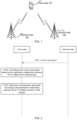
- FIG. 2 shows a transmission parameter determination method provided in the embodiments of the present disclosure, where the method includes S101-S103.
- M is greater than or equal to N. That is, different from that a CDM group may only be associated with a TCI state in the relevant technologies, in the embodiments of the present disclosure, a CDM group may be associated with a plurality of TCI states. In this way, a plurality of second nodes (e.g., APs) in the communication system may be indicated to serve a first node (e.g., UE), which may improve the efficiency and reliability of communication information transmission of the first node.
- a first node e.g., UE
- Example 1 in a case where M is 4 and N is 1, if the 4 TCI states include a first TCI state, a second TCI state, a third TCI state, and a fourth TCI state, a CDM group includes the first CDM group.
- the CDM group may be associated with four TCI states, that is, the first TCI state, the second TCI state, the third TCI state, and the fourth TCI state are all associated with the first CDM group.
- Example 3 in a case where M is 4 and N is 3, if 4 TCI states include a first TCI state, a second TCI state, a third TCI state and a fourth TCI state, 3 CDM groups include a first CDM group, a second CDM group and a third CDM group.
- a CDM group may be associated with 1 or 2 TCI states.
- the first TCI state and the second TCI state may be associated with the first CDM group
- the third TCI state may be associated with the second CDM group
- the fourth TCI state may be associated with the third CDM group.
- the first TCI state may be associated with the first CDM group
- the second TCI state may be associated with the second CDM group
- the third TCI state and the fourth TCI state may be associated with the third CDM group.
- Example 4 in a case where M is 4 and N is 4, if 4 TCI states include a first TCI state, a second TCI state, a third TCI state and a fourth TCI state, 4 CDM groups include a first CDM group, a second CDM group, a third CDM group and a fourth CDM group.
- a CDM group may be associated with a TCI state.
- the first TCI state may be associated with the first CDM group
- the second TCI state may be associated with the second CDM group
- the third TCI state may be associated with the third CDM group
- the fourth TCI state may be associated with the fourth CDM group.
- Example 5 in a case where M is 3 and N is 1, if 3 TCI states include a first TCI state, a second TCI state, and a third TCI state, 1 CDM group includes a first CDM group. At this time, a CDM group may be associated with three TCI states, that is, the first TCI state, the second TCI state and the third TCI state are all associated with the first CDM group.
- Example 6 in a case where M is 3 and N is 2, if 3 TCI states include a first TCI state, a second TCI state and a third TCI state, 2 CDM groups include a first CDM group and a second CDM group.
- a CDM group may be associated with 1 or 2 TCI states.
- the first TCI state and the second TCI state may be associated with the first CDM group
- the third TCI state may be associated with the second CDM group.
- the first TCI state and the third TCI state may be associated with the first CDM group
- the fourth TCI state may be associated with the second CDM group.
- there may be other possible association relationships between the above-mentioned 3 TCI states and the 2 CDM groups which is not limited in the embodiments of the present disclosure.
- Example 7 in a case where M is 3 and N is 3, if 3 TCI states include a first TCI state, a second TCI state and TCI state, 3 CDM groups include a first CDM group, a second CDM group and a third CDM group.
- a CDM group may be associated with a TCI state.
- the first TCI state may be associated with the first CDM group
- the second TCI state may be associated with the second CDM group
- the third TCI state may be associated with the third CDM group.
- the above-mentioned first CDM group is CDM group 0, the second CDM group is CDM group 1, the third CDM group is CDM group 2, and the fourth CDM group is CDM group 3.
- the above M TCI states are any M TCI states of TCI state1 to TCI state127.
- the above-mentioned first TCI state may be TCI state0
- the second TCI state may be TCI state1
- the third TCI state may be TCI state2
- the fourth TCI state may be TCI state3.
- the above-mentioned first TCI state may be TCI state5
- the second TCI state may be TCI state7
- the third TCI state may be TCI state8
- the fourth TCI state may be TCI state9.
- first TCI state may be TCI state1
- second TCI state may be TCI state2
- third TCI state may be TCI state126
- fourth TCI state may be TCI state127.
- first TCI state, second TCI state, third TCI state and fourth TCI state may also have other implementation combinations, which are not listed herein one by one.
- the above transmission parameters include one or more of the following: a PRG_size, an MCS table, a DMRS port, TDRA, FDRA, MCS, RV, NDI or a number of TBs.
- the PRG size is determined according to a number of TCI states associated with a CDM group.
- a range of a value of the number of TCI states associated with a CDM group includes at least one of 1, 2, 3, or 4.
- a range of a value of the PRG size includes at least one of 1, 2, 3, 4, 5, 6, 7, 8, 10, 11, 12, or a wideband.
- the PRG size may satisfy a positive correlation or a negative correlation with the number of TCI states associated with a CDM group.
- the PRG size and the number of TCI states associated with a CDM group may also satisfy other functional relationships besides the negative correlation and the positive correlation.
- there is a one-to-one mapping relationship between the PRG size and the number of TCI states associated with a CDM that is, a value of the number of TCI states corresponds to a value of the PRG size, and different values of the number of TCI states correspond to different values of the PRG size.
- there is a one-to-many mapping relationship between the PRG size and the number of TCI states associated with a CDM that is, multiple values of the number of TCI states correspond to a value of the PRG size.
- the PRG size and the number of TCI states associated with a CDM group satisfy any one of the following relationships:
- the PRG size and the number of TCI states associated with a CDM group satisfy any one of the following relationships:
- the PRG size and the number of TCI states associated with a CDM group satisfy any one of the following relationships:
- multiple MCS tables have been defined in the relevant technologies, such as 64-QAM table, 256-QAM table, 1024-QAM table, and low-SE-64-QAM table.
- a new MCS table may be further defined to better suit new application scenarios (e.g., a Cell-Free network).
- the MCS table defined in the relevant technologies is referred to as a first-type MCS table
- an MSC table newly defined in the embodiments of the present disclosure is referred to as a second-type MCS table.
- the first-type MSC table includes the MCS table shown in Table 1 to Table 4 above.
- a range of a value of the modulation order in the second-type MCS table includes a portion of 2, 4, 6, 8, and 10.
- the modulation order in the second-type MCS table may only take a value, for example, the value may only be 2, or the value may only be 4, or the value may only be 6, or the value may only be 8, or the value may only be 10.
- the modulation order in the second-type MCS table may only take two values, for example, the value may only be chosen from 2 and 4, or the value may only be chosen from 4 and 6, or the value may only be chosen from 6 and 8, or the value may only be chosen from 8 and 10.
- the more TCI states a CDM group is associated with the more APs will participate in collaborative transmission, and quality of channels between different collaborative APs and UEs will tend to be consistent. Therefore, the overall distribution of modulation orders in the MCS table will tend to be consistent.
- a variance value of the modulation orders in the second-type MCS table is smaller. In this way, the second-type MCS table may be more suitable for application scenarios of Cell-free networks.
- a target bit rate and/or spectrum efficiency corresponding to an MCS idex in the second-type MCS table may be greater than a target bit rate and/or spectrum efficiency corresponding to the same MCS idex in the first-type MCS table.
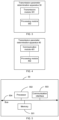
- the memory 501 may exist independently from the processor 502, and the memory 501 may be connected to the processor 502 through the bus 504 for storing instructions or program codes.
- the processor 502 invokes and executes the instructions or program codes stored in the memory 501, the processor 302 may implement the transmission parameter determination method provided in the embodiments of the present disclosure.
- the memory 501 may be integrated with the processor 502.
- the bus 504 may be an extended industry standard architecture (Extended Industry Standard Architecture, EISA) bus, or the like.
- EISA Extended Industry Standard Architecture
- the bus 504 may be classified as an address bus, a data bus, or a control bus, or the like. For ease of representation, only a single thick line is used in FIG. 5 to represent the bus, but it does not mean that there is only one bus or one type of bus.
- Some embodiments of the present disclosure provide a computer-readable storage medium (for example, a non-transitory computer-readable storage medium), and the computer-readable storage medium has stored computer program instructions, and the computer program instructions, upon being executed on a computer, enable the computer to perform the transmission parameter determination method as described in any embodiment of the above embodiments.
- a computer-readable storage medium for example, a non-transitory computer-readable storage medium
- the computer-readable storage medium has stored computer program instructions, and the computer program instructions, upon being executed on a computer, enable the computer to perform the transmission parameter determination method as described in any embodiment of the above embodiments.
- the above-mentioned computer-readable storage medium may include, but not limited to: a magnetic storage device (e.g., a hard disk, a floppy disk, or a magnetic tape, etc.), an optical disk (e.g., a compact disk (Compact Disk, CD), a digital versatile disk (Digital Versatile Disk, DVD), etc.), a smart card and a flash memory device (e.g., an erasable programmable read-only memory (Erasable Programmable Read-Only Memory, EPROM), a card, a stick or a key driver, etc.).
- the various computer-readable storage media described in the present disclosure may represent one or more devices for storing information and/or other machine-readable storage medium for storing information.
- the term "machine-readable storage medium" may include, but not limited to, a wireless channel and various other media capable of storing, containing, and/or carrying instructions and/or data.
Landscapes
- Engineering & Computer Science (AREA)
- Signal Processing (AREA)
- Computer Networks & Wireless Communication (AREA)
- Quality & Reliability (AREA)
- Mobile Radio Communication Systems (AREA)
Applications Claiming Priority (2)
| Application Number | Priority Date | Filing Date | Title |
|---|---|---|---|
| CN202211130926.3A CN117729582A (zh) | 2022-09-16 | 2022-09-16 | 一种传输参数确定方法及装置 |
| PCT/CN2023/111515 WO2024055775A1 (zh) | 2022-09-16 | 2023-08-07 | 一种传输参数确定方法及装置 |
Publications (2)
| Publication Number | Publication Date |
|---|---|
| EP4583446A1 true EP4583446A1 (de) | 2025-07-09 |
| EP4583446A4 EP4583446A4 (de) | 2025-12-31 |
Family
ID=90207455
Family Applications (1)
| Application Number | Title | Priority Date | Filing Date |
|---|---|---|---|
| EP23864509.7A Pending EP4583446A4 (de) | 2022-09-16 | 2023-08-07 | Verfahren und vorrichtung zur bestimmung von übertragungsparametern |
Country Status (5)
| Country | Link |
|---|---|
| US (1) | US20260095289A1 (de) |
| EP (1) | EP4583446A4 (de) |
| KR (1) | KR20250067828A (de) |
| CN (1) | CN117729582A (de) |
| WO (1) | WO2024055775A1 (de) |
Family Cites Families (5)
| Publication number | Priority date | Publication date | Assignee | Title |
|---|---|---|---|---|
| CN111147211B (zh) * | 2018-11-02 | 2022-04-05 | 华为技术有限公司 | 一种信息传输方法、装置和设备 |
| US12224966B2 (en) * | 2019-01-10 | 2025-02-11 | Telefonaktiebolaget Lm Ericsson (Publ) | Code-division multiplexing (CDM) groups for multi-source transmission |
| KR102830723B1 (ko) * | 2019-02-13 | 2025-07-04 | 지티이 코포레이션 | 무선 통신에서의 다중 송신 방식 |
| CN112134662B (zh) * | 2019-06-25 | 2022-04-26 | 中国电信股份有限公司 | 准共站址信息指示方法、设备和系统 |
| CN112583547B (zh) * | 2019-09-27 | 2022-12-13 | 中国移动通信有限公司研究院 | Tci状态与dmrs映射关系的确定、配置方法及设备 |
-
2022
- 2022-09-16 CN CN202211130926.3A patent/CN117729582A/zh active Pending
-
2023
- 2023-08-07 KR KR1020257008908A patent/KR20250067828A/ko active Pending
- 2023-08-07 EP EP23864509.7A patent/EP4583446A4/de active Pending
- 2023-08-07 WO PCT/CN2023/111515 patent/WO2024055775A1/zh not_active Ceased
- 2023-08-07 US US19/112,055 patent/US20260095289A1/en active Pending
Also Published As
| Publication number | Publication date |
|---|---|
| WO2024055775A1 (zh) | 2024-03-21 |
| KR20250067828A (ko) | 2025-05-15 |
| EP4583446A4 (de) | 2025-12-31 |
| US20260095289A1 (en) | 2026-04-02 |
| CN117729582A (zh) | 2024-03-19 |
Similar Documents
| Publication | Publication Date | Title |
|---|---|---|
| WO2019158005A1 (zh) | 下行控制信息传输方法 | |
| CN107306453B (zh) | 一种生成传输块的方法和装置 | |
| CN113490278B (zh) | 下行信号传输的方法和设备 | |
| CN107872303A (zh) | 传输反馈信息的方法和装置 | |
| CN109428680B (zh) | 发送或接收上行数据的方法和装置 | |
| CN111756475B (zh) | 一种数据的接收和发送方法及终端装置 | |
| EP3435554B1 (de) | Verfahren und vorrichtung zur anzeige des antennenanschlusses | |
| WO2020140838A1 (zh) | 信息传输方法、装置及设备 | |
| EP3565159B1 (de) | Datenverarbeitungsverfahren und -vorrichtung | |
| TWI864685B (zh) | 用來處理多細胞排程的裝置和方法 | |
| WO2021161861A1 (ja) | 端末及び通信方法 | |
| TWI759507B (zh) | 回饋應答訊息的傳輸方法、裝置及系統 | |
| WO2025118614A1 (zh) | 信道状态信息的发送方法、接收方法、装置及存储介质 | |
| US11818714B2 (en) | Transmission control method, terminal device, and network device | |
| KR102695314B1 (ko) | 업링크 제어 정보 전송 방법 및 장치 | |
| US20260095289A1 (en) | Transmission parameter determination method and apparatus | |
| WO2025036209A1 (zh) | 通信方法及装置 | |
| CN114390698A (zh) | 一种数据传输的方法、装置、介质以及程序产品 | |
| EP4319327A1 (de) | Uplink-kanal-leistungssteuerungsverfahren und -vorrichtung, netzwerkseitige vorrichtung und endgerät | |
| WO2024060241A1 (zh) | 频域资源分配类型的确定方法、装置、设备及存储介质 | |
| WO2024059984A1 (zh) | 传输块大小的确定方法、装置、设备及存储介质 | |
| CN112423313B (zh) | 传输块大小确定方法及装置 | |
| JP2023024376A (ja) | ハイブリッド自動反復要求送信を処理するためのデバイスおよび方法 | |
| CN111918333B (zh) | 数据传输方法和设备 | |
| EP4657946A1 (de) | Datenübertragungsverfahren, vorrichtung und speichermedium |
Legal Events
| Date | Code | Title | Description |
|---|---|---|---|
| STAA | Information on the status of an ep patent application or granted ep patent |
Free format text: STATUS: THE INTERNATIONAL PUBLICATION HAS BEEN MADE |
|
| PUAI | Public reference made under article 153(3) epc to a published international application that has entered the european phase |
Free format text: ORIGINAL CODE: 0009012 |
|
| STAA | Information on the status of an ep patent application or granted ep patent |
Free format text: STATUS: REQUEST FOR EXAMINATION WAS MADE |
|
| 17P | Request for examination filed |
Effective date: 20250403 |
|
| AK | Designated contracting states |
Kind code of ref document: A1 Designated state(s): AL AT BE BG CH CY CZ DE DK EE ES FI FR GB GR HR HU IE IS IT LI LT LU LV MC ME MK MT NL NO PL PT RO RS SE SI SK SM TR |
|
| DAV | Request for validation of the european patent (deleted) | ||
| DAX | Request for extension of the european patent (deleted) | ||
| A4 | Supplementary search report drawn up and despatched |
Effective date: 20251127 |
|
| RIC1 | Information provided on ipc code assigned before grant |
Ipc: H04L 5/00 20060101AFI20251121BHEP |