EP4583035A2 - Kraftstoffüberwachungssystem und -verfahren für ein fahrzeug - Google Patents
Kraftstoffüberwachungssystem und -verfahren für ein fahrzeug Download PDFInfo
- Publication number
- EP4583035A2 EP4583035A2 EP25165515.5A EP25165515A EP4583035A2 EP 4583035 A2 EP4583035 A2 EP 4583035A2 EP 25165515 A EP25165515 A EP 25165515A EP 4583035 A2 EP4583035 A2 EP 4583035A2
- Authority
- EP
- European Patent Office
- Prior art keywords
- fuel
- refueling
- filter
- data
- sensor
- Prior art date
- Legal status (The legal status is an assumption and is not a legal conclusion. Google has not performed a legal analysis and makes no representation as to the accuracy of the status listed.)
- Pending
Links
Images





Classifications
-
- F—MECHANICAL ENGINEERING; LIGHTING; HEATING; WEAPONS; BLASTING
- F02—COMBUSTION ENGINES; HOT-GAS OR COMBUSTION-PRODUCT ENGINE PLANTS
- F02M—SUPPLYING COMBUSTION ENGINES IN GENERAL WITH COMBUSTIBLE MIXTURES OR CONSTITUENTS THEREOF
- F02M37/00—Apparatus or systems for feeding liquid fuel from storage containers to carburettors or fuel-injection apparatus; Arrangements for purifying liquid fuel specially adapted for, or arranged on, internal-combustion engines
- F02M37/22—Arrangements for purifying liquid fuel specially adapted for, or arranged on, internal-combustion engines, e.g. arrangements in the feeding system
- F02M37/32—Arrangements for purifying liquid fuel specially adapted for, or arranged on, internal-combustion engines, e.g. arrangements in the feeding system characterised by filters or filter arrangements
- F02M37/40—Arrangements for purifying liquid fuel specially adapted for, or arranged on, internal-combustion engines, e.g. arrangements in the feeding system characterised by filters or filter arrangements with means for detection of clogging
-
- B—PERFORMING OPERATIONS; TRANSPORTING
- B01—PHYSICAL OR CHEMICAL PROCESSES OR APPARATUS IN GENERAL
- B01D—SEPARATION
- B01D35/00—Filtering devices having features not specifically covered by groups B01D24/00 - B01D33/00, or for applications not specifically covered by groups B01D24/00 - B01D33/00; Auxiliary devices for filtration; Filter housing constructions
- B01D35/005—Filters specially adapted for use in internal-combustion engine lubrication or fuel systems
-
- B—PERFORMING OPERATIONS; TRANSPORTING
- B01—PHYSICAL OR CHEMICAL PROCESSES OR APPARATUS IN GENERAL
- B01D—SEPARATION
- B01D35/00—Filtering devices having features not specifically covered by groups B01D24/00 - B01D33/00, or for applications not specifically covered by groups B01D24/00 - B01D33/00; Auxiliary devices for filtration; Filter housing constructions
- B01D35/14—Safety devices specially adapted for filtration; Devices for indicating clogging
- B01D35/143—Filter condition indicators
- B01D35/1435—Filter condition indicators with alarm means
-
- G—PHYSICS
- G06—COMPUTING OR CALCULATING; COUNTING
- G06Q—INFORMATION AND COMMUNICATION TECHNOLOGY [ICT] SPECIALLY ADAPTED FOR ADMINISTRATIVE, COMMERCIAL, FINANCIAL, MANAGERIAL OR SUPERVISORY PURPOSES; SYSTEMS OR METHODS SPECIALLY ADAPTED FOR ADMINISTRATIVE, COMMERCIAL, FINANCIAL, MANAGERIAL OR SUPERVISORY PURPOSES, NOT OTHERWISE PROVIDED FOR
- G06Q10/00—Administration; Management
- G06Q10/04—Forecasting or optimisation specially adapted for administrative or management purposes, e.g. linear programming or "cutting stock problem"
- G06Q10/047—Optimisation of routes or paths, e.g. travelling salesman problem
-
- G—PHYSICS
- G06—COMPUTING OR CALCULATING; COUNTING
- G06Q—INFORMATION AND COMMUNICATION TECHNOLOGY [ICT] SPECIALLY ADAPTED FOR ADMINISTRATIVE, COMMERCIAL, FINANCIAL, MANAGERIAL OR SUPERVISORY PURPOSES; SYSTEMS OR METHODS SPECIALLY ADAPTED FOR ADMINISTRATIVE, COMMERCIAL, FINANCIAL, MANAGERIAL OR SUPERVISORY PURPOSES, NOT OTHERWISE PROVIDED FOR
- G06Q30/00—Commerce
- G06Q30/06—Buying, selling or leasing transactions
- G06Q30/0601—Electronic shopping [e-shopping]
- G06Q30/0631—Recommending goods or services
-
- G—PHYSICS
- G06—COMPUTING OR CALCULATING; COUNTING
- G06Q—INFORMATION AND COMMUNICATION TECHNOLOGY [ICT] SPECIALLY ADAPTED FOR ADMINISTRATIVE, COMMERCIAL, FINANCIAL, MANAGERIAL OR SUPERVISORY PURPOSES; SYSTEMS OR METHODS SPECIALLY ADAPTED FOR ADMINISTRATIVE, COMMERCIAL, FINANCIAL, MANAGERIAL OR SUPERVISORY PURPOSES, NOT OTHERWISE PROVIDED FOR
- G06Q50/00—Information and communication technology [ICT] specially adapted for implementation of business processes of specific business sectors, e.g. utilities or tourism
- G06Q50/06—Energy or water supply
-
- G—PHYSICS
- G06—COMPUTING OR CALCULATING; COUNTING
- G06Q—INFORMATION AND COMMUNICATION TECHNOLOGY [ICT] SPECIALLY ADAPTED FOR ADMINISTRATIVE, COMMERCIAL, FINANCIAL, MANAGERIAL OR SUPERVISORY PURPOSES; SYSTEMS OR METHODS SPECIALLY ADAPTED FOR ADMINISTRATIVE, COMMERCIAL, FINANCIAL, MANAGERIAL OR SUPERVISORY PURPOSES, NOT OTHERWISE PROVIDED FOR
- G06Q50/00—Information and communication technology [ICT] specially adapted for implementation of business processes of specific business sectors, e.g. utilities or tourism
- G06Q50/40—Business processes related to the transportation industry
-
- G—PHYSICS
- G07—CHECKING-DEVICES
- G07C—TIME OR ATTENDANCE REGISTERS; REGISTERING OR INDICATING THE WORKING OF MACHINES; GENERATING RANDOM NUMBERS; VOTING OR LOTTERY APPARATUS; ARRANGEMENTS, SYSTEMS OR APPARATUS FOR CHECKING NOT PROVIDED FOR ELSEWHERE
- G07C5/00—Registering or indicating the working of vehicles
- G07C5/008—Registering or indicating the working of vehicles communicating information to a remotely located station
-
- G—PHYSICS
- G01—MEASURING; TESTING
- G01N—INVESTIGATING OR ANALYSING MATERIALS BY DETERMINING THEIR CHEMICAL OR PHYSICAL PROPERTIES
- G01N15/00—Investigating characteristics of particles; Investigating permeability, pore-volume or surface-area of porous materials
- G01N15/08—Investigating permeability, pore-volume, or surface area of porous materials
- G01N15/082—Investigating permeability by forcing a fluid through a sample
- G01N15/0826—Investigating permeability by forcing a fluid through a sample and measuring fluid flow rate, i.e. permeation rate or pressure change
-
- G—PHYSICS
- G01—MEASURING; TESTING
- G01N—INVESTIGATING OR ANALYSING MATERIALS BY DETERMINING THEIR CHEMICAL OR PHYSICAL PROPERTIES
- G01N15/00—Investigating characteristics of particles; Investigating permeability, pore-volume or surface-area of porous materials
- G01N15/08—Investigating permeability, pore-volume, or surface area of porous materials
- G01N2015/084—Testing filters
-
- G—PHYSICS
- G01—MEASURING; TESTING
- G01N—INVESTIGATING OR ANALYSING MATERIALS BY DETERMINING THEIR CHEMICAL OR PHYSICAL PROPERTIES
- G01N33/00—Investigating or analysing materials by specific methods not covered by groups G01N1/00 - G01N31/00
- G01N33/26—Oils; Viscous liquids; Paints; Inks
- G01N33/28—Oils, i.e. hydrocarbon liquids
- G01N33/2835—Specific substances contained in the oils or fuels
- G01N33/2847—Water in oils
-
- G—PHYSICS
- G07—CHECKING-DEVICES
- G07C—TIME OR ATTENDANCE REGISTERS; REGISTERING OR INDICATING THE WORKING OF MACHINES; GENERATING RANDOM NUMBERS; VOTING OR LOTTERY APPARATUS; ARRANGEMENTS, SYSTEMS OR APPARATUS FOR CHECKING NOT PROVIDED FOR ELSEWHERE
- G07C5/00—Registering or indicating the working of vehicles
- G07C5/08—Registering or indicating performance data other than driving, working, idle, or waiting time, with or without registering driving, working, idle or waiting time
- G07C5/0816—Indicating performance data, e.g. occurrence of a malfunction
- G07C5/0825—Indicating performance data, e.g. occurrence of a malfunction using optical means
-
- G—PHYSICS
- G07—CHECKING-DEVICES
- G07C—TIME OR ATTENDANCE REGISTERS; REGISTERING OR INDICATING THE WORKING OF MACHINES; GENERATING RANDOM NUMBERS; VOTING OR LOTTERY APPARATUS; ARRANGEMENTS, SYSTEMS OR APPARATUS FOR CHECKING NOT PROVIDED FOR ELSEWHERE
- G07C5/00—Registering or indicating the working of vehicles
- G07C5/08—Registering or indicating performance data other than driving, working, idle, or waiting time, with or without registering driving, working, idle or waiting time
- G07C5/0816—Indicating performance data, e.g. occurrence of a malfunction
- G07C5/0833—Indicating performance data, e.g. occurrence of a malfunction using audio means
Definitions
- Embodiments herein relate to fuel monitoring systems and vehicle refueling guidance systems and related methods.
- Fuel filters remove impurities from fuel thereby preventing various adverse effects including fuel injector clogging.
- fuel filters have a finite useful life and must be replaced or otherwise serviced regularly.
- Fuel filters become saturated with impurities during use in a process known as filter loading.
- filter restriction increases. Therefore, filter restriction is commonly used as an indicator to determine when a filter, such as a fuel filter, needs to be replaced or otherwise serviced.
- a fuel monitoring system for a vehicle having a fuel filter sensor device configured to generate data reflecting a filter restriction value of a fuel filter, a geolocation circuit configured to generate or receive geolocation data, and a system control circuit configured to evaluate the sensor data to determine changes in the filter restriction value, receive fuel level data, cross-reference geolocation data and fuel level data to identify refueling locations utilized, and correlate refueling locations with subsequent changes in the filter restriction value to identify an effect of specific refueling locations utilized on fuel filter loading.
- system control circuit is further configured to calculate a cost associated with a particular refueling location based on estimated expected fuel filter loading rate.
- system control circuit is further configured to generate a recommendation can include a recommended refueling location.
- the recommendation is forwarded to a mobile communications device associated with a vehicle or a driver of a vehicle.
- system control circuit is further configured to generate a recommendation can include a recommended refueling location and a recommended refueling time.
- system control circuit is further configured to generate a listing of recommended and dis-recommended fueling stations.
- system control circuit is further configured to generate an alert for a vehicle driver if the vehicle enters the location of a dis-recommended fueling station.
- system control circuit is further configured to generate a report that profiles the frequency with which different drivers in a fleet use recommended and dis-recommended fueling stations.
- the fuel level data is received from a CANBus network.
- the system control circuit is configured to distinguish between a normal filter loading curve, an accelerated filter loading curve, and a sudden clogging curve.
- system control circuit is configured to distinguish between a normal filter loading curve and an abnormal filter loading curve.
- system control circuit is configured to identify a refueling location visited immediately before a filter loading curve changes to exhibit more rapid loading.
- system control circuit is further configured to evaluate one or more of weather data, temperature data, pressure data, humidity data, fuel filter model number, engine model number, driver ID, and detected refueling times to identify the effect of specific refueling locations on fuel filter loading.
- system can further include a particulate counter and the system control circuit further configured to evaluate data from the particulate counter and correlate refueling locations with subsequent changes in the data from the particulate counter to identify an effect of specific refueling locations on particulate counter data.
- system control circuit can be configured to estimate remaining fuel filter life taking into account refueling locations used.
- the filter restriction value can include a pressure drop across the fuel filter.
- a method of monitoring fuel systems is included herein and can include measuring filter restriction of a fuel filter, identifying refueling locations based on fuel level data and geolocation data, and calculating an impact of specific refueling locations on fuel filter loading by evaluating filter restriction trends after refueling at refueling locations.
- a method further can include estimating expected loading rate associated with refueling at a particular refueling location based on previously observed fuel filter loading.
- a method further can include calculating a cost associated with a particular refueling location based on estimated expected fuel filter loading rate.
- a method further can include generating a recommendation can include a recommended refueling location.
- a method further can include forwarding the recommendation to a mobile communications device associated with a vehicle or a driver of a vehicle.
- a method further can include distinguishing between a normal filter loading curve, an accelerated filter loading curve, and a sudden clogging curve.
- a method further can include determining sequences of refueling locations visited immediately before a sudden clogging curve begins.
- a method further can include evaluating one or more of weather data, temperature data, pressure data, humidity data, fuel filter model number, engine model number, driver ID, and detected refueling times to identify the effect of specific refueling locations on fuel filter loading.
- a method further can include estimating remaining fuel filter life taking into account refueling locations used.
- a refueling guidance system for a vehicle having a system control circuit, wherein the system is configured to query a database that can include records of specific refueling locations and fuel filter loading rate data related to the specific refueling locations, wherein the system is configured to provide at least one of route and refueling site recommendations to an output device based on the fuel filter loading rate data.
- system control circuit can further be configured to evaluate sensor data to determine changes in a filter restriction of a fuel filter, receive fuel level data, cross-reference geolocation data and fuel level data to identify refueling locations, correlate refueling locations with subsequent changes in filter restriction to identify an effect of specific refueling locations on fuel filter loading, and store data regarding the effect of specific refueling locations on fuel filter loading.
- the database is stored at a location remote from the system control circuit.
- the output device can include a user output device.
- the user output device can include a smart phone.
- the output device can include a vehicle navigation system.
- the output device can include a fleet management system.
- the system is configured to calculate a remaining distance to recommended fueling stations, compare the remaining distance to a remaining vehicle range based on a remaining fuel level, and alert a vehicle driver if they leave or are within a fixed distance of leaving the range of the recommended refueling stations.
- the system is further configured to query a database of filter providers, calculate a distance to the filter providers, compute a remaining useful life of a current fuel filter, and alert a vehicle driver if the remaining useful life of the current fuel filter is insufficient to reach at least one of the filter providers.
- the system is further configured to calculate an optimal location for a filter service vendor to meet a vehicle in need of fuel filter service based on the vehicle's planned route, minimizing the travel time of the service provider, and ensuring the filter is changed before it reaches the end of its useful life.
- the output device can include a fleet management system.
- a service guidance system having a system control circuit, wherein the system is configured to calculate an optimal location for a filter service vendor to meet a vehicle in need of fuel filter service based on the vehicle's planned route, minimizing the travel time of the service provider, and ensuring the filter is changed before it reaches the end of its useful life.
- the system is configured to query a database can include records of specific refueling locations and fuel filter loading rate data related to the specific refueling locations.
- a service guidance system having a system control circuit, wherein the system is configured to calculate an optimal route to a filter service vendor based on a vehicle's planned route, minimizing the travel time of the vehicle, and ensuring the filter is changed before it reaches the end of its useful life.
- a vehicle guidance system having a system control circuit, wherein the system is configured to calculate an optimal route to a destination taking into account a location of a filter service vendor, minimizing the travel time of the vehicle, and ensuring the filter is changed before it reaches the end of its useful life.
- the system is configured to optimize a preexisting planned route of the vehicle taking into account a location of a filter service vendor, minimizing the travel time of the vehicle, and ensuring the filter is changed before it reaches the end of its useful life.
- filter loading As referenced above, fuel filters become saturated with impurities/contaminants during use in a process known as filter loading. As filter loading increases, filter restriction also increases until it reaches a level where the fuel filter needs to be replaced or otherwise serviced.
- the level of impurities/contaminants/solids within fuel can vary based upon a wide range of factors which are present to differing degrees at specific refueling locations and all can contribute to abnormal filter loading and/or rapid plugging of the fuel filtration system. These factors include but are not limited to, hard particulate incursion from weather events, dirty hoses and pickups, rusting or otherwise degrading storage tanks, degraded hoses or valves, sediment stirred up by storage tank filling, salt carry over from the refining process, salt incursion in coastal areas, water incursion from weather events, leaks in underground storage tanks, tank washing, degraded biodiesel and biodiesel byproducts such as glycerin, glycerides, and sterols.
- the fuel filter system 104 can be capable of direct wireless data communication to the cloud 122 or to another data network. In some cases, the fuel filter system 104 can be capable of indirect wireless data communication to the cloud 122 or to another data network. In some embodiments, the fuel filter system 104 can communicate with a cell tower 120, which in turn can relay data communications back and forth with the cloud 122 and components thereof such as servers 132 (real or virtual) and databases 134 (real or virtual).
- Wireless communication can take place using various protocols.
- wireless communications/signals exchanged between the fuel monitoring system 100 or components thereof and the cloud 122 (or between components of the fuel monitoring system 100) can follow many different communication protocol standards and can be conducted through radiofrequency transmissions, inductively, magnetically, optically, or even through a wired connection in some embodiments.
- IEEE 802.11 e.g., WIFI ®
- BLUETOOTH ® e.g., BLE, BLUETOOTH ® 4.2 or 5.0
- ZIGBEE ® or a cellular transmission protocol/platform
- CDMA, cdmaOne CDMA2000, TDMA, GSM, IS-95, LTE, 5G, GPRS, EV-DO, EDGE, UMTS, HSDPA, HSUPA, HSPA+, TD-SCDMA, WiMAX, and the like.
- a different standard or proprietary wireless communication protocol can also be used.
- cloud 122 resources may include databases 134.
- databases 134 can store various pieces of information including, but not limited to, refueling location data (such as refueling location IDs, refueling location geolocation data, fuel filter loading rate data related to specific refueling locations, refueling location estimated impurity/contamination information, refueling location visit data, refueling location filter loading impact data, and the like), fleet data, vehicle data, filtration system data, and the like.
- database content may be spread across many different physical systems, devices, and locations.
- database records can also be stored at the level of the fuel filter system 104 itself.
- the database 134 or portions thereof can be stored at a location remote from other components of the system, such as the fuel filter system 104.
- records or portions of the database can be stored across different physical locations and, in some embodiments, cached across different physical locations for ready access.
- the refueling location 116 can include a location communication device 110.
- the location communication device 110 can include various components.
- the location communication device 110 can be a wireless data gateway, including components such as a router and/or other data networking hardware.
- the fuel filter system 104 can be in wireless communication with the location communication device 110 in order to provide communication with the cloud 122 or another data network.
- the fuel filter system 104 can receive information from the location communication device 110 such as geolocation data (which can include latitude/longitude coordinates amongst other things), or other location identifying information such as a nearest address, nearest landmark, etc.
- geolocation data shall include reference to all location identifying data, unless the context dictates otherwise.
- geolocation data can be derived from a satellite 150 based geolocation system.
- Such systems can include, but are not limited to, GPS L1/L2, GLONASS G1/G2, BeiDou B1/B2, Galileo E1/E5b, SBAS, or the like.
- the system can include a geolocation circuit (described below) that can include appropriate signal receivers or transceivers to interface with a satellite 150 and/or the geolocation circuit can interface with and/or receive data from a separate device or system that provides geolocation data or derives geolocation data from a satellite 150 or other device.
- geolocation data herein is not limited to just that which can be received from or derived from interface with a satellite 150.
- Geolocation data can also be derived from addresses, beacons, landmarks, various referential techniques, IP address evaluation, and the like.
- the fuel monitoring system for a vehicle 102 can also include and/or can be in communication with a mobile communications/guidance device 130.
- the mobile communications/guidance device 130 can be used to provide data communication for the fuel filter system 104 and the cloud or another data network.
- the mobile communications/guidance device 130 can provide outputs to or inputs from the vehicle 102 or a driver of the vehicle 102.
- the mobile communications device can be used to provide recommendations (visually, audibly, and/or haptically) to the driver of the vehicle.
- a recommendation can be generated by the system and can be forwarded to a mobile communications/guidance device 130 associated with a vehicle 102 or a driver of a vehicle 102.
- Specific recommendations/reports generated by the system can include specific points of information.
- the fuel monitoring system 100 and/or components thereof can be configured to generate a report relating to different fueling locations (and/or patterns of the same) and the impact of such locations on filter loading rates and/or recommendations regarding fueling locations based on filter loading rates.
- the fuel monitoring system 100 and/or components thereof can be configured to generate a report that profiles the frequency with which different drivers in a fleet use recommended and dis-recommended fueling stations.
- the mobile communications/guidance device 130 can be, for example, a smart phone, or another type of computing device including wireless communication capabilities. In some embodiments the mobile communications/guidance device 130 can be a vehicle navigation system.
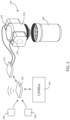
- a schematic view is shown of components of a fuel monitoring system in accordance with various embodiments herein.
- a fuel filter system 104 is shown.
- the fuel filter system 104 includes a filter head unit 202 or housing.
- the fuel filter system 104 also includes a fuel filter 208.
- the fuel filter 208 can be a spin-on type of fuel filter.
- other types of fuel filters are also contemplated herein.
- the fuel filter system 104 can include one or more sensor device(s) and/or can be configured to receive data from one or more sensor device(s).
- the fuel filter system 104 can include an upstream pressure sensor 204 and a downstream pressure sensor 206.
- the upstream pressure sensor 204 and the downstream pressure sensor 206 can both be in fluid communication with the fuel line or can otherwise be configured to sense a pressure within the fuel line.
- the fuel filter sensor device can include an upstream pressure sensor 204 configured to sense a pressure in a fuel line upstream of the fuel filter 208 and a downstream pressure sensor 206 configured to sense a pressure in the fuel line downstream of the fuel filter 208.
- sensors for filter restriction values can include differential pressure sensors, non-differential pressure sensors, acoustic sensors, optical sensors, electromagnetic sensors, fuel efficiency sensors, engine operation sensors, fuel pump sensors (including, but not limited to sensors responsive to the amount of energy consumed in operating a fuel pump, such as by an electric motor driving the same), and the like.
- fuel filter sensors herein can function as an interface receiving data reflecting filter restriction values from another device or system.
- FIG. 3 a schematic view is shown of components of a fuel monitoring system in accordance with various embodiments herein.
- FIG. 3 is generally similar to FIG. 2 , but it also includes additional features that can be part of various embodiments herein.
- a fuel filter system 104 is shown including a filter head unit 202 and a fuel filter 208.
- the fuel filter system 104 can include one or more sensor device(s) and/or can be configured to receive data from one or more sensor device(s).
- the fuel filter system 104 can include an upstream pressure sensor 204 and a downstream pressure sensor 206.
- the fuel filter system 104 can also include a fuel filter monitoring device 210.
- the fuel filter monitoring device 210 can also interface with a separate device 302.
- the separate device 302 can serve as a gateway and/or a source or aggregator of data related to the vehicle.
- the separate device 302 can generate its own data, such as geolocation data.
- the separate device 302 can provide communication with a CANBus network 304.
- fuel level data can be received from a CANBus network 304 and conveyed to components of the system herein through the separate device 302.
- the separate device 302 can interface with many different sources of data.
- the separate device 302 can be in communication with a first additional data generating or receiving device 306 and/or a second additional data generating or receiving device 308.
- Data can include, but are not limited to, one or more of weather data, temperature data, pressure data, humidity data, fuel filter model number, engine model number, driver ID, and detected refueling times.
- water-in-fuel sensors herein can include optical water-in-fuel sensors.
- an exemplary optical water-in-fuel sensor can include a light emitter (such as an LED or other emitter) and a light detector (such as a photodiode, phototransistor, photoresistor, CMOS sensor, a charge-coupled device, or the like).
- the light emitter can be configured to emit light into a sample of fuel and the light detector can be configured to receive light that has passed through the sample.
- the light emitter and light detector can be arranged on opposing sides of a channel through which fuel flows.
- a signal from the light detector will vary based upon the amount of water in the fuel.
- fuel to be evaluated can be at least partially diverted to pass through a sensor channel (such as a microfluidic channel) with a light emitter that emits light into the sensor channel and the light detector that receives light from the sensor channel. The signal from the light detector can then be evaluated to determine the amount of water in the fuel passing through the sensor channel. Similar optical sensors can also be used to identify other possible contaminants.
- Exemplary water-in-fuel sensors can include those described in Publ. PCT Appl. No. PCT/US2019/034809 , published as WO2019/232305 and titles "DROPLET SENSORS FOR FUEL SYSTEMS", the content of which is herein incorporated by reference in its entirety. It will be appreciated that data from water-in-fuel sensors can be used in isolation or in combination with other types of contaminant data or restriction data discussed herein.
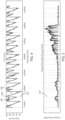
- FIG. 4 a graph of fuel level of a vehicle 102 over distance driven is shown in accordance with various embodiments herein. As can be seen, the graph is characterized by a set of repeating features including idling times 406, time spent under load 408, and refueling events 404. In particular, FIG. 4 shows a sudden fuel level volume increase 402 which can be interpreted as a refueling event 404.
- specific refueling locations can be identified just by their geolocation data, such as by longitude and latitude coordinates.
- synchronous geolocation data can then be compared to locations of known refueling locations for various purposes, such as to confirm that a refueling event has occurred and/or to provide additional data to be used by the system for various purposes including in generating recommendations.
- coordinates can be sent through a data network to a location API such as the "Places API" commercially available as part of the Google Maps Platform in order to identify whether a known fueling station exists at or near a particular set of coordinates.
- a fuel filter change event 608 can be determined or inferred based on observing a sudden reduction in pressure drop across the filter (or other measure of fuel filter restriction) and, specifically, a reduction down to nominal pressure drop levels for a new fuel filter (or within a range of pressure drop levels for a new filter).
- a fuel filter change event can be inferred by sensing a fuel filter restriction that goes downward by at least a threshold value.
- the threshold can be at least about a 5, 10, 20, 30, 40, 50, 60, 70, 80, or 90 percent reduction in sensed filter restriction in order to infer that a new fuel filter has been installed. Because the vehicle engine will generally be shut down during fuel filter servicing, in some embodiments herein the threshold filter restriction can be evaluated from the time an engine is shut down to the next time it is started up.
- total costs of operating a vehicle include various aspects beyond just fuel costs. For example, maintenance service and replacement part costs can be significant. Since fuel filters must be periodically replaced, their cost along with the cost of service associated with replacing the fuel filter can also be included with the total costs of operating a vehicle. However, since different refueling locations can impact filter loading behavior differently (and thus can impact the useful life of a fuel filter), different refueling locations may have different effective total costs. Thus, knowledge of the total cost associated with a particular refueling location beyond the posted price of fuel per gallon can be used in forming a recommendation of which refueling location to use.
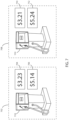
- a first possible refueling location 702 has a first nominal fuel cost 704.
- the first possible refueling location 702 also includes a first total cost 706.
- a second possible refueling location 708 has a second nominal fuel cost 710.
- the second possible refueling location 708 also includes a second total cost 712.
- the total costs 706, 712 can be calculated or estimated in various ways.
- the system can be configured to calculate a cost associated with a particular refueling location 116 at least partially based on estimated expected fuel filter 208 loading rate. This can be performed in various ways.
- the impact of a particular refueling location on fuel filter loading can be used to calculate how quickly the current fuel filter at the current filter restriction level will become loaded sufficiently to hit a terminal or end-of-life state. For example, the system can calculate how quickly the current fuel filter is likely to reach a pressure drop of 35 to 40 kPa (assuming the fuel filter is a primary fuel filter).
- this calculation can be performed by first identifying filter loading curves from past visits to a particular refueling location (which can be based on past visits of the particular vehicle to the particular refueling location, past visits of other vehicles within a fleet to the particular refueling location, and/or past visits of third-party vehicles to the particular refueling location) and/or an average or other statistical treatment of the same.
- a loading curve in hand along with a current filter restriction value of the current filter then an estimate of distance remaining before a terminal or end-of-life state is reached can be calculated. Then, using the cost of fuel filter service and parts, an amount of cost attributable to the fuel filter as a result of a particular refueling location can be derived.
- the amount of cost attributable to the fuel filter as a result of a particular refueling location can be compared with an average value for all refueling locations, an average value for all refueling locations within a particular region, or an average value for all refueling locations at a particular stop or exit of a route, to result in a comparative cost and/or to serve as a basis for a recommendation.
- the system can be further configured to generate a recommendation including a recommended refueling location.
- a recommendation can be the result of a comparison of the filter loading curves from a set of different refueling locations, with the refueling location having the flattest or most slowing rising filter loading curve being the recommended refueling location.
- the set of different refueling locations for consideration can be selected in various ways.
- the set can be all or some refueling locations at a particular stop or exit along a route, all or some refueling locations along a particular route, all refueling locations that are approved by fleet management, all refueling locations that are within a certain distance of the current location of the vehicle (such as in the same direction of the route being taken by the vehicle), or the like.
- analysis of the impact of refueling locations on fuel filter loading phenomena can include an evaluation of a sequence of refueling locations utilized. Different geographic regions may have slightly different fuel formations and/or additives. In some cases, components within fuel from one location may interact with components within fuel from another location in a manner sufficient to impact the fuel filter loading behavior. Thus, while an adverse impact on fuel filter loading occur immediately after a particular fueling location has been utilized, the effect may be a result not just of the immediate fueling location, but a function of the sequence of fueling locations utilized.
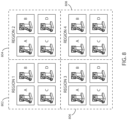
- FIG. 8 a schematic diagram illustrating fueling locations within different regions is shown in accordance with various embodiments herein.
- Regions (which could be states, counties, or the like) can include a first region 802, a second region 804, a third region 806, and a fourth region 808.
- Each of the regions can include a plurality of individual refueling locations disposed therein (A-D).
- FIG. 9 a schematic diagram is shown illustrating sequences of refueling location visits for multiple trips/itineraries in accordance with various embodiments herein. For each of the refueling location visits, FIG. 9 shows a refueling location identifier. For example, the first refueling location 902 for trip 1 is "1A".
- the second refueling location 904 for trip 1 is "2C”.
- the third refueling location 906 for trip 1 is "3A” and the fourth refueling location 908 for trip 1 is “4B”.
- FIG. 9 also shows a fuel system status 910 that reflects, for example, a status of a fuel filtration system of a vehicle at the end of the trip.
- both trip 1 and trip 2 end with a negative status while trip 3 ends with a positive status.
- a negative status can reflect an abnormal filter loading pattern while a positive status reflects a normal filter loading pattern.
- FIG. 9 illustrates the scenario where a pattern of refueling location visits can allow for a better understanding of scenarios leading to abnormal fuel filter loading.
- both trip 1 and trip 2 include a last stop at location "4B” and result in a negative status.
- evaluating trip 1 and trip 2 in isolation may lead to a conclusion that location "4B” is the source of fuel having an adverse impact on fuel filter loading.
- trip 1 which also has location "4B” as the last stop, but does not have location "3A” as the penultimate stop and which did not result in a negative status, it becomes clear that the problematic scenario is more precisely characterized as refueling a location "3A” followed by location "4B".
- systems herein can provide recommendations that take into account the pattern of refueling locations that have been visited. For example, systems herein can provide recommendations including the optimal refueling location to utilize as part of a sequence of refueling locations. Also, systems herein can provide recommendations including a sequence of optimal refueling locations to utilize.
- Systems herein can also provide route recommendations, including those that optimize refueling locations utilized in view of other parameters including one or more of distance traveled, time required for travel (speed), availability of maintenance sites along the route, and the like. This can be performed in various ways. As merely one example, based on a given starting point and a destination, possible routes can be identified using various techniques including utilizing an API such as the "Directions API" commercially available as part of the Google Maps Platform. Further, based on a given starting point, a destination, and a waypoint such as particular refueling location or filter service provider location, optimized routes can be identified using various techniques including utilizing an API such as the "Directions API" commercially available as part of the Google Maps Platform.
- an API such as the "Directions API” commercially available as part of the Google Maps Platform.
- zones of likely refueling stops can be calculated taking into account the current fuel level of the vehicle and an estimate of fuel mileage. For example, an estimated end-of-fuel point can be determined and then all refueling locations along a given route up to a fixed distance prior to the end-of-fuel point can be evaluated. The best refueling location, or an average of the top refueling locations, can then be used as an assumption for the refueling location that will be utilized within a given refueling zone and then effects on expected fuel filter loading can be calculated using data stored regarding the impact of such refueling locations on filter loading curves. This can be done across all refueling zones associated with a particular route initially identified as being a possible route.
- the optimal route from the perspective of fuel filter loading can be identified.
- other factors can also be included/considered when calculating the optimal route including, but not limited to, distance travelled, time required for travel (speed), weather, availability of maintenance sites, availability of parts, price of fuel at refueling locations along the route, etc.
- recommendations or guidance to a vehicle driver or fleet controller can be provided in the form of a map and/or data to populate or render a map on a device.
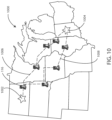
- FIG. 10 a schematic diagram is shown illustrating two different routes between two geographic points and fueling locations along the routes in accordance with various embodiments herein.
- a map 1000 can be displayed by the system can display a starting location 1002 and an ending location 1004 (or destination).
- the map 1000 can further display a first route 1006 and a second route 1008 along with refueling locations 116 (all refueling locations or, in some cases, only recommended fueling locations) along the routes.
- the system can be configured to calculate a cost of both routes including consideration of factors such as filter loading rates, distance travelled, time required for travel (speed), weather, availability of maintenance sites, availability of parts, price of fuel at refueling locations along the route, and the like.
- a more precise distance can be calculated by using a distance calculation API such as the "Distance Matrix API" commercially available as part of the Google Maps Platform to select that which is closest based on distance that must be traveled.
- a distance calculation API such as the "Distance Matrix API" commercially available as part of the Google Maps Platform to select that which is closest based on distance that must be traveled.
- the shortest distance can be compared with a remaining range of the vehicle (such as fuel level times fuel mileage) and then an alert can be generated and sent to a vehicle operator and/or a fleet operator when they are within a fixed distance (50, 40, 30, 20, 10, 5, 1, or 0 miles) of hitting the point where remaining range of the vehicle is less than the distance to the nearest recommended fueling station.
- the system can be further configured to query a database of filter providers, calculate a distance to the filter providers, compute a remaining useful life of a current fuel filter 208, and alert a vehicle 102 driver if the remaining useful life of the current fuel filter 208 may be insufficient to reach at least one of the filter providers.
- the system can be further configured to calculate an optimal location for a filter service vendor to meet a vehicle 102 in need of fuel filter 208 service based on the vehicle's planned route, minimizing the travel time of the service provider, and ensuring the filter can be changed before it reaches the end of its useful life.
- a service guidance system can be included herein.
- the system can include a system control circuit.
- the system can be configured to calculate an optimal location for a filter service vendor to meet a vehicle in need of fuel filter service based on the vehicle's planned route, minimizing the travel time of the service provider, and ensuring the filter is changed before it reaches the end of its useful life. This can be done by calculating remaining filter life as described elsewhere herein and then determining a point along the currently planned route corresponding to when the remaining filter life will be exhausted (including or not including a safety margin of distance).
- a routing API such as the "Directions API" commercially available as part of the Google Maps Platform, can be used (e.g., data can be sent to it and received from it) in order to calculate a route for the filter service vendor to take in order to meet the vehicle in need of fuel filter service.
- the timing can also be evaluated. For example, if at average speeds the 200 kilometers is determined to take 2.5 hours, then the filter service vendor can be directed to proceed to the calculated meeting point in 2.5 hours.
- a service guidance system can be included herein including a system control circuit and wherein the system is configured to calculate an optimal route to a filter service vendor (which could be, for example, a fixed location such as a bricks and mortar service station) based on a vehicle's planned route, minimizing the travel time of the vehicle, and ensuring the filter is changed before it reaches the end of its useful life.
- a vehicle guidance system is included herein including a system control circuit, wherein the system is configured to calculate an optimal route to a destination taking into account a location of a filter service vendor, minimizing the travel time of the vehicle, and ensuring the filter is changed before it reaches the end of its useful life.
- the system is configured to optimize a preexisting planned route of a vehicle taking into account a location of a filter service vendor, minimizing the travel time of the vehicle, and ensuring the filter is changed before it reaches the end of its useful life.
- analysis of refueling locations to determine which may have adverse impacts on fuel filter loading can be triggered by or keyed upon the identification of an abnormal filter loading curve such as the start of an abnormal filter loading curve.
- FIG. 11 a graph is shown of fuel filter pressure drop versus hours of use illustrating different types of idealized filter loading curves.
- FIG. 11 illustrates a normal loading curve 1102 characterized by a relatively flat initial growth of pressure drop (delta P) followed by steeper growth of pressure drop later in the life of the filter.
- FIG. 11 also illustrates two types of abnormal filter loading curves.
- FIG. 11 illustrates an accelerated loading curve 1104 and a sudden clogging curve 1106.
- the accelerated loading curve 1104 may be caused by contaminants (debris, dirt, glycerin, etc.) within the fuel.
- the accelerated loading curve 1104 assumes the same overall shape as the normal loading curve 1102, however it features a more rapid increase to higher pressure drop values. While FIG. 11 specifically shows pressure drop, it will be appreciated that other measure of filter restriction can exhibit similar patterns.
- the sudden clogging curve 1106 may be caused by factors such as extremely contaminated fuel and/or an adverse reaction between components within fuels having different formulations (e.g., fuel chemistry) or additives (such as drying agents, corrosions inhibitors, etc.) leading to materials precipitating out of solution or other particulates being formed.
- Particulates/precipitates can include, but are not limited to, amine carboxylates, metal carboxylates, and other compounds or salts.
- the filter loading curves shown in FIG. 11 are idealized. Further, the accelerated loading curve 1104 is representative of a particular level of contamination/impurities and will change depending upon the amounts of the same with higher levels of contamination/impurities resulting in faster loading.
- specific filter loading curves can be stored within the system (such as saved within memory and/or a database) to serve as archetype (or template) filter loading curves.
- the system may have a plurality of different archetype filter loading curves, such as 2, 3, 4, 5, 6, 8, 10, 15, 20, 30, 40, 50, 60 or more that correspond to different filter loading scenarios that are encountered in the field.
- 11 can serve as three specific examples of curves that could be used as archetypes. Then an observed filter loading curve can be matched against the set of archetype curves to determine which is the best match. Pattern matching and/or curve fitting techniques can be used to determine which is the best match. In some embodiments, a least squares-based approach can be used. In some embodiments, a machine-learning based approach (described in further detail below) can be used. Once an archetype or template filter loading curve has been found, prediction can be performed based on extrapolation using the identified archetype or template filter loading curve.
- the effect of specific refueling locations on fuel filter loading can be determined based on an effect on a filter loading curve.
- the system can be configured to distinguish between a normal filter loading curve and an abnormal filter loading curve.
- the system can specifically be configured to distinguish between a normal filter loading curve, an accelerated filter loading curve, and a sudden clogging curve.
- Aspects that can be used to distinguish such curves can include, but are not limited to, maximum or average observed rate of change in filter restriction (such as pressure drop or another measure) and maximum or average observed rate of change in filter restriction (such as pressure drop or another measure) for a given amount of distance the fuel filter has been in use.
- filter loading curves with a maximum rate of range (slope) exceeding a threshold value are deemed abnormal.
- filter loading curves with a maximum rate of range (slope) exceeding a threshold value for a particular degree of use (distance and/or hours) are deemed abnormal.
- multiple thresholds can be use. For example, filter loading curves with a maximum rate of range (slope) exceeding a first threshold value (with or without consideration of distance and/or hours of use) are deemed abnormal and then further deemed to be a sudden clogging curve if the maximum rate of change also exceeds a second threshold value or an accelerated loading curve if the maximum rate of change does not exceed the second threshold value.
- the system can be configured to identify a refueling location and/or pattern of refueling locations visited immediately before an abnormal filter loading curve begins. In various embodiments, the system can be configured to identify a refueling location and/or pattern of refueling locations visited immediately before a filter loading curve changes to exhibit more rapid loading. In various embodiments, the system control circuit can be configured to determine sequences of refueling locations visited immediately before a sudden clogging curve begins. The determined sequence can include 2, 3, 4, 5, 6, 7, 8 or more prior refueling locations visited.
- the system can classify an identified location and/or a pattern of identified locations as being a source (or possible source) of contaminated fuel and can store the classification in a refueling location database along with information regarding loading curves resulting from refueling at the specific refueling location.
- the system can classify the identified location as being a source or possible source of contaminated fuel and then query a database for additional data regarding the identified location, such as any confirmatory data based on other refueling events that have been recorded (with positive or negative outcomes) regarding the same refueling location.
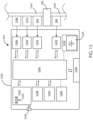
- the processing power of the control circuit 1204 and components thereof can be sufficient to perform various operations including various operations on signals/data from sensors (such as sensors 204, 206, 1208, and 1212) including, but not limited to averaging, time-averaging, statistical analysis, normalizing, aggregating, sorting, deleting, traversing, transforming, condensing (such as eliminating selected data and/or converting the data to a less granular form), compressing (such as using a compression algorithm), merging, inserting, timestamping, filtering, discarding outliers, calculating trends and trendlines (linear, logarithmic, polynomial, power, exponential, moving average, etc.), normalizing data/signals, and the like.
- sensors such as sensors 204, 206, 1208, and 1212
- sensors such as sensors 204, 206, 1208, and 1212
- the system control circuit 1204 can be configured to determine sequences of refueling locations visited immediately before a sudden clogging curve begins. In various embodiments, the system control circuit 1204 can be further configured to evaluate at least one of weather data, temperature data, pressure data, humidity data, fuel filter model number, engine model number, driver ID, and detected refueling times to identify the effect of specific refueling locations on fuel filter loading. In various embodiments, the system control circuit 1204 further configured to evaluate data from the water-in-fuel sensor and correlate refueling locations with subsequent changes in the data from the water-in-fuel sensor to identify an effect of specific refueling locations on water-in-fuel sensor data.
- a method of monitoring fuel systems can include measuring filter restriction, identifying refueling locations based on fuel level data and geolocation data, and calculating an impact of specific refueling locations on fuel filter loading by evaluating filter restriction trends after refueling at refueling locations.
- the method can further include estimating expected loading rate associated with refueling at a particular refueling location based on previously observed fuel filter loading. In an embodiment, the method can further include calculating a cost associated with a particular refueling location based on estimated expected fuel filter loading rate.
- the method can further include generating a recommendation can include a recommended refueling location. In an embodiment, the method can further include forwarding the recommendation to a mobile communications device associated with a vehicle or a driver of a vehicle. In an embodiment of the method, the recommendation is generated including consideration of fuel system parts inventory at refueling locations. In an embodiment, the method can further include generating a recommendation can include a recommended refueling time. In an embodiment, the method can further include generating a recommendation can include a recommended refueling location and a recommended refueling time. In an embodiment, the method can further include forwarding the recommendation to a mobile communications device associated with a vehicle or a driver of a vehicle.
- the method can further include generating a listing of recommended and dis-recommended fueling stations. In an embodiment, the method can further include generating an alert for a vehicle driver if the vehicle enters the location of a dis-recommended fueling station. In an embodiment, the method can further include generating a report that profiles the frequency with which different drivers in a fleet use recommended and dis-recommended fueling stations.
- the method can further include distinguishing between a normal filter loading curve, an accelerated filter loading curve, and a sudden clogging curve. In an embodiment, the method can further include distinguishing between a normal filter loading curve and an abnormal filter loading curve.
- the method can further include identifying a refueling location visited immediately before an abnormal filter loading curve begins. In an embodiment, the method can further include identifying a refueling location visited immediately before a filter loading curve changes to exhibit more rapid loading.
- the method can further include classifying the identified location as being a source of contaminated fuel and stores the classification in a refueling location database.
- the method can further include generating a fuel system parts inventory recommendation based on the refueling location database.
- the fuel system parts inventory recommendation includes a recommendation to increase an inventory of fuel filters at refueling locations that occur in a sequence of refueling locations after an identified location with contaminated fuel.
- the method can further include classifying the identified location as being a possible source of contaminated fuel and querying a database for additional data regarding the identified location.
- the method can further include determining sequences of refueling locations visited immediately before a sudden clogging curve begins.
- the method can further include evaluating one or more of weather data, temperature data, pressure data, humidity data, fuel filter model number, engine model number, driver ID, and detected refueling times to identify the effect of specific refueling locations on fuel filter loading.
- identifying refueling locations based on fuel level data and geolocation data comprises identifying a geolocation at a time of a fuel level increase.
- the method can further include evaluating data from a water-in-fuel sensor and identifying an effect of specific refueling locations on water-in-fuel sensor data.
- the method can further include estimating remaining fuel filter life taking into account refueling locations used.
- the phrase “configured” describes a system, apparatus, or other structure that is constructed or configured to perform a particular task or adopt a particular configuration.
- the phrase “configured” can be used interchangeably with other similar phrases such as arranged and configured, constructed and arranged, constructed, manufactured and arranged, and the like.
- a fuel monitoring system for a vehicle comprising:
- E32 The fuel monitoring system of any of examples E1-E31 and E33, system control circuit configured to estimate remaining fuel filter life taking into account refueling locations used.
- E55 The method of any of examples E34-E54 and E56-E58, further comprising evaluating one or more of weather data, temperature data, pressure data, humidity data, fuel filter model number, engine model number, driver ID, and detected refueling times to identify the effect of specific refueling locations on fuel filter loading.
- identifying refueling locations based on fuel level data and geolocation data comprises identifying a geolocation at a time of a fuel level increase.
- a refueling guidance system for a vehicle comprising:
- E62 The refueling guidance system of any of examples E59-E61 and E63-E68, the output device comprising a user output device.
- E63 The refueling guidance system of any of examples E59-E62 and E64-E68, the user output device comprising a smart phone.
- E66 The refueling guidance system of any of examples E59-E65 and E67-E68, wherein the system is configured to calculate a remaining distance to recommended fueling stations, compare the remaining distance to a remaining vehicle range based on a remaining fuel level, and alert a vehicle driver if they leave or are within a fixed distance of leaving the range of the recommended refueling stations.
- E67 The refueling guidance system of any of examples E59-E66 and E68, wherein the system is further configured to query a database of filter providers, calculate a distance to the filter providers, compute a remaining useful life of a current fuel filter, and alert a vehicle driver if the remaining useful life of the current fuel filter is insufficient to reach at least one of the filter providers.
- E68 The refueling guidance system of any of examples E59-E67, wherein the system is further configured to calculate an optimal location for a filter service vendor to meet a vehicle in need of fuel filter service based on the vehicle's planned route, minimizing the travel time of the service provider, and ensuring the filter is changed before it reaches the end of its useful life.
- a method of providing guidance for refueling a vehicle comprising:
- E71 The method of any of examples E69-E70 and E72-E77, further comprising calculating a remaining distance to recommended fueling stations, comparing the remaining distance to a remaining vehicle range based on a remaining fuel level, and alerting a vehicle driver if they leave or are within a fixed distance of leaving the range of the recommended refueling stations.
- a method of providing guidance to a filter service vendor comprising:
- a system for a vehicle comprising:
- a service guidance system comprising:
- a vehicle guidance system comprising:
- E84 The vehicle guidance system of example E83, wherein the system is configured to optimize a preexisting planned route of the vehicle taking into account a location of a filter service vendor, minimizing the travel time of the vehicle, and ensuring the filter is changed before it reaches the end of its useful life.
Landscapes
- Engineering & Computer Science (AREA)
- Business, Economics & Management (AREA)
- Chemical & Material Sciences (AREA)
- Physics & Mathematics (AREA)
- General Physics & Mathematics (AREA)
- Economics (AREA)
- Strategic Management (AREA)
- Human Resources & Organizations (AREA)
- Marketing (AREA)
- Health & Medical Sciences (AREA)
- Theoretical Computer Science (AREA)
- General Business, Economics & Management (AREA)
- Combustion & Propulsion (AREA)
- General Health & Medical Sciences (AREA)
- Tourism & Hospitality (AREA)
- Finance (AREA)
- Accounting & Taxation (AREA)
- Chemical Kinetics & Catalysis (AREA)
- General Engineering & Computer Science (AREA)
- Mechanical Engineering (AREA)
- Development Economics (AREA)
- Primary Health Care (AREA)
- Dispersion Chemistry (AREA)
- Analytical Chemistry (AREA)
- Pathology (AREA)
- Immunology (AREA)
- Fluid Mechanics (AREA)
- Biochemistry (AREA)
- Life Sciences & Earth Sciences (AREA)
- Water Supply & Treatment (AREA)
- Operations Research (AREA)
- Quality & Reliability (AREA)
- Public Health (AREA)
- Entrepreneurship & Innovation (AREA)
- Game Theory and Decision Science (AREA)
- Combined Controls Of Internal Combustion Engines (AREA)
- Navigation (AREA)
- Traffic Control Systems (AREA)
Applications Claiming Priority (3)
| Application Number | Priority Date | Filing Date | Title |
|---|---|---|---|
| US202062967369P | 2020-01-29 | 2020-01-29 | |
| EP21708800.4A EP4097348B1 (de) | 2020-01-29 | 2021-01-29 | Kraftstoffüberwachungssystem eines fahrzeugs und verfahren |
| PCT/US2021/015866 WO2021155255A1 (en) | 2020-01-29 | 2021-01-29 | Vehicle fuel monitoring system and methods |
Related Parent Applications (1)
| Application Number | Title | Priority Date | Filing Date |
|---|---|---|---|
| EP21708800.4A Division EP4097348B1 (de) | 2020-01-29 | 2021-01-29 | Kraftstoffüberwachungssystem eines fahrzeugs und verfahren |
Publications (2)
| Publication Number | Publication Date |
|---|---|
| EP4583035A2 true EP4583035A2 (de) | 2025-07-09 |
| EP4583035A3 EP4583035A3 (de) | 2025-10-22 |
Family
ID=74798027
Family Applications (2)
| Application Number | Title | Priority Date | Filing Date |
|---|---|---|---|
| EP21708800.4A Active EP4097348B1 (de) | 2020-01-29 | 2021-01-29 | Kraftstoffüberwachungssystem eines fahrzeugs und verfahren |
| EP25165515.5A Pending EP4583035A3 (de) | 2020-01-29 | 2021-01-29 | Kraftstoffüberwachungssystem und -verfahren für ein fahrzeug |
Family Applications Before (1)
| Application Number | Title | Priority Date | Filing Date |
|---|---|---|---|
| EP21708800.4A Active EP4097348B1 (de) | 2020-01-29 | 2021-01-29 | Kraftstoffüberwachungssystem eines fahrzeugs und verfahren |
Country Status (6)
| Country | Link |
|---|---|
| US (1) | US20230044784A1 (de) |
| EP (2) | EP4097348B1 (de) |
| CN (1) | CN115968424B (de) |
| ES (1) | ES3022189T3 (de) |
| MX (1) | MX2022006551A (de) |
| WO (1) | WO2021155255A1 (de) |
Families Citing this family (13)
| Publication number | Priority date | Publication date | Assignee | Title |
|---|---|---|---|---|
| US11875371B1 (en) | 2017-04-24 | 2024-01-16 | Skyline Products, Inc. | Price optimization system |
| EP4161676B1 (de) * | 2020-06-09 | 2024-10-02 | Takeda Pharmaceutical Company Limited | Filterpressenadaptor |
| US11339737B1 (en) * | 2021-02-02 | 2022-05-24 | Caterpillar Inc. | Method and system for fuel filter monitoring |
| JP7643219B2 (ja) * | 2021-07-08 | 2025-03-11 | トヨタ自動車株式会社 | 情報処理装置、及び、情報処理方法 |
| KR20240042408A (ko) * | 2021-07-29 | 2024-04-02 | 도널드선 컴파니 인코포레이티드 | 차량 필터 모니터링 시스템 및 방법 |
| CN114565971B (zh) * | 2022-02-15 | 2025-08-19 | 北京兴路车联科技有限公司 | 一种异常加油行为识别方法、装置、电子设备及存储介质 |
| CN114893332B (zh) * | 2022-06-29 | 2024-06-25 | 上海新动力汽车科技股份有限公司 | 基于物联网的燃滤状态诊断方法 |
| US12508525B2 (en) | 2022-10-27 | 2025-12-30 | FluidLoop Technologies, LLC | System and method for filtration of industrial and mobile fluids |
| WO2024168081A1 (en) * | 2023-02-07 | 2024-08-15 | Donaldson Company, Inc. | Systems for detection of bypass valve actuation using pressure data |
| US12244448B2 (en) * | 2023-07-31 | 2025-03-04 | James Kain | Enhanced communication system |
| KR20250066181A (ko) * | 2023-11-06 | 2025-05-13 | 현대자동차주식회사 | 주유소 정보 제공 시스템 및 방법 |
| CN118897072B (zh) * | 2024-09-30 | 2024-12-06 | 赤峰市生态环境监控中心 | 一种污染场地土壤检测分析方法 |
| CN119341945B (zh) * | 2024-10-22 | 2025-11-14 | 重庆赛力斯凤凰智创科技有限公司 | Can报文异常检测方法、装置及车辆 |
Citations (1)
| Publication number | Priority date | Publication date | Assignee | Title |
|---|---|---|---|---|
| WO2019232305A1 (en) | 2018-05-31 | 2019-12-05 | Donaldson Company, Inc. | Droplet sensors for fuel systems |
Family Cites Families (12)
| Publication number | Priority date | Publication date | Assignee | Title |
|---|---|---|---|---|
| DE102006004630B4 (de) * | 2006-01-31 | 2017-07-27 | Kautex Textron Gmbh & Co. Kg | Kraftstoffbehälter |
| DE102008034349B4 (de) * | 2008-07-23 | 2013-06-06 | Continental Automotive Gmbh | Leitungsvorrichtung mit einem optischen Partikelzähler zur Verunreinigungsüberwachung und Verfahren dafür |
| ES2432092T3 (es) * | 2009-10-19 | 2013-11-29 | Nissan Motor Manufacturing (Uk) Ltd. | Sistema de seguimiento de filtración de combustible |
| JP2015048829A (ja) * | 2013-09-04 | 2015-03-16 | キャタピラー エス エー アール エル | 燃料供給回路における燃料フィルタ目詰り検出装置および作業機械 |
| GB2529181B (en) * | 2014-08-12 | 2019-01-02 | Jaguar Land Rover Ltd | Improvements relating to monitoring fuel quality |
| US20160068077A1 (en) * | 2014-09-08 | 2016-03-10 | GM Global Technology Operations LLC | Systems and methods for fuel cell air filter life prediction |
| JP6409700B2 (ja) * | 2015-07-14 | 2018-10-24 | 株式会社デンソー | 燃料用フィルタ装置 |
| CN112973258B (zh) * | 2016-04-08 | 2022-07-26 | 康明斯滤清系统知识产权公司 | 经由远程信息处理输出过滤器监测系统信息的系统和方法 |
| US9996990B2 (en) * | 2016-10-24 | 2018-06-12 | Allstate Insurance Company | Enhanced vehicle bad fuel sensor with crowdsourcing analytics |
| CN106481456B (zh) * | 2016-11-04 | 2017-12-29 | 中国航空工业集团公司航空动力控制系统研究所 | 多功能一体化高压燃油滤 |
| US10366547B2 (en) * | 2016-12-20 | 2019-07-30 | Continental Automotive Systems, Inc. | Cloud-based fuel quality recording and fuel station selection system, and method of utilizing same |
| KR20240042408A (ko) * | 2021-07-29 | 2024-04-02 | 도널드선 컴파니 인코포레이티드 | 차량 필터 모니터링 시스템 및 방법 |
-
2021
- 2021-01-29 US US17/789,292 patent/US20230044784A1/en active Pending
- 2021-01-29 EP EP21708800.4A patent/EP4097348B1/de active Active
- 2021-01-29 MX MX2022006551A patent/MX2022006551A/es unknown
- 2021-01-29 EP EP25165515.5A patent/EP4583035A3/de active Pending
- 2021-01-29 CN CN202180006853.4A patent/CN115968424B/zh active Active
- 2021-01-29 WO PCT/US2021/015866 patent/WO2021155255A1/en not_active Ceased
- 2021-01-29 ES ES21708800T patent/ES3022189T3/es active Active
Patent Citations (1)
| Publication number | Priority date | Publication date | Assignee | Title |
|---|---|---|---|---|
| WO2019232305A1 (en) | 2018-05-31 | 2019-12-05 | Donaldson Company, Inc. | Droplet sensors for fuel systems |
Also Published As
| Publication number | Publication date |
|---|---|
| CN115968424A (zh) | 2023-04-14 |
| EP4097348C0 (de) | 2025-03-26 |
| WO2021155255A1 (en) | 2021-08-05 |
| MX2022006551A (es) | 2022-07-01 |
| EP4097348B1 (de) | 2025-03-26 |
| CN115968424B (zh) | 2025-09-09 |
| EP4583035A3 (de) | 2025-10-22 |
| ES3022189T3 (en) | 2025-05-28 |
| US20230044784A1 (en) | 2023-02-09 |
| EP4097348A1 (de) | 2022-12-07 |
Similar Documents
| Publication | Publication Date | Title |
|---|---|---|
| EP4583035A2 (de) | Kraftstoffüberwachungssystem und -verfahren für ein fahrzeug | |
| US10713862B2 (en) | Enhanced vehicle bad fuel sensor with crowdsourcing analytics | |
| US20150228129A1 (en) | System and method for profiling vehicle usage | |
| US20150226563A1 (en) | System and method for determining route information for a vehicle using on-board diagnostic data | |
| EP4656849A2 (de) | System und verfahren zur erkennung eines flüssigkeitszustands | |
| Amarasinghe et al. | Cloud-based driver monitoring and vehicle diagnostic with OBD2 telematics | |
| US8566010B2 (en) | System and method for providing road condition and congestion monitoring using smart messages | |
| JP3490364B2 (ja) | オイル交換間隔を決定するためのシステムおよび方法 | |
| US8857408B2 (en) | Real-time dynamic heavy-vehicle idle alarm | |
| US10748076B1 (en) | Method and apparatus for providing estimated patrol properties and historic patrol records | |
| CN107949782A (zh) | 基于介电和粘度传感器识别粘度等级和新油状态 | |
| WO2022076747A1 (en) | On-vehicle water in fuel sensing system and related signal processing | |
| EP3089114A2 (de) | Aufzeichnung und benachrichtigung von fahreigenschaften mittels drahtloser mobiler vorrichtung | |
| CN106996352A (zh) | 确定和报告空气过滤器的剩余使用寿命的方法和系统 | |
| WO2023177728A1 (en) | Air bubble sensing systems and related signal processing | |
| RS55869B1 (sr) | Elektronski sistem za nadzor koji omogućava proračun stvarne potrošnje goriva i emisije co2 za uređaj u pokretu, kada je zaustavljen, kada radi, uz isključivanje ili bez isključivanja krađe goriva | |
| WO2012174494A1 (en) | System for measurement of greenhouse gas generation from fuel combustion | |
| CN101681495A (zh) | 交通信息处理装置、交通信息管理服务器、交通信息管理系统 | |
| CN103511024A (zh) | 用于准确地补偿由新近的长旅程导致的稀释在发动机油中的不需要的流体的量的变化的系统和方法 | |
| JP2009056446A (ja) | フィルタ履歴管理装置 | |
| Barbadekar et al. | Smart fuel level indicator with automatic fuel station navigation system | |
| JP2015096850A (ja) | 車載機器及びプログラム | |
| CN117167157A (zh) | 状态检测方法、控制器、系统、设备和存储介质 |
Legal Events
| Date | Code | Title | Description |
|---|---|---|---|
| PUAI | Public reference made under article 153(3) epc to a published international application that has entered the european phase |
Free format text: ORIGINAL CODE: 0009012 |
|
| STAA | Information on the status of an ep patent application or granted ep patent |
Free format text: STATUS: THE APPLICATION HAS BEEN PUBLISHED |
|
| AC | Divisional application: reference to earlier application |
Ref document number: 4097348 Country of ref document: EP Kind code of ref document: P |
|
| AK | Designated contracting states |
Kind code of ref document: A2 Designated state(s): AL AT BE BG CH CY CZ DE DK EE ES FI FR GB GR HR HU IE IS IT LI LT LU LV MC MK MT NL NO PL PT RO RS SE SI SK SM TR |
|
| REG | Reference to a national code |
Ref country code: DE Ref legal event code: R079 Free format text: PREVIOUS MAIN CLASS: G06Q0050400000 Ipc: F02M0037400000 |
|
| PUAL | Search report despatched |
Free format text: ORIGINAL CODE: 0009013 |
|
| AK | Designated contracting states |
Kind code of ref document: A3 Designated state(s): AL AT BE BG CH CY CZ DE DK EE ES FI FR GB GR HR HU IE IS IT LI LT LU LV MC MK MT NL NO PL PT RO RS SE SI SK SM TR |
|
| RIC1 | Information provided on ipc code assigned before grant |
Ipc: F02M 37/40 20190101AFI20250917BHEP Ipc: G07C 5/00 20060101ALI20250917BHEP Ipc: G06Q 10/04 20230101ALI20250917BHEP Ipc: B01D 46/00 20220101ALI20250917BHEP Ipc: B01D 46/42 20060101ALI20250917BHEP Ipc: B01D 35/143 20060101ALI20250917BHEP Ipc: B67D 7/00 20100101ALI20250917BHEP Ipc: G01N 33/28 20060101ALI20250917BHEP Ipc: H04Q 9/00 20060101ALI20250917BHEP Ipc: G01N 15/075 20240101ALI20250917BHEP Ipc: G06Q 10/047 20230101ALI20250917BHEP Ipc: G06Q 50/06 20240101ALI20250917BHEP Ipc: G06Q 50/40 20240101ALI20250917BHEP |
|
| STAA | Information on the status of an ep patent application or granted ep patent |
Free format text: STATUS: REQUEST FOR EXAMINATION WAS MADE |