EP4582772A2 - Lidar- und lasermesstechniken - Google Patents
Lidar- und lasermesstechniken Download PDFInfo
- Publication number
- EP4582772A2 EP4582772A2 EP25177807.2A EP25177807A EP4582772A2 EP 4582772 A2 EP4582772 A2 EP 4582772A2 EP 25177807 A EP25177807 A EP 25177807A EP 4582772 A2 EP4582772 A2 EP 4582772A2
- Authority
- EP
- European Patent Office
- Prior art keywords
- light beam
- dual
- sideband
- intensity
- equal
- Prior art date
- Legal status (The legal status is an assumption and is not a legal conclusion. Google has not performed a legal analysis and makes no representation as to the accuracy of the status listed.)
- Pending
Links
Images


Classifications
-
- G—PHYSICS
- G01—MEASURING; TESTING
- G01C—MEASURING DISTANCES, LEVELS OR BEARINGS; SURVEYING; NAVIGATION; GYROSCOPIC INSTRUMENTS; PHOTOGRAMMETRY OR VIDEOGRAMMETRY
- G01C15/00—Surveying instruments or accessories not provided for in groups G01C1/00 - G01C13/00
- G01C15/002—Active optical surveying means
-
- G—PHYSICS
- G01—MEASURING; TESTING
- G01J—MEASUREMENT OF INTENSITY, VELOCITY, SPECTRAL CONTENT, POLARISATION, PHASE OR PULSE CHARACTERISTICS OF INFRARED, VISIBLE OR ULTRAVIOLET LIGHT; COLORIMETRY; RADIATION PYROMETRY
- G01J3/00—Spectrometry; Spectrophotometry; Monochromators; Measuring colours
- G01J3/02—Details
- G01J3/0205—Optical elements not provided otherwise, e.g. optical manifolds, diffusers, windows
- G01J3/0218—Optical elements not provided otherwise, e.g. optical manifolds, diffusers, windows using optical fibers
-
- G—PHYSICS
- G01—MEASURING; TESTING
- G01S—RADIO DIRECTION-FINDING; RADIO NAVIGATION; DETERMINING DISTANCE OR VELOCITY BY USE OF RADIO WAVES; LOCATING OR PRESENCE-DETECTING BY USE OF THE REFLECTION OR RERADIATION OF RADIO WAVES; ANALOGOUS ARRANGEMENTS USING OTHER WAVES
- G01S17/00—Systems using the reflection or reradiation of electromagnetic waves other than radio waves, e.g. lidar systems
- G01S17/02—Systems using the reflection of electromagnetic waves other than radio waves
-
- G—PHYSICS
- G01—MEASURING; TESTING
- G01S—RADIO DIRECTION-FINDING; RADIO NAVIGATION; DETERMINING DISTANCE OR VELOCITY BY USE OF RADIO WAVES; LOCATING OR PRESENCE-DETECTING BY USE OF THE REFLECTION OR RERADIATION OF RADIO WAVES; ANALOGOUS ARRANGEMENTS USING OTHER WAVES
- G01S17/00—Systems using the reflection or reradiation of electromagnetic waves other than radio waves, e.g. lidar systems
- G01S17/02—Systems using the reflection of electromagnetic waves other than radio waves
- G01S17/06—Systems determining position data of a target
- G01S17/08—Systems determining position data of a target for measuring distance only
- G01S17/32—Systems determining position data of a target for measuring distance only using transmission of continuous waves, whether amplitude-, frequency-, or phase-modulated, or unmodulated
- G01S17/34—Systems determining position data of a target for measuring distance only using transmission of continuous waves, whether amplitude-, frequency-, or phase-modulated, or unmodulated using transmission of continuous, frequency-modulated waves while heterodyning the received signal, or a signal derived therefrom, with a locally-generated signal related to the contemporaneously transmitted signal
-
- G—PHYSICS
- G01—MEASURING; TESTING
- G01S—RADIO DIRECTION-FINDING; RADIO NAVIGATION; DETERMINING DISTANCE OR VELOCITY BY USE OF RADIO WAVES; LOCATING OR PRESENCE-DETECTING BY USE OF THE REFLECTION OR RERADIATION OF RADIO WAVES; ANALOGOUS ARRANGEMENTS USING OTHER WAVES
- G01S17/00—Systems using the reflection or reradiation of electromagnetic waves other than radio waves, e.g. lidar systems
- G01S17/02—Systems using the reflection of electromagnetic waves other than radio waves
- G01S17/06—Systems determining position data of a target
- G01S17/08—Systems determining position data of a target for measuring distance only
- G01S17/32—Systems determining position data of a target for measuring distance only using transmission of continuous waves, whether amplitude-, frequency-, or phase-modulated, or unmodulated
- G01S17/36—Systems determining position data of a target for measuring distance only using transmission of continuous waves, whether amplitude-, frequency-, or phase-modulated, or unmodulated with phase comparison between the received signal and the contemporaneously transmitted signal
-
- G—PHYSICS
- G01—MEASURING; TESTING
- G01S—RADIO DIRECTION-FINDING; RADIO NAVIGATION; DETERMINING DISTANCE OR VELOCITY BY USE OF RADIO WAVES; LOCATING OR PRESENCE-DETECTING BY USE OF THE REFLECTION OR RERADIATION OF RADIO WAVES; ANALOGOUS ARRANGEMENTS USING OTHER WAVES
- G01S7/00—Details of systems according to groups G01S13/00, G01S15/00, G01S17/00
- G01S7/48—Details of systems according to groups G01S13/00, G01S15/00, G01S17/00 of systems according to group G01S17/00
- G01S7/481—Constructional features, e.g. arrangements of optical elements
- G01S7/4811—Constructional features, e.g. arrangements of optical elements common to transmitter and receiver
-
- G—PHYSICS
- G01—MEASURING; TESTING
- G01S—RADIO DIRECTION-FINDING; RADIO NAVIGATION; DETERMINING DISTANCE OR VELOCITY BY USE OF RADIO WAVES; LOCATING OR PRESENCE-DETECTING BY USE OF THE REFLECTION OR RERADIATION OF RADIO WAVES; ANALOGOUS ARRANGEMENTS USING OTHER WAVES
- G01S7/00—Details of systems according to groups G01S13/00, G01S15/00, G01S17/00
- G01S7/48—Details of systems according to groups G01S13/00, G01S15/00, G01S17/00 of systems according to group G01S17/00
- G01S7/481—Constructional features, e.g. arrangements of optical elements
- G01S7/4814—Constructional features, e.g. arrangements of optical elements of transmitters alone
-
- G—PHYSICS
- G01—MEASURING; TESTING
- G01S—RADIO DIRECTION-FINDING; RADIO NAVIGATION; DETERMINING DISTANCE OR VELOCITY BY USE OF RADIO WAVES; LOCATING OR PRESENCE-DETECTING BY USE OF THE REFLECTION OR RERADIATION OF RADIO WAVES; ANALOGOUS ARRANGEMENTS USING OTHER WAVES
- G01S7/00—Details of systems according to groups G01S13/00, G01S15/00, G01S17/00
- G01S7/48—Details of systems according to groups G01S13/00, G01S15/00, G01S17/00 of systems according to group G01S17/00
- G01S7/481—Constructional features, e.g. arrangements of optical elements
- G01S7/4817—Constructional features, e.g. arrangements of optical elements relating to scanning
-
- G—PHYSICS
- G01—MEASURING; TESTING
- G01S—RADIO DIRECTION-FINDING; RADIO NAVIGATION; DETERMINING DISTANCE OR VELOCITY BY USE OF RADIO WAVES; LOCATING OR PRESENCE-DETECTING BY USE OF THE REFLECTION OR RERADIATION OF RADIO WAVES; ANALOGOUS ARRANGEMENTS USING OTHER WAVES
- G01S7/00—Details of systems according to groups G01S13/00, G01S15/00, G01S17/00
- G01S7/48—Details of systems according to groups G01S13/00, G01S15/00, G01S17/00 of systems according to group G01S17/00
- G01S7/491—Details of non-pulse systems
- G01S7/4911—Transmitters
-
- G—PHYSICS
- G01—MEASURING; TESTING
- G01S—RADIO DIRECTION-FINDING; RADIO NAVIGATION; DETERMINING DISTANCE OR VELOCITY BY USE OF RADIO WAVES; LOCATING OR PRESENCE-DETECTING BY USE OF THE REFLECTION OR RERADIATION OF RADIO WAVES; ANALOGOUS ARRANGEMENTS USING OTHER WAVES
- G01S7/00—Details of systems according to groups G01S13/00, G01S15/00, G01S17/00
- G01S7/48—Details of systems according to groups G01S13/00, G01S15/00, G01S17/00 of systems according to group G01S17/00
- G01S7/491—Details of non-pulse systems
- G01S7/4912—Receivers
- G01S7/4917—Receivers superposing optical signals in a photodetector, e.g. optical heterodyne detection
-
- G—PHYSICS
- G02—OPTICS
- G02B—OPTICAL ELEMENTS, SYSTEMS OR APPARATUS
- G02B26/00—Optical devices or arrangements for the control of light using movable or deformable optical elements
- G02B26/08—Optical devices or arrangements for the control of light using movable or deformable optical elements for controlling the direction of light
- G02B26/10—Scanning systems
- G02B26/101—Scanning systems with both horizontal and vertical deflecting means, e.g. raster or XY scanners
-
- G—PHYSICS
- G02—OPTICS
- G02B—OPTICAL ELEMENTS, SYSTEMS OR APPARATUS
- G02B26/00—Optical devices or arrangements for the control of light using movable or deformable optical elements
- G02B26/08—Optical devices or arrangements for the control of light using movable or deformable optical elements for controlling the direction of light
- G02B26/10—Scanning systems
- G02B26/12—Scanning systems using multifaceted mirrors
-
- G—PHYSICS
- G02—OPTICS
- G02B—OPTICAL ELEMENTS, SYSTEMS OR APPARATUS
- G02B27/00—Optical systems or apparatus not provided for by any of the groups G02B1/00 - G02B26/00, G02B30/00
- G02B27/28—Optical systems or apparatus not provided for by any of the groups G02B1/00 - G02B26/00, G02B30/00 for polarising
- G02B27/283—Optical systems or apparatus not provided for by any of the groups G02B1/00 - G02B26/00, G02B30/00 for polarising used for beam splitting or combining
-
- H—ELECTRICITY
- H01—ELECTRIC ELEMENTS
- H01S—DEVICES USING THE PROCESS OF LIGHT AMPLIFICATION BY STIMULATED EMISSION OF RADIATION [LASER] TO AMPLIFY OR GENERATE LIGHT; DEVICES USING STIMULATED EMISSION OF ELECTROMAGNETIC RADIATION IN WAVE RANGES OTHER THAN OPTICAL
- H01S3/00—Lasers, i.e. devices using stimulated emission of electromagnetic radiation in the infrared, visible or ultraviolet wave range
- H01S3/05—Construction or shape of optical resonators; Accommodation of active medium therein; Shape of active medium
- H01S3/06—Construction or shape of active medium
- H01S3/063—Waveguide lasers, i.e. whereby the dimensions of the waveguide are of the order of the light wavelength
- H01S3/067—Fibre lasers
-
- H—ELECTRICITY
- H01—ELECTRIC ELEMENTS
- H01S—DEVICES USING THE PROCESS OF LIGHT AMPLIFICATION BY STIMULATED EMISSION OF RADIATION [LASER] TO AMPLIFY OR GENERATE LIGHT; DEVICES USING STIMULATED EMISSION OF ELECTROMAGNETIC RADIATION IN WAVE RANGES OTHER THAN OPTICAL
- H01S3/00—Lasers, i.e. devices using stimulated emission of electromagnetic radiation in the infrared, visible or ultraviolet wave range
- H01S3/05—Construction or shape of optical resonators; Accommodation of active medium therein; Shape of active medium
- H01S3/06—Construction or shape of active medium
- H01S3/063—Waveguide lasers, i.e. whereby the dimensions of the waveguide are of the order of the light wavelength
- H01S3/067—Fibre lasers
- H01S3/06791—Fibre ring lasers
-
- H—ELECTRICITY
- H01—ELECTRIC ELEMENTS
- H01S—DEVICES USING THE PROCESS OF LIGHT AMPLIFICATION BY STIMULATED EMISSION OF RADIATION [LASER] TO AMPLIFY OR GENERATE LIGHT; DEVICES USING STIMULATED EMISSION OF ELECTROMAGNETIC RADIATION IN WAVE RANGES OTHER THAN OPTICAL
- H01S3/00—Lasers, i.e. devices using stimulated emission of electromagnetic radiation in the infrared, visible or ultraviolet wave range
- H01S3/09—Processes or apparatus for excitation, e.g. pumping
- H01S3/091—Processes or apparatus for excitation, e.g. pumping using optical pumping
- H01S3/094—Processes or apparatus for excitation, e.g. pumping using optical pumping by coherent light
- H01S3/094076—Pulsed or modulated pumping
-
- H—ELECTRICITY
- H01—ELECTRIC ELEMENTS
- H01S—DEVICES USING THE PROCESS OF LIGHT AMPLIFICATION BY STIMULATED EMISSION OF RADIATION [LASER] TO AMPLIFY OR GENERATE LIGHT; DEVICES USING STIMULATED EMISSION OF ELECTROMAGNETIC RADIATION IN WAVE RANGES OTHER THAN OPTICAL
- H01S3/00—Lasers, i.e. devices using stimulated emission of electromagnetic radiation in the infrared, visible or ultraviolet wave range
- H01S3/09—Processes or apparatus for excitation, e.g. pumping
- H01S3/091—Processes or apparatus for excitation, e.g. pumping using optical pumping
- H01S3/094—Processes or apparatus for excitation, e.g. pumping using optical pumping by coherent light
- H01S3/0941—Processes or apparatus for excitation, e.g. pumping using optical pumping by coherent light of a laser diode
-
- H—ELECTRICITY
- H01—ELECTRIC ELEMENTS
- H01S—DEVICES USING THE PROCESS OF LIGHT AMPLIFICATION BY STIMULATED EMISSION OF RADIATION [LASER] TO AMPLIFY OR GENERATE LIGHT; DEVICES USING STIMULATED EMISSION OF ELECTROMAGNETIC RADIATION IN WAVE RANGES OTHER THAN OPTICAL
- H01S3/00—Lasers, i.e. devices using stimulated emission of electromagnetic radiation in the infrared, visible or ultraviolet wave range
- H01S3/10—Controlling the intensity, frequency, phase, polarisation or direction of the emitted radiation, e.g. switching, gating, modulating or demodulating
- H01S3/101—Lasers provided with means to change the location from which, or the direction in which, laser radiation is emitted
-
- H—ELECTRICITY
- H01—ELECTRIC ELEMENTS
- H01S—DEVICES USING THE PROCESS OF LIGHT AMPLIFICATION BY STIMULATED EMISSION OF RADIATION [LASER] TO AMPLIFY OR GENERATE LIGHT; DEVICES USING STIMULATED EMISSION OF ELECTROMAGNETIC RADIATION IN WAVE RANGES OTHER THAN OPTICAL
- H01S3/00—Lasers, i.e. devices using stimulated emission of electromagnetic radiation in the infrared, visible or ultraviolet wave range
- H01S3/10—Controlling the intensity, frequency, phase, polarisation or direction of the emitted radiation, e.g. switching, gating, modulating or demodulating
- H01S3/11—Mode locking; Q-switching; Other giant-pulse techniques, e.g. cavity dumping
- H01S3/1106—Mode locking
-
- G—PHYSICS
- G01—MEASURING; TESTING
- G01J—MEASUREMENT OF INTENSITY, VELOCITY, SPECTRAL CONTENT, POLARISATION, PHASE OR PULSE CHARACTERISTICS OF INFRARED, VISIBLE OR ULTRAVIOLET LIGHT; COLORIMETRY; RADIATION PYROMETRY
- G01J3/00—Spectrometry; Spectrophotometry; Monochromators; Measuring colours
- G01J3/02—Details
- G01J3/10—Arrangements of light sources specially adapted for spectrometry or colorimetry
-
- G—PHYSICS
- G01—MEASURING; TESTING
- G01J—MEASUREMENT OF INTENSITY, VELOCITY, SPECTRAL CONTENT, POLARISATION, PHASE OR PULSE CHARACTERISTICS OF INFRARED, VISIBLE OR ULTRAVIOLET LIGHT; COLORIMETRY; RADIATION PYROMETRY
- G01J3/00—Spectrometry; Spectrophotometry; Monochromators; Measuring colours
- G01J3/02—Details
- G01J3/10—Arrangements of light sources specially adapted for spectrometry or colorimetry
- G01J3/108—Arrangements of light sources specially adapted for spectrometry or colorimetry for measurement in the infrared range
-
- G—PHYSICS
- G01—MEASURING; TESTING
- G01S—RADIO DIRECTION-FINDING; RADIO NAVIGATION; DETERMINING DISTANCE OR VELOCITY BY USE OF RADIO WAVES; LOCATING OR PRESENCE-DETECTING BY USE OF THE REFLECTION OR RERADIATION OF RADIO WAVES; ANALOGOUS ARRANGEMENTS USING OTHER WAVES
- G01S17/00—Systems using the reflection or reradiation of electromagnetic waves other than radio waves, e.g. lidar systems
- G01S17/88—Lidar systems specially adapted for specific applications
- G01S17/89—Lidar systems specially adapted for specific applications for mapping or imaging
-
- H—ELECTRICITY
- H01—ELECTRIC ELEMENTS
- H01S—DEVICES USING THE PROCESS OF LIGHT AMPLIFICATION BY STIMULATED EMISSION OF RADIATION [LASER] TO AMPLIFY OR GENERATE LIGHT; DEVICES USING STIMULATED EMISSION OF ELECTROMAGNETIC RADIATION IN WAVE RANGES OTHER THAN OPTICAL
- H01S3/00—Lasers, i.e. devices using stimulated emission of electromagnetic radiation in the infrared, visible or ultraviolet wave range
- H01S3/005—Optical devices external to the laser cavity, specially adapted for lasers, e.g. for homogenisation of the beam or for manipulating laser pulses, e.g. pulse shaping
- H01S3/0085—Modulating the output, i.e. the laser beam is modulated outside the laser cavity
-
- H—ELECTRICITY
- H01—ELECTRIC ELEMENTS
- H01S—DEVICES USING THE PROCESS OF LIGHT AMPLIFICATION BY STIMULATED EMISSION OF RADIATION [LASER] TO AMPLIFY OR GENERATE LIGHT; DEVICES USING STIMULATED EMISSION OF ELECTROMAGNETIC RADIATION IN WAVE RANGES OTHER THAN OPTICAL
- H01S3/00—Lasers, i.e. devices using stimulated emission of electromagnetic radiation in the infrared, visible or ultraviolet wave range
- H01S3/05—Construction or shape of optical resonators; Accommodation of active medium therein; Shape of active medium
- H01S3/08—Construction or shape of optical resonators or components thereof
- H01S3/08018—Mode suppression
- H01S3/08022—Longitudinal modes
-
- H—ELECTRICITY
- H01—ELECTRIC ELEMENTS
- H01S—DEVICES USING THE PROCESS OF LIGHT AMPLIFICATION BY STIMULATED EMISSION OF RADIATION [LASER] TO AMPLIFY OR GENERATE LIGHT; DEVICES USING STIMULATED EMISSION OF ELECTROMAGNETIC RADIATION IN WAVE RANGES OTHER THAN OPTICAL
- H01S3/00—Lasers, i.e. devices using stimulated emission of electromagnetic radiation in the infrared, visible or ultraviolet wave range
- H01S3/10—Controlling the intensity, frequency, phase, polarisation or direction of the emitted radiation, e.g. switching, gating, modulating or demodulating
- H01S3/102—Controlling the intensity, frequency, phase, polarisation or direction of the emitted radiation, e.g. switching, gating, modulating or demodulating by controlling the active medium, e.g. by controlling the processes or apparatus for excitation
- H01S3/1026—Controlling the active medium by translation or rotation, e.g. to remove heat from that part of the active medium that is situated on the resonator axis
-
- H—ELECTRICITY
- H01—ELECTRIC ELEMENTS
- H01S—DEVICES USING THE PROCESS OF LIGHT AMPLIFICATION BY STIMULATED EMISSION OF RADIATION [LASER] TO AMPLIFY OR GENERATE LIGHT; DEVICES USING STIMULATED EMISSION OF ELECTROMAGNETIC RADIATION IN WAVE RANGES OTHER THAN OPTICAL
- H01S3/00—Lasers, i.e. devices using stimulated emission of electromagnetic radiation in the infrared, visible or ultraviolet wave range
- H01S3/10—Controlling the intensity, frequency, phase, polarisation or direction of the emitted radiation, e.g. switching, gating, modulating or demodulating
- H01S3/11—Mode locking; Q-switching; Other giant-pulse techniques, e.g. cavity dumping
- H01S3/1106—Mode locking
- H01S3/1112—Passive mode locking
Definitions
- Embodiments of the present invention generally relate to the field of LiDAR and lasers, and more specifically to bi-directional lasers compatible with dual comb measurement techniques and also to dual-sideband, frequency-modulated continuous-wave (FMCW) measurement techniques.
- FMCW frequency-modulated continuous-wave
- Dual-comb spectroscopy is an emerging new spectroscopic tool that exploits the frequency resolution, frequency accuracy, broad bandwidth, and brightness of frequency combs for ultrahigh-resolution, high-sensitivity broadband spectroscopy.
- dual-comb spectroscopy allows a sample's spectral response to be measured on a comb tooth-by-tooth basis rapidly and without the size constraints or instrument response limitations of conventional spectrometers.
- Dual-comb technique has enabled exciting applications in high resolution spectroscopy, precision distance measurements, and 3D imaging.
- Major advantages over traditional methods can be achieved with the dual-comb technique.
- dual-comb spectroscopy provides orders of magnitude improvement in acquisition speed over standard Fourier-transform spectroscopy while still preserving the high-resolution capability.
- Wider adoption of the technique has, however, been hindered by the need for complex and expensive ultrafast laser systems.
- Fourier-transform spectroscopy is a tool for analyzing chemical samples in scientific research as well as the chemical and pharmaceutical industries. Recently, its measurement speed, sensitivity, and precision have been shown to be significantly enhanced by using dual-frequency combs. Moreover, recent demonstrations of inducing nonlinear effects with ultrashort pulses have enriched the utility of dual-comb spectroscopy. However, wide acceptance of this technique is hindered by its requirement for two frequency combs and active stabilization of the combs.
- the ability to determine absolute distance to an object is one of the most basic measurements of remote sensing.
- High precision ranging has important applications in both large-scale manufacturing and in future tight formation flying satellite missions, where rapid and precise measurements of absolute distance are critical for maintaining the relative pointing and position of the individual satellites.
- a coherent laser ranging system that combines the advantages of time-of-flight and interferometric approaches to provide absolute distance measurements, simultaneously from multiple reflectors and at low power, is known.
- the pulse time-of flight yields a precision of 3 mm with an ambiguity range of 1.5 m in 200 ms.
- the precision is improved to better than 5 nm at 60 ms, and through the radio-frequency phase the ambiguity range is extended to 30 km, potentially providing 2 parts in 10 13 ranging at long distances.
- the object distance or the object speed can be determined at one time.
- Dual-comb measurement techniques have shown great promises in applications that demand accuracy and stability, such as precision spectroscopy and coherent lidar.
- widespread use of dual-comb measurement techniques is currently limited by the requirement of two mode-locked femtosecond laser frequency combs and high-speed, phase-lock loop electronics to create the necessary mutual coherence.
- measurement techniques that can unambiguously determine the object distance and the object speed in just one measurement.
- FMCW LiDAR is yet another promising laser ranging technique.
- the object distance is linearly encoded as the measured electrical frequency.
- the object speed also leads to an offset in the measured electrical frequency and consequently results in ambiguity in distance unless another independent measurement on the object speed is conducted.
- this problem is solved, and both the object distance and the object speed can be unambiguously determined in just one measurement.
- Embodiments of the invention include a dual-comb measuring system.
- the dual comb measuring system may include a bi-directional mode-locked femtosecond laser, a high-speed rotation stage, and a fiber coupler.
- the high-speed rotation stage may be coupled to a pump diode.
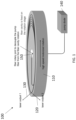
- FIG. 1 illustrates a bi-directional laser which is inherently compatible with dual-comb measurement techniques 100A alone without an additional laser.
- the bi-directional laser may utilize the Sagnac effect to create a repetition rate difference between the bi-directional laser outputs 120, 130.
- Other principles to create a repetition rate difference may also be used.
- ⁇ f opt ⁇ ⁇ f opt ⁇ ⁇ , where ⁇ is a constant depending on the laser cavity design, f opt is the lasing frequency when the gyro is at rest, and ⁇ is the angular rotation speed.
- the Sagnac effect may also introduce a repetition rate difference between the laser outputs 120, 130 in the clockwise direction and the counterclockwise direction.
- ⁇ is the same cavity design dependent constant
- f rep is the repetition rate when the system is at rest.
- the two laser outputs 120, 130 may be combined as shown in FIG. 1 using a standard fiber coupler, and then we have the source for dual-comb measurements. Any other method of combining the two laser outputs 120, 130 may also be used.
- the two laser cavities fluctuate independently with their noise completely uncorrelated.
- high speed feedback electronics may be necessary to lock the two otherwise independent cavities and ensure the mutual coherence between the two lasers. Additional information can be found in Appendices A and B, which are incorporated herein by reference in their entirety.
- the bi-directional laser outputs 120, 130 share the same cavity, and thus any linear cavity fluctuation is equally experienced by the two bi-directional laser outputs. Because of this common noise characteristics, the two laser outputs 120, 130 may be mutually coherent in nature even without the need of high-speed phase-lock loop electronics.
- the rotation stage 110 may also include a fiber rotary joint 150 to decouple the pump fiber from the cavity rotation.
- the bi-directional laser using the dual-comb measurement system may utilize the Sagnac effect, which is linearly controllable by the speed of the rotation stage.
- the repetition rate difference may not depend on the cavity asymmetry and the nonlinearity anymore, in some embodiments, the gradual loss of mutual coherence as well as increase the data acquisition rate can be eliminated.
- a readily available motorized rotation stage with a speed of 10,000 rpm ( ⁇ ) may be used so that a repetition rate difference ( ⁇ f rep ) of 2 kHz, i.e., more than an order of magnitude enhancement compared to the prior art may be achieved. Any other kind of rotation stage may also be used.
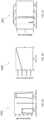
- FIGs. 3A-3C illustrate graphs associated with a carrier suppressed dual sideband that depict exemplary dual-sideband FMCW LiDAR principle.
- FIG. 3A illustrates a graph 300A of when only the carrier is suppressed in the dual-sideband FMCW LiDAR. Both the positive and the negative sidebands may be utilized to do the ranging measurement.
- FIG. 3B illustrates an optical frequency graph 300B of both sidebands as a function of time. There may be a simultaneous positive slope of the frequency sweep and a negative slope of the frequency sweep.
- FIG. 3A-3C illustrate graphs associated with a carrier suppressed dual sideband that depict exemplary dual-sideband FMCW LiDAR principle.
- FIG. 3A illustrates a graph 300A of when only the carrier is suppressed in the dual-sideband FMCW LiDAR. Both the positive and the negative sidebands may be utilized to do the ranging measurement.
- FIG. 3B illustrates an optical frequency graph 300B of both sidebands as a function of time. There
- the dual-sideband method may be used to simultaneously and unambiguously determine both the object distance and the object speed in just one measurement.
- the object distance and speed may be calculated by averaging and differencing the two electrical frequencies ( f M,u and f M,d ), respectively.
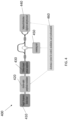
- FIG. 4 illustrates a schematic view of a dual-sideband FMCW LiDAR system 400A.
- a single frequency diode laser 410 may be fed to an electro-optic amplitude modulator ("EOM") 420.
- the EOM 420 may be used to create the two sidebands from the single frequency diode laser 410.
- the EOM 420 bias voltage is carefully chosen to suppress the carrier frequency.
- the Erbium doped optical amplifier 430 may then be used to boost the optical power to 3W.
- the 2D scanning unit 450 may be controlled by a computing system 460 to direct the light to the region of interest and eventually form LiDAR images.
- Balanced detection technique 440 may also be incorporated to improve the measurement sensitivity so the dual-sideband FMCW LiDAR system 400A can measure an object with 10% reflectivity at a distance of 120 m.
- FIG. 5 illustrates a dual sideband FMCW LiDAR system 500, according to exemplary embodiments of the present invention.
- the LiDAR system mainly includes three parts: modulated light generation unit, transceiver unit 505, and control and processing unit 550.
- the transceiver unit 505 have one or more transceiver terminals 510 and 520. It may have laser and control signal 530 and data links 540. It may also have a control and signal processing unit 550. The control and signal processing unit 550 may be separated from the transceiver unit 505, which makes the in-car system layout of the LiDAR system 500 more flexible. The transceiver unit 550 may be placed on top of the vehicle while the control and signal processing unit 550 may be placed in the car. And the control signal may be delivered to the transceiver unit through long electrical cable, while the receiving light signal is sent back to the signal processing unit 550 through a long SMF-28 fiber.
- FIG. 6 illustrates a transceiver terminal 600 used in a LiDAR system, according to embodiments of the present invention.
- the transceiver terminal may use a two-axis control mirror system with an x-axis control mirror 610 and a y-axis control mirror 620 to achieve high-speed 3D scanning and fast adjustment of the scanning angles.
- the transceiver terminal 610 may also have a detection module 630.
- the laser and control signal 640 may be deflected using the two-axis control mirror system to the object 660.
- the data links 650 may pass through the detection module to the object 660.
- FIG. 7 illustrates a control data processing center 700 used in a LiDAR system, according to embodiments of the present invention.
- the center 700 may be used to encode high dimension information on a traditional laser signal, which can get more information of an object such as velocity.
- This high-dimensional information from the LiDAR system less speculation and conjecture are necessary for an artificial intelligence unit to make sense of its situation in a complex environment. In other words, one can reduce the computation load of the artificial intelligence unit because of the enhanced sensing capability of the invented LiDAR system.
- FIG. 8 illustrates a schematic diagram 800 of a dual-sideband FMCW LiDAR system with a modulated light generation unit, transceiver unit, and control and processing unit.
- a continuous wavelength (CW) diode laser 810 centered at 1550 nm is fed to a 20 GHz electro-optic amplitude modulator (EOM) 820.
- EOM electro-optic amplitude modulator
- RF radio frequency
- VCO voltage-controlled oscillator
- the driving signal of the VCO 830 is a 500 kHz pseudo-sawtooth signal with a voltage output ranging from 3.5 V to 5.5 V, yielding a RF signal sweeping from 5 GHz to 6 GHz.
- the 500 kHz is chosen such that the maximum detection range could theoretically reach 300 m.
- the system could also change the sweeping frequency form 200 kHz to 100 MHz for different detection range while maintaining the same resolution.
- the wavelength and bandwidth may be selected as long as they complement the features descried herein.
- the modulated optical signal may then be amplified by an Erbium-doped fiber pre-amplifier 840 to 20 mW and is split into two paths by a 50:50 fiber coupler 850.
- One path is fed to a high-power Erbium-doped fiber amplifier (EDFA) 860 and then be boosted to 10 W, the other path is sent into a 2 ⁇ 2 50:50 fiber coupler 870, used as a local reference for ranging measurement.
- EDFA 860 is connected to the transceiver unit from the bottom to the top of a vehicle via a long SMF-28 fiber and convert to free space beam through a collimator.
- the 2D scanning unit 900 as illustrated in FIG. 9 consists of two components, one is a galvo mirror 910 for vertical steering and a rotating octagon mirror 920 for horizontal steering of the light.
- the galvo rotational angle is set to achieve up to 20° vertical angle of view.
- the position of the galvo mirror 920 and the octagon mirror 910 is carefully set up to achieve a 90° horizonal angle of view.
- the scan rate of the galvo mirror 920 is determined by a global trigger rate ranging from 10 Hz to 2 Hz.
- the rotational speed of octagon mirror 910 is set to 3000 rpm, yielding four hundred horizontal scanning lines per second in total.
- the resolution of the rendering image could be switched from 40 lines/frame to 200 lines/frame. When the resolution is 200 lines/frame, there may be 1500 points per line and the vertical spatial resolution could reach 0.1° and horizontal spatial resolution could reach 0.06°, thus improving the clarity of the image.
- the control and processing unit may include a balanced photodetector (BPD) 892, a high-speed DAQ card, a high-speed processor, a two-channel arbitrary waveform generator and a two-channel signal generator.
- BPD balanced photodetector
- the balanced detection technique is incorporated to improve the measurement sensitivity so the dual-sideband FMCW LiDAR system could measure an object with 10% reflectivity at 120 m.
- the balanced detector may receive two signal paths and cancel out the common noise.
- the BPD may only detect the signal difference between two paths.
- the LiDAR system may receive about -70 dBm power from an object with 10% reflectivity at 120 m, which reaches the noise equivalent power of the balanced photodetector.
- the received signal is coupled with the local reference signal via a 2 ⁇ 2 50:50 fiber coupler 894 and detected by the BPD 892 with 1 GHz bandwidth, which matches with the frequency modulation range of the laser. Any other matching pair of bandwidth and modulation frequency may be used.
- the polarization of the local reference path is optimized through three rotating paddles of a fiber polarization controller and the power of the two inputs of BPD is adjusted to perfectly equalize by inserting a fiber variable optical attenuator for optimal signal to noise ratio.
- the processed signal may be used for point of cloud generation of the region of interest, and real-time rendering on the interface in the vehicle.
- the arrayed-waveguide grating offers control signals for the VCO 830 and galvo mirror.
- the signal for the VCO 830 may be customized sawtooth signal with higher order terms to compensate the nonlinear sweeping of VCO, and the signal for galvo mirror is a tilted triangular waveform.
- the shape of the signal could be anything, as long as it is calibrated in the postprocessing.
- the two-channel signal generator offers a 2-10 Hz pulse signal with 5% pulse duration to the DAQ card to acquire data, and a 300 Hz TTL signal with 50% duty ratio with maximum 2 V output to control the octagon mirror.
- the light generation unit and control and signal processing unit described herein and implemented in the car may be under the seat or somewhere else, and the transceiver unit may be mounted on top of the vehicle.
- the light may be delivered to the transceiver unit through a long fiber cable and the received signal may be be sent back to the control and signal processing unit through the long fiber.
- the 2D scanning unit is controlled by the control unit through a long BNC cable. Under 2D scanning, the received signal may be rendered to a real-time 3D point of cloud and show up on the interface, which may be a display device net to the driver.
- the transportation device may have the currently available features to transmit the information, both audio and video, to the driver.
- the term "and/or" placed between a first entity and a second entity means one of (1) the first entity, (2) the second entity, and (3) the first entity and the second entity.
- Multiple entities listed with “and/or” should be construed in the same manner, i.e., "one or more" of the entities so conjoined.
- Other entities may optionally be present other than the entities specifically identified by the "and/or” clause, whether related or unrelated to those entities specifically identified.
- a reference to "A and/or B,” when used in conjunction with open-ended language such as “comprising” can refer, in one embodiment, to A only (optionally including entities other than B); in another embodiment, to B only (optionally including entities other than A); in yet another embodiment, to both A and B (optionally including other entities).
- These entities may refer to elements, actions, structures, steps, operations, values, and the like.
Landscapes
- Physics & Mathematics (AREA)
- Engineering & Computer Science (AREA)
- Electromagnetism (AREA)
- General Physics & Mathematics (AREA)
- Radar, Positioning & Navigation (AREA)
- Remote Sensing (AREA)
- Computer Networks & Wireless Communication (AREA)
- Optics & Photonics (AREA)
- Plasma & Fusion (AREA)
- Spectroscopy & Molecular Physics (AREA)
- Optical Radar Systems And Details Thereof (AREA)
- Mechanical Optical Scanning Systems (AREA)
- Optical Modulation, Optical Deflection, Nonlinear Optics, Optical Demodulation, Optical Logic Elements (AREA)
- Lasers (AREA)
Applications Claiming Priority (3)
| Application Number | Priority Date | Filing Date | Title |
|---|---|---|---|
| US201762581267P | 2017-11-03 | 2017-11-03 | |
| PCT/US2018/059033 WO2019090131A1 (en) | 2017-11-03 | 2018-11-02 | Lidar and laser measurement techniques |
| EP18872568.3A EP3704768B1 (de) | 2017-11-03 | 2018-11-02 | Lidar- und lasermesstechniken |
Related Parent Applications (1)
| Application Number | Title | Priority Date | Filing Date |
|---|---|---|---|
| EP18872568.3A Division EP3704768B1 (de) | 2017-11-03 | 2018-11-02 | Lidar- und lasermesstechniken |
Publications (2)
| Publication Number | Publication Date |
|---|---|
| EP4582772A2 true EP4582772A2 (de) | 2025-07-09 |
| EP4582772A3 EP4582772A3 (de) | 2025-09-17 |
Family
ID=66332332
Family Applications (2)
| Application Number | Title | Priority Date | Filing Date |
|---|---|---|---|
| EP18872568.3A Active EP3704768B1 (de) | 2017-11-03 | 2018-11-02 | Lidar- und lasermesstechniken |
| EP25177807.2A Pending EP4582772A3 (de) | 2017-11-03 | 2018-11-02 | Lidar- und lasermesstechniken |
Family Applications Before (1)
| Application Number | Title | Priority Date | Filing Date |
|---|---|---|---|
| EP18872568.3A Active EP3704768B1 (de) | 2017-11-03 | 2018-11-02 | Lidar- und lasermesstechniken |
Country Status (5)
| Country | Link |
|---|---|
| US (2) | US11619721B2 (de) |
| EP (2) | EP3704768B1 (de) |
| JP (2) | JP7279056B2 (de) |
| CN (2) | CN117406237A (de) |
| WO (1) | WO2019090131A1 (de) |
Families Citing this family (7)
| Publication number | Priority date | Publication date | Assignee | Title |
|---|---|---|---|---|
| DE102018200618A1 (de) * | 2018-01-16 | 2019-07-18 | Robert Bosch Gmbh | Sensorvorrichtung |
| CN111239754A (zh) * | 2020-01-19 | 2020-06-05 | 哈尔滨工业大学 | 一种基于可调频连续波的激光雷达系统及其成像方法 |
| JP7395760B2 (ja) | 2020-04-03 | 2023-12-11 | アクロノス インコーポレイテッド | 測距アプリケーションのための周波数情報高速抽出 |
| CN112034436A (zh) * | 2020-09-16 | 2020-12-04 | 深圳市镭神智能系统有限公司 | 光发射模块、光信号检测模块、光学系统和激光雷达系统 |
| WO2022188090A1 (zh) * | 2021-03-11 | 2022-09-15 | 深圳市速腾聚创科技有限公司 | 固态激光雷达的微振镜控制方法、装置和固态激光雷达 |
| HRP20250259A1 (hr) * | 2022-08-12 | 2025-10-24 | Sveučilište U Zagrebu, Prirodoslovno-Matematički Fakultet | Metoda za podešavanje frekvencije lasera primijenjena u rotacijskom uređaju s optičkim valovodom |
| WO2025191757A1 (ja) * | 2024-03-13 | 2025-09-18 | 日本碍子株式会社 | フラッシュ光源装置 |
Family Cites Families (31)
| Publication number | Priority date | Publication date | Assignee | Title |
|---|---|---|---|---|
| DE3484025D1 (de) * | 1983-04-25 | 1991-03-07 | Univ Leland Stanford Junior | Faseroptischer rotationsdetektor mit erweitertem dynamischem messbereich. |
| US4846571A (en) | 1986-11-03 | 1989-07-11 | Raytheon Company | AM-FM laser |
| JPH01316599A (ja) | 1988-06-14 | 1989-12-21 | Kubota Ltd | 液化ガス充填装置 |
| JPH02173519A (ja) * | 1988-12-27 | 1990-07-05 | Hitachi Cable Ltd | 光ファイバ回転角速度センサ |
| US5022760A (en) * | 1990-03-22 | 1991-06-11 | Northrop Corporation | Compound resonator for improving optic gyro scale factor |
| US5157745A (en) * | 1991-09-16 | 1992-10-20 | The United States Of America As Represented By The Secretary Of The Navy | Multi-channel fiber optic rotary joint for single-mode fiber |
| CN1042380C (zh) * | 1995-07-27 | 1999-03-03 | 清华大学 | 实现光纤环形腔双向单模激射的方法及其光纤陀螺激光器 |
| JP3363862B2 (ja) * | 1999-01-22 | 2003-01-08 | キヤノン株式会社 | ジャイロ、それを備えたカメラ、レンズ及び自動車 |
| US6373565B1 (en) * | 1999-05-27 | 2002-04-16 | Spectra Physics Lasers, Inc. | Method and apparatus to detect a flaw in a surface of an article |
| JP3771777B2 (ja) * | 2000-05-12 | 2006-04-26 | 三菱電機株式会社 | レーザレーダ装置 |
| US6844924B2 (en) * | 2001-06-29 | 2005-01-18 | The United States Of America As Represented By The Secretary Of The Army | Ladar system for detecting objects |
| US7346091B2 (en) * | 2005-01-12 | 2008-03-18 | Raytheon Company | High energy solid-state laser with offset pump and extraction geometry |
| CA2531177A1 (en) | 2005-12-30 | 2007-06-30 | Jesse Zheng | Differential birefringent fiber frequency-modulated continuous-wave sagnac gyroscope |
| CN100547863C (zh) * | 2006-10-20 | 2009-10-07 | 香港理工大学 | 光纤气体激光器和具有该激光器的光纤型环形激光陀螺仪 |
| US7911619B2 (en) * | 2007-11-15 | 2011-03-22 | The Board Of Trustees Of The Leland Stanford Junior University | Low-noise fiber optic sensor utilizing a laser source |
| US8189785B2 (en) * | 2008-09-30 | 2012-05-29 | The Mitre Corporation | Generating identical numerical sequences utilizing a physical property and secure communication using such sequences |
| WO2013003859A2 (en) * | 2011-06-30 | 2013-01-03 | Oewaves, Inc. | Compact optical atomic clocks and applications based on parametric nonlinear optical mixing in whispering gallery mode optical resonators |
| US20150185246A1 (en) * | 2011-12-23 | 2015-07-02 | Optical Air Data Systems, Llc | Laser Doppler Velocimeter With Intelligent Optical Device |
| US20130311141A1 (en) * | 2012-05-18 | 2013-11-21 | National Dong Hwa University | Signal denoising methods for a charge detection frequency-scan/voltage-scan quadrupole/linear/rectilinear ion trap mass spectrometer |
| JP2014202716A (ja) | 2013-04-09 | 2014-10-27 | 株式会社日立ハイテクノロジーズ | 距離測定装置 |
| CN103471579B (zh) * | 2013-09-29 | 2016-02-17 | 浙江大学 | 一种采用双向全互易耦合光电振荡器的角速度检测方法 |
| JP5804115B2 (ja) | 2014-03-17 | 2015-11-04 | ソニー株式会社 | 照射方向変更システム |
| GB201411206D0 (en) * | 2014-06-24 | 2014-08-06 | Sec Dep For Business Innovation & Skills The And Usw Commercial Services Ltd | Dual laser frequency sweep interferometry system and method |
| US20160204571A1 (en) | 2015-01-14 | 2016-07-14 | Honeywell International Inc. | Systems and methods for an optical frequency comb stimulated brillouin scattering gyroscope with rigid optical waveguide resonator |
| US10741989B2 (en) * | 2015-01-23 | 2020-08-11 | Arizona Board Of Regents On Behalf Of The University Of Arizona | All-fiber bidirectional synchronously pumped ultrafast ring oscillator for precision sensing |
| US10088557B2 (en) | 2015-03-20 | 2018-10-02 | MSOTEK Co., Ltd | LIDAR apparatus |
| US10197442B2 (en) * | 2015-06-01 | 2019-02-05 | Arizona Board Of Regents On Behalf Of The University Of Arizona | Dual-comb spectroscopy with a free-running bidirectionally mode-locked fiber laser |
| CN110114632B (zh) * | 2016-11-30 | 2021-10-29 | 布莱克莫尔传感器和分析有限责任公司 | 用于对光学啁啾距离检测进行多普勒检测和多普勒校正的方法和系统 |
| EP3574337B1 (de) * | 2017-01-24 | 2022-11-23 | HRL Laboratories, LLC | Doppelfrequenz-fmcw-lidar und verfahren |
| US10401495B2 (en) * | 2017-07-10 | 2019-09-03 | Blackmore Sensors and Analytics Inc. | Method and system for time separated quadrature detection of doppler effects in optical range measurements |
| WO2019060901A1 (en) * | 2017-09-25 | 2019-03-28 | Bridger Photonics, Inc. | SCANNING SYSTEMS AND TECHNIQUES AND EXAMPLES OF USE IN FMCW LIDAR PROCESSES AND APPARATUSES |
-
2018
- 2018-11-02 WO PCT/US2018/059033 patent/WO2019090131A1/en not_active Ceased
- 2018-11-02 US US16/761,322 patent/US11619721B2/en active Active
- 2018-11-02 CN CN202311184434.7A patent/CN117406237A/zh active Pending
- 2018-11-02 JP JP2020544563A patent/JP7279056B2/ja active Active
- 2018-11-02 CN CN201880071159.9A patent/CN111316511B/zh active Active
- 2018-11-02 EP EP18872568.3A patent/EP3704768B1/de active Active
- 2018-11-02 EP EP25177807.2A patent/EP4582772A3/de active Pending
-
2023
- 2023-04-04 US US18/295,380 patent/US12117567B2/en active Active
- 2023-05-10 JP JP2023077976A patent/JP2023109843A/ja active Pending
Also Published As
| Publication number | Publication date |
|---|---|
| CN111316511A (zh) | 2020-06-19 |
| JP2023109843A (ja) | 2023-08-08 |
| EP3704768B1 (de) | 2025-05-21 |
| EP4582772A3 (de) | 2025-09-17 |
| US12117567B2 (en) | 2024-10-15 |
| EP3704768A1 (de) | 2020-09-09 |
| US20210181321A1 (en) | 2021-06-17 |
| JP2021502571A (ja) | 2021-01-28 |
| US20230251358A1 (en) | 2023-08-10 |
| CN117406237A (zh) | 2024-01-16 |
| EP3704768A4 (de) | 2021-11-17 |
| US11619721B2 (en) | 2023-04-04 |
| WO2019090131A1 (en) | 2019-05-09 |
| JP7279056B2 (ja) | 2023-05-22 |
| CN111316511B (zh) | 2023-10-17 |
Similar Documents
| Publication | Publication Date | Title |
|---|---|---|
| US12117567B2 (en) | Lidar and laser measurement techniques | |
| US11409043B2 (en) | Providing spatial displacement of transmit and receive modes in lidar system | |
| EP3973312B1 (de) | Frequenzmodulierter abtast-lidar mit 360-grad-sichtfeld | |
| EP3973314B1 (de) | Scanning-lidar ohne bewegliche teile mit 360-grad-sichtfeld | |
| Liu et al. | 11‐ghz‐bandwidth photonic radar using mhz electronics | |
| US11906665B2 (en) | Method for scanning a transmitted beam through a 360° field-of-view (FOV) | |
| Xu et al. | Photonics-based radar-lidar integrated system for multi-sensor fusion applications | |
| CN210155331U (zh) | 一种激光雷达 | |
| Zhu et al. | 4D spectral-scanning FMCW LiDAR system for 360-degree detection | |
| USH933H (en) | Infrared coherent optical sensor | |
| US4236819A (en) | Imagery with constant range lines | |
| CN117008134A (zh) | 相干激光雷达系统及探测方法 | |
| CN210155332U (zh) | 一种分布式激光雷达 | |
| HK40031729A (en) | Lidar and laser measurement techniques | |
| HK40031729B (zh) | 激光雷达和激光测量技术 | |
| US20250216522A1 (en) | System and Method for Measuring a Range to an Object | |
| US20250093472A1 (en) | Coherent lidar apparatus including light frequency stabilization apparatus based on complex opll | |
| Dawane et al. | Monostatic laser Doppler velocimeter for ISRO’s future space docking missions | |
| Zhang et al. | Novel Data-Processing Method for High-Resolution Spectrally Steered LiDAR using Dispersion-Tuned Swept Laser | |
| Hao et al. | Cost-Effective Frequency-Chirped Amplitude-Modulated Continuous-Wave LiDAR for Scalable High-Performance Ranging | |
| Waksberg | FM Laser Noise Effects on Optical Doppler Radar Systems |
Legal Events
| Date | Code | Title | Description |
|---|---|---|---|
| PUAI | Public reference made under article 153(3) epc to a published international application that has entered the european phase |
Free format text: ORIGINAL CODE: 0009012 |
|
| STAA | Information on the status of an ep patent application or granted ep patent |
Free format text: STATUS: THE APPLICATION HAS BEEN PUBLISHED |
|
| AC | Divisional application: reference to earlier application |
Ref document number: 3704768 Country of ref document: EP Kind code of ref document: P |
|
| AK | Designated contracting states |
Kind code of ref document: A2 Designated state(s): AL AT BE BG CH CY CZ DE DK EE ES FI FR GB GR HR HU IE IS IT LI LT LU LV MC MK MT NL NO PL PT RO RS SE SI SK SM TR |
|
| REG | Reference to a national code |
Ref country code: DE Ref legal event code: R079 Free format text: PREVIOUS MAIN CLASS: G01C0015000000 Ipc: G01S0017340000 |
|
| PUAL | Search report despatched |
Free format text: ORIGINAL CODE: 0009013 |
|
| AK | Designated contracting states |
Kind code of ref document: A3 Designated state(s): AL AT BE BG CH CY CZ DE DK EE ES FI FR GB GR HR HU IE IS IT LI LT LU LV MC MK MT NL NO PL PT RO RS SE SI SK SM TR |
|
| RIC1 | Information provided on ipc code assigned before grant |
Ipc: G01S 17/34 20200101AFI20250808BHEP Ipc: G01S 7/4912 20200101ALI20250808BHEP Ipc: G01S 7/4911 20200101ALI20250808BHEP Ipc: G01S 7/481 20060101ALI20250808BHEP |
|
| STAA | Information on the status of an ep patent application or granted ep patent |
Free format text: STATUS: REQUEST FOR EXAMINATION WAS MADE |
|
| 17P | Request for examination filed |
Effective date: 20260317 |